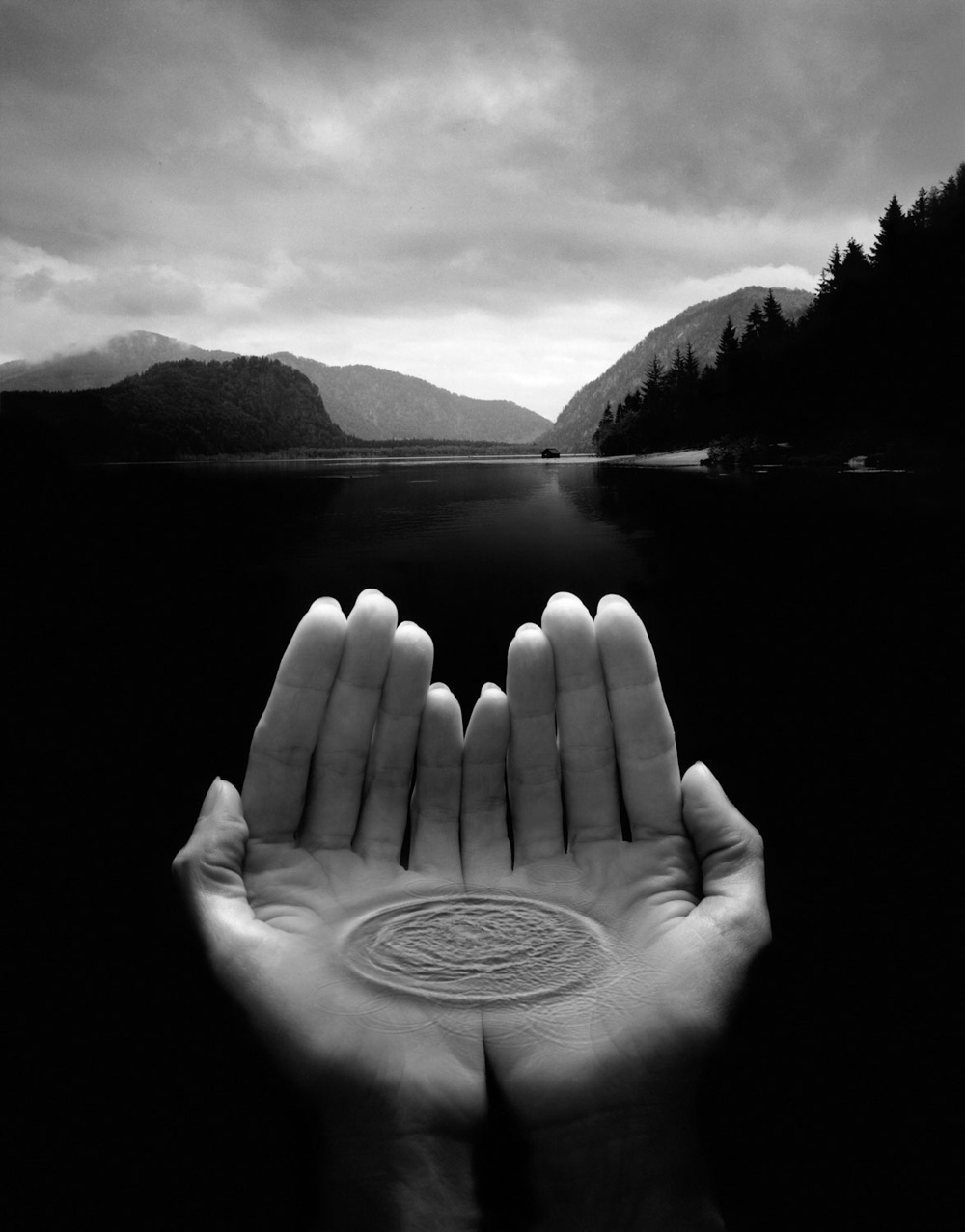
Exhibition: ‘Photography’s New Vision: Experiments in Seeing’ at the High Museum of Art, Atlanta

Exhibition dates: 13th June, 2025 – 4th January, 2026

Curator: Maria L. Kelly, High Museum of Art assistant curator of photography
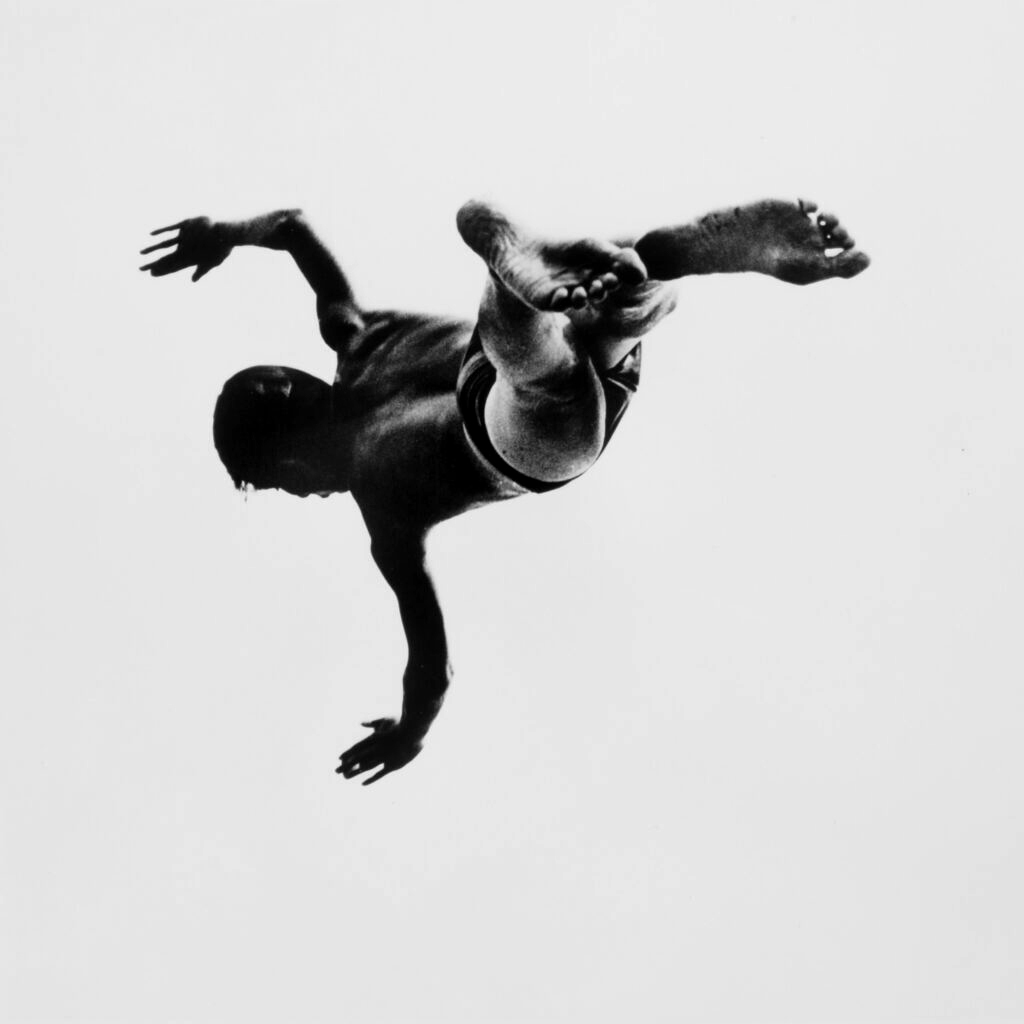
 

Aaron Siskind (American, 1903-1991) 'Pleasures and Terrors of Levitation #37' 1953


Aaron Siskind (American, 1903-1991)
Pleasures and Terrors of Levitation #37
1953
Gelatin silver print
High Museum of Art, Atlanta, gift of Adair and Joe B. Massey in honour of Gus Kayafas


Aaron Siskind was recognised for the ways he rendered his surroundings into often stark shapes and forms, which reflected his fascination with contemporary trends in abstract art. He was an influential teacher at Chicago’s Institute of Design, which was founded by László Moholy-Nagy as the New Bauhaus. This image of a person flying or falling comes from a series Siskind made of the contorted bodies of divers plunging into Lake Michigan. He masterfully created its disorienting effect through tight focus on the floating figure without contextual elements.

Text from the High Museum of Art website


While contemporarily AI-powered technologies are revolutionising the way we interact with and consume media, enabling us to “to process and analyse vast amounts of data quickly, making it easier to find and access the information we need” in the 1920s and 1930s there was also a revolution in the way artists (and their use of the camera) viewed and felt the world – one not based on information, image quality or duplicity in the veracity of the image but one based on the word, perspective – be that point of view, context, close ups, surreality, fragmentation, scale, concept, construction, colour, aesthetics, identity, gender, or radical experimentation.

In this departure from traditional photographic methods, “New Vision photographers foregrounded experimental techniques, including photograms, photomontages and compositions that favoured extreme angles and unusual viewpoints, and these extended to movements such as surrealism and constructivism.” (Press release)

To me, this New Vision is about experiencing different perspectives – experiencing, sensing, feeling and seeing the world in a new light. After the disasters and machine-ations, the destruction of a conservative way of life before the First World War, here was a way to grasp hold of (and picture) the speed of a new world order, the dreams of physiological analysis, the diversity of new identities, and the fluidity of rapidly evolving technological and social cultures.

While today this (r)evolution continues at an ever expanding pace with the consumption of huge amounts of information and images, I believe it may be advantageous to rest for a while on certain experiences and images … so that we let the daggers drop from our eyes, to ‘not make images’ in our minds eye but just to be present in the viewing of a photograph, so that we appreciate and understand every aspect of the great life spirit of this wondrous earth.

Then and now, new vision.

Dr Marcus Bunyan


Many thankx to the High Museum of Art for allowing me to publish the photographs in the posting. Please click on the photographs for a larger version of the image.


The New Vision movement of the 1920s and 1930s offered a revolutionary approach to seeing the world. It represented a rebellion against traditional photographic methods and an embrace of avant-garde experimentation and innovative techniques. László Moholy-Nagy, an artist and influential teacher at the Bauhaus in Germany, named this period of expansion the “New Vision.” Today, the term encompasses photographic developments that took place between the two World Wars in Europe, America, and beyond. New Vision photographers foregrounded inventive techniques, including photograms, photomontages, and light studies, and made photographs that favoured extreme angles and unusual viewpoints. These approaches – which also extended to more defined movements like Surrealism – spoke to a desire to find and see different perspectives in the wake of World War I.

Uniting more than one hundred works from the High’s photography collection, the exhibition traces the movement’s impact, from its origins in the 1920s to today, and demonstrates its long-standing effect on subsequent generations.

Text from the High Museum of Art website

Photography’s New Vision: Experiments in Seeing

Named by the influential German artist and teacher László Moholy-Nagy, the “New Vision” comprised an expansive variety of photographic exploration that took place in Europe, America, and beyond in the 1920s and 1930s. The movement was characterised by its departure from traditional photographic methods. New Vision photographers foregrounded experimental techniques, including photograms, photomontages, and light studies, and made photographs that favoured extreme angles and unusual viewpoints.

This exhibition, uniting more than one hundred works from the High’s robust photography collection, will trace the impact of the New Vision movement from its origins in the 1920s to today. Photographs from that era by Ilse Bing, Alexander Rodchenko, Imogen Cunningham, and Moholy-Nagy will be complemented by a multitude of works by modern and contemporary artists such as Barbara Kasten, Jerry Uelsmann, Hiroshi Sugimoto, and Abelardo Morell to demonstrate the long-standing impact of the movement on subsequent generations.

Text from the High Museum of Art website


Installation view of the exhibition 'Photography's New Vision: Experiments in Seeing' at the High Museum of Art, Atlanta, June 2025 - January 2026


Installation views of the exhibition Photography’s New Vision: Experiments in Seeing at the High Museum of Art, Atlanta, June 2025 – January 2026
Photos: Mike Jensen


The High Museum of Art presents “Photography’s New Vision: Experiments in Seeing” (June 13, 2025 – Jan. 4, 2026), an exhibition uniting more than 100 works from the High’s robust photography collection to trace the impact of the New Vision movement from its origins in the 1920s to today. Works include century-old photographs exemplifying themes from the movement and modern and contemporary images that emphasise the relevance of current artistic and social practices as a response to the technological and cultural changes that occurred in the early 20th century.

“This exhibition provides an opportunity to illuminate photographers’ creativity and innovative practices, all inspired by the progression of the medium in the 1920s and 30s,” said High Museum of Art Director Rand Suffolk. “Many of the works are rarely on view, so it will be an exciting experience for visitors to see them and learn about photographers’ abilities as they reflect reality while experimenting with technique and perspective.” Named by the influential German artist and teacher László Moholy-Nagy, the “New Vision” comprised an expansive variety of photographic exploration that took place in Europe, America and beyond in the 1920s and 1930s. The movement was characterised by its departure from traditional photographic methods. New Vision photographers foregrounded experimental techniques, including photograms, photomontages and compositions that favoured extreme angles and unusual viewpoints, and these extended to movements such as surrealism and constructivism.

“Experiments in Seeing” features nearly 100 photographers. It also demonstrates how the New Vision movement revolutionised the medium of photography in the early 20th century in response to the great societal, economic and technological shifts spurred by the upheaval of the two World Wars. Photographs from that era by Ilse Bing, Alexander Rodchenko, Imogen Cunningham and Moholy-Nagy have been complemented by a multitude of photographs by modern and contemporary artists such as Barbara Kasten, Jerry Uelsmann, Hiroshi Sugimoto and Abelardo Morell to demonstrate the long-standing impact of the movement on subsequent generations.

The first section of the exhibition delves into experimental techniques that foreground the light-sensitive aspects of photography, followed by works created through in-camera manipulations or additions to the surfaces of the prints. Subsequent sections explore inventive methods of capturing unexpected views of the world articulated with radical angles or detailed close-ups. Other works showcase surreal approaches to subjects such as humanlike forms and bodies, the use of mirrors and doubling, and everyday scenes heightened by uncanny moments or distorted through the interplay of light, shadow and water.

“Not only does the early 20th century and its art movements continue to be influential, but that time also echoes our current moment – one that feels similarly consequential and innovative with the development of new emerging technologies and methods of communicating,” said Maria L. Kelly, the High’s assistant curator of photography. “The movements and happenings of a century ago are akin to those of today and those shown in the exhibition. There remains a desire for alternative ways to see and approach the world through art, and particularly through photography.”

“Photography’s New Vision: Experiments in Seeing” is on view in the Lucinda W. Bunnen Galleries for Photography located on the Lower Level of the High’s Wieland Pavilion.

Press release from the High Museum of Art


“Light was considered the medium that permits photography. But for me it became the main subject: the protagonist of my photography.”


Ilse Bing, c. 1920s


Light Experimentation

After the trauma of World War I, many artists felt compelled to reconsider conventional art making methods to better reflect and engage with the world. Some photographers turned their attention to the essential element of photography: light. Through innovative visual investigations, cameraless photographs were produced, viewes of the world altered, and scientific discoveries made.

Experimentations with illumination and light-sensitive paper in the darkroom gave rise to photograms, enabling artists to pursue abstraction and to wield light as a sculptural element. The process of solarisation – reversing tones in a print using a flash of light during developing – provided an unconventional view of a subject. Early attempts to capture traces of light on film led to scientific innovations such as using strove lights to freeze movement, depicting magnetic fields, and tracing electrical currents on light sensitive paper.

These processes aim to reveal the invisible, with the elements of change as a constant companion. While artists can insert some control over the elements, the process ultimately shapes the final image. Many artworks in this section exist as unique prints, challenging the assumption of the reproducibility of photography, and emphasising the singularity of the creative moment.

Wall text from the exhibition


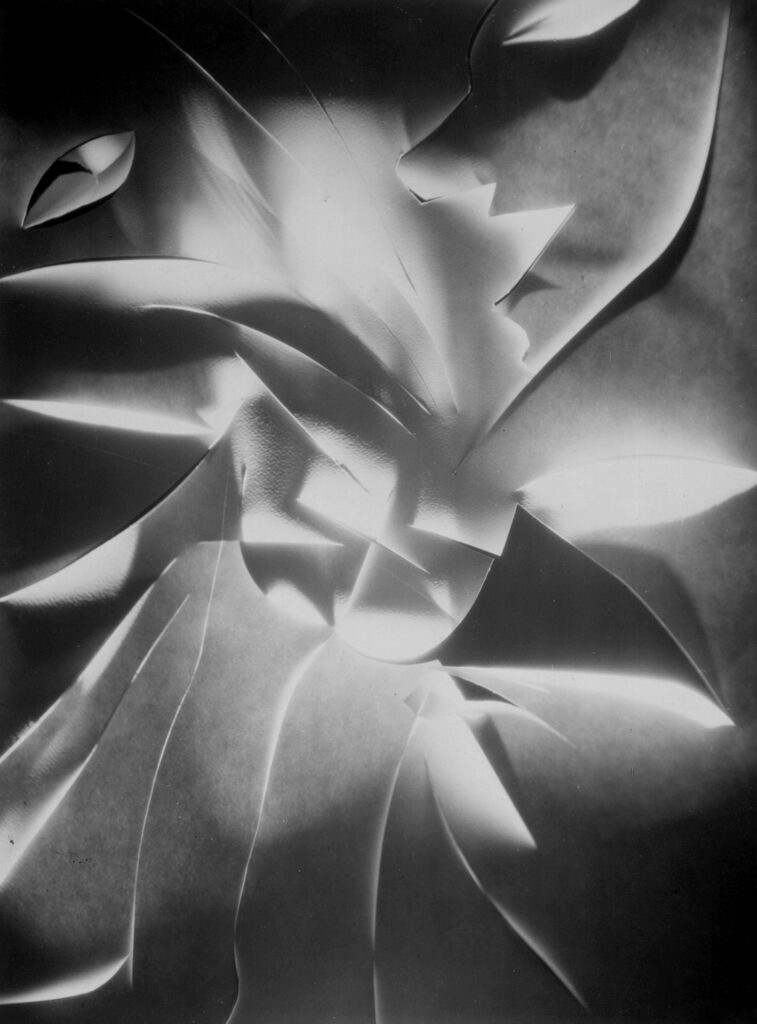
Francis Bruguière (American, 1879-1945) 'The Light That Never Was on Land or Sea' c. 1925


Francis Bruguière (American, 1879-1945)
The Light That Never Was on Land or Sea
c. 1925
Gelatin silver print
High Museum of Art, Atlanta, purchase with funds from Georgia-Pacific Corporation


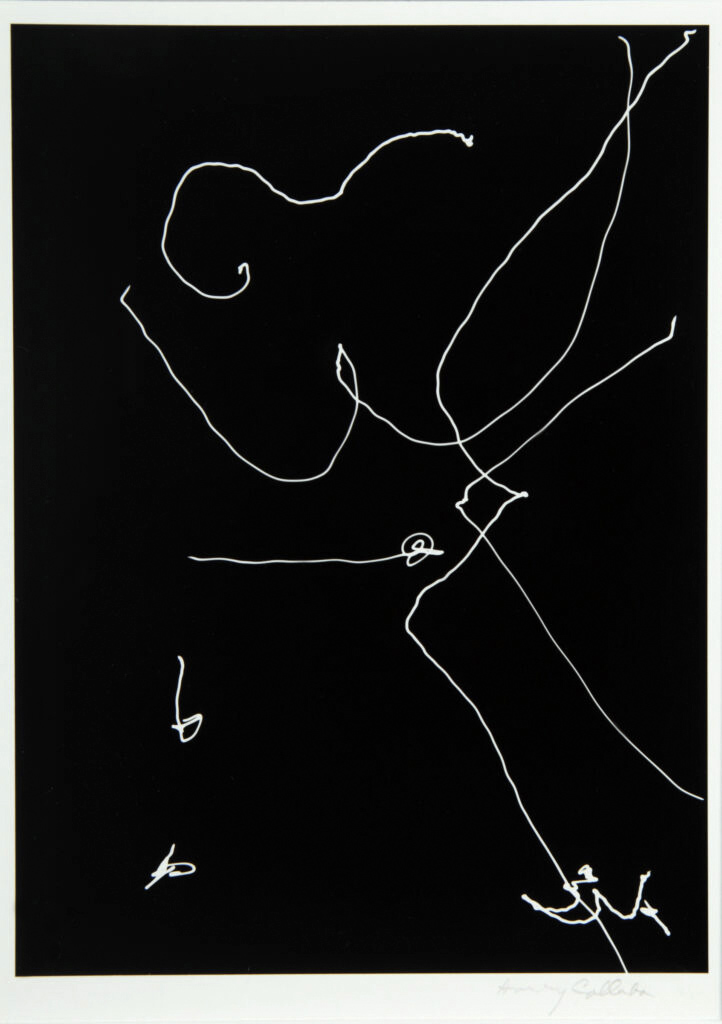
Nathan Lerner (American, 1913-1977) 'Light Drawing #8 (Smoke)' 1938-1939


Nathan Lerner (American, 1913-1977)
Light Drawing #8 (Smoke)
1938-1939
Gelatin silver print
High Museum of Art, Atlanta, gift of Hilary Leff and Elliot Groffman


Ilse Bing (American born Germany, 1899-1998) 'Untitled [Seated Woman with Necklace, Solarized]' 1943


Ilse Bing (American born Germany, 1899-1998)
Untitled [Seated Woman with Necklace, Solarized]
1943
Gelatin silver print
High Museum of Art, Atlanta, gift of the Estate of Ilse Bing Wolff


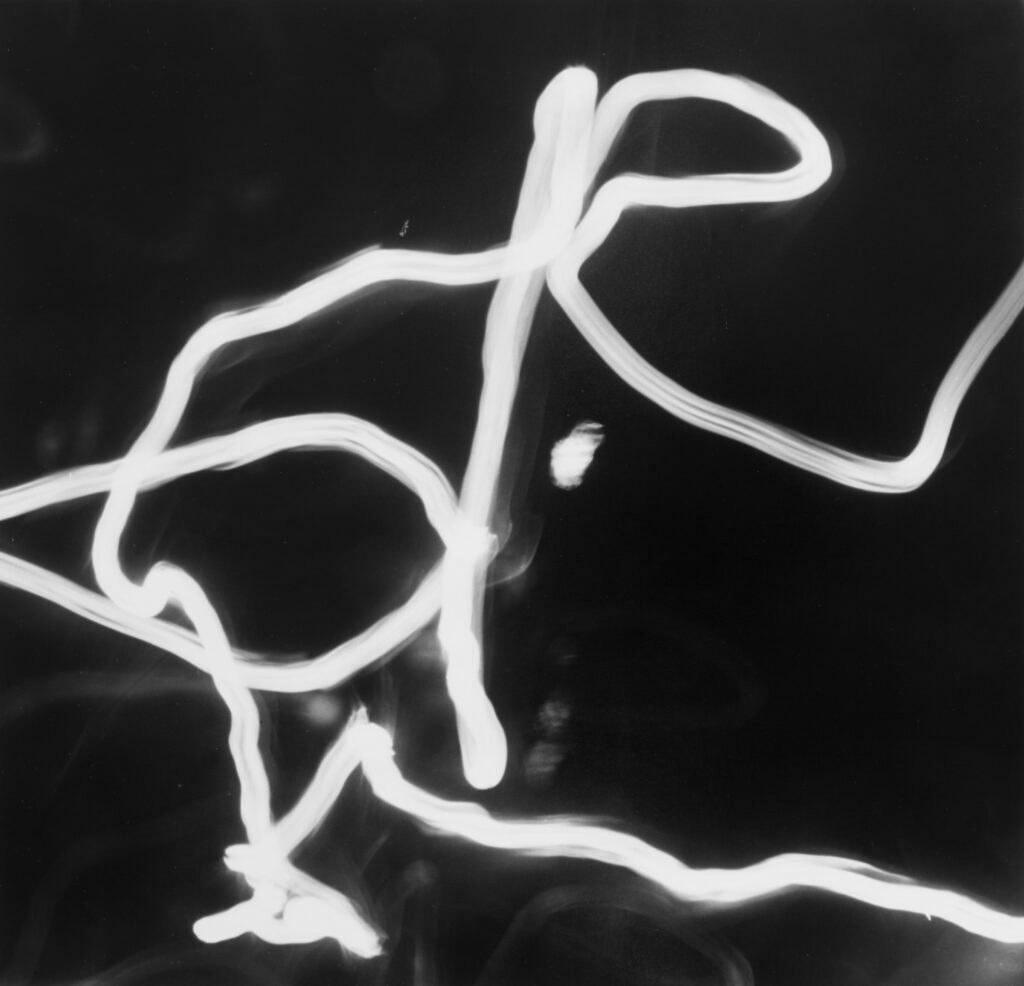
Harry Callahan (American, 1912-1999) 'Camera Movement on Flashlight, Chicago' c. 1949


Harry Callahan (American, 1912-1999)
Camera Movement on Flashlight, Chicago
c. 1949
Gelatin silver print
High Museum of Art, Atlanta, purchase with funds from the H. B. and Doris Massey Charitable Trust, Dr. Robert L. and Lucinda W. Bunnen, Collections Council Acquisition Fund, Jackson Fine Art, Powell, Goldstein, Frazer and Murphy, Jane and Clay Jackson, Beverly and John Baker, Roni and Sid Funk, Gloria and Paul Sternberg, and Jeffery L. Wigbels
© 2018 The Estate of Harry Callahan


Abelardo Morell (American born Cuba, b. 1948) 'Still Life with Wine Glass: Photogram on 20" x 24" Film' 2006


Abelardo Morell (American born Cuba, b. 1948)
Still Life with Wine Glass: Photogram on 20″ x 24″ Film
2006
Gelatin silver print
High Museum of Art, Atlanta, purchase with funds from the Friends of Photography
© Abelardo Morell


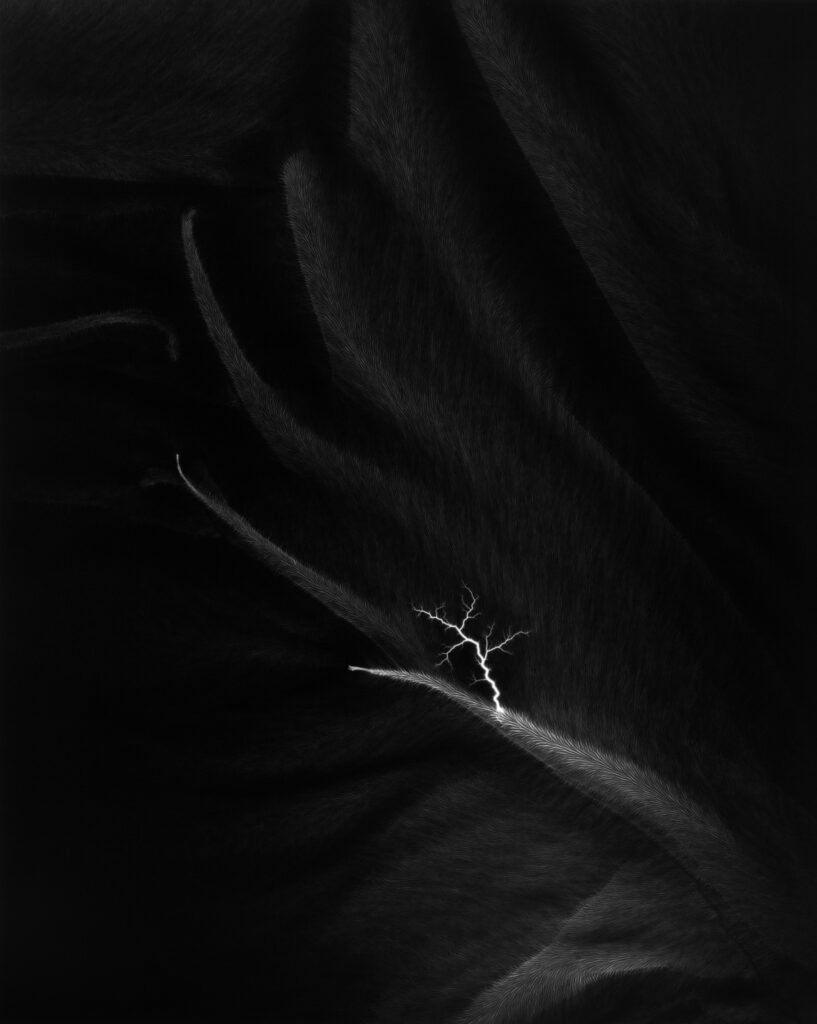
Hiroshi Sugimoto (Japanese, b. 1948) 'Lightning Fields 182' 2009


Hiroshi Sugimoto (Japanese, b. 1948)
Lightning Fields 182
2009
Gelatin silver print
High Museum of Art, Atlanta, purchase through funds provided by patrons of Collectors Evening 2012
© Hiroshi Sugimoto


Inspired by William Henry Fox Talbot, an inventor of photography who was fascinated with electromagnetic conduction, Hiroshi Sugimoto began applying charges of electricity directly to unexposed photographic film. After months of honing his technique in the darkroom, he managed to achieve remarkable results with a handheld wand charged by a generator. His Lightning Fields photographs are made without a camera or lens. Here, the abstract visual trace of an electric charge measuring over 400,000 volts sweeps across the composition, reading like the textures of a human hand, the upward tentacles of a fern, or the stark branches of a tree.

Text from the High Museum of Art website


Hans-Christian Schink (German, b. 1961) '2/26/2010, 7:54 am – 8:54 am, S36° 49.622' E 175° 47.340'' 2010


Hans-Christian Schink (German, b. 1961)
2/26/2010, 7:54 am – 8:54 am, S36° 49.622′ E 175° 47.340′
2010
From the series 1h
© Hans-Christian Schink


Abelardo Morell (American born Cuba, b. 1948) 'Camera Obscura: View of Philadelphia from Loews Hotel Room #3013 with Upside Down Bed, April 14th, 2014' 2014


Abelardo Morell (American born Cuba, b. 1948)
Camera Obscura: View of Philadelphia from Loews Hotel Room #3013 with Upside Down Bed, April 14th, 2014
2014
Pigmented inkjet print
High Museum of Art Atlanta, gift of Dr. Roger Hartl
© Abelardo Morell


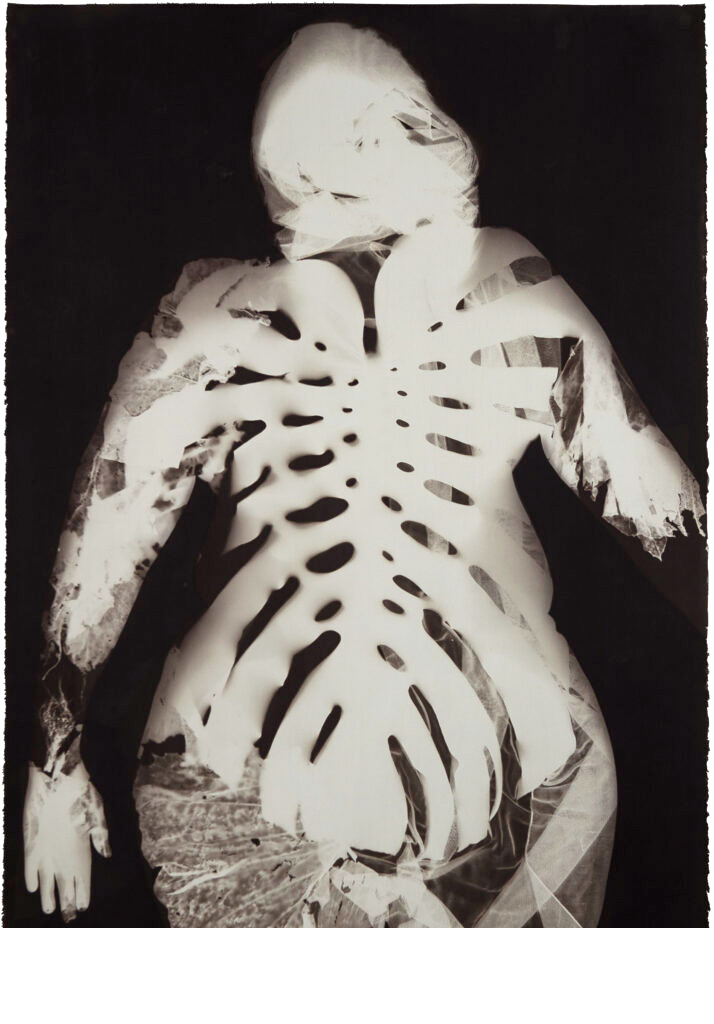
V. Elizabeth Turk (American, b. 1945) 'Calaeno' 2018


V. Elizabeth Turk (American, b. 1945)
Calaeno
2018
Van Dyke print
High Museum of Art, Atlanta, purchase with funds from Lucinda W. Bunnen for the Bunnen Collection
© Elizabeth Turk


V. Elizabeth Turk is an Atlanta-based photographer whose work explores the connections between the human body and the natural world. To make this print, Turk used an analog process from the 1800s that involves coating a large sheet of paper with light-sensitive chemicals. She then arranged her model on top of the sheet and exposed it to light, creating a ghostly silhouette, before repeating the exposure with plants. The resulting photogram is a unique image in which botanical forms intersect with the body, alluding to bones, veins, and skin and suggesting a visceral bond between humans and the environment. 

Text from the High Museum of Art website


“The limits of photography are incalculable; everything is so recent that even the mere act of searching may lead to creative results. […] The illiterate of the future will be the person ignorant of the use of the camera as well as of the pen.”


László Moholy-Nagy 1928


Radical Viewpoints

From photography’s inception in 1839, camera technology involved cumbersome equipment and time-consuming development processes until the advent of lightweight cameras in the 1920s. Photographers were then able to work more nimbly, transforming photography into a medium capable of capturing fleeting moments, unusual viewpoints, and multiple perspectives. The exploration of unexpected angles became a hallmark of New Vision photography. Sharp diagonals, extreme vantage points, and shortened perspectives opened novel pathways of perceiving otherwise commonplace environments.

Alexander Rodchenko, a pioneer in this method, championed the camera’s ability to reveal, stating, “in order to teach man to see from all viewpoints, it is necessary to photograph […] from completely unexpected viewpoints and in unexpected positions […] We don’t see what we are looking at. We don’t see marvellous perspectives.” This approach aimed to provide a fuller impression of subjects, prompting viewers to seek and appreciate what might otherwise be overlooked.

Though these early photographs may not appear groundbreaking today, their makers’ carefully considered methods transferred how photography is used. This is evident in photographers’ creative interpretations of their surroundings over the past century.

Wall text from the exhibition


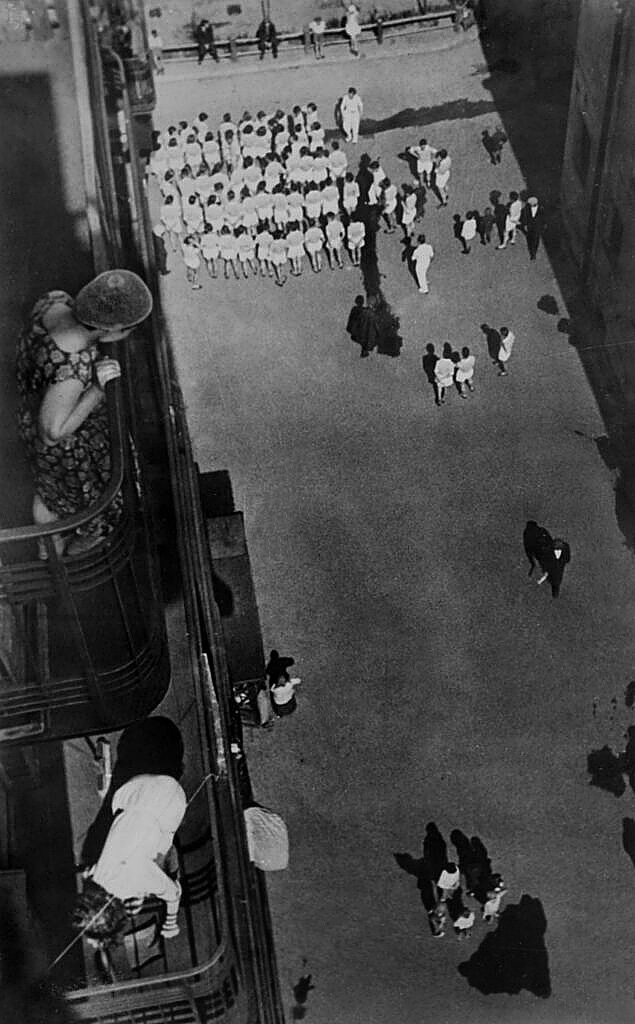
Alexander Rodchenko (Russian, 1891-1956) 'Sbor na demonstratsia' (Gathering for a Demonstration) 1928


Alexander Rodchenko (Russian, 1891-1956)
Sbor na demonstratsia (Gathering for a Demonstration)
1928
Gelatin silver print
High Museum of Art, Atlanta, gift of Joseph and Yolandra Alexander, Moscow/VAGA at Artists Rights Society (ARS), New York
© Estate of Alexander Rodchenko/RAO, Moscow/VAGA at Artists Rights Society (ARS), New York


Alexander Rodchenko was a key figure in the movements of New Vision and Constructivism – abstract and functional art that reflected an industrial society. Advocating “to achieve a revolution in our visual thought,” he explored various methods, such as photographing from unexpected angles, to capture dynamic views and expose new realities. With a new, lightweight 35 mm camera, he often photographed from his apartment balcony to create dramatic scenes of the street below. The perspective in this photograph flattens the building’s stories into one visual field, giving the image a theatrical quality as an onlooker peers over the railing.

Text from the High Museum of Art website


Walker Evans (American, 1903-1975) 'The Bridge' 1929


Walker Evans (American, 1903-1975)
The Bridge
1929
Gelatin silver print
High Museum of Art, Atlanta, gift of Arnold H. Crane
© Walker Evans Archive, The Metropolitan Museum of Art


A central figure among twentieth-century American photographers, Walker Evans created works in his early career that sample from the New Vision aesthetic, which he may have encountered while abroad in Paris in 1926. His photographs of New York City, made after he returned to the United States, feature dramatically angled or cropped scenes of architecture and city life. Evans made numerous photographic studies of the Brooklyn Bridge from both below and on the bridge, portraying it less as a recognisable landmark and more as a hulking expanse whose form fills each tight frame.

Text from the High Museum of Art website


László Moholy-Nagy (Hungarian 1895-1946) 'Stage Set for Madame Butterfly' 1931


László Moholy-Nagy (Hungarian 1895-1946)
Stage Set for Madame Butterfly
1931
Gelatin silver print
High Museum of Art, Atlanta, purchase with funds from Georgia-Pacific Corporation


Moholy-Nagy, a leader of the New Vision, had an expansive artistic practice that included painting, photography, sculpture, film, and more. As a teacher at the Bauhaus, which connected art and industry, he believed in technology’s potential to advance art and society. In 1929, he became set designer at the Kroll Opera House and created avant-garde sets with translucent and perforated materials, often making light itself a sculptural element. Lucia Moholy, a photographer, writer, teacher, and Moholy-Nagy’s first wife, was commissioned as Kroll’s stage photographer. In this image, which either artist may have made, the sharp angle shot from above complicates the set of Madame Butterfly, emphasising intersecting, moving elements and heightening areas of light and shadow.

Text from the High Museum of Art website


Lucas Foglia (American, b. 1983) 'Esme Swimming, Parkroyal on Pickering, Singapore' 2014


Lucas Foglia (American, b. 1983)
Esme Swimming, Parkroyal on Pickering, Singapore
2014
Pigmented inkjet print
High Museum of Art, Atlanta, gift of Irene Zhou
© Lucas Foglia


Close Ups

Similar to the practice of using unusual angles to offer unexpected perspectives, some photographers began capturing highly detailed, close-up views of objects. This approach affords a study of texture, pattern, and structure that may otherwise go unnoticed by the human eye. By eliminating surroundings that could offer a narrative, the physicality of the object becomes the primary focus, allowing it to transcend beyond its everyday existence.

Practitioners of straight photography in the United States and the concurrent New Objectivity movement in Germany shared a core desire to unearth a balance of the familiar and the foreign within intricate images of forms. While Imogen Cunningham and Edward Weston perfected carefully composed studies of plants and other natural matter, Albert Renger-Patzsch, Alexander Rodchenko, and Ralph Steiner explored scientific and industrial objects. Such images celebrated the technological advancements of the time and revealed how mechanical structures often mimic those found in nature, suggesting a shared framework, and a shared beauty, between humanmade and natural. The emphasis on detail and abstraction invites viewers to reconsider their perceptions of both the ordinary and the extraordinary in the world around them.

Wall text from the exhibition


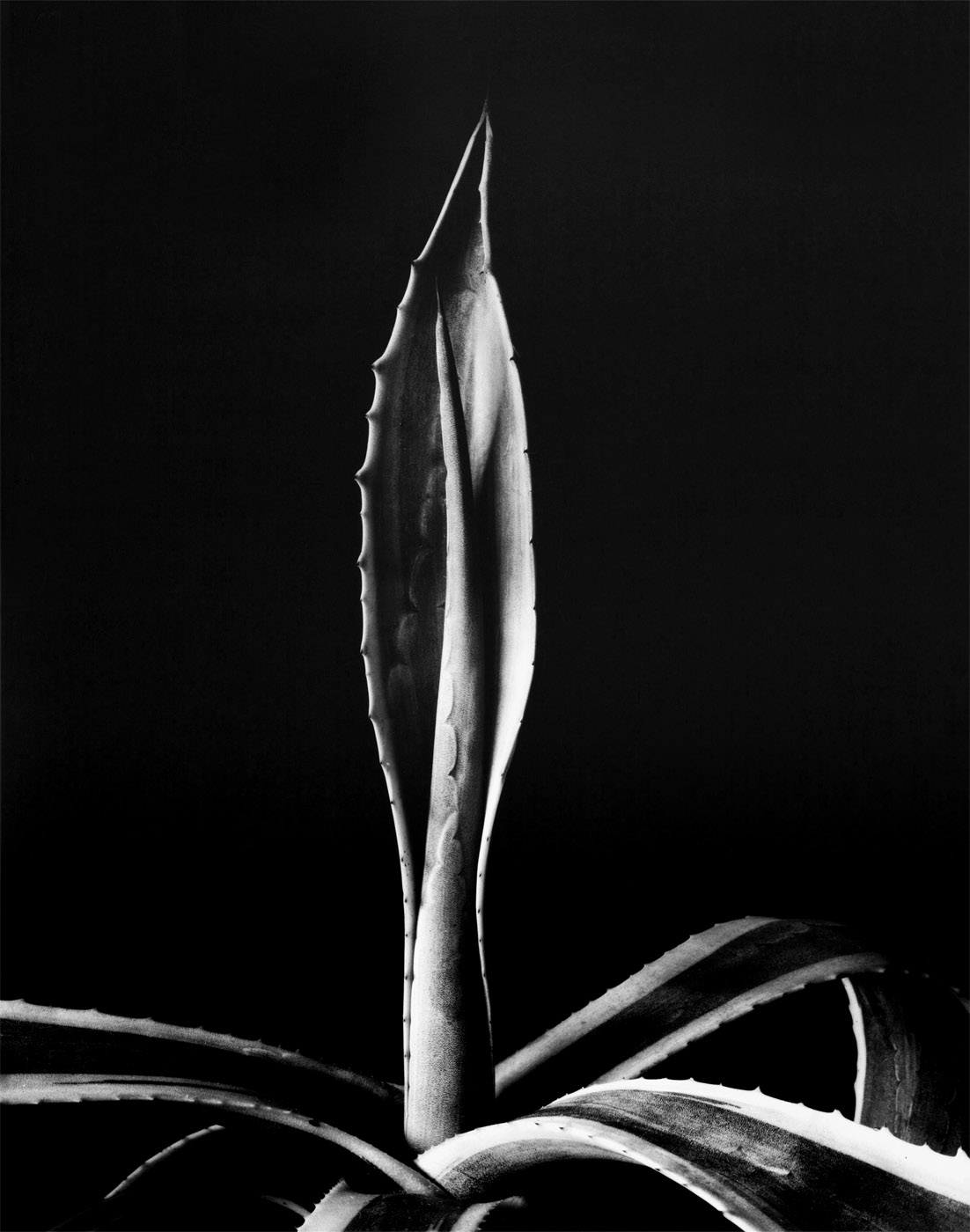
Imogen Cunningham (American, 1883-1976) 'Agave Americanus' 1929


Imogen Cunningham (American, 1883-1976)
Agave Americanus
1929
Gelatin silver print
High Museum of Art, Atlanta
© The Imogen Cunningham Trust


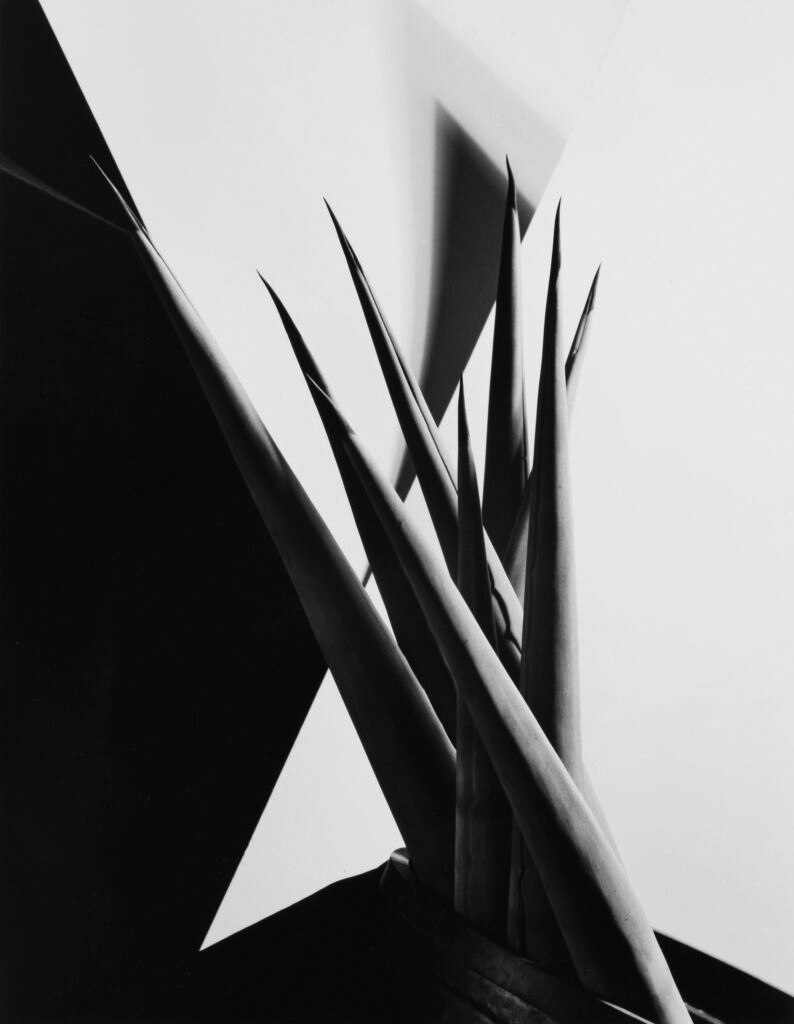
Imogen Cunningham (American, 1883-1976)
'Agave Design I' c. 1920


Imogen Cunningham (American, 1883-1976)
Agave Design I
c. 1920
Gelatin silver print
High Museum of Art, Atlanta, purchase with funds from Georgia-Pacific Corporation
© The Imogen Cunningham Trust


Edward Weston (American 1886-1958) 'Palma Cuernavaca II' 1925


Edward Weston (American 1886-1958)
Palma Cuernavaca II
1925
Palladium print
High Museum of Art, Atlanta, gift of Lucinda W. Bunnen for the Bunnen Collection to mark the retirement of Gudmund Vigtel
© Center for Creative Photography, Arizona Board of Regents


Ralph Steiner (American, 1899-1986) 'Electrical Switches' 1929


Ralph Steiner (American, 1899-1986)
Electrical Switches
1929
Gelatin silver print
8 x 10 5/16 inches
Purchase with funds from Georgia-Pacific Corporation


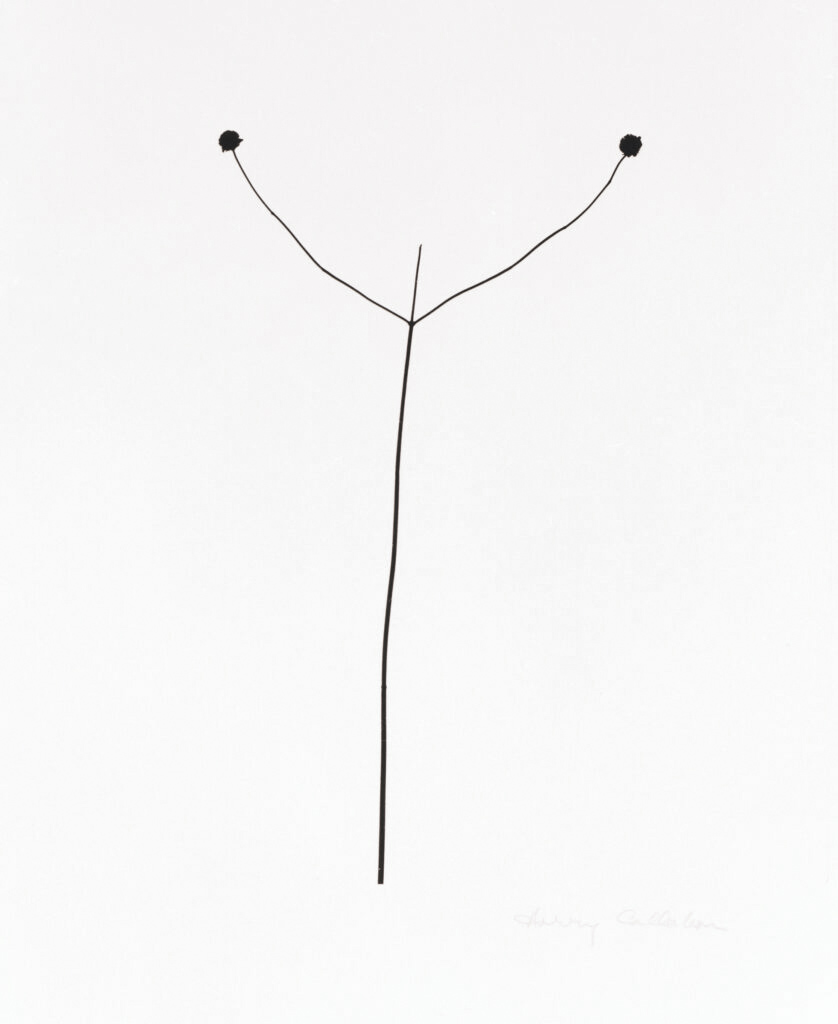
Harry Callahan (American, 1912-1999) 'Weed Against Sky, Detroit' 1948


Harry Callahan (American, 1912-1999)
Weed Against Sky, Detroit
1948
Gelatin silver print
High Museum of Art, Atlanta, gift of the Callahan and Hollinger Families
© 2018 The Estate of Harry Callahan


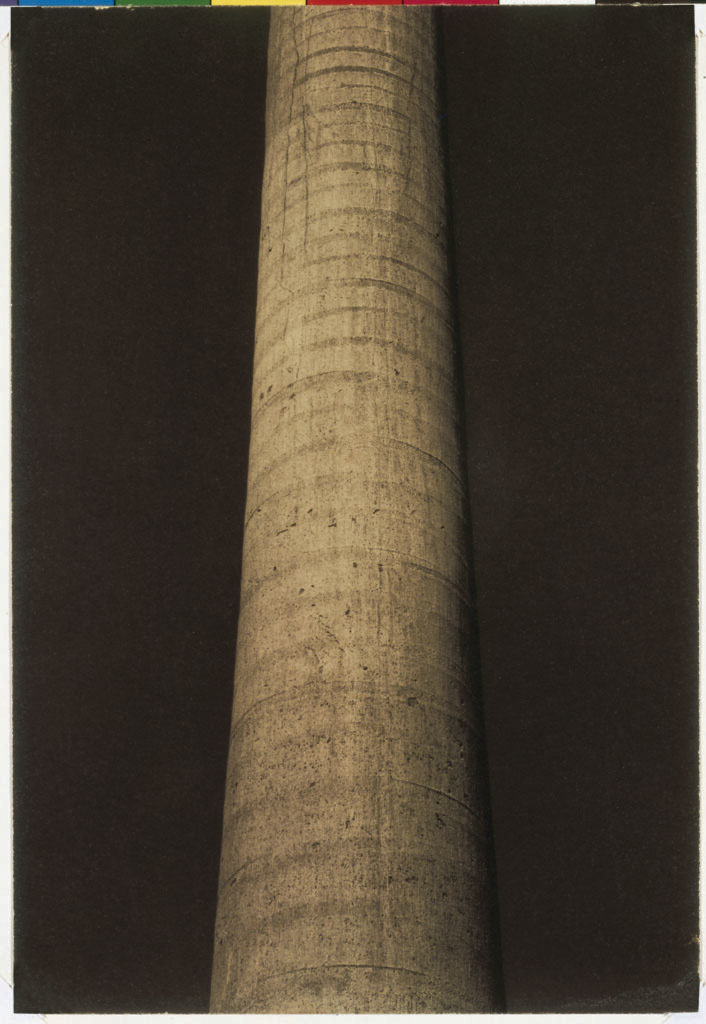
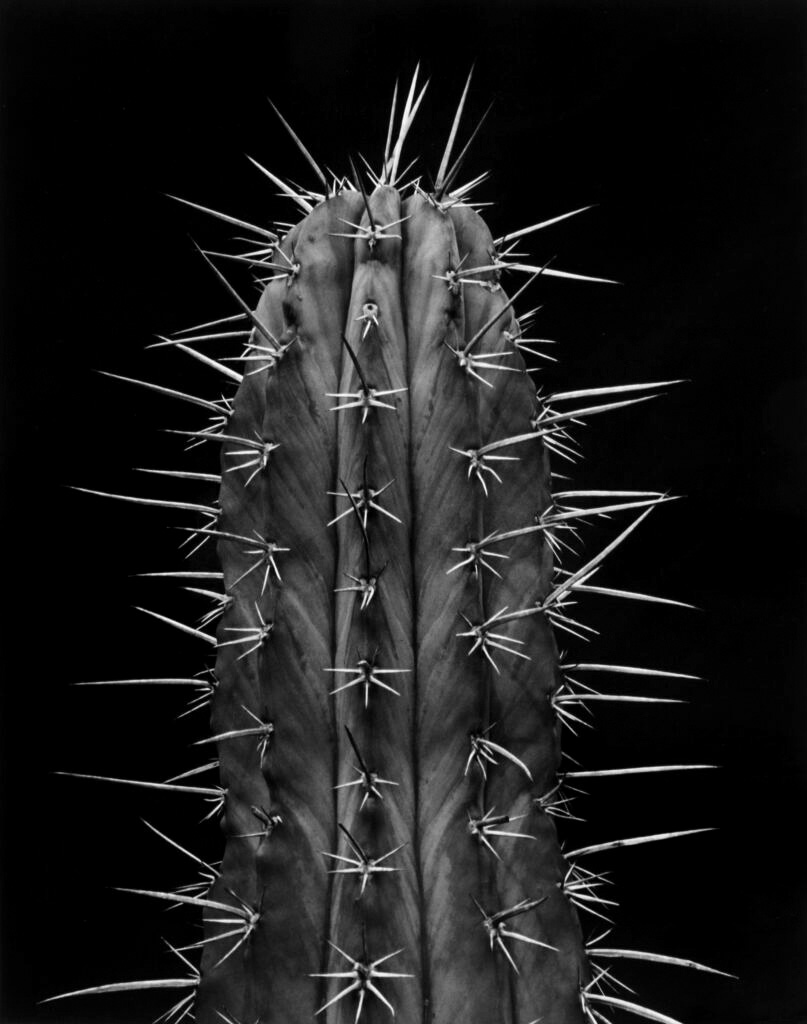
Eugenia de Olazabal (Mexican, b. 1936) 'Espinas' c. 1985


Eugenia de Olazabal (Mexican, b. 1936)
Espinas
c. 1985
Gelatin silver print
High Museum of Art, Atlanta, gift of the artist


“Surrealism lies at the heart of the photographic enterprise: in the very creation of a duplicate world, of a reality in the second degree, narrower but more dramatic than the one perceived by natural vision.”


Susan Sontag, 1973


Surreality

Surrealism emerged as an artistic movement in reaction to the horrors of World War I. The often disconcerting imagery and literature of the movement reflected a world that felt disorienting and chaotic and captured how the very foundations of reason and humanity were tested and questioned through the realities of war. In his Surrealist Manifesto (1924), French writer Andre Breton advocates for a rejection of rational ways of approaching the world in four of dreams and imagination as pathways to new creative expressions.

Photography played an important role in the Surrealist movement. Artists valued how the medium could capture spontaneous moments that reveal the unexpected, be manipulated to stage scenes, or be altered with darkroom processes. They harness photography in a multitude of ways to create dreamlike and unconscious associations with reality. In these galleries, artists explore uncanny moments and create links to the human psyche by focusing on humanlike forms and fragmented body parts, mirrored and doubled views, and the impact of light and shadows in space.

Wall text from the exhibition


Eugène Atget (French, 1857-1927) 'Men's Fashions (Avenue des Gobelins)' 1925, printed 1956


Eugène Atget (French, 1857-1927)
Men’s Fashions (Avenue des Gobelins)
1925, printed 1956
Gelatin silver print
Purchase


Eugène Atget was the great chronicler of Paris at the turn of the century. His vast photographic archive captures a city on the precipice of modernisation. Though his photographs of empty city streets were documentary in nature, the Surrealists admired their dreamlike quality and claimed Atget as one of their own despite his protestations. They believed any photograph could shed its original context and intent when viewed with a surrealist sensibility. Atget’s photograph of mannequins peering out of a shop window appealed to the movement by embodying the uncanny valley, where the human likeness of a nonhuman entity evokes both affinity and discomfort in viewers.

Text from the High Museum of Art website


Florence Henri (Swiss born United States, 1893-1982) 'Composition' 1932, printed 1972


Florence Henri (Swiss born United States, 1893-1982)
Composition
1932, printed 1972
Gelatin silver print
High Museum of Art, Atlanta, gift of Dr. Joe B. Massey in honor of Maria L. Kelly


Florence Henri is well known for her manipulations of light and form that create complex, surrealist scenes. She used angled mirrors to frame, obscure, and replicate portions of scenes to dissolve a sense of perspective and space, as seen in this still life comprising mirrors, pears, and an image of the sea. After only one semester studying under László Moholy-Nagy at the Bauhaus in 1927, Henri shifted her focus from painting to photography and began using various experimental techniques such as photomontage, multiple exposures, photograms, and negative printing.

Text from the High Museum of Art website


Barbara Kasten (American, b. 1936) 'Construct NYC' 1984


Barbara Kasten (American, b. 1936)
Construct NYC
1984
Dye destruction print
High Museum of Art, Atlanta, gift of Lucinda W. Bunnen for the Bunnen Collection
© Barbara Kasten


Barbara Kasten’s art is as much about the process of setting up innovative still life scenes as it is about the photographs she makes of them. Her Constructs series focuses on large-scale complex assemblages that she builds in her studio using a wide variety of materials, including painted wood, plaster, mirrors, screens, and fibers. Her work is not digitally altered; instead, she complicates the scene using mirrors and light, much in the tradition of Florence Henri, whose photograph is also on view in the exhibition.

Text from the High Museum of Art website


Manipulations

This final section features photographers from the New Vision period to the present day who experiment with physically manipulating photographs. Through approaches such as double exposure, photomontage, surface alteration, and multilayering, they challenge and expand our perceptions of reality. The artworks in this section prioritise the creative process through labour, intention, intervention, and theatricality.

Double exposures is the process of photographing multiple images with the same negative within the camera, resulting in layered images that often provide a frenetic, multifaceted view of a scene. In contrast to the in-camera process of double exposure, photomontage combines separate images in the darkroom to produce a final photograph that emphasises the image’s artifice and absurdity. Physically disrupting the surface of photographs with alterations such as adding unnatural colour, drawing connections, stitching into prints, or inscribing texts augments the visual experience and offers emotional and narrative depth. Finally, whether through ancient visual techniques like the camera obscure or new technologies like digital screens, these artists create enigmatic scenes by layering and physically transforming subject, composition, and image.

Wall text from the exhibition


Barbara Morgan (American, 1900-1992) 'Protest' 1940


Barbara Morgan (American, 1900-1992)
Protest
1940
Gelatin silver print
High Museum of Art, Atlanta, purchase


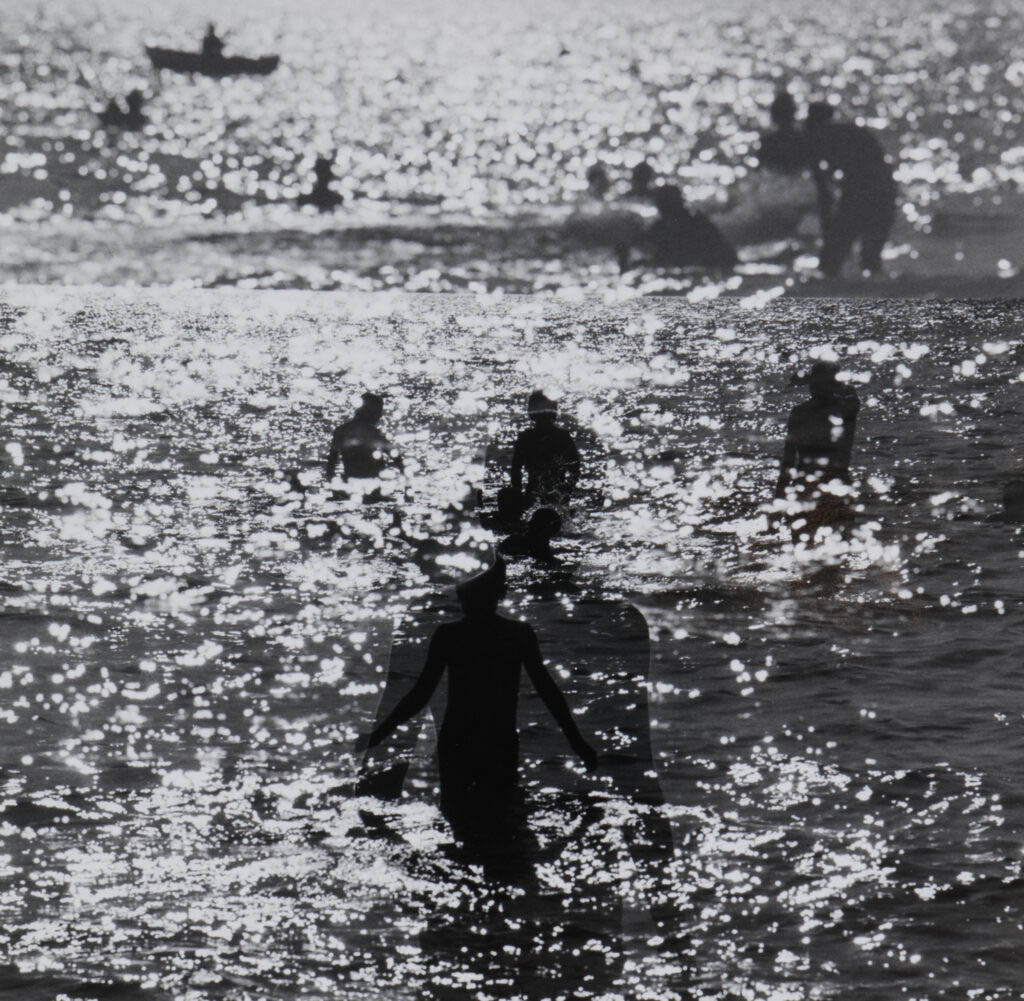
Charles Swedlund (American, b. 1935) '31 St. Beach' c. 1955


Charles Swedlund (American, b. 1935)
31 St. Beach
c. 1955
Gelatin silver print
High Museum of Art, Atlanta, gift of Steven Nordman
© Charles Swedlund


Jerry Uelsmann (American, 1934-2022) 'Untitled' 1964


Jerry Uelsmann (American, 1934-2022)
Untitled
1964
Gelatin silver print
High Museum of Art, Atlanta, purchase with funds from a friend of the Museum


Lucinda Bunnen (American, 1930-2022) 'Untitled' 1974


Lucinda Bunnen (American, 1930-2022)
Untitled
1974
Gelatin silver print
High Museum of Art, Atlanta, purchase with funds from the Lawrence and Alfred Fox Foundation for the Ralph K. Uhry Collection
© Lucinda Bunnen


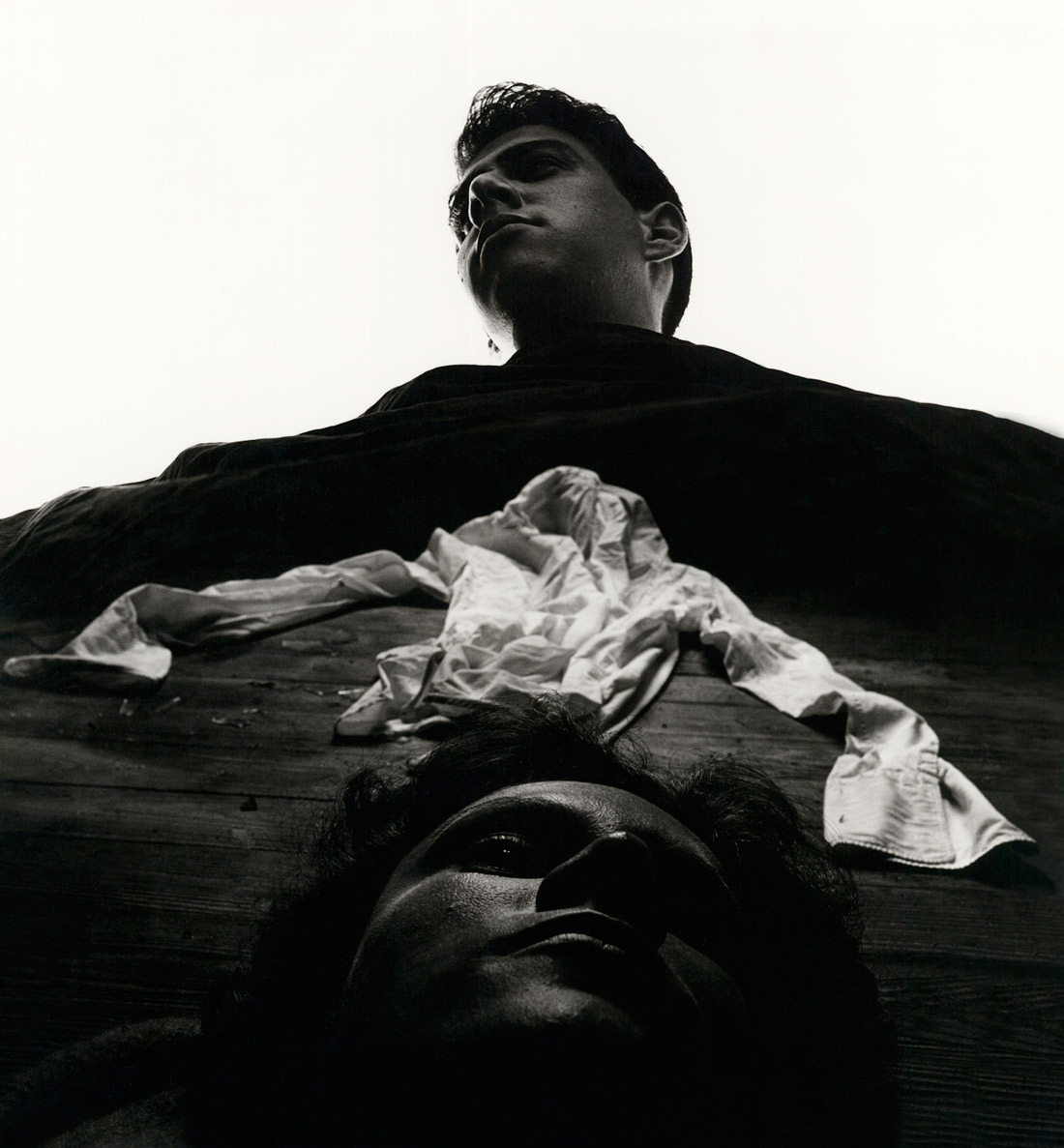
Duane Michals (American, b. 1932)
'Untitled' 1989 From the 'Indomitable Spirit Portfolio'


Duane Michals (American, b. 1932)
Untitled
1989
From the Indomitable Spirit Portfolio
Gelatin silver print
High Museum of Art, Atlanta


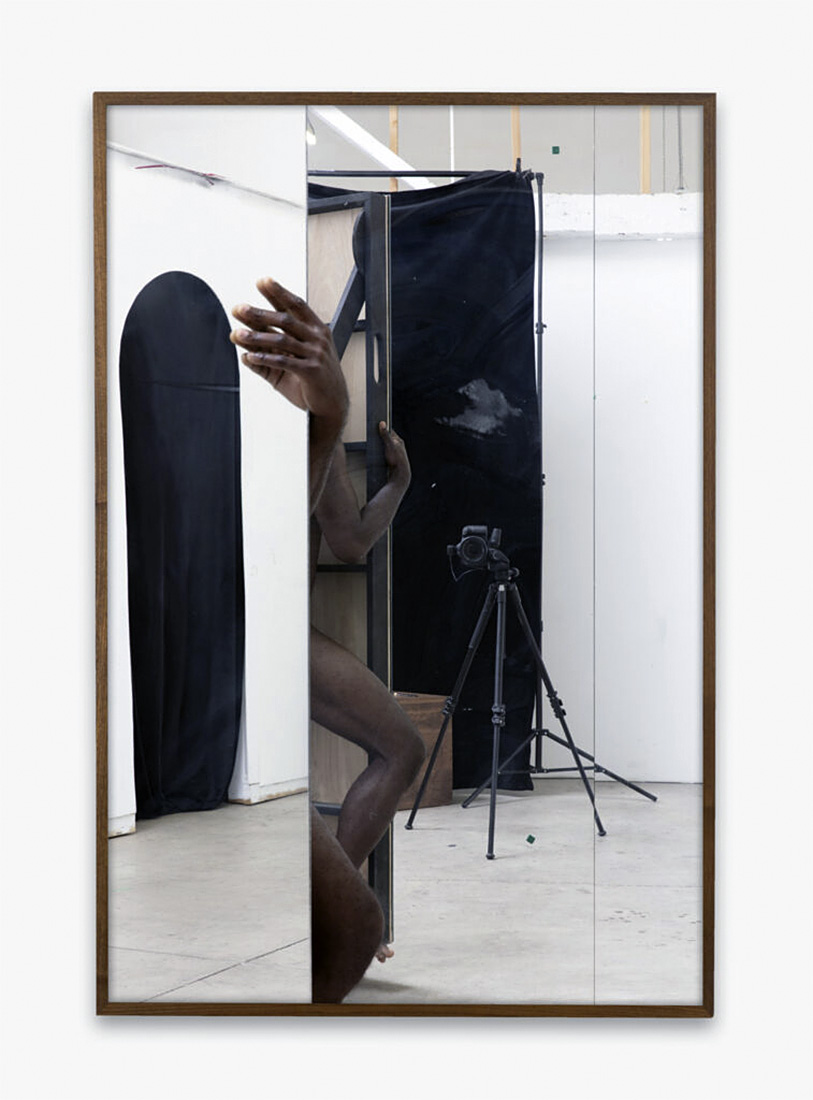
Paul Mpagi Sepuya (American, b. 1982) 'Studio (0X5A8180)' 2021


Paul Mpagi Sepuya (American, b. 1982)
Studio (0X5A8180)
2021
Archival pigment print
High Museum of Art, Atlanta, purchase with funds from the Donald and Marilyn Keough Family Foundation
© Paul Mpagi Sepuya


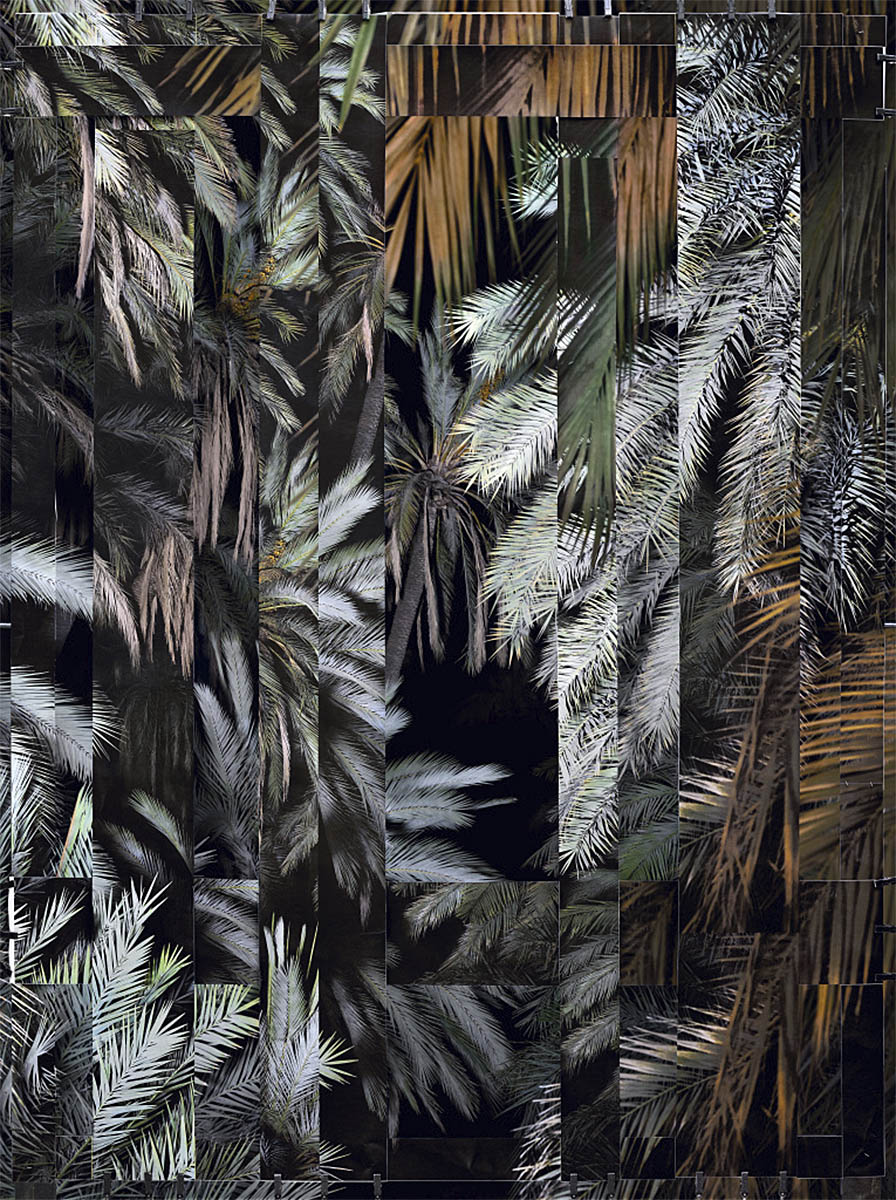
Noémie Goudal (French, b. 1984) 'Phoenix V' 2021


Noémie Goudal (French, b. 1984)
Phoenix V
2021
Dye coupler print
High Museum of Art, Atlanta, purchase through funds provided by patrons of Collectors Evening 2023


Noémie Goudal visualises “deep time” (geological history of the planet) and paleoclimatology (study of past climates) to challenge our perception of the world. Referring to the ancient continental split two billion years ago that formed South America and Africa, this image features the Phoenix atlantica, a palm tree that grows on both sides of the Atlantic. Goudal arranged strips of photographic prints of the palms made on one continent in front of the physical palms on the other and rephotographed the scene. The resulting image interweaves the two continents, creating a glitchy, kaleidoscopic view meant to unsettle our sense of stability and the constancy of the planet.

Text from the High Museum of Art website


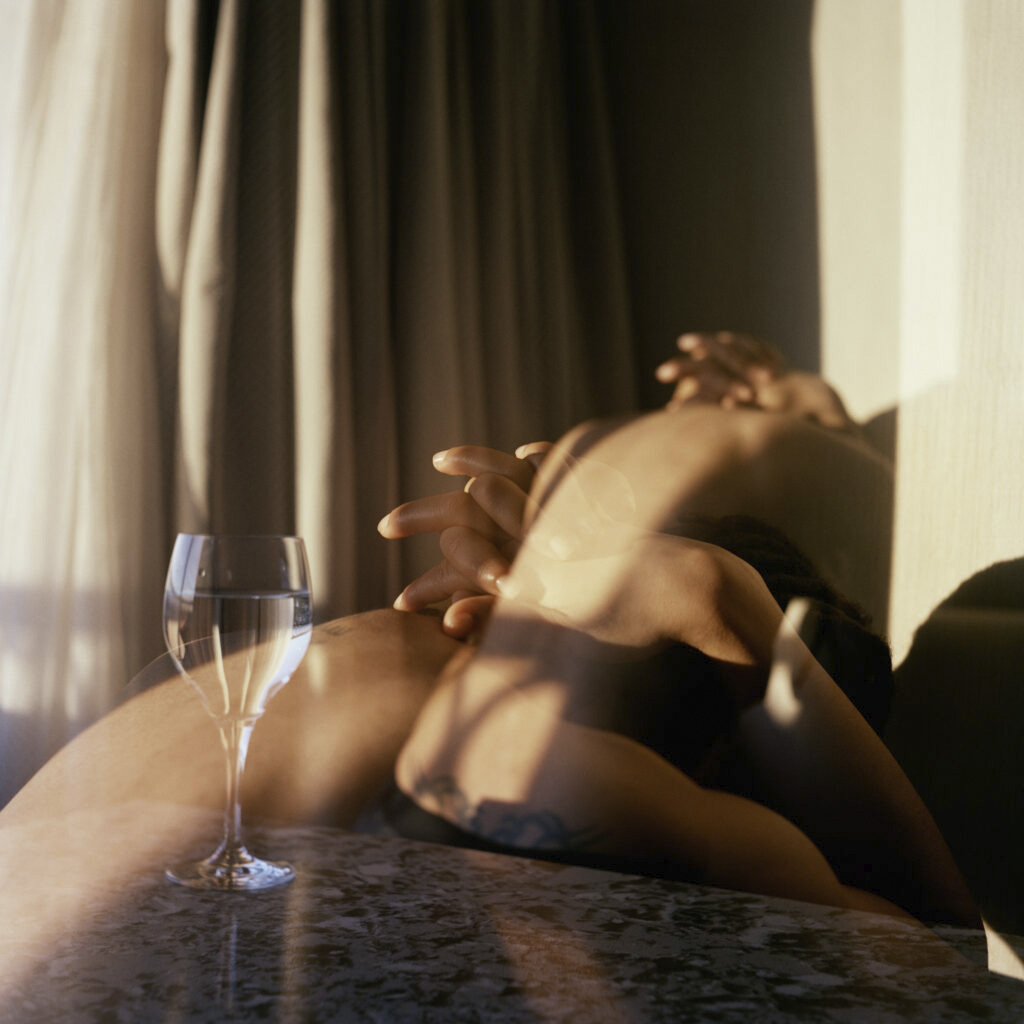
Naima Green (American, b. 1992) 'It Lingers Sweetly' 2022


Naima Green (American, b. 1992)
It Lingers Sweetly
2022
Pigmented inkjet print
High Museum of Art, Atlanta, purchase with funds from the LGBTQIA+ Photography Centennial Initiative


Naima Green’s practice centres connection and collaboration to cast a tender lens on her own queer community of colour. Her lyrical portraits take shape in intimate domestic spaces and airy outdoor environments that embody havens for the people in those spaces. Through double exposure and serial photographs, she provides what she calls “multiple entry points” into a moment in time, translating movements and emotions into a single image. She explains her interest in double exposure “as a means of capturing things that can’t be held in just one way … ,” allowing her to “play with loosening the narrative and letting go of some control.”

Text from the High Museum of Art website


The High Museum of Art
1280 Peachtree St NE
Atlanta, GA
30309

Opening hours:
Tuesday – Saturday 10am – 5pm
Sunday 12 – 5pm
Monday closed

The High Museum of Art website

LIKE ART BLART ON FACEBOOK

Back to top

Exhibition: ‘Faking It: Manipulated Photography Before Photoshop’ at The Metropolitan Museum of Art, New York

Exhibition dates at the MMA: 11th October 2012 – 27th January 2013


Unidentified American artist. 'Two-Headed Man' c. 1855


Unidentified American artist
Two-Headed Man
c. 1855
Daguerreotype
The Nelson-Atkins Museum of Art, Kansas City, Missouri, Gift of Hallmark Cards, Inc.


What a fascinating subject. Having completed multiple exposure work under the black and white enlarger I can attest to how difficult it was to get a print correctly exposed. I was using multiple negatives, moving the piece of photographic paper and printing in grids. Trying to get the alignment right was quite a task but the outcomes were very satisfying. Of course today these skills have mainly been lost to be replaced by other technological skills within the blancmange that is Photoshop. Somehow it’s not the same. My admiration for an artist like Jerry Uelsmann will always remain undimmed for the undiluted joy, beauty and skill of their analogue imagery.

I will post different photographs in this exhibition from the National Gallery of Art hang when I receive them!

See the second posting on this exhibition.

Dr Marcus Bunyan


Many thankx to the The Metropolitan Museum of Art, New York for allowing me to publish the photographs in the posting. Please click on the photographs for a larger version of the image.


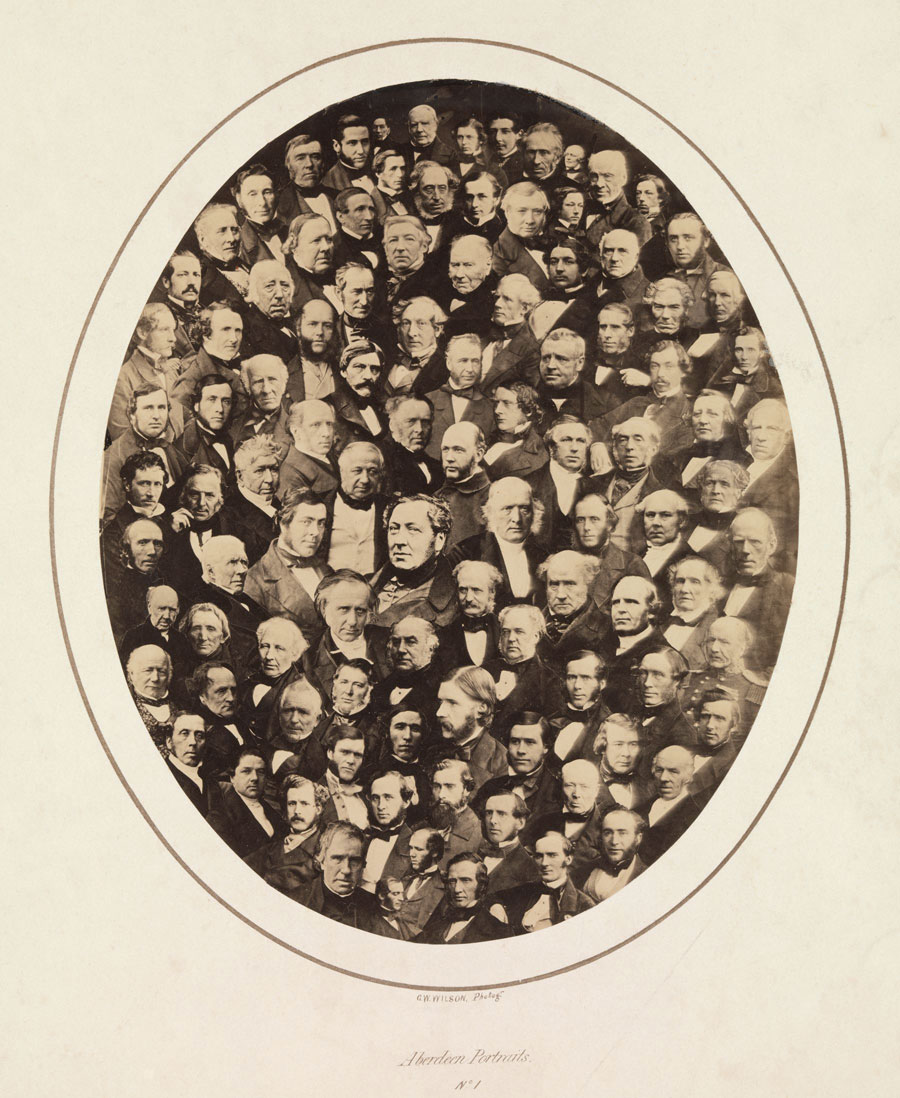
George Washington Wilson (Scottish, 1823-1893) 'Aberdeen Portraits No. 1' 1857


George Washington Wilson (Scottish, 1823-1893)
Aberdeen Portraits No. 1
1857
Albumen silver print from glass negative
The Metropolitan Museum of Art, The Horace W. Goldsmith Foundation Fund, through Joyce and Robert Menschel, 2011


Henry Peach Robinson (English, 1830-1901) 'Fading Away' 1858


Henry Peach Robinson (English, 1830-1901)
Fading Away
1858
Albumen silver print from glass negatives
The Royal Photographic Society Collection at the National Media Museum, Bradford, United Kingdom


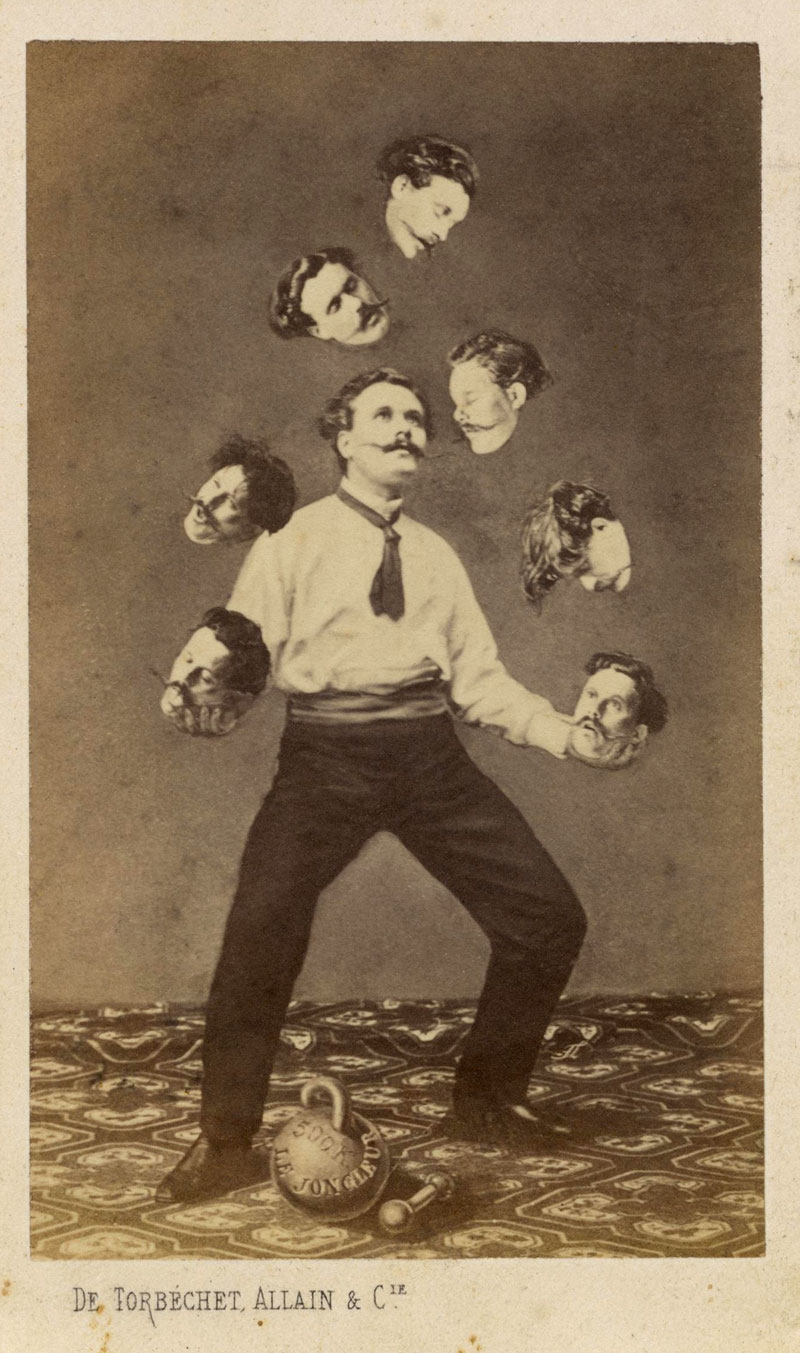
Unidentified artist / De Torbechet, Allain & Cie (publisher) 'Man Juggling His Own Head' c. 1880


Unidentified artist
De Torbechet, Allain & Cie
(publisher)
Man Juggling His Own Head
c. 1880
Albumen silver print from glass negative
Collection of Christophe Goeury


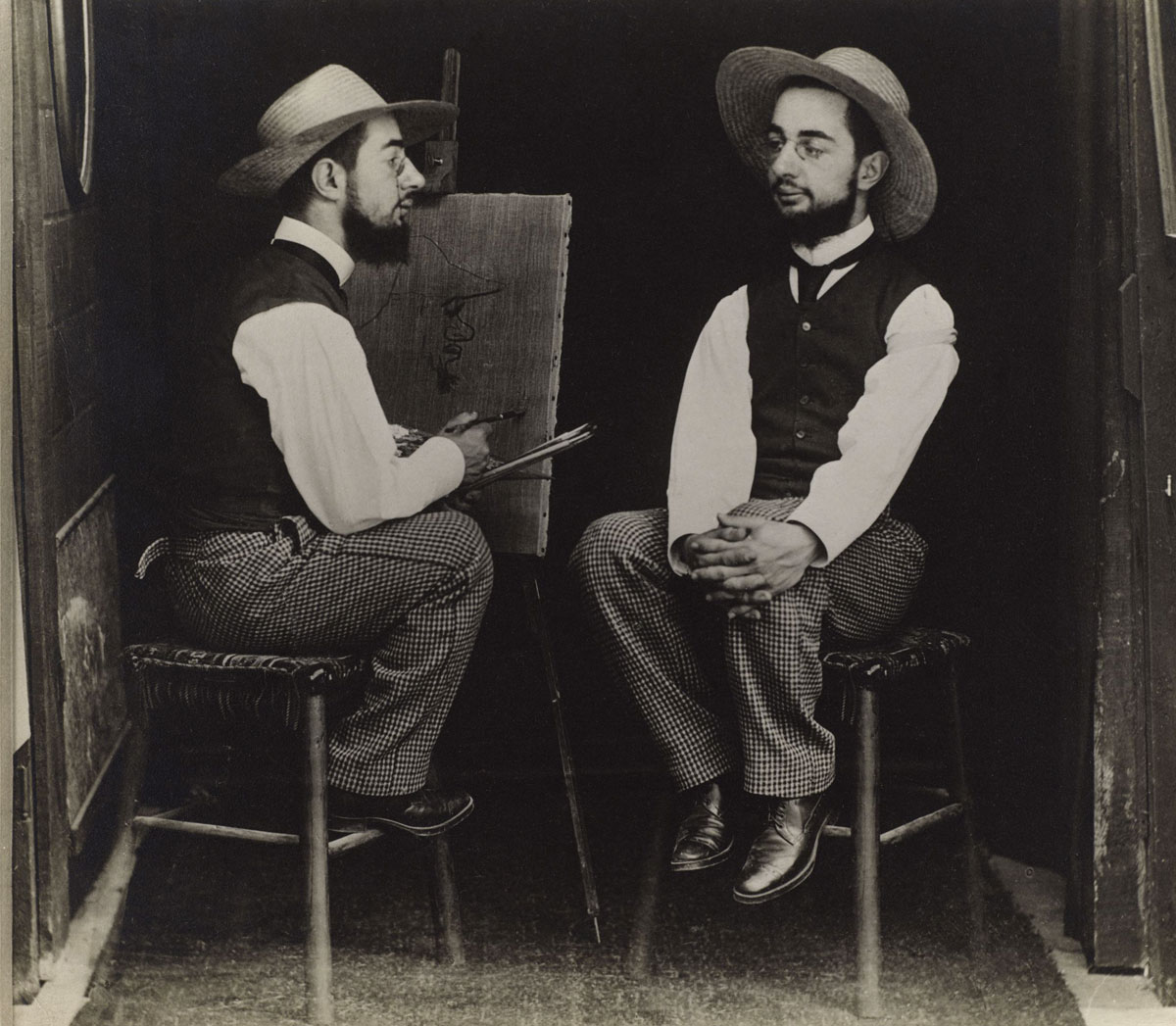
Maurice Guibert (French, 1856-1913) 'Henri de Toulouse-Lautrec as Artist and Model' c. 1900


Maurice Guibert (French, 1856-1913)
Henri de Toulouse-Lautrec as Artist and Model
c. 1900
Gelatin silver print
Philadelphia Museum of Art


F. Holland Day (American, 1864-1933) 'The Vision (Orpheus Scene)' 1907


F. Holland Day (American, 1864-1933)
The Vision (Orpheus Scene)
1907
Platinum print
The Royal Photographic Society Collection at the National Media Museum, Bradford, United Kingdom


Unidentified American artist. 'Man on Rooftop with Eleven Men in Formation on His Shoulders' c. 1930


Unidentified American artist
Man on Rooftop with Eleven Men in Formation on His Shoulders
c. 1930
Gelatin silver print
Collection of George Eastman House, International Museum of Photography and Film, Rochester


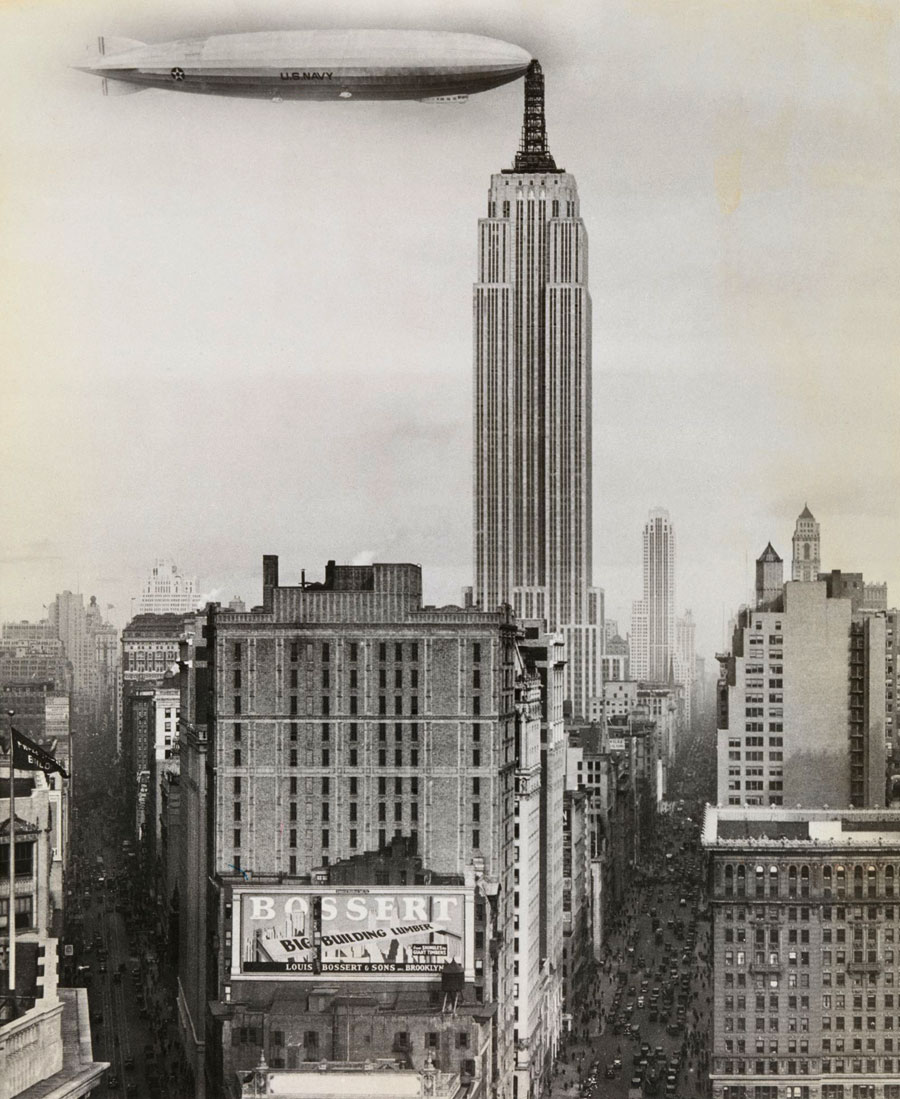
Unidentified American artist. 'Dirigible Docked on Empire State Building, New York' 1930


Unidentified American artist
Dirigible Docked on Empire State Building, New York
1930
Gelatin silver print
The Metropolitan Museum of Art, Twentieth-Century Photography Fund, 2011


While digital photography and image-editing software have brought about an increased awareness of the degree to which camera images can be manipulated, the practice of doctoring photographs has existed since the medium was invented. Faking It: Manipulated Photography Before Photoshop at The Metropolitan Museum of Art is the first major exhibition devoted to the history of manipulated photography before the digital age. Featuring some 200 visually captivating photographs created between the 1840s and 1990s in the service of art, politics, news, entertainment, and commerce, the exhibition offers a provocative new perspective on the history of photography as it traces the medium’s complex and changing relationship to visual truth. 

The exhibition is made possible by Adobe Systems Incorporated. 

The photographs in the exhibition were altered using a variety of techniques, including multiple exposure (taking two or more pictures on a single negative), combination printing (producing a single print from elements of two or more 
negatives), photomontage, overpainting, and retouching on the negative or print. 

In every case, the meaning and content of the camera image was significantly transformed in the process of manipulation.

Faking It is divided into seven sections, each focusing on a different set of motivations for manipulating the camera image. “Picture Perfect” explores 19th-century photographers’ efforts to compensate for the new medium’s technical limitations – specifically, its inability to depict the world the way it looks to the naked eye. To augment photography’s monochrome palette, pigments were applied to portraits to make them more vivid and lifelike. Landscape photographers faced a different obstacle: the uneven sensitivity of early emulsions often resulted in blotchy, overexposed skies. To overcome this, many photographers, such as Gustave Le Gray and Carleton E. Watkins, created spectacular landscapes by printing two negatives on a single sheet of paper – one exposed for the land, the other for the sky. This section also explores the challenges involved in the creation of large group portraits, which were often cobbled together from dozens of photographs of individuals. 

For early art photographers, the ultimate creativity lay not in the act of taking a photograph but in the subsequent transformation of the camera image into a hand-crafted picture.

“Artifice in the Name of Art” begins in the 1850s with elaborate combination prints of narrative and allegorical subjects by Oscar Gustave Rejlander and Henry Peach Robinson. It continues with the revival of Pictorialism at the dawn of the twentieth century in the work of artist-photographers such as Edward Steichen, Anne W. Brigman, and F. Holland Day. 

“Politics and Persuasion” presents photographs that were manipulated for explicitly political or ideological ends. It begins with Ernest Eugene Appert’s faked photographs of the 1871 Paris Commune massacres, and continues with images used to foster patriotism, advance racial ideologies, and support or protest totalitarian regimes. Sequences of photographs published in Stalin-era Soviet Russia from which purged Party officials were erased demonstrate the chilling ease with which the historical record could be falsified. Also featured are composite portraits of criminals by Francis Galton and original paste-ups of John Heartfield’s anti-Nazi photomontages of the 1930s.

“Novelties and Amusements” brings together a broad variety of amateur and commercial photographs intended to astonish, amuse, and entertain. Here, we find popular images of figures holding their own severed heads or appearing doubled or tripled. Also included in this light-hearted section are ghostly images by the spirit photographer William Mumler, “tall-tale” postcards produced in Midwestern farming communities in the 1910s, trick photographs by amateurs, and Weegee’s experimental distortions of the 1940s. 

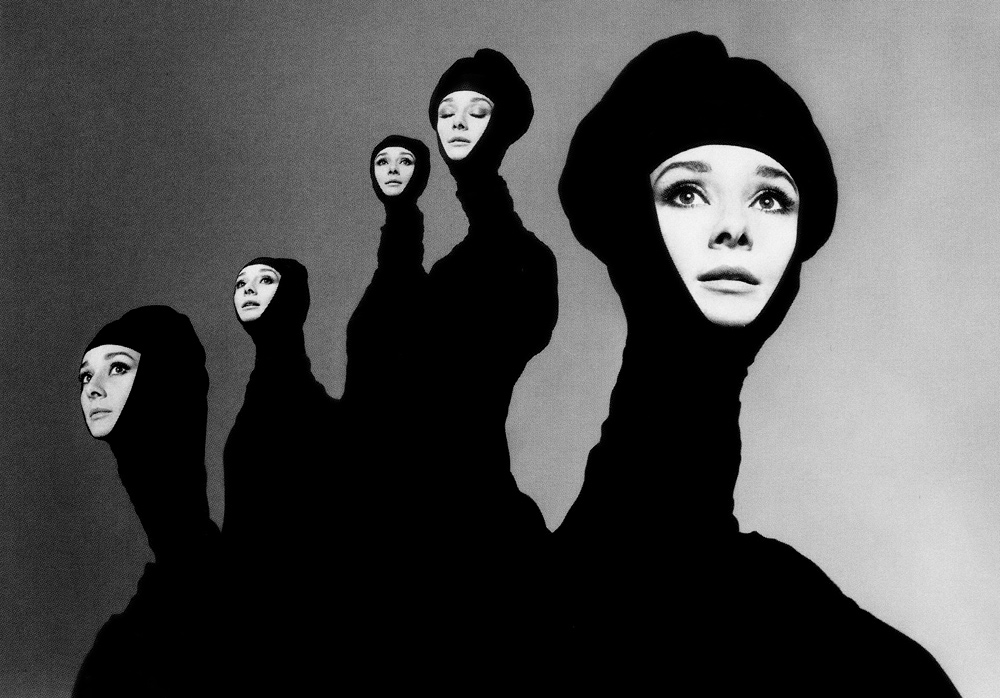
”Pictures in Print” reveals the ways in which newspapers, magazines, and advertisers have altered, improved, and sometimes fabricated images in their entirety to depict events that never occurred – such as the docking of a zeppelin on the tip of the Empire State Building. Highlights include Erwin Blumenfeld’s famous “Doe Eye” Vogue cover from 1950 and Richard Avedon’s multiple portrait of Audrey Hepburn from 1967.

“Mind’s Eye” features works from the 1920s through 1940s by such artists as Herbert Bayer, Maurice Tabard, Dora Maar, Clarence John Laughlin, and Grete Stern, who have used photography to evoke subjective states of mind, conjuring dreamlike scenarios and surreal imaginary worlds. 

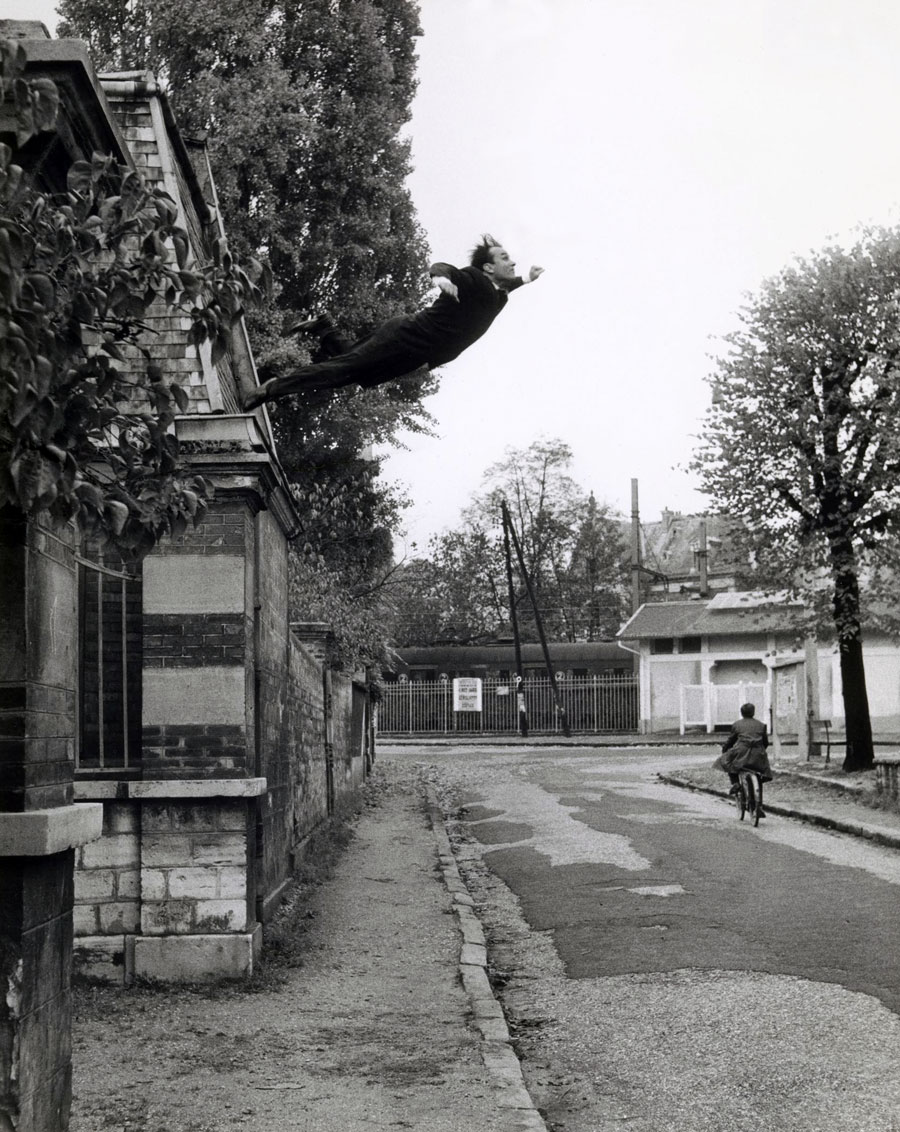
The final section, “Protoshop,” presents photographs from the second half of the 20th century by Yves Klein, John Baldessari, Duane Michals, Jerry Uelsmann, and other artists who have adapted earlier techniques of image manipulation – such as spirit photography or news photo retouching – to create works that self-consciously and often humorously question photography’s presumed objectivity.

Press release from The Metropolitan Museum of Art website


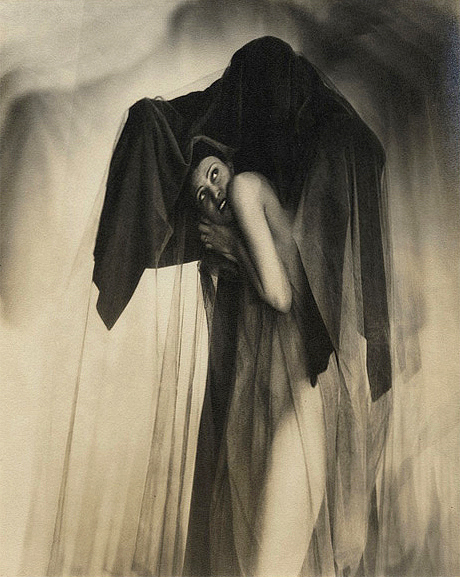
William Mortensen (American, 1897-1965) 'Obsession' c. 1930


William Mortensen  (American, 1897-1965)
Obsession
c. 1930
Gelatin silver print
18.4 x 14.5cm
The Elisha Whittelsey Collection, The Elisha Whittelsey Fund, 1975


Maurice Tabard (French, 1897-1984) 'Room with Eye' 1930


Maurice Tabard (French, 1897-1984)
Room with Eye
1930
Gelatin silver print
The Metropolitan Museum of Art, The Elisha Whittelsey Collection, The Elisha Whittelsey Fund, 1962


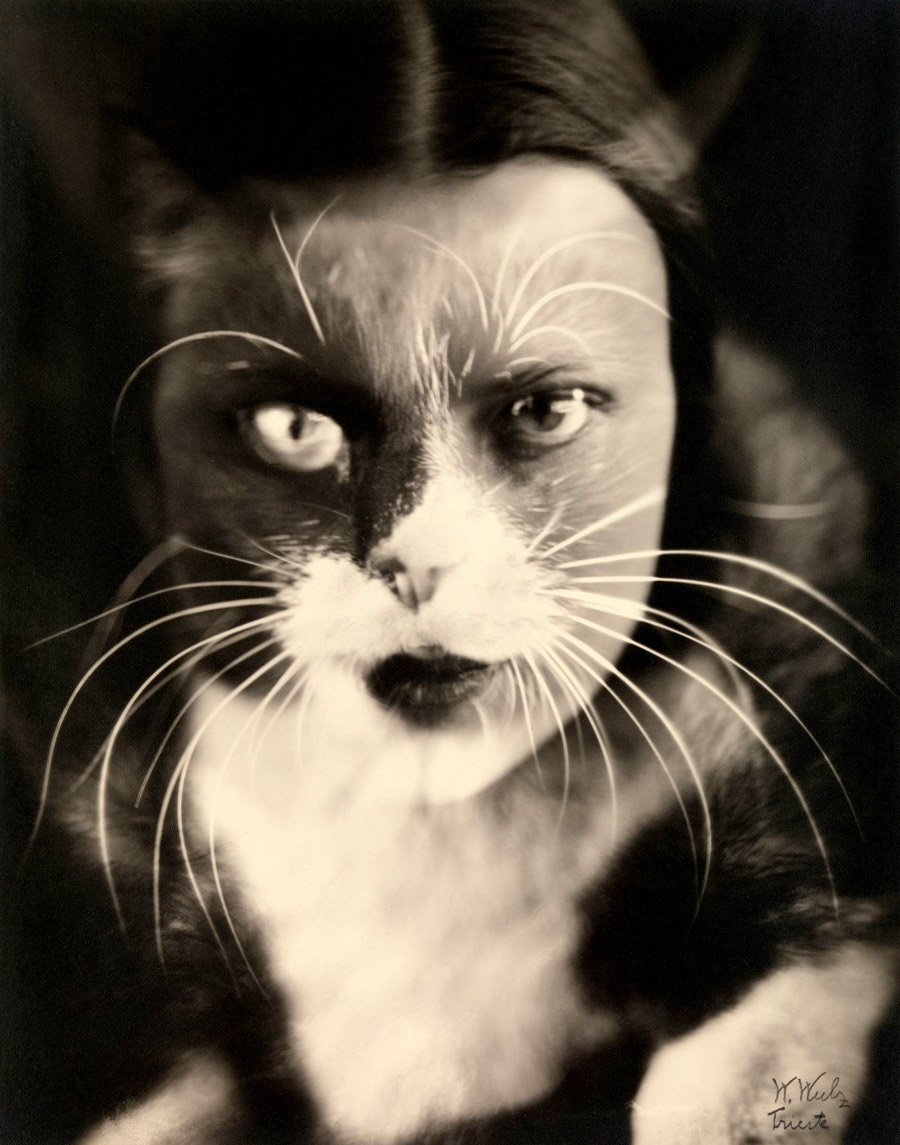
Wanda Wulz (Italian, 1903-1984) 'Io + gatto (Cat + I)' 1932


Wanda Wulz (Italian, 1903-1984)
Io + gatto (Cat + I)
1932
Gelatin silver print
The Metropolitan Museum of Art, Ford Motor Company Collection, Gift of Ford Motor Company and John C. Waddell, 1987
Alinari / Art Resource © Wanda Wulz


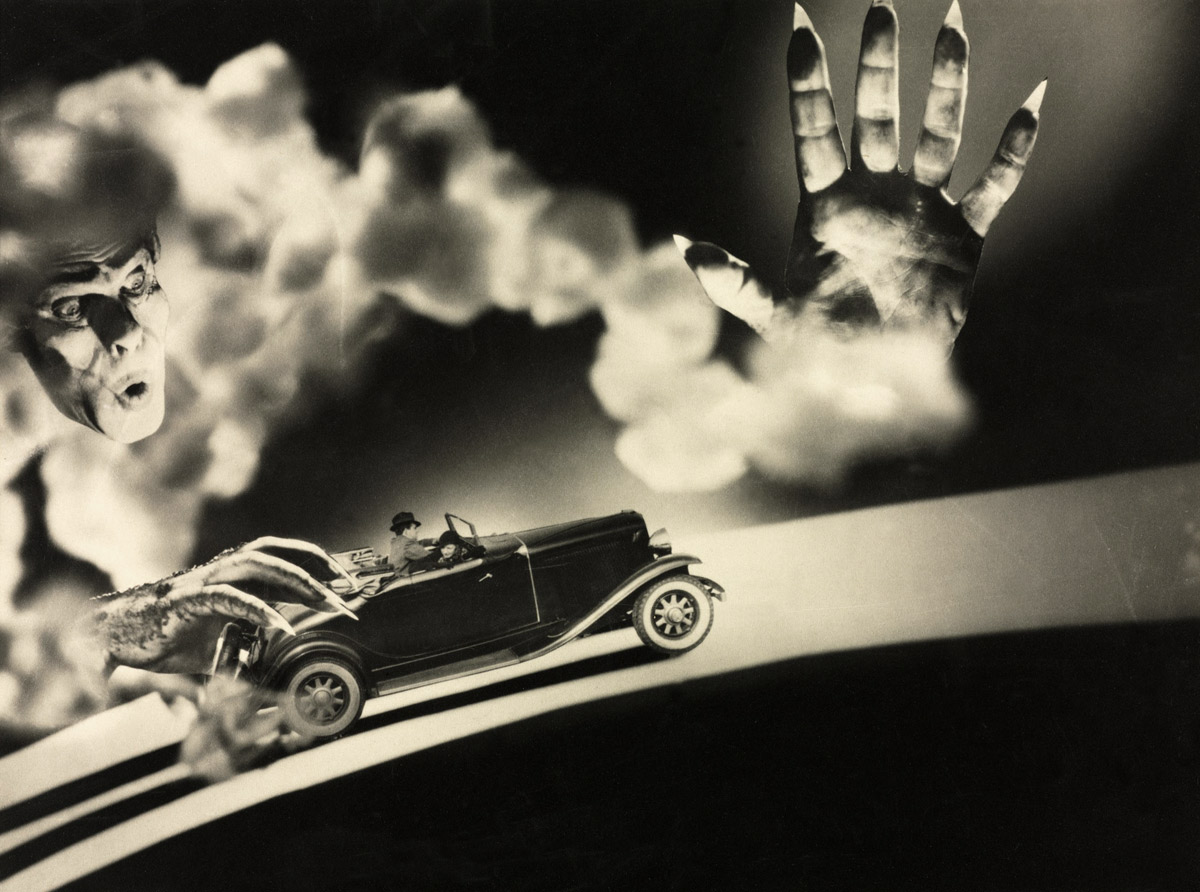
John Paul Pennebaker (American, 1903-1953) 'Sealed Power Piston Rings' 1933


John Paul Pennebaker (American, 1903-1953)
Sealed Power Piston Rings
1933
Gelatin silver print
1934 Art and Industry Exhibition Photograph Collection, Baker Library Historical Collections, Harvard Business School, Boston, Mass.
© John Paul Pennebaker


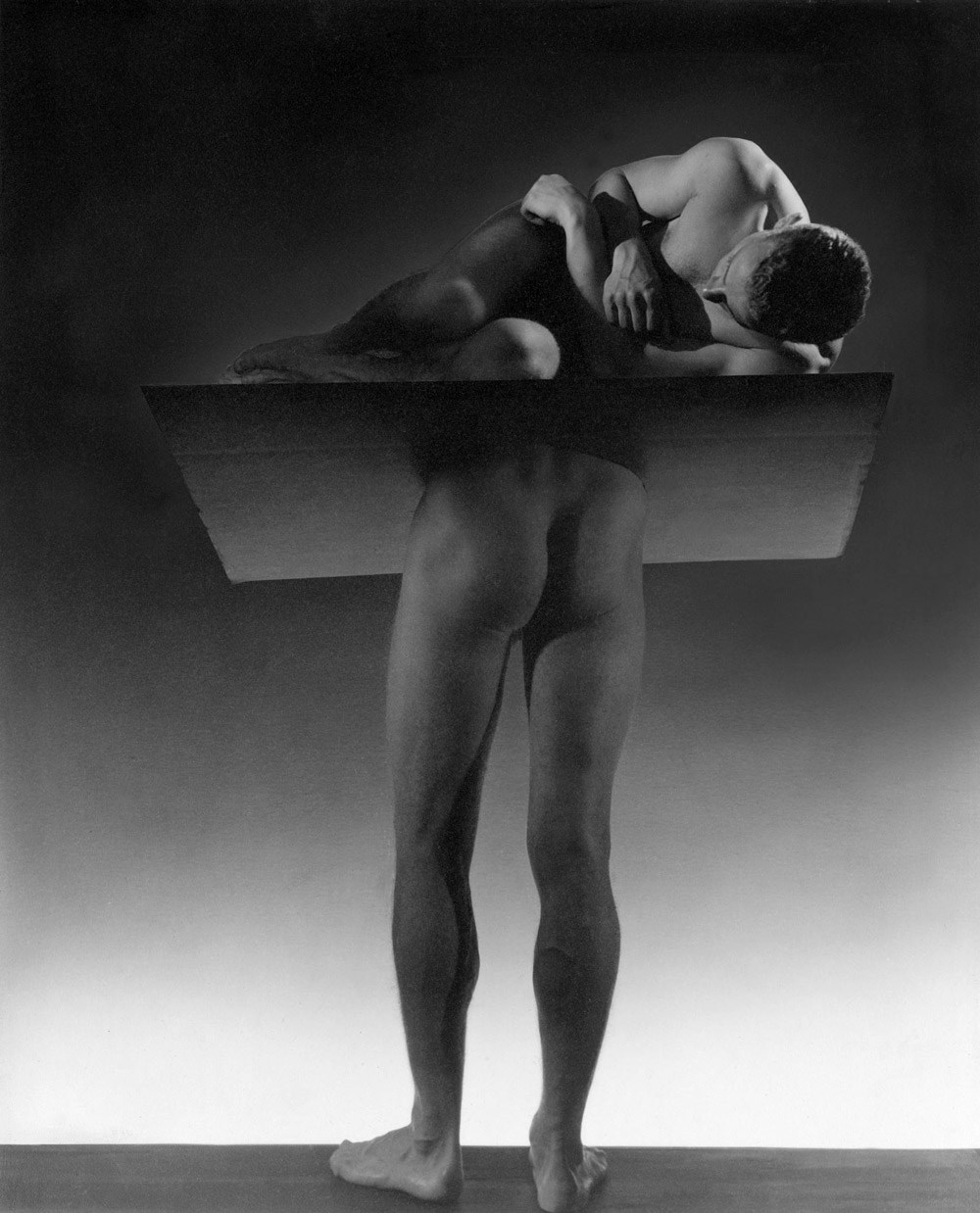
George Platt Lynes (American, 1907-1955) 'The Sleepwalker' 1935


George Platt Lynes (American, 1907-1955)
The Sleepwalker
1935
Gelatin silver print with applied media
The Metropolitan Museum of Art, Ford Motor Company Collection, Gift of Ford Motor Company and John C. Waddell, 1987
© The Estate of George Platt Lynes


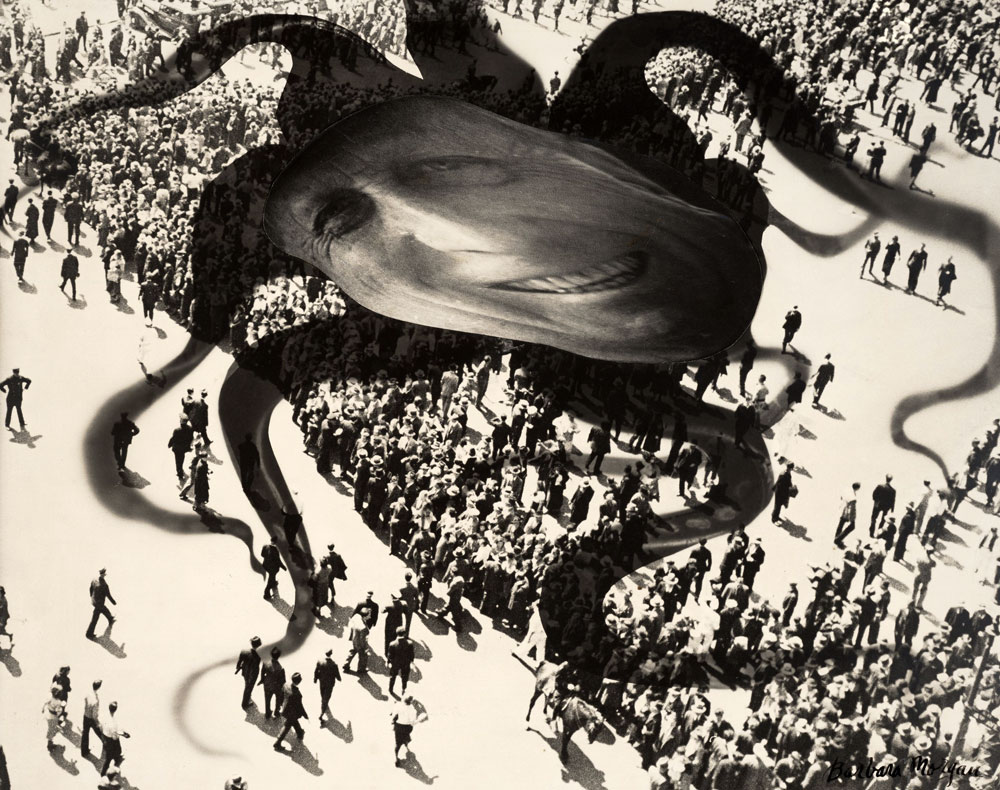
Barbara Morgan (American, 1900-1992) 'Hearst over the People' 1939


Barbara Morgan (American, 1900-1992)
Hearst over the People
1939
Collage of gelatin silver prints with applied media
The Nelson-Atkins Museum of Art, Kansas City, Missouri, Gift of Hallmark Cards, Inc.


Grete Stern (Argentinian born Germany, 1904-1999) 'Dream No. 1: Electrical Appliances for the Home' 1948


Grete Stern (Argentinian born Germany, 1904-1999)
Dream No. 1: Electrical Appliances for the Home
1948
Gelatin silver print
The Metropolitan Museum of Art, Twentieth-Century Photography Fund, 2012
Courtesy of Galería Jorge Mara – La Ruche, Buenos Aires


Erwin Blumenfeld (American born Germany, 1897-1969) '"Doe Eye" Vogue cover' 1950


Erwin Blumenfeld (American born Germany, 1897-1969)
“Doe Eye” Vogue cover
1950


Yves Klein (French, 1928-1962) Photographed by Harry Shunk (German, 1924-2006) and János (Jean) Kender (Hungarian, 1937-2009) 'Leap into the Void' 1960


Yves Klein (French, 1928-1962)
Photographed by Harry Shunk (German, 1924-2006) and János (Jean) Kender (Hungarian, 1937-2009)
Leap into the Void
1960
Gelatin silver print
Purchase, The Horace W. Goldsmith Foundation Gift, through Joyce and Robert Menschel, 1992
© Yves Klein / Artists Rights Society (ARS), New York / ADAGP, Paris
Photograph Shunk-Kender © Roy Lichtenstein Foundation


Weegee (Arthur Fellig) (American, 1899-1968) 'Judy Garland' 1960


Weegee (Arthur Fellig) (American, 1899-1968)
Judy Garland
1960
Silver gelatin photograph
Copyright Weegee/International Center of Photography/Getty Images


Weegee (Arthur Fellig) (American, 1899-1968) 'American, 1899-1968 Draft Johnson for President' c. 1968


Weegee (Arthur Fellig) (American, 1899-1968)
Draft Johnson for President
c. 1968
Gelatin silver print
International Center of Photography, Bequest of Wilma Wilcox, 1993
Copyright Weegee/International Center of Photography/Getty Images.


Richard Avedon (American 1923-2004) 'Audrey Hepburn, New York, January 1967' 1967


Richard Avedon (American, 1923-2004)
Audrey Hepburn, New York, January 1967
1967
Collage of gelatin silver prints, with applied media, mylar overlay with applied media


Jerry N. Uelsmann (American, 1934-2022) 'Untitled' 1969


Jerry N. Uelsmann (American, 1934-2022)
Untitled
1969
Gelatin silver print
The Metropolitan Museum of Art, Twentieth-Century Photography Fund, 2011
© Jerry N. Uelsmann


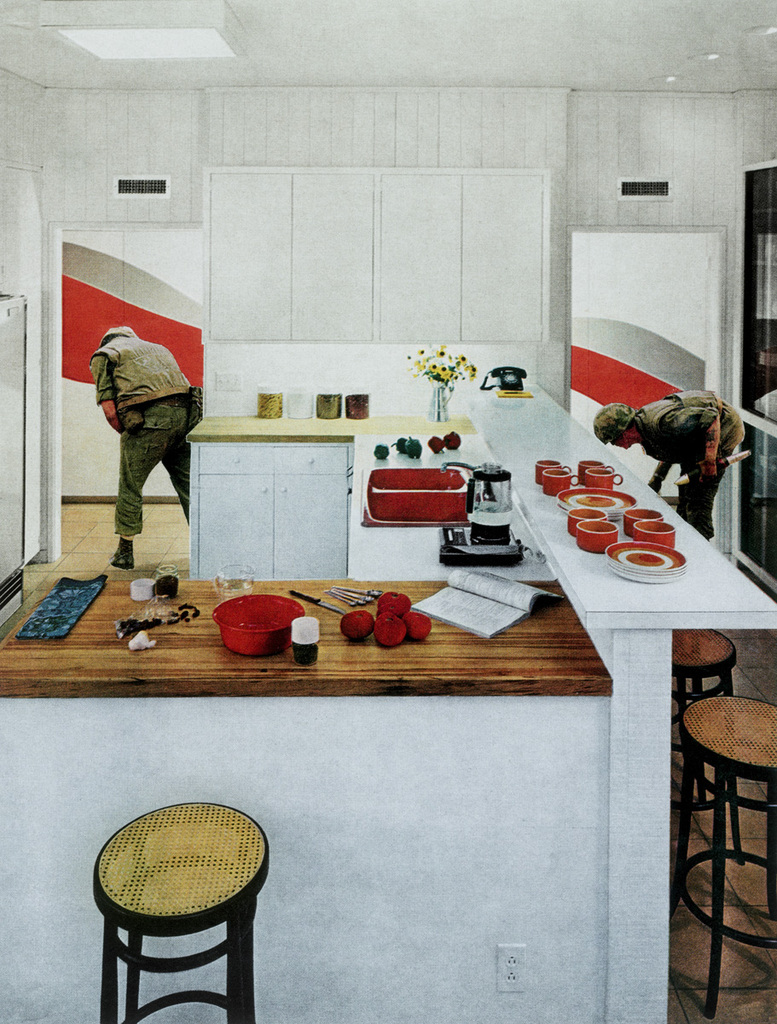
Martha Rosler (American, b. 1943) 'Red Stripe Kitchen', from the series "House Beautiful: Bringing the War Home" 1967-72


Martha Rosler (American, b. 1943)
Red Stripe Kitchen
1967-1972, printed early 1990s
From the series “House Beautiful: Bringing the War Home”
Chromogenic print
The Metropolitan Museum of Art, Purchase, Anonymous Gift, 2002
© Martha Rosler


The Metropolitan Museum of Art
1000 Fifth Avenue at 82nd Street
New York, New York 10028-0198
Phone: 212-535-7710

Opening hours:
Sunday – Tuesday 10am – 5pm
Closed Wednesdays

The Metropolitan Museum of Art website

National Gallery of Art
National Mall between 3rd and 7th Streets
Constitution Avenue NW, Washington

Opening hours:
Daily 10.00am – 5.00pm

National Gallery of Art website

LIKE ART BLART ON FACEBOOK

Back to top

Exhibition: ‘The Mind’s Eye: 50 Years of Photography by Jerry Uelsmann’ at Peabody Essex Museum, Salem, MA

Exhibition dates: 11th February – 15th July, 2012


Jerry Uelsmann (American, 1934-2022) 'Untitled (Pigeon Hill, Bloomington, Indiana)' 1958–59


Jerry Uelsmann (American, 1934-2022)
Untitled (Pigeon Hill, Bloomington, Indiana)
1958-1959
Gelatin silver print
5 3/8 x 9 1/8 in (13.6 x 23.3cm)
© Jerry Uelsmann


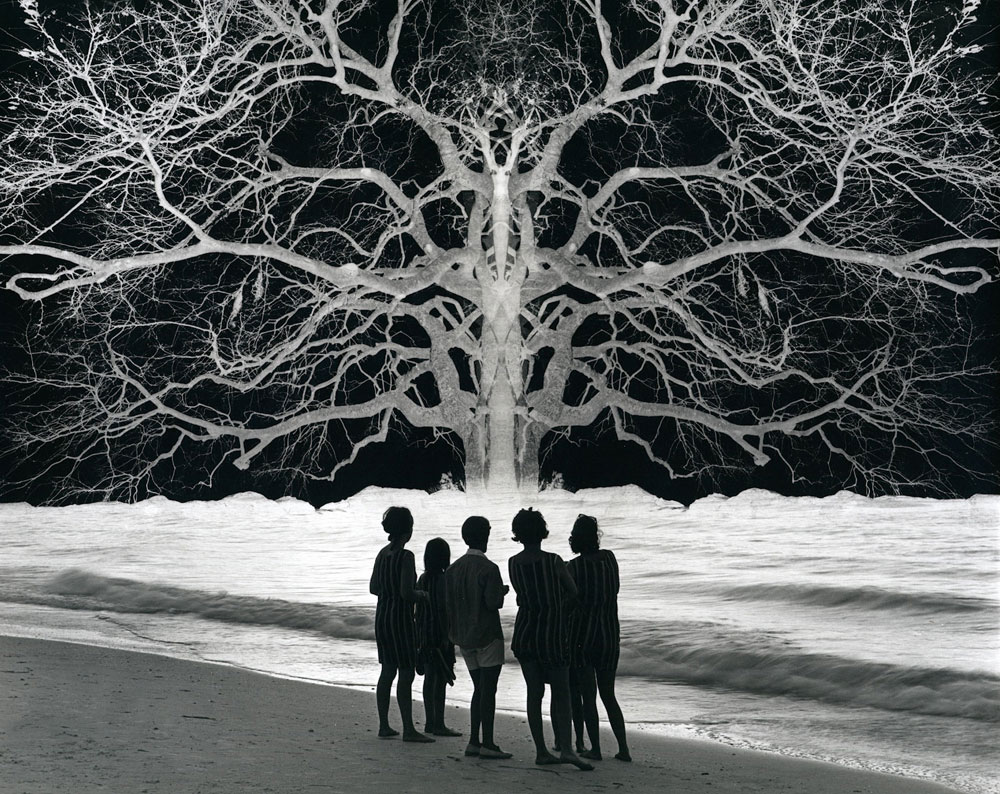
More wonderful photographs from this magnificent photographer as featured in this touring exhibition. It is invaluable to see other images from the artist’s oeuvre (especially early work from the 1950s to observe thematic development), not just the most famous of the surreal montages. Untitled (1966, below) is an absolute ripper that I have never seen before while Untitled (1959, bottom) is as disturbing in a fantastical way as any of Joel-Peter Witkins’ theatrical tableaux vivant.

See my other posting on this exhibition from the Harn Museum of Art, Florida.

Marcus


Many thankx to the Peabody Essex Museum for allowing me to publish the photographs in the posting. Please click on the photographs for a larger version of the image.


Jerry Uelsmann (American, 1934-2022) 'Room #1' 1963


Jerry Uelsmann (American, 1934-2022)
Room #1
1963
Gelatin silver print
9 1/8 x 13 3/4 in (23.3 x 34.8cm)
© Jerry Uelsmann


Jerry Uelsmann (American, 1934-2022) 'Untitled' 1966


Jerry Uelsmann (American, 1934-2022)
Untitled
1966
Gelatin silver print
6 1/2 x 6 5/8 in (16.6 x 16.8cm)
© Jerry Uelsmann


Jerry Uelsmann (American, 1934-2022) 'Untitled' 1962


Jerry Uelsmann (American, 1934-2022)
Untitled
1962
Gelatin silver print
8 1/2 in x 7 3/4 in (21.5 x 19.6cm)
© Jerry Uelsmann


Jerry Uelsmann (American, 1934-2022) 'Bless Our Home and Eagle' 1962


Jerry Uelsmann (American, 1934-2022)
Bless Our Home and Eagle
1962
Gelatin silver print
13 3/8 x 10 1/2 in (33.8 x 26.5cm)
© Jerry Uelsmann


Beautiful and surreal, funny and provocative, the photographs of Jerry Uelsmann are icons of American photo history. The Peabody Essex Museum (PEM) presents the first retrospective of Uelsmann’s work in over 30 years. The Mind’s Eye: 50 Years of Photography by Jerry Uelsmann features 90 works spanning the artist’s celebrated and wide-ranging career, with well-known works shown alongside never-before-seen recent images.

As a pioneer of contemporary photography and master of experimental darkroom technique, Uelsmann has continuously pushed the creative and technical boundaries of photography, revealing new visual possibilities and critical considerations for the medium. In the late 1950s, Uelsmann began experimenting with multiple enlargers and advanced masking, diffusing, burning and dodging techniques, to create imaginary images in the darkroom decades before the advent of Photoshop. Uelsmann’s ingenious work references Surrealists like Rene Magritte, Max Ernst, and Man Ray, as well as Modern photographers such as Edward Weston and Ansel Adams. He has spent his career advocating for the acceptance of experimental photography as an art form.

“For more than half a century, Uelsmann has challenged conventional ideas about what photography can and should do,” said Phillip Prodger, exhibition curator and PEM’s curator of photography. “Uelsmann’s pictures provide a valuable touchstone for understanding new trends in photographic art. His ideas and example have become ever more relevant as photography embraces Photoshop and other computer technologies for altering and manipulating photographs.”

The Mind’s Eye presents works drawn from the artist’s personal archive of vintage materials and, in addition to photographic prints, includes a selection of three-dimensional photographic sculptures, films, artist’s books, albums and work prints to give viewers first-hand insight into Uelsmann’s creative process and expressive range. Through experimental techniques, Uelsmann has explored universal themes of relationships, family, home and politics by creating unexpected and surprising juxtapositions.

“My visual quest is driven by a desire to create a universe capable of supporting feelings and ideas,” said Jerry Uelsmann. “I am drawn to art that challenges one’s sense of reality.”

Born in Detroit in 1934, Uelsmann received a Bachelor of Fine Arts from the Rochester Institute of Technology in 1957 and Master of Science and Master of Fine Arts degrees from Indiana University in 1960. He is recently retired from the faculty of the University of Florida, which he joined in 1960. Uelsmann received a National Endowment for the Arts Fellowship and a Guggenheim Fellowship. In 1967 he had his first solo exhibition at the Museum of Modern Art, New York.

Press release from the PEM website


Jerry Uelsmann (American, 1934-2022) 'Magritte's Touchstone (first version)' 1965


Jerry Uelsmann (American, 1934-2022)
Magritte’s Touchstone (first version)
1965
Gelatin silver print
© Jerry Uelsmann


Jerry Uelsmann (American, 1934-2022) 'Untitled' 1977


Jerry Uelsmann (American, 1934-2022)
Untitled
1977
Gelatin silver print
13 1/8 x 10 5/8 in (33.5 x 27.1cm)
© Jerry Uelsmann


Jerry Uelsmann (American, 1934-2022) 'Untitled' 1996


Jerry Uelsmann (American, 1934-2022)
Untitled
1996
Gelatin silver print
19 5/8 x 14 3/4 in (49.8 x 37.4cm)
© Jerry Uelsmann


Jerry Uelsmann (American, 1934-2022) 'Untitled' 1976


Jerry Uelsmann (American, 1934-2022)
Untitled
1976
Gelatin silver print
19 1/2 x 14 1/2 in (49.5 x 36.9cm)
© Jerry Uelsmann


Jerry Uelsmann (American, 1934-2022) 'Bloomington, Indiana' 1958


Jerry Uelsmann (American, 1934-2022)
Bloomington, Indiana
1958
Gelatin silver print
7 7/8 x 7 1/4 in (19.9 x 18.3cm)
© Jerry Uelsmann


Jerry Uelsmann (American, 1934-2022) 'Untitled' 1959


Jerry Uelsmann (American, 1934-2022)
Untitled
1959
Gelatin silver print
13 1/2 x 5 5/8 in (34.2 x 14.3cm)
© Jerry Uelsmann


Peabody Essex Museum
East India Square
161 Essex Street
Salem, MA 01970-3783 USA
Phone: 978-745-9500, 866-745-1876

Opening hours:
Open Tuesday – Sunday 10am – 5pm
Closed Mondays

Peabody Essex Museum website

LIKE ART BLART ON FACEBOOK

Back to top

Exhibition: ‘The Mind’s Eye, 50 Years of Photography by Jerry Uelsmann’ at the Harn Museum of Art, Florida

Exhibition dates: 14th June – 11th September 2011


Jerry Uelsmann (American, 1934-2022)
 'Apocalypse II
' 1967


Jerry Uelsmann (American, 1934-2022)
Apocalypse II
1967
Gelatin silver print
10 3/4 x 13 5/8 in (27.2 x 34.5cm)
Collection of the artist
© Jerry Uelsmann


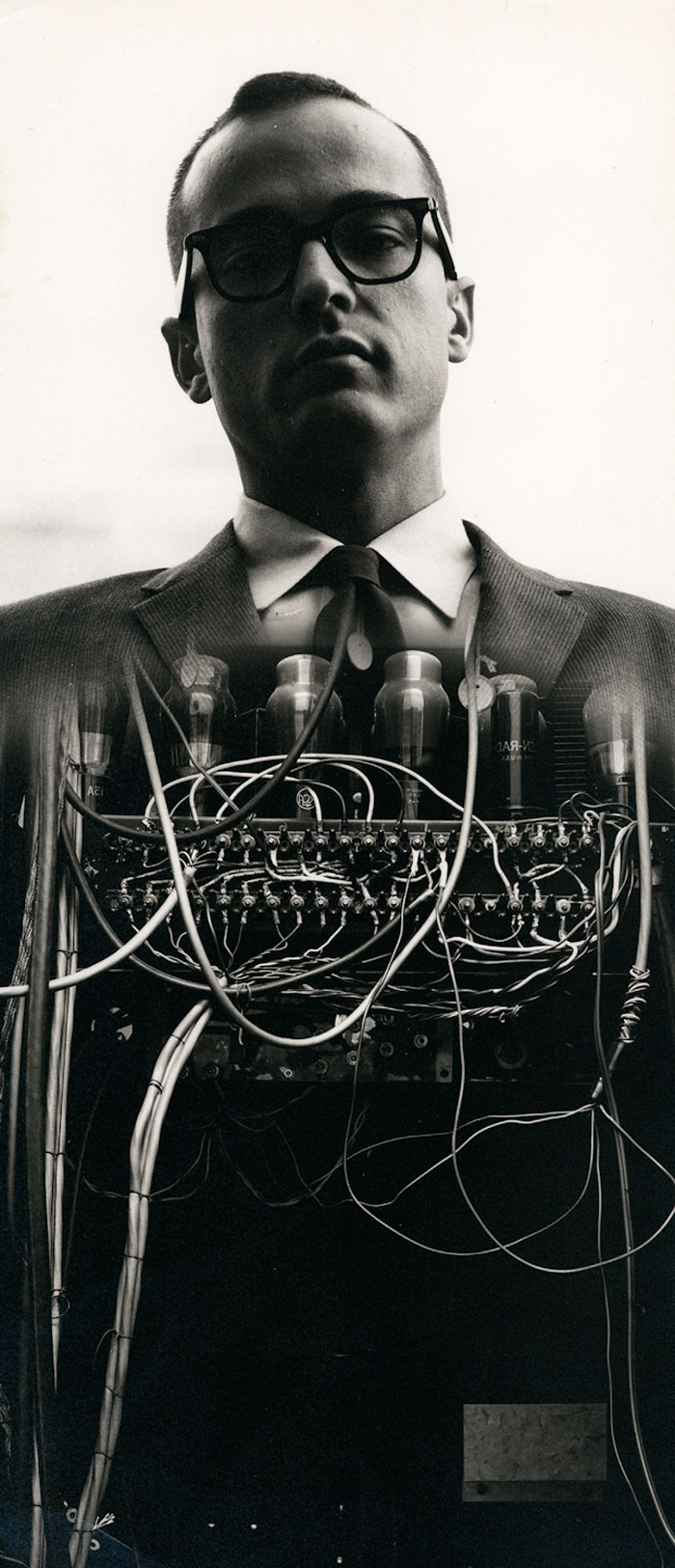
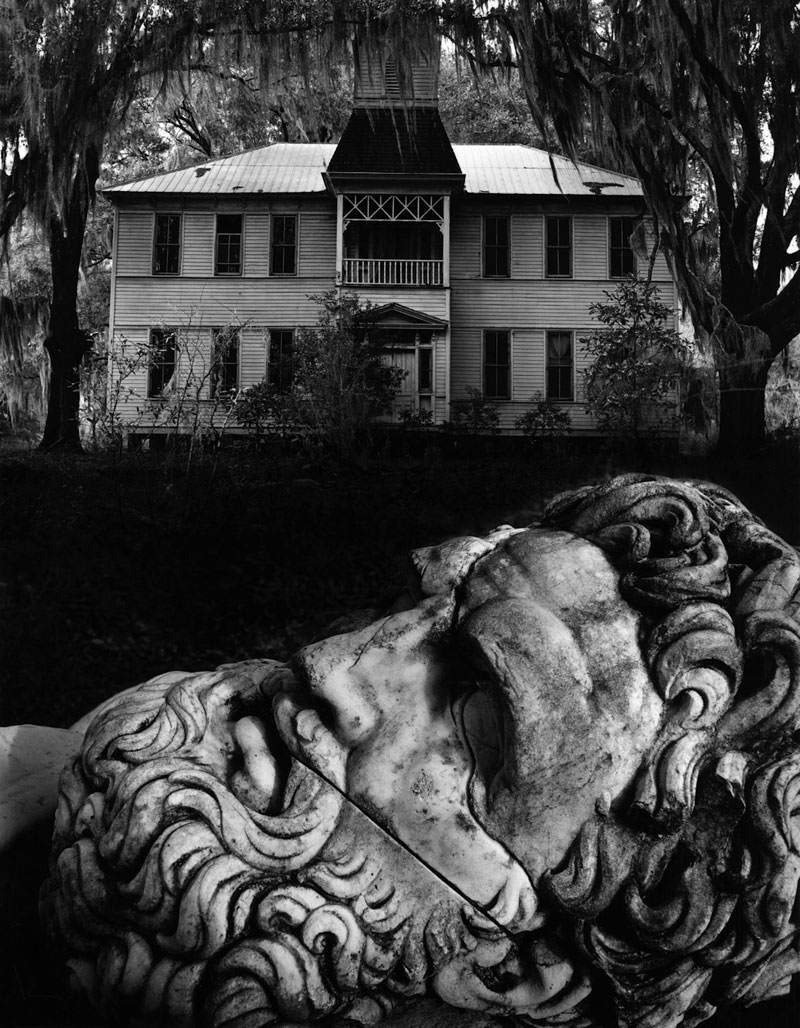
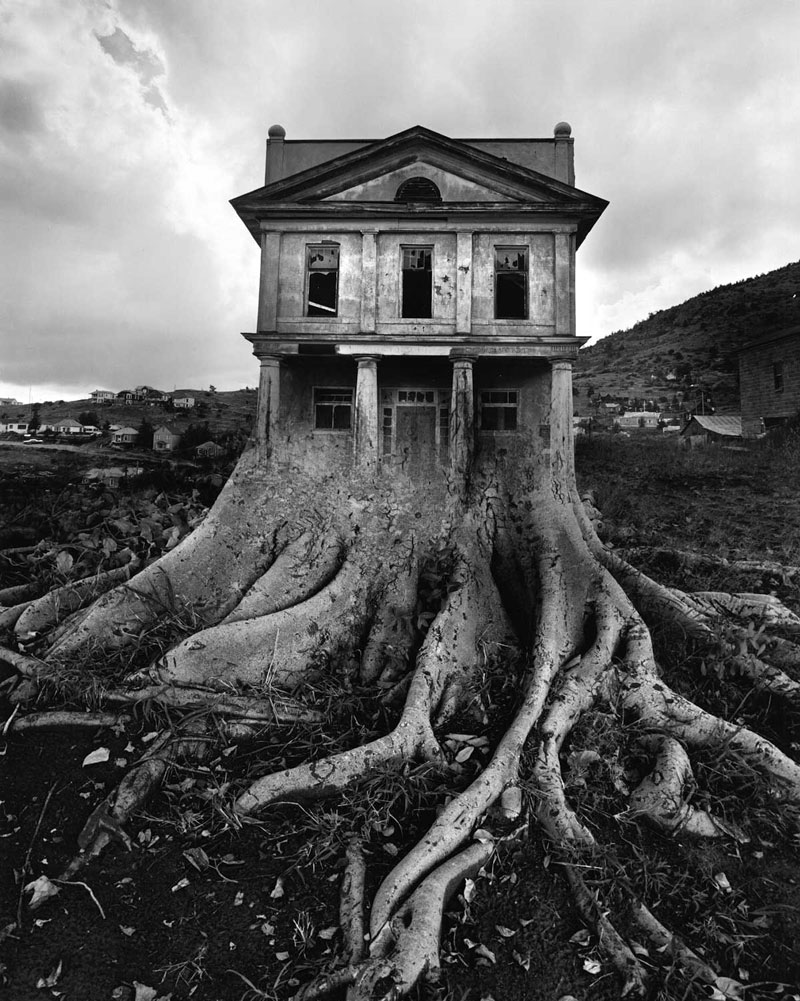
Uelsmann is one of my favourite artists. His unique vision and the skill required to execute that vision using multiple exposure of negatives in the darkroom (remember, this is all done with no Photoshop!) is outstanding. Observe the sensitivity to subject matter and the placement of disparate elements in the surrealist landscape. His photographs have real allegorical power and lodge in the viewer’s psyche. My particular favourites are the library and the house on the tree stump. Uelsmann achieves wonderful resolution to inner visions and then makes the dream-like tableaux accessible to the viewer. As one who started as a black and white photographer and who experimented with multiple exposures on one piece of silver gelatin paper in the darkroom, I can attest to how enormously difficult this process is.

The text on Wikipedia states:

“Uelsmann is a master printer producing composite photographs with multiple negatives and extensive darkroom work. He uses up to a dozen enlargers at a time to produce his final images … Uelsmann is a champion of the idea that the final image need not be tied to a single negative, but may be composed of many … he does not seek to create narratives, but rather allegorical surrealist imagery of the unfathomable … Today, with the advent of digital cameras and Photoshop, photographers are able to create a work somewhat resembling Uelsmann’s in less than a day, however, at the time Uelsmann was considered to have almost “magical skill” with his completely analog tools.”


I thank him for having the creative energy to be a magician.

Dr Marcus Bunyan

See another posting on this exhibition.


Many thankx to the Harn Museum of Art for allowing me to publish the photographs in the posting. Please click on the photographs for a larger version of the image.


Jerry Uelsmann (American, 1934-2022) 'Magritte’s Touchstone' (first version)
 Nd


Jerry Uelsmann (American, 1934-2022)
Magritte’s Touchstone (first version)
Nd
Gelatin silver print
Collection of the artist
© Jerry Uelsmann


Jerry Uelsmann (American, 1934-2022)
 'Mechanical Man #2' 1959


Jerry Uelsmann (American, 1934-2022)
Mechanical Man #2
1959
Gelatin silver print
Collection of the artist
© Jerry Uelsmann


The first critical retrospective of American photographer Jerry Uelsmann’s work will open at the Harn Museum of Art at the University of Florida on June 14, 2011. Uelsmann, known for his iconic, surreal style and his innovative composite printing techniques, has spent more than 50 years challenging and advocating for the acceptance of photography as an experimental art form. The Mind’s Eye, 50 Years of Photography by Jerry Uelsmann, organised by the Peabody Essex Museum in Salem, Massachusetts will feature 89 works from every phase of the artist’s wide-ranging career, including a selection of rare pieces that have never before been on public view. Additional works from the artist’s collection will be on view only during this leg of the exhibition, open through September 11, 2011.

“The Harn Museum of Art is delighted to welcome this important exhibition of photographic works by the University of Florida’s own Jerry Uelsmann, a graduate research professor in the art department from 1960 to 1998,” said Rebecca Nagy, director of the Samuel P. Harn Museum of Art. “Jerry has been, and continues to be a leader in the field and we are delighted to celebrate and look back on such a long, important, and innovative career.”

The exhibition will emphasise Uelsmann’s profound influence on the field of photography through his revolutionary mastery of composite photography. Through the presentation of images from different stages of his works, viewers will gain a new understanding of the artist’s creative process and the evolution of Uelsmann’s ideas throughout his career. The pieces on view will be drawn from the artist’s personal archive of vintage materials, and are the definitive prints of the images. A few examples of the artist’s photo sculptures, artist’s books and albums will give viewers first-hand insight into Uelsmann’s creative process.

“From the beginning of his career, Uelsmann has advocated for the acceptance of photography as an experimental art form,” said Phillip Prodger, curator of photography at the Peabody Essex Museum. “Uelsmann’s photography provides a valuable touchstone for understanding new trends in photographic art. His ideas and work have become even more relevant as photography embraces Photoshop and other computer technologies for altering and manipulating photographic pictures.”

Beginning in the late 1950s, Uelsmann succeeded in combining negatives in the darkroom to create synthetic compositions that conjure the illusion of photographic truth. Although these pictures are visually convincing, they depict scenes that often have no analogue in the real world. Evocative, unsettling, and often humorous, Uelsmann’s photographs are seldom easily resolved, inviting reflection without obvious resolution. His most famous technique, seamlessly fabricating photographs from unrelated negatives to create imaginary scenes, helped build his reputation as an experimental photographer, and cemented his standing as a leader of non-literal photography.

“My visual quest is driven by a desire to create a universe capable of supporting feelings and ideas,” said Jerry Uelsmann. “I am drawn to art that challenges one’s sense of reality.”

Press release from the Harn Museum of Art website


Jerry Uelsmann (American, 1934-2022)
 'Untitled' 
1964


Jerry Uelsmann (American, 1934-2022)
Untitled
1964
Gelatin silver print
13 3/4 x 10 1/4 in (34.9 x 26.1cm)
Collection of the artist
© Jerry Uelsmann


Jerry Uelsmann (American, 1934-2022)
 'Untitled'
 1976


Jerry Uelsmann (American, 1934-2022)
Untitled
1976
Gelatin silver print
19 5/8 x 14 1/4 in (49.9 x 36.3cm)
Collection of the artist
© Jerry Uelsmann


Jerry Uelsmann (American, 1934-2022)
 'Untitled'
 1982


Jerry Uelsmann (American, 1934-2022)
Untitled
1982
Gelatin silver print
13 1/4 x 10 3/8 in (33.8 x 26.4cm)
Collection of the artist
© Jerry Uelsmann


Jerry Uelsmann (American, 1934-2022)
 'Untitled'
 2003


Jerry Uelsmann (American, 1934-2022)
Untitled
2003
Gelatin silver print
19 3/8 x 15 in (49.1 x 38cm)
Collection of the artist
© Jerry Uelsmann


Jerry Uelsmann (American, 1934-2022) 'Dream Theater' 2004


Jerry Uelsmann (American, 1934-2022)
Dream Theater
2004
Gelatin silver print
Collection of the artist
© Jerry Uelsmann


Samuel P. Harn Museum of Art
SW 34th Street and Hull Road
Gainesville, Florida 32611-2700

Opening hours:
Tuesday – Saturday 10am – 5pm
Sunday 1 – 5pm
The museum is closed on Mondays and state holidays.

Samuel P. Harn Museum of Art website

LIKE ART BLART ON FACEBOOK

Back to top