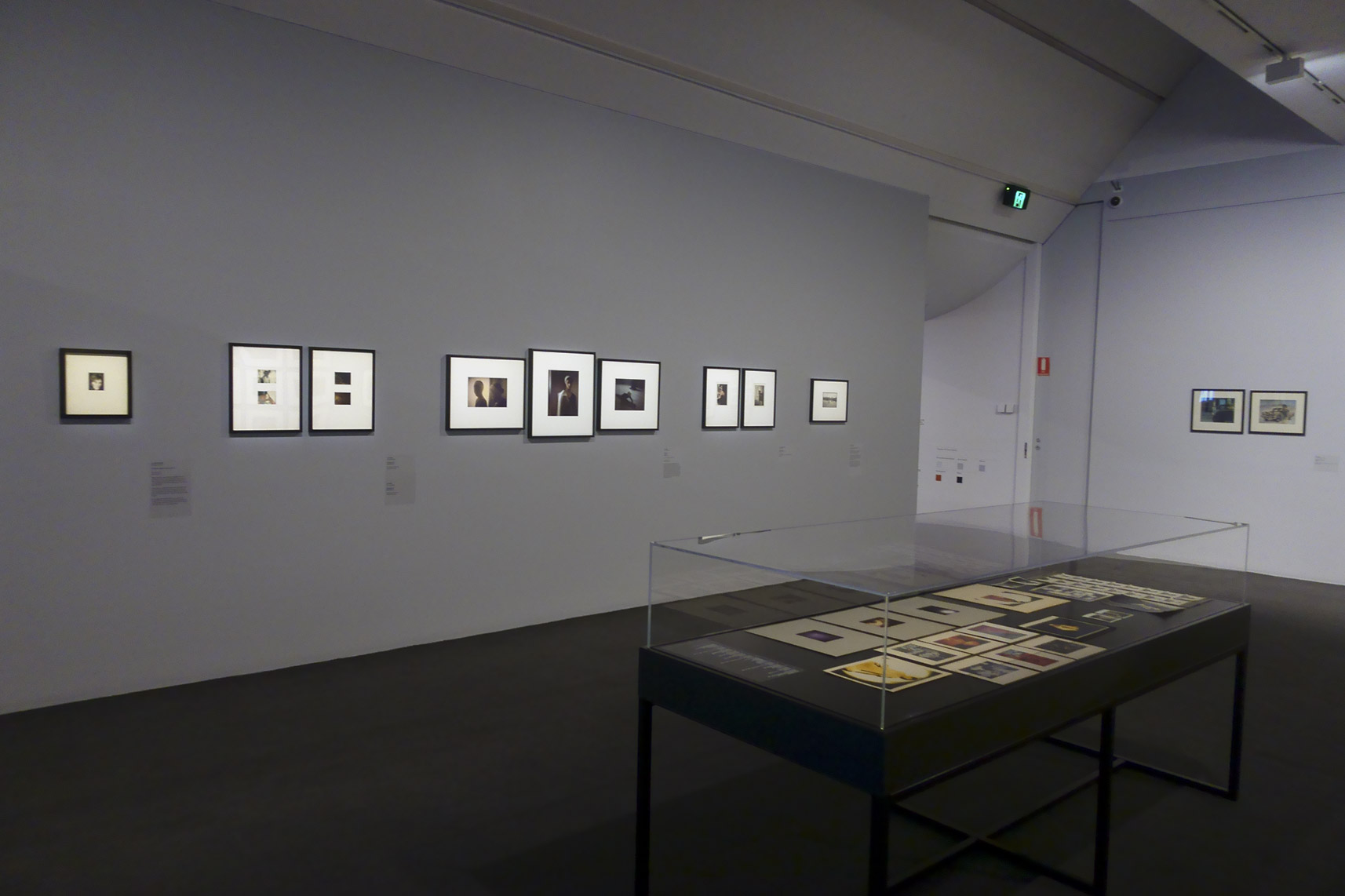
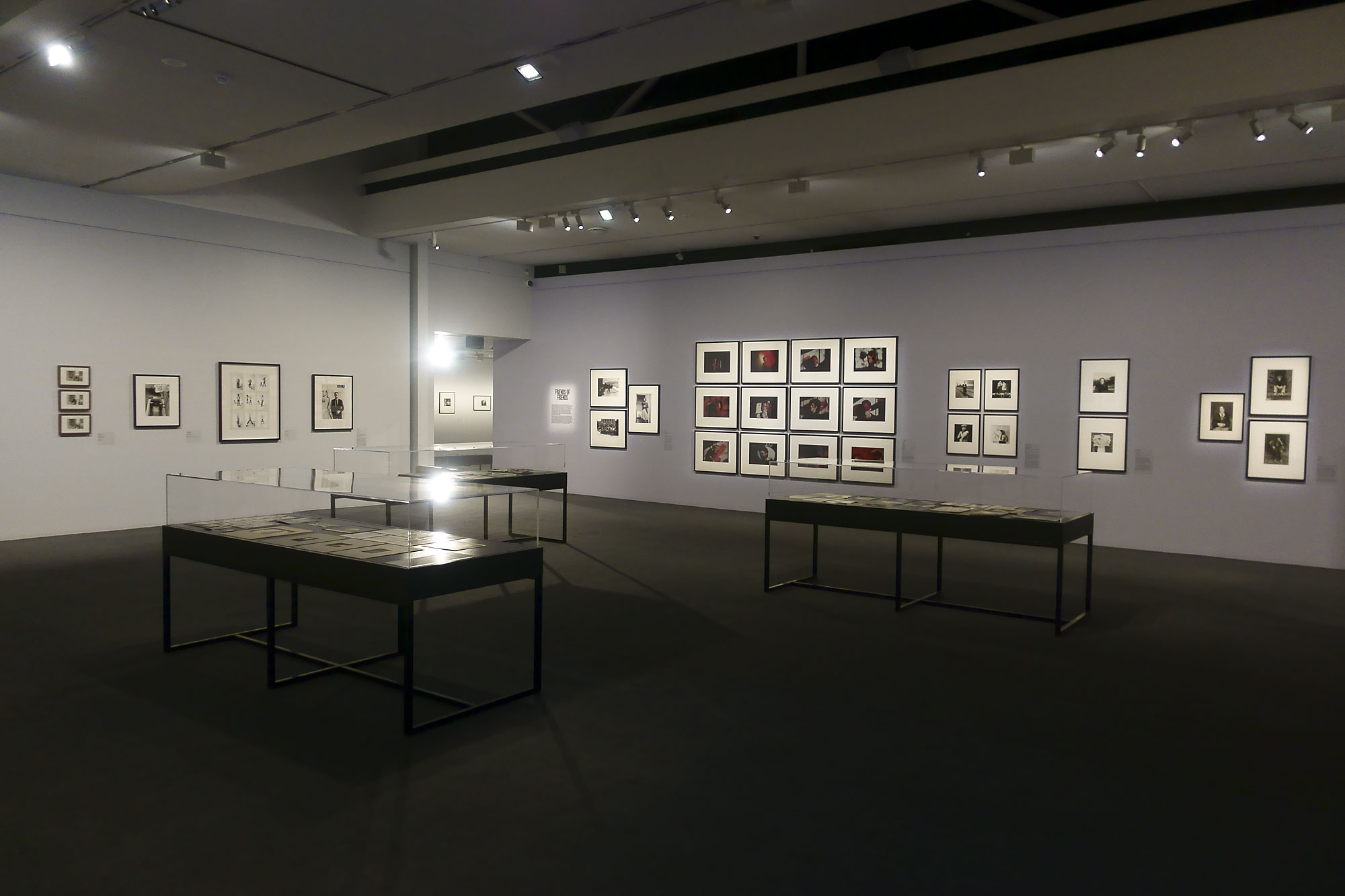
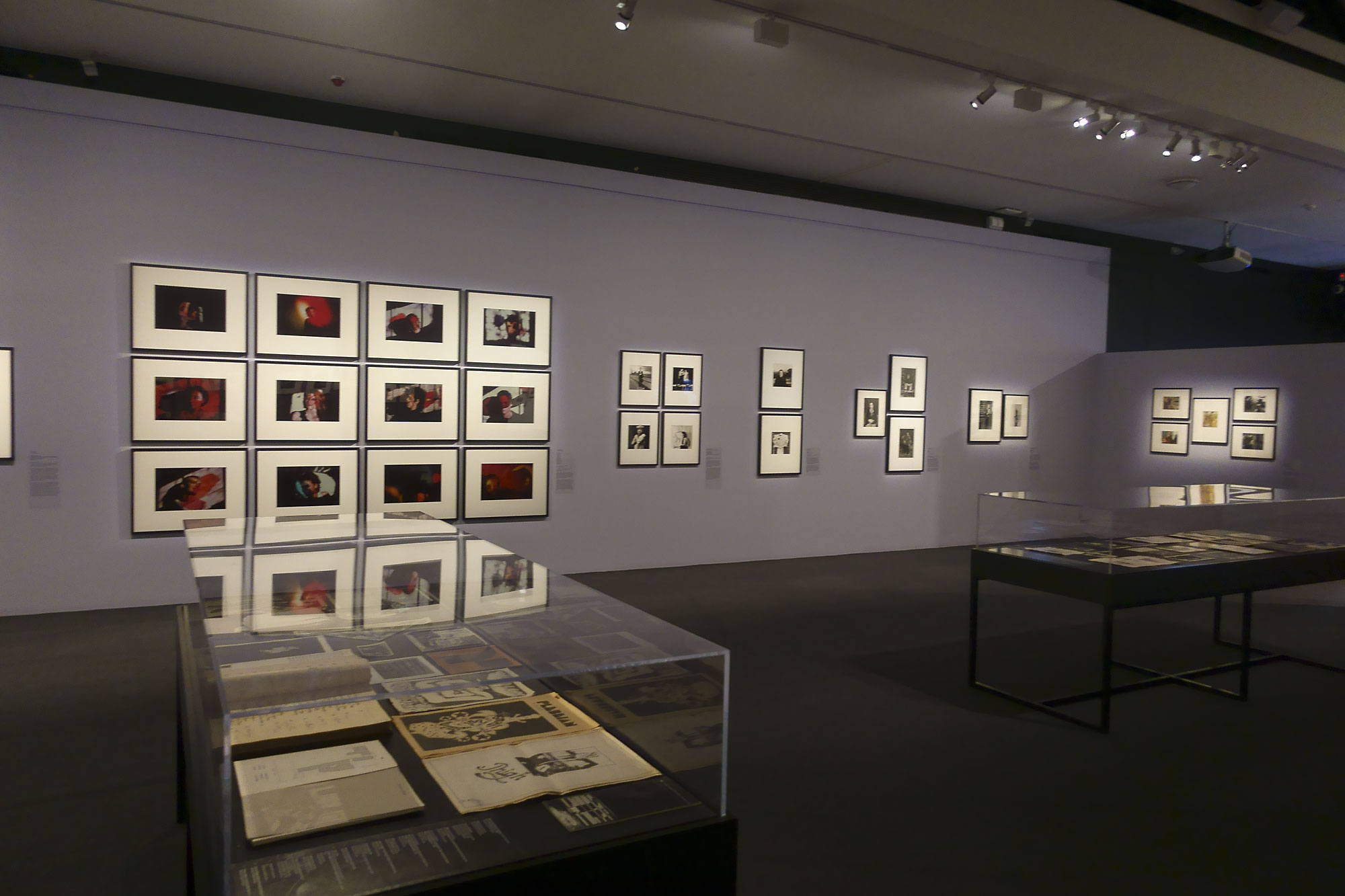
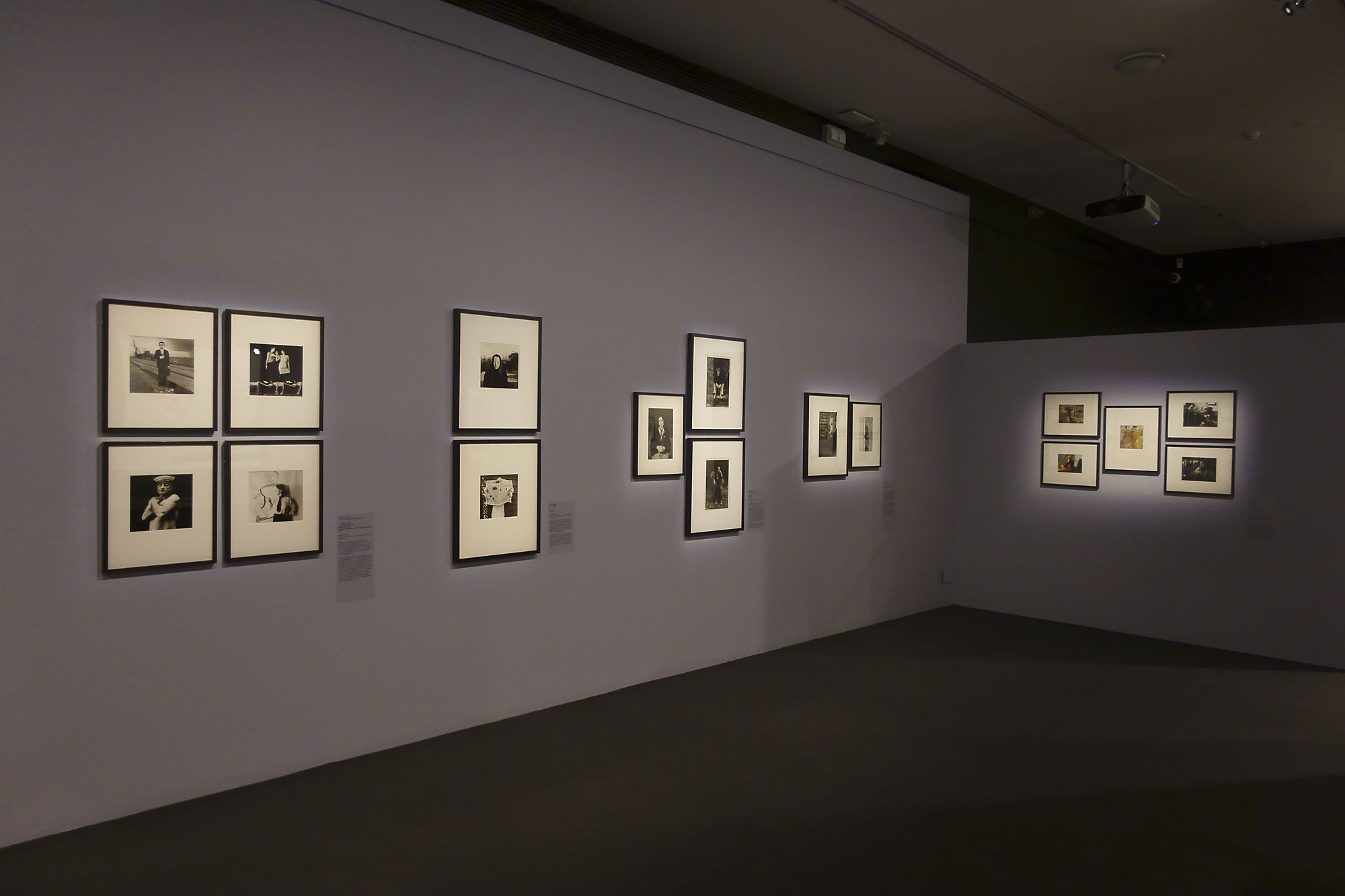
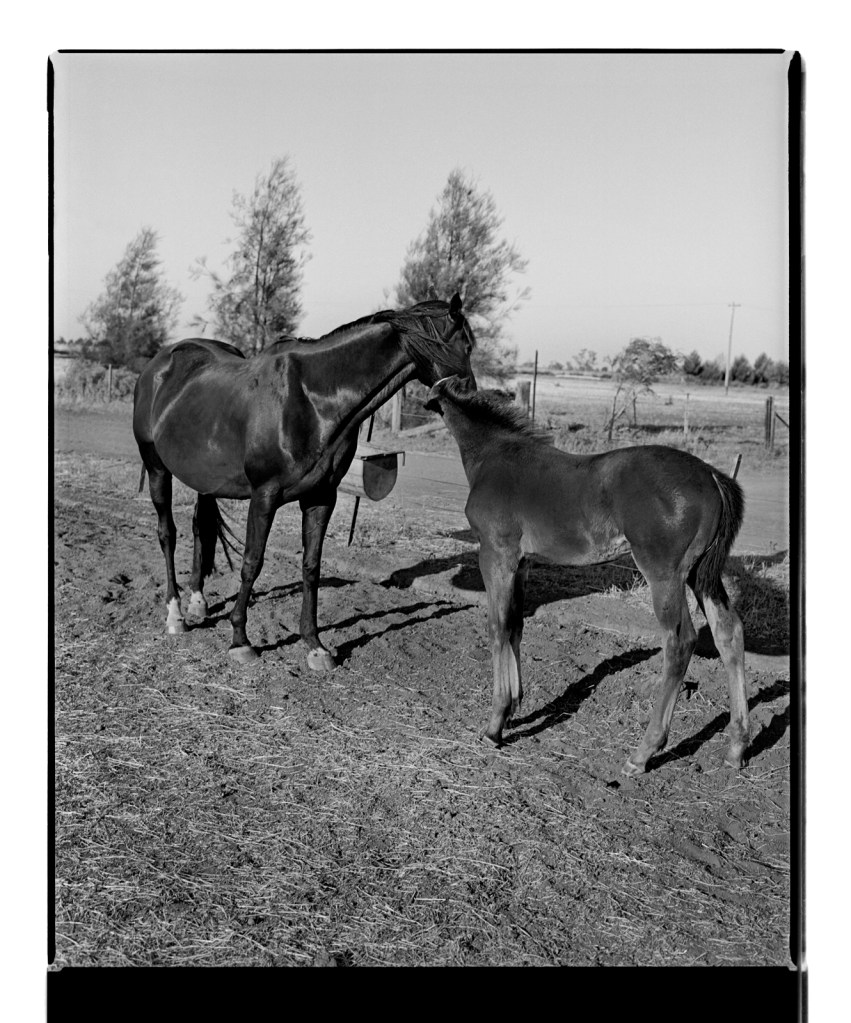
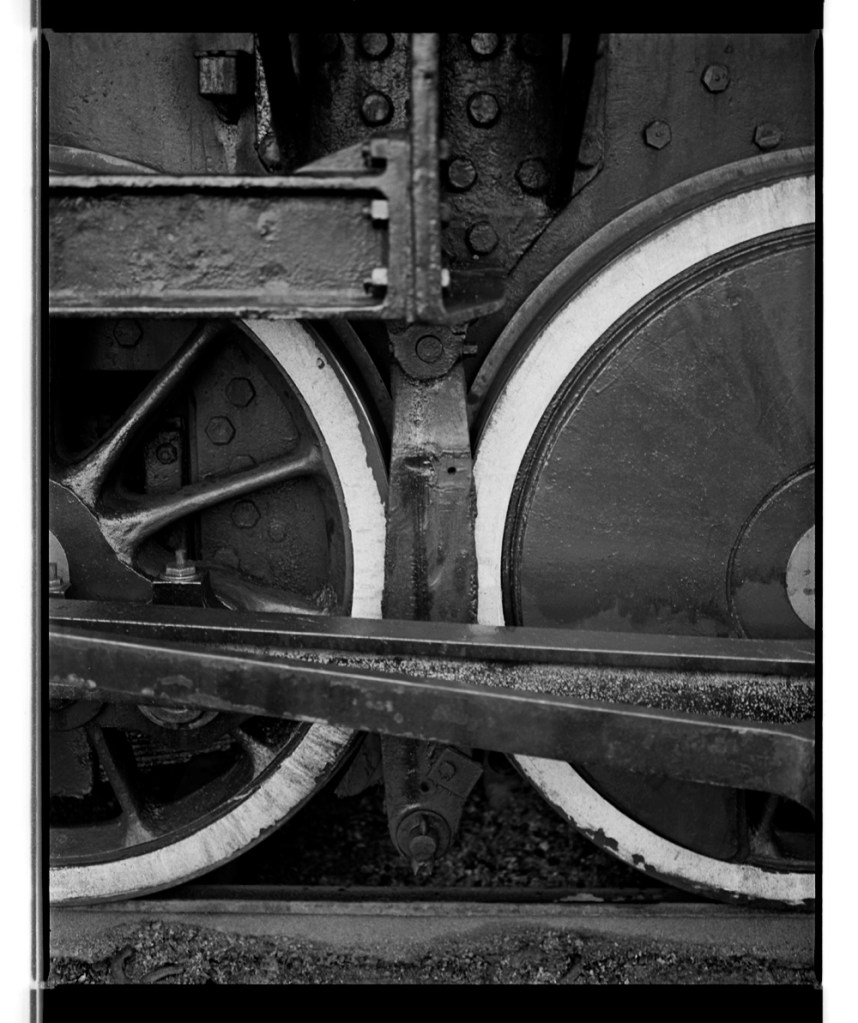
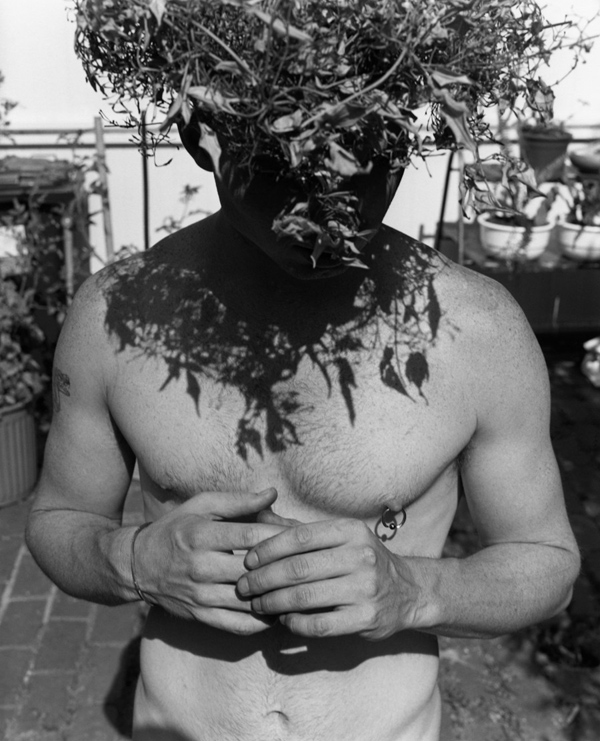
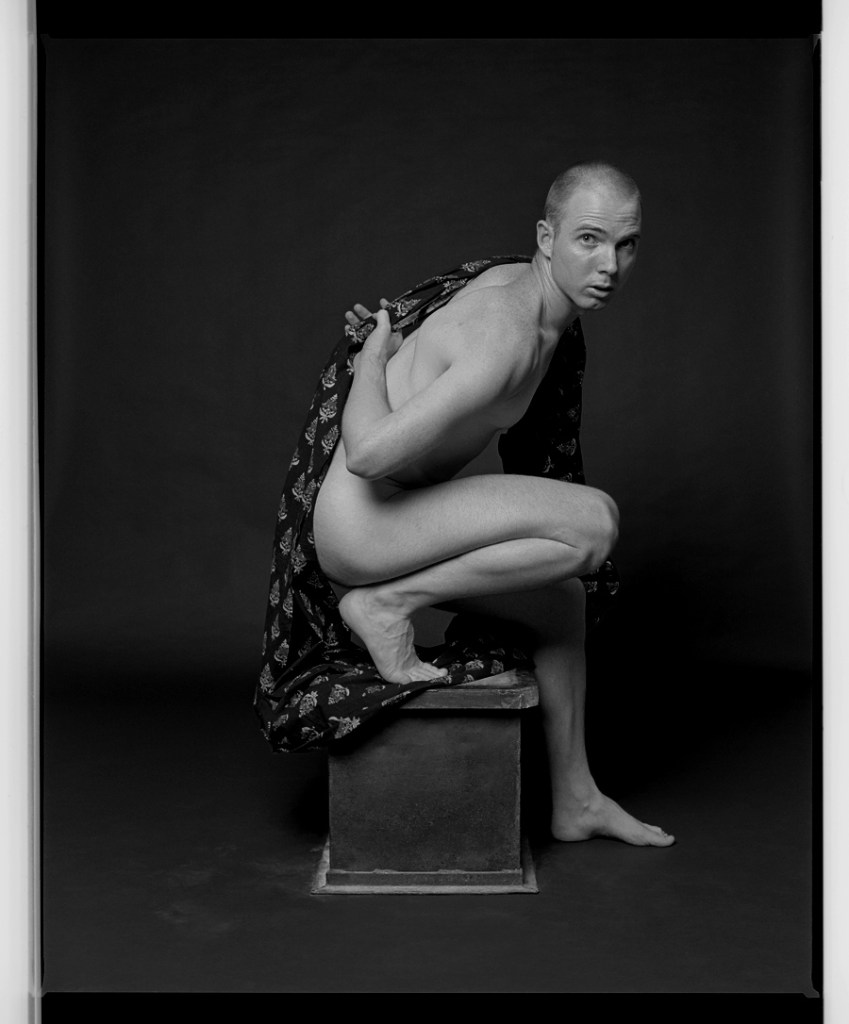
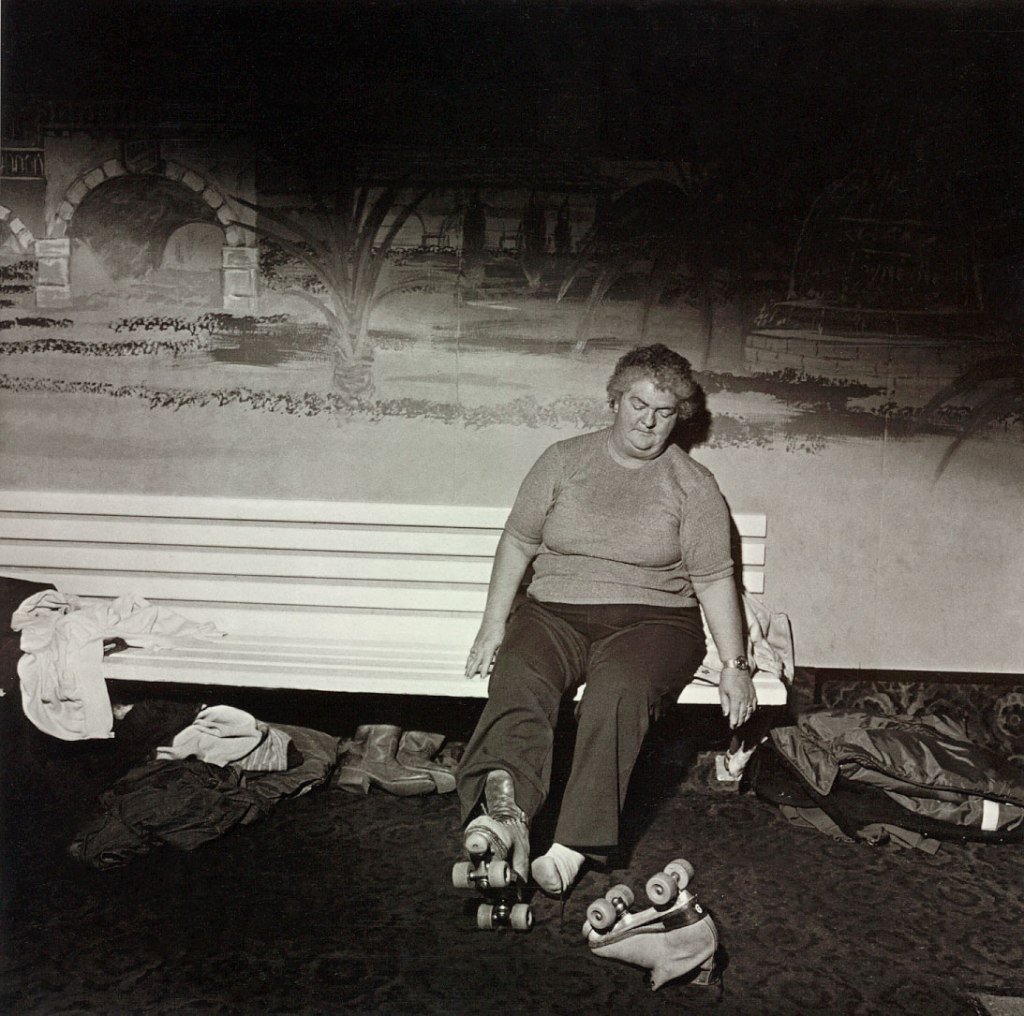
Exhibition: ‘The basement: photography from Prahran College (1968-1981)’ at the Museum of Australian Photography, Wheelers Hill, Melbourne

Exhibition dates: 1st March – 25th May, 2025

Curators: Angela Connor, MAPh Senior Curator, and Stella Loftus-Hills, MAPh Curator

Exhibiting artists: Colin Abbott, Robert Ashton, Con Aslanis, Polly Borland, Peter Bowes, John Brash, Peter Burgess, Nanette Carter, John Cato, Andrew Chapman, Lyn Cheong, Jon Conte, Kim Corbel, Paul Cox, Mimmo Cozzolino, Christina de Water, Duncan Frost, Rob Gale, Sandra Graham, Bill Henson, Julie Higginbotham, Graham Howe, Carol Jerrems, Moira Joseph, Peter Kelly, Christopher Köller, Johann Krix, Paul Lambeth, Derrick Lee, Peter Leiss, Carolyn Lewens, Steven Lojewski, Ian Macrae, James McArdle, Jim McFarlane, Rod McNicol, Julie Millowick, Peter Milne, Jacqueline Mitelman, Richard Muggleton, Martin Munz, Nicholas Nedelkopoulos, Greg Neville, Glen O’Malley, Viki Petherbridge, Ross Powell, Philip Quirk, Leonie Reisberg, Susan Russell, Stella Sallman, Athol Shmith, Geoff Strong, Ian Tippett, George Volakos, Stephen Wickham, Andrew Wittner, Ken Wright, Lynette Zeeng
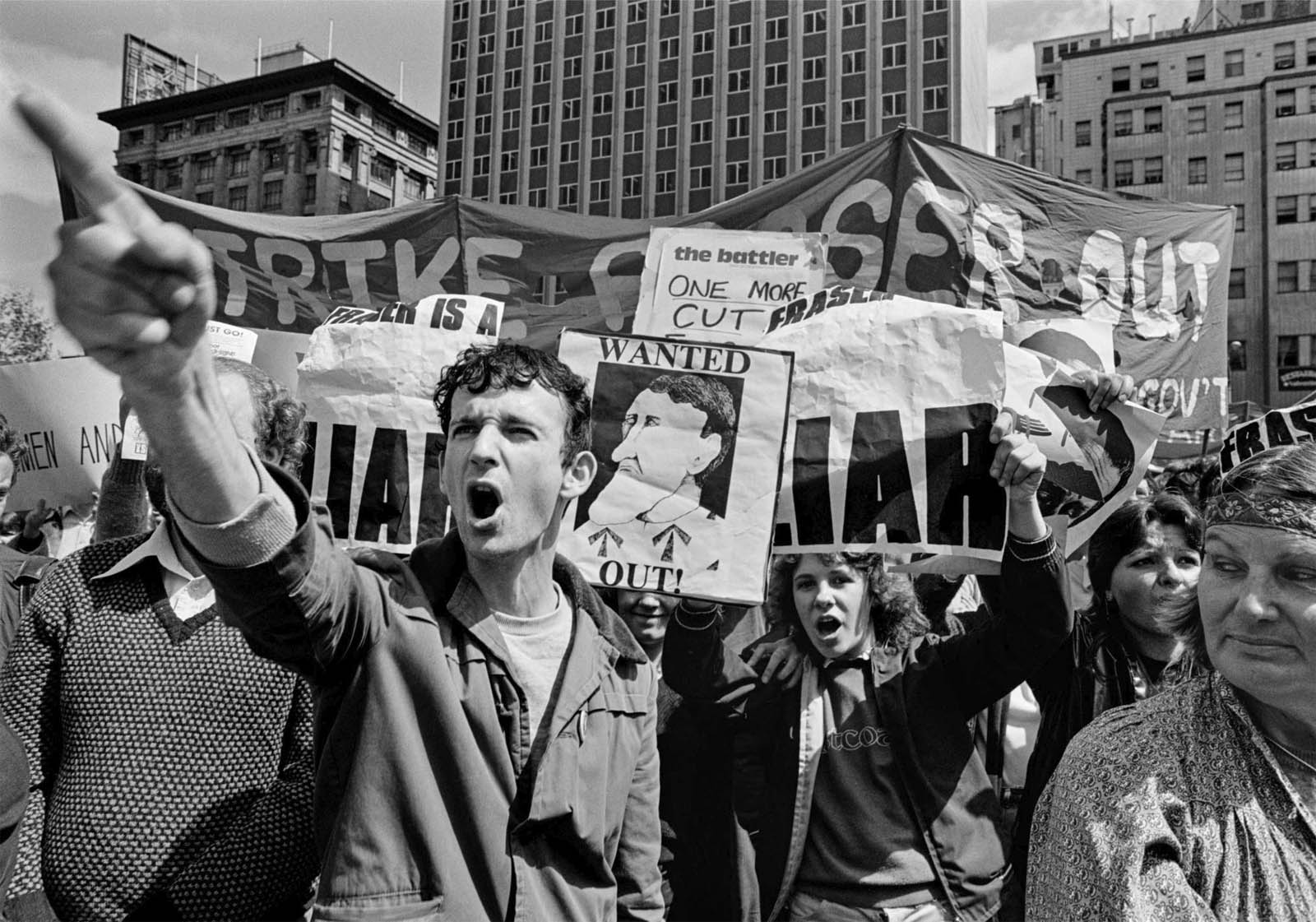
 

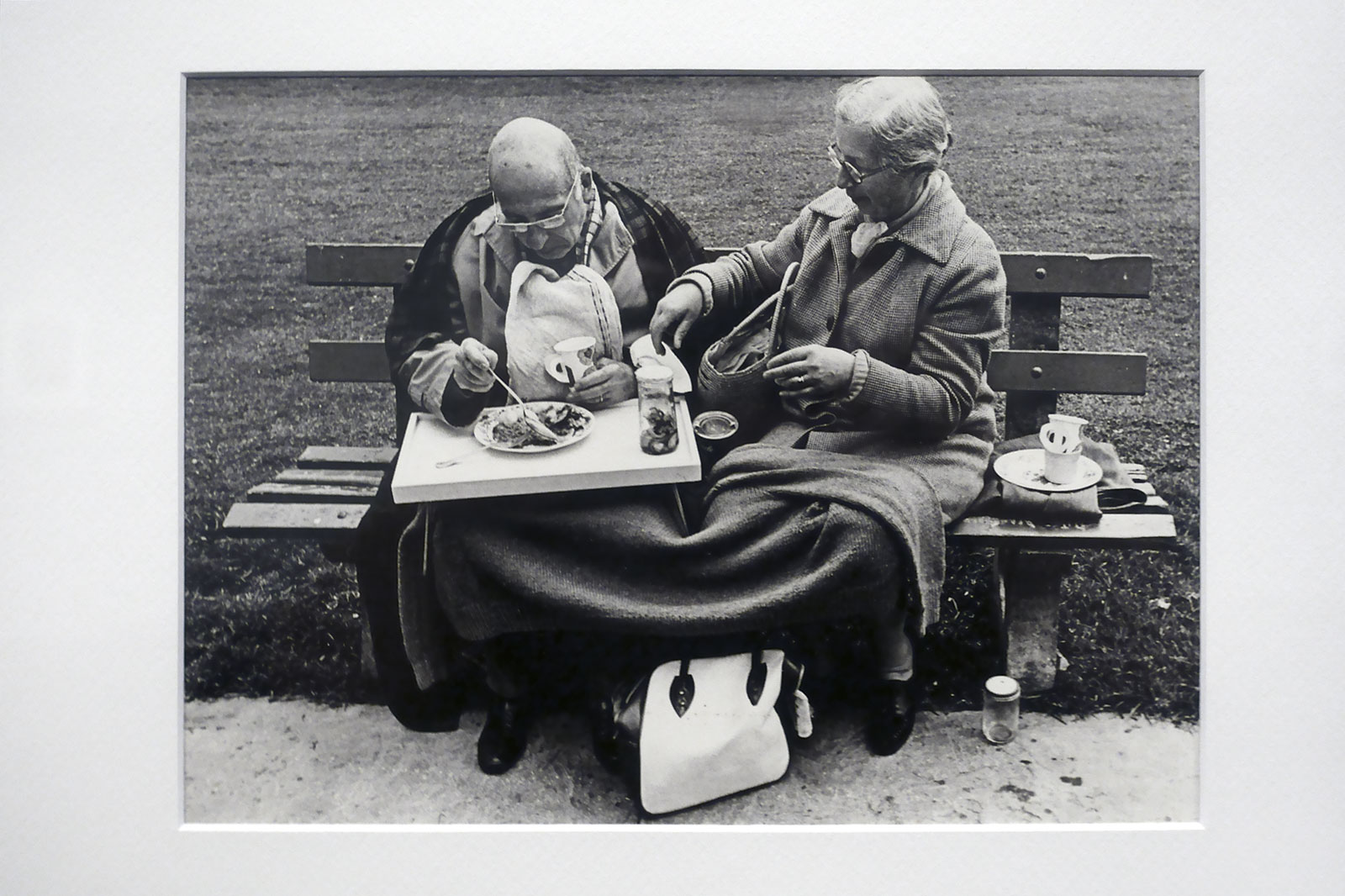
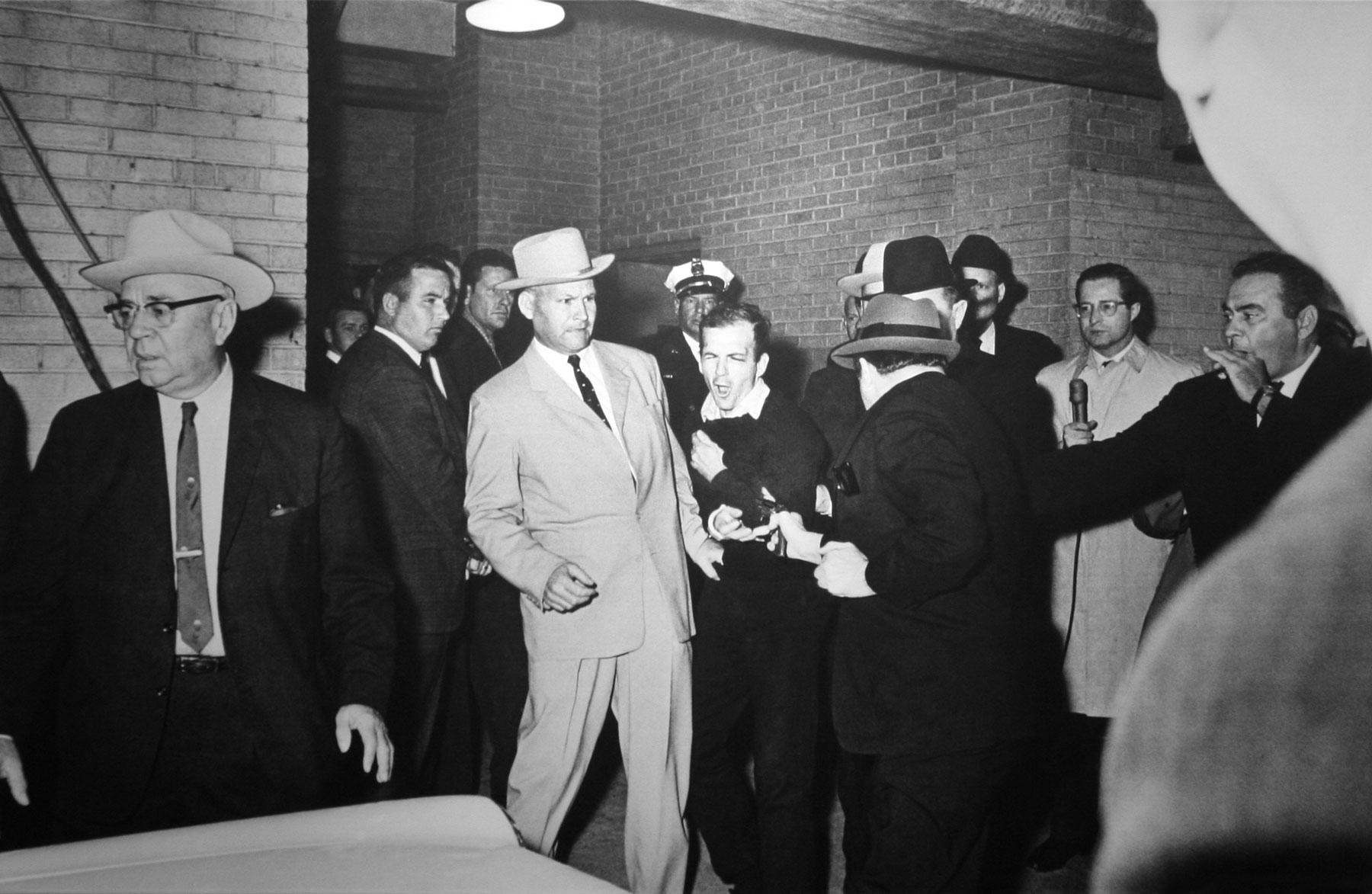
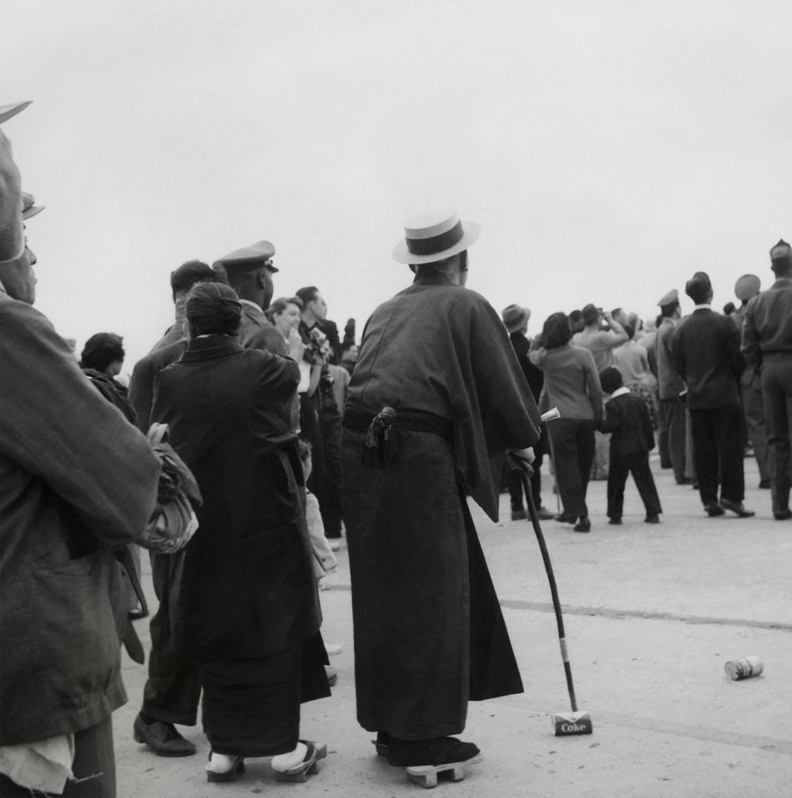
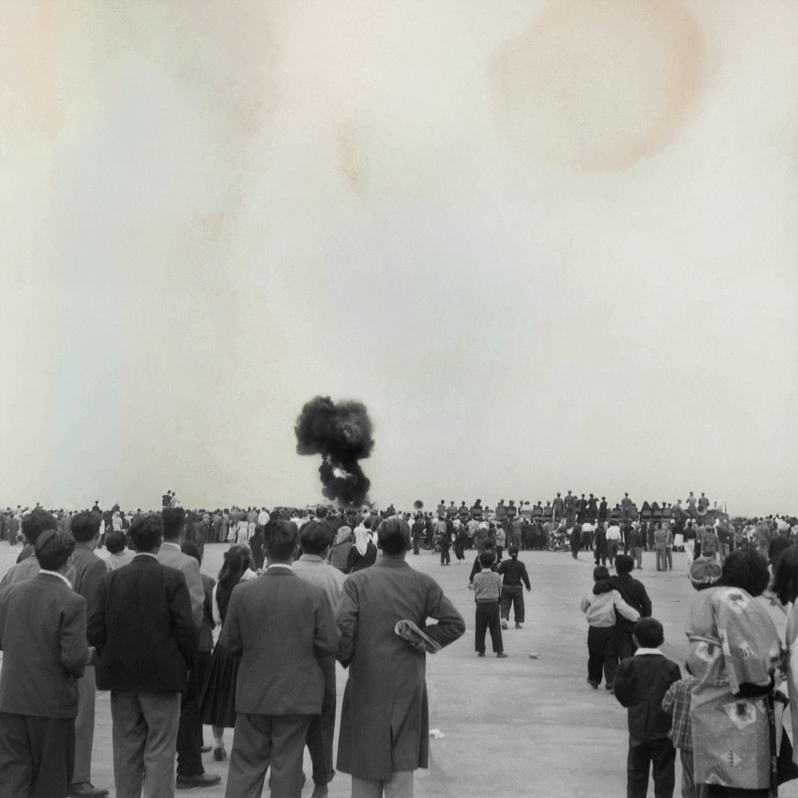
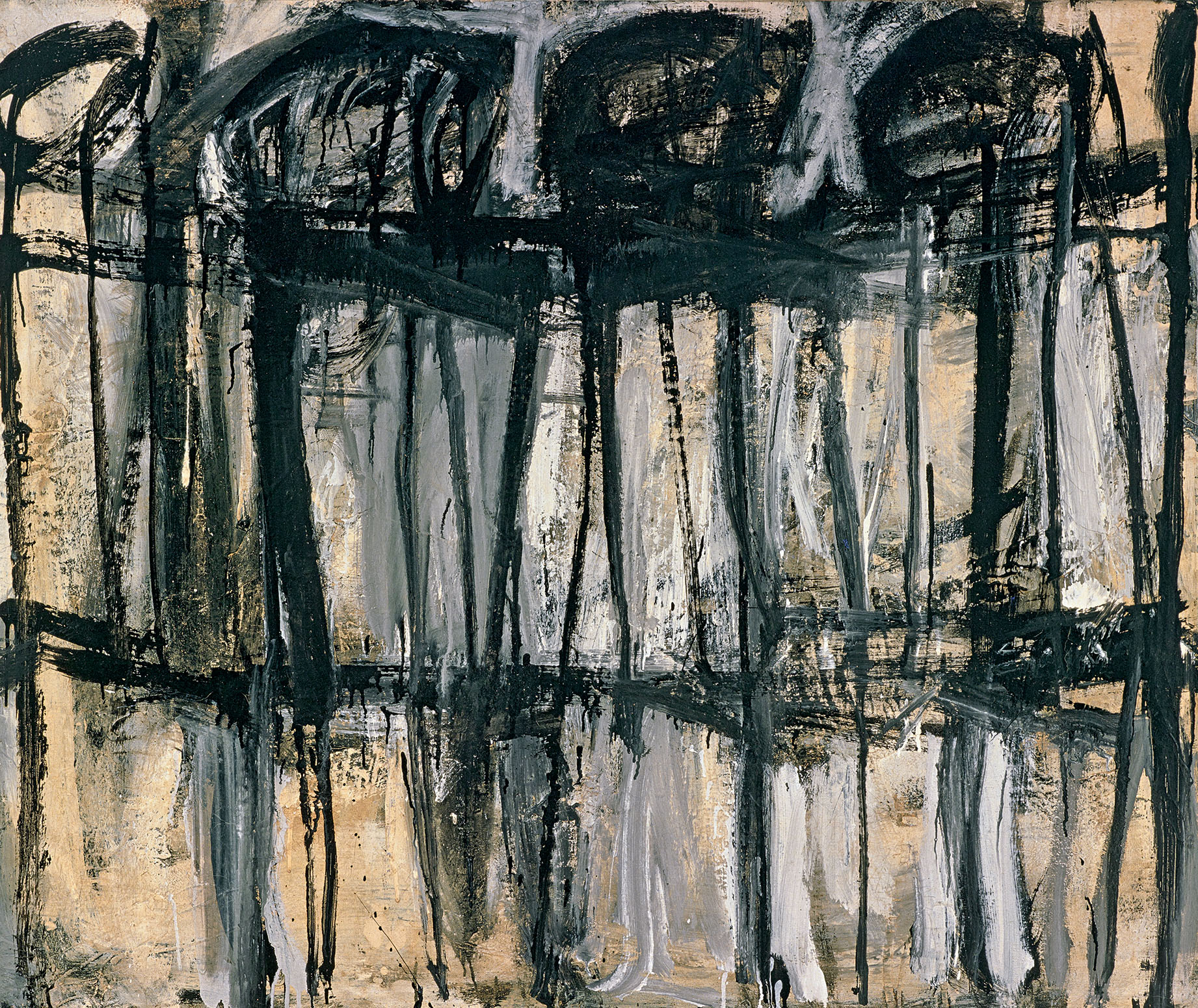
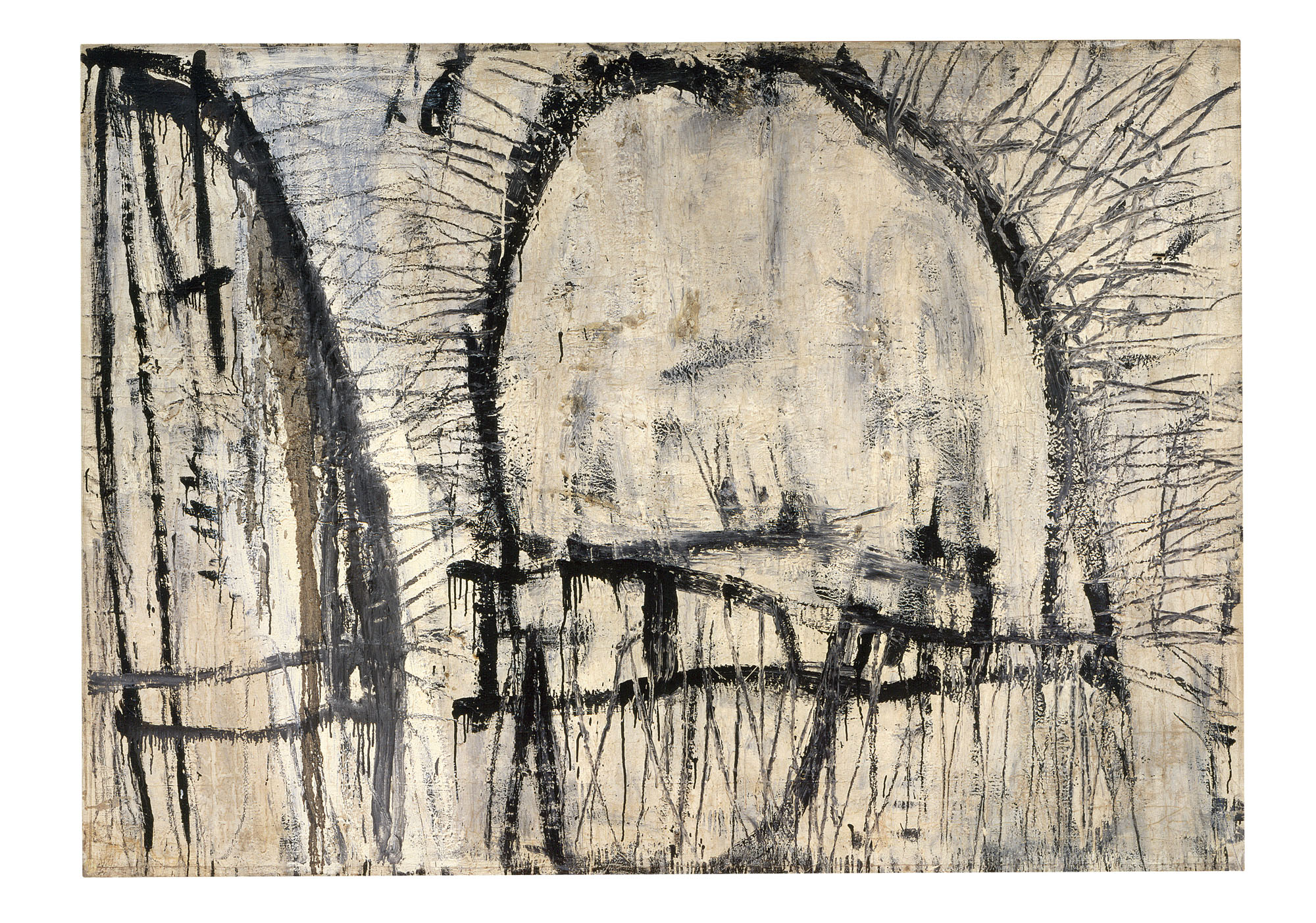
Andrew Chapman (Australian, b. 1954) 'Lest we forget' 1980 from the exhibition 'The basement: photography from Prahran College (1968-1981)' at the Museum of Australian Photography, Wheelers Hill, Melbourne, March - May 2025


Andrew Chapman (Australian, b. 1954)
Lest we forget
1980
Gelatin silver print
Museum of Australian Photography, City of Monash Collection donated 2024


Nurture

A world of creativity and transformation

This is a magnificent exhibition at the Museum of Australian Photography which showcases the work of students and teachers at Prahran College between 1958-1981.

People more eminent than myself have commented on the exhibition.

Gael Newton AM – formerly curator of photography at the Art Gallery of New South Wales, and the Senior Curator of Australian and International Photography at the National Gallery of Australia (NGA) in Canberra – “highlights the diverse and passionate nature of the Prahran College community, where an unstructured curriculum and open debates encouraged multiple approaches – from documentary and still life to collage and staged tableau – while the influence of European cinematic sensibilities and the local film and music scenes added depth to the artistic expression.”1

Daniel Palmer – Professor in the School of Art at RMIT University, his research and professional practice focuses on contemporary art and cultural theory, with a particular emphasis on photography and digital media – commenting on the era “frames the 1970s as a transformative era for Australian society and photography, characterised by social activism.”1

Helen Ennis – formerly Curator of Photography at the National Gallery of Australia and outstanding writer on Australian photography and photographers – emphasises “productive intergenerational exchanges between students and their older educators Prahran represented a space of creative possibility and hope” while acknowledging Prahran’s limitations including gender imbalance, “noting examination records from 1974 showing only five of twenty students were female, with the first woman (Julie Millowick) not appointed to teach until 1983.”1

“Ennis’s address brings to light from The Basement a critical reassessment of how we understand and present 1970s Australian photography. She advocated for approaches that preserve the complexity, contradictions, and energy of this formative period rather than imposing retrospective order that might simplify or misrepresent it. Her reflections bridge historical understanding with contemporary curatorial practice, suggesting ways to engage more authentically with photography’s rich past.”2

Bill Henson AO – former student and internationally acclaimed photographer – acknowledges that “that political movements such as feminism were present among Prahran’s students in the 1970s – “there were the feminists; there were little groups doing their social diligence” – he noted that these stances did not overshadow the college’s overarching emphasis on beauty and creative exploration. “There wasn’t this righteousness, this indignation, this kind of territorial thing about issues,” he said. In contrast there was an openness and enthusiasm that defined Prahran during his time there – a place where beauty and creativity were paramount.”3

On reflection

What struck me most about this exhibition was the creative strength of the STUDENT work … and that is something nobody mentions. This was student work.

These were artists finding their personal voice, exploring the world, being creative, learning how to envision the world in their photographs – through social documentary or conceptual, experimental photographs that challenged how Australian viewed itself. As Assoc. Professor James McArdle, a former student and one of the many driving forces behind this exhibition, insightfully observes:

“Prahran, at this time, was a nexus for the ‘New Photography’ movement in Australia, bringing to our country international developments from the 1960s, the candid, loosely structured photographic language that contrasted sharply with the rigid narratives of photojournalism and the increasingly commercial aesthetics of colour photography.

Prahran College itself played a critical role in the legitimisation of photography as an art form within Australia. It spearheaded the integration of art photography into tertiary education curricula, fostering an environment where young artists … could experiment formally and conceptually.”4

Indeed, Melbourne in the late 1960s and early 1970s could be seen as the nurturing centre of photography in Australia.

As my friend Ian Lobb said to me before he died, “In 1970 where did you go to see a fine art photograph on exhibition in a non-institutional gallery in Melbourne? The only place was the doorway to the John Cato / Athol Shmith / Peter Barr studio in Collins Street. You would never know which of the three photographers would have a print placed in that doorway.”5

But then things changed.

Variously, Melbourne had Jenny Boddington appointed curator of photography in 1972 at the National Gallery of Victoria, becoming the first such curator in Australia and perhaps only the third in the world.

Melbourne also had three commercial art photography galleries that supported local and international exhibitions, exposing major international photographers to local artists. These included Brummels Gallery of Photography reopened in the early 1970s by that wonderful photographer Rennie Ellis and deputy director Robert Ashton (Prahran), the first privately run art gallery in the country to be devoted specifically to photography; The Photographers’ Gallery and Workshop founded in 1973 by Paul Cox (Prahran), Ingeborg Tyssen, John F. Williams and Rod McNicol (Prahran), taken over by Ian Lobb in 1974 and joined by co-director Bill Heimerman in 1976 showcasing mostly American and some European original fine prints from major artists which were influential on Australian audiences and practitioners; and Church Street Photographic Centre opened by Joyce Evans OAM in 1976, the third commercial photographic gallery in 1970s Melbourne which exhibited international 19th and 20th Century photography

Prahran College was closely followed by Phillip Institute of Technology (PIT) which was a tertiary college in Bundoora which had an art photography course run by Ian Lobb and Les Walkling, from 6 January 1982 to 30 June 1992 at which time the school integrated as part of RMIT University. I attended PIT in 1991 and then RMIT University where I completed by doctorate, after having undertaken two years at Brighton Technical College completing two years on the basics of photography, a grounding for many budding photographers in those years under the direction of Peter Barker.

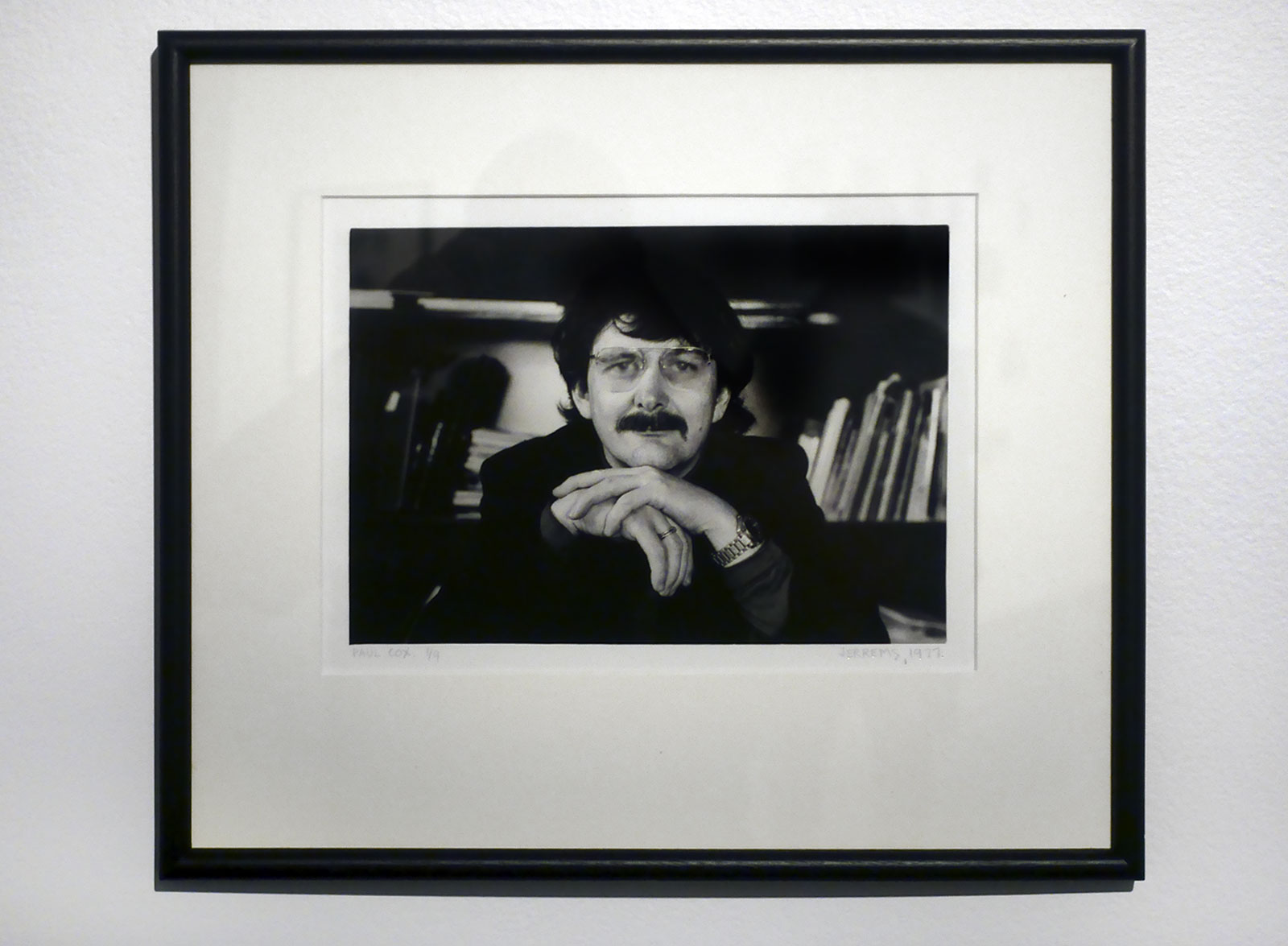
I remember at RMIT fine art photography course we would have reviews of student work every 4 weeks, where over 2 days students put up new work and we all sat together with the lecturers and discussed the ideas contained in the work. The atmosphere was electric, the disparate work, the in-depth conversations, the passion. Look at Greg Neville’s photograph Tutorial: lecturers and students [back row L–R Derrick Lee, Bryan Gracey, Athol Shmith, Paul Cox, Elizabeth Tainsh] (c. 1971, below) and you can feel a similar energy…

So Melbourne has been particularly blessed – I dislike that word but there is no other that really conveys what I mean – by this confluence of events, people and places that supported the rigorous investigation of photography and life that Prahran College was a part of. At Prahran there was optimism, social conscience, and an engagement with the street and with life, there was “creative rebellion and intellectual engagement”. I asked James McArdle at an artist’s talk about this: how exciting this would have been, the bouncing of ideas one off another, the sense of community and camaraderie, and yes they were all there … encouraging an “atmosphere” of creativity which has produced a generation of outstanding photographers who will leave a lasting legacy in the history of Australian photography.

As an artist who arrived as a “second generation” photographer after Prahran College I have a great affection for the people and the work produced in the exhibition.

I knew John Cato and his delightful wife Dawn Cato well and went down to their house for afternoon tea to discuss photography and life; together with Bill Heimerman I co-curated his retrospective at The Photographers’ Galley and Workshop in 2002, the text ‘and his forms were without number’ used in the book accompanying the exhibition John Cato Retrospective at the Ballarat International Foto Biennale in 2013 where Paul Cox and I made opening speeches. Both were good friends.

Joyce Evans was my substitute mother in Australia. What a wonderful, bohemian, creative, intelligent woman she was. I wrote “Nothing emerges from nothing,” foreword to her book We Had Such High Hopes: Student Activism and the Peace Movement 1949-1952, A Photographic Memoir by Joyce Evans 2019 published before she died, a book that instils the social conscience ethos emerging in postwar Australia which leads into the work of the Prahran College photographers. I still her miss greatly.

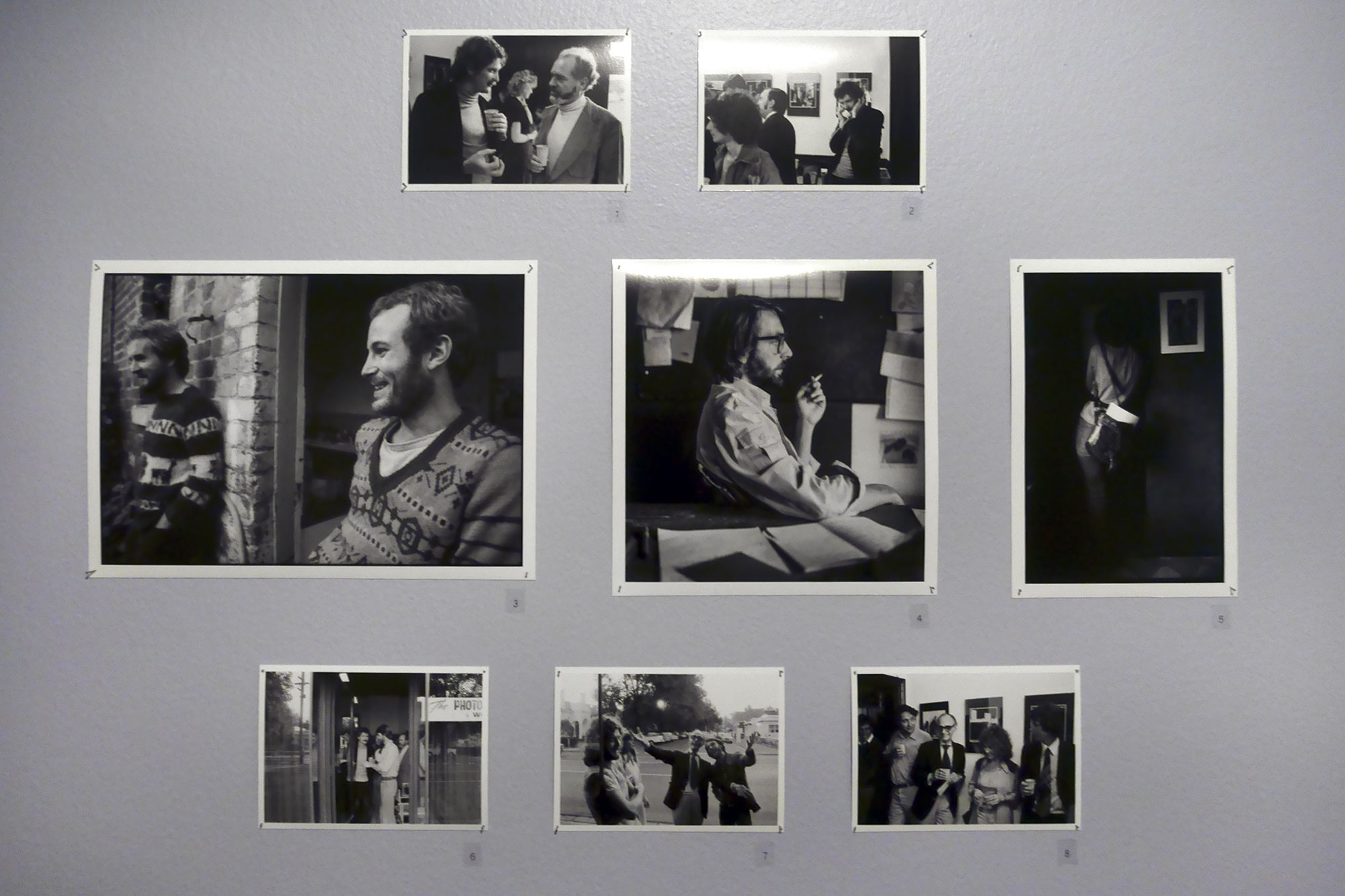
As I do both Ian Lobb and Bill Heimerman (pictured below in Peter Leiss’ Untitled [Bill Heimerman (right) and Ian Lobb (left) at the rear of The Photographers’ Gallery] c. 1975-1980), both good friends. Ian Lobb was my first photography lecturer at PIT and became my mentor and friend for over 30 years; Bill gave me three solo exhibitions at The Photographer’s Gallery and Workshop in my early days as an artist, and much excellent advice, for which I am forever grateful.

James McArdle and Gael Newton remain valued friends, both amazing fonts of knowledge in all aspects of photography and photographic research.


In conclusion, congratulations to all who have been involved in bringing this exhibition to fruition: artists, writers and curators. It is a magnificent achievement and a testament to the creativity and passion of the times, both theatre and document reflecting an era that sadly can no longer be repeated.

Prahran College photographers followed their heart and their eye, they possessed a curiosity which “evokes the care one takes for what exists or could exist; an acute sense of the real which, however, never becomes fixed; a readiness to find our surroundings strange and singular; a certain restlessness in ridding ourselves of our familiarities and looking at things otherwise; a passion for seizing what is happening now and what is passing away; a lack of respect for traditional hierarchies of the important and the essential.”6

However long I live, it has always been a privilege to be part of this community, to be part of the Melbourne photographic community.

Dr Marcus Bunyan


1/ James McArdle. “Launched!,” on the On This Date in Photography website, 6th April 2025 [Online] Cited 06/04/2025

2/ Helen Ennis quoted in James McArdle. “Unfixing,” on the On This Date in Photography website, 29th March 2025 [Online] Cited 06/04/2025

3/ Bill Henson opening speech summarised in James McArdle. “Opening!” on the On This Date in Photography website, 1st March, 2025 [Online] Cited 18/04/2025

4/ James McArdle. “Epoch,” on the On This Date in Photography website, 25th April, 2025 [Online] Cited 28/04/2025

5/ “Steve Lojewski [in the year ahead of me at PCAE] and I job shared at Shmith / Cato / Barr. A fantastic opportunity to work mainly in the darkroom, occasionally assisting in the studio and as they gained confidence in me sent out on [mickey mouse] jobs when they were double booked. A HUGE break and when Peter Barr bought out John and Athol and established Peter Barr & Associates he invited me to freelance out of his new studio. That offer would not have happened without the prior experience of the darkroom & studio work. My first job on the Monday morning of my 2 week trial for Athol, John and Peter was 250 prints [on fibre paper] of Malcom Fraser by 11.00 am [ie the wet deadline was 11.00. Dry and out the door was, from memory, 12.noon].”

Julie Millowick in conversation with Marcus Bunyan via Facebook, 20th May 2025

6/ Michel Foucault, “The Masked Philosopher” in Politics, philosophy, culture: interviews and other writings, 1977-1984. London: Routledge, 1988, p. 328


All installation photographs © Marcus Bunyan. Please click on the photographs for a larger version of the image.

Apologies if a couple of the photographs are slightly out of focus, these were digital RAW files shot on a Sony rx100 handheld at 1000ASA with low depth of field.

For more information please see The Prahran Photography website which upholds the legacy of Prahran College 1970s photography through posts on profiles of the alumni and lecturers (an ongoing project).


“Curiosity is a vice that has been stigmatized in turn by Christianity, by philosophy and even by a certain conception of science. Curiosity, futility. I like the word however. To me it suggests something all together different: it evokes concern; it evokes the care one takes for what exists or could exist; an acute sense of the real which, however, never becomes fixed; a readiness to find our surroundings strange and singular; a certain restlessness in ridding ourselves of our familiarities and looking at things otherwise; a passion for seizing what is happening now and what is passing away; a lack of respect for traditional hierarchies of the important and the essential.”


Michel Foucault, “The Masked Philosopher” in Politics, philosophy, culture: interviews and other writings, 1977-1984. London: Routledge, 1988, p. 328


Gallery One (clockwise)


Installation view of the exhibition 'The basement: photography from Prahran College (1968-1981)' at the Museum of Australian Photography, Wheelers Hill, Melbourne
Wall text from the exhibition 'The basement: photography from Prahran College (1968-1981)' at the Museum of Australian Photography, Wheelers Hill, Melbourne, March - May, 2025
Installation view of the exhibition 'The basement: photography from Prahran College (1968-1981)' at the Museum of Australian Photography, Wheelers Hill, Melbourne, March - May, 2025


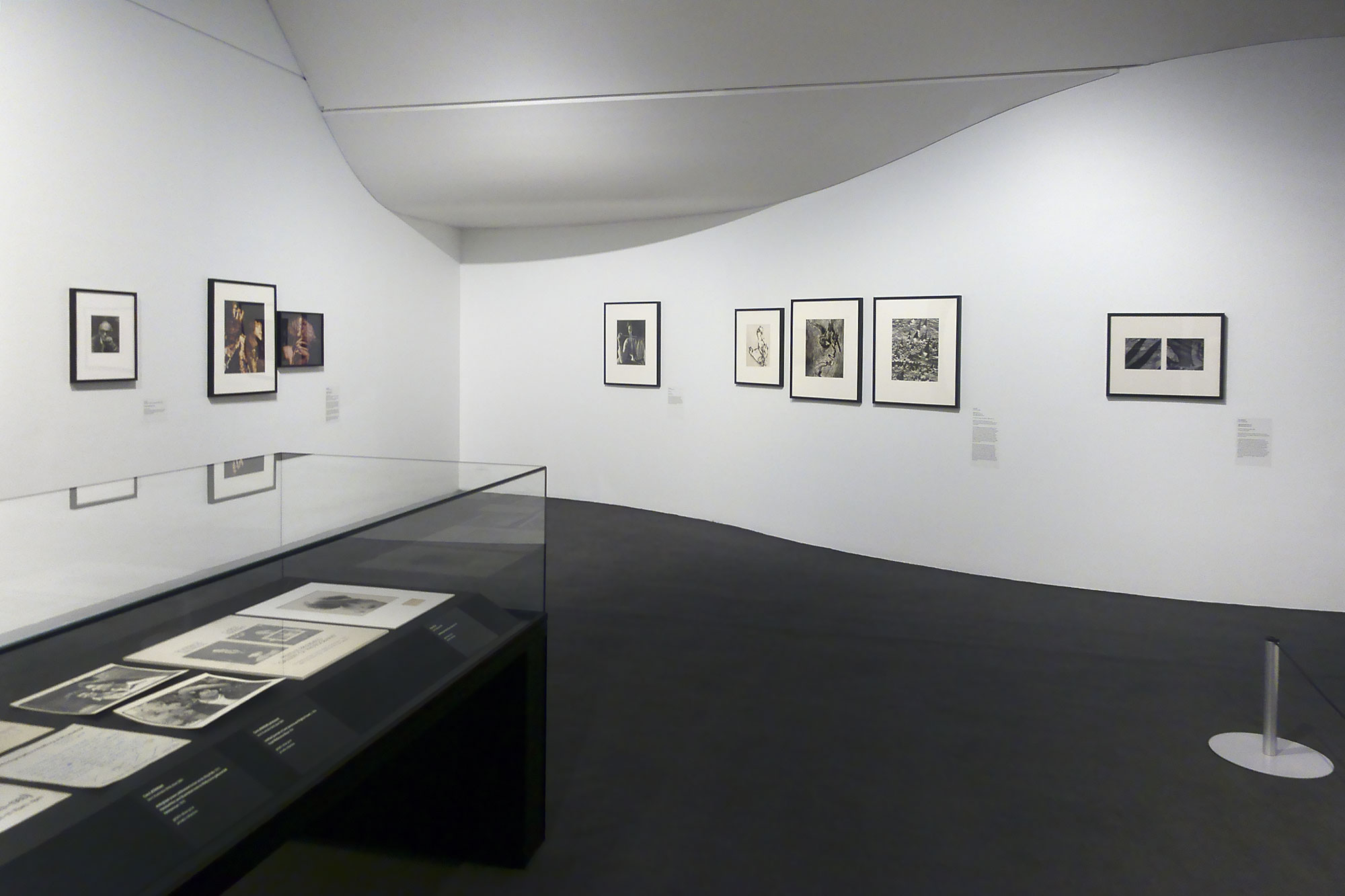
Installation views of the exhibition The basement: photography from Prahran College (1968-1981) at the Museum of Australian Photography, Wheelers Hill, Melbourne
Photos: Marcus Bunyan


In May 1968 the newly formed photography department of Prahran Technical School (known as Prahran College of Advanced Education (PCAE) from 1973) moved into the basement of a freshly completed art and design building on the corner of High Street and Thomas Street in Melbourne’s inner southeastern suburb of Prahran. Here, for the first time in Australia, photography was taught as an artform.

Featuring the work of approximately 60 artists, The basement brings to light rare vintage prints from the 1960s through to the early 1980s, key archival ephemera and folio work – from students and teachers of the College’s Diploma of Art & Design (Photography). It was a period where new discussions developed quickly around the possibilities of what photography could be. These students and teachers were part of a progressive, edgy wave of image-makers excited about the medium’s potential.

Under the vanguard of influential photographers such as John Cato, Paul Cox and Athol Shmith, the school became a breeding ground for some of this country’s most important art photographers: Carol Jerrems, Bill Henson, Nanette Carter, Rod McNicol, Polly Borland, Peter Milne, Robert Ashton, Philip Quirk, Peter Leiss, Jacqueline Mitelman, Mimmo Cozzolino, Graham Howe and Julie Millowick, among many others.

The exhibition’s accompanying publication elucidates the experience from several perspectives. As we hear from the curators, students, colleagues and academics, it’s clear that this course, in this time, was of great consequence to our photographic ecosystem and its development.

Curated by Angela Connor, MAPh Senior Curator, and Stella Loftus-Hills, MAPh Curator, The basement gathers works from close to 60 artists, traversing over 13 years of image-making and adjacent subcultures in music, protest, fashion and art criticism. This landmark exhibition will deliver new research into the canon of Australia’s cultural history through its assembled works and attendant publication.

Text from the Museum of Australian Photography website
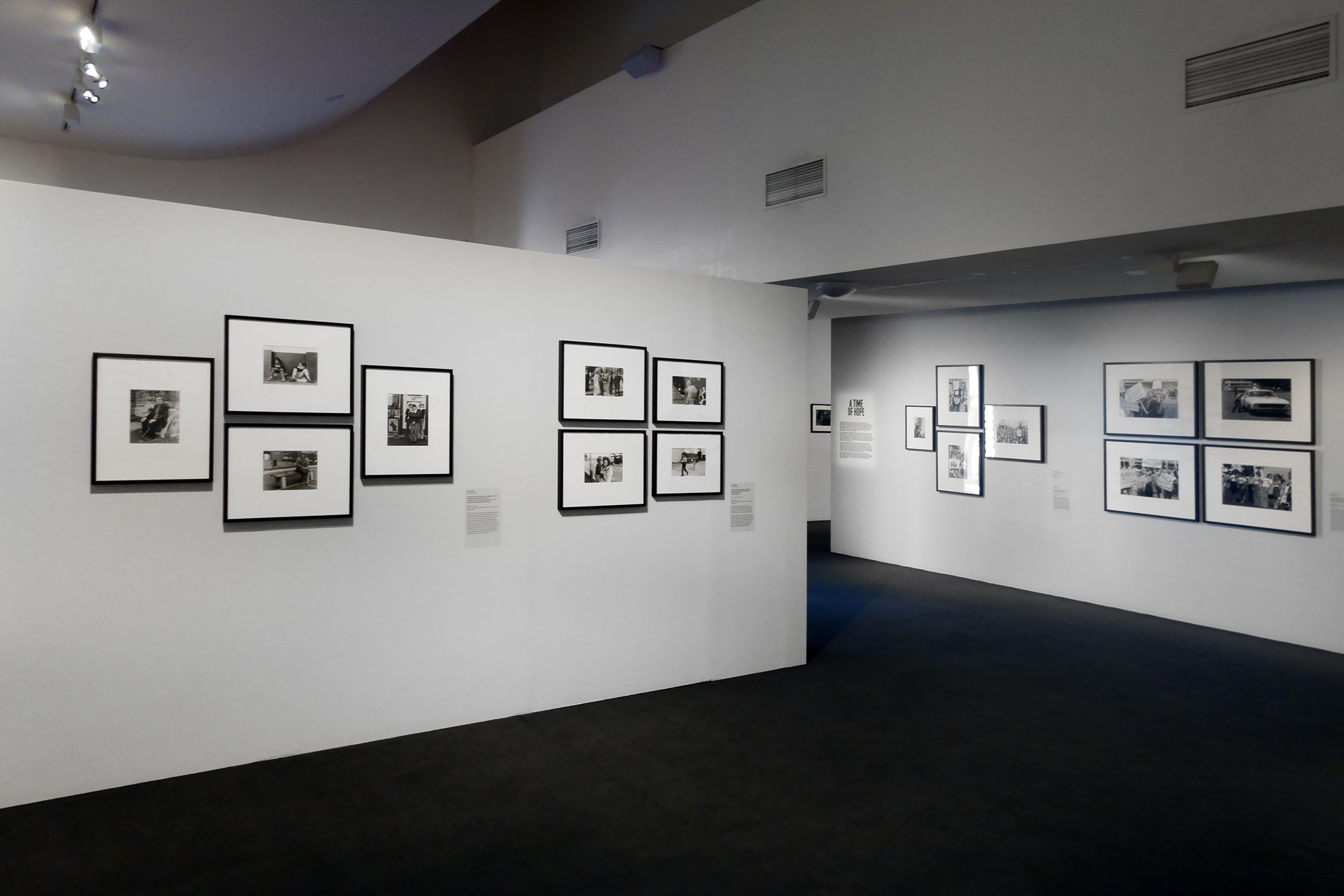
 

Installation view of the reverse of the opening wall of the exhibition 'The basement: photography from Prahran College (1968-1981)' at the Museum of Australian Photography, Wheelers Hill, Melbourne


Installation view of the reverse of the opening wall of the exhibition The basement: photography from Prahran College (1968-1981) at the Museum of Australian Photography, Wheelers Hill, Melbourne
Photo: Marcus Bunyan


Moira Joseph (Australian, b. 1955)
'Jack with a cigarette sitting in the church garden, St Kilda'  1974 (installation view) from the exhibition 'The basement: photography from Prahran College (1968-1981)' at the Museum of Australian Photography, March - May, 2025


Moira Joseph (Australian, b. 1955)
Jack with a cigarette sitting in the church garden, St Kilda (installation view)
1974
Gelatin silver print
Museum of Australian Photography, City of Monash Collection
Acquired 2024
Photo: Marcus Bunyan


Moira Joseph (Australian, b. 1955)
'Herald boys, Fitzroy Street, St Kilda' 1975 (installation view)


Moira Joseph (Australian, b. 1955)
Herald boys, Fitzroy Street, St Kilda (installation view)
1975
Gelatin silver print
Museum of Australian Photography, City of Monash Collection
Acquired 2024
Photo: Marcus Bunyan


Moira Joseph is a Melbourne-based professional photographer, filmmaker and teacher. She studied photography at Prahran College from 1974 to 1977. Joseph created the works on display here while she was a student. Armed with her Mamiya 220 medium-format camera, Joesph often walked between the College and her home in St Kilda, affectionately documenting the characters she regularly encountered. Jack with a cigarette sitting in the church garden, St Kilda (1974), for example, shows an elderly gentleman from a nearby men’s refuge sitting alone in Acland Street’s church square. Children regularly feature in Joseph’s student work, and she spent time photographing at luna park, as well as Prahran Primary School.

Wall text from the exhibition

Moira Joseph alumni profile on the Prahran Legacy website


Moira Joseph (Australian, b. 1955)
'Three Herald boys, Acland Street, St Kilda' 1975 (installation view)


Moira Joseph (Australian, b. 1955)
Three Herald boys, Acland Street, St Kilda (installation view)
1975
Gelatin silver print
Museum of Australian Photography, City of Monash Collection
Acquired 2024
Photo: Marcus Bunyan
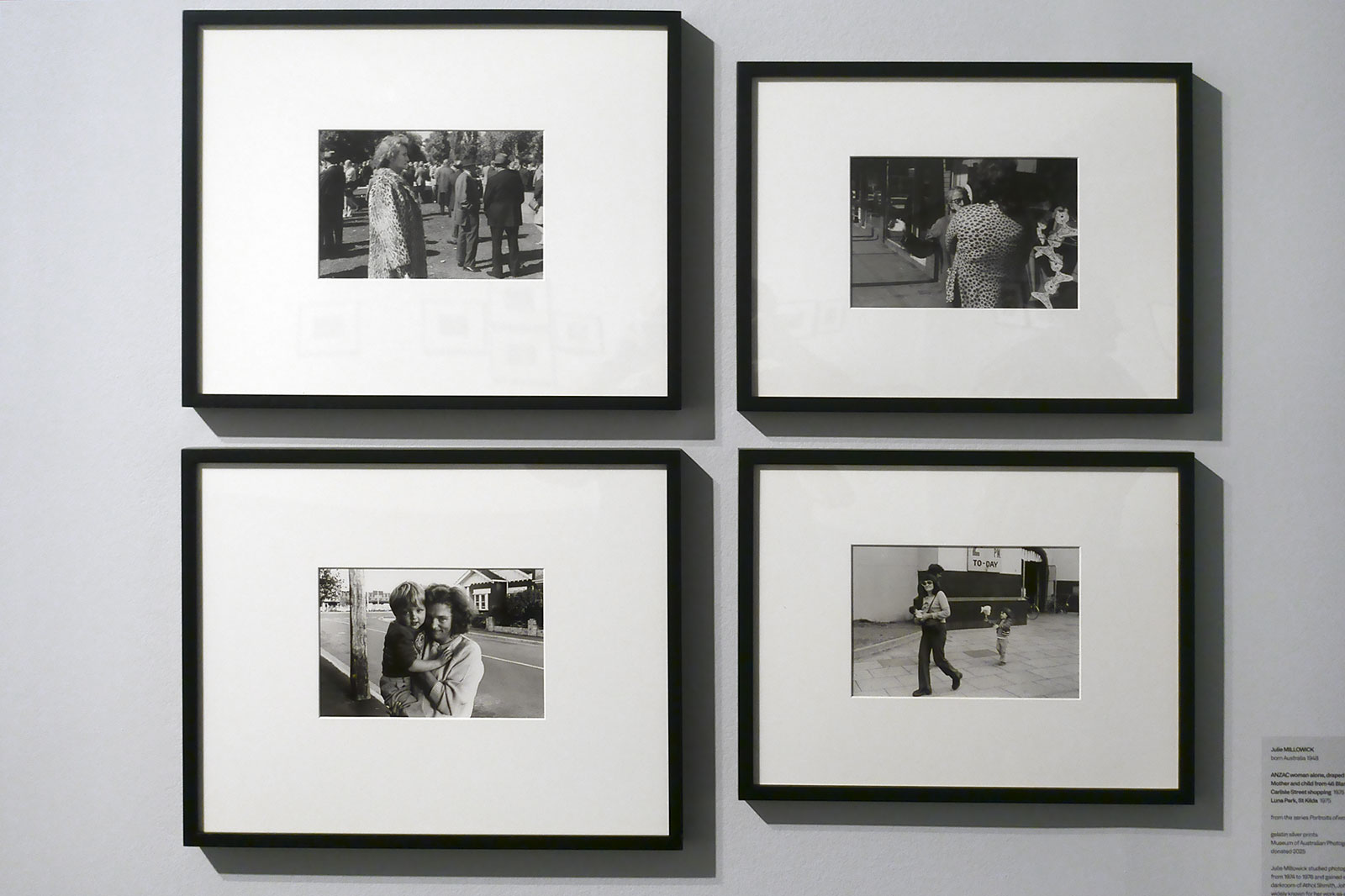
 

Installation view of the exhibition 'The basement: photography from Prahran College (1968-1981)' at the Museum of Australian Photography, Wheelers Hill, Melbourne showing Julie Millowick 's photographs


Installation view of the first gallery of the exhibition The basement: photography from Prahran College (1968-1981) at the Museum of Australian Photography, Wheelers Hill, Melbourne showing Julie Millowick ‘s photographs from clockwise: ANZAC woman alone, draped in leopard skin coat, 1975; Carlisle Street shopping, 1975; Luna Park, St Kilda, 1975; Mother and child from 46 Blanche Street, St Kilda, 1977 from the series Portraits of women
Photo: Marcus Bunyan


Julie Millowick studied photography at Prahran College from 1974 to 1976 and gained early experience working in the darkroom of Athol Shmith, John Cato and Peter Bart. She is widely known for her work as a commercial photographer and photojournalist as well as her personal documentary projects.

1975 was Millowick’s second year at Prahran College, and also International Women’s Year, as designated by the United Nations. With the spotlight set firmly on women’s rights, Millowick made an extensive series of photographs entitled Portraits of women, which she continued in subsequent years. This human-centred series with feminist undertones, sympathetically captured women in a variety of locations and depicted moments of motherhood, friendship, loneliness, old-age and youth.

Wall text from the exhibition

Read my review “Down with Earth,” on the exhibition Julie Millowick: Surrounding at the Castlemaine Art Museum, June 2024

Julie Millowick Alumni profile on the Prahran Legacy website


Julie Millowick (Australian, b. 1948)
'Mother and child from 46 Blanche Street, St Kilda' 1977 from the exhibition 'The basement: photography from Prahran College (1968-1981)' at the Museum of Australian Photography, Wheelers Hill, Melbourne, March - May 2025


Julie Millowick (Australian, b. 1948)
Mother and child from 46 Blanche Street, St Kilda
1977
Gelatin silver print
15.9 x 23.7cm
Museum of Australian Photography, City of Monash Collection donated by Julie Millowick 2024


Wall text from the exhibition 'The basement: photography from Prahran College (1968-1981)' at the Museum of Australian Photography, Wheelers Hill, Melbourne


Wall text from the exhibition The basement: photography from Prahran College (1968-1981) at the Museum of Australian Photography, Wheelers Hill, Melbourne
Photo: Marcus Bunyan
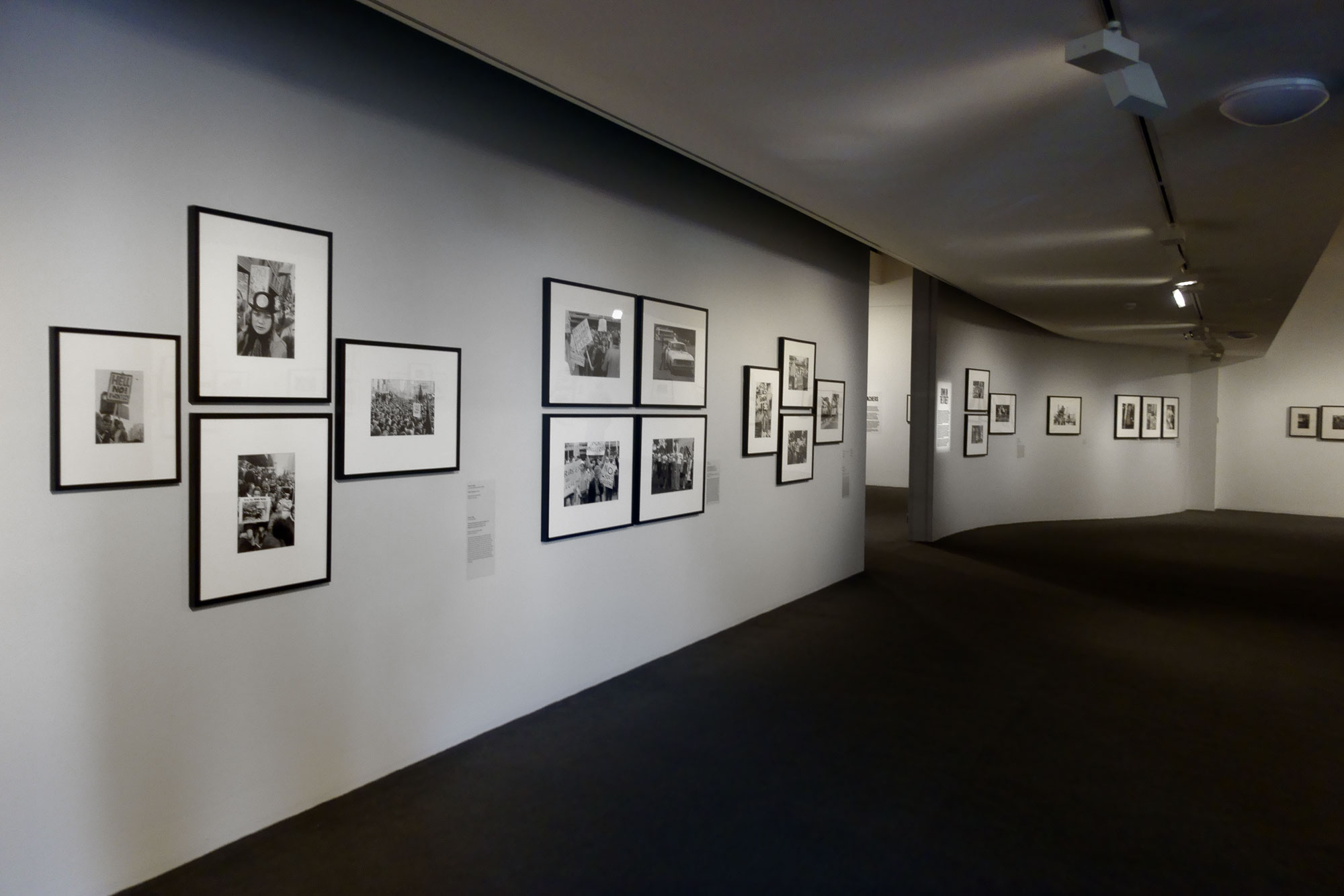
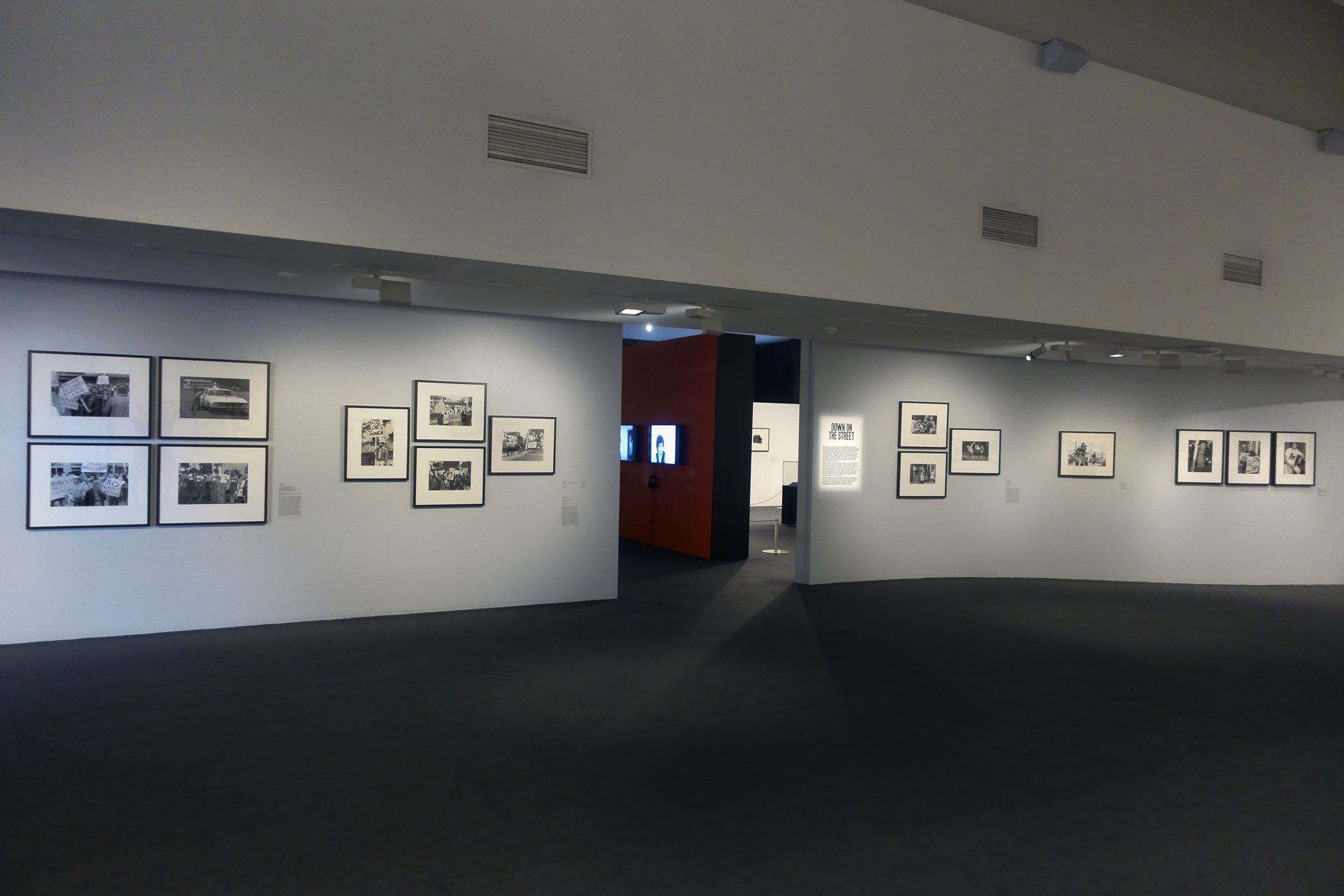
 

Installation view of the exhibition 'The basement: photography from Prahran College (1968-1981)' at the Museum of Australian Photography, Wheelers Hill, Melbourne
Installation view of the first gallery of the exhibition 'The basement: photography from Prahran College (1968-1981)' at the Museum of Australian Photography, Wheelers Hill, Melbourne


Installation views of the first gallery of the exhibition The basement: photography from Prahran College (1968-1981) at the Museum of Australian Photography, Wheelers Hill, Melbourne
Photos: Marcus Bunyan


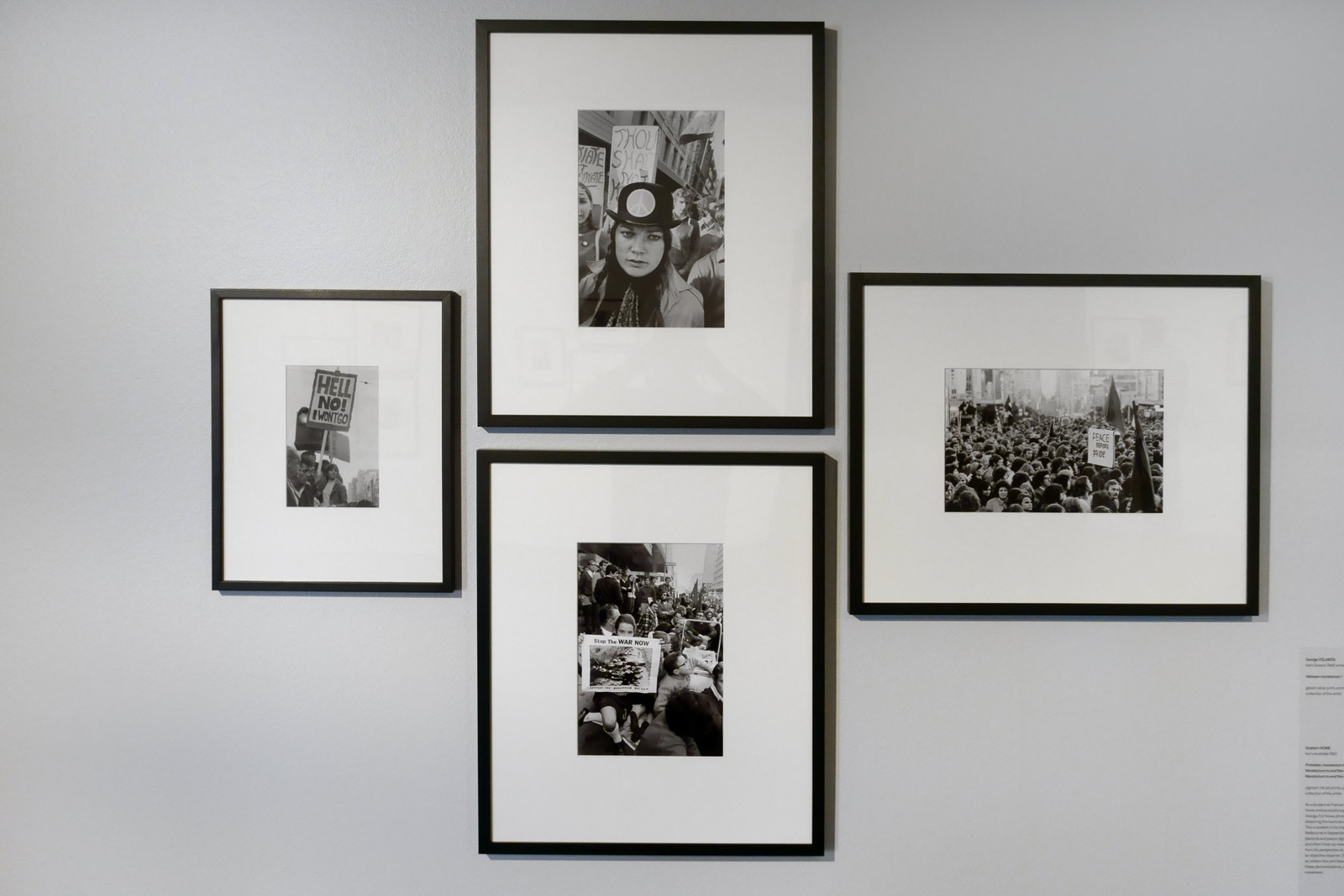
Installation view of the exhibition 'The basement: photography from Prahran College (1968-1981)' at the Museum of Australian Photography, Wheelers Hill, Melbourne showing photography by George Volakos and Graham Howe


Installation view of the first gallery of the exhibition The basement: photography from Prahran College (1968-1981) at the Museum of Australian Photography, Wheelers Hill, Melbourne showing at left, George Volakos’ photograph Vietnam moratorium 1 1970; at top centre, Graham Howe’s photograph Protester, moratorium to end the war in Vietnam 1970 followed by two photographs Moratorium to end the war in Vietnam 1970 (below)
Photo: Marcus Bunyan


As a student at Prahran College in the early 1970s, Graham Howe embraced photography’s ability to document social change. For Howe, photography was the perfect medium for observing the world around him and expressing a point of view. This is evident in his images of a Vietnam War moratorium in Melbourne in September 1970. Immersed in a sea of people, placards and peace signs, Howe made a series of tightly framed and often close-up views of the protesters, showing the event from his perspective as an impassioned participant rather than an objective observer. Other Prahran College students, such as Johann Kris and George Volvos, also took photographs at these demonstrations, documenting the intensity of the activist movement

Wall text from the exhibition

Graham Howe alumni profile on the Prahran Legacy website


Graham Howe (Australian, b. 1950)
'Moratorium to end the war in Vietnam' 1970, printed 2024  (installation view)


Graham Howe (Australian, b. 1950)
Moratorium to end the war in Vietnam (installation view)
1970, printed 2024
Pigment inkjet print
Collection of the artist
Photo: Marcus Bunyan


Graham Howe (Australian, b. 1950)
'Moratorium to end the war in Vietnam' 1970, printed 2024  (installation view) from the exhibition 'The basement: photography from Prahran College (1968-1981)' at the Museum of Australian Photography, March - May, 2025


Graham Howe (Australian, b. 1950)
Moratorium to end the war in Vietnam (installation view)
1970, printed 2024
Pigment inkjet print
Collection of the artist
Photo: Marcus Bunyan


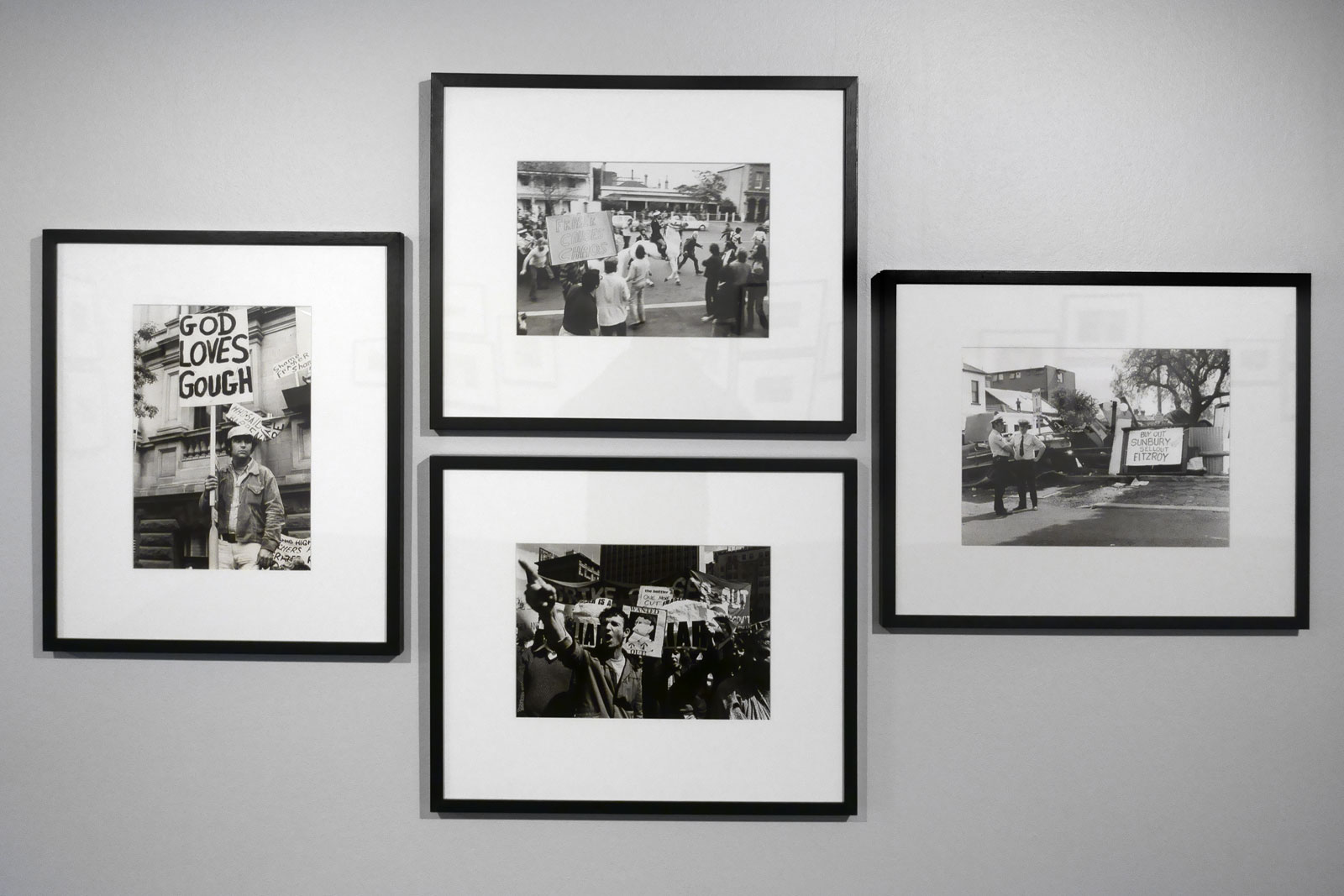
Installation view of the exhibition 'The basement: photography from Prahran College (1968-1981)' at the Museum of Australian Photography, Wheelers Hill, Melbourne showing from left clockwise, Ken Wright's 'Rally for Gough' 1975; Andrew Chapman's 'Street protest, November 11th' 1975; Richard Muggleton's 'Untitled (F19 protest)' c. 1977; and Andrew Chapman's 'Lest we forget' 1980


Installation view of the first gallery of the exhibition The basement: photography from Prahran College (1968-1981) at the Museum of Australian Photography, Wheelers Hill, Melbourne showing from left clockwise, Ken Wright’s Rally for Gough 1975; Andrew Chapman’s Street protest, November 11th 1975; Richard Muggleton’s Untitled (F19 protest) c. 1977; and Andrew Chapman’s Lest we forget 1980
Photo: Marcus Bunyan


Ken Wright (Australian / New Zealand, 1948-1998)
'Rally for Gough' 1975 (installation view)


Ken Wright (Australian/New Zealand, 1948-1998)
Rally for Gough (installation view)
1975
Gelatin silver print
Private collection
Photo: Marcus Bunyan


Andrew Chapman (Australian, b. 1954) 'Lest we forget' 1980 (installation view)


Andrew Chapman (Australian, b. 1954)
Lest we forget (installation view)
1980
Gelatin silver print
Museum of Australian Photography, City of Monash Collection donated 2024
Photo: Marcus Bunyan


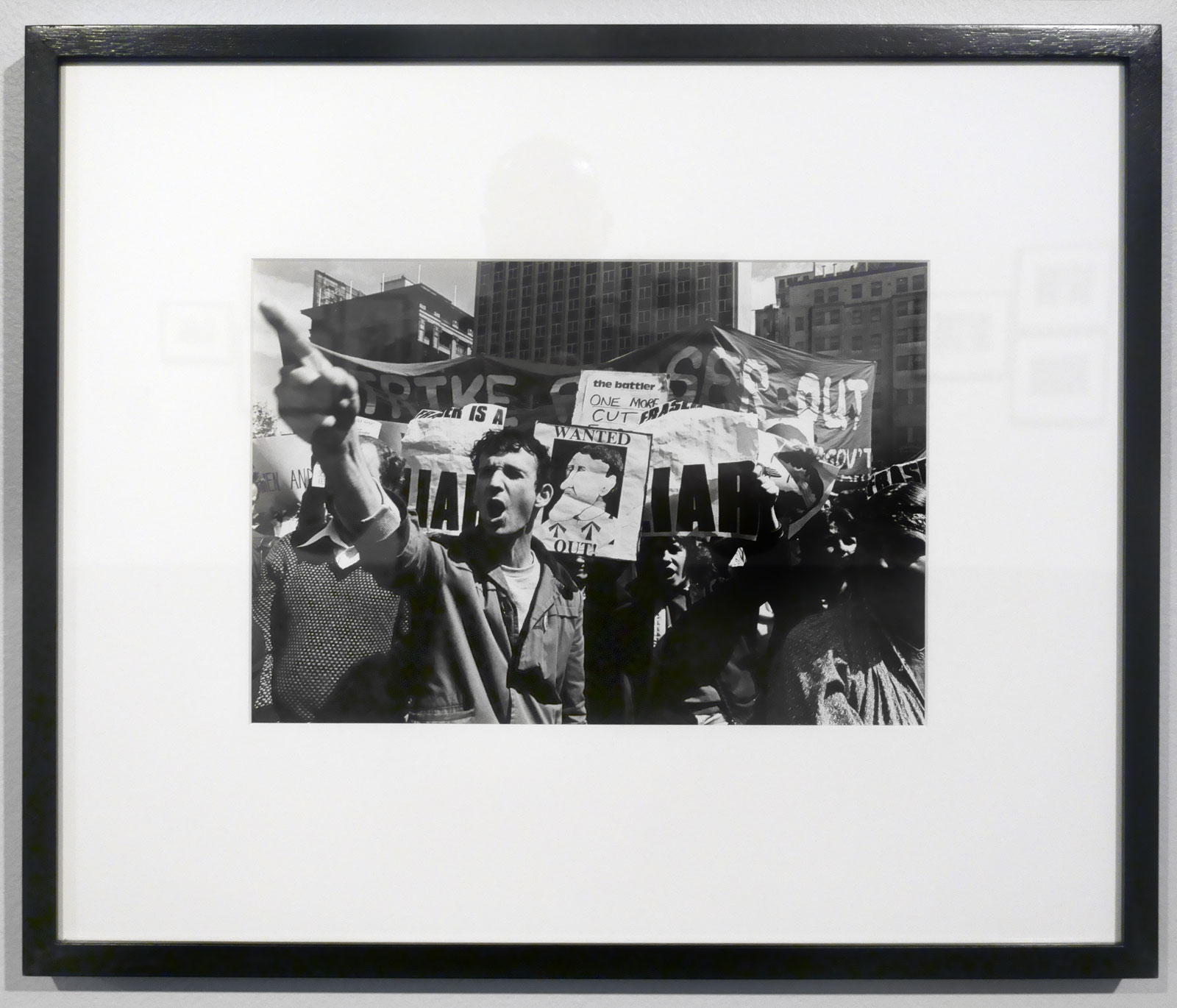
Andrew Chapman studied photography at Prahran College from 1974 to 1976 and then again in 1980. His Street protest, November 11th (1975) documents a politically motivated rally. It was taken on the corner of Albert Street and moray Street in South Melbourne. Chapman was in his second year at Prahran College and had been listening to parliament on the radio in the office of the then photography technician Murray White. When the news broke of the Whitlam Government’s dismissal, Chapman was quick to join the rallies that broke out in the streets. Later, in 1980, the streets were still politically charged when Chapman returned to Prahran to complete his course. His image, Lest we forget (1980) was made in City Square on Swanston Street at an anti-Fraser demonstration in the lead-up to the 1980 federal election. Described by Julie Millowick as the student who never stopped photographing, even during class, Chapman always has his Leica camera ready. Throughout his career Chapman has photographed much of Australia’s social and political landscape, working both personally and for clients, including as a photojournalist for major Australian newspapers and magazines.

Wall text from the exhibition

Andrew Chapman alumni profile on the Prahran Legacy website


Wall text from the exhibition 'The basement: photography from Prahran College (1968-1981)' at the Museum of Australian Photography, Wheelers Hill, Melbourne


Wall text from the exhibition The basement: photography from Prahran College (1968-1981) at the Museum of Australian Photography, Wheelers Hill, Melbourne
Photo: Marcus Bunyan
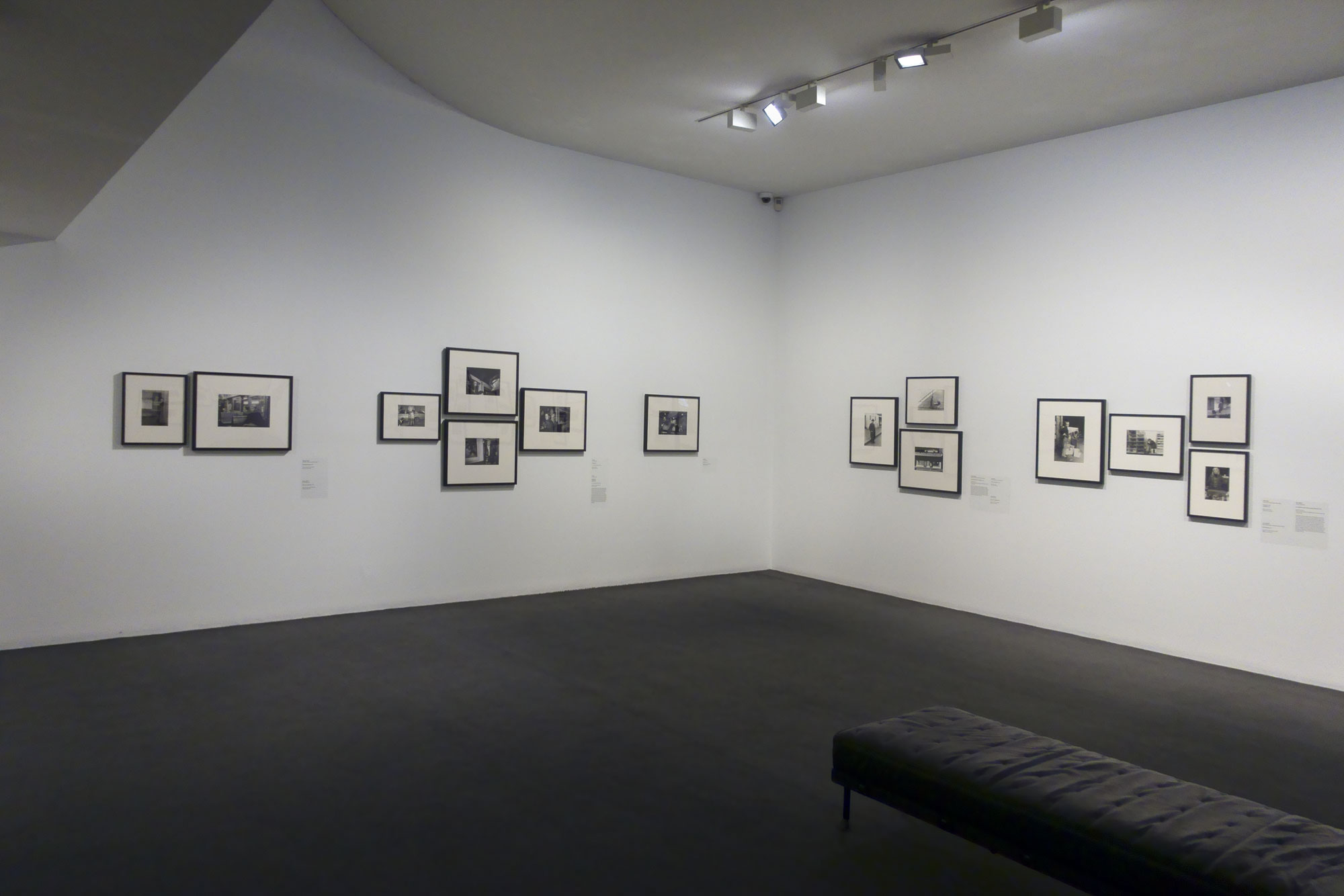
 

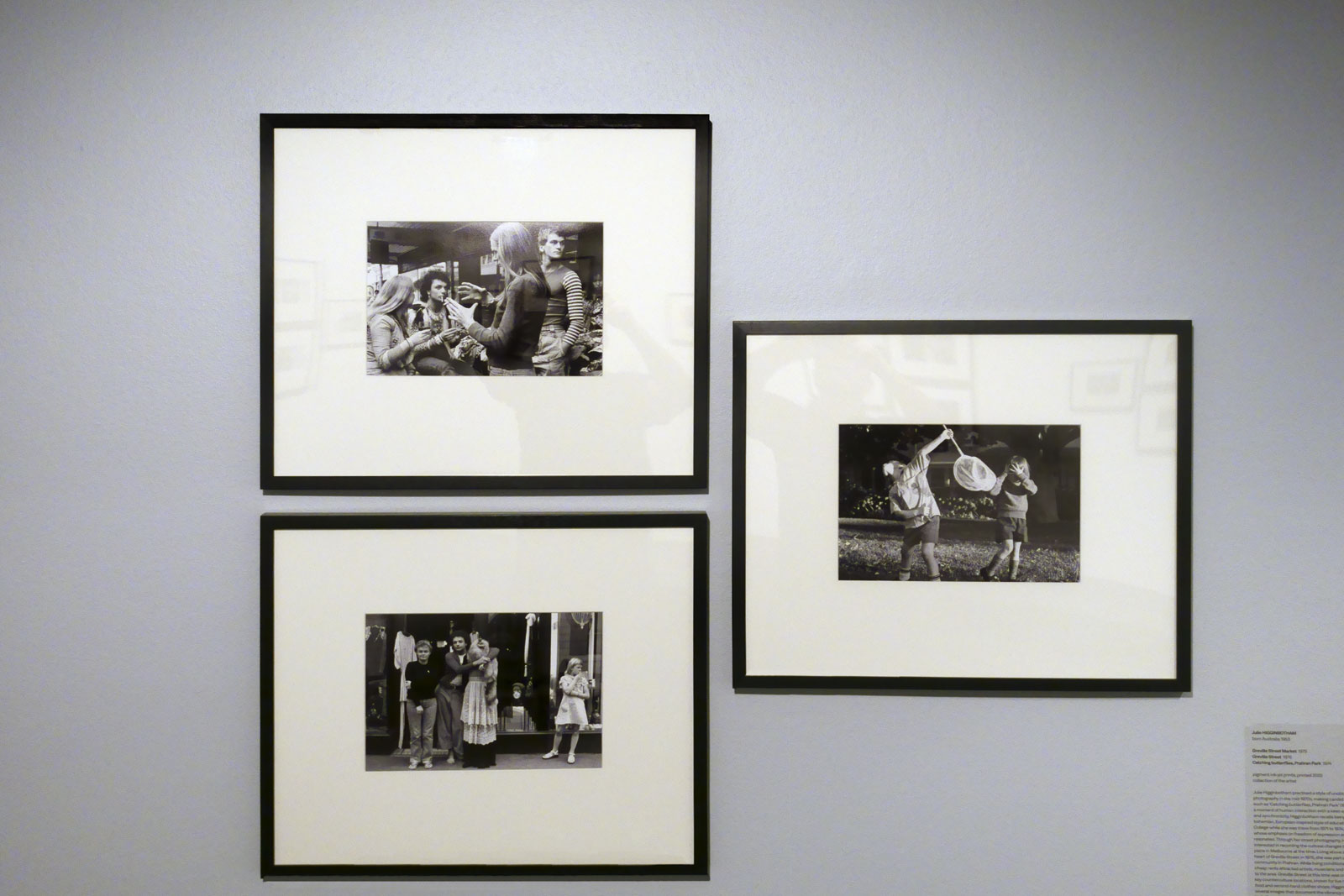
Installation view of the exhibition 'The basement: photography from Prahran College (1968-1981)' at the Museum of Australian Photography, Wheelers Hill, Melbourne showing from top left clockwise photographs by Julie Higginbotham: 'Greville Street Market', 1975; 'Catching butterflies, Prahran Park', 1974; and 'Greville Street', 1976


Installation view of the first gallery of the exhibition The basement: photography from Prahran College (1968-1981) at the Museum of Australian Photography, Wheelers Hill, Melbourne showing from top left clockwise photographs by Julie Higginbotham: Greville Street Market, 1975; Catching butterflies, Prahran Park, 1974; and Greville Street, 1976
Photo: Marcus Bunyan


Julie Higginbotham practiced a style of unobtrusive street photography in the mid-1970s, making candid expressive images such as ‘Catching butterflies, Prahran Park’ (1974), which records a moment of human interaction with a keen eye for composition and synchronicity. Higginbotham recalls being offered a bohemian, European-inspired style of education at Prahran College while she was there from 1971 to 1974, particularly by Cox whose emphasis on freedom of expression and personal choice resonated. Through her street photography, Higginbotham was interested in recording the cultural changes that were taking place in Melbourne at the time. Living above a shop in the heart of Greville Street in 1975, she was part of a lively hippie community in Prahran. While living conditions were squalid, the cheap rents attracted artists, musicians and alternative thinkers to the area. Greville Street at this time was one of Melbourne’s key counterculture locations, known for live music, organic food and second-hand clothes shops. Higginbotham produced several images that document the vibrancy of this movement, including a series of street photographs she made at the Greville Street Market on Saturday in 1975.

Wall text from the exhibition

Julie Higginbotham alumni profile on the Prahran Legacy website


Julie Higginbotham interview Prahran CAE 1971 – 74 Photography


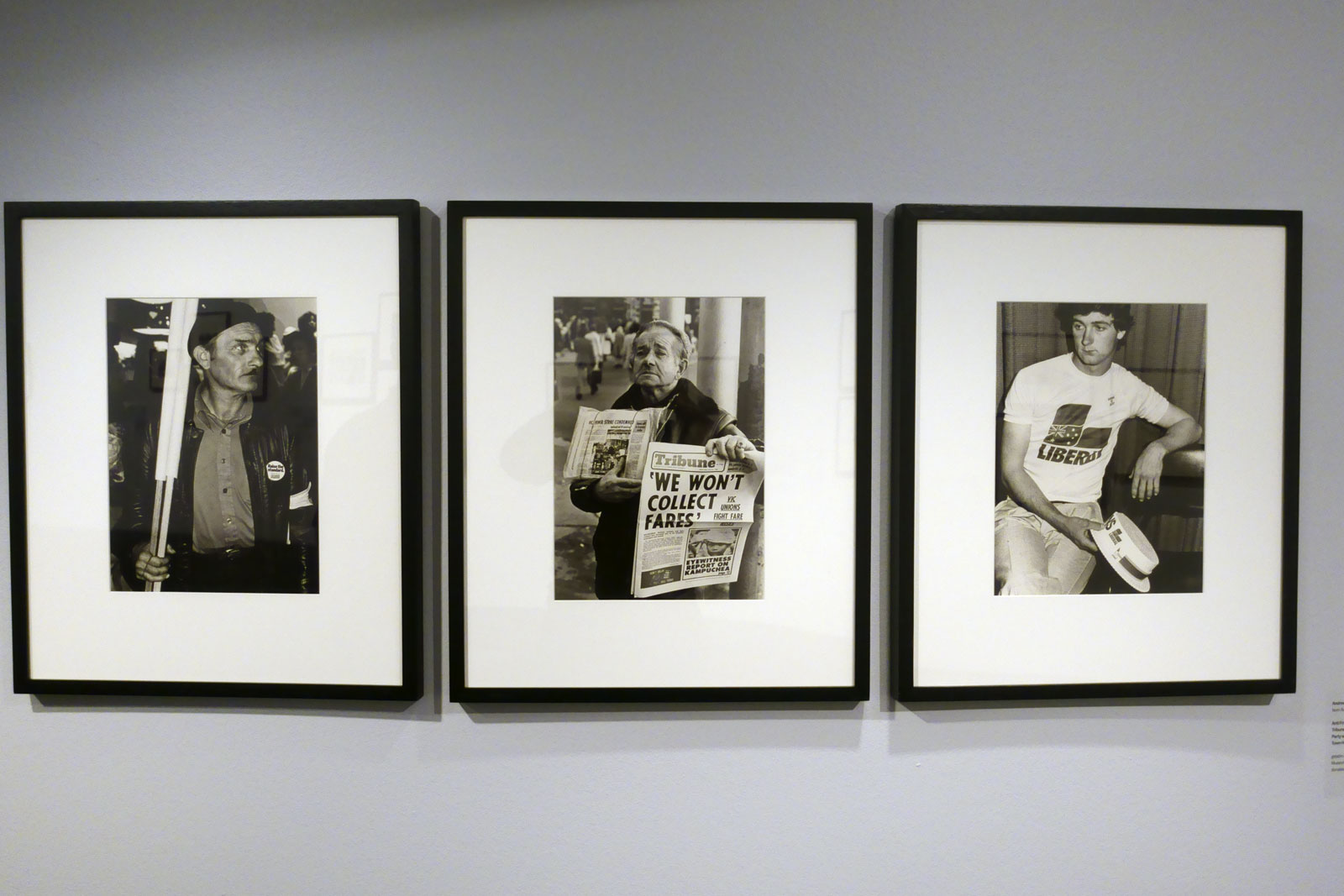
Installation view of the exhibition 'The basement: photography from Prahran College (1968-1981)' at the Museum of Australian Photography, Wheelers Hill, Melbourne showing from left, Andrew Chapman's photographs 'Anti Fraser demonstrator, Collins Street Melbourne' 1979; 'Tribune newspaper seller, Melbourne' 1980; 'Party supporter, Liberal Party campaign launch, Moorabbin Town Hall' 1980


Installation view of the first gallery of the exhibition The basement: photography from Prahran College (1968-1981) at the Museum of Australian Photography, Wheelers Hill, Melbourne showing from left, Andrew Chapman’s photographs Anti Fraser demonstrator, Collins Street Melbourne 1979; Tribune newspaper seller, Melbourne 1980; Party supporter, Liberal Party campaign launch, Moorabbin Town Hall 1980
Photo: Marcus Bunyan


Andrew Chapman (Australian, b. 1954) 'Tribune newspaper seller, Melbourne' 1980 (installation view)


Andrew Chapman (Australian, b. 1954)
Tribune newspaper seller, Melbourne (installation view)
1980
Gelatin silver print
Museum of Australian Photography, City of Monash Collection donated 2024
Photo: Marcus Bunyan


Andrew Chapman (Australian, b. 1954) 'Tribune newspaper seller, Melbourne' 1980 from the exhibition 'The basement: photography from Prahran College (1968-1981)' at the Museum of Australian Photography, Wheelers Hill, Melbourne, March - May 2025


Andrew Chapman (Australian, b. 1954)
Tribune newspaper seller, Melbourne (installation view)
1980
Gelatin silver print
Museum of Australian Photography, City of Monash Collection donated 2024


Andrew Chapman (Australian, b. 1954) 'Party supporter, Liberal Party campaign launch, Moorabbin Town Hall' 1980 (installation view)


Andrew Chapman (Australian, b. 1954)
Party supporter, Liberal Party campaign launch, Moorabbin Town Hall (installation view)
1980
Gelatin silver print
Museum of Australian Photography, City of Monash Collection donated 2024
Photo: Marcus Bunyan


Installation view of the exhibition 'The basement: photography from Prahran College (1968-1981)' at the Museum of Australian Photography, Wheelers Hill, Melbourne showing at left, George Volakos' 'Flinders Street Station' 1972; and at right, Graham Howe's 'Man on tram, Melbourne' 1970


Installation view of the exhibition The basement: photography from Prahran College (1968-1981) at the Museum of Australian Photography, Wheelers Hill, Melbourne showing at left, George Volakos’ Flinders Street Station 1972; and at right, Graham Howe’s Man on tram, Melbourne 1970
Photo: Marcus Bunyan


Installation view of the exhibition 'The basement: photography from Prahran College (1968-1981)' at the Museum of Australian Photography, Wheelers Hill, Melbourne


Installation view of the exhibition The basement: photography from Prahran College (1968-1981) at the Museum of Australian Photography, Wheelers Hill, Melbourne showing photographs by Rob Gale from his Dogs and their humans (1978) and Swanston Street 5pm (1978) series
Photo: Marcus Bunyan


Rob Gale (Australian, b. 1953) 'Untitled 01' 1978 (installation view)


Rob Gale (Australian, b. 1953)
Untitled 01 (installation view)
1978
From the series Swanston Street 5pm
Pigment ink-jet print, printed 2024
Collection of the artist
Photo: Marcus Bunyan


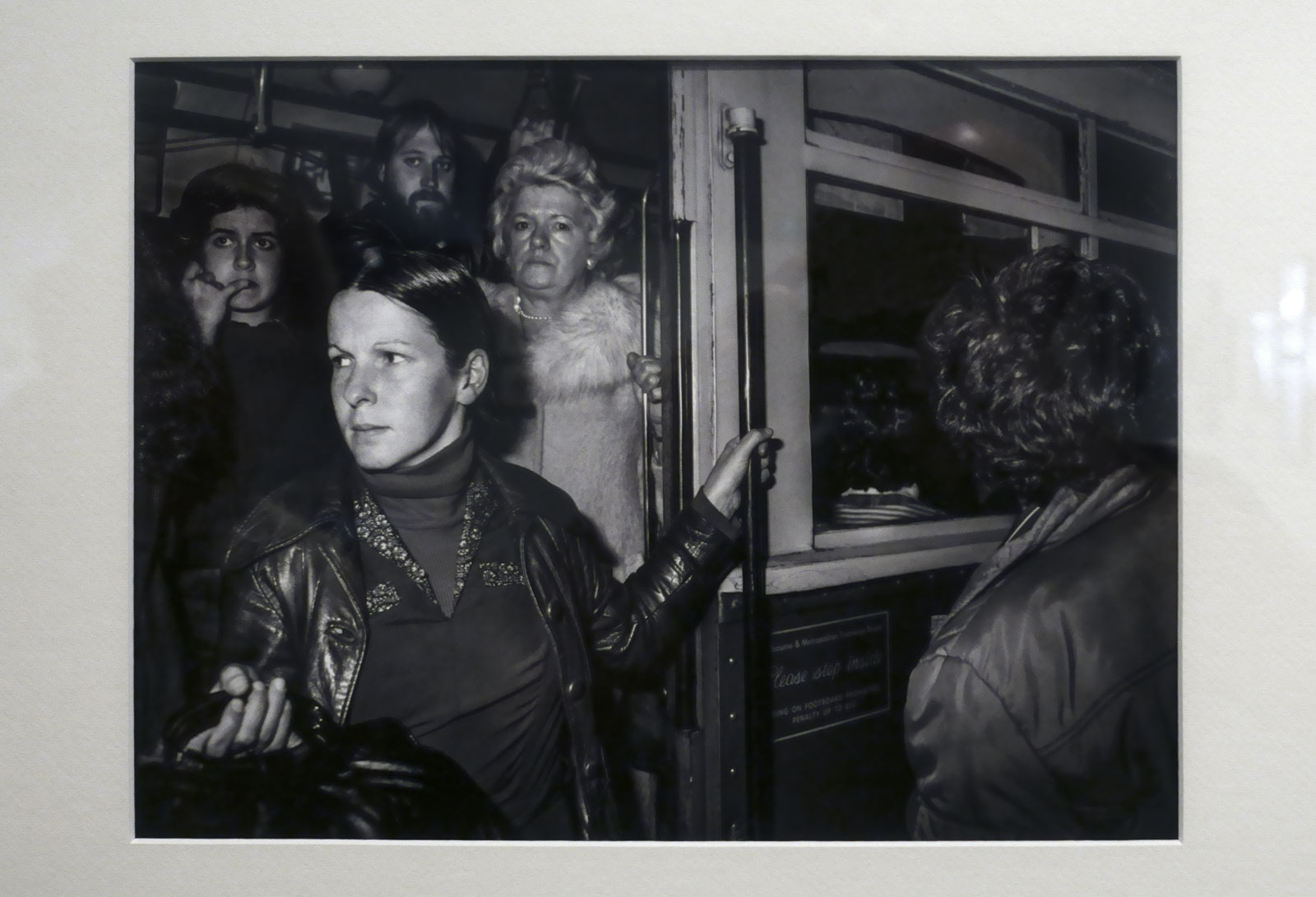
Rob Gale studied photography at Prahran Collect from 1976 to 1978. For his series, Swanston Street, 5pm (1978), Gale took inspiration from an iconic painting by the Australian artist John Brack, Collins Street, 5pm (1955). Gale’s photographic exploration of Brack’s stylised view of Melbourne’s office workers was made during peak hour at a busy tram stop near Flinders Street Station. Influenced by American street photographers such as Bruce Golden and Weegee, Gale used a hand-held flash to illuminate his subjects. In a nod to Brack’s painting, this technique allowed Gale to create harsh, stylised views of impatient commuters. The flash also seems to have induced grimaces and sideways stares which, along with the harsh lighting, shadows and unusual camera angles, served to accentuate the strange and surreal atmosphere in the photographs.

Wall text from the exhibition

Rob Gale alumni profile on the Prahran Legacy website


Rob Gale (Australian, b. 1953)
'Untitled 12' 1978 from the series 'Swanston Street 5pm' from the exhibition 'The basement: photography from Prahran College (1968-1981)' at the Museum of Australian Photography, Wheelers Hill, Melbourne, March - May 2025


Rob Gale (Australian, b. 1953)
Untitled 12
1978
From the series Swanston Street 5pm
Pigment ink-jet print, printed 2024
Collection of the artist


Installation view of the exhibition 'The basement: photography from Prahran College (1968-1981)' at the Museum of Australian Photography, Wheelers Hill, Melbourne showing photographs from left clockwise, Steven Lojewsi's 'Man with umbrella near curb, Melbourne' 1975; Johann Krix's 'Proud moment, Moomba' c. 1971; and Andrew Wittner's 'Where's my car, Melbourne' 1973


Installation view of the exhibition The basement: photography from Prahran College (1968-1981) at the Museum of Australian Photography, Wheelers Hill, Melbourne showing photographs from left clockwise, Steven Lojewsi’s Man with umbrella near curb, Melbourne 1975; Johann Krix’s Proud moment, Moomba c. 1971; and Andrew Wittner’s Where’s my car, Melbourne 1973
Photo: Marcus Bunyan


Andrew Wittner (Australian, b. 1955) 'Where's My Car?' 1973, printed 2024


Andrew Wittner (Australian, b. 1955)
Where’s My Car?
1973, printed 2024
Gelatin silver print
Collection of the artist

Andrew Wittner alumni profile on the Prahran Legacy website


Steven Lojewsi (Australian born England, b. 1952) 'Man with umbrella near curb, Melbourne' 1975 (installation view)


Steven Lojewsi (Australian born England, b. 1952)
Man with umbrella near curb, Melbourne (installation view)
1975
Gelatin silver print
Museum of Australian Photography, City of Monash Collection donated 2025
Photo: Marcus Bunyan


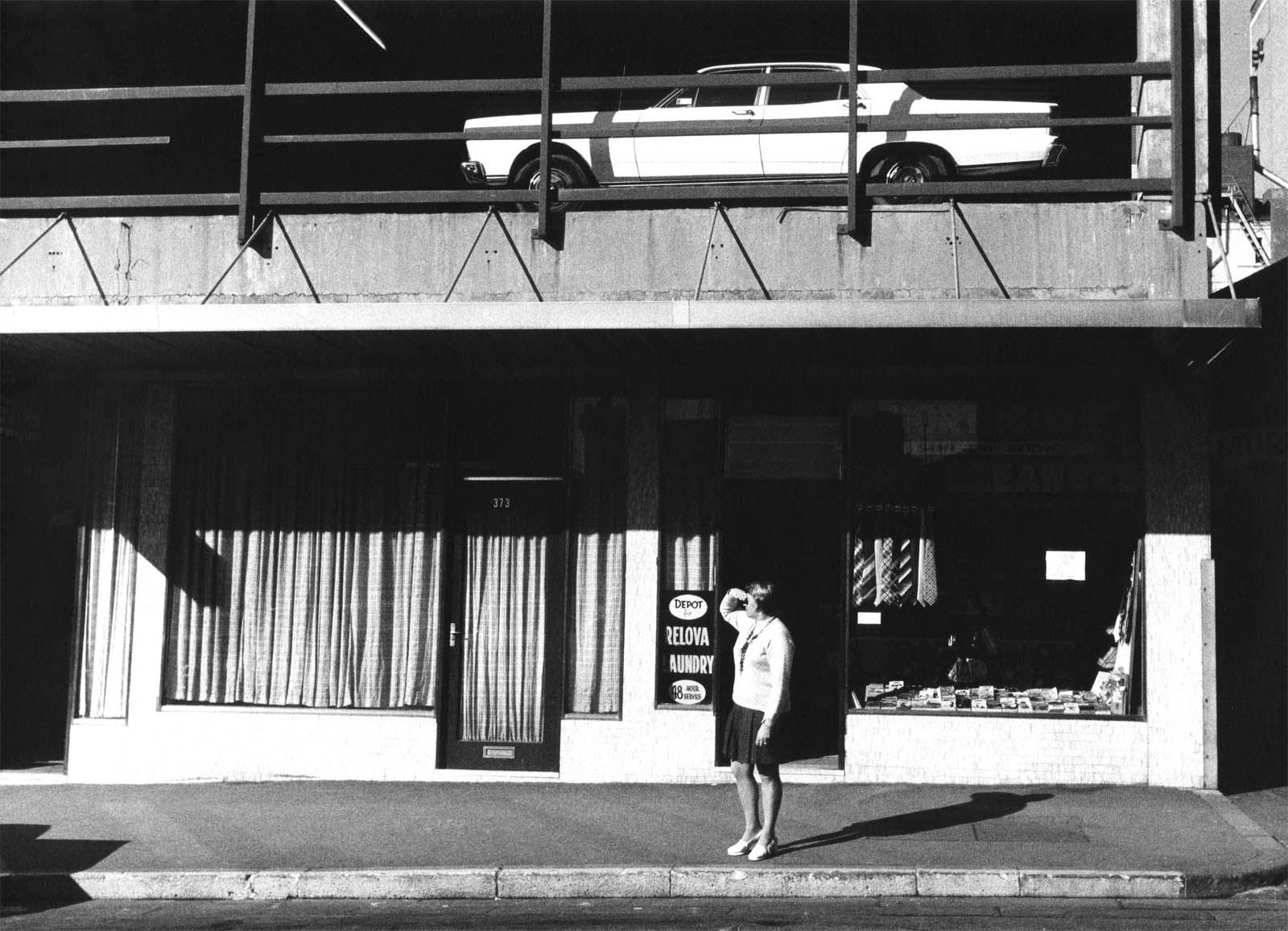
Steven Lojewski was born in London and grea up in Canada before arriving in Australian in 1969. He studied photography at Prahran College from 1974 to 1976 and later at Sydney College of the Arts. While studying at Prahran, Lojewski made a number of photographs on the streets of Melbourne. Sparsely populated, these early-career vintage prints demonstrate Lojewski’s highly defined, formal approach to documenting the urban landscape and illustrate his ability to produce a subtle range of silvery mid-tones and carefully styled compositions.

Wall text from the exhibition

Steven Lojewski alumni profile on the Prahran Legacy website


Steven Lojewsi (Australian born England, b. 1952) 'Man with umbrella near curb, Melbourne' 1975


Steven Lojewsi (Australian born England, b. 1952)
Man with umbrella near curb, Melbourne
1975
Gelatin silver print
Museum of Australian Photography, City of Monash Collection donated 2025


Installation view of the exhibition 'The basement: photography from Prahran College (1968-1981)' at the Museum of Australian Photography, Wheelers Hill, Melbourne showing at left, John Conte's 'Telephone, Prahran' 1971; at centre top, Philip Quirk's 'Lone ranger (Prahran resident with Royal Show souvenirs)' 1973; at centre bottom, Philip Quirk's 'The headmistress, sports day, Como Park' 1975; and at right, Johann Krix's 'Toorak Road, South Yarra' 1972


Installation view of the exhibition The basement: photography from Prahran College (1968-1981) at the Museum of Australian Photography, Wheelers Hill, Melbourne showing at left, John Conte’s Telephone, Prahran 1971; at centre top, Philip Quirk’s Lone ranger (Prahran resident with Royal Show souvenirs) 1973; at centre bottom, Philip Quirk’s The headmistress, sports day, Como Park 1975; and at right, Johann Krix’s Toorak Road, South Yarra 1972
Photo: Marcus Bunyan


Philip Quirk (Australian, b. 1948)
'Lone ranger (Prahran resident with Royal Show souvenirs)' 1973 (installation view)


Philip Quirk (Australian, b. 1948)
Lone ranger (Prahran resident with Royal Show souvenirs) (installation view)
1973
Gelatin silver print
15.9 x 23.8cm
Museum of Australian Photography, City of Monash Collection acquired 2024
Photo: Marcus Bunyan


Based in Sydney, Philip Quirk has been a practising documentary photographer since the 1970s. He studied photography at Prahran College from 1971 to 1973 and has frequently used his camera to capture endearing images of humanity. Influenced by international photographers such as Henri Cartier-Bresson and Diane Arbus, Quirk’s images feature unusual characters and situations, often incorporating humour and incongruity. His work, Lone ranger (Prahran resident with Royal Show souvenirs) (1973) formed part of his final portfolio assessment at Prahran College. Walking through the streets of Prahran, Quirk stopped to talk to this elderly resident and photographed him in the afternoon sunlight. With its emphasis on light and composition combined with an interest in Australian culture, this photograph is a precursor to the street and social documentary work Quirk produced in the years immediately following his time at Prahran College.

Wall text from the exhibition

Phil Quirk alumni profile on the Prahran Legacy website


Johann Krix (Australian born Austria, b. 1948) 'Toorak Road, South Yarra' 1972 (installation view)


Johann Krix (Australian born Austria, b. 1948)
Toorak Road, South Yarra (installation view)
1972
Gelatin silver print
Collection of the artist
Photo: Marcus Bunyan


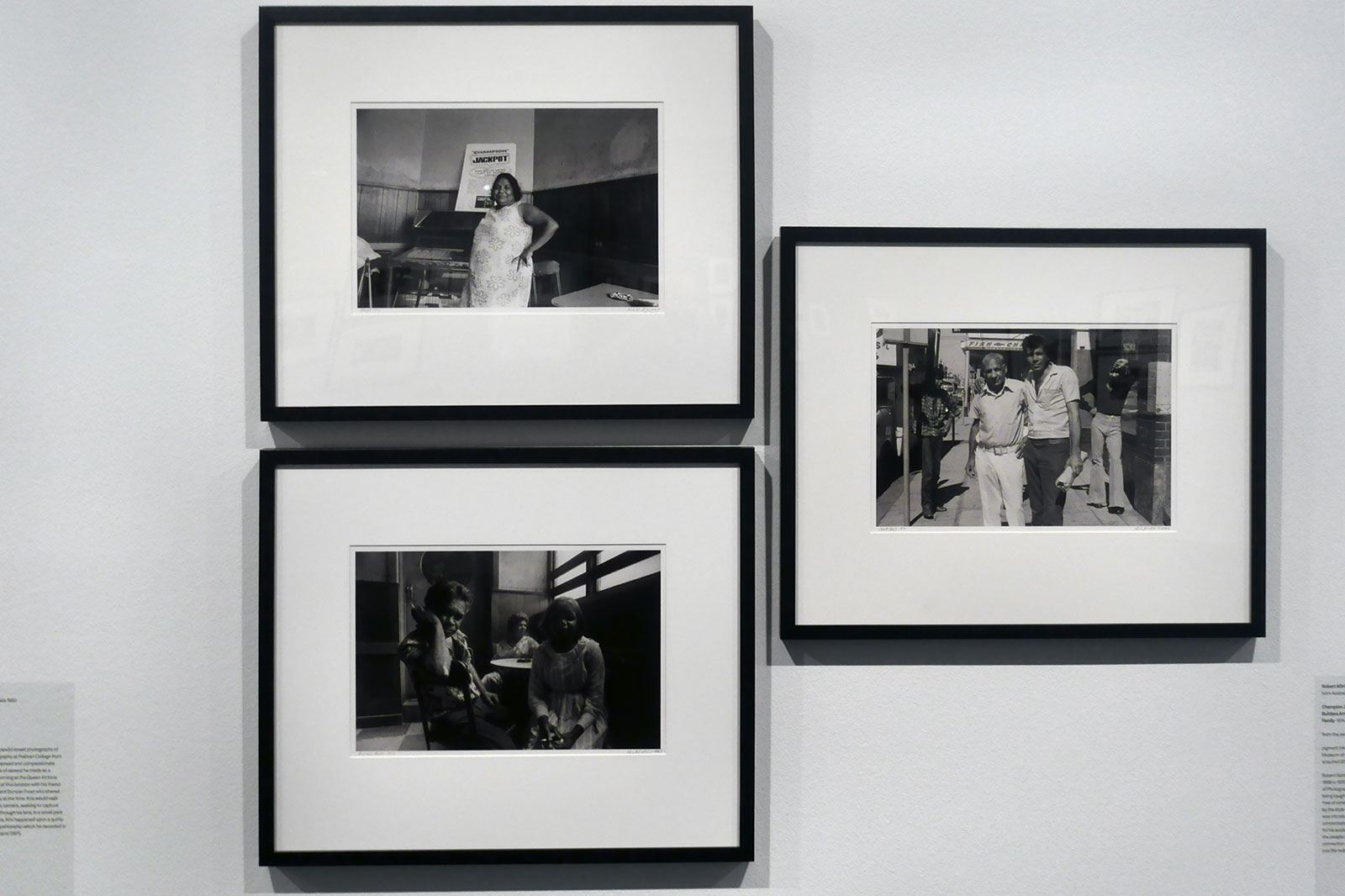
Installation view of the exhibition 'The basement: photography from Prahran College (1968-1981)' at the Museum of Australian Photography, Wheelers Hill, Melbourne showing Robert Ashton's photographs, 'Champion Jackpot' 1974; 'Builders Arms Hotel' 1974; 'Family' 1974 from the series 'Fitzroy'


Installation view of the exhibition The basement: photography from Prahran College (1968-1981) at the Museum of Australian Photography, Wheelers Hill, Melbourne showing Robert Ashton’s photographs, Champion Jackpot 1974; Builders Arms Hotel 1974; Family 1974 from the series Fitzroy
Photo: Marcus Bunyan


Robert Ashton (Australian, b. 1950)
'Champion Jackpot' 1974, printed 2008 (installation view)


Robert Ashton (Australian, b. 1950)
Champion Jackpot (installation view)
1974, printed 2008
Pigment inkjet print
Museum of Australian Photography, City of Monash Collection acquired 2010
Photo: Marcus Bunyan


Robert Ashton studied photography at Prahran college from 1968 to 1970 and first exhibited his work at Brummels Gallery of Photography in 1973. As a student at Prahran, Ashton recalls being taught to follow his heart and his eye in a way that was free of constraints, developing a visual language influenced by the style of European black-and-white photography that he was introduced to by Paul Cox. His early documentary work concentrated on inner-city subjects, and he is widely known for his acclaimed series Fitzroy, which warmly documents the people of Fitzroy, focusing on human life and community connection. This series was originally published as a photobook, Into the hollow mountains a portrait of Fitzroy, in 1974.

Wall text from the exhibition

Robert Ashton alumni profile on the Prahran Legacy website


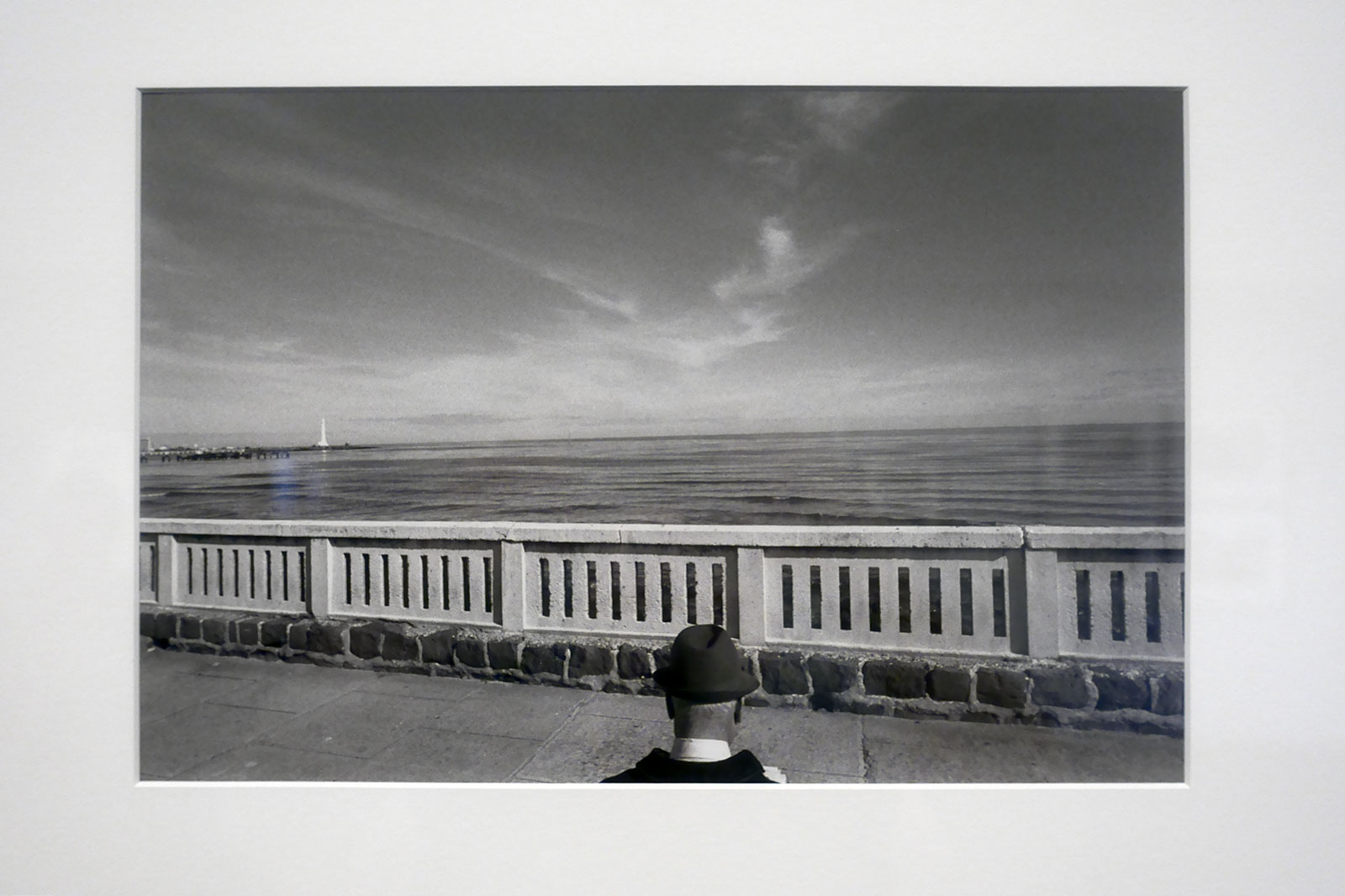
Installation view of the exhibition 'The basement: photography from Prahran College (1968-1981)' at the Museum of Australian Photography, Wheelers Hill, Melbourne  showing from left clockwise, Geoff Strong's 'Bald man enjoying the sun, St Kilda' 1975; Steven Lojewski's 'Man with hat and lighthouse, St Kilda' 1975; Glen O'Malley's 'St Kilda' 1973; and Steven Lojewski's 'Man on bench, Stardust St Kilda' 1975


Installation view of the exhibition The basement: photography from Prahran College (1968-1981) at the Museum of Australian Photography, Wheelers Hill, Melbourne showing from left clockwise, Geoff Strong’s Bald man enjoying the sun, St Kilda 1975; Steven Lojewski’s Man with hat and lighthouse, St Kilda 1975; Glen O’Malley’s St Kilda 1973; and Steven Lojewski’s Man on bench, Stardust St Kilda 1975
Photo: Marcus Bunyan


Geoff Strong (Australian, b. 1950) 'Bald man enjoying the sun, St Kilda'
1975


Geoff Strong (Australian, b. 1950)
Bald man enjoying the sun, St Kilda
1975
Gelatin silver print
19.1 x 26.3cm
Museum of Australian Photography, City of Monash Collection donated 2025


Geoff Strong moved to Melbourne from Brisbane for the photography course at Prahran College, which he began in 1975 after already having established himself as a political journalist. Strong’s image, Bald man enjoying the sun, St Kilda (1975) showcases his acute interest in the qualities of Melbourne’s sunlight. The human element, a man’s bald head, becomes a formal, compositional device, which appears more like a bronze ball than a human form. Strong’s depiction of harsh light in this sparse composition accentuates the photograph’s formal elements and calls to mind the surreal paintings of Georgio de Chirico.

Text from the Museum of Australian Photography website

Geoff Strong alumni profile on the Prahran Legacy website


Steven Lojewsi (Australian born England, b. 1952) 'Man with hat and lighthouse, St Kilda' 1975 (installation view)


Steven Lojewsi (Australian born England, b. 1952)
Man with hat and lighthouse, St Kilda (installation view)
1975
Gelatin silver print
Museum of Australian Photography, City of Monash Collection donated 2025
Photo: Marcus Bunyan


James McArdle (Australian, b. 1950)
'Couple, Luna Park' 1976 (installation view)


James McArdle (Australian, b. 1950)
Couple, Luna Park (installation view)
1976
Gelatin silver print
Museum of Australian Photography, City of Monash Collection donated 2025
Photo: Marcus Bunyan


James McArdle (Australian, b. 1950)
'Conscript, Luna Park' 1976 (installation view)


James McArdle (Australian, b. 1950)
Conscript, Luna Park (installation view)
1976
Gelatin silver print
Museum of Australian Photography, City of Monash Collection donated 2025
Photo: Marcus Bunyan


James McArdle is a photographic artist, curator, writer and educator based in Castlemaine, Victoria. While studying photography at Prahran College from 1974 to 1976, McArdle took his camera out onto the streets of Melbourne. He made several social documentary images as well as more playful, abstract compositions, which highlight his interest in shadow and form. The vintage silver gelatin prints on display here come mostly from McArdle’s first-and second-year street photography folios. They were made during long walks around St Kilda and Elwood. Conscript, Luna Park (1976) formed part of McArdle’s third-year major project on Luna Park, which included portraits taken in the Penny Arcade. Created using a Linhof 4 x 5 inch press camera and flash, this folio was assessed by Wolfgang Sievers.

Wall text from the exhibition

Dr James McArdle profile on the Academia website


Installation view of the exhibition 'The basement: photography from Prahran College (1968-1981)' at the Museum of Australian Photography, Wheelers Hill, Melbourne


Installation view of the exhibition The basement: photography from Prahran College (1968-1981) at the Museum of Australian Photography, Wheelers Hill, Melbourne
Photo: Marcus Bunyan
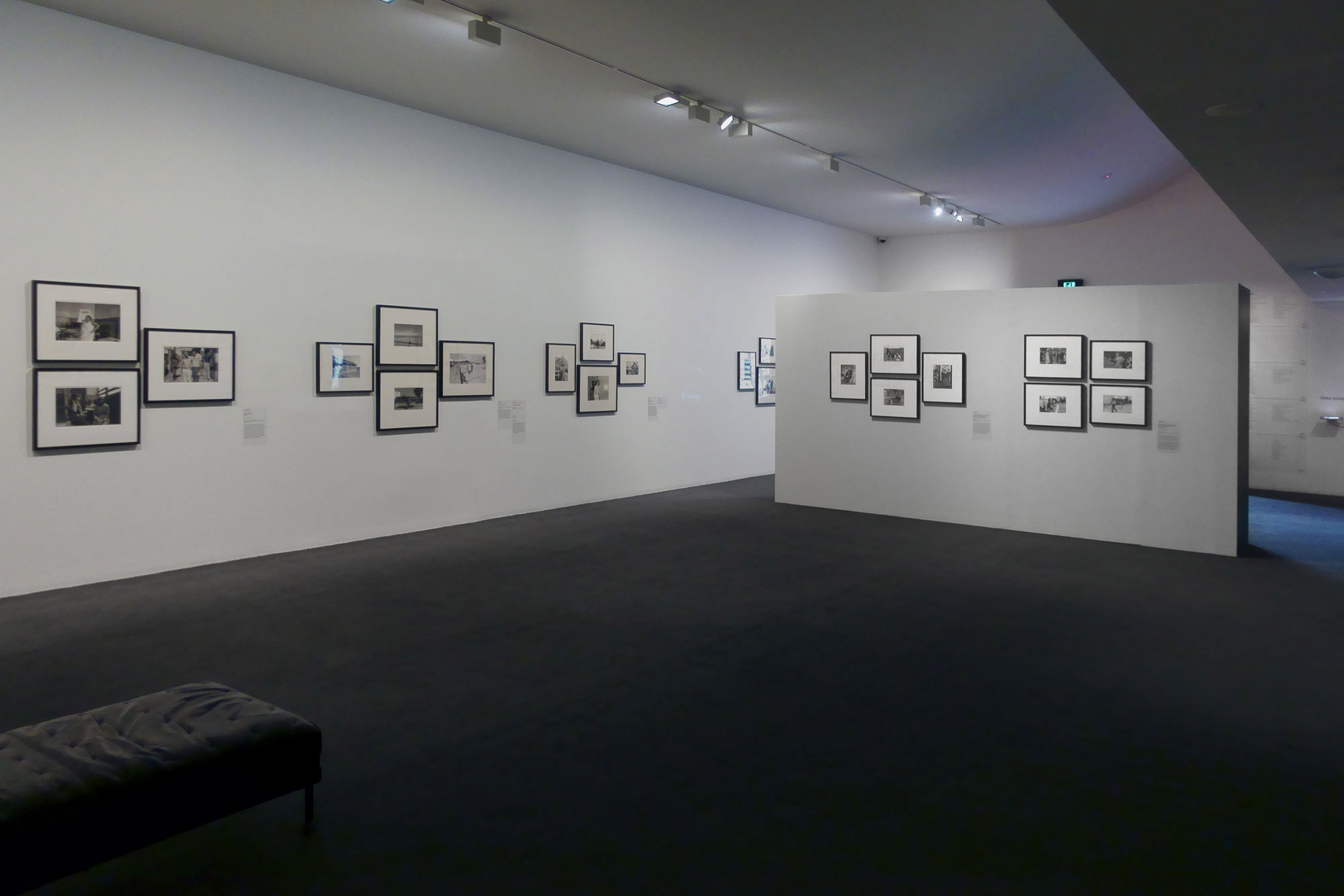
 

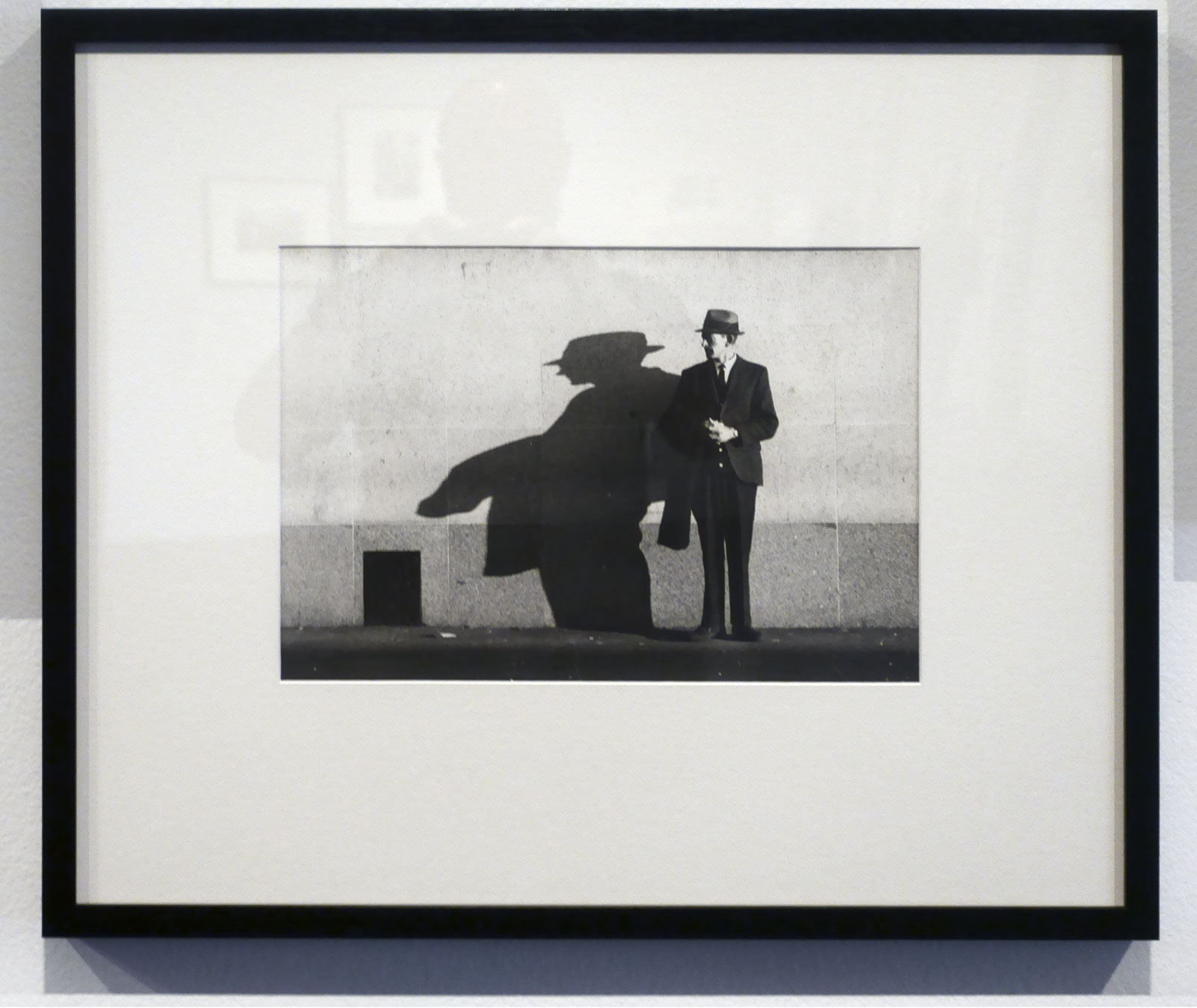
Installation view of the exhibition 'The basement: photography from Prahran College (1968-1981)' at the Museum of Australian Photography, Wheelers Hill, Melbourne showing from left clockwise, James McArdle's 'Hungry puddle, Elwood' 1975 and 'St Kilda Courthouse' 1974; Martin Munz's 'Man at crossing, Lower Esplanade St Kilda' 1979; and Greg Neville's 'Man and shadow' 1971


Installation view of the exhibition The basement: photography from Prahran College (1968-1981) at the Museum of Australian Photography, Wheelers Hill, Melbourne showing from left clockwise, James McArdle’s Hungry puddle, Elwood 1975 and St Kilda Courthouse 1974; Martin Munz’s Man at crossing, Lower Esplanade St Kilda 1979; and Greg Neville’s Man and shadow 1971
Photo: Marcus Bunyan


James McArdle (Australian, b. 1950)
'Hungry puddle, Elwood' 1975


James McArdle (Australian, b. 1950)
Hungry puddle, Elwood
1975
Gelatin silver print
27.0 x 18.5cm
Museum of Australian Photography, City of Monash Collection donated by James McArdle in honour of John Cato 2025


Greg Neville (Australian, b. 1950) 'Man and shadow' 1971 (installation view)


Greg Neville (Australian, b. 1950)
Man and shadow (installation view)
1971
Gelatin silver print
Collection of the artist
Photo: Marcus Bunyan


Installation view of the exhibition 'The basement: photography from Prahran College (1968-1981)' at the Museum of Australian Photography, Wheelers Hill, Melbourne showing Sandra Graham's photographs 'Walls 3 (Joseph)' and 'Walls 2 (cloak 1)' 1976 from the series 'Walls' (left); and 'Backstage, Chapel street bridge, Prahran' 1976 (right)


Installation view of the exhibition The basement: photography from Prahran College (1968-1981) at the Museum of Australian Photography, Wheelers Hill, Melbourne showing Sandra Graham’s photographs Walls 3 (Joseph) and Walls 2 (cloak 1) 1976 from the series Walls (left); and Backstage, Chapel street bridge, Prahran 1976 (right)
Photo: Marcus Bunyan


Sandra Graham (Australian, b. 1947)
'Walls 3 (Joseph)' 1976 (installation view)


Sandra Graham (Australian, b. 1947)
Walls 3 (Joseph) (installation view)
1976
Gelatin silver print
Collection of the artist
Photo: Marcus Bunyan


Formal concerns permeate the street portraits by Sandra Graham who studied photography at Prahran college fromollege from 1974-1975. In her series Walls, Graham relates the human forms of her subjects to the textured walls behind them. For instance, in Walls 3 (Joseph) (1976), the weathered face and stained clothes of a painter are shown in front of a mottled wall that he is about to paint white. Graham blends figure and ground in this image, playing with tonal relationships in black and white. She creates a painterly style of flatness through this series, which was made on streets around St Kilda and Albert Park.

Wall text from the exhibition

Sandra Graham alumni profile on the Prahran Legacy website


Sandra Graham (Australian, b. 1947)
'Walls 3 (Joseph)' 1976


Sandra Graham (Australian, b. 1947)
Walls 3 (Joseph)
1976
Gelatin silver print
Collection of the artist


Gallery two section one (clockwise)


Installation view of the exhibition 'The basement: photography from Prahran College (1968-1981)' at the Museum of Australian Photography, Wheelers Hill, Melbourne


Installation views of the second gallery part A of the exhibition The basement: photography from Prahran College (1968-1981) at the Museum of Australian Photography, Wheelers Hill, Melbourne
Photos: Marcus Bunyan
 

Wall text from the exhibition 'The basement: photography from Prahran College (1968-1981)' at the Museum of Australian Photography, Wheelers Hill, Melbourne


Wall text from the exhibition The basement: photography from Prahran College (1968-1981) at the Museum of Australian Photography, Wheelers Hill, Melbourne
Photo: Marcus Bunyan


Lyn Cheong (Australian, b. 1954)
'Self-portrait' 1977; 'Self-portrait' 1977 (installation view)


Lyn Cheong (Australian, b. 1954)
Self-portrait (installation view)
1977
Self-portrait (installation view)
1977
Dye diffusion transfer prints
Collection of the artist
Photo: Marcus Bunyan


Nicholas Nedelkopoulos (Australian, b. 1955)
'Shrunken head' 1978-1991; 'Dark wedding' 1978-1990 (installation view)


Nicholas Nedelkopoulos (Australian, b. 1955)
Shrunken head (installation view)
1978-1991
Dark wedding (installation view)
1978-1990
Chromogenic prints
Museum of Australian Photography, City of Monash Collection acquired 1992
Photo: Marcus Bunyan


Nicholas Nedelkopoulos (Australian, b. 1955) 'Shrunken head' 1978-1991 (installation view)


Nicholas Nedelkopoulos (Australian, b. 1955)
Shrunken head (installation view)
1978-1991
Chromogenic print
Museum of Australian Photography, City of Monash Collection acquired 1992
Photo: Marcus Bunyan


Leonie Reisberg (Australian, b. 1955) 'Portrait of Peggy Silinski, Merimbula, NSW' 1974 (installation view)


Leonie Reisberg (Australian, b. 1955)
Portrait of Peggy Silinski, Merimbula, NSW (installation view)
1974
Gelatin silver print
Museum of Australian Photography, City of Monash Collection donated by Janice Hinderaker through the Australian Government’s Cultural Gifts Program 2023
Photo: Marcus Bunyan


Leonie Reisberg attended Prahran College between 1974 and 1975, where she developed her photographic practice. Her work from this period is often associated with a growing interest in experimental and documentary photography that emerged in Melbourne during the 1970s.

Reisberg’s approach blends real-life moments with a more composed and conceptual style, often exploring themes of intimacy, femininity and social dynamics. She is part of a cohort of photographers that helped shape the trajectory of contemporary Australian photography, particularly within the context feminist and documentary practices.

Wall text from the exhibition

Leonie Reisberg alumni profile on the Prahran Legacy website


Leonie Reisberg (Australian, b. 1955)
'Portrait of Peggy Silinski, Merimbula, NSW' 1974


Leonie Reisberg (Australian, b. 1955)
Portrait of Peggy Silinski, Merimbula, NSW
1974
Gelatin silver print
Museum of Australian Photography, City of Monash Collection donated by Janice Hinderaker through the Australian Government’s Cultural Gifts Program 2023


Installation view of the exhibition 'The basement: photography from Prahran College (1968-1981)' at the Museum of Australian Photography, Wheelers Hill, Melbourne


Installation view of the exhibition The basement: photography from Prahran College (1968-1981) at the Museum of Australian Photography, Wheelers Hill, Melbourne showing at centre, Andrew Chapman’s Self-portrait in bath 1975; and at right, Viki Petherbridge’s Frames 10-18 1975 from the series Frames
Photo: Marcus Bunyan


Viki Petherbridge (Australian, b. 1954) 'Frames 10-18' 1975 (installation view)


Viki Petherbridge (Australian, b. 1954)
Frames 10-18 (installation view)
1975
from the series Frames
Gelatin silver print
Collection of the artist
Photo: Marcus Bunyan


Wall text from the exhibition 'The basement: photography from Prahran College (1968-1981)' at the Museum of Australian Photography, Wheelers Hill, Melbourne


Wall text from the exhibition The basement: photography from Prahran College (1968-1981) at the Museum of Australian Photography, Wheelers Hill, Melbourne
Photo: Marcus Bunyan


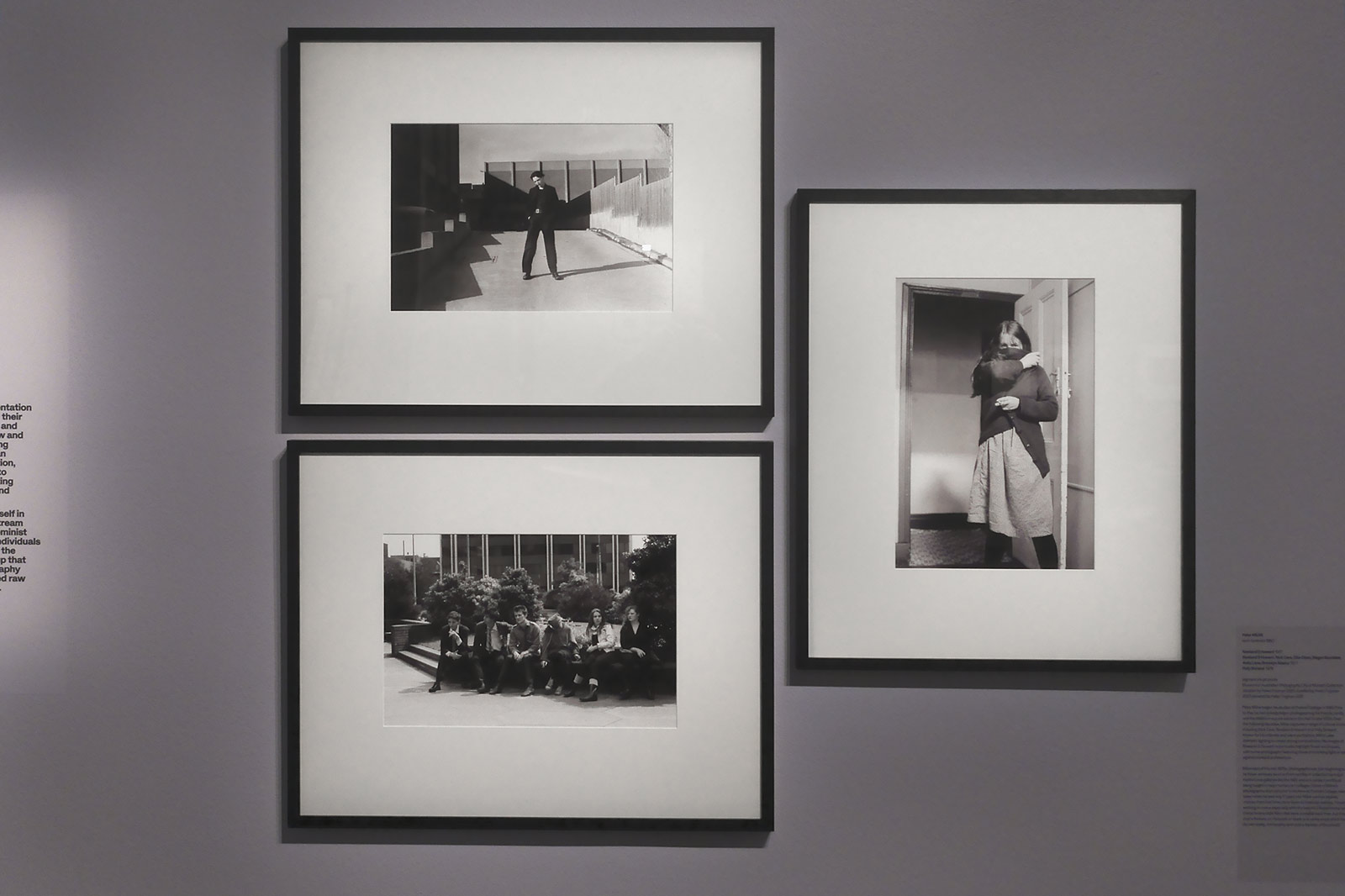
Installation view of the exhibition 'The basement: photography from Prahran College (1968-1981)' at the Museum of Australian Photography, Wheelers Hill, Melbourne showing Peter Milne's photographs from top clockwise, 'Rowland S Howard' 1977; 'Polly Borland' 1979; and 'Rowland S Howard, Nick Cave, Ollie Olsen, Megan Bannister, Anita Lane, Bronwyn Adams' 1977


Installation view of the exhibition The basement: photography from Prahran College (1968-1981) at the Museum of Australian Photography, Wheelers Hill, Melbourne showing Peter Milne’s photographs from top clockwise, Rowland S Howard 1977; Polly Borland 1979; and Rowland S Howard, Nick Cave, Ollie Olsen, Megan Bannister, Anita Lane, Bronwyn Adams 1977
Photo: Marcus Bunyan


Peter Milne (Australian, b. 1960)
'Rowland S Howard' 1977 (installation view)


Peter Milne (Australian, b. 1960)
Rowland S Howard (installation view)
1977
Pigment inkjet print
Museum of Australian Photography, City of Monash Collection donated by Helen Frajman 2023
Photo: Marcus Bunyan


Peter Milne began his studies at Prahran College in 1980. Prior to this, he had already begun photographing his friends, family, and the Melbourne punk scene in the mid-to late 1970s. Over the following decades, Milne captured a range of cultural icons, including Nick Cave, Rowland S Howard and Polly Borland. Known for his intimate and warm portraiture, Milne uses dramatic lighting to create strong compositions. His images of Rowland S Howard, in particular, highlight these techniques, with some photographs featuring Howard in striking light or set against brutalist architecture.

Wall text from the exhibition

See the exhibition Juvenilia: Peter Milne at Strange Neighbour, Fitzroy, Melbourne February – March 2015


Peter Milne (Australian, b. 1960)
'Polly Borland' 1979


Peter Milne (Australian, b. 1960)
Polly Borland
1979
Pigment ink-jet print
48 x 32cm
Museum of Australian Photography, City of Monash Collection donated by Helen Frajman 2021


Installation view of the exhibition 'The basement: photography from Prahran College (1968-1981)' at the Museum of Australian Photography, Wheelers Hill, Melbourne showing portraits by Polly Borland from 1983


Installation view of the exhibition The basement: photography from Prahran College (1968-1981) at the Museum of Australian Photography, Wheelers Hill, Melbourne showing portraits by Polly Borland from 1983
Photo: Marcus Bunyan


Polly Borland (Australian, b. 1959)
'Dave' 1983, printed 2025 (installation view)


Polly Borland (Australian, b. 1959)
Dave (installation view)
1983, printed 2025
Silver dye bleach print
Collection of the artist
Photo: Marcus Bunyan
 

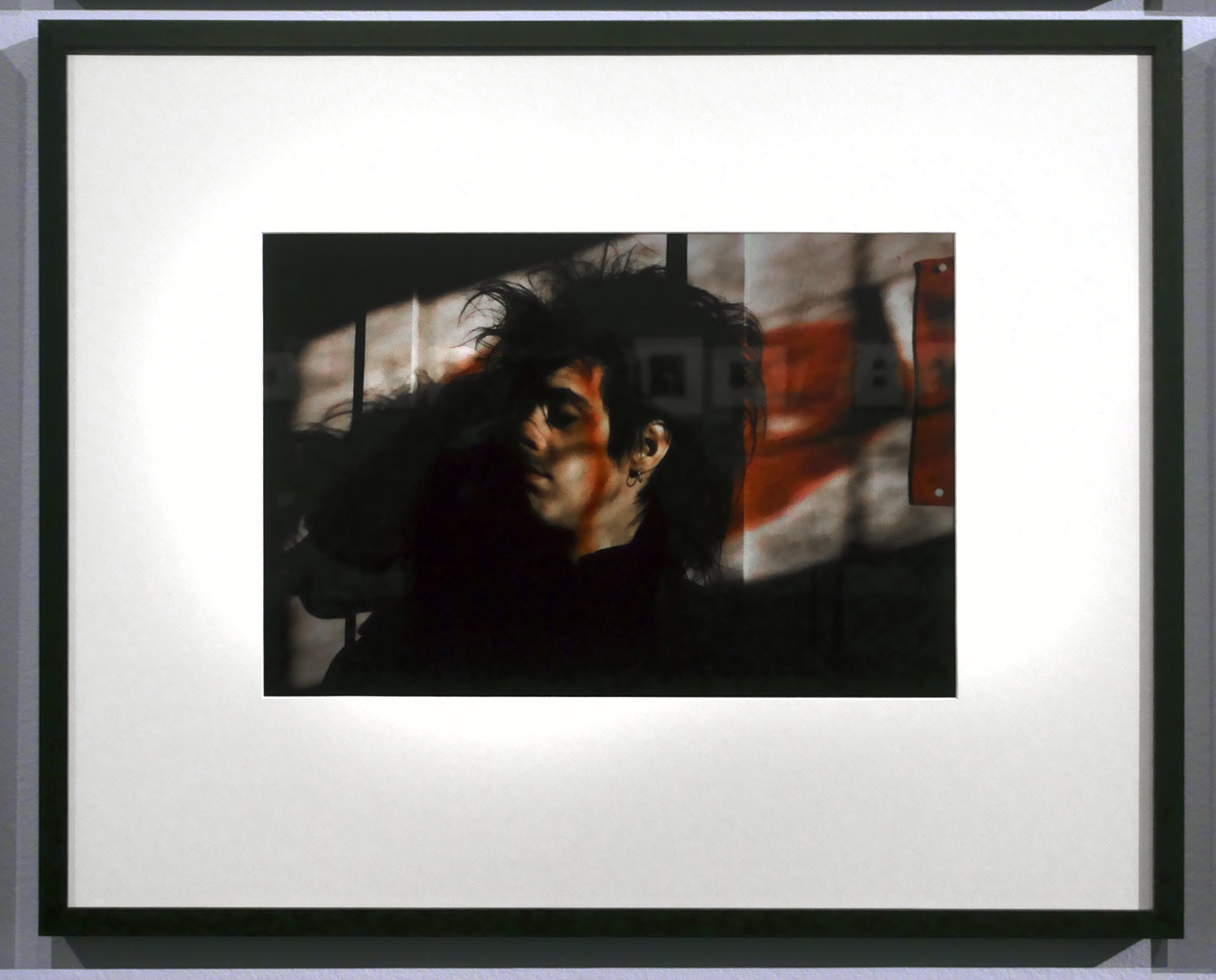
Polly Borland attended Prahran College between 1980 and 1983. Borland shot most of her student work, featured here, on Kodachrome. She shot the works in her Camberwell apartment with direct sunlight pouring through the window. Pieces of carefully placed cellophane on the window created coloured shadows across the subjects’ faces. …

Borland and Cave first began working together in the early 1980s after they met at a party in St Kilda in 1979. The image of Borland at the St Kilda party is documented by fellow friend Peter Milne. Borland’s formative photographs in the early 1980s were part of a new wave of experimental images that departed from renderings of ordinary life.

Wall text from the exhibition


Polly Borland (Australian, b. 1959) 'Nick' 1983, printed 2025 (installation view)


Polly Borland (Australian, b. 1959)
Nick (installation view)
1983, printed 2025
Silver dye bleach print
Museum of Australian Photography, City of Monash Collection acquired 2025
Photo: Marcus Bunyan


Polly Borland (Australian, b. 1959) 'Nick' 1983, printed 2025


Polly Borland (Australian, b. 1959)
Nick
1983, printed 2025
Silver dye bleach print
Museum of Australian Photography, City of Monash Collection acquired 2025


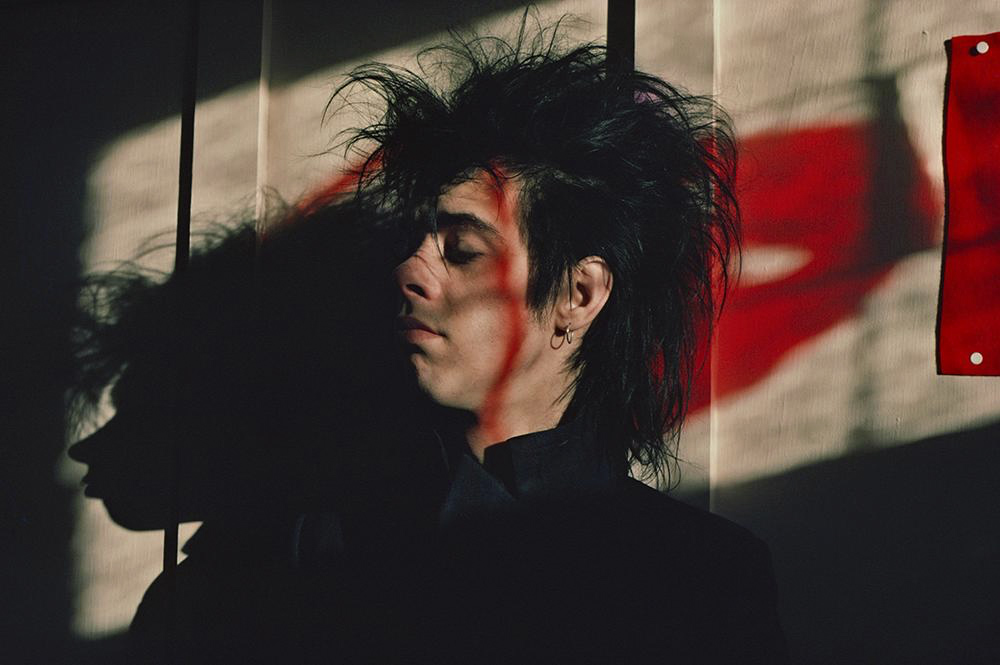
Polly Borland made this work during her student days at Prahran College where she studied between 1980 and 1983. Borland shot most of her student work on Kodachrome. Shot on Kodachrome, this work forms part of a series of portraits Borland made in her Camberwell apartment with direct sunlight pouring through the window. Pieces of carefully placed cellophane on the window created coloured shadows across the subjects’ faces. 

Borland’s images of Nick Cave from the 1980s and 1990s have become legendary. Often described as raw and intense, these images highlight the tension between the public persona of the famous musician and the more vulnerable, human side of the singer and artist. Borland and Cave first began working together in the early 1980s after they met at a party in St Kilda in 1979.

Text from the Museum of Australian Photography website


Installation view of the exhibition 'The basement: photography from Prahran College (1968-1981)' at the Museum of Australian Photography, Wheelers Hill, Melbourne showing from top left clockwise, Christopher Köller's photographs 'Past self portrait' 1980; 'Philip and Maria' 1981; 'Joe as a Russian soldier' 1980; and 'Bauhausler (homage to Oscar Schlemmer and August Sander)' 1980


Installation view of the exhibition The basement: photography from Prahran College (1968-1981) at the Museum of Australian Photography, Wheelers Hill, Melbourne showing from top left clockwise, Christopher Köller’s photographs Past self portrait 1980; Philip and Maria 1981; Joe as a Russian soldier 1980; and Bauhausler (homage to Oscar Schlemmer and August Sander) 1980
Photo: Marcus Bunyan


Christopher Köller (Australian born England, b. 1943) 'Past self-portrait' 1980


Christopher Köller (Australian born England, b. 1943)
Past self-portrait
1980
Gelatin silver print
23.0 x 24.0cm
Museum of Australian Photography, City of Monash Collection acquired 2024


Christopher Köller trained as a silk-screen printer before travelling extensively throughout the late 1960s and 1970s. Upon his return to Australia, Köller studied photography at Prahran college fromollege, graduating in 1980. Köller enrolled in Prahran with the intention of doing an expose on the conditions experienced by the miners of Bolivia as he had learnt about their plight while travelling in South America.

In his second year Köller stopped looking at photography books and started poring over the pages of art book, influenced by his now partner and historian Nanette Carter and lecturer Norbert Loeffler. Inspired by these teachings, Köller started to set up his images. His first self-portrait titled Past self portrait (1980) is an image of a young artist arriving at Station Pier, Melbourne with his passport in hand. It was part of a series of self-portraits that were shown at The Photographers’ Gallery and Workshop. Other works in this period were influenced by Russian Constructivism – particularly Vladimir Mayakovsky – and 1930s German avant-garde art. In another image, Köller’s subject, dressed in a shirt and tie, stand in front of an Oskar Schlemmer drawing, made by the artist.

Wall text from the exhibition

Christopher Köller alumni profile on the Prahran Legacy website


Christopher Köller (Australian born England, b. 1943) 'Joe as a Russian soldier' 1980 (installation view)


Christopher Köller (Australian born England, b. 1943)
Joe as a Russian soldier (installation view)
1980
Gelatin silver print
Museum of Australian Photography, City of Monash Collection acquired 2024
Photo: Marcus Bunyan


Christopher Köller (Australian born England, b. 1943) 'Joe as a Russian soldier' 1980


Christopher Köller (Australian born England, b. 1943)
Joe as a Russian soldier
1980
Gelatin silver print
Museum of Australian Photography, City of Monash Collection acquired 2024


Installation view of the exhibition 'The basement: photography from Prahran College (1968-1981)' at the Museum of Australian Photography, Wheelers Hill, Melbourne showing Nanette Carter's photographs 'Proof' 1979 and 'Newspaper' 1980


Installation view of the exhibition The basement: photography from Prahran College (1968-1981) at the Museum of Australian Photography, Wheelers Hill, Melbourne showing Nanette Carter’s photographs Proof 1979 and Newspaper 1980
Photo: Marcus Bunyan


Nanette Carter (Australian, b. 1954) 'Proof' 1979 (installation view)


Nanette Carter (Australian, b. 1954)
Proof (installation view)
1979
Gelatin silver print
Museum of Australian Photography, City of Monash Collection acquired 1981
Photo: Marcus Bunyan


Nanette Carter studied first-year photography at Prahran College in 1974 and then completed a diploma (1977) and post graduate diploma (1980) in fine art at the Phillip Institute of Technology, majoring in photography. Her practice explored feminist issues with autobiographical overtones, and she exhibited her work widely between 1981 and 1995. She ceased practising as a Photographer in the early 1990s to pursue her career as a lecturer in design history.

Carter’s image Proof (1979) is a striking self-portrait that reflects on the concept of identity and addresses the idea of photographic ‘proof’ in a multifaceted way. The word written across her face explores the proof of identity and the assertion of existence that photography claims. Newspaper (1980) utilities her partner Christopher Köller as subject. From early on in their relationship, Carter and Köller used each other as models.

Wall text from the exhibition

Nanette Carter alumni profile on the Prahran Legacy website


Nanette Carter (Australian, b. 1954)
'Proof' 1979


Nanette Carter (Australian, b. 1954)
Proof
1979
Gelatin silver print
Museum of Australian Photography, City of Monash Collection acquired 1981


Installation view of the exhibition 'The basement: photography from Prahran College (1968-1981)' at the Museum of Australian Photography, Wheelers Hill, Melbourne showing from left clockwise, Rod McNicol's photographs 'Nanette' 1978; 'Stewart' 1978; and 'Kent' 1978 from the series 'Permanent mirrors'


Installation view of the exhibition The basement: photography from Prahran College (1968-1981) at the Museum of Australian Photography, Wheelers Hill, Melbourne showing from left clockwise, Rod McNicol’s photographs Nanette 1978; Stewart 1978; and Kent 1978 from the series Permanent mirrors
Photo: Marcus Bunyan


Rod McNicol (Australian, b. 1946)
'Nanette' 1978 (installation view)


Rod McNicol (Australian, b. 1946)
Nanette (installation view)
1978
From the series Permanent mirrors
Gelatin silver print
Museum of Australian Photography, City of Monash Collection donated 2024
Photo: Marcus Bunyan


Rod McNicol (Australian, b. 1946) 'Nanette' 1978 from the series 'Permanent mirrors'


Rod McNicol (Australian, b. 1946)
Nanette
1978
From the series Permanent mirrors
Gelatin silver print
Museum of Australian Photography, City of Monash Collection donated 2024


Rod McNicol has been drawn to portraiture ever since he attended Prahran College in 1974. His fellow classmates included Nanette Carter and Bill Henson, and he formed a close connection with Athol Shmith, who would become, in McNicol’s words, ‘a lifelong mentor and friend’. McNicol held his first exhibition and Brummels Gallery of Photography with Carol Jerrems, where he exhibited works from his Permanent mirrors series. This exhibition marked a transition to what McNicol would call his structured approach to portraiture. In the image Nanette, McNicol made a makeshift studio on Paul Cox’s front veranda and placed Carter against a neutral backdrop.

In late 1978, McNicol moved into his warehouse apartment on Smith Street, Fitzroy. Since this move, he has incorporated this space into his work and it has become an important component, both as a location and as an aesthetic context.

Wall text from the exhibition

Rod McNicol alumni profile on the Prahran Legacy website


Rod McNicol (Australian, b. 1946)
'Kent' 1978 (installation view)


Rod McNicol (Australian, b. 1946)
Kent (installation view)
1978
From the series Permanent mirrors
Gelatin silver print
Museum of Australian Photography, City of Monash Collection acquired 2013
Photo: Marcus Bunyan


Rod McNicol’s series of portraits Permanent mirrors grew out of his interest in nineteenth-century photographic portraiture, whereby the slow exposure times necessitated what he calls a ‘gauche, self-conscious, fatalist stare’. For McNicol, these portraits carried the ‘spectre of mortality itself’. The environmental portraits that make up his Permanent mirrors series embody many of the formal attributes of nineteenth-century portraiture that appealed to him, insofar as the sitters are seated in highly static poses, staring directly and blankly at the camera. Soon after, McNicol introduced a range of highly significant formal changes to his portraits, whereby sitters were photographed on a kitchen chair against a plain, neutral background in the artist’s Fitzroy studio. McNicol continues to photograph people from his neighbourhood in this way.

Text from the Museum of Australian Photography website


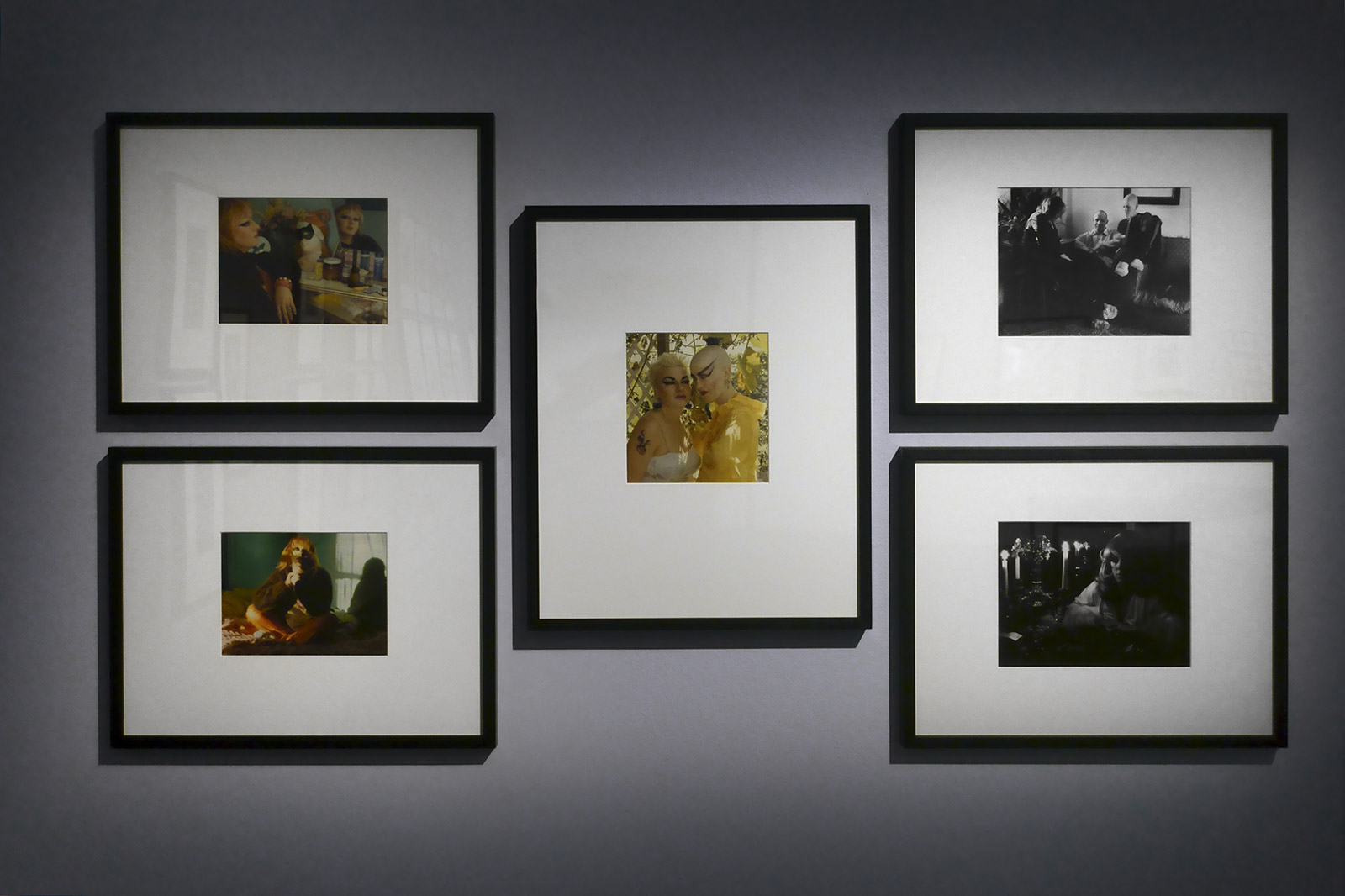
Installation view of the exhibition 'The basement: photography from Prahran College (1968-1981)' at the Museum of Australian Photography, Wheelers Hill, Melbourne showing from left top to bottom, Stella Sallman's photographs 'Sue at the mirror' 1977; 'Sue on the bed' 1977; 'Sue and Carmen' 1978; 'Sue, Simon and Carmen' 1977; 'Beautiful transvestite' 1975


Installation view of the exhibition The basement: photography from Prahran College (1968-1981) at the Museum of Australian Photography, Wheelers Hill, Melbourne showing from left top to bottom, Stella Sallman’s photographs Sue at the mirror 1977; Sue on the bed 1977; Sue and Carmen 1978; Sue, Simon and Carmen 1977; Beautiful transvestite 1975
Photo: Marcus Bunyan


Stella Sallman (Australian, b. 1956)
'Sue and Carmen' 1978 (installation view)


Stella Sallman (Australian, b. 1956)
Sue and Carmen (installation view)
1978
Chromogenic print
Museum of Australian Photography, City of Monash Collection acquired 2025
Photo: Marcus Bunyan


Stella Sallman attended Prahran College from 1976 to 1978. She had originally planned to study fashion design at RMIT, but she was unable pursue the course because she didn’t have a folio. Instead, after completing the preliminary year in Art and Design at Prahran College, she discovered a deep fascination with photography.

Sallman was invited by Rennie Ellis to exhibit her series of glam punks, which she started in her second year, at Brummels Gallery of Photography in 1978, as a support for fellow photographer Jon Rhodes. She said, ‘Rennie came and did some lectures at Prahran. I found him very inspiring because he wasn’t about things looking technically correct.’ He was also brimming with ‘exuberant enthusiastic positive energy.’ The 13 works exhibited at Brummels were portraits of people that Sallman had encountered. Sallman had seen Sue whilst travelling on a train and asked if she could take her portrait. ‘I was very curious about people that didn’t conform.’ In Sallman’s images, she uses colour to emphasise the personality and mood of her subjects, challenging the more traditional, formal portraiture that had prevailed at the time.

Wall text from the exhibition

Stella Sallman alumni profile on the Prahran Legacy website


Gallery two section two (clockwise)


Installation view of the exhibition 'The basement: photography from Prahran College (1968-1981)' at the Museum of Australian Photography, Wheelers Hill, Melbourne
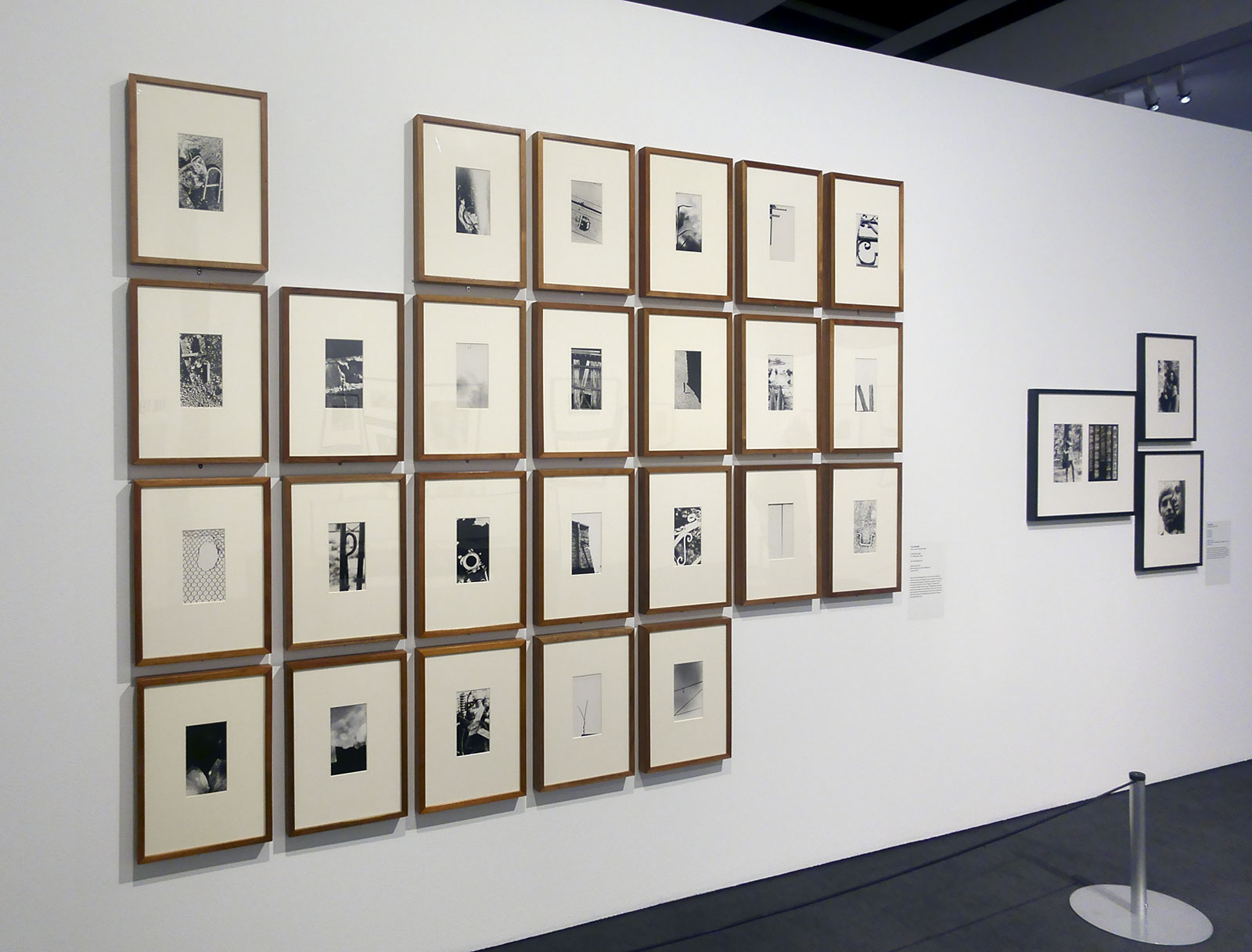
Installation view of the exhibition 'The basement: photography from Prahran College (1968-1981)' at the Museum of Australian Photography, Wheelers Hill, Melbourne showing at left, Carol Jerrems 'Alphabet folio' 1968 dated 1969


Installation view of the exhibition The basement: photography from Prahran College (1968-1981) at the Museum of Australian Photography, Wheelers Hill, Melbourne showing at left, Carol Jerrems Alphabet folio 1968 dated 1969
Photos: Marcus Bunyan


Carol Jerrems (Australian, 1949-1980) Letter from the 'Alphabet folio' 1968 dated 1969 (installation view)


Carol Jerrems (Australian, 1949-1980)
Letters from the Alphabet folio (installation views)
1968 dated 1969
Gelatin silver print
National Gallery of Victoria, Melbourne
Purchased 1971
Photos: Marcus Bunyan


Carol Jerrem’s Alphabet folio is one of her most celebrated and iconic works, and it holds an important place in the history of Australian photography, Created as an assignment during her time as a student at Prahran College, the Alphabet folio consists of 25 letters, with the letter ‘S’ deliberately omitted by Jerrems. The assignment left a lasting impression on Jerrems, as she regularly set this assignment for her own students when she was teaching at the Heidelberg Technical School and the Tasmania School of Art.

Wall text from the exhibition

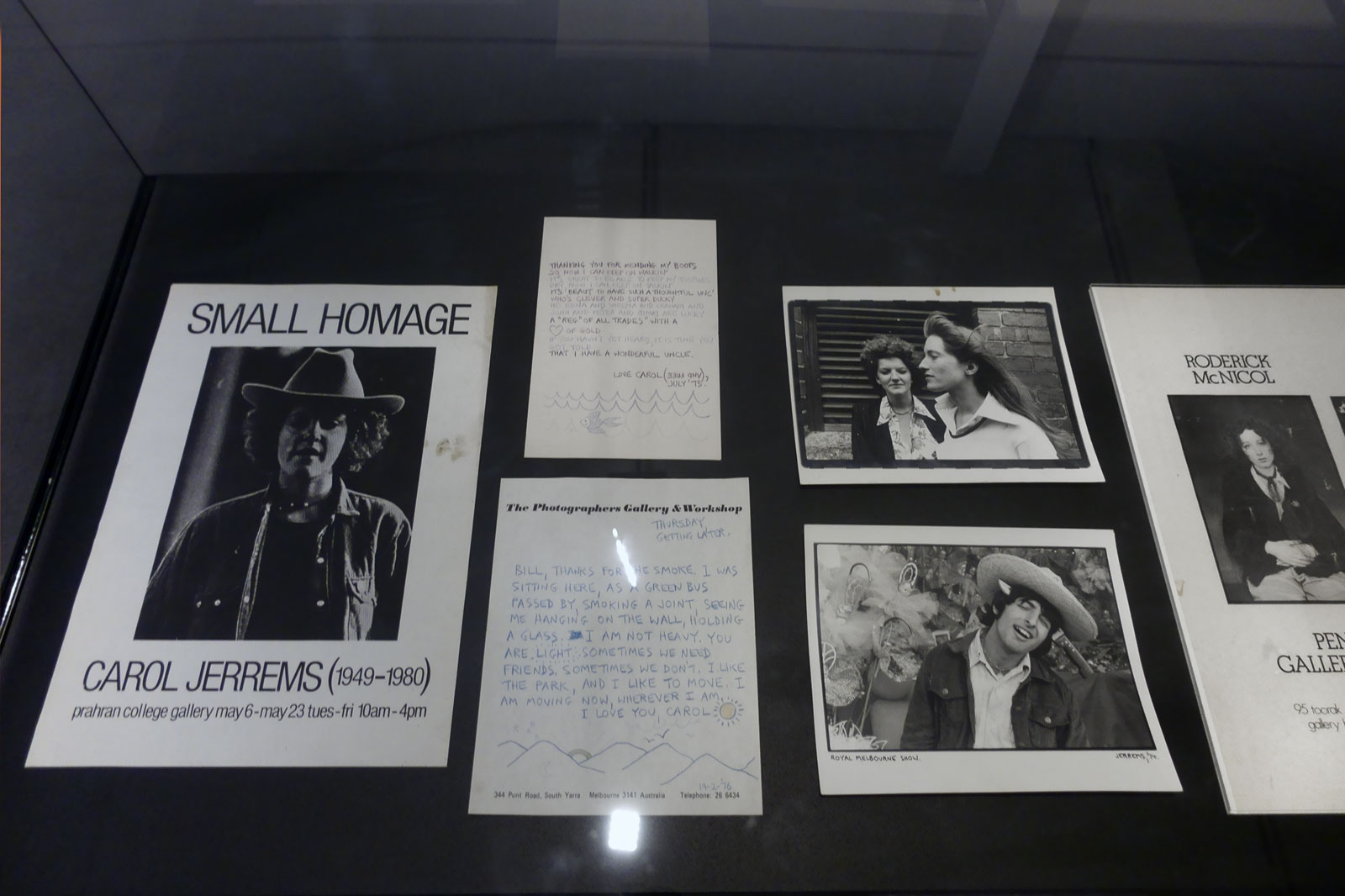
Carol Jerrems studied at Prahran College between 1967-1969 and graduated in 1970, studying under lecturers McKenzie, Cox, and Lee.

Carol Jerrems alumni profile on the Prahran Legacy website


Installation view of the exhibition 'The basement: photography from Prahran College (1968-1981)' at the Museum of Australian Photography, Wheelers Hill, Melbourne


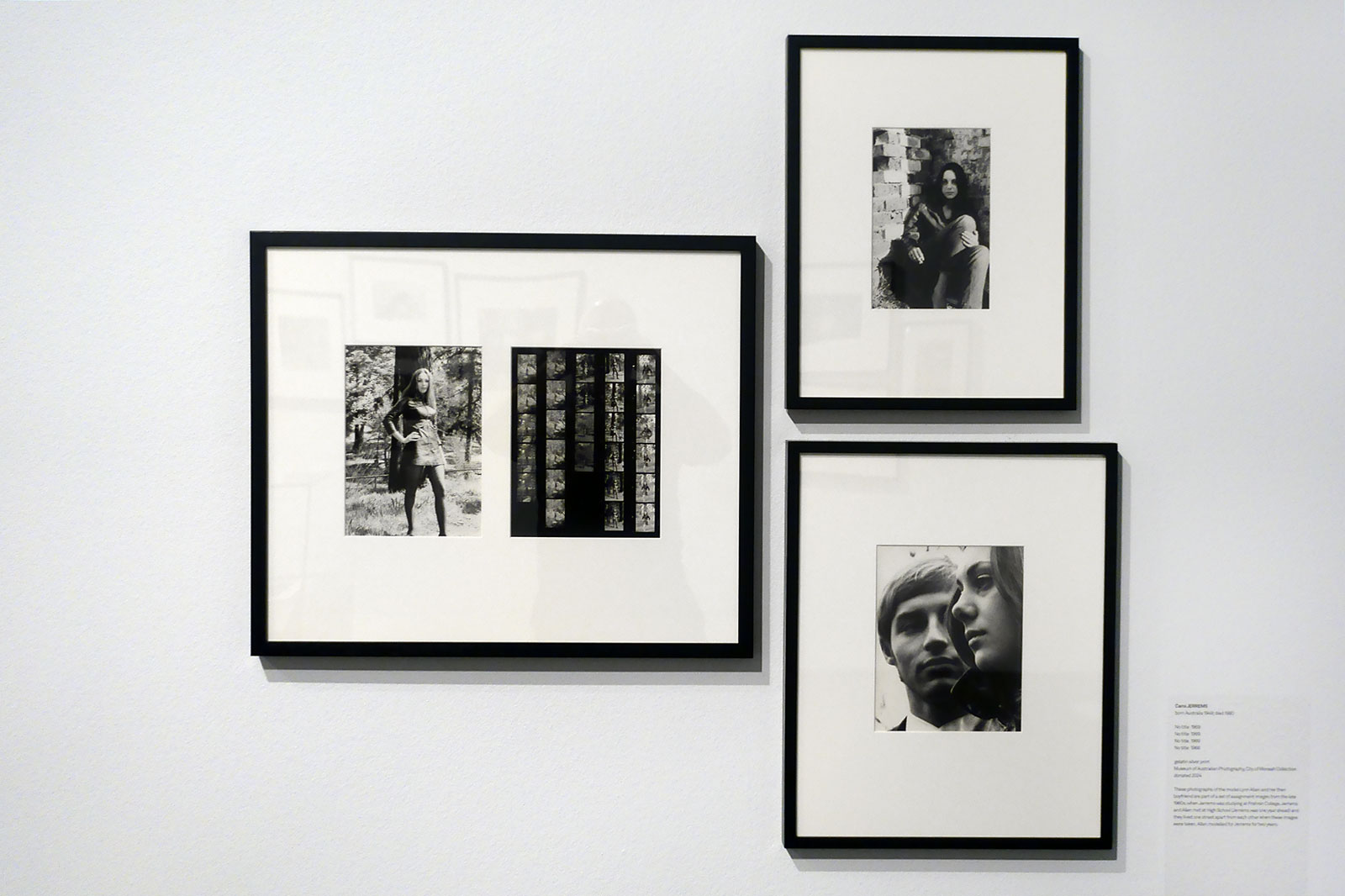
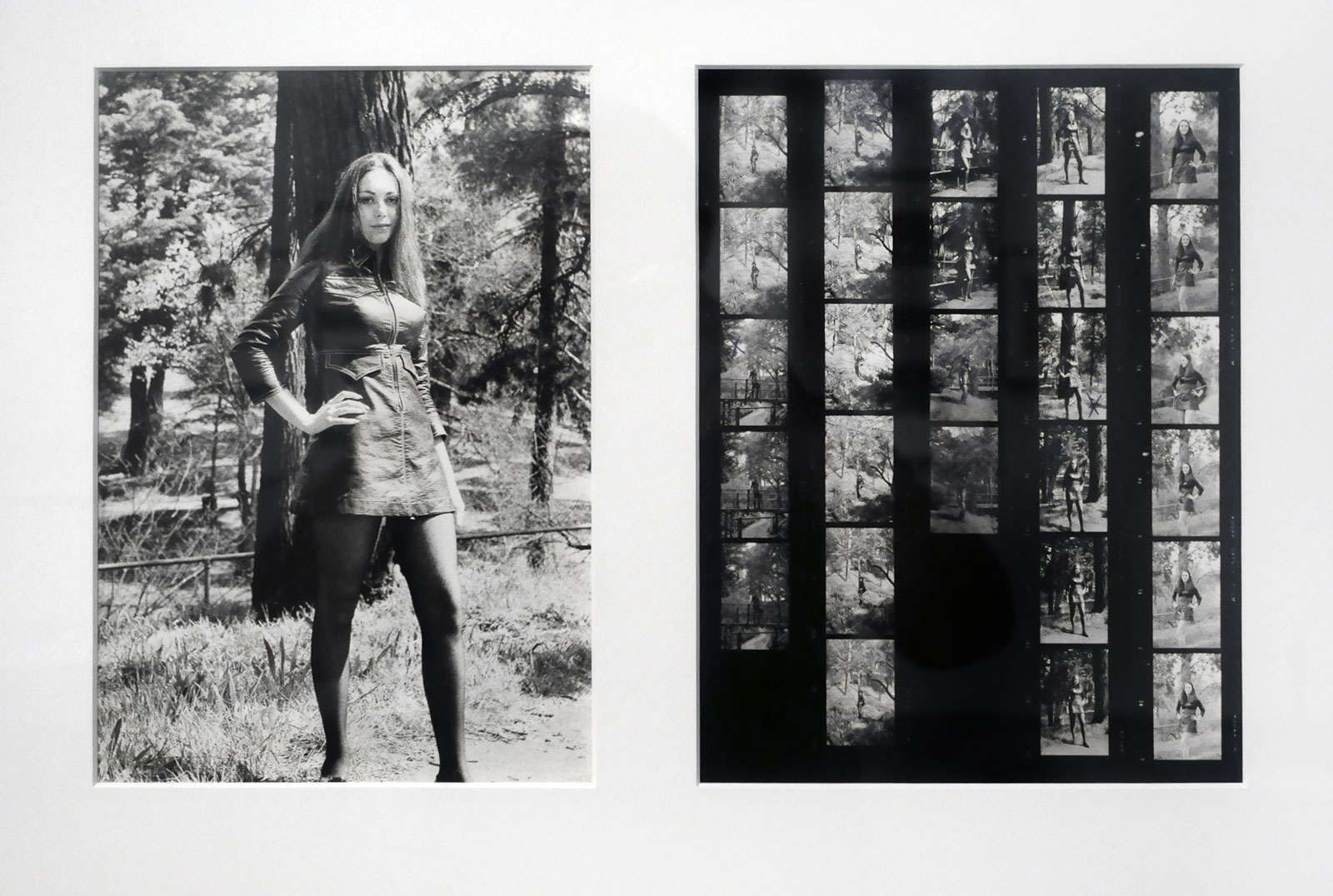
Installation view of the exhibition The basement: photography from Prahran College (1968-1981) at the Museum of Australian Photography, Wheelers Hill, Melbourne showing Carol Jerrems’ No title photographs 1968/1969
Photos: Marcus Bunyan


These photographs of the model Lynn Allen and her then boyfriend are part of a set of assignment images from the late 1960s, when Jerrems was studying at Prahran College. Jerrems and Allen met at High School (Jerrems was one year ahead) and they lived one street apart from each other when these images were taken. Allen modelled for Jerrems for two years.

Wall text from the exhibition


Carol Jerrems (Australian, 1949-1980) 'No title' 1969; 'No title' 1969 (installation view)


Carol Jerrems (Australian, 1949-1980)
No title (installation view)
1969
No title (installation view)
1969
Gelatin silver print
Museum of Australian Photography, City of Monash Collection donated 2024
Photo: Marcus Bunyan


Carol Jerrems (Australian, 1949-1980) 'No title' 1969 (installation view)


Carol Jerrems (Australian, 1949-1980)
No title (installation view)
1969
Gelatin silver print
Museum of Australian Photography, City of Monash Collection donated 2024
Photo: Marcus Bunyan


Installation view of the exhibition 'The basement: photography from Prahran College (1968-1981)' at the Museum of Australian Photography, Wheelers Hill, Melbourne showing photographs by Carol Jerrems


Installation view of the exhibition The basement: photography from Prahran College (1968-1981) at the Museum of Australian Photography, Wheelers Hill, Melbourne showing photographs by Carol Jerrems
Photo: Marcus Bunyan


Installation view of the exhibition 'The basement: photography from Prahran College (1968-1981)' at the Museum of Australian Photography, Wheelers Hill, Melbourne


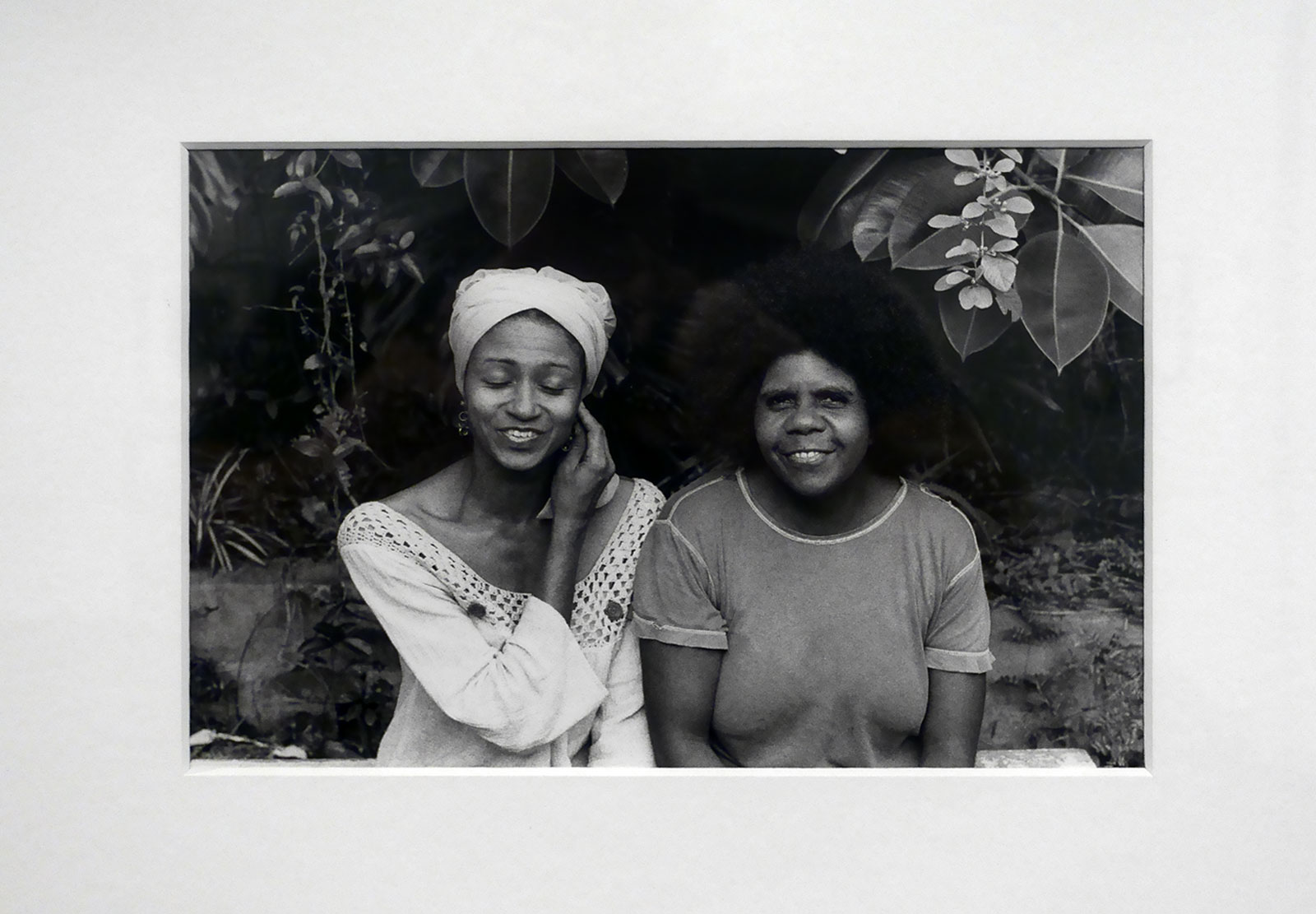
Installation view of the exhibition The basement: photography from Prahran College (1968-1981) at the Museum of Australian Photography, Wheelers Hill, Melbourne showing Carol Jerrems’ photographs at left top, Kath Walker 1974; at bottom left, Thancouple (Gloria Fletcher) and Carole Johnson 1974; and at right, Ron Johnson 1974
Photo: Marcus Bunyan


Carol Jerrems (Australian, 1949-1980) 'Thancouple (Gloria Fletcher) and Carole Johnson' 1974 (installation view)


Carol Jerrems (Australian, 1949-1980)
Thancouple (Gloria Fletcher) and Carole Johnson (installation view)
1974
Gelatin silver print
National Gallery of Australia, Canberra
Gift of Mrs Joy Jerrems 1981
Photo: Marcus Bunyan


Carol Jerrems (Australian, 1949-1980) 'Ron Johnson' 1974


Carol Jerrems (Australian, 1949-1980)
Ron Johnson
1974
Gelatin silver print
Museum of Australia Photography, City of Monash Collection donated through the Australian Government’s Cultural Gifts Program 2015
Photo: Marcus Bunyan


Installation view of the exhibition 'The basement: photography from Prahran College (1968-1981)' at the Museum of Australian Photography, Wheelers Hill, Melbourne


Installation view of the exhibition The basement: photography from Prahran College (1968-1981) at the Museum of Australian Photography, Wheelers Hill, Melbourne showing Carol Jerrem’s photographs at left, Esoteric personal (mini) recent exhibition 1976; at top right, Vale Street 1975; at bottom right, Juliet holding ‘Vale Street’ at Murray Road 1976
Photo: Marcus Bunyan


Carol Jerrems (Australian, 1949-1980) 'Esoteric personal (mini) recent exhibition' 1976 (installation view)


Carol Jerrems (Australian, 1949-1980)
Esoteric personal (mini) recent exhibition (installation view)
1976
Gelatin silver prints
Private collection
Photo: Marcus Bunyan
 

Carol Jerrems (Australian, 1949-1980) 'Vale Street' 1975 (installation view)


Carol Jerrems (Australian, 1949-1980)
Vale Street (installation view)
1975
Gelatin silver print
Museum of Australia Photography, City of Monash Collection donated through the Australian Government’s Cultural Gifts Program by Susan Hesse 2012
Photo: Marcus Bunyan


Carol Jerrems (Australian, 1949-1980) 'Vale Street' 1975


Carol Jerrems (Australian, 1949-1980)
Vale Street
1975
Gelatin silver print
Museum of Australia Photography, City of Monash Collection donated through the Australian Government’s Cultural Gifts Program by Susan Hesse 2012


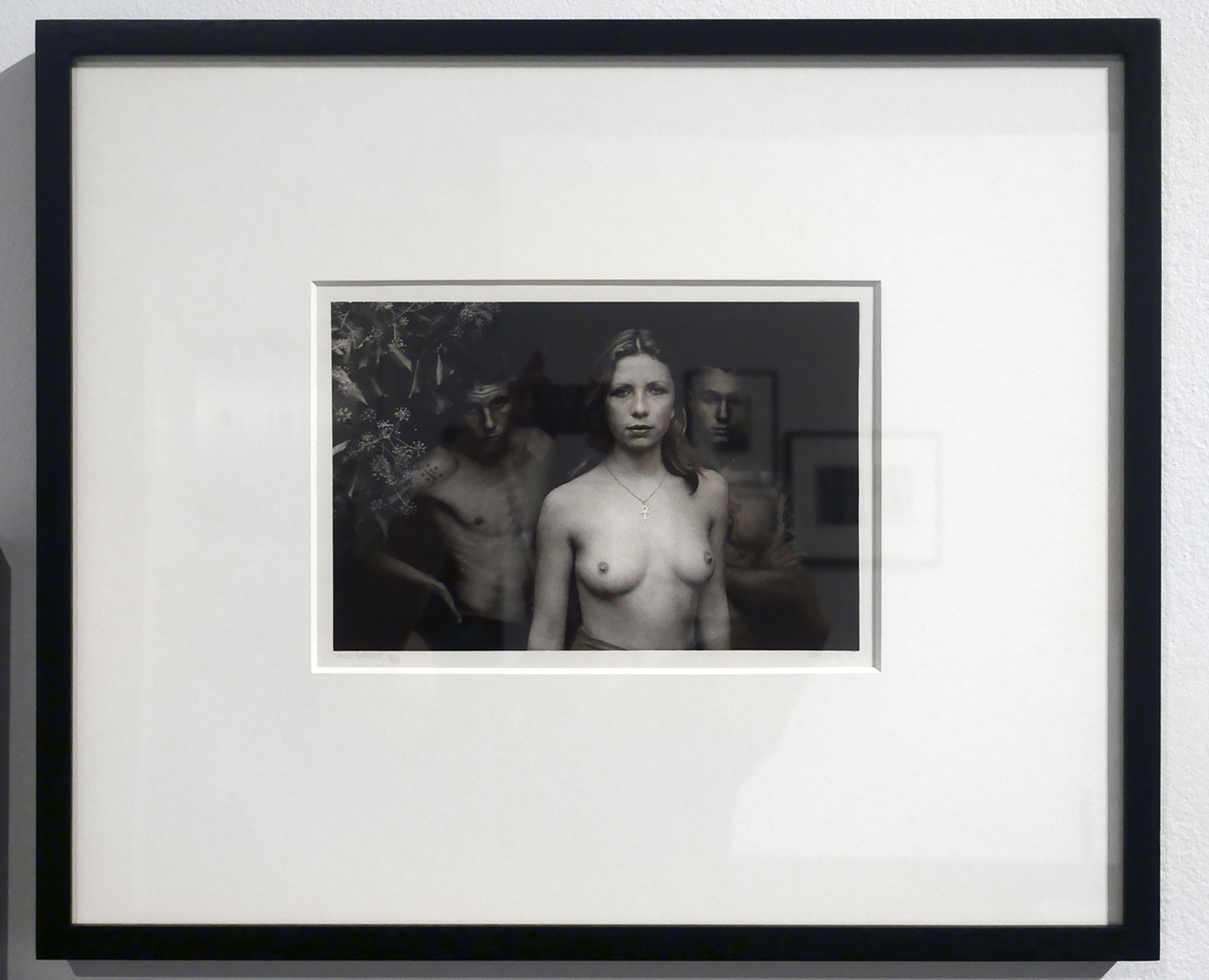
In 1975, Carol Jerrems made what would become her most famous photograph. Vale Street shows Jerrem’s friend Catriona Brown standing in front of Mark Lean and Jon Bourke, teenage boys from Heidelberg Technical School where Jerrems was teaching at the time. The photograph, taken in the back yard of a house at 52 Vale Street, St Kilda, comes from a series of pictures that show the three subjects socialising, smoking and, under the direction of Jerrems, gradually disrobing. Jerrems carefully set up and managed this no-iconic image, which quickly came to personify the optimism and ambitions of countercultural and feminist politics at the time

Wall text from the exhibition


Installation view of the exhibition 'The basement: photography from Prahran College (1968-1981)' at the Museum of Australian Photography, Wheelers Hill, Melbourne showing photographs by Carol Jerrems (left) and Paul Cox (centre)


Installation view of the exhibition The basement: photography from Prahran College (1968-1981) at the Museum of Australian Photography, Wheelers Hill, Melbourne showing photographs by Carol Jerrems (left) and Paul Cox (centre)
Photo: Marcus Bunyan


Installation view of the exhibition 'The basement: photography from Prahran College (1968-1981)' at the Museum of Australian Photography, Wheelers Hill, Melbourne


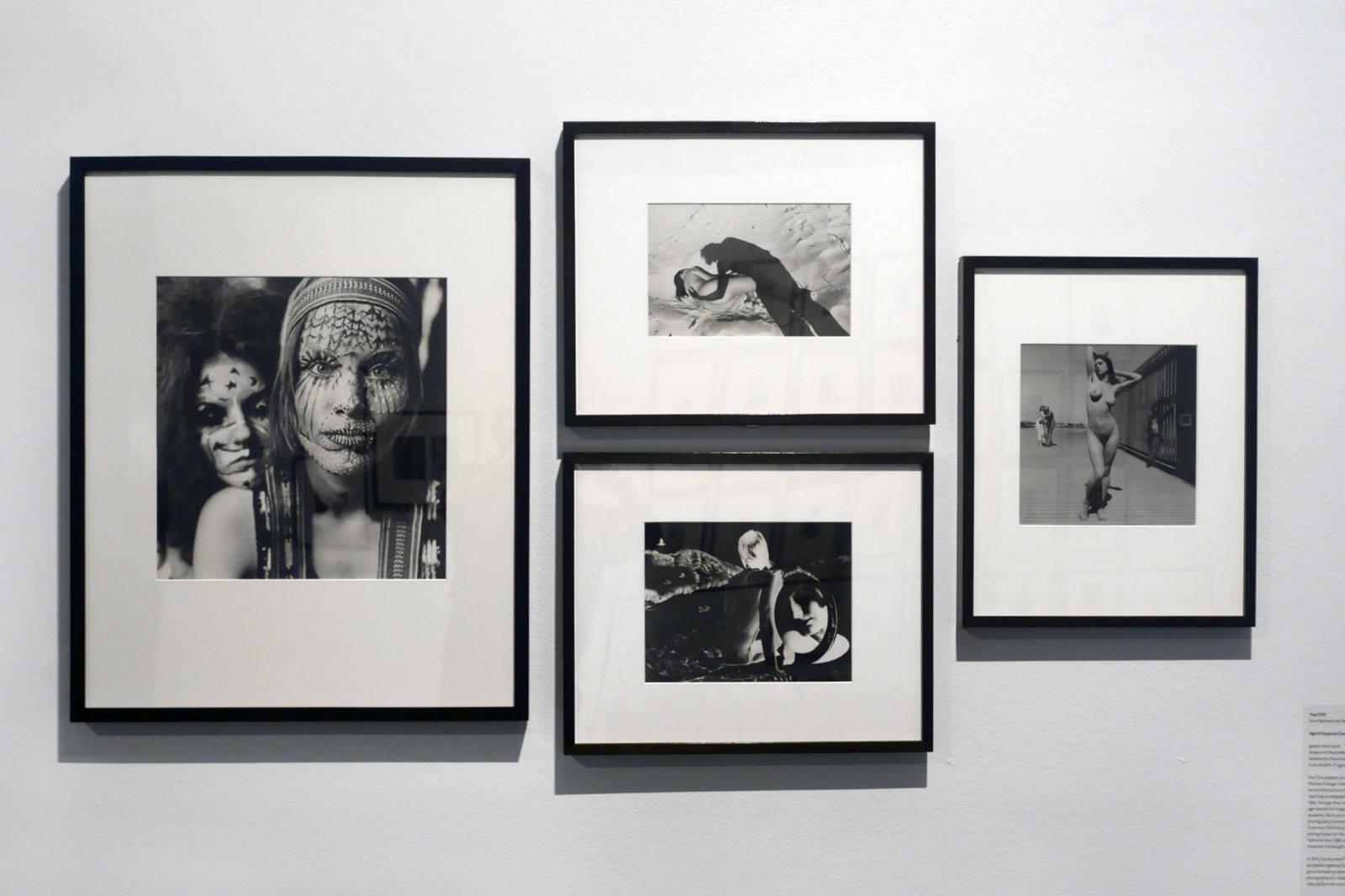
Installation view of the exhibition The basement: photography from Prahran College (1968-1981) at the Museum of Australian Photography, Wheelers Hill, Melbourne showing Paul Cox’s photographs with at left, Age of Aquarius (Carol Jerrems, Jan Hurrell) 1970; at centre top, Elizabeth 1 1972; at centre bottom, Fantasy of divine illusion 1972; and at right, Prahran 2 1974
Photo: Marcus Bunyan


Paul Cox (Australian born Netherlands, 1940-2016) 'Age of Aquarius (Carol Jerrems, Jan Hurrell)' 1970 (installation view)


Paul Cox (Australian born Netherlands, 1940-2016)
Age of Aquarius (Carol Jerrems, Jan Hurrell)
1970
Gelatin silver print
Museum of Australia Photography, City of Monash Collection donated by the artist through the Australian Government’s Cultural Gifts Program
Photo: Marcus Bunyan


Paul Cox played a pivotal role in the Photography Department at Prharan College, initially appointed part-time in February 1968, he transitioned to full-time position in 1970 and continued teaching photography and filmmaking until his departure in 1982. Younger than colleagues such as Cato and Shmith, Cox’s age helped him forge strong, personal connections with his students. Many alumni attribute their exposure to international photography luminaries to Cox’s influence. However, it was Cox’s own distinctive approach to photography that left a lasting impact on his students. Cox moved to Australia from the Netherlands in 1965 and although he was not formally trained as a teacher, he brought with him a European sensibility.

In 1973, Cox founded The Photographers’ Gallery and Workshop, alongside Ingeborg Tyssen, John F William and Rod McNicol, a groundbreaking space that played a crucial role in establishing photography as a respected art form in Australia and provided a vital platform for contemporary photographers.

Wall text from the exhibition

Paul Cox on the Prahran Legacy website


Paul Cox (Australian born Netherlands, 1940-2016) 'Age of Aquarius (Carol Jerrems, Jan Hurrell)' 1970


Paul Cox (Australian born Netherlands, 1940-2016)
Age of Aquarius (Carol Jerrems, Jan Hurrell)
1970
Gelatin silver print
Museum of Australia Photography, City of Monash Collection donated by the artist through the Australian Government’s Cultural Gifts Program


Paul Cox (Australian born Netherlands, 1940-2016) 'Fantasy of divine illusion' 1972 (installation view)


Paul Cox (Australian born Netherlands, 1940-2016)
Fantasy of divine illusion (installation view)
1972
Gelatin silver print
Museum of Australia Photography, City of Monash Collection donated by the artist through the Australian Government’s Cultural Gifts Program
Photo: Marcus Bunyan


Paul Cox (Australian born Netherlands, 1940-2016) 'Prahran 2' 1974 (installation view)


Paul Cox (Australian born Netherlands, 1940-2016)
Prahran 2 (installation view)
1974
Gelatin silver print
Museum of Australia Photography, City of Monash Collection donated by the artist through the Australian Government’s Cultural Gifts Program
Photo: Marcus Bunyan


Wall text from the exhibition 'The basement: photography from Prahran College (1968-1981)' at the Museum of Australian Photography, Wheelers Hill, Melbourne


Wall text from the exhibition The basement: photography from Prahran College (1968-1981) at the Museum of Australian Photography, Wheelers Hill, Melbourne
Photo: Marcus Bunyan


Installation view of the exhibition 'The basement: photography from Prahran College (1968-1981)' at the Museum of Australian Photography, Wheelers Hill, Melbourne showing a poster for an exhibition by Tod McNicol and Carol Jerrems at Brummels Gallery of Photography, August - September 1978
Installation view of the exhibition 'The basement: photography from Prahran College (1968-1981)' at the Museum of Australian Photography, Wheelers Hill, Melbourne two letters from Carol Jerrems including at bottom a letter to William (Bill) Heimerman (1950-2017) co-director at the time of The Photographers' Gallery and Workshop
Installation view of the exhibition 'The basement: photography from Prahran College (1968-1981)' at the Museum of Australian Photography, Wheelers Hill, Melbourne


Installation views of the exhibition The basement: photography from Prahran College (1968-1981) at the Museum of Australian Photography, Wheelers Hill, Melbourne with artefacts in a vitrine, showing a poster for an exhibition by Tod McNicol and Carol Jerrems at Brummels Gallery of Photography, August – September 1978; two letters from Carol Jerrems including at bottom a letter to William (Bill) Heimerman (1950-2017) co-director at the time of The Photographers’ Gallery and Workshop; and two gelatin silver prints by Carol Jerrems
Photos: Marcus Bunyan


Installation view of the exhibition 'The basement: photography from Prahran College (1968-1981)' at the Museum of Australian Photography, Wheelers Hill, Melbourne showing at centre, work by John Cato


Installation view of the exhibition The basement: photography from Prahran College (1968-1981) at the Museum of Australian Photography, Wheelers Hill, Melbourne showing at far left a photograph by Paul Cox, at second and third left photographs by Athol Shmith and at centre, photographs by John Cato
Photo: Marcus Bunyan


Installation view of the exhibition 'The basement: photography from Prahran College (1968-1981)' at the Museum of Australian Photography, Wheelers Hill, Melbourne


Installation view of the exhibition The basement: photography from Prahran College (1968-1981) at the Museum of Australian Photography, Wheelers Hill, Melbourne showing at left, Paul Cox’s Portrait of Athol Shmith 2 1983; and at right, Athol Shmith’s Anamorphic image No. 17 and Anamorphic image No. 1 both 1973
Photo: Marcus Bunyan


Athol Shmith is widely known for his commercial portraiture and fashion photography. His style became emblematic of an era that was transitioning from the more formal rigid photographic style of the early 20th century to something more dramatic. His portraits are highly polished, sophisticated and capture the essence of the post-war era’s glamour.

Shmith’s sale was characterised by a strong focus on lighting and composition, often using dramatic lighting setups to create bold, striking images. As Head of the Photography Department from 1972 to 1979 Art Prahran College, Shmith brought a high level of technical expertise.

Shmith created his Anamorphic series while teaching at Prahran College, and exhibited the series at Realities Gallery in 1973. Student Suzanne Budds recalls being a model for one of the images in this series.

Wall text from the exhibition

Athol Shmith Lecturer profile on the Prahran Legacy website


Paul Cox (Australian born Netherlands, 1940-2016) 'Portrait of Athol Shmith 2' 1983 (installation view)


Paul Cox (Australian born Netherlands, 1940-2016)
Portrait of Athol Shmith 2 (installation view)
1983
Gelatin silver print
Museum of Australia Photography, City of Monash Collection donated by the artist through the Australian Government’s Cultural Gifts Program 2000
Photo: Marcus Bunyan


Installation view of the exhibition 'The basement: photography from Prahran College (1968-1981)' at the Museum of Australian Photography, Wheelers Hill, Melbourne showing from left, John Cato's photographs 'Seawind' 1871-1975; 'Tree - a journey' 1971-1973; and 'Tree - a journey #13' 1971-1973 from the series 'Essay I: landscape in a figure' 1971-1979


Installation view of the exhibition The basement: photography from Prahran College (1968-1981) at the Museum of Australian Photography, Wheelers Hill, Melbourne showing from left, John Cato’s photographs Seawind 1871-1975; Tree – a journey 1971-1973; and Tree – a journey #13 1971-1973 from the series Essay I: landscape in a figure 1971-1979
Photo: Marcus Bunyan


John Cato (Australian, 1926-2011) 'Tree - a journey' 1971-1973 (installation view)


John Cato (Australian, 1926-2011)
Tree – a journey (installation views)
1971-1973
Gelatin silver print
Museum of Australian Photography, City of Monash Collection donated by the Cato Estate 2021


John Cato (Australian, 1926-2011) 'Tree - a journey' 1971-1973


John Cato (Australian, 1926-2011)
Tree – a journey
1971-1973
Gelatin silver print
Museum of Australian Photography, City of Monash Collection donated by the Cato Estate 2021


John Cato began his informal studies in photography with his father, the photographer Jack Cato, in 1938. He worked as a commercial photographer from 1947 to 1974, including a notable stint as a press photographer for The Argus from 1947 to 1950. Over the course of his career, Cato collaborated with Athol Shmith for more than two decades, before shifting away from commercial photography in 1974 to focus on his own fine art practice. That same year, Cato also embarked on his career as a photography educator, taking a teaching position at Prahran College, eventually succeeding Shmith as Head of the Photography Department in 1980.

Cato was known for his mystical and spiritual approach to photography, a philosophy that deeply influenced both his teaching style and his own photographic work. His method was unconventional, emphasising not just technical skill, but the creation of images with a deeper, almost transcendent resonance. Many of Cato’s works are minimalist, capturing quiet, still moments in nature, where form and texture take precedence over literal representation. These images often have an abstract quality, inviting the viewer to engage with the landscape on a more introspective, emotional level. Cato’s photography was not just about capturing a scene, it was about evoking a deeper connection to the transformative power of the natural world.

Wall text from the exhibition

Read my Vale to Dr John Cato (1926-2011)

John Cato on the Prahran Legacy website


John Cato (Australian, 1926-2011) 'Tree - a journey #13' 1971-1973 (installation view)


John Cato (Australian, 1926-2011)
Tree – a journey #13 (installation views)
1971-1973
Gelatin silver print
Museum of Australian Photography, City of Monash Collection donated by the artist
Acquired 1981


John Cato (Australian, 1926-2011) 'Tree - a journey #13' 1971-1973


John Cato (Australian, 1926-2011)
Tree – a journey #13
1971-1973
Gelatin silver print
Museum of Australian Photography, City of Monash Collection donated by the artist
Acquired 1981


“Thanks are due to…. Phil Quirk, Peter Leiss, and the now deceased Jon Conte, who started finding alumni (starting with those of 1968-1972) in 2012; Colin Abbott who encouraged Photonet gallery (now MAGNET) in 2014 to put on a show of 1 sample each of student-era and contemporary work of most of the 1974-1976 cohort; Colin has generously part-funded the book that MAPh has produced; designer and archivist Mimmo Cozzolino has contributed beautifully preserved ephemera from his College years, as well as donating his design skills to the ongoing project. Peter Leiss, assisted by Nicholas Nedelkopoulos, produced fine video interviews with alumni… a labour of love!

James McArdle joined the project in 2017. Merle Hathaway, who accepted an invitation to work with the team in 2021, has been an invaluable and key driver of the project in getting this exhibition (and future showings). Merle has secured upcoming shows of contemporary work by 1968-1991 alumni for MAGNET (through May 2025),  the BIFB (August 2025) and elsewhere…

Above all, MAPh curators, Angela Connor and Stella-Loftus-Hills, have been extraordinary in their enthusiasm for the concept, and their realisation of it through their expertise and hard work and is beyond our wildest expectations.  To have contributing writers of the calibre of Gael Newton, Helen Ennis, Daniel Palmer, Adrian Danks et al. is an honour and a further tribute to MAPh organisation and thoroughness.”

Associate Professor James McArdle


For more information please see The Prahran Photography website which upholds the legacy of Prahran College 1970s photography through posts on profiles of the alumni (an ongoing project). The site was initiated by James McArdle, who graduated in 1977 with a Diploma of Art and Design from Prahran College and Merle Hathaway, who coined the title, and who joins James in writing some of the posts.


Making film

Required to collaborate on a class film or create one of their own, photography students often took on multiple roles in each other’s projects. Paul Cox frequently cast his students as actors in his films, forging relationships that continued long after they graduated from college. In Cox’s productions, students also filled essential technical roles such as stills photographer and cinematographer. As well as developing their skills, this collaborative environment fostered a sense of community among aspiring filmmakers.

Paul Cox is known for his distinctive, often introspective films that explore human relationships, emotions, and existential themes. His work, while not always mainstream, is highly regarded in the Australian film industry and internationally for its emotional depth and unique storytelling style.

Mirka is a short film that features French-Australian visual artist Mirka Mora, a key figure in the Melbourne art scene. Mora gained recognition for her distinctive and colourful works, and her blend of surrealism, fantasy and personal experiences. The film explores her journey as an artist and her personal life, showcasing her experiences and her unique approach to art. The film offers a personal perspective into her world and is a rare glimpse into the life of one of Australia’s most beloved and influential artists.

Mirka was a collaborative project, directed by Paul Cox with the assistance of several Prahran students.

Student life

The students at Prahran College were part of a vibrant and dynamic environment that nurtured creativity, experimentation and community. Many drew inspiration from their immediate circles – friends and acquaintances – for their class assignments. They actively participated in exhibitions, showcasing their work to the public and their peers. Students presented their works in critique sessions that played a vital role in the learning process, providing a forum for discussion, debate and critical feedback.

Assignments often revolved around chosen topics such as fashion, portraiture or family, and sometimes involved field trips out into the landscape or excursions to places like hospitals, factories and the beach. Taking advantage of a ‘free assignment’ in 1976 a group of rebellious students got together to produce images of themselves dressed as revolutionaries, wearing clothes sourced from local opportunity shops and carrying real guns.

The images of students from Prahran College in the 1970s serve as visual documents of the bohemian spirit and encapsulate the idealism of the time. The way students were photographed, often in unposed and relaxed settings, captures the free-spirited nature of the College, with the camera becoming a tool for exploring vulnerability and personal expression, rather than just recording events or situations.

The legacy of the bohemian spirit that was cultivated at Prahran College during the 1970s is still evident in the work of contemporary Australian artists today, many of whom continue to embrace self-expression, individuality and alternative narratives.

Text from the Museum of Australian Photography website


Gallery three


Installation view of the exhibition 'The basement: photography from Prahran College (1968-1981)' at the Museum of Australian Photography, Wheelers Hill, Melbourne


Installation view of the exhibition The basement: photography from Prahran College (1968-1981) at the Museum of Australian Photography, Wheelers Hill, Melbourne
Photo: Marcus Bunyan


Installation view of the exhibition 'The basement: photography from Prahran College (1968-1981)' at the Museum of Australian Photography, Wheelers Hill, Melbourne showing Andrew Wittner's photograph 'John Cato leading a group on a photographic expedition, Steve Lojewski using a film camera' 1975; and George Volakos' 'Rye back beach 1' 1972


Installation view of the exhibition The basement: photography from Prahran College (1968-1981) at the Museum of Australian Photography, Wheelers Hill, Melbourne showing at left, Andrew Wittner’s photograph John Cato leading a group on a photographic expedition, Steve Lojewski using a film camera 1975; and at right, George Volakos’ Rye back beach 1 1972
Photo: Marcus Bunyan


Andrew Wittner (Australian, b. 1955) 'John Cato leading a group on a photographic expedition, Steve Lojewski using a film camera' 1975, printed 2024 (installation view)


Andrew Wittner (Australian, b. 1955)
John Cato leading a group on a photographic expedition, Steve Lojewski using a film camera (installation view)
1975, printed 2024
Gelatin silver print
Collection of the artist
Photo: Marcus Bunyan


George Volakos (Australian born Greece, b. 1948) 'Rye back beach 1' 1972, printed 2024 (installation view)


George Volakos (Australian born Greece, b. 1948)
Rye back beach 1 (installation view)
1972, printed 2024
Gelatin silver print
Collection of the artist
Photo: Marcus Bunyan


Installation view of the exhibition 'The basement: photography from Prahran College (1968-1981)' at the Museum of Australian Photography, Wheelers Hill, Melbourne showing photographs by Richard Muggleton, George Volakos, Colin Abbott, Graham Howe, Philip Quirk, Jim McFarlane, Greg Neville, Andrew Wittner, Peter Bowes, and an unknown photographer


Installation view of the exhibition The basement: photography from Prahran College (1968-1981) at the Museum of Australian Photography, Wheelers Hill, Melbourne showing photographs by Richard Muggleton, George Volakos, Colin Abbott, Graham Howe, Philip Quirk, Jim McFarlane, Greg Neville, Andrew Wittner, Peter Bowes, and an unknown photographer
Photo: Marcus Bunyan


Installation view of the exhibition 'The basement: photography from Prahran College (1968-1981)' at the Museum of Australian Photography, Wheelers Hill, Melbourne showing photographs by Philip Quirk, Jim McFarlane, Peter Bowes, and Peter Leiss


Installation view of the exhibition The basement: photography from Prahran College (1968-1981) at the Museum of Australian Photography, Wheelers Hill, Melbourne showing photographs by Philip Quirk, Jim McFarlane, Peter Bowes, and Peter Leiss
Photo: Marcus Bunyan


Installation view of the exhibition 'The basement: photography from Prahran College (1968-1981)' at the Museum of Australian Photography, Wheelers Hill, Melbourne showing photographs by Julie Higginbotham, Andrew Wittner, and Colin Abbott


Installation view of the exhibition The basement: photography from Prahran College (1968-1981) at the Museum of Australian Photography, Wheelers Hill, Melbourne showing photographs by Julie Higginbotham, Andrew Wittner, and Colin Abbott
Photo: Marcus Bunyan


Julie Higginbotham (Australian, b. 1953) 'Mirka film' 1973


Julie Higginbotham (Australian, b. 1953)
Mirka film
1973
Pigment ink-jet print
Courtesy of the artist


Installation view of the exhibition 'The basement: photography from Prahran College (1968-1981)' at the Museum of Australian Photography, Wheelers Hill, Melbourne


Installation view of the exhibition The basement: photography from Prahran College (1968-1981) at the Museum of Australian Photography, Wheelers Hill, Melbourne showing photographs by Philip Quirk, Peter Leiss, and Peter Bowes including at centre left, Peter Leiss’ Untitled [Bill Heimerman (right) and Ian Lobb (left) at the rear of The Photographers’ Gallery] c. 1975-1980 (below); and at centre Peter Leiss’ Jean-Marc Le Pechoux 1976
Photo: Marcus Bunyan


Ian Lobb was co-director of The Photographers’ Gallery and Workshop with Bill Heimerman. Jean-Marc Le Pechoux was editor of the important Light Vision: Australia’s international photography magazine launched in September 1977.

Read my Vale Ian Lobb (1948-2023), photographer
Read my Vale William Heimerman (1950-2017)


Peter Leiss (Australian born England, b. 1951) 'Untitled [Bill Heimerman and Ian Lobb at the rear of the Photographers' Gallery]' c. 1975-1980


Peter Leiss (Australian born England, b. 1951)
Untitled [Bill Heimerman and Ian Lobb at the rear of the Photographers’ Gallery]
c. 1975-1980
Silver gelatin print


Greg Neville (Australian, b. 1950)
'Tutorial: lecturers and students [back row L–R Derrick Lee, Bryan Gracey, Athol Shmith, Paul Cox, Elizabeth Tainsh]' c. 1971 (installation view)


Greg Neville (Australian, b. 1950)
Tutorial: lecturers and students [back row L–R Derrick Lee, Bryan Gracey, Athol Shmith, Paul Cox, Elizabeth Tainsh] (installation view)
c. 1971
Pigment ink-jet print
Collection of the artist
Photo: Marcus Bunyan

Greg Neville alumni profile on the Prahran Legacy website


Greg Neville (Australian, b. 1950)
'Tutorial: lecturers and students [back row L–R Derrick Lee, Bryan Gracey, Athol Shmith, Paul Cox, Elizabeth Tainsh]' c. 1971


Greg Neville (Australian, b. 1950)
Tutorial: lecturers and students [back row L–R Derrick Lee, Bryan Gracey, Athol Shmith, Paul Cox, Elizabeth Tainsh]
c. 1971
Pigment ink-jet print
Collection of the artist

Unidentified students with lecturers editing 35mm transparencies on a light box.


Summary of Bill Henson’s opening speech for The basement exhibition, 1st March, 2025

Internationally acclaimed photographer Bill Henson delivered a characteristically personal, challenging and reflective speech to mark the opening of The Basement.

He began his address by reminiscing about his time at Prahran in the mid-1970s – a period he remembered as unconventional and formative, despite his own intermittent attendance. “The only catch in my experience there is that I never went,” he quipped to rising laughter from the audience. Henson recalled how his interactions with lecturers such as John Cato and Athol Shmith shaped his artistic philosophy more than technical instruction ever could. “They were setting a moral example, an ethical example, an example of empathy,” he said, emphasising the profound impact their mentorship had on him.

Henson fondly and colourfully described Shmith, a glamorous portraitist who photographed Hollywood stars, and Cato, a figure of quiet wisdom, conjuring their style as an “imperious insouciance” – a blend of grandeur and carefree independence. He emphasised that, unlike today’s art educators who have to navigate academic formalities, these lecturers were practicing artists who brought hard-won experience into the classroom.

“They hadn’t gone through a professional teaching career,” Henson explained. “They weren’t like the kind of lecturer that I seem to see in art schools now, who have to go and get a ‘doctorate of painting’ to keep their job,” but were decidedly “outlandish” and unorthodox.

Their focus was not on rigid curricula but on fostering creativity and curiosity. “They were very generous with their comments,” Henson noted, recalling how they encouraged him to pursue his own path. He would disappear for months at a time, working on his own projects before returning with a bundle of photographs to share with his lecturers; “John would turn around and say, ‘Fuck, we thought you’d left!'” Despite his absences, they were formative in shaping his artistic independence, Shmith advised him to “just piss off and do your own work.”

Henson also shared anecdotes that highlighted the camaraderie and spontaneity of those years. One memorable moment was when Shmith surprised Henson by arranging for his work to be shown at the National Gallery of Victoria – a gesture that underscored his pride in his students’ potential. “That was as big a shock for me as anyone else,” Henson admitted.

Henson advised aspiring young artists to “try to be true to yourself, and don’t… stop… working!” Also important was intergenerational dialogue in art; he urged young people to seek wisdom from older artists before their insights are lost. Drawing on his own friendships with figures like Barry Humphries, Leo Schofield and Marc Newson, he highlighted how such exchanges enrich both parties through shared experiences and perspectives.

Beyond personal anecdotes, Henson used his speech to reflect on broader themes in art education and practice. He lamented what he sees as the increasing politicisation of contemporary art, which he believes has shifted focus away from aesthetics toward “box-ticking exercises” driven by ideology. While acknowledging that political movements such as feminism were present among Prahran’s students in the 1970s – “there were the feminists; there were little groups doing their social diligence” – he noted that these stances did not overshadow the college’s overarching emphasis on beauty and creative exploration. “There wasn’t this righteousness, this indignation, this kind of territorial thing about issues,” he said. In contrast was an openness and enthusiasm that defined Prahran during his time there – a place where beauty and creativity were paramount. Quoting Plato, he remarked, “Beauty is the splendour of truth,” positioning this ideal as central to artistic endeavour.

In opening The Basement exhibition Henson’s speech served not only as a tribute to Prahran College’s legacy – the enduring influence of its educators and alumni on Australia’s photographic landscape – but also as a call to preserve the values of curiosity, independence, and beauty in art.

Bill Henson opening speech summarised in James McArdle. “Opening!” on the On This Date in Photography website, 1st March, 2025 [Online] Cited 18/04/2025

Many thankx to James McArdle for allowing me to reproduce this text.


 Julie Millowick (Australian, b. 1948)
'John Cato, PCAE basement, Prahran' 1976 (installation view)


Julie Millowick (Australian, b. 1948)
John Cato, PCAE basement, Prahran (installation view)
1976
Gelatin silver print
Museum of Australian Photography, City of Monash Collection donated by Julie Millowick 2024
Photo: Marcus Bunyan


Julie Millowick (Australian, b. 1948)
'John Cato, PCAE basement, Prahran'
1976


Julie Millowick (Australian, b. 1948)
John Cato, PCAE basement, Prahran
1976
Gelatin silver print
Museum of Australian Photography, City of Monash Collection donated by Julie Millowick 2024
Photo: Marcus Bunyan


Peter Leiss (Australian born United Kingdom, b. 1951) 'Robert Besanko and Nanette Carter at The Photographers' Gallery, Punt Road' 1976 (installation view)


Peter Leiss (Australian born United Kingdom, b. 1951)
Robert Besanko and Nanette Carter at The Photographers’ Gallery, Punt Road (installation view)
1976
Gelatin silver print
Collection of the artist
Photo: Marcus Bunyan

Peter Leiss alumni profile on the Prahran Legacy website


Stella Sallman (Australian, b. 1956)
'Peter Leiss' 1976 (installation view)


Stella Sallman (Australian, b. 1956)
Peter Leiss (installation view)
1976
Gelatin silver print
Private collection
Photo: Marcus Bunyan


Carol Jerrems (Australian, 1949-1980) 'Rennie Ellis and Robert Ashton'
1976 (installation view)


Carol Jerrems (Australian, 1949-1980)
Rennie Ellis and Robert Ashton (installation view)
1976
Gelatin silver print
Private collection
Photo: Marcus Bunyan


In the early 1970s, advertising photographer and photojournalist Rennie Ellis with deputy director Robert Ashton reopened the space as Brummels Gallery of Photography. Assisted with two Arts Council grants, it was non-profit, and the first privately run art gallery in the country to be devoted specifically to photography…

The gallery closed in January 1980, the month before the premature death of its inaugural exhibitor, Carol Jerrems. Having run for eight years, the gallery had advanced the standing of photography as art and the careers of many Australian photographers including Warren Breninger, Godwin BradbeerPonch HawkesDavid Moore, Gerard Groeneveld, Peter Leiss, Steven Lojewski, Rod McNicol, Wesley Stacey, Robert Ashton, Ian Dodd, Sue FordGeorge Gittoes, Ashe Venn, John Williams, Jon Rhodes, Geoff Strong, Jean-Marc Le Pechoux and Henry Talbot.

“Brummels Gallery,” on the Wikipedia website


Carol Jerrems (Australian, 1949-1980) 'Paul Cox' 1977 (installation view)


Carol Jerrems (Australian, 1949-1980)
Paul Cox (installation view)
1977
Gelatin silver print
Private collection
Photo: Marcus Bunyan


Museum of Australian Photography
860 Ferntree Gully Road, Wheelers Hill
Victoria 3150 Australia
Phone: + 61 3 8544 0500

Opening hours:
Tue – Fri: 10am – 5pm
Sat – Sun: 10pm – 5pm
Mon/public holidays: closed

Museum of Australian Photography website

LIKE ART BLART ON FACEBOOK

Back to top

Photographs: Marcus Bunyan. ‘Material Witness’


from the series Travelling the wonderful loneliness 2019-2024

March 2024


Marcus Bunyan (Australian, b. 1958) 'Untitled' from the sequence 'Material Witness' from the series 'Travelling the wonderful loneliness' (2019-2024)


Photographs from the sequence Material Witness from the series Travelling the wonderful loneliness (2019-2024)


During 2019 I took a photographic journey through Europe. The trip was an ascetic experience, hardly talking to anyone for 2 months, immersed in photography, taking almost 10,000 photographs on three digital cameras. I have whittled these photographs down to around 120 images in four sequences.

This sequence, Material Witness, is one of the four sequences in the series collectively titled Travelling the wonderful loneliness (2019-2024).

Notice the hole in the carpet and the hole in the wall. Ian Lobb loved the conjunction of the creeper up the side of the building and the yellow plastic with orange tape, in the repose of a dead body. Minor White’s ice/fire…

Other sequences in the series include (How I) Wish You Were Here; Tell Me Why; and Dark Light (all 2019-2024).

Dr Marcus Bunyan
34 images

© Marcus Bunyan


Please click on the photographs for a larger version of the image.


Marcus Bunyan (Australian, b. 1958) 'Untitled' from the sequence 'Material Witness' from the series 'Travelling the wonderful loneliness' (2019-2024)


Photographs from the sequence Material Witness from the series Travelling the wonderful loneliness (2019-2024)


Photographs are available from this series for purchase. As a guide, a digital colour 16″ x 20″ print costs $1,000 plus tracked and insured shipping. For more information please see the Store web page.


Marcus Bunyan website

LIKE ART BLART ON FACEBOOK

Back to top

Vale Ian Lobb (1948-2023), photographer

December 2023


Marcus Bunyan (Australian, b. 1958) 'Ian Lobb, Station Street, Fairfield' 5 October 2022 


Marcus Bunyan (Australian, b. 1958)
Ian Lobb, Station Street, Fairfield
5 October 2022


The luminosity of Ian Lobb

These words are a celebration of the life of an extraordinary human, a heartfelt stream of consciousness text that touches on aspects of the life of Ian Lobb, photographer.

Ian Lobb was my friend. He was a poet, photographer, raconteur. He my first photographer lecturer at university who I could always rely on for advice on art, photography, writing and life. He was an audiophile and a lover of music, anything from classical to jazz to Nina Simone, Paul McCartney and Bob Dylan. He was a lover of women. He was dreamer and a philosopher. He adored the American artist Cy Twombly. He was a rabid Sydney Swans fan!

In the early 1990s monthly reviews of student photographic work at Phillip Institute of Technology (PIT, which later became part of RMIT University) with Ian and fellow lecturer Les Walkling were electric. Ideas and passion for the work abounded, discussions ran for hours on how to create work – with feeling and insight into the condition of image (and human) becoming. Here Ian introduced me to Tarkovsky, Eisenstein and Joseph Campbell, and the Marathon Monks of Mount Hiei, Kyoto, Japan. And of course he introduced me to the French photographer Eugène Atget – oh how we loved Atget, and Strand, Weston, Caponigro and Minor White. We could talk on any subject. Many years later, at our regular coffee catchups in Fairfield, I would take him new photography books that I had bought and recent object d’art purchases and, over lunch, the conversation would range far and wide about photography, art and life. He helped me sequence my work – have you thought about this pairing together, what about swapping this one over – and we drew inspiration from the sequences of Minor White and his use of “ice/fire”.

Ian was a storyteller. His photographs tell stories. From the teachings of Minor White (especially his “Three Canons”) there was an acknowledgement in his work of the spirit of the object he was photographing – a moment of revelation sought in the negative and subsequent print through a connection and circular transmission of energy between artist and object back through the camera and onto film (Zen)(for example see Eagles Nest, Cape Paterson 1975, below). A moment of revelation of spirit that was so important to Ian that this moment of “revelatio” can still be seen and felt in his recent mobile phone images.

Ian was aware, fully present. He was attuned to his surroundings like few people I have met for he was tremendously attentive, tremendously awake and sensitive to the environment and the vibrations of energy that emanated from the city, the land, the sky. Imagine travelling to a small patch of earth in the Black Ranges year after year to photograph in all seasons and in all weather something that he could see and feel in that land… something any other human would not even recognise, would walk past without a moments hesitation as though nothing was there, was of no import. But not Ian. He recognised and felt the energy of that place, space.

Talking to the wonderful Australian photographer David Tatnall who was also a friend of Ian’s we reminisced the other day. Ian had won an Australia Council grant and went to America on board a cargo ship teaching yoga on the way over, first going to South America and then on to America. There he visited Barbara, Wynn Bullock’s wife, and Ralph Gibson, Brett Weston, Harry Callahan and William Clift. He attended workshops with Ansel Adams and Paul Caponigro. He visited the Museum of Modern Art’s reading room and examined box after box of iconic prints by the masters, all jumbled together as he told me in folders with little order or care for their preservation. David told me he rocked up unannounced at Eliot Porter’s and said he was a visiting photographer from Australia, and while Eliot made a pot of tea he was left to go through boxes of dye transfer prints. Back then there was a camaraderie of photography very different from the present. Can you imagine doing that today!

He conversed with the masters. Like a pebble making ripples in a pond the energy of these photographers was transferred by osmosis through Ian to a wider network of artists. David and I remembered how Ian taught us to look at the print upside down in order to understand the balance of the print and develop an appreciation of its structure and the music inherent in it. Look at the image of Caponigro’s Reflecting Stream, Redding, CT (1968, below) – one of Ian’s favourites – and you just know that water has to be “wet” in that print, that the shadows of the trees on the water have to be (Ansel Adams) Zone 2, and that the Zone 7 patch of grey under the boulder in the centre of the image is critical to its music, its balance. Ian knew these things instinctively, intuitively. Ian also taught both of us how to make Ansel Adams’ “burning in” tool… three pieces of stiff black board (with the top two pieces secured by tape to make a hinges) with gradually larger holes in each board for use under the enlarger, so that you could easily flip the boards to a larger or smaller hole for “burning in” while making a print. We both still have these indispensable tools, passed down like an oral history from the master. On reflection, learning from Ian and Les during those early days printing black and white photographs in the basement darkroom at Phillip Institute of Technology (PIT) in Bundoora, Melbourne were some of the happiest days of my life.

With friend and fellow director William (Bill) Heimerman (1950-2017), The Photographers’ Gallery and Workshop, Melbourne brought to Australia some of the most respected master photographers from around the world: Wynn Bullock, Emmet Gowin, Eikoh Hosoe, William Clift, Harry Callahan, Paul Caponigro, William Eggleston, Ralph Gibson, Duane Michaels, Lisette Model, August Sander, Aaron Siskind among others … and promoted local Australian photographers such as John Cato, Carol Jerrems, Christopher Koller, Jeff Busby and more. I was privileged to have several solo exhibitions in the gallery space. For the opening of Carol Jerrems exhibition at the gallery, Ian asked her who she would most like to attend – and Carol said Ron Barassi, then the most popular sporting and cultural personality in Australia. And on the day of the opening who attended – the great man himself. I don’t know how Ian did it, but he did!

David Tatnall took Ian to Cape Paterson only a couple of weeks before his passing, the first time he had been there since his father’s death many years ago (see the photographs below). Ian took some photographs with camera on tripod and on the mobile phone and then sat down, sat down and just looked at things in that self deprecating way of his. He just looked at the rocks and the form and the light and soaked in the spirit of the place. The same with his favourite tree, his beloved lemon scented gum in the garden of his church in Fairfield. Much as the Black Range series many years earlier, he took thousands of photographs on his mobile phone of this tree in all weather conditions, at all times of the day and year. He saw and felt something there that he kept coming back too, searching for the answer to that one great question that he could never answer.

David said that he believed that he was only using the mobile phone as a visual notebook before he came back to the place to photograph with an SLR – but respectfully I must disagree. Increasingly in his later years Ian surrendered the use of his bigger digital cameras to the flexibility of his mobile phone camera, trading in their heft for the felt immediacy of the mobile phone image and his ability to study the results as he pleased. While many would dismiss these phones images as preludes to the finished work, Ian recognised (as do many artists) that these impressions, these deeply felt visual sketches, had become fully rendered works of art. He moved with the times. As he observed, “For the last 18 months I’ve been spending the first few hours of the day in the local church yard where I am photographing a lemon scented gum. I’m doing this with an iPhone as a way of exploring different ways of working that facilitates.” (Email for William Clift sent to Marcus Bunyan 22 January 2023)

Ian loved telling a story. And he was passionate about the Sydney Swans. He regaled me with the story of how he was so incensed by seeing photographers inside the circle of players celebrating in the rooms after a victory that he wrote to the club to explain that this space, this inner sanctum of celebration, should be a “sacred space” as he put it just for the players… and that photographers should not be allowed in to that space, but only be able to look in from the outside. He was special like that. He understood the significance of that circle and the energy that flowed across the space as players linked arms and belted out the club song. Nothing should disturb the sanctity of that space, much as nothing should disturb the energy of a rock face.

Ian was a (com)passionate man. He was a spiritual man. Throughout his life he had a deep abiding faith in Jesus and the benevolence and goodness of the Almighty. Now he is be gone but his energy still surrounds us. In his beloved lemon scented gum and in the many memorable ideas and images he shared with us.

Ian Lobb was my friend. I will miss his wise counsel.

God bless him xx

Dr Marcus Bunyan


PS. A very interesting analysis by Gary Sauer-Thompson on Ian Lobb’s Black Range series and new concepts in contemporary landscape photography can be found in the article “Ian Lobb + contemporary landscape photography” on the Thought Factory website January 28, 2024. Recommended reading.


Please click on the photographs for a larger version of the image. Many thankx to David Tatnall for allowing me to publish his images that are included in this posting.


“If you think of all the wonderful experiences of making images – and then sequencing them – really it is top of the world experience. If this then happens when society is particularly in flux – on spiritual and identity issues, and sequencing happens by someone who is sensitive to the time and the issues. And is sensitive to “image”. Then you really really hope that the book is well produced.”


Ian Lobb email to Marcus Bunyan, 29 May 2015


“In “LA Confidential” they give away their source by using the word “valediction”. A good name for a poem, maybe the best, but not an exhausted idea. Look out I have been inspired by genius. People say that they have to do something more difficult than they need. That’s ok. – there are angels to prevent that – but if you don’t want to go that way, most of them aren’t against us.”


Ian Lobb text to Marcus Bunyan, Monday 11 September 2023


“Marcus – can we be told how to love ? The first thought is no – but I’m not going to rush into an answer. Can we be told how to love a photograph or which photographs to love? I do know that my walk this morning has been recalling which photographs I have loved – and stopping on those where I have not lately dwelt. I didn’t get past the Paul Strand of the white picket fence. Sitting now on Station st as the coffee shops carry out their tables and seeing it.”


Ian Lobb text to Marcus Bunyan, Saturday, 16 September 2023


Ian Lobb speaking at a celebration of the life of William (Bill) Heimerman (1950-2017)

Windsor, Melbourne, Victoria, Australia, October 21, 2017.
Thank you to Peter Leiss for allowing me to publish this video.


Paul Strand (American, 1890 - 1976) 'White Fence, Port Kent, New York' 1916 (negative); 1945 (print)


Paul Strand (American, 1890 – 1976)
White Fence, Port Kent, New York
1916 (negative); 1945 (print)
Gelatin silver print


Paul Caponigro (American, 1932-2024) 'Reflecting Stream, Redding, CT' 1968


Paul Caponigro (American, 1932-2024)
Reflecting Stream, Redding, CT
1968
Gelatin silver print


During this particular workshop Caponigro was sometimes in a room where he could display several prints at once – he would never take them all down after talking, but move the first images away and attach new images to the right as he talked. The workshop was with the senior students of an Oregon art school, it can be dated because it was during the impeachment of Nixon.

~ Ian Lobb email to Marcus Bunyan, 6 January 2015


Minor White (American, 1908-1976) 'Point Lobos, California' 1948


Minor White (American, 1908-1976)
Point Lobos, California
1948
Gelatin silver print


Marcus, have you been to Point Lobos? I think you would find it a big experience if you were there at a quiet time. Imagine Minor White going to visit Weston on Wildcat Hill, and then the short drive down to Point Lobos – there would be some frisson in that car!! It’s not quite Nietzsche going to visit Wagner – but it’s not bad. For a lot of the year the day starts with fog and then the fog pulls back a little offshore and then comes back again. I think Weston’s Pelican would have been photographed in fog.

~ Ian Lobb email to Marcus Bunyan, 29 May 2015


Ansel Adams (American, 1902-1984) 'Merced River, Cliffs, Autumn' 1939


Ansel Adams (American, 1902-1984)
Merced River, Cliffs, Autumn
1939
Gelatin silver print


When talking to him [Ansel Adams] you can imagine the number of mediocre questions. While I was listening all of his answers were quotes from his books. There had to be an extraordinary move to get him to break ranks with this rule.

~ Ian Lobb text to Marcus Bunyan, Sunday, 5 March 2023


Black Range series


Ian Lobb (Australian, 1948-2023) 'Untitled' 1989 from the 'Black Range' series 1986-1989


Ian Lobb (Australian, 1948-2023)
Untitled
1989
from the Black Range series 1986-1989
36.9 × 36.7cm (image)
National Gallery of Victoria, Melbourne
Purchased with funds donated by Hallmark Cards Australia Pty Ltd, 1989
© Ian Lobb


Ian Lobb (Australian, 1948-2023) 'Untitled' 1989 from the 'Black Range' series 1986-1989


Ian Lobb (Australian, 1948-2023)
Untitled
1989
from the Black Range series 1986-1989
35.6 × 35.6cm (image)
National Gallery of Victoria, Melbourne
Purchased with funds donated by Hallmark Cards Australia Pty Ltd, 1989
© Ian Lobb


Ian Lobb (Australian, 1948-2023) 'Untitled' 1986, printed 1989 from the 'Black Range' series 1986-1989


Ian Lobb (Australian, 1948-2023)
Untitled
1986, printed 1989
from the Black Range series 1986-1989
26.4 × 26.4cm (image)
National Gallery of Victoria, Melbourne
Purchased with funds donated by Hallmark Cards Australia Pty Ltd, 1989
© Ian Lobb


Ian Lobb (Australian, 1948-2023) 'Untitled' 1989 from the 'Black Range' series 1986-1989


Ian Lobb (Australian, 1948-2023)
Untitled
1989
from the Black Range series 1986-1989
36.5 × 36.5cm (image)
National Gallery of Victoria, Melbourne
Purchased with funds donated by Hallmark Cards Australia Pty Ltd, 1989
© Ian Lobb


Ian Lobb (Australian, 1948-2023) 'No title (Soft focus landscape with branch detail in foreground)' 1989, printed 1998 from the 'Black Range' series 1986-1989


Ian Lobb (Australian, 1948-2023)
No title (Soft focus landscape with branch detail in foreground)
1989, printed 1998
from the Black Range series 1986-1989
38.2 × 38.4cm (image)
National Gallery of Victoria, Melbourne
Presented through The Art Foundation of Victoria by the artist, Fellow, 2000
© Ian Lobb


The Photographers’ Gallery and Workshop


Peter Leiss (Australian, b. 1951) 'Untitled [Bill Heimerman and Ian Lobb at the rear of the Photographers' Gallery]' c. 1975-1980


Peter Leiss (Australian, b. 1951)
Untitled [Bill Heimerman and Ian Lobb at the rear of the Photographers’ Gallery]
c. 1975-1980
Gelatin silver print


Eugène Atget (French, 1857-1927) 'Untitled [Atget's Work Room with Contact Printing Frames]' c. 1910


Eugène Atget (French, 1857-1927)
Untitled [Atget’s Work Room with Contact Printing Frames]
c. 1910


I am very familiar with the old suitcases under the desk – I think that only one – if any – is a suitcase.

This is typically how an exhibition would arrive at the Photographers’ Gallery – it would hold about 40 matted prints. Undo the strap and open the box to typically find 2 or 3 brown paper parcels. Maybe some archival tissue on the next layer down = sometimes not = and then about 20 mounted and matted prints sometimes face to face. This is the way Caponigro for example sent his prints – I’m trying to remember William Clift – Maybe one box like that and a handmade bigger one – or maybe 2 wooden boxes = but at least half  the exhibitions arrived in boxes like that.

But have a look to the left of those boxes –what are they? They look like old fashioned  double-darks – maybe for a quarter plate camera. The distance from the emulsion to the edge of the case was different for these compared to the last generation 5×4 double darks. People sometimes tried to make a way of putting the old film carriers onto 5×4″ cameras – but they would be focussing on the wrong spot by not making adjustments for the different positions of the emulsion.

To return to the boxes – they would be waiting for us at the airport, and we would have to spin a  yarn to the customs agents telling them that the prints were for “educational purposes only”. It was a great educational experience to unwrap some of the prints  when they came with a piece of tissue paper between the print and  the mat – you could see something of the image and then get to imagine it before removing the tissue.

Re Robert Frank – also note the size of the Lupe next to his hand. Ralph Gibson had Robert Franks Leica enlarger – For some reason it was in his “living room” – I have seen it!!!

~ Ian Lobb email to Marcus Bunyan 1 December, 2015


Carol Jerrems. 'Untitled [Bill Heimerman and Ian Lobb at the Dog Rocks near Geelong]' c. 1975-1980


Carol Jerrems (Australian, 1949-1980)
Untitled [Bill Heimerman and Ian Lobb at the Dog Rocks near Geelong]
c. 1975-1980
Gelatin silver print


Cape Liptrap and Cape Paterson


Ian Lobb (Australian, 1948-2023) 'Ocean (Cape Liptrap)' 1979


Ian Lobb (Australian, 1948-2023)
Ocean (Cape Liptrap)
1979
Gelatin silver photograph
17.3 × 22.5cm
National Gallery of Victoria, Melbourne
Purchased, 1980
© Ian Lobb


Ian Lobb (Australian, 1948-2023) 'No title (Black sand and rocks)' 1989; printed 1992


Ian Lobb (Australian, 1948-2023)
No title (Black sand and rocks)
1989; printed 1992
Gelatin silver photograph
34.3 × 34.3cm (image)
National Gallery of Victoria, Melbourne
Presented through The Art Foundation of Victoria by the artist, Fellow, 2000
© Ian Lobb


Ian Lobb (Australian, 1948-2023) 'Eagles Nest, Cape Paterson' 1975; printed 1979


Ian Lobb (Australian, 1948-2023)
Eagles Nest, Cape Paterson
1975; printed 1979
Gelatin silver photograph
17.6 × 17.4cm (image)
National Gallery of Victoria, Melbourne
Purchased, 1980
© Ian Lobb


David Tatnall (Australian, b. 1955) 'Ian at Eagles Nest, Cape Paterson' November 2023


David Tatnall (Australian, b. 1955)
Ian at Eagles Nest, Cape Paterson
November 2023


This was the first Ian time had returned to Cape Paterson since the death of his father many years ago.


David Tatnall (Australian, b. 1955) 'Ian at Eagles Nest, Cape Paterson' November 2023


David Tatnall (Australian, b. 1955)
Ian at Eagles Nest, Cape Paterson
November 2023


David Tatnall (Australian, b. 1955) 'Ian at Eagles Nest, Cape Paterson' November 2023


David Tatnall (Australian, b. 1955)
Ian at Eagles Nest, Cape Paterson
November 2023


Lemon scented gum, Fairfield


Marcus Bunyan (Australian, b. 1958) 'Ian Lobb, Fairfield' December 2021


Marcus Bunyan (Australian, b. 1958)
Ian Lobb, Fairfield
December 2021


Marcus Bunyan (Australian, b. 1958) 'Ian Lobb, Fairfield' December 2021


Marcus Bunyan (Australian, b. 1958)
Ian Lobb, Fairfield
December 2021


Marcus Bunyan (Australian, b. 1958) 'Ian Lobb, Fairfield' December 2021


Marcus Bunyan (Australian, b. 1958)
Ian Lobb, Fairfield
December 2021


Maxwell Allara (American born Italy, 1906-1981) 'Untitled (Minor White During a Workshop)' 1959


Maxwell Allara (American born Italy, 1906-1981)
Untitled (Minor White During a Workshop)
1959
Gelatin silver print


David Tatnall (Australian, b. 1955) 'Ian in front of his favourite tree, Fairfield' November 2021


David Tatnall (Australian, b. 1955)
Ian in front of his favourite tree, Fairfield
November 2021


Minor White (American, 1908-1976) 'Moencopi Strata, Capital Reef, Utah' 1962 


Minor White (American, 1908-1976)
Moencopi Strata, Capital Reef, Utah
1962
Gelatin silver print


Ian Lobb (Australian, 1948-2023) 'Lemon scented gum' 24 January 2023


Ian Lobb (Australian, 1948-2023)
Lemon scented gum
24 January 2023


Ian Lobb (Australian, 1948-2023) 'Lemon scented gum' 14 February 2023


Ian Lobb (Australian, 1948-2023)
Lemon scented gum
14 February 2023


“The light comes down the tree. But for some days it twists right to left and makes an early morning shadow.

~ Ian Lobb text to Marcus Bunyan, Monday 11 September 2023


Ian Lobb (Australian, 1948-2023) 'Lemon scented gum' 22 February 2023


Ian Lobb (Australian, 1948-2023)
Lemon scented gum
22 February 2023


Ian Lobb (Australian, 1948-2023) 'Lemon scented' gum 8 March 2023


Ian Lobb (Australian, 1948-2023)
Lemon scented gum
8 March 2023


Marcus – thanks for the mystic particles. After I have apple and rhubarb I’ll be walking to check on the tree in the church-garden. I’m interested in this, rather than my own garden. Who knows why I can’t photograph my own. Do you have a garden close by that you can walk through easily? I can’t wait for the sun to move a bit further and the light to come back on church gum. A few weeks.

~ Ian Lobb text to Marcus Bunyan, Wednesday 12 July 2023


Ian Lobb (Australian, 1948-2023) 'Lemon scented gum' 13 September 2023


Ian Lobb (Australian, 1948-2023)
Lemon scented gum
13 September 2023


Mobile phone photographs


Ian Lobb (Australian, 1948-2023) 'Untitled (Green woman)' 22 November 2022


Ian Lobb (Australian, 1948-2023)
Untitled (Green woman)
22 November 2022


Ian Lobb (Australian, 1948-2023) 'Alex' 21 December 2022


Ian Lobb (Australian, 1948-2023)
Alex
21 December 2022


Ian Lobb (Australian, 1948-2023) 'Untitled (pink and black)' 31 January 2023


Ian Lobb (Australian, 1948-2023)
Untitled (pink and black)
31 January 2023


Ian Lobb (Australian, 1948-2023) 'The path from the coffee shop' 4 February 2023


Ian Lobb (Australian, 1948-2023)
The path from the coffee shop
Fairfield, 4 February 2023


Ian Lobb (Australian, 1948-2023) 'The path to the coffee shop' Fairfield 4 February 2023


Ian Lobb (Australian, 1948-2023)
The path to the coffee shop
Fairfield, 4 February 2023


Ian Lobb (Australian, 1948-2023) 'Building his ying, Ignoring his yang' 21 February 2023


Ian Lobb (Australian, 1948-2023)
Building his ying, Ignoring his yang
21 February 2023


The First One

First one through the forest
First one on the beach
First one through the shallows
First one in the deep
Yes, first in the water
To swim out of reach
First one to belong
And then to be gone
First one to be gone too soon.

First foot off the platform
First step off the map
First one to learn
With nothing to teach
First one in this life
To whisper my name.
First one through my shallows
First one in my deep
First one to be gone too soon.

First winter field night
When the fires are lit
First soul at midnight
Watching burning trees twist.
At your back is the darkness
That turns you to see …
First one to the shadows
First one to the deep
First one to be gone too soon.

There’s a sound that’s so big
We can’t even hear
Not a murmur, a pulse
A note, nor a song
After midnight it wakes you
To its echoes and trace
First one to be swallowed
First one in the deep
First one to be gone too soon.

You’re the first, yes its true
On the roll call of friends
Now there’s spaces, not names
And you: you’re the worst.
You’re a very faint glow
On a very faint path
You were first through the shallows
First one in the deep
First one to be gone too soon.

Ian Lobb 28 August 2018


Ian Lobb (Australian, 1948-2023) 'A small moment with...' 25 February 2023


Ian Lobb (Australian, 1948-2023)
A small moment with…
25 February 2023


“If only the lens didn’t have anti flare – it would have been an Atget moment.”

~ Ian Lobb


Eugène Atget. 'Saint-Cloud' 1926


Eugène Atget (French, 1857-1927)
Saint-Cloud
1926
Albumen print


Ian Lobb (Australian, 1948-2023) 'Billiard' 2 March 2023


Ian Lobb (Australian, 1948-2023)
Billiard
2 March 2023


Ian: Please see full screen for pleasing puns

Marcus: Love how the graffiti imitates the shape of the wood in the trolley and how the triangle of white dots is a metaphor for the billiard triangle used to rack up the balls

Ian: Yes. And with the billiard signage I thought it was like a players gesture – towards the corner pocket

~ Ian Lobb text to Marcus Bunyan, Friday, 3 March 2023


Ian Lobb (Australian, 1948-2023) 'Untitled (Mother)' 30 April 2023


Ian Lobb (Australian, 1948-2023)
Untitled (Mother)
30 April 2023


Apart from the teenagers at church, the mention that you were talking to your mother, was one of the few mentions of that relationship since my mother had passed. One minute after that I took this on my way home.

~ Ian Lobb text to Marcus Bunyan, Sunday, 30 April 2023


Ian Lobb (Australian, 1948-2023) 'Untitled (black oblong)' Fairfield, 8 May 2023


Ian Lobb (Australian, 1948-2023)
Untitled (black oblong)
Fairfield, 8 May 2023


Ian Lobb (Australian, 1948-2023) Untitled (My walk this morning)' Fairfield, 11 May 2023


Ian Lobb (Australian, 1948-2023)
Untitled (My walk this morning)
Fairfield, 11 May 2023


On my second roll of HP4 were pictures of a young lady lying under clear sheets of curved 2mm plastic that I had sprayed with water (1968?). The attached is from my walk this morning. The similar mood is quite scary.

~ Ian Lobb text to Marcus Bunyan, Thursday, 11 May 2023


Ian Lobb (Australian, 1948-2023) 'mmmm, Pasta Poetry' Fairfield, 21 June 2023


Ian Lobb (Australian, 1948-2023)
mmmm, Pasta Poetry
Fairfield, 21 June 2023


Thinking about John Cato this morning. If you can google “the world is too much with us” – Wordsworth – and give a toast to John. Proteus!!!

~ Ian Lobb text to Marcus Bunyan, Wednesday, 5 July 2023


The world is too much with us

The world is too much with us; late and soon,
Getting and spending, we lay waste our powers;–
Little we see in Nature that is ours;
We have given our hearts away, a sordid boon!
This Sea that bares her bosom to the moon;
The winds that will be howling at all hours,
And are up-gathered now like sleeping flowers;
For this, for everything, we are out of tune;
It moves us not. Great God! I’d rather be
A Pagan suckled in a creed outworn;
So might I, standing on this pleasant lea,
Have glimpses that would make me less forlorn;
Have sight of Proteus rising from the sea;
Or hear old Triton blow his wreathèd horn.
William Wordsworth 1802


Cy Twombly. 'Coronation of Sesostris (Part III)' 2000


Cy Twombly (American, 1928-2011)
Coronation of Sesostris (Part III)
2000


Affirmation: When you Sing

(An affirmation from Cy Twombly’s Coronation of Sesostris)


If you sing, don’t let them hesitate
When you sing, don’t let them make signs of regret
When you sing, let them bear the loss of silence
When you sing, the lost gods are found
When you sing, the birds and trees love their shadows
Lying quietly on the ground
When you sing, the mark of nature and the mark of the mark rejoice
When you sing we trace to the source of trace – the realm.

Sing to the ghosts, sing to those to come
Flow over – into – flow over
Let the trees rise from the earth because you sing:
New sunlight on new leaves cutting into space
Write your name
with their scintilla through the air as you sing
Then each letter narrows, fades   white
Still unending trace as sing and sing as a lost god.
One majesty fades to another
Sing Osiris , sing that god into Orpheus

scribes
Porous sparse voice, could have been scattered
Empty surface – instead open sky
Bell
Nothing to shatter
Sing for the old rivers,
Sailors sink into sails,
The opposite bank still opposite
Take this – sing – most important , to the next life.
Like tall trees, rising from …

Gods cannot depart while love, I mean song, remains
Gods have not departed: it would have been heeded,
Reported as a hoax,
No arc of departure divulged
song, weightless
Gods have not departed – it is a drunken hoax, rumour.

Ian Lobb 30 August 2018


Cy Twombly. 'Coronation of Sesostris (Part V)' 2000


Cy Twombly (American, 1928-2011)
Coronation of Sesostris (Part V)
2000


Cy Twombly. 'Coronation of Sesostris (Part VI)' 2000


Cy Twombly (American, 1928-2011)
Coronation of Sesostris (Part VI)
2000


Last house

Are you travelling to this very last house
On the very last street of this town?
That I built here for you,
Where I wait for you
If you go round the back you’ll find wild flowers
That you could almost touch
And you would watch the clouds come down from the hills

Long ago I promised this to you
It became my story that you’d come
To the last street
And to the last house
I watch all the doors to see you enter
So that we would almost touch
And you could watch the rain come down from the hills

Yes, it’s true, the house backs onto darkness
I swear there’s really nothing out there
Beyond this last street
Beyond this last house
Nothing you could be sure to name
Nothing we can almost touch
And at night you could keep watch, from here to the hills

You can smell salt in the air from all of the rooms
And hear the wind in the waves
But out the back you’ll only find wildflowers.
Not those grey choppy waves
That we can almost touch
On this last street
In this last house.

Ian Lobb 29 August 2018


Flickerd (Australian)
Zac Foot of Sydney during the 2019 NEAFL round 14 match between NT Thunder and Sydney at TIO Stadium on Saturday, 6 July 2019 in Darwin, Northern Territory
2019
Creative Commons Attribution-Share Alike 4.0 International


LIKE ART BLART ON FACEBOOK

Back to top

Exhibition: ‘In Focus: Sound’ at the J. Paul Getty Museum, Los Angeles

Exhibition dates: 28th June – 2nd October, 2022

Curator: Karen Hellman, assistant curator in the Department of Photographs.


Maker unknown (American) 'Phonograph Demonstration' about 1900-1905 from the exhibition 'In Focus: Sound' at the J. Paul Getty Museum, Los Angeles, June-  Oct, 2022


Maker unknown (American)
Phonograph Demonstration
about 1900-1905
Gelatin silver print
27 × 37.1cm (10 5/8 × 14 5/8 in)
Getty Museum


“Sometimes theory leads to an over determination. Something is gained but at a price. Finding images that evoke a sound can only be saved by paying the higher price of remembering how images look when their sound is removed.”

~ Ian Lobb


From my knowledge of photography, I have added further images that I can hear … but not in the exhibition that I know of. You may like to recall other photographs that you could include in the exhibition.

Dr Marcus Bunyan


Many thankx to the J. Paul Getty Museum for allowing me to publish the photographs in the posting. Please click on the photographs for a larger version of the image.


Though photographs are silent, photographers have long conjured sound in their images. Whether depicting crowded urban spaces, musicians performing, people engaged in conversations, or even more abstract depictions of sound, the pictures in this exhibition show photography’s power to communicate beyond the visual. The images date from the 19th century to the recent past, and in each, the audible plays as much of a role as the visual. As you look at these photographs, you are invited to imagine what you might “hear” as well.

Text from the J. Paul Getty Museum website


Florence Henri (American, 1893-1982) 'Columbia Records' 1931 from the exhibition 'In Focus: Sound' at the J. Paul Getty Museum, Los Angeles, June-  Oct, 2022


Florence Henri (American, 1893-1982)
Columbia Records
1931
Gelatin silver print
24.8 × 39.1cm (9 3/4 × 15 3/8 in)
Getty Museum
© Martini & Ronchetti, courtesy Archives Florence Henri


Gjon Mili (American born Albania, 1904-1984) 'Tap Dancer, September 29, 1949' 1949 from the exhibition 'In Focus: Sound' at the J. Paul Getty Museum, Los Angeles, June-  Oct, 2022


Gjon Mili (American born Albania, 1904-1984)
Tap Dancer, September 29, 1949
1949
Gelatin silver print
33.8 × 26cm (13 5/16 × 10 1/4 in)
Getty Museum
© Gjon Mili / The LIFE Picture Collection / Shutterstock


Photographs may be silent, but photographers have long conjured sound in their images.

Whether depicting crowded urban spaces, musicians performing, or people engaged in conversation, the pictures in this exhibition prove photography’s power to communicate beyond the visual.

Drawn from Getty’s permanent collection, In Focus: Sound, on view June 28 through September 2, 2022, unites two sensory perceptions – sight and sound – in photographs that record the visual while also imitating the audible.

“Photography and sound have more in common than one might expect,” says Karen Hellman, curator of the exhibition. “Photographs can evoke a sensory perception that they cannot actually depict. Looking at photographs while thinking about sound could provide a new way of viewing and appreciating photography.”

The 19th century saw a keen scientific and philosophical interest in reproducing ephemeral phenomena. This led to the development of the photograph as well as the phonograph. This interlinked history perhaps explains photography’s connection to sound and why photographers, even subconsciously, have endeavoured to picture it. In each image in this exhibition, which date from the 19th century to the recent past, the audible plays as much of a role as the visual.

This exhibition includes works by known and lesser-known makers from the 19th century to the recent past, including Julia Margaret Cameron, Walker Evans, Man Ray, Graciela Iturbide, Marco Breuer, Naoya Hatakeyama, and Christian Marclay.

In Focus: Sound will be on view June 28 through September 2, 2022, at the Getty Center.

Text from the J. Paul Getty Museum website


Naoya Hatakeyama (Japanese, b. 1958) 'Blast #0608' 1995


Naoya Hatakeyama (Japanese, b. 1958)
Blast #0608
1995
Chromogenic print
Getty Museum
Gift of James N. and Susan A. Phillips
© Naoya Hatakeyama


Man Ray (American, 1890-1976) 'Record' 1933


Man Ray (American, 1890-1976)
Record
1933
Gelatin silver print
28.9 × 22.5cm (11 3/8 × 8 7/8 in)
Getty Museum
© Man Ray Trust ARS-ADAGP


Albert Harlingue (French, 1879-1963) 'Abbot Rousselot's Collection of Tuning Forks' about 1924


Albert Harlingue (French, 1879-1963)
Abbot Rousselot’s Collection of Tuning Forks
about 1924
Gelatin silver print
17.9 × 12.7cm (7 1/16 × 5 in)
Getty Museum


Julia Margaret Cameron (British born India, 1815-1879) 'The Echo' 1868


Julia Margaret Cameron (British born India, 1815-1879)
The Echo
1868
Albumen silver print
27.1 × 22.7cm (10 11/16 × 8 15/16 in)
Getty Museum


Milton Rogovin (American, 1909-2011) 'Storefront Churches' 1958-1961


Milton Rogovin (American, 1909-2011)
Storefront Churches
1958-1961
Gelatin silver print
12.5 × 12cm (4 15/16 × 4 3/4 in.)
Getty Museum
Gift of Dr. John V. and Laura M. Knaus
© Milton Rogovin


Carrie Mae Weems (American, b. 1953) 'Untitled (Musical Score of "God Bless the Child")' 1995


Carrie Mae Weems (American, b. 1953)
Untitled (Musical Score of “God Bless the Child”)
1995
From the series From Here I Saw What Happened and I Cried
Chromogenic print with sandblasted musical notations on frame glass
45.6 × 45.6cm (17 15/16 × 17 15/16 in)
Getty Museum
Gift of Mary and Dan Solomon in honour of Weston Naef
© Carrie Mae Weems


Will Connell (American, 1898-1961) 'Sound' 1936


Will Connell (American, 1898-1961)
Sound
1936
Gelatin silver print
34.2 × 26.7cm (13 7/16 × 10 1/2 in)
Getty Museum
Gift of Trish and Jan de Bont
© Will Connell


Lisette Model (American born Austria, 1901-1983) '[Singer, Sammy's Bar, New York]' about 1940-1944


Lisette Model (American born Austria, 1901-1983)
[Singer, Sammy’s Bar, New York]
about 1940-1944
Gelatin silver print
Getty Museum
© Estate of Lisette Model, courtesy of Baudoin Lebon/Keitelman


“Bowery old-timers claim her voice has had no match for power and ferocity since Maggie Cline used to stun with “Knock ‘Em Down McCloskey”.”

The uncredited text, referring to this photograph of the bar singer known as “Tillie,” accompanied a group of Lisette Model’s photographs made at Sammy’s Bar that were reproduced in the September 1994 Harper’s Bazaar magazine. Taken from below and at a slight diagonal angle, the image captures the vitality and vibrancy of the performer belting it out on the stage at Sammy’s, a local favourite in the Bowery district of New York, also visited by photographers Weegee and Diane Arbus. The angle from which the photograph was made also emphasises the gleaming microphone, which seem to rise up to meet the challenge of projecting Tillie’s already powerful voice.

Text from the J. Paul Getty app


Ralph Eugene Meatyard (American, 1925-1972) 'Untitled ("Motion-Sound" Landscape)' Negative 1969


Ralph Eugene Meatyard (American, 1925-1972)
Untitled (“Motion-Sound” Landscape)
Negative 1969, printed 1974
Gelatin silver print
Gift of Weston J. and Mary M. Naef
©  Estate of Ralph Eugene Meatyard


Christian Marclay (American-Swiss, b. 1955) 'Untitled (Death)' 2020


Christian Marclay (American-Swiss, b. 1955)
Untitled (Death)
2020
Chromogenic print
Courtesy of the artist, and Fraenkel Gallery, San Francisco
© Christian Marclay


Further images that I can hear … but not in the exhibition that I know of (from Marcus)


Tracey Moffatt (Australian, b. 1960) 'The Movie Star (David Gulpilil)' 1985


Tracey Moffatt (Australian, b. 1960)
The Movie Star (David Gulpilil)
1985
Type C photograph on paper
Image: 50.7 x 77.3cm
Frame: 74.5 x 99.0cm
Gift of the artist 1998. Donated through the Australian Government’s Cultural Gifts Program
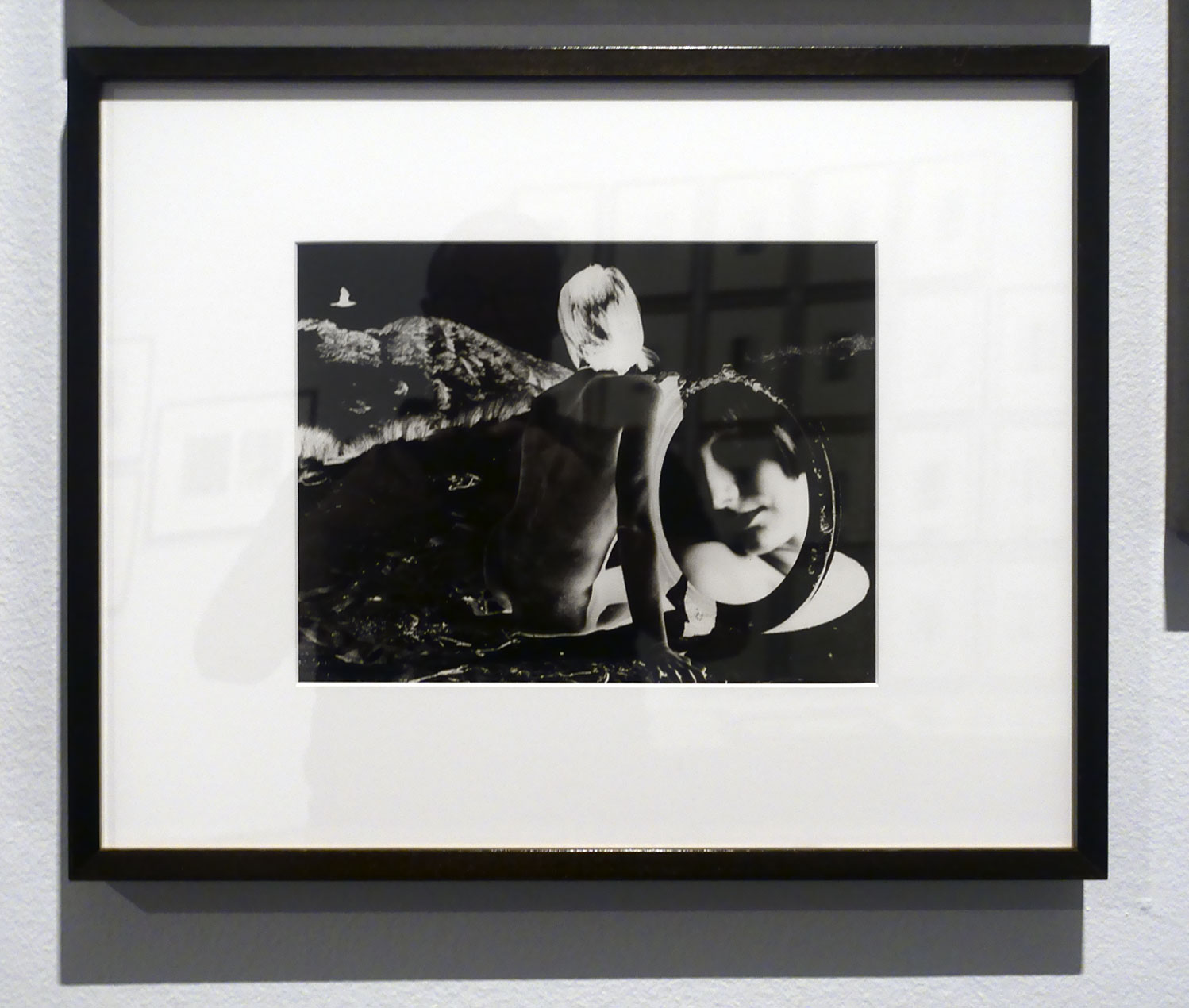
Courtesy of the artist and Roslyn Oxley9 Gallery, Sydney
© Tracey Moffatt


Marion Kalter (Austrian, b. 1951) 'John Cage chez Dorothea Tanning, Paris' 1979
 

Marion Kalter (Austrian, b. 1951)
John Cage chez Dorothea Tanning, Paris


Larry Fink (American, 1941-2023) 'Studio 54' 1977
 

Larry Fink (American, 1941-2023)
Studio 54, New York City
May 1977
Silver gelatin print


Alfred Stieglitz (American, 1864-1946) 'Songs of the Sky' 1924


Alfred Stieglitz (American, 1864-1946)
Songs of the Sky
1924
Gelatin silver print


Alfred Stieglitz (American, 1864-1946) 'Songs of the Sky' 1924


Alfred Stieglitz (American, 1864-1946)
Songs of the Sky
1924
Gelatin silver print


Eva Besnyö (Dutch, 1910-2003) 'Boy With Cello, Balaton, Hungary' 1931


Eva Besnyö (Dutch, 1910-2003)
Boy With Cello, Balaton, Hungary
1931
Gelatin silver print
42.5 x 39.2cm (16.7 x 15.4 in)


Arnold Newman (American, 1918-2006) 'Igor Stravinsky' 1945


Arnold Newman (American, 1918-2006)
Igor Stravinsky
1945
Gelatin silver contact sheet


Santu Mofokeng (South African, b. 1956) 'Opening Song, Hand Clapping and Bells' 1986


Santu Mofokeng (South African, b. 1956)
Opening Song, Hand Clapping and Bells
1986
From the series Train Church
Gelatin silver print
Image: 19 x 28.5cm


Minor White (American, 1908-1976) 'The Sound of One Hand Clapping, Pultneyville, New York' 1957


Minor White (American, 1908-1976)
The Sound of One Hand Clapping, Pultneyville, New York
1957
Gelatin silver print
24.4 x 25.1cm (9 5/8 x 9 7/8 in.)
Purchased in part with funds provided by Daniel Greenberg, Susan Steinhauser, and the Greenberg Foundation
Reproduced with permission of the Minor White Archive, Princeton University Art Museum
© Trustees of Princeton University


Eugène Atget (French, 1857-1927) 'Street diversions (or B organ)' 1898-1899


Eugène Atget (French, 1857-1927)
Street diversions (or B organ)
1898-1899
Albumen print


Walker Evans. 'Church Organ and Pews' 1936


Walker Evans (Walker Evans, 1903-1975)
Church Organ and Pews
1936
Gelatin silver print


Robert Frank. 'Bar, Las Vegas' 1955-1956


Robert Frank (Swiss-American, 1924-2019)
Bar, Las Vegas
1955-1956
Gelatin silver print


Robert Frank (Swiss-American, 1924-2019) 'Political Rally, Chicago' 1956


Robert Frank (Swiss-American, 1924-2019)
Political Rally, Chicago
1956
Gelatin silver print
35.1 x 23.7cm (13 13/16 x 9 5/16 in)


André Kertész (Hungarian, 1894-1985) 'Cellist' 1916


André Kertész (Hungarian, 1894-1985)
Cellist
1916
Gelatin silver print


André Kertész (Hungarian, 1894-1985) 'Violoniste ambulant, Abony' (Traveling violinist, Abony) 1921


André Kertész (Hungarian, 1894-1985)
Violoniste ambulant, Abony
Traveling violinist, Abony
1921
Gelatin silver print


André Kertész (Hungarian, 1894-1985) 'Eiffel Tower, Summer Storm' 1927


André Kertész (Hungarian, 1894-1985)
Eiffel Tower, Summer Storm
1927
Gelatin silver print


Platt D Babbitt. 'Niagara Falls from the American side' whole plate daguerreotype c.1855


Platt D Babbitt (American, 1822-1879)
Niagara Falls from the American side
c. 1855
Whole plate daguerreotype


Platt D. Babbitt. '[Scene at Niagara Falls]' c. 1855


Platt D Babbitt (American, 1822-1879)
[Scene at Niagara Falls]
c. 1855
Daguerreotype


Platt D. Babbitt. 'Niagara Falls', c. 1860


Platt D Babbitt (American, 1822-1879)
Niagara Falls
c. 1860
Daguerreotype


Henri Huet (French, 1927-1971)/AP ''Life' magazine photographer Larry Burrows (far left) struggles through elephant grass and the rotor wash of an American evacuation helicopter as he helps GIs carry a wounded soldier on a stretcher from the jungle to the chopper in Mimot, Cambodia' 4 May 1970


Henri Huet (French, 1927-1971)/AP
‘Life’ magazine photographer Larry Burrows (far left) struggles through elephant grass and the rotor wash of an American evacuation helicopter as he helps GIs carry a wounded soldier on a stretcher from the jungle to the chopper in Mimot, Cambodia
4 May 1970
Gelatin silver print


Henri Huet, French (1927-1971) 'The body of an American paratrooper killed in action in the jungle near the Cambodian border is raised up to an evacuation helicopter, Vietnam' 1966


Henri Huet (French, 1927-1971)
The body of an American paratrooper killed in action in the jungle near the Cambodian border is raised up to an evacuation helicopter, Vietnam
1966
Gelatin silver print


James Barnor (Ghanian, b. 1929) 'E. K. Nyame, the legendary Ghanaian musician, photographed for a record cover, Accra' c. 1975


James Barnor (Ghanian, b. 1929)
E. K. Nyame, the legendary Ghanaian musician, photographed for a record cover, Accra
c. 1975
Gelatin silver print


Roger Scott (Australian, b. 1944) 'Ghost train' 1972


Roger Scott (Australian, b. 1944)
Ghost train
1972
Gelatin silver print


Diane Arbus. ‘The House of Horrors’ 1961


Diane Arbus (American, 1923-1971)
The House of Horrors
1961
Gelatin silver print


Diane Arbus (American, 1923-1971) 'A child crying, N.J.' 1967


Diane Arbus (American, 1923-1971)
A child crying, N.J.
1967
Gelatin silver print


Stephen Shore (American, b. 1947) 'Lookout Hotel, Ogunquit, Maine, July 16, 1974'


Stephen Shore (American, b. 1947)
Lookout Hotel, Ogunquit, Maine, July 16, 1974
1974
Chromogenic colour print, printed 2013
17 × 21 3/4 in. (43.2 × 55.2cm)
The Museum of Modern Art, New York
Acquired through the generosity of an anonymous donor
© 2017 Stephen Shore


Gordon Parks (American, 1912-2006) 'Shooting Victim in Cook County Morgue, Chicago, Illinois' 1957


Gordon Parks (American, 1912-2006)
Shooting Victim in Cook County Morgue, Chicago, Illinois
1957
Pigmented inkjet print, printed 2019
11 7/8 × 17 15/16″ (30.1 × 45.6cm)
The Museum of Modern Art, New York
The Family of Man Fund
© 2021 Gordon Parks Foundation


Robert H. Jackson (American, b. 1934) 'FATAL BULLET HITS OSWALD. Jack Ruby fires bullet point blank into the body of Lee Harvey Oswald at Dallas Police Station. Oswald grimaces in agony' November 24, 1963


Robert H. Jackson (American, b. 1934)
FATAL BULLET HITS OSWALD. Jack Ruby fires bullet point blank into the body of Lee Harvey Oswald at Dallas Police Station. Oswald grimaces in agony
November 24, 1963


Robert H. Jackson (American, b. 1934) 'Jack Ruby (52) shoots Lee Harvey Oswald (24) 24 November 1963' 1963


Robert H. Jackson (American, b. 1934)
Jack Ruby (52) shoots Lee Harvey Oswald (24)
24 November 1963


Originally published in the Dallas Times Herald, November 25, 1963. Cropped from the source image to the portion that was published in 1963. Winner of the 1964 Pulitzer Prize for Photography.


Unknown photographer. 'Survivors of the atomic bomb attack of Nagasaki walk through the destruction as fire rages in the background Aug. 9 1945'


Unknown photographer
Survivors of the atomic bomb attack of Nagasaki walk through the destruction as fire rages in the background Aug. 9 1945
1945


John Williams (1933- 2016) 'Open Air Shower, Bronte Beach' 1964


John Williams (Australian, 1933-2016)
Open Air Shower, Bronte Beach
1964
Gelatin silver print


Dorothea Lange (American, 1895-1965) 'Man Stepping from Cable Car, San Francisco' 1956


Dorothea Lange (American, 1895-1965)
Man Stepping from Cable Car, San Francisco
1956
Gelatin silver print


Ansel Adams (American, 1902-1984) 'Upper Yosemite Fall' 1946


Ansel Adams (American, 1902-1984)
Upper Yosemite Fall
1946
Gelatin silver print


Ansel Adams (American, 1902-1984) 'Nevada Fall Profile' 1946


Ansel Adams (American, 1902-1984)
Nevada Fall Profile
1946
Gelatin silver print


Kaho Yu (Australian) 'Untitled' from the series 'Infinitesimal Residual Vibration of An Unknown Sound' 2009-2011


Kaho Yu (Australian)
Untitled from the series Infinitesimal Residual Vibration of An Unknown Sound
2009-2011


Kaho Yu (Australian) 'Untitled' from the series 'Infinitesimal Residual Vibration of An Unknown Sound' 2009-2011


Kaho Yu (Australian)
Untitled from the series Infinitesimal Residual Vibration of An Unknown Sound
2009-2011


The photographs in this series were taken during a period when I was feeling existentially bored. Instead of distracting myself with activities and accumulating new sensations, I decided to “look” at boredom, to study, and perhaps to understand it. The most natural strategy was to observe the immediate environments where my daily activities take place – train stations, cubicles, copy machines room, etc. I carried a medium format camera on a tripod and spent the odd hours wandering alone through those familiar spaces.

My “study” did not lead me to any revelation or answer. Instead, I found myself spending a lot of time waiting in a long silence, between the opening and the closing of the camera shutter.

Charles Babbage, a scientist in 1837, postulated that every voice and sound, once imparted on the air particles, does not dissipate but remains in the diffused movements of all the particles in the atmosphere. Thus, there might one day come a person equipped with the right mathematical knowledge of these motions who will be able to capture the infinitesimal vibrations and to trace back to their ultimate source.

Taking a long exposure, letting the light slowly accumulate an image on the celluloid surface, to me, is not unlike a sound seeker searching in the air particles, for the tiny residual movements that have been conveyed through the history of mankind, from the beginning of time.

Kaho Yu artist statement


… i listen to the wind that obliterates my traces


… i listen to the wind that obliterates my traces brings together a collection of early photographs related to music, a group of 78rpm recordings, and short excerpts from various literary sources that are contemporary with the sound and images. It is a somewhat intuitive gathering, culled from artist Steve Roden’s collection of thousands of vernacular photographs related to music, sound, and listening. The subjects range from the PT Barnum-esque Professor McRea – “Ontario’s Musical Wonder” (pictured with his complex sculptural one man band contraption) – to anonymous African-American guitar players and images of early phonographs. The images range from professional portraits to ethereal, accidental, double exposures – and include a range of photographic print processes, such as tintypes, ambrotypes, cdvs, cabinet cards, real photo postcards, albumen prints, and turn-of-the-century snapshots.

The two CDs display a variety of recordings, including one-off amateur recordings, regular commercial releases, and early sound effects records. there is no narrative structure to the book, but the collision of literary quotes (Hamsun, Lagarkvist, Wordsworth, Nabokov, etc.). Recordings and images conspire towards a consistent mood that is anchored by the book’s title, which binds such disparate things as an early recording of an American cowboy ballad, a poem by a Swedish Nobel laureate, a recording of crickets created artificially, and an image of an itinerant anonymous woman sitting in a field, playing a guitar. The book also contains an essay by Roden.

Text from the Dust to Digital website Nd [Online] Cited 23/07/2022. Published by Dust-to-Digital, 2011. The book is out of stock but available on Abe.com website.


'... i listen to the wind that obliterates my traces' book cover (2011)


… i listen to the wind that obliterates my traces book cover (2011)


The J. Paul Getty Museum
1200 Getty Center Drive
Los Angeles, California 90049

Opening hours:
Daily 10am – 5pm

The J. Paul Getty Museum website

LIKE ART BLACK ON FACEBOOK

Back to top

New website: Marcus Bunyan – celebrating 30 years of art practice in 2021

November 2021

Celebration!

Recent work


Marcus Bunyan (Australian, b. 1958) 'Untitled' from the series 'Resonance' 2021


Marcus Bunyan (Australian, b. 1958)
Untitled
2021
From the series Resonance


In 2021, I celebrate 30 years of art practice with the creation of a new website, the first to contain all my bodies of work since 1991 (note: more bodies of work still have to be added between 1996-1999).

My first solo exhibition was in a hair dressing salon in High Street, Prahran, Melbourne in 1991, during my second year of a Bachelor of Arts (Fine Art Photography) at RMIT University (formerly Phillip Institute out in Bundoora). Titled Of Magic, Music and Myth it featured black and white medium format photographs of the derelict Regent Theatre and the old Victorian Railway’s Newport Workshops.

The concerns that I had at the time in my art making have remained with me to this day: that is, an investigation into the boundaries between identity, space and environment. Music and “spirit” have always been an abiding influence – the intrinsic music of the world and the spirit of objects, nature, people and the cosmos … in a continuing exploration of spaces and places, using found images and digital and film cameras to record glances, meditations and movement through different environments.

30 years after I started I hope I have learnt a lot about image making … and a lot about myself. I also hope the early bodies of my work are still as valid now as they were when I made them. In the 30 years since I became an artist my concerns have remained constant but as well, my sense of exploration and joy at being creative remains undimmed and an abiding passion.

Now, with ego integrated and the marching of the years I just make art for myself, yes, but the best reason to make art is … for love and for the cosmos. For I believe any energy that we give out to the great beyond is recognised by spirit. Success is fleeting but making art gives energy to creation. We all return to the great beyond, eventually.

Dr Marcus Bunyan


Unknown photographer. 'Opening of Marcus Bunyan's exhibition 'The Naked Man Fears No Pickpockets' at The Photographers' Gallery and Workshop, Melbourne, 1993 showing at left (behind the crowd) the photograph 'Richmond Steps' 1993' 1993


Unknown photographer
Opening of Marcus Bunyan’s exhibition The Naked Man Fears No Pickpockets at The Photographers’ Gallery and Workshop, Melbourne, 1993 showing at left (behind the crowd) the photograph Richmond Steps 1993
1993
Polaroid


Ian Lobb (Australian, b. 1948) 'Marcus 31/8/92 Taken by Ian Lobb at Phillip [Institute]' 1992


Ian Lobb (Australian, b. 1948)
Marcus 31/8/92 Taken by Ian Lobb at Phillip [Institute]
1992
Polaroid


Jeff Whitehead (Australian) 'Marcus in his Fred Perry and Doc Martens with his Mamiya RZ67 on tripod with Pelican case on Jeff's car, Studley Park, Melbourne' 1991-1992


Jeff Whitehead (Australian)
Marcus in his Fred Perry and Doc Martens with his Mamiya RZ67 on tripod with Pelican case on Jeff’s car, Studley Park, Melbourne
1991-1992
Colour photograph


The only photograph of me with my camera 30 years ago!


Each photograph from a body of work in this posting (below) links to the body of work on my new website. Please click on the photographs to see the work.


Marcus Bunyan (Australian, b. 1958) 'Untitled' from the series 'Stones, Vaults, Flowers: Père Lachaise' 2017-2020


Marcus Bunyan (Australian, b. 1958)
Untitled
2017-2020
From the series Stones, Vaults, Flowers: Père Lachaise


Marcus Bunyan (Australian, b. 1958). 'Untitled' from the series 'A Day in the Tiergarten' 2019-2020


Marcus Bunyan (Australian, b. 1958)
Untitled
2019-2020
From the series A Day in the Tiergarten


Marcus Bunyan (Australian, b. 1958) ‘Untitled’ from the series ‘The Night Journey’ 2019


Marcus Bunyan (Australian, b. 1958)
Untitled
2019
From the series The Night Journey


Marcus Bunyan (English-Australian, b. 1958) 'Untitled' 2019 From the series 'Oblique'


Marcus Bunyan (Australian, b. 1958)
Untitled
2019
From the series Oblique


Marcus Bunyan (Australian, b. 1958) 'Parc de Sceaux' from the series 'Paris in film' 2018


Marcus Bunyan (Australian, b. 1958)
Parc de Sceaux
2018
From the series Paris in film


War dreams 2007-2017


Marcus Bunyan (Australian, b. 1958) 'Untitled' from the series 'The Shape of Dreams' 2013-2017


Marcus Bunyan (Australian, b. 1958)
Untitled
2013-2017
From the series The Shape of Dreams


Marcus Bunyan (Australian, b. 1958) 'Too Much of the Air' 2015


Marcus Bunyan (Australian, b. 1958)
Untitled
2015
From the series Too Much of the Air


Marcus Bunyan (Australian, b. 1958) 'Untitled' from the series 'upside down' 2013


Marcus Bunyan (Australian, b. 1958)
Untitled
2013
From the series upside down


Marcus Bunyan (Australian, b. 1958) 'Untitled' from the series 'Vertical' 2011


Marcus Bunyan (Australian, b. 1958)
Untitled
2011
From the series Vertical


Marcus Bunyan (Australian, b. 1958) 'Untitled' from the series 'The Symbolic Order (cartes de visite)' 2011


Marcus Bunyan (Australian, b. 1958)
Untitled
2011
From the series The Symbolic Order (cartes de visite)


Marcus Bunyan (Australian, b. 1958) 'Untitled' from the series 'Missing in Action (red kenosis)' 2010


Marcus Bunyan (Australian, b. 1958)
Untitled
2010
From the series Missing in Action (red kenosis)


Marcus Bunyan (Australian, b. 1958) 'Missing in Action (dark kenosis) No. 68' 2010


Marcus Bunyan (Australian, b. 1958)
Untitled
2010
From the series Missing in Action (dark kenosis)


Marcus Bunyan (Australian, b. 1958) 'Missing in Action (horizontal kenosis) No. 17' 2010


Marcus Bunyan (Australian, b. 1958)
Untitled
2010
From the series Missing in Action (horizontal kenosis)


Marcus Bunyan (Australian, b. 1958) 'Untitled' from the series 'There But For The Grace of You Go I' 2009


Marcus Bunyan (Australian, b. 1958)
Untitled
2009
From the series There but for the Grace of You Go I


Marcus Bunyan (Australian, b. 1958) 'Untitled' from the series 'The Shape of Dreams' 2009


Marcus Bunyan (Australian, b. 1958)
Untitled
2009
From the series The Shape of Dreams


Marcus Bunyan (Australian, b. 1958) 'Untitled' from the series 'Momentum' 2009


Marcus Bunyan (Australian, b. 1958)
Untitled
2009
From the series Momentum


Marcus Bunyan (Australian, b. 1958) 'Untitled' from the series 'Cut and Thrust' 2008


Marcus Bunyan (Australian, b. 1958)
Untitled
2008
From the series Cut and Thrust


Marcus Bunyan (Australian, b. 1958) 'Untitled' from the series 'Drone' 2007


Marcus Bunyan (Australian, b. 1958)
Untitled
2007
From the series Drone


Marcus Bunyan (Australian, b. 1958) 'Untitled' from the series 'Nebula' 2007


Marcus Bunyan (Australian, b. 1958)
Untitled
2007
From the series Nebula


Transformations 1996-2008


Marcus Bunyan (Australian, b. 1958) 'Untitled' from the series 'Discarded Views' 2008


Marcus Bunyan (Australian, b. 1958)
Untitled
2008
From the series Discarded Views


Marcus Bunyan (Australian, b. 1958) 'Untitled' from the series 'Last Stand' 2008


Marcus Bunyan (Australian, b. 1958)
Untitled
2008
From the series Last Stand


Marcus Bunyan (Australian, b. 1958) 'Untitled' from the series 'Wonders Never Cease' 2007


Marcus Bunyan (Australian, b. 1958)
Untitled
2007
From the series Wonders Never Cease


Marcus Bunyan (Australian, b. 1958) 'Untitled' from the series 'Unearth' 2007


Marcus Bunyan (Australian, b. 1958)
Untitled
2007
From the series Unearth


Marcus Bunyan (Australian, b. 1958) 'Untitled' from the series 'Aporia' 2006


Marcus Bunyan (Australian, b. 1958)
Untitled
2006
From the series Aporia


Marcus Bunyan (Australian, b. 1958) 'Untitled' from the series 'Photos My Mother Sent Me' 2005


Marcus Bunyan (Australian, b. 1958)
Untitled
2005
From the series Photos My Mother Sent Me


Marcus Bunyan (Australian, b. 1958) 'Untitled' from the series 'No Man's Land' 2005


Marcus Bunyan (Australian, b. 1958)
Untitled
2005
From the series No Man’s Land


Marcus Bunyan (Australian, b. 1958) 'Untitled' from the series 'Tokern' 2005


Marcus Bunyan (Australian, b. 1958)
Untitled
2005
From the series Tokern


Marcus Bunyan (Australian, b. 1958) 'Untitled' from the series 'Inurtia' 2005


Marcus Bunyan (Australian, b. 1958)
Untitled
2005
From the series Inurtia


Marcus Bunyan (Australian, b. 1958) 'VV – 09GI and NV – 17EP during a thunderstorm, Albury' from the series 'Enclosure' 2005


Marcus Bunyan (Australian, b. 1958)
VV – 09GI and NV – 17EP during a thunderstorm, Albury
2005
From the series Enclosure


Marcus Bunyan (Australian, b. 1958) 'Bedtime' from the series 'Neo_mort' 2004


Marcus Bunyan (Australian, b. 1958)
Bedtime
2004
From the series Neo_mort


Marcus Bunyan (Australian, b. 1958) 'Untitled' from the series 'Desideratum' 2003


Marcus Bunyan (Australian, b. 1958)
Untitled
2003
From the series Desideratum


Marcus Bunyan (Australian, b. 1958) 'Untitled' from the series 'Last Days at Karngara' 2002


Marcus Bunyan (Australian, b. 1958)
Untitled
2002
From the series Last Days at Karngara


Marcus Bunyan (Australian, b. 1958) 'Untitled' from the series 'The Wrestlers' 2001


Marcus Bunyan (Australian, b. 1958)
Untitled
2001
From the series The Wrestlers


Marcus Bunyan (Australian, b. 1958)
Button 2B
2001
From the series D O < R >


Marcus Bunyan (Australian, b. 1958) 'Plane 6' from the series 'Throw High and Hard' 2001


Marcus Bunyan (Australian, b. 1958)
Plane 6
2001
From the series Throw High and Hard


Marcus Bunyan (Australian, b. 1958) 'Untitled' 2000 From the series 'Thirdspace'


Marcus Bunyan (Australian, b. 1958)
Untitled
2000
From the series Thirdspace


Black and white archive 1991-1997

PLEASE VIEW THE BLACK AND WHITE ARCHIVE POSTINGS


Marcus Bunyan black and white archive 1991-1997

PLEASE VIEW THE BLACK AND WHITE ARCHIVE POSTINGS


Marcus Bunyan website

LIKE ART BLART ON FACEBOOK

Back to top

Exhibition: ‘In the Beginning: Minor White’s Oregon Photographs’ at the Portland Art Museum Phase 1, Part 2

Exhibition dates: 9th December, 2017 – 6th May, 2018

Curated by Julia Dolan PhD, the Minor White Curator of Photography


Over two postings, Phase 1 of this exhibition which features one of the greatest collections of early photographs by Minor White!

View Part 1 of the posting


Minor White (American, 1908-1976) 'Untitled (Dock)' c. 1939 from the exhibition 'In the Beginning: Minor White's Oregon Photographs' at the Portland Art Museum Phase 1, Dec 2017 - May 2018


Minor White (American, 1908-1976)
Untitled (Dock)
c. 1939
Gelatin silver print
Courtesy of the Fine Arts Program, Public Buildings Service, U.S. General Services Administration
Commissioned through the New Deal art projects
Public domain


Catching fire

It is a memorable experience to be able to observe a great artist experimenting with his craft, which is exactly what MW is doing in the photographs in these two postings. Here is an artist at the start of the path, honing his skills as a “creative photographer”: for these are creative, public photographs not expressive, private ones.

The photographs are a strange mix… part modernism, part romanticism, with a large dose of Pictorialism (dare I mention the word!) thrown in for good measure. I can see influences of the night work of Brassaï; the architectural photographs of Charles Sheeler; the photographs of Albert Renger-Patzsch and the German New Objectivity; the urban and urbane photographs of Walker Evans (The Customer, c. 1939 and Joseph, Oregon (Joseph Cemetery) c. 1940 below); the spatiality, surrealism and detail of Eugene Atget’s Paris photographs; and the landscape work of Ansel Adams. Overlay these influences with feelings of spirituality, sexuality and the atmosphere of place and you have a heady mix. And yet these photographs are purely his own.

What a time MW was having when he made these photographs. There were no limits to where he could point his camera.

As I talk to my friend and mentor Ian Lobb about photography, we have brave conversations about artists, vision, looking, previsualisation, representation, the print, and more generally life, words, spirit. He observed of this group of photographs:

“There were things that looked like photographs that other people had made.
There were things that were naively interesting to him for what they were.
There were things that allowed him to experiment with ideas of metaphor.
There was a combination of subject matter and light that enabled him to touch upon a world of symbol and ritual without him ever really being confident in that world (at this time).

There were also affirmations of how he could organise the world through his camera. He knew he was really accomplished with organising the edges of his image (particularly the right hand edge) and how this segued into the centre of his images where he hoped he could also organise subject matter – but he was not as skilled with this. He was still learning his craft.

He also knew that he could escape reality by changing scale, changing the lightness of his subject matter, changing the mood of his images with print colour (cold events printed warm) and then affirming the mood of his images with print colour. He knew there must be more with how he printed – was he beginning to understand that there his knowledge of printing chemistry could also be applied to film chemistry? Maybe there was an inkling of this but he was never extremely skilful with this. And he was not trying to expose and change film development techniques according to the subject matter – but there were emerging confused questions about this that would be exceptionally refined later.

I don’t think he applied labels like modernist or romantic to himself – but he was burningly aware of his authorship – and it excited him to the bone. Sometimes he was aware that he was walking an edge between various worlds and this was starting to take a form where he was both teacher and student – he could sense it starting to appear in his images and this made him secretly full of delight.”

(Ian Lobb in conversation with Marcus Bunyan)


My friend has such a tremendous knowledge of the work of MW and of photography and life in general. I most appreciate the passing on of these observations to me. You really can feel that the artist is walking an edge between various worlds and that the photographs embody a critical shift in consciousness, from “truth in appearances” to a longing for transcendence. The work is full of symbolic and metaphorical allusions/illusions.

That MW’s photographs still offer these affirmations to the viewer nigh on 80 years later show’s the intensity of their visualisation. They are a gift from the cosmos to one human being and back to the cosmos (in the form of an ensō, or Zen circle), and should be accepted as such.

Dr Marcus Bunyan


Many thankx to the Portland Art Museum for allowing me to publish the photographs in the posting. Please click on the photographs for a larger version of the image.


Minor White (American, 1908-1976) 'Untitled (Propeller)' c. 1939 from the exhibition 'In the Beginning: Minor White's Oregon Photographs' at the Portland Art Museum Phase 1, Dec 2017 - May 2018


Minor White (American, 1908-1976)
Untitled (Propeller)
c. 1939
Gelatin silver print
Courtesy of the Fine Arts Program, Public Buildings Service, U.S. General Services Administration
Commissioned through the New Deal art projects
Public domain


“A banquet of frustration”: Minor White penned the phrase in 1939, after reading T. S. Eliot’s 1922 poem The Waste Land. “I perceived that if one could put out the energy to produce a banquet of frustration, then frustration had power,” White commented. “It was worth pursuing.”1

“The duplicity one senses in White’s career, in both his writing and his images, stems certainly from this frustration about sexuality (as Peter Bunnell has written, “White’s sexuality underlies the whole of the autobiographical statement contained in his work”), but it also mirrors a much larger counter tradition found within modernism itself, a romantic tradition that draws from Romanticism, Symbolism, Dada, and Surrealism. More specifically, White’s frustration coincides with the collapse of modernist ideals during the postwar era. This passage in the history of photography, if examined at all, is normally pinned to the arid vision of Robert Frank. Aesthetically, White’s vision was less dark than Frank’s, and in no sense nihilistic. Yet White’s work embodies a critical shift in consciousness, from the heroic modernist notion of “truth in appearances” toward the acknowledgment – and even the cultivation – of illusion, deception, and buried meanings. White’s banquet of frustration would look like a tea setting compared to the theoretical abattoirs of generations of later artists; nevertheless, the historical narrative of photographic modernism’s dissolution owes an early chapter to White and his longing for transcendence, which he seems not to have attained.”

Extracts from Kevin Moore. “Cruising and Transcendence in the Photographs of Minor White,” on the Aperture website [Online] Cited 27/04/2018

1/ Minor White. “Memorable Fancies,” 1932-1937 quoted in Peter C. Bunnell. Minor White: The Eye That Shapes. Princeton and Boston: The Art Museum, Princeton University; Bulfinch/Little Brown, 1989, p. 19.


Minor White (American, 1908-1976) 'Freight Depot' c. 1939


Minor White (American, 1908-1976)
Freight Depot
c. 1939
Gelatin silver print
Courtesy of the Fine Arts Program, Public Buildings Service, U.S. General Services Administration
Commissioned through the New Deal art projects
Public domain


Minor White (American, 1908-1976) 'Untitled (Girder)' c. 1939


Minor White (American, 1908-1976)
Untitled (Girder)
c. 1939
Gelatin silver print
Courtesy of the Fine Arts Program, Public Buildings Service, U.S. General Services Administration
Commissioned through the New Deal art projects
Public domain


Minor White (American, 1908-1976) 'Untitled (Portland Lumber Mills)' c. 1939


Minor White (American, 1908-1976)
Untitled (Portland Lumber Mills)
c. 1939
Gelatin silver print
Courtesy of the Fine Arts Program, Public Buildings Service, U.S. General Services Administration
Commissioned through the New Deal art projects
Public domain


Minor White (American, 1908-1976) 'Log Boom' c. 1940


Minor White (American, 1908-1976)
Log Boom
c. 1940
Gelatin silver print
Courtesy of the Fine Arts Program, Public Buildings Service, U.S. General Services Administration
Commissioned through the New Deal art projects
Public domain


Minor White (American, 1908-1976) 'Boats at Dock' c. 1939


Minor White (American, 1908-1976)
Boats at Dock
c. 1939
Gelatin silver print
Courtesy of the Fine Arts Program, Public Buildings Service, U.S. General Services Administration
Commissioned through the New Deal art projects
Public domain


Minor White (American, 1908-1976) 'East Side of Willamette' c. 1939


Minor White (American, 1908-1976)
East Side of Willamette
c. 1939
Gelatin silver print
Courtesy of the Fine Arts Program, Public Buildings Service, U.S. General Services Administration
Commissioned through the New Deal art projects
Public domain


Minor White (American, 1908-1976) 'Boards' c. 1939


Minor White (American, 1908-1976)
Boards
c. 1939
Gelatin silver print
Courtesy of the Fine Arts Program, Public Buildings Service, U.S. General Services Administration
Commissioned through the New Deal art projects
Public domain


Minor White (American, 1908-1976) 'Lily Pads and Pike' c. 1939


Minor White (American, 1908-1976)
Lily Pads and Pike
c. 1939
Gelatin silver print
Courtesy of the Fine Arts Program, Public Buildings Service, U.S. General Services Administration
Commissioned through the New Deal art projects
Public domain


Minor White (American, 1908-1976) 'The Patch' c. 1939


Minor White (American, 1908-1976)
The Patch
c. 1939
Gelatin silver print
Courtesy of the Fine Arts Program, Public Buildings Service, U.S. General Services Administration
Commissioned through the New Deal art projects
Public domain


Minor White (American, 1908-1976) 'Horsetail and Skunk Cabbage' 1940


Minor White (American, 1908-1976)
Horsetail and Skunk Cabbage
1940
Gelatin silver print
Courtesy of the Fine Arts Program, Public Buildings Service, U.S. General Services Administration
Commissioned through the New Deal art projects
Public domain


Minor White (American, 1908-1976) 'Tree Root' c. 1939


Minor White (American, 1908-1976)
Tree Root
c. 1939
Gelatin silver print
Courtesy of the Fine Arts Program, Public Buildings Service, U.S. General Services Administration
Commissioned through the New Deal art projects
Public domain


Minor White (American, 1908-1976) 'Detail (California Foundry)' c. 1939


Minor White (American, 1908-1976)
Detail (California Foundry)
c. 1939
Gelatin silver print
Courtesy of the Fine Arts Program, Public Buildings Service, U.S. General Services Administration
Commissioned through the New Deal art projects
Public domain


Minor White (American, 1908-1976) 'Detail (227 Southeast Front Street)' 1938


Minor White (American, 1908-1976)
Detail (227 Southeast Front Street)
1938
Gelatin silver print
Courtesy of the Fine Arts Program, Public Buildings Service, U.S. General Services Administration
Commissioned through the New Deal art projects
Public domain


Minor White (American, 1908-1976) 'Front and Burnside' c. 1939


Minor White (American, 1908-1976)
Front and Burnside
c. 1939
Gelatin silver print
Courtesy of the Fine Arts Program, Public Buildings Service, U.S. General Services Administration
Commissioned through the New Deal art projects
Public domain


Minor White (American, 1908-1976) 'Ladd and Tilton Bank (1868 Southwest First and Stark Streets)' c. 1939


Minor White (American, 1908-1976)
Ladd and Tilton Bank (1868 Southwest First and Stark Streets)
c. 1939
Gelatin silver print
Courtesy of the Fine Arts Program, Public Buildings Service, U.S. General Services Administration
Commissioned through the New Deal art projects
Public domain


Minor White (American, 1908-1976) 'Pioneer Post Office and Portland Hotel Gate' c. 1939


Minor White (American, 1908-1976)
Pioneer Post Office and Portland Hotel Gate
c. 1939
Gelatin silver print
Courtesy of the Fine Arts Program, Public Buildings Service, U.S. General Services Administration
Commissioned through the New Deal art projects
Public domain


Minor White (American, 1908-1976) 'Southwest Fourth and Salmon Streets, Courthouse' c. 1939


Minor White (American, 1908-1976)
Southwest Fourth and Salmon Streets, Courthouse
c. 1939
Gelatin silver print
Courtesy of the Fine Arts Program, Public Buildings Service, U.S. General Services Administration
Commissioned through the New Deal art projects
Public domain


Minor White (American, 1908-1976) 'Kamm Building (Southwest Pine near First Avenue)' c. 1939


Minor White (American, 1908-1976)
Kamm Building (Southwest Pine near First Avenue)
c. 1939
Gelatin silver print
Courtesy of the Fine Arts Program, Public Buildings Service, U.S. General Services Administration
Commissioned through the New Deal art projects
Public domain


Minor White (American, 1908-1976) 'Fifth at Yamhill (Public Service Building)' c. 1939


Minor White (American, 1908-1976)
Fifth at Yamhill (Public Service Building)
c. 1939
Gelatin silver print
Courtesy of the Fine Arts Program, Public Buildings Service, U.S. General Services Administration
Commissioned through the New Deal art projects
Public domain


Minor White (American, 1908-1976) 'New on Old (Southeast Corner, First and Burnside)' c. 1939


Minor White (American, 1908-1976)
New on Old (Southeast Corner, First and Burnside)
c. 1939
Gelatin silver print
Courtesy of the Fine Arts Program, Public Buildings Service, U.S. General Services Administration
Commissioned through the New Deal art projects
Public domain


Minor White (American, 1908-1976) 'The Iron Fronts' c. 1939


Minor White (American, 1908-1976)
The Iron Fronts
c. 1939
Gelatin silver print
Courtesy of the Fine Arts Program, Public Buildings Service, U.S. General Services Administration
Commissioned through the New Deal art projects
Public domain


Minor White (American, 1908-1976) 'Front Street' 1939


Minor White (American, 1908-1976)
Front Street
1939
Gelatin silver print
Courtesy of the Fine Arts Program, Public Buildings Service, U.S. General Services Administration
Commissioned through the New Deal art projects
Public domain


Minor White (American, 1908-1976) 'Arches of the Dodd Building (Southwest Front Avenue and Ankeny Street)' 1938


Minor White (American, 1908-1976)
Arches of the Dodd Building (Southwest Front Avenue and Ankeny Street)
1938
Gelatin silver print
Courtesy of the Fine Arts Program, Public Buildings Service, U.S. General Services Administration
Commissioned through the New Deal art projects
No known copyright restrictions


In 1939 White was living at the Portland YMCA, where he had organised a camera club and had built a darkroom and modest gallery for exhibiting pictures. White’s photographs from this period concentrate on the environs of Portland, particularly the area of the commercial waterfront, which was undergoing demolition for redevelopment. Hired by the Oregon Art Project, an arm of the Works Progress Administration (WPA), White trawled the city’s Front Avenue neighbourhood, documenting the nineteenth-century buildings with cast-iron façades that were about to be torn down. White’s photographs are anything but clinical. His street views, many taken at night, have a ghostlike quality, with the occasional lone figure haunting the wet pavement; boarded-up doorways are cast in deep shadow; and mercantile objects, heaped onto the sidewalk before emptied warehouses, take on a forlorn anthropological character.

Among these pictures is a group of five depicting a handsome young man leaning in a doorway on Front Avenue. He is dressed like a labourer in jeans, work shirt, and boots, but there is something of the dandy in the raffish positioning of the man’s newsie cap, the tight cut of his trousers, pulled high and cinched at the waist, and the studied nonchalance of his pose. In one image, his hand is shoved into a pocket, leaving the index finger exposed and pointing downward toward a prominent bulge. Most importantly, he gazes – not at the photographer but down the street – intently and expectantly, as if anticipating something that has not yet come into view. A second photograph shows the man from behind, revealing the nape of his neck, a pair of rounded buttocks, and white stains splashed down the right thigh of his trousers. The pose suggests that he is urinating in this abject doorway with its peeling paint and debris underfoot; he could be taken for a plasterer relieving himself during a break. Another image, taken in a different boarded-up doorway, shows the man leaning with one arm raised and smiling coyly (again, not at the photographer), with his thumbs slipped under his belt and his fingers cupped, calling attention once again to his bulge. An “Air Circus” poster behind him advertises “Tex Rankin and other famous flyers” as well as “stunts” and “thrills.”

The scene is both explicit and coded, even to contemporary eyes. This handsome loitering man might have been taken by certain passersby for an ordinary labourer, on break or looking for work. Others might have recognised him as a man looking for sex (or for another kind of work) with other men. White’s sexual interest in men and his approach to looking at things “for what else they are” stratify the two narratives, establishing layers of meaning on parallel planes. This man is both a labourer and a cruising homosexual. He is, then, just what the photographic image in general would come to signify for White: a common trace from the visible world, transformed into another set of charged meanings.

Extract from Kevin Moore. “Cruising and Transcendence in the Photographs of Minor White,” on the Aperture website [Online] Cited 27/04/2018


Minor White (American, 1908-1976) 'Doorway, Dodd Building' c. 1939


Minor White (American, 1908-1976)
Doorway, Dodd Building
c. 1939
Gelatin silver print
Courtesy of the Fine Arts Program, Public Buildings Service, U.S. General Services Administration
Commissioned through the New Deal art projects
Public domain


White’s earlier Portland series, by contrast, is the darker product of a romantic turn of mind and conveys not the affirmative, civic-minded Whitman of poems such as “A Broadway Pageant” but the melancholy, searching Whitman of the “Calamus” poems. In Portland, we see White engaging Front Avenue for its sense of mystery and possibility, an investigation among darkened doorways and in the silhouettes of passing strangers for moments of revelation. More than simply a celebration of the manifold aspects of the city, the desired charge might be specified as the possibility of an erotic connection, however ephemeral, as proposed by Whitman in “City of Orgies”:

City of orgies, walks and joys,
City whom that I have lived and sung in your midst will one
   day make you illustrious,
Not the pageants of you, not your shifting tableaus, your
   spectacles, repay me,
Not the interminable rows of your houses, nor the ships
   at the wharves,
Nor the processions in the streets, nor the bright windows
   with goods in them,
Nor to converse with learn’d persons, or bear my share in
   the soiree or feast;
Not those, but as I pass O Manhattan, your frequent and
   swift flash of eyes offering me love,
Offering response to my own – these repay me, 
Lovers, continual lovers, only repay me.

Extract from Kevin Moore. “Cruising and Transcendence in the Photographs of Minor White,” on the Aperture website [Online] Cited 27/04/2018


Minor White (American, 1908-1976) 'Pilaster and Hood Molding, Dodd Building (Southwest Front and Ankeny)' c. 1939


Minor White (American, 1908-1976)
Pilaster and Hood Molding, Dodd Building (Southwest Front and Ankeny)
c. 1939
Gelatin silver print
Courtesy of the Fine Arts Program, Public Buildings Service, U.S. General Services Administration
Commissioned through the New Deal art projects
Public domain


Minor White (American, 1908-1976) 'Door of Iron – First Brick Building in Portland, 1852 (Ladd and Tilton Building)' 1939


Minor White (American, 1908-1976)
Door of Iron – First Brick Building in Portland, 1852 (Ladd and Tilton Building)
1939
Gelatin silver print
Courtesy of the Fine Arts Program, Public Buildings Service, U.S. General Services Administration
Commissioned through the New Deal art projects
Public domain


Minor White (American, 1908-1976) 'China Town' c. 1939


Minor White (American, 1908-1976)
China Town
c. 1939
Gelatin silver print
Courtesy of the Fine Arts Program, Public Buildings Service, U.S. General Services Administration
Commissioned through the New Deal art projects
Public domain


Minor White (American, 1908-1976) 'Morrison Bridge – Winter' 1938


Minor White (American, 1908-1976)
Morrison Bridge – Winter
1938
Gelatin silver print
Courtesy of the Fine Arts Program, Public Buildings Service, U.S. General Services Administration
Commissioned through the New Deal art projects
Public domain


Minor White (American, 1908-1976) 'St. Johns Bridge' c. 1939


Minor White (American, 1908-1976)
St. Johns Bridge
c. 1939
Gelatin silver print
Courtesy of the Fine Arts Program, Public Buildings Service, U.S. General Services Administration
Commissioned through the New Deal art projects
Public domain


Minor White (American, 1908-1976) 'Catherine Creek' c. 1941


Minor White (American, 1908-1976)
Catherine Creek
c. 1941
Gelatin silver print
Courtesy of the Fine Arts Program, Public Buildings Service, U.S. General Services Administration
Commissioned through the New Deal art projects
Public domain


Minor White (American, 1908-1976) 'Joseph, Oregon (Joseph Cemetery)' c. 1940


Minor White (American, 1908-1976)
Joseph, Oregon (Joseph Cemetery)
c. 1940
Gelatin silver print
Courtesy of the Fine Arts Program, Public Buildings Service, U.S. General Services Administration
Commissioned through the New Deal art projects
Public domain


Minor White (American, 1908-1976) 'Hurricane Creek (Trees and Rock)' 1941


Minor White (American, 1908-1976)
Hurricane Creek (Trees and Rock)
1941
Gelatin silver print
Courtesy of the Fine Arts Program, Public Buildings Service, U.S. General Services Administration
Commissioned through the New Deal art projects
Public domain


Minor White (American, 1908-1976) 'Ice Lake' 1940


Minor White (American, 1908-1976)
Ice Lake
1940
Gelatin silver print
Courtesy of the Fine Arts Program, Public Buildings Service, U.S. General Services Administration
Commissioned through the New Deal art projects
Public domain


Minor White (American, 1908-1976) 'The Customer' c. 1939


Minor White (American, 1908-1976)
The Customer
c. 1939
Gelatin silver print
Courtesy of the Fine Arts Program, Public Buildings Service, U.S. General Services Administration
Commissioned through the New Deal art projects
Public domain


Minor White (American, 1908-1976) '1323-29 Southwest First Avenue' 1939


Minor White (American, 1908-1976)
1323-29 Southwest First Avenue
1939
Gelatin silver print
Courtesy of the Fine Arts Program, Public Buildings Service, U.S. General Services Administration
Commissioned through the New Deal art projects
Public domain


Minor White (American, 1908-1976) 'Untitled (Young Man)' c. 1939


Minor White (American, 1908-1976)
Untitled (Young Man)
c. 1939
Gelatin silver print
Courtesy of the Fine Arts Program, Public Buildings Service, U.S. General Services Administration
Commissioned through the New Deal art projects
Public domain


Minor White (American, 1908-1976) 'Shipmates Visit the Photographer' c. 1939


Minor White (American, 1908-1976)
Shipmates Visit the Photographer
c. 1939
Gelatin silver print
Courtesy of the Fine Arts Program, Public Buildings Service, U.S. General Services Administration
Commissioned through the New Deal art projects
Public domain


Minor White (American, 1908-1976) 'Untitled (Woman Sitting)' c. 1939


Minor White (American, 1908-1976)
Untitled (Woman Sitting)
c. 1939
Gelatin silver print
Courtesy of the Fine Arts Program, Public Buildings Service, U.S. General Services Administration
Commissioned through the New Deal art projects
Public domain


Minor White (American, 1908-1976) 'Untitled (Man Praying)' c. 1939


Minor White (American, 1908-1976)
Untitled (Man Praying)
c. 1939
Gelatin silver print
Courtesy of the Fine Arts Program, Public Buildings Service, U.S. General Services Administration
Commissioned through the New Deal art projects
Public domain


Portland Art Museum
1219 SW Park Avenue
Portland, OR 97205

Opening hours:
Thursday – Sun 10am – 6pm
Closed Monday, Tuesday and Wednesday

Portland Art Museum website

LIKE ART BLART ON FACEBOOK

Back to top

Photographs: Marcus Bunyan. ‘The Shape of Dreams’ 2013-2017

December 2017


CLICK ON AND ENLARGE THE IMAGES BELOW AND USE THE SCROLL BAR TO SEE THE FULL SEQUENCE AND SPACING OF THE IMAGES


Marcus Bunyan (Australian, b. 1958) 'The Shape of Dreams' 2013 - 2017 (detail)

Marcus Bunyan (Australian, b. 1958) 'The Shape of Dreams' 2013 - 2017 (detail)

Marcus Bunyan (Australian, b. 1958) 'The Shape of Dreams' 2013 - 2017 (detail)


Marcus Bunyan (Australian, b. 1958)
The Shape of Dreams 
(detail of sequence)
2013-2017
Digital photographs
42 images in the series
© Marcus Bunyan


The form of formlessness
The shape of dreams


The Shape of Dreams

A Christmas present to myself… my most complex and enigmatic sequence to date.

Shot in Japan, all of the images come from two 1950s photography albums, one of which has a large drawing of a USAF bomber on it’s cover. The images were almost lost they were so dirty, scratched and deteriorated. It has taken me four long years to scan, digitally clean and restore the images, heightening the colour already present in the original photographs.

Sometimes the work flowed, sometimes it was like pulling teeth. Many times I nearly gave up, asking myself why I was spending my life cleaning dirt and scratches from these images. The only answer is… that I wanted to use these images so that they told a different story.

Then to sequence the work in such a way that there is an enigmatic quality, a mystery in that narrative journey. Part auteur, part cinema – a poem to the uncertainty of human dreams.

Dr Marcus Bunyan

Please go to my website to see the larger images

Photographs are available from this series for purchase. As a guide, a digital colour 16″ x 20″ costs $1000 plus tracked and insured shipping. For more information please see my Store web page.


A selection of individual images from the sequence


Marcus Bunyan (Australian, b. 1958) 'Untitled' from the series 'The Shape of Dreams' 2013 - 2017


Marcus Bunyan (Australian, b. 1958) 'Untitled' from the series 'The Shape of Dreams' 2013 - 2017


Marcus Bunyan (Australian, b. 1958) 'Untitled' from the series 'The Shape of Dreams' 2013 - 2017


Marcus Bunyan (Australian, b. 1958) 'Untitled' from the series 'The Shape of Dreams' 2013 - 2017


Marcus Bunyan. 'Untitled' from the series 'The Shape of Dreams' 2013 - 2017


Marcus Bunyan. 'Untitled' from the series 'The Shape of Dreams' 2013 - 2017


Marcus Bunyan. 'Untitled' from the series 'The Shape of Dreams' 2013 - 2017


Marcus Bunyan. 'Untitled' from the series 'The Shape of Dreams' 2013 - 2017


Marcus Bunyan. 'Untitled' from the series 'The Shape of Dreams' 2013 - 2017


Marcus Bunyan (Australian, b. 1958)
Untitled from the series The Shape of Dreams
2013-2017
Silver gelatin print
© Marcus Bunyan


Sequencing The Shape of Dreams 2013-2017

Sequencing The Shape of Dreams at a cafe table in Richmond, Melbourne, Victoria in July 2017 with my friend Ian Lobb.


Marcus Bunyan (Australian, b. 1958) 'Sequenceing 'The Shape of Dreams' 2013 - 2017' 2017

Marcus Bunyan (Australian, b. 1958) 'Sequenceing 'The Shape of Dreams' 2013 - 2017' 2017

Marcus Bunyan (Australian, b. 1958) 'Sequenceing 'The Shape of Dreams' 2013 - 2017' 2017


Marcus Bunyan (Australian, b. 1958)
Sequenceing ‘The Shape of Dreams’ 2013-2017
July 2017


Marcus Bunyan website

LIKE ART BLART ON FACEBOOK

Back to top

Vale William Heimerman (1950-2017)

October 2017


Jeff Busby (Australian, b. 1952) 'William Heimerman' c. 1975-1980


Jeff Busby (Australian, b. 1952)
William Heimerman
c. 1975-1980
Silver gelatin print


William Heimerman: the essence of 344

Imagine a gallery in a land far far way, that for a period of 10 years or so brought the very best of West Coast/East Coast North American and European, mainly male fine art photography to that land for the edification of artists, students and the viewing public.

Imagine a land that had never seen many fine art prints by such luminaries as Edouard Boubat, Harry Callahan, Paul Caponigro, Larry Clark, William Clift, William Eggleston, Franco Fontana, Oliver Gagliani, Ralph Gibson, Emmet Gowin, Eikoh Hosoe, Eliot Porter, Duane Michals, Lisette Model, August Sander, Aaron Siskind, and Brett Weston before. Imagine the impact that this gallery (together with Brummels and Church Street Photographic Centre) had on the development of photography as an art form in this land during the period 1975-85.

No, this is not the internationally famous art gallery 291 that was located in Midtown Manhattan at 291 Fifth Avenue in New York City, created and managed by Alfred Stieglitz; but rather The Photographers’ Gallery located at 344 Punt Road, South Yarra, run from 1975 onwards by that dynamic duo, William (Bill) Heimerman and Ian Lobb, until Bill took over the sole running of the gallery in 1980. Such is the importance of this gallery to the history and development of art photography in that far away land, Australia, that the number 344 should be enshrined in the legend that this gallery has become during this time period. As Ian Lobb has observed, “The initial philosophy was simply to let people see the physical difference between the production of prints overseas and locally. After a while this moved from the Fine Print to other concerns both aesthetic and conceptual.”

Personally, I cannot speak of the early years at the gallery, for I only arrived in Australia in 1986… but I have done enough research to know of the incredible impact that the exhibitions and workshops at the gallery had on the photographic community in Australia at the time. The gallery was run on a shoe-string budget and never made any money, but both Bill and Ian were so passionate about the endeavour, about what they were trying to achieve – that there was an absolute integrity to their mission, undertaken with so much knowledge and insight into photography, art, and life, that drew people to them and to the gallery. There was so much energy and fun, that was the critical thing fun, to be had at the gallery.

I will be forever grateful to William Heimerman. Bill was the first person to give me a solo exhibition at a commercial gallery in 1992, during the second year of my Bachelor of Arts (Fine Art Photography) at what was then Phillip Institute out at Bundoora. Incidentally, Ian Lobb was one my lecturers out at Bundoora. I was only just finding my way as an artist producing classical black and white fine art photographs, a wet behind the ears 34 year old at the beginning of his path, following his dream as an artist. Two other solo exhibitions followed in 1993 (black and white) and 1995 (colour, conceptual Master of Arts exhibition). I also co-curated with Bill, John Cato’s retrospective, ‘…and his forms were without number’ at The Photographers’ Gallery in 2002. What an enlightening experience that was.

I also vividly remember getting an absolutely terrible review of one of my first two exhibitions at the Gallery by a now well known academic in one of the only two big newspapers in Melbourne, the Herald Sun, and being absolutely distraught upon reading it. It was soul destroying. Bill sat me down and, in that laid-back Wisconsin accent, comforted me and told me it was ok, that I should not give up, but I should keep on doing what I was doing, and that everything would be ok. To follow my path no matter what. I’ll never forget Bill’s kindness in that moment of despair, his compassion and honest forthrightness with advice. It bring tears to my ears even now. 25 years later I am still an artist, and I am still in love with photography.

Bill was handsome, charming, urbane, erudite, witty, and above all, fun. I remember the openings we had at the gallery, the glasses of wine out the back in the garden with Bill and friends; the long talks in the back space of the gallery about art and photography. I have a photograph, a Polaroid of me in a satin yellow shirt with Bill in the background smiling, at one of the openings… but blow if I can find it at the moment. That was Bill, enjoying the sunshine, the art, the education, the friends and the fun.

While the gallery never really made any money during the early period – and while their was a feminist reaction during the 1970s “against the technocratic and patriarchal American West Coast ‘fine print’ tradition then being promoted by the Photographers’ Gallery” – one can never underestimate or demean the achievement of Bill (and Ian) in bringing to Australia the work of such notable artists. Geoff Strong, writing the catalogue essay “The Melbourne Movement: Fashion and Faction in the Seventies” for the exhibition The Thousand Mile Stare at the Victorian Centre for Photography in 1988, likened Bill and Ian to a “pair of blinkered bulldozers” in their promotion of the gallery’s programme, proposing that Carol Jerrems was of another stream, people who wanted to change the world in the great tradition of the European avant-garde movements of the 1920s.

But here we have photographs of Jerrems by Bill and Bill by Jerrems (how strange to see them both looking through the camera lens at each other); and we have wonderful photographs of Bill and Ian taken by Jerrems, with their 35mm and Rollei SL66 cameras sitting behind them at the Dog Rocks near Geelong. This is what it was about: exploration, passion, photography, friendship, and fun. The Photographers’ Gallery did change the photographic art world in Australia as people knew it through the charisma and hard work of two men. As Ian said at the recent gathering for Bill, ‘Ralph Gibson said to us, “what am I doing here with you guys in Melbourne, Australia – they want me in Berlin and Tokyo, yet I’m here with you!”‘

To Bill I say, thank you for the memories, for your advice, for your friendship and above all, for your unblinking passion and commitment to photography and art. An exhibition at the Photographers’ Gallery was an honour. You can look back on those comments by Geoff Strong as a badge of courage, and with pride … because you had the foresight to go out there and get the job done. And for that vision Bill, you will forever be remembered in the annals of the history of photography in Australia. Respect.

Dr Marcus Bunyan


Please click on the photographs for a larger version of the image. All photographs © the artist


Carol Jerrems (Australian, 1949-1980) 'Ayer's Dog Rock [Bill Heimerman looking through his Rolleiflex]' 1975


Carol Jerrems (Australian, 1949-1980)
Ayer’s Dog Rock [Bill Heimerman looking through his Rolleiflex]
1975
Silver gelatin print
(Digital clean by Marcus Bunyan)


William Heimerman (Australian born America, 1950-2017) 'Untitled [Carol Jerrems looking through her camera, Dog Rocks near Geelong]' c. 1975-1980


William Heimerman (Australian born America, 1950-2017)
Untitled [Carol Jerrems looking through her camera, Dog Rocks near Geelong]
c. 1975
Silver gelatin print


Carol Jerrems (Australian, 1949-1980) 'Untitled [Bill Heimerman and Ian Lobb at the Dog Rocks near Geelong]' 1975


Carol Jerrems (Australian, 1949-1980)
Untitled [Bill Heimerman and Ian Lobb at the Dog Rocks near Geelong]
1975
Silver gelatin print
(Digital clean by Marcus Bunyan)


Carol Jerrems (Australian, 1949-1980) 'Untitled [Bill Heimerman and Ian Lobb at the Dog Rocks near Geelong]' 1975


Carol Jerrems (Australian, 1949-1980)
Untitled [Bill Heimerman and Ian Lobb at the Dog Rocks near Geelong]
1975
Silver gelatin print
(Digital clean by Marcus Bunyan)


William Heimerman 1950-2017

William Heimerman, who has died aged 67, was the long-term director of the Photographers’ Gallery and Workshop in South Yarra where museum quality exhibitions were held from the mid 1970’s. The Photographers’ Gallery, was established in 1973 by Rod McNicol, Paul Cox, and John Williams, then sold to photographer Ian Lobb who convinced William to assist in running the gallery, from that point known as the Photographers’ Gallery & Workshop. They set out on a journey to exhibit Australian and international photographic work of the highest quality. After a few years of co-directorship, from 1977 until 2015 William was the sole director energetically seeking out the finest work from Australia, the USA, and Europe.

Many renowned photographers have had solo or group exhibitions at the Gallery over many years including Jennifer Aitken, Lynn Bender, Robert Besanko, Edouard Boubat, Warren Breninger, Wynn Bullock, Marcus Bunyan (3), Francis Busby (3), Jeff Busby, Harry Callahan, Paul Caponigro (2), Jack Cato, John Cato, Larry Clark, William Clift, Christine Cornish, John Divola, Rennie Ellis, William Eggleston, Franco Fontana, Oliver Gagliani, Ralph Gibson, Christine Godden, Michael Goldsmith, Emmet Gowin (2), Marion Hardman, Paul Hill, Paul Hopper, Eikoh Hosoe, Graham Howe, Carol Jerrems, Christopher Koller, Jean-Marc Le Péchoux, Peter Leiss (5+1, 2 person), Ian Lobb (2), Steven Lojewski, Rod McNicol, Duane Michaels, Lisette Model, Boone Morrison, Eliot Porter, August Sander, Aaron Siskind, Ingeborg Tyssen, Greg Wayn, Brett Weston, Konrad Winkler.

The gallery also offered workshops in all aspects of photography taught by Australian & international photographers including John Cato, William Clift, Ralph Gibson, Ian Lobb, Stephen Lojewski, and Les Walkling. At the invitation of The Photographers’ Gallery renowned photographer Harry Callahan visited Australia to present a public lecture. Tony Perry in 1980 wrote about the gallery, “Today the Photographers’ Gallery is run solely by Bill Heimerman… with an enviable record of exhibitions and workshops is seen as the premier gallery in Australia; a show there is a genuine honour.”

William Lee Heimerman was born 13th January 1950 in Appleton, Wisconsin, the son of the late Peter and Rose Heimerman. William grew up in Menasha, Wisconsin, attending St Patrick’s grade school then St Mary’s high school. During his high school years he enjoyed and excelled in all sporting activities, receiving a scholarship to attend the University of Wisconsin, Milwaukee. Following his undergraduate studies he secured a Master’s Degree (Cum Laude) from the University of Wisconsin, Oshkosh. After graduating from University he taught English at Winneconne High School, Wisconsin, and coached both the football and the debate teams.

In 1974 William accepted a teaching position with the Victorian Education Department and taught English at Coburg Technical School. It was here that he met Ian Lobb and the late Carol Jerrems, both avid photographers, who initiated his interest in and appreciation of photography. William subsequently moved to Brighton Technical College where he and other staff established a photography programme.

A few years later William was teaching photography at Melbourne State College and the Council of Adult Education in Melbourne, inculcating students in the techniques of fine printing and the zone system. William was himself an accomplished photographer, producing work in abstract, portrait and landscape veins. His is art of great poetry that will be exhibited in a posthumous exhibition that is in preparation.

William passed away on October 1 at Hammond Care in Caulfield after a relatively short period of declining health. Siblings, Patricia, Jane, Jeff, Kevin, Ted, brother in law Tom, sisters in law Sarah, Diane, and Paula, many nieces and nephews, extended relatives and friends, survive him. His brother Robert preceded William in death. He will be greatly missed by lifelong friend Barbara Derrick, and the many artists and art collectors that he befriended.

Barbara, Louise and Jeff (William’s brother)


Peter Leiss (Australian born England, b. 1951) 'Untitled [Bill Heimerman and Ian Lobb at the rear of the Photographers' Gallery]' c. 1975-1980


Peter Leiss (Australian born England, b. 1951)
Untitled [Bill Heimerman and Ian Lobb at the rear of the Photographers’ Gallery]
c. 1975-1980
Silver gelatin print


Jeff Busby (Australian, b. 1952) 'Untitled [William Heimerman and friend outside the Photographers Gallery (344)]' c. 1978


Jeff Busby (Australian, b. 1952)
Untitled [William Heimerman and friend outside the Photographers’ Gallery (344)]
c. 1978
Silver gelatin print


Louise Bradley. Untitled [William Heimerman adjusting Robert Besanko prints in the main space of the Photographers' Gallery] c. 1975-1980


Louise Bradley
Untitled [William Heimerman adjusting Robert Besanko prints in the main space of the Photographers’ Gallery]
c. 1975-1980
Silver gelatin print
(Digital clean by Marcus Bunyan)


Jeff Busby (Australian, b. 1952) 'Untitled [Bill Heimerman and friends at the Photographers' Gallery]' c. 1975-1980


Jeff Busby (Australian, b. 1952)
Untitled [Bill Heimerman and friends at the Photographers’ Gallery]
c. 1975-1980
Silver gelatin print


The Photographers’ Gallery: A very brief history

The Photographers Gallery & Workshop was founded by Paul Cox, Ingeborg Tyssen, John F. Williams and Rod McNicoll in 1973, and the Gallery was then taken over in late 1974 by Ian Lobb, his first exhibition as director being at the beginning of 1975; Bill Heimerman joined as joint director at the beginning of 1976.

Shows of American photography became relatively commonplace in Melbourne and it was the first time Australian photographers and the general public had access to such a concentration of international photography in a variety of styles. From 1975-1981 every second exhibition at The Photographers Gallery was an international exhibition. Some of the exhibitions during this period included work by August Sander (German – arranged by Bill Heimerman), Edouard Boubat (France), Emmet Gowin (USA – twice), Paul Caponigro (USA – twice), Ralph Gibson (UK – twice, once of his colour work), William Eggelston (USA), Eliot Porter (USA), Wynn Bullock (USA), William Clift (USA), Harry Callahan (USA), Aaron Siskind (USA – twice, once with a show hung at Ohnetitel) Jerry Uelsmann (USA), Brett Weston (USA). The artists often came out to Australia, presenting a series of lectures and workshops during their exhibitions.

Very few prints were ever purchased by the National Gallery of Victoria or the National Gallery of Australia during this period, for a variety of reasons (mainly personal, financial and institutional). As Ian Lobb observes,

“The initial philosophy was simply to let people see the physical difference between the production of prints overseas and locally. After a while this moved from the Fine Print to other concerns both aesthetic and conceptual. The gallery at best, just paid for itself. During international shows the attendance at the gallery was high. During Australian shows the attendance was low.”

Dr Marcus Bunyan from the research paper Beginnings: The International Photographic Collection at the National Gallery of Victoria, May 2015


Exhibitors at The Photographers’ Gallery (solo exhibitions)

Jennifer Aitken, Lynn Bender, Robert Besanko, Edouard Boubat, Warren Breninger, Wynn Bullock, Marcus Bunyan (3), Francis Busby (3), Jeff Busby, Harry Callahan, Paul Caponigro (2), Jack Cato, John Cato, Larry Clark, William Clift, Christine Cornish, John Divola, Rennie Ellis, William Eggleston, Franco Fontana, Oliver Gagliani, Ralph Gibson, Christine Godden, Michael Goldsmith, Emmet Gowin (2), Marion Hardman, Paul Hill, Paul Hopper, Eikoh Hosoe, Graham Howe, Carol Jerrems, Christopher Koller, Jean-Marc Le Péchoux, Peter Leiss (5+1, 2 person), Ian Lobb (2), Steven Lojewski, Rod McNicol, Duane Michaels, Lisette Model, Boone Morrison, Eliot Porter, August Sander, Aaron Siskind, Ingeborg Tyssen, Greg Wayn, Brett Weston, Konrad Winkler.

Workshops by

Harry Callahan, William Clift, John Cato, Ralph Gibson, Ian Lobb, Stephen Lojewski, Les Walkling.


William Heimerman (Australian born America, 1950-2017) 'Carol Jerrems' c. 1975-1980


William Heimerman (Australian born America, 1950-2017)
Carol Jerrems
c. 1975-1980
Silver gelatin print


Peter Leiss (Australian born England, b. 1951) 'William Heimerman' c. 1975-1980


Peter Leiss (Australian born England, b. 1951)
William Heimerman
c. 1975-1980
Silver gelatin print


Peter Leiss (Australian born England, b. 1951) 'Untitled [Bill Heimerman at the Photographers' Gallery]' c. 1975-1980


Peter Leiss (Australian born England, b. 1951)
Untitled [Bill Heimerman at the Photographers’ Gallery]
c. 1975-1980
Silver gelatin print


Peter Leiss (Australian born England, b. 1951) Untitled [Bill and Barbara]' c. 1975-1980


Peter Leiss (Australian born England, b. 1951)
Untitled [Bill and Barbara]
c. 1975-1980
Silver gelatin print


The Photographers’ Gallery

The most significant time for contemporary Australian photography was the period from mid 1975 to 1977. Three singular events occurred which provided local artist/ photographers with more hope and encouragement than some thought they had any right to expect. In the latter half of 1975 Bill Heimerman and lan Lobb took over the Photographers’ Gallery in South Yarra. With a new and dynamic policy they challenged the status quo and, in time, changed the course of the previous five years.

While actively seeking new, local work they were determined the gallery would never compromise itself, and only photographs of the highest quality would be exhibited in the hope that Australian standards would be lifted to an international level. After an initial, brief flirtation with local photography it became evident that the homegrown product was noticeably shabby, and the gallery embarked on the risky program of bringing the best contemporary, international work to Australia.

By doing this it was hoped that a better understanding of print quality would follow, that internationally acclaimed work would break down the public resistance to photography as an artistic medium and that buyers, both public and private, would respond to a venue which allowed them to view overseas work before purchasing. The gallery was to become a locus and the means whereby Australians, working at home, could gain credibility overseas. By 1977, with a series of first class exhibitions behind them, Heimerman and Lobb organised the first workshop to be conducted here by an American photographer, Ralph Gibson. In previous years we had seen lecture tours by Szarkowski and Friedlander but these were poorly publicised and attended. The gallery has also sponsored visits by William Clift and Harry Callahan who have both inspired and encouraged those lucky enough to meet them. Today the Photographers’ Gallery is run solely by Bill Heimerman, lan Lobb having left to pursue his photography, and with an enviable record of exhibitions and workshops is seen as the premier gallery in Australia; a show there is a genuine honour.

~ Tony Perry 1980

Print Letter No.25 Jan/Feb. 1980 Vol. 5 No. 1 pp. 8-9


Peter Leiss (Australian born England, b. 1951) 'Untitled [The note]' Melbourne, 2017


Peter Leiss (Australian born England, b. 1951)
Untitled [The note]
Melbourne, 2017
Digital photograph


Peter Leiss (Australian born England, b. 1951) 'Untitled [At the gathering for William Heimerman: Jeff Busby, Conrad Winkler and Marcus Bunyan]' Melbourne, 2017


Peter Leiss (Australian born England, b. 1951)
Untitled [At the gathering for William Heimerman: Jeff Busby, Conrad Winkler and Marcus Bunyan]
Melbourne, 2017
Digital photograph


Peter Leiss (Australian born England, b. 1951) 'Untitled [At the gathering for William Heimerman]' Melbourne, 2017


Peter Leiss (Australian born England, b. 1951)
Untitled [At the gathering for William Heimerman]
Melbourne, 2017
Digital photograph


Left to right standing: Jeff Busby, Konrad Winkler, Francis Busby, Andrew Daly, Barbara Anne Smith, Robert Besanko, Marcus Bunyan, Philip Ingamells, Mae O’Laughlin, Sandy Sonderal, Angelo Kara Karavitis
Sitting: Louise Bradley, Barbara Derrick, Ian Lobb, Kalli Pulos, Ros Winkler, Diana Haig, Jon Conte
Dogs: Yoshi, Sophie


LIKE ART BLART ON FACEBOOK

Back to top

Exhibition: ‘Cy Twombly’ at the Centre Pompidou, Paris

Exhibition dates: 30th November, 2016 – 24th April, 2017

Curator: Jonas Storsve


Cy Twombly (American, 1928-2011) 'Untitled (Lexington)' 1951 from the exhibition 'Cy Twombly' at the Centre Pompidou, Paris, Nov 2016 - April 2017


Cy Twombly (American, 1928-2011)
Untitled (Lexington)
1951
Oil-based house paint on canvas
101.6 x 121.9cm
Cy Twombly Foundation
© Cy Twombly Foundation, courtesy Archives Nicola Del Roscio


This posting is for my friend Ian Lobb who is a great Twombly fan.

Of the installation photograph of the series Nine Discourses on Commodus (1963, below) he observes:

“Quite an amazing installation… who would have thought #6 being placed there.
The text(?) which replaces the position of the “main” elements in #4, #5 sets the position of #6 – what a choice!
And it all had to be on one wall apparently – it looks tight, yet it is a success.”

The exhibition text states, “Roland Barthes famously wrote of Twombly: ‘His work is based not upon concept (the trace) but rather upon an activity (tracing)’. In Twombly’s graphic art, the trace is the record of a gesture. Barthes again: ‘line is action become visible’. Like Olson, Twombly connects heart to line via the body.”

It would take years to understand the intricacies of Twombly’s work, but the main archetypes that we can all interpret are there: themes such as love, war, death and night.

This is a visceral art of smudges, smears, and inscriptions. It is art that tells a story, an art that emotes? evokes deep inward feelings while challenging the intellect.

Dr Marcus Bunyan


Many thankx to the Centre Pompidou for allowing me to publish the artwork in the posting. Please click on the art work for a larger version of the image.


“To explore Twombly’s work with the eyes and the lips is therefore to continuously dash the expectations inspired by ‘what it looks like’.”


Roland Barthes in Yvon Lambert, ed., Cy Twombly: Catalogue raisonné des oeuvres sur papier (Multhipla Edizioni, Milan, 1979) Éditions du Seuil, 1995


“My line is childlike but not childish. It is very difficult to fake… to get that quality you need to project yourself into the child’s line. It has to be felt.”


Cy Twombly


“Each line now is the actual experience with its own innate history. It does not illustrate – it is the sensation of its own realisation. The imagery is one of the private or separate indulgences rather than an abstract totality of visual perception.”


Cy Twombly, L’Esperienza moderna, no. 2 (1957)


Cy Twombly (American, 1928-2011) 'Volublis' 1953 from the exhibition 'Cy Twombly' at the Centre Pompidou, Paris, Nov 2016 - April 2017


Cy Twombly (American, 1928-2011)
Volubilis
1953
White lead pencil, oil-based house paint, wax crayon on canvas
139.7 x 193cm
Cy Twombly Foundation, on deposit at the Menil Collection, Houston
© Cy Twombly Foundation, courtesy The Menil Collection


The Centre Pompidou is presenting a major retrospective of the work of American artist Cy Twombly. A key event of the fall 2016, this exceptionally vast exhibition will only be shown in Paris, and will feature remarkable loans from private and public collections from all over the world.

Organised around three major cycles – Nine Discourses on Commodus (1963), Fifty Days at Iliam (1978) and Coronation of Sesostris (2000) – this retrospective covers the artist’s entire career in a chronological circuit of some 140 paintings, sculptures, drawings and photographs, providing a clear picture of an extraordinarily rich body of work which is both intellectual and sensual. The selection includes many of Twombly’s iconic works, several of them never previously exhibited in France.

Born in 1928 in Lexington, Virginia, Cy Twombly died in 2011 at the age of 83 in Rome, where he spent a large part of his life. Unanimously acclaimed as one of the greatest painters of the second half of the 20th century, Twombly, who began dividing his life between Italy and America in the late Fifties, merged the legacy of American abstract expressionism with the origins of Mediterranean culture. From his first works in the early Fifties (marked by the so-called primitive arts, graffiti and writing) to his last paintings with their exuberant colour schemes, by way of the highly carnal compositions of the early Sixties and his response to minimalist and conceptual art during the Seventies, this retrospective emphasises the importance of cycles and series for Twombly, in which he reinvented great history painting. The exhibition is also the occasion to highlight the artist’s close relationship with Paris. The Centre Pompidou had devoted a first substantial retrospective to him as early as 1988.

Press release from the Centre Pompidou


“The exhibition is deployed around three Cycles: Nine Discourses on Commodus, 1963, Fifty Days at Iliam, 1978, and Coronation of Sesostris, 2000. Each of them reinterprets an antique tradition by addressing themes such as love, war, death and night. Next to these exceptional series are exhibited magnificent works in which the artist confronts abstraction and figuration while exploring psychoanalysis, primitivism, writing and painting. The works incorporate names of gods, lyric heroes of Homer and Virgil and confirms his fascination for Classical authors, cosmogony, Greece, Rome and Egypt. Mysterious, obscene, crude, this exhibition confirms that Twombly was one the most original and unexpected of artists of the twentieth century.”

Mercedes Lambarri
Cataloguer, Contemporary art


Cy Twombly (American, 1928-2011) 'Still Life, Black Mountain College I' 1951

Cy Twombly (American, 1928-2011) 'Still Life, Black Mountain College II' 1951

Cy Twombly (American, 1928-2011) 'Still Life, Black Mountain College III' 1951


Cy Twombly (American, 1928-2011)
Still Life, Black Mountain College I, II and III
1951
Dry print on cardboard
43,1 x 27.9cm
Fondazione Nicola Del Roscio collection
© Fondazione Nicola Del Roscio, courtesy Archives Nicola Del Roscio


Cy Twombly (American, 1928-2011) 'Untitled (Grottaferrata) III' 1957

Cy Twombly (American, 1928-2011) 'Untitled (Grottaferrata) IV' 1957

Cy Twombly (American, 1928-2011) 'Untitled (Grottaferrata) V' 1957

Cy Twombly (American, 1928-2011) 'Untitled (Grottaferrata) VI' 1957

Cy Twombly (American, 1928-2011) 'Untitled (Grottaferrata) VII' 1957 from the exhibition 'Cy Twombly' at the Centre Pompidou, Paris, Nov 2016 - April 2017


Cy Twombly (American, 1928-2011)
Untitled (Grottaferrata) (No’s 3-7)
1957
Wax crayon and lead pencil on squared paper
7 drawings: 21.6 x 29.9cm (each)
Private Collection
© Cy Twombly Foundation, courtesy Galerie Karsten Greve, St.


“Resisting the term ‘graffiti’ (‘naughty or aggressive’ protest) that is often applied to his work, Twombly says that, ‘it’s more lyrical … in the totality of the painting, feeling and content are more complicated, or more elaborate than say just graffiti.’ Barthes suggests that Twombly’s impossible calligraphy invokes ‘what one might call writing’s field of allusions’ – a cultural field as well as feeling and content; a long way from a fine hand. His writing is also epigraphic, in the double sense of alluding to the object or surface on which it is written, and requiring to be deciphered like an ancient inscription. Twombly’s illegible scrawls and polyglot, non-standardised capitals, his interweaving of phrases from high modernist European poets and names from the Graeco-Roman tradition, evoke the longue durée of a commemorative culture that reaches back to Egypt and beyond: cult as well as culture.”

Mary Jacobus. “Time-Lines: Rilke and Twombly on the Nile,” in Tate Papers no. 10 [Online] Cited 09/12/2021. No longer available online


Cy Twombly (American, 1928-2011) 'Sperlonga Collage' 1959


Cy Twombly (American, 1928-2011)
Sperlonga Collage
1959
Pieces of semi-transparent cristal paper, oil-based house paint on paper
85 x 62cm
Cy Twombly Foundation
© Cy Twombly Foundation, courtesy Archives Nicola Del Roscio


ROOM 1

The 1950s saw Twombly evidence a precocious maturity. After leaving Black Mountain College – the experimental liberal arts college in North Carolina where he encountered the crème de la crème of the US avant-garde – the 24-year-old painter from Lexington, Virginia, set off on a trip to Europe and North Africa in the company of Robert Rauschenberg. On returning to New York in late spring 1953, he produced his first major works, the sounds of their titles recalling villages and archaeological sites of Morocco. These were followed by white canvases covered in script – Twombly disliked the term “graffiti” employed by many of the critics – and its suggestion of triviality. The masterpiece of the decade is undoubtedly the series of white paintings done at Lexington in 1959, which Leo Castelli however refused to show. The austerity of their pictorial language makes outstanding works, economy of means being pushed to an extreme in the combination of white house paint and pencil.

ROOM 2

In the summer of 1957, Cy Twombly returned to Italy to visit his friend Betty Stokes, who was married to Venetian aristocrat Alvise Di Robilant and had just given birth to their first child. The Robilants were then living at Grottaferrata, where Twombly took several photographs of Betty. During his stay, he also made a series of eight wax crayons drawings, which he presented to her. One of these has since been separated from the group, leaving only seven, outstanding in their vigorous hand and lively colour.


Cy Twombly (American, 1928-2011) 'School of Athens' 1961


Cy Twombly (American, 1928-2011)
School of Athens
1961
Oil, oil-based house paint, coloured pencil and lead pencil on canvas
190.3 x 200.5cm
Private Collection
© Cy Twombly Foundation, courtesy Archives Nicola Del Roscio


Cy Twombly (American, 1928-2011) 'Achilles Mourning the Death of Patroclus' 1962


Cy Twombly (American, 1928-2011)
Achilles Mourning the Death of Patroclus
1962
259 x 302cm
Oil, lead pencil on canvas
Collection Centre Pompidou, Paris
© Cy Twombly Foundation


Describing space in Twombly’s work, Barthes uses the term ‘rare’ (Latin, rarus): ‘that which has gaps or interstices, sparse, porous, scattered’.


Cy Twombly (American, 1928-2011) 'The Vengeance of Achilles' 1962


Cy Twombly (American, 1928-2011)
The Vengeance of Achilles
1962
Oil, lead pencil on canvas
300 x 175cm
Kunsthaus Zürich, Zurich
© Cy Twombly Foundation, courtesy Kunsthaus Zürich, Zürich


Roland Barthes famously wrote of Twombly: ‘His work is based not upon concept (the trace) but rather upon an activity (tracing)’. In Twombly’s graphic art, the trace is the record of a gesture. Barthes again: ‘line is action become visible’. Like Olson, Twombly connects heart to line via the body.


Cy Twombly (American, 1928-2011) View of the series 'Nine Discourses on Commodus' 1963


Cy Twombly (American, 1928-2011)
View of the series Nine Discourses on Commodus
1963
Guggenheim Bilbao Museo, Bilbao
© Cy Twombly Foundation


ROOM 4

After Twombly’s marriage to Italian aristocrat Luisa Tatiana Franchetti, celebrated in New York on 20 April 1959, the couple settled in Rome, living in a palazzo on the Via di Monserrato, in a quarter known for its intellectual life. Twombly had just given up using his fluid and viscous house paint for oil paint in tubes with precisely the opposite properties. Between 1960 and 1962 he produced some of his most sexual paintings, Empire of Flora being an evocative example. Partial glimpses of body parts, male and female, are scattered over canvases that seem to preserve the sensual memory of hot Roman nights.

ROOM 5

In late 1963, when John F. Kennedy was assassinated in Dallas, Cy Twombly devoted a cycle of nine paintings to the Roman emperor Commodus (161-192), son of Marcus Aurelius and remembered as a cruel and bloodthirsty ruler. In these he conveys the climate of violence that prevailed during his reign, marked by executions and terror. Shown at Leo Castelli’s in New York in the spring of 1964, the paintings were roundly condemned by the critics. Won to the newly emergent Minimalism, the New York public was unable to grasp Twombly’s painterly gifts and his ability to render on canvas the complex psychological phases informing the life and death of the emperor. At the close of the exhibition, Twombly recovered the paintings, which would be sold to an Italian industrialist before being acquired in 2007 by the Guggenheim Museum, Bilbao.

ROOM6

Having painted a series under the sign of Eros in the very early part of the decade, in 1962 Twombly turned to Thanatos, death, a theme that finds paroxysmal expression in his first two meditations on the Trojan War, Achilles Mourning the Death of Patroclus and Vengeance of Achilles. In these two paintings, brought together for this exhibition, Twombly gives form to Achilles’ sorrow and fury on the death of his friend. The Ilium triptych, for its part, was broken up at an unknown date, the first panel joining the Eli and Edythe Broad collection in Los Angeles. In the early 2000s, Twombly painted a new version of that panel to recreate the triptych, then owned by collector François Pinault.


Cy Twombly (American, 1928-2011) 'Alessandro Twombly' 1965


Cy Twombly (American, 1928-2011)
Alessandro Twombly
1965
Dry print on cardboard
43.2 x 28cm
Cy Twombly Foundation
© Fondazione Nicola Del Roscio


Cy Twombly (American, 1928-2011) 'Night Watch' 1966


Cy Twombly (American, 1928-2011)
Night Watch
1966
Oil-based house paint, wax crayon on canvas
190 x 200cm
Private Collection
Courtesy Jeffrey Hoffeld Fine Arts, Inc.
© Cy Twombly Foundation, courtesy Cheim & Read


Cy Twombly (American, 1928-2011) 'Pan' 1975


Cy Twombly (American, 1928-2011)
Pan
1975
Oil pastel and collage on paper
148 x 100cm
Cy Twombly Foundation
© Cy Twombly Foundation, courtesy Archives
Nicola Del Roscio


Cy Twombly (American, 1928-2011) 'Apollo' 1975


Cy Twombly (American, 1928-2011)
Apollo
1975
Oil pastel and lead pencil on paper
150 x 134cm
Cy Twombly Foundation
© Cy Twombly Foundation, courtesy
Archives Nicola Del Roscio


Cy Twombly (American, 1928-2011) 'Venus' 1975


Cy Twombly (American, 1928-2011)
Venus
1975
Oil Pastel, lead pencil and collage on paper
150 x 137cm
Cy Twombly Foundation
© Cy Twombly Foundation, courtesy Archives Nicola
Del Roscio


Walter Benjamin’s 1917 essay, ‘Painting, or Signs and Marks’, argues that, ‘The graphic line is defined by its contrast to area’ as opposed to the mark (‘Mal’) and painting (‘Malerei’): ‘the realm of the mark is a medium.’ His distinction between line and mark, drawing and painting, is especially hard to maintain in relation to Cy Twombly: the scribbled pencilling, the smudges and smears, are the marks of an affective body used as a writing instrument. Where Benjamin speaks proleptically to Twombly is in the decisive role he gives to writing, inscription, and naming, along with the spatial marks on monuments and gravestones. ‘[T]he linguistic word’, he writes, ‘lodges in the medium of the language of painting.’ With its collage of quotations, inscriptions, and names, Twombly’s entire oeuvre could be read as a retrospective commentary on this early Benjamin essay.

Walter Benjamin: Selected Writings, Vol.1, 19131926, ed. Marcus Bullock and Michael W. Jennings, Cambridge, MA: Harvard University Press, 1996, pp. 84-85 quoted in Mary Jacobus. “Time-Lines: Rilke and Twombly on the Nile,” in Tate Papers no. 10 [Online] Cited 09/12/2021


Cy Twombly (American, 1928-2011) 'Fifty Days at Iliam Shield of Achilles (Part 1)' 1978


Cy Twombly (American, 1928-2011)
Fifty Days at Iliam Shield of Achilles (Part I)
1978
Oil, oil stick, lead pencil on canvas
191.8 x 170.2cm
Philadelphia Museum of Art, Philadelphia, gift (by exchange) of Samuel S.White 3rd and Vera White 1989-90-1
© Cy Twombly Foundation, courtesy of Philadelphia Museum of Art, Philadelphie


Cy Twombly (American, 1928-2011) 'Fifty Days at Iliam Shades of Achilles, Patroclus and Hector (Part VI)' 1978


Cy Twombly (American, 1928-2011)
Fifty Days at Iliam Shades of Achilles, Patroclus and Hector (Part VI)
1978
Oil, Oil Pencil, lead pencil on canvas
299.7 x 491.5cm
Philadelphia Museum of Art, Philadelphie, gift (by exchange) of Samuel S.White 3rd and Vera White, 1989-90-6
© Cy Twombly Foundation, courtesy of Philadelphia Museum of Art, Philadelphie


ROOM 9

Reacting to the Minimalism and Conceptualism that emerged in the United States in the 1960s, in 1966 Twombly, then living in Rome, embarked on a new series of remarkably austere paintings, with backgrounds of grey or black inscribed with simple forms or script-like loops in white wax crayon. He showed these at the Galleria Notizie, Turin, in early 1967. In the autumn, Leo Castelli in New York exhibited a second series, painted in January in a Canal Street loft made available to the painter by curator and collector David Whitney. Among the works shown was Untitled (New York City) (1967, cat. No. 75), which Twombly would later exchange with Andy Warhol for one of his Tuna Fish Disasters.

ROOM 11

Twombly’s sculptures might be described as “assemblages” or “hybridisations”, in that they consist of disparate elements. These combinations of found materials (pieces of wood, electrical plugs, cardboard boxes, scraps of metal, dried or artificial flowers) are unified by a thin coat of plaster. The white in which they are roughly painted catches the light, bringing out subtle nuances in the surface and giving them a spectral appearance. As Twombly explained in an interview with art critic David Sylvester, “White paint is my marble”. Sometimes later cast in bronze, these sculptures suggest myths, symbolic objects, archaeological finds, as in Winter’s Passage Luxor (Porto Ercole) (1985). “Cy Twombly’s sculpture,” wrote Edmund de Waal, “seems more archaic than archaizing, as if the impulse behind its creation were ancient itself.”

ROOM 12

In 1975, Cy Twombly bought a 16th-century house at Bassano in Teverina, north of Rome, and after basic renovations he established his summer studio there. Inspired by Homer’s Iliad, read in Alexander Pope’s 18th-century English translation, he embarked in 1977 on the major cycle “Fifty Days at Iliam,” whose ten paintings were completed over two successive summers. In the word “Ilium”, one of the ancient names for Troy, Twombly replaced the U with an A, preferring the sound. For him, the letter A evoked Achilles, the Greek hero to whom he had devoted two paintings in 1962. After being shown in 1978 at the Lone Star Foundation (now Dia Art Foundation) in New York, the work remained boxed up for 10 years, to be seen again only upon its purchase in 1989 by the Philadelphia Museum of Art, where it is on permanent exhibition in a room devoted to Cy Twombly. This exhibition marks the first time it has been shown in Europe.


Cy Twombly (American, 1928-2011) 'Untitled (Formia)' 1981


Cy Twombly (American, 1928-2011)
Untitled (Formia)
1981
Wood, iron wire, nails, string, white paint
152 x 88.5 x 33.5cm
Cy Twombly Foundation
© Cy Twombly Foundation, courtesy Foundazione
Nicola Del Roscio


Cy Twombly (American, 1928-2011) 'Untitled (Lexington)' 2004


Cy Twombly (American, 1928-2011)
Untitled (Lexington)
2004
Wood , screw, rope, scakcloth, plaster, synthetic resin paint
206.5 x 44.5 x 45cm
Cy Twombly Foundation
© Cy Twombly Foundation, courtesy Sammlung Udo and Anette Brandhorst


Cy Twombly (American, 1928-2011) 'Untitled (Bassano in Teverina)' 1985


Cy Twombly (American, 1928-2011)
Untitled (Bassano in Teverina)
1985
Oil, acrylic on wooden panel
181.7 x 181.7cm
Cy Twombly Foundation
© Cy Twombly Foundation, courtesy Archives Nicola Del Roscio


Cy Twombly (American, 1928-2011) 'Wilder Shores of Love' 1985


Cy Twombly (American, 1928-2011)
Wilder Shores of Love
1985
Oil-based house paint , oil (oil paint stick), coloured pencil, lead pencil on wooden panel
140 x 120cm
Private Collection
© Cy Twombly Foundation


Cy Twombly (American, 1928-2011) 'Summer Madness' 1990


Cy Twombly (American, 1928-2011)
Summer Madness
1990
Acrylic, oil, coloured pencil, lead
Pencil on paper mounted on wooden panels
150 x 126cm
Udo and Anette Brandhorst Collection
© Cy Twombly Foundation


Cy Twombly (American, 1928-2011) 'Quattro Stagioni: Primavera' 1993-1995


Cy Twombly (American, 1928-2011)
Quattro Stagioni: Primavera
1993-1995
Acrylic, oil, coloured pencil and et lead pencil on canvas
313.2 x 189.5cm
Tate, London
© Cy Twombly Foundation, courtesy Tate, London 2016


ROOM 15

“Coronation of Sesostris” is one of the major painting cycles that punctuate Cy Twombly’s career, differing from the purely abstract series in their incorporation of narrative elements. Inspired by the example of the god Râ, whose sun-boat traverses the heavens from dawn to dusk to the end of night, Twombly opens the series with luminous canvasses dominated by sunny yellow and red to close it in black and white with an evocation of Eros from a poem of Sappho’s: “Eros weaver of Myth / Eros, sweet and bitter / Eros, bringer of pain.” Twombly combines fragmentary references to Sesostris I, to ancient Greek poets Sappho and Alcman, and to the contemporary poet Patricia Waters. Begun at Twombly’s house in Bassano, this cycle was completed after the canvases were shipped to Lexington. Sally Mann’s photographs show canvases of different sizes tacked to the walls of the little studio, showing that they were stretched only when finished.

ROOM 17

For the Bacchus series, painted at Twombly’s Gaeta studio in early 2005, in the midst of the Iraq War, the artist remembered again Homer’s Iliad and returned to the very characteristic writing he had explored in the “Black Paintings” of the late 1960s. Here, however, he replaced the white wax crayon with red paint evocative of both blood and wine, allowed to run freely across the vast beige canvases. The first series consisted of eight monumental paintings that were shown in late 2005 at the Gagosian Gallery on Madison Avenue in New York. Between 2006 and 2008, Twombly produced another series on the theme of Bacchus, some of these paintings being even larger in format. The two works here are from the first series.

Twombly took up photography at Black Mountain College in North Carolina and never afterwards gave it up. Studying under American photographer Hazel-Frieda Larsen, in 1951 he produced a series of still lifes with bottles and other glass vessels that recall the memory of the work of the Italian painter Giorgio  Morandi. In Morocco in 1953, on his first trans-Atlantic travels, he attentively studied the chairs and draped tablecloths of a Tetouan restaurant. But it was only later, on discovering the square format of the Polaroid, that he discovered his own photographic identity. Reflecting his taste for the blurred, for colours sometimes pastel and sometimes stridently saturated, the dry-printed enlargements evoke a world of contemplation. The photographs evoke the places he lived and his interest in sculpture, flowers and plants. When a friend brought him citrons, Buddha’s hands and other citrus fruits, he captured their sculptural and sensual aspect in a series of Polaroids. Distant from the photographic conventions of the time, Twombly’s images are “succinct and discreet poems.”


Cy Twombly (American, 1928-2011) 'Lemons (VI)' (Gaète) (detail) 1998


Cy Twombly (American, 1928-2011)
Lemons (VI) (Gaète) (detail)
1998
Dry print on cardboard
43.1 x 27.9cm
Fondazione Nicola del Roscio collection
© Fondazione Nicola Del Roscio, courtesy Archives Nicola Del Roscio


Cy Twombly (American, 1928-2011) 'Coronation of Sesostris (Part III)' 2000


Cy Twombly (American, 1928-2011)
Coronation of Sesostris (Part III)
2000
Acrylic, wax crayon, lead pencil on canvas
206.1 x 136.5cm
Pinault Collection
© Cy Twombly Foundation, courtesy Pinault Collection


Cy Twombly’s remark that ‘lines have a great effect on painting’ resonates not only with his graphic practice but with his relation to poetry. The importance of the modern German poet Rainer Maria Rilke to Twombly includes the figure of the Orphic poet and their shared interest in the ancient River Nile. Twombly’s Egyptian series, Coronation of Sesostris, 2000, represents a late flowering of his remarkable graphic inventiveness…

Twombly’s ten-part Coronation of Sesostris, 2000, is the culminating synthesis of his ship ideographs and whirling expeditionary chariots: a blazing, triumphal departure that burns itself out on the far side of the Nile. Begun in Gaeta and completed in Virginia, it combines deceptive simplicity with painterly sophistication and poetic adaptation. Twombly calls this multi-media series (drawn, written, painted) one of his favourite sets and ‘very personal’. It incorporates a poem of 1996 by the Southern poet Patricia Waters, not a translation this time, although its title (‘Now is the Drinking’) translates Nunc est bibendum. With a few strokes and deletions, Twombly ‘interprets’ the poem to create his own reticent version:


When they leave,
Do you think they hesitate,
Turn and make a farewell sign,
Some gesture of regret?

When they leave,
the music is loudest,
the sun high,

and you, dizzy with wine
befuddled with well-being,
sink into your body
as though it were real,
as if yours to keep.

You neither see their going,
nor hear their silence.


Either side of this ambiguous celebration of bodily oblivion, Twombly’s sequence tracks the energetic course of the Pharaonic conquerer, Sesostris II.

Mary Jacobus. “Time-Lines: Rilke and Twombly on the Nile,” in Tate Papers no. 10 [Online] Cited 09/12/2021. No longer available online


Cy Twombly (American, 1928-2011) 'Coronation of Sesostris (Part V)' 2000


Cy Twombly (American, 1928-2011)
Coronation of Sesostris (Part V)
2000
Acrylic, wax crayon, lead pencil on canvas
206.1 x 156.5cm
Pinault Collection
© Cy Twombly Foundation, courtesy Pinault Collection


Cy Twombly (American, 1928-2011) 'Coronation of Sesostris (Part VI)' 2000


Cy Twombly (American, 1928-2011)
Coronation of Sesostris (Part VI)
2000
Acrylic, wax crayon, lead pencil on canvas
203.7 x 155.6cm
Pinault Collection
© Cy Twombly Foundation, courtesy Pinault Collection


Jonas Storsve: Curator’s point of view

Rich and complex, the work of Cy Twombly, who passed away in 2011, spans a period of some sixty years without ever losing any of its force, even in the very last years of the artist’s life. One of the most productive in recent history, Twombly’s career links the culture of post-war America, dominated artistically by Abstract Expressionism, and the Classical Mediterranean culture that he discovered as a young man and made his own. The artist would remain very close to the world of his birth, that of the Southern United States, better known in Europe for its literature, with William Faulkner, Carson McCullers, Flannery O’Connor, Truman Capote and more.

From his childhood and youth in Lexington, Virginia, where he grew up under the attentive eye of his African-American nanny, Lula Bell Watts, he retained the characteristic and sometimes difficult-to-understand accent of the South. The boy’s family environment seems to have stimulated his intellectual curiosity, cultivated his sensibility and encouraged an interest in painting. When in 1952, at the age of 24, he applied for a grant to travel to Europe, he said he wanted “to study the prehistoric cave drawings of Lascaux.” He also planned to view French, Italian and Dutch museums, Gothic and Baroque architecture, and Roman ruins. He also declared himself to be “drawn to the primitive, the ritual and fetishistic elements, to the symmetrical visual order.” Once he had his grant, he invited the artist Robert Rauschenberg, whom he met in New York two years earlier, to accompany him. They took a ship for Naples on 20 August 1952. The rich and original culture that he acquired would nourish his work. His readings were also voyages – Goethe, Homer, Horace, Herodotus, Keats, Mallarmé, Ovid, Rilke, Sappho, Virgil – on which he would draw for his creation. He found inspiration too in less well-known authors, among them Lesley Blanch, Robert Burton, George Gissing and 13th-century Persian poet and mystic Jalāl ad-Dīn Muhammad Rūmī. This uncommonly refined sensibility found an expressive outlet in his painting.

Yet while Twombly was indeed a highly cultivated and well-read painter, this was only one aspect of his complex personality. The sophistication of his work is accompanied by a constant attention to vernacular realities, visible to varying degrees but always present. Endowed with a rare wit and humour, Twombly could be deliciously irreverent and even dirty-minded when he wanted. In front of his painting Apollo (1963), he remarked laconically to Paul Winkler, who used to be director of the Menil Collection in Houston: “Rachel and I used to love to go dancing at the Apollo Theater in Harlem”. And in a whole series of drawings from 1981-1982, he wrote the phrase “Private Ejaculations”, in the knowledge that in the 17th century it referred to short, intense prayer at regular intervals.

We know today, too, that photography played an important role in Twombly’s work and life. A private, even secretive man, he nonetheless regularly allowed himself to be photographed. Some of the most famous pictures of the artist were taken by Horst P. Horst for Vogue magazine, illustrating an article by Valentine Lawford entitled “Roman Classic Surprise” published in the November 1966 issue. Taken in Twombly’s apartment in the Via Monserrato in Rome, the photographs reveal a dandy living in palatial accommodations. This appearance in Vogue did little to improve his relationship with the United States, at a low ebb since the controversy of the Nine Discourses on Commodus shown at Leo Castelli’s in New York. It was considered too smart and sophisticated: too distant, in brief, from the American idea of an American artist.

Twelve years later, in 1978, Heiner Bastian published the first monograph on Twombly’s painting, for which the artist took care to present himself differently. The cover picture shows him dressed in jeans and pull-over, boots on his feet, sitting on the ground beneath a tree, with sheep close by – an image intended to communicate an idea of an artist close to the earth, living a healthy and simple life. Twombly indeed was probably both, dandy and Roman shepherd.

Sally Mann, a friend from Lexington, often photographed Twombly and his studio toward the end of his life. Thanks to her we have photos that document the development of the Coronation of Sesostris series, which he finished in the city of his birth. Among the most beautiful of the images are those of the studio, empty of work, with just traces of paint on the walls. From some of these ghostly images of a whole phase of Twombly’s work, of his place of work and creation, Mann assembled an album, recently published as Remembered Light.

The Centre Pompidou is staging the first comprehensive retrospective of Cy Twombly’s work in Europe. Unprecedented in scope, bringing together works from public and private collections the whole world over, the exhibition will be shown only in Paris. Organised around three great series – Nine Discourses on Commodus (1963), Fifty Days at Iliam (1978) and Coronation of Sesostris (2000) – it offers a chronological survey of the whole of the artist’s career, the 140 paintings, drawings and photographs affording an insight into the complexity of his work as a whole, simultaneously scholarly and sensual. Among the works shown are some of his best-known ones, many never exhibited in France before. Polyphonic in conception, the accompanying catalogue proposes a multiplicity of approaches, with essays on different aspects and periods of Twombly’s career. It also includes reflections and personal impressions by other artists, and accounts of the formation of the two great collections of Twombly’s work – the Brandhorsts’ and Yvon Lambert’s – as well as recollections by his son Alessandro Twombly. The catalogue closes on a lively and joyful portrait of Twombly from the pen of Nicola Del Roscio. Through this varied testimony, readers will discover not only the artist, but also the man, seemingly returned to life before our eyes.”

Jonas Storsve in Code Couleur, no. 26, September – December 2016, pp. 18-23.


Cy Twombly (American, 1928-2011) 'Blooming' 2001-2008


Cy Twombly (American, 1928-2011)
Blooming
2001-2008
Acrylic, wax crayon on 10 wooden panels
250 x 500cm
Private collection
© Cy Twombly Foundation, courtesy Archives Fondazione Nicola Del Roscio


Cy Twombly (American, 1928-2011) 'Untitled, (A Gathering of Time)' 2003


Cy Twombly (American, 1928-2011)
Untitled, (A Gathering of Time)
2003
Acrylic on canvas
215.9 x 267.3cm
Udo and Anette Brandhorst Collection
© Cy Twombly Foundation


Cy Twombly (American, 1928-2011) 'Untitled (Bacchus)' 2005


Cy Twombly (American, 1928-2011)
Untitled (Bacchus)
2005
Acrylic on canvas
317.5 x 417.8cm
Udo and Anette Brandhorst Collection
© Cy Twombly Foundation


Cy Twombly (American, 1928-2011) 'Sans titre' (Gaète) 2007


Cy Twombly (American, 1928-2011)
Sans titre (Gaète)
2007
Acrylic, wax crayon on wooden panel
252 x 552cm
Museum Brandhorst, Munich
Udo and Anette Brandhorst Collection
© Cy Twombly Foundation


Cy Twombly (American, 1928-2011) 'Camino Real (V)' 2010


Cy Twombly (American, 1928-2011)
Camino Real (V),
2010
Acrylic on wood panel
252.4 x 185.1cm
Louis Vuitton Foundation
© Cy Twombly Foundation, courtesy Gagosian Gallery


Centre Pompidou 
75191 Paris cedex 04
Phone: 00 33 (0)1 44 78 12 33

Opening hours:
Exhibition open every day from 11am – 9pm except on Tuesday
Closed on May 1st

Centre Pompidou website

LIKE ART BLART ON FACEBOOK

Back to top

Artist in focus: Larry Fink

April 2015


Larry Fink (American, 1941-2023) 'Peter Beard's, East Hampton', from the portfolio '82 Photographs 1974 to 1982' 1982; printed 1983


Larry Fink (American, 1941-2023)
Peter Beard’s, East Hampton, from the portfolio 82 Photographs 1974 to 1982

1982; printed 1983
Silver gelatin print


Hands / Class – Tree, Surface, Root

These are magnificent photographs. Fink’s mastery of the picture plane, ensemble, mise-en-scène, chiaroscuro is outstanding. But for me it is the attitude of the hands that make these photographs. Reaching, holding (usually the bodies of women), clasping, upturned, crotch grabbing, oversized, limp, clenched and gesticulating – in more of less every photograph it is the positioning of the hands that are the focus of my attention, and their relation to the social class of the proponent. The hedonism of Studio 54, the snobbishness of the benefits at MoMA and Corcoran Museum, and the Russian and Hungarian balls with their icy coolness and sidelong glances, all played off against the working class birthday parties of Pat Sabatine.

I spoke to my friend and mentor Ian Lobb about these photographs and we had a lively discussion:

MB: What do you think of the work of Larry Fink?

IL: The image of the child holding up his hand was on the cover of the second (?) Larry fink monograph. They are OK, but not great.

I have a rule: “The closer we get to the origin the more options we have.” But Larry is building on heaps of people – Winogrand, Mark Cohen etc, and earlier. And when that happens it really needs to be BUILT to be a success for the viewer. But he is just adding a bit. Its good, OK work. It’s mainly referencing stuff though. I can’t see anyone building on what he has done, a worker would have to go down the tree to a point before him to progress again.

Photography is pretty much fantastic before the fact, so things can look pretty good if it just happens. The process is so different from the reproduction of music that keeps trying to return to an original – photography has done that, but then runs tangential ideas where there can be flash and frozen time and no colour etc…

MB: I can understand what you are saying Ian … even though I don’t necessarily agree!

There is an essay I have just read as part of a Joan Fontcuberta book (“The Right Distance,” in Joan Fontcuberta. Pandora’s Camera: Photogr@phy after Photography. Mack, 2014, pp. 143-150). It’s interesting what he has to say about the “distance” of the photographer from the object… long distance landscape (in Victorian times… Muybridge, Carelton Watkins), long distance city (Marville) – the infinite sublime I call it – coming closer with Atget (parts of doors, stairs, closer engagement) and Blossfeldt – and then the avant-garde in the 1920s with the dissolution of far near into near far… followed by New Topographics and the griding of space, the regimentation and delineation of an even narrower point of view, both aesthetically and objectively.

I am paraphrasing but that is what he says anyway. It makes sense in one way. But in another we do not have to be either / or – near / far. Nor do we have to be “new” every time we take a photograph.

What I am arguing is that you do not always have to reinvent the wheel, in answer to your observation that you have to go back down the tree. Nothing is ever new and sometimes, as with the photography of Fink, it is the gesture that is enough for me – that human gesture that will never happen again exactly in that form. I am still in wonder of that moment, of the child’s raised hand (Pat Sabatine’s 8th Birthday Party). I don’t really care that people have done it before, they have never captured that moment, that precise gesture before… and it is still beautiful to me. The apple never falls far from the tree.

IL: A good term Marcus: the infinite sublime.

Fontcuberta understands it very well – mainly because it could be applied to the best of his pictures in terms of the continual involvement that some of them generate. As I said, the Larry Finks are OK. Have you seen the YouTube about Joel Sternfeld photographing in NY? He is literally right in peoples faces, and yet they don’t even seem to notice him. I’d like to see one of Larry Fink with his flash in these small rooms and intimate spaces.

What I can say is that some smart person will invent the term that distinguishes between the surface aesthetic of the digital and analogue print. There is such “value” in the display here [of Fink’s work], that would not mean the same in a digital print. Why? The analogue look could even be faked to fool everyone I suppose. Even with these, the surface would fall apart @ about 19″ sq and it would all be lost.

MB: It is the surface aesthetic Ian, but it goes deeper than that. I saw the Richard Avedon exhibition up at The Ian Potter Museum of Art were his negatives were blown up to enormous size and digitally printed… and they just didn’t work. There is a containment of energy within a classical analogue black and white photograph that the surface of a digital print cannot capture, yes, but in a good analogue photograph there is also an emotional depth that seems to transcend surface…. and as yet, digital photographs rarely approach this state of being. What would be a word that evinces surface and psychological depth at one and the same time?

Dr Marcus Bunyan


Please click on the photographs for a larger version of the image.


Larry Fink is a prominent American photographer who is best known for capturing images of high-profile social events. Fink’s images from the 1970s and 1980s capture individual vignettes within social gatherings, and nod to the development of documentary photography within the image-driven culture of the second half of the twentieth century. Some of the photographs below are from Fink’s series 82 Photographs 1974 to 1982 and Making Out 1957 – 1980 and depict scenes from clubs and parties in and around New York City. Fink’s subjects are caught off-guard by his camera, and their expressions provide windows into their weariness or giddy party euphoria. Capturing groups and individuals at surprisingly intimate and vulnerable moments, his photographs subtly reveal the disconnect often found between a subject’s public image and his or her inner self. For example, in Peter Beard’s, East Hampton, Fink captures a dynamic group of people in various levels of engagement with one another. While some are intertwined, others glance outward to the party beyond, having seemingly lost interest in the gathering at hand.


Larry Fink (American, 1941-2023) 'John Sabatine and Molly' 1980


Larry Fink (American, 1941-2023)
John Sabatine and Molly
1980
Silver gelatin print


Larry Fink (American, 1941-2023) 'Jean Sabatine and Molly' 1983


Larry Fink (American, 1941-2023)
Jean Sabatine and Molly
1983
Silver gelatin print


Larry Fink (American, 1941-2023) 'N.Y.C. Club Cornich', from the portfolio '82 Photographs 1974 to 1982' 1977; printed 1983


Larry Fink (American, 1941-2023)
N.Y.C. Club Cornich, from the portfolio 82 Photographs 1974 to 1982
1977; printed 1983
Silver gelatin print


Larry Fink (American, 1941-2023) 'N.Y.C. Club Cornich', from the portfolio '82 Photographs 1974 to 1982' 1977; printed 1983


Larry Fink (American, 1941-2023)
N.Y.C. Club Cornich, from the portfolio 82 Photographs 1974 to 1982
1977; printed 1983
Silver gelatin print


Larry Fink (American, 1941-2023) 'Benefit, Corcoran Museum, Washington DC' 1975


Larry Fink (American, 1941-2023)
Benefit, Corcoran Museum, Washington DC
1975
Silver gelatin print


Larry Fink (American, 1941-2023) 'Benefit, Corcoran Museum, Washington DC' 1975


Larry Fink (American, 1941-2023)
Benefit, Corcoran Museum, Washington DC
1975
Silver gelatin print


Larry Fink (American, 1941-2023) 'Benefit, MoMA, New York' 1977


Larry Fink (American, 1941-2023)
Benefit, MoMA, New York
1977
Silver gelatin print


Larry Fink (American, 1941-2023) 'ICP Peter Beard Opening' 1977


Larry Fink (American, 1941-2023)
ICP Peter Beard Opening
1977
Silver gelatin print


Larry Fink (American, 1941-2023) 'Oslin's Graduation Party' 1977


Larry Fink (American, 1941-2023)
Oslin’s Graduation Party
1977
Silver gelatin print


Larry Fink (American, 1941-2023) 'Oslin's Graduation Party' June 1977


Larry Fink (American, 1941-2023)
Oslin’s Graduation Party
June 1977
Silver gelatin print


Larry Fink (American, 1941-2023) 'Studio 54' 1977


Larry Fink (American, 1941-2023)
Studio 54
1977
Silver gelatin print


Larry Fink (American, 1941-2023) 'Studio 54, New York City' May 1977


Larry Fink (American, 1941-2023)
Studio 54, New York City
May 1977
Silver gelatin print


Shore writes that the four ways, “in which the world in front of the camera is transformed into the photograph” are flatness, frame, time, and focus. Fink was aware of these attributes of photography and used them to define the picture’s content and structure. (The depictive level)

Shore, Stephen. The Nature of Photographs. John Hopkins University Press, 1998 quoted by Tyler Brennan Reiss, October 16, 2013.


Larry Fink (American, 1941-2023) 'Studio 54, New York City' May 1977


Larry Fink (American, 1941-2023)
Studio 54, New York City
May 1977
Silver gelatin print


Larry Fink (American, 1941-2023) 'Studio 54, New York City' May 1977


Larry Fink (American, 1941-2023)
Studio 54, New York City
May 1977
Silver gelatin print


Larry Fink (American, 1941-2023) 'Washington DC' 1975


Larry Fink (American, 1941-2023)
Washington DC
1975
Silver gelatin print


Larry Fink (American, 1941-2023) '2nd Hungarian Ball' 1978


Larry Fink (American, 1941-2023)
2nd Hungarian Ball
1978
Silver gelatin print


Larry Fink (American, 1941-2023) 'Russian Ball, New York' 1976


Larry Fink (American, 1941-2023)
Russian Ball, New York
1976
Silver gelatin print


“Sometimes you’re invited to a big ball and for months you think about how glamorous and exciting it’s going to be. Then you fly to Europe and you go to the ball and when you think back on it a couple of months later what you remember is maybe the car ride to the ball, you can’t remember the ball at all. Sometimes the little times you don’t think are anything while they’re happening turn out to be what marks a whole period of your life. I should have been dreaming for months about the car ride to the ball and getting dressed for the car ride, and buying my ticket to Europe so I could take the car ride. Then, who knows, maybe I could have remembered the ball.”

~ Andy Warhol


Larry Fink (American, 1941-2023) 'Russian Ball, New York City' 1976


Larry Fink (American, 1941-2023)
Russian Ball, New York City
1976
Silver gelatin print


Larry Fink (American, 1941-2023) 'Pat Sabatine's 8th Birthday Party' 1977


Larry Fink (American, 1941-2023)
Pat Sabatine’s 8th Birthday Party
1977
Silver gelatin print


Larry Fink (American, 1941-2023) 'Pat Sabatine's 11th Birthday Party' 1980


Larry Fink (American, 1941-2023)
Pat Sabatine’s 11th Birthday Party
1980
Silver gelatin print


Larry Fink (American, 1941-2023) 'Skating Rink' 1980


Larry Fink (American, 1941-2023)
Skating Rink
1980
Silver gelatin print


LIKE ART BLART ON FACEBOOK

Back to top