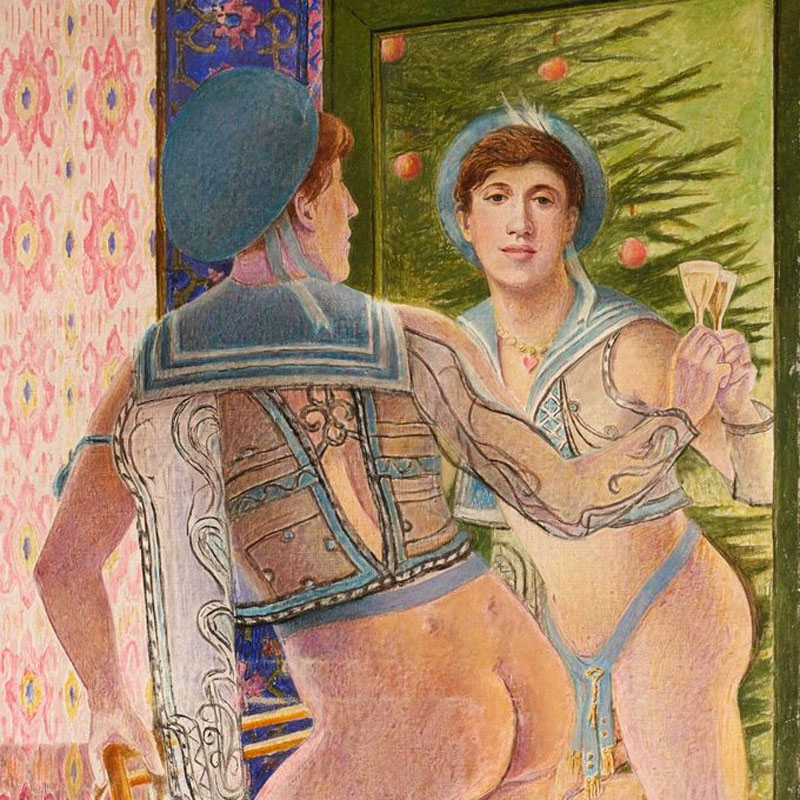
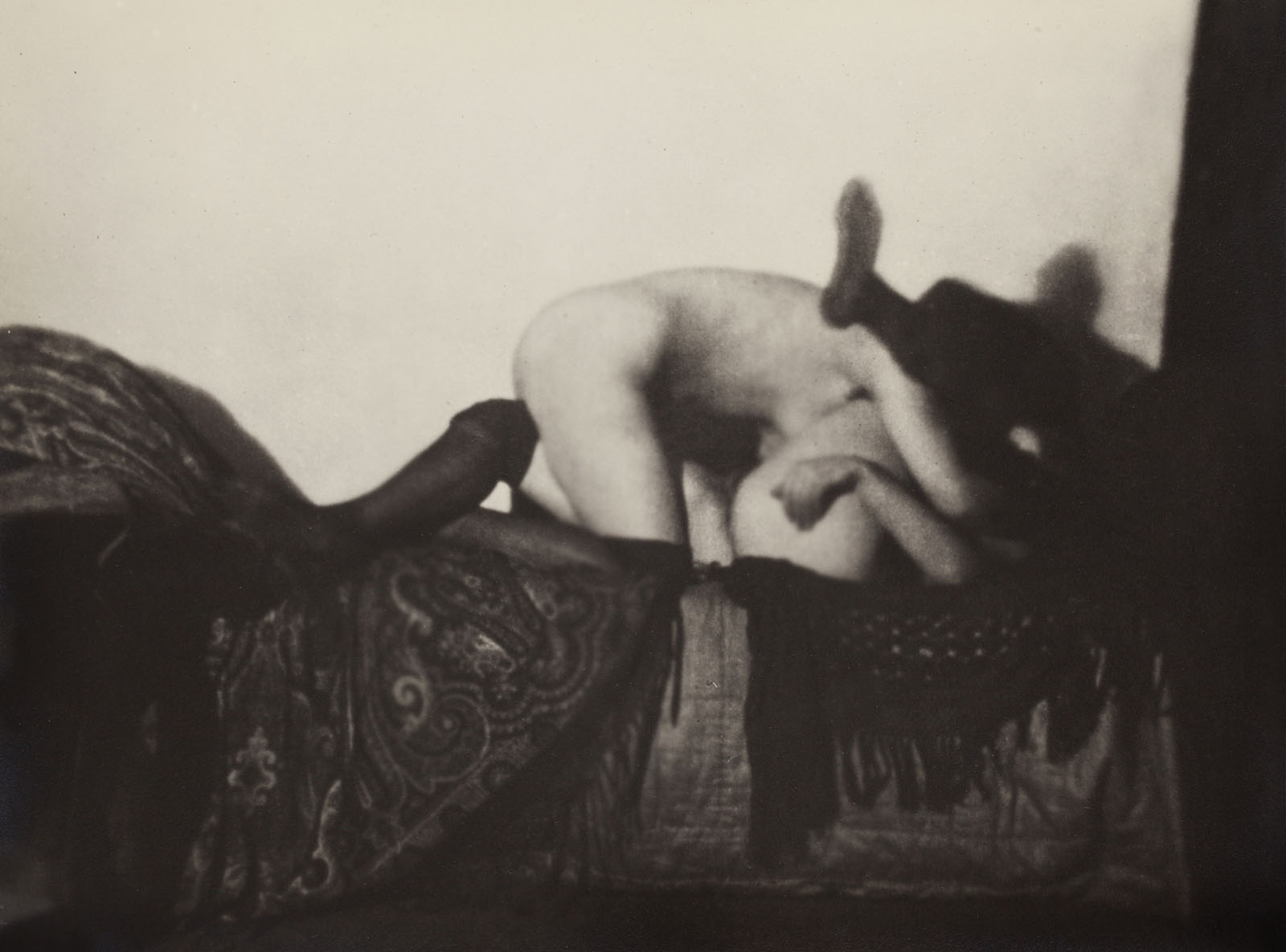
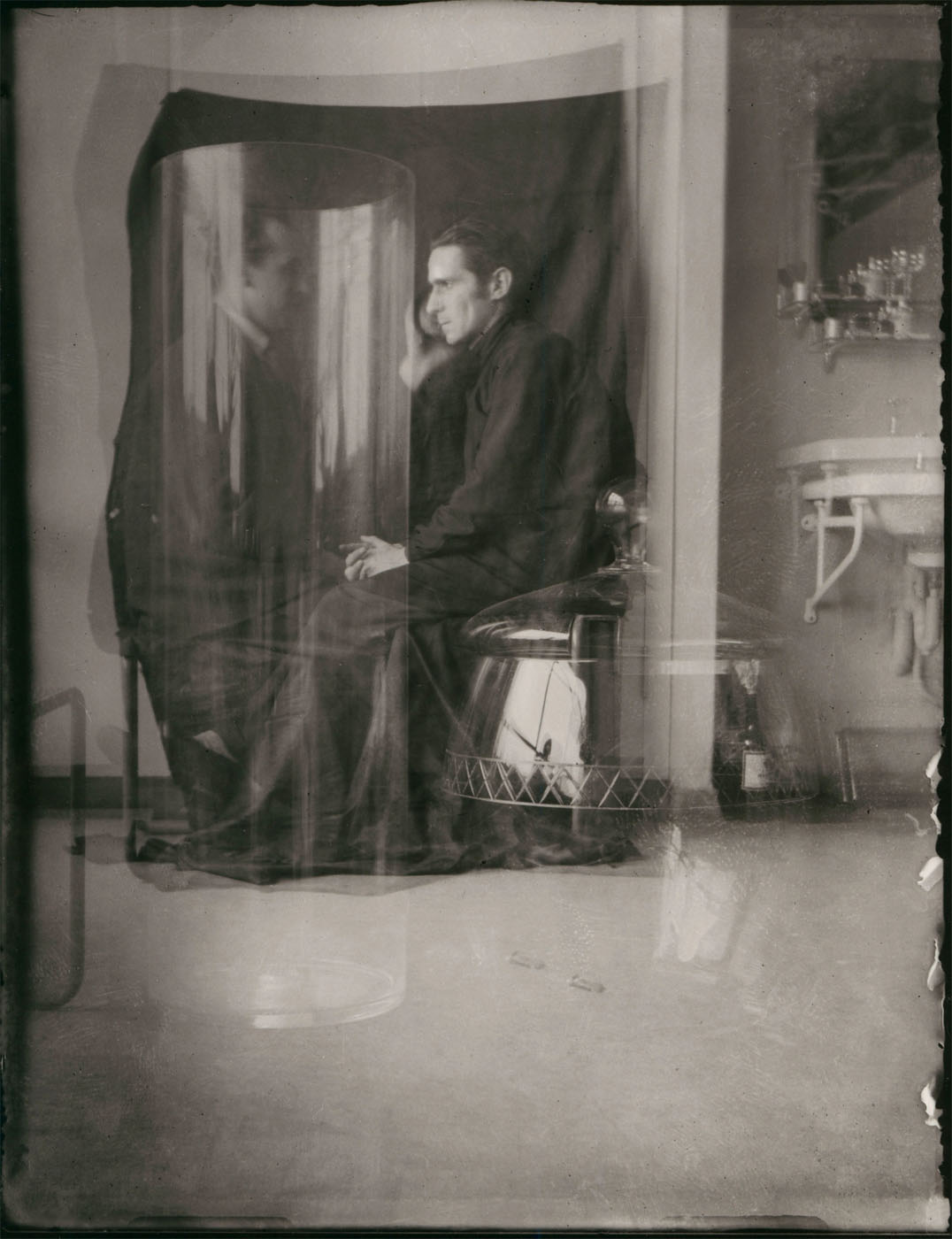
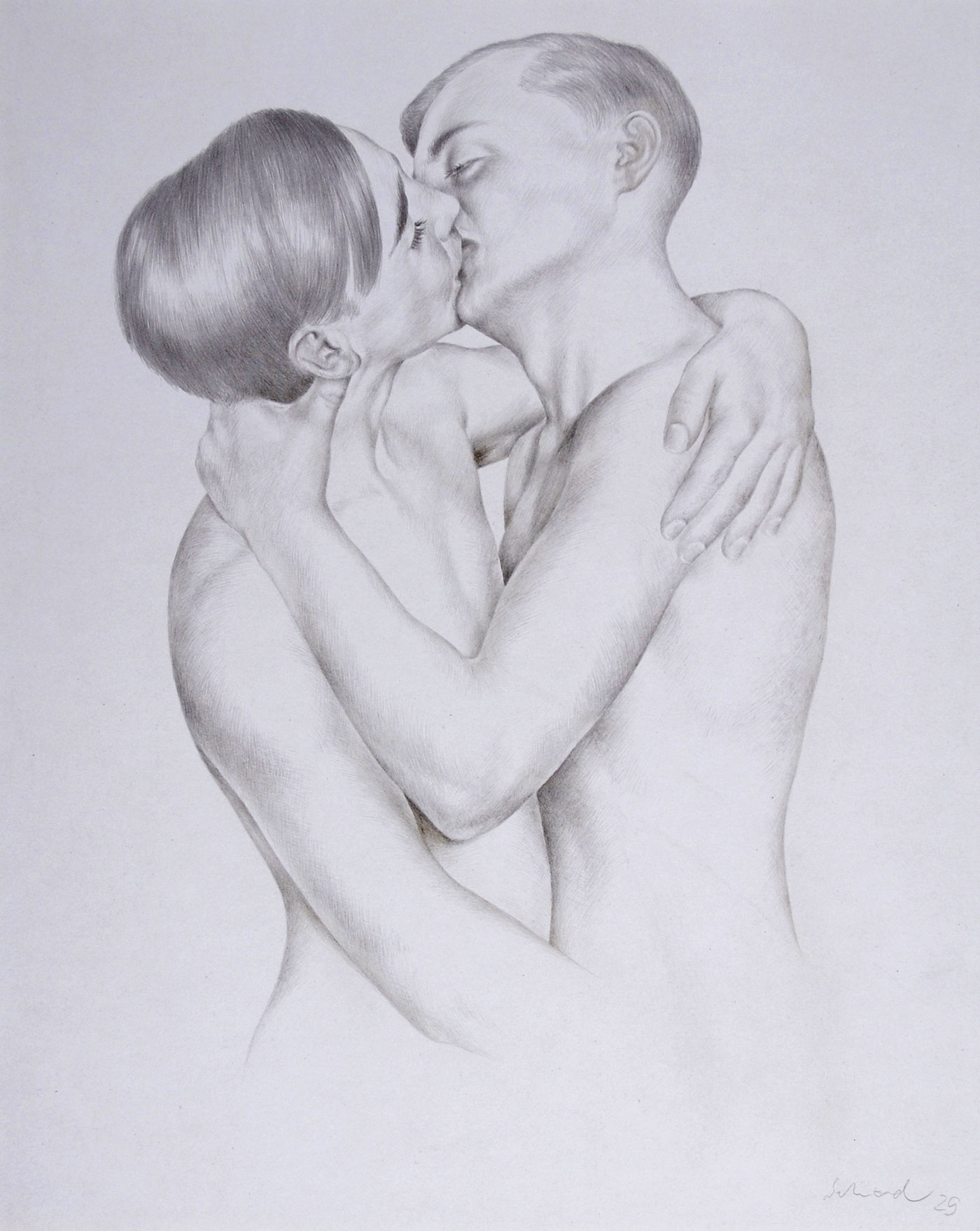
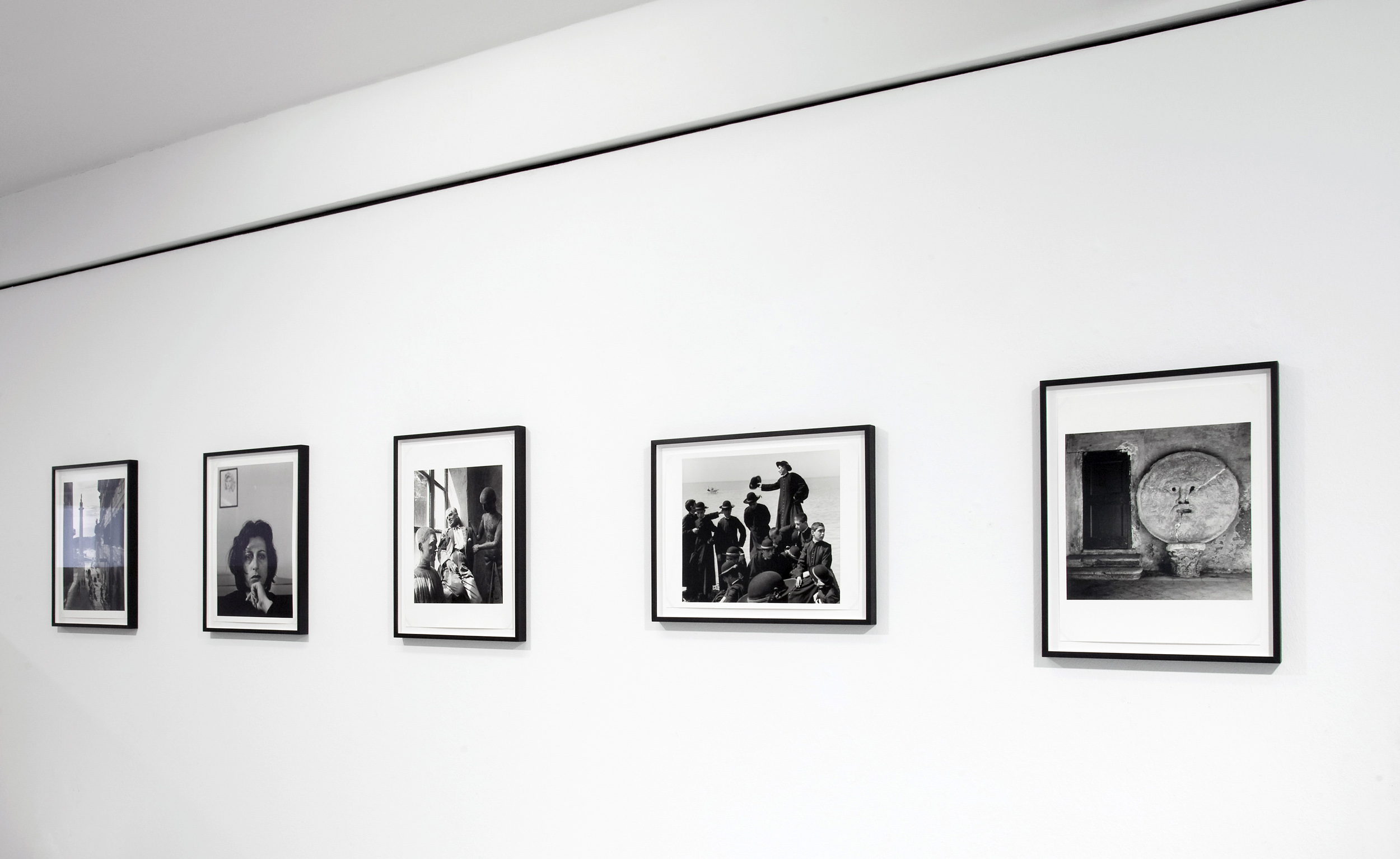
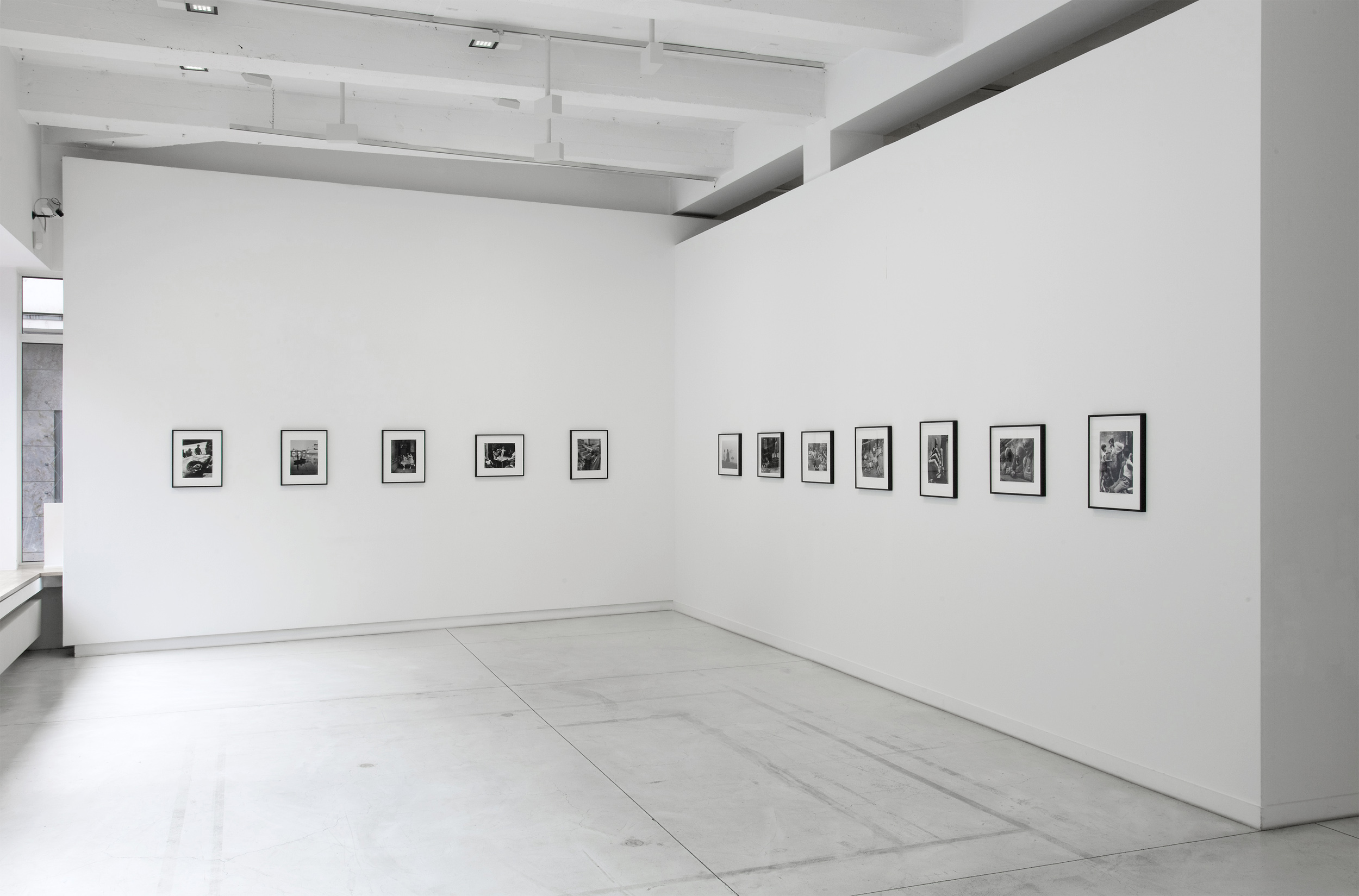
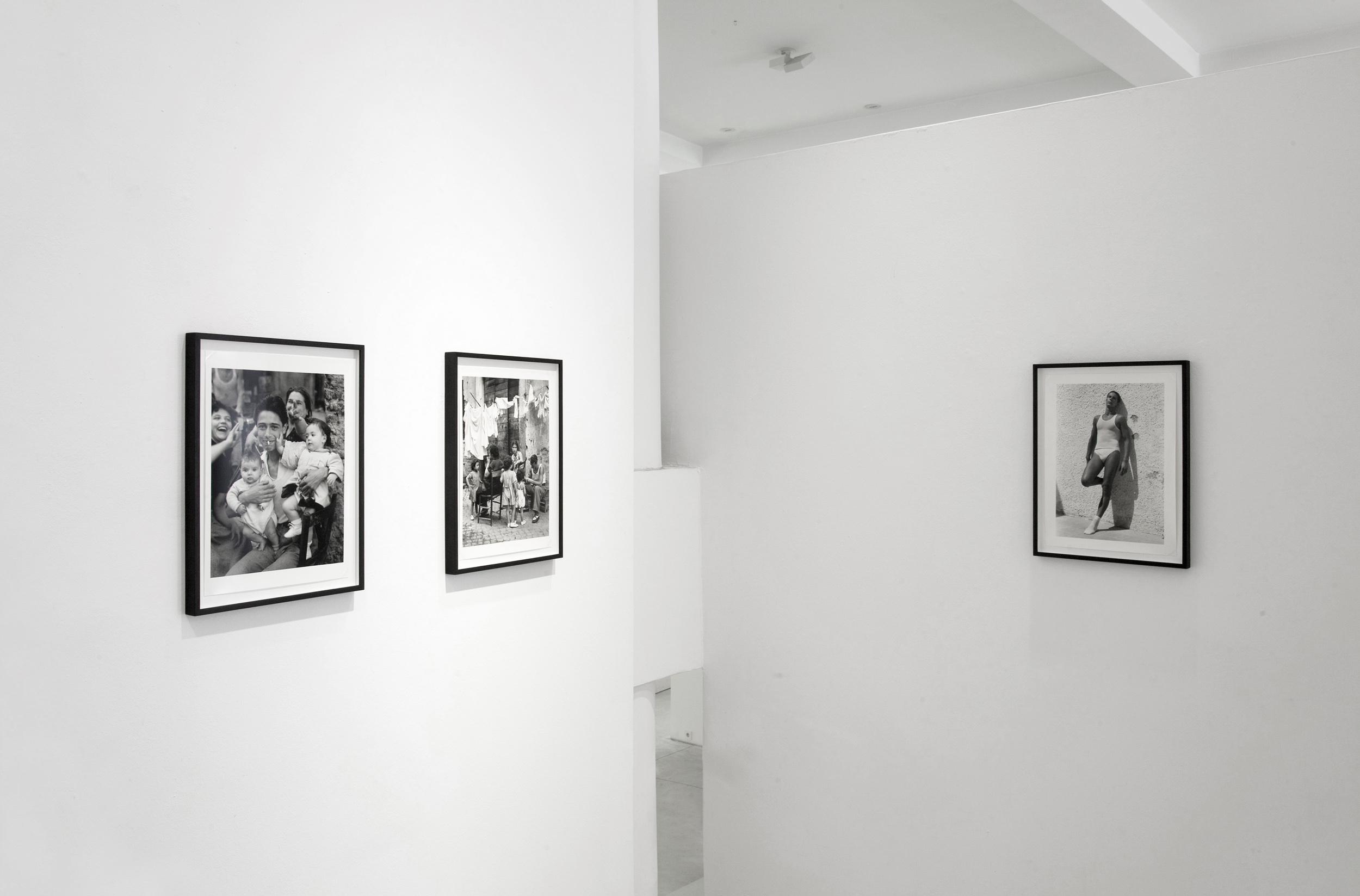
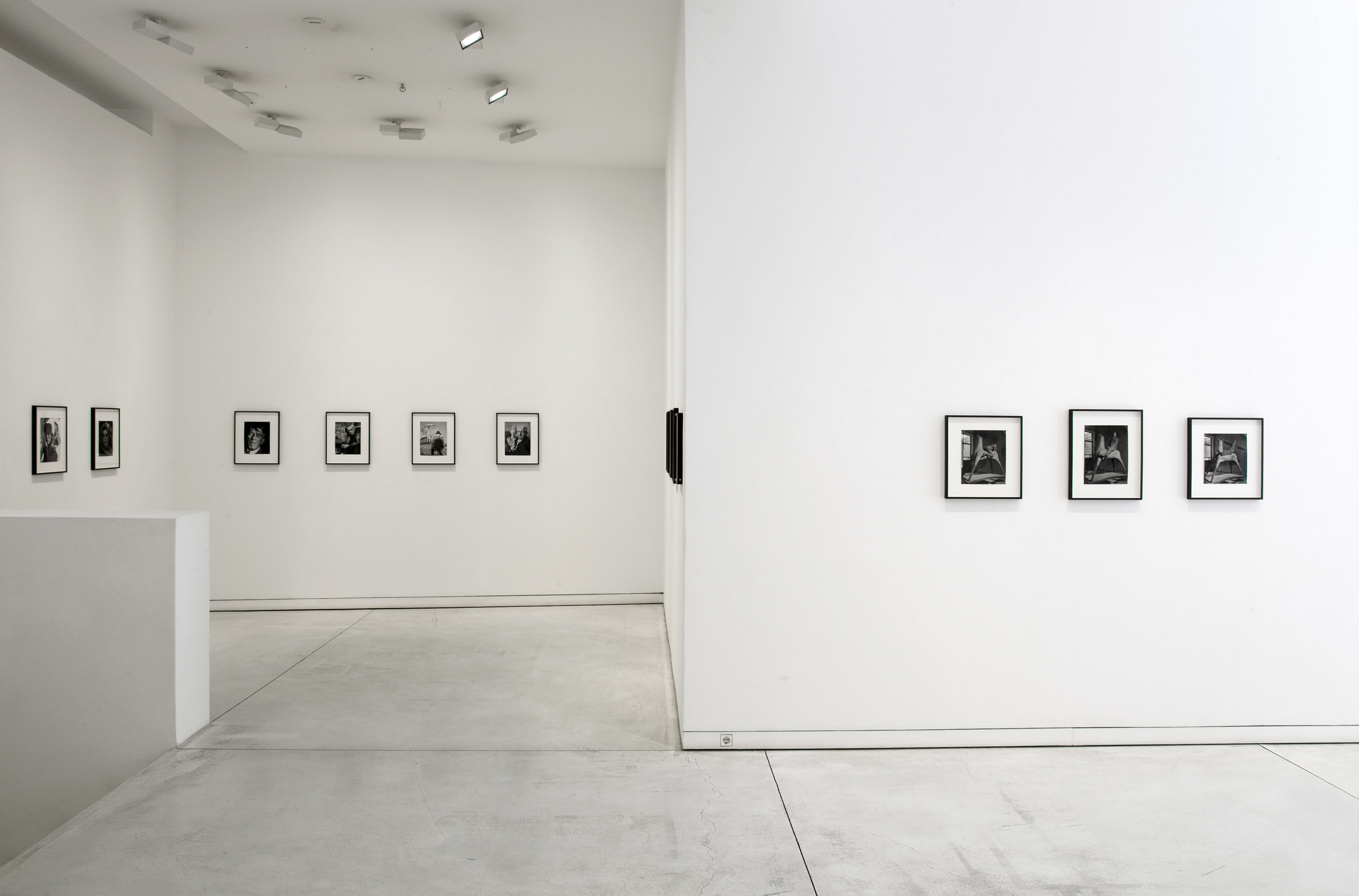
Exhibition: ‘TO BE SEEN: Queer Lives 1900-1950’ at the Munich Documentation Center for the History of National Socialism

Exhibition dates: 7th October, 2022 – 21st May, 2023

Head Curator: Karolina Kühn
Curators: Juliane Bischoff, Angela Hermann, Sebastian Huber, Anna Straetmans, Ulla-Britta Vollhardt
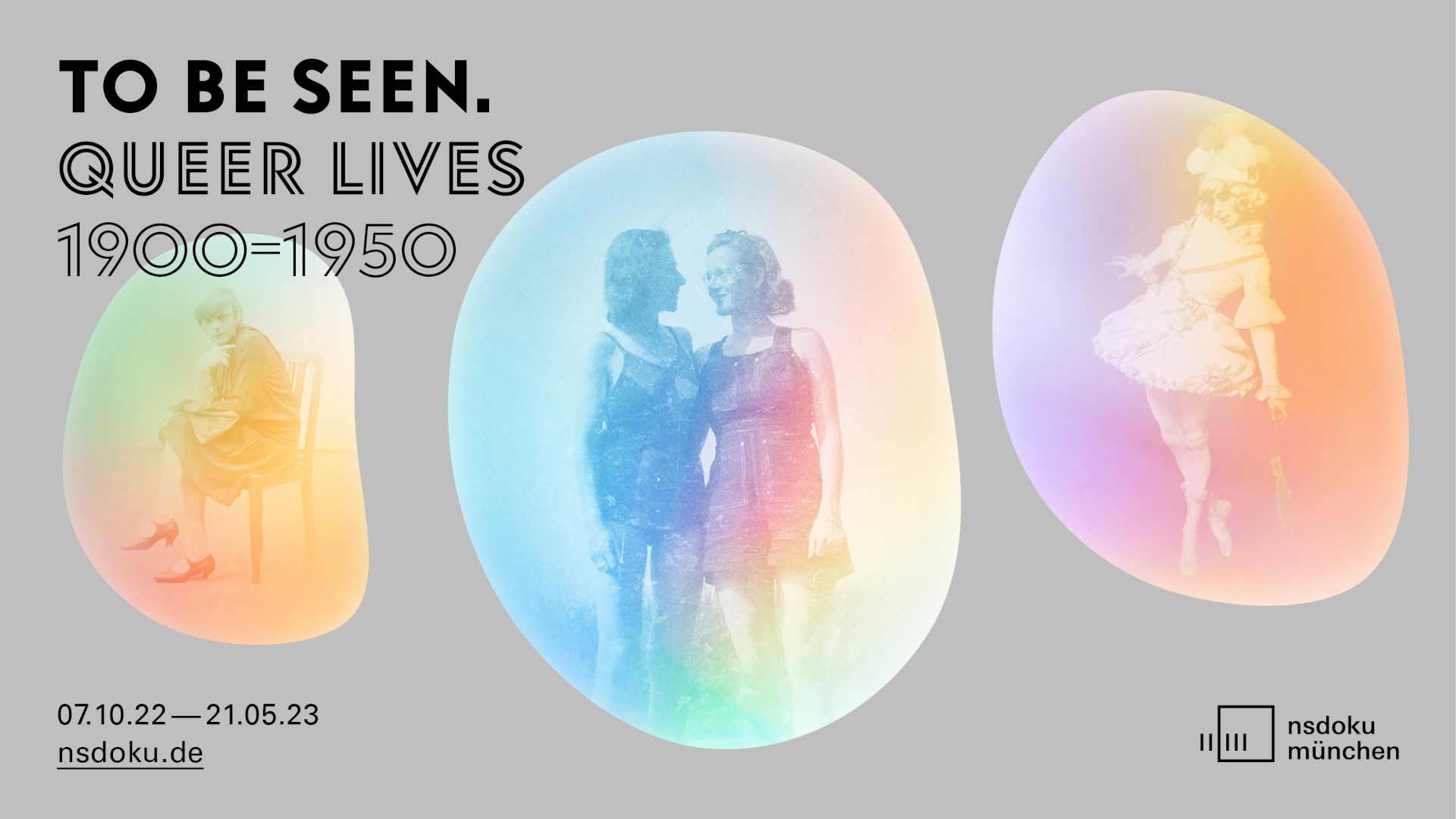
 

'TO BE SEEN: Queer Lives 1900-1950' promo poster


Wer’e here, we’re queer, we’re not going anywhere.

Despite years of persecution, death and inequality, the presence of queer identity, diversity and creativity remains undimmed.

There are some fabulous, groundbreaking human beings who are “being seen” in this posting. Equally, there are some fabulous art works that illuminate the(ir) human condition.

Let’s celebrate their existence.

Dr Marcus Bunyan


Many thankx to the Munich Documentation Center for the History of National Socialism for allowing me to publish the photographs in the posting. Please click on the photographs for a larger version of the image.


About the exhibition

TO BE SEEN is an exhibition devoted to the stories of LGBTQI+ in Germany in the first half of the twentieth century. Through historical testimony and artistic positions from then and now, it traces queer lives and networks, the areas of freedom enjoyed by LGBTQI+, and the persecution they suffered.

The exhibition takes an intimate look at a variety of genders, bodies, and identities. It shows how queer life became ever more visible during the 1920s, giving rise to a more open treatment of role models and of desire. During this period, homosexual, trans, and non-binary people achieved their first successes in their fight for equal rights and social acceptance. They organised, fought for scientific and legal recognition of their gender identity, and carved out their own spaces.

But as recognition and visibility in art and culture, science, politics, and society increased, so did resistance. After the Nazis came to power, the LGBTQI+ subculture was largely destroyed. After 1945, their stories and fates were scarcely archived or remembered.

Text from the Munich Documentation Center for the History of National Socialism website


“When a right is withheld from you, you must fight and not give in; that is a moral duty.”


Joseph Schedel opened the first meeting of the Scientific-Humanitarian Committee of Munich on September 24, 1902
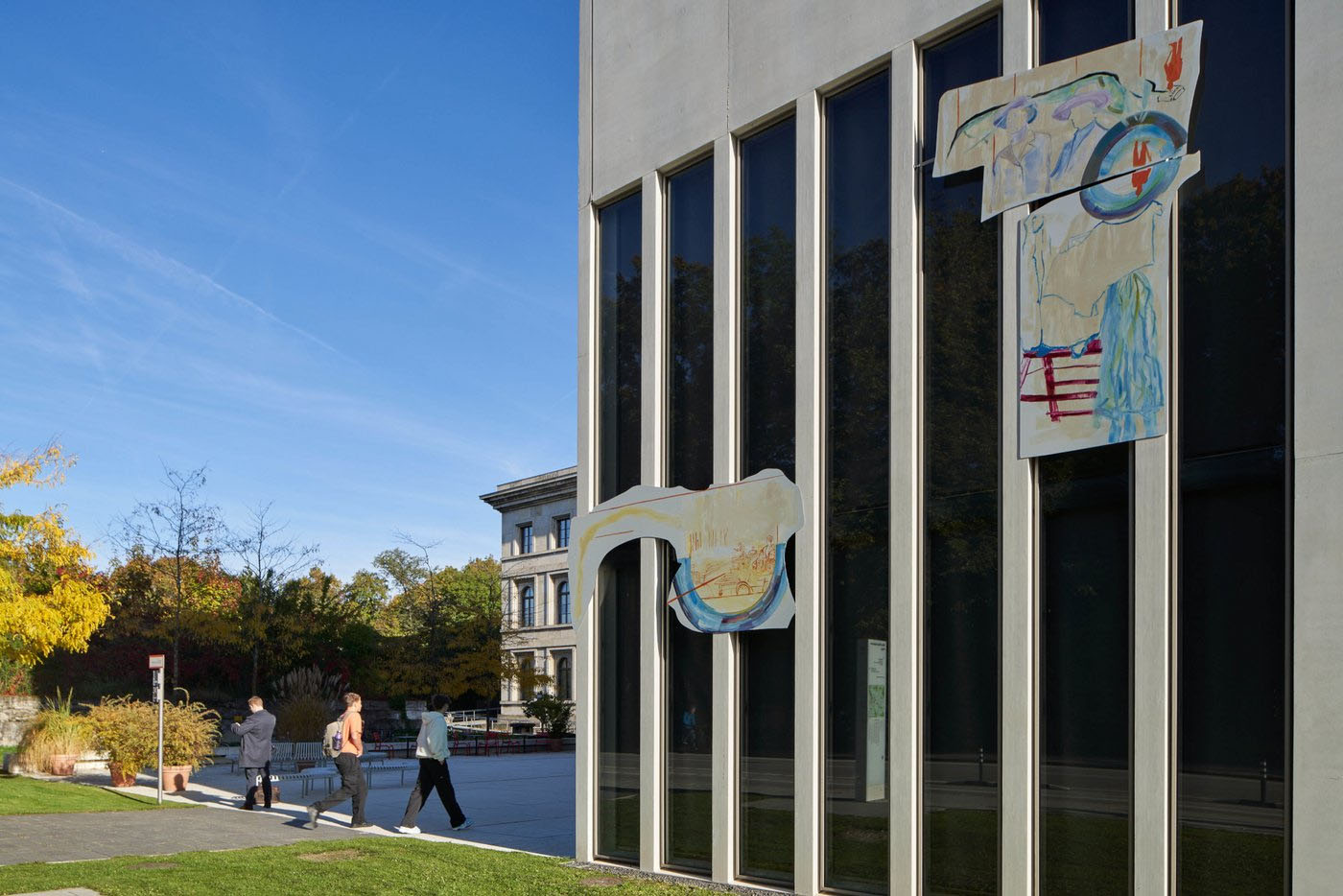


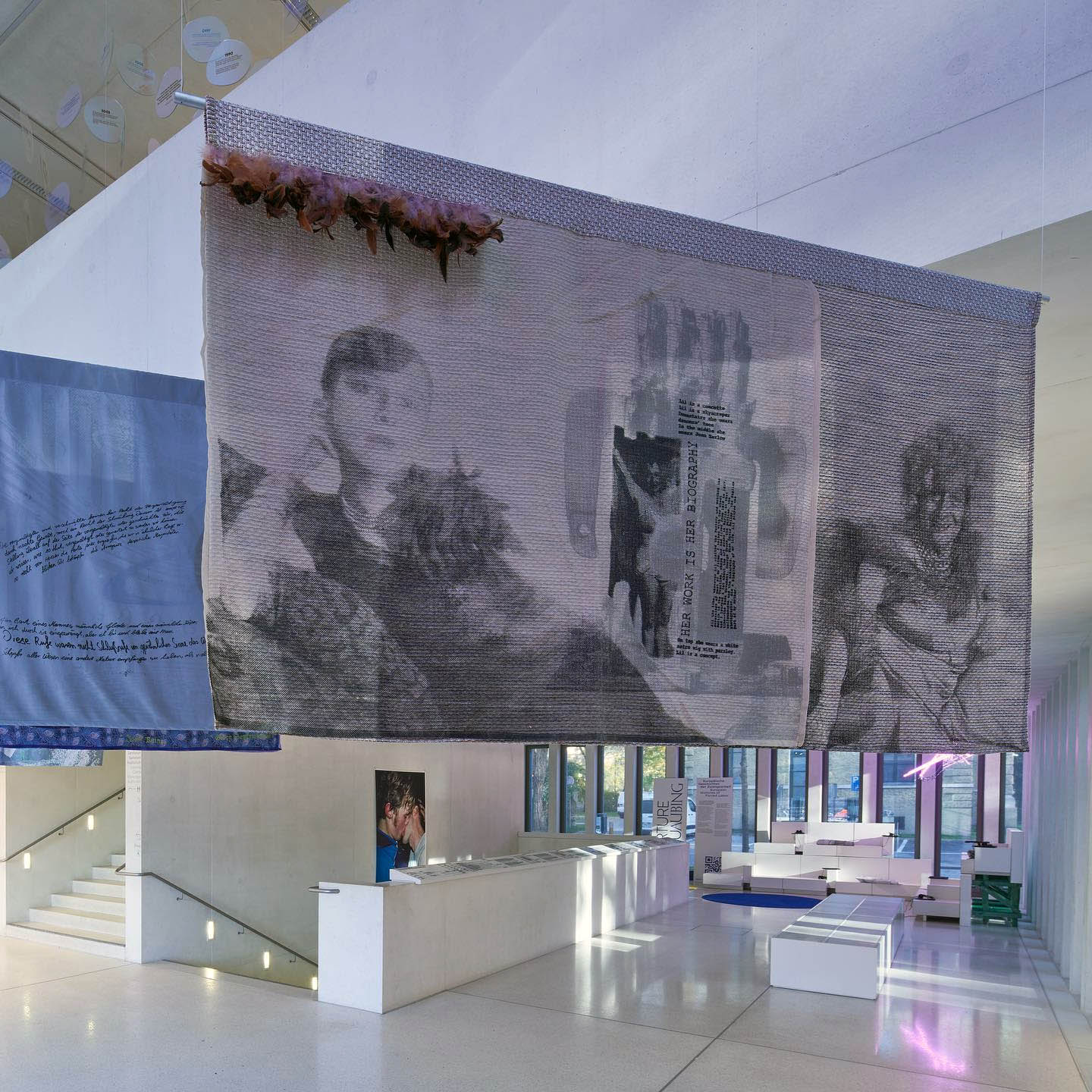
Exterior view of the NS Documentation Center in Munich showing a work in the exhibition TO BE SEEN: Queer Lives 1900-1950 – Maximiliane Baumgartner's '"You look at us – we look at you": Rubbing against the architecture of the executive gaze (Based on a paper by Anita Augspurg 'Mißgriffe der Polizei' / 'Abuses by the Police', 1902)' 2021


Exterior view of the NS Documentation Center in Munich showing a work in the exhibition TO BE SEEN: Queer Lives 1900-1950 – Maximiliane Baumgartner’s “You look at us – we look at you”: Rubbing against the architecture of the executive gaze (Based on a paper by Anita Augspurg ‘Mißgriffe der Polizei’ / ‘Abuses by the Police’, 1902) 2021
Photo: Connolly Weber Photography/NS-Dokumentationszentrum München
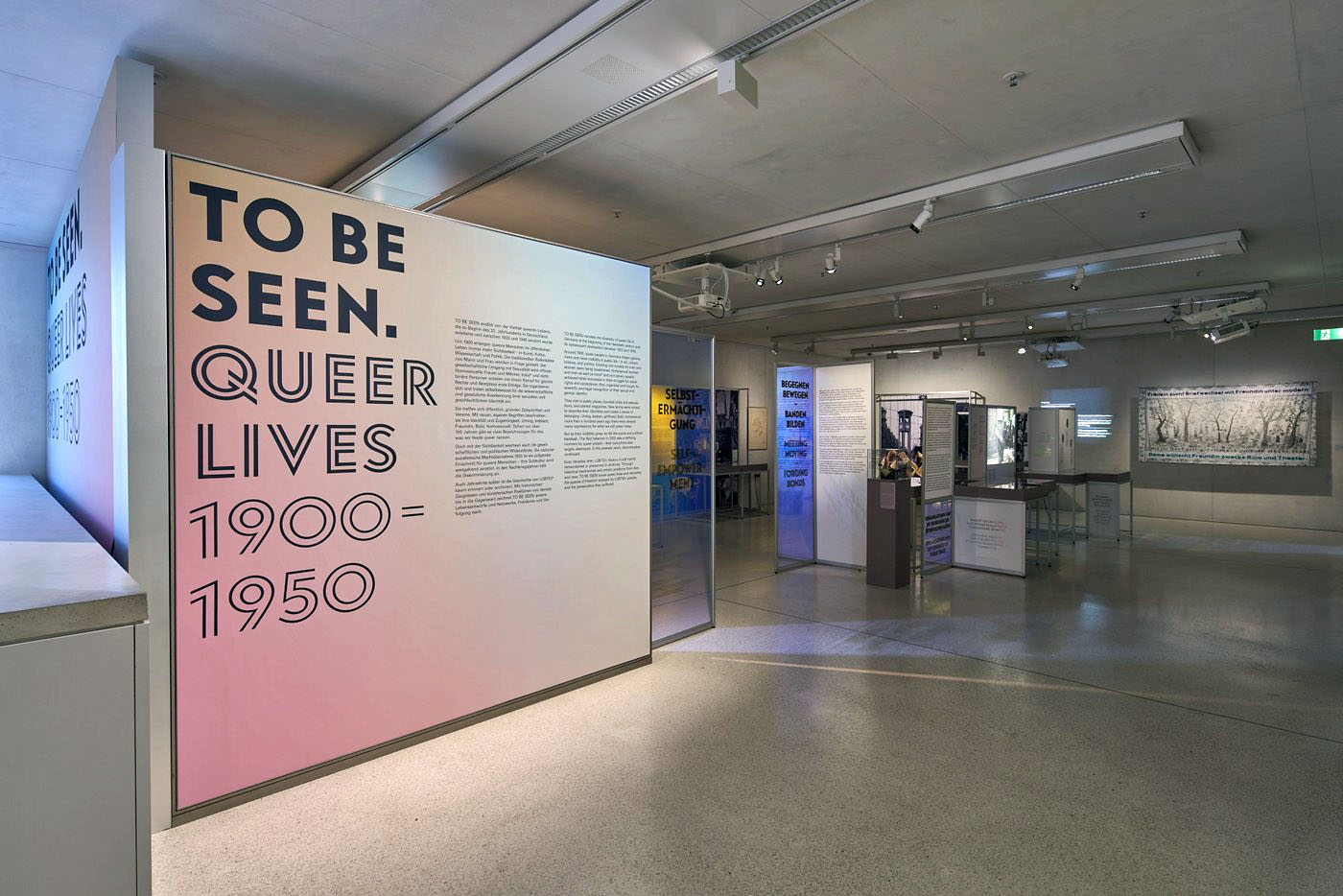
 

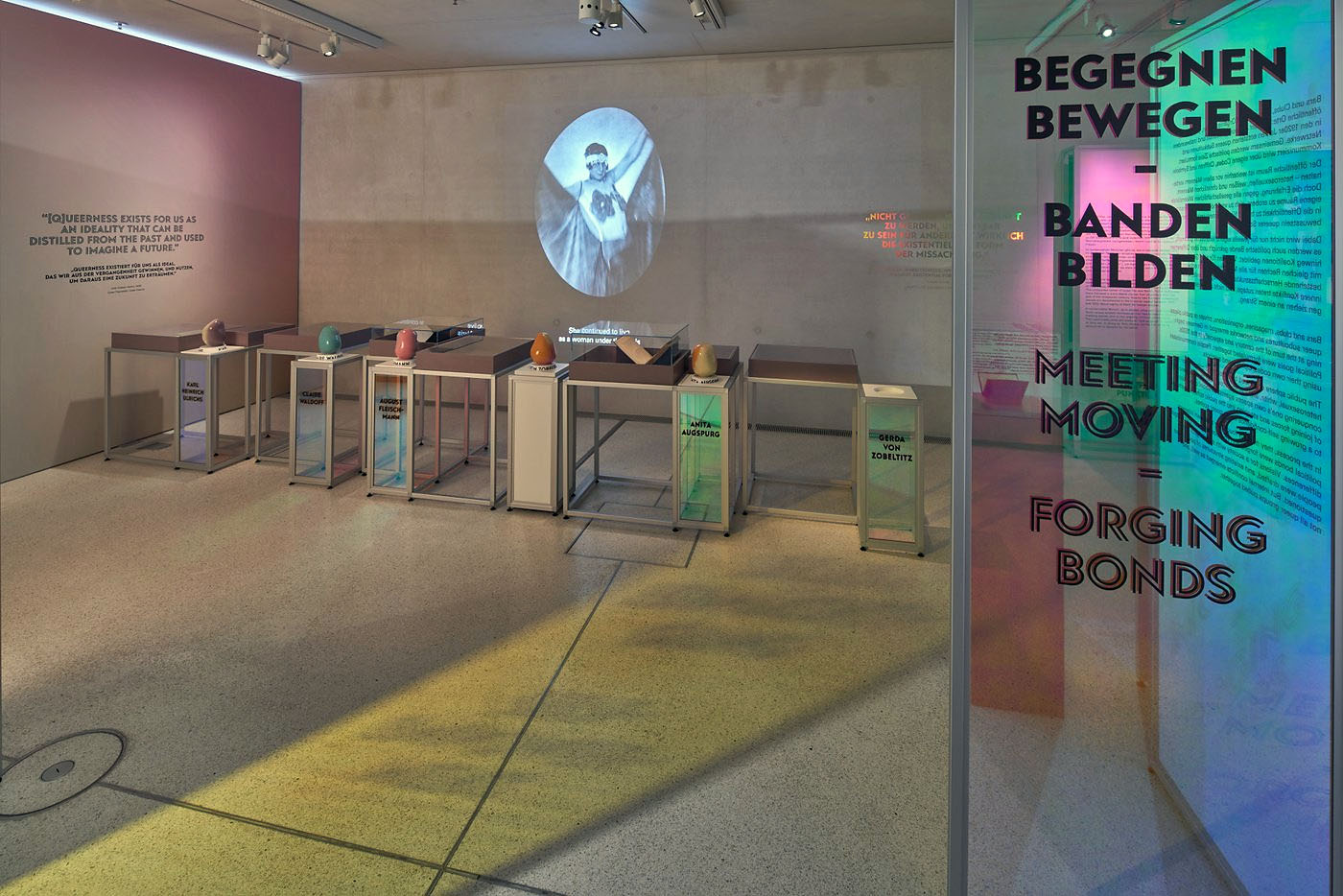
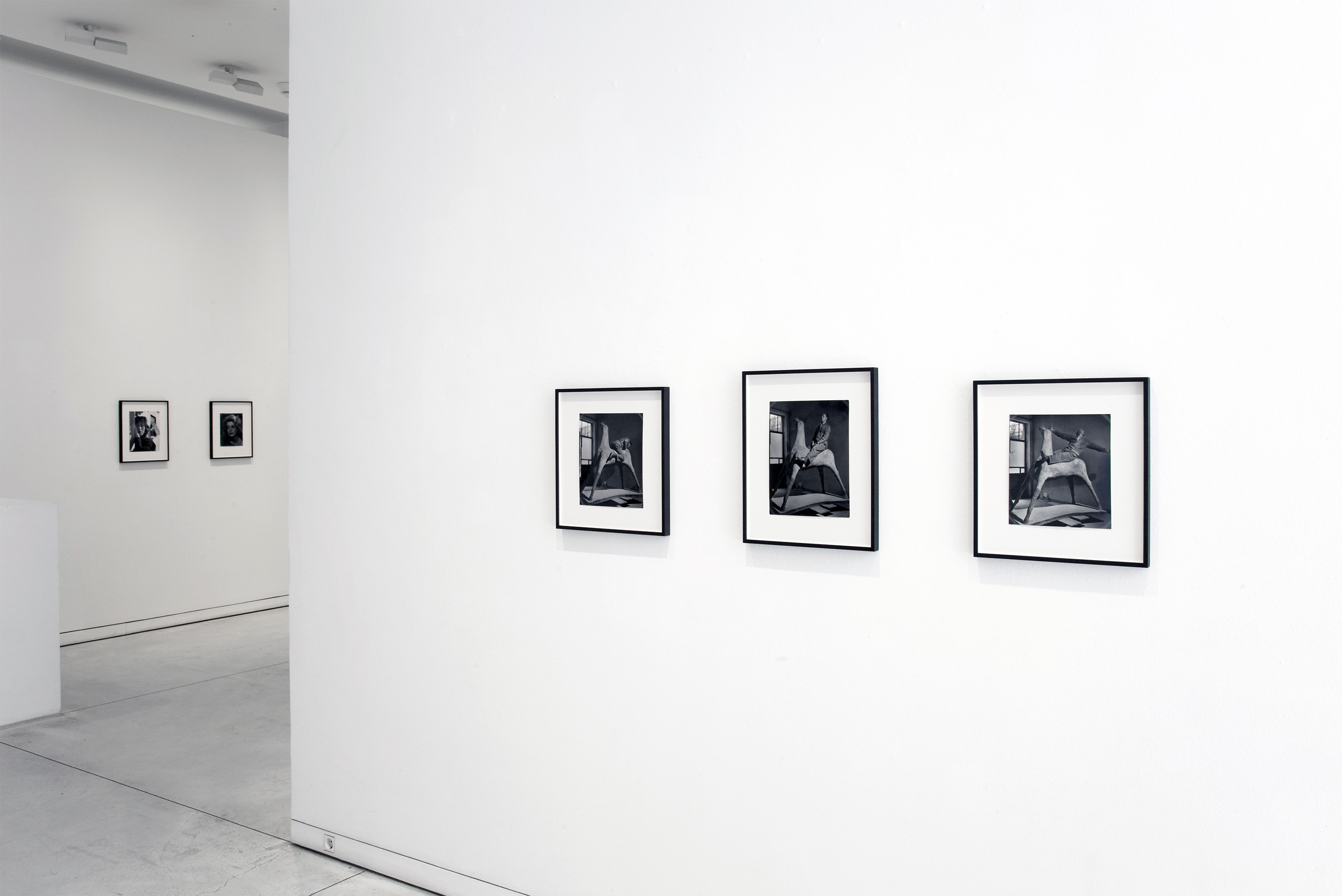
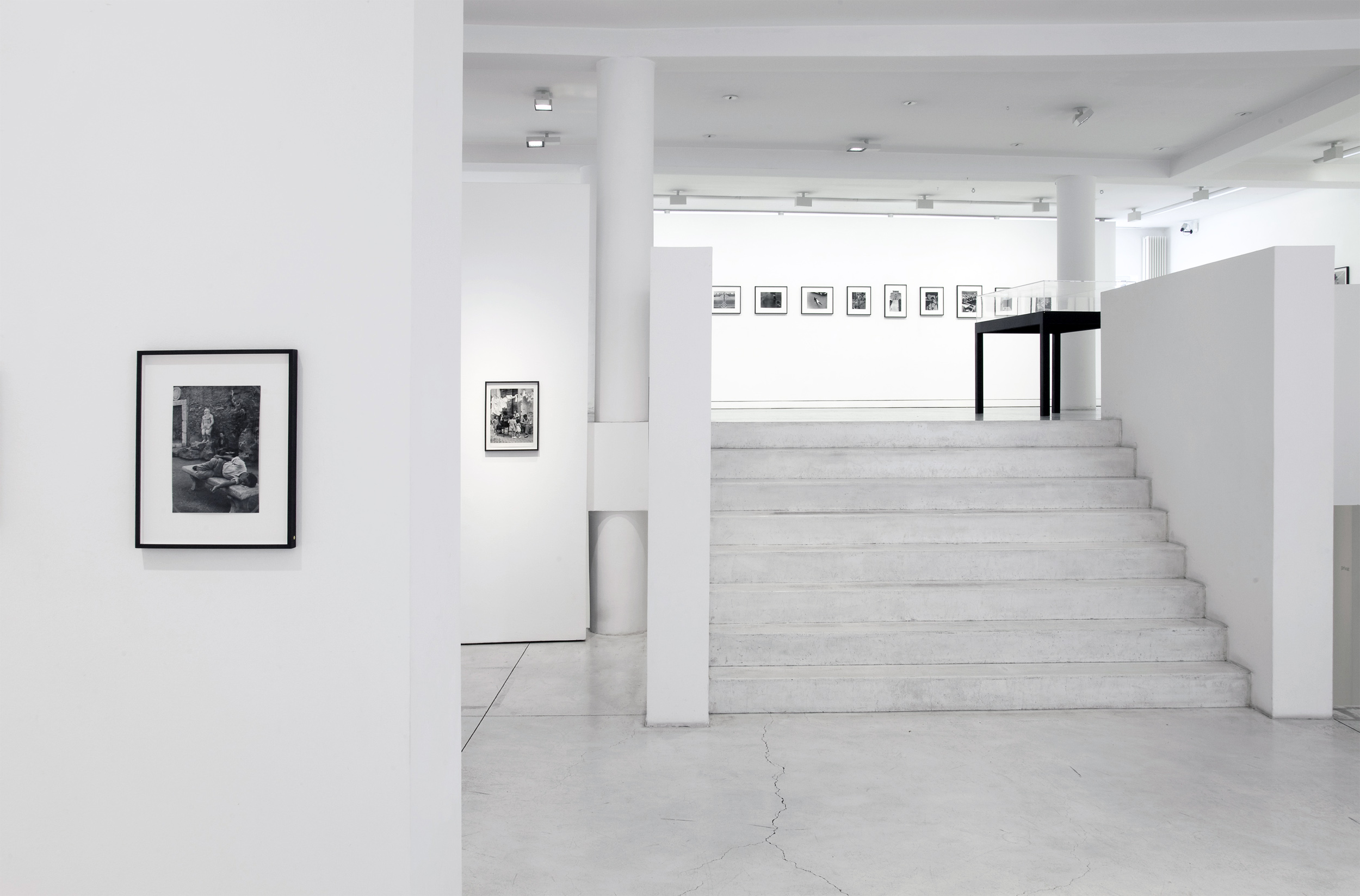
Installation view of the exhibition 'TO BE SEEN: Queer Lives 1900-1950' at the Munich Documentation Center for the History of National Socialism


Installation view of the exhibition TO BE SEEN: Queer Lives 1900-1950 at the Munich Documentation Center for the History of National Socialism
Photo: Connolly Weber Photography/NS-Dokumentationszentrum München


TO BE SEEN | Trailer

The exhibition TO BE SEEN: Queer Lives 1900-1950 is dedicated to the stories of LGBTIQ* in Germany in the first half of the 20th century from October 7th, 2022 to May 21st, 2023 at the Munich Documentation Center. With historical testimonies and artistic positions from then to the present, the exhibition traces queer life plans and networks, freedom and persecution.

The exhibition takes an intimate look at diverse genders, bodies and identities. It shows how queer life became more and more visible in the 1920s and how role models and desires were dealt with more openly. Homosexual, trans* and non-binary people achieved their first successes in their fight for equal rights and social acceptance: they organised themselves, fought for scientific and legal recognition of their gender identity and conquered their own spaces.

In addition to recognition and visibility in art and culture, science, politics and society, resistance also increased. After the National Socialists came to power, the LGBTIQ* subculture was largely destroyed. After 1945 their stories and fates were hardly archived or remembered.


Unknown photographer. 'Lili, Paris' 1926


Unknown photographer
Lili, Paris
1926
From N. Hoyer (ed.). Man into Woman. An Authentic Record of a Change of Sex. The true story of the miraculous transformation of the Danish painter Einar Wegener (Andreas Sparre). London: Jarrolds, 1933, 1926, opp. p. 40.
Attribution 4.0 International (CC BY 4.0)


Lili Elbe, a transgender woman who underwent sex reassignment surgery in Berlin in the 1930s.


Around 1900, queer people in Germany began gaining more and more visibility in public life – in art, culture, science, and politics. Existing role models for men and women were being questioned. Homosexual women and men as well as trans* and non-binary people achieved initial successes in their struggle for equal rights and acceptance: they organised and fought for scientific and legal recognition of their sexual and gender identity.

They met in public places, founded clubs and associations, and started magazines. New terms were coined to describe their identities and create a sense of belonging. Urning, lesbian, girlfriend, Bubi, homosexual: more than a hundred years ago there were already many expressions for what we call queer today. But as their visibility grew, so did the social and political backlash. The Nazi takeover in 1933 was a defining moment for queer people – their subculture was largely destroyed. In the postwar years, discrimination continued.

Even decades later, LGBTQI+ history is still hardly remembered or preserved in archives. Through historical testimonies and artistic positions from then and now, TO BE SEEN traces queer lives and networks, the spaces of freedom enjoyed by LGBTQI+ people, and the persecution they suffered.

Text from Stories of the exhibition TO BE SEEN: Queer Lives 1900-1950


Unknown photographer. 'Police photo of Liddy Bacroff' 1933


Unknown photographer
Police photo of Liddy Bacroff
1933
Gelatin silver print
© Staatsarchiv Hamburg


Police photo of Liddy Bacroff, taken after an arrest, 1933. Barcoff described themself as a “homosexual transvestite”, lived from sex work, and was convicted several times. In 1943, they was murdered in the Mauthausen concentration camp.


Liddy Bacroff, a transgender woman initially from Ludwigshafen, who moved to Hamburg and lived for the majority of her life publicly presenting herself as a woman. She did not perceive herself to be a man (and, indeed, in papers she left after having been imprisoned, she determined what her name would be while also conspicuously referring to herself as “Liddy Bacroff, Transvestit”). But this was effectively her own form of self-ID. Certainly the authorities didn’t see her as such — her records remain filed under her deadname and identify her as a homosexual man – and, though she’d have been given a Transvestitenschein in Berlin, she wasn’t IN Berlin. Having not visited Hirschfeld and his Institut, it’s a marvel she uses the term “Transvestit”; elsewhere she does refer to herself as a “Mann-Weib” (a “male woman”), and frequently as a girl or a woman. The authorities, again, call her a man or, occasionally, a “Zwitter.” (NB. “Zwitter” means “hermaphrodite” and is here not meant literally but rather as an epithet recorded in the official files – an insult to her.) So the language that is used to describe trans people is inconsistent and, often, absent (depending on the sources). Reading between the lines is necessary, especially in the official records, which view trans women (regardless their lived circumstances or their appearance) only as homosexual men, and charge them as such. And while Hirschfeld was conscientious, the police were… not. This is especially true as the 1930s unfolded and the country Nazified. I wrote a very long thread a while back about “Heinrich Bode”, who was assigned male at birth but frequently presented as a woman. I used that thread to highlight difficulties of definition because Bode denounced their appearance as a woman in court filings and personal testimony, but at the same time also hinted that there was something much deeper than “just” dressing as a woman. But as they were subjected to prosecution by the Nazified judiciary and security state, they were under duress. So, do we assume that Bode was trans, and denied it because of the threat of punishment? Or was their presentation simply playing with the conventions of gender?

Dr. Bodie A. Ashton Historiker, Universität Erfurt. Text from his Twitter account
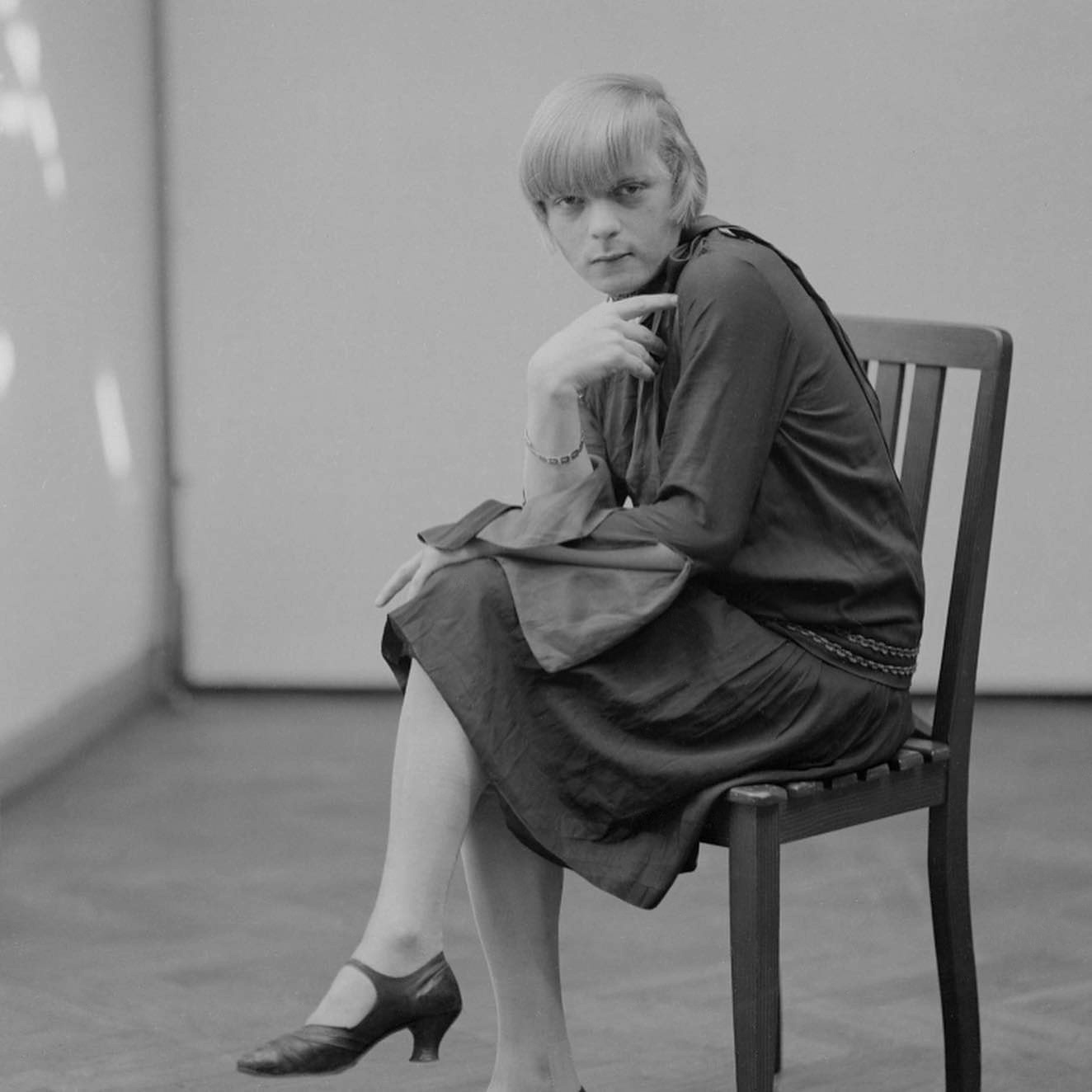
 

Unknown photographer. 'Police photo of Liddy Bacroff' 1933


Unknown photographer
Police photo of Liddy Bacroff
1933
Gelatin silver print
© Staatsarchiv Hamburg
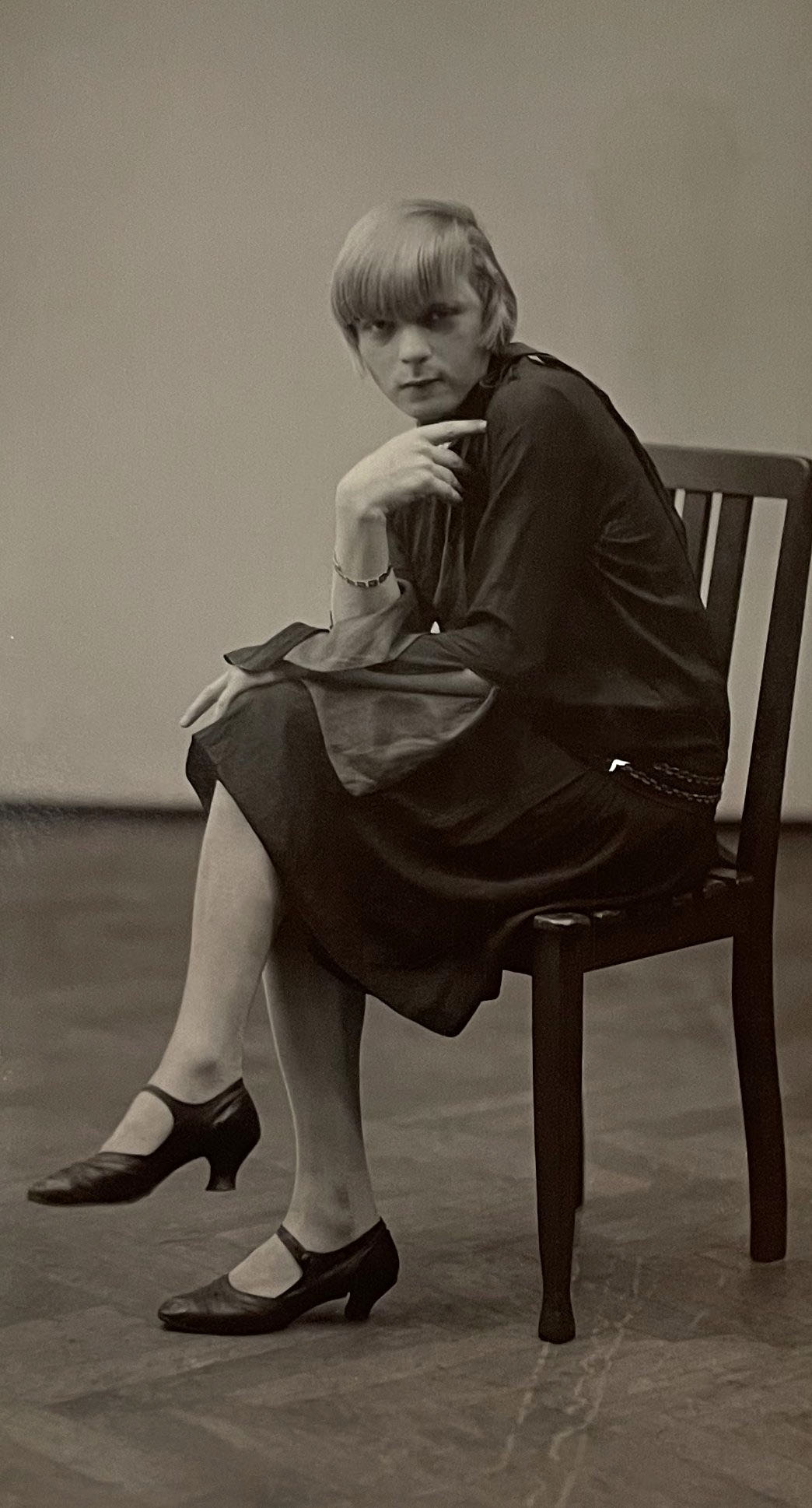
 

Unknown photographer. 'Police photo of Liddy Bacroff' 1933


Unknown photographer
Police photo of Liddy Bacroff
1933
Gelatin silver print
© Staatsarchiv Hamburg
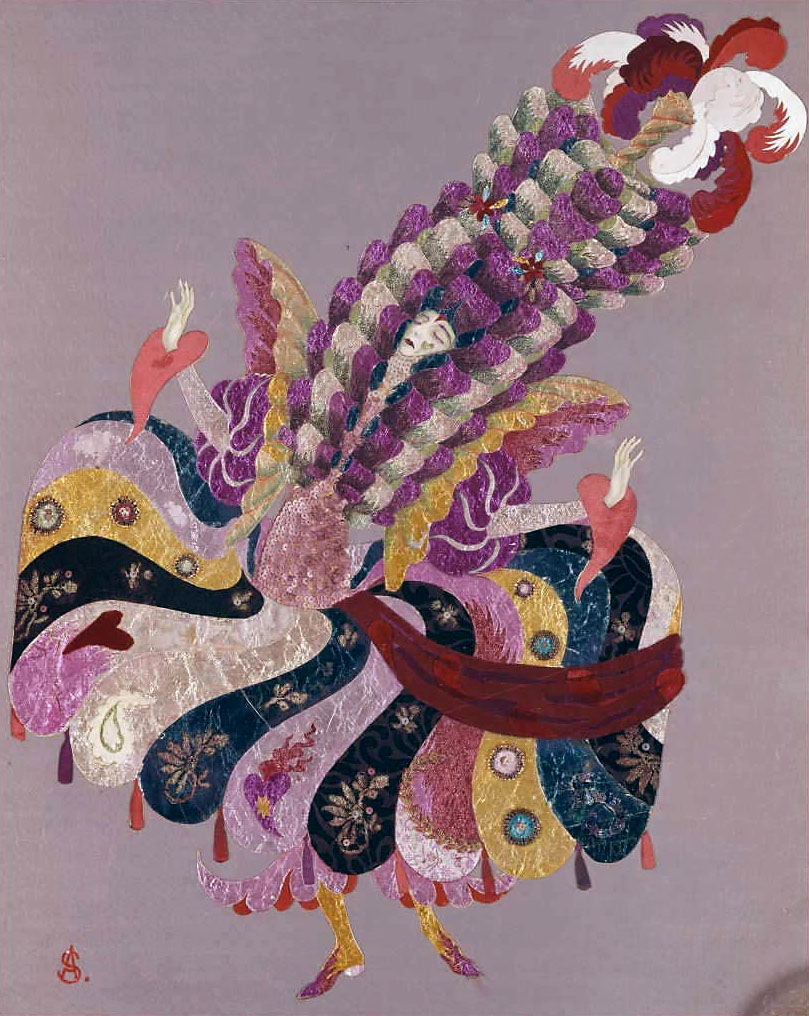
 

Alexander Sacharoff (Russian, 1886-1963) 'Pavane Fantastique' c. 1916/1917


Alexander Sacharoff (Russian, 1886-1963)
Pavane Fantastique
c. 1916/1917
© Städtische Galerie im Lenbachhaus und Kunstbau München


Unknown photographer. 'Alexander Sacharoff' c. 1914


Unknown photographer
Alexander Sacharoff
c. 1914
© Deutsches Theatermuseum München


The androgynous dancer created new body images and developed the swapping of clothes into a stage genre of its own.
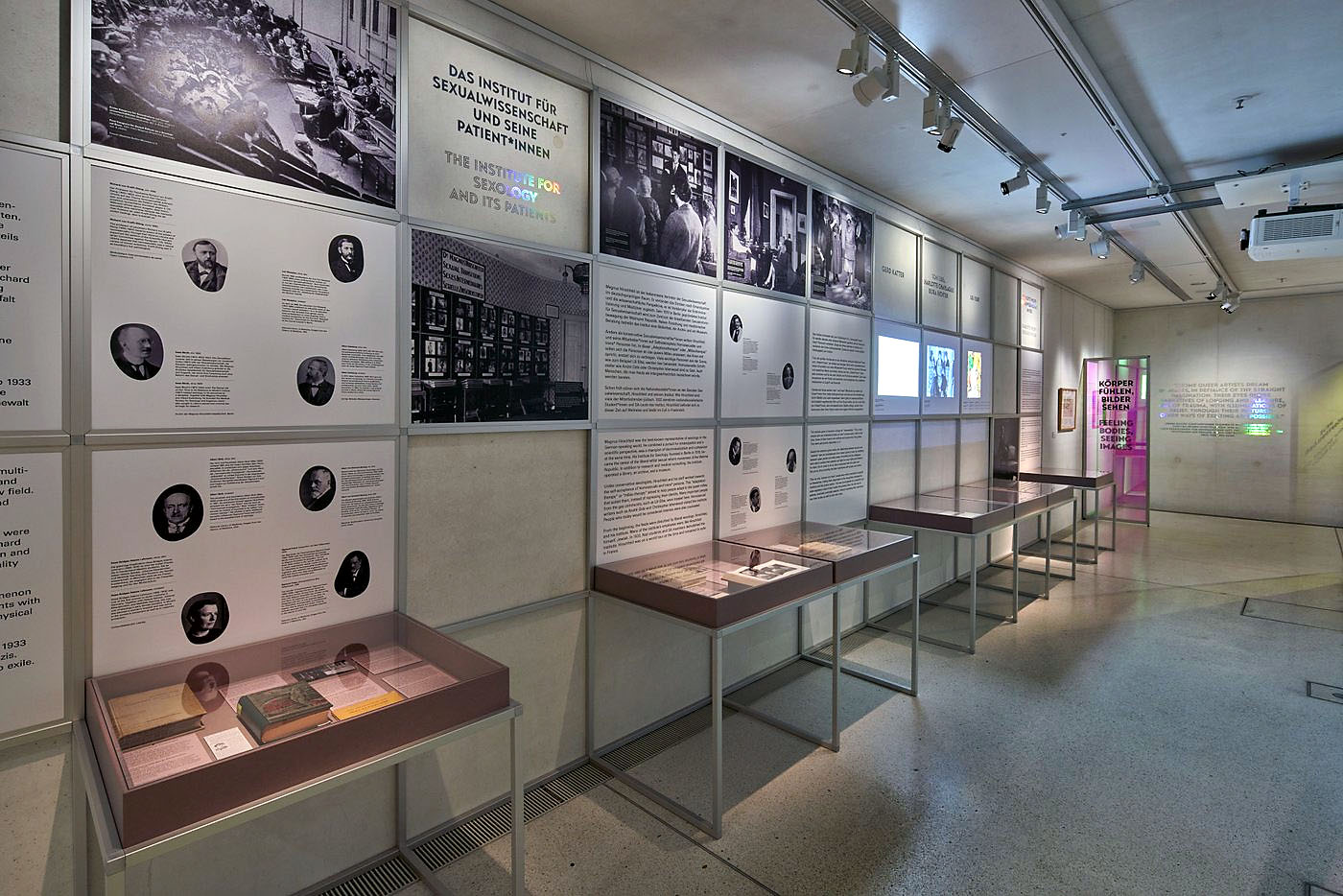
 

Installation view of the exhibition 'TO BE SEEN: Queer Lives 1900-1950' at the Munich Documentation Center for the History of National Socialism


Installation view of the exhibition TO BE SEEN: Queer Lives 1900-1950 at the Munich Documentation Center for the History of National Socialism
Photo: Connolly Weber Photography/NS-Dokumentationszentrum München


Queer

“Queer” originally referred to anything that did not fit into the usual categories. In English the word queer (meaning strange, other, suspicious), was used earlier as a derogative term for homosexuals. Since the 1990s, however, the term has been adopted by many non heterosexual and non-binary people as a positive self-designation. Within the exhibition, queer is used as a catch-all term for a variety of sexual and gender identities and practices that deviate from heterosexual ideas. The term primarily, but not only, refers to LGBTQI+ – in other words lesbian, gay, bisexual, trans and intersexual persons. Furthermore, “queering” can be understood as a practice of combating various forms of discrimination and exclusion. Applied to gender, sexuality, and identity issues, it means casting a critical gaze at the worldview that regards a heterosexual relationship between two persons as the social norm. The rigid binary division of gender into man and woman and the associated role models are thrown into question. In the exhibition, historical self-designations are used where they can be traced through sources.

Self empowerment

In the German Empire, politics, the economy, and society were dominated by men. The gender order, which was maintained over centuries by state and church, was strictly divided into two parts: men and women were assigned clear roles within which they must operate. People who did not conform to these role models and lived gender and sexual identities outside the normative order were ostracised. They were considered immoral, criminal, or ill. According to Paragraph 175 of the Imperial Criminal Code of 1871, sexual acts between men were forbidden and punishable by imprisonment. In Austria, sex between women was also punishable.

But there were individuals who rebelled against the prevailing gender order and fought for a more open society. They opposed the outlawing of homosexuality and transsexuality, advocated a change in criminal law, and assertively engaged in the recognition of their identities. New alliances and self-images emerged. Many of these pioneers paid a high price for their rebellion: they lost their jobs, their families, and their friendships, and were socially isolated.

Text from Stories of the exhibition TO BE SEEN: Queer Lives 1900-1950
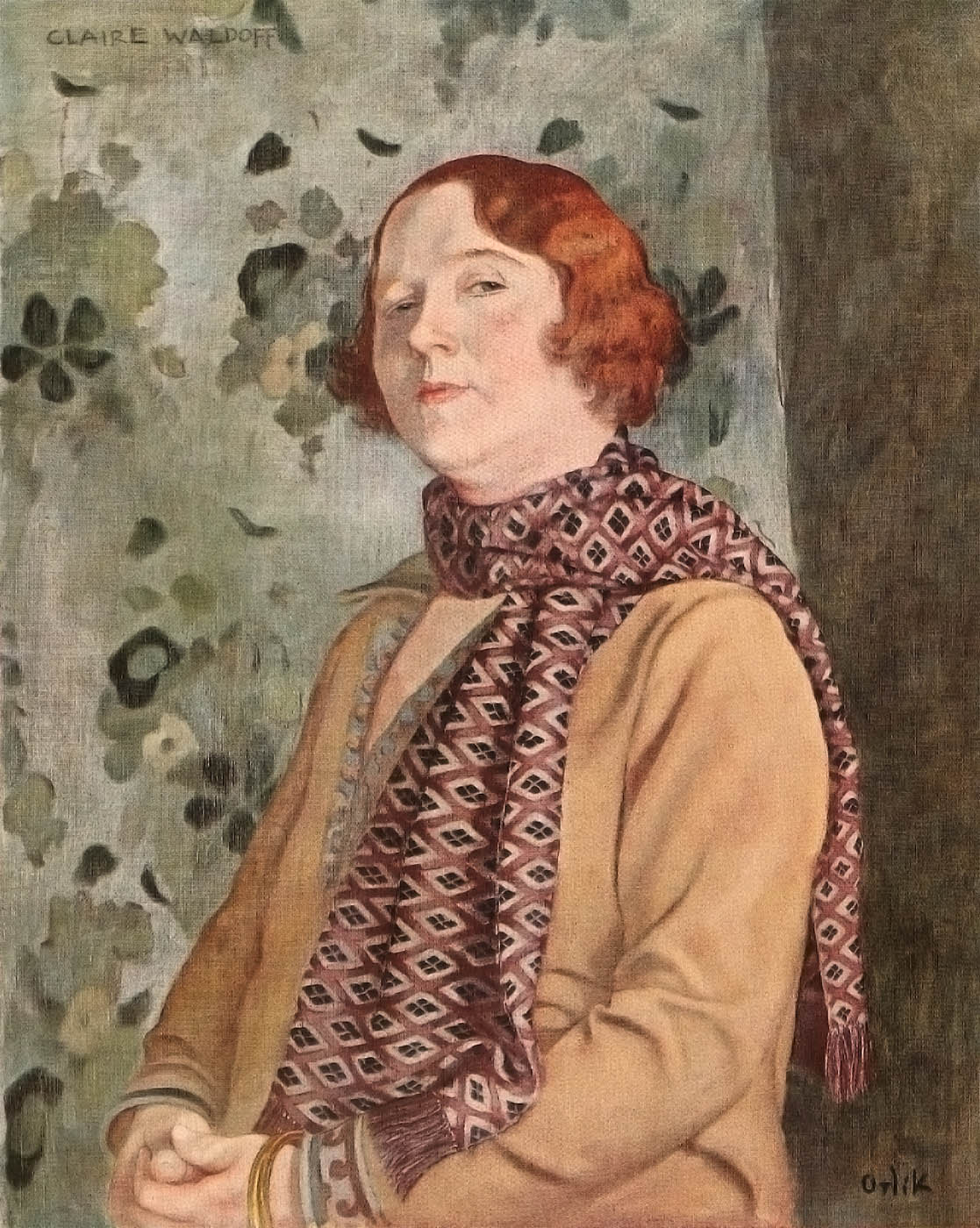
 

Emil Orlík (European born Prague, 1870-1932) 'Claire Waldoff' c. 1930


Emil Orlík (European born Prague, 1870-1932)
Claire Waldoff
c. 1930
© bpk | Stiftung Deutsches Historisches Museum


In TO BE SEEN #QueerLives we present individuals and movements who rebelled against the gender order that prevailed around 1900 and advocated a more open society. In their fight for equal rights and acceptance, they showed solidarity with each other, organised themselves in clubs, founded magazines, coined new terms and met in bars and clubs.

One of them was the chansonnière and cabaret artist Claire Waldoff (1884-1957). Born as Clara Wortmann in Gelsenkirchen, she is a central figure in the Berlin cultural scene of the 1920s. Her songs are known throughout Germany. She lives openly with her partner Olga (Olly) von Roeder and shapes the city’s lesbian scene.


Emil Orlik (21 July 1870 – 28 September 1932) was a painter, etcher and lithographer. He was born in Prague, which was at that time part of the Austro-Hungarian Empire, and lived and worked in Prague, Austria and Germany.

Emil Orlik was born the son of a tailor on July 21, 1870, in Prague, then the capital of a province within the Austro-Hungarian empire. He first studied art at the private art school of Heinrich Knirr, where one of his fellow pupils was Paul Klee. Other friends at this time included Franz Kafka, Max Brod, and Rainer Maria Rilke.

Starting in 1891, Orlik studied at the Munich Academy under Wilhelm Lindenschmit. He later learned engraving from Johann Leonhard Raab and proceeded to experiment with various printmaking processes, including woodcut, which he and his friend, Bernard Pankok, experimented with in 1896.

Orlik left the Academy in 1893. He performed his military service for a year before returning to Prague in 1894. He relocated to Munich in 1896, where he worked for the magazine Jugend (Youth). He spent most of 1898 travelling through Europe, visiting the Netherlands, Great Britain, Belgium, and Paris.

Emil Orlik’s prints and techniques went through extensive changes as he traveled internationally, learning new methods wherever he went. Known for his portraits of a wide variety of well-known individuals including Josephine Baker, Albert Einstein, and Marc Chagall, Orlik was an artistic chameleon, never sticking to one genre or style but studying many. His prints catalog his travels, creating a kind of pictorial diary of the years 1892 to 1900 in particular. Many of his works, often produced in color, appeared in the European periodical PAN, along with the work of Toulouse-Lautrec, Kathe Kollwitz, and Max Klinger.

Japanese art and culture fascinated Orlik. He was aware of the impact Japanese art was having on European art and decided to visit Japan. In 1900, he traveled to Japan and spent a year studying Japanese woodblock cutting and printing. His studies of the Japanese culture led him to the art of Utamaro and Hiroshige. Orlik studied the language before his departure and within four months of his arrival he was proficient enough in Japanese to converse with the artisans whose work he admired and under whom he studied.

Orlik never limited himself to popular subject matter. He studied any scene that inspired him, major events or everyday life. He produced fourteen lithographs of the trial of Arthur Schnitzler and his fellow actors; reenactment of the banned play, “Aus dem Reigin,” for which Orlik was a defence witness. After the trial, Orlik began working for the theatre as a designer of costumes, stage sets, and posters.

He kept all his early woodblocks and, in 1920, he published his celebrated portfolio Kleine Holzschnitte (Small woodcuts) in an edition of 100, which also contained the text of his descriptions of each of the prints. The portfolio contained thirty-four woodcuts, eighteen of which were printed in colours. The complete portfolio is now very rarely found. It included such delightful items as Aus London and the superb colour woodcut Schneiderwerkstatt bei Orlik in Prag (the Orlik tailoring workshop in Prague), which depicts his father and colleague’s busy sewing.

Orlik was also commissioned to design colour posters for the Best-Litovsk Peace Conference at which Russia and Germany ended their conflict. He produced seventy-two lithographs, including a number portraits of Leon Trotsky. Around this time he also began to study photography, and by the mid-1920s was photographing celebrities such as Marlene Dietrich and Albert Eintstein.

Emil Orlik died of a heart attack on September 28, 1932. His brother Hugo was willed the estate, and with it the numerous works of art Orlik had collected throughout the years. Hugo Orlik and his family perished in WWII at the hands of the Nazis, and the only survivor was an aunt who regained what little was left of Emil’s effects. To this day Orlik’s work is still exhibited throughout the world.

Anonymous. “Emil Orlik Biography” on The Annex Galleries website Nd [Online] Cited 17/04/2023


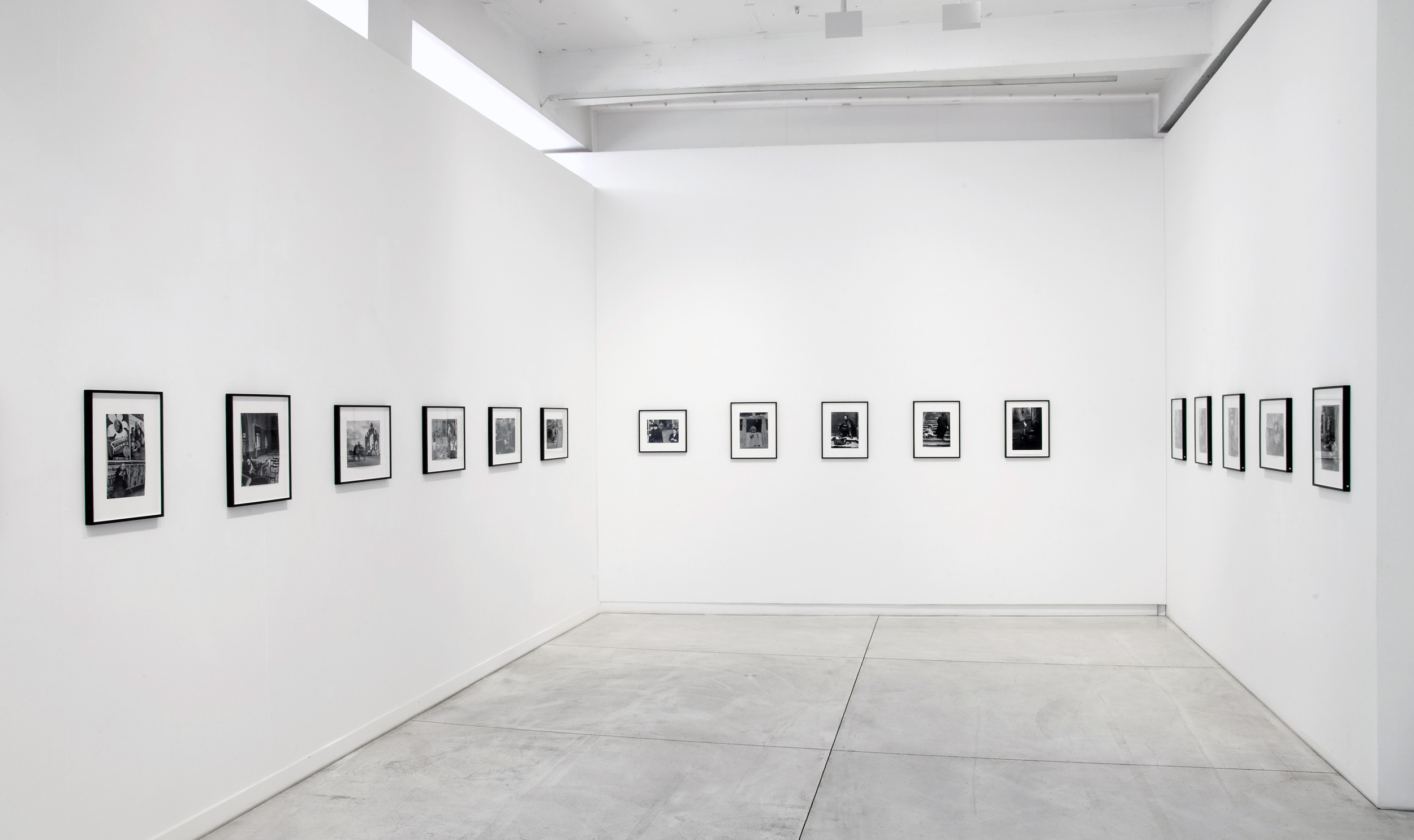
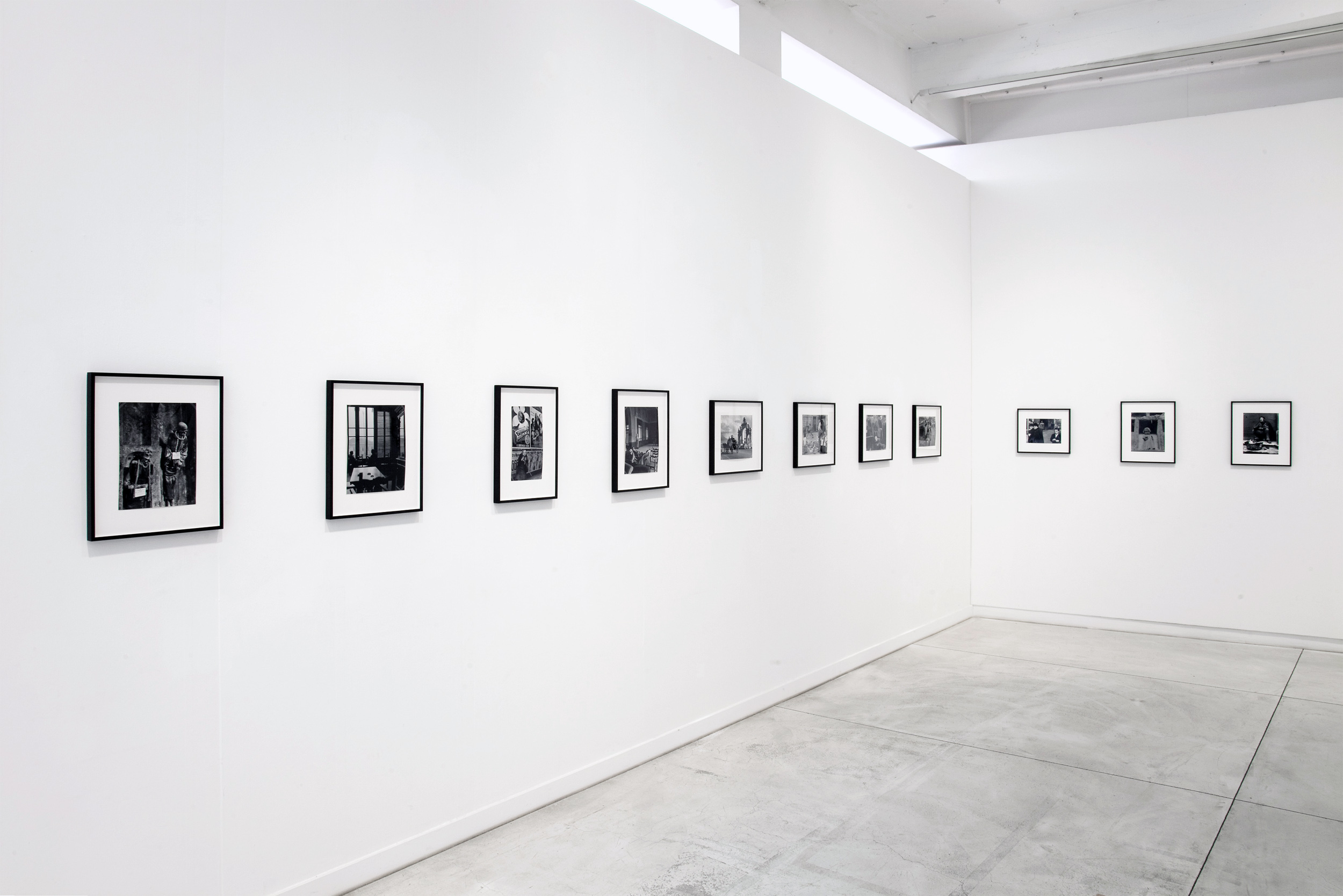
Installation view of the exhibition 'TO BE SEEN: Queer Lives 1900-1950' at the Munich Documentation Center for the History of National Socialism

Installation view of the exhibition 'TO BE SEEN: Queer Lives 1900-1950' at the Munich Documentation Center for the History of National Socialism


Installation views of the exhibition TO BE SEEN: Queer Lives 1900-1950 at the Munich Documentation Center for the History of National Socialism
Photo: Connolly Weber Photography/NS-Dokumentationszentrum München


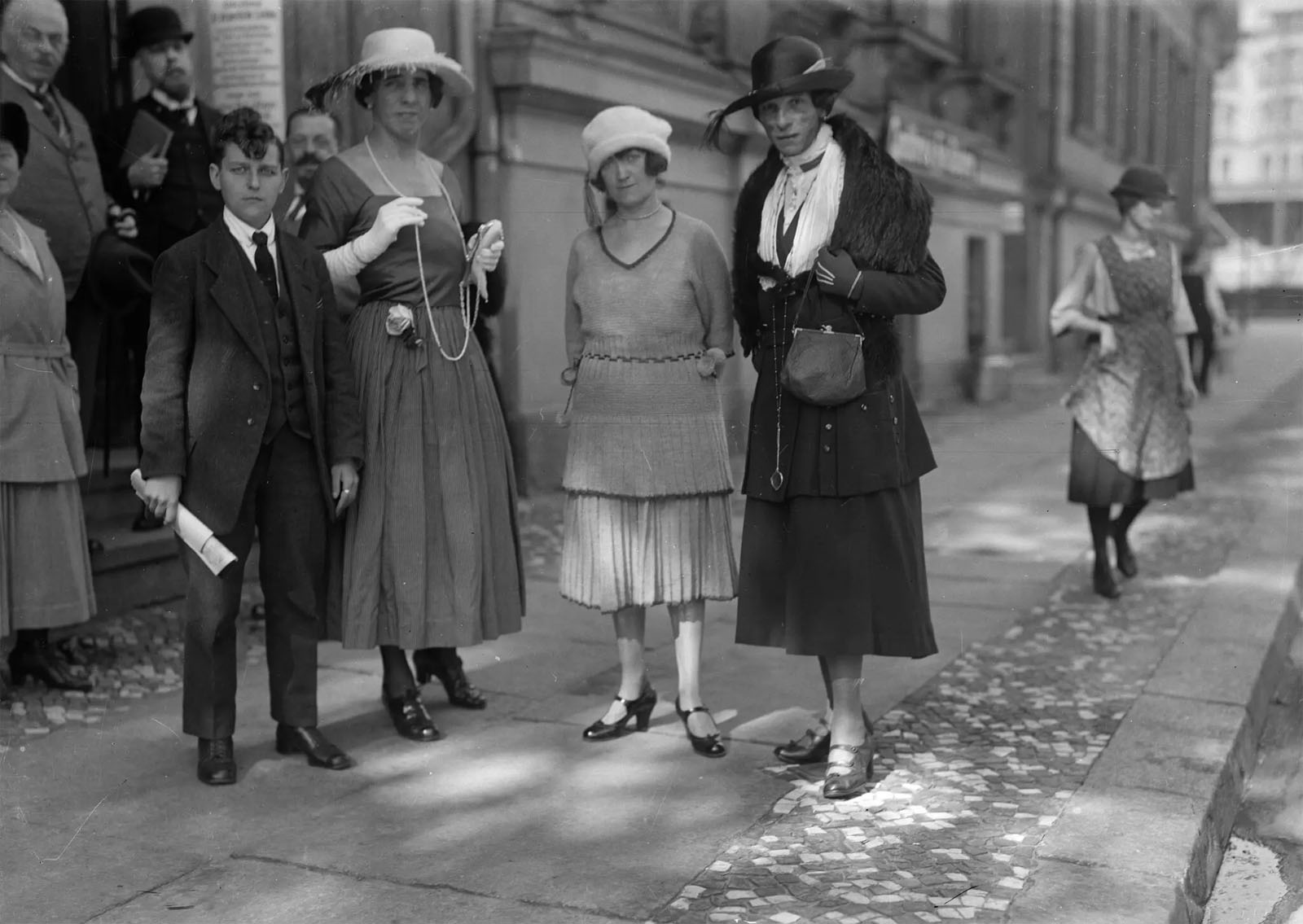
Unknown photographer. 'Trans* people in the Eldorado in Berlin' 1926


Unknown photographer
Trans* people in the Eldorado in Berlin
1926
© bpk / Kunstbibliothek, SMB


Meeting, moving – forging bonds

Bars and clubs, magazines, organisations, private or public places: queer subcultures and networks emerged in Germany beginning at the turn of the century and especially in the 1920s. Political goals were formulated together. People communicated using their own codes, ciphers, and symbols.

The public sphere continued to be reserved primarily for men – heterosexual, white, and Christian men. But the experience of conquering one’s own spaces against all social opposition, of joining forces and stepping into the public sphere together, led to a growing self-confidence in the queer scenes. In the process, they not only fought for their own interests; political bonds were forged and coalitions formed that bridged differences.

Visions for a society with equal rights for all people were drafted, and existing structures of power were questioned. But internal conflicts emerged as well, and not all queer groups pulled together.

§ 175 des Reichsstrafgesetzbuchs

Trancript: “Paragraph 175: Perverse fornication committed between persons of the male sex or by persons with animals is punishable by imprisonment; loss of civil rights may also be imposed.”

According to Paragraph 175 of the Imperial Criminal Code, sexual intercourse between men was punishable. This provision originated in the Prussian Criminal Code and was introduced throughout Germany with the founding of the German Empire in 1871. Prior to this, homosexuality was exempt from punishment in some German states, such as Bavaria, Württemberg, and Baden, following the example of France. The paragraph was controversial from the beginning: ecclesiastical conservatives and extreme right-wing parties demanded it be made more severe; liberals, social democrats, and communists called for its abolition.

Organisations and the conquest of public space

At the end of the nineteenth century, gay men joined forces to fight against persecution based on Paragraph 175. They founded clubs and associations and sought supporters to achieve their vision of a more open society. Berlin became the hub of this movement and developed into a leading centre of attraction for queer people. It was in Berlin that, in 1897, the Scientific-Humanitarian Committee was founded, which aimed to achieve legal and social equality for homosexual and trans* people.

Some activists from the women’s movements joined this struggle, especially when the extension of Paragraph 175 to encompass women was debated in 1909. Their goal was far-reaching sexual and social reform: a woman’s right to sexual self-determination, abortion, extramarital relations, and independence from her husband. Some leading women’s rights activists lived with another woman, but only few openly identified as lesbian.

Queer subcultures flourished in the Weimar Republic. A diverse landscape of organisations emerged that represented the interests of gays, lesbians, and trans* persons. However, the struggle against Paragraph 175 was not always synonymous with advocacy for an open society. Among gay activists there were also those who paid homage to a homoerotic male cult. They excluded – in addition to women – all those who did not conform to their heroic, in some cases also racist ideas of masculinity.

Text from Stories of the exhibition TO BE SEEN: Queer Lives 1900-1950
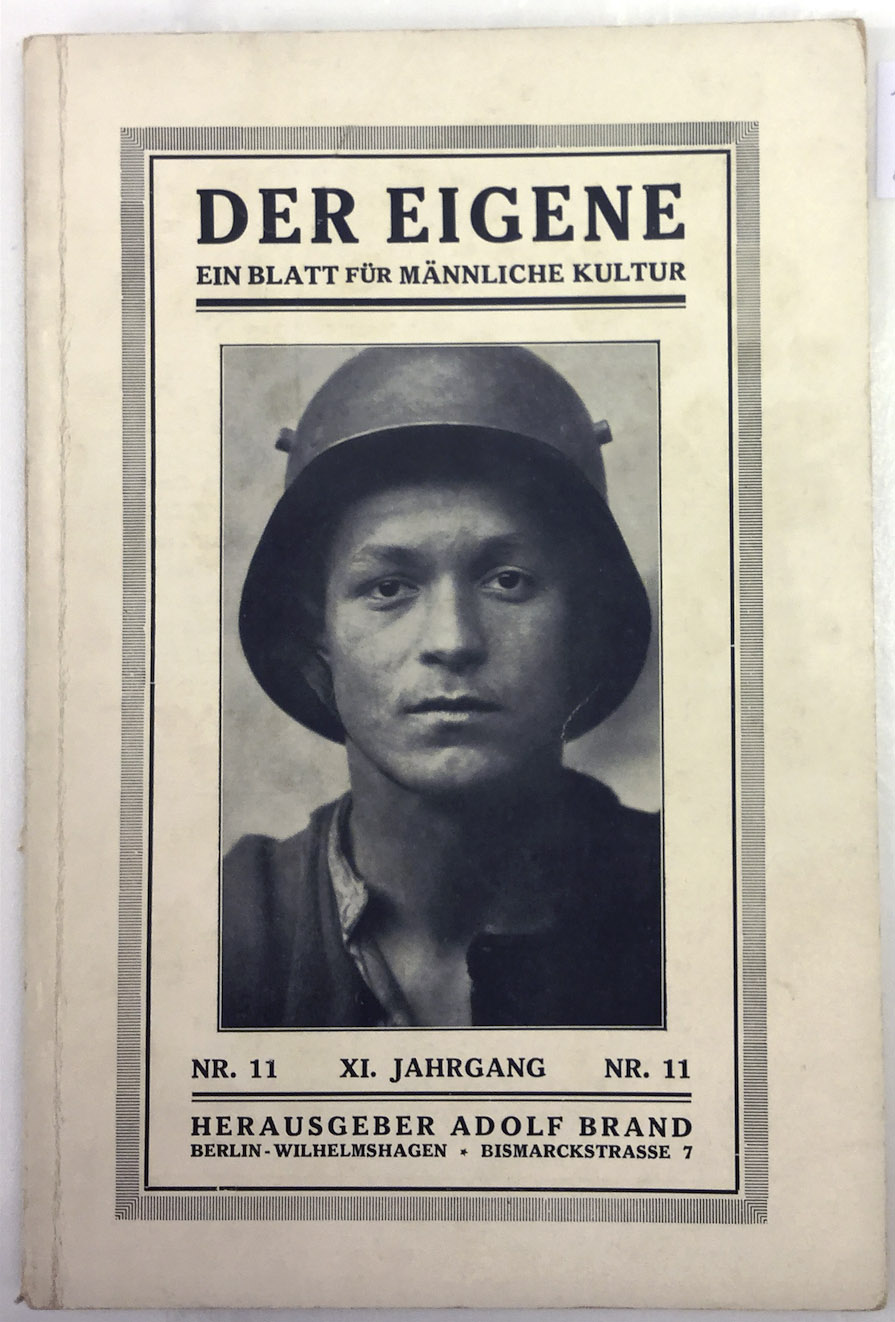
 

Der Eigene (The Unique), 1925


Adolf Brand (publisher)
Der Eigene (The Unique)
1926


Founded in 1896 by Adolf Brand, “Der Eigene” was the longest-running homosexual journal. With its literary-artistic contributions it evoked the image of heroic masculinity.


Struggle against Paragraph 175: the Scientific-Humanitarian Committee

The physician Magnus Hirschfeld (1868-1935) came from a liberal Jewish family and began actively campaigning for the abolition of Paragraph 175 at the end of the nineteenth century. His actions were motivated by the persecution to which gay men were subjected. As a sexual reformer and founder of the Scientific-Humanitarian Committee, he fought against the prevailing rigid sexual morality and contributed significantly to the visibility of queer people.

Magnus Hirschfeld utilised modern means in his educational activities. The silent film drama was shot in 1919 with his active participation. It is considered the first film to deal openly with Anders als die Andern (Different from the Others) the subject of homosexuality. Heavily attacked by conservative and right-wing extremists, and by some with anti-Semitic motives, the film was used as an opportunity to curtail the artistic freedom introduced after the 1918 revolution. After being screened publicly for a full year, the film was banned by censors in 1920 and almost all copies were destroyed.

“Anders als die Andern” is about a homosexual musician who is subject to blackmail. When he no longer knows what to do and files charges, not only is the blackmailer convicted, but he himself is also sentenced – for violating Paragraph 175. He is shattered by the verdict and takes his own life.

Text from Stories of the exhibition TO BE SEEN: Queer Lives 1900-1950


Excerpt from Different from the Others | © UCLA Film & Television Archive

Excerpts from Different From the Others (Anders als die Andern) (Germany, 1919), which was preserved by UCLA Film & Television Archive as part of the Outfest UCLA Legacy Project. Funding provided by The Andrew J. Kuehn Jr. Foundation and the members of Outfest.

Synopsis

The concert violinist Paul Koerner takes a student under his wing, much to the worry of the boy’s parents. Koerner is meanwhile being blackmailed by a former lover, since in Germany any homosexual relations at that time were punishable under the law, codified in Article 175, which was not removed from the books until the 1960s. The German film, Different From the Others is, as far as we know, the first fiction feature film to address a specifically gay audience. Fortunately, even though more than 90% of all German silent films have disappeared, this film exists today in at least half its original length. When the film was first shown in 1919, gay and lesbian audiences must have been amazed that a mainstream fiction feature film would portray their situation as a fact of nature, rather than a perversion. Today, this film celebrates the brief opening of that door, before it slammed shut for another 50 years.

The film was produced and directed by Richard Oswald, at that time one of Germany’s most prolific independents, who made films cheaply and premiered them in a Berlin cinema he owned, where his wife would often handle the office box. Oswald had earned a fortune in 1917 / 1918 with a number of “educational” feature films about sexually transmitted diseases, which were approved by the censorship authorities, simply because syphilis was rampant in the trenches. Oswald would continue to produce controversial films, like his acknowledged masterpiece, The Captain from Koepenick (1931) based on Carl Zuckmayer’s anti-authoritarian play. The Nazis never forgave Oswald for Anders als die Andern or Koepenick, forcing Oswald into exile and eventually to Hollywood, where he directed several films and televisions shows. Although long under appreciated in Germany, recent critical reappraisals have valued his in-your-face aesthetic and modern subject matter.

Only a severely truncated version of the film has survived, with Ukrainian titles, as Gosfilmofond in Russia. It was restored previously to a semblance of the original 1919 release by the Munich Film Museum. The UCLA restoration is based on that Munich reconstruction, with some changes and additions made.

Credits

Richard-Oswald-Produktion. Screenwriters: Magnus Hirschfeld and Richard Oswald. Cinematographer: Max Fassbender. With: Conrad Veidt, Leo Connard, Ilse von Tasso-Lind, Alexandra Willegh, Ernst Pittschau, Fritz Schulz.


Different From Others: A Legacy Preserved (2012)

Featurette about the restoration of German silent film Different From Others (1919). Produced for the Outfest Legacy Project and the UCLA Film & Television Archive.


On October 6 the exhibition TO BE SEEN: Queer lives 1900-1950 opens at the Munich Documentation Center for the History of National Socialism. TO BE SEEN is devoted to the stories of LGBTQI+ in Germany in the first half of the 20th century. Through historical testimony and artistic positions from then and now, it traces queer lives and networks, the areas of freedom enjoyed by LGBTQI+, and the persecution they suffered.

The exhibition takes an intimate look at a variety of genders, bodies, and identities. It shows how queer life became ever more visible during the 1920s, giving rise to a more open treatment of role models and of desire. During this period, homosexual, trans, and non-binary people achieved their first successes in their fight for equal rights and social acceptance. They organised, fought for scientific and legal recognition of their gender identity, and carved out their own spaces.

But as recognition and visibility in art and culture, science, politics, and society increased, so did resistance. After the Nazis came to power, the LGBTQI+ subculture was largely destroyed. After 1945, their stories and fates were scarcely archived or remembered.

Participating artists

Katharina Aigner, Maximiliane Baumgartner, Pauline Boudry & Renate Lorenz, Claude Cahun, Zackary Drucker & Marval Rex, Nicholas Grafia, Philipp Gufler, Richard Grune, Lena Rosa Händle, Hannah Höch, Paul Hoecker, Nina Jirsíková, Germaine Krull, Elisar von Kupffer, Zoltán Lesi & Ricardo Portilho, Herbert List, Heinz Loew, Jeanne Mammen, Michaela Melián, Henrik Olesen, Emil Orlik, Max Peiffer Watenphul, Jonathan Penca, Lil Picard, Karol Radziszewski, Alexander Sacharoff, Gertrude Sandmann, Christian Schad, Renée Sintenis, Mikołaj Sobczak, Wolfgang Tillmans and others.

TO BE SEEN will be accompanied by an extensive program of events and outreach on topics such as the persecution of LGBTQI+ persons under National Socialism, the queer history of Munich, intersectionality and drag, as well as queer identity in literature and film. All information and updates can be found at nsdoku.de/tobeseen.

The accompanying publication features a collection of texts and artworks from the exhibition as well as essays by key voices that shed light on past and present queer lives from an academic and social perspective. The book in German and English will be published in December 2022 by Hirmer Verlag. It features contributions by, among others, Gürsoy Doğtaş, Michaela Dudley, Sander L. Gilman, Dagmar Herzog, Ulrike Klöppel, Ben Miller, Cara Schweitzer, Sebastien Tremblay.

TO BE SEEN: Queer lives 1900-1950 takes place under the patronage of Claudia Roth, Minister of State for Culture and Media. The exhibition was funded by the German Federal Cultural Foundation and the German Federal Government Commissioner for Culture and the Media.

Director: Mirjam Zadoff
Head Curator: Karolina Kühn
Curators: Juliane Bischoff, Angela Hermann, Sebastian Huber, Anna Straetmans, Ulla-Britta Vollhardt
Project Management: Karolina Kühn, Anna Straetmans, Sebastian Huber

Press release from the Munich Documentation Center for the History of National Socialism


Film still from 'The Mystery of Gender' Austria 1933


Film still from The Mystery of Gender
Austria 1933
© Filmarchiv Austria


In April 1933, the film “The Mystery of the Gender” ran in Viennese cinemas for about two weeks before it was banned. The film is a mixture of romance and medical educational film, including close-ups of the women’s genitals. Among the protagonists are – without mentioning their names – Toni Ebel, Charlotte Charlaque and Dora Richter. You can find an excerpt of the film in our storytelling http://www.tobeseen.nsdoku.de

Toni Ebel converted to Judaism in early 1933, but reversed the conversion as the pressure of persecution increased. After 1945 she was recognised in the GDR as a victim of fascism. Ebel was able to start a new life as a painter.

Charlotte Charlaque and Toni Ebel remained in correspondence after their forced separation in 1942. In 1946 Charlaque told her friend about her loneliness, her arrival as a refugee in New York and the difficulties in getting her female name recognised.

Dora Richter became known as one of the first trans* women to undergo gender reassignment surgery. Since it was difficult for trans* people to find work, she took a job as a housemaid at the Institute for Sexology, which was looted by National Socialist groups in 1933. Nothing is known of Richter’s fate after 1933.

Text from the Munich Documentation Center for the History of National Socialism Instagram page
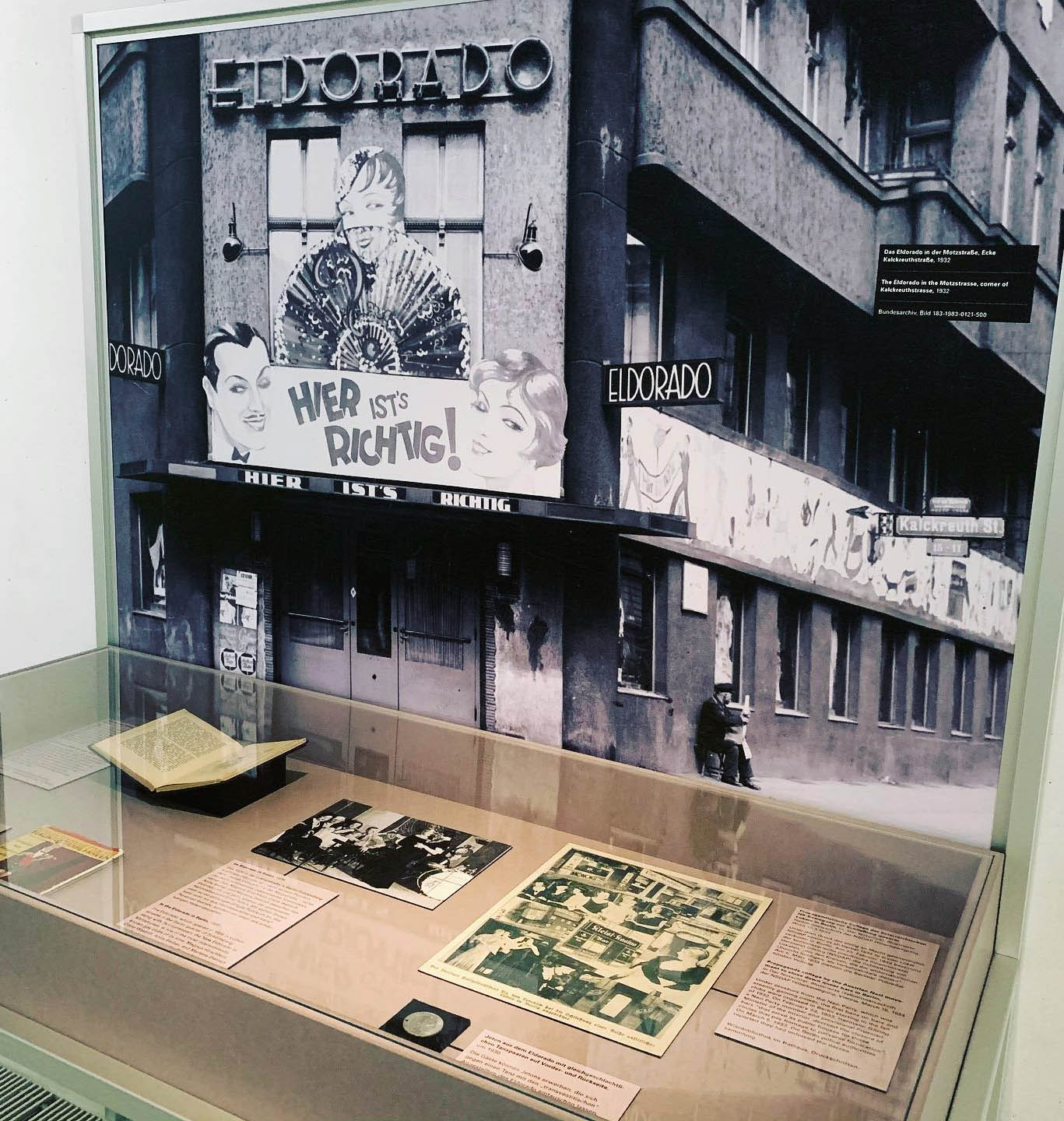
 

Installation view of the exhibition 'TO BE SEEN: Queer Lives 1900-1950' at the Munich Documentation Center for the History of National Socialism showing at rear, an enlargement of an image by an unknown photographer of the Eldorado in the Motzstrasse (1932); and at left centre in the display cabinet, an image by an unknown photographer Trans* people in the Eldorado in Berlin (1926)


Installation view of the exhibition TO BE SEEN: Queer Lives 1900-1950 at the Munich Documentation Center for the History of National Socialism showing at rear, an enlargement of an image by an unknown photographer of the Eldorado in the Motzstrasse (1932, below); and at left centre in the display cabinet, an image by an unknown photographer Trans* people in the Eldorado in Berlin (1926, above)
Photo: Connolly Weber Photography/NS-Dokumentationszentrum München


The Eldorado on Lutherstraße was one of the city’s infamous cabaret bars.

The Eldorado was the name of multiple nightclubs and performance venues in Berlin before the Nazi Era and World War II. The name of the cabaret Eldorado has become an integral part of the popular iconography of what has come to be seen as the culture of the period in German history often referred to as the “Weimar Republic”. …

Eldorado was a gay cabaret in that along with gay, lesbian, bisexual, trans* patrons, a heterosexual-identifying audience (artists, authors, celebrities, tourists) would have been present as well. “Cross-dressing” was tolerated on the premises, though for the most part legally prohibited and / or sharply regulated in public (and to an extent in private) at the time. This exception to everyday life attracted not only male patrons who wished to dress in the “clothing of the opposite sex”, and their admirers, but also to no small extent women who wished to do the same, and their admirers. Wealthy lookers-on were encouraged to come and drink and watch as so-called “Zechenmacher” (tab payers). The practice was particularly common in so-called “Lesbian bars” or at so-called “Lesbian balls” in the neighbourhood at the time and up the 1960s in places like the Nationalhof at nearby Bülowstraße 37. As women’s incomes were on average much lower than men’s then as now, male spectators with money to spend were explicitly welcome, and it was not uncommon that there were sex-workers present to offer their services. Eldorado also included what have come to be called drag shows as a regular part of the cabaret performances.

Text from the Wikipedia website


The Eldorado, which opened in 1926 on Lutherstrasse in Berlin-Schoeneberg, was – along with its counterpart, the “new Eldorado” on Motzstrasse – one of the internationally most well-known trendy bars of its time. Magnus Hirschfeld, Claire Waldoff, Anita Berber and Marlene Dietrich often and happily visited the Eldorado, as did the prominent National Socialist Ernst Röhm. With its shows, it attracted a wealthy audience, which soon consisted not only of homosexuals and trans* people, but above all of onlookers heterosexuals. Guests could purchase tokens that could be exchanged for a dance with the Eldorado’s “transvestite” staff.
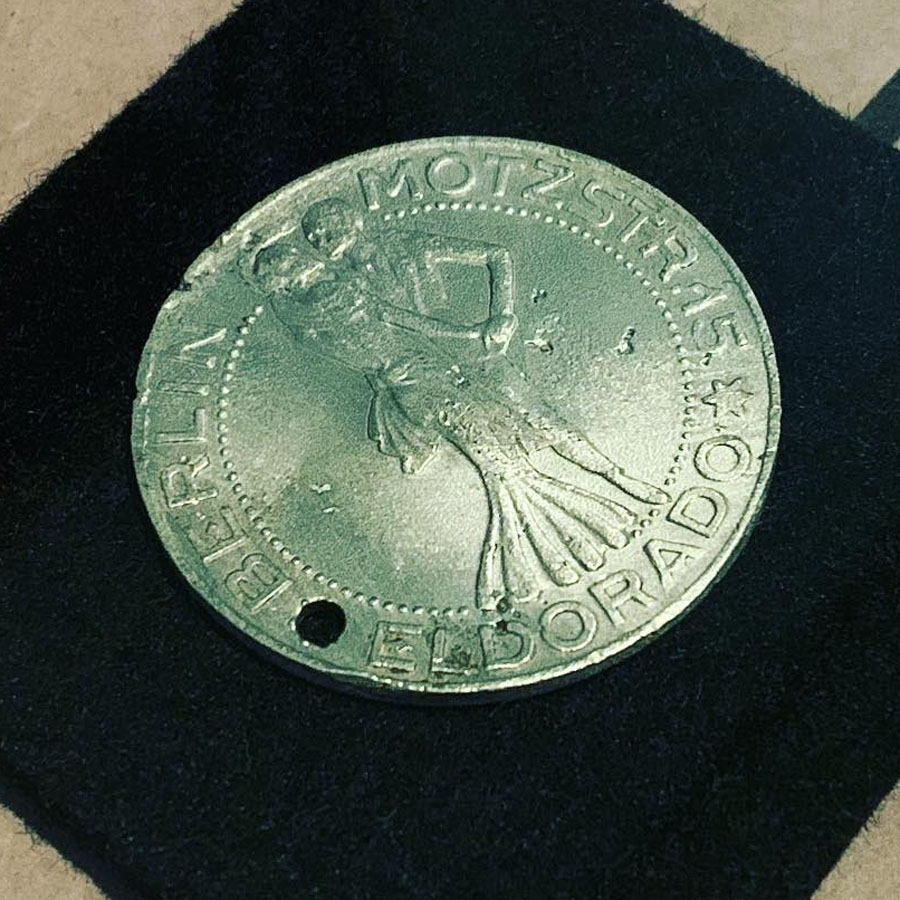
 

'Token from the Eldorado with same-sex dancing couples on the front and back' c. 1930


Token from the Eldorado with same-sex dancing couples on the front and back
c. 1930
© Gay Museum, Berlin


Dance monocle in original bag


Dance monocle in original bag
© dhmberlin


A popular accessory for lesbian women in the 1920s was the “dance monocle”

Short hair, ties, tails, and top hats were other identifying marks within part of the lesbian scene – and soon to be common among modern heterosexual women as well. The “New Woman” of the 1920s broke away from traditional gender images and appropriated new things and spaces that had previously been occupied by men.

In the Berlin scene, but also in other cities, numerous gay and lesbian clubs that rented premises, called for social activities, but also explicitly pursued political and emancipatory goals. One of the largest “women’s clubs” was the Violetta Ladies’ Club, founded in Berlin in 1926.

The founder of the women’s club Violetta was the lesbian activist Lotte Hahm (1890-1967), who also wrote for “The Girlfriend”. Together with her Jewish partner Käthe Fleischmann (1899-1967) she ran the lesbian bar Monokel-Diele in Berlin. After 1933, both initially tried to maintain lesbian networks and meeting places under cover names. Fleischmann, persecuted as a Jew, survived the Nazi era in various hiding places.

Text from the Munich Documentation Center for the History of National Socialism Instagram page


Invitations to monocle parties of the Violetta women's club in Berlin

Invitations to monocle parties of the Violetta women’s club in Berlin and the women’s association “Geselligkeit” in Chemnitz
In Garçonne 1931/1939
© forummuenchenev


Unknown photographer. 'The Eldorado in the Motzstrasse, corner of Kalckreuthstrasse' 1932


Unknown photographer
The Eldorado in the Motzstrasse, corner of Kalckreuthstrasse
1932
© nsdoku


Meeting places

A lively scene for homosexuals and trans* persons emerged in Germany during the 1920s. Especially in major cities, a number of clubhouses, bars, and clubs functioned as meeting places. The undisputed centre of queer life was Berlin. Police authorities there followed a more liberal course than elsewhere after the end of the nineteenth century. Nearly two hundred subcultural venues are documented in the imperial capital between 1919 and 1933, about eighty of them for lesbian women.

In conservative Munich, as in smaller cities and rural areas, fewer venues existed. Homosexual men had to resort to informal meeting places, due to the ongoing criminal persecution. They used public parks and toilets as “pick-up spots” to socialise or have sex. In doing so, they always ran the risk of being denounced or stopped by the police.

Magazines and informal networks

Magazines were an important means of communication for queer subcultures. They listed relevant clubs and bars, bookstores, and associations, and served as contact exchanges. These references and opportunities were essential particularly for queer people in rural areas, where there were no functioning networks. However, the publishers had to reckon with the banning of their print products at any time. It was not uncommon for entire print runs or volumes to be labeled as “trash texts” and confiscated.

In order to avoid police persecution and social exclusion, the scene employed its own linguistic codes. Camouflage terms such as “friend”, “girlfriend”, “ideal friendship”, “friendly exchange of ideas”, or “ideal-minded” were used to refer to lesbian and gay connections. Lonely hearts ads in relevant magazines were often the only way to find like-minded people, especially in smaller towns and in the countryside.

Text from Stories of the exhibition TO BE SEEN: Queer Lives 1900-1950


Installation view of the exhibition 'TO BE SEEN: Queer Lives 1900-1950' at the Munich Documentation Center for the History of National Socialism


Installation view of the exhibition TO BE SEEN: Queer Lives 1900-1950 at the Munich Documentation Center for the History of National Socialism showing historical magazines


In TO BE SEEN you can leaf through historical magazines. They were an important means of communication for queer subcultures.

Magazines such as “Die Freundsblatt”, “DasFreundschaftsblatt” or “Frauenliebe” referred to relevant pubs, bookstores and associations and served as contact exchanges. Especially for queer people in rural areas, where there were no functioning networks, these tips and opportunities were essential. However, the publishers had to expect their printed products to be banned at any time. It is not uncommon for entire editions or volumes to be marked as “trash and dirty writing” and confiscated.

“The Girlfriend” (subtitle “The Ideal Friendship Journal”, later “Weekly Journal for Ideal Female Friendship”) was a magazine for lesbian women from 1924 to 1933 in Berlin during the Weimar Republic. It is considered the first lesbian magazine and was first published monthly, then every two weeks, and later even weekly.

The editor was Friedrich Radzuweit (1876-1932), chairman of the Federation for Human Rights. The content focuses on information on lesbian life and meeting places for lesbians, political topics, short stories, serialised novels and classifieds. Although “The Girlfriend” was primarily aimed at a lesbian readership, there are also numerous articles that deal with topics such as ‘transvestism’ or transgender. It was discontinued a few weeks after the National Socialists seized power in January 1933: the last issue appeared on March 15, 1933, a week before the Enabling Act was passed.
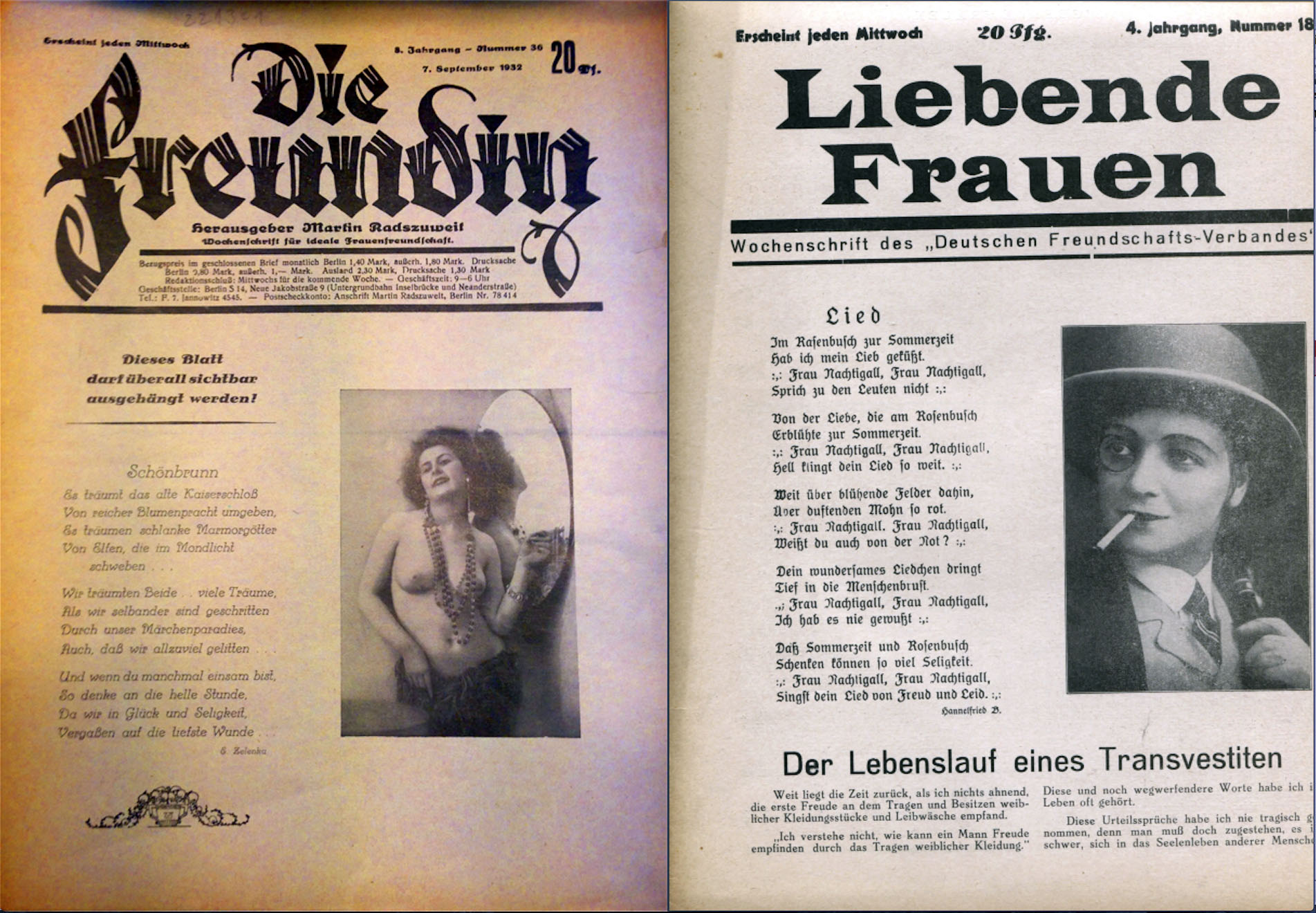
 

Die Freundin (The Girlfriend), September 1932, and Liebende Frauen (Women in Love), 1929


Covers from Die Freundin (The Girlfriend), September 1932, and Liebende Frauen (Women in Love), 1929


Cover of "Die Freundin" (The Girlfriend) 26. December 1927


Cover of “Die Freundin” (The Girlfriend)
26. December 1927
© Forum Queeres Archiv München


Unknown photographer. 'Magnus Hirschfeld' c. 1900


Unknown photographer
Magnus Hirschfeld
c. 1900
© Staatsbibliothek zu Berlin – Preußischer Kulturbesitz


Unknown photographer. "Zwischenstufenwand" (sexual transitions wall) c. 1925-1930


Unknown photographer
“Zwischenstufenwand” (sexual transitions wall)
c. 1925-1930
Bildarchiv Preussischer Kulturbesitz


The “Zwischenstufenwand” (sexual transitions wall) in the Institute for Sexology illustrated Hirschfeld’s theory that all people have male and female qualities in them.

The famous picture wall, illustrating Hirschfeld’s sex and gender theories. It was first exhibited in Leipzig (1922) on occasion of the German Natural Scientists’ and Physicians’ centenary and then in Vienna (1930) at the World League for Sexual Reform’s congress. The picture wall (2×1 m by 4×5 m) always had a prominent place in the Institute and was used to explain sexual theories to visitors.


Installation view of the exhibition 'TO BE SEEN: Queer Lives 1900-1950' at the Munich Documentation Center for the History of National Socialism


Installation view of the exhibition TO BE SEEN: Queer Lives 1900-1950 at the Munich Documentation Center for the History of National Socialism


Knowledge, diagnosis, control

Scientific interest in sexuality and gender was expanding around the turn of the century. The amount of sexological research and number of publications increased. Most writings described homosexuality or trans* identities as “pathological” conditions. This assumption has since been scientifically refuted. At the same time, groundbreaking theories emerged, for example Magnus Hirschfeld’s model of “sexual intermediates.” In it, the sexologist anticipated the later realisation that numerous other gender identities besides man and woman exist.

Yet, then as now, knowledge also meant power and control. People were examined, described, classified, and judged as patients. Some sexologists incorporated ideas in their research that drew on biologism and eugenics. These were spread throughout society and later played a central role for the Nazis: their conception of so-called “racial hygiene” distinguished between “valuable” and “unworthy” life.

The driving forces in the German-speaking world from the 1860s on were the lawyer and physician Karl Heinrich Ulrichs and the physician Richard von Krafft-Ebing. Ulrichs in particular fought for the decriminalisation and recognition of homosexuality. His insights into the diversity of sexuality and gender are still essential today. Other scientists understood the “third sex” as a pathological phenomenon and wanted to effect the “re-education” and “healing” of their patients with methods that were sometimes questionable. The result was often physical or psychological trauma.

The Institute for Sexology and its patients

Magnus Hirschfeld was the best-known representative of sexology in the German-speaking world. He combined a pursuit for emancipation and a scientific perspective, was a champion of decriminalisation and a physician at the same time. His Institute for Sexology, founded in Berlin in 1919, became the centre of the liberal-leftist sexual reform movement of the Weimar Republic. In addition to research and medical consulting, the institute operated a library, an archive, and a museum. Unlike conservative sexologists, Hirschfeld and his staff worked towards the self-acceptance of homosexuals and trans* persons.

This “adaptation therapy” or “milieu therapy” aimed to help people adapt to the queer milieu that suited them, instead of repressing their identity. Many important people from the gay community, such as Lili Elbe, were treated here. Homosexual writers such as André Gide and Christopher Isherwood visited the institute. People who today would be considered intersex were also counselled. From the beginning, the Nazis were disturbed by liberal sexology, Hirschfeld, and his institute. Many of the institute’s employees were, like Hirschfeld himself, Jewish. In 1933, Nazi students and SA members demolished the institute; Hirschfeld was on a world tour at the time and remained in exile in France.

The institute grew to become a refuge for “transvestites”. This is how people who we understand today as trans* persons were called at the time. Some of them lived in the institute and earned their living there. They were particularly dependent on it. Despite the institute’s great merits, the relationship between doctors and “patients” was not unproblematic from today’s point of view.

By mediating between queer people and state power, Hirschfeld and his colleagues were able to protect their patients and fight for more rights and freedom for them. But in order to do so, they cooperated with the police and the courts, thus providing the state institutions with access and control. Then as now, intersex and trans* people were rarely perceived as experts on themselves, making them dependent on the recognition bestowed by medicine and the justice system. This was accompanied by a scientific and state-regulatory view of their bodies that pushed them into the role of patients, externally controlled subjects, instead of granting them autonomy over their bodies as well as their own voice.

Text from Stories of the exhibition TO BE SEEN: Queer Lives 1900-1950


Hirschfeld’s medical practices are controversial today

However, Magnus Hirschfeld also referred those male homosexuals who, based on his biological research, assumed that homosexuality could also be treated, to other doctors. They castrated the patients and implanted heterosexual testicles in them.

Not only Magnus Hirschfeld’s medical practices, but also his scientific approach is controversial today. His absolute belief in biology leaned towards social Darwinism and eugenics. He founded a “Medical Society for Sexology and Eugenics”. He thus promoted “sexual selection” in order to improve the “mental fitness of the offspring”. He was thus at the same time far away and entirely in line with the National Socialists.

The National Socialists saw Hirschfeld as a security risk, a threat to the population growth of the “Aryan race” and not only in him. Tens of thousands of gay men are sentenced to prison, jail, and concentration camps, the gay civil rights movement is crushed, gay hangouts are closed, magazines are banned, and then, on May 6, 1933, the Institute for Sex Research is looted and its library burned.

Gabi Schlag and Benno Wenz. “Magnus Hirschfeld – pioneer of sex research,” on the SWR website 29.7.2021 [Online] Cited 12/04/2023


Unknown photographer. 'First Congress for Sexual Reform on a Sexological Basis' 1921


Unknown photographer
First Congress for Sexual Reform on a Sexological Basis
1921
From Magnus Hirschfeld, Sexology, vol. 4, plates
© Forum Queeres Archiv München


Session of the “International Conference for Sex Reform on a Sexological Basis”, organised by Hirschfeld 1921 in Berlin at the Langenbeck-Virchow-Haus. (Hirschfeld, leaning forward, is seated just beneath the lectern.) This was the first sexological congress held anywhere, and it laid the groundwork for the Copenhagen congress of 1928.


Willy Römer (German, 1887-1979) 'Transvestites in Front of the Institute of Sexology' 1921


Willy Römer (German, 1887-1979)
Transvestites in Front of the Institute of Sexology
1921
Gelatin silver print
© bpk / Kunstbibliothek, SMB, Photothek Willy Römer


Titled “Transvestites in Front of the Institute of Sexology” this photograph was taken on the occasion of the First International Congress for Sexual Reform on the Basis of Sexology in Berlin, 1921.

Willy Römer (December 31 , 1887 in Berlin – October 26, 1979 in West Berlin ) was a press photographer. His picture agency was one of the ten most important of the Weimar period. The pictures mainly illustrate life in Berlin from 1905 to 1935. It is thanks to a rare stroke of luck that his extensive picture archive survived the Second World War almost unscathed.


'"Transvestite Certificate" for Gerd Katter' 1928


“Transvestite Certificate” for Gerd Katter
1928
© Archiv der Magnus-Hirschfeld-Gesellschaft


Starting in 1900, “Transvestite Certificates” were issued by a doctor, that officially certified that a person was known to be “wearing men’s clothing” or “wearing women’s clothing”.

In TO BE SEEN #QueerLives we also show Gerd Katter’s “Transvestite License”. From 1900, “transvestite certificates” were issued in some cities. It is a medically certified official confirmation that a person is known as “wearing men’s clothing” or “wearing women’s clothing”. The authorities refrain from making an arrest if you show them during checks. However, those affected are thus registered with the police and can be monitored more easily.

Gerd Katter (1910-1995) came to the Institute for Sexology at the age of 16 – at that time still with a female birth name. Barred from having his breasts amputated because of his youth, Katter tries to operate on himself, which requires an emergency amputation. Katter is one of many people who receive concrete, albeit unconventional, help at the institute. So he is prescribed to visit bars where “transvestites” meet. According to the adaptation therapy pursued at the institute, those seeking advice should be brought into contact with like-minded people. This is how they should learn to accept themselves.

Magnus Hirschfeld repeatedly invited Gerd Katter to the institute to show his guests a medical case study – a practice of displaying people and their bodies that was common at the time, but which is problematic from today’s medical-ethical point of view. Gerd Katter later completed an apprenticeship as a carpenter and lived in the GDR.

Text from the Munich Documentation Center for the History of National Socialism Instagram page


Charlotte Wolff (German-British, 1897-1986) 'Bisexuality' German edition from 1981


Charlotte Wolff (German-British, 1897-1986)
Bisexuality
German edition from 1981
© NS-Dokumentationszentrum München


Charlotte Wolff – Sexology in Exile

Female homosexuality and bisexuality received little attention in the male-dominated field of sexology. An exception was the research of Charlotte Wolff (1897-1986). The physician situated precisely these topics at the centre of her work. After 1933, left-wing, Jewish, and openly lesbian women in Germany were increasingly targeted by the Nazis. Being Jewish, she emigrated to Paris in 1933, and to London in 1936. Her research on lesbian sexuality and bisexuality earned her international recognition beginning in the 1960s.

Feeling Bodies, Seeing Images

At the same time as the advancements in sexology, new notions of the body, gender, and intimacy were finding expression in art and culture. Literature, theatre, film, and the visual arts offered an opportunity to question gender stereotypes and to create new roles and body images. These served as the basis for imagining freer ways of living and to lay the foundation for what we perceive today as queer aesthetics.

While Article 142 of the Weimar Constitution promised extensive artistic freedom, censorship was simultaneously introduced for the new medium of film. Munich in particular had numerous bans on film and theatre performances deemed offensive.

Text from Stories of the exhibition TO BE SEEN: Queer Lives 1900-1950


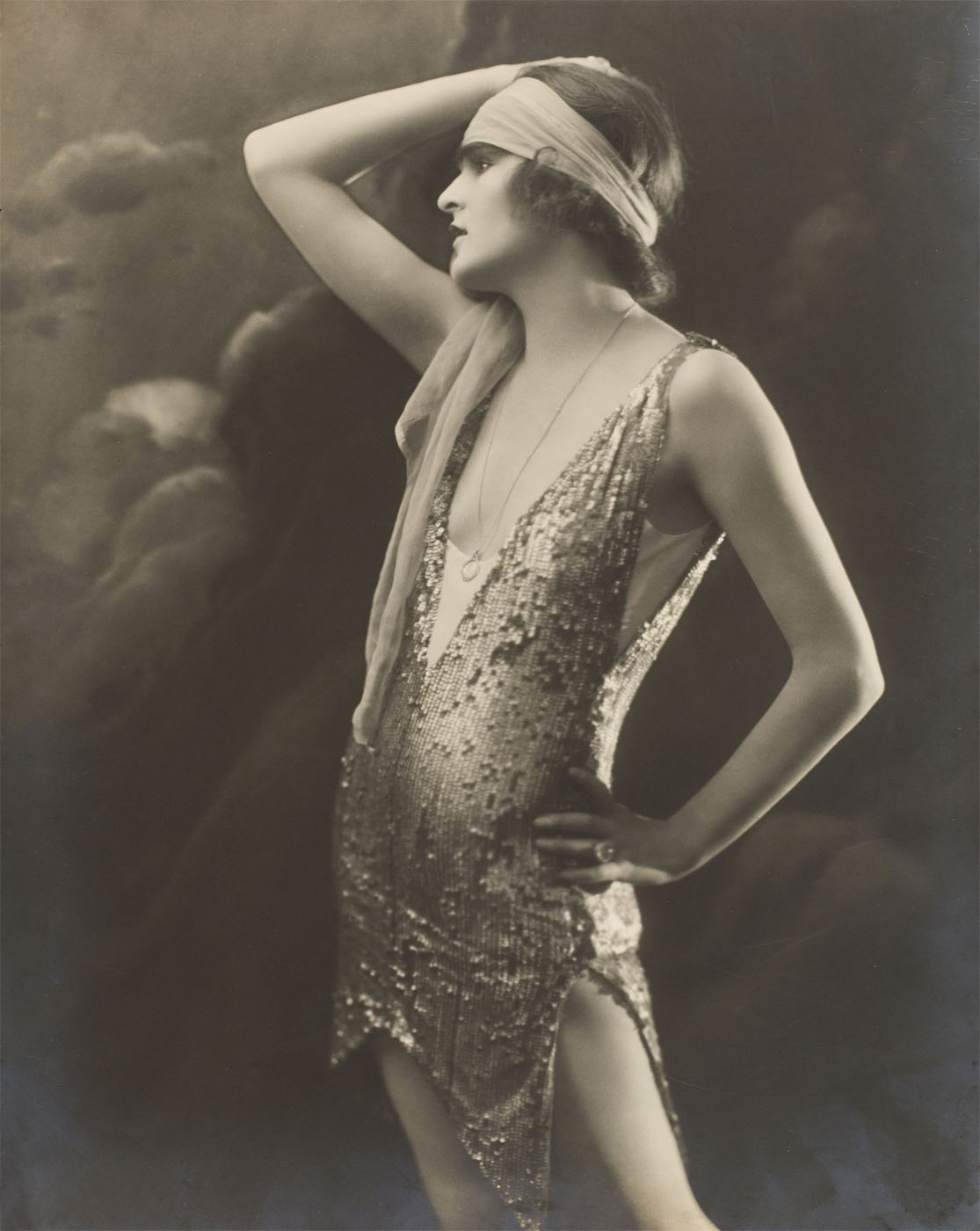
Unknown photographer. 'Anita Berber' c. 1925


Unknown photographer
Anita Berber
c. 1925
© Stiftung Stadtmuseum Berlin – Archive German State Opera


The bisexual dancer Anita Berber (1899-1928) confronted audiences with homoeroticism, nudity, and drug use, addressing issues that were taboo in the public eye.

The pejorative connotations of decadence as a moral failing or degenerate or degenerative state have often played into the pathologisation and criminalisation of specific bodies and practices. This is especially the case when these bodies and practices come to be seen as a threat to the health and integrity of a nation. Some of the most interesting examples can be found in Berlin at the dawn of the Weimar Republic, when the city itself was subject to charges of miasmic contagion. ‘Even the alkaline air around the Prussian capital (Berliner Luft)’, writes performance scholar Mel Gordon in characteristically hyperbolic style, ‘was said to contain a toxic ether that attacked the central nervous system, stimulating long suppressed passions as it animated all the external tics of sexual perversity’.[1]

Dance was regarded as a vector of transmission in spreading this toxic ether. Social dancing (Tanztaumel) swept Berlin in the year following the armistice, offering writers and cultural commentators a rich repository of tropes and metaphors for describing a social, economic and political situation that appeared to be spinning out of control. …

For dance and theater scholar Karl Toepfer, Berber’s aestheticization of her addictions to a plethora of narcotics presented ‘an almost satiric critique of the pretensions to a healthy, modern identity’.[11] Sickness formed the basis of a carefully stage-managed persona in the public eye that was to manifest in equally carefully choreographed routines. For instance, in one of the better-known dances from the Tänze des Lasters series, Kokain (Cocaine, 1922), Berber stages an embattled, spasmodic body torn between a will to live and the delirious effects of a narcotic. One reviewer described the dance as ‘a product of decay’ and a ‘style of degeneracy’,[12] suggesting that her embodiment of Berlin’s ‘toxic ether’ landed with her audiences (ether was also one of Berber’s drugs of choice, particularly once mixed with chloroform and white rose petals). That this piece was set to Camille Saint-Saëns’s Danse macabre (1874) makes it tempting to position it as the epitome of Berlin’s own ‘dance of death’ in which death and sexuality perform a pas de deux across Berber’s performing body – a body that was to succumb to tuberculosis aged only twenty-nine.

Berber’s dances have been read as ‘jejune’ and derivative;[13] however, this does a disservice to what Susan Laikin Funkenstein describes as ‘a more profound understanding of her contributions’ to modern dance history that were ahead of their time.[14] Although Funkenstein is looking to put some distance between Berber’s perception as a ‘depraved vamp’ and her innovativeness as a dancer, I argue that these are mutually enriching considerations in the development of her decadent choreographies. Berber’s ‘sickness’ as an addict, her perceived corruption as a sexual libertine, and (later) her physical sickness after contracting tuberculosis were not adjacent to her work as a dancer. She danced as she lived – which is to say, decadently – just as her bohemian aestheticism makes it difficult to distinguish where her choreographies begin and end.

Dr Adam Alston. “Dancing decadence: Anita Berber,” on the Staging Decadence website 24 January 2023 [Online] Cited 11/04/2023


New images of the body

In the first half of the twentieth century, artists experimented with new representations of the human body. They conceived of a wide spectrum of possible identities and sexualities situated outside the dominant categories. Artists subverted binary notions of gender, whether through ambiguities, gender-neutral codes, or playing with androgynous body images.

In 1933, the Nazis put an end to this diversity. Avant-garde works by artists such as Hannah Höch or Jeanne Mammen were denounced as “degenerate” and confiscated, banned, or destroyed. The regime instead honoured artists such as Arno Breker, Leni Riefenstahl, and Josef Thorak, who immortalised traditional gender images in monumental depictions. Such images supported the Nazi regime’s racial ideals, and endured well into the postwar period.

Text from Stories of the exhibition TO BE SEEN: Queer Lives 1900-1950


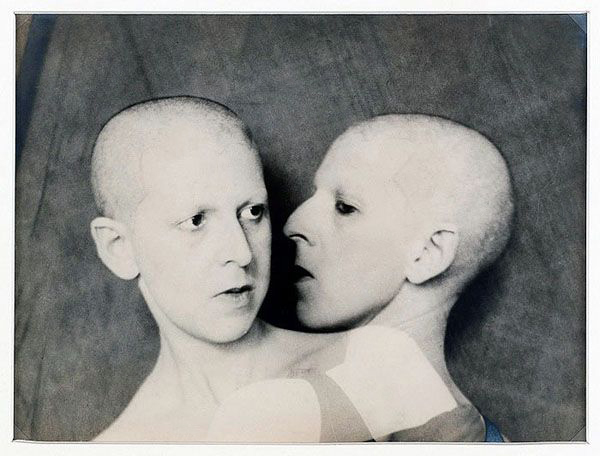
Claude Cahun (French, 1894-1954) 'Que me veux tu?' 1929


Claude Cahun (French, 1894-1954)
Que me veux-tu?
1929
Gelatin silver print
Paris Musees, musée d’Art moderne


Hannah Höch (German, 1889-1978) 'Untitled (Hannah Höch at her easel, The Hague; self-portrait (double exposure) with the painting Symbolic Landscape III)' 1930


Hannah Höch (German, 1889-1978)
Untitled (Hannah Höch at her easel, The Hague; self-portrait (double exposure) with the painting Symbolic Landscape III)
1930
Gelatin silver print
© VG Bild-Kunst, Bonn 2022


Hannah Höch worked with clichés and role models in her art and was a significant influence on the Dada movement.


Hannah Höch (German: [hœç]; 1 November 1889 – 31 May 1978) was a German Dada artist. She is best known for her work of the Weimar period, when she was one of the originators of photomontage. Photomontage, or fotomontage, is a type of collage in which the pasted items are actual photographs, or photographic reproductions pulled from the press and other widely produced media.

Höch’s work was intended to dismantle the fable and dichotomy that existed in the concept of the “New Woman”: an energetic, professional, and androgynous woman, who is ready to take her place as man’s equal. Her interest in the topic was in how the dichotomy was structured, as well as in who structures social roles.

Other key themes in Höch’s works were androgyny, political discourse, and shifting gender roles. These themes all interacted to create a feminist discourse surrounding Höch’s works, which encouraged the liberation and agency of women during the Weimar Republic (1919-1933) and continuing through to today.

Text from the Wikipedia website


Installation view of the exhibition 'TO BE SEEN: Queer Lives 1900-1950' at the Munich Documentation Center for the History of National Socialism


Installation view of the exhibition TO BE SEEN: Queer Lives 1900-1950 at the Munich Documentation Center for the History of National Socialism
Photo: Connolly Weber Photography/NS-Dokumentationszentrum München


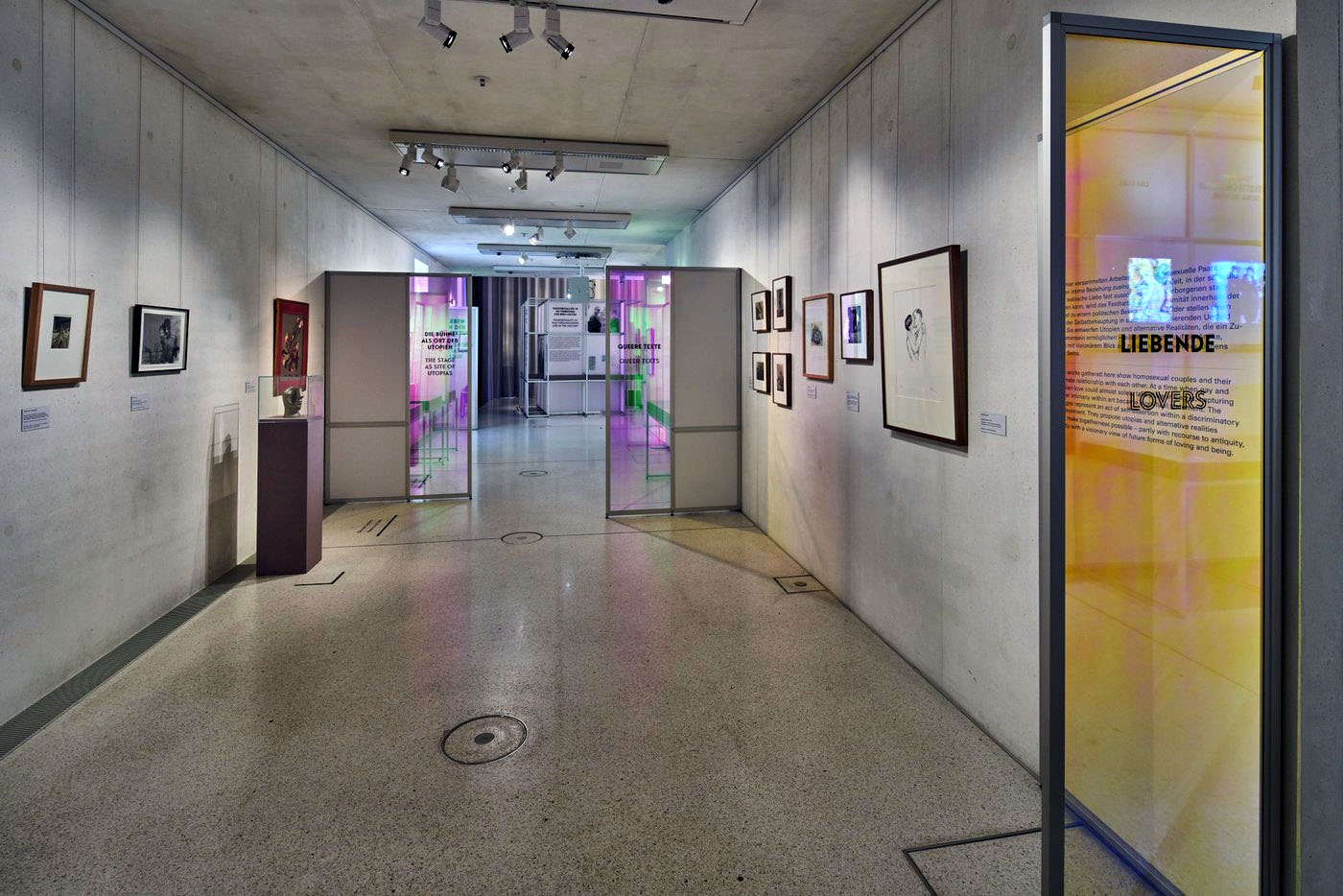
Lovers

The works gathered here show homosexual couples and their intimate relationship with each other. At a time when gay and lesbian love could almost solely take place in secret, capturing queer intimacy within art became a political statement. The images represent an act of self-assertion within a discriminatory environment. They propose utopias and alternative realities that make togetherness possible – partly with recourse to antiquity, partly with a visionary view of future forms of loving and being.

Text from Stories of the exhibition TO BE SEEN: Queer Lives 1900-1950


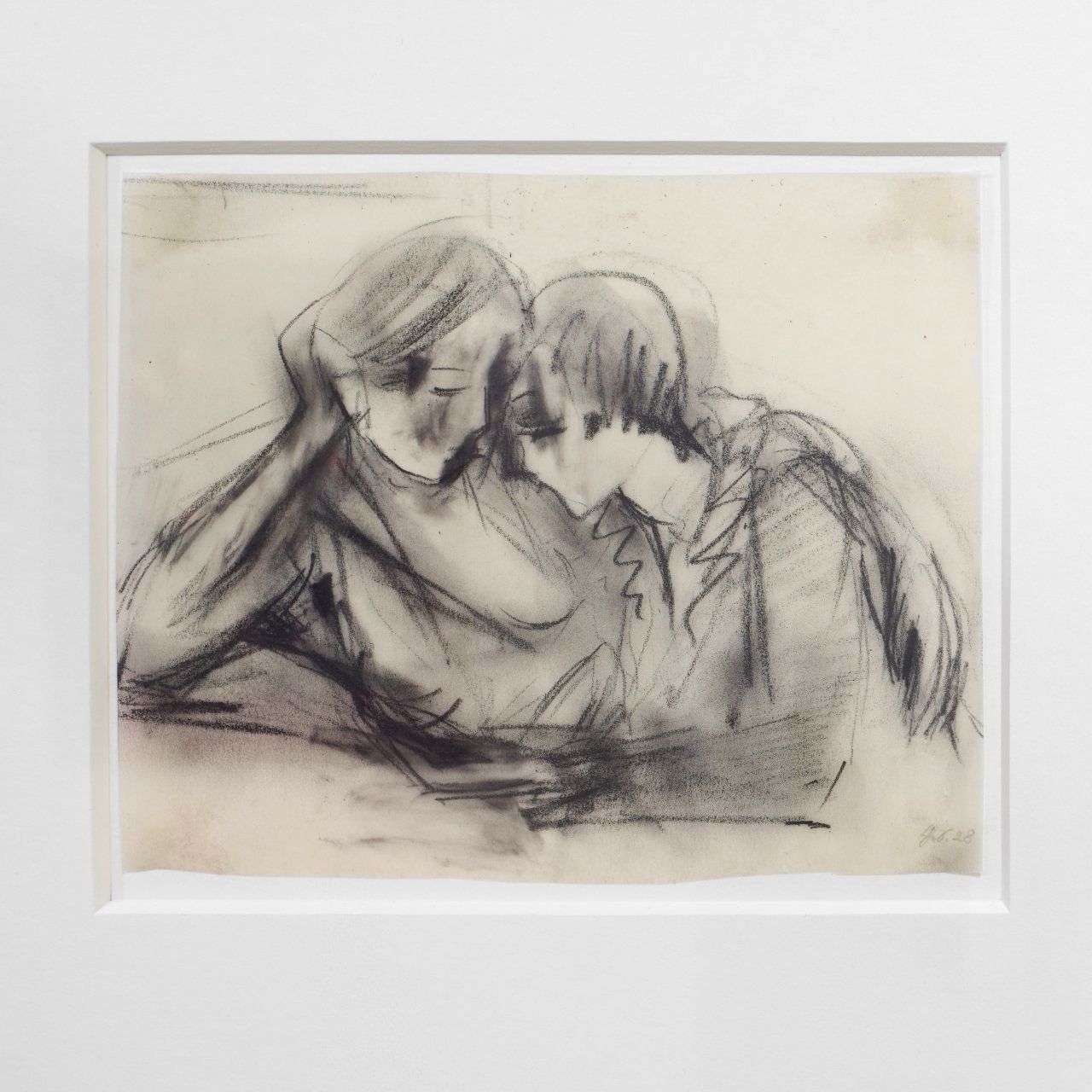
Gertrude Sandmann (German, 1893-1981) 'Rosa Nachthemd und schwarzer Pyjama' (Pink nightgown and black pyjamas) 1928


Gertrude Sandmann (German, 1893-1981)
Rosa Nachthemd und schwarzer Pyjama (Pink nightgown and black pyjamas)
1928
© Anja Elisabeth Witte/Berlinische Galerie


Gertrude Sandmann (16 November 1893 – 6 January 1981) was a German artist and Holocaust survivor. Born into a wealthy German-Jewish family, Sandmann studied at the Verein der Berliner Künstlerinnen and had private tutelage from Käthe Kollwitz. In 1935 she was banned from practicing her profession due to the Nuremberg Laws. Given a deportation order in 1942, she ignored it, faked her own suicide, and hid with friends in Berlin until the end of the war. She lived in an apartment in Berlin-Schöneberg until the end of her life. She was a lesbian and, after the war, worked to improve the rights and visibility of LGBT people. Much of her oeuvre is held by the Potsdam Museum.

Text from the Wikipedia website


Gertrude Sandmann (1893-1981), who trained in Berlin and Munich, took private lessons from Käthe Kollwitz in the 1920s. She and the older artist remained lifelong friends. Unlike Kollwitz, however, Sandmann was less focused on social critique. A committed feminist, women were her favourite theme, as they were for her colleague Jeanne Mammen, who was about the same age.


Installation view of the exhibition 'TO BE SEEN: Queer Lives 1900-1950' at the Munich Documentation Center for the History of National Socialism


Installation view of the exhibition TO BE SEEN: Queer Lives 1900-1950 at the Munich Documentation Center for the History of National Socialism showing at centre, Dora Kallmus’ photograph The trapeze artist Barbette (Nd, below)
Photo: Connolly Weber Photography/NS-Dokumentationszentrum München


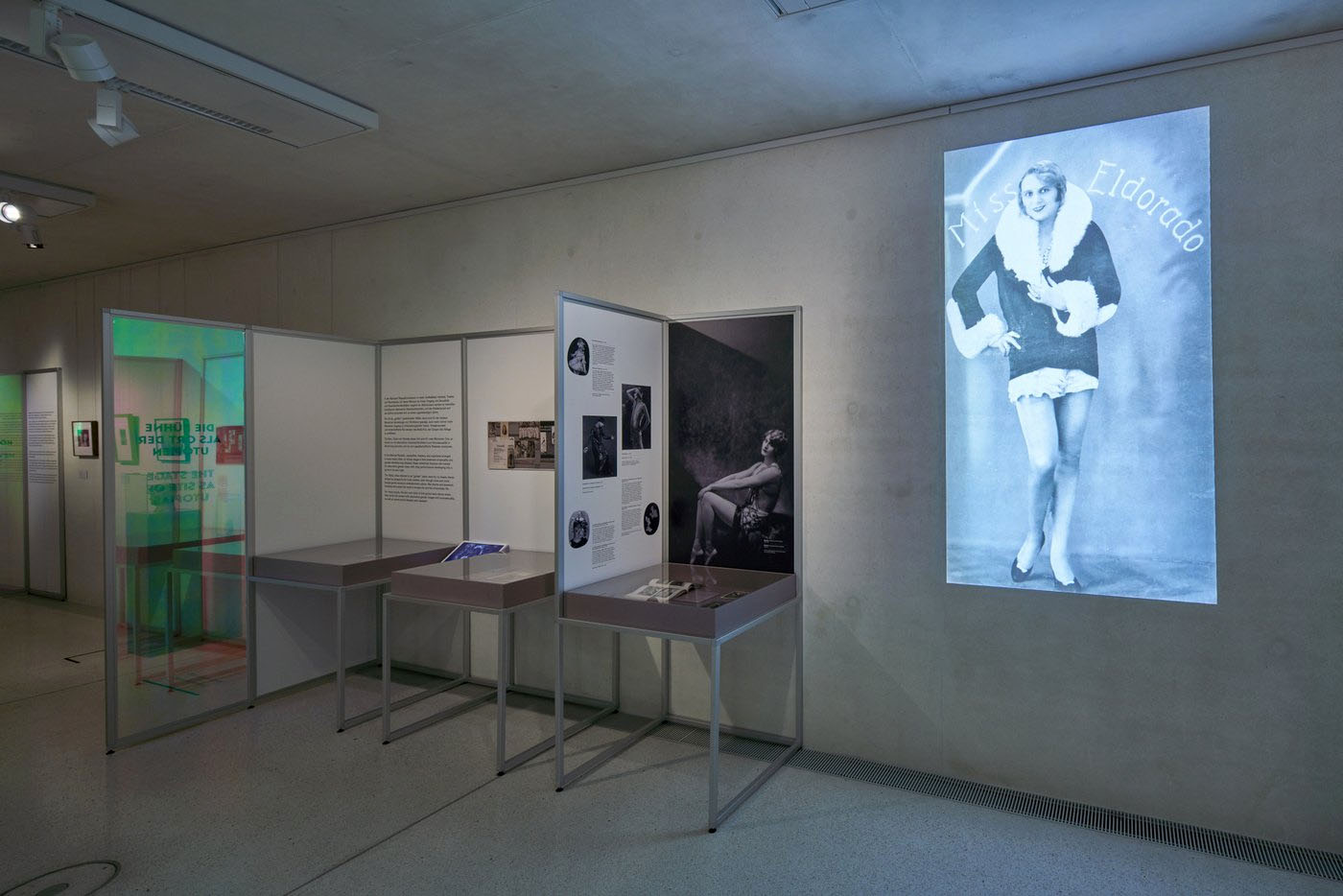
The stage as site of utopias

In the Weimar Republic, vaudevilles, theatres, and nightclubs emerged in many major cities, on whose stages a freer treatment of sexuality and gender identities was allowed. Stage celebrities became role models for alternative gender roles, with drag performances developing into a genre in its own right.

The 1920s, often referred to as “golden” years, were by no means characterised by prosperity for most citizens, even though more and more people gained access to entertainment culture. War trauma and economic hardship stimulated the need to escape the worries of everyday life.

For many people, the bars and clubs of this period were places where they came into contact with alternative gender images and homosexuality, as well as where social debates were sparked.

Text from Stories of the exhibition TO BE SEEN: Queer Lives 1900-1950


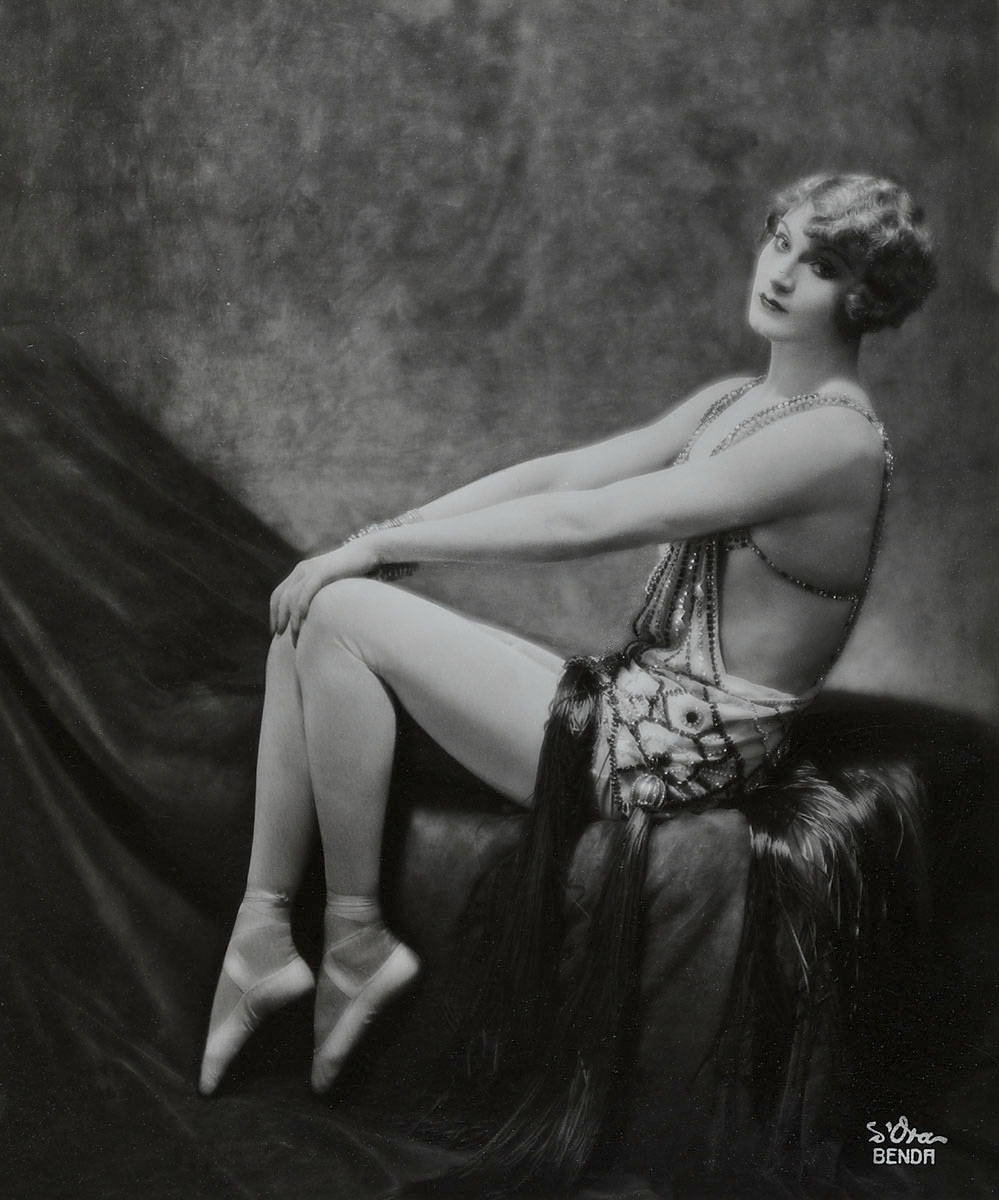
Dora Kallmus (Austrian, 1881-1963) 'The vaudeville and trapeze artist Barbette' Nd


Dora Kallmus (Atelier d’Ora) (Austrian, 1881-1963)
The vaudeville and trapeze artist Barbette
Nd
© Estate of Madame d’Ora, MK&G ~ Museum für Kunst und Gewerbe Hamburg


The trapeze artist Barbette (real name Vander Clyde, 1899-1973) celebrated great success in Europe from the mid-1920s. Barbette performed, among other things, in the Berlin Varieté Wintergarten. The sensational productions of the “female impersonators” became increasingly known to a mass audience – and thus also helped the male and female impersonators of the Berlin scene to gain acceptance.


Dora Philippine Kallmus (20 March 1881 – 28 October 1963), also known as Madame D’Ora or Madame d’Ora, was an Austrian fashion and portrait photographer.


Early life

Dora Philippine Kallmus was born in Vienna, Austria, in 1881 to a Jewish family. Her father was a lawyer. Her sister, Anna, was born in 1878 and deported in 1941 during the Holocaust. Although her mother, Malvine (née Sonnenberg), died when she was young, her family remained an important source of emotional and financial support throughout her career.

She and her sister, Anna, were both “well-educated,” spoke English and French, and played the piano. They had also traveled throughout Europe.

She became interested in the photography field while assisting the son of the painter Hans Makart, and in 1905 she was the first woman to be admitted to theory courses at the Graphische Lehr- und Versuchsanstalt (Graphic Training Institute). That same year she became a member of the Association of Austrian photographers. At that time she was also the first woman allowed to study theory at the Graphischen Lehr- und Versuchsanstalt, which in 1908 granted women access to other courses in photography.

Career

In 1907, she established her own studio with Arthur Benda in Vienna called the Atelier d’Ora or Madame D’Ora-Benda. The name was based on the pseudonym “Madame d’Ora”, which she used professionally. D’ora and Benda operated a summer studio from 1921 to 1926 in Karlsbad, Germany, and opened another gallery in Paris in 1925. The Karlsbad gallery allowed D’Ora to cater to the “international elite vacationers.” These same clients later convinced her to open her Paris studio.

Between 1917 and 1927, D’Ora’s studio “produced” photographs for Ludwig Zwieback & Bruder, a Viennese department store. She was represented by Schostal Photo Agency (Agentur Schostal) and it was her intervention that saved the agency’s owner after his arrest by the Nazis, enabling him to flee to Paris from Vienna.

Her subjects included Josephine Baker, Coco Chanel, Tamara de Lempicka, Alban Berg, Maurice Chevalier, Colette, and other dancers, actors, painters, and writers.

Text from the Wikipedia website


Dora Kallmus (Austrian, 1881-1963) 'The vaudeville and trapeze artist Barbette' Nd (detail)


Dora Kallmus (Austrian, 1881-1963)
The vaudeville and trapeze artist Barbette (detail)
Nd
© Museum für Kunst und Gewerbe Hamburg


Unknown photographer. 'Dance study of Alexander Sakharoff' 1912


Unknown photographer
Dance study of Alexander Sakharoff
1912
Deutsche Kunst und Dekoration: illustr. Monatshefte für moderne Malerei, Plastik, Architektur, Wohnungskunst u. künstlerisches Frauen-Arbeiten – 30.1912


Installation view of the exhibition 'TO BE SEEN: Queer Lives 1900-1950' at the Munich Documentation Center for the History of National Socialism


Installation view of the exhibition TO BE SEEN: Queer Lives 1900-1950 at the Munich Documentation Center for the History of National Socialism
Photo: Connolly Weber Photography/NS-Dokumentationszentrum München


Life under dictatorship

After the Nazis took power in 1933, every form of queer life was threatened and continued to exist only in private spaces or secret locations. Hopes for a tacit tolerance of homosexuality by the Nazis were finally dashed after the murder of Ernst Röhm, chief of- staff of the SA (Storm Troopers). The period of open persecution had begun.

During the first major Nazi raids against homosexuals on October 20, 1934, 145 men were arrested in Munich alone. Paragraph 175 of the penal code was made more severe in June 1935: any act between men bearing sexual suggestion was now punishable.

About 57,000 homosexual men were sentenced to prison, and between 6,000 and 10,000 of them were deported to concentration camps, of whom at least half were murdered.

Female homosexuality was not prosecuted in the dictatorship, but was socially ostracised. If lesbian women and persons who did not conform to their gender were denounced, they were threatened with police investigations, house searches, and interrogations. If political opposition, social deviance, or racial persecution additionally occurred, they faced repression or even internment in a concentration camp.

The graphic artist Richard Grune (1903-1983) was imprisoned almost continuously from 1934 to 1945 because of his homosexuality. After his liberation from the concentration camp, he processed what he had experienced through art.

Text from Stories of the exhibition TO BE SEEN: Queer Lives 1900-1950


Richard Grune (German, 1903-1983) 'Solidarity: Prisoner Supports His Exhausted Comrade' 1945-1947


Richard Grune (German, 1903-1983)
Solidarity: Prisoner Supports His Exhausted Comrade
1945-1947
Lithograph
© Wien Museum


“Solidarity,” a lithograph of one prisoner supporting another, by German artist Richard Grune, who spent eight years in Nazi concentration camps after being convicted for homosexuality.


Trained as an artist and graphic designer, 29-year-old Richard Grune moved to Berlin the same month that the police began forcing these establishments to shut down. Although prominent nightclubs like the Eldorado faced closure, members of these communities still found ways to continue gathering more privately. For example, Grune hosted two parties for friends in his studio in fall 1934. He was denounced afterward – along with dozens of others – by a private citizen who often passed information to police. Grune was then arrested for alleged violations of Paragraph 175, the statute of the German criminal code that criminalised sexual relations between men. He was imprisoned for several months before being convicted and sentenced to a year in prison.

After serving his sentence, Grune was arrested again by the Gestapo and held indefinitely in what was misleadingly referred to as “protective custody” (“Schutzhaft”) – an experience shared by many convicted of violating Paragraph 175 under the Nazi regime.5 Grune spent the next decade in concentration camps, including Sachsenhausen and Flossenbürg. He escaped from Flossenbürg in April 1945 as American forces approached and camp authorities evacuated the prisoners.

Grune created the featured lithograph6 – “Solidarity: Prisoner Supports His Exhausted Comrade” – in 1945 as part of a series of images inspired by his experiences as a prisoner in the Nazi camp system. These lithographs were reproduced in two published portfolios in 1947.7 Grune’s artwork reflects many of his own experiences, but it does not reference his persecution as a gay man in any specific way. Instead, his lithographs seem to suggest the idea of shared suffering among all concentration camp prisoners. Because sexual relations between men remained criminalised for decades in Germany after the end of World War II, many people convicted under Paragraph 175 chose to conceal the details of their past persecution under the Nazi regime.8

After the war, Grune chose to portray himself as a political prisoner of Nazism, but he was not able to obtain official recognition or compensation for his suffering. Although his lithographs are among the most important artistic representations of concentration camp experiences created immediately after the war, Grune could not support himself as an artist. He did occasionally find design and illustration work, but he made his living by working as a bricklayer. Grune died in obscurity in Kiel, Germany in 1983.

Anonymous. “Lithograph by Richard Grune,” on the Holocaust Sources in Context website Nd [Online] Cited 10/04/2023


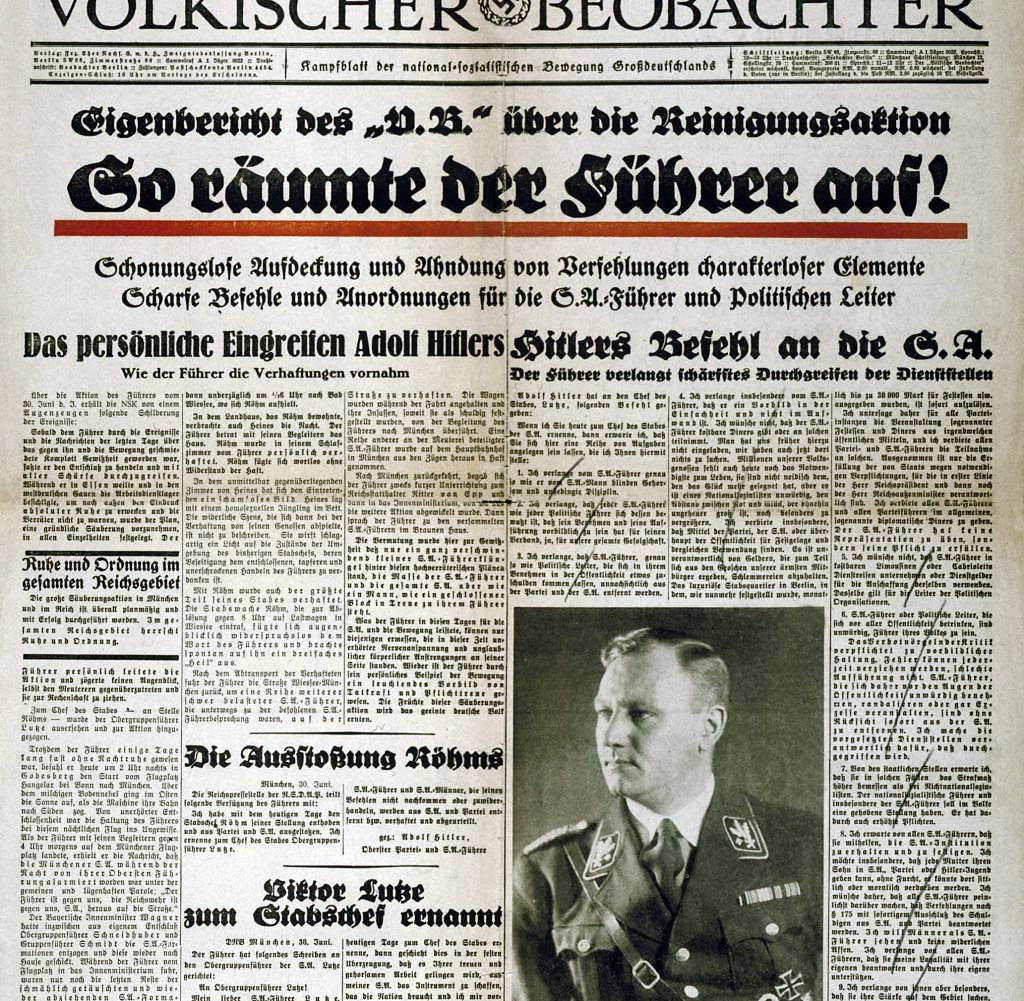
"This is how the Führer cleaned up!" Front page of the extra issue of the 'Völkischer Beobachter', June 30, 1934, Berlin edition


“This is how the Führer cleaned up!”
Front page of the extra issue of the Völkischer Beobachter, June 30, 1934, Berlin edition
Public domain


Homosexuality in Nazi organisations and in the military

The proscription of homosexuality was used by various sides in the political struggle. In 1931 / 1932, the Social Democrats utilised Ernst Röhm’s homosexuality to harm the Nazi Party. The Röhm case served the notion of “gay Nazis” gathering together in male associations, a phenomenon that did exist. Beginning in the mid-1930s, the Nazi regime increasingly cracked down on homosexual activity in the army, police, and Nazi associations. Intimacy between men was now punished particularly severely in party organisations and the police. Nazi propaganda labeled homosexual men as “enemies of the state” to legitimise this persecution. Nevertheless, clandestine homosexual encounters continued to occur.

Adapting to survive

After the dismantling of gay and lesbian subcultures across the entire state and the harshening of criminal law, homosexual contact took place almost exclusively in private spaces. Fear of denunciation and persecution drove most homosexuals to hide their sexuality and conform.

This also applied to lesbian women and trans* persons, who were not prosecuted per se. They could remain unhampered as long as they did not attract attention. Marriages of convenience were one of many survival strategies. Certain prominent artists were tolerated by the Nazi regime despite their widely known homosexuality. The regime, which needed these stars for its propaganda, held off on persecution, and demanded that they conform in their way of living.

Persecution and imprisonment

The Nazi regime’s treatment of homosexuals and trans* persons was not uniform. Initially, most of the men convicted under Paragraph 175 were released after serving their prison sentences. Especially since 1940 many were transferred to concentration camps. Lesbian women and trans* persons were sometimes charged with other crimes, such as prostitution or indecent behaviour. Others were persecuted for political, social, or racist reasons.

The Nazi regime’s treatment of homosexuals and trans* persons was not uniform. Initially, most of the men convicted under Paragraph 175 were released after serving their prison sentences. Especially since 1940 many were transferred to concentration camps. Lesbian women and trans* persons were sometimes charged with other crimes, such as prostitution or indecent behaviour. Others were persecuted for political, social, or racist reasons.

Text from Stories of the exhibition TO BE SEEN: Queer Lives 1900-1950


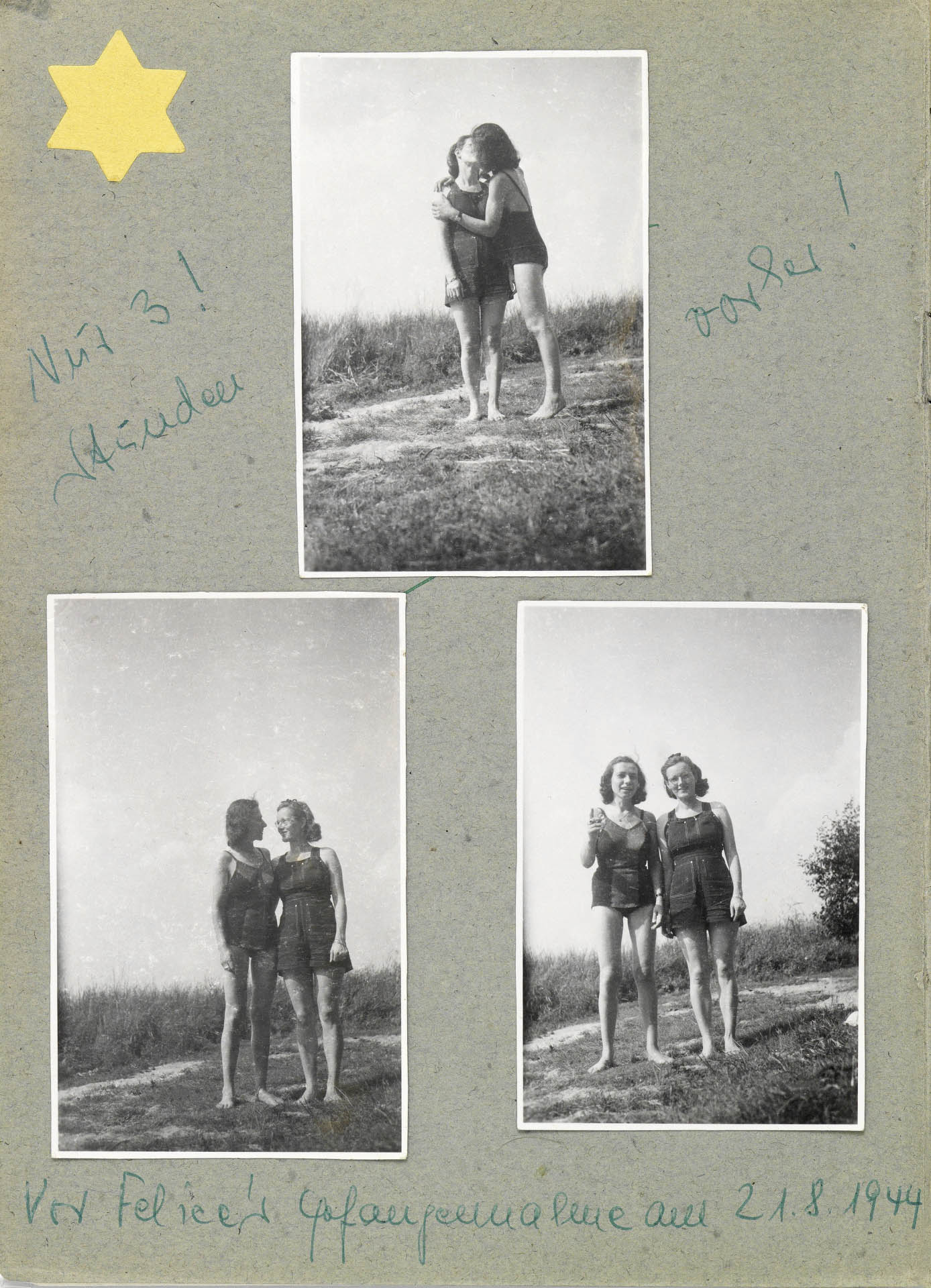
Unknown photographer. 'Photographs from Elisabeth (Lilly) Wust's diary entry on the deportation of her Jewish partner Felice Schragenheim to the Theresienstadt concentration camp' August 21, 1944


Unknown photographer
Photographs from Elisabeth (Lilly) Wust’s diary entry on the deportation of her Jewish partner Felice Schragenheim to the Theresienstadt concentration camp
August 21, 1944
© Jewish Museum Berlin


Part of the diary entry by Elisabeth (Lilly) Wust on the deportation of her Jewish partner Felice Schragenheim to the Theresienstadt concentration camp, August 21, 1944


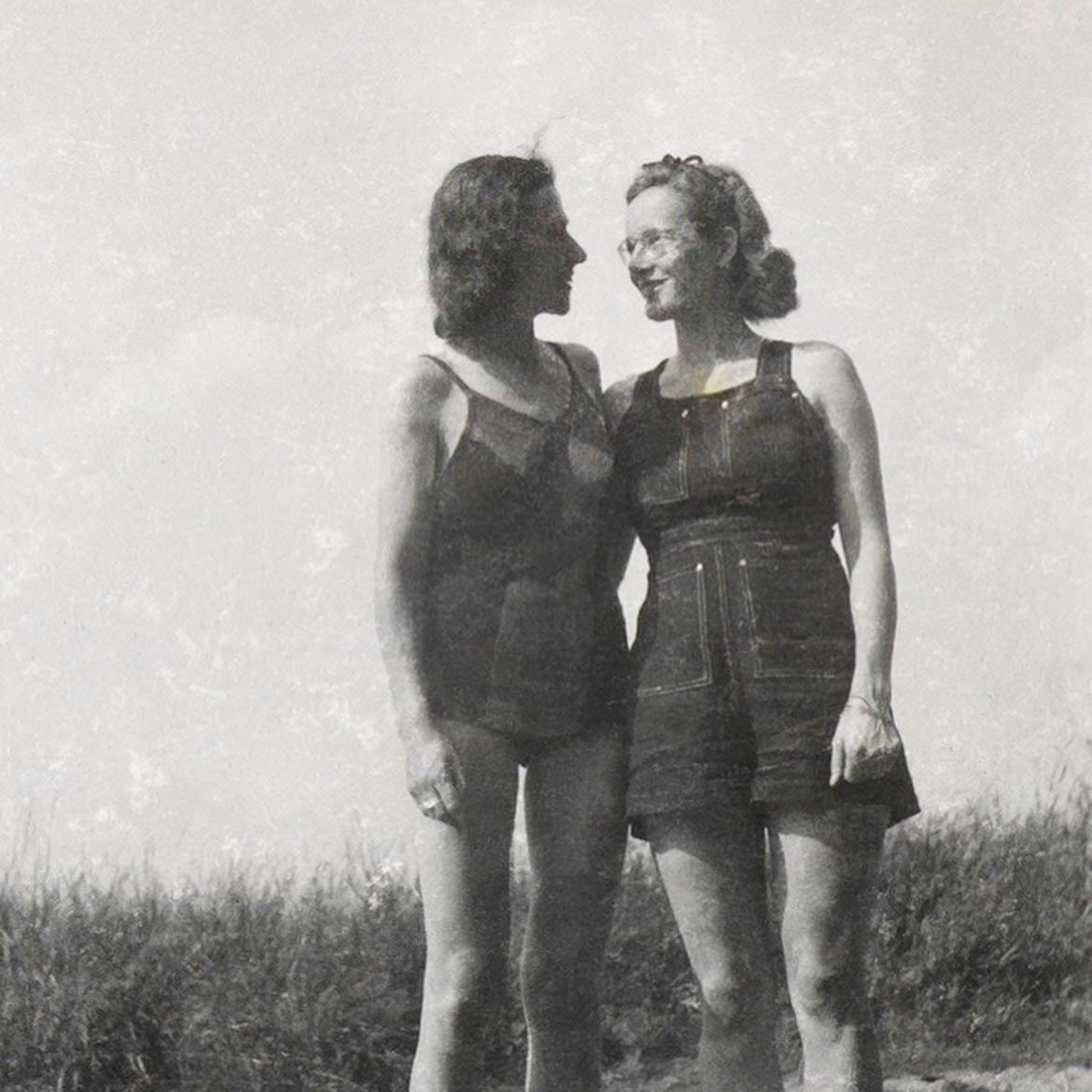
Elisabeth (Lilly) Wust (1913-2006) and Felice Schragenheim (1922-1945) met in Berlin in 1942, shortly after Schragenheim went into hiding as a Jew. They moved in together a little later and promised to marry in June 1944. On August 21, 1944, Felice Schragenheim was discovered and taken to a Berlin collection point for Jews. Lilly Wust visited her there several times before the deportation to the Theresienstadt ghetto. In the hope of being able to help her beloved, Lilly Wust travelled to Theresienstadt herself in the fall of 1944.

Felice was deported to Auschwitz a little later. She died in early 1945, probably in the Bergen-Belsen concentration camp. Lilly Wust searched for her for years.

The love story of Lily Wust and Felice Schragenheim gained notoriety in the 1990s through the book “Aimée & Jaguar” and the feature film of the same name. However, there is another version of the story: Elenai Predski-Kramer, a former girlfriend of Felice Schragenheim, tells her perspective on the love story after the book was published and expresses the suspicion that Lilly Wust herself might have betrayed Felice Schragenheim. However, there is no evidence for this.

Text from the Munich Documentation Center for the History of National Socialism Instagram page


Unknown photographer. 'Photograph from Elisabeth (Lilly) Wust's diary entry on the deportation of her Jewish partner Felice Schragenheim to the Theresienstadt concentration camp' August 21, 1944 (detail)


Unknown photographer
Photograph from Elisabeth (Lilly) Wust’s diary entry on the deportation of her Jewish partner Felice Schragenheim to the Theresienstadt concentration camp (detail)
August 21, 1944
© Jewish Museum Berlin


Exile and resistance

Only a few homosexual and trans* people succeeded in escaping Nazi persecution through emigration. This option was usually only open to the wealthy or those who had international contacts and could find work abroad thanks to their education and language skills. Leaving Nazi Germany was made more difficult by the measures against capital transfer, which were tightened in 1934. The “Reich Flight Tax” reduced assets by 25 percent upon departure, the export of foreign currency was prohibited, and the transfer of bank or securities assets was made almost impossible.

Individual homosexual or transgender people decided to actively resist the Nazi regime, also in the territories occupied by Germany. They documented the crimes of the Nazi regime, called for resistance, carried out sabotage, committed attacks, or fought as partisans or members of foreign troops against Hitler’s Germany.

Text from Stories of the exhibition TO BE SEEN: Queer Lives 1900-1950


Claude Cahun. 'Self-portrait (with Nazi badge between her teeth)' 1945


Claude Cahun (French, 1894-1954)
Self Portrait (with Nazi badge between her teeth)
1945
Gelatin silver print
© Jersey Heritage Collection


Jewish-French author and photographer Claude Cahun (French, 1894-1954) and her partner Marcel Moore (French, 1892-1972)  put up resistance against the Nazi regime.


After four years of subversive activity, the pair were arrested by the Germans in 1944. Initially, the Nazi authorities couldn’t believe that the women carried it out by themselves. “They believed that there must be somebody else involved, there must be a man involved,” says Downie.

While waiting to be questioned, Cahun and Moore attempted suicide. They both took pills – barbiturates – which put them into a coma. Once they were well enough, they were sentenced to death for undermining the German forces. But the Bailiff of Jersey and the French Consul pleaded on their behalf – by that time, the Normandy landings had happened and Saint-Malo (the main connecting port) had been liberated, so they could no longer be deported to camps in Europe – and their sentence was commuted.

Although their lives had been saved, Moore and Cahun were not pleased. “They wanted to be martyrs for their cause,” says Downie. “To them, that would’ve been the realisation of their life of resistance, to be a martyr for freedom.”

At 3.40pm on May 9, 1945, the swastika was lowered from Fort Regent, a 19th-century fortification in St Helier, and the Union Jack was hoisted, signalling the official end of the occupation. Then the celebrations began. Cahun joined the crowds in Royal Square cheering, flag-waving, and holding a sailor aloft. Despite ill health from their time in prison, they kept on creating work after the war. In the same month, a photograph shows them gripping a Nazi eagle badge brazenly between their teeth, a silk scarf tied around their head, their hands dug into their coat pockets, their eyes staring defiantly at the camera.

Jessie Williams. “Claude Cahun: Jersey’s queer, anti-Nazi freedom fighter,” on the Huck website 14th May, 2020 [Online] Cited 17/04/2023


After 1945

Queer history was hardly remembered or archived after 1945. To this day, we know only some of the pioneers of the queer emancipation movement. We know even less about the life of those who were persecuted, driven into exile, murdered – or simply remained invisible.

After the end of the war, queer people continued to be marginalised. Gay men in particular continued to suffer in large numbers under Paragraph 175, many of whom did not go free but were transferred from concentration camps directly to prisons.

The ongoing discrimination by state and society changed only slowly. In 1969, Paragraph 175 was reformed and criminal law liberalised. Beginning in the 1970s, new social movements emerged, including a homosexual emancipation movement. Various groups reclaimed the “pink triangle” as a symbol to stand up for the rights of queer people.

Lesbian and feminist groups also gained popularity during the 1970s. Although lesbian sexuality was not directly persecuted by the state, many suffered from the misogynistic legal situation. The legal preferential treatment of men made it difficult to live out lesbian relationships, due to discrimination in labor and marriage laws.

The emergence of HIV in the 1980s affected many gay men and trans* people: thousands became infected, developed AIDS, and died. The state did not help, but instead relied on stigmatising measures and an aggressive rhetoric of exclusion, especially in Bavaria. For those affected, this recalled the previous period of open persecution.

Thanks to the efforts of activists, the health, political, and social situation of LGBTQI+ persons has improved since the 1990s. Today, queer people in Germany can celebrate some achievements and are also represented in politics. However, much remains to be done for LGBTQI+ equality. In many places around the world the situation is increasingly deteriorating. Trans* people in particular continue to face great discrimination.

Therefore, the commitment to queer self-determination is not over, but more relevant than ever. Because in the end, it not only ensures the preservation of LGBTIQ* human rights, but creates a more just society for all.

Text from Stories of the exhibition TO BE SEEN: Queer Lives 1900-1950


Paul Hoecker (German, 1854-1910)


Installation view of the exhibition 'TO BE SEEN: Queer Lives 1900-1950' at the Munich Documentation Center for the History of National Socialism

Installation view of the exhibition 'TO BE SEEN: Queer Lives 1900-1950' at the Munich Documentation Center for the History of National Socialism showing at left on the wall, Paul Hoecker's painting 'Head of a youth / Portrait of a boy' (1901); and at right on the wall, Paul Hoecker's painting 'Pierrot' (Nd)


Installation view of the exhibition TO BE SEEN: Queer Lives 1900-1950 at the Munich Documentation Center for the History of National Socialism showing in the bottom image at left on the wall, Paul Hoecker’s painting Head of a youth / Portrait of a boy (1901); and at right on the wall, Paul Hoecker’s painting Pierrot (Nd)
Photo: Connolly Weber Photography/NS-Dokumentationszentrum München


Paul Hoecker (German, 1854-1910) 'Young Man's Head' Cover of 'Jugen' magazine, volume 44, 1901


Paul Hoecker (German, 1854-1910)
Young Man’s Head
Cover of Jugend magazine, volume 44, 1901
Public domain


A chapter of TO BE SEEN #QueerLives is dedicated to the artist Paul Hoecker (1854-1910). It was created in collaboration with @forummuenchenev, which researches Hoecker’s story to honor and commemorate his life and work.

Paul Hoecker shaped the Munich art scene in the late 19th century. After his homosexuality became known, the artist was excluded and fell into oblivion. As a professor at the Munich Academy of Fine Arts, Hoecker had a great deal of influence during his lifetime: almost all the painters in the artist group “Die Scholle” and many illustrators for the magazines “Simplicissimus” and “Die Jugend” were among his students. The co-founder of the Munich Secession also received great recognition for his artistic work.

Hoecker privately exchanged views with the sexologist Magnus Hirschfeld about the fact that he has “contrasexual tendencies”, i.e. is gay. When a sex worker was recognised in the model of his acclaimed work “Ave Maria”, he was involuntarily outed. Paul Hoecker forestalled a scandal by resigning from his professorship. In this way he was able to avoid having to take a public position on his sexuality. He withdrew first to Italy and later to his home in Silesia, Oberlangenau.

Text from the Munich Documentation Center for the History of National Socialism Instagram page


Paul Hoecker (11 August 1854, Oberlangenau – 13 January 1910, Munich) was a German painter of the Munich School and founding member of the Munich Secession…

The Munich Academy

In 1891, at the young age of 36, he was appointed to the Munich Academy, where he replaced Friedrich August von Kaulbach, who had resigned suddenly. He was the first teacher at the academy to take his students on field trips, which often lasted two weeks. He was also one of the first “modern” teachers there, exposing his students to impressionism and the latest developments from the Barbizon School. His studio was often referred to as the “Geniekasten” (Genius Box).

Due to the pervasive influence of Franz von Lenbach, very little exhibition space was available for any art that was considered modern. In 1892, shortly after being appointed a professor, this problem motivated Hoecker to become one of the founding members of the Munich Secession, acting as its secretary. The Secession ultimately inspired similar movements in Berlin and other cities.

Scandal

In 1897, a scandal broke out when it was rumoured that Hoecker had used a male prostitute as a model for a painting of the Madonna. Eventually, the scandal became more personal in nature, and he chose to resign from the academy. He then travelled to Capri, where he stayed at the Villa Lysis, home of industrialist and poet Jacques d’Adelswärd-Fersen, who had left Paris in the wake of his own scandal. While there, Hoecker painted several portraits of Fersen’s lover, Nino Cesarini, a professional model. Though the Jugend magazine published one of his Nino portraits in 1904 – a fully clothed version. By 1901 he returned to Oberlangenau. In 1910, he died of what was diagnosed as “Roman Malaria”.

Posthumous recognition

Despite his important role for the Munich art scene of the late 19th century, Paul Hoecker is hardly known today. This is probably due to the fact that he left the professorship in connection with his homosexuality. In October 2019 a research group was formed at the Forum Queeres Archiv München to investigate the life and work of the painter. Part of the family owned estate of Paul Hoecker has found its way into the archive of the Forum Queeres Archiv München and was digitalised.

Text from the Wikipedia website


Elisar von Kupffer (German, 1872-1942) 'Dove Sei? / Where Are You?' 1914/1918


Elisar von Kupffer (German, 1872-1942)
Dove Sei? / Where Are You?
1914/1918
© Comune di Minusio – Centro Elisarion


Elisàr August Emanuel von Kupffer (20 February 1872 – 31 October 1942) was a Baltic German artist, anthologist, poet, historian, translator, and playwright. He used the pseudonym “Elisarion” for most of his writings…

Career

In 1895 he published Leben und Liebe (Life and Love), a book of poetry. In autumn of that year he moved to Berlin to study at the Berlin Art Academy and moved in with Von Mayer. The following year, he left Agnes and wrote the dramas Der Herr der Welt (Master of the World), and Irrlichter (Wisps) as well as three one-act plays. In 1897 he published the anthology Ehrlos (Infamous, or Dishonorable).

Von Mayer graduated in 1897 and they travelled throughout Italy, Sicily, Southern France and Geneva before returning to Berlin. They spent the summer in Thuringia and Heiligendamm and went back to Italy in 1899. Early next year, Adolf Brand published Von Kupffer’s influential anthology of homoerotic literature, Lieblingminne und Freundesliebe in der Weltliteratur (roughly, “Love of Favourites and Love Between Friends in World Literature”. Lieblingminne is a neologism created by Von Kupffer). The anthology was researched and created, in part, as a protest against the imprisonment of Oscar Wilde in England. It was reprinted in 1995.

In 1908 he published a book on Il Sodoma, the Renaissance artist. In 1911, he and Von Mayer founded the publishing house Klaristische Verlag Akropolis in Munich and Von Kupffer published three major works: a play, Aino und Tio, Hymnen der heiligen Burg (Hymns of the Holy Castle) and Ein neuer Flug und eine heilige Burg (A New Flight and a Holy Castle). His work was also published and reviewed in the gay magazine Akademos, published by Jacques d’Adelswärd-Fersen. That same year, he and Von Meyer announced the creation of a “new religion”, Klarismus (Clarity), and established a community in Weimar. The following year he published a book on Klarismus called Der unbekannte Gott (The Unknown God). In 1913, the Brogi Gallery in Florence hosted his first art exhibition. Later that year, a Klarist community was established in Zürich.

Later life and death

In 1915, with World War I in progress and growing animosity towards Germans, they left Italy and moved to Ticino, where Von Kupffer established himself as a painter and muralist in Locarno, Switzerland. They were granted Swiss citizenship in 1922. From 1925 to 1929 they transformed their villa in Minusio, near Lake Maggiore, into an opulent collection of art, the “Sanctuarium Artis Elisarion”. He was also a photographer, making photographic studies of boys for use in the creation of his paintings, but most of his works featured a youthful version of himself. The Klarist “Elisarion Community” was founded at Minusio in 1926. During the 1930s, the number of visitors increased, then sharply decreased; stopping altogether just before the onset of World War II.

As his health declined, he became reclusive and died on 31 October 1942. Since 1981 the “Sanctuarium Artis Elisarion” has been a Museum dedicated to Von Kupffer’s work. The villa was willed to the municipality of Minusio, and his ashes are interred inside, together with Von Meyer’s. The Elisarion Community was satirically referenced as the “Polysadrion” (roughly; Place of Many Idiots), in the 1931 novel Schloss Gripsholm by Kurt Tucholsky.

Text from the Wikipedia website


Germaine Krull. 'Nude' Nd

Germaine Krull (1897-1985, photographer) From the portfolio 'Les amies' c. 1924


Germaine Krull (European, 1897-1985)
Les Amies
1924
From the portfolio Nudes
© Staatsgalerie Stuttgart


Germaine Luise Krull (20 November 1897 – 31 July 1985) was a photographer, political activist, and hotel owner. Her nationality has been categorised as German, French, and Dutch, but she spent years in Brazil, Republic of the Congo, Thailand, and India. Described as “an especially outspoken example” of a group of early 20th-century female photographers who “could lead lives free from convention”, she is best known for photographically illustrated books such as her 1928 portfolio Métal.


Heinz Loew (German, 1903-1981) 'Doppelportrait Heinz Loew und Hermann Trinkaus im Atelier, Bauhaus Dessau, Doppelbelichtung' (Double portrait of Heinz Loew and Hermann Trinkaus in the studio, Bauhaus Dessau, double exposure) 1927


Heinz Loew (German, 1903-1981)
Doppelportrait Heinz Loew und Hermann Trinkaus im Atelier, Bauhaus Dessau, Doppelbelichtung (Double portrait of Heinz Loew and Hermann Trinkaus in the studio, Bauhaus Dessau, double exposure)
1927
Gelatin silver print
3 1/2 x 4 1/4″ (9 x 12cm)
© Bauhaus-Archiv Berlin


Christian Schad. 'Boys in Love' (Liebende Knaben), 1929


Christian Schad
Boys in Love (Liebende Knaben)
1929
© Museen der Stadt Aschaffenburg / VG Bild-Kunst, Bonn 2022


Max Peiffer Watenphul (German, 1896-1976) 'Stillleben mit Mimosen' (Still Life with Mimosas) 1932


Max Peiffer Watenphul (German, 1896-1976)
Stillleben mit Mimosen (Still Life with Mimosas)
1932


Max Peiffer Watenphul (1896 – 13 July 1976) was a German artist. Described as a “lyric poet of painting”, he belongs to a “tradition of German painters for whom the Italian landscape represented Arcadia.” In addition to Mediterranean scenes, he regularly depicted Salzburg and painted many still lifes of flowers. As well as oil paintings, his extensive body of work encompasses watercolours, drawings, enamel, textiles, graphic art, and photographs.


Gerda Wegener (Danish, 1885-1940). 'Lili with a Feather Fan' 1920


Gerda Wegener (Danish, 1885-1940)
Lili with a Feather Fan
1920


Gerda Wegener (Danish, 1885-1940). 'Lili Elbe' c. 1928


Gerda Wegener (Danish, 1885-1940)
Lili Elbe
c. 1928


Gerda Wegener (Danish, 1885-1940). 'At the mirror' 1931-1936


Gerda Wegener (Danish, 1885-1940)
At the mirror
1931-1936


'Advertisement by the Hella Knabe tailoring studio' 1932


Advertisement by the Hella Knabe tailoring studio
In Die Freund, December 31, 1932
© forummuenchenev


On December 31, 1932 … this advertisement for Hella Knabe’s tailoring studio appeared in “Die Freund”. In the 1920s, a separate infrastructure was also created for “transvestites” – people who preferred the clothing of the opposite sex, including trans* people. Hella Knabe’s made-to-measure studio became a nationwide attraction. The hairdresser and seamstress, whose husband was a “transvestite” himself, advertised not only in scene magazines, but also in national magazines such as Jugend and Simplicissimus.

Hella Knabe made women’s underwear, artificial busts, corsets and chastity belts for her customers and ran a mail order business. In addition, she received boarders, clothed them, applied make-up and enabled them to live in the opposite sex for a short time. She continued to offer her services after 1933 and kept in touch with her clients through her own magazine with subcultural content. In 1938 she was therefore fined for distributing “lewd literature”.

Text from the Munich Documentation Center for the History of National Socialism Instagram page


Jeanne Mammen (German, 1890-1976) 'Damenbar' (Lesbian Bar) c. 1930-1932


Jeanne Mammen (German, 1890-1976)
Damenbar (Lesbian Bar)
c. 1930-1932
Lithograph


Jeanne Mammen (German, 1890-1976) 'Siesta' c. 1930-1932


Jeanne Mammen (German, 1890-1976)
Siesta
c. 1930-1932


Jeanne Mammen (German, 1890-1976) 'Hermaphrodite' c. 1945


Jeanne Mammen (German, 1890-1976)
Hermaphrodite
c. 1945
© Stadtmuseum Berlin / VG Bild-Kunst, Bonn 2022


Jeanne Mammen (21 November 1890 – 22 April 1976) was a German painter and illustrator of the Weimar period. Her work is associated with the New Objectivity and Symbolism movements. She is best known for her depictions of strong, sensual women and Berlin city life.

Jeanne Mammen was born in Berlin, the daughter of a successful German merchant. She and her family moved to Paris when she was five years old. She studied art in Paris, Brussels and Rome from 1906-1911. Her early work, influenced by Symbolism, Art Nouveau, and the Decadent movement, was exhibited in Brussels and Paris in 1912 and 1913.

In 1916 Mammen and her family fled Paris to avoid internment during World War I. While her parents moved to Amsterdam, Mammen chose instead to return to Berlin. She was now financially on her own for the first time, as the French government had confiscated all of her family’s property. For several years Mammen struggled to make ends meet, taking any work she could find, and spending time with people from different class backgrounds. These experiences and newfound sympathies are reflected in her artwork from the period.

In time Mammen was able to find work as a commercial artist, producing fashion plates, movie posters, and caricatures for satirical journals such as Simplicissimus, Ulk, and Jugend. In the mid-1920s she became known for her illustrations evoking the urban atmosphere of Berlin. Much of her artwork depicted women. These women subjects often included haughty socialites, fashionable middle-class shop girls, street singers, and prostitutes. Her drawings were often compared to those of George Grosz and Otto Dix. Throughout the late 1920s and early 1930s she worked mainly in pencil with watercolour washes, and in pen and ink.

In 1921, Mammen moved into an apartment with her sister in Berlin. This apartment was a former photographer’s studio which she lived in until her death. Aside from Art throughout her life Mammen also was interested in science. She was close friends with Max Delbrück who left Europe and took some of her artwork with him and exhibited them in California. In addition to bringing these art works to be exhibited he also sent Mammen care packages from the United States with art supplies.

In 1930 she had a major exhibition in the Fritz Gurlitt gallery. Over the next two years, at Gurlitt’s suggestion, she created one of her most important works: a series of eight lithographs illustrating Les Chansons de Bilitis, a collection of lesbian love poems by Pierre Louÿs.

In 1933, following Mammen’s inclusion in an exhibition of female artists in Berlin, the Nazi authorities denounced her motifs and subjects as “Jewish”, and banned her lithographs for Les Chansons de Bilitis. The Nazis were also opposed to her blatant disregard to for apparent ‘appropriate’ female submissiveness in her expressions of her subjects. Much of her work also includes imagery of lesbians. The Nazis shut down most of the journals she had worked for, and she refused to work for those that complied with their cultural policies. Until the end of the war she practiced a kind of “inner emigration”. She stopped exhibiting her work and focused on advertising. For a time she also peddled second-hand books from a handcart.

In the 1940s, in a show of solidarity, Mammen began experimenting with Cubism and expressionism, a risky move given the Nazis’ condemnation of abstract art as “degenerate”. After the war she took to collecting wires, string, and other materials from the streets of bombed-out Berlin to create reliefs. In the late 1940s she began exhibiting her work again, as well as designing sets for the Die Badewanne cabaret. She created abstract collages from various materials, including candy wrappers. In the 1950s she adopted a new style, combining thick layers of oil paint with a few fine marks on the surface.

In the 1970s there was a resurgence of interest in Mammen’s early work as German art historians, as well as art historians of the women’s movement, rediscovered her paintings and illustrations from the Weimar period. In 2013 her later, more abstract work was featured in “Painting Forever!”, a large-scale exhibition held during Berlin Art Week. In 2017-2018, the Berlinische Galerie mounted a major exhibition of Mammen’s work, titled, “Jeanne Mammen: Die Beobachterin: Retrospektive 1910-1975” (Jeanne Mammen: The Observer: Retrospective 1910-1975), which included more than 170 works in various media, covering the period from the 1920s to her late work in the 1960s and beyond. The show was conceived as an update to a show mounted by the Galerie at the Martin Gropius Bau in 1997, which featured primarily works from the 1920s. In 2010 the Des Moines Art Center exhibited 13 water colour paintings done by Mammen which were inspired by Berlin in the Weimer era.

Text from the Wikipedia website


Herbert List (German, 1903-1975) 'Beachcomber, Baltic Sea' 1933


Herbert List (German, 1903-1975)
Beachcomber, Baltic Sea
1933
Gelatin silver print


Renée Sintenis (German born Poland, 1888-1965) 'Zwei stehende Rehe' (Two Standing Deer) 1948


Renée Sintenis (German born Poland, 1888-1965)
Zwei stehende Rehe (Two Standing Deer)
1948
Etching
22.3 x 15.2cm
© Georg Kolbe Museum, Berlin


Renée Sintenis, née Renate Alice Sintenis (20 March 1888 – 22 April 1965), also known as Frau Emil R. Weiss, was a German sculptor, medallist, and graphic artist who worked in Berlin. She created mainly small-sized animal sculptures, female nudes, portraits, and sports statuettes. She is especially known for her Berlin Bear sculptures, which was used as the design for the Berlinale’s top film award, the Golden Bear…

Career

When Renée Sintenis (as she called herself from then on) met the sculptor Georg Kolbe in 1910, she became his model. She modelled for a now lost life-sized statue.

Inspired by this activity, she began creating in sculpture female nudes, expressive heads like those of André Gide and Joachim Ringelnatz, athletes like the Finnish runner Paavo Nurmi, and self-portraits in drawings, sculptures (in terracotta) and etchings.

After 1915, the concise animal figures emerged, which became the subject of her artistic life. Since she rejected monumentality in sculpture, she mainly created small-format sculptures. These small works of art such as horses, deers, donkeys and dogs, enjoyed great popularity with the public because they were cheaper, suitable as gifts and could be placed in small rooms.

From attending Kolbe’s studio, a long-term friendship developed, which he accompanied artistically. In the 1913 Berlin autumn exhibition, the first major exhibition of the Free Secession, Sintenis took part (as in the following years) with small-format plaster sculptures.

From 1913 on, she had her works cast in the Hermann Noack fine art foundry, which she attended artistically for decades.

In 1917 she married the type artist, book designer, painter and illustrator Emil Rudolf Weiß, whom she had met years earlier as her teacher and was also and then as a fatherly friend. He supported her and introduced her to numerous other artists. Their collaboration was limited to a few joint projects, of which the edition of the 22 Songs of the poems by Sappho, for which she created the etchings and Weiß made the font designs, achieved particular fame.

From 1913 she exhibited her sculptures regularly and was highly valued by her colleagues from the Free Secession, the most important Berlin artists’ association, among others, by Max Liebermann, Max Beckmann, and Karl Schmidt-Rottluff. The opening of a gallery in Berlin in 1922 made her the most important protagonist of the well-known Flechtheim art circle in those years. The art-interested public was infatuated with her athletic figures, portraits of friends and the small-format self-portraits.

In addition, due to her body size, slim figure, charisma, her self-confident, fashionable demeanor and androgynous beauty, she was often portrayed by artists like her husband, Emil Rudolf Weiß and Georg Kolbe, and by photographers, like Hugo Erfurth, Fritz Eschen and Frieda Riess. She embodied perfectly the type of the ‘new woman’ of the 1920s, even if she appeared rather reserved.

During the Weimar Republic, Renée Sintenis became an internationally recognised artist, with exhibitions in the Berlin Nationalgalerie, in Berlin, in Paris, the Tate Gallery, in London, the Museum of Modern Art, in New York, Glasgow and Rotterdam. Her small-sized depictions of athletes (boxers, footballers, runners) and portrait busts of their circle of friends were found in public and private collections around the world.

In 1928 Sintenis won the bronze medal in the sculpture section of the art competition for the Summer Olympics in Amsterdam, for her “Footballeur”. She is thought to be the first LGBTQ+ Olympic medallist. Renée Sintenis took part in the 1929 exhibition of the German Association of Artists in the Cologne State House, with five small-format animal sculptures. In 1930 she met the French sculptor Aristide Maillol in Berlin. In 1931 she was appointed as the first sculptor, and second woman after Käthe Kollwitz, together with 13 other artists, to join the Berlin Academy of the Arts – Fine Arts section, although the National Socialists forced her to leave in 1934.

In 1932, she created a statue of the Berlin Bear, a bear standing on its hind legs with its arms raised, based on the Coat of arms of Berlin. The design was popular, and she sold many 15 cm (5.9 in) statues of the bear, which brought wealth and was taken up again in later life.

Third Reich

Emil Rudolf Weiß was dismissed from his university post on 1 April 1933, because of an angry statement against the Nazi regime and the law to reintroduce the civil service. Sintenis herself was excluded from the Academy of the Arts in 1934 because of her Jewish origins – her maternal grandmother was Jewish before her conversion. Nevertheless, she was able to stay in the Reich Chamber of Culture, even if her works were removed from public collections by the National Socialists.

During the Third Reich, Renée Sintenis and her husband Emil Rudolf Weiß lived with considerable restrictions. She continued to exhibit, although one of her self-portraits was shown in the Degenerate Art exhibition in Munich in 1934. Since she was not banned from exhibiting, she was represented in Düsseldorf by the art dealer Alex Vömel, Flechtheim’s successor. In contrast to the 1920s, she was not doing well financially, which was reinforced by the bronze casting ban of 1941.

Until the forced dissolution of the Deutscher Künstlerbund in 1936, Sintenis remained a member of the German Association of Artists. That she was sponsored by the NSDAP propagandist Hans Hinkel, as it was later claimed, has not been proven and is highly unlikely.

Her husband died unexpectedly on 7 November 1942 in Meersburg on the Lake Constance. His death plunged Sintenis into a deep crisis. As a result, she took over his studio in the Künstlerhaus on Kurfürstenstrasse, where Max Pechstein also worked. His family took temporarily on her when her studio house was destroyed by arson and several Allied bombings in 1945. Sintenis lost almost all of her possessions; all papers and parts of her work were lost. While most of the cast models were preserved, the plaster frames of most of the portrait heads were also destroyed. In a self-portrait mask from 1944, the hardships of the war years are visible in her features.

Post-war career

After the war, Sintenis and her partner Magdalena Goldmann moved into an apartment on Innsbrucker Strasse in 1945, where they both lived until their deaths. In 1948, Sintenis received the art prize of the city of Berlin and was appointed by Karl Hofer to the Berlin University of Fine Arts. She was appointed full professor in 1955, although she gave up teaching the same year. She was also appointed to the newly founded Academy of the Arts of Berlin (West) in 1955.

In the 1950s, she became very successful once again. She stayed true to her artistic focus and motifs, which she called “making animals”.

Text from the Wikipedia website


Lena Rosa Händle (German, b. 1976) 'Girl Under Trees' 2016


Lena Rosa Händle (German, b. 1976)
Girl Under Trees
2016
Courtesy the artist
Photo: @frau_orla


In “These hands – a world without equal” (2022, below), the artist Lena Rosa Händle explores the continuation of hidden lesbian codes from the 1920s to the present day. Händle refers to the dancer Tilly Losch, the painter Mariette Lydis and the artist Claude Cahun and focuses on the motif of the hands as a gesture and code of lesbian people. In her photographs, @lenarosahaendle, together with DJane and curator @tonicahunter, reinterprets traditional gestures and is reminiscent of the first female photo studios of the 1920s.

For her work “Girls under Trees” (2016, above), Händle draws on the motif of a tapestry that schoolgirls painstakingly embroidered in 1941 in needlework classes, which were compulsory for girls at the time. Händle adds two personal ads from the newsreel published in Vienna in 1942 to the motif: “Miss is looking for correspondence with a girlfriend under modern” and “Lady wants a girlfriend for the purpose of cinema and theatre”. Advertisements like these are testimonies to the few coded signs of lesbian subculture during the Nazi era. Terms such as “Miss”, “Girlfriend” and “Lady” served as lesbian identification codes, as did the colours lilac and violet. In doing so, the artist sensitively refers to issues such as political power structures, socially enforced expectations and the resulting subtlety of lesbian aesthetics.

Text from the Munich Documentation Center for the History of National Socialism Instagram page


Lena Rosa Händle (German, b. 1976) 'These hands – a world without equal' 2022

Lena Rosa Händle (German, b. 1976) 'These hands – a world without equal' 2022


Lena Rosa Händle (German, b. 1976)
These hands – a world without equal
2022
Courtesy the artist


Installation view of the exhibition 'TO BE SEEN: Queer Lives 1900-1950' at the Munich Documentation Center for the History of National Socialism showing Wolfgang Tillmans's photograph 'The Cock (Kiss)' (2002)


Installation view of the exhibition TO BE SEEN: Queer Lives 1900-1950 at the Munich Documentation Center for the History of National Socialism showing Wolfgang Tillmans’s photograph The Cock (Kiss) (2002, below)
Photo: Connolly Weber Photography/NS-Dokumentationszentrum München


Wolfgang Tillmans (German, born 1968) 'The Cock (Kiss)' 2002


Wolfgang Tillmans (German, b. 1968)
The Cock (Kiss)
2002
Courtesy Galerie Buchholz


El Palomar. 'Schreber is a Woman' 2020


El Palomar
Schreber is a Woman
2020
Film still
© El Palomar


In their audiovisual piece Schreber is a Woman, the Barcelona-based artists’ collective El Palomar delves into the mind of Daniel Paul Schreber, a German lawyer (1842-1911) who became famous for his reports from a psychiatric clinic that later inspired Freud. In his Memoirs of My Nervous Illness from 1903 Schreber recounts feeling like a woman, among other experiences. The book influenced Sigmund Freud to elaborate his theories on paranoia and schizophrenia. Relevant to Schreber’s story is the fact that his father, Dr. Moritz Schreber, authored several books that proposed strict authoritarian models for the physical and moral education of children, which were very popular in Germany and other parts of Europe at the turn of the nineteenth century.

El Palomar uncover and reinterpret the writings of Schreber from a transfeminist perspective to deconstruct the Freudian link between Schreber and schizoprenic paranoia trough a queer viewpoint. Focusing on the images and sounds that Schreber describes in his memoirs, the film offers a rereading of the case as rooted in a period when gender identities were restricted to classical binary archetypes. Schreber is a Woman subverts the original circumstances of queer lineage, recontextualizing gender and pleasure in the present.

Anonymous. “Schreber is a Woman – Video Art on Queer and Trans History,” on the Munich Documentation Center for the History of National Socialism website Oct 7, 2022 [Online] Cited 10/04/2023


Installation view of the exhibition 'TO BE SEEN: Queer Lives 1900-1950' at the Munich Documentation Center for the History of National Socialism showing work from Philipp Gufler's series 'Quilts'

Installation view of the exhibition 'TO BE SEEN: Queer Lives 1900-1950' at the Munich Documentation Center for the History of National Socialism showing work from Philipp Gufler's series 'Quilts', with the work 'Quilt #43 (Sophia Goudstikker)' (2021)


Installation view of the exhibition TO BE SEEN: Queer Lives 1900-1950 at the Munich Documentation Center for the History of National Socialism showing work from Philipp Gufler’s series Quilts, in the bottom image Quilt #43 (Sophia Goudstikker) (2021)
Photo: Connolly Weber Photography/NS-Dokumentationszentrum München


Philipp Gufler (German, b. 1989) 'Quilt #50 (Lil Picard)' 2022


Philipp Gufler (German, b. 1989)
Quilt #50 (Lil Picard)
2022
Screenprint on fabric
Courtesy the artist and Galerie Françoise Heitsch
Photo: @frau_orla


In his quilts Philipp Gufler references queer artists, scholars, and places of queer life that have found little or no place in written memories and the historical canon. The series thus becomes an alternative archive that generates a form of intergenerational memory through the technique of “quilting.” In this technique the textiles left behind by deceased people are reassembled and contextualised. The fine materiality of the fabrics stands in direct contrast to the often massive, solid stone monuments of Western historiography. By reusing a variety of historical relics, he creates diverse personal and ancestral forms of memory of different origins. The choice of materials in the works is just as important as the choice of motifs and the associated stories that are told.

Text from the Munich Documentation Center for the History of National Socialism Instagram page


Zoltán Lesi (Hungarian, b. 1982) and Ricardo Portilho (Brazilian) In Frauenkleidung (In Women's Clothing) 2019


Zoltán Lesi (Hungarian, b. 1982) and Ricardo Portilho (Brazilian)
In Frauenkleidung (In Women’s Clothing)
2019
Courtesy the artists and Edition Mosaik Salzburg
Foto: @frau_orla


The poetry collection “In Frauenkleidung” (In Women’s Clothing, above) is a joint work by the lyricist Zoltán Lesi and the designer Ricardo Portilho and is dedicated to the lives of intergender athletes in the early 1930s. In their book, both artists combine documentary language with historical photographs and newspaper clippings drawn from Lesi’s image archive, which has been in the making since 2017. The resulting surrealistic collage uses historical distance to question facts, construction, and truth in a humorous yet sensitive way.

Parallel to the publication, they have created the audio installation “Ein Sprung und der Hummer” (A Jump and the Lobster, below) which, in the form of a Dadaist assemblage inspired by Joseph Cornell, blurs the line between fiction and the documentation of the biographies of the athletes, contributing another layer to the narrative level of the book of poems.

Text from the Munich Documentation Center for the History of National Socialism Instagram page


Zoltán Lesi (Hungarian, b. 1982) and Ricardo Portilho (Brazilian) 'Ein Sprung und der Hummer' (A Jump and the Lobster) 2018/2022 (installation view)


Zoltán Lesi (Hungarian, b. 1982) and Ricardo Portilho (Brazilian)
Ein Sprung und der Hummer (A Jump and the Lobster) (installation view)
2018/2022
Courtesy the artists
Foto: @frau_orla


Zoltán Lesi (Hungarian, b. 1982) and Ricardo Portilho (Brazilian) 'Ein Sprung und der Hummer' (A Jump and The Lobster) 2018/2022

Zoltán Lesi (Hungarian, b. 1982) and Ricardo Portilho (Brazilian) 'Ein Sprung und der Hummer' (A Jump and The Lobster) 2018/2022


Zoltán Lesi (Hungarian, b. 1982) and Ricardo Portilho (Brazilian)
Ein Sprung und der Hummer (A Jump and The Lobster) (installation view)
2018/2022
Courtesy the artists
Foto: @frau_orla


Munich Documentation Center for the History of National Socialism
Max-Mannheimer-Platz 1
80333 Munich
Phone: +49 (0)89 233-67000

Opening hours:
Tuesday – Sunday 10am – 7pm

Munich Documentation Center for the History of National Socialism website

LIKE ART BLART ON FACEBOOK

Back to top

Text: “Historical Pressings” chapter from Marcus Bunyan’s PhD research ‘Pressing the Flesh: Sex, Body Image and the Gay Male’, RMIT University, Melbourne, 2001

November 2022

Warning: this text contains images of male nudity


Hippolyte Bayard (French, 1801-1887) 'Self portrait as a drowned man' 18 October 1840


Hippolyte Bayard (French, 1801-1887)
Self portrait as a drowned man
18 October 1840
Direct positive print
Public domain


Since the demise of my old website, my PhD research Pressing the Flesh: Sex, Body Image and the Gay Male (RMIT University, Melbourne, 2001) has no longer been available online.

I have now republished the first of twelve chapters, “Historical Pressings”, so that it is available to read. The chapter examines the history of photographic images of the muscular male body from the Victorian to contemporary era, as well as focusing on photographs of the gay male body and photographs of the male body that appealed to gay men. The pages are not a fully comprehensive guide to the history and context of this complex field, but may offer some insight into its development.

More chapters will be added as I get time. I hope the text is of some interest.

Other chapters of my Phd that have been published include In Press which investigates the photographic representation of the muscular male body in the (sometimes gay) media and gay male pornography; Re-pressentation which alternative investigates ways of imag(in)ing the male body and the issues surrounding the re-pressentation of different body images for gay men; and Bench Press which investigates the development of gym culture, its ‘masculinity’, ‘lifestyle’, and the images used to represent it.

Dr Marcus Bunyan
November 2022


Through plain language English (not academic speak) the text of this chapter examines the history of photographic images of the male body, including the male body as desired by gay men, and the portrayal in photography of the gay male body.

NB. This chapter should be read in conjunction with the Bench Press and Re-Pressentation chapters for a fuller overview of the development of the muscular male body. This chapter also contains descriptions of sexual activity.


Keywords

male body image, gay beauty myth, history of photographs of the male body, development of bodybuilding, queer body, gay male body, gay male body and HIV/AIDS, HIV/AIDS, photographic images of the male body, male2male sex, ephebe, muscular mesomorph, muscular male body, photography, art, erotic art, physique photography, Kinsey Institute, One Institute, gay pornography magazines, Physique Pictorial, Tom of Finland.

Sections

1/Beginnings
2/ Frederick Holland Day and Baron von Gloeden
3/ The Development of Bodybuilding
4/ WWI, Nature Worship, The Body and Propaganda
5/ Surrealism and the Body: George Platt Lynes
6/ 1930s Australian Body Architecture
7/ Minor White
8/ Physique Culture after WW2
9/ Tom of Finland
10/ 1950s Australia
11/ Later Physique Culture and gay pornography photographs
12/ Diane Arbus
13/ Robert Mapplethorpe
14/ Arthur Tress, Bill Henson and Bruce Weber
15/ Herb Ritts, Queer Press, Queer body
16/ And so it goes…

Please note: all photographs are used under “fair use” condition for the purposes of education and research.


Beginnings

Since the invention of the camera people have taken photographs of the male body. The 1840 image by Hippolyte Bayard, “Self-portrait as a drowned man” is a self-portrait by the photographer depicting his fake suicide, taken in protest at being ignored as one of the inventors of photography. It is interesting because it is one of the earliest known photographic images of the unclothed male body and also a reflection of his self, an act of self-reflexivity. It is not his actual body but a reflection on how he would like to be seen by himself and others. This undercurrent of being seen, of projecting an image of the male body, has gradually been sexualised over the history of photography. The body in a photograph has become a canvas, able to mask or reveal the sexuality, identity and desires of the body and its owner. The male body in photography has become an object of desire for both the male and female viewer. The body is on display, open to the viewers gaze, possibly a desiring gaze. In the latter half of the twentieth century it is the muscular male body in particular that has become eroticised as an object of a desiring male2male gaze. In consumer society the muscular male body now acts as a sexualised marketable asset, used by ourselves and others, by the media and by companies to sell product. How has this sexual image of the muscular male body developed?

Within the history of art there is a profundity of depictions of the nude female form upon which the desiring gaze of the male could linger. With the advent of photography images of the nude male body became an accessible space for men desiring to look upon the bodies of other men. The nude male images featured in the early history of photography are endearing in their supposed lack of artifice. The bodies are of a natural type: everyday, normal run of the mill bodies reveal themselves directly to the camera as can be seen in the anonymous c. 1843 French daguerreotype, “Male Nude Study”.1 Although posed and required to hold the stance for a long period of time in order to expose the mercury plate, the model in this daguerreotype assumes a quiet confidence and comfort in his own body, staring directly at the camera whilst revealing his manhood for all to see. This period sees the first true revealing of the male body since the Renaissance, and the beginning of the eroticising of the male body as a visual ‘spectacle’ in the modern era.

Artists with an inclination towards the beauty of naked men were drawn towards the new medium. The photograph opened up the male body to the desiring gaze of the male viewer. The photograph reflected both reality and deception: the reality that these bodies existed in the flesh and the deception that they could be ‘had’, that the viewer could possess the body by looking, by eroticising, and through purchasing the photograph. Friendship between men was generally accepted up until the 18th century but in Victorian times homosexuality was named and classified as a sexual orientation in the early 1870’s. According to Michel Foucault2 this ‘friendship’ only became a problem with the rise of the powers of the police and the judiciary, who saw it as a deviant act; of course photography, as an instrument of ‘truth’, could prove the criminal activities of homosexuals and lead to their prosecution. When homosexual acts did come to the attention of the police and the medical profession it led to great scandals such as the trial and imprisonment of Oscar Wilde for sodomy.


Eadweard Muybridge (English, 1830-1904) 'Nude men wrestling, lock' (plate 345) 1884/1886
 

Eadweard Muybridge (English, 1830-1904)
Nude men wrestling, lock (plate 345)
1884/1886
Public domain

Eadweard Muybridge. Animal locomotion: an electro-photographic investigation of consecutive phases of animal movements. 1872-1885 / published under the auspices of the University of Pennsylvania. Plates. The plates printed by the Photo-Gravure Company. Philadelphia, 1887


On reflection there seems to have been an explosion of images around the late 1880’s to early 1890’s onwards of what we can now call homoerotic imagery; to contemporary eyes the 1887 photographs of nude wrestlers by Eadweard Muybridge have a distinct air of homo-eroticism about them. To keep such images above moral condemnation and within the bounds of propriety men where photographed in poses that were used for scientific studies (as in the case of the Muybridge photographs), as studies for other artists, or in religious poses. They appealed to the classical Greek ideal of masculinity and therefore avoided the sanctions of a society that was, on the surface, deeply conservative. For a brief moment imagine being a homosexual man in the Victorian and Edwardian eras, gazing for the first time at men in close physical proximity, touching each other in the nude, pressing each others flesh when such behaviour was thought of as subversive and illegal – what erotic desires photographs of the male body must have caused to those that appreciated such delicious pleasures, seeing them for the first time!

Frederick Holland Day and Baron von Gloeden

Two of the most famous photographers of the late Victorian and early Edwardian era who used the male body significantly in their work were Frederick Holland Day in America and Baron Wilhelm von Gloeden in Europe. Frederick Holland Day’s photographs of the male body concentrated on mythological and religious subject matter. In these photographs he tried to reveal a transcendence of spirit through an aesthetic vision of androgynous physical perfection. He revelled in the sensuous hedonistic beauty of what he saw as the perfection of the youthful male body. In the 1904 photograph “St. Sebastian,” (below) for example, the young male body is presented for our adoring gaze in the combined ecstasy and agony of suffering. In his mythological photographs Holland Day used the idealism of Ancient Greece as the basis for his directed and staged images. These are not the bodies of muscular men but of youthful boys (ephebes) in their adolescence; they seem to have an ambiguous sexuality. The models genitalia are rarely shown and when they are, the penis is usually hidden in dark shadow, imbuing the photographs with a sexual mystery. The images are suffused with an erotic beauty of the male body never seen before, a photographic reflection of a seductive utopian beauty seen through the desiring eye of a homosexual photographer.


Frederick Holland Day (American, 1864-1933) 'Saint Sebastian' c. 1906


Frederick Holland Day (American, 1864-1933)
Saint Sebastian
c. 1906
Platinum print

See Frederick Holland Day. “Saint Sebastian.” Platinum print, c. 1906, in Woody, Jack and Crump, James. F. Holland Day: Suffering The Ideal. Santa Fe: Twin Palms Publishers, 1995, Plate 53. Courtesy: Library of Congress


In Europe Wilhelm von Gloeden’s photographs of young ephebes (males between boy and man) have a much more open and confronting sexual presence. Using heavily set Sicilian peasant youths with rough hands and feet von Gloeden turned some of these bodies into heroic images of Grecian legend, usually photographing his nude figures in their entirety. In undertaking research into von Gloedens’ photographs at The Kinsey Institute, I was quite surprised at how little von Gloeden used classical props such as togas and vases in his photographs, relying instead on just the form of the body with perhaps a ribbon in the hair. His photographs depict the penis and the male rump quite openly and he hints at possible erotic sexual encounters between models through their intimate gaze and physical contact.

The photographs were collected by some people for their chaste and idyllic nature but for others, such as homosexual men, there is a subtext of latent homo-eroticism present in the positioning and presentation of the youthful male body. The imagery of the penis and the male rump can be seen as totally innocent, but to homosexual men desire can be aroused by the depiction of such erogenous zones within these photographs.

In both photographers work there is a reliance on the ‘natural’ body. In von Gloeden’s case it is the smooth peasant body with rough hands and feet; in Holland Day’s it is the smooth sinuous body of the adolescent. At the same time in both Europe and America, however, there began to emerge a new form for the body of a man, that of the muscular mesomorph, the V-shaped masculine ‘ideal’ expressed through the image of the bodybuilder, photographed in all his muscular splendour!


Baron Wilhelm von Gloeden (German, 1856-1931) 'Two nude men standing in a forest' Taormina, Sicily' 1899


Baron Wilhelm von Gloeden (German, 1856-1931)
Two nude men standing in a forest
Taormina, Sicily, 1899
Albumen print


The Development of Bodybuilding

Frederick Mueller, better known to the world as the Prussian bodybuilder Eugen Sandow, was launched on the public at the World’s Colombian Exposition in Chicago in 1893. He was the world’s first true bodybuilder and he had a thick set muscular body with an outstanding back and abdominal muscles.

Bodybuilding came into existence as a result of the perceived effeminization of men brought on by the effects of the industrial revolution – boxing, gymnastics and weightlifting were undertaken to combat slothfulness, lack of exercise and unmanliness. This led to the formation of what Elliott Gorn in his book The Manly Art (Robson Books, 1986) has called ‘The Cult of Muscularity’,3 where the ‘ideal’ of the perfect masculine body can be linked to a concern for the position and power of men in an industrialised world. Sandow promoted himself not as the strongest man in the world but as the man with the most perfect physique, the first time this had ever happened in the history of the male body. He projected an ideal of physical perfection. He used photography of his muscular torso to promote himself and his products such as books, dumbbells and a brand of cocoa. He often performed and was photographed in the nude by leading photographers in Europe and America and was not at all bashful about exposing his naked body to the admiring gaze of both men and women.

His torso appeared on numerous cartes de visite, inspiring other young men to take up bodybuilding and gradually the muscular male body became an object of adulation for middle-class men and boys. The popularity of the image of his perfect body encouraged other men to purchase images of such muscular edifices and allowed them to desire to have a body like Sandow’s themselves. It also allowed homosexual men to eroticise the body of the male through their desiring gaze. But the ‘normal’ standards of heterosexual masculinity had to be defended. A desiring male gaze (men looking at the bodies of other men) could not be allowed to be homosexual; homosexuals were portrayed by the popular press and society as effete and feminine in order to deny the fact that a ‘real’ man could desire other men.4 (See the Femi-nancy Press chapter of the CD ROM for more details on how homosexuals were portrayed as feminine). A man had to be a ‘real’ man otherwise he could be queer, an arse bandit!


Napoleon Sarony (French, 1821-1896) 'Eugen Sandow' 1893


Napoleon Sarony (French, 1821-1896)
Eugen Sandow
1893
Photographic print on cabinet card
Library of Congress, Washington, D.C.


Still, photographs of Greco-Roman wrestling continued to offer the opportunity for homosexual men to look upon the muscular bodies of other men in close physical proximity and intimacy. A classical wrestling style and classical props legitimised the subject matter. In static poses, which most photographs were at this time because of the length of the exposure, the genitalia were usually covered with a discreetly placed fig leaf or loin cloth, or the fig leaf / posing pouch were added later by retouching the photograph (as can be seen in the anonymous undated image of two wrestlers, “Otto Arco and Adrian Deraiz”).5 People such as Bernard MacFadden, publisher of Physical Culture, said these images were not at all erotic when viewed by other men. I think I would have found these images very horny (if a little illicit), if I had been a poof back in those days.

The physique of the muscular body had appeal across all class boundaries and bodybuilding was one of the first social activities that could be undertaken by any man no matter what his social position. Bodybuilding reinforced the power of traditional heterosexual behaviour – to be the breadwinner and provider for women, men had to see themselves as strong, tough and masculine. A fit, strong body is a productive body able to do more work through its shear physical bulk and endurance. Unlike the anonymous bodies in the photographs of Holland Day and von Gloeden here the bodies are named as individuals, men proud of their masculine bodies. It is the photographers that are anonymous, as though they are of little consequence in comparison to the flesh that is placed before their lenses.

I suggest that the impression the muscular body made on individual men was also linked to developments in other areas (art, construction and architecture for example), which were themselves influenced by industrialisation and its affect on social structure. In her book Space, Time and Perversion: Essays on the Politics of Bodies (Routledge, 1995), Elizabeth Grosz says that the city is an important element in the social production of sexually active bodies. As the cities became further industrialised and the population of cities increased in the Victorian era, space to build new buildings was at a premium. The 1890s saw the building of the first skyscrapers in America, impressive pieces of engineering that towered above the city skyline. Their object was to get more internal volume and external surface area into the same amount of space so that the building held more and was more visible to the human eye. I believe this construction has parallels in the similar development of the muscular male body, a facade with more surface area than other men’s bodies, which makes that man more visible, admired and (secretly) desired.

Further, in art the Futurists believed in the ultimate power of the machine and portrayed both the machine and the body in a blur of speed and motion. In the Age of the Machine the construction of the body became industrialised, the body becoming armoured against the outside world and the difficulty of living in it. The body became a machine, indestructible, superhuman. Within this demanding world men sought to confirm their dominance over women (especially after women achieved the ability to vote), and other men. Domination was affirmed partially through images of the muscular male (as can be seen in the image Charles Atlas and Tony Sansone in “The Slave” below), although viewed through contemporary eyes a definite homo-erotic element is also present.

Charles Atlas and Tony Sansone in “The Slave” also presents us with a man who challenged the fame of Eugen Sandow. His name was Tony Sansone and he emerged as the new hero of bodybuilding around the year 1925. Graced with a perfect physique for a taller man, Sansone was more lithe than the stocky, muscular Sandow and can be seen to represent a classical heroic Grecian body, perfect in it’s form. He had Valentino like features, perfect bone structure and was very photogenic, always a useful asset when selling a book of photographs of yourself.


Grace Salon of Art. 'Charles Atlas and Tony Sansone in "The Slave"' 1930s


Grace Salon of Art
Charles Atlas and Tony Sansone in “The Slave”
1930s


Edwin F. Townsend (American, 1877-1948) 'Portrait of Tony Sansone' Nd


Edwin F. Townsend (American, 1877-1948)
Portrait of Tony Sansone
Nd (1930s)


WWI, Nature Worship, The Body and Propaganda

The First World War caused a huge amount of devastation to the morale and confidence of the male population of Europe and America. Millions of young men were slaughtered on the killing fields of Flanders and Galipolli as the reality of trench warfare set in. Here it did not matter what kind of body a man had – every body was fodder for the machine guns that constantly ranged the lines of advancing men during an assault. A bullet or nerve gas kills a strong, muscular body just as well as a thin, natural body. The war created anxieties and conflicts in men and undermined their confidence and ability to cope in the world after peace came. During the war images of men were used to reinforce the patriotic message of fighting for your country. After the war the Surrealist and German Expressionist movements made use of photography of the body to depict the dreams, deprivations and abuse that men were suffering as a result of it. In opposition to this avant-garde art and to reinforce the message of the strong, omnipotent male – images of muscular bodies were again used to shore up traditional ‘masculine’ values. They were used to advertise sporting events such as boxing and wrestling matches and sporting heroes appeared on cigarette cards emphasising skills and achievements. These images and events ensured that masculinity was kept at the forefront of human endeavour and social cognisance.

After the devastation of The First World War, the 1920’s saw the development in Germany, America and England of the cult of ‘nature worship’ – a love of the outdoors, the sun and the naturalness of the body that would eventually lead to the formation of the nudist movement. This movement was exploited by governments and integrated into the training regimes of their armies in the search for a fitter more professional soldier. But the nudity aspect was frowned upon because of its homo-erotic overtones: Hitler banned all naturist clubs in Germany in 1933 and the obvious eroticism of training in the nude would not have been overlooked. Physical training had been introduced into the armies and navies of the Western world at the end of the 19th century and as the new century progressed physical fitness was seen as an integral part of the discipline and efficiency of such bodies. As fascist states started to emerge during the latter half of the 1920’s and the beginning of the 1930’s they started making use of the muscular male body as a symbol of physical perfection.

The idealised muscularity of the body was used by the state to encourage its aims. The use of classical images of muscular bodies reflected a nostalgia for the past and an appeal to nationalism. Heroic statues were recreated in stadiums in Italy and Germany, symbols that represented the power, strength and virility of the state and its leaders. In a totalitarian regime the body becomes the property of the state, and is used as a tool in collusion with the state’s moral and political agendas. Propaganda became a major tool of the state. During the decade leading up to the Second World War and during the war itself images of the body were used to help support the policies of the government, to encourage enlistment and bolster the morale of soldiers and public. Such images appealed to the patriotic nature of the population but could still include suspicions of homo-erotic activity, such as in the (probably Russian) poster from 1935 (below).


Anonymous photographer. 'The Ball Throwers' c. 1925


Anonymous photographer
The Ball Throwers
c. 1925
Army Training
Germany


“The training methods of Major Hans Suren, Chief of the German Army School of Physical Exercise in the 1920’s, involved training naked – pursuing ideals of physical perfection which were later promoted by Hitler as a sign of Aryan racial superiority.”

Anonymous photographer. “The Ball Throwers.” Army Training. Germany. c. 1925, in Dutton, Kenneth. The Perfectible Body. London: Cassell, 1995, p. 208


Unknown photographer. Josef Thorak "Comradeship" 1937


Unknown photographer
Josef Thorak “Comradeship”
1937
German Pavilion at the Paris Exposition Internationale


“Comradeship”, at the entrance to the German pavilion at the Paris World Exhibition 1937, by Josef Thorak, who was one of two “official sculptors” of the 3rd Reich. Nazi era statues were often strangely homoerotic.6

Here comradeship should not be confused with friendship which was discussed at the beginning of this chapter.


Anonymous artist. 'Propaganda poster' 1935


Anonymous artist
Propaganda poster
1935


Surrealism and the Body: George Platt Lynes

In contrast to the fascistic depictions of the male body used for propaganda, Surrealism (formed in the 1920s) was adapted by several influential gay photographers in the 1930s to express their own artistic interest in the male body. Although Surrealism was heavily anti-feminine and anti-homosexual, these gay male photographers, the Germans Herbert List, Horst P. Horst, and George Hoyningen-Huene and the American George Platt Lynes, made extensive use of the liberation of fantasies that Surrealism offered. Although the open depiction of homosexuality was still not possible in the 1930s there is an intuitive awareness on the part of the photographers and the viewer of the presence of sexual rituals and interactions. There is also the knowledge that there is a ready audience for these photographs, not only in the close circle of friends that surrounded the photographers, but also from gay men that instinctively recognise the homo-erotic quality of these images when shown them. The bodies in the images of the above photographers tend to be of two distinct types, the ephebe and the muscular mesomorphic body.


George Platt Lynes (American, 1907-1955) 'A Forgotten Model' c. 1937


George Platt Lynes (American, 1907-1955)
A Forgotten Model
c. 1937
Gelatin silver print


George Platt Lynes (American, 1907-1955) 'The Sleepwalker' 1935


George Platt Lynes (American, 1907-1955)
The Sleepwalker
1935
Gelatin silver print


George Platt Lynes (1907-1955) 'Names Withheld' 1952


George Platt Lynes (American, 1907-1955)
Names Withheld
1952
Gelatin silver print


Herbert List (German, 1903-1975) 'Armor II' 1934


Herbert List (German, 1903-1975)
Armor II
1934
Gelatin silver print
15 7/10 × 11 4/5 in (40 × 30cm)


Herbert List (German, 1903-1975) 'Young men on Naxos' 1937


Herbert List (German, 1903-1975)
Young men on Naxos
1937
Gelatin silver print


George Platt Lynes (American, 1907-1955) 'Untitled' 1936


George Platt Lynes (American, 1907-1955)
Untitled
1936
Gelatin silver print


In America George Platt Lynes was working as a fashion photographer. George Platt Lynes had his own studio in New York where he photographed dancers, artists and celebrities amongst others. He undertook a series of mythological photographs on classical themes (which are amazing for their composition which features Surrealist motifs). Privately he photographed male nudes but was reluctant to show them in public for fear of the harm that they could do to his reputation and business with the fashion magazines. Generally his earlier nude photographs concentrate on the idealised youthful body or ‘ephebe’. The 1936 photograph “Untitled” (above) is an exception. Here we gaze upon a smooth, defined muscular torso, the man (too old to be an ephebe) both in agony and ecstasy, his head thrown back, his eyes covered by one of his arms. Sightless he does not see the ‘other’ male hand that encloses his genitals, hiding them but also possibly about to molest them / release them at the same time. (NB. See my research notes on George Platt Lynes photographs in the Collection at the Kinsey Institute).

We can relate this photograph to Fred Holland Day’s photograph of “St. Sebastian” discussed earlier, this image stripped bare of most of the religious iconography of the previous image. The body is displayed for our adoration in all its muscularity, the lighting picking up the definition of diaphragm, ribs and chest, the hand hiding and perhaps, in the future, offering release to a suppressed sexuality. Here an-‘other’ hand is much closer to the origin of male2male sexual desire. Looking at this photograph you can visualise a sexual fantasy, so I imagine that it would have had the same effect on homosexual men when they looked at it in the 1930s.

In the slightly later nude photographs by George Platt Lynes the latent homo-eroticism evident in his earlier work becomes even more apparent.

In his image from 1942 “Untitled” we observe three young men in bare surroundings, likely to be Platt Lynes studio. The faces of the three men are not visible at all, evoking a sexual anonymity (According to David Leddick the models are Charles ‘Tex’ Smutney, Charles ‘Buddy’ Stanley, and Bradbury Ball.7 The image comes from a series of 30 photographs of these three boys undressing and lying on a bed together; please see my notes on Image 483 and others from this series in the Collection at The Kinsey Institute).


George Platt Lynes. 'Untitled [Charles 'Tex' Smutney, Charles 'Buddy' Stanley, and Bradbury Ball]' c. 1942


George Platt Lynes (American, 1907-1955)
Untitled [Charles ‘Tex’ Smutney, Charles ‘Buddy’ Stanley, and Bradbury Ball]
c. 1942
Gelatin silver print


On a chair sits a pile of discarded clothes and in the background a man is removing the clothing of another man. The bulge of the man’s penis is quite visible through the material of the underpants. On the bed lies another man, face down, passive, unresisting, head turned away from us, the curve of his arse signalling a site of erotic activity for a gay man. Our gaze is directed to the arse of the man lying on the bed as a site of sexual desire and although nothing is actually happening in the photograph, there is a sexual ‘frisson’ in its composition.

As Lynes became more despondent with his career as a fashion photographer his private photographs of male nudes tended to take on a darker and sharper edge. After a period of residence in Hollywood he returned to New York nearly penniless. His style of photographing the male nude underwent a revision. While the photographs of his European colleagues still relied on the sun drenched bodies of young adolescent males evoking memories of classical beauty and the mythology of Ancient Greece the later nudes of Platt Lynes feature a mixture of youthful ephebes and heavier set bodies which appear to be more sexually knowing. The compositional style of dramatically lit photographs of muscular torsos of older men shot in close up (see the undated image “Untitled,” Frontal Male Nude, for example; see also my notes on this image, Image 144, in the Collection at The Kinsey Institute), were possibly influenced by a number of things – his time in Hollywood with its images of handsome, swash-buckling movie stars with broad chests and magnificent physiques; the images of bodybuilders by physique photographers that George Platt Lynes visited; the fact that his lover George Tichenor had been killed during WWII; and the knowledge that he was penniless and had cancer. There is, I think, a certain perhaps not desperation but sadness and strength in much of his later photographs of the male nude that harnesses the inherent sexual power embedded within their subject matter.


George Platt Lynes. 'Untitled (Frontal Male Nude)' Nd


George Platt Lynes (American, 1907-1955)
Untitled [Frontal Male Nude]
Nd
Gelatin silver print

Platt Lynes, George. “Untitled,” Nd in Ellenzweig, Allen. The Homoerotic Photograph. New York: Columbia University Press, 1992, p. 103.
Courtesy: Estate of George Platt Lynes.


“The depth and commitment he had in photographing the male nude, from the start of his career to the end, was astonishing. There was absolutely no commercial impulse involved – he couldn’t exhibit it, he couldn’t publish it.”

Allen Ellenzweig. Introduction to George Platt Lynes: The Male Nudes. Rizzoli, 2011.


George Platt Lynes (American, 1907-1955) 'Untitled' 1953


George Platt Lynes (American, 1907-1955)
Untitled
Date unknown (early 1950s)
Gelatin silver print


George Platt Lynes (American, 1907-1955) 'Untitled' 1953


George Platt Lynes (American, 1907-1955)
Untitled
1953
Gelatin silver print


George Platt Lynes (American, 1907-1955) 'Ted Starkowski (standing, arms behind back)' c. 1950


George Platt Lynes (American, 1907-1955)
Ted Starkowski (standing, arms behind back)
c. 1950
Gelatin silver print from a paper negative


The monumentality of body and form was matched by a new openness in the representation of sexuality. There are intimate photographs of men in what seem to be post-coital revere, in unmade beds, genitalia showing or face down showing their butts off (See my description of Untitled Nude, 1946, in the Collection at The Kinsey Institute). Some of the faces in these later photographs remain hidden, as though disclosure of identity would be detrimental for fear of persecution. The “Untitled,” Frontal Male Nude photograph (above) is very ‘in your face’ for the conservative time from which it emerges, remembering it was the era of witch hunts against communists and subversives (including homosexuals).

This photograph is quite restrained compared to one of the most striking series of GPL’s photographs that I saw at The Kinsey Institute which involves an exploration the male anal area. A photograph from the 1951 series can be found in the book titled George Platt Lynes: Photographs from The Kinsey Institute.8 This image is far less explicit than other images of the same model from the same series that I saw during my research into GPL’s photographs at The Kinsey Institute,9 in particular one which depicts the model with his buttocks in the air pulling his arse cheeks apart (See my description of Images 186-194 in the Collection at The Kinsey Institute). After Lynes found out he had cancer he started to send his photographs to the German homoerotic magazine Der Kries under the pseudonym Roberto Rolf,10 and in the last years of his life he experimented with paper negatives, which made his images of the male body even more grainy and mysterious (See the photograph Ted Starkowski (1950, above), and see my notes on Male Nude 1951, in the Collection at The Kinsey Institute).

Personally I believe that Lynes understood, intimately, the different physical body types that gay men find desirable and used them in his photographs. He visited Lon of New York (a photographer of beefcake men) in his studio and purchased photographs of bodybuilders for himself, as did the German photographer George Hoyningen-Huene, another artist who was gay. It is likely that these images of bodybuilders did influence his later compositional style of images of men; it is also possible that he detected the emergence of this iconic male body type as a potent sexual symbol, one that that was becoming more visible and sexually available to gay men.


Max Dupain. 'Sunbaker' 1937


Max Dupain (Australian, 1911-1992)
Sunbaker
1937
Gelatin silver print


1930s Australian Body Architecture

Around the time that George Platt Lynes was photographing his earlier male nudes Max Dupain took what is seen to be an archetypal photograph of the Australian way of life. Called Sunbaker (1937, above), the photograph expresses the bronzed form of man lying prone on the ground, the man pressing his flesh into the warm sand as the sun beats down on a hot summers day. His hand touches the earth and his head rests, egg-like, on his arm. His shoulders remind me of the outline of Uluru (or Ayres Rock) in the centre of Australia, sculptural, almost cathedral like in their geometry and outline, soaring into the sky. Here the male body is a massive edifice, towering above the eye line, his body wet from the sea expressing the essence of Australian beach culture. In this photograph can be seen evidence of an Australian tradition of photographing hunky lifesavers and surfies to the delight of a gay audience which reached a peak in the late 1980’s and early 1990’s, although I’m not sure that Max Dupain would have realised the homoerotic overtones of the photograph at the time.

Minor White

Another photographer haunted by his sexuality was the American Minor White. Disturbed by having been in battle in the Second World War and seeing some of his best male friends killed, White’s early photographs of men (in their uniforms) depict the suffering and anguish that the mental and physical stress of war can cause. He was even more upset than most because he was battling his own inner sexual demons at the same time, his shame and disgust at being a homosexual and attracted to men, a difficulty compounded by his religious upbringing. In his photographs White both denied his attraction to men and expressed it. His photographs of the male body are suffused with both sexual mystery and a celebration of his sexuality despite his bouts of guilt. After the war he started to use the normal everyday bodies of his friends to form sequences of photographs, sometimes using the body as a metaphor for the landscape and vice versa. Based on a religious theme the 1948 photograph Tom Murphy (San Francisco) (1948, below) from The Temptation of Saint Anthony is Mirrors, 1948, presents us with a dismembered hairy body front on, the hands clutching and caressing the body at the same time, the lower hand hovering near the exposed genitalia. As in the photographs of Platt Lynes we see the agony and ecstasy of a homo-erotic desire wrapped up in a religious or mythological theme.


Minor White (American, 1908-1976) 'Tom Murphy (San Francisco)' 1948


Minor White (American, 1908-1976)
Tom Murphy (San Francisco)
1948
From The Temptation of Saint Anthony is Mirrors 1948
Gelatin silver print


Minor White (American, 1908-1976) 'Nude Foot, San Francisco' 1947


Minor White (American, 1908-1976)
Nude Foot, San Francisco
1947
Gelatin silver print


Other images (such as Nude Foot 1947, above) seem to have an aura of desire, mysticism, vulnerability and inner spirituality. White photographed when he was in a state of meditation, hoping for a “revelation,” a revealing of spirit in the subsequent negative and finally print. Perhaps this is why the young men in his photographs always seem vulnerable, alone, available, and have an air of mystery – they reflect his inner state of mind, and consequently express feelings about his own sexuality. In reading through my research notes on his photographs at The Minor White Archive, I notice that I found them a very intense, rich and rewarding experience. It was amazing to find Minor White photographs of erect penises dating from the 1940s amongst the archive but even more amazing was the presence that these photographs had for me. The other overriding feeling was one of perhaps loneliness, sadness, anguish(?), for the bodies seemed to be just observed and not partaken of. As with Platt Lynes photographs of men, very few of Minor White’s male portraits were ever exhibited in his lifetime because of his fear of being exposed as a homosexual.

Physique Culture after WW2

At the same time that Minor White was exploring anxieties surrounding his sexuality and his war experiences, many other American men were returning home from WWII to America to find that they had to reaffirm the traditional place of the male as the breadwinner within the family unit. Masculinity and a muscular body image was critical in this reaffirmation. Powerful in build and strong in image it was used to counter the threat of newly independent females, females who had taken over the jobs of men while they were away at war. Conversely, many gay men returned home to America after the war knowing that they were not as alone as they had previously thought, having socialised, associated, fought and had sex with others of their kind. There were other gay men out there in the world and the beginnings of contemporary gay society started to be formed. A desire by some gay men for the masculine body image found expression in the publications of body-building books and magazines that continued to be produced within the boundaries of social acceptability after the Second World War.

Photographers such as Russ Warner, Al Urban, Lon of New York (who began their careers in the late 1930’s), Bob Mizer (started Physique Pictorial in 1945), Charles Renslow (started Kris studio in 1954), and Bruce of Los Angeles, sought out models on both sides of the Atlantic (See my notes on the images of some of these photographers held in the Collection at the Kinsey Institute). Models appeared in posing pouches or the negatives were again airbrushed to hide offending genitalia. Some unpublished images from 1942-1950 by Bruce of Los Angeles show an older man sucking off a stiff younger man (See my notes on Images No. 52001-52004 from the link above) but this is the rare exception rather than the rule.


Bob Mizer/Athletic Model Guild. 'Irwin Kosewski and Jerry Ross' Nd


Bob Mizer (American, 1922-1992) / Athletic Model Guild
Irwin Kosewski and Jerry Ross
Nd

Mizer, Bob/Athletic Model Guild. “Irwin Kosewski and Jerry Ross,” Nd, in Domenique (ed.,). Art in Physique Photography. Vol. 1. Man’s World Publishing Company. Chesham: The Carlton Press, Nd, p. 19.


Joe Corey. 'Bill Henry and Bob Baker' Nd


Joe Corey
Bill Henry and Bob Baker
Nd

Corey, Joe. “Bill Henry and Bob Baker,” Nd, in Domenique (ed.,). Art in Physique Photography. Vol. 1. Man’s World Publishing Company. Chesham: The Carlton Press, Nd, p. 27.


Appealing to a closeted homosexual clientele the published images seem, on reflection, to have had a more open, homo-erotic quality to them than earlier physique photographs. This can be observed in the two undated images, “Irwin Kosewski and Jerry Ross,” by Bob Mizer / Athletic Model Guild and “Bill Henry and Bob Baker,” by Joe Carey (both above). The first image carries on the tradition of the Sansone image “The Slave,” but further develops the sado-masochistic overtones; such wrestling photographs became popular just because the models were shown touching each other, which could provide sexual arousal for gay men looking at the photographs.

Some photographs were taken out of doors instead of always in the studio, possibly an expression of a more open attitude to ways of depicting the nude male body. The bodies in the ‘beefcake’ magazines of the 1950’s tend to be bigger than that of the ephebe, even when the models were quite young in some cases. As the name ‘beefcake’ implies, the muscular mesomorphic shape was the attraction of these bodies – perfectly proportioned Adonis’s with bulging pectorals, large biceps, hard as rock abdomens and small waists. The 1950’s saw the beginning of the fixation of gay men with the muscular mesomorph as the ultimate ideal image of a male body. The lithe bodies of young dancers and swimmers now gives way to muscle – a built body, large in its construction, solid and dependable, sculpted like a piece of rock. These bodies are usually smooth and it is difficult to find a hirsute body11 in any of the photographs from the physique magazines of this time. According to Alan Berube in his book, Coming Out Under Fire,

“The post-war growth and commercialization of gay male erotica in the form of mail-order 8 mm films, photographic stills, and physique magazines were developed in part by veterans and drew heavily on World War II uniforms and iconography for erotic imagery.”12


Looking through images from the 1940s in the collection at The Kinsey Institute, I did find that uniforms were used as a fetish in some of the explicitly erotic photographs as a form of sexual iconography. These photographs of male2male sex were for private consumption only. I found little evidence of the use of uniforms as sexual iconography in the published photographs of the physique magazines. Here image composition mainly featured classical themes, beach scenes, outdoor and studio settings.


Touko Valio Laaksonen (Tom of Finland) (Finnish, 1920-1991) 'Untitled' 1973


Touko Valio Laaksonen (Tom of Finland) (Finnish, 1920-1991)
Untitled
1973


'Physique Pictorial' Volume 7, Number 1, Spring 1957


Physique Pictorial Volume 7, Number 1, Spring 1957. Tom of Finland, Touko Laaksonen (cover)

This issue features the debut American appearance of “Tom, a Finnish artist,” a.k.a. Tom of Finland who produced both the cover illustration of loggers and an interior companion shot.


Bob Mizer (American, 1922-1992) / Athletic Model Guild. Cover of 'Physique Pictorial' Vol. 14, No. 2, 1964


Bob Mizer (American, 1922-1992) / Athletic Model Guild
Cover of Physique Pictorial Vol. 14, No. 2, 1964
32 pages, black and white illustrations
Illustrated saddle-stapled self-wrappers
21cm x 13cm


Tom of Finland

Although not a photographer one gay artist who was heavily influenced by the uniforms and muscularity of soldiers he lusted after and had sex with during the war was Touko Laaksonen, known as ‘Tom of Finland’. His images featured hunky, leather clad bikers, sailors, and rough trade ploughing their enlarged, engorged penises up the rears of chunky men in graphic scenes of male2male sex. His images portrayed gay men as the hard-bodied epitome of masculinity, contrary to the nancy boy image of the limp wristed poof that was the stereotype in the hetero / homosexual community up until the 1960s and even later. His early images were again only for private consumption. His first success was a (non-sexual) drawing of a well built male body that he sent to America. It appeared on the cover of the spring 1957 issue of Physique Pictorial (above). Here we see a link between the drawings of Tom of Finland and the construction of a body engineered towards selling to a homosexual market, the male body as marketable commodity. His drawings of muscular men were influenced by the bodies in the beefcake magazines and the bodies of the soldiers he desired. Tom of Finland, in an exaggerated way, portrayed the desirability of this type of body for gay men by emphasising that, for him, gay sex and gay bodies are ultimately ‘masculine’.

1950s Australia

Very little of this iconography of the muscular male was available to gay men in Australia throughout the 1950’s. The few publications that became available were likely to have come from America or the United Kingdom. Instead heterosexual photographers such as Max Dupain took images of Australian beach culture such as the 1952 image At Newport, Australia, 1952 (below). Dupain took a series of photographs of this beautiful young man, ‘the lad’ as he calls him,13 climbing out of the pool. Elegant in its structural form ‘the lad’ is oblivious to the camera’s and our gaze. Although the body is toned and tanned this body image is a much more ‘natural’ representation of the male body than the photographs in the physique magazines, with all their posing and preening for the camera.


Max Dupain (Australian, 1911-1992) 'At Newport Baths' 1952


Max Dupain (Australian, 1911-1992)
At Newport, Australia, 1952
1952
Gelatin silver print

Dupain, Max. “At Newport, Australia, 1952.” 1952, in Bilson, Amanda (ed.,). Max Dupain’s Australia. Ringwood: Viking, 1986, p. 157.


John Graham. 'Clive Norman' Nd


John Graham
Clive Norman
Nd

Graham, John. “Clive Norman,” Nd in Domenique (ed.,). Art in Physique Photography Vol. 1. Man’s World Publishing Company. Chesham: The Carlton Press, Nd, p. 38.


John Graham. 'Detail from Parthenon Frieze'. Elgin Marble Friezes, British Museum Nd and Lon of New York in London. 'Jim Stevens' Nd


John Graham
Detail from Parthenon Frieze
Elgin Marble Friezes, British Museum
Nd

Lon of New York in London
Jim Stevens
Nd

Graham, John. “Detail from Parthenon Frieze.” Elgin Marble Friezes, British Museum, Nd in Domenique (ed.,). Art in Physique Photography. Vol. 1. Man’s World Publishing Company. Chesham: The Carlton Press, Nd, p. vi.

Lon of New York in London. “Jim Stevens,” Nd in Domenique (ed.,). Art in Physique Photography. Vol. 1. Man’s World Publishing Company. Chesham: The Carlton Press, Nd, p. 13.


Later Physique Culture and gay pornography photographs

Images of the body in the physique magazines of the 1940s-1960s are invariably smooth, muscular and defined. A perfect example of the type can be seen in the undated image Clive Norman by John Graham (above). The images rely heavily on the iconography of classical Rome and Greece to legitimise their homo-erotic overtones. Use was made of columns, drapery, and sets that presented the male body as the contemporary equivalent of idealised male beauty of ancient times.

As the 1950s turned into the 1960s other stereotypes became available to the photographers – for example the imagery of the marine, the sailor, the biker, the boy on a tropical island, the wrestler, the boxer, the mechanic. The photographs become more raunchy in their depiction of male nudity. In the 1950s, however, classical aspirations were never far from the photographers minds when composing the images as can be seen in the undated photograph Jim Stevens by Lon of New York in London (above) taken from a book called Art in Physique Photography.14 This book, illustrated with drawings of classical warrior figures by David Angelo, is subtitled: ‘An Album of the world’s finest photographs of the male physique’.

Here we observe a link between art and the body. This connection was used to confirm the social acceptability of physique photographs of the male body while still leaving them open to other alternative readings. One alternative reading was made by gay men who could buy these socially acceptable physique magazines to gaze with desire upon the naked form of the male body. It is interesting to note that with the advent of the first openly gay pornography magazines after the ruling on obscenity by the Supreme Court in America in the late 1960s (See my research notes on this subject from The One Institute),15 classical figures were still used to justify the desiring gaze of the camera and viewer upon the bodies of men. Another reason used by early gay pornography magazines to justify photographs of men having sex together was that the images were only for educational purposes!

Even in the mid 1970s companies such as Colt Studios, which has built a reputation for photographing hunky, very well built masculine men, used classical themes in their photography of muscular young men. Most of the early Colt magazines have photographs of naked young men that are accompanied by photographs and illustrations based on classical themes as can be seen in the image below. In their early magazines quite a proportion of the bodies were hirsute or had moustaches as was popular with the clone image at the time. Later models of the early 1980s tend towards the buff, tanned, stereotypical muscular mesomorph in even greater numbers. Sometimes sexual acts are portrayed in Colt magazines but mainly they are not. It is the “look” of the body and the face that the viewers desiring gaze is directed towards – not the sexual act itself. As the Colt magazine says,

“Our aim in Olympus is to wed the classic elegance of ancient Greece and Rome to the contemporary look of the ’70s. With some models that takes some doing: they may have one or two exceptional features, but the overall picture doesn’t make it … Erron, our current subject, comes closer to the ideal – in his own way … Erron stands 5’10”. He is 22 years old and is the spirit of the free-wheeling, unhampered single stud … And to many the morning after, he is ‘the man that got away’.”16


Anonymous photographer. 'Erron' 1973


Anonymous photographer
Erron
Olympus from Colt Studios Vol. 1. No 2.
1973


Erron does attempt to come closer to the ‘ideal’ but not, I think, in his own way for it is an ‘ideal’ based on a stereotypical masculine image from a past culture. Is he doing his own thing or someone else’s thing, based on an image already prescribed from the past?

As social morals relaxed in the age of ‘free love’, physique photographers such as Bob Mizer from Athletic Model Guild produced more openly homo-erotic images. In his work from the 1970s full erections are not prevalent but semi-erect penises do feature, as do revealing “moon” shots from the rear focusing on the arsehole as a site for male libidinal desires. A less closeted, more open expression of homosexual desire can be seen in the photographs of the male body in the 1970s.17 What can also be seen in the images of gay pornography magazines from the mid 1970s onwards is the continued development of the dominant stereotypical ‘ideal’ body image that is present in contemporary gay male society – that of the smooth, white, tanned, muscular mesomorphic body image.


Diane Arbus (American, 1923-1971) 'Muscle Man in his dressing room with trophy, Brooklyn, N.Y.' 1962


Diane Arbus (American, 1923-1971)
Muscle Man in his dressing room with trophy, Brooklyn, N.Y.
1962
Gelatin silver print


Diane Arbus (American, 1923-1971) 'Seated man in a bra and stockings, N.Y.C., 1967' 1967


Diane Arbus (American, 1923-1971)
Seated man in a bra and stockings, N.Y.C., 1967
1967
Gelatin silver print


Diane Arbus

In the 1960s and 1970s other photographers were also interested in alternative representations of the male body, notably Diane Arbus. Arbus was renowned for ‘in your face’ photographs of the supposed oddities and freaks of society. She photographed body-builders with their trophies, dwarfs, giants, and all sorts of interesting people she found fascinating because of their sexual orientation, hobbies and fetishes. She photographed gay men, lesbians and transsexuals in their homes and hangouts.

I think the image Seated man in a bra and stockings, N.Y.C., 1967 (above), reveals a different side of masculinity, not conforming to the stereotypical depiction of ‘masculinity’ proposed by the form of the muscular body. Yes, the subject is wary of the camera, hand gripping the chair arm, legs crossed in a protective manner. But I think that the important significance of this photograph lies in the fact that the subject allowed himself to be photographed at all, with his face visible, prepared to reveal this portion of his life to the probing of Arbus’ lens. In the closeted and conservative era of the 1960s (remember this is before Gay Liberation), to allow himself to be photographed in this way would have taken an act of courage, because of the fear of discrimination and persecution including the possible loss of job, home, friends, family and even life if this photograph ever came to the attention of employers, landlords and bigots.


Robert Mapplethorpe (American, 1946-1989) 'Charles and Jim' 1974

Robert Mapplethorpe (American, 1946-1989) 'Charles and Jim' 1974


Robert Mapplethorpe (American, 1946-1989)
Charles and Jim
1974
Gelatin silver prints

Mapplethorpe, Robert. Charles and Jim, 1974, in Holborn, Mark and Levas, Dimitri. Mapplethorpe Altars. London: Jonathan Cape, 1995, pp. 26-27.


Robert Mapplethorpe (American, 1946-1989) 'White Sheet' 1974 (detail)


Robert Mapplethorpe (American, 1946-1989)
White Sheet (detail)
1974
Gelatin silver print

Mapplethorpe, Robert. Detail of White Sheet, 1974, in Holborn, Mark and Levas, Dimitri. Mapplethorpe Altars. London: Jonathan Cape, 1995, p. 74.


Robert Mapplethorpe

Robert Mapplethorpe. The name of one of the most controversial photographers of the 20th century. Well known to gay men around the world for his ground breaking depiction of sexuality and the body through his photographs of black men and the sadomasochistic acts within the leather scene in gay community. The exhibiting of his images was only possible after the liberation of sexualities brought about by Stonewall and the start of the fight for Gay Liberation in 1969. Early images, such as three from the sequence of photographs Charles and Jim (1974, above) feature ‘natural’ bodies – hairy, scrawny, thin – in close physical proximity with each other, engaged in gay sex, sucking each others dicks in other photographs from this sequence. There is a tenderness and affection to the whole sequence, as the couple undress, suck, kiss and embrace. Compare the photographs with the photograph by Minor White of Tom Murphy (San Francisco) (1948, above) Gone is the religious agony, loneliness and isolation of a man (the photographer), who fears an open expression of his sexuality, replaced by the gaze and touch of a man comfortable with his sexuality and the object of his desire.

Although Mapplethorpe used the bodies of his friends and himself in the early photographs he was still drawn to images of muscular men that had a definite homoerotic quality to them, as can be seen in the detail of the 1974 work White Sheet. Blatant in its hard muscularity the boys stare at each other, flexing their muscles, one arm around the back of the others neck. This attraction to the perfect muscular body became more obvious in the later work of Mapplethorpe, especially in his depiction of black men and their hard, graphic bodies. Mapplethorpe even used to coat his black models in graphite so that the skin took on a grey lustre, adding to the feeling that the skin was made of marble and was impenetrable. Mapplethorpe’s photographs of black men come from a lineage that can be traced back through Frederick Holland Day (see below) to Herbert List and George Platt Lynes who all photographed black men. In the 1979 image of Bob Love (below), Mapplethorpe worships the body and the penis of Bob Love, placing him on a pedestal reminiscent of those used in the physique magazines of an earlier era.


F. Holland Day (American, 1864-1933) 'Ebony and Ivory' 1899


F. Holland Day (American, 1864-1933)
Ebony and Ivory
1899


Robert Mapplethorpe (American, 1946-1989) 'Bob Love' 1979


Robert Mapplethorpe (American, 1946-1989)
Bob Love
1979
Gelatin silver print

Mapplethorpe, Robert. Bob Love, 1979, in Holborn, Mark and Levas, Dimitri. Mapplethorpe Altars. London: Jonathan Cape, 1995, p. 71.


Around the same time that Mapplethorpe was photographing the first of his black nudes he was also portraying acts of sexual pleasure in his photographs of the gay S/M scene. In these photographs the bodies are usually shielded from scrutiny by leather and rubber but are more revealing of the intentions and personalities of the people depicted in them, perhaps because Mapplethorpe was taking part in these activities himself as well as just depicting them. There is a sense of connection with the people and the situations that occur before his lens in the S/M photographs. In the photograph of Bob, however, Bob stares out at the viewer in a passive way, revealing nothing of his own personality, directed by the photographer, portrayed like a trophy. I believe this isolation, this objectivity becomes one of the undeniable criticisms of most of Mapplethorpe’s later photographs of the body – they reveal nothing but the clarity of perfect formalised beauty and aesthetic design, sometimes fragmented into surfaces. Mapplethorpe liked to view the body as though cut up into pieces, into different libidinal zones, much as in the reclaimed artefacts of classical sculpture. The viewer is seduced by the sensuous nature of the bodies surfaces, the body objectified for the viewers pleasure. The photographs reveal very little of the inner self of the person being photographed. This surface quality can also be seen in earlier work such as the 1976 photograph of bodybuilder Arnold Schwarzenegger (1976, below).


Lorenzo Lotto (Italian, c. 1480 - 1556/1557) 'Young Man Before a White Curtain' c. 1506/1508


Lorenzo Lotto (Italian, c. 1480 – 1556/1557)
Young Man Before a White Curtain
c. 1506/1508
Oil on canvas

Lotto, Lorenzo. Young Man Before a White Curtain, Oil on Canvas. c. 1506/1508, in Schneider, Norbert. The Art of the Portrait. Koln: Benedikt Taschen, 1994, p. 66.


Robert Mapplethorpe (American, 1946-1989) 'Arnold Schwarzenegger' 1976


Robert Mapplethorpe (American, 1946-1989)
Arnold Schwarzenegger
1976
Gelatin silver print

Mapplethorpe, Robert. Arnold Schwarzenegger, 1976, in Ellenzweig, Allen. The Homoerotic Photograph. New York: Columbia University Press, 1992, p. 139.


Diane Arbus (American, 1923-1971) 'A naked man being a woman, N.Y.C.' 1968


Diane Arbus (American, 1923-1971)
A naked man being a woman, N.Y.C. 1968
1968
Gelatin silver print

Arbus, Diane. A naked man being a woman, N.Y.C. 1968, 1968, in An Aperture Monograph. Diane Arbus. New York: Millerton, 1972.


In the photograph Schwarzenegger is placed on bare floorboards with a heavy curtain pulled back to reveal a white wall. We can see connections to an oil painting by the Italian Lorenzo Lotto. According to Norbert Schneider in his book The Art of the Portrait the curtain motif is adapted from devotional painting and was used as a symbolic, majestical backdrop for saints.18 The curtain may be seen as a ‘velum’ to veil whatever was behind it, or by an act of ‘re-velatio’, or pulling aside of the curtain, reveal what is behind. In both the painting and the photograph very little is revealed about the person’s inner self, despite the fact that in Mapplethorpe’s photograph the curtain has been tied back. Schwarzenegger stands before a barren white wall, on bare floorboards. The photograph reveals nothing about his inner self or his state of mind; it is a barren landscape. Nothing is revealed about his personality or identity save that he is a bodybuilder with a body made up of large muscles that has been posed for the camera; his facial expression and look are blank much like the wall behind him. The body becomes a marketable product, the polished surface fetishised in its perfection.

Compare this photograph with the A naked man being a woman, N.Y.C. 1968, by Diane Arbus taken six years earlier (above). Again a figure stands before parted curtains in a room. Here we see an androgynous figure of a man being a woman surrounded by the physical evidence of his/her existence. The body is not muscular but of a ‘natural’ type, one leg slightly bent in quite a feminine gesture, a hand on the hip. Behind the figure is a bed, covered in a blanket. On the chair in front of the curtains and on the bed behind lies discarded clothing and the detritus of human existence. We can also see a suitcase behind the chair leg, an open beer or soft drink can on the floor and what looks like an electrical heater behind the figures legs. We are made aware we are looking at the persons place of living, of sleeping, of the bed where the person sleeps and possibly has sex. Framed by the open curtains the painted face with the plucked eyebrows stares back at us with a much more engaging openness, the body placed within the context of its lived surroundings, unlike the photograph of Schwarzenegger. Much is revealed about the psychological state of the owner and how he lives and what he likes to do. The black and white shading behind the curtains reveals the yin/yang dichotomy, the opposite and the same of his personality far better than the blank white wall that stands behind Mapplethorpe’s portrait of Arnold Schwarzenegger.


Arthur Tress (American, b. 1940) 'Superman Fantasy' 1977


Arthur Tress (American, b. 1940)
Superman Fantasy
1977
Gelatin silver print

Arthur Tress. Superman Fantasy, 1977, in Ellenzweig, Allen. The Homoerotic Photograph. New York: Columbia University Press, 1992, p. 143.


Bill Henson (Australian, b. 1955) 'Image No. 9 from an Untitled Sequence 1977' 1977


Bill Henson (Australian, b. 1955)
Image No.9 from an Untitled Sequence 1977
1977
Gelatin silver print

Henson, Bill. Image No.9 from an Untitled sequence 1977, 1977, in Henson, Bill. Bill Henson: Photographs 1974-1984. (exhibition catalogue). Melbourne: Deutscher Fine Art, 1989.


Arthur Tress, Bill Henson and Bruce Weber

Arthur Tress was not a photographer that pandered to the emerging “lifestyle” cult of gay masculinity that was beginning to formulate towards the end of the 1970’s and the early 1980’s. Borrowing elements from both a ‘camp’ aesthetic and Surrealism, his images from this time parodied the inner identity of gay men, prodding and poking beneath the surface of both the gay male psyche and their fantasies. In the 1977 image Superman Fantasy (above), Tress conveys the desire of some gay men for the ‘ideal’ of the superhero, powerful, with muscular body and large penis. But the desiree has a ‘natural’ body and it is his penis that projects between the Superman’s thighs. Superman is only a fantasy, a cut out figure with no relief, and Tress pokes fun at gay men who desire heroic masculine body images to reinforce their own sense masculinity.

At the same time in Australia there emerged the work of the photographer Bill Henson. Again, he did not use stereotypical masculine body images. In an early 1977 sequence of his work (above), we see a young man who looks emaciated (almost like a living skeleton) at rest, a moment of stasis while apparently in the act of masturbating. Here Henson links the sexual act (although never seen in the photographs) with death. Visually Henson represents Georges Bataille’s idea that the ecstasy of an orgasm is like the oblivion of death. The body in sex uses power as part of its attraction and the ultimate expression of power is death; this sequence of photographs links the two ideas together visually. With the explicit medical link between sex and death because of the HIV/AIDS virus these photographs have a powerful resonance within a contemporary social context, the emaciated body now associated in people’s minds with a person dying from AIDS.

Other photographers, notably Bruce Weber, confirmed the constructed ‘ideal’ of the commodified masculine body. Body became product, became part of an overall purchased “lifestyle,” chic, beautiful and available if you have enough money. Working mainly as a fashion photographer with an aspiration to high art, Weber paraded a plethora of stunning white, buff, muscular males before his lens. Advertising companies, such as Calvin Klein swooped on this image of perfect male flesh and played with the ambiguous homo-erotic possibilities inherent within the images. Gay men fell for what they saw as the epitome of ‘masculinity’, a reflection of their own “straight-acting” masculinity. These photographs, with a genetic lineage dating from Sansone and the photographs of sportsmen by German photographer Leni Riefenstahl in the 1930’s, are almost utopian in their aesthetic idealisation of the body.

In his personal work, examples of which can be seen below, Bruce Weber maintains his interest in the perfection of the male form. These men are just All American Jocks, supposedly your everyday boy next door, possessing no sexuality other than a placid, flaccid non-threatening penis, no messy secretions or interactions being attached to the bodies at all. There is no hint of disease or dis-ease among these images or models, even though AIDS was emerging at this time as a major killer of gay men. Perhaps even the possibility of homo/sexuality/identity is denied in the perfection of their form placed, like the Mapplethorpe photograph of Schwarzenegger, against a non-descriptive background, a context-less body in a context-less photograph.


Bruce Weber (American, b. 1946) 'Dan Harvey, New York Jets Trainer' 1983


Bruce Weber (American, b. 1946)
Dan Harvey, New York Jets Trainer
1983
Gelatin silver print

Weber, Bruce. Dan Harvey, New York Jets Trainer, 1983, 1983, in Cheim, John. Bruce Weber. New York: Alfred Knopf, 1988.


Bruce Weber (American, b. 1946) 'Paul Wadina, Santa Barbara California' 1987


Bruce Weber (American, b. 1946)
Paul Wadina, Santa Barbara California
1987
Gelatin silver print

Weber, Bruce. Paul Wadina, Santa Barbara, California, 1987, 1987, in Cheim, John. Bruce Weber. New York: Alfred Knopf, 1988.


Herb Ritts (American, 1952-2002) 'Fred with Tires' 1984


Herb Ritts (American, 1952-2002)
Fred with Tires
1984
Gelatin silver print
24 × 20 in (61 × 50.8cm)

Ritts, Herb. Fred with Tires, 1984, in Ellenzweig, Allen. The Homoerotic Photograph. New York: Columbia University Press, 1992, p. 195.


Herb Ritts, Queer Press, Queer body

Fred with Tires (1984, above) became possibly the archetypal photograph of the male body in the 1980’s and made the world-wide reputation of its commercial photographer, Herb Ritts. Gay men flocked to buy it, including myself. I was drawn by the powerful, perfectly sculpted body, the butchness of his job, the dirty trousers, the boots and the body placed within the social context. At the time I realised that the image of this man was a constructed fantasy, ie., not the ‘real’ thing, and this feeling of having been deceived has grown ever since. His hair is teased up and beautifully styled, the grease is applied to his body just so, his body twisted to just the right degree to accentuate the muscles of the stomach and around the pelvis. You can just imagine the stylist standing off camera ready to readjust the hair if necessary, the assistants with their reflectors playing more light onto the body. This/he is the seduction of a marketable homoeroticsm, the selling of an image as sex, almost camp in its overt appeal to gay archetypal stereotypes. Herb Ritts, whether in his commercial work or in his personal images such as those of the gay bodybuilders Bob Paris and Rod Jackson, has helped increase the acceptance of the openly homo-erotic photograph in a wider sphere but this has been possible only with an increased acceptance of homosexual visibility within the general population. Openly gay bodies such as that of Australian rugby league star Ian Roberts or American diver Greg Luganis can become heroes and role models to young gay men coming out of the closet for the first time, visible evidence that gay men are everywhere in every walk of life. This is great because young gay men do need gay role models to look up to but the bodies they possess only conform to the one type, that of the muscular mesomorph and this reinforces the ideal of a traditional virile masculinity. Yes, the guy in the shower next to you might be a poofter, might be queer for heavens sake, but my God, what a body he’s got!

Herb Ritts photographs are still based on the traditional physique magazine style of the 1950’s as can be seen from the examples below. He also borrows heavily from the work of George Platt Lynes and the idealised perfection of Mapplethorpe. The bodies he uses construct themselves (through going to the gym) as the ‘ideal’ of what men should look like. Seduced by the perfection of his bodies gay men have rushed to the gym since the early 1980’s in an attempt to emulate the ideal that Ritts proposes, to belong to the ‘in’ crowd, to have “the look”. (This idealisation continues to this day in 2022).

From different cultures around the world other artists who are gay have also succumbed to the heroic musculature that is the modern day epitome of the representation of gay masculinity. Although he denies any linkage to the work of ‘Tom of Finland’, Sadao Hasegawa portrays the body as a demigod using traditional Japanese and Western iconography to emphasise his themes of homosexual bondage and ritual (see below). The body in his Shunga (Japanese erotic) paintings and drawings, as in most art and images of the muscular male, becomes a phallus, the armoured body being a metaphor for the hidden power of the penis, signifying the power of mesomorphic men over women and ‘other’ not so well endowed men.


Bob Delmonteque (American) 'Glenn Bishop' 1950s


Bob Delmonteque (American)
Glenn Bishop
1950s
Gelatin silver print

Delmonteque, Bob. Glenn Bishop, 1950s, in Domenique (ed.,). Art in Physique Photography. Vol. 1. Man’s World Publishing Company. Chesham: The Carlton Press, Nd, p. 8.


Herb Ritts (American, 1952-2002) 'Male Nude with Bubble, Los Angeles' 1987


Herb Ritts (American, 1952-2002)
Male Nude with Bubble, Los Angeles
1987
Gelatin silver print

Ritts, Herb. Male Nude with Bubble, Los Angeles, 1987, in Ellenzweig, Allen. The Homoerotic Photograph. New York: Columbia University Press, 1992, p. 194.


Sadao Hasegawa (Japanese, 1945-1999) 'Untitled' 1990


Sadao Hasegawa (Japanese, 1945-1999)
Untitled
1990

Hasegawa, Sadao. Untitled, 1990, in Blue Magazine. Sydney: Studio Magazines, April 1997, p. 50.


But there are still other artists who are gay who challenge the orthodoxy of such stereotypical images, using as their springboard the ‘sensibility’ of queer theory, a theory that critiques perspectives of social and cultural ‘normality’. With the explosion of the HIV/AIDS pandemic in the mid 1980’s, numerous artists started to address issues of the body: isolation, disease, death, beauty, gay sex, friendship between men, the inscription of the bodies surface, and the place of gay men in the world in a critical and valuable way. Ted Gott, commenting on Lex Middleton’s 1992 image Gay Beauty Myth (below) in the book Don’t Leave Me This Way: Art in the Age of AIDS observes that the image,

“… reconsiders Bruce Weber’s luscious photography of the naked male body for Calvin Klein’s celebrated underwear advertising campaigns of the early 1980s. The proliferation of Weber / Klein glistening pectorals and smouldering body tone across the billboards of the United States was reaching its crescendo at the same time as the gay male ‘body’ came under threat from a ‘new’ disease not yet identified as HIV/AIDS. In opposing the rippling musculature and perfect visage of an athlete with the fragmented image of a Calvin Klein Y-fronted ‘ordinary’ man, Middleton questions the ‘gay beauty myth’, both as it touches gay men who do not fit the ‘look’ that advertising has decreed applicable to their sexuality, and from the projected perspective of HIV positive gay men who face the reality of the daily decay of their bodies.”19


Other artists, such as David McDiarmid in his celebrated series of safe sex posters for the AIDS Council of New South Wales (below)) critique the body as site for libidinal and deviant pleasures for both positive and negative gay men as long as this is always undertaken safely. In the example from the series “Some of Us Get Out of It, Some of Us Don’t. All of Us Fuck With a Condom, Every Time,” 1992, we see a brightly coloured body, both positive and negative, filled with parties, drugs and alcohol, spreading the arse cheeks to make the arsehole the site of gay male desire. Note however, that the body still has huge arms, strong legs, and a massive back redolent of the desire of gay men for the muscular mesomorphic body image.


Lex Middleton. 'Gay Beauty Myth' 1992


Lex Middleton (Australian)
Gay Beauty Myth
1992
Gelatin silver photographs


David McDiarmid (Australian, 1952-1995) 'Some of Us Get Out of It, Some of Us Don't. All of Us Fuck With a Condom, Every Time!' 1992


David McDiarmid (Australian, 1952-1995)
Some of Us Get Out of It, Some of Us Don’t. All of Us Fuck With a Condom, Every Time!
1992
Colour offset print on paper
67.1 x 44.5cm

AIDS Council of New South Wales / McDiarmid, David (designer). Some of Us Get Out of It, Some of Us Don’t. All of Us Fuck With a Condom, Every Time! 1992, in Gott, Ted (ed.,). Don’t Leave Me This Way: Art in the Age of AIDS. Melbourne: Thames and Hudson/NGA, 1994, p. 154.


Brenton Heath-Kerr (Australian, 1962-1995) 'Homosapien' 1994


Brenton Heath-Kerr (Australian, 1962-1995)
Homosapien
1994
Laminated photomechanical reproductions and cloth

Heath-Kerr, Brenton. “Homosapien,” 1994, in Gott, Ted (ed.,). Don’t Leave Me This Way: Art in the Age of AIDS. Melbourne: Thames and Hudson/NGA, 1994, p. 75.


More revealing (literally) was the work and performance art of Brenton Heath-Kerr. Growing out of his involvement in the dance party scene in Sydney, Australia in 1991, Heath-Kerr’s combination of costume and photography made his creations come to life, and he sought to critique the narcissistic elements of this gay dance culture, such as the Mardi Gras and Sleaze Ball parties. Later work included the figure Homosapiens (1994, above) which observes the workings of the body laid bare by the ravages of HIV/AIDS and comments on the politics of governments who control funding for drugs to treat those who are infected.

Californian photographer Albert J. Winn, in his series My Life until Now (1993, below) does not seek to elicit sympathy for his incurable disease, but positions his having the disease as only a small part of his overall personality and life. Other photographs in the series feature pictures of his lover, his home, old family photographs, and texts reflecting on his childhood, sexuality, and religion. As Albert J. Winn comments,

“The pictures from My Life Until Now are a progression of thinking about identity. Now I am a gay man, a gay man with AIDS, a Jew, a lover, a person who has books on the shelf, etc., not just another naked gay man with another naked gay man, and I tried to load the photograph(s) with information. I feel I am determining my identity by making the choice to show all this stuff.”20


Personally I believe that integrating your sexuality into your overall identity is the last, most important part of ‘coming out’ as a gay man, and this phenomenon is what Albert J. Winn, in his own way, is commenting on.

One of my favourite artists, now dead, who just happened to be gay and critiqued the social landscape was named David Wojnarowicz. Using an eclectic mix of black and white and colour photography (mainly 35mm), drawing, painting, collage, documenting of performances and sculpture, Wojnarowicz created a commentary on his world, the injustices, the sex, the politics, the brutality, the environments, and the people who inhabited them to name just a little of his subject matter. The Untitled 1988-1989 image from the Sex Series (below) is not a collage but a photomontage, two colour slides reverse printed onto black and white paper to make the negative image. Images from the series feature text, babies, all manner of different sexual persuasions, tornadoes, trains, ships, war images, and cells. Wojnarowicz himself states that,

“By mixing variation of sexual expressions there is an attempt to dismantle the structures formed by category; all are affected by laws and policies. The spherical structures embedded in the series are about examination and or surveillance. Looking through a microscope or looking through a telescope or the monitoring that takes place in looking through the lens of a set of binoculars. Its all about oppression and suppression.”


Oppression and suppression are the continuing themes in Wojnarowicz’s 1989 image, Bad Moon Rising (below). Here the wounded body of St. Sebastian, a recurring figure in gay iconography, has been impaled not just by arrows but by a tree, the mythological ‘tree of life’ growing up/down, from/into the ‘earth’ of money, the politics of consumerism and the illness of consumption. Again, in the small vignettes we observe the home, the sex, time, cells and their surveillance.


Albert J Winn (American, 1947-2014) 'Drug Related Skin Rashes' 1993


Albert J Winn (American, 1947-2014)
Drug Related Skin Rashes
1993
Silver gelatin photograph

Winn, Albert J. Drug Related Skin Rashes, from the series My Life Until Now, 1993, in Gott, Ted (ed.,). Don’t Leave Me This Way: Art in the Age of AIDS. Melbourne: Thames and Hudson/NGA, 1994, p. 224.


David Wojnarowicz (1954-1992) 'Untitled' 1989 From the 'Sex Series (For Marion Scemama)'


David Wojnarowicz (American, 1954-1992)
Untitled
1989
From the Sex Series


David Wojnarowicz (1954-1992) 'Untitled' 1989 From the 'Sex Series (For Marion Scemama)'


David Wojnarowicz (American, 1954-1992)
Untitled
1989
From the Sex Series


David Wojnarowicz (1954-1992) 'Bad Moon Rising' 1989


David Wojnarowicz (American, 1954-1992)
Bad Moon Rising
1989
Black and white photographs, acrylic, string, and collage on Masonite

Wojnarowicz, David. Bad Moon Rising, 1989, in Harris, Melissa. Brushfires in the Social Landscape. New York: Aperture Publications, 1994, p. 39.


And so it goes…

Meanwhile in Australia, the burgeoning cult of body worship was being fuelled by the more traditional homo-erotic photographs from America. This iconography was assimilated by local commercial photographers. They played with the traditions of surf, sand, sun and sea for which Australia is renowned and Dennis Maloney, in particular, concentrated his attention on the surf lifesavers that patrolled the beach during surf carnivals. He photographed the guys with their well built tanned bodies, good looks, swimming costumes pulled up between buttocks, and let the homosexual market for such images do the rest. He also photographed what I would classify as soft-core porn images such as the Untitled 1990 image from the series Sons of Beaches (below), the idyllic man in his reverie, wet bathing costume moulded to the curve of his buttocks, legs spread invitingly in a suggestive homo-erotic sexual position.

This trend of using images of the muscular, smooth male body for both commercial purposes and as the ‘ideal’ of what a gay man should look like continues unabated to this day. Pick up any local gay newspaper or magazine and they are full of adverts for chat lines or escorts that feature this body type. The news photographs from around the clubs also feature nearly naked well built men with their buffed torsos.

Most images on the Internet also feature this particular body type (below), whether they belong to commercial sites or as the images that are chosen, desired and lusted after in the galleries of private home pages. The most alternative photographs of the male body I have found on the Internet occur when they are the personal photographs of their authors, when they picture themselves (below). These images exhibit a massive variety in the shape, size, hirsuteness and colour of gay men, most of whom don’t come anywhere near to the supposed ‘ideal’. And what of the future for the male body? Perhaps you would like to read the Future Press chapter in the CD ROM to get a few ideas.

Dr Marcus Bunyan 2001


Denis Maloney (Australian) 'Untitled' c. 1990


Denis Maloney (Australian)
Untitled
c. 1990
From the series Sons of Beaches
Colour photograph


Anonymous photographer. 'Untitled' 1998


Anonymous photographer
Untitled
1998
Image from a commercial Internet web page


Anonymous photographer. 'Untitled' 1998


Anonymous photographer
Untitled
1998
Image from a commercial Internet web page


Footnotes

1/ Anonymous (French). “Male Nude Study.” Daguerreotype, c. 1843, in Ewing, William. The Body. San Francisco: Chronicle Books, 1994, p. 65. Courtesy: Stefan Richter, Reutlingen, Germany.

2/ “One of the things that interests me is the problem of friendship … You can find, from the sixteenth century on, texts explicitly criticize friendship as something dangerous. The army, bureaucracy, administration, universities, schools, et cetera – in the modern senses of these words – cannot function with such intense friendships. I think there can be seen a very strong attempt in all these institutions to diminish, or minimize, the affectional relations … One of my hypotheses … is that homosexuality became a problem – that is, sex between men became a problem – in the eighteenth century. We see the rise of it as a problem with the police, within the justice system, and so on. I think the reason it appears as a problem, as a social issue, at this time is that friendship has disappeared. As long as friendship was something important, was socially accepted, nobody realized men had sex together. You couldn’t say that men didn’t have sex together – it just didn’t matter … Once friendship disappeared as a culturally accepted relation, the issue arose, “What is going on between men?” And that’s when the problem appears … I’m sure I’m right, that the disappearance of friendship as a social relation and the declaration of homosexuality as a social / political / medical problem are the same process.” (My emphasis).

Gallagher, Bob and Wilson, Alexander. “Sex and the Politics of Identity: An Interview with Michel Foucault,” in Thompson, Mark. Gay Spirit: Myth and Meaning. New York: St. Martin’s Press, 1987, pp. 32-34.

3/ The formation of ‘The Cult of Muscularity’ in the last decade of the 19th century was a reaction to the perceived effeminisation of heterosexual masculinity. The position of the active, heroic hetero-male was under attack from the passivity of industrialisation, from the expansion of women’s rights and their ability to become breadwinners, and through the naming of deviant sexualities that were seen as a threat to the stability of society. By naming deviant sexualities they became visible to the general public for the fist time, creating apprehension in the minds of men gazing upon the bodies of other men lest they be thought of as ‘pansies’… Muscles became the sign of heterosexual power, prowess, and virility. A man had control over his body and his physical world. His appearance affected how he interacted with this world, how he saw himself, and was seen by others, and how closely he matched the male physical ‘ideal’ impacted on his own levels of self-esteem. The gymnasium became a meeting point for exercise, for health, for male bonding, and to show off your undoubted ‘masculinity’. Sporting and war heroes became national icons. Muscle proved the ‘masculinity’ of men, fit for power, fit to dominate women and less powerful men. By the 1950s this masculine identity construction was well established in America and many gay men sought to hid their perceived feminine traits, their (homo)sexuality from public view for fear of persecution.

Bunyan, Marcus. “Bench Press,” in Marcus Bunyan. Pressing the Flesh: Sex, Body Image and the Gay Male. RMIT University, Melbourne, 2001.

4/ “The fear that swept gay men at the height of the McCarthy Era cannot be underestimated. It exploited a prevailing fear in American culture at large of effeminate men and instilled it further, even among gay men. Not only would men, gay and straight, not want to appear effeminate lest someone think they were homosexual, but the profusely masculine pose that straight men adopted in the 1950s had a profound effect on gay men that lasted for generations. Homosexuals are, after all, attracted to men, and if men in a given culture are assuming an even more masculine appearance than previously, thus redefining once again what it means to be a man, homosexuals will perhaps by default become more attracted to that more masculine appearance … The effeminate homosexual continued to become at best someone to avoid, even among a great many gay men themselves.”

Signorile, Michelangelo. Life Outside: The Signorile Report on Gay Men: Sex, Drugs, Muscles, and the Passages of Life. New York: HarperCollins Publishers, 1997, pp. 46-47 quoted in Bunyan, Marcus. Pressing the Flesh: Sex, Body Image and the Gay Male. Melbourne: RMIT University, 2000. Femi-nancy Press chapter, p. 1.

5/ Anonymous. “Otto Arco and Adrian Deraiz.” Nd in Berry, Mark. Physical Improvement. Vol. II. Philadelphia: Milo Publishing Company, 1930, p. 39.

6/ This sculpture tightly adheres to the many criteria of the Nazi aesthetic and therefore contains the visual and thematic aspects of the Nazi aesthetic. The sculpture depicts two men in front, both in an athletic pose. This sculpture depicts the Nazi ideals of masculinity and virility. It does this by depicting an extremely athletic, in-shape fighter. The static image idolized the idealized athletic form as a goal for the rest of the nation. The figure furthers the Nazi state’s anti-Bolshevist stance as it depicts a Nazi ideal of a strong and vigorous German man, in contrast to the degraded figures often portrayed in Bolshevik art, suffering as victims of class oppression.

Anonymous. “The Nazi Aesthetic: A Vehicle of Nazi Values,” on the Grappling with the Nazi Past website May 8, 2019 [Online] Cited 10/09/2022

7/ Leddick, David. Naked Men: Pioneering Male Nudes 1935-1955. New York: Universe Publishing, 1997, p. 21.

8/ Kinsey Institute and Crump, James. George Platt Lynes: Photographs From the Kinsey Institute. Boston: Bullfinch Press, 1993, Plate 78.

9/ Whole series of studio shots of male butt and arsehole in different positions. Quite explicit. Some close-up, others full body shots with legs in the air. Not his best work but interesting for its era. Very sexually anal or anally sexual! As in GPL’s work, very about form as well. In one photograph a guy spreads his cheeks while bending over from the waist, in another photograph he spreads his cheeks while standing slightly bent forward. These are the most explicit of GPL’s images in the Collection that I saw, though perhaps not the most successful or interesting photographically. 8″ x 10″ contact print.

See Plate 78 in Kinsey Institute and Crump, James. George Platt Lynes: Photographs From the Kinsey Institute. Boston: Bulfinch Press, 1993, for an image from this series.

10/ Der Kries. No. 1. Zurich: No Publisher, January, 1952. Homosexual magazine. Typical photographs of the era in this magazine. No frontal nudity even up to the later 1965 editions. Lithe young men, drawings and articles, including one on the Kinsey Report in the 1952 first edition (pp. 6-7). Some of the photographs in Der Kries of young European men are similar to German naturist movement photographs (Cat. No. 52423 – Oct, Nov, Dec 1949. Cat. No. 52452 – May, June 1949 showing 5 nude boys outdoors throwing medicine ball in the air with their arms upraised). Also some photographs are similar to von Gloeden’s Italian peasants (Cat. No. 52424 – July 1952. Cat. No. 52425 – August 1960. Cat. No. 52426 – May, Oct 1956: all 4 photographs). The 1949 photographs are possibly taken from earlier German magazines anyway? Discus, javelin, archer, and shot putter images. Mainly nudes. George Platt Lynes contributed to the magazine under the pseudonym Roberto Rolf.

11/ Image No. 52006. Bruce of Los Angeles. Kinsey Institute acquired 1950. Annotation: Tom Matthews, 24 years old. Older man, dark hair. Big pecs, arms, tanned, hairy arms and chest, looking down and away from camera. Nude, limp cut dick. Sitting on a pedestal which is on a raffia mat. Metal chain wrapped around both wrists which are crossed. Lighting seems to be from 2 sources – high right and mid-left. Unusual in that this physique photograph shows an older, hairy man who is nude.

12/ Bérubé, Allan. Coming Out Under Fire: The History of Gay Men and Women in World War Two. New York: The Free Press, 1990, pp. 272-273.

13/ Dupain, Max. Max Dupain’s Australia. Ringwood, Victoria: Viking/Penguin Books Australia, 1986, p. 157.

14/ Domenique (ed.,). Art in Physique Photography Vol. 1. (illus. by David Angelo, designed and produced by Lon of New York in London). Worcester Park, England: Man’s World Publishing Company Ltd., 195?

15/ Album 1501: A Study of Sexual Activity Between Males. Los Angeles: Greyhuff Publishing, 1970.

Bodies in this magazine are smooth, young toned men, much as in the early photographs of George Platt Lynes. The perform both oral and anal sex on each other in a lounge room lit by strong lights (shadows on walls). Black and white photographs, well shot, magazine is about 5″ wide and 10″ high, well laid out and printed. The magazine is a thin volume and features just the two models in one sex scene of them undressing each other and then having sex. One man wears a Pepsi-Cola T-shirt at first and he also has tattoos one of which says ‘Cheri’. The photographs almost have a private feel to them.

This is the earliest commercial gay pornography magazine that I have seen that features m2m anal and oral sex and comes after the American Supreme Court ruled on obscenity laws in the late 1960s. Note the progression from physique magazines and models in posing pouches in 1966-1968, then to full erection and stories of anal penetration in Action Line in 1969, to full on photographs of gay sex in this magazine in 1970. Bodies are all smooth, quite solid, toned natural physiques, not as ‘built’ as in earlier physique magazines, but still featuring younger smooth men and not older heavier set men. In their introduction the publishers disclaim any agreement with the content of the magazine and are only publishing it for the freedom of everybody to study the material in the privacy of their own homes. In other words m2m sex is a natural phenomenon and the publication is educational. This was a common ploy in early nudist and pornographic publications to justify the content – to claim that the material was for private educational purposes only.

Bunyan, Marcus. “Research Notes on Physique Magazines and Early Gay Pornography Magazines of the 1960s from the Collection at the One Institute / International Gay and Lesbian Archives, Los Angeles, California, 28/08/1999,” in Marcus Bunyan. Pressing the Flesh: Sex, Body Image and the Gay Male. RMIT University, Melbourne, 2001.

16/ Anonymous quotation in Colt Studios. Olympus from Colt Studios Vol. 1. No 2. Hollywood, California: Colt Studios, 1973, p. 42.

17/ During my research at The One Institute in Los Angeles I investigated the type of body images that appeared in the transitional phase from physique magazines of the mid-late 1960s into the early gay pornography magazines of 1969-1970 in America which occurred after the Supreme Court ruling on obscenity. I wanted to find whether there had been a crossover, a continuation of the muscular mesomorphic body image that was a favourite of the physique photographers into the early pornography magazines. From the evidence of the images in the magazines I would have to say that there was a limited crossover of the bigger muscular bodies but most bodies that appeared in the early gay porn mags were of the youthful, smooth, muscular ephebe-type body image.

Most of the men featured in the early gay pornography magazines and films have bodies that appear to be quite ‘natural’ in their form. Models are mostly young, smooth, quite solid with toned physiques, not as ‘built’ as in the earlier physique magazines but still well put together. Examining the magazines at the One Institute I found that the bodies of older muscular / hairy men were not well represented. Perhaps this was due to the unavailability of the bigger and older bodybuilders to participate in such activity? In the male bodies of the c. late-1970s Super 8 mm pornography films we can observe the desirable image of the smooth youthful ephebe being presented for our erotic pleasure.

Bunyan, Marcus. “Gay Male Pornography,” in the ‘In-Press’ chapter in Marcus Bunyan. Pressing the Flesh: Sex, Body Image and the Gay Male. RMIT University, Melbourne, 2001.

18/ Schneider, Norbert. The Art of the Portrait. Koln: Benedikt Taschen, 1994, p. 67.

19/ Gott, Ted. “Agony Down Under: Australian Artists Addressing AIDS,” in Gott, Ted. (ed.,). Don’t Leave Me This Way: Art in the Age of AIDS. Melbourne: Thames and Hudson/NGA (National Gallery of Australia, Canberra), 1994, p. 4.

20/ Winn, Albert J. quoted in Grover, Jan. “OI: Opportunistic Identification, Open Identification in PWA Portraiture,” in Gott, Ted. (ed.,). Don’t Leave Me This Way: Art in the Age of AIDS. Melbourne: Thames and Hudson/NGA (National Gallery of Australia, Canberra), 1994, p. 223.


LIKE ART BLART ON FACEBOOK

Back to top

Exhibition: ‘Herbert List: Italia’ at Galerie Karsten Greve, Cologne

Exhibition dates: 20th May – 31st July, 2021


Herbert List (German, 1903-1975) 'Orco, Sacro Bosco – Garden of Pier Francesco Orsini, Bomarzo, (Lazio), Italy' 1952 from the exhibition 'Herbert List: Italia' at Galerie Karsten Greve, Cologne, May - July, 2021


Herbert List (German, 1903-1975)
Orco, Sacro Bosco – Garden of Pier Francesco Orsini, Bomarzo, (Lazio), Italy
1952
Vintage gelatin silver print
30.4 x 24cm
© Herbert List Estate, Hamburg, Germany
Courtesy Galerie Karsten Greve, Cologne Paris St. Moritz


Every kind of pleasure

I feel that Herbert List is a very underrated photographer.

While celebrated socialites and fashion, architectural and urban(e) photographers in their day, the fame of List (together with his compatriots George Hoyningen-Huene and Horst P. Horst) has largely waned.

Is this because of the photographs aesthetic beauty and classical forms, their austerity and stillness, or their allusion to Romantic realism? Or is it because all three are gay and their homoerotic photographs of youthful masculinity still possess a residual stigma that clings to photographs of young men?

Whatever the reason this is a great pity for they are, all, superb photographers.

In his Self-Portrait in a Mirror, Rome, Italy (1955, below), List can be seen as an illusionist.

With seeming simplicity but utmost dexterity, List constructs magical spaces within the image plane – enchanted openings into other worlds that are actually present in the here and now: The Enchanted – At the Villa Magica, Rome Italy (1949, below); Painter in the Forum Romanum, Rome, Italy (1949, below).

His photographs play (there is the critical word) with how the camera pictures the reality of life on earth.

At a fundamental level of existence, this is magic (realism)1 played out on a global scale that investigates the fabric and structure of existence itself.

As a song I love titled “Dreams” by the group Nuages reflects:


“… and you understand black implies white

self implies other

life implies death

you can feel yourself

not as a stranger in the world

not as something here on probation

not as something that has arrived here by fluke

but you can begin to feel your own existence as absolutely fundamental

what you are basically

deep deep down

far far in

is simply the fabric and structure of existence itself.


Dr Marcus Bunyan


1/ The existence of fantastic elements in the real world provides the basis for magical realism. Writers do not invent new worlds, but rather, they reveal the magical in the existing world, as was done by Gabriel García Márquez, who wrote the seminal work One Hundred Years of Solitude. In the world of magical realism, the supernatural realm blends with the natural, familiar world. List’s style of fotografia metafisica, which pictured dream states and fantastic imagery, is related to magic realism.


Many thankx to Galerie Karsten Greve for allowing me to publish the photographs in the posting. Please click on the photographs for a larger version of the image.


“The lens is not objective. Otherwise photography would be useless as an artistic medium.”


Herbert List. “Photografie als künstlerisches Ausdrucksmittel,” in List, H. (1985). Herbert List. München: Christian Verlag., p. 36.


Herbert List (German, 1903-1975) 'Boys Playing Soccer, Naples, Italy' 1950 from the exhibition 'Herbert List: Italia' at Galerie Karsten Greve, Cologne, May - July, 2021


Herbert List (German, 1903-1975)
Boys Playing Soccer, Naples, Italy
1950
Vintage gelatin silver print
23 x 29.5cm
© Herbert List Estate, Hamburg, Germany
Courtesy Galerie Karsten Greve, Cologne Paris St. Moritz


Herbert List (German, 1903-1975) 'Painter in the Forum Romanum, Rome, Italy' 1949


Herbert List (German, 1903-1975)
Painter in the Forum Romanum, Rome, Italy
1949
Vintage gelatin silver print
29.1 x 22.4cm
© Herbert List Estate, Hamburg, Germany
Courtesy Galerie Karsten Greve, Cologne Paris St. Moritz


Herbert List (German, 1903-1975) 'Ottavio Russo – The Vagabond, Naples, Italy' 1961


Herbert List (German, 1903-1975)
Ottavio Russo – The Vagabond, Naples, Italy
1961
Vintage gelatin silver print
29 x 22cm
© Herbert List Estate, Hamburg, Germany
Courtesy Galerie Karsten Greve, Cologne Paris St. Moritz


Installation view of the exhibition 'Herbert List Italia' at Galerie Karsten Greve, Cologne


Installation view of the exhibition Herbert List: Italia at Galerie Karsten Greve, Cologne showing at right, Fight in Trastevere (1953)


Herbert List (German, 1903-1975) 'Fight in Trastevere, Trastevere, Rome, Italy' 1953


Herbert List (German, 1903-1975)
Fight in Trastevere, Trastevere, Rome, Italy
1953
Vintage gelatin silver print
29.3 x 23.2cm


Galerie Karsten Greve is presenting an exhibition dedicated to one of the major photographers of the 20th century: Herbert List Italia. This is a debut for Herbert List at Karsten Greve’s Cologne gallery space. Photo essays, photo reports, and portraits from the artist’s estate are on show, including around 80 vintage gelatin silver prints, based on photographs taken during Herbert List’s stays in Italy between 1934 and 1961. As much a bon vivant and educational traveler as an artist, professional photographer, and a collector of 16th to 18th-century Italian Old Master drawings, Herbert List felt closely connected to Italy.

Born in Hamburg in 1903, the son of Felix List of coffee importers List & Heineken, Herbert List started an apprenticeship with a Heidelberg coffee wholesaler in 1921 while studying art history and literature at Heidelberg University, attending lectures, for instance, given by Friedrich Gundolf, a professor of German philology, Goethe scholar, and member of the George circle. His encounter with photographer Andreas Feininger, who introduced him to the reflex camera (Rolleiflex), inspired Herbert List to take up photography in 1930. Influenced by Surrealism and the Bauhaus, he began shooting still life and portraits. In 1936, he emigrated to London and Paris; most of the time between 1937 and 1941, he spent in Greece. In 1941, to avoid internment, he fled to Munich where the American military government eventually admitted him as a photo reporter after he had been forbidden to officially publish or work in Germany. Being drafted into the Wehrmacht, the German armed forces, in 1944, he served in Norway until the end of the war. In 1946, he took photos of the ruins in bombed-out Munich. He became art editor of Heute magazine. In 1952, he joined Magnum, the international photographic cooperative, in Paris and traveled Italy. He completed several book projects. From the mid-1960s, he devoted himself almost entirely to his collection of Italian Old Master drawings. Herbert List died in Munich in 1975.

The artist’s estate, formerly in the care of Max Scheler from 1975 to 2003, is currently managed by Peer-Olaf Richter in Hamburg. Since Herbert List’s first solo exhibition in Paris in 1937, his oeuvre has been shown in numerous international exhibitions and published in internationally renowned magazines. His works are held in notable public collections, including the Metropolitan Museum of Art in New York, the Museum of Fine Art, Boston, Kunsthaus Zürich, the Photography Museum (now Photography Collection) at Münchner Stadtmuseum, Munich, the Museum für Kunst und Gewerbe Hamburg, Museum Ludwig in Cologne, and the Musée Picasso in Paris.

In the 1930s, creating works of homoerotic sensuality in line with classical aesthetics, Herbert List took photographs of vigorous boys worshiping the sun on the beaches and coasts of Liguria, and on the islands of Capri and Ischia. He dealt with age, loneliness, and death in a 1938 picture essay about Casa Verdi, the old age residence and final destination for many singers and musicians at La Scala in Milan. List’s photographs taken in the catacombs of Palermo’s Capuchin monastery (Le Catacombe dei Cappuccini) with skeletons wrapped in robes whose bizarre facial expressions gain an uncanny presence thanks to close vision and lighting effects, date from 1939. Another grotesque photographic essay shows the monster monuments overgrown with moss and leaves in the Sacro Bosco of Bomarzo (province of Viterbo, Lazio), which is used as a pasture and playground. In the jaws of Orcus, the personified throat of hell, stands a shepherd boy trying to survey his flock of grazing sheep. The ingenious gardens designed by architects Pirro Ligorio and Giacomo Barozzi da Vignola on behalf of the Roman condottiero and patron of the arts Pier Francesco (called Vicinio) Orsini between 1552 and 1585 are unique and full of puzzles.

Herbert List uncovers, and, at the same time, ironically comments on, the monumental character of architecture in Rome, the Eternal city, by juxtaposing it with people or animals: the giant marble hand of the Colossus of Emperor Constantine points its index finger towards Heaven behind a monk’s head; a cat poses under a monumental head of Jupiter. In 1952, the camera artist first used a 35 mm camera (Leica) with a telephoto lens to candidly capture events on the piazza in the Trastevere district for his View from a Window series. For a photo report about Naples, Herbert List went on photographic forays through the city starting in 1957. His sympathy was with the local residents: fishermen, traders, craftsmen, seamstresses, and laundresses, but also nuns and priests, idlers and singers, and, in particular, with the street urchins. A native of Naples, director and actor Vittorio De Sica interviewed the people List portrayed. Their collaboration resulted in Napoli, an illustrated book published in 1962; featuring photographs of authentic everyday occurrences and quotations from the people shown, it provides an overall picture of the southern Italian metropolis interspersed with social criticism.

As a specialty of Herbert List’s photography, the exhibition presents vintage gelatin silver prints of portraits of contemporary artists, writers, and intellectuals from List’s circle of acquaintances, including Giorgio de Chirico and Giorgio Morandi, Anna Magnani, Wystan H. Auden, Pier Paolo Pasolini and Benedetto Croce, to name just a few of these character studies that are considered among the outstanding achievements of 20th century portrait photography.

Accompanying the exhibition, a publication on Herbert List published by Galerie Karsten Greve is available: HERBERT LIST Italia, text: Matthias Harder, Galerie Karsten Greve, Paris, 2020, 12.00 euros.

Text from the Galerie Karsten Greve website


Installation view of the exhibition 'Herbert List Italia' at Galerie Karsten Greve, Cologne

Installation view of the exhibition 'Herbert List Italia' at Galerie Karsten Greve, Cologne

Installation view of the exhibition 'Herbert List Italia' at Galerie Karsten Greve, Cologne

Installation view of the exhibition 'Herbert List Italia' at Galerie Karsten Greve, Cologne

Installation view of the exhibition 'Herbert List Italia' at Galerie Karsten Greve, Cologne

Installation view of the exhibition 'Herbert List Italia' at Galerie Karsten Greve, Cologne

Installation view of the exhibition 'Herbert List Italia' at Galerie Karsten Greve, Cologne

Installation view of the exhibition 'Herbert List Italia' at Galerie Karsten Greve, Cologne

Installation view of the exhibition 'Herbert List Italia' at Galerie Karsten Greve, Cologne

Installation view of the exhibition 'Herbert List Italia' at Galerie Karsten Greve, Cologne

Installation view of the exhibition 'Herbert List Italia' at Galerie Karsten Greve, Cologne


Installation views of the exhibition Herbert List: Italia at Galerie Karsten Greve, Cologne


Born in Hamburg in 1903, the son of Felix List of coffee importers List & Heineken, Herbert List started an apprenticeship with a Heidelberg coffee wholesaler in 1921 while studying art history and literature at Heidelberg University, attending lectures, for instance, given by Friedrich Gundolf, a professor of German philology, Goethe scholar, and member of the George circle. His encounter with photographer Andreas Feininger, who introduced him to the reflex camera (Rolleiflex), inspired Herbert List to take up photography in 1930. Influenced by Surrealism and the Bauhaus, he began shooting still life and portraits. In 1936, he emigrated to London and Paris; most of the time between 1937 and 1941, he spent in Greece. In 1941, to avoid internment, he fled to Munich where the American military government eventually admitted him as a photo reporter after he had been forbidden to officially publish or work in Germany. Being drafted into the Wehrmacht, the German armed forces, in 1944, he served in Norway until the end of the war. After his return to Germany, the American military government eventually admitted him as a photo reporter after he had been forbidden to officially publish or work in Germany.  He became art editor of Heute magazine. In 1952, he joined Magnum, the international photographic cooperative, in Paris and traveled Italy. He completed several book projects. From the mid-1960s, he devoted himself almost entirely to his collection of Italian Old Master drawings. Herbert List died in Munich in 1975.

The artist’s estate, formerly in the care of Max Scheler from 1975 to 2003, is currently managed by Peer-Olaf Richter in Hamburg. Since Herbert List’s first solo exhibition in Paris in 1937, his oeuvre has been shown in numerous international exhibitions and published in internationally renowned magazines. His works are held in notable public collections, including the Metropolitan Museum of Art in New York, the Museum of Fine Art, Boston, Kunsthaus Zürich, the Photography Museum (now Photography Collection) at Münchner Stadtmuseum, Munich, the Museum für Kunst und Gewerbe Hamburg, Museum Ludwig in Cologne, and the Musée Picasso in Paris.

In the 1930s, creating works of homoerotic sensuality in line with classical aesthetics, Herbert List took photographs of vigorous boys worshiping the sun on the beaches and coasts of Liguria, and on the islands of Capri and Ischia. He dealt with age, loneliness, and death in a 1938 picture essay about Casa Verdi, the old-age residence and final destination for many singers and musicians at La Scala in Milan. List’s photographs taken in the catacombs of Palermo’s Capuchin monastery (Le Catacombe dei Cappuccini) with skeletons wrapped in robes whose bizarre facial expressions gain an uncanny presence thanks to close vision and lighting effects, date from 1939. Another grotesque photographic essay shows the monster monuments overgrown with moss and leaves in the Sacro Bosco of Bomarzo (province of Viterbo, Lazio), which is used as a pasture and playground. In the jaws of Orcus, the personified throat of hell, stands a shepherd boy trying to survey his flock of grazing sheep. The ingenious gardens designed by architects Pirro Ligorio and Giacomo Barozzi da Vignola on behalf of the Roman condottiero and patron of the arts Pier Francesco (called Vicinio) Orsini between 1552 and 1585 are unique and full of puzzles.

Herbert List uncovers, and, at the same time, ironically comments on, the monumental character of architecture in Rome, the Eternal city, by juxtaposing it with people or animals: the giant marble hand of the Colossus of Emperor Constantine points its index finger towards Heaven behind a monk’s head; a cat poses under a monumental head of Jupiter. In 1952, the camera artist first used a 35 mm camera (Leica) with a telephoto lens to candidly capture events on the piazza in the Trastevere district for his View from a Window series. For a photo report about Naples, Herbert List went on photographic forays through the city starting in 1957. His sympathy was with the local residents: fishermen, traders, craftsmen, seamstresses, and laundresses, but also nuns and priests, idlers and singers, and, in particular, with the street urchins. A native of Naples, director and actor Vittorio De Sica interviewed the people List portrayed. Their collaboration resulted in Napoli, an illustrated book published in 1962; featuring photographs of authentic everyday occurrences and quotations from the people shown, it provides an overall picture of the southern Italian metropolis interspersed with social criticism.

As a specialty of Herbert List’s photography, the exhibition presents vintage gelatin silver prints of portraits of contemporary artists, writers, and intellectuals from List’s circle of acquaintances, including Giorgio de Chirico and Giorgio Morandi, Anna Magnani, Wystan H. Auden, Pier Paolo Pasolini and Benedetto Croce, to name just a few of these character studies that are considered among the outstanding achievements of 20th century portrait photography.

Text from the Galerie Karsten Greve website


Installation view of the exhibition 'Herbert List: Italia' at Galerie Karsten Greve, Cologne showing at right, 'Italian Painter Giorgio de Chirico #4' (1951)


Installation view of the exhibition Herbert List: Italia at Galerie Karsten Greve, Cologne showing at right, Italian Painter Giorgio de Chirico #4 (1951)


Herbert List (German, 1903-1975) 'Italian Painter Giorgio de Chirico #4, Rome, Italy' 1951


Herbert List (German, 1903-1975)
Italian Painter Giorgio de Chirico #4, Rome, Italy
1951
Vintage gelatin silver print
30 x 22 .7cm
© Herbert List Estate, Hamburg, Germany
Courtesy Galerie Karsten Greve, Cologne Paris St. Moritz


Italian Painter Giorgio di Chirico in his Atelier and Home at Piazza di Spagna


Herbert List (German, 1903-1975) 'Girls playing in a Passageway, Naples, Italy' 1959


Herbert List (German, 1903-1975)
Girls playing in a Passageway, Naples, Italy
1959
Vintage gelatin silver print
28.9 x 21.6cm
© Herbert List Estate, Hamburg, Germany
Courtesy Galerie Karsten Greve, Cologne Paris St. Moritz


Installation view of the exhibition Herbert List: Italia at Galerie Karsten Greve, Cologne showing at left, 'The Enchanted – At the Villa Magica' (1949)


Installation view of the exhibition Herbert List: Italia at Galerie Karsten Greve, Cologne showing at left, The Enchanted – At the Villa Magica (1949)


Herbert List (German, 1903-1975) 'The Enchanted – At the Villa Magica, Rome Italy' 1949


Herbert List (German, 1903-1975)
The Enchanted – At the Villa Magica, Rome Italy
1949
Vintage gelatin silver print
29.4 x 23.8cm
© Herbert List Estate, Hamburg, Germany
Courtesy Galerie Karsten Greve, Cologne Paris St. Moritz


Herbert List (German, 1903-1975) 'View from a window: Little Garibaldi – Boy with Italian flag, Rome, Trastevere, Italy' 1953


Herbert List (German, 1903-1975)
View from a window: Little Garibaldi – Boy with Italian flag, Rome, Trastevere, Italy
1953
Vintage gelatin silver print
22.5 x 29cm
© Herbert List Estate, Hamburg, Germany
Courtesy Galerie Karsten Greve, Cologne Paris St. Moritz


Herbert List (German, 1903-1975) 'Finger of God - Capuchin Monk in front of a fragment of the Statua Colossale di Costantino, Italy, Rome' 1949


Herbert List (German, 1903-1975)
Finger of God – Capuchin Monk in front of a fragment of the Statua Colossale di Costantino, Italy, Rome
1949
Vintage gelatin silver print
28.8 x 22.2cm
© Herbert List Estate, Hamburg, Germany
Courtesy Galerie Karsten Greve, Cologne Paris St. Moritz


Herbert List (German, 1903-1975) 'Balloons at the Trevi Fountain, Rome, Italy' 1950


Herbert List (German, 1903-1975)
Balloons at the Trevi Fountain, Rome, Italy
1950
Vintage gelatin silver print
28.9 x 23.7cm
© Herbert List Estate, Hamburg, Germany
Courtesy Galerie Karsten Greve, Cologne Paris St. Moritz


Herbert List (German, 1903-1975) 'Conversation on a Rose' 1950


Herbert List (German, 1903-1975)
Conversation on a Rose
1950
Vintage gelatin silver print
Image: 23 x 29.6cm
Frame: 37.4 x 45.4 x 2.8cm
© Herbert List Estate, Hamburg, Germany
Courtesy Galerie Karsten Greve, Cologne Paris St. Moritz


Herbert List (German, 1903-1975) 'Togliatti Poster, Rome Trastevere, Italy' 1953


Herbert List (German, 1903-1975)
Togliatti Poster, Rome Trastevere, Italy
1953
Vintage gelatin silver print
Image: 21.3 x 29cm
Frame: 37.4 x 45.4 x 2.8cm
© Herbert List Estate, Hamburg, Germany
Courtesy Galerie Karsten Greve, Cologne Paris St. Moritz


Herbert List (German, 1903-1975) 'View from the Window: Shadows of Houses, Rome Trastevere, Italy' 1953


Herbert List (German, 1903-1975)
View from the Window: Shadows of Houses, Rome Trastevere, Italy
1953
Vintage gelatin silver print
Image: 25.3 x 18.3cm
Frame: 39.4 x 34.4 x 2.8cm
© Herbert List Estate, Hamburg, Germany
Courtesy Galerie Karsten Greve, Cologne Paris St. Moritz


Herbert List (German, 1903-1975) 'Self-Portrait in a Mirror, Rome, Italy' 1955


Herbert List (German, 1903-1975)
Self-Portrait in a Mirror, Rome, Italy
1955
Vintage gelatin silver print
15.9 x 21.6cm
© Herbert List Estate, Hamburg, Germany
Courtesy Galerie Karsten Greve, Cologne Paris St. Moritz


Galerie Karsten Greve
Drususgasse 1-5
50667 Cologne
Germany
Phone: +49 (0)221 257 10 12

Opening hours:
Tuesday – Friday 10am – 6.30pm
Saturday 10am – 6pm

Galerie Karsten Greve website

LIKE ART BLART ON FACEBOOK

Back to top

Exhibition: ‘The Naked Man’ at Ludwig Museum of Contemporary Art, Budapest

Exhibition dates: 23rd March – 30th June 2013

PLEASE NOTE: THIS POSTING CONTAINS ART PHOTOGRAPHS OF MALE NUDITY – IF YOU DO NOT LIKE PLEASE DO NOT LOOK, FAIR WARNING HAS BEEN GIVEN


Many thankx to the Ludwig Museum for allowing me to publish the photographs in the posting. Please click on the photographs for a larger version of the image.


Tibor Gyenis (Hungarian, b. 1970) 'Hommage á Ana Mendieta' 1999


Tibor Gyenis (Hungarian, b. 1970)
Hommage á Ana Mendieta
1999
From the series Hommage á Ana Mendieta
Courtesy of the Artist


Spencer Tunick (American, b. 1967) 'Düsseldorf 5 (Museum Kunst Palast)' 2006


Spencer Tunick (American, b. 1967)
Düsseldorf 5 (Museum Kunst Palast)
2006
Courtesy Stephane Janssen


Károly Halász (Hungarian, 1946-2016) 'Body-builder in Renaissance manner' 2000

Károly Halász (Hungarian, 1946-2016) 'Body-builder in Renaissance manner' 2000

Károly Halász (Hungarian, 1946-2016) 'Body-builder in Renaissance manner' 2000

Károly Halász (Hungarian, 1946-2016) 'Body-builder in Renaissance manner' 2000


Károly Halász (Hungarian, 1946-2016)
Body-builder in Renaissance manner
2000
Courtesy of the Artist


'The Naked Man', exhibition views, Ludwig Museum of Contemporary Art, Budapest, 2013

'The Naked Man', exhibition views, Ludwig Museum of Contemporary Art, Budapest, 2013

'The Naked Man', exhibition views, Ludwig Museum of Contemporary Art, Budapest, 2013

'The Naked Man', exhibition views, Ludwig Museum of Contemporary Art, Budapest, 2013


The Naked Man, exhibition views, Ludwig Museum of Contemporary Art, Budapest, 2013
© Photos: György Darabos


While the naked female body or nude is an accepted theme in art, the unclothed male body has appeared over the centuries, ever since classical antiquity, solely through depictions of the hero or martyr. Today however, the naked male body, provocatively revealed in contemporary art, is far from a heroic figure. The exhibition The Naked Man examines the ways in which the appearance of the naked male body has changed and been transformed over the last century. The changes in the male image from the end of the nineteenth century till today are traced through eight thematic areas.

The chronological starting point of the exhibition is the turn of the 19th and 20th centuries, when not even the traditional values of masculinity were spared by the crisis of identity, as manifested in the work of such artists of fin de siècle Vienna such as Egon Schiele and Oskar Kokoschka. For modern artists, the stripped down, naked male body was a bearer of revelation, self-knowledge and renewal. From this starting point, the exhibition follows the naked man through 20th and 21st century history, presenting challenges to the hegemonic model of male identity through the work of close to 100 artists, from questioning traditional male role models to the search for alternatives, from facing up to weakness and fragility to exploring the desiring gaze, body worship and the erotic pose.

In the depiction of the undressed male body there are also clues as to the changing social role of men, the formation of male identity, which is inseparable from both changes occurring in society and the workings of power. Power defines the gaze, which for centuries has been in the possession of men, while women have been merely the objects of the gaze. This division of roles between men and women in society was held to mirror the eternal or ‘natural’ order. The exhibition reassigns the roles, since the object of the gaze is no longer women, but men. How far this signifies the loss, sacrifice or transfer of possession of the gaze can be considered in depth with the help of thematically organised artworks.

The stripped down male body is defined by particular points of crisis. In that sense, the very spirit of the life reform movement that appeared at the turn of the century was one in which the naked male body was seen as a harmonious part of nature and a symbol of the desire to renew society. The naked man appears completely differently in relation to homosexuality. The homoerotic gaze eroticised the male body and examined it as an object of desire. The influence of feminism can be felt in artistic approaches that involve putting on make-up, the hiding of the sexual organ, as well as its ‘relocation’ or symbolic loss, all ways in which male artists have called attention to the arbitrariness of the designation of gender boundaries. Indefinable sexual identity, which is adaptive to the role of the opposite sex, is a revolutionary affront to the conventional expectations of traditional notions of masculinity and femininity. Heroic, hard masculinity, the healthy, body radiating physical strength, is a particularly important symbol for dictatorships. The disciplined body that conforms to the rules symbolises dominance over bodies. It is opposite to the anti-hero, the defenceless, vulnerable male body, that of the man who deliberately suffers pain in the desire to get back his lost power.

The man who belongs to a sexual or racial minority, along with the chubby or ageing male, is forced out of public space and confined to the private sphere, cut off from the connection of the male body to power. The body symbolises power, which can only truly be possessed if its nakedness is not completely revealed, if the sexual organ remains hidden. One of the last taboos of the cultural sphere of Christianity is the sight of the male sexual organ. After all this, what remains an interesting question is whether the female gaze can be an instrument of power. In addition, how do we view the nude studies that were once an indispensable part of academic artistic training, along with earlier and more recent attempts at depicting naked male models? How do we see the relation between artist and model in the self-portrait, in which the artist uses his own naked body as a terrain for the merciless exploration of the self?

The new masculinity does not view cultural roles as naturally given, but rather revolts against them, smashing taboos and unveiling fetishes. In the region of Central and Eastern Europe the body of the naked man is enriched with further layers of significance. In the art of former socialist countries, the naked male body was seen as an expression of enslavement to the patriarchal system, while gender roles are also worthy of examination in this context. After the collapse of the system, the changed geopolitical order, old and new desires and power relations were inscribed onto the body, shaping the new masculinity.

Press release from the Ludwig Museum website


Herbert List (German, 1903-1975) 'Young Arab with foxtail lilies, Hammamet, Tunisia' 1935


Herbert List (German, 1903-1975)
Young Arab with foxtail lilies, Hammamet, Tunisia
1935
Münchner Stadtmuseum


Jimmy Caruso (Canadian, 1926-2021) 'Arnold Schwarzenegger' 1978


Jimmy Caruso (Canadian, 1926-2021)
Arnold Schwarzenegger
1978
Münchner Stadtmuseum


McDermott & McGough. 'Tattoo Man in Repose' 1891/1991


McDermott & McGough
Tattoo Man in Repose
1891/1991
© McDermott & McGough
Courtesy Galerie Jerome de Noirmont


Rudolf Koppitz (Austrian, 1884-1936) 'In the lap of Nature' Self portrait c. 1923


Rudolf Koppitz (Austrian, 1884-1936)
In the lap of Nature
Self portrait
c. 1923
Münchener Stadtmuseum / Sammlung Fotografie


Richard Avedon (American, 1923-2004) 'Rudolf Nureyev' 1961


Richard Avedon (American, 1923-2004)
Rudolf Nureyev
1961
© The Richard Avedon Foundation
Courtesy Stephane Janssen


Pierre et Gilles. 'Apolló' 2005


Pierre et Gilles
Apolló
2005
Model: Jean-Christophe Blin
© Pierre et Gilles
Courtesy Galerie Jerome de Noirmont


Pierre et Gilles. 'The Death of Adonis' 1999


Pierre et Gilles
The Death of Adonis
1999
Private collection, Paris


David LaChapelle (American, b. 1963) 'Celebrity Gleam' 2002


David LaChapelle (American, b. 1963)
Celebrity Gleam
2002
Courtesy of Galerie Thomas, Munich


Ludwig Museum of Contemporary Art
1095 Budapest Komor Marcell Street 1
Hungary 06 1 555-3444

Opening hours:
Tuesday – Sunday: 10.00 – 18.00
Closed on Mondays

Ludwig Museum of Contemporary Art website

LIKE ART BLART ON FACEBOOK

Back to top

Exhibition: ‘Nude Visions. 150 Years of Nude Photography’ at Museum Fur Kunst und Gewerbe (MKG), Hamburg

Exhibition dates: 29th January – 25th April, 2010

 Curator: Ulrich Pohlmann


Many thankx to the MKG for allowing me to publish the photographs in this post. Please click on the photographs for a larger version of the image.

Marcus


Kusakabe Kimbei (Japanese, 1841-1934)
Sumo wrestlers
c. 1880


Gerhard Riebicke (German, 1878-1957) 'Couple Performing German Dance' c. 1930 from the exhibition Exhibition: 'Nude Visions. 150 Years of Nude Photography' at Museum Fur Kunst und Gewerbe (MKG), Hamburg, January - April, 2010


Gerhard Riebicke (German, 1878-1957)
Couple Performing German Dance
c. 1930
Gelatin silver print
11.6 x 16.2 cm
Bodo Niemann and Münchner Stadtmuseum


Gerhard Riebicke spent his childhood in Switzerland. He studied in Tübingen, worked as a tutor in Poznan, and appropriated the technique of self taught photographer. In 1909 he was a press photographer in Berlin. Gradually, his focus shifted to the sports and nudity culture photography (ball games, jumps, dance or bathing scenes).

As a friend of Adolf Koch, he documented his school for physical education and nude culture. As a chronicler of the reform movement, he also maintained contacts with the Laban School of Hertha Feist and other dance and gymnastics schools Hedwig Hagemann, Berte Trümpi and Mary Wigman. He was represented in Hans Surén’s “The Man and the Sun” in 1924. After 1933 he concentrated on sports photography.

Text translated from the German Wikipedia website


T.W. Salomon (attributed) 'Female Nude in Armchair' c. 1935


T.W. Salomon (attributed)
Female Nude in Armchair
c. 1935
Gelatin silver print
27.5 x 27.4cm
Münchner Stadtmuseum


T.W. Salomon was a notable German photographer best known for his “Revuegirls” series from 1935. He was a contemporary of Erich Salomon, another influential German photographer, but there is no direct connection between the two.


T.W. Salomon (attributed) 'Revuegirls' 1935


T.W. Salomon (attributed)
Revuegirls
1935
Gelatin silver print
© Münchner Stadtmuseum


Jan Mutsu. 'Japanese Man with Tattoo' c. 1955 from the exhibition Exhibition: 'Nude Visions. 150 Years of Nude Photography' at Museum Fur Kunst und Gewerbe (MKG), Hamburg, January - April, 2010


Jan Mutsu
Japanese Man with Tattoo
c. 1955
Gelatin silver print
20.2 x 25.7cm
Münchner Stadtmuseum


Josef Breitenbach (German-American, 1896-1984) 'Nude' from the series 'This beautiful landscape' 1963 from the exhibition Exhibition: 'Nude Visions. 150 Years of Nude Photography' at Museum Fur Kunst und Gewerbe (MKG), Hamburg, January - April, 2010


Josef Breitenbach (German-American, 1896-1984)
Nude from the series This beautiful landscape
1963
Gelatin silver print
27.5 x 35.3cm
Breitenbach Trust USA and Munchner Stadtmuseum


An exhibition with more than 250 original photos, books and folders with studies from the nude, including masterpieces from each period.

The representation of the unclothed human body has exuded a great fascination ever since time began. The exhibition Nude Visions invites visitors to embark on a journey through a collection of depictions of the human body spanning 150 years. More than 250 original photos, books and folders with studies from the nude will be on view, including masterpieces from each period: from photographs dating from the 19th century which seek their models in Classical Antiquity and the Renaissance, up to Surrealistic experiments and fashion and lifestyle photography. The exhibition illustrates changing ideals of beauty and moral perceptions, and reveals once again the constant attempt to balance between educational openness, titillation and curiosity.

“Without any doubt, there is nothing which draws the attention of the observer to it so much as the naked human body.” This comment of the journalist and photographer Kurt Freytag in1909 is as true today as it was then. The exhibition turns this fact to its advantage and deals with the historical, aesthetic and ideological development of images of the human body in photography. The show is divided into seven chapters devoted to the meaning and function of the unclothed human body in photography, and tracing the history of the medium: “Academies and Exotic Pictures in the 19th century,” “Art photography around 1900 (Pictorialism),” “Avant-gardes of the 20s and 30s,” “Artistic positions after 1945,” “Naturism,” “The Male Nude” and “Glamourous Nudes.” The first coloured Daguerreotypes of curvaceous ladies with blushing cheeks dating from 1855 meet the unflatteringly in-your-face and voyeuristic self-portrait of the photographer Frank Stürmer from 2004. These two photos mark the two ends of the spectrum covered by the exhibition, which illustrates the evolution of nude photography over sixteen decades by the example of more than 250 eminent works.

Nude photography is always, too, a process of negotiation between revealing and concealing. This exhibition makes clear the ambivalence of what is visible and what is unseen, of shame and curiosity, of legitimation and provocativeness. How nakedness is treated is closely bound up with the specific social context in which it occurs, the ideas of morality and the aesthetic ideal of an era. The motif of the nude is always influenced here both by the historical artistic tradition and reactions to contemporary impulses, which are interpreted by the photographer. Thus the movement for women’s emancipation, for instance, led to new ways of looking at both the female and the male body, as seen for example in the work of Herlinde Koelbl. Images which were still regarded as being scandalous at the beginning of the 20th century, triggering moral misgivings and controversy about a subject perceived as being delicate, would hardly bring a blush to the face of anyone living today. It is not only the motifs which have moved on, but also the reproducibility of the images and the extent of their media coverage impact on the awareness and significance of nakedness in society.

The origins of the history of nude photography lie in the so-called “academies,” which provided painters, graphic artists and sculptors with study objects in the 19th century and which followed the historical artistic models of Classical Antiquity and the Renaissance. Nude photography soon increasingly became emancipated from being a mere model for painting and sculpture, and developed artistic ambitions of its own: photographers discovered in the art of the fin de siècle, with its debt to Symbolism, the nude as a reflection of emotional states and yearnings. In the outgoing 19th century, with its bias towards the exact sciences, the human body served as an object for the study of movement, such as in the celebrated series shots by Eadweard Muybridge showing the sequence of motions in human movement.

Whereas historically staged scenes and compositions are still created in the sheltered environment of the atelier at the beginnings of photography, we find the first open-air nudes after 1870. Wilhelm von Gloeden, Guglielmo Plüschow and others took advantage of the light in the Mediterranean South to stage their visions of an earthly Arcadia. As a feature of the Lebensreform back-to-nature movement which gained ground from the turn of the century onwards, especially in Germany, nude photography became a torchbearer of the Naturist movement. The ornamentally arranged groupings of naked dancers which Gerhard Riebicke for example photographs, mainly in the German countryside, became a symbol for the liberation from the moral constraints of civilisation and industrialisation. The aesthetic of athletic bodies engaged in sporting activities or dancers in motion was taken up in the heroic physical ideal of the National Socialists and can later still be found in the cult of bodybuilding.

A new, more radical vision was developed by the Avant-garde movements after the 1920s, with their abstract and surrealistic experiments, such as the stories narrated in a play of light and shadow by František Drtikol or the deformed bodies in the works of Hans List. The theme of “glamour” plays a crucial role above all in fashion photography. That chapter poses the question as to what role is played in the debate on fashion by the way of showing the unclothed female body, by male desire and how perceptions change in the course of cultural history. Glamour can be seen in the erotic images from the Atelier Manassé, shown in soft focus, in Bert Stern’s portraits from the “last sitting” of Marilyn Monroe, up to and including Helmut Newton’s photos. In addition to these, selected works by amateurs as well as the male nude as an expression of gay emancipation will also be presented in pictures, particularly by Will McBride or Herbert Roettgen, who placed the representation of the naked male body in the focus of their work as an expression of their homosexuality, an emblem of their coming-out.

The depiction of the naked torso is shrouded in an aura of scandal and has always been a political bone of contention, whereby images of the bare human body send signals which differ according to their historical context: the photographic artists of the 1970s, working within the framework of body art and performance events, declared the directness of their own physical experience to be a political necessity. In retrospect, their work can be seen as a last desperate attempt to grapple with the vanishing concept of the subjective personality before the transition to the post-modern age. The private spaces of life too are meanwhile also illuminated in a quite different way than 25 years ago. The photographer Thomas Ruff deals in his works, which he imbues with a diffuse haziness by digital means, with the theme of the exhibitionism which can go as far as pornographic exposure of one’s own and others’ nakedness in internet forums. Nude Visions shows that the representation of the naked human body always also has something to do with the quest for insight into what human beings (and one’s own self) really are and what role they play in society.

Press release from the MKG website [Online] Cited 15/04/2010. No longer available online


Franz Hanfstaengl (Bavarian, 1804-1877) 'Eugenie von Klenze' about 1855


Franz Hanfstaengl (Bavarian, 1804-1877)
Eugenie von Klenze
about 1855
© Münchner Stadtmuseum


Lehnert & Landrock. 'Artistic Nude Study 3113' around 1920


Lehnert & Landrock
Rudolf Lehnert (Bohemia, 1878-1948) & Ernst Landrock (German, 1878-1948)
Artistic Nude Study 3113
around 1920
© Münchner Stadtmuseum


Lehnert & Landrock was a photographic studio run by Rudolf Franz Lehnert and Ernst Heinrich Landrock active in Tunisia and Egypt in the early 20th century, noted for producing Orientalist images. Rudolf Franz Lehnert and Ernst Heinrich Landrock produced images of North African people, landscapes, and architecture for a primarily European audience. These images were mainly distributed in monographs, though also as original prints, photogravures, and lithographic postcards.

Text from the Wikipedia website


Rudolf Koppitz (Austrian, 1994-1936)
'In the Arms of Nature (Self-portrait)'
around 1925


Rudolf Koppitz (Austrian, 1994-1936)
In the Arms of Nature (Self-portrait)
around 1925
Gelatin silver print
© Münchner Stadtmuseum


Anonymous photographer. 'Untitled' c. 1928


Anonymous photographer
Untitled
c. 1928
© Münchner Stadtmuseum


Around 1900, photography increasingly established itself as an artistic medium, with proponents like Frank Eugene attempting to conceal its true character through soft-focus lenses, gauze curtains, and post-processing of the image.


Herbert List (German, 1903-1975) 'Arab Boy with Desert Candles' 1935


Herbert List (German, 1903-1975)
Arab Boy with Desert Candles
1935
Gelatin silver print
29.7 x 22.5cm
Herbert List-inheritance, Hamburg and Munchner Stadtmuseum


Will McBride (American, 1931-2015)
'Barbara in our bed, recording for 'twen'' 1959


Will McBride (American, 1931-2015)
Barbara in our bed, recording for ‘twen’
1959
Gelatin silver print
© Will McBride and Münchner Stadtmuseum


Bert Stern (American, 1929-2013) 'Marilyn Monroe' from the series 'The Last Sitting' 1962


Bert Stern (American, 1929-2013)
Marilyn Monroe from the series The Last Sitting
1962
C-print
48 x 48.1cm
Bert Stern


André Gelpke (German, b. 1947) 'Angelique, Salambo, St.Pauli/Hamburg' 1976


André Gelpke (German, b. 1947)
Angelique, Salambo, St.Pauli/Hamburg
1976
Gelatin silver print
32.6 x 22cm
André Gelpke and Münchner Stadtmuseum


Anonymous photographer. 'Female Nude Watching Television' 1980s


Anonymous photographer
Female Nude Watching Television
1980s
© Münchner Stadtmuseum


Hermann Stamm (German, b. 1953)
'Homage to Helmut Newton' 1985


Hermann Stamm (German, b. 1953)
Homage to Helmut Newton
1985
Gelatin silver print
© Hermann Stamm and Münchner Stadtmuseum


Norbert Przybilla (1953-1996) 'Franz' 1986


Norbert Przybilla (1953-1996)
Franz
1986
Gelatin silver print
50 x 50 cm
Münchner Stadtmuseum


Ulrike Frömel (German) 'Body image'
1993


Ulrike Frömel (German)
Body image
1993
Gelatin silver print
© Ulrike Frömel and Münchner Stadtmuseum


Juergen Teller (German, b. 1964) 'Kristen McMenamy' 1996


Juergen Teller (German, b. 1964)
Kristen McMenamy
1996
© Juergen Teller and Münchner Stadtmuseum


Museum für Kunst und Gewerbe Hamburg
Steintorplatz | 20099 Hamburg

Opening hours:
Tuesdays to Sundays 10 am – 6 pm
Wednesdays and Thursdays 10 am – 9 pm
Closed on Mondays

Museum für Kunst und Gewerbe Hamburg website

LIKE ART BLART ON FACEBOOK

Back to top

Exhibition: ‘The best is often the Memories: Photographic Portraits of Romy Schneider’ at Museum für Kunst Und Gewerbe, Hamburg

Exhibition dates: 6th February – 13th April, 2009


Will McBride (American, 1931-2015) 'Romy Schneider, Paris, 1964' from the exhibition 'The best is often the Memories: Photographic Portraits of Romy Schneider' at Museum für Kunst Und Gewerbe, Hamburg, Feb - April, 2009


Will McBride (American, 1931-2015)
Romy Schneider, Paris, 1964
1964
Gelatin silver print


The legend that was Romy!

I have never known the filmography of Romy Schneider, never come across this actress before sad to say. But now I do. What great photographs. What a beautiful woman: sensitive, vivacious, stunning. A soul I would have liked to have known.

Marcus


Many thankx to the Museum für Kunst Und Gewerbe for allowing me to publish the photographs in the posting. Please click on the photographs for a larger version of the image.


Romy Schneider (German: born Rosemarie Magdalena Albach; 23 September 1938 – 29 May 1982) was a German-French actress. She began her career in the German Heimatfilm genre in the early 1950s when she was 15. From 1955 to 1957, she played the central character of Empress Elisabeth of Austria in the Austrian Sissi trilogy, and later reprised the role in a more mature version in Luchino Visconti’s Ludwig (1973). Schneider moved to France, where she made successful and critically acclaimed films with some of the most notable film directors of that era.

Read more about Romy Schneider on the Wikipedia website


Peter Brüchmann (German, 1932-2016) 'Romy Schneider, Munich, 1968' from the exhibition 'The best is often the Memories: Photographic Portraits of Romy Schneider' at Museum für Kunst Und Gewerbe, Hamburg, Feb - April, 2009


Peter Brüchmann (German, 1932-2016)
Romy Schneider, Munich, 1968
1968
Gelatin silver print


Peter Brüchmann

Born in Berlin, Peter Brüchmann trained to be a photographer with the fashion and portrait photographer Lotte Söhring and subsequently completed a traineeship at the German press agency dpa. In the 1950s and 1960s he worked for well-known magazines, such as Schöner Wohnen, Stern and Bild am Sonntag. Brüchmann is primarily known for his portraits of celebrities of the movie and music industry. In 2008 the photographer participated in the group exhibition Die Erinnerung ist oft das Schönste – Fotografische Porträts von Romy Schneider, an exhibition comprising portraits of the famous Franco-German actress Romy Schneider, held at the Stiftung Opelvillen Rüsselheim, Germany. Today Peter Brüchmann works as a freelance photographer for several national and international magazines. Numerous of his photographs are among the collections of the German Historical Museum in Berlin.


Roger Fritz (German, 1936-2021) 'Romy Schneider, Paris, 1961'


Roger Fritz (German, 1936-2021)
Romy Schneider, Paris, 1961
1961
Gelatin silver print


Herbert List, Max Scheler, Roger Fritz, F. C. Gundlach, Will McBride, Peter Brüchmann, Werner Bokelberg, Helga Kneidl and Robert Lebeck took photos of Romy Schneider in quite different ways, as a young girl, in her film roles, together with her children, apparently unobserved in everyday situations or in set poses and dressed up in various costumes, merry or pensive, beautiful and fragile. More than 140 pictures will be on show, of which about 40 are being exhibited for the first time.

Hardly any other star has left us with so many different and conflicting images as Romy Schneider. She was photographed thousands of times – and yet she always remained enigmatic. Some of the photographers whose work is presented in this exhibition only met Romy once – Herbert List, for instance, captured her as a teenager around 1954 on pictures which remained unknown until recently – or accompanied her throughout her life, like Robert Lebeck, who succeeded in taking disturbingly personal pictures of her from the 1950s through to shortly before her death.

These snapshots conjure up once again the legend that was Romy, while at the same time making a powerful statement which reveals the transitoriness of existence. Because that is the core of what a photo does: it creates an image in order to bear lasting witness to an event which happened – yet at the very moment of capturing the image on film, it is no more than the proof that the fleeting moment has passed.

The photos by Herbert List, Werner Bokelberg, Peter Brüchmann, Roger Fritz and Max Scheler are being shown publicly for the first time. This also applies to the majority of the photos by F. C. Gundlach and Will McBride. The pictures by Helga Kneidl and Robert Lebeck have already appeared in books about Romy Schneider. These volumes are however now out of print.

Text from the Museum für Kunst Und Gewerbe website


Herbert List (German, 1903-1975) 'Romy Schneider, Munich, 1954'


Herbert List (German, 1903-1975)
Romy Schneider, Munich, 1954
1954
Gelatin silver print


Herbert List

Herbert List (7 October 1903 – 4 April 1975) was a German photographer, who worked for magazines, including VogueHarper’s Bazaar, and Life, and was associated with Magnum Photos. His austere, classically posed black-and-white compositions, particularly his homoerotic male nudes, taken in Italy and Greece being influential in modern photography and contemporary fashion photography.

Photographer

In 1929 he met Andreas Feininger who inspires his greater interest in photography and who gives him a Rolleiflex camera. From 1930 he began taking portraits of friends and shooting still life, is influenced by the Bauhaus and artists of the surrealist movements, Man Ray, Giorgio De Chirico and Max Ernst, and creates a surrealist photograph titled Metaphysique in a style he called fotografia metafisica in homage to De Chirico, his most important influence during this period. He used male models, draped fabric, masks and double-exposures to depict dream states and fantastic imagery. He has explained that his photos were “composed visions where [my] arrangements try to capture the magical essence inhabiting and animating the world of appearances.”

In 1936, in response to the danger of Gestapo attention to his openly gay lifestyle and his Jewish heritage, List left Germany for Paris, where he met George Hoyningen-Huene with whom he travelled to Greece, deciding then to become a photographer. During 1937 he worked in a studio in London and held his first one-man show at Galerie du Chasseur d’Images in Paris. Hoyningen-Huene referred him to Harper’s Bazaar magazine, and 1936-1939 he worked for Arts et Metiers GraphiquesVerveVoguePhotographie, and Life. List was unsatisfied with fashion photography. He turned back to still life imagery, continuing in his fotografia metafisica style.

From 1937 to 1939 List traveled in Greece and took photographs of ancient temples, ruins, sculptures, and the landscape for his book Licht über Hellas. In the meantime he supported himself with work for magazines Neue LinieDie Dame and for the press from 1940-1943, and with portraits which he continued to make until 1950. In List’s work the revolutionary tactics of surrealist art and a metaphysical staging of irony and reverie had been honed in an the fashion industry that relied on illusion and spectacle which after World War II returned to a classical fixation on ruins, broken male statuary and antiquity.

Text from the Wikipedia website


F. C. Gundlach (German, 1926-2021) 'Romy Schneider, Hamburg, 1961'


F. C. Gundlach (German, 1926-2021)
Romy Schneider, Hamburg, 1961
1961
Gelatin silver print


F. C. Gundlach

F. C. Gundlach (Franz Christian Gundlach; born 16 July 1926 in Heinebach, Hesse; died 23 July 2021, Hamburg, Germany) is a German photographer, gallery owner, collector, curator und founder. In 2000 he created the F.C. Gundlach Foundation, since 2003 he has been founding director of the House of Photography – Deichtorhallen Hamburg.

His fashion photographs of the 1950s, 1960s and 1970s, which in many cases integrated social phenomena and current trends in the visual arts, have left their context of origin behind and found their way into museums and collections. Since 1975 he also curated many internationally renowned photographic exhibitions. On the occasion of the reopening of the House of Photography in April 2005, he curated the retrospective of the Hungarian photographer Martin Munkácsi. Here, the exhibitions A Clear VisionThe Heartbeat of Fashion and Maloney, Meyerowitz, Shore, Sternfeld. New Color Photography of the 1970s from his collection were presented since 2003. Most recently he curated the exhibitions More Than Fashion for the Moscow House of Photography and Vanity for the Kunsthalle Wien 2011.

The fashion photographer

F. C. Gundlach attended the Private Lehranstalt für Moderne Lichtbildkunst (Private School for Modern Photography) under Rolf W. Nehrdich in Kassel from 1946 to 1949. Subsequently, he began publishing theatre and film reports in magazines such as Deutsche Illustrierte, Stern, Quick and Revue as a freelance photographer.

His specialisation in fashion photography began in 1953 with his work for the Hamburg-based magazine Film und Frau, for which he photographed German fashion, Parisian haute couture and fur fashion campaigns. Additionally he photographed portraits of artists such as Romy Schneider, Hildegard Knef, Dieter Borsche and Jean-Luc Godard. For Film und Frau, but also for Stern, Annabelle, Twen and other magazines, F. C. Gundlach has since made fashion and reportage trips to the Near, Middle and Far East as well as to Central and South America. Under an exclusive contract with the magazine Brigitte, he photographed many of the trendsetting fashion pages until 1983, a total of more than 160 covers and 5,000 pages of editorial fashion. In the 1970s and 1980s he worked in South America, Africa, but above all in New York and on the American west coast.

His retrospective solo exhibitions, such as ModeWelten (1985), Die Pose als Körpersprache (1999), Bilder machen Mode (2004) or F. C. Gundlach. The photographic work (2008) were shown in many museums and galleries in Germany and abroad.

 
“He is a photographer whose images show the knowledge of the dominant role of fashion as a cultural social factor. For this reason, he rarely presented the phenomena of fashion in isolation, but rather linked them to the phenomenology of everyday reality and placed them in the socio-cultural context from which they ultimately originated. F. C. Gundlach proves to be a photographic artist with a will to style, a mastery of staging and the ability to shape the photographic image at his leisure, who arranges his models in ever new formal constellations: as a photographer of extraordinary aesthetic quality.”

~ Klaus Honnef

 
“As a fashion photographer who makes use of a recording medium, the photographer must live, think and feel entirely in his time. Fashion photographs are always interpretations and stagings. They reflect and visualise the zeitgeist of the present and anticipate the spirit of tomorrow. They offer projection screens for identification, but also for dreams, wishes and desires. And yet fashion photographs say more about a time than documentary photographs pretending to depict reality.”

~ F.C. Gundlach


Text from the Wikipedia website


Werner Bokelberg (German, 1937-2024) 'Romy Schneider, London, 1968'


Werner Bokelberg (German, 1937-2024)
Romy Schneider, London, 1968
1968
Gelatin silver print


Helga Kneidl (German, b. 1939) 'Romy Schneider, Paris, 1972'


Helga Kneidl (German, b. 1939)
Romy Schneider, Paris, 1972
1972


Helga Kneidl (German, b. 1939) 'Romy Schneider, Paris, 1973'


Helga Kneidl (German, b. 1939)
Romy Schneider, Paris, 1973
1973


Museum für Kunst und Gewerbe Hamburg
Steintorplatz, 20099 Hamburg

Opening hours:
Tuesday to Sunday 10am – 6pm
Thursday 10am – 9pm
Closed Mondays

Museum für Kunst Und Gewerbe website

LIKE ART BLART ON FACEBOOK

Back to top