Exhibition: ‘Impressions of Paris: Lautrec, Degas, Daumier, Atget’ and ‘Impressions of Melbourne’ at the Monash Gallery of Art, Melbourne

Exhibition dates: 17th July – 20th September, 2015

National Gallery of Australia touring exhibition

Curator of Impressions of Paris: Jane Kinsman, National Gallery of Australia’s Senior Curator of International Prints
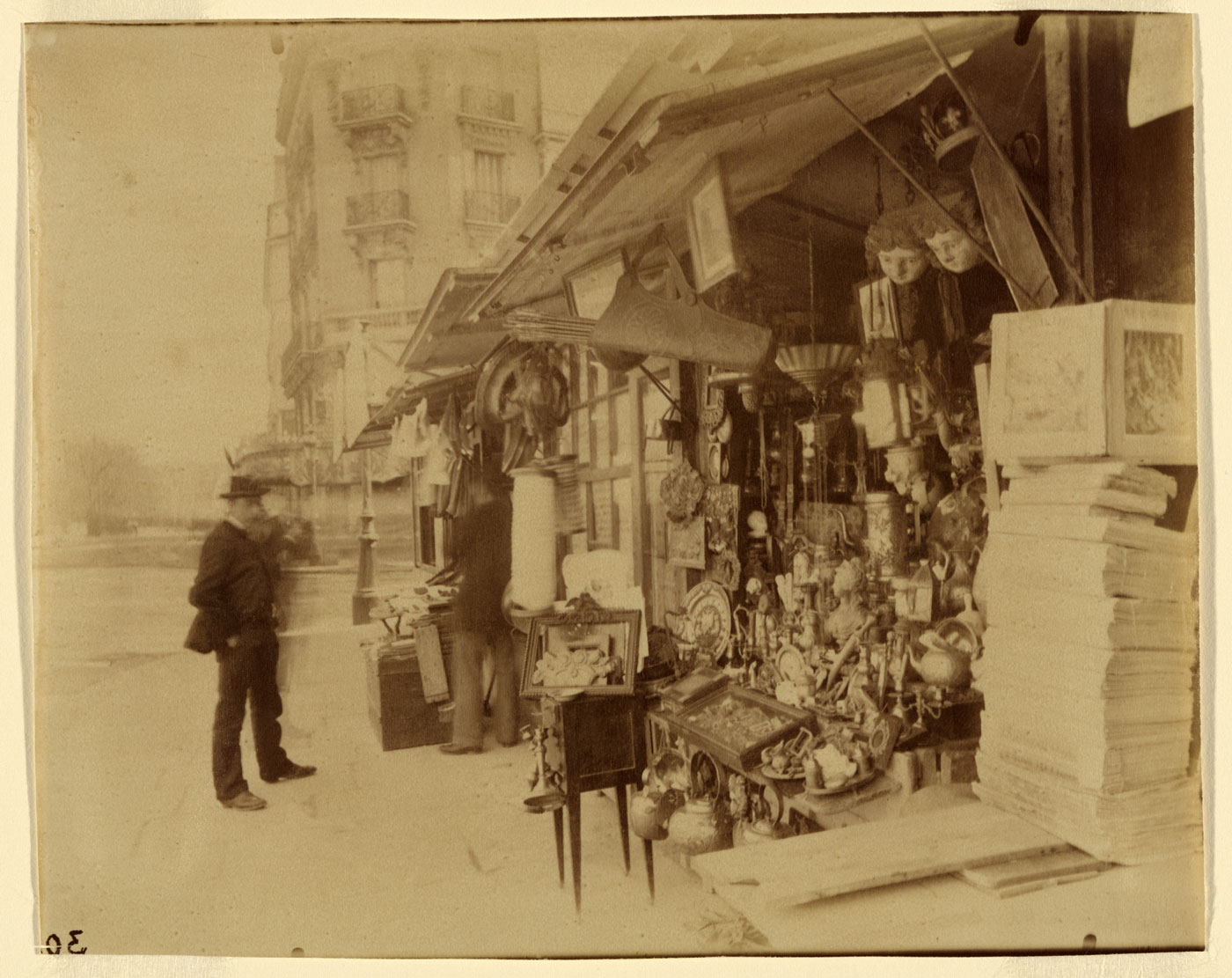
 

Eugène Atget (France, 1857-1927) 'No title (Brocanteur)' c. 1898-1905 from the exhibition 'Impressions of Paris: Lautrec, Degas, Daumier, Atget' and 'Impressions of Melbourne' at the Monash Gallery of Art, Melbourne, July - Sept, 2015


Eugène Atget (France, 1857-1927)
No title (Brocanteur)
c. 1898-1905
Albumen silver photograph
17.8 x 21.9cm
National Gallery of Australia, Canberra
Purchased 1980


Impressions of Paris: Lautrec, Degas, Daumier, Atget is a particularly dry and uninspiring National Gallery of Australia touring exhibition, which was only enlivened for me by the enlightened presence of 20 or so vintage Eugène Atget photographs, specifically added for this showing at the Monash Gallery of Art, the home of Australian photography.

Atget’s photographs have an almost ether/real quality to them in their visual representation and, physically, an ephemeral feel to the quality of the paper – as though the images are about to dissolve into nothing – even as he photographs solid objects such as stairways, doors and door knockers. Observe the photographs Hôtel du Maréchal de Tallard, 78 rue des Archives (c. 1898-1905), A la Grâce de Dieu, 121 rue Montmartre (c. 1900) and Heurtoir, 6 rue du Parc Royal (c. 1901-1914), below, to witness this shimmering phenomenon. It is as if the emulsion of the plate is insufficient to capture the light of life.

In an accompanying exhibition in the smaller gallery, Impressions of Melbourne, photographs by Nicholas Caire, Charles Kerry, Max Dupain, Mark Strizic and Noel Jones investigate the city of Melbourne… but it is the stunning photographs by Atget that make the long drive out to Wheeler’s Hill worth the visit.

Dr Marcus Bunyan


Many thankx to the Monash Gallery of Art for allowing me to publish the photographs in the posting. Please click on the photographs for a larger version of the image.
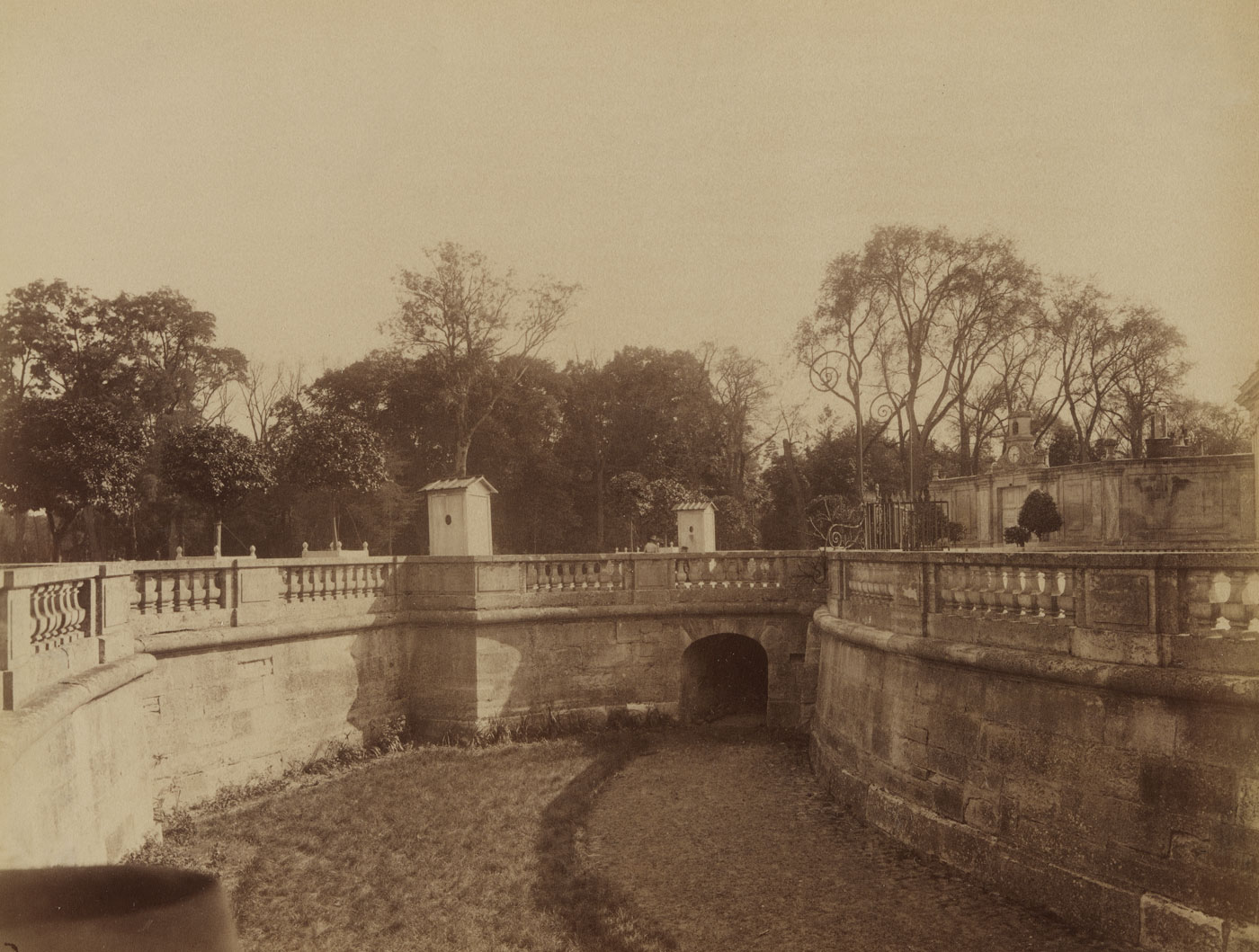


Eugène Atget (France, 1857-1927) 'Versailles, Grand Trianon' c. 1901-1925 from the exhibition 'Impressions of Paris: Lautrec, Degas, Daumier, Atget' and 'Impressions of Melbourne' at the Monash Gallery of Art, Melbourne, July - Sept, 2015


Eugène Atget (France, 1857-1927)
Versailles, Grand Trianon
c. 1901-1925
Gold-toned silver chloride photograph
17.6 x 22cm
National Gallery of Australia, Canberra
Purchased 1980


Eugène Atget (France, 1857-1927) 'Hôtel du Maréchal de Tallard, 78 rue des Archives' c. 1898-1905


Eugène Atget (France, 1857-1927)
Hôtel du Maréchal de Tallard, 78 rue des Archives
c. 1898-1905
Gold-toned silver chloride photograph
22 x 18.1cm
National Gallery of Australia, Canberra
Purchased 1980
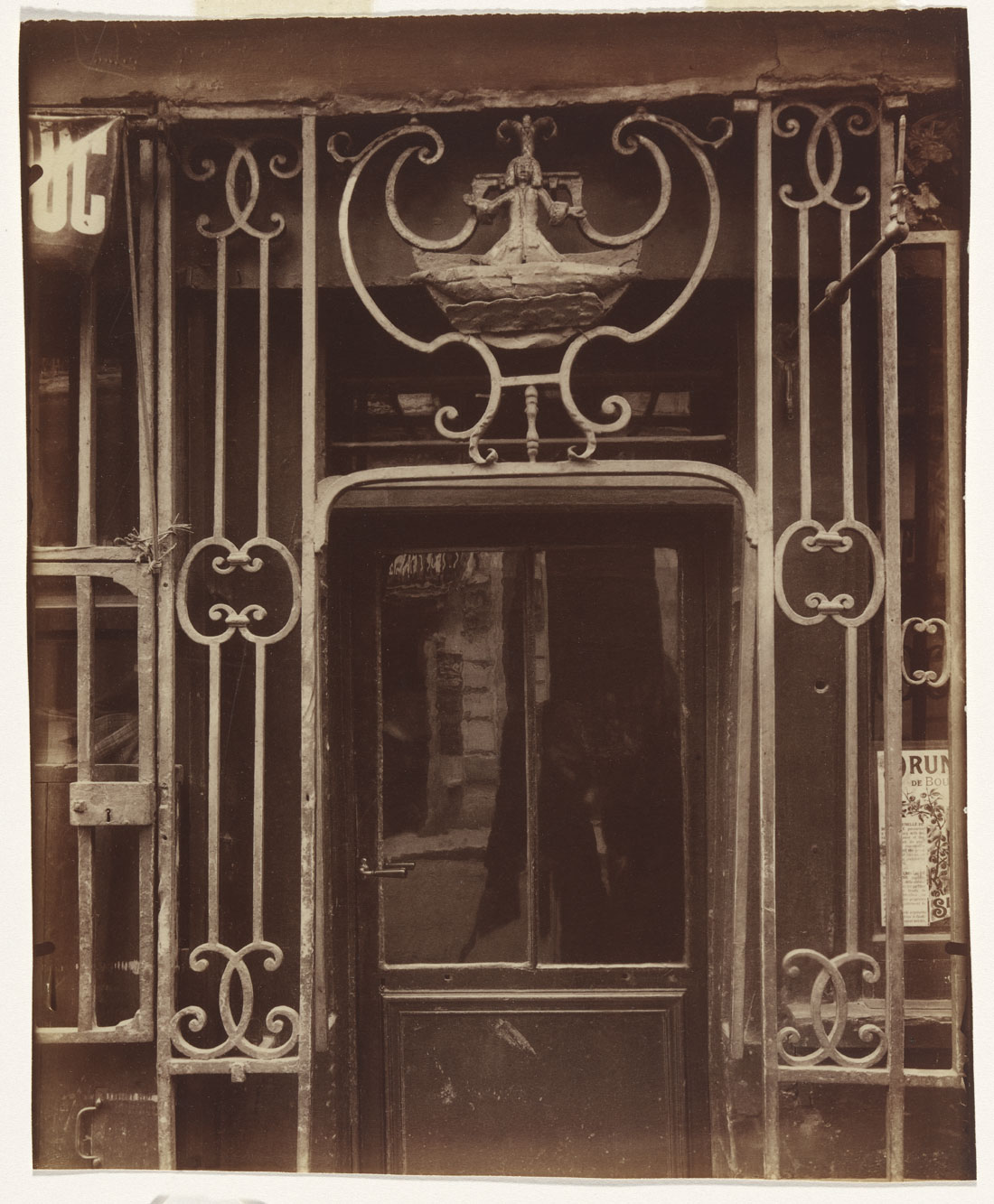
 

Eugène Atget (France, 1857-1927) 'A la Grâce de Dieu, 121 rue Montmartre' c. 1900


Eugène Atget (France 1857-1927)
A la Grâce de Dieu, 121 rue Montmartre
c. 1900
Printing out paper photograph
22 x 17.7cm
National Gallery of Australia, Canberra
Purchased 1984


Eugène Atget (France, 1857-1927) 'Heurtoir, 6 rue du Parc Royal' c. 1901-1914


Eugène Atget (France, 1857-1927)
Heurtoir, 6 rue du Parc Royal
c. 1901-1914
Gold-toned silver chloride photograph
21.9 x 17.8cm
National Gallery of Australia, Canberra
Purchased 1980


Monash Gallery of Art is delighted to present its major international exhibition of 2015, Impressions of Paris: Lautrec, Degas, Daumier, Atget featuring over 120 prints, posters and photographs drawn from the collection of the National Gallery of Australia.

Impressions of Paris: Lautrec, Degas, Daumier, Atget examines the major contribution to French art made by key figures: Honoré-Victorin Daumier (1808-1879), Edgar Degas (1834-1917), Henri de Toulouse-Lautrec (1864-1901) and includes a selection of photographs by Eugène Atget (1857-1927) specially conceived for Monash Gallery of Art.

Newly appointed Gallery Director Kallie Blauhorn states, “I’m thrilled that for my first exhibition at MGA we are able to present a major international show, Impressions of Paris. Residents of Monash and art lovers across Melbourne will experience the extraordinary works by household names, Toulouse Lautrec, Edgar Degas, Honore Daumier and the wonderful photographer Eugène Atget.”

“This is a first for MGA and a true testament to the reputation of the gallery that we can host this important and significant exhibition,” said Blauhorn.

A generation apart, Lautrec, Degas and Daumier were consummate draughtsmen whose innovative compositions and embrace of modern subject matter played a significant role in artistic developments in France over the nineteenth century. Atget, the only specialist photographer among these artists, spent much of his life documenting the streets of Paris as they underwent modernisation. His photographs show us how modern life was expressed in the architectural experience of France, giving us a glimpse of what modernity left behind.

The generation of French artists who followed Daumier in the nineteenth century were inspired by his critical observations, which became an extraordinary reservoir of ideas. Both Degas and then Lautrec were enthusiastic admirers of French caricature, delighting in its animated qualities, stylistic freedoms and contemporary themes. They were particularly enamoured of Daumier’s caricature.

Degas adopted themes of modern French life, the ballet, the race course, the café-concert and the demi-monde and played an important role in the rejection of mythological and historical subjects favoured by the Impressionists. Many of Degas’ ideas on composition and subjects were, in turn, drawn from Daumier. This French satirist was both extraordinarily gifted and prolific, making a name for himself by lampooning the affectations, stupidities and greed of members of the French bourgeois society in caricatures, which Degas avidly collected.

The youngest of the artists, Lautrec, who sadly dies before reaching 37, borrowed themes and compositions from Degas, an artist he much admired and emulated. Images of drinkers at a table, ballet and cabaret scenes and nudes reveal the powerful influence that Degas had on the younger artist, as well as Lautrec’s own considerable originality, particularly as a portrayer of individuals rather than the depiction of types often favoured by Degas.

For the most part, Atget’s pictures of streets, parks, courtyards, buildings and their ornamental motifs record remnants of Old Paris. While there is a nostalgic aspect to these views, for contemporary viewers these pictures were about modern Paris. They recorded and helped make sense of changes to the city as it struggled to cope with modernism. Atget’s views of modern Paris focussed on its intimate places, those spaces of the everyday in which people had always worked, loved and lived.

These four artists captured the spirit of Paris in their prints, posters and photographs. Through the examination of this work, we find clues as to why dramatic changes took place in French art over the nineteenth century. They formed part of other generations of artists who admired Daumier and who adapted the caricaturist’s critical lithographic observations. In this way Daumier’s legacy was a brilliant journalistic record of the modern capital and contributed to an era in France ripe for a new art.

Press release from the MGA website


Eugène Atget: growth and decay in the great city

After an unspectacular career in the theatre, Eugène Atget (1857-1927) began to take photographs of Paris in 1892. By 1897 he had established a successful business photographing the spaces that remained of Old Paris. In all, Atget made over 10,000 images of Paris and its surrounds, each taken with a straightforward approach that laid the basis for much of the documentary photography that followed. Atget’s pictures were immensely popular: he sold thousands of prints, satisfying a strong demand for views of a city undergoing massive social and architectural transformation.

For the most part, Atget’s pictures of streets, parks, courtyards, buildings and their ornamental motifs record remnants of pre-Revolutionary Paris. While there is a nostalgic aspect to these views, for contemporary viewers these pictures were about modern Paris. They recorded and helped make sense of changes to the city as it struggled to cope with modernism. Street traders and other workers are seen selling their wares along old streets and laneways; ancient buildings stand in laneways and courtyards undergoing physical transformation; cafes and shops await bustling crowds. Atget’s views of modern Paris focussed on its intimate places, those spaces of the everyday in which people had always worked, loved and lived.


Impressions of Melbourne

17th July 2015 – 20th September 2015

In response to the photographs by Eugène Atget (1857-1927) included in the National Gallery of Australia’s touring exhibition, Impressions of Paris, this exhibition offers views of Melbourne’s streets, laneways and urban landscape. Drawn from the Monash Gallery of Art, City of Monash Collection, this selection traverses a period from the late nineteenth century to the late twentieth century.

Atget photographed Paris during a time when the French capital was undergoing significant transformation. From the 1850s through to the 1920s, the dark medieval neighbourhoods of the city were demolished to make way for the wide avenues and open public spaces that Paris is known for today. Atget’s ambition was to produce clear and detailed photographs that would document the heritage of Paris before it disappeared. Typically taking his photographs in the early morning when the streets were empty, Atget imbued the city with ghostly nostalgia.

The earliest photographs in Impressions of Melbourne, taken by Nicholas Caire and Charles Kerry in the late nineteenth century, are contemporary to those of Atget. While Atget focused longingly on the past, however, these Australian photographers celebrated the civic accomplishments of modern progress in the colonies. The portrayal of Melbourne as a civilised metropolis, attractive to both immigrants and tourists, persisted through the twentieth century. Max Dupain captured the city as a lively and enterprising place, while Mark Strizic lingered on the shimmering ambience of window shopping and city strolling.

Impressions of Melbourne showcases a range of photographic responses to our urban environment, revealing some of Melbourne’s many moods and highlighting the city as a rich photographic subject. The exhibition includes photographs by Nicholas Caire, Charles Kerry, Max Dupain, Mark Strizic and Noel Jones.

Nicholas Caire

Nicolas Caire was born in Guernsey and arrived in Australia, settling in Adelaide, in 1858. He set up his first photographic studio in Adelaide in 1867. He moved to the Victorian goldmining town of Talbot in 1870 before relocating to Melbourne in 1876. At this time, Melbourne was the largest Australian city.

While Caire is best known for his picturesque landscape photographs of the Victorian countryside, he also produced photographs of major city thoroughfares, public buildings, parks and gardens. These subjects were common amongst photographers in the second half of the nineteenth century, conveying a sense of local pride and achievement. Caire’s photographs were often mounted in albums and accompanied by individual descriptive texts, a format that was popular amongst local and overseas visitors at the time.

Charles Kerry

Charles Kerry grew up in country New South Wales before moving to Sydney at the age of 17 to begin his photographic career. After a failed studio partnership, which left him with a lot of debt, Kerry rebuilt his business and by 1890 found himself running a successful studio that had a monopoly on the popular postcard market. By 1898 Kerry’s studio was the largest in Australia, housed in a three-storey building at 310 George Street, Sydney.

Throughout his career, Kerry photographed a broad range of subjects including social and sporting events, portraits of Indigenous people, city streets as well as the New South Wales countryside. He also spent a year documenting every station homestead in New South Wales. Kerry retired in 1913.
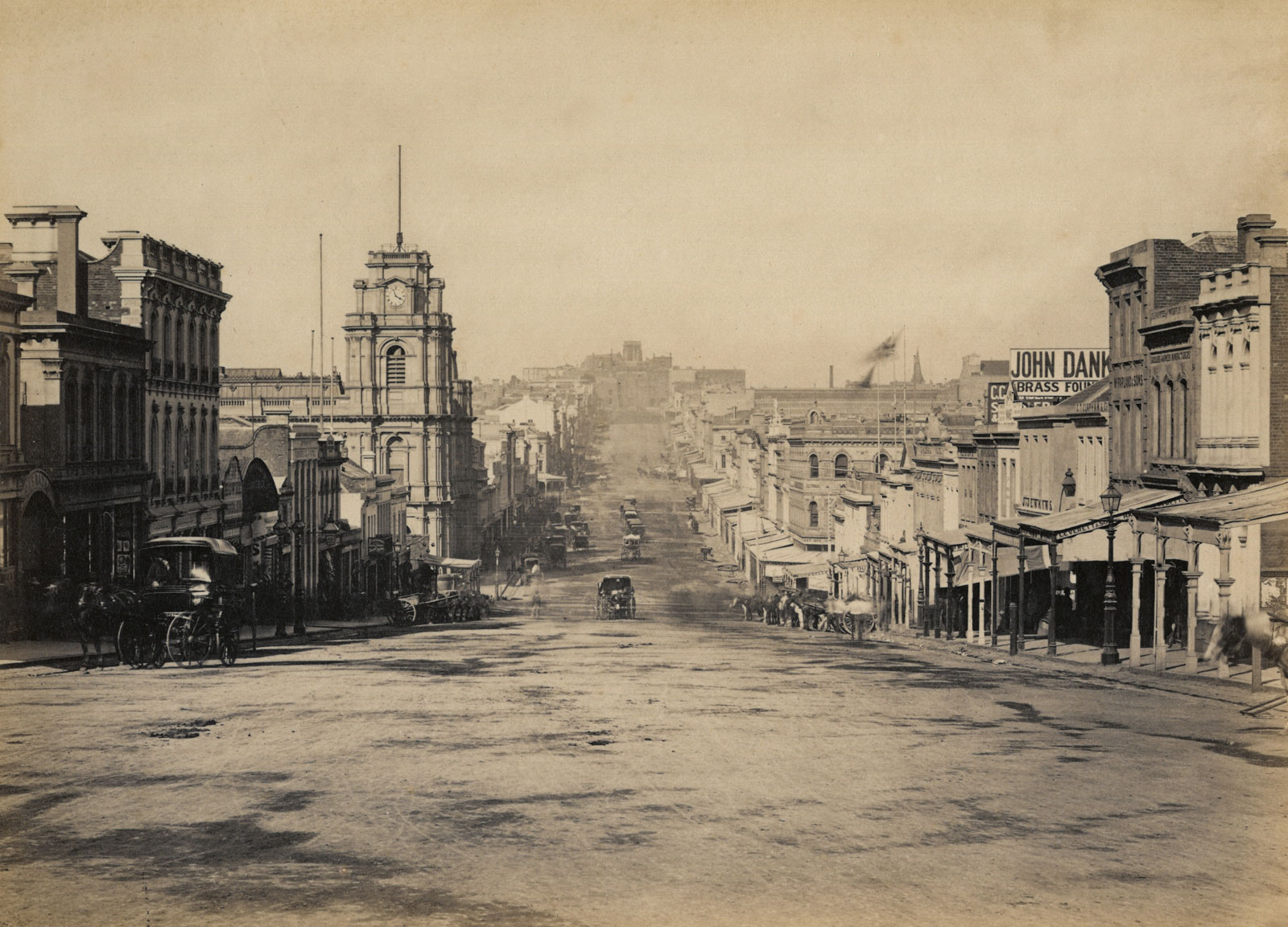
 

Nicholas Caire (born United Kingdom 1837; arrived Australia 1858; died 1918) 'View of Bourke Street, Melbourne' 1877-1878


Nicholas Caire (born United Kingdom 1837; arrived Australia 1858; died 1918)
View of Bourke Street, Melbourne
1877-1878
From the series Views of Victoria
Albumen print
13.4 x 18.7cm
Monash Gallery of Art, City of Monash Collection acquired 1987


Original album caption: Bourke Street is the principal business thoroughfare in the great City of Melbourne. It is about a mile in length, extending from the Parliament House to the Spencer Street Railway Station. On the left hand side of the picture is the Post Office, and at the extreme end of the street can be seen the Parliament House.
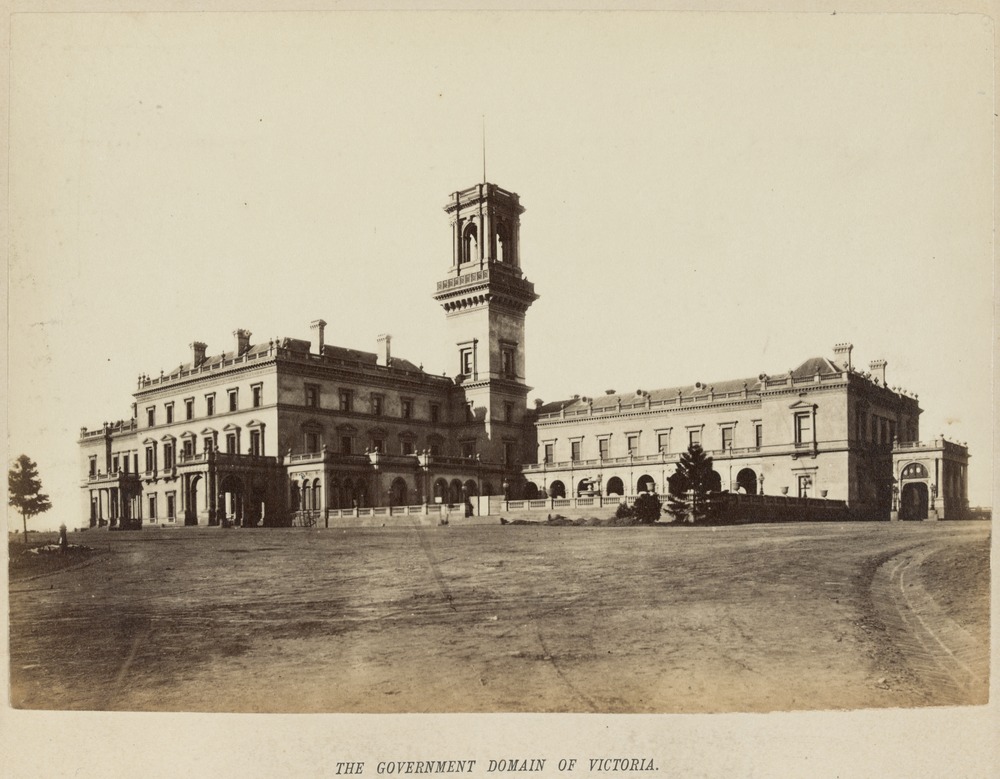
 

Nicholas Caire (born United Kingdom 1837; arrived Australia 1858; died 1918) 'The Government Domain of Victoria' 1877-1878


Nicholas Caire (born United Kingdom 1837; arrived Australia 1858; died 1918)
The Government Domain of Victoria
1877-1878
From the series The public buildings of Melbourne and suburbs
Albumen print Monash Gallery of Art, City of Monash Collection acquired 1987


Original album caption: The Governor’s Residence is on an eminence near the Botanical Gardens, and occupies one of the best positions around the City of Melbourne. Looking westward from the front of the Domain, a splendid view is obtained of Hobson’s Bay, with the townships of St Kilda, Emerald Hill, Sandridge, and Williamstown on the coast. On the north side can be seen the City of Melbourne, with its busy suburban towns – Hotham, Carlton and Fitzroy. From the rear of the building towards the east, in the distance, the retired towns of Richmond, Hawthorn, and Toorak can be distinguished. The building, as seen in the illustration, was completed in the year 1876. Sir G F Bowen, GCMG, being the Resident Governor at the time.
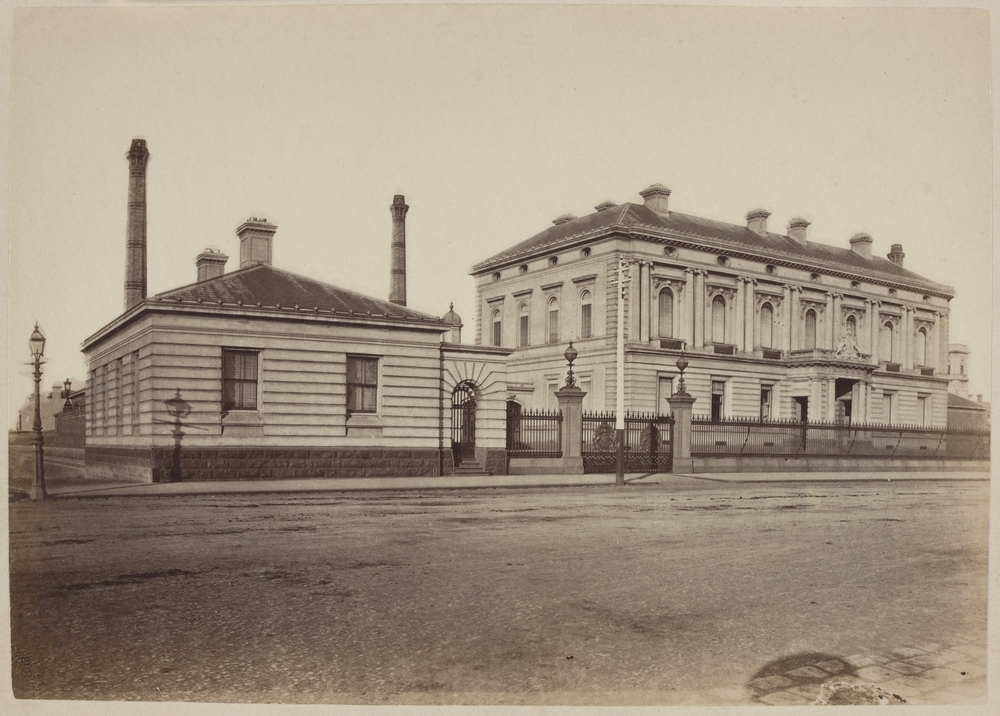
 

Nicholas Caire (born United Kingdom 1837; arrived Australia 1858; died 1918) 'The Royal Mint, Melbourne' 1877-1878


Nicholas Caire (born United Kingdom 1837; arrived Australia 1858; died 1918)
The Royal Mint, Melbourne
1877-1878
From the series The public buildings of Melbourne and suburbs
Albumen print
Monash Gallery of Art, City of Monash Collection acquired 1987


Original album caption: The Royal Mint of Victoria is situated in the north-easterly part of William Street, West Melbourne. This Government Building is not thrown open to the public for visitation at any time; but an inspection by visitors can be effected on an order from a Member of the Ministry, conditionally that there be no fewer than eight persons at each visitation; one of the number being required to become responsible for the conduct of the party.
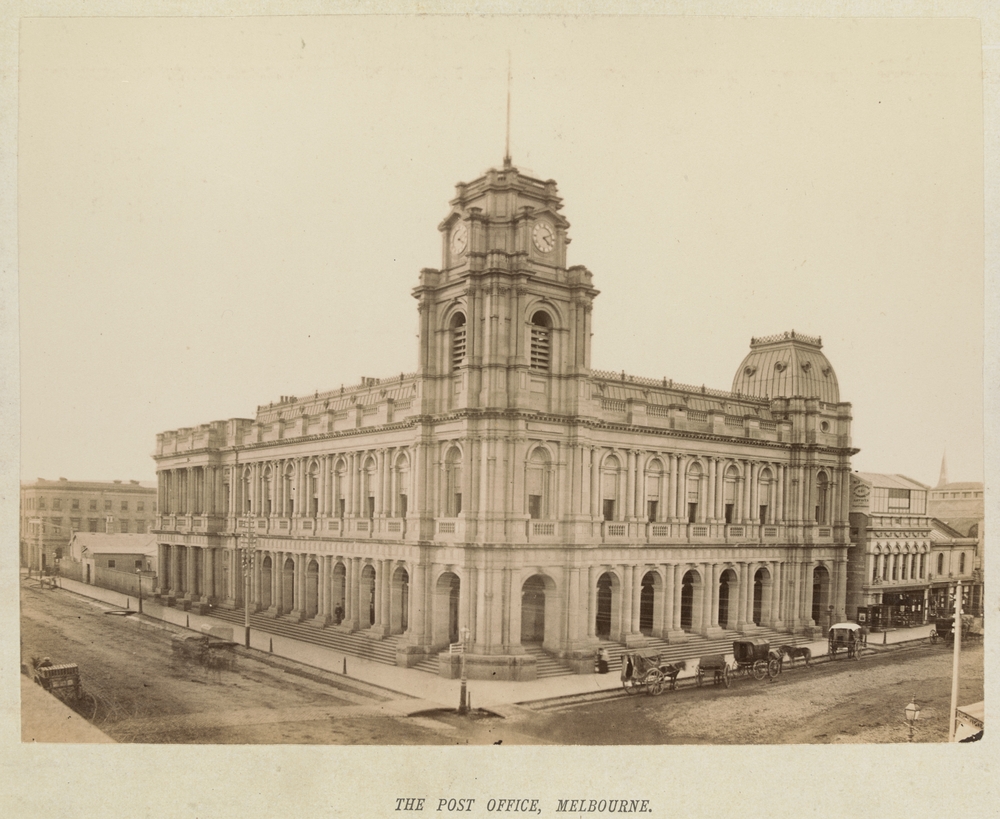
 

Nicholas Caire (born United Kingdom 1837; arrived Australia 1858; died 1918) 'The Post Office, Melbourne' 1877-1878


Nicholas Caire (born United Kingdom 1837; arrived Australia 1858; died 1918)
The Post Office, Melbourne
1877-1878
From the series The public buildings of Melbourne and suburbs
Albumen print
Monash Gallery of Art, City of Monash Collection acquired 1987


Original album caption: This imposing structure is erected at the junction of Bourke and Elizabeth Streets, which may be considered perhaps the most central position in Melbourne. It is provided with a very long corridor for the posting and delivery of letters, & c. The Telegraph Department, as also the Post Office Savings Bank and Money Order Office, are all conducted in connection with the General Post office, Melbourne, of which the Hon. R Ramsay, MLA, is at present Postmaster-General.
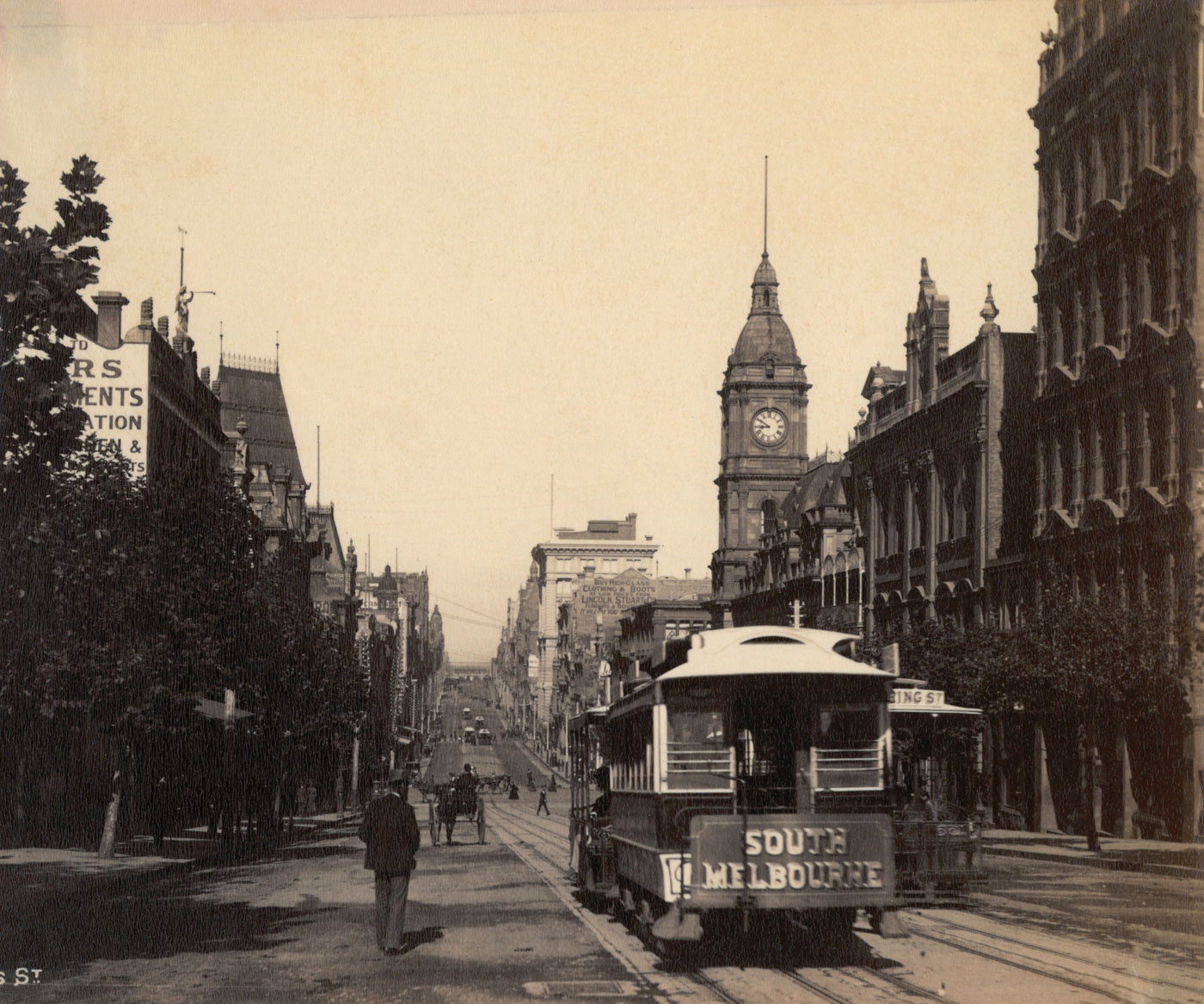
 

Charles Kerry (Australia, 1858-1928) 'Collins Street, looking south' c. 1890


Charles Kerry (Australia, 1858-1928)
Collins Street, looking south
c. 1890
Albumen print
14.5 x 17.5cm
Monash Gallery of Art, City of Monash Collection acquired 1984
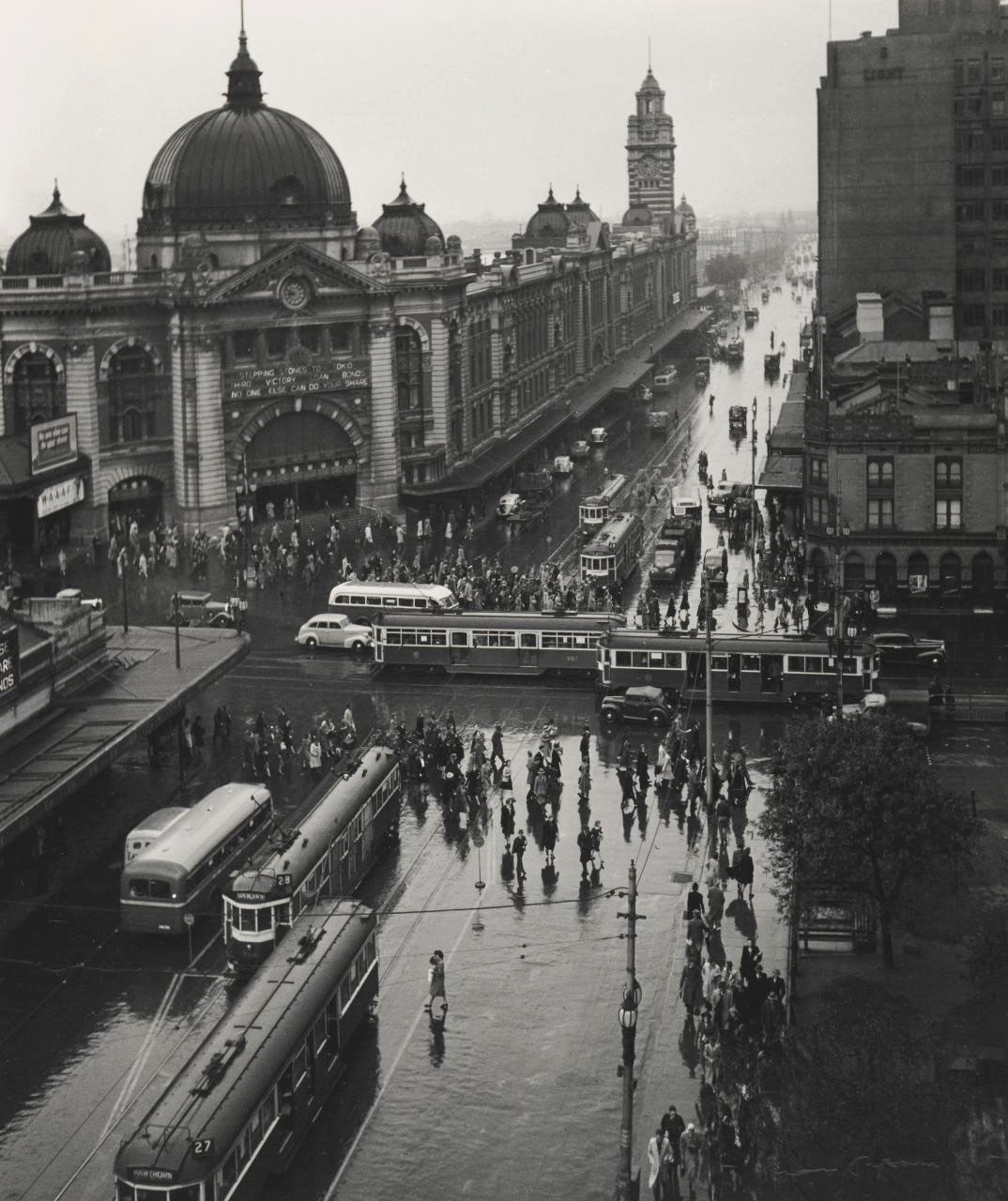
 

Max Dupain (Australia, 1911-1992) 'Melbourne with rain' 1946


Max Dupain (Australia, 1911-1992)
Melbourne with rain
1946
Gelatin silver print
Monash Gallery of Art, City of Monash Collection acquired 1987


Max Dupain

Max Dupain began his photographic career in 1930 as an apprentice in the studio of Cecil Bostock. In 1934 he established his own studio in Sydney and continued to produce a broad range of commercial work over the course of his life. Dupain was strongly influenced by modernist photographic principles and is renowned for his architectural photography as well as his iconic images of Australian beach culture.

While he primarily worked in Sydney, the photographs exhibited here are among several he took of otherAustralian cities. They highlight his interest in documenting city life as well as his use of light, shadow and aerial perspective. They were taken during the post war period; in the year that Dupain was commissioned by the Department of Information to photograph Australia’s way of life as part of a campaign to increase migration to Australia. This period marked a shift in Dupain’s practice, away from advertising and fashion toward social documentary.
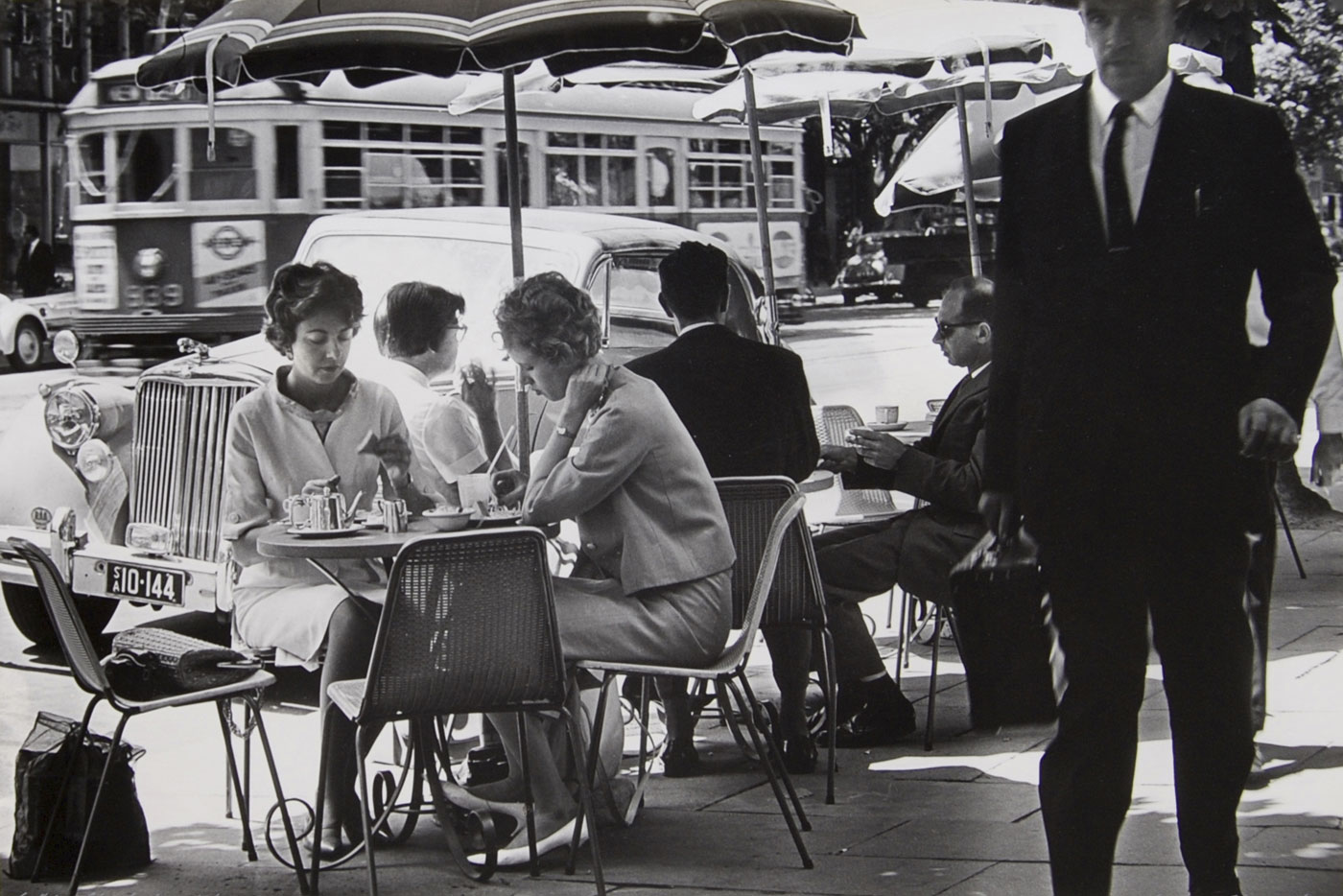
 

Mark Strizic (born Germany 1928; arrived Australia 1950; died 2012) 'Near 101 Collins Street, Jan 1963' 1963


Mark Strizic (born Germany 1928; arrived Australia 1950; died 2012)
Near 101 Collins Street, Jan 1963
1963
Gelatin silver print
36 x 53.5cm
Monash Gallery of Art, City of Monash Collection
Donated by the Bowness Family through the Australian Government’s Cultural Gifts Program 2008
Reproduction courtesy of the artist
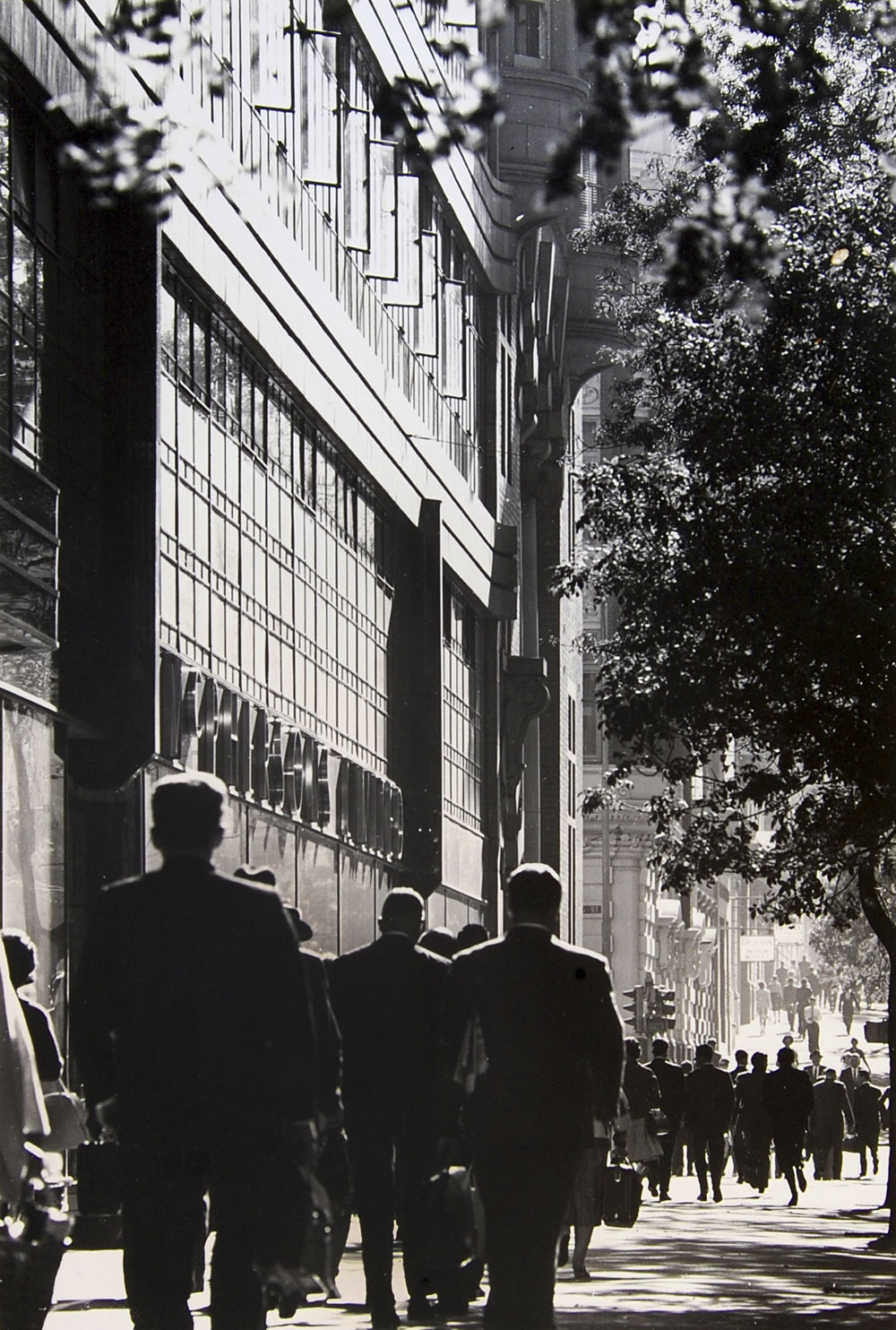
 

Mark Strizic (born Germany 1928; arrived Australia 1950; died 2012) 'Collins Street at McPherson's building - 1, 1967' 1967


Mark Strizic (born Germany 1928; arrived Australia 1950; died 2012)
Collins Street at McPherson’s building – 1, 1967
1967
Gelatin silver print
53.8 x 36cm
Monash Gallery of Art, City of Monash Collection
Donated by the Bowness Family through the Australian Government’s Cultural Gifts Program 2008
Reproduction courtesy of the artist


Mark Strizic

Mark Strizic was born in Berlin and migrated to Melbourne from Zagreb, Croatia in 1950. Strizic had no formal training in photography, but began taking photographs of Melbourne in the 1950s. He abandoned his studies in physics to become a full-time photographer in 1957, taking up subsequent commissions in architectural, industrial, interior design and portrait photography.

Among Strizic’s most widely recognised images are those he created of Melbourne between 1955 and 1970. Strizic documented the streets of Melbourne, showing many sides of the city, from derelict back alleyways to the grand arcades and buildings of Melbourne’s ‘Paris end’. Strizic’s photographs were produced during a period of dramatic change, a time when Melbourne’s Victorian-era buildings were being replaced by modern architectural developments. The images not only serve to document this change but also provide significant and important records of Melbourne pre-modernisation.


Monash Gallery of Art
860 Ferntree Gully Road, Wheelers Hill
Victoria 3150 Australia
Phone: + 61 3 8544 0500

Opening hours:
Tue – Fri: 10am – 5pm
Sat – Sun: 10pm – 4pm
Mon/public holidays: closed

Monash Gallery of Art website

LIKE ART BLART ON FACEBOOK

Back to top

Selection of images part 2

April 2015


Edward Weston (American, 1886-1958) 'Shipyard detail, Wilmington' 1935


Edward Weston (American, 1886-1958)
Shipyard detail, Wilmington
1935
Silver gelatin print


Another selection of interesting images.

My favourites: the weight of Weston’s Shipyard detail, Wilmington (1935, above); and the romanticism (Jean-François Millet-esque), sublime beauty of Boubat’s Lella, Bretagne, France (1947, below).

Dr Marcus Bunyan

Please click on the photographs for a larger version of the image.


Cecil Stoughton (American, 1920-2008) 'Pres. John F. Kennedy's Lincoln Continental' 1963


Cecil Stoughton (American, 1920-2008)
Pres. John F. Kennedy’s Lincoln Continental
1963
Silver gelatin print


Cecil Stoughton (American, 1920-2008) 'Pres. John F. Kennedy's Lincoln Continental' 1963


Cecil Stoughton (American, 1920-2008)
Pres. John F. Kennedy’s Lincoln Continental
1963
Silver gelatin print


Cecil Stoughton (American, 1920-2008) 'Pres. John F. Kennedy's Lincoln Continental' 1963


Cecil Stoughton (American, 1920-2008)
Pres. John F. Kennedy’s Lincoln Continental
1963
Silver gelatin print


Cecil Stoughton (American, 1920-2008)

Cecil William Stoughton (January 18, 1920 – November 3, 2008) was an American photographer. Born in Oskaloosa, Iowa, Stoughton is best known for being President John F. Kennedy’s photographer during his White House years.

Stoughton took the only photograph ever published showing John F. Kennedy, Bobby Kennedy and Marilyn Monroe together. Stoughton was present at the motorcade at which Kennedy was assassinated, and was subsequently the only photographer on board Air Force One when Lyndon B. Johnson was sworn in as the next President. Stoughton’s famous photograph of this event depicts Johnson raising his hand in oath as he stood between his wife Lady Bird Johnson and a still blood-spattered Jacqueline Kennedy.

Text from the Wikipedia website


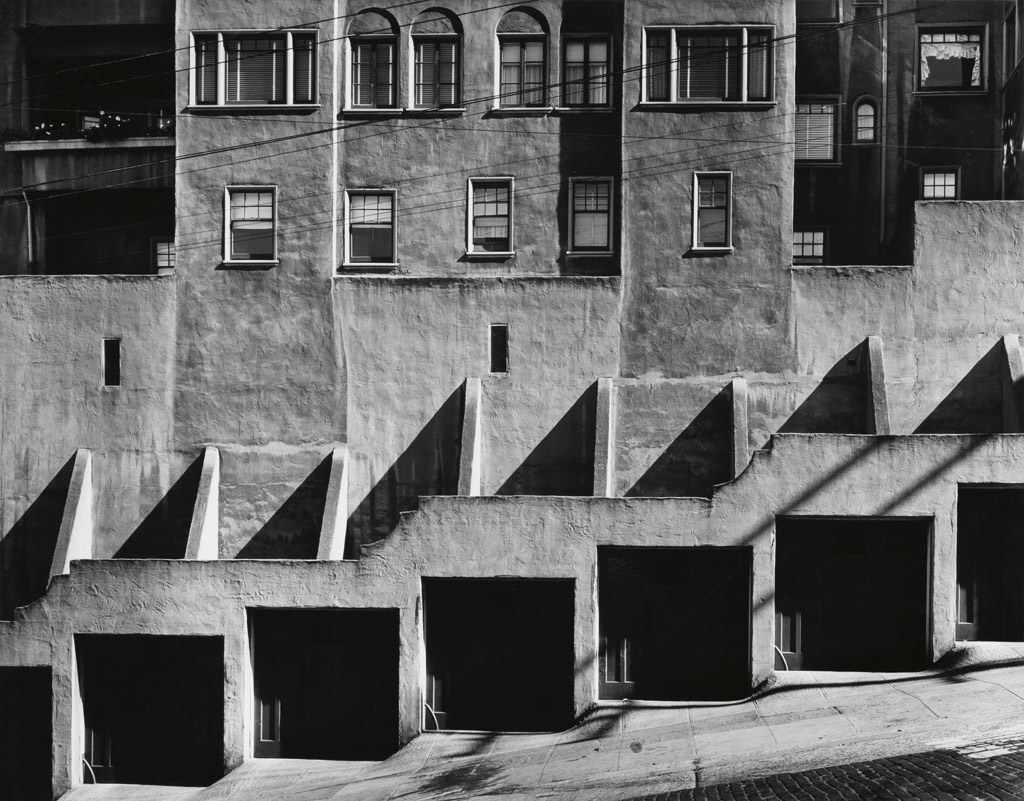
Max Yavno (American, 1911-1985) 'Garage Doors, San Francisco' 1947


Max Yavno (American, 1911-1985)
Garage Doors, San Francisco
1947
Silver gelatin print


Max Yavno (American, 1911-1985)

Max Yavno (1911-1985) was a photographer who specialised in street scenes, especially in Los Angeles and San Francisco, California.

He did photography for the Works Progress Administration from 1936 to 1942. He was president of the Photo League in 1938 and 1939. Yavno was in the U.S. Army Air Corps from 1942 to 1945, after which he moved to San Francisco and began specialising in urban-landscape photography. Photographer Edward Steichen selected twenty of Yavno’s prints for the permanent collection at New York’s Museum of Modern Art in 1950, and the next year Yavno won a Guggenheim fellowship.

History professor Constance B. Schulz said of him:

For financial reasons he worked as a commercial advertising photographer for the next twenty years (1954-75), creating finely crafted still lifes that appeared in Vogue and Harper’s Bazaar. He returned to artistic landscape photography in the 1970s, when his introspective approach found a more appreciative audience.

Text from the Wikipedia website


Paul Strand (American, 1890-1976) 'Bombed Area, Gaeta, Italy' 1952


Paul Strand (American, 1890-1976)
Bombed Area, Gaeta, Italy
1952
Silver gelatin print


Ralph Steiner (American, 1899-1986) 'American Rural Baroque' 1929


Ralph Steiner (American, 1899-1986)
American Rural Baroque
1929
Silver gelatin print


Ralph Steiner (American, 1899-1986)

Ralph Steiner (February 8, 1899 – July 13, 1986) was an American photographer, pioneer documentarian and a key figure among avant-garde filmmakers in the 1930s.

Born in Cleveland, Steiner studied chemistry at Dartmouth, but in 1921 entered the Clarence H. White School of Modern Photography. White helped Steiner in finding a job at the Manhattan Photogravure Company, and Steiner worked on making photogravure plates of scenes from Robert Flaherty’s Nanook of the North. Not long after, Steiner’s work as a freelance photographer in New York began, working mostly in advertising and for publications like Ladies’ Home Journal. Through the encouragement of fellow photographer Paul Strand, Steiner joined the left-of-centre Film and Photo League around 1927. He was also to influence the photography of Walker Evans, giving him guidance, technical assistance, and one of his view cameras.

In 1929, Steiner made his first film, H2O, a poetic evocation of water that captured the abstract patterns generated by waves. Although it was not the only film of its kind at the time – Joris Ivens made Regen (Rain) that same year, and Henwar Rodekiewicz worked on his similar film Portrait of a Young Man (1931) through this whole period – it made a significant impression in its day and since has become recognised as a classic: H2O was added to theNational Film Registry in December 2005. Among Steiner’s other early films, Surf and Seaweed (1931) expands on the concept of H2O as Steiner turns his camera to the shoreline; Mechanical Principles (1933) was an abstraction based on gears and machinery.

Text from the Wikipedia website


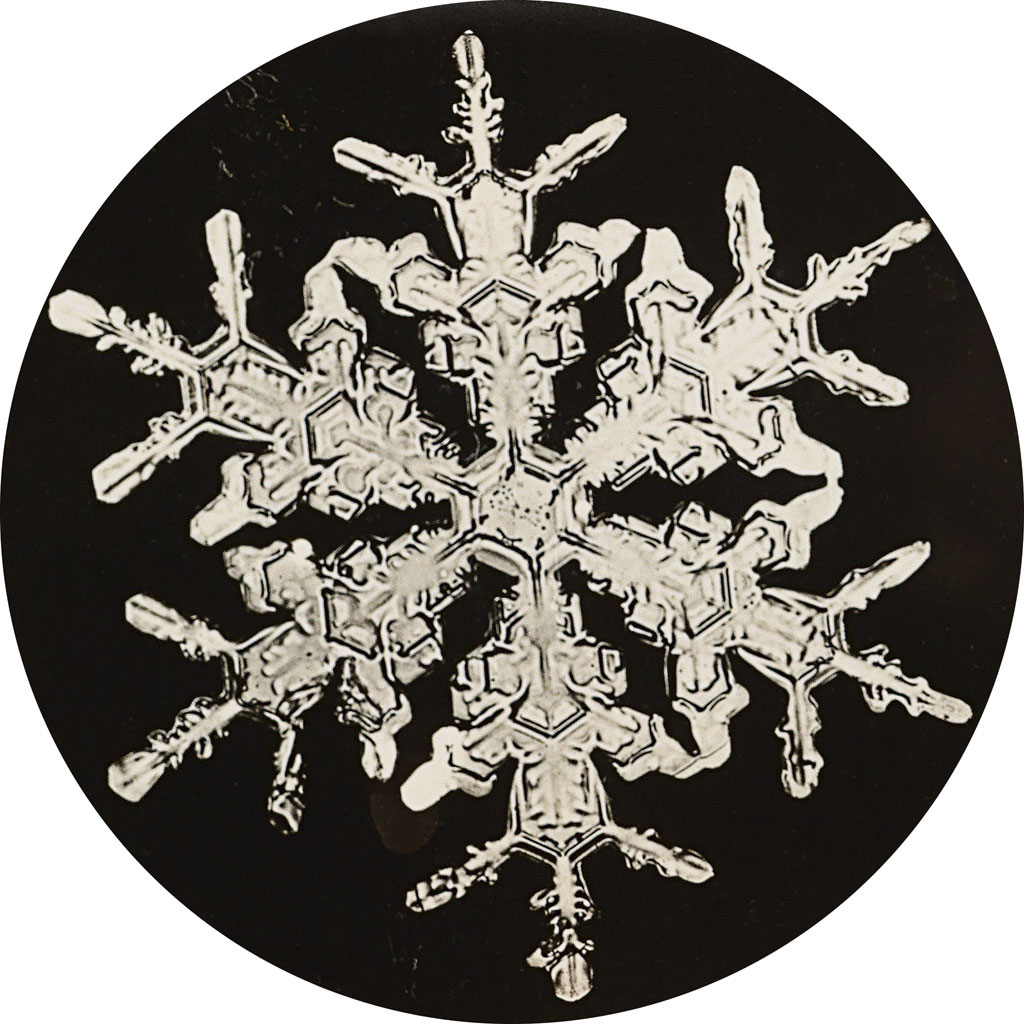
Wilson A. Bentley (American, 1865-1931) 'Snowflake' c. 1920


Wilson A. Bentley (American, 1865-1931)
Snowflake
c. 1920
Gold-chloride toned microphotographs from glass plate negatives


Andre de Dienes (Hungarian, 1913-1985) 'Erotic Nude' 1950s


Andre de Dienes (Hungarian, 1913-1985)
Erotic Nude
1950s
Silver gelatin print


Andre de Dienes (Hungarian, 1913-1985)

Andre de Dienes (born Andor György Ikafalvi-Dienes) (December 18, 1913 – April 11, 1985) was a Hungarian-American photographer, noted for his work with Marilyn Monroe and his nude photography.

Dienes was born in Transylvania, Austria-Hungary, on December 18, 1913, and left home at 15 after the suicide of his mother. Dienes travelled across Europe mostly on foot, until his arrival in Tunisia. In Tunisia he purchased his first camera, a 35mm Retina. Returning to Europe he arrived in Paris in 1933 to study art, and bought a Rolleiflex shortly after.

Dienes began work as a professional photographer for the Communist newspaper L’Humanité, and was employed by the Associated Press until 1936, when the Parisian couturier Captain Molyneux noted his work and urged him to become a fashion photographer. In 1938 the editor of Esquire, Arnold Gingrich offered him work in New York City, and helped fund Dienes’ passage to the United States. Once in the United States Dienes worked for Vogue and Life magazines as well as Esquire.

When not working as a fashion photographer Dienes travelled the USA photographing Native American culture, including the Apache, Hopi, and Navajo reservations and their inhabitants. Dissatisfied with his life as a fashion photographer in New York, Dienes moved to California in 1944, where he began to specialise in nudes and landscapes.

Text from the Wikipedia website


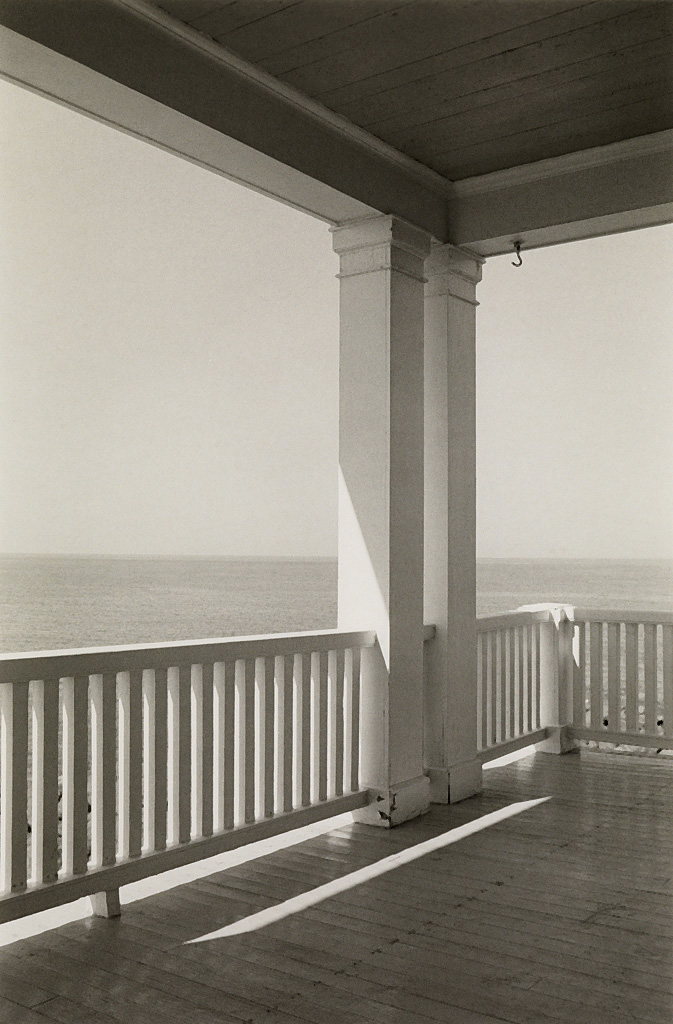
George A. Tice (American, 1938-2025) 'Porch, Monhegan Island, Maine' 1971


George A. Tice (American, 1938-2025)
Porch, Monhegan Island, Maine
1971
Selenium-toned silver print


George A. Tice (American, 1938-2025)

George Tice (b. 1938) is an American photographer best known for his large-format black-and-white photographs of New Jersey, New York, and the Amish. Tice was born in Newark, New Jersey, and self-trained as a photographer. His work is included in major museum collections around the world and he has published many books of photographs, including Fields of Peace: A Pennsylvania German Album (1970), Paterson, New Jersey (1972), Seacoast Maine: People and Places (1973), Urban Landscapes: A New Jersey Portrait (1975), “Lincoln” (1984), Hometowns: An American Pilgrimage (1988), Urban Landscapes (2002), Paterson II (2006), Urban Romantic (1982), and George Tice: Selected Photographs 1953-1999 (2001).

Text from the Wikipedia website


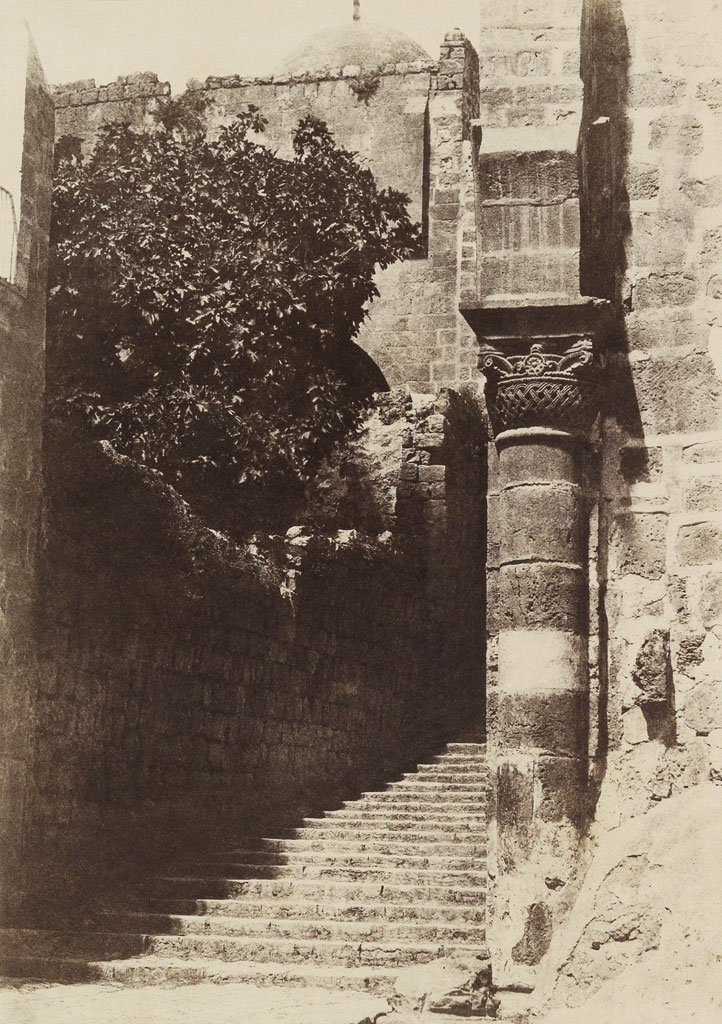
Auguste Salzmann (French, 1824-1872) 'Jerusalem, Sainte Sepulchre, Colonne du Parvis' 1854


Auguste Salzmann (French, 1824-1872)
Jerusalem, Sainte Sepulchre, Colonne du Parvis
1854
Blanquart-Evrard salted paper print from a paper negative


Weegee (Arthur Fellig) (American, 1899-1968) 'Billie Dauscha and Mabel Sidney, Bowery Entertainers' December 4, 1944


Weegee (Arthur Fellig) (American, 1899-1968)
Billie Dauscha and Mabel Sidney, Bowery Entertainers
December 4, 1944
Silver gelatin print


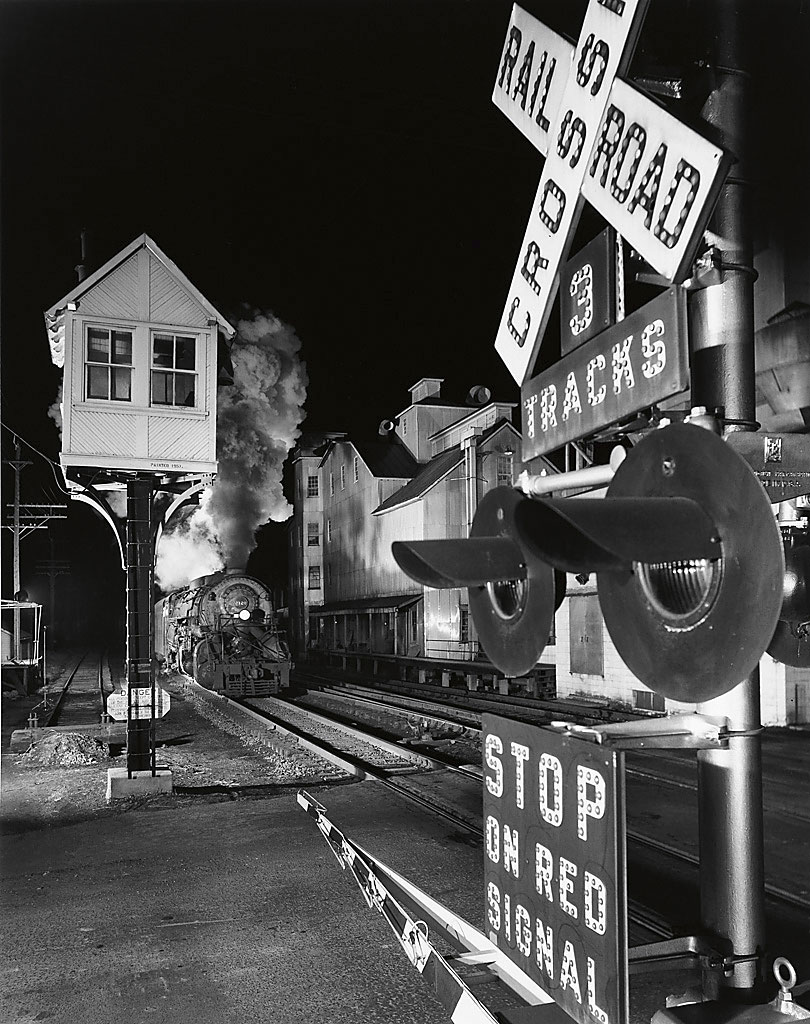
Winston O. Link (American, 1914-2001) 'Luray Crossing, Luray, Virginia' 1956


Winston O. Link (American, 1914-2001)
Luray Crossing, Luray, Virginia
1956
Silver gelatin print


Paul J. Woolf (American, 1899-1985) 'Looking down on Grand Central Station' 1935


Paul J. Woolf (American, 1899-1985)
Looking down on Grand Central Station
1935
Silver gelatin print


Paul J. Woolf began his photographic career in London, taking pictures as a child. He attended the University of California, Berkeley and the Clarence White School of Photography. By 1942 he was established as a professional photographer who specialised in design and night-time photography. Woolf also maintained a practice as a clinical social worker while continuing his work as a photographer.


Henri Cartier-Bresson (French, 1908-2004) 'Alicante' 1933


Henri Cartier-Bresson (French, 1908-2004)
Alicante
1933
Silver gelatin print


Joel-Peter Witkin (American, b. 1939) 'Leda' 1986


Joel-Peter Witkin (American, b. 1939)
Leda
1986
Silver gelatin print


Roman Vishniac (Russian-American, 1897-1990) 'Father taking his son to the first day of cheder' 1937-1938


Roman Vishniac (Russian-American, 1897-1990)
Father taking his son to the first day of cheder
1937-1938
Silver gelatin print


Julia Margaret Cameron (British, 1815-1879) 'James Rogers' 1867


Julia Margaret Cameron (British, 1815-1879)
James Rogers
1867
Albumen print


Julia Margaret Cameron (British, 1815-1879) 'The Dream' 1869


Julia Margaret Cameron (British, 1815-1879)
The Dream
1869
Albumen print


Lewis W. Hine (American, 1874-1940) 'An Albanian Woman from Italy at Ellis Island' 1905


Lewis W. Hine (American, 1874-1940)
An Albanian Woman from Italy at Ellis Island
1905
Silver gelatin print


Lewis W. Hine (American, 1874-1940) 'Italian laborer, Ellis Island' 1905-1912


Lewis W. Hine (American, 1874-1940)
Italian laborer, Ellis Island
1905-1912
Silver gelatin print


Laure Albin-Guillot (French, 1879-1962) 'Opale' c. 1930


Laure Albin-Guillot (French, 1879-1962)
Opale
c. 1930
Silver gelatin print


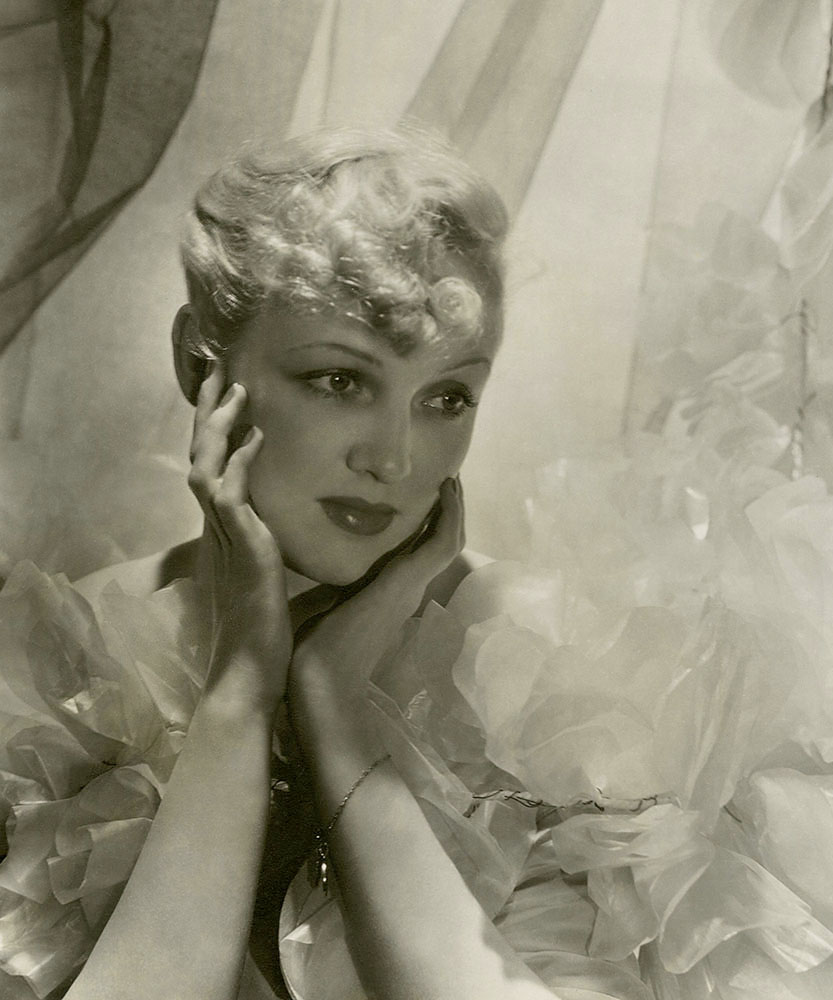
Cecil Beaton (British, 1904-1980) 'Virginia Cherrill' 1930s


Cecil Beaton (British, 1904-1980)
Virginia Cherrill
1930s
Silver gelatin print


Édouard Boubat (French, 1923-1999) 'Lella, Bretagne, France' 1947


Édouard Boubat (French, 1923-1999)
Lella, Bretagne, France
1947
Silver gelatin print


Édouard Boubat (French, 1923-1999)

Édouard Boubat (1923-1999) was a French photojournalist and art photographer.

Boubat was born in Montmartre, Paris. He studied typography and graphic arts at the Ã‰cole Estienne and worked for a printing company before becoming a photographer. In 1943 he was subjected to service du travail obligatoire, forced labour of French people in Nazi Germany, and witnessed the horrors of World War II. He took his first photograph after the war in 1946 and was awarded the Kodak Prize the following year. He travelled the world for the French magazine Réalités and later worked as a freelance photographer. French poet Jacques Prévert called him a “peace correspondent” as he was apolitical and photographed uplifting subjects.

Text from the Wikipedia website


LIKE ART BLART ON FACEBOOK

Back to top

Exhibition: ‘Florence Henri. Mirror of the avant-garde 1927-1940’ at Jeu de Paume, Paris

Exhibition dates: 24th February – 17th May, 2015

Curator: Cristina Zelich


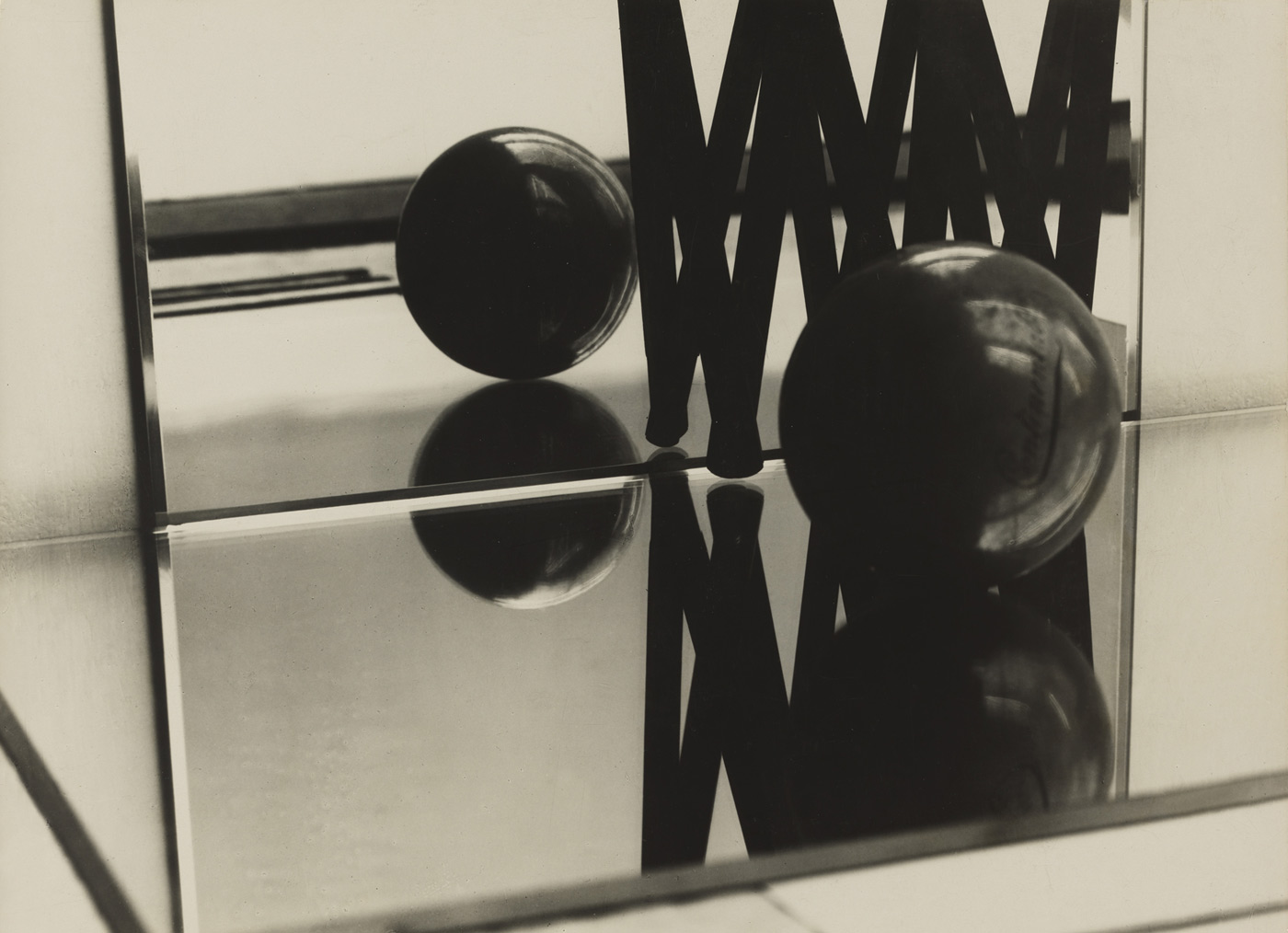
Florence Henri (New York 1893 - Compiègne 1982) 'Composition' 1928 from the exhibition 'Florence Henri. Mirror of the avant-garde 1927-1940' at Jeu de Paume, Paris, February - May, 2015


Florence Henri (New York 1893 – Compiègne 1982)
Composition
1928
Gelatin silver print, vintage
27.2 x 37.5cm
Bauhaus Archiv, Berlin
© Florence Henri / Galleria Martini & Ronchetti Photo
© Bauhaus Archiv


Objects in and of space, the two the same

Florence Henri is rapidly becoming one of my favourite photographers, an artist who emerged during one of the golden periods of photography, the avant-garde of the 1920s-30s. While we have seen some of these photographs before in a previous posting, there are some new and delightful images to enjoy here.

If you believe the text by Priscilla Frank, “Meet Florence Henri, The Under-Acknowledged Queen Of Surrealist Photography,” on the Huffington Post website [02/20/2015], you could be forgiven for thinking that her photography is based on Surrealist themes. Nothing could be farther from the truth. There is nothing about Henri’s photographs to suggest that they are based on the creative potential of the unconscious mind exemplified by the irrational juxtaposition of images. Henri’s photographs are quite logical and ordered, being an investigation into space, time and object using the “extension of the formal and structural aesthetics of Cubism, Purism and Constructivism.”

Her geometric abstractions “exploited the dialogue between realism and abstraction… and she explored spatial extension and fragmentation in her utter modern vocabulary. Her still life and abstract compositions achieved by balancing abstraction with a pure and essential subject were created in the spirit of the machine age. She viewed space as if it were elastic, distorting figure and ground and altering planes through the use of mirrors and lenses.”

Through attention and attentiveness to subject, Henri achieved her results by using created space to investigate the fragmentation and distortion of the world. Her art is not about the production of phenomena (the spectacle), but about the creation of volumes that are in an of space itself. As Donald Judd’s observes of his created volumes in 1981: “… familiar objects, objects as we habitually perceive them, assume physical neutrality because they and their environment are deactivated: “They are points in space, and space is an empty surround. Instead, what is needed is a created space, space made by someone, space that is formed as a solid, the two the same, with the space and the solid defining each other.” Objects in and of space, the two the same: this was the crux. Judd did more than set new solids into existing voids. He formed solids and their correlative spaces as an integrated operation, as if he were establishing an architecture from the ground up, creating the entire environment, intensifying it, saturating it with its own sensation.”1

In a photographic sense, Henri can be seen as a precursor to Judd’s volumes, creating her own worlds from the ground up, creating the entire environment where the space and the object are one and the same thing… only to then record and flatten that space into the essential nature of the photograph, its physicality. Her sensory affects “remain fixed in the concatenation of materials, structure and placement that generates it. They are the lived equivalent of those conditions, experienced as continuous in time – hence, timeless – remaining wholly the same until interrupted.”2 How appropriate for Henri’s photographs for they do indeed have a timeless “air”, a transcendence of the time and place they were taken, a transcendence of the space which her volumes inhabit. Objects in and of space, the two the same.

As Judd observes, “Time and space don’t exist [as idealised abstractions]; they are made by events and positions. Time and space can be made and don’t have to be found like stars in the sky or rocks on a hillside.” Time and space are grounded in being human: they exist when someone experiences them.”3 Here is the nub of the matter, for it matters that we experience Henri’s photographs each in its definite time and space. Henri’s being is immersed in these volumes and they hold our interest because the created environments are saturated with her own sensations.

Dr Marcus Bunyan


Footnotes

1/ Donald Judd quoted in Richard Shiff. “Sensous Thoughts,” in Marianne Stockebrand (ed.,). Donald Judd. The Multicolored Works. Yale University Press, 2014, p. 106

2/ Ibid.,

3/ Ibid., p. 107.


Many thankx to the Jeu de Paume for allowing me to publish the photographs in the posting. Please click on the photographs for a larger version of the image.


“With photography, what I really want to do is compose the image, as I do in painting. The volumes, lines, shadows and light should submit to my will and say what I would like them to say. All of this under the strict control of the composition, because I do not claim to be able to explain the world or to explain my own thoughts.”


Florence Henri in an interview with Attilio Colombo, “Specchio, essenzialità, geometría,” in ‘Florence Henri’ (Milan: Gruppo Editoriale Fabbri, 1983)


“Henri soon recognised the medium’s capacity as a pictorial language and outlet for creative expression. Upon returning to France [from the Bauhaus], Henri began to develop a large body of photographic work based upon her Bauhaus experience and an extension of the formal and structural aesthetics of Cubism, Purism and Constructivism. These non-objective principles forged an alternative to the then-dominant French art movement Surrealism. Henri transcended the avant-garde of one art form to that of another…

Henri’s greatest experimentation with geometric abstraction occurred during the period between 1929-1930… In the photographic work, Florence Henri exploited the dialogue between realism and abstraction, but always maintained a recognisable subject. She was concerned with transparency and movement, and she explored spatial extension and fragmentation in her utter modern vocabulary.

Her still life and abstract compositions achieved by balancing abstraction with a pure and essential subject were created in the spirit of the machine age. She viewed space as if it were elastic, distorting figure and ground and altering planes through the use of mirrors and lenses.”


Lynne Warren. ‘Encyclopedia of Twentieth-Century Photography’, 3-Volume set. Routledge, 2005, p. 691.


Florence Henri (New York 1893 - Compiègne 1982) 'Composition' 1928 from the exhibition 'Florence Henri. Mirror of the avant-garde 1927-1940' at Jeu de Paume, Paris, February - May, 2015


Florence Henri (New York 1893 – Compiègne 1982)
Composition
1928
Gelatin silver print, vintage
27 x 37.1cm
Museum Folkwang, Essen
© Florence Henri / Galleria Martini & Ronchetti


Florence Henri (New York 1893 - Compiègne 1982) 'Composition abstraite [Still-life composition]' 1929


Florence Henri (New York 1893 – Compiègne 1982)
Composition abstraite [Still-life composition]
1929
Collage, gelatin silver print cut and pasted on paper
12 x 14cm
Private collection, courtesy Florence Henri Archive, Genoa
© Florence Henri / Galleria Martini & Ronchetti


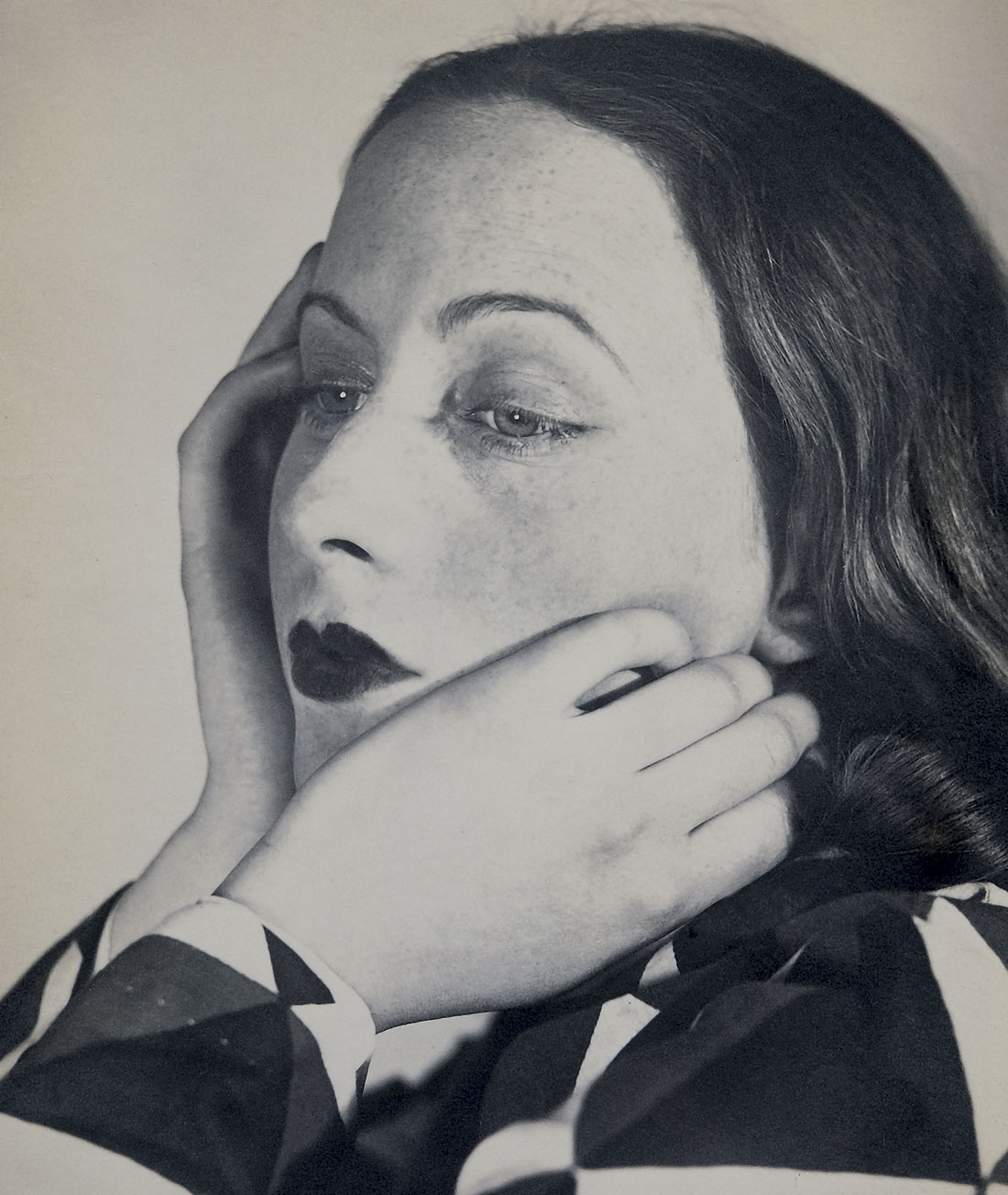
Florence Henri (New York 1893 - Compiègne 1982) 'Portrait Composition, Tulia Kaiser' c. 1930


Florence Henri (New York 1893 – Compiègne 1982)
Portrait Composition, Tulia Kaiser
c. 1930
Gelatin silver print, vintage
23 x 29.2cm
Achat grâce au mécénat de Yves Rocher, 2011
Ancienne collection Christian Bouqueret Centre Pompidou, Paris. Musée national d’art moderne / Centre de création industrielle
© Florence Henri / Galleria Martini & Ronchetti Photo
© Centre Pompidou, Mnam-Cci, Dist. Rmn-Grand Palais / Georges Meguerditchian


Summary of exhibition

Florence Henri. Mirror of the avantgarde illustrates the desire of the Jeu de Paume to highlight the important role played by women photographers from the 1920s to the 1950s, and follows on from previous exhibitions devoted to Claude Cahun, Kati Horna, Eva Besnyö, Berenice Abbott, Lisette Model, Laure Albin Guillot and indeed, Lee Miller.

The exhibition brings together, for the first time in France, over 130 vintage prints by Florence Henri, as well as rare documents and publications, revealing the artist’s photographic production. Influenced by Constructivism, Cubism and Surrealism, Florence Henri’s work is part of the exciting creative tenor of the period, during which, photography, like cinema or architecture, embodied a spirit of innovation and progress, as well as a certain unconventionality in terms of the dominant visual order.

Familiar with Bauhaus, Florence Henri was one of the figures of the European artistic intelligentsia of the time. Her friendship with Fernand Léger, the Delaunays, Hans Arp, László Moholy-Nagy and Theo van Doesburg would have a profound influence on her work. In 1929, Florence Henri opened a photography studio in Paris. It soon rivalled that of Man Ray’s. Her classes were very well-attended and her talents as a portrait photographer were quickly recognised.

It is not so much the image alone as the constant research that brings Florence Henri’s work to life. Lines and geometric compositions are recurring elements in her photographs. Over the years, she made her compositions increasingly complex through the use of mirrors, industrial and natural objects, or through collage and superposition. The exhibition attempts to both decipher and highlight the work of Florence Henri in terms of reflections, perspective, the depth of field and photomontage – key technical experimentations in the history of modern photography.


Florence Henri (New York 1893 - Compiègne 1982) 'Mannequin de tailleur [Tailor's mannequin]' 1930-1931


Florence Henri (New York 1893 – Compiègne 1982)
Mannequin de tailleur [Tailor’s mannequin]
1930-1931
Gelatin silver print, vintage
17.1 x 22.8cm
Private collection, courtesy Florence Henri Archive, Genoa
©Florence Henri / Galleria Martini & Ronchetti


Florence Henri (New York 1893 - Compiègne 1982) 'Composition Nature morte [Still-life composition]' 1931


Florence Henri (New York 1893 – Compiègne 1982)
Composition Nature morte [Still-life composition]
1931
Gelatin silver print dated 1977
23 x 30cm
Private collection, courtesy Florence Henri Archive, Genoa
© Florence Henri / Galleria Martini & Ronchetti


Florence Henri (New York 1893 - Compiègne 1982) 'Pont [Bridge]' 1930-1935


Florence Henri (New York 1893 – Compiègne 1982)
Pont [Bridge]
1930-1935
Gelatin silver print dated 1977
23.5 x 23.8cm
Private collection, courtesy Florence Henri Archive, Genoa
© Florence Henri / Galleria Martini & Ronchetti


Florence Henri (New York 1893 - Compiègne 1982) 'Composition, The Glory that was Greece' c. 1933


Florence Henri (New York 1893 – Compiègne 1982)
Composition, The Glory that was Greece
c. 1933
Photomontage, gelatin silver print dated 1975
23.5 x 29.5cm
Private collection, courtesy Florence Henri Archive, Genoa
© Florence Henri / Galleria Martini & Ronchetti


“All that I know, and how I know this, is primarily made up of abstract elements: spheres, planes, and grids whose parallel lines provide numerous opportunities, without taking into account the mirrors I use, to present the same object from several different angles within a single photograph, in order to yield, in the same way, different visions that complement and complete each other, and which when taken as a whole, are better able to explain it. Essentially, all of this is much more difficult to explain than to do.”


Florence Henri in an interview with Attilio Colombo, “Specchio, essenzialità, geometría,” in ‘Florence Henri’ (Milan: Gruppo Editoriale Fabbri, 1983)


Florence Henri (New York 1893 – Compiègne (France) 1982) was a multi-faceted artist, who was first known for her paintings before making a name for herself as a major figure in avant-garde photography between the end of the 1920s and the beginning of the 1940s. She lived in Silesia, Munich, Vienna, Rome and above all Berlin, before finally settling in Paris in 1924 and devoting herself to photography. This medium enabled her to experiment new relationships with space, in particular by the use of mirrors and other objects in her compositions.

The Jeu de Paume is presenting a vast panorama of Florence Henri’s photographic production from 1927 to 1940, including her self-portraits, abstract compositions, portraits of artists, nudes, photomontages, photocollages, as well as documentary photos taken in Rome, Paris and Brittany. The exhibition comprises vintage prints, various documents and published material.

When she was young, Florence Henri studied music and painting in England and Germany. In 1919, when she was a student at the Berlin Academy of Arts, she made the acquaintance of writer and art historian Carl Einstein and became friends with several figures of the avant-garde, including Hans Arp, Adrian Ludwig Richter, John Heartfield and Lázló Moholy-Nagy. She took classes with Paul Klee and Vassily Kandinsky at the Bauhaus in Weimar. In 1924 she moved to Paris, where she followed classes at the Académie Montparnasse, whose director was André Lhote, then at the Académie moderne (founded by Fernand Léger and Amédée Ozenfant). In 1927, after a visit to Bauhaus in Dessau, she abandoned painting in favour of photography. It was at this time that she produced her famous self-portraits in mirrors and her still lifes; the result of her first steps in the spatial research that she would carry out through the medium of photography.

Between the end of the 1920s and the beginning of the 1930s, three mythical exhibitions in terms of the history of European photography took place in Germany: “Fotografie der Gegenwart” at the Folkwang Museum in Essen (1929); “Film ind Foto” (Fifo) organised the same year by the Deutscher Werkbund in Stuttgart and “Das Lichtbild” held in Munich (1931). These exhibitions bore witness to the rapid expansion of new photographic concepts and a rupture with tradition. Fifo marked the zenith of the Neues Sehen (New Vision) movement of which László Moholy-Nagy was an exponent and “Das Lichtbild” marked the triumph of Neue Sachlichkeit (New Objectivity), whose leading representative was Albert Renger-Patzsch.

Florence Henri was invited to show an important number of prints at these three exhibitions in recognition of her photographic production during this fundamental period that saw the photography used to free our vision and open out onto new experiences.

Florence Henri’s studio rivalled that of Man Ray, even if she had also opened a school of photography where Lisette Model and Gisèle Freund, amongst others, would enrol. In fact, despite the central position that her oeuvre occupied in avant-garde photography at the end of the 1920s, her reputation as a portraitist in Paris, and the fact that her photos had been published in many of the period’s illustrated magazines such as Arts et Métiers and Lilliput etc, Florence Henri’s body of work remains largely unknown.

László Moholy-Nagy’s* comments are a perfect illustration of Florence Henri’s position: “With Florence Henri’s photos, photographic practice enters a new phase, the scope of which would have been unimaginable before today. Above and beyond the precise and exact documentary composition of these highly defined photos, research into the effects of light is tackled not only through abstract photograms, but also in photos of real-life subjects. The entire problem of manual painting is taken onboard by the photographic process and is manifestly given a whole new depth thanks to this new optical instrument. Reflections and spatial relationships, superposition and intersections are just some of the areas explored from a totally new perspective and viewpoint.”

*László Moholy-Nagy, “Zu den Fotografien von Florence Henri”, i10, No 17-18, Amsterdam, December 20, 1928.

Press release from the Jeu de Paume website


Florence Henri (New York 1893 - Compiègne 1982) 'Double portrait' 1927-1928


Florence Henri (New York 1893 – Compiègne 1982)
Double portrait
1927-1928
Gelatin silver print dated 1977
24 x 18cm
Private collection, courtesy Florence Henri Archive, Genoa
© Florence Henri / Galleria Martini & Ronchetti


Florence Henri (New York 1893 - Compiègne 1982) 'Autoportrait [Self-portrait]' 1928


Florence Henri (New York 1893 – Compiègne 1982)
Autoportrait [Self-portrait]
1928
Gelatin silver print, vintage
39.3 x 25.5cm
Staatliche Museen zu Berlin, Kunstbibliothek
© Florence Henri / Galleria Martini & Ronchetti


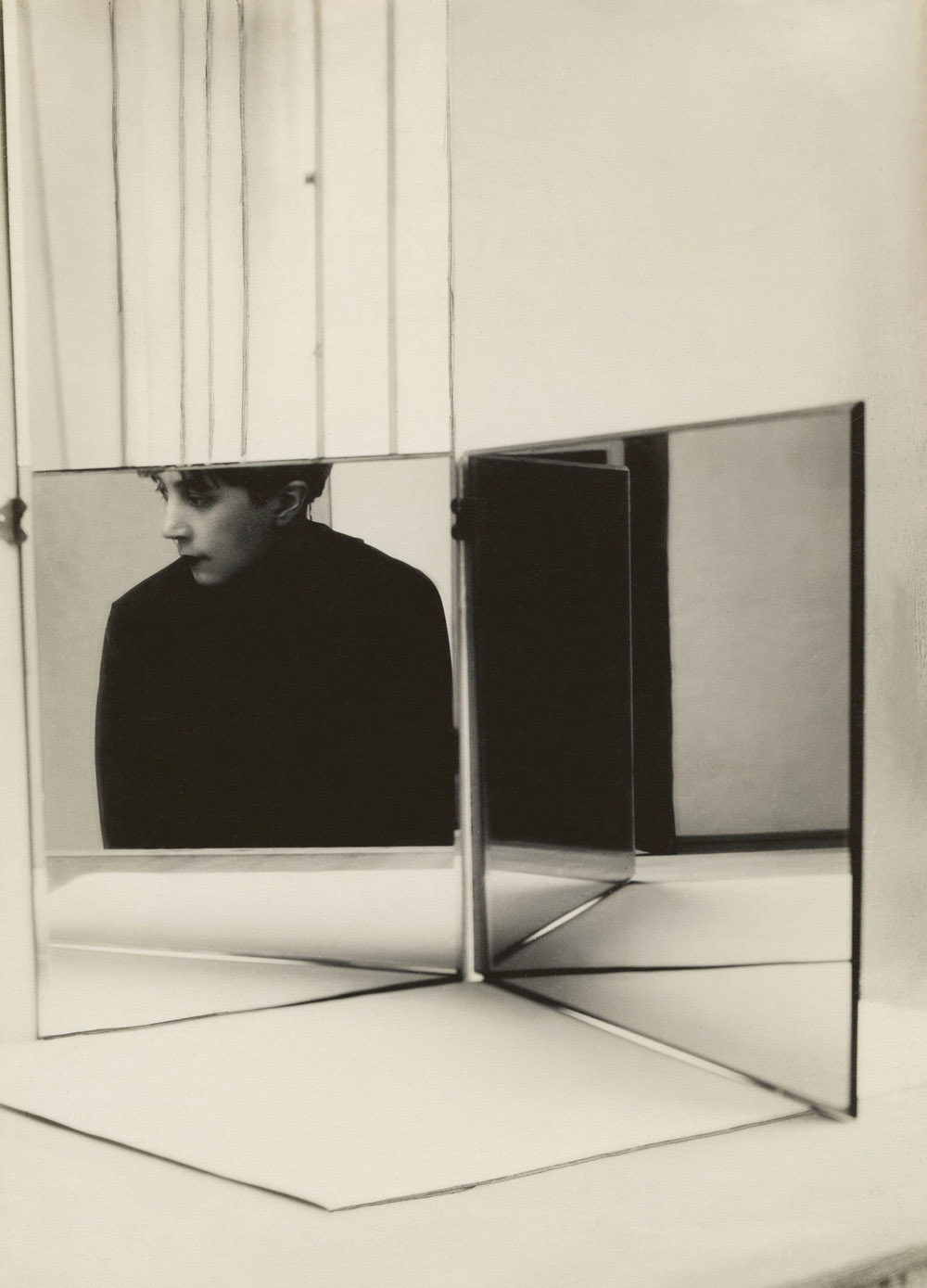
Her most well-known work is a self-portrait, in which Henri sits before a mirror, dolled up almost as if in drag. Two silver balls lay reflected up against the mirror, equivocal symbols of both testicles and breasts. Henri, influential in both her artistic style and personal styles, toyed with gender binaries, using her personal appearance to emphasise the performative nature of gender. The artist was married to a Swiss house servant, but went on to have other relationships with both men and women, including a longtime affair with artist and model Margarete Schall.

Henri established herself as a formidable photographer, and remained consistent in her work up until World War II. Then her work declined considerably, both due to lack of materials and the prohibitions imposed under the Nazi occupation. Henri briefly returned to painting, but her central period of output remained in the 1920s and 1930s. Her compositions, simultaneously warm, playful, clever and inquisitive, set the stage for future explorations into the limits of photography, or lack thereof.

Priscilla Frank. “Meet Florence Henri, The Under-Acknowledged Queen Of Surrealist Photography,” on the Huffington Post website, 20th February 2015 [Online] Cited 10/03/2015.


Florence Henri (New York 1893 - Compiègne 1982) 'Femme aux cartes [Woman with cards]' 1930


Florence Henri (New York 1893 – Compiègne 1982)
Femme aux cartes [Woman with cards]
1930
Gelatin silver print, vintage
39 x 28.5cm
Private collection, courtesy Florence Henri Archive, Genoa
© Florence Henri / Galleria Martini & Ronchetti


Florence Henri (New York 1893 - Compiègne 1982) 'Portrait Composition, Cora' 1931


Florence Henri (New York 1893 – Compiègne 1982)
Portrait Composition, Cora
1931
Gelatin silver print, vintage
13.6 x 11.4cm
Private collection, courtesy Florence Henri Archive, Genoa
© Florence Henri / Galleria Martini & Ronchetti


Florence Henri (New York 1893 - Compiègne 1982) 'Fernand Léger' 1934


Florence Henri (New York 1893 – Compiègne 1982)
Fernand Léger
1934
Gelatin silver print, vintage
30.4 x 24cm
Private collection, courtesy Archives Florence Henri, Genoa
© Florence Henri / Galleria Martini & Ronchetti


Earliest compositions

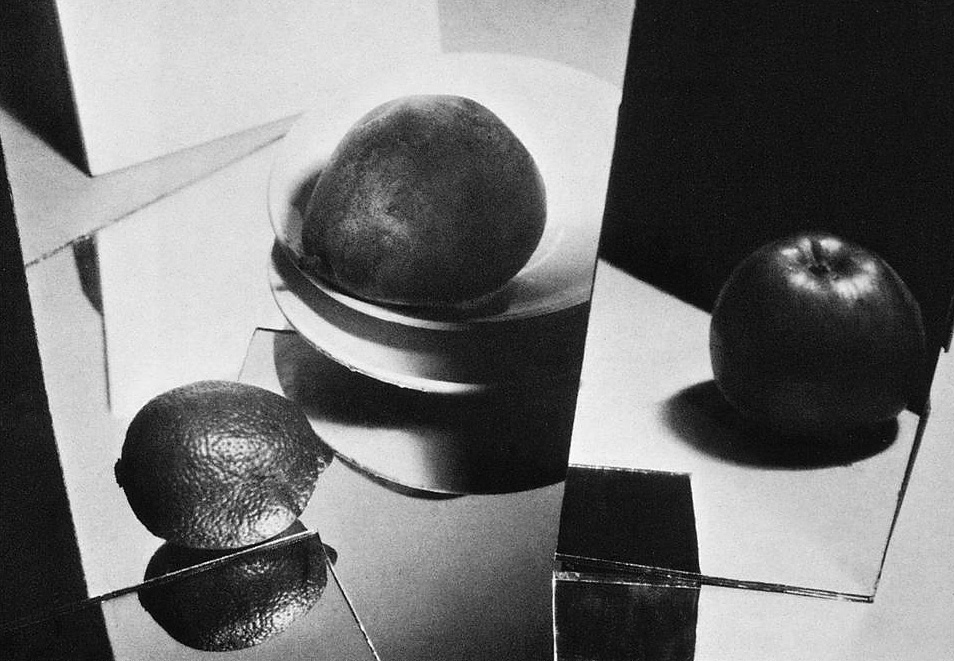
Her earliest compositions introduce an element that would be fundamental for her artistic investigations, namely the mirror. Using a very limited number of elements, Henri created extremely complex images characterised by the fragmentation of space and the use of multiple viewpoints. They include one of her best-known works, the self-portrait looking in the mirror with two metal spheres, which may be said to embody the spirit of freedom typical of that period, conveying the image of a modern and emancipated female artist, one who failed to conform to the societal status traditionally assigned to women.

Multiple exposure

Florence Henri uses methods such as multiple exposures when shooting, or a combination of several negatives, some inverted, to obtain abstract images, in which she manages to bestow static objects with a sense of dynamism. Florence Henri’s output during this early phase can be described as a perfect synthesis between abstract geometrical painting and the innovations of New Vision photography.

“Florence Henri’s work lured me to come to Paris in 1929. I wanted to live in a place where images were made that coincided with my own concepts.”

~ Ilse Bing, quoted in Gisèle Freund’s preface to Ilse Bing 1929/1955: Femmes de l’enfance à la vieillesse

Advertising photography

In the field of professional photography, Florence Henri stands out for her very personal approach to advertising photography. Indeed, her images are the natural extension of her photographic experimentation and investigations using objects and mirrors.

Collages

She quickly substitutes industrial objects with natural elements in her compositions. In addition, she introduces a new tool in her work: collage. She makes them with fragments of prints, and then reproduces them to create the final print. She also introduces a new technique into her work – collage – thereby underlining her interest in autonomous images that move away from a simple reproduction of reality, all the while emphasising the conceptual work of the artist.

Shadows

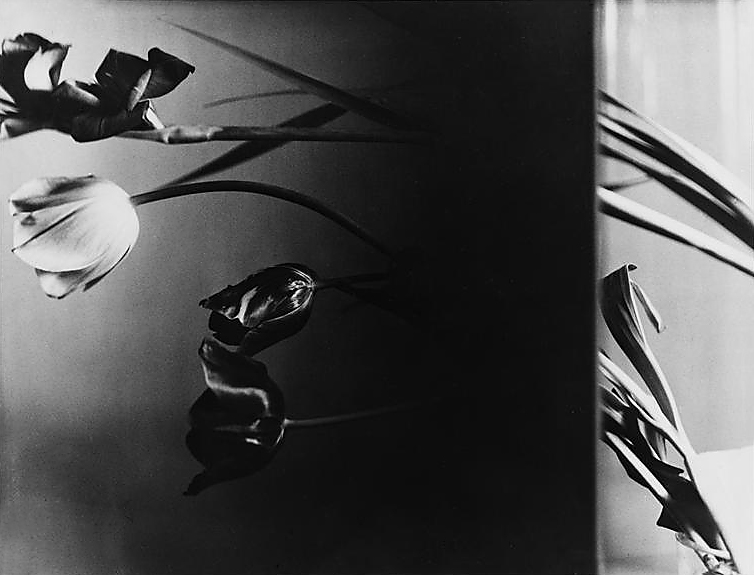
Her quest for experimentation leads Florence Henri to work on the shadows passing vertically through the frame, creating a dark gap that interrupts and fragments the continuity of the image.

Nu composition

Their aesthetic characteristics clearly place the works grouped under the title Nu composition as part of the formal research Florence Henri carried out from the early 1930s, where the mastery of the composition obviously remains the central concern of her work.

Here, the camera is positioned at a slight distance in order to capture the sensuality of the female form, while natural objects – hyacinths and shells – or other more enigmatic elements, such as a comb or cards, also appear in the frame.

Rome

In late 1931 and early 1932, Florence Henri visits Rome where she takes a series of photographs, notably at the Roman Forum, but also at Saint Peter’s Square, which she uses, upon her return to Paris, as material for numerous collages, developing the technique she had already used in certain of her still lifes.

Portrait composition

The series Portrait Composition, is characterised by the tight framing of the central figurer – though some are models, most are her friends, including Grete Willers, Sonia Delaunay, Woty Werner, Kurt Wilhelm-Kästner, Fernand Léger, and Tulia Kaiser. The artist often makes use of harsh lighting, which marks the traits or make-up of her subjects with a diagonal composition or even distorts the image.

Brittany

The photographs taken in Brittany, which at first glance could be seen as purely documentary, reveal a very carefully considered attention to structure. In some of the more general shots, Florence Henri inserts a blurred, graphic element between the lens and the landscape, thereby going against the idea of photography as merely capturing reality, and once again, reinforcing the notion of composition.

Store windows

When Florence Henri strolls through Paris with her camera, her images reveal a very different preoccupation to that of other photographers. Faithful to her attention to structure, in the reflections of store windows she finds the same spirit that brings life to her studio compositions using mirrors. In 1936, Florence Henri moves to the Rue Saint-Romain in Montparnasse, where she makes use of the terrace to work in natural light, and to pursue her study of the fragmentation of the image through the use of shadows and reflections. She also returns to her self-portrait work.


Florence Henri (New York 1893 - Compiègne 1982) 'Fenêtre [Window]' 1929


Florence Henri (New York 1893 – Compiègne 1982)
Fenêtre [Window]
1929
Gelatin silver print, vintage
37.3 x 27.5cm
Staatliche Museen zu Berlin, Kunstbibliothek
© Florence Henri / Galleria Martini & Ronchetti


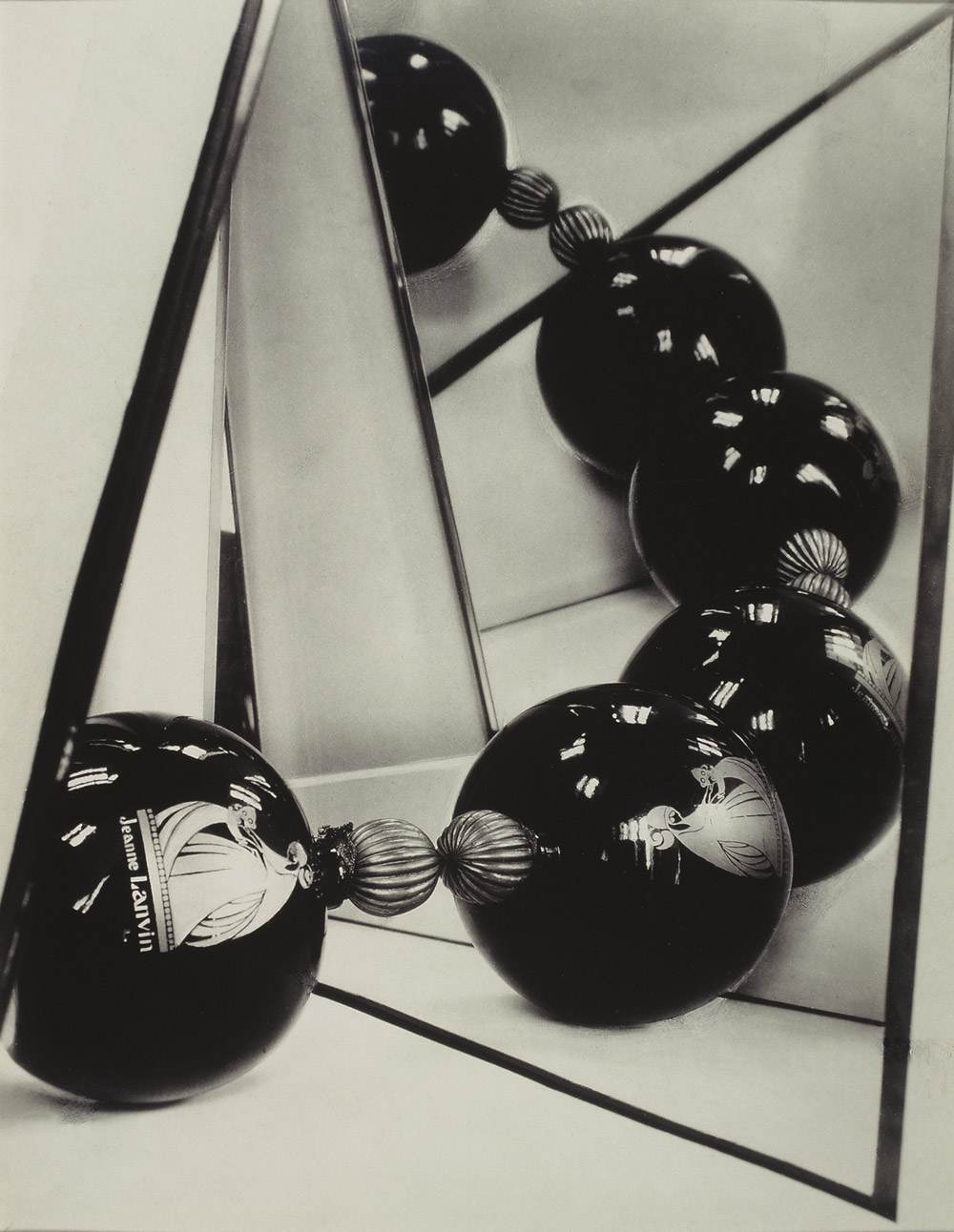
Florence Henri (New York 1893 - Compiègne 1982) 'Jeanne Lanvin' 1929


Florence Henri (New York 1893 – Compiègne 1982)
Jeanne Lanvin
1929
Gelatin silver print, vintage
36.7 x 28.7cm
Collection particulière, courtesy Archives Florence Henri, Gênes
© Florence Henri / Galleria Martini & Ronchetti


Florence Henri (New York 1893 - Compiègne 1982) 'Composition Nature morte [Still-life composition]' 1931


Florence Henri (New York 1893 – Compiègne 1982)
Composition Nature morte [Still-life composition]
1931
Gelatin silver print, vintage
45.9 x 37.7cm
Private collection, courtesy Florence Henri Archive, Genoa
© Florence Henri / Galleria Martini & Ronchetti


Florence Henri (New York 1893 - Compiègne 1982) 'Composition Nature morte [Still-life composition]' c. 1933


Florence Henri (New York 1893 – Compiègne 1982)
Composition Nature morte [Still-life composition]
c. 1933
Photomontage, épreuve gélatino-argentique d’époque
29.4 x 24cm
Private collection, courtesy Florence Henri Archive, Genoa
© Florence Henri / Galleria Martini & Ronchetti


Florence Henri (New York 1893 - Compiègne 1982) 'Robert Delaunay' c. 1935


Florence Henri (New York 1893 – Compiègne 1982)
Robert Delaunay
c. 1935
Gelatin silver print, vintage
49.5 x 39.7cm
Private collection, courtesy Florence Henri Archive, Genoa
© Florence Henri / Galleria Martini & Ronchetti


Florence Henri (New York 1893 - Compiègne 1982) 'Robert Delaunay' c. 1935 'Bretagne [Brittany]' 1937-1940


Florence Henri (New York 1893 – Compiègne 1982)
Bretagne [Brittany]
1937-1940
Gelatin silver print, vintage
28.2 x 24.2cm
Private collection, courtesy Florence Henri Archive, Genoa
© Florence Henri / Galleria Martini & Ronchetti


Florence Henri (New York 1893 - Compiègne 1982) 'Structure (intérieur du Palais de l'Air, Paris, Exposition Universelle) [Structure (Interior of the Palais de l'Air, Paris, World's Fair)]' 1937


Florence Henri (New York 1893 – Compiègne 1982)
Structure (intérieur du Palais de l’Air, Paris, Exposition Universelle) [Structure (Interior of the Palais de l’Air, Paris, World’s Fair)]
1937
Gelatin silver print dated 1976
17.5 x 17.5cm
Private collection, courtesy Florence Henri Archive, Genoa
© Florence Henri / Galleria Martini & Ronchetti


Florence Henri (New York 1893 - Compiègne 1982) 'Autoportrait [Self-portrait]' 1938


Florence Henri (New York 1893 – Compiègne 1982)
Autoportrait [Self-portrait]
1938
Gelatin silver print dated 1970’s
24.8 x 23.1cm
Private collection, courtesy Florence Henri Archive, Genoa
© Florence Henri / Galleria Martini & Ronchetti


Jeu de Paume
1, Place de la Concorde
75008 Paris
métro Concorde
Phone: 01 47 03 12 50

Opening hours:
Tuesday: 12.00 – 21.00
Wednesday – Sunday: 10.00 – 19.00
Closed Monday

Jeu de Paume website

LIKE ART BLART ON FACEBOOK

Back to top

Exhibition: ‘In Focus: Play’ at the J. Paul Getty Museum at the Getty Center, Los Angeles

Exhibition dates: 23rd December, 2014 – 10th May, 2015

Curator: organised by assistant curator Arpad Kovacs in the Department of Photographs at the J. Paul Getty Museum


Herman F. Nielson (American, active Niagara Falls, New York 1883 - early 1900s) 'View of Niagara Falls in Winter' c. 1885 from the exhibition 'In Focus: Play' at the J. Paul Getty Museum at the Getty Center, Los Angeles, December 2014 - May 2015


Herman F. Nielson (American, active Niagara Falls, New York 1883 – early 1900s)
View of Niagara Falls in Winter
c. 1885
Gelatin silver print
19.1 x 24.3cm (7 1/2 x 9 9/16 in.)
The J. Paul Getty Museum, Los Angeles


The J. Paul Getty Museum always puts on the most interesting photography exhibitions. This looks to be no exception.

Marcus


Many thankx to the J. Paul Getty Museum for allowing me to publish some of the photographs in the posting. Please click on the photographs for a larger version of the image.


Platt D. Babbitt (American, 1823-1879, active Niagara Falls, New York 1853-1870) '[Scene at Niagara Falls]' c. 1855 from the exhibition 'In Focus: Play' at the J. Paul Getty Museum at the Getty Center, Los Angeles, December 2014 - May 2015


Platt D. Babbitt (American, 1823-1879, active Niagara Falls, New York 1853-1870)
[Scene at Niagara Falls]
c. 1855
Whole plate daguerreotype
The J. Paul Getty Museum
CC This work is in the public domain


In the 1800s Prospect Point at Niagara Falls was a popular destination for travellers in search of a transcendent encounter with nature. The falls were revered as a sacred place that was recognised by the Catholic Church in 1861 as a “pilgrim shrine,” where the faithful could contemplate the landscape as an example of divine majesty. Two well-dressed couples are seen from behind as they stand on the shore downstream from the falls, gazing at its majestic splendour. The silhouetted forms – women wearing full skirts and bonnets and carrying umbrellas and men in stovepipe hats – are sharply outlined against the patch of shore and expansive, white foam. Platt D. Babbitt would customarily set up his camera in an open-sided pavilion and photograph groups of tourists admiring the falls without their knowledge, as he appears to have done here. Later he would sell the unsuspecting subjects their daguerreotype likenesses alongside the natural wonder.


Roger Fenton (English, 1819-1869) 'The Billiard Room, Mentmore' c. 1858


Roger Fenton (English, 1819-1869)
The Billiard Room, Mentmore
c. 1858
Albumen silver print
Height: 303mm (11.93 in)
Width: 306mm (12.05 in).
The J. Paul Getty Museum
CC This work is in the public domain


A group of fashionable men and women enjoy a game of billiards in a richly furnished salon. The recently completed billiards room, which was designed as a conservatory, is flooded with sunlight, illuminating the lavish interior and creating a dramatic pattern of light and shadows. Indoor photography was rare in the mid-1800s, but the abundance of light and Fenton’s skill with the wet-collodion process created a remarkably detailed portrait of the space and its inhabitants. Behind the woman standing in the doorway at the very far end of the salon, a marble bust, mantelpiece, and mirror can be seen in an adjacent room.

Mentmore House was a country residence of the wealthy Rothschild family, but little is known as to how Fenton came to photograph its interior or who the depicted individuals might be. Fenton accepted commissions to document several other country homes, and his surviving photographs of Mentmore House – both interior and exterior views – may have formed part of a commissioned album. Like Fenton’s Orientalist scenes, this image reveals a high degree of staging. Only one figure actually holds a cue stick, and several of the women wear hats that seem unusual for the indoor setting.


Camille Silvy (French, 1834-1910, active in London) 'Group of their Royal Highnesses the Princess Clementine de Saxe Cobourg Gotha, her Sons and Daughter, the Duke d'Aumale, the Count d'Eu, the Duke d'Alencon, and the Duke de Penthievre [in England]' 1864


Camille Silvy (French, 1834-1910, active in London)
Group of their Royal Highnesses the Princess Clementine de Saxe Cobourg Gotha, her Sons and Daughter, the Duke d’Aumale, the Count d’Eu, the Duke d’Alencon, and the Duke de Penthievre [in England]
1864
Albumen silver print
10.2 x 17cm (4 x 6 11/16 in.)


Camille Silvy (French, 1834-1910, active in London) 'Group of their Royal Highnesses the Princess Clementine de Saxe Cobourg Gotha, her Sons and Daughter, the Duke d'Aumale, the Count d'Eu, the Duke d'Alencon, and the Duke de Penthievre [in England]' 1864 (detail)


Camille Silvy (French, 1834-1910, active in London)
Group of their Royal Highnesses the Princess Clementine de Saxe Cobourg Gotha, her Sons and Daughter, the Duke d’Aumale, the Count d’Eu, the Duke d’Alencon, and the Duke de Penthievre [in England] (detail)
1864
Albumen silver print
10.2 x 17cm (4 x 6 11/16 in.)


Man Ray (American, 1890-1976) '[Marcel Duchamp and Raoul de Roussy de Sales Playing Chess]' 1925


Man Ray (American, 1890-1976)
[Marcel Duchamp and Raoul de Roussy de Sales Playing Chess]
1925
Gelatin silver print
16.7 x 22.5cm (6 9/16 x 8 7/8 in.)
The J. Paul Getty Museum, Los Angeles
© Man Ray Trust ARS-ADAGP


Weegee (Arthur Fellig) (American born Austria, 1899-1968) '[Summer, The Lower East Side, New York City]' Summer 1937


Weegee (Arthur Fellig) (American born Austria, 1899-1968)
[Summer, The Lower East Side, New York City]
Summer 1937
Gelatin silver print 26.5 x 33.3cm (10 7/16 x 13 1/8 in.)
The J. Paul Getty Museum, Los Angeles
© International Center of Photography


André Kertész (American born Hungary, 1894-1985) '[Underwater Swimmer]' Negative 1917; print 1970s


André Kertész (American born Hungary, 1894-1985)
[Underwater Swimmer]
Negative 1917; print 1970s
Gelatin silver print 17 x 24.7cm (6 11/16 x 9 3/4 in.)
The J. Paul Getty Museum, Los Angeles
© Estate of André Kertész


In Focus: Play, on view at the J. Paul Getty Museum at the Getty Center from December 23, 2014 through May 10, 2015, presents photographs that explore how notions of leisure and play have been represented over the course of the medium’s history. The nearly thirty works from the Museum’s permanent collection highlight a wide range of amusing activities, from quiet games like chess to more boisterous forms of recreation like skateboarding and visits to amusement parks and circuses. All of the photographs included in the exhibition illustrate the many ways people have chosen to spend their free time. The images also demonstrate inventive and improvised approaches, like unusual vantage points and jarring juxtapositions that photographers have employed to help capture the spontaneity of playfulness.

Organised by assistant curator Arpad Kovacs in the Department of Photographs at the J. Paul Getty Museum, this exhibition spans almost 175 years of the medium’s history and features the work of a variety of well-known and lesser-known photographers, including Diane Arbus, Henri Cartier-Bresson, Imogene Cunningham, Larry Fink, T. Lux Feininger, Roger Fenton, Andre Kertész, Man Ray, Alexander Rodchenko, Masato Seto, Camille Silvy, and Weegee, among others.

“Capturing our everyday lives has been one of photography’s central themes ever since its invention in the mid-nineteenth century,” says Timothy Potts, Director of the J. Paul Getty Museum. “So it is no surprise that images of people playing games and having fun is a rich seam within the history of photography that this exhibition and accompanying book bring to life brilliantly. This is photography at its entertaining and uplifting best.”

The introduction of photography in 1839 coincided with a bourgeoning culture of leisure. Changes in working and living conditions brought on by the Industrial Revolution created an unprecedented amount of free time for large numbers of people in Europe and the United States. In the 1850s, photographic studios began to capitalize on the development and growth of the tourism industry, promoting recreation as a photographic subject. Technological advancements in film and camera equipment during the early twentieth century facilitated the recording of dynamic activities such as sports and visits to amusement parks. Domestic and public spaces alike became sites where people performed for the camera and documented a break from daily routines.

During the nineteenth century, the eminent photographer Roger Fenton, who was widely recognised for visually documenting the Crimean War (1853-1856), also photographed intimate scenes that reflected casual pastimes. Included in the exhibition is his photograph from 1858 entitled, The Billiard Room, Mentmore House, in which a group of six people act out a scene of domestic amusement in a billiard room lined with a row of large windows.

The desire for pictures of everyday life flourished during the early twentieth-century. The illustrated press, which had grown in popularity in the United States and Europe since the 1920s, was especially interested in photographs of recreation and leisure. Photojournalists often searched for high-impact images that could tell compelling or amusing stories. Weegee (Arthur Fellig), a well-known tabloid photographer, kept his camera focused on New York City’s neighbourhoods. In the photograph Summer, Lower East Side, New York City, 1937, he recorded the ecstatic faces of boys and girls cooling off in the water from an open fire hydrant as they briefly co-opted a street for their own delight.

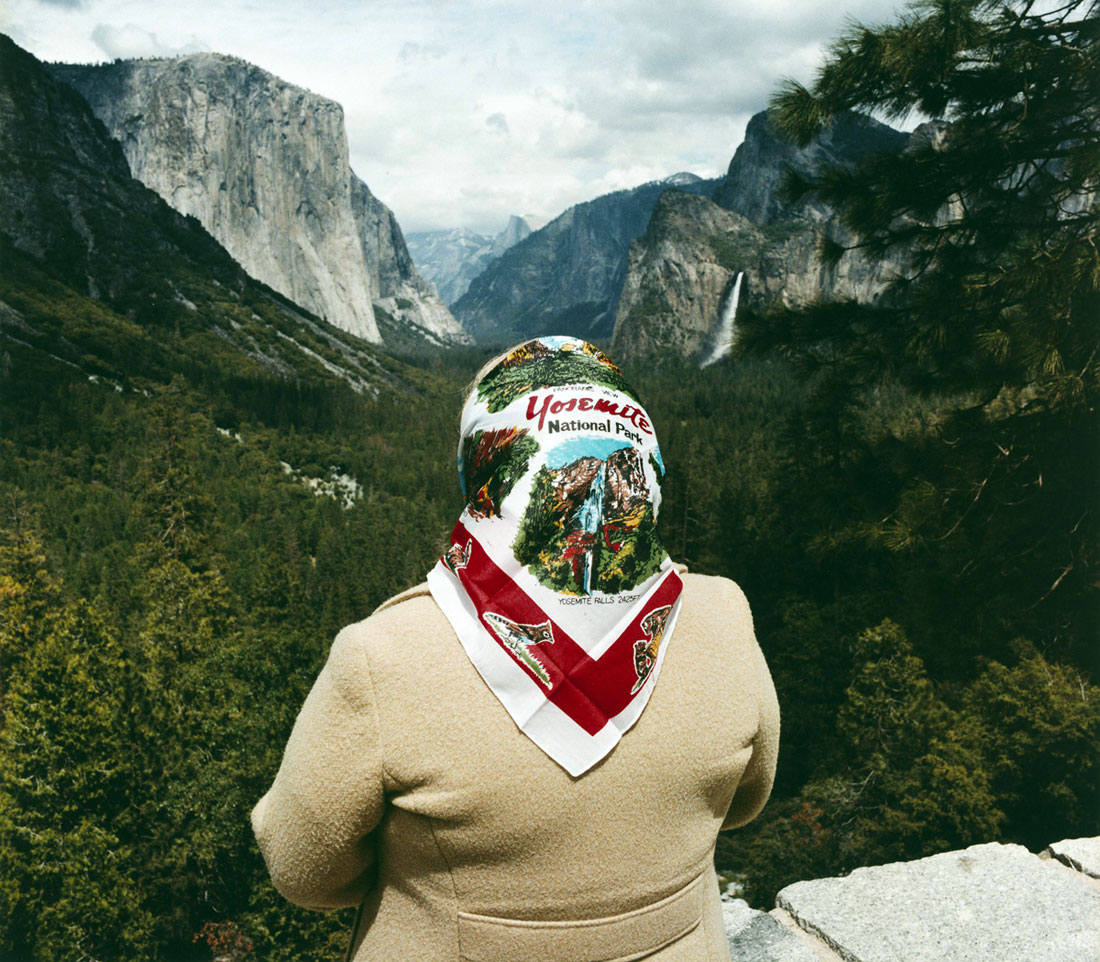
Tourist destinations with sweeping vistas, like Niagara Falls and Yosemite Valley, had been attracting photographers continuously since the 1850s. In a 1980 photograph from his Sightseer series, Roger Minick comments on the phenomenon of taking in the sights through visual juxtaposition. A tourist, seen from behind, obstructs the famous view of Yosemite Valley from Inspiration Point, a spot that is practically synonymous with photography. The woman wears a souvenir headscarf illustrated with views of the valley, underscoring the commodification of nature that pervades modern life.

In the 1990s, the photographer Lauren Greenfield began an ambitious project documenting various subcultures in Los Angeles. These works examine the social pecking order and rites of passage associated with youth culture. In her photograph “Free Sex” Party Crew Party, East Los Angeles, 1993, one gets a glimpse into the potential dangers associated with these wild demonstrations of unrestricted freedom and machismo.

“The photographs chosen for this exhibition demonstrate the wide range of approaches photographers have employed to capture people at play, along with a variety of sites that have traditionally signalled leisure and entertainment,” said Kovacs. “Visiting a museum would be included on that list of leisure-time activities. I can’t think of a better way to spend an afternoon.”

In Focus: Play is on view at the J. Paul Getty Museum at the Getty Center beginning December 23, 2014, through May 10, 2015.

Press release from the J. Paul Getty Museum


Unknown photographer. '[Barnum and Bailey Circus Tent in Paris, France]' 1901-1902


Unknown photographer
[Barnum and Bailey Circus Tent in Paris, France]
1901-1902
Gelatin silver print
22.2 x 58.1cm (8 3/4 x 22 7/8 in.)
The J. Paul Getty Museum, Los Angeles


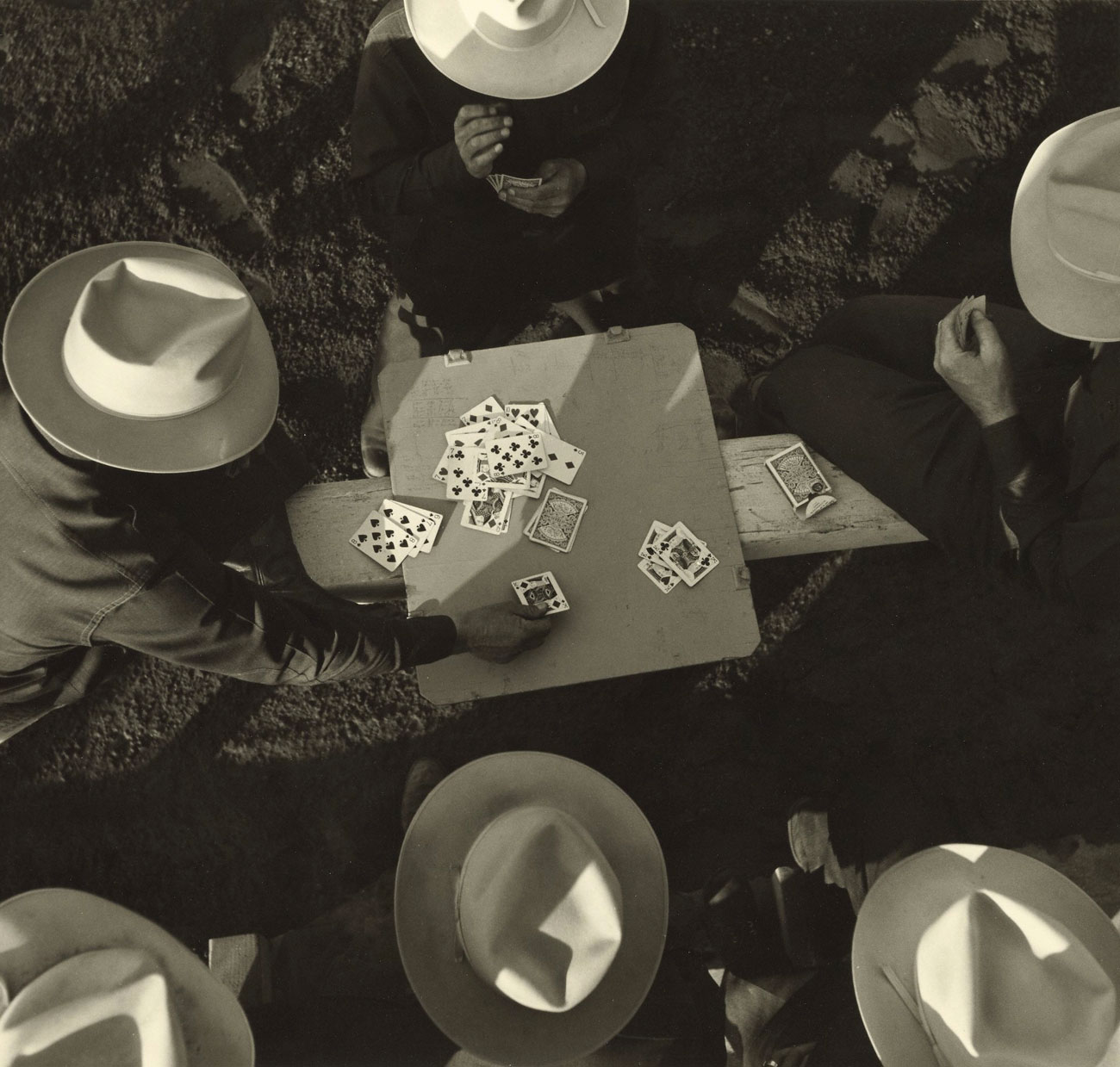
Max Yavno (American, 1911-1985) 'Card Players, Los Angeles, California' 1949


Max Yavno (American, 1911-1985)
Card Players, Los Angeles, California
1949
Gelatin silver print
26.5 x 27.9cm
© 1988 Center for Creative Photography, The University of Arizona Foundation


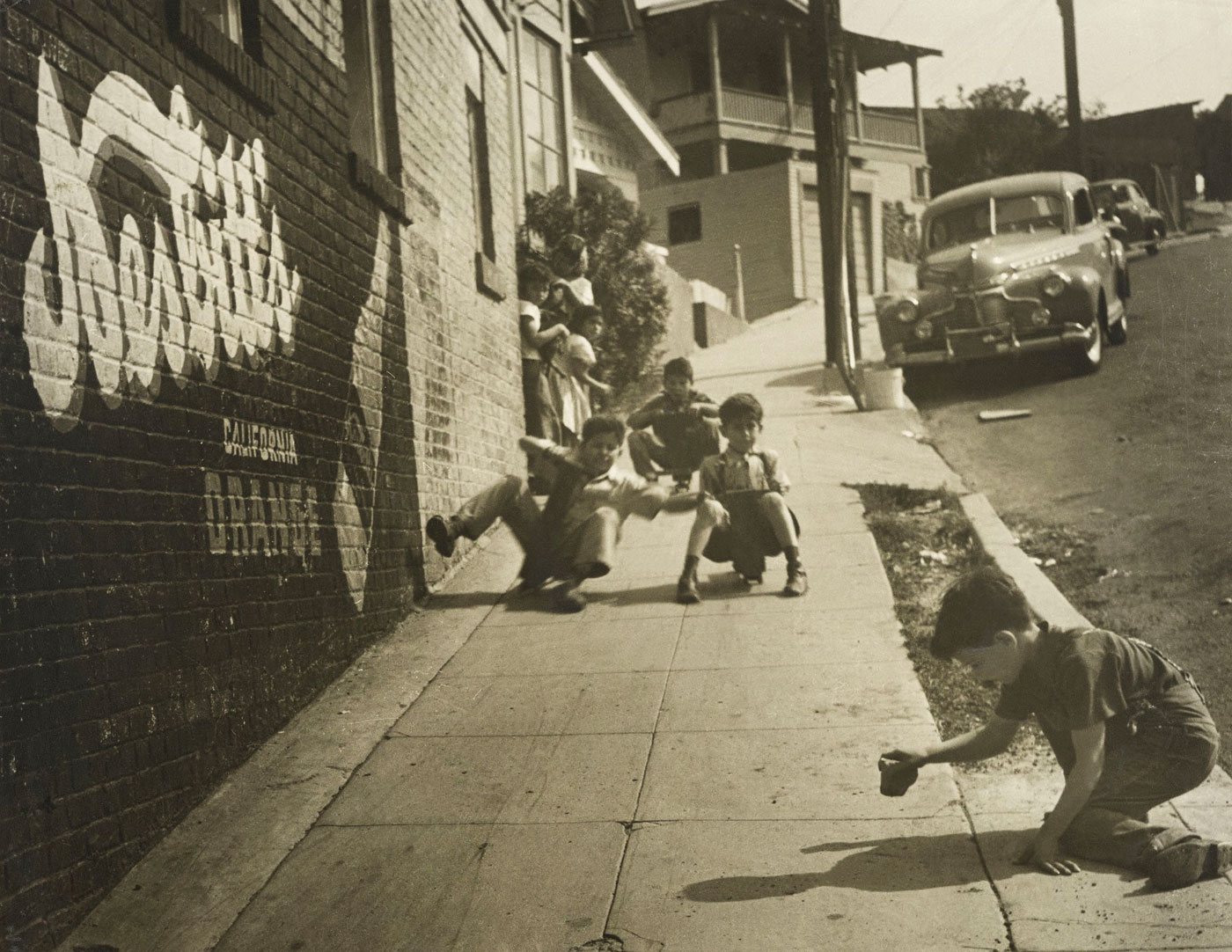
Joe Schwartz (American, 1913-2013) 'East L.A. Skateboarders' 1950s


Joe Schwartz (American, 1913-2013)
East L.A. Skateboarders
1950s
Toned gelatin silver print
30.2 x 39cm (11 7/8 x 15 3/8 in.)
The J. Paul Getty Museum, Los Angeles
© Joe Schwartz


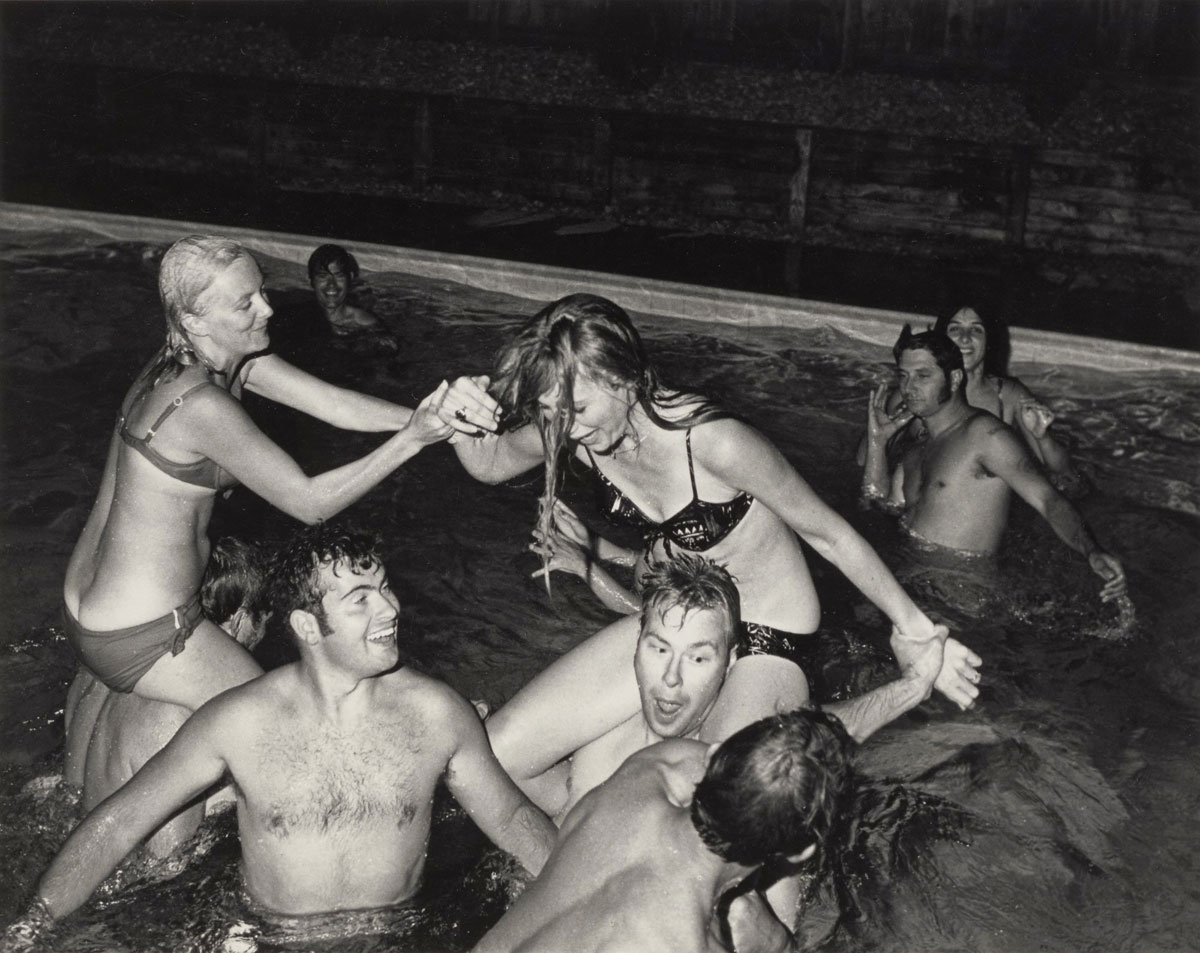
Bill Owens (American, b. 1938) 'Untitled (Swimming Pool)' 1973 or before


Bill Owens (American, b. 1938)
Untitled (Swimming Pool)
1973 or before
Gelatin silver print
17.1 x 21.5cm (6 3/4 x 8 7/16 in.)
The J. Paul Getty Museum, Los Angeles, Gift of Robert Harshorn Shimshak and Marion Brenner
© Bill Owens


Hiromi Tsuchida (Japanese, b. 1939) 'Counting Grains of Sand, Tsuruga' Negative 1985; print May 15, 1990


Hiromi Tsuchida (Japanese, b. 1939)
Counting Grains of Sand, Tsuruga
Negative 1985; print May 15, 1990
Gelatin silver print
28.1 x 42.5cm (11 1/16 x 16 3/4 in.)
The J. Paul Getty Museum, Los Angeles
© Hiromi Tsuchida


Roger Minick (American, b. 1944) 'Woman with Scarf at Inspiration Point, Yosemite National Park' 1980


Roger Minick (American, b. 1944)
Woman with Scarf at Inspiration Point, Yosemite National Park
1980
Chromogenic print
38.1 x 43.5cm (15 x 17 1/8 in.)
The J. Paul Getty Museum, Los Angeles
© Roger Minick


Lauren Greenfield (American, b. 1966) '"Free Sex" Party Crew Party, East Los Angeles' 1993


Lauren Greenfield (American, b. 1966)
“Free Sex” Party Crew Party, East Los Angeles
1993
Dye destruction print
32.4 x 48.9cm (12 3/4 x 19 1/4 in.)
The J. Paul Getty Museum, Los Angeles, Gift of Allison Amon & Lisa Mehling
© Lauren Greenfield/INSTITUTE


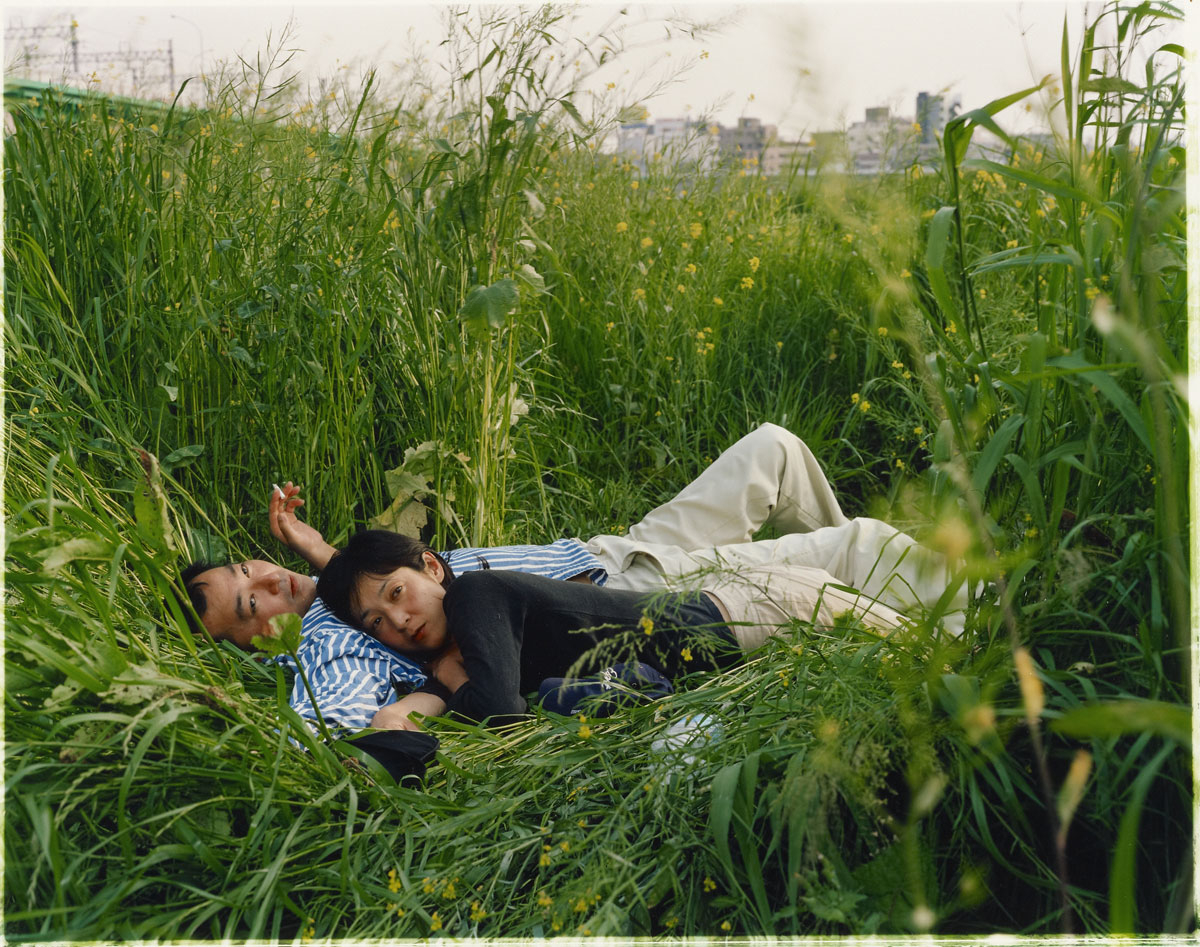
Masato Seto (Japanese born Thailand, b. 1953) 'picnic #32' 2005


Masato Seto (Japanese born Thailand, b. 1953)
picnic #32
2005
From the series picnic
Silver-dye bleach print
43.2 x 55cm
© Masato Seto


Photographer Masato Seto’s series picnic, produced between 1996 and 2005, takes a particularly intimate approach. Seto’s photographs get inside Tokyo’s private pockets of outdoor space, a highly coveted respite from the busy thrum of the Japanese urban lifestyle. They give us a glimpse of the hard-won leisure of local couples escaping the cramped quarters of high-rise living for the scarce green space of public parks.

The couples’ reactions to the camera’s intrusion range from shielding their faces to outright defiance, to simple staring curiosity. We feel like we’ve caught them in the act of doing something that we shouldn’t see. Representing one family, couple, or individual at a time, Seto situates his subjects in a detached reality of their own. He creates what critic Hiro Koike referred to as “invisible rooms” – plots of grass often defined by the customary plastic sheet – in which intimate moments have been openly displayed and captured.

Melissa Abraham, “An Intimate View of Tokyo,” on The Getty Iris blog, August 5, 2014 [Online] Cited 03/03/2015. No longer available online. Used under fair use conditions for the purposes of education and research


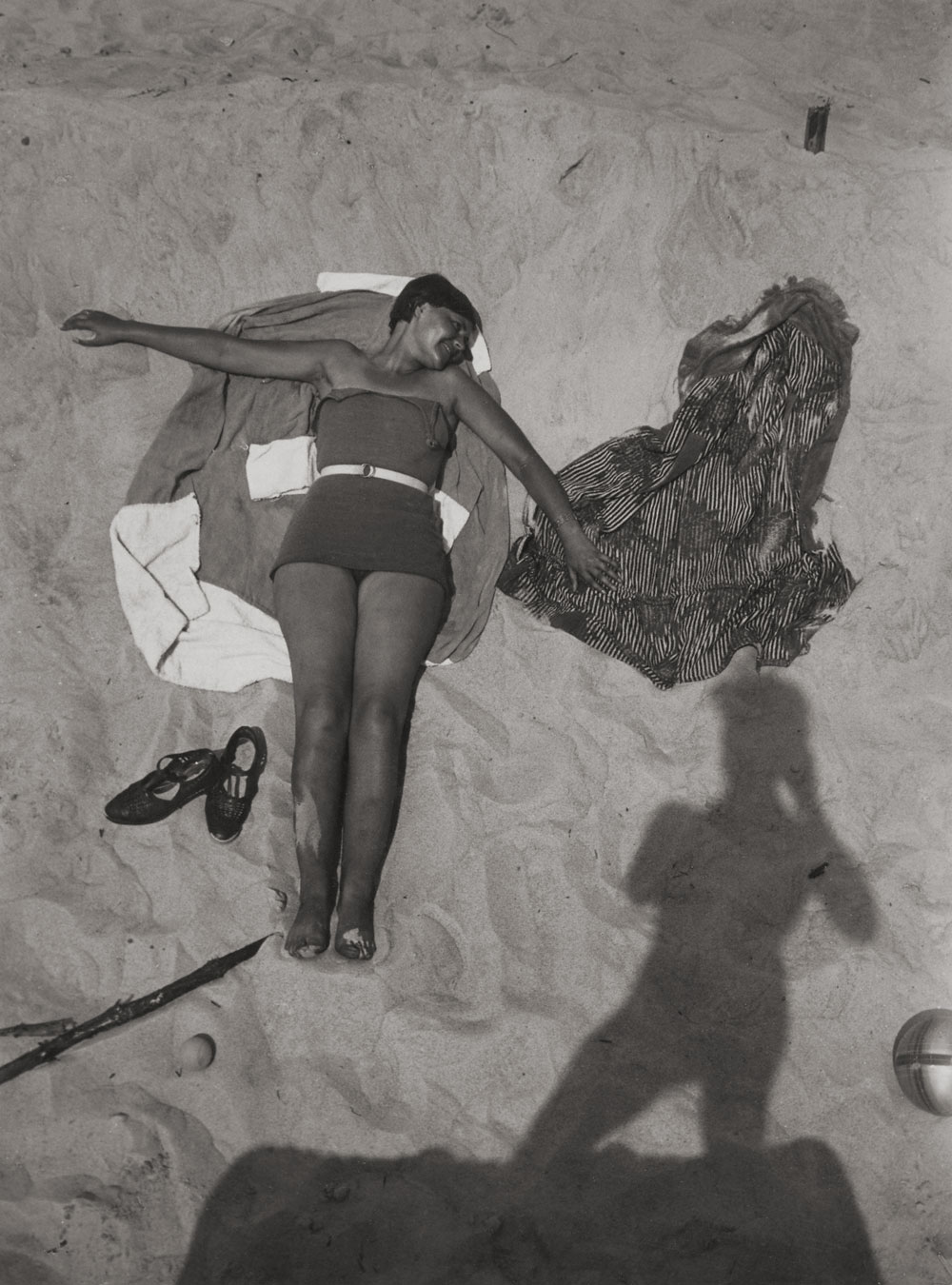
T. Lux Feininger (American born Germany, 1910-2011) 'Am Strand (On the Beach)' c. 1929


T. Lux Feininger (American born Germany, 1910-2011)
Am Strand (On the Beach)
c. 1929
Gelatin silver print
23.8 x 17.8cm (9 3/8 x 7 in.)
The J. Paul Getty Museum, Los Angeles
© Estate of T. Lux Feininger


Brassaï (French born Hungary, 1899-1984) 'Kiss on the Swing' 1935-1937


Brassaï (French born Hungary, 1899-1984)
Kiss on the Swing
1935-1937
Gelatin silver print
29.7 x 23.3cm
© Estate Brassaï-RMN


Imogen Cunningham (American, 1883-1976) 'Self-Portrait with Grandchildren in Funhouse' 1955


Imogen Cunningham (American, 1883-1976)
Self-Portrait with Grandchildren in Funhouse
1955
Gelatin silver print
22.2 x 18.5cm (8 3/4 x 7 5/16 in.)
The J. Paul Getty Museum, Los Angeles
© Imogen Cunningham Trust


The J. Paul Getty Museum
1200 Getty Center Drive
Los Angeles, California 90049

Opening hours:
Daily 10am – 5pm

The J. Paul Getty Museum website

LIKE ART BLART ON FACEBOOK

Back to top

Exhibition: ‘Witness at a Crossroads: Photographer Marc Riboud in Asia’ at The Rubin Museum of Art, New York

Exhibition dates: 16th October, 2014 – 23rd March, 2015

Curator: Beth Citron, Assistant Curator at The Rubin Museum of Art


Marc Riboud (French, 1923-2016) 'Road to Khyber Pass' Afghanistan, 1956 from the exhibition 'Witness at a Crossroads: Photographer Marc Riboud in Asia' at The Rubin Museum of Art, New York, October 2014 - March 2015


Marc Riboud (French, 1923-2016)
Road to Khyber Pass
Afghanistan, 1956
60 x 94cm


I am not convinced by these. There are a couple of brilliant images in the posting, such as Forbidden City (Beijing, 1957), Darjeeling (Darjeeling, India, 1956), and Photography Fair 150 Kilometers from Tokyo (Japan, 1958) but the rest vary between plain (Between Konark and Puri, Orissa, India, 1956), kitsch or is it cheesy (Road to Khyber Pass, Afghanistan, 1956) to downright obvious (Cave Dwelling, between Urgup and Uchisar, Cappadocia, Turkey, 1955).

Dr Marcus Bunyan


Many thankx to The Rubin Museum of Art for allowing me to publish the photographs in the posting. Please click on the photographs for a larger version of the image.


Marc Riboud (French, 1923-2016) 'Photography Fair 150 Kilometers from Tokyo' Japan, 1958 from the exhibition 'Witness at a Crossroads: Photographer Marc Riboud in Asia' at The Rubin Museum of Art, New York, October 2014 - March 2015


Marc Riboud (French, 1923-2016)
Photography Fair 150 Kilometers from Tokyo
Japan, 1958
40 x 50cm


Marc Riboud (French, 1923-2016) 'Darjeeling' Darjeeling, India, 1956


Marc Riboud (French, 1923-2016)
Darjeeling
Darjeeling, India, 1956
30 x 40cm


Marc Riboud (French, 1923-2016) 'Forbidden City' Beijing, 1957


Marc Riboud (French, 1923-2016)
Forbidden City
Beijing, 1957
40 x 50cm


Marc Riboud (French, 1923-2016) 'Between Konark and Puri' Orissa, India, 1956


Marc Riboud (French, 1923-2016)
Between Konark and Puri
Orissa, India, 1956
Vintage print
18 x 27.2cm


Marc Riboud (French, 1923-2016) 'Camel Market' Nagaur, Rajasthan, India, 1956


Marc Riboud (French, 1923-2016)
Camel Market
Nagaur, Rajasthan, India, 1956
Vintage print
33.5 x 49.5cm


Marc Riboud’s first New York exhibition in over 25 Years chronicles the artist’s expeditions across Asia

Photography exhibition at Rubin Museum of Art offers rare glimpse into life at critical time in trans-regional Asian history

This October, the Rubin Museum of Art will open Witness at a Crossroads: Photographer Marc Riboud in Asia, a photography exhibition that chronicles the French artist’s journeys across Asia, with particular focus on his travels from 1955 through 1958. The first New York museum exhibition of Riboud’s work in over 25 years, Witness at a Crossroads will illustrate the artist’s perspective on the confluence of tradition and modern culture in mid-century Asia. On view from October 16, 2014 through March 23, 2015, Witness at a Crossroads will feature approximately 100 black-and-white photographs from the mid-to-late 1950s, as well as images from Riboud’s pioneering visit to China in the 1960s. The exhibition will also present ephemeral objects including press cards, contact sheets, and international magazines where photographs of Riboud’s travels were published.

Organised in thematic clusters – regionally and chronologically – the exhibition will examine Riboud’s travels across Turkey, Iran, Afghanistan, Pakistan, India, Nepal, China, and Japan. Riboud’s photographs provide an honest and accessible window into the daily lives of the diverse people of the region and illuminate the tension created by cultural shifts during this period. These early images provide important context for Riboud’s later works and illuminate the influence of his experience in Asia on his career.

“Marc Riboud captured a period of significant cultural transformation and postwar modernisation through the lives of everyday individuals, creating an important living document. The exhibition provides a broad lens through which to look at trans-regional Asian dynamics and history in these critical years,” said Beth Citron, Assistant Curator at the Rubin Museum of Art. “Witness at a Crossroads is the latest exhibition at the Rubin Museum of Art to illuminate the profound impact of cultures across Asia on the work of modern and contemporary artists from across the globe. Our latest exhibition affirms the institution’s commitment to providing a comprehensive view of artistic activity coming out of – and impacted by – these diverse cultures.”

Riboud left for Asia shortly after beginning his career at the photo agency Magnum. The photographer’s explorations were shaped in part by his correspondence with his mentor Henri Cartier-Bresson, the father of photojournalism, who provided insight to his protégé on engaging with new cultures. The exhibition highlights common themes in Riboud’s work and underscores the artist’s use of photography to investigate culture and his ability to capture intimate glimpses of everyday life. One of the first foreign photographers allowed into China after the country’s Cultural Revolution of 1949, Riboud was a pioneer in documenting the region, as demonstrated in images such as Forbidden City (1957), where a silhouette of a figure is framed by the angular rooftops, fences, and walls. A strong sense of composition is also apparent in images like On the Backs of Ganges (1956), where bathers relaxing after a swim are divided by a draping sheet in the centre of the photograph. Works like Darjeeling (1956), a look at the Indian city on a rainy day, demonstrate Riboud’s ability to create poetic and atmospheric images of the countries he explored.

About Marc Riboud

Before beginning his career as a photographer, Marc Riboud worked as a factory engineer until 1951. After a week on holiday, during which he covered the cultural festival of Lyon, Riboud dropped his engineering job for photography and moved to Paris in 1952. He was invited by Henri Cartier-Bresson and Robert Capa to join Magnum as an associate that same year.

In 1957, Riboud made his first trip to China. He returned multiple times, including a 1965 trio with writer K.S. Karol. In 1968, 1972, and 1976, Riboud made several reportages on North Vietnam in addition to continuing his travels all over the world, mostly in Asia, Africa, the U.S., and Japan. He is best known for his extensive reports on the East: The Three Banners of China (1966), Face of North Vietnam (1970), Visions of China (1981) and In China (1966). He has received many awards including two by the Overseas Press Clun, the Time-Life Achievement, the Lucie Award and the ICP Infinity Award.

Press release from The Rubin Museum of Art website


Marc Riboud (French, 1923-2016) 'Cave Dwelling, between Urgup and Uchisar' Cappadocia, Turkey, 1955


Marc Riboud (French, 1923-2016)
Cave Dwelling, between Urgup and Uchisar
Cappadocia, Turkey, 1955
24 x 30cm


Marc Riboud (French, 1923-2016) 'Istanbul' Istanbul, Turkey, 1955


Marc Riboud (French, 1923-2016)
Istanbul
Istanbul, Turkey, 1955
30 x 40cm


Marc Riboud (French, 1923-2016) 'Jaipur' Jaipur, India, 1956


Marc Riboud (French, 1923-2016)
Jaipur
Jaipur, India, 1956
23.2 x 33cm


Marc Riboud (French, 1923-2016) 'On a Train from Hong Kong to Guangzhou' China, January 1, 1957


Marc Riboud (French, 1923-2016)
On a Train from Hong Kong to Guangzhou
China, January 1, 1957
20.2 x 30cm


Marc Riboud (French, 1923-2016) 'Preparing Kites on a Sunday Morning' Ankara, Turkey, 1955


Marc Riboud (French, 1923-2016)
Preparing Kites on a Sunday Morning
Ankara, Turkey, 1955
Vintage print
17 x 25.3cm


Marc Riboud (French, 1923-2016) 'Untitled' Afghanistan, 1955


Marc Riboud (French, 1923-2016)
Untitled
Afghanistan, 1955
Vintage print
16.2 x 23.7cm


Marc Riboud (French, 1923-2016) 'Street Show' Beijing, China, 1957


Marc Riboud (French, 1923-2016)
Street Show
Beijing, China, 1957
Vintage print
20.4 x 29.9cm


The Rubin Museum of Art
150 West 17th Street
New York City

Opening hours:
Thursday 11.00am – 5.00pm
Friday 11.00am – 10.00pm
Saturday – Sunday 11.00am – 5.00pm
Closed Mondays – Wednesdays
The museum is closed on Christmas, Thanksgiving, and New Year’s Day

The Rubin Museum of Art website

LIKE ART BLART ON FACEBOOK

Back to top

Review: ‘Victor Hugo: Les Misérables – From Page to Stage’ at the State Library of Victoria, Melbourne

Exhibition dates: 18th July – 9th November 2014


Victor Hugo (French, 1802-1885) 'Les Misérables vol. 1' 1845-1862


Victor Hugo (French, 1802-1885)
Les Misérables vol. 1
1845-1862
Autograph manuscript
Bibliothèque nationale de France


Devour the main course but don’t stay for dessert

This is an exhibition in two galleries. In the first you are not allowed to take photographs but in the second you can take as many as you want. You are told this as you enter the exhibition but the import of this incantation only becomes apparent much later in your visit.

The first gallery is a profound experience: manuscripts, letters, photographs, paintings, and posters that all relate to the great man and his work Les Misérables. The Charles Marville photographs are sublime (as always) with the width of the vertical prints being the element that I noticed most on this viewing. The space that Marville manages to capture in these vertical images makes them seem almost as wide as they are high giving them an almost panoramic feel, as though the space of the image goes on forever, from side to side and into the distance. There is a wonderful sense of volume in the atmosphere, tones and textures of these images. One juxtaposition is particularly tantalising, the pairing of Marville’s Rue Tirechape (1865) with engravings such as the demolition work for constructing the Boulevard St. Germain by Maxine Lalanne (1827-1886). The illusion that one could be the other is enlightening, and there is an established association (especially in Pictorialist photography) between representation in etching and photography.1

As Philip Ebury observes,

“It has often been said that Pictorial photographs resemble works in other media. The analogy with etchings is especially striking and the comparison is more than physical. Between 1890 and the late 1920s, etching and Pictorial photography had a shared history and many similar aims. Parallels between the two disciplines in Australia had their antecedents in England. In the late nineteenth century many photographers in that country were consciously promoting artistic, as opposed to documentary work. At the same time, printmakers were reviving the art of original etching as an expressive rather than a reproductive medium.”2

But the Charles Marville photographs are not the star of the show, oh no. That is left to five things:

a) An album of which you can see only one leaf in the exhibition, Les Proscrits (‘The Exiles’) (1856, below), but that one leaf is enough. The enigma, light and intimacy of this one page is just magnificent.

b) Equally impressive are the very small intense portraits of Victor Hugo such as the silver gelatin photograph attributed to Arsène Garnier (1820-1909) – dark, atmospheric with Neo-classical sculptures and chandeliers reflected in expansive mirrors, VH propped up by a favourite chair; or Charles Hugo’s salted paper print from a collodion negative of his father in Jersey leaning on the back of a chair (1853-1855). The intensity of these portraits is remarkable.

c) Victor Hugo’s own paintings, usually pen and brown ink wash on paper, are also very powerful. In images such as Ma destinée (My destiny) (1867, below) where VH wrote in direct conversation with the ocean and The bowels of the Leviathan (1866) – dark, dank labyrinthine Parisian sewers – Hugo draws you into a world of the disenfranchised, the poor, the destitute and their (and his) destiny.

d) The beautiful theatre posters (1880s-1910s) worth the price of admission on their own

e) Leaving the best till last, the autographed manuscript Volume 1 of Les Misérables in all its glory (the first time it has ever left France), complete with revisions, crossings out and the final version in red, resting innocuously in a glass display cabinet. The psychological weight of the volume is immense. This is getting as close to the ‘source’ as you can possibly get without touching it. I remember once holding a first edition of Oscar Wilde’s The Ballad of Reading Gaol in my hand. This had that same spine tingling effect.


The first gallery assembles this incredible story and builds a glorious intensity of experience. I was on such an elevated level it was great.

And then, in literally two minutes, it was gone… No, no, no, no!

The second gallery is such a let down. It features costumes, posters, pamphlets and video in an exploration of the musical ‘phenomena’ this is the (Disney-fied) Les Misérables. A stage set from the musical with cut our heads so people can have their photo taken, and for performances; very poor quality black and white images of the sets of the theatrical productions of Les Misérables; a cardboard cut-out two-wheeled cart that is the worst thing that you could possibly see; and videos of workshops with men explaining how they are using a bandsaw to create the stage for the musical (as if I want to see that after what has gone before!). From the sublime to the ridiculous. I’m sure the kids might like it but after seeing such an amazing first half of the exhibition, for me this was like being tied with a ball and chain and dropped over the side to sink like a stone. Why do curators insist on doing this. Do they think that they always have to have a “popular” space for the family and the kids these days. That more is really more?

In this case it quite ruined what was up till then an incredible experience. So visit the exhibition for the main course (and don’t take any photos), but if I were you I would turn around after the first gallery and walk out the way I came in, thinking to myself ‘less is more!

Dr Marcus Bunyan


1/ See Ebury, Frances. “Engravers and Etchers, Pictorialists and Photographers,” Part 2, Chapter 2 in Making Pictures: Australian Pictorial Photography as Art 1897 – 1957 Volume 1. Phd thesis, The University of Melbourne, 2001, p. 73.

2/ Ibid.,


Many thankx to the State Library of Victoria for allowing me to publish the photographs in the posting. Please click on the photographs for a larger version of the image.


“As long as social damnation exists, through laws and customs, artificially creating hell at the heart of civilization and muddying a destiny that is divine with human calamity; as long as the three problems of the century – man’s debasement through the proletariat, woman’s demoralisation through hunger, the wasting of the child through darkness – are not resolved … as long as ignorance and misery exist in this world, books like the one you are about to read are, perhaps, not entirely useless.”


Victor Hugo, Hauteville House, 1 January 1862


Victor Hugo (French, 1802-1885) 'Title page of 'Les Misérables' vol. 1' 1845-1862


Victor Hugo (French, 1802-1885)
Title page of Les Misérables vol. 1
1845-1862
Autograph manuscript
Bibliothèque nationale de France


Victor Hugo (French, 1802-1885) 'Paris' Paris, 1867


Victor Hugo (French, 1802-1885)
Paris
Paris, 1867
Maison Littéraire de Victor Hugo


Victor Hugo (French, 1802-1885) 'Ma destinée (My destiny)' 1867


Victor Hugo (French, 1802-1885)
Ma destinée (My destiny)
1867
Ink and brown-ink wash
© Maisons de Victor Hugo / Roger-Viollet


'Les Proscrits' ('The Exiles') 1856


Les Proscrits (‘The Exiles’)
1856
Album of photographs
Bibliothèque nationale de France


Album The Exiles – Victor Hugo and his circle of friends in exile started in Guernsey on the 1st January 1856. The album creates an allegorical portrait of VH. His family is represented by Victor Hugo’s hand (left), Adele’s hand (right), Marine Terrace their home in Jersey 1852-1856 (centre) and VH posing at his desk in his study at Hauterville House, Guernsey, where he completed Les Misérables surrounded by sunlight. The page appears in the posting the correct way up, as it appears in the album.


Les Proscrits ('The Exiles') album 1856 (detail of page)


Victor Hugo’s hand
From the album Les Proscrits (‘The Exiles’) (detail of page)
1856
Album of photographs
Bibliothèque nationale de France


'Victor Hugo posing at his desk in his study at Hauterville House, Guernsey' From the album 'Les Proscrits' ('The Exiles') 1856 (detail of page)


Victor Hugo posing at his desk in his study at Hauterville House, Guernsey
From the album Les Proscrits (‘The Exiles’) (detail of page)
1856
Album of photographs
Bibliothèque nationale de France


Edmond Bacot (French, 1814-1875) 'Victor Hugo en 1862' (Victor Hugo in 1862) 1862


Edmond Bacot (French, 1814-1875)
Victor Hugo en 1862 (Victor Hugo in 1862)
1862
Maison de Victor Hugo
Image © Edmond Bacot / Maisons de Victor Hugo / Roger-Viollet


Auguste Rodin (French, 1840-1917) 'Victor Hugo, buste dit À l'Illustre Maître' (Victor Hugo, bust known as 'To the illustrious master') 1883


Auguste Rodin (French, 1840-1917)
Victor Hugo, buste dit À l’Illustre Maître (Victor Hugo, bust known as ‘To the illustrious master’)
1883
Musée Rodin


Rodin states that Hugo would not pose. “I worked out on the veranda. I observed him swiftly, but carefully as he refused to pose. He accepted to be looked at, from all angles, but he would not pose. And so I looked at his conscience. And this is how I was able to capture the real Hugo.”


When the first two volumes of Les Misérables arrived in Paris in April 1862, all 6000 copies sold in a day. Public readings were organised when copies sold out. Everyone was reading it, from the literary intelligentsia to the common people. It was also quickly translated into nine languages to reach a global audience. After only three months, 100,000 authorised copies (and countless editions on the black market) had been sold worldwide, making the novel into an unprecedented literary bestseller of western literature. In 1870 after the fall of Napoleon III, Hugo returned to France and was hailed a national hero.

Victor Hugo’s legacy and the iconic story of Les Misérables endure to this day with various adaptations being created around the world. There have been at least 48 films, 14 animated films or TV series, radio plays, 12 television miniseries, numerous comic books, and at least 286 editions of Les Misérables published, sung and spoken. The stage musical of Boublil and Schönberg’s Les Misérables is in itself a worldwide phenomenon. It is the longest running theatre performance in London and has been seen by over 65 million people in 43 countries and in 21 languages. It returns to Melbourne in June 2014.

About Victor Hugo

Victor Hugo is considered one of the most important and influential authors of the 19th century. Through his transformative literary works and political activism, French society’s most vulnerable were given a voice in a nation ruled by those with power and privilege. Best known for his novels Les Misérables and The Hunchback of Notre Dame Hugo is also acclaimed for his theatre, essays, drawings and poetry.

Born in Besançon, France in 1802, Hugo was the son of an atheist and anti-monarchist French General and a Catholic pro-monarchist mother. A precocious talent, Hugo’s first work was published at the age of 15. His debut as a professional writer soon followed with the release of his first volume of romantic poems; Ode et poésies diverses in 1822. Many of his early romantic works drew inspiration from his childhood sweetheart and wife Adele Foucher, with whom he had four children. Another powerful female influence on Hugo’s writings was his mistress of more than fifty years, Juliette Drouet.

As Hugo’s career progressed, his aptitude and fondness for romantic literature was matched by his passion for addressing themes of disadvantage and poverty. Hugo’s first major masterpiece The Hunchback of Notre Dame published in 1831 reflected his interest in highlighting such prejudices. However, it was his greatest masterpiece, Les Misérables, that first challenged and then changed the social and political understanding of poverty, disadvantage and inherited privilege in society. In Les Misérables Hugo casts an ex-convict, Jean Valjean, as the revered protagonist and paints a villain of the character representing authority and privilege, Inspector Javert.

Hugo dedicated 17 years of his life to plan and write the epic three part story beginning in the early 1840s and finally publishing the novel in 1862. In addition to his social and political sympathies, Hugo drew from many of his own personal experiences and professional turmoil to inform the characters and themes in Les Misérables. These included the tragic drowning of his eldest daughter, Leopoldine, in a boating accident in 1843, and Hugo’s exile from France by Louis Napoleon III in 1851 – a result of his public opposition to the increasingly authoritarian rule of the self-declared emperor.

From his exile on the Channel Islands of Jersey and Guernsey where he lived for 19 years, Hugo maintained his trenchent opposition to the political status quo and the death penalty, while also publishing widely and spending three years finishing his magnum opus Les Misérables. When Les Misérables finally hit the stands in Paris in 1862 the response by the public was explosive. All 6000 copies sold out in a day, and three months later the book was an international best seller and had been translated into nine languages. Following the success of Les Misérables Hugo returned to France in 1870 after the fall of Napoleon III and was hailed a national hero. He continued to work until he died on 22 May 1885. At his state funeral it was estimated that close to two million people attended. Hugo’s wish to be buried in a pauper’s coffin was granted and his body lay in state under the Arc de Triomphe until he was interred in the Panthéon.

Today Victor Hugo’s extraordinary legacy continues. Les Misérables has been published in at least 250 editions since 1862, 48 films have been made of the story and the Boublil and Schönberg Les Misérables musical has been seen by over 65 million people worldwide in 42 countries and 22 languages, and is one of the most popular musicals of all time. Victor Hugo is remembered as an international literary giant and a French national hero.

Themes

The possibility that the condemned can rise above poverty and degradation to become good and honourable, and perhaps above all to fight for freedom of body and soul.


Charles Marville (French, 1813-1879) 'Percement de l'avenue de l'Opéra' (Clearing of the Avenue de l'Opéra) c. 1876


Charles Marville (French, 1813-1879)
Percement de l’avenue de l’Opéra (Clearing of the Avenue de l’Opéra)
c. 1876
State Library of Victoria


Charles Marville (French, 1813-1879) 'Rue Soufflot (pendant la démolition)' (Rue Soufflot [during demolition]) c. 1876-1877


Charles Marville (French, 1813-1879)
Rue Soufflot (pendant la démolition) (Rue Soufflot [during demolition])
c. 1876-1877
State Library of Victoria


Charles Marville (French, 1813-1879) 'Avenue d'Iéna' c. 1877


Charles Marville (French, 1813-1879)
Avenue d’Iéna
c. 1877
State Library of Victoria


Charles Marville (French, 1813-1879) 'Boulevard Haussmann' c. 1877


Charles Marville (French, 1813-1879)
Boulevard Haussmann
c. 1877
State Library of Victoria


Charles Marville (French, 1813-1879) 'Cour du Dragon' c. 1863-1869


Charles Marville (French, 1813-1879)
Cour du Dragon, Rue de Taranne
c. 1863-1869
State Library of Victoria


Charles Marville (French, 1813-1879) 'Rue Tirechape' c. 1863-1869


Charles Marville (French, 1813-1879)
Rue Tirechape
c. 1863-1869
State Library of Victoria


Charles Marville (French, 1813-1879) 'Rue de Fontaines' c. 1863-1869


Charles Marville (French, 1813-1879)
Rue de Fontaines
c. 1863-1869
State Library of Victoria


Charles Marville (French, 1813-1879) 'Rue du Marche aux fleurs' c. 1863-1869


Charles Marville (French, 1813-1879)
Rue du Marche aux fleurs
c. 1863-1869
State Library of Victoria


Paul Carpentier (French, 1787-1877) 'Episode du 29 juillet 1830, rue Chilperic, face á la colonnade du Louvre' (Event of 29 July 1830, rue Chilperic, before the colonnade of the Louvre) 1830


Paul Carpentier (French, 1787-1877)
Episode du 29 juillet 1830, rue Chilperic, face á la colonnade du Louvre (Event of 29 July 1830, rue Chilperic, before the colonnade of the Louvre)
1830
© Musée Carnavalet / Roger-Viollet


Charles Méryon (French, 1821-1868) 'Le petit pont' (The little bridge) 1850


Charles Méryon (French, 1821-1868)
Le petit pont (The little bridge)
1850
National Gallery of Victoria, purchased 1891


Ottavio Rodella Tavio (Italian, 1864-1910) Poster for 'I Miserabili di Victor Hugo' (Les Misérables by Victor Hugo) 1890


Ottavio Rodella Tavio (Italian, 1864-1910)
Poster for I Miserabili di Victor Hugo (Les Misérables by Victor Hugo)
1890
Bibliothèque nationale de France


'Les Misérables by Victor Hugo' New York, Classics Illustrated No. 9, 1950


Les Misérables by Victor Hugo
New York, Classics Illustrated no. 9
1950
State Library of Victoria


Design by Slawomir Kitowski. 'Les Misérables poster' 1989-2000


Design by Slawomir Kitowski
Les Misérables
poster
1989-2000
Teatr Muzyczny, Gdynia, Poland
Courtesy Cameron Mackintosh Ltd


State Library of Victoria
328 Swanston St,
Melbourne VIC 3000
Phone: (03) 8664 7000

Opening hours:
10am to 6pm daily

State Library of Victoria website

LIKE ART BLART ON FACEBOOK

Back to top

Exhibition: ‘The World c. 1914. Colour Photography Before the Great War’ at Martin-Gropius-Bau Berlin

Exhibition dates: 1st August – 2nd November 2014

Albert Kahn, Sergej M. Prokudin-Gorskii, Adolf Miethe


Stéphane Passet (French, 1875-1941) 'Morocco, Benguerir' December 1912 / January 1913


Albert Kahn, Les Archives de la planète

Stéphane Passet (French, 1875-1941)
Morocco, Benguerir
December 1912 / January 1913
Autochrome
© Musée Albert-Kahn, Departement des Hauts-de-Seine


One of the most beautiful postings that I have ever done on the blog. The colours, the people, the faces, the places: magnificent.

This was Sarajevo two years before Archduke Franz Ferdinand of Austria was assassinated there, catalyst that sparked the beginning of The Great War. Bread and dirty clothes, rough hands and mud-stained shoes.

Can you imagine the journey of Stéphane Passet in those days with plate cameras:

Turkey: September 1912
Morocco: December 1912 / January 1913
China: May 1913
Mongolia: July 1913
India: December 1913 – January 1914
France: June 1914

Marcus


Many thankx to Martin-Gropius-Bau Berlin for allowing me to publish the photographs in the posting. Please click on the photographs for a larger version of the image.


Stéphane Passet (French, 1875-1941) 'Turkey, Istanbul September' 1912


Albert Kahn, Les Archives de la planète

Stéphane Passet (French, 1875-1941)
Turkey, Istanbul
September 1912
Autochrome
© Musée Albert-Kahn, Departement des Hauts-de-Seine


Stéphane François Marie Passet (French, 1875-1941) was an amateur photographer and appointed operator on behalf of the Archives de la Planète (Archives of the Planet). This archival project began thanks to the rich French-based banker and philanthropist Albert Kahn (1860-1940), who became concerned about the Chinese cultural heritage after his part-business, part-pleasure trip to China between November 1908 and May 1909.

After his return to Paris, Kahn decided to launch the worldwide project Les Archives de la Planète. This three-decade long project distinguished itself from any other initiated at that time thanks to the compilation of a visual inventory of the world utilising ground-breaking types of media from that time, namely autochrome and film. With the utopian aim to ‘fix once and for all the aspects, the practices, and modes of human activity whose fatal disappearing is just a question of time’, Kahn hired a dozen operators to help him visualise the world, including Passet.

Biographical elements of Passet remain quite meagre. What is known is that he volunteered in the French Army for fifteen years, settled down in Paris in 1910, and worked for Kahn’s Archives de la Planète from 1912 onwards. The circumstances of his previous training as a photographer and cameraman, as well as his recruitment, remain unknown. The visual archive left to us today reveal that two trips were organised [to China] in 1912 (between May and August) and 1913 (between the end of May and the end of June). Passet and his team travelled across China, visiting and recording places such as Beijing (which composes a large part of the archive in China) and northern sites (Great Wall and Ming Tombs), Shenyang, Zhangjiakou, Qufu, Shanghai, places along the Yangtze River, and Mount Tai (hereinafter referred to as Taishan).

The Archives de la Planète ended in 1931 when Kahn was bankrupted.

Anonymous text. “Stéphane Passet,” on the Photography of China website Nd [Online] Cited 10/11/2022


Auguste Leon (French, 1857-1942) 'Bosnia-Herzegovina, Sarajevo' 15 October 1912


Albert Kahn, Les Archives de la planète

Auguste Leon (French, 1857-1942)
Bosnia-Herzegovina, Sarajevo
15 October 1912
Autochrome
© Musée Albert-Kahn, Departement des Hauts-de-Seine


Auguste Leon (French, 1857-1942) 'Bosnia-Herzegovina, Sarajevo' 15 October 1912 (detail)

Auguste Leon (French, 1857-1942) 'Bosnia-Herzegovina, Sarajevo' 15 October 1912 (detail)


Albert Kahn, Les Archives de la planète

Auguste Leon (French, 1857-1942)
Bosnia-Herzegovina, Sarajevo (details)
15 October 1912
Autochrome
© Musée Albert-Kahn, Departement des Hauts-de-Seine


Auguste Leon (French, 1857-1942), French photographer who worked for the project “Archives of the Planet” (French: Les Archives de la Planète) of millionaire French banker and philanthropist Albert Kahn (1860-1940) since 1909. Together with Jean Brin, another French photographer, they visited Macedonia during the Balkan wars in the period of 1912-1913 where they made series of autochromes (very first colour photograps) which today are in the collection of Albert Kahn museum and were published later in the publication: Macedonia in 1913 – Autochromes from the collection of the Museum Albert Kahn.


Stéphane Passet (French, 1875-1941) 'Mongolia, near Ulaanbaatar' 17 July 1913


Albert Kahn, Les Archives de la planète

Stéphane Passet (French, 1875-1941)
Mongolia, near Ulaanbaatar
17 July 1913
Autochrome
© Musée Albert-Kahn, Departement des Hauts-de-Seine


Auguste Leon (French, 1857-1942) 'Egypt, Giza' 6 January 1914


Albert Kahn, Les Archives de la planète

Auguste Leon (French, 1857-1942)
Egypt, Giza
6 January 1914
Autochrome
© Musée Albert-Kahn, Departement des Hauts-de-Seine


Stéphane Passet (French, 1875-1941) 'India, Uttar Pradesh' 19 - 21 January 1914


Albert Kahn, Les Archives de la planète

Stéphane Passet (French, 1875-1941)
India, Uttar Pradesh
19 – 21 January 1914
Autochrome
© Musée Albert-Kahn, Departement des Hauts-de-Seine


Auguste Leon (French, 1857-1942) 'Bosnia-Herzegovina, Mostar' 29 April 1913


Albert Kahn, Les Archives de la planète

Auguste Leon (French, 1857-1942)
Bosnia-Herzegovina, Mostar
29 April 1913
Autochrome
© Musée Albert-Kahn, Departement des Hauts-de-Seine


The Archives of the Planet (French: Les Archives de la Planète) was photographical endeavour to document buildings and cultures.

In 1909, Kahn travelled with his chauffeur and photographer, Alfred Dutertre to Japan on business and returned with many photographs of the journey. On his return to Europe, he decided to go back, this time with the professional photographer Augustus Leon, for a second two-month trip to South America in 1909 where he visited Uruguay, Argentina, and Brazil. All materials became the first of the “Archives of the Planet” based in Paris: a collection of colour photographs (process autochrome plates, invented by the Lumiere brothers) and movies.

This prompted him to begin a project collecting a photographic record of the entire Earth. He appointed Jean Brunhes as the project director, and sent photographers to every continent to record images of the planet using the first colour photography, autochrome plates, and early cinematography.

Professional operators were recruited and sent around the world and in France to photograph (colour) and film (the movement) as evidence “aspects, practices and modes of human activity, including the fatal disappearance is only a matter of time.” Among them, the photographer Stéphane Passet conducted between 1912 and 1914, several trips to China, Mongolia and in the British Raj (India and Pakistan), yielding several thousand Autochromes and movies on the people and customs of these country. At the same time Kahn sent his operators, including Augustus Leon, to Scandinavia and more than twenty European countries on the eve of the Great War. Kahn’s photographers began documenting France in 1914, just days before the outbreak of World War I, and by liaising with the military managed to record both the devastation of war, and the struggle to continue everyday life and agricultural work. Other parts of France are not forgotten either, Kahn sending Brittany operators to take monochromes from 1909-1931. In 1926 and 1927, it was to Japan that he sends an operator, Roger Dumas.

Between 1909 and 1931 they collected 72,000 colour photographs and 183,000 meters of film. These form a unique historical record of 50 countries, known as The Archives of the Planet. Between 1909 and 1931, it is thus some 72,000 autochrome (first global fund of early colour photography), 4000 black-and-white, and a hundred hours of footage that will be reported from fifty country. These images are the iconographic side of a large documentation project that will take other forms (publications, documentation centres, etc.) and whose goal is a better understanding of other nations for a better deal in order to prevent conflicts. The images are also projected for this purpose to the guests, often prestigious people from around the world, as well as in higher education structures.

Translated from the French Wikipedia website


Stéphane Passet (French, 1875-1941) 'Mongolia, Ulaanbaatar' 25 July 1913


Albert Kahn, Les Archives de la planète

Stéphane Passet (French, 1875-1941)
Mongolia, Ulaanbaatar
25 July 1913
Autochrome
© Musée Albert-Kahn, Departement des Hauts-de-Seine


Stéphane Passet (French, 1875-1941) 'India, Bombay' 17 December 1913


Albert Kahn, Les Archives de la planète

Stéphane Passet (French, 1875-1941)
India, Bombay
17 December 1913
Autochrome
© Musée Albert-Kahn, Departement des Hauts-de-Seine


Stéphane Passet (French, 1875-1941) 'France, Paris' 24 June 1914


Albert Kahn, Les Archives de la planète

Stéphane Passet (French, 1875-1941)
France, Paris (Family in the Rue du Pot-de-Fer)
24 June 1914
Autochrome
© Musée Albert-Kahn, Departement des Hauts-de-Seine


Auguste Leon (French, 1857-1942) 'Serbia, Krusevac' 29 April 1913


Albert Kahn, Les Archives de la planète

Auguste Leon (French, 1857-1942)
Serbia, Krusevac
29 April 1913
Autochrome
© Musée Albert-Kahn, Departement des Hauts-de-Seine


Auguste Leon (French, 1857-1942) 'Serbia, Krusevac' (detail) 29 April 1913


Albert Kahn, Les Archives de la planète

Auguste Leon (French, 1857-1942)
Serbia, Krusevac (detail)
29 April 1913
Autochrome
© Musée Albert-Kahn, Departement des Hauts-de-Seine


In commemoration of the outbreak of the First World War, the Martin-Gropius-Bau is presenting an exhibition entitled The World c. 1914 – Colour Photography Before the Great War, which features nearly forgotten colour photographs and films commissioned by the French banker Albert Kahn (1860-1940) before the First World War. As the nations of Europe were already arming themselves for battle, Kahn, who was excited by the Lumière Brothers’ colour photography process, dispatched photographers out into the world to develop a unique photo archive. Over 70,000 colour photos have survived in this collection. They represent an immense ethnographic treasure and were also intended to perform a mission of peace: Bringing the outside world closer to home. Kahn’s activities were intended to help secure the fragile peace. The exhibition brings this treasure trove of images from a long forgotten world to light.

For Albert Kahn, knowledge of peoples, buildings, landscapes and lifestyles was directly related to his desire for global peace: People who know and respect one another, and who encounter one another face to face, do not need to wage war. In 1908/09, excited by the new autochrome process of the brothers August and Louis Lumière, Kahn commissioned his photographers to document the world with the goal of assembling an archive of colour photographs from Europe, Asia and Africa. They photographed local scenes and people in typical clothing as well as monuments of cultural history. From this global treasure trove, more than 160 images have been selected for this exhibition. The autochromes from the Kahn archive form the centrepiece. The exhibition also displays images and projections by Adolf Miethe (1862-1927) and Sergei M. Prokudin-Gorskii (1863-1944).

Adolf Miethe, the inventor of a panchromatic film-coating process and thus the creator of three-colour printing, played a significant role in the development of colour photography. His presentation before the Kaiser led to a commission to create a colour documentation of German landscapes for the St. Louis World’s Fair. His work also enjoyed great popularity as collectible pictures sold with chocolate bars. This resulted in the “Stollwerck Album” – Germany’s first coloured photographic album.

Moreover, the Miethe Process inspired the Russian photographer Sergei Mikhailovich Prokudin-Gorskii. His work is present in the form of approximately twenty-five colour prints and fifty projected photos. A special item is on loan from the German Museum in Munich: The original projector with which Sergei Prokudin-Gorskii exhibited his work to Nicholas II, the last tsar. In 1909, as a result of this presentation, Prokudin-Gorskii received a commission to record the Russian Empire in 10,000 photos. Between 1909 and 1915, Gorskii made several thousand photographs of great brilliance. He documented the cultural diversity of the tsarist empire from the Crimean Peninsula to Siberia.

Text from the Martin-Gropius-Bau website


Auguste Leon (French, 1857-1942) 'Egypt, Assuan' 20 January 1914


Albert Kahn, Les Archives de la planète

Auguste Leon (French, 1857-1942)
Egypt, Assuan
20 January 1914
Autochrome
© Musée Albert-Kahn, Departement des Hauts-de-Seine


Stéphane Passet (French, 1875-1941) 'Morocco, Fes' January 1913


Albert Kahn, Les Archives de la planète

Stéphane Passet (French, 1875-1941)
Morocco, Fes
January 1913
Autochrome
© Musée Albert-Kahn, Departement des Hauts-de-Seine


Stéphane Passet (French, 1875-1941) 'China, Beijing' 26 May 1913


Albert Kahn, Les Archives de la planète

Stéphane Passet (French, 1875-1941)
China, Beijing
26 May 1913
Autochrome
© Musée Albert-Kahn, Departement des Hauts-de-Seine


Stéphane Passet (French, 1875-1941) 'Turkey, Istanbul, Pera' (today: Beyoğlu) September 1912


Albert Kahn, Les Archives de la planète

Stéphane Passet (French, 1875-1941)
Turkey, Istanbul, Pera (today: BeyoÄŸlu)
September 1912
Autochrome
© Musée Albert-Kahn, Departement des Hauts-de-Seine


Stéphane Passet (French, 1875-1941) 'Le Moulin Rouge, Boulevard de Clichy (18°) Paris' 24 June 1914


Albert Kahn, Les Archives de la planète

Stéphane Passet (French, 1875-1941)
Le Moulin Rouge, Boulevard de Clichy (18°), Paris
24th June 1914
Autochrome
© Musée Albert-Kahn, Departement des Hauts-de-Seine


Martin-Gropius-Bau Berlin
Niederkirchnerstraße 7
Corner Stresemannstr. 110
10963 Berlin
Phone: +49 (0)30 254 86-0

Opening hours:
Wednesday to Monday 10 – 19 hrs
Tuesday closed

Martin-Gropius-Bau website

LIKE ART BLART ON FACEBOOK

Back to top

Exhibition: ‘Florence Henri. Compositions’ at the Pinakothek der Moderne, Munich

Exhibition dates: 21st March – 14th September 2014


Florence Henri (French born America, 1893-1982) 'Composition' Nd


Florence Henri (French born America, 1893-1982)
Composition
Nd


When I started experimenting with a camera in the early 80s, my first experiments were with mirrors, shoes, tripod legs, cotton buds and reflections of myself in mirrors (with bright orange hair). I still have the commercially printed colour photos from the chemist lab!

Henri’s sophisticated, avante-garde, sculptural compositions have an almost ‘being there’ presence: a structured awareness of a way of looking at the world, a world in which the artist questions reality. She confronts the borders of an empirical reality (captured by a machine, the camera) through collage and mirrors, in order to take a leap of faith towards some form of transcendence of the real. Here she confronts the limitless freedom of creativity, of composition, to go beyond objectivity and science, to experience Existenz (Jaspers) – the realm of authentic being.*

These photographs are her experience of being in the world, of Henri observing the breath of being – the breath of herself, the breath of the objects and a meditation on those objects. There is a stillness here, an eloquence of construction and observation that goes beyond the mortal life of the thing itself. That is how these photographs seem to me to live in the world. I may be completely wrong, I probably am completely wrong – but that is how these images feel to me: a view, a perspective, the artist as prospector searching for a new way of authentically living in the world.

I really like them.

Dr Marcus Bunyan


*For his own existential philosophy, [Karl] Jaspers’ aim was to indirectly outline the metaphysical features of human Existenz – which means, what it’s like to experience being human in our full freedom – and to encourage every individual to realise his or her own authentic self-being by a subjective existential activity of thought which isn’t objectively describable.

“Existence in one sense refers to the sum total of reality, and in another sense, the elusive characteristic of being which differentiates real things from fictional ones.7 For Jasper, Existence as it pertains to Being is called Encompassing. It is the form of our awareness of being which underlies all our scientific and common-sense knowledge and which is given expression in the myths and rituals of religion. This awareness is not that of an object, but reflection on the subjective situation of being. Thus existence is about reflection upon the horizon of life, accepting the limitless possibilities in reality and also accepting that even though we can enlarge the extent of our knowledge, we can never escape the fact that it is fragmentary and has a limit.

He says:

“By reflecting upon that course (the limitless horizon of reality) we ask about being itself, which always seems to recede from us, in the very manifestation of all the appearances we encounter. This being we call the encompassing. But the encompassing is not the horizon of our knowledge at any particular moment. Rather, it is the source from which all new horizons emerge, without itself ever being visible even as a horizon.9″”


Jaspers Karl, Philosophy of Existence. (Philadelphia: University of Pennsylvanian Press, 1971), p. 18 quoted in Onyenuru Okechukwu. P. “The Theme of Existence in the Philosophy of Karl Jaspers,” No date, pp. 3-4 on the PhilPapers website [Online] Cited 16/06/2021.


Thankx to the Pinakothek der Moderne, Munich for allowing me to publish five of the photographs in the posting. The other images have all been sourced from the internet. Please click on the photographs for a larger version of the image.


Florence Henri (French born America, 1893-1982) 'Composition' 1931


Florence Henri (French born America, 1893-1982)
Composition
1931


Florence Henri (French born America, 1893-1982 'Composition No 10' 1928


Florence Henri (French born America, 1893-1982)
Composition No 10
1928


Florence Henri (French born America, 1893-1982) 'Abstract Composition' 1928


Florence Henri (French born America, 1893-1982)
Abstract Composition
1928
Stiftung Ann und Jürgen Wilde, Pinakothek der Moderne, Munich


The photographs and photo-montages of Florence Henri (1893-1982) attest to her broad artistic education and an unusual openness for new currents in the art of the time.

The artist, who had studied the piano under Ferruccio Busoni in Rome and painting in Paris under Fernand Léger, in Berlin under Johann Walter-Kurau and in Munich under Hans Hofmann, spent a brief semester as a guest at the Bauhaus in Dessau in 1927. Although photography was not part of the curriculum at the Bauhaus at this time, lecturers such as László Moholy-Nagy and Georg Muche, as well as pupils including Walter Funkat and Edmund Collein experimented intensively with this medium. It was here that Florence Henri gained the inspiration to become a photographer herself.

That same year she returned to Paris, stopped painting and devoted herself thoroughly to photography. She created extensive series of still lifes and portrait and self-portrait compositions, in which the artist divided up the pictorial space using mirrors and reflective spheres, expanding it structurally. The fragmented images created this way point to the inspiration Florence Henri gained from Cubist and Constructivist pictorial concepts.

Through her experimental photography Florence Henri swiftly became a highly respected exponent of modern photography and participated in numerous international shows such as the trailblazing Werkbund exhibition ‘Film und Foto’ in 1929. After World War II, however, the artist no longer pursued her photographic interest with the same intensity as before, devoting herself instead almost exclusively to painting. This most certainly also contributed to her photographs largely falling into oblivion after 1945.

The emphasis in the exhibition Florence Henri. Compositions in the Pinakothek der Moderne has been placed on the artist’s compositions using mirrors and her photo-montages, It comprises some 65 photographs, including the portfolio published in 1974, as well as documents and historical publications from the holdings of the Ann and Jürgen Wilde Foundation. As such, Ann and Jürgen Wilde significantly contributed towards the rediscovery of this exceptional artist’s work. Her photographic oeuvre now has a permanent place within the art of the avant-garde.

Press release from the Pinakothek der Moderne website


Florence Henri (French born America, 1893-1982) 'Still-Life Composition' 1929


Florence Henri (French born America, 1893-1982)
Still-Life Composition
1929


Florence Henri (French born America, 1893-1982) 'Abstract Composition' 1932


Florence Henri (French born America, 1893-1982)
Abstract Composition
1932


Florence Henri (French born America, 1893-1982) Still-life with Lemon and Pear' c. 1929


Florence Henri (French born America, 1893-1982)
Still-life with Lemon and Pear
c.1929


Florence Henri (French born America, 1893-1982) 'Little Boot' 1931


Florence Henri (French born America, 1893-1982)
Little Boot
1931


Florence Henri was born in New York on 28 June 1893; her father was French and her mother was German. Following her mother’s death in 1895, she and her father moved first to her mother’s family in Silesia; she later lived in Paris, Munich and Vienna and finally moved to the Isle of Wight in England in 1906. After her father’s death there three years later, Florence Henri lived in Rome with her aunt Anni and her husband, the Italian poet Gino Gori, who was in close touch with the Italian Futurists. She studied piano at the music conservatory in Rome.

During a visit to Berlin, Henri started to focus on painting, after meeting the art critic Carl Einstein and, through him, Herwarth Walden and other Berlin artists. In 1914, she enrolled at the Academy of Art in Berlin, and starting in 1922, trained in the studio of the painter Johannes Walter-Kurau. Before moving to Dessau, Henri studied painting with the Purists Fernand Léger and Amédée Ozenfant at the Académie Moderne in Paris. She arrived at the Bauhaus in Dessau in April 1927. She had already met the Bauhaus artists Georg Muche and László Moholy-Nagy and had developed a passion for Marcel Breuer’s tubular steel furniture. Up to July 1927, Henri attended the preliminary course directed by Moholy-Nagy, lived in the Hungarian artist’s house, and became a close friend of his first wife,Lucia Moholy, who encouraged her to take up photography. From the Moholy-Nagys, Henri learned the basic technical and visual principles of the medium, which she used in her initial photographic experiments after leaving Dessau. In early 1928, she abandoned painting altogether and from then on focused on photography, with which she established herself as a professional freelance photographer with her own studio in Paris – despite being self-taught.

Even during her first productive year as a photographer, László Moholy-Nagy published one of her unusual self-portraits, as well as a still life with balls, tyres, and a mirror, in i10. Internationale Revue. The first critical description of her photographic work, which Moholy-Nagy wrote to accompany the photos, recognises that her pictures represented an important expansion of the entire ‘problem of manual painting’, in which ‘reflections and spatial relationships, overlapping and penetrations are examined from a new perspectival angle’.

Mirrors become the most important feature in Henri’s first photographs. She used them both for most of her self-dramatisations and also for portraits of friends, as well as for commercial shots. She took part in the international exhibition entitled Das Lichtbild [The Photograph] in Munich in 1930, and the following year she presented her images of bobbins at a Foreign Advertising Photography exhibition in New York. The artistic quality of her photographs was compared with Man Ray, László Moholy-Nagy and Adolphe Baron de Mayer, as well as the with winner of the first prize at the exhibition, Herbert Bayer. Only three years after the new photographer had taken her first pictures, her self-portrait achieved the equal status with her male colleagues that she had been aiming for.

Up to the start of the Second World War, Henri established herself as a skilled photographer with her own photographic studio in Paris (starting in 1929). When the city was occupied by the Nazis, her photographic work declined noticeably. The photographic materials needed were difficult to obtain, and in any case Henri’s photographic style was forbidden under the Nazi occupation; she turned her attention again to painting. With only a few later exceptions, the peak of her unique photographic experiments and professional photographic work was in the period from 1927 to 1930.

Even in the 1950s, Henri’s photographs from the Thirties were being celebrated as icons of the avant-garde. Her photographic oeuvre was recognised during her lifetime in one-woman exhibitions and publications in various journals, including N-Z Wochenschau. She also produced photographs during this period, such as a series of pictures of the dancer Rosella Hightower. She died in Compiègne on 24 July 1982.

Text from the Florence Henri web page on the Bauhaus Online website [Online] Cited 06/07/2014. No longer available online


Florence Henri (French born America, 1893-1982) 'Parisian Window' 1929


Florence Henri (French born America, 1893-1982)
Parisian Window
1929


Florence Henri (French born America, 1893-1982) 'The Forum' 1934


Florence Henri (French born America, 1893-1982)
The Forum
1934


Florence Henri (French born USA, 1893-1982) 'Rome' 1933-1934


Florence Henri (French born USA, 1893-1982)
Rome
1933-1934


Florence Henri (French born America, 1893-1982) 'Abstract Composition' 1929


Florence Henri (French born America, 1893-1982)
Abstract Composition
1929


Florence Henri (French born America, 1893-1982) 'Self-portrait in a mirror' 1928


Florence Henri (French born America, 1893-1982)
Self-portrait in a mirror
1928


Florence Henri (French born America, 1893-1982) 'A Bunch of Grapes' c. 1934


Florence Henri (French born America, 1893-1982)
A Bunch of Grapes
c. 1934


Florence Henri (French born America, 1893-1982) 'Composition' 1932


Florence Henri (French born America, 1893-1982)
Composition
1932
Stiftung Ann und Jürgen Wilde, Pinakothek der Moderne, Munich


Florence Henri (French born America, 1893-1982) 'Untitled, USA' 1940


Florence Henri (French born America, 1893-1982)
Untitled, USA
1940


Florence Henri (French born America, 1893-1982) 'Paris Window' 1929


Florence Henri (French born America, 1893-1982)
Paris Window
1929
Stiftung Ann und Jürgen Wilde, Pinakothek der Moderne, Munich


Florence Henri (French born America, 1893-1982) 'Portrait' 1928


Florence Henri (French born America, 1893-1982)
Portrait
1928
Stiftung Ann und Jürgen Wilde, Pinakothek der Moderne, Munich


Florence Henri (French born America, 1893-1982) 'Self Portrait' 1928


Florence Henri (French born America, 1893-1982)
Self Portrait
1928
Stiftung Ann und Jürgen Wilde, Pinakothek der Moderne, Munich


Pinakothek der Moderne
Barer Strasse 40
Munich

Opening hours:
Daily except Monday 10am – 6pm
Thursday 10am – 8pm

Pinakothek der Moderne website

LIKE ART BLART ON FACEBOOK

Back to top

Exhibition: ‘Josef Koudelka: Nationality Doubtful’ at the Art Institute of Chicago

Exhibition dates: 7th June – 14th September 2014


Josef Koudelka (Czech-French, b. 1938) 'Czechoslovakia (Kadañ)' 1963, printed 1967


Josef Koudelka (Czech-French, b. 1938)
Czechoslovakia (Kadañ)
1963, printed 1967
from the series Gypsies
The Art Institute of Chicago, restricted gift of Artworkers Retirement Society
© Josef Koudelka/Magnum Photos. Courtesy of Pace/MacGill Gallery, New York


One of the greats – mainly for his series Gypsies, Invasion and Exiles.

Powerful images: strong, honest, respectful, beautifully composed but above all gritty, gritty, gritty. There is a dark radiance here, an ether/reality, as though the air was heavy with melancholy, emotion, loss, violence, isolation and, sometimes, love. No wonder he describes his work as a “theater of the real.” Humanism, and photography at its most essential.

Dr Marcus Bunyan


Many thankx to the Art Institute of Chicago for allowing me to publish the photographs in the posting. Please click on the photographs for a larger version of the image.


“I try to be a photographer. I cannot talk. I am not interested in talking. If I have anything to say, it may be found in my images. I am not interested in talking about things, explaining about the whys and the hows. I do not mind showing my images, but not so much my contact sheets. I mainly work from small test prints. I often look at them, sometimes for a long time. I pin them to the wall, I compare them to make up my mind, be sure of my choices. I let others tell me what they mean. [To Robert Delpire] My photographs, you know them. You have published them, you have exhibited them, then you can tell whether they mean something or not.”

“There is still an enormous amount of hostility and racial prejudice towards Roma, especially in Eastern Europe, but not just there. It does not matter on which political spectrum you are, left or right, it is very universal, people are often very discriminatory against them.”


Josef Koudelka


Josef Koudelka (Czech-French, b. 1938) 'Romania' 1968, printed 1980s


Josef Koudelka (Czech-French, b. 1938)
Romania
1968, printed 1980s
from the series Gypsies
The Art Institute of Chicago, promised gift of Robin and Sandy Stuart
© Josef Koudelka/Magnum Photos. Courtesy of Pace/MacGill Gallery, New York


Czech-born French artist Josef Koudelka belongs in the firmament of classic photographers working today. Honoured with the French Prix Nadar (1978), the Hasselblad Prize (1992), and the International Center of Photography Infinity Award (2004), Koudelka is also a leading member of the world-renowned photo agency Magnum. This exhibition, his first retrospective in the United States since 1988, is also the first museum show ever to emphasise his original vintage prints, period books, magazines, and significant unpublished materials.

Koudelka became famous in anonymity through the worldwide publication of his daring photographs of the Soviet-led invasion of Prague in August 1968. Just 30 years old at the time, Koudelka had already worked for a decade, principally on Gypsies, for which he visited Roma populations for weeks at a time in his home country and later abroad over the course of years. This ambitious series beautifully combines a sense of modern history with timeless humanism.

Choosing exile to avoid reprisals for his Invasion photographs, Koudelka travelled throughout Europe during the 1970s and 1980s, camping at village festivals from spring through fall and then printing in wintertime. His photographs of those decades became the series Exiles. Since the late 1980s Koudelka has made panoramic landscape photographs in areas massively shaped by industry, territorial conflict, or – in the case of the Mediterranean rim – the persistence of Classical civilisation.

Tracing this long and impressive career, this exhibition draws on Koudelka’s extensive holdings of his own work and on recent major acquisitions by the Art Institute, including the complete surviving contents of the debut presentation of Gypsies in 1967 (22 photographs), as well as ten Invasion images printed by the photographer just weeks after the event. Also on display are early experimental and theatre photographs and some of the photographer’s beautifully produced books – which stretch dozens of feet when unfolded. A fully illustrated catalogue accompanies the exhibition, which after its debut at the Art Institute travels to the J. Paul Getty Museum, Los Angeles, and Fundación MAPFRE, Madrid.

Text from the Art Institute of Chicago website


Gypsies exists as an invaluable documentation of a people during a tumultuous time in their history. From an image of a trio of suited musicians engrossed in their instruments, to stirring portraits of families in cramped living conditions, the photoessay is both a testament to the strength of Roma culture and a stark document of the realities of these people’s lives. Having fully immersed himself in the project, Koudelka’s work presents an unbiased and honest portrait of a community whose nomadic way of life has been contested throughout history.

Anonymous text from the Magnum Photos website [Online] Cited 15/06/2021


Josef Koudelka (Czech-French, b. 1938) 'Festival of gypsy music. Straznice, Czechoslovakia' 1966


Josef Koudelka (Czech-French, b. 1938)
Festival of gypsy music. Straznice, Czechoslovakia
1966
from the series Gypsies


Josef Koudelka (Czech-French, b. 1938) 'Slovakia' 1967


Josef Koudelka (Czech-French, b. 1938)
Slovakia
1967
From the series Gypsies


Josef Koudelka (Czech-French, b. 1938) 'Slovakia' 1967


Josef Koudelka (Czech-French, b. 1938)
Slovakia
1967
From the series Gypsies


Josef Koudelka (Czech-French, b. 1938) 'Reconstruction of a homicide. In the foreground: a young gypsy suspected of being guilty. Jarabina, Czechoslovakia' 1963


Josef Koudelka (Czech-French, b. 1938)
Reconstruction of a homicide. In the foreground: a young gypsy suspected of being guilty. Jarabina, Czechoslovakia
1963
From the series Gypsies


Josef Koudelka (Czech-French, b. 1938) 'Jarabina, Czechoslovakia' 1963. Various images from the series 'Gypsies'


Josef Koudelka (Czech-French, b. 1938)
Jarabina, Czechoslovakia
1963
From the series Gypsies


Josef Koudelka (Czech-French, b. 1938) 'Slovakia' 1963


Josef Koudelka (Czech-French, b. 1938)
Slovakia
1963
From the series Gypsies


Josef Koudelka (Czech-French, b. 1938) 'Velka Lomnica, Slovakia, Czechoslovakia' 1963


Josef Koudelka (Czech-French, b. 1938)
Velka Lomnica, Slovakia, Czechoslovakia
1963
From the series Gypsies


Josef Koudelka (Czech-French, b. 1938) 'Velka Lomnica, Slovakia, Czechoslovakia' 1966


Josef Koudelka (Czech-French, b. 1938)
Velka Lomnica, Slovakia, Czechoslovakia
1966
From the series Gypsies


Josef Koudelka (Czech-French, b. 1938) 'Slovakia. Zehra' 1967


Josef Koudelka (Czech-French, b. 1938)
Slovakia. Zehra
1967
From the series Gypsies


Josef Koudelka (Czech-French, b. 1938) 'Gypsy. Okres Poprad, Slovakia, Czechoslovakia' 1967


Josef Koudelka (Czech-French, b. 1938)
Gypsy. Okres Poprad, Slovakia, Czechoslovakia
1967
From the series Gypsies


Josef Koudelka (Czech-French, b. 1938) Various images from the series 'Gypsies'


Josef Koudelka (Czech-French, b. 1938) Various images from the series 'Gypsies'


Josef Koudelka (Czech-French, b. 1938) Various images from the series 'Gypsies'


Josef Koudelka (Czech-French, b. 1938) Various images from the series 'Gypsies'


Josef Koudelka (Czech-French, b. 1938) Various images from the series 'Gypsies'


Josef Koudelka (Czech-French, b. 1938)
Images from the series Gypsies
Book printed 1975; new Aperture edition 2011


Josef Koudelka (Czech-French, b. 1938) 'Spain' 1971


Josef Koudelka (Czech-French, b. 1938)
Spain
1971
From the series Gypsies


Aperture’s new edition of Koudelka: Gypsies (2011) rekindles the energy and astonishment of this foundational body of work by master photographer Josef Koudelka. Lavishly printed in a unique quadratone mix by artisanal printer Gerhard Steidl, it offers an expanded look at Cikáni (Czech for “gypsies” ) – 109 photographs of Roma society taken between 1962 and 1971 in then-Czechoslovakia (Bohemia, Moravia and Slovakia), Romania, Hungary, France and Spain. The design and edit for this volume revisits the artist’s original intention for the work, and is based on a maquette originally prepared in 1968 by Koudelka and graphic designer Milan Kopriva. Koudelka intended to publish the work in Prague, but was forced to flee Czechoslovakia, landing eventually in Paris. In 1975, Robert Delpire, Aperture and Koudelka collaborated to publish Gitans, la fin du voyage (Gypsies, in the English-language edition), a selection of 60 photographs taken in various Roma settlements around East Slovakia.


Josef Koudelka (Czech-French, b. 1938) 'Spain' 1971 'Slovakia (Rakúsy)' 1966, printed 1967


Josef Koudelka (Czech-French, b. 1938)
Slovakia (Rakúsy)
1966, printed 1967
From the series Gypsies
The Art Institute of Chicago, restricted gift of Sandy and Robin Stuart and Photography Gala Fund
© Josef Koudelka/Magnum Photos. Courtesy of Pace/MacGill Gallery, New York.


The unforgettable photographs of acclaimed Czech-born, French photographer Josef Koudelka (b. 1938), including eyewitness images of the 1968 Soviet-led invasion of Czechoslovakia, have not been shown at a major U.S. museum since 1988. These documentary works as well as extensive selections from the photographer’s work going back to 1958 – including his renowned series Gypsies, Exiles, and a variety of recent panoramic photographs – will feature in the major retrospective exhibition Josef Koudelka: Nationality Doubtful, from June 7 through September 14, 2014. It is the first museum show ever to emphasise Koudelka’s original vintage prints, period publications and unpublished study materials.

Josef Koudelka: Nationality Doubtful, which takes place in the Abbott (182-4) and Bucksbaum (188) galleries on the ground floor of the Modern Wing, draws primarily on Koudelka’s extensive holdings of his own work. For decades, the photographer has exhibited new and recent prints of images that have grown iconic through frequent exhibitions and reproductions, while holding back the earliest, vintage prints – until now. For example, over the years there have been more than one dozen solo exhibitions of Gypsies and numerous reprints of the book of the same name, which has appeared in two editions and six languages. Among the rarities that will be included in Josef Koudelka: Nationality Doubtful is the only surviving maquette for the first book version of Gypsies, which Koudelka had to leave unfinished at his exile from Prague in 1970.

Koudelka’s habit of revisiting past projects while simultaneously advancing into new territory will be squarely on view in Josef Koudelka: Nationality Doubtful. Twenty-two original photographs from the very first show of Gypsies, held in Prague in 1967, will be displayed for the first time since that date. In an adjacent room, a different selection from the series, printed at a different size and in another way, will also be shown. Similarly, extremely rare vintage prints of Invasion, made and circulated anonymously to the press directly following the Soviet invasion of Czechoslovakia, will be shown alongside much larger prints commissioned soon after the fall of the Berlin Wall in 1989, when Koudelka returned from exile and had his first post-Soviet exhibition in Prague.

Also on display will be selections from his early experimental photographs and years of work with Prague theatre companies, made during the flowering of the Czech stage and cinema in the 1960s.

Koudelka was born in a small Moravian town in 1938 and moved to Prague, then the capital of Czechoslovakia, in the 1950s. He studied aeronautical engineering while practicing photography obsessively from 1958; in 1966, he turned full-time to a photographic career. Already in 1961, Koudelka had begun his most ambitious life project, Gypsies, for which he visited Roma populations for weeks at a time, principally in Slovakia. The rigorously humanist pictures became his calling card at home and internationally in the later 1960s after being published in the Swiss magazine Camera and shown to curators and photography representatives around Western Europe and the United States. Meanwhile, Koudelka’s Invasion photographs became famous after they appeared worldwide to commemorate the first anniversary of the events of August 1968. Worried about reprisals even though the images had been published anonymously, Koudelka chose to leave his country in May 1970.

In exile Koudelka adopted a semi-nomadic existence. He followed village festivals, pilgrimages, and Roma gatherings throughout the United Kingdom (his country of asylum in the 1970s), Spain, Italy, and France (his principal residence from 1981, and country of citizenship from 1986), photographing throughout the year and printing largely in wintertime. The world-famous photography agency Magnum, which had stewarded publication of the Invasion photographs, became Koudelka’s home base and as he says his “family.” Koudelka’s photographs of these years were gathered together in 1988 as Exiles, which will also be part of the exhibition.

Since the late 1980s Koudelka has made panoramic landscape photographs in areas massively shaped by industry, territorial conflict, or – in the case of the Mediterranean rim – the persistence of Classical civilisation. The final gallery of Josef Koudelka: Nationality Doubtful will showcase six of these mural-size black-and-white images, as well as three of the impressive accordion-fold books that Koudelka has made of them since 1989, some of which stretch to more than 100 feet long.

Despite his peripatetic life, Koudelka’s moving and stunning photographs have made him one of the most sought-after figures in print and at exhibition. Honoured with the French Prix Nadar (1978), the Hasselblad Prize (1992), and the International Center of Photography Infinity Award (2004), Koudelka remains today a leading member of Magnum.

A fully illustrated catalogue accompanies the exhibition, overseen closely by the artist and designed by the Czech firm Najbrt Studio. Edited by Matthew S. Witkovsky, the Richard and Ellen Sandor Chair and Curator of Photography at the Art Institute, the book provides extensive new information on Koudelka’s formative years in Prague during the thaw of the 1960s, as well as the first complete history of Gypsies, its twists and turns from 1961 through 2011. Amanda Maddox, assistant curator of photographs at the J. Paul Getty Museum, which has co-organised the exhibition, provides fresh knowledge on Koudelka’s underrepresented decade in England and the UK. Stuart Alexander and Gilles Tiberghien, two longtime friends of the photographer, have contributed illuminating essays on Koudelka’s years in France and his fascination for panoramic landscape, respectively.

Press release from the Art Institute of Chicago


Josef Koudelka (Czech-French, b. 1938) 'France' 1987


Josef Koudelka (Czech-French, b. 1938)
France
1987


Josef Koudelka (Czech-French, b. 1938) 'Lisbon, Portugal' 1975


Josef Koudelka (Czech-French, b. 1938)
Lisbon, Portugal
1975


Josef Koudelka (Czech-French, b. 1938) 'Lisbon, Portugal' 1975 'Ireland' 1972, printed 1987/88


Josef Koudelka (Czech-French, b. 1938)
Ireland
1972, printed 1987/88
From the series Exiles
© Josef Koudelka/Magnum Photos. Courtesy of Pace/MacGill Gallery, New York


Josef Koudelka (Czech-French, b. 1938) 'Spain' 1975


Josef Koudelka (Czech-French, b. 1938)
Spain
1975


Josef Koudelka (Czech-French, b. 1938) 'St. Procopius Abbey graveyard, Lisle' Nd


Josef Koudelka (Czech-French, b. 1938)
St. Procopius Abbey graveyard, Lisle
Nd


Josef Koudelka (Czech-French, b. 1938) 'Poland' 1958


Josef Koudelka (Czech-French, b. 1938)
Poland
1958
The Art Institute of Chicago, Photography Gala Fund and restricted gift of John A. Bross
© Josef Koudelka/Magnum Photos. Courtesy of Pace/MacGill Gallery, New York


Drama was an important part of Koudelka’s early career: In a literal sense, because he worked for a theatre magazine in the ’60s, creating fantastically emotive images, but also because theatricality was, and still is, deeply embedded in the photographer’s world view. The week in 1968 when young Czechoslovakians stood up against invading Soviet forces occurred when he was working as a stage photographer, and so it became not only a tragedy but also a drama to be recorded. Likewise, his “Gypsies” series, created in the same period, is described by Koudelka as a “theater of the real.”

Through dynamic composition and juxtaposition, Koudelka’s work challenges us to differentiate between spectacle and reality, and while there is no positive indication that one is valued over the other, this is not at all the same as the disbelief in reality that is characteristic of postmodernism. As he puts it, “You form the world in your viewfinder, but at the same time the world forms you.”

In a sense, Koudelka does not want us to become too comfortable with his works as definitive statements. Instead, he crops bodies in images abruptly; we often see people cut off at the knees or ankles, visually and figuratively separating them from the Earth. In other works, disembodied arms and legs jut into the space of the photograph, making scenes surreal and reminding us that whatever coherency the composition has, we can never see the whole picture of what’s really going on. Even with the more poetic and purposefully aesthetic panorama prints of his later “Chaos” series – monumental testaments to the violence we enact both on the natural world and upon each other – through the pitted insistence of film grain and the lack of bright tones or highlights, we are not permitted redemption through “art” or the creation of “beautiful” objects.

In this respect Koudelka’s work, in its celebration of the imperfect, has more in common with the aesthetics of the haiku poet Basho, or the tea master Sen no Rikyu, than with the luscious highly detailed colour images that largely dominate the world of contemporary art photography.”

John L. Tran. “Josef Koudelka: the theatrics of life” on The Japan Times website 18 December 2013 [Online] Cited 15/06/2021


Josef Koudelka (Czech-French, b. 1938) 'Untitled (Student on tank, eyes crossed out)' 1968


Josef Koudelka (Czech-French, b. 1938)
Untitled (Student on tank, eyes crossed out)
1968
From the series Invasion
© Josef Koudelka/Magnum Photos. Courtesy of Pace/MacGill Gallery, New York


Josef Koudelka (Czech-French, b. 1938) 'Invasion by Warsaw Pact troops in front of the Radio headquarters. Prague, Czechoslovakia' 1968


Josef Koudelka (Czech-French, b. 1938)
Invasion by Warsaw Pact troops in front of the Radio headquarters. Prague, Czechoslovakia
1968
From the series Invasion
© Josef Koudelka/Magnum Photos. Courtesy of Pace/MacGill Gallery, New York


Josef Koudelka (Czech-French, b. 1938) 'Untitled' Various images from the series 'Invasion'


Josef Koudelka (Czech-French, b. 1938) 'Untitled' Various images from the series 'Invasion'


Josef Koudelka (Czech-French, b. 1938) 'Untitled' Various images from the series 'Invasion'


Josef Koudelka (Czech-French, b. 1938) 'Untitled' Various images from the series 'Invasion'


Josef Koudelka (Czech-French, b. 1938) 'Untitled' Various images from the series 'Invasion'


Josef Koudelka (Czech-French, b. 1938)
Untitled
Images from the series Invasion
1968


The Art Institute of Chicago
111 South Michigan Avenue
Chicago, Illinois 60603-6404
Phone: (312) 443-3600

Opening hours:
Thursday – Monday 10am – 11pm
Closed Tuesday and Wednesday

The Art Institute of Chicago website

LIKE ART BLART ON FACEBOOK

Back to top

Exhibitions: ‘New Women’ and ‘The Chanel Legend’ at Museum für Kunst und Gewerbe Hamburg

The Chanel Legend exhibition dates: 28th February – 18th May 2014
New Women exhibition dates: 28th February – 27th July 2014


Yva (German, 1900-1944) 'Silk stockings' Nd


Yva (German, 1900-1944)
Silk stockings
Nd
Silver gelatin print
Museum für Kunst und Gewerbe Hamburg


Yva (26 January 1900 – 31 December 1944) was the professional pseudonym of Else Ernestine Neuländer-Simon who was a German Jewish photographer renowned for her dreamlike, multiple exposed images. She became a leading photographer in Berlin during the Weimar Republic. When the Nazi Party came to power, she was forced into working as a radiographer. She was deported by the Gestapo in 1942 and murdered, probably in the Majdanek concentration camp during World War II.


Do you feel like a new woman?

Do you feel like a god?

You, in the oft mentioned (ten times in the accompanying texts) LBD (Little Black Dress) or Chanel Suit (ten times as well)

It’s like the ten commandments.


And ~ on we go… say after me,

“Sashay! Shantay!”

PS some of the photos ain’t half bad tho!

Dr Marcus Bunyan


Many thankx to the Museum für Kunst und Gewerbe Hamburg for allowing me to publish the photographs in the posting. Please click on the photographs for a larger version of the image.


‘Sleeping with the Enemy, Coco Chanel and the Secret War’ written by Hal Vaughan further solidifies the consistencies of the French intelligence documents released by describing Coco as a “vicious anti-Semite” who praised Hitler.

World War II, specifically the Nazi seizure of all Jewish-owned property and business enterprises, provided Chanel with the opportunity to gain the full monetary fortune generated by Parfums Chanel and its most profitable product, Chanel No. 5. The directors of Parfums Chanel, the Wertheimers, were Jewish. Chanel used her position as an “Aryan” to petition German officials to legalise her claim to sole ownership.

“On 5 May 1941, she wrote to the government administrator charged with ruling on the disposition of Jewish financial assets. Her grounds for proprietary ownership were based on the claim that Parfums Chanel “is still the property of Jews” and had been legally “abandoned” by the owners”. …

Chanel was not aware that the Wertheimers, anticipating the forthcoming Nazi mandates against Jews had, in May 1940, legally turned control of Parfums Chanel over to Félix Amiot, a Christian French businessman and industrialist. At war’s end, Amiot returned “Parfums Chanel” to the hands of the Wertheimers.

During the period directly following the end of World War II, the business world watched with interest and some apprehension the ongoing legal wrestle for control of Parfums Chanel. Interested parties in the proceedings were cognisant that Chanel’s Nazi affiliations during wartime, if made public knowledge, would seriously threaten the reputation and status of the Chanel brand. Forbes magazine summarised the dilemma faced by the Wertheimers: [it is Pierre Wertheimer’s worry] how “a legal fight might illuminate Chanel’s wartime activities and wreck her image – and his business.”


Text from the Wikipedia website


Aenne Biermann (German, 1898-1933) 'Self-Portrait with silver ball' 1931


Aenne Biermann (German, 1898-1933)
Self-Portrait with silver ball
1931
Silver gelatin print
Museum für Kunst und Gewerbe, Hamburg


Aenne Biermann (March 8, 1898 – January 14, 1933), born Anna Sibilla Sternfeld, was a German photographer of Ashkenazi origin. She was one of the major proponents of New Objectivity, a significant art movement that developed in Germany in the 1920s.

Major exhibitions of her work include the Munich Kunstkabinett, the Deutscher Werkbund and the exhibition of Folkwang Museum in 1929. Other important exhibitions include the exhibition entitled Das Lichtbild held in Munich in 1930 and the 1931 exhibition at the Palace of Fine Arts (French: Palais des Beaux Arts) in Brussels.

Text from the Wikipedia website


Horst P. Horst (German-American, 1906-1999) 'Coco Chanel' 1937


Horst P. Horst (German-American, 1906-1999)
Coco Chanel
1937
Silver gelatin print
Museum für Kunst und Gewerbe Hamburg


Horst Paul Albert Bohrmann (August 14, 1906 – November 18, 1999), who chose to be known as Horst P. Horst, was a German-American fashion photographer. …

Horst is best known for his photographs of women and fashion, but is also recognised for his photographs of interior architecture, still lifes, especially ones including plants, and environmental portraits. One of the great iconic photos of the Twentieth-Century is “The Mainbocher Corset” with its erotically charged mystery, captured by Horst in Vogue‘s Paris studio in 1939. Designers like Donna Karan continue to use the timeless beauty of “The Mainbocher Corset” as an inspiration for their outerwear collections today. His work frequently reflects his interest in surrealism and his regard of the ancient Greek ideal of physical beauty.

His method of work typically entailed careful preparation for the shoot, with the lighting and studio props (of which he used many) arranged in advance. His instructions to models are remembered as being brief and to the point. His published work uses lighting to pick out the subject; he frequently used four spotlights, often one of them pointing down from the ceiling. Only rarely do his photos include shadows falling on the background of the set. Horst rarely, if ever, used filters. While most of his work is in black & white, much of his colour photography includes largely monochromatic settings to set off a colourful fashion. Horst’s colour photography did include documentation of society interior design, well noted in the volume Horst Interiors. He photographed a number of interiors designed by Robert Denning and Vincent Fourcade of Denning & Fourcade and often visited their homes in Manhattan and Long Island. After making the photograph, Horst generally left it up to others to develop, print, crop, and edit his work.

One of his most famous portraits is of Marlene Dietrich, taken in 1942. She protested the lighting that he had selected and arranged, but he used it anyway. Dietrich liked the results and subsequently used a photo from the session in her own publicity.

Text from the Wikipedia website


Boris Lipnitzki (French born Ukraine, 1887-1971) 'Coco Chanel' 1937


Boris Lipnitzki (French born Ukraine, 1887-1971)
Coco Chanel
1937
© Getty Images


Boris Lipnitzki (1887-1971) was a Ukrainian-born French photographer of the arts; ballet, fashion, cinema, visual art, writing and music.

Haim Efime Boris Lipnitzki (or Lipnitzky) was born into a Jewish family in Oster, in Chernihiv Province of the Russian Empire (now Ukraine) on 4 February 1887. He died in Paris on 6 July 1971, aged 84, and is buried in Pere Lachaise cemetery.

Lipnitzki first worked for a photographer in Odessa, then opened his own studio in Pultusk. He arrived in Paris in the early 1920s. There, he established a studio at 40 rue du Colisée, where he photographed many of the artistic personalities of the 20th century from the 1920s-1960s, as well as picturing them in their own surroundings. His friendship with fashion designer Paul Poiret, with whom he would stay to photograph in Biarritz, provided an entrée into these circles.

His subjects included Maurice Ravel, René Hubert, Albert Camus, Blaise Cendrars, Jean Cocteau, Otto Preminger, Igor Strawinsky, Arthur Honegger, Leonid Massine, Serge Lifar, Paul Poiret, Coco Chanel, Olga Spessivtseva, Nyota Inyoka, Tamara Karsavina, Serge Gainsbourg, Les Six, Marc Chagall, Pablo Picasso, as well as Josephine Baker of whom in 1926 he made a famous series of nude photographs.

Text from the Wikipedia website


New Women

In the 1920s Coco Chanel chiefly influenced the type of the “new woman”. She established skirts that reached just below the knee, encouraged women to wear trousers and represents functional ladies wear. In the photographs by among others Yva, Franz Roth, Lotte Jacobi and Hein Gorny presented here, women show legs in silk stockings, wear cropped hair, drive motorbikes or automobiles and play tennis or go into baths. In this period women begin to take charge of their lives. Being a photographer offered the opportunity to express this new notion of the self in images and in life. The special display of the Photography Department coincides with the exhibition The Chanel Legend.

The Chanel Legend

Coco Chanel (1883-1971) is one of the most eminent couturières of the twentieth century. She already appears as an advocate of simple, comfortable clothes in the years just after 1910, thus helping to pave the way for a style which has retained its major importance in the fashion world till today. Such outstanding fashion classics as the “little black dress”, the Chanel Suit and the Chanel handbag are inseparably linked with her person. Since her start-up in 1913, Chanel has built up an international and, till the present day, astoundingly successful fashion empire. It is not until 1983, in the shape of Karl Lagerfeld, that a personality with anything like her charisma and influence becomes her successor. Coco – her real name was Gabrielle – Chanel launched her perfume Chanel N° 5, whose overwhelming commercial success guaranteed her a financial independence which was to last all her life, at the beginning of the 1920s. She combined fashion jewellery and genuine gemstones with surefooted confidence and had herself portraited by celebrity photographers such as Man Ray or Horst P. Horst.

The Chanel Legend investigates why it is that the person of Coco Chanel and the brand she established have attracted such huge attention up to and including the present. It will turn the spotlight both on the fashion designer’s biography and the image which she created for herself, as well as the brilliant achievement of Karl Lagerfeld (b. 1933) in combining this legacy with the fluctuating currents of contemporary taste since 1983. The exhibition shows a total of more than 200 objects from eminent collections, including women’s suits, accessoires, jewellery, advertising graphic, historical photographs and over 75 fashion magazines spanning a period from 1920 to1971. Besides more than 54 original garments, among them 38 created by Coco Chanel, and some 50 jewellery creations, over 35 adaptions of the Chanel classics can be seen for the first time, which in their own individual way give us a new appreciation of the “Chanel Legend”.

The exhibition approaches the “Chanel Legend” in three chapters. The first documents, with 38 original garments, accessoires and more than 50 items of fashion jewellery from the period between 1925 and 1971 the fashion designer’s oeuvre. Designs for evening and day wear and the perfume Chanel N° 5, of which an original flacon is on show, belong to Chanel’s pre-Second World War creative phase. After her return to Paris in 1954, Chanel continued to lead her firm up to her death in 1971. The exhibition shows, among other items from this period, some 10 garments which Chanel designed for the actress and singer Marlene Dietrich, including day wear and garments for representative occasions. On top of this, a large quantity of pieces of fashion jewellery can be seen, supplemented by original photographs.

The second chapter throws light on the Chanel classics, which have retained their fascination till today. Thus historical original examples of the Chanel Suit are juxtaposed with some 20 different adaptations of it, including models from other fashion houses, unknown ateliers and garment manufacturers. The procession of “lookalikes” and “distant cousins” by no means comes to an end with Chanel’s lifetime, but integrates aspects of contemporary fashion. A selection of the endless variations on the theme of the “little black dress” from the 1920s till the present will also be on show, some of them by designers such as Yves Saint Laurent, Max Heyman and Issey Miyake or Nina Ricci. They should by no means be seen as just copies of Chanel models. The short black dress was in keeping with the modern, dynamic lifestyle of the 1920s. Later the “little black dress” is an indispensable requisite in every woman’s wardrobe and, in the Fifties and Sixties, the epitome of Parisian chic.

In the third section, the focus is on Karl Lagerfeld’s creations for the House of Chanel. He succeeded in modernising the brand without sacrificing the features which were typical for it. The exhibition shows in particular items which quote the Chanel classics, or pay homage to his revered predecessor in some of their details. This selection, too, is complemented by fashion jewellery. The development comes full circle here, since Lagerfeld’s present winter collection for 2013-14 playfully quotes references to Coco Chanel’s legendary initial phase in the 1920s. More than 100 historical fashion magazines spanning a period from 1920 to 1971 can also be seen in the exhibition, including an issue of the American Vogue dated 1st October 1926 in which the “little black dress” is shown. Magazines were the most important medium for the propagation and reception of Chanel’s fashion. Visitors can leaf through them on the tablet computers provided.

Text from press release from the Museum für Kunst und Gewerbe Hamburg website


Aenne Biermann (German, 1898-1933) 'Portrait of Anneliese Schiesser' 1929


Aenne Biermann (German, 1898-1933)
Portrait of Anneliese Schiesser
1929
Silver gelatin print
Museum für Kunst und Gewerbe, Hamburg


Hein Gorny (German, 1904-1967) 'Portrait of a Woman' c. 1930/1972


Hein Gorny (German, 1904-1967)
Portrait of a Woman
c. 1930/1972
Silver gelatin print, Reprint ofHeinrich Riebesehl
Museum für Kunst und Gewerbe, Hamburg


Hein Gorny (1904-1967) was a highly versatile photographer. Self-taught, he had extensive, in-depth knowledge of photographic techniques and was specialised both in photographic and darkroom processes. He photographed a broad range of subject matter, including portraits, architecture, and animals as well as images used in industrial, commercial, and illustrational contexts. In addition he created experimental photographs, primarily working with macrophotography. Advertising photography was the field in which Hein Gorny carried out numerous commissions and was most well-known. He was primarily active in Hanover and Berlin. Hein Gorny is described by Heinrich Riebesehl as a “pioneer of modern commercial photography” in a catalogue published in conjunction with the Spectrum Photogalerie’s inaugural exhibition of 1972. He was masterful in his groundbreaking ability to fuse the photographic spirit of his time with the demands of advertising photography.

“Especially in his early work, the joy of experimentation and the openness to everything new and unusual is clearly visible. His positive attitude towards life, his carefree, almost exuberant way of using the medium of photography made him – consciously or unconsciously – adopt the taste of the times.” ~ Heinrich Riebesehl


Atelier Benda/d'Ora. 'The actress Marlene Dietrich with beret' 1927


Atelier Benda/d’Ora
The actress Marlene Dietrich with beret
1927
Silver gelatin print
Museum für Kunst und Gewerbe Hamburg


Madame D'Ora. 'The fashion designer Coco Chanel' about 1927


Madame D’Ora
The fashion designer Coco Chanel
about 1927
Silver gelatin print
Museum für Kunst und Gewerbe Hamburg


Dora Philippine Kallmus (20 March 1881 – 28 October 1963), also known as Madame D’Ora or Madame d’Ora, was an Austrian fashion and portrait photographer.

She became interested in the photography field while assisting the son of the painter Hans Makart, and in 1905 she was the first woman to be admitted to theory courses at the Graphische Lehr- und Versuchsanstalt (Graphic Training Institute). That same year she became a member of the Association of Austrian photographers. At that time she was also the first woman allowed to study theory at the Graphischen Lehr- und Versuchsanstalt, which in 1908 granted women access to other courses in photography.

In 1907, she established her own studio with Arthur Benda in Vienna called the Atelier d’Ora or Madame D’Ora-Benda. The name was based on the pseudonym “Madame d’Ora”, which she used professionally. D’ora and Benda operated a summer studio from 1921 to 1926 in Karlsbad, Germany, and opened another gallery in Paris in 1925. She was represented by Schostal Photo Agency (Agentur Schostal) and it was her intervention that saved the agency’s owner after his arrest by the Nazis, enabling him to flee to Paris from Vienna.

Her subjects included Josephine Baker, Coco Chanel, Tamara de Lempicka, Alban Berg, Maurice Chevalier, Colette, and other dancers, actors, painters, and writers.

Text from the Wikipedia website


Unknown photographer. 'Chanel' 1931


Unknown photographer
Chanel
1931
© Corbis Images


Man Ray (American, 1890-1976) 'Chanel with cigarette' 1935


Man Ray (American, 1890-1976)
Chanel with cigarette
1935
© VG Bildkunst Bonn, 2014, and Man Ray Trust


Roger Schall (French, 1904-1995) 'Ritz Apartment' Nd


Roger Schall (French, 1904-1995)
Ritz Apartment
Nd
© Roger Schall-Collection Schall


Roger Schall was a photographer during the interwar period, a contemporary of Brassaï. He excelled in photojournalism, in which he was one of the pioneers, as well as in the photographic disciplines of fashion and portraits. In the early 30s, the “revolution” Leica and Rolleiflex allowed him to fulfill his passion for images taken on the spot. Paris was his main exploration ground, where the night allowed him to capture and expose with strength and delicacy the particular shapes of a city made of diversities.

Text from the Artsper website [Online] Cited 25/03/2021


During World War II, Schall secretly documented the Nazi occupation of Paris. He also produced fashion photography for the fetish clothing company Diana Slip.


Douglas Kirkland (American, b. 1934) 'Chanel im Atelier' (Chanel in the studio) 1962


Douglas Kirkland (American, b. 1934)
Chanel im Atelier (Chanel in the studio)
1962
© Corbis Images


Coco Chanel

Gabrielle Chanel, who grew up in humble circumstances, opened her first Couture Salon in Paris in 1913, after she had already set up in business in 1908 as a modiste. In 1919 she moved to the Rue Cambon 31, which is still the address of the House of Chanel today. Coco Chanel’s first creative phase ended with the outbreak of war in 1939. Her fashion house stayed shut for 15 years before she dared a comeback in 1954, at the age of 70. The exhibition shows creations by Chanel from both periods. The “little black dress” becomes her trademark. Further models of day and evening wear show to what extent the fashion designer had her finger on the pulse of her time, and at the same time bear witness to the high quality of her models both in design and execution. In the 1950s and 1960s it is her women’s suits which cause a furore, first and foremost the “Chanel Suit”, which she first presented at a fashion show in 1957. Her celebrated quilted handbag, launched in February 1955 and called, simply, “2.55”, has long since attained the status of a classic and is a must in every collection of the luxury label. Her collections were always supplemented by matching fashion jewellery. Till today, Coco Chanel appears as an enigmatic and fascinating personality, and has been the theme of many films and books. Fierce controversy also surrounds her links to decision-makers of the Third Reich too, however, up to the present day.

The “little black dress” and suits by Chanel – their reception

he reception of Coco Chanel’s fashion and her style is already very widespread in her lifetime. A comparison with other contemporary couturiers reveals that Coco Chanel operated a very tolerant policy as regards the copyright for her models: The fashion designer allowed her models to be copied up to a certain point with her consent. For her, it was an acknowledgement of her eminence if women all over the world dressed in her style – an aspect whose influence on the “Chanel Legend” should not be underestimated, and which is investigated in this exhibition for the first time. In October 1926, the American Vogue magazine described a short black dress by Chanel as “The Chanel Ford – the frock that all the world will wear”. This drew a parallel between Chanel’s dress in its universality and modernity and one of the most important inventions of the time and prophesied a great future for it.

This is the birth of the “little black dress”. And although Chanel was not the first couturier to design simple black dresses for day wear it nevertheless remains inseparably linked with her name. Even the perhaps most celebrated “little black dress”, that worn by Audrey Hepburn in the film classic “Breakfast at Tiffany’s”, is often wrongly attributed to Chanel. The exhibition traces the development of the fashion classic from the 1920s till today. Another model which has gone down as an icon in fashion history is the “Chanel Suit” with its boxy, collarless jacket and often contrasting braided edgings. The term “Chanel Suit” is even quoted as a reference in the Duden. The exhibition shown here also document the fact that Coco Chanel produced a whole range of women’s suits which were adapted by other fashion houses or even home dressmakers. It is mostly no longer possible today to reconstruct whether individual models were made under licence or whether they were freely interpreted or simply copied. Irrespective of this, however, it is certain that all these models also made their contribution to the “Chanel Legend”.

Text from press release from the Museum für Kunst und Gewerbe Hamburg website


Gabrielle Chanel (French, 1883-1971) 'Ensemble' 1960s


Gabrielle Chanel (French, 1883-1971)
Ensemble
1960s
Jahre Seidencloqué mit Lurex
Deutsche Kinemathek – Marlene Dietrich Collection, Berlin
© Draiflessen Collection, Mettingen, Fotografie von Christin Losta


Gabrielle Chanel (French, 1883-1971) 'Tageskleid/Day Dress' 1960-62


Gabrielle Chanel (French, 1883-1971)
Tageskleid/Day Dress
1960-62
Seiden-Crêpe de Chine
Gemeentemuseum, Den Haag
© Draiflessen Collection, Mettingen, Fotografie von Christin Losta


Gabrielle Chanel (French, 1883-1971) 'Costume, C. H. Kuehne & Zn' Autumn / Winter 1966/67, licensed by Chanel


Gabrielle Chanel (French, 1883-1971)
Costume, C. H. Kuehne & Zn
Autumn / Winter 1966/67, licensed by Chanel
Silk brocade
Gemeentemuseum, Den Haag © Draiflessen Collection, Mettingen, Fotografie von Christin Losta


Karl Lagerfeld (German, 1933-2019) 'Costume, Chanel Boutique' Autumn/Winter 1989/90


Karl Lagerfeld (German, 1933-2019)
Costume, Chanel Boutique
Autumn/Winter 1989/90
Wool tweed, Wool georgette
Museum für Kunst und Gewerbe Hamburg
© Draiflessen Collection, Mettingen, Fotografie von Christin Losta


Karl Lagerfeld (German, 1933-2019) 'Costume, Chanel Boutique' Spring/Summer 1986


Karl Lagerfeld (German, 1933-2019)
Costume, Chanel Boutique
Spring/Summer 1986
Cotton poplin, cotton pique
Museum für Kunst und Gewerbe Hamburg
© Draiflessen Collection, Mettingen, Fotografie von Christin Losta


Museum für Kunst und Gewerbe Hamburg
Steintorplatz, 20099 Hamburg

Opening hours:
Tuesday to Sunday 11am – 6pm
Wednesday and Thursday 11am – 9pm

Museum fur Kunst und Gewerbe Hamburg website

LIKE ART BLART ON FACEBOOK

Back to top