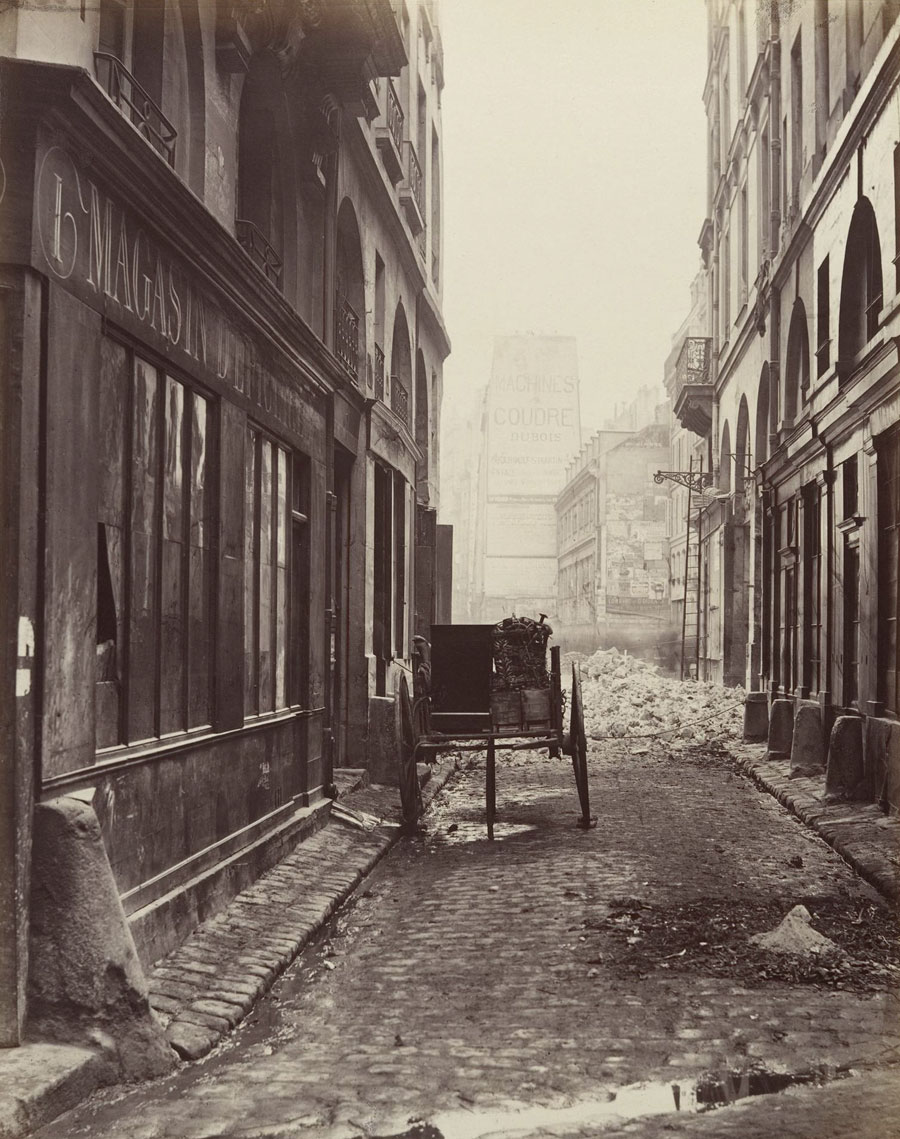
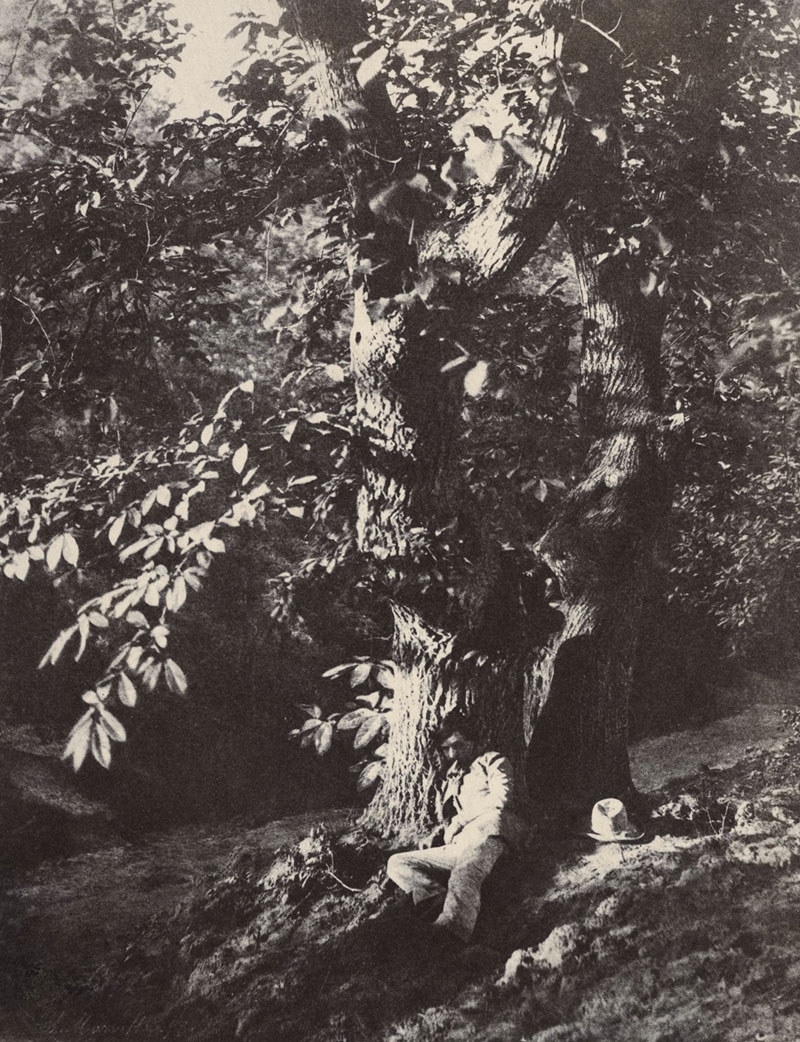
Exhibition: ‘François Kollar. A Working Eye’ at Jeu de Paume, Paris

Exhibition dates: 9th February – 22nd May 2016

Curators: Matthieu Rivallin, collections officer, Médiathèque de l’architecture et du patrimoine, Paris, and Pia Viewing, curator – researcher at the Jeu de Paume, Paris.


François Kollar (French born Slovakia, 1904-1979) 'Nettoyage des lampes. Société des mines de Lens. Lens (Pas-de-Calais)' 1931-1934


François Kollar (French born Slovakia, 1904-1979)
Nettoyage des lampes. Société des mines de Lens. Lens (Pas-de-Calais)
Cleaning lamps. The mining company of Lens. Lens (Pas-de-Calais)
1931-1934
From the booklets La France travaille
Vintage silver gelatin photograph
18 x 24cm
Bibliothèque Forney. Ville de Paris
© François Kollar / Bibliothèque Forney / Roger-Viollet


François Kollar is a magnificent photographer. He produced strong images that possess few histrionics, even less ego. They simply just are.

People quoted in this posting comment that in his photographs “human measure is omnipresent”; that you never loose the sense of scale; that there are “frequent contrasts between near and far, the intimate and the monumental”; that his photographs are “an anthropological investigation into the behaviour, gestures and postures of people at work”; that “Men and women and their functions and roles in the production process are recurrent elements.”

All these statements are true.

Further, his images are sensitive, beautiful, show no traces of any social movements, and little sign of emotion. As Dominique Vautrin observes, “François Kollar is a photographer who resembles his images: somewhat mysterious, beautiful, and discreet…” And as the text from Jeu de Paume states, “He revealed himself to be a temperate photographer, somewhere between the barebones modernism of Bauhaus and a humanist approach to photography.” Other photographers who could fit into this playlist could be Bill Brandt in England, Walker Evans in America and Wolfgang Sievers in Australia.

But what a splendid description – a “temperate photographer”. Showing moderation and self-restraint… there is far too little of that in contemporary photography. A humanist with an avant-garde edge, a photographer whose vision was clear and consistent throughout his oeuvre, who could turn his hand to anything: advertising, fashion, avant-garde, double exposures, solarisation, photomontage, documentary reportage, surrealism, constructivism, modernism.

Joseph Nechvatal comments that Kollar’s work is poignant. This is an incorrect word to describe the work, for the photographs never evoke a keen sense of sadness or regret. They are of a different order altogether. Let me explain.

There is a wonderful stoicism about the people who Kollar chooses to photograph, who inhabit his world of work. The endurance of work without the display of feelings and without complaint. Labour is not represented in any glorified way, not as a noble undertaking, and certainly not heroic (although the worker can be represented as intimate and monumental). The workers are represented as an adjunct to the machine but not in a cyborg fashion. In his photographs there is a distinctness about the worker which sets the human apart from the machine, even as he is “deeply embedded within their functions and roles in the production process.” I don’t believe that people understand this separation, preferring instead to comment on the embedding of the human within machine processes. But something was bothering me when I looked at these images and I have pondered long and hard over how to interpret them. There was something I could not put my finger on and it is this…

In the work of Lewis Hine, the workers are in the present looking to the future. In the work of François Kollar there is no justification for the work it is just work… being there in the present. No ego, no elevation of experience or emotion, and the photographs are just so. Just being in the world. The thing itself. Nothing more, nothing less. It seems simple when you say it like that, but the concept is very complex – to allow the photograph to materialise from consciousness, as a sort of previsualisation of experience – of being a poor, working class immigrant (which Kollar was) picturing his own.

That he achieved such photographs “with his 5 x 7 large-format camera and cumbersome lighting equipment” is a testament to the dedication to his craft, to his work, and to his roots – a connection to the working man and woman. These are honest and forthright photographs of what most humans do for most of their life: work at a job they may not like – to pay the bills, to put food on the table. The lighting is superb, the compositions eloquent, the characters in his images unforgettable (Kollar particularly likes portraits of men shot from below with their arms folded) but it is the balance between the subjective and objective which is so finely honed in his work. The dispassionate nature of humans when at work is balanced by the aesthetics of the artist and the humanity of the individual.

Dr Marcus Bunyan


Many thankx to Jeu de Paume for allowing me to publish the photographs in the posting. Please click on the photographs for a larger version of the image. View an interesting video of the exhibition and the work of François Kollar on Vimeo.


This retrospective features an ensemble of 130 vintage prints, some of which are previously unseen, as well as others from the photographer’s family’s bequest to the state. It puts Kollar’s work in the spotlight and shows how he managed to lift the veil on the working world in the 20th century. As visitors discover the documentary, artistic and historical qualities of the material on show, they will be able to observe how individuals found their place in society by the means of their occupation and realise the profound changes that took place in industry between the 1930s and the 1960s.


François Kollar. Courtesy Jeu de Paume


François Kollar. Courtesy Jeu de Paume


“Without falling into hammy Socialist Realism style, Kollar rendered French working class heroes in beautiful, discreet, lush black-and-white tones. These images of the working person endow them with qualities of excellence, nobility, and respect, and evoked in me mixed sensations of hard materialistic capability and human tenderness. These images of men and women, such as “Nettoyage des lampes. Société des mines de Lens, Lens (Pas-de-Calais)” [1931-34, below], show people deeply embedded within their functions and roles in the production process. In that sense, they contrast with Dorothea Lange’s famous and beautiful Migrant Mother series and the uninhabited, rigorously stark industrial scenes photographed by Bernd and Hilla Becher…

Kollar’s distinctive aesthetic provides a strong, sweet spot amid the sour struggles for employment taking place today in economies shaped by histories of slavery, colonialism, union-busting, sexual exploitation, and corporate capitalism. His artistic style, one that colorlessly abstracts, unifies, and embeds the worker within his or her technological environment, broadens the social politics of employment beyond the heroic human. Rather, he depicts through his unifying, ashen tones the conjunction of laborer and machine. In these photographs, the human worker is bound up with non-human apparatuses in cyborg fashion, depicting a complex technological laborer who is no less real and worthy of our aesthetic delectation.”


Joseph Nechvatal. “A Photographer Who Captured Workers Without Romanticizing Them,” on the Hyperallergic website May 4, 2016 [Online] Cited 11/05/2016


François Kollar (French born Slovakia, 1904-1979) 'Porteur de rails. Arles' 1933


François Kollar (French born Slovakia, 1904-1979)
Porteur de rails. Arles
1933
Reproduction d’après négatif original sur plaque de verre
Print from the original glass plate negative
13 x 18cm
Bibliothèque Forney. Ville de Paris
© François Kollar / Bibliothèque Forney / Roger-Viollet


François Kollar (French born Slovakia, 1904-1979) 'Construction des grands paquebots, Rivetage de tôles d‘un pont de navire, chantier et ateliers de Saint-Nazaire à Penhoët' (Construction of large ships, riveting the sheets of a ships deck, site workshops of Saint Nazaire Penhoët) 1931-1932


François Kollar (French born Slovakia, 1904-1979)
Construction des grands paquebots, Rivetage de tôles d’un pont de navire, chantier et ateliers de Saint-Nazaire à Penhoët
Construction of large ships, riveting the sheets of a ships deck, site workshops of Saint Nazaire Penhoët
1931-1932
Vintage silver gelatin photograph
28.9 x 23.5cm
Donation François Kollar, Médiathèque de l’architecture et du patrimoine


François Kollar: “A Working Eye” from 09 February 2016 until 22 May 2016 at Jeu de Paume, Paris


François Kollar (French born Slovakia, 1904-1979) 'Dans le port, à bord. Super Ile de France: cisaillage au chalumeau oxhydrique' (In port, on board. Super Ile de France: cutting using the welding torch. Company building sites and workshops of Saint Nazaire Penhoët) 1931


François Kollar (French born Slovakia, 1904-1979)
Dans le port, à bord. Super Ile de France: cisaillage au chalumeau oxhydrique. Société des chantiers et ateliers de Saint-Nazaire à Penhoët
In port, on board. Super Ile de France: cutting using the welding torch. Company building sites and workshops of Saint Nazaire Penhoët

1931
Vintage silver gelatin photograph


François Kollar (French born Slovakia, 1904-1979) 'Dans le port, à bord. Champlain : grattage du pont' (In port, on board. Champlain: scraping the bridge. Company building sites and workshops of Saint Nazaire Penhoët) 1931


François Kollar (French born Slovakia, 1904-1979)
Dans le port, à bord. Champlain: grattage du pont. Société des chantiers et ateliers de Saint-Nazaire à Penhoët
In port, on board. Champlain: scraping the bridge. Company building sites and workshops of Saint Nazaire Penhoët

1931
Vintage silver gelatin photograph


François Kollar (French born Slovakia, 1904-1979) 'Dans le port, à bord. "Negre" soutier, Bordeaux (Gironde)' (In port, on board. "Negro" help, Bordeaux (Gironde)) 1931


François Kollar (French born Slovakia, 1904-1979)
Dans le port, à bord. “Negre” soutier, Bordeaux (Gironde)
In port, on board. “Negro” help, Bordeaux (Gironde)
1931
Vintage silver gelatin photograph


François Kollar was born in Szenc, Hungary in 1904 (now the Slovakian town of Senec) and died in Créteil, France in 1979. He was first employed on the railways in his native country and then worked as a lathe operator at Renault’s Boulogne-Billancourt factory, before becoming a professional photographer at the age of 24 after gaining solid experience as a studio manager at the Parisian printer’s, Draeger. His in-depth knowledge of the world of work, in sectors as diverse as advertising, fashion, industry, handicrafts and agriculture, allowed him to portray tools, materials and gestures with exceptional professional expertise.

This retrospective features an ensemble of 130 vintage prints, some of which are previously unseen, as well as others from the photographer’s family’s bequest to the state. It puts Kollar’s work in the spotlight and shows how he managed to lift the veil on the working world in the 20th century. As visitors discover the documentary, artistic and historical qualities of the material on show, they will be able to observe how individuals found their place in society by the means of their occupation and realise the profound changes that took place in industry between the 1930s and the 1960s.

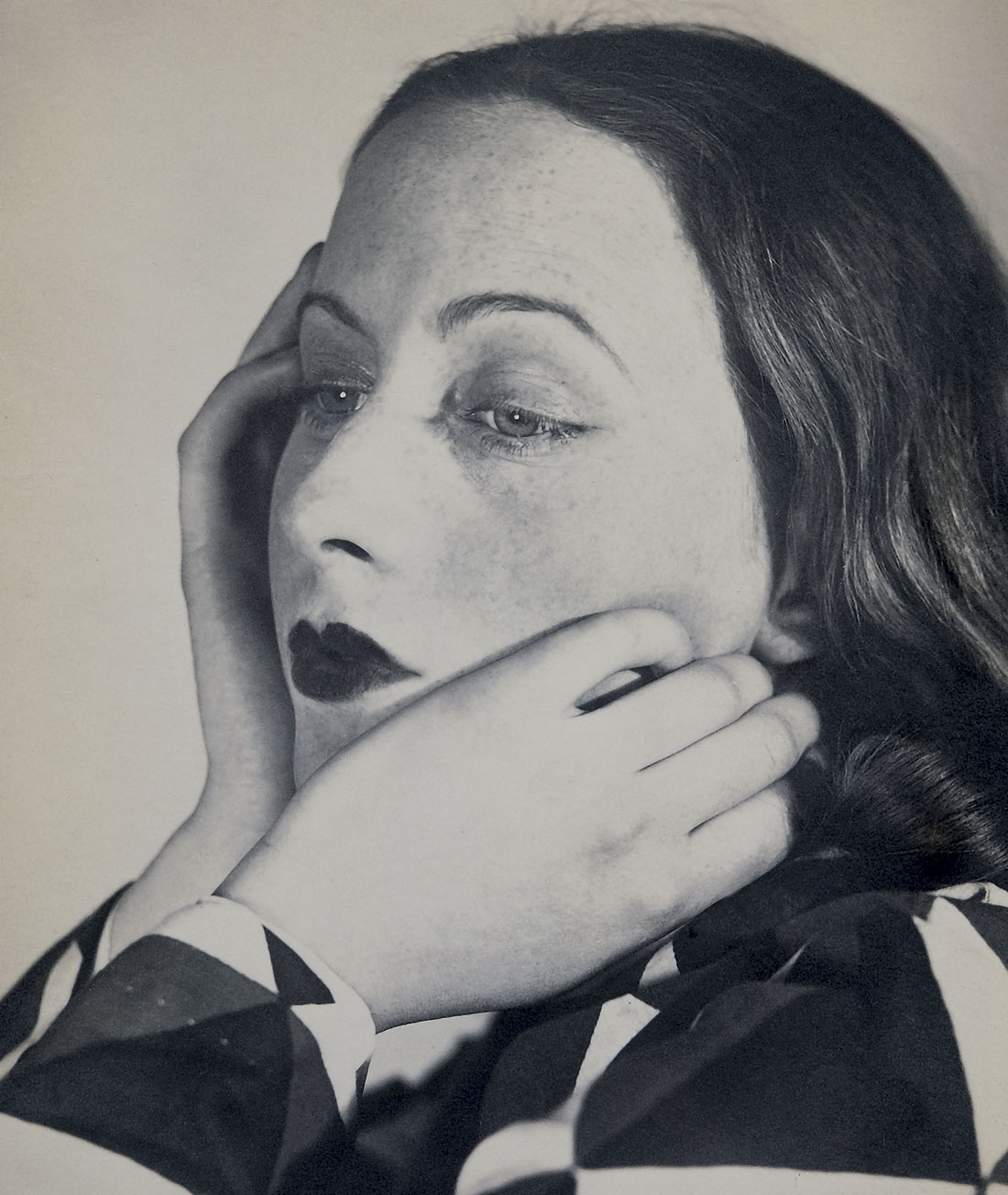
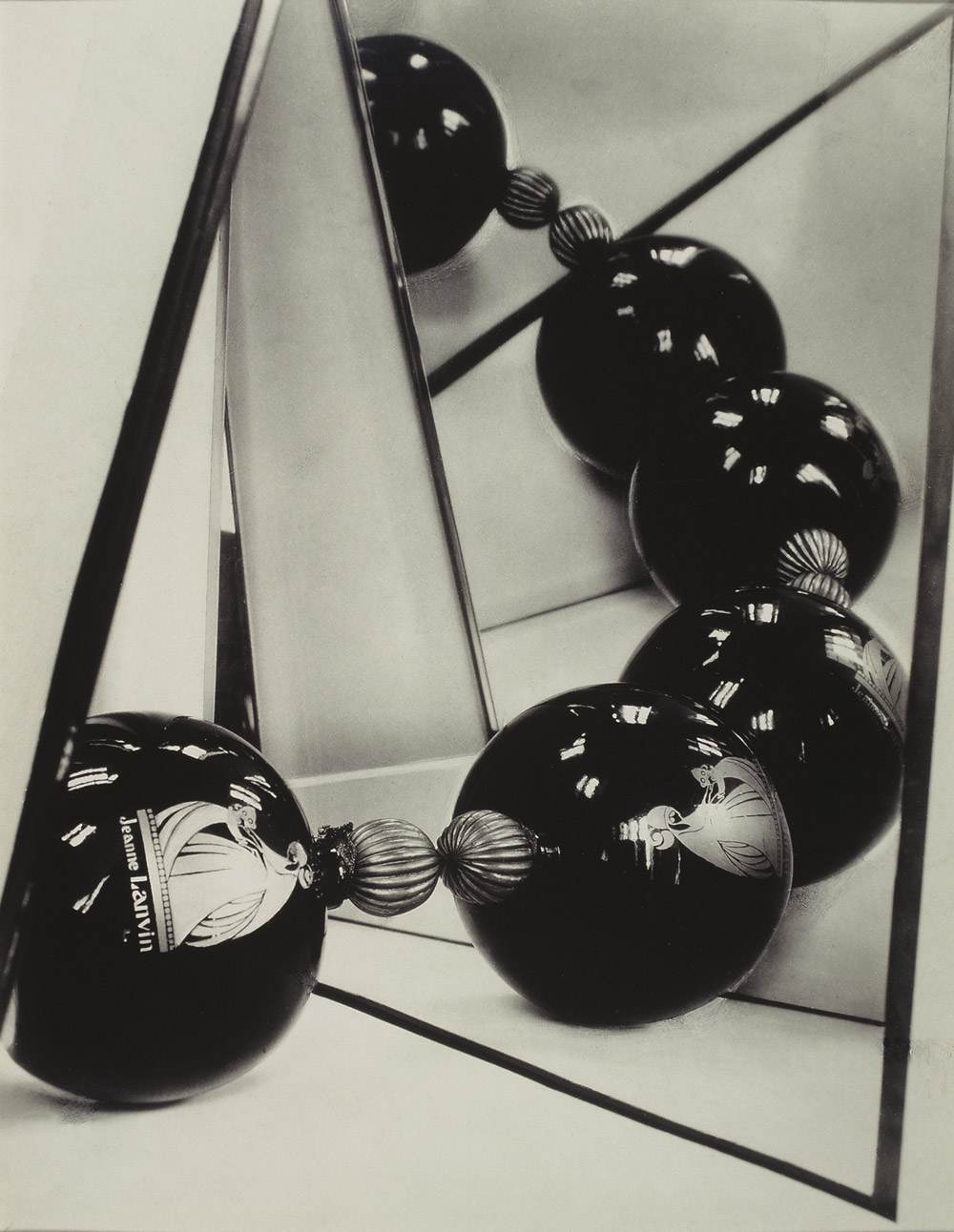
In 1930 Kollar got married and set up his own studio in Paris. His wife, who was his first model, worked faithfully by his side throughout his life. He worked for advertising agencies and famous luxury brands and excelled in showcasing the qualities of his models, forms and fabrics thanks to his feeling for light and texture. François Kollar worked with several fashion magazines, notably Harper’s Bazaar for which, over the course of more than fifteen years, he produced many photographic series, particularly images shot on location. Whether he was photographing the period’s fashion celebrities (Coco Chanel, Elsa Schiaparelli, Pierre Balmain) or models and adverts for the major fashion houses (Hermès, Molyneux, Oméga, Christofle and Worth et Coty perfumes…), he experimented with a wide variety of modern photographic techniques, freely creating original compositions using backlighting, double exposures, overprinting and solarisation…

In 1930, after exhibiting at “Das Lichtbild”, an international photography exhibition in Munich alongside Florence Henri, André Kertész, Germaine Krull and Ergy Landau, François Kollar received a major commission from a publishing company, Horizons de France entitled La France travail (1931-1934) that would establish his reputation as one of the period’s greatest industrial reporters. During the war he refused to collaborate with the powers that be during the German occupation and left the public eye, moving with his wife and three children to the Poitou-Charentes region and only returning to photography in 1945 on his return to Paris. In the 1950s and 1960s, Kollar covered numerous industrial subjects in France and abroad.

Text from the Jeu de Paume website


François Kollar (French born Slovakia, 1904-1979) 'La Tour Eiffel' (The Eiffel Tower) 1930


François Kollar (French born Slovakia, 1904-1979)
La Tour Eiffel (The Eiffel Tower)
1930
Montage of a negative and interpositive, period photomontage
18 x 24cm
Donation François Kollar, Médiathèque de l’architecture et du patrimoine


François Kollar (French born Slovakia, 1904-1979) 'Aux sources de l'énergie. Enseignes lumineuses. Paris' (The sources of energy. Neon signs. Paris) 1931


François Kollar (French born Slovakia, 1904-1979)
Aux sources de l’énergie. Enseignes lumineuses. Paris
The sources of energy. Neon signs. Paris
1931
Vintage silver gelatin photograph
18 x 24cm
Bibliothèque Forney. Ville de Paris
© François Kollar / Bibliothèque Forney / Roger-Viollet


François Kollar (French born Slovakia, 1904-1979) 'Bouche du tunnel Sainte-Catherine, Sotteville-lés-Rouen' (St. Catherine tunnel mouth, Sotteville-lés-Rouen) 1931-1932


François Kollar (French born Slovakia, 1904-1979)
Bouche du tunnel Sainte-Catherine, Sotteville-lés-Rouen
St. Catherine tunnel mouth, Sotteville-lés-Rouen
1931-1932
Vintage silver gelatin photograph
Donation François Kollar, Médiathèque de l’architecture et du patrimoine


François Kollar (French born Slovakia, 1904-1979) 'Étude publicitaire pour Magic Phono, portrait de Marie Bell en photomontage' (Advertising study for Magic Photo, Marie Bell portrait photomontage) 1930


François Kollar (French born Slovakia, 1904-1979)
Étude publicitaire pour Magic Phono, portrait de Marie Bell en photomontage
Advertising study for Magic Photo, Marie Bell portrait photomontage

1930
Vintage silver gelatin photograph
Donation François Kollar, Médiathèque de l’architecture et du patrimoine


François Kollar (French born Slovakia, 1904-1979) 'Publicité pour machine à écrire Hermès' (Advertising for the Hermes typewriter) 1930


François Kollar (French born Slovakia, 1904-1979)
Publicité pour machine à écrire Hermès
Advertising for the Hermes typewriter
1930
Vintage silver gelatin photograph
30.1 x 23.7cm
Donation François Kollar, Médiathèque de l’architecture et du patrimoine


François Kollar (French born Slovakia, 1904-1979) 'Escalier chez Chanel' (Staircase at Chanel) 1937


François Kollar (French born Slovakia, 1904-1979)
Escalier chez Chanel
Staircase at Chanel

1937
Vintage silver gelatin photograph
Donation François Kollar, Médiathèque de l’architecture et du patrimoine


François Kollar (French born Slovakia, 1904-1979) 'Gabrielle Chanel' 1938


François Kollar (French born Slovakia, 1904-1979)
Gabrielle Chanel
1938
Silver gelatin photograph


François Kollar (French born Slovakia, 1904-1979) 'Le mannequin Muth, Balenciaga' (The model Muth, Balenciaga) 1930


François Kollar (French born Slovakia, 1904-1979)
Le mannequin Muth, Balenciaga
The model Muth, Balenciaga
1930
Vintage silver gelatin photograph
Donation François Kollar, Médiathèque de l’architecture et du patrimoine


François Kollar (French born Slovakia, 1904-1979) 'Haute couturière Elsa Schiaparelli in a window of her showroom at 21 Place Vendôme in Paris' 1938


François Kollar (French born Slovakia, 1904-1979)
Haute couturière Elsa Schiaparelli in a window of her showroom at 21 Place Vendôme in Paris
1938
Vintage silver gelatin photograph
Courtesy Jeu de Paume


The design of the three large exhibition halls, which sometimes suffers from inadequate lighting, is completed by numerous documents (leaflets, magazines, personal albums) and an extensive slide show. The rooms are color-coded: white, blue-grey, and light beige, corresponding to the curators’ pedagogical intention. The beige in the last room is particularly interesting because it nearly blends in with the wooden frames, thereby intensifying the magical black-and-white tones in François Kollar’s work.

In addition to the documentary dimension of his work, the power of this photographer lies in his evocation of a “journey”: hence the exhibition walls are brimming with gems such as Les enseignes lumineuses (“Illuminated signs”, above), La bouche du tunnel (“The entrance of the tunnel”, above), or La fabrique à papier (“Paper factory”), advertisements for Hermès or Chanel (above), and many other photographs which, I have no doubt, will resonate with the visitor.

François Kollar is a photographer who resembles his images: somewhat mysterious, beautiful, and discreet, such as his small picture of a river outside the city of Abidjan. A Working Eye which conveys the nobility of men who, one day, had to travel far from home to earn their living.

Dominique Vautrin. “Paris : Francois Kollar, A Working Eye,” on The Eye of Photography website February 18, 2016 [Online] Cited 12/05/2016.


François Kollar (French born Slovakia, 1904-1979) 'Alsthom: assemblage des volants alternateurs de Kembs. Société Alsthom. Belfort (Territoire de Belfort)' (Alsthom: assembly of alternator flywheels at Kembs. Société Alsthom. Belfort) 1931-1934


François Kollar (French born Slovakia, 1904-1979)
Alsthom: assemblage des volants alternateurs de Kembs. Société Alsthom. Belfort (Territoire de Belfort)
Alsthom: assembly of alternator flywheels at Kembs. Société Alsthom. Belfort
1931-1934
Reproduction d’après négatif original sur plaque de verre
Print from the original glass plate negative
13 x 18cm
Bibliothèque Forney. Ville de Paris
© François Kollar / Bibliothèque Forney / Roger-Viollet


François Kollar (French born Slovakia, 1904-1979) 'Automobiles Renault. D'une main l'ouvrier fait tomber le sable. Billancourt (Hauts-de-Seine)' (Renault automobiles. Using his hand the worker brings down the sand. Billancourt (Hauts-de-Seine)) 1931-1934


François Kollar (French born Slovakia, 1904-1979)
Automobiles Renault. D’une main l’ouvrier fait tomber le sable. Billancourt (Hauts-de-Seine)
Renault automobiles. Using his hand the worker brings down the sand. Billancourt (Hauts-de-Seine)
1931-1934
Reproduction d’après négatif original sur plaque de verre
Print from the original glass plate negative
13 x 18cm
Bibliothèque Forney. Ville de Paris
© François Kollar / Bibliothèque Forney / Roger-Viollet


François Kollar (French born Slovakia, 1904-1979) 'Untitled' 1931-1934


François Kollar (French born Slovakia, 1904-1979)
Untitled
1931-1934
Vintage silver gelatin photograph
Courtesy Jeu de Paume
© Photo Éric Simon


LA FRANCE TRAVAILLE, 1931-1934

François Kollar was commissioned by the publishers Horizons de France for a major documentary investigation into the world of work. He took a large number of photos, a part of which were published in a work that has since become famous: La France travaille. This ensemble comprises the main part of the exhibition. The photographer criss-crossed the whole of France, observing the country through the prism of work. Kollar delivered more than 2,000 images covering agricultural and industrial activity in twenty regions of France, including Paris and its suburbs. Horizons de France published La France travaille between 1932 and 1934 in the form of fifteen separate booklets, which are presented in the exhibition in relation to a selection of around sixty prints. The images are organised by theme. Each theme corresponds to a type of raw material used in industry: coal, iron, products of the sea, glass, textiles etc. Slideshows are used to underline the extent of this archive and the variety of photos it contains, as well as analysing it from a contemporary point of view.

The fifteen booklets that comprise La France Travaille constitute “an anthropological investigation into the behaviour, gestures and postures of people at work” (Jean-François Chevrier, ‘La France travaille: les vertus de l’illustration’, Jeu de Paume, Editions de La Martinière). These fifteen volumes touch on the revolutions taking place across the country – factories, hydroelectric installations etc – as well as the place of the workers in these infrastructures. Apart from the recognition that he had earned in the world of fashion and luxury products, it was through his work to fulfil this commission, the most important in France in the 1930s, that Kollar distinguished himself as a photographer and an ‘industrial reporter’.

Text from Jeu de Paume


François Kollar (French born Slovakia, 1904-1979) 'La trieuse reste coquette. Lens, Pas-de-Calais. Société des mines de Lens' (The sorter remains coquette. Lens, Pas-de-Calais. Mining company of Lens) 1931-1934


François Kollar (French born Slovakia, 1904-1979)
La trieuse reste coquette. Lens, Pas-de-Calais. Société des mines de Lens
The sorter remains coquette. Lens, Pas-de-Calais. Mining company of Lens
1931-1934
Reproduction d’après négatif original sur plaque de verre
Print from the original glass plate negative
13 x 18cm
Bibliothèque Forney. Ville de Paris
© François Kollar / Bibliothèque Forney / Roger-Viollet
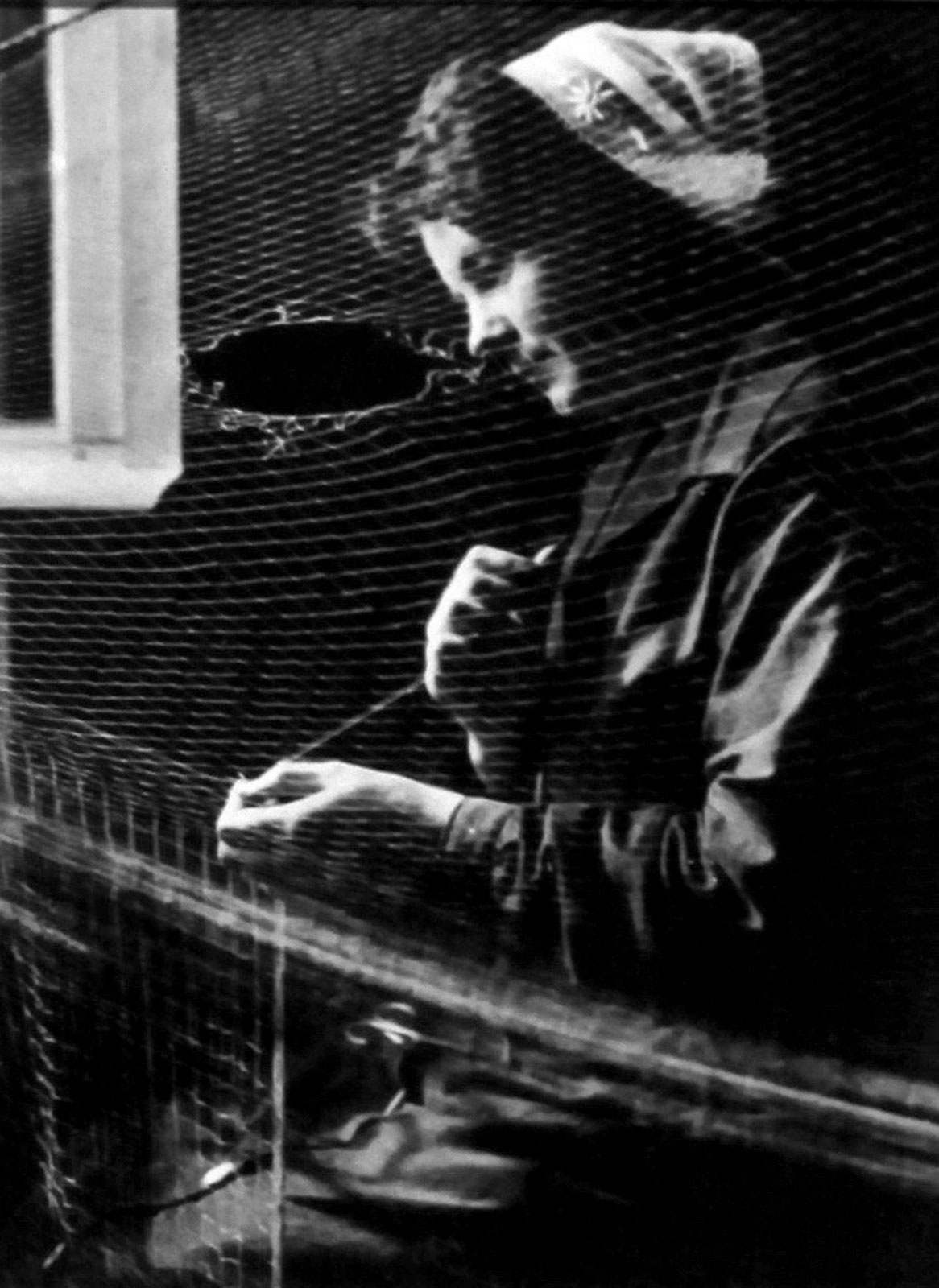
 

François Kollar (French born Slovakia, 1904-1979) 'Untitled [mine worker]' 1931-1934


François Kollar (French born Slovakia, 1904-1979)
Untitled [mine worker]
1931-1934
Reproduction d’après négatif original sur plaque de verre
Print from the original glass plate negative
13 x 18cm
Bibliothèque Forney. Ville de Paris
© François Kollar / Bibliothèque Forney / Roger-Viollet


François Kollar (French born Slovakia, 1904-1979) 'Pêcheurs. Femme de pêcheurs, Sardinier Breton. Audiernes' (Fishermen. Woman fishing, sardine canner Breton. Audiernes) 1931


François Kollar (French born Slovakia, 1904-1979)
Pêcheurs. Femme de pêcheurs, Sardinier Breton. Audiernes
Fishermen. Woman fishing, sardine canner Breton. Audiernes

1931
Reproduction d’après négatif original sur plaque de verre
Print from the original glass plate negative
13 x 18cm
Courtesy Jeu de Paume
© Photo Éric Simon


From 1931 to 1934, just before the major protests led by the Popular Front, François Kollar (1904-1979) traveled across France meeting its working population. This wide-ranging survey of the working world, which featured 1400 illustrations, was published in 1934 in booklets entitled La France Travaille (France at Work). With his 5 x 7 large-format camera and cumbersome lighting equipment, this Slovak immigrant of humble origins convinced miners, winemakers, boatmen and railroad men to pose for him during their daily routines. The images from La France Travaille, negatives and positives, are preserved at the Bibliothèque Forney and distributed exclusively by the Agence Roger-Viollet.

Text from The Eye of Photography website


François Kollar (French born Slovakia, 1904-1979) 'Le bâtiment. Pose des ardoises. Paris. Entreprise Ch. Lavillauguet' (Building. Laying slate. Paris. Company Ch. Lavillaugouet) 1931


François Kollar (French born Slovakia, 1904-1979)
Le bâtiment. Pose des ardoises. Paris. Entreprise Ch. Lavillauguet
Building. Laying slate. Paris. Company Ch. Lavillaugouet

1931
Reproduction d’après négatif original sur plaque de verre
Print from the original glass plate negative
13 x 18cm
Bibliothèque Forney. Ville de Paris
© François Kollar / Bibliothèque Forney / Roger-Viollet


François Kollar (French born Slovakia, 1904-1979) 'Vignerons. Porteurs de bénatons. Bourgogne, Morey-Saint-Denis (Côte- d'Or)' (Winemakers. Carriers of grapes. Burgundy Morey-Saint-Denis (Côte- d'Or)) 1931


François Kollar (French born Slovakia, 1904-1979)
Vignerons. Porteurs de bénatons. Bourgogne, Morey-Saint-Denis (Côte- d’Or)
Winemakers. Carriers of grapes. Burgundy Morey-Saint-Denis (Côte- d’Or)

1931
Reproduction d’après négatif original sur plaque de verre
Print from the original glass plate negative
13 x 18cm
Bibliothèque Forney. Ville de Paris
© François Kollar / Bibliothèque Forney / Roger-Viollet


François Kollar’s body of work covers two major periods in photographic history and the history of the 20th century: the 1930s and the 1950s-1960s. This retrospective at the Jeu de Paume is part of a cycle of exhibitions devoted to the emblematic photographers of the period, such as Laure Albin Guillot, André Kertész, Claude Cahun and Germaine Krull. The exhibition gives pride of place to the photographer’s three children’s bequest of negatives, prints, magazines, press cuttings and advertising pamphlets that was accepted by the French state in 1987.

The exhibition is organised chronologically following the photographer’s life and career, starting with his experimentations in the 1930s (self-portraits and photomontages) with his wife and close collaborator, Fernande. Right from the start of his photographic work in the field of advertising and fashion, François Kollar asserted his talent with photo shoots for Oméga, Christofle, Hermès and Worth et Coty perfumes. For many years he worked with such magazines as Harper’s Bazaar, L’Illustration, VUVoilà, Le Figaro Illustré and Plaisir de France. Following his coverage of the transformation of the working world in the 1930s, during the 1950s and 60s industrial reports in French West Africa and in France set the tempo for the later years of his career.

Thanks to his experience as a manual worker in Renault, François Kollar’s photography demonstrates his awareness of the world of industry and industrial spaces. ‘Un ouvrier du regard’ bears witness to his high level of technical expertise, both in the studio and on location and his deep-seated interest for industrial trades. It highlights the wide variety of subjects photographed by François Kollar throughout his career, a variety that is mirrored in the techniques he used, as well as the evolutions in the working world as it transitioned from handicrafts and cottage industries to industrial production.

The central part of the exhibition is devoted to the high point of François Kollar’s career, La France travaille. This commission from the publishing company Horizons de France comprises some fifteen booklets produced between 1931 and 1934. The reports, indexed by sector – from agriculture to the steel industry, including the maritime industry and electricity production – were produced with the aim of showcasing France’s leading companies and the figure of the working man, contributing in this way to idealising the image of men and women at work. Taken as a whole, these reports constitute a unique chronicle in images of the world of work and French society from the beginning of the 1930s up until the 1960s. During this entire period, François Kollar endeavoured to photograph the mechanised world of serial production, standardisation and the rationalisation of production.

Through a play with light, transparency and chiaroscuro effects, as well as compositions that highlighted different textures, François Kollar managed to reveal a sensitive side to industrial landscapes. He revealed himself to be a temperate photographer, somewhere between the barebones modernism of Bauhaus and a humanist approach to photography. At the beginning of his career, François Kollar had immortalised dresses, jewellery and objets d’art for Harper‘s Bazaar in a manner that demonstrated his attention to the gesture and the ‘intelligence of the hand’. Kollar’s work is characterised by an approach that is simultaneously sensitive and distant: sensitive to shape and light in the situations in which objects and human bodies are portrayed; distant because of this lens between him and the general population. The camera’s lens distanced him from the ordinary men and women and their demands, which explains why his work shows no traces of any social movements, although they were frequent at the time (1929 and 1931-1936).

The retrospective provides the means to fully-apprehend the diversity of a photographer who was himself a ‘worker’ (ouvrier) at the service of his clients – whether advertising companies, clients from the world of fashion and the media, or industrialists – but who nevertheless managed to preserve a strong photographic identity and a unique view on his times. Throughout his body of work, François Kollar bears witness to the ideology of progress that drives the capitalist economy, whilst preserving his characteristic objectivity.

First part

The first part of the exhibition features Kollar’s experimental period including self-portraits taken in his Parisian studio, as well as his work for advertising firms and the fashion industry. This section is made up of photos that reflect the spirit of the modern world he lived in and bear witness to Kollar’s desire to develop an experimental and expressive style of photography through an almost playful approach to his models, objects, lighting and composition. Detailed documentary resources enable visitors to understand the context of his advertising work and the photos for the blossoming illustrated magazine sector, which were published in L’Illustration, Vu, Voilà, Art et Médecine and Plaisir de France, amongst others.

Second part

The central part of the exhibition, devoted to La France travaille (1931-1934), features vintage prints and slideshows, as well as archives and publications. This photographic commission constitutes a unique record of the world of work in the 1930s. Kollar photographed every sector of activity: industry, agriculture, aviation, handicrafts, as well as the automobile, maritime and railway industries. Men and women and their functions and roles in the production process are recurrent elements in François Kollar’s images. Published in the form of fifteen themed booklets, printed in photogravure by Editions Horizons de France, Kollar’s photographs were used to illustrate texts by popular authors from the period (Paul Valéry, Pierre Hamp, Lucien Favre…) dealing with the main professions in French industry.

Third part

The third part of the exhibition presents works by Kollar from the period following on from La France travaille, notably fashion photography and commissions for industrial reporting assignments. Thanks to his reputation as a talented advertising photographer, François Kollar was much in demand for portrait work and he notably photographed Coco Chanel, Elisa Schiaparelli and the Duchess of Windsor. Although his collaboration with Harper’s Bazaar came to an end in 1955, Kollar continued to enjoy a successful career in industrial photography. Amongst his numerous photographic series, the Jeu de Paume has chosen to show in particular the 1951 commission from the French State for a report on French West Africa (now Burkina Faso, Ivory Coast, Mali and Senegal), as well as a series of photos showing the workshops of the Union Aéromaritime de Transport. In this way, the exhibition highlights the transformations in the world of work during the 20th century and the place occupied by men and women at a time when the world was in a state of upheaval because of global conflicts, as well as in the midst of rebuilding itself.

Text from Jeu de Paume


François Kollar (French born Slovakia, 1904-1979) 'Untitled' 1930


François Kollar (French born Slovakia, 1904-1979)
Untitled
1930


François Kollar (French born Slovakia, 1904-1979) 'Untitled' 1930


François Kollar (French born Slovakia, 1904-1979)
Untitled
1930


François Kollar (French born Slovakia, 1904-1979) 'Ciel' 1931


François Kollar (French born Slovakia, 1904-1979)
Ciel (Sky)
1931
Courtesy Jeu de Paume
© Photo Éric Simon


François Kollar (French born Slovakia, 1904-1979) 'Fleur d'ail' (Garlic flower) 1930


François Kollar (French born Slovakia, 1904-1979)
Fleur d’ail (Garlic flower)
1930
Vintage silver gelatin photograph
29.4 x 22.6cm
Donation François Kollar, Médiathèque de l’architecture et du patrimoine


François Kollar (French born Slovakia, 1904-1979) 'Untitled' Nd


François Kollar (French born Slovakia, 1904-1979)
Untitled
Nd
Silver gelatin photograph
Courtesy Jeu de Paume
© Photo Éric Simon
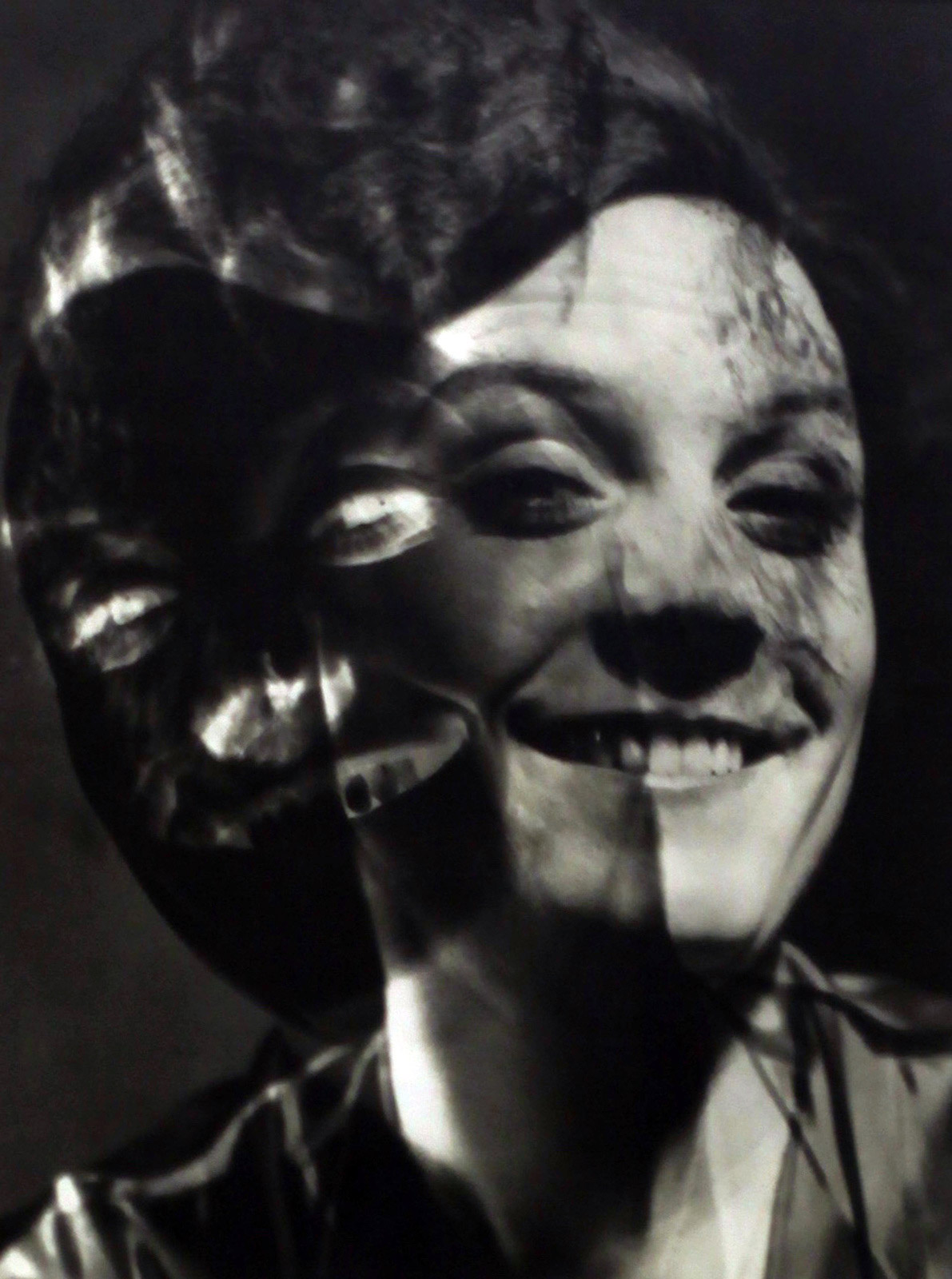
 

François Kollar (French born Slovakia, 1904-1979) 'Untitled' Nd


François Kollar (French born Slovakia, 1904-1979)
Untitled
Nd
Silver gelatin photograph
Courtesy Jeu de Paume
© Photo Éric Simon


Portrait of François Kollar


Portrait of François Kollar


FRENCH WEST AFRICA (A.O.F.) COMMISSION ED BY THE FRENCH STATE, 1951

When France invested massively in the 1950s in the construction of infrastructures in French West Africa, Kollar went to document this milestone in the relationship between France and its colonies, notably today’s Burkina Faso, Ivory Coast, Mali and Senegal. His photos were published in the magazines of French West Africa to portray France’s initiatives in a positive light. Continuing to play his part in the ‘manufacture’ of consensual, positive images, Kollar continued his career by taking photos of men and women at work in factories, building roads or on ships plying their trade… “What François Kollar wants to portray is a sort of gradual disengagement of the colonial power, (…) but also how behind the ‘modernity’ (which is the subject of his remit) lies a form of tradition, rather as if he wanted to show how the two aspects are in contradiction with each other” (Pascal Blanchard, ‘Francois Kollar. Afrique 50. Dans l’oeil de la propagande’, Jeu de Paume, Editions de La Martinière).

Text from Jeu de Paume


INDUSTRIAL REPORTS 1950-1960

Back in Paris in 1945, François Kollar re-established his contacts and started receiving commissions from French industry once more. His photos powerfully document the relationship between the human body, the machine and the working environment. “In Kollar’s images, the human measure is omnipresent; one almost never loses the sense of scale […] with frequent contrasts between near and far, the intimate and the monumental”. (Jean-François Chevrier, ‘La France travaille: les vertus de l’illustration’, Jeu de Paume, Editions de La Martinière). Indeed the design of new industrial buildings took the question of ergonomics into account, which went hand-in-hand with the evolutions in the roles and tasks of factory workers. Amongst others, François Kollar worked for the Union Aéromaritime de Transport, (an airline that mainly served Africa, and French West Africa in particular, later to become UTA); the potash mines of Alsace; Moulinex; Christofle; and Poliet-et-Chausson. Kollar, who learnt how to use colour photography techniques early on, used this new medium for some of these reports.

Text from Jeu de Paume


François Kollar (French born Slovakia, 1904-1979) 'Chaussures Bata, Rufisque, Senegal' (Bata Shoes, Rufisque, Senegal) 1951


François Kollar (French born Slovakia, 1904-1979)
Chaussures Bata, Rufisque, Senegal
Bata Shoes, Rufisque, Senegal
1951
Vintage silver gelatin photograph
22.6 x 24.8cm
Donation François Kollar, Médiathèque de l’architecture et du patrimoine


François Kollar (French born Slovakia, 1904-1979) 'Poliet et Chausson, Gargenville' 1957-1958


François Kollar (French born Slovakia, 1904-1979)
Poliet et Chausson, Gargenville
1957-1958
Vintage silver gelatin photograph
29.7 x 21.6cm
Donation François Kollar, Médiathèque de l’architecture et du patrimoine


François Kollar (French born Slovakia, 1904-1979) Untitled [Emplacement de traverses, usine Cima, Croix]' [Replacement of sleepers, Cima factory, Croix] c. 1954


François Kollar (French born Slovakia, 1904-1979)
Untitled [Emplacement de traverses, usine Cima, Croix] [Replacement of sleepers, Cima factory, Croix]
c. 1954
Vintage silver gelatin photograph
29.7 x 21.6cm
Donation François Kollar, Médiathèque de l’architecture et du patrimoine


François Kollar (French born Slovakia, 1904-1979) 'Type de laiterie dans une ferme Normande' (Type of dairy farm in Normandy) 1950


François Kollar (French born Slovakia, 1904-1979)
Type de laiterie dans une ferme Normande
Type of dairy farm in Normandy
1950
Vintage silver gelatin photograph
15.5 x 11.5cm
Donation François Kollar, Médiathèque de l’architecture et du patrimoine
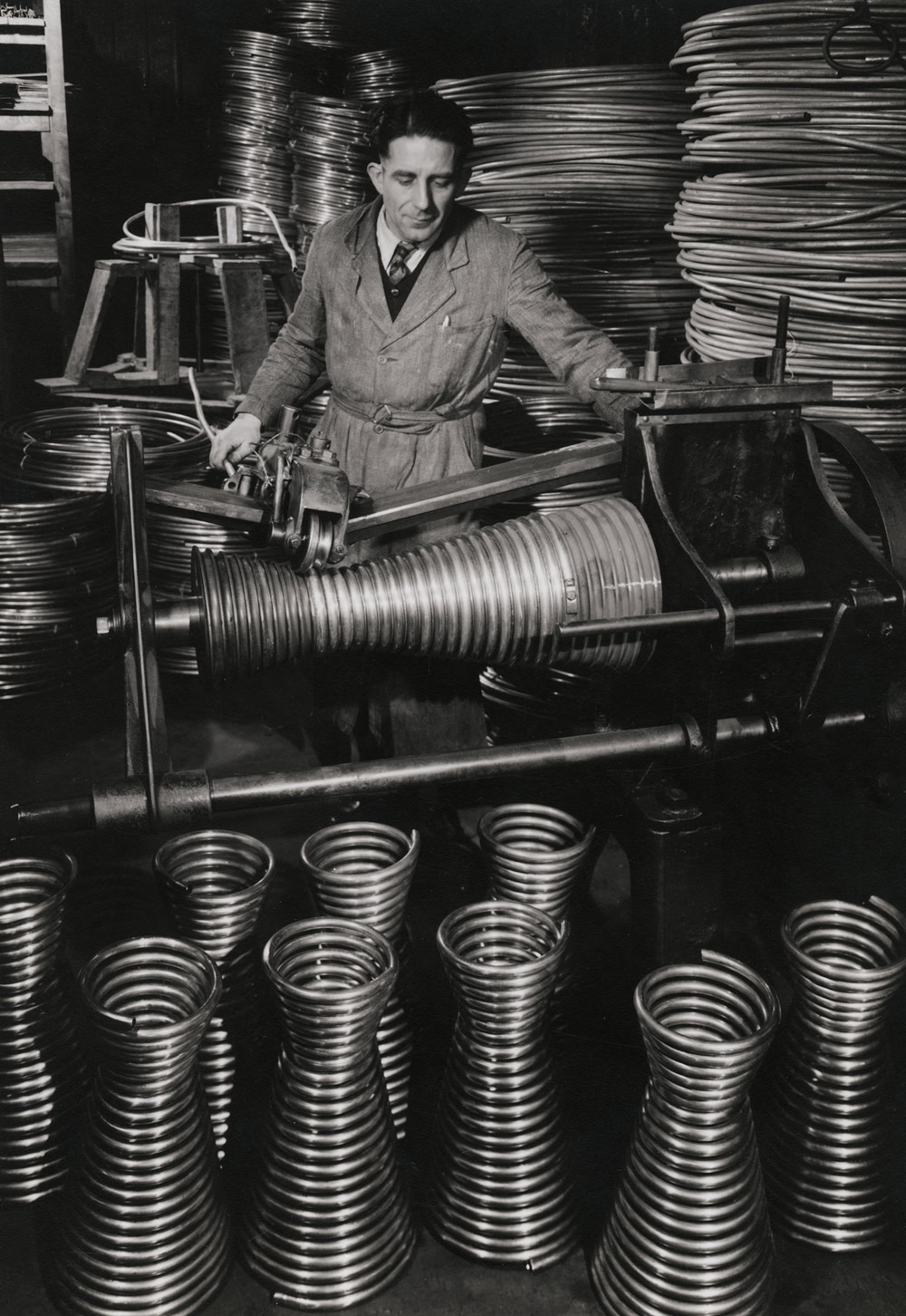
 

François Kollar (French born Slovakia, 1904-1979) 'Fabrication de corps de chauffe de chauffe-eau, usine Brandt, France' (Manufacturing water heater, heater factory Brandt, France) 1950


François Kollar (French born Slovakia, 1904-1979)
Fabrication de corps de chauffe de chauffe-eau, usine Brandt, France
Manufacturing water heater, heater factory Brandt, France
1950
Vintage silver gelatin photograph
13.6 x 8.9cm
Donation François Kollar, Médiathèque de l’architecture et du patrimoine


François Kollar (French born Slovakia, 1904-1979) 'Untitled [Fabrication des moulins à légumes, usine Moulinex, Alençon]' [Production of vegetable mills, Moulinex factory, Alençon] 1950


François Kollar (French born Slovakia, 1904-1979)
Untitled [Fabrication des moulins à légumes, usine Moulinex, Alençon] [Production of vegetable mills, Moulinex factory, Alençon]
1950
Vintage silver gelatin photograph
29.6 x 21.6cm
Donation François Kollar, Médiathèque de l’architecture et du patrimoine


François Kollar (French born Slovakia, 1904-1979) 'Untitled [Emboutissage des couverts, Christofle, France]' [Stamping cutlery, Christofle, France] 1957-1958


François Kollar (French born Slovakia, 1904-1979)
Untitled [Emboutissage des couverts, Christofle, France] [Stamping cutlery, Christofle, France]
1957-1958
Vintage silver gelatin photograph
30 x 21.6cm
Donation François Kollar, Médiathèque de l’architecture et du patrimoine


Other François Kollar photographs


François Kollar (French born Slovakia, 1904-1979) 'Untitled' 1931


François Kollar (French born Slovakia, 1904-1979)
Untitled
1931
Silver gelatin photograph


François Kollar (French born Slovakia, 1904-1979) 'Untitled' 1936


François Kollar (French born Slovakia, 1904-1979)
Untitled
1936
Silver gelatin photograph


François Kollar (French born Slovakia, 1904-1979) 'Construction' 1936


François Kollar (French born Slovakia, 1904-1979)
Construction
1936
Silver gelatin photograph


Jeu de Paume
1, Place de la Concorde
75008 Paris
métro Concorde
Phone: 01 47 03 12 50

Opening hours:
Tuesday: 11.00 – 21.00
Wednesday – Sunday: 11.00 – 19.00
Closed Monday
Jeu de Paume website

LIKE ART BLART ON FACEBOOK

Back to top

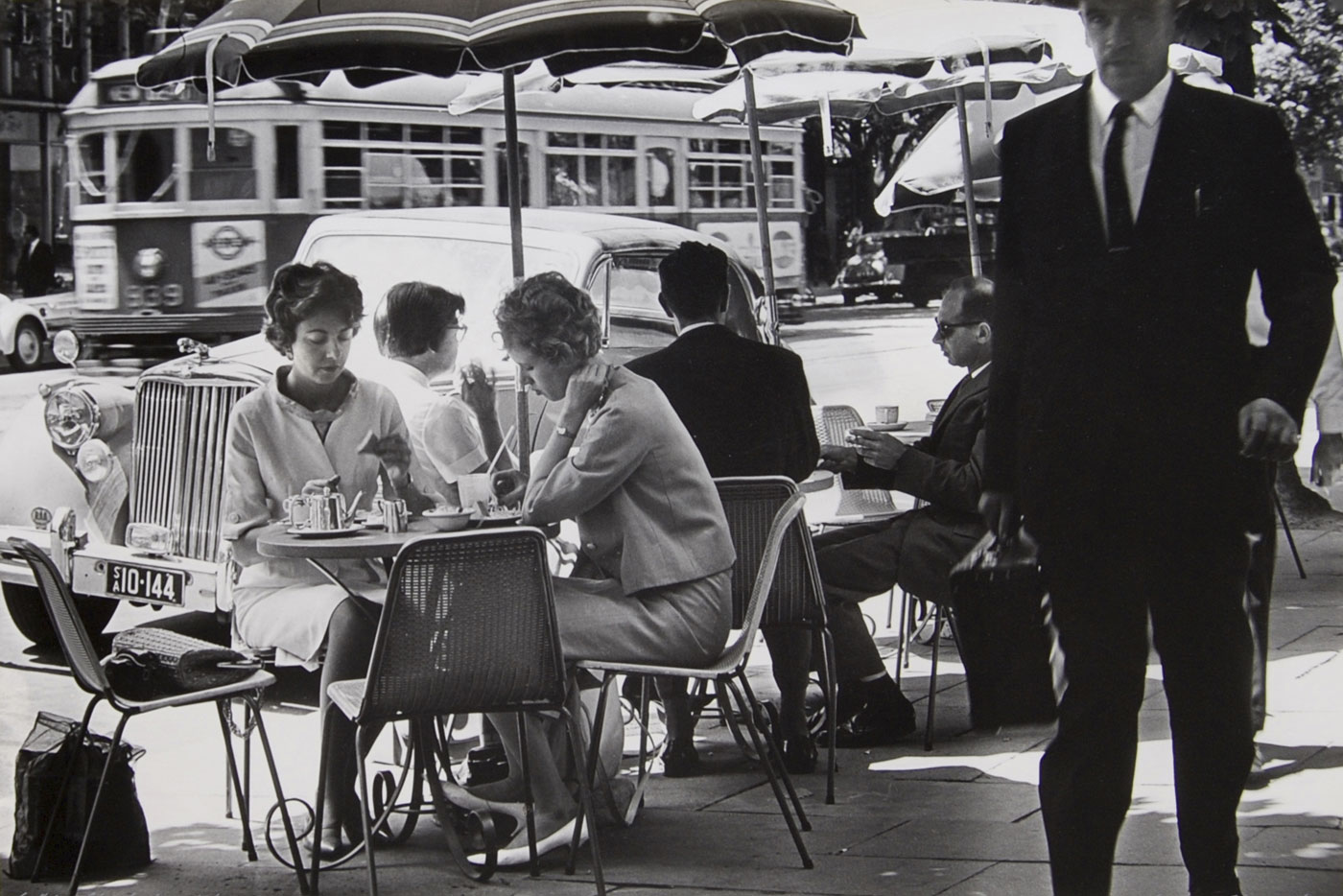
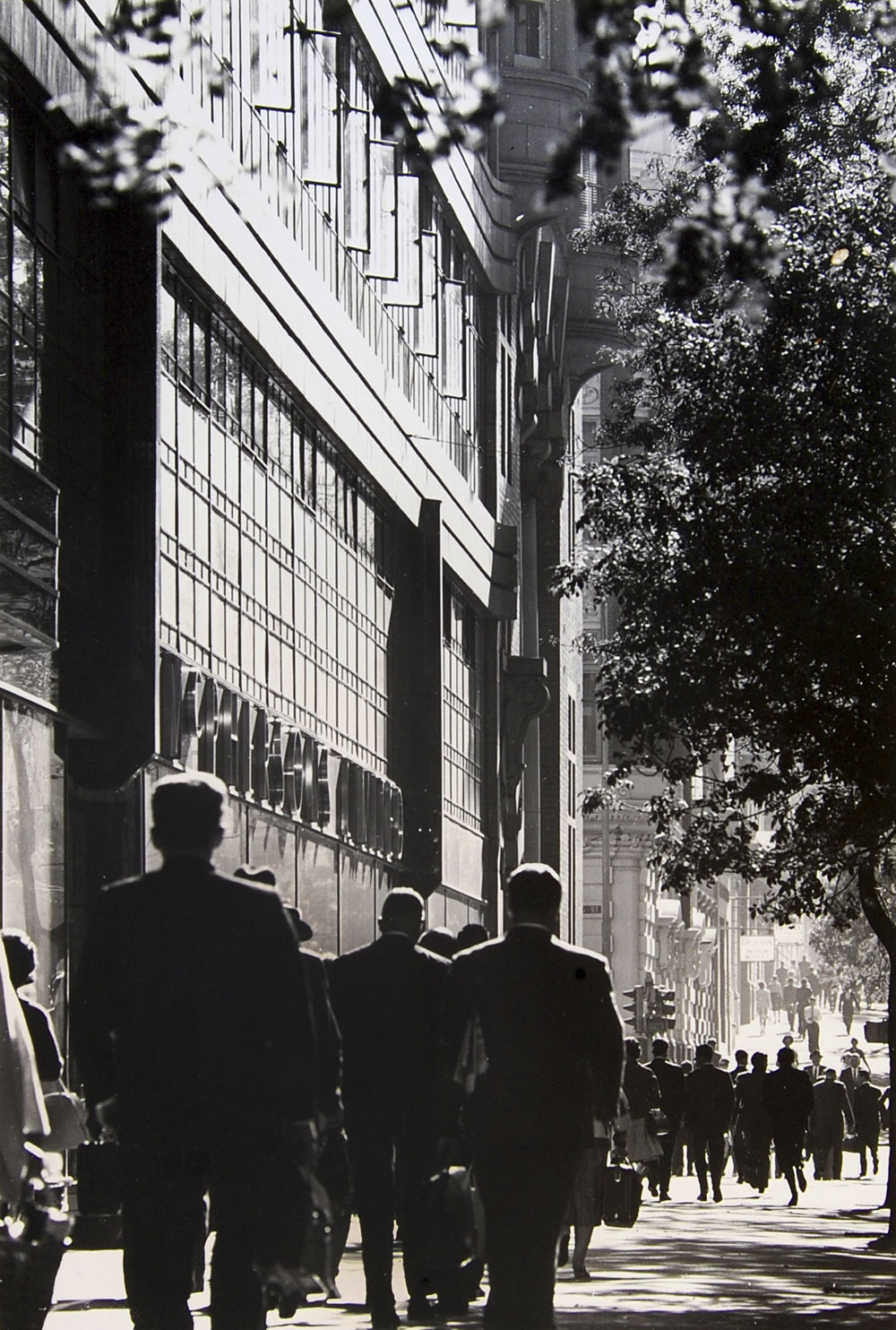
Exhibition: ‘Impressions of Paris: Lautrec, Degas, Daumier, Atget’ and ‘Impressions of Melbourne’ at the Monash Gallery of Art, Melbourne

Exhibition dates: 17th July 2015 – 20th September 2015

National Gallery of Australia touring exhibition


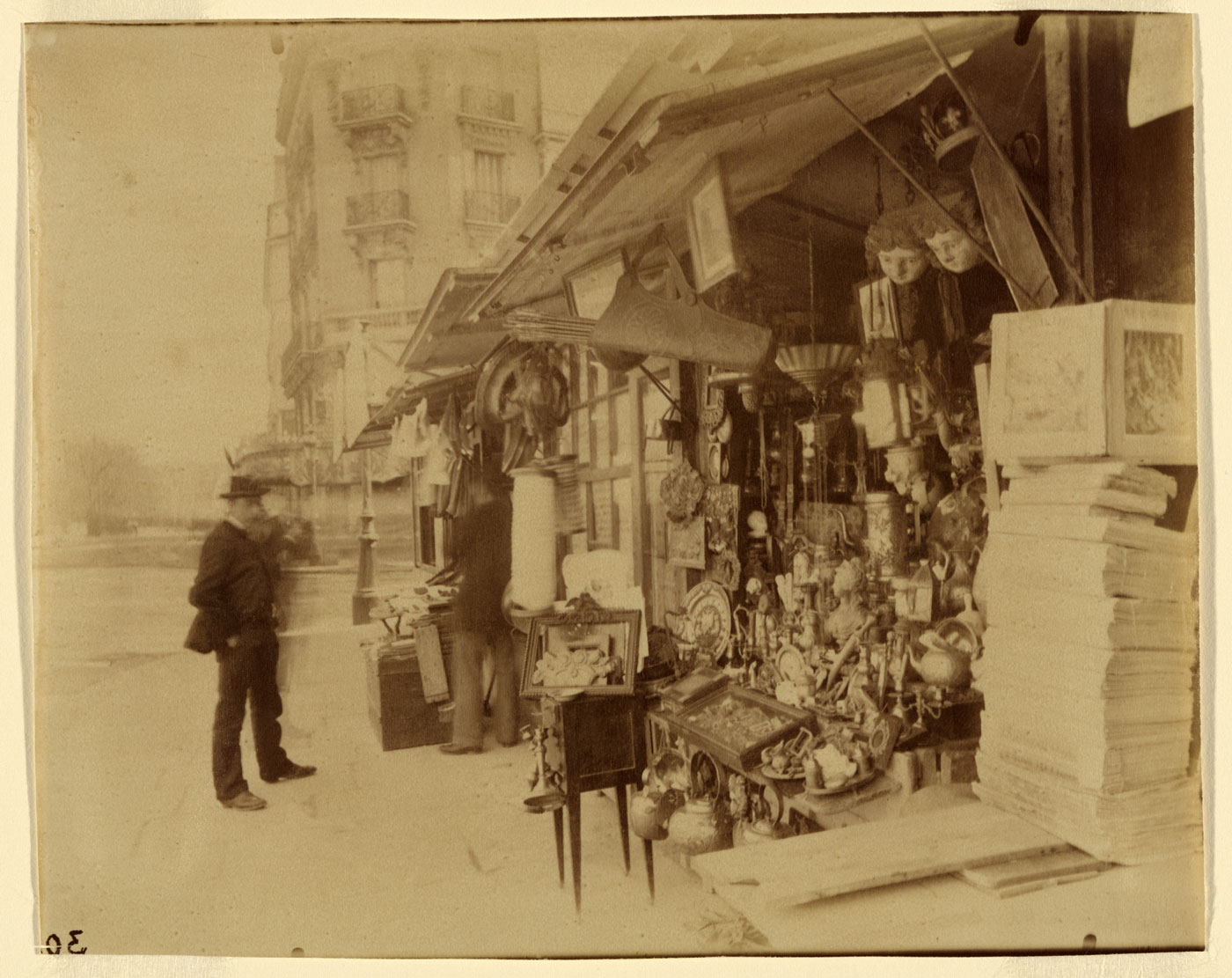
Eugène Atget (France, 1857-1927) 'No title (Brocanteur)' c. 1898-1905


Eugène Atget (France, 1857-1927)
No title (Brocanteur)
c. 1898-1905
Albumen silver photograph
17.8 x 21.9cm
National Gallery of Australia, Canberra
Purchased 1980


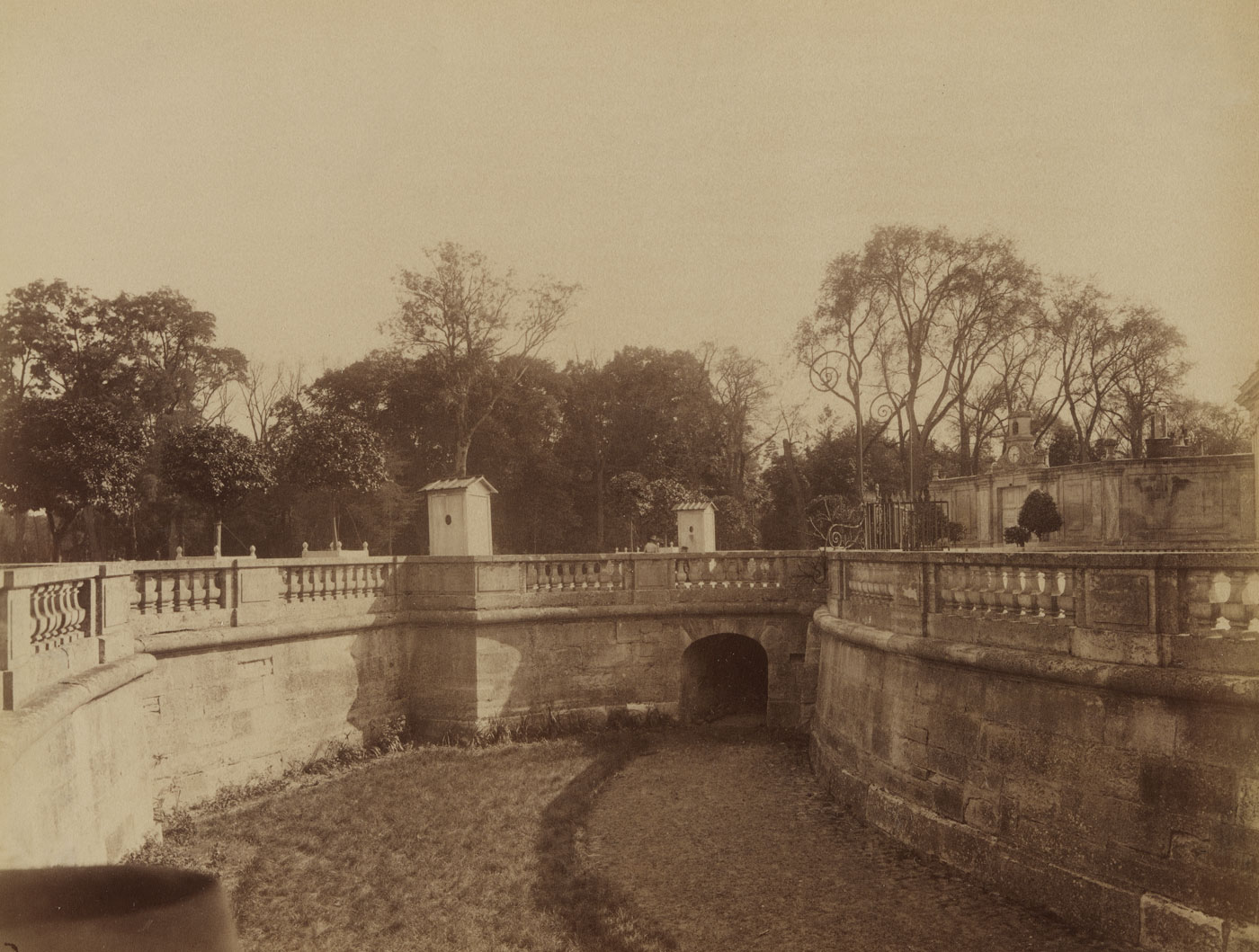
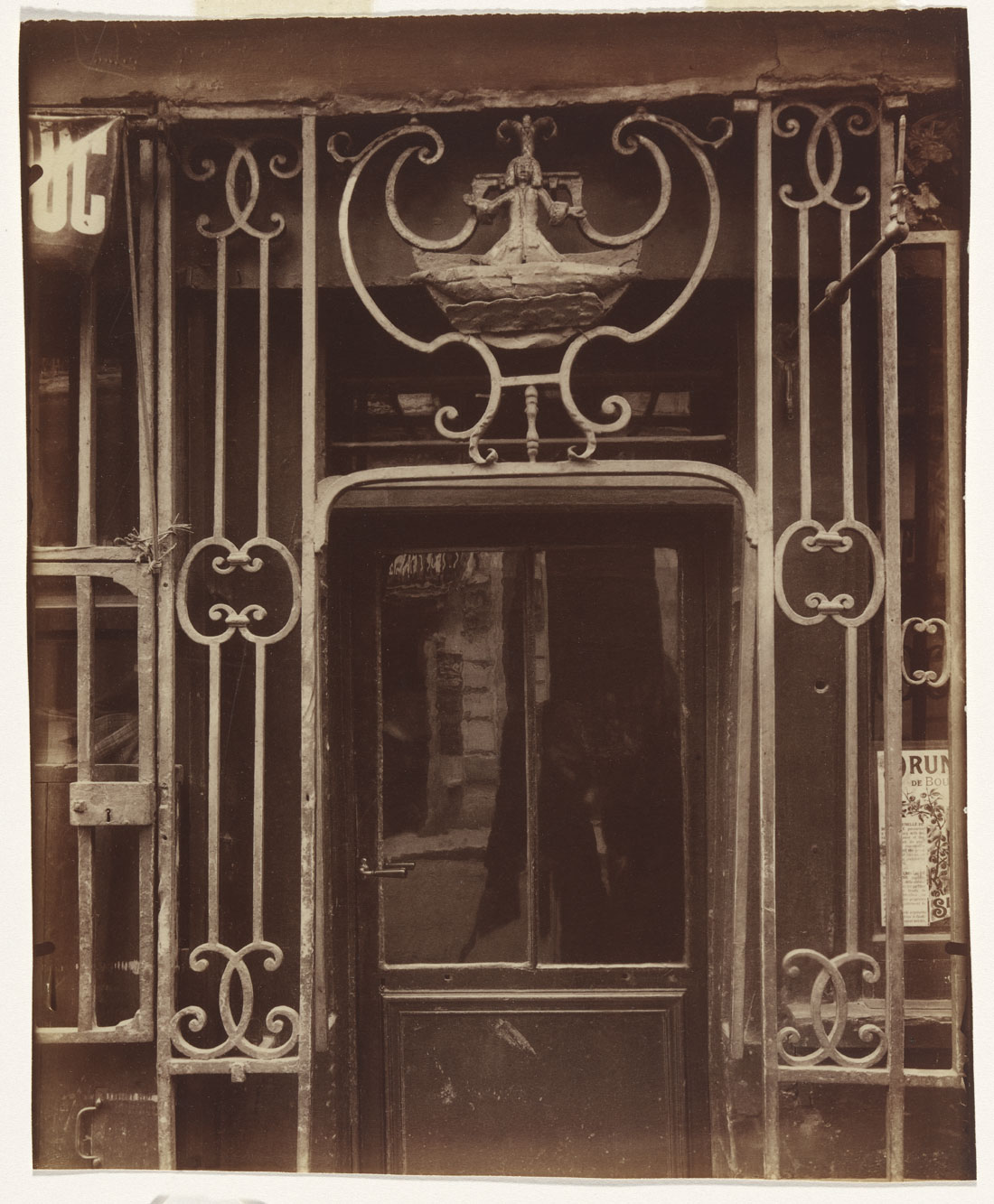
Impressions of Paris: Lautrec, Degas, Daumier, Atget is a particularly dry and uninspiring National Gallery of Australia touring exhibition, which was only enlivened for me by the enlightened presence of 20 or so vintage Eugène Atget photographs, specifically added for this showing at the Monash Gallery of Art, the home of Australian photography.

Atget’s photographs have an almost ether/real quality to them in their visual representation and, physically, an ephemeral feel to the quality of the paper – as though the images are about to dissolve into nothing – even as he photographs solid objects such as stairways, doors and door knockers. Observe the photographs Hôtel du Maréchal de Tallard, 78 rue des Archives (c. 1898-1905), A la Grâce de Dieu, 121 rue Montmartre (c. 1900) and Heurtoir, 6 rue du Parc Royal (c. 1901-1914), below, to witness this shimmering phenomenon. It is as if the emulsion of the plate is insufficient to capture the light of life.

In an accompanying exhibition in the smaller gallery, Impressions of Melbourne, photographs by Nicholas Caire, Charles Kerry, Max Dupain, Mark Strizic and Noel Jones investigate the city of Melbourne… but it is the stunning photographs by Atget that make the long drive out to Wheeler’s Hill worth the visit.

Dr Marcus Bunyan


Many thankx to the Monash Gallery of Art for allowing me to publish the photographs in the posting. Please click on the photographs for a larger version of the image.


Eugène Atget (France, 1857-1927) 'Versailles, Grand Trianon' c. 1901-1925


Eugène Atget (France, 1857-1927)
Versailles, Grand Trianon
c. 1901-1925
Gold-toned silver chloride photograph
17.6 x 22cm
National Gallery of Australia, Canberra
Purchased 1980


Eugène Atget (France, 1857-1927) 'Hôtel du Maréchal de Tallard, 78 rue des Archives' c. 1898-1905


Eugène Atget (France, 1857-1927)
Hôtel du Maréchal de Tallard, 78 rue des Archives
c. 1898-1905
Gold-toned silver chloride photograph
22 x 18.1cm
National Gallery of Australia, Canberra
Purchased 1980


Eugène Atget (France, 1857-1927) 'A la Grâce de Dieu, 121 rue Montmartre' c. 1900


Eugène Atget (France 1857-1927)
A la Grâce de Dieu, 121 rue Montmartre
c. 1900
Printing out paper photograph
22 x 17.7cm
National Gallery of Australia, Canberra
Purchased 1984


Eugène Atget (France, 1857-1927) 'Heurtoir, 6 rue du Parc Royal' c. 1901-1914


Eugène Atget (France, 1857-1927)
Heurtoir, 6 rue du Parc Royal
c. 1901-1914
Gold-toned silver chloride photograph
21.9 x 17.8cm
National Gallery of Australia, Canberra
Purchased 1980


Monash Gallery of Art is delighted to present its major international exhibition of 2015, Impressions of Paris: Lautrec, Degas, Daumier, Atget featuring over 120 prints, posters and photographs drawn from the collection of the National Gallery of Australia.

Impressions of Paris: Lautrec, Degas, Daumier, Atget examines the major contribution to French art made by key figures: Honoré-Victorin Daumier (1808-1879), Edgar Degas (1834-1917), Henri de Toulouse-Lautrec (1864-1901) and includes a selection of photographs by Eugène Atget (1857-1927) specially conceived for Monash Gallery of Art.

Newly appointed Gallery Director Kallie Blauhorn states, “I’m thrilled that for my first exhibition at MGA we are able to present a major international show, Impressions of Paris. Residents of Monash and art lovers across Melbourne will experience the extraordinary works by household names, Toulouse Lautrec, Edgar Degas, Honore Daumier and the wonderful photographer Eugène Atget.”

“This is a first for MGA and a true testament to the reputation of the gallery that we can host this important and significant exhibition,” said Blauhorn.

A generation apart, Lautrec, Degas and Daumier were consummate draughtsmen whose innovative compositions and embrace of modern subject matter played a significant role in artistic developments in France over the nineteenth century. Atget, the only specialist photographer among these artists, spent much of his life documenting the streets of Paris as they underwent modernisation. His photographs show us how modern life was expressed in the architectural experience of France, giving us a glimpse of what modernity left behind.

The generation of French artists who followed Daumier in the nineteenth century were inspired by his critical observations, which became an extraordinary reservoir of ideas. Both Degas and then Lautrec were enthusiastic admirers of French caricature, delighting in its animated qualities, stylistic freedoms and contemporary themes. They were particularly enamoured of Daumier’s caricature.

Degas adopted themes of modern French life, the ballet, the race course, the café-concert and the demi-monde and played an important role in the rejection of mythological and historical subjects favoured by the Impressionists. Many of Degas’ ideas on composition and subjects were, in turn, drawn from Daumier. This French satirist was both extraordinarily gifted and prolific, making a name for himself by lampooning the affectations, stupidities and greed of members of the French bourgeois society in caricatures, which Degas avidly collected.

The youngest of the artists, Lautrec, who sadly dies before reaching 37, borrowed themes and compositions from Degas, an artist he much admired and emulated. Images of drinkers at a table, ballet and cabaret scenes and nudes reveal the powerful influence that Degas had on the younger artist, as well as Lautrec’s own considerable originality, particularly as a portrayer of individuals rather than the depiction of types often favoured by Degas.

For the most part, Atget’s pictures of streets, parks, courtyards, buildings and their ornamental motifs record remnants of Old Paris. While there is a nostalgic aspect to these views, for contemporary viewers these pictures were about modern Paris. They recorded and helped make sense of changes to the city as it struggled to cope with modernism. Atget’s views of modern Paris focussed on its intimate places, those spaces of the everyday in which people had always worked, loved and lived.

These four artists captured the spirit of Paris in their prints, posters and photographs. Through the examination of this work, we find clues as to why dramatic changes took place in French art over the nineteenth century. They formed part of other generations of artists who admired Daumier and who adapted the caricaturist’s critical lithographic observations. In this way Daumier’s legacy was a brilliant journalistic record of the modern capital and contributed to an era in France ripe for a new art.

Press release from the MGA website


Eugène Atget: growth and decay in the great city

After an unspectacular career in the theatre, Eugène Atget (1857-1927) began to take photographs of Paris in 1892. By 1897 he had established a successful business photographing the spaces that remained of Old Paris. In all, Atget made over 10,000 images of Paris and its surrounds, each taken with a straightforward approach that laid the basis for much of the documentary photography that followed. Atget’s pictures were immensely popular: he sold thousands of prints, satisfying a strong demand for views of a city undergoing massive social and architectural transformation.

For the most part, Atget’s pictures of streets, parks, courtyards, buildings and their ornamental motifs record remnants of pre-Revolutionary Paris. While there is a nostalgic aspect to these views, for contemporary viewers these pictures were about modern Paris. They recorded and helped make sense of changes to the city as it struggled to cope with modernism. Street traders and other workers are seen selling their wares along old streets and laneways; ancient buildings stand in laneways and courtyards undergoing physical transformation; cafes and shops await bustling crowds. Atget’s views of modern Paris focussed on its intimate places, those spaces of the everyday in which people had always worked, loved and lived.


Impressions of Melbourne

17th July 2015 – 20th September 2015

In response to the photographs by Eugène Atget (1857-1927) included in the National Gallery of Australia’s touring exhibition, Impressions of Paris, this exhibition offers views of Melbourne’s streets, laneways and urban landscape. Drawn from the Monash Gallery of Art, City of Monash Collection, this selection traverses a period from the late nineteenth century to the late twentieth century.

Atget photographed Paris during a time when the French capital was undergoing significant transformation. From the 1850s through to the 1920s, the dark medieval neighbourhoods of the city were demolished to make way for the wide avenues and open public spaces that Paris is known for today. Atget’s ambition was to produce clear and detailed photographs that would document the heritage of Paris before it disappeared. Typically taking his photographs in the early morning when the streets were empty, Atget imbued the city with ghostly nostalgia.

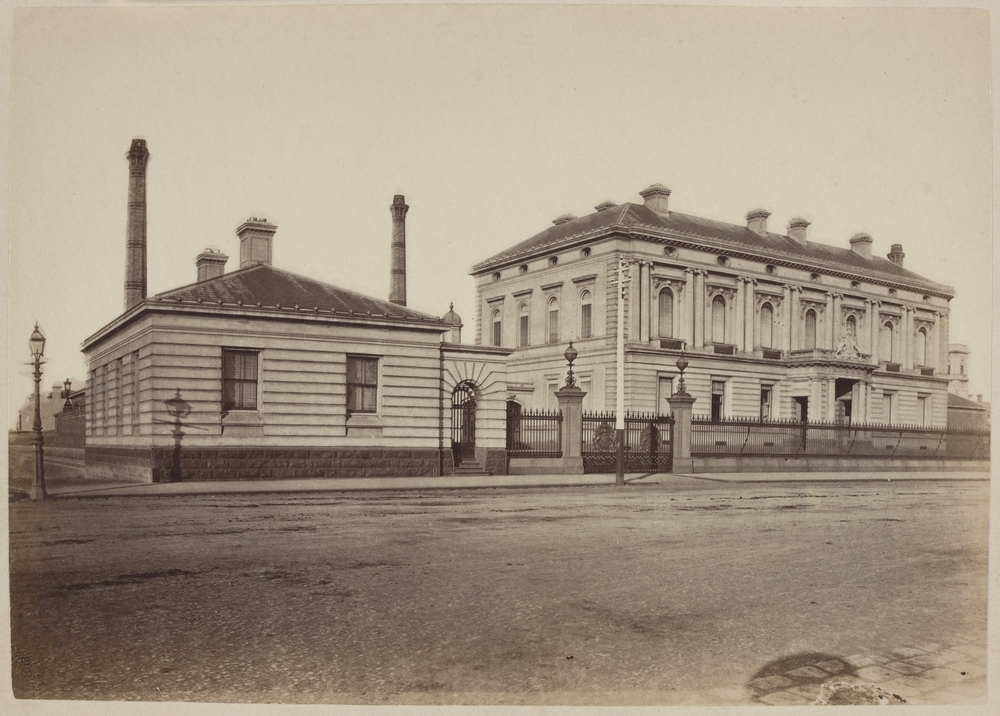
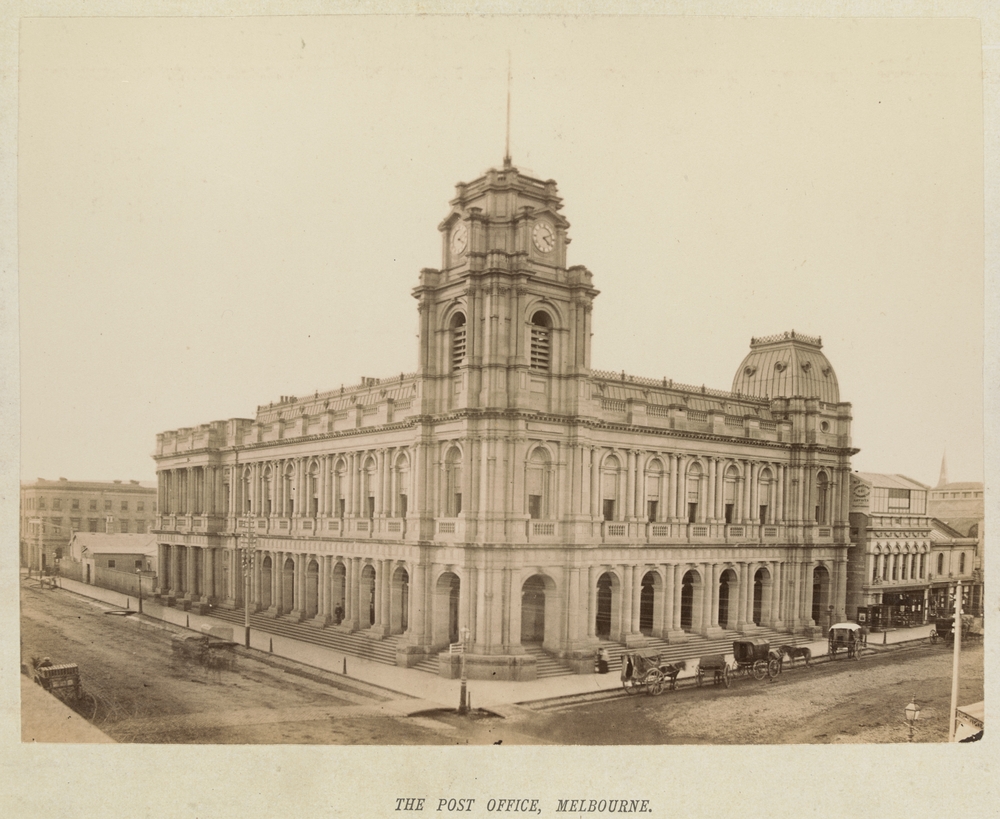
The earliest photographs in Impressions of Melbourne, taken by Nicholas Caire and Charles Kerry in the late nineteenth century, are contemporary to those of Atget. While Atget focused longingly on the past, however, these Australian photographers celebrated the civic accomplishments of modern progress in the colonies. The portrayal of Melbourne as a civilised metropolis, attractive to both immigrants and tourists, persisted through the twentieth century. Max Dupain captured the city as a lively and enterprising place, while Mark Strizic lingered on the shimmering ambience of window shopping and city strolling.

Impressions of Melbourne showcases a range of photographic responses to our urban environment, revealing some of Melbourne’s many moods and highlighting the city as a rich photographic subject. The exhibition includes photographs by Nicholas Caire, Charles Kerry, Max Dupain, Mark Strizic and Noel Jones.

Nicholas Caire

Nicolas Caire was born in Guernsey and arrived in Australia, settling in Adelaide, in 1858. He set up his first photographic studio in Adelaide in 1867. He moved to the Victorian goldmining town of Talbot in 1870 before relocating to Melbourne in 1876. At this time, Melbourne was the largest Australian city.

While Caire is best known for his picturesque landscape photographs of the Victorian countryside, he also produced photographs of major city thoroughfares, public buildings, parks and gardens. These subjects were common amongst photographers in the second half of the nineteenth century, conveying a sense of local pride and achievement. Caire’s photographs were often mounted in albums and accompanied by individual descriptive texts, a format that was popular amongst local and overseas visitors at the time.

Charles Kerry

Charles Kerry grew up in country New South Wales before moving to Sydney at the age of 17 to begin his photographic career. After a failed studio partnership, which left him with a lot of debt, Kerry rebuilt his business and by 1890 found himself running a successful studio that had a monopoly on the popular postcard market. By 1898 Kerry’s studio was the largest in Australia, housed in a three-storey building at 310 George Street, Sydney.

Throughout his career, Kerry photographed a broad range of subjects including social and sporting events, portraits of Indigenous people, city streets as well as the New South Wales countryside. He also spent a year documenting every station homestead in New South Wales. Kerry retired in 1913.


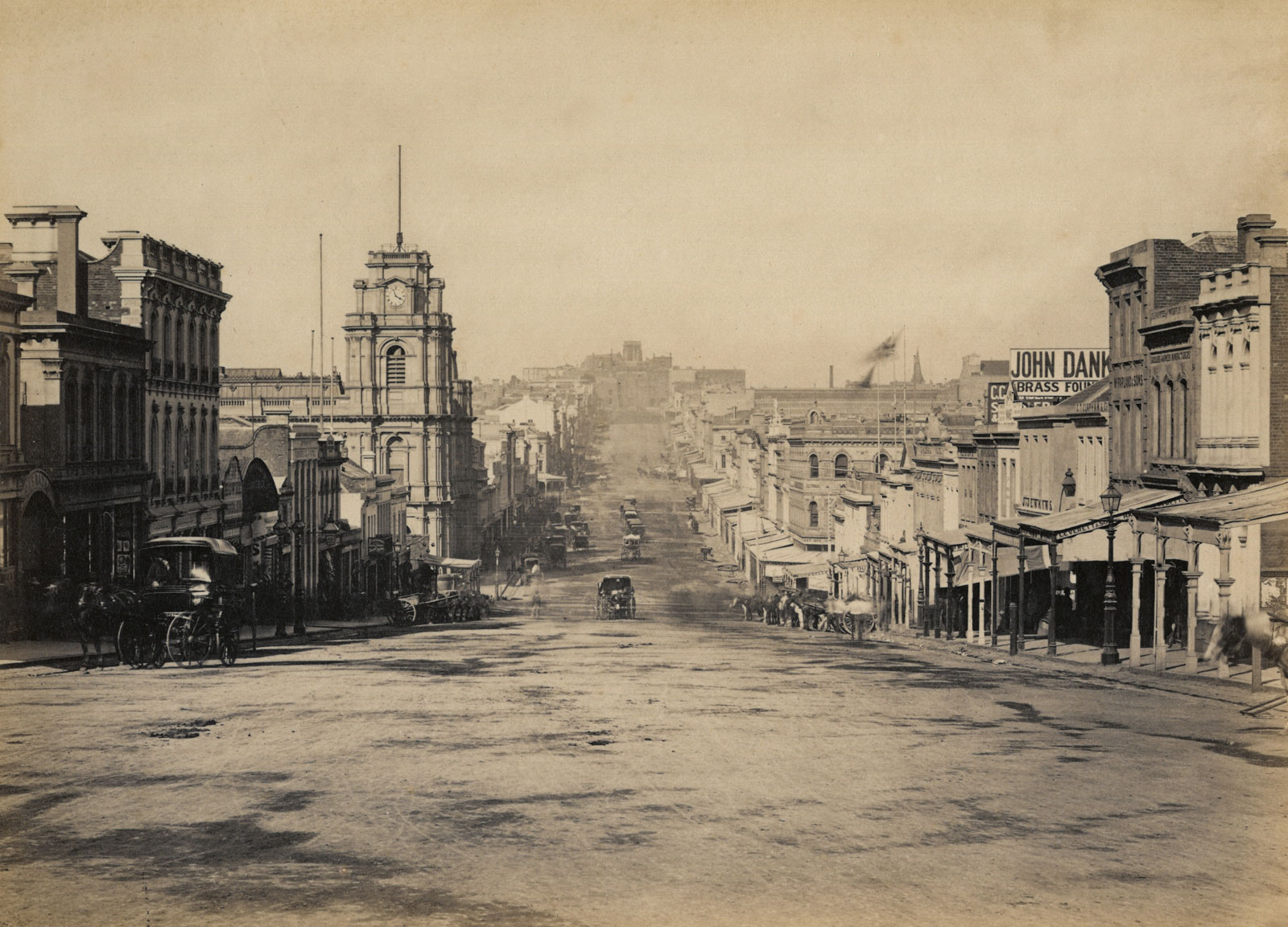
Nicholas Caire (born United Kingdom 1837; arrived Australia 1858; died 1918) 'View of Bourke Street, Melbourne' 1877-1878


Nicholas Caire (born United Kingdom 1837; arrived Australia 1858; died 1918)
View of Bourke Street, Melbourne
1877-1878
From the series Views of Victoria
Albumen print
13.4 x 18.7cm
Monash Gallery of Art, City of Monash Collection acquired 1987


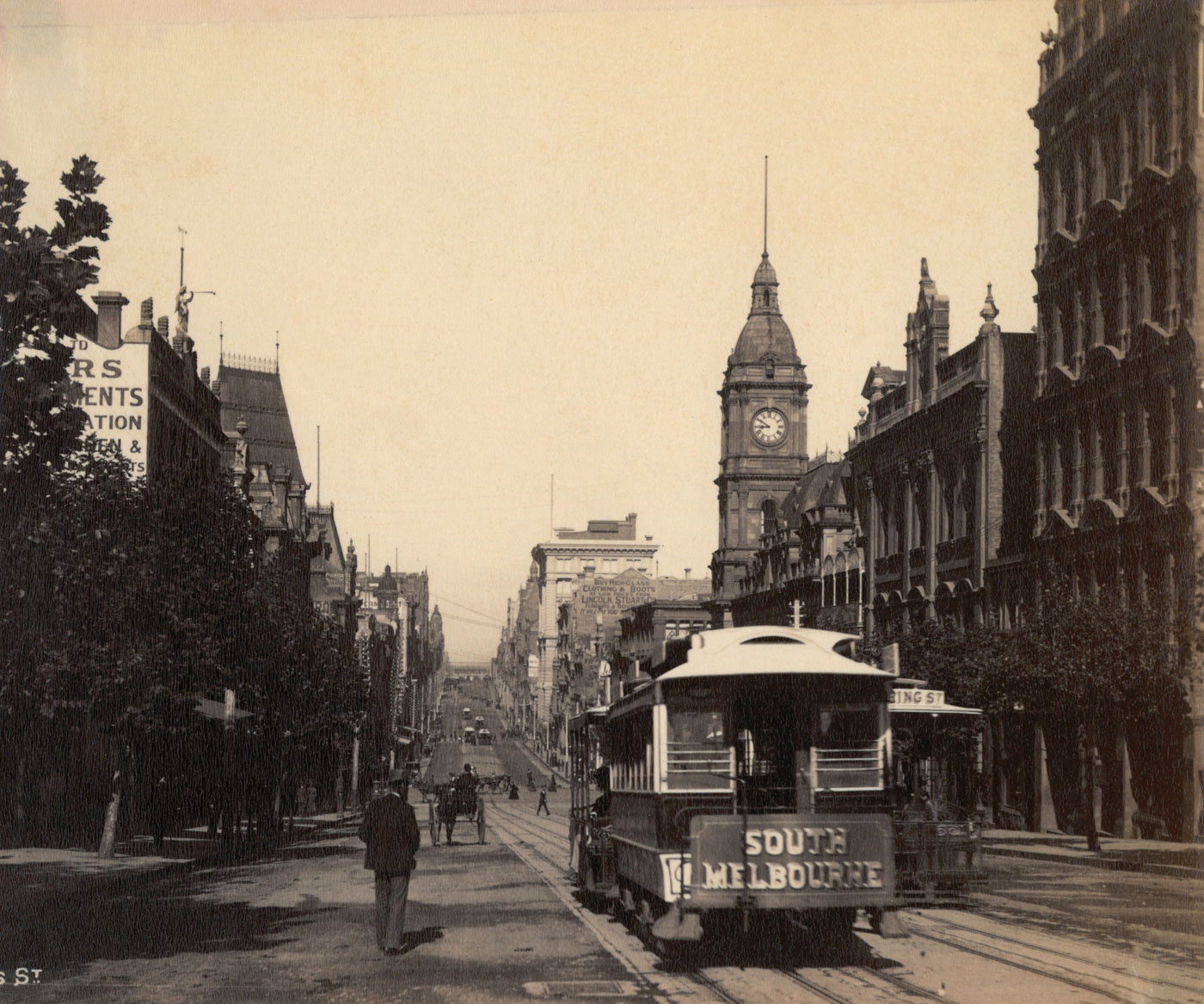
Original album caption: Bourke Street is the principal business thoroughfare in the great City of Melbourne. It is about a mile in length, extending from the Parliament House to the Spencer Street Railway Station. On the left hand side of the picture is the Post Office, and at the extreme end of the street can be seen the Parliament House.


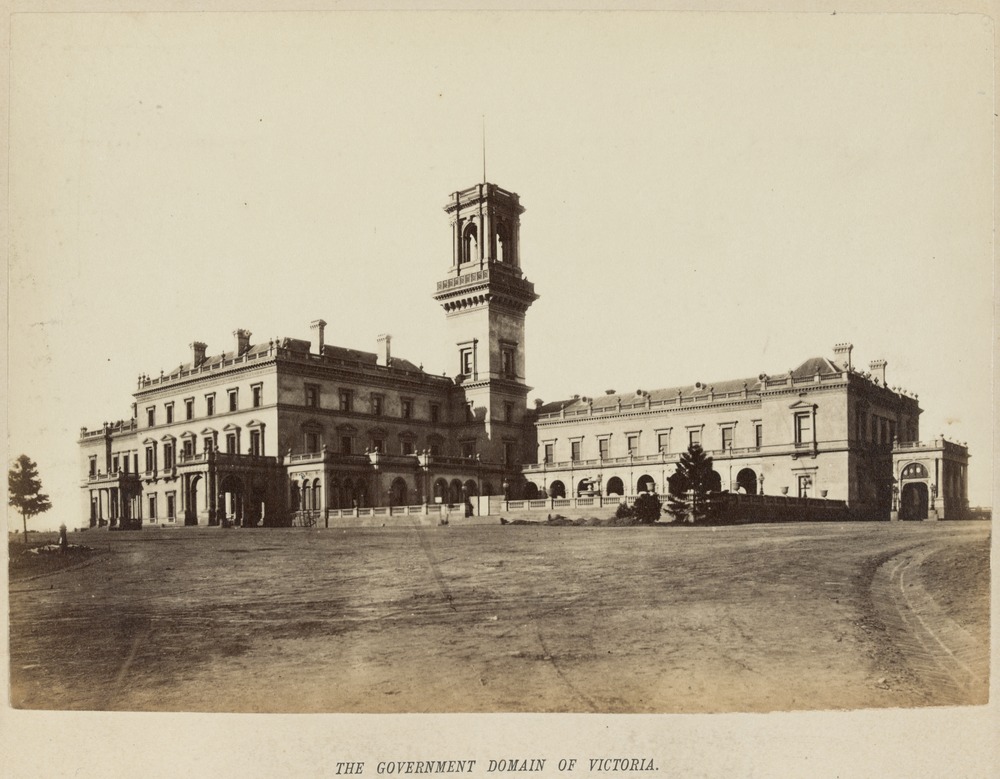
Nicholas Caire (born United Kingdom 1837; arrived Australia 1858; died 1918) 'The Government Domain of Victoria' 1877-1878


Nicholas Caire (born United Kingdom 1837; arrived Australia 1858; died 1918)
The Government Domain of Victoria
1877-1878
From the series The public buildings of Melbourne and suburbs
Albumen print Monash Gallery of Art, City of Monash Collection acquired 1987


Original album caption: The Governor’s Residence is on an eminence near the Botanical Gardens, and occupies one of the best positions around the City of Melbourne. Looking westward from the front of the Domain, a splendid view is obtained of Hobson’s Bay, with the townships of St Kilda, Emerald Hill, Sandridge, and Williamstown on the coast. On the north side can be seen the City of Melbourne, with its busy suburban towns – Hotham, Carlton and Fitzroy. From the rear of the building towards the east, in the distance, the retired towns of Richmond, Hawthorn, and Toorak can be distinguished. The building, as seen in the illustration, was completed in the year 1876. Sir G F Bowen, GCMG, being the Resident Governor at the time.


Nicholas Caire (born United Kingdom 1837; arrived Australia 1858; died 1918) 'The Royal Mint, Melbourne' 1877-1878


Nicholas Caire (born United Kingdom 1837; arrived Australia 1858; died 1918)
The Royal Mint, Melbourne
1877-1878
From the series The public buildings of Melbourne and suburbs
Albumen print
Monash Gallery of Art, City of Monash Collection acquired 1987


Original album caption: The Royal Mint of Victoria is situated in the north-easterly part of William Street, West Melbourne. This Government Building is not thrown open to the public for visitation at any time; but an inspection by visitors can be effected on an order from a Member of the Ministry, conditionally that there be no fewer than eight persons at each visitation; one of the number being required to become responsible for the conduct of the party.


Nicholas Caire (born United Kingdom 1837; arrived Australia 1858; died 1918) 'The Post Office, Melbourne' 1877-1878


Nicholas Caire (born United Kingdom 1837; arrived Australia 1858; died 1918)
The Post Office, Melbourne
1877-1878
From the series The public buildings of Melbourne and suburbs
Albumen print
Monash Gallery of Art, City of Monash Collection acquired 1987


Original album caption: This imposing structure is erected at the junction of Bourke and Elizabeth Streets, which may be considered perhaps the most central position in Melbourne. It is provided with a very long corridor for the posting and delivery of letters, & c. The Telegraph Department, as also the Post Office Savings Bank and Money Order Office, are all conducted in connection with the General Post office, Melbourne, of which the Hon. R Ramsay, MLA, is at present Postmaster-General.


Charles Kerry (Australia, 1858-1928) 'Collins Street, looking south' c. 1890


Charles Kerry (Australia, 1858-1928)
Collins Street, looking south
c. 1890
Albumen print
14.5 x 17.5cm
Monash Gallery of Art, City of Monash Collection acquired 1984


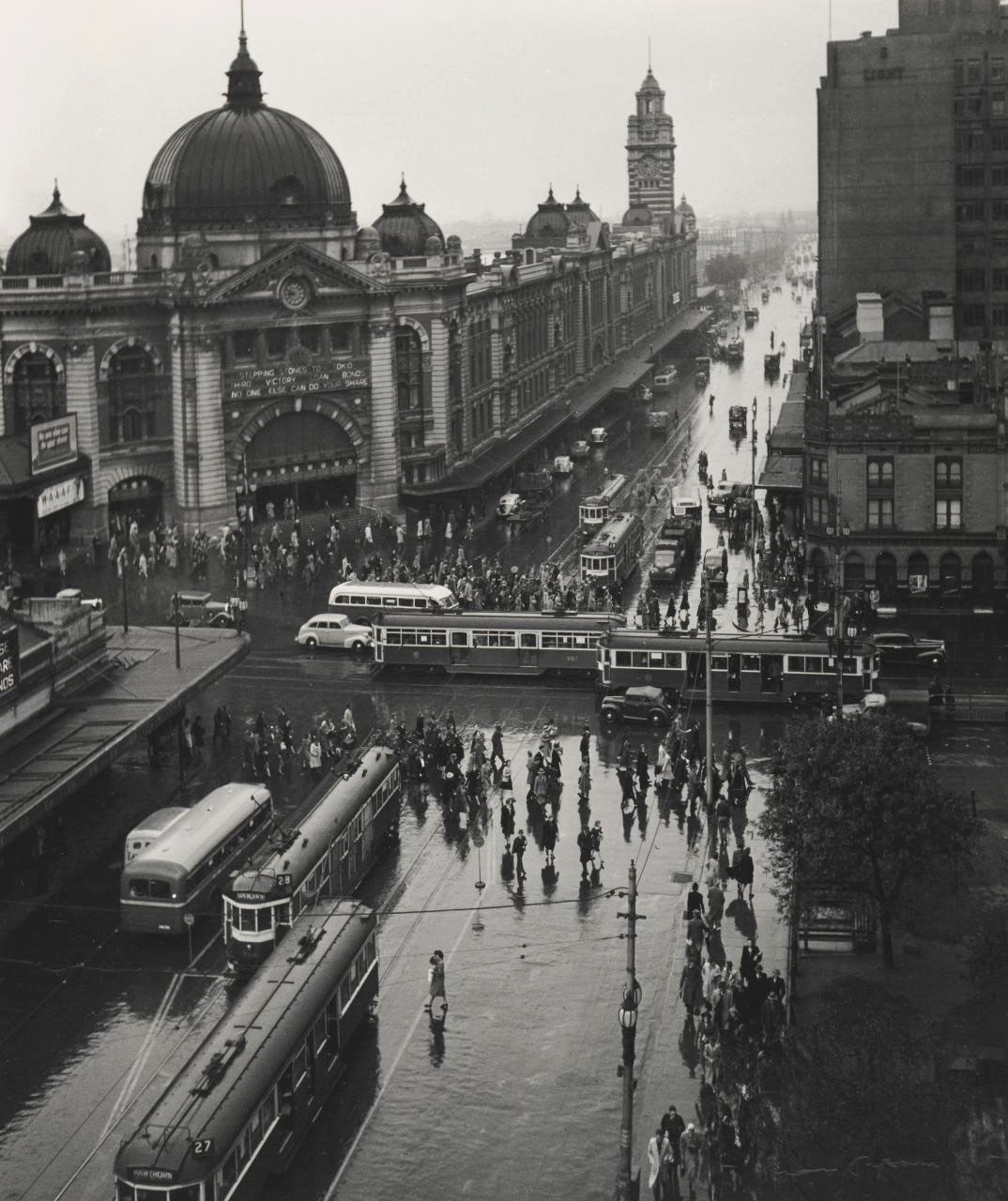
Max Dupain (Australia, 1911-1992) 'Melbourne with rain' 1946


Max Dupain (Australia, 1911-1992)
Melbourne with rain
1946
Gelatin silver print
Monash Gallery of Art, City of Monash Collection acquired 1987


Max Dupain

Max Dupain began his photographic career in 1930 as an apprentice in the studio of Cecil Bostock. In 1934 he established his own studio in Sydney and continued to produce a broad range of commercial work over the course of his life. Dupain was strongly influenced by modernist photographic principles and is renowned for his architectural photography as well as his iconic images of Australian beach culture.

While he primarily worked in Sydney, the photographs exhibited here are among several he took of otherAustralian cities. They highlight his interest in documenting city life as well as his use of light, shadow and aerial perspective. They were taken during the post war period; in the year that Dupain was commissioned by the Department of Information to photograph Australia’s way of life as part of a campaign to increase migration to Australia. This period marked a shift in Dupain’s practice, away from advertising and fashion toward social documentary.


Mark Strizic (born Germany 1928; arrived Australia 1950; died 2012) 'Near 101 Collins Street, Jan 1963' 1963


Mark Strizic (born Germany 1928; arrived Australia 1950; died 2012)
Near 101 Collins Street, Jan 1963
1963
Gelatin silver print
36 x 53.5cm
Monash Gallery of Art, City of Monash Collection
Donated by the Bowness Family through the Australian Government’s Cultural Gifts Program 2008
Reproduction courtesy of the artist


Mark Strizic (born Germany 1928; arrived Australia 1950; died 2012) 'Collins Street at McPherson's building - 1, 1967' 1967


Mark Strizic (born Germany 1928; arrived Australia 1950; died 2012)
Collins Street at McPherson’s building – 1, 1967
1967
Gelatin silver print
53.8 x 36cm
Monash Gallery of Art, City of Monash Collection
Donated by the Bowness Family through the Australian Government’s Cultural Gifts Program 2008
Reproduction courtesy of the artist


Mark Strizic

Mark Strizic was born in Berlin and migrated to Melbourne from Zagreb, Croatia in 1950. Strizic had no formal training in photography, but began taking photographs of Melbourne in the 1950s. He abandoned his studies in physics to become a full-time photographer in 1957, taking up subsequent commissions in architectural, industrial, interior design and portrait photography.

Among Strizic’s most widely recognised images are those he created of Melbourne between 1955 and 1970. Strizic documented the streets of Melbourne, showing many sides of the city, from derelict back alleyways to the grand arcades and buildings of Melbourne’s ‘Paris end’. Strizic’s photographs were produced during a period of dramatic change, a time when Melbourne’s Victorian-era buildings were being replaced by modern architectural developments. The images not only serve to document this change but also provide significant and important records of Melbourne pre-modernisation.


Monash Gallery of Art
860 Ferntree Gully Road, Wheelers Hill
Victoria 3150 Australia
Phone: + 61 3 8544 0500

Opening hours:
Tue – Fri: 10am – 5pm
Sat – Sun: 10pm – 4pm
Mon/public holidays: closed

Monash Gallery of Art website

LIKE ART BLART ON FACEBOOK

Back to top

Exhibition: ‘The EY Exhibition: Sonia Delaunay’ at Tate Modern, London

Exhibition dates: 15th April – 9th August 2015

Curators: curated at Tate Modern by Juliet Bingham, Curator International Art, with Juliette Rizzi, Assistant Curator.


'The EY Exhibition: Sonia Delaunay' at Tate Modern


The EY Exhibition: Sonia Delaunay at Tate Modern


One of my favourite female artists of all time. Up there with Georgia O’Keeffe, Lee Krasner, Agnes Martin and Louise Bourgeois.

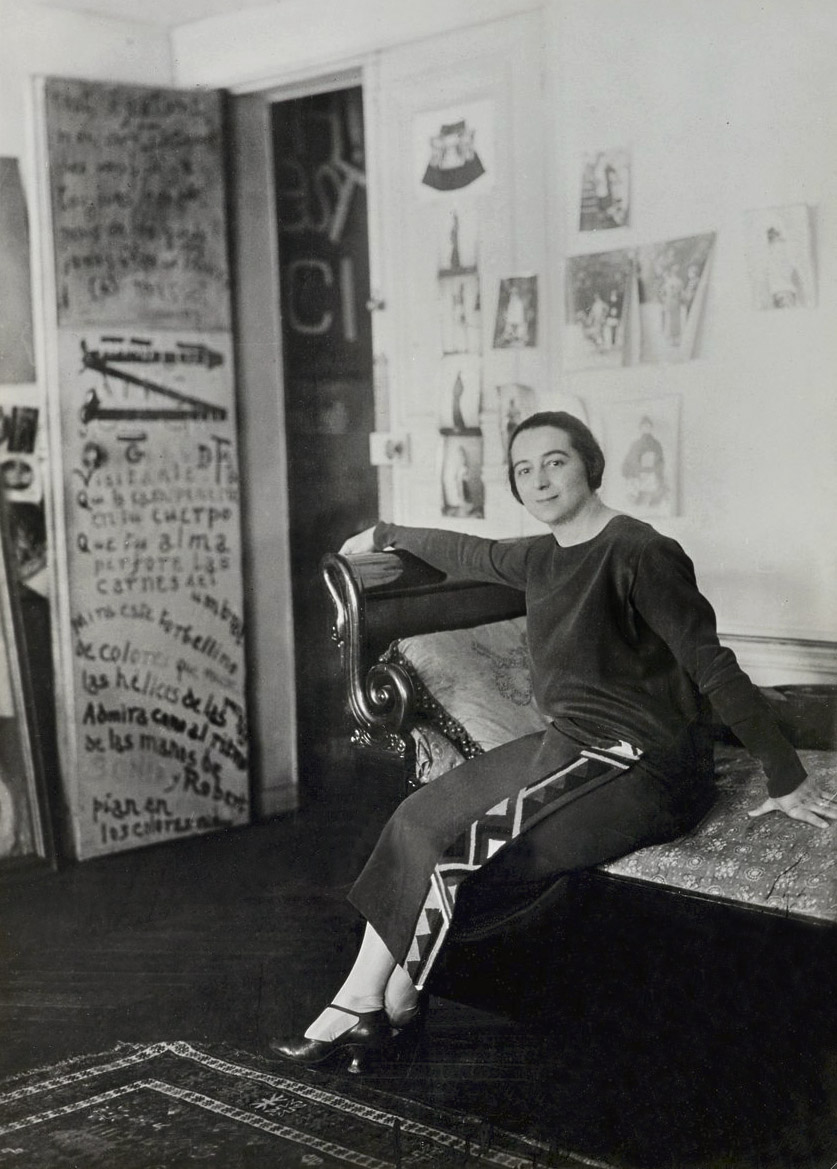
The early portrait paintings are a revelation. And then, how avant-garde her Electric Prisms paintings, fashion designs, theatre costumes, embroidering poetry onto fabric, turning her apartment into a three-dimensional collage… the very epitome of a “progressive woman synonymous with modernity.”

I have always loved her creativity, vibrancy, colours and asymmetric, musical rhythm – her photogeneity, in the sense of her works producing or emitting light, like an organism does. They seem to grab you, like a jolt of electricity, saying “Wake up!” and “Look at me!”

Perhaps I’m a little bit in love with this very wonderful women.

Dr Marcus Bunyan


Many thankx to the Tate Modern for allowing me to publish the art work in the posting. Please click on the photographs for a larger version of the image.


“In this case, the pram in the hall was not the enemy of promise. (In any case, surely poverty is the more likely candidate.) It is still rare, however, for a cradle cover to be given gallery space and acknowledged as an important artwork. The little blanket Sonia stitched for her son, Charles, in 1911 [see image below] is to be exhibited, and it seems to have been a breakthrough piece which moved her from figurative work to abstract. The coverlet is a patchwork medley of pinks, creams and greens with hints of maroon and black. It shows how Sonia melded Russian folk-craft with Parisian avant garde, and anticipated the experiments with colour and shape that would become the Delaunay hallmark style, simultané.

As well as the baby quilt, there is on display the child’s painted toy box, and the outfit Sonia made in the same manner, the one in the photograph mentioned above: by 1913 the Delaunays had found a babysitter and were setting off to the dancehall, the Bal Bullier. As well as making clothing for herself and her friends, Sonia still painted. Next to the dress, which is composed of swatches of fabric in different textures, is her large canvas ‘Bal Bullier’. A flow of colour and rhythm, it shows several couples (or one couple twirling) under a new Parisian sensation: coloured electric lights.”


Kathleen Jamie. “Sonia Delaunay: the avant-garde queen of loud, wearable art,” on the Guardian website, Saturday 28 March 2015 [Online] Cited 03/08/2015


Sonia Delaunay (French, 1885-1979) 'Quilt cover' 1911


Sonia Delaunay (French, 1885-1979)
Quilt cover
1911


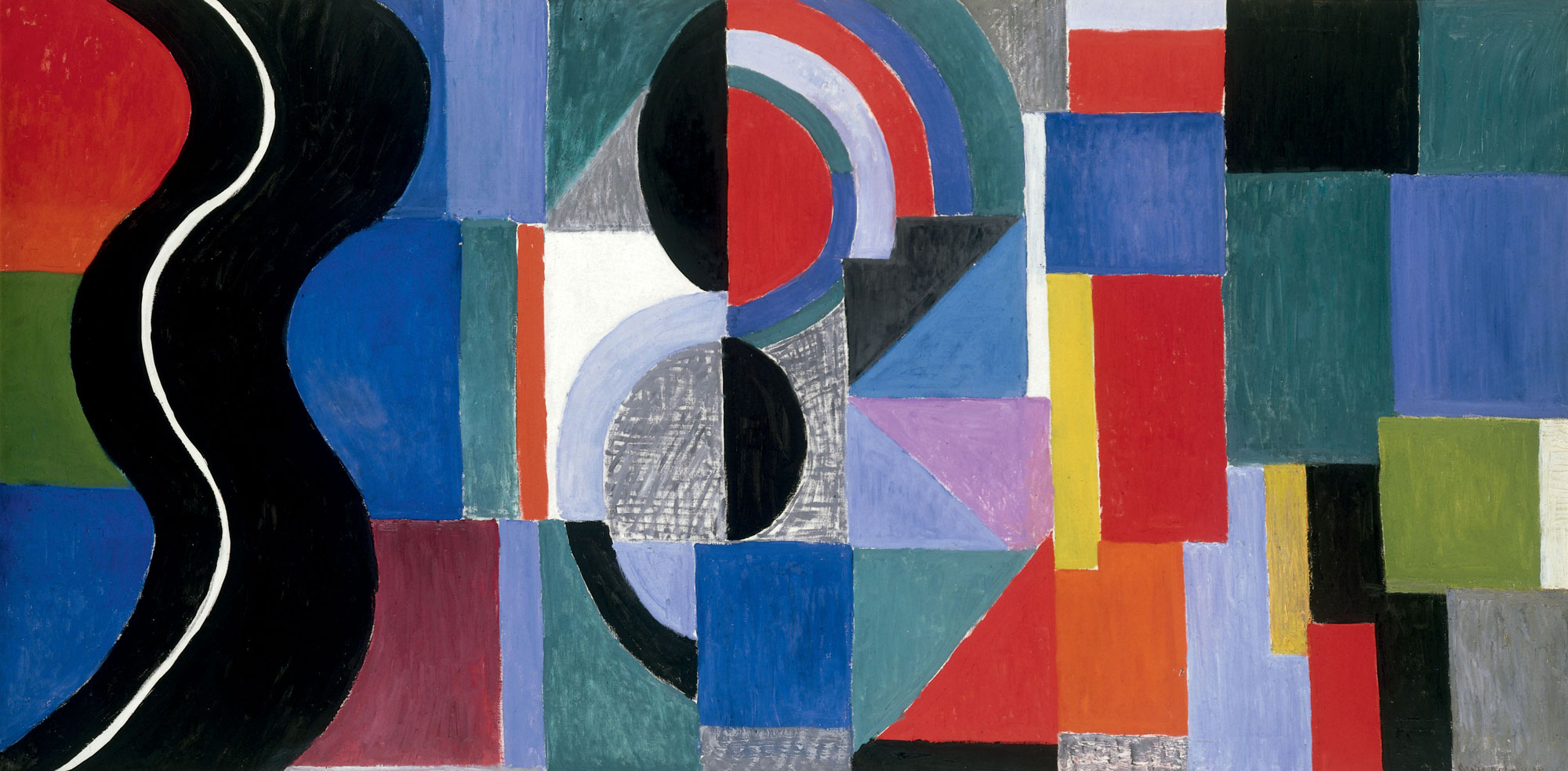
Sonia Delaunay (French, 1885-1979) 'Syncopated rhythm, so-called The Black Snake' 1967


Sonia Delaunay (French, 1885-1979)
Syncopated rhythm, so-called The Black Snake
1967
Musée des Beaux-Arts, Nantes, France
© Pracusa 2014083


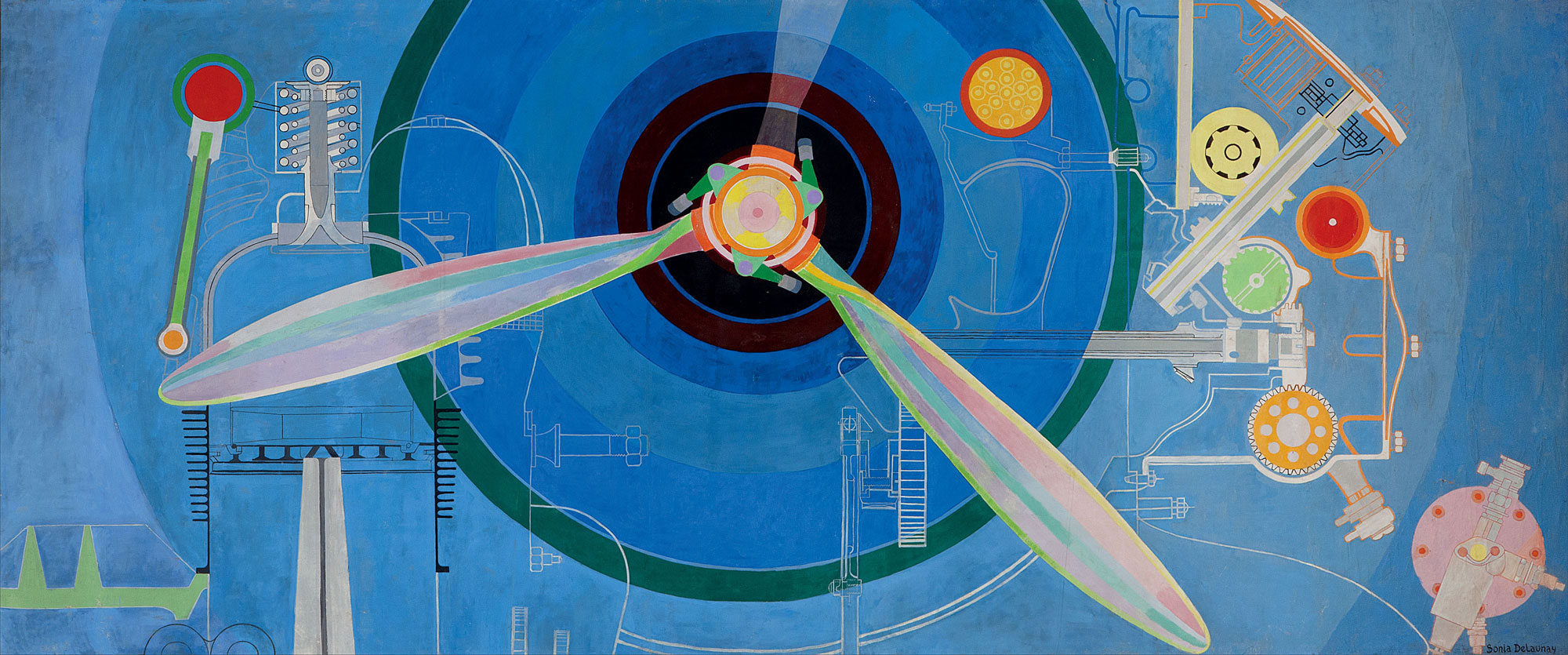
Sonia Delaunay (French, 1885-1979) 'Propeller (Air Pavilion)' 1937


Sonia Delaunay (French, 1885-1979)
Propeller (Air Pavilion)
1937
Skissernas Museum, Lund, Sweden
© Pracusa 2014083
Photo: Emma Krantz


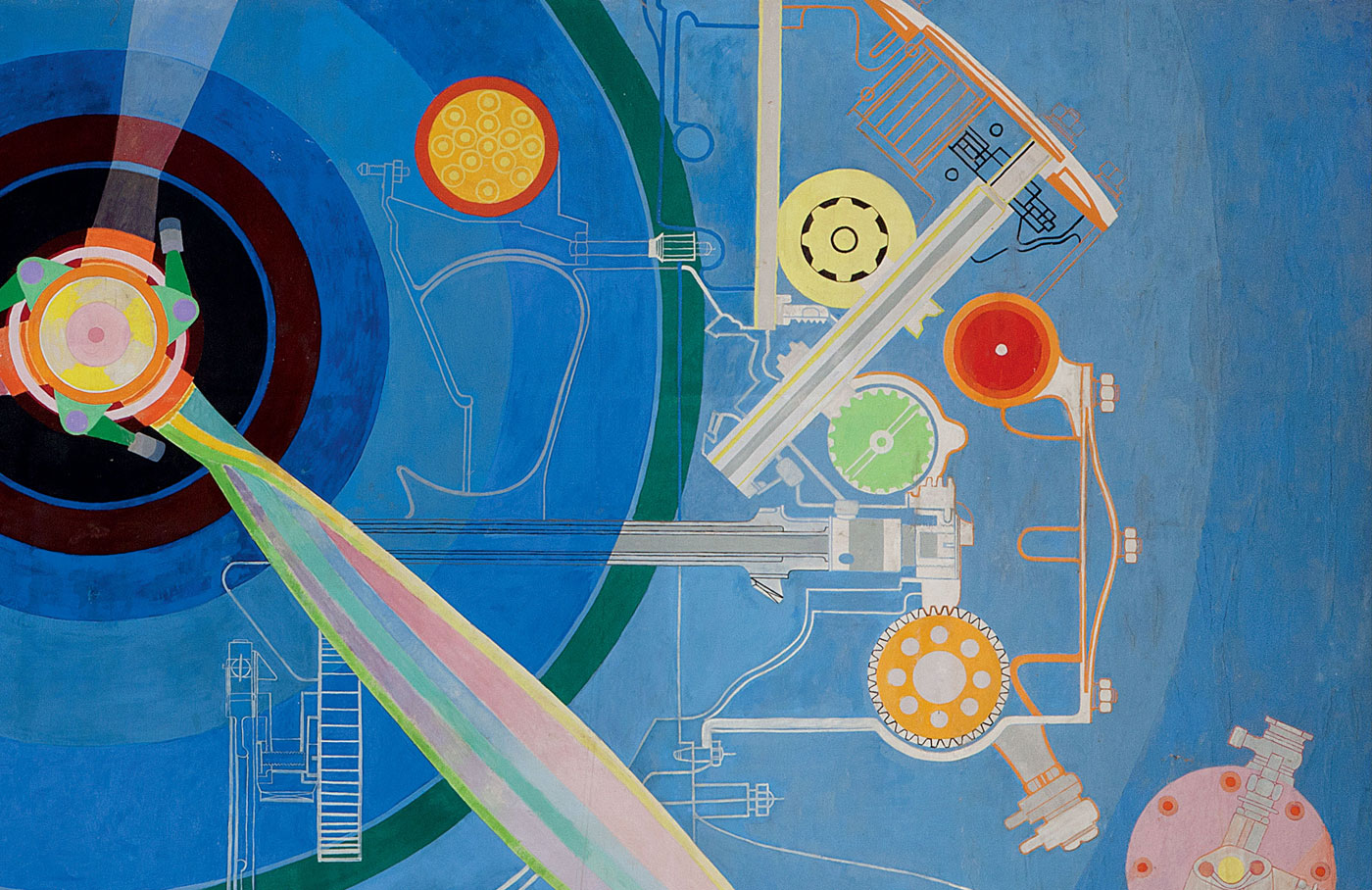
Sonia Delaunay (French, 1885-1979) 'Propeller (Air Pavilion)' 1937 (detail)


Sonia Delaunay (French, 1885-1979)
Propeller (Air Pavilion) (detail)
1937
Skissernas Museum, Lund, Sweden
© Pracusa 2014083
Photo: Emma Krantz


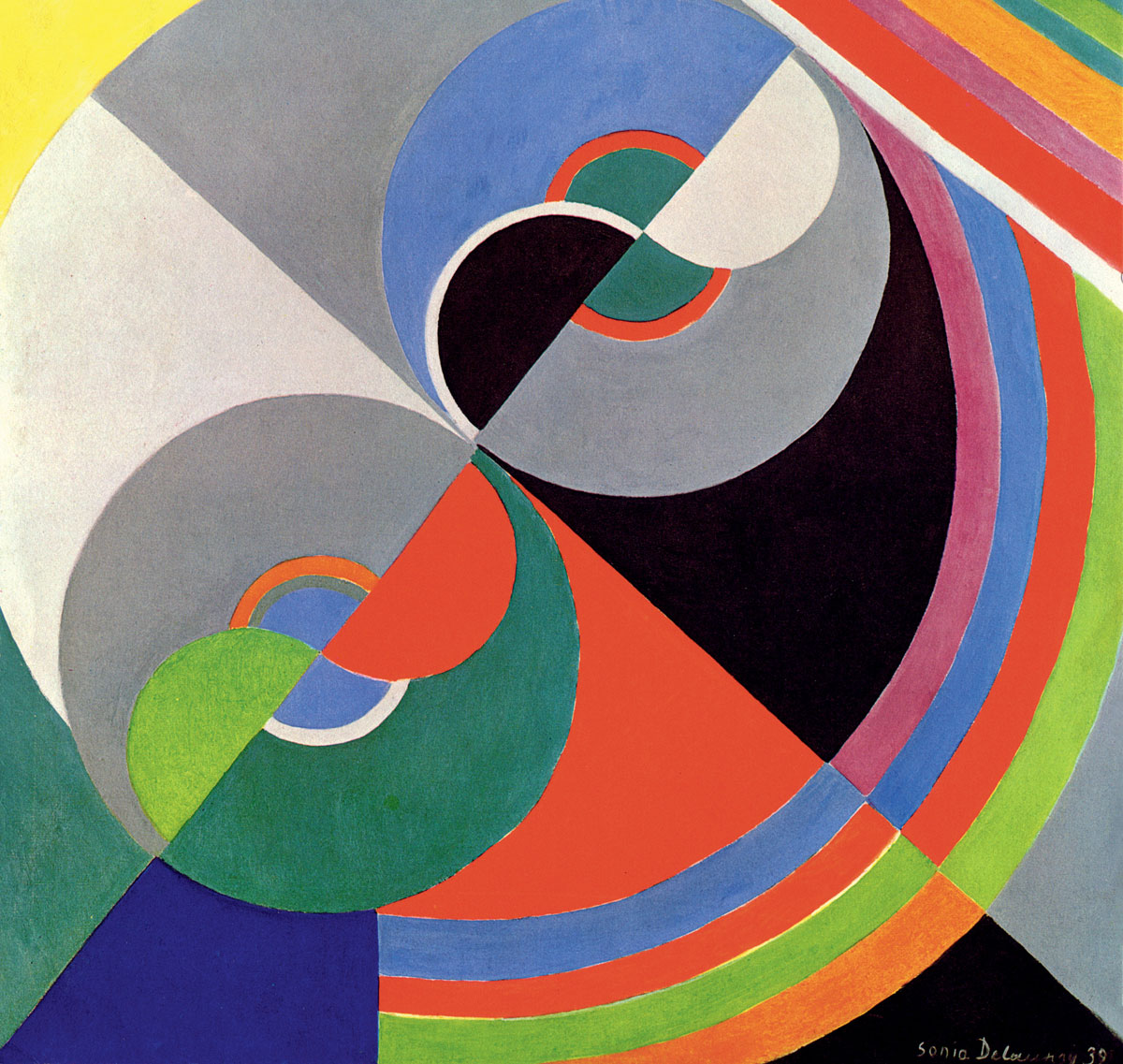
Sonia Delaunay (French, 1885-1979) 'Rhythm Colour no. 1076' 1939


Sonia Delaunay (French, 1885-1979)
Rhythm Colour no. 1076
1939
Centre National des Arts Plastiques/Fonds National d’Art Contemporain, Paris, on loan to Palais des Beaux-Arts de Lille
© Pracusa 2014083


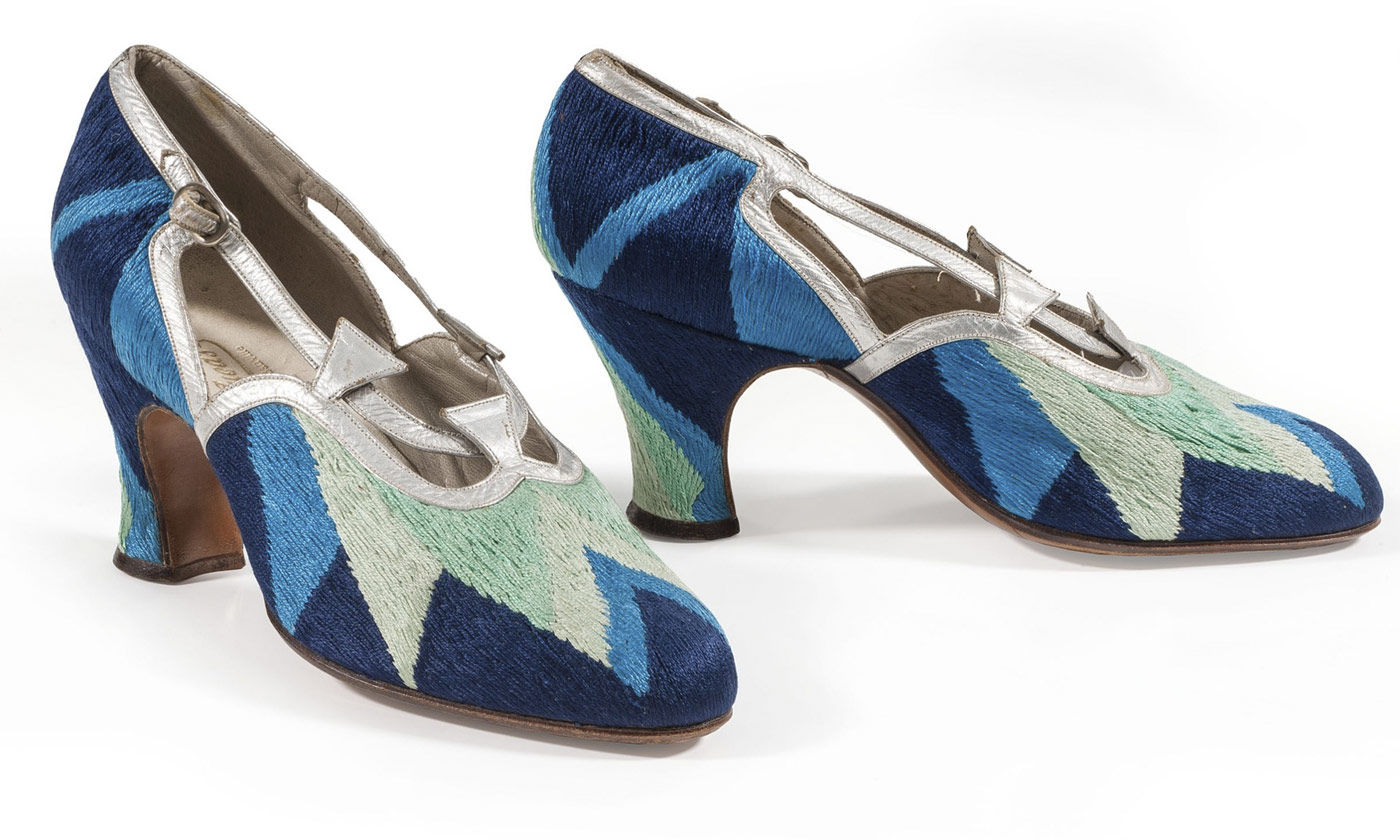
Sonia Delaunay (French, 1885-1979) 'Court shoes' 1925


Sonia Delaunay (French, 1885-1979)
Court shoes
1925


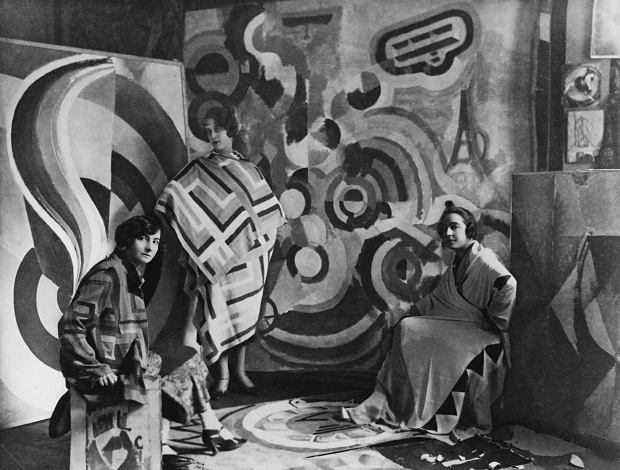
Unknown photographer. 'Sonia Delaunay (right) and two friends in Robert Delaunay’s studio, rue des Grands-Augustins, Paris' 1924


Unknown photographer
Sonia Delaunay (right) and two friends in Robert Delaunay’s studio, rue des Grands-Augustins, Paris
1924
Image courtesy of Bibliothèque nationale de France, Paris


Sonia Delaunay (1885-1979) was a key figure in the Parisian avant-garde, whose vivid and colourful work spanned painting, fashion and design. Tate Modern presents the first UK retrospective to assess the breadth of her vibrant artistic career, from her early figurative painting in the 1900s to her energetic abstract work in the 1960s. This exhibition offers a radical reassessment of Delaunay’s importance as an artist, showcasing her originality and creativity across the twentieth century.

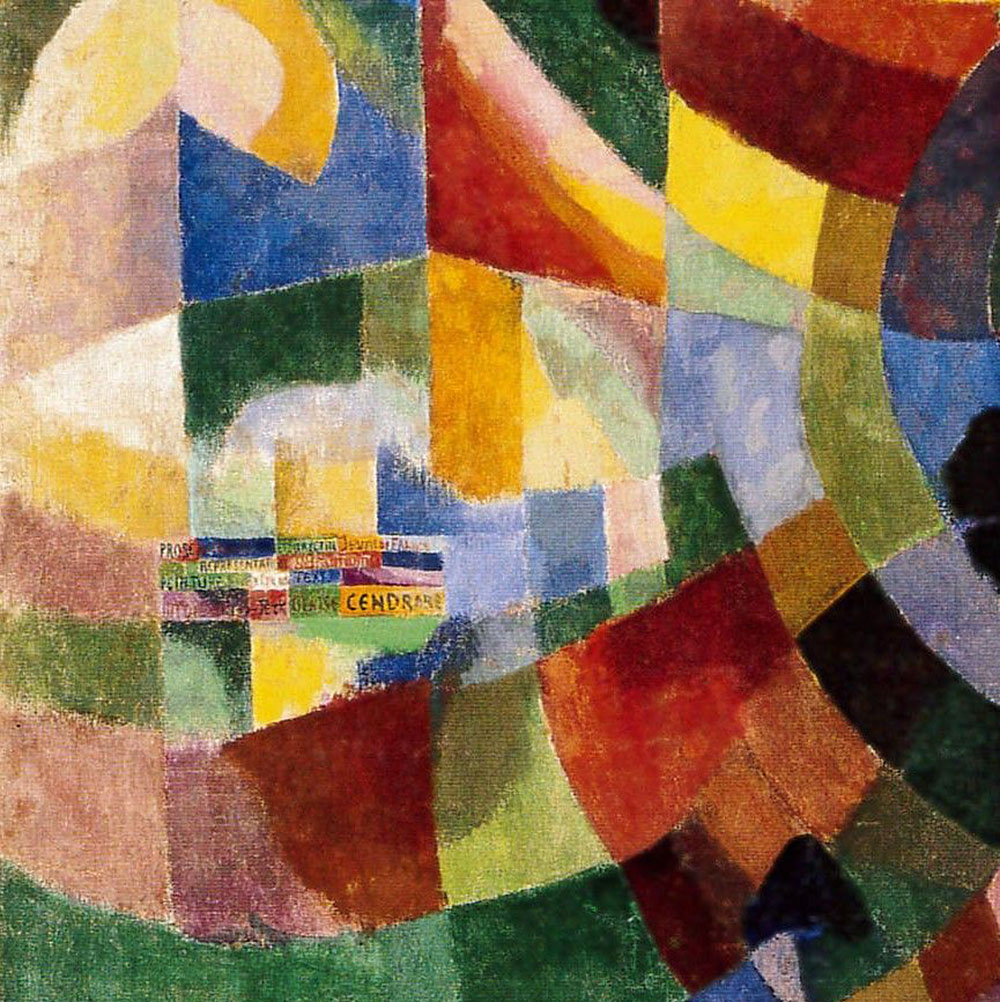
Born in Odessaand trained in Germany, Sonia Delaunay (née Stern, then Terk) came to Parisin 1906 to join the emerging avant-garde. She met and married the artist Robert Delaunay, with whom she developed ‘Simultaneism’ – abstract compositions of dynamic contrasting colours and shapes. Many iconic examples of these works are brought together at Tate Modern, including Bal Bullier 1913 and Electric Prisms 1914. Her work expressed the energy of modern urban life, celebrating the birth of electric street lighting and the excitement of contemporary ballets and ballrooms.

The EY Exhibition: Sonia Delaunay shows how the artist dedicated her life to experimenting with colour and abstraction, bringing her ideas off the canvas and into the world through tapestry, textiles, mosaic and fashion. Delaunay premiered her first ‘simultaneous dress’ of bright patchwork colours in 1913 and opened a boutique in Madrid in 1918. Her Atelier Simultané in Paris went on to produce radical and progressive designs for scarves, umbrellas, hats, shoes and swimming costumes throughout the 1920s and 1930s. Clients included the Hollywood star Gloria Swanson and the architect Erno Goldfinger, as well department stores like Metz & Co and Liberty. The exhibition reveals how Delaunay’s designs presented her as a progressive woman synonymous with modernity: embroidering poetry onto fabric, turning her apartment into a three-dimensional collage, and creating daring costumes for Diaghilev’s Ballets Russes.

The diverse inspirations behind Delaunay’s work are also explored, from the highly personal approach to colour which harked back to her childhood in Russia, to the impact of her years in Spain and Portugal where she painted The Orange Seller 1915 and Flamenco Singers 1915-16. The show also reveals the inspiration provided by modern technology throughout Delaunay’s career, from the Trans-Siberian Railway to the aeroplane, and from the Eiffel Tower to the electric light bulb. It also includes her vast seven-metre murals Motor, Dashboard and Propeller, created for the 1937 International Exposition in Paris and never before shown in the UK.

Following her husband’s death in 1941, Sonia Delaunay’s work took on more formal freedom, including rhythmic compositions in angular forms and harlequin colours, which in turn inspired geometric tapestries, carpets and mosaics. Delaunay continued to experiment with abstraction in the post-war era, just as she had done since its birth in the 1910s, becoming a champion for a new generation of artists and an inspiring figure for creative practitioners to this day.

The EY Exhibition: Sonia Delaunay is curated at Tate Modern by Juliet Bingham, Curator International Art, with Juliette Rizzi, Assistant Curator. It was organised by the Musée d’Art Moderne de la Ville de Paris, Paris-Musées and Tate Modern, and was realised with the exceptional help of Bibliothèque nationale de France and Musée national d’art moderne, Centre Pompidou.

Text from the Tate Modern website


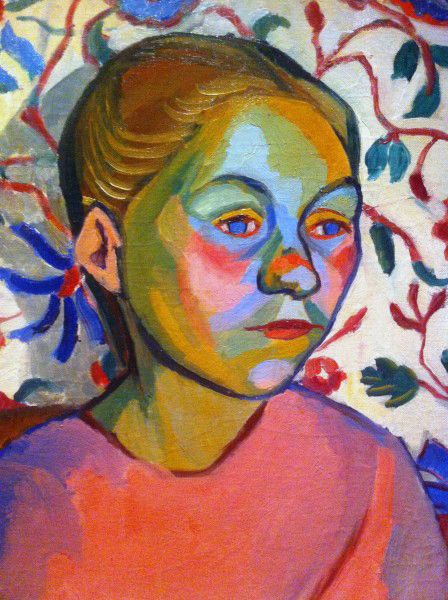
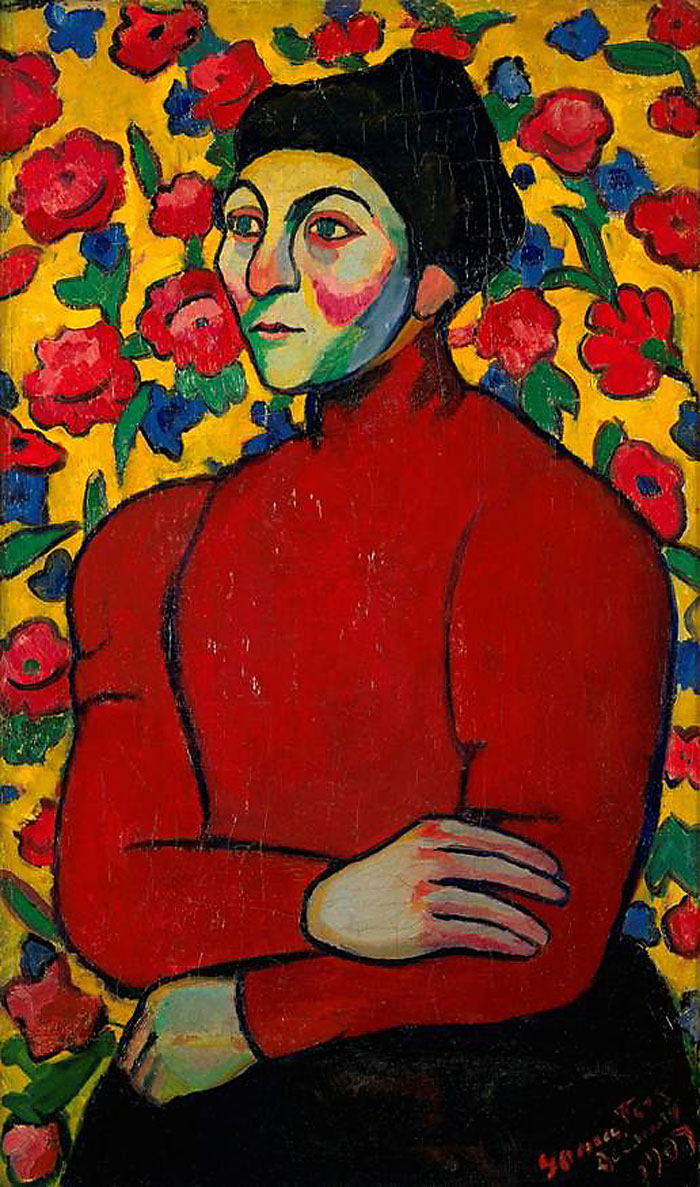
Sonia Delaunay (French, 1885-1979) 'Finnish woman' 1908


Sonia Delaunay (French, 1885-1979)
Finnish woman
1908


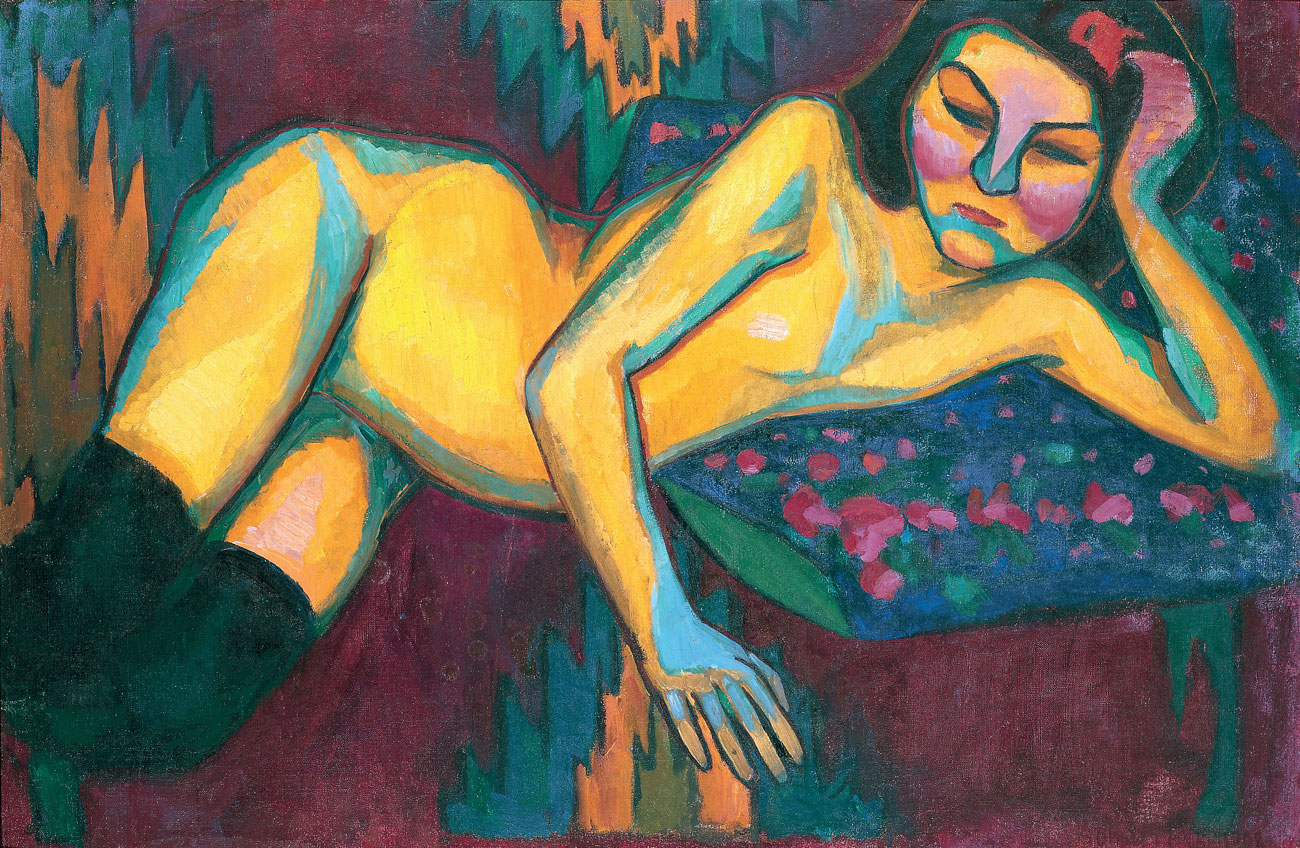
Sonia Delaunay (French, 1885-1979)  'Yellow Nude' 1908


Sonia Delaunay (French, 1885-1979)
Yellow Nude
1908
Musée des Beaux-Arts de Nantes, Nantes
© Pracusa 2014083


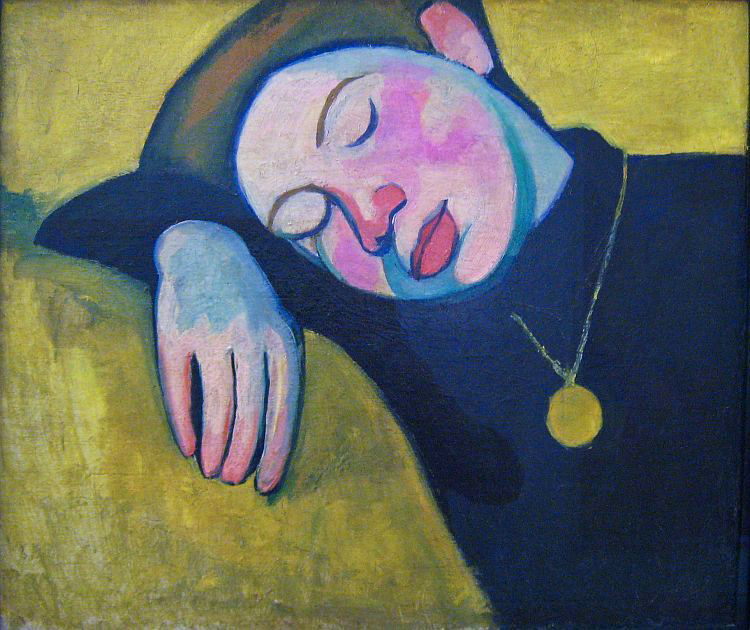
Sonia Delaunay (French, 1885-1979) 'Sleeping girl' 1907


Sonia Delaunay (French, 1885-1979)
Sleeping girl
1907


Sonia Delaunay (French, 1885-1979) 'Philomene' 1907


Sonia Delaunay (French, 1885-1979)
Philomene
1907


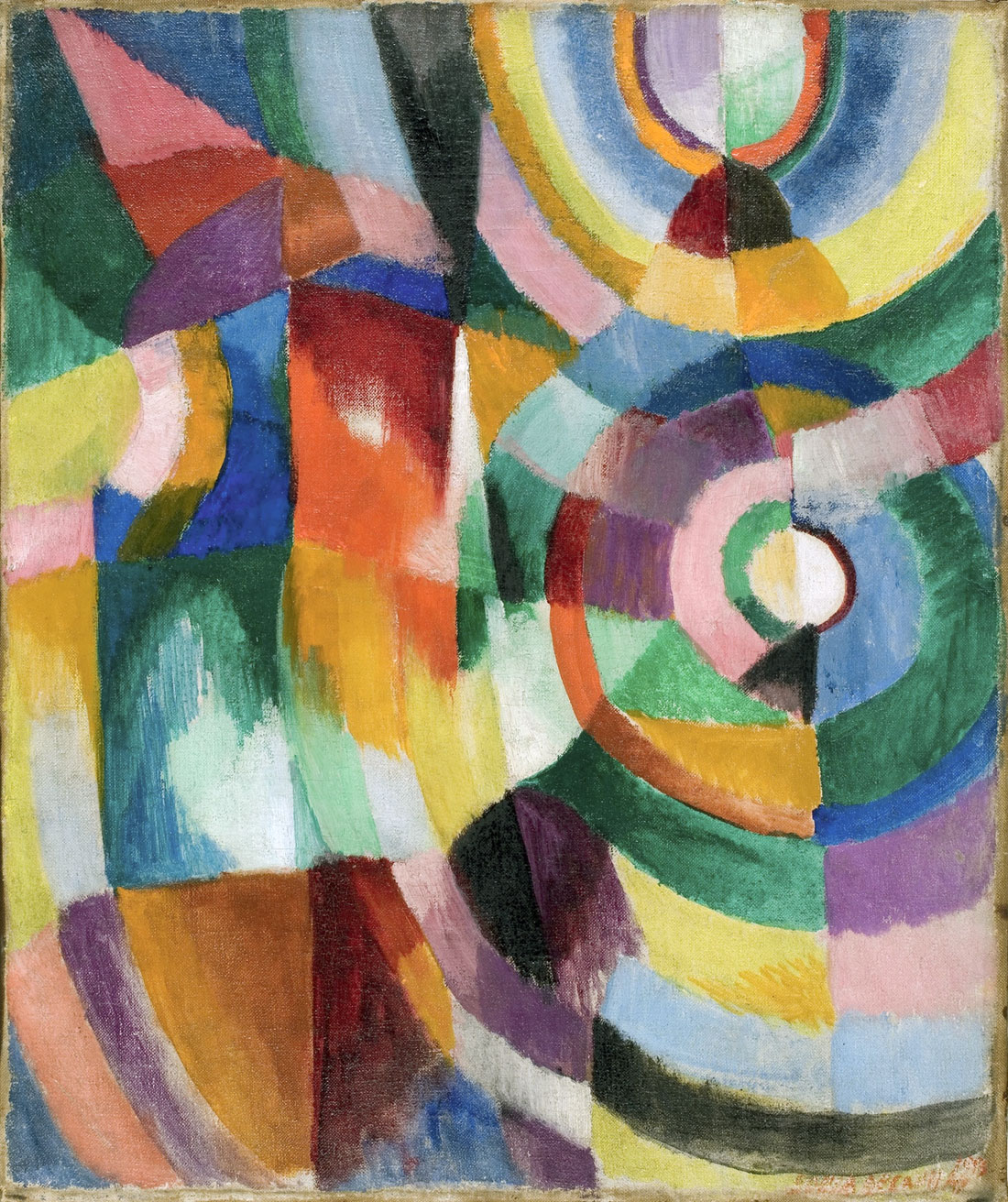
Sonia Delaunay (French, 1885-1979) 'Electric Prisms' 1913


Sonia Delaunay (French, 1885-1979)
Electric Prisms
1913
Davis Museum at Wellesley College, Wellesley, MA, Gift of Mr. Theodore Racoosin
© Pracusa


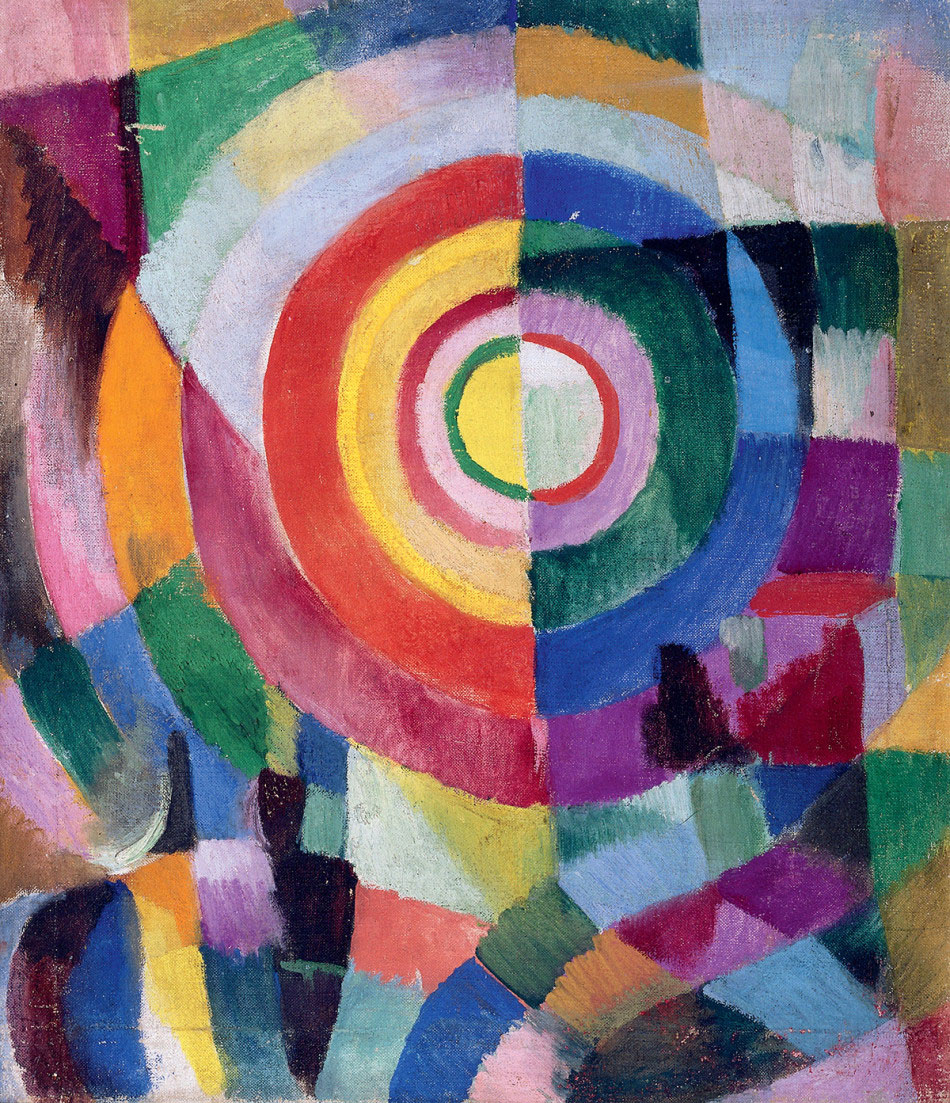
Sonia Delaunay (French, 1885-1979) 'Electric Prisms' 1913-1914


Sonia Delaunay (French, 1885-1979)
Electric Prisms
1913-1914


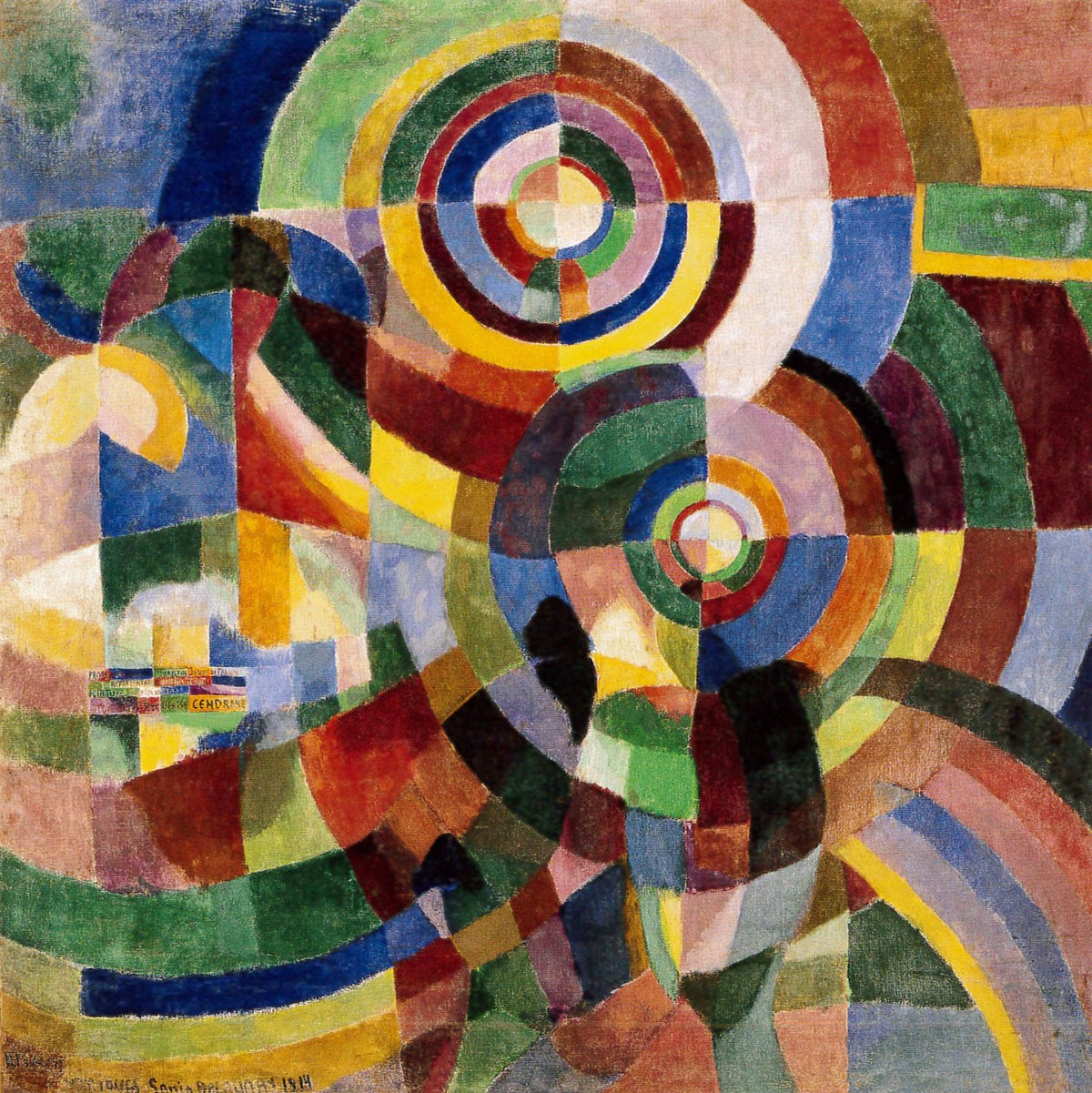
Sonia Delaunay (French, 1885-1979) 'Prismes electrique' 1914


Sonia Delaunay (French, 1885-1979)
Prismes electrique
1914
© Pracusa 2013057
© CNAP


Sonia Delaunay (French, 1885-1979) 'Prismes electrique' 1914 (detail)


Sonia Delaunay (French, 1885-1979)
Prismes electrique (detail)
1914
© Pracusa 2013057
© CNAP


Who is Sonia Delaunay?

Who is she?

Sonia Delaunay was a multi-disciplinary abstract artist and key figure in the Parisian avant-garde. Alongside her husband, Robert Delaunay, she pioneered the movement Simultanism. Her exploration of the interaction between colours has created a sense of depth and movement throughout her oeuvre.

What is her background?

She was born Sonia Illinitchna Stern to a Jewish Ukrainian family. At the age of seven she went to live with her comparatively wealthy uncle Henri Terk and his wife, Anna, in St Petersburg, Russia. The Terk’s offered her a privileged and cultured upbringing in St Petersburg. Nevertheless, her childhood memories of Ukraine remained with her and she often referred back to the ‘pure’ colour and bright costumes of the Ukrainian peasant weddings.

How did she start her career as an abstract artist?

“About 1911 I had the idea of making for my son, who had just been born, a blanket composed of bits of fabric like those I had seen in the houses of Russian peasants. When it was finished, the arrangement of the pieces of material seemed to me to evoke cubist conceptions and we then tried to apply the same process to other objects and paintings.”

What does she do?

“I always changed everything around me… I made my first white walls so our paintings would look better. I designed my furniture; I have done everything. I have lived my art.”

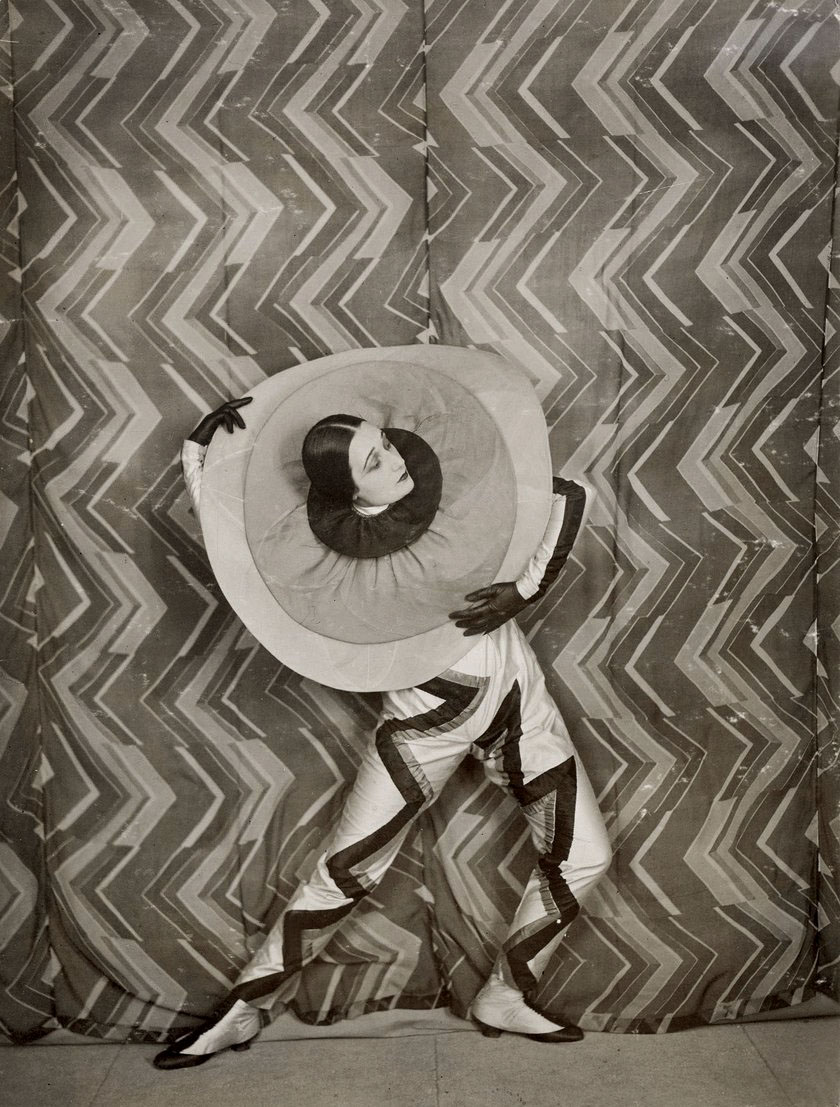
Delaunay’s creativity expanded beyond painting to include many other outlets such as Casa Sonia, an interiors and fashion boutique that she set up 1918; The entire set and costume design of Tristan Tzara’s 1923 play Le Cœur à Gaz; An illustration for the cover of Vogue in 1926; Costumes for the films Le Vertige directed by Marcel L’Herbier and Le p’tit Parigot, directed by René Le Somptier; Furniture for the set of the 1929 film Parce que je t’aime; And her textiles label Tissus Delaunay, which sold her designs worldwide.

What is Orphism?

Orphism is a term originating from 1912 when French poet and art critic Guillaume Appollinaire identified the new style of Cubist painting. Appollinaire was inspired by the work of František Kupka and the Delaunays, who, although channelling the Cubist vision, prioritised colour in their work. Appollinaire felt this use of colour brought movement, light and musical qualities to the artwork and therefore referenced the legendary poet and singer of ancient Greek mythology, Orpheus, when naming the movement.

What is Simultanism?

Simultanism is the strand of Orphism practised by the Delaunays. The name comes from the work of French scientist Michel Eugène Chevreul who identified the phenomenon of ‘simultaneous contrast’, in which colours look different depending on the colours around them. For example, a grey will look lighter on a dark background than it does on a light one. The Delaunays dispensed with form and aimed to created rhythm, motion and depth through overlapping patches of vibrant hues.

What are her key artworks?

Prismes électriques (Electric Prisms), 1914, displays Delaunay’s trademark concentric circles at their best. Interpreted as an ode to modernity, Delaunay refracts the lights and bustle of Boulevard Saint Michel into almost complete abstraction. Everything disintegrates into colour except two figures, which remain discernible in the lower centre of the piece.

Nu jaune, 1908, juxtaposes the models’ warm yellow skin against lashings of cool emerald. This is one of Delaunay’s most striking uses of tone. The bright colours are frequently offset by black marks. These create a bold and heavy outline which is primitivist in its intention. The face of the model is mask like, suggesting melancholy. Delaunay makes no attempt to depict her as attractive, giving the artwork a brusque, modern feel.

What are her thoughts on colour?

Colour is the skin of the world.

Colour was the hue of number.

One who knows how to appreciate colour relationships, the influence of one colour on another, their contrasts and dissonances, is promised an infinitely diverse imagery.

9 April 2015 on the Tate Modern website


Unknown photographer. 'Lizica Codreanu wearing the Pierrot-Éclair costume designed by Sonia Delaunay, on the set of René Le Somptier's 1926 film 'Le P'tit Parigot'' 1926


Unknown photographer
Lizica Codreanu wearing the Pierrot-Éclair costume designed by Sonia Delaunay, on the set of René Le Somptier’s 1926 film ‘Le P’tit Parigot’
1926
Still photo from the film Le P’tit Parigot, written by Paul Cartoux, Directed by René Le Somptier, 1926, collection of Antoine Blanchette
© L & M SERVICES B.V. The Hague 20100623


Unknown photographer. 'Sonia Delaunay in front of her door-poem in the Delaunays' apartment, Boulevard Malesherbes, Paris' 1924


Unknown photographer
Sonia Delaunay in front of her door-poem in the Delaunays’ apartment, Boulevard Malesherbes, Paris
1924
© Bibliothèque nationale de France, Paris


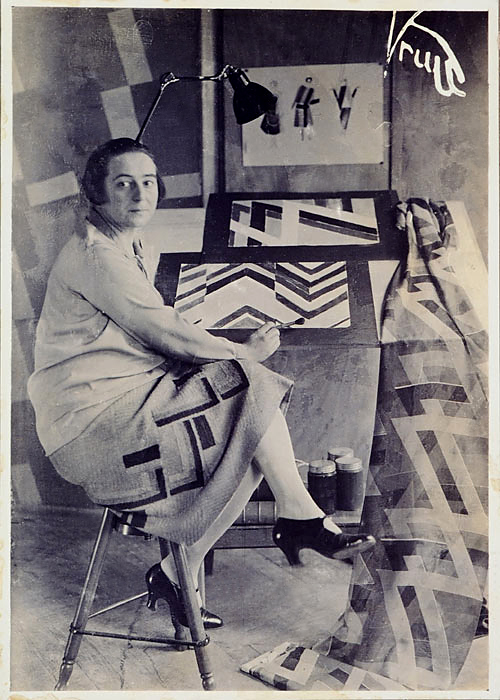
Germaine Krull (German, 1897-1985) 'Sonia Delaunay in her studio at boulevard Malesherbes, Paris, France' 1925


Germaine Krull (German, 1897-1985)
Sonia Delaunay in her studio at boulevard Malesherbes, Paris, France
1925
Bibliothèque Nationale de France, © L & M SERVICES B.V. The Hague 20100623


Unknown photographer. 'Sonia Delaunay in Simultaneous dress' c. 1913


Unknown photographer
Sonia Delaunay in Simultaneous dress
c. 1913


Unknown photographer. 'Bathing suits designed by Delaunay' c. 1920s


Unknown photographer
Bathing suits designed by Delaunay
c. 1920s


It was extremely inspiring to see a woman working with different disciplines – design, painting, textiles. Her reach was enviable. She was part of a tradition of Russian artists such as Liubov Popova and Varvara Stepanova who combined their knowledge of artisanal techniques with their beaux arts training as a way into the world of fashion. And her designs were outstanding. Look at her marvellous knitted bathing suit or patterned overcoat. If you were to walk into an exhibition and saw a woman dressed in that overcoat, she would steal the show.

Of course in Paris there were other powerful women designers, such as Madame Grès and Coco Chanel. The former’s designs were very sinuous, and Chanel was cutting back to the bone, whereas Sonia seemed to work on a frontal level. I like the powerful geometry of her designs – encasing a curvilinear body, contained and boxed-in like a walking cubist form. They were definitely not cute; they were harsh designs for husky women. I would have loved to see Gertrude Stein dressed in Sonia Delaunay’s clothes.

I admire her early paintings, especially Yellow Nude from 1908. You can’t really tell if the reclining figure that she has painted is male or female. It is coy, seductive, androgynous, as if she didn’t seem to care whether it was either. And if you read her biography, you find that she had a rather open attitude to sexuality – her first marriage was to a homosexual, and later to Robert. It was probably part of her shrewdness too – in making things work for her.

Has her work influenced mine? I came out of the Josef Albers camp, where colour was more magical and less obvious than Delaunay. I tend to go for unexpected nuanced colour combinations. So I would say not, but her workaholic attitude and willingness to experiment and try out things in different ways has. She was fearless, so why shouldn’t we be fearless. And I am very influenced by her teamwork – the big mural paintings she did for Palais de l’Air in 1937. I love those. She would have had teams of people working on them. They are such powerful works, so present and timeless. They send out a strong message – pronouncing a new world. They are not domestic works done at the easel. They are out in space. They are universal.

Sheila Hicks. “The multi-talented Delaunay. Sonia Delaunay: The Fortune of Colour,” Tate Etc. issue 34: Summer 2015 on the Tate Modern website, 8 June 2015 [Online] Cited 03/08/2015


Sonia Delaunay (French, 1885-1979) 'Illustration for cover of 'Vogue'' 1926


Sonia Delaunay (French, 1885-1979)
Illustration for cover of Vogue
1926


Sonia Delaunay (French, 1885-1979) 'Simultané playing cards' 1964


Sonia Delaunay (French, 1885-1979)
Simultané playing cards
1964


Sonia Delaunay (French, 1885-1979) 'Coat made for Gloria Swanson' 1923-1924


Sonia Delaunay (French, 1885-1979)
Coat made for Gloria Swanson
1923-1924
Private Collection
© Pracusa 2014083


Sonia Delaunay (French, 1885-1979) 'Simultaneous Dresses (The three women)' 1925


Sonia Delaunay (French, 1885-1979)
Simultaneous Dresses (The three women)
1925
Museo Thyssen-Bornemisza, Madrid
© Pracusa 2014083


Sonia Delaunay (French, 1885-1979) 'Rythme' 1938


Sonia Delaunay (French, 1885-1979)
Rythme
1938


Sonia Delaunay (French, 1885-1979) 'Rythme' 1945


Sonia Delaunay (French, 1885-1979)
Rythme
1945
Grey Art Gallery, New York
© Pracusa 2014083


Tate Modern
Bankside
London SE1 9TG
United Kingdom

Opening hours:
Open daily 10am – 6pm

Tate Modern website

LIKE ART BLART ON FACEBOOK

Back to top

Exhibition: ‘Shatter Rupture Break’ at the Art Institute of Chicago

Exhibition dates: 15th February – 3rd May 2015


Ivan Albright (American, 1897-1983) 'Medical Sketchbook' 1918


Ivan Albright (American, 1897-1983)
Medical Sketchbook
1918
The Art Institute of Chicago
Gift of Philip V. Festoso
© The Art Institute of Chicago


Again, I am drawn to these impressive avant-garde works of art. I’d have any of them residing in my flat, thank you very much. The Dalí, Delaunay and Léger in painting and drawing for me, and in photography, the muscular Ilse Bing, the divine Umbo and the mesmeric, disturbing can’t take your eyes off it, Witkiewicz self-portrait.

Marcus


Many thankx to the Art Institute of Chicago for allowing me to publish the art works in the posting. Please click on the photographs for a larger version of the image.


“Everything had broken down in any case, and new things had to be made out of the fragments.”


Kurt Schwitters, 1930


Salvador Dalí (Spanish, 1904-1989) 'City of Drawers' 1936


Salvador Dalí (Spanish, 1904-1989)
City of Drawers
1936
The Art Institute of Chicago
Gift of Frank B. Hubachek
© Salvador Dalí, Fundació Gala-Salvador Dalí / Artists Rights Society (ARS), New York, 2014


Ilse Bing (German, 1899-1998) 'Eiffel Tower, Paris, 1931' 1931


Ilse Bing (German, 1899-1998)
Eiffel Tower, Paris, 1931
1931
Julien Levy Collection, Gift of Jean and Julien Levy
© Estate of Ilse Bing


Luis Buñuel (Spanish, 1900-1983) and Salvador Dalí (Spanish, 1904-1989)
Un Chien Andalou
1929

Director – Luis Buñuel
Writers – Salvador Dali, Luis Buñuel
Cast – Simone Mareuil, Pierre Batcheff


Un Chien Andalou (An Andalusian Dog) is a 1929 Franco-Spanish silent surrealist short film by Spanish director Luis Buñuel and artist Salvador Dalí. Buñuel’s first film, it was initially released in a limited capacity at Studio des Ursulines in Paris, but became popular and ran for eight months.

Un Chien Andalou has no plot in the conventional sense of the word. With disjointed chronology, jumping from the initial “once upon a time” to “eight years later” without events or characters changing, it uses dream logic in narrative flow that can be described in terms of the then-popular Freudian free association, presenting a series of tenuously related scenes.


Fernand Léger (French, 1881-1955) and Dudley Murphy (American, 1897-1968)
Ballet Mécanique
1924


Ballet Mécanique (1923-1924) is a Dadaist post-Cubist art film conceived, written, and co-directed by the artist Fernand Léger in collaboration with the filmmaker Dudley Murphy (with cinematographic input from Man Ray). It has a musical score by the American composer George Antheil. However, the film premiered in silent version on 24 September 1924 at the Internationale Ausstellung neuer Theatertechnik (International Exposition for New Theater Technique) in Vienna presented by Frederick Kiesler. It is considered one of the masterpieces of early experimental filmmaking.


Ballet mécanique (1924) | MoMA

Ballet mécanique, conceived by painter Fernand Léger and photographed by filmmaker Dudley Murphy (possibly with some involvement from Man Ray), is a rhythmic interplay between human and object. Affected by his experience of fighting in World War I, and in particular by the mustard gas attack that left him hospitalised for a year, Léger became fascinated with mechanical technology, which would feature heavily in his post-1917 art. Ballet mécanique, his only film, is an example of this juxtaposition of man and machine: gears and pendulums vs. eyes and mouths, pistons pumping vs. a woman’s endless climb up the stairs, clocks vs. legs. A kaleidoscopic combination of faces and kitchen utensils, Ballet mécanique was completely unlike contemporary commercial movies, and would pave the way for other revolutionary films like Metropolis and Limite.

If you were to see Ballet mécanique installed in one of our galleries or projected in one of our theaters, it would look a little different than it does here – the frameline would be stabilised and the edges of the picture would either be cropped or camouflaged with masking around the screen. However, we are presenting this version the way a scholar visiting the Film Study Center would see it on a flatbed viewing machine, with a slight bounce to the image and the sprocket holes visible, and without live musical accompaniment. (The score, composed by George Antheil and usually performed as a separate concert piece, was finished several years after Ballet mécanique premiered and is significantly longer than the film.)

MoMA text from the YouTube website


Claude Cahun (French, 1894-1954) 'Object' 1936


Claude Cahun (French, 1894-1954)
Object
1936
The Art Institute of Chciago
Through prior gift of Mrs. Gilbert W. Chapman


A century ago, society and life were changing as rapidly and radically as they are in today’s digital age. Quicker communication, faster production, and wider circulation of people, goods, and ideas – in addition to the outbreak of World War I – produced a profoundly new understanding of the world, and artists in the early years of the 20th century responded to these issues with both exhilaration and anxiety. Freeing themselves from the restraints of tradition, modern artists developed groundbreaking pictorial strategies that reflect this new shift in perception.

Shatter Rupture Break, the first exhibition in The Modern Series, explores the manifold ways that ideas of fragmentation and rupture, which permeated both the United States and Europe, became central conceptual and visual themes in art of the modern age. Responding to the new forms and pace of the metropolis, artists such as Robert Delaunay and Gino Severini disrupted traditional conventions of depth and illusionism, presenting vision as something fractured. Kurt Schwitters and George Grosz explored collage, using trash and bits and pieces of printed material in compositions to reflect social and political upheaval and produce something whole out of fragments. In the wake of new theories of the mind as well as the literal tearing apart of bodies in war, artists such as Hans Bellmer, Salvador Dalí, and Stanisław Witkiewicz produced photographs and objects revealing the fractured self or erotic dismemberment. The theme of fragmentation was ubiquitous as inspiration for both the formal and conceptual revolutions in art making in the modern age.

Shatter Rupture Break unites diverse objects from across the entire holdings of the Art Institute – paintings, sculpture, works on paper, photographs, decorative arts and designed objects, textiles, books, and films – to present a rich cacophony that exemplifies the radical and generative ruptures of modern art.

The Modern Series

A quintessentially modern city, Chicago has been known as a place for modern art for over a century, and the Art Institute of Chicago has been central to this history. The Modern Series exhibitions are designed to bring together the museum’s acclaimed holdings of modern art across all media, display them in fresh and innovative ways within new intellectual contexts, and demonstrate the continued vitality and relevance of modern art for today.

Text from the Art Institute of Chicago website


Robert Delaunay (French, 1885-1941) 'Champs de Mars: The Red Tower' 1911/1923


Robert Delaunay (French, 1885-1941)
Champs de Mars: The Red Tower
1911/1923
The Art Institute of Chicago
Joseph Winterbotham Collection


Fernand Léger (French, 1881-1955) 'Composition in Blue' 1921-1927


Fernand Léger (French, 1881-1955)
Composition in Blue
1921-1927
The Art Institute of Chicago
Charles H. and Mary F. S. Worcester Collection
© 2014 Artists Rights Society (ARS), New York / ADAGP, Paris


Stuart Davis (American, 1892-1964) 'Ready-to-Wear' 1955


Stuart Davis (American, 1892-1964)
Ready-to-Wear
1955
The Art Institute of Chicago
Restricted gift of Mr. and Mrs. Sigmund W. Kunstadter; Goodman Endowment


Designed by Ruben Haley, Made by Consolidated Lamp and Glass Company. "Ruba Rombic" Vase, 1928/1932


Designed by Ruben Haley
Made by Consolidated Lamp and Glass Company
“Ruba Rombic” Vase
1928/1932
Art Institute of Chicago
Raymond W. Garbe Fund in honor of Carl A. Erikson; Shirley and Anthony Sallas Fund


Kurt Schwitters (German, 1887-1948) 'Mz 13 Call' 1919


Kurt Schwitters (German, 1887-1948)
Mz 13 Call
1919
The Art Institute of Chicago
Gift of Mr. and Mrs. Maurice E. Culberg
© 2014 Artists Rights Society (ARS), New York / VG Bild-Kunst, Bonn


Diego Rivera (Mexican, 1886-1957) 'Portrait of Marevna' c. 1915


Diego Rivera (Mexican, 1886-1957)
Portrait of Marevna
c. 1915
The Art Institute of Chicago
Alfred Stieglitz Collection, gift of Georgia O’Keeffe
© 2014 Banco de México Diego Rivera Frida Kahlo Museums Trust, Mexico, D.F. / Artists Rights Society (ARS), New York


The Art Institute of Chicago is introducing an innovative new series of exhibitions that presents works from the museum’s acclaimed collection of modern art in reimagined ways that demonstrate the continued vitality and significance these works have today.

The Modern Series debuts with Shatter Rupture Break, opening Sunday, February 15, in Galleries 182 and 184 of the museum’s Modern Wing. The exhibition unites such diverse objects as paintings, sculpture, works on paper, photographs, decorative arts and designed objects, textiles, books, and films.

“We wanted to explore how the idea of rupture permeated modern life in Europe and the Americas,” said Elizabeth Siegel, Associate Curator of Photography, who, with Sarah Kelly Oehler, the Gilda and Henry Buchbinder Associate Curator of American Art, took the lead in organising the first exhibition. “It served as an inspiration for revolutionary formal and conceptual developments in art making that remain relevant today.”

A century ago, society was changing as rapidly and radically as it is in today’s digital age. Quicker communication, faster production, and wider circulation of people, goods, and ideas – in addition to the outbreak of World War I – produced a profoundly new understanding of the world, and artists responded with both anxiety and exhilaration. Freeing themselves from the restraints of tradition, modern artists developed groundbreaking pictorial strategies that reflected this new shift in perception.

Responding to the new forms and pace of cities, artists such as Robert Delaunay (French, 1885-1941) and Gino Severini (Italian, 1883-1966) disrupted traditional conventions of depth and illusionism, presenting vision as something fractured. Delaunay’s Champs de Mars: The Red Tower fragments the iconic form of the Eiffel Tower, exemplifying how modern life – particularly in an accelerated urban environment – encouraged new and often fractured ways of seeing. Picturesque vistas no longer adequately conveyed the fast pace of the modern metropolis.

The human body as well could no longer be seen as intact and whole. A devastating and mechanised world war had returned men from the front with unimaginable wounds, and the fragmented body became emblematic of a new way of understanding a fractured world. Surrealists such as Hans Bellmer (German, 1902-1975), Claude Cahun (French, 1894-1954) and Salvador Dalí (Spanish, 1904-1989) fetishised body parts in images, separating out eyes, hands, and legs in suggestive renderings. A more literal representation of the shattered body comes from Chicago’s own Ivan Albright, who was a medical draftsman in World War I. In his rarely shown Medical Sketchbook, he created fascinatingly gruesome watercolours that documented injured soldiers and the x-rays of their wounds.

Just as with the body, the mind in the modern era also came to be seen as fragmented. Stanislaw Witkiewicz (Polish, 1885-1939) produced a series of self-portraits as an act of psychological exploration. His work culminated in one stunning photograph made by shattering a glass negative, which he then reassembled and printed, thus conveying an evocative sense of a shattered psyche. The artistic expression of dreams and mental imagery perhaps reached a pinnacle not in a painting or a sculpture, but in a film. Luis Buñuel and Salvador Dalí’s film Un chien andalou (An Andalusian Dog) mystified viewers with its dreamlike narrative, dissolves from human to animal forms, dismembered body parts, and shockingly violent acts in an attempt to translate the unconscious mind onto a celluloid strip.

Kurt Schwitters (German, 1887-1948) and George Grosz (German, 1893-1959) explored collage, which took on new importance for avant-garde artists thanks to the aesthetic appeal and widespread availability of mass-produced media. Schwitters used the ephemera of German society to create what he called Merz, an invented term signifying an artistic practice that included collage, assemblage, painting, poems, and performance. The Art Institute owns a significant group of these collages by Schwitters, and six will appear in the exhibition. The use of thrown-away, ripped up, and scissored-out pieces of paper, divorced from their original meaning and reassembled with nails and glue into new objects, was an act that exposed the social and political disruptions of a German society that seemed broken and on the edge of collapse in the aftermath of World War I.

Shatter Rupture Break is unusual in that it unites objects from across the entire museum – from seven curatorial departments as well as the library. This multiplicity is significant because modern artists did not confine themselves to one medium, but explored different visual effects across a variety of media. As well, the show prominently features the voices of artists, writers, scientists, and other intellectuals of the period. The goal is to create a dynamic space that evokes the electrifying, disruptive, and cacophonous nature of modern art at the time.

“We hope to excite interest in the modern period as a crucial precursor to the changes of our own time, to show how what might seem old now was shockingly fresh then,” said Oehler.

Considered one of the finest and most comprehensive in the world, the Art Institute’s collection of modern art includes nearly 1,000 works by artists from Europe and the Americas. The museum was an early champion of modern artists, from its presentation of the Armory Show in 1913 to its early history of acquiring major masterpieces. This show highlights some recent acquisitions of modern art, but also includes some long-held works that have formed the core of the modern collection for decades. Shatter Rupture Break celebrates this history by bringing together works that visitors may know well, but have never seen in this context or with this diverse array of objects.”

Press release from the Art Institute of Chicago


Hans Bellmer (German born Poland, 1902-1975) 'The Doll (La Poupée)' 1935


Hans Bellmer (German born Poland, 1902-1975)
The Doll (La Poupée)
1935
Gelatin silver print overpainted with white gouache
65.6 x 64cm
Anonymous restricted gift; Special Photography Acquisition Fund; through prior gifts of Boardroom, Inc., David C. and Sarajean Ruttenberg, Sherry and Alan Koppel, the Sandor Family Collection, Robert Wayne, Simon Levin, Michael and Allison Delman, Charles Levin, and Peter and Suzann Matthews; restricted gift of Lynn Hauser and Neil Ross
© 2015 Artists Rights Society (ARS), New York / ADAGP, Paris


Umbo (Otto Umber) (German, 1902-1980) 'Untitled' 1928


Umbo (Otto Umber) (German, 1902-1980)
Untitled
1928
Julien Levy Collection, Gift of Jean and Julien Levy
© 2014 Phyllis Umbehr/Galerie Kicken Berlin/ Artists Rights Society (ARS), New York


Stanisław Ignacy Witkiewicz (Polish, 1885-1939) 'Self-Portrait, Zakopane [Broken Glass]' 1910


Stanisław Ignacy Witkiewicz (Polish, 1885-1939)
Self-Portrait, Zakopane [Broken Glass]
1910
Promised Gift of a Private Collection


The Art Institute of Chicago
111 South Michigan Avenue
Chicago, Illinois 60603-6404
Phone: (312) 443-3600

Opening hours:
Thursday – Monday 11am – 5pm
Closed Tuesday and Wednesday
The museum is closed Thanksgiving, Christmas, and New Year’s days.

The Art Institute of Chicago website

LIKE ART BLART ON FACEBOOK

Back to top

Exhibition: ‘Florence Henri. Mirror of the avant-garde 1927-1940’ at Jeu de Paume, Paris

Exhibition dates: 24th February – 17th May 2015

Curator: Cristina Zelich


Florence Henri (New York 1893 - Compiègne 1982) 'Composition' 1928


Florence Henri (New York 1893 – Compiègne 1982)
Composition
1928
Gelatin silver print, vintage
27.2 x 37.5cm
Bauhaus Archiv, Berlin
© Florence Henri / Galleria Martini & Ronchetti Photo
© Bauhaus Archiv


Objects in and of space, the two the same

Florence Henri is rapidly becoming one of my favourite photographers, an artist who emerged during one of the golden periods of photography, the avant-garde of the 1920s-30s. While we have seen some of these photographs before in a previous posting, there are some new and delightful images to enjoy here.

If you believe the text by Priscilla Frank, “Meet Florence Henri, The Under-Acknowledged Queen Of Surrealist Photography,” on the Huffington Post website [02/20/2015], you could be forgiven for thinking that her photography is based on Surrealist themes. Nothing could be farther from the truth. There is nothing about Henri’s photographs to suggest that they are based on the creative potential of the unconscious mind exemplified by the irrational juxtaposition of images. Henri’s photographs are quite logical and ordered, being an investigation into space, time and object using the “extension of the formal and structural aesthetics of Cubism, Purism and Constructivism.”

Her geometric abstractions “exploited the dialogue between realism and abstraction… and she explored spatial extension and fragmentation in her utter modern vocabulary. Her still life and abstract compositions achieved by balancing abstraction with a pure and essential subject were created in the spirit of the machine age. She viewed space as if it were elastic, distorting figure and ground and altering planes through the use of mirrors and lenses.”

Through attention and attentiveness to subject, Henri achieved her results by using created space to investigate the fragmentation and distortion of the world. Her art is not about the production of phenomena (the spectacle), but about the creation of volumes that are in an of space itself. As Donald Judd’s observes of his created volumes in 1981: “… familiar objects, objects as we habitually perceive them, assume physical neutrality because they and their environment are deactivated: “They are points in space, and space is an empty surround. Instead, what is needed is a created space, space made by someone, space that is formed as a solid, the two the same, with the space and the solid defining each other.” Objects in and of space, the two the same: this was the crux. Judd did more than set new solids into existing voids. He formed solids and their correlative spaces as an integrated operation, as if he were establishing an architecture from the ground up, creating the entire environment, intensifying it, saturating it with its own sensation.”1

In a photographic sense, Henri can be seen as a precursor to Judd’s volumes, creating her own worlds from the ground up, creating the entire environment where the space and the object are one and the same thing… only to then record and flatten that space into the essential nature of the photograph, its physicality. Her sensory affects “remain fixed in the concatenation of materials, structure and placement that generates it. They are the lived equivalent of those conditions, experienced as continuous in time – hence, timeless – remaining wholly the same until interrupted.”2 How appropriate for Henri’s photographs for they do indeed have a timeless “air”, a transcendence of the time and place they were taken, a transcendence of the space which her volumes inhabit. Objects in and of space, the two the same.

As Judd observes, “Time and space don’t exist [as idealised abstractions]; they are made by events and positions. Time and space can be made and don’t have to be found like stars in the sky or rocks on a hillside.” Time and space are grounded in being human: they exist when someone experiences them.”3 Here is the nub of the matter, for it matters that we experience Henri’s photographs each in its definite time and space. Henri’s being is immersed in these volumes and they hold our interest because the created environments are saturated with her own sensations.

Dr Marcus Bunyan


Footnotes

1/ Donald Judd quoted in Richard Shiff. “Sensous Thoughts,” in Marianne Stockebrand (ed.,). Donald Judd. The Multicolored Works. Yale University Press, 2014, p. 106

2/ Ibid.,

3/ Ibid., p. 107.


Many thankx to the Jeu de Paume for allowing me to publish the photographs in the posting. Please click on the photographs for a larger version of the image.


“With photography, what I really want to do is compose the image, as I do in painting. The volumes, lines, shadows and light should submit to my will and say what I would like them to say. All of this under the strict control of the composition, because I do not claim to be able to explain the world or to explain my own thoughts.”


Florence Henri in an interview with Attilio Colombo, “Specchio, essenzialità, geometría,” in ‘Florence Henri’ (Milan: Gruppo Editoriale Fabbri, 1983)


“Henri soon recognised the medium’s capacity as a pictorial language and outlet for creative expression. Upon returning to France [from the Bauhaus], Henri began to develop a large body of photographic work based upon her Bauhaus experience and an extension of the formal and structural aesthetics of Cubism, Purism and Constructivism. These non-objective principles forged an alternative to the then-dominant French art movement Surrealism. Henri transcended the avant-garde of one art form to that of another…

Henri’s greatest experimentation with geometric abstraction occurred during the period between 1929-1930… In the photographic work, Florence Henri exploited the dialogue between realism and abstraction, but always maintained a recognisable subject. She was concerned with transparency and movement, and she explored spatial extension and fragmentation in her utter modern vocabulary.

Her still life and abstract compositions achieved by balancing abstraction with a pure and essential subject were created in the spirit of the machine age. She viewed space as if it were elastic, distorting figure and ground and altering planes through the use of mirrors and lenses.”


Lynne Warren. ‘Encyclopedia of Twentieth-Century Photography’, 3-Volume set. Routledge, 2005, p. 691.


Florence Henri (New York 1893 - Compiègne 1982) 'Composition' 1928


Florence Henri (New York 1893 – Compiègne 1982)
Composition
1928
Gelatin silver print, vintage
27 x 37.1cm
Museum Folkwang, Essen
© Florence Henri / Galleria Martini & Ronchetti


Florence Henri (New York 1893 - Compiègne 1982) 'Composition abstraite [Still-life composition]' 1929


Florence Henri (New York 1893 – Compiègne 1982)
Composition abstraite [Still-life composition]
1929
Collage, gelatin silver print cut and pasted on paper
12 x 14cm
Private collection, courtesy Florence Henri Archive, Genoa
© Florence Henri / Galleria Martini & Ronchetti


Florence Henri (New York 1893 - Compiègne 1982) 'Portrait Composition, Tulia Kaiser' c. 1930


Florence Henri (New York 1893 – Compiègne 1982)
Portrait Composition, Tulia Kaiser
c. 1930
Gelatin silver print, vintage
23 x 29.2cm
Achat grâce au mécénat de Yves Rocher, 2011
Ancienne collection Christian Bouqueret Centre Pompidou, Paris. Musée national d’art moderne / Centre de création industrielle
© Florence Henri / Galleria Martini & Ronchetti Photo
© Centre Pompidou, Mnam-Cci, Dist. Rmn-Grand Palais / Georges Meguerditchian


Summary of exhibition

Florence Henri. Mirror of the avantgarde illustrates the desire of the Jeu de Paume to highlight the important role played by women photographers from the 1920s to the 1950s, and follows on from previous exhibitions devoted to Claude Cahun, Kati Horna, Eva Besnyö, Berenice Abbott, Lisette Model, Laure Albin Guillot and indeed, Lee Miller.

The exhibition brings together, for the first time in France, over 130 vintage prints by Florence Henri, as well as rare documents and publications, revealing the artist’s photographic production. Influenced by Constructivism, Cubism and Surrealism, Florence Henri’s work is part of the exciting creative tenor of the period, during which, photography, like cinema or architecture, embodied a spirit of innovation and progress, as well as a certain unconventionality in terms of the dominant visual order.

Familiar with Bauhaus, Florence Henri was one of the figures of the European artistic intelligentsia of the time. Her friendship with Fernand Léger, the Delaunays, Hans Arp, László Moholy-Nagy and Theo van Doesburg would have a profound influence on her work. In 1929, Florence Henri opened a photography studio in Paris. It soon rivalled that of Man Ray’s. Her classes were very well-attended and her talents as a portrait photographer were quickly recognised.

It is not so much the image alone as the constant research that brings Florence Henri’s work to life. Lines and geometric compositions are recurring elements in her photographs. Over the years, she made her compositions increasingly complex through the use of mirrors, industrial and natural objects, or through collage and superposition. The exhibition attempts to both decipher and highlight the work of Florence Henri in terms of reflections, perspective, the depth of field and photomontage – key technical experimentations in the history of modern photography.


Florence Henri (New York 1893 - Compiègne 1982) 'Mannequin de tailleur [Tailor's mannequin]' 1930-1931


Florence Henri (New York 1893 – Compiègne 1982)
Mannequin de tailleur [Tailor’s mannequin]
1930-1931
Gelatin silver print, vintage
17.1 x 22.8cm
Private collection, courtesy Florence Henri Archive, Genoa
©Florence Henri / Galleria Martini & Ronchetti


Florence Henri (New York 1893 - Compiègne 1982) 'Composition Nature morte [Still-life composition]' 1931


Florence Henri (New York 1893 – Compiègne 1982)
Composition Nature morte [Still-life composition]
1931
Gelatin silver print dated 1977
23 x 30cm
Private collection, courtesy Florence Henri Archive, Genoa
© Florence Henri / Galleria Martini & Ronchetti


Florence Henri (New York 1893 - Compiègne 1982) 'Pont [Bridge]' 1930-1935


Florence Henri (New York 1893 – Compiègne 1982)
Pont [Bridge]
1930-1935
Gelatin silver print dated 1977
23.5 x 23.8cm
Private collection, courtesy Florence Henri Archive, Genoa
© Florence Henri / Galleria Martini & Ronchetti


Florence Henri (New York 1893 - Compiègne 1982) 'Composition, The Glory that was Greece' c. 1933


Florence Henri (New York 1893 – Compiègne 1982)
Composition, The Glory that was Greece
c. 1933
Photomontage, gelatin silver print dated 1975
23.5 x 29.5cm
Private collection, courtesy Florence Henri Archive, Genoa
© Florence Henri / Galleria Martini & Ronchetti


“All that I know, and how I know this, is primarily made up of abstract elements: spheres, planes, and grids whose parallel lines provide numerous opportunities, without taking into account the mirrors I use, to present the same object from several different angles within a single photograph, in order to yield, in the same way, different visions that complement and complete each other, and which when taken as a whole, are better able to explain it. Essentially, all of this is much more difficult to explain than to do.”


Florence Henri in an interview with Attilio Colombo, “Specchio, essenzialità, geometría,” in ‘Florence Henri’ (Milan: Gruppo Editoriale Fabbri, 1983)


Florence Henri (New York 1893 – Compiègne (France) 1982) was a multi-faceted artist, who was first known for her paintings before making a name for herself as a major figure in avant-garde photography between the end of the 1920s and the beginning of the 1940s. She lived in Silesia, Munich, Vienna, Rome and above all Berlin, before finally settling in Paris in 1924 and devoting herself to photography. This medium enabled her to experiment new relationships with space, in particular by the use of mirrors and other objects in her compositions.

The Jeu de Paume is presenting a vast panorama of Florence Henri’s photographic production from 1927 to 1940, including her self-portraits, abstract compositions, portraits of artists, nudes, photomontages, photocollages, as well as documentary photos taken in Rome, Paris and Brittany. The exhibition comprises vintage prints, various documents and published material.

When she was young, Florence Henri studied music and painting in England and Germany. In 1919, when she was a student at the Berlin Academy of Arts, she made the acquaintance of writer and art historian Carl Einstein and became friends with several figures of the avant-garde, including Hans Arp, Adrian Ludwig Richter, John Heartfield and Lázló Moholy-Nagy. She took classes with Paul Klee and Vassily Kandinsky at the Bauhaus in Weimar. In 1924 she moved to Paris, where she followed classes at the Académie Montparnasse, whose director was André Lhote, then at the Académie moderne (founded by Fernand Léger and Amédée Ozenfant). In 1927, after a visit to Bauhaus in Dessau, she abandoned painting in favour of photography. It was at this time that she produced her famous self-portraits in mirrors and her still lifes; the result of her first steps in the spatial research that she would carry out through the medium of photography.

Between the end of the 1920s and the beginning of the 1930s, three mythical exhibitions in terms of the history of European photography took place in Germany: “Fotografie der Gegenwart” at the Folkwang Museum in Essen (1929); “Film ind Foto” (Fifo) organised the same year by the Deutscher Werkbund in Stuttgart and “Das Lichtbild” held in Munich (1931). These exhibitions bore witness to the rapid expansion of new photographic concepts and a rupture with tradition. Fifo marked the zenith of the Neues Sehen (New Vision) movement of which László Moholy-Nagy was an exponent and “Das Lichtbild” marked the triumph of Neue Sachlichkeit (New Objectivity), whose leading representative was Albert Renger-Patzsch.

Florence Henri was invited to show an important number of prints at these three exhibitions in recognition of her photographic production during this fundamental period that saw the photography used to free our vision and open out onto new experiences.

Florence Henri’s studio rivalled that of Man Ray, even if she had also opened a school of photography where Lisette Model and Gisèle Freund, amongst others, would enrol. In fact, despite the central position that her oeuvre occupied in avant-garde photography at the end of the 1920s, her reputation as a portraitist in Paris, and the fact that her photos had been published in many of the period’s illustrated magazines such as Arts et Métiers and Lilliput etc, Florence Henri’s body of work remains largely unknown.

László Moholy-Nagy’s* comments are a perfect illustration of Florence Henri’s position: “With Florence Henri’s photos, photographic practice enters a new phase, the scope of which would have been unimaginable before today. Above and beyond the precise and exact documentary composition of these highly defined photos, research into the effects of light is tackled not only through abstract photograms, but also in photos of real-life subjects. The entire problem of manual painting is taken onboard by the photographic process and is manifestly given a whole new depth thanks to this new optical instrument. Reflections and spatial relationships, superposition and intersections are just some of the areas explored from a totally new perspective and viewpoint.”

*László Moholy-Nagy, “Zu den Fotografien von Florence Henri”, i10, No 17-18, Amsterdam, December 20, 1928.

Press release from the Jeu de Paume website


Florence Henri (New York 1893 - Compiègne 1982) 'Double portrait' 1927-1928


Florence Henri (New York 1893 – Compiègne 1982)
Double portrait
1927-1928
Gelatin silver print dated 1977
24 x 18cm
Private collection, courtesy Florence Henri Archive, Genoa
© Florence Henri / Galleria Martini & Ronchetti


Florence Henri (New York 1893 - Compiègne 1982) 'Autoportrait [Self-portrait]' 1928


Florence Henri (New York 1893 – Compiègne 1982)
Autoportrait [Self-portrait]
1928
Gelatin silver print, vintage
39.3 x 25.5cm
Staatliche Museen zu Berlin, Kunstbibliothek
© Florence Henri / Galleria Martini & Ronchetti


Her most well-known work is a self-portrait, in which Henri sits before a mirror, dolled up almost as if in drag. Two silver balls lay reflected up against the mirror, equivocal symbols of both testicles and breasts. Henri, influential in both her artistic style and personal styles, toyed with gender binaries, using her personal appearance to emphasise the performative nature of gender. The artist was married to a Swiss house servant, but went on to have other relationships with both men and women, including a longtime affair with artist and model Margarete Schall.

Henri established herself as a formidable photographer, and remained consistent in her work up until World War II. Then her work declined considerably, both due to lack of materials and the prohibitions imposed under the Nazi occupation. Henri briefly returned to painting, but her central period of output remained in the 1920s and 1930s. Her compositions, simultaneously warm, playful, clever and inquisitive, set the stage for future explorations into the limits of photography, or lack thereof.

Priscilla Frank. “Meet Florence Henri, The Under-Acknowledged Queen Of Surrealist Photography,” on the Huffington Post website, 20th February 2015 [Online] Cited 10/03/2015.


Florence Henri (New York 1893 - Compiègne 1982) 'Femme aux cartes [Woman with cards]' 1930


Florence Henri (New York 1893 – Compiègne 1982)
Femme aux cartes [Woman with cards]
1930
Gelatin silver print, vintage
39 x 28.5cm
Private collection, courtesy Florence Henri Archive, Genoa
© Florence Henri / Galleria Martini & Ronchetti


Florence Henri (New York 1893 - Compiègne 1982) 'Portrait Composition, Cora' 1931


Florence Henri (New York 1893 – Compiègne 1982)
Portrait Composition, Cora
1931
Gelatin silver print, vintage
13.6 x 11.4cm
Private collection, courtesy Florence Henri Archive, Genoa
© Florence Henri / Galleria Martini & Ronchetti


Florence Henri (New York 1893 - Compiègne 1982) 'Fernand Léger' 1934


Florence Henri (New York 1893 – Compiègne 1982)
Fernand Léger
1934
Gelatin silver print, vintage
30.4 x 24cm
Private collection, courtesy Archives Florence Henri, Genoa
© Florence Henri / Galleria Martini & Ronchetti


Earliest compositions

Her earliest compositions introduce an element that would be fundamental for her artistic investigations, namely the mirror. Using a very limited number of elements, Henri created extremely complex images characterised by the fragmentation of space and the use of multiple viewpoints. They include one of her best-known works, the self-portrait looking in the mirror with two metal spheres, which may be said to embody the spirit of freedom typical of that period, conveying the image of a modern and emancipated female artist, one who failed to conform to the societal status traditionally assigned to women.

Multiple exposure

Florence Henri uses methods such as multiple exposures when shooting, or a combination of several negatives, some inverted, to obtain abstract images, in which she manages to bestow static objects with a sense of dynamism. Florence Henri’s output during this early phase can be described as a perfect synthesis between abstract geometrical painting and the innovations of New Vision photography.

“Florence Henri’s work lured me to come to Paris in 1929. I wanted to live in a place where images were made that coincided with my own concepts.”

~ Ilse Bing, quoted in Gisèle Freund’s preface to Ilse Bing 1929/1955: Femmes de l’enfance à la vieillesse

Advertising photography

In the field of professional photography, Florence Henri stands out for her very personal approach to advertising photography. Indeed, her images are the natural extension of her photographic experimentation and investigations using objects and mirrors.

Collages

She quickly substitutes industrial objects with natural elements in her compositions. In addition, she introduces a new tool in her work: collage. She makes them with fragments of prints, and then reproduces them to create the final print. She also introduces a new technique into her work – collage – thereby underlining her interest in autonomous images that move away from a simple reproduction of reality, all the while emphasising the conceptual work of the artist.

Shadows

Her quest for experimentation leads Florence Henri to work on the shadows passing vertically through the frame, creating a dark gap that interrupts and fragments the continuity of the image.

Nu composition

Their aesthetic characteristics clearly place the works grouped under the title Nu composition as part of the formal research Florence Henri carried out from the early 1930s, where the mastery of the composition obviously remains the central concern of her work.

Here, the camera is positioned at a slight distance in order to capture the sensuality of the female form, while natural objects – hyacinths and shells – or other more enigmatic elements, such as a comb or cards, also appear in the frame.

Rome

In late 1931 and early 1932, Florence Henri visits Rome where she takes a series of photographs, notably at the Roman Forum, but also at Saint Peter’s Square, which she uses, upon her return to Paris, as material for numerous collages, developing the technique she had already used in certain of her still lifes.

Portrait composition

The series Portrait Composition, is characterised by the tight framing of the central figurer – though some are models, most are her friends, including Grete Willers, Sonia Delaunay, Woty Werner, Kurt Wilhelm-Kästner, Fernand Léger, and Tulia Kaiser. The artist often makes use of harsh lighting, which marks the traits or make-up of her subjects with a diagonal composition or even distorts the image.

Brittany

The photographs taken in Brittany, which at first glance could be seen as purely documentary, reveal a very carefully considered attention to structure. In some of the more general shots, Florence Henri inserts a blurred, graphic element between the lens and the landscape, thereby going against the idea of photography as merely capturing reality, and once again, reinforcing the notion of composition.

Store windows

When Florence Henri strolls through Paris with her camera, her images reveal a very different preoccupation to that of other photographers. Faithful to her attention to structure, in the reflections of store windows she finds the same spirit that brings life to her studio compositions using mirrors. In 1936, Florence Henri moves to the Rue Saint-Romain in Montparnasse, where she makes use of the terrace to work in natural light, and to pursue her study of the fragmentation of the image through the use of shadows and reflections. She also returns to her self-portrait work.


Florence Henri (New York 1893 - Compiègne 1982) 'Fenêtre [Window]' 1929


Florence Henri (New York 1893 – Compiègne 1982)
Fenêtre [Window]
1929
Gelatin silver print, vintage
37.3 x 27.5cm
Staatliche Museen zu Berlin, Kunstbibliothek
© Florence Henri / Galleria Martini & Ronchetti


Florence Henri (New York 1893 - Compiègne 1982) 'Jeanne Lanvin' 1929


Florence Henri (New York 1893 – Compiègne 1982)
Jeanne Lanvin
1929
Gelatin silver print, vintage
36.7 x 28.7cm
Collection particulière, courtesy Archives Florence Henri, Gênes
© Florence Henri / Galleria Martini & Ronchetti


Florence Henri (New York 1893 - Compiègne 1982) 'Composition Nature morte [Still-life composition]' 1931


Florence Henri (New York 1893 – Compiègne 1982)
Composition Nature morte [Still-life composition]
1931
Gelatin silver print, vintage
45.9 x 37.7cm
Private collection, courtesy Florence Henri Archive, Genoa
© Florence Henri / Galleria Martini & Ronchetti


Florence Henri (New York 1893 - Compiègne 1982) 'Composition Nature morte [Still-life composition]' c. 1933


Florence Henri (New York 1893 – Compiègne 1982)
Composition Nature morte [Still-life composition]
c. 1933
Photomontage, épreuve gélatino-argentique d’époque
29.4 x 24cm
Private collection, courtesy Florence Henri Archive, Genoa
© Florence Henri / Galleria Martini & Ronchetti


Florence Henri (New York 1893 - Compiègne 1982) 'Robert Delaunay' c. 1935


Florence Henri (New York 1893 – Compiègne 1982)
Robert Delaunay
c. 1935
Gelatin silver print, vintage
49.5 x 39.7cm
Private collection, courtesy Florence Henri Archive, Genoa
© Florence Henri / Galleria Martini & Ronchetti


Florence Henri (New York 1893 - Compiègne 1982) 'Robert Delaunay' c. 1935 'Bretagne [Brittany]' 1937-1940


Florence Henri (New York 1893 – Compiègne 1982)
Bretagne [Brittany]
1937-1940
Gelatin silver print, vintage
28.2 x 24.2cm
Private collection, courtesy Florence Henri Archive, Genoa
© Florence Henri / Galleria Martini & Ronchetti


Florence Henri (New York 1893 - Compiègne 1982) 'Structure (intérieur du Palais de l'Air, Paris, Exposition Universelle) [Structure (Interior of the Palais de l'Air, Paris, World's Fair)]' 1937


Florence Henri (New York 1893 – Compiègne 1982)
Structure (intérieur du Palais de l’Air, Paris, Exposition Universelle) [Structure (Interior of the Palais de l’Air, Paris, World’s Fair)]
1937
Gelatin silver print dated 1976
17.5 x 17.5cm
Private collection, courtesy Florence Henri Archive, Genoa
© Florence Henri / Galleria Martini & Ronchetti


Florence Henri (New York 1893 - Compiègne 1982) 'Autoportrait [Self-portrait]' 1938


Florence Henri (New York 1893 – Compiègne 1982)
Autoportrait [Self-portrait]
1938
Gelatin silver print dated 1970’s
24.8 x 23.1cm
Private collection, courtesy Florence Henri Archive, Genoa
© Florence Henri / Galleria Martini & Ronchetti


Jeu de Paume
1, Place de la Concorde
75008 Paris
métro Concorde
Phone: 01 47 03 12 50

Opening hours:
Tuesday: 12.00 – 21.00
Wednesday – Sunday: 10.00 – 19.00
Closed Monday
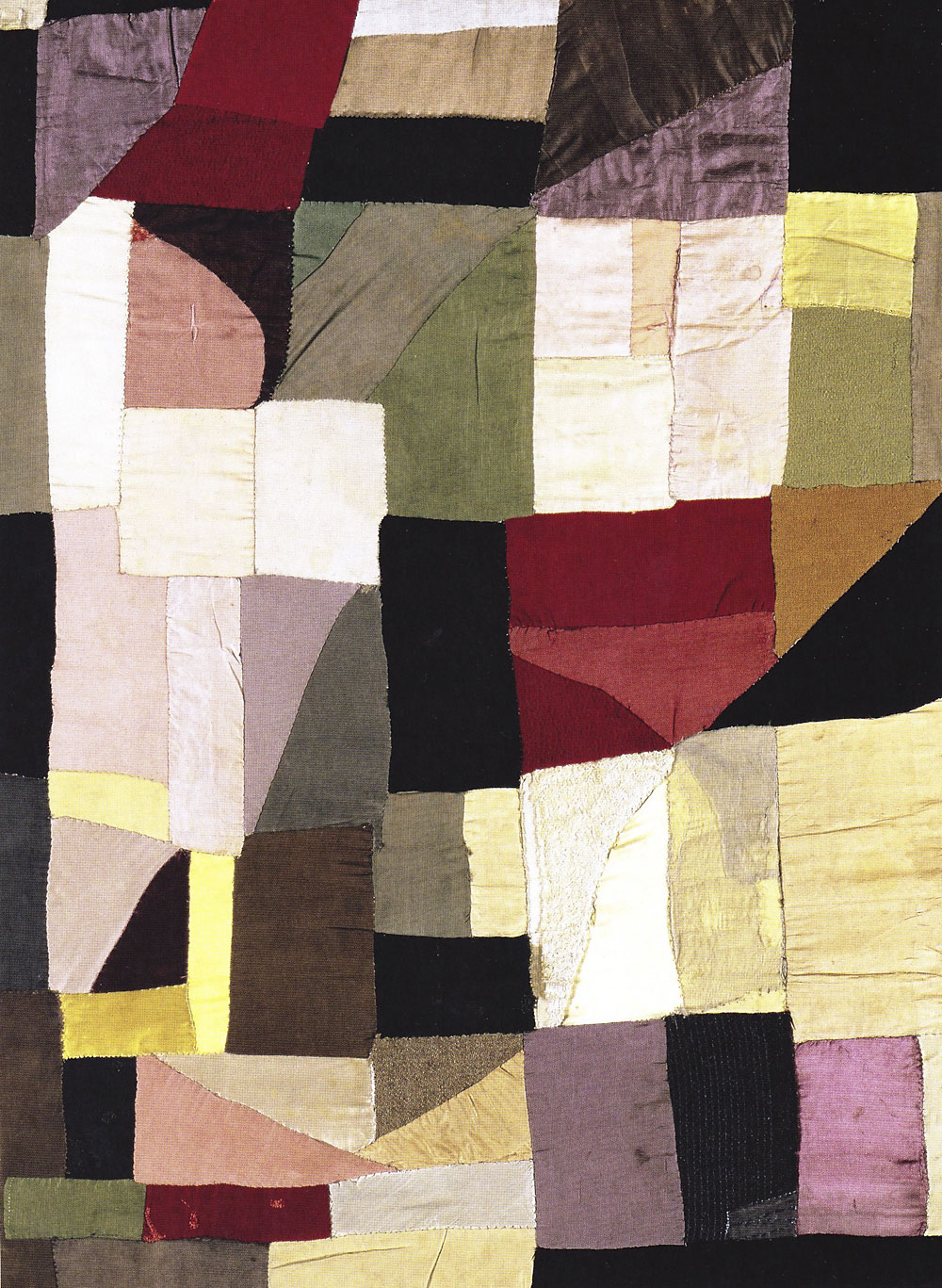
Jeu de Paume website

LIKE ART BLART ON FACEBOOK

Back to top

Exhibition: ‘Witness at a Crossroads: Photographer Marc Riboud in Asia’ at The Rubin Museum of Art, New York

Exhibition dates: 16th October 2014 – 23rd March 2015


Marc Riboud (French, 1923-2016) 'Road to Khyber Pass' Afghanistan, 1956


Marc Riboud (French, 1923-2016)
Road to Khyber Pass
Afghanistan, 1956
60 x 94cm


I am not convinced by these. There are a couple of brilliant images in the posting, such as Forbidden City (Beijing, 1957) and Photography Fair 150 Kilometers from Tokyo (Japan, 1958) but the rest vary between plain (Between Konark and Puri, Orissa, India, 1956), kitsch or is it cheesy (Road to Khyber Pass, Afghanistan, 1956) to downright obvious (Cave Dwelling, between Urgup and Uchisar, Cappadocia, Turkey, 1955).

Dr Marcus Bunyan


Many thankx to The Rubin Museum of Art for allowing me to publish the photographs in the posting. Please click on the photographs for a larger version of the image.


Marc Riboud (French, 1923-2016) 'Photography Fair 150 Kilometers from Tokyo' Japan, 1958


Marc Riboud (French, 1923-2016)
Photography Fair 150 Kilometers from Tokyo
Japan, 1958
40 x 50cm


Marc Riboud (French, 1923-2016) 'Darjeeling' Darjeeling, India, 1956


Marc Riboud (French, 1923-2016)
Darjeeling
Darjeeling, India, 1956
30 x 40cm


Marc Riboud (French, 1923-2016) 'Forbidden City' Beijing, 1957


Marc Riboud (French, 1923-2016)
Forbidden City
Beijing, 1957
40 x 50cm


Marc Riboud (French, 1923-2016) 'Between Konark and Puri' Orissa, India, 1956


Marc Riboud (French, 1923-2016)
Between Konark and Puri
Orissa, India, 1956
Vintage print
18 x 27.2cm


Marc Riboud (French, 1923-2016) 'Camel Market' Nagaur, Rajasthan, India, 1956


Marc Riboud (French, 1923-2016)
Camel Market
Nagaur, Rajasthan, India, 1956
Vintage print
33.5 x 49.5cm


Marc Riboud’s first New York exhibition in over 25 Years chronicles the artist’s expeditions across Asia

Photography exhibition at Rubin Museum of Art offers rare glimpse into life at critical time in trans-regional Asian history

This October, the Rubin Museum of Art will open Witness at a Crossroads: Photographer Marc Riboud in Asia, a photography exhibition that chronicles the French artist’s journeys across Asia, with particular focus on his travels from 1955 through 1958. The first New York museum exhibition of Riboud’s work in over 25 years, Witness at a Crossroads will illustrate the artist’s perspective on the confluence of tradition and modern culture in mid-century Asia. On view from October 16, 2014 through March 23, 2015, Witness at a Crossroads will feature approximately 100 black-and-white photographs from the mid-to-late 1950s, as well as images from Riboud’s pioneering visit to China in the 1960s. The exhibition will also present ephemeral objects including press cards, contact sheets, and international magazines where photographs of Riboud’s travels were published.

Organized in thematic clusters – regionally and chronologically – the exhibition will examine Riboud’s travels across Turkey, Iran, Afghanistan, Pakistan, India, Nepal, China, and Japan. Riboud’s photographs provide an honest and accessible window into the daily lives of the diverse people of the region and illuminate the tension created by cultural shifts during this period. These early images provide important context for Riboud’s later works and illuminate the influence of his experience in Asia on his career.

“Marc Riboud captured a period of significant cultural transformation and postwar modernisation through the lives of everyday individuals, creating an important living document. The exhibition provides a broad lens through which to look at trans-regional Asian dynamics and history in these critical years,” said Beth Citron, Assistant Curator at the Rubin Museum of Art. “Witness at a Crossroads is the latest exhibition at the Rubin Museum of Art to illuminate the profound impact of cultures across Asia on the work of modern and contemporary artists from across the globe. Our latest exhibition affirms the institution’s commitment to providing a comprehensive view of artistic activity coming out of – and impacted by – these diverse cultures.”

Riboud left for Asia shortly after beginning his career at the photo agency Magnum. The photographer’s explorations were shaped in part by his correspondence with his mentor Henri Cartier-Bresson, the father of photojournalism, who provided insight to his protégé on engaging with new cultures. The exhibition highlights common themes in Riboud’s work and underscores the artist’s use of photography to investigate culture and his ability to capture intimate glimpses of everyday life. One of the first foreign photographers allowed into China after the country’s Cultural Revolution of 1949, Riboud was a pioneer in documenting the region, as demonstrated in images such as Forbidden City (1957), where a silhouette of a figure is framed by the angular rooftops, fences, and walls. A strong sense of composition is also apparent in images like On the Backs of Ganges (1956), where bathers relaxing after a swim are divided by a draping sheet in the centre of the photograph. Works like Darjeeling (1956), a look at the Indian city on a rainy day, demonstrate Riboud’s ability to create poetic and atmospheric images of the countries he explored.

About Marc Riboud

Before beginning his career as a photographer, Marc Riboud worked as a factory engineer until 1951. After a week on holiday, during which he covered the cultural festival of Lyon, Riboud dropped his engineering job for photography and moved to Paris in 1952. He was invited by Henri Cartier-Bresson and Robert Capa to join Magnum as an associate that same year.

In 1957, Riboud made his first trip to China. He returned multiple times, including a 1965 trio with writer K.S. Karol. In 1968, 1972, and 1976, Riboud made several reportages on North Vietnam in addition to continuing his travels all over the world, mostly in Asia, Africa, the U.S., and Japan. He is best known for his extensive reports on the East: The Three Banners of China (1966), Face of North Vietnam (1970), Visions of China (1981) and In China (1966). He has received many awards including two by the Overseas Press Clun, the Time-Life Achievement, the Lucie Award and the ICP Infinity Award.

Press release from The Rubin Museum of Art website


Marc Riboud (French, 1923-2016) 'Cave Dwelling, between Urgup and Uchisar' Cappadocia, Turkey, 1955


Marc Riboud (French, 1923-2016)
Cave Dwelling, between Urgup and Uchisar
Cappadocia, Turkey, 1955
24 x 30cm


Marc Riboud (French, 1923-2016) 'Istanbul' Istanbul, Turkey, 1955


Marc Riboud (French, 1923-2016)
Istanbul
Istanbul, Turkey, 1955
30 x 40cm


Marc Riboud (French, 1923-2016) 'Jaipur' Jaipur, India, 1956


Marc Riboud (French, 1923-2016)
Jaipur
Jaipur, India, 1956
23.2 x 33cm


Marc Riboud (French, 1923-2016) 'On a Train from Hong Kong to Guangzhou' China, January 1, 1957


Marc Riboud (French, 1923-2016)
On a Train from Hong Kong to Guangzhou
China, January 1, 1957
20.2 x 30cm


Marc Riboud (French, 1923-2016) 'Preparing Kites on a Sunday Morning' Ankara, Turkey, 1955


Marc Riboud (French, 1923-2016)
Preparing Kites on a Sunday Morning
Ankara, Turkey, 1955
Vintage print
17 x 25.3cm


Marc Riboud (French, 1923-2016) 'Untitled' Afghanistan, 1955


Marc Riboud (French, 1923-2016)
Untitled
Afghanistan, 1955
Vintage print
16.2 x 23.7cm


Marc Riboud (French, 1923-2016) 'Street Show' Beijing, China, 1957


Marc Riboud (French, 1923-2016)
Street Show
Beijing, China, 1957
Vintage print
20.4 x 29.9cm


The Rubin Museum of Art
150 West 17th Street
New York City

Opening hours:
Thursday 11.00am – 5.00pm
Friday 11.00am – 10.00pm
Saturday – Sunday 11.00am – 5.00pm
Closed Mondays – Wednesdays
The museum is closed on Christmas, Thanksgiving, and New Year’s Day

The Rubin Museum of Art website

LIKE ART BLART ON FACEBOOK

Back to top

Review: ‘Victor Hugo: Les Misérables – From Page to Stage’ at the State Library of Victoria, Melbourne

Exhibition dates: 18th July – 9th November 2014


Victor Hugo (French, 1802-1885) 'Les Misérables vol. 1' 1845-1862


Victor Hugo (French, 1802-1885)
Les Misérables vol. 1
1845-1862
Autograph manuscript
Bibliothèque nationale de France


Devour the main course but don’t stay for dessert

This is an exhibition in two galleries. In the first you are not allowed to take photographs but in the second you can take as many as you want. You are told this as you enter the exhibition but the import of this incantation only becomes apparent much later in your visit.

The first gallery is a profound experience: manuscripts, letters, photographs, paintings, and posters that all relate to the great man and his work Les Misérables. The Charles Marville photographs are sublime (as always) with the width of the vertical prints being the element that I noticed most on this viewing. The space that Marville manages to capture in these vertical images makes them seem almost as wide as they are high giving them an almost panoramic feel, as though the space of the image goes on forever, from side to side and into the distance. There is a wonderful sense of volume in the atmosphere, tones and textures of these images. One juxtaposition is particularly tantalising, the pairing of Marville’s Rue Tirechape (1865) with engravings such as the demolition work for constructing the Boulevard St. Germain by Maxine Lalanne (1827-1886). The illusion that one could be the other is enlightening, and there is an established association (especially in Pictorialist photography) between representation in etching and photography.1

As Philip Ebury observes,

“It has often been said that Pictorial photographs resemble works in other media. The analogy with etchings is especially striking and the comparison is more than physical. Between 1890 and the late 1920s, etching and Pictorial photography had a shared history and many similar aims. Parallels between the two disciplines in Australia had their antecedents in England. In the late nineteenth century many photographers in that country were consciously promoting artistic, as opposed to documentary work. At the same time, printmakers were reviving the art of original etching as an expressive rather than a reproductive medium.”2

But the Charles Marville photographs are not the star of the show, oh no. That is left to five things:

a) An album of which you can see only one leaf in the exhibition, Les Proscrits (‘The Exiles’) (1856, below), but that one leaf is enough. The enigma, light and intimacy of this one page is just magnificent.

b) Equally impressive are the very small intense portraits of Victor Hugo such as the silver gelatin photograph attributed to Arsène Garnier (1820-1909) – dark, atmospheric with Neo-classical sculptures and chandeliers reflected in expansive mirrors, VH propped up by a favourite chair; or Charles Hugo’s salted paper print from a collodion negative of his father in Jersey leaning on the back of a chair (1853-1855). The intensity of these portraits is remarkable.

c) Victor Hugo’s own paintings, usually pen and brown ink wash on paper, are also very powerful. In images such as Ma destinée (My destiny) (1867, below) where VH wrote in direct conversation with the ocean and The bowels of the Leviathan (1866) – dark, dank labyrinthine Parisian sewers – Hugo draws you into a world of the disenfranchised, the poor, the destitute and their (and his) destiny.

d) The beautiful theatre posters (1880s-1910s) worth the price of admission on their own

e) Leaving the best till last, the autographed manuscript Volume 1 of Les Misérables in all its glory (the first time it has ever left France), complete with revisions, crossings out and the final version in red, resting innocuously in a glass display cabinet. The psychological weight of the volume is immense. This is getting as close to the ‘source’ as you can possibly get without touching it. I remember once holding a first edition of Oscar Wilde’s The Ballad of Reading Gaol in my hand. This had that same spine tingling effect.


The first gallery assembles this incredible story and builds a glorious intensity of experience. I was on such an elevated level it was great.

And then, in literally two minutes, it was gone… No, no, no, no!

The second gallery is such a let down. It features costumes, posters, pamphlets and video in an exploration of the musical ‘phenomena’ this is the (Disney-fied) Les Misérables. A stage set from the musical with cut our heads so people can have their photo taken, and for performances; very poor quality black and white images of the sets of the theatrical productions of Les Misérables; a cardboard cut-out two-wheeled cart that is the worst thing that you could possibly see; and videos of workshops with men explaining how they are using a bandsaw to create the stage for the musical (as if I want to see that after what has gone before!). From the sublime to the ridiculous. I’m sure the kids might like it but after seeing such an amazing first half of the exhibition, for me this was like being tied with a ball and chain and dropped over the side to sink like a stone. Why do curators insist on doing this. Do they think that they always have to have a “popular” space for the family and the kids these days. That more is really more?

In this case it quite ruined what was up till then an incredible experience. So visit the exhibition for the main course (and don’t take any photos), but if I were you I would turn around after the first gallery and walk out the way I came in, thinking to myself ‘less is more!

Dr Marcus Bunyan


1/ See Ebury, Frances. “Engravers and Etchers, Pictorialists and Photographers,” Part 2, Chapter 2 in Making Pictures: Australian Pictorial Photography as Art 1897 – 1957 Volume 1. Phd thesis, The University of Melbourne, 2001, p. 73.

2/ Ibid.,


Many thankx to the State Library of Victoria for allowing me to publish the photographs in the posting. Please click on the photographs for a larger version of the image.


“As long as social damnation exists, through laws and customs, artificially creating hell at the heart of civilization and muddying a destiny that is divine with human calamity; as long as the three problems of the century – man’s debasement through the proletariat, woman’s demoralisation through hunger, the wasting of the child through darkness – are not resolved … as long as ignorance and misery exist in this world, books like the one you are about to read are, perhaps, not entirely useless.”


Victor Hugo, Hauteville House, 1 January 1862


Victor Hugo (French, 1802-1885) 'Title page of 'Les Misérables' vol. 1' 1845-1862


Victor Hugo (French, 1802-1885)
Title page of Les Misérables vol. 1
1845-1862
Autograph manuscript
Bibliothèque nationale de France


Victor Hugo (French, 1802-1885) 'Paris' Paris, 1867


Victor Hugo (French, 1802-1885)
Paris
Paris, 1867
Maison Littéraire de Victor Hugo


Victor Hugo (French, 1802-1885) 'Ma destinée (My destiny)' 1867


Victor Hugo (French, 1802-1885)
Ma destinée (My destiny)
1867
Ink and brown-ink wash
© Maisons de Victor Hugo / Roger-Viollet


'Les Proscrits' ('The Exiles') 1856


Les Proscrits (‘The Exiles’)
1856
Album of photographs
Bibliothèque nationale de France


Album The Exiles – Victor Hugo and his circle of friends in exile started in Guernsey on the 1st January 1856. The album creates an allegorical portrait of VH. His family is represented by Victor Hugo’s hand (left), Adele’s hand (right), Marine Terrace their home in Jersey 1852-1856 (centre) and VH posing at his desk in his study at Hauterville House, Guernsey, where he completed Les Misérables surrounded by sunlight. The page appears in the posting the correct way up, as it appears in the album.


Les Proscrits ('The Exiles') album 1856 (detail of page)


Victor Hugo’s hand
From the album Les Proscrits (‘The Exiles’) (detail of page)
1856
Album of photographs
Bibliothèque nationale de France


'Victor Hugo posing at his desk in his study at Hauterville House, Guernsey' From the album 'Les Proscrits' ('The Exiles') 1856 (detail of page)


Victor Hugo posing at his desk in his study at Hauterville House, Guernsey
From the album Les Proscrits (‘The Exiles’) (detail of page)
1856
Album of photographs
Bibliothèque nationale de France


Edmond Bacot (French, 1814-1875) 'Victor Hugo en 1862' (Victor Hugo in 1862) 1862


Edmond Bacot (French, 1814-1875)
Victor Hugo en 1862 (Victor Hugo in 1862)
1862
Maison de Victor Hugo
Image © Edmond Bacot / Maisons de Victor Hugo / Roger-Viollet


Auguste Rodin (French, 1840-1917) 'Victor Hugo, buste dit À l'Illustre Maître' (Victor Hugo, bust known as 'To the illustrious master') 1883


Auguste Rodin (French, 1840-1917)
Victor Hugo, buste dit À l’Illustre Maître (Victor Hugo, bust known as ‘To the illustrious master’)
1883
Musée Rodin


Rodin states that Hugo would not pose. “I worked out on the veranda. I observed him swiftly, but carefully as he refused to pose. He accepted to be looked at, from all angles, but he would not pose. And so I looked at his conscience. And this is how I was able to capture the real Hugo.”


When the first two volumes of Les Misérables arrived in Paris in April 1862, all 6000 copies sold in a day. Public readings were organised when copies sold out. Everyone was reading it, from the literary intelligentsia to the common people. It was also quickly translated into nine languages to reach a global audience. After only three months, 100,000 authorised copies (and countless editions on the black market) had been sold worldwide, making the novel into an unprecedented literary bestseller of western literature. In 1870 after the fall of Napoleon III, Hugo returned to France and was hailed a national hero.

Victor Hugo’s legacy and the iconic story of Les Misérables endure to this day with various adaptations being created around the world. There have been at least 48 films, 14 animated films or TV series, radio plays, 12 television miniseries, numerous comic books, and at least 286 editions of Les Misérables published, sung and spoken. The stage musical of Boublil and Schönberg’s Les Misérables is in itself a worldwide phenomenon. It is the longest running theatre performance in London and has been seen by over 65 million people in 43 countries and in 21 languages. It returns to Melbourne in June 2014.

About Victor Hugo

Victor Hugo is considered one of the most important and influential authors of the 19th century. Through his transformative literary works and political activism, French society’s most vulnerable were given a voice in a nation ruled by those with power and privilege. Best known for his novels Les Misérables and The Hunchback of Notre Dame Hugo is also acclaimed for his theatre, essays, drawings and poetry.

Born in Besançon, France in 1802, Hugo was the son of an atheist and anti-monarchist French General and a Catholic pro-monarchist mother. A precocious talent, Hugo’s first work was published at the age of 15. His debut as a professional writer soon followed with the release of his first volume of romantic poems; Ode et poésies diverses in 1822Many of his early romantic works drew inspiration from his childhood sweetheart and wife Adele Foucher, with whom he had four children. Another powerful female influence on Hugo’s writings was his mistress of more than fifty years, Juliette Drouet.

As Hugo’s career progressed, his aptitude and fondness for romantic literature was matched by his passion for addressing themes of disadvantage and poverty. Hugo’s first major masterpiece The Hunchback of Notre Dame published in 1831 reflected his interest in highlighting such prejudices. However, it was his greatest masterpiece, Les Misérables, that first challenged and then changed the social and political understanding of poverty, disadvantage and inherited privilege in society. In Les Misérables Hugo casts an ex-convict, Jean Valjean, as the revered protagonist and paints a villain of the character representing authority and privilege, Inspector Javert.

Hugo dedicated 17 years of his life to plan and write the epic three part story beginning in the early 1840s and finally publishing the novel in 1862. In addition to his social and political sympathies, Hugo drew from many of his own personal experiences and professional turmoil to inform the characters and themes in Les Misérables. These included the tragic drowning of his eldest daughter, Leopoldine, in a boating accident in 1843, and Hugo’s exile from France by Louis Napoleon III in 1851 – a result of his public opposition to the increasingly authoritarian rule of the self-declared emperor.

From his exile on the Channel Islands of Jersey and Guernsey where he lived for 19 years, Hugo maintained his trenchent opposition to the political status quo and the death penalty, while also publishing widely and spending three years finishing his magnum opus Les Misérables. When Les Misérables finally hit the stands in Paris in 1862 the response by the public was explosive. All 6000 copies sold out in a day, and three months later the book was an international best seller and had been translated into nine languages. Following the success of Les Misérables Hugo returned to France in 1870 after the fall of Napoleon III and was hailed a national hero. He continued to work until he died on 22 May 1885. At his state funeral it was estimated that close to two million people attended. Hugo’s wish to be buried in a pauper’s coffin was granted and his body lay in state under the Arc de Triomphe until he was interred in the Panthéon.

Today Victor Hugo’s extraordinary legacy continues. Les Misérables has been published in at least 250 editions since 1862, 48 films have been made of the story and the Boublil and Schönberg Les Misérables musical has been seen by over 65 million people worldwide in 42 countries and 22 languages, and is one of the most popular musicals of all time. Victor Hugo is remembered as an international literary giant and a French national hero.

Themes

The possibility that the condemned can rise above poverty and degradation to become good and honourable, and perhaps above all to fight for freedom of body and soul.


Charles Marville (French, 1813-1879) 'Percement de l'avenue de l'Opéra' (Clearing of the Avenue de l'Opéra) c. 1876


Charles Marville (French, 1813-1879)
Percement de l’avenue de l’Opéra (Clearing of the Avenue de l’Opéra)
c. 1876
State Library of Victoria


Charles Marville (French, 1813-1879) 'Rue Soufflot (pendant la démolition)' (Rue Soufflot [during demolition]) c. 1876-1877


Charles Marville (French, 1813-1879)
Rue Soufflot (pendant la démolition) (Rue Soufflot [during demolition])
c. 1876-1877
State Library of Victoria


Charles Marville (French, 1813-1879) 'Avenue d'Iéna' c. 1877


Charles Marville (French, 1813-1879)
Avenue d’Iéna
c. 1877
State Library of Victoria


Charles Marville (French, 1813-1879) 'Boulevard Haussmann' c. 1877


Charles Marville (French, 1813-1879)
Boulevard Haussmann
c. 1877
State Library of Victoria


Charles Marville (French, 1813-1879) 'Cour du Dragon' c. 1863-1869


Charles Marville (French, 1813-1879)
Cour du Dragon, Rue de Taranne
c. 1863-1869
State Library of Victoria


Charles Marville (French, 1813-1879) 'Rue Tirechape' c. 1863-1869


Charles Marville (French, 1813-1879)
Rue Tirechape
c. 1863-1869
State Library of Victoria


Charles Marville (French, 1813-1879) 'Rue de Fontaines' c. 1863-1869


Charles Marville (French, 1813-1879)
Rue de Fontaines
c. 1863-1869
State Library of Victoria


Charles Marville (French, 1813-1879) 'Rue du Marche aux fleurs' c. 1863-1869


Charles Marville (French, 1813-1879)
Rue du Marche aux fleurs
c. 1863-1869
State Library of Victoria


Paul Carpentier (French, 1787-1877) 'Episode du 29 juillet 1830, rue Chilperic, face á la colonnade du Louvre' (Event of 29 July 1830, rue Chilperic, before the colonnade of the Louvre) 1830


Paul Carpentier (French, 1787-1877)
Episode du 29 juillet 1830, rue Chilperic, face á la colonnade du Louvre (Event of 29 July 1830, rue Chilperic, before the colonnade of the Louvre)
1830
© Musée Carnavalet / Roger-Viollet


Charles Méryon (French, 1821-1868) 'Le petit pont' (The little bridge) 1850


Charles Méryon (French, 1821-1868)
Le petit pont (The little bridge)
1850
National Gallery of Victoria, purchased 1891


Ottavio Rodella Tavio (Italian, 1864-1910) Poster for 'I Miserabili di Victor Hugo' (Les Misérables by Victor Hugo) 1890


Ottavio Rodella Tavio (Italian, 1864-1910)
Poster for I Miserabili di Victor Hugo (Les Misérables by Victor Hugo)
1890
Bibliothèque nationale de France


'Les Misérables by Victor Hugo' New York, Classics Illustrated No. 9, 1950


Les Misérables by Victor Hugo
New York, Classics Illustrated no. 9
1950
State Library of Victoria


Design by Slawomir Kitowski. 'Les Misérables poster' 1989-2000


Design by Slawomir Kitowski
Les Misérables
poster
1989-2000
Teatr Muzyczny, Gdynia, Poland
Courtesy Cameron Mackintosh Ltd


State Library of Victoria
328 Swanston St,
Melbourne VIC 3000
Phone: (03) 8664 7000

Opening hours:
10am to 6pm daily

State Library of Victoria website

LIKE ART BLART ON FACEBOOK

Back to top

Exhibition: ‘Florence Henri. Compositions’ at the Pinakothek der Moderne, Munich

Exhibition dates: 21st March – 14th September 2014


Florence Henri (French born America, 1893-1982) 'Composition' Nd


Florence Henri (French born America, 1893-1982)
Composition
Nd


When I started experimenting with a camera in the early 80s, my first experiments were with mirrors, shoes, tripod legs, cotton buds and reflections of myself in mirrors (with bright orange hair). I still have the commercially printed colour photos from the chemist lab!

Henri’s sophisticated, avante-garde, sculptural compositions have an almost ‘being there’ presence: a structured awareness of a way of looking at the world, a world in which the artist questions reality. She confronts the borders of an empirical reality (captured by a machine, the camera) through collage and mirrors, in order to take a leap of faith towards some form of transcendence of the real. Here she confronts the limitless freedom of creativity, of composition, to go beyond objectivity and science, to experience Existenz (Jaspers) – the realm of authentic being.*

These photographs are her experience of being in the world, of Henri observing the breath of being – the breath of herself, the breath of the objects and a meditation on those objects. There is a stillness here, an eloquence of construction and observation that goes beyond the mortal life of the thing itself. That is how these photographs seem to me to live in the world. I may be completely wrong, I probably am completely wrong – but that is how these images feel to me: a view, a perspective, the artist as prospector searching for a new way of authentically living in the world.

I really like them.

Dr Marcus Bunyan


*For his own existential philosophy, [Karl] Jaspers’ aim was to indirectly outline the metaphysical features of human Existenz – which means, what it’s like to experience being human in our full freedom – and to encourage every individual to realise his or her own authentic self-being by a subjective existential activity of thought which isn’t objectively describable.

“Existence in one sense refers to the sum total of reality, and in another sense, the elusive characteristic of being which differentiates real things from fictional ones.7 For Jasper, Existence as it pertains to Being is called Encompassing. It is the form of our awareness of being which underlies all our scientific and common-sense knowledge and which is given expression in the myths and rituals of religion. This awareness is not that of an object, but reflection on the subjective situation of being. Thus existence is about reflection upon the horizon of life, accepting the limitless possibilities in reality and also accepting that even though we can enlarge the extent of our knowledge, we can never escape the fact that it is fragmentary and has a limit.

He says:

“By reflecting upon that course (the limitless horizon of reality) we ask about being itself, which always seems to recede from us, in the very manifestation of all the appearances we encounter. This being we call the encompassing. But the encompassing is not the horizon of our knowledge at any particular moment. Rather, it is the source from which all new horizons emerge, without itself ever being visible even as a horizon.9″”


Jaspers Karl, Philosophy of Existence. (Philadelphia: University of Pennsylvanian Press, 1971), p. 18 quoted in Onyenuru Okechukwu. P. “The Theme of Existence in the Philosophy of Karl Jaspers,” No date, pp. 3-4 on the PhilPapers website [Online] Cited 16/06/2021.


Thankx to the Pinakothek der Moderne, Munich for allowing me to publish five of the photographs in the posting. The other images have all been sourced from the internet. Please click on the photographs for a larger version of the image.


Florence Henri (French born America, 1893-1982) 'Composition' 1931


Florence Henri (French born America, 1893-1982)
Composition
1931


Florence Henri (French born America, 1893-1982 'Composition No 10' 1928


Florence Henri (French born America, 1893-1982)
Composition No 10
1928


Florence Henri (French born America, 1893-1982) 'Abstract Composition' 1928


Florence Henri (French born America, 1893-1982)
Abstract Composition
1928
Stiftung Ann und Jürgen Wilde, Pinakothek der Moderne, Munich


The photographs and photo-montages of Florence Henri (1893-1982) attest to her broad artistic education and an unusual openness for new currents in the art of the time.

The artist, who had studied the piano under Ferruccio Busoni in Rome and painting in Paris under Fernand Léger, in Berlin under Johann Walter-Kurau and in Munich under Hans Hofmann, spent a brief semester as a guest at the Bauhaus in Dessau in 1927. Although photography was not part of the curriculum at the Bauhaus at this time, lecturers such as László Moholy-Nagy and Georg Muche, as well as pupils including Walter Funkat and Edmund Collein experimented intensively with this medium. It was here that Florence Henri gained the inspiration to become a photographer herself.

That same year she returned to Paris, stopped painting and devoted herself thoroughly to photography. She created extensive series of still lifes and portrait and self-portrait compositions, in which the artist divided up the pictorial space using mirrors and reflective spheres, expanding it structurally. The fragmented images created this way point to the inspiration Florence Henri gained from Cubist and Constructivist pictorial concepts.

Through her experimental photography Florence Henri swiftly became a highly respected exponent of modern photography and participated in numerous international shows such as the trailblazing Werkbund exhibition ‘Film und Foto’ in 1929. After World War II, however, the artist no longer pursued her photographic interest with the same intensity as before, devoting herself instead almost exclusively to painting. This most certainly also contributed to her photographs largely falling into oblivion after 1945.

The emphasis in the exhibition Florence Henri. Compositions in the Pinakothek der Moderne has been placed on the artist’s compositions using mirrors and her photo-montages, It comprises some 65 photographs, including the portfolio published in 1974, as well as documents and historical publications from the holdings of the Ann and Jürgen Wilde Foundation. As such, Ann and Jürgen Wilde significantly contributed towards the rediscovery of this exceptional artist’s work. Her photographic oeuvre now has a permanent place within the art of the avant-garde.

Press release from the Pinakothek der Moderne website


Florence Henri (French born America, 1893-1982) 'Still-Life Composition' 1929


Florence Henri (French born America, 1893-1982)
Still-Life Composition
1929


Florence Henri (French born America, 1893-1982) 'Abstract Composition' 1932


Florence Henri (French born America, 1893-1982)
Abstract Composition
1932


Florence Henri (French born America, 1893-1982) Still-life with Lemon and Pear' c. 1929


Florence Henri (French born America, 1893-1982)
Still-life with Lemon and Pear
c.1929


Florence Henri (French born America, 1893-1982) 'Little Boot' 1931


Florence Henri (French born America, 1893-1982)
Little Boot
1931


Florence Henri was born in New York on 28 June 1893; her father was French and her mother was German. Following her mother’s death in 1895, she and her father moved first to her mother’s family in Silesia; she later lived in Paris, Munich and Vienna and finally moved to the Isle of Wight in England in 1906. After her father’s death there three years later, Florence Henri lived in Rome with her aunt Anni and her husband, the Italian poet Gino Gori, who was in close touch with the Italian Futurists. She studied piano at the music conservatory in Rome.

During a visit to Berlin, Henri started to focus on painting, after meeting the art critic Carl Einstein and, through him, Herwarth Walden and other Berlin artists. In 1914, she enrolled at the Academy of Art in Berlin, and starting in 1922, trained in the studio of the painter Johannes Walter-Kurau. Before moving to Dessau, Henri studied painting with the Purists Fernand Léger and Amédée Ozenfant at the Académie Moderne in Paris. She arrived at the Bauhaus in Dessau in April 1927. She had already met the Bauhaus artists Georg Muche and László Moholy-Nagy and had developed a passion for Marcel Breuer’s tubular steel furniture. Up to July 1927, Henri attended the preliminary course directed by Moholy-Nagy, lived in the Hungarian artist’s house, and became a close friend of his first wife,Lucia Moholy, who encouraged her to take up photography. From the Moholy-Nagys, Henri learned the basic technical and visual principles of the medium, which she used in her initial photographic experiments after leaving Dessau. In early 1928, she abandoned painting altogether and from then on focused on photography, with which she established herself as a professional freelance photographer with her own studio in Paris – despite being self-taught.

Even during her first productive year as a photographer, László Moholy-Nagy published one of her unusual self-portraits, as well as a still life with balls, tyres, and a mirror, in i10. Internationale Revue. The first critical description of her photographic work, which Moholy-Nagy wrote to accompany the photos, recognises that her pictures represented an important expansion of the entire ‘problem of manual painting’, in which ‘reflections and spatial relationships, overlapping and penetrations are examined from a new perspectival angle’.

Mirrors become the most important feature in Henri’s first photographs. She used them both for most of her self-dramatisations and also for portraits of friends, as well as for commercial shots. She took part in the international exhibition entitled Das Lichtbild [The Photograph] in Munich in 1930, and the following year she presented her images of bobbins at a Foreign Advertising Photography exhibition in New York. The artistic quality of her photographs was compared with Man Ray, László Moholy-Nagy and Adolphe Baron de Mayer, as well as the with winner of the first prize at the exhibition, Herbert Bayer. Only three years after the new photographer had taken her first pictures, her self-portrait achieved the equal status with her male colleagues that she had been aiming for.

Up to the start of the Second World War, Henri established herself as a skilled photographer with her own photographic studio in Paris (starting in 1929). When the city was occupied by the Nazis, her photographic work declined noticeably. The photographic materials needed were difficult to obtain, and in any case Henri’s photographic style was forbidden under the Nazi occupation; she turned her attention again to painting. With only a few later exceptions, the peak of her unique photographic experiments and professional photographic work was in the period from 1927 to 1930.

Even in the 1950s, Henri’s photographs from the Thirties were being celebrated as icons of the avant-garde. Her photographic oeuvre was recognised during her lifetime in one-woman exhibitions and publications in various journals, including N-Z Wochenschau. She also produced photographs during this period, such as a series of pictures of the dancer Rosella Hightower. She died in Compiègne on 24 July 1982.

Text from the Florence Henri web page on the Bauhaus Online website [Online] Cited 06/07/2014. No longer available online


Florence Henri (French born America, 1893-1982) 'Parisian Window' 1929


Florence Henri (French born America, 1893-1982)
Parisian Window
1929


Florence Henri (French born America, 1893-1982) 'The Forum' 1934


Florence Henri (French born America, 1893-1982)
The Forum
1934


Florence Henri (French born USA, 1893-1982) 'Rome' 1933-1934


Florence Henri (French born USA, 1893-1982)
Rome
1933-1934


Florence Henri (French born America, 1893-1982) 'Abstract Composition' 1929


Florence Henri (French born America, 1893-1982)
Abstract Composition
1929


Florence Henri (French born America, 1893-1982) 'Self-portrait in a mirror' 1928


Florence Henri (French born America, 1893-1982)
Self-portrait in a mirror
1928


Florence Henri (French born America, 1893-1982) 'A Bunch of Grapes' c. 1934


Florence Henri (French born America, 1893-1982)
A Bunch of Grapes
c. 1934


Florence Henri (French born America, 1893-1982) 'Composition' 1932


Florence Henri (French born America, 1893-1982)
Composition
1932
Stiftung Ann und Jürgen Wilde, Pinakothek der Moderne, Munich


Florence Henri (French born America, 1893-1982) 'Untitled, USA' 1940


Florence Henri (French born America, 1893-1982)
Untitled, USA
1940


Florence Henri (French born America, 1893-1982) 'Paris Window' 1929


Florence Henri (French born America, 1893-1982)
Paris Window
1929
Stiftung Ann und Jürgen Wilde, Pinakothek der Moderne, Munich


Florence Henri (French born America, 1893-1982) 'Portrait' 1928


Florence Henri (French born America, 1893-1982)
Portrait
1928
Stiftung Ann und Jürgen Wilde, Pinakothek der Moderne, Munich


Florence Henri (French born America, 1893-1982) 'Self Portrait' 1928


Florence Henri (French born America, 1893-1982)
Self Portrait
1928
Stiftung Ann und Jürgen Wilde, Pinakothek der Moderne, Munich


Pinakothek der Moderne
Barer Strasse 40
Munich

Opening hours:
Daily except Monday 10am – 6pm
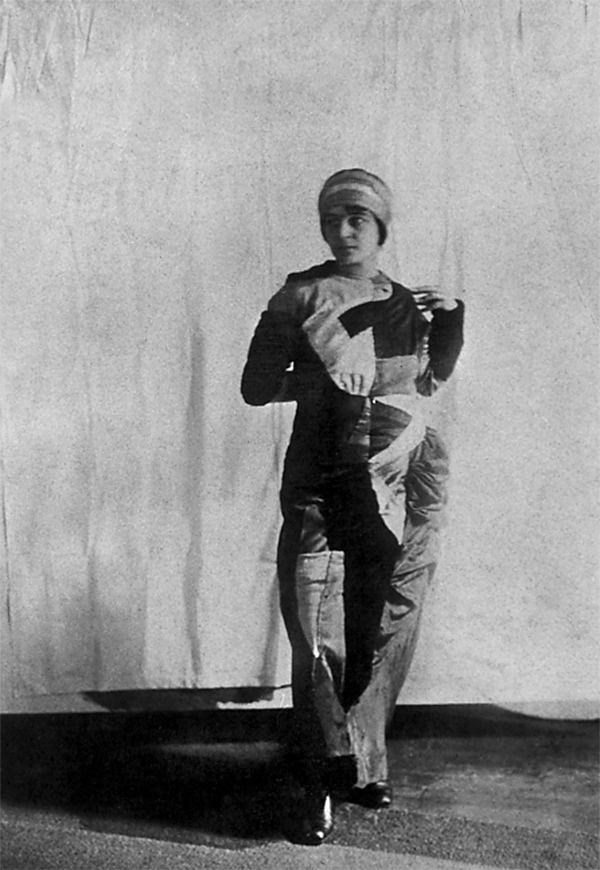
Thursday 10am – 8pm

Pinakothek der Moderne website

LIKE ART BLART ON FACEBOOK

Back to top

Exhibition: ‘Josef Koudelka: Nationality Doubtful’ at the Art Institute of Chicago

Exhibition dates: 7th June – 14th September 2014


Josef Koudelka (Czech-French, b. 1938) 'Czechoslovakia (Kadañ)' 1963, printed 1967


Josef Koudelka (Czech-French, b. 1938)
Czechoslovakia (Kadañ)
1963, printed 1967
from the series Gypsies
The Art Institute of Chicago, restricted gift of Artworkers Retirement Society
© Josef Koudelka/Magnum Photos. Courtesy of Pace/MacGill Gallery, New York


One of the greats – mainly for his series GypsiesInvasion and Exiles.

Powerful images: strong, honest, respectful, beautifully composed but above all gritty, gritty, gritty. There is a dark radiance here, an ether/reality, as though the air was heavy with melancholy, emotion, loss, violence, isolation and, sometimes, love. No wonder he describes his work as a “theater of the real.” Humanism, and photography at its most essential.

Dr Marcus Bunyan


Many thankx to the Art Institute of Chicago for allowing me to publish the photographs in the posting. Please click on the photographs for a larger version of the image.


“I try to be a photographer. I cannot talk. I am not interested in talking. If I have anything to say, it may be found in my images. I am not interested in talking about things, explaining about the whys and the hows. I do not mind showing my images, but not so much my contact sheets. I mainly work from small test prints. I often look at them, sometimes for a long time. I pin them to the wall, I compare them to make up my mind, be sure of my choices. I let others tell me what they mean. [To Robert Delpire] My photographs, you know them. You have published them, you have exhibited them, then you can tell whether they mean something or not.”

“There is still an enormous amount of hostility and racial prejudice towards Roma, especially in Eastern Europe, but not just there. It does not matter on which political spectrum you are, left or right, it is very universal, people are often very discriminatory against them.”


Josef Koudelka


Josef Koudelka (Czech-French, b. 1938) 'Romania' 1968, printed 1980s


Josef Koudelka (Czech-French, b. 1938)
Romania
1968, printed 1980s
from the series Gypsies
The Art Institute of Chicago, promised gift of Robin and Sandy Stuart
© Josef Koudelka/Magnum Photos. Courtesy of Pace/MacGill Gallery, New York


Czech-born French artist Josef Koudelka belongs in the firmament of classic photographers working today. Honoured with the French Prix Nadar (1978), the Hasselblad Prize (1992), and the International Center of Photography Infinity Award (2004), Koudelka is also a leading member of the world-renowned photo agency Magnum. This exhibition, his first retrospective in the United States since 1988, is also the first museum show ever to emphasise his original vintage prints, period books, magazines, and significant unpublished materials.

Koudelka became famous in anonymity through the worldwide publication of his daring photographs of the Soviet-led invasion of Prague in August 1968. Just 30 years old at the time, Koudelka had already worked for a decade, principally on Gypsies, for which he visited Roma populations for weeks at a time in his home country and later abroad over the course of years. This ambitious series beautifully combines a sense of modern history with timeless humanism.

Choosing exile to avoid reprisals for his Invasion photographs, Koudelka travelled throughout Europe during the 1970s and 1980s, camping at village festivals from spring through fall and then printing in wintertime. His photographs of those decades became the series Exiles. Since the late 1980s Koudelka has made panoramic landscape photographs in areas massively shaped by industry, territorial conflict, or – in the case of the Mediterranean rim – the persistence of Classical civilisation.

Tracing this long and impressive career, this exhibition draws on Koudelka’s extensive holdings of his own work and on recent major acquisitions by the Art Institute, including the complete surviving contents of the debut presentation of Gypsies in 1967 (22 photographs), as well as ten Invasion images printed by the photographer just weeks after the event. Also on display are early experimental and theatre photographs and some of the photographer’s beautifully produced books – which stretch dozens of feet when unfolded. A fully illustrated catalogue accompanies the exhibition, which after its debut at the Art Institute travels to the J. Paul Getty Museum, Los Angeles, and Fundación MAPFRE, Madrid.

Text from the Art Institute of Chicago website


Gypsies exists as an invaluable documentation of a people during a tumultuous time in their history. From an image of a trio of suited musicians engrossed in their instruments, to stirring portraits of families in cramped living conditions, the photoessay is both a testament to the strength of Roma culture and a stark document of the realities of these people’s lives. Having fully immersed himself in the project, Koudelka’s work presents an unbiased and honest portrait of a community whose nomadic way of life has been contested throughout history.

Anonymous text from the Magnum Photos website [Online] Cited 15/06/2021


Josef Koudelka (Czech-French, b. 1938) 'Festival of gypsy music. Straznice, Czechoslovakia' 1966


Josef Koudelka (Czech-French, b. 1938)
Festival of gypsy music. Straznice, Czechoslovakia
1966
from the series Gypsies


Josef Koudelka (Czech-French, b. 1938) 'Slovakia' 1967


Josef Koudelka (Czech-French, b. 1938)
Slovakia
1967
From the series Gypsies


Josef Koudelka (Czech-French, b. 1938) 'Slovakia' 1967


Josef Koudelka (Czech-French, b. 1938)
Slovakia
1967
From the series Gypsies


Josef Koudelka (Czech-French, b. 1938) 'Reconstruction of a homicide. In the foreground: a young gypsy suspected of being guilty. Jarabina, Czechoslovakia' 1963


Josef Koudelka (Czech-French, b. 1938)
Reconstruction of a homicide. In the foreground: a young gypsy suspected of being guilty. Jarabina, Czechoslovakia
1963
From the series Gypsies


Josef Koudelka (Czech-French, b. 1938) 'Jarabina, Czechoslovakia' 1963. Various images from the series 'Gypsies'


Josef Koudelka (Czech-French, b. 1938)
Jarabina, Czechoslovakia
1963
From the series Gypsies


Josef Koudelka (Czech-French, b. 1938) 'Slovakia' 1963


Josef Koudelka (Czech-French, b. 1938)
Slovakia
1963
From the series Gypsies


Josef Koudelka (Czech-French, b. 1938) 'Velka Lomnica, Slovakia, Czechoslovakia' 1963


Josef Koudelka (Czech-French, b. 1938)
Velka Lomnica, Slovakia, Czechoslovakia
1963
From the series Gypsies


Josef Koudelka (Czech-French, b. 1938) 'Velka Lomnica, Slovakia, Czechoslovakia' 1966


Josef Koudelka (Czech-French, b. 1938)
Velka Lomnica, Slovakia, Czechoslovakia
1966
From the series Gypsies


Josef Koudelka (Czech-French, b. 1938) 'Slovakia. Zehra' 1967


Josef Koudelka (Czech-French, b. 1938)
Slovakia. Zehra
1967
From the series Gypsies


Josef Koudelka (Czech-French, b. 1938) 'Gypsy. Okres Poprad, Slovakia, Czechoslovakia' 1967


Josef Koudelka (Czech-French, b. 1938)
Gypsy. Okres Poprad, Slovakia, Czechoslovakia
1967
From the series Gypsies


Josef Koudelka (Czech-French, b. 1938) Various images from the series 'Gypsies'


Josef Koudelka (Czech-French, b. 1938) Various images from the series 'Gypsies'


Josef Koudelka (Czech-French, b. 1938) Various images from the series 'Gypsies'


Josef Koudelka (Czech-French, b. 1938) Various images from the series 'Gypsies'


Josef Koudelka (Czech-French, b. 1938) Various images from the series 'Gypsies'


Josef Koudelka (Czech-French, b. 1938)
Images from the series Gypsies
Book printed 1975; new Aperture edition 2011


Josef Koudelka (Czech-French, b. 1938) 'Spain' 1971


Josef Koudelka (Czech-French, b. 1938)
Spain
1971
From the series Gypsies


Aperture’s new edition of Koudelka: Gypsies (2011) rekindles the energy and astonishment of this foundational body of work by master photographer Josef Koudelka. Lavishly printed in a unique quadratone mix by artisanal printer Gerhard Steidl, it offers an expanded look at Cikáni (Czech for “gypsies” ) – 109 photographs of Roma society taken between 1962 and 1971 in then-Czechoslovakia (Bohemia, Moravia and Slovakia), Romania, Hungary, France and Spain. The design and edit for this volume revisits the artist’s original intention for the work, and is based on a maquette originally prepared in 1968 by Koudelka and graphic designer Milan Kopriva. Koudelka intended to publish the work in Prague, but was forced to flee Czechoslovakia, landing eventually in Paris. In 1975, Robert Delpire, Aperture and Koudelka collaborated to publish Gitans, la fin du voyage (Gypsies, in the English-language edition), a selection of 60 photographs taken in various Roma settlements around East Slovakia.


Josef Koudelka (Czech-French, b. 1938) 'Spain' 1971 'Slovakia (Rakúsy)' 1966, printed 1967


Josef Koudelka (Czech-French, b. 1938)
Slovakia (Rakúsy)
1966, printed 1967
From the series Gypsies
The Art Institute of Chicago, restricted gift of Sandy and Robin Stuart and Photography Gala Fund
© Josef Koudelka/Magnum Photos. Courtesy of Pace/MacGill Gallery, New York.


The unforgettable photographs of acclaimed Czech-born, French photographer Josef Koudelka (b. 1938), including eyewitness images of the 1968 Soviet-led invasion of Czechoslovakia, have not been shown at a major U.S. museum since 1988. These documentary works as well as extensive selections from the photographer’s work going back to 1958 – including his renowned series Gypsies, Exiles, and a variety of recent panoramic photographs – will feature in the major retrospective exhibition Josef Koudelka: Nationality Doubtful, from June 7 through September 14, 2014. It is the first museum show ever to emphasise Koudelka’s original vintage prints, period publications and unpublished study materials.

Josef Koudelka: Nationality Doubtful, which takes place in the Abbott (182-4) and Bucksbaum (188) galleries on the ground floor of the Modern Wing, draws primarily on Koudelka’s extensive holdings of his own work. For decades, the photographer has exhibited new and recent prints of images that have grown iconic through frequent exhibitions and reproductions, while holding back the earliest, vintage prints – until now. For example, over the years there have been more than one dozen solo exhibitions of Gypsies and numerous reprints of the book of the same name, which has appeared in two editions and six languages. Among the rarities that will be included in Josef Koudelka: Nationality Doubtful is the only surviving maquette for the first book version of Gypsies, which Koudelka had to leave unfinished at his exile from Prague in 1970.

Koudelka’s habit of revisiting past projects while simultaneously advancing into new territory will be squarely on view in Josef Koudelka: Nationality Doubtful. Twenty-two original photographs from the very first show of Gypsies, held in Prague in 1967, will be displayed for the first time since that date. In an adjacent room, a different selection from the series, printed at a different size and in another way, will also be shown. Similarly, extremely rare vintage prints of Invasion, made and circulated anonymously to the press directly following the Soviet invasion of Czechoslovakia, will be shown alongside much larger prints commissioned soon after the fall of the Berlin Wall in 1989, when Koudelka returned from exile and had his first post-Soviet exhibition in Prague.

Also on display will be selections from his early experimental photographs and years of work with Prague theatre companies, made during the flowering of the Czech stage and cinema in the 1960s.

Koudelka was born in a small Moravian town in 1938 and moved to Prague, then the capital of Czechoslovakia, in the 1950s. He studied aeronautical engineering while practicing photography obsessively from 1958; in 1966, he turned full-time to a photographic career. Already in 1961, Koudelka had begun his most ambitious life project, Gypsies, for which he visited Roma populations for weeks at a time, principally in Slovakia. The rigorously humanist pictures became his calling card at home and internationally in the later 1960s after being published in the Swiss magazine Camera and shown to curators and photography representatives around Western Europe and the United States. Meanwhile, Koudelka’s Invasion photographs became famous after they appeared worldwide to commemorate the first anniversary of the events of August 1968. Worried about reprisals even though the images had been published anonymously, Koudelka chose to leave his country in May 1970.

In exile Koudelka adopted a semi-nomadic existence. He followed village festivals, pilgrimages, and Roma gatherings throughout the United Kingdom (his country of asylum in the 1970s), Spain, Italy, and France (his principal residence from 1981, and country of citizenship from 1986), photographing throughout the year and printing largely in wintertime. The world-famous photography agency Magnum, which had stewarded publication of the Invasion photographs, became Koudelka’s home base and as he says his “family.” Koudelka’s photographs of these years were gathered together in 1988 as Exiles, which will also be part of the exhibition.

Since the late 1980s Koudelka has made panoramic landscape photographs in areas massively shaped by industry, territorial conflict, or – in the case of the Mediterranean rim – the persistence of Classical civilisation. The final gallery of Josef Koudelka: Nationality Doubtful will showcase six of these mural-size black-and-white images, as well as three of the impressive accordion-fold books that Koudelka has made of them since 1989, some of which stretch to more than 100 feet long.

Despite his peripatetic life, Koudelka’s moving and stunning photographs have made him one of the most sought-after figures in print and at exhibition. Honoured with the French Prix Nadar (1978), the Hasselblad Prize (1992), and the International Center of Photography Infinity Award (2004), Koudelka remains today a leading member of Magnum.

A fully illustrated catalogue accompanies the exhibition, overseen closely by the artist and designed by the Czech firm Najbrt Studio. Edited by Matthew S. Witkovsky, the Richard and Ellen Sandor Chair and Curator of Photography at the Art Institute, the book provides extensive new information on Koudelka’s formative years in Prague during the thaw of the 1960s, as well as the first complete history of Gypsies, its twists and turns from 1961 through 2011. Amanda Maddox, assistant curator of photographs at the J. Paul Getty Museum, which has co-organised the exhibition, provides fresh knowledge on Koudelka’s underrepresented decade in England and the UK. Stuart Alexander and Gilles Tiberghien, two longtime friends of the photographer, have contributed illuminating essays on Koudelka’s years in France and his fascination for panoramic landscape, respectively.

Press release from the Art Institute of Chicago


Josef Koudelka (Czech-French, b. 1938) 'France' 1987


Josef Koudelka (Czech-French, b. 1938)
France
1987


Josef Koudelka (Czech-French, b. 1938) 'Lisbon, Portugal' 1975


Josef Koudelka (Czech-French, b. 1938)
Lisbon, Portugal
1975


Josef Koudelka (Czech-French, b. 1938) 'Lisbon, Portugal' 1975 'Ireland' 1972, printed 1987/88


Josef Koudelka (Czech-French, b. 1938)
Ireland
1972, printed 1987/88
From the series Exiles
© Josef Koudelka/Magnum Photos. Courtesy of Pace/MacGill Gallery, New York


Josef Koudelka (Czech-French, b. 1938) 'Spain' 1975


Josef Koudelka (Czech-French, b. 1938)
Spain
1975


Josef Koudelka (Czech-French, b. 1938) 'St. Procopius Abbey graveyard, Lisle' Nd


Josef Koudelka (Czech-French, b. 1938)
St. Procopius Abbey graveyard, Lisle
Nd


Josef Koudelka (Czech-French, b. 1938) 'Poland' 1958


Josef Koudelka (Czech-French, b. 1938)
Poland
1958
The Art Institute of Chicago, Photography Gala Fund and restricted gift of John A. Bross
© Josef Koudelka/Magnum Photos. Courtesy of Pace/MacGill Gallery, New York


Drama was an important part of Koudelka’s early career: In a literal sense, because he worked for a theatre magazine in the ’60s, creating fantastically emotive images, but also because theatricality was, and still is, deeply embedded in the photographer’s world view. The week in 1968 when young Czechoslovakians stood up against invading Soviet forces occurred when he was working as a stage photographer, and so it became not only a tragedy but also a drama to be recorded. Likewise, his “Gypsies” series, created in the same period, is described by Koudelka as a “theater of the real.”

Through dynamic composition and juxtaposition, Koudelka’s work challenges us to differentiate between spectacle and reality, and while there is no positive indication that one is valued over the other, this is not at all the same as the disbelief in reality that is characteristic of postmodernism. As he puts it, “You form the world in your viewfinder, but at the same time the world forms you.”

In a sense, Koudelka does not want us to become too comfortable with his works as definitive statements. Instead, he crops bodies in images abruptly; we often see people cut off at the knees or ankles, visually and figuratively separating them from the Earth. In other works, disembodied arms and legs jut into the space of the photograph, making scenes surreal and reminding us that whatever coherency the composition has, we can never see the whole picture of what’s really going on. Even with the more poetic and purposefully aesthetic panorama prints of his later “Chaos” series – monumental testaments to the violence we enact both on the natural world and upon each other – through the pitted insistence of film grain and the lack of bright tones or highlights, we are not permitted redemption through “art” or the creation of “beautiful” objects.

In this respect Koudelka’s work, in its celebration of the imperfect, has more in common with the aesthetics of the haiku poet Basho, or the tea master Sen no Rikyu, than with the luscious highly detailed colour images that largely dominate the world of contemporary art photography.”

John L. Tran. “Josef Koudelka: the theatrics of life” on The Japan Times website 18 December 2013 [Online] Cited 15/06/2021


Josef Koudelka (Czech-French, b. 1938) 'Untitled (Student on tank, eyes crossed out)' 1968


Josef Koudelka (Czech-French, b. 1938)
Untitled (Student on tank, eyes crossed out)
1968
From the series Invasion
© Josef Koudelka/Magnum Photos. Courtesy of Pace/MacGill Gallery, New York


Josef Koudelka (Czech-French, b. 1938) 'Invasion by Warsaw Pact troops in front of the Radio headquarters. Prague, Czechoslovakia' 1968


Josef Koudelka (Czech-French, b. 1938)
Invasion by Warsaw Pact troops in front of the Radio headquarters. Prague, Czechoslovakia
1968
From the series Invasion
© Josef Koudelka/Magnum Photos. Courtesy of Pace/MacGill Gallery, New York


Josef Koudelka (Czech-French, b. 1938) 'Untitled' Various images from the series 'Invasion'


Josef Koudelka (Czech-French, b. 1938) 'Untitled' Various images from the series 'Invasion'


Josef Koudelka (Czech-French, b. 1938) 'Untitled' Various images from the series 'Invasion'


Josef Koudelka (Czech-French, b. 1938) 'Untitled' Various images from the series 'Invasion'


Josef Koudelka (Czech-French, b. 1938) 'Untitled' Various images from the series 'Invasion'


Josef Koudelka (Czech-French, b. 1938)
Untitled
Images from the series Invasion
1968


The Art Institute of Chicago
111 South Michigan Avenue
Chicago, Illinois 60603-6404
Phone: (312) 443-3600

Opening hours:
Thursday – Monday 10am – 11pm
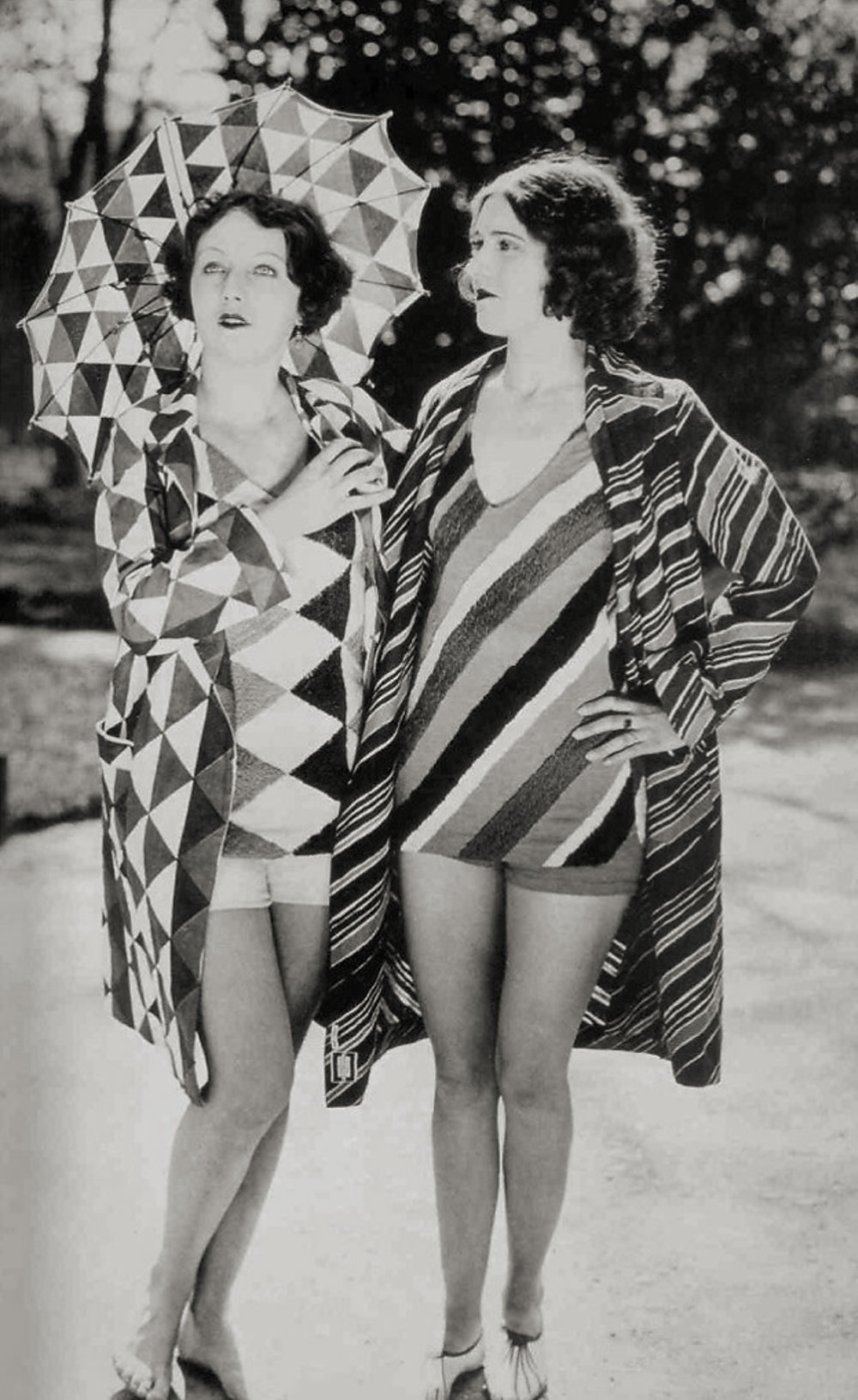
Closed Tuesday and Wednesday

The Art Institute of Chicago website

LIKE ART BLART ON FACEBOOK

Back to top

Exhibition: ‘Charles Marville: Photographer of Paris’ at The Metropolitan Museum of Art, New York / Marville research at the State Library of Victoria

Exhibition dates: 29th January – 4th May 2014


Charles Marville (French, 1813-1879) 'Top of the rue Champlain, View to the Right (Twentieth Arrondissement)' 1877-1878


Charles Marville (French, 1813-1879)
Top of the rue Champlain, View to the Right (Twentieth Arrondissement) 
1877-78
Albumen silver print from glass negative
26 x 36.6 cm (10 1/4 x 14 7/16 in.)
Musée Carnavalet, Paris
© Musée Carnavalet / Roger-Viollet


Great news from the State Library of Victoria!

Following further discussions my research can now take place. As you may recall the research question is, did the Charles Marville photographs that were exhibited at the Melbourne International Exhibition in 1880 influence the work of Melbourne photographers – Charles Nettleton, JW Lindt and Nicholas Caire.

The plan is that I research the photographs of Marville, Nettleton, Lindt and Caire online and then visit the Library to view the original prints. The Library have very helpfully sent me records of the visitors book to the 1880 exhibition and noted that Caire, Lindt and Nettleton exhibited photographs and won awards at the 1880-1881 exhibition.

Further, here are some more glorious images from the touring Charles Marville exhibition, this time at The Metropolitan Museum of Art, New York. The tonality of the prints is incredible, as is the subtle placement of the camera to obtain a unique perspective of the city. The almost modernist take on the lamppost as sculptural object, with the dead centre placement allowing the surrounding environment to flow around the verticality of the post, is breathtaking.

Marcus


Many thankx to The Metropolitan Museum of Art for allowing me to publish the photographs in the posting. Please click on the photographs for a larger version of the image.


Charles Marville (French, 1813-1879) 'Banks of the Bièvre River at the Bottom of the rue des Gobelins (Fifth Arrondissement)' c. 1862


Charles Marville (French, 1813-1879)
Banks of the Bièvre River at the Bottom of the rue des Gobelins (Fifth Arrondissement) 
c. 1862
Albumen print from collodion negative
27.5 x 36.8cm (10 13/16 x 14 1/2 in.)
Musée Carnavalet, Paris
© Musée Carnavalet / Roger-Viollet


Charles Marville (French, 1813-1879) 'Urinal, Jennings System, plateau de l'Ambigu' 1876


Charles Marville (French, 1813-1879)
Urinal, Jennings System, plateau de l’Ambigu 
1876
Albumen silver print from glass negative
26.7 × 36.4cm (10 1/2 × 14 5/16 in.)
Musée Carnavalet, Paris
© Musée Carnavalet / Roger-Viollet


Charles Marville (French, 1813-1879) 'Rue de Constantine (Fourth Arrondissement)' 1866


Charles Marville (French, 1813-1879)
Rue de Constantine (Fourth Arrondissement) 
1866
Albumen silver print from glass negative
27.3 x 36.8cm (10 3/4 x 14 1/2 in.)
The Horace W. Goldsmith Foundation Gift, through Joyce and Robert Menschel, 1986
The Metropolitan Museum of Art, New York


Charles Marville (French, 1813-1879) 'Passage Saint-Guillaume toward the rue Richilieu (First Arrondissement)' 1863-1865


Charles Marville (French, 1813-1879)
Passage Saint-Guillaume toward the rue Richilieu (First Arrondissement) 
1863-65
Albumen silver print from glass negative
31.91 x 27.62cm (12 9/16 x 10 7/8 in.)
Joy of Giving Something, Inc.


Widely acknowledged as one of the most talented photographers of the 19th century, Charles Marville (French, 1813-1879) was commissioned by the city of Paris to document both the picturesque, medieval streets of old Paris and the broad boulevards and grand public structures that Baron Georges-Eugène Haussmann built in their place for Emperor Napoleon III. Charles Marville: Photographer of Paris at The Metropolitan Museum of Art presents a selection of around 100 of his photographs.

Marville achieved moderate success as an illustrator of books and magazines early in his career. It was not until 1850 that he shifted course and took up photography – a medium that had been introduced just 11 years earlier. His poetic urban views, detailed architectural studies, and picturesque landscapes quickly garnered praise. Although he made photographs throughout France, Germany, and Italy, it was his native city – especially its monuments, churches, bridges, and gardens – that provided the artist with his greatest and most enduring source of inspiration.

By the end of the 1850s, Marville had established a reputation as an accomplished and versatile photographer. From 1862, as official photographer for the city of Paris, he documented aspects of the radical modernisation program that had been launched by Emperor Napoleon III and his chief urban planner, Baron Georges-Eugène Haussmann. In this capacity, Marville photographed the city’s oldest quarters, and especially the narrow, winding streets slated for demolition. Even as he recorded the disappearance of Old Paris, Marville turned his camera on the new city that had begun to emerge. Many of his photographs celebrate its glamour and comforts, while other views of the city’s desolate outskirts attest to the unsettling social and physical changes wrought by rapid modernisation.

Haussmann not only redrew the map of Paris, he transformed the urban experience by commissioning and installing tens of thousands of pieces of street furniture, kiosks, Morris columns for posting advertisements, pissoirs, garden gates, and, above all, some twenty thousand gas lamps. By the time he stepped down as prefect in 1870, Paris was no longer a place where residents dared to go out at night only if accompanied by armed men carrying lanterns. Taken as a whole, Marville’s photographs of Paris stand as one of the earliest and most powerful explorations of urban transformation on a grand scale.

By the time of his death, Marville had fallen into relative obscurity, with much of his work stored in municipal or state archives. This exhibition, which marks the bicentennial of Marville’s birth, explores the full trajectory of the artist’s photographic career and brings to light the extraordinary beauty and historical significance of his art.

Related Installation

Concurrent with Charles Marville: Photographer of Paris, a related installation in the adjacent Howard Gilman Gallery will be on view at the Metropolitan Museum. Paris as Muse: Photography, 1840s-1930s (January 27-May 4, 2014) celebrates the first 100 years of photography in Paris and features some 40 photographs, all drawn from the Museum’s collection. The installation focuses primarily on architectural views, street scenes, and interiors. It explores the physical shape and texture of Paris and how artists have found poetic ways to record through the camera its essential qualities.

Press release from The Metropolitan Museum of Art


This slideshow requires JavaScript.


Charles Marville (French, 1813-1879) 'Arts et Métiers (Ancien Modèle)' 1864


Charles Marville (French, 1813-1879)
Arts et Métiers (Ancien Modèle) 
1864
Albumen silver print from glass negative
36.6 x 24.1cm (14 7/16 x 9 1/2 in.)
Purchase, Alfred Stieglitz Society Gifts, 2007
The Metropolitan Museum of Art, New York


Charles Marville (French, 1813-1879) 'Hôtel de la Marine' 1864-1870


Charles Marville (French, 1813-1879)
Hôtel de la Marine 
1864-1870
Albumen silver print from glass negative
36.2 x 23.5cm (14 1/4 x 9 1/4 in.)
National Gallery of Art, Washington, Diana and Mallory Walker Fund


Charles Marville (French, 1813-1879) 'Lamppost, Entrance to the École des Beaux-Arts' c. 1870


Charles Marville (French, 1813-1879)
Lamppost, Entrance to the École des Beaux-Arts 
c. 1870
Albumen silver print from glass negative
35.6 x 25.4cm (14 x 10 in.)
Collection W. Bruce and Delaney H. Lundberg


Charles Marville (French, 1813-1879) 'Spire of Notre Dame, Viollet-le-Duc, Architect' 1859-1860


Charles Marville (French, 1813-1879)
Spire of Notre Dame, Viollet-le-Duc, Architect 
1859-1860
Albumen silver print from glass negative
49.5 x 36.5cm (19 1/2 x 14 3/8 in.)
The AIA/AAF Collection, Prints and Photographs Division, Library of Congress, Washington D.C.


Charles Marville (French, 1813-1879) 'Rue Estienne from the rue Boucher (First Arrondissement)' 1862-1865


Charles Marville (French, 1813-1879)
Rue Estienne from the rue Boucher (First Arrondissement) 
1862-1865
Albumen silver print from glass negative
34.3 x 27.1cm (13 1/2 x 10 11/16 in.)
Gilman Collection, Purchase, Mr. and Mrs. Henry R. Kravis Gift, 2005
The Metropolitan Museum of Art, New York


Charles Marville (French, 1813-1879) 'Rue de la Bûcherie from the cul de sac Saint-Ambroise (Fifth Arrondissement)' 1866-1868


Charles Marville (French, 1813-1879)
Rue de la Bûcherie from the cul de sac Saint-Ambroise (Fifth Arrondissement) 
1866-1868
Albumen silver print from glass negative
32 x 27.1cm (12 5/8 x 10 11/16 in.)
National Gallery of Art, Washington, Horace W. Goldsmith Foundation through Robert and Joyce Menschel


Charles Marville (French, 1813-1879) 'Cour Saint-Guillaume (Ninth Arrondissement)' 1866-1867


Charles Marville (French, 1813-1879)
Cour Saint-Guillaume (Ninth Arrondissement) 
1866-1867
Albumen silver print from glass negative
34.2 x 27.2cm (13 7/16 x 10 11/16 in.)
Gilman Collection, Purchase, Alfred Stieglitz Society Gifts, 2005
The Metropolitan Museum of Art, New York


Charles Marville (French, 1813-1879) 'Passage Saint-Benoît (Sixth Arrondissement)' 1864-1867


Charles Marville (French, 1813-1879)
Passage Saint-Benoît (Sixth Arrondissement) 
1864-1867
Albumen silver print from glass negative
36.5 x 27.6cm (14 3/8 x 10 7/8)
Musée Carnavalet, Paris
© Musée Carnavalet / Roger-Viollet


Charles Marville (French, 1813-1879) 'Impasse de la Bouteille from the rue Montorgeuil (Second Arrondissement)' 1865-1868


Charles Marville (French, 1813-1879)
Impasse de la Bouteille from the rue Montorgeuil (Second Arrondissement) 
1865-1868
Albumen silver print from glass negative
35.9 x 27.7cm (14 1/8 x 10 7/8 in.)
Musée Carnavalet, Paris
© Musée Carnavalet / Roger-Viollet


Charles Marville (French, 1813-1879) 'Man Reclining beneath a Chestnut Tree' c. 1853


Charles Marville (French, 1813-1879)
Man Reclining beneath a Chestnut Tree 
c. 1853
Salted paper print from paper negative
20.9 x 16.2cm (8 1/4 x 6 3/8 in.)
Harris Brisbane Dick Fund, 1946
The Metropolitan Museum of Art, New York


The Metropolitan Museum of Art
1000 Fifth Avenue at 82nd Street
New York, New York 10028-0198
Phone: 212-535-7710

Opening hours:
Sunday – Tuesday and Thursday: 10am – 5pm
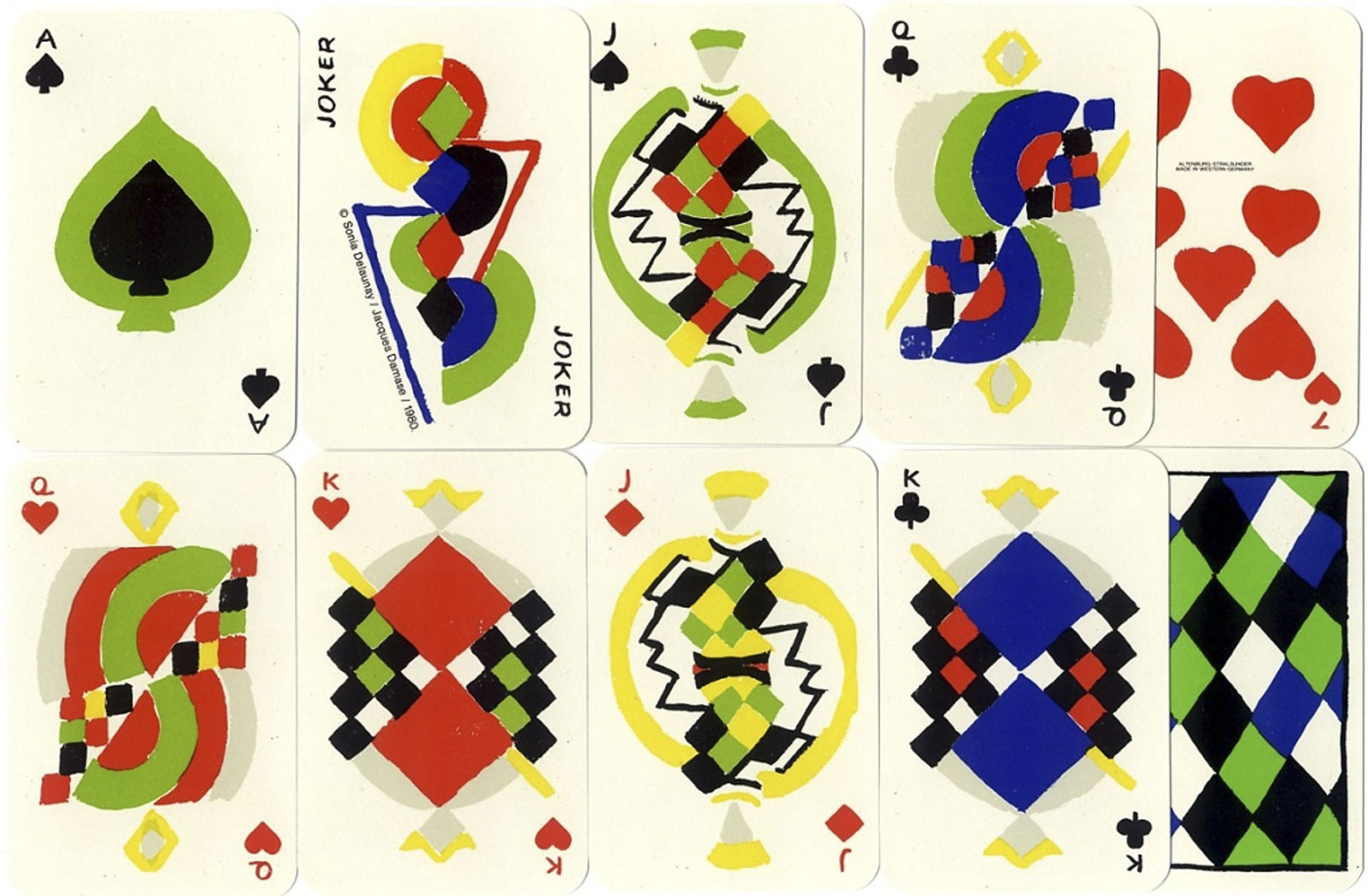
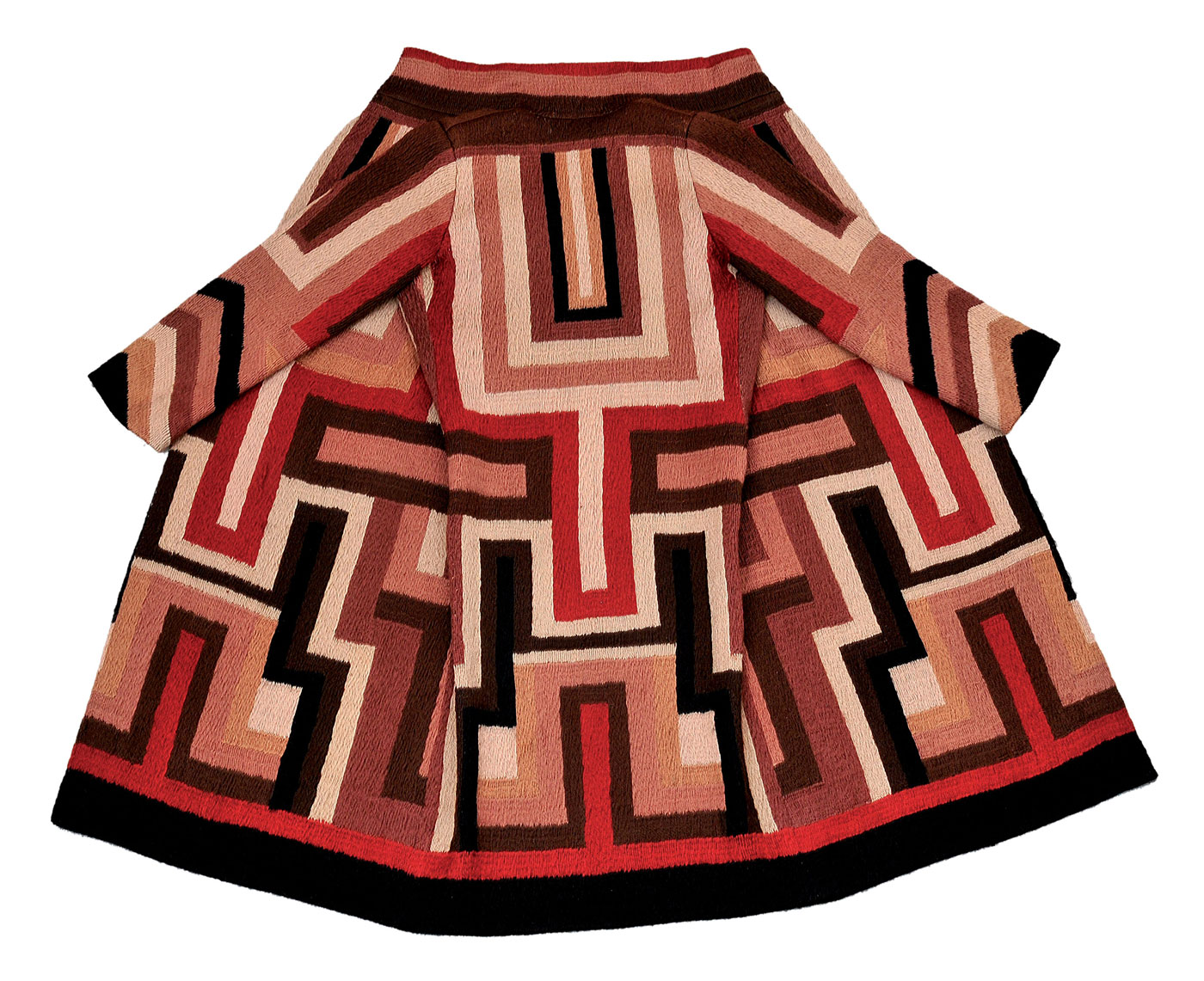
Friday and Saturday: 10am – 9pm
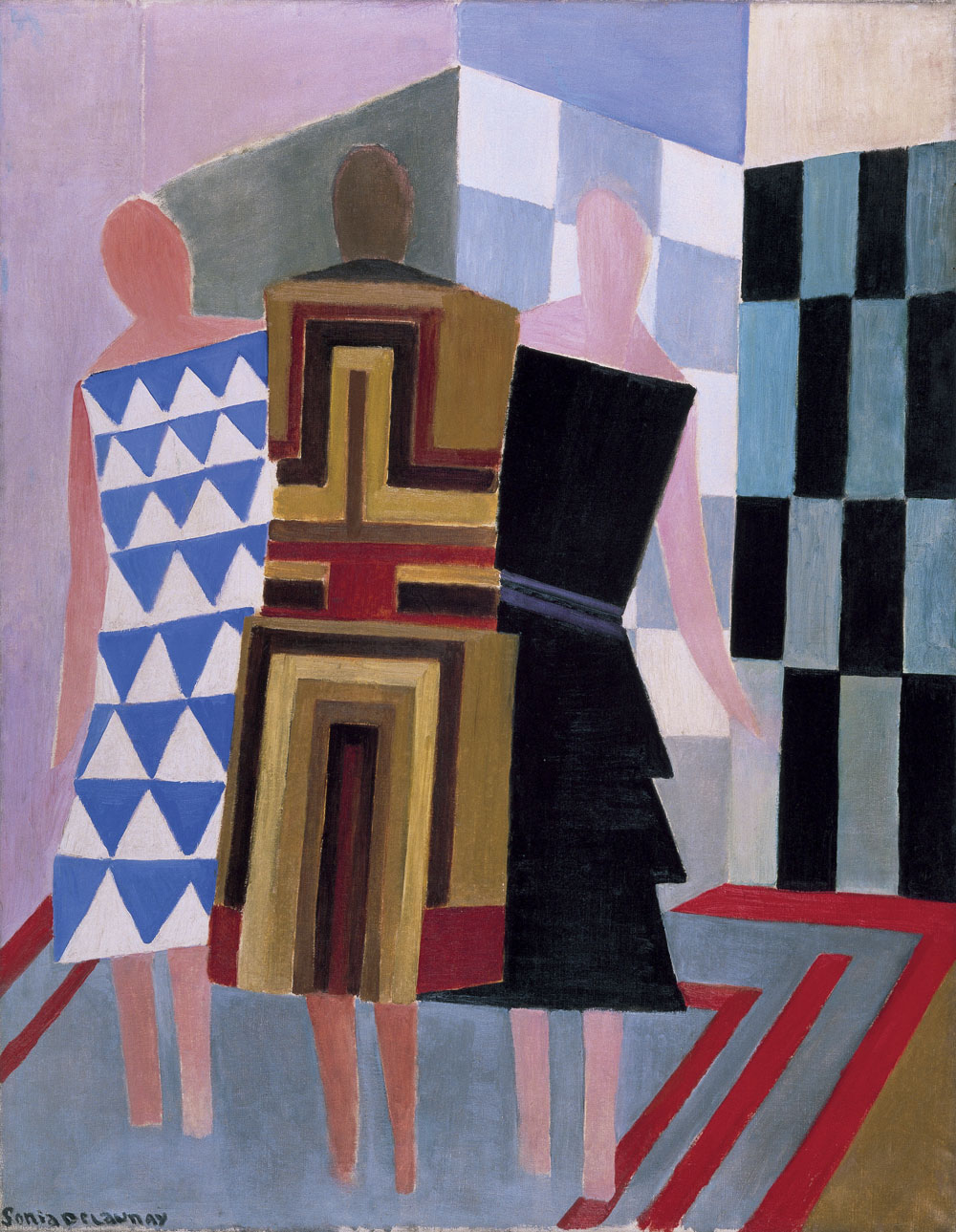
Closed Wednesday
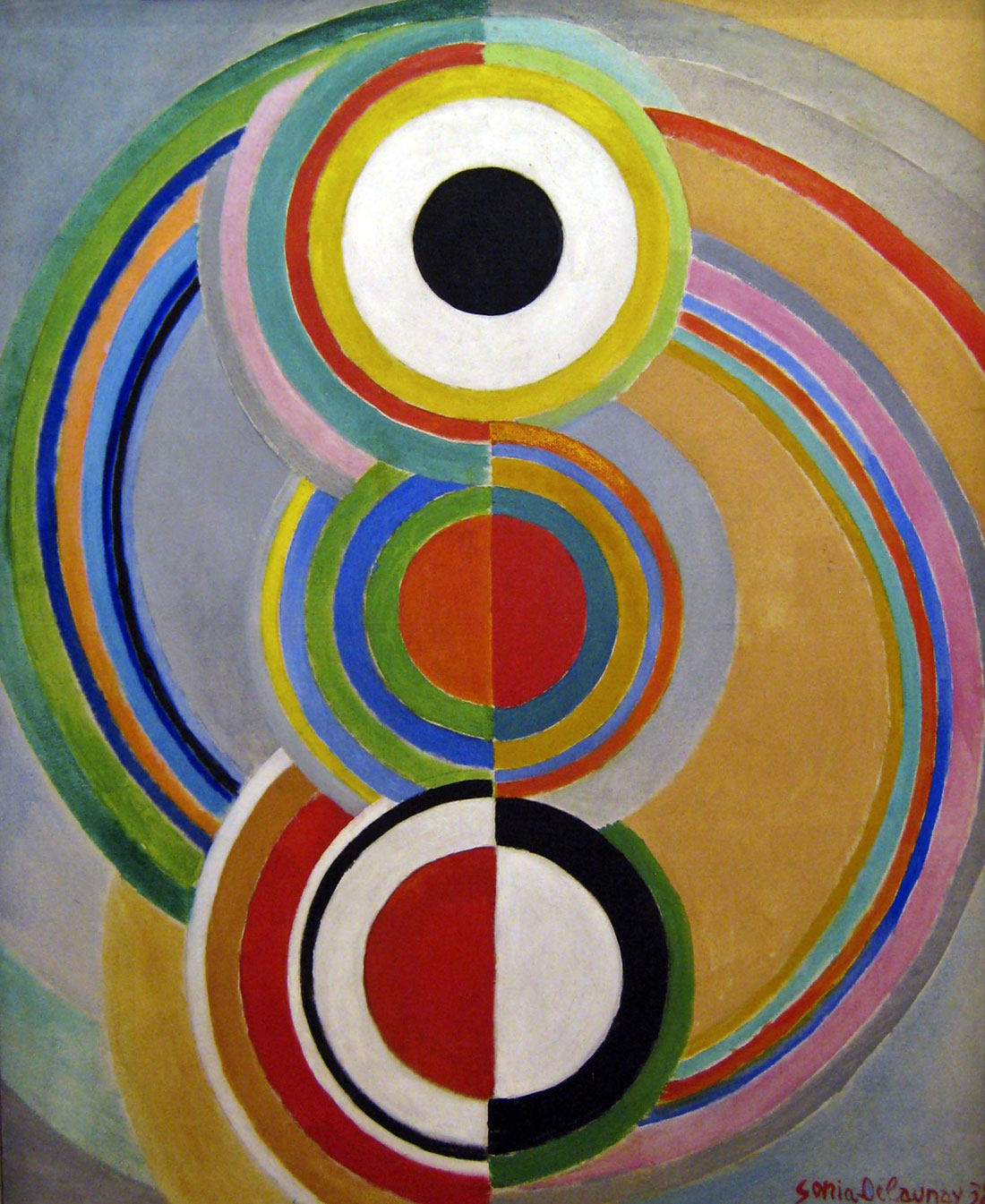
The Metropolitan Museum of Art website

LIKE ART BLART ON FACEBOOK

Back to top