Exhibition: ‘1932: Rare Photographs by George Grosz’ at the Akim Monet Side by Side Gallery, Berlin

Exhibition dates: 15th January – 19th March, 2016


George Grosz (German, 1893-1959) 'Zeitvertreib an Bord der "New York" / Pastime on board the "New York"' New York, 1932 from the exhibition '1932: Rare Photographs by George Grosz' at the Akim Monet Side by Side Gallery, Berlin, Jan - March, 2016


George Grosz (German, 1893-1959)
Zeitvertreib an Bord der “New York”
Pastime on board the “New York”
New York, 1932
© George Grosz Estate


While the photographs of the bridge, rigging and pastimes aboard the twin-screw turbine steamer New York are the most avant-garde and successful (in terms of composition, light and pictorial space) in this posting, it is very interesting to observe how a German immigrant artist viewed New York through the lens of a Leica camera upon his arrival.

These photographs could be seen as typical tourist snapshots but there is a certain vivacity (don’t you just love that word, vivacity – viva/city) and angular disposition about them that raises them above the status of snapshots. Grosz captures the spatial abstractness, intensity and excitement of the metropolis in displaced beats and accents – the sense of the buildings closing in looking uptown on 42nd street, or the flashing of bodies frozen in perpetual motion.

These images are precursors to the work of other great immigrant photographers who made the journey to America – the Hungarian André Kertész in 1936 and, later, the Swiss Robert Frank in 1947. Even though these latter photographers have a completely different style to Grosz, all three artists cast their dispassionate eye over American culture. They view it from the standpoint of an outsider, reinterpreting what they see from a different point of view.

Dr Marcus Bunyan

Please note: I have added the postcard of the steamer SS New York, the photograph of the boxer Max Schmeling and the paintings by George Grosz to give some social, historical and artistic context to the photographs in the exhibition. These works are NOT included in the exhibition.


Many thankx to the Akim Monet Side by Side Gallery for allowing me to publish the photographs in the posting. Please click on the photographs for a larger version of the image.


“After his emigration to the USA in 1933, Grosz “sharply rejected [his] previous work, and caricature in general.” In place of his earlier corrosive vision of the city, he now painted conventional nudes and many landscape watercolours. More acerbic works, such as Cain, or Hitler in Hell (1944), were the exception. In his autobiography, he wrote: “A great deal that had become frozen within me in Germany melted here in America and I rediscovered my old yearning for painting. I carefully and deliberately destroyed a part of my past.” Although a softening of his style had been apparent since the late 1920s, Grosz’s work assumed a more sentimental tone in America, a change generally seen as a decline.”

Text from the Wikipedia website


George Grosz (German, 1893-1959) 'Sendemast und Takelage der "New York" / Transmitter and rigging of the "New York"' New York, 1932 from the exhibition '1932: Rare Photographs by George Grosz' at the Akim Monet Side by Side Gallery, Berlin, Jan - March, 2016


George Grosz (German, 1893-1959)
Sendemast und Takelage der “New York”
Transmitter and rigging of the “New York”
New York, 1932
© George Grosz Estate


Akim Monet Side by Side Gallery presents a selection of 60 photographs by George Grosz taken in 1932 in partnership with Ralph Jentsch, director of the George Grosz Estate.

George Grosz is well known for his painting and drawing. The DADA MARSHAL, the moralist and angry observer, whose obsessive eye misses nothing and whose cutting, razor-sharp line, records the dangers and problems of his time like no other.

Lesser known is George Grosz the photographer, who in 1932, during his first voyage to America, took camera in hand and in just a few days shot almost 200 multi-layered photos. Right before his departure for America to accept a teaching position, George Grosz bought his first camera in Berlin especially for this trip. With it he started to take photographs during the Atlantic crossing on a ship tellingly called the New York. He chose specific subject matter with a clear emphasis on angles. Behind the viewfinder of the objective camera, finding the right crop became for him a fascinating, creative moment.

His photography profoundly changed after his arrival. In New York, instead of structured stills, his photography was dominated by dynamic movement. In rapid shots taken from moving double-decker buses or in sequences of moving subjects, George Grosz captured the restless metropolis that fascinated him, as if he wanted to imitate cinema with these syncopated images. Chance and detail take the place of balanced composition. The whole, pulsating life of New York is seen through the eyes of the artist.

Text after: Jentsch, Ralph, George Grosz. Eye of the Artist, Photographs New York 1932, Weingarten, 2002.

Press release from the Akim Monet Side by Side Gallery


George Grosz (German, 1893-1959) 'Die Brücke der "New York" / The bridge of the "New York"' New York, 1932


George Grosz (German, 1893-1959)
Die Brücke der “New York”
The bridge of the “New York”
New York, 1932
© George Grosz Estate


Anonymous photographer. Knackstedt & Co (publisher) 'SS New York' Nd postcard

Anonymous photographer. Knackstedt & Co (publisher) 'SS New York' Nd postcard verso


Anonymous photographer
Knackstedt & Co (publisher)
SS New York (front and verso)
After 1926
Postcard


The Twin-Screw Turbine Steamer “New York”

Measurement: 21,500 tons gross • Length 633 ft. • Beam 79 ft. • Depth 56 ft. 5
Builders: Messrs. Blohm 6- Voss, of Hamburg (1926/27)

New York, the city after which the Hamburg-America Line (HAPAG) steamer “New York” was christened by the Lady Mayoress of the American metropolis on the occasion of her being launched in Hamburg on October 20, 1926. USA service, 1941 transferred to Deutsche Amerika Line, 1945 bombed at Kiel and capsized.


George Grosz (German, 1893-1959) 'Lower Manhattan' c. 1934


George Grosz (German, 1893-1959)
Lower Manhattan
c. 1934
Oil on cardboard
18 x 24 (45.7 x 61cm)
Gift of Dalzell Hatfield


George Grosz (German, 1893-1959) 'Im Doppeldeckerbus auf der 5th Avenue, Höhe 48th Street, mit der Collegiate Church of St. Nicholas rechts' (Aboard a double-decker on 5th Avenue at 48th street, with on the right the Collegiate Church of St. Nicholas) New York, 1932


George Grosz (German, 1893-1959)
Im Doppeldeckerbus auf der 5th Avenue, Höhe 48th Street, mit der Collegiate Church of St. Nicholas rechts
Aboard a double-decker on 5th Avenue at 48th street, with on the right the Collegiate Church of St. Nicholas
New York, 1932
© George Grosz Estate


George Grosz (German, 1893-1959) 'Im Doppeldeckerbus Downtown 5th Avenue, mit Blick Uptown auf die 42th Street' (Aboard a double-decker downtown on 5th Avenue looking uptown on 42nd street 1932), New York, 1932


George Grosz (German, 1893-1959)
Im Doppeldeckerbus Downtown 5th Avenue, mit Blick Uptown auf die 42th Street
Aboard a double-decker downtown on 5th Avenue looking uptown on 42nd street
New York, 1932
© George Grosz Estate


George Grosz (German, 1893-1959) 'Herald Square' New York, 1932


George Grosz (German, 1893-1959)
Herald Square
New York, 1932
© George Grosz Estate


George Grosz (German, 1893-1959) 'Street Scene' 1925


George Grosz (German, 1893-1959)
Street Scene
1925
Oil on canvas
81.3 × 61.3cm


George Grosz (German, 1893-1959) 'Eingang zur Subway Station 5th Avenue am Flat Iron Building' (Entrance of the Subway Station at 5th Avenue and the Flat Iron Building) New York, 1932


George Grosz (German, 1893-1959)
Eingang zur Subway Station 5th Avenue am Flat Iron Building
Entrance of the Subway Station at 5th Avenue and the Flat Iron Building
New York, 1932
© George Grosz Estate


George Grosz (German, 1893-1959) 'Max Schmeling beim Schauboxen in Kingston, 5. Juni 1932' (Max Schmeling at a boxing exhibition game in Kingston, 5th of June 1932) New York, 1932


George Grosz (German, 1893-1959)
Max Schmeling beim Schauboxen in Kingston, 5. Juni 1932
Max Schmeling at a boxing exhibition game in Kingston, 5th of June 1932
New York, 1932
© George Grosz Estate


The Greatest Boxing Fights of All Time – Max Schmeling vs Mickey Walker in 1932


Unknown photographer. 'Max Schmeling' 1929


Unknown photographer
Max Schmeling (German, 1905-2005)
“The Black Uhlan”
Heavyweight Champion
1930-1932


Maximillian Adolph Otto Siegfried “Max” Schmeling (September 28, 1905 – February 2, 2005) was a German boxer who was heavyweight champion of the world between 1930 and 1932. His two fights with Joe Louis in 1936 and 1938 were worldwide cultural events because of their national associations.

Starting his professional career in 1924, Schmeling came to the United States in 1928 and, after a ninth-round technical knockout of Johnny Risko, became a sensation. He became the first to win the heavyweight championship (at that time vacant) by disqualification in 1930, after opponent Jack Sharkey knocked him down with a low blow in the fourth round. Max retained his crown successfully in 1931 by a TKO victory over Young Stribling. A rematch in 1932 with Sharkey saw the American gaining the title from Schmeling by a controversial fifteen-round split decision. In 1933, Schmeling lost to Max Baer by a tenth-round TKO. The loss left people believing that Schmeling was past his prime. Meanwhile, Adolf Hitler and the Nazi Party took over control in Germany, and Schmeling came to be viewed as a ‘Nazi puppet.’

In 1936, Schmeling knocked out American rising star Joe Louis, placing him as the number one contender for Jim Braddock’s title, but Louis got the fight and knocked Braddock out to win the championship in 1937. Schmeling finally got a chance to regain his title in 1938, but Louis knocked him out in one round. During World War II, Schmeling served with the German Air Force (Luftwaffe) as an elite paratrooper (Fallschirmjäger). After the war, Schmeling mounted a comeback, but retired permanently in 1948.

After retiring from boxing, Schmeling worked for The Coca-Cola Company. Schmeling became friends with Louis, and their friendship lasted until the latter’s death in 1981. Schmeling died in 2005 aged 99, a sporting icon in his native Germany. Long after the Second World War, it was revealed that Schmeling had risked his own life to save the lives of two Jewish children in 1938.

Text from the Wikipedia website


George Grosz (German, 1893-1959) 'Sonntag in Manhattan / Sunday in Manhattan' New York, 1932


George Grosz (German, 1893-1959)
Sonntag in Manhattan
Sunday in Manhattan
New York, 1932
© George Grosz Estate


George Grosz (German, 1893-1959) 'New York street scene' Nd


George Grosz (German, 1893-1959)
New York street scene
c. 1930s
Watercolour


George Grosz (German, 1893-1959) 'Madison Avenue' New York, 1932


George Grosz (German, 1893-1959)
Madison Avenue
New York, 1932
© George Grosz Estate


Akim Monet Side by Side Gallery

This gallery has now closed but there is an archive website.

Akim Monet Side by Side Gallery website

LIKE ART BLART ON FACEBOOK

Back to top

Exhibition: ‘City of Abstractions: Brett Weston in New York, 1944-45’ at 1285 Avenue of the Americas Art Gallery, New York

Exhibition dates: 30th September 2013 – 10th January 2014


Brett Weston (American, 1911-1993) '[Air vents, New York]' 1945


Brett Weston (American, 1911-1993)
[Air vents, New York]
1945
Image: 10 3/4 x 13 13/16 in. (27.3 x 35.1cm)
Gelatin silver print
Gift of the Brett Weston Archive, from the collection of Christian Keesee, 2003


Out of the 84 images online on eMuseum I have picked just 13 from the exhibition for this posting. While the press release is loquacious in its praise for these 8 x 10 view camera photographs – and Weston’s subjective and abstract view of the city with it’s flattened and abstracted deep space “distinguished by an attention to the formal values of linearity, depth, and contrast” – only the few that I have focused on here really work to any considerable degree.

Most of the photographs seem mundane, prosaic experiments in form, shape and detail. Church door, Bowery, New York and Wrought iron fence, New York (both c. 1945, below) are better examples of detail photographs by Weston, but other than their formal qualities they are pretty boring images. More interesting is the photograph Stoop with broom, arrow, and pushcart, New York (1944, below) with its cacophony of shapes and angles, form, light and shadow.

While most photographs in the posting have some interesting qualities, the only real show stopper is Air vents, New York (1944, below). This is a beautifully resolved modernist image which contrasts the air vents as sculptural objects with the city skyline beyond. Here Weston manipulates deep space (without deep focus / large depth of field) as part of the mise en scène, placing the significant props in different planes of the picture while successfully flattening the whole tableau vivant at the same time. The rendition of light is handsomely controlled, the air vents becoming Brancussi-like sculptures or some form of alien creature.

Dr Marcus Bunyan


Many thankx to the International Center of Photography and the Avenue of the Americas Art Gallery for allowing me to publish the photographs in the posting. Please click on the photographs for a larger version of the image.


Brett Weston (American, 1911-1993) '[42nd Street at First Avenue, New York]' c. 1945


Brett Weston (American, 1911-1993)
[42nd Street at First Avenue, New York]
c. 1945
Image: 7 3/4 x 9 3/4 in. (19.7 x 24.8cm)
Gelatin silver print
Gift of the Brett Weston Archive, from the collection of Christian Keesee, 2003


Brett Weston (American, 1911-1993) '[Oceano Dunes, California]' 1934


Brett Weston (American, 1911-1993)
[Oceano Dunes, California]
1934
Image: 10 5/8 x 13 13/16 in. (27 x 35.1cm)
Gelatin silver print
Gift of the Brett Weston Archive, from the collection of Christian Keesee, 2003


Brett Weston (American, 1911-1993) '[Stoop with broom, arrow, and pushcart, New York]' 1944


Brett Weston (American, 1911-1993)
[Stoop with broom, arrow, and pushcart, New York]
1944
Image: 10 1/4 x 13 5/8 in. (26 x 34.6cm)
Gelatin silver print
Gift of the Brett Weston Archive, from the collection of Christian Keesee, 2003


Brett Weston (American, 1911-1993) '[Airshafts, New York]' c. 1945


Brett Weston (American, 1911-1993)
[Airshafts, New York]
c. 1945
Image: 13 13/16 x 10 11/16 in. (35.1 x 27.1cm)
Gelatin silver print
Gift of the Brett Weston Archive, from the collection of Christian Keesee, 2003


Brett Weston (American, 1911-1993) '[Courtyard, New York]' c. 1945


Brett Weston (American, 1911-1993)
[Courtyard, New York]
c. 1945
Image: 19 x 15 1/4 in. (48.3 x 38.7cm)
Gelatin silver print
Gift of the Brett Weston Archive, from the collection of Christian Keesee, 2003


Brett Weston (1911-1993) is widely regarded as one of the leading photographers of the 20th century. He is known primarily for his bold compositions based on Western landscapes and natural forms, and for his extraordinary printing style. Weston was among a small group of California photographers in the 1930s, known as the Group f/64, who favoured large-format view cameras, straight and uncropped images, and stark black-and-white prints, often contact printed. This group included Ansel Adams and Brett Weston’s father, Edward Weston. But Brett Weston’s style became even more radical when he was drafted into the army during World War II, and, in 1944, sent to the Army Pictorial Center in New York. There, in addition to routine Army work, Weston explored the streets of New York with his large 8 x 10 view camera. Over the next two years, Weston took over 300 photographs, each distinguished by an attention to the formal values of linearity, depth, and contrast. Turning away from the documentary style that characterised much of the photography of New York in the preceding decade, notably Berenice Abbott’s project Changing New York (1939), Weston pioneered a highly subjective and abstract view of the city, often focusing on details such as the finial on an iron railing or ivy on the side of a building. In pictures like Air Vents (1944) and Whelans Drugstore (1944), Weston flattened and abstracted the deep space of the New York cityscape creating rich, two-dimensional black-and-white images. This approach would govern the most prolific period of Weston’s work in the late 1940s and 1950s, when he utilised this highly polished style to photograph Western dunes, beaches, rocks, and vegetation.

This exhibition includes over 100 photographs, drawn largely from the collection of the International Center of Photography. The exhibition is a collaboration between the International Center of Photography, the Brett Weston Archive, and the host Gallery of the Americas. It is organised by Brian Wallis, Chief Curator at the International Center of Photography, and Julie Maguire, Director of the Brett Weston Archive.

Please note that this exhibition is at the 1285 Avenue of the Americas Art Gallery between 51st and 52nd Streets.

Press release from the ICP website


Brett Weston (American, 1911-1993) '[House, Ewing Street, Staten Island, New York]' c. 1945


Brett Weston (American, 1911-1993)
[House, Ewing Street, Staten Island, New York]
c. 1945
Image: 10 x 8 in. (25.4 x 20.3cm)
Paper: 10 x 8 in. (25.4 x 20.3cm)
Gelatin silver print
Gift of the Brett Weston Archive, from the collection of Christian Keesee, 2003


Brett Weston (American, 1911-1993) '[Sutton Place, New York]' c. 1945


Brett Weston (American, 1911-1993)
[Sutton Place, New York]
c. 1945
Image: 10 x 8 in. (25.4 x 20.3cm)
Paper: 10 x 8 in. (25.4 x 20.3 cm)
Gelatin silver print
Gift of the Brett Weston Archive, from the collection of Christian Keesee, 2003


Brett Weston (American, 1911-1993) '[Skylight and fences, Midtown, New York]' c. 1945


Brett Weston (American, 1911-1993)
[Skylight and fences, Midtown, New York]
c. 1945
Image: 10 x 8 in. (25.4 x 20.3cm)
Gelatin silver print
Gift of the Brett Weston Archive, from the collection of Christian Keesee, 2003


Brett Weston (American, 1911-1993) '[Wrought iron fence, New York]' c. 1945


Brett Weston (American, 1911-1993)
[Wrought iron fence, New York]
c. 1945
Image: 9 9/16 x 6 13/16 in. (24.3 x 17.3cm)
Gelatin silver print
Gift of Christian K. Keesee, 2012


Brett Weston (American, 1911-1993) '[Church door, Bowery, New York]' c. 1945


Brett Weston (American, 1911-1993)
[Church door, Bowery, New York]
c. 1945
Image: 9 1/2 x 7 9/16 in. (24.1 x 19.2cm)
Gelatin silver print
Gift of the Brett Weston Archive, from the collection of Christian Keesee, 2003


Brett Weston (American, 1911-1993) '[Pillars and tree, New York]' 1944


Brett Weston (American, 1911-1993)
[Pillars and tree, New York]
1944
Image: 10 x 8 in. (25.4 x 20.3cm)
Gelatin silver print
Gift of the Brett Weston Archive, from the collection of Christian Keesee, 2003


Brett Weston (American, 1911-1993) '[St. Francis Grocery & Fruit, New York]' c. 1945


Brett Weston (American, 1911-1993)
[St. Francis Grocery & Fruit, New York]
c. 1945
Image: 9 1/2 x 7 9/16 in. (24.1 x 19.2cm)
Gelatin silver print
Gift of Christian K. Keesee, 2012


International Center of Photography
79 Essex Street, New York, NY 10002
between Delancey Street and Broome Street

Opening hours:
Wednesday – Monday 11am – 7pm

ICP website

ICP exhibition website

LIKE ART BLART ON FACEBOOK

Back to top

Exhibition: ‘Picturing New York: Photographs from the Museum of Modern Art’ at the Art Gallery of Western Australia (AGWA), Perth

Exhibition dates: 26th January – 12th May 2013


Berenice Abbott (American, 1898-1991) 'Fifth Avenue, nos. 4, 6, 8, Manhattan' March 20, 1936


Berenice Abbott (American, 1898-1991)
Fifth Avenue, nos. 4, 6, 8, Manhattan
March 20, 1936
Gelatin silver print
15 x 19 1/4″ (38.1 x 48.9cm)
The Museum of Modern Art, New York
Thomas Walther Collection
© 2012 Berenice Abbott/Commerce Graphics


A second tranche of images from this touring exhibition of photographs from the MoMA collection, presented at the Art Gallery of Western Australia in Perth. My personal favourites in this posting are the tonal Abbott, mean streets Gedney, luminous Groover and the intimate Burckhardt. There are two photographers I don’t know at all (Gedney and Burckhardt) and one who is very underrated: Peter Hujar.

Dr Marcus Bunyan


Many thankx to the AGWA for allowing me to publish the photographs in the posting. Please click on the photographs for a larger version of the image.


William Gedney (American, 1924-1989) 'Brooklyn' 1966


William Gedney (American, 1924-1989)
Brooklyn
1966
Gelatin silver print
7 9/16 x 11 5/16″ (19.3 x 28.8cm)
The Museum of Modern Art, New York
Gift of the Duke University Rare Book, Manuscript, and Special Collections Library
© 2012 Estate of William Gedney


William Gale Gedney (October 29, 1932 – June 23, 1989) was an American photographer. It wasn’t until after his death that his work gained momentum and his work is now widely recognised… William Gedney died of AIDS in 1989, aged 56, in New York City and is buried in Greenville, New York, a few short miles from his childhood home. He left his photographs and writings to his lifelong friend Lee Friedlander.

Text from the Wikpedia website

See more photographs by William Gedney on the Duke Libraries website and on The Selvedge Yard website


Jan Groover (American, 1943-2012) 'Untitled' 1981


Jan Groover (American, 1943-2012)
Untitled
1981
Platinum/palladium print
7 5/8 x 9 1/2″ (19.4 x 24.2cm)
The Museum of Modern Art, New York
Gift of Howard Stein
© 2012 Jan Groover


“Depicting the iconic New York that captivates the world’s imagination and the idiosyncratic details that define New Yorkers’ sense of home, this exhibition from MoMA’s extraordinary photography collection celebrates the city in all its vitality, ambition and beauty. Made by approximately 90 artists responding to the city as well as professionals on assignment, including Henri Cartier-Bresson, Walker Evans, Lewis Hine, Helen Levitt, Cindy Sherman, Alfred Stieglitz, and Weegee, over 150 works reveal the deeply symbiotic relationship between photography and the ‘city that never sleeps’ – New York. Both an exploration of the life of the city and a documentation of photography’s evolution throughout the twentieth century, Picturing New York celebrates the great and continuing tradition of capturing the grit and glamour of one of the world’s greatest urban centres.

Artists include Berenice Abbott, Diane Arbus, Henri Cartier-Bresson, Walker Evans, Lee Friedlander, Nan Goldin, Helen Levitt, Cindy Sherman, Alfred Stieglitz, Paul Strand, Weegee, and Garry Winogrand, among many others.”

Text from the AGWA website


Lisette Model (American born Austria, 1901-1983) 'Times Square' 1940


Lisette Model (American born Austria, 1901-1983)
Times Square
1940
Gelatin silver print
15 9/16 x 19 9/16″ (39.6 x 49.7cm)
The Museum of Modern Art, New York
Gift of the photographer
© 2012 Estate of Lisette Model, courtesy Baudoin Lebon Gallery, Paris and Keitelman Gallery, Brussels


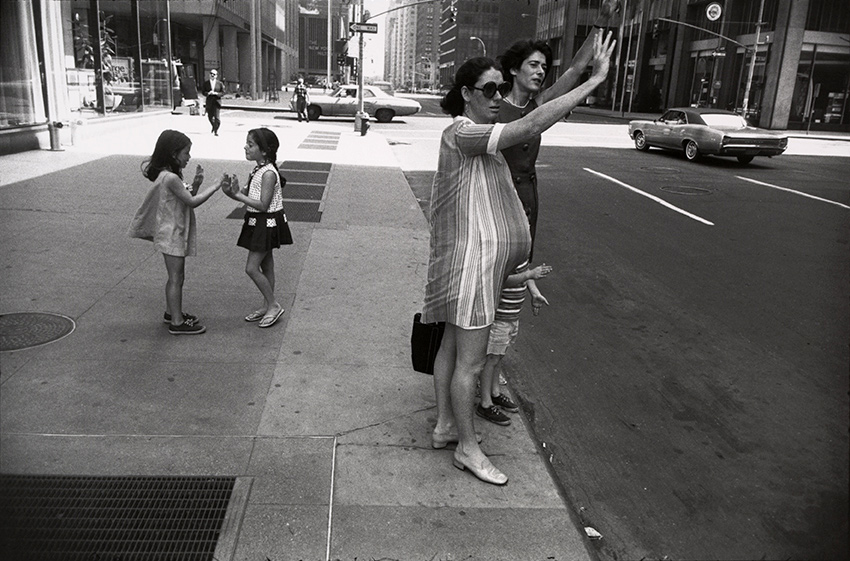
Garry Winogrand (American, 1928-1984) 'New York City' 1968


Garry Winogrand (American, 1928-1984)
New York City
1968
Gelatin silver print
8 7/8 x 13 3/16″ (22.5 x 33.5cm)
The Museum of Modern Art, New York
Purchase and gift of Barbara Schwartz in memory of Eugene M. Schwartz
© The Estate of Garry Winogrand, courtesy Fraenkel Gallery


Henri Cartier-Bresson (French, 1908-2004) 'Near the Hall of Records, New York' 1947


Henri Cartier-Bresson (French, 1908-2004)
Near the Hall of Records, New York
1947
Gelatin silver print
15 5/16 x 22 13/16″ (38.9 x 57.9cm)
The Museum of Modern Art, New York
Gift of the photographer
© 2012 Henri Cartier-Bresson/Magnum, courtesy Foundation HCB, Paris


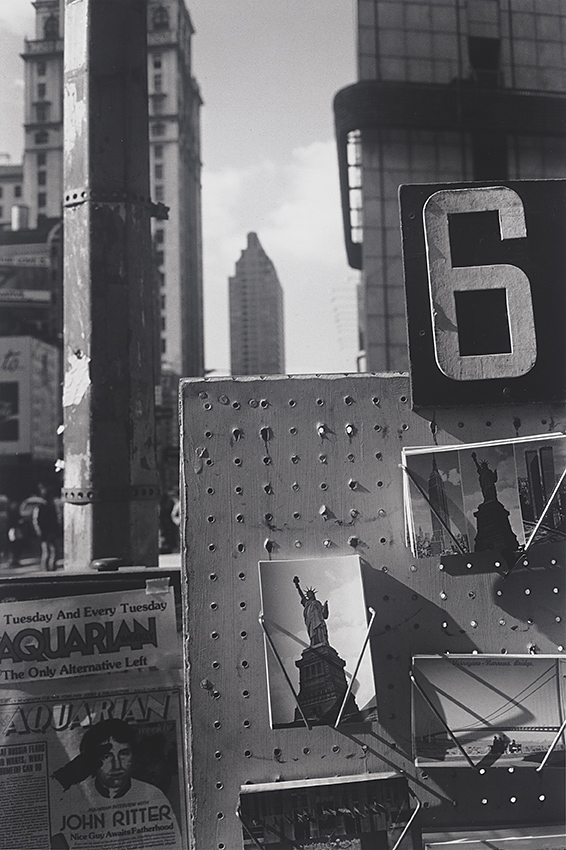
Rudy Burckhardt (American born Switzerland, 1914-1999) 'A View From Brooklyn I' 1954


Rudy Burckhardt (American born Switzerland, 1914-1999)
A View From Brooklyn I
1954
Gelatin silver print
10 5/16 x 9 3/16″ (26.2 x 23.4cm)
The Museum of Modern Art, New York
Gift of CameraWorks, Inc. and Purchase
© 2012 Rudy Burckhardt / Artists Rights Society (ARS), New York


Rudy Burckhardt (1914, Basel – 1999) was a Swiss-American filmmaker, and photographer, known for his photographs of hand-painted billboards which began to dominate the American landscape in the nineteen-forties and fifties.

Burckhardt discovered photography as a medical student in London. He left medicine to pursue photography in the 1930s. He immigrated to New York City in 1935. Between 1934 and 1939, he traveled to Paris, New York and Haiti making photographs mostly of city streets and experimenting with short 16mm films. While stationed in Trinidad in the Signal Corps from 1941-1944, he filmed the island’s residents. In 1947, he joined the Photo League in New York City. Burckhardt married painter Yvonne Jacquette whom he collaborated with throughout their 40 year marriage. He taught filmmaking and painting at the University of Pennsylvania from 1967 to 1975.

On his 85th birthday, Burckhardt committed suicide by drowning in the lake on his property.

Text from the Wikipedia website


Rudy Burckhardt and Edwin Denby
The Climate of New York
1980


Trailer for Rudy Burckhardt Films from Tibor de Nagy Gallery on Vimeo.


Lee Friedlander (American, b. 1934) 'New York City' 1980


Lee Friedlander (American, b. 1934)
New York City
1980
Gelatin silver print
18 5/8 x 12 3/8″ (47.3 x 31.5cm)
The Museum of Modern Art, New York
The Family of Man Fund
© 2012 Lee Friedlander


Underwood and Underwood (American, active 1880-1934) 'Above Fifth Avenue, Looking North' 1905


Underwood and Underwood (American, active 1880-1934)
Above Fifth Avenue, Looking North
1905
Gelatin silver print
9 1/2 x 7 5/16″ (24.2 x 18.6cm)
The Museum of Modern Art, New York
The New York Times Collection


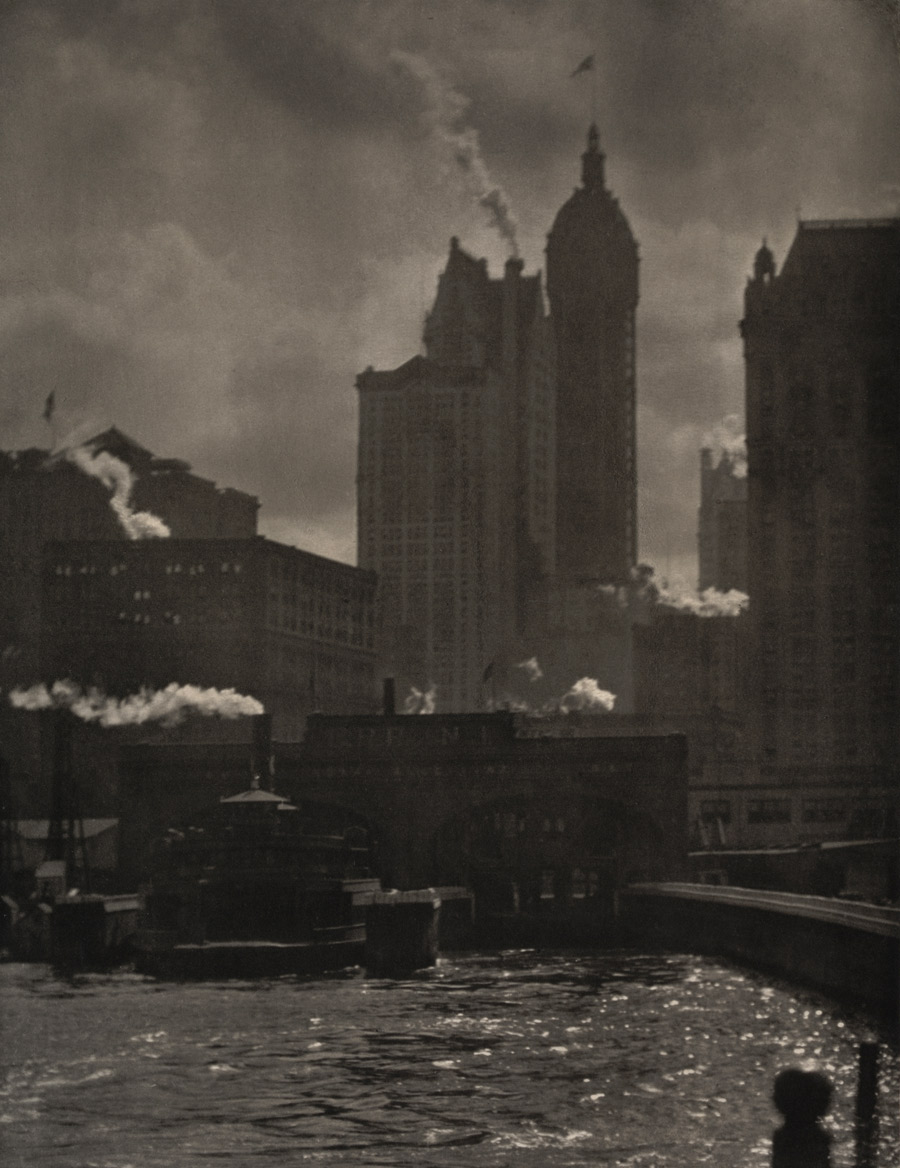
Alfred Stieglitz (American, 1864-1946) 'City of Ambition' 1910


Alfred Stieglitz (American, 1864-1946)
City of Ambition
1910
Photogravure
13 3/8 x 10 1/4″ (34 x 26.1cm)
The Museum of Modern Art, New York
© 2012 Estate of Alfred Stieglitz / Artists Rights Society (ARS), New York


Peter Hujar (American, 1934-1987) 'New York Series #22' 1976


Peter Hujar (American, 1934-1987)
New York Series #22
1976
Gelatin silver print
14 5/8 x 14 3/4″ (37.1 x 37.4cm)
The Museum of Modern Art, New York
Gift of the Estate of Peter Hujar and James Danziger Gallery, New York
© 2012 Peter Hujar Archive


Peter Hujar (October 11, 1934 – November 26, 1987) was an American photographer known for his black and white portraits. Born in Trenton, New Jersey, United States. Hujar later moved to Manhattan to work in the magazine, advertising, and fashion industries. His subjects also consisted of farm animals and nudes. His most famous photograph is Candy Darling on Her Deathbed which was later used by the group Antony and the Johnsons as cover for their album I Am a Bird Now. The one-time lover, friend and mentor of artist David Wojnarowicz, Hujar died of AIDS complications on November 26, 1987, aged 53.

See the more photographs on the Peter Hujar Archive website


Fairchild Aerial Surveys, Inc. 'The Mount Everest of Manhattan: The Silvered Peak of the Chrysler Building' 1930


Fairchild Aerial Surveys, Inc.
The Mount Everest of Manhattan: The Silvered Peak of the Chrysler Building
1930
Gelatin silver print
8 3/4 x 6 13/16″ (22.3 x 17.3cm)
The Museum of Modern Art, New York
The New York Times Collection


Walker Evans (American, 1903-1975) 'Girl in Fulton Street, New York 1929' 1929


Walker Evans (American, 1903-1975)
Girl in Fulton Street, New York 1929
1929
Gelatin silver print
7 1/2 x 4 5/8″ (19.1 x 11.7cm)
The Museum of Modern Art, New York
Gift of the photographer


Lewis W. Hine (American, 1874–1940) 'Italian Family Looking for Lost Baggage, Ellis Island, New York' 1905


Lewis W. Hine (American, 1874-1940)
Italian Family Looking for Lost Baggage, Ellis Island, New York
1905
Gelatin silver print
5 9/16 x 4 5/16″ (14.1 x 10.9cm)
The Museum of Modern Art, New York


Art Gallery of Western Australia
Perth Cultural Centre, James Street Mall, Perth

Opening hours:
Wednesday – Monday 10am – 5pm
Closed Tuesdays

AGWA website

LIKE ART BLART ON FACEBOOK

Back to top