Exhibition: ‘Of Life and Loss: The Polish Photographs of Roman Vishniac and Jeffrey Gusky’ at the Detroit Institute of Arts

Exhibition dates: 15th April – 12th July, 2009
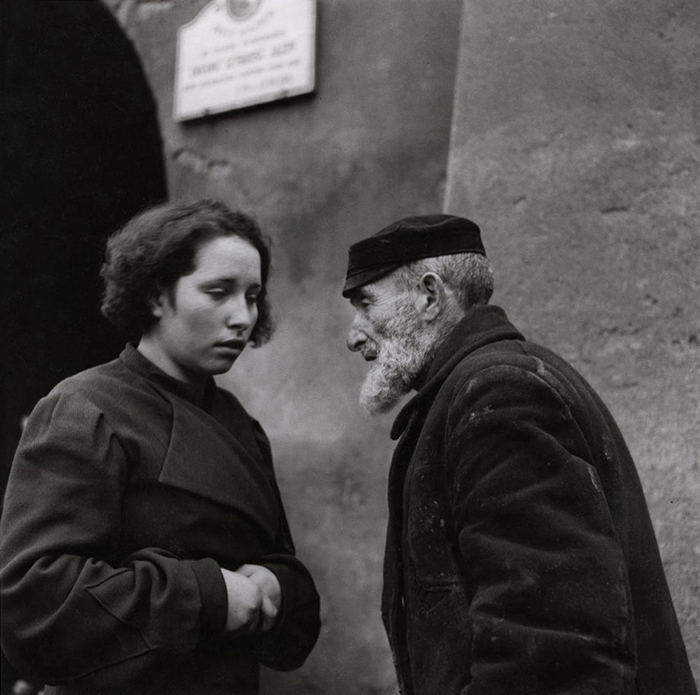
 

Roman Vishniac (Russian-American, 1897-1990) 'Grandfather and granddaughter, Lublin' 1937 from the exhibition 'Of Life and Loss: The Polish Photographs of Roman Vishniac and Jeffrey Gusky' at the Detroit Institute of Arts, April - July, 2009


Roman Vishniac (Russian-American, 1897-1990)
Grandfather and granddaughter, Lublin
1937
Gelatin silver print
Courtesy of the International Center of Photography
© Mara Vishniac Kohn


“During my journeys, I took over sixteen thousand photographs. All but two thousand were confiscated and, presumably, destroyed – although perhaps they will reappear someday. I hope my photographs enable the reader to envision a time and place that worthy of remembrance.”


Roman Vishniac


Hardly any photographs by Jeffrey Gusky online but he has provided some via email. I will post them asap. Thank you very much Jeff for contacting me. I knew little about the photographer Roman Vishniac but after more research I know much more now. What a photographer!

Just look at the image below to see a masterpiece of classical photography. Look at the space between the figures, the tension almost palpable, the look on the granddaughters face and the wringing of her hands a portent of the despair to come. A good archive of his photographs is on the International Center of Photography website.

Dr Marcus Bunyan


Many thankx to The Detroit Institute of Arts for allowing me to publish the photographs in the posting. Please click on the photographs for a larger version of the image.


Roman Vishniac (Russian-American, 1897-1990) 'Children playing on a street lined with swastika flags' mid-1930s from the exhibition 'Of Life and Loss: The Polish Photographs of Roman Vishniac and Jeffrey Gusky' at the Detroit Institute of Arts, April - July, 2009


Roman Vishniac (Russian-American, 1897-1990)
Children playing on a street lined with swastika flags, probably outskirts of Berlin
mid-1930s
Gelatin silver print
Courtesy of the International Center of Photography
© Mara Vishniac Kohn


Roman Vishniac (Russian-American, 1897-1990) 'Women walking with a baby carriage' 1935


Roman Vishniac (Russian-American, 1897-1990)
Women walking with a baby carriage, Brunnenstrasse, Berlin
1935
Gelatin silver print
Courtesy of the International Center of Photography
© Mara Vishniac Kohn


Roman Vishniac (Russian-American, 1897-1990) 'Three women, Mukacevo' c. 1935-1938


Roman Vishniac (Russian-American, 1897-1990)
Three women, Mukacevo
c. 1935-1938
Gelatin silver print
Courtesy of the International Center of Photography
© Mara Vishniac Kohn


Roman Vishniac (Russian-American, 1897-1990) 'Man purchasing herring, wrapped in newspaper, for a Sabbath meal, Mukacevo' c. 1935-1938


Roman Vishniac (Russian-American, 1897-1990)
Man purchasing herring, wrapped in newspaper, for a Sabbath meal, Mukacevo
c. 1935-1938
Gelatin silver print
Courtesy of the International Center of Photography
© Mara Vishniac Kohn
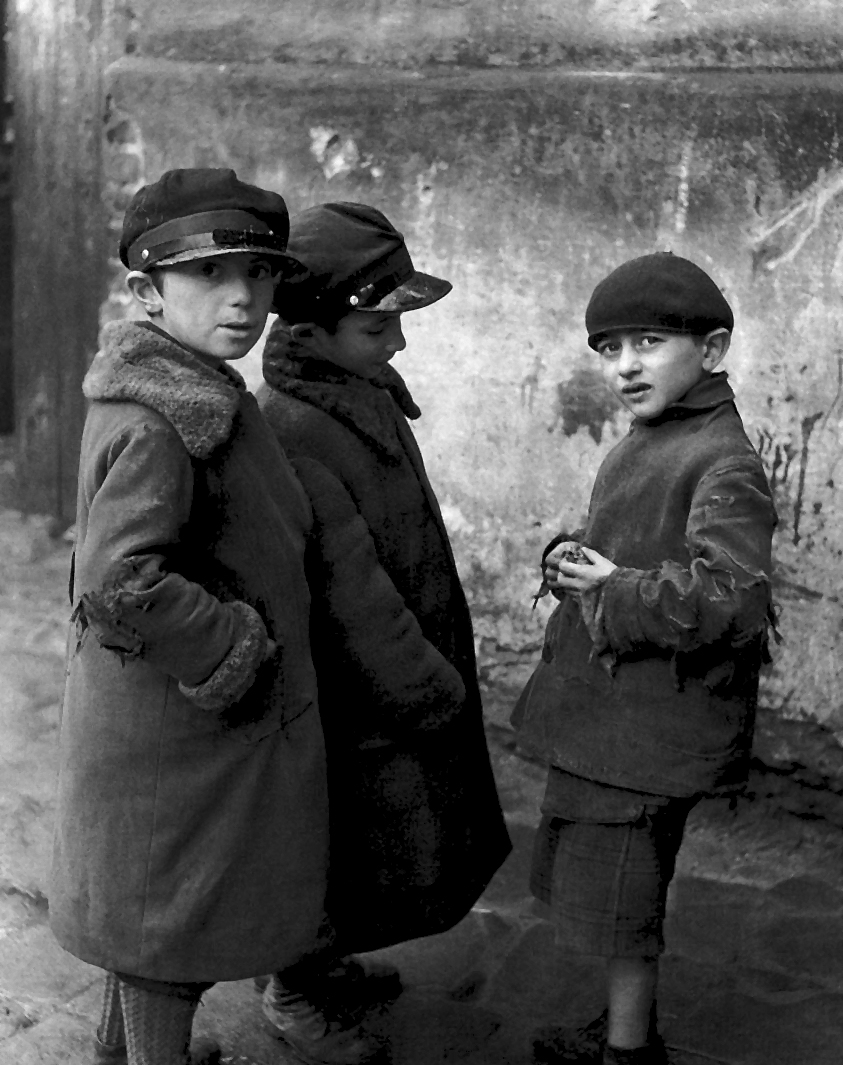
 

Roman Vishniac (Russian-American, 1897-1990) 'Young Jewish boys suspicious of strangers, Mukachevo' c. 1935-1938


Roman Vishniac (Russian-American, 1897-1990)
Young Jewish boys suspicious of strangers, Mukachevo
c. 1935-1938
Gelatin silver print
Courtesy of the International Center of Photography
© Mara Vishniac Kohn
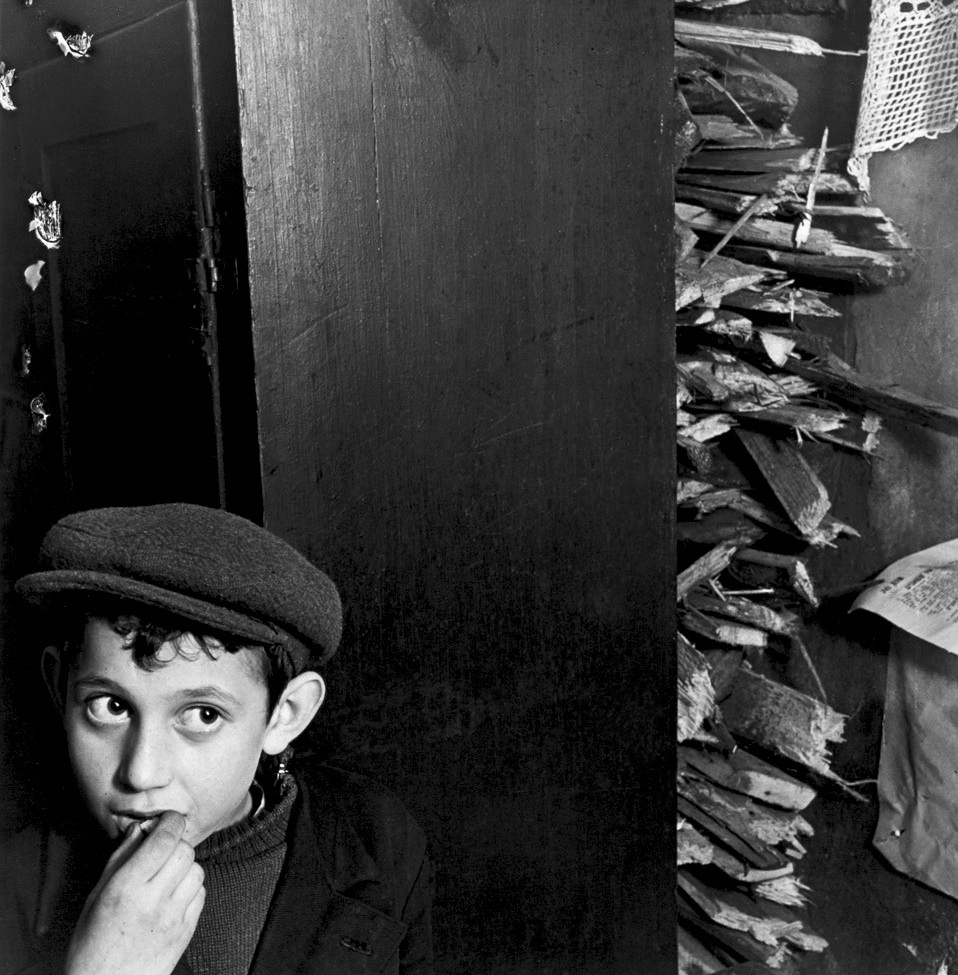
 

Roman Vishniac (Russian-American, 1897-1990) 'Boy with kindling in a basement dwelling, Krochmalna Street, Warsaw' c. 1935-1938


Roman Vishniac (Russian-American, 1897-1990)
Boy with kindling in a basement dwelling, Krochmalna Street, Warsaw
c. 1935-1938
Gelatin silver print
Courtesy of the International Center of Photography
© Mara Vishniac Kohn


This previously unpublished photograph attests to Vishniac’s bold and innovative use of composition: the slim, vertical register of kindling wood, offset by a corner of Yiddish newspaper on a table and triangle of lace at the window, is balanced by the young boy’s sideways glance peering out from the corner of the frame, reflecting a modern sensibility not usually associated with Vishniac’s work in Eastern Europe.

Text from the International Center of Photography website
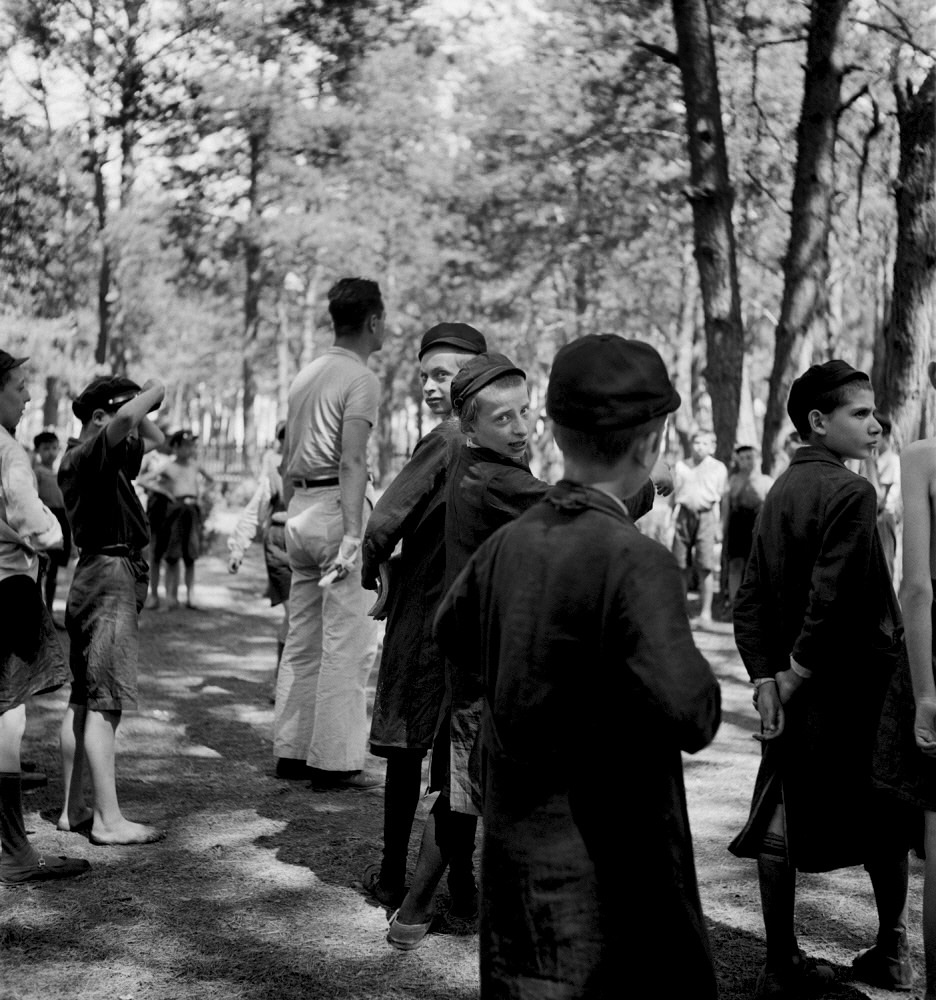
 

Roman Vishniac (Russian-American, 1897-1990) 'Children playing outdoors and watching a game' c. 1935-1937


Roman Vishniac (Russian-American, 1897-1990)
Children playing outdoors and watching a game, TOZ (Society for Safeguarding the Health of the Jewish Population) summer camp, Otwock, near Warsaw
c. 1935-1937
Gelatin silver print
Courtesy of the International Center of Photography
© Mara Vishniac Kohn
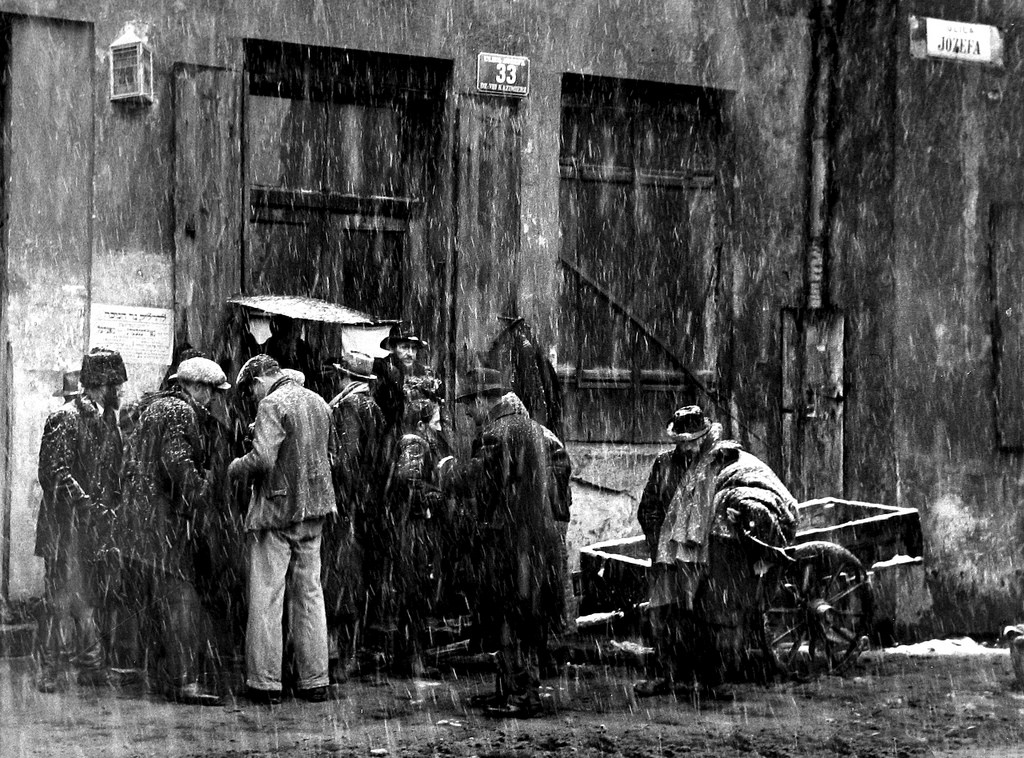
 

Roman Vishniac (Russian-American, 1897-1990) 'These men are selling old clothes. The notice on the wall reads "Come Celebrate Chanukah," Kazimierz, Krakow' c. 1935-1938


Roman Vishniac (Russian-American, 1897-1990)
These men are selling old clothes. The notice on the wall reads “Come Celebrate Chanukah,” Kazimierz, Krakow
1935-1938
Gelatin silver print
Courtesy of the International Center of Photography
© Mara Vishniac Kohn
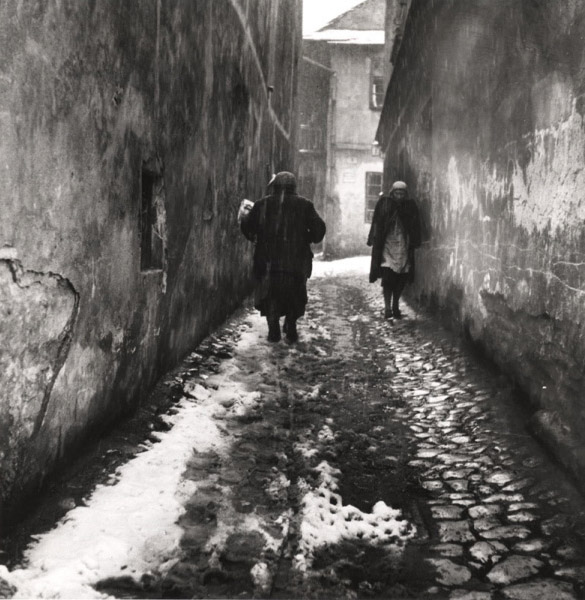
 

Roman Vishniac (Russian-American, 1897-1990) 'A street of Kazimierz, Krakow' 1935-1938


Roman Vishniac (Russian-American, 1897-1990)
A street of Kazimierz, Krakow
1935-1938
Gelatin silver print
Courtesy of the International Center of Photography
© Mara Vishniac Kohn


Roman Vishniac (Russian-American, 1897-1990) 'Isaac Street, Kazimierz, Krakow' 1935-1938


Roman Vishniac (Russian-American, 1897-1990)
Isaac Street, Kazimierz, Krakow
1935-1938
Gelatin silver print
Courtesy of the International Center of Photography
© Mara Vishniac Kohn


Roman Vishniac (Russian-American, 1897-1990) 'Isaac Street, Kazimierz, Krakow' 1935-1938


Roman Vishniac (Russian-American, 1897-1990)
Isaac Street, Kazimierz, Krakow
1935-1938
Gelatin silver print
Courtesy of the International Center of Photography
© Mara Vishniac Kohn


Roman Vishniac (Russian-American, 1897-1990) 'A street of Kazimierz, Cracow' 1935-1938


Roman Vishniac (Russian-American, 1897-1990)
Street in Kazimierz, Krakow
1935-1938
Gelatin silver print
Courtesy of the International Center of Photography
© Mara Vishniac Kohn


Roman Vishniac (Russian-American, 1897-1990) 'Jewish street vendors, Warsaw, Poland' 1938


Roman Vishniac (Russian-American, 1897-1990)
Jewish street vendors, Warsaw, Poland
1938
Gelatin silver print
Courtesy of the International Center of Photography
© Mara Vishniac Kohn


Examining each photographer separately, Vishniac and Gusky have very distinctive photographic styles. Due to the nature of his project and the ever-escalating semblance of anti-semitism, Vishniac’s photographs are less polished and more emotionally raw in an attempt to tell the stories of people’s individual lives. By contrast, Gusky finds inspiration in the physical places which made up the world of now entirely absent communities of Jews.

While each photographer had an individual style and statement to make, it is both the relationship with and stark difference between the two that provides the greatest emotional poignancy. The exhibition pairs many Vishniac and Gusky photographs, illuminating the individual lives lost, culture destroyed, and environments degraded by decades of neglect in Poland, as Gusky photographed the desecrated cemeteries, crumbling synagogues, and empty streets that served as the backdrop for Vishniac’s scenes of mid-century Jewish life.

There are also several points of convergence in the biographies of Vishniac and Gusky. Like Vishniac, Gusky is of Russian Jewish descent, and both men were compelled to their photographic projects in part by personal reasons springing from their Jewish heritage. The photographers also have professional ties to biological science which embody their work through illustration of the fragility of human life.

Text from the Santa Barbara Museum website [Online] Cited 01/04/2009. No longer available online
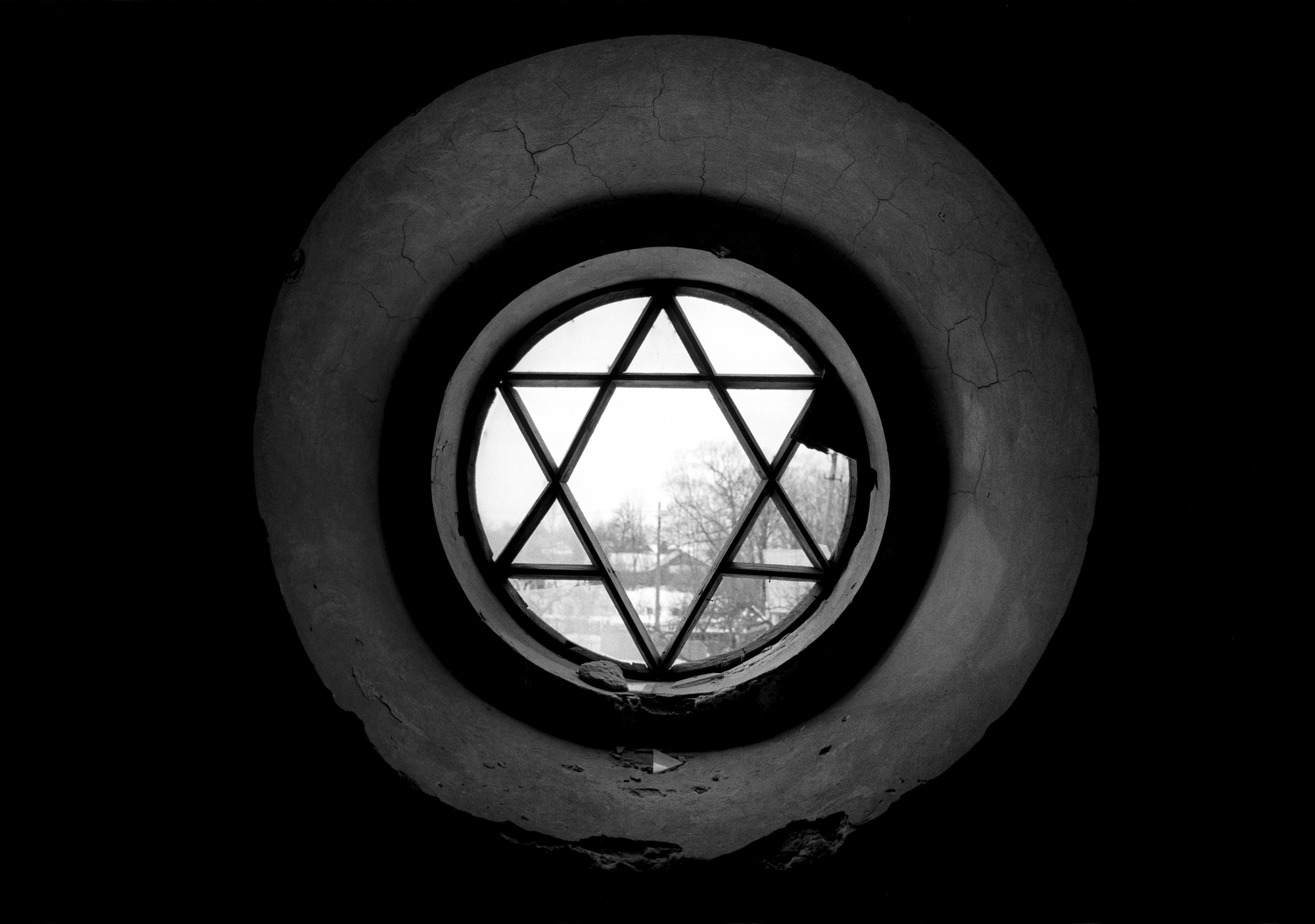
 

Jeffrey Gusky. 'Broken stained glass window, Wielkie, Oczy' 2001


Jeffrey Gusky (American)
Broken stained glass window, Wielkie, Oczy
2001
Gelatin silver print


This exhibition, organised by the Santa Barbara Museum of Art, includes around 90 black-and-white photographs taken by two photographers: Roman Vishniac, who photographed throughout Poland’s Jewish communities in the mid-1930s, and Jeffrey Gusky who photographed many of the same Polish sites during the 1990s.

In 1935, Russian-born photographer Roman Vishniac was commissioned by the American Joint Distribution Committee (a Paris-based relief agency) to photograph Jewish communities in the cities and villages of Poland as well as other areas of Eastern Europe. He took over 16,000 photographs (around 2,000 have survived) depicting the people, life, homes, schools, and trades of these communities. The photographs, in turn, were to be used to help raise money for humanitarian aid for individuals in areas that were becoming increasingly destitute.

In 1996, Jeffrey Gusky, an amateur photographer and doctor of Russian-Jewish descent set out on a personal journey in search of Jewish identity and culture in Eastern Europe. He made the first of four trips to Poland where he traveled to cities and villages where Jews had lived and worked for centuries. Gusky photographed what remained of Jewish culture in Poland focusing on the ruins of synagogues, cemeteries – many of which were desecrated, and the empty and still streets.

Text from the Detroit Institute of Arts website [Online] Cited 01/04/2009. No longer available online
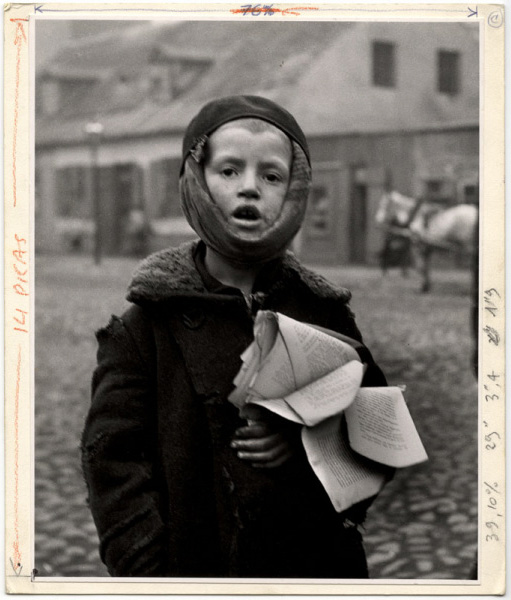
 

Roman Vishniac (Russian-American, 1897-1990) 'A Boy with a toothache. Next year another child will inherit the tattered schoolbook. Slonim' c. 1935-1938


Roman Vishniac (Russian-American, 1897-1990)
A Boy with a toothache. Next year another child will inherit the tattered schoolbook. Slonim
c. 1935-1938
Gelatin silver print


Roman Vishniac (Russian-American, 1897-1990) 'Nat Gutman's Wife, Warsaw' 1938


Roman Vishniac (Russian-American, 1897-1990)
Nat Gutman’s Wife, Warsaw
1938
Gelatin silver print
Courtesy of the International Center of Photography
© Mara Vishniac Kohn


Poignant, haunting photographs of Poland’s Jewish communities taken in the 1930s by Roman Vishniac, and images of many of the same areas taken in the 1990s by Jeffrey Gusky are the subject of the moving exhibition Of Life and Loss: The Polish Photographs of Roman Vishniac and Jeffrey Gusky. The exhibition, at the Detroit Institute of Arts (DIA) from April 19 to July 12, includes 90 black-and-white photographs and is free with museum admission.

Through their photographs, Vishniac (1897-1990) and Gusky (born 1953), two very different photographers from very different eras, bore witness to the Jewish experience in Poland during the 20th century, preserving memories and documenting life experiences for future generations. Although taken 60 years apart, their images share themes of memory, life, and loss and are evidence of people and places that once were, and what remains in their absence.

Vishniac and Gusky have very distinctive styles. Due to the nature of his project and the escalation of anti-Semitism in 1930s Poland, Vishniac made photographs in the documentary tradition. With great empathy, he recorded the places and lives of individuals exactly as he found them, in their homes and in the streets. Almost 60 years later, Gusky, by contrast, interpreted former Jewish sites throughout Poland with a sensitive eye on the past. His misty and haunting images are devoid of human presence, and show former sites from many Jewish communities that once thrived throughout Poland.

While each photographer had an individual style and statement to make, it is both the relationship with and stark difference between the two that provides the greatest emotional impact. Brought together for the first time, Vishniac’s and Gusky’s photographs illuminate the individual lives lost, culture destroyed, and environments degraded by decades of neglect in Poland, as Gusky photographed the desecrated cemeteries, crumbling synagogues, and empty streets that served as the backdrop for Vishniac’s scenes of vibrant, mid-century Jewish life.

Vishniac was born in Russia, and fled to Berlin with his family in 1920. He worked as a biologist and supplemented his income as a photographer. Eventually he became compelled to use photography to document people and communities throughout Europe. In the 1930s Vishniac was commissioned by the Joint Distribution Committee, a Paris-based relief agency, to photograph Jewish life in Poland, where he took over 16,000 photographs (only 2,000 survived the war) over a three-year period. He photographed vibrant communities filled with people in their homes and schools, at their trades and in their streets, markets and temples. His poignant works are evidence of communities filled with life despite the lack of food, medical care and livelihood that prevailed.

Gusky is a physician in rural Texas who began photographing as a way to explore Jewish identity. Although a Jew of Russian decent, he became interested in the history of Jews in Poland after hearing a radio interview with Ruth Ellen Gruber, an American journalist who documented the ruins of Jewish communities in Eastern Europe. His photographs depict the vacant and somber sites of once-thriving Jewish communities throughout the country. With these images, Gusky reveals a powerful, dramatic message about a lost culture that was once part of Poland’s Jewish past. This initial photographic work has led him to further examine “the void of modern life,” and the threat of genocide that continues to haunt humankind of all ethnicities and cultures in the past and present. This exhibition is organised by the Santa Barbara Museum of Art.

Press release from the Detroit Institute of Arts


Roman Vishniac (Russian-American, 1897-1990) 'Boys and Books' 1935-1938


Roman Vishniac (Russian-American, 1897-1990)
Boys and Books
c. 1935-1938
Gelatin silver print
Courtesy of the International Center of Photography
© Mara Vishniac Kohn


Roman Vishniac (Russian-American, 1897-1990) 'Children at Play, Bratislava' c. 1935-1938


Roman Vishniac (Russian-American, 1897-1990)
Children at Play, Bratislava
c. 1935-1938
Gelatin silver print
Courtesy of the International Center of Photography
© Mara Vishniac Kohn


The above photograph reminds me of the Henri Cartier-Bresson photograph below.
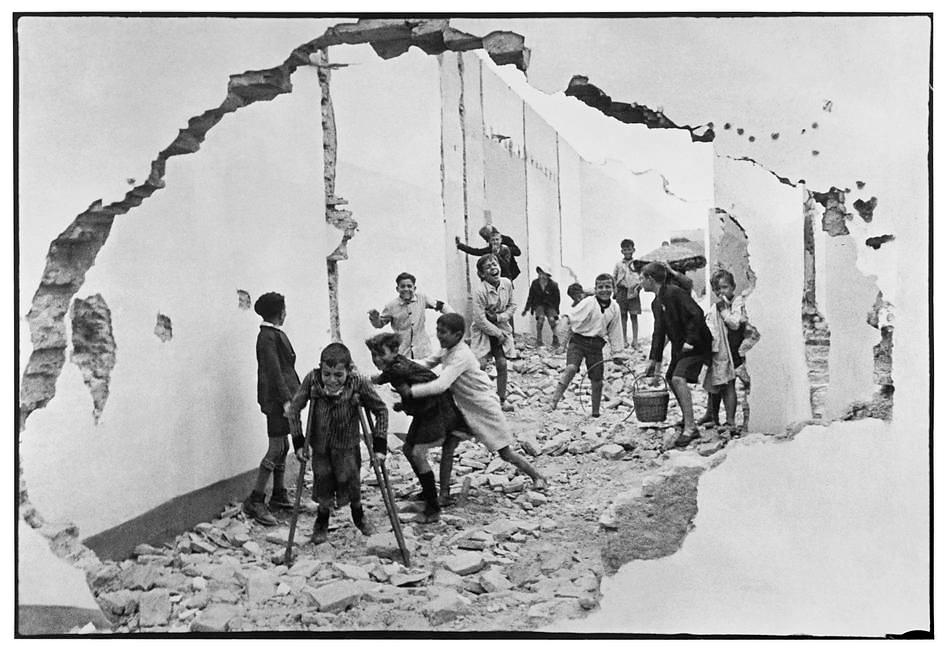
 

Henri Cartier-Bresson (French, 1908-2004) 'Children in Seville' 1933


Henri Cartier-Bresson (French, 1908-2004)
Children in Seville
1933
Gelatin silver print


Roman Vishniac (Russian-American, 1897-1990) 'Children waiting outside the registration office of a transit bureau' 1947


Roman Vishniac (Russian-American, 1897-1990)
Children waiting outside the registration office of a transit bureau, Schlachtensee Displaced Persons camp, Zehlendorf, Berlin
1947
Gelatin silver print
Courtesy of the International Center of Photography
© Mara Vishniac Kohn


Many of the children wear Jewish star pins and necklaces as they wait in the Schlachtensee transit bureau offices and courtyards in the American sector of occupied Berlin. By 1952, more than 136,000 Jewish Displaced Persons (DPs) had immigrated to Israel, and over 80,000 to the United States, aided by the Jewish Joint Distribution Committee (JDC), the United Jewish Appeal (UJA), and other nongovernmental agencies that played an important role in lobbying for and providing economic, educational, and emigration assistance to DPs.

Text from the International Center of Photography website


Roman Vishniac (Russian-American, 1897-1990) 'Holocaust survivors gathering outside a building where matzoh is being made' 1947


Roman Vishniac (Russian-American, 1897-1990)
Holocaust survivors gathering outside a building where matzoh is being made in preparation for the Passover holiday, Hénonville Displaced Persons camp, Picardy, France
1947
Gelatin silver print
Courtesy of the International Center of Photography
© Mara Vishniac Kohn


Housed in a 1722 château outside Paris, the Hénonville Displaced Persons camp was administered by the Jewish Joint Distribution Committee (JDC), the Society for Trades and Agricultural Labor (ORT), and Agudath Israel (the umbrella organisation for Orthodox and ultra-Orthodox Jews), from 1946 to 1952. Hénonville was a homogeneous religious community of Orthodox Jews that included a relocated Lithuanian yeshiva, a home for Jewish orphans, and an Orthodox kibbutz, and was directed by a charismatic leader, Rabbi Solomon Horowitz. Vishniac photographed daily life in the camp, including a series documenting the preparation of matzoh for the Passover holiday.

Text from the International Center of Photography website


Detroit Institute of Arts
5200 Woodward Avenue
Detroit, Michigan 48202
Phone: 313.833.7900

Opening hours:
Tuesday – Thursday 9am – 4pm
Friday 9 9am – 9pm
Saturday – Sunday 1 am – 5pm
Monday Closed

Detroit Institute of the Arts website

LIKE ART BLART ON FACEBOOK

Back to top

Exhibition: ‘Daidō Moriyama: Tokyo Photographs’ at Philadelphia Museum of Art

Exhibition dates: 28th February – 31st July, 2009

Curator: Peter Barberie, Curator of Photographs


Many thankx to Philadelphia Museum of Art for allowing me to publish the photographs in the posting. Please click on the photographs for a larger version of the image.


Daido Moriyama (Japanese, b. 1938) 'Untitled' from the series 'Memory of Dog' 1982 from the exhibition 'Daidō Moriyama: Tokyo Photographs' at Philadelphia Museum of Art, Feb - July, 2009


Daidō Moriyama (Japanese, b. 1938)
Untitled from the series Memory of Dog
1982
Gelatin silver print
Image: 8 1/16 × 11 13/16 inches (20.5 × 30cm)
Purchased with funds contributed by the E. Rhodes and Leona B. Carpenter Foundation, 1990
Philadelphia Museum of Art
© Daidō Moriyama


Daidō Moriyama often calls himself a “stray dog,” a reference to one of his iconic early pictures of a roaming mongrel, but also to his preferred incidental vantage points in relation to his subjects and his beguiled yet wary stance toward modernising Japanese society. In the series Memory of Dog, he revisited photographic scenarios and motifs from his previous two decades of work, overlaying his peripheral approach with another quality that he finds crucial to photography: its relationship to memory.


Daidō Moriyama (Japanese, born 1938) 'Untitled (Rose)' 1984 from the exhibition 'Daidō Moriyama: Tokyo Photographs' at Philadelphia Museum of Art, Feb - July, 2009


Daidō Moriyama (Japanese, b. 1938)
Untitled (Rose)
1984
Gelatin silver print
© Daidō Moriyama


Daidō Moriyama (Japanese, born 1938) 'Viaduct 1, Bunkyo-ku, Tokyo' 1981


Daidō Moriyama (Japanese, b. 1938)
Viaduct 1, Bunkyo-ku, Tokyo
1981
Gelatin silver print
© Daidō Moriyama


Daidō Moriyama (Japanese, born 1938) 'Untitled (Bottle)' from the series 'Light and Shadow' 1982


Daidō Moriyama (Japanese, b. 1938)
Untitled (Bottle) from the series Light and Shadow
1982
Gelatin silver print
Image: 7 13/16 x 11 13/16 inches (19.8 x 30cm)
Purchased with funds contributed by the E. Rhodes and Leona B. Carpenter Foundation, 1990
© Daidō Moriyama


Daidō Moriyama is one of the most important and exciting Japanese photographers of our time, having made prolific, often experimental pictures of modern urban life since the 1960s. This exhibition showcases a group of approximately 45 photographs made in and around Tokyo in the 1980s, when Moriyama focused his mature aesthetic on the city with renewed intensity.

Moriyama approaches the world with an equalising eye, capturing disparate peripheral details that in themselves account for little, but together add up to a powerful diagnosis of modern experience. In 1980s Japan such details encompassed the disorienting and sometimes brutal juxtaposition of traditional culture and modernisation, most visible in the glut of consumer goods and images. But in Moriyama’s photographs these subjects appear alongside the banal elements of any streetscape: a derelict patch of pavement and wall, a car with an aggressive key scratch running its full length, even a single rose blossom.

Moriyama’s urban imagery shares some of its qualities with other great street photography of the 20th century, and he has cited the photographs of William Klein as a major influence. But his work involves strong responses to a wide range of modern art and literature, including photographs and graphic designs by many of his Japanese contemporaries, Andy Warhol’s silkscreens, and the novels of Jack Kerouac and James Baldwin. Moriyama’s mix of international and Japanese trends to represent modern Tokyo is one source of his photography’s power, and the exhibition will include a small number of works by other artists to demonstrate his visual sensibility, including prints and photographs by Warhol, Klein, Shomei Tomatsu, and Tadanori Yokoo.

Text from the Philadelphia Museum of Art website [Online] Cited 23/03/2009


Daidō Moriyama (Japanese, born 1938) 'Memory of Dog 2' 1981


Daidō Moriyama (Japanese, b. 1938)
Memory of Dog 2
1981
Gelatin silver print
© Daidō Moriyama


Daidō Moriyama (Japanese, born 1938) 'Untitled' c. 1981-1985


Daidō Moriyama (Japanese, b. 1938)
Untitled
c. 1981-1985
Gelatin silver print
Image: 8 1/4 x 11 7/8 inches (21 x 30.2cm)
Purchased with funds contributed by the E. Rhodes and Leona B. Carpenter Foundation, 1990
© Daidō Moriyama


Daidō Moriyama (Japanese, born 1938) 'Untitled' from the series 'Light and Shadow' 1982


Daidō Moriyama (Japanese, b. 1938)
Untitled from the series Light and Shadow
1982
Gelatin silver print
Image: 7 3/4 x 11 13/16 inches (19.7 x 30cm)
Purchased with funds contributed by the E. Rhodes and Leona B. Carpenter Foundation, 1990
© Daidō Moriyama


Daidō Moriyama (Japanese, b. 1938) 'Untitled (Twin Chairs)' 1986


Daidō Moriyama (Japanese, b. 1938)
Untitled (Twin Chairs)
1986
Gelatin silver print
© Daidō Moriyama


Daidō Moriyama (Japanese, born 1938) 'On the Road (Chair)' from the series 'Light and Shadow' 1981


Daidō Moriyama (Japanese, b. 1938)
On the Road (Chair) from the series Light and Shadow
1981
Gelatin silver print
Image: 7 3/4 x 11 13/16 inches (19.7 x 30cm)
Purchased with funds contributed by the E. Rhodes and Leona B. Carpenter Foundation, 1990
© Daidō Moriyama


Since the 1960s Japanese photographer Daidō Moriyama (born 1938) has been making dynamic, often experimental images of modern urban life, establishing a reputation as one of the most important and exciting photographers of our time. The Philadelphia Museum of Art will present an exhibition of approximately 45 photographs by Moriyama, made in and around Tokyo in the 1980s, when the artist focused his mature aesthetic on the city with renewed intensity. The exhibition will be on view from February 28-June 30, 2009 in the Julien Levy Gallery at the Ruth and Raymond G. Perelman Building.

Born in 1938 in Ikeda-cho (now Ikeda-shi), Osaka, Moriyama witnessed the dramatic changes that swept over Japan in the decades following World War II. After his father’s death in a train accident, he began working as a freelance graphic designer at age 20. He was intrigued by the graphic possibilities of screenprinting, the cheapest and most prolific form for printed imagery, and by international trends in contemporary art. These interests, along with attention to the various forms of visual stimuli that populate the urban landscape have been a hallmark of Moriyama’s career.

In 1960 Moriyama took up the study of photography under Takeji Iwamiya and one year later moved to Tokyo hoping to join the eminent photographers’ group VIVO, a short-lived cooperative whose members were exploring and confronting the revolution in modern Japanese society in their work. Although VIVO disbanded a week after Moriyama’s arrival in the capital, the visual and existential turmoil they explored would become one of the core subjects in Moriyama’s photographs. His gritty, black and white images of streets and highways express the conflicting realities of contemporary Japan, the disorienting and sometimes brutal juxtaposition of traditional culture and modernisation. 

“It is a pleasure to present this group of photographs from the Museum’s collection reflecting the distinctive vision of Daidō Moriyama, who is undoubtedly among the great urban photographers of the 20th century,” Curator of Photographs Peter Barberie said. These particular images focus on the visual experience of modern-day Tokyo, but through them Moriyama is documenting broader global trends of modernisation, and at the same time exploring the unique aesthetic qualities of his medium.”

His early images from the 1960s and 70s tested the notion of photographic artistry in an extreme fashion. He chose seemingly arbitrary subjects, and experimented with motion and overexposure to create blurred or nearly blank images, adopting an anti-aesthetic position. Other Japanese photographers were also working in this vein, but Moriyama’s 1972 book Bye Bye Photography became the defining statement of this particular style. The later photographs presented in this exhibition are generally sharper in focus but maintain the peripheral vantage point that Moriyama so often employed, as well as the seemingly random content. His images capture with an equalising eye the kinds of disparate peripheral details that litter the modern urban experience: shadows, cars, and abandoned corners, as well as the glut of consumer goods and commodities. 

Profoundly influenced by Japanese photographers Eikoh Hosoe and Shomei Tomatsu, Moriyama’s vision was also enriched by his acquaintance with the work of American photographers William Klein and Robert Frank. Like them he practiced a new, more action-oriented street photography. His images are often out of focus, vertiginously tilted, or invasively cropped. 

His work also involves strong responses to a wide range of modern art and literature, including photographs and graphic designs by many of his Japanese contemporaries, Andy Warhol’s silkscreens, and the novels of Jack Kerouac and James Baldwin. The exhibition will include a small number of works by other artists to demonstrate his visual sensibility, including prints and photographs by Warhol, Klein, Shomei Tomatsu, and Tadanori Yokoo.

Press release from the Philadelphia Museum of Art


Daidō Moriyama (Japanese, born 1938) 'Tunnel' 1982


Daidō Moriyama (Japanese, b. 1938)
Tunnel
1982
Gelatin silver print
Image: 7 15/16 x 11 7/8 inches (20.2 x 30.2cm)
Purchased with funds contributed by the E. Rhodes and Leona B. Carpenter Foundation, 1990
© Daidō Moriyama


Daidō Moriyama (Japanese, born 1938) 'Untitled' from the series 'Light and Shadow' 1982


Daidō Moriyama (Japanese, b. 1938)
Untitled from the series Light and Shadow
1982
Gelatin silver print
Image: 7 3/4 × 11 3/4 inches (19.7 × 29.8cm)
Purchased with funds contributed by the E. Rhodes and Leona B. Carpenter Foundation, 1990
© Daidō Moriyama


Daidō Moriyama (Japanese, b. 1938) 'Untitled' c. 1981-1985


Daidō Moriyama (Japanese, b. 1938)
Untitled
c. 1981-1985
Gelatin silver print
Image: 8 3/8 × 11 5/8 inches (21.2 × 29.6cm)
Sheet: 10 × 11 15/16 inches (25.4 × 30.4cm)
Purchased with funds contributed by the E. Rhodes and Leona B. Carpenter Foundation, 1990
© Daidō Moriyama


Daidō Moriyama (Japanese, b. 1938) 'Untitled', from the series 'Light and Shadow' 1982


Daidō Moriyama (Japanese, b. 1938)
Untitled, from the series Light and Shadow
1982
Gelatin silver print
Image: 7 3/4 x 11 13/16 inches (19.7 x 30cm)
Sheet: 10 x 12 1/8 inches (25.4 x 30.8cm)
Purchased with funds contributed by the E. Rhodes and Leona B. Carpenter Foundation, 1990
© Daidō Moriyama


Daidō Moriyama (Japanese, b. 1938) 'Setagaya-ku, Tokyo, Midnight' 1986


Daidō Moriyama (Japanese, b. 1938)
Setagaya-ku, Tokyo, Midnight
1986
Gelatin silver print
© Daidō Moriyama


Philadelphia Museum of Art
26th Street and the Benjamin Franklin Parkway
Philadelphia, PA 19130

Opening hours:
Thursday – Monday, 10.00am – 5.00pm
Closed Tuesday and Wednesday

Daido Moriyama website

Philadelphia Museum of Art website

LIKE ART BLART ON FACEBOOK

Back to top

Exhibition: ‘Walker Evans and the Picture Postcard’ at The Metropolitan Museum of Art, New York

Exhibition dates: 3rd February – 25th May 2009


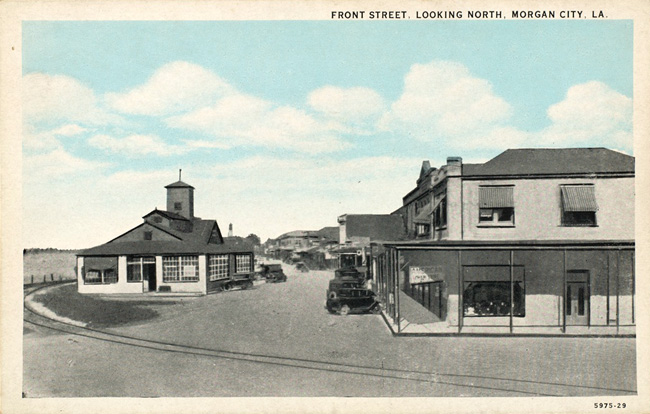
Unknown Artist. 'Front Street, Looking North, Morgan City, LA' 1929 from the exhibition 'Walker Evans and the Picture Postcard' at The Metropolitan Museum of Art, New York, Feb - March, 2009


Unknown artist (American)
Front Street, Looking North, Morgan City, LA
1929
Postcard, Photomechanical reproduction
3 1/2 x 5 1/2 in. (8.9 x 14 cm)
The Metropolitan Museum of Art, New York, Walker Evans Archive, 1994


This looks a very interesting exhibition – I wish I could see the actual thing!


Many thankx to The Metropolitan Museum of Art for allowing me to publish the photographs and art work in the posting. Please click on the photographs for a larger version of the image.


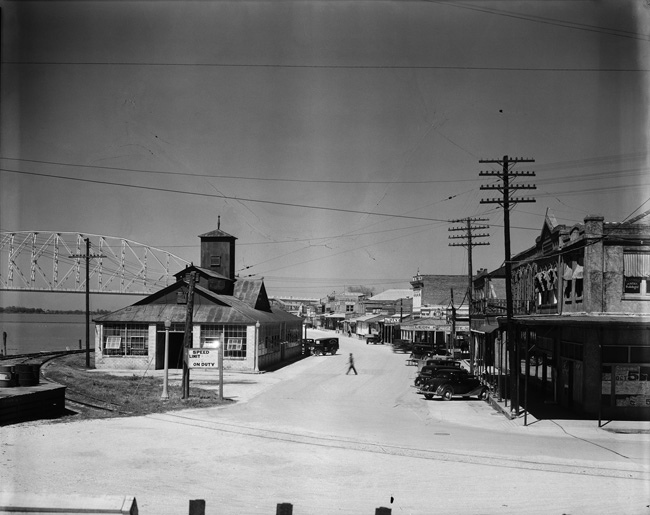
This exhibition will focus on a collection of 9,000 picture postcards amassed and classified by the American photographer Walker Evans (1903-1975), now part of the Metropolitan’s Walker Evans Archive. The picture postcard represented a powerful strain of indigenous American realism that directly influenced Evans’s artistic development. The dynamic installation of hundreds of American postcards drawn from Evans’s collection will reveal the symbiotic relationship between Evans’s own art and his interest in the style of the postcard. This will also be demonstrated with a selection of about a dozen of his own photographs printed in 1936 on postcard format photographic paper.

Text from The Metropolitan Museum of Art website


Walker Evans (American, 1903-1975) 'Street Scene, Morgan City, Louisiana' 1935 from the exhibition 'Walker Evans and the Picture Postcard' at The Metropolitan Museum of Art, New York, Feb - March, 2009


Walker Evans (American, 1903-1975)
Street Scene, Morgan City, Louisiana
1935
Film negative
8 x 10 in. (20.3 x 25.4cm)
The Metropolitan Museum of Art, New York, Walker Evans Archive, 1994


“Sold in five-and-dime stores in every small town in America, postcards satisfied the country’s need for human connection in the age of the railroad and Model T when, for the first time, many Americans regularly found themselves traveling far from home. At age twelve, Walker Evans began to collect and classify his cards. What appealed to the nascent photographer were the cards’ vernacular subjects, the simple, unvarnished, “artless” quality of the pictures, and the generic, uninflected, mostly frontal style that he later would borrow for his own work with the camera. Both the picture postcard and Evans’s photographs seem equally authorless – quiet documents that record the scene with an economy of means and with simple respect. Walker Evans and the Picture Postcard proposes that the picture postcard represented a powerful strain of indigenous American realism that directly influenced Evans’s artistic development.”

Text from the Steidl website


The American postcard came of age around 1907, when postal deregulations allowed correspondence to be written on the address side of the card. By 1914, the craze for picture postcards had proved an enormous boon for local photographers, as their black-and-white pictures of small-town main streets, local hotels and new public buildings were transformed into handsomely coloured photolithographic postcards that were reproduced in great bulk and sold in five-and-dime stores in every small town in America. Postcards met the nation’s need for communication in the age of the railroad and Model T, when, for the first time, many Americans often found themselves traveling far from home. In the Walker Evans Archive at New York’s Metropolitan Museum of Art, there is a collection of 9,000 such postcards amassed by the great American photographer, who began his remarkable collection at the age of 10. What appealed to Evans, even as a boy, were the vernacular subjects, the unvarnished, “artless” quality of the pictures and the generic, uninflected, mostly frontal style that he later would borrow for his own work. The picture postcard and Evans’ photographs seem equally authorless, appearing as quiet documents that record a scene with both economy of means and simple respect. This volume demonstrates that the picture postcard articulated a powerful strain of indigenous American realism that directly influenced Evans’ artistic development.

Text from the Amazon website


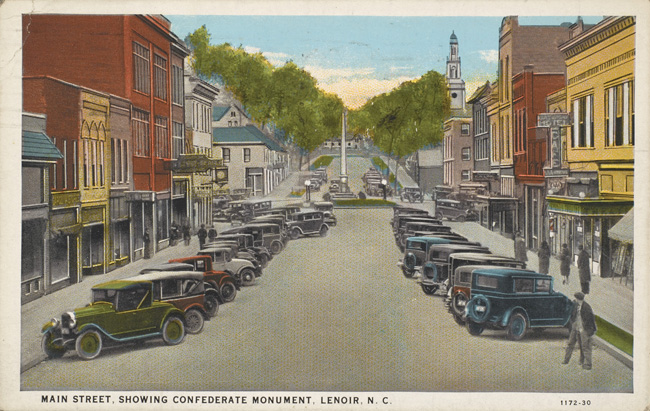
Unknown artist (American) 'Main Street, Showing Confederate Monument, Lenoir, N. C.,' 1930s


Unknown artist (American)
Main Street, Showing Confederate Monument, Lenoir, N. C.
1930s
Postcard, Photomechanical reproduction
3 1/2 x 5 1/2 in. (8.9 x 14cm)
The Metropolitan Museum of Art, New York, Walker Evans Archive, 1994


Walker Evans was the progenitor of the documentary style in American photography, and he argued that picture postcard captured a part of America that was not recorded in any other medium. In the early 20th century, picture postcards, sold in five-and-dime stores across America, depicted small towns and cities with realism and hometown pride – whether the subject was a local monument, a depot, or a coal mine.

Evans wrote of his collection: “The very essence of American daily city and town life got itself recorded quite inadvertently on the penny picture postcards of the early 20th century .… Those honest direct little pictures have a quality today that is more than mere social history .… The picture postcard is folk document.”

Walker Evans and the Picture Postcard is the first exhibition to focus primarily on works drawn from The Walker Evans Archive. The installation is designed to convey the incredible range of his collection and to reflect the eclectic and obsessional ways in which the artist organised his picture postcards. For example, Evans methodically classified his collection into dozens of subject categories, such as “American Architecture,” “Factories,” “Automobiles,” “Street Scenes,” “Summer Hotels,” “Lighthouses,” “Outdoor Pleasures,” “Madness,” and “Curiosities”.

Marty Weil. “Walker Evans’ Picture Postcard Collection on the ephemera: exploring the world of old paper website Feb 24, 2009 [Online] Cited 12/06/2022. No longer available online


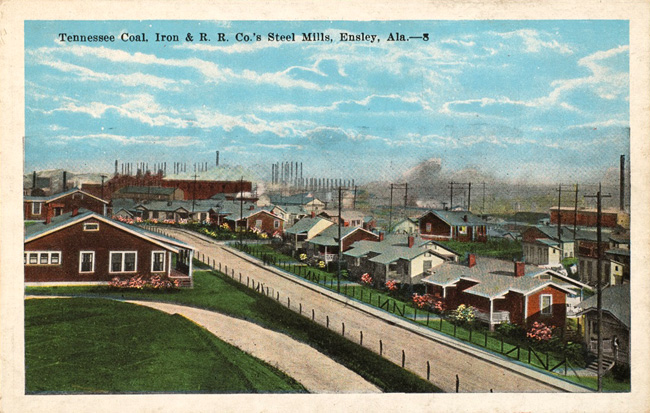
Unknown artist (American) 'Tennessee Coal, Iron, & R. R. Co.'s Steel Mills, Ensley, Ala.,' 1920s


Unknown artist (American)
Tennessee Coal, Iron, & R. R. Co.’s Steel Mills, Ensley, Ala.
1920s
Postcard, Photomechanical reproduction
3 1/2 x 5 1/2 in. (8.9 x 14cm)
The Metropolitan Museum of Art, New York, Walker Evans Archive, 1994


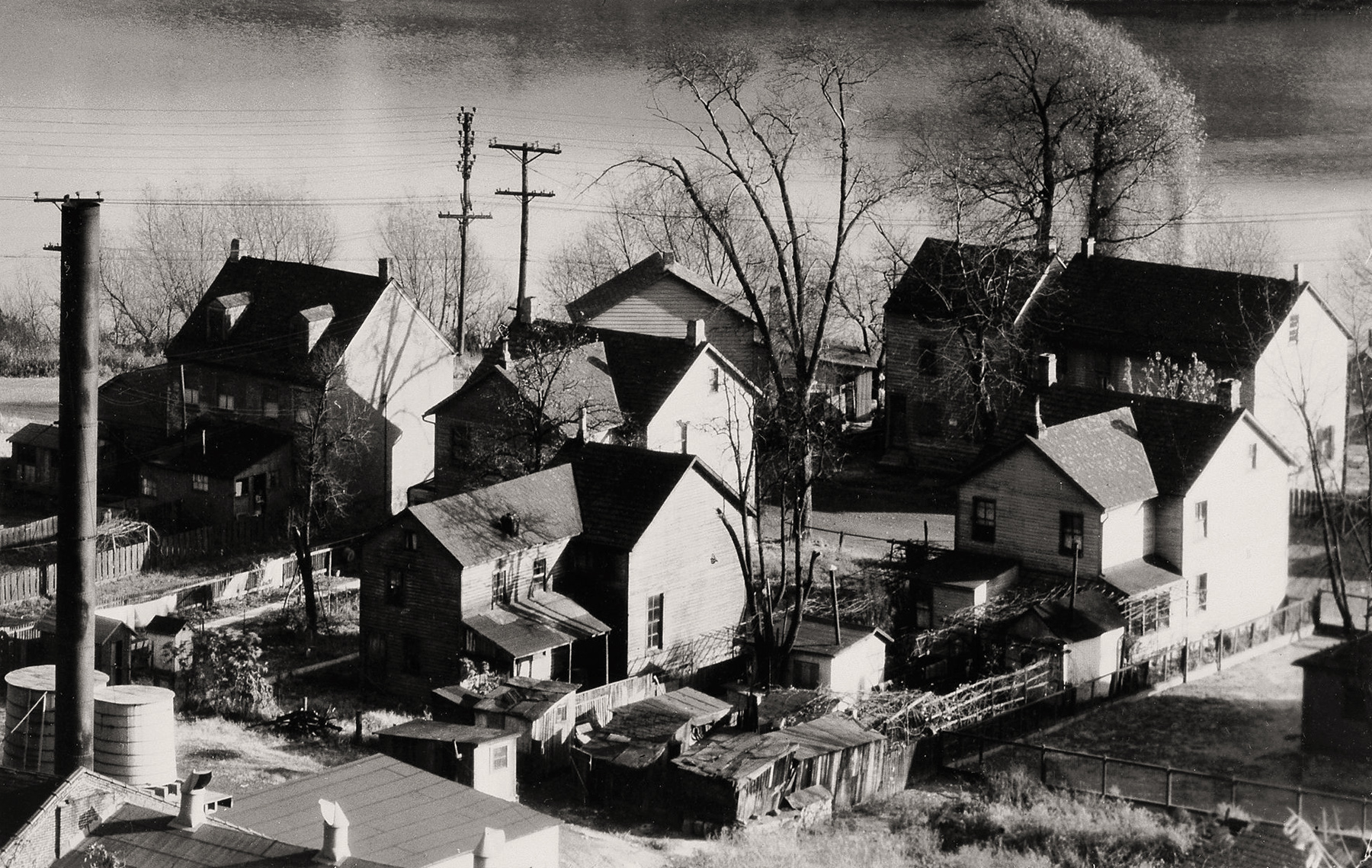
Walker Evans (American, 1903-1975) 'View of Easton, Pennsylvania' 1935


Walker Evans (American, 1903-1975)
View of Easton, Pennsylvania
1935
Postcard format gelatin silver print


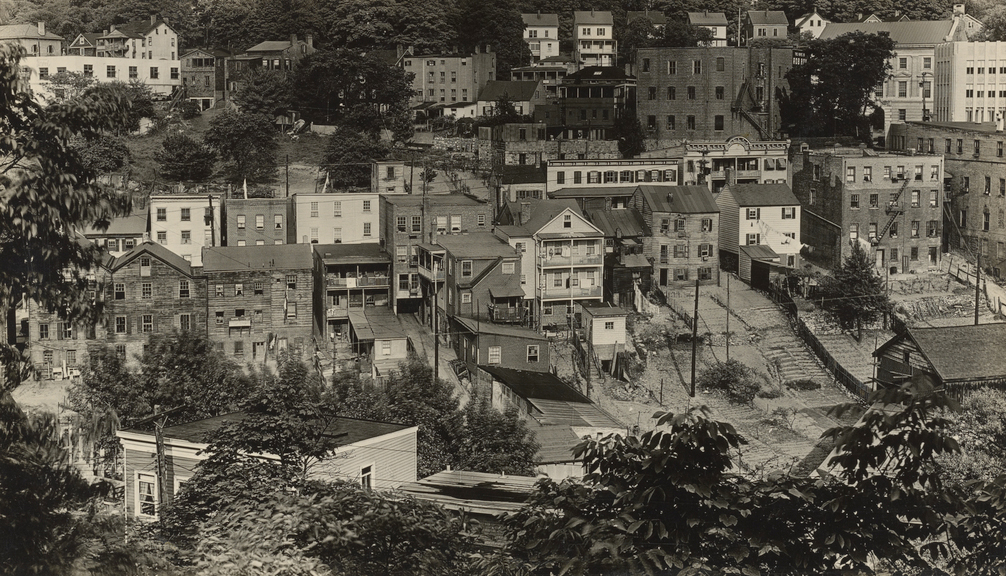
Walker Evans (American, 1903-1975) 'View of Ossining, New York' 1930-1931


Walker Evans (American, 1903-1975)
View of Ossining, New York
1930-1931
Gelatin silver print
4 1/8 x 7 13/16 in. (10.5 x 19.8cm)
The Metropolitan Museum of Art, New York, Purchase, The Horace W. Goldsmith Foundation Gift through Joyce and Robert Menschel, 1999


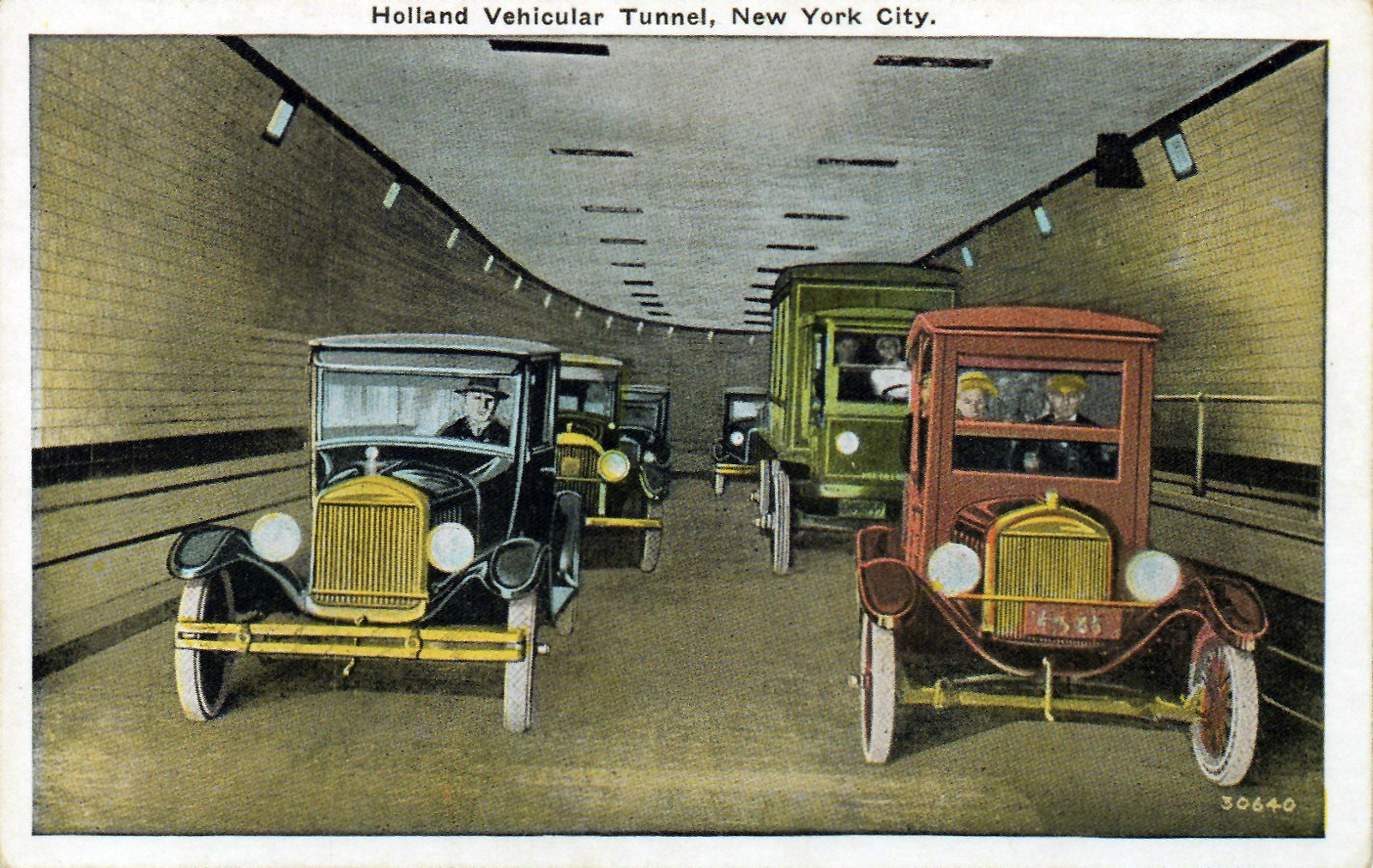
Unknown artist (American) 'Holland Vehicular Tunnel, New York City' 1920s


Unknown artist (American)
Holland Vehicular Tunnel, New York City
1920s
Postcard, Photomechanical reproduction
3 9/16 x 5 1/2 in. (9 x 14cm)
The Metropolitan Museum of Art, New York, Walker Evans Archive, 1994


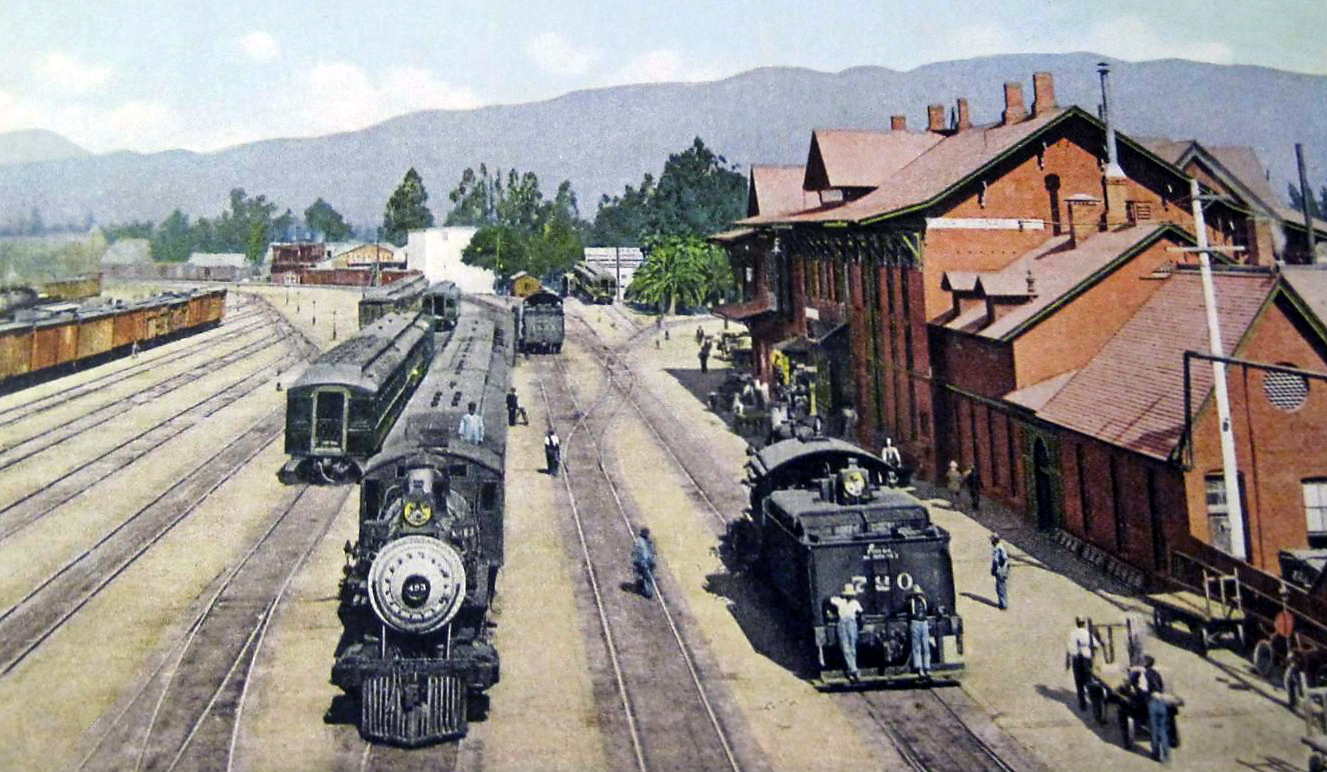
Unknown artist (American) 'Santa Fe station and yards, San Bernardino, California' c. 1910


Unknown artist (American)
Santa Fe station and yards, San Bernardino, California
c. 1910
Postcard, Photomechanical reproduction
3 9/16 x 5 1/2 in. (9 x 14cm)
The Metropolitan Museum of Art, New York, Walker Evans Archive, 1994


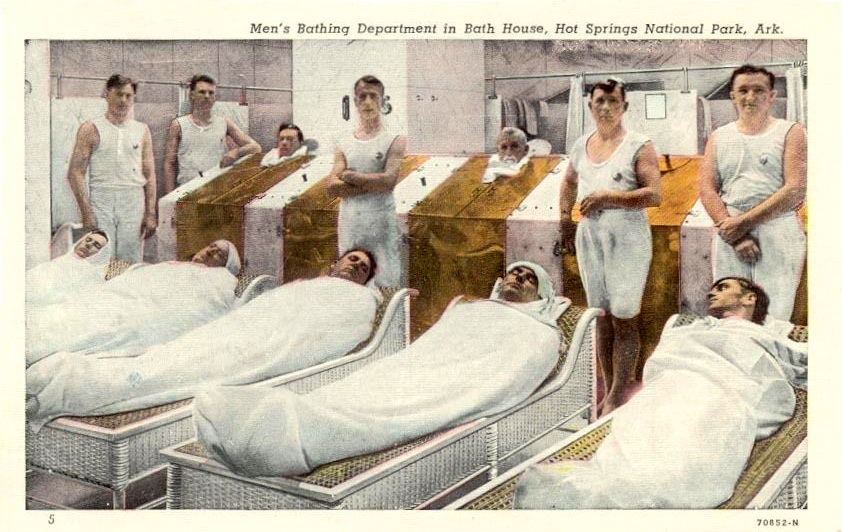
Unknown artist (American) 'Men's Bathing Department, Bath House, Hot Springs National Park, Ark.' 1920s


Unknown artist (American)
Men’s Bathing Department, Bath House, Hot Springs National Park, Ark.
1920s
Postcard, Photomechanical reproduction
3 9/16 x 5 1/2 in. (9 x 14cm)
The Metropolitan Museum of Art, New York, Walker Evans Archive, 1994


Walker Evans and the Picture Postcard


Walker Evans and the Picture Postcard


In 1903, the year Walker Evans was born, the US Postal service handled 700 million picture postcards. Evans would later recall his fondness for those “honest, direct, little pictures that once flooded the mail.” By the age of twelve he was a collector and through his lifetime, an obsessive. “Yes, I was a postcard collector at an early age. Every time my family would take me around for what they thought was my education, to show me the country in a touring car, to go to Illinois, to Massachusetts, I would rush into Woolworth’s and buy all the postcards.” For Evans, the addition of hand-colouring added a great deal of aesthetic value. …

Walker Evans and the Picture Postcard reproduces hundreds of cards from his collection including the three magazine features mentioned above. Also the fine addition of an “illustrated transcript” of his now famous Lyric Documentary lecture at Yale in 1964 makes this a bit more interesting than the title may suggest. …

Later in life Evans had friends around the country while on photo trips keeping an eye for postcards that might interest. He had a particular love for ones produced by the Detroit Publishing Company which were considered the “Cadillac” of postcards. Lee Friedlander related the following from a recent interview: “The Detroit Publishing Company had a formula. If a town had 2,000 people or so, it got a main street postcard; if it had 3,500, it got the main street and also a courthouse square. Walker liked the formula. He had everyone looking for this or that. He told me once in Old Lyme, “If you run across any ‘Detroits,’ get them for me.” I found sixty or seventy cards for him. He loved them.”

“Walker Evans and the Picture Postcard by Jeff L. Rosenheim,” on the 5B4: Photography and Books blog, March 1, 2009 [Online] Cited 12/06/2022


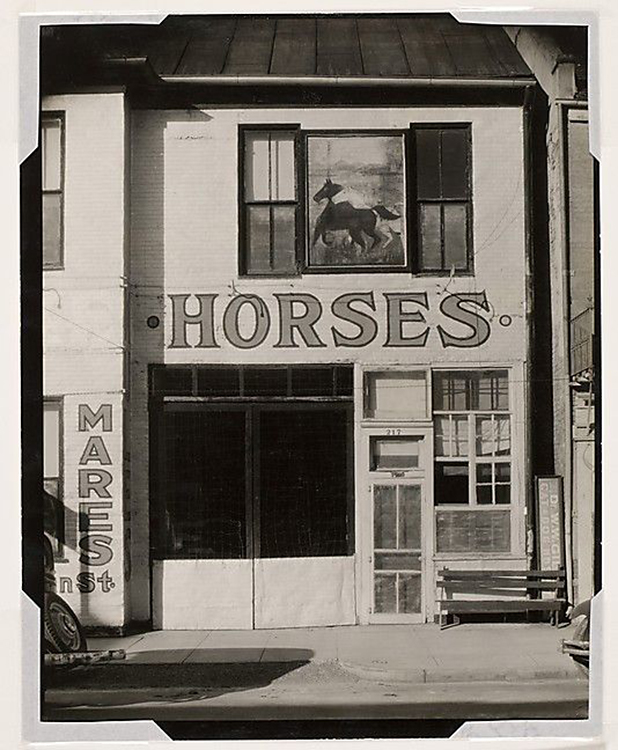
Walker Evans (American, 1903-1975) 'Stable, Natchez, Mississippi' March 1935


Walker Evans (American, 1903-1975)
Stable, Natchez, Mississippi
March 1935
Gelatin silver print
10 x 8 in. (25.4 x 20.3cm)
The Metropolitan Museum of Art, New York, Gilman Collection, Purchase, The Horace W. Goldsmith Foundation Gift through Joyce and Robert Menschel, 2005


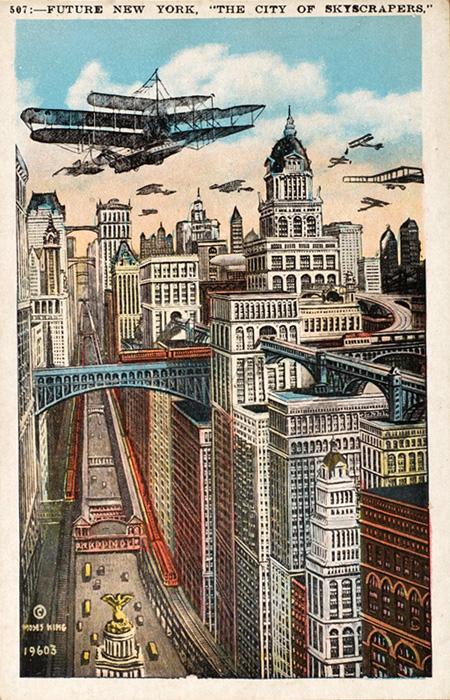
Unknown artist (American) 'Future New York, The City of Skyscrapers' 1910s


Unknown artist (American)
Future New York, The City of Skyscrapers
1910s
Postcard, Photomechanical reproduction
3 9/16 x 5 1/2 in. (9 x 14cm)
The Metropolitan Museum of Art, New York, Walker Evans Archive, 1994


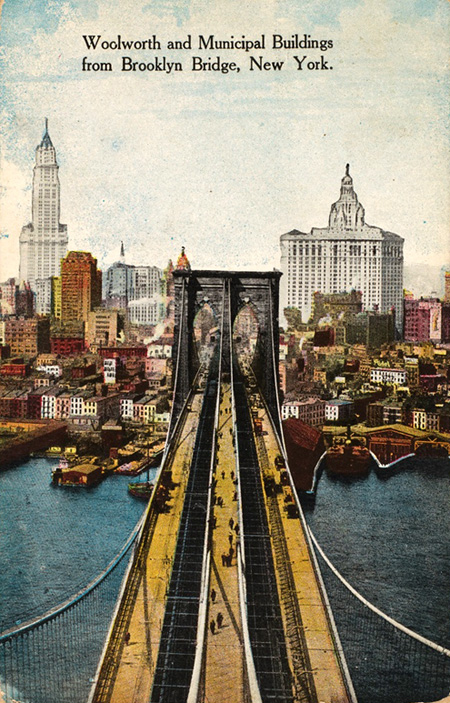
Unknown artist (American) 'Woolworth and Municipal Buildings from Brooklyn Bridge, New York' 1910s


Unknown artist (American)
Woolworth and Municipal Buildings from Brooklyn Bridge, New York
1910s
Postcard, Photomechanical reproduction
3 9/16 x 5 1/2 in. (9 x 14cm)
The Metropolitan Museum of Art, New York, Walker Evans Archive, 1994


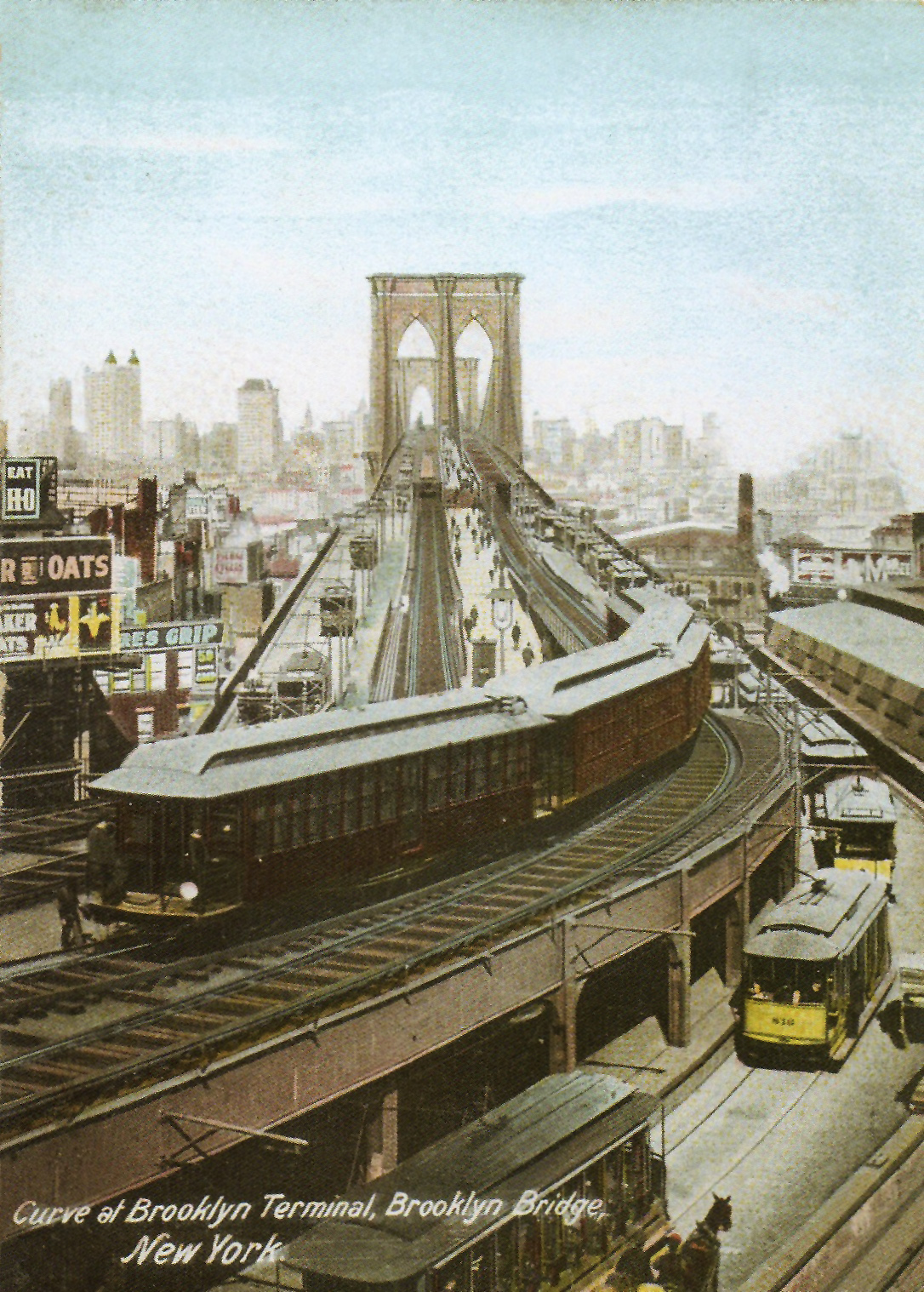
Unknown artist (American) 'Curve at Brooklyn Terminal, Brooklyn Bridge, New York' 1907


Unknown artist (American)
Curve at Brooklyn Terminal, Brooklyn Bridge, New York
1907
Postcard, Photomechanical reproduction
3 9/16 x 5 1/2 in. (9 x 14cm)
The Metropolitan Museum of Art, New York, Walker Evans Archive, 1994


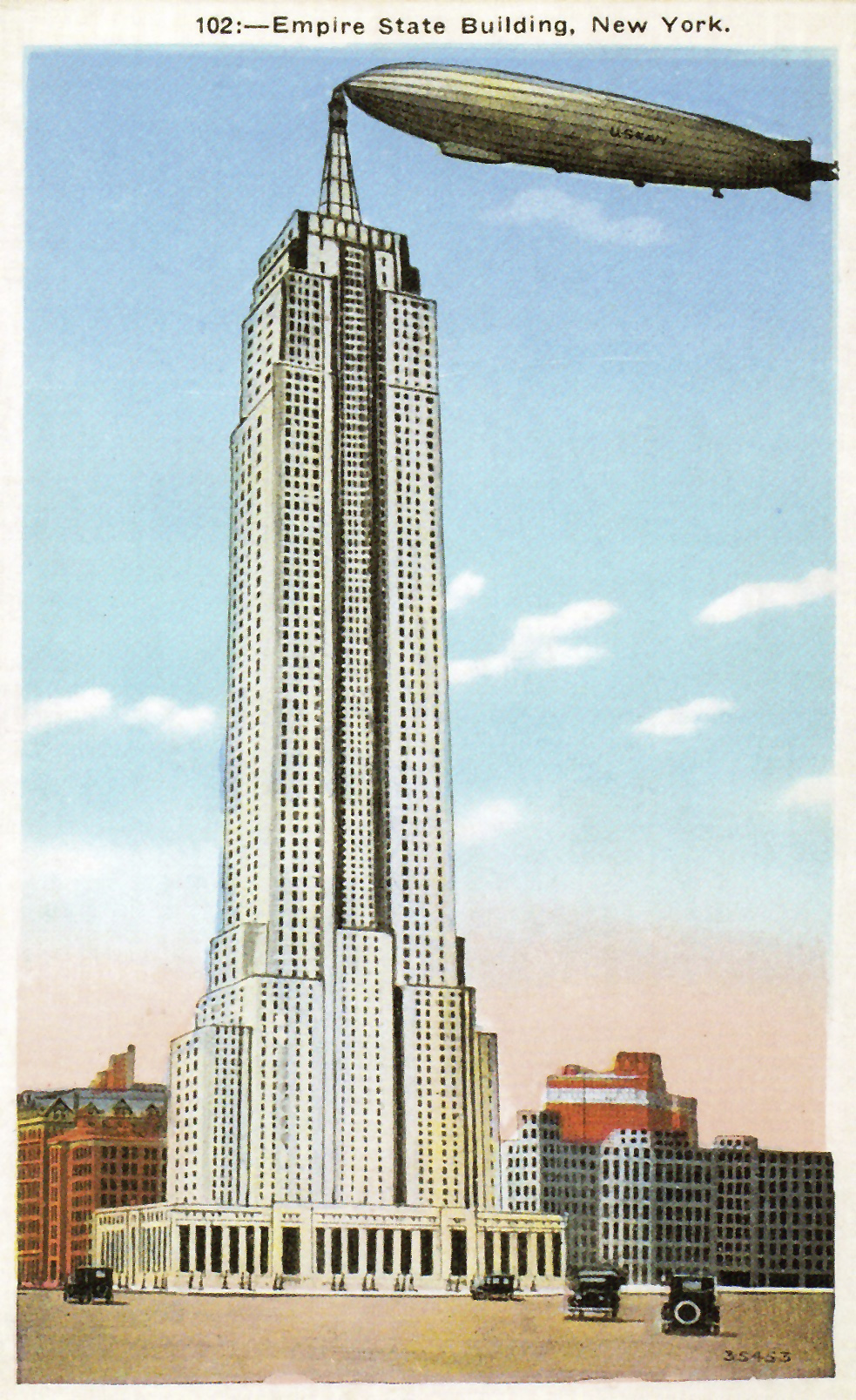
Unknown artist (American) 'Empire State Building, New York' 1930s


Unknown artist (American)
Empire State Building, New York
1930s
Postcard, Photomechanical reproduction
3 9/16 x 5 1/2 in. (9 x 14cm)
The Metropolitan Museum of Art, New York, Walker Evans Archive, 1994


The Metropolitan Museum of Art
1000 Fifth Avenue at 82nd Street
New York, New York 10028-0198
Phone: 212-535-7710

Opening hours:
Sunday – Tuesday and Thursday: 10am – 5pm
Friday and Saturday: 10am – 9pm
Closed Wednesday

Walker Evans and the Picture Postcard (Hardcover)
by Jeff Rossenheim and Walker Evans

The Metropolitan Museum of Art website

LIKE ART BLART ON FACEBOOK

Back to top

Exhibition: ‘Edward Burtynsky: The Residual Landscapes’ at The Whyte Museum of the Canadian Rockies, Banff, Alberta

Exhibition dates: 7th February – 26th April, 2009


Edward Burtynsky (Canadian, b. 1955) 'Silver Lake Operations #1, Lake Lefroy, Western Australia 2007' from the exhibition 'Edward Burtynsky: The Residual Landscapes' at The Whyte Museum of the Canadian Rockies, Banff, Alberta, Feb - April, 2009


Edward Burtynsky (Canadian, b. 1955)
Silver Lake Operations #1, Lake Lefroy, Western Australia 2007
2007


One of the great photographers of the world.

Enjoy some of his images and for more photographs please visit his website.


Many thankx to The Whyte Museum of the Canadian Rockies for allowing me to publish the photographs in the posting. Please click on the photographs for a larger version of the image.


Edward Burtynsky (Canadian, b. 1955) 'Tanggu Port, Tianjin, China 2005' from the exhibition 'Edward Burtynsky: The Residual Landscapes' at The Whyte Museum of the Canadian Rockies, Banff, Alberta, Feb - April, 2009


Edward Burtynsky (Canadian, b. 1955)
Tanggu Port, Tianjin, China 2005
2005


Nature transformed through industry is a predominant theme in my work. I set course to intersect with a contemporary view of the great ages of man; from stone, to minerals, oil, transportation, silicon, and so on. To make these ideas visible I search for subjects that are rich in detail and scale yet open in their meaning. Recycling yards, mine tailings, quarries and refineries are all places that are outside of our normal experience, yet we partake of their output on a daily basis.

These images are meant as metaphors to the dilemma of our modern existence; they search for a dialogue between attraction and repulsion, seduction and fear. We are drawn by desire – a chance at good living, yet we are consciously or unconsciously aware that the world is suffering for our success. Our dependence on nature to provide the materials for our consumption and our concern for the health of our planet sets us into an uneasy contradiction. For me, these images function as reflecting pools of our times.

Edward Burtynsky quoted on The Whyte Museum website


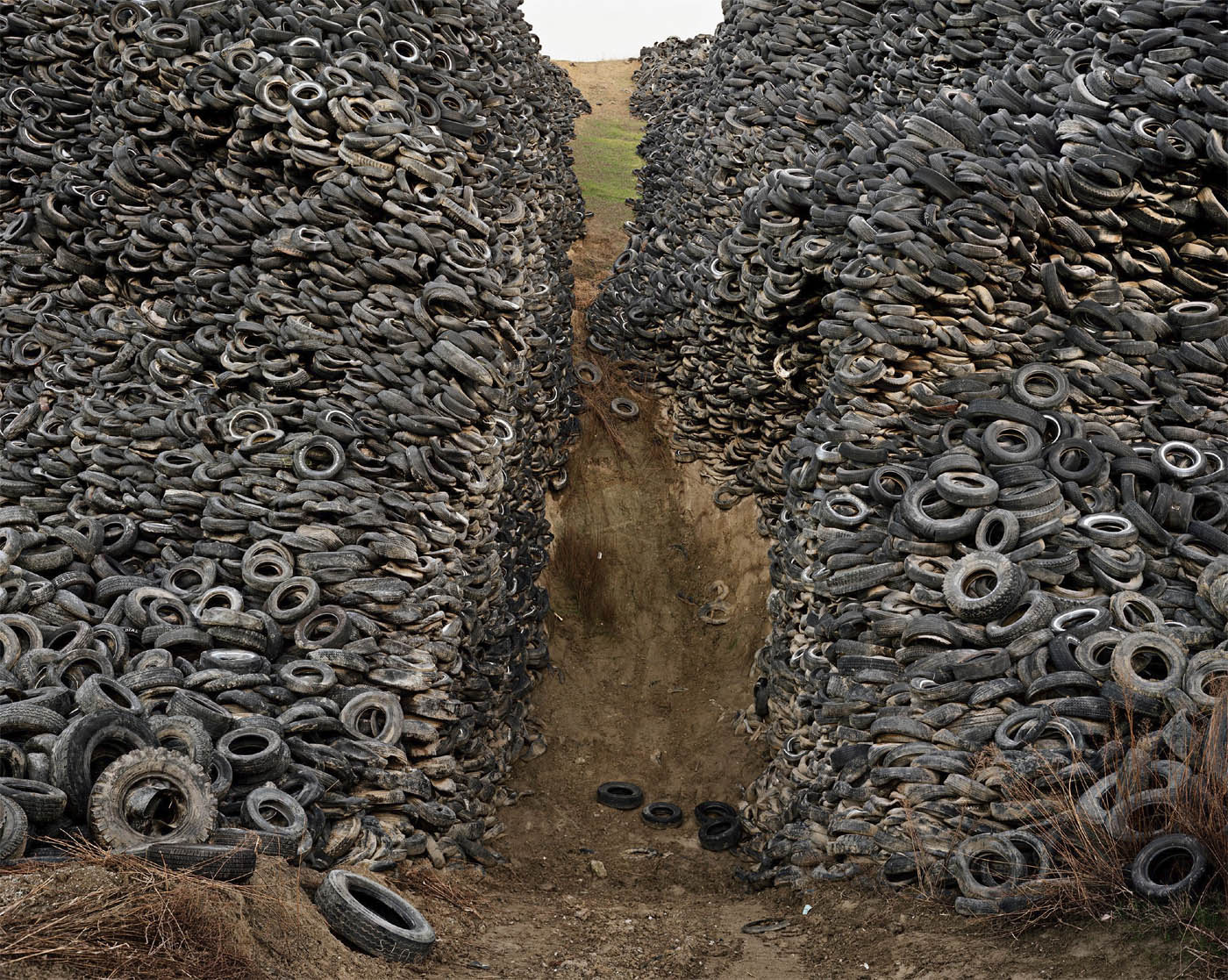
Edward Burtynsky (Canadian, b. 1955) 'Oxford Tire Pile #8, Westley, California 1999' 1999


Edward Burtynsky (Canadian, b. 1955)
Oxford Tire Pile #8, Westley, California 1999
1999


Edward Burtynsky (Canadian, b. 1955) 'Nickel Tailings #30, Sudbury, Ontario, 1996'


Edward Burtynsky (Canadian, b. 1955)
Nickel Tailings #30, Sudbury, Ontario, 1996
1996


Edward Burtynsky (Canadian, b. 1955) 'Nickel Tailings #31, Sudbury, Ontario 1996'


Edward Burtynsky (Canadian, b. 1955)
Nickel Tailings #31, Sudbury, Ontario 1996
1996


Edward Burtynsky (Canadian, b. 1955) 'Feng Jie #4, Three Gorges Dam Project, Yangtze River, 2002'


Edward Burtynsky (Canadian, b. 1955)
Feng Jie #4, Three Gorges Dam Project, Yangtze River, 2002
2002


These images are meant as metaphors to the dilemma of our modern existence; they search for a dialogue between attraction and repulsion, seduction and fear,” said Edward Burtynsky, photographer. “We are drawn by desire – a chance at good living, yet we are consciously or unconsciously aware that the world is suffering for our success. Our dependence on nature to provide the materials for our consumption and our concern for the health of our planet sets us into an uneasy contradiction. For me, these images function as reflecting pools of our times.

Speaking of his “Quarries” series, Burtynsky has said, “The concept of the landscape as architecture has become, for me, an act of imagination. I remember looking at buildings made of stone, and thinking, there has to be an interesting landscape somewhere out there, because these stones had to have been taken out of the quarry one block at a time. I had never seen a dimensional quarry, but I envisioned an inverted cubed architecture on the side of a hill. I went in search of it, and when I had it on my ground glass I knew that I had arrived.”

Text from The Whyte Museum of the Canadian Rockies


Edward Burtynsky (Canadian, b. 1955) 'Shipbreaking #1, Chittagong, Bangladesh, 2000'


Edward Burtynsky (Canadian, b. 1955)
Shipbreaking #1, Chittagong, Bangladesh, 2000
2000


Edward Burtynsky (Canadian, b. 1955) 'Bao Steel #2, Shanghai, China, 2005'


Edward Burtynsky (Canadian, b. 1955)
Bao Steel #2, Shanghai, China, 2005
2005


Edward Burtynsky (Canadian, b. 1955) 'Iberia Quarries #3, Bencatel, Portugal, 2006'


Edward Burtynsky (Canadian, b. 1955)
Iberia Quarries #3, Bencatel, Portugal, 2006
2006


Edward Burtynsky (Canadian, b. 1955) 'China Quarries #8, Xiamen, Fujian Province, 2004'


Edward Burtynsky (Canadian, b. 1955)
China Quarries #8, Xiamen, Fujian Province, 2004
2004


Edward Burtynsky (Canadian, b. 1955) 'Dam #6 ,Three Gorges Dam Project, Yangtze River, 2005'


Edward Burtynsky (Canadian, b. 1955)
Dam #6, Three Gorges Dam Project, Yangtze River, 2005
2005


Trailer for the film Manufactured Landscapes in which Jennifer Baichwal documents Edward Burtynsky doing what artists do – making art, in this case photographing Bangladesh and China as he observes the “manufacturer to the world”.


Edward Burtynsky Manufactured Landscapes


The Whyte Museum of the Canadian Rockies
111 Bear Street, Banff, Alberta
T1L 1A3 Canada
Phone: 1 403 762 2291

Opening hours:
Thursday – Monday 11am – 5pm
Tuesday and Wednesday – CLOSED

The Whyte Museum of the Canadian Rockies website

LIKE ART BLART ON FACEBOOK

Back to top

Exhibition: ‘The Last Days of W’ by Alec Soth at Gagosian Gallery, New York

Exhibition dates: 20th January – 7th March, 2009


Alec Soth (American, b. 1969) 'Civic Fest, Minneapolis, MN (Presidential office)' 2008 from the exhibition 'The Last Days of W' by Alec Soth at Gagosian Gallery, New York, jan - March, 2009


Alec Soth (American, b. 1969)
Civic Fest, Minneapolis, MN (Presidential office)
2008


Another fantastic group of Americurbana from this wonderful photographer!

Dr Marcus Bunyan


Many thankx to Gagosian Gallery for allowing me to publish the photographs in the posting. Please click on the photographs for a larger version of the image.


“Henri Cartier-Bresson famously said, “The world is going to pieces and people like Adams and Weston are photographing rocks.” But I don’t think the world would have been a better place if these photographers had headed off to a war zone. The question is whether you can be a political photographer while you photograph rocks. My pictures don’t have a specific social commentary but I think they have social and political meaning.”


Alec Soth on the Gagosian Gallery website 2009


Alec Soth (American, b. 1969) 'Dynell, Bemidji, MN (Girl in store)' 2007 from the exhibition 'The Last Days of W' by Alec Soth at Gagosian Gallery, New York, jan - March, 2009


Alec Soth (American, b. 1969)
Dynell, Bemidji, MN (Girl in store)
2007


Alec Soth (American, b. 1969) 'Josh, Joelton, Tennessee' 2004


Alec Soth (American, b. 1969)
Josh, Joelton, Tennessee
2004


Gagosian Gallery is pleased to present The Last Days of W., colour photographs taken by Alec Soth between 2000 and 2008.

Although originally conceived without explicit political intent, in retrospect Soth considers this selected body of work, which spans both terms of George W. Bush’s presidency, to represent “a panoramic look at a country exhausted by its catastrophic leadership.” Soth’s earlier series such as Sleeping by the Mississippi, Niagara, and Dog Days, Bogotá – all subjective narratives containing disenfranchised figures and decaying landscapes – laid the conceptual groundwork for The Last Days of W. It provides a wry commentary on the adverse effects of the national administration, perhaps best exemplified by an unwittingly ironic remark that Bush made in 2000: “I think we can agree, the past is over.”

Following in the humanist tradition established by the great chroniclers of the American experience such as Walker Evans, Robert Frank, and Stephen Shore, Soth captures diverse images of a country disillusioned with, and deceived by, its own identity, from mothers of marines serving in Iraq to teenage mothers in the Louisiana Bayou; from religious propaganda in the American workplace to the mortgage crisis in Stockton, CA. His incisive depiction of contemporary American reality confronts the ideals romanticised in the American Dream with the hastening decline of the American Empire.

Text from the Gagosian Gallery website 2009


Alec Soth 'The Last Days of W' installation view at Gagosian Gallery


The Last Days of W installation view at Gagosian Gallery


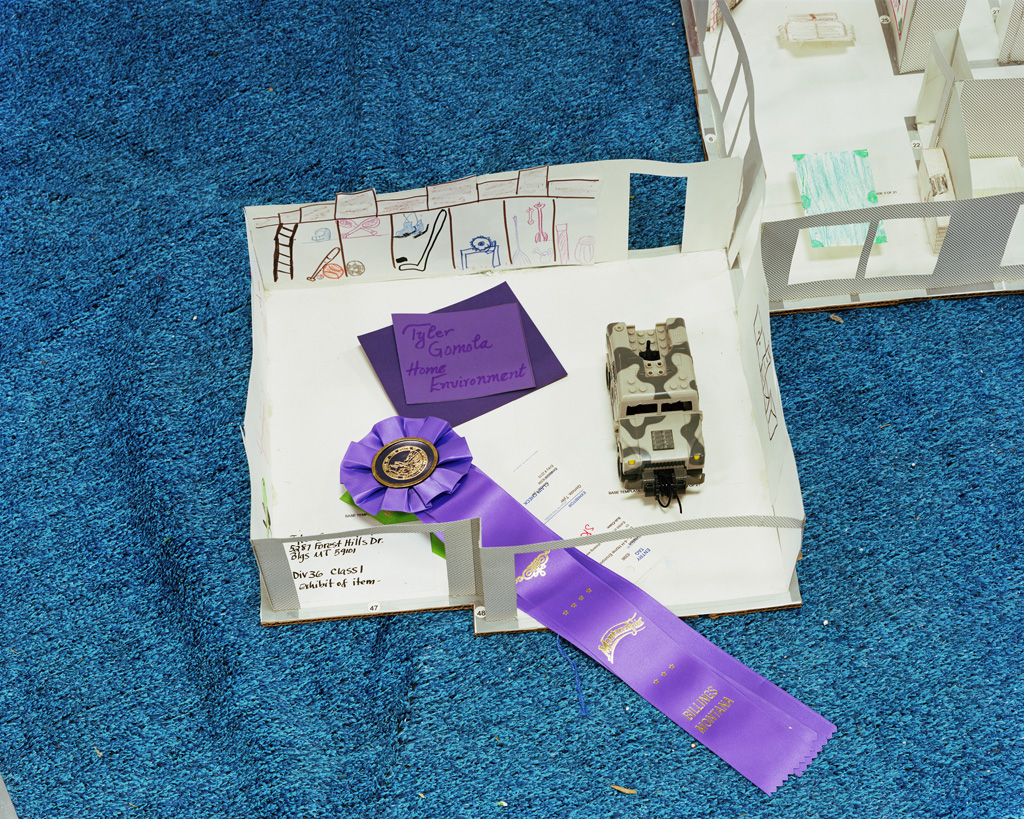
Alec Soth (American, b. 1969) 'Home Environment, Billings, MT' 2008


Alec Soth (American, b. 1969)
Home Environment, Billings, MT
2008


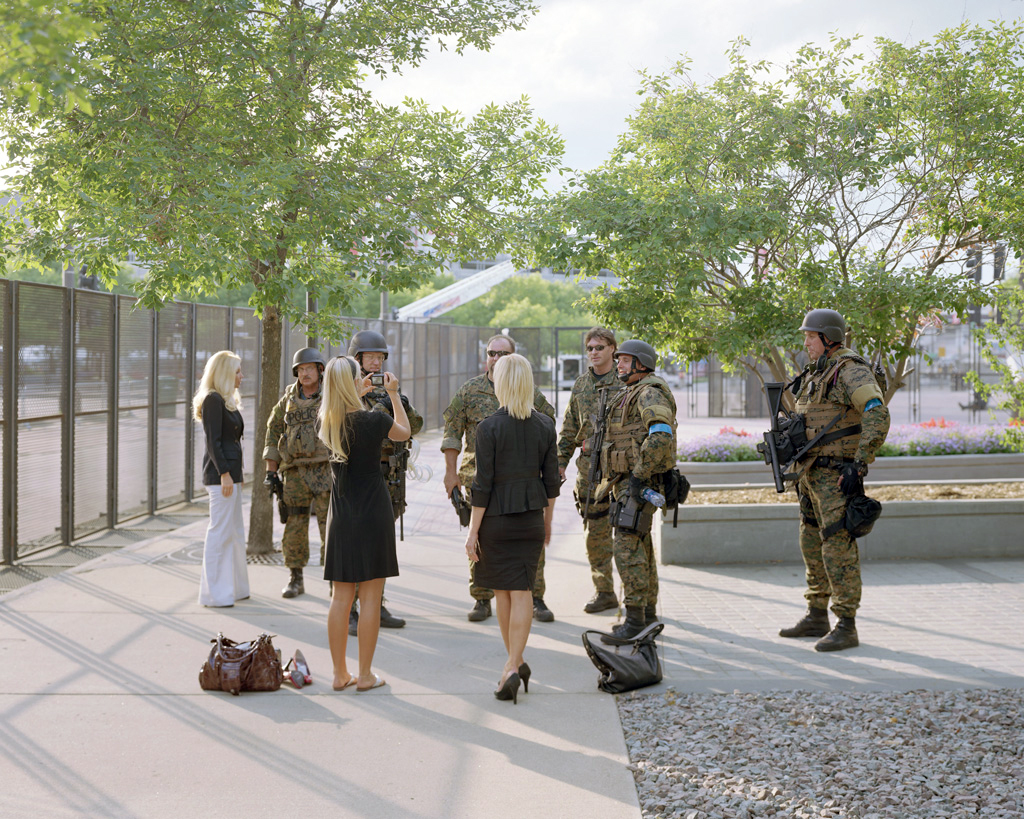
Alec Soth (American, b. 1969) 'Republican National Convention, Saint Paul, MN' 2008


Alec Soth (American, b. 1969)
Republican National Convention, Saint Paul, MN
2008


Gagosian Gallery
980 Madison Avenue
New York, NY 10075
Phone: 212.744.2313

Opening hours:
Monday – Saturday 10am – 6pm

Gagosian Gallery website

LIKE ART BLART ON FACEBOOK

Back to top

Review: ‘Framing Conflict – Iraq and Afghanistan’ exhibition by Lyndell Brown and Charles Green at The Ian Potter Museum of Art, The University of Melbourne

Exhibition dates: 5th November, 2008 – 1st February, 2009


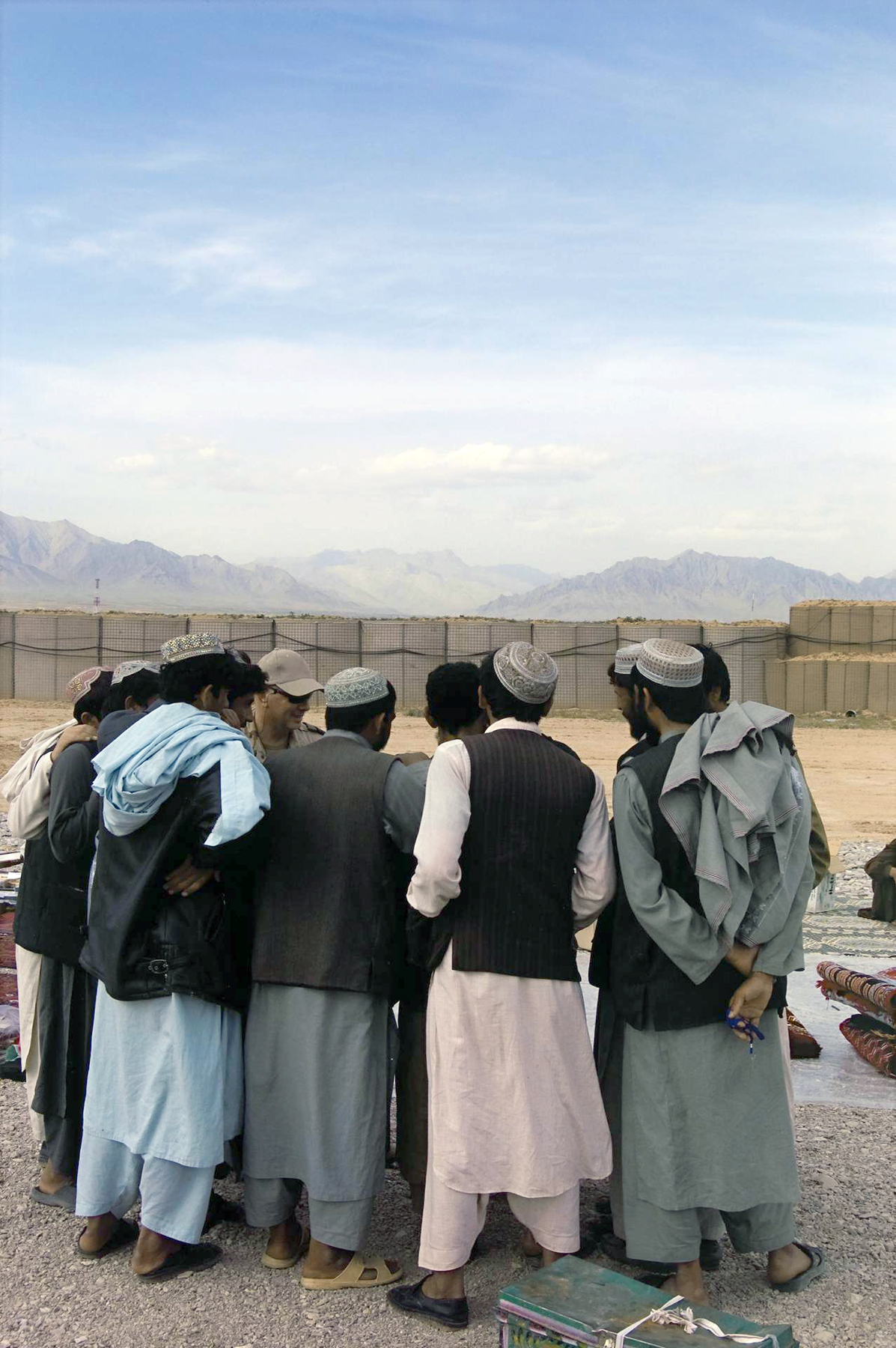
Lyndell Brown (Australian, b. 1961) and Charles Green (Australian, b. 1953) 'Afghan traders with soldiers, market, Tarin Kowt base, Uruzgan province, Afghanistan.' 2007-2008 from the exhibition 'Framing Conflict – Iraq and Afghanistan' exhibition by Lyndell Brown and Charles Green at The Ian Potter Museum of Art, The University of Melbourne, Nov 2008 - Feb 2009


Lyndell Brown (Australian, b. 1961) and Charles Green (Australian, b. 1953)
Afghan traders with soldiers, market, Tarin Kowt base, Uruzgan province, Afghanistan
2007-2008
From The approaching storm series 2007-2009
Digital colour inkjet photograph
155 × 107.5cm


Despite one brilliant photograph and some interesting small painted canvases this exhibition is a disappointment. No use beating around the figurative bush in the landscape so to speak, talking plainly will suffice. Firstly, let’s examine the photographs. Thirteen large format colour photographs are presented in the exhibition out of an archive of “thousands of photographs Brown and Green created on tour”1 from which the paintings are derived.

Most of the photographs are inconsequential and need not have been taken. Relying on the usual trope of painters who take photographs they are shot at night, dusk or dawn when the shadows are long, the colours lush supposedly adding ‘mystique’ to the scene being portrayed. In some cases they are more like paintings than the paintings themselves. Perhaps this was the artist’s plan, the reverse marriage of photography and painting where one becomes the other, but this does little to advance photography as art. There is nothing new or interesting here: sure, some of the photographs are beautiful in the formal representation of a vast and fractured landscape but the pre-visualisation is weak: bland responses to the machines, industry, people and places of the conflict. Go look at the Andreas Gursky photographs at the National Gallery of Victoria to see world-class photography taking reality to the limit, head on.

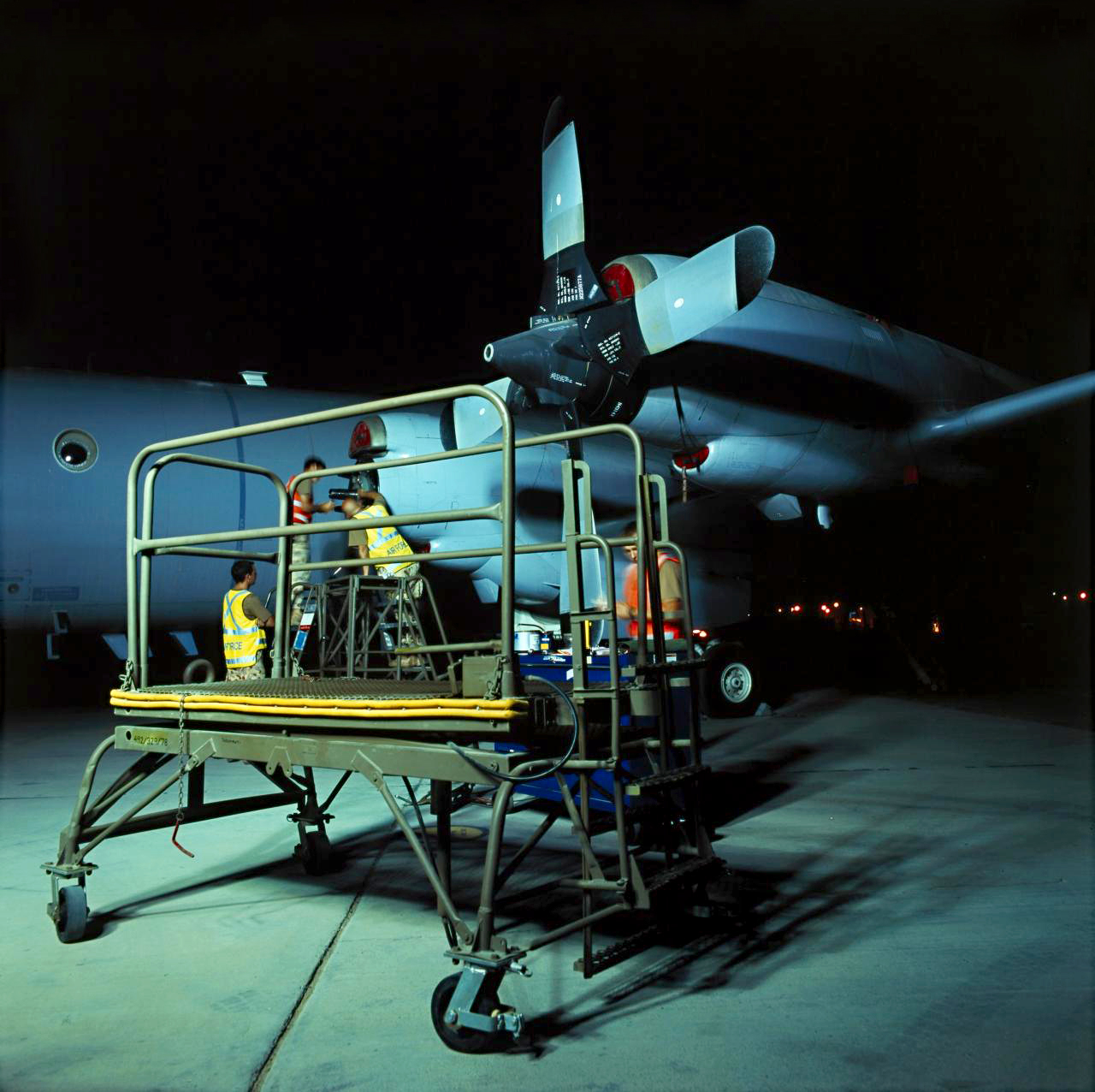
Too often in these thirteen images the same image is repeated with variants – three images of the an aircraft having it’s propeller changed show a lack of ideas or artefacts to photograph – presented out of the thousands taken seems incongruous. The fact that only one photograph is reproduced in the catalogue is also instructive.

Some images are just unsuccessful. For example the photograph Dusk, ship’s bridge with two sailors, northern Gulf is of a formulaic geometry that neither holds the viewers attention nor gives a deeper insight into their lives aboard ship and begs the question why was the photograph taken in the first place? The dark space has little physical or metaphysical illumination and seems purely to be an exercise in formalism. The photograph Dusk, ships’ bridge with sailor, northern Gulf is more successful in the use of light and shade as they play across the form of a sailor, his head resting pensively in his hand, red life vests adding a splash of colour to the bottom right of the photograph.

The brilliant photograph of the group is View from Chinook, Helmand province, Afghanistan. This really is a monstrous photograph. With the large black mass of the helicopter in the foreground of the image containing little detail, the eye is drawn upwards to the windscreen through which a mountain range rises, with spines like the back of a Stegosaurus. To the right a road, guarded by a desolate looking pillbox and yellow barrier, meanders into the distance. Dead flies on the windscreen look like small bullet holes until you realise what they are. This is the image that finally evidences a disquieting beauty present in the vast and ancient landscape.

Turning to the paintings we can say that some of the small 31cm x 31cm paintings work well. From an ‘original’ photograph the artist selects and crops a final image that they work up into a highly detailed oil painting. Distilled (as the artist’s like to put it) from the ‘original’ photographs, the paintings become a “merging of a contemporary sense of composition – borrowed from photography, film and video – with the textures and processes of traditional oil painting.”2

“These works were developed by the artists to be something akin to “Hitchcockian clues” which create the sense of looking out at a scene but being distanced from the action. To some degree the entire suite of small pictures participate in developing this intrigue, by showing an array of ambiguous scenes in which direct action is never present, or is obscured by limited perspectives … The artists noted that the war zones they witnessed were low in action but high in tension”3

To an extent this tension builds in some of the small paintings: the small size lends an intimate, intense quality and forces the viewer to engage with highly detailed renditions of textures of clothing, material, skin and hair and the distorted scale of the ships and aeroplanes portrayed. In these intense visions the painting seems less like a photograph and more like a new way of seeing. However, this occurs only occasionally within the group of small paintings.

If we think of a photograph in the traditional sense as a portrayal of reality, then a distillation of that photograph (the removal of impurities from, an increase in the concentration of) must mean that these paintings are a double truth, a concentrated essence of the ‘original’ photograph that changes that essence into something new. Unfortunately most of these small canvases show limited viewpoints of distilled landscapes that do not lead to ambiguous enigmas, but to the screen of the camera overlaid by a skein of paint, a patina of posing.

This feeling is only amplified in the three large ‘History’ paintings. The three paintings seem static, lifeless, over fussy and lacking insight into the condition of the ‘machine’ that they are attempting to portray. It’s a bit like the ‘Emperors New Clothes’, the lack of substance in the paintings overlaid with the semantics of History painting (“a traditional genre that focused on mythological, biblical, historical and military subjects”) used to confirm their existence and supposed insight into the doubled, framed reality. As Robert Nelson noted in his review of 2008 art in Melbourne in The Age newspaper it would seem that painting is sliding into terminal decline. These paintings only seem to confirm that view.

Here was a golden opportunity to try something fresh in terms of war as conflict – both in photography and painting – to frame the discourse in an eloquent, innovative manner. Most of this work is not interesting because it does not seem to be showing, or being discursive about anything beyond a personal whim. Because an artist can talk about some things, doesn’t mean that he can make comments about other things that have any value. Although the artist was looking to portray landscapes of globalisation and entropy, there are more interesting ways of doing this, rather than the nature of the transcription used here.

“It is very good to copy what one sees: it is much better to draw what you can’t see any more but in your memory. It is a transformation in which imagination and memory work together. You only reproduce what struck you, that is to say, the necessary. That way your memory and your fantasy are freed from the tyranny of nature.”4

No thinking but the putting away of intellect and the reliance on memory and imagination, memory and fantasy to ‘distil’ the essence. This is what needed to happen both in the photographs and paintings – leaving posturing aside (perhaps an ‘unofficial war artist’ would have had more success!) to uncover the transformation of landscape that the theatre of this environment richly deserves.

Dr Marcus Bunyan


Footnotes

1/ Heywood, Warwick. Framing Conflict: Iraq and Afghanistan exhibition catalogue. Canberra: Australian War Memorial, 2008, p. 6
2/ Heywood, Warwick. Framing Conflict: Iraq and Afghanistan exhibition catalogue. Canberra: Australian War Memorial, 2008, p. 6
3/ Heywood, Warwick. Framing Conflict: Iraq and Afghanistan exhibition catalogue. Canberra: Australian War Memorial, 2008, p. 11
4/ Degas, Edgar quoted in Halligan, Marion. “Between the brushstrokes,” in A2 section, The Saturday Age newspaper, January 17th 2008, p. 18


Many thankx to The Ian Potter Museum of Art for allowing me to publish the photographs in the posting. Please click on the photographs for a larger version of the image.


Lyndell Brown (Australian, b. 1961) and Charles Green (Australian, b. 1953) 'Afghan National Army perimeter post with chair, Tarin Kowt base, Uruzgan province, Afghanistan' 2007-2008 from the exhibition 'Framing Conflict – Iraq and Afghanistan' exhibition by Lyndell Brown and Charles Green at The Ian Potter Museum of Art, The University of Melbourne, Nov 2008 - Feb 2009


Lyndell Brown (Australian, b. 1961) and Charles Green (Australian, b. 1953)
Afghan National Army perimeter post with chair, Tarin Kowt base, Uruzgan province, Afghanistan
2007-2008
From The approaching storm series 2007-2009
Digital colour inkjet photograph
111.5 × 151.5cm


Lyndell Brown (Australian, b. 1961) and Charles Green (Australian, b. 1953) 'Dusk, ship's bridge with two sailors, northern Gulf' 2007-2008


Lyndell Brown (Australian, b. 1961) and Charles Green (Australian, b. 1953)
Dusk, ship’s bridge with two sailors, northern Gulf
2007-2008
Digital colour inkjet photograph


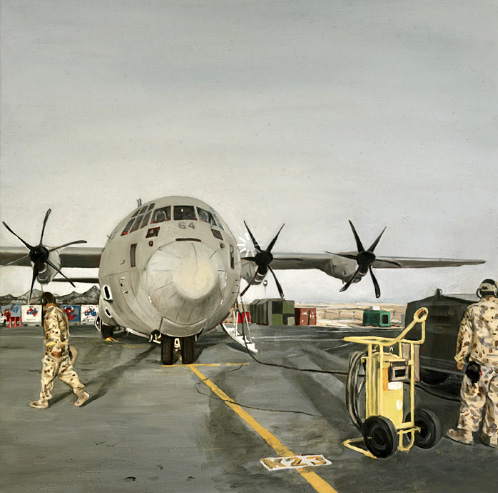
Lyndell Brown (Australian, b. 1961) and Charles Green (Australian, b. 1953) 'Late afternoon, flight line, military installation, Middle East' 2007


Lyndell Brown (Australian, b. 1961) and Charles Green (Australian, b. 1953)
Late afternoon, flight line, military installation, Middle East
2007
Oil on linen


Lyndell Brown (Australian, b. 1961) and Charles Green (Australian, b. 1953) 'Market, Camp Holland, Tarin Kowt, Uruzgan province, Afghanistan' 2007


Lyndell Brown (Australian, b. 1961) and Charles Green (Australian, b. 1953)
Market, Camp Holland, Tarin Kowt, Uruzgan province, Afghanistan
2007
Oil on linen


Lyndell Brown (Australian, b. 1961) and Charles Green (Australian, b. 1953) 'View from Chinook, Helmand province, Afghanistan' 2007-2008


Lyndell Brown (Australian, b. 1961) and Charles Green (Australian, b. 1953)
View from Chinook, Helmand province, Afghanistan
2007-2008
From The approaching storm series 2007-2009
Digital colour inkjet photograph
111.5 × 151.5cm


Lyndell Brown (Australian, b. 1961) and Charles Green (Australian, b. 1953) 'View from Chinook, Helmand province, Afghanistan' 2007


Lyndell Brown (Australian, b. 1961) and Charles Green (Australian, b. 1953)
View from Chinook, Helmand province, Afghanistan
2007
Oil on linen


Lyndell Brown (Australian, b. 1961) and Charles Green (Australian, b. 1953) 'Trolley, propeller change, on flightline at night, military installation, Gulf' 2007-2008


Lyndell Brown (Australian, b. 1961) and Charles Green (Australian, b. 1953)
Trolley, propeller change, on flightline at night, military installation, Gulf
2007-2008
From The approaching storm series 2007-2009
Digital colour inkjet photograph
87.0 × 87.4cm


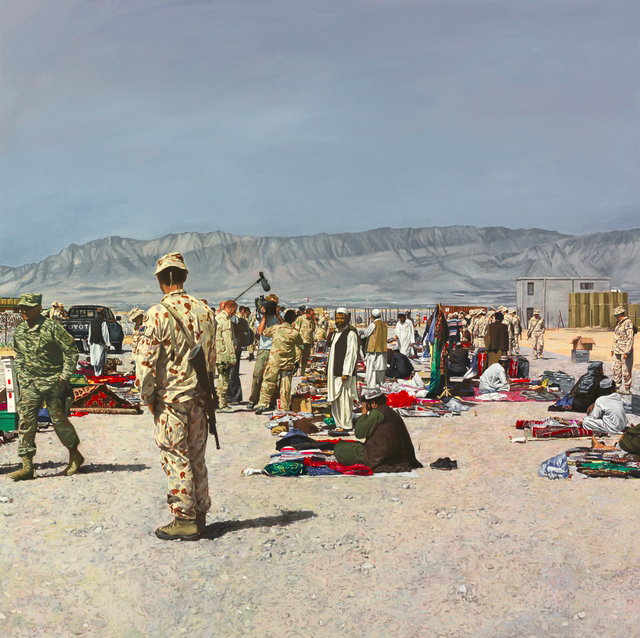
Lyndell Brown (Australian, b. 1961) and Charles Green (Australian, b. 1953) 'History painting: market, Tarin Kowt, Uruzgan province, Afghanistan' 2007


Lyndell Brown (Australian, b. 1961) and Charles Green (Australian, b. 1953)
History painting: market, Tarin Kowt, Uruzgan province, Afghanistan
2007
Oil on linen


Lyndell Brown and Charles Green. Installation view of photographs from the exhibition 'Framing Conflict' at The Ian Potter Museum of Art, The University of Melbourne


Lyndell Brown and Charles Green
Installation view of photographs from the exhibition Framing Conflict at The Ian Potter Museum of Art, The University of Melbourne
2009


Lyndell Brown and Charles Green. Installation view of paintings from the exhibition 'Framing Conflict' at The Ian Potter Museum of Art, The University of Melbourne 2009


Lyndell Brown (Australian, b. 1961) and Charles Green (Australian, b. 1953)
Installation view of paintings from the exhibition Framing Conflict at The Ian Potter Museum of Art, The University of Melbourne
2009


The Ian Potter Museum of Art
The University of Melbourne,
Corner Swanston Street and Masson Road
Parkville, Victoria 3010

Opening hours:
Tuesday – Saturday 11am – 5pm

The Ian Potter Museum of Art website

LIKE ART BLART ON FACEBOOK

Back to top

Exhibition: ‘The Scurlock Studio and Black Washington: Picturing the Promise’ at the Smithsonian, Washington D.C.

Exhibition dates: 30th January, 2009 – 28th February, 2010


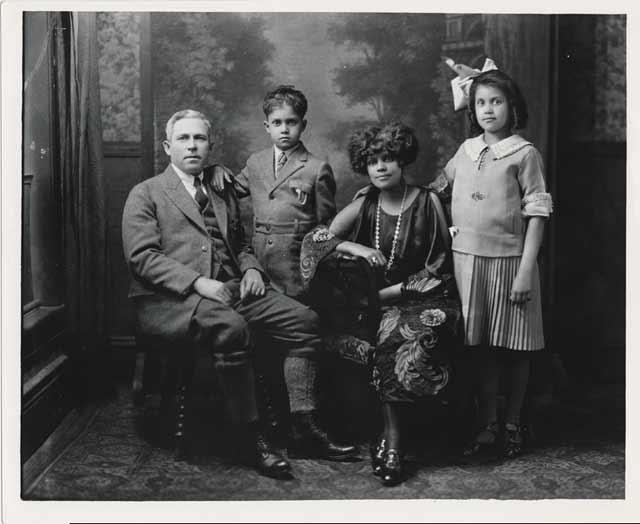
Addison Scurlock (American, 1883-1964) 'Family portrait' c. 1925 from the exhibition 'The Scurlock Studio and Black Washington: Picturing the Promise' at the Smithsonian, Washington D.C., Jan 2009 - Feb 2010


Addison Scurlock (American, 1883-1964)
Family portrait
c. 1925
Gelatin silver print
Courtesy of the Archives Center, National Museum of American History, Smithsonian Institution
© Scurlock


I so wish I was visiting Washington to see this exhibition!

If you get chance have a look through the Smithsonian NMAG Archives Center, ‘Portraits of a City: The Scurlock Photographic Studio’s Legacy to Washington, D.C.’ What a record of cultural and personal history, memory and a wonderful example of how photography can transcend time and space.

Click on the links at the top of the page or use the ‘General Resources: Browse all Scurlock images’ button at the left of page.


Many thankx to the Smithsonian for allowing me to publish the photographs in the posting. Please click on the photographs for a larger version of the image.


For over 80 years, the Scurlock photography studio catalogued the lives of the black middle class of Washington, D.C. (The exhibit, The Scurlock Studio and Black Washington: Picturing the Promise, is on view at the National Museum of American History through November 15, 2009. Thanks to Lonnie Bunch, Director of the National Museum of African American History and Culture, which co-organised the exhibit).


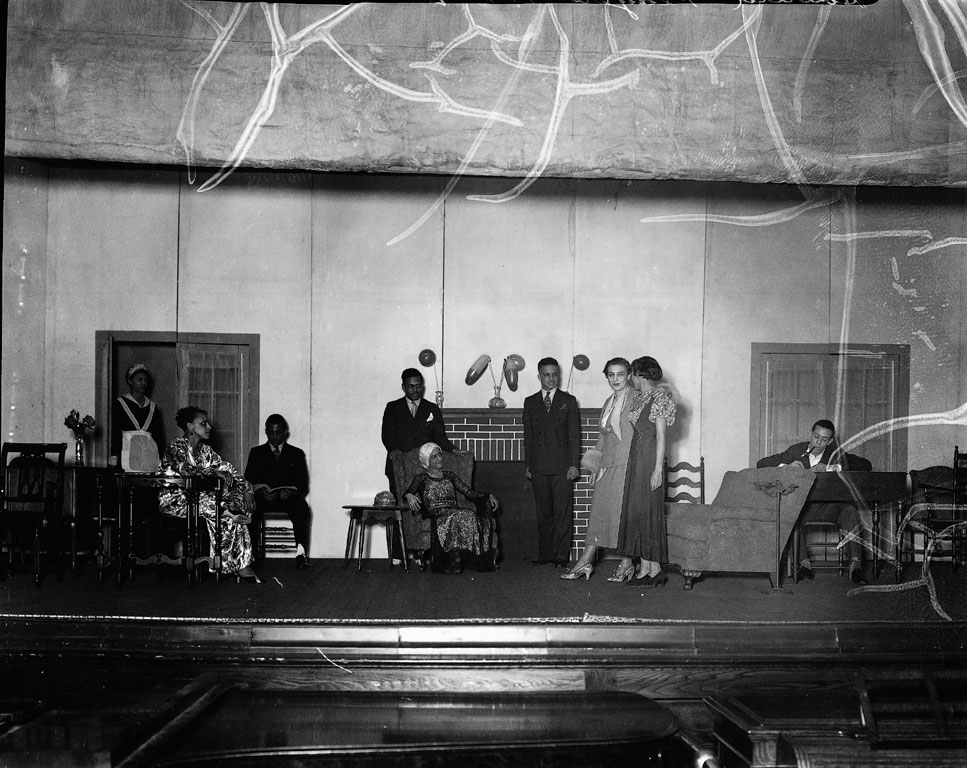
Addison Scurlock (American, 1883-1964) 'Howard University Players' c. 1933 from the exhibition 'The Scurlock Studio and Black Washington: Picturing the Promise' at the Smithsonian, Washington D.C., Jan 2009 - Feb 2010


Addison Scurlock (American, 1883-1964)
Howard University Players
c. 1933
Gelatin silver print
Courtesy of the Archives Center, National Museum of American History, Smithsonian Institution
© Scurlock


A Scurlock camera was “present at almost every significant event in the African-American community,” recalls former D.C. Councilwoman Charlene Drew Jarvis, whose father, Howard University physician Charles Drew, was a Scurlock subject many times. Dashing all over town – to baptisms and weddings, to balls and cotillions, to high-school graduations and to countless events at Howard, where he was the official photographer – Addison Scurlock became black Washington’s “photographic Boswell – the keeper of the visual memory of the community in all its quotidian ordinariness and occasional flashes of grandeur and moment,” says Jeffrey Fearing, a historian who is also a Scurlock relative.

The Scurlock Studio grew as the segregated city became a mecca for black artists and thinkers even before the Harlem Renaissance of the 1920s. U Street became known as “Black Broadway,” as its jazz clubs welcomed talents including Duke Ellington (who lived nearby), Ella Fitzgerald and Pearl Bailey. They and other entertainers received the Scurlock treatment, along with the likes of W.E.B. Du Bois and Booker T. Washington; soon no black dignitary’s visit to Washington was complete without a Scurlock sitting. George Scurlock would say it took him a while to realise that his buddy Mercer Ellington’s birthday parties – with Mercer’s dad (a.k.a. the Duke) playing “Happy Birthday” at the piano – were anything special.

At a time when minstrel caricature was common, Scurlock’s pictures captured black culture in its complexity and showed black people as they saw themselves. “The Scurlock Studio and Black Washington: Picturing the Promise,” an exhibition presented through this month by the Smithsonian’s National Museum of African American History and Culture, features images of young ballerinas in tutus, of handsomely dressed families in front of fine houses and couples in gowns and white tie at the NAACP’s winter ball.

Extract from David Zax. “The Scurlock Studio: Picture of Prosperity,” in the Smithsonian Magazine published on Smithsonian.com website February 2010


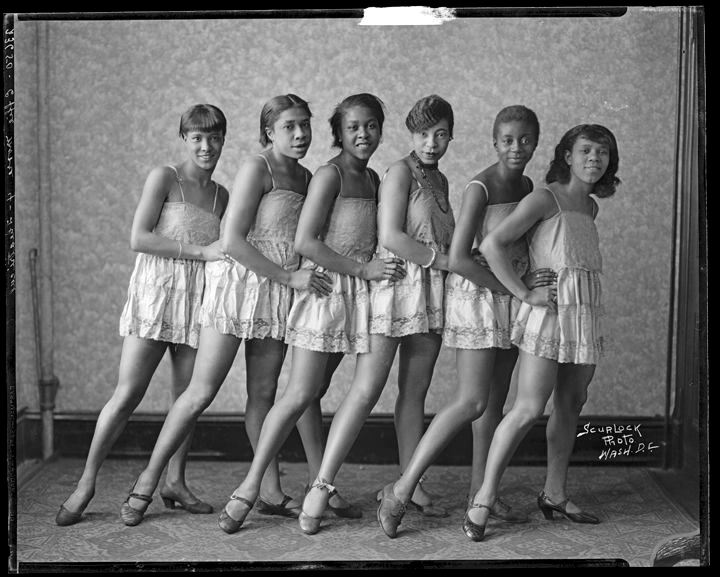
Addison Scurlock (American, 1883-1964) 'Effie Moore Dancers' c. 1920s


Addison Scurlock (American, 1883-1964)
Effie Moore Dancers
c. 1920s
Gelatin silver print
Courtesy of the Archives Center, National Museum of American History, Smithsonian Institution
© Scurlock


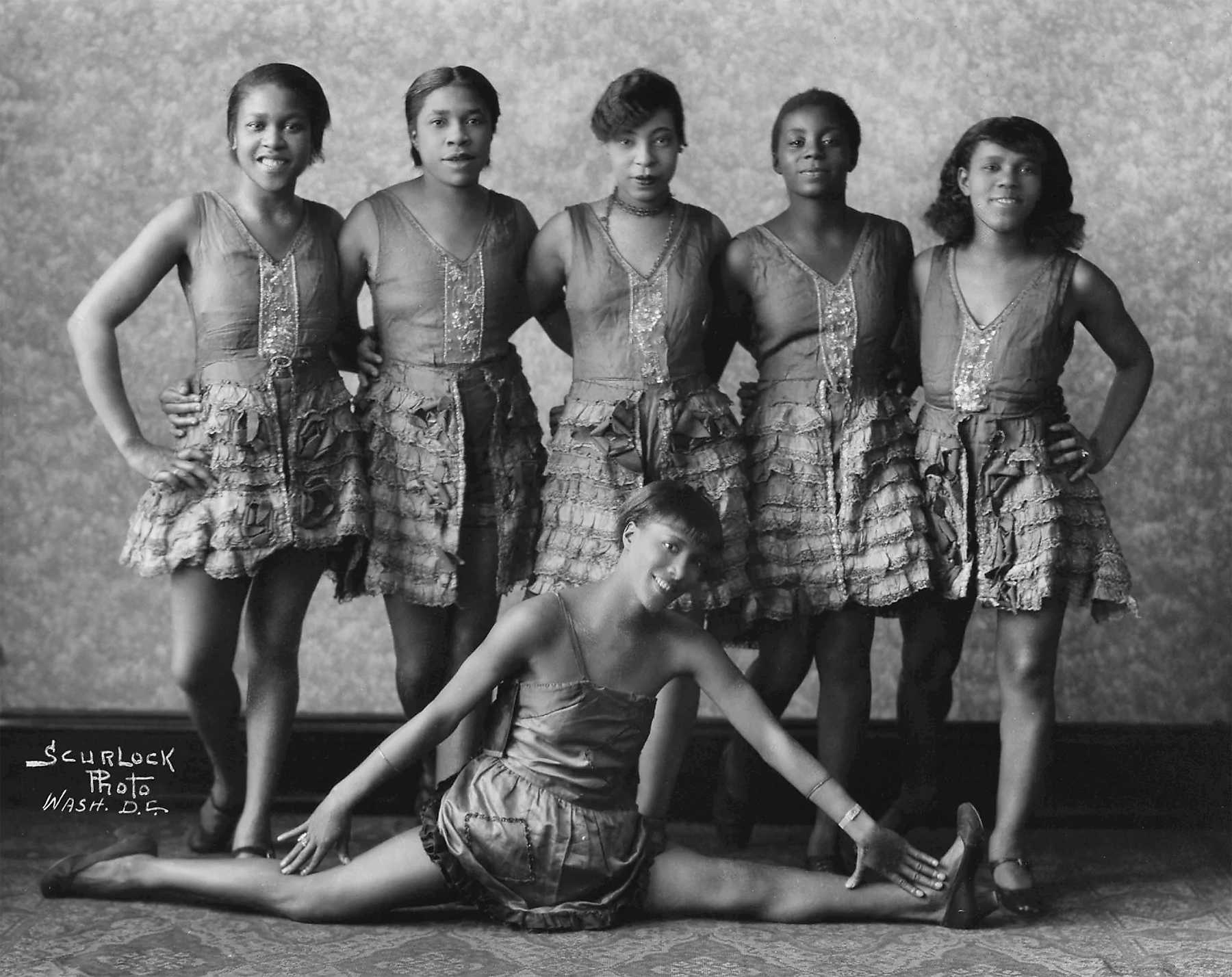
Addison Scurlock (American, 1883-1964) 'Effie Moore Dancers' c. 1920s


Addison Scurlock (American, 1883-1964)
Effie Moore Dancers
c. 1920s
Gelatin silver print
Courtesy of the Archives Center, National Museum of American History, Smithsonian Institution
© Scurlock


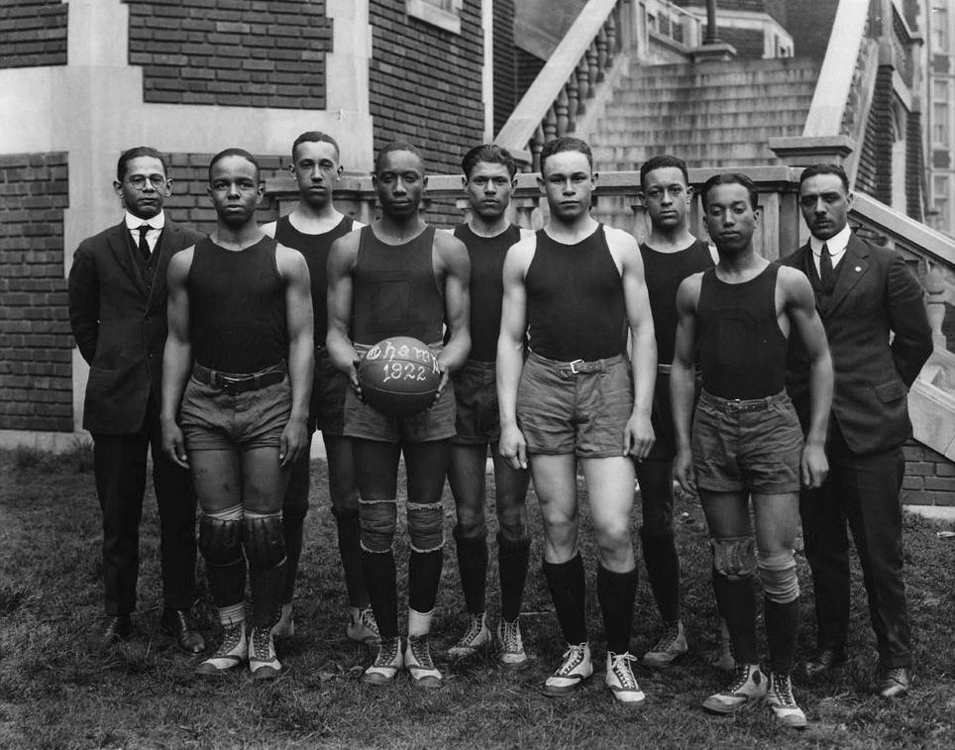
Addison Scurlock (American, 1883-1964) 'Dunbar High School Champion Basketball Team' 1922


Addison Scurlock (American, 1883-1964)
Dunbar High School Champion Basketball Team
1922
Gelatin silver print
Courtesy of the Archives Center, National Museum of American History, Smithsonian Institution
© Scurlock


The photograph features a young Charles Drew, fourth from the right, before earning his place in history for his pioneering work in developing the blood bank concept


Addison Scurlock (American, 1883-1964) 'Charles Drew with the first mobile blood collecting unit [Charles Drew and Red Cross Medical Team]' February 1941


Addison Scurlock (American, 1883-1964)
Charles Drew with the first mobile blood collecting unit [Charles Drew and Red Cross Medical Team]
February 1941
Gelatin silver print
Courtesy of the Archives Center, National Museum of American History, Smithsonian Institution
© Scurlock


Photographed nearly twenty years after his championship basketball season, Dr. Drew had recently been granted his doctorate and was spearheading the “Blood for Britain” program instituted in World War II to save the lives of Allied forces.


Charles Drew

Charles Richard Drew (June 3, 1904 – April 1, 1950) was an American physician, surgeon, and medical researcher. He researched in the field of blood transfusions, developing improved techniques for blood storage, and applied his expert knowledge to developing large-scale blood banks early in World War II. This allowed medics to save thousands of lives of the Allied forces. The research and development aspect of his blood storage work is disputed. As the most prominent African American in the field, Drew protested against the practice of racial segregation in the donation of blood, as it lacked scientific foundation, and resigned his position with American Red Cross, which maintained the policy until 1950.

Early life and education

Drew was born in 1904 into an African-American middle-class family in Washington, D.C. His father, Richard, was a carpet layer and his mother, Nora Burrell, was a teacher. Drew and his siblings grew up in D.C.’s Foggy Bottom neighbourhood and he graduated from Dunbar High School in 1922. Drew won an athletics scholarship to Amherst College in Massachusetts, where he graduated in 1926. An outstanding athlete at Amherst, Drew also joined Omega Psi Phi fraternity. He attended medical school at McGill University in Montreal, Quebec, Canada, receiving his MDCM in 1933, and ranked 2nd in his class of 127 students. A few years later, Drew did graduate work at Columbia University, where he earned his Doctor of Medical Science degree, becoming the first African American to do so.

Academic career

In 1941, Drew’s distinction in his profession was recognised when he became the first African-American surgeon selected to serve as an examiner on the American Board of Surgery. Drew had a lengthy research and teaching career and became a chief surgeon.

Blood plasma for British project

In late 1940, before the U.S. entered World War II and just after earning his doctorate, Drew was recruited by John Scudder to help set up and administer an early prototype program for blood storage and preservation. He was to collect, test, and transport large quantities of blood plasma for distribution in the United Kingdom. Drew went to New York City as the medical director of the United States’ Blood for Britain project. The Blood for Britain project was a project to aid British soldiers and civilians by giving U.S. blood to the United Kingdom.

Drew started what would be later known as bloodmobiles, which were trucks containing refrigerators of stored blood; this allowed for greater mobility in terms of transportation as well as prospective donations.

Drew created a central location for the blood collection process where donors could go to give blood. He made sure all blood plasma was tested before it was shipped out. He ensured that only skilled personnel handled blood plasma to avoid the possibility of contamination. The Blood for Britain program operated successfully for five months, with total collections of almost 15,000 people donating blood, and with over 5,500 vials of blood plasma. As a result, the Blood Transfusion Betterment Association applauded Drew for his work. Out of his work came the American Red Cross Blood Bank.

Text from the Wikipedia website


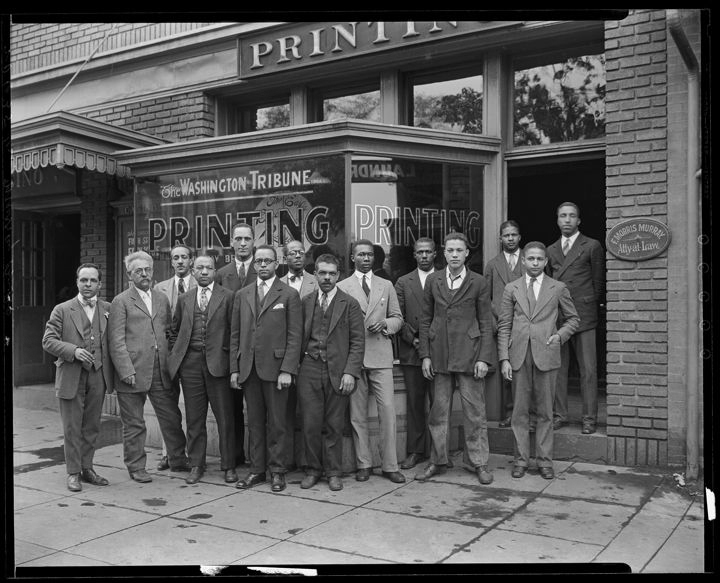
Addison Scurlock (American, 1883-1964) 'Murray Brothers Printing Company' 1925


Addison Scurlock (American, 1883-1964)
Murray Brothers Printing Company
1925
Gelatin silver print
Courtesy of the Archives Center, National Museum of American History, Smithsonian Institution
© Scurlock


The Murray Brothers Printing Company, 1925, was home to The Washington Tribune newspaper and steps away from the entrepreneurial F.H.M. Murray’s other business, the Murray Palace Casino.


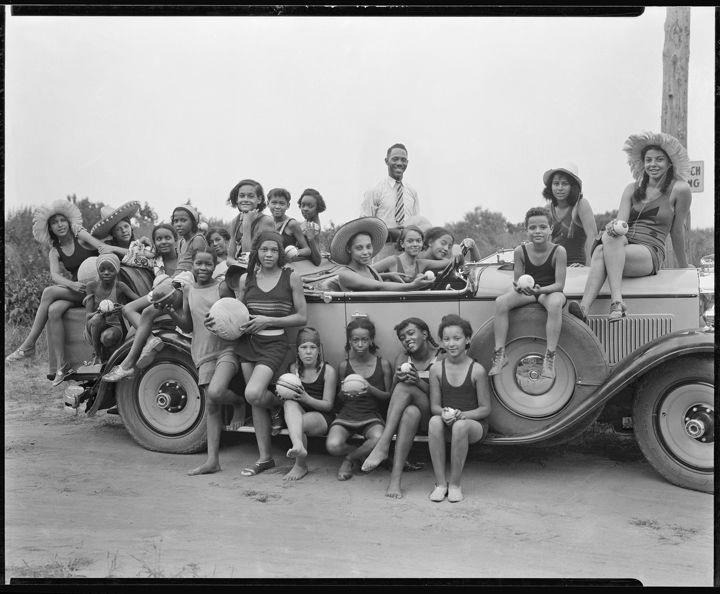
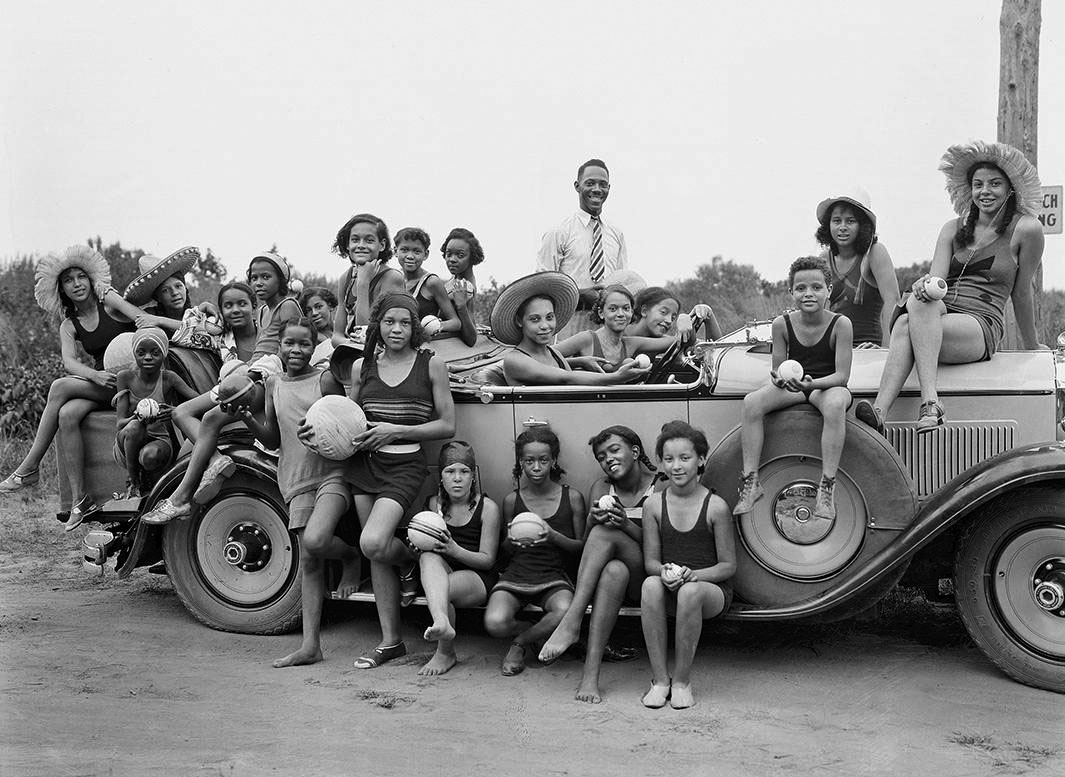
Addison Scurlock (American, 1883-1964) 'YWCA camp for girls, Highland Beach Girls, Maryland' 1930-1931


Addison Scurlock (American, 1883-1964)
YWCA camp for girls, Highland Beach Girls, Maryland
1930-1931
Gelatin silver print
Courtesy of the Archives Center, National Museum of American History, Smithsonian Institution
© Scurlock


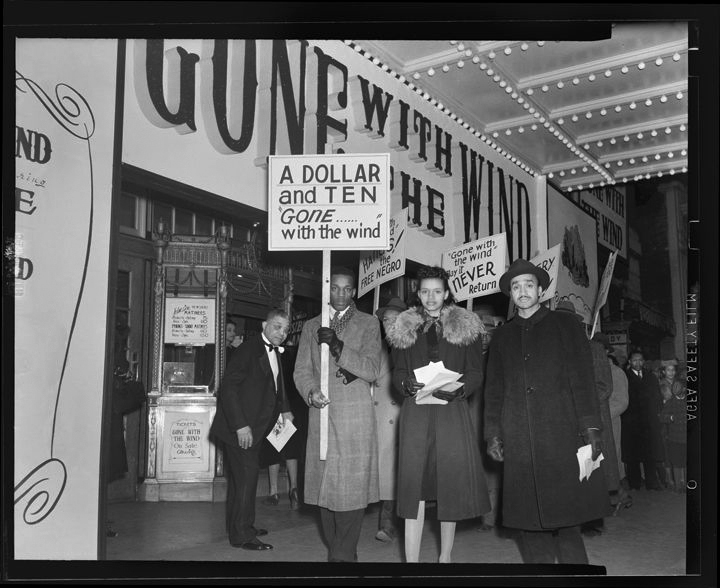
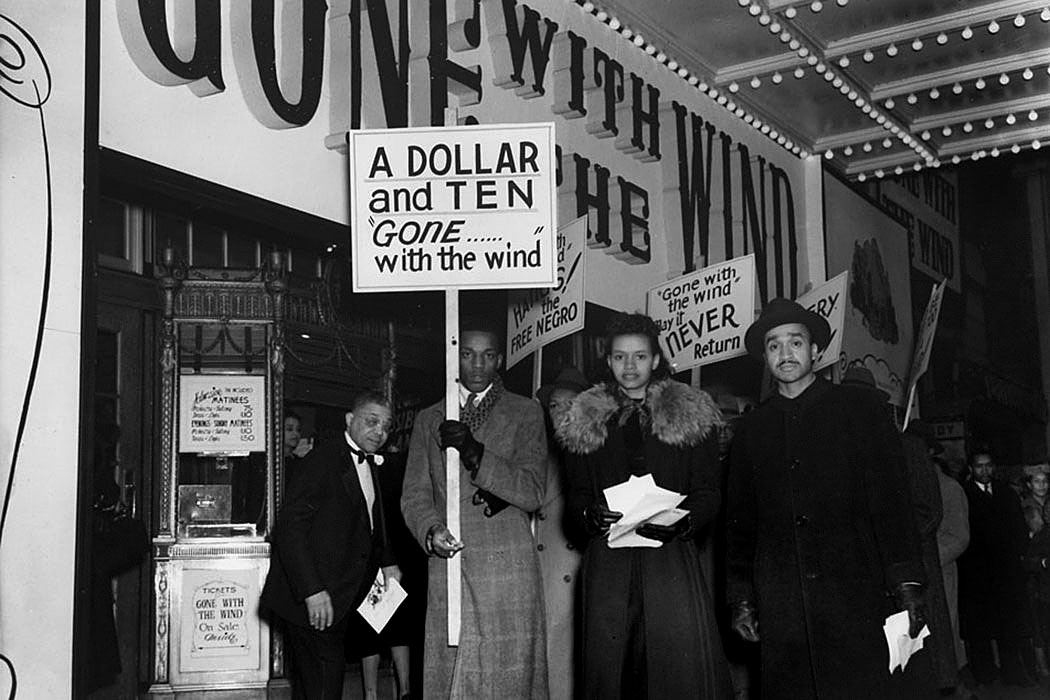
Addison Scurlock (American, 1883-1964) 'Picketing Gone with the Wind outside Lincoln Theatre' 1947


Addison Scurlock (American, 1883-1964)
Picketing Gone with the Wind outside Lincoln Theatre
1947
Gelatin silver print
Courtesy of the Archives Center, National Museum of American History, Smithsonian Institution
© Scurlock


Rufus Byars, minstrel performer and manager of the theatre is the stooped figure to the left.


Nearly a century’s worth of photographs from the Scurlock studio form a vivid portrait of black Washington, D.C., in all its guises – its challenges and its victories, its dignity and its determination. The exhibition features more than 100 images created by one of the premiere African American studios in the country and one of the longest-running black businesses in Washington. Highlights include cameras and equipment from the studio and period artefacts from Washington.

Beginning in the early 20th century and continuing into the 1990s, Addison Scurlock, followed by his sons, Robert and George, used their cameras to document and celebrate a community unique in the world. They captured weddings, baptisms, graduations, sporting events, civil protests, high-society affairs, and visiting dignitaries. It was for portraiture, however, that the Scurlocks became renowned; they continue to be recognised today by scholars and artists as among the very best of 20th-century photographers who recorded the rapid changes in African American urban communities nationwide.

Text from the Smithsonian website


Addison Scurlock (American, 1883-1964) "Miss Vinita Lewis" c. 1940


Addison Scurlock (American, 1883-1964)
Miss Vinita Lewis
c. 1940
Courtesy of the Archives Center, National Museum of American History, Smithsonian Institution
© Scurlock


Smithsonian National Museum of American History 
14th Street and Constitution Avenue, NW
Washington, DC

Opening hours:
Open 10am – 5.30pm daily

Smithsonian Institution website

LIKE ART BLART ON FACEBOOK

Back to top

Exhibition: ‘Steam and Steel: The Photographs of O. Winston Link’ at George Eastman Museum, New York

Exhibition dates: 11th October 2008 – 25th January, 2009


O. Winston Link (American, 1914-2001) 'Hot Shot Eastbound, at the Iaeger Drive-In. W.V. Aug. 2, 1956' from the exhibition 'Steam and Steel: The Photographs of O. Winston Link' at George Eastman Museum, New York, Oct 2008 - Jan 2009


O. Winston Link (American, 1914-2001)
Hot Shot Eastbound, at the Iaeger Drive-In. W.V. Aug. 2, 1956
1956
Gelatin silver print
O. Winston Link/© Conway Link
Courtesy of the O. Winston Link Museum

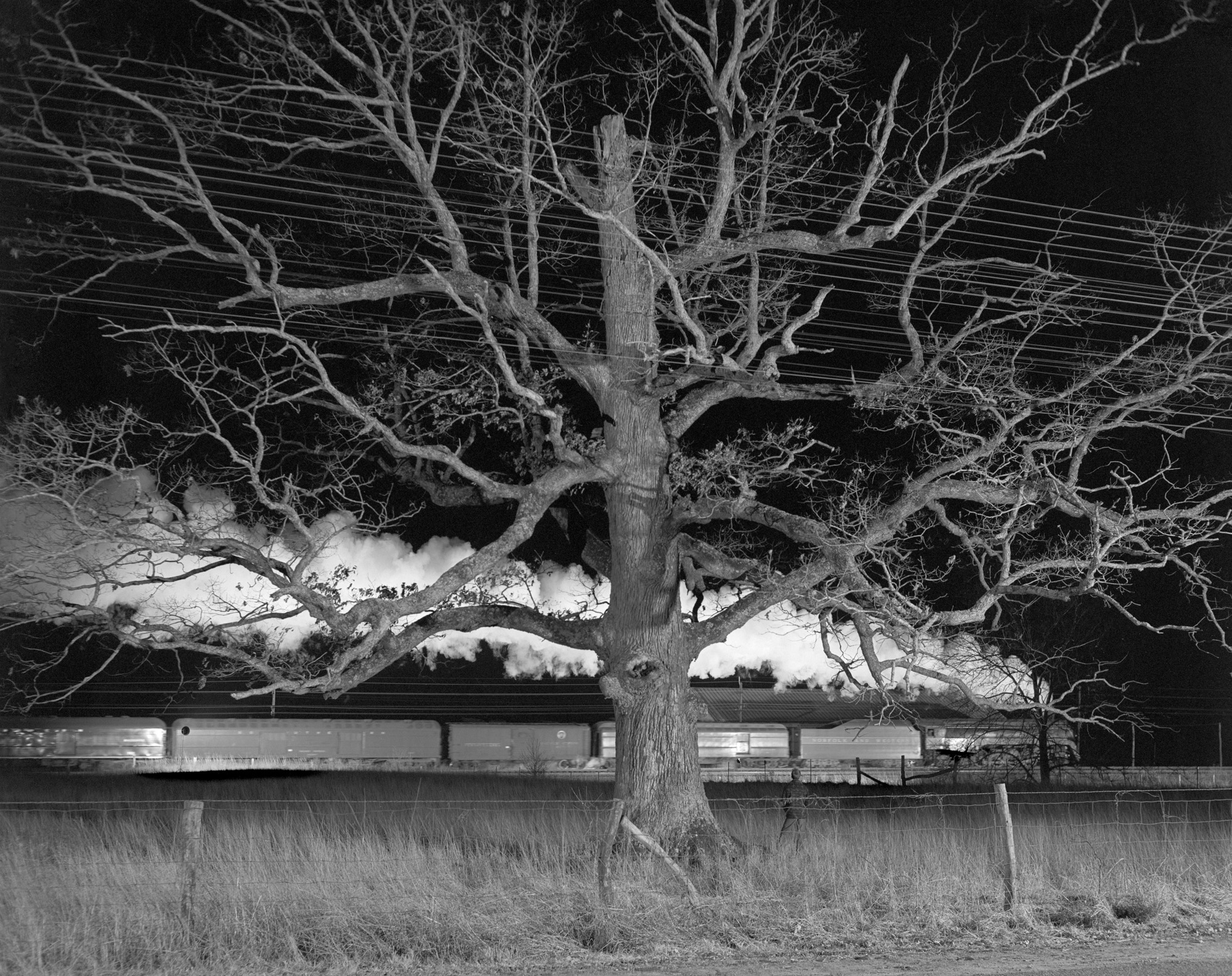
Link pasted the plane into the negative at a later stage


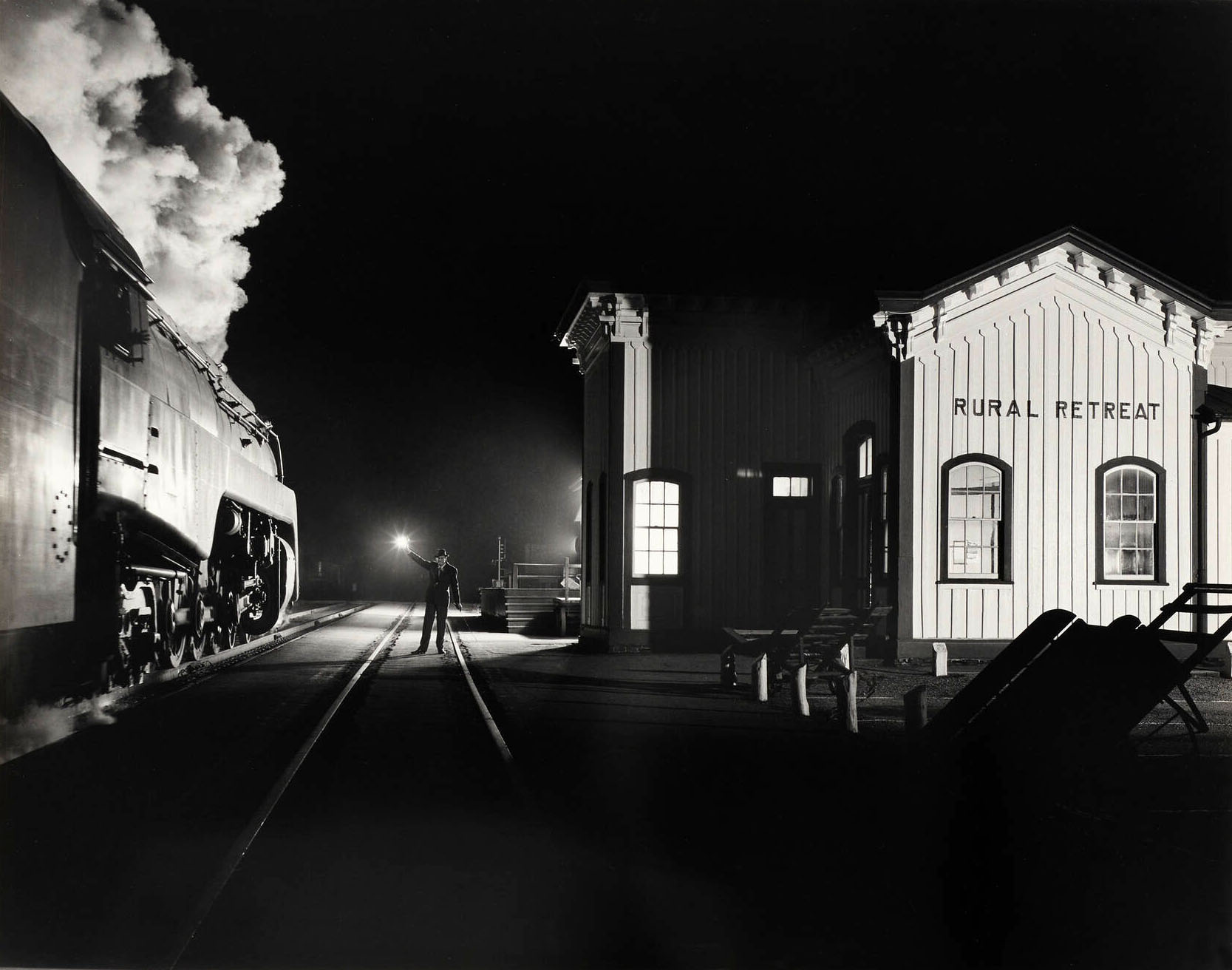
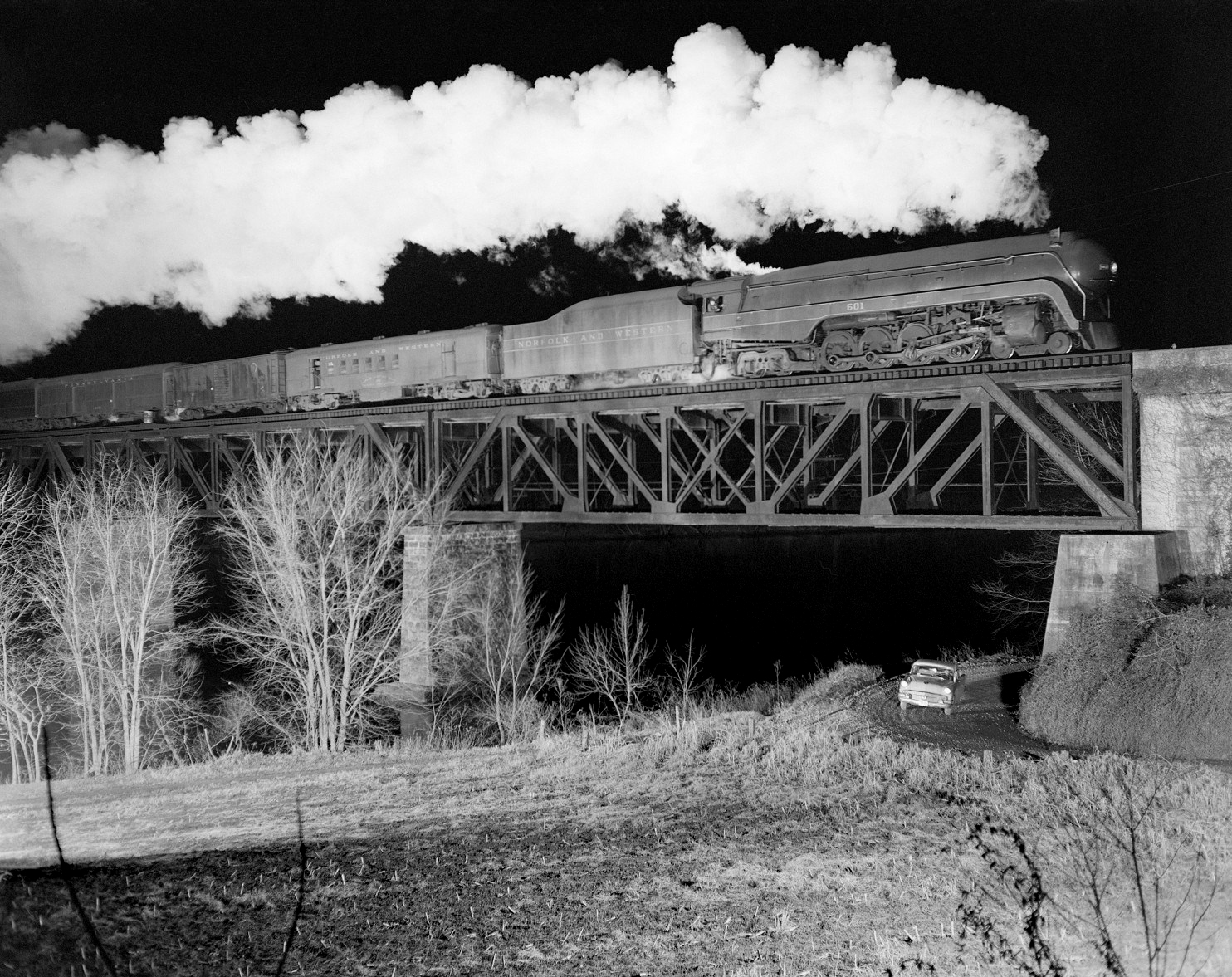
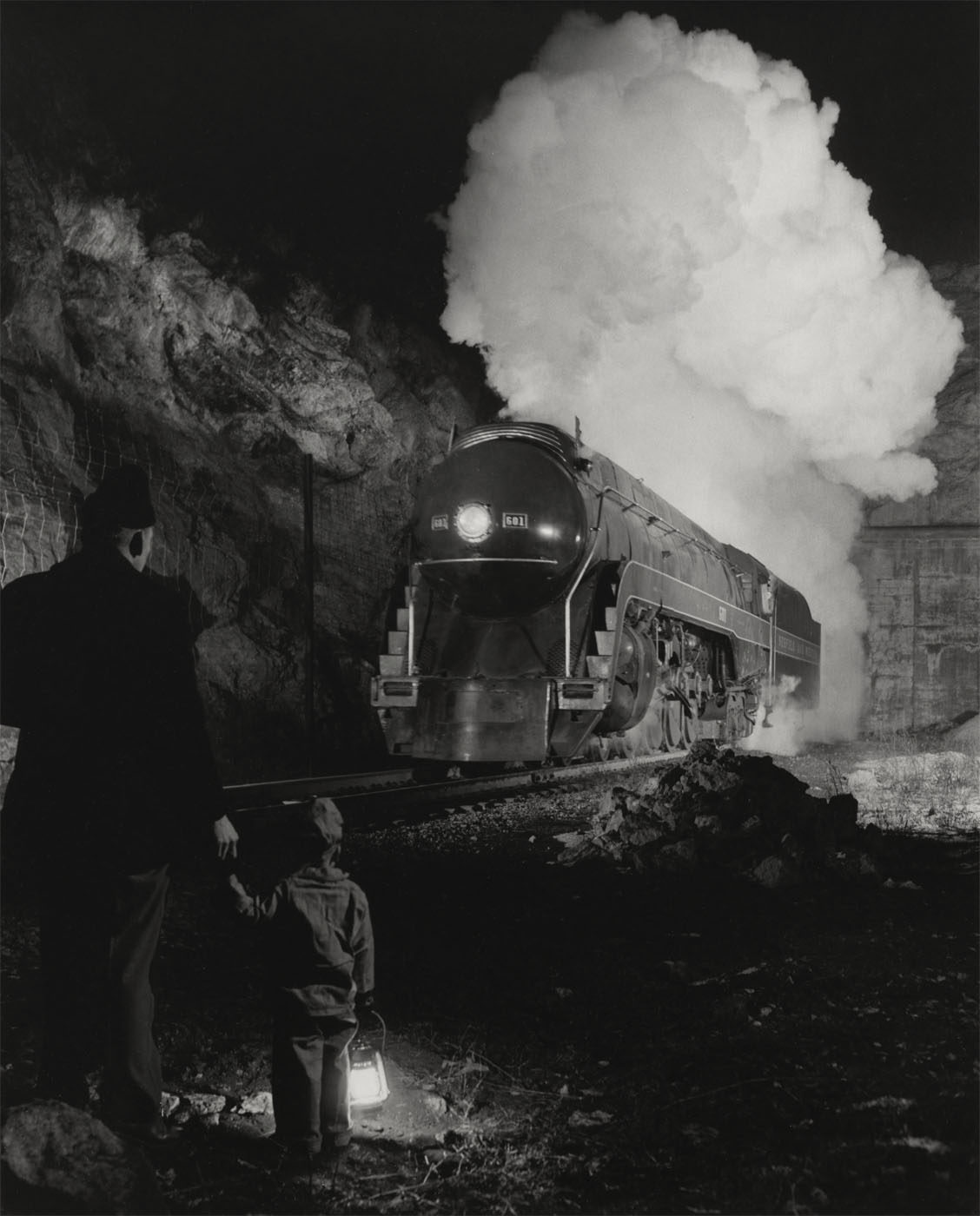
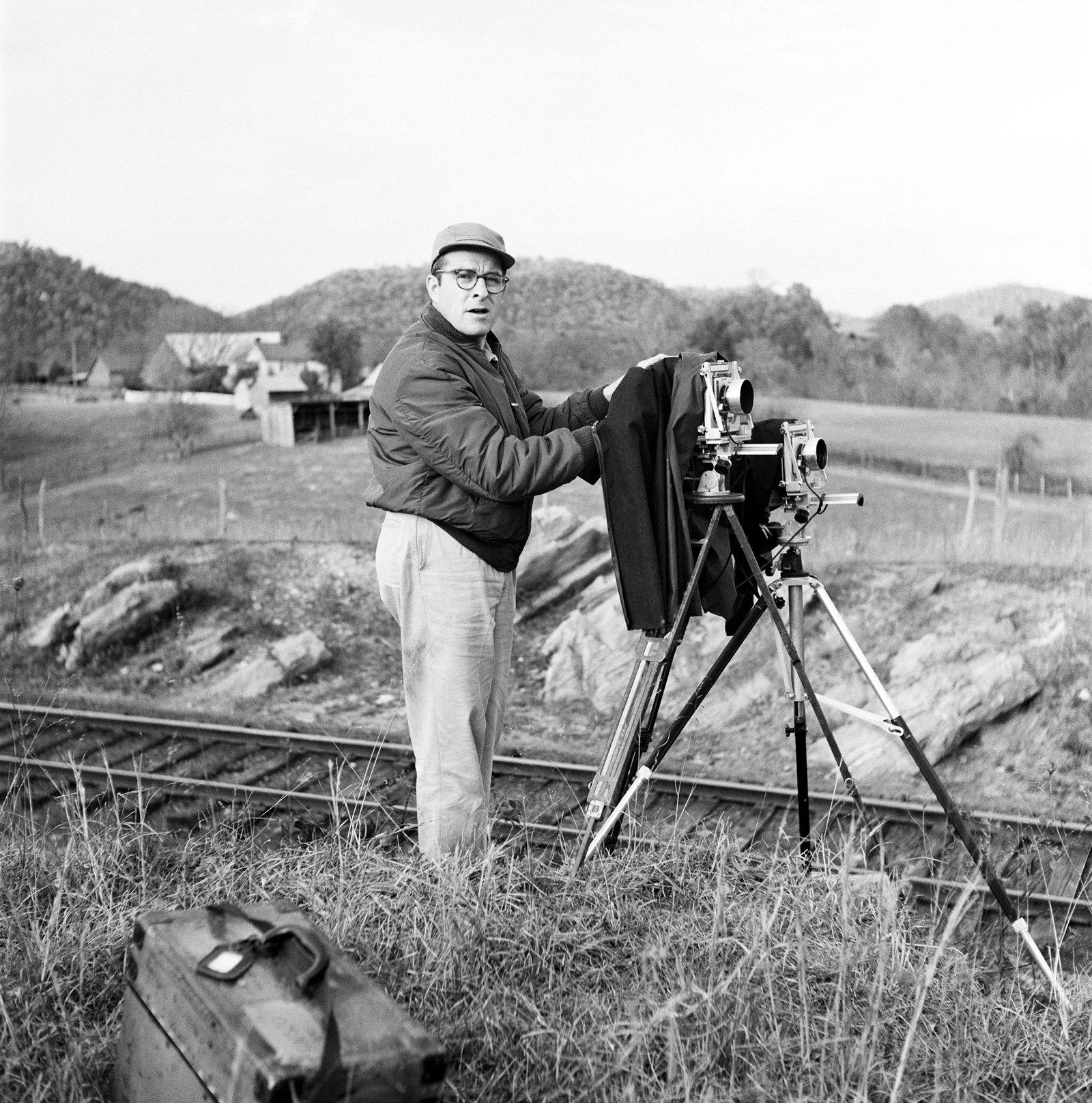
I have to admit to a very large amount of admiration for this photographer. He is brilliant, simply the best photographer of trains and their cultural surrounds that the world has ever seen. He persevered within his photographic projects through thick and thin. I feel a special affinity toward this man as I love trains, planes, ships and trucks (although I am yet to use trains in my work).

As with all great photographers he pursued his goals with passion, a unique eye and the ability to produce a ‘signature’ photograph that could only be his. His photographs are timeless remembrances of the history and culture of the era. The above image combines all the elements of 1950s America – the drive in, the couple, the speed, the convertible car, night and the ambiguous slightly sinister rocket like plane. Planes, trains and automobiles are the stuff of legend for me, a child of the 1950s. The lighting of the train is incredible, with rows of flash set off at just the right moment. The precision and skill to do this and the resulting tableaux have few equals. When I first saw this image I was amazed and still am today!

O. Winston Link had a deep respect for the people and machines he was photographing – capturing a vanishing world before it all but disappeared. Thank god there was someone with vision and foresight to accomplish this task so that these incredible and indelible images will forever transcend the time in which they were taken, to give joy to the people that look at them.

Dr Marcus Bunyan


Many thankx to the George Eastman Museum for allowing me to publish the photographs in the posting. Please click on the photographs for a larger version of the image.


O. Winston Link (American, 1914-2001) 'Maud Bows to the Virginia Creeper, Green Cove, Virginia, October 27, 1956' from the exhibition 'Steam and Steel: The Photographs of O. Winston Link' at George Eastman Museum, New York, Oct 2008 - Jan 2009


O. Winston Link (American, 1914-2001)
Maud Bows to the Virginia Creeper, Green Cove, Virginia, October 27, 1956
1956
Gelatin silver print
15 1/2 x 19 3/8 in. (39.37 x 49.21cm)
O. Winston Link/© Conway Link
Courtesy of the O. Winston Link Museum


The Abingdon Branch of the N&W led Link to another approach in his documentation of the railroad. Since the trains did not run at night, all of the images had to be made in daylight, making this branch the source of many of his genre scenes and colour images. The branch was short but steep, including the highest point of any passenger train in the east. With top speeds of 25 mph, it earned the nickname “Virginia Creeper.”

Link found the slow pace and setting the most bucolic of the entire N&W system. He wrote, “There was beauty at every curve and every bridge.” The line crept by cascading waterways and across high wooden trestles. Although the entire branch was abandoned in 1978, the railbed has since become a hiking trail, with Green Cove the only station remaining and restored to the look of this photograph.

Text from the Akron Art Museum website


O. Winston Link (American, 1914-2001) '"Giant Oak," Max Meadows, Va., Dec. 30, 1957' from the exhibition 'Steam and Steel: The Photographs of O. Winston Link' at George Eastman Museum, New York, Oct 2008 - Jan 2009


O. Winston Link (American, 1914-2001)
“Giant Oak,” Max Meadows, Va., Dec. 30, 1957
1957
Gelatin silver print
O. Winston Link/© Conway Link
Courtesy of the O. Winston Link Museum


Ogle Winston Link, known commonly as O. Winston Link, has been revered by many as the most important railroad photographer of all time. He is best known for his black-and-white photography and sound recordings of the last days of steam locomotive railroading in the United States in the late 1950s. A true American master, Link produced night-time photographs of the railroad over a five-year period that ended when the last steam locomotive of the Norfolk & Western Railway was taken out of service in May 1960.

This exhibition features more than 100 framed photographs as well as Link’s actual photographic and lighting equipment, plus his personal notebooks detailing set-ups, formulas, and exposure details.

Text from the George Eastman Museum website


O. Winston Link (American, 1914-2001) 'NW1635, The Birmingham Special, arriving at Rural Retreat, Va.' 1957


O. Winston Link (American, 1914-2001)
NW1635, The Birmingham Special, arriving at Rural Retreat, Va.
1957
Gelatin silver print
O. Winston Link/© Conway Link
Courtesy of the O. Winston Link Museum


O. Winston Link (American, 1914-2001) '"The Birmingham Special Crosses Bridge 201," near Radford, Va., Dec. 17, 1957'


O. Winston Link (American, 1914-2001)
“The Birmingham Special Crosses Bridge 201,” near Radford, Va., Dec. 17, 1957
1957
Gelatin silver print
O. Winston Link/© Conway Link
Courtesy of the O. Winston Link Museum


O. Winston Link (American, 1914-2001) '"Second Pigeon Creek Shifter and Icicles," near Gilbert, W.Va., March 16, 1960'


O. Winston Link (American, 1914-2001)
“Second Pigeon Creek Shifter and Icicles,” near Gilbert, W.Va., March 16, 1960
1960
Gelatin silver print
O. Winston Link/© Conway Link
Courtesy of the O. Winston Link Museum


O. Winston Link (American, 1914-2001) 'NW709 Train No. 3, The Pocahontas, Westbound Exiting Montgomery Tunnel, Christiansburg, Virginia' 1957


O. Winston Link (American, 1914-2001)
NW709 Train No. 3, The Pocahontas, Westbound Exiting Montgomery Tunnel, Christiansburg, Virginia
1957
Gelatin silver print
O. Winston Link/© Conway Link
Courtesy of the O. Winston Link Museum


Unknown photographer. '"Link Sets Up Two View Cameras at Bridge 8," Watauga, Va., Nov. 1, 1957'


Unknown photographer
“Link Sets Up Two View Cameras at Bridge 8,” Watauga, Va., Nov. 1, 1957
1957
Gelatin silver print
Thomas H. Garver/© Conway Link
Courtesy of the O. Winston Link Museum


George Eastman Museum
900 East Ave, Rochester, NY 14607, USA

Opening hours:
Wednesday – Saturday 10am – 5pm
Sunday 11am – 5pm
Closed Mondays and Tuesdays

O. Winston Link Museum

George Eastman House website

LIKE ART BLART ON FACEBOOK

Back to top

Exhibition: ‘Dialogue among Giants: Carleton Watkins and the Rise of Photography in California’ at the J. Paul Getty Museum, Los Angeles

Exhibition dates: 14th October, 2008 – 1st March, 2009


Unknown maker, American, Attributed to Carleton Watkins (American, 1829-1916) 'The Plaza, Lima, Peru' About 1852 from the exhibition 'Dialogue among Giants: Carleton Watkins and the Rise of Photography in California' at the J. Paul Getty Museum, Los Angeles, Oct 2008 - March 2009


Unknown maker, American, Attributed to Carleton Watkins (American, 1829-1916)
The Plaza, Lima, Peru
About 1852
Daguerreotype
Plate: 10.8 × 14cm (4 1/4 × 5 1/2 in.)
J. Paul Getty Museum Collection


Watkins could have made this study of the Lima Cathedral on his return to California from New York via South America in 1852.


Carleton Watkins was a master photographer, craftsman, technician and, above all, a refined artist. The structural cadences of his compositions, like the best music, are superb. Within his photographs he creates a visual dialogue that sustains pertinent inquiry by the viewer – the look! see! – that has lasted centuries, as all great art does. Today his photographs are as clearly seen, as incisive of mind, as when they were first produced. They delight.

From the documentary photographs of mining settlements to the images of Yosemite; from the stereographs of cities to the gardens of the rich and famous; from the photographs of untouched interior America to the images of the Monterey Peninsula Watkins photographs are sharply observed renditions of a reality placed before the lens of his giant plate camera.

Like all great artists his eye is unique. His use angle, height and placement of the camera is reinforced by his understanding of the balance of light and shade, the construction of planes within the image and the spatial relationships that could be achieved within the frame (at the same time we note that the artist Cezanne was also investigating the deconstruction of traditional landscape perspectives within the image frame). His work reminds me of the photographs of the great French photographer Eugene Atget: both men understood how best to place the camera to achieve the outcome they wanted so that the photographs became imprinted with their signature, images that nobody else could have taken. Today we recognise both men as masters of photography for this very fact. The images they took raise them above the rank and file photographer because of the care and understanding they took in the decisions they made in the exposure of the negative.

As a precursor to modernism in photography Watkins does not have peer at this time. His photographs preempt the 20th century modernist work of Paul Strand and Alfred Stieglitz, his Monterey and Yosemite photographs the work of Edward Weston and Ansel Adams, and in his Japanese influences the work of Minor White. Even today at the exhibition by Andreas Gursky at the National Gallery of Victoria, Melbourne there is a colour work of a body of water (see below: Rhein 1996) that closely reflects the structure of Watkins View on the Calloway Canal, near Poso Creek, Kern County 1887, even though the subject matter of Gursky’s image is a simulacra of an implied reality, whereas Watkins work “served as evidence in a water rights lawsuit that eventually resulted in a decisive court ruling that prevented newcomers from diverting water from existing landowners.”1

Watkins cadence as a sentient being will endure in the choices he made in the photographs he exposed. His tempo, his innate ability to place the camera, his understanding of the light and shade, texture, environment, depth of field and feeling make this artist one that all aspiring artists – no, all human beings – should study.

Dr Marcus Bunyan


1/ For more information about this image please see the J. Paul Getty Museum web page.


    Many thankx to the J. Paul Getty Museum for allowing me to publish the photographs in the posting. Please click on the photographs for a larger version of the image.


    Carleton Watkins (American, 1829-1916) (attributed) 'Placer Mining Scene' c. 1852-1855 from the exhibition 'Dialogue among Giants: Carleton Watkins and the Rise of Photography in California' at the J. Paul Getty Museum, Los Angeles, Oct 2008 - March 2009


    Carleton Watkins (American, 1829-1916) (attributed)
    Placer Mining Scene
    c. 1852-1855
    Half-plate daguerreotype
    4 x 5 in. (10.2 x 12.7cm)
    J. Paul Getty Museum Collection


    Watkins was persistently interested in the technical details of mining operations. Here a primitive Spanish ore mill is used to pulverise gold-bearing rock. Throughout his career Watkins earned income producing photographs that were used as sources for engraved illustrations, as this one was.

    Text from the J. Paul Getty Museum website


    Unknown maker, American, Attributed to Carleton Watkins (American, 1829-1916) 'Engineering Camp, Copiapo, Chile' about 1852-1855


    Unknown maker, American, Attributed to Carleton Watkins (American, 1829-1916)
    Engineering Camp, Copiapo, Chile
    About 1852-1855
    Daguerreotype
    Plate: 10.8 × 14cm (4 1/4 × 5 1/2 in.)
    J. Paul Getty Museum Collection


    In 1852 Watkins went to New York, then returned to California the following spring aboard the SS Michael Angelo, which was loaded with tons of supplies destined for mining camps on the Pacific Coast of the Americas. The vessel proceeded to the port of Caldera, Chile, where goods destined for the mines at Copiapó were unloaded. Miners and their various forms of shelter, such as the tent shown here in the landscape, were among Watkins’s favourite subjects.

    Text from the J. Paul Getty Museum website


    Carleton Watkins (American, 1829-1916), Robert H. Vance (American, 1825-1876) 'Street Scene in La Rancheria, California' 1853-1855


    Carleton Watkins (American, 1829-1916), Robert H. Vance (American, 1825-1876)
    Street Scene in La Rancheria, California
    1853-1855
    Daguerreotype, hand-coloured
    8.3 × 11.4cm (3 1/4 × 4 1/2 in.)
    J. Paul Getty Museum Collection


    The mining camp of La Rancherie was located near the fabled Sutter’s Mill in California, where gold was discovered in 1849. In the volatile gold-rush environment of prospectors, get-rich-quick dreams, and fly-by-night towns, an assembly of men in the foreground stood for the camera to immortalise their roles in the historical moment. La Rancherie stood out for its stability: it could boast a few buildings made of clapboard and some that were even painted. The illustrated hotel sign at upper left indicates a clientele that was not entirely literate and might rely on pictures to identify potential lodgings.

    Text from the J. Paul Getty Museum website


    Carleton Watkins (American, 1829-1916) '[Section Grizzly Giant, Mariposa Grove]' 1861


    Carleton Watkins (American, 1829-1916)
    [Section Grizzly Giant, Mariposa Grove]
    1861
    Albumen silver print
    43.2 × 52.1cm (17 × 20 1/2 in.)
    J. Paul Getty Museum Collection


    Galen Clark, the figure in this photograph, was designated as the guardian of the Mariposa Grove of giant sequoia about the time Abraham Lincoln ceded it to California in 1864. When this picture was made, Clark lived in a cabin (not pictured) nearby and maintained a rustic way station for visitors traveling to Yosemite Valley via the Mariposa Trail, which was developed in 1859.

    Text from the J. Paul Getty Museum website


    Carleton Watkins (American, 1829-1916) 'Yosemite Valley from the Best General View No.2.' 1866


    Carleton Watkins (American, 1829-1916)
    Yosemite Valley from the Best General View No.2
    1866
    Albumen silver print
    41 x 52.2cm (16 1/8 x 20 9/16 in.)
    J. Paul Getty Museum Collection


    Carleton Watkins had the ability to photograph a subject from the viewpoint that allowed the most information to be revealed about its contents. In this image, he captured what he considered the best features of Yosemite Valley: Bridalveil Falls, Cathedral Rock, Half Dome, and El Capitan. By positioning the camera so that the base of the slender tree appears to grow from the bottom edge of the picture, Watkins composed the photograph so that the canyon rim and the open space beyond it seem to intersect. Although he sacrificed the top of the tree, he was able to place the miniaturised Yosemite Falls at the visual centre of the picture. To alleviate the monotony of an empty sky, he added the clouds from a second negative. This image was taken while Watkins was working for the California Geological Survey. His two thousand pounds of equipment for the expedition, which included enough glass for over a hundred negatives, required a train of six mules.

    Text from the J. Paul Getty Museum website


    Carleton Watkins (American, 1829-1916) 'Further Up the Valley. The Three Brothers, the highest, 3,830 ft.' 1866


    Carleton Watkins (American, 1829-1916)
    Further Up the Valley. The Three Brothers, the highest, 3,830 ft.
    1866
    Albumen silver print
    39.2 × 53.5cm (15 7/16 × 21 1/16 in.)
    J. Paul Getty Museum Collection


    In 1850, at the age of 20, Carleton Watkins is believed to have arrived in California from New York via South America. He embarked on a life in photography that began auspiciously during the gold rush (which started in 1849) and ended abruptly with the 1906 San Francisco earthquake and fire that destroyed his negatives. In between those historic moments, Watkins witnessed an era in which a recurring theme was the enormity of all things in the West. He photographed the expansive western landscape with its miles of coastline, vast natural resources, colossal trees, and the monoliths of the Yosemite Valley using an oversize mammoth-plate camera.

    In the 1860s Watkins’s Yosemite photographs brought him fame from as far away as Paris, but a decade later he experienced a painful financial reversal. In the end, he died a pauper in 1916 after a life that brought him into dialogue with the many “giants” of his era. The photographs he left behind provide a unique personal vision of the birth and growth of California.

    Mining Scenes and Daguerreotypes

    After arriving in Sacramento in 1850, Watkins worked delivering supplies to the mines during the gold rush. As he traveled throughout the region, he applied his new photography skills by making daguerreotypes (an early photographic technique using silver-coated, polished copper plates). In 1852, he is believed to have taken up photography full time, making daguerreotypes as a freelance “outdoor man” for established studios in Sacramento, Marysville, and San Francisco.

    Among the most important photographs created in California before about 1855 are more than 100 daguerreotypes of buildings and landscapes, the majority of which have not been attributed. Many represent the San Francisco Bay Area and the mother lode regions northeast of Sacramento, where Watkins lived from 1850 to 1853 – a fact that geographically positions him in the right place at the right time to have been their maker. This exhibition compares select daguerreotypes by unknown makers with securely identified photographs by Watkins. On the basis of style and other circumstantial evidence, it is possible that Watkins may have made many of the daguerreotypes.

    Yosemite

    Watkins first visited Yosemite Valley in the late 1850s and then returned to Yosemite several times in the 1860s and 1870s with a new mammoth-plate camera designed to expose collodion-on-glass negatives that were 18-by-22 inches in size. With this equipment, he created the pictures that soon brought him international fame.

    Watkins was not the only photographer who made images of Yosemite. Charles L. Weed and Eadweard Muybridge both followed Watkins into Yosemite, and the photographers often re-created one another’s views. This exhibition explores the visual dialogue in Yosemite between Watkins, Weed, Muybridge, and the unidentified camera operator for Thomas Houseworth and Company, who may have actually been Watkins.

    Pacific Coast

    Watkins was best known for his photographs of Yosemite, but he also took his camera to the silver mines of Nevada and Arizona, and up and down the Pacific coast. Throughout his career he applied his understanding of the elements of landscape as art. His early work with mining subjects proved to be excellent training for his eventual vision of landscape as a powerful counterbalance to the fragility of human existence. He harnessed the elements of visual form – line, shape, mass, outline, perspective, viewpoint, and light – to enliven often static motifs in nature.

    Watkins photographed the Monterey Peninsula in the 1880s, recording the scenery in a continuously unfolding progression along Seventeen-Mile Drive, which began and ended at the Hotel Del Monte. Near the hotel, Watkins created this image of a native cypress – windblown and with its roots exposed – clinging to the side of a rocky cliff. Many distinguished photographers, among them Edward Weston and Ansel Adams, followed Watkins over the years along this same stretch of coast, photographing similar subjects.

    Anonymous. “Dialogue among Giants: Carleton Watkins and the Rise of Photography in California,” on the J. Paul Getty Museum website 2008 [Online] Cited 09/06/2022


    Carleton Watkins (American, 1829-1916) 'Cape Horn, Columbia River, Oregon' Negative 1867; print about 1881-1883


    Carleton Watkins (American, 1829-1916)
    Cape Horn, Columbia River, Oregon
    Negative 1867; print about 1881-1883
    Albumen silver print
    40.5 × 52.3cm (15 15/16 × 20 9/16 in.)
    J. Paul Getty Museum Collection


    In 1867 Carleton Watkins made an expedition to Oregon to obtain photographs of its geology, including the chain of extinct volcanic mountains that cap the coastal range. This view was made from the Washington side of the Columbia River. Even the evidence of a solitary boatman and his cargo does not disturb the landscape’s profound serenity, nor does his presence reveal the fact that cultivated farmland and an apple orchard existed nearby. Watkins’s image nonetheless portrays a man facing nature at its most grand and overwhelming. The man’s boat appears ready to launch into the still, glassy river, an act that will make an indelible imprint on the water’s pristine, boundless surface.

    Text from the J. Paul Getty Museum website


    Carleton Watkins (American, 1829-1916) '[Sugarloaf Islands at Fisherman's Bay, Farallon Islands]' About 1869


    Carleton Watkins (American, 1829-1916)
    [Sugarloaf Islands at Fisherman’s Bay, Farallon Islands]
    About 1869
    Albumen silver print
    41 × 54.3cm (16 1/8 × 21 3/8 in.)
    J. Paul Getty Museum Collection


    Craggy rocks rise from a swirling, misty sea. Two seagulls punctuate the foreground, giving the scene a sense of scale. The uninhabited Sugarloaf Islands, part of the Farallon Island group, are located just north of San Francisco in the Pacific Ocean; in this photograph, they loom in the surf offshore like mysterious, petrified sea creatures. The length of the exposure softened the waves’ swirl into mist, adding to the impression of ancient, craggy mountaintops breaking through vaporous clouds.

    Carleton Watkins frequently photographed the Farallon Islands. This particular area, the Gulf of the Farallones National Marine Sanctuary, includes 1,235 square miles of nearshore and offshore waters ranging from wetlands to deep-sea communities.

    Text from the J. Paul Getty Museum website


    Carleton Watkins (American, 1829-1916) 'View on Lake Tahoe' 1877


    Carleton Watkins (American, 1829-1916)
    View on Lake Tahoe
    1877
    Albumen silver print
    40.3 × 52.7cm (15 7/8 × 20 3/4 in.)
    J. Paul Getty Museum Collection


    Standing between two sets of rails, Carleton Watkins photographed a busy pair of tracks above Carson Valley, Nevada. His shadow and that of his mammoth-plate camera indicate his precarious position on the steep grade in the foreground. A single engineer stands near the empty track curving around a mountain on the left, having already observed the train that heads away from the trestle on the right. Beneath these tracks, another steam engine pulling lumber on multiple flatbed cars makes its way around a sharp curve. The wood carried by these trains was an essential material for building the railroad and for operating steam engines. Lumber served as ties beneath the iron rails, telegraph poles lining the route, and fuel for wood-burning steam engines.

    Text from the J. Paul Getty Museum website


    Carleton Watkins (American, 1829-1916) 'Agassiz Rock and the Yosemite Falls, from Union Point' about 1878


    Carleton Watkins (American, 1829-1916)
    Agassiz Rock and the Yosemite Falls, from Union Point
    about 1878
    Albumen silver print
    54.4 × 39.2cm (21 7/16 × 15 7/16 in.)
    J. Paul Getty Museum Collection


    Carleton Watkins (American, 1829-1916) '[Thompson's Seedless Grapes]' 1880


    Carleton Watkins (American, 1829-1916)
    [Thompson’s Seedless Grapes]
    1880
    Albumen silver print
    37.6 × 55.7cm (14 13/16 × 21 15/16 in.)
    J. Paul Getty Museum Collection


    In this image celebrating Kern County’s agricultural bounty, Carleton Watkins clearly defined each fresh grape, tooth-edged leaf, and woody twig. Real estate developers successfully used photographs of lush fields, ripe produce, and plentiful harvests as a means of advertising to boost Southern California’s economy. The grape bunches hanging from the tendrils of this vine represent the earliest cultivation of seedless grapes.

    Text from the J. Paul Getty Museum website


    Carleton Watkins (American, 1829-1916) "The Dalles, Extremes of High & Low Water, 92 ft" 1883


    Carleton Watkins (American, 1829-1916)
    The Dalles, Extremes of High & Low Water, 92 ft
    1883
    Albumen silver print
    J. Paul Getty Museum Collection


    At twenty, Carleton Watkins headed out to California to make his fortune. After working as a daguerreotype operator in San Jose, he established his own practice and soon made his first visit to the Yosemite Valley. There he made thirty mammoth plate and one hundred stereograph views that were among the first photographs of Yosemite seen in the East. Partly on the strength of Watkins’s photographs, President Abraham Lincoln signed the 1864 bill that declared the valley inviolable, thus paving the way for the National Parks system.

    In 1865 Watkins became official photographer for the California State Geological Survey. He opened his own Yosemite Art Gallery in San Francisco two years later. The walls were lined with 18 x 22-inch prints in black walnut frames with gilt-edged mats. Such elegant presentation did not come cheap, and Watkins was accused of charging exorbitant prices. A poor businessman, he declared bankruptcy in 1874 and his negatives and gallery were sold to photographer Isaiah Taber, who began to publish Watkins’s images under his own name. Watkins, however, continued to photograph, and seven years later became manager of the Yosemite Art Gallery, then under different ownership. The San Francisco earthquake and fire of 1906 destroyed the contents of his studio, which he had intended to preserve at Stanford University.

    Text from the J. Paul Getty Museum website


    Eugène Atget (French, 1857-1927) 'Saint Cloud' 1904


    Eugène Atget (French, 1857-1927)
    Saint Cloud
    1904
    Albumen silver print


    Carleton Watkins (American, 1829-1916) 'Cypress Tree at Point Lobos, Monterey County' 1883-1885


    Carleton Watkins (American, 1829-1916)
    Cypress Tree at Point Lobos, Monterey County
    1883-1885
    Albumen silver print
    J. Paul Getty Museum Collection


    Carleton Watkins (American, 1829-1916) 'View on the Calloway Canal, near Poso Creek, Kern County' 1887


    Carleton Watkins (American, 1829-1916)
    View on the Calloway Canal, near Poso Creek, Kern County
    1887
    Albumen silver print
    37.5 x 53cm (14 3/4 x 20 7/8 in.)
    J. Paul Getty Museum Collection


    The first photographs Watkins made along the Kern River served as evidence in a water rights lawsuit that eventually resulted in a decisive court ruling that prevented newcomers from diverting water from existing landowners. James Ben Ali Haggin, the defendant and Watkins’s client, had a series of irrigation canals that raised the price of land in Kern County. In this spare composition, made where present-day Poso Road crosses the Calloway Canal, Watkins devoted almost equal proportions to sky, land, and water.

    Text from the J. Paul Getty Museum website


    Andreas Gursky (German, b. 1955)
'Rhein II' 1996


    Andreas Gursky (German, b. 1955)
    Rhein II
    1996


    The J. Paul Getty Museum
    1200 Getty Center Drive
    Los Angeles, California 90049

    Opening hours:
    Daily 10am – 5.30pm
    Monday closed

    The J. Paul Getty Museum website

    LIKE ART BLART ON FACEBOOK

    Back to top

    Exhibition: ‘The Photographs of Homer Page: The Guggenheim Year, New York, 1949-50’ at The Nelson-Atkins Museum of Art, Kansas City

    Exhibition dates: 14th February – 7th June, 2009


    Homer Page (American, 1918-1985) 'New York, August 11, 1949 (girl and coal chute)' 1949 from the exhibition 'The Photographs of Homer Page: The Guggenheim Year, New York, 1949-50' at The Nelson-Atkins Museum of Art, Kansas City, Feb - June, 2009


    Homer Page (American, 1918-1985)
    New York, August 11, 1949 (girl and coal chute)
    1949
    Gelatin silver print


    A brilliant but under appreciated American photographer, Homer Page used a Guggenheim fellowship in 1949-1950 to photograph New York City. Included in the 2006 Hallmark Photographic Collection gift to the Nelson-Atkins were some 100 of his vintage black-and-white prints. The Museum is thus in a unique position to celebrate his remarkable artistic achievement: his vision, at once gritty and lyrical, of the face of metropolitan America at mid-century. In recording the city so intently, Page had a larger goal in mind: to suggest nothing less than the emotional tenor of life at that time and place.

    From an artistic standpoint, Page’s work represents a “missing link” between the warm, humanistic, and socially motivated documentary photographs of the 1930s and early 1940s in the works of Dorothea Lange, and the tougher, grittier and more existential work of the later 1950s as seen in the images of Robert Frank.

    Text from The Nelson-Aitkens Museum of Art website


    Many thankx to The Nelson-Atkins Museum of Art for allowing me to publish the photographs in the posting. Please click on the photographs for a larger version of the image.


    Homer Page (American, 1918-1985) 'The El at 86th, New York' 1949-1950 from the exhibition 'The Photographs of Homer Page: The Guggenheim Year, New York, 1949-50' at The Nelson-Atkins Museum of Art, Kansas City, Feb - June, 2009


    Homer Page (American, 1918-1985)
    The El at 86th, New York
    1949-1950
    Gelatin silver print


    Homer Page (American, 1918-1985) 'New York (boys and manikin)' 1949


    Homer Page (American, 1918-1985)
    New York (boys and manikin)
    1949
    Gelatin silver print
    Gift of Hallmark Cards, Inc.,


    Homer Page (American, 1918-1985) 'New York City' 1949


    Homer Page (American, 1918-1985)
    New York City
    1949
    Gelatin silver print


    Homer Page (American, 1918-1985) 'New York, June 19, 1949' 1949


    Homer Page (American, 1918-1985)
    New York, June 19, 1949
    1949
    Gelatin silver print


    “Page captured both the facts and the feeling of life in post-war New York: commuters in transit to and from their offices, the signs of commercial and consumer culture, leisure pursuits and night life, psychological vignettes of the lonely and dispossessed. His work provides a rich and original vision of 1949 America.

    Page was devoted to the visible facts of his world, but his real goal was something much deeper: the emotional tenor of life at that time and that place. This is a body of work of great passion, intelligence, and artistic integrity – one that is all the more important for having remained essentially unknown to the present day,” Davis (former Hallmark Fine Art Programs Director) said.

    Text from the ArtDaily.org website


    Homer Page (American, 1918-1985) 'New York City' 1949


    Homer Page (American, 1918-1985)
    New York City
    1949
    Gelatin silver print


    Homer Page (American, 1918-1985) 'New York City' 1949


    Homer Page (American, 1918-1985)
    New York City
    1949
    Gelatin silver print


    Homer Page (American, 1918-1985) 'New York City' 1949


    Homer Page (American, 1918-1985)
    New York City
    1949
    Gelatin silver print


    Homer Page (American, 1918-1985) 'New York City' 1949


    Homer Page (American, 1918-1985)
    New York City
    1949
    Gelatin silver print


    Homer Page (American, 1918-1985) 'New York City' 1949


    Homer Page (American, 1918-1985)
    New York City
    1949
    Gelatin silver print


    Homer Page (American, 1918-1985) 'New York City' 1949


    Homer Page (American, 1918-1985)
    New York City
    1949
    Gelatin silver print


    Homer Page (American, 1918-1985) 'New York City' 1949


    Homer Page (American, 1918-1985)
    New York City
    1949
    Gelatin silver print


    Homer Page (American, 1918-1985) 'New York City' 1949


    Homer Page (American, 1918-1985)
    New York City
    1949
    Gelatin silver print


    Homer Page (American, 1918-1985 'New York City' 1949


    Homer Page (American, 1918-1985)
    New York City
    1949
    Gelatin silver print


    Homer Page (American, 1918-1985) 'New York City' 1949


    Homer Page (American, 1918-1985)
    New York City
    1949
    Gelatin silver print


    Homer Page (American, 1918-1985) 'New York City' 1949


    Homer Page (American, 1918-1985)
    New York City
    1949
    Gelatin silver print


    Homer Page (American, 1918-1985) 'New York, June 16, 1949' 1949


    Homer Page (American, 1918-1985)
    New York, June 16, 1949
    1949
    Gelatin silver print


    The Nelson-Atkins Museum of Art
    4525 Oak Street
    Kansas City, MO 64111
    Phone: 816-751-1278

    Opening hours:
    Monday: 10am – 5pm
    Thursday: 10am – 5pm
    Friday: 10am – 9pm
    Saturday: 10am – 5pm
    Sunday: 10am – 5pm
    Tuesday – Wednesday: CLOSED

    The Nelson-Atkins Museum of Art website

    LIKE ART BLART ON FACEBOOK

    Back to top