Victor Plumier (Belgian, 1820-1878) Lady in Costume About 1850 Daguerreotype, half plate 5 1/2 × 4 1/2 inches The Nelson-Atkins Museum of Art Gift of the Hall Family Foundation
Past present
Magnificent photographs that bring past presence into present consciousness.
Costume. variedly, the term “costume,” indicating clothing exclusively from the eighteenth century onward, can be traced back to the Latin consuetudo, meaning “custom” or “usage.”
Gesture. late Middle English: from medieval Latin gestura, from Latin gerere ‘bear, wield, perform’. The original sense was ‘bearing, deportment’, hence ‘the use of posture and bodily movements for effect in oratory’.
Expression. the action of making known one’s thoughts or feelings. a look on someone’s face that conveys a particular emotion. late Middle English: from Latin expressio(n- ), from exprimere ‘press out, express’.
The emotions and the sentiments, the gestures and the expressions.
The actor and the stage, the photographer and the sitter.
The staged photograph and the tableaux vivant.
The Self and the Other.
Today, something happens when we look at these photographs. Today, the social spaces, gestures and expressions in these photographs are not fixed, monological re-presentations or presences. Our experience of the photographs enables them to be seen as nodes within a network caught up in a system of social and cultural references, whose unity is variable and relative.1
Thus,
” …in my reading (of the photograph), I relied upon a number of semiological systems, each one being a social / cultural construct: the sign language of clothes, of facial expressions, of bodily gestures, of social manner, etc. Such semiological systems do indeed exist and are continually being used in the making and reading of images. Nevertheless the sum total of these systems cannot exhaust, does not begin to cover, all that can be read in appearances.”2
The intertextuality of images.
Dr Marcus Bunyan
1/ Roland Barthes. “From Work to Text” and Michel Foucault. The Order of Things: An Archeology of the Human Sciences in Kurt Thumlert. Intervisuality, Visual Culture, and Education. [Online] Cited 10/08/2006. No longer available online
2/ John Berger and Jean Mohr. Another Way of Telling. New York: Pantheon Books, 1982, p. 112
Many thankx to the Nelson-Atkins Museum for allowing me to publish the photographs in the posting. Please click on the photographs for a larger version of the image.
“There is no perfection, no infinite completeness. But always, there is a way to move toward being whole. The capital letter, the Self is a wholeness that does not and will never exist. It is a direction that I move toward no matter the meanders of my feet.”
Kendrick VanZant
Camille Dolard (French, 1810-1884) Self-portrait as ailing man c. 1843-1845 Daguerreotype Plate (whole): 8 1/2 × 6 1/2 inches (21.59 × 16.51cm) Mat: 10 3/8 × 8 3/8 inches (26.37 × 21.29cm) The Nelson-Atkins Museum of Art Gift of the Hall Family Foundation
French painter Camille Dolard briefly embraced photography in the 1840s as an innovative creative tool. This daguerreotype, and the one in the next case, are from a group of three theatrical self-portraits created by Dolard in his studio. Here, the artist performs for the camera, posing with props and costumes as a patient in the care of his attentive wife. In the other plate, he uses a similarly theatrical approach, depicting himself smoking a hookah (a water pipe used to smoke tobacco) while lounging on a patterned rug.
Text from the Nelson-Atkins Museum website
Jean-Pierre Thierry (French, 1810-1870) Two ladies reading a letter c. 1845 Daguerreotype Plate (quarter): 4 1/4 × 3 1/4 inches (10.8 × 8.26 cm) Mat: 6 1/16 × 5 1/8 inches (15.39 × 13.03 cm) The Nelson-Atkins Museum of Art Gift of the Hall Family Foundation
Philibert Perraud (French, 1815 – after 1863) Deux femmes se recueillent sur la tombe d’une etre cher … (Two women at the grave of a loved one) c. 1845 Daguerreotype Plate (quarter): 4 1/4 × 3 1/4 inches (10.8 × 8.26cm) Mount: 5 1/8 × 4 1/8 inches (13.02 × 10.48cm) The Nelson-Atkins Museum of Art Gift of the Hall Family Foundation
Unknown photographer Actor in Costume c. 1850 Daguerreotype Plate (three-quarter): 6 × 4 1/2 inches (15.24 × 11.43 cm) Case (open): 8 1/8 × 13 1/4 × 3/8 inches (20.64 × 33.66 × 0.95 cm) Case (closed): 8 1/8 × 6 5/8 × 5/8 inches (20.64 × 16.83 × 1.59 cm) The Nelson-Atkins Museum of Art Gift of the Hall Family Foundation
Though the pose and expression in this photograph are stiff, the extensive hand-colouring enlivens the portrait, drawing attention to the fine details in the actor’s costume. Sitting for a daguerreotype portrait in the 1850s required patience and a certain degree of stamina. Photographic exposure times – which varied according to plate sensitivity and studio lighting – typically ranged from three to 30 seconds. Studio props, such as chairs and head braces, were used to help sitters remain as motionless as possible for the duration of the exposure.
Text from the Nelson-Atkins Museum website
Giacomo Caneva (Italian, 1813-1865) Two Pifferari c. 1850s Salt print Image: 8 3/8 × 5 11/16 inches (21.27 × 14.45cm) Sheet: 11 3/16 × 5 11/16 inches (28.42 × 14.45cm) The Nelson-Atkins Museum of Art Gift of the Hall Family Foundation
Nothing summed up picturesque modern Italy as well as the Pifferari; described by Hector Berlioz (1803-1869) in 1832: ‘These are strolling musicians who, towards Christmas, come down from the mountains in groups of four or five, armed with bagpipes and ‘pifferi’ (a sort of oboe), to play in homage before statues of the Madonna. They are generally dressed in large brown woollen coats and the pointed hats that brigands sport, and their whole appearance is instinct with a kind of mystic savagery that is most striking’. He admits that close to the music is ‘overpoweringly loud, but at a certain distance the effect of this strange ensemble of instruments is haunting and few are unmoved by it’.
José Maria Blanco (Spanish, active c. 1850) Man with mandolin 1851 Daguerreotype Plate (quarter): 4 × 3 1/4 inches (10.16 × 8.26cm) Mat: 5 5/8 × 4 7/8 inches (14.29 × 12.38cm) The Nelson-Atkins Museum of Art Gift of the Hall Family Foundation
Julien Vallou de Villeneuve (French, 1795-1866) Portrait of Edouard Brindeau 1853 Salt print 6 1/4 × 4 5/8 inches The Nelson-Atkins Museum of Art Gift of the Hall Family Foundation
Julien Vallou de Villeneuve (French, 1795-1866) Portrait of Jean-Baptiste Provost, in the role of the emperor Claude in the play Valeria 1853 Portraits of Actors from the Comédie Française Salt print Image and sheet: 6 7/16 × 4 1/8 inches (16.35 × 10.48cm) The Nelson-Atkins Museum of Art Gift of the Hall Family Foundation
Charles Nègre (French, 1820-1880) Two Small Savoyards c. 1853 Albumen print Image and sheet: 7 × 5 3/16 inches (17.78 × 13.12cm) Mount: 17 × 15 inches (43.18 × 38.1cm) The Nelson-Atkins Museum of Art Gift of the Hall Family Foundation
Charles Nègre refers to the threadbare young men in this photograph as “Savoyards” (originating from the Savoy region of France). Impoverished, migrant Savoyards have appeared in European art since the 1700s, and Nègre’s title could be shorthand for a certain type of person seen in the streets of Paris, regardless of the two boys’ actual place of origin. A painter and a photographer, Nègre practiced the two mediums side-by-side. Like other artists of his time, he ascribed nobility to the poor, seeking to convey their “truth, warmth, and life.”
Text from the Nelson-Atkins Museum website
Alban-Adrien Tournachon (French , 1825-1903) and Nadar [Gaspard Félix Tournachon] (French, 1820-1910) Pierrot Yawning 1854 Salt print 11 1/4 × 8 1/2 inches The Nelson-Atkins Museum of Art Gift of the Hall Family Foundation
Auguste Belloc (French, 1805 -1873) Une étude de nu de deux femmes c. 1855 Salt print Image and sheet: 8 5/16 × 6 1/8 inches (21.11 × 15.56cm) The Nelson-Atkins Museum of Art Gift of the Hall Family Foundation
A masterful printer, Auguste Belloc created nudes that surpassed the typical erotic fare found in Parisian markets. In this scene, Belloc strategically positions the models and surrounding drapery to make the photograph appear more artistic than pornographic. Though nude paintings, drawings, and sculptures were immensely common, at this time photography was treated far more harshly by censors. In October 1860, the French government seized some 5,000 of Belloc’s photographs, declaring them obscene, and by 1868 he had abandoned his photographic studio.
Text from the Nelson-Atkins Museum website
Guillaume-Benjamin-Amand Duchenne de Boulogne (French, 1806-1875) and Alban-Adrien Tournachon (French, 1825-1903) The Muscles of Weeping and Whimpering About 1855-1857 Albumen print 9 1/16 × 6 15/16 inches The Nelson-Atkins Museum of Art Gift of the Hall Family Foundation
Facial expressions and their corresponding emotions have been studied by artists for centuries. In the 1850s, Dr. Guillaume-Benjamin-Amand Duchenne de Boulogne used photography to document the facial expressions produced by localised electric shock. Working in partnership with photographer Adrien Alban Tournachon, Duchenne felt these photographs truthfully recorded his experiments and that “none shall doubt the facts presented here.” Praising photography for its accurate rendering of the subject’s deep wrinkles, he wrote, “the distribution of light is in perfect harmony with the passions represented by these expressive lines. Thus, the face depicting the dark, concentric passions – aggression, wickedness, suffering, pain, dread, torture mixed with fear – gain an uncommon amount of energy.”
Text from the Nelson-Atkins Museum website
Guillaume-Benjamin-Amand Duchenne de Boulogne (French, 1806-1875) and Alban-Adrien Tournachon (French, 1825-1903) The Muscle of Pain c. 1854-1857 Figure 27, plate 63 from The Mechanism of Human Facial Expression Albumen print Image and sheet: 9 1/16 × 6 5/8 inches (23.01 × 16.84cm) Mount: 16 1/16 × 10 13/16 inches (40.79 × 27.51cm) The Nelson-Atkins Museum of Art Gift of the Hall Family Foundation
In this uncanny double portrait, the physiologist Dr. Guillaume-Benjamin-Amand Duchenne de Boulogne holds a mechanical device to the face of a 52-year-old, Italian-born woman believed to have been institutionalised in a Parisian asylum. Duchenne asserted that localised electric shock could force facial muscles to “contract to speak the language of the emotions and the sentiments.” “Armed with electrodes,” he wrote, “one would be able, like nature herself, to paint the expressive lines of the emotions of the soul on the face of man.”
Text from the Nelson-Atkins Museum website
Roger Fenton (English, 1819-1869) Self-portrait as a Zouave 1855 Salt print: Image and sheet: 7 13/16 × 6 7/16 inches (19.84 × 16.35cm) Mount: 22 1/8 × 16 1/8 inches (56.2 × 40.96cm) The Nelson-Atkins Museum of Art Gift of the Hall Family Foundation
Cocking a rifle and smoking a pipe, with alcohol by his side, Roger Fenton poses for his camera with bravado. Wearing the distinctive baggy uniform of a Zouave (skilled infantry soldiers from the French army in Algeria), Fenton fashions himself as a hardened, glowering soldier, though he never fought in any war. Fenton did, however, photograph the Crimean War (1853-1856) from a great distance. The war brought together an alliance of soldiers from England, Croatia, Algeria, Turkey, Egypt, and France whom Fenton encountered while photographing the conflict.
Text from the Nelson-Atkins Museum website
Marcel Gustave Laverdet (French, 1816-1886) Masks from the album Selection of Ancient Terra Cotta from the Collection of M. Le Vicomte H. de Janzé 1857 Photolithograph 8 15/16 × 14 9/16 inches The Nelson-Atkins Museum of Art Gift of the Hall Family Foundation
Charles Nègre (French, 1820-1880) Self-portrait About 1855-1860 Salt print 7 5/8 × 5 7/16 inches The Nelson-Atkins Museum of Art Gift of the Hall Family Foundation
Early photography is ripe with creative fictions. Actors, children, aristocrats, models, artists, psychiatric patients, maids, and all manner of the working class posed in front of cameras and were transformed into figures from history, literature, the Bible, or into an idealised version of themselves. Still Performing: Costume, Gesture, and Expression in 19th Century European Photography, which opens at The Nelson-Atkins Museum of Art in Kansas City Aug. 24, celebrates the unique and compelling ways 19th century European photographers used the medium to explore and document performance, transforming the photographer’s studio into a theatrical stage. The exhibition runs through Jan. 12, 2025.
“The subjects in this exhibition were highly influenced by popular entertainment – live theatre, tableaux vivant, and dioramas – as well as tastes and trends in painting, drawing, and sculpture,” said Julián Zugazagoitia, Director & CEO of the Nelson-Atkins. “These works were made in a time of anxiety about photography’s relationships to the fine arts and reflect a close intermingling between the worlds of the ‘high’ and the ‘low’.”
Visiting a photographer’s studio in Europe in the mid to late 1800s was like going behind the scenes of a theatrical production. Props, backdrops, costumes, curtains, and controlled lighting converted otherwise ordinary portrait sessions into staged productions. Whether working in their homes or commercial studios, photographers cast themselves, friends, actors, models, and strangers in their photographs, transforming them into all types of characters, from young pickpockets to ancient Greek gods.
“These portraits are so fascinating, and I think our guests are going to be amazed at the rich creative complexity found in European photography’s first 50 years,” said Marijana Rayl, Assistant Curator, Photography.
Deliberately made, not casually taken, these staged photographs are often the result of collaborative efforts between photographer and sitter, such as with a series of portraits of Virginia Oldoini, the Countess of Castiglione. A prodigious narcissist, or perhaps just ahead of her time, the countess collaborated with the photographer Pierre-Louis Pierson to produce hundreds of portraits, directing every aspect of the picture-making process. Included in Still Performing is a very rare, hand-coloured portrait of the countess.
The resulting photographs are an outstanding array of complex and compelling fictions showcasing the medium’s early creative potential.
Press release from the Nelson-Atkins Museum
Oscar Gustav Rejlander (English born Sweden, 1813-1875) Drawing Water from a Well (O.G. Rejlander and model) c. 1858 Salt print Image and sheet: 7 15/16 × 6 1/2 inches (20.16 × 16.51cm) Mount: 14 1/16 × 11 5/16 inches (35.72 × 28.73cm) The Nelson-Atkins Museum of Art Gift of the Hall Family Foundation
Oscar Rejlander occasionally cast himself in staged photographs like this one, which was made to appear like a candid image of ordinary people going about their daily lives. Here he poses, turned away from the camera, as though he is helping a peasant woman retrieve water from a well. These kinds of genre scenes were immensely popular in the 1800s across painting, drawing, printmaking, and photography. Rejlander passionately advocated for photography to be treated as a fine art, believing that it must emulate painting.
Text from the Nelson-Atkins Museum website
Camille Silvy (French, 1834-1910) Actress Rosa Csillag in the Role of Orpheus 1860 Albumen print 9 3/16 × 7 5/8 inches The Nelson-Atkins Museum of Art Gift of the Hall Family Foundation
Pierre-Louis Pierson (French, 1822-1913) The Countess de Castiglione 1860s Gelatin silver print (printed about 1930) 10 15/16 x 14 1/8 inches The Nelson-Atkins Museum of Art Gift of the Hall Family Foundation
Pierre-Louis Pierson (French, 1822-1913) The Countess de Castiglione 1860s Gelatin silver print (printed about 1930) Image: 14 3/16 x 11 inches (36.04 x 27.94cm) Sheet: 14 3/16 x 11 inches (36.04 x 27.94cm) The Nelson-Atkins Museum of Art Gift of the Hall Family Foundation
Pierre-Louis Pierson (French, 1822-1913) Bal en Costume, Royaume de Belgique c. 1860 Salt print Image and sheet: 11 1/2 × 8 3/4 inches (29.21 × 22.23cm) The Nelson-Atkins Museum of Art Gift of the Hall Family Foundation
Lady Clementina Hawarden (English, born Scotland, 1822-1865) Clementina Maude and Isabella Grace c. 1863 Albumen print Image and sheet: 9 13/16 × 9 11/16 inches (24.97 × 24.61cm) The Nelson-Atkins Museum of Art Gift of the Hall Family Foundation
Julia Margaret Cameron (English, born India, 1815-1879) Sappho (Mary Hillier) 1865 Albumen print Image and sheet: 12 15/16 × 10 1/8 inches (32.86 × 25.72cm) Mount: 20 13/16 × 16 13/16 inches (52.86 × 42.7cm) The Nelson-Atkins Museum of Art Gift of the Hall Family Foundation
Giorgio Sommer (Italian born Germany, 1834-1914) The Pickpocket About 1865 Albumen print 9 3/8 × 7 5/8 inches The Nelson-Atkins Museum of Art Gift of the Hall Family Foundation
Gaudenzio Marconi (French born Switzerland, 1842-1885) Male nude for artist c. 1870 Albumen print Image and sheet: 8 5/8 × 6 3/8 inches (21.91 × 16.19cm) Mount: 12 9/16 × 9 3/4 inches (31.91 × 24.77cm) The Nelson-Atkins Museum of Art Gift of the Hall Family Foundation
Julia Margaret Cameron (English born India, 1815-1879) Sir Galahad and the Pale Nun 1874 Albumen print 13 7/16 × 10 1/2 inches The Nelson-Atkins Museum of Art Gift of the Hall Family Foundation
Giraudon’s Artist (French, active c. 1875) Woman with bundle of twigs c. 1875-1880 Albumen print Image and sheet: 6 5/8 × 4 11/16 inches (16.83 × 11.91cm) The Nelson-Atkins Museum of Art Gift of the Hall Family Foundation
Pierre-Louis Pierson (French, 1822-1913) Portrait of the Countess of Castiglione from Série des Roses 1895 Albumen cabinet card Image and sheet: 5 15/16 × 3 15/16 inches (15.06 × 9.98cm) Mount: 6 3/8 × 4 1/4 inches (16.21 × 10.8cm) The Nelson-Atkins Museum of Art Gift of the Hall Family Foundation
The Countess of Castiglione became reclusive with age, rumored to only leave her home at night, hidden behind veils. Social chroniclers of the time claimed that she removed all mirrors from her home to avoid her appearance; however, this portrait seems to contradict her alleged displeasure. Taken toward the end of her life, the countess admires her reflection in the mirror, donning a youthful blond wig elaborately decorated with roses.
Text from the Nelson-Atkins Museum website
The Nelson-Atkins Museum of Art 4525 Oak Street Kansas City, MO 64111
Erich Salomon (German, 1886-1944) (Portrait of Madame Vacarescu, Romanian Author and Deputy to the League of Nations, Geneva) 1928 Gelatin silver print 29.7 × 39.7cm (11 11/16 × 15 5/8 in.) The J. Paul Getty Museum, Los Angeles
In 1928, pioneering photojournalist, Erich Salomon photographed global leaders and delegates to a conference at the League for the German picture magazine Berliner Illustrirte Zeitung. In a typically frank image, Salomon has shown Vacarescu with her head thrown back passionately pleading before the international assembly.
Elena Văcărescu or Hélène Vacaresco (September 21, 1864 in Bucharest – February 17, 1947 in Paris) was a Romanian-French aristocrat writer, twice a laureate of the Académie française. Văcărescu was the Substitute Delegate to the League of Nations from 1922 to 1924. She was a permanent delegate from 1925 to 1926. She was again a Substitute Delegate to the League of Nations from 1926 to 1938. She was the only woman to serve with the rank of ambassador (permanent delegate) in the history of the League of Nations.
For such an engaging subject, this presentation looks to be a bit of a lucky dip / ho hum / filler exhibition. You can’t make a definitive judgement from a few media images but looking at the exhibition checklist gives you a good idea of the overall organisation of the exhibition and its content. Even the press release seems unsure of itself, littered as it is with words like posits, probes, perhaps (3 times) and problematic.
Elements such as physiognomy are briefly mentioned (with no mention of its link to eugenics), as is the idea of the mask – but again no mention of how the pose is an affective mask, nor how the mask is linked to the carnivalesque. Or how photographs portray us as we would like to be seen (the ideal self) rather than the real self, and how this incongruence forms part of the formation of our identity as human beings.
The investigation could have been so deep in so many areas (for example the representation of women, children and others in a patriarchal social system through facial expression; the self-portrait as an expression of inner being; the photograph as evidence of the mirror stage of identity formation; and the photographs of “hysterical” women of the Pitié-Salpêtrière Hospital, Paris; and on and on…) but in 45 works, I think not. The subject deserved, even cried out for (as facial expressions go), a fuller, more in depth investigation.
For more reading please see my 2014 text Facile, Facies, Facticity which comments on the state of contemporary portrait photography and offers a possible way forward: a description of the states of the body and the air of the face through a subtle and constant art of the recovering of surfaces.
Dr Marcus Bunyan
Many thanks to the J. Paul Getty Museum for allowing me to publish the photographs in the posting. Please click on the photographs for a larger version of the image.
The human face has been the subject of fascination for photographers since the medium’s inception. This exhibition includes posed portraits, physiognomic studies, anonymous snapshots, and unsuspecting countenances caught by the camera’s eye, offering a close-up look at the range of human stories that facial expressions – and photographs – can tell.
Emmett Leo Kelly (December 9, 1898 – March 28, 1979) was an American circus performer, who created the memorable clown figure “Weary Willie”, based on the hobos of the Depression era.
Kelly began his career as a trapeze artist. By 1923, Emmett Kelly was working his trapeze act with John Robinson’s circus when he met and married Eva Moore, another circus trapeze artist. They later performed together as the “Aerial Kellys” with Emmett still performing occasionally as a whiteface clown.
He started working as a clown full-time in 1931, and it was only after years of attempting to persuade the management that he was able to switch from a white face clown to the hobo clown that he had sketched ten years earlier while working as a cartoonist.
“Weary Willie” was a tragic figure: a clown, who could usually be seen sweeping up the circus rings after the other performers. He tried but failed to sweep up the pool of light of a spotlight. His routine was revolutionary at the time: traditionally, clowns wore white face and performed slapstick stunts intended to make people laugh. Kelly did perform stunts too – one of his most famous acts was trying to crack a peanut with a sledgehammer – but as a tramp, he also appealed to the sympathy of his audience.
From 1942-1956 Kelly performed with the Ringling Brothers and Barnum & Bailey Circus, where he was a major attraction, though he took the 1956 season off to perform as the mascot for the Brooklyn Dodgers baseball team. He also landed a number of Broadway and film roles, including appearing as himself in his “Willie” persona in Cecil B. DeMille’s The Greatest Show on Earth (1952). He also appeared in the Bertram Mills Circus.
Hill & Adamson (David Octavius Hill, Scottish 1802-1870 and Robert Adamson, Scottish 1821-1848) (Scottish, active 1843-1848) Mrs Grace Ramsay and four unknown women 1843 Salter paper print from Calotype negative 15.2 x 20.3cm (6 x 8 in.) The J. Paul Getty Museum, Los Angeles
Lewis W. Hine (American, 1874-1940) Connecticut Newsgirls c. 1912-1913 Gelatin silver print 11.8 × 16.8cm (4 11/16 × 6 5/8 in.) The J. Paul Getty Museum, Los Angeles
Nadar (Gaspard Félix Tournachon) (French, 1820-1910) (Mme Ernestine Nadar) 1880-1883 Albumen silver print Image (irregular): 8.7 × 21cm (3 7/16 × 8 1/4 in.) The J. Paul Getty Museum, Los Angeles
Nadar (Gaspard Félix Tournachon) (French, 1820-1910) (Mme Ernestine Nadar) (detail) 1880-1883 Albumen silver print Image (irregular): 8.7 × 21cm (3 7/16 × 8 1/4 in.) The J. Paul Getty Museum, Los Angeles
Julia Margaret Cameron (British born India, 1815-1879) Ophelia Negative 1875; print, 1900 Carbon print 35.2 x 27.6cm (13 7/8 x 19 7/8 in.) The J. Paul Getty Museum, Los Angeles
Unknown maker (German) Close-up of Open Mouth of Male Student c. 1927 Gelatin silver print 5.7 x 8.4cm (2 1/4 x 3 5/16 in.) The J. Paul Getty Museum, Los Angeles
From Leonardo da Vinci’s Mona Lisa, to Edvard Munch’s The Scream, to Dorothea Lange’s Migrant Mother, the human face has been a crucial, if often enigmatic, element of portraiture. Featuring 45 works drawn from the Museum’s permanent collection, In Focus: Expressions, on view May 22 to October 7, 2018 at the J. Paul Getty Museum, addresses the enduring fascination with the human face and the range of countenances that photographers have captured from the birth of the medium to the present day.
The exhibition begins with the most universal and ubiquitous expression: the smile. Although today it is taken for granted that we should smile when posing for the camera, smiling was not the standard photographic expression until the 1880s with the availability of faster film and hand-held cameras. Smiling subjects began to appear more frequently as the advertising industry also reinforced the image of happy customers to an ever-widening audience who would purchase the products of a growing industrial economy. The smile became “the face of the brand,” gracing magazines, billboards, and today, digital and social platforms.
As is evident in the exhibition, the smile comes in all variations – the genuine, the smirk, the polite, the ironic – expressing a full spectrum of emotions that include benevolence, sarcasm, joy, malice, and sometimes even an intersection of two or more of these. In Milton Rogovin’s (American, 1909-2011) Storefront Churches, Buffalo (1958-1961), the expression of the preacher does not immediately register as a smile because the camera has captured a moment where his features – the opened mouth, exposed teeth, and raised face – could represent a number of activities: he could be in the middle of a song, preaching, or immersed in prayer. His corporeal gestures convey the message of his spirit, imbuing the black-and-white photograph with emotional colour. Like the other works included in this exhibition, this image posits the notion that facial expressions can elicit a myriad of sentiments and denote a range of inner emotions that transcend the capacity of words.
In Focus: Expressions also probes the role of the camera in capturing un-posed moments and expressions that would otherwise go unnoticed. In Alec Soth’s (American, born 1969) Mary, Milwaukee, WI (2014), a fleeting expression of laughter is materialised in such a way – head leaning back, mouth open – that could perhaps be misconstrued as a scream. The photograph provides a frank moment, one that confronts the viewer with its candidness and calls to mind today’s proliferation and brevity of memes, a contemporary, Internet-sustained visual phenomena in which images are deliberately parodied and altered at the same rate as they are spread.
Perhaps equally radical as the introduction of candid photography is the problematic association of photography with facial expression and its adoption of physiognomy, a concept that was introduced in the 19th century. Physiognomy, the study of the link between the face and human psyche, resulted in the belief that different types of people could be classified by their visage. The exhibition includes some of the earliest uses of photography to record facial expression, as in Duchenne de Boulogne’s (French, 1806-1875) Figure 44: The Muscle of Sadness (negative, 1850s). This also resonates in the 20th-century photographs by Walker Evans (American, 1903-1975) of Allie Mae Burroughs, Hale County Alabama (negative 1936) in that the subject’s expression could be deemed as suggestive of the current state of her mind. In this frame (in others she is viewed as smiling) she stares intently at the camera slightly biting her lip, perhaps alluding to uncertainty of what is to come for her and her family.
The subject of facial expression is also resonant with current developments in facial recognition technology. Nancy Burson (American, born 1948) created works such as Androgyny (6 Men + 6 Women) (1982), in which portraits of six men and six women were morphed together to convey the work’s title. Experimental and illustrative of the medium’s technological advancement, Burson’s photograph is pertinent to several features of today’s social media platforms, including the example in which a phone’s front camera scans a user’s face and facial filters are applied upon detection. Today, mobile phones and social media applications even support portrait mode options, offering an apprehension of the human face and highlighting its countenances with exceptional quality.
In addition to photography’s engagement with human expression, In Focus: Expressions examines the literal and figurative concept of the mask. Contrary to a candid photograph, the mask is the face we choose to present to the world. Weegee’s (Arthur Fellig’s) (American, born Austria, 1899-1968) Emmett Kelly, Ringling Brothers and Barnum & Bailey Circus (about 1950) demonstrates this concept, projecting the character of a sad clown in place of his real identity as Emmett Kelly.
The mask also suggests guises, obscurity, and the freedom to pick and create a separate identity. W. Canfield Ave., Detroit (1982) by Nicholas Nixon (American, born 1947) demonstrates this redirection. Aware that he is being photographed, the subject seizes the opportunity to create a hardened expression that conveys him as distant, challenging, and fortified, highlighted by the opposing sentiments of the men who flank him. In return, the audience could be led to believe that this devised pose is a façade behind which a concealed and genuine identity exists.
Press release from the J. Paul Getty Museum
Guillaume-Benjamin Duchenne (French, 1806-1875) Figure 44, The Muscle of Sadness Negative 1854-1856; print 1876 From the book Mecanisme de la Physionomie Humaine ou Analyse Electro-Physiologique de l’Expression des Passions Albumen silver print 11 x 9cm The J. Paul Getty Museum, Los Angeles
Duchenne de Boulogne (French, 1806-1875)
Guillaume-Benjamin-Amand Duchenne (de Boulogne) (September 17, 1806 in Boulogne-sur-Mer – September 15, 1875 in Paris) was a French neurologist who revived Galvani’s research and greatly advanced the science of electrophysiology. The era of modern neurology developed from Duchenne’s understanding of neural pathways and his diagnostic innovations including deep tissue biopsy, nerve conduction tests (NCS), and clinical photography. This extraordinary range of activities (mostly in the Salpêtrière) was achieved against the background of a troubled personal life and a generally indifferent medical and scientific establishment.
Neurology did not exist in France before Duchenne and although many medical historians regard Jean-Martin Charcot as the father of the discipline, Charcot owed much to Duchenne, often acknowledging him as “mon maître en neurologie” (my teacher in neurology). … Duchenne’s monograph, the Mécanisme de la physionomie humaine – also illustrated prominently by his photographs – was the first study on the physiology of emotion and was highly influential on Darwin’s work on human evolution and emotional expression.
In 1835, Duchenne began experimenting with therapeutic “électropuncture” (a technique recently invented by François Magendie and Jean-Baptiste Sarlandière by which electric shock was administered beneath the skin with sharp electrodes to stimulate the muscles). After a brief and unhappy second marriage, Duchenne returned to Paris in 1842 in order to continue his medical research. Here, he did not achieve a senior hospital appointment, but supported himself with a small private medical practice, while daily visiting a number of teaching hospitals, including the Salpêtrière psychiatric centre. He developed a non-invasive technique of muscle stimulation that used faradic shock on the surface of the skin, which he called “électrisation localisée” and he published these experiments in his work, On Localized Electrization and its Application to Pathology and Therapy, first published in 1855. A pictorial supplement to the second edition, Album of Pathological Photographs (Album de Photographies Pathologiques) was published in 1862. A few months later, the first edition of his now much-discussed work, The Mechanism of Human Physiognomy, was published. Were it not for this small, but remarkable, work, his next publication, the result of nearly 20 years of study, Duchenne’s Physiology of Movements, his most important contribution to medical science, might well have gone unnoticed.
The Mechanism of Human Facial Expression
Influenced by the fashionable beliefs of physiognomy of the 19th century, Duchenne wanted to determine how the muscles in the human face produce facial expressions which he believed to be directly linked to the soul of man. He is known, in particular, for the way he triggered muscular contractions with electrical probes, recording the resulting distorted and often grotesque expressions with the recently invented camera. He published his findings in 1862, together with extraordinary photographs of the induced expressions, in the book Mecanisme de la physionomie Humaine (The Mechanism of Human Facial Expression, also known as The Mechanism of Human Physiognomy).
Duchenne believed that the human face was a kind of map, the features of which could be codified into universal taxonomies of mental states; he was convinced that the expressions of the human face were a gateway to the soul of man. Unlike Lavater and other physiognomists of the era, Duchenne was skeptical of the face’s ability to express moral character; rather he was convinced that it was through a reading of the expressions alone (known as pathognomy) which could reveal an “accurate rendering of the soul’s emotions”. He believed that he could observe and capture an “idealized naturalism” in a similar (and even improved) way to that observed in Greek art. It is these notions that he sought conclusively and scientifically to chart by his experiments and photography and it led to the publishing of The Mechanism of Human Physiognomy in 1862 (also entitled, The Electro-Physiological Analysis of the Expression of the Passions, Applicable to the Practice of the Plastic Arts. in French: Mécanisme de la physionomie humaine, ou Analyse électro-physiologique de l’expression des passions applicable à la pratique des arts plastiques), now generally rendered as The Mechanism of Human Facial Expression. The work compromises a volume of text divided into three parts:
1/ General Considerations, 2/ A Scientific Section, and 3/ An Aesthetic Section.
These sections were accompanied by an atlas of photographic plates. …
Duchenne defines the fundamental expressive gestures of the human face and associates each with a specific facial muscle or muscle group. He identifies thirteen primary emotions the expression of which is controlled by one or two muscles. He also isolates the precise contractions that result in each expression and separates them into two categories: partial and combined. To stimulate the facial muscles and capture these “idealized” expressions of his patients, Duchenne applied faradic shock through electrified metal probes pressed upon the surface of the various muscles of the face.
Duchenne was convinced that the “truth” of his pathognomic experiments could only be effectively rendered by photography, the subject’s expressions being too fleeting to be drawn or painted. “Only photography,” he writes, “as truthful as a mirror, could attain such desirable perfection.” He worked with a talented, young photographer, Adrien Tournachon, (the brother of Felix Nadar), and also taught himself the art in order to document his experiments. From an art-historical point of view, the Mechanism of Human Physiognomy was the first publication on the expression of human emotions to be illustrated with actual photographs. Photography had only recently been invented, and there was a widespread belief that this was a medium that could capture the “truth” of any situation in a way that other mediums were unable to do.
Duchenne used six living models in the scientific section, all but one of whom were his patients. His primary model, however, was an “old toothless man, with a thin face, whose features, without being absolutely ugly, approached ordinary triviality.” Through his experiments, Duchenne sought to capture the very “conditions that aesthetically constitute beauty.” He reiterated this in the aesthetic section of the book where he spoke of his desire to portray the “conditions of beauty: beauty of form associated with the exactness of the facial expression, pose and gesture.” Duchenne referred to these facial expressions as the “gymnastics of the soul”. He replied to criticisms of his use of the old man by arguing that “every face could become spiritually beautiful through the accurate rendering of his or her emotions”, and furthermore said that because the patient was suffering from an anesthetic condition of the face, he could experiment upon the muscles of his face without causing him pain.
Guillaume-Benjamin Duchenne (French, 1806-1875) Figure 44, The Muscle of Sadness (detail) Negative 1854-1856; print 1876 From the book Mecanisme de la Physionomie Humaine ou Analyse Electro-Physiologique de l’Expression des Passions Albumen silver print 11 x 9cm The J. Paul Getty Museum, Los Angeles
Duchenne and his patient, an “old toothless man, with a thin face, whose features, without being absolutely ugly, approached ordinary triviality.” Duchenne faradize’s the mimetic muscles of “The Old Man.” The farad (symbol: F) is the SI derived unit of electrical capacitance, the ability of a body to store an electrical charge. It is named after the English physicist Michael Faraday
Guillaume-Benjamin Duchenne (French, 1806-1875) Figure 27, The Muscle of Pain Negative 1854-1856; print 1876 From the book Mecanisme de la Physionomie Humaine ou Analyse Electro-Physiologique de l’Expression des Passions Albumen silver print 11 x 9cm The J. Paul Getty Museum, Los Angeles
Guillaume-Benjamin Duchenne (French, 1806-1875) Figure 27, The Muscle of Pain (detail) Negative 1854-1856; print 1876 From the book Mecanisme de la Physionomie Humaine ou Analyse Electro-Physiologique de l’Expression des Passions Albumen silver print 11 x 9cm The J. Paul Getty Museum, Los Angeles
Walker Evans (American, 1903-1975) Allie Mae Burroughs, Hale County, Alabama Negative 1936; print 1950s Gelatin silver print 24.3 × 19.2cm (9 9/16 × 7 9/16 in.) The J. Paul Getty Museum, Los Angeles
Walker Evans (American, 1903-1975) Allie Mae Burroughs, Hale County, Alabama (detail) Negative 1936; print 1950s Gelatin silver print 24.3 × 19.2cm (9 9/16 × 7 9/16 in.) The J. Paul Getty Museum, Los Angeles
Depression-era photography
In 1935, Evans spent two months at first on a fixed-term photographic campaign for the Resettlement Administration (RA) in West Virginia and Pennsylvania. From October on, he continued to do photographic work for the RA and later the Farm Security Administration (FSA), primarily in the Southern United States.
In the summer of 1936, while on leave from the FSA, he and writer James Agee were sent by Fortune magazine on assignment to Hale County, Alabama, for a story the magazine subsequently opted not to run. In 1941, Evans’s photographs and Agee’s text detailing the duo’s stay with three white tenant families in southern Alabama during the Great Depression were published as the groundbreaking book Let Us Now Praise Famous Men. Its detailed account of three farming families paints a deeply moving portrait of rural poverty. The critic Janet Malcolm notes that as in the earlier Beals’ book there was a contradiction between a kind of anguished dissonance in Agee’s prose and the quiet, magisterial beauty of Evans’s photographs of sharecroppers.
The three families headed by Bud Fields, Floyd Burroughs and Frank Tingle, lived in the Hale County town of Akron, Alabama, and the owners of the land on which the families worked told them that Evans and Agee were “Soviet agents,” although Allie Mae Burroughs, Floyd’s wife, recalled during later interviews her discounting that information. Evans’s photographs of the families made them icons of Depression-Era misery and poverty. In September 2005, Fortune revisited Hale County and the descendants of the three families for its 75th anniversary issue. Charles Burroughs, who was four years old when Evans and Agee visited the family, was “still angry” at them for not even sending the family a copy of the book; the son of Floyd Burroughs was also reportedly angry because the family was “cast in a light that they couldn’t do any better, that they were doomed, ignorant.”
View of a group of woman with pained expressions on their faces with several holding handkerchiefs and one holding a card photograph of a young man.
Unknown maker (American) (Smiling Man) 1860 Ambrotype 8.9 x 6.5cm The J. Paul Getty Museum, Los Angeles
Baron Adolf de Meyer (American born France, 1868-1946) (Ruth St. Denis) c. 1918 Platinum print 23.3 × 18.7cm (9 3/16 × 7 3/8 in.) The J. Paul Getty Museum, Los Angeles
Woodbury & Page (British, active 1857-1908) (Javanese woman seated with legs crossed, basket at side) c. 1870 Albumen silver print 8.9 × 6cm (3 1/2 × 2 3/8 in.) The J. Paul Getty Museum, Los Angeles
Photography in Australia, the Far East, Java and London
In 1851 Woodbury, who had already become a professional photographer, went to Australia and soon found work in the engineering department of the Melbourne waterworks. He photographed the construction of ducts and other waterworks as well as various buildings in Melbourne. He received a medal for his photography in 1854.
At some point in the mid-1850s Woodbury met expatriate British photographer James Page. In 1857 the two left Melbourne and moved to Batavia (now Jakarta), Dutch East Indies, arriving 18 May 1857, and established the partnership of Woodbury & Page that same year.
During most of 1858 Woodbury & Page photographed in Central and East Java, producing large views of the ruined temples near Surakarta, amongst other subjects, before 1 September of that year. After their tour of Java, by 8 December 1858 Woodbury and Page had returned to Batavia.
In 1859 Woodbury returned to England to arrange a regular supplier of photographic materials for his photographic studio and he contracted the London firm Negretti and Zambra to market Woodbury & Page photographs in England.
Woodbury returned to Java in 1860 and during most of that year travelled with Page through Central and West Java along with Walter’s brother, Henry James Woodbury (born 1836 – died 1873), who had arrived in Batavia in April 1859.
On 18 March 1861 Woodbury & Page moved to new premises, also in Batavia, and the studio was renamed Photographisch Atelier van Walter Woodbury, also known as Atelier Woodbury. The firm sold portraits, views of Java, stereographs, cameras, lenses, photographic chemicals and other photographic supplies. These premises continued to be used until 1908, when the firm was dissolved.
In his career Woodbury produced topographic, ethnographic and especially portrait photographs. He photographed in Australia, Java, Sumatra, Borneo and London. Although individual photographers were rarely identified on Woodbury & Page photographs, between 1861 and 1862 Walter B. Woodbury occasionally stamped the mounts of his photographs: “Photographed by Walter Woodbury, Java.”
Weegee (Arthur Fellig) (American, 1899-1968) The Critic November 1943 Gelatin silver print 25.7 x 32.9cm (10 1/8 x 12 15/16 in.) The J. Paul Getty Museum, Los Angeles
“I go around wearing rose-colored glasses. In other words, we have beauty. We have ugliness. Everybody likes beauty. But there is an ugliness…” ~ Weegee, in a July 11, 1945 interview for WEAF radio, New York City
While Weegee’s work appeared in many American newspapers and magazines, his methods would sometimes be considered ethically questionable by today’s journalistic standards. In this image, a drunk woman confronts two High Society women who are attending the opera. Mrs. George Washington Kavanaugh and Lady Decies appear nonplussed to be in close proximity to the disheveled woman. Weegee’s flash illuminates their fur wraps and tiaras, drawing them into the foreground. The drunk woman emerges from the shadows on the right side, her mouth tense and open as if she were saying something, hair tousled, her face considerably less sharp than those of her rich counterparts.
The Critic is the second name Weegee gave this photograph. He originally called it, The Fashionable People. In an interview, Weegee’s assistant, Louie Liotta later revealed that the picture was entirely set up. Weegee had asked Liotta to bring a regular from a bar in the Bowery section of Manhattan to the season’s opening of the Metropolitan Opera. Liotta complied. After getting the woman drunk, they positioned her near the red carpet, where Weegee readied his camera to capture the moment seen here.
Anonymous text. “The Critic,” on the J. Paul Getty Museum website [Online] Cited 24/02/2022
Dorothea Lange made this portrait study not as a social document but rather as a Pictorialist experiment in light and shadow, transforming a character-filled face into an art-for-art’s-sake abstraction. This image bridges the two distinct phases of Lange’s work: her early, soft-focus portraiture and her better-known documentary work of the 1930s.
Paul Strand (American, 1890-1976) Photograph – New York Negative 1916; print June 1917 Photogravure 22.4 × 16.7cm (8 13/16 × 6 9/16 in.) The J. Paul Getty Museum, Los Angeles
“I remember coming across Paul Strand’s ‘Blind Woman’ when I was very young, and that really bowled me over … It’s a very powerful picture. I saw it in the New York Public Library file of Camera Work, and I remember going out of there over stimulated: That’s the stuff, that’s the thing to do. It charged me up.” ~ Walker Evans
The impact of seeing this striking image for the first time is evident in Walker Evans’s vivid recollection. At the time, most photographers were choosing “pretty” subjects and creating fanciful atmospheric effects in the style of the Impressionists. Paul Strand’s unconventional subject and direct approach challenged assumptions about the medium.
At once depicting misery and endurance, struggle and degradation, Strand’s portrait of a blind woman sets up a complex confrontation. “The whole concept of blindness,” as one historian has noted, “is aimed like a weapon at those whose privilege of sight permits them to experience the picture. …”
Anonymous text. “New York [Blind Woman],” on the J. Paul Getty Museum website [Online] Cited 24/02/2022
Camille Silvy (French, 1834-1910) (Madame Camille Silvy) c. 1863 Albumen silver print 8.9 × 6cm (3 1/2 × 2 3/8 in.) Gift in memory of Madame Camille Silvy born Alice Monnier from the Monnier Family The J. Paul Getty Museum, Los Angeles
Some of the earlier photographs in this posting from the 19th and early 20th century are bold and striking. They also make me feel incredibly sad.
Human beings subjugated, brought to Britain, displayed, exoticised and exhibited for the delectation of royalty and the white masses. Exiled to Britain never to see their homeland again except for a few brief, controlled visits; presented to Queen Victoria, as if a gift, from King Gezo of Dahomey; or made a servant of an explorer. And the fate of most of these people is disease, dis-ease, and an early death.
As documentary evidence, the photographs attest to the lives of the disenfranchised. They mark the lives of individual people as that most valuable thing, a human life. In this sense they are important. But I find this photographic documentation of Britain’s imperial history of empire and expansion quite repugnant, both morally and spiritually. Where the “Sir Johns” and “Sir Roberts” are named, but the pygmies are displayed anonymously all dressed up in Western attire: “Pygmies of Central Africa.”
As Caroline Molloy observes, while standing as testament to cultural diversity in the late 19th/early 20th century, “the historical colonial connotations of the photographic exhibition strategies used in the Expansion and Empire gallery cannot be ignored.” The taxonomic ordering of individual sitters identified by name, status, biography, by group portraits of racial type and status. Basically a white patriarchy in which a standard of male supremacism is enforced through a variety of cultural, political, and interpersonal strategies. Super/racism.
“Colonialism is the establishment of a colony in one territory by a political power from another territory, and the subsequent maintenance, expansion, and exploitation of that colony. The term is also used to describe a set of unequal relationships between the colonial power and the colony and often between the colonists and the indigenous peoples.” (Wikipedia)
Unequal relationships; exploitation; and the probing gaze of the camera to document it all.
Dr Marcus Bunyan
PS George Hurrell’s photographs are a knockout!
Many thankx to the National Portrait Gallery for allowing me to publish the photographs in the posting. Please click on the photographs for a larger version of the image.
‘There is an umbilical connection. There is no understanding Englishness without understanding its imperial and colonial dimensions.’
Portraits of black Britons unearthed after 125 years in new exhibition
Photographs uncovering Britain’s black history before the Windrush Generation have been unveiled in a new exhibition at the National Portrait Gallery. Curator Renée Mussai explains the history behind the Black Chronicles collection.
Sir (John) Benjamin Stone (British, 1838-1914) Four Hausa Gun Carriers of the South Nigerian Regiment 1902 Platinum print, 1902 6 1/8 in. x 8 in. (157mm x 203mm) Given by House of Commons Library, 1974
The Southern Nigeria Regiment was a British colonial regiment which operated in Nigeria in the early part of the 20th century. The Regiment was formed out of the Niger Coast Protectorate Force and part of the Royal Niger Constabulary. The Lagos Battalion or Hausa Force was absorbed into the Regiment in May 1906 and became the Regiment’s second battalion. On 1 January 1914 the Southern Nigeria Regiment’s two battalions were merged with those of the Northern Nigeria Regiment to become simply the Nigeria Regiment.
Sir (John) Benjamin Stone (British, 1838-1914) Sergeant and three Privates of the King’s African Rifles 1902 Platinum print, 1902 6 1/8 in. x 8 in. (156mm x 203mm) Given by House of Commons Library, 1974
The King’s African Rifles (KAR) was a multi-battalion British colonial regiment raised from Britain’s various possessions in British East Africa in the present-day African Great Lakes region from 1902 until independence in the 1960s. It performed both military and internal security functions within the colonial territory, and later served outside these territories during the World Wars. The rank and file (askaris) were drawn from native inhabitants, while most of the officers were seconded from the British Army. When the KAR was first raised there were some Sudanese officers in the battalions raised in Uganda, and native officers were commissioned towards the end of British colonial rule.
Sir (John) Benjamin Stone (British, 1838-1914) Pygmies of Central Africa 1905 Platinum print, 1905 6 1/8 in. x 8 in. (157mm x 203mm) Given by House of Commons Library, 1974
Sir John Benjamin Stone (9 February 1838 – 2 July 1914), known as Benjamin, was a British Conservative politician, and noted photographer. …
He was a prolific amateur documentary photographer who travelled widely in pursuit of his hobby. He made 26,000 photographs and wrote books as he travelled to Spain, Norway, Japan and Brazil. Amongst his published works were A Summer Holiday in Spain (1873), Children of Norway (1882), and a fairy tale called The Traveller’s Joy. He also made an invaluable record of the folk customs and traditions of the British Isles, which influenced later photographers of note, including Homer Sykes, Daniel Meadows, Anna Fox and Tony Ray-Jones. Stone wrote of his purpose as being “to portray for the benefit of future generations the manners and customs, the festivals and pageants, the historic places and places of our times.”
Stone travelled with a scientific expedition to northern Brazil to see the 1893 total solar eclipse. Notable images taken by Stone include those of the deposition of governor José Clarindo de Queirós of the then province of Ceará in Brazil, in which he prevented the rebels from firing at the governor’s palace until he had taken photographs of them beside their guns.
The Benjamin Stone Photographic Collection housed in the Library of Birmingham contains many thousands of examples of his work. In 1897 he founded the National Photographic Record Association, of which he became president. The National Portrait Gallery holds 62 of his portraits and many photographs of people and places in and around Westminster. His amateur career culminated in 1911 with his appointment as official photographer to the coronation of King George V. He became president of the Birmingham Photographic Society, a Justice of the Peace, and a member of the Society of Antiquaries and of the Geological Society.
Sir (John) Benjamin Stone (British, 1838-1914) African Pygmies in London (including William Hoffman) 1905 Platinum print, 9 August 1905 8 in. x 6 1/8 in. (203mm x 156mm) Given by House of Commons Library, 1974
“There’s nothing like a photograph for reminding you about difference. There it is. It stares you ineradicably in the face”
~ Professor Stuart Hall, 2008
Black Chronicles showcases over forty photographs that present a unique snapshot of black lives and experiences in nineteenth and early twentieth-century Britain. Developed in collaboration with Autograph ABP, this intervention in three gallery spaces includes some of the earliest photographs in the Gallery’s Collection alongside recently rediscovered photographs from the Hulton Archive, a division of Getty Images.
These portraits of individuals of African and Asian heritage bear witness to Britain’s imperial history of empire and expansion. They highlight an important and complex black presence in Britain before 1948, a watershed moment when the Empire Windrush brought the first large group of Caribbean immigrants to Britain. Research is ongoing and new information emerges continuously.
This display is part of Autograph ABP’s The Missing Chapter, an ongoing archive research programme supported by the Heritage Lottery Fund. Autograph ABP is a London-based arts charity that works internationally in photography and film, race, representation, cultural identity and human rights.
The portrait of the younger members of the choir, Albert Jonas and John Xiniwe, is a playful take on the photographic process, as they pose for each other while posing for us. The large camera is as much a subject as the aspiring photographer. It also shows the natural exuberance and curiosity of young people towards new technology. The photographer has sought to create the appearance of a snapshot, despite the image being as carefully staged as the portraits of the adult subjects.
Krysia Kitch. “Back In Black,” on the National Portrait Gallery website 6 March 2017 [Online] Cited 31/03/2024
The African Choir were a group of young South African singers that toured Britain between 1891 and 1893. They were formed to raise funds for a Christian school in their home country and performed for Queen Victoria at Osborne House, a royal residence on the Isle of Wight. At some point during their stay, they visited the studio of the London Stereoscopic Company to have group and individual portraits made on plate-glass negatives.
Eleanor Xiniwe, a member of the African Choir who toured London from 1891 to 1893.
On his return to South Africa, choir member Paul Xiniwe (1857-1902) became a leader in Imbumba Yama Nyama (South African Aborigines Association), an organisation that sought to unite African people in their struggle for political rights. He and his wife Eleanor were members of a small group of educated African elite that were involved in national politics, working towards social change and self-government.
Krysia Kitch. “Back In Black,” on the National Portrait Gallery website 6 March 2017 [Online] Cited 31/03/2024
Peter Jackson, 2 December 1889, London. Born in 1860 in St Croix, then the Danish West Indies, Jackson was a boxing champion who spent long periods of time touring Europe. In England, he staged the famous fight against Jem Smith at the Pelican Club in 1889. In 1888 he claimed the title of Australian heavyweight champion.
Musa Bhai travelled to England in 1888 as part of the Booth family, who founded the Salvation Army.
The National Portrait Gallery in partnership with Autograph ABP presents a unique ‘snapshot’ of black lives and experiences in Britain. An important display of photographs, which will reveal some of the stories of Black and Asian lives in Britain from the 1860s through to the 1940s, opens in May at the National Portrait Gallery. Black Chronicles: Photographic Portraits 1862-1948 will bring together some of the earliest photographs of Black and Asian sitters in the National Portrait Gallery’s Collection.
These will be exhibited alongside recently discovered images from the Hulton Archive, a division of Getty Images. The display of over 40 photographs will highlight an important and complex black presence in Britain before 1948, a watershed moment when the Empire Windrush brought the first group of Caribbean migrants to Great Britain. In addition, Black Chronicles: Photographic Portraits 1862-1948 will highlight new acquisitions including a series of portraits by Angus McBean, of Les Ballets Nègres, Britain’s first all-black ballet company and a selection of photographs of the pioneer of classical Indian dance in Britain, Pandit Ram Gopal, by George Hurrell.
Individuals with extraordinary stories, from performers to dignitaries, politicians and musicians, alongside unidentified sitters, will collectively reveal the diversity of representation within 19th and 20th century photography and British society, often absent from historical narratives of the period. They will include the celebrated portraits by Camille Silvy of Sarah Forbes Bonetta, one of the earliest photographic portraits of a black sitter in the Gallery’s Collection. Born in West Africa of Yoruba descent, Sarah was captured at the age of five during the Okeadon War. She was thought to be of royal lineage and was presented to Queen Victoria, as if a gift, from King Gezo of Dahomy. As Queen Victoria’s protégée, Sarah was raised among the British upper class and educated in both England and Sierra Leone. In 1862, she married the merchant and philanthropist James Pinson Labulo Davies.
Black Chronicles: Photographic Portraits 1862-1948 will also feature Samuel Coleridge-Taylor, a celebrated British composer of English and Sierra Leonean descent who was once called the ‘African Mahler’; Dadabhai Naoroji, the first British Indian MP for Finsbury in 1892; members of the African Choir, a troupe of entertainers from South Africa who performed for Queen Victoria in 1891; international boxing champion Peter Jackson a.k.a ‘The Black Prince’ from the island of St Croix; and Ndugu M’Hali (Kalulu), the ‘servant’ of British explorer Sir Henry Morton Stanley, who inspired Stanley’s 1873 book My Kalulu, Prince, King and Slave: A Story of Central Africa.
Black Chronicles: Photographic Portraits 1862-1948 will include original albumen cartes-de-visite and cabinet cards from the Gallery’s permanent Collection, presented alongside a series of large-scale modern prints from 19th century glass plates in the Hulton Archive’s London Stereoscopic Company collection, which were recently unearthed by Autograph ABP for the first time in 135 years and first shown in the critically acclaimed exhibition ‘Black Chronicles II’ at Rivington Place in 2014.
Dr Nicholas Cullinan, Director, National Portrait Gallery, London says: “We are delighted to have the opportunity to collaborate with Autograph ABP and present this important display – bringing together some of the earliest photographs from our Collection alongside new acquisitions and striking images from Hulton Archive’s London Stereoscopic Company collection.”
Renée Mussai, Curator and Head of Archive at Autograph ABP, says: “We are very pleased to share our ongoing research with new audiences at the National Portrait Gallery. The aim of the Black Chronicles series is to open up critical inquiry into the archive to locate new knowledge and support our mission to continuously expand and enrich photography’s cultural histories. Not only does the sitters’ visual presence in Britain bear direct witness to the complexities of colonial history, they also offer a fascinating array of personal narratives that defy pre-conceived notions of cultural diversity prior to the Second World War.
McPhail Hall’s reference to the cause and effect of colonialism resonates with all of the life stories represented in the exhibition, but perhaps none more poignantly than that of Ndugu M’Hali (c. 1865-1877). M’Hali was only about seven years old when he was given as a slave to the journalist Sir Henry Morton Stanley, who was in Africa in search of the legendary Dr David Livingston. Stanley renamed the young boy ‘Kalulu’, and he became Stanley’s personal servant, accompanying him in his travels across the globe. M’hali died with four others when their canoe overturned navigating rapids in the Lualaba River in the Congo. Stanley named them ‘Kalulu Falls’ in his honour. There were several photographs of M’hali in the exhibition – two from the series with Stanley ‘recreating’ scenes from the search for Livingstone, with painted backdrop and rocks and vegetation strategically placed in the foreground. M’hali is clearly depicted as servant to his master, serving him tea in one image and carrying his second gun in another. In the solo portrait he is standing, leaning lightly on a heavy chair, his sombre face a sharp contrast to his casual stance. His slightly crumpled three-piece suit adds to the relaxed style of the portrait, yet it still feels staged – M’hali conveys a sense of caution rather than ease.
Krysia Kitch. “Back In Black,” on the National Portrait Gallery website 6 March 2017 [Online] Cited 31/03/2024
Ndugu M’Hali (c. 1865-1877) was the personal servant to explorer and journalist Sir Henry Morton Stanley. As a slave he was given to Stanley by an Arab merchant in present day Tanzania during the explorer’s quest to find the missing Dr David Livingstone. Named ‘Kalulu’ by Stanley, he was educated in London and accompanied Stanley on his travels to Europe, America and the Seychelles. He died during an expedition in 1877 in the Lualaba River, the headstream of the River Congo, Stanley named these rapids ‘Kalulu Falls’ in his memory.
Samuel A. Walker (British, 1841-1922) Farina’s Friendly Zulus 1879 Albumen carte-de-visite Courtesy of Michael Graham Stewart collection
This man was brought to Britain with a Zulu troupe during the Anglo-Zulu War of 1879 and was part of explorer Guillermo Antonio Farini’s exhibition of ‘Friendly Zulus’ in London, 1879.
Advert for the Lion Troupe of Ashante Warriors, the Wonders of the World c. 1890 Courtesy of Michael Graham Stewart collection
In the centre of the gallery is an original cartes-de-visite day book from the Camille Silvy archive, open on a page with portraits of a finely dressed Sarah Forbes Bonetta (1862). Bonetta, goddaughter to Queen Victoria, was born of royal Yoruba blood, captured and enslaved as a child. She was gifted to Queen Victoria, who arranged for her fostering and education. The Bonetta photographs exemplify the strength of the research, and succeed in complicating colonial narratives.
The additional intervention into the National Portrait archive to compliment the Hulton Archive studio portrait photographs are exhibited in galleries 23 and 31. They are more complex responses to Black Chronicles. Drawing from existing NPG archive material, the photographs and paintings selected use different registers to evidence historical Black and Asian contributions to British history. The inclusion of Angus McBean’s distinct black and white photographs of the Ballets Negres in gallery 31 are notable in their historical context. McBean’s photographs document the first black ballet company. The cartes-de-viste photographs in gallery 23 are displayed as original photographs in a glass cabinet in the centre of the Expansion and Empire room. The individual sitters are identified by name, status and biography, the group portraits by racial type, status and having visited the House of Commons. Whilst these images stand testament to cultural diversity in the late 19th / early 20th century, the historical colonial connotations of the photographic exhibition strategies used in the Expansion and Empire gallery cannot be ignored.
Sarah Forbes Bonetta (1843-1880) was a Yoruba woman, thought to be of royal lineage, captured during a slave raid when she was only five. King Gezo of Dahomey (in present-day Benin) sent her as a gift to Queen Victoria, who arranged for her education. The Queen maintained an interest in the young woman, and was particularly impressed by her academic and musical abilities. Sarah became a regular visitor to Windsor Castle and an admired member of the royal court. Shortly after she married the businessman and philanthropist James Pinson Labulo Davies (1829-1906), they moved to Sierra Leone. Queen Victoria was godmother to their first child Victoria.
Krysia Kitch. “Back In Black,” on the National Portrait Gallery website 6 March 2017 [Online] Cited 31/03/2024
Camille Silvy, considered one of the greatest French photographers of the nineteenth century, established many of the conventions of early portrait photography. Under the patronage of Queen Victoria, he photographed members of the upper echelons of society, as well as the aspiring middle classes, from his studio in Bayswater. The National Portrait Gallery London has twelve of Silvy’s Daybooks in its collection, examples of every studio session set out chronologically, and all sitters documented by number and name. Sarah Davies (formerly Forbes Bonetta) and James Pinson Labulo Davies appear in Daybook volume nine, photographed separately and together on the occasion of their marriage in 1862.
Krysia Kitch. “Back In Black,” on the National Portrait Gallery website 6 March 2017 [Online] Cited 31/03/2024
Born in west Africa of Yoruba descent, Sarah Forbes Bonetta (1843-1880) was captured at the age of five during the Okeadon War. She was thought to be of royal lineage and was presented to Queen Victoria, as if a gift, from King Gezo of Dahomey. She was named after Captain Frederick E. Forbes of the Royal Navy, who brought her to England, onboard his ship HMS Bonetta. As Queen Victoria’s protégée, Sarah was raised among the British upper class, and educated in both England and Sierra Leone. She became an accomplished pianist and linguist.
In 1862 at St Nicholas’s Church in Brighton she married the merchant and philanthropist James Pinson Labulo Davies (1829-1906). These photographs were taken to mark their marriage. James was born in Sierra Leone to Nigerian parents, and enlisted with the British Navy. He is credited with pioneering cocoa farming in West Africa. The couple returned to Africa soon after their wedding. Queen Victoria was godmother to their first child, Victoria who later attended Cheltenham Ladies College. The photographs are pasted into one of the daybooks that record the work of Camille Silvy, one of the most successful portrait photographers in London at the time.
Album 1-12: Camille Silvy Daybooks
A collection of twelve albums representing the output of Camille Silvy’s (1834-1910) photographic portrait studio based at 38 Porchester Terrace, Bayswater, London. Compiled by the studio, each album is arranged almost entirely chronologically and in sitter number order. Each page is divided into a grid of four sections with each section featuring one cartes-de-visite sized albumen print from the sittings, pasted beneath the sitter number and a handwritten identification of the photograph’s subject.
Sitters range from royalty, peers and the landed gentry to London’s thriving migrant merchant community, and as a result, the Daybooks paint a unique view of London society and its visitors during the 1860s. In addition to studio portraits, there are a number of equestrian and post-mortem portraits. Non-portrait material includes copies of various paintings, such as the ‘Windsor Beauties’ by Sir Peter Lely, and other works of art, such as Marochetti’s sculptures, and reproductions from the Marquis d’Azeglio’s ‘Manuscrit Sforza’ and the ‘Manuscript d’Avalos’. There are also several views of the exterior of Silvy’s photographic establishment, as well as many portraits of Silvy himself, his family, and his business partner Auguste Renoult.
Camille Silvy (French, 1834-1910) Sarah Forbes Bonetta Brighton, 1862 Albumen print Courtesy of Paul Frecker collection/The Library of Nineteenth-Century Photography
Samuel Ajayi Crowther (c. 1809 – 31 December 1891) was a linguist and the first African Anglican bishop in Nigeria. Born in Osogun (in what is now Iseyin Local Government, Oyo State, Nigeria), Crowther was a Yoruba who also identified with Sierra Leone’s ascendant Creole ethnic group…
Crowther was also a close associate and friend of Captain James Pinson Labulo Davies [husband of Sarah Forbes Bonetta featured above], an influential politician, mariner, philanthropist and industrialist in colonial Lagos. Both men collaborated on a couple of Lagos social initiatives such as the opening of The Academy (a social and cultural center for public enlightenment) on October 24, 1866 with Crowther as the 1st patron and Captain J.P.L Davies as 1st president.
Crowther was selected to accompany the missionary James Schön on the Niger expedition of 1841.Together with Schön, he was expected to learn Hausa for use on the expedition. The goal of the expedition was to spread commerce, teach agricultural techniques, spread Christianity, and help end the slave trade. Following the expedition, Crowther was recalled to England, where he was trained as a minister and ordained by the Bishop of London. This after Schön had written to the Church Missionary Society noting Crowther’s usefulness and ability on the expedition, recommending them to prepare him for ordination.He returned to Africa in 1843 and with Henry Townsend, opened a mission in Abeokuta, in today’s Ogun State, Nigeria.
Crowther began translating the Bible into the Yoruba language and compiling a Yoruba dictionary. In 1843, a grammar book which he started working on during the Niger expedition was published; and a Yoruba version of the Anglican Book of Common Prayer followed later. Crowther also compiled A vocabulary of the Yoruba language,including a large number of local proverbs, published in London in 1852. He also began codifying other languages. Following the British Niger Expeditions of 1854 and 1857, Crowther produced a primer for the Igbo language in 1857, another for the Nupe language in 1860, and a full grammar and vocabulary of Nupe in 1864.
In 1864, Crowther was ordained as the first African bishop of the Anglican Church; he was consecrated a bishop on St Peter’s day 1864, by Charles Longley, Archbishop of Canterbury at Canterbury Cathedral.He later received the degree of Doctor of Divinity from the University of Oxford.
Martha Ann Erskine Ricks (1816-1901) began life as a slave in Tennessee, until her father bought the whole family’s freedom in 1830, whereupon they moved to Liberia. She was an industrious woman and prospered in her new country. Later in her life, Ricks designed and made an intricate cotton silk quilt depicting a Liberian coffee tree with over three hundred pointed green leaves with bright red coffee berries, all hand appliquéd onto white fabric. It is thought that the material is a combination of Liberian cotton silk and cotton, interwoven as if representing two strands of her life experience. The quilt took her over twenty-five years to make, and, in 1892, she travelled to Britain hoping to present it to Queen Victoria. Through the efforts of the Liberian ambassador she was granted an audience with the queen at Windsor Castle, thus achieving her long-standing desire. In her portrait, Ricks is very smartly and fashionably dressed – it would be fascinating to know whether her outfit was her own creation.
Krysia Kitch. “Back In Black,” on the National Portrait Gallery website 6 March 2017 [Online] Cited 31/03/2024
Martha Ann Erskine Ricks (1816-1901) had been enslaved on a Tennessee plantation. She settled in Liberia in 1830, as did many freed American slaves, after her father bought the family’s freedom. In 1892, Ricks travelled to Britain to fulfil her dream of presenting Queen Victoria with a quilt depicting a Liberian coffee tree in bloom, which took twenty-five years to make. With the help of the Liberian ambassador, Edward Blyden, she gained an audience with the queen at Windsor Castle. During her time in London, Ricks met John Archer, the first black mayor of a London borough.
Antoine Claudet (French, 1797-1867) Maharajah Duleep Singh 1860s Albumen carte-de-visite 3 1/2 in. x 2 1/4 in. (89mm x 57mm) acquired Clive Holland, 1959
Maharaja Duleep Singh, GCSI (6 September 1838 – 22 October 1893), also known as Dalip Singhand later in life nicknamed the Black Prince of Perthshire, was the last Maharaja of the Sikh Empire. He was Maharaja Ranjit Singh’s youngest son, the only child of Maharani Jind Kaur.
After the assassinations of four of his predecessors, he came to power in September 1843, at the age of five. For a while, his mother ruled as Regent, but in December 1846, after the First Anglo-Sikh War, she was replaced by a British Resident and imprisoned. Mother and son were not allowed to meet again for thirteen and a half years. In April 1849 ten-year-old Duleep was put in the care of Dr John Login.
He was exiled to Britain at age 15 and was befriended and much admired by Queen Victoria, who is reported to have written of the Punjabi Maharaja: “Those eyes and those teeth are too beautiful”.The Queen was godmother to several of his children. In 1856, he tried to contact his mother, but his letter and emissaries were intercepted by the British in India, and did not reach her. However, he persisted and, with help from Login, was allowed to meet her on 16 January 1861 at Spence’s Hotel in Calcutta and return with her to the United Kingdom.During the last two years of her life, his mother told the Maharaja about his Sikh heritage and the Empire which once had been his to rule. …
Duleep Singh died in Paris in 1893 at the age of 55, having seen India after the age of fifteen during only two brief, tightly-controlled visits in 1860 (to bring his mother to England) and in 1863 (to scatter his mother’s ashes). Duleep Singh’s wish for his body to be returned to India was not honoured, in fear of unrest, given the symbolic value the funeral of the son of the Lion of the Punjab might have caused, given growing resentment of British rule. His body was brought back to be buried according to Christian rites, under the supervision of the India Office in Elveden Church beside the grave of his wife Maharani Bamba, and his son Prince Edward Albert Duleep Singh. The graves are located on the west side of the Church.
A life-size bronze statue of the Maharaja showing him on a horse was unveiled by HRH the Prince of Wales in 1999 at Butten Island in Thetford, a town which benefited from his and his sons’ generosity.
Antoine François Jean Claudet (August 18, 1797 – December 27, 1867), was a French photographer and artist who produced daguerreotypes. He was born in La Croix-Rousse son of Claude Claudet, a cloth merchant and Etiennette Julie Montagnat, was active in Great Britain and died in London. He was a student of Louis Daguerre.
Having acquired a share in L. J. M. Daguerre’s invention, he was one of the first to practice daguerreotype portraiture in England, and he improved the sensitising process by using chlorine (instead of bromine) in addition to iodine, thus gaining greater rapidity of action. He also invented the red (safe) dark-room light, and it was he who suggested the idea of using a series of photographs to create the illusion of movement. The idea of using painted backdrops is also attributed to him.
From 1841 to 1851 he operated a studio on the roof of the Adelaide Gallery (now the Nuffield Centre), behind St. Martin’s in the Fields church, London. He opened subsequent studios at the Colosseum in Regent’s Park (1847-1851) and at 107 Regent Street (1851-1867).
Antoine Claudet (French, 1797-1867) Maharani Duleep Singh 1860s Albumen carte-de-visite 3 1/2 in. x 2 1/4 in. (88mm x 57mm) acquired Clive Holland, 1959
Maharani Bamba Duleep Singh (born Bamba Müller; July 6, 1848 – September 18, 1887) was the wife of Maharaja Duleep Singh. Brought up by Christian missionaries, she married Duleep Singh and became Maharani Bamba, wife of the last Maharaja of Lahore.Her transformation from illegitimate girl living in a Cairo mission to a Maharani living a life of luxury with the “Black Prince of Perthshire” has been compared to the “Cinderella” story.
On his return from Bombay Duleep passed through Cairo and visited the missionaries there on 10 February 1864. He visited again a few days later and was taken around the girls’ school, where he first met Bamba Müller, who was an instructor. She was the only girl there who had committed herself to a Christian life. On each visit Duleep made presents to the mission of several hundreds of pounds.
Duleep Singh wrote to the teachers at the missionary school at the end of the month in the hope that they would recommend a wife for him as he was to live in Britain and he wanted a Christian wife of Eastern origin. Queen Victoria had told Duleep that he should marry an Indian princess who had been educated in England, but he desired a girl with less sophistication. The final proposal had to be done via an intermediary as Duleep did not speak Arabic, Müller’s only language. The missionaries discussed this proposal with Müller. She was unsure whether to accept the proposal offered via the missionaries. Her first ambition was to rise to teach children in a missionary school. Her father was consulted but he left the choice to his daughter. Müller eventually made her decision after praying for guidance. She decided that the marriage was God’s call for her to widen her ambitions. Singh made a substantial contribution of one thousand pounds to the school and married Müller on 7 June 1864 in the British Consulate in Alexandria, Egypt. …
The couple had three sons and three daughters whom they brought up at Elveden Hall in Suffolk, England. Her six children were: Victor Albert Jay (1866-1918), Frederick Victor (1868-1926), Bamba Sophia Jindan (1869-1957), Catherina Hilda(1871-1942), Sophia Alexandra (1876-1948), and Albert Edward Alexander (1879-1893) … In 1886 her husband resolved to return to India. On his way there he was arrested in Aden and forced to return to Europe. Bamba died on September 18, 1887 and was buried at Elveden. Her husband went on to marry again in 1889 to Ada Douglas Wetherill and had two more children. Her son Albert Edward Alexander Duleep Singh died aged thirteen in Hastings on May 1, 1893 and was buried next to his mother. When Bamba’s husband died, his body has brought back to England and buried with his wife and son at Elveden.
Henry Joseph Whitlock (British, 1835-1918) Photographer; son of Joseph Whitlock and older brother of Frederick Whitlock
Henry’s father Joseph Whitlock was the first person to establish a permanent photographic studio in Birmingham, in 1843. In 1852 Henry Whitlock joined the family firm, and three years later he left Birmingham to set up his own studio in Worcester. He returned to Birmingham in 1862, after the death of both his parents, and founded the firm H.J. Whitlock & Sons of Birmingham and Wolverhampton.
Keshab Chandra Sen (Bengali: কেশবচন্দ্র সেন, Keshob Chôndro Shen) (19 November 1838 – 8 January 1884) was an Indian Bengali Hindu philosopher and social reformer who attempted to incorporate Christian theology within the framework of Hindu thought. Born a Hindu, he became a member of the Brahmo Samaj in 1856but founded his own breakaway “Brahmo Samaj of India” in 1866while the Brahmo Samaj remained under the leadership of Maharshi Debendranath Tagore (who headed the Brahmo Samaj till his death in 1905).In 1878 his followers abandoned him after the underage child marriage of his daughter which exposed his campaign against child marriage as hollow.Later in his life he came under the influence of Ramakrishna and founded a syncretic “New Dispensation” or Nôbobidhan inspired by Christianity, and Vaishnavbhakti, and Hindu practices.
Dadabhai Naoroji (1825-1917) was an educator, social reformer and political leader active in India and Britain. He was the first Indian elected to the House of Commons, and was a Liberal MP from 1892 to 1895. The portrait was made in the year that he was elected, and depicts him with relaxed yet pensive countenance. Despite humble beginnings, Naoroji achieved outstanding academic results and became the first Indian professor at the prestigious Elphinstone College in Mumbai, teaching mathematics and natural philosophy. Naoroji moved to London in 1855, taught Gujurati at University College London, and founded the London Zoroastrian Association in 1861. He played a leading role in establishing the Indian National Congress and was president three times. The organisation was a precursor to the Indian Nationalist Movement.
Krysia Kitch. “Back In Black,” on the National Portrait Gallery website 6 March 2017 [Online] Cited 31/03/2024
Dadabhai Naoroji (1825-1917) was the first Indian MP to be elected to the House of Commons. Born near Mumbai, the son of a Parsi priest, he was educated at Elphinstone College where he became the first Indian professor of mathematics and natural philosophy. He travelled to London in 1855, becoming professor of Gujurati at University College London and founding the London Zoroastrian Association (1861). He campaigned to open the Indian Civil Service to Indians and formulated the ‘drain theory’, outlining how British rule drained the financial resources of India. He was elected Liberal MP for Finsbury in 1892 and financially supported the Pan-African Conference in 1900.
Julia Margaret Cameron (British, 1815-1879) Dejazmatch Alamayou Tewodros on the Isle of Wight 1868 Albumen print Courtesy of Jenny Allsworth collection
Dejazmatch Alemayehu Tewodros, often referred to as HIH Prince Alemayehu or Alamayou of Ethiopia (23 April 1861 – 14 November 1879) was the son of Emperor Tewodros II of Ethiopia. Emperor Tewodros II committed suicide after his defeat by the British, led by Sir Robert Napier, at the Battle of Magdala in 1868. Alemayehu’s mother was Empress Tiruwork Wube.
The young prince was taken to Britain, under the care of Captain Tristram Speedy. The Empress Tiruwork had intended to travel to Britain with her son following the death of her husband, but died on the way to the coast leaving Alemayehu an orphan. Initially, Empress Tiruwork had resisted Captain Speedy’s efforts to be named the child’s guardian, and had even asked the commander of the British forces, Lord Napier, to keep Speedy away from her child and herself. After the death of the Empress however, Napier allowed Speedy to assume the role of caretaker. Upon the arrival of the little Prince’s party in Alexandria however, Speedy dismissed the entire Ethiopian entourage of the Prince much to their distress and they returned to Ethiopia.
While staying at Speedy’s home on the Isle of Wight he was introduced to Queen Victoria at her home at Osborne House. She took a great interest in his life and education. Alamayehu spent some time in India with Speedy and his wife, but the government decided he should be educated in England and he was sent to Cheltenham to be educated under the care of Thomas Jex-Blake, principal of Cheltenham College. He moved to Rugby School with Jex-Blake in 1875, where one of his tutors was Cyril Ransome (the future father of Arthur Ransome). In 1878 he joined the officers’ training school at the Royal Military College, Sandhurst, but he was not happy there and the following year went to Far Headingley, Leeds, West Yorkshire, to stay with his old tutor Cyril Ransome. Within a week he had contracted pleurisy and died after six weeks of illness, despite the attentions of Dr Clifford Allbutt of Leeds and other respected consultants.
Queen Victoria mentioned the death of the young prince in her diary, saying what a good and kind boy he had been and how sad it was that he should die so far from his family. She also mentioned how very unhappy the prince had been, and how conscious he was of people staring at him because of his colour.
Queen Victoria arranged for Alamayehu to be buried at Windsor Castle. The funeral took place on 21 November 1879, in the presence of Cyril Ransome, Chancellor of the Exchequer Stafford Northcote, General Napier, and Captain Speedy. A brass plaque in the nave of St George’s chapel commemorates him and bears the words “I was a stranger and ye took me in”, but Alamayehu’s body is buried in a brick vault outside the chapel.Emperor Haile Selassie of Ethiopia arranged for second plaque commemorating the Prince to be placed in the chapel as well.
Angus McBean (8 June 1904 – 9 June 1990) was a Welsh photographer, set designer and cult figure associated with surrealism.
… [Ivor] Novello was so impressed with McBean’s romantic photographs that he commissioned him to take a set of production photographs as well, including young actress Vivien Leigh. The results, taken on stage with McBean’s idiosyncratic lighting, instantly replaced the set already made by the long-established but stolid Stage Photo Company. McBean had a new career and a photographic leading lady: he was to photograph Vivien Leigh on stage and in the studio for almost every performance she gave until her death thirty years later.
McBean resultantly became one of the most significant portrait photographers of the 20th century, and was known as a photographer of celebrities. In the Spring of 1942 his career was temporarily ruined when he was arrested in Bath for criminal acts of homosexuality. He was sentenced to four years in prison and was released in the autumn of 1944. After the Second World War, McBean was able to successfully resume his career.
In 1945, not sure whether he would find work again, McBean set up a new studio in a bomb-damaged building in Endell Street, Covent Garden.He sold his Soho camera for £35, and bought a new half-plate Kodak View monorail camera to which he attached his trusted Zeiss lenses. McBean was commissioned first by the Stratford Memorial Theatre to photograph a production of Anthony and Cleopatra, and all his former clients quickly returned. Through the late 1940s and 50s he was the official photographer at Stratford, the Royal Opera House, Sadler’s Wells, Glyndebourne, the Old Vic and at all the productions of H. M. Tennent, servicing the theatrical, musical and ballet star system. (An example of his work in this genre from 1951 can be seen on the page about Anne Sharp, whom he photographed in a role in one of Benjamin Britten’s operas.) Magazines such as The Sketch and Tatler and Bystander vied to commission McBean’s new series of surreal portraits. In 1952 he photographed Pamela Green as Botticelli’s Venus, with David Ball his boyfriend as Zephyrus.
Despite the decline in demand for theatre and production art during the 1950’s, McBean’s creative and striking ideas provided him with work in the emergent record cover business with companies such as EMI, when he was commissioned to create Cliff Richard’s first four album sleeves. McBean’s later works included being the photographer for the cover of The Beatles’ first album Please Please Me, as well as commissions by a number of other performers. In 1969 he returned with the Beatles to the same location to shoot the cover for their album Get Back. This later came out as Let It Be with a different cover, but McBean’s photo was used (together with an outtake from the Please Please Me cover shoot) for the cover of the Beatles’ 1962-1966 and 1967-1970 compilations in 1973.In his later years he became more selective of the work he undertook, and continued to explore surrealism whilst taking portrait photographs of individuals such as Agatha Christie, Audrey Hepburn, Laurence Olivier and Noël Coward. Both periods of his work (pre and post war) are now eagerly sought by collectors and his work sits in many major collections around the world.
Berto Pasuka(1911-1963), Jamaican dancer and choreographer. The co-founder of ground-breaking dance troupe Les Ballets Negre.
Born Wilbert Passerley in Jamaica, Pasuka ignored his family’s wishes for him to become a dentist, instead following his own passion to dance. He studied classical ballet in Kingston, where he first saw a group of descendants of runaway slaves dancing to the rhythmic beat of a drum. Feeling inspired to take black dance to new audiences, he moved to London in 1939, enrolling at the Astafieva dance school to polish off his choreography skills. Following his work on the movie Men of Two Worlds he and fellow Jamaican dancer Richie Riley, decided to create their own dance company. Les Ballet Negres was born in the 1940’s bringing traditional and contemporary black dance to the UK and Europe with sell-out tours.
Pandit Ram Gopal (1912-2003), Dancer, choreographer and teacher
Dancer, choreographer and teacher. The pioneer of classical Indian dance in this country, Ram Gopal was born in Bangalore, and initially trained in the classical Indian dance style of Kathakali. After the War he starred in a number of Hollywood epics made on location, such as The Purple Plain (1954), and William Dieterle’s Elephant Walk (1954), for which he had also choreographed the dance sequences. After a series of successful world tours he settled in this country in 1954 in London. In the 1960s Gopal was a partner of Alicia Markova, having appeared with her at the Prince’s Theatre in 1960, in a duet – Radha-Krishna – choreographed by him, which transferred to the Edinburgh Festival later that year.
“I love to move, to leap, to float … well, just let the spirit seize me at the sound of drums or music.”
~ Ram Gopal, Rhythm in the Heavens, 1957
Ram Gopal was an international pioneer of Indian classical dance. Gopal’s skill in Bharata Natyam and Kathakali learnt from leading teachers was recognised early. Born in Bangalore, he defied the wishes of his father, a Rajput lawyer and his Burmese mother, to take up dance. He was supported by the Yuvaraja of Mysore and in the 1930s began touring extensively overseas, first with American dancer La Meri.
Gopal made his celebrated London debut in 1939, performing to a full house at the Aldwych Theatre. His performances received glowing reviews from dancers and critics alike. During the Second World War, Gopal returned to India to help the British war effort by dancing for the Entertainments National Service Association (ENSA). He settled in London in the 1950s but continued to tour internationally. The dance historian Cyril Beaumont wrote, “I should doubt if any male dancer has travelled more than he, and always with success and a request to return.” Widely recognised for his work as a dancer and choreographer, Gopal also enjoyed a successful career in America, directing dance sequences for Hollywood epics and appearing in films such as Elephant Walk (1954). His best-known creations are the Legend of the Taj Mahal, Dance of the Setting Sun and Dances of India of which he wrote, “I feel I have justified the past while keeping in touch with the present.”
In 1960 the English ballerina Dame Alicia Markova collaborated with Gopal to create the duet Radha-Krishna. Gopal spoke frequently of the ways ballet and Indian dance could complement each other, bringing together diverse cultural experiences. He hoped that through dance “the highest cultures of the East and the West will be drawn together and will work towards a true culture which is above all distinctions of race, nation, and faith.” In 1990 Gopal was given the honorific Indian title of Pandit and was appointed OBE in 1999. Five vintage photographs by Carl Van Vechten, Madame D’Ora and George Hurrell show Gopal in various costumes and dances.
Anonymous text. “Black Chronicles: Photographic Portraits 1862-1948,” on the National Portrait Gallery website [Online] Cited 30/10/2021. No longer available online
National Portrait Gallery St Martin’s Place London, WC2H 0HE
Exhibition dates: 23rd December, 2014 – 10th May, 2015
Curator: organised by assistant curator Arpad Kovacs in the Department of Photographs at the J. Paul Getty Museum
Herman F. Nielson (American, active Niagara Falls, New York 1883 – early 1900s) View of Niagara Falls in Winter c. 1885 Gelatin silver print 19.1 x 24.3cm (7 1/2 x 9 9/16 in.) The J. Paul Getty Museum, Los Angeles
The J. Paul Getty Museum always puts on the most interesting photography exhibitions. This looks to be no exception.
Marcus
Many thankx to the J. Paul Getty Museum for allowing me to publish some of the photographs in the posting. Please click on the photographs for a larger version of the image.
Platt D. Babbitt (American, 1823-1879, active Niagara Falls, New York 1853-1870) [Scene at Niagara Falls] c. 1855 Whole plate daguerreotype The J. Paul Getty Museum CC This work is in the public domain
In the 1800s Prospect Point at Niagara Falls was a popular destination for travellers in search of a transcendent encounter with nature. The falls were revered as a sacred place that was recognised by the Catholic Church in 1861 as a “pilgrim shrine,” where the faithful could contemplate the landscape as an example of divine majesty. Two well-dressed couples are seen from behind as they stand on the shore downstream from the falls, gazing at its majestic splendour. The silhouetted forms – women wearing full skirts and bonnets and carrying umbrellas and men in stovepipe hats – are sharply outlined against the patch of shore and expansive, white foam. Platt D. Babbitt would customarily set up his camera in an open-sided pavilion and photograph groups of tourists admiring the falls without their knowledge, as he appears to have done here. Later he would sell the unsuspecting subjects their daguerreotype likenesses alongside the natural wonder.
Roger Fenton (English, 1819-1869) The Billiard Room, Mentmore c. 1858 Albumen silver print Height: 303mm (11.93 in) Width: 306mm (12.05 in). The J. Paul Getty Museum CC This work is in the public domain
A group of fashionable men and women enjoy a game of billiards in a richly furnished salon. The recently completed billiards room, which was designed as a conservatory, is flooded with sunlight, illuminating the lavish interior and creating a dramatic pattern of light and shadows. Indoor photography was rare in the mid-1800s, but the abundance of light and Fenton’s skill with the wet-collodion process created a remarkably detailed portrait of the space and its inhabitants. Behind the woman standing in the doorway at the very far end of the salon, a marble bust, mantelpiece, and mirror can be seen in an adjacent room.
Mentmore House was a country residence of the wealthy Rothschild family, but little is known as to how Fenton came to photograph its interior or who the depicted individuals might be. Fenton accepted commissions to document several other country homes, and his surviving photographs of Mentmore House – both interior and exterior views – may have formed part of a commissioned album. Like Fenton’s Orientalist scenes, this image reveals a high degree of staging. Only one figure actually holds a cue stick, and several of the women wear hats that seem unusual for the indoor setting.
Camille Silvy (French, 1834-1910, active in London) Group of their Royal Highnesses the Princess Clementine de Saxe Cobourg Gotha, her Sons and Daughter, the Duke d’Aumale, the Count d’Eu, the Duke d’Alencon, and the Duke de Penthievre [in England] 1864 Albumen silver print 10.2 x 17cm (4 x 6 11/16 in.)
Camille Silvy (French, 1834-1910, active in London) Group of their Royal Highnesses the Princess Clementine de Saxe Cobourg Gotha, her Sons and Daughter, the Duke d’Aumale, the Count d’Eu, the Duke d’Alencon, and the Duke de Penthievre [in England] (detail) 1864 Albumen silver print 10.2 x 17cm (4 x 6 11/16 in.)
In Focus: Play, on view at the J. Paul Getty Museum at the Getty Center from December 23, 2014 through May 10, 2015, presents photographs that explore how notions of leisure and play have been represented over the course of the medium’s history. The nearly thirty works from the Museum’s permanent collection highlight a wide range of amusing activities, from quiet games like chess to more boisterous forms of recreation like skateboarding and visits to amusement parks and circuses. All of the photographs included in the exhibition illustrate the many ways people have chosen to spend their free time. The images also demonstrate inventive and improvised approaches, like unusual vantage points and jarring juxtapositions that photographers have employed to help capture the spontaneity of playfulness.
Organised by assistant curator Arpad Kovacs in the Department of Photographs at the J. Paul Getty Museum, this exhibition spans almost 175 years of the medium’s history and features the work of a variety of well-known and lesser-known photographers, including Diane Arbus, Henri Cartier-Bresson, Imogene Cunningham, Larry Fink, T. Lux Feininger, Roger Fenton, Andre Kertész, Man Ray, Alexander Rodchenko, Masato Seto, Camille Silvy, and Weegee, among others.
“Capturing our everyday lives has been one of photography’s central themes ever since its invention in the mid-nineteenth century,” says Timothy Potts, Director of the J. Paul Getty Museum. “So it is no surprise that images of people playing games and having fun is a rich seam within the history of photography that this exhibition and accompanying book bring to life brilliantly. This is photography at its entertaining and uplifting best.”
The introduction of photography in 1839 coincided with a bourgeoning culture of leisure. Changes in working and living conditions brought on by the Industrial Revolution created an unprecedented amount of free time for large numbers of people in Europe and the United States. In the 1850s, photographic studios began to capitalize on the development and growth of the tourism industry, promoting recreation as a photographic subject. Technological advancements in film and camera equipment during the early twentieth century facilitated the recording of dynamic activities such as sports and visits to amusement parks. Domestic and public spaces alike became sites where people performed for the camera and documented a break from daily routines.
During the nineteenth century, the eminent photographer Roger Fenton, who was widely recognised for visually documenting the Crimean War (1853-1856), also photographed intimate scenes that reflected casual pastimes. Included in the exhibition is his photograph from 1858 entitled, The Billiard Room, Mentmore House, in which a group of six people act out a scene of domestic amusement in a billiard room lined with a row of large windows.
The desire for pictures of everyday life flourished during the early twentieth-century. The illustrated press, which had grown in popularity in the United States and Europe since the 1920s, was especially interested in photographs of recreation and leisure. Photojournalists often searched for high-impact images that could tell compelling or amusing stories. Weegee (Arthur Fellig), a well-known tabloid photographer, kept his camera focused on New York City’s neighbourhoods. In the photograph Summer, Lower East Side, New York City, 1937, he recorded the ecstatic faces of boys and girls cooling off in the water from an open fire hydrant as they briefly co-opted a street for their own delight.
Tourist destinations with sweeping vistas, like Niagara Falls and Yosemite Valley, had been attracting photographers continuously since the 1850s. In a 1980 photograph from his Sightseer series, Roger Minick comments on the phenomenon of taking in the sights through visual juxtaposition. A tourist, seen from behind, obstructs the famous view of Yosemite Valley from Inspiration Point, a spot that is practically synonymous with photography. The woman wears a souvenir headscarf illustrated with views of the valley, underscoring the commodification of nature that pervades modern life.
In the 1990s, the photographer Lauren Greenfield began an ambitious project documenting various subcultures in Los Angeles. These works examine the social pecking order and rites of passage associated with youth culture. In her photograph “Free Sex” Party Crew Party, East Los Angeles, 1993, one gets a glimpse into the potential dangers associated with these wild demonstrations of unrestricted freedom and machismo.
“The photographs chosen for this exhibition demonstrate the wide range of approaches photographers have employed to capture people at play, along with a variety of sites that have traditionally signalled leisure and entertainment,” said Kovacs. “Visiting a museum would be included on that list of leisure-time activities. I can’t think of a better way to spend an afternoon.”
In Focus: Play is on view at the J. Paul Getty Museum at the Getty Center beginning December 23, 2014, through May 10, 2015.
Press release from the J. Paul Getty Museum
Unknown photographer [Barnum and Bailey Circus Tent in Paris, France] 1901-1902 Gelatin silver print 22.2 x 58.1cm (8 3/4 x 22 7/8 in.) The J. Paul Getty Museum, Los Angeles
Photographer Masato Seto’s series picnic, produced between 1996 and 2005, takes a particularly intimate approach. Seto’s photographs get inside Tokyo’s private pockets of outdoor space, a highly coveted respite from the busy thrum of the Japanese urban lifestyle. They give us a glimpse of the hard-won leisure of local couples escaping the cramped quarters of high-rise living for the scarce green space of public parks.
The couples’ reactions to the camera’s intrusion range from shielding their faces to outright defiance, to simple staring curiosity. We feel like we’ve caught them in the act of doing something that we shouldn’t see. Representing one family, couple, or individual at a time, Seto situates his subjects in a detached reality of their own. He creates what critic Hiro Koike referred to as “invisible rooms” – plots of grass often defined by the customary plastic sheet – in which intimate moments have been openly displayed and captured.
Melissa Abraham, “An Intimate View of Tokyo,” on The Getty Iris blog, August 5, 2014 [Online] Cited 03/03/2015. No longer available online. Used under fair use conditions for the purposes of education and research
Many thankx to the National Portrait Gallery, London for allowing me to publish the photographs in the posting. Please click on the photographs for a larger version of the image.
When Camille Silvy originally exhibited this photograph in 1859 (with the title Vallée de l’Huisne), a reviewer wrote: “It is impossible to compose with more artistry and taste than M. Silvy has done. The Vallée de l’Huisne… [is a] true picture in which one does not know whether to admire more the profound sentiment of the composition or the perfection of the details.”
Early collodion-on-glass negatives, such as those Silvy used to render this scene, were particularly sensitive to blue light, making them unsuitable for simultaneously capturing definition in land and sky. Silvy achieved this combination of richly defined clouds and terrain by skilfully wedding two exposures and disguising any evidence of his intervention with delicate drawing and brushwork on the combination negative. The print exemplifies the tension between reality and artifice that is an integral part of the art of photography.
The Huisne River provided power for flour and tanning mills and was significant in the history of Nogent-le-Rotrou, the town where Silvy was born. This photograph was taken from the Pont de Bois, a bridge over the river, looking toward the south and downstream. It was only a few minutes’ walk from Silvy’s birthplace. As the reviewer suggested, it is a sentimental image, an idyllic landscape full of reverence for and memory of a timeless place that was significant in the artist’s development.
James Pinson Labulo Davies was a 19th-century African merchant-sailor, naval officer, influential businessman, farmer, pioneer industrialist, statesman, and philanthropist who married Sarah Forbes Bonetta in colonial Lagos.
Sara Forbes Bonetta, otherwise spelled Sarah, was a West African Egbado princess of the Yoruba people who was orphaned in intertribal warfare, sold into slavery and, in a remarkable twist of events, was liberated from enslavement and became a goddaughter to Queen Victoria. She was married to Captain James Pinson Labulo Davies, a wealthy Victorian Lagos philanthropist.
Now best known as Sarah Forbes Bonetta, Aina lived a life of extraordinary contrasts. Her story is one of displacement and reveals how she was fetishized in both Africa and England. Born in modern-day south-west Nigeria, Aina was about five years old when she was captured by soldiers of King Ghezo of Dahomey, a central figure in the transatlantic slave trade. She was discharged by the King to Captain Frederick Forbes, who was sent to west Africa to persuade the King to abandon slavery. He bargained to save the child, convincing the King to send her as a ‘gift’ to Queen Victoria. Before setting sail for England on board HMS Bonetta, Forbes had Aina baptised Sarah Forbes Bonetta. This stripped her of her original name ‘Aina’ and symbolically, of her west-African identity. The Queen, impressed by the young girl’s intelligence and dignity, became her protector, funding her education and providing for her welfare. She became one of the Queen’s favourites and by her late teens, had entered elite society. She was highly regarded in the royal household, appearing at many social events including the wedding of Princess Victoria, the Queen’s eldest daughter. It was at one such event that a Sierra Leonian merchant, prominent in missionary circles, first saw her and declared his interest in marrying her. The match was considered a suitable one and Aina was encouraged to accept the proposal from widower James Pinson Labulo Davies. In 1862, the couple married in a lavish wedding featuring ten carriages. They settled in colonial Lagos, naming their first child Victoria with the Queen’s blessing. When Aina died of tuberculosis in Madeira, aged just 37, the Queen wrote: “Saw poor Victoria Davies, my black godchild, who learnt this morning of the death of her dear mother.” Caught up in Britain’s imperial ambitions and plunged into Victorian high society, Aina had crossed immense boundaries between places, cultures and identities – often without a choice.
This is the first retrospective exhibition devoted to Camille Silvy, pioneer of street photography, early image manipulation and photographic mass production. The exhibition includes photographs not seen for over 150 years.
The first retrospective exhibition of work by Camille Silvy, one of the greatest French photographers of the nineteenth century, will open at the National Portrait Gallery this summer. Marking the centenary of Silvy’s death, Camille Silvy, Photographer of Modern Life, 1834-1910, includes over a hundred objects, many of which have not been exhibited since 1860. The portraits on display offer a unique glimpse into nineteenth-century Paris and Victorian London through the eyes of one of photography’s greatest innovators.
Focusing on Silvy’s ten-year creative burst from 1857-67 when he was working in Algiers, rural France, Paris and London, the exhibition will show how Silvy pioneered many branches of the photographic medium including theatre, fashion, military and street photography. Working under the patronage of Queen Victoria, Silvy photographed royalty, statesmen, aristocrats, celebrities, the professional classes, businessmen and the households of the country gentry. Silvy’s London studio was a model factory producing portraits in the new carte de visite format – small, economically priced, and collectable. Silvy played an important role in the popularity of the carte de visite format in London and these portraits show how the modern and fashionably dressed looked. Silvy’s Bayswater studio, with a staff of forty, produced over 17,000 portraits.
Works on display will include River Scene, France (1858), considered Silvy’s masterpiece, alongside his London series on twilight, sunlight and fog. Anticipating our own era of digital manipulation, Silvy created photographic illusions in these works by using darkroom tricks. Mark Haworth-Booth, the curator of this exhibition, claims that Camille Silvy came closest in photography to embodying the vision of ‘the painter of modern life’ sketched out by Charles Baudelaire in a famous essay.
The exhibition draws on works from public and private collections including that belonging to Silvy’s descendants, seen for the first time, along with a cache of letters in which Silvy describes to his parents how he set up and ran his London studio. A selection of Daybooks, providing a unique record of the day to day workings of Silvy’s studio will also be on display. The Daybooks were bought by the National Portrait Gallery in 1904 and are among the rarely seen treasures of the Gallery’s photography collection. Albums, documents, a dress worn by Silvy’s wife for a portrait session in 1865 and other items which build up a picture of Silvy’s working practice will also be included in the exhibition. The exhibition will illustrate the transformation of photographic art into industry, the beginnings of the democratisation of portraiture and the life of this photographic genius who fell into obscurity.
Born 1834 in Nogent-le-Rotrou, France, Silvy graduated in arts and law and took up a diplomatic post in the French foreign office in 1853 and was first sent to London the following year. In 1857, he joined a six month mission to Algeria to draw buildings and scenes but he soon realised the inadequacy of his talents and turned to photography. Returning to London, he exhibited River Scene, France to immense success in the 3rd annual exhibition of the Photographic Society in Edinburgh and at the first ever Salon of photography as a fine art in Paris. In 1859 he took over the photographic studio of Caldesi and Montecchi at 38 Porchester Terrace in Bayswater, London. After ten years of creative productivity, in 1869, at the age of thirty-five, Silvy retired from photography. He went on to fight with distinction in the Franco-Prussian War of 1870 before being diagnosed with folie raisonnante (manic-depression) in 1875. Camille Silvy spent the remaining thirty-one years of his life in psychiatric asylums before dying from bronchopneumonia in the Hôpital de St Maurice, France in 1910.
Press release from the National Portrait Gallery website [Online] Cited 13/10/2010 no longer available online
Adelina Patti (10 February 1843 – 27 September 1919) was an Italian 19th-century opera singer, earning huge fees at the height of her career in the music capitals of Europe and America. She first sang in public as a child in 1851, and gave her last performance before an audience in 1914. Along with her near contemporaries Jenny Lind and Thérèse Tietjens, Patti remains one of the most famous sopranos in history, owing to the purity and beauty of her lyrical voice and the unmatched quality of her bel canto technique.
The composer Giuseppe Verdi, writing in 1877, described her as being perhaps the finest singer who had ever lived and a “stupendous artist”. Verdi’s admiration for Patti’s talent was shared by numerous music critics and social commentators of her era.
Camille Silvy was a pioneer of early photography and one of the greatest French photographers of the nineteenth century. This exhibition includes many remarkable images which have not been exhibited since the 1860s.
Over 100 images, including a large number of carte de visites, focus on a ten-year creative burst from 1857-1867 working in Algiers, rural France, Paris and London, and illustrate how Silvy pioneered many now familiar branches of the medium including theatre, fashion and street photography.
Working under the patronage of Queen Victoria, Silvy photographed royalty, aristocrats and celebrities. He also portrayed uncelebrated people, the professional classes and country gentry, their wives, children and servants. The results offer a unique glimpse into nineteenth-century society through the eyes of one of photography’s outstanding innovators.
Exhibition organised by the Jeu de Paume, Paris, in collaboration with the National Portrait Gallery, London
Introducing Camille Silvy
Camille Silvy was one of the photographic pioneers who burst on the scene in the 1850s.
The great photographer Nadar described him as one of photography’s ‘primitives’ and a ‘zélateur’ or enthusiast. Silvy was born in 1834 in Nogentle-Rotrou, about forty miles west of Chartres, trained in law and became a diplomat.
Silvy took up photography as an amateur in 1857 and his work was first exhibited in 1858. He gave up his career in the French diplomatic service, moved from Paris to London, and set up a portrait studio in fashionable Bayswater, just north of Hyde Park. Silvy met and married Alice Monnier in 1863.
Portraits of Silvy capture his passionate horsemanship and dashing presence. He portrayed his wife on many occasions, dressed in the most elegant fashions. Silvy’s self-portraits show him posing in his studio or in impressive fancy-dress. The most characteristic self-portrait presents him four times over: Silvy – like Andy Warhol a century later – made his studio a factory.
Early Photographs: Algeria and Rural France
While still a diplomat, Silvy visited Algeria in 1857 on a commission from the Minister of Public Instruction to draw buildings and scenes. He later confessed that ‘when I realised the inadequacy of my talent in obtaining exact views of the places we travelled through, I dedicated myself to photography and … concentrated especially on reproducing everything interesting – archaeologically or historically – that presented itself to me’.
Two of the photographs are shown here. On returning to France, Silvy studied with an innovative amateur, Count Olympe Aguado. Silvy photographed the countryside around Nogent-le-Rotrou. His rural subjects included a self-portrait with a local priest. These rural photographs were shown in the first exhibition devoted to photography as a fine art, held in Paris in spring 1859.
River Scene, France and ‘The Emperor’s Order of the Day’
The climax of Silvy’s photography of his native countryside was ‘River Scene, France’ or ‘La Vallée de l’Huisne’, from the summer of 1858. The river Huisne runs through Silvy’s birthplace, Nogent-le-Rotrou.
Silvy’s subject, modern leisure at the edge of town, became popular with Impressionist painters a decade later. Silvy’s next tableau presented an important moment in French military history. Napoleon III led his army to Italy to drive out the Austrians.
After arriving in Genoa, the Emperor wrote out an Order of the Day for his army. The text was telegraphed to Paris, printed up overnight and posted in the streets of Paris the next morning. The proclamations showed that although the Emperor was away he was still in control of the volatile capital.
The Streets of London
In summer 1859 Silvy established his London studio in Bayswater on the north side of Hyde Park. He chose this location because he was a keen and knowledgeable horseman and wanted to make equestrian portraits. The poet Baudelaire, in his famous essay ‘The Painter of Modern Life’ (1863), recommended sleek carriages and smart grooms as a subject for modern artists.
Silvy also responded to what the novelist Henry James called ‘the thick detail of London life’. He became entranced by the light effects in the capital’s streets. In this section, three tableaux – ‘Sun’, ‘Twilight’ and ‘Fog’ – comprise his highly original series Studies on Light from autumn 1859. All sorts of special effects and manipulations were required to create the illusion of fog and twilight. It is likely, for example, that four separate negatives were combined to produce Twilight. This picture includes perhaps the first ever deliberate use of blur in a photograph to suggest movement.
London Portrait Studio
Silvy’s studio occupied a house at 38 Porchester Terrace, Bayswater, which is still standing, and the yard behind it (now built over). The yard was used to print out the photographs by sunlight. The reception rooms were grandly appointed, with tapestries, choice furniture, sculptures and Old Master paintings. There was a dressing room in which to prepare for a sitting and the ‘Queen’s Room’ was created to welcome the monarch if she were ever to come to sit for Silvy. She did not but sent her family and friends.
Generally, two poses were recorded, three times each, on one glass negative. When the sitter had chosen which they preferred, the portraits would be printed, gold-toned, trimmed, mounted on card and dispatched by post. Over 17,000 portraits were made here between 1859 and 1868, and over a million prints produced for sale.
Theatre
Portraits of actors and actresses became popular in the 1850s. When Silvy opened his London studio, he sought out stage performers. They needed portraits to sell to fans and Silvy needed sitters. The tactic worked, launching Silvy’s studio and spreading his fame.
Silvy began working with London’s resident theatricals but soon he photographed one of the greatest international operatic stars – Adelina Patti. He portrayed Patti in many of the roles she performed at Covent Garden and she brought the best out of his talent.
Although Patti sometimes seems to be caught by Silvy’s camera in mid-aria, all of his theatre portraits were made in the studio. Given the cumbersome cameras and relatively slow exposures of the period, only studio lighting – natural light, controlled by a system of blinds – provided Silvy with the conditions he required.
Photographing Art
Silvy set up a Librairie photographique in 1860. This was envisaged as a series of photographic facsimiles of illuminated manuscripts. The Manuscrit Sforza was published in two volumes in 1860. Silvy wrote an introduction and set out a typically bold claim for photographic reproduction. He argued that the medium of photography could not merely reproduce manuscripts but also appear to restore them. This was because the standard photographic medium of the time, the wet collodion process, recorded yellow as black.
Another early commercial venture was the reproduction of paintings by Sir Peter Lely at Windsor Castle. These were published as an instalment of Silvy’s magazine, the London Photographic Review – another of his publishing ventures – in 1860.
1867 and after
Silvy wound up his London studio in 1868 but may have taken his last portraits in 1867. There were several reasons for selling up. He was often unwell in London’s coal-smoke-laden atmosphere; he had expended huge amounts of energy on photography and become wealthy; the craze for carte-de-visites had waned and perhaps he wanted to resume his diplomatic career.
In spring 1867 Silvy demonstrated a new photographic system he had designed to record battlefields. From the middle of the Champs Elysées, in the heart of Paris, Silvy produced a panoramic photograph which made the French capital look – prophetically – like a battlefield.
In 1874 he succumbed to what would later be termed manic-depression and spent most of the rest of his life in psychiatric hospitals until his death in 1910. His friend Nadar remembered Silvy in a memoir published in 1889: ‘This photographer and his studio … had no equals’.
Text from the National Portrait Gallery, London website

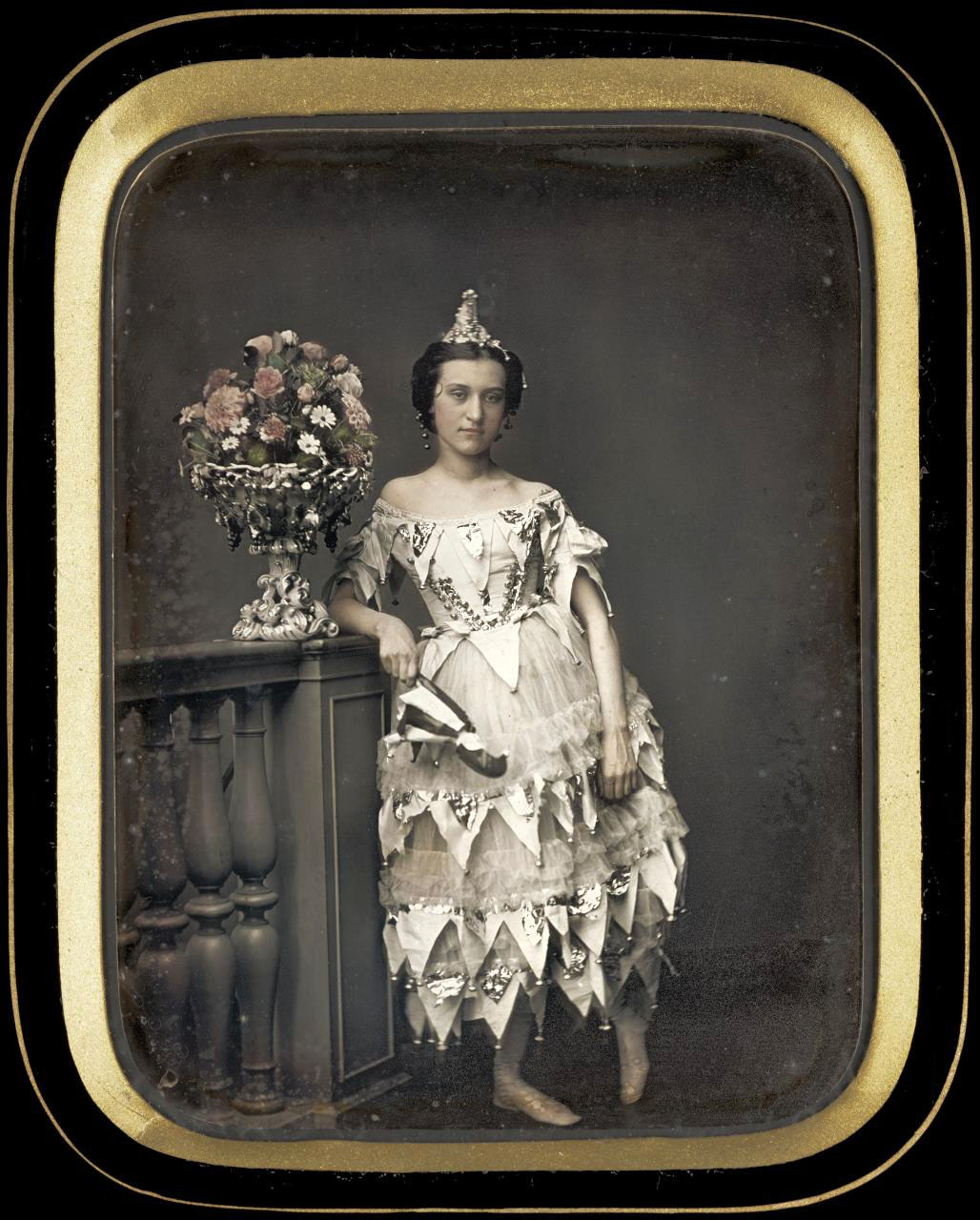
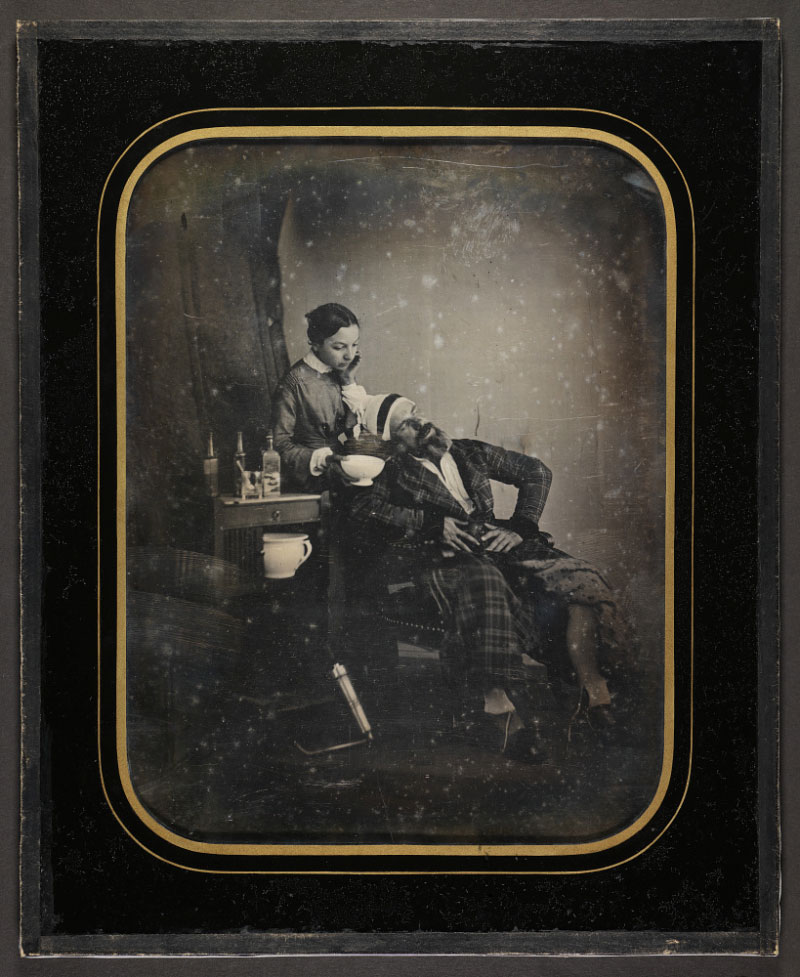
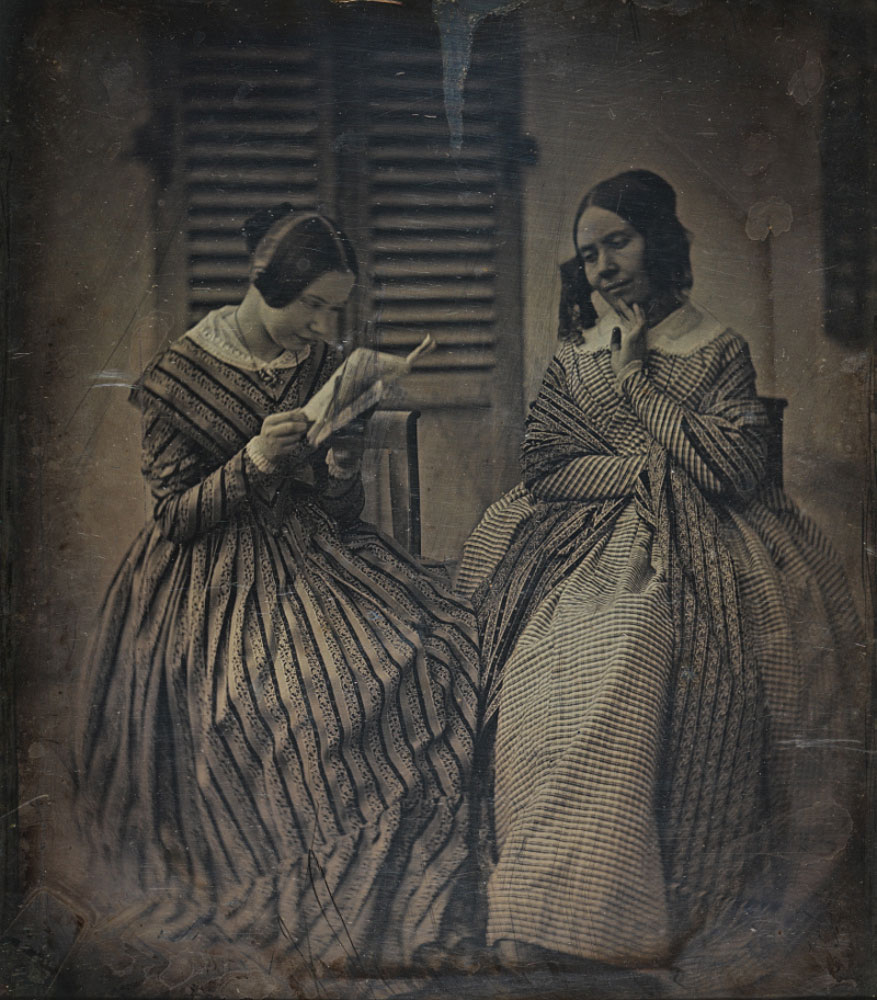
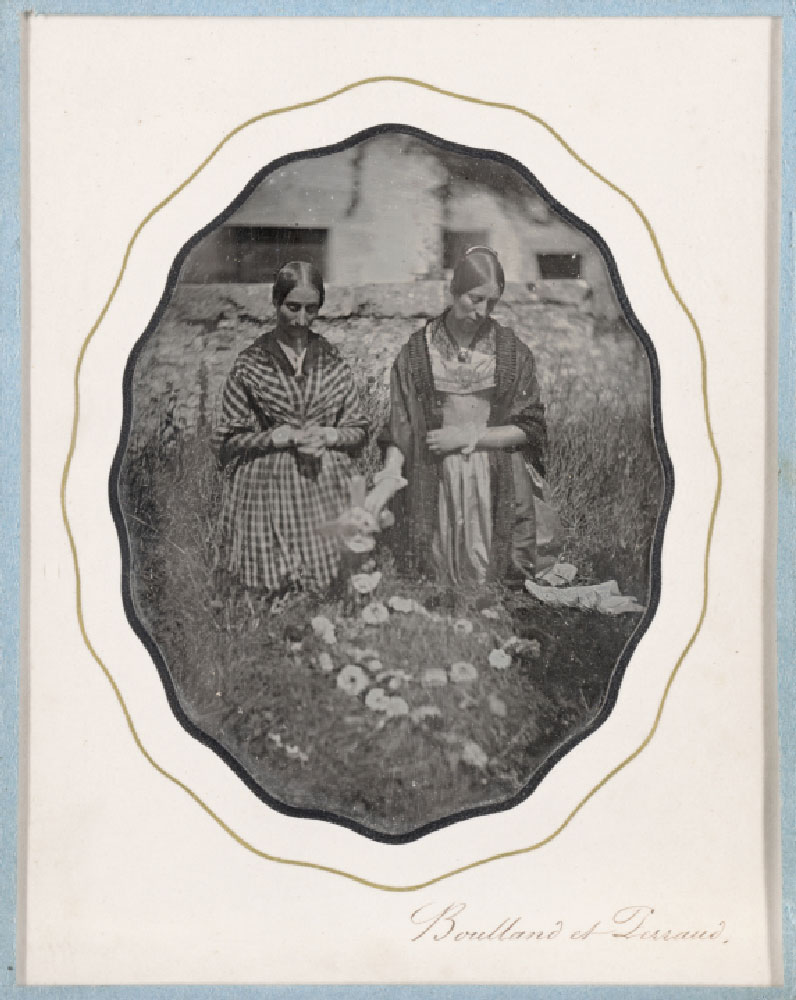
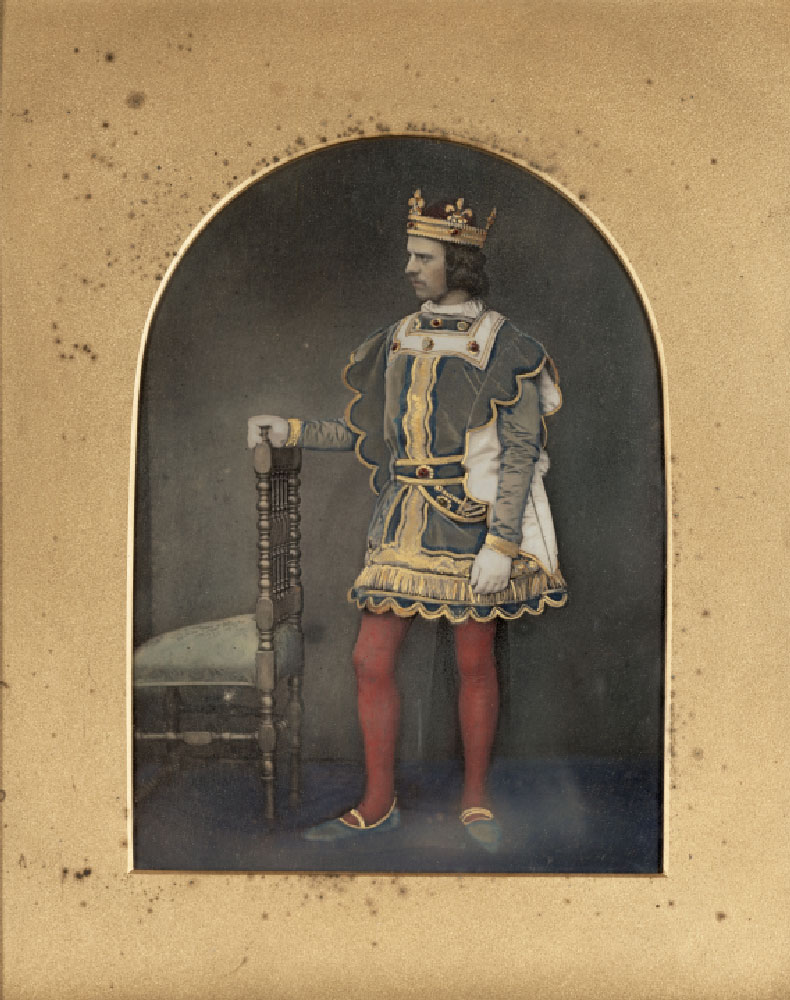
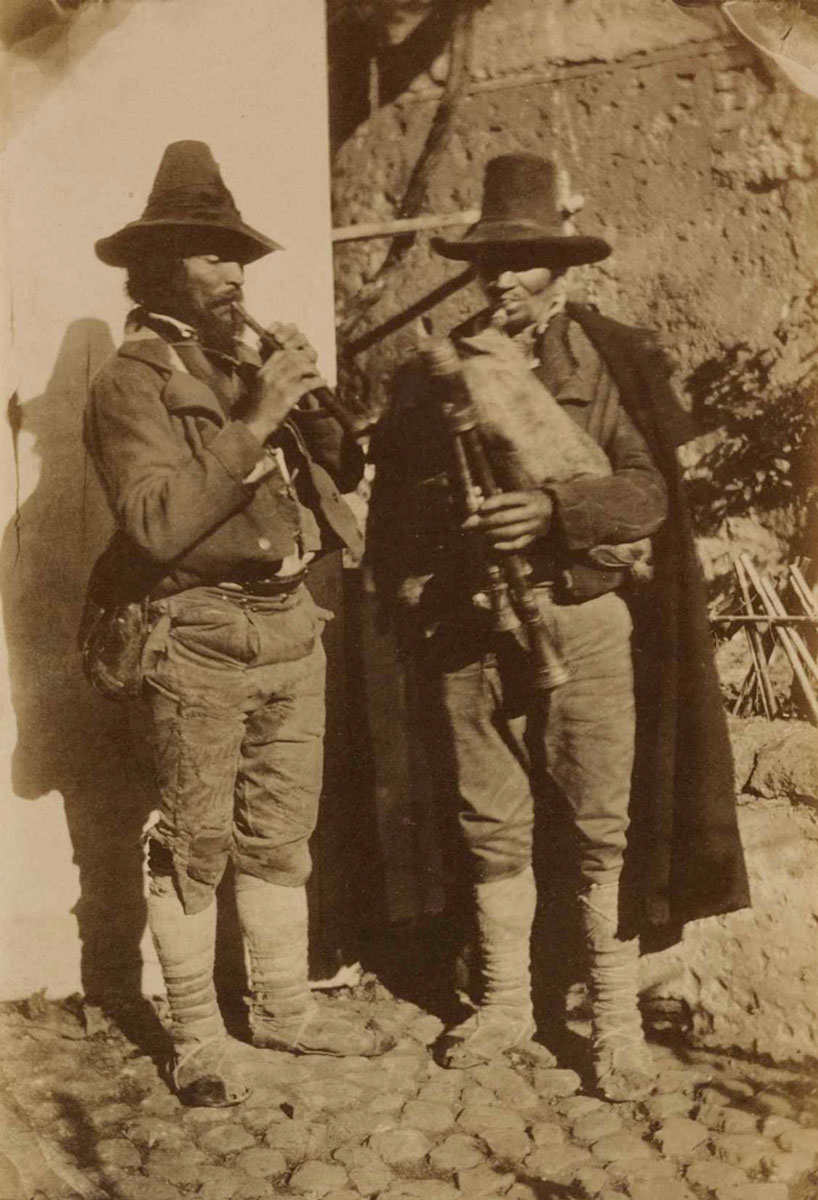
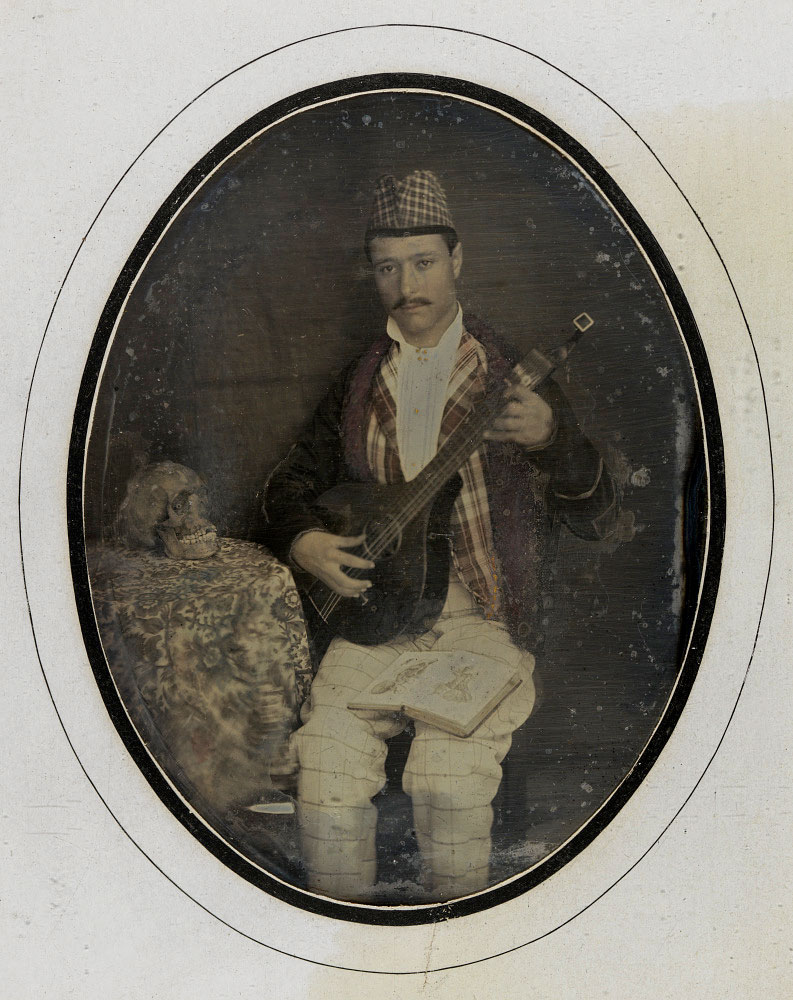
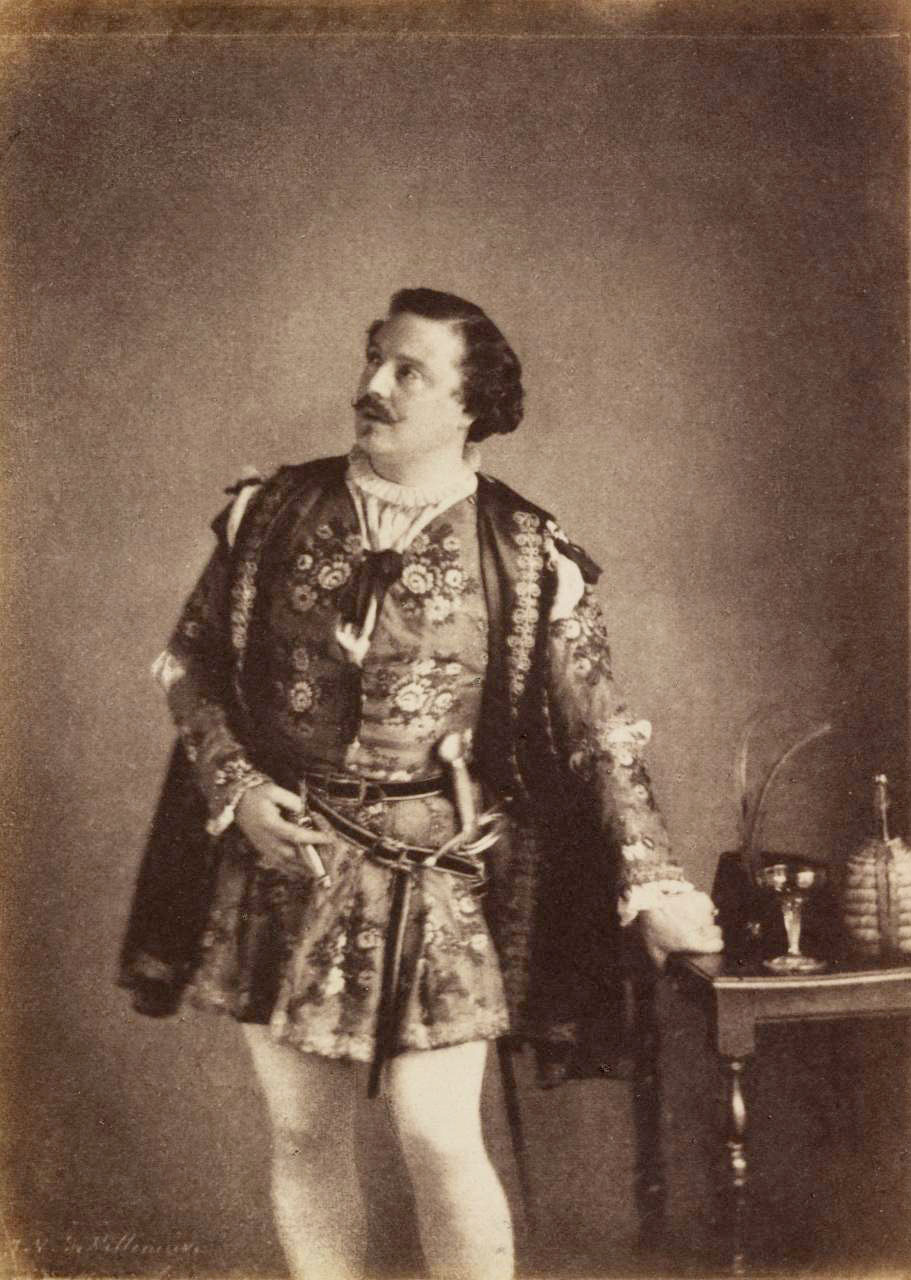
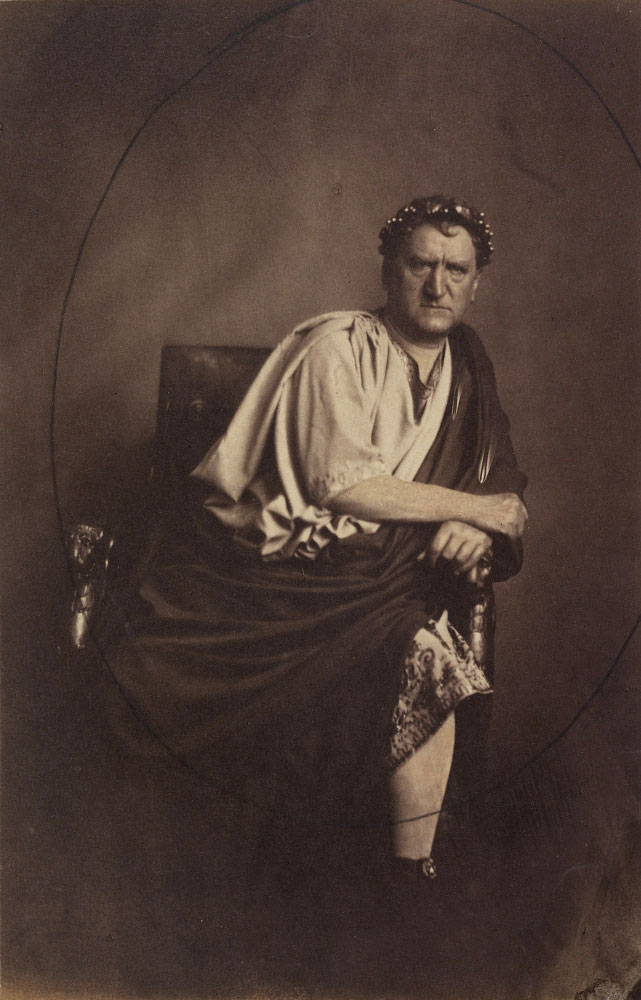
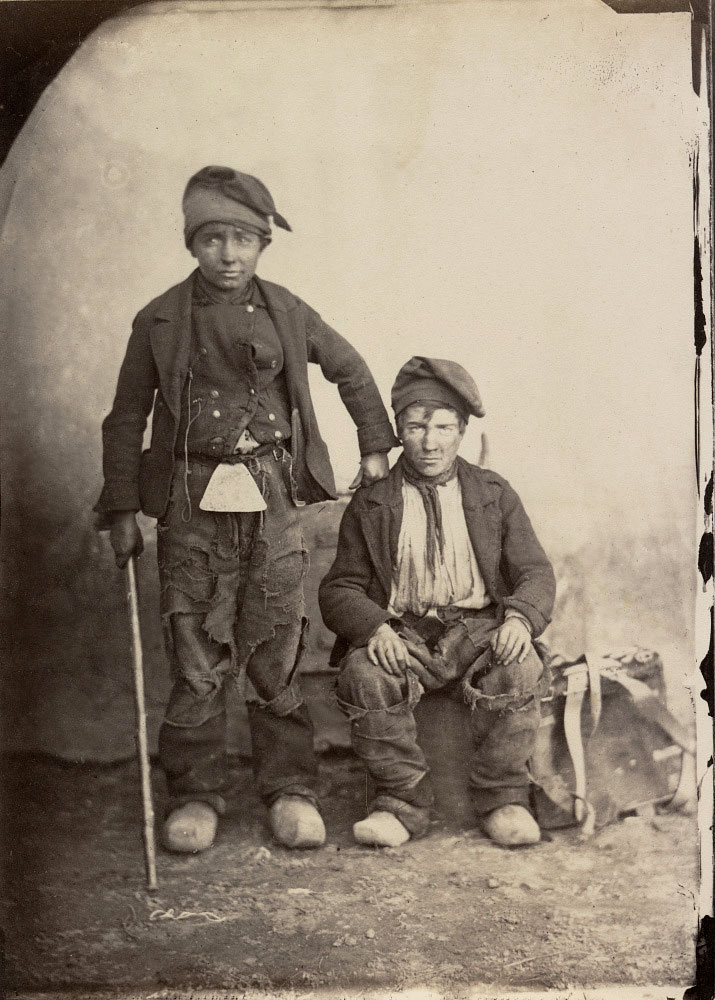
![Alban-Adrien Tournachon (French , 1825-1903) and Nadar [Gaspard Félix Tournachon] (French, 1820-1910) 'Pierrot Yawning' 1854 from the exhibition 'Still Performing: Costume, Gesture, and Expression in 19th Century European Photography' at the Nelson-Atkins Museum of Art, Kansas City](https://artblart.com/wp-content/uploads/2024/12/tournachon-and-nadar-pierrot-yawning.jpg "Alban-Adrien Tournachon (French , 1825-1903) and Nadar [Gaspard Félix Tournachon] (French, 1820-1910) 'Pierrot Yawning' 1854 from the exhibition 'Still Performing: Costume, Gesture, and Expression in 19th Century European Photography' at the Nelson-Atkins Museum of Art, Kansas City")
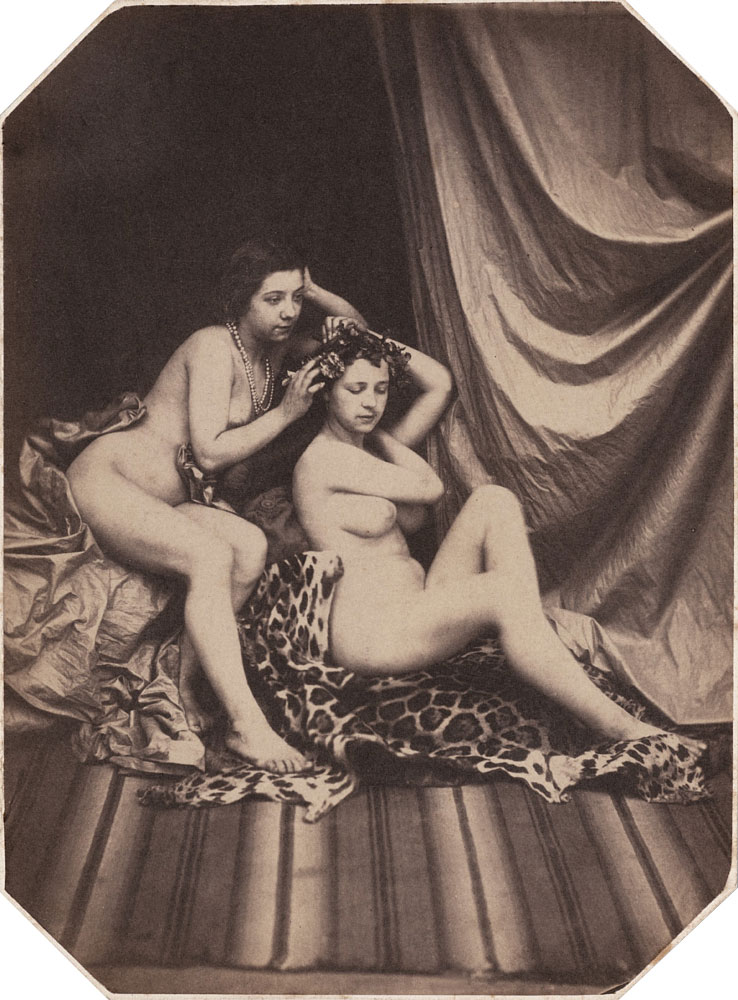
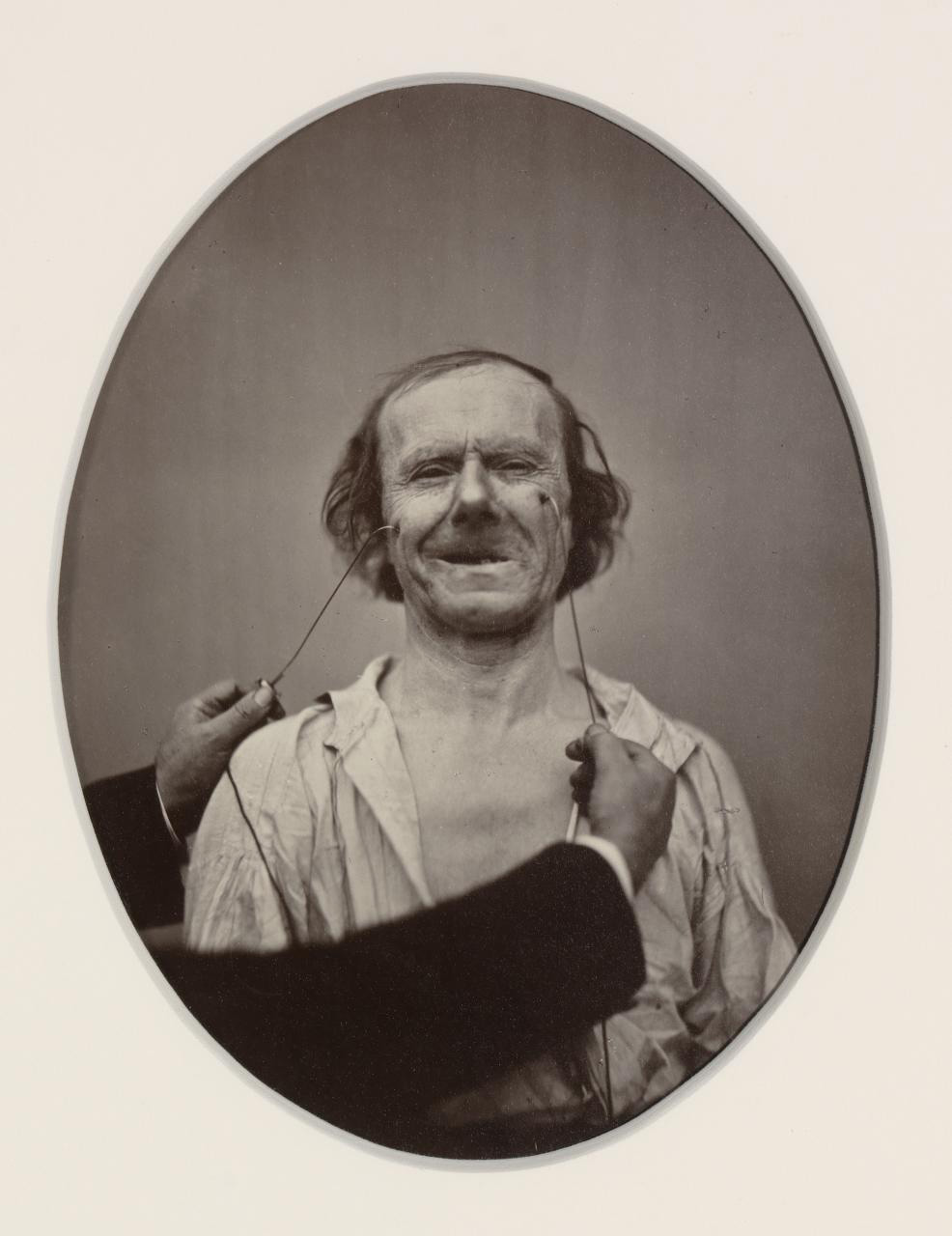
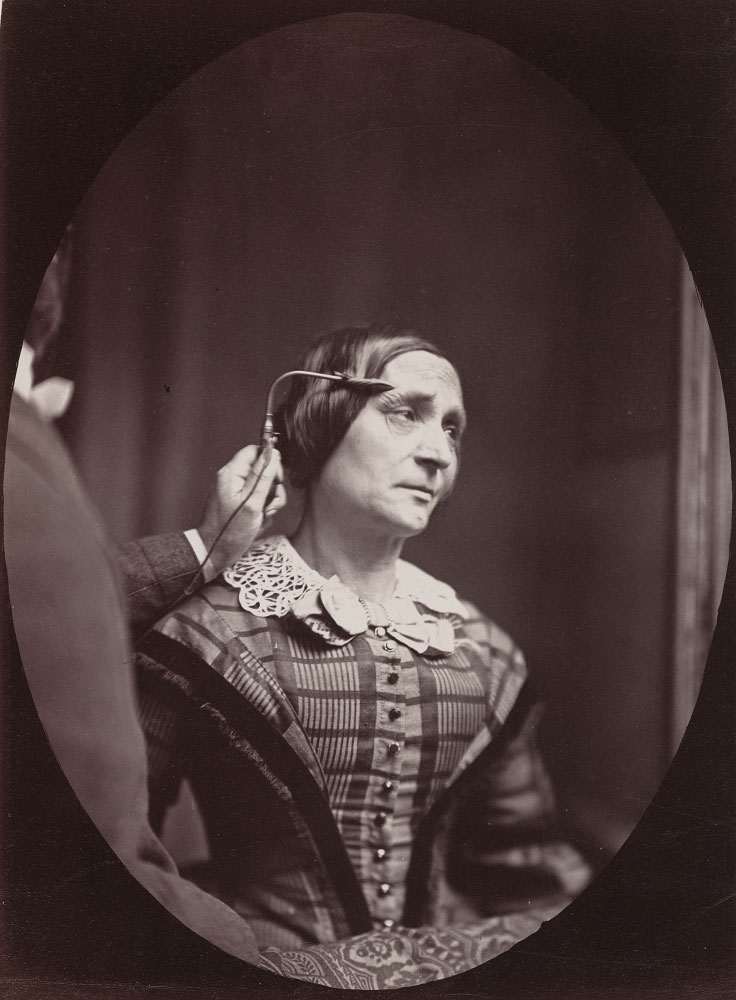

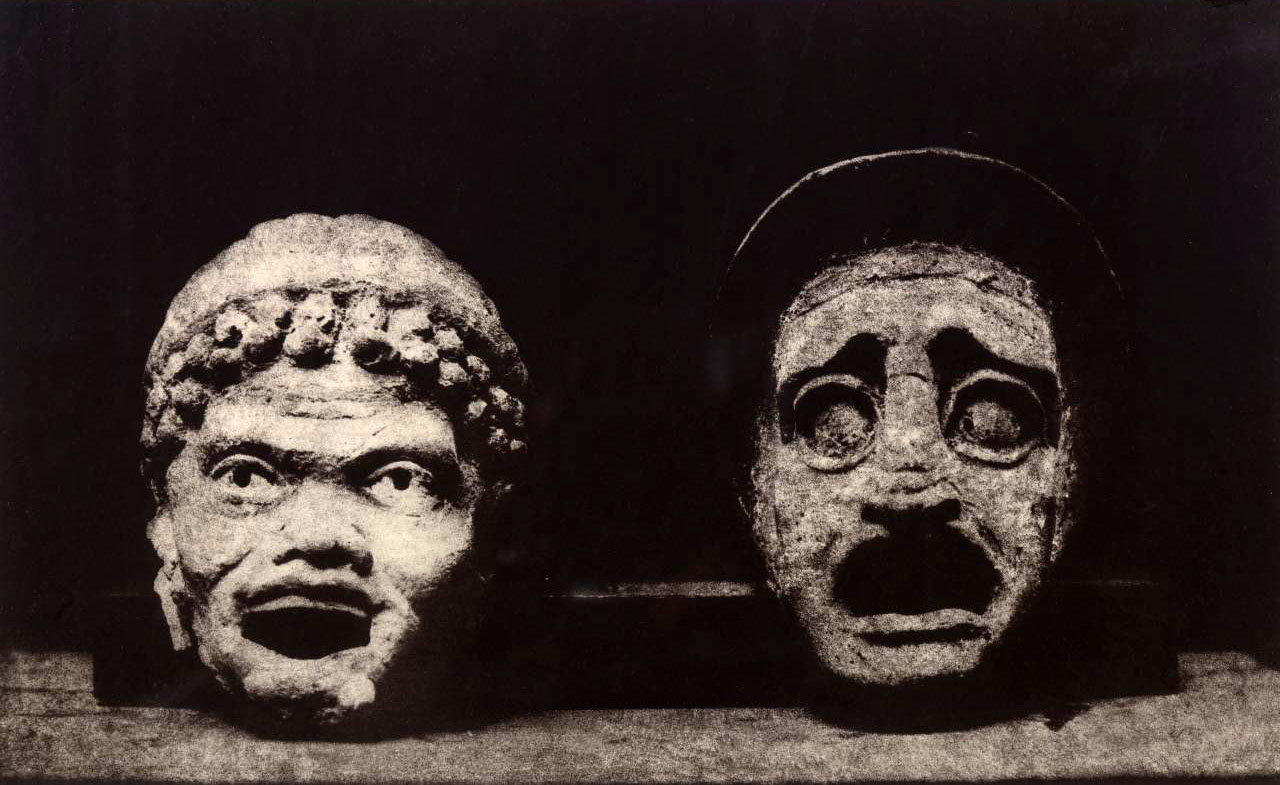
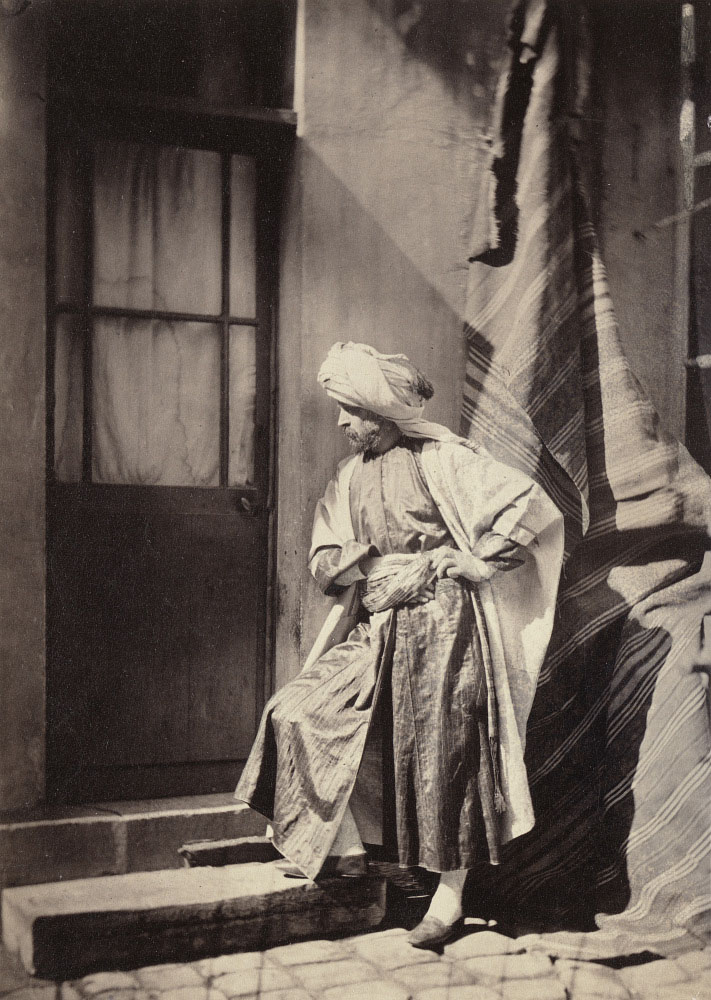
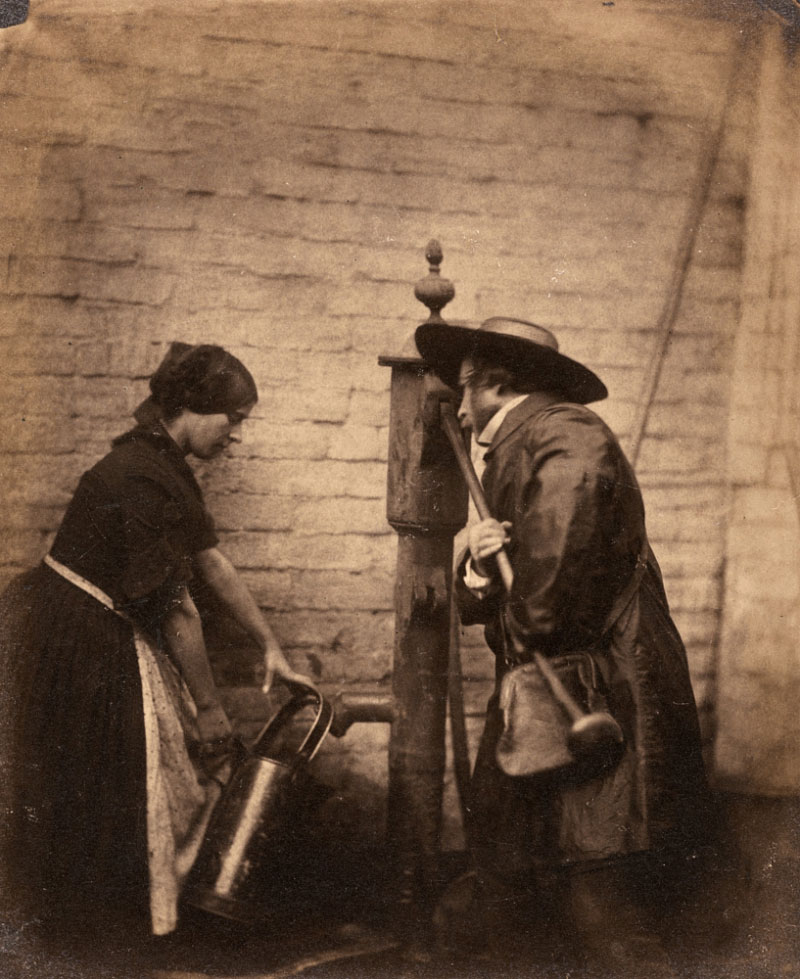
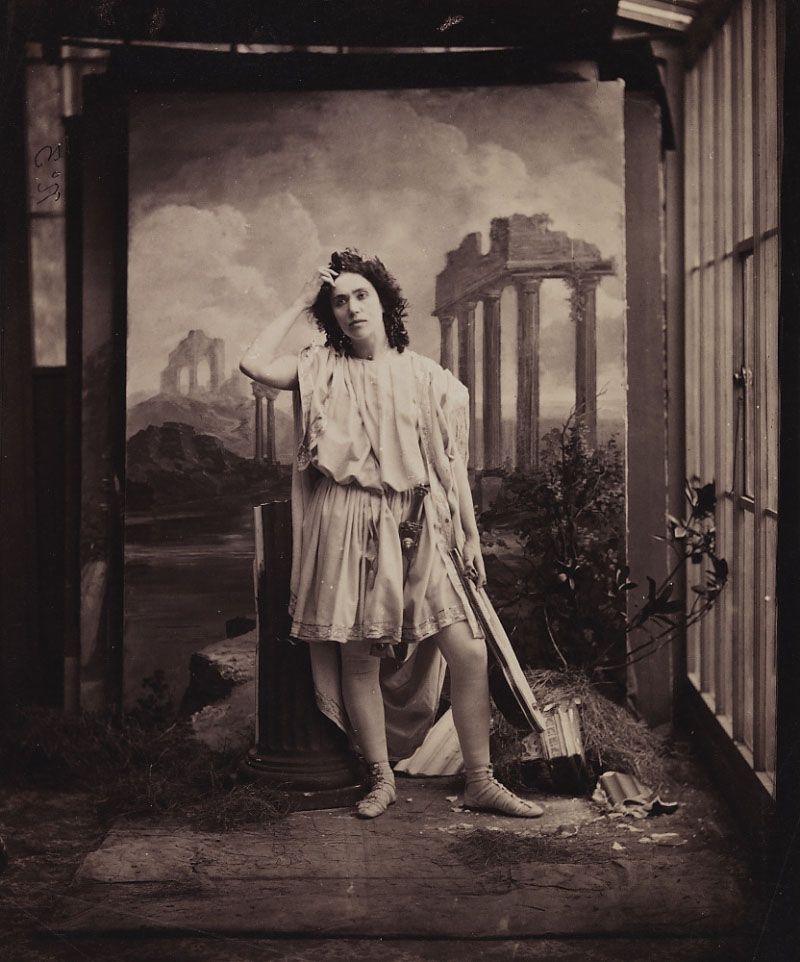
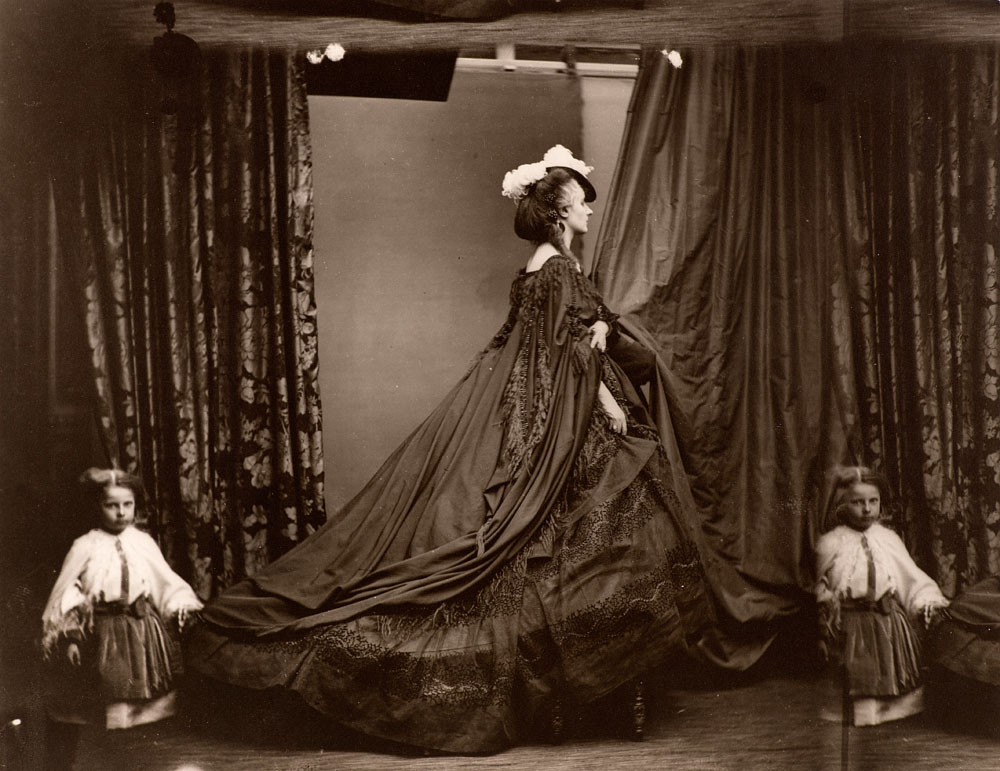
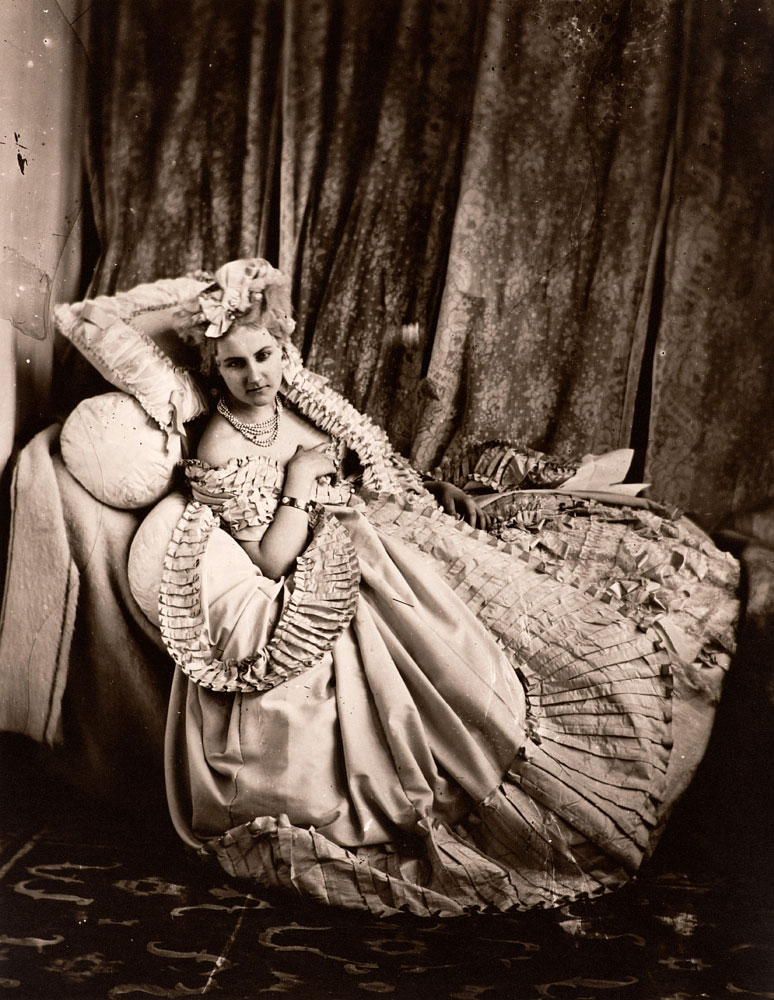
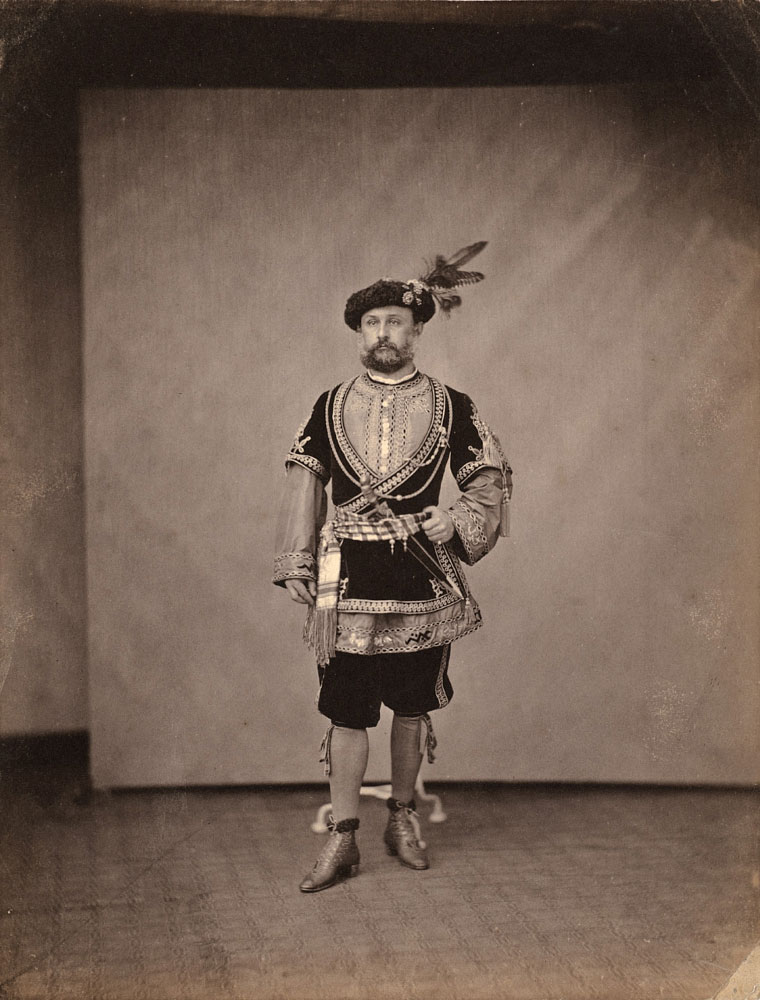
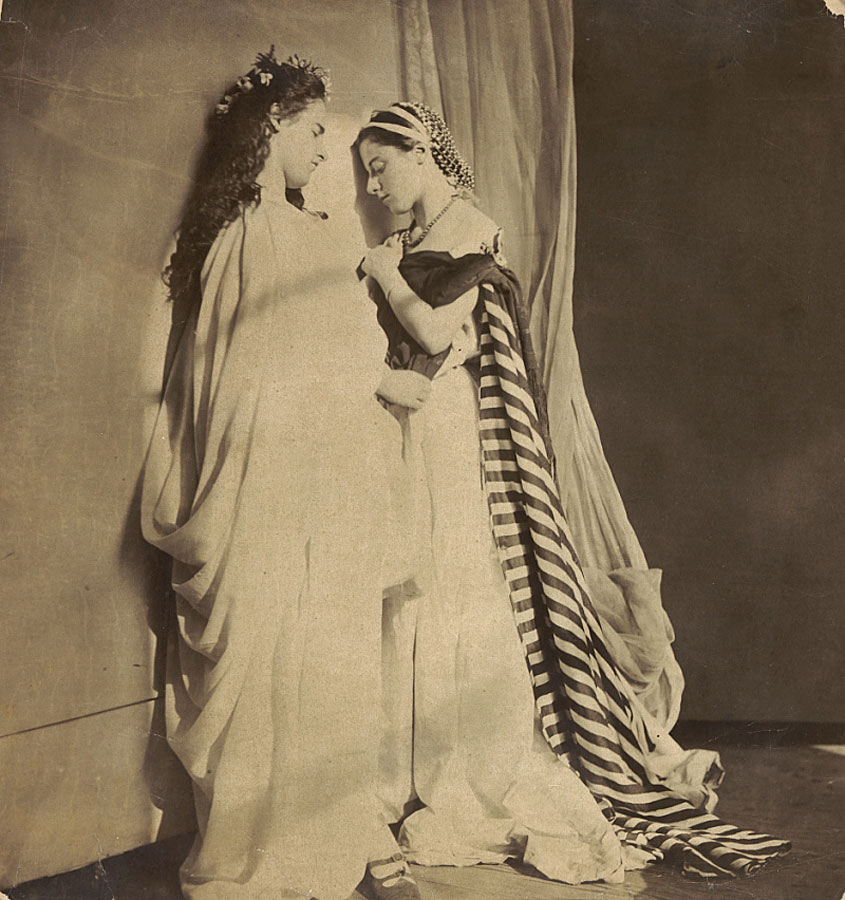
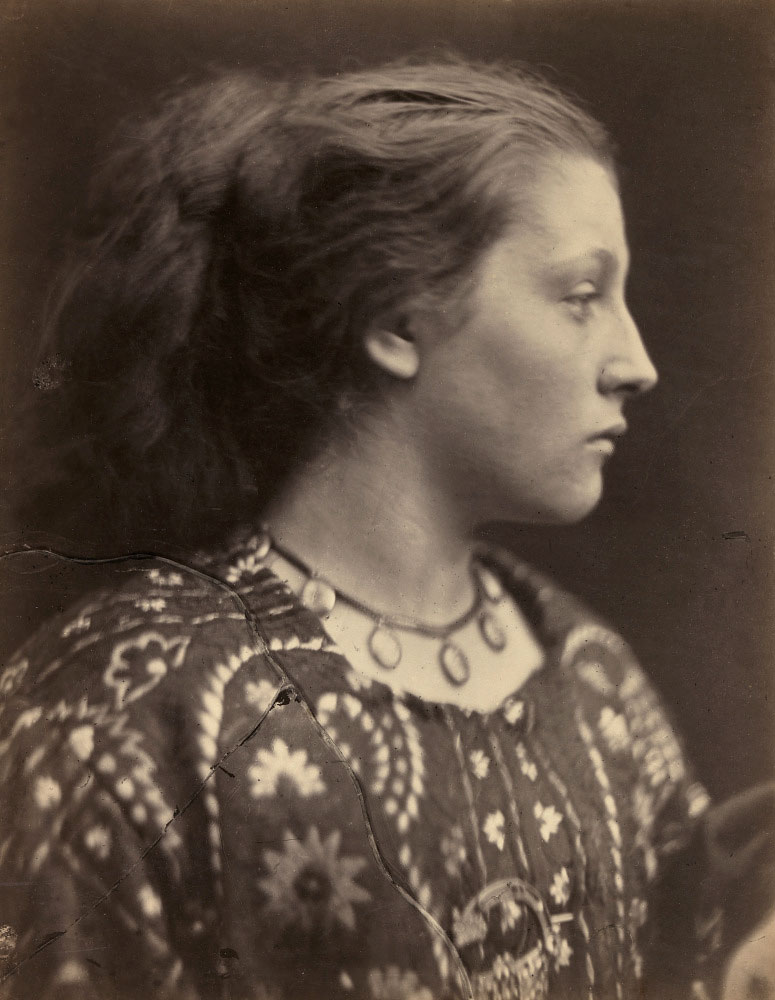
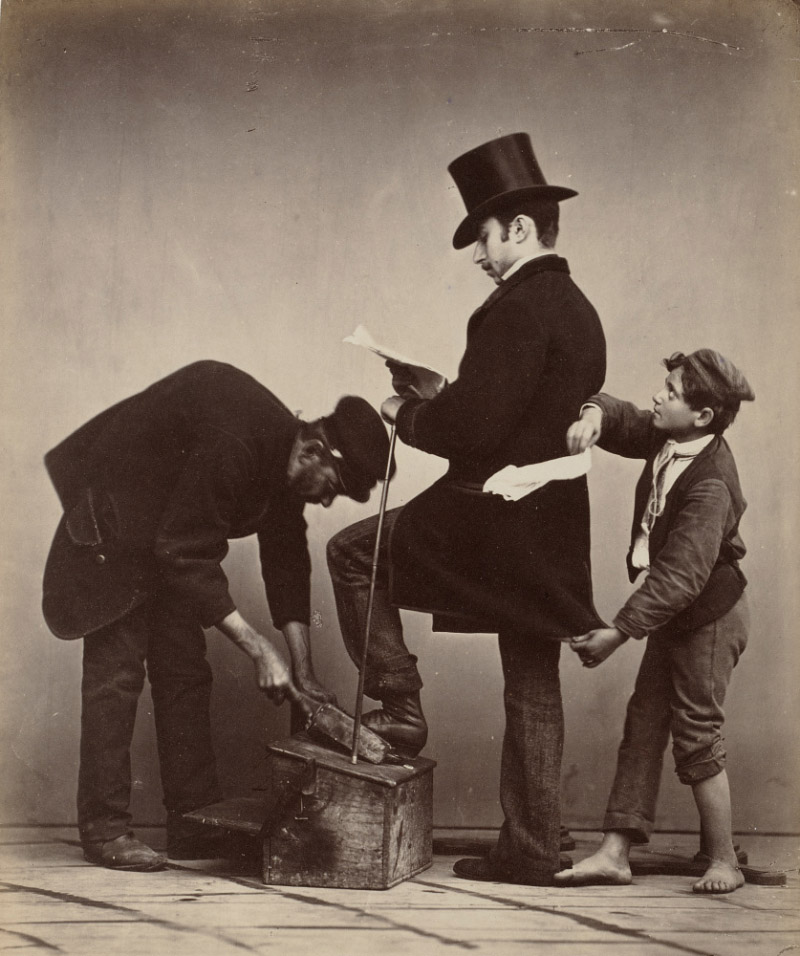
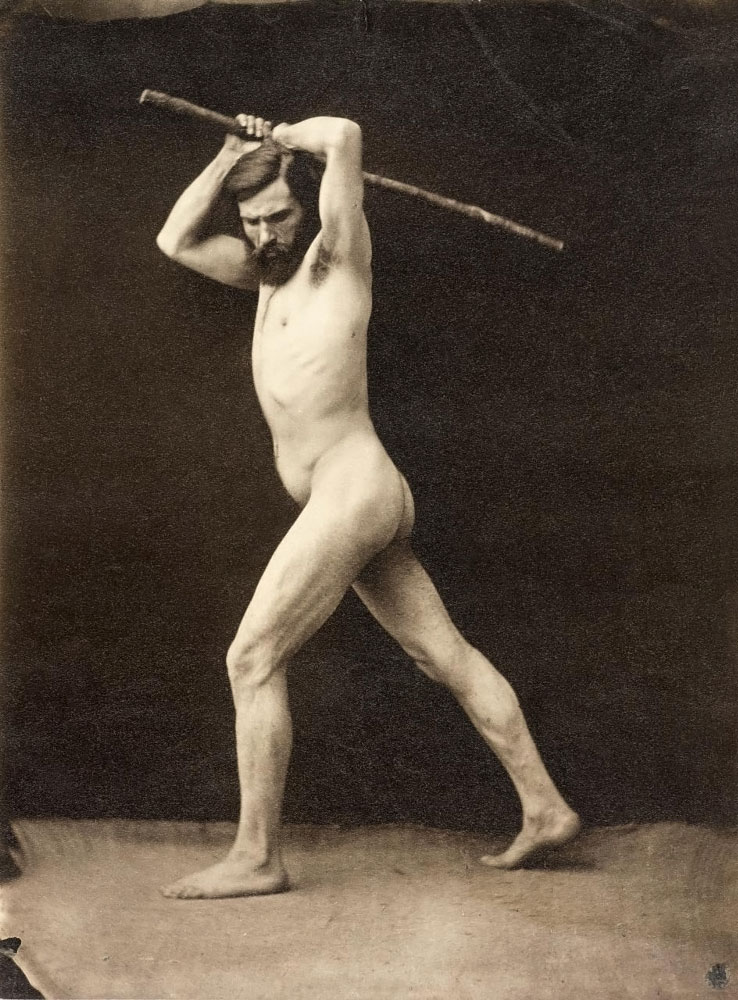
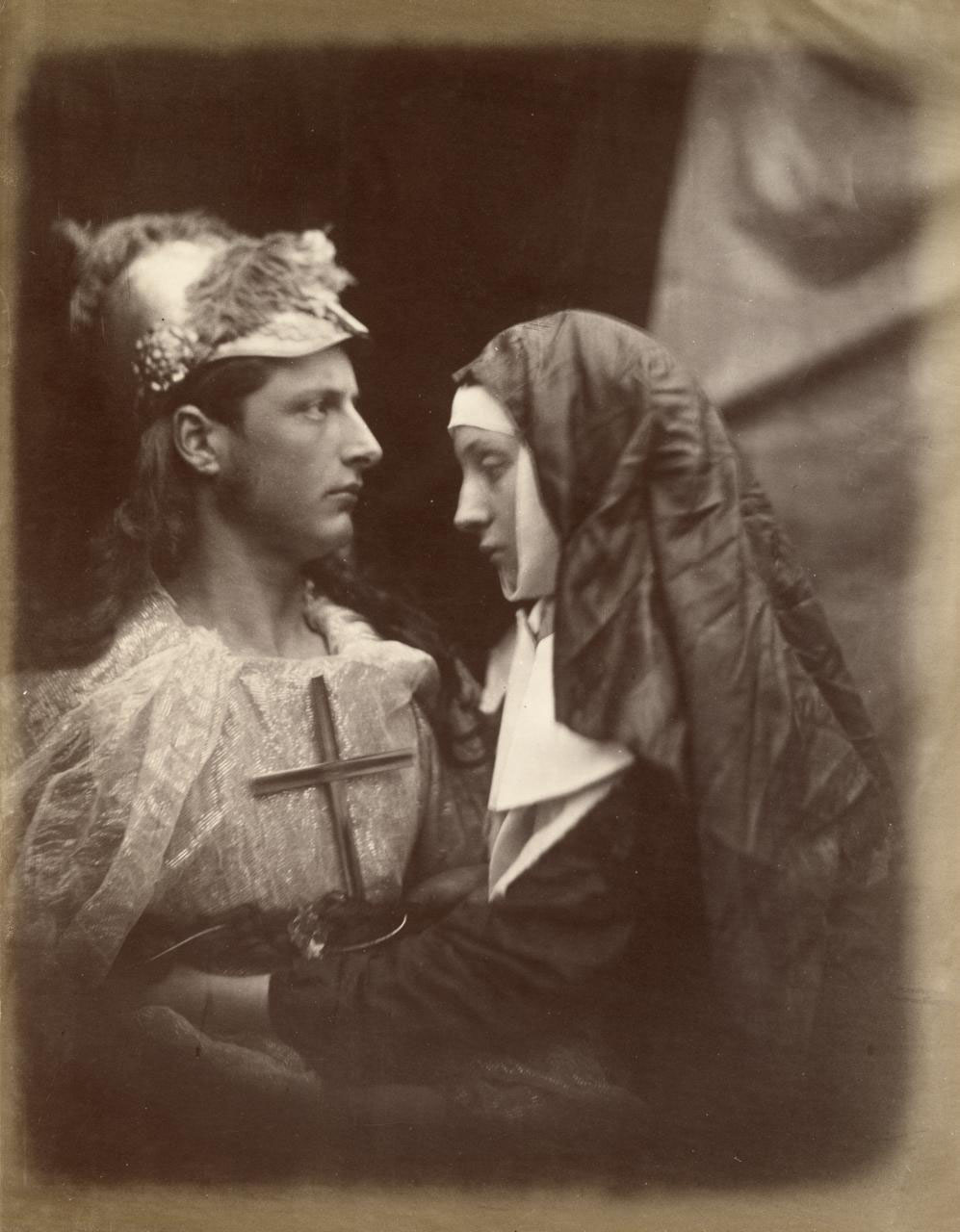
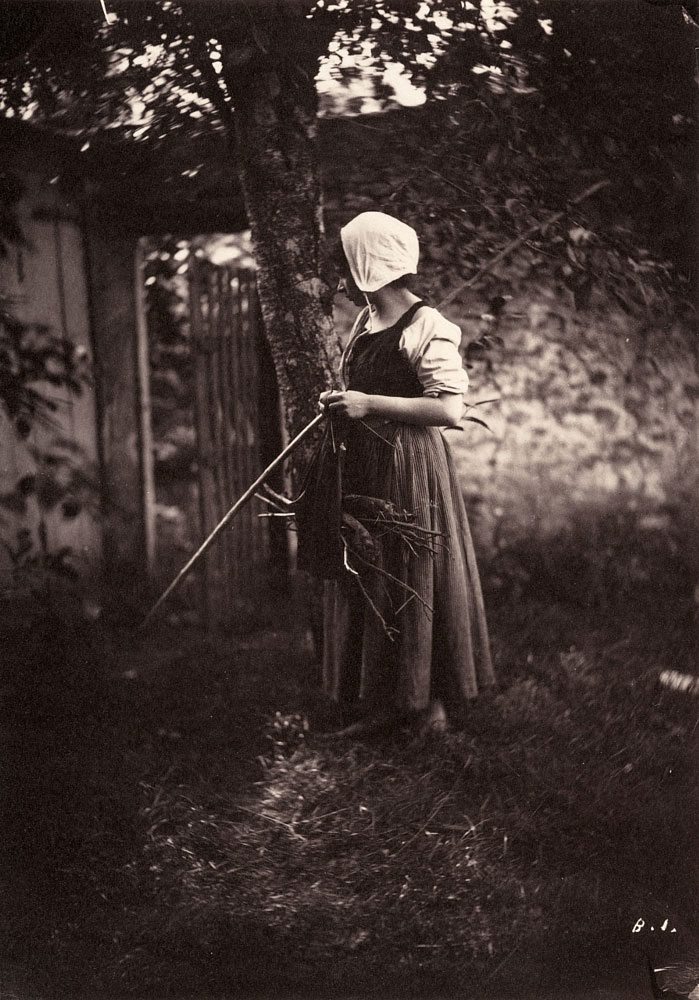
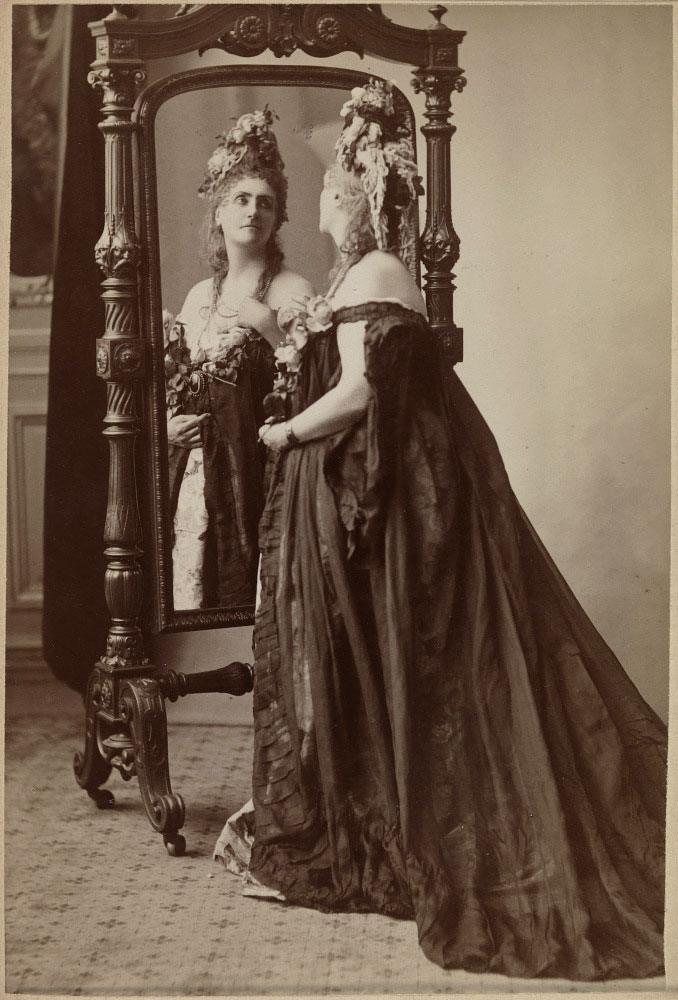
![Erich Salomon (German, 1886-1944) '[Portrait of Madame Vacarescu, Romanian Author and Deputy to the League of Nations, Geneva]' 1928 from the exhibition 'In Focus: Expressions' at the J. Paul Getty Museum, Getty Center, Los Angeles, May - Oct, 2018](https://artblart.com/wp-content/uploads/2018/06/in-focus-expressions-1-web.jpg "Erich Salomon (German, 1886-1944) '[Portrait of Madame Vacarescu, Romanian Author and Deputy to the League of Nations, Geneva]' 1928 from the exhibition 'In Focus: Expressions' at the J. Paul Getty Museum, Getty Center, Los Angeles, May - Oct, 2018")
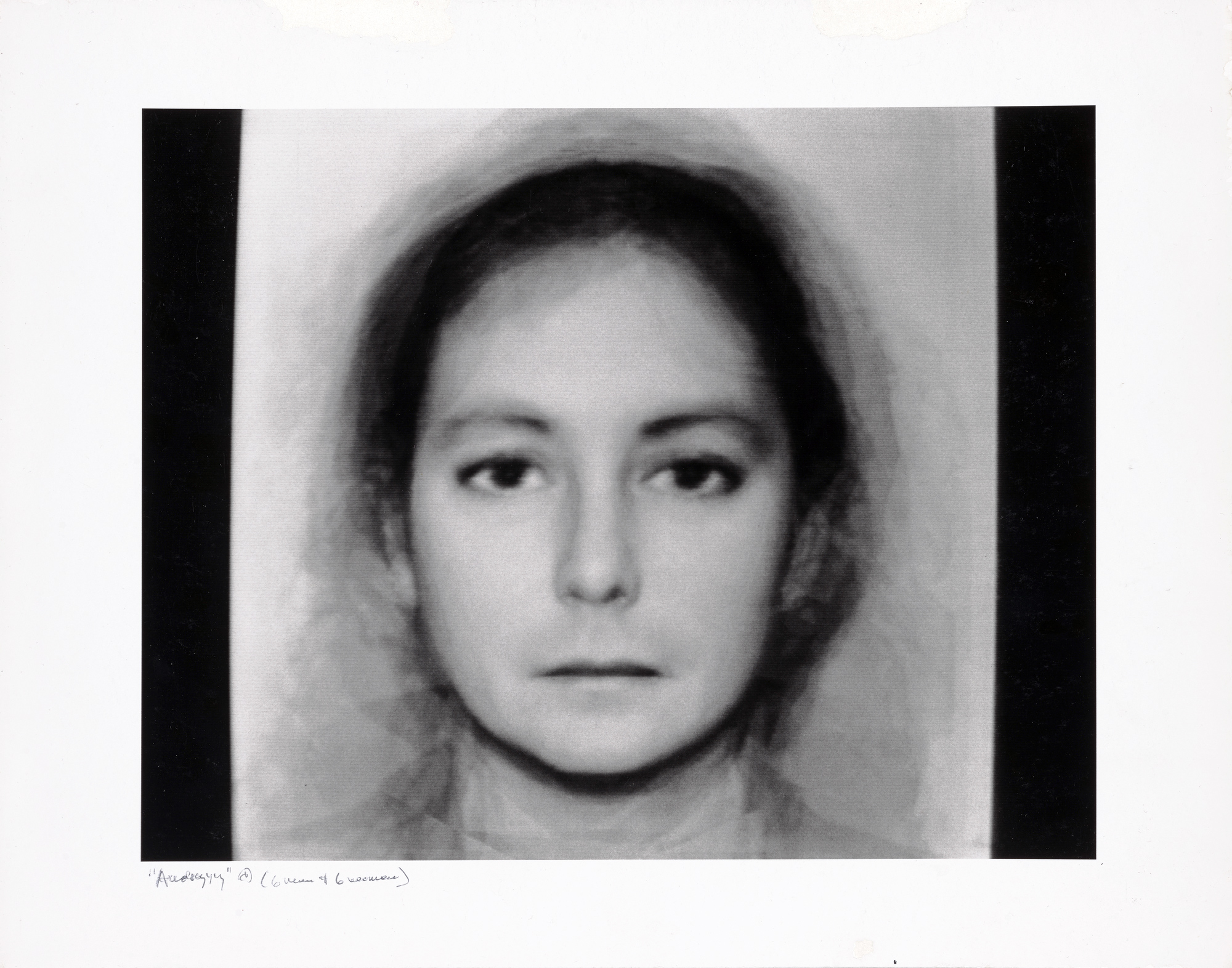
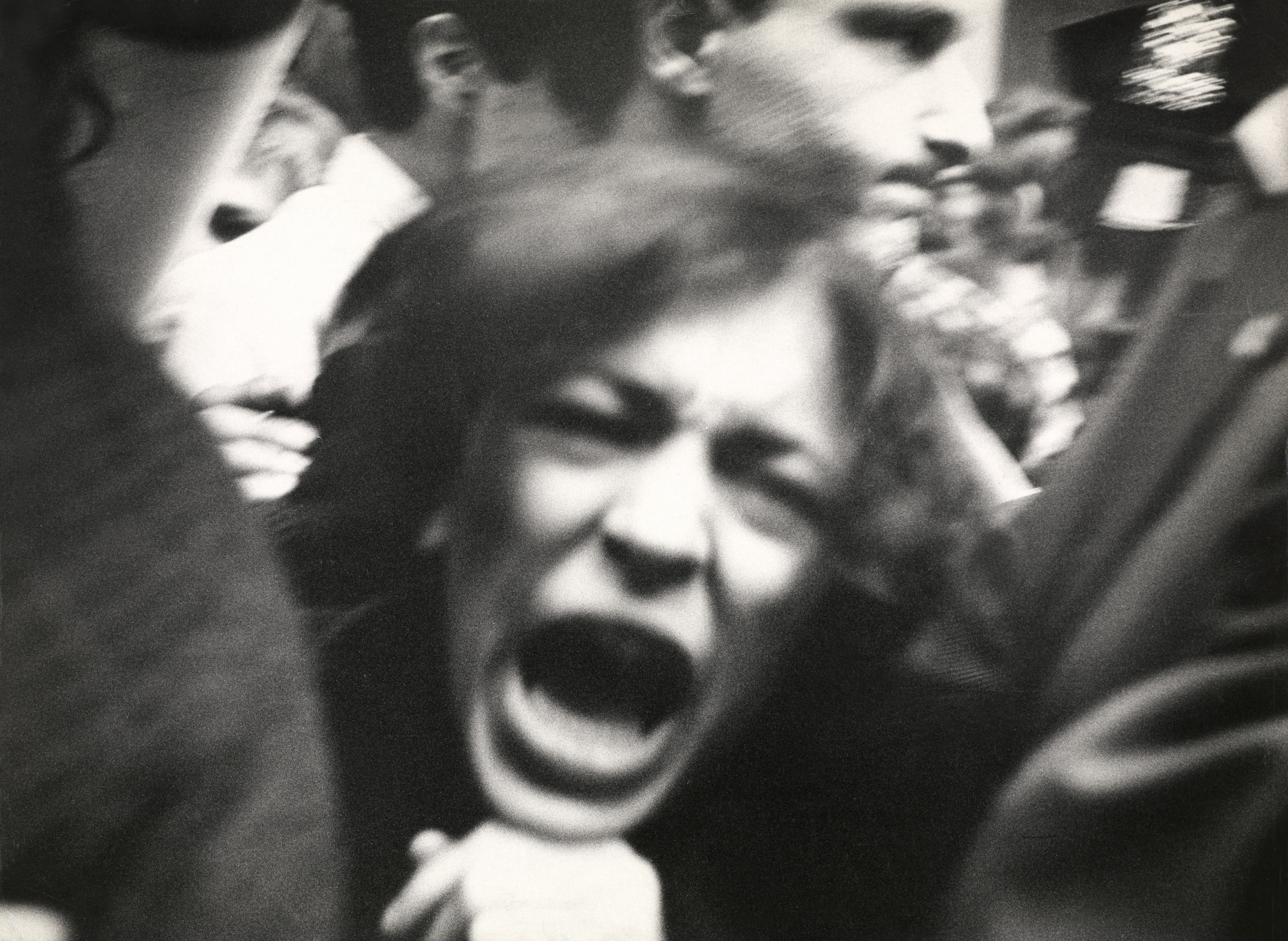
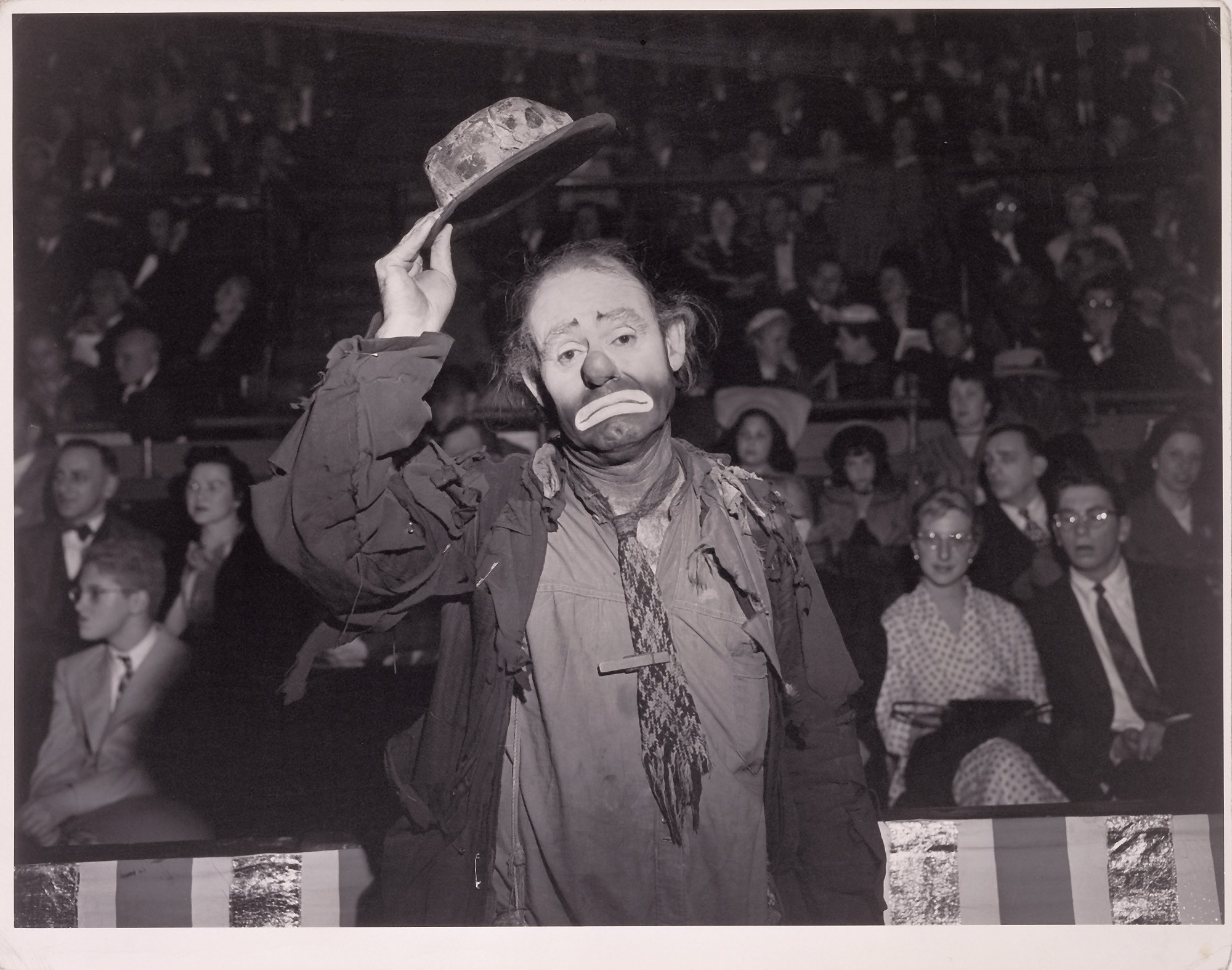

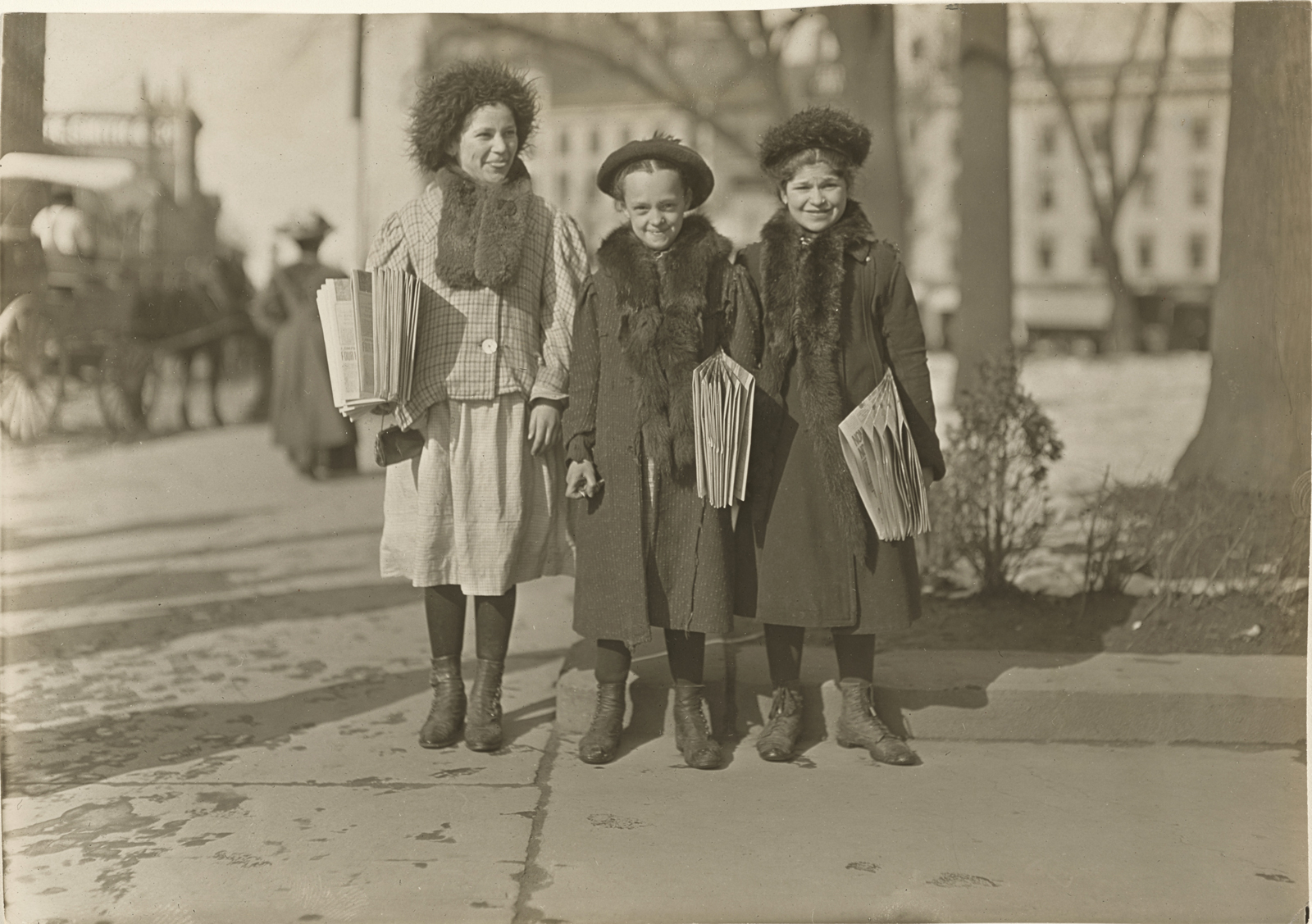
![Nadar [Gaspard Félix Tournachon] (French, 1820-1910) '[Mme Ernestine Nadar]' 1880-1883](https://artblart.com/wp-content/uploads/2018/06/in-focus-expressions-4-web.jpg "Nadar [Gaspard Félix Tournachon] (French, 1820-1910) '[Mme Ernestine Nadar]' 1880-1883")
![Nadar [Gaspard Félix Tournachon] (French, 1820-1910) '[Mme Ernestine Nadar]' 1880-1883 (detail)](https://artblart.com/wp-content/uploads/2018/06/in-focus-expressions-4-detail.jpg "Nadar [Gaspard Félix Tournachon] (French, 1820-1910) '[Mme Ernestine Nadar]' 1880-1883 (detail)")

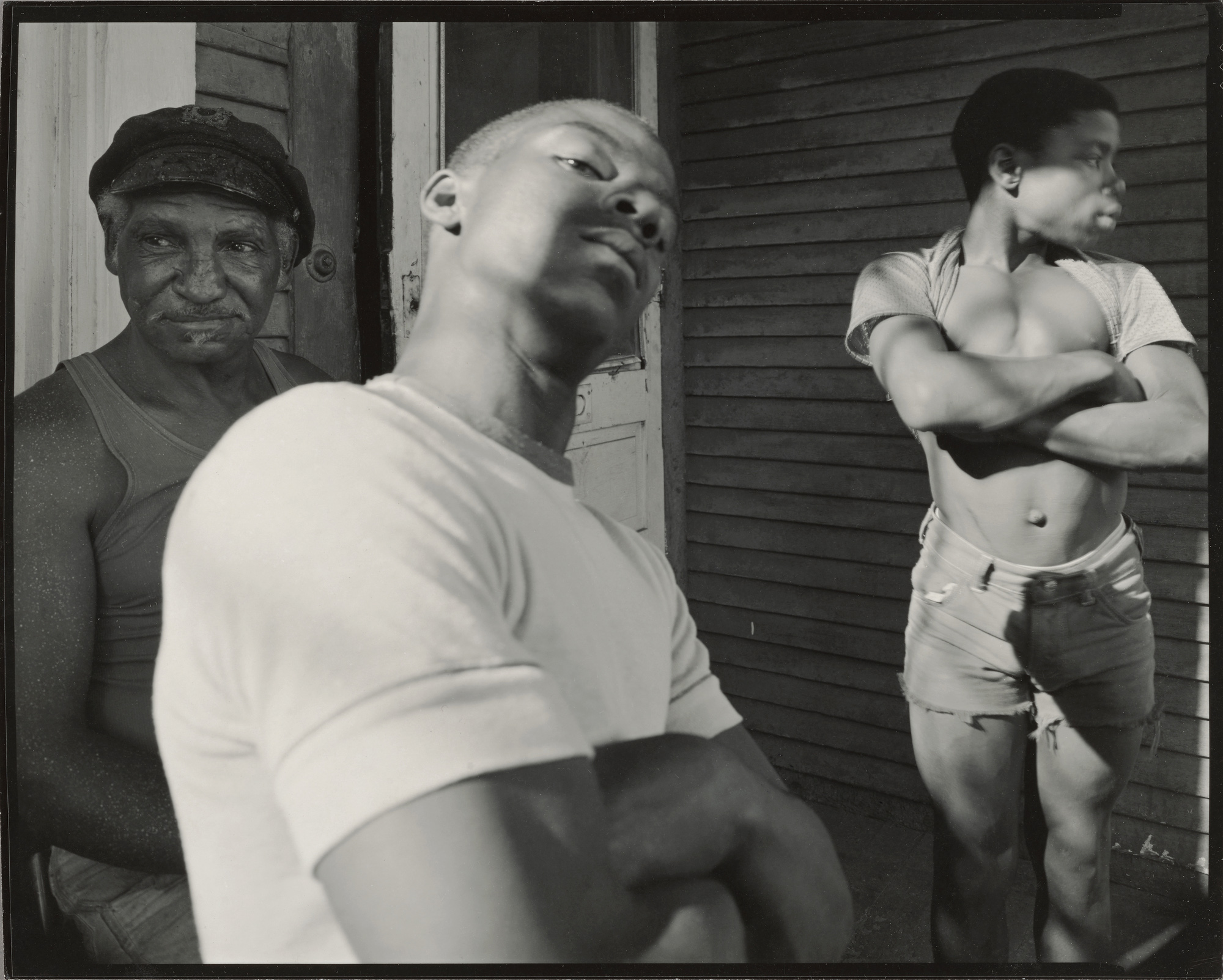
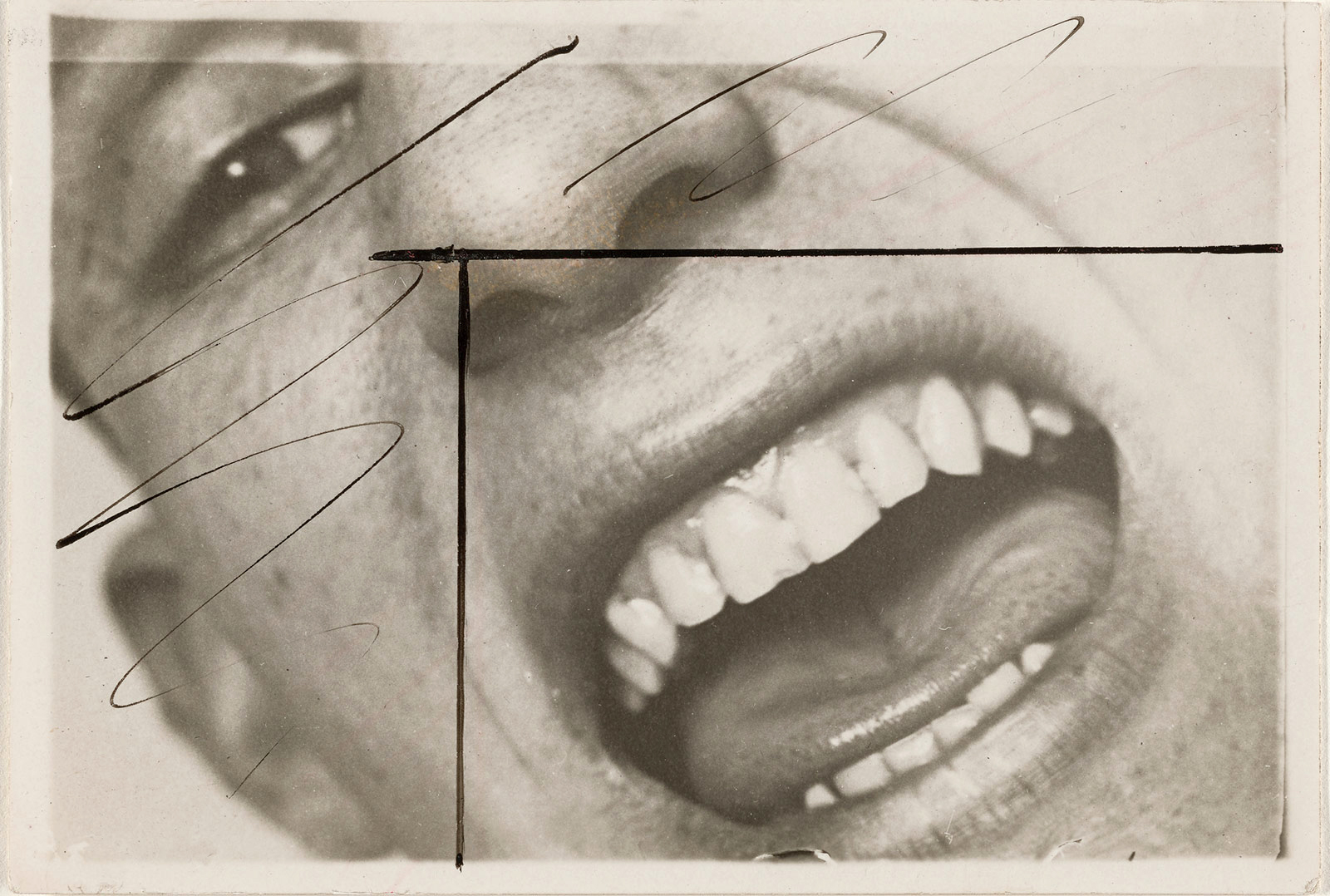
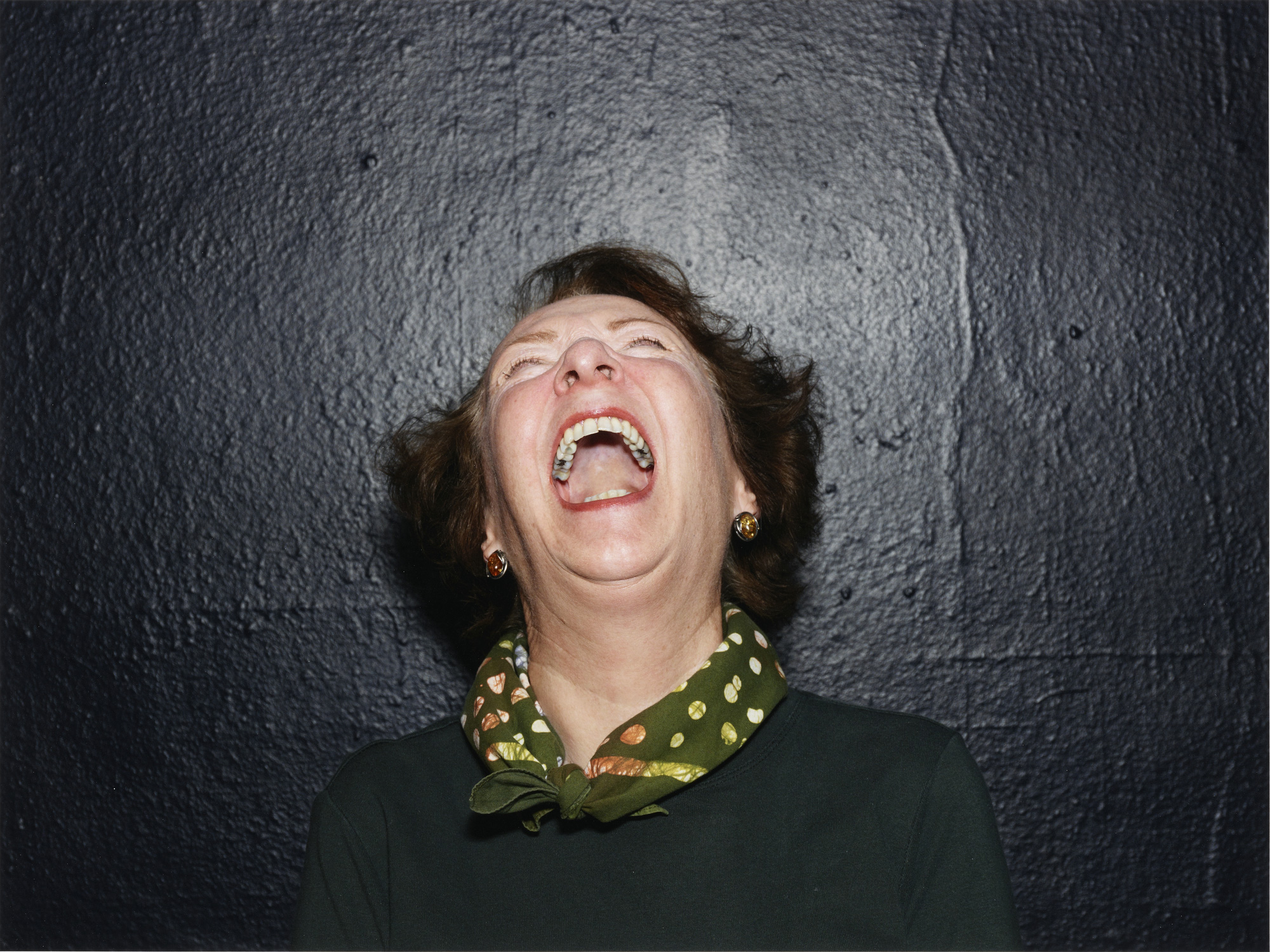
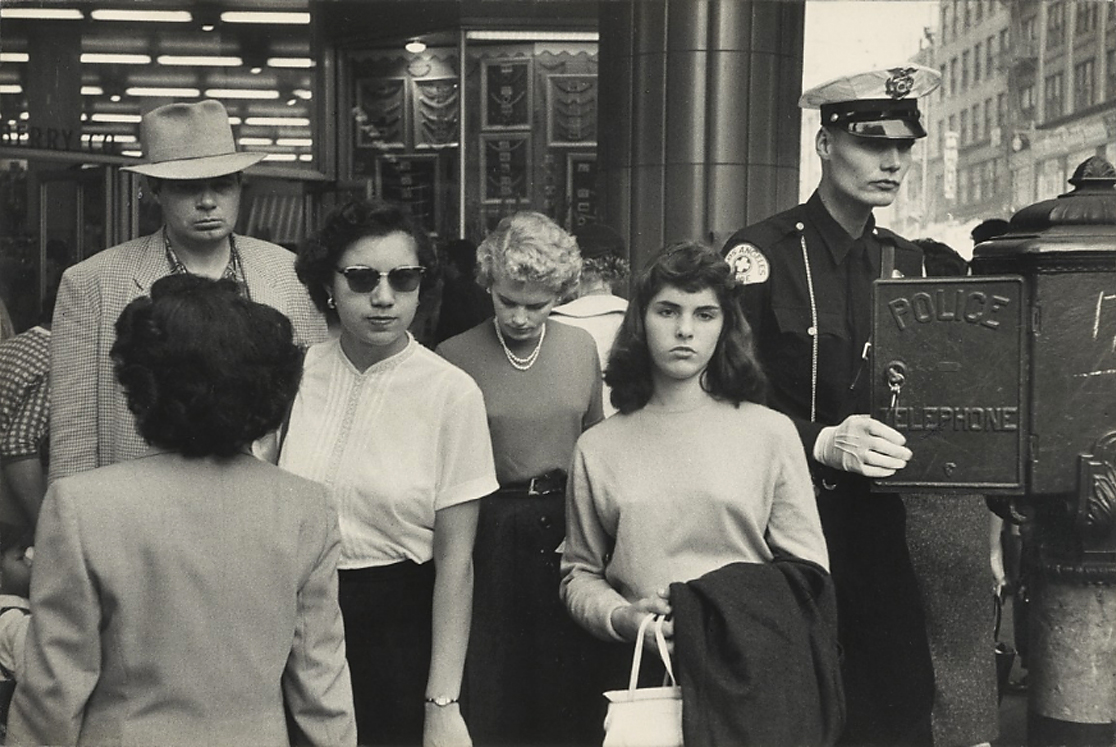
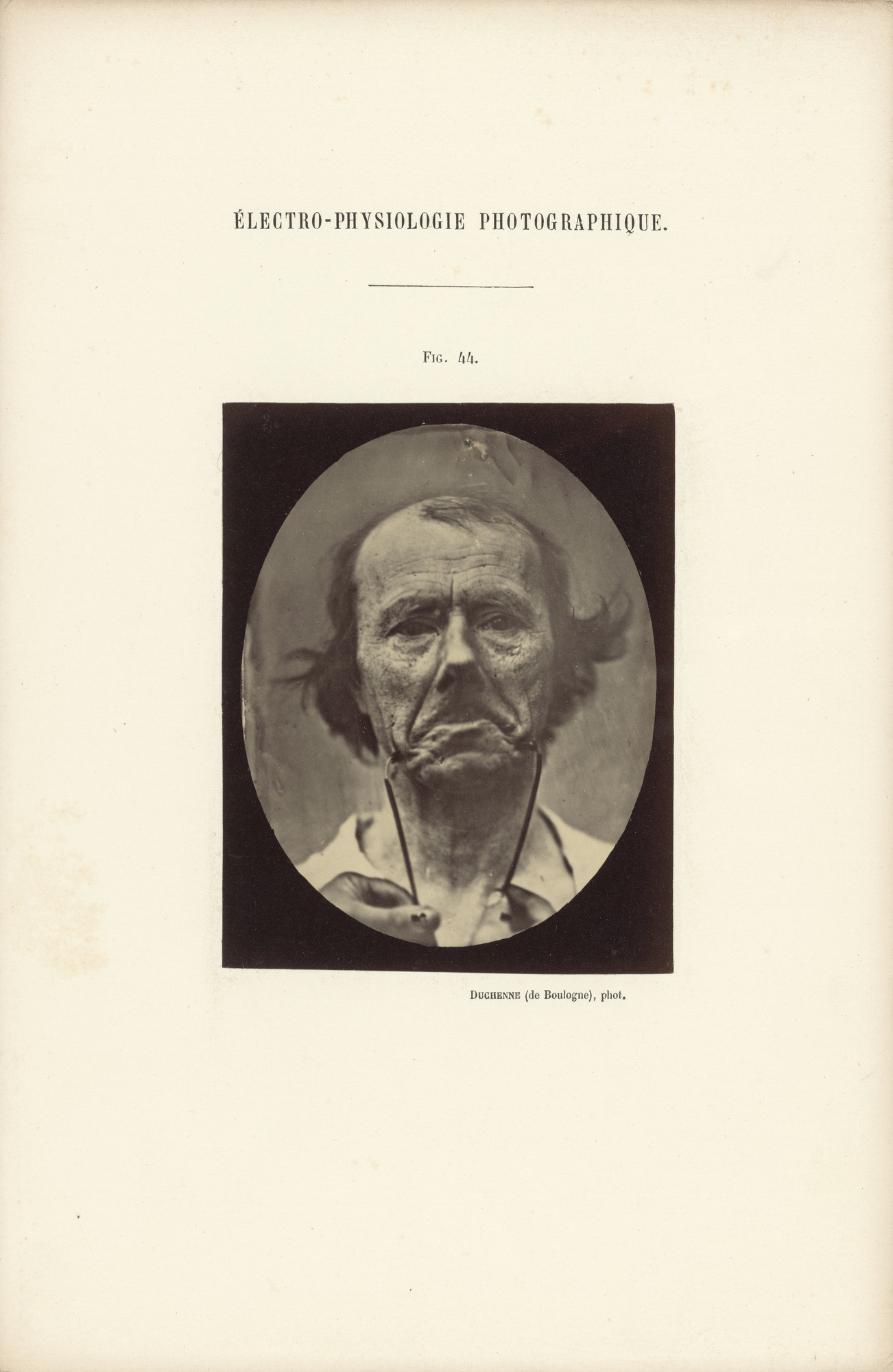
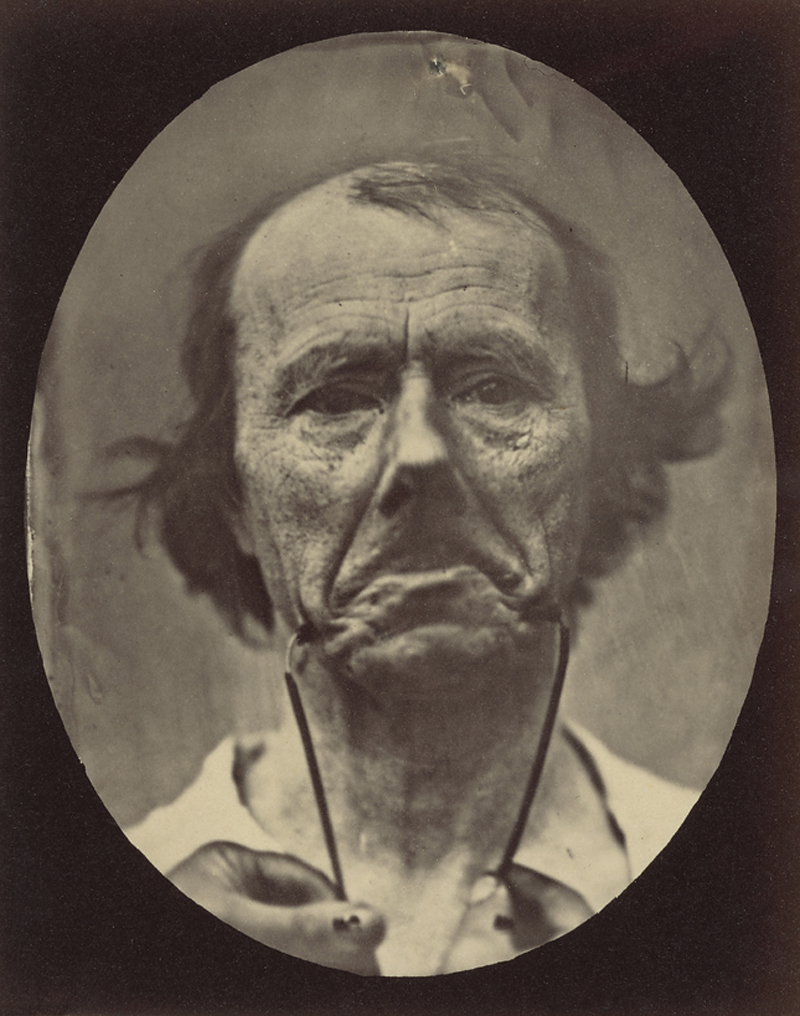
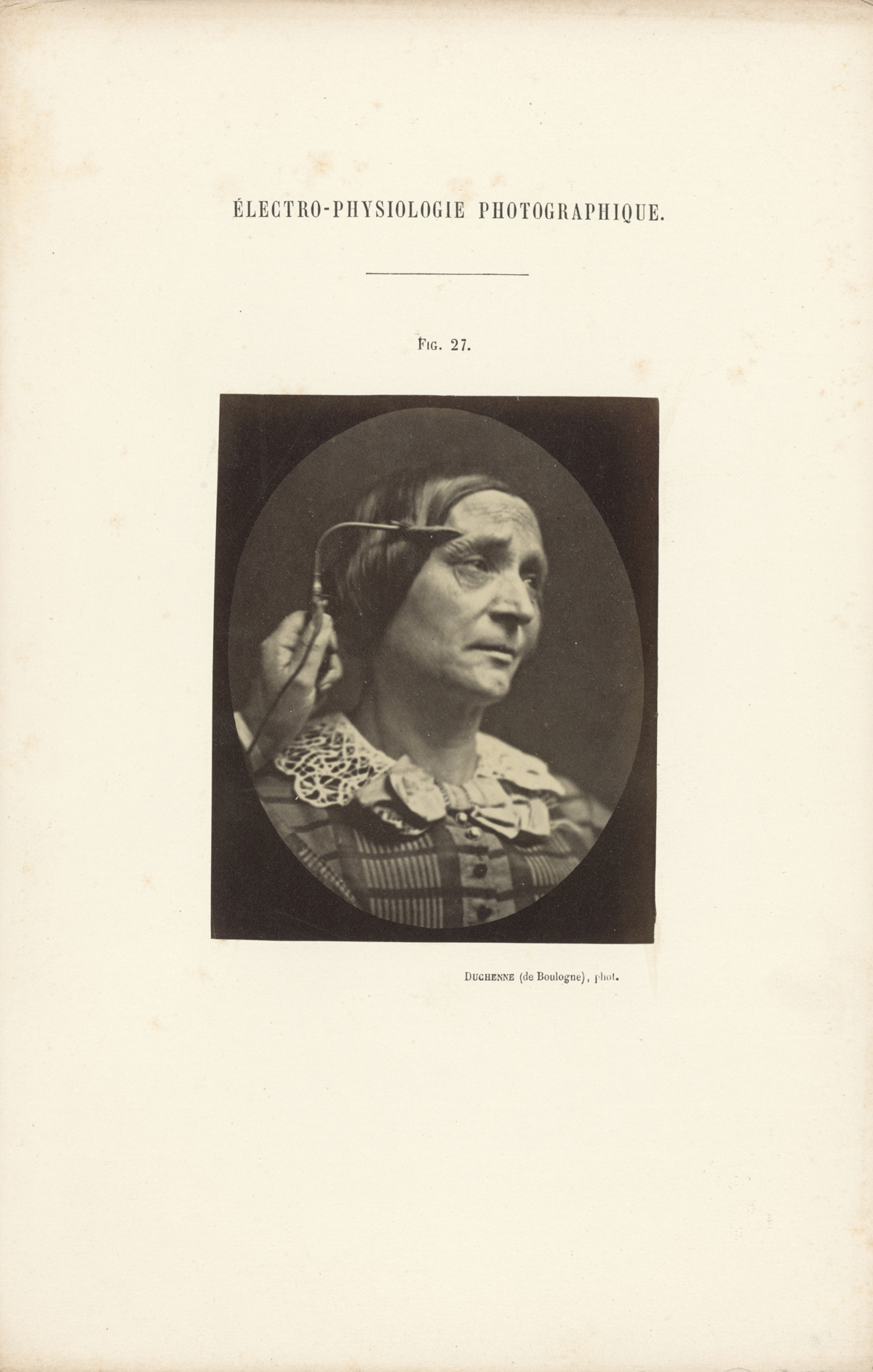
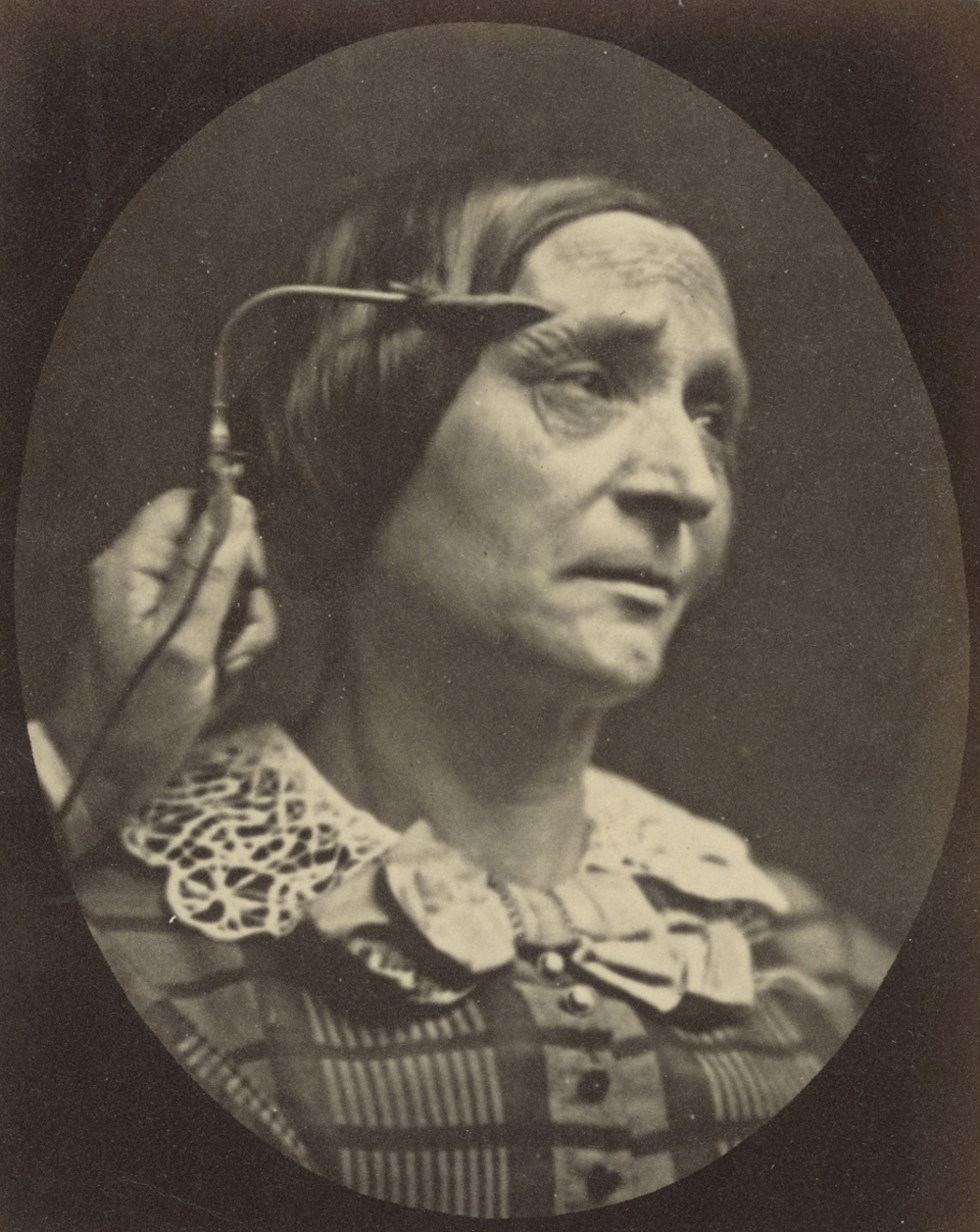
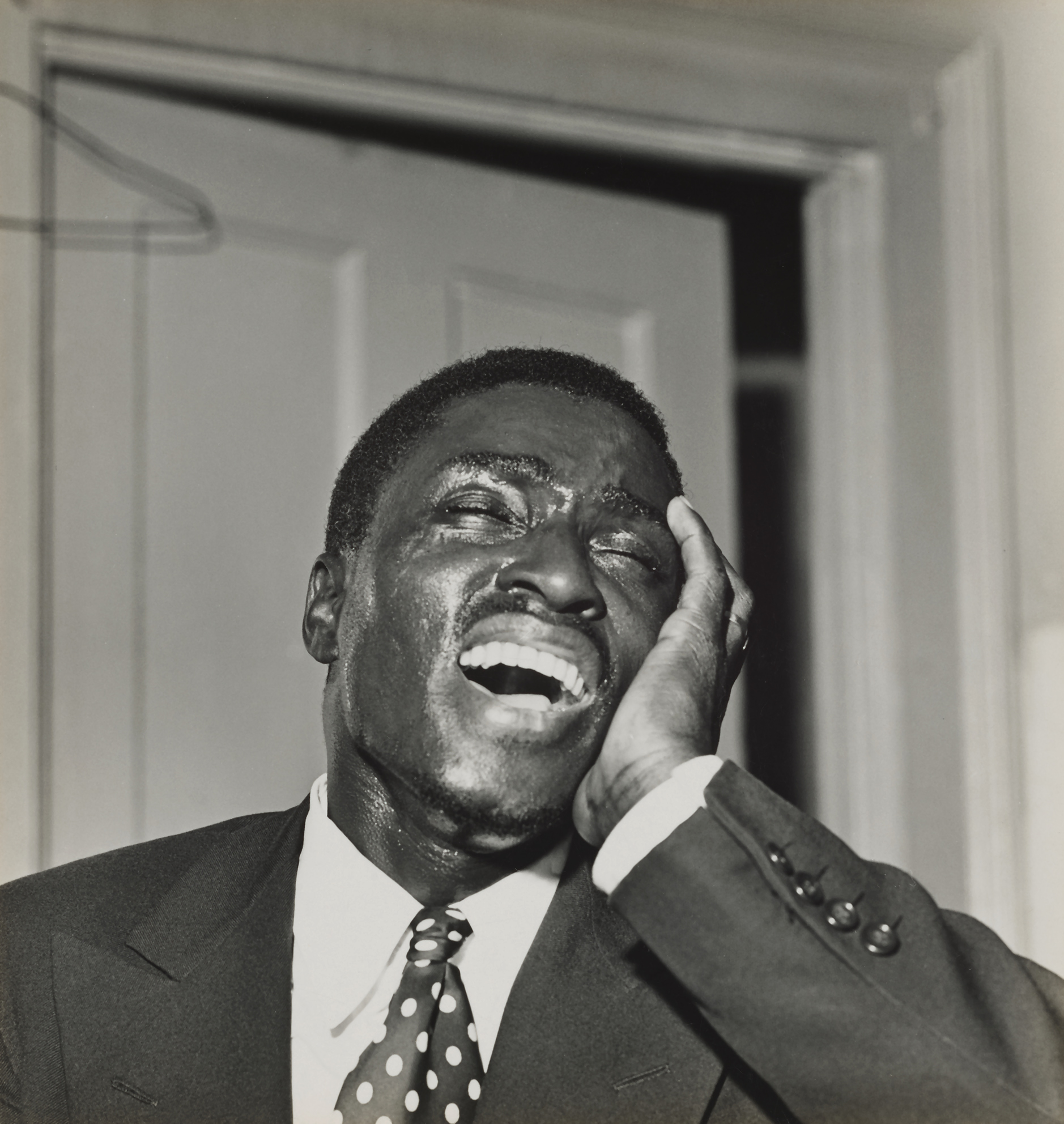
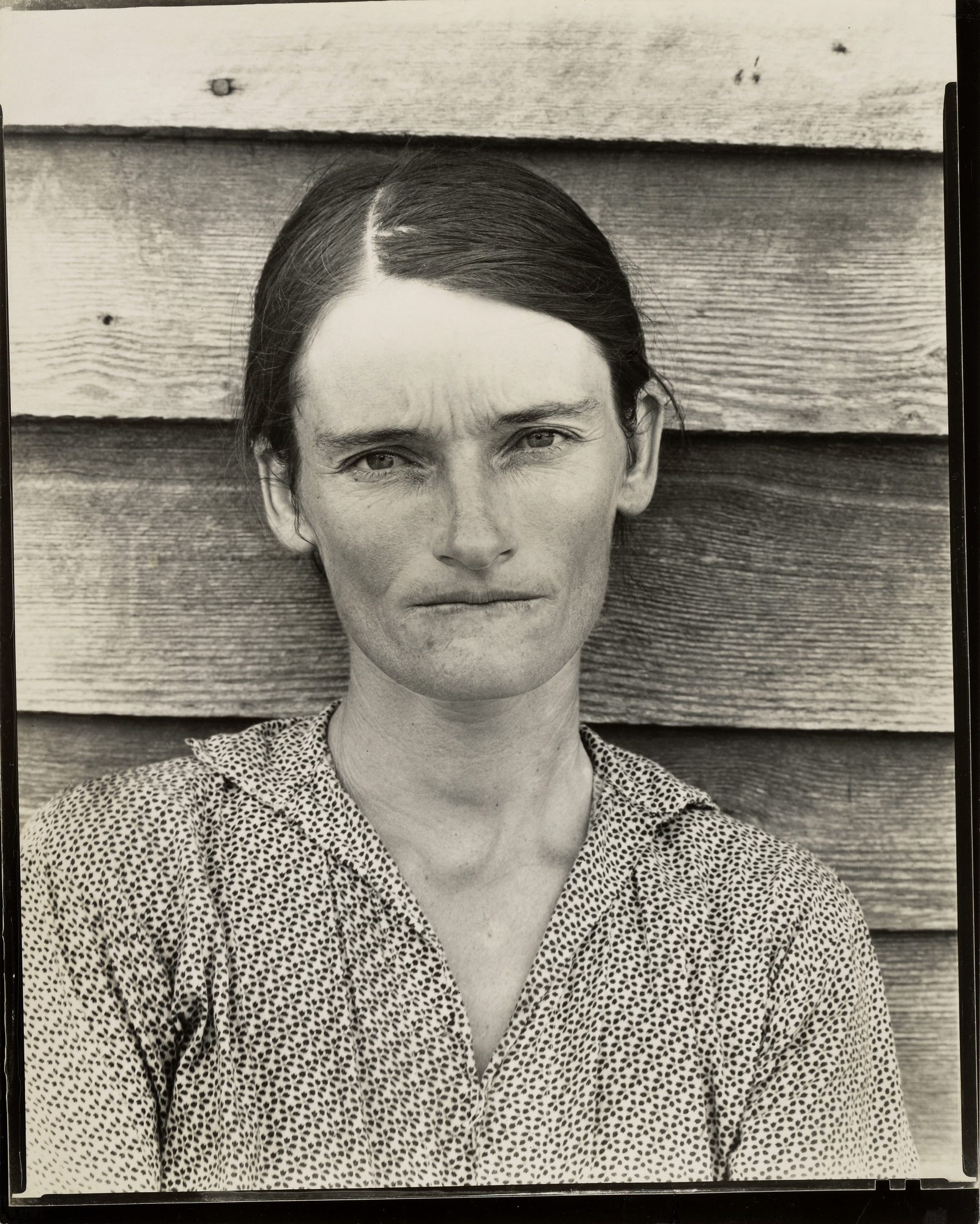
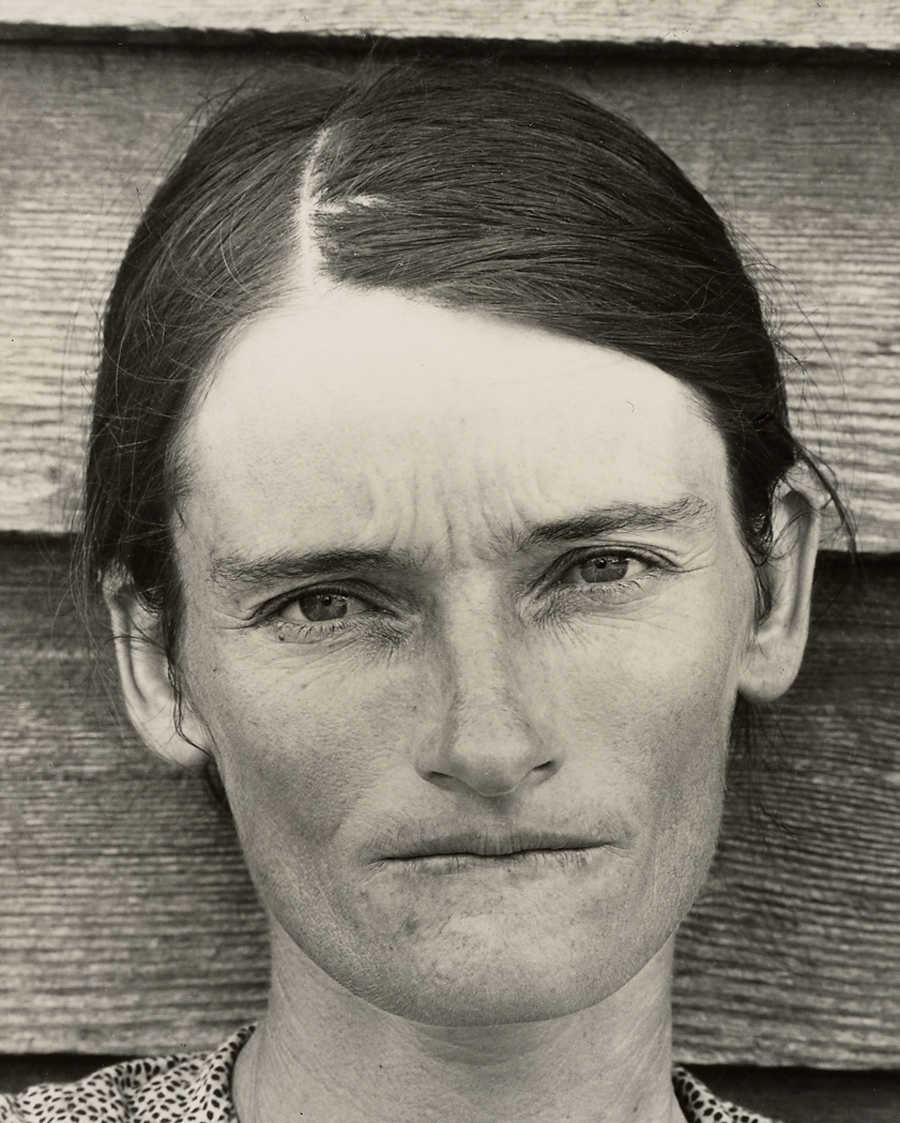
![Lisette Model (American born Austria, 1901-1983) '[War Rally]' 1942](https://artblart.com/wp-content/uploads/2018/06/in-focus-expressions-2-web.jpg "Lisette Model (American born Austria, 1901-1983) '[War Rally]' 1942")
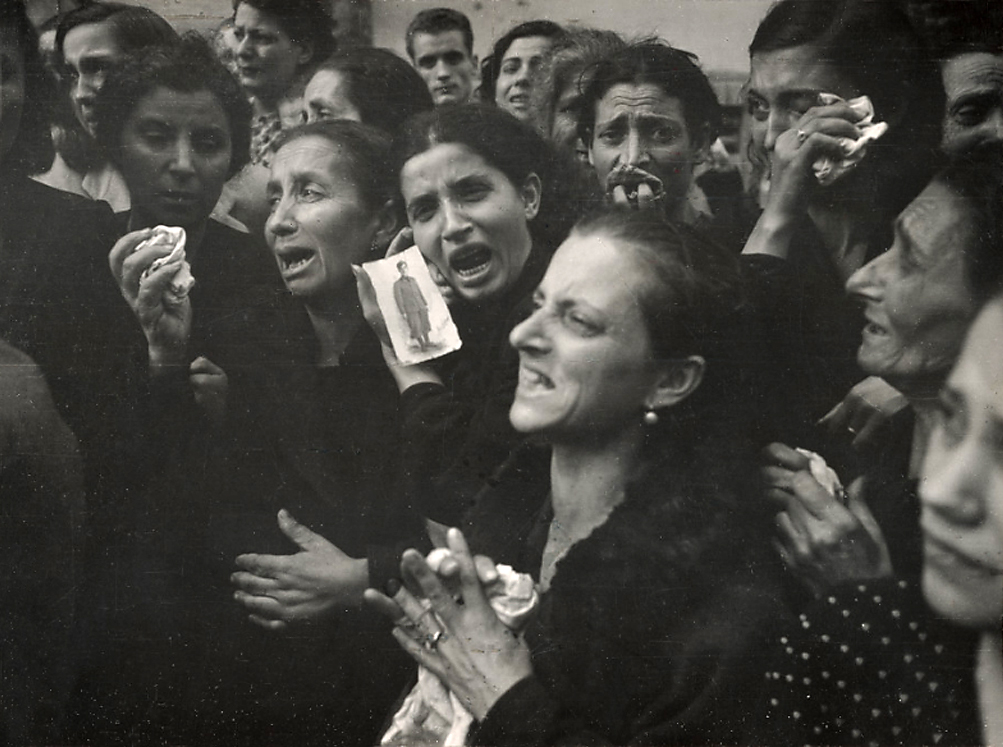
![Unknown maker (American) '[Smiling Man]' 1860](https://artblart.com/wp-content/uploads/2018/06/unknown-maker-smiling-man-1860-web.jpg "Unknown maker (American) '[Smiling Man]' 1860")
![Baron Adolf de Meyer (American born France, 1868-1946) '[Ruth St. Denis]' c. 1918](https://artblart.com/wp-content/uploads/2018/06/baron-adolf-de-meyer-ruth-st-denis-c-1918-web.jpg "Baron Adolf de Meyer (American born France, 1868-1946) '[Ruth St. Denis]' c. 1918")
![Woodbury & Page (British, active 1857-1908) '[Javanese woman seated with legs crossed, basket at side]' c. 1870](https://artblart.com/wp-content/uploads/2018/06/woodbury-and-page-javanese-woman-web.jpg "Woodbury & Page (British, active 1857-1908) '[Javanese woman seated with legs crossed, basket at side]' c. 1870")
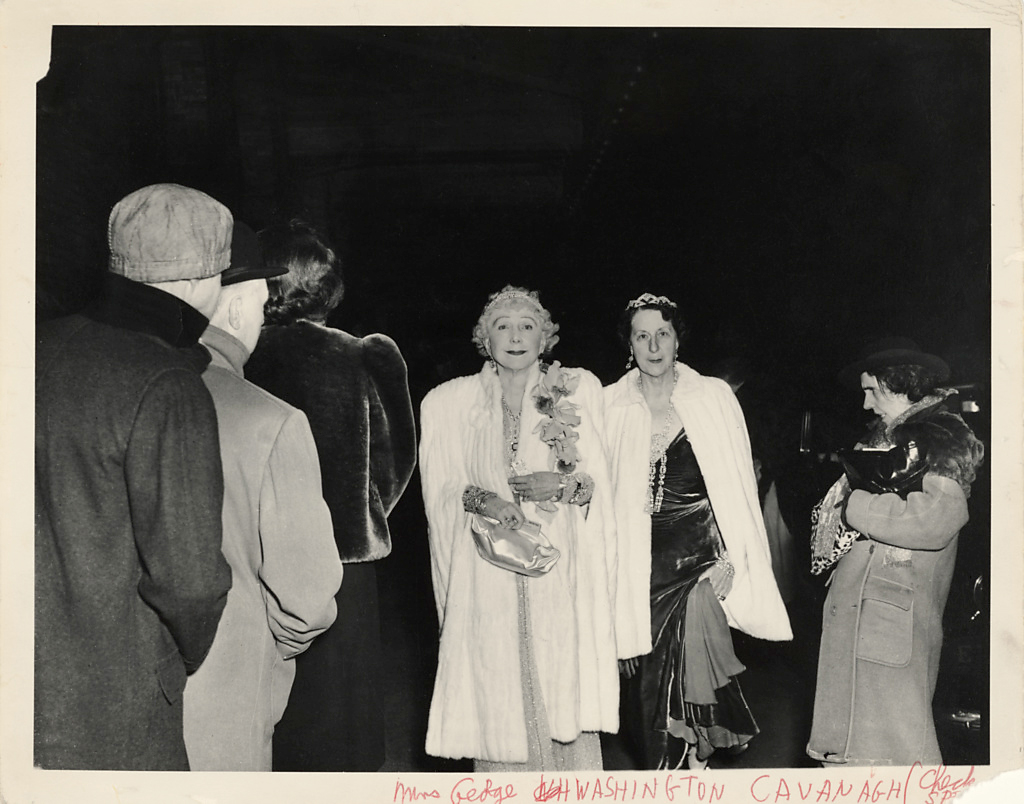
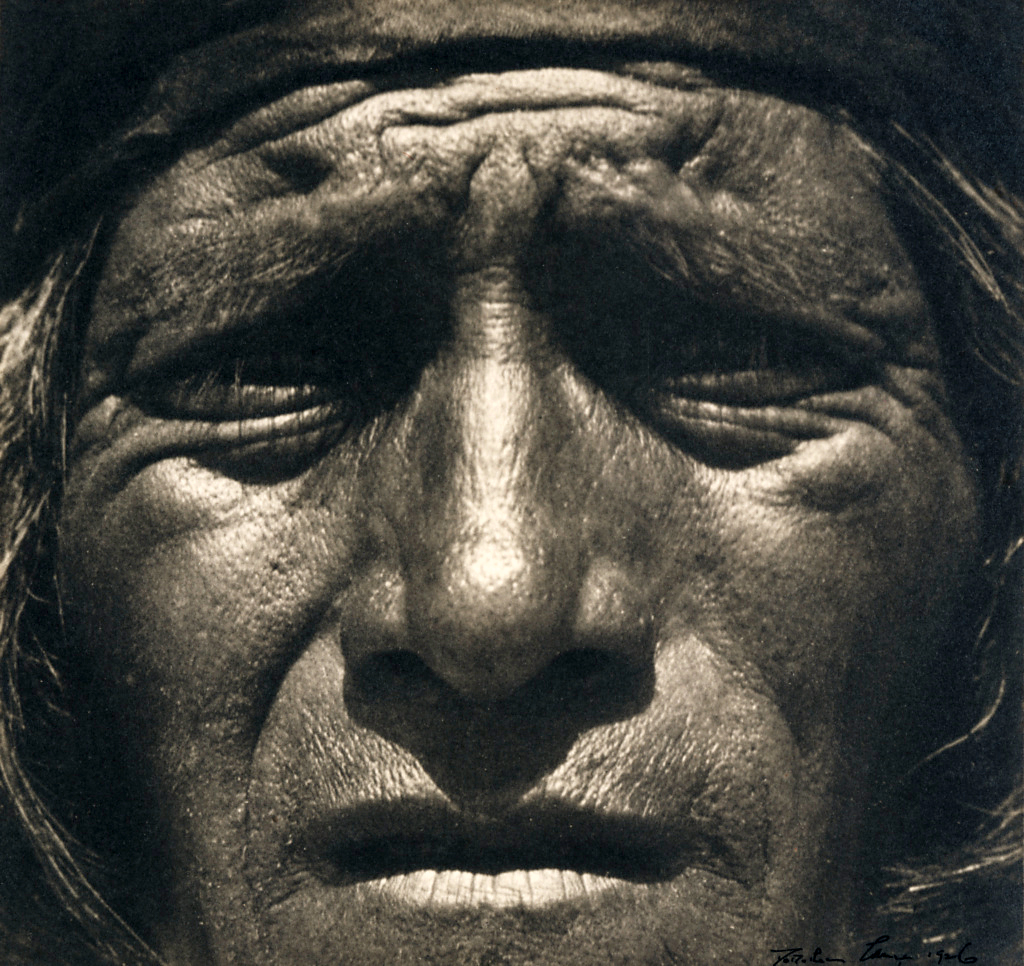
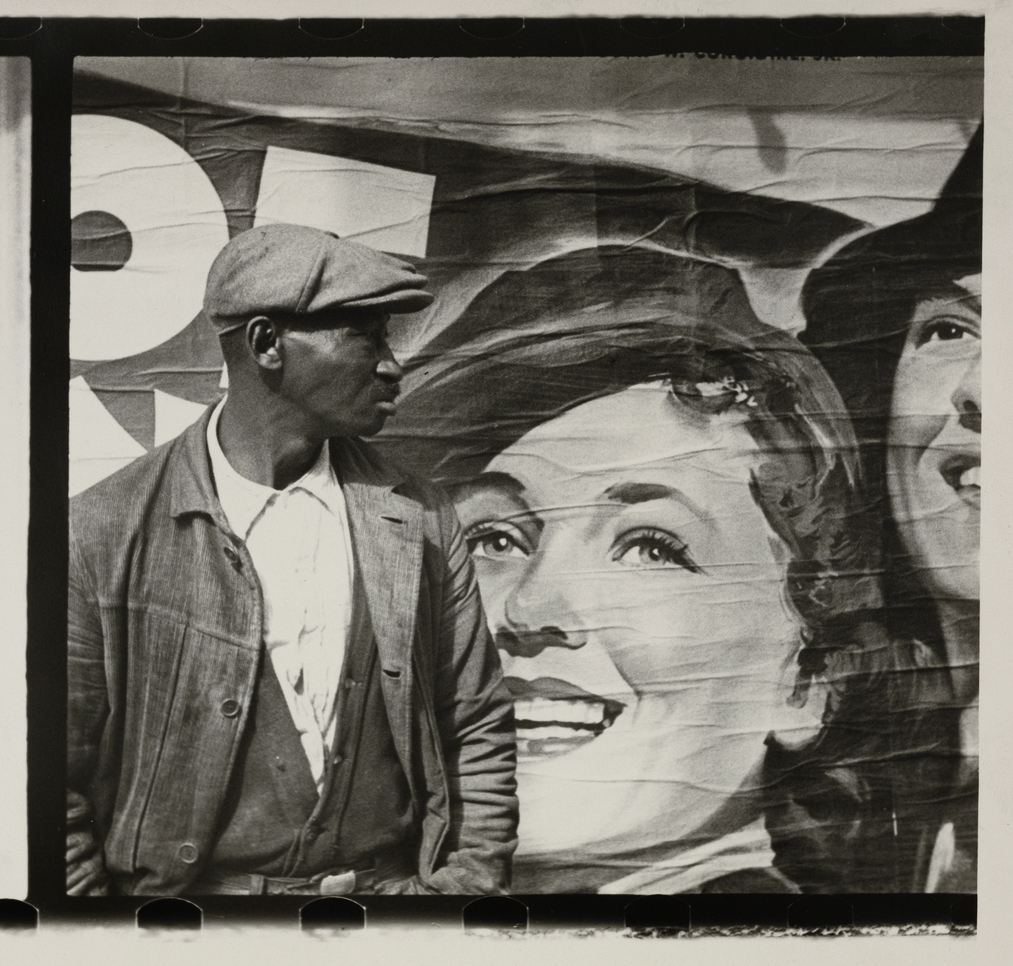
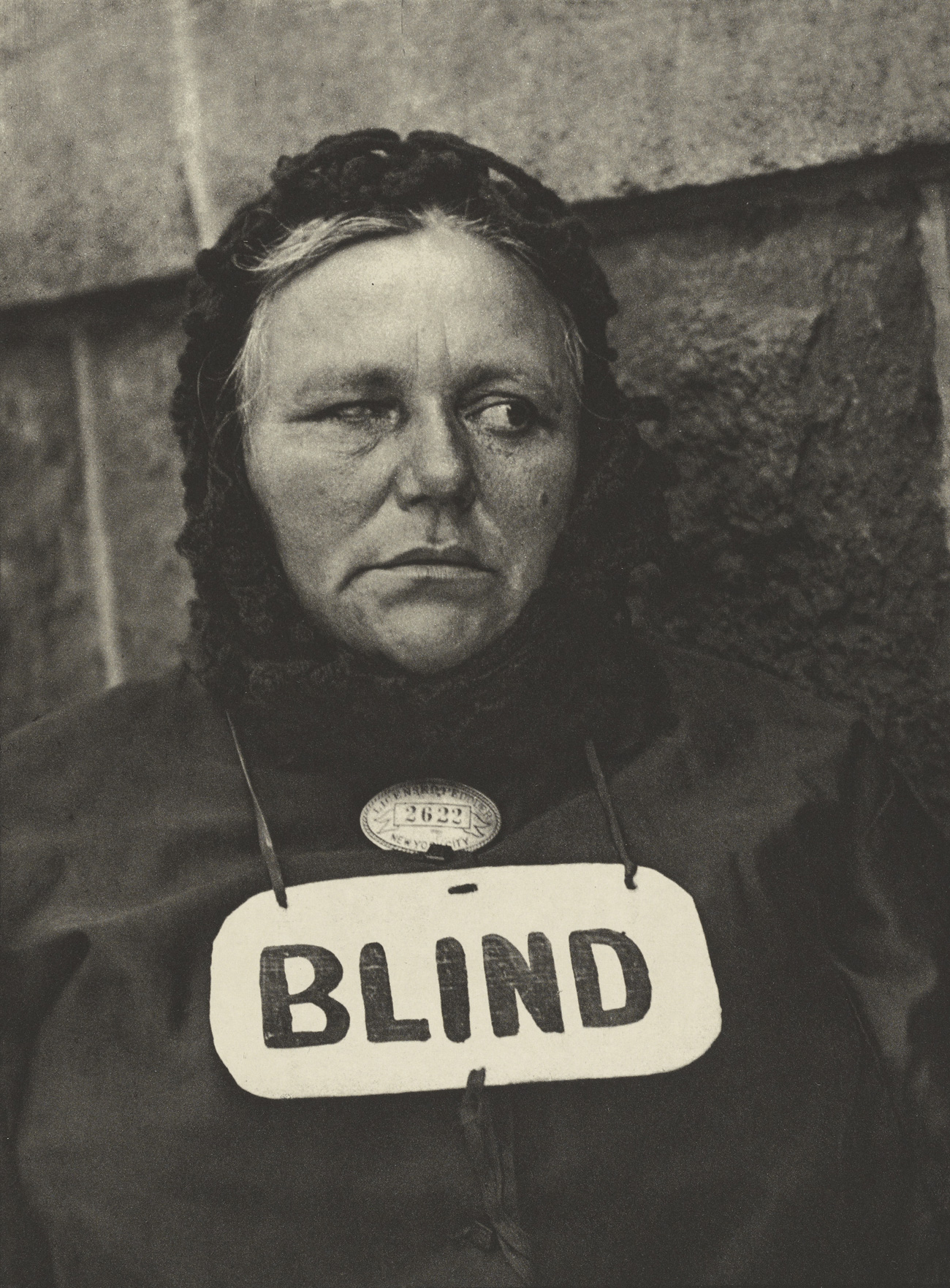
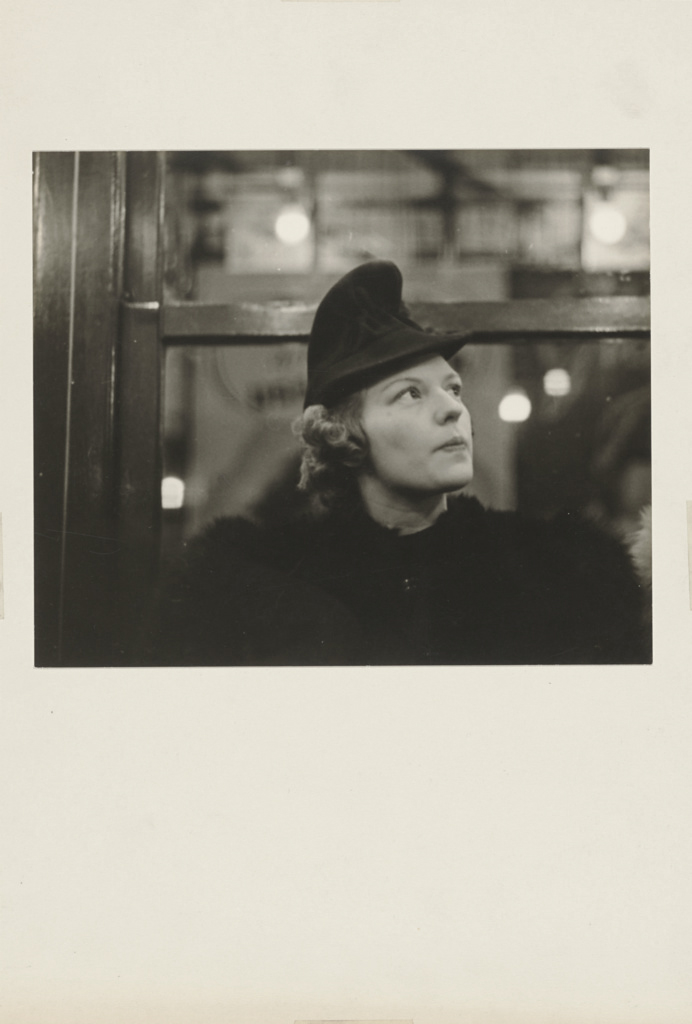
![Camille Silvy (French, 1834-1910) '[Madame Camille Silvy]' c. 1863](https://artblart.com/wp-content/uploads/2018/06/camille-silvy-web.jpg "Camille Silvy (French, 1834-1910) '[Madame Camille Silvy]' c. 1863")
![Mikiko Hara (Japanese, b. 1967) '[Untitled (Making a Void)]' Negative 2001; print about 2007](https://artblart.com/wp-content/uploads/2018/06/mikiko-hara-untitled-web.jpg "Mikiko Hara (Japanese, b. 1967) '[Untitled (Making a Void)]' Negative 2001; print about 2007")

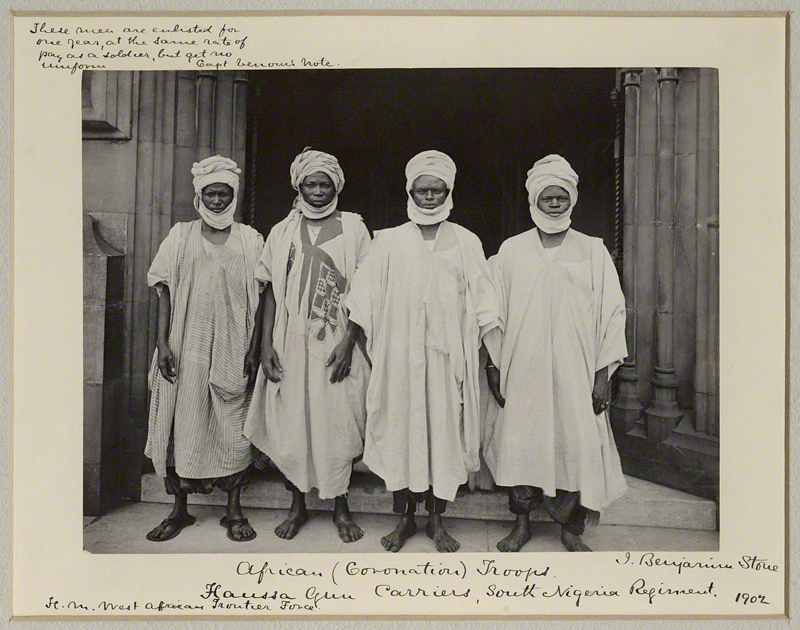
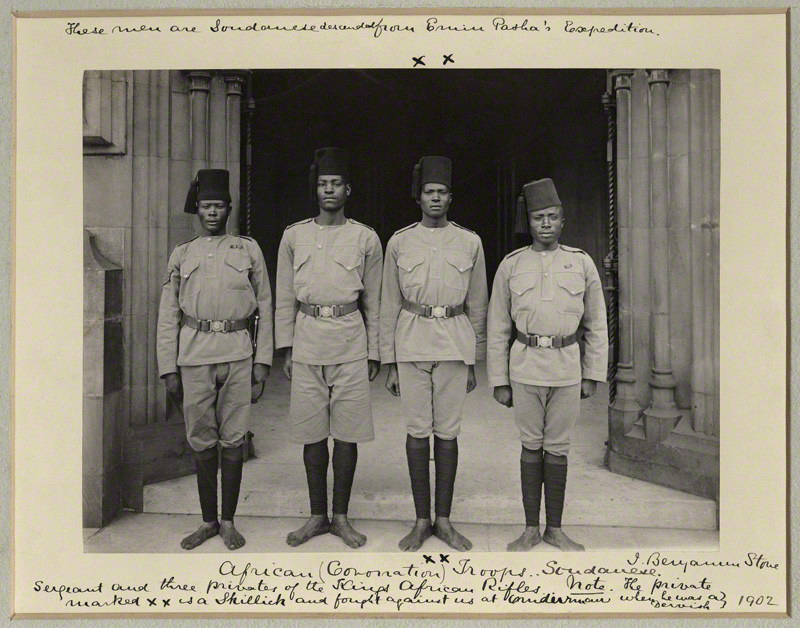


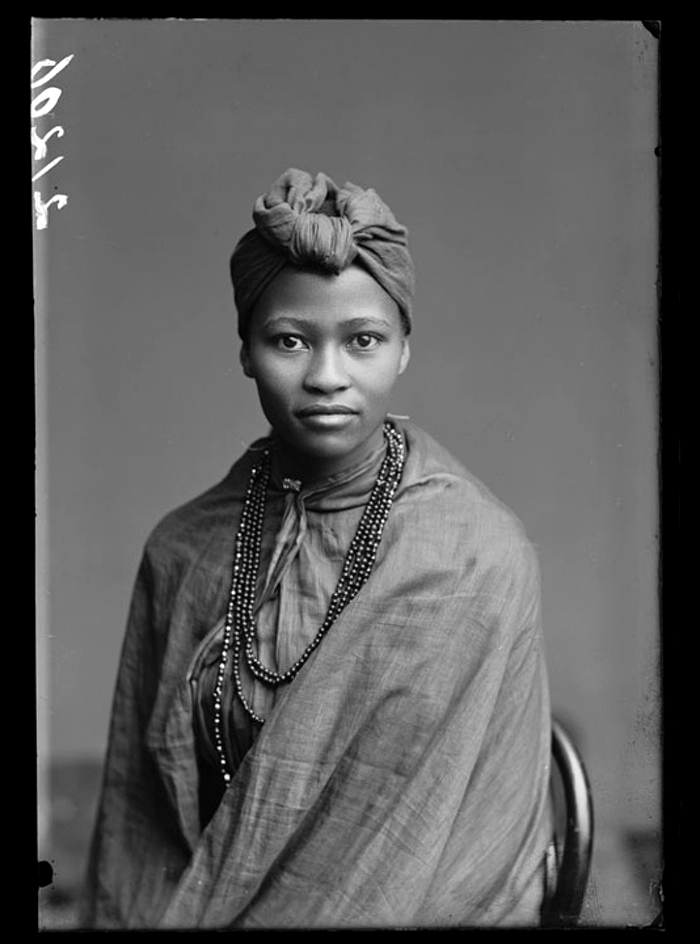


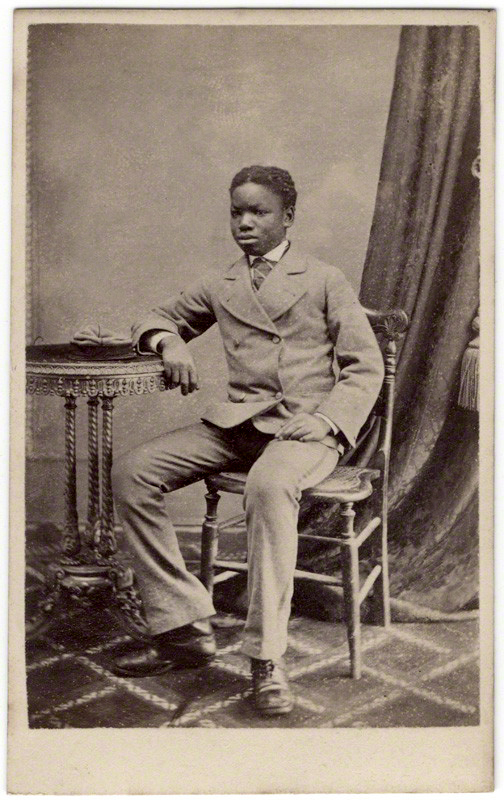

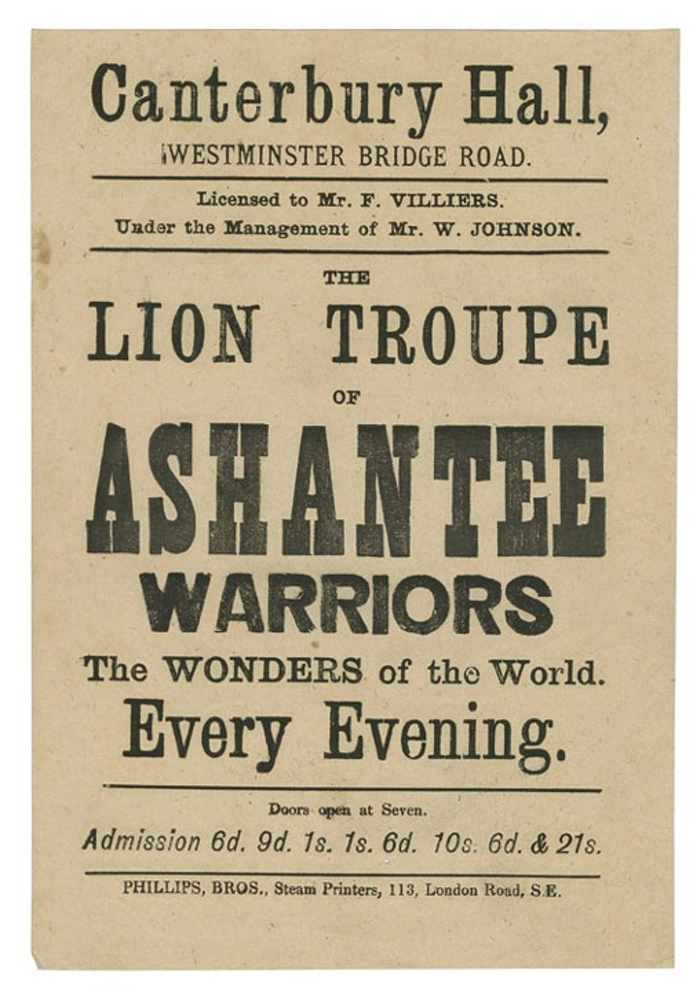

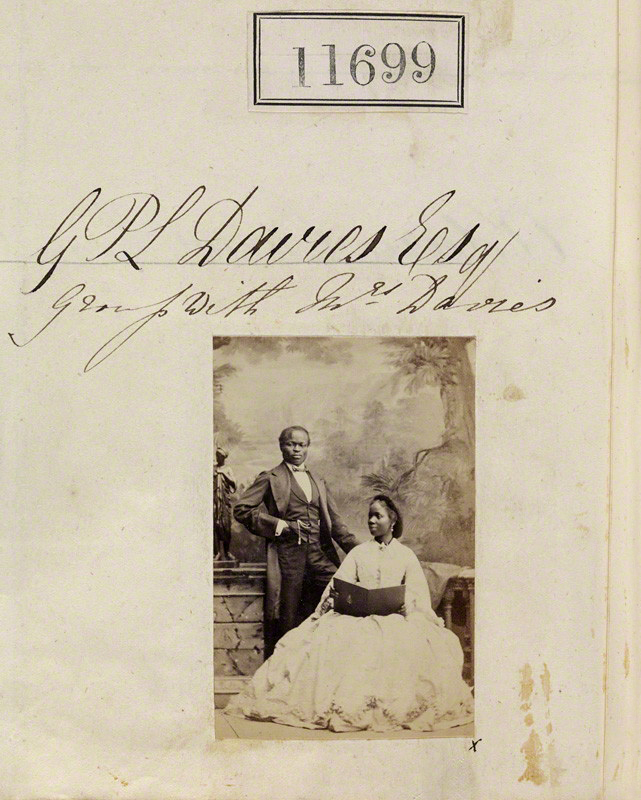
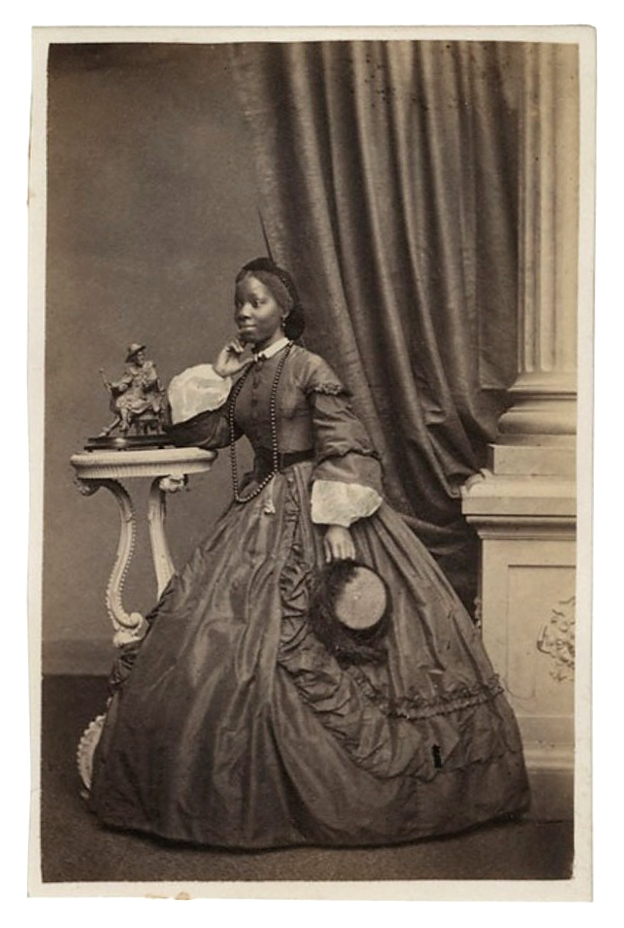

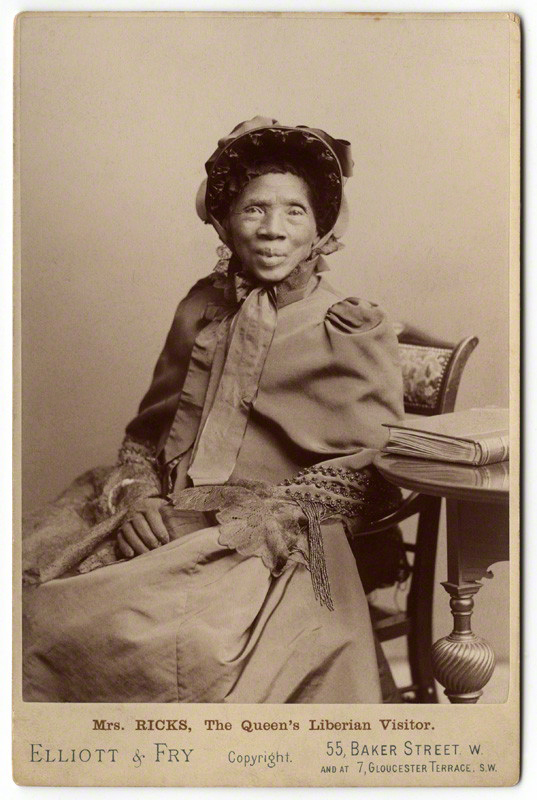

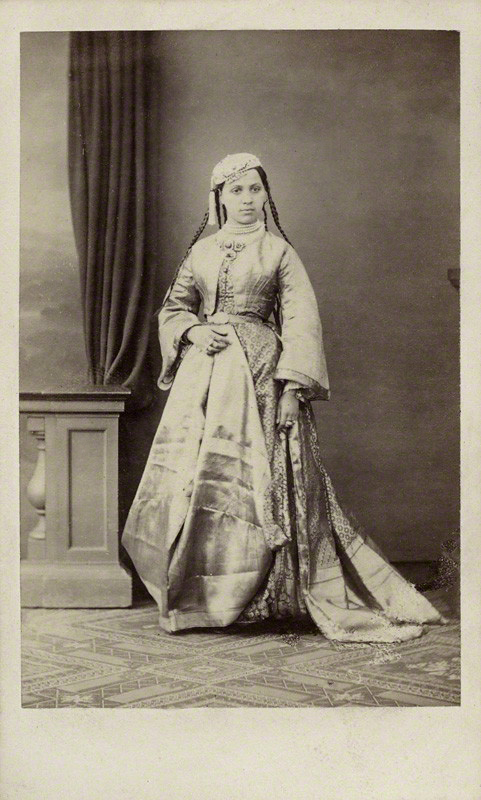
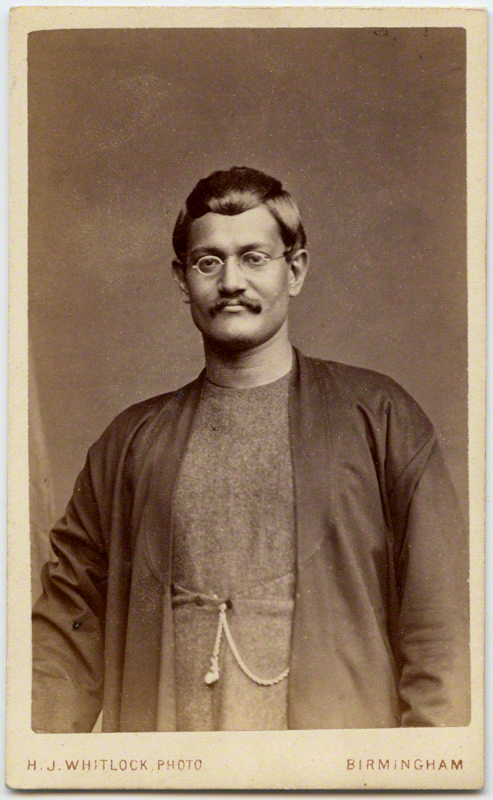
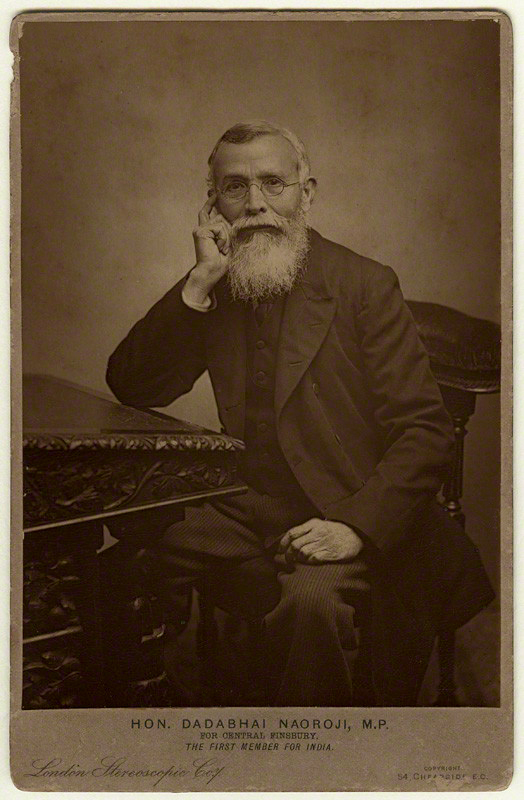


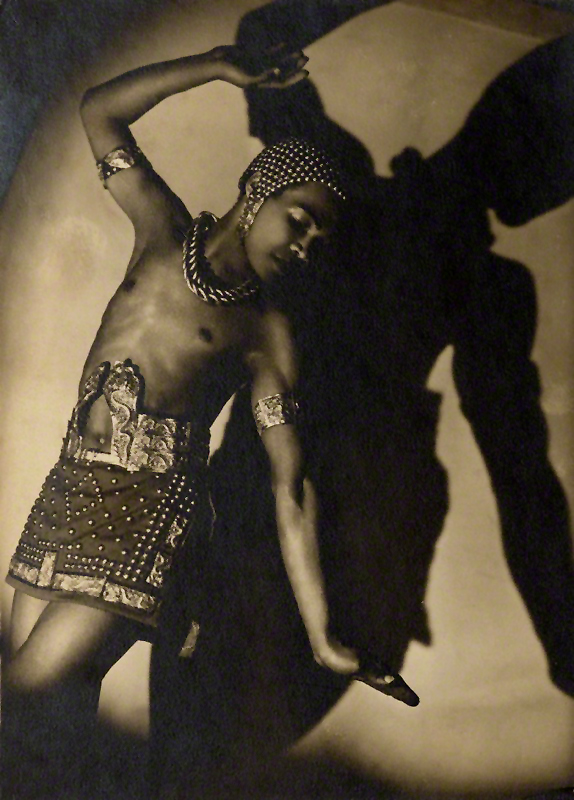
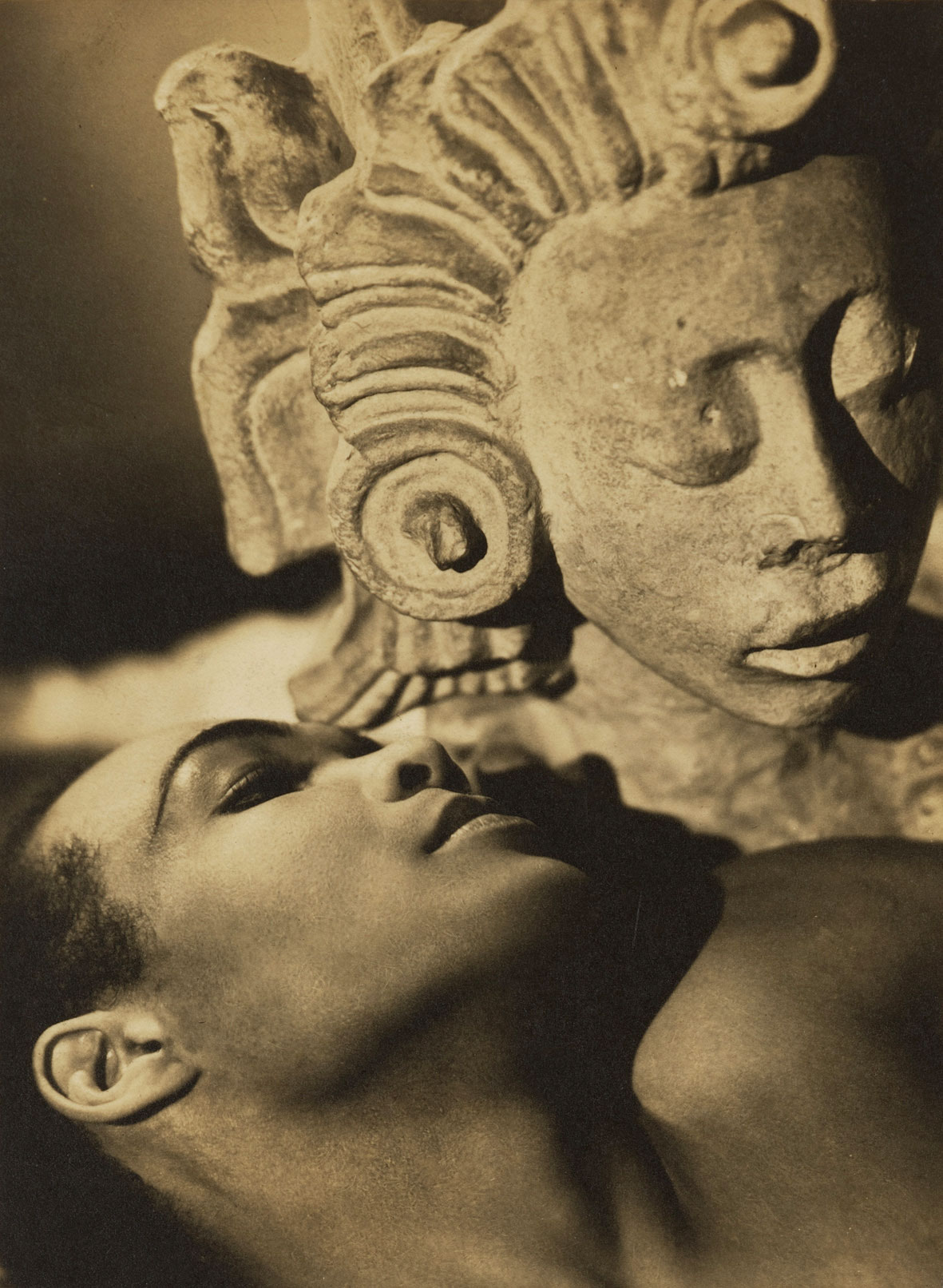


![Platt D. Babbitt (American, 1823-1879, active Niagara Falls, New York 1853-1870) '[Scene at Niagara Falls]' c. 1855 from the exhibition 'In Focus: Play' at the J. Paul Getty Museum at the Getty Center, Los Angeles, December 2014 - May 2015](https://artblart.com/wp-content/uploads/2015/03/platt_d_babbitt_scene_at_niagara_falls-web.jpg "Platt D. Babbitt (American, 1823-1879, active Niagara Falls, New York 1853-1870) '[Scene at Niagara Falls]' c. 1855 from the exhibition 'In Focus: Play' at the J. Paul Getty Museum at the Getty Center, Los Angeles, December 2014 - May 2015")

![Camille Silvy (French, 1834-1910, active in London) 'Group of their Royal Highnesses the Princess Clementine de Saxe Cobourg Gotha, her Sons and Daughter, the Duke d'Aumale, the Count d'Eu, the Duke d'Alencon, and the Duke de Penthievre [in England]' 1864](https://artblart.com/wp-content/uploads/2015/03/camille-silvy-group-of-their-royal-web.jpg "Camille Silvy (French, 1834-1910, active in London) 'Group of their Royal Highnesses the Princess Clementine de Saxe Cobourg Gotha, her Sons and Daughter, the Duke d'Aumale, the Count d'Eu, the Duke d'Alencon, and the Duke de Penthievre [in England]' 1864")
![Camille Silvy (French, 1834-1910, active in London) 'Group of their Royal Highnesses the Princess Clementine de Saxe Cobourg Gotha, her Sons and Daughter, the Duke d'Aumale, the Count d'Eu, the Duke d'Alencon, and the Duke de Penthievre [in England]' 1864 (detail)](https://artblart.com/wp-content/uploads/2015/03/camille-silvy-group-of-their-royal-detail.jpg "Camille Silvy (French, 1834-1910, active in London) 'Group of their Royal Highnesses the Princess Clementine de Saxe Cobourg Gotha, her Sons and Daughter, the Duke d'Aumale, the Count d'Eu, the Duke d'Alencon, and the Duke de Penthievre [in England]' 1864 (detail)")
![Man Ray (American, 1890-1976) '[Marcel Duchamp and Raoul de Roussy de Sales Playing Chess]' 1925](https://artblart.com/wp-content/uploads/2015/03/gm_05332701-web.jpg "Man Ray (American, 1890-1976) '[Marcel Duchamp and Raoul de Roussy de Sales Playing Chess]' 1925")
![Weegee (Arthur Fellig) (American born Austria, 1899-1968) '[Summer, The Lower East Side, New York City]' Summer 1937](https://artblart.com/wp-content/uploads/2015/03/gm_04304601-web.jpg "Weegee (Arthur Fellig) (American born Austria, 1899-1968) '[Summer, The Lower East Side, New York City]' Summer 1937")
![André Kertész (American born Hungary, 1894-1985) '[Underwater Swimmer]' Negative 1917; print 1970s](https://artblart.com/wp-content/uploads/2015/03/gm_06225401-web.jpg "André Kertész (American born Hungary, 1894-1985) '[Underwater Swimmer]' Negative 1917; print 1970s")
![Unknown photographer. '[Barnum and Bailey Circus Tent in Paris, France]' 1901-1902](https://artblart.com/wp-content/uploads/2015/03/gm_05045201-web.jpg "Unknown photographer. '[Barnum and Bailey Circus Tent in Paris, France]' 1901-1902")
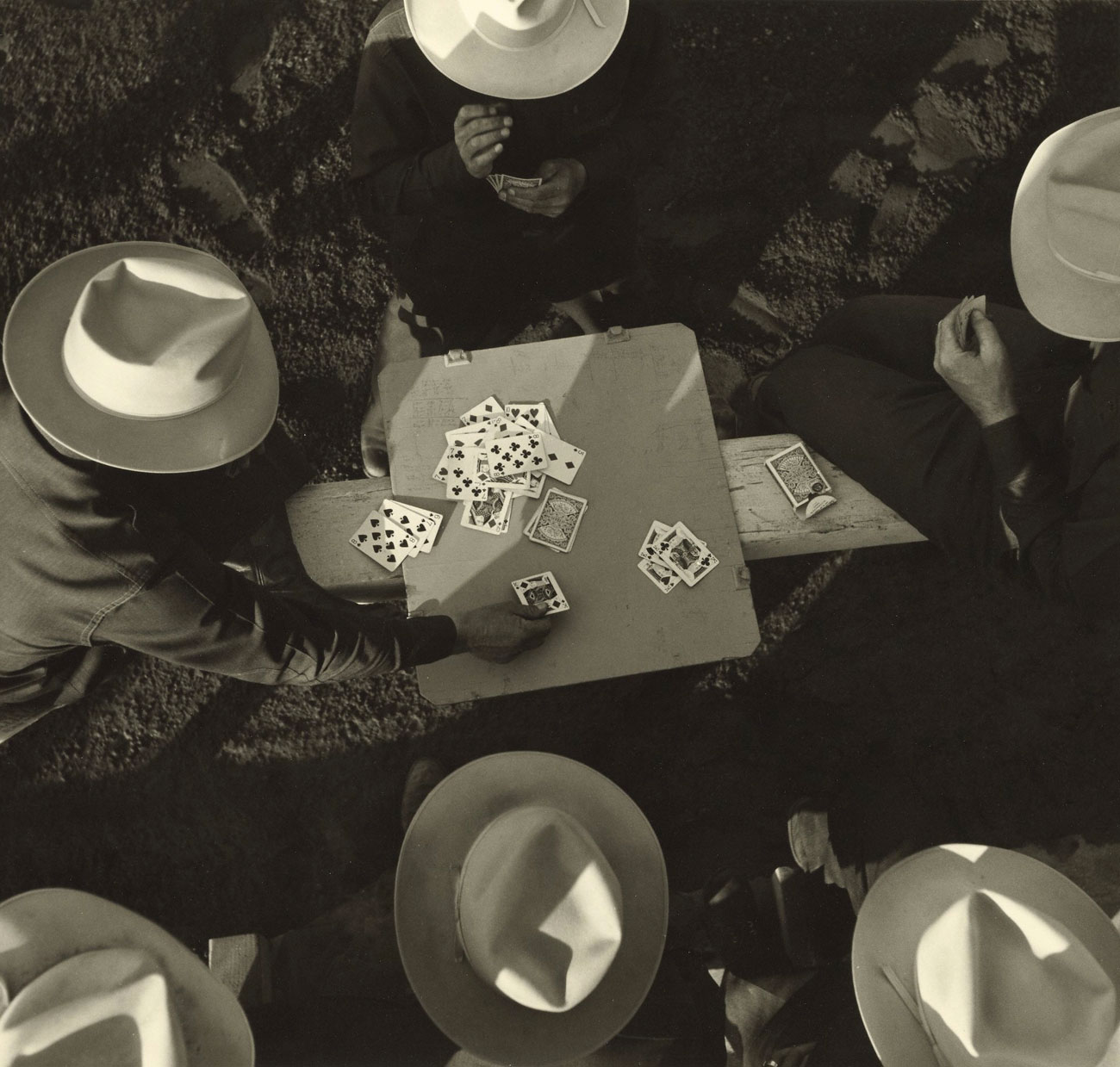


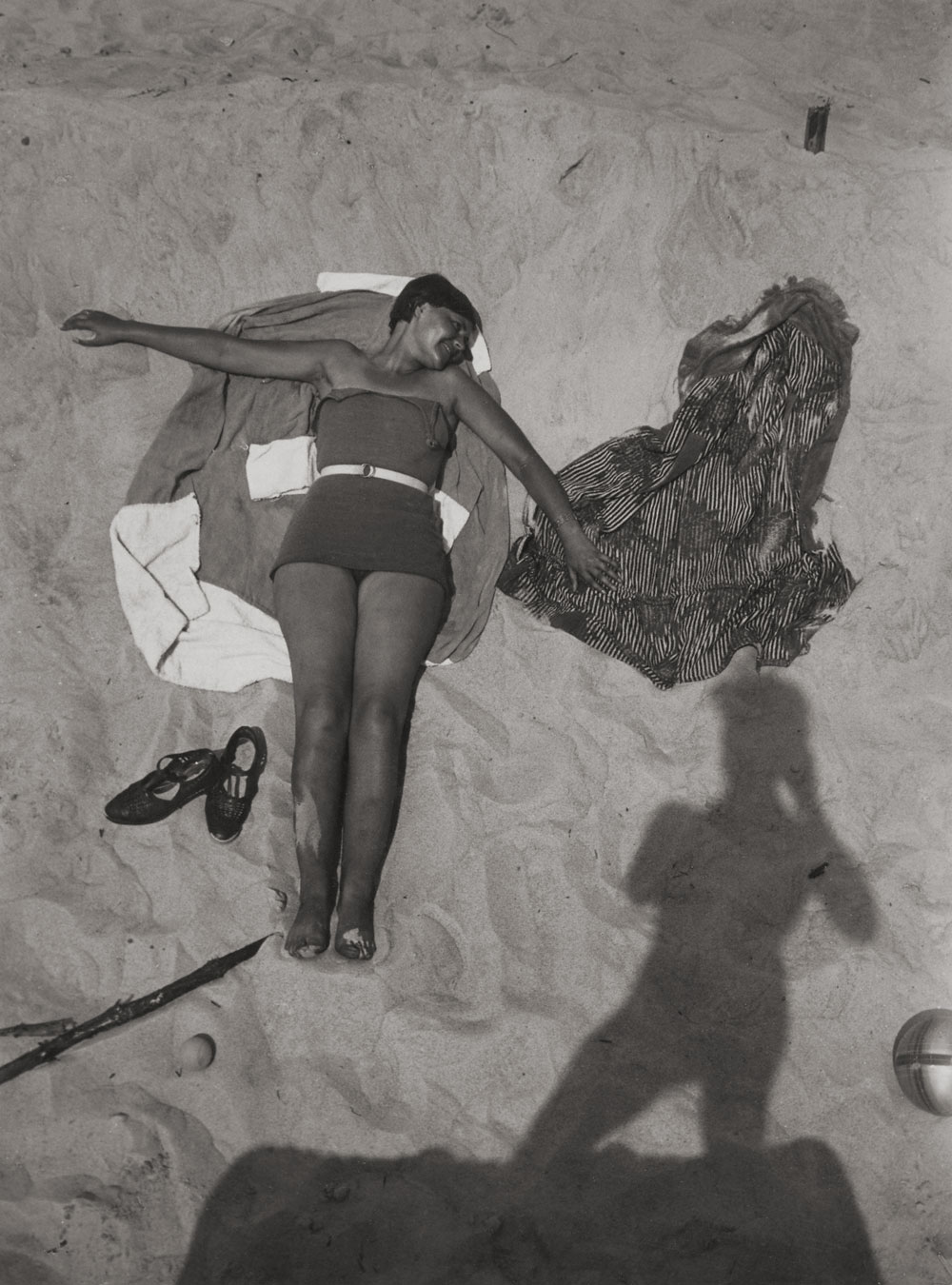


![Camille Silvy (French, 1834-1910) '[River Scene, France]' Negative 1858; print 1860s from the exhibition 'Camille Silvy, Photographer of Modern Life, 1834-1910' at the National Portrait Gallery, London, July - Oct 2010](https://artblart.com/wp-content/uploads/2010/10/silvy-river-scene-web.jpg "Camille Silvy (French, 1834-1910) '[River Scene, France]' Negative 1858; print 1860s from the exhibition 'Camille Silvy, Photographer of Modern Life, 1834-1910' at the National Portrait Gallery, London, July - Oct 2010")
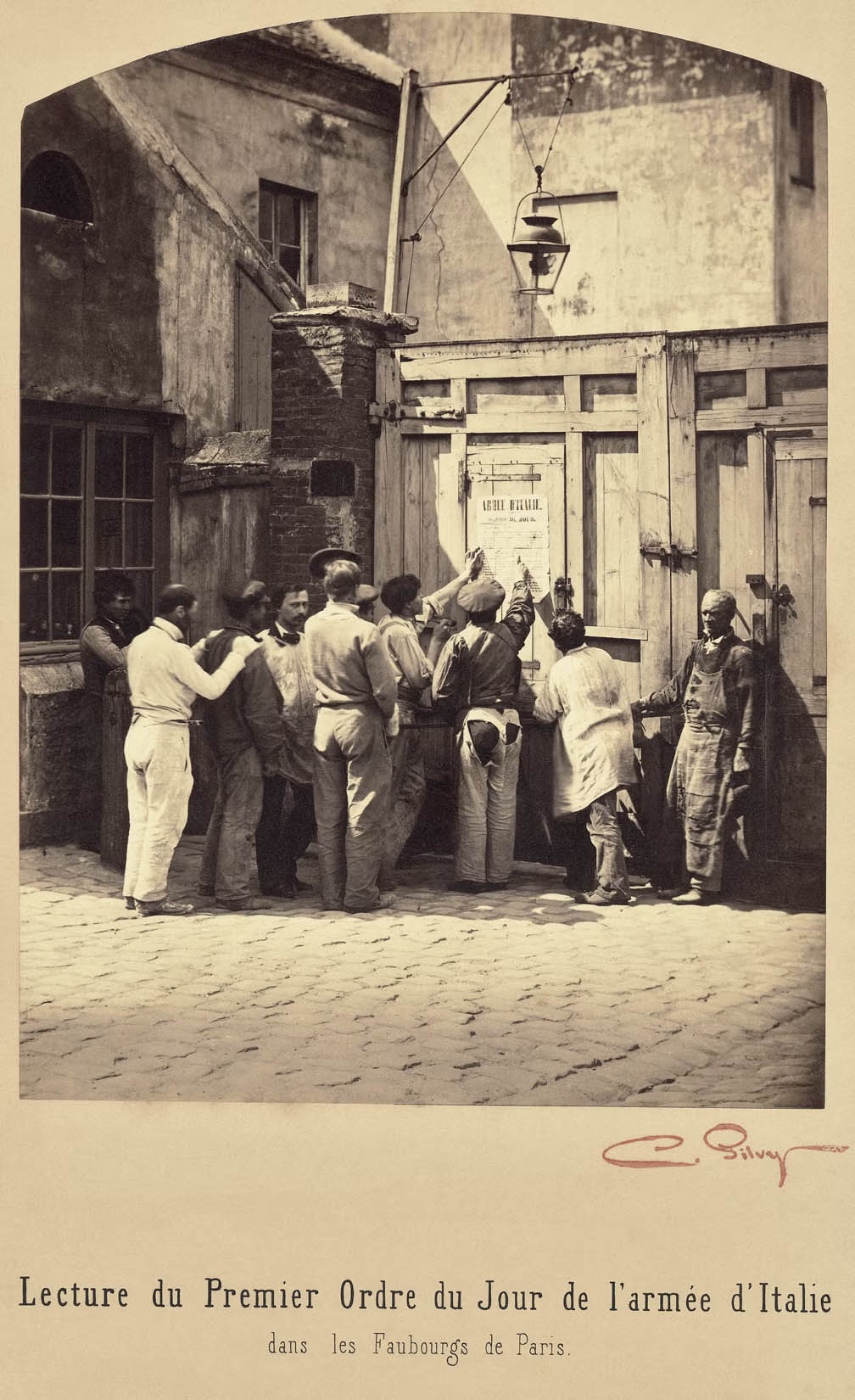

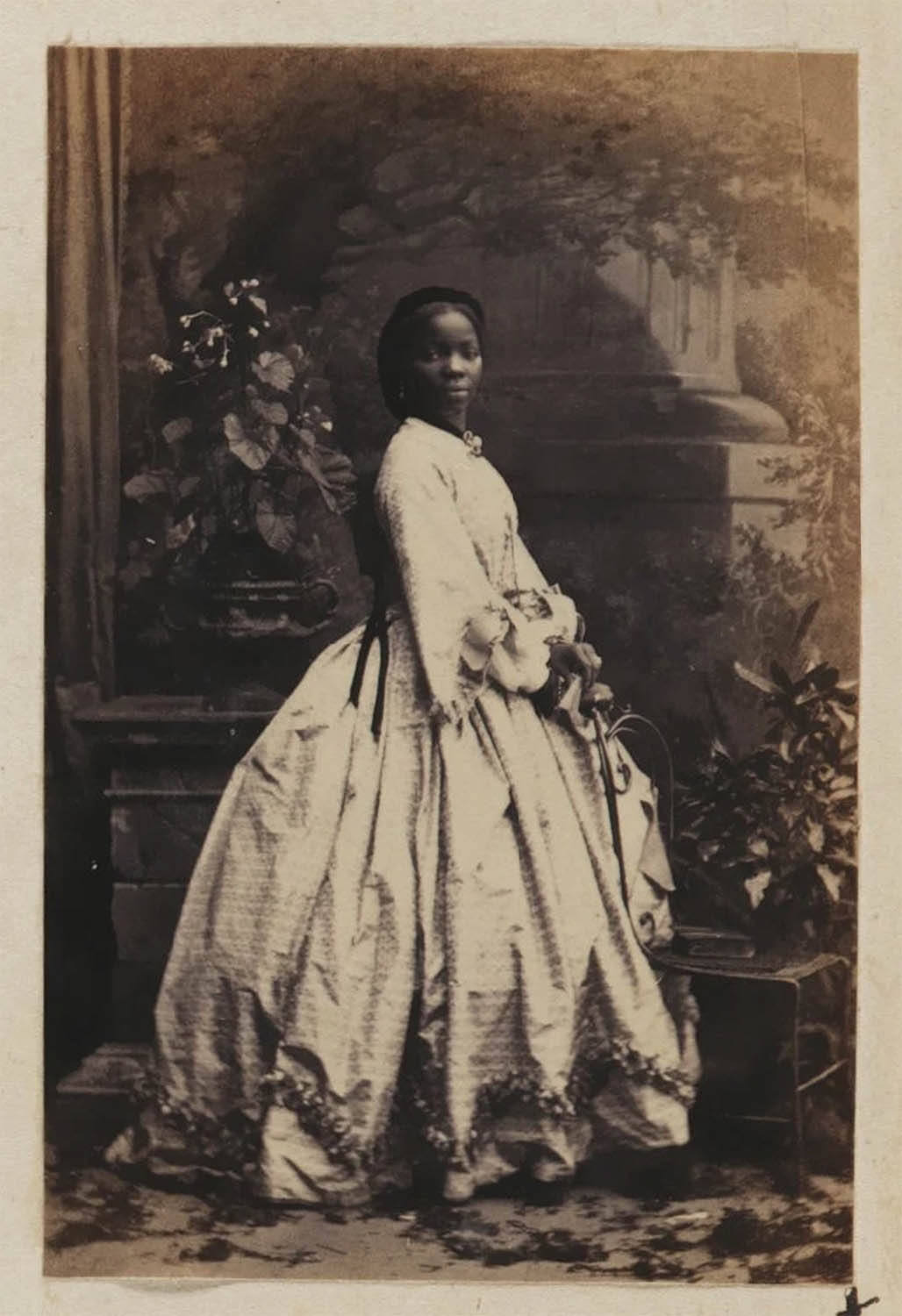
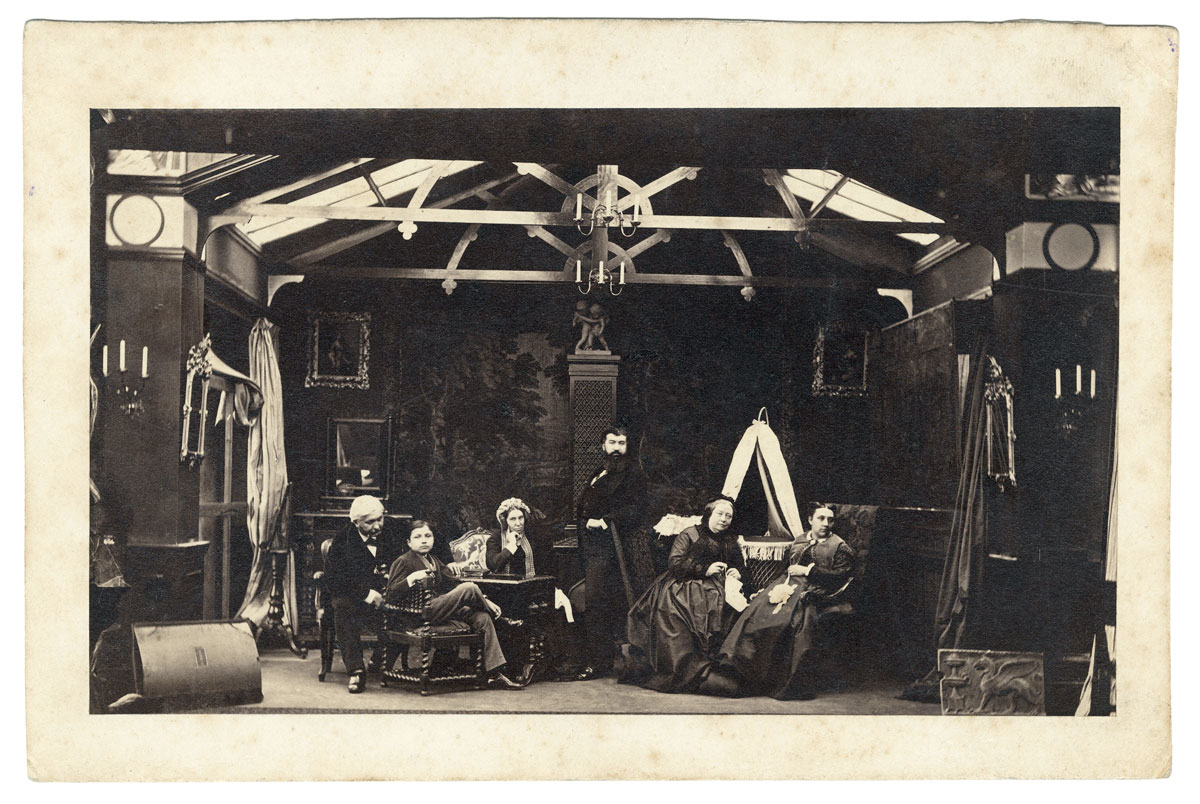


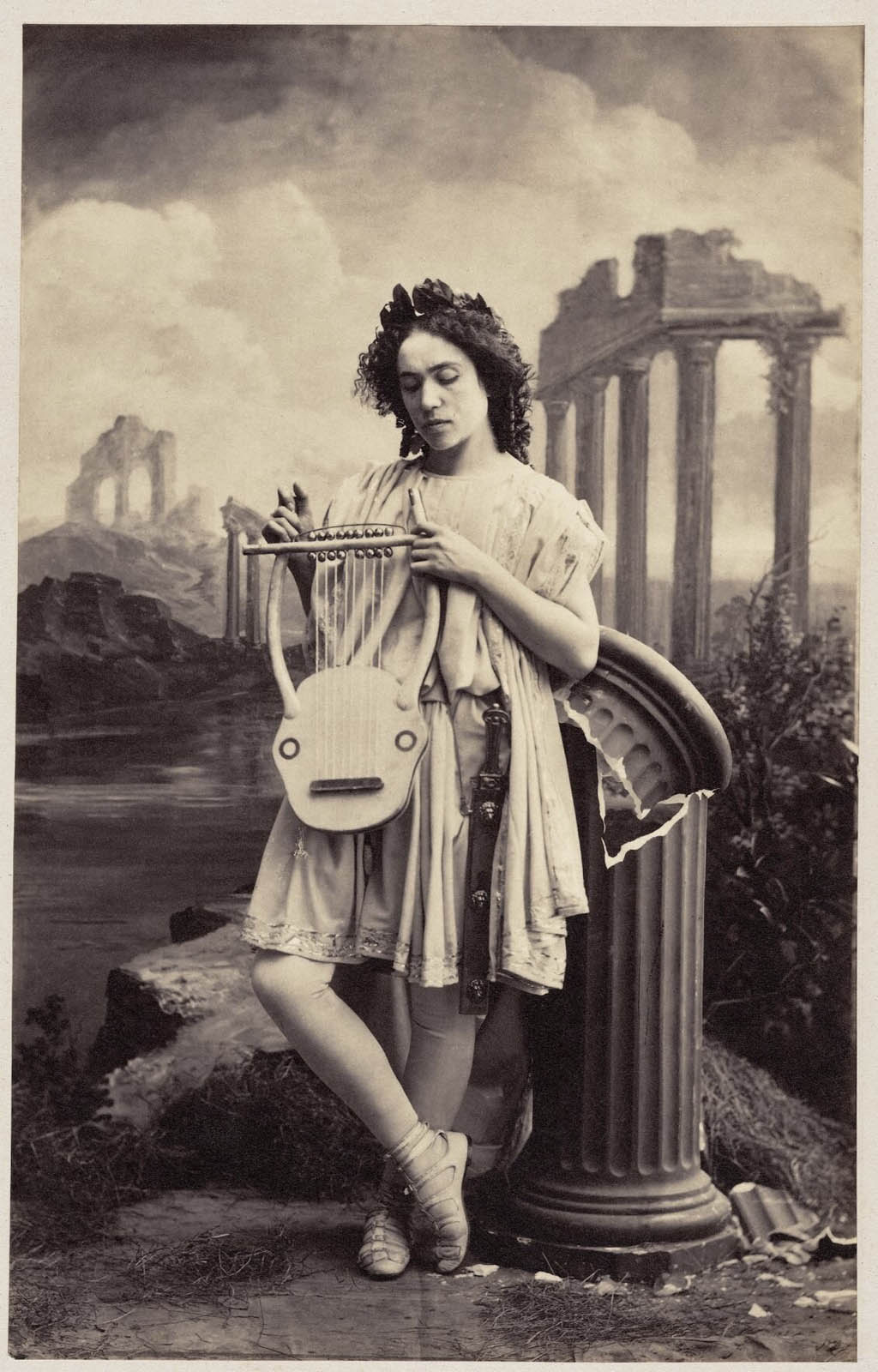
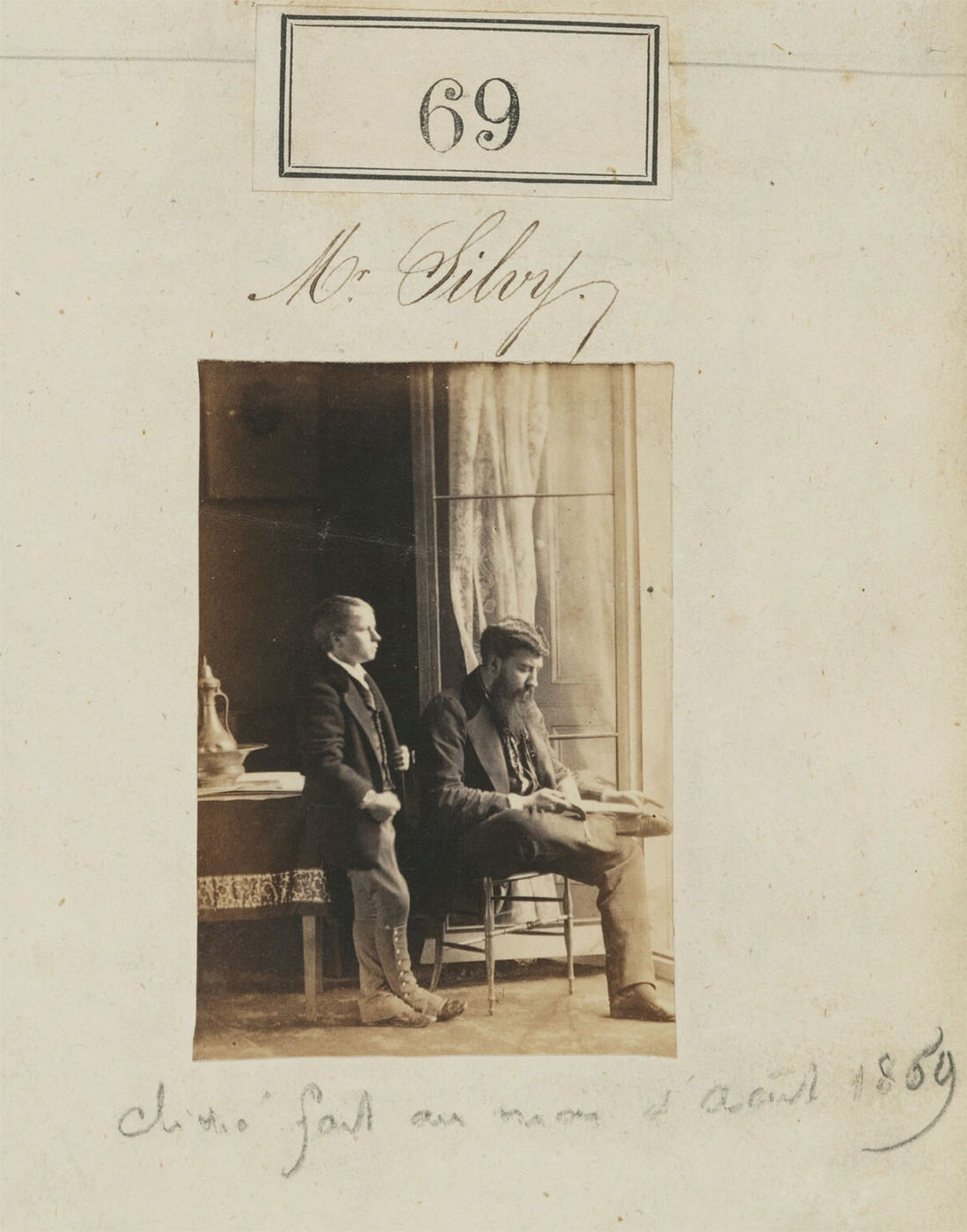
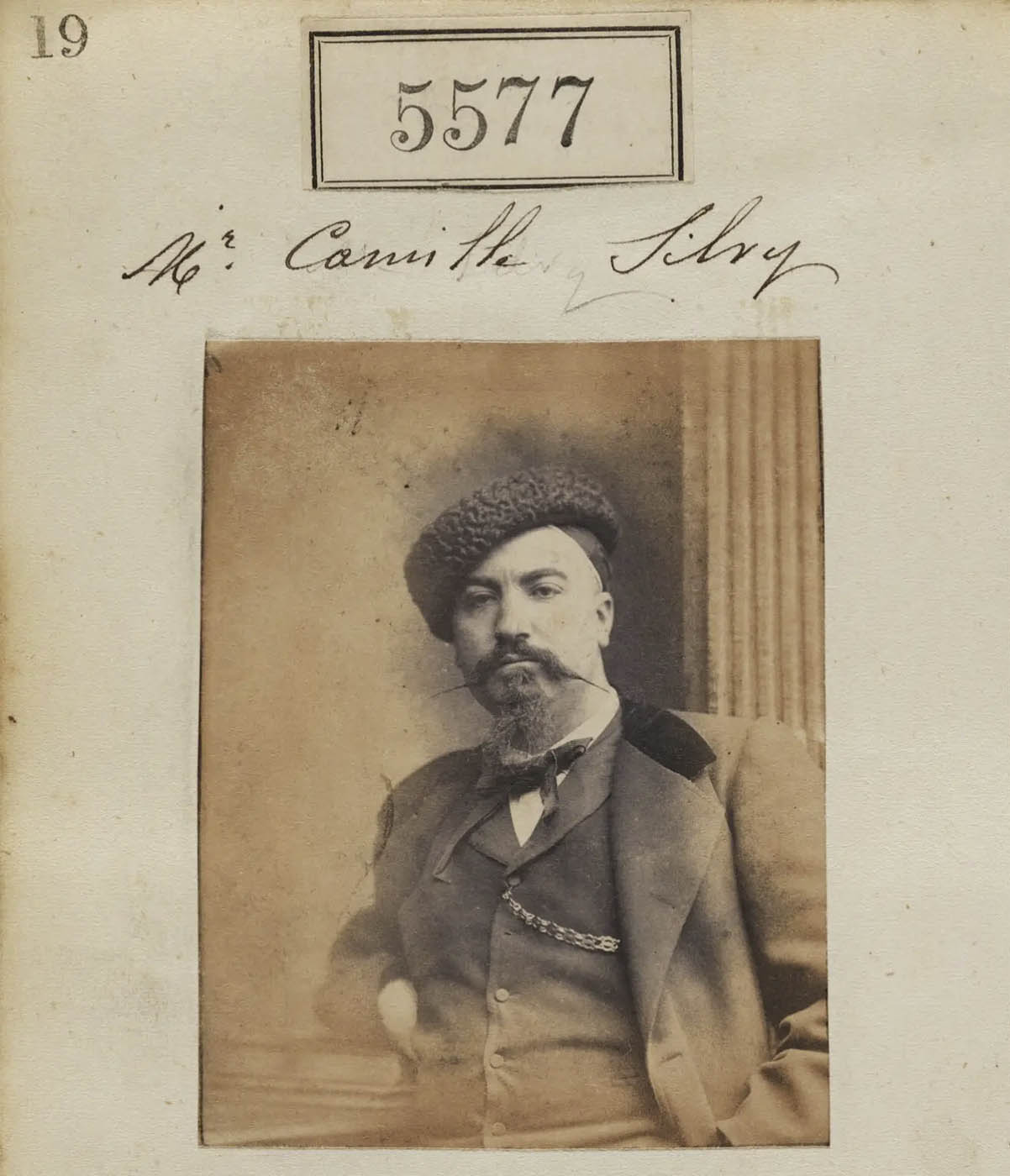
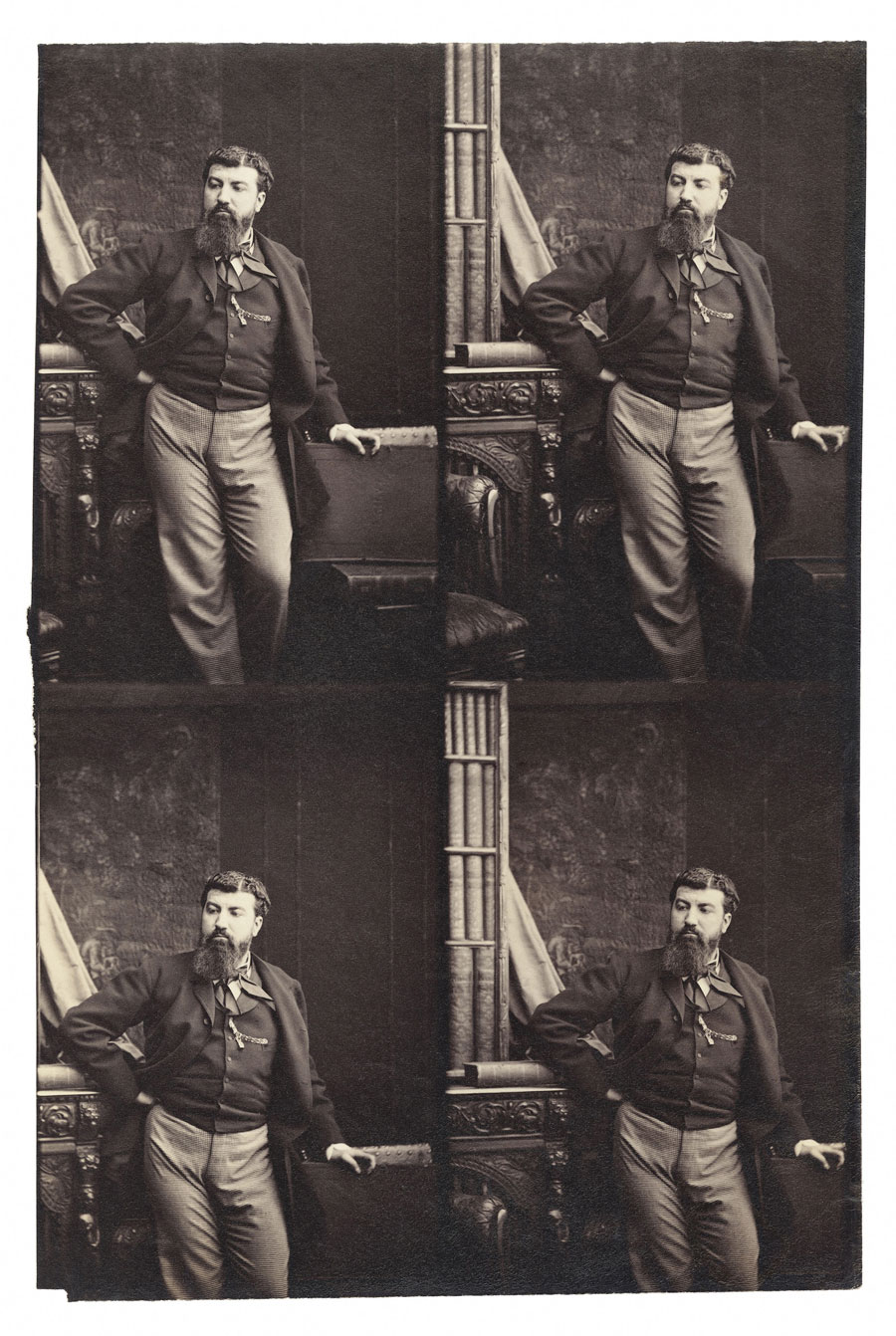
 Art Blart _ art and cultural memory archive
You must be logged in to post a comment.