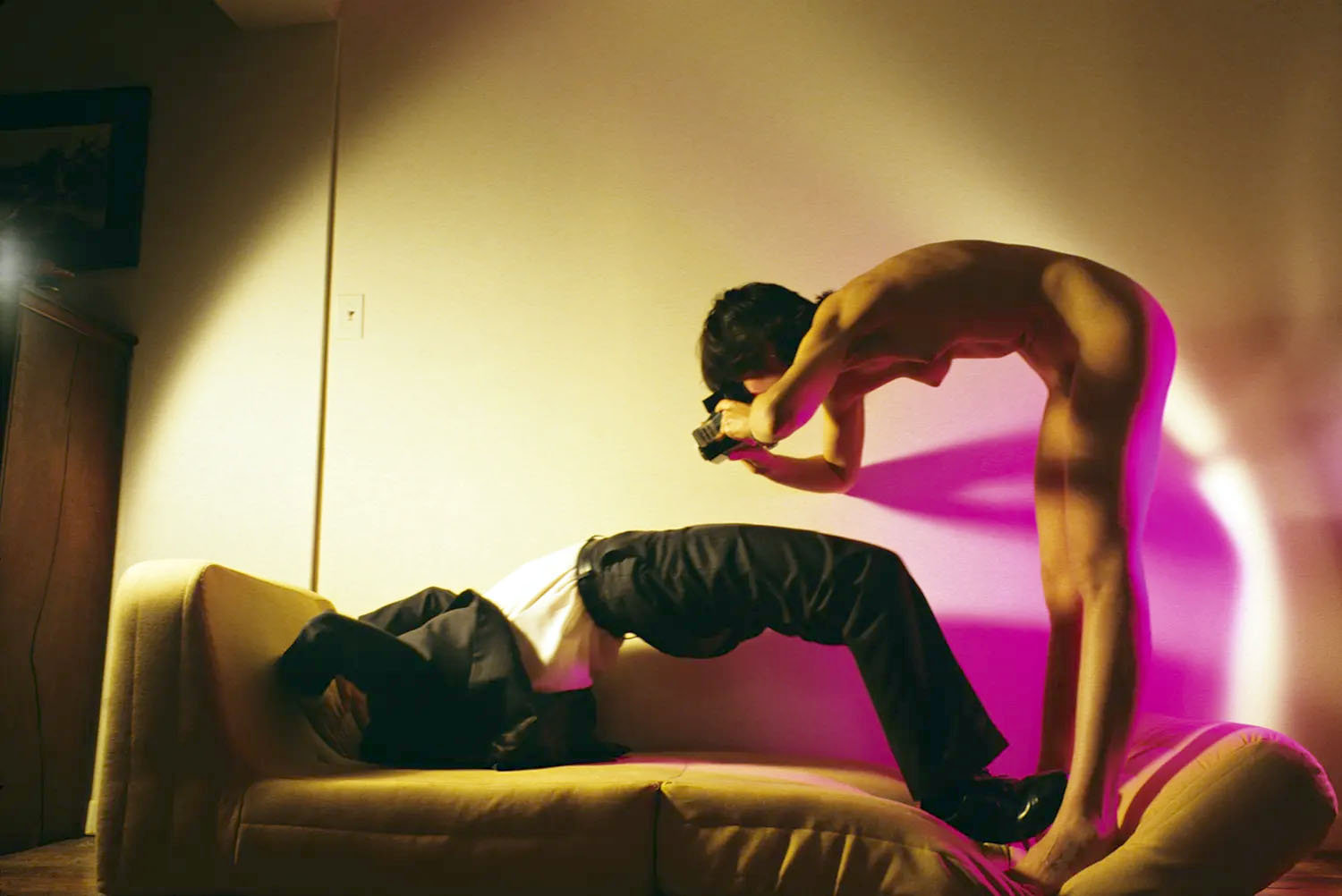
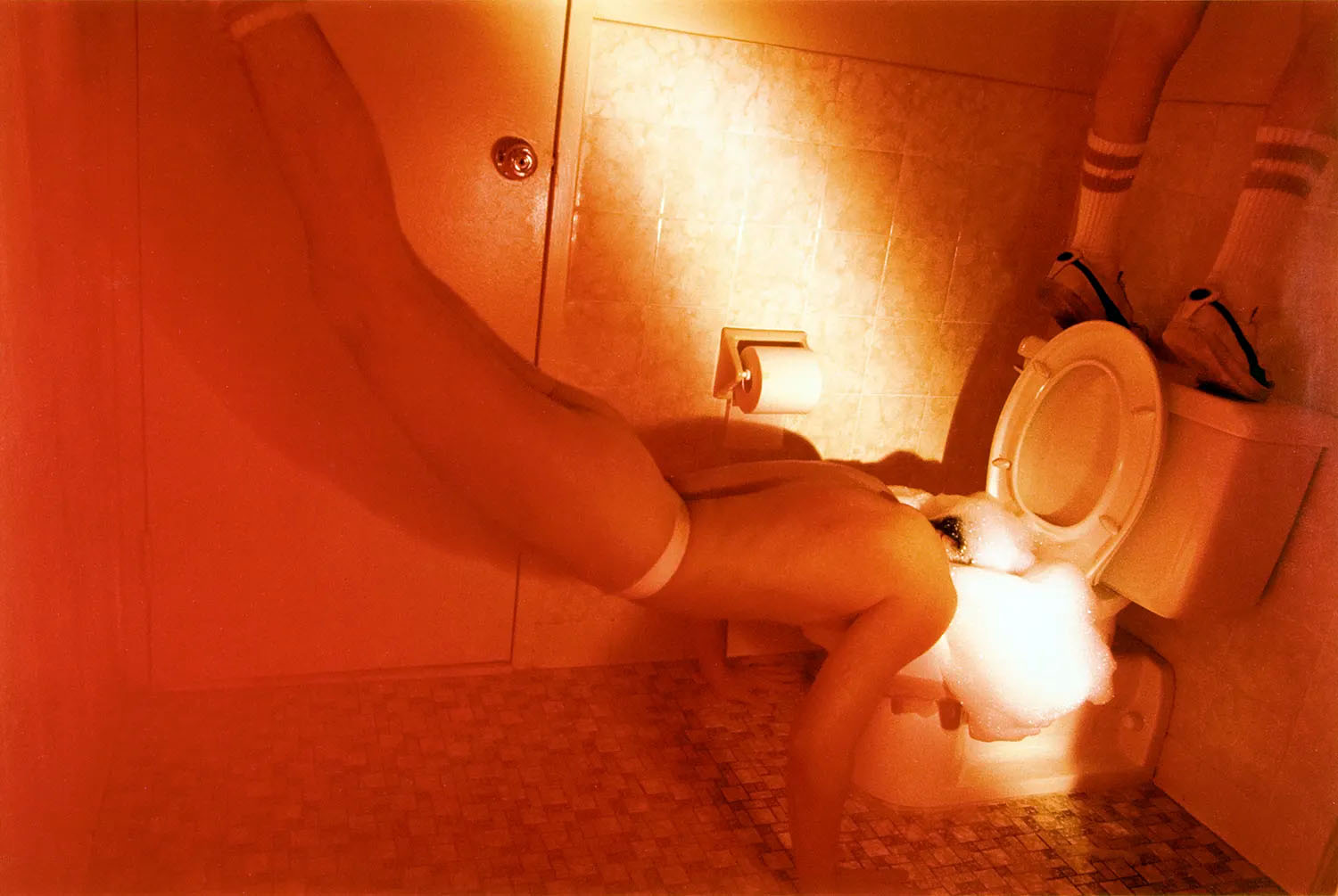
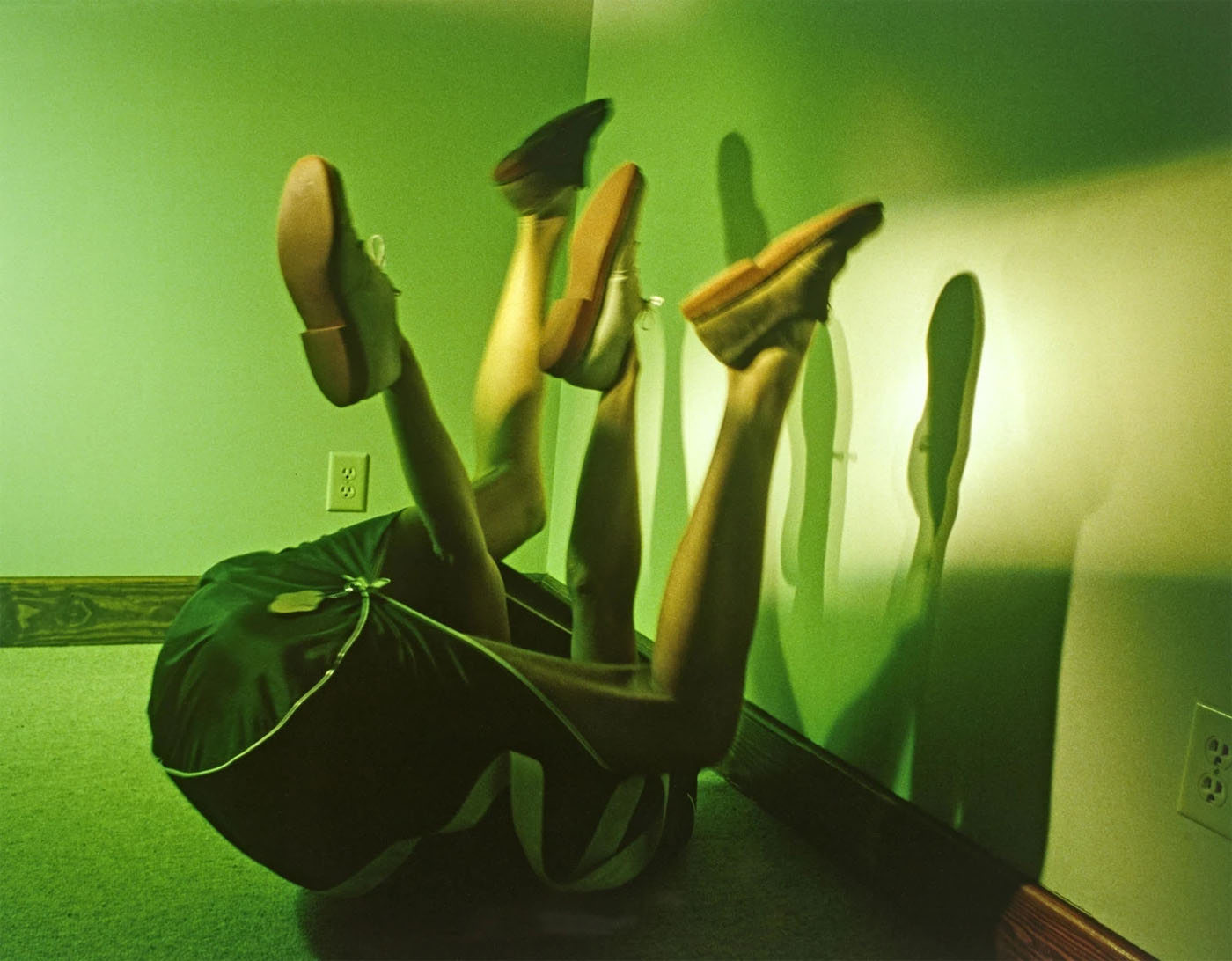
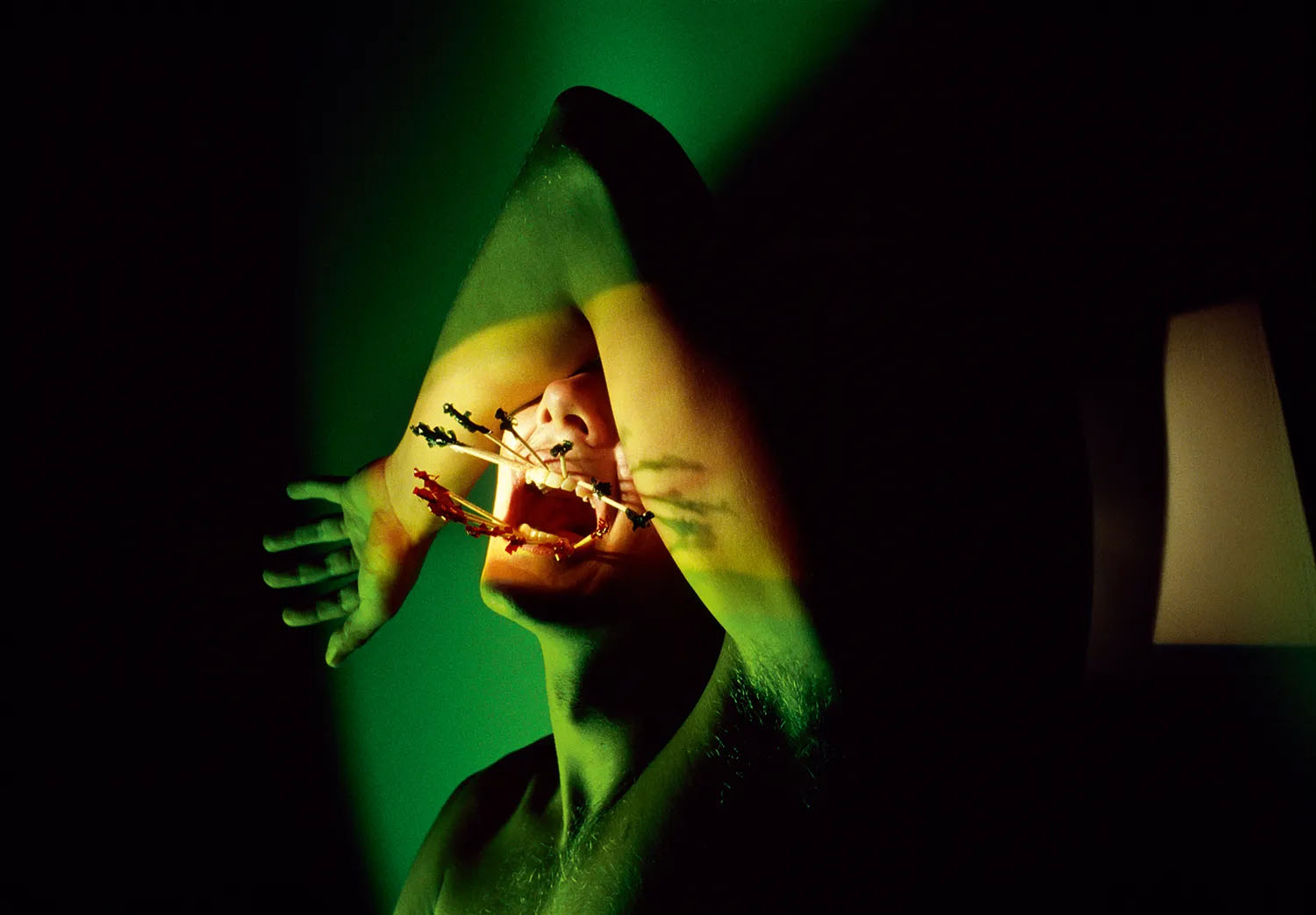
Exhibition: ‘Jimmy DeSana: Submission’ at the Brooklyn Museum, New York

Exhibition dates: 11th November , 2022 – 16th April, 2023

Curator: Drew Sawyer, Phillip Leonian and Edith Rosenbaum Leonian Curator of Photography, Brooklyn Museum


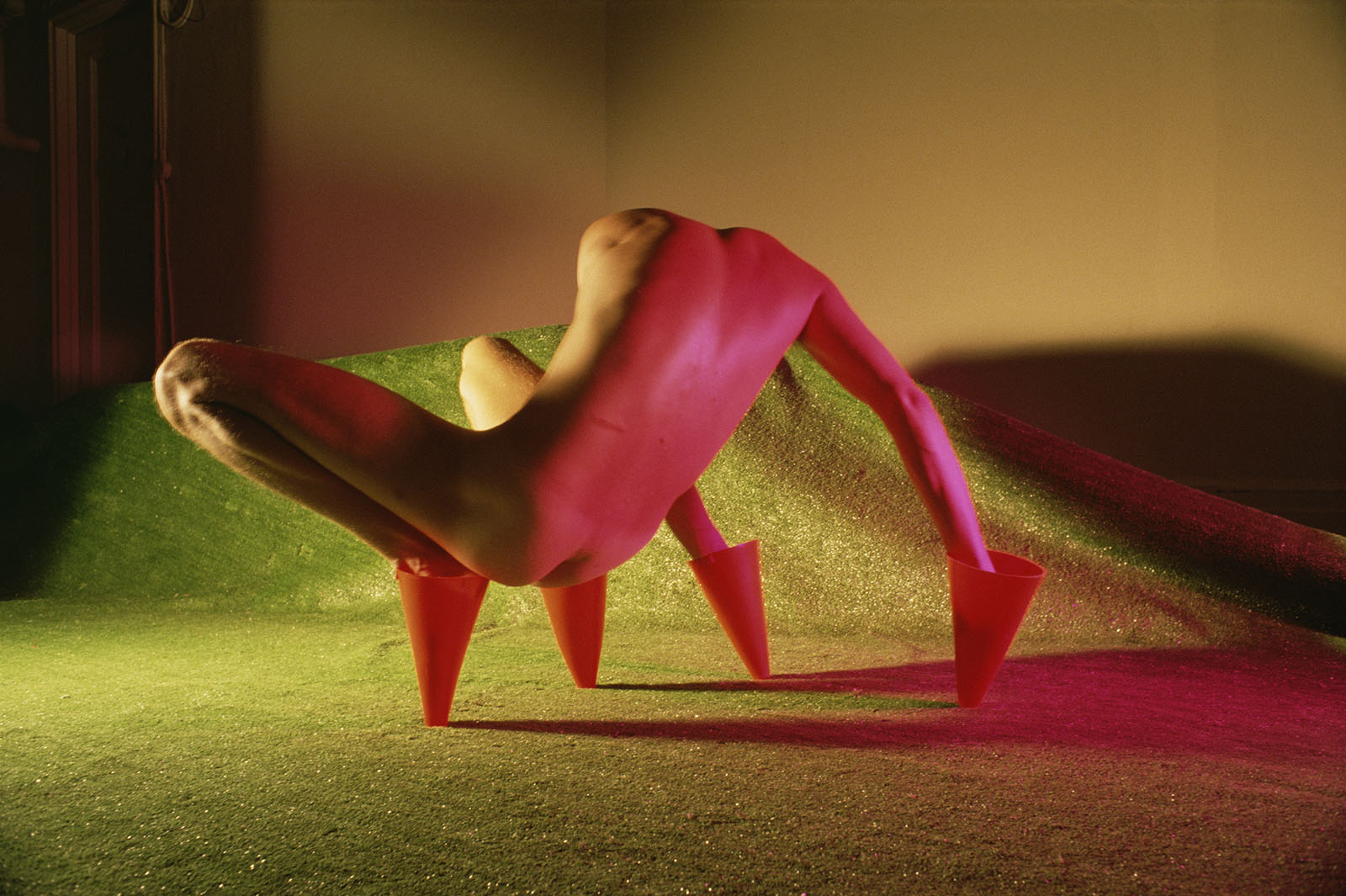
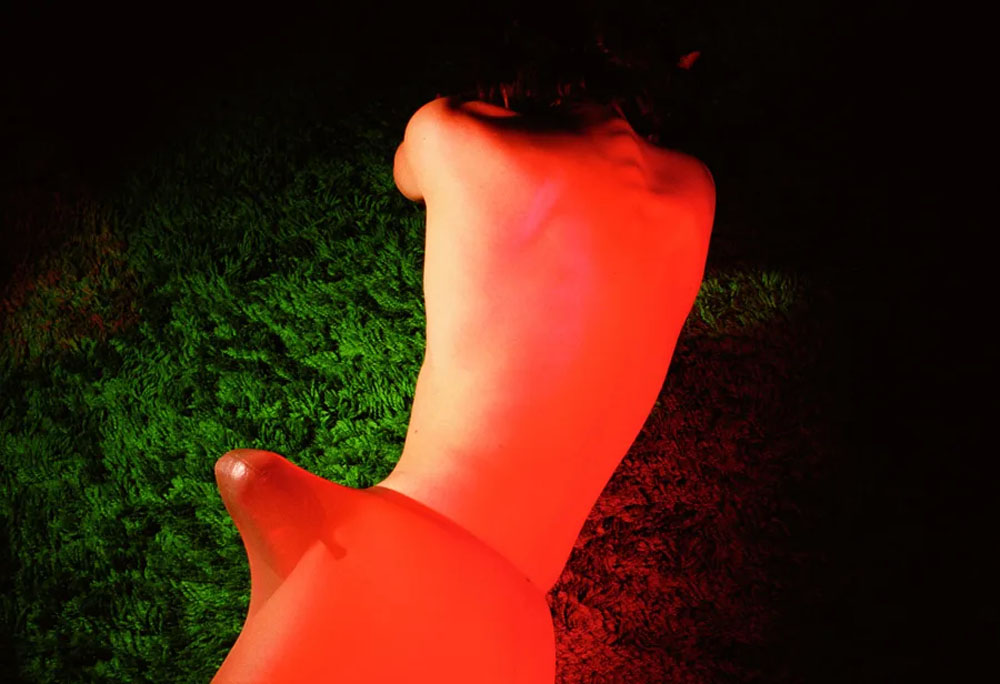
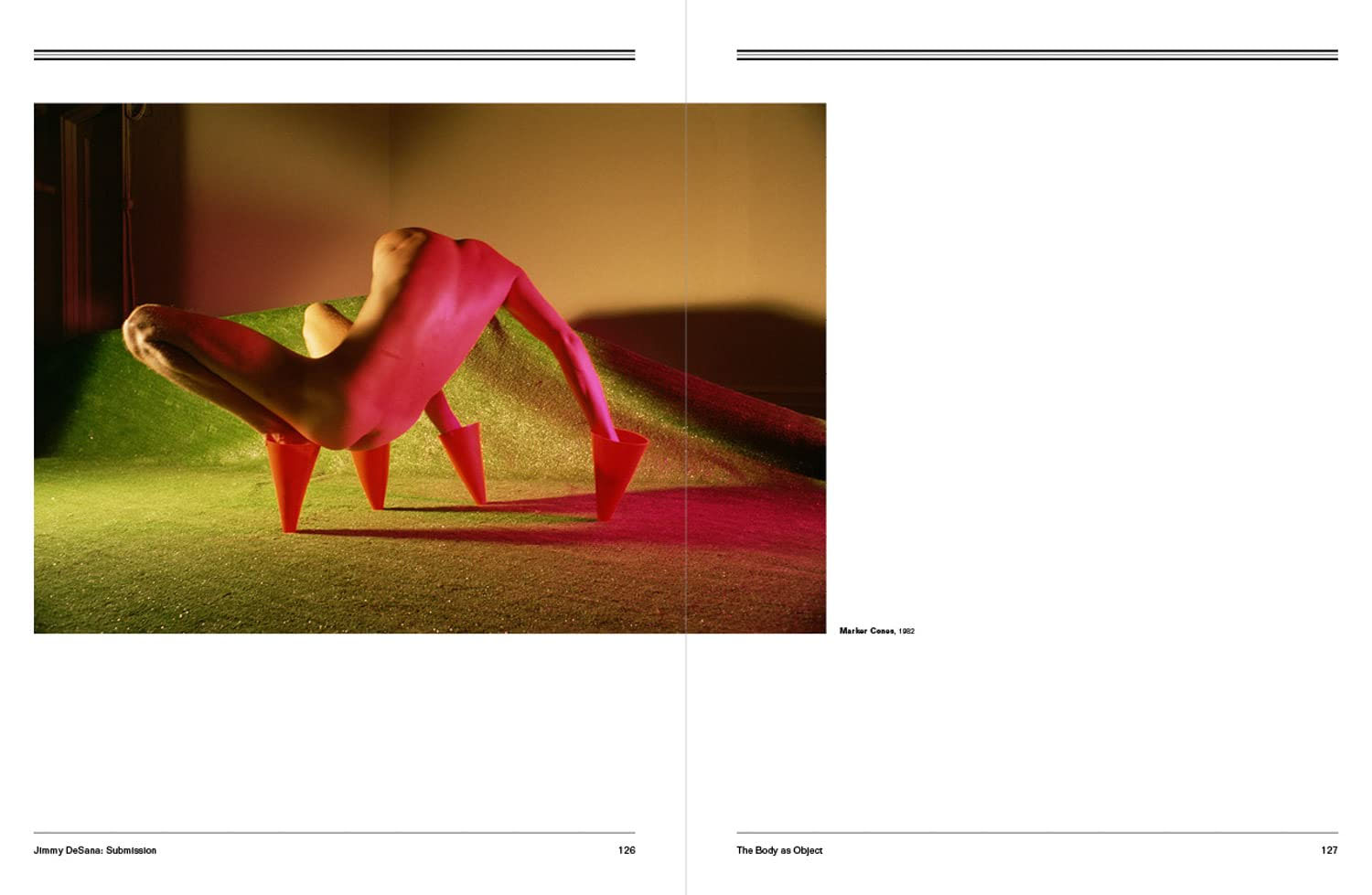
Jimmy DeSana (American, 1949-1990) 'Marker Cones' 1982


Jimmy DeSana (American, 1949-1990)
Marker Cones
1982
Chromogenic print
14 1/4 × 18 1/2 in. (36.2 × 47cm)
Courtesy of the Jimmy DeSana Trust and P·P·O·W Gallery, New York
© Estate of Jimmy DeSana
Photo: Courtesy of the Jimmy DeSana Trust and P·P·O·W Gallery, New York)


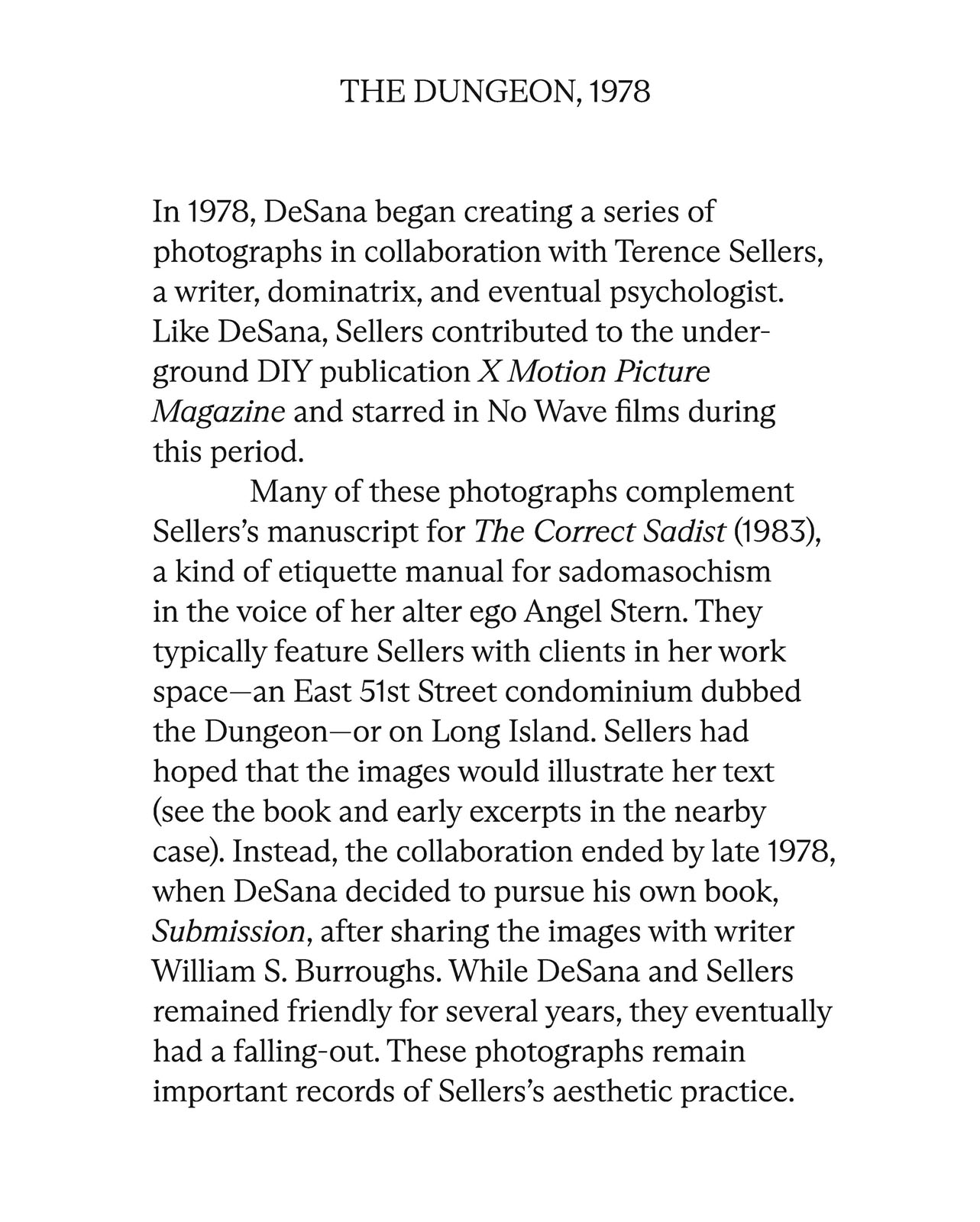
As DeSana developed his Suburban series in the early 1980s, gender and sexuality became increasingly ambiguous in his images. Here, photographed from behind, the body is a headless, unidentifiable creature composed of shapes. The marker cones evoke a similar indeterminacy: they are socially gendered “feminine” as makeshift stilettos and “masculine” as signifiers of roadside construction or sports, perhaps pointing to DeSana’s own experiences or ideas about the disciplining of bodies. A glittering field of bright-green artificial grass adds to this surreal composition, evoking the Astroturf surface of a football field.

Exhibition label


FORGET ME NOT

I have to be honest and say that before I started constructing this posting I had never heard of the artist Jimmy DeSana. You can’t know everything.

But now, having spent many hours reading about his life and his art, now I am at least a little more informed… and stand in awe and wonder at what this artist achieved before he died. It has been a real privilege and honour to imbibe at the fountain of DeSana.

I am still processing the work and what I have learnt about it but it would seem to me that what DeSana left behind is a body of work that is challenging, vital, full of ideas, paradoxes and questions about the human condition. Not who are we, but who can we be if we follow the path of our imagination and our soul.

Written by many other commentators, I have distilled their thoughts about his life, work, subject matter and the concepts he investigated into a few words:

1/ To play and dream
2/ punk rebel, the queer visionary, the wry interpreter of consumerism and media cultures, and the sometime transgressor of “good taste” in photography
3/ masquerades =
4/ the body as object
5/ peeled back the veneer of suburban life
6/ discrepancy between the public and private lives of post-war Americans
7/ queer and radical
8/ surrealistic, S/M-tinged, staged photos
9/ absurdist and unsettling
10/ vagaries of the human heart and the human psyche
11/ his central subject was always himself, and especially his sexual and emotional identity
12/ address the basic enigmas of identity
13/ Punk Provocateur
14/ Fierce
15/ Downtown /East Village scene
16/ post-punk New York
17/ fetishistic work about human bodies, very poetic
18/ mail art
19/ negative prints, double exposures and luridly coloured lighting
20/ psychological portraits, sexually charged tableaux and still lifes
21/ the body as a playground, gender as an ongoing invention, and domestic interiors as surreal constructions
22/ potential to push boundaries
23/ autoerotic asphyxiation
24/ visceral, more lo-fi, and more voyeuristic
25/ Transgressive Vision of Life and Desire
26/ Surrealism, Fluxus, punk and pure Pop
27 queer visibility
28/ strangeness
29/ suburban life
30/ Stonewall
31/ Gay Liberation
32/ interconnectedness of art and life
33/ Pictures Generation
34/ sexual, political, degenerated, ungendered
35/ sexual and emotional identity
36/ AIDS, sexuality and death


But these words tell what the work is about, they don’t tell you how the art makes you feel!

The art makes me feel dis/embodied and at the same time emboldened and strong. It makes me feel queer (in its original sense, when it was primarily used to mean strange, odd, peculiar or eccentric). Personally, it opens up a new vision for exploring my ordered place in the world, pushing boundaries of who I am and who I could be. Never settling for something that you don’t want to be. I love the “queerness” of the art (in the recent use of the word, used to describe a broad spectrum of non-normative sexual or gender identities and politics). I love its panache and bravado, its sensitivity and camp, it raunchiness and colour. The colour of life. Being different.

Sadly, we lost so many people, so many artists during the first wave of the HIV/AIDS epidemic, supremely talented artists such as Peter Hujar, David Wojnarowicz, Stephen Varble, Robert Mapplethorpe and Jimmy DeSana. I would like to have met Jimmy, to have talked to him about his passion, his love, his vision of the world that surrounded him. From a distance in time and space he seems to have a certain magic energy within him.

In the vitality of the work lies his im/mortality. And it is because of this energy that we will never lose the remembrance of Jimmy DeSana. Forget him not.

Dr Marcus Bunyan


Many thankx to the Brooklyn Museum for allowing me to publish the photographs in the posting. Please click on the photographs for a larger version of the image.


“My dear, it’s all so Christian and medieval and gloomy. Precisely. Jimmy DeSana, your intrepid photographer, has witnessed and preserved for posterity the unspeakable rights of these benighted natives, rites as clearly derived from Christianity as a black mass”


William Burroughs, 1979


“DeSana’s camera was as dear to him as his sexual life; the two were mutually constitutive, and his engagement with the BDSM subculture provided boundless inspiration to him, both as an artist and as a gay man.”

“As a gay man, a photographer, an artist of the AIDS era, a lover, a son, and a friend, DeSana is as beautifully complex as his work. After he died of AIDS in 1990, DeSana left his estate to his best friend and muse, the artist Laurie Simmons. Simmons told me, “I gave myself twenty years to sort out a lifetime’s worth of breathtaking material. I also felt certain that the work would look as fresh twenty years later as it did at the time of its making.” The resurgence of DeSana’s revolutionary career could not come at a more opportune moment; his oeuvre is exemplary of new outlets for reconstituting the Pictures Generation with queer modes of vision and critique.”


William J. Simmons. “Surreal Sexuality,” in Aperture Issue 218, “Queer” on the Aperture website January 18, 2017 [Online] Cited 20/03/2023


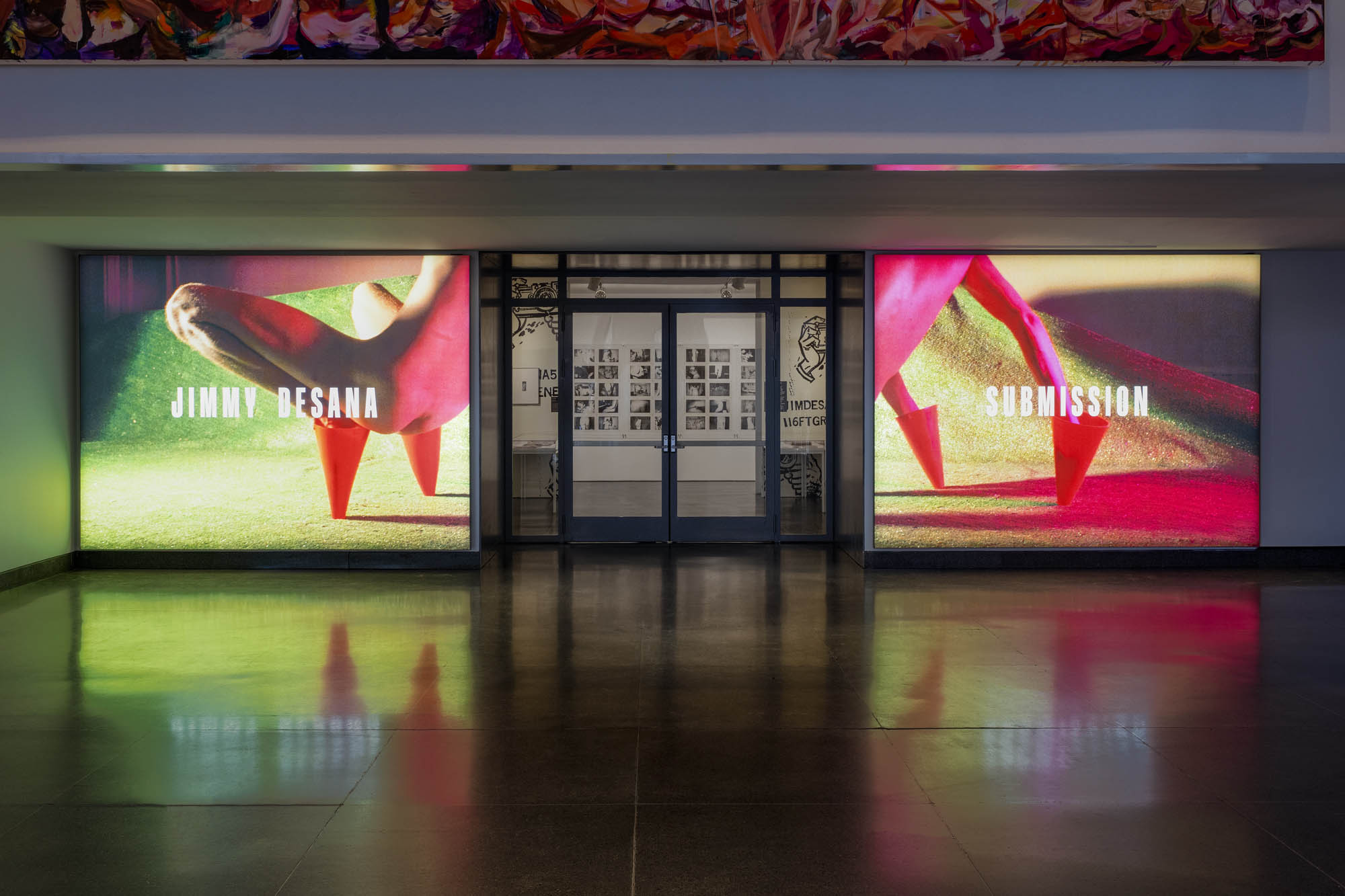
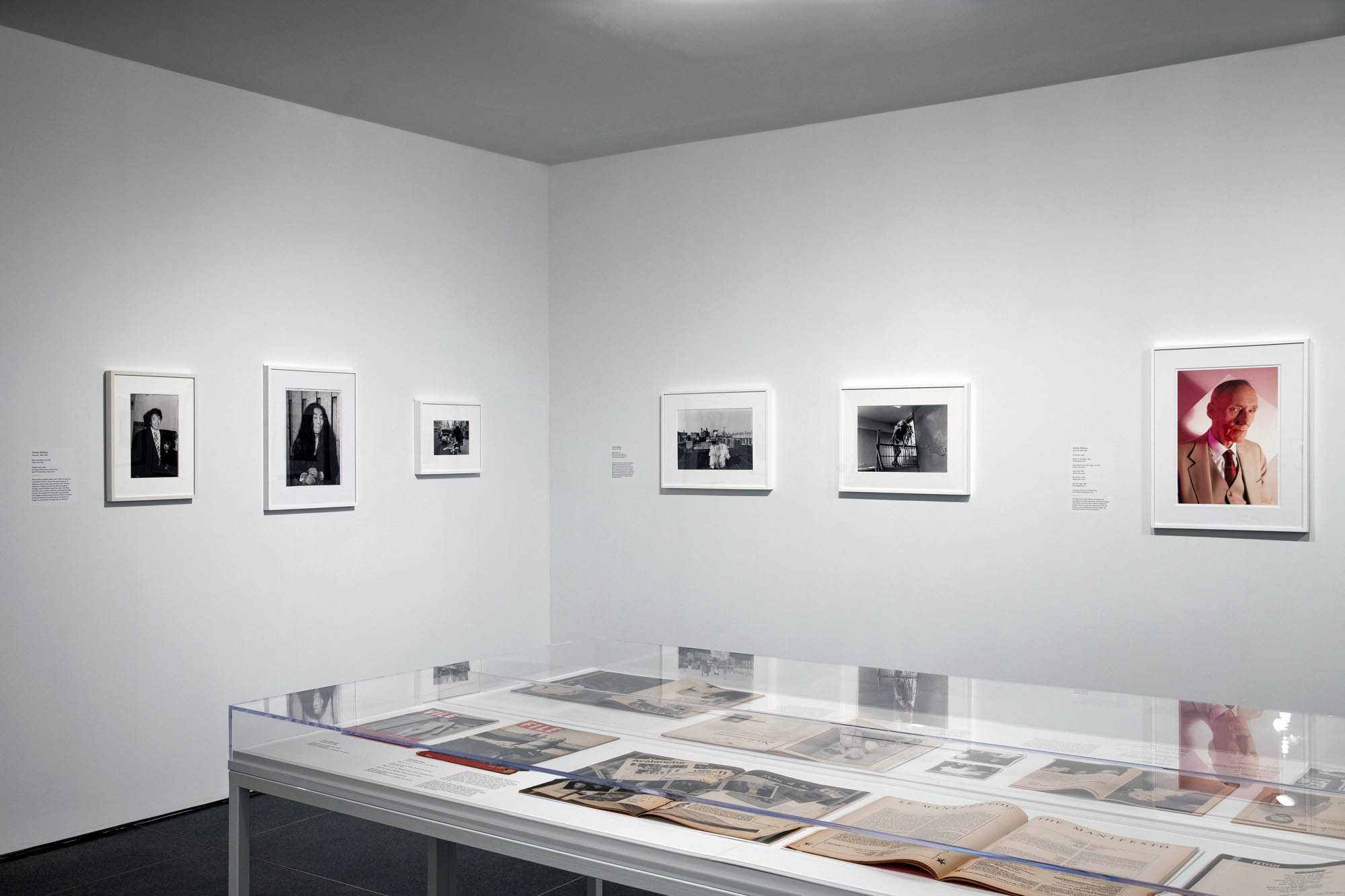
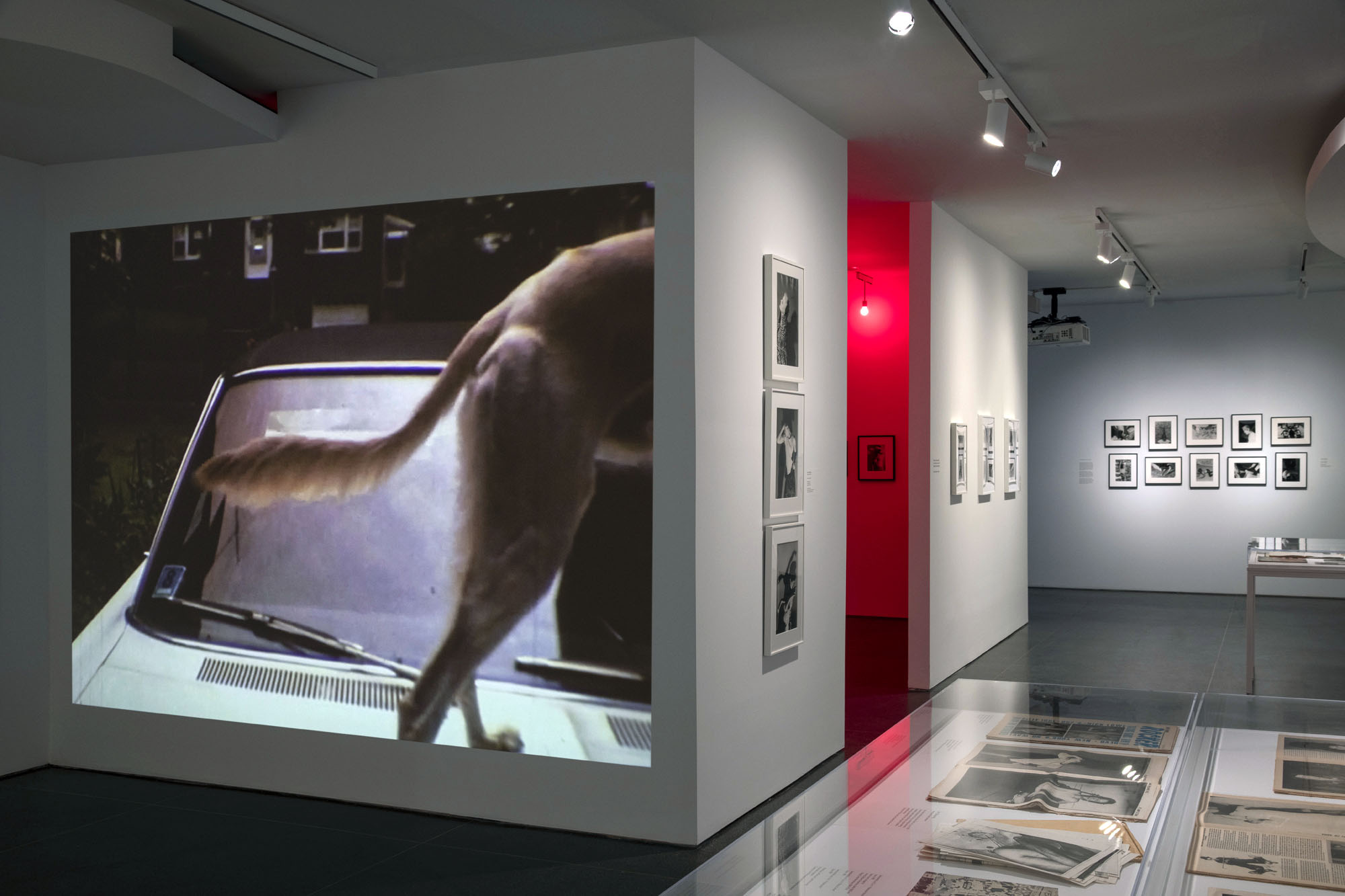
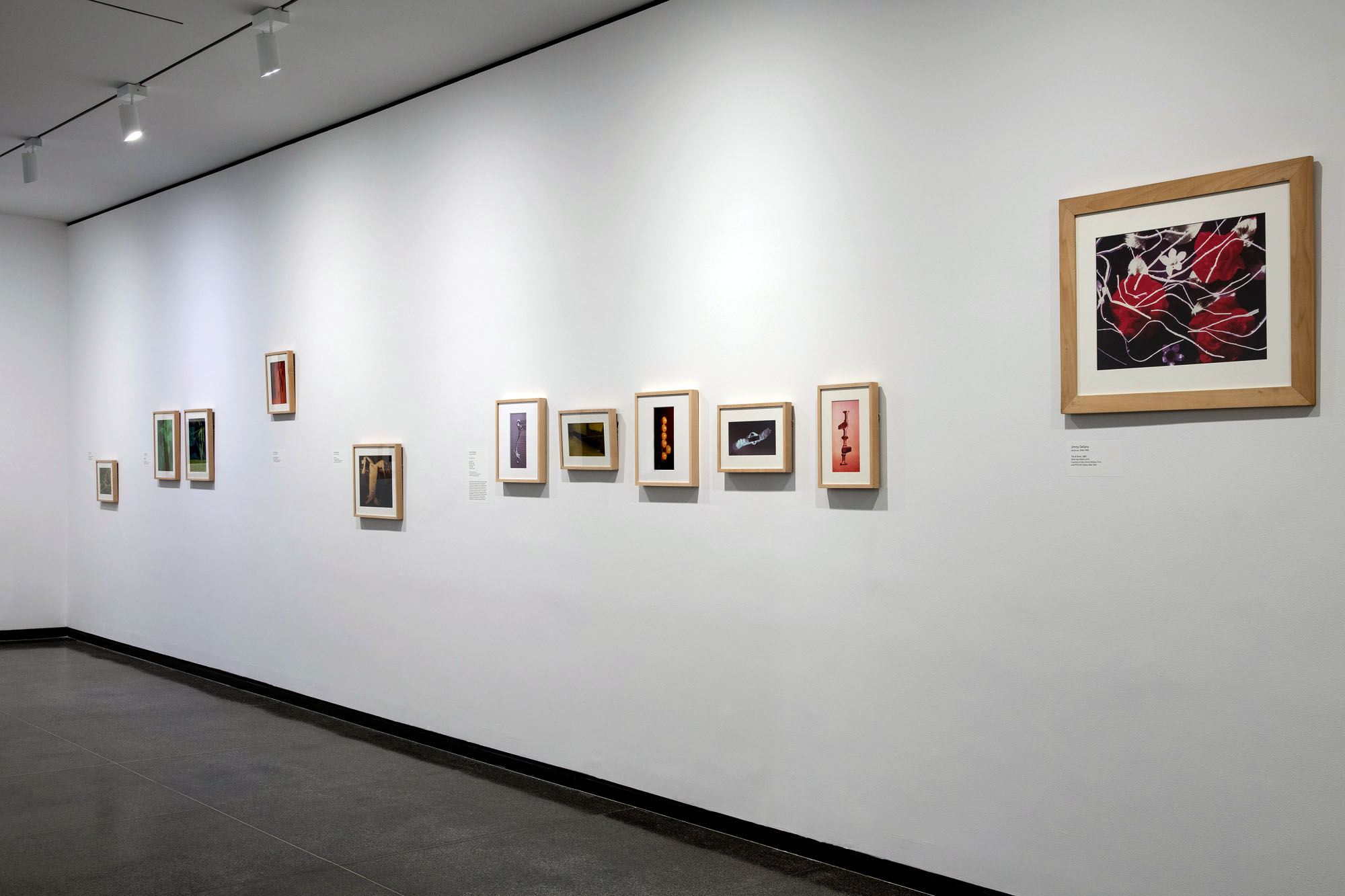
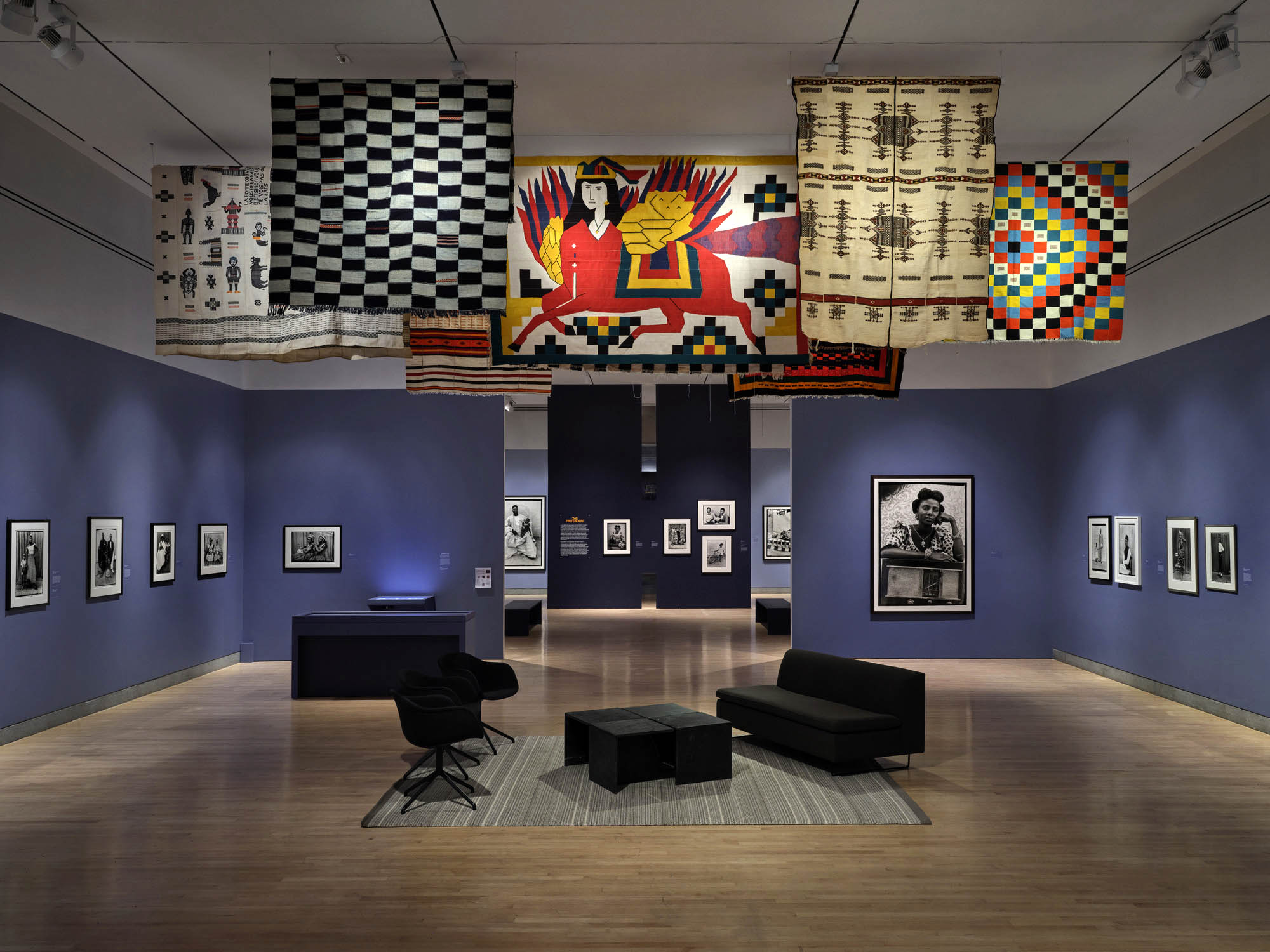
Installation view of the exhibition 'Jimmy DeSana: Submission' at the Brooklyn Museum, New York

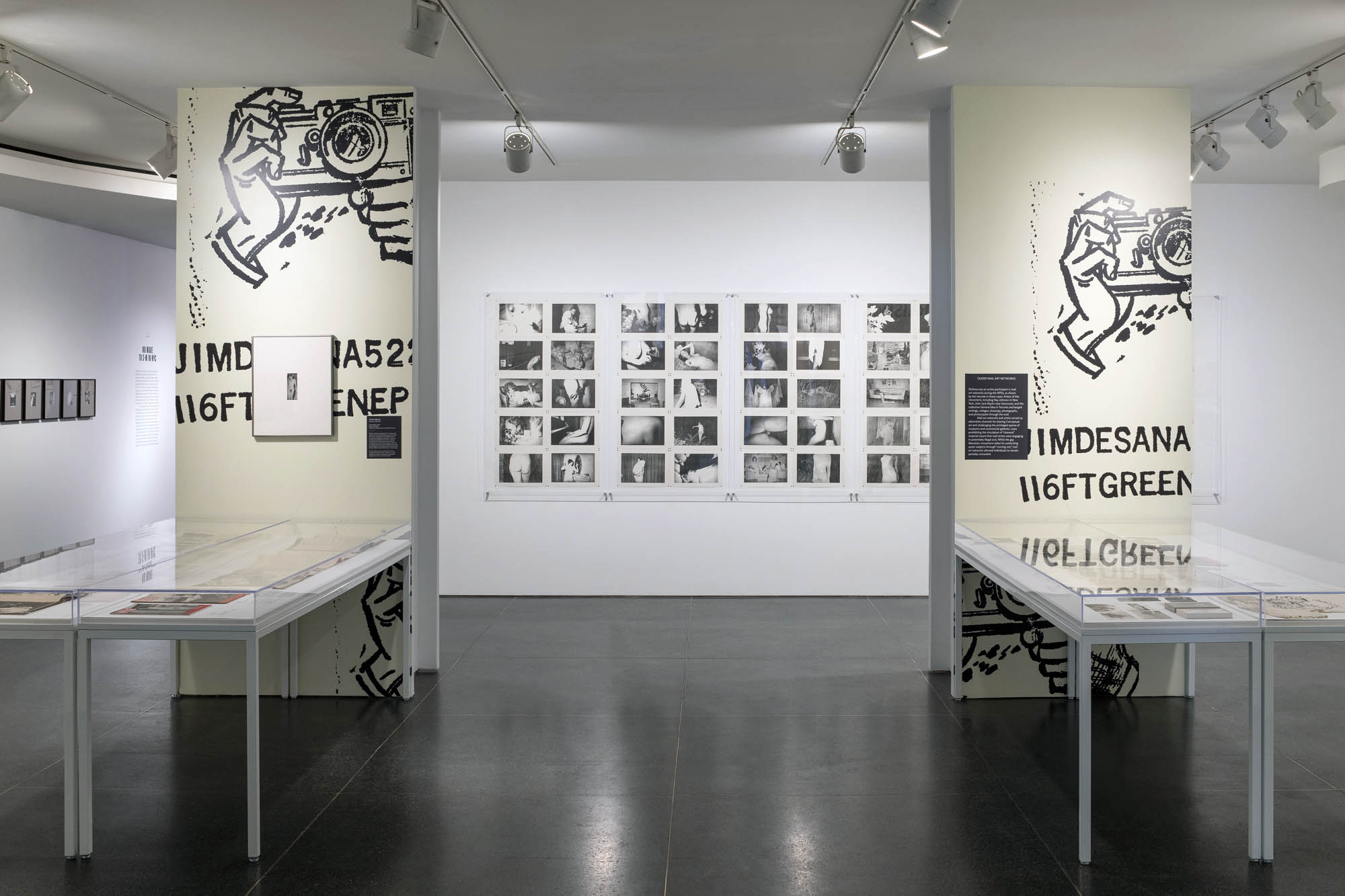
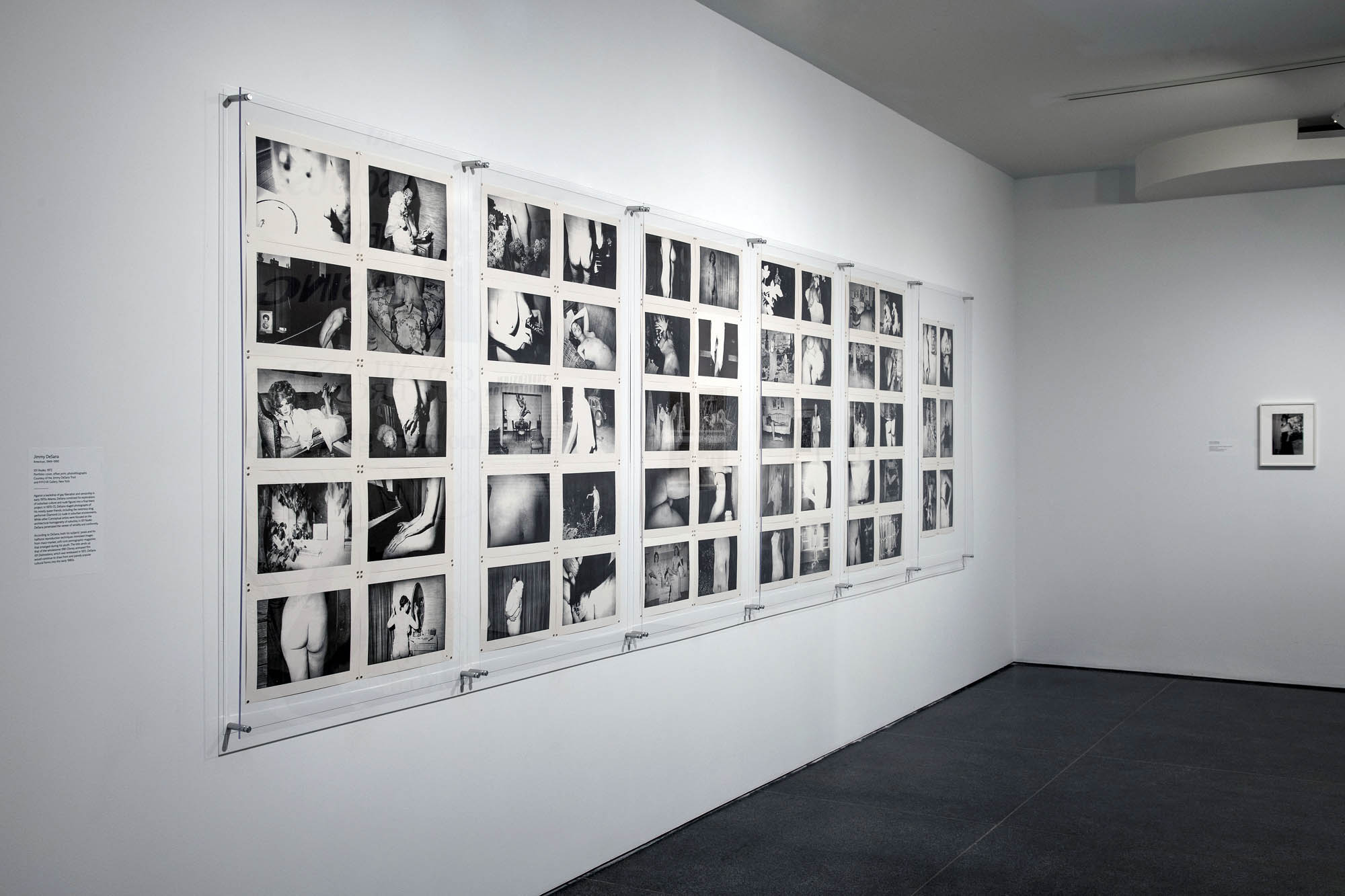
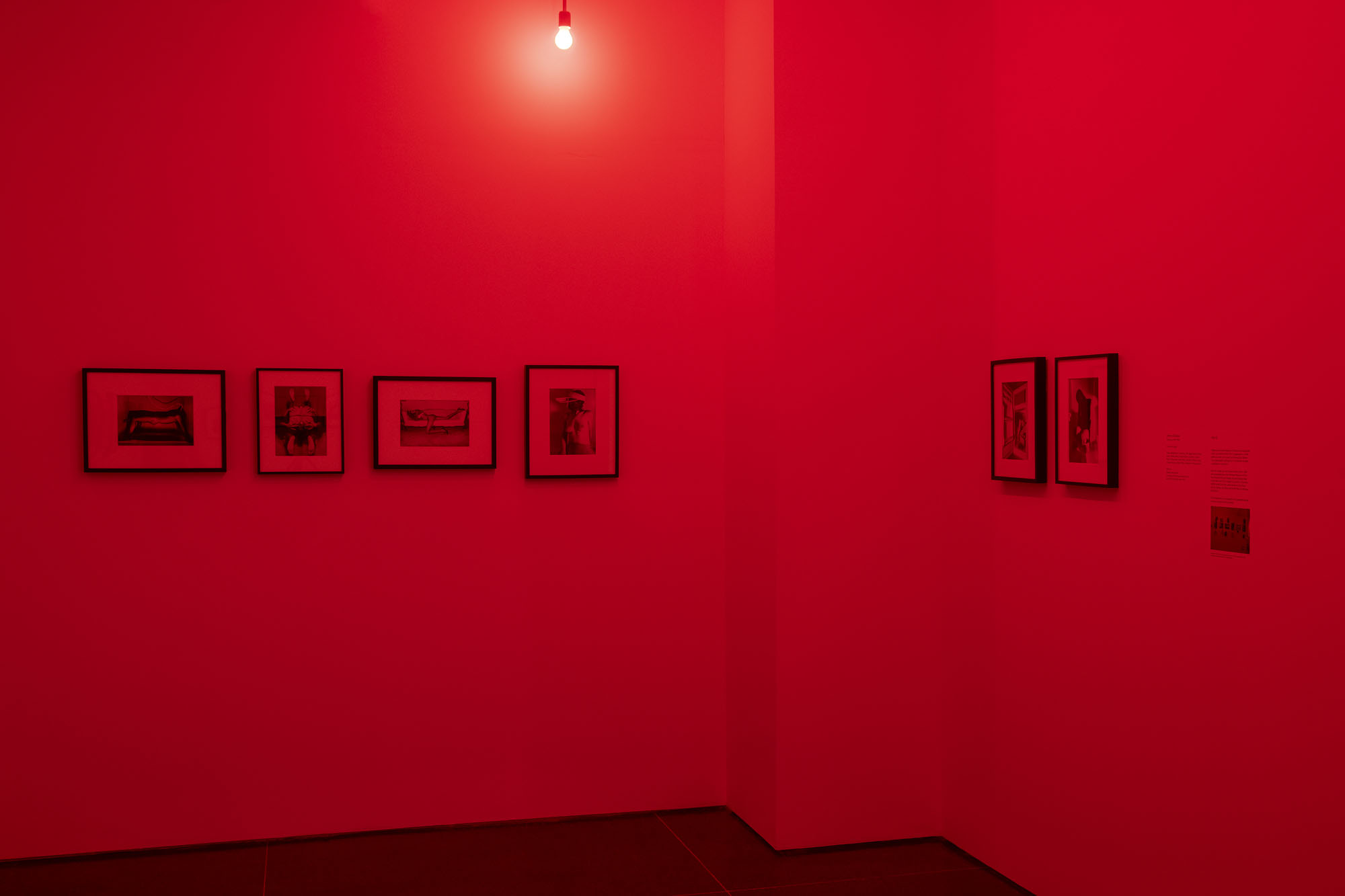
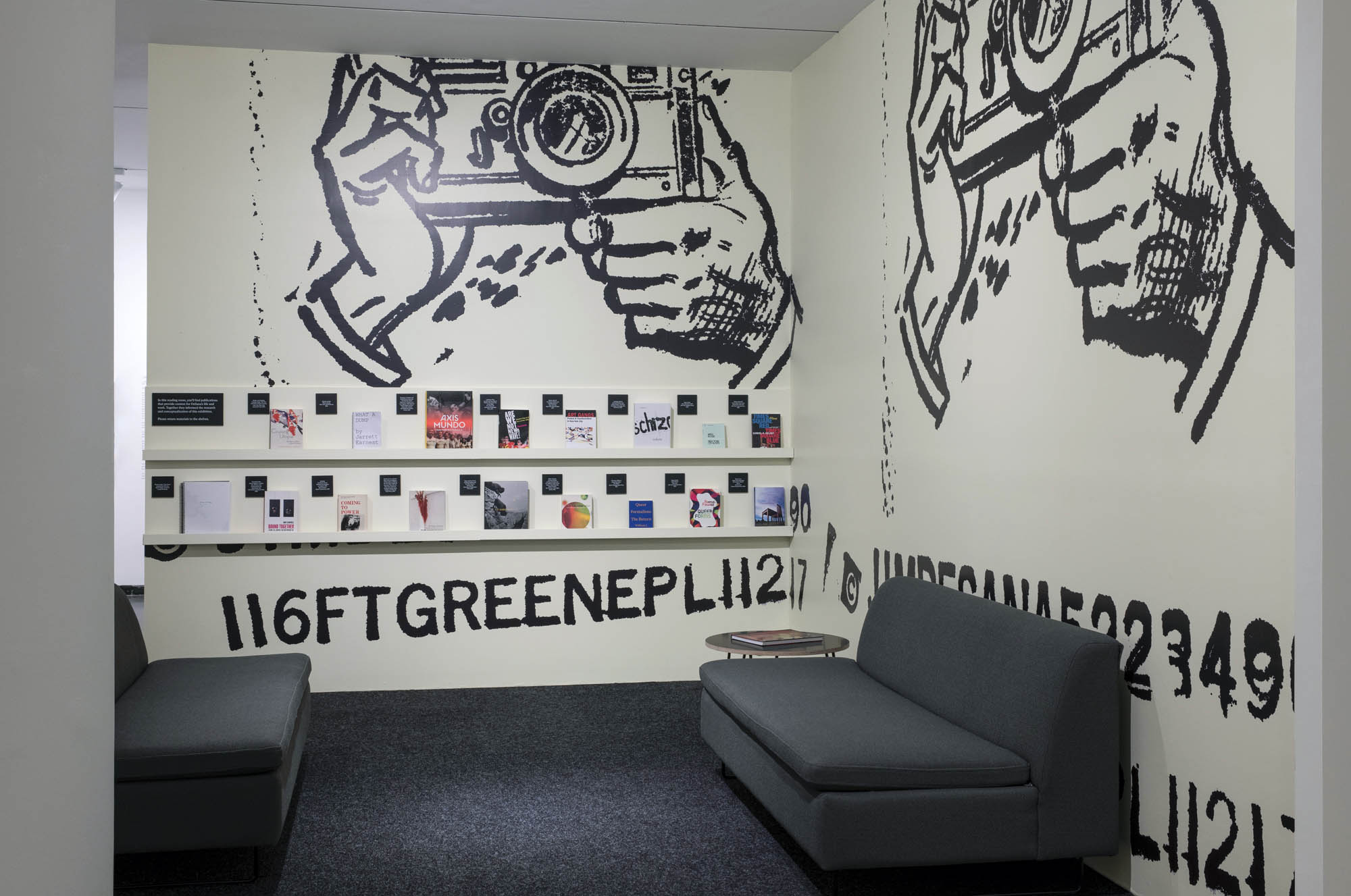
Installation view of the exhibition 'Jimmy DeSana: Submission' at the Brooklyn Museum, New York

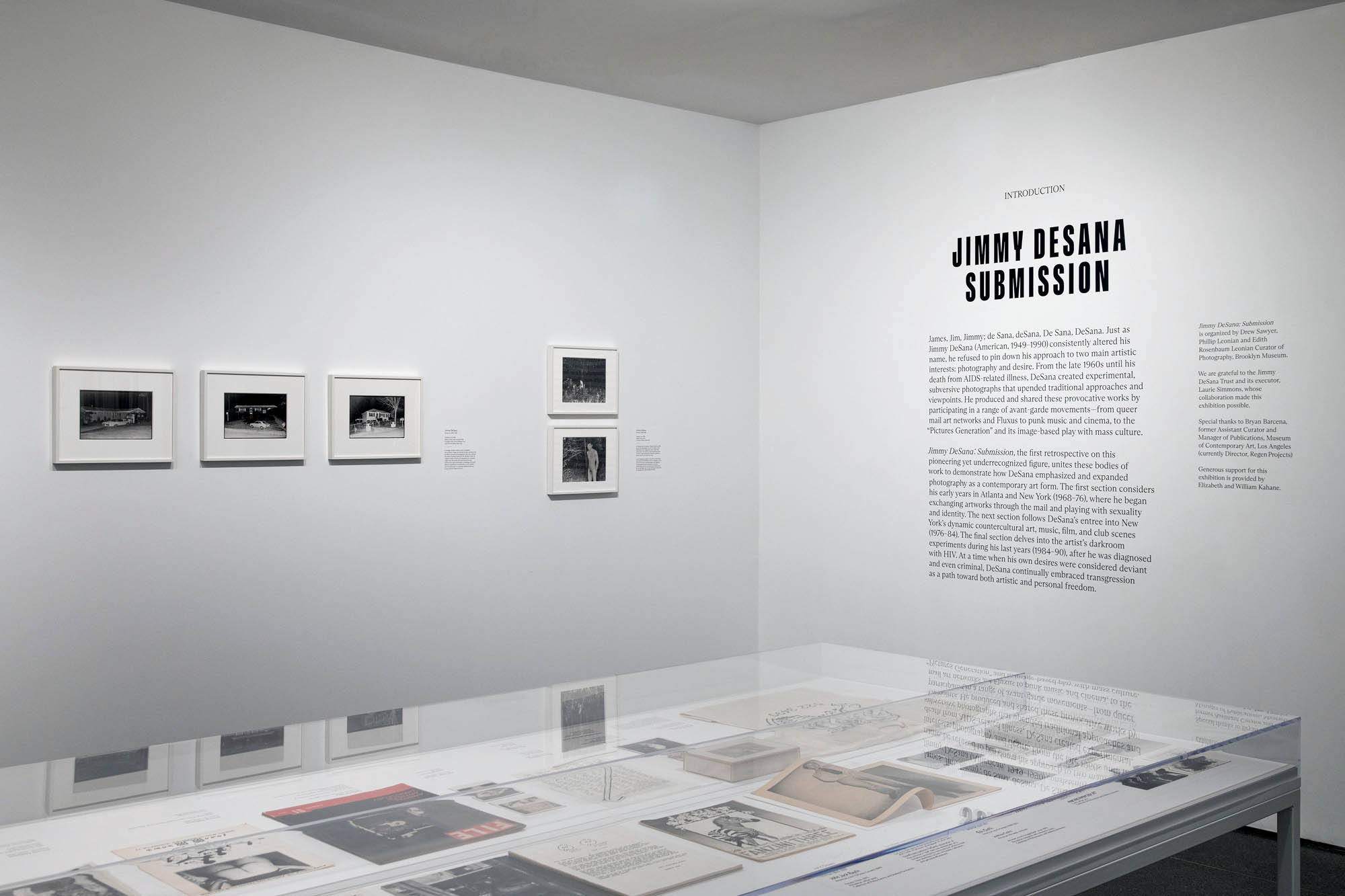
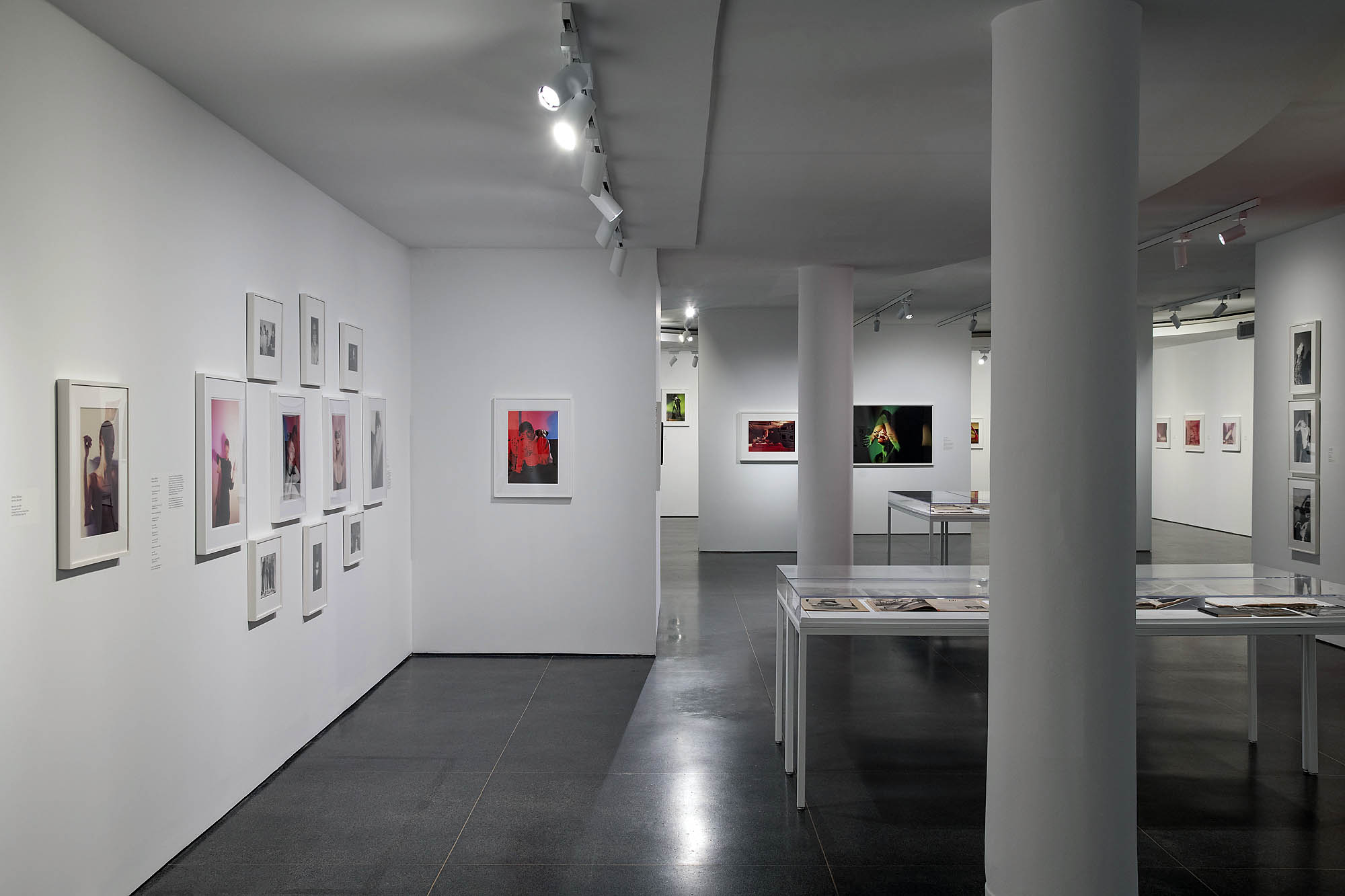
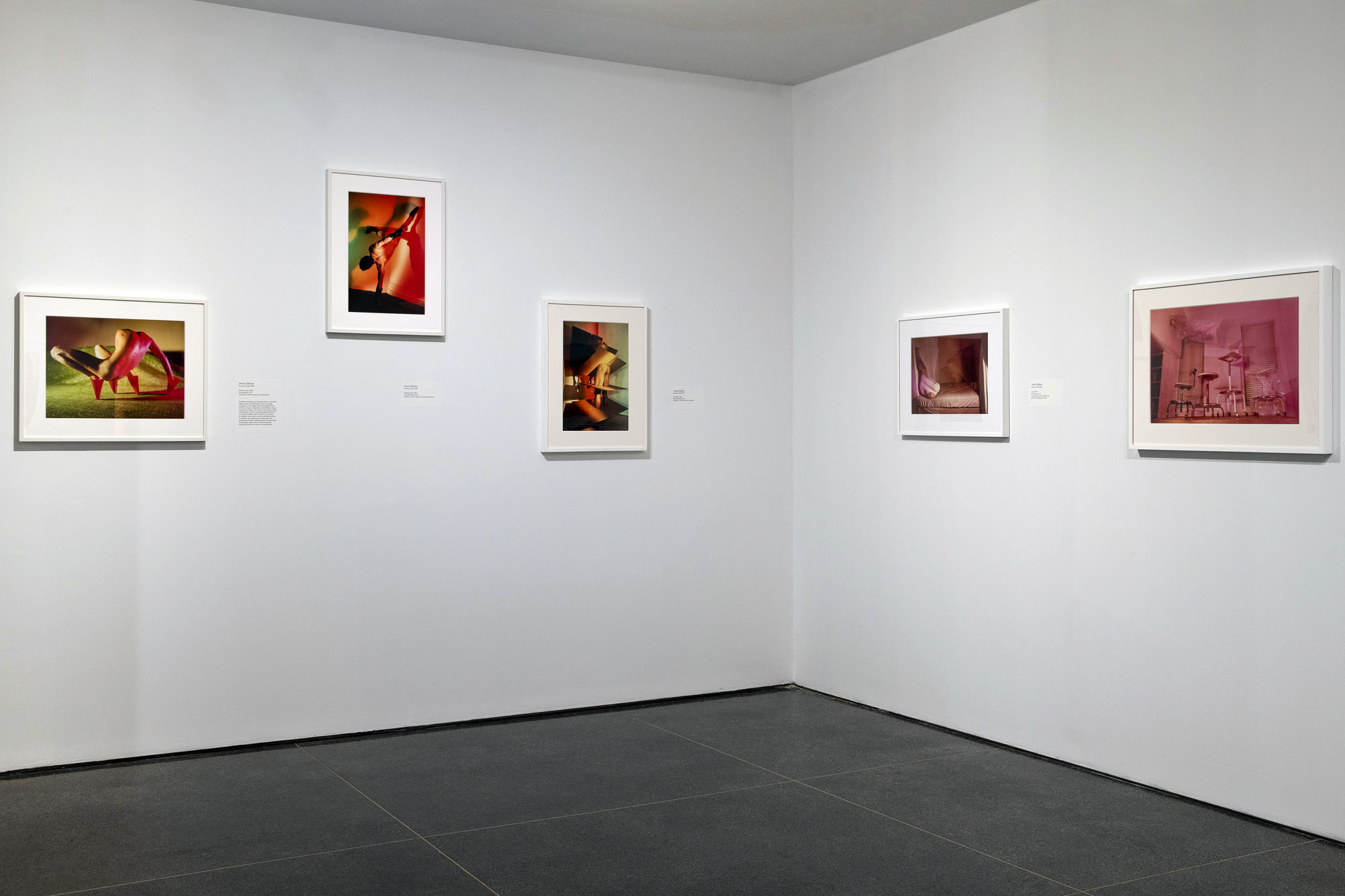
Installation view of the exhibition 'Jimmy DeSana: Submission' at the Brooklyn Museum, New York

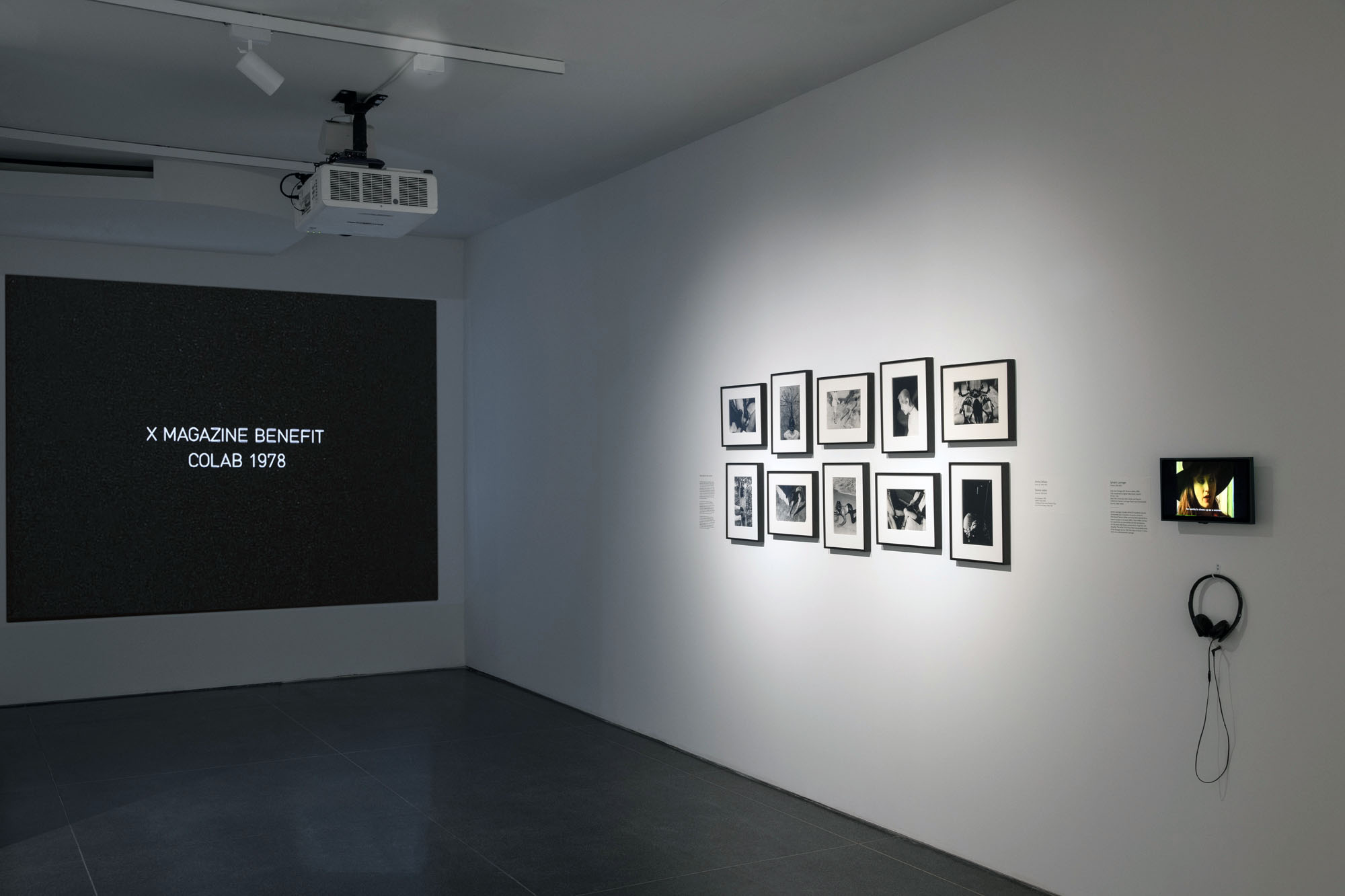
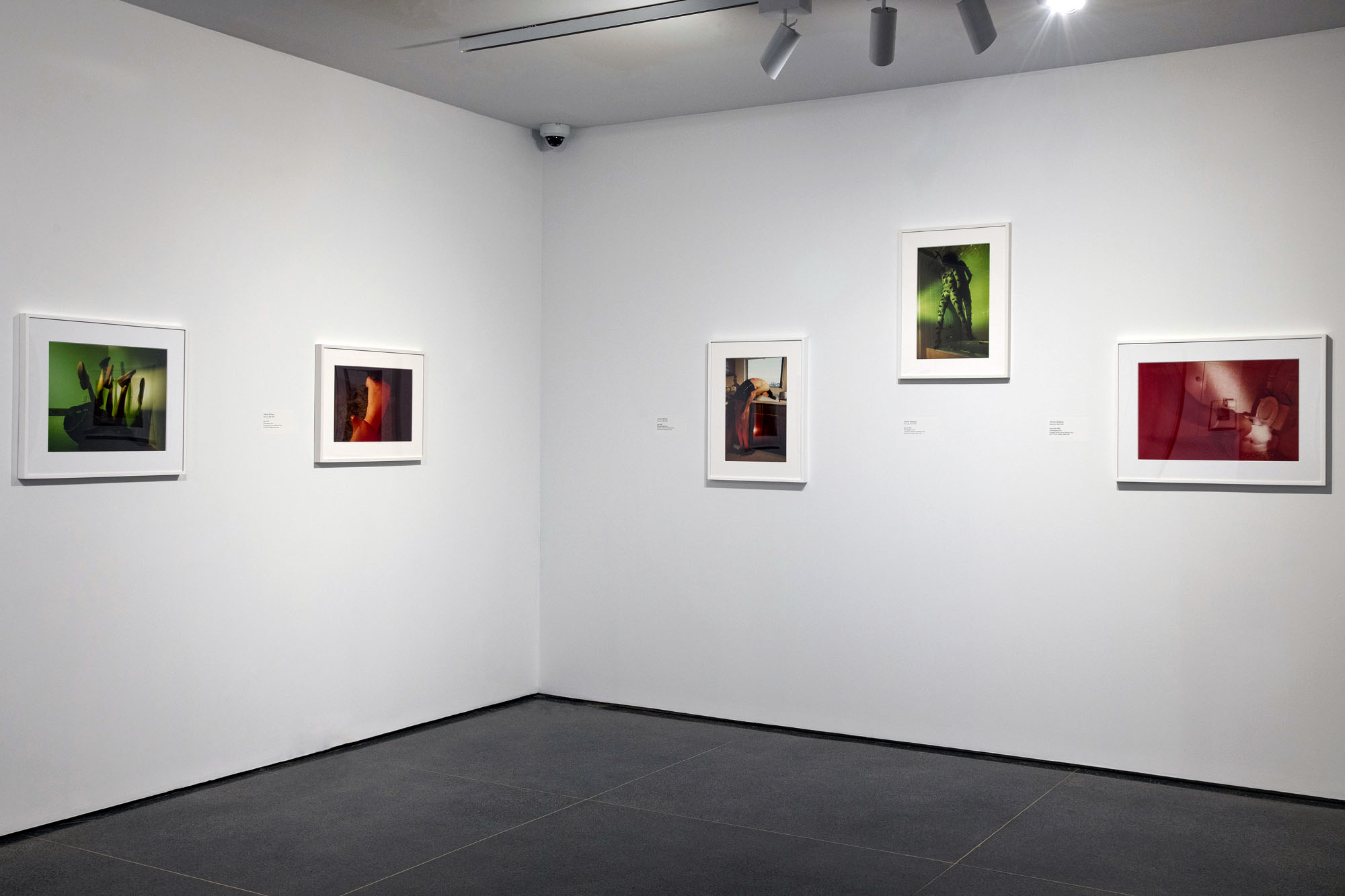
Installation view of the exhibition 'Jimmy DeSana: Submission' at the Brooklyn Museum, New York

Installation view of the exhibition 'Jimmy DeSana: Submission' at the Brooklyn Museum, New York

Installation view of the exhibition 'Jimmy DeSana: Submission' at the Brooklyn Museum, New York

Installation view of the exhibition 'Jimmy DeSana: Submission' at the Brooklyn Museum, New York

Installation view of the exhibition 'Jimmy DeSana: Submission' at the Brooklyn Museum, New York

Installation view of the exhibition 'Jimmy DeSana: Submission' at the Brooklyn Museum, New York

Installation view of the exhibition 'Jimmy DeSana: Submission' at the Brooklyn Museum, New York

Installation view of the exhibition 'Jimmy DeSana: Submission' at the Brooklyn Museum, New York

Installation view of the exhibition 'Jimmy DeSana: Submission' at the Brooklyn Museum, New York

Installation view of the exhibition 'Jimmy DeSana: Submission' at the Brooklyn Museum, New York


Installation views of the exhibition Jimmy DeSana: Submission at the Brooklyn Museum, New York


The first comprehensive exhibition and book on the surreal, queer and humorous photographic art of Jimmy DeSana, a central figure in New York’s art and music scenes of the 1970s and ’80s

This is the first overview of the work of Jimmy DeSana, a pioneering yet under recognised figure in New York’s downtown art, music and film scenes during the 1970s and 1980s. The book situates DeSana’s work and life within the countercultural and queer contexts in the American South as well as New York, through his involvement in mail art, punk and No Wave music and film, and artist collectives and publications.

DeSana’s first major project was 101 Nudes, made in Atlanta during the city’s gay liberation movement. After moving to New York in 1973, DeSana became immersed in queer networks, collaborating with General Idea and Ray Johnson on zines and mail art, and documenting the genderqueer street performances of Stephen Varble.

By the mid-1970s, DeSana was a fixture in New York’s No Wave music and film scenes, serving as portraitist for much of the period’s central figures and producing album covers for Talking Heads, James Chance and others. His book Submission, made with William S. Burroughs, humorously staged scenes out of a S&M manual that explored the body as object and the performance of desire. DeSana was also an early adopter of colour photography, creating his best-known series, Suburban, in the late 1970s and early 1980s. This body of work explores relationships between gender, sexuality and consumer capitalism in often humorous, surreal ways. After DeSana became sick as a result of contracting HIV, he turned to abstraction, using experimental photographic techniques to continue to push against photographic norms.

Text from the Amazon website Nd [Online] Cited 15/03/2023


Introduction

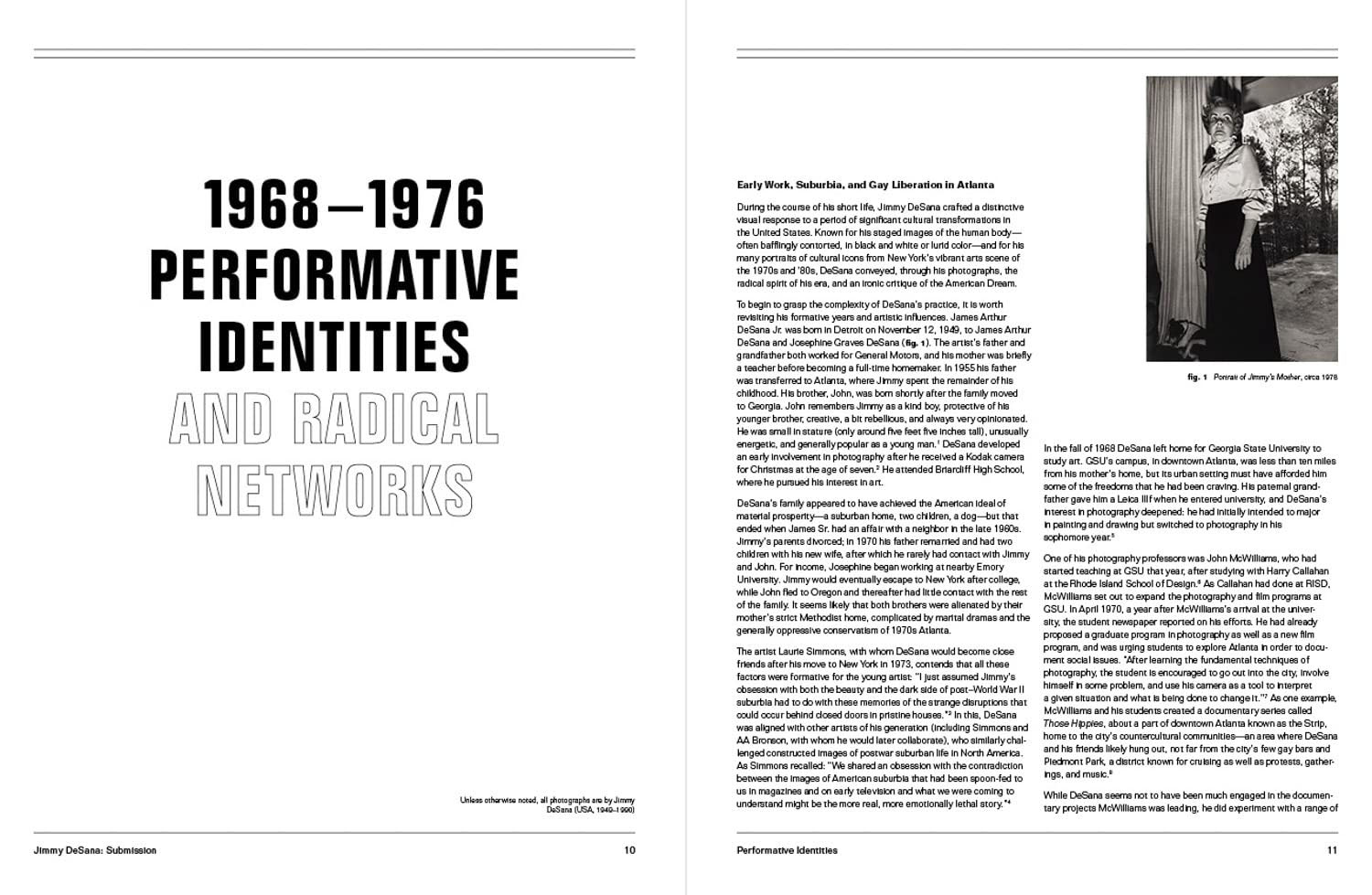
James, Jim, Jimmy; de Sana, deSana, De Sana, DeSana. Just as Jimmy DeSana (American, 1949-1990) consistently altered his name, he refused to pin down his approach to two main artistic interests: photography and desire. From the 1960s until his death from AIDS-related illness, DeSana created experimental, subversive photographs that upended traditional approaches and viewpoints. He produced and shared these provocative works by participating in a range of avant-garde movements – from queer mail art networks to Fluxus [a loose international group of rebellious artists, poets, and musicians with a shared impulse to integrate art and life] to punk music and cinema, to the “Pictures Generation” and its image-based play with mass culture.

Jimmy DeSana: Submission, the first retrospective on this pioneering yet under recognised figure, unites these bodies of work to demonstrate how DeSana emphasised and expanded photography as a contemporary form. The first section considers his early years in Atlanta and New York (1968-1976), where he began exchanging artworks through the mail and playing with sexuality and identity. The next section follows DeSana’s entree into New York’s dynamic countercultural art, music, film, and club scenes (1976-1984). The final section delves into the artist’s darkroom experiments during his last years (1984-1990), after he was diagnosed with HIV. At a time when his own desires were considered deviant and even criminal, DeSana continually embraced transgression as a path toward both artistic and personal freedom.


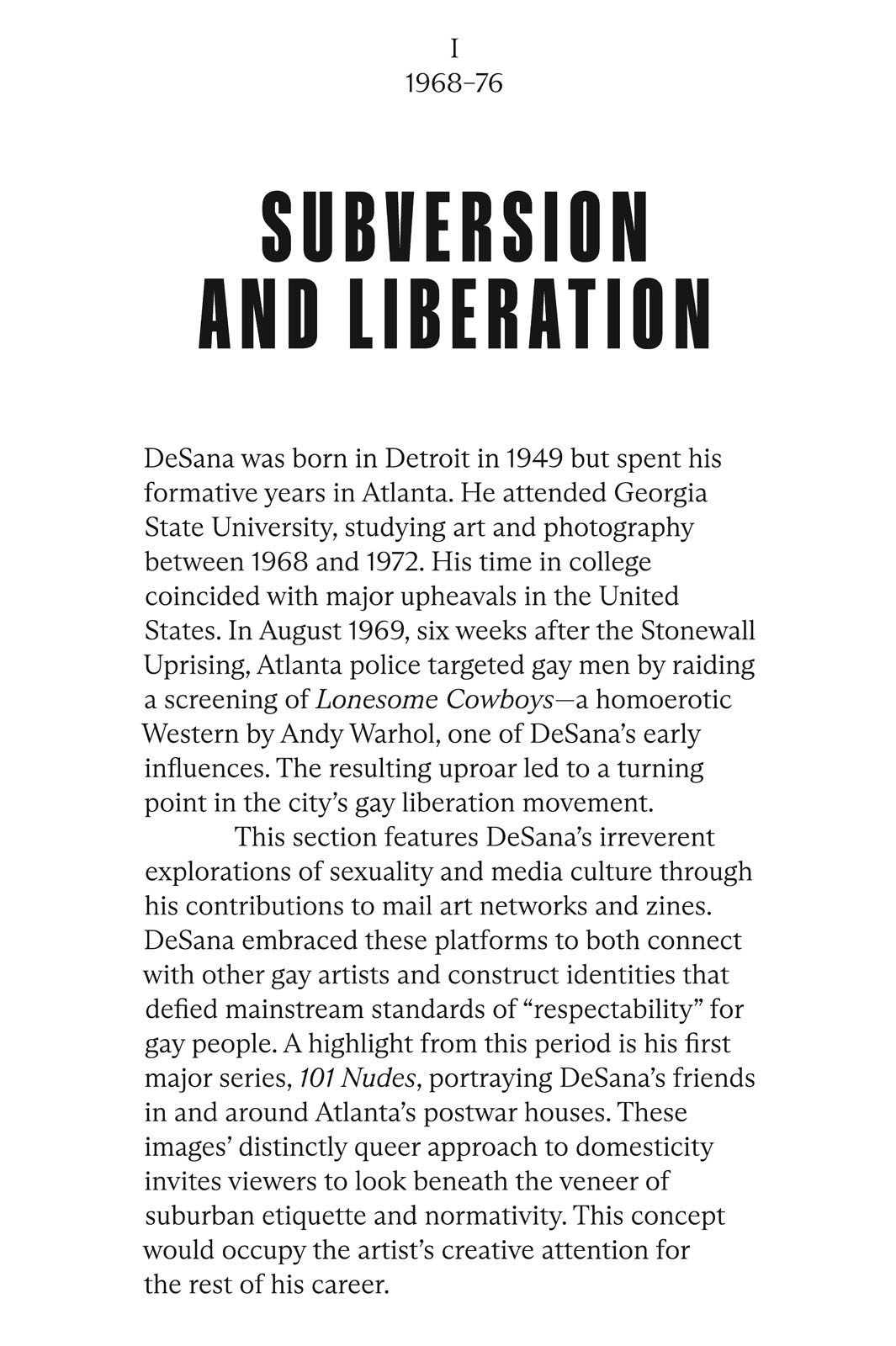
Jimmy DeSana Subversion and Liberation wall text


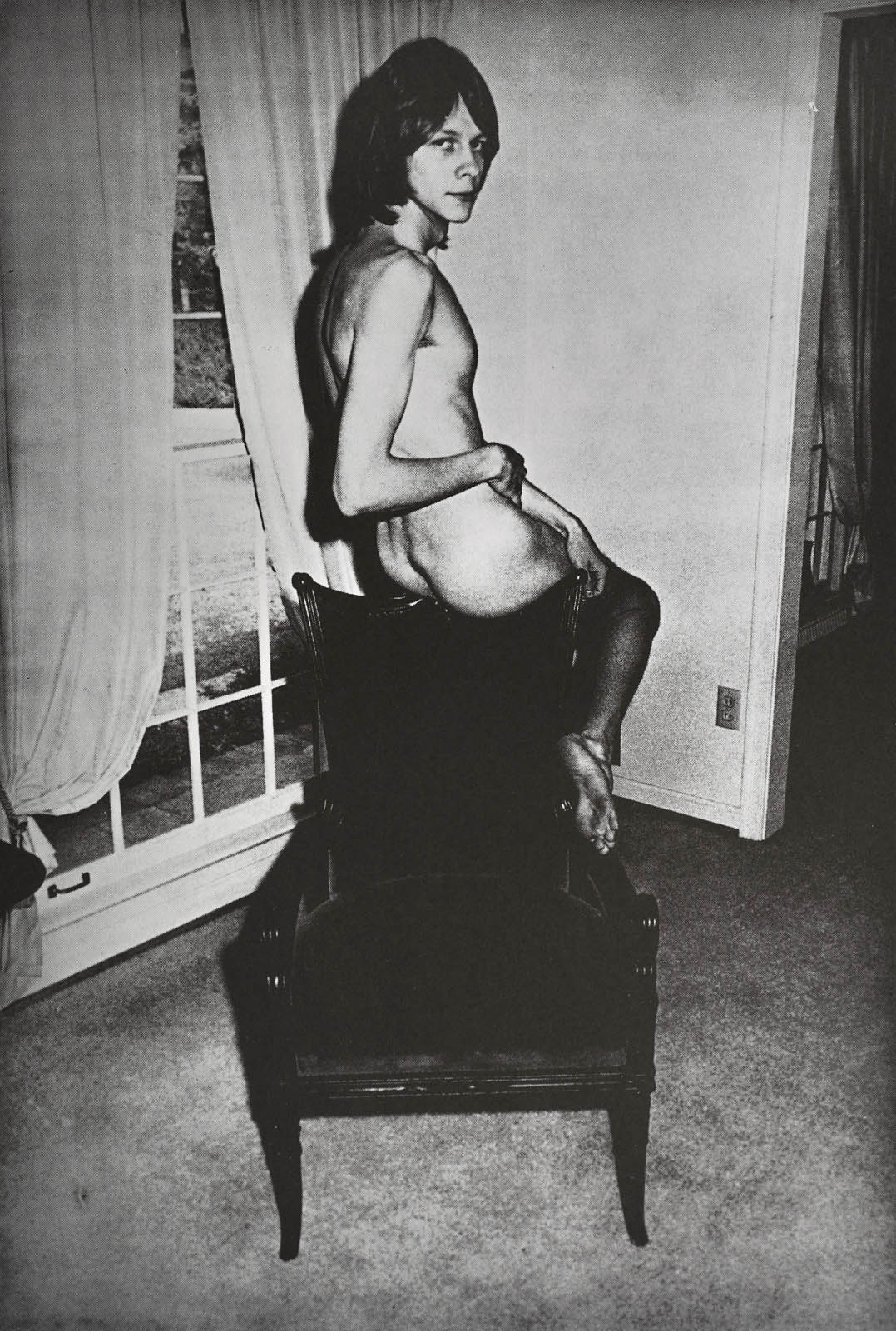
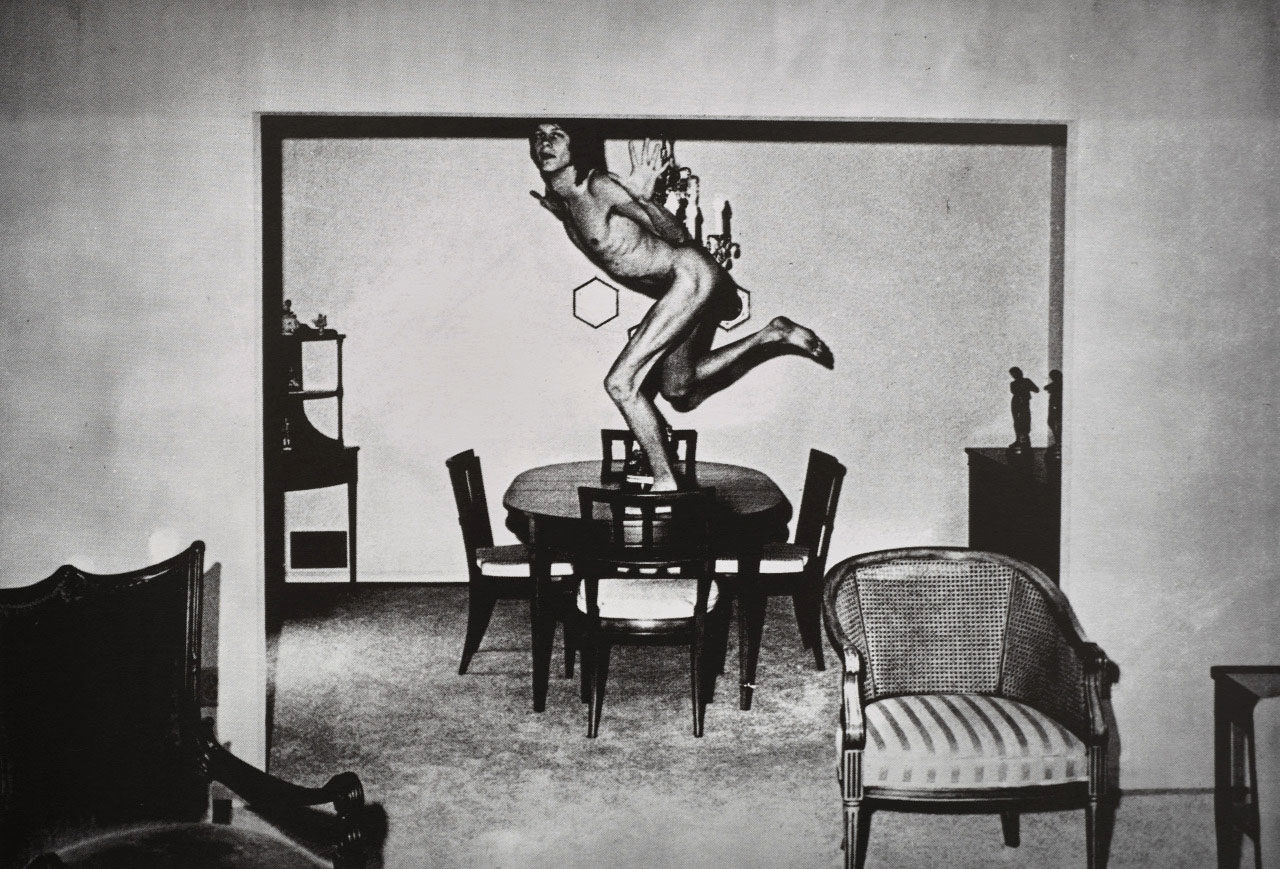
Jimmy DeSana (American, 1949-1990) 'Untitled' 1972


Jimmy DeSana (American, 1949-1990)
Untitled
1972
From the series 101 Nudes
Offset print
12 3/4 × 8 1/2 in. (32.4 × 21.6cm)
Courtesy of the Jimmy DeSana Trust and P·P·O·W Gallery, New York
© Estate of Jimmy DeSana
Photo: Allen Phillips


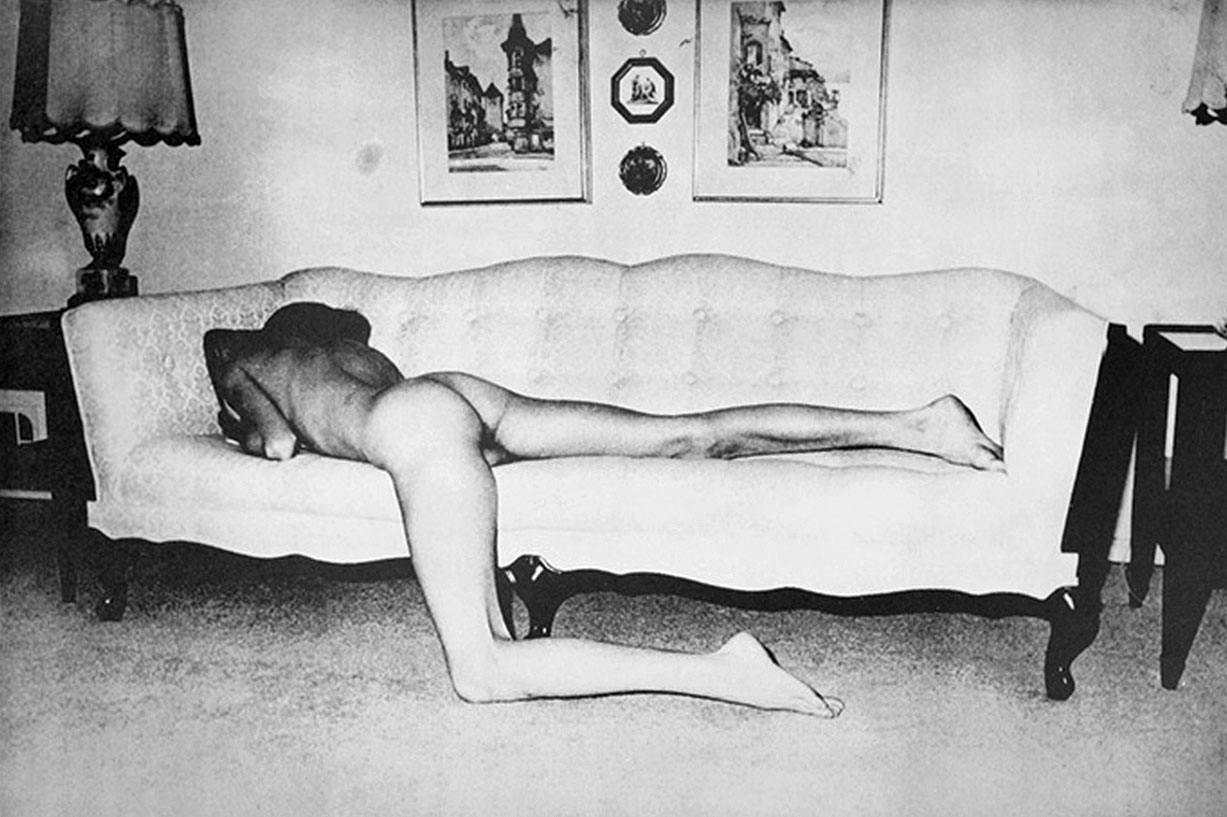
DeSana was born in Detroit in 1949 to middle-class suburbanites, who raised him and his brother in Atlanta. His mother was a strict Methodist; his father abandoned the family as DeSana entered adulthood. While studying art at Georgia State University, DeSana began making precocious, conceptual photography of suburban houses, generally banal, and of his friends, often naked. But his final thesis, 101 Nudes (1972), is a landmark. Likely taken with a Leica IIIf and lit by a flash, as Sawyer notes in his catalog essay, the portraits form a kind of fanzine of queer friends. DeSana shows off their muscles like he’s making Physique Pictorial, or crouches and crops their bodies like a funnier Man Ray. A drag queen looks right into the camera, bold; a man shoves his face into a pillow, ass beckoning. Bodies are unstable, and DeSana captures how funny, and how frightening, that can be, and how those two emotions comprise desire. Sawyer hangs these prints on the wall like Teen Beat posters in a teenage bedroom. It’s hard not to be a fan. …

Jesse Dorris. “Jimmy DeSana’s Transgressive Vision of Life and Desire,” on the Aperture website December 14, 2022 [Online] Cited 02/04/2023


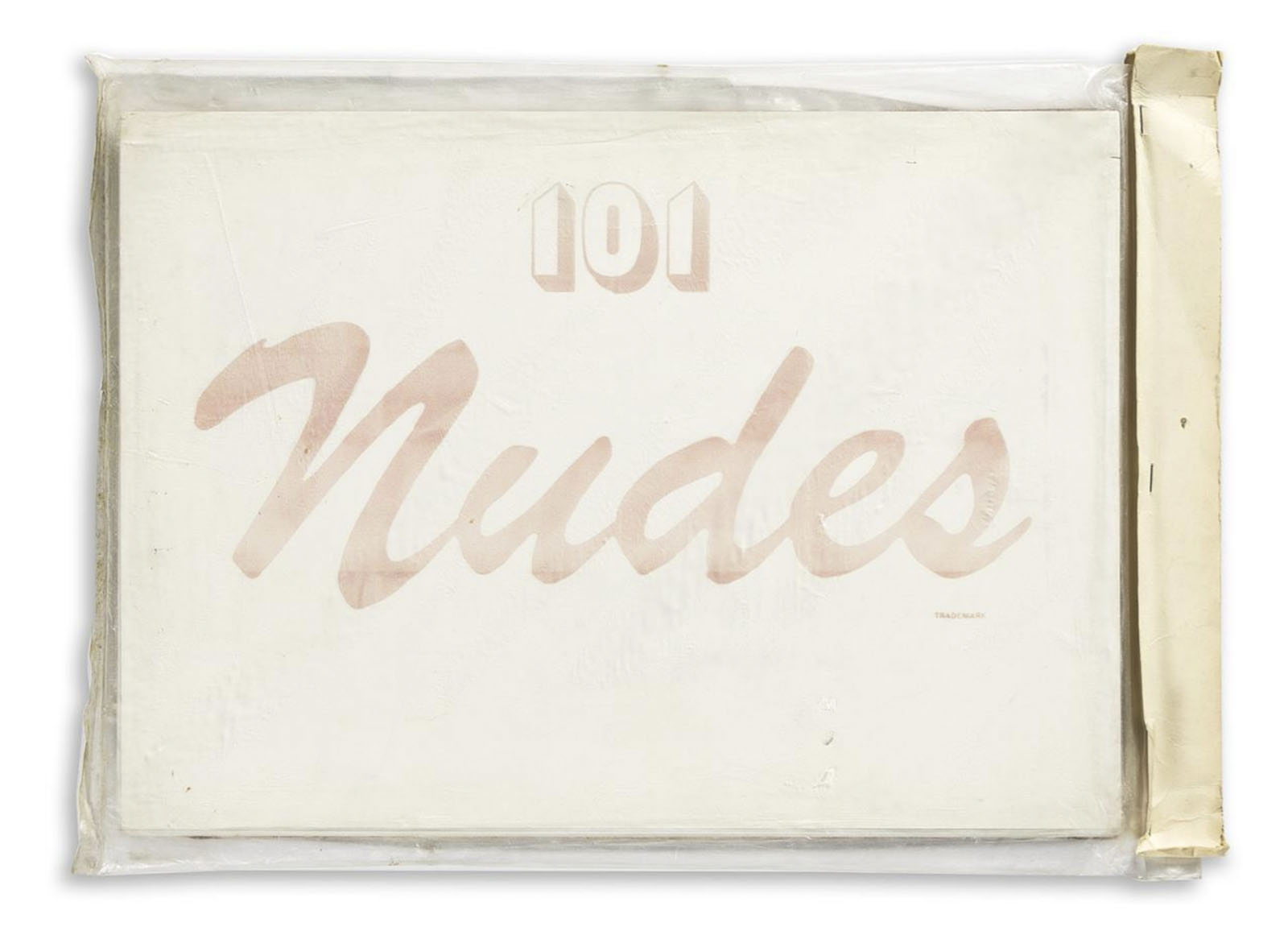
Jimmy DeSana (American, 1949-1990) Cover from the series '101 Nudes' 1972


Jimmy DeSana (American, 1949-1990)
Cover from the series 101 Nudes
1972
Offset prints in custom portfolio box, fifty-six parts
Each: 11 × 14 inches (27.9 × 35.6cm)
Courtesy of the Jimmy DeSana Trust and P·P·O·W Gallery, New York
© Estate of Jimmy DeSana


Photographer Jimmy De Sana was part of the countercultural “punk” community of artists and musicians living in New York’s East Village in the 1970s and ’80s. Among his best-known works are portraits of important figures from that scene, including Debbie Harry and Billy Idol, though these constitute only a small part of his practice. With work that is personal, surrealistic, and often shocking in its treatment of sexuality, De Sana helped raise the standing of photography in the art world and increased critical respect for the medium.

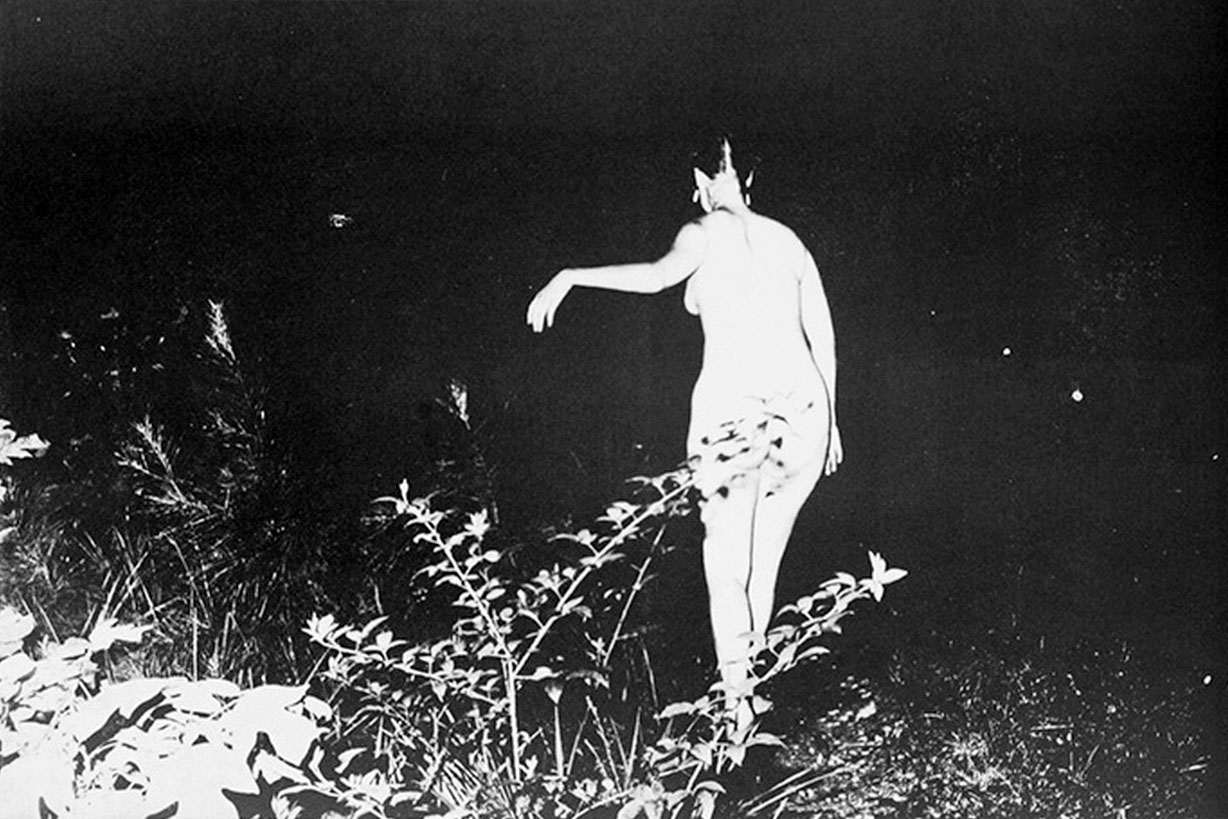
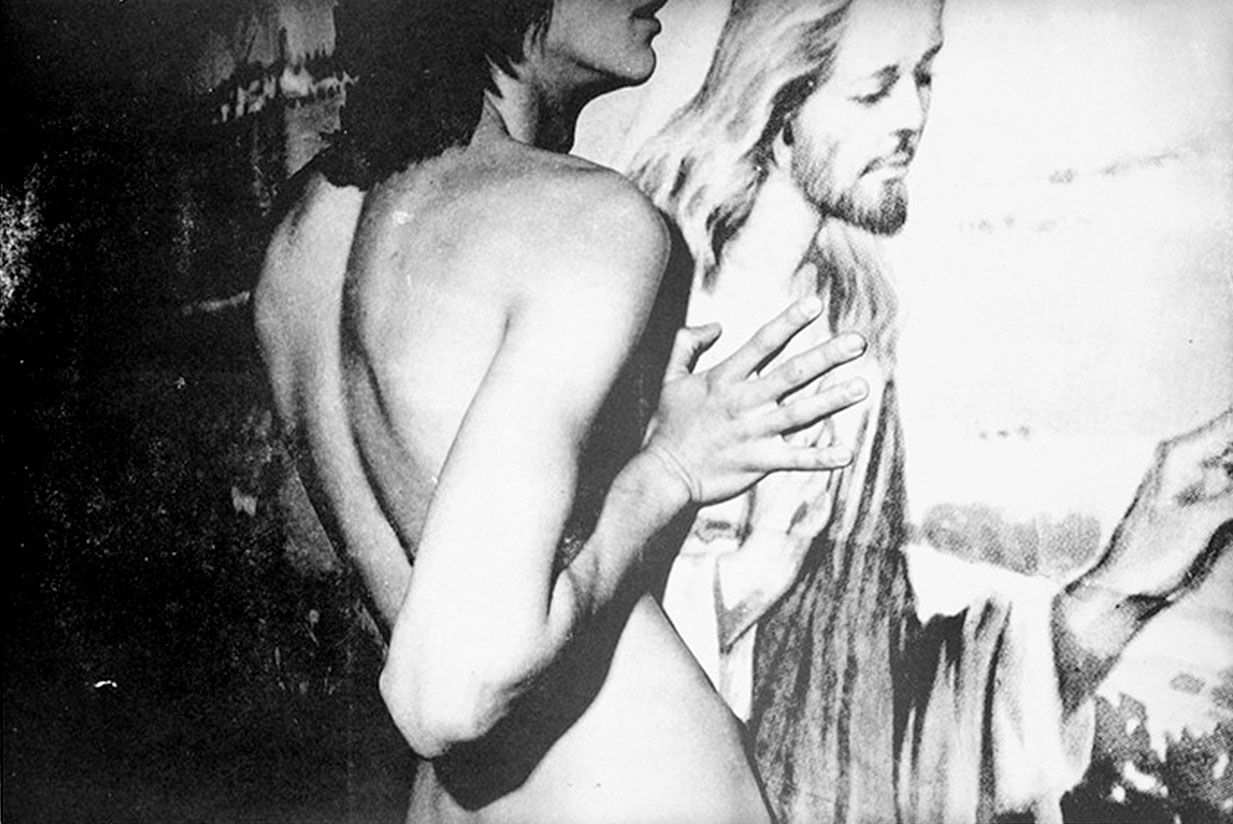
101 Nudes comprises 56 halftone black-and-white photographs of nude and partially nude figures posing inside or just outside homes. The artist was 20 years old and attending college in Atlanta when he first printed the series in 1972. The figures, which include De Sana’s friends as well as himself, are photographed from a variety of viewpoints. Although the series shows the influence of “grainy” pornography from the 1950s, the postures of the figures do not seem to suggest or invite sexual engagement; the artist noted that they are “without eroticism.” Sometimes the photographs feature only a fragment of the body, such as the pelvic area or buttocks. De Sana’s engagement with the history of surrealism has been noted, and these partial views in particular recall the surrealist photography of artists such as Man Ray, who in the 1920s photographed the body parts of friends and lovers in ways that removed them from their context and made them into almost abstract images.

Anonymous. “101 Nudes,” on the ICA website Nd [Online] Cited 20/03/2023


When De Sana (1950-1990) shot and self-published the 56 halftone images that would make up the “101 Nudes” series, he was just 20 years old and still a college student in Atlanta. Using his friends as models, he constructed each photograph as an insight into the possibilities of form, capturing with his flash-camera something both artful and sincere. His subjects (nearly all of them naked) were “without eroticism” as De Sana has said, the series as much about isolation as it is sexuality. The careful, strange postures of his figures, collapsed across a couch or balanced on a dining-room table, often had a touch of the surreal. His later work, in particular the S&M series that came to comprise his 1980 book “Submission” (also on display), explored sexuality and digression front-on in the spirit of William Burroughs, whose writing was a significant influence on the artist from a young age. De Sana created these images – which pre-dated Mapplethorpe’s fetish work – with an even stronger sense for composition, all the while seeking the boundaries of comfort through the bizarrely positioned, leather-bound figures.

Anonymous. “Jimmy De Sana, “101 Nudes and Other Works”,” on the NY Art Beat website 2011 [Online] Cited 20/03/2023. No longer available online


One year later, on June 28, 1969, police raided the Stonewall Inn, the gay bar in New York’s Greenwich Village, sparking an uprising that would launch the modern gay liberation movement. This spark of rebellion and hope made its way to Atlanta’s Ansley Mall Mini Cinema, where Andy Warhol’s homoerotic underground film, “Lonesome Cowboys,” was showing. Fifteen minutes into the film’s only screening, police officers raided the cinema and confiscated the reels. Many of the audience members were harassed, photographed and arrested.

DeSana may or may not have been in the audience that night, but he was certainly aware that his classmates and professors experienced censorship from school officials and the city. In the catalog accompanying the Brooklyn exhibition, curator Sawyer writes that in 1972, DeSana’s teacher, photographer John McWilliams, organized Atlanta’s annual arts festival where he displayed nudes made by his students and invited the highly regarded photographer Frederick Sommer to judge the exhibition.

“Sommer awarded prizes to several of the students, but within days there were letters and reviews in Atlanta’s daily papers complaining of the exhibition’s pornography,” writes Sawyer.

Against this backdrop of censorship and taboos, DeSana turned his perceptions of suburbia into his final thesis project, “101 Nudes,” spoofing the title of Walt Disney’s “101 Dalmations.”

The 56 humorous black-and-white images in “101 Nudes” are all fairly innocent scenes carefully posed in middle-class American homes. It’s kink for beginners: a nude perches on the edge of an overstuffed sofa; another plunges face-first into cushions; a goofy-looking naked boy stands on one leg on a dining room table. There are even close-up shots of buttocks, breasts and genitals, yet, as DeSana himself noted, they are “without eroticism,” adding, “that is the way the suburbs are, in a sense.”

As Jean Cocteau said of a Jean Genet poem, “His obscenity is never obscene.”

Jessica Robinson. “The Prurient Punk Surrealism of Photographer Jimmy DeSana,” on the Brooklyn website December 12, 2022 [Online] Cited 15/03/2023


Jimmy DeSana (American, 1949-1990) 'Untitled' 1972 From the series '101 Nudes'


Jimmy DeSana (American, 1949-1990)
Untitled
1972
From the series 101 Nudes
Offset prints in custom portfolio box, fifty-six parts
Each: 11 × 14 inches (27.9 × 35.6cm)
Courtesy of the Jimmy DeSana Trust and P·P·O·W Gallery, New York
© Estate of Jimmy DeSana


Jimmy DeSana (American, 1949-1990) 'Untitled' 1972 From the series '101 Nudes'


Jimmy DeSana (American, 1949-1990)
Untitled
1972
From the series 101 Nudes
Offset prints in custom portfolio box, fifty-six parts
Each: 11 × 14 inches (27.9 × 35.6cm)
Courtesy of the Jimmy DeSana Trust and P·P·O·W Gallery, New York
© Estate of Jimmy DeSana


Against a backdrop of gay liberation and censorship in early 1970s Atlanta, DeSana combined his explorations of suburban culture and nude figures into a final thesis project. In 1970-1972, DeSana staged photographs of his mostly queer friends, including the notorious drag performer Diamond Lil, nude in suburban environments. While other Conceptual artists were focused on the architectural homogeneity of suburbia, in 101 Nudes DeSana penetrated the veneer of seriality and conformity.

According to DeSana, both his subjects’ poses and his halftone reproduction techniques mimicked images from mass-market, soft-core pornographic magazines that emerged during his youth. The title sends up that of the wholesome 1961 Disney animated film 101 Dalmatians, which was rereleased in 1972. DeSana would continue to draw from and parody popular cultural forms into the early 1980s.

Exhibition label


Jimmy DeSana (American, 1949-1990) 'Untitled' 1972 From the series '101 Nudes'


Jimmy DeSana (American, 1949-1990)
Untitled
1972
From the series 101 Nudes
Offset prints in custom portfolio box, fifty-six parts
Each: 11 × 14 inches (27.9 × 35.6cm)
Courtesy of the Jimmy DeSana Trust and P·P·O·W Gallery, New York
© Estate of Jimmy DeSana


Jimmy DeSana (American, 1949-1990) 'Untitled' 1972 From the series '101 Nudes'


Jimmy DeSana (American, 1949-1990)
Untitled
1972
From the series 101 Nudes
Offset print
12 3/4 × 8 1/2 in. (32.4 × 21.6 cm)
Courtesy of the Jimmy DeSana Trust and P·P·O·W Gallery, New York
© Estate of Jimmy DeSana
Photo: Allen Phillips


Against a backdrop of policing, censorship, and gay liberation in early 1970s Atlanta, DeSana staged photographs of his mostly queer friends, including the notorious drag performer Diamond Lil, nude in suburban environments. While other Conceptual artists using photography like Dan Graham were focused on the architectural homogeneity of suburbia, in “101 Nudes,” a portfolio of 56 photolithographic prints, DeSana penetrated the veneer of seriality and conformity.

Both his subjects’ poses and his halftone reproduction techniques mimicked images from mass-market, soft-core pornographic magazines that emerged during the artist’s youth. The title sends up that of the wholesome 1961 Disney animated film 101 Dalmatians, which was rereleased in 1972.

DeSana eventually sent copies of the portfolio through the mail, which served as an alternative channel for sharing Conceptual art and challenging the privileged spaces of museums and commercial galleries during these years. He embraced “correspondence art” in part to connect with other gay artists and construct identities that defied mainstream standards of “respectability” for gay people.

Text from the Brooklyn Museum Tumblr website


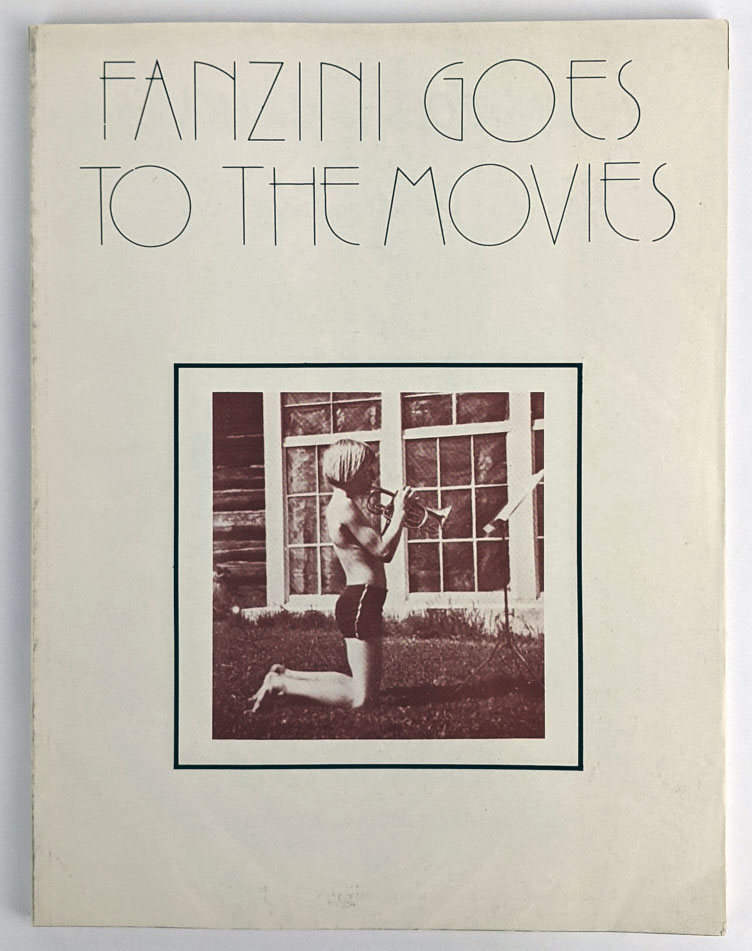
John Jack Baylin 'Fanzini Goes to the Movies' 1974


John Jack Baylin
Fanzini Goes to the Movies
1974
Periodical; offset print
11 × 8 1/2 in. (27.9 × 21.6cm)
Courtesy of Philip Aarons and Shelley Fox Aarons


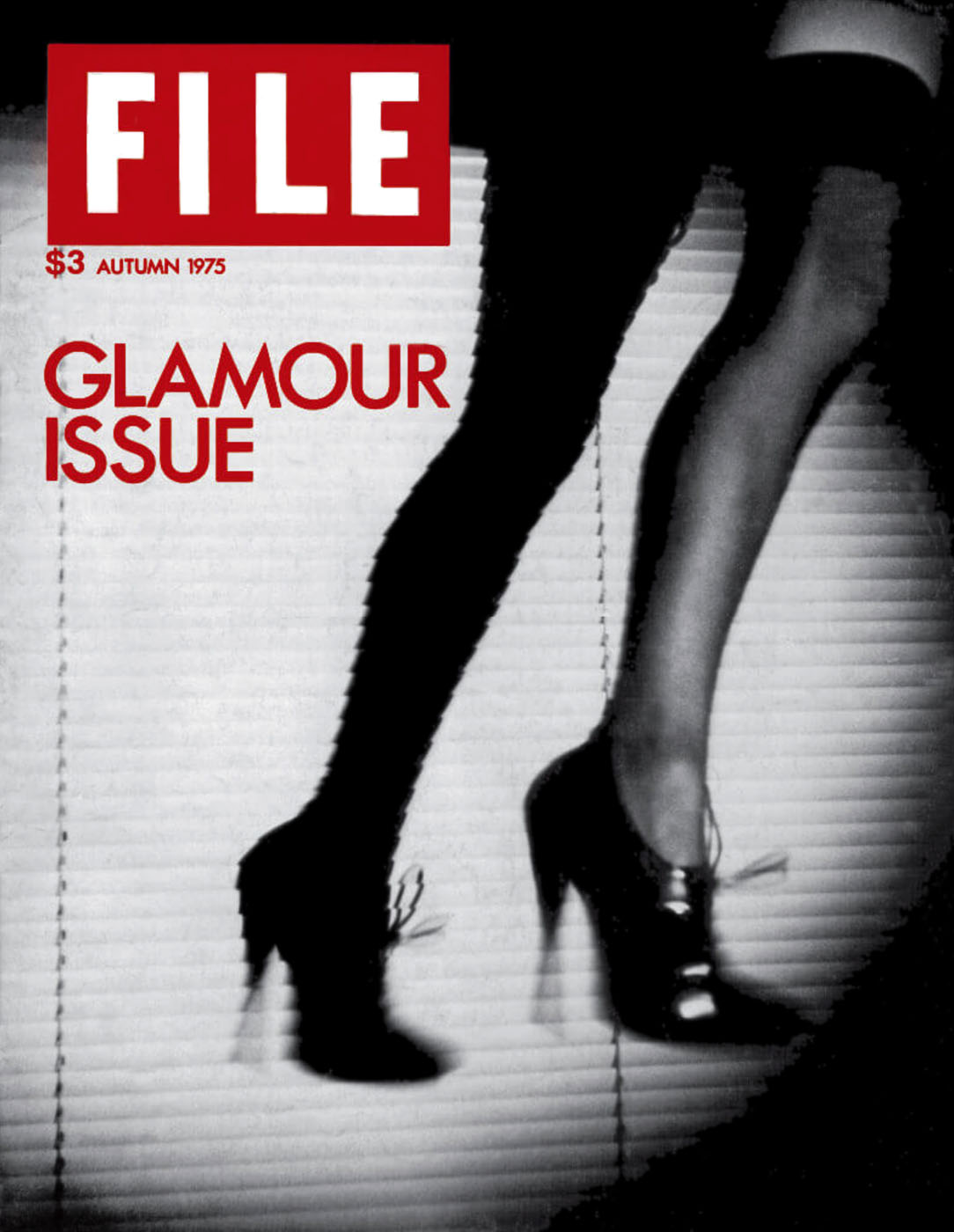
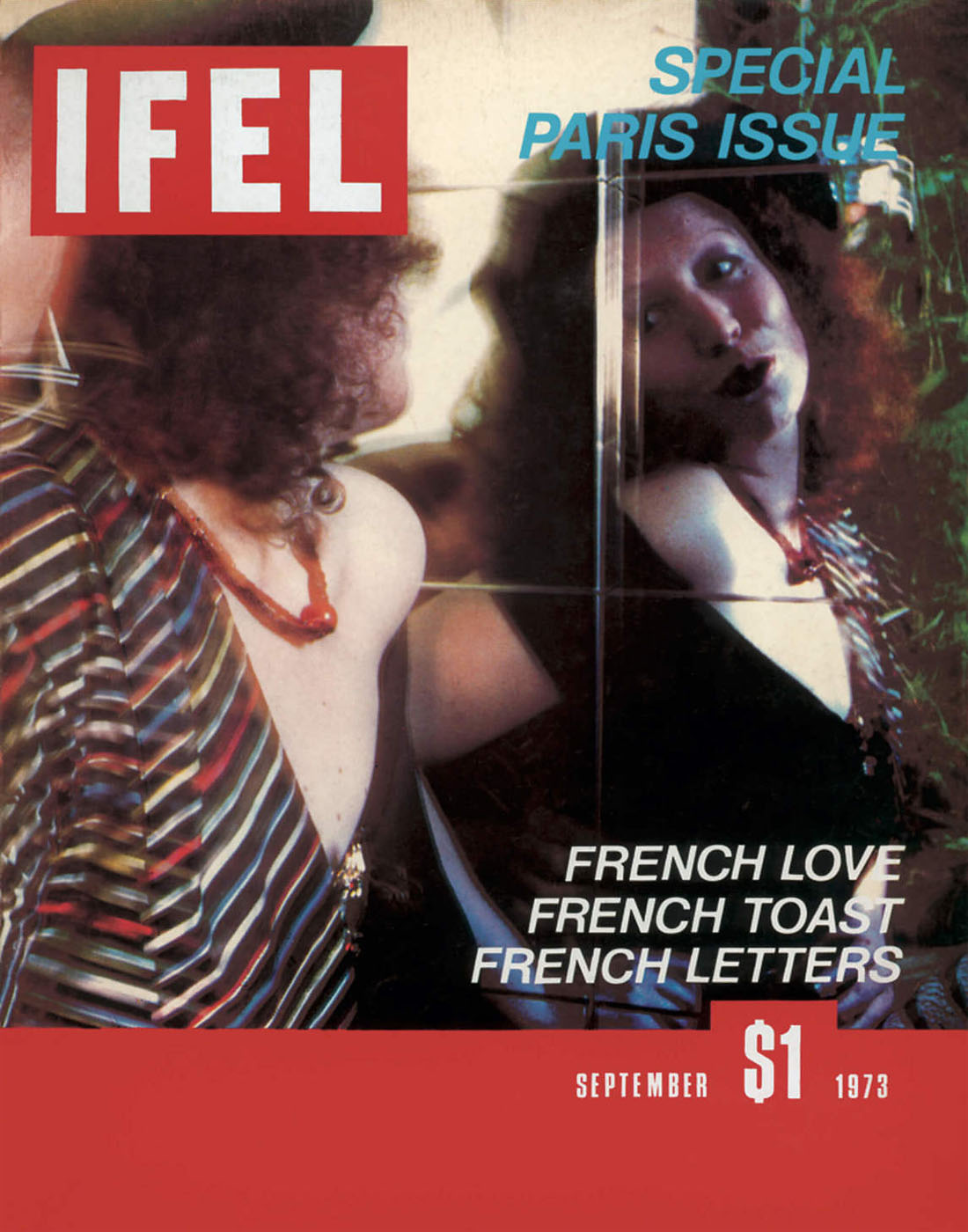
General Idea, Canadian, 1969-1994. 'File, vol. 3, no. 1, "Glamour" issue' Autumn 1975


Publisher: General Idea, Canadian, 1969-1994
File, vol. 3, no. 1, “Glamour” issue
Autumn 1975
Periodical; off-set print, staple bound, illustrated wrappers
14 × 10 11/16 in. (35.6 × 27.1cm)
Collection of Philip Aarons and Shelley Fox Aarons


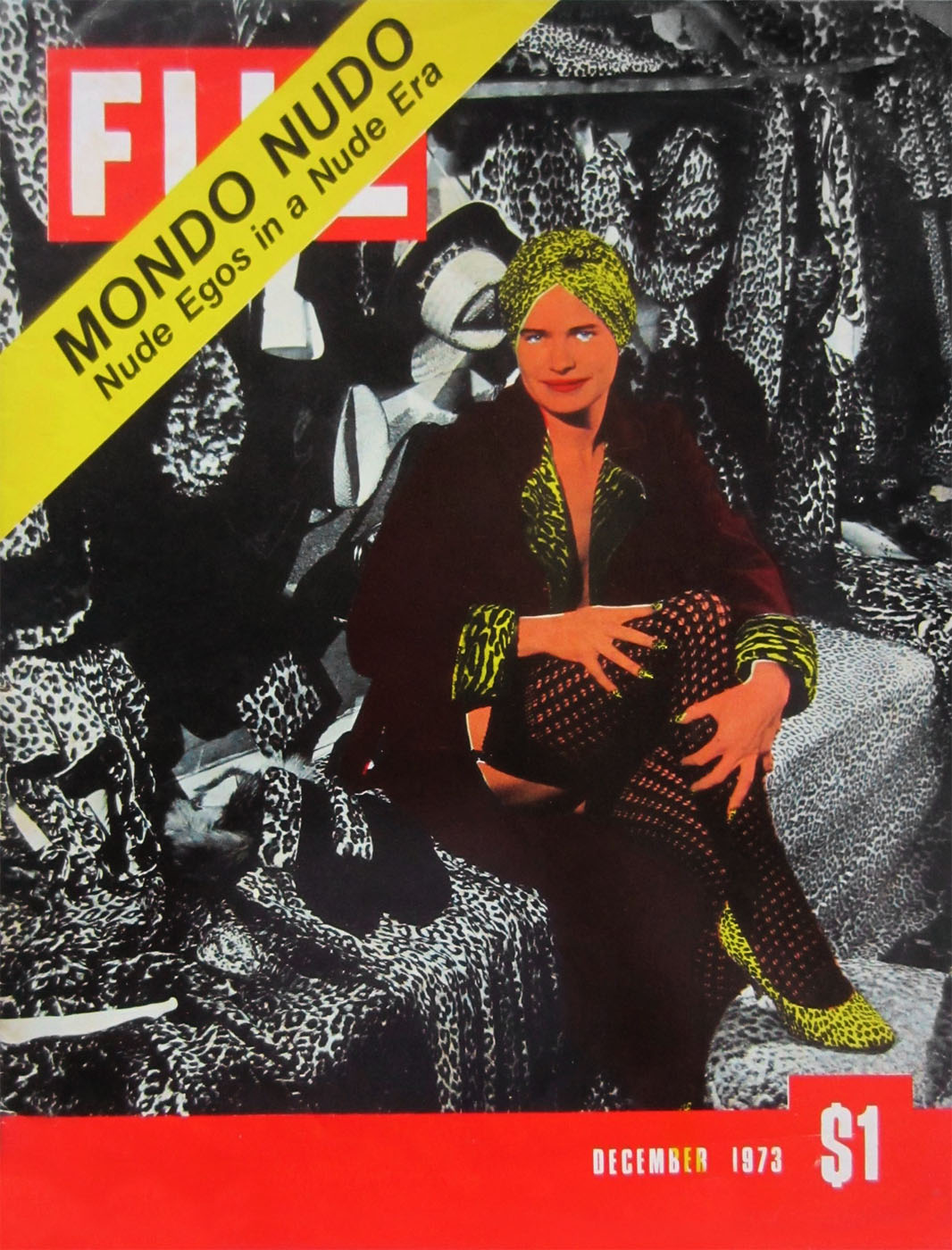
General Idea, Canadian, 1969-1994. 'File, vol. 2, no. 4, "Mondo Nudo" issue' December 1973


Publisher: General Idea, Canadian, 1969-1994
File, vol. 2, no. 4, “Mondo Nudo” issue
December 1973
Periodical; offset print, staple bound, illustrated wrappers
14 × 10 3/4 in. (35.6 × 27.3cm)
Collection of Philip Aarons and Shelley Fox Aarons


General Idea, Canadian, 1969-1994 'File, vol. 2, no. 3, "Paris" issue' September 1973


Publisher: General Idea, Canadian, 1969-1994
File, vol. 2, no. 3, “Paris” issue
September 1973
Periodical; offset print, staple bound, illustrated wrappers
14 × 11 in. (35.6 × 27.9cm)
Collection of Philip Aarons and Shelley Fox Aarons


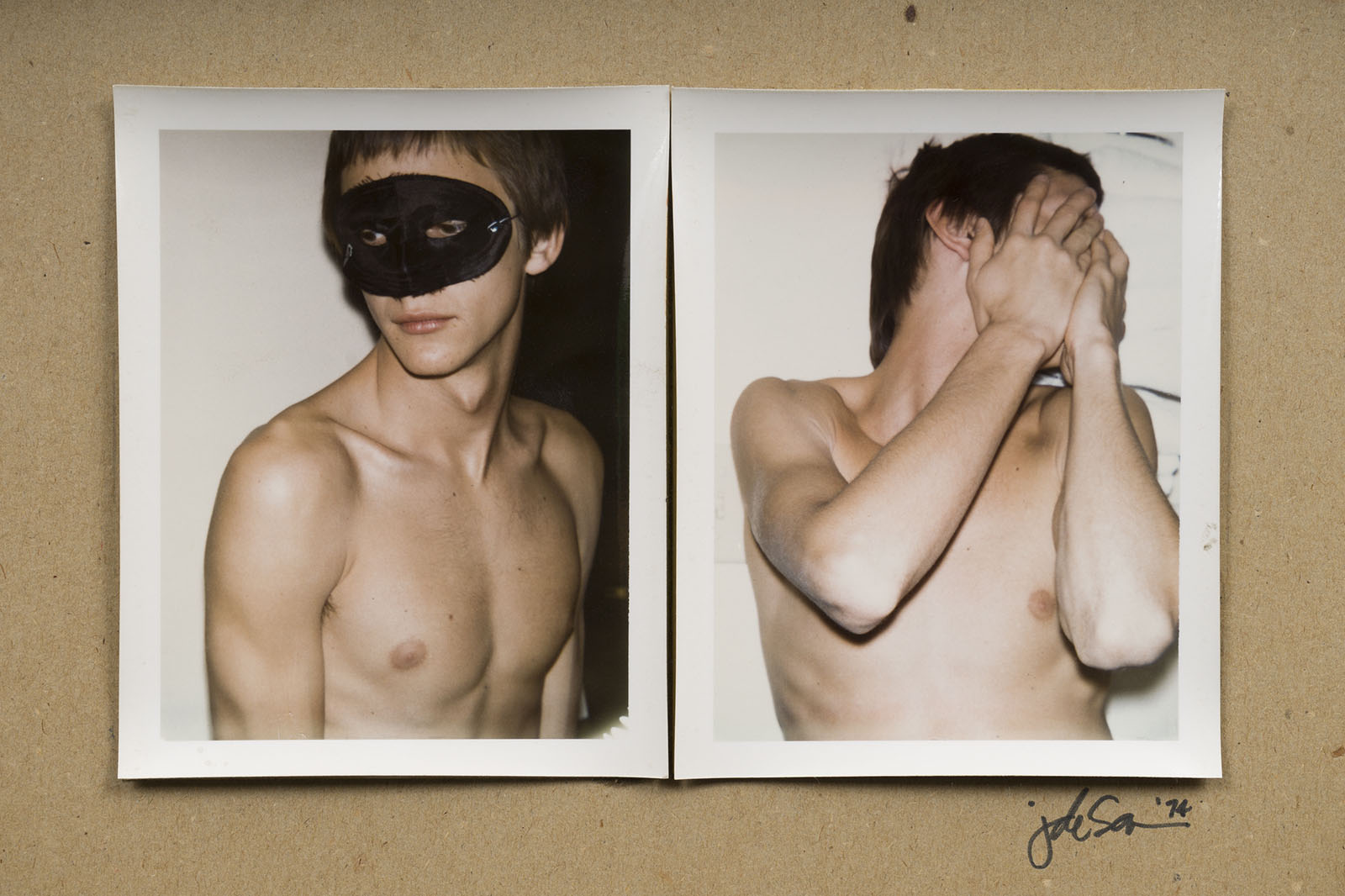
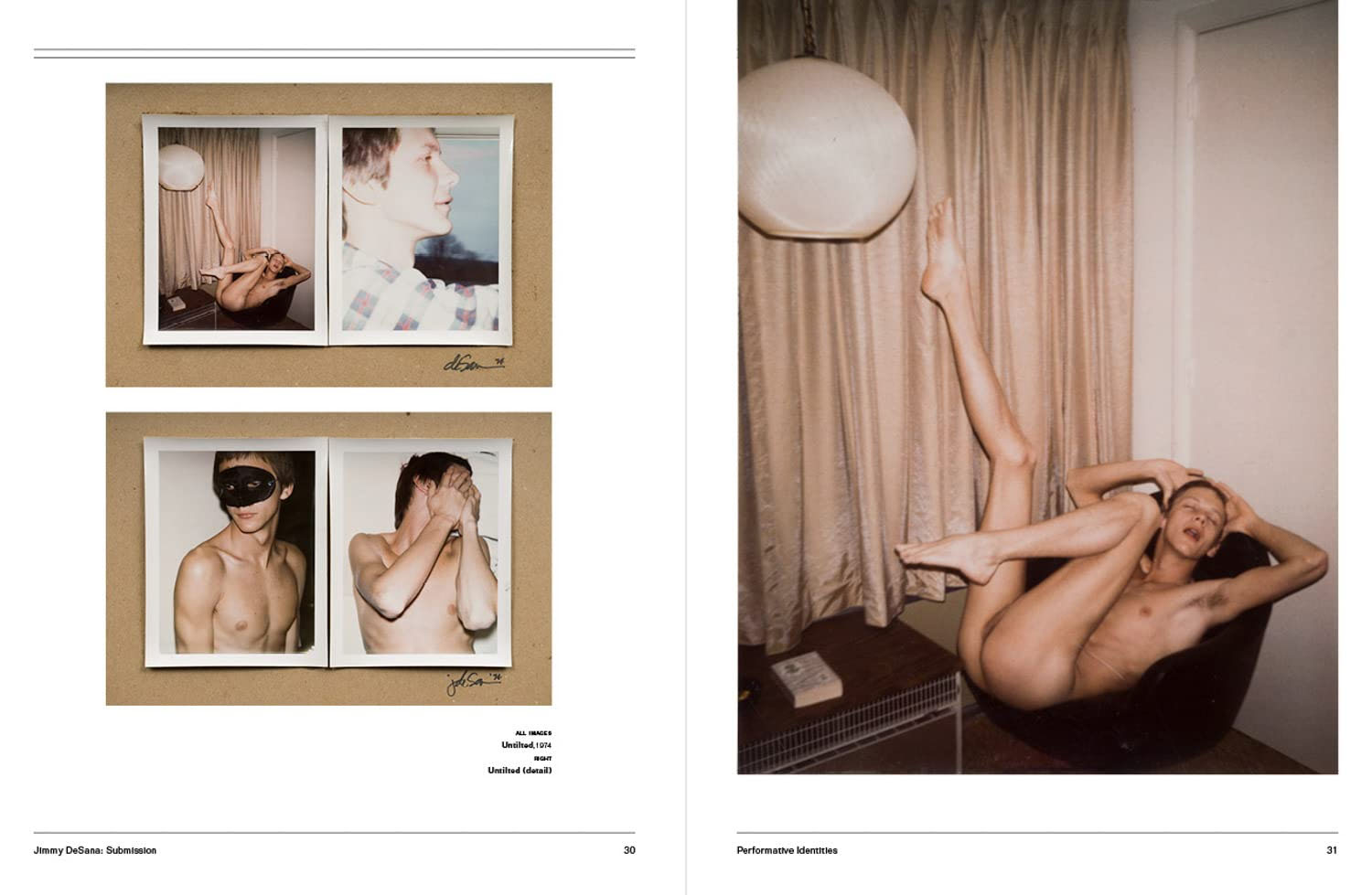
Jimmy DeSana (American, 1949-1990) 'Untitled' 1974


Jimmy DeSana (American, 1949-1990)
Untitled
1974
Dye diffusion transfer prints
Each 4 1/4 × 3 3/8 in. (10.8 × 8.6cm)
Collection of Philip Aarons and Shelley Fox Aarons
© Estate of Jimmy DeSana
Photo: David Vu


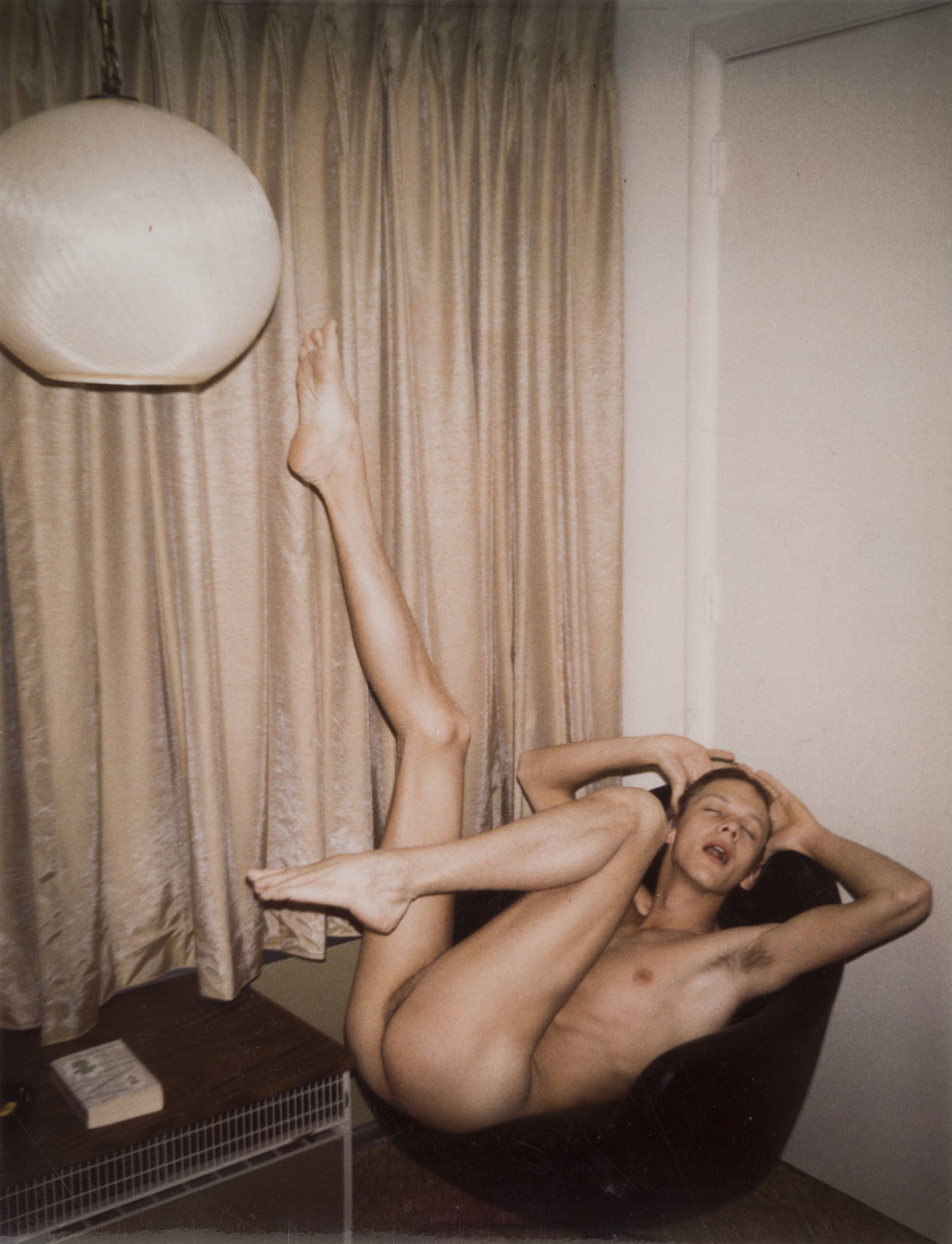
Jimmy DeSana (American, 1949-1990) 'Untitled' 1974


Jimmy DeSana (American, 1949-1990)
Untitled
1974
Dye diffusion transfer print
4 1/4 × 3 3/8 in. (10.8 × 8.6cm)
Collection of Philip Aarons and Shelley Fox Aarons
© Estate of Jimmy DeSana
Photo: David Vu


Fluxus and Dada Daddies


Jimmy DeSana (American, 1949-1990) 'Stephen Varble' 1975


Jimmy DeSana (American, 1949-1990)
Stephen Varble
1975
Gelatin silver print
11 1/4 × 16 1/2 in. (28.6 × 41.9cm)
Courtesy of the Jimmy DeSana Trust and P·P·O·W Gallery, New York
© Estate of Jimmy DeSana
Photo: Allen Phillips


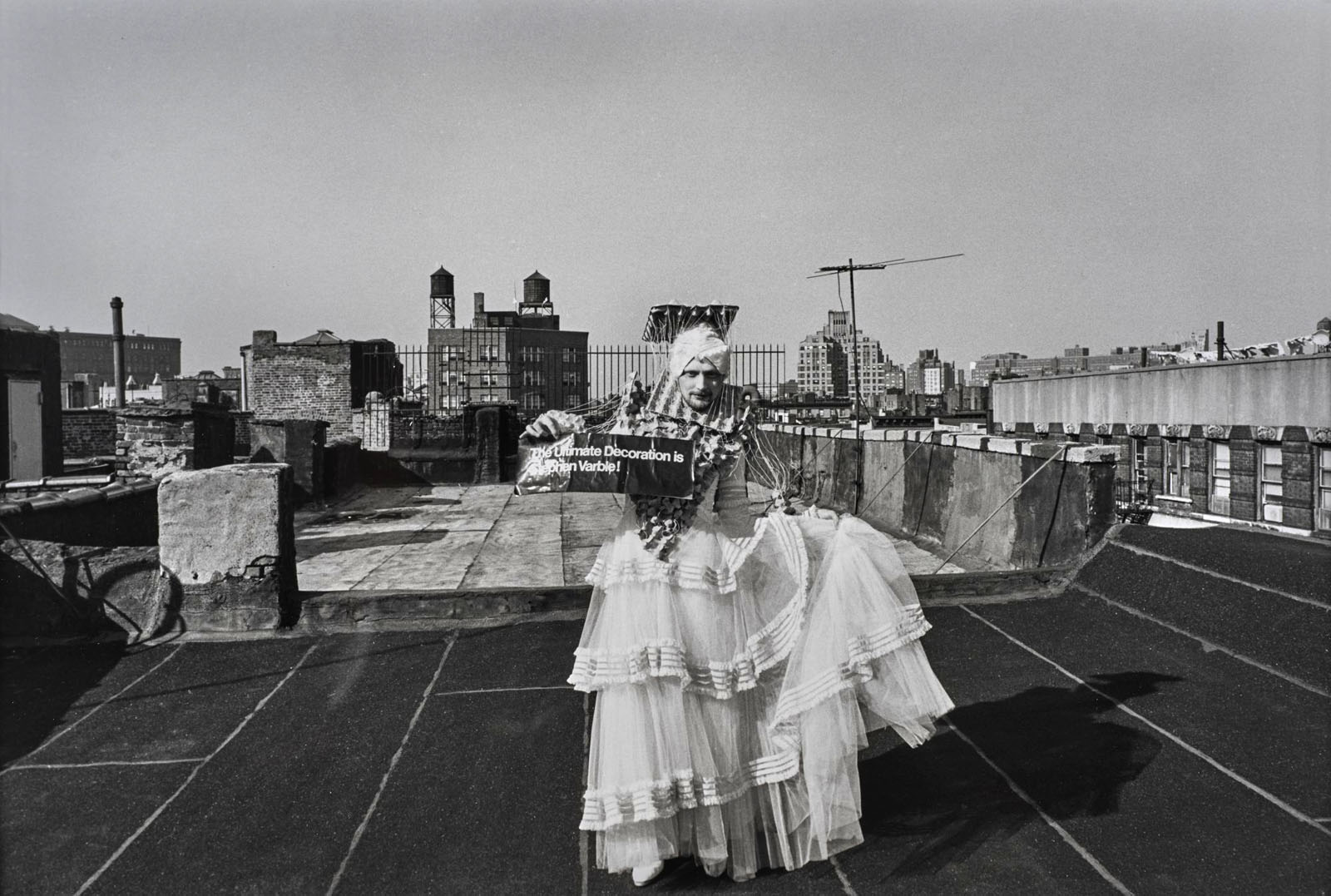
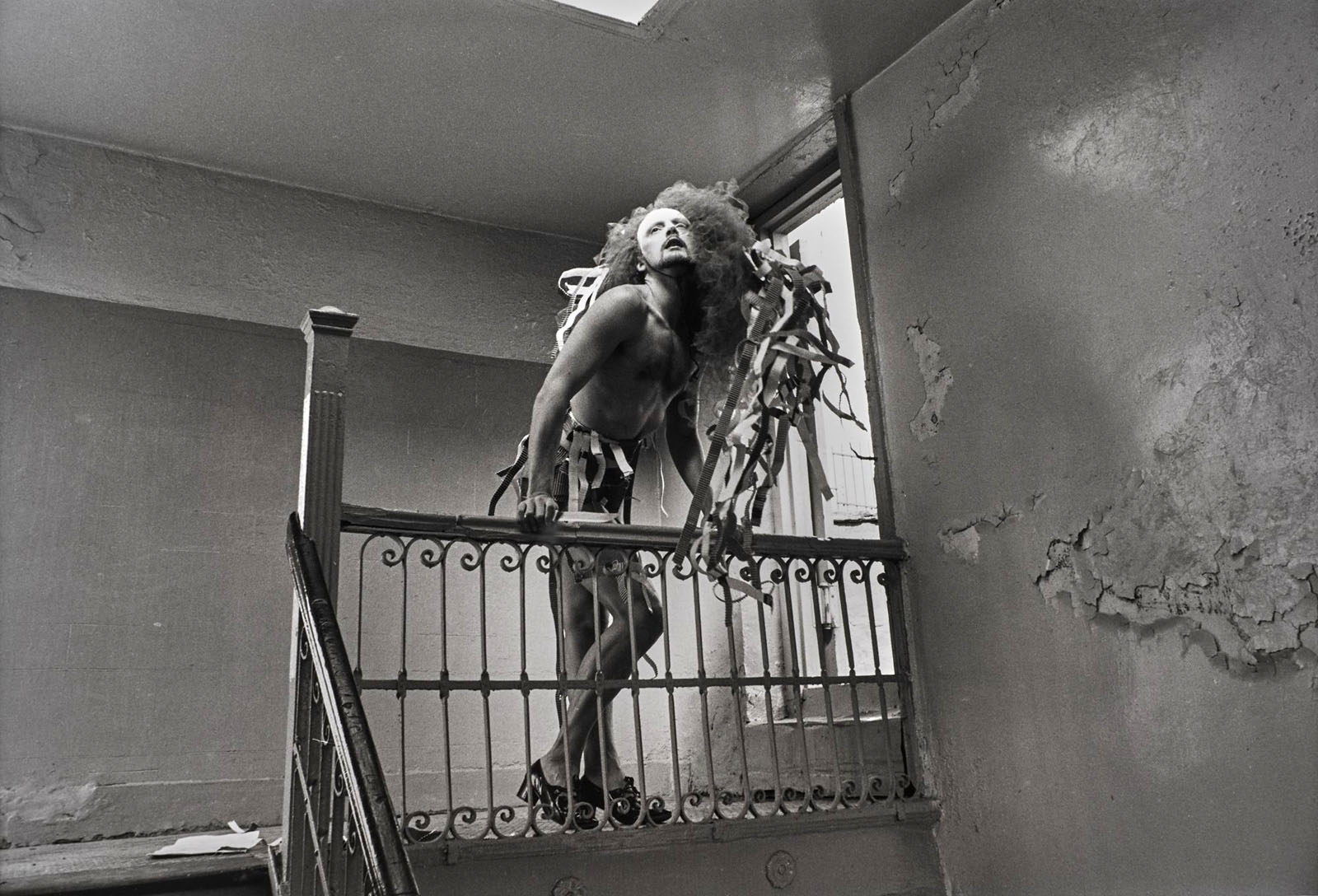
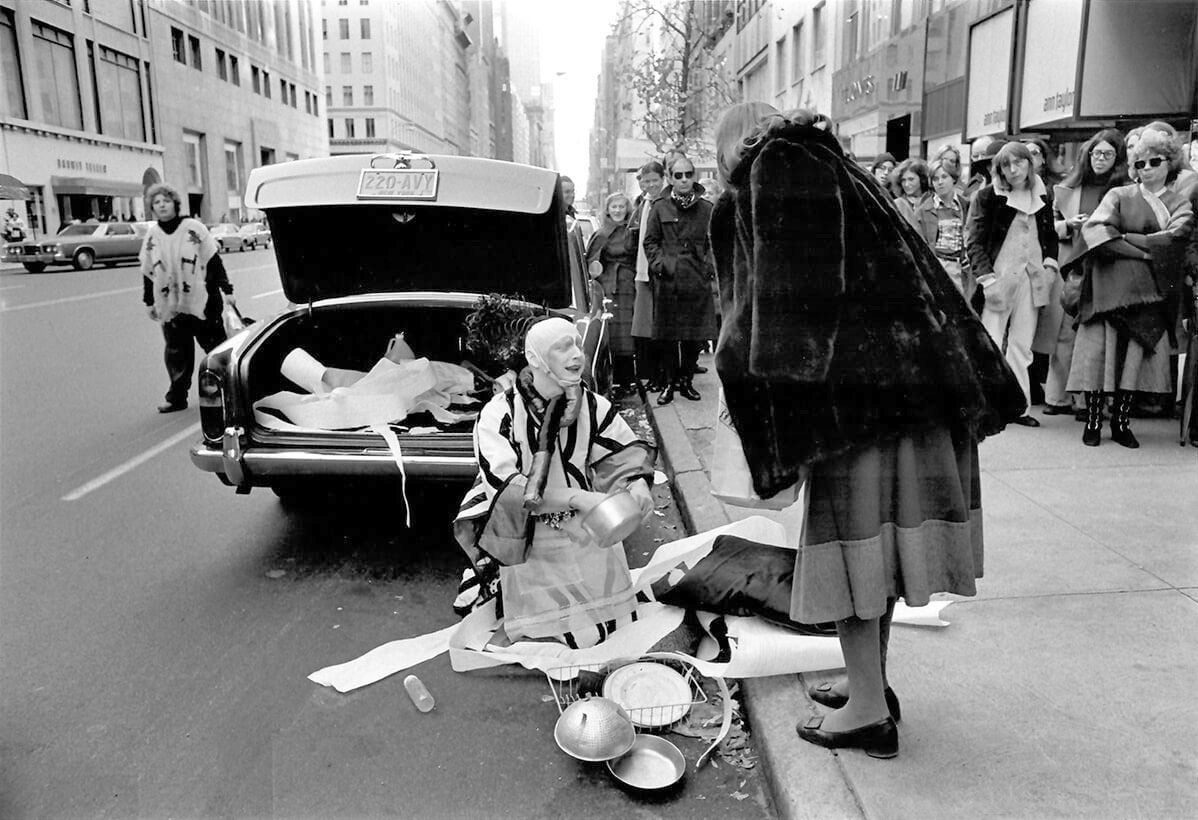
During the golden age of downtown performance art in the 1970s, Jimmy DeSana documented the work of numerous artists, sometimes for income.

In 1975, he photographed public interventions by Stephen Varble, an artist who performed his “Gutter Art” in the streets of Soho and Midtown, while wearing his signature gender-bending ensembles. As the critic Gregory Battcock put it, Varble came to be “considered by some the embarrassment of SoHo, and by others the only touch of real genius south of Houston Street.” DeSana’s photographs of Varble appeared in publications during this time, including General Idea’s FILE Megazine.

DeSana’s photographs are invaluable records of an ephemeral practice, which has only recently been given its proper due thanks in part to the work of art historian David Getsy.

Text from the Brooklyn Museum Tumblr website


Jimmy DeSana (American, 1949-1990) 'Stephen Varble' 1975


Jimmy DeSana (American, 1949-1990)
Stephen Varble
1975
Gelatin silver print, printed later
18 1/4 × 23 3/4 in. (46.4 × 60.3cm)
Courtesy of the Jimmy DeSana Trust and P·P·O·W Gallery, New York
© Estate of Jimmy DeSana
Photo: Allen Phillips


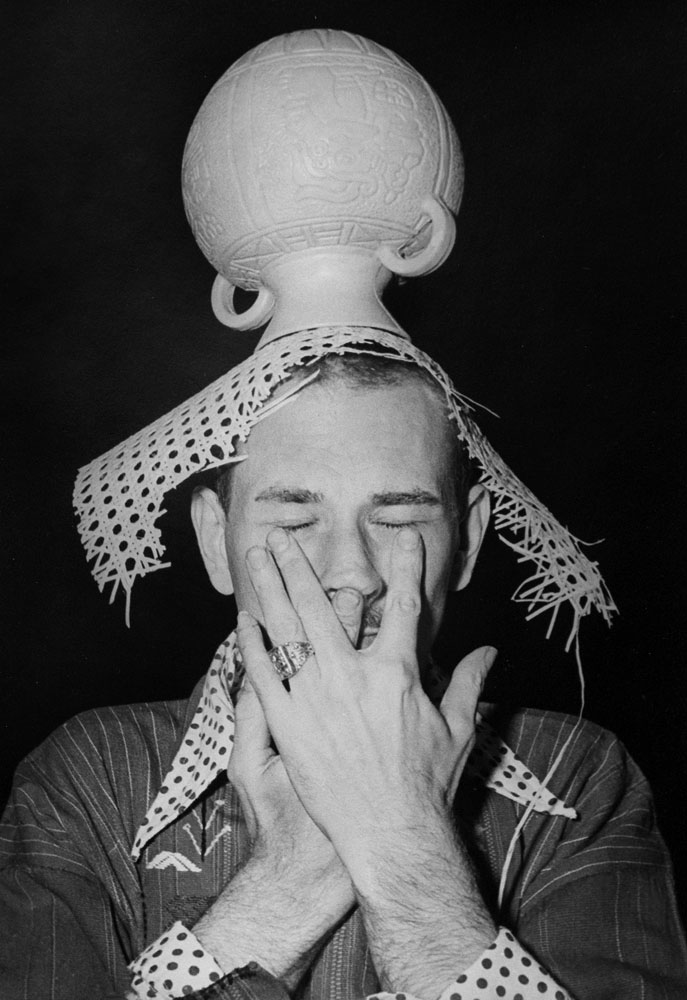
Throughout the 1970s, Jimmy DeSana created campy portraits of his extended circle of friends and collaborators in New York, which included musicians, filmmakers, writers, artists, critics, and curators.

Performance artist and fixture of New York City’s downtown scene Stephen Varble, shown here, was one of DeSana’s repeat subjects. DeSana captured many of the performances staged by Varble whose guerilla practices served as commentary on gender identity, class, and capitalism. These performance-based and ephemeral events would continue to inform DeSana’s work in photography throughout the 1970s and 1980s.


Jimmy DeSana (American, 1949-1990) 'Stephen Varble' 1975


Jimmy DeSana (American, 1949-1990)
Stephen Varble
1975
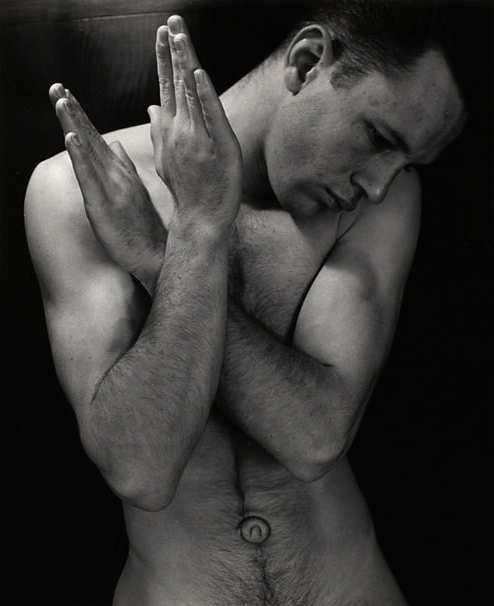
Gelatin silver print
8 × 10 in. (20.3 × 25.4cm)
Courtesy of the Jimmy DeSana Trust and P·P·O·W, New York


Jimmy DeSana (American, 1949-1990) 'Jack Smith' c. 1976


Jimmy DeSana (American, 1949-1990)
Jack Smith
c. 1976
Gelatin silver print
7 × 6 in. (17.8 × 15.2 cm)
Courtesy of the Jimmy DeSana Trust and P·P·O·W, New York


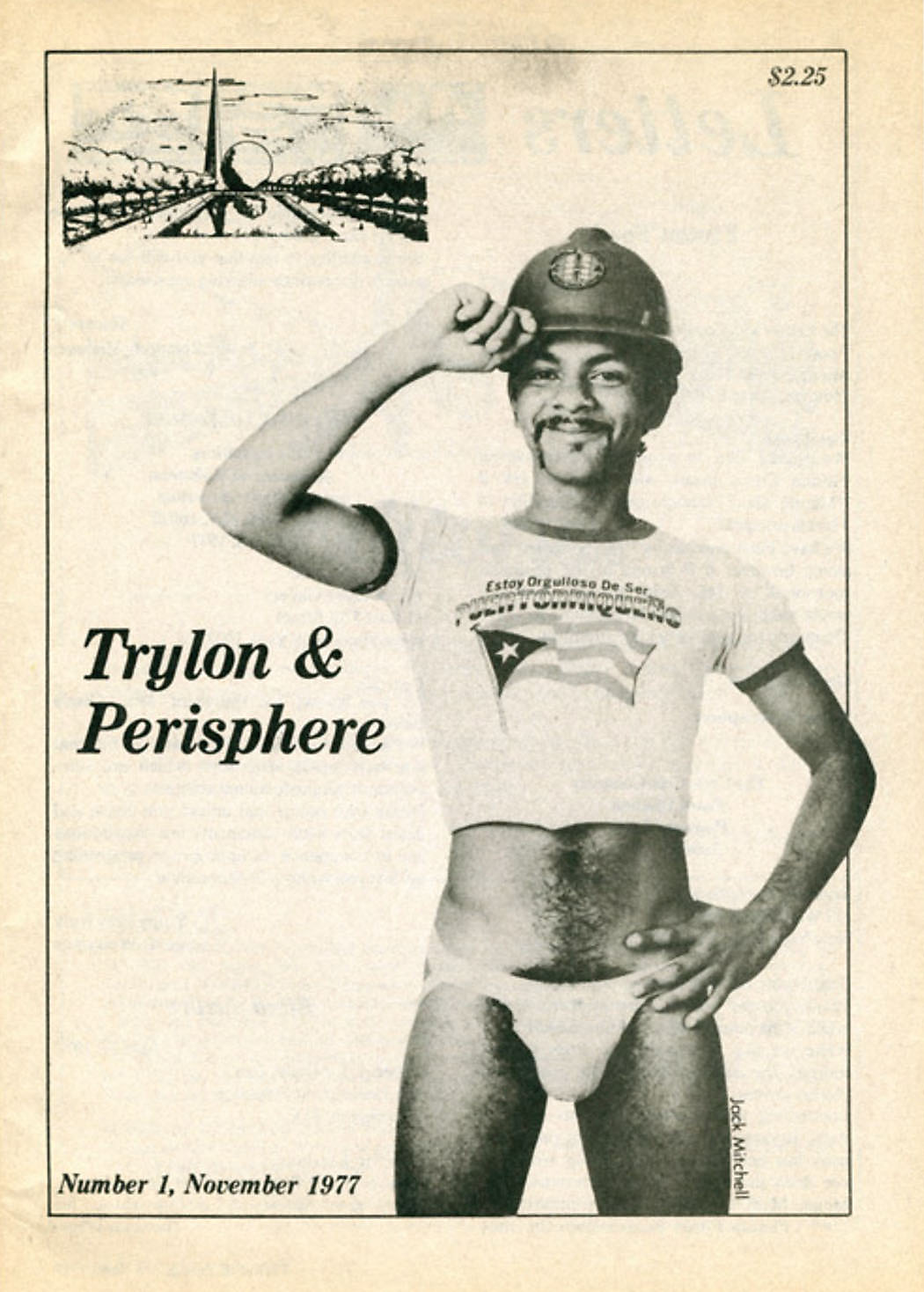
Gregory Battcock. 'Trylon and Perisphere, No. 1' December 1977


Gregory Battcock
Trylon and Perisphere, No. 1
December 1977
Periodical, offset print, saddle stitched, illustrated wrappers
10 × 7 in. (25.4 × 17.8cm)
Courtesy of Philip Aarons and Shelley Fox Aarons


Jimmy DeSana (American, 1949-1990) 'Eric Mitchell' 1977


Jimmy DeSana (American, 1949-1990)
Eric Mitchell
1977
Gelatin silver print
15 3/4 × 11 1/2 in. (40 × 29.2cm)
Courtesy of the Jimmy DeSana Trust and P·P·O·W, New York


Jimmy DeSana (American, 1949-1990) 'Patti Astor' 1977


Jimmy DeSana (American, 1949-1990)
Patti Astor
1977
Gelatin silver print
15 7/8 × 11 1/2 in. (40.3 × 29.2cm)
Courtesy of the Jimmy DeSana Trust and P·P·O·W Gallery, New York
© Estate of Jimmy DeSana. (Photo: Allen Phillips)


Jimmy DeSana Submission wall text


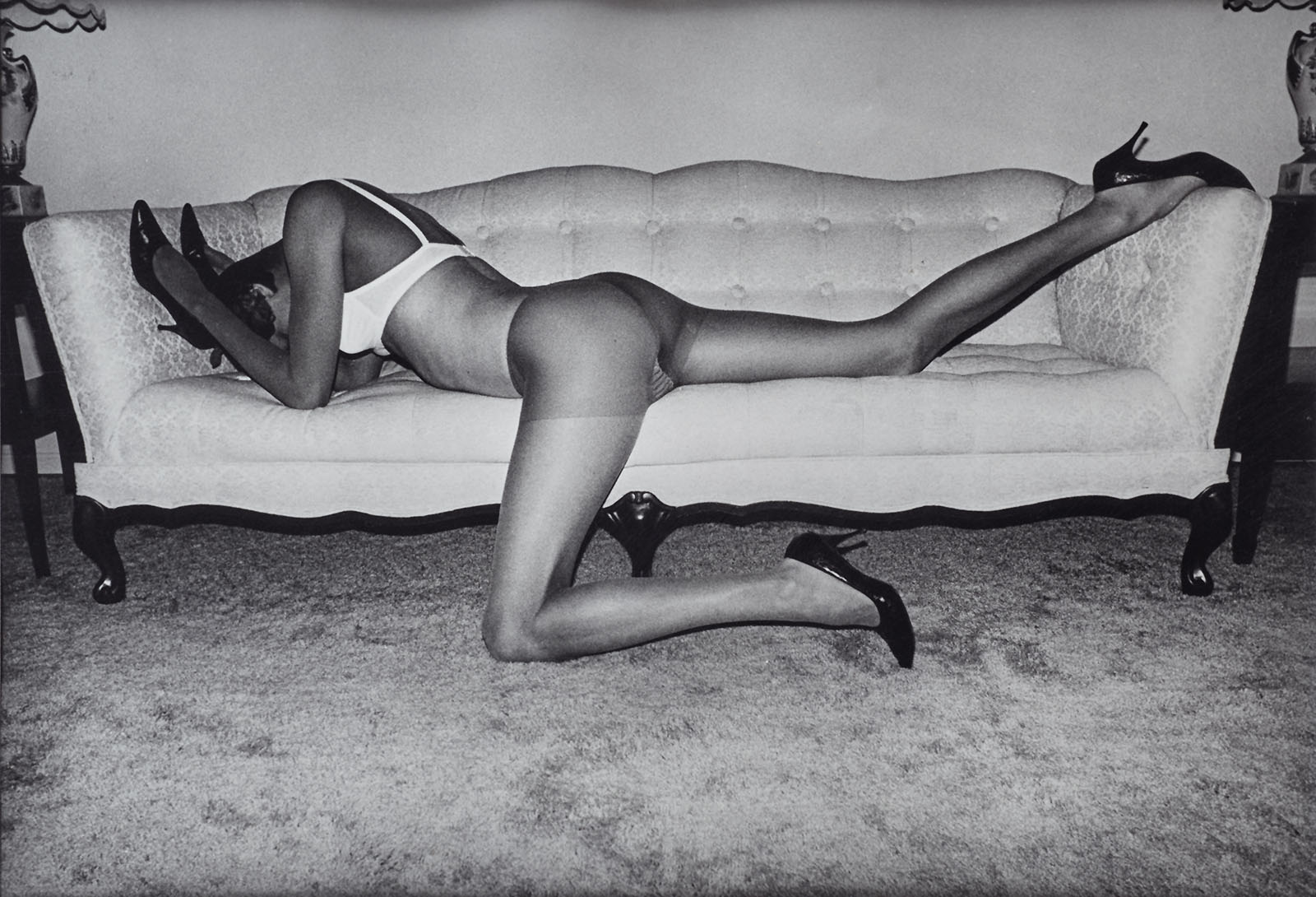
Jimmy DeSana (American, 1949-1990) 'Sofa' 1977-1978


Jimmy DeSana (American, 1949-1990)
Sofa
1977-1978
Gelatin silver print
6 1/2 × 9 1/2 in. (16.5 × 24.1cm)
Courtesy of the Jimmy DeSana Trust and P·P·O·W Gallery, New York
© Estate of Jimmy DeSana
Photo: Allen Phillips


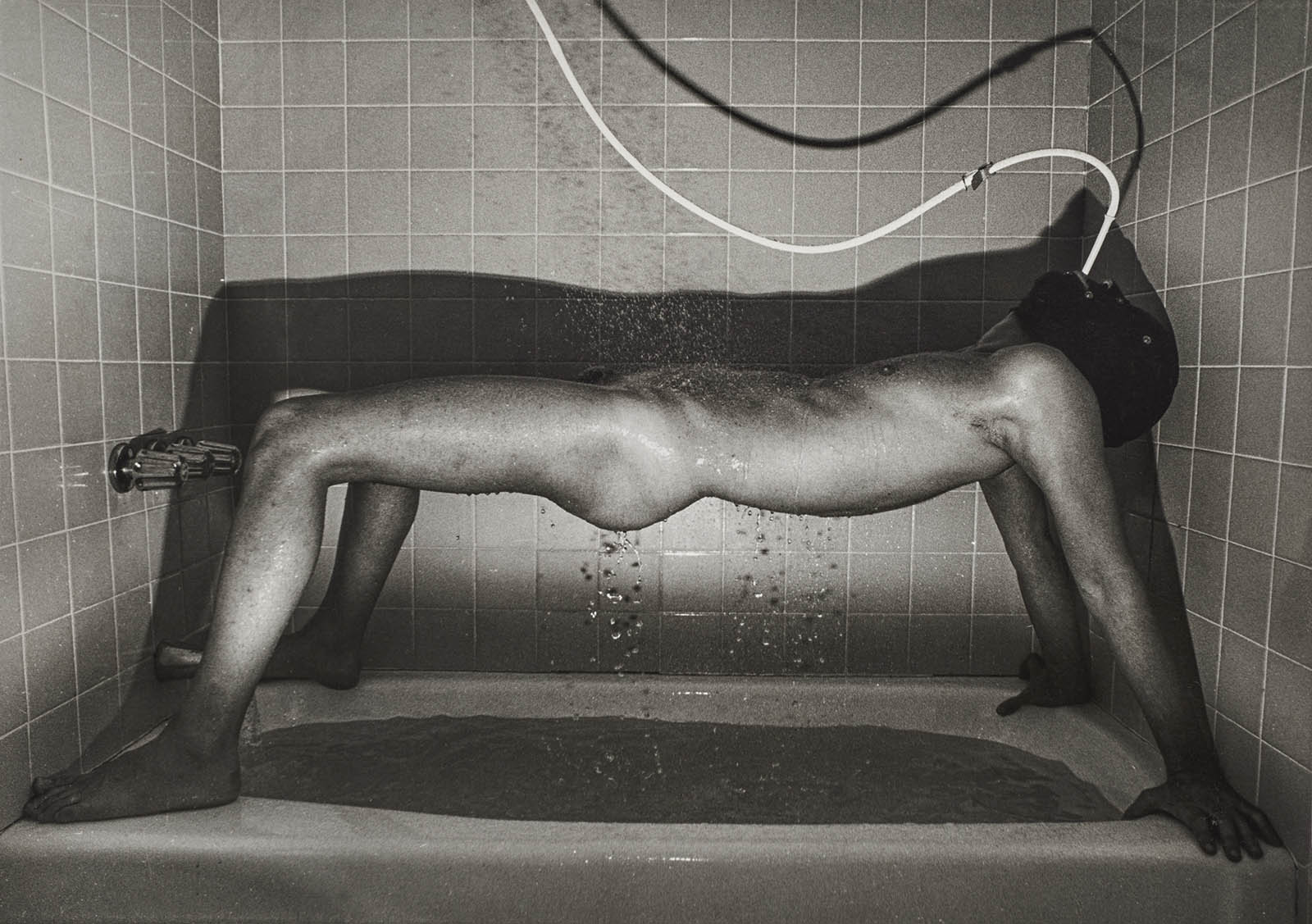
Throughout the 1970s, Jimmy DeSana created theatrical, often comic photographs related to his sexual S-M experiences.

Like other artists in his circle, such as Laurie Simmons and AA Bronson, he parodied advertising and fashion photography, as well as the disciplinary nature of heteronormativity and consumerism in the United States. He eventually published some of these photographs in his first book, Submission (1980), which included an introduction by the punk icon William Burroughs.

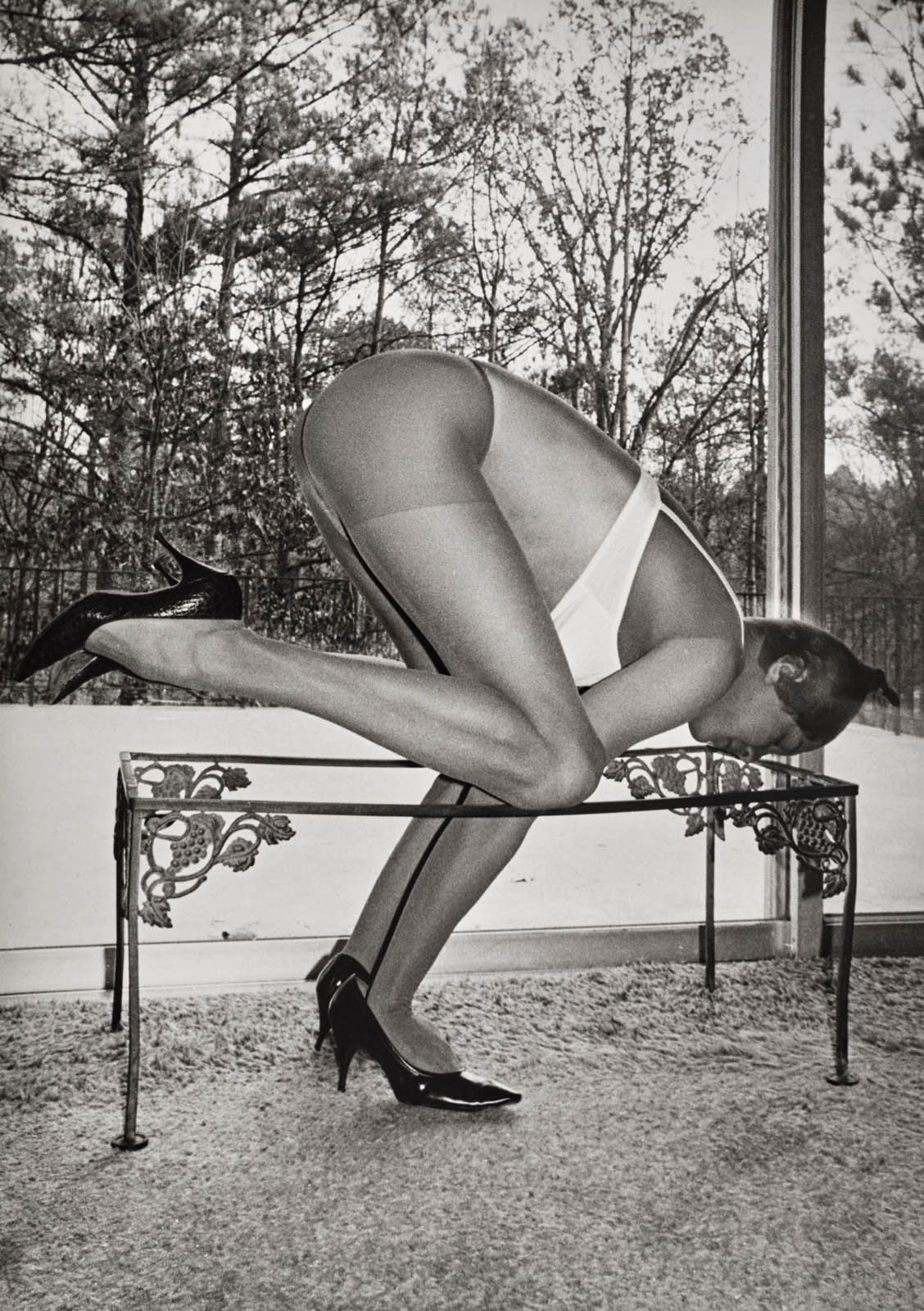
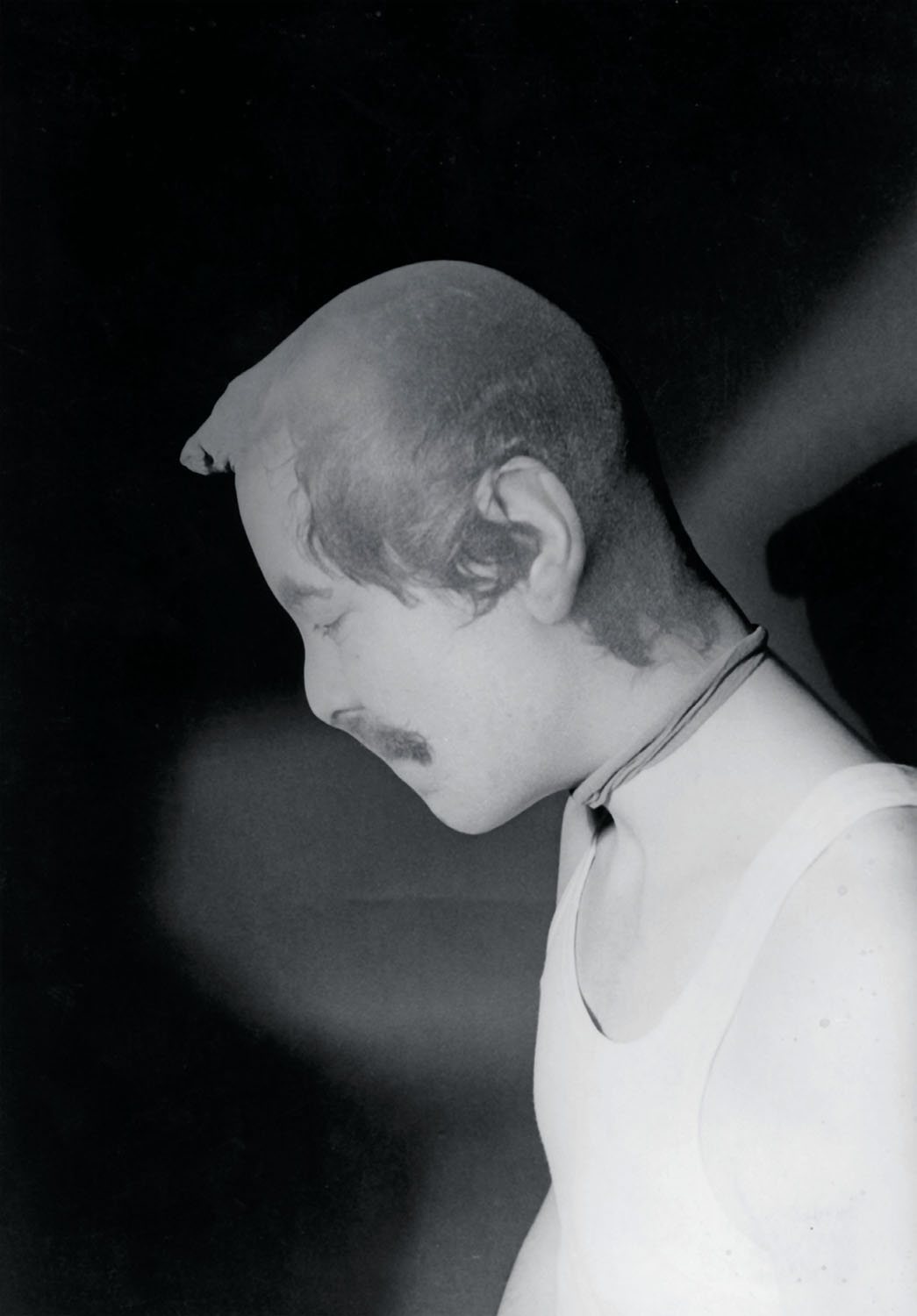
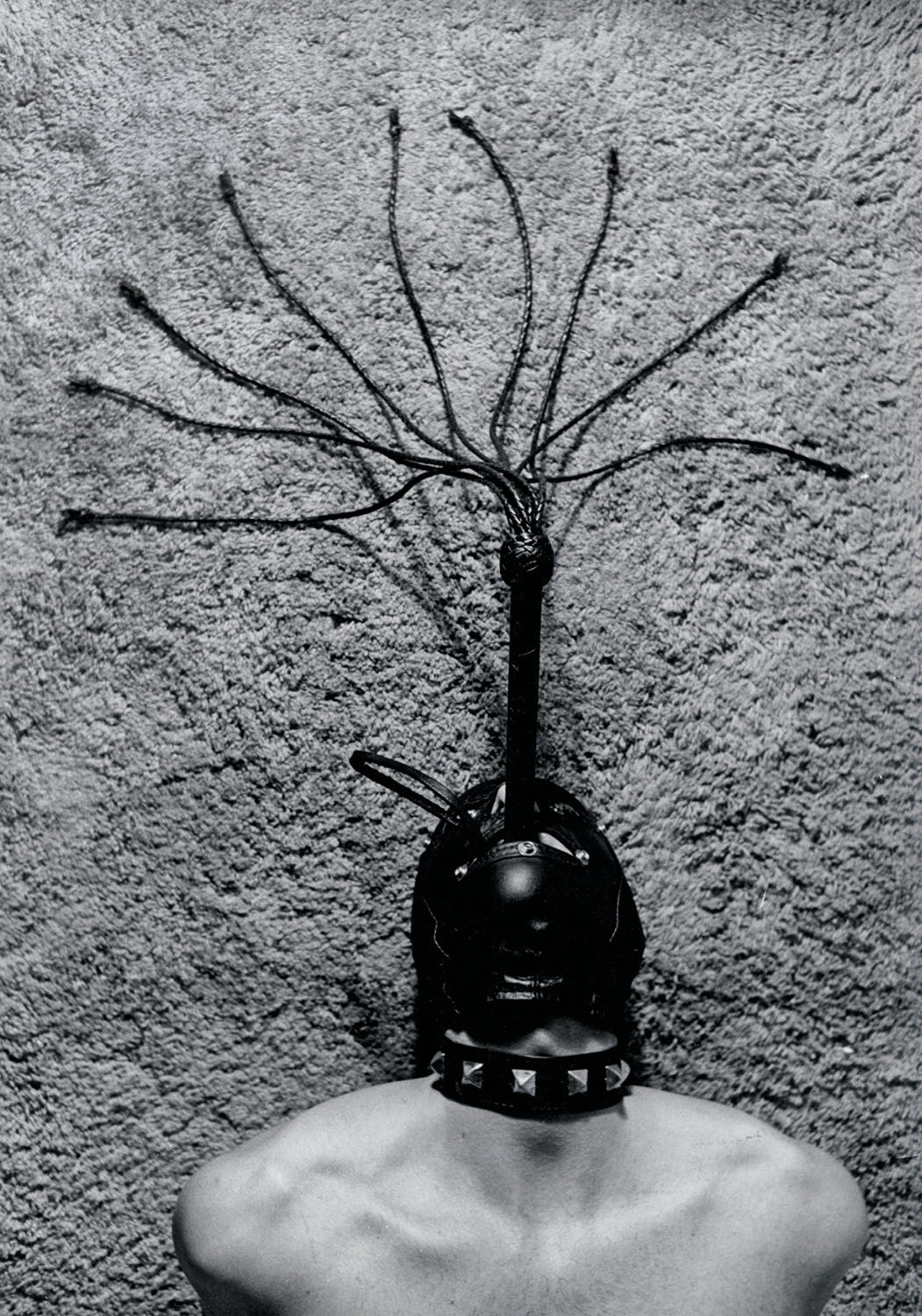
The photographs in this series typically feature nude, masked individuals eccentrically interacting with domestic interiors and objects. DeSana staged most images in his studio or the homes of friends and family. He used his signature lighting to create a heightened sense of drama and horror, calling attention to the images’ artifice. DeSana later observed: “I was trying to push sexuality to the limit. As long as I could come up with an idea that related to bizarre sexuality and still make an interesting statement about a product, the photo was successful for me.”

Text from the Brooklyn Museum Tumblr website


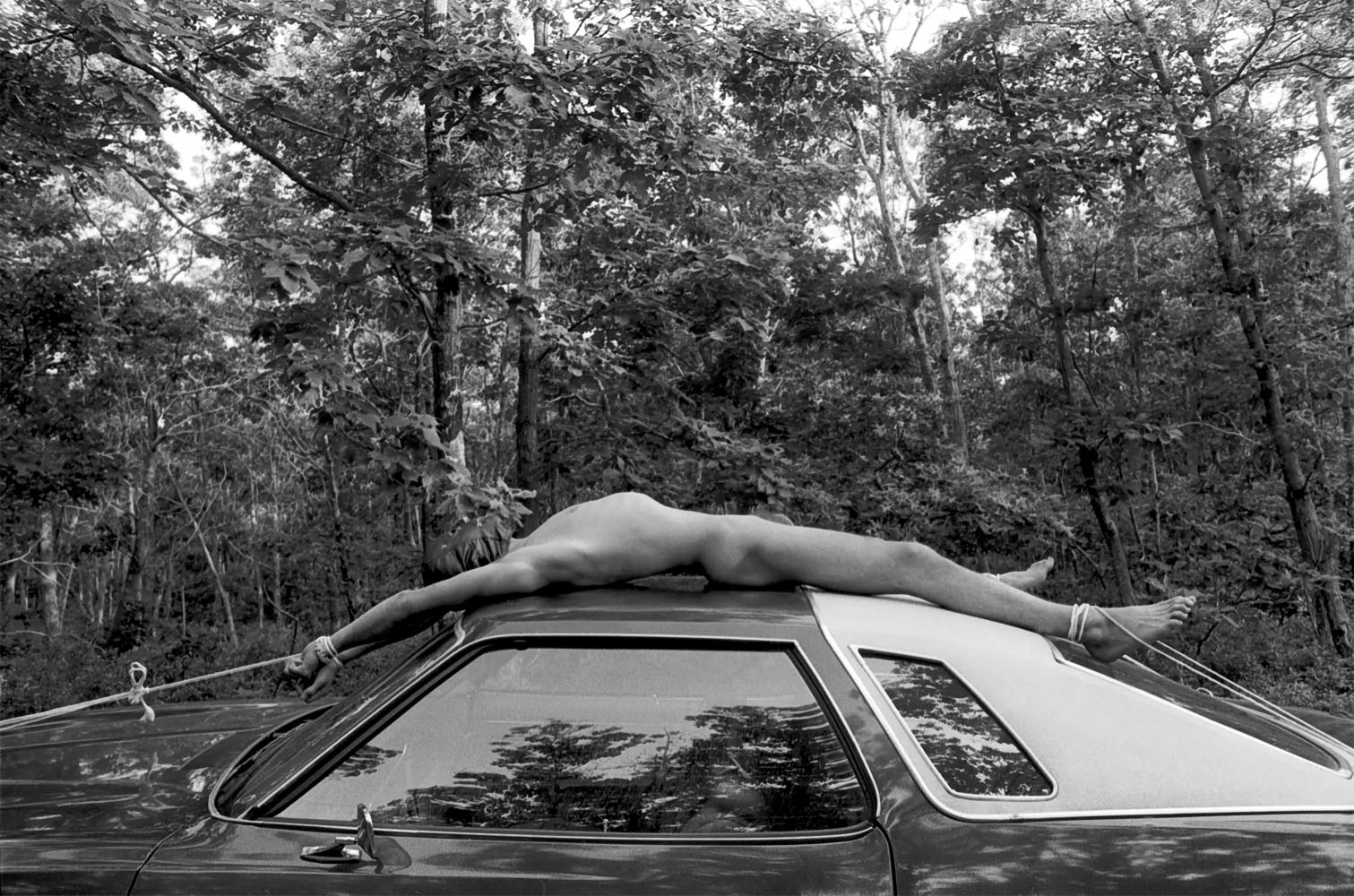
Jimmy DeSana (American, 1949-1990) 'Auto' 1978


Jimmy DeSana (American, 1949-1990)
Auto
1978
Gelatin silver print
6 3/4 × 9 9/16 in. (17.1 × 24.3cm)
Courtesy of the Jimmy DeSana Trust and P·P·O·W, New York


Jimmy DeSana (American, 1949-1990) 'Television' 1977-1978


Jimmy DeSana (American, 1949-1990)
Television
1977-1978
Gelatin silver print
12 1/4 × 8 1/4 in. (31.1 × 21cm)
Courtesy of the Jimmy DeSana Trust and P·P·O·W, New York


Jimmy DeSana No Wave to S-M in NYC wall text


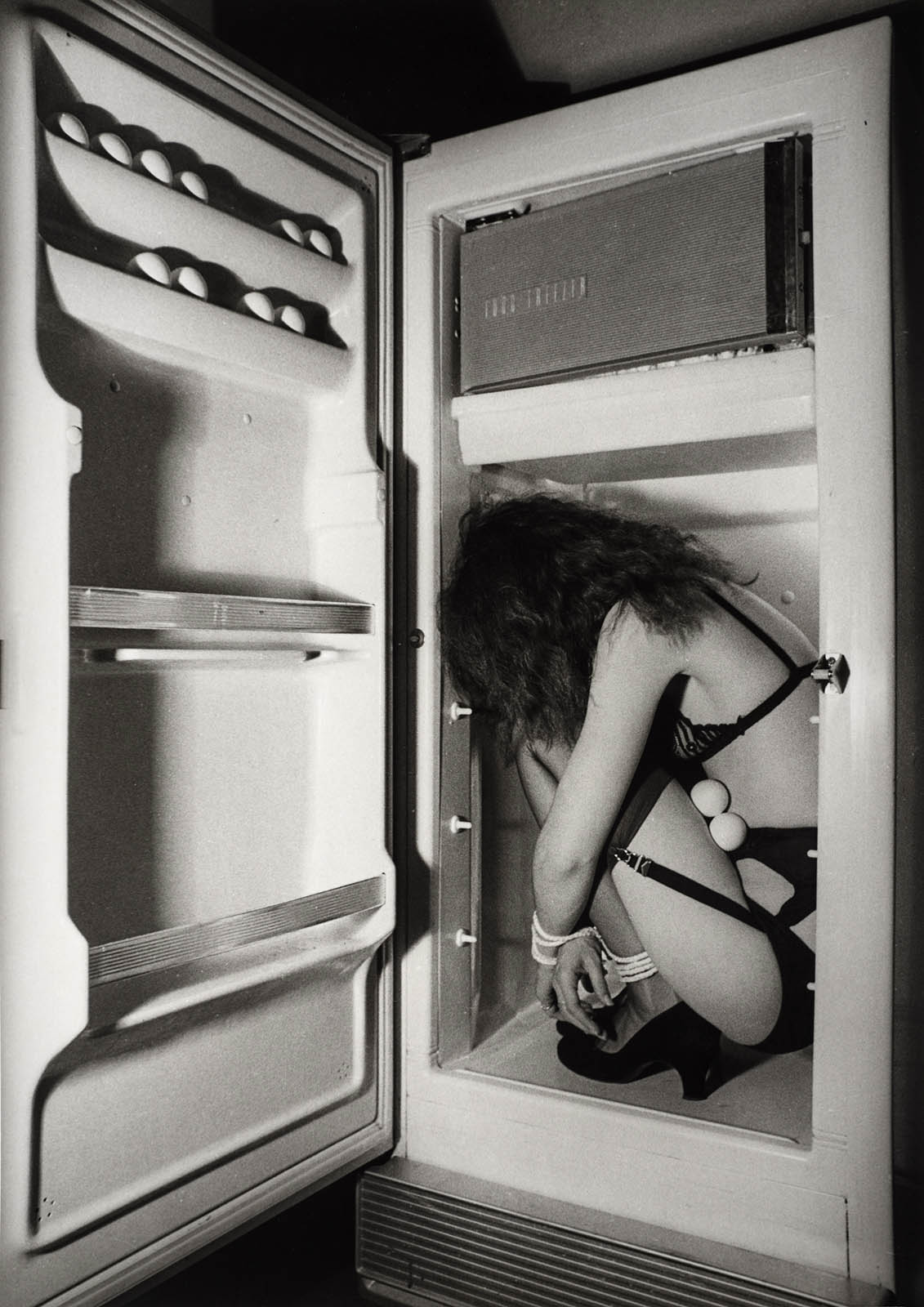
Jimmy DeSana (American, 1949-1990) 'Refrigerator' 1978


Jimmy DeSana (American, 1949-1990)
Refrigerator
1978
Gelatin silver print
9 1/2 × 6 3/4 in. (24.1 × 17.1cm)
Courtesy of the Jimmy DeSana Trust and P·P·O·W Gallery, New York
© Estate of Jimmy DeSana
Photo: Allen Phillips


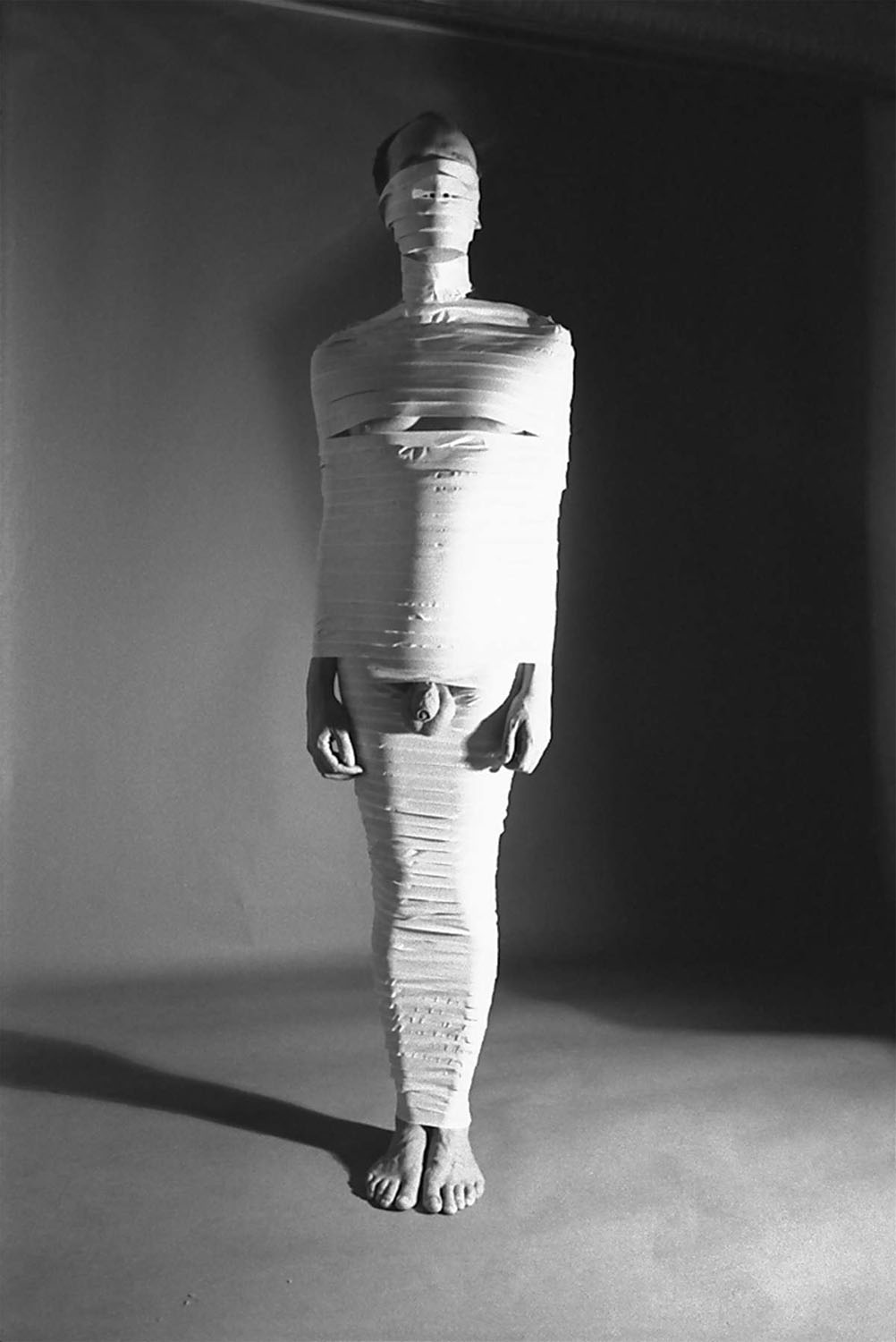
Jimmy DeSana (American, 1949-1990) 'Masking Tape' 1977-1978


Jimmy DeSana (American, 1949-1990)
Masking Tape
1977-1978
Gelatin silver print
9 1/2 × 6 1/2 in. (24.1 × 16.5cm)
Courtesy of the Jimmy DeSana Trust and P·P·O·W, New York


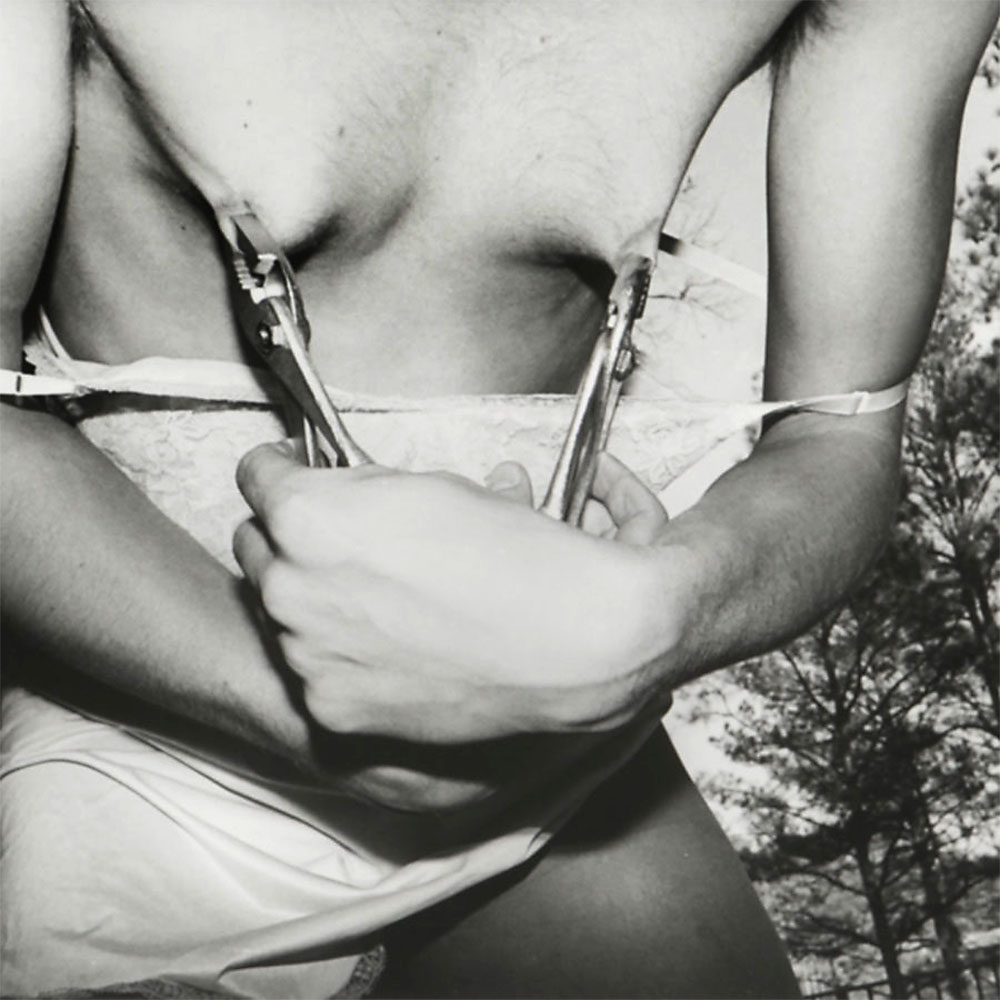
Jimmy DeSana (American, 1949-1990) 'Pliers' 1977-1978


Jimmy DeSana (American, 1949-1990)
Pliers
1977-1978
Gelatin silver print
6 3/4 × 9 1/4 in. (17.1 × 23.5cm)
Courtesy of the Jimmy DeSana Trust and P·P·O·W, New York


Jimmy DeSana (American, 1949-1990) 'Enema' 1977-1978


Jimmy DeSana (American, 1949-1990)
Enema
1977-1978
Gelatin silver print
Courtesy of the Jimmy DeSana Trust and P·P·O·W Gallery, New York
© Estate of Jimmy DeSana


Sadomasochism, Then and Now

DeSana’s photographs and Terence Sellers’s writings engage with a variety of often erotic practices known then as S-M (sadomasochism) and more commonly now as BDSM (bondage, dominance, and submission / sadomasochism). The term “sadomasochism” is derived from the names of two European authors: the Marquis de Sade (1740-1814), who wrote about his exploits and fantasies of deriving pleasure from inflicting pain, and Leopold von Sacher-Masoch (1836-1895), who wrote of the erotic enjoyment he experienced while being dominated and punished.

In the 1970s, DeSana and Sellers were among a growing group of practitioners, writers, artists, and activists attempting to redefine “acceptable” behaviour and desires, as well as sexual and gender identities. In exploring S-M through an aesthetic lens, Sellers and DeSana also joined a long lineage of artists and thinkers who had engaged with these practices to encourage debate on freedom of expression and power.

It was not until 2010 that the American Psychiatric Association announced it would no longer diagnose consenting adults practicing BDSM as mentally ill, which had perpetuated stigmatisation that could lead to legal and social repercussions. More recently, studies have suggested that BDSM can provide therapeutic tools to investigate control and release, and to reclaim one’s sexuality after traumatic experiences.

Exhibition label


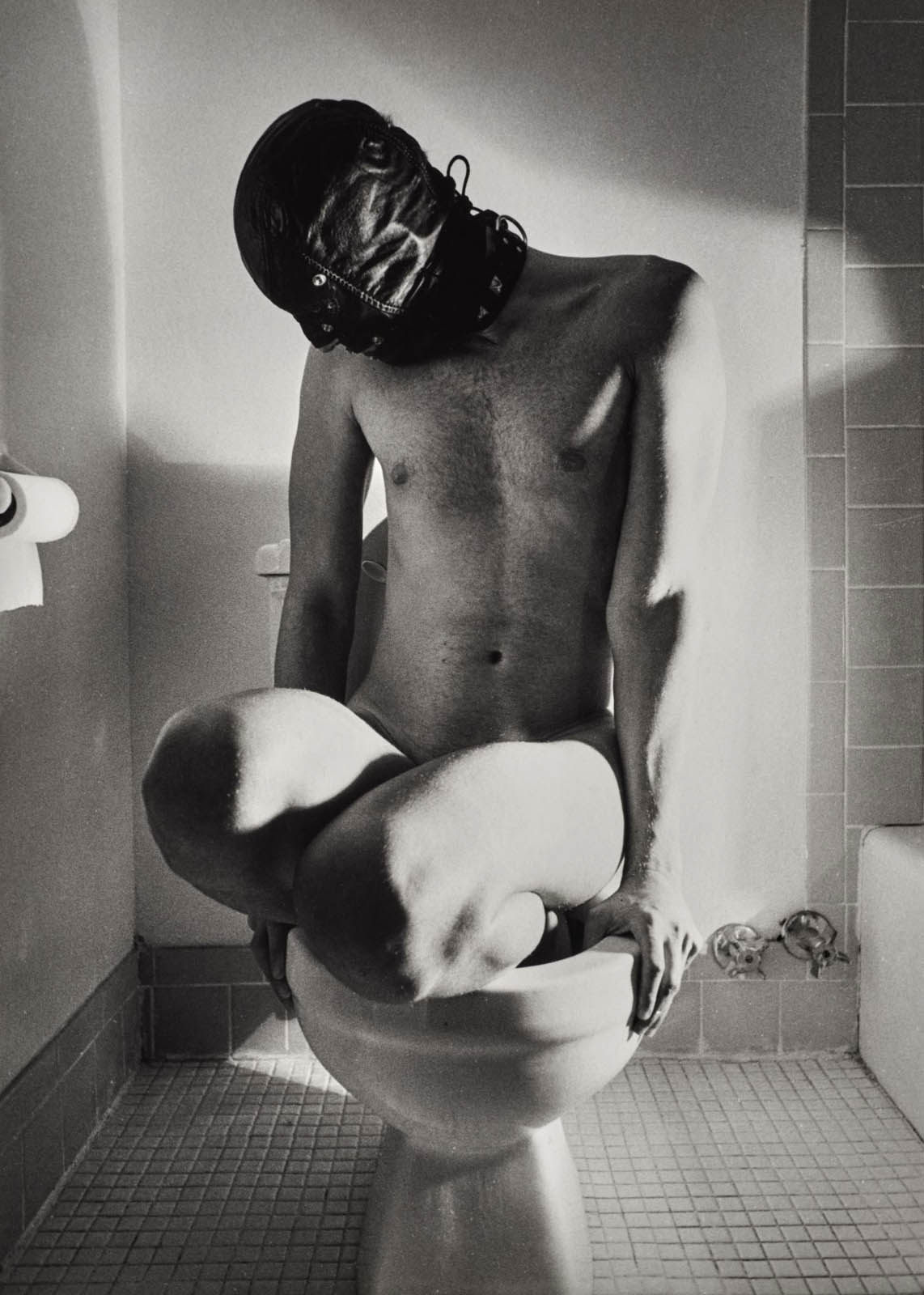
Jimmy DeSana (American, 1949-1990) 'Toilet' 1977-1978


Jimmy DeSana (American, 1949-1990)
Toilet
1977-1978
Gelatin silver print
9 9/16 × 6 3/4 in. (24.3 × 17.1cm)
Courtesy of the Jimmy DeSana Trust and P·P·O·W Gallery, New York
© Estate of Jimmy DeSana
Photo: Allen Phillips


“The very word ‘submission’ contains the paradox of wanting and not wanting,” William S. Burroughs wrote in the introduction of Jimmy DeSana’s 1980 book Submission.

For the photogragraphic series featured in the publication, made between 1977 and 1978, DeSana built on 101 Nudes (1972) and his work for File Megazine by creating theatrical and often comic photographs that push the limits of respectability and explore domestic confinement, consumer affluence, and social conformity. He was also mocking the recent trend of S-M scenarios in fashion photography and advertisements.

He titled many of the images after the objects depicted in them – Toilet, Coffee Table, Television, Shoes, Shower – rather than sex acts or the names of the individuals shown, who are always anonymous and often wearing masks. This strategy not only protected the identity of his models, many of whom were friends, but also contrasted with his better-known portrait work during this period, which he did to make money. Many of the photographs comically equate practices of everyday life and consumerism (washing dishes, taking a shower, driving a car) with forms of bondage and discipline.

In exploring S-M through an aesthetic and performative lens, DeSana joined a long history of twentieth-century avant-gardes that engaged with these practices in order to compel debate on freedom of expression and power.

Text from the Brooklyn Museum Tumblr website


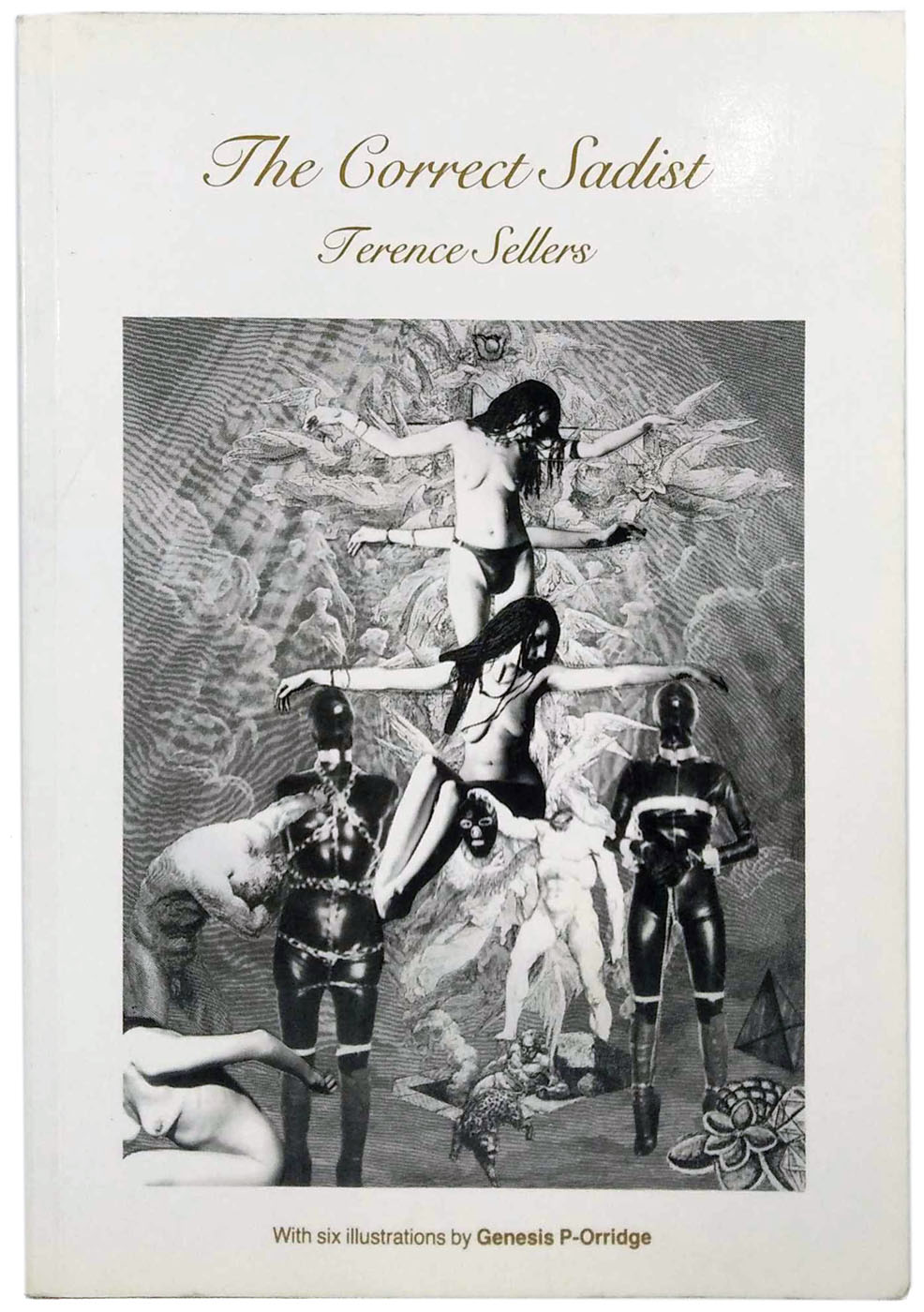
Terence Sellers (American, 1952-2016) 'The Correct Sadist: The Memoirs of Angel Stern' 1983


Terence Sellers (American, 1952-2016)
The Correct Sadist: The Memoirs of Angel Stern
1983
Book
8 1/2 × 5 9/16 in. (21.6 × 14.1 cm)
Private collection


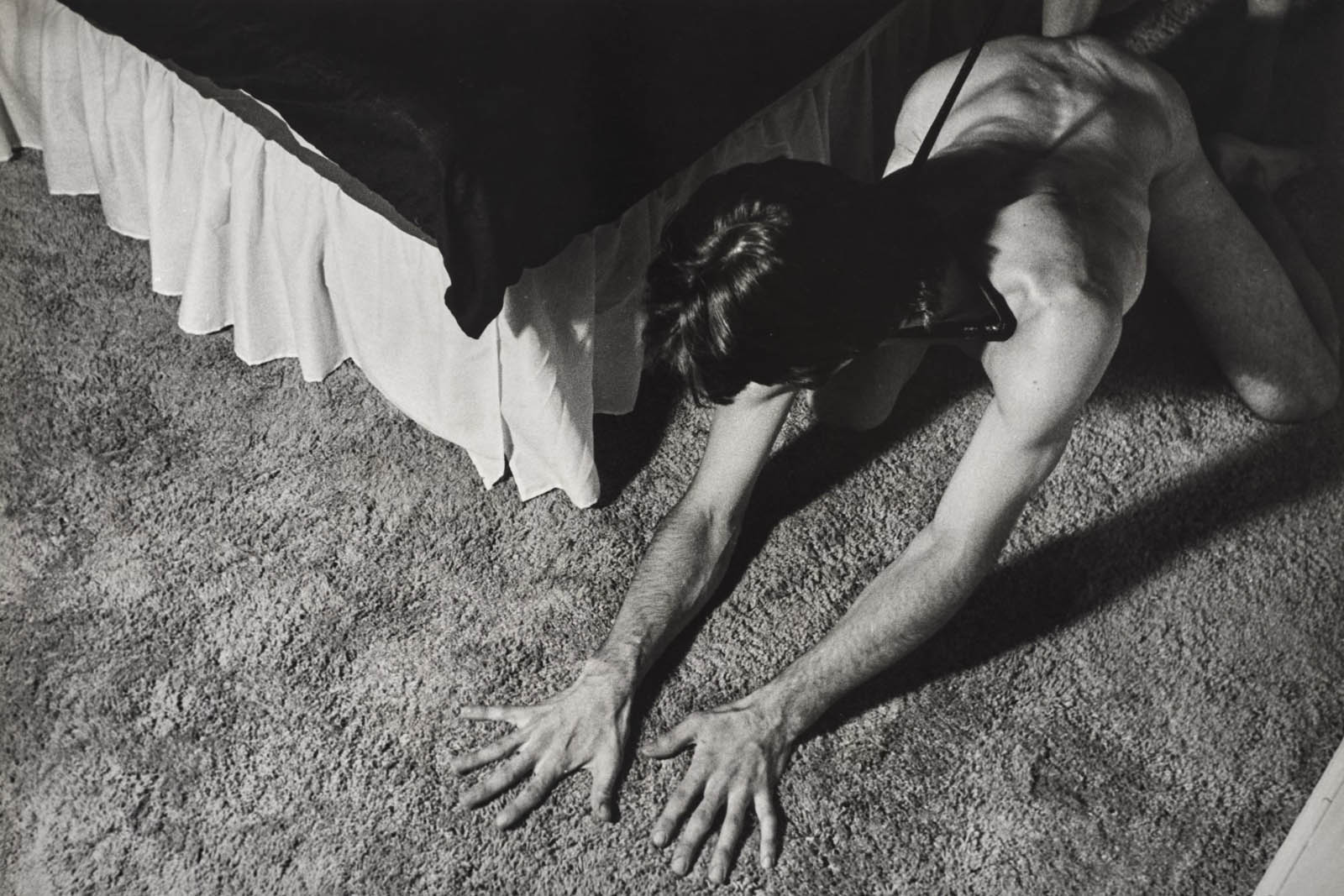
Jimmy DeSana (American, 1949-1990) 'Untitled' 1978


Jimmy DeSana (American, 1949-1990)
Untitled
1978
From the series The Dungeon
Gelatin silver print
6 1/2 × 9 5/8 in. (16.5 × 24.4cm)
Courtesy of the Jimmy DeSana Trust and P·P·O·W Gallery, New York
© Estate of Jimmy DeSana
Photo: Allen Phillips


Jimmy DeSana The Dungeon 1978 wall text


Jimmy DeSana (American, 1949-1990) 'Coffee Table' 1977-1978


Jimmy DeSana (American, 1949-1990)
Coffee Table
1977-1978
Gelatin silver print
9 1/2 × 6 1/2 in. (24.1 × 16.5cm)
Courtesy of the Jimmy DeSana Trust and P·P·O·W Gallery, New York
© Estate of Jimmy DeSana
Photo: Allen Phillips


Jimmy DeSana (American, 1949-1990) 'Untitled' 1978 From the 'Dungeon' series


Jimmy DeSana (American, 1949-1990)
Untitled
1978
From the Dungeon series
Gelatin silver print
9 1/2 × 6 5/8 in. (24.1 × 16.8cm)
Courtesy of the Jimmy DeSana Trust and P·P·O·W, New York


Jimmy DeSana (American, 1949-1990) 'Untitled' 1978 From the 'Dungeon' series


Jimmy DeSana (American, 1949-1990)
Untitled
1978
From the Dungeon series
Gelatin silver print
9 1/2 × 6 5/8 in. (24.1 × 16.8cm)
Courtesy of the Jimmy DeSana Trust and P·P·O·W, New York


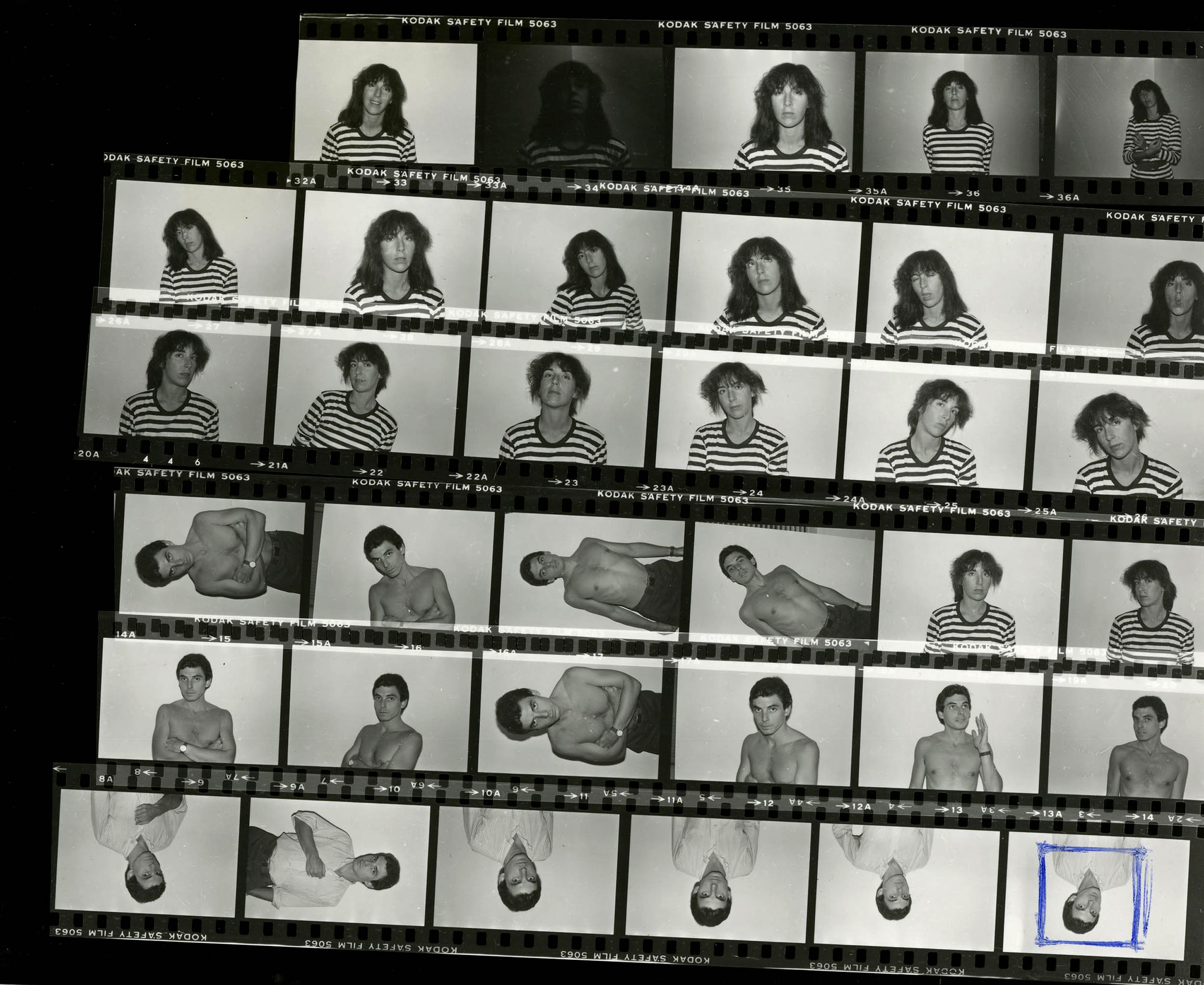
Jimmy DeSana (American, 1949-1990) 'Contact Sheet of Portraits of Jimmy DeSana and Laurie Simmons' c. 1978


Jimmy DeSana (American, 1949-1990)
Contact Sheet of Portraits of Jimmy DeSana and Laurie Simmons
c. 1978
New York University, Fales Library, Jimmy DeSana Papers, MSS.202, Box 66
Photo: Courtesy of Fales Library at NYU


In 1973, shortly after moving to New York, Jimmy DeSana met fellow artist Laurie Simmons while riding the A train to Far Rockaway.

The two soon shared a SoHo loft with twin photographic darkrooms. Simmons has often acknowledged that DeSana, who received a BFA in photography, taught her most of what she knows about the medium, acting as a friend, mentor, and interlocutor until his death in 1990. Simmons also became a model and muse for DeSana’s work.

Now the executor of the Jimmy DeSana Trust for several decades, Simmons writes, “I am immensely grateful for every moment Jimmy and I spent together, for every freezing second I floated naked in a pool or held an awkward pose for way too long, for this was my graduate program in photography – this is really where I learned to make a picture… standing within Jimmy’s quiet but determined force field, emulating his laser-like focus and his ultimate belief that making art was a space to play and dream.”

Text from the Brooklyn Museum Tumblr website


Jimmy DeSana (American, 1949-1990) 'Terence Sellers' 1978


Jimmy DeSana (American, 1949-1990)
Terence Sellers
1978
Gelatin silver print
9 5/8 × 6 1/2 in. (24.4 × 16.5cm)
Courtesy of the Jimmy DeSana Trust and P·P·O·W Gallery, New York
© Estate of Jimmy DeSana. (Photo: Allen Phillips)


Jimmy DeSana (American, 1949-1990) 'Betsy Sussler' 1978


Jimmy DeSana (American, 1949-1990)
Betsy Sussler
1978
Gelatin silver print
15 7/8 × 11 in. (40.3 × 27.9cm)
Courtesy of the Jimmy DeSana Trust and P·P·O·W, New York


Jimmy DeSana (American, 1949-1990) 'Coat Hanger' 1979


Jimmy DeSana (American, 1949-1990)
Coat Hanger
1979
Gelatin silver print
9 9/16 × 6 5/8 in. (24.3 × 16.8cm)
Courtesy of the Jimmy DeSana Trust and P·P·O·W Gallery, New York
© Estate of Jimmy DeSana
Photo: Allen Phillips


The Brooklyn Museum Presents Jimmy DeSana: Submission, the First Museum Survey of Work by the Pioneering Queer, Punk Photographer. The exhibition features more than two hundred works, which trace a career that bridged mail art networks, New York’s 1970s punk and No Wave subcultures, the illuminating image-play of the “Pictures Generation,” and the various artistic and affective responses to the beginning of the HIV/AIDS epidemic.

Jimmy DeSana: Submission is the first museum survey of work by a major yet overlooked figure in the histories of photography, LGBTQ artists, and New York City. Among his many significant contributions, Jimmy DeSana (American, 1949-1990) reintroduced the body and sexuality into the conceptual photographic practices of the late 1960s and early 1970s, helping to elevate the medium within the contemporary art world. The exhibition traces the artist’s brief but prolific career through more than two hundred works on display (some for the first time), created during a time of profound cultural and political transformation in the United States. From his early days photographing suburban landscapes in Atlanta, Georgia, to his time as a key figure in the New York art and music scenes of the 1970s and 1980s, DeSana conveyed the radical spirit of his era and a pointed, ironic critique of the American Dream and its images. Jimmy DeSana: Submission opens November 11, 2022, and is organised by Drew Sawyer, Phillip Leonian and Edith Rosenbaum Leonian Curator of Photography, Brooklyn Museum.

“This retrospective, the first since DeSana’s death from AIDS-related complications in 1990, will enable so many to view for the first time the full breadth of his iconoclastic artistic output, positioning his more well-known series within his interdisciplinary and collaborative practice in mail art, zines, performance, and film,” says Sawyer. “DeSana drew upon punk, Camp, sadomasochism, dreamworlds, performance art, experimental film, club culture, and the legacy of twentieth-century avant-gardes in ways that make his work unique among his peers. Jimmy DeSana: Submission brings together these multiple themes to show why his work is so relevant to artistic practices today.”

Along with his friends and peers, Jimmy DeSana sought to forge arts communities outside of traditional institutions (and the concurrent gentrification that displaced artists from Lower Manhattan). Instead, he chose to display his work via collectives, artist-run spaces, and the informal groupings of the underground nightclub scene, as well as the more democratised dissemination systems of mail art networks. Submission prominently features examples of DeSana’s contributions to early queer zines throughout the 1970s – from General Idea’s File magazine to John Jack Baylin and John Dowd’s Fanzini to Gregory Battcock’s Trylon & Perisphere – as well as his first major series, 101 Nudes (1972), which was circulated through mail art networks. DeSana published this portfolio of photolithographic prints, portraying his friends posing nude in the bland interiors of Atlanta’s postwar houses, at the height of the Gay Liberation Movement and the city’s reactive censorship. These formative images employ a distinctly queer approach to domesticity and invite viewers to look beneath the veneer of suburban propriety, a concept that would capture the artist’s creative attention for the rest of his career.

The exhibition also contains selections from Submission (1980), DeSana’s book of BDSM-related photographs that play with liberation and conformity, and ideological power alongside the myths of postwar capitalism. This section also includes related photographs from a collaboration with writer and sex worker Terence Sellers (American, 1952-2016) that were intended for her first book, The Correct Sadist (1983). Most of these photographs have not been previously displayed or published.

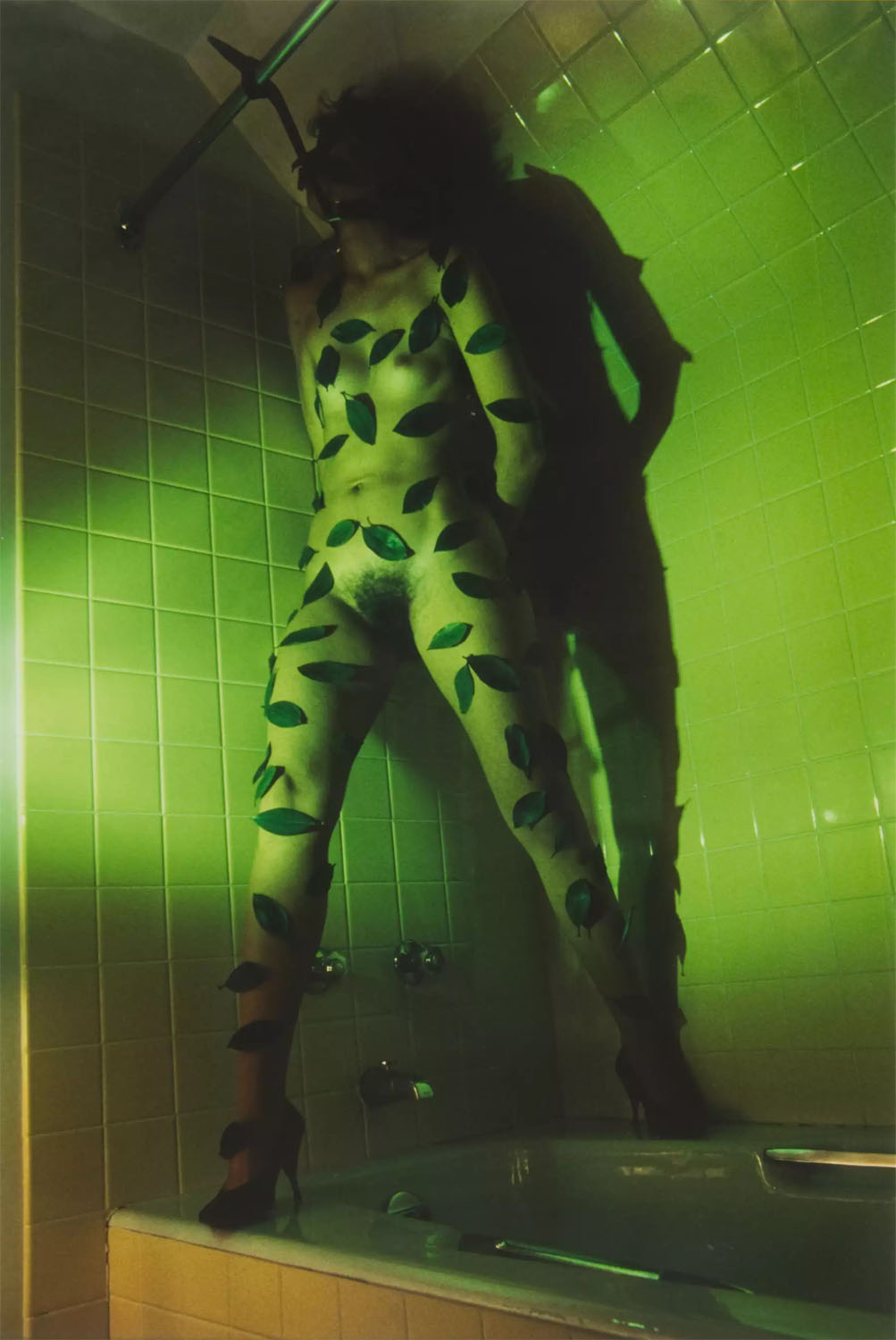
Continuing the survey is DeSana’s series Suburban (1979-1984), perhaps the artist’s best-known photographs and his first in colour. Building off of 101 Nudes, DeSana used a cast of friends and collaborators to explore the queerness of postwar suburban culture by placing nude bodies, often abstracted and contorted, in suburban backyards, wood-panelled living rooms, and tiled bathrooms. Using vivid gel-lighting to produce its characteristic heavily saturated, candy-coloured prints, Suburban mimics the seductive, materialist aesthetics of fashion photography and the set design of television advertisements – strategies that were similarly deployed by his friends and peers during this period, including model and artist Laurie Simmons. The images are often skewed and shot from oblique angles, further destabilising the viewer’s perception of the subjects.

Accompanying the dreamlike colour photographs of the Suburban series are some of DeSana’s subsequent, more abstract efforts from the late 1980s. Made after 1984, when DeSana underwent spleen removal surgery after contracting HIV, the works superimpose warped colour images of everyday objects with collage elements, text, and fragments of figures in motion. DeSana turned away from directly representing the body during this period – in the early years of the ongoing HIV / AIDS epidemic, when gay artists in particular were expected to make work about the epidemic in reaction to government inaction and neglect or misinformation by dominant media.

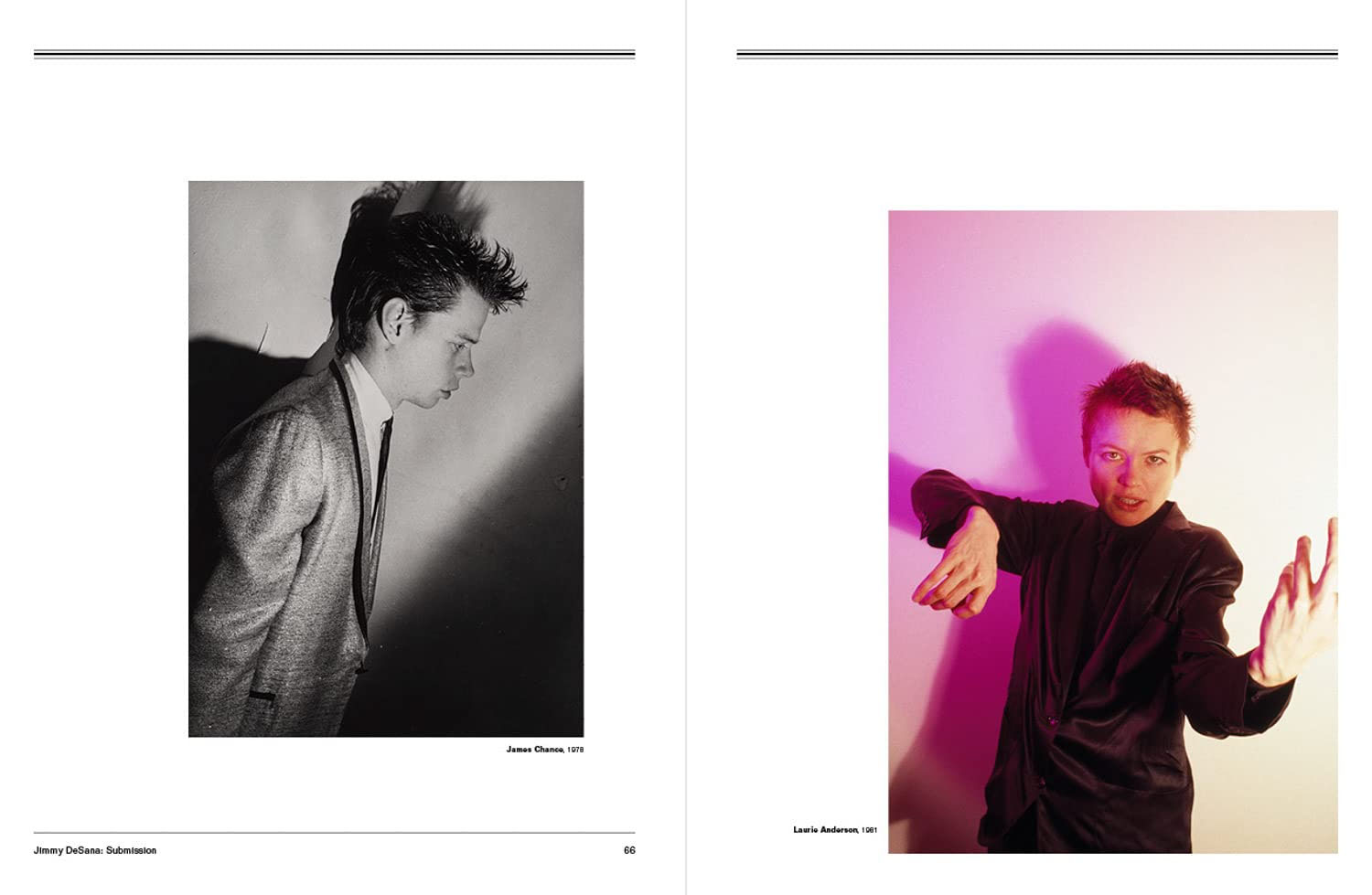
DeSana was seemingly omnipresent in New York’s punk and No Wave scenes during the late 1970s and 1980s, joining other artists who engaged in symbolic forms of resistance through visual art, literature, music, and film. DeSana photographed a number of prominent figures in those subcultures; the survey will be the first to feature his portraits of art and music luminaries such as Kathy Acker, Laurie Anderson, Kenneth Anger, Patti Astor, David Byrne, John Giorno, Debbie Harry, and Richard Hell. Additionally, the exhibition will highlight DeSana’s photographic contributions to collectives like Collaborative Projects (including their groundbreaking exhibitions and publication, X Motion Picture Magazine), periodicals such as the New York Rocker and Semiotext(e), and No Wave Cinema, in which he was involved as both an actor and a director.

The exhibition will be accompanied by the first scholarly publication on DeSana’s work, featuring essays by Sawyer and artist Laurie Simmons as well as more than two hundred images, co-published with DelMonico Books. Jimmy DeSana: Submission is organised by Drew Sawyer, Phillip Leonian and Edith Rosenbaum Leonian Curator of Photography, Brooklyn Museum.

Press release from the Brooklyn Museum


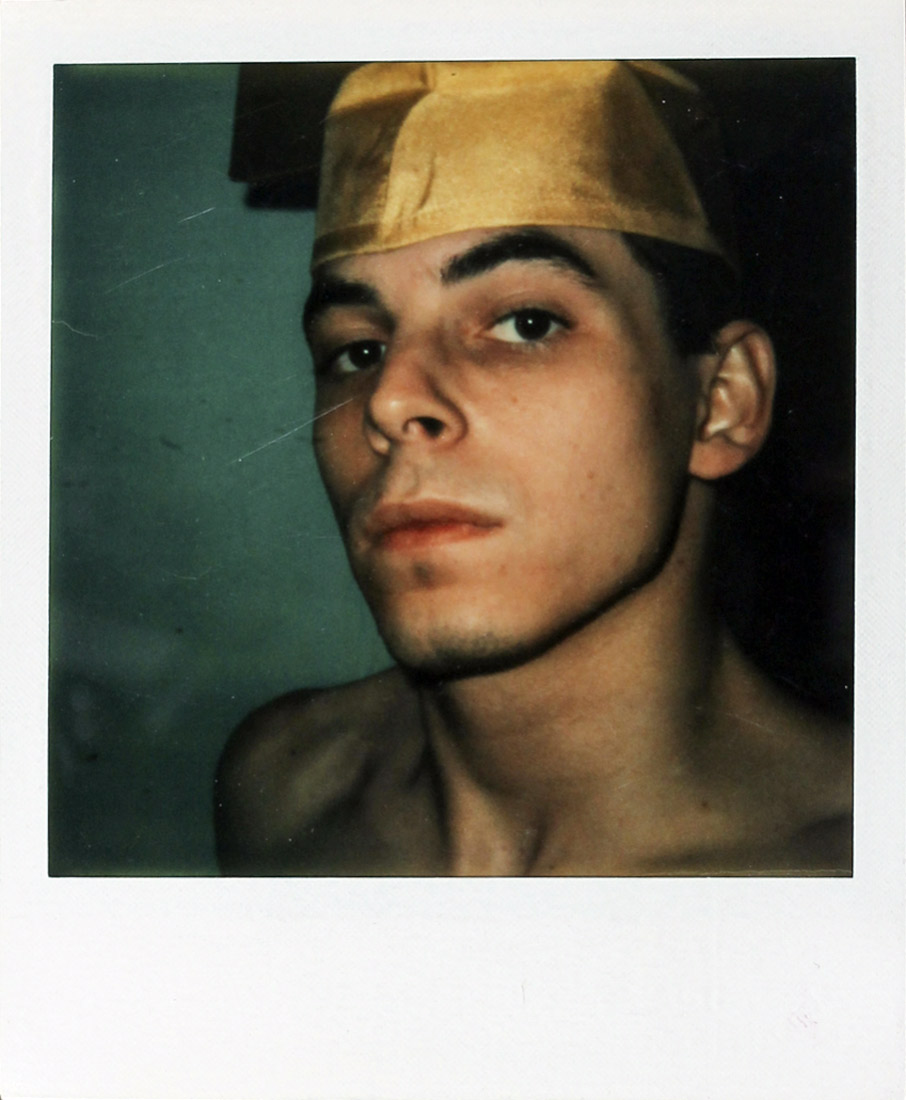
Jimmy DeSana (American, 1949-1990) 'Untitled (Self-Portrait w/ Graduation Cap)' 1978


Jimmy DeSana (American, 1949-1990)
Untitled (Self-Portrait w/ Graduation Cap)
1978
Polaroid
Cornell University, Division of Rare and Manuscript Collections, Diego Cortez No Wave Collection, 1972-1981, Collection Number: 8120, Box 1, Folder 17
Photo: Courtesy of Cornell University


James, Jim, Jimmy; de Sana, deSana, De Sana, DeSana. Just as Jimmy DeSana rarely stuck with one version of his name, he refused to limit two of his main artistic engagements – photography and the theme of desire – to fixed identities.⁠

Born in Detroit on November 12, 1949, James Arthur DeSana Jr. developed an early involvement in photography when he received a Kodak camera for Christmas at age seven. After graduating with a BFA in photography from Georgia State University in 1972, DeSana moved to New York, where he became involved in correspondence art, collectives and alternative publications, post-punk music, underground film, and queer nightlife. ⁠

During this time, DeSana amassed a large collection of hats, like the graduation cap he’s wearing in this Polaroid self-portrait. This fervid interest in hats coincided with DeSana’s use of masquerade and invented personae in his mail artworks; he would go on to make use of the hats in his self-portraits throughout the 1970s and 1980s, continuing his subversion of identity.

Text from the Brooklyn Museum Tumblr website


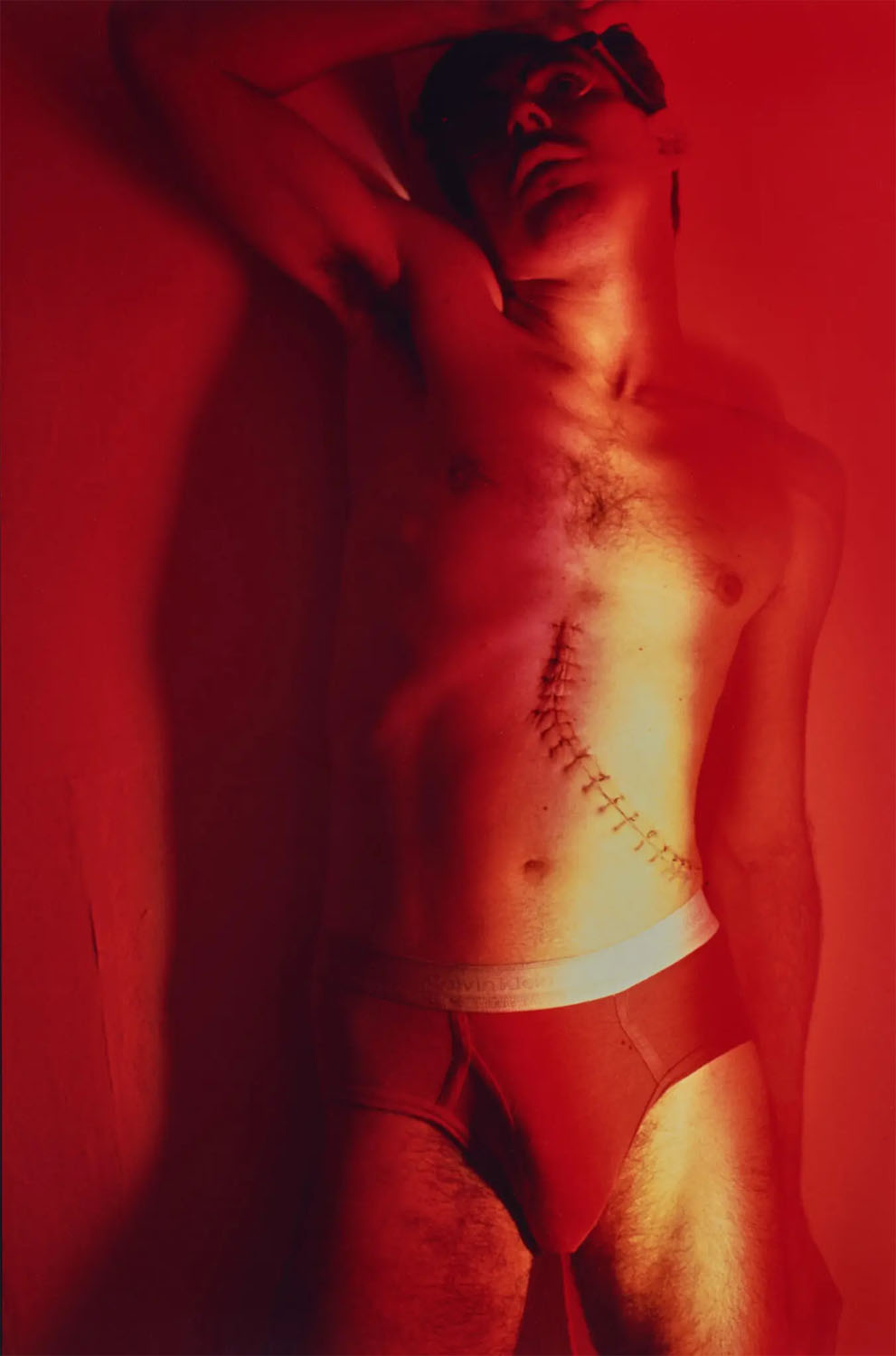
Jimmy DeSana (American, 1949-1990) 'Stitches' 1984


Jimmy DeSana (American, 1949-1990)
Stitches
1984
Silver dye bleach print
18 3/4 × 12 5/8 in. (47.6 × 32.1cm)
Courtesy of the Jimmy DeSana Trust and P·P·O·W, New York


He was extending the legacy of the Surrealist photographers of the period between the World Wars. Man Ray in particular presented his subjects with a disorienting spin: He inverted the head of a female smoker whose cigarette looks like a chimney, cast dark shadows to make the naked torso of a woman with upheld arms resemble the head of a bull, and shot his lover, the photographer Lee Miller, from an extreme lower angle so that her neck and chin take on a phallic form. He mixed genders, even species, with gleeful abandon. DeSana joined in the game.

But a 1984 DeSana self-portrait pointed to the painful direction his life was about to take. He photographed himself in red Calvin Klein briefs illuminated in a red glow, one hand on his forehead, his eyes upturned and his expression concerned. A bright beam of white light is directed toward two dozen surgical stitches running from his sternum down his left side. His spleen had just been removed, an early warning of H.I.V. infection. The diagnosis of AIDS came a year later.

Arthur Lubow. “Jimmy DeSana, Downtown Pioneer and Provocateur, Goes Mainstream,” on the New York Times website Nov. 8, 2022 [Online] Cited 02/04/2023


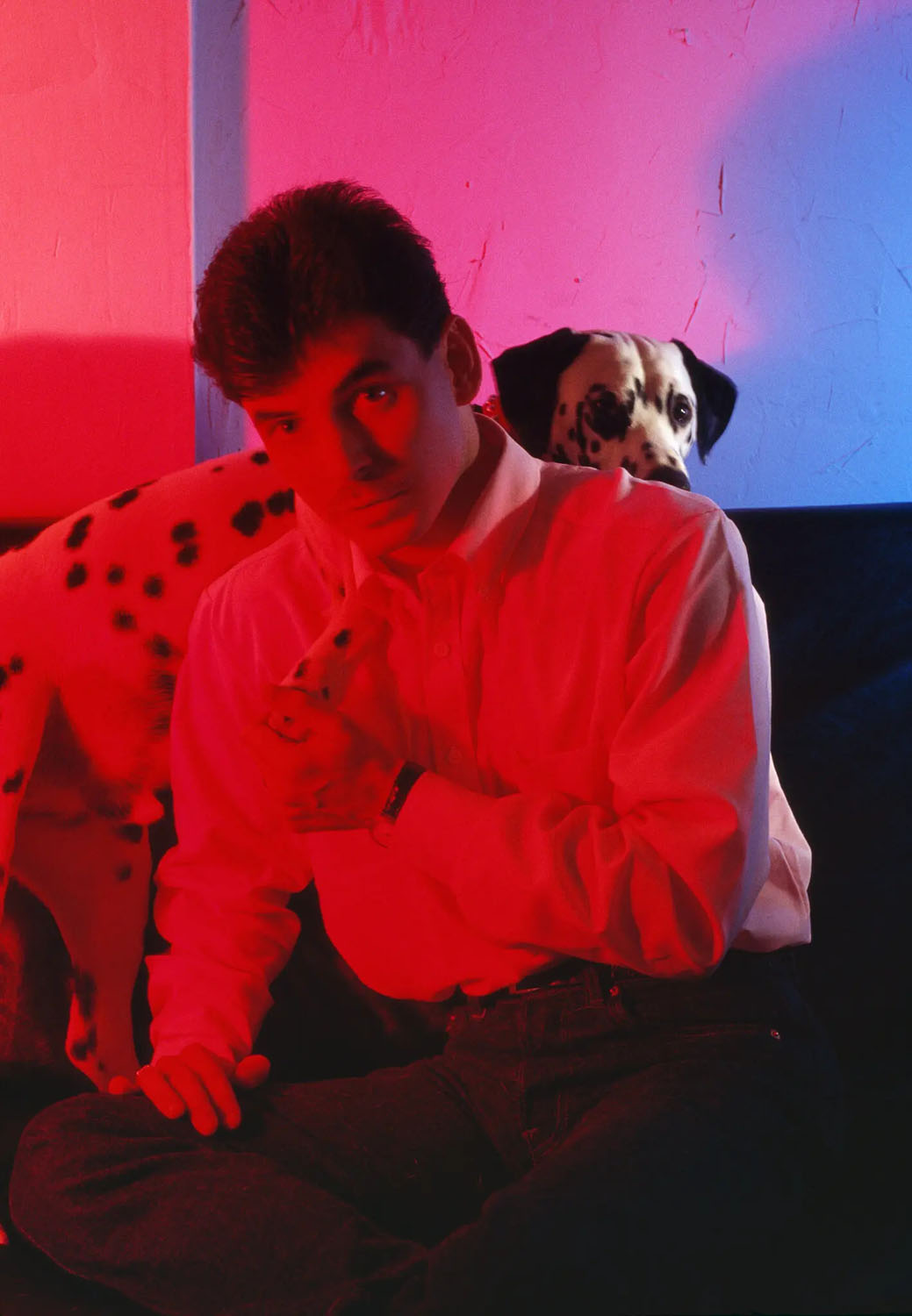
Jimmy DeSana (American, 1949-1990) 'Portrait with Dog' Undated


Jimmy DeSana (American, 1949-1990)
Portrait with Dog
Undated
Chromogenic print
20 × 14 in. (50.8 × 35.6cm)
Courtesy of the Jimmy DeSana Trust and P·P·O·W, New York


Jimmy DeSana 'Suburban' 1979-1984


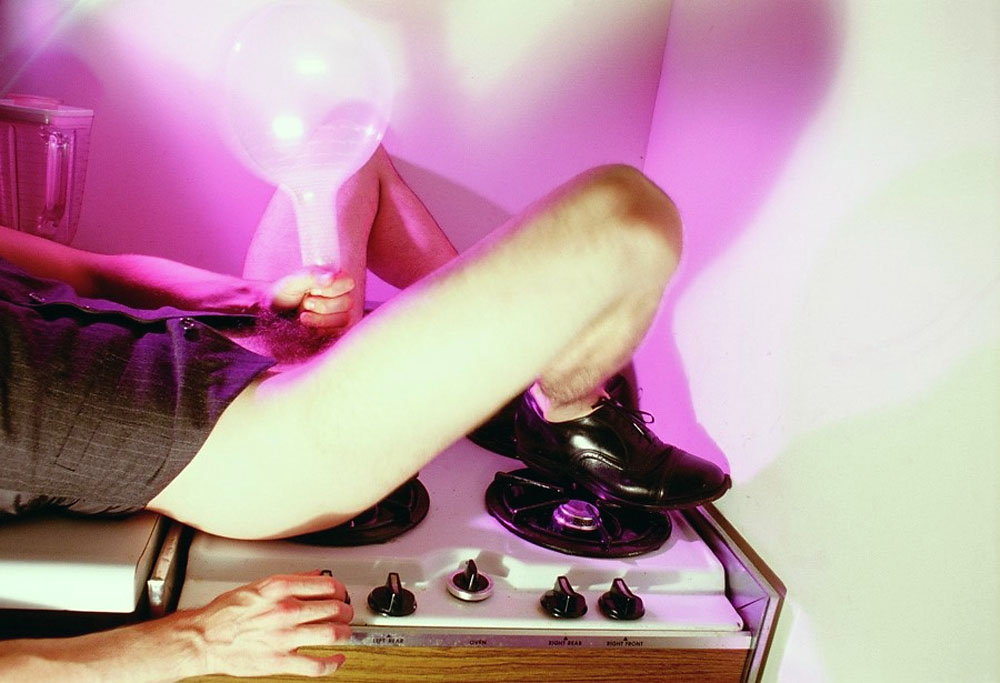
Jimmy DeSana (American, 1949-1990) 'Condom' 1979


Jimmy DeSana (American, 1949-1990)
Condom
1979
Cibachrome print
12 1/4 × 18 3/4 in. (31.1 × 47.6cm)
Courtesy of the Jimmy DeSana Trust and P·P·O·W, New York


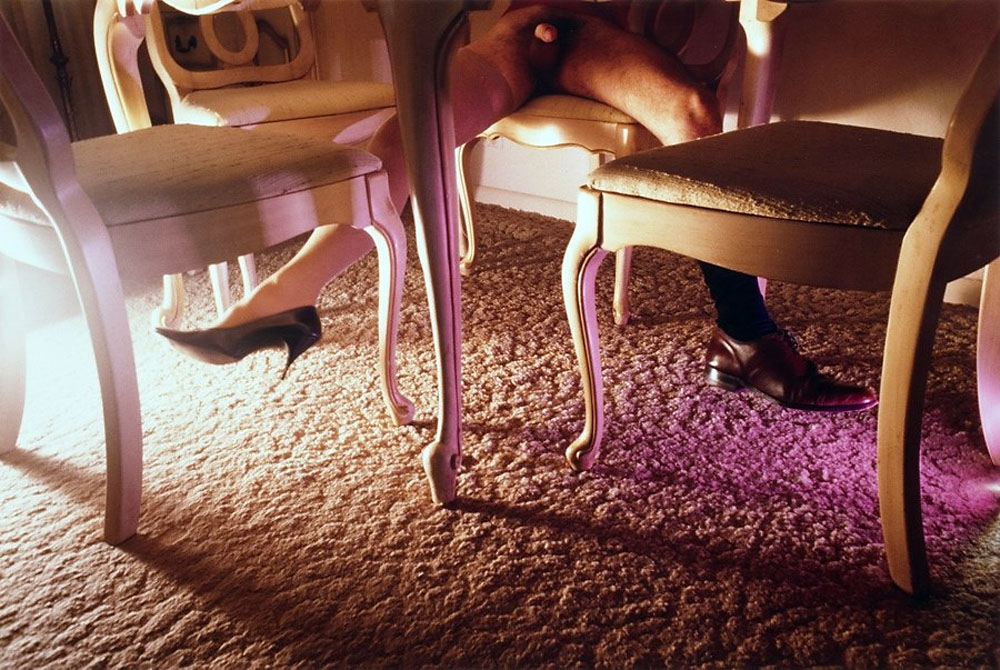
Jimmy DeSana (American, 1949-1990) 'Shoes' 1979


Jimmy DeSana (American, 1949-1990)
Shoes
1979
Chromogenic print
15 1/4 × 23 1/2 in. (38.7 × 59.7cm)
Courtesy of the Jimmy DeSana Trust and P·P·O·W, New York


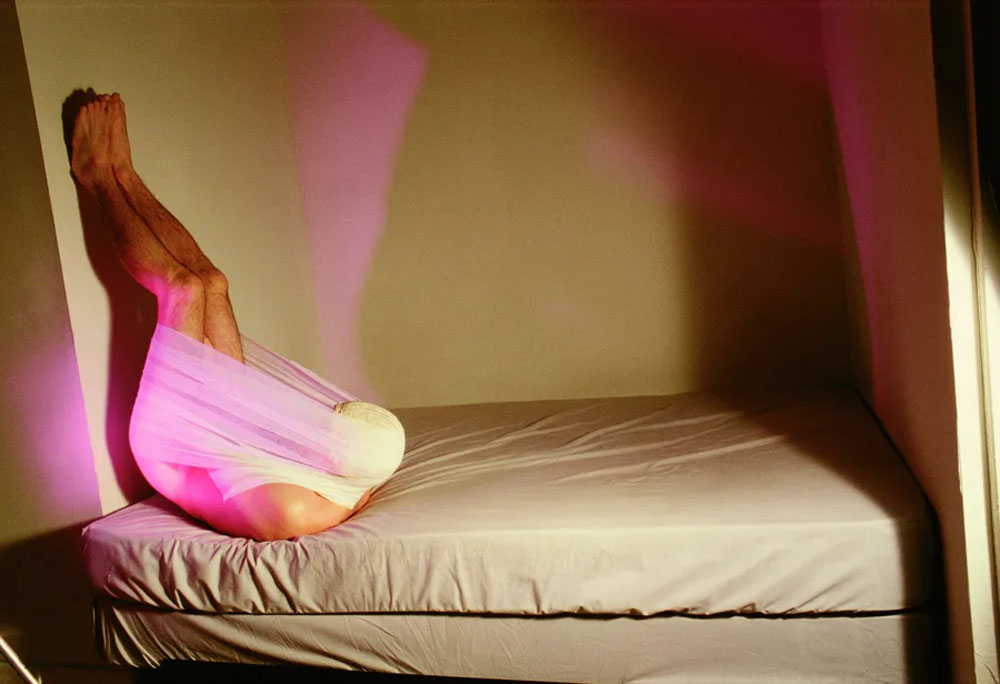
Jimmy DeSana (American, 1949-1990) 'Gauze' 1979


Jimmy DeSana (American, 1949-1990)
Gauze
1979
Chromogenic print
12 3/4 × 19 in. (32.4 × 48.3cm)
Courtesy of the Jimmy DeSana Trust and P·P·O·W, New York


Jimmy DeSana (American, 1949-1990) 'Shoe' 1979


Jimmy DeSana (American, 1949-1990)
Shoe
1979
Chromogenic print
13 × 19 in. (33 × 48.3cm)
Courtesy of Jimmy DeSana Trust and PPOW


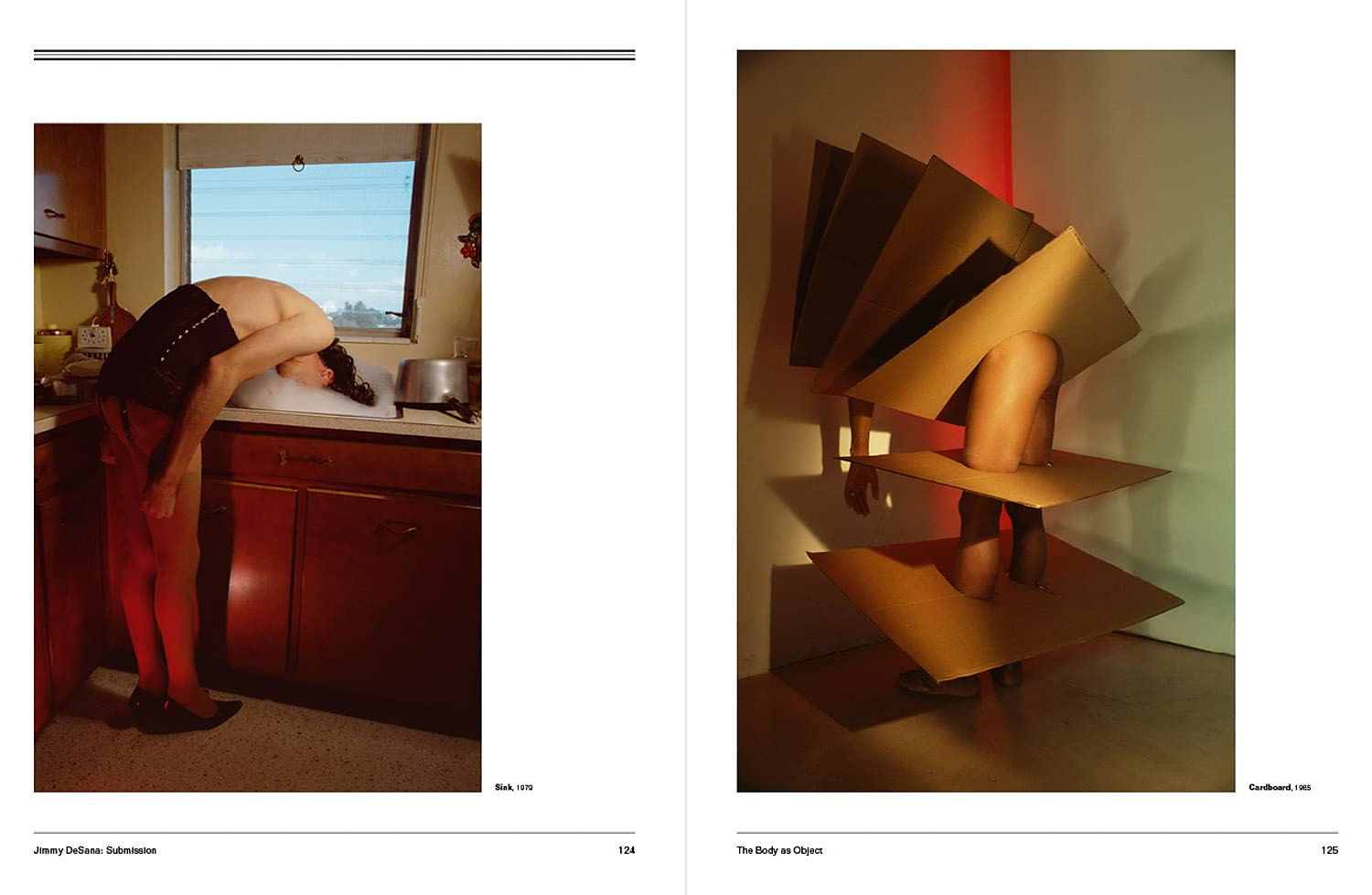
Jimmy DeSana (American, 1949-1990) 'Sink' 1979


Jimmy DeSana (American, 1949-1990)
Sink
1979
Silver dye bleach print
19 × 12 5/8 in. (48.3 × 32.1cm)
Courtesy of the Jimmy DeSana Trust and P·P·O·W Gallery, New York
© Estate of Jimmy DeSana
Photo: Courtesy of the Jimmy DeSana Trust and P·P·O·W Gallery, New York


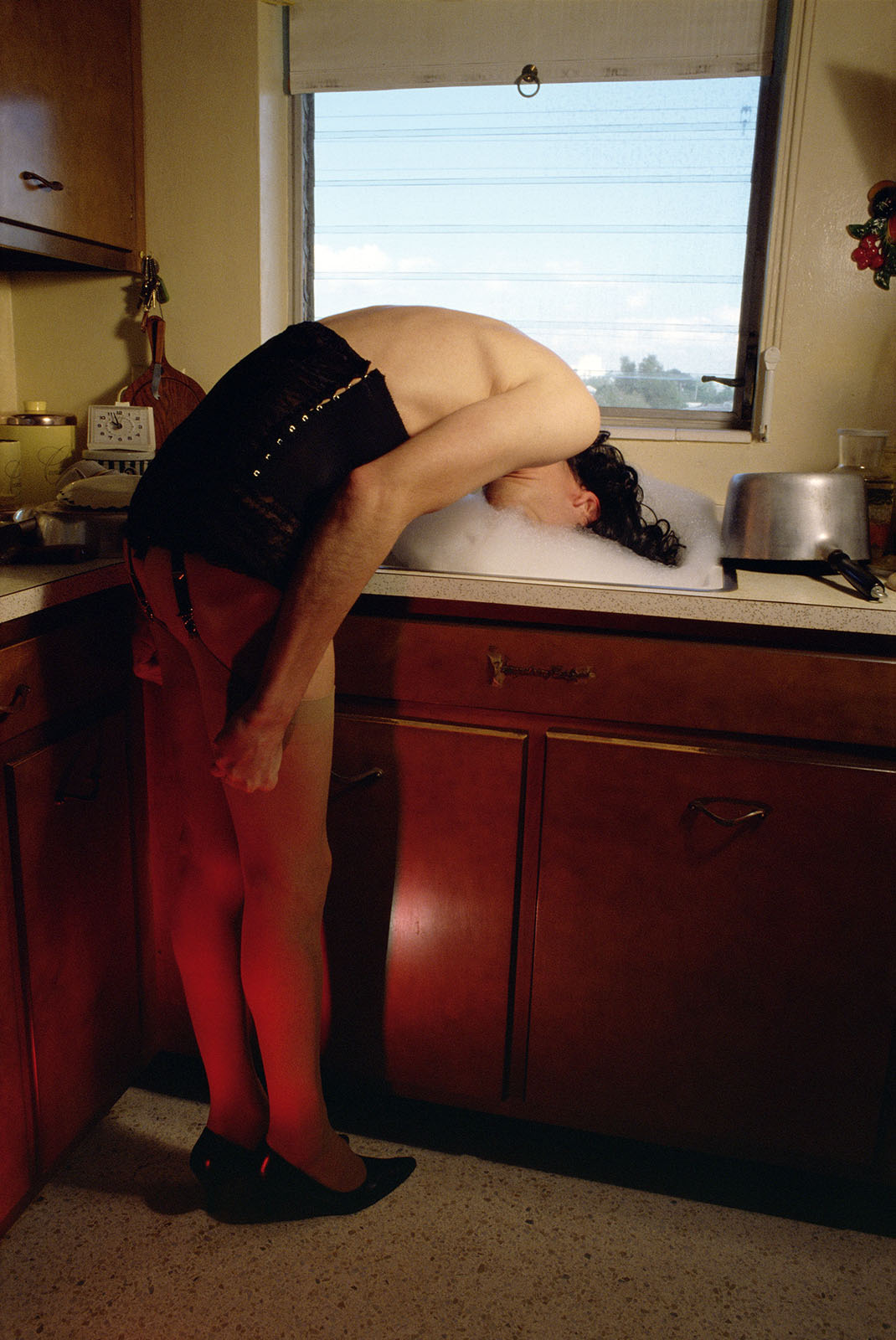
Many of the photographs in Jimmy DeSana’s “Suburban” series explore themes of domestic confinement and social conformity through consumer goods and rituals.

In “Sink” (1979), shown here, an anonymous figure wearing a corset and heels leans over, head dunked in a kitchen sink filled with soap suds. DeSana allows contradictions – between agency and conformity, critique and complicity, punishment and pleasure – to remain open-ended in his work, enabling them to identify and “disidentify” with dominant culture.

Text from the Brooklyn Museum Tumblr website


Jimmy DeSana (American, 1949-1990) 'Leaves' 1979


Jimmy DeSana (American, 1949-1990)
Leaves
1979
Chromogenic print
18 3/4 × 12 1/2 in. (47.6 × 31.8cm)
Courtesy of the Jimmy DeSana Trust and P·P·O·W, New York


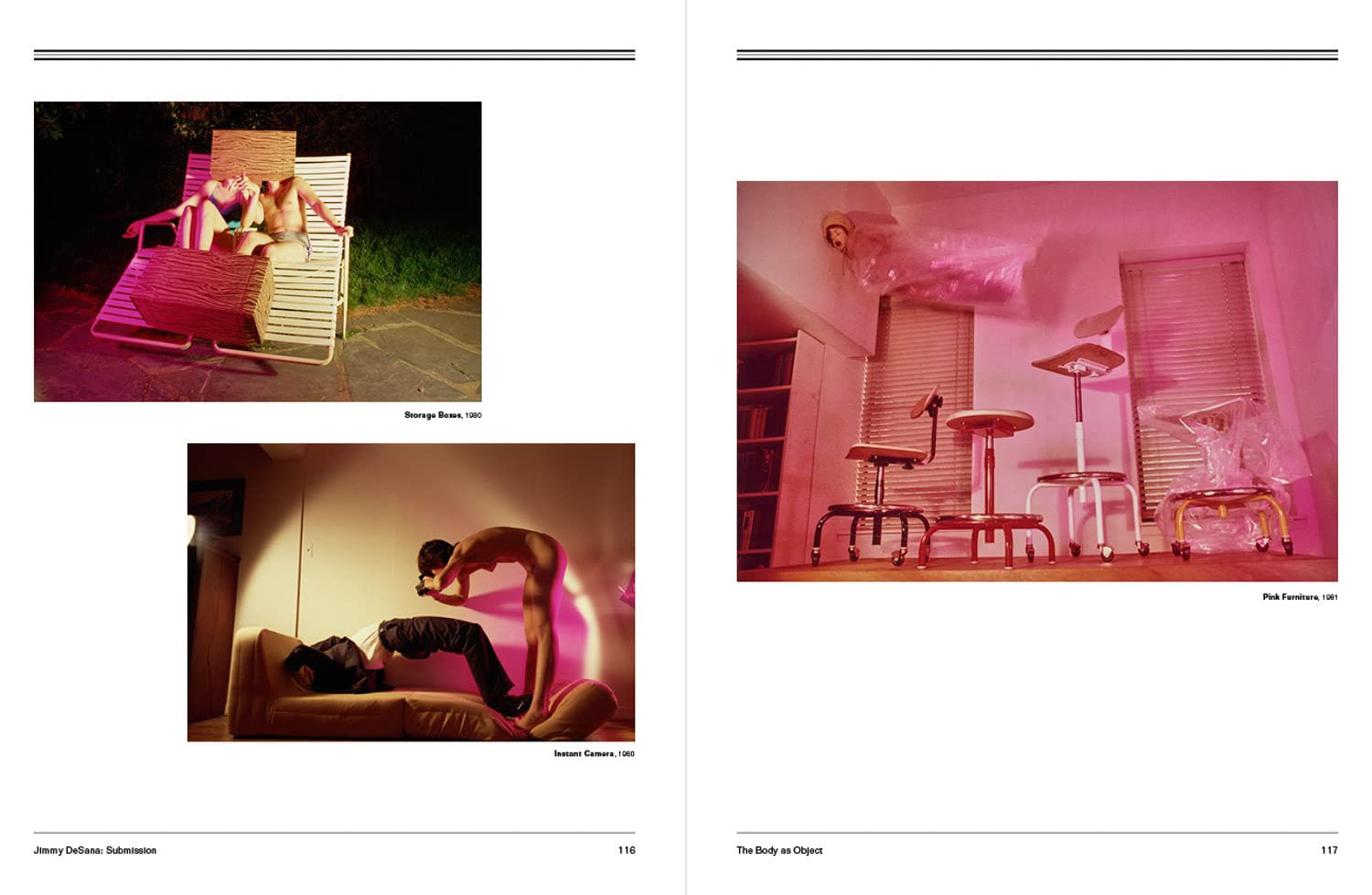
Jimmy DeSana (American, 1949-1990) 'Storage Boxes' 1980


Jimmy DeSana (American, 1949-1990)
Storage Boxes
1980
Inkjet print, printed 2022
15 1/2 × 23 1/2 in. (39.4 × 59.7cm)
Courtesy of the Jimmy DeSana Trust and P·P·O·W Gallery, New York
© Estate of Jimmy DeSana
Photo: Courtesy of the Jimmy DeSana Trust and P·P·O·W Gallery, New York


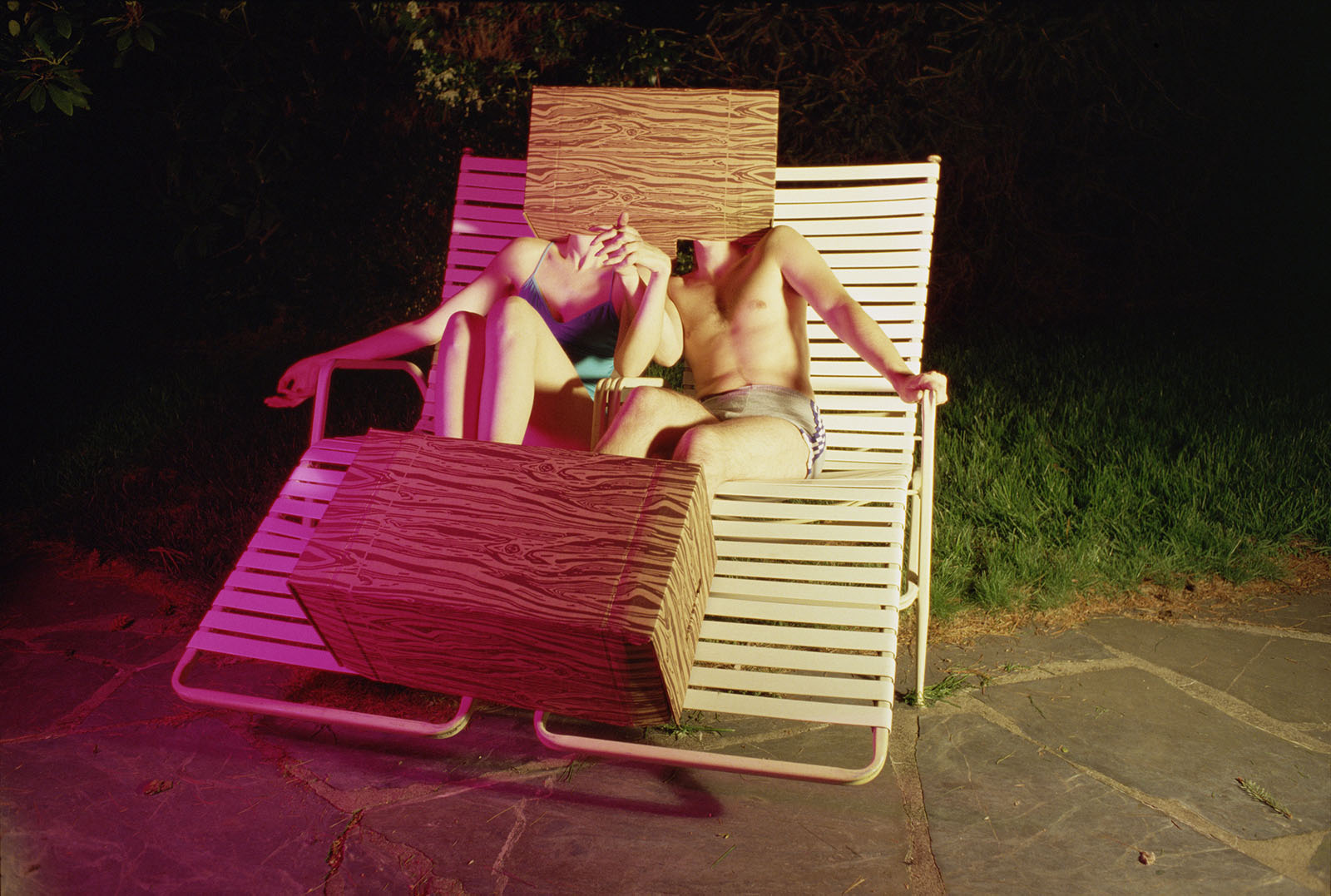
In the late 1970s, the status of colour photography was still disputed within the spaces of museums and art galleries, in part because of its associations with commercial and vernacular uses of the medium, such as fashion photography, advertisements, and home snapshots.

Perhaps even more than the content of his photographs, Jimmy DeSana’s use of gels and tungsten lights to create garish pinks, greens, reds, and oranges flew in the face of accepted taste and allowed him to utilise the medium in decidedly unconventional ways.

In “Storage Boxes” (1980), shown here, a pair of figures sit poolside in lounge chairs, holding hands but with their heads and feet encased in boxes. While many of the figures in his work from this time appear to be confined or dominated by objects, their performances look not like a limitation so much as a relational space that generates a capacity for self-knowledge and pleasure.

Exhibition label


Jimmy DeSana (American, 1949-1990) 'Auto' 1980


Jimmy DeSana (American, 1949-1990)
Auto
1980
Chromogenic print
15 5/16 × 22 7/8 in. (38.9 × 58.1cm)
Courtesy of the Jimmy DeSana Trust and P·P·O·W Gallery, New York
© Estate of Jimmy DeSana
Photo: Courtesy of the Jimmy DeSana Trust and P·P·O·W Gallery, New York


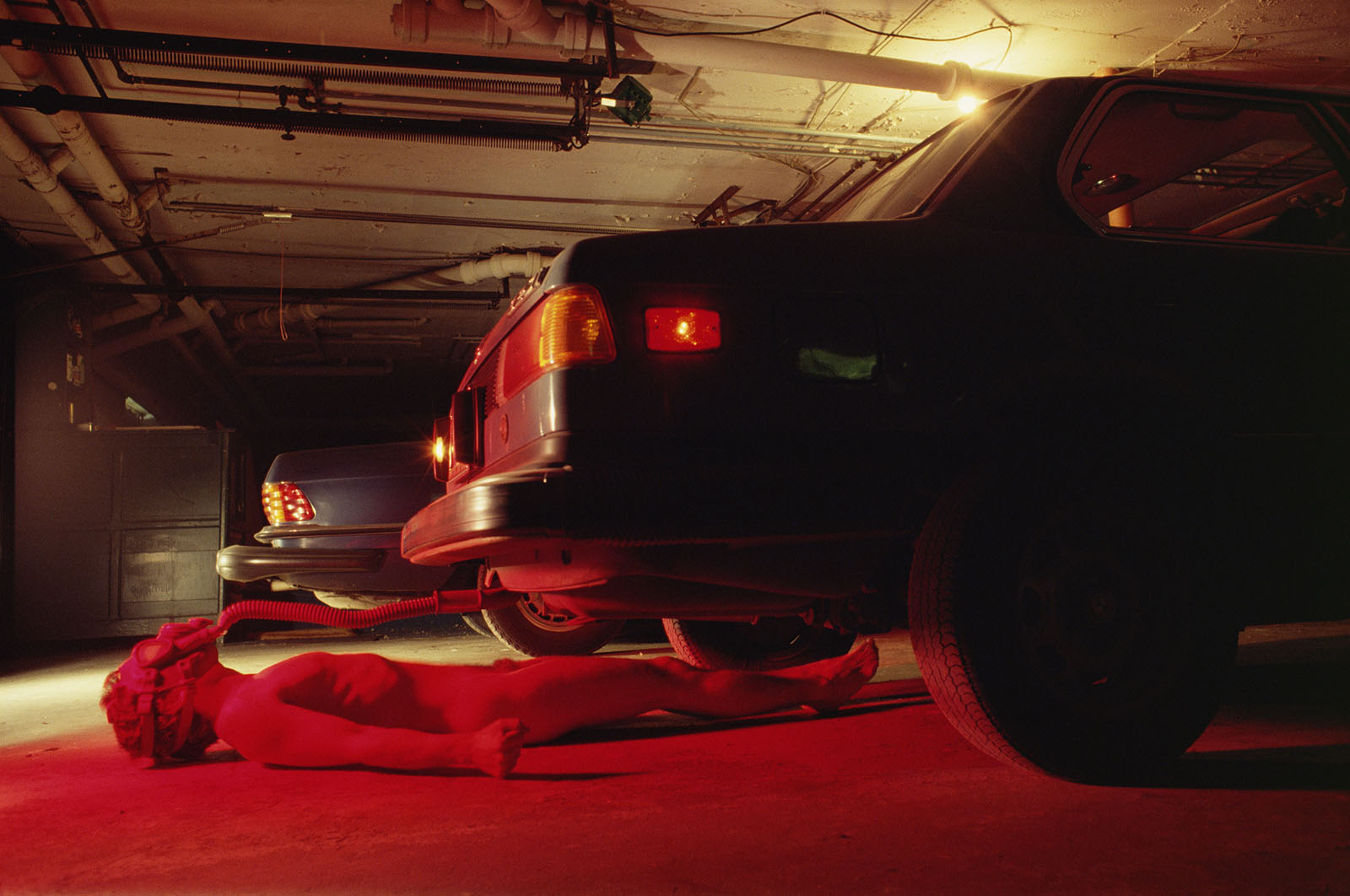
DeSana’s photographs frequently feature visual puns. Here, a nude person, perhaps DeSana himself, lies beneath a car with a breathing tube connecting his gas mask to the exhaust pipe. The image appears to be a visual play on “autoerotic asphyxiation,” or the intentional restriction of oxygen to the brain for the purposes of sexual arousal. The image could also be interpreted as a metaphor for America’s subservience to car culture and the harm that automobiles cause us, the red glow adding an ominous tone.

Exhibition label


Jimmy DeSana (American, 1949-1990) 'Instant Camera' 1980


Jimmy DeSana (American, 1949-1990)
Instant Camera
1980
Chromogenic print
15 1/8 × 23 in. (38.4 × 58.4 cm)
Courtesy of the Jimmy DeSana Trust and P·P·O·W, New York


Jimmy DeSana (American, 1949-1990) 'Soap Suds' 1980


Jimmy DeSana (American, 1949-1990)
Soap Suds
1980
Chromogenic print
15 1/8 × 22 3/4 in. (38.4 × 57.8cm)
Courtesy of the Jimmy DeSana Trust and P·P·O·W, New York


Jimmy DeSana (American, 1949-1990) 'Four Legs with Shoes' 1980


Jimmy DeSana (American, 1949-1990)
Four Legs with Shoes
1980
Chromogenic print
14 3/4 × 18 7/8 in. (37.5 × 47.9cm)
Courtesy of the Jimmy DeSana Trust and P·P·O·W, New York


Jimmy DeSana (American, 1949-1990) 'Party Picks' 1981


Jimmy DeSana (American, 1949-1990)
Party Picks
1981
Inkjet print, printed 2013
32 3/4 × 49 1/2 in. (83.2 × 125.7cm)
Courtesy of the Jimmy DeSana Trust and P·P·O·W, New York


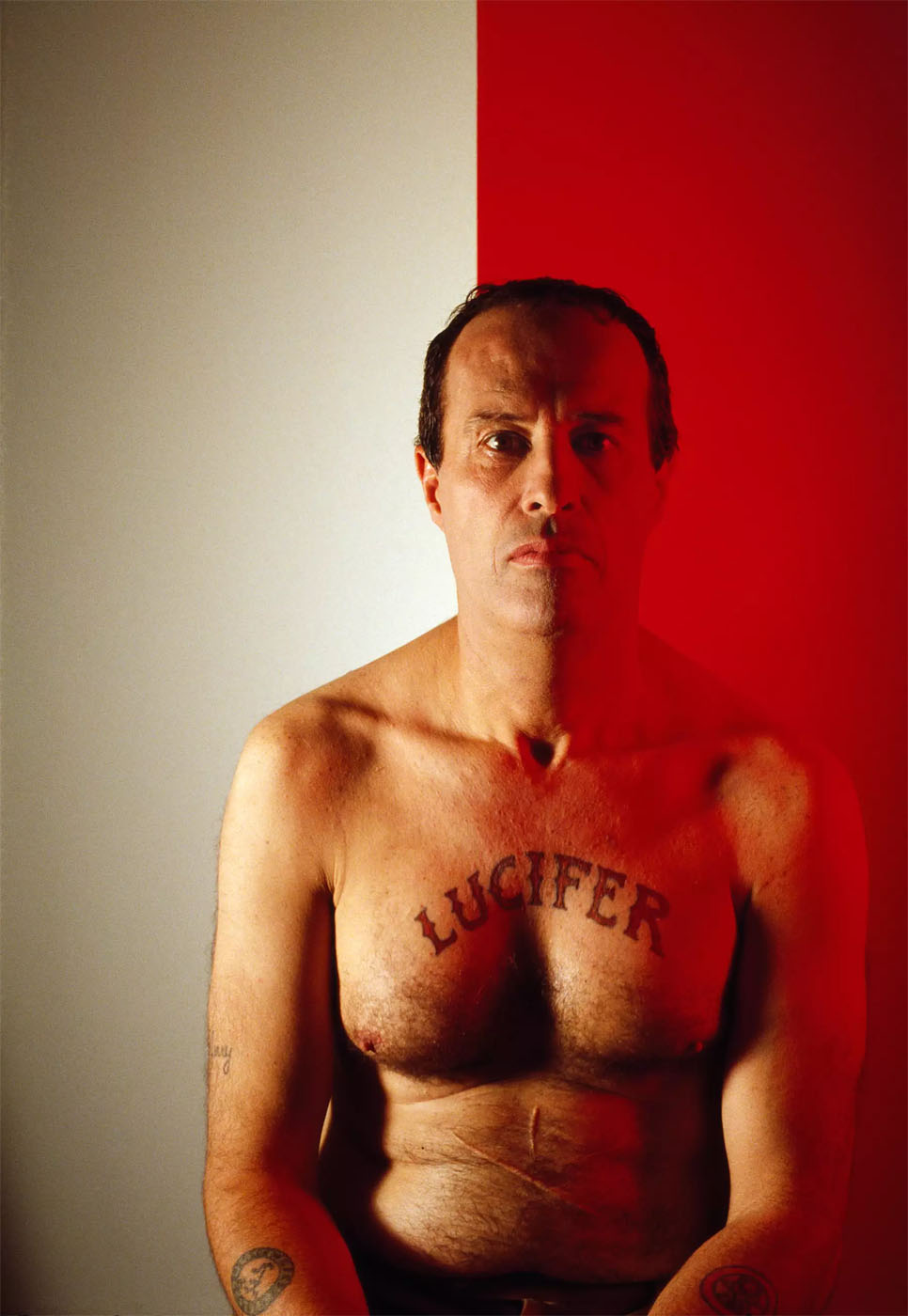
Jimmy DeSana (American, 1949-1990) 'Kenneth Anger' 1980


Jimmy DeSana (American, 1949-1990)
Kenneth Anger
1980
Chromogenic print
20 × 13 1/2 in. (50.8 × 34.3 cm)
Courtesy of the Jimmy DeSana Trust and P·P·O·W, New York


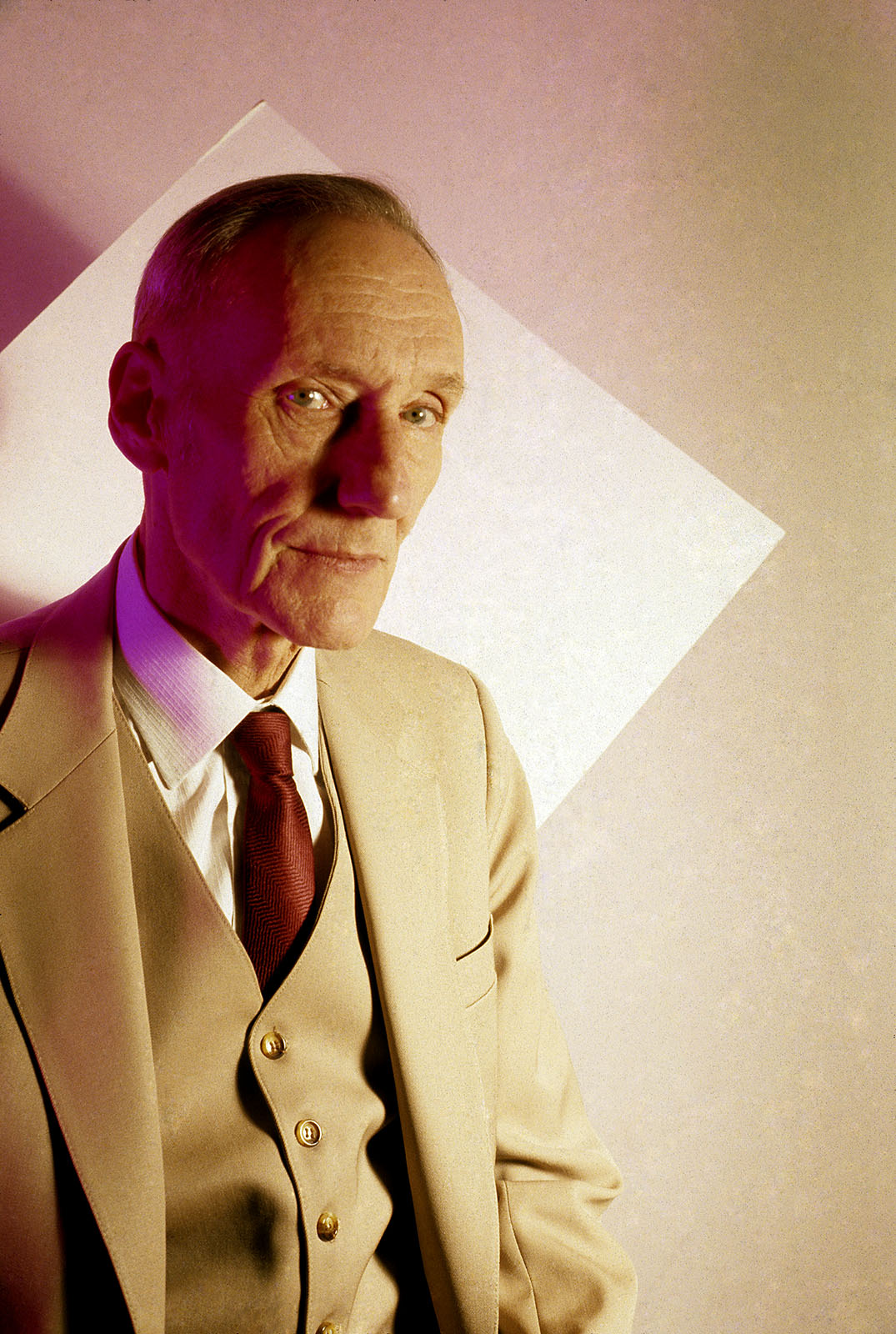
Jimmy DeSana (American, 1949-1990) 'William S. Burroughs' 1981


Jimmy DeSana (American, 1949-1990)
William S. Burroughs
1981
Chromogenic print
20 × 13 1/2 in. (50.8 × 34.3cm)
Courtesy of the Jimmy DeSana Trust and P·P·O·W Gallery, New York
© Estate of Jimmy DeSana
Photo: Courtesy of the Jimmy DeSana Trust and P·P·O·W Gallery, New York


Throughout his career, DeSana befriended and photographed an older generation of pioneering queer male artists and writers who similarly transgressed societal norms through their work and life. Also like DeSana, many subverted pop culture imagery and operated outside of official institutions.

Exhibition label


Jimmy DeSana Queering Histories 1984-1990


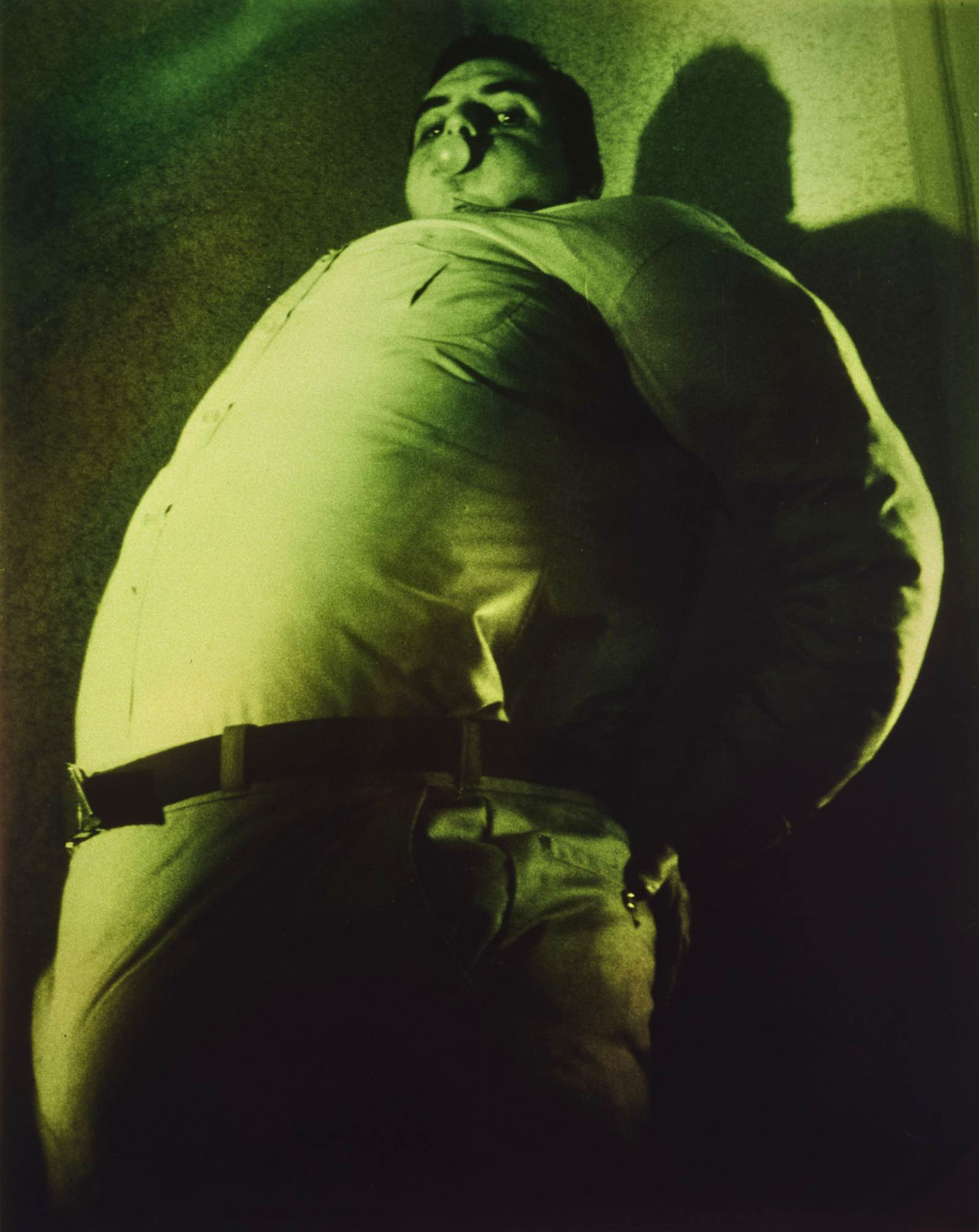
Jimmy DeSana (American, 1949-1990) 'Bubblegum (Self-Portrait)' 1984


Jimmy DeSana (American, 1949-1990)
Bubblegum (Self-Portrait)
1984
Silver dye bleach print
19 5/8 × 15 1/2 in. (49.8 × 39.4cm)
Courtesy of the Jimmy DeSana Trust and P·P·O·W Gallery, New York
© Estate of Jimmy DeSana
Photo: Allen Phillips


In a group of photographs from 1984 and 1985, DeSana explored America’s obsession with fat and dieting, tying it in with his own interest in consumption and forms of discipline and pleasure. Bubblegum, for example, is a self-portrait with his cheeks puffed out, blowing a bubble, his oversize shirt and pants bursting at the seams from stuffing and his back slightly arched to emphasise his protruding belly. He printed this image in numerous colours, including bright pink and acid green.

Exhibition label


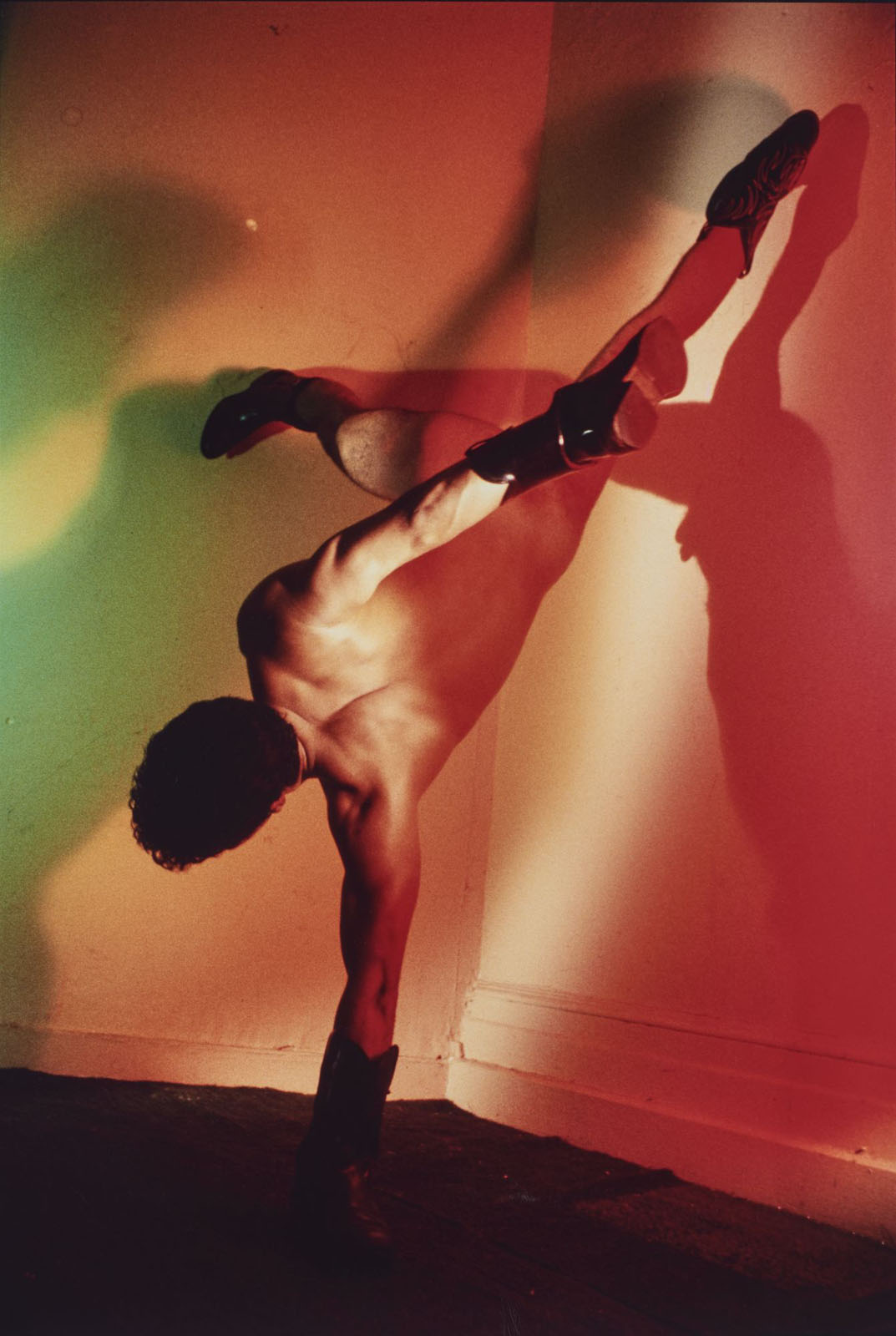
Jimmy DeSana (American, 1949-1990) 'Cowboy Boots' 1984


Jimmy DeSana (American, 1949-1990)
Cowboy Boots
1984
Silver dye bleach print
20 × 16 in. (50.8 × 40.6cm)
Courtesy of the Jimmy DeSana Trust and P·P·O·W Gallery, New York
© Estate of Jimmy DeSana
Photo: Courtesy of the Jimmy DeSana Trust and P·P·O·W Gallery, New York


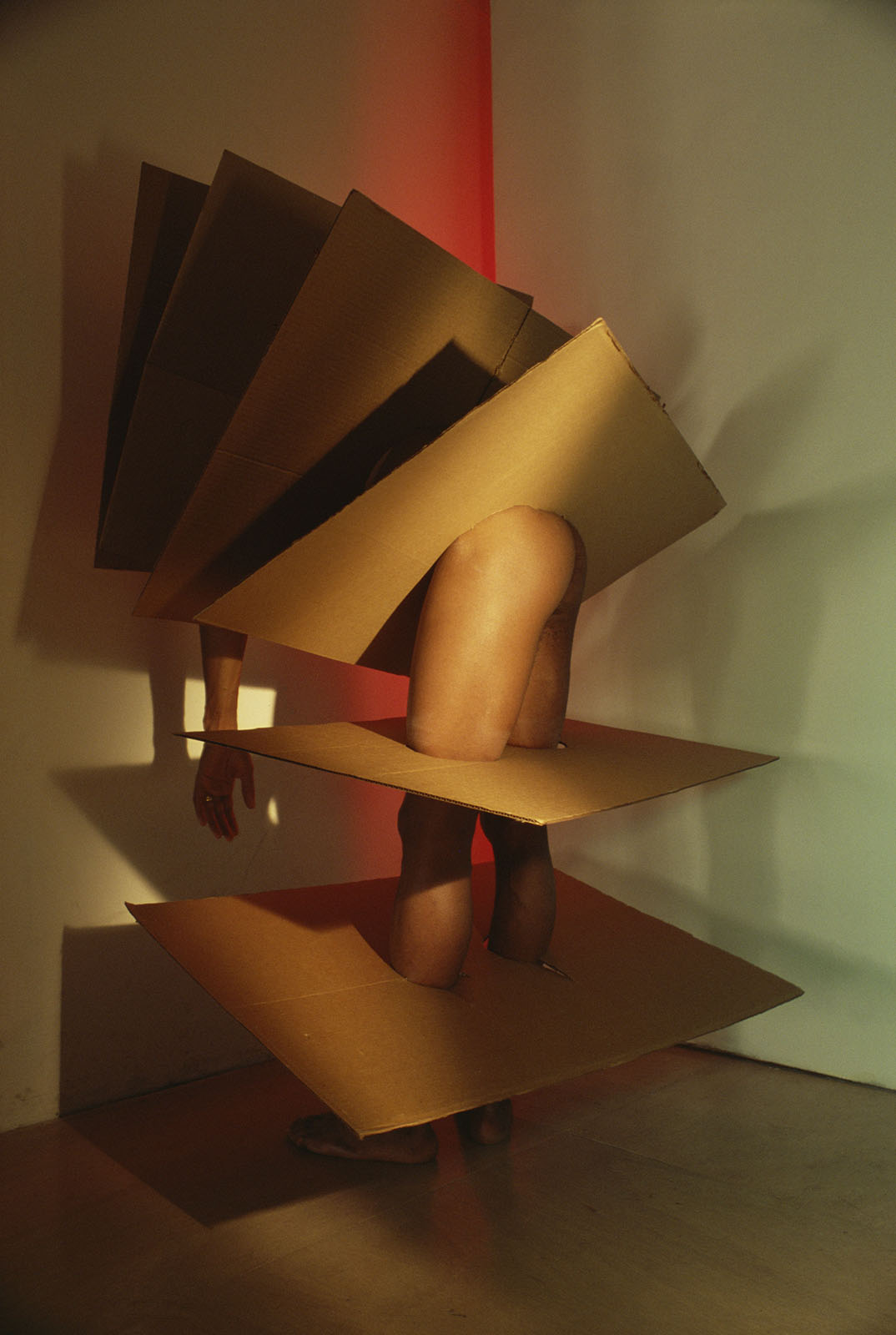
With a wink to the commonalities of darkrooms and backrooms, Sawyer built a red-light district for DeSana’s extensive investigations of BDSM, in which piss is expelled and enjoyed, and gimp-masked figures kneel in toilets or near dog bowls. In Party Picks (1981 above), toothpicks stuck into gums between teeth make a crown of thorns around a gasping mouth, or maybe make that mouth St. Sebastian’s wound. Cardboard (1985 below) offers a room with a single, lurid red band of light and corrugated cardboard that slices a bending body. In such a place, you might think of Samuel Steward’s card catalog of his conquests, or if Flavin’s work is really about its shadows, or what to do with that butt. DeSana’s frisky, familiar portraits reject the po-faced posing of Mapplethorpe and the social-climbing sadism of Helmut Newton. He gets that such proclivities are mind games played with bodies and bets you might want to play them too.

Jesse Dorris. “Jimmy DeSana’s Transgressive Vision of Life and Desire,” on the Aperture website December 14, 2022 [Online] Cited 02/04/2023


Jimmy DeSana (American, 1949-1990) 'Cardboard' 1985


Jimmy DeSana (American, 1949-1990)
Cardboard
1985
Silver dye bleach print
19 × 12 3/4 in. (48.3 × 32.4cm)
Courtesy of the Jimmy DeSana Trust and P·P·O·W Gallery, New York
© Estate of Jimmy DeSana
Photo: Courtesy of the Jimmy DeSana Trust and P·P·O·W Gallery, New York


In his series of photographs titled Suburban, Jimmy DeSana continued to photograph anonymous nude figures while making a more explicit connection between S-M and everyday life.

Many of the photographs comically equate attachments to the objects and ideals of postwar suburban life in the U.S. (washing dishes, taking a shower, driving a car) with forms of bondage and discipline. In Cardboard, from 1985 (shown here), a nude figure is intersected by sheets of cardboard.

Lit with tungsten lights and candy-coloured gels, his collaborators often turned their backs to the camera or buried their heads in purses, sinks, toilets, etc. rather than wearing leather masks. This not only protected the identity of his nude models, many of whom were friends, but also contrasted with his better-known portrait work during this period. Perhaps most important, these images continued his subversion of subjectivity. While all the photographs in the Suburban series feature nude figures, DeSana did not intend for the work to be erotic.

Text from the Brooklyn Museum Tumblr website


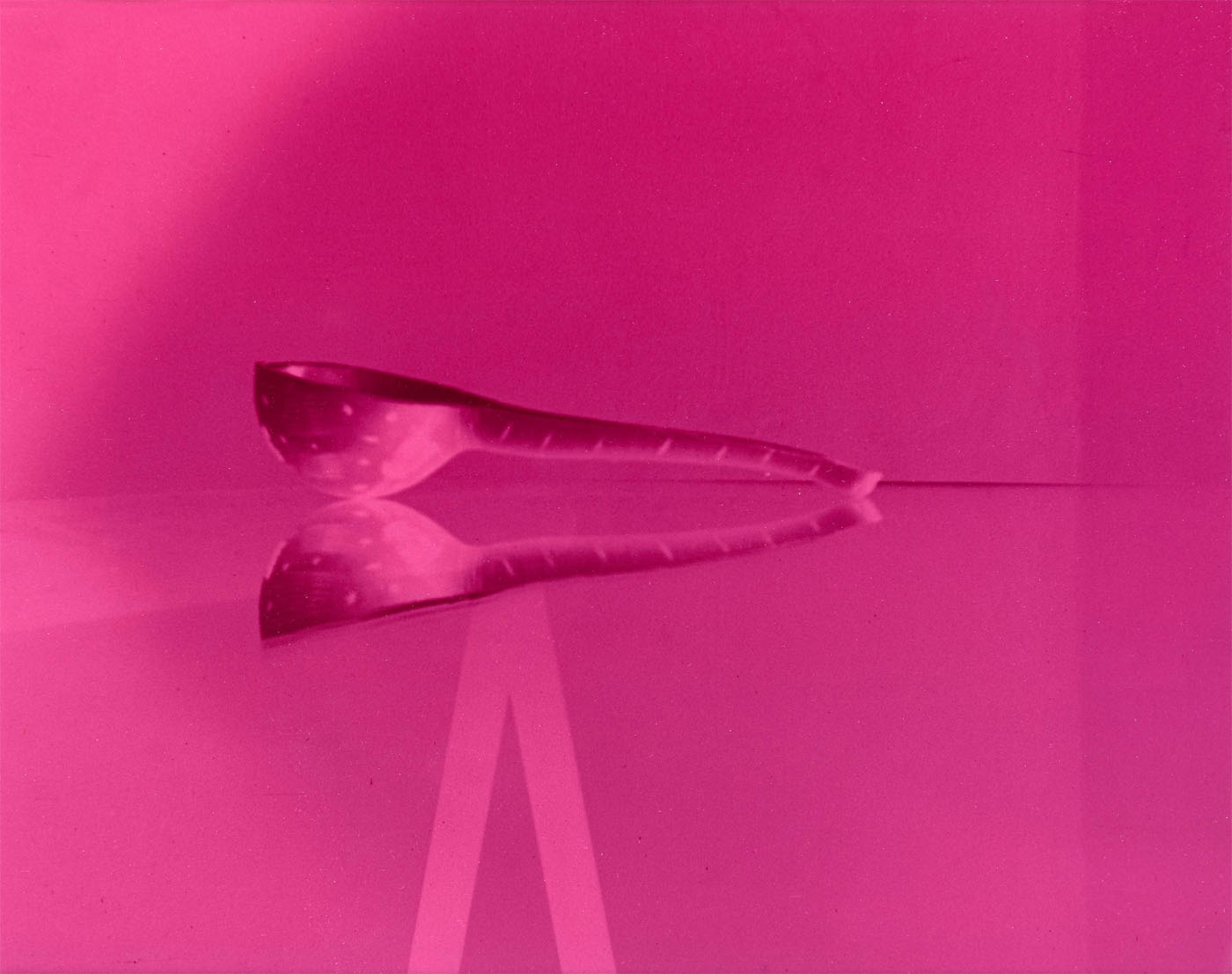
Jimmy DeSana (American, 1949-1990) 'Spoon' 1985


Jimmy DeSana (American, 1949-1990)
Spoon
1985
Silver dye bleach print
7 1/2 × 9 1/2 in. (19.1 × 24.1 cm)
Courtesy of the Jimmy DeSana Trust and P·P·O·W, New York


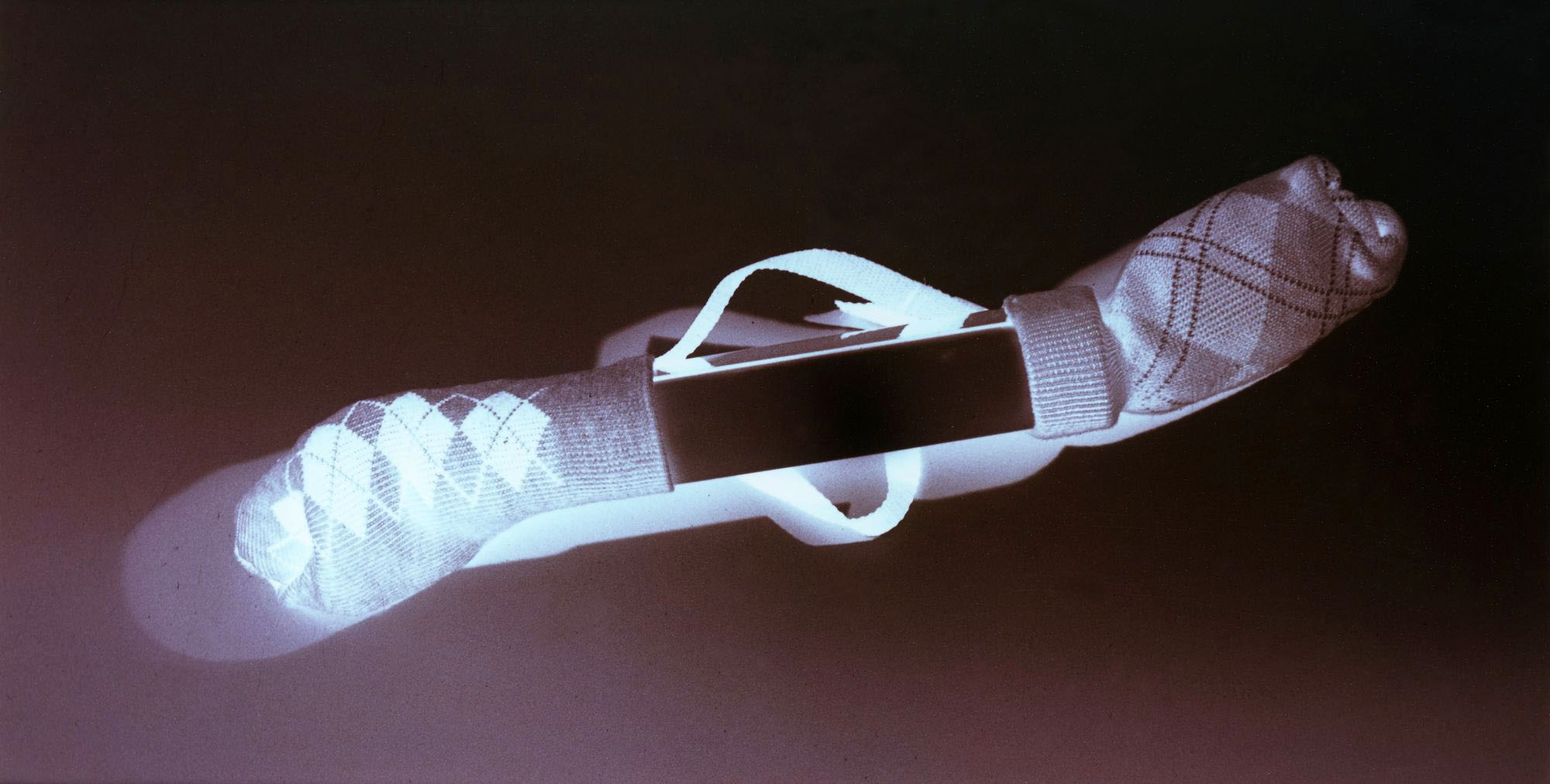
Jimmy DeSana (American, 1949-1990) 'Socks' 1986


Jimmy DeSana (American, 1949-1990)
Socks
1986
Silver dye bleach print
4 3/4 × 9 1/2 in. (12.1 × 24.1cm)
Courtesy of the Jimmy DeSana Trust and P·P·O·W, New York


Jimmy DeSana (American, 1949-1990) 'Untitled (Self Portrait Sleeping)' 1985


Jimmy DeSana (American, 1949-1990)
Untitled (Self Portrait Sleeping)
1985
Silver dye bleach print
9 1/2 × 7 1/2 in. (24.1 × 19.1cm)
Courtesy of the Jimmy DeSana Trust and P·P·O·W, New York


Jimmy DeSana (American, 1949-1990) 'Untitled (Male Nude)' 1985


Jimmy DeSana (American, 1949-1990)
Untitled (Male Nude)
1985
Silver dye bleach print
9 1/2 × 7 1/2 in. (24.1 × 19.1cm)
Courtesy of the Jimmy DeSana Trust and P·P·O·W, New York


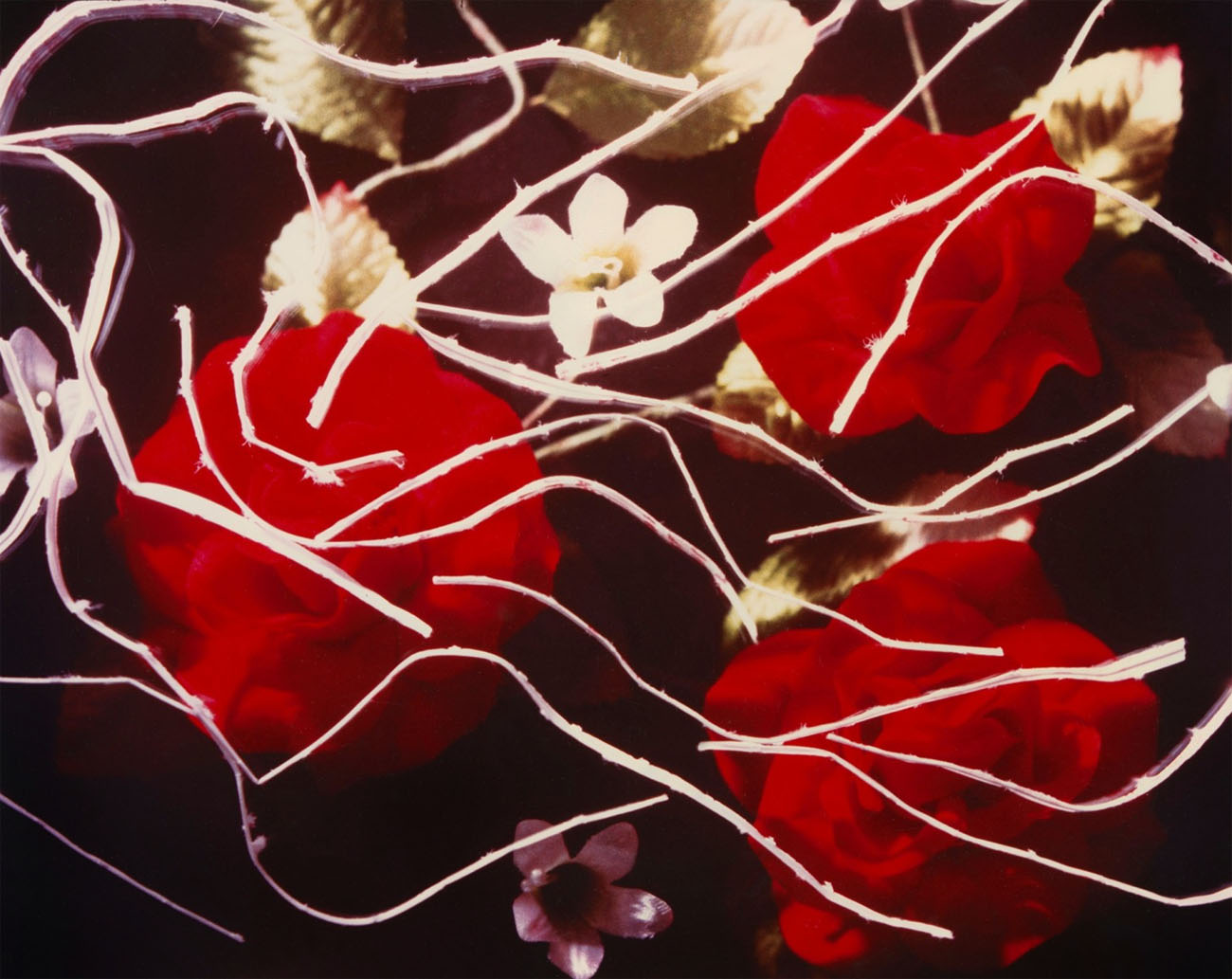
Jimmy DeSana (American, 1949-1990) 'Ties & Roses' 1986


Jimmy DeSana (American, 1949-1990)
Ties & Roses
1986
Silver dye bleach print
14 3/4 × 19 1/4 in. (37.5 × 48.9cm)
Courtesy of the Jimmy DeSana Trust and P·P·O·W, New York


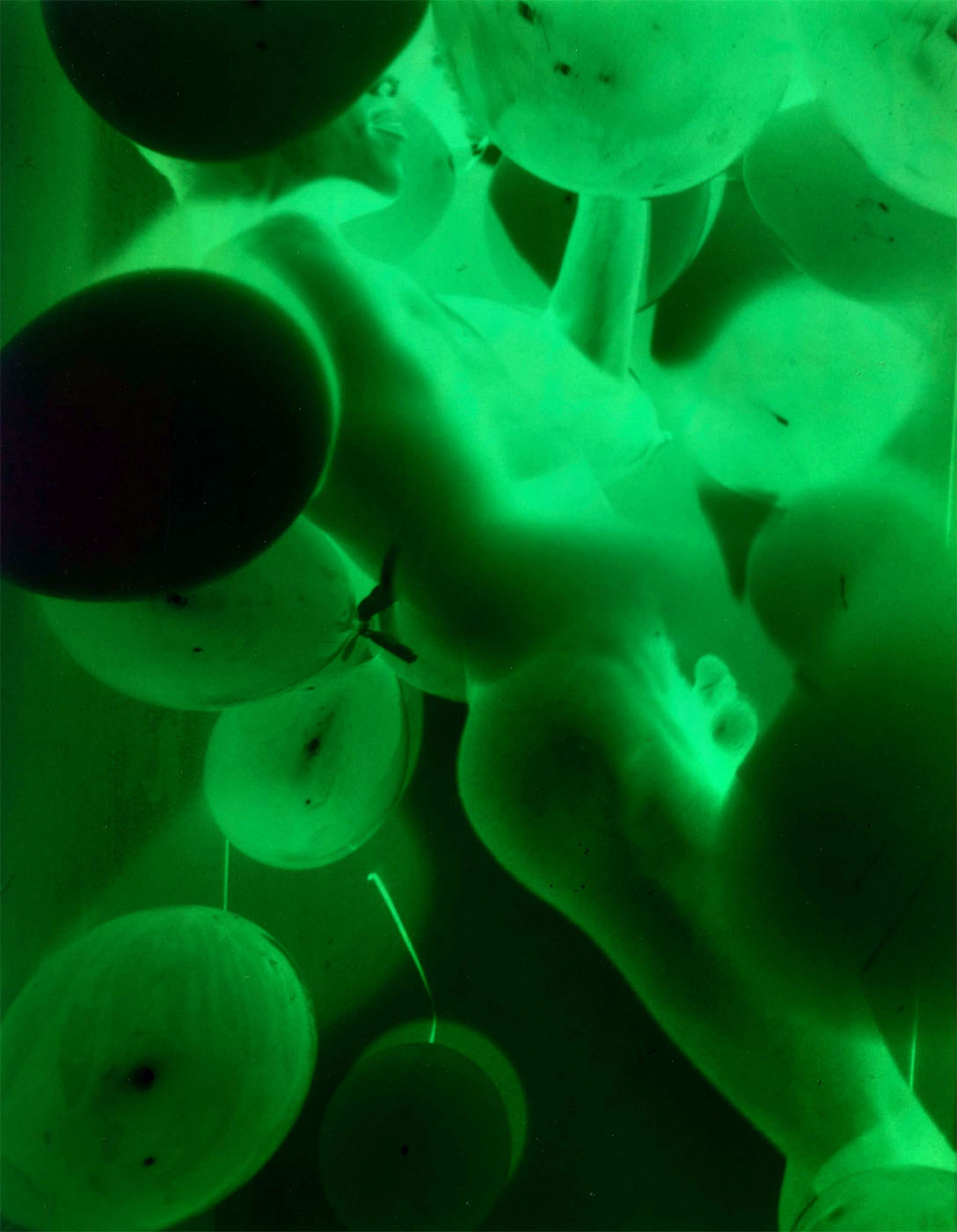
Jimmy DeSana (American, 1949-1990) 'Balloons' 1985


Jimmy DeSana (American, 1949-1990)
Balloons
1985
Silver dye bleach print
13 1/4 × 10 1/4 in. (33.7 × 26 cm)
Courtesy of the Jimmy DeSana Trust and P·P·O·W, New York


Jimmy DeSana (American, 1949-1990) 'Cellophane Tape' 1985


Jimmy DeSana (American, 1949-1990)
Cellophane Tape
1985
Silver dye bleach print
13 15/16 × 10 1/2 in. (35.4 × 26.7cm)
Courtesy of the Jimmy DeSana Trust and P·P·O·W, New York


Jimmy DeSana (American, 1949-1990) 'Aluminum Foil #4 (Self-Portrait)' 1985


Jimmy DeSana (American, 1949-1990)
Aluminum Foil #4 (Self-Portrait)
1985
Silver dye bleach print
10 × 8 in. (25.4 × 20.3cm)
Courtesy of the Jimmy DeSana Trust and P·P·O·W Gallery, New York
© Estate of Jimmy DeSana
Photo: Courtesy of the Jimmy DeSana Trust and P·P·O·W Gallery, New York


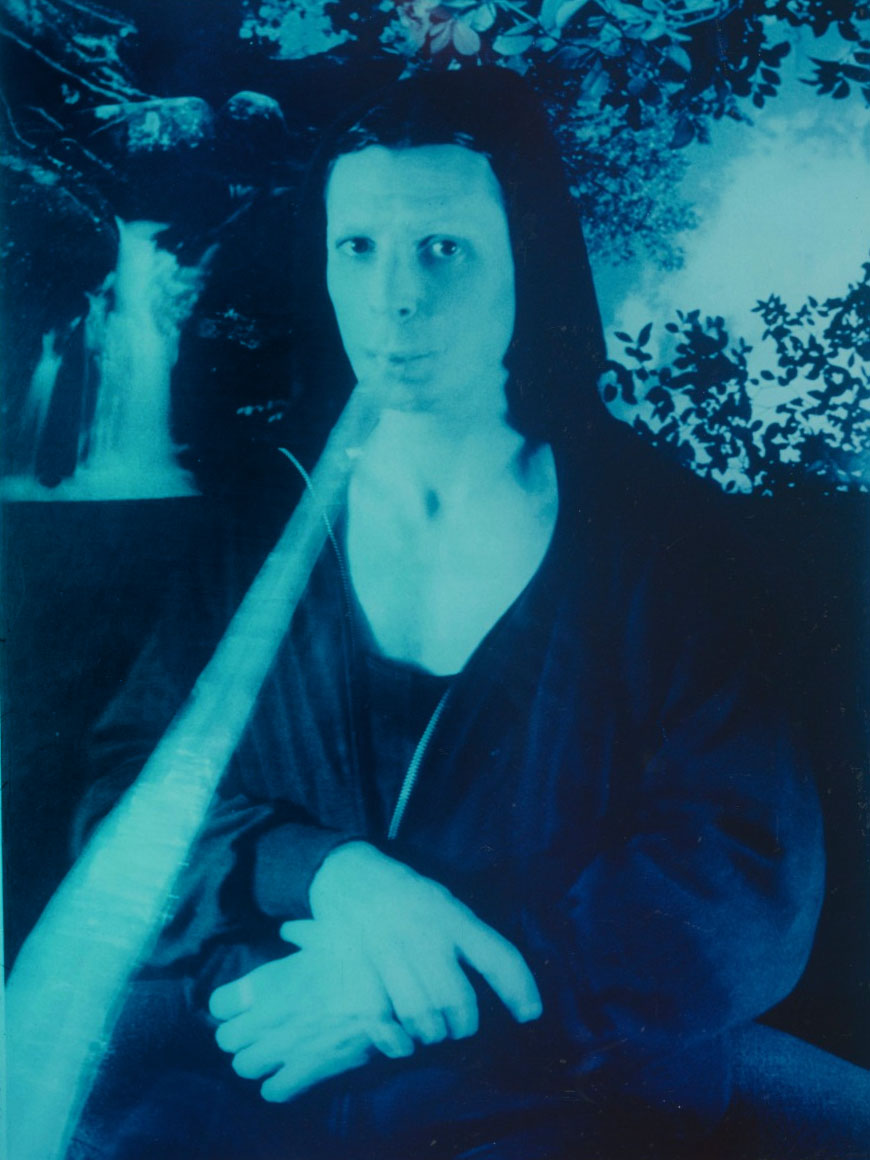
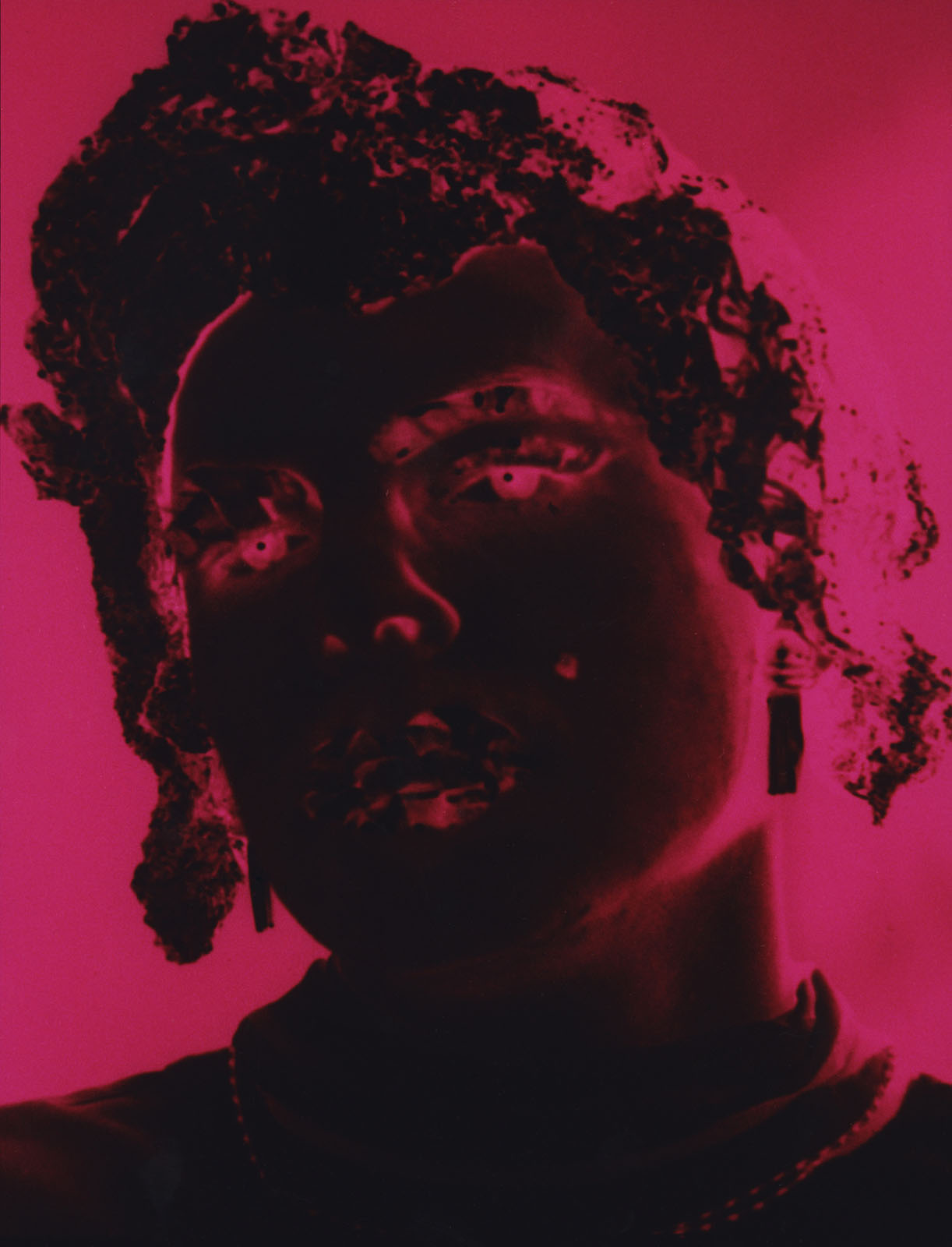
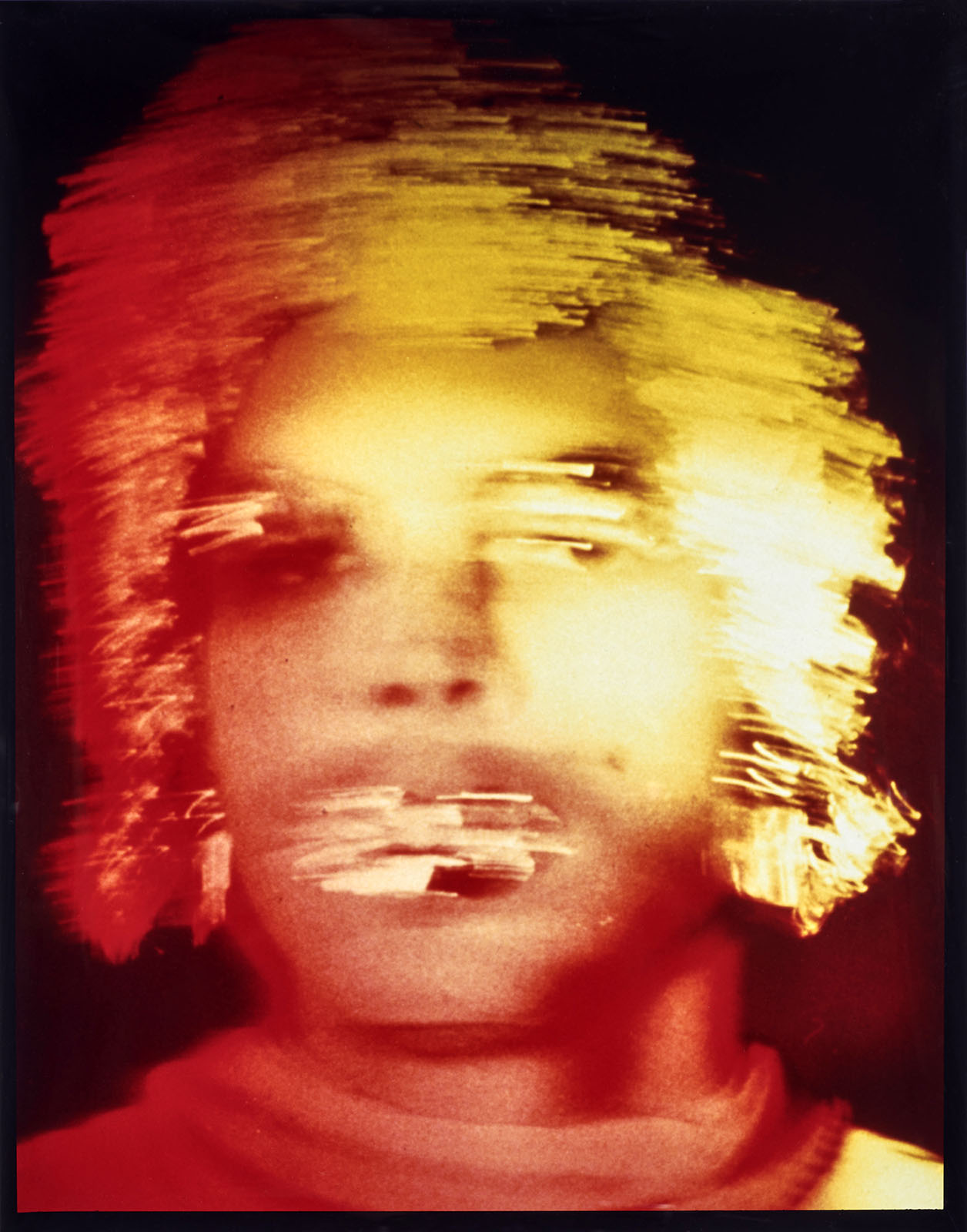
In a series of “auto-portraits” from around 1985, DeSana assumed the guise of figures in famous portraits, such as Andy Warhol’s Marilyn Monroe and Leonardo da Vinci’s Mona Lisa. This body of work developed from DeSana’s previous experiments with role-playing, performance, and concealment.

Building on his engagement with colour photography, DeSana transformed these black-and-white negatives by enlarging them with dyed gels and colour dials. After exposing the colour photographic paper, he took the prints to a lab to finish the developing process.

Exhibition label


Jimmy DeSana (American, 1949-1990) 'Aluminum Foil #1 (Self-Portrait)' 1985


Jimmy DeSana (American, 1949-1990)
Aluminum Foil #1 (Self-Portrait)
1985
Silver dye bleach print
13 1/2 × 10 1/2 in. (34.3 × 26.7cm)
Courtesy of the Jimmy DeSana Trust and P·P·O·W Gallery, New York
© Estate of Jimmy DeSana
Photo: Allen Phillips


The vivid colour profiles of the Suburban series are riotous, yet the scenes are often subdued, serious, even melancholic. These acid-toned prints are more sinister, more surreal, and less eager to please than the images we often associate with the Pictures Generation. It’s easier to draw a line between DeSana and the surrealist photography of Man Ray and Hans Bellmer than to Cindy Sherman’s plucky film tests or the crisp portraits by Robert Mapplethorpe or Peter Hujar. Further distancing his work from that of his contemporaries, DeSana almost never reveals the identity of his sitters. Faces are almost invariably obscured by a prop: a stocking, a helmet, soap suds, or even the camera itself. The viewers’ innate desire to know the subject is stymied by the unrecognisability of these exploded, contorted anonymous bodies. By making chairs, coat hangers, helmets, and even an iguana an extension of the body, the photographs propose a flattening of the hierarchy between prop and actor, blurring the distinction between stage and sitter, foreground and background, organic and artificial. In much the same way that subjugation and compliance are fundamental to BDSM culture, here the camera becomes dominant, imploring the body to perform for the photographer. DeSana uses these bodies are props, stripping them of agency and compelling them serve the needs of the composition.

DeSana made a career of piercing through the realm of the banal and conventional with the queer and radical. His works suggest that the home itself and the objects within it are in themselves a prop to conceal an arena of libidinal play. For DeSana, the camera acts as catalyst and instigator, a tool used to coerce a performance, a device that invites us to subjugate our egos in the service of latent desires.

Bryan Barcena. “Suburban/Submission,” Focus Essay from FOAM exhibition 09.01.2019 on the Salon 94 website [Online] Cited 20/03/2023


Jimmy DeSana (American, 1949-1990) 'Untitled (Man with Antler)' 1985


Jimmy DeSana (American, 1949-1990)
Untitled (Man with Antler)
1985
Silver dye bleach print
13 1/4 × 10 1/4 in. (33.7 × 26cm)
Courtesy of the Jimmy DeSana Trust and P·P·O·W Gallery, New York
© Estate of Jimmy DeSana
Photo: Allen Phillips


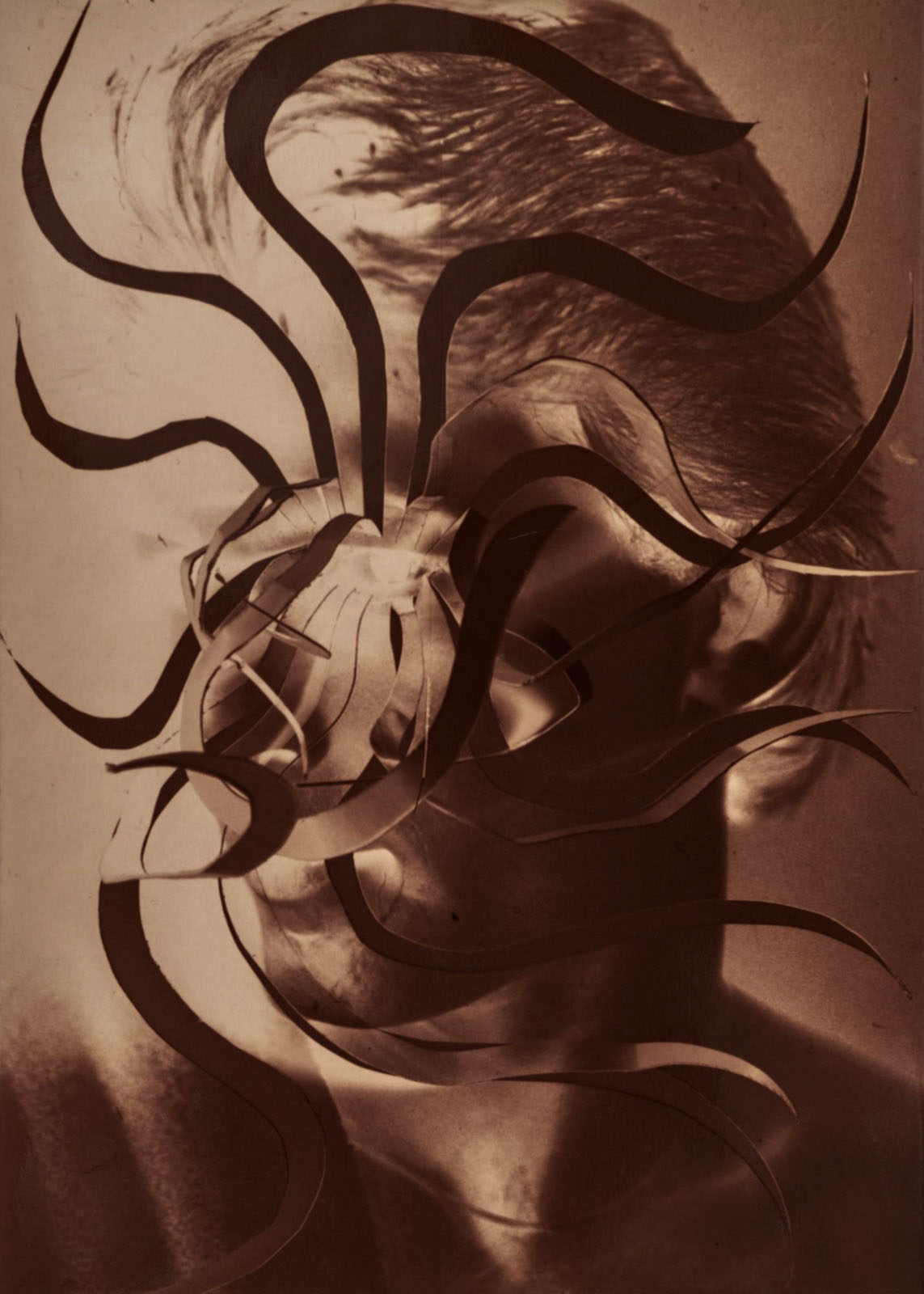
In a 1986 interview with Diego Cortez, Jimmy DeSana remarked on the mutability and transgressive potential of photography: “A photograph is how much you want to lie, how far you want to stretch the truth about the object. And, as photography is always based on real objects, it lends itself, by means of technique or manipulation, to explorations of what may appear to be an absence of reality, balancing on an ambiguous line between concrete and abstract space, between reality and illusion, in a way that no other medium is able to do.”

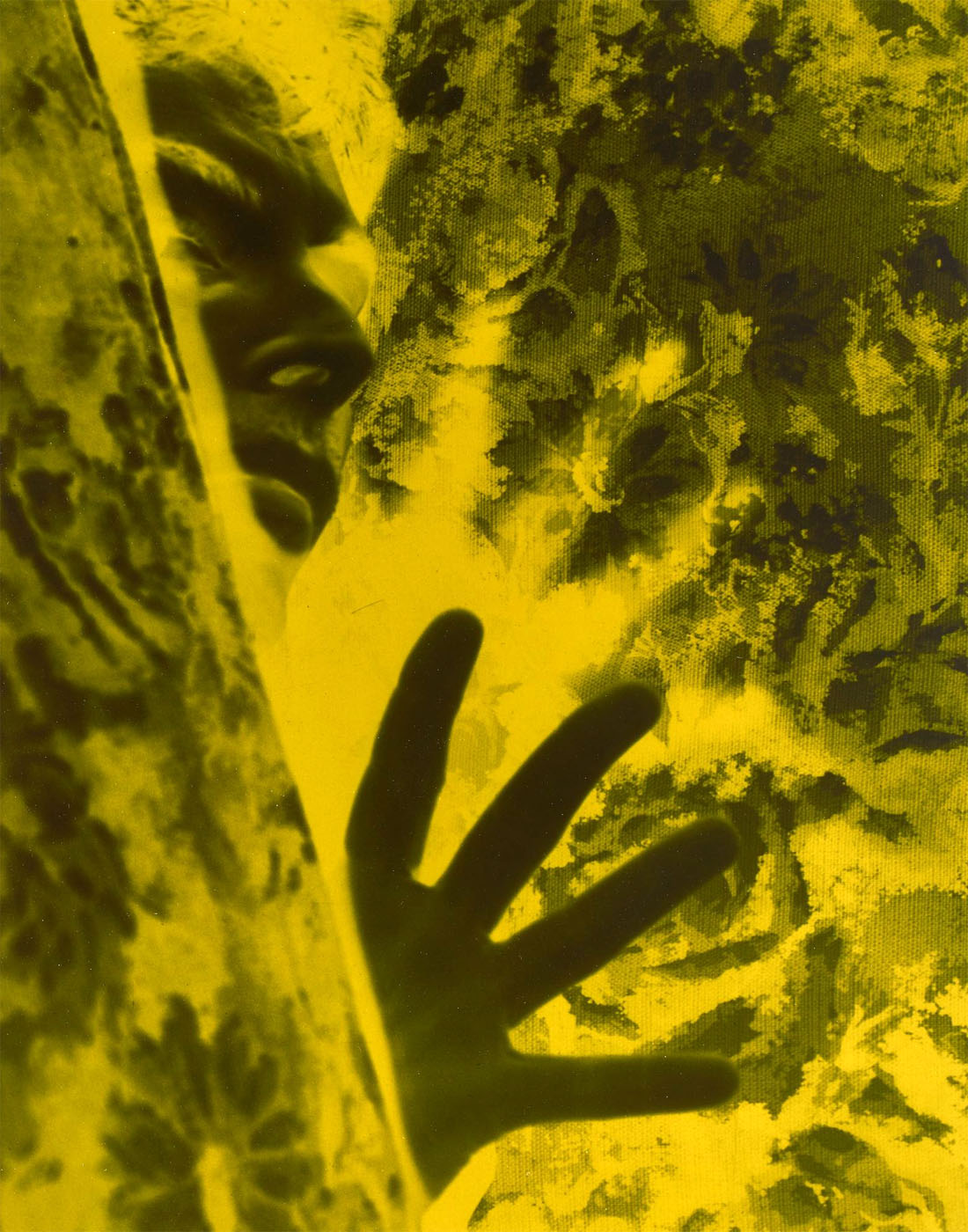
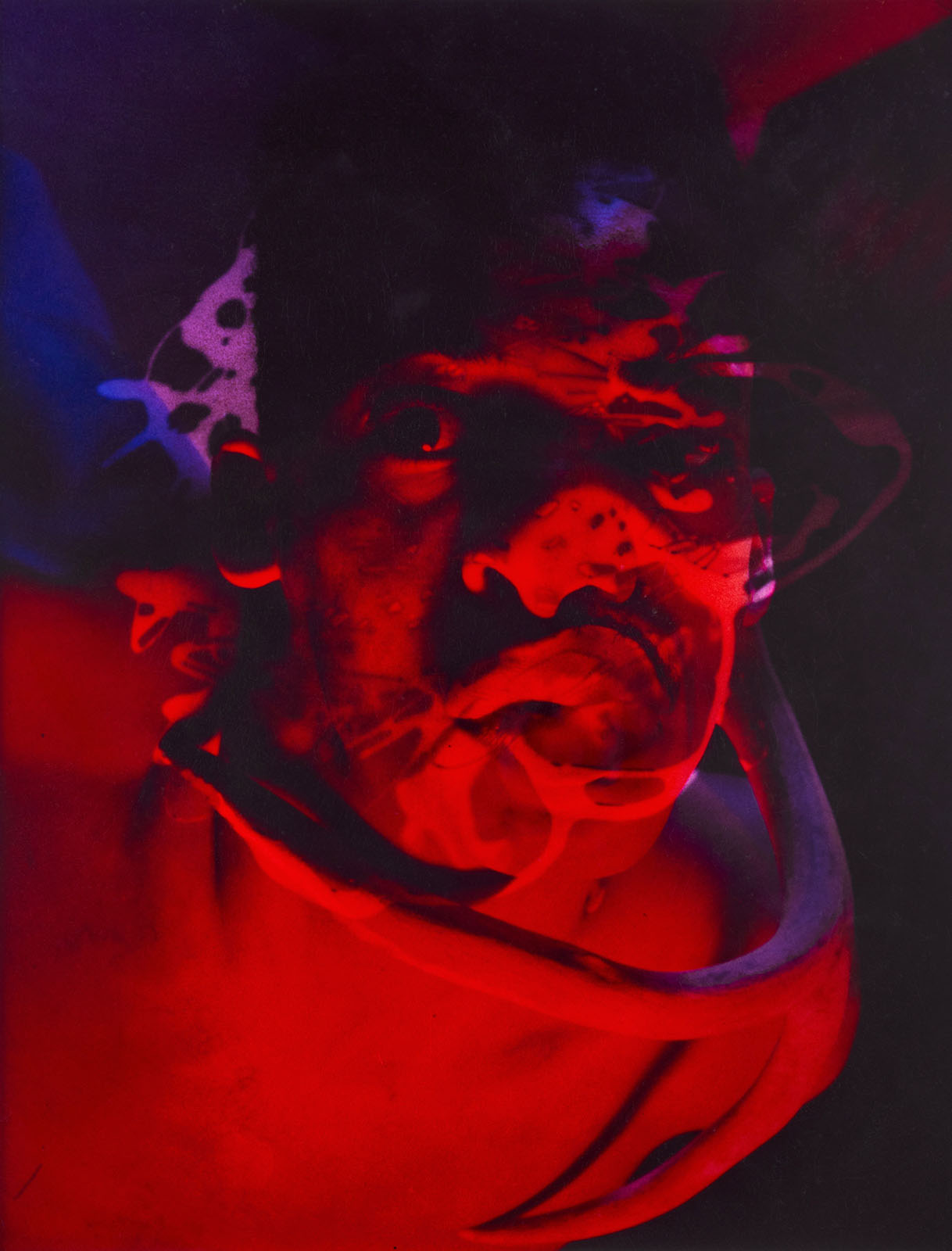
In a series of “portraits” from the mid 1980s, DeSana played with this tension by obscuring and transforming faces through collage and darkroom techniques. His movement into abstraction – in works that nonetheless address his experience living with HIV / AIDS – was in part a reaction to dilemmas over representations of sexuality and queer bodies during the first decade of the AIDS epidemic, from media bias to conservative censorship to activist demands. Critics recognised DeSana’s masquerades and darkroom experiments in colour as tributes to Surrealist photography of the 1920s and 1930s, which still had the power to confound expectations around photography and realism.

Text from the Brooklyn Museum Tumblr website


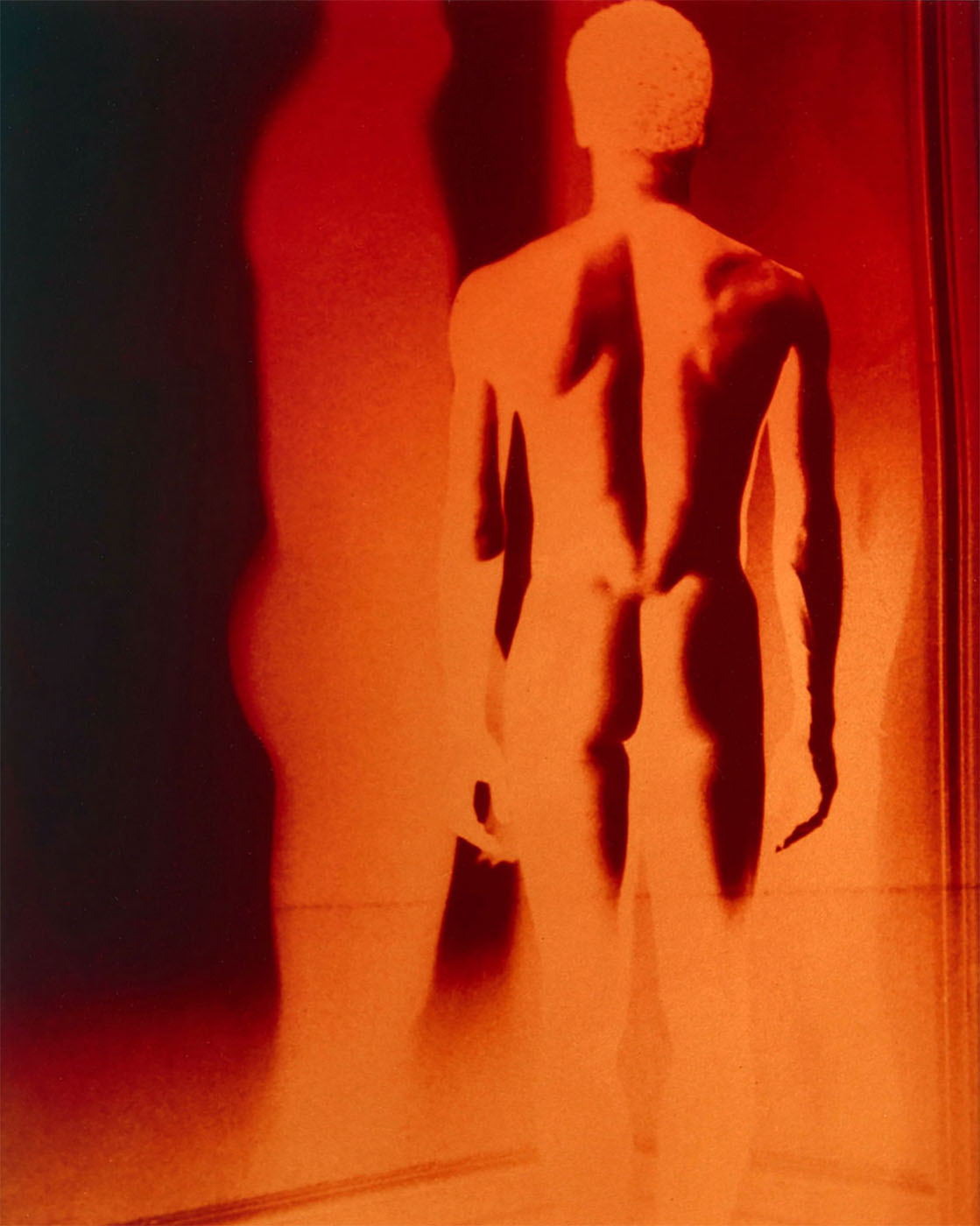
Skilled in the art of negation, DeSana staged intimate scenes that tease out the erotic – in Pants, 1984, a model arches his muscular, shirtless back under bold lighting – yet the artist routinely undermined and lampooned this sexual content: The model’s extremely large pants are filled with stuffing, comically emphasizing his ass and thighs. In this sense, DeSana’s work seems to parody Robert Mapplethorpe’s deadpan oeuvre. In 1979, DeSana published Submission, a photobook poking fun at notions of the body as a sexualized, gendered object. As the title implies, a power dichotomy is at play in the series – the camera assumes the dominant role, forcing the models into the passive ‘sub’ position. The photos … are black-and-white, giving them a self-serious quality, yet, as in his other work, DeSana punctured that effect with dark comedy. In Masking Tape, 1978, a latex bodysuit is traded for the household adhesive, with which a male model has been mummified head to toe – scrotum, penis, nipples, and nostrils excluded. Despite occasional comic absurdity, the photographs still retain a beguiling frisson. DeSana also ably mocked the supposed dangers of sexual alterity by allowing it a certain humanity – a melancholy picture of a hog-tied woman in black lingerie and high heels crouched in a refrigerator (empty save for a dozen eggs) exudes pathos and surprising sophistication. In Television, 1978, real danger in the form of electrocution threatens the supine and masked nude performer (DeSana himself) balancing a TV on his feet. Through this action, DeSana drew out the allure of mass media but underscored its potential for propagating constricting ideologies.

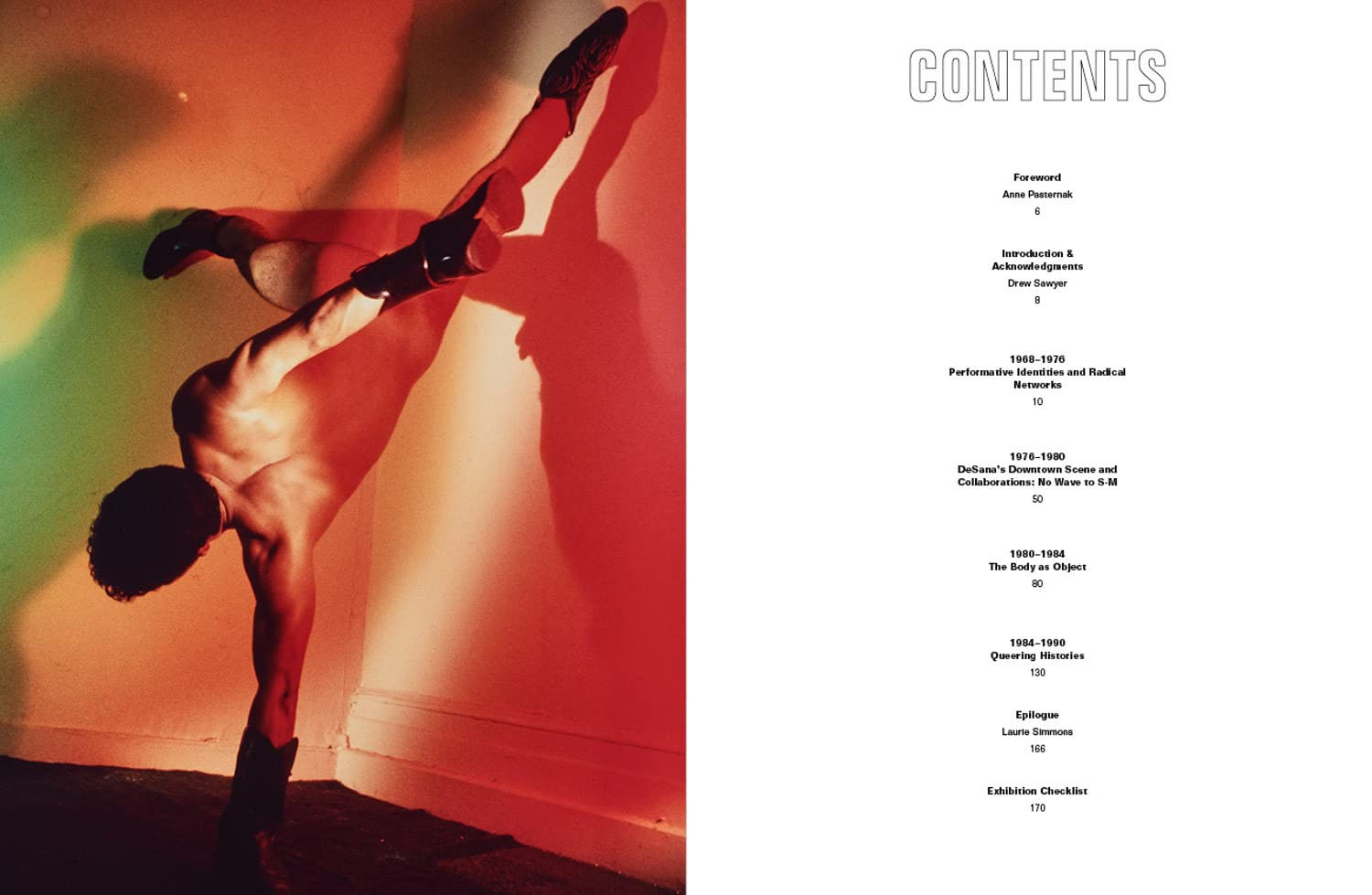
The introduction of beautifully jarring, chromatic lighting to DeSana’s post-Submission scenarios amplifies their urgency and defines his work’s signature aesthetic: slick and otherworldly yet proudly homemade. Thrown against domestic spaces and active bodies, strawberry reds and lysergic greens reverberate wildly. One such multi-hued image, Cowboy Boots, 1984, depicts a nude man in the midst of a one-armed handstand, his four splayed limbs straddling a corner of an apartment, feet and hands covered in tooled-leather cowboy boots. This hybridized body à la Hans Bellmer, not quite an object but a morphing being, defies the behavioural dicta of society. Representing a poignant act of shape-shifting, Bubblegum (Self-Portrait), 1985, an image printed with light-pink dye and made five years before the artist’s AIDS-related death, shows DeSana with his cheeks puffed up while blowing a bubble, his oversize shirt and pants bursting at the seams from stuffing. Such a transformation wryly suggests our physical mutability and the unknown extent to which our bodies and selves might evolve – grossly enlarge, wither away.

Beau Rutland. “Jimmy DeSana,” on the Art Forum website 2013 [Online] 20/03/2023


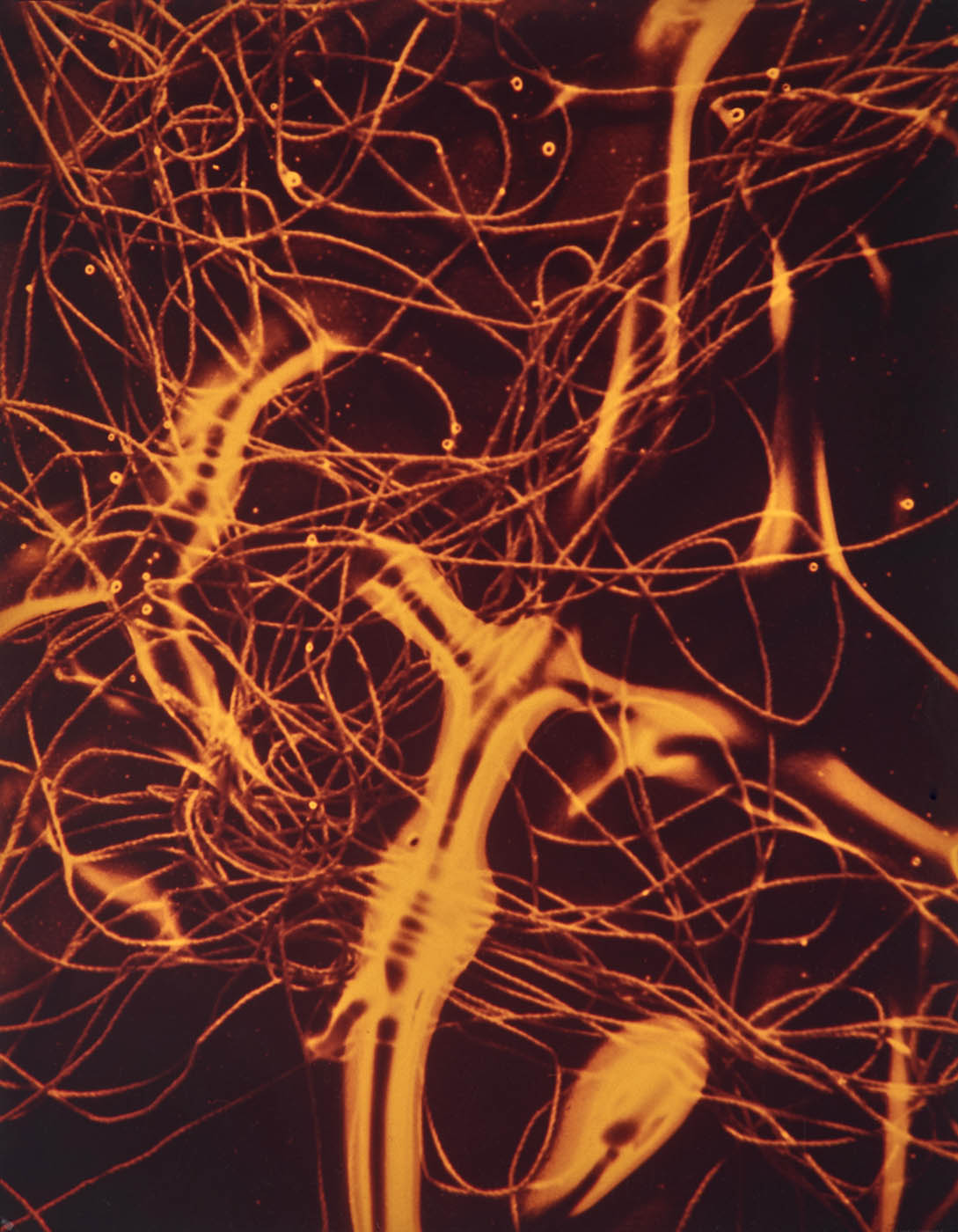
Jimmy DeSana (American, 1949-1990) 'String VII' 1987


Jimmy DeSana (American, 1949-1990)
String VII
1987
Silver dye bleach print
19 × 15 in. (48.3 × 38.1cm)
Courtesy of the Jimmy DeSana Trust and P·P·O·W Gallery, New York
© Estate of Jimmy DeSana
Photo: Allen Phillips


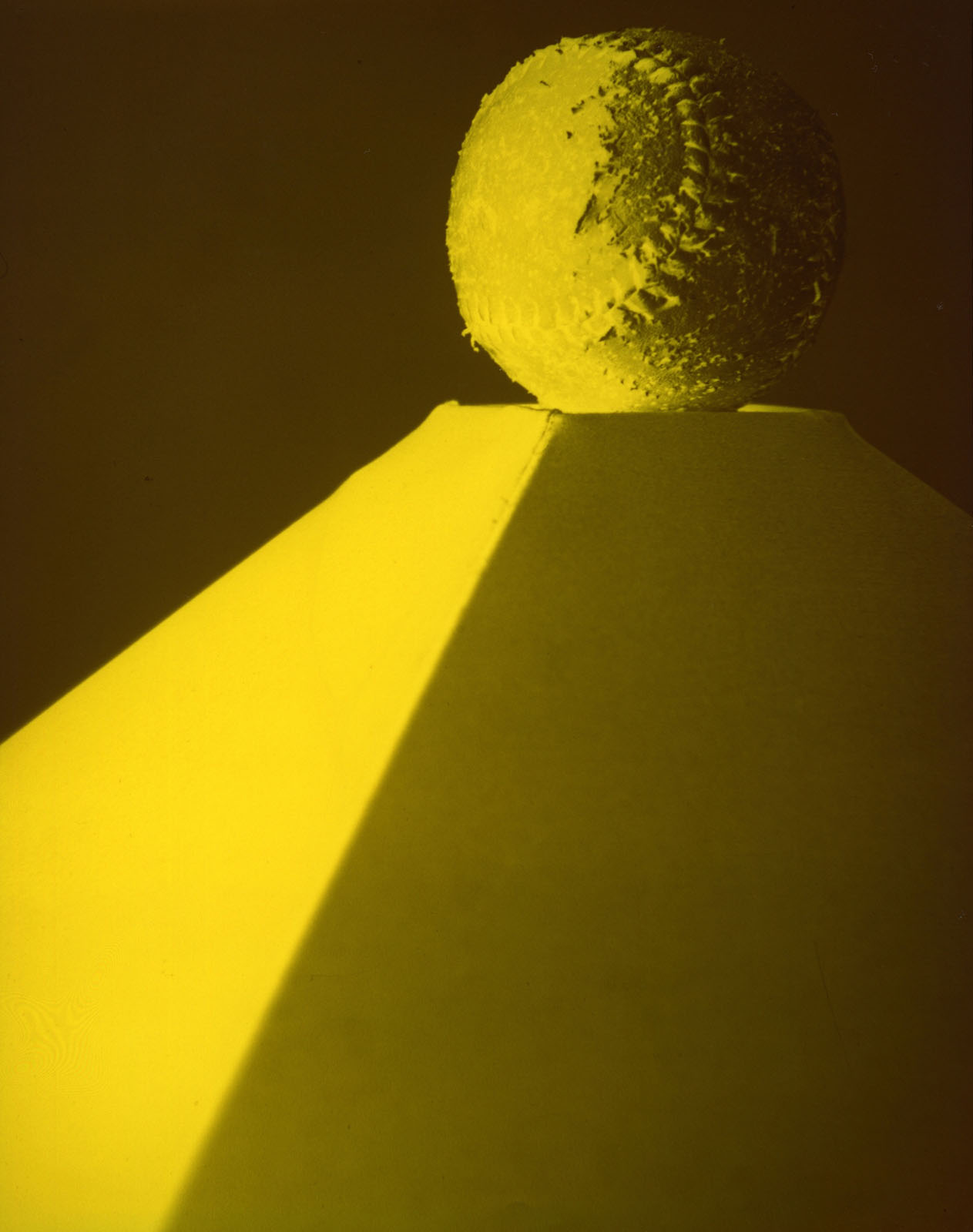
Jimmy DeSana (American, 1949-1990) 'Soft Ball' 1985


Jimmy DeSana (American, 1949-1990)
Soft Ball
1985
Silver dye bleach print
9 1/2 × 7 1/2 in. (24.1 × 19.1cm)
Courtesy of the Jimmy DeSana Trust and P·P·O·W Gallery, New York
© Estate of Jimmy DeSana
Photo: Courtesy of the Jimmy DeSana Trust and P·P·O·W Gallery, New York


After his diagnosis with HIV in 1985, DeSana began making a series of still lifes, tackling a genre that for centuries has expressed both the abundance and transitoriness of life and earthly goods.

Like so much of DeSana’s work, this photograph transforms a prosaic object – a softball, with its associations of sports and American culture – into something strange through juxtaposition, scale, and colourisation. The image recalls DeSana’s 1984 self-portrait in which the long, curved scar on his torso evokes a baseball’s stitching.

Exhibition label


Jimmy DeSana (American, 1949-1990) 'Eyelashes' 1986


Jimmy DeSana (American, 1949-1990)
Eyelashes
1986
Silver dye bleach print
9 1/2 × 7 1/2 in. (24.1 × 19.1cm)
Courtesy of the Jimmy DeSana Trust and P·P·O·W Gallery, New York
© Estate of Jimmy DeSana
Photo: Allen Phillips


“‘Abstract photography’ not only turns its back on [the] incessant desire to know and see everything – it seeks to undermine and invert those very intentions,” Jerry Saltz wrote for the catalog that accompanied Jimmy DeSana’s first major curatorial effort at the Emerson in 1989.

The show, which included the work of 26 artists (including: Vikky Alexander, Ellen Brooks, Charlesworth, Morrisroe, Sherman, and Simmons), spoke to how artists were attempting in this era to move beyond the instrumentalisation of representation during a period of intense political divisiveness, and to expand what photography could be as art.

Text from the Brooklyn Museum Tumblr website


That uncanny language was shared with Laurie Simmons, known for her staged domestic scenes using dolls and miniature objects that, like the works of DeSana, surrealized suburbia. The two shared a studio until DeSana’s death from AIDS-related illness in 1990. Simmons watched her friend transform after his diagnosis, a change that manifested as both physical degeneration and artistic metamorphosis. “We didn’t want to be painters. We didn’t want to be sculptors,” Simmons recalls. “We wanted that sense of distance and remove. We wanted a tool that we could work with, but that didn’t have anything to do with craft.” Illness forced DeSana to put his camera down and collage. Struggling to make sense of the purpose of the body, and especially the sexualized body, amid a vicious disease that mostly took queer, sexually active bodies like his own, DeSana made sense of his world through chopping and repasting it. The distance and remove that he and Simmons craved, that the camera gave him, was impossible as the reality of death loomed so near. …

The thing that drew us to using a camera was [that] we didn’t want to use our hands. We didn’t want to be painters. We didn’t want to be sculptors. We wanted that sense of distance and remove. We wanted a tool that we could work with, but that didn’t have anything to do with craft. Collage took him to a very intimate, hands-on way of working that’s so much more personal. Yet by rephotographing the collages, he could keep that sense of distance and still see himself as a conceptual artist, which I think was part of how he needed to see himself.

“Collage took him to a very intimate, hands-on way of working that’s so much more personal. Yet by rephotographing the collages, he could keep that sense of distance and still see himself as a conceptual artist, which I think was part of how he needed to see himself.”

Laurie Simmons quoted in Megan Hullander. “Jimmy DeSana, an iconoclast even within the ’70s avant-garde, is finally entering mainstream consciousness,” on the Document Journal website July 11, 2022 [Online] Cited 20/03/2023


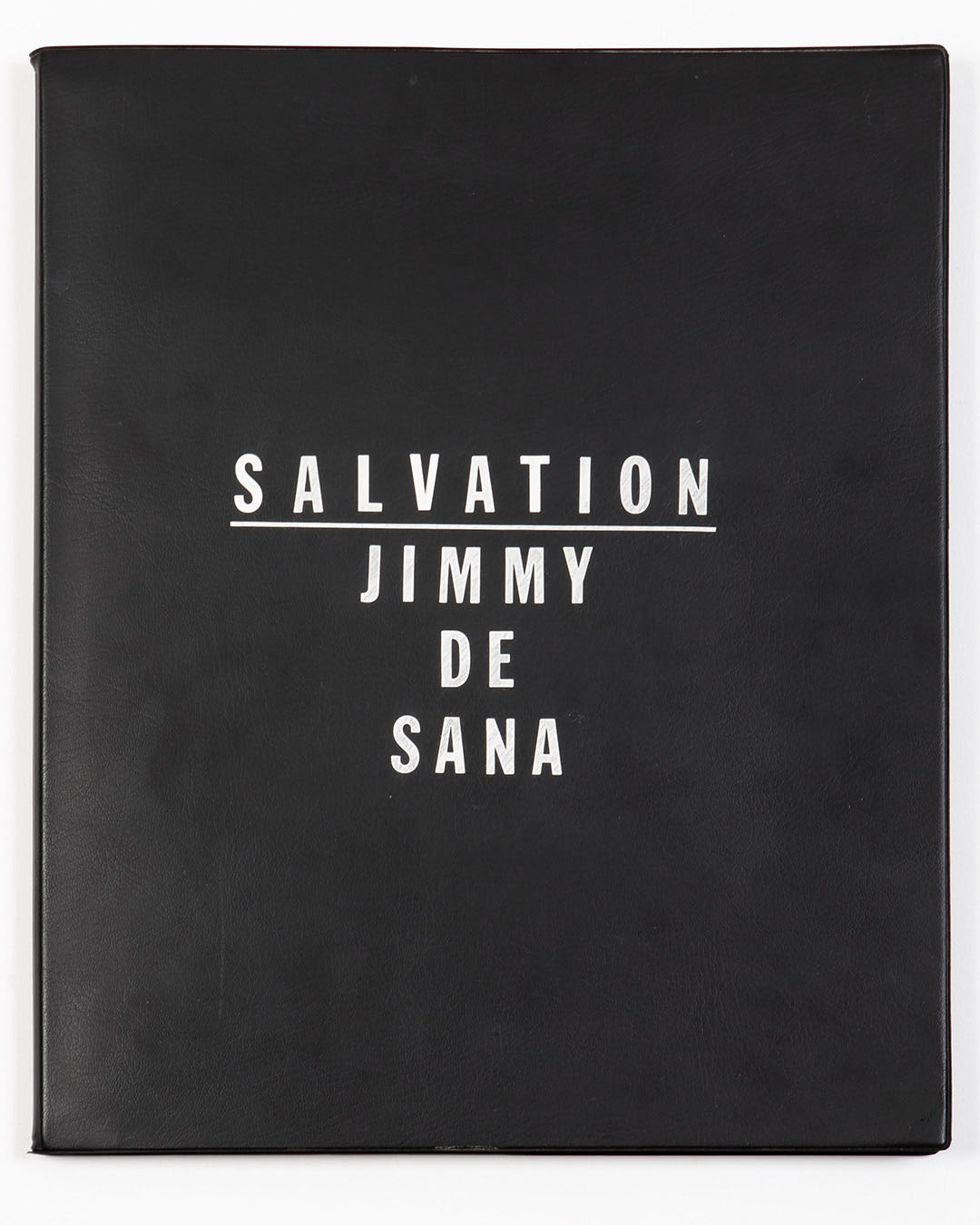
Jimmy DeSana (American, 1949-1990) 'Salvation' 1987-1988


Jimmy DeSana (American, 1949-1990)
Salvation
1987-1988
Maquette for book
Courtesy of the Jimmy DeSana Trust and P·P·O·W Gallery, New York
© Estate of Jimmy DeSana
Photo: David Vu


“If I could do a show that confused people so much, that was so ambiguous that they didn’t know what to think, but they felt sort of sickened by it and also entertained,” Jimmy DeSana told Laurie Simmons shortly before he passed away from AIDS-related illness in 1990, “then for me that would capture the moment that we’re going through right now.”

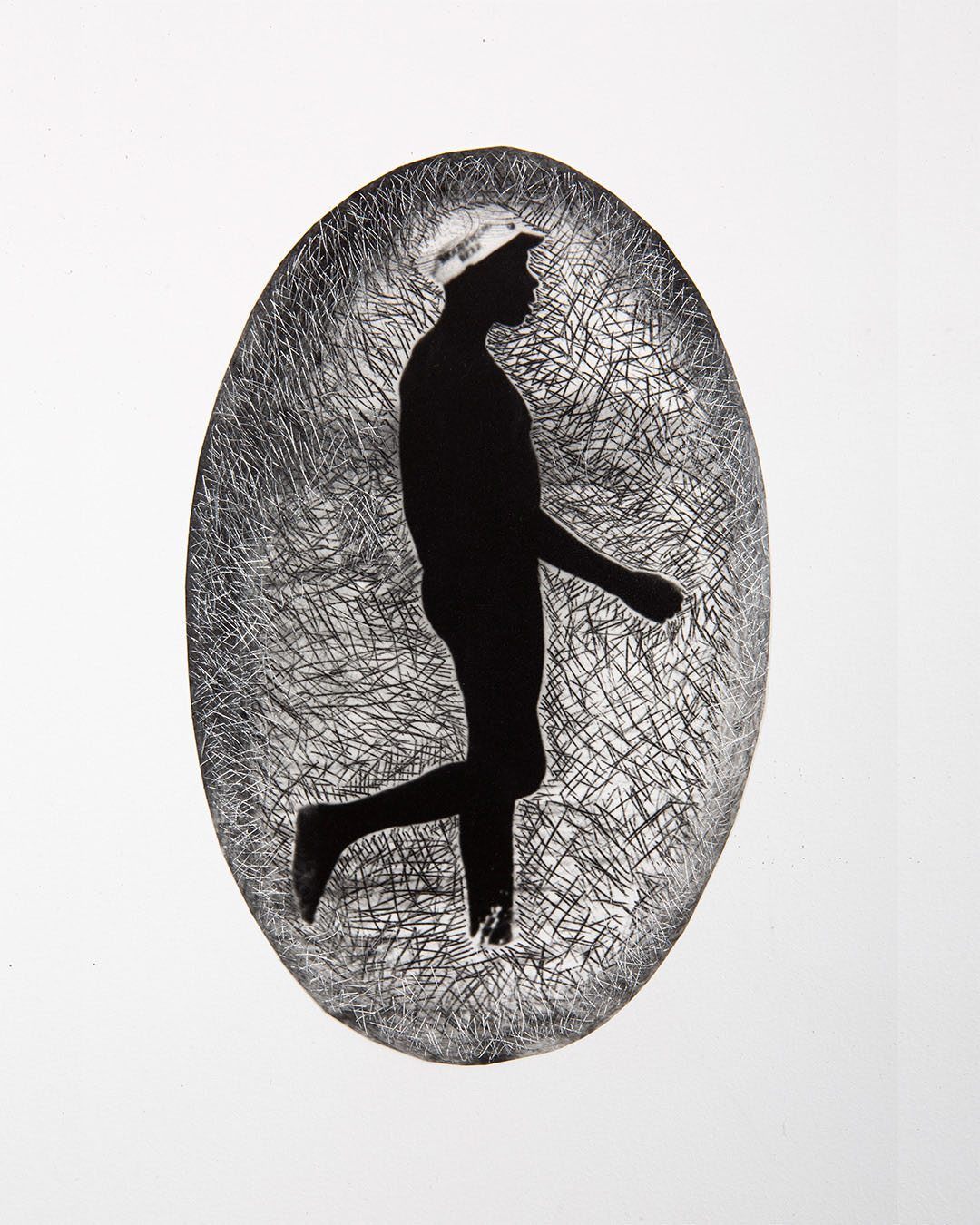
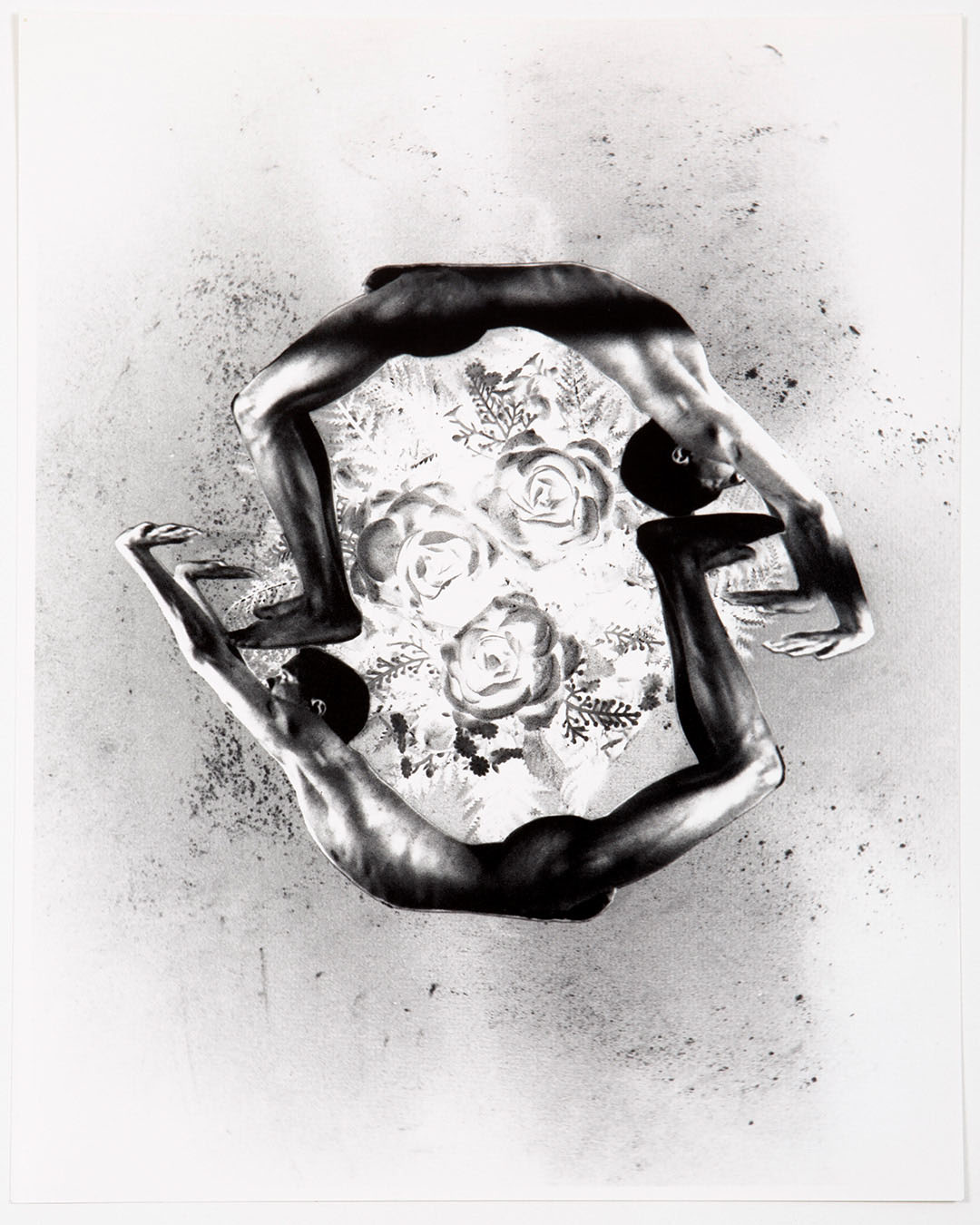
For his last major artistic project, DeSana collected his contradictory feelings and images in a book to be titled Salvation. Although he would not complete the volume before his death, he created this maquette. It comprises photomontages of flowers and fragments of male bodies, many recycled from older photographs of DeSana and his partner Darell Bagley. The photographs are black-and-white, but DeSana intended them to be printed with lurid colour through the Cibachrome process.

Ambiguity and opacity became increasingly important to DeSana, especially in reaction to the media’s and other artists’ objectification of queer people living with HIV / AIDS. He also pushed against the expectation that gay artists should somehow counter government inaction and misinformation around the epidemic.

Text from the Brooklyn Museum Tumblr website


Jimmy DeSana (American, 1949-1990) 'Salvation (maquette)' 1987-1988

Jimmy DeSana (American, 1949-1990) 'Salvation (maquette)' 1987-1988

Jimmy DeSana (American, 1949-1990) 'Salvation (maquette)' 1987-1988


Jimmy DeSana (American, 1949-1990)
Salvation (maquette)
1987-1988
Courtesy of the Jimmy DeSana Trust and P·P·O·W Gallery, New York
© Estate of Jimmy DeSana


JC: There’s something unrefined about DeSana’s work compared to Mapplethorpe who was more stylistically precise. They must have been aware of each other; their work would feature together in issues of BOMB magazine and such. Of course, back then Mapplethorpe was a lot more famous and upwardly mobile, whereas DeSana seemed more invested in the punk scene. Overall, I appreciate DeSana’s spirit more than his images, many of which strike me as conceptually same-samey. The pictures are cheeky at times though not particularly humorous, so I was as perplexed as you when overhearing someone loudly chuckling at a photograph. To me, there’s too much death-drive going on in the work to laugh. Maybe it’s also because after witnessing Mugler’s flamboyance, finesse, and whimsy, a show like DeSana’s feels like a grim comedown by contrast. I don’t quite know what to make of the “acrobatic” works – contorted nude figures in backbends and pseudo-tantric / yogic poses that sometimes appear as levitation or a magic trick–and then the constant recourse to the stiletto motif – they’re somehow cooler in theory than in practice? The marker cone body as landscape is one of a kind, nobody else thought of that, but beyond this, I feel that had DeSana survived beyond those years of experimentation, he might have been making his best work by now. Of course, that’s total speculation and not entirely fair…

EC: I meant to mention that visitor laughing before, after which we both turned to each other in confusion. She was guffawing at Pink Furniture, which, if I remember correctly, had a blow-up doll hanging in the corner of the room. I do tend to always chuckle at Dog in the Submission series only because it looks like that furious wee puppy is going to bite the shit out of an erection. With his angry little growling face turned towards the camera, it is the perfect shot. Grrr… But I snicker at it more than a full-throated laugh. Full-throated laughing at DeSana feels like you should be put on some sort of watch list.

I agree with what you’re saying about DeSana’s work being still experimental and somewhat unresolved. A lot of work from that Downtown / East Village scene, though I have a special place in my heart for it in all of its flaws, doesn’t quite translate or age well and so much of that is because many of these artists all died so young. That being said, I like DeSana’s work much more than Mapplethorpe’s. Even Mapplethorpe’s self-portrait with a whip in his ass feels so precisely posed. In contrast, DeSana’s work just looks like it smells like ball sweat and assholes (this is a compliment). At least DeSana’s subcultural society pics of figures like Debbie Harry, The Talking Heads, Laurie Anderson, and William S. Burroughs lighten the mood, as do some of the vitrines of zines that don’t include hanging!

Jessica Caroline and Emily Colucci. “To Be Gorgeous: A Conversation on Thierry Mugler and Jimmy DeSana at the Brooklyn Museum,” on the Filthy Dreams website February 11, 2023 [Online] Cited 01/04/2023


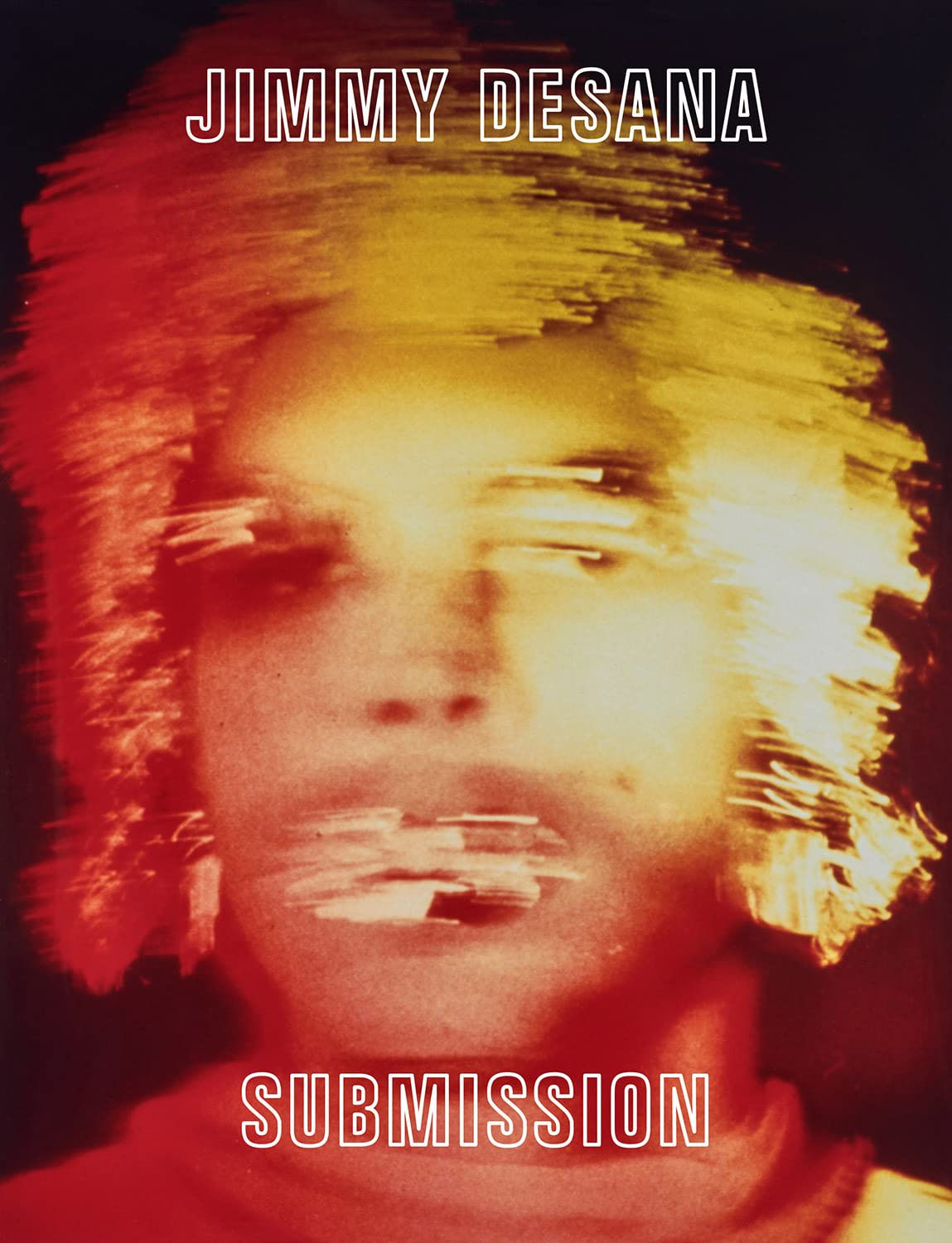
Jimmy DeSana Submission book cover


Jimmy DeSana Submission book cover


Book

This book is the first monograph to present the work of Jimmy DeSana, a pioneering yet under recognised figure in New York’s downtown art, music, and film scenes during the 1970s and ’80s. The book situates DeSana’s work and life within the countercultural and queer contexts in the American South as well as New York, through his involvement in mail art, punk, and No Wave music and film, and artist collectives and publications. Featuring an original text by Drew Sawyer, Phillip Leonian and Edith Rosenbaum Leonian Curator of Photography at the Brooklyn Museum, it includes his major series that helped create a No Wave aesthetic as well as his portraits of art and music luminaries of the time.

Jimmy DeSana: Submission is the first monograph of this pioneering queer punk photographer whose brief but prolific career helped elevate the medium of photography within the contemporary art world. This publication traces his brief yet prolific career through nearly two hundred works and over twenty years that bridged mail-art networks, New York’s 1970s and ’80s subcultures, the illuminating image-play of the “Pictures Generation,” and various responses to HIV / AIDS.

The book showcases DeSana’s extensive involvement in zines, artist collectives, performance art, experimental film, and club culture. Included are his most famous series – 101 Nudes (1972), his first major work made during Atlanta’s gay liberation movement; Submission (1977-1979), created with the writer William Burroughs; and Suburban (1979-1984), which showcases his work as an early adopter of colour photography. During the late 1970s and early ’80s, DeSana was heavily involved in New York’s punk and No Wave scenes. Included in this book are his portraits of such art and music luminaries as Kathy Acker, Laurie Anderson, Kenneth Anger, Patti Astor, David Byrne, John Giorno, Debbie Harry, and Richard Hell. Accompanying these works are DeSana’s more abstract efforts from the late 1980s, after he was diagnosed with AIDS, that show an artist who resisted dominant narratives about the body and sexuality in the early years of the ongoing HIV / AIDS epidemic.

Text from the Brooklyn Museum website
 

Jimmy DeSana Submission content page


Jimmy DeSana Submission content page


Jimmy DeSana Submission performative identities 1968-1976


Jimmy DeSana Submission Performative Identities and Radical Networks pp. 10-11


Jimmy DeSana Submission pp. 30-31


Jimmy DeSana Submission pp. 30-31


Jimmy DeSana Submission pp. 32-33


Jimmy DeSana Submission pp. 32-33


Jimmy DeSana Submission pp. 60-61


Jimmy DeSana Submission pp. 60-61


Jimmy DeSana Submission pp. 66-67


Jimmy DeSana Submission pp. 66-67


Jimmy DeSana Submission pp. 116-117


Jimmy DeSana Submission pp. 116-117


Jimmy DeSana Submission pp. 124-125


Jimmy DeSana Submission pp. 124-125


Jimmy DeSana Submission pp. 126-127


Jimmy DeSana Submission pp. 126-127


Brooklyn Museum
200 Eastern Parkway
Brooklyn, NY 11238-6052
Phone: (718) 638-5000

Opening hours:
Wednesday – Sunday 11am – 6pm
Closed Mondays and Tuesdays
Closed Thanksgiving, Christmas, and New Year’s Day

Brooklyn Museum website

LIKE ART BLART ON FACEBOOK

Back to top

Exhibition: ‘Georgia O’Keeffe: Living Modern’ at the Brooklyn Museum, New York

Exhibition dates: 3rd March – 23rd July, 2017

Curators: guest curator Wanda M. Corn, Robert and Ruth Halperin Professor Emerita in Art History, Stanford University, and coordinated by Lisa Small, Curator of European Painting and Sculpture, Brooklyn Museum


Hilda Belcher (American 1881-1963) 'The Checkered Dress (Young Georgia O'Keeffe)' 1907 from the exhibition 'Georgia O'Keeffe: Living Modern' at the Brooklyn Museum, New York, March - July, 2017


Hilda Belcher (American, 1881-1963)
The Checkered Dress (Young Georgia O’Keeffe)
1907
Oil on canvas


I love this woman. Such style, class and talent.

Fabulous art, clothes and photographs. An icon in every sense of the word.

Dr Marcus Bunyan


Many thankx to the Brooklyn Museum for allowing me to publish the photographs in the posting. Please click on the photographs for a larger version of the image.


Alfred Stieglitz (American, 1864-1946) 'Georgia O'Keeffe at 291' 1917 from the exhibition 'Georgia O'Keeffe: Living Modern' at the Brooklyn Museum, New York, March - July, 2017


Alfred Stieglitz (American, 1864-1946)
Georgia O’Keeffe at 291
1917
Platinum print
9 5/8 x 7 5/8 in. (24.3 x 19.4cm)
Georgia O’Keeffe Museum, Santa Fe, N.M.; Gift of The Georgia O’Keeffe Foundation
© Georgia O’Keeffe Museum


Georgia O'Keeffe (American, 1887-1986) 'Blue #2' 1916


Georgia O’Keeffe (American, 1887-1986)
Blue #2
1916
Watercolour on paper
15 7/8 x 11 in. (40.3 x 27.8cm)
Brooklyn Museum; Bequest of Mary T. Cockcroft, by exchange
Photo: Sarah DeSantis, Brooklyn Museum


“Even in photographs in which O’Keeffe gazes directly at the camera, she telegraphs an elegant aloofness – not a coldness, exactly, but a demand to be seen from a distance, like the vast Southwestern landscapes that she made her own. Looking into her face repeated on gallery walls, I was reminded of the way a horizon invites one’s eye to the farthest possible point. Our gaze shifts; the horizon stays the same.”

Haley Mlotek. “Georgia O’Keeffe’s Powerful Personal Style,” on the The NewYorker website April 6, 2017 [Online] Cited 21/12/2021


Alfred Stieglitz (American, 1864-1946) 'Georgia O'Keeffe' 1918


Alfred Stieglitz (American, 1864-1946)
Georgia O’Keeffe
1918, printed 1920s
National Gallery of Art, Washington, Alfred Stieglitz Collection
© Board of Trustees, National Gallery of Art, Washington


Alfred Stieglitz (American, 1864-1946) 'Georgia O'Keeffe' c. 1920-1922


Alfred Stieglitz (American, 1864-1946)
Georgia O’Keeffe
c. 1920-22
Gelatin silver print
4 1/2 x 3 1/2 in. (11.4 x 9cm)
Georgia O’Keeffe Museum, Santa Fe, N.M.; Gift of The Georgia O’Keeffe Foundation
© Georgia O’Keeffe Museum


Georgia O’Keeffe: Living Modern takes a new look at how the renowned modernist artist proclaimed her progressive, independent lifestyle through a self-crafted public persona – including her clothing and the way she posed for the camera. The exhibition expands our understanding of O’Keeffe by focusing on her wardrobe, shown for the first time alongside key paintings and photographs. It confirms and explores her determination to be in charge of how the world understood her identity and artistic values.

In addition to selected paintings and items of clothing, the exhibition presents photographs of O’Keeffe and her homes by Alfred Stieglitz, Ansel Adams, Annie Leibovitz, Philippe Halsman, Yousuf Karsh, Cecil Beaton, Andy Warhol, Bruce Weber, and others. It also includes works that entered the Brooklyn collection following O’Keeffe’s first-ever museum exhibition – held at the Brooklyn Museum in 1927.

The exhibition is organised in sections that run from her early years, when O’Keeffe crafted a signature style of dress that dispensed with ornamentation; to her years in New York, in the 1920s and 1930s, when a black-and-white palette dominated much of her art and dress; and to her later years in New Mexico, where her art and clothing changed in response to the surrounding colours of the Southwestern landscape. The final section explores the enormous role photography played in the artist’s reinvention of herself in the Southwest, when a younger generation of photographers visited her, solidifying her status as a pioneer of modernism and as a contemporary style icon.

Georgia O’Keeffe: Living Modern is organised by guest curator Wanda M. Corn, Robert and Ruth Halperin Professor Emerita in Art History, Stanford University, and coordinated by Lisa Small, Curator of European Painting and Sculpture, Brooklyn Museum.

Text from the Brooklyn Museum website
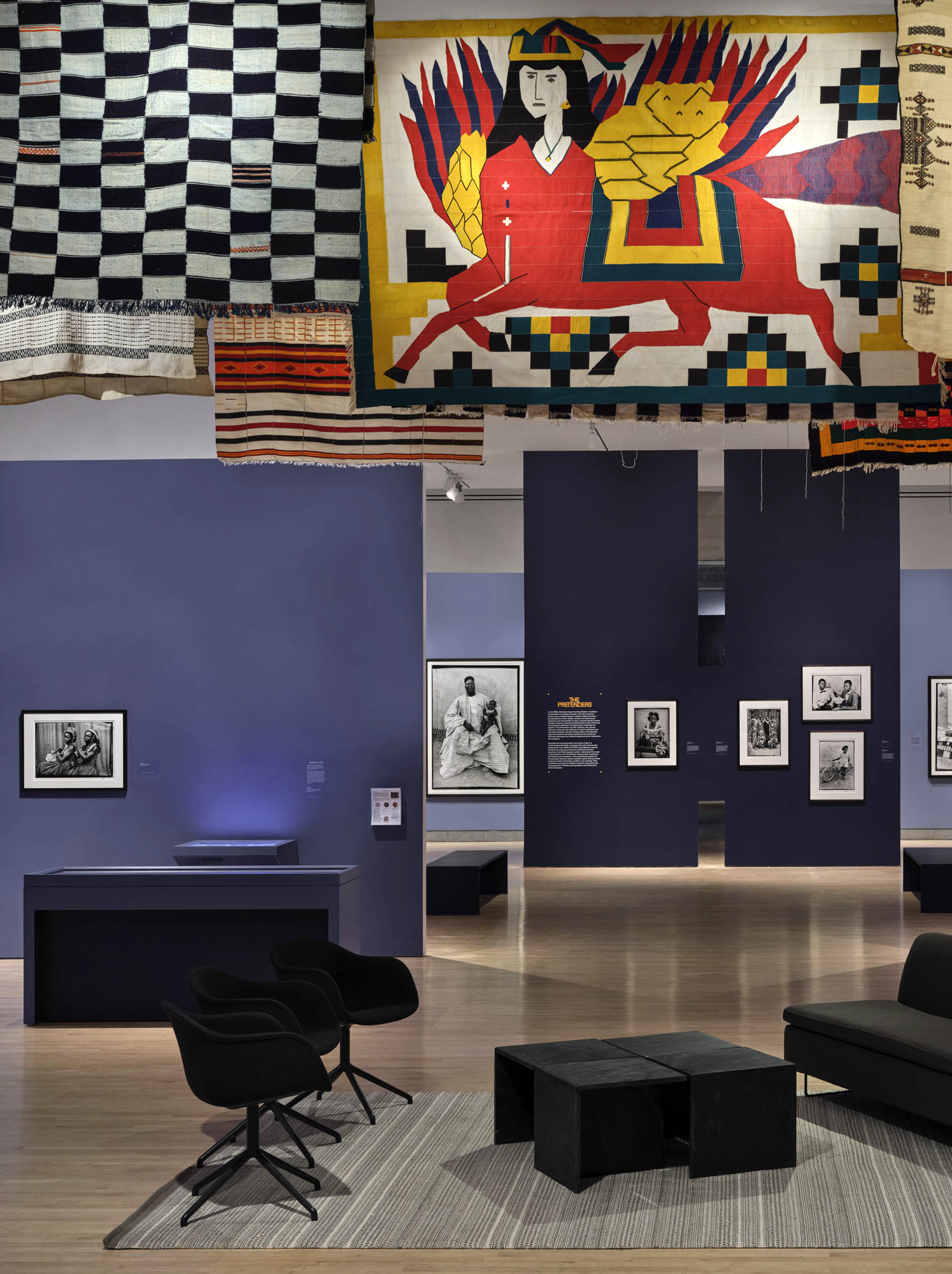


Installation view of the exhibition 'Georgia O'Keeffe: Living Modern' at the Brooklyn Museum, New York

Installation view of the exhibition 'Georgia O'Keeffe: Living Modern' at the Brooklyn Museum, New York with Alfred Stieglitz's 'Georgia O'Keeffe at 291' (1917) at left, and Gaston Lachaise's sculpture 'Georgia O'Keeffe' (1925-1927) at centre


Installation views of the exhibition Georgia O’Keeffe: Living Modern at the Brooklyn Museum, New York with Alfred Stieglitz’s Georgia O’Keeffe at 291 (1917) at left, and Gaston Lachaise’s sculpture Georgia O’Keeffe (1925-1927, below) at centre


Gaston Lachaise (American born France, 1882-1935) 'Georgia O’Keeffe' 1925-1927


Gaston Lachaise (American born France, 1882-1935)
Georgia O’Keeffe
1925-27
Alabaster
H. 22 3/4 x W. 7 3/4 x D. 12 1/4 in. (57.8 x 19.7 x 31.1cm); including 5 3/4 in. high base
Weight 70lb (31.8kg)
Alfred Stieglitz Collection, 1949
The Metropolitan Museum of Art


'Georgia O'Keeffe: Living Modern' installation view with her painting 'Clam and Mussel' (1926) second left


Georgia O’Keeffe: Living Modern installation view with her painting Clam and Mussel (1926, below) at second left


Georgia O'Keeffe (American, 1887-1986) 'Clam and Mussel' 1926


Georgia O’Keeffe (American, 1887-1986)
Clam and Mussel
1926
Oil on canvas
48 1/8 × 29 7/9 in. (122.2 × 75.6cm)
Georgia O’Keeffe Museum, Santa Fe / Art Resource, NY
© ARS, NY The Georgia O’Keeffe Museum, Santa Fe


Installation view of the exhibition 'Georgia O'Keeffe: Living Modern' at the Brooklyn Museum, New York with O'Keeffe's painting 'Manhattan' (1932) right

Installation view of the exhibition 'Georgia O'Keeffe: Living Modern' at the Brooklyn Museum, New York with in the bottom image, O'Keeffe's painting 'Manhattan' (1932) left, and 'Brooklyn' Bridge (1949) right


Installation views of the exhibition Georgia O’Keeffe: Living Modern at the Brooklyn Museum, New York with in the bottom image, O’Keeffe’s painting Manhattan (1932, below) at left, and Brooklyn Bridge (1949, below) at right


Georgia O'Keeffe (American, 1887-1986) 'Manhattan' 1932


Georgia O’Keeffe (American, 1887-1986)
Manhattan
1932
Oil on canvas
84 3/8 x 48 1/4 in. (214.3 x 122.6cm)
Smithsonian American Art Museum, Washington, D.C.; Gift of The Georgia O’Keeffe Foundation
Photo: Smithsonian American Art Museum, Washington, D.C./Art Resource, NY


Georgia O'Keeffe (American, 1887-1986) 'Brooklyn Bridge' 1949


Georgia O’Keeffe (American, 1887-1986)
Brooklyn Bridge
1949
Oil on Masonite
48 x 35 7/8 in. (121.8 x 91.1cm)
Brooklyn Museum; Bequest of Mary Childs Draper
Photo: Brooklyn Museum


Installation view of the exhibition 'Georgia O'Keeffe: Living Modern' at the Brooklyn Museum, New York with her painting 'Rams Head, White Hollyhock – Hills (Rams Head and White Hollyhock, New Mexico)' (1935) at right


Installation view of the exhibition Georgia O’Keeffe: Living Modern at the Brooklyn Museum, New York with her painting Rams Head, White Hollyhock – Hills (Rams Head and White Hollyhock, New Mexico) (1935) at right


Installation view of the exhibition 'Georgia O'Keeffe: Living Modern' at the Brooklyn Museum, New York

Installation view of the exhibition 'Georgia O'Keeffe: Living Modern' at the Brooklyn Museum, New York with her painting 'In the Patio IX' (1950, below) at left; and an Emilio Pucci dress second right


Installation view of the exhibition Georgia O’Keeffe: Living Modern at the Brooklyn Museum, New York with her painting In the Patio IX (1950, below) at left; and an Emilio Pucci dress second right


Georgia O'Keeffe (1887-1986) 'In the Patio IX' 1950


Georgia O’Keeffe (1887-1986)
In the Patio IX
1950
Oil on canvas mounted on panel
H- 30 x W- 40 in. (76.2 x 101.6cm)
The Jan T. and Marica Vilcek Collection
© The Vilcek Foundation


Installation view of the exhibition 'Georgia O'Keeffe: Living Modern' at the Brooklyn Museum, New York with her painting 'The Mountain, New Mexico' (1931) at left


Installation view of the exhibition Georgia O’Keeffe: Living Modern at the Brooklyn Museum, New York with her painting The Mountain, New Mexico (1931) at left


Installation view of the exhibition 'Georgia O'Keeffe: Living Modern' at the Brooklyn Museum, New York

Installation view of the exhibition 'Georgia O'Keeffe: Living Modern' at the Brooklyn Museum, New York

Installation view of the exhibition 'Georgia O'Keeffe: Living Modern' at the Brooklyn Museum, New York with 'Georgia O'Keeffe' by Irving Penn (1948) second left, and 'Georgia O'Keeffe' by Laura Gilpin (1953) at right


Installation view of the exhibition Georgia O’Keeffe: Living Modern at the Brooklyn Museum, New York with in the bottom image, Georgia O’Keeffe by Irving Penn (1948) second left, and Georgia O’Keeffe by Laura Gilpin (1953, below) at right

Georgia O’Keeffe: Living Modern installation views
© Jonathan Dorado


Laura Gilpin (American, 1891-1979) 'Georgia O'Keeffe' 1953


Laura Gilpin (American, 1891-1979)
Georgia O’Keeffe
1953
Gelatin silver print
24.1 x 19.4cm
Georgia O’Keeffe Museum, Santa Fe, N.M.
© 1979 Amon Carter Museum of American Art, Fort Worth, TX


Georgia O’Keeffe: Living Modern


Alfred Stieglitz (American, 1864-1946) 'Georgia O'Keeffe' 1922


Alfred Stieglitz (American, 1864-1946)
Georgia O’Keeffe
1922
Gelatin silver print
24.1 x 19.4cm
Art Institute of Chicago, Alfred Stieglitz Collection


Georgia O'Keeffe (American, 1887-1986) 'Pool in the Woods, Lake George' 1922


Georgia O’Keeffe (American, 1887-1986)
Pool in the Woods, Lake George
1922
Pastel on paper
17 x 27 1/2 in. (43.3 x 69.9cm)
Reynolda House Museum of American Art, Winston-Salem, N.C.; Gift of Barbara B. Millhouse in memory of E. Carter, Nancy Susan Reynolds, and Winifred Babcock
Courtesy of Reynolda House Museum of American Art, affiliated with Wake Forest University
© Georgia O’Keeffe Museum/Artists Rights Society (ARS), New York


Georgia O'Keeffe (American, 1887-1986) 'Black Pansy & Forget-Me-Nots (Pansy)' 1926


Georgia O’Keeffe (American, 1887-1986)
Black Pansy & Forget-Me-Nots (Pansy)
1926
Oil on canvas
27 1/8 x 12 1/4 in. (68.9 x 31.1cm)
Brooklyn Museum; Gift of Mrs. Alfred S. Rossin
Photo: Christine Gant, Brooklyn Museum


Alfred Stieglitz (American, 1864-1946) 'Georgia O'Keeffe, Prospect Mountain, Lake George' 1927


Alfred Stieglitz (American, 1864-1946)
Georgia O’Keeffe, Prospect Mountain, Lake George
1927
Gelatin silver print
4 5/8 x 3 5/8 in. (11.8 x 9.3cm)
National Gallery of Art, Washington, D.C.; Alfred Stieglitz Collection
© Board of Trustees, National Gallery of Art, Washington


Attributed to Georgia O'Keeffe. 'Dress (Tunic and Underdress)' c. 1926


Attributed to Georgia O’Keeffe
Dress (Tunic and Underdress)
c. 1926
Ivory silk crepe
Georgia O’Keeffe Museum, Santa Fe, N.M.; Gift of Juan and Anna Marie Hamilton
Photo: © Gavin Ashworth


Georgia O'Keeffe (American, 1887-1986) 'Line and Curve' 1927


Georgia O’Keeffe (American, 1887-1986)
Line and Curve
1927
Oil on canvas
32 x 16 1/4 in. (81.2 x 41.2cm)
National Gallery of Art, Washington, D.C.; Alfred Stieglitz Collection, Bequest of Georgia O’Keeffe
© Board of Trustees, National Gallery of Art, Washington


Georgia O’Keeffe: Living Modern offers a new look at the iconic American artist’s powerful ownership of her identity as an artist and a woman. This major exhibition examines the modernist persona that Georgia O’Keeffe crafted for herself through her art, her dress, and her progressive, independent lifestyle. It will mark the first time O’Keeffe’s understated yet remarkable wardrobe will be presented in dialogue with key paintings, photographs, jewellery, accessories, and ephemera. Opening on March 3, Georgia O’Keeffe: Living Modern represents a homecoming of sorts, as the artist had her first solo museum exhibition at the Brooklyn Museum, in 1927.

On view through July 23, 2017, Georgia O’Keeffe: Living Modern is part of A Year of Yes: Reimagining Feminism at the Brooklyn Museum, a yearlong project celebrating a decade of feminist thinking at the Brooklyn Museum.

In addition to a number of O’Keeffe’s key paintings and never-before-exhibited selections from her wardrobe, the exhibition will also feature portraits of her by such luminary photographers as Alfred Stieglitz, Ansel Adams, Philippe Halsman, Yousuf Karsh, Todd Webb, Cecil Beaton, Bruce Weber, Annie Leibovitz, and others. These images, along with the garments and artworks on view, testify to the ways that O’Keeffe learned to use photographic sittings as a way to construct her persona, framing her status as a pioneer of modernism and as a style icon.

“Fifteen years ago I learned that when Georgia O’Keeffe died and left her two homes to her estate, her closets were filled with her belongings. The O’Keeffe Museum in Santa Fe now owns the homes and their contents, but no one had yet studied the sixty years of dresses, coats, suits, casual wear, and accessories she left behind. I took on that task. The Georgia O’Keeffe who emerged from my research and is presented in this exhibition was an artist not only in her studio but also in her homemaking and self-fashioning,” says guest curator, Wanda M. Corn, Robert and Ruth Halperin Professor Emerita in Art History, Stanford University.

“This exhibition reveals O’Keeffe’s commitment to core principles associated with modernism – minimalism, seriality, simplification – not only in her art, but also in her distinctive style of dress,” says Lisa Small, Curator of European Painting and Sculpture, Brooklyn Museum, who serves as the exhibition’s in-house coordinator.

Georgia O’Keeffe: Living Modern opens with an introduction that demonstrates how O’Keeffe began to craft her signature clothing style as a high school student, dispensing with the bows and frills worn by young women at the time. The exhibition continues in four parts. The first is devoted to New York in the 1920s and ’30s, when she lived with Alfred Stieglitz and made many of her own clothes. It also examines Stieglitz’s multiyear, serial portrait project, which ultimately helped her to become one of the most photographed American artists in history and contributed to her understanding of photography’s power to shape her public image.

Her years in New Mexico comprise the second section, in which the desert landscape – surrounded by colour in the yellows, pinks, and reds of rocks and cliffs, and the blue sky – influenced her painting and dress palette. A small third section explores the influence and importance of Asian aesthetics in her personal style. The final section displays images made after Stieglitz’s era by photographers who came to visit her in the Southwest.

Press release from the Brooklyn Museum


Alfred Stieglitz (American, 1864-1946) 'Georgia O'Keeffe' 1929


Alfred Stieglitz (American, 1864-1946)
Georgia O’Keeffe
1929
National Gallery of Art, Washington, Alfred Stieglitz Collection
© Board of Trustees, National Gallery of Art, Washington


Ansel Adams (American, 1902-1984) 'Georgia O'Keeffe and Orville Cox' 1937


Ansel Adams (American, 1902-1984)
Georgia O’Keeffe and Orville Cox
1937
Gelatin silver print
7 3/4 x 11 in. (19.7 x 27.9cm)
Georgia O’Keeffe Museum, Santa Fe, N.M.; Gift of The Georgia O’Keeffe Foundation
© 2016 The Ansel Adams Publishing Rights Trust


Attributed to Georgia O'Keeffe. 'Blouse' c. early to mid-1930s


Attributed to Georgia O’Keeffe
Blouse
c. early to mid-1930s
White linen
Georgia O’Keeffe Museum, Santa Fe, N.M.; Gift of Juan and Anna Marie Hamilton
Photo: © Gavin Ashworth


Attributed to Georgia O'Keeffe. 'Dress with Matching Belt' c. 1930s


Attributed to Georgia O’Keeffe
Dress with Matching Belt
c. 1930s
Black wool, crepe and white silk
Georgia O’Keeffe Museum, Santa Fe, N.M.; Gift of Juan and Anna Marie Hamilton
Photo: © Gavin Ashworth


Georgia O'Keeffe (American, 1887-1986) 'The Mountain, New Mexico' 1931


Georgia O’Keeffe (American, 1887-1986)
The Mountain, New Mexico
1931
Oil on canvas
30 1/16 × 36 1/8 in. (76.4 × 91.8cm)
Whitney Museum of American Art, New York


Georgia O'Keeffe (American, 1887-1986) 'Rams Head, White Hollyhock - Hills' (Rams Head and White Hollyhock, New Mexico) 1935


Georgia O’Keeffe (American, 1887-1986)
Rams Head, White Hollyhock – Hills (Rams Head and White Hollyhock, New Mexico)
1935
Oil on canvas
30 x 36 in. (76.2 x 91.4cm)
Brooklyn Museum; Bequest of Edith and Milton Lowenthal
Photo: Brooklyn Museum


Ansel Adams (American, 1902-1984) 'Georgia O'Keeffe at Yosemite' 1938


Ansel Adams (American, 1902-1984)
Georgia O’Keeffe at Yosemite
1938
Gelatin silver print
5 3/4 x 3 3/8 in. (14.5 x 8.7cm)
Georgia O’Keeffe Museum, Santa Fe, N.M.; Gift of The Georgia O’Keeffe Foundation
© 2016 The Ansel Adams Publishing Rights Trust


Georgia O'Keeffe (American, 1887-1986) 'Patio with Cloud' 1956


Georgia O’Keeffe (American, 1887-1986)
Patio with Cloud
1956
Oil on canvas
36 x 30 in. (91.4 x 76.2cm)
Milwaukee Art Museum; Gift of Mrs. Edward R. Wehr
© Georgia O’Keeffe Museum/Artists Rights Society (ARS), New York
Photo: P. Richard Eells


Todd Webb (American, 1905-2000) 'Georgia O'Keeffe on Ghost Ranch Portal, New Mexico' c. 1960s


Todd Webb (American, 1905-2000)
Georgia O’Keeffe on Ghost Ranch Portal, New Mexico
c. 1960s
Gelatin silver print
10 x 8 in. (25.4 x 20.3cm)
Georgia O’Keeffe Museum, Santa Fe, N.M.; Gift of The Georgia O’Keeffe Foundation
© Estate of Todd Webb, Portland, ME


'Padded Kimono (Tanzen)' c. 1960s-1970s


Padded Kimono (Tanzen)
c. 1960s-1970s
Silk with woven black and gray stripe
Inner garment: Kimono. White linen (?)
Georgia O’Keeffe Museum, Santa Fe, N.M.; Gift of Juan and Anna Marie Hamilton
Photo: © Gavin Ashworth


Bruce Weber (American, b. 1946) 'Georgia O'Keeffe, Abiquiu, N.M.' 1984


Bruce Weber (American, b. 1946)
Georgia O’Keeffe, Abiquiu, N.M.
1984
Gelatin silver print
14 x 11 in. (35.6 x 27.9cm)
Bruce Weber and Nan Bush Collection, New York
© Bruce Weber


'Emsley. Suit (Jacket, Pants, and Vest)' 1983


Emsley. Suit (Jacket, Pants, and Vest)
1983
Black wool
Inner garment: Lord & Taylor. Shirt
c. 1960s. White cotton
Georgia O’Keeffe Museum, Santa Fe, N.M.; Gift of Juan and Anna Marie Hamilton
Photo: © Gavin Ashworth


Ansel Adams (American, 1902-1984) 'Georgia O'Keeffe, Carmel Highlands, California' 1981


Ansel Adams (American, 1902-1984)
Georgia O’Keeffe, Carmel Highlands, California
1981
Gelatin silver print
10 1/8 x 13 1/8 in. (25.7 x 33.3cm)
Georgia O’Keeffe Museum, Santa Fe, N.M.; Gift of Juan and Anna Marie Hamilton
© 2016 The Ansel Adams Publishing Rights Trust


'Georgia O'Keeffe: Living Modern' by Wanda Corn book cover 2017


Georgia O’Keeffe: Living Modern by Wanda Corn book cover 2017
Courtesy of Delmonico Books Prestel


Brooklyn Museum
200 Eastern Parkway
Brooklyn, NY 11238-6052
Phone: (718) 638-5000

Opening hours:
Wednesday – Sunday 11am – 6pm
Closed Mondays and Tuesdays
Closed Thanksgiving, Christmas, and New Year’s Day

Brooklyn Museum website

LIKE ART BLART ON FACEBOOK

Back to top

Exhibitions: ‘Coney Island: Visions of an American Dreamland, 1861-2008’ and ‘Forever Coney: Photographs from the Brooklyn Museum Collection’ at the Brooklyn Museum, New York

Exhibition dates: 20th November 2015 – 13th March 2016

Curator of Coney Island exhibition: Dr Robin Jaffee Frank


Samuel S. Carr (American, 1837-1908). 'Beach Scene' c. 1879


Samuel S. Carr (American, 1837-1908)
Beach Scene
c. 1879
Oil on canvas
12 x 20 in. (30.5 x 50.8cm)
Smith College Museum of Art, Northampton, Massachusetts; Bequest of Annie Swan Coburn (Mrs. Lewis Larned Coburn)


The first posting of 2016, and it is a doozy – a multimedia extravaganza of sight and sound showcasing exhibitions that focus on that eclectic playground, Coney Island.

Featuring images supplied by the gallery – plus videos, other art work featured in the exhibitions and texts that I sourced myself – this posting documents “the luridness of the sideshow acts, the drunk sailors, the amorous couples and the scantily dressed bathers who were so much a part of the allure and menace of Coney Island.” I spent many hours scouring the internet, undertaking research and cleaning poor quality images to bring this selection to you.

The exhibition is divided into five sections, and I have attempted to keep the posting in this chronological order.

~ Down at Coney Isle, 1861-1894
~ The World’s Greatest Playground, 1895-1929
~ The Nickel Empire, 1930-1939
~ A Coney Island of the Mind, 1940-1961
!~ Requiem for a Dream, 1962-2008


There are some interesting art works in both exhibitions. The correspondence between elephant / handler and mural is delightful in Edgar S. Thomson’s Coney Island (1897, below), while Joseph Stella’s Battle of Lights, Coney Island, Mardi Gras (1913-1914, below) is a revelation to me, considering the date of production and the portrayal of contemporary life which is akin to our own. Walker Evans’ Couple at Coney Island, New York (1928, below) seems staged and confused in its pictorial construction, not one of his better photographs, while Edward J. Kelty’s photographs of sideshow revues including a “coloured revue” are interesting for their social context and formalism.

Paul Cadmus’ satirical view of American vacationers Coney Island (1934, below) is a riot of colour, movement and social commentary, including references to homosexuality and Hitler, while his friend Reginald Marsh’s effusive Coney Island paintings play with “reimagined bathers and sideshow audiences in poses derived from Michelangelo and Rubens” packed into compressed, collage like spaces. Particular favourites are photographs by Garry Winograd, Bruce Davidson, Diane Arbus and Robert Frank. Surprise of the posting are the black and white photographs of Morris Engel.

Dr Marcus Bunyan


Many thankx to the Brooklyn Museum for allowing me to publish the photographs in the posting. Please click on the photographs for a larger version of the image.


“The mixed-media exhibit captures Coney Island’s campy, trippy aesthetic with a hodgepodge of photographs by the likes of Walker Evans, Weegee, Bruce Davidson, and Diane Arbus (since Coney Island was basically tailor-made for a Diane Arbus photo shoot). Also on view are pastoral seascapes from the 1800s; sideshow posters galore; a turn-of-the-century gambling wheel and carousel animals presented like sculpture; film stills from Woody Allen’s Annie Hall and Darren Aronofsky’s Requiem for a Dream; and a modernist abstract composition by Frank Stella. With red and yellow stripes around a blue square, Stella distills the sand and sea and sun into a primary-colored flag for Brooklyn’s most famous destination.

In these pictures, Coney Island serves as a microcosm of American mass culture as a whole, and the chronology of 140 art objects here chart major societal shifts, from the dawn of the Great Depression to desegregation. “The modern American mass-culture industry was born at Coney Island, and the constant novelty of the resort made it a seductively liberating subject for artists,” Dr Robin Jaffee Frank, curator of the exhibit, which Wadsworth Athenaeum helped organize, said in a statement. “What these artists saw from 1861 to 2008 at Coney Island, and the varied ways in which they chose to portray it, mirrored the aspirations and disappointments of the era and the country. Taken together, these tableaux of wonder and menace, hope and despair, dreams and nightmares become metaphors for the collective soul of a nation.”

Carey Dunne. “Dreamland as Muse: A Look Back at 150 Years of Coney Island Art, Photography, and Film,” on the Brooklyn Magazine website 17/08/2015 [Online] Cited 02/01/2016


Strobridge Lithographing Company. 'The great Forepaugh & Sells Brothers shows combined' c. 1899


Strobridge Lithographing Company
The great Forepaugh & Sells Brothers shows combined. Terrific flights over ponderous elephants by a company of twenty five splendid artists in a great contest for valuable prizes, introducing high, long distance, layout, twisting, single and double somersault leapers, enlivened by mirth provoking comedy surprises.
c. 1899
Promotional poster for Forepaugh & Sells Brothers circus
Colour lithograph poster


Strobridge Lithographing Company. 'The Barnum & Bailey Greatest Show on Earth /The Great Coney Island Water Carnival /Remarkable Head-Foremost Dives from Enormous Heights into Shallow Depths of Water' 1898


Strobridge Lithographing Company
The Barnum & Bailey Greatest Show on Earth /The Great Coney Island Water Carnival /Remarkable Head-Foremost Dives from Enormous Heights into Shallow Depths of Water
1898
Colour lithograph poster
30 1/6 x 38 3/4 in. (76.6 x 98.4 cm)
Cincinnati Art Museum; Gift of the Strobridge Lithographing Company


Strobridge Lithographing Company. 'Beach and boardwalk scenes, Coney Island' c. 1898


Strobridge Lithographing Company
Beach and boardwalk scenes, Coney Island
c. 1898
Colour lithograph foldout poster
approx. 21 feet long


George Bradford Brainerd (American, 1845-1887). 'Bathers, Steel Pier, Coney Island' c. 1880–1885


George Bradford Brainerd (American, 1845-1887)
Bathers, Steel Pier, Coney Island
c. 1880-1885, printed 1940s
Gelatin silver photograph
7 5/8 x 12 in. (19.4 x 30.5cm)
Brooklyn Museum, Brooklyn Museum Collection
Photo: Sarah DeSantis, Brooklyn Museum


Edgar S. Thomson (American, active 1890s-1900s) 'Coney Island' 1897


Edgar S. Thomson (American, active 1890s-1900s)
Coney Island
1897
Gelatin dry glass plate negative
4 x 5 in. (10.2 x 12.7cm)
Brooklyn Museum, Brooklyn Museum/Brooklyn Public Library, Brooklyn Collection
Photo: Althea Morin, Brooklyn Museum


Edgar S. Thomson (American, active 1890s-1900s) 'Coney Island' 1897 (detail)


Edgar S. Thomson (American, active 1890s-1900s)
Coney Island (detail)
1897
Gelatin dry glass plate negative
4 x 5 in. (10.2 x 12.7cm)
Brooklyn Museum, Brooklyn Museum/Brooklyn Public Library, Brooklyn Collection
Photo: Althea Morin, Brooklyn Museum


William Merritt Chase (American, 1849-1916). 'Landscape, near Coney Island' c. 1886


William Merritt Chase (American, 1849-1916)
Landscape, near Coney Island
c. 1886
Oil on panel
8 1/8 x 12 5/8 in. (20.6 x 32cm)
The Hyde Collection, Glens Falls, New York; Gift of Mary H. Beeman to the Pruyn Family Collection


Joseph Stella (American born Italy, 1877-1946) 'Battle of Lights, Coney Island, Mardi Gras' 1913-1914


Joseph Stella (American born Italy, 1877-1946)
Battle of Lights, Coney Island, Mardi Gras
1913-1914
Oil on canvas
77 by 84 3/4 inches
Yale University Art Gallery, New Haven, Conn.


“In 1913, to celebrate Mardi Gras, Joseph Stella took a bus ride to Coney Island that changed his life. The Italian immigrant painter remembered that up until this point he had been “struggling … working along the lines of the old masters, seeking to portray a civilization long since dead.” He continued:

“Arriving at the Island I was instantly struck by the dazzling array of lights. It seemed as if they were in conflict. I was struck with the thought that here was what I had been unconsciously seeking for so many years… On the spot was born the idea for my first truly great picture.” (Joseph Stella, “I Knew Him When (1924),” in Barbara Haskell, ed., Joseph Stella, New York, Whitney Museum of American Art, distributed by Harry N. Abrams, 1994, p. 206)


The result of Stella’s revelation, the enormous oil painting Battle of Lights, Coney Island, Mardi Gras (1913-1914), was the inspiration for the traveling exhibition Coney Island: Visions of an American Dreamland, 1861-2008

If the broken planes and neon coloring of Stella’s painting suggest the exhilaration of contemporary life, they also express dislocation and alienation. Stella himself spoke of the “dangerous pleasures” of Coney Island, implying that its unleashing of desires could provoke anxiety (Joseph Stella, “Autobiographical Notes (1946),” in Barbara Haskell, ed., Joseph Stella, p. 213). And yet for all of the dynamism of Stella’s aesthetic, his painting’s sweeping arabesques are checked by the rectangle of the picture plane, and its decorative unity distances the disruptive power of its discordant subjects. The contained anarchy of Stella’s painting is the perfect metaphor for Coney Island’s manipulation and control of the unruly masses, who, at the end of the day, go back to their homes and their ordered existence.

Looking closely at Battle of Lights we might be able to make out fragments of actual rides and even shapes that suggest people, but Stella’s abstraction obscures the luridness of the sideshow acts, the drunk sailors, the amorous couples and the scantily dressed bathers who were so much a part of the allure and menace of Coney Island.”

Text from Jonathan Weinberg “Coney Island Forever,” on the Art in America website, October 1st 2015 [Online] Cited 14/12/2015.


Irving Underhill (American, 1872-1960). 'Luna Park and Surf Avenue, Coney Island' 1912


Irving Underhill (American, 1872-1960)
Luna Park and Surf Avenue, Coney Island
1912
Gelatin dry glass plate negative
Brooklyn Museum, Brooklyn Museum/Brooklyn Public Library, Brooklyn Collection
Photo: Althea Morin, Brooklyn Museum


Irving Underhill (American, 1872-1960). 'Luna Park and Surf Avenue, Coney Island' 1912 (detail)


Irving Underhill (American, 1872-1960)
Luna Park and Surf Avenue, Coney Island (detail)
1912
Gelatin dry glass plate negative
Brooklyn Museum, Brooklyn Museum/Brooklyn Public Library, Brooklyn Collection
Photo: Althea Morin, Brooklyn Museum


Roscoe Fatty Arbuckle (director)
Fatty Arbuckle and Buster Keaton (actors)
Coney Island
1917
25 mins – short, comedy


The 5th film starring the duo of Buster Keaton & Fatty Arbuckle, who also directed. Taking place at the Coney Island amusement park of New York City, it’s notable as the only film where Buster Keaton is seen laughing as this is before he developed his “Great Stoneface” persona.


Gambling Wheel, 1900-1920


Gambling Wheel
1900-1920
Wood, glass, metal
65 x 14 in. (165.1 x 35.6cm)
Collection of The New-York Historical Society; Purchase


Charles Carmel (American born Russia, 1865-1931) 'Carousel Horse with Raised Head, Coney Island, Brooklyn, New York' c. 1914


Charles Carmel (American born Russia, 1865-1931)
Carousel Horse with Raised Head, Coney Island, Brooklyn, New York
c. 1914
Paint on wood, jewels, glass eyes, horsehair tail
62 x 58 x 14 in. (157.5 x 147.3 x 36.6cm)
Collection of American Folk Art Museum, New York; Gift of Laura Harding


Born in Russia in 1865, Charles Carmel and his young bride immigrated to the U.S. in 1883 and lived in Brooklyn for most of their lives. Charles was a perfectionist in his work and a disciplinarian with his family. Their home was located close to Prospect Park and its stable of riding horses, which served as a source of inspiration for Charles’ carousel horse carving work. It is generally accepted that Charles Carmel carved carousel horses from 1905 to 1920, and sold his work to all of the major carousel manufacturers of the time including Dolle, Borelli, Murphy, and Mangels.

In 1911 Charles invested most of his money in a newly constructed carousel that he intended to operate on Coney Island. The day before the park was to open, a fire totally destroyed the amusement park along with the uninsured carousel. This was a devastating financial blow to the Carmel family. Later his health deteriorated due to diabetes and arthritis until Charles closed his shop and carved a few hours a day at home, filling orders. Charles died in 1933 of cancer, but his legacy lives on with the exquisite carousel animals that he produced throughout his life.

Text from the Gesa Carousel of Dreams website [Online] Cited 01/01/2016. No longer available online


Anonymous artist. 'Looping the Loop, Coney Island' 1901-1910


Anonymous artist
Looping the Loop, Coney Island
1901-1910
Postcard
Private Collection


Walker Evans (American, 1903-1975) 'Couple at Coney Island, New York' 1928


Walker Evans (American, 1903-1975)
Couple at Coney Island, New York
1928
Gelatin silver print
8 x 5 13/16 inches
The Metropolitan Museum of Art, New York, Ford Motor Company Collection. Gift of Ford Motor Company and John C. Waddell, 1987


Edward J. Kelty (American, 1888-1967) 'X-ray of Ajax, the sword swallower' 1928


Edward J. Kelty (American, 1888-1967)
X-ray of Ajax, “The Sword Swallower”
1928
20 x 20 inches
Collection of Ken Harck


Edward J. Kelty (American, 1888-1967) 'Wonderland Circus Sideshow, Coney Island' 1929


Edward J. Kelty (American, 1888-1967)
Wonderland Circus Sideshow, Coney Island
1929
Collection of Ken Harck
© Edward J. Kelty


Edward J. Kelty (American, 1888-1967) 'Harlem Black Birds, Coney Island' 1930


Edward J. Kelty (American, 1888-1967)
Harlem Black Birds, Coney Island
1930
12 x 20 in. (30.5 x 50.8cm)
Collection of Ken Harck
© Edward J. Kelty


Edward J. Kelty (American, 1888-1967) 'Harlem Black Birds, Coney Island' 1930 (detail)


Edward J. Kelty (American, 1888-1967)
Harlem Black Birds, Coney Island (detail)
1930
12 x 20 in. (30.5 x 50.8cm)
Collection of Ken Harck
© Edward J. Kelty


Milton Avery (American, 1885-1965) 'The Steeplechase, Coney Island' 1929


Milton Avery (American, 1885-1965)
The Steeplechase, Coney Island
1929
Oil on canvas, 32 x 40 in. (81.3 x 101.6cm)
The Metropolitan Museum of Art, New York; Gift of Sally M. Avery, 1984
Photo: © The Metropolitan Museum of Art, courtesy of Art Resource, New York
© 2013 Milton Avery Trust/Artists Rights Society (ARS), New York


Paul Cadmus (American, 1904-1999) 'Coney Island' 1934


Paul Cadmus (American, 1904-1999)
Coney Island
1934
Oil on canvas
32 7/16 x 36 5/16 inches
Los Angeles County Museum of Art. Gift of Peter Paanakker


Paul Cadmus’s “Coney Island” takes a satirical view of American vacationers. The fleshy members of the human pyramid seem carefree and frivolous in light of the ominous rise to power of the Nazi Party in Germany (Hitler’s face can be seen printed on the magazine resting on the sleeping man’s chest at the bottom of the painting).


“… Paul Cadmus, who shared Marsh’s use of old-master forms and techniques but not his heterosexuality, filled his beach painting with purposely ugly women and mostly beautiful men. The main action in Cadmus’s Coney Island (1934) is the human pyramid of men and women at its center. And yet the Adonis who lies on his stomach in the foreground has no interest in this heterosexual game. Instead, he looks off at another muscular youth farther down the beach. For Marsh, Cadmus and their fellow Coney Island artists, the chance to gaze unabashedly at the body of a stranger was one of the great pleasures of the milieu.

… traditional figuration, like that of Cadmus and Marsh, is so dominant that the exhibition arguably offers an alternate history of American art – one in which the modernist painting of Milton Avery or Frank Stella seems like a sideshow. Breaking out of the canon of modernism, “Coney Island” puts new focus on neglected realist painters like Harry Roseland, Robert Riggs, George Tooker and a particular favorite of mine, Henry Koerner.”

Text from Jonathan Weinberg “Coney Island Forever,” on the Art in America website, October 1st 2015 [Online] Cited 14/12/2015.


Curator notes

Coney Island was the first painting Cadmus made after he ceased working for the federally sponsored Public Works of Art Project. It is typical of his paintings of the period in both theme and form. Cadmus viewed the prosaic activity of bathing on a beach in devastatingly satirical terms. Poking fun at the bathers’ carefree pleasures, Cadmus accumulated an odd assortment of bulging, burnt bodies. The bathers are oblivious to their ridiculous appearance and uncouth behaviour. Swarming the beach, their bodies are strangely intertwined, their faces smiling inanely. Everything is exaggerated, the color verging on the garish to intensify their grossness. In the 1930s Cadmus used oil paint almost as if it were a graphic medium, consequently Coney Island looks more like a tinted drawing than a painting. His small, exacting brushstrokes impart a flickering quality to the surface, which intensifies the impression that the figures are in constant motion. Cadmus actually began to sketch the scene on Martha’s Vineyard, before he visited Coney Island. He was attracted to the Brooklyn beach because it offered him the opportunity to delineate the human figure with as little clothing as possible. Moreover, he considered the beach scene to be a classical subject. His treatment, however, is rather baroque.

As was his friend Reginald Marsh, Cadmus was attracted to the elaborate compositions of old master paintings. Coney Island, with its seminude figures arranged in complex groupings, their bodies twisted and in constant motion, was for Cadmus the twentieth-century version of a baroque allegorical composition. Cadmus claimed that his intent was not to be sensational, but when the painting was exhibited in the Whitney Museum of American Art’s second biennial, it suffered the same hostile reception as did his earlier The Fleet’s In!. The Coney Island Showmen’s League, a local trade group, denounced the painting as offensive and inaccurate and threatened a libel suit if the painting was not removed from the exhibition. According to the artist’s incomplete records, it seems that the painting was rejected from several annual exhibitions to which it was submitted soon after it was shown at the Whitney biennial, probably because of the controversy it stirred. In 1935 Cadmus produced an etching from a photograph of the painting in the hope that it would reach a larger public. In the etching the image is reversed but otherwise differs only in a few minor details.

Exhibition Label, 1997

Cadmus was one of the most controversial American artists of the 1930s. His satirical perspective made people uncomfortable, and consequently reviewers sometimes questioned the decency of his rollicking scenes of New York City life. Coney Island, with its amusement park and beach on the south shore of Brooklyn, was a favourite destination of working-class people. Rather than glamorise labourers enjoying their day off, Cadmus poked fun at these beachgoers and their bulging, entangled bodies. They seem oblivious to their sunburnt flesh and the silliness of their activities. Coney Island met a particularly hostile reception when it was first exhibited. A businessman organisation associated with the amusement park denounced the painting as offensive, resulting in its rejection from subsequent exhibitions. Cadmus’s meticulous painting technique – pigments applied with thin, pencil like strokes – enabled him to delineate minute detail. For example, the viewer can read the headline about Hitler in the newspaper held by the reclining man in the foreground. This subtle reference to the horrifying political developments abroad underscores the inanities of the beachgoers. Carved in wood, this simple frame was rubbed with pigment rather than gilded, a treatment that came into fashion during World War I, as gold became scarce.

Text from the LACMA website [Online] Cited 01/01/2016.


Reginald Marsh (American, 1898-1954) 'Pip and Flip' 1932


Reginald Marsh (American, 1898-1954)
Pip and Flip
1932
Tempera on paper mounted on canvas
48 1/4 x 48 1/4 in.
Terra Foundation for American Art, Chicago
Daniel J. Terra Collection


“Such bodies were the great subjects of Reginald Marsh. Instead of Stella’s spirals of lights abstracted and seen from a distance, Marsh’s George C. Tilyou’s Steeplechase Park (1936) gives us a close-up view of the Human Roulette Wheel where young women are spun into all kinds of unladylike postures. For the Yale-educated Marsh, Coney Island was a chance to go “slumming,” to mingle with the lower classes on the beach and in the amusement parks. Hostile to modernism and abstract art, he reimagined bathers and sideshow audiences in poses derived from Michelangelo and Rubens. And yet, like Stella, Marsh overpacked his Coney Island paintings so that every inch is activated and in motion like a carnival ride. The highly compressed space of a Marsh painting like Pip and Flip (1932, above)with its collage-like play of rectangular billboards advertising human-oddity sideshows, would be unthinkable without the precedent of Cubism that he supposedly detested.”

Text from Jonathan Weinberg “Coney Island Forever,” on the Art in America website, October 1st 2015 [Online] Cited 14/12/2015.


Human Roulette Wheel at Steeplechase Park, Coney Island, early 1900s


Reginald Marsh (American, 1898-1954). 'Wooden Horses' 1936


Reginald Marsh (American, 1898-1954)
Wooden Horses
1936
Tempera on board, 24 x 40 in. (61 x 101.6cm)
Wadsworth Atheneum Museum of Art, Hartford, Connecticut; The Dorothy Clark Archibald and Thomas L. Archibald Fund, The Krieble Family Fund for American Art, The American Paintings Purchase Fund, and The Ella Gallup Sumner and Mary Catlin Sumner Collection Fund
Photo: © 2013 Estate of Reginald Marsh/Art Students League, New York/Artists Rights Society (ARS), New York


Reginald Marsh (American, 1898-1954) 'George Tilyou's Steeplechase Park' 1936


Reginald Marsh (American, 1898-1954)
George Tilyou’s Steeplechase Park
1936
Oil and egg tempera on linen mounted on fiberboard
30 1/8 x 40 1/8 in. (76.5 x 101.8cm)
Smithsonian American Art Museum
Gift of the Sara Roby Foundation


Steeplechase Mechanical Horse Ride at Steeplechase Park, Coney Island, early 1900s


The spirit of Coney Island comes alive with Coney Island: Visions of an American Dreamland, 1861-2008 on view at the Brooklyn Museum. The exhibition traces the evolution of the Coney Island phenomenon from tourist destination during the Civil War to the World’s Greatest Playground to a site of nostalgia. Covering a period of 150 years, the exhibition features 140 objects, including paintings, drawings, photographs, prints, posters, artefacts, carousel animals, ephemera, and film clips. Also on view is Forever Coney, 42 photographs from the Brooklyn Museum collection.

An extraordinary array of artists have viewed Coney Island as a microcosm of the American experience and used their works to investigate the area as both a place and an idea. Coney Island: Visions of an American Dreamland offers up early depictions of “the people’s beach” by Impressionists William Merritt Chase and John Henry Twachtman; modernist depictions of the amusement park by Joseph Stella; Depression-era scenes of cheap thrills by Reginald Marsh; photographs by Walker Evans, Diane Arbus, Weegee, and Bruce Davidson; and contemporary works by Daze and Swoon.

“The modern American mass-culture industry was born at Coney Island, and the constant novelty of the resort made it a seductively liberating subject for artists,” said Dr Robin Jaffee Frank, exhibition curator. “What these artists saw from 1861 to 2008 at Coney Island, and the varied ways in which they chose to portray it, mirrored the aspirations and disappointments of the era and the country. Taken together, these tableaux of wonder and menace, hope and despair, dreams and nightmares become metaphors for the collective soul of a nation.”

Coney Island: Visions of an American Dreamland, 1861-2008 is organised by the Wadsworth Atheneum Museum of Art, Hartford, Connecticut. The Brooklyn presentation is organised by Connie H. Choi, Assistant Curator, Arts of the Americas and Europe, Brooklyn Museum. A fully illustrated 304-page catalogue, co-published by Yale University Press and the Wadsworth Athenaeum, incorporates the first continuous visual analysis of great works of art about Coney Island by Dr Frank as well as essays by distinguished cultural historians.

Forever Coney

As one of America’s first seaside resorts, Coney Island has attracted adventurous visitors and undergone multiple transformations, inspiring photographers since the mid-nineteenth century. Forever Coney: Photographs from the Brooklyn Museum Collection features forty-two images that celebrate the people and places that make up Coney Island. The earliest works, taken by photographers such as George Bradford Brainerd and Irving Underhill, document the resort from the post-Civil War period through the turn of the twentieth century. Later artists such as Harry Lapow and Stephen Salmieri have photographed the many personalities that have passed through the site.

The photographers included in this exhibition are George Bradford Brainerd, Lynn Hyman Butler, Anita Chernewski, Victor Friedman, Kim Iacono, Sidney Kerner, Harry Lapow, Nathan Lerner, Jack Lessinger, H.S. Lewis, John L. Murphy, Ben Ross, Stephen Salmieri, Edgar S. Thomson, Arthur Tress, Irving Underhill, Breading G. Way, Eugene Wemlinger, and Harvey R. Zipkin. Forever Coney: Photographs from the Brooklyn Museum Collection is organized by Connie H. Choi, Assistant Curator of American Art, Brooklyn Museum. It is presented in conjunction with the exhibition Coney Island: Visions of an American Dreamland, 1861-2008.

Text from the Brooklyn Museum website
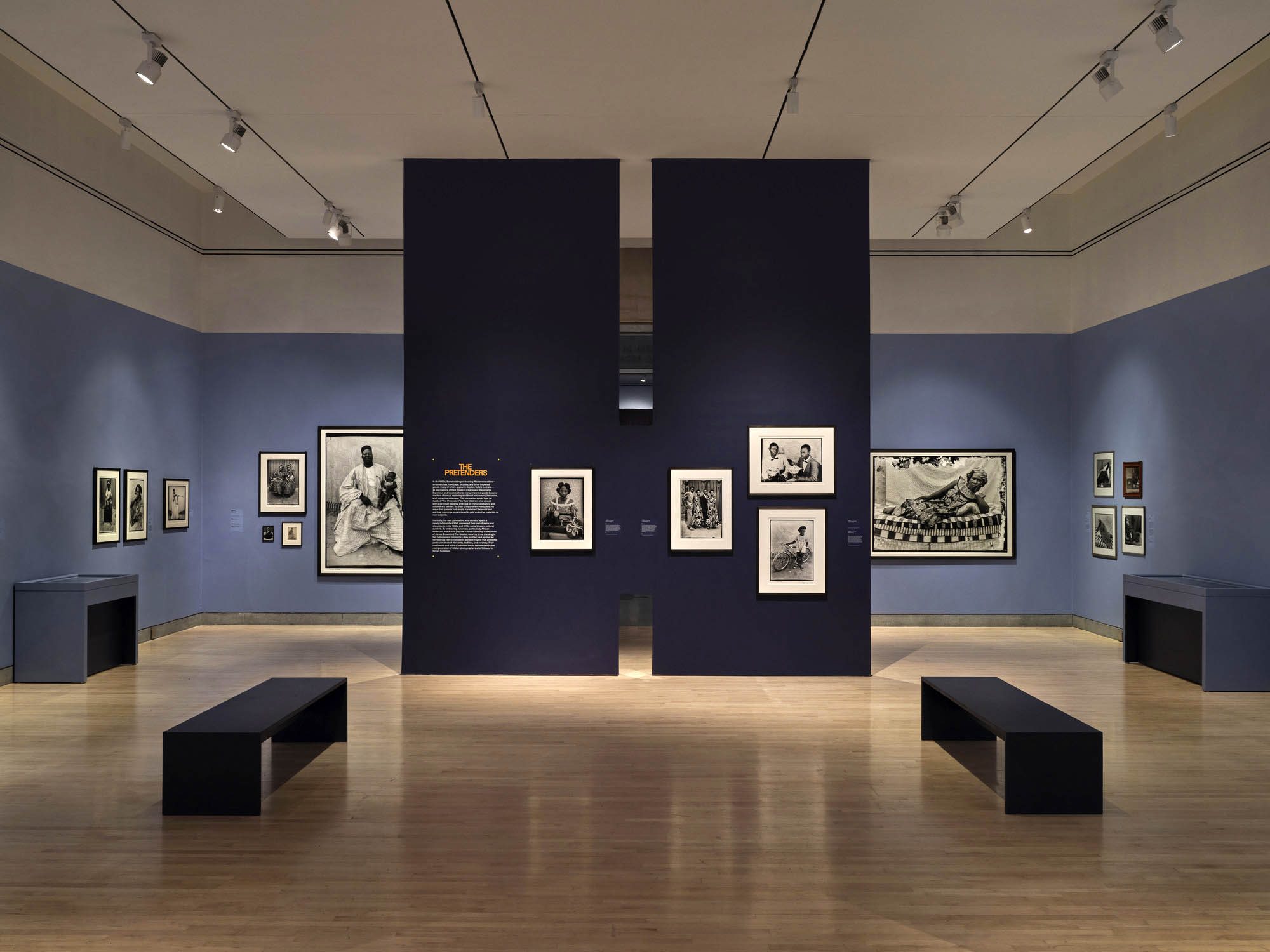
 

Morris Engel (American, 1918-2005). 'Coney Island Embrace, New York City' 1938


Morris Engel (American, 1918-2005)
Coney Island Embrace, New York City
1938
Gelatin silver print
10 9/16 x 11 1/2 inches
Orkin/Engel Film and Photo Archive, New York
© Morris Engel


Morris Engel (American, 1918-2005) 'Mother with Children' 1938


Morris Engel (American, 1918-2005)
Mother with Children
1938
Gelatin silver print
8 x 10 inches
Orkin/Engel Film and Photo Archive, New York


Nieman Studios, Inc., Chicago. 'Shackles the Great' 1940


Nieman Studios, Inc., Chicago
Shackles the Great
1940
Sideshow banner
118 x 108 inches
Collection of Ken Harck


'Quito, Human Octopus' 1940


Quito, Human Octopus
1940
Sideshow banner
140 x 117 inches
Collection of Ken Harck


Anonymous maker. 'Steeplechase Funny Face' Nd


Steeplechase Funny Face
Nd
Painted metal
23 inches
Collection of Ken Harck


Henry Koerner (American born Austria, 1915-1991) 'The Barker’s Booth' 1948-1949


Henry Koerner (American born Austria, 1915-1991)
The Barker’s Booth
1948-1949
Oil on Masonite
26 x 40 1/2 in. (66 x 102.9cm)
Collection of Alice A. Grossman


George Tooker (American, 1920-2011) 'Coney Island' 1948


George Tooker (American, 1920-2011)
Coney Island
1948
Egg tempera on gesso panel
19 1/4 x 26 1/4 inches
Curtis Galleries, Minneapolis


George Tooker’s thought-provoking “Coney Island” places traditional beach goers in a Pietà tableau.


Weegee (Arthur Fellig) (American, 1899-1968) 'Coney Island' 1940


Weegee (Arthur Fellig) (American, 1899-1968)
Coney Island Beach
1940
Gelatin silver print
8 1/8 x 10 inches
The Metropolitan Museum of Art, New York. Ford Motor Company Collection, Gift of Ford Motor Company and John C. Waddell, 1987


Looking at Weegee’s photograph, it is easy to be carried away with longing for what seems like a simpler and happier time. Undoubtedly, the picture’s sense of naïve jubilation was part of its appeal for Red Grooms, who essentially copied the image in paint for Weegee 1940 (1998-1999). And yet, like much at Coney Island, Weegee’s photograph is an illusion. Taken when Europe was already at war and the Depression had not yet ended, its merriment was only a momentary respite.

Text from Jonathan Weinberg “Coney Island Forever,” on the Art in America website, October 1st 2015 [Online] Cited 14/12/2015.


Unknown artist. 'Modern Venus of 1947' Coney Island, 1947


Unknown artist
Modern Venus of 1947
Coney Island, 1947
Gelatin silver photograph
10 3/4 x 13 7/8 in. (27.3 x 35.2cm)
Brooklyn Museum, Brooklyn Museum Collection
Photo: Christine Gant, Brooklyn Museum


Unknown artist. 'Modern Venus of 1947, Coney Island, 1947' (detail)


Unknown artist
Modern Venus of 1947 (detail)
Coney Island, 1947
Gelatin silver photograph
10 3/4 x 13 7/8 in. (27.3 x 35.2cm)
Brooklyn Museum, Brooklyn Museum Collection
Photo: Christine Gant, Brooklyn Museum


Homer Page (American, 1918-1985). 'Coney Island' July 30, 1949


Homer Page (American, 1918-1985)
Coney Island
July 30, 1949
Gelatin silver print
11 x 14 in. (27.9 x 35.6cm)
The Nelson-Atkins Museum of Art, Kansas City, Missouri; Gift of the Hall Family Foundation
© Homer Page
Photo: John Lamberton


Morris Engel (American, 1918-2005) 'Little Fugitive', production still, 1953


Morris Engel (American, 1918-2005)
Under the Boardwalk, Coney Island [Production still from Little Fugitive]
1953
Gelatin silver print
8 x 10 inches
Orkin/Engel Film and Photo Archive, New York


Raymond Abrashkin (as “Ray Ashley”), Morris Engel and Ruth Orkin (directors)
Little Fugitive
1953


Joey, a young boy, runs away to Coney Island after he is tricked into believing he has killed his older brother. Joey collects glass bottles and turns them into money, which he uses to ride the rides.

Little Fugitive (1953), one of the most beautiful films featured in the exhibition, conveys the feeling of moving through the enormous crowds in Weegee’s photographThe creation of two master still photographers, Morris Engel and Ruth Orkin, and writer Ray Ashley, the film tells the story of Joey, a seven-year-old boy who runs away to Coney Island. But if Joey initially exalts in the freedom of being lost in the crowd, he feels abandoned when the amusement park closes down. Robert Frank’s photograph from the same year of a man asleep on a deserted beach with the Parachute Tower at his back [see below] echoes the film’s invocation of the resort’s fleeting joys. When Coney Island empties out it reveals the superficiality and pathos of the fantasies it evokes. In 1894, even before the big amusement parks were built, Stephen Crane mused about how in winter the “mammoth” hotels became “gaunt and hollow, impassively and stolidly suffering from an enormous hunger for the public.” (Stephen Crane, “Coney Island’s Failing Days,” in A Coney Island Reader, p. 69).”

Text from Jonathan Weinberg “Coney Island Forever,” on the Art in America website, October 1st 2015 [Online] Cited 14/12/2015.


Installation of view of the exhibition 'Coney Island: Visions of an American Dreamland, 1861-2008' at the Brooklyn Museum

Installation of view of the exhibition 'Coney Island: Visions of an American Dreamland, 1861-2008' at the Brooklyn Museum

Installation of view of the exhibition 'Coney Island: Visions of an American Dreamland, 1861-2008' at the Brooklyn Museum

Installation of view of the exhibition 'Coney Island: Visions of an American Dreamland, 1861-2008' at the Brooklyn Museum

Installation of view of the exhibition 'Coney Island: Visions of an American Dreamland, 1861-2008' at the Brooklyn Museum

Installation of view of the exhibition 'Coney Island: Visions of an American Dreamland, 1861-2008' at the Brooklyn Museum

Installation of view of the exhibition 'Coney Island: Visions of an American Dreamland, 1861-2008' at the Brooklyn Museum showing at centre left, 'Cyclops Head from Spook-A-Rama' c. 1955

Installation of view of the exhibition 'Coney Island: Visions of an American Dreamland, 1861-2008' at the Brooklyn Museum showing 'Cyclops Head from Spook-A-Rama' c. 1955


Installation of views of the exhibition Coney Island: Visions of an American Dreamland, 1861-2008 at the Brooklyn Museum, New York


Cyclops Head from Spook-A-Rama
c. 1955
Mixed media
60 x 47 x 42 inches
The Vourderis Family. Deno’s Wonder Wheel


Garry Winogrand (American, 1928-1984) 'Coney Island, New York City, N.Y.,' 1952


Garry Winogrand (American, 1928-1984)
Coney Island, New York City, N.Y.,
1952
Silver bromide
8 1/2 x 13 inches
Yale University Art Gallery, New Haven, Conn. Gift of Barbara and James L. Melcher


Bruce Davidson (American, b. 1933) 'Two Youths, Coney Island'From the series 'Brooklyn Gang, 1958' print c. 1965


Bruce Davidson (American, b. 1933)
Untitled (Cathy and Cigarette Machine), from the series Brooklyn Gang
1959, printed later
Gelatin silver print
Image: 8 3/8 x 12 5/8
Sheet: 11 x 14 inches
Yale University Art Gallery, New Haven, Conn. The Heinz Family Fund


Diane Arbus (American, 1923-1971) ‘The House of Horrors’ 1961


Diane Arbus (American, 1923-1971)
The House of Horrors
1961
Gelatin silver print
14 1/2 x 14 inches
Fraenkel Gallery, San Francisco


“As its carnival rides and sideshows became increasingly dated in the 1960s, Coney Island was unable to maintain even the phony thrills that Miller derided in the 1930s. In Diane Arbus’s The House of Horrors (1961)the fake skeleton and the cartoon ape mask aren’t as scary as the ride’s sorry state and the impression that something terrible has driven all the people away. (The 1970 low-budget slasher film Carnival of Blood, not included in the exhibition, brilliantly uses this seediness to create a sense of uncanny doom.) In Arnold Mesches’s painting Anomie 1991: Winged Victory (1991), the creaky rides mingle with images of war, turning dreamland into an apocalyptic nightmare.”

Text from Jonathan Weinberg “Coney Island Forever,” on the Art in America website, October 1st 2015 [Online] Cited 14/12/2015.


Diane Arbus (American, 1923-1971) 'Couple Arguing, Coney Island, N.Y.,' 1960


Diane Arbus (American, 1923-1971)
Couple Arguing, Coney Island, N.Y.,
1960
Vintage gelatin silver print
Image: 8 1/2 x 6 5/8 inches
Sheet: 14 x 11 inches
Collection Thomas H. Lee and Ann Tenenbaum


Robert Frank (American, 1924-2019) ‘Coney Island' 4th of July, 1958


Robert Frank (American, 1924-2019)
Coney Island
July 4, 1958
15 5/8 x 11 9/16 inches
Gelatin silver print
National Gallery of Art, Washington, D.C., Robert Frank Collection. Gift of the Richard Florsheim Art Fund and an Anonymous Donor


Frank Stella (American, b. 1936) 'Coney Island' 1958


Frank Stella (American, b. 1936)
Coney Island
1958
Oil on canvas
85 1/4 x 78 3/4 inches
Yale University Art Gallery, New Haven, Conn. Gift of Larom B. Munson, B.A. 1951


Harry Lapow (American, 1909-1982) 'Untitled (Buried Alive)' c. 1960s or 1970s


Harry Lapow (American, 1909-1982)
Untitled (Buried Alive)
c. 1960s or 1970s
Gelatin silver photograph
12 1/8 x 9 1/16 in. (30.8 x 23cm)
Brooklyn Museum, Gift of the artist
© Estate of Harry Lapow
Photo: Sarah DeSantis, Brooklyn Museum


Harry Lapow began frequenting Coney Island to capture quirks of the beach and boardwalk after receiving a Ciroflex camera on his forty-third birthday. He was intrigued by the camera’s ability to isolate details and fleeting moments of everyday life. Here, a toddler’s crossed legs appear above the head of a buried woman whose eyes are covered by a floral towel. In cropping this beach sighting, Lapow crafts a surprising juxtaposition, forming an unlikely dynamic between the lively child and the masked adult.


Bruce Davidson (American, b. 1933) 'Untitled' July 4, 1962


Bruce Davidson (American, b. 1933)
Untitled
July 4, 1962
Gelatin silver print
11 x 14 inches
Howard Greenberg Gallery, New York


Stephen Salmieri (American, b. 1945) 'Coney Island' 1971


Stephen Salmieri (American, b. 1945)
Coney Island
1971
Gelatin silver photograph
8 x 10 1/8 in. (20.3 x 25.7cm)
Brooklyn Museum, Gift of Edward Klein
© Stephen Salmieri
Photo: Sarah DeSantis, Brooklyn Museum


Harvey Stein (American, b. 1941) 'The Hug: Closed Eyes and Smile' 1982


Harvey Stein (American, b. 1941)
The Hug: Closed Eyes and Smile
1982
Digital, inkjet archival print
13 x 19 in. (33 x 48.3cm)
Collection of the artist
© Harvey Stein, 2011


Red Grooms (American, b. 1937) 'Weegee 1940' 1998-1999


Red Grooms (American, b. 1937)
Weegee 1940
1998-1999
Acrylic on paper
56 1/8 x 62 in. (142.6 x 157.5cm)
Private Collection
© 2013 Red Grooms/Artists Rights Society (ARS), New York
Photo: Courtesy of Marlborough Gallery, New York


Arnold Mesches (American, 1923-2016) 'Anomie 1991: Winged Victory' 1991


Arnold Mesches (American, 1923-2016)
Anomie 1991: Winged Victory
1991
Acrylic on canvas
92 x 135 in. (233.7 x 342.9cm)
The San Diego Museum of Art; Museum purchase with partial funding from the Richard Florsheim Art Fund
© 2013 Arnold Mesches


Daze (American, b. 1962) 'Coney Island Pier' 1995


Daze (American, b. 1962)
Coney Island Pier
1995
Oil on canvas
60 x 80 in. (152.4 x 203.2cm)
Collection of the artist


Daze (American, b. 1962) 'Kiddlyand Spirits' 1995


Daze (American, b. 1962)
Kiddyland Spirits
1995
Oil on canvas
42 x 71 inches
Collection of the artist


'Requiem for a Dream', production still, directed by Darren Aronofsky, 2000


Requiem for a Dream, production still, directed by Darren Aronofsky, 2000


Marie Roberts (American, b. 1954) 'A Congress of Curious Peoples' 2005


Marie Roberts (American, b. 1954)
A Congress of Curious Peoples
2005
Acrylic on unstretched canvas
84 x 120 in. (213.4 x 304.8cm)
Collection of Liz and Marc Hartzman


Swoon. 'Coney, Early Evening' 2005


Swoon
Coney, Early Evening
2005
Linoleum print on Mylar
Variable; overall: 213 x 39 x 113 inches
Brooklyn Museum. Healy Purchase Fund B, Emily Winthrop Miles Fund, and Designated Purchase Fund


Swoon’s “Coney, Early Evening” suspends youthful figures intertwined throughout the iconic tracks of a Coney Island roller coaster.


Frederick Brosen (American, b. 1954) 'Fortune Teller, Jones Walk, Coney Island' 2008


Frederick Brosen (American, b. 1954)
Fortune Teller, Jones Walk, Coney Island
2008
Watercolor over graphite on paper
17 7/8 x 11 1/4 in. (45.4 x 28.6cm)
Courtesy of Hirschl & Adler Modern, New York
© 2013 Frederick Brosen/Artists Rights Society (ARS), New York
Photo: Joshua Nefsky, courtesy of Hirschl & Adler Modern, New York


Brooklyn Museum
200 Eastern Parkway
Brooklyn, NY 11238-6052
Phone: (718) 638-5000

Opening hours:
Wednesday – Sunday 11am – 5pm
Closed Thanksgiving, Christmas, and New Year’s Day

Brooklyn Museum website

LIKE ART BLART ON FACEBOOK

Back to top

Text/Exhibition: “George Platt Lynes, Minor White and ‘The Temptation of Saint Anthony Is Mirrors’ ” on the exhibition ‘HIDE/SEEK: Difference and Desire in American Portraiture’ at the Brooklyn Museum, New York

Exhibition dates: 18th November 2011 – 12th February 2012


Minor White (American, 1908-1976) 'Tom Murphy (San Francisco)' 1948


Minor White (American, 1908-1976)
Tom Murphy (San Francisco)
1948
from The Temptation of St Anthony is Mirrors 1948
Gelatin silver print
4 5/8 x 3 5/8 in. (11.7 x 9.2cm)
The Minor White Archive, Princeton University Art Museum Bequest of Minor White, MWA 48-136
© Trustees of Princeton University


“The possibility of using our bodies as a possible source of very numerous pleasures is something that is very important. For instance, if you look at the traditional construction of pleasure, you see that bodily pleasure, or pleasures of the flesh, are always drinking, eating and fucking. And that seems to be the limit of the understanding of our bodies, our pleasures ….

It is very interesting to note, for instance, that for centuries people generally, as well as doctors, psychiatrists, and even liberation movements, have always spoken about desire, and never about pleasure. “We have to liberate our desire,” they say. No! We have to create new pleasure. And then maybe desire will follow.” (My bold)


Michel Foucault 1


George Platt Lynes, Minor White and The Temptation of Saint Anthony Is Mirrors

I had the great privilege of visiting The Minor White Archive at Princeton University while I was researching for my PhD. While there I studied the work cards and classic prints of the great photographer, paying particular attention to his photography of the male. What was a great surprise and delight to me were the presence of photographs of explicit sexual acts, men photographed with erections – images that have, to my knowledge, never been published. I don’t think that many people would even know that Minor White took such photographs. Although these images would have never been for public consumption it is still very unusual to find a classical photographer with such a public profile taking photographs of erect penises, especially in the 1940s!

Disturbed by having been in battle in the Second World War and seeing some of his best male friends killed, White’s early photographs of men (in their uniforms) depict the suffering and anguish that the mental and physical stress of war can cause. He was even more upset than most because he was battling his own inner sexual demons at the same time, his shame and disgust at being a homosexual and attracted to men, a difficulty compounded by his religious upbringing. In his photographs White both denied his attraction to men and expressed it. His photographs of the male body are suffused with both sexual mystery and a celebration of his sexuality despite his bouts of guilt. After the war he started to use the normal everyday bodies of his friends to form sequences of photographs, sometimes using the body as a metaphor for the landscape and vice versa. In the above photograph (Tom Murphy, left), based on a religious theme, we see a dismembered hairy body front on, the hands clutching and caressing the body, the lower hand hovering near the exposed genitalia, the upper hand cupping the breast. We see the agony and ecstasy of a homoerotic desire cloaked in a religious theme.

The image comes from the The Temptation of St Anthony is Mirrors (1948), four pages of which can be seen below. While at The Minor White Archive I looked at the only complete, undamaged book in existence. What an experience!

The book has a powerful and intense presence. It was beautifully sequenced as you would expect from Minor White and features photographs of Tom Murphy. There is a series of his hands over the back of a chair in different positions: hanging, curled, splayed, held slightly upwards, and these are paired with photographs of bare feet and turned up jeans, bare feet and rocks, and three other photographs of Tom Murphy. In an excellent paper Cruising and Transcendence in the Photographs of Minor White (Nd. Later published as an online-only feature accompanying Aperture magazine’s Spring 2015 issue, “Queer”), author Kevin Moore observes that the hand-bound volume with images paired on facing pages – “mirrors” to both one another and the artist – is a personal account as well as a meditation on the sins of the flesh.

“Temptation (which was never published or exhibited) begins with a sort of prologue, comprising a single full-length nude of Tom Murphy, White’s student and the model most commonly associated with his work. The pose is similar to those found in the beefcake pictures White was producing at this time: Murphy adopts a classical contrapposto stance and is entirely nude, his pale, wiry body positioned against a dark backdrop. A piece of driftwood at the model’s feet proposes a theme of innocence – man in his natural state. The sequence then moves to pairings of images describing man in his civilised state, featuring several loving close-ups of Murphy’s gesturing hands, a shot of his bare feet, and a single shoulder-length portrait, in which he wears a buttoned shirt and looks intently off to the side. Next, there is an interlude suggesting growing dissolution: an image of Murphy’s feet and a petrified stone is paired with a shot of Murphy in full dress slouched on a mass of rocks and staring vacantly off into the distance. The next pairing (images 9 and 10 below) accelerates the descent into temptation. Here, the pose in a second picture of Murphy’s feet suggests agitation, while a three-quarter length portrait of Murphy, crouched in the bushes and looking back over his shoulder, is as emblematic an image of cruising as White ever produced. The photographs that follow descend further into lust and self-recrimination, conveyed through photographs in which Murphy’s naked body alternates between expressions of pain and pleasure. The sequence ends with a series of beatific nudes (images 27 and 28 below), which express redemption through nonsexual treatments of the body and in the body’s juxtaposition with natural forms – a return to nature.

White may have thought at first that the sequence format would help him transcend the limits of personal biography, that he could use the breadth and fluidity of the sequence to emphasize a universal narrative while exercising control over the potentially explosive and revealing content of individual images. This proved to be overly optimistic, at least in his earliest uses of the form. White’s colleagues, for example, immediately understood Temptation for what it really was: an agonized portrayal of White’s love for his male student.”


Moore goes on to conclude that White obsfucated his sexuality, displacing gay ‘cruising’ “by a universalised mystical searching – sexual longing setting in motion a heroic search” using photography as his medium, and that his photographs became a dreamscape, perhaps even a dream(e)scape: “in which meanings are obscured, not clarified; signs are effaced, not illuminated; beauty is closeted, not set out for all to see. White was attracted to the ambiguity of the dream because it offered cover and protection but also freedom to maneuver. The dream supported the irrational, maintained a sense of mystery, and beautified frustration.”

I have to disagree with Kevin Moore. Anyone who has seen The Temptation of Saint Anthony Is Mirrors in the flesh (so to speak) can feel the absolute presence of these images, their reality, the connection between image and viewer. Maybe White was a Romantic but he was realistically romantic; his images are not dreamscapes, they offer multiple readings and contexts, insights into the human condition. Even though there was anguish and guilt present about his sexuality, channelled through his photography, anyone bold enough to take photographs of erections in 1940 has some ticker. It takes a clear eye and a courageous heart to do this, knowing what was at stake in this era of sexual repression. Beauty is not closeted here, unless I am looking at different images from Kevin Moore. In fact the magic of the photography of Minor White is his ability to modulate space, to modulate bodies so that they are beautiful, ambiguous and mystical whatever their context. Not everything in this world has to be in your face. Like a Glen Gould playing the Goldberg Variations revelation of beauty takes time, concentration and meditation.

Also, an overriding feeling when viewing the images was one of loneliness, sadness and anguish, for the bodies seemed to be observed and not partaken of, to be unavailable both physically and in a strange way, photographically. For a photographer who prided himself on revealing the spirit within, through photography, these are paradoxical photographs, visually accessible and mysteriously (un)revealing, photographs of a strange and wonderful ambivalence. Two great words: obsfucation, ambivalence. Clouded with mixed feelings and emotions, not necessarily anything to do with sexuality. Not everything has to be about sexuality. It is the difference between imbibing Freud or Jung – personally I prefer the more holistic, more inclusive, more spiritual Jung.


And so to the image of George Platt Lynes that I have paired with the nude of Tom Murphy (below).

Platt Lynes was another artist who struggled with is sexuality, but seemingly not to such an extent as Minor White did. GPL worked as a fashion photographer and had his own studio in New York where he photographed dancers, artists and celebrities among others. He undertook a series of mythological photographs on classical themes (which are amazing in composition and feature Surrealist motifs). Privately he photographed male nudes but was reluctant to show them in public for fear of the harm that they could do to his reputation and business with the fashion magazines. Generally his earlier male nude photographs concentrate on the idealised youthful body or ephebe.

As Lynes became more despondent with his career as a fashion photographer his private photographs of male nudes tended to take on a darker and sharper edge. After a period of residence in Hollywood he returned to New York nearly penniless. His style of photographing the male nude underwent a revision. While the photographs of his European colleagues still relied on the sun drenched bodies of young adolescent males evoking memories of classical beauty and the mythology of Ancient Greece the later nudes of Platt Lynes feature a mixture of youthful ephebes and heavier set bodies which appear to be more sexually knowing. The compositional style of dramatically lit photographs of muscular torsos of older men shot in close up (see photograph below for example) were possibly influenced by a number of things – his time in Hollywood with its images of handsome, swash-buckling movie stars with broad chests and magnificent physiques; the images of bodybuilders by physique photographers that George Platt Lynes visited; the fact that his lover George Tichenor had been killed during WWII; and the knowledge that he was penniless and had cancer. There is, I believe, a certain sadness but much inner strength in his later photographs of the male nude that harnesses the inherent sexual power embedded within their subject matter.

When undertaking research into GPL’s photographs at The Kinsey Institute as part of my PhD I noted that most of the photographs had annotations in code on the back of them giving details of age, sexual proclivities of models and what they are prepared to do and where they were found. This information gives a vital social context to GPL’s nude photographs of men and positions them within the moral and ethical framework of the era in which they were made. The strong image (below) is always quoted as an example of GPL’s more direct way of photographing the male nude in the last years of his life. The male is solid, imposing, lit from above, heavy set, powerful, massive. The eyes are almost totally in shadow. Later photos have more chiaroscuro than earlier work, more use of contrasting light (especially down lit or uplit figures) but are they more direct? Yes. The men look straight into camera.

This monumentality of body and form was matched by a new openness in the representation of sexuality. There are intimate photographs of men in what seem to be post-coital revere, in unmade beds, genitalia showing or face down showing their butts off. Some of the faces in these later photographs remain hidden, as though disclosure of identity would be detrimental for fear of persecution. The photograph above is very ‘in your face’ for the conservative time from which it emerges, remembering it was the era of witch hunts against communists and subversives (including homosexuals). Conversely, this photograph is quite restrained compared to the most striking series of GPL’s photographs that I saw at The Kinsey Institute which involves an exploration the male anal area (a photograph from the 1951 series can be found in the book titled George Platt Lynes: Photographs from The Kinsey Institute). This explicit series features other photographs of the same model – in particular one that depicts the male with his buttocks in the air pulling his arse cheeks apart. After Lynes found out he had cancer he started to send his photographs to the German homoerotic magazine Der Kries under the pseudonym Roberto Rolf, and in the last years of his life he experimented with paper negatives, which made his images of the male body even more grainy and mysterious.

I believe that Lynes understood, intimately, the different physical body types that gay men find desirable and used them in his photographs. He visited Lon of New York (a photographer of beefcake men) in his studio and purchased photographs of bodybuilders for himself, as did the German photographer George Hoyningen-Huene. It is likely that these images of bodybuilders did influence his later compositional style of images of men; it is also possible that he detected the emergence of this iconic male body type as a potent sexual symbol, one that that was becoming more visible and sexually available to gay men.


The differences between the White and GPL nudes is instructive. White: introspective, haunted, religious with an unrequited sense of longing – hands clutching self, inward pointing; GPL: more closely cropped, more open, one hand firmly grasping but the other hand open, receptive, presented to the viewer above the available phallic organ. It reminds me for some unknown reason, some quirk of my brain association, of the shell of Botticelli’s Birth of Venus (1486) inverted. There is difference between the two artists – one struggling with his sexuality, being realistically romantic, the other physically doing something about it – posting his photographs to one of the first gay magazines in the world. But both were taking photographs of intimate sexual acts that could never have been published in their lifetimes – that are still are hidden from view today. When, oh when, will someone have the courage to publish this work?

Dr Marcus Bunyan


My notes on Minor White’s photographs and notes on George Platt Lynes photographs from my Phd thesis Pressing the Flesh: Sex, Body Image and the Gay Male (2001) can be found below.


Many thankx to the Brooklyn Museum for allowing me to publish the photographs in the posting. Please click on the photographs for a larger version of the image.

1/ Gallagher, Bob and Wilson, Alexander. “Sex and the Politics of Identity: An Interview with Michel Foucault,” in Thompson, Mark. Gay Spirit: Myth and Meaning. New York: St. Martin’s Press, 1987, p.31.


Research notes on photographs from the Minor White Archive, Princeton University, New Jersey 06/08/1999

Download the Minor White research notes (85kb pdf)

Research at The Kinsey Institute , Bloomington, Indiana 16/08/1999 – 19/08/1999. George Platt Lynes photographs from the Collection at The Kinsey Institute

Download the George Platt Lynes research notes (55kb pdf)


Minor White (American, 1908-1976) 'The Temptation of Saint Anthony Is Mirrors' 1948


(top)
Minor White (American, 1908-1976)
Images 9 and 10 in the bound sequence The Temptation of Saint Anthony Is Mirrors
1948
9.3 x 11.8cm; 11.2 x 9.1cm

(bottom)
Minor White (American, 1908-1976)
Images 27 and 28 in the bound sequence The Temptation of Saint Anthony Is Mirrors
1948. 5.3 x 11.6cm; 10.6 x 8.9cm


 Minor White (American, 1908-1976) 'Tom Murphy (San Francisco)' 1948  George Platt Lynes (American, 1907-1955) 'Untitled' Nd


(left)
Minor White (American, 1908-1976)
Tom Murphy (San Francisco)
1948
from The Temptation of St Anthony is Mirrors 1948
Gelatin silver print
4 5/8 x 3 5/8 in. (11.7 x 9.2 cm)

(right)
George Platt Lynes 
(American, 1907-1955)
Untitled
Nd
Gelatin silver print


George Platt Lynes (American, 1907-1955) 'Untitled (Frontal Male Nude)' Nd (early 1950s)


George Platt Lynes (American, 1907-1955)
Untitled (Frontal Male Nude)
Nd (early 1950s)
Gelatin silver print


Thomas Eakins (American, 1844-1916) 'Walt Whitman' (American, 1818-1892) 1891


Thomas Eakins (American, 1844-1916)
Walt Whitman (American, 1818-1892)
1891
10.3 x 12.2cm
National Portrait Gallery, Smithsonian Institute


Charles Demuth (American, 1883-1935) 'Dancing Sailors' 1917


Charles Demuth (American, 1883-1935)
Dancing Sailors
1917
Watercolour and pencil on paper
20.3 x 25.4cm
Cleveland Museum of Art, Ohio; Mr and Mrs William H Marlatt Fund


George Wesley Bellows (American, 1882-1925) 'Riverfront No.1' 1915


George Wesley Bellows (American, 1882-1925)
Riverfront No.1
1915
Oil on canvas
115.3 x 160.3cm
Columbus Museum of Art, Ohio: Howald Fund Purchase


Marsden Hartley (American, 1877-1943) 'Eight Bells Folly: Memorial to Hart Crane' 1933


Marsden Hartley (American, 1877-1943)
Eight Bells Folly: Memorial to Hart Crane
1933
Oil on canvas
Gift of Ione and Hudson D. Walker
Frederick R. Weisman Art Museum, University of Minnesota


Harold Hart Crane (July 21, 1899 – April 27, 1932) was an American poet. Finding both inspiration and provocation in the poetry of T. S. Eliot, Crane wrote modernist poetry that is difficult, highly stylised, and very ambitious in its scope. In his most ambitious work, The Bridge, Crane sought to write an epic poem in the vein of The Waste Land that expressed something more sincere and optimistic than the ironic despair that Crane found in Eliot’s poetry. In the years following his suicide at the age of 32, Crane has come to be seen as one of the most influential poets of his generation…

Crane visited Mexico in 1931-32 on a Guggenheim Fellowship and his drinking continued as he suffered from bouts of alternating depression and elation … While on board the steamship SS Orizaba enroute to New York, he was beaten after making sexual advances to a male crew member, seeming to confirm his own idea that one could not be happy as a homosexual. Just before noon on April 27, 1932, Hart Crane jumped overboard into the Gulf of Mexico. Although he had been drinking heavily and left no suicide note, witnesses believed his intentions to be suicidal, as several reported that he exclaimed “Goodbye, everybody!” before throwing himself overboard. (The legend among poets is: He walked to the fantail, took off his coat quietly, and jumped.) His body was never recovered.

Text from the Wikipedia website


Peter Hujar (1937-1987) 'Susan Sontag' (1933-2004) 1975


Peter Hujar (American, 1937-1987)
Susan Sontag (American, 1933-2004)
1975
Gelatin silver print
National Portrait Gallery, Smithsonian Institute
© Estate of Peter Hujar


Keith Haring (American, 1958-1990). 'Unfinished Painting' 1989


Keith Haring (American, 1958-1990)
Unfinished Painting
1989
Acrylic on canvas
100 x 100cm
Courtesy of Katia Perlstein, Brussels, Belgium
© Keith Haring Foundation


David Wojnarowicz (American, 1954-1992) 'A Fire In My Belly' (Film In Progress) (film still), 1986-87


David Wojnarowicz (American, 1954-1992)
A Fire In My Belly (Film In Progress) (film still)
1986-1987
Super 8mm film
black and white & color (transferred to video)
Courtesy of The Estate of David Wojnarowicz and P.P.O.W Gallery, New York and The Fales Library and Special Collection


One day before World AIDS Day, the renown painter, photographer, writer, filmmaker, performance artist and activist David Wojnarowicz, who died in 1992 at the age of 37 from AIDS-related complications, has had one of his most important works, A Fire In My Belly, pulled from The Smithsonian Institution’s National Portrait Gallery’s HIDE / SEEK exhibit because of pressure from conservative politicians and the Catholic League.”


HIDE/SEEK: Difference and Desire in American Portraiture, the first major museum exhibition to explore how gender and sexual identity have shaped the creation of American portraiture, organised by and presented at the National Portrait Gallery last fall, will be on view at the Brooklyn Museum from November 18, 2011, through February 12, 2012. With the cooperation of the National Portrait Gallery, the Brooklyn Museum has reconstituted the exhibition in concert with the Tacoma Art Museum, where it will be on view from March 17 through June 10, 2012.

HIDE/SEEK includes approximately a hundred works in a wide range of media created over the course of one hundred years that reflect a variety of sexual identities and the stories of several generations. Highlighting the influence of gay and lesbian artists, many of whom developed new visual strategies to code and disguise their subjects’ sexual identities as well as their own, HIDE/ SEEK considers such themes as the role of sexual difference in depicting modern Americans, how artists have explored the definition of sexuality and gender, how major themes in modern art – especially abstraction – have been influenced by marginalisation, and how art has reflected society’s changing attitudes.

Announcing the Brooklyn presentation, Museum Director Arnold L. Lehman states, “From the moment I first learned about this extraordinary exhibition in its planning stages, presenting it in Brooklyn has been a priority. It is an important chronicle of a neglected dimension of American art and a brilliant complement and counterpoint to ‘Youth and Beauty: Art of the American Twenties’, a touring exhibition organised by the Brooklyn Museum, also on view this fall.”

In addition to its commentary on a marginalised cultural history, HIDE/ SEEK offers an unprecedented survey of more than a century of American art. Beginning with late nineteenth-century portraits by Thomas Eakins and John Singer Sargent, it includes works from the first half of the 1900s by such masters as Romaine Brooks, George Bellows, Marsden Hartley, and Georgia O’Keeffe; the exhibition continues through the postwar period with works by Jasper Johns, Robert Rauschenberg, Agnes Martin, and Andy Warhol, and concludes with major works by late twentieth-century artists such as Keith Haring, Glenn Ligon, Nan Goldin, Felix Gonzalez-Torres, and Catherine Opie.

The Brooklyn presentation will feature nearly all of the works included in the National Portrait Gallery exhibition. Among them are rarely seen paintings by Charles Demuth, whose better-known industrialised landscapes are on view in the Brooklyn Museum exhibition Youth and Beauty; a poignant portrait of New Yorker writer Janet Flanner wearing two masks, taken by photographer Bernice Abbott; Andrew Wyeth’s painting of a young neighbour standing nude in a wheat field, much like Botticelli’s Venus emerging from her shell; Robert Mapplethorpe’s photograph riffing on the classic family portrait, in which a leather-clad Brian Ridley is seated on a wingback chair shackled to his whip-wielding partner, Lyle Heeter; and Cass Bird’s photographic portrait of a friend staring out from under a cap emblazoned with the words “I look Just Like My Daddy.” The exhibition will also include David Wojnarowicz’s A Fire in My Belly, an unfinished film the artist created between 1986 and 1987.

Press release from the Brooklyn Museum website
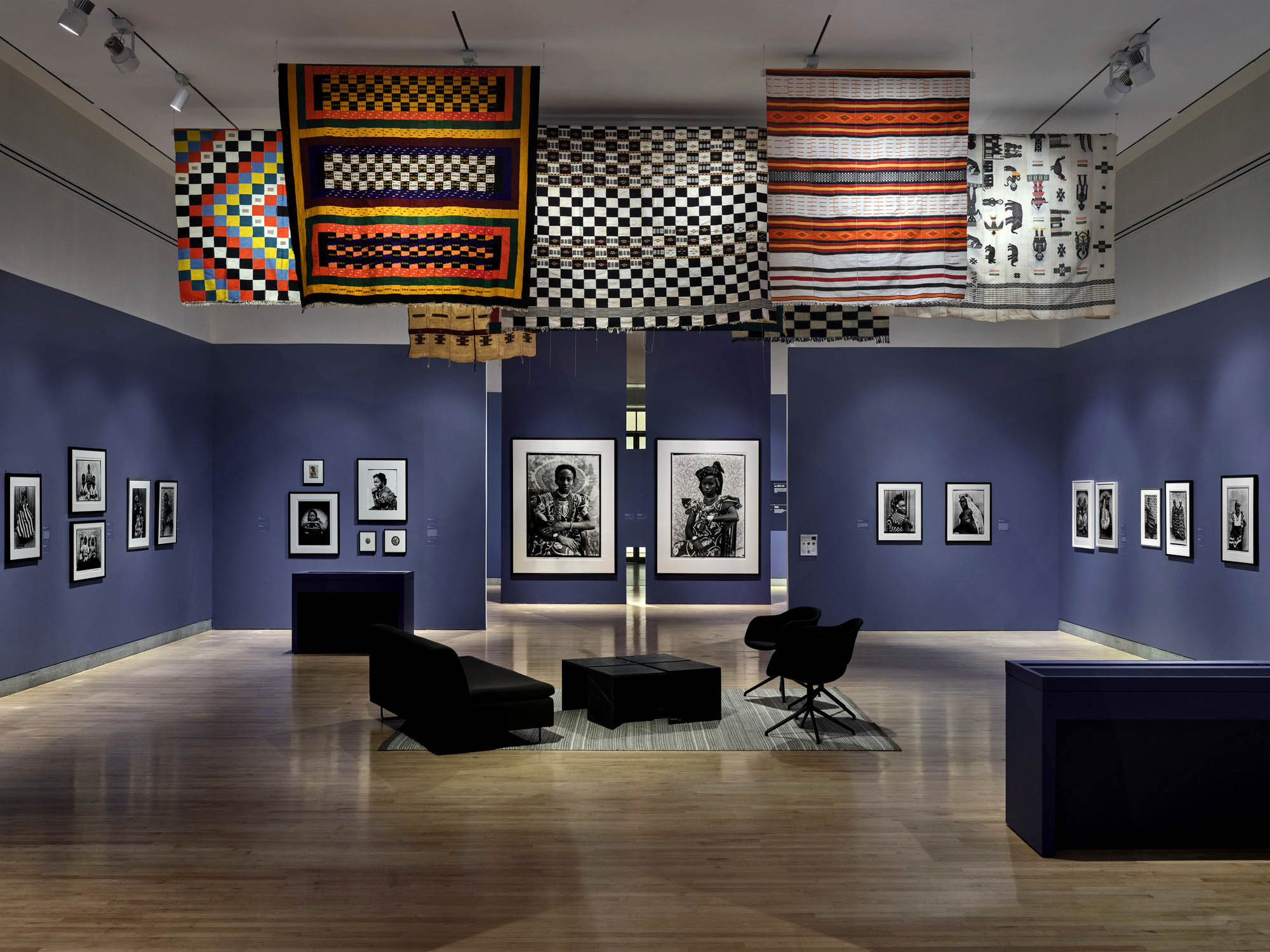
 

Berenice Abbott (American, 1898-1991) 'Janet Flanner' (1892-1978) 1927


Berenice Abbott (American, 1898-1991)
Janet Flanner (American, 1892-1978)
1927
Photographic print
23 x 17.3cm
Prints and Photographs Division, Library of Congress, Washington, D.C
C Berenice Abbott / Commerce Graphics Ltd., Inc.


Thomas Eakins (American, 1844 -1916) 'Salutat' 1898


Thomas Eakins (American, 1844-1916)
Salutat
1898
Oil on canvas
127.0 x 101.6cm
Addison Gallery of American Art, Phillips Academy, Andover, Massachusetts
Gift of anonymous donor


Walker Evans (American, 1903-1975) 'Lincoln Kirstein' 1930


Walker Evans (American, 1903-1975)
Lincoln Kirstein (American, 1907-1996)
1930
Gelatin silver print
16.1cm x 11.4cm
The Metropolitan Msuem of Art, Ford Motor Company Collection
© Walker Evans Archive, The Metropolitan Museum of Art


Lincoln Edward Kirstein (May 4, 1907 – January 5, 1996) was an American writer, impresario, art connoisseur, philanthropist, and cultural figure in New York City, noted especially as co-founder of the New York City Ballet. He developed and sustained the company with his organising ability and fundraising for more than four decades, serving as the company’s general director from 1946 to 1989. According to the New York Times, he was “an expert in many fields,” organising art exhibits and lecture tours in the same years.


Marsden Hartley (American, 1877-1943) 'Painting No. 47, Berlin' 1915


Marsden Hartley (American, 1877-1943)
Painting No. 47, Berlin
1915
Oil on canvas
39 7/16 x 32 in (100.1 x 81.3cm)
Hirshhorn Museum and Sculpture Garden, Smithsonian Institution, Washington, D.C.
Gift of Joseph H. Hirshhorn, 1972


George Platt Lynes (American, 1907-1955) 'Marsden Hartley' 1942


George Platt Lynes (American, 1907-1955)
Marsden Hartley
1942
Gelatin silver print
23.5 x 19.1cm
Bates College Museum of Art, Lewiston, ME, Marsden Hartley Memorial Collection
© Estate of George Platt Lynes


Beauford Delaney (American, 1901-1979) 'James Baldwin' 1963


Beauford Delaney (American, 1901-1979)
James Baldwin
1963
Pastel on paper
64.8 x 49.8cm
National Portrait Gallery, Smithsonian Institution


Cass Bird (American, b. 1974) 'I Look Just Like My Daddy' 2003


Cass Bird (American, b. 1974)
I Look Just Like My Daddy
2003
C-type print
72.6 x 101.6cm
Collection of the artist, New York
© Cass Bird


Brooklyn Museum
200 Eastern Parkway
Brooklyn, NY 11238-6052
Phone: (718) 638-5000

Opening hours:
Wednesday – Sunday 11am – 6pm
Monday and Tuesday closed

Brooklyn Museum website

LIKE ART BLART ON FACEBOOK

Back to top

Exhibition: ‘Norman Rockwell: Behind the Camera’ at the Brooklyn Museum, New York

Exhibition dates: 19th November 2010 – 10th April 2011


Gene Pelham (American, 1909-2004)
 'Photograph for The Tattoo Artist' 1944


Gene Pelham (American, 1909-2004)
Photograph for The Tattoo Artist
1944
Study for The Saturday Evening Post, March 4, 1944
11 1/4 x 8 3/4 in
Norman Rockwell Museum Archival Collections
Norman Rockwell Licensing, Niles, Illinois


The first and last photographs (precursor to Avedon’s white background photographs) are a knockout – and then just look what Rockwell does with them!

The background of traditional tattoo ‘flash’ behind The Tattoo Artist (1944, below) is inspired, as is the humour in the crossing out of the names. The book of the English painter Augustus John nonchalantly placed on the counter in the photographic studies for Soda Jerk (1953) is delicious. Just fantastic to see some of the preparatory work behind the paintings.

Dr Marcus Bunyan


Many thankx to the Brooklyn Museum for allowing me to publish the artwork and text in the posting. Please click on the photographs for a larger version of the image.


Gene Pelham (American, 1909-2004)
 'Photograph for The Tattoo Artist' 1944


Gene Pelham (American, 1909-2004)
Photograph for The Tattoo Artist
1944
Study for The Saturday Evening Post, March 4, 1944
11 1/4 x 8 3/4 in
Norman Rockwell Museum Archival Collections
Norman Rockwell Licensing, Niles, Illinois


Norman Rockwell (American, 1894-1978)
 'The Tattoo Artist' 1944


Norman Rockwell (American, 1894-1978)
The Tattoo Artist
1944
Cover illustration for The Saturday Evening Post, March 4, 1944
Oil on canvas
43 x 33 in
Collection of the Brooklyn Museum
Gift of the artist 
© 1944
SEPS: Curtis Publishing, Indianapolis


Gene Pelham (American, 1909-2004)
 'Photograph for Going and Coming' 1947


Gene Pelham (American, 1909-2004)
Photograph for Going and Coming
1947
Study for The Saturday Evening Post, August 30, 1947
11 1/4 x 15 5/8 in
Norman Rockwell Museum Archival Collections
Norman Rockwell Licensing, Niles, Illinois


Norman Rockwell (American, 1894-1978)
 'Going and Coming' 1947


Norman Rockwell (American, 1894-1978)
Going and Coming
1947
Tear sheet, The Saturday Evening Post, August 30, 1947
13 5/8 x 10 5/8 in
Norman Rockwell Museum Archival Collection 
© 1947
SEPS: Curtis Publishing, Indianapolis


Norman Rockwell (American, 1894-1978)
 'Photographs for The Problem We All Live With' 1964


Norman Rockwell (American, 1894-1978)
Photographs for The Problem We All Live With
1964
Study for Look, January 14, 1964
Norman Rockwell Museum Archival Collections
Norman Rockwell Licensing, Niles, Illinois


To create many of his iconic, quintessentially American paintings, most of which served as magazine covers, norman rockwell worked from carefully staged study photographs that are on view for the first time, alongside his paintings, drawings, and related tear sheets, in Norman Rockwell: Behind the Camera. The exhibition, which will be on view at the Brooklyn Museum from November 19, 2010, through April 10, 2011, was organised by the norman rockwell Museum in Stockbridge, Massachusetts, following a two-year project that preserved and digitised almost 20,000 negatives.

Beginning in the late 1930s, norman rockwell (1894-1978) adopted photography as a tool to bring his illustration ideas to life in studio sessions. Working as a director, he carefully staged his photographs, selecting props, locations, and models and orchestrating every detail. He began by collecting authentic props and costumes, and what he did not have readily available he purchased, borrowed, or rented – from a dime-store hairbrush or coffee cup to a roomful of chairs and tables from a New York City Automat. He created numerous photographs for each new subject, sometimes capturing complete compositions and, in other instances, combining separate pictures of individual elements. Over the forty years that he used photographs as his painting guide, he worked with many skilled photographers, particularly Gene Pelham, Bill Scovill, and Louis Lamone.

Early in his career Norman Rockwell used professional models, but he eventually found that this method inhibited his evolving naturalistic style. When he turned to photography, he turned to friends and neighbours instead of professional models to create his many detailed study photographs, which he found liberating. Working from black-and-white study photographs also allowed Rockwell more freedom in developing his final work. “If a model has worn a red sweater, I have painted it red – I couldn’t possibly make it green… But when working with photographs I seem able to recompose in many ways: as to form, tone, and color,” Rockwell once commented.

Included in the exhibition will be more than one hundred framed digital prints alongside paintings, drawings, magazine tear sheets, photographic equipment, and archival letters, as well as an introductory film. Among the paintings on view will be the Brooklyn Museum’s painting The Tattoo Artist – one of many that Rockwell created during World War II – depicting a young sailor stoically having his arm tattooed, shown alongside working photographs by Gene Pelham, and the watercolour Dugout, also from the Museum’s collection, portraying the Chicago Cubs baseball team being jeered by fans of the Boston Braves. This work will be displayed along with the September 4, 1948, Saturday Evening Post cover on which it appeared and study photographs by Gene Pelham.

Among the magazine covers included in the exhibition are several from The Saturday Evening Post, for which Rockwell worked for nearly fifty years before turning his attentions to more socially relevant subjects for Look magazine, with which he had a decade-long relationship. Included is The Art Critic, showing an aspiring artist scrutinising paintings in a gallery, which appeared in the April 16, 1955, issue. The exhibition also includes several series of photographs and the final paintings and magazine tear sheets, among them the July 13, 1946, Saturday Evening Post illustration Maternity Waiting Room, shown along with a series of images by an unidentified photographer that served as details of the final work, which portrays ten anxious soon-to-be fathers.

Norman Rockwell became one of the most famous illustrators of his generation through his naturalistic, narrative paintings done in a readily recognisable style, which appeared in national magazines that reached millions of readers. Born in 1894 on Manhattan’s Upper West Side, he left high school to study at the National Academy of Design and later the Art Students League of New York. By the age of eighteen he was already a published artist specialising in children’s illustration and had become a regular contributor to magazines such as Boys’ Life, the monthly magazine of the Boy Scouts of America, where he was soon named art director. In 1916 he painted his first cover for The Saturday Evening Post, beginning a forty-seven-year relationship that resulted in 323 covers and was the centerpiece of his career.

Early in his career Rockwell had a studio in New Rochelle, New York. He later moved with his wife and three sons to Arlington, Vermont, where many of his family and neighbours served as models in working photographs for his illustrations, which began to focus on small-town American life. In 1943 a fire destroyed his Vermont studio, along with numerous paintings and many of the photographic studies. A decade later the family relocated to Stockbridge, Massachusetts. In 1963 he severed his forty-seven-year association with The Saturday Evening Post and began to work for Look magazine, where, during his ten-year association, he produced work that reflected his personal concerns, including civil rights, America’s war on poverty, and space exploration.

Press release from the Brooklyn Museum website
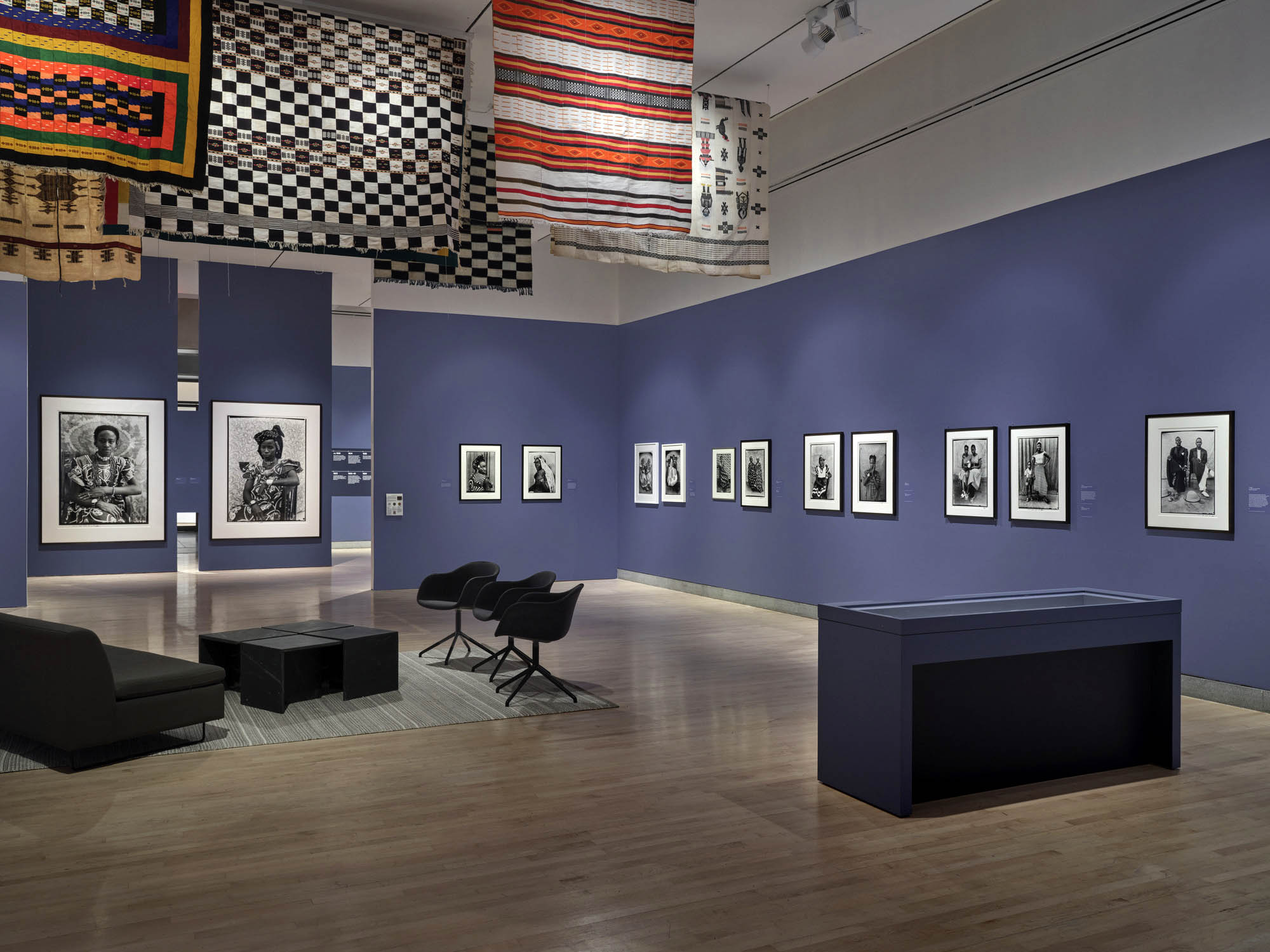
 

Norman Rockwell (American, 1894-1978)
 'New Kids in the Neighborhood' 1967


Norman Rockwell (American, 1894-1978)
New Kids in the Neighborhood
1967
Tear sheet, Look, May 16, 1967
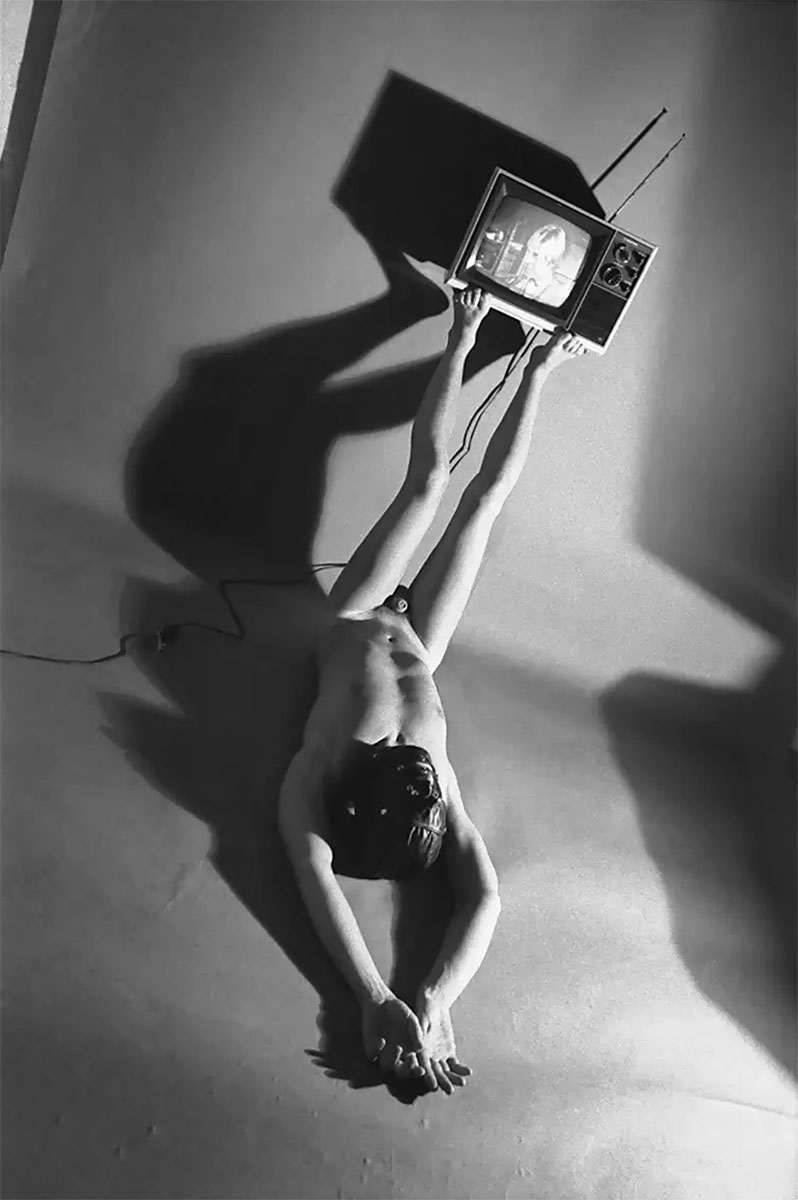
13 x 20 1/2 in
Norman Rockwell Museum Archival Collections
Norman Rockwell Licensing, Niles, Illinois


Gene Pelham (American, 1909-2004) '
Photograph for Shuffleton's Barbershop' 1950


Gene Pelham (American, 1909-2004)
Photograph for Shuffleton’s Barbershop
1950
Study for The Saturday Evening Post, April 29, 1950
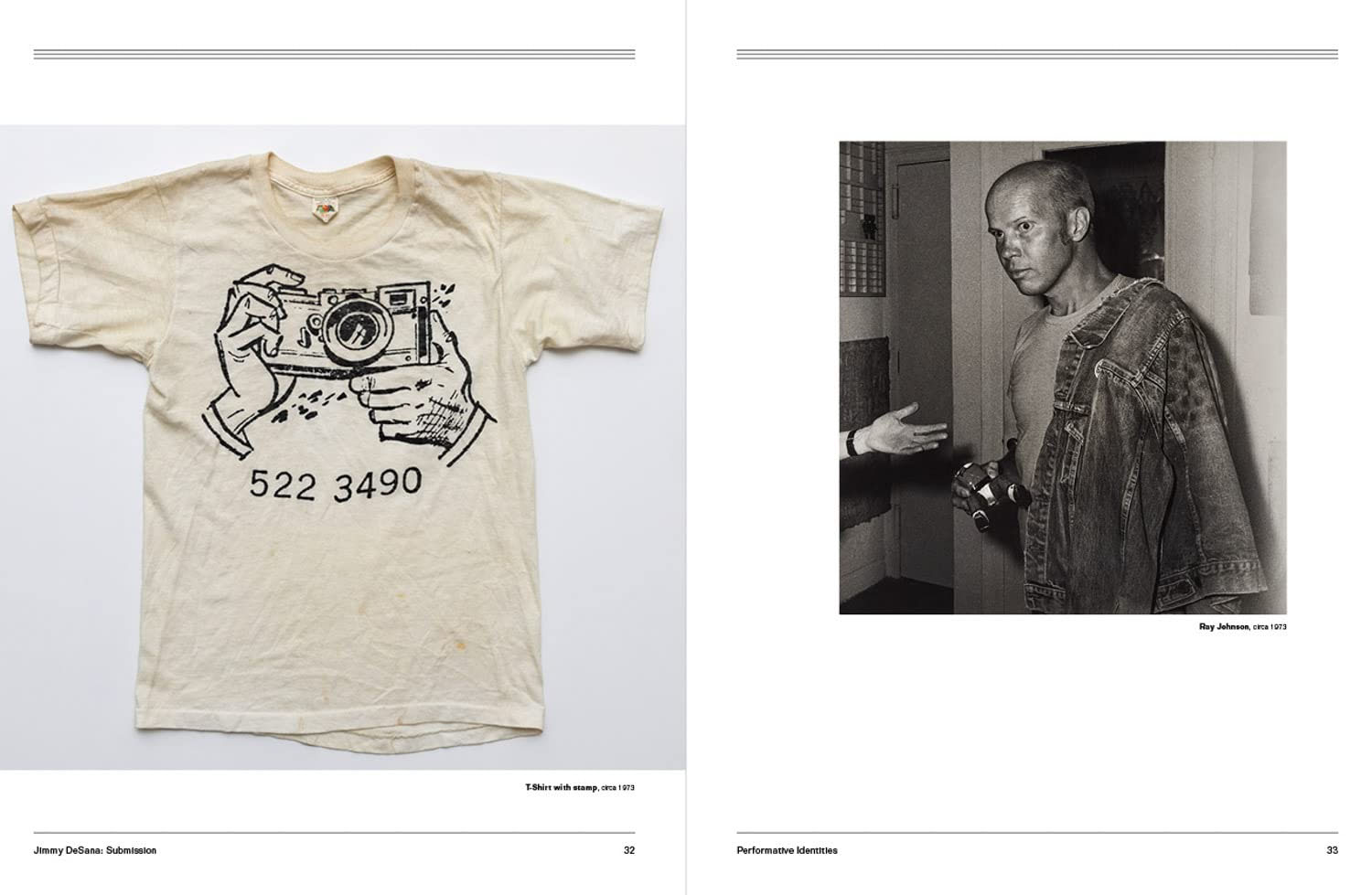
11 5/16 x 7 15/16 in
Norman Rockwell Museum Archival Collections
Norman Rockwell Licensing, Niles, Illinois


Norman Rockwell (American, 1894-1978)
 'Shuffleton's Barbershop' 1950


Norman Rockwell (American, 1894-1978)
Shuffleton’s Barbershop
1950
Cover Illustration for The Saturday Evening Post, April 29, 1950
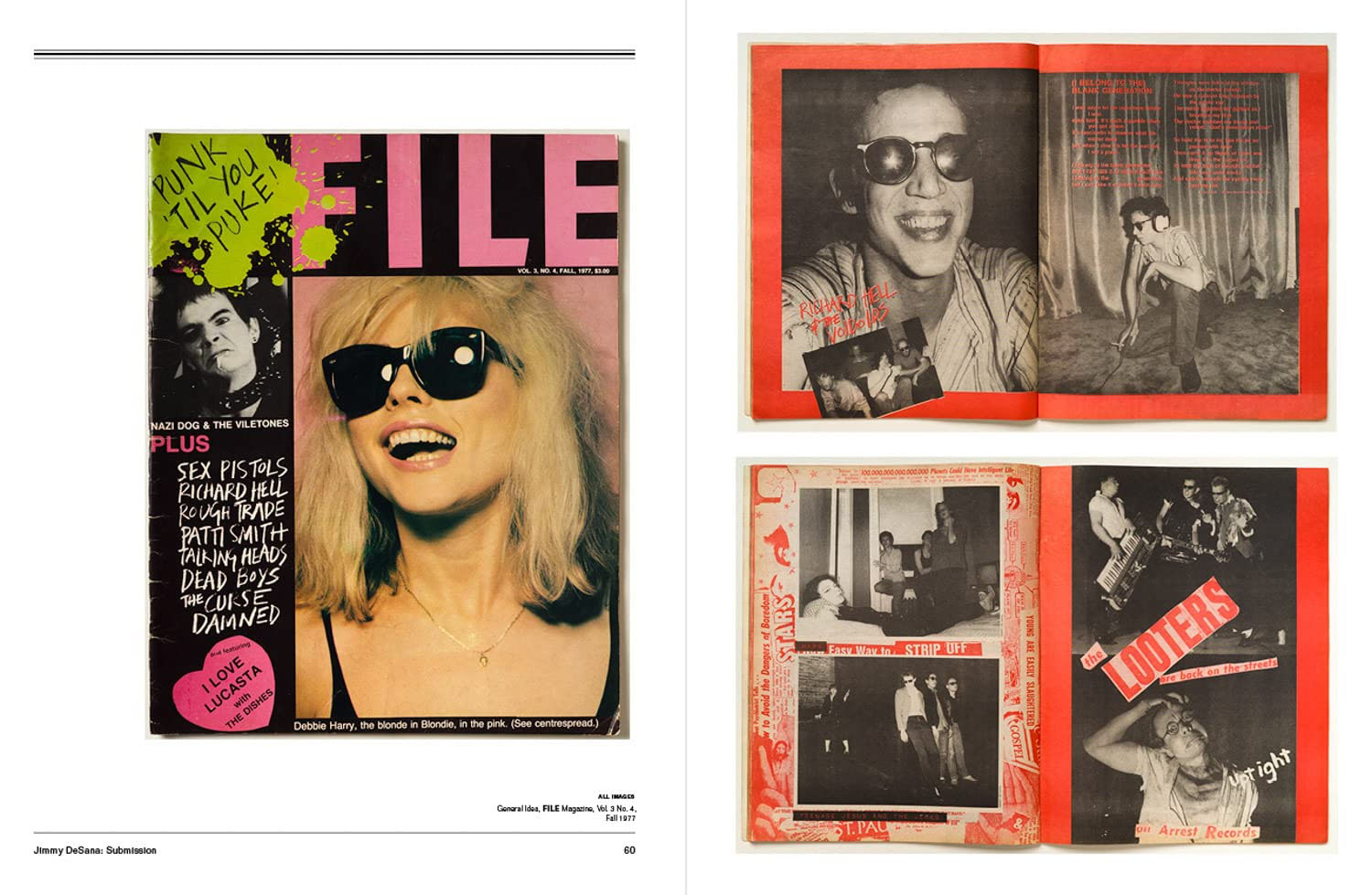
Oil on canvas
45 3/4 x 42 1/2 in
Collection of the Berkshire Museum, Pittsfield, MA 
©1950
SEPS: Curtis Publishing, Indianapolis


Gene Pelham (American, 1909-2004) 'Photograph for Soda Jerk' 1953


Gene Pelham (American, 1909-2004)
Photograph for Soda Jerk
1953
Study for The Saturday Evening Post, August 22, 1953
9 1/2 x 7 9/16 in
Norman Rockwell Museum Archival Collections
Norman Rockwell Licensing, Niles, Illinois


Gene Pelham (American, 1909-2004) 'Photograph for Soda Jerk' 1953


Gene Pelham (American, 1909-2004)
Photograph for Soda Jerk
1953
Study for The Saturday Evening Post, August 22, 1953
9 1/2 x 7 9/16 in
Norman Rockwell Museum Archival Collections
Norman Rockwell Licensing, Niles, Illinois


Norman Rockwell (American, 1894-1978) '
Soda Jerk' 1953


Norman Rockwell (American, 1894-1978)
Soda Jerk
1953
Tear sheet, The Saturday Evening Post, August 22, 1953
13 5/8 x 10 5/8
 in
Norman Rockwell Museum Archival Collections 
© 1953
SEPS: Curtis Publishing, Indianapolis


Norman Rockwell (American, 1894-1978) 'The Dugout' 1948


Norman Rockwell (American, 1894-1978)
The Dugout
1948
Cover illustration for The Saturday Evening Post, September 4, 1948
Transparent and opaque watercolor over graphite on two sheets of conjoined cream, moderately thick, moderately textured wove paper
19 x 17 13/16 in
Collection of the Brooklyn Museum
Gift of Kenneth Stuart 
© 1948
SEPS: Licensed by Curtis Publishing, Indianapolis


Gene Pelham (American, 1909-2004) 
'Photograph for The Dugout' 1948


Gene Pelham (American, 1909-2004)
Photograph for The Dugout
1948
Study for The Saturday Evening Post, September 4, 1948
Norman Rockwell Art Collection Trust
Licensed by Norman Rockwell Licensing, Niles, Illinois


Brooklyn Museum
200 Eastern Parkway
Brooklyn
New York 11238-6052

Opening hours:
Wednesday – Sunday 11am – 6pm

Brooklyn Museum website

LIKE ART BLART ON FACEBOOK

Back to top