Text: ‘Golden splendour: privilege, ceremony and racism in 1920s-1930s Australia’ on the photo album ‘John “Jack” Riverstone Faviell (1892-1960), 1922-1933’ Part 2

January 2023

Warning: Aboriginal and Torres Strait Islander readers should be aware that this posting contains images and names of people who may have since passed away.
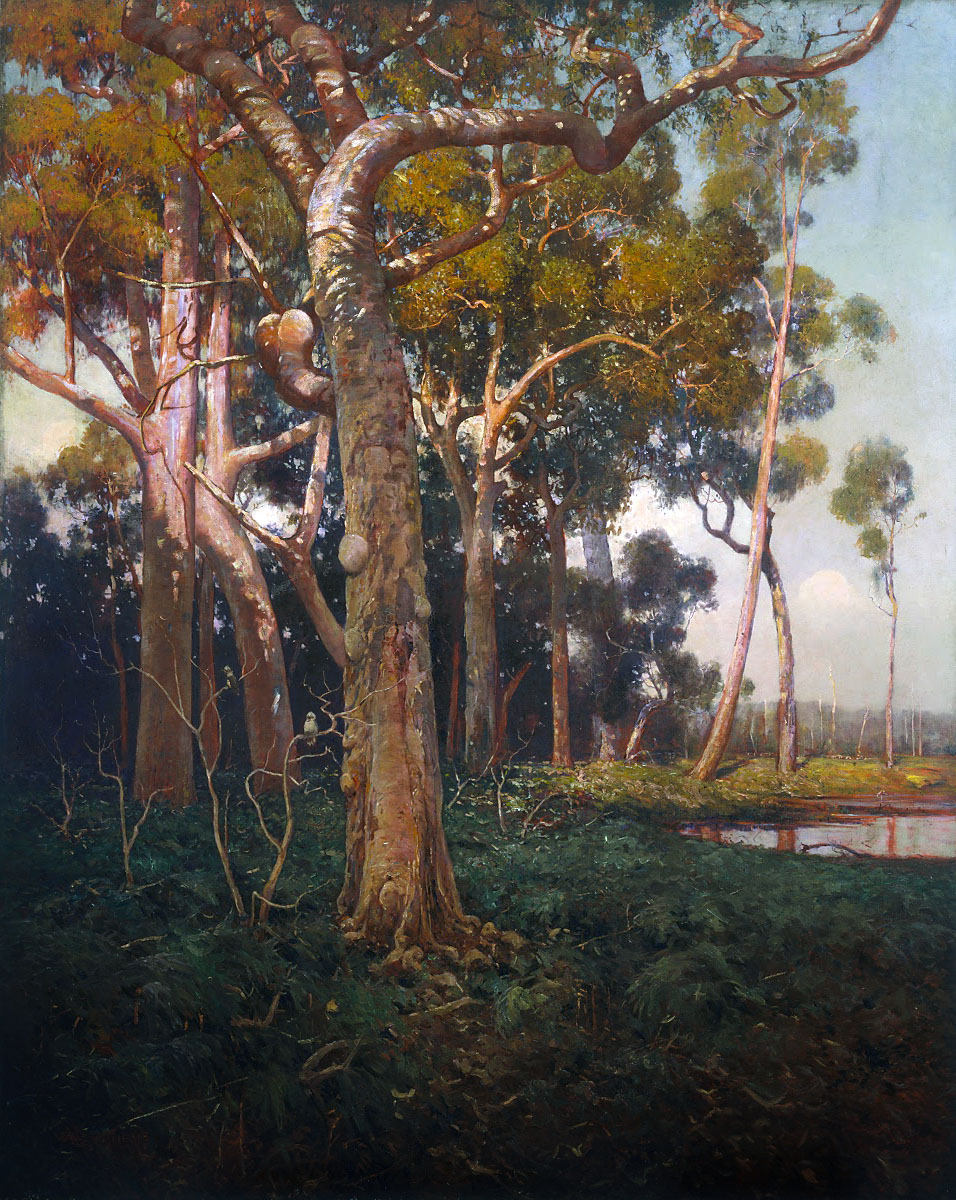
 

W Lister Lister (27 Dec 1859 - 06 Nov 1943) 'The golden splendour of the bush' c. 1906 from Marcus Bunyan. 'Golden splendour: privilege, ceremony & racism in 1920s-30s Australia' on the photo album 'John "Jack" Riverstone Faviell (1892-1960), 1922-1933' Part 2


W Lister Lister (27 Dec 1859 – 06 Nov 1943)
The golden splendour of the bush
c. 1906
Oil on canvas
Frame: 294 x 245.0 x 13.5cm
Art Gallery of New South Wales

Used under fair use condition for the purpose for research or study


Abstract

Discovered in an op shop (charity shop in America), this is the most historically important and exciting Australian photo album that I have ever found.

Belonging to John “Jack” Riverston Faviell, a senior New South Wales public accountant and featuring his photographs, the album ranges across the spectrum of Australian life and culture from the East to the West of the continent in the years 1922-1933. A list of locations and topics can be seen below. I have added additional research text, posters and photographs to help illuminate some of the issues under consideration.

Given its importance in documenting through photographs regional NSW, Indigenous Australians and the opening of the Sydney Harbour Bridge, the album is now in the State Library of New South Wales collection.

Keywords

Australian culture, Australian identity, Australian colonialism, Indigenous Australians, photography, photo album, Australian photography, Australian vernacular photography, racism, Australian racism, racism in Australia, White Australia, Sydney Harbour Bridge, Trans-Australian Railway, State Library of New South Wales, New South Wales, Australia, rural New South Wales, country races, Kalgoorlie Boulder, pearling, gold mining, Year of Mourning, Invasion Day, National Day of mourning, First Nations of Australia, reconciliation, pastoralism


Golden splendour: privilege, ceremony and racism in 1920s-1930s Australia

This text investigates the photographs found in an important Australian album discovered in an op shop (charity shop in America) belonging to John “Jack” Riverston Faviell (see part one of the posting), a senior New South Wales public accountant who associated with important pastoralists and bankers of the time, invested in business, travelled across the continent, went to many functions, married Sydney socialite Melanie Audrey Pickburn in February 1925 (divorced October 1930) and built a house on prestigious Darling Point overlooking Sydney Harbour.

The album features Faviell’s photographs and was probably compiled by him, the photographs ranging across the spectrum of Australian life and culture from the East to the West of the continent in the years 1922-1933. A list of locations and topics can be seen below. The album has been assembled in near chronological order although some later dates precede earlier ones (for example, “Frensham Pastoral Play” of 8th December 1923 precedes “La Perouse” 7 November 1923; “Trip to Canberra” 5/6 Nov 1927 precedes “Jenolan Caves Trip” 10/12th July, 1927; and some images from 1927 sit side by side with photographs from October and November 1932). There are no dates for Faviell’s trip to Western Australia (presumably in early 1924) and the dating starts again with a polo competition for “The Dudley Cup” in 1924 after this trip.

Taken in Scotland and sent by a man named Robert Reid from that country there is only one overseas photograph in the album. The photograph, which was presumably taken on Faviell’s honeymoon, is titled “Ellen’s Isle, Loch Katrine, Scotland (Audrey & me in boat) 1925”, and is inserted unceremoniously into photographs dating from 1927. There is no other reference to his marriage or photographs of it or his honeymoon in the album. The handwriting and grid-like layout of the photographs are consistent from front to back, and the photographs are mostly of the same size and shape (meaning he used the same camera throughout the period), other than photographs that Faviell did not take (including the “honeymoon” photograph from Scotland and the photographs of Jenolan Caves taken by Lady Dorothy Hope-Morley).

Thinking of the order that the photographs have been inserted into the album means to my mind that it was consciously assembled by Faviell probably after the date of the last photograph in the album which is November 1933 – although it is possible that he assembled it as he went along, inserting the “honeymoon” photograph from 1925 into the 1927 pages, and some earlier 1927 photographs next to the ones from 1932. But it just doesn’t feel like the latter to me… everything is too ordered to be done as he went along.

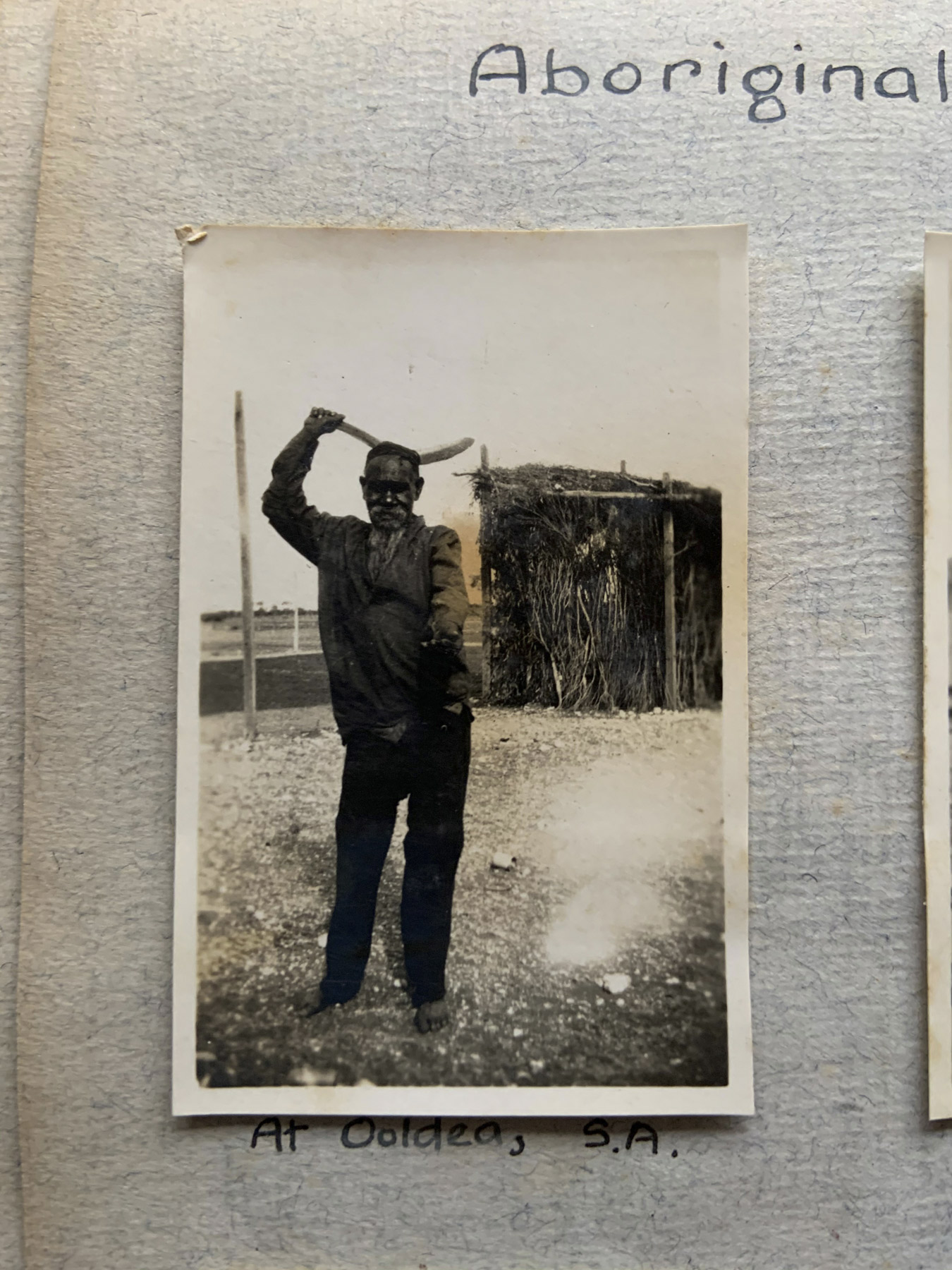
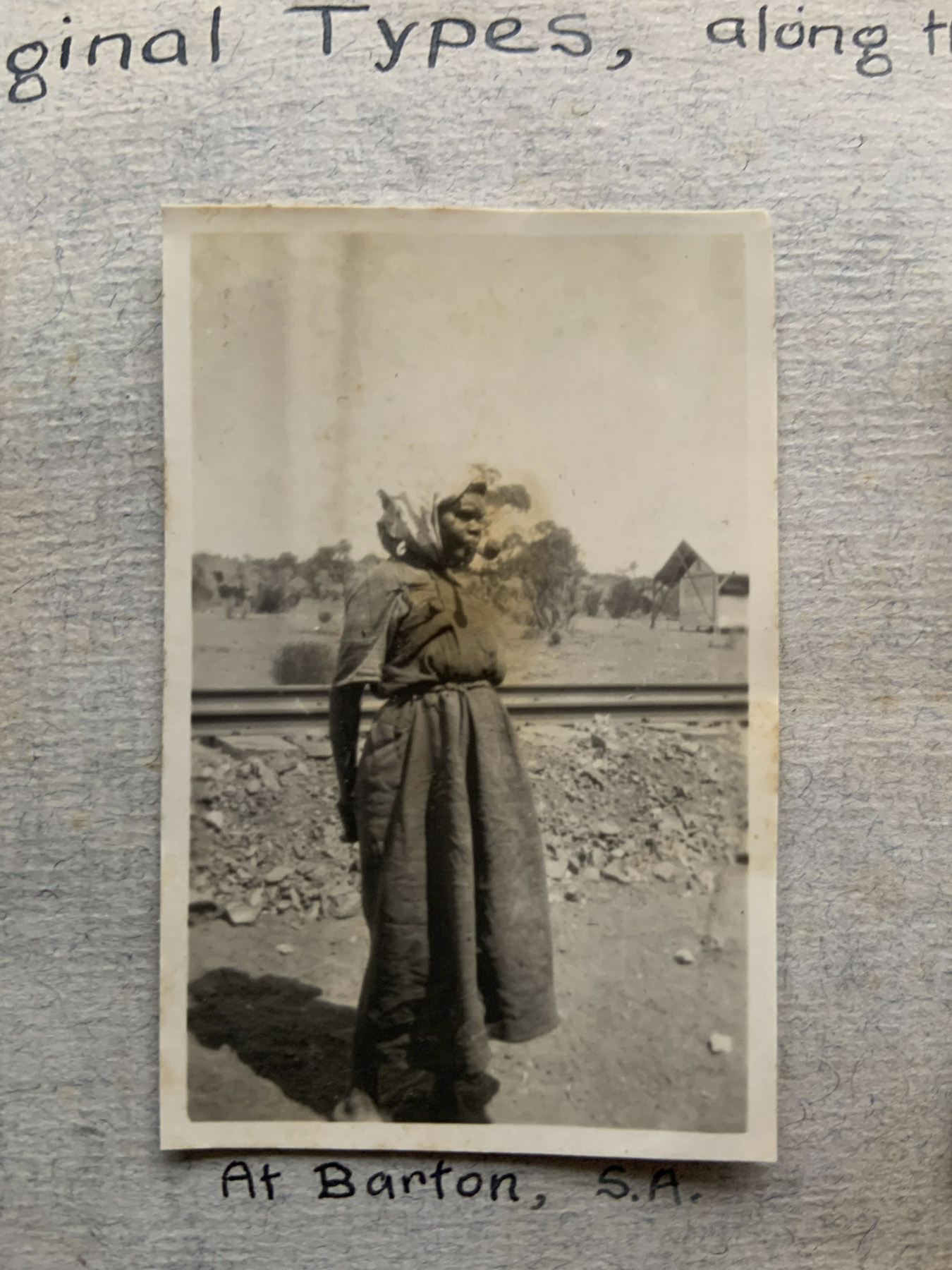
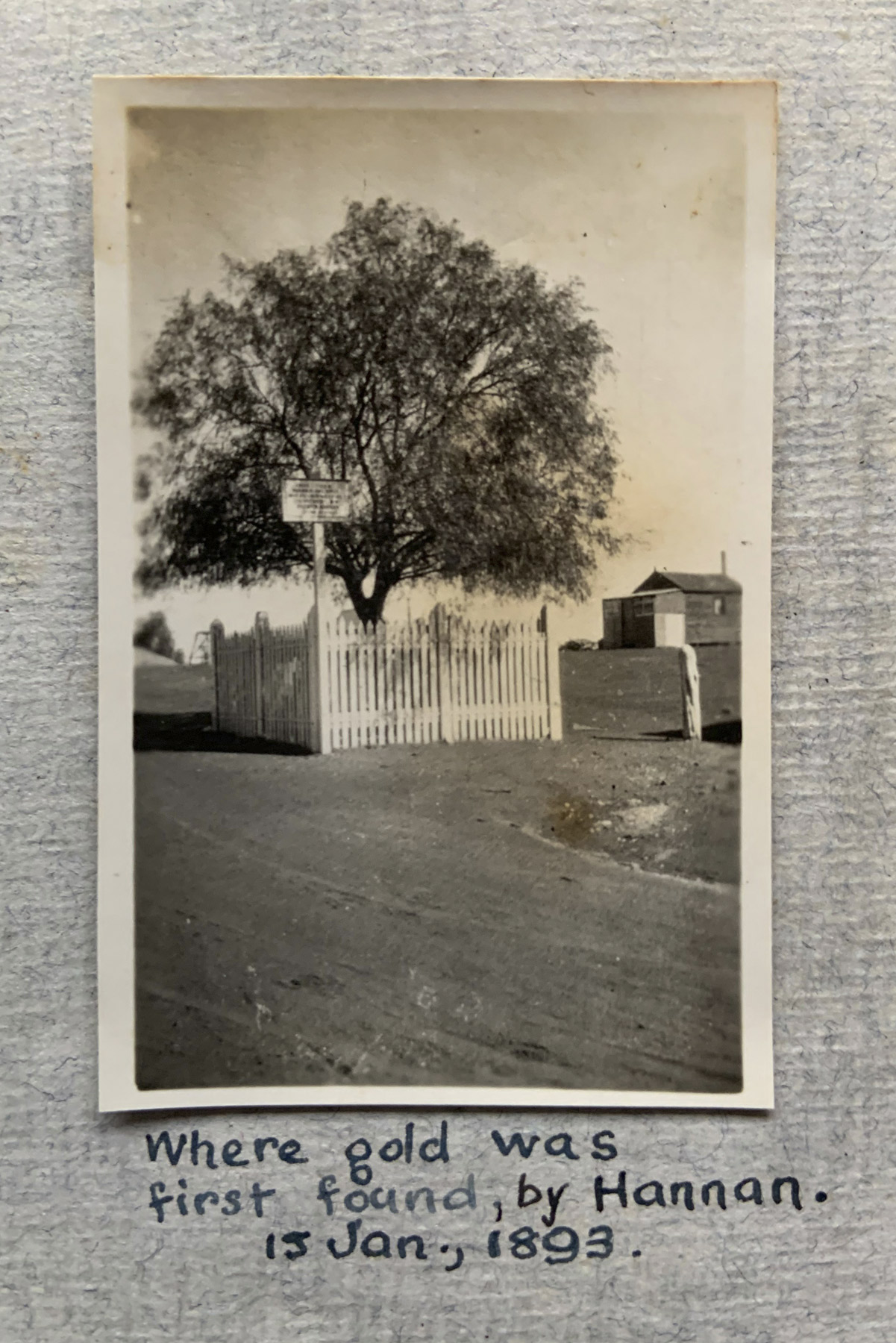
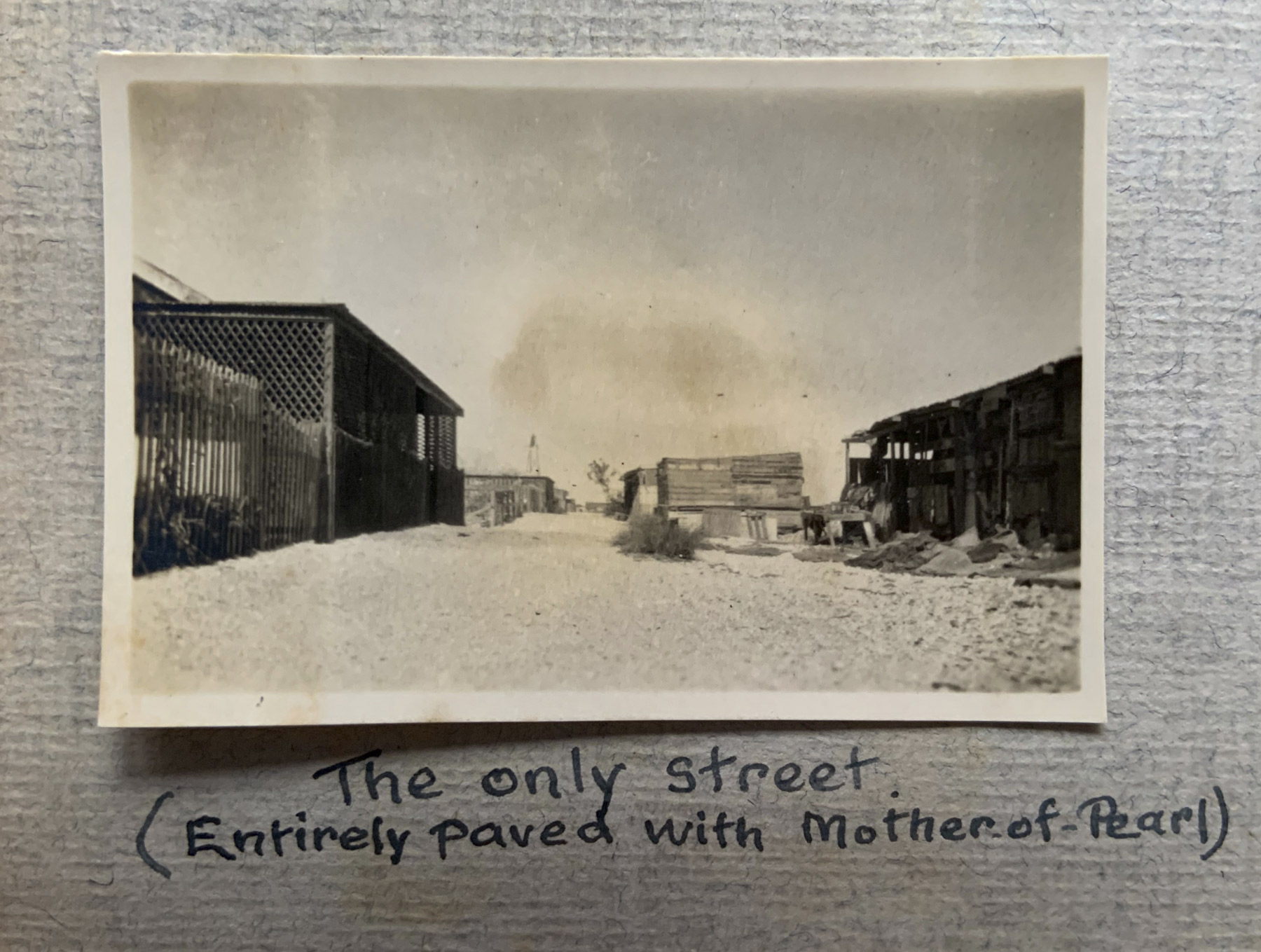
One important element of the album are John Faviell’s photographs which document his life in rural New South Wales as he attends various country race meetings, schools, historic houses, pastoral farms, regatta, and business ventures in the state during the 1920s. A second important element is the documentation of “Aboriginal Types” along the Trans-Australian Railway, gold mining in Kalgoorlie-Boulder, and pearling and Aboriginals in Shark Bay, the latter two in Western Australia. Finally, important unpublished photographs of the opening of the Sydney Harbour Bridge in 1932 give insight into the pageantry and colonialism of white Australia.

Privilege

A feeling of privilege – defined as a special right, advantage, or immunity granted or available only to a particular person or group – pervades the photographs in the album. Faviell belonged to a particular social category which had an inherently privileged and advantageous position.

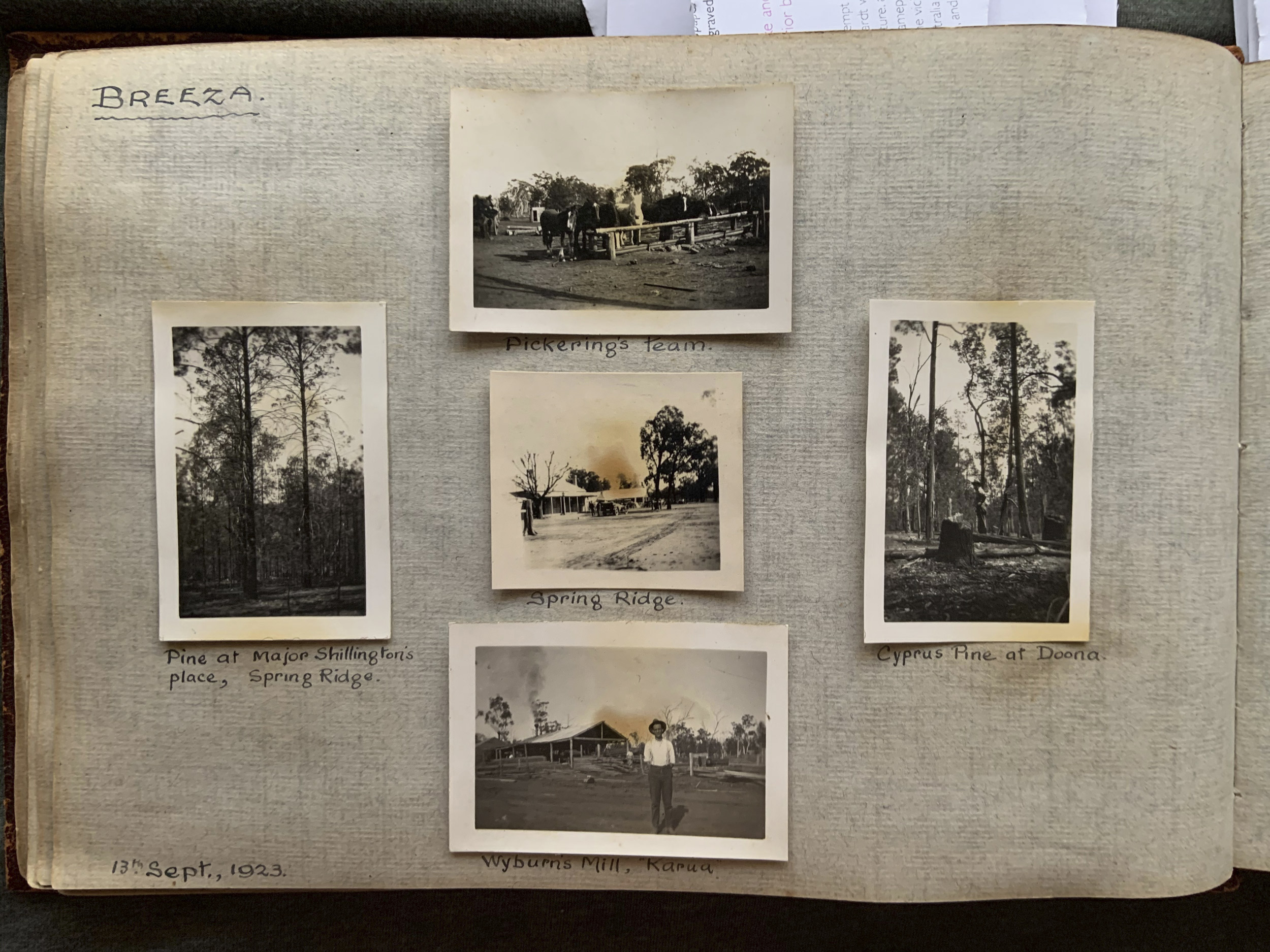
This is evidenced by his friendship with wealthy New South Wales graziers such as O.E. Friend (d. 1942) who was President of the Royal Historical Society and Director of the Commercial Banking Co., and who had a keen interest in pastoral pursuits and business investments; by photographs of large houses and pastoral stations such as “Weroona”, Belmont (demolished 1979), “Doona”, Breeza and “Foxlow”, Bungendore near Canberra which consisted of 7,500 hectares of land; by photographs of country horse races, friends who owned race horses and polo matches; by photographs of new cars; by photographs of his own investment projects such as the Doona Cyprus Pine Venture; by photographs of his travel to Western Australia and five-day cruise on the Cutter “Shark”; by photographs of “Old Boys” from Camden Grammar School, a term redolent of the English public school system; by building a house on one of the most exclusive promontories overlooking Sydney Harbour; by getting married in one of the “biggest social events of the month in Sydney”; and so it goes… the (British) class system alive and well in 1920s Australia, still an extension of the Empire.

What we should remember is that, after the end of the First World War the “1920s saw a higher level of material prosperity for non-Indigenous people than ever before.” Despite the rising affluence of the 1920s the Australian unemployment rate floated between 6% and 11% throughout the decade. Then, in October 1929, the world experienced a stock market crash on Wall Street in New York that plunged the world into the Great Depression (1929-1934). By 1932, one third of all Australians were out of work.

“Australia suffered badly during the period of the Great Depression of the 1930s… As in other nations, Australia suffered years of high unemployment, poverty, low profits, deflation, plunging incomes, and lost opportunities for economic growth and personal advancement. Unemployment reached a record high of around 30% in 1932, and gross domestic product declined by 10% between 1929 and 1931… Many hundreds of thousands of Australians suddenly faced the humiliation of poverty and unemployment. This was still the era of traditional social family structure, where the man was expected to be the sole bread winner. Soup kitchens and charity groups made brave attempts to feed the many starving and destitute. The male suicide rate spiked in 1930 and it became clear that Australia had limits to the resources for dealing with the crisis. The depression’s sudden and widespread unemployment hit the soldiers who had just returned from war the hardest as they were in their mid-thirties and still suffering the trauma of their wartime experiences. At night many slept covered in newspapers at Sydney’s Domain or at Salvation Army refugees.”1


Due to his wealth, his privileged family life and position in society, Faviell obviously felt none of the effects of the Great Depression. Although there are no photographs in the album taken between 1928 and 1931, by November 1932 he was buying a new Chrysler 70 motorcar. You can’t do that without money.

Ceremony

Faviell attended the opening of the Sydney Harbour Bridge on the 20th March 1932 sitting in the official stands, taking what are up until now previously unknown photographs of the Federal and State Governors arriving and the pageantry of the official opening (see photographs below). The ceremony featured a passing parade of groups, floats and attractions including Naval Guard, Mounted Police, Cobb & Co. Coach, Old King Street Bus, an early Hupmobile car, the first Auto-Gyro, Wool Float, surf girls, Pioneers Float and Aborigines. Also present in the parade at the Bridge’s opening ceremony was a contingent from the Aboriginal community of La Perouse on Sydney’s Botany Bay. According to the series Australia in Colour, “The first Australians are a token inclusion in the celebrations. They are not classed as citizens in their own country and have no voting or legal rights…”2 State and federal governments still saw Indigenous Australians as, “the native problem.” “For most city people, the only contact with Indigenous groups was watching tent boxing at the travelling shows which used to flourish in the ’30s.”3 But things were beginning to change. Indigenous Australians were slowly being politicised in order to get their message across, with pleas for better rights, conditions and representation.

Five years later, on the occasion of the 150th anniversary of European settlement in Australia in 1938 there was a re-enactment of Governor Phillip’s landing in which Aborigines (specially brought in for the occasion) are shown running up the beach as the boats of the First Fleet marines land at Farm Cove (see photograph below). A group of white dignitaries sits in comfortable safety watching the invasion. Elsewhere on that day in 1938 – Wednesday, 26th January – there took place the first Day of Mourning and Protest at the Australian Hall, Sydney. The protest, calling for full citizen status and equality, was led by William Cooper, Pearl Gibbs, Jack Patten and William Ferguson (see photographs and poster below). Cooper and his fellow Aboriginal men Jack Patten and William Ferguson organised a conference to grieve the collective loss of freedom and self-determination of Aboriginal communities as well as those killed during and after European settlement in 1788. “The first Day of Mourning was a culmination of years of work by the Australian Aborigines League (AAL) and the Aborigines Progressive Association (APA). It would became the inspiration for Aboriginal and Torres Strait Islander activism throughout the remainder of the twentieth century.”4

“In 1938, William Cooper had thrown down a challenge. It was 150 years since the landing of the ragtag British ‘first fleet’ in Sydney Cove on 26 January in 1788. As white Australians were preparing to celebrate, Cooper had branded that landing as the beginning of 150 years of invasion, dispossession and exploitation. Cooper dared white Australia to recognise that their ‘Australia Day’ was no celebration but instead a ‘Day of Mourning’ for invaded Australia. …

A forced reenactment. For the 150th Anniversary, Aboriginal people were forced to participate in a reenactment of the landing of the First Fleet under Captain Arthur Phillip. Aboriginal people living in Sydney had refused to take part so organisers brought in men from Menindee, in western NSW, and kept them locked up at the Redfern Police Barracks stables until the re-enactment took place. On the day itself, they were made to run up the beach away from the British – an inaccurate version of events. It was Cook who was first “threatened and warned off by the Indigenous people on the shore” and he then decided to fire gun shots.”5


Anita Heiss observes of that day in 1938, “The day also saw an appalling contrast. Aboriginal organisations in Sydney refused to participate in the government’s re-enactment of the events of January 1788. In response, the government transported groups of Aboriginal people from western communities in NSW to Sydney to partake in the re-enactments. The visitors were locked up at the Redfern Police Barracks stables and members of the Aborigines Progressive Association were denied access to them. After the re-enactment of the First Fleet landing at Farm Cove (Wuganmagulya), the visiting group of Aboriginal people were featured on a float parading along Macquarie Street.”6

Finally, by 1988, the re-enactments were discontinued. 50 years later to the day, on the occasion of the Australian Bicentenary in 1988 (the same year named a Year of Mourning by and for the Australian Aboriginal people), the protests against British invasion were even more prominent and vigorous, as Aboriginal people and their supporters rallied in Sydney and around the country. “On 26 January that year, up to 40,000 Aboriginal people (including some from as far away as Arnhem Land in the Northern Territory) and their supporters marched from Redfern Park to a public rally at Hyde Park and then on to Sydney Harbour to mark the 200th anniversary of invasion.”7

“On 26 January 1988, more than 40,000 people, including Aborigines from across the country and non-Indigenous supporters, staged what was the largest march in Sydney since the Vietnam moratorium. …

The march was seen as a challenge to the dominant society’s hegemonic construction of Australia day and what it represented. It was a statement of survival, demonstrating that although Australian history had excluded the indigenous voice, Aborigines as the original inhabitants of this place were not going to continue to be beggars in their own country. The march served to draw both national and international attention to Australia’s appalling human rights record. It aimed to educate the public about the poor conditions of Aboriginal health, education and welfare, of the high imprisonment rates and the number of deaths in custody suffered by Indigenous Australians. Activists such as Gary Foley called on Australians to join the Aboriginal protests and to make the point to the rest of Australia that the whole concept of the Bicentennial is based on hypocrisy and lies. …

There had been little emphasis on the need to address indigenous aspirations as a precondition to celebrating the bicentenary. The protest march was both an affirmation of indigenous Australians’ survival and a stark reminder of the falsity on which the celebration was premised. Celebrations focused on the discovery of Australia with a re-enactment of the arrival of the first fleet. However, the Aboriginal protest was a reminder that Australia had been inhabited at least 40,000 years before European arrival.”8


As the editorial in the Sydney Morning Herald newspaper on January 19, 1988 noted, “scarcely a day of the Bicentenary has passed when issues involving Aborigines and their “Year of Mourning” protests have not featured prominently…” which “instigated public debate concerning white and indigenous Australian history, the position of Aborigines in contemporary society and the possibilities of land rights and reconciliation in the future.”9 But despite these protests many Australians, myself included – newly arrived from England and still homesick for the mother country, failing to grasp the enormity of the betrayal – did not understand the protests. “Despite Indigenous people declaring January 26 a National Day of mourning fifty years prior in 1938, many of the non-Indigenous majority still failed to see any disrespect in celebrating an occasion made possible by the murder, massacre, dispossession, slavery and attempted genocide of the Indigenous people of this land.”10

While I could never understand, as an English man, Australia’s treatment of their First Peoples when I first arrived, at the time I had not educated myself or immersed myself in the history of Australia to gain its full import. Now I have. And so have other people.

Importantly, national events happened in the 1990s that led up to the Walk for Reconciliation across Sydney Harbour Bridge on 28 May, 2000 (see photograph below) in which about 250,000 people walked across the Sydney Harbour Bridge to show their support for reconciliation between Australia’s Indigenous and non-Indigenous peoples: in 1991 the Australian Parliament passed an Act which created the Council for Aboriginal Reconciliation; in the 1992 Mabo decision the High Court of Australia ruled that Australia was not terra nullius (land belonging to nobody) when it was claimed by Britain in 1770. This led to the Native Title Act 1993, which made it possible for Aboriginal and Torres Strait Islander people to claim ownership of their traditional lands; and the Bringing Them Home report, published in 1997, showed that thousands of Aboriginal and Torres Strait children had been taken away from their families by governments around Australia. These children have become known as the Stolen Generations. The report said that all Australian governments should apologise to Indigenous people, especially the Stolen Generations.11 So many people participated in the walk that the event took nearly six hours. It was the largest political demonstration ever held in Australia. Finally, eight years after the walk Prime Minister Kevin Rudd made a national apology to Australia’s Indigenous people. “On 13 February 2008, the Parliament of Australia issued a formal apology to Indigenous Australians for forced removals of Australian Indigenous children (often referred to as the Stolen Generations) from their families by Australian federal and state government agencies.”12

Better late than never…

Racism

By the time John Faviell started taking photographs for his album a twentieth-century, Euro- and U.S.-centric middle class had been dazzled by the “Kodakification” of photography. Small portable cameras with roll film and a faster film speed enabled “amateur” photographers,13 people who “simply wanted pictures as mementos of their daily lives but were hardly interested in learning how to do the rest”14 – that is, developing, printing and toning their own photographs – to document their existence and then send the film away to be developed and printed. George Eastman’s slogan for Kodak, “You Press the Button, We Do the Rest,” revolutionised the photography business in the United States and in the world, allowing the great mass of the general public to take photographs and assemble family albums (for example). In these vernacular photographs – “those countless ordinary and utilitarian pictures made for souvenir postcards, government archives, police case files, pin-up posters, networking Web sites, and the pages of magazines, newspapers, or family albums”15 – the focus is on the social contexts in which the photos were originally made and how they document an aspect of social or photo history. These images, including those by John Faviell, ask us to consider “the ways in which photographs function as significant bearers of complex meaning, rather than mere descriptions or reflections of the world, whether they grace the walls of a museum, the pages of a magazine, the files in a cabinet, or a living room mantel.”16 Commenting on photo postcards but equally applicable to vernacular photographs, Leonard A. Lauder observes that, “The new flexibility and mobility of this medium created citizen photographers who captured life on the ground around them… [and] we learn from them both the grand historical narrative and the smaller events that made up the daily lives of those who participated in that history.”17

Even as the freedom to photograph anywhere, anytime led to the ability of humans with access to a camera and the money to develop and pay for film and prints to document their lives – an intimate portrait of a life in the making, constructed by people for themselves – it also, paradoxically, led to the Kodification, codification, of everyday life… into the haves and the have nots, into people who were portrayed existing at the upper echelons of society, to those that existed as policemen, factory workers, or working on construction sites (for example), or those that existed at the margins of society, the disenfranchised, abused and neglected “other”, subject to the gaze of the photographer and the mechanical observation of the camera.

Even as he welcomes his own ambition and sense of self worth there is a sense of conservatism and privilege in the depiction of his social position in Australian society. In his private photographic album, John Faviell places himself at the centre of the story, at the centre of history, as though he is constructing not only his own place in the history of Australia but the history of Australia itself. His photographs portray his life embedded within the “golden splendour” of the Australian landscape even as the photographs reinforce in private the cultural and photographic norms circulating in public in 1920s-1930s Australia,18 its heteropatriarchy, settler coloniality and the racism prevalent in early 20th century Australia. Through the many titled photographs Faviell projects the inherent racism towards Aboriginal people that was present at that time in white society, the notion of white superiority that was implicit in the White Australia Policy.19 In this regard he would not have seen himself as racist (I have no idea whether he was racist or not) for he was merely reflecting the social attitudes of the day, reflecting a collective racism that pervaded all aspects of white Australian society officially sanctioned through the White Australia Policy, an attitude which continues to haunt Australia’s past, present and future.

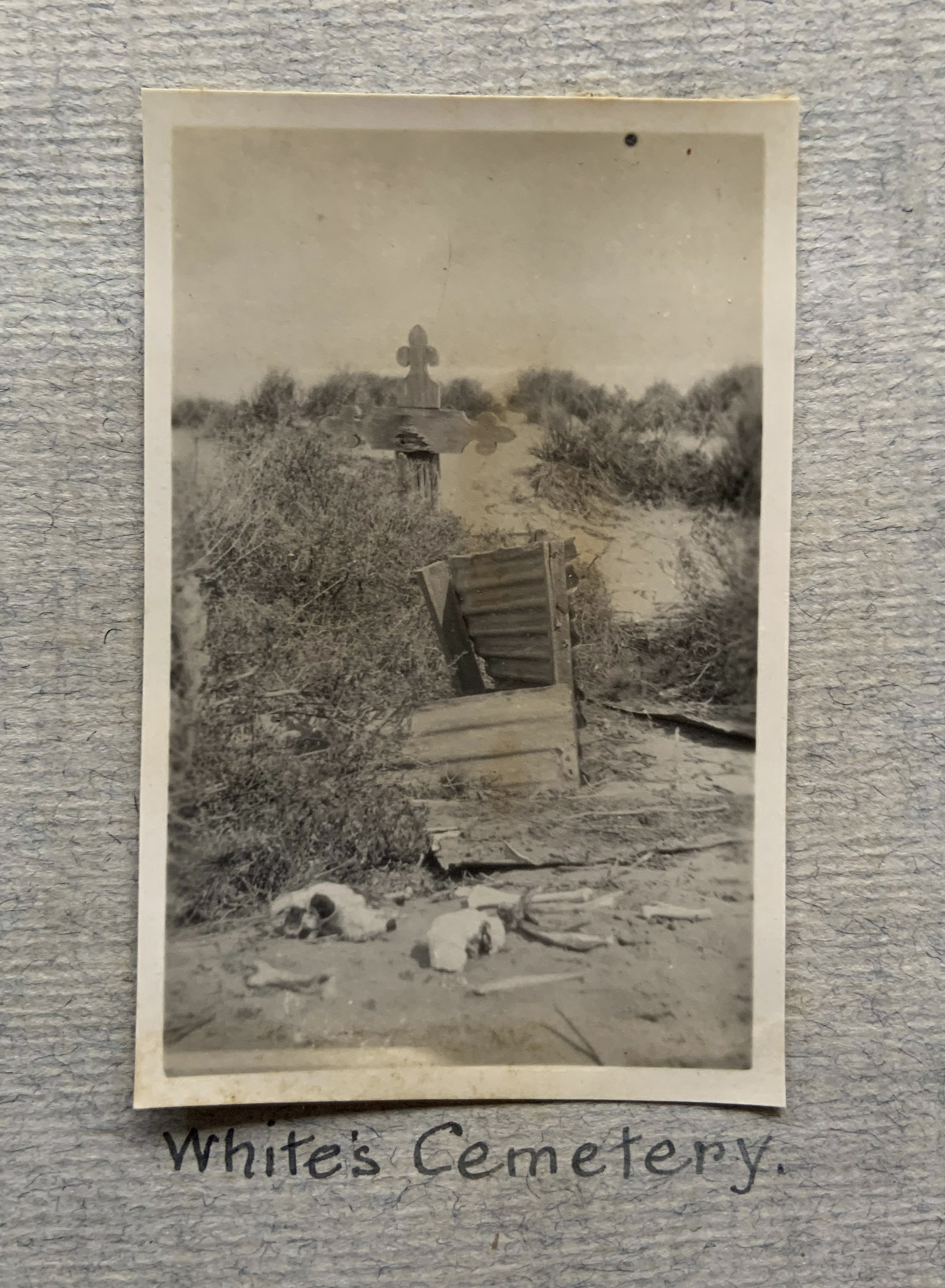
While now totally offensive Faviell would have thought nothing of captioning his photographs with titles such as Grave in Nigger’s Cemetery, Shark’s Bay, 1923; A Nor’ West Gin and Big Nig, Shark’s Bay, 1923; and Nellie and her litter, 1923, where after colonisation “gin” became a racist, derogatory term for an Aboriginal woman quickly used against female Aborigines to express a mix of lust and racial contempt, becoming a “dehumanising weapon essential to the violence of occupation,” which led to the systematic rape, abduction and murder of Aboriginal girls and women. He would have thought nothing of titling his photograph Nellie and her litter, the text loaded with casual racism which compares Indigenous Australians to dogs. But what is important to note here is how individuals make use of images in shaping their identities, and how Faviell’s images informed the construction of his own identity and the embodying of his own power.

Photographs tend to be indispensable in the construction of identity because of the phenomenal aspect of photography – its status as a spatio-temporal capture – where memory traces and their capture become a visible reality, and where contexts (point of view) and power can be replayed over and over again, made present in absence.20 Faviell’s album of photographs and the use of the art of memory (Latin: ars memoriae: a number of loosely associated mnemonic principles and techniques used to organise memory impressions) would have allowed him to organise his memory impressions and improve the recall of them. Faviell could have used a set of associative values given for images in memory texts (Nigger, gin) as a starting point to initiate a chain of recollection. “Techniques commonly employed in the art [of memory] include the association of emotionally striking memory images within visualized locations, the chaining or association of groups of images, the association of images with schematic graphics or notae (“signs, markings, figures” in Latin), and the association of text with images.”21

Here we must acknowledge that human beings, including Faviell, are not just actors in history, they are enablers. Enablers of racism whose slippery tentacles still enslave this country Australia down to its very roots – at the footy, on social media, in government, on the land – even today. As the artist Octora observes, “A photograph is not merely evidence of the past or a slice of a passing moment, it is performative and still performs to distort actual reality today.”22 But changing how photographs perform realities and memories is not easy, for there are other forces at play to which photographs only reinforce social prejudices: “There is a racism that lurks within the Australian consciousness and is fuelled by an uneasy conscience caused by our treatment of Aborigines in the past and out fear from the future.”23

What we must do is confront this fear and propose a narrative that moves beyond those reflected in our existing histories… for memory is not just a personal remembering (the product and property of individual minds) but a collective remembering, “concerned with remembering and forgetting as socially constituted activities… Individual memories cannot be understood as ‘internal mental processes’ which occur independently of the interpretive and communicative practices which characterise a particular society or culture. Individuals ‘read’, account for and negotiate their memories within the pragmatics of social life.”24 As would John Faviell have done.

We must remember that historical memories help form the social and political identities of groups of people and that in Australia there is a collective amnesia surrounding the White Australia policy, a social amnesia where there is a collective forgetting by a group, or nation, of people about the effects of a certain policy – because they are ignorant of it, because they don’t care, because they agree with the policy, or because they benefit from the policy – and they forget about it. Things remain the same, the status quo is maintained, and mythologies of a white nation remain impervious to change. There is also a collective remembering that this is the policy of the government, that it keeps the country homogenous, and wards of the invasion of non-desirables. People of colour and “others”.

So how can looking at historic photographs, such as those in John Faviell’s photographic album, affect change? According to Mika Elo,

“Photographs are nomadic and relational images. They are scalable and can be inscribed in many kinds of material supports, which means that they carry in themselves references to something beyond their own instantiations. Something similar applies to power. Power can be restrictive or productive, personalized or impersonal, but it is always relational. With regard to visual representation, power is neither entirely inherent to specific images nor entirely reducible to the context. Rather, we might consider it a parergonal [a subordinate activity or work: work undertaken in addition to one’s main employment] phenomenon. As we all know, power relations can effectively be built up and worked against with photographic images. This means that in each individual case the borders between information, propaganda and advertising are necessarily indistinct – even if the face offered by the photograph as an image is distinct. The distinctness of an image is always dissimilarity [its groundlessness of meaning in a ‘network’ of significations]. The way in which a photograph cuts itself off from everything else introduces a mute interval that fosters many kinds of speech, whether banal, creative, humiliating or empowering. In any case, the photographic cut necessarily introduces basic conditions for power relations: it introduces a point of view into relational structures. Its effects can be both imaginary and symbolic. Depending on the point of view, the cut can be transformative or conservative, emancipatory or suppressive, subversive or destructive.”25


In this sense images, rather than being a representation of a palpable materiality at a particular point in time and with a particular interpretation, never cease to present their multiple aspects open to reinterpretation. Collectively and individually photographs can seize us, can hold us in their thrall. But we are not passive observers that approach the present which is absent, a particular floating “reality” that is embedded in a photograph, but an active participant in the encounter with performance and gesture… in the eyes of the observer. As Žarko Paić notes of the observer, “His role has changed significantly. It is no longer a Kantian passive subject to the reflection of a beautiful, nor a Nietzschean active producer who disturbs indifferent senses. The observer does not look at what’s happening in a picture like an idle screen. Violence caused by the rise of the chaotic reality of the twentieth century, wars and revolutions, by the technical acceleration of the cinematic energy of one’s life, becomes the “energy” and “intensity” of the image. The image is always an image of something. It is therefore mimetic in its aspiration to turn life into the objectivity of reality. However, the representation of something does not mean that it is only an empty intentional act of observing objects.”26 As Mika Elo states, “… power is necessarily inscribed in technologies, practices and discourses of photography in many ways. Photographic powers have their past, presence and future. They have their visible and invisible forms.”27

And so this is what we can collectively and individually undertake. We can look at John Faviell’s private photographs and confront the racist societal violence28 against Aboriginal people depicted through image and text, and we can disrupt their historicity, in public, in the here and now. We can acknowledge past determinations of these photographs and delimit that determination and identification in a network of significations… so that we celebrate the life of the disenfranchised because they are not to be seen as such. These are human beings living their life and are as equally as valuable as anybody else, and we can acknowledge this because we approach the photograph to embrace the … the “energy” and “intensity” of the image. And the “presence” and spirit of the people not as subject but as the thing itself.29

The observer actively engages with the photograph to bring these human beings to life in their imagination,30 to inhabit a reality that can in the present be changed. Every look performs this operation because only through this recon/figuration, this transformation, this metamorphosis, can we assess the past with fresh eyes and not be complicit in the racism and socially constituted activities of the past which still affect us today. Only by bringing the visible and invisible forms of racism into the open in the present can we open up new possibilities for the future.

As the photographer Frederick Sommer sagely opines,

The world is a reality,
not because of the way it is,
but because
of the possibilities it presents.


Dr Marcus Bunyan
January 2023

Word count: 4,671

See Part 1 of the posting


Footnotes

1/ “Great Depression in Australia,” on the Wikipedia website [Online] Cited 30/08/2021

2/ Lisa Matthews (director). “Shifting Allegiances,” from Australia in Colour Season One, Episode Two. TV Mini Series. Strange Than Fiction Films, 2019

3/ Ibid.,

4/ Anonymous. “The 1938 Day of Mourning,” on the AIATSIS website Nd [Online] Cited 21/02/2022.

5/ Isabella Higgins and Sarah Collard. “Captain James Cook’s landing and the Indigenous first words contested by Aboriginal leaders,” on the ABC News website Wed 29 Apr 2020 quoted in Jens Korff. “Australia Day – Invasion Day,” on the Creative Spirits website 26 July 2021 [Online] Cited 03/05/2022

6/ Anita Heiss. “Significant Aboriginal Events in Sydney,” on the Barani website Nd [Online] Cited 22/07/2021.

7/ Ibid.,

8/ Pose, Melanie. “Indigenous Protest, Australian Bicentenary, 1988,” on the Museums Victoria Collections website 2009 [Online] Cited 03/05/2022 Creative Commons Attribution 4.0 International

9/ Ibid.,

10/ Natalie Cromb. “Analysis: The ’88 protests,” on the SBS NTIV website 29 January, 2018 [Online] Cited 03/05/2022. No longer available online

11/ Anonymous. “Walk for reconciliation,” on the National Museum of Australia website 12 May 2021 [Online] Cited 03/05/2022

12/ “Apology to Australia’s Indigenous peoples,” on the Wikipedia website [Online] Cited 03/05/2022

13/ “Vernacular photography is also to be distinguished from amateur photography. While vernacular photography is generally situated outside received art categories (though where the lines are drawn may vary), “amateur photography” contrasts with “professional photography”: “[A]mateur [photography] simply means that you make your living doing something else”.”
Langford, Michael and Bilissi, Efthimia. Langford’s Advanced Photography. Oxford, UK and Burlington, MA: Focal Press. 2011, p. 1 quoted in Anonymous. “Vernacular photography,” on the Wikipedia website Nd [Online] Cited 06/05/2022

14/ Anonymous. “You Press the Button, We Do the Rest,” on the Wikipedia website Nd [Online] Cited 06/05/2022

15/ Anonymous. “In the Vernacular,” on the Art Institute of Chicago website, 2010 [Online] Cited 06/05/2022. No longer available online

16/ Ibid.,

17/ Leonard A. Lauder quoted in the press release for Real Photo Postcards: Pictures from a Changing Nation at the Museum of Fine Arts, Boston 17th March – 25th July, 2022 Nd [Online] Cited 06/05/2022

18/ Kris Belden-Adams. “CFP – ‘These Are Our Stories’: Global Expressions of “Other” Histories, Narratives, and Identities in Photographic Albums,” on the Humanities and Social Science Online website January 23, 2020 [Online] Cited 03/05/2022

19/ See Anonymous. “White Australia Policy,” on the Wikipedia website Nd [Online] Cited 25/12/2022; Anonymous. “White Australia Policy,” on the National Museum of Australia website Nd [Online] Cited 25/12/2022; and Anonymous. “The Immigration Restriction Act 1901,” on the National Archives of Australia website Nd [Online] Cited 25/12/2022

20/ Mika Elo. “Introduction: Photography Research Exposed to the Parergonal Phenomenon of “Photographic Powers”,” in Elo, Mika and Karo, Marko (eds.,). Photographic Powers – Helsinki Photomedia 2014. Aalto University publication series, 2015, pp. 7-8.

21/ Anonymous. “Art of Memory,” on the Wikipedia website Nd [Online] Cited 25/12/2022

22/ The artist Octora quoted in James McArdle. “16 July: Writing,” on the On This Date In Photography website 16/07/2021 [Online] Cited 22/07/2021.

23/ The Right Reverend George Hearn quoted in “Birthday hype ‘blurs’ history,” in The Canberra Times Sun 1 May 1988 on the Trove website [Online] Cited 22/07/2021.

24/ David Middleton and Derek Edwards (eds.,). Collective Remembering. Sage Publications, 1990

25/ Mika Elo, Op cit., pp. 7-8

26/ Žarko Paić. “The Dark Core Of Mimesis: Art, Body And Image In The Thought Of Jean-Luc Nancy,” on the TVRDA website August 20, 2022 [Online] Cited 25/12/2022

27/ Mika Elo, Op cit., pp. 7-8

28/ “Racist violence is exemplary. It is the violence that knocks someone in the face, simply because – as the stupid twat might say – it “doesn’t like the look” on his face. The face is denied truth. The truth meanwhile lies in a figure that deduces itself to the blow that it strikes. Here, truth is true because it is violent, and it is true in its violence: it is a destructive truth in the sense in which destruction verifies and makes true.”
Jean-Luc Nancy. The Ground of the Image. Translated by Jeff Fort. Fordham University Press, 2005, p. 17.

29/ Ibid., p. 21.

30/ “The image not only exceeds the form, the aspect, the calm surface of representation, but in order to do so item just draw upon a ground – or a groundlessness – of excessive power. The image must be imagined; that is to say, it must extract from its absence the unity of force that the thing merely at hand does not present. Imagination is not the faculty of representing something in its absence; it is the force that draws the form of presentation out of absence: that is to say, the force of “self-presenting.””
Jean-Luc Nancy. The Ground of the Image. Translated by Jeff Fort. Fordham University Press, 2005, p. 21.


Many thankx to the State Library of New South Wales for allowing me to publish the photographs in the posting. Grateful thankx to Douglas Stewart Fine Books for their research help with this photo album. Please click on the photographs for a larger version of the image.


John "Jack" Riverstone Faviell 1922-1933 photo album from Marcus Bunyan. 'Golden splendour: privilege, ceremony & racism in 1920s-30s Australia' on the photo album 'John "Jack" Riverstone Faviell (1892-1960), 1922-1933' Part 2


“Shark’s Bay,” 1923 in John “Jack” Riverstone Faviell 1922-1933 photo album


Locations

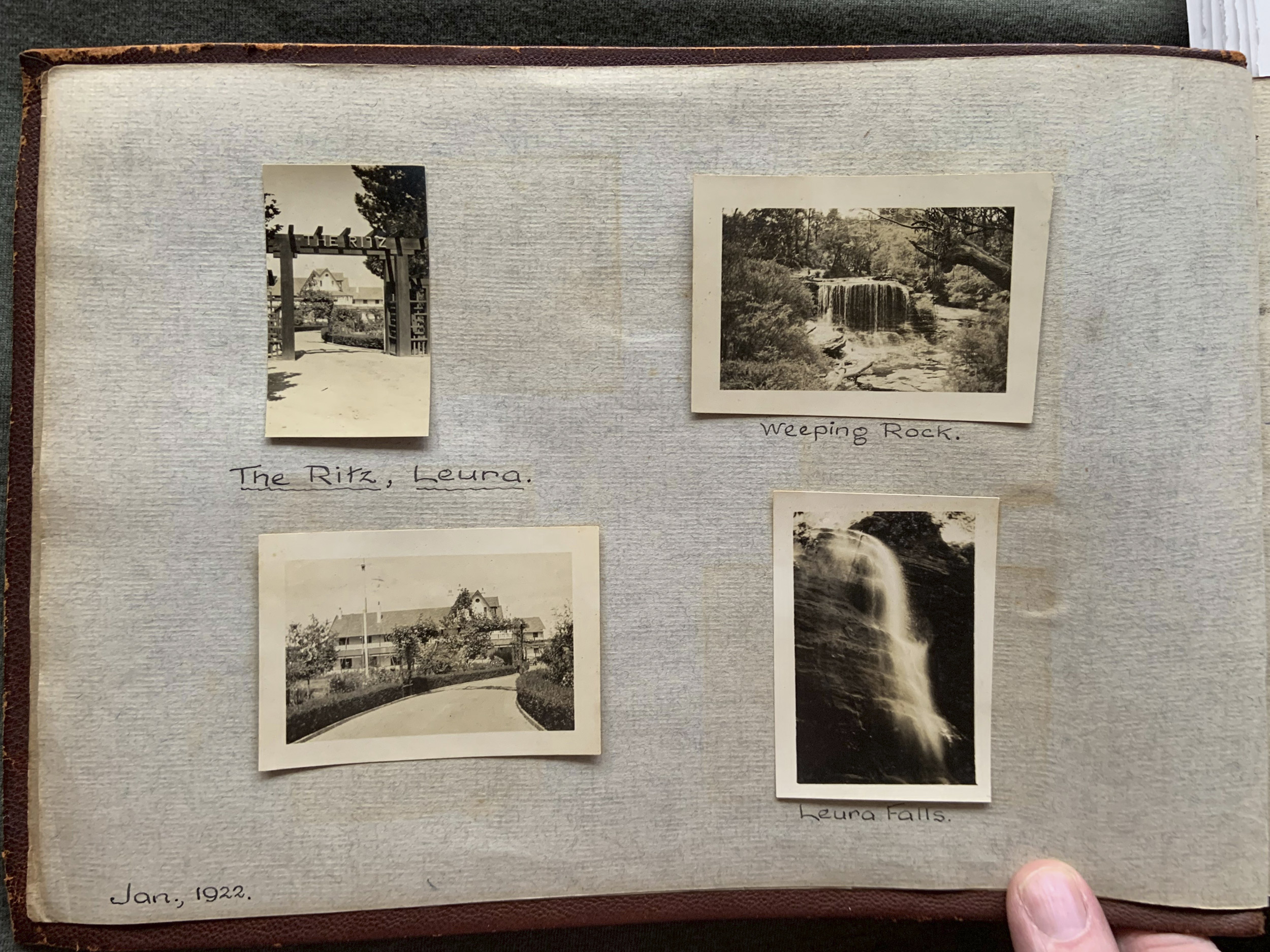
Blue Mountains, NSW (1922)
Leura Falls, NSW (1922)
Weeping Rock, Wentworth Falls, NSW (1922)
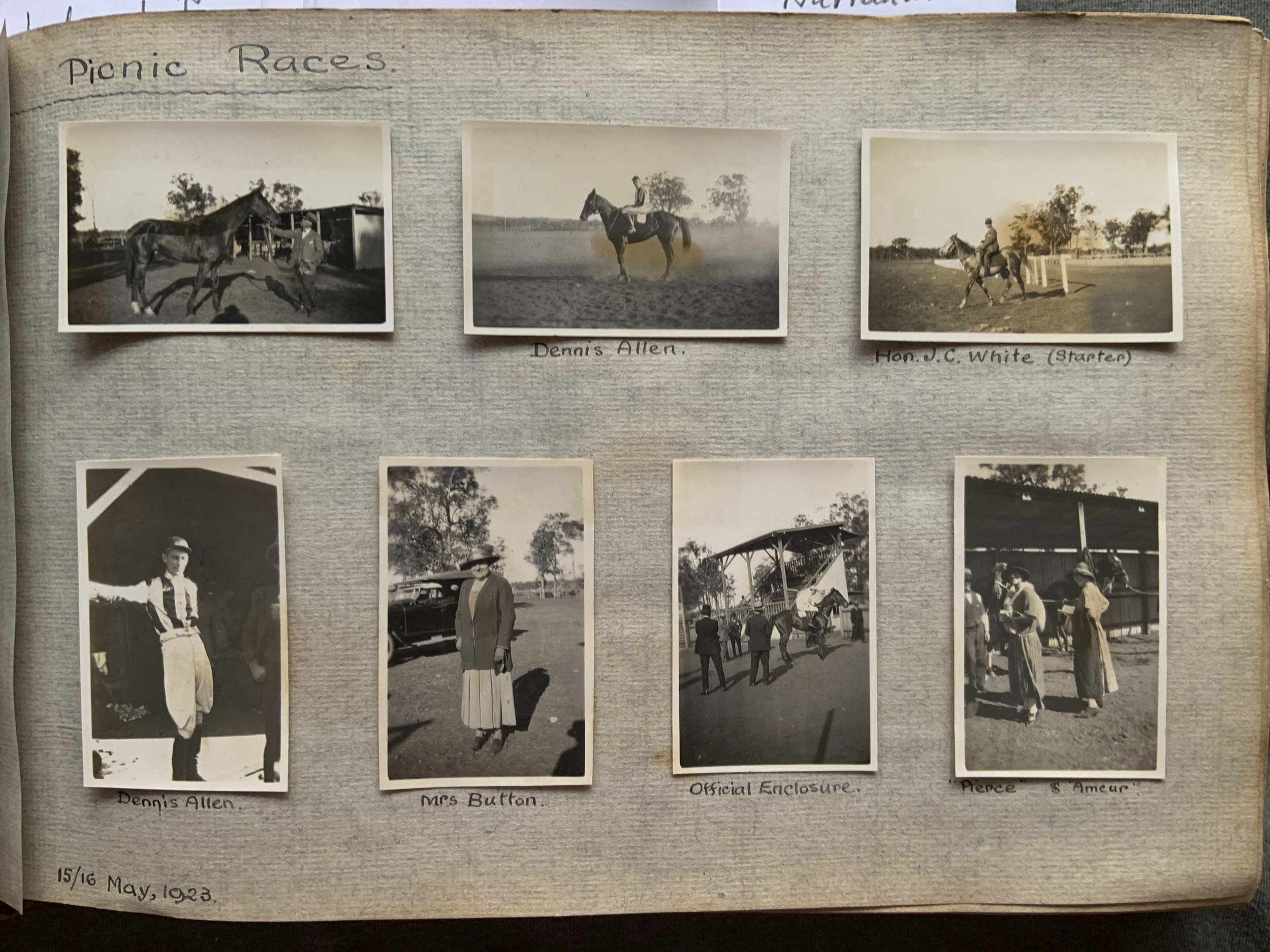
Tarana Picnic Races, NSW (1922)
Doona, Breeza, NSW (1922)
Avoca, NSW (1922)
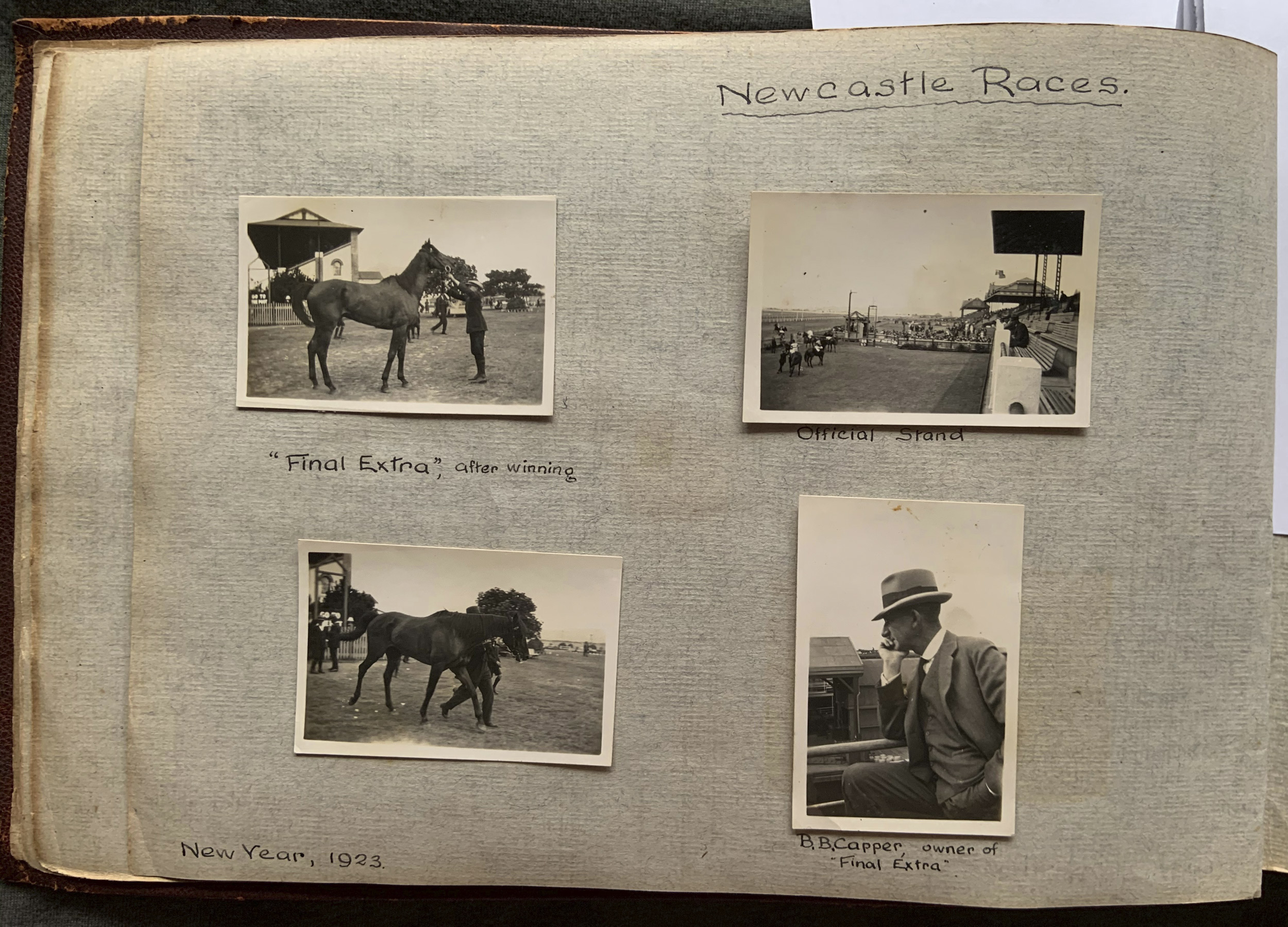
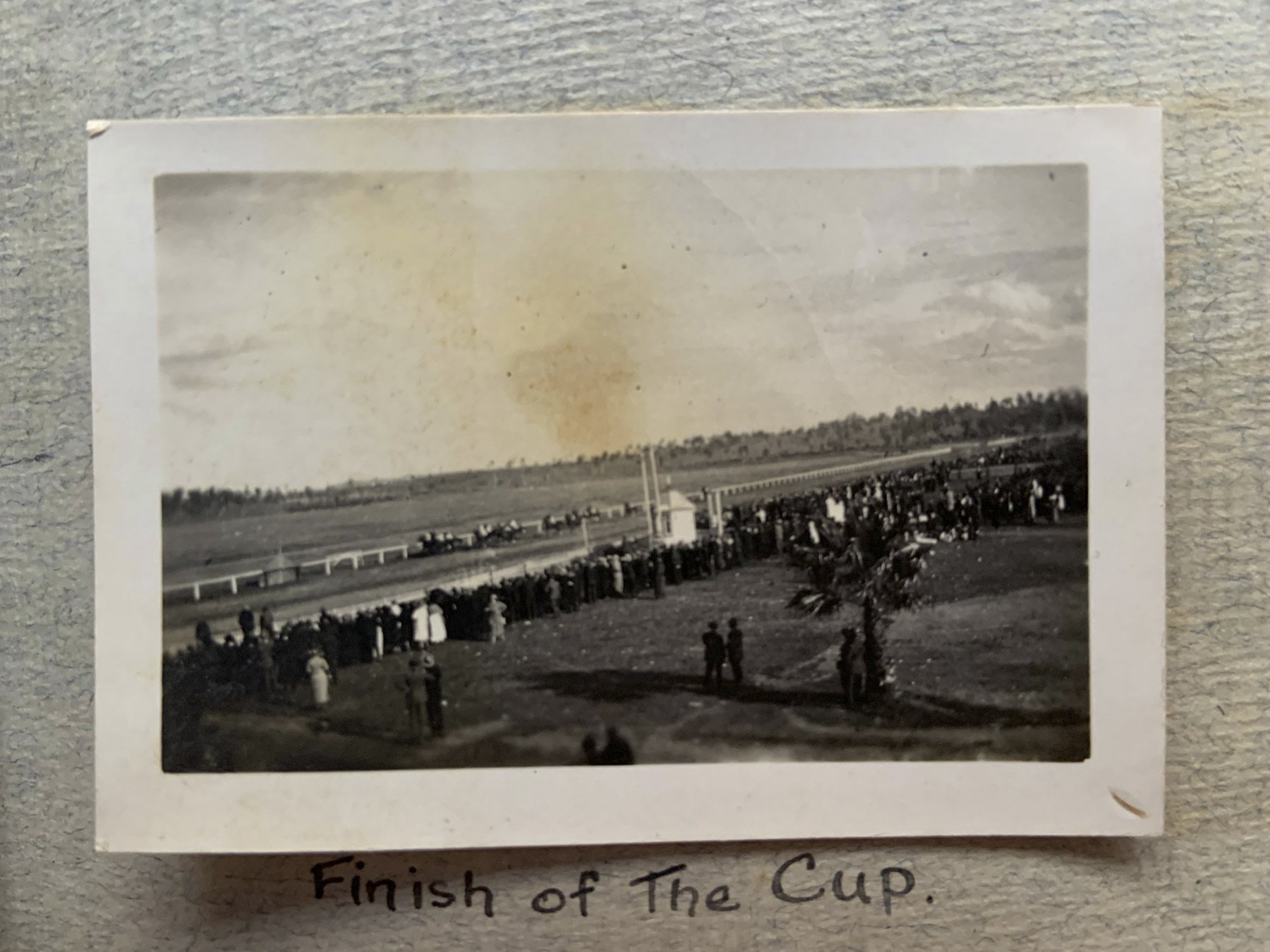
Newcastle Races, NSW (1923)
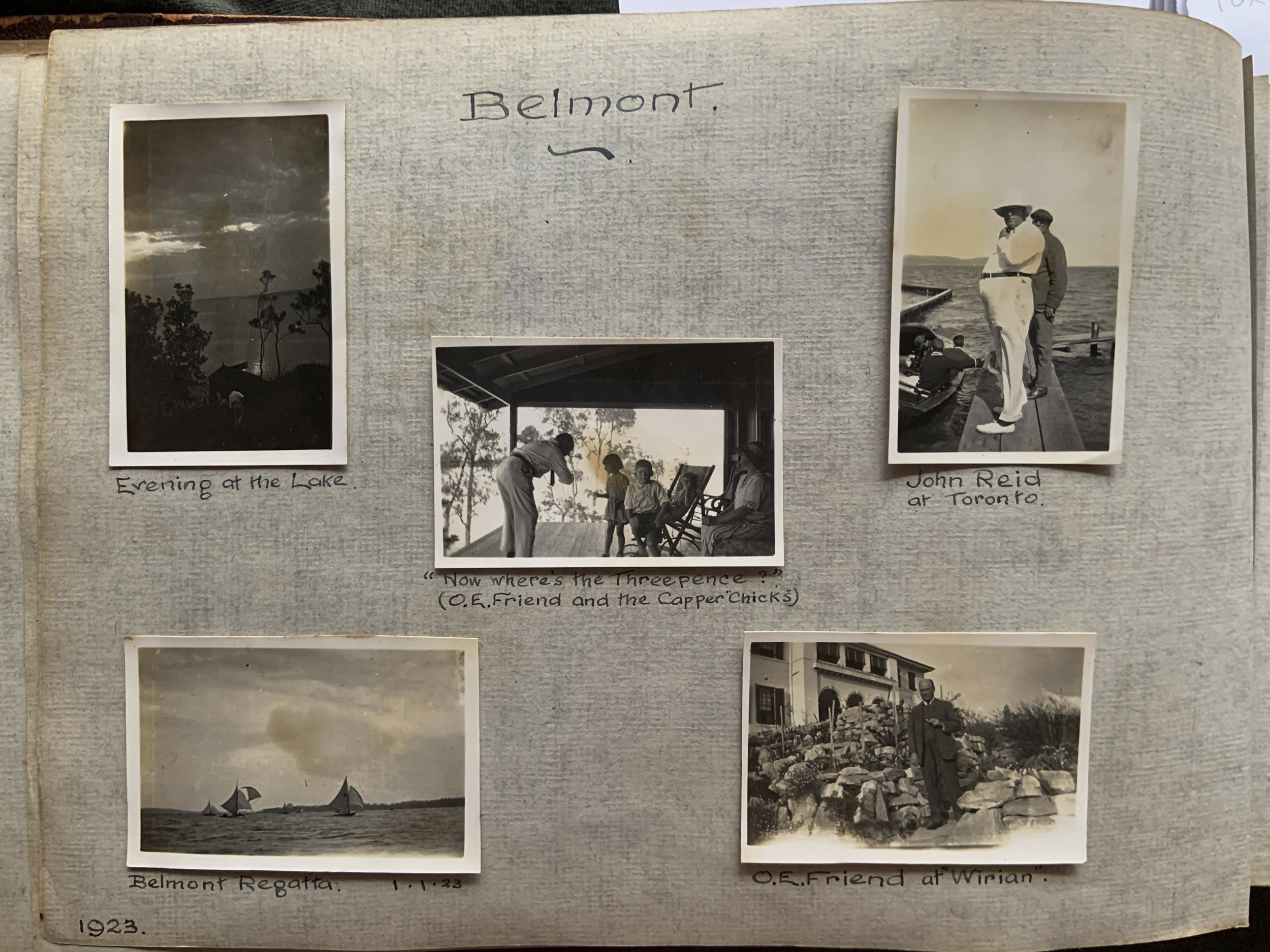
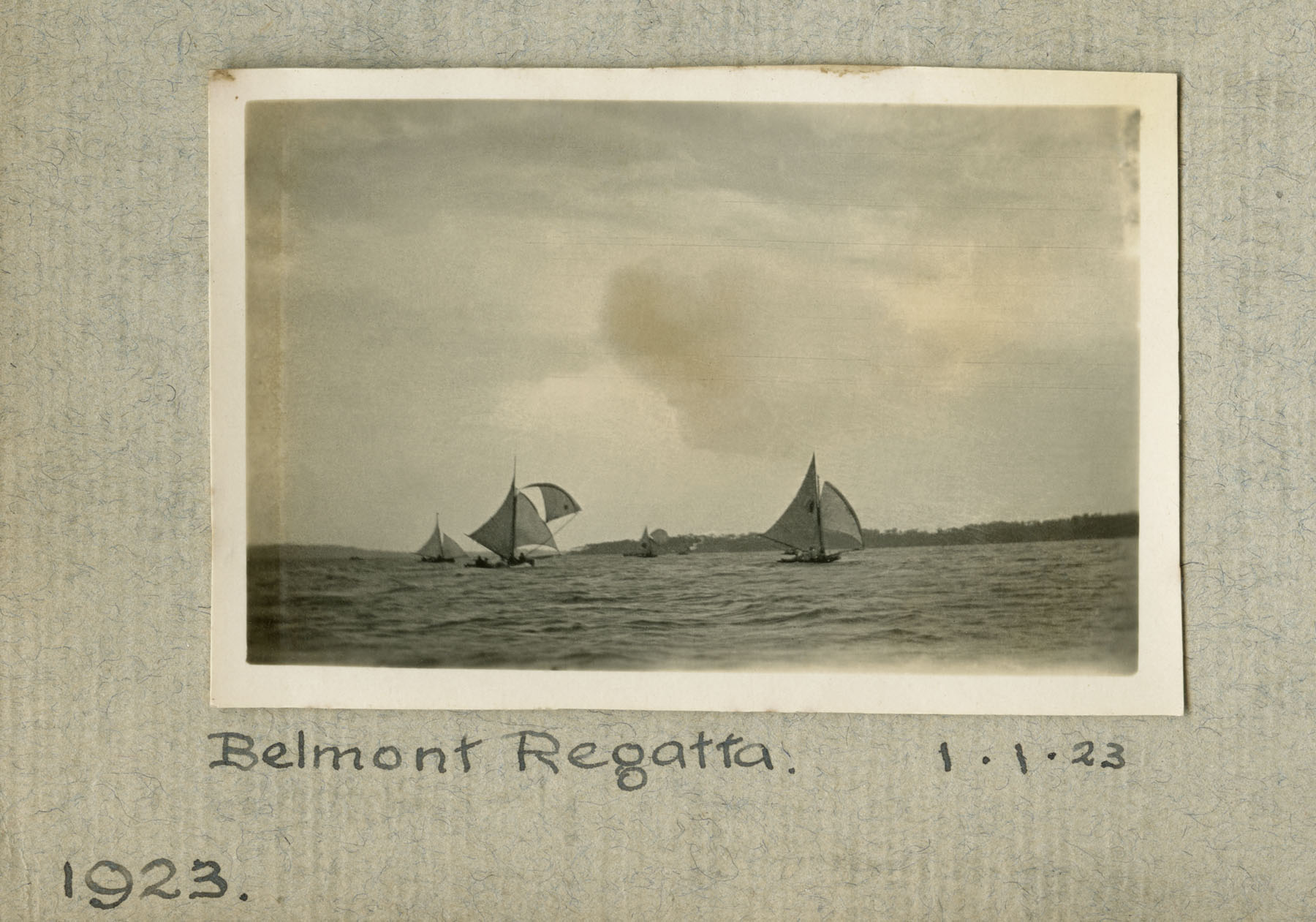
Belmont / Belmont Regatta, NSW (1923)
Hawkesbury, NSW (1923)
Frenches Forest, NSW (1923)
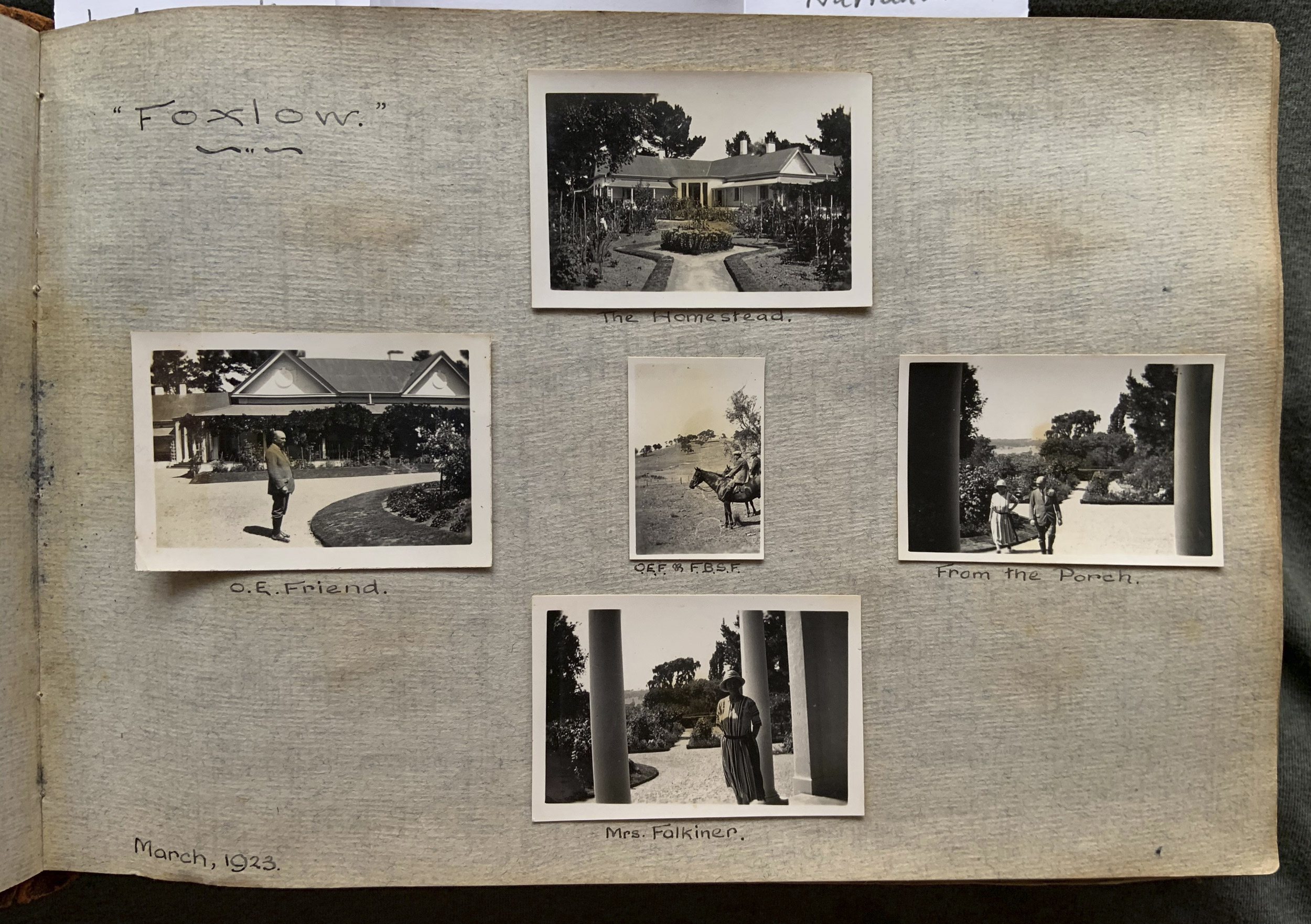
“Foxlow” Station, Bungedore, NSW (1923)
Sydney, NSW (Customs House, National Art Gallery, Mitchell Library, Darlinghurst Courthouse) (1923)
Muswellbrook Picnic Races, NSW (1923)
Maitland / Maitland Cup Meeting, NSW (1923)
Breeza, NSW (1923)
Wiseman’s Ferry, NSW (1923)
Moss Vale / Sutton Forest Church, NSW (1923)
Frensham, NSW (1923)
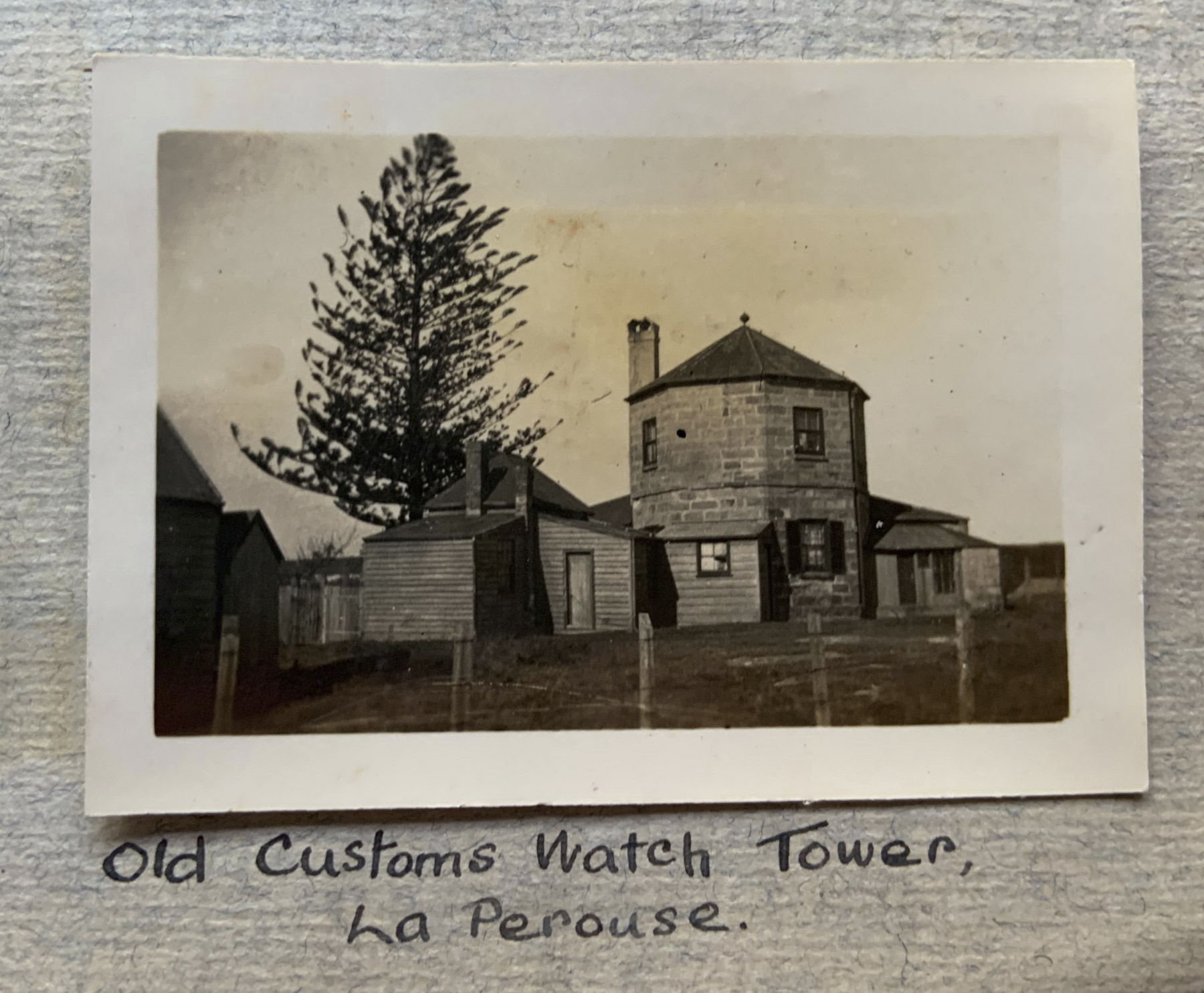
La Perouse, NSW (Historical Society Excursion) (1923)
Old Customs Watch Tower, La Perouse (1923)
The Old Illawarra Road, NSW (1923)
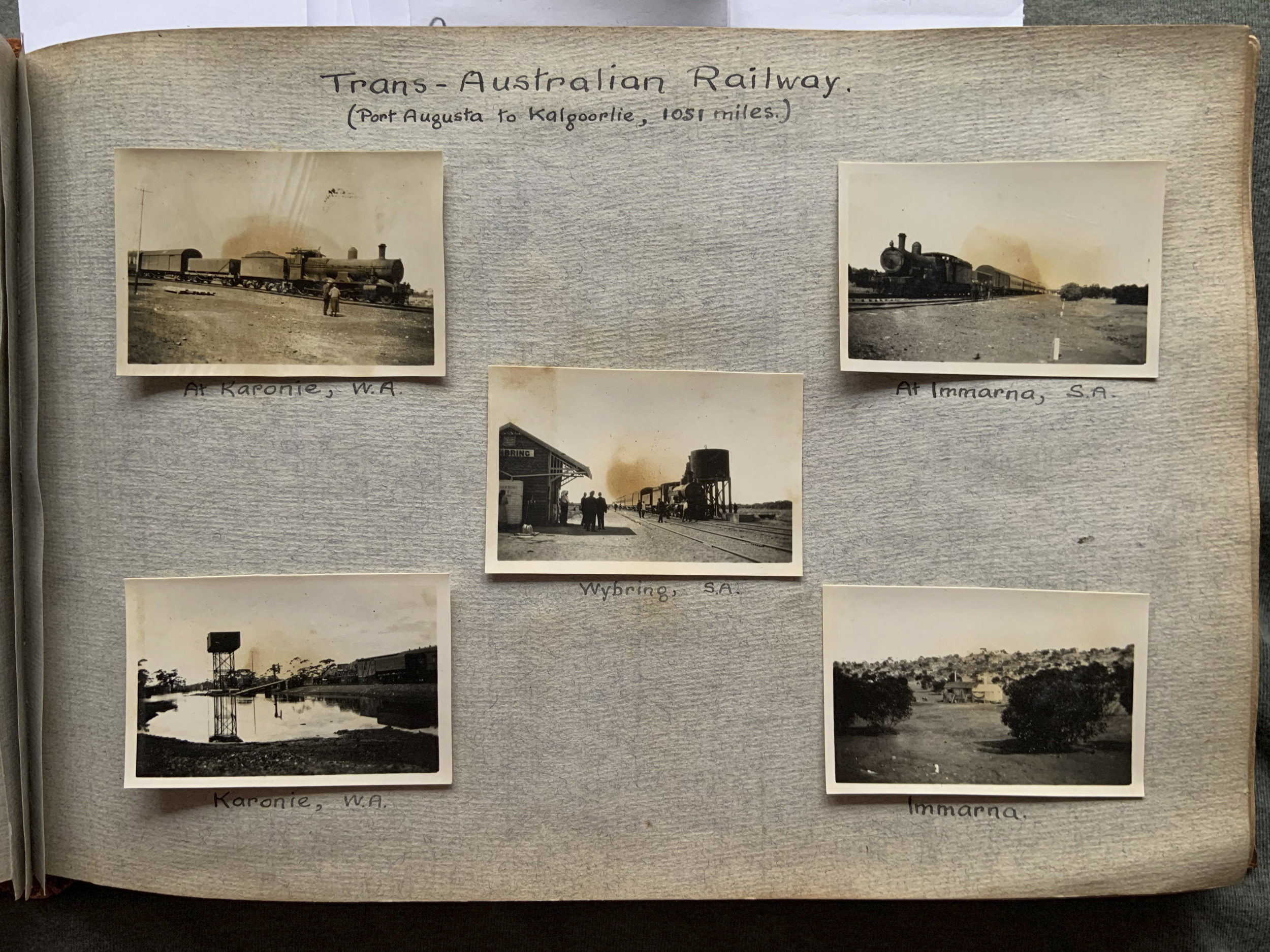
Yarcowie, SA (1923)
Trans-Australian Railway (Port Augusta to Kalgoorlie) (1923)
Karonie, WA (1923)
Kalgoorlie, WA (1923)
Boulder City, WA (1923)
Fremantle, WA (1923)
Geraldton, WA (1923)
Shark’s Bay, WA (1923)
Henry Freycinet Estuary, WA (1923)
Tamala Station, WA (1923)
Perth, WA (1923)
Adelaide, SA (Torrens River) (1923)
“Redbank,” Scone, NSW (1924)
Muswellbrook Picnic Races, NSW (1924)
“Craigieburn,” Bowral, NSW (1924)
The Dudley Cup at Kensington, NSW (1924)
Camden Grammar School, NSW (1924)
Liverpool Church, NSW (1924)
Landsdowne Bridge, NSW (1924)
Jenolan Caves, NSW (1924)
Avon Dam, NSW (1924)
Herald Office, Pitt Street, NSW (1924)
Camping, Cronulla, NSW (1925)
Roseville, NSW (1926)
Whale Beach, NSW (1927)
Visit of the Duke and Duchess of York, Macquarie Street, NSW (1927)
20, Yarranabbe Rd., Darling Point, NSW (1926)
Canberra, ACT (1927)
Jenolan Caves, NSW (Lady Dorothy Hope-Morley) (1927)
Ellen’s Isle, Loch Katrine, Scotland (1925)
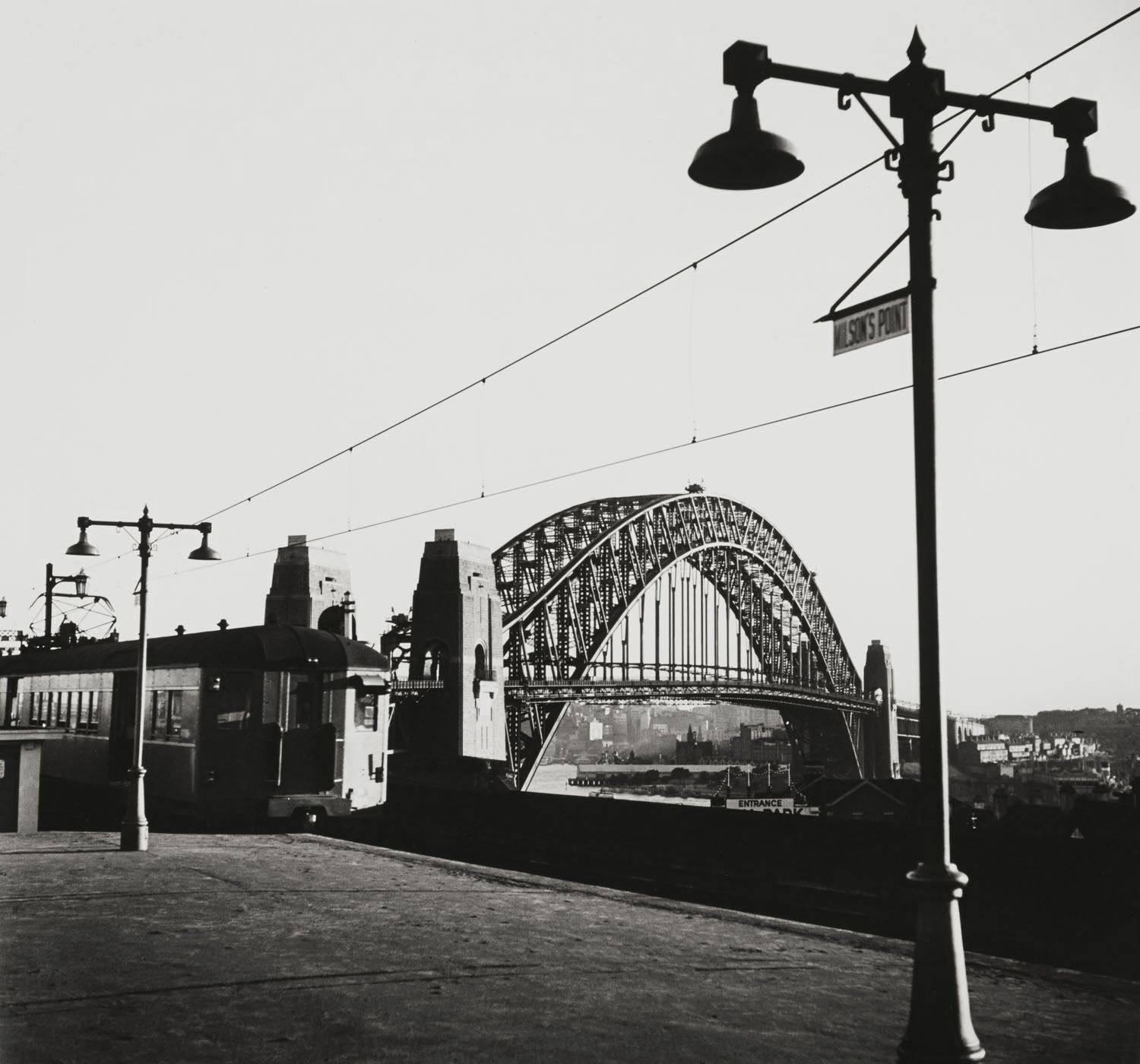
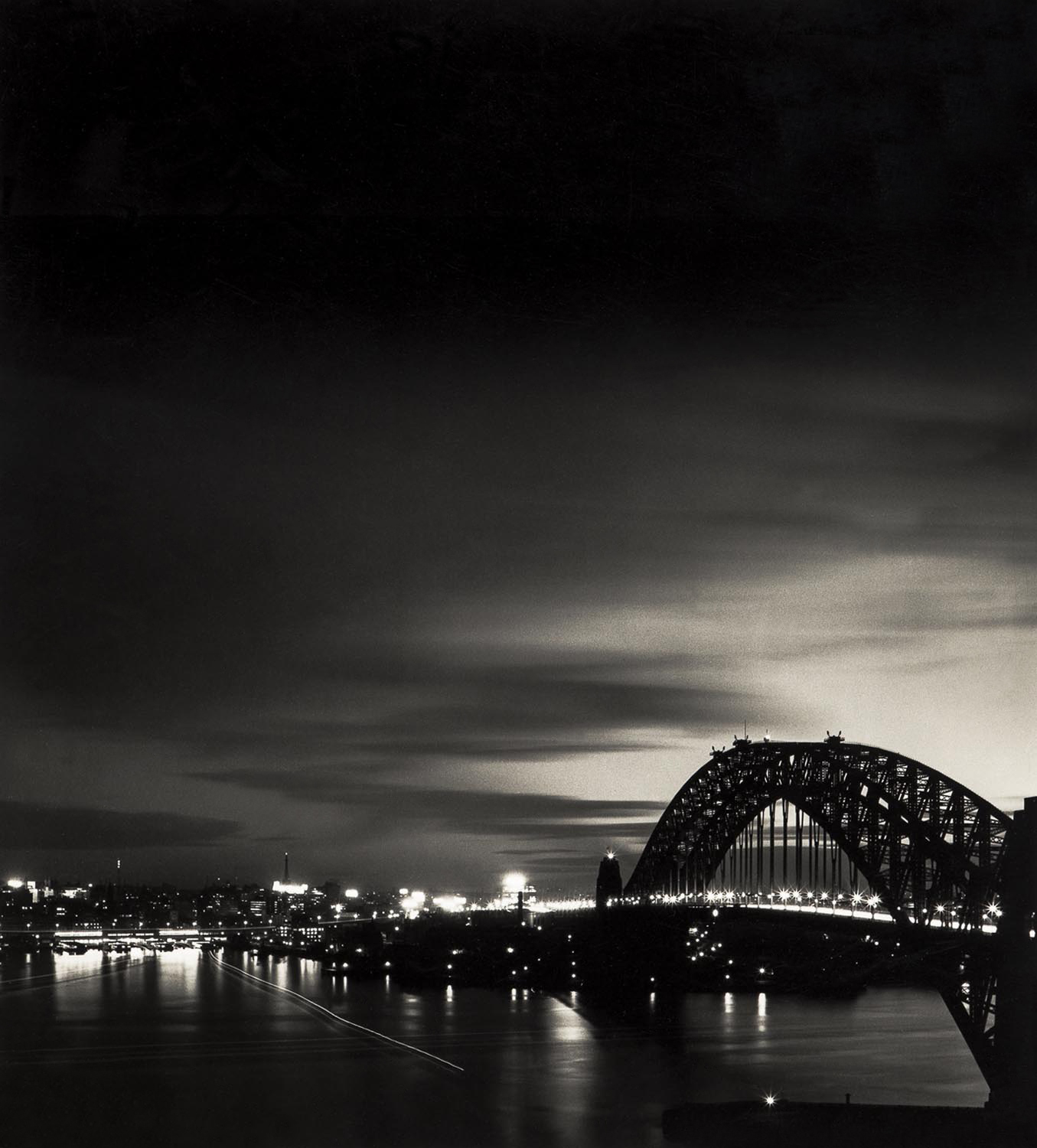
Sydney Harbour Bridge, NSW (1931-32)
“Springfield,” Byng, Near Orange, NSW (1932)
Lucknow, near Orange, NSW (1933)
Hawkesbury, NSW (1933)
Bathurst, NSW (1933)
“Millambri, ” Canowindra, NSW (1933)
Melbourne, VIC (1933)

Topics

Men
Pastoralism and grazing
Horses / country horse racing
Sheep and shearing
Cows
Mill / logging
Pine plantation
Bush
Bores and dams
Cathedral / churches
Tennis
Golf
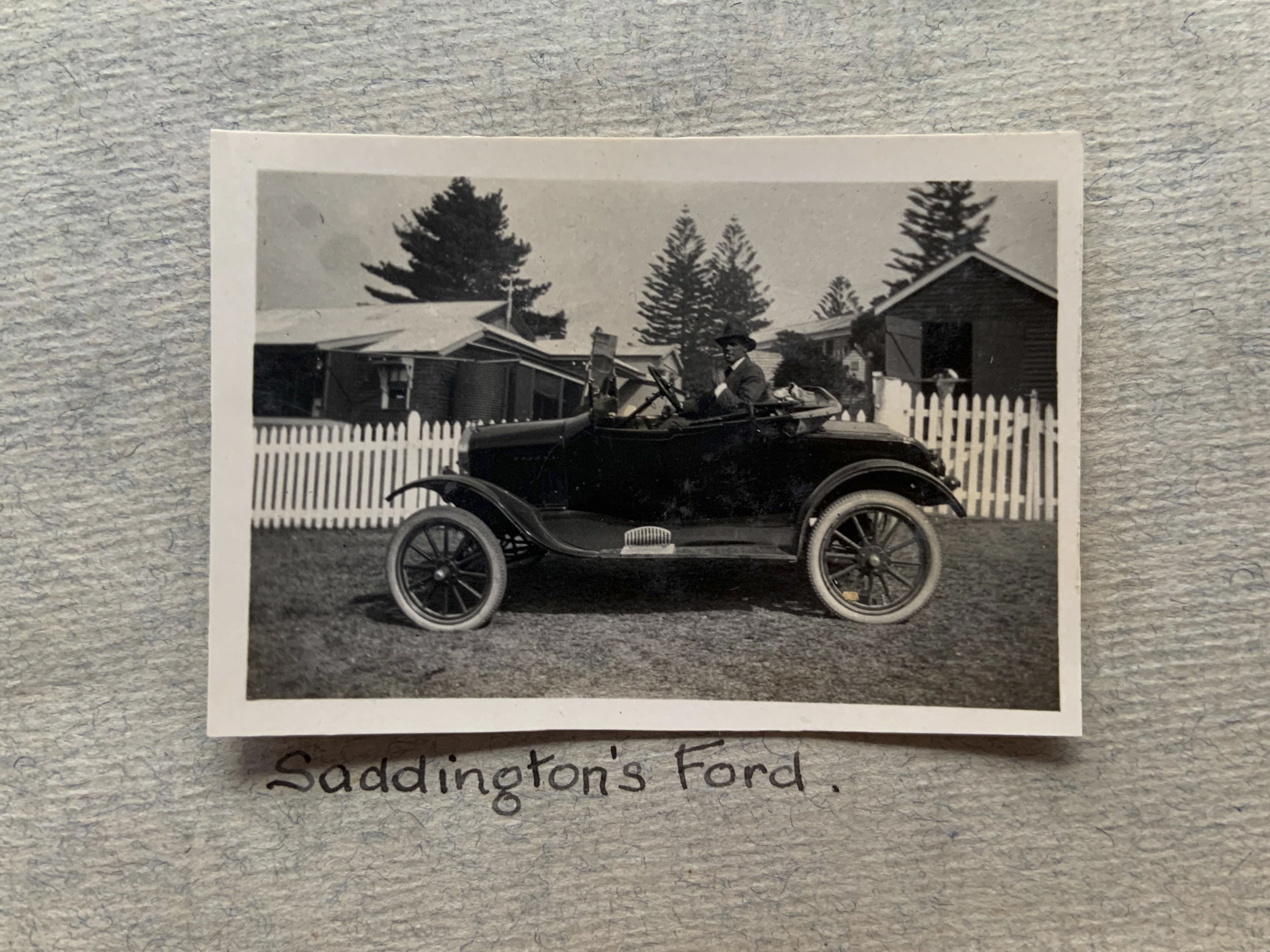
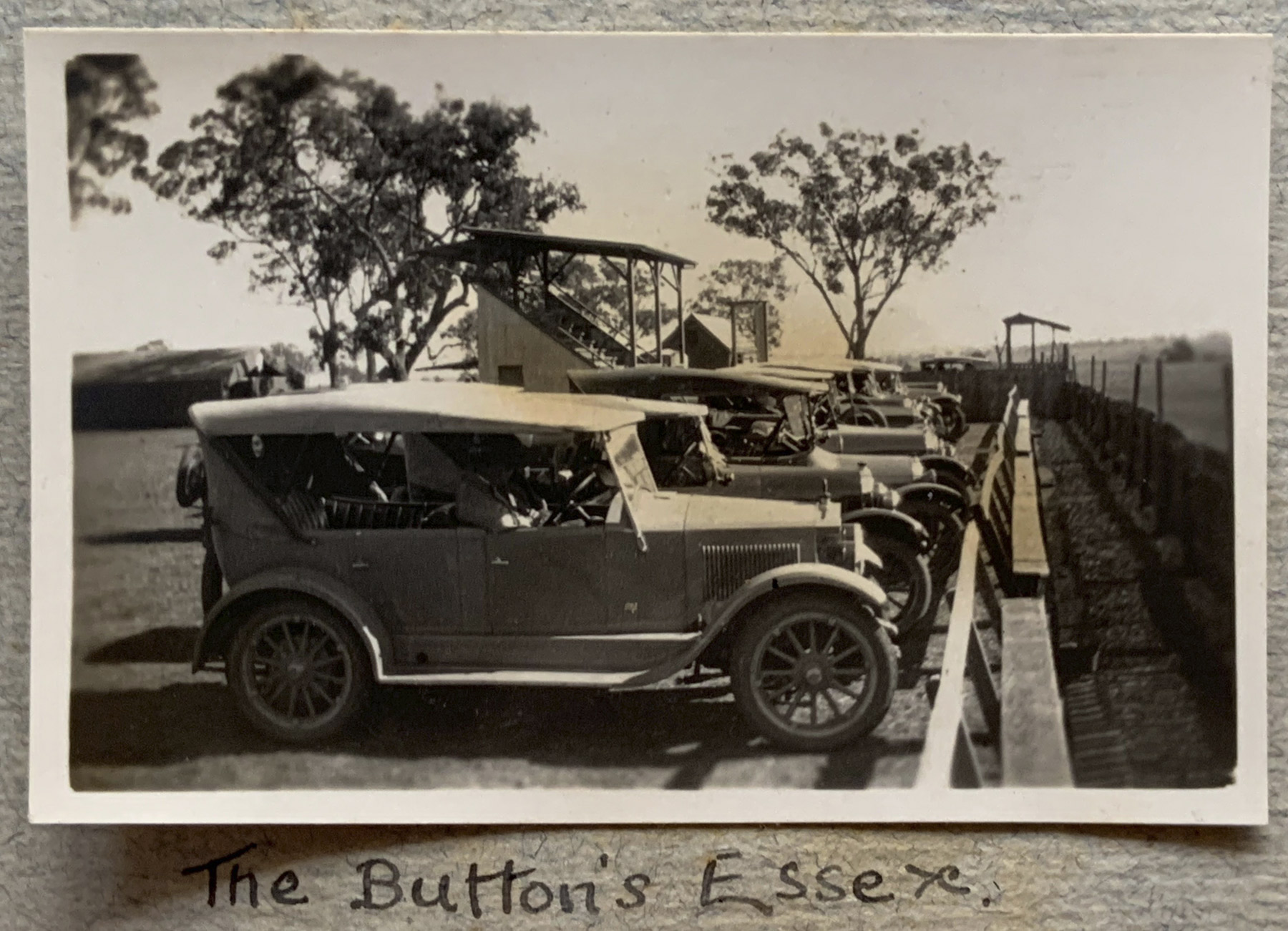
Cars (Ford, Pan-American, Essex, Oldsmobile, early Hupmobile, Chrysler 70)
Buses
Bank, post office
Pastoral Play
Monuments
Rock carvings
Houses
Cemetery / tombstones
John Dunn, executed 1866
South Australian Railways / locomotives
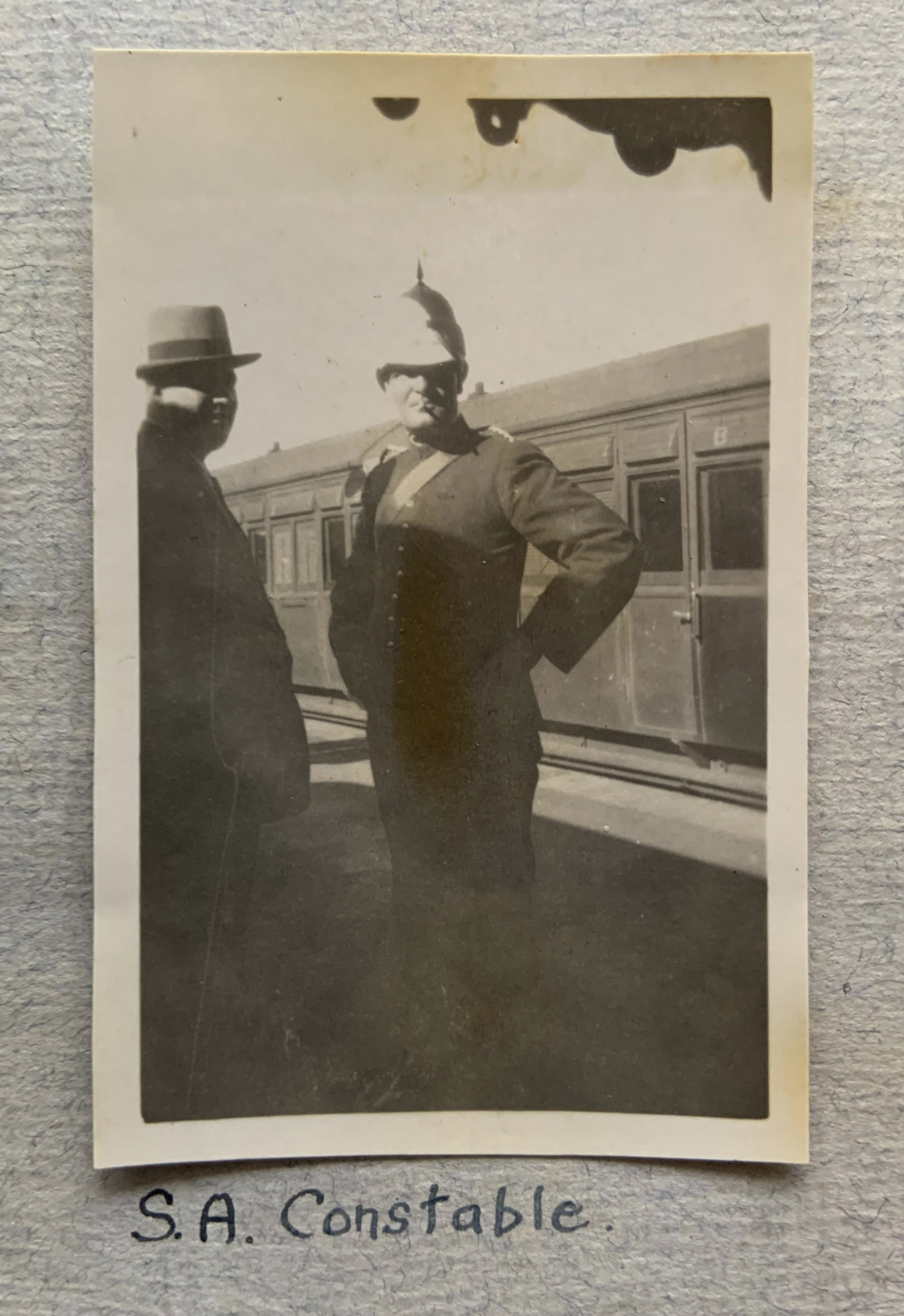
S.A. constable and Adelaide cop
Indigenous Australians (Aboriginal types, along the Trans-Australian Railway)
Australian Desert Blacks
Gold mine / gold panning
Mining (Boulder and Perseverance Mines)
Convict gaol
Oldest inhabitant (Henry Desmond)
Hotels
Beach and sea, surf girls
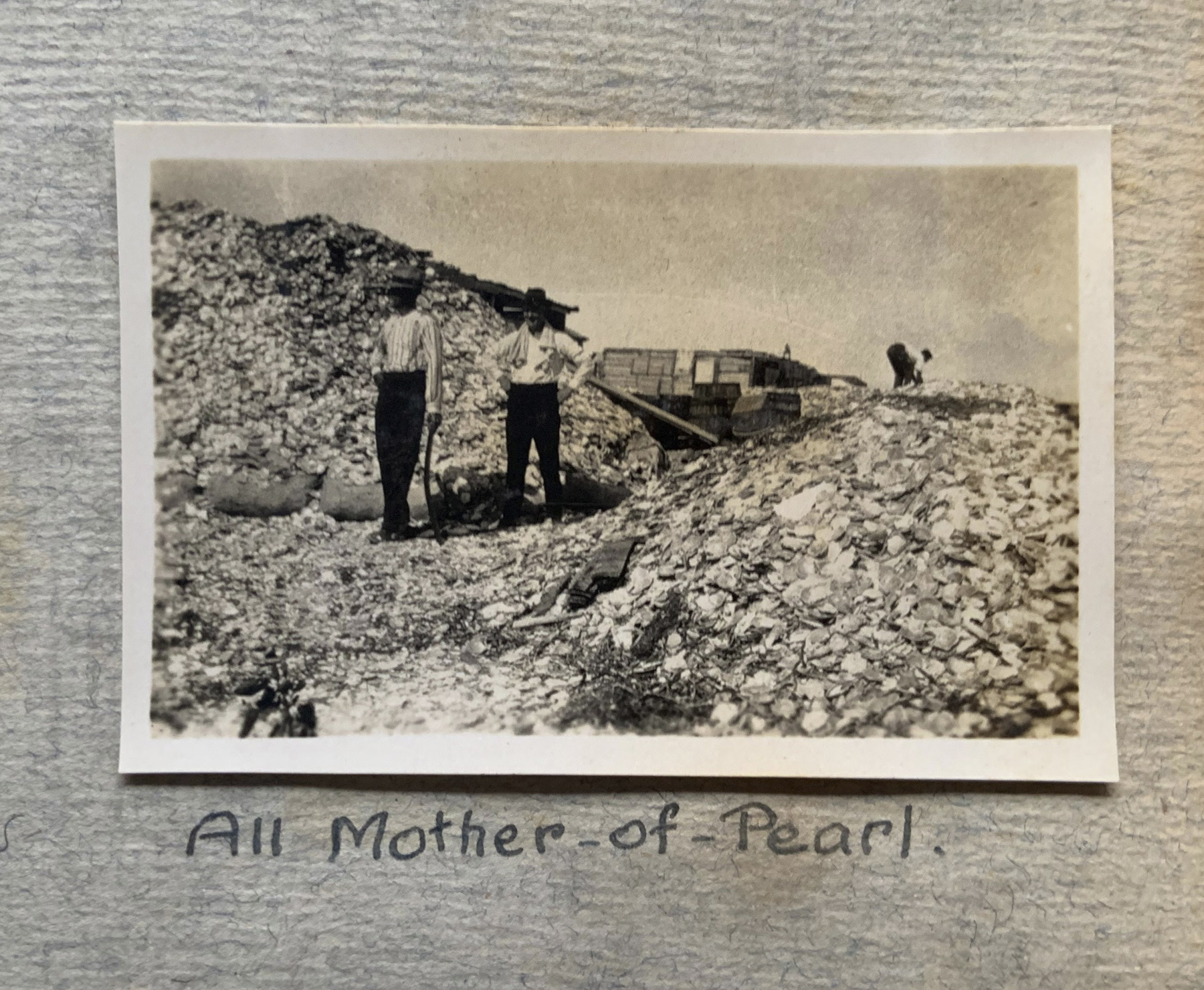
Mother of pearl
Dates
Afghan / camels
Yachting, sailing / boats
Guano
Fred Adams, Boss-Pearler
Stations and station hands
Rowing
Dredging
Polo
Rugby
Caves
Guns
Nobility and royalty
Camping, picnics
Tennis
House building / old houses
Parliament House
Prime Ministers residence
Bridges and bridge building
Federal and state governors
The world’s first auto-gyro plane (1909-1912)
The Southern Cross
Pioneers
Mounted police
First house in Byng
Rabbiting
Glamour
Social status / socialite
Family
Women and children
Sydney Harbour Bridge opening
Carillon (bells)
Myers and Bourke Street, Melbourne


"An Afghan's turnout," 1923 John "Jack" Riverstone Faviell 1922-1933 photo album from Marcus Bunyan. 'Golden splendour: privilege, ceremony & racism in 1920s-30s Australia' on the photo album 'John "Jack" Riverstone Faviell (1892-1960), 1922-1933' Part 2
 

“An Afghan’s turnout,” 1923 in John “Jack” Riverstone Faviell 1922-1933 photo album


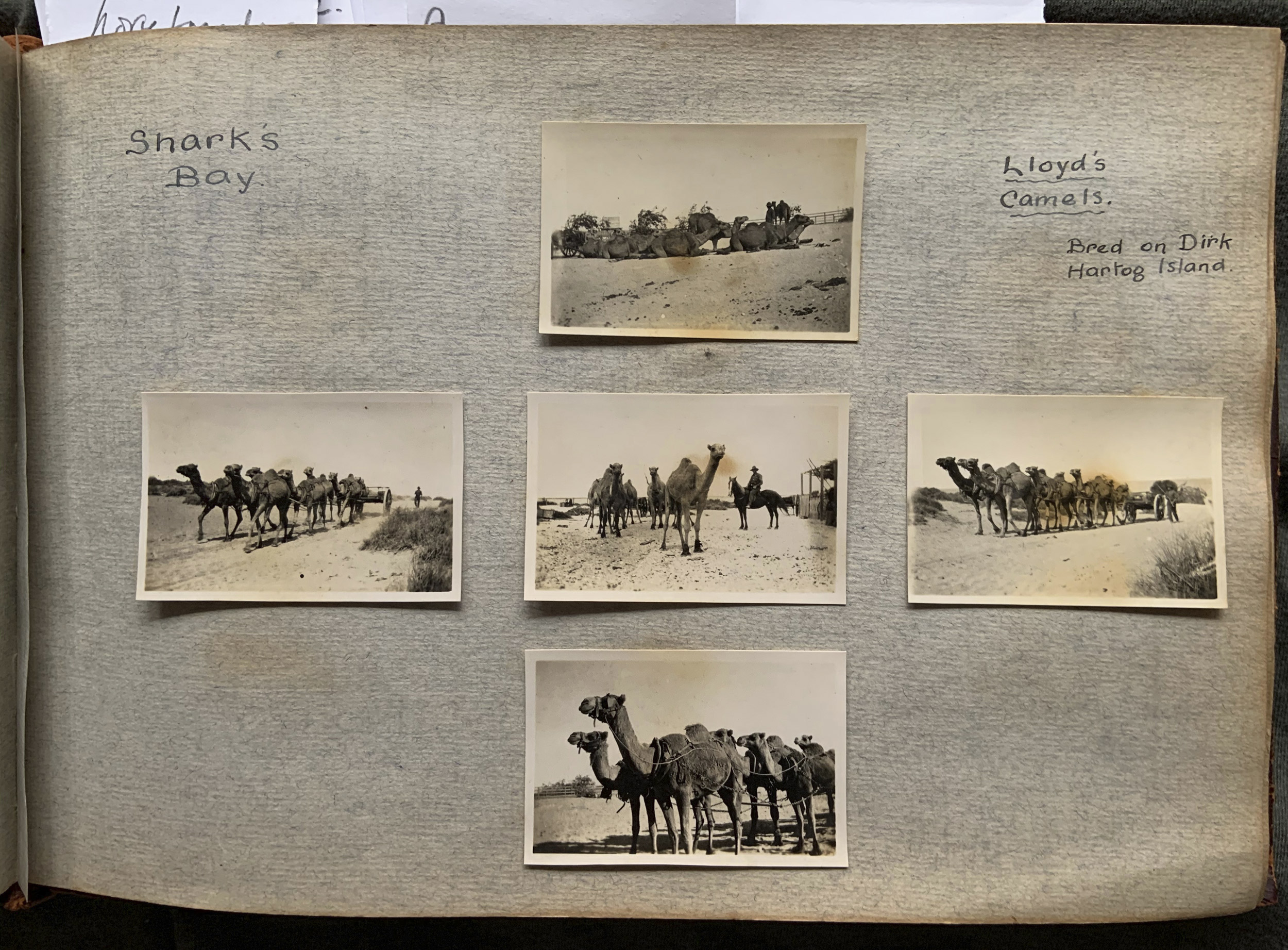
"Shark's Bay, Lloyd's Camels (Bred on Dirk Hartog Island)," 1923 in John "Jack" Riverstone Faviell 1922-1933 photo album from Marcus Bunyan. 'Golden splendour: privilege, ceremony & racism in 1920s-30s Australia' on the photo album 'John "Jack" Riverstone Faviell (1892-1960), 1922-1933' Part 2


“Shark’s Bay, Lloyd’s Camels (Bred on Dirk Hartog Island),” 1923 in John “Jack” Riverstone Faviell 1922-1933 photo album


"A five-days cruise on the Cutter "Shark"," 1923 in John "Jack" Riverstone Faviell 1922-1933 photo album


“A five-days cruise on the Cutter “Shark”,” 1923 in John “Jack” Riverstone Faviell 1922-1933 photo album


"Amongst the Islands of Henri Freycinet Estuary," 1923 in John "Jack" Riverstone Faviell 1922-1933 photo album


“Amongst the Islands of Henri Freycinet Estuary,” 1923 in John “Jack” Riverstone Faviell 1922-1933 photo album


Henri Freycinet Harbour, also known as Freycinet Estuary, is one of the inner gulfs of Shark Bay, Western Australia, a World Heritage Site that lies to the west of the Peron Peninsula. It has a significantly larger number of islands than Hamelin Pool, and has a number of smaller peninsulas known as “prongs” on its northern area. It has also been identified as a critical dugong habitat area. It is situated within the Shark Bay Marine Park.


"Fred Adams, Boss-Pearler, Shark's Bay, W.A.," 1923 in John "Jack" Riverstone Faviell 1922-1933 photo album


“Fred Adams, Boss-Pearler, Shark’s Bay, W.A.,” 1923 in John “Jack” Riverstone Faviell 1922-1933 photo album


Pearling in Western Australia was an important part of the European colonisation of the North West. Although it was never considered a permanent part of the state economy, pearling, with its immediate returns, allowed pastoralists to establish stations and contributed to the foundation of several towns. Some of these towns evolved into centres for agriculture and tourism and some developed their port facilities. Others did not outlive the availability of and market for pearlshell. Uniquely, Shark Bay not only survived the demise of the industry, but developed into the state’s commercial fishing centre. The pearling boats were simply refitted to become fishing boats (OH 2266/8) and the Bay life continued…

Wilyah Miah. An Archaeological Study of the History of the Shark Bay Pearling Industry 1850-1930. University of Western Australia, 1999, p. 7.
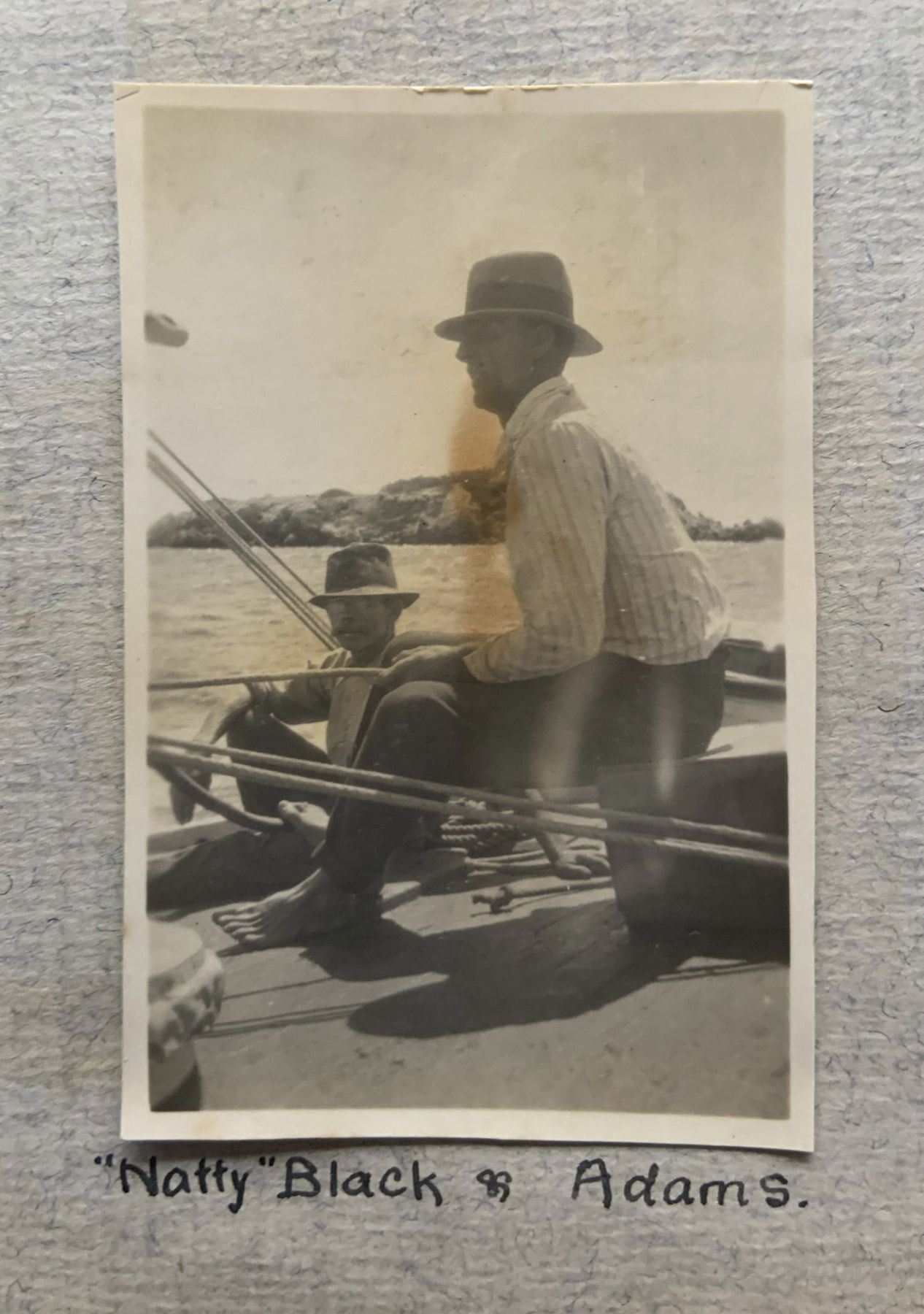
 

""Natty" Black & Adams," in John "Jack" Riverstone Faviell 1922-1933 photo album


“”Natty” Black & Adams,” in John “Jack” Riverstone Faviell 1922-1933 photo album


"Sharks Bay," 1923 in John "Jack" Riverstone Faviell 1922-1933 photo album


“Sharks Bay,” 1923 in John “Jack” Riverstone Faviell 1922-1933 photo album
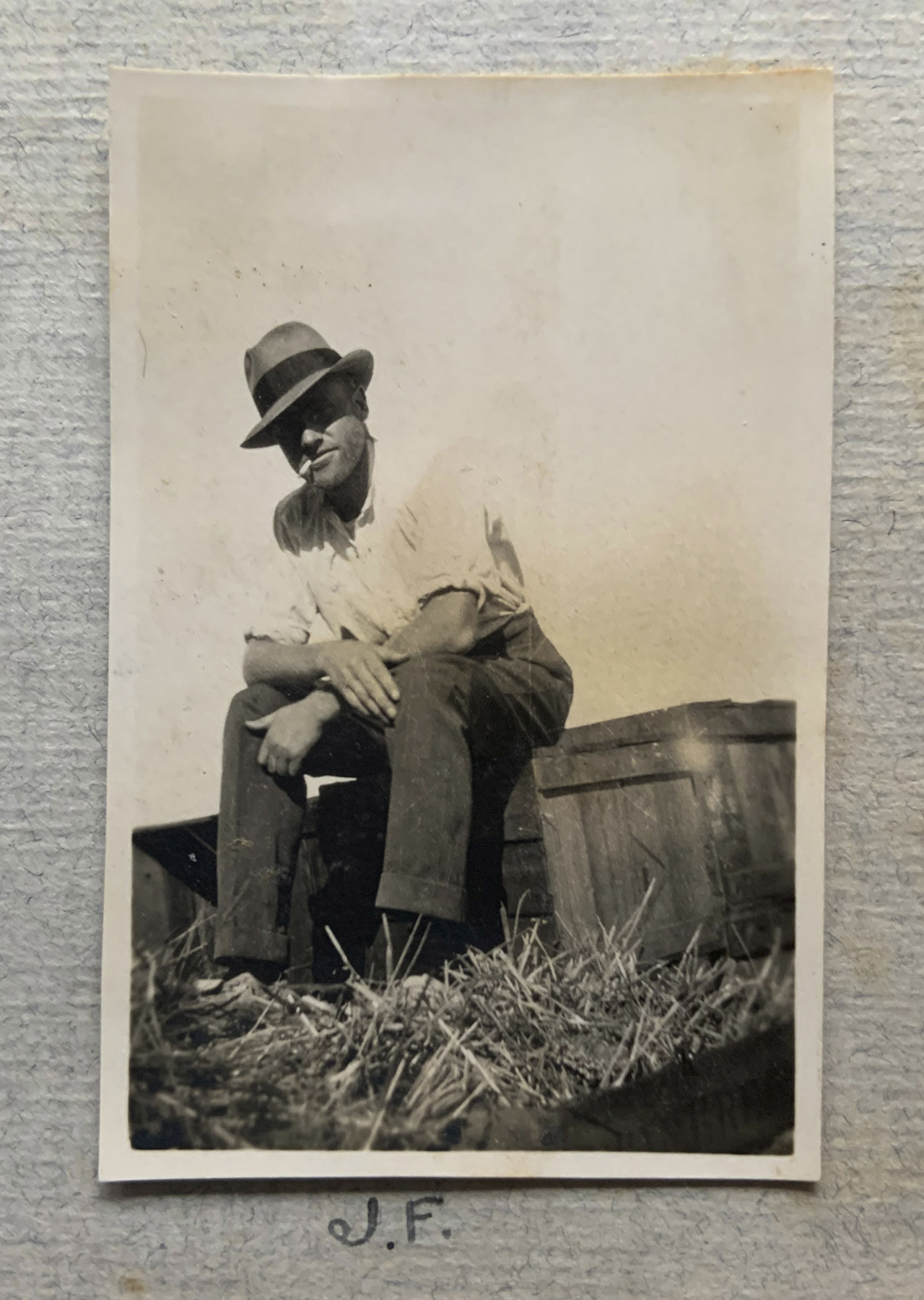
 

"J.F." 1923 in John "Jack" Riverstone Faviell 1922-1933 photo album


“J.F.” 1923 in John “Jack” Riverstone Faviell 1922-1933 photo album


"Boss-pearler Henfrey, and his "missus", opening shell," 1923in John "Jack" Riverstone Faviell 1922-1933 photo album


“Boss-pearler Henfrey, and his “missus”, opening shell,” 1923in John “Jack” Riverstone Faviell 1922-1933 photo album


The first labour employed in the industry was that of the local Aboriginal people. Little is known of the pre-European Aboriginal people of the Bay. It is not clear whether it was the territory of the Nanda or the Mulgana people (Bowdler 1992:5) although current consensus among the people of Shark Bay is that they are Mulgana (Bowdler pers. comm. 1999). They were easily accessible and there were no expectations that they should be paid the wages of other labourers. Willingness on the part of the Aboriginal people to participate in the industry was often an issue irrelevant to the interests of the pearlers. Goods such as alcohol may have been an inducement, but, according to Anderson (1978) in her study of the North West industry, coercion was necessary and practices such as blackbirding were employed to acquire labour. The introduction of pastoralism, by its appropriation of land, ensured the destruction of the traditional Aboriginal economy and forced them to provide for the market the only commodity available to them, their labour (Hartwig 1975:32).

Wilyah Miah. An Archaeological Study of the History of the Shark Bay Pearling Industry 1850-1930. University of Western Australia, 1999, p. 18.


"Tamala Station, Shark's Bay, W.A.," 1923 in John "Jack" Riverstone Faviell 1922-1933 photo album


“Tamala Station, Shark’s Bay, W.A.,” 1923 in John “Jack” Riverstone Faviell 1922-1933 photo album


This pastoral station is in the southern part of Shark Bay World Heritage Area on limestone-dominated landscapes. The main attraction of Tamala Station is the low lying coastline and waters of Henri Freycinet Harbour. Many visitors only cross this property on their way to Steep Point but some spend time here camping, fishing and exploring the prongs and peninsulas. Tamala Station allows access to the general public but you must first contact the station managers for bookings.

Text from the Shark Bay World Heritage website


"Tamala Station Hands," 1923 in John "Jack" Riverstone Faviell 1922-1933 photo album
 

“Tamala Station Hands,” 1923 in John “Jack” Riverstone Faviell 1922-1933 photo album


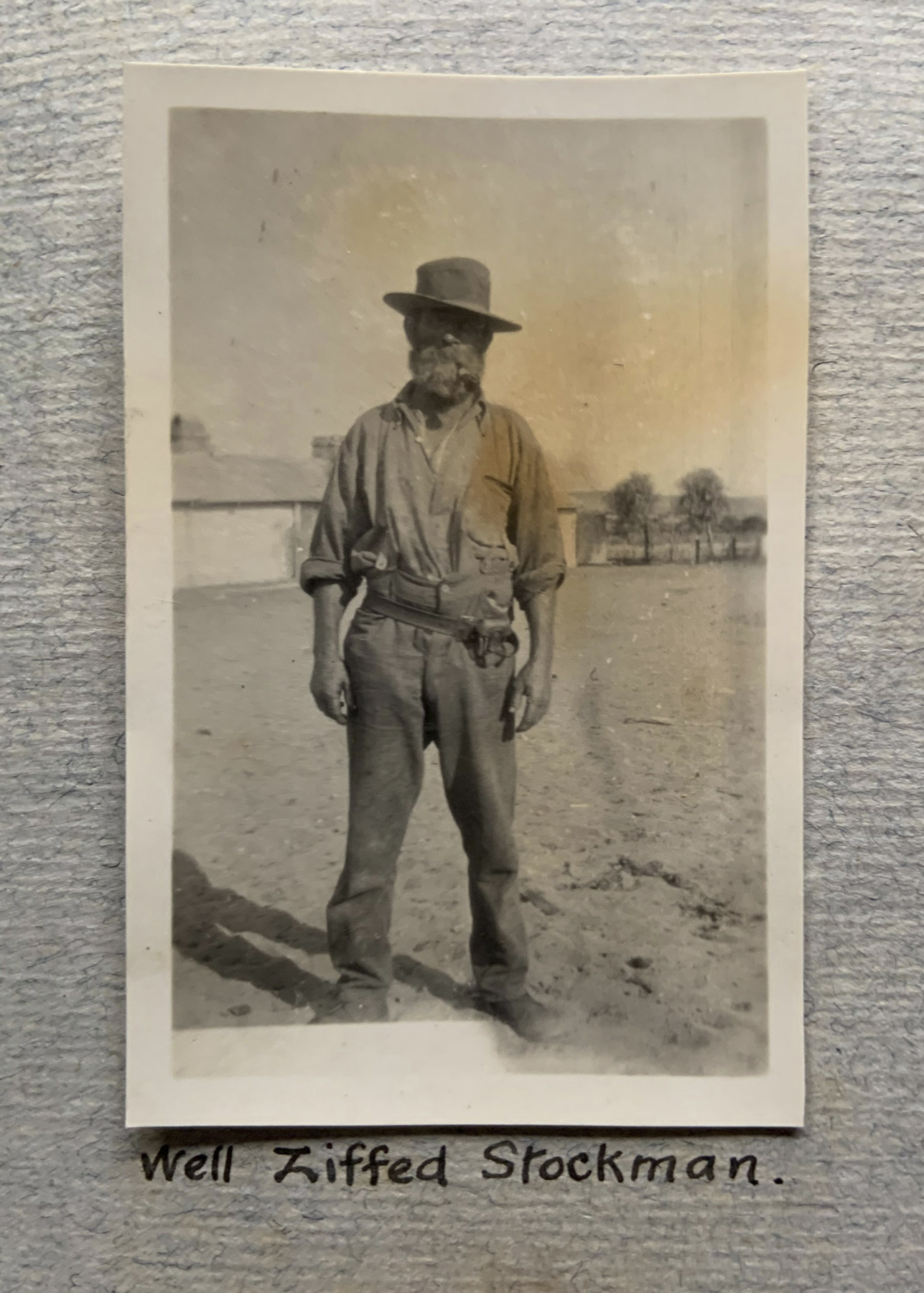
"Well Ziffed Stockman," in John "Jack" Riverstone Faviell 1922-1933 photo album


“Well Ziffed Stockman,” in John “Jack” Riverstone Faviell 1922-1933 photo album


Ziff, Australian for beard. The Oxford English Dictionary says this slang term originated around 1919, but otherwise the origin is unknown. To be ziffed means to be bearded.


"Untitled," 1923 in John "Jack" Riverstone Faviell 1922-1933 photo album


“Untitled,” 1923 in John “Jack” Riverstone Faviell 1922-1933 photo album


"Nellie and her litter," 1923 in John "Jack" Riverstone Faviell 1922-1933 photo album


“Nellie and her litter,” 1923 in John “Jack” Riverstone Faviell 1922-1933 photo album
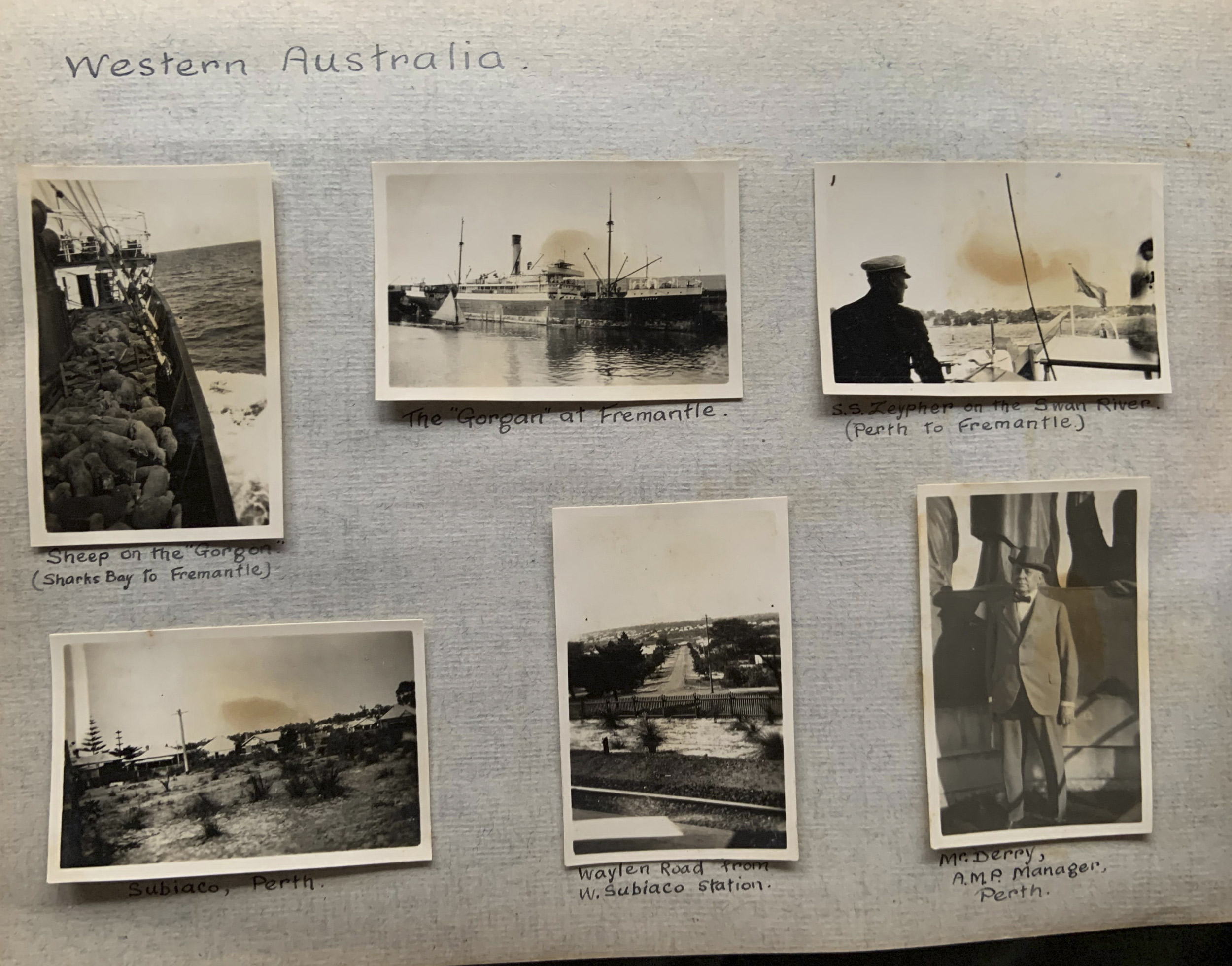
 

"Western Australia," 1923 in John "Jack" Riverstone Faviell 1922-1933 photo album


“Western Australia,” 1923 in John “Jack” Riverstone Faviell 1922-1933 photo album


"Perth," 1923 in John "Jack" Riverstone Faviell 1922-1933 photo album


“Perth,” 1923 in John “Jack” Riverstone Faviell 1922-1933 photo album


"Returning from the West," 1923 in John "Jack" Riverstone Faviell 1922-1933 photo album


“Returning from the West,” 1923 in John “Jack” Riverstone Faviell 1922-1933 photo album


"Redbank", Scone, N.S.W.," 1923 in John "Jack" Riverstone Faviell 1922-1933 photo album


“Redbank”, Scone, N.S.W.,” 1923 in John “Jack” Riverstone Faviell 1922-1933 photo album


W.T. Badgery, horsebreeder, at Scone, Hunter Valley (Information from Douglas Stewart Fine Books)

Scone /ˈskoʊn/ is a town in the Upper Hunter Shire in the Hunter Region of New South Wales, Australia. It is on the New England Highway north of Muswellbrook about 270 kilometres north of Sydney, and is part of the New England (federal) and New England (state) electorates. Scone is in a farming area and is also noted for breeding Thoroughbred racehorses. It is known as the ‘Horse capital of Australia’.

Text from the Wikipedia website


"Muswellbrook Picnic Races," 1923 in John "Jack" Riverstone Faviell 1922-1933 photo album
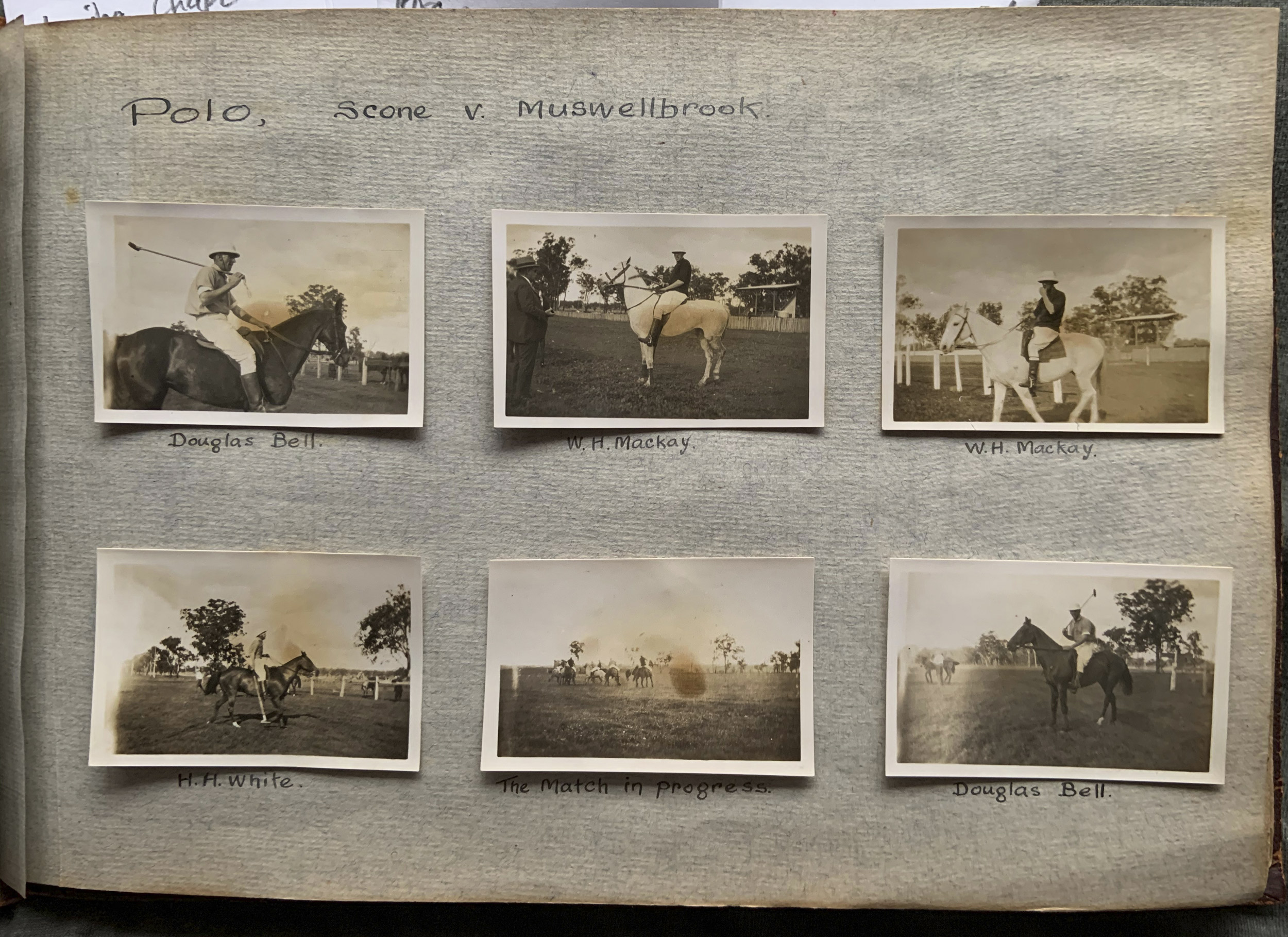
 

“Muswellbrook Picnic Races,” 1923 in John “Jack” Riverstone Faviell 1922-1933 photo album


"Polo, Scone v Muswellbrook," 1923 in John "Jack" Riverstone Faviell 1922-1933 photo album


“Polo, Scone v Muswellbrook,” 1923 in John “Jack” Riverstone Faviell 1922-1933 photo album


"Craigieburn", Bowral, N.S.W.," 1923 in John "Jack" Riverstone Faviell 1922-1933 photo album


“Craigieburn”, Bowral, N.S.W.,” 1923 in John “Jack” Riverstone Faviell 1922-1933 photo album


Craigieburn, Bowral is a house of historical significance as it was built in about 1885. It was originally the mountain retreat for a wealthy Sydney merchant and was owned by him for over twenty years. It was then the home of several other prominent people until about 1918 when it was converted into a hotel. Today it still provides hotel accommodation and is a venue for special events particularly weddings and conferences.

Text from the Wikipedia website


"Bryden Brown and Jack Whitehouse," 1923 in John "Jack" Riverstone Faviell 1922-1933 photo album


“Bryden Brown and Jack Whitehouse,” 1923 in John “Jack” Riverstone Faviell 1922-1933 photo album


"The Dudley Cup at Kensington," 1924 in John "Jack" Riverstone Faviell 1922-1933 photo album


“The Dudley Cup at Kensington,” 1924 in John “Jack” Riverstone Faviell 1922-1933 photo album


"C.G.S Football, School v Old Boys," 1924 in John "Jack" Riverstone Faviell 1922-1933 photo album


“C.G.S Football, School v Old Boys,” 1924 in John “Jack” Riverstone Faviell 1922-1933 photo album


Camden Grammar School

“At the close of the last century the school was moved to the present situation at Studley Park, Narellan, formerly the residence of A. Payne Esq., a magnificent residence standing on the brow of a hill over looking the Nepean Valley and surrounded by 200 acres of rich country.” (Trove) The school was at Studley Park House 1902-1933.


"Half-time," 1924 in John "Jack" Riverstone Faviell 1922-1933 photo album


“Half-time,” 1924 in John “Jack” Riverstone Faviell 1922-1933 photo album


"Untitled," 1924 in John "Jack" Riverstone Faviell 1922-1933 photo album


“Untitled,” 1924 in John “Jack” Riverstone Faviell 1922-1933 photo album


"Trip to Jenolan Caves," October, 1924 in John "Jack" Riverstone Faviell 1922-1933 photo album


“Trip to Jenolan Caves,” October, 1924 in John “Jack” Riverstone Faviell 1922-1933 photo album


Audrey Pickburn

Audrey Pickburn was a Sydney socialite. Her mother who was obviously playing chaperone on this trip to Jenolan Caves (Information from Douglas Stewart Fine Books) (Information from Douglas Stewart Fine Books)

Audrey Pickburn and John Faviell were married on Tuesday 24 February 1925.

AT ST. JAMES’
LAST NIGHT’S WEDDING
FAVIELL – PICKBURN

ST. JAMES Church, Kings Street was crowded last night for the wedding or Miss Audrey Pickburn, only child of the late Judge Pickburn, and Mrs. Pickburn of Springfield, Darllnghurst and Mr John Favlell, of “Collinroobie”. The church was decorated by girl friends of the bride and the ceremony was performed by Rev. T. L—-.

A lovely bridal gown of gleaming white was hand embroidered with pearls and diamente, and made with a long train, which was encrusted with pearls and lined with shell pink georgette. Silver thread embroideries also appeared on the train, which was finished with true-lovers knots. A plain tulle veil, held with a coronet of orange blossom, and a bouquet of orchids completed the ensemble.

Miss Gretel Bullmore was chief bridesmaid wearing a gown of golden lame, flared at the hem. Miss Eileen Wiley and Miss Joyce Russell were also In attendance. Their frocks of lame were made —– effect. All three wore golden crin. hats, trimmed with —- and floating blue scarves, with gold thread embroideries, and they carried bouquets of orchids.

Mr. Claude Pain was in attendance as best man. Mr. Guy Little and Mr Keith Hardie acted as groomsmen. The reception was held at the Queen’s Club where the bride & mother received a big number of guests.

The Labor Daily, Tuesday, 24 February 1925, Page 7 on the Trove website [Online] Cited 05/11/2019

(The Queen’s Club, 137 Elizabeth Street, Sydney established in 1912, is a private Club. The Club was founded for social purposes for country and city women.)

PICKBURN – FAVIELL

The biggest social event of the month was the wedding on Tuesday night of Miss Mclanie Audrey Pickburn, only daughter of the late Judge Pickburn and Mrs. Pickburn, of ‘Springfield,’ Darlinghurst, to Mr. Jack “Riverstone” Faviell, of Sydney, son of the late Mr. A. Faviell, Colinroobie, Narandera, and Mrs. Faviell, Kiribilli, which was celebrated at St. James’s Church, King-street, Sydney, by the Rev. E. C. Lucas, of St. John’s, Darlinghurst. The church was beautifully decorated in white and gold.

Narandera Argus and Riverina Advertiser, Friday, 27 February 1925, Page 6 on the Trove website [Online] Cited 05/11/2019

Jenolan Caves

The Jenolan Caves (Tharawal: Binoomea, Bindo, Binda) are limestone caves located within the Jenolan Karst Conservation Reserve in the Central Tablelands region, west of the Blue Mountains, in Jenolan, Oberon Council, New South Wales, in eastern Australia. The caves and 3,083-hectare (7,620-acre) reserve are situated approximately 175 kilometres (109 mi) west of Sydney, 20 kilometres (12 mi) east of Oberon and 30 kilometres (19 mi) west of Katoomba.

The caves are the most visited of several similar groups in the limestone caves of the country, and the most ancient discovered open caves in the world.

Text from the Wikipedia website


"Caves Service Car," 1924 in John "Jack" Riverstone Faviell 1922-1933 photo album


“Caves Service Car,” 1924 in John “Jack” Riverstone Faviell 1922-1933 photo album


"My Pan American," 1924 in John "Jack" Riverstone Faviell 1922-1933 photo album


“My Pan American,” 1924 in John “Jack” Riverstone Faviell 1922-1933 photo album


"Audrey Pickburn," 1924 in John "Jack" Riverstone Faviell 1922-1933 photo album


“Audrey Pickburn,” 1924 in John “Jack” Riverstone Faviell 1922-1933 photo album


"Jenolan Caves," October, 1924 in John "Jack" Riverstone Faviell 1922-1933 photo album


“Jenolan Caves,” October, 1924 in John “Jack” Riverstone Faviell 1922-1933 photo album
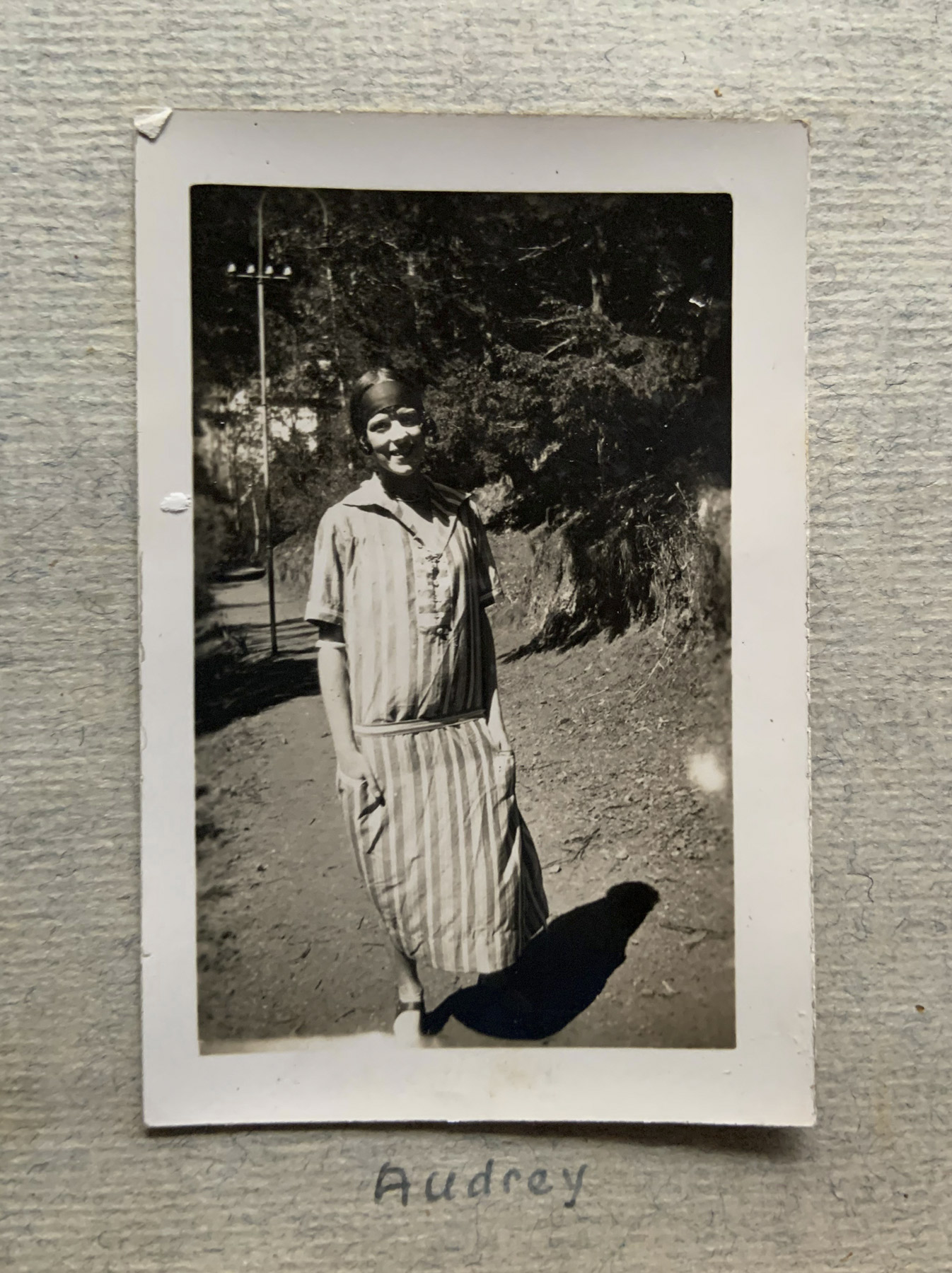
 

"Audrey," 1924 in John "Jack" Riverstone Faviell 1922-1933 photo album


“Audrey,” 1924 in John “Jack” Riverstone Faviell 1922-1933 photo album


"Untitled," in John "Jack" Riverstone Faviell 1922-1933 photo album


“Untitled,” in John “Jack” Riverstone Faviell 1922-1933 photo album


Admiral Sir Dudley Rawson Stratford de Chair, KCB, KCMG, MVO (30 August 1864 – 17 August 1958) was a senior Royal Navy officer and later Governor of New South Wales. …


Governor of New South Wales

De Chair had been interested in serving in a viceregal role as early as 1922, when he put his name forward to the Colonial Office for the position of Governor of South Australia. This position however, went to Sir Tom Bridges instead and the First Lord of the Admiralty, Leo Amery, put de Chair’s name forward for the Governor of New South Wales. This position, which had been vacant since the death of Sir Walter Davidson in September 1923, was the same one his uncle, Sir Harry Rawson, had held twenty years earlier, and to which he was appointed on 8 November 1923.

Arriving in Sydney on 28 February 1924, de Chair became governor in relatively calm political times and was warmly received in the city with great fanfare. On de Chair’s appointment, the President of the Royal Australian Historical Society, Aubrey Halloran, compared Admiral de Chair to the first Governor, Captain Arthur Phillip: “Our new Governor’s reputation as an intrepid sailor and ruler of men evokes from us a hearty welcome and inspires us to place in him the same confidence that [Arthur] Phillip received from his gallant band of fellow-sailors and the English statesmen who sent him.”

The political makeup of the state changed not long after his arrival however, when the conservative Nationalist/Progressive coalition government of Sir George Fuller, whom de Chair had got on well with, was defeated at the May 1925 state election by the Labor Party under Jack Lang. De Chair noted to himself that Lang and his party’s position comprised “radical and far-reaching legislation, which had not been foreshadowed in their election speeches”. He also later wrote that Lang’s “lack of scruple gave me a great and unpleasant surprise”.

With the Labor Government only holding a single seat majority in the Legislative Assembly and only a handful of members in the upper Legislative Council, one of Lang’s main targets was electoral reform. The Legislative Council, comprising members appointed by the Governor for life terms, had long been seen by Lang and the Labor Party as an outdated bastion of conservative privilege holding back their reform agenda. Although previous Labor premiers had managed to work with the status quo, such as requesting appointments from the Governor sufficient to pass certain bills, Lang’s more radical political agenda required more drastic action to ensure its passage. Consequently, Lang and his government sought to abolish the council, along the same lines that their Queensland Labor colleagues had done in 1922 to their Legislative Council, by requesting from de Chair enough appointments to establish a Labor majority in the council that would then vote for abolition.

While Lang’s attempts ultimately failed, de Chair failed to gain the support of an indifferent Dominions Office. With Lang’s departure in 1927, the Nationalist Government of Thomas Bavin invited him in 1929 to stay on as Governor for a further term. De Chair agreed only to a year’s extension and retired on 8 April 1930.

Text from the Wikipedia website


"Old Herald Office - Pitt St.,' 1924 in John "Jack" Riverstone Faviell 1922-1933 photo album
 

“Old Herald Office – Pitt St.,’ 1924 in John “Jack” Riverstone Faviell 1922-1933 photo album


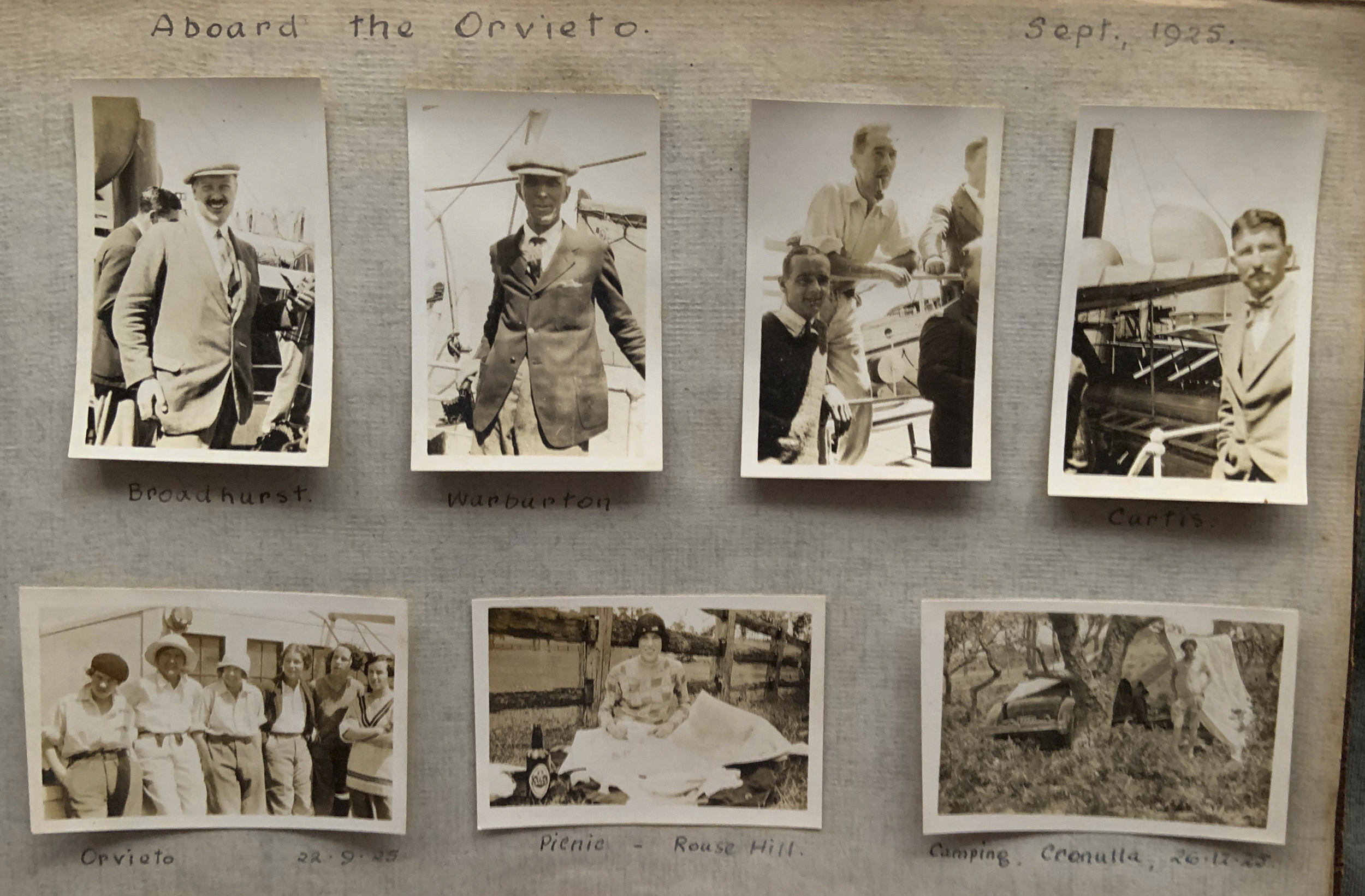
"Aboard the Orvieto," September, 1925 in John "Jack" Riverstone Faviell 1922-1933 photo album


“Aboard the Orvieto,” September, 1925 in John “Jack” Riverstone Faviell 1922-1933 photo album


"Curtis (Captain Arthur Curtis)," 1925 in John "Jack" Riverstone Faviell 1922-1933 photo album


“Curtis (Captain Arthur Curtis),” 1925 in John “Jack” Riverstone Faviell 1922-1933 photo album


"Roseville," 1926 in John "Jack" Riverstone Faviell 1922-1933 photo album


“Roseville,” 1926 in John “Jack” Riverstone Faviell 1922-1933 photo album


"Picnics - Whale Beach / Visit of the Duke & Duchess of York," 1927 in John "Jack" Riverstone Faviell 1922-1933 photo album


“Picnics – Whale Beach / Visit of the Duke & Duchess of York,” 1927 in John “Jack” Riverstone Faviell 1922-1933 photo album


"Visit of the Duke & Duchess of York," 1927 in John "Jack" Riverstone Faviell 1922-1933 photo album


“Visit of the Duke & Duchess of York,” 1927 in John “Jack” Riverstone Faviell 1922-1933 photo album


"A house is nearly built - 20 Yarranabbe Road, Darling Point," 1926 in John "Jack" Riverstone Faviell 1922-1933 photo album


“A house is nearly built – 20 Yarranabbe Road, Darling Point,” 1926 in John “Jack” Riverstone Faviell 1922-1933 photo album
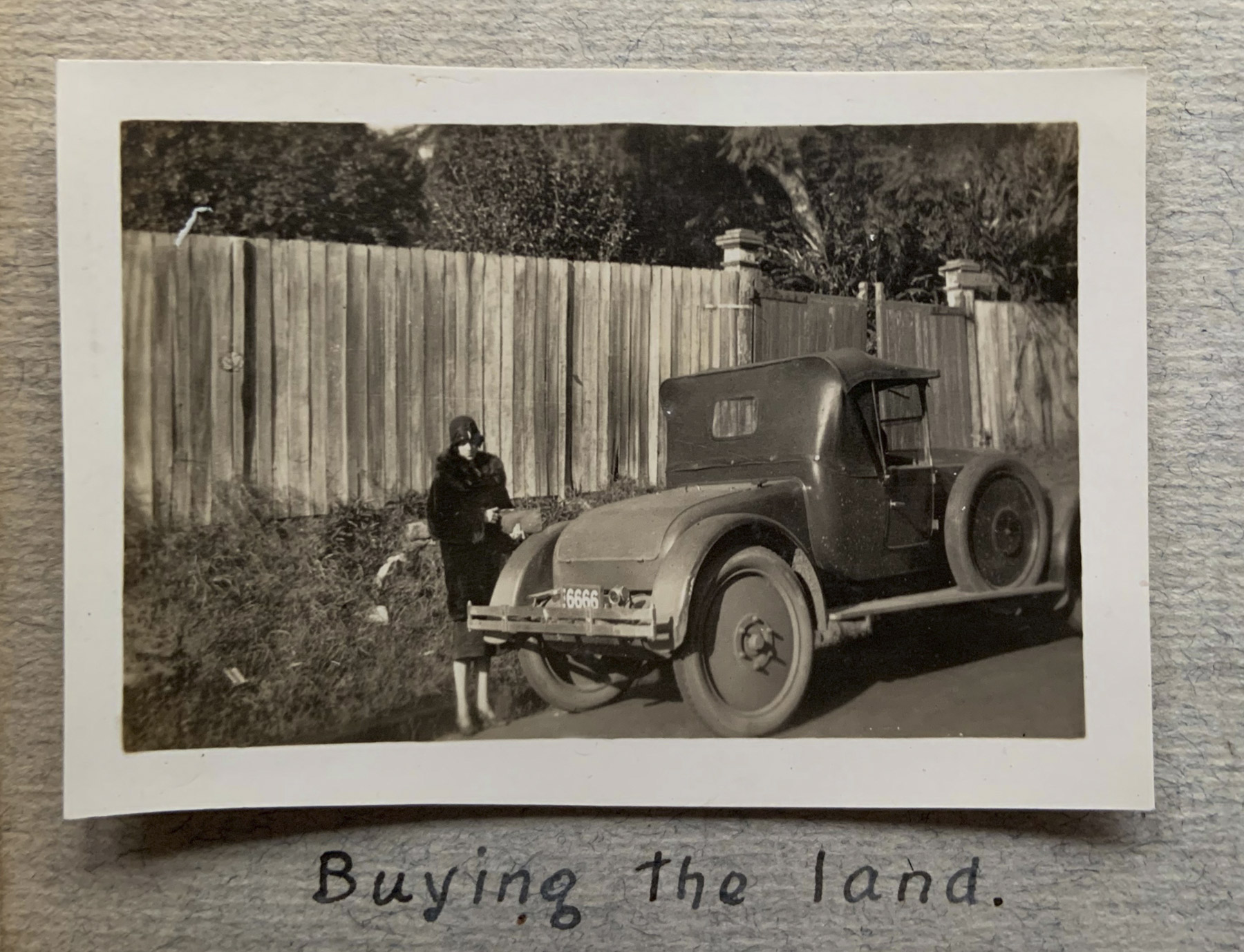


"Buying the land," 1926 in John "Jack" Riverstone Faviell 1922-1933 photo album


“Buying the land,” 1926 in John “Jack” Riverstone Faviell 1922-1933 photo album


"Three harbour views taken from upstairs," 1926 in John "Jack" Riverstone Faviell 1922-1933 photo album


“Three harbour views taken from upstairs,” 1926 in John “Jack” Riverstone Faviell 1922-1933 photo album


"Harbour view," 1926 in John "Jack" Riverstone Faviell 1922-1933 photo album


“Harbour view,” 1926 in John “Jack” Riverstone Faviell 1922-1933 photo album


Audrey Pickburn and Jack Faviell divorced in October 1930. Audrey re-married in 1934 and so did Jack (Information from Douglas Stewart Fine Books)


IN DIVORCE

(Before Mr. Justice Pike)

FAVIELL v FAVIELL

Jack Riverstone Faviell sued for divorce from Melanie Audrey Faviell (formerly Pickburn) on the ground of non compliance with a decree for restitution of conjugal rights. The parties were married at Sydney in February, 1925, according to the rites of the Church of England. A decree nisi, returnable in six months, was granted. Mr. Toose (instructed by Messrs. Allen, Allen, and Hemsley) appeared for the petitioner.

The Sydney Morning Herald, Saturday, 11 October 1930. Page 8 on the Trove website [Online] Cited 05/11/2019


The party below is for Jack with his second wife whom he married in 1934; Miss Rosenthal from Melbourne (Information from Douglas Stewart Fine Books)

“Party at Darling Point”

MRS. JOHN FAVIELL, looking very cool in a pink and grey floral sheer frock and shady natural straw hat, was hurrying about town in yesterday’s heat to complete arrangements for the Christmas party and dance at her home, 20 Yarranabbe Road, Darling Point, on Friday.

The party will be held from Ave till ten p.m., and the proceeds will be in aid of the Blind Institution. A Christmas tree will be among the attractions.

The Daily Telegraph, Wednesday, 15 December 1937. Page 12 on the Trove website [Online] Cited 05/11/2019


"Trip to Canberra," 5/6 November, 1927 in John "Jack" Riverstone Faviell 1922-1933 photo album
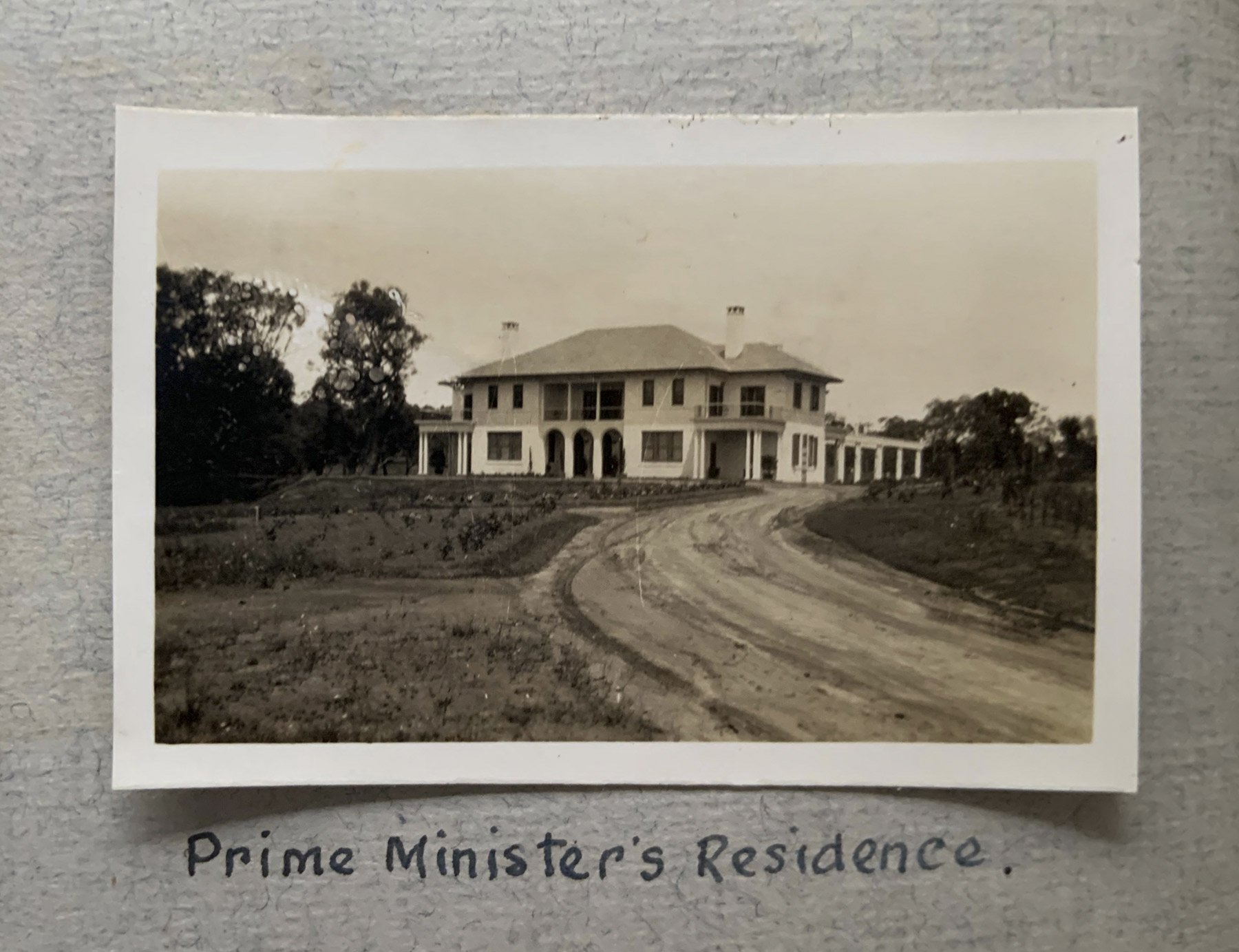
 

“Trip to Canberra,” 5/6 November, 1927 in John “Jack” Riverstone Faviell 1922-1933 photo album


"Prime Minister's Residence," 1927 in John "Jack" Riverstone Faviell 1922-1933 photo album


“Prime Minister’s Residence,” 1927 in John “Jack” Riverstone Faviell 1922-1933 photo album


"Trip to Canberra," 5/6 November, 1927 in John "Jack" Riverstone Faviell 1922-1933 photo album


“Trip to Canberra,” 5/6 November, 1927 in John “Jack” Riverstone Faviell 1922-1933 photo album


The prophetic tombstone of Sarah, George and Betsy Webb. The inscription is prophetic “For here we have no continuing city but seek one to come” St John’s Churchyard, Constitution Avenue, Reid.
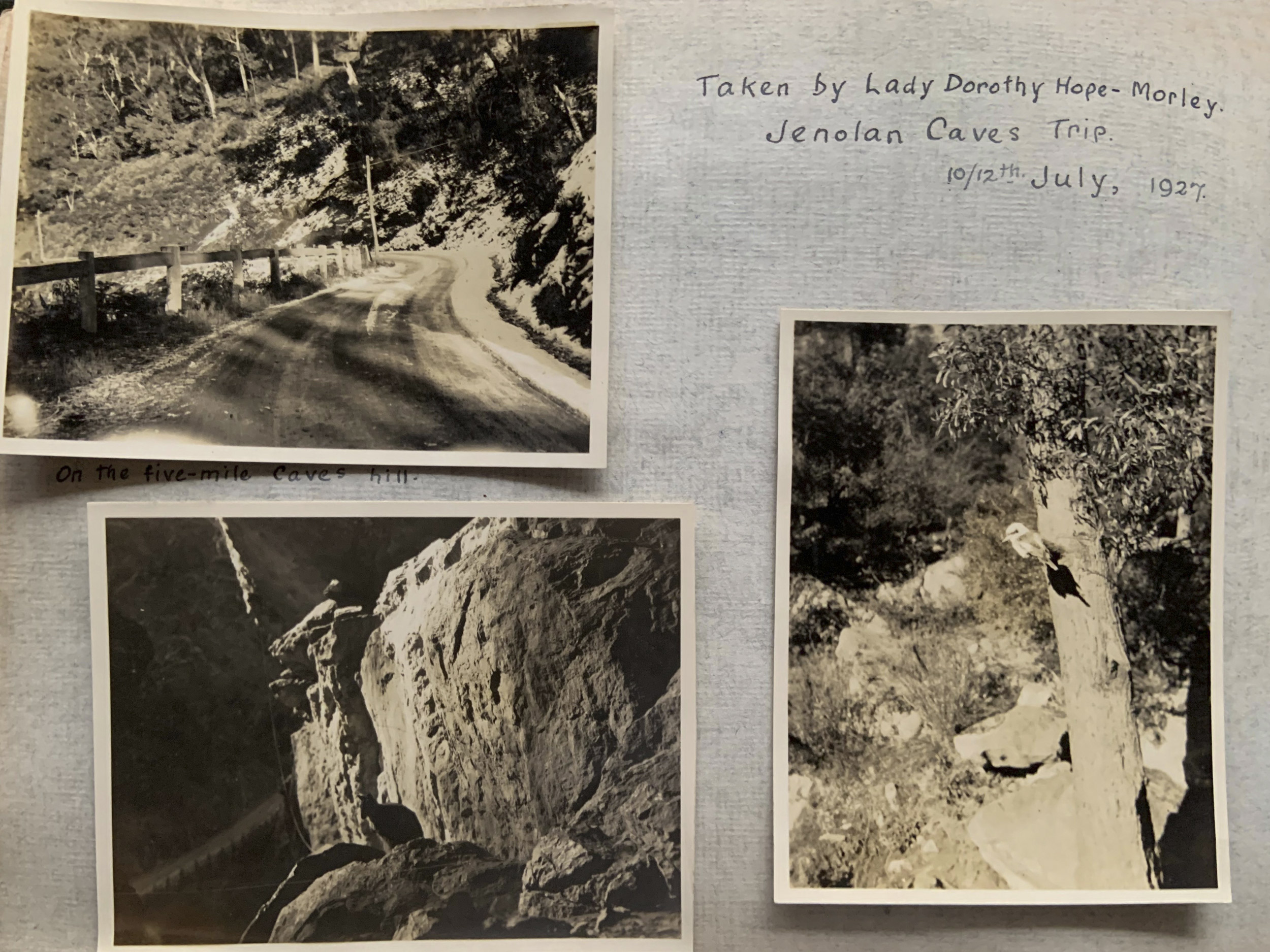
 

"Taken by Lady Dorothy Hope-Morley, Jenolan Caves Trip,' 10/12th July, 1927 in John "Jack" Riverstone Faviell 1922-1933 photo album


“Taken by Lady Dorothy Hope-Morley, Jenolan Caves Trip,’ 10/12th July, 1927 in John “Jack” Riverstone Faviell 1922-1933 photo album


Dorothy Edith Isabel Hope-Morley (Hobart-Hampden)
Birthdate: April 11, 1891
Death: December 15, 1972
Daughter of Sidney, 7th Earl of Buckinghamshire, OBE and Georgiana Wilhelmina, Countess of Buckinghamshire
Wife of Hon. Claude Hope-Morley
Mother of Gordon Hope Hope-Morley, 3rd Baron Hollenden and Hon Ann Rosemary Hope Newman
Sister of John Hobart-Hampden-Mercer-Henderson, 8th Earl of Buckinghamshire and Lady Sidney Mary Catherine Anne Hobart-Hampden


"Taken by Lady Dorothy Hope-Morley, Jenolan Caves Trip,' 10/12th July, 1927 in John "Jack" Riverstone Faviell 1922-1933 photo album


“Taken by Lady Dorothy Hope-Morley, Jenolan Caves Trip,’ 10/12th July, 1927 in John “Jack” Riverstone Faviell 1922-1933 photo album


"Taken by Lady Dorothy Hope-Morley, Jenolan Caves Trip,' 10/12th July, 1927 in John "Jack" Riverstone Faviell 1922-1933 photo album


“Taken by Lady Dorothy Hope-Morley, Jenolan Caves Trip,’ 10/12th July, 1927 in John “Jack” Riverstone Faviell 1922-1933 photo album


"Ellen's Isle, Loch Katrine, Scotland (Audrey & me in boat)," 1925 in John "Jack" Riverstone Faviell 1922-1933 photo album


“Ellen’s Isle, Loch Katrine, Scotland (Audrey & me in boat),” 1925 in John “Jack” Riverstone Faviell 1922-1933 photo album


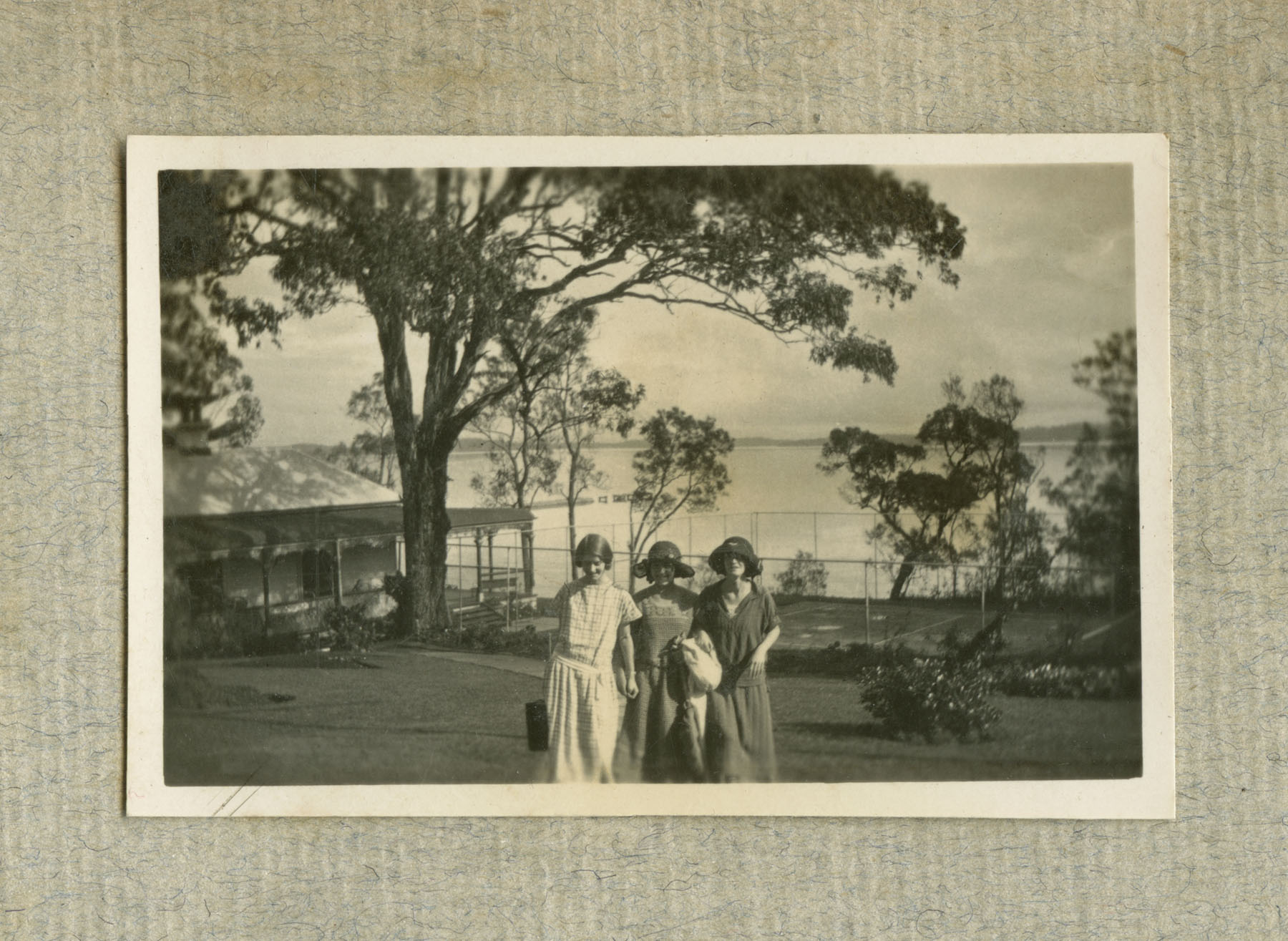
This photograph, the only one from overseas (Scotland), must be from Audrey and Jack’s honeymoon (1925). It is interesting that there are no other photographs from either the wedding or the honeymoon in the album. Of course, the marriage photographs could have been housed in a purpose built wedding album, but the haphazard nature of the construction of this album, with the photographs out of date order, and this the only one from the honeymoon, make me think that this album was assembled in the 1930s. Marcus


"Untitled," c. 1927-1930 in John "Jack" Riverstone Faviell 1922-1933 photo album


“Untitled,” c. 1927-30 in John “Jack” Riverstone Faviell 1922-1933 photo album


"Untitled," c. 1927-1930 in John "Jack" Riverstone Faviell 1922-1933 photo album


“Untitled,” c. 1927-30 in John “Jack” Riverstone Faviell 1922-1933 photo album


"Sydney Harbour Bridge As It Grew," 1929-1930 in John "Jack" Riverstone Faviell 1922-1933 photo album


“Sydney Harbour Bridge As It Grew,” 1929-1930 in John “Jack” Riverstone Faviell 1922-1933 photo album


Sydney Harbour Bridge construction

Arch construction itself began on 26 October 1928. The southern end of the bridge was worked on ahead of the northern end, to detect any errors and to help with alignment. The cranes would “creep” along the arches as they were constructed, eventually meeting up in the middle. In less than two years, on Tuesday, 19 August 1930, the two halves of the arch touched for the first time. Workers riveted both top and bottom sections of the arch together, and the arch became self-supporting, allowing the support cables to be removed. On 20 August 1930 the joining of the arches was celebrated by flying the flags of Australia and the United Kingdom from the jibs of the creeper cranes.

Text from the Wikipedia website [Online] Cited 31/10/2019


"Sydney Harbour Bridge As It Grew," 1929-1930 in John "Jack" Riverstone Faviell 1922-1933 photo album


“Sydney Harbour Bridge As It Grew,” 1929-1930 in John “Jack” Riverstone Faviell 1922-1933 photo album


"Sydney Harbour Bridge As It Grew," 1929-1930 in John "Jack" Riverstone Faviell 1922-1933 photo album


“Sydney Harbour Bridge As It Grew,” 1929-1930 in John “Jack” Riverstone Faviell 1922-1933 photo album


"Sydney Harbour Bridge As It Grew," 1929-1930 in John "Jack" Riverstone Faviell 1922-1933 photo album


“Sydney Harbour Bridge As It Grew,” 1929-1930 in John “Jack” Riverstone Faviell 1922-1933 photo album


"Sydney Harbour Bridge As It Grew," 1929-1930 in John "Jack" Riverstone Faviell 1922-1933 photo album


“Sydney Harbour Bridge As It Grew,” 1929-1930 in John “Jack” Riverstone Faviell 1922-1933 photo album


"Bridge Opening, 20th March, 1932," in John "Jack" Riverstone Faviell 1922-1933 photo album


“Bridge Opening, 20th March, 1932,” in John “Jack” Riverstone Faviell 1922-1933 photo album
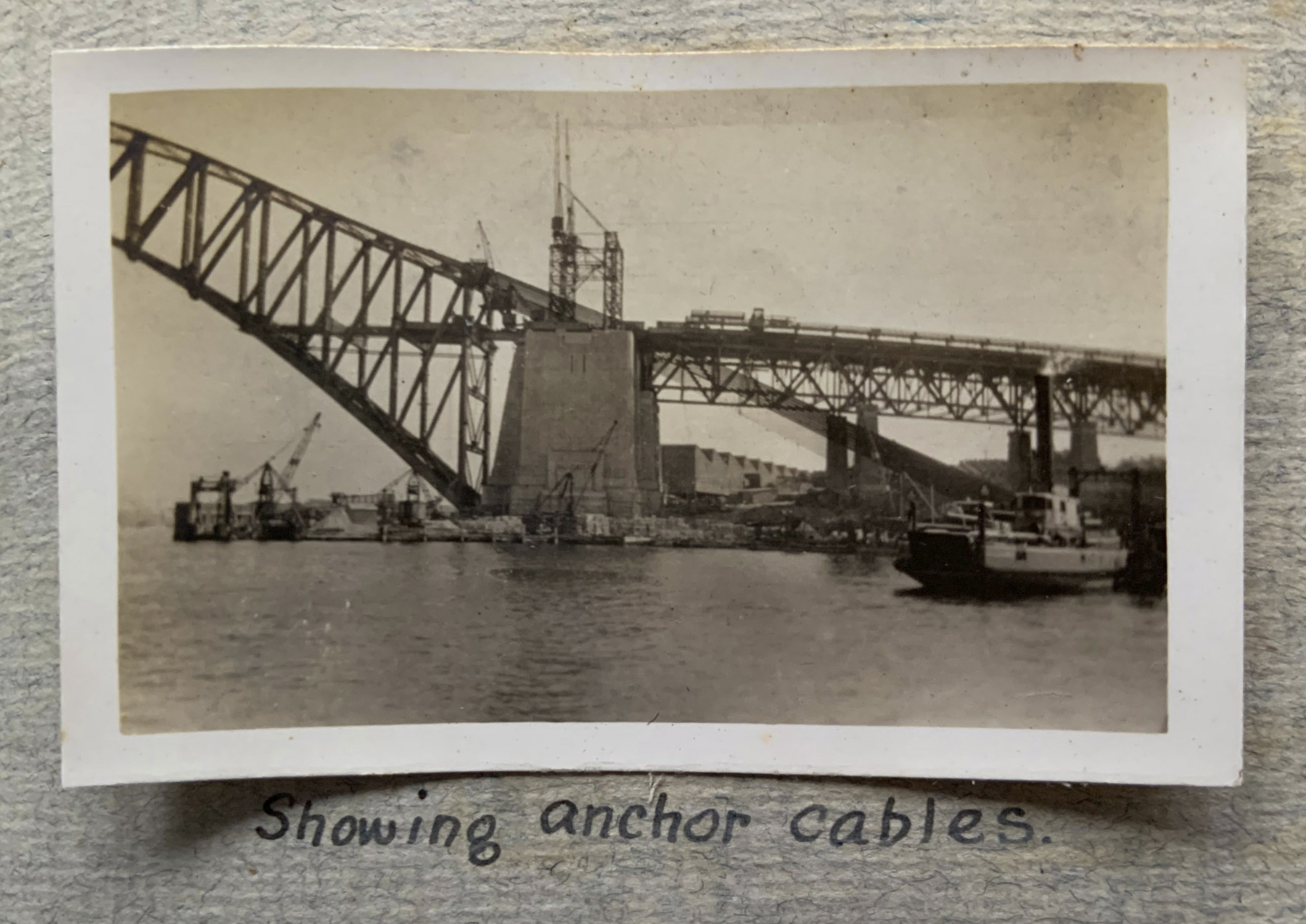
 

"Showing anchor cables," March, 1932 in John "Jack" Riverstone Faviell 1922-1933 photo album


“Showing anchor cables,” March, 1932 in John “Jack” Riverstone Faviell 1922-1933 photo album


"Federal and State Govenors arriving," March, 1932 in John "Jack" Riverstone Faviell 1922-1933 photo album


“Federal and State Govenors arriving,” March, 1932 in John “Jack” Riverstone Faviell 1922-1933 photo album


"Pageantry at Official Opening of Harbour Bridge - 20th March, 1932," in John "Jack" Riverstone Faviell 1922-1933 photo album


“Pageantry at Official Opening of Harbour Bridge – 20th March, 1932,” in John “Jack” Riverstone Faviell 1922-1933 photo album


"Pageantry at Official Opening of Harbour Bridge - 20th March, 1932," in John "Jack" Riverstone Faviell 1922-1933 photo album


“Pageantry at Official Opening of Harbour Bridge – 20th March, 1932,” in John “Jack” Riverstone Faviell 1922-1933 photo album
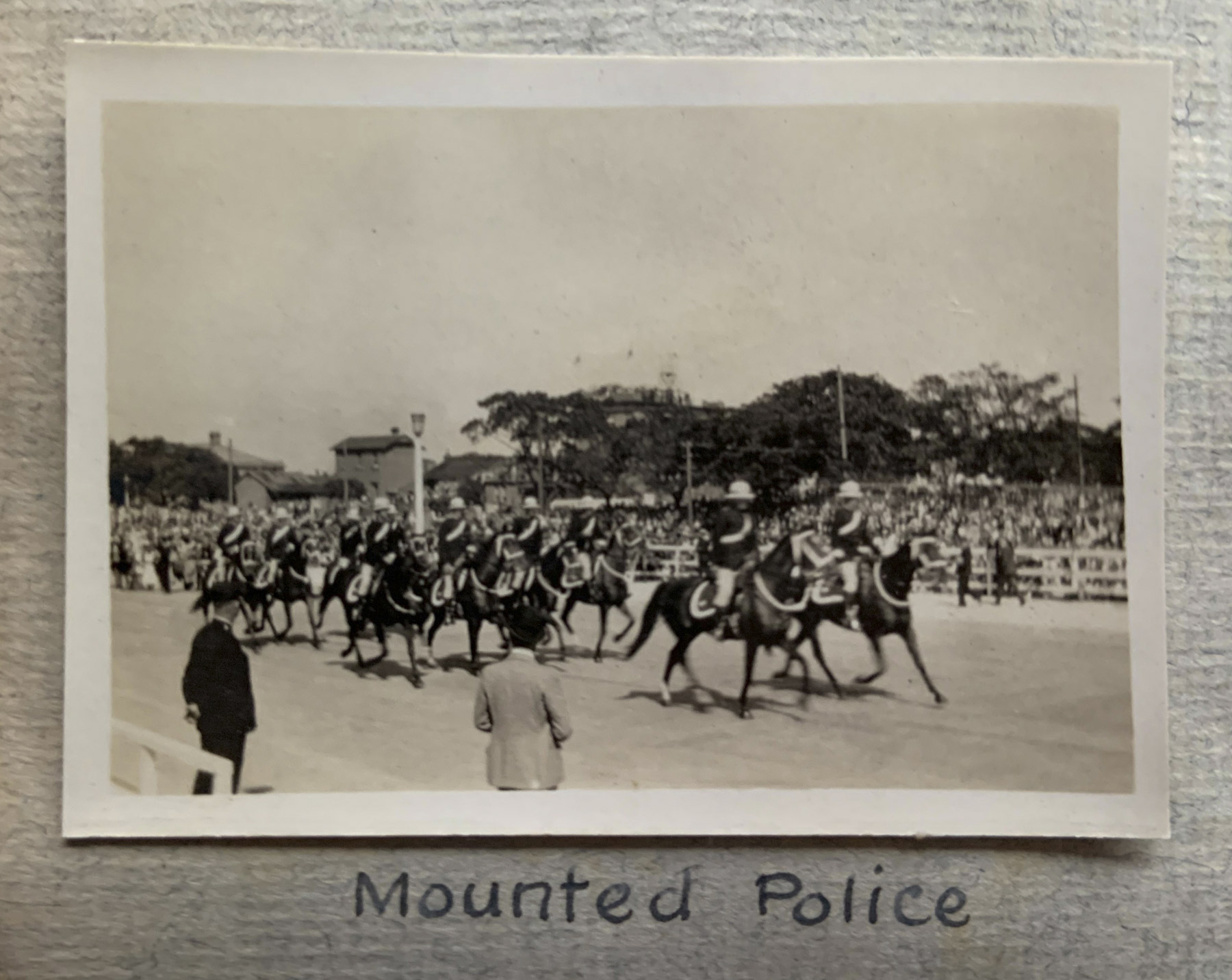
 

"Mounted Police," March, 1932 in John "Jack" Riverstone Faviell 1922-1933 photo album


“Mounted Police,” March, 1932 in John “Jack” Riverstone Faviell 1922-1933 photo album
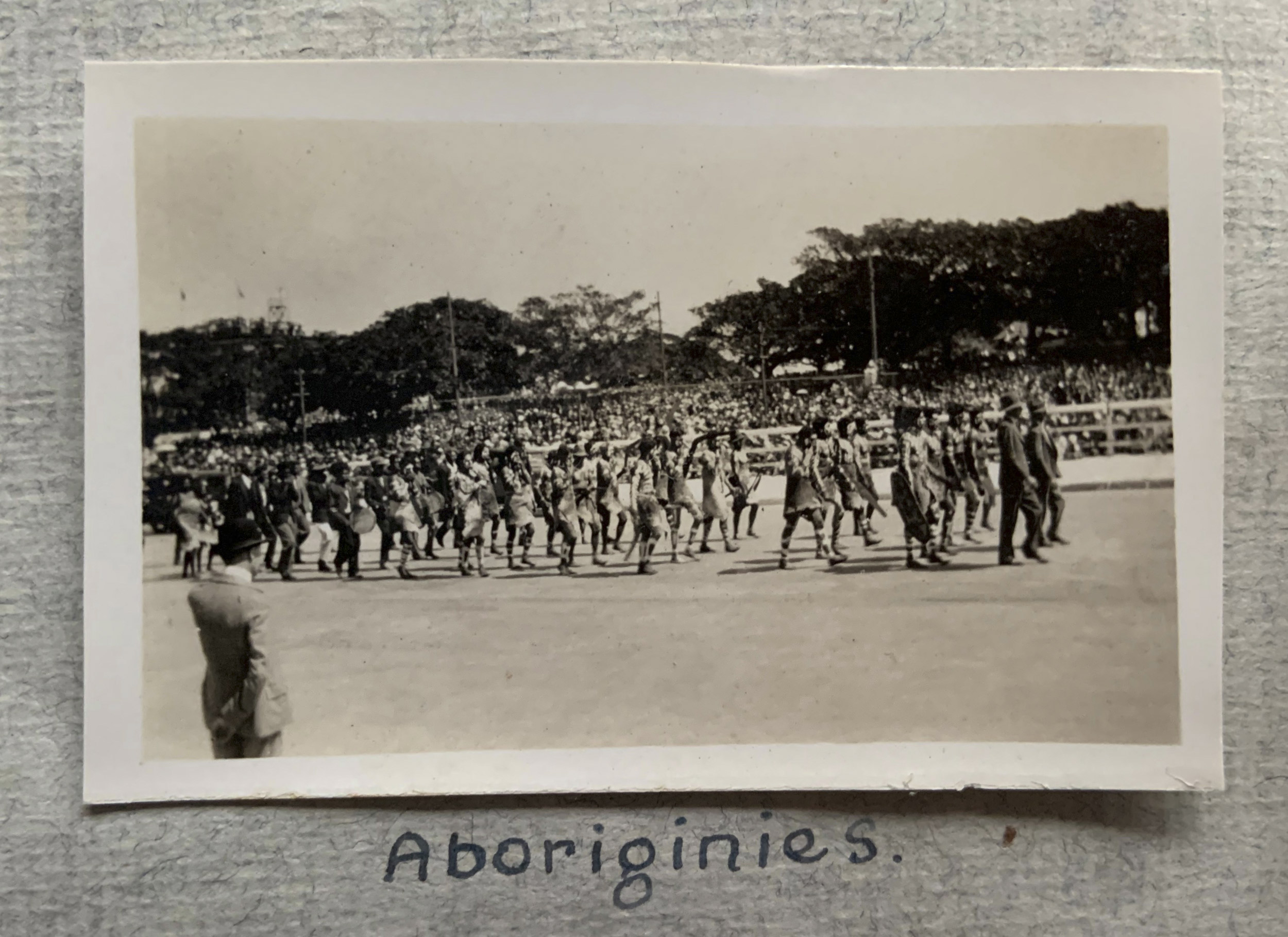
 

"Aborigines," March, 1932 in John "Jack" Riverstone Faviell 1922-1933 photo album


“Aborigines,” March, 1932 in John “Jack” Riverstone Faviell 1922-1933 photo album


"Old King Street Bus," March, 1932 in John "Jack" Riverstone Faviell 1922-1933 photo album


“Old King Street Bus,” March, 1932 in John “Jack” Riverstone Faviell 1922-1933 photo album


"An early Hupmobile car," March, 1932 in John "Jack" Riverstone Faviell 1922-1933 photo album


“An early Hupmobile car,” March, 1932 in John “Jack” Riverstone Faviell 1922-1933 photo album


Hupmobile was an automobile built from 1909 through 1939 by the Hupp Motor Car Company.


"First Auto-Gyro (The World's First Auto-Gyro Plane, 1909-12)," March, 1932 in John "Jack" Riverstone Faviell 1922-1933 photo album


“First Auto-Gyro (The World’s First Auto-Gyro Plane, 1909-12),” March, 1932 in John “Jack” Riverstone Faviell 1922-1933 photo album
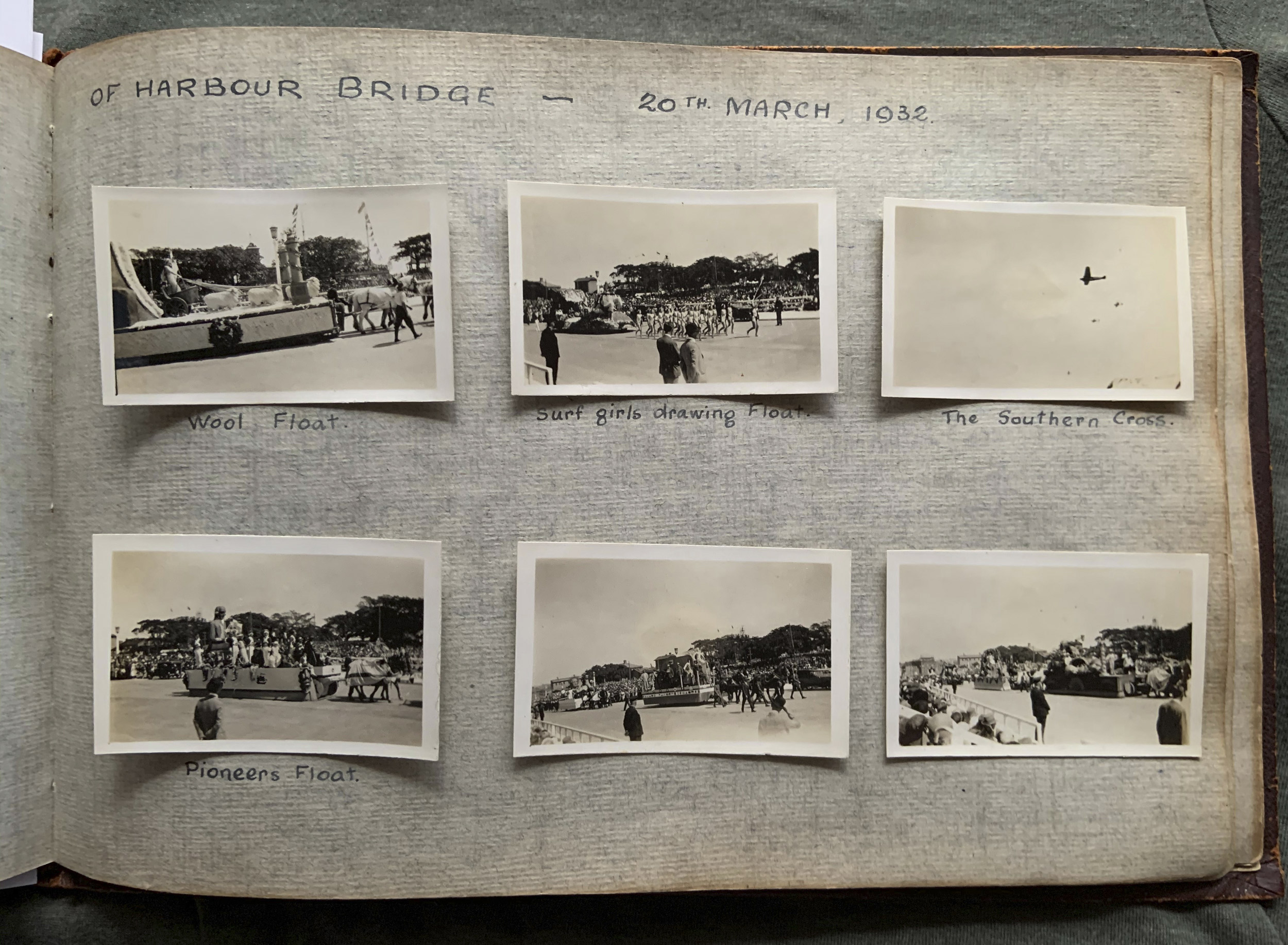
 

"Pageantry at Official Opening of Harbour Bridge - 20th March, 1932," in John "Jack" Riverstone Faviell 1922-1933 photo album


“Pageantry at Official Opening of Harbour Bridge – 20th March, 1932,” in John “Jack” Riverstone Faviell 1922-1933 photo album


“Surf girls drawing Float,” from the opening of the Sydney Harbour Bridge, March, 1932 in John “Jack” Riverstone Faviell 1922-1933 photo album


“Surf girls drawing Float,” in John “Jack” Riverstone Faviell 1922-1933 photo album


"The Southern Cross," March, 1932 in John "Jack" Riverstone Faviell 1922-1933 photo album


“The Southern Cross,” March, 1932 in John “Jack” Riverstone Faviell 1922-1933 photo album


"Pioneers Float," March, 1932 in John "Jack" Riverstone Faviell 1922-1933 photo album


“Pioneers Float,” March, 1932 in John “Jack” Riverstone Faviell 1922-1933 photo album


Australian National Travel Association Smith and Julius Studios (Sydney, N.S.W.) (printer) 'Australia's 150th Anniversary Sydney 1938: Pageantry and carnival January 26th - April 25th' Sydney: The Association, 1938


Australian National Travel Association
Smith and Julius Studios (Sydney, N.S.W.) (printer)
Australia’s 150th Anniversary Sydney 1938: Pageantry and carnival January 26th – April 25th
Sydney: The Association, 1938
Poster
101.2 x 62.4cm
© National Library of Australia

Used under fair use condition for the purpose for research or study


‘The 26th of January, 1938, is not a day of rejoicing for Australia’s Aborigines; it is a day of mourning. This festival of 150 years’ so-called “progress” in Australia commemorates also 150 years of misery and degradation imposed upon the original native inhabitants by the white invaders of this country.

‘We, representing the Aborigines, now ask you, the reader of this appeal, to pause in the midst of your sesqui-centenary rejoicings and ask yourself honestly whether your “conscience” is clear in regard to the treatment of the Australian blacks by the Australian whites during the period of 150 years’ history which you celebrate?’

‘You are the New Australians, but we are the Old Australians. We have in our arteries the blood of the Original Australians, who have lived in this land for many thousands of years.’

‘You came here only recently, and you took our land away from us by force. You have almost exterminated our people, but there are enough of us remaining to expose the humbug of your claim, as white Australians, to be a civilised, progressive, kindly and humane nation.’

‘Aborigines Claim Citizen Rights!: A Statement of the Case for the Aborigines Progressive Association’, the Publicist, 1938, p. 3 quoted in Anonymous. “The 1938 Day of Mourning,” on the AIATSIS website Nd [Online] Cited 21/02/2022


Charles Meere (Australian, 1890-1961) '1788-1938, 150 years of progress: Australia celebrates January 26 - April 25, 1938' 1938


Charles Meere (Australian, 1890-1961)
1788-1938, 150 years of progress: Australia celebrates January 26 – April 25, 1938
1938
Poster
101.5 x 63.5cm
© National Library of Australia

Used under fair use condition for the purpose for research or study
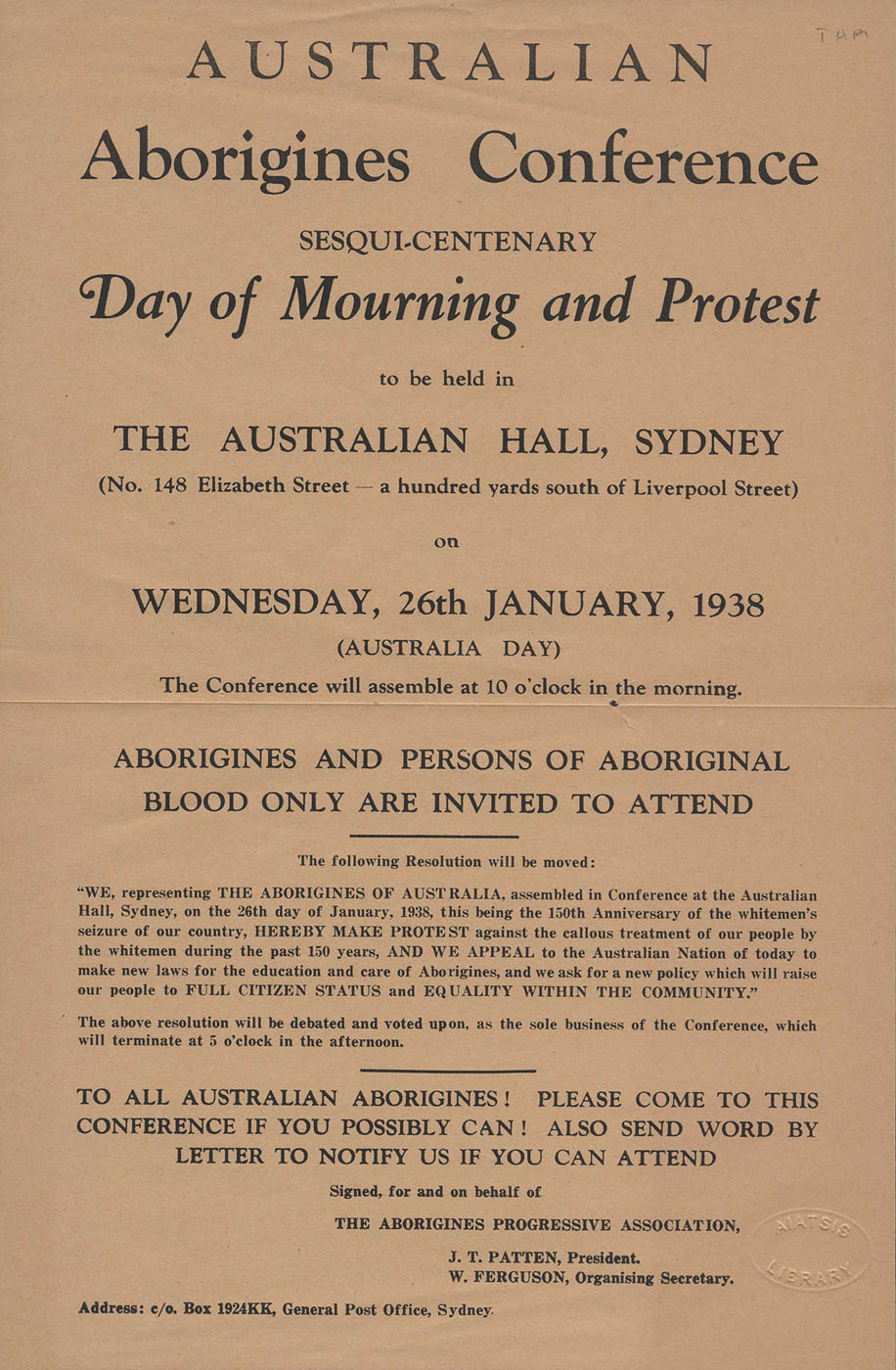
 

'Poster advertising the Day of Mourning' 1938


Poster advertising the Day of Mourning
1938
AIATSIS Collection

Used under fair use condition for the purpose for research or study


In 1938, a poster invited “Aborigines and persons of Aboriginal blood” to attend the Day of Mourning and Protest at the Australian Hall, Sydney. It was to be held on 26 January, the 150th anniversary of European colonisation. The protest, calling for full citizen status and equality, was led by William Cooper, Pearl Gibbs, Jack Patten and William Ferguson.

Keith Munro, MCA Curator Aboriginal and Torres Strait Islander Programs, says, “The Day of Mourning event is seen as the first Aboriginal civil rights protest in Australian history. The actions that took place on this day later resulted in the establishment of a national day of celebration and achievement, which turned into a longer event now known as NAIDOC Week.”

Anonymous. “Marking 80 years since the Day of Mourning,” on the Museum of Contemporary Art website 17 May 2018 [Online] Cited 21/02/2022


Unknown photographer (Australian) 'The first Day of Mourning' 1938


Unknown photographer (Australian)
The first Day of Mourning. From the left is William Ferguson, Jack Kinchela, Isaac Ingram, Doris Williams, Esther Ingram, Arthur Williams, Phillip Ingram, Louisa Agnes Ingram OAM holding daughter Olive Ingram, and Jack Patten. The name of the person in the background to the right is not known at this stage.
AIATSIS Collection

Used under fair use condition for the purpose for research or study


The first Day of Mourning was a culmination of years of work by the Australian Aborigines League (AAL) and the Aborigines Progressive Association (APA). It would became the inspiration for Aboriginal and Torres Strait Islander activism throughout the remainder of the twentieth century. In the early 1960s, both organisations would reform and reshape and become the driving force calling for a constitutional referendum that would take place in 1967.

The AAL was able to persuade many religious denominations to declare the Sunday before Australia Day as ‘Aboriginal Sunday’. This was to serve as a reminder of the unjust treatment of Indigenous people. The first of these took place in 1940 and continued until 1955, when it moved to the first Sunday in July.

In 1957, with support and cooperation from federal and state governments, the churches and major Indigenous organisations, a National Aborigines Day Observance Committee (NADOC) was formed, which continues to this day as NAIDOC.

Anonymous. “The 1938 Day of Mourning,” on the AIATSIS website Nd [Online] Cited 21/02/2022
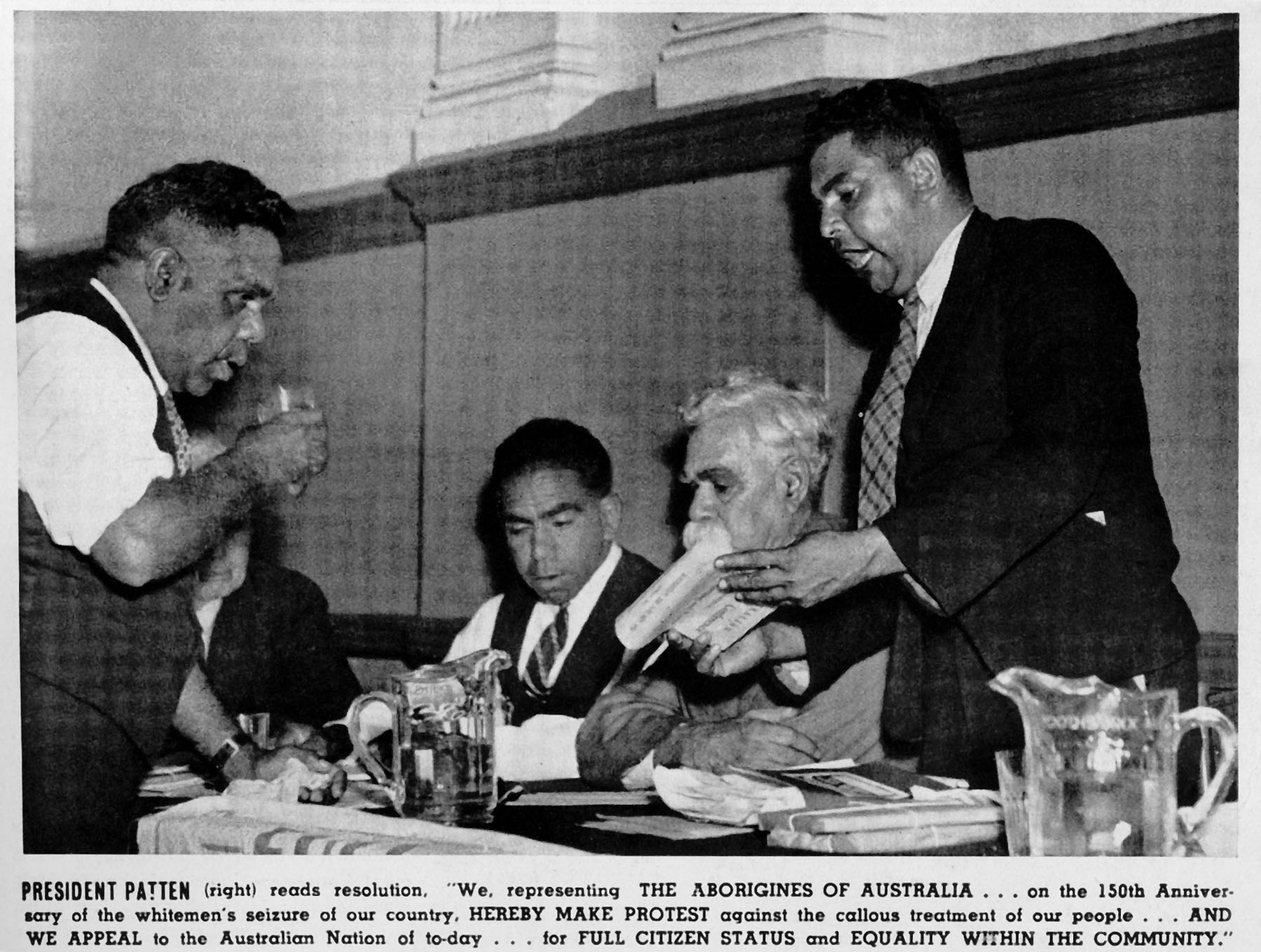
 

Unknown photographer (Australian) 'Jack Patten reads the resolution at the Day of Mourning Conference on 26 January 1938'


Unknown photographer (Australian)
Jack Patten reads the resolution at the Day of Mourning Conference on 26 January 1938
Mar. 1938 (publication date), Sydney, N.S.W.: Man magazine
12 x 17cm
© Collections of the State Library of New South Wales

Used under fair use condition for the purpose for research or study


Unknown photographer (Australian) 'In this 1938 re-enactment of Governor Phillip's landing, Aborigines (specially brought in for the occasion) are shown running up the beach as the boats of the First Fleet marines land at Farm Cove. A group of white dignitaries sits in comfortable safety watching the invasion' 1938


Unknown photographer (Australian)
In this 1938 re-enactment of Governor Phillip’s landing, Aborigines (specially brought in for the occasion) are shown running up the beach as the boats of the First Fleet marines land at Farm Cove. A group of white dignitaries sits in comfortable safety watching the invasion
1938
© Mitchell Library, State Library of NSW – Home and Away

Used under fair use condition for the purpose for research or study


Unknown photographer (Australian) 'Aboriginal protests on Sydney Harbour, Australia Day, 1988' 1988


Unknown photographer (Australian)
Aboriginal protests on Sydney Harbour, Australia Day, 1988
1988

Used under fair use condition for the purpose for research or study


National Film and Sound Archive of Australia (NFSA) Pat Fiske (director) 'Australia Daze' (film still) 1988


National Film and Sound Archive of Australia (NFSA)
Pat Fiske 
(director)
Australia Daze (film still)
1988


National Film and Sound Archive of Australia (NFSA)
Pat Fiske 
(director)
Australia Daze (film clip)
1988


The production of Australia Daze involved dozens of camera crews across the nation, filming from midnight to midnight on 26 January 1988, in order to capture the many facets of the bicentenary of European settlement in Australia. From First Fleet re-enactments to Indigenous protests, backyard barbeques to royal visits, Australia Daze chronicles a broad array of events on that historic day and diverse voices and perspectives from across Australian society.

Australia Daze is a snapshot of one day in the millennia-long history of the country. The film is an opportunity for Australians to remember where they were, or to catch a glimpse of Australia’s past before they were born or arrived here. It is a chance to reflect on how much things have changed in 33 years – and also how little has changed.

Anonymous media release from the NFSA website Nd [Online] Cited 21/02/2022


Loui Seselja (Australian, b. 1948) 'Sydney Harbour Bridge during the Walk for Reconciliation, Corroboree 2000, with the Aboriginal flag flying beside the Australian flag' 2000


Loui Seselja (Australian, b. 1948)
Sydney Harbour Bridge during the Walk for Reconciliation, Corroboree 2000, with the Aboriginal flag flying beside the Australian flag
2000
22.5 x 30.7cm
© National Museum of Australia

Used under fair use condition for the purpose for research or study


"Untitled," c. 1932-33 in John "Jack" Riverstone Faviell 1922-1933 photo album


“Untitled,” c. 1932-33 in John “Jack” Riverstone Faviell 1922-1933 photo album


"Untitled," October/November, 1932 in John "Jack" Riverstone Faviell 1922-1933 photo album


“Untitled,” October/November, 1932 in John “Jack” Riverstone Faviell 1922-1933 photo album


"Chrysler 70, bought Nov., 1932," in John "Jack" Riverstone Faviell 1922-1933 photo album


“Chrysler 70, bought Nov., 1932,” in John “Jack” Riverstone Faviell 1922-1933 photo album
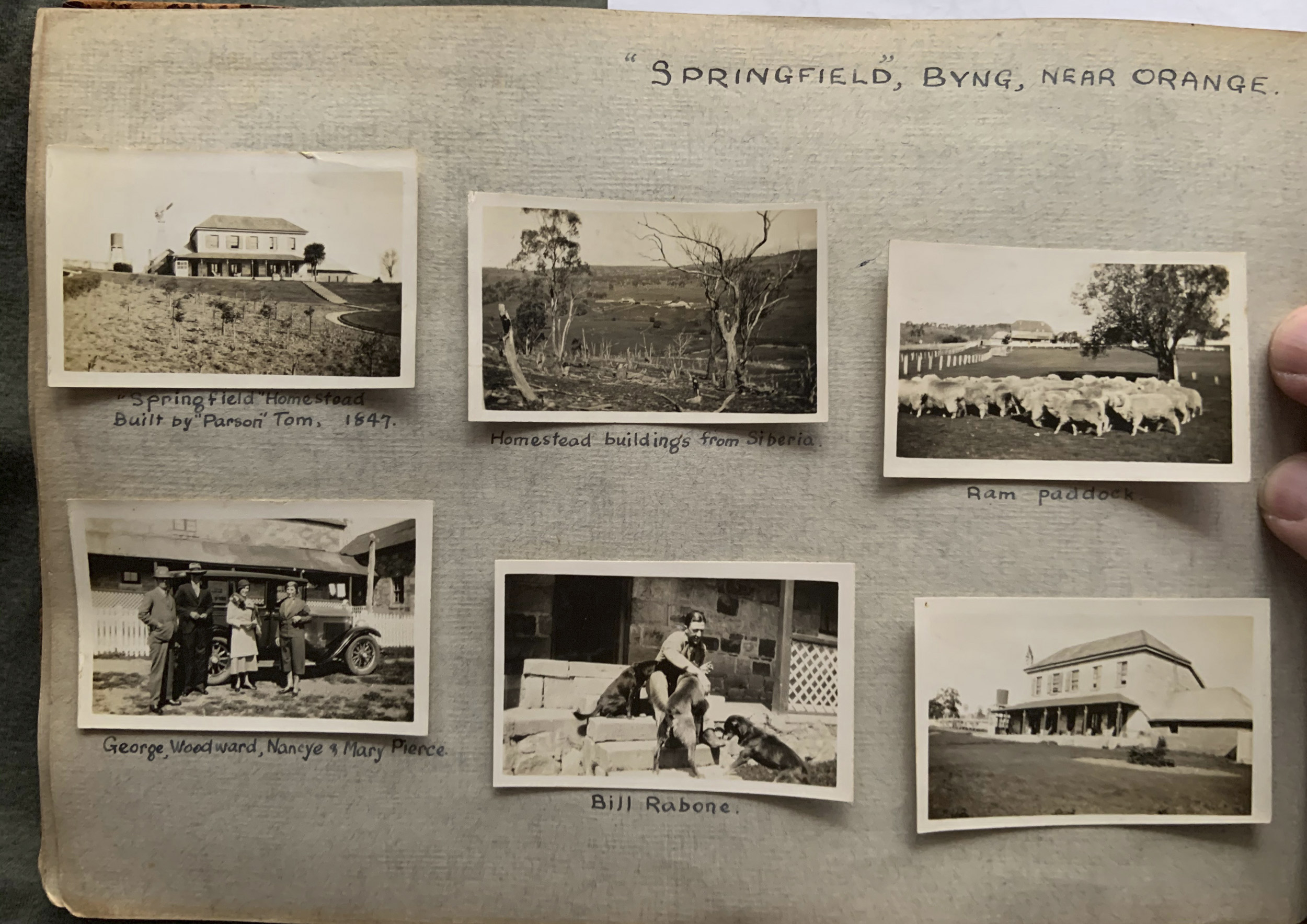
 

"Springfield", Byng, Near Orange, October 1932" in John "Jack" Riverstone Faviell 1922-1933 photo album


“Springfield”, Byng, Near Orange, October 1932″ in John “Jack” Riverstone Faviell 1922-1933 photo album


Byng

… an area of scattered houses in green valleys (when there is no drought) dates back to before 1856.

It was originally named ‘Cornish Village’ after the original Cornish settlers who brought the first fruit trees from Cornwall and gave birth to the Orange district’s fruit industry on the ‘Pendarvis’ property. Apples were produced in Byng for over 100 years but now there are mainly cattle, sheep and a little cropping.

Driving through the winding lanes with hawthorn hedgerows on either side you will see in the distance an old homestead (Springfield) which has an old Celtic custom – on the porch there are three welcome stones. The host stands on one, the guest on another – then they greet each other on the centre stone.

Text from the Orange website [Online] Cited 01/11/2019. No longer available online
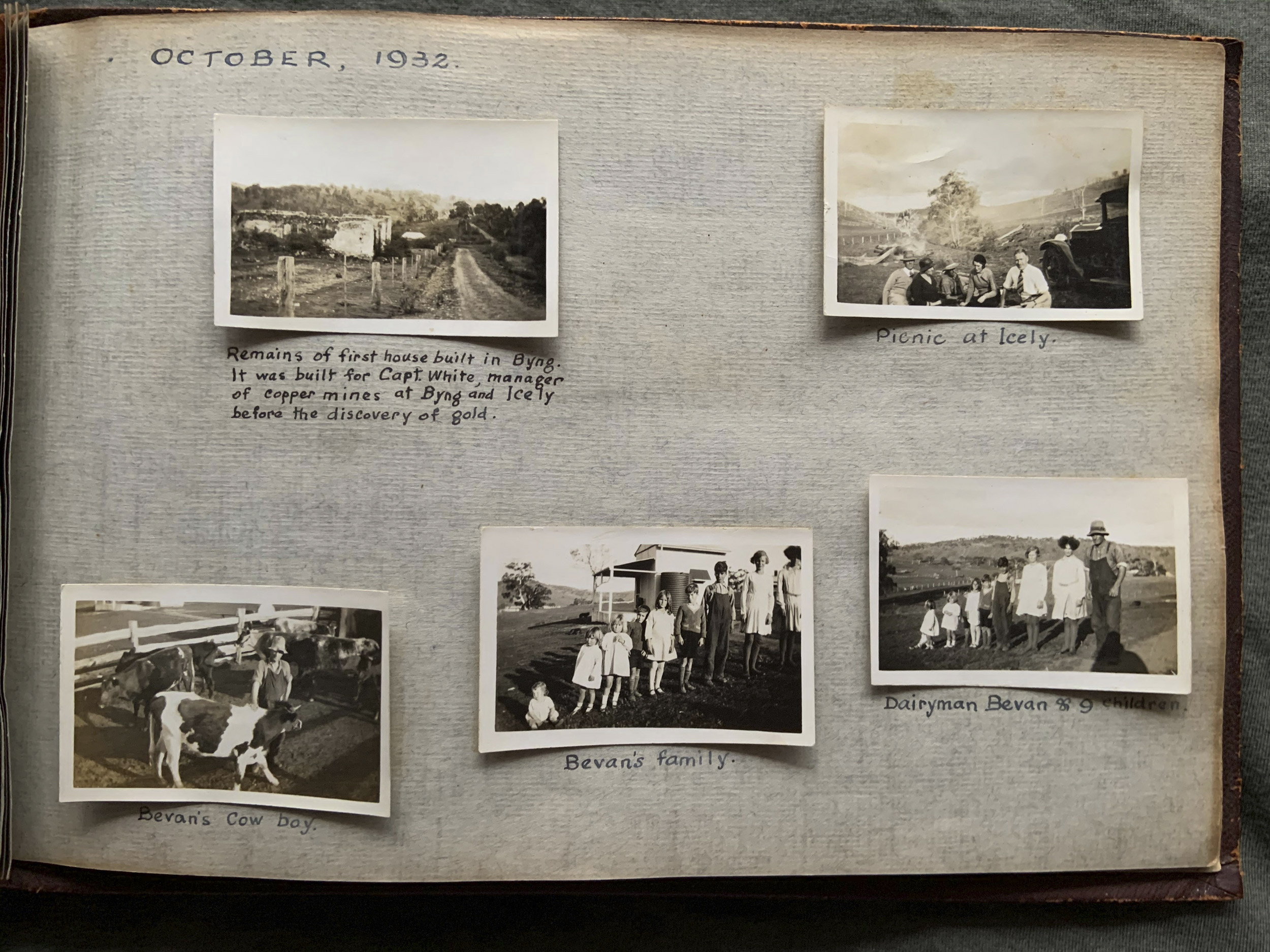
 

"Springfield", Byng, Near Orange, October 1932" in John "Jack" Riverstone Faviell 1922-1933 photo album


“Springfield”, Byng, Near Orange, October 1932″ in John “Jack” Riverstone Faviell 1922-1933 photo album


"Remains of the first house built in Byng," October, 1932 in John "Jack" Riverstone Faviell 1922-1933 photo album


“Remains of the first house built in Byng,” October, 1932 in John “Jack” Riverstone Faviell 1922-1933 photo album


"At Springfield," 1932 in John "Jack" Riverstone Faviell 1922-1933 photo album


“At Springfield,” 1932 in John “Jack” Riverstone Faviell 1922-1933 photo album


"J.F. and Woodward," 1932 in John "Jack" Riverstone Faviell 1922-1933 photo album


“J.F. and Woodward,” 1932 in John “Jack” Riverstone Faviell 1922-1933 photo album


"At Springfield," 1932 in John "Jack" Riverstone Faviell 1922-1933 photo album


“At Springfield,” 1932 in John “Jack” Riverstone Faviell 1922-1933 photo album


"Untitled (Rabbiting)," 1932 in John "Jack" Riverstone Faviell 1922-1933 photo album


“Untitled (Rabbiting),” 1932 in John “Jack” Riverstone Faviell 1922-1933 photo album


"Hawksbury River,' 1932-33 in John "Jack" Riverstone Faviell 1922-1933 photo album


“Hawksbury River,’ 1932-33 in John “Jack” Riverstone Faviell 1922-1933 photo album


"Betty Broad," 16th October, 1932 in John "Jack" Riverstone Faviell 1922-1933 photo album


“Betty Broad,” 16th October, 1932 in John “Jack” Riverstone Faviell 1922-1933 photo album
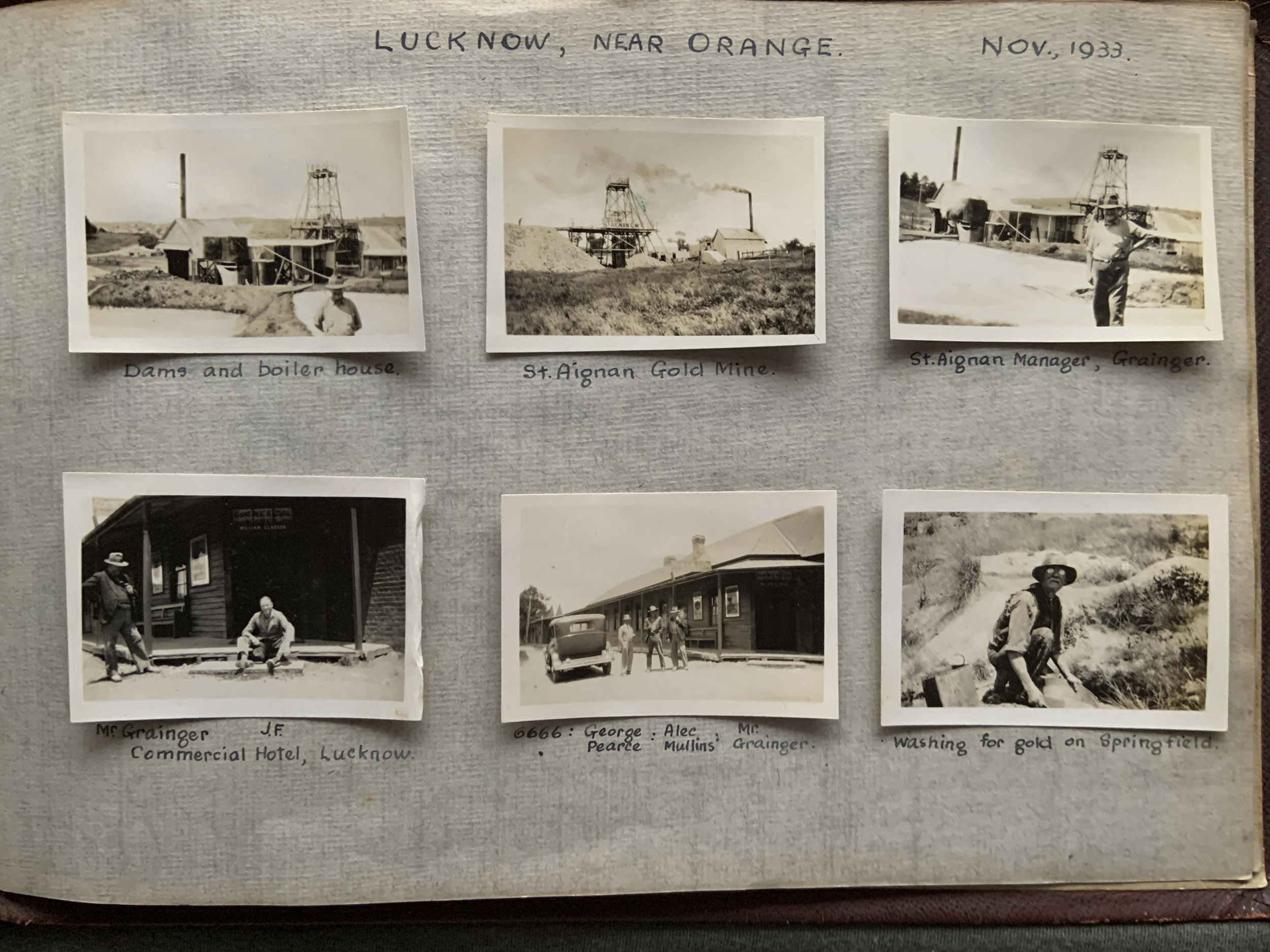
 

"Lucknow, Near Orange," November, 1933 in John "Jack" Riverstone Faviell 1922-1933 photo album


“Lucknow, Near Orange,” November, 1933 in John “Jack” Riverstone Faviell 1922-1933 photo album


Lucknow

1929-1935: Prospecting rarely ever ceases on a once lucrative gold-field and in 1928-9 companies such as St. Algnan’s (New Guinea) Gold Lodes N.L. and Lucknow Gold Options Co. were quite busy. In particular St. Aignan’s found a rich ‘brown vein’ away from ‘that portion already riddled with holes’, at a depth of only 38 feet. …

The village has a large potential to attract tourists. The iron head-frames at Wentworth Main and at Reform, right beside the highway in the village area with their accompanying equipment, are the most strikingly accessible of gold mining memorials. At Wentworth Main moreover, the largest of the iron sheds still contains a great deal of equipment, including the stamper battery and various engines. In the paddock to the west of the highway there is isolated equipment- a boiler, a winding engine. The winding house for Reform still stands.

Anonymous. “Gold mining at Lucknow,” on the Orange website [Online] Cited 01/11/2019


"Washing for gold on Springfield," November, 1933 in John "Jack" Riverstone Faviell 1922-1933 photo album


“Washing for gold on Springfield,” November, 1933 in John “Jack” Riverstone Faviell 1922-1933 photo album


"St. Aignan Gold Mine," November, 1933 in John "Jack" Riverstone Faviell 1922-1933 photo album


“St. Aignan Gold Mine,” November, 1933 in John “Jack” Riverstone Faviell 1922-1933 photo album


"Springfield," November, 1933 in John "Jack" Riverstone Faviell 1922-1933 photo album


“Springfield,” November, 1933 in John “Jack” Riverstone Faviell 1922-1933 photo album
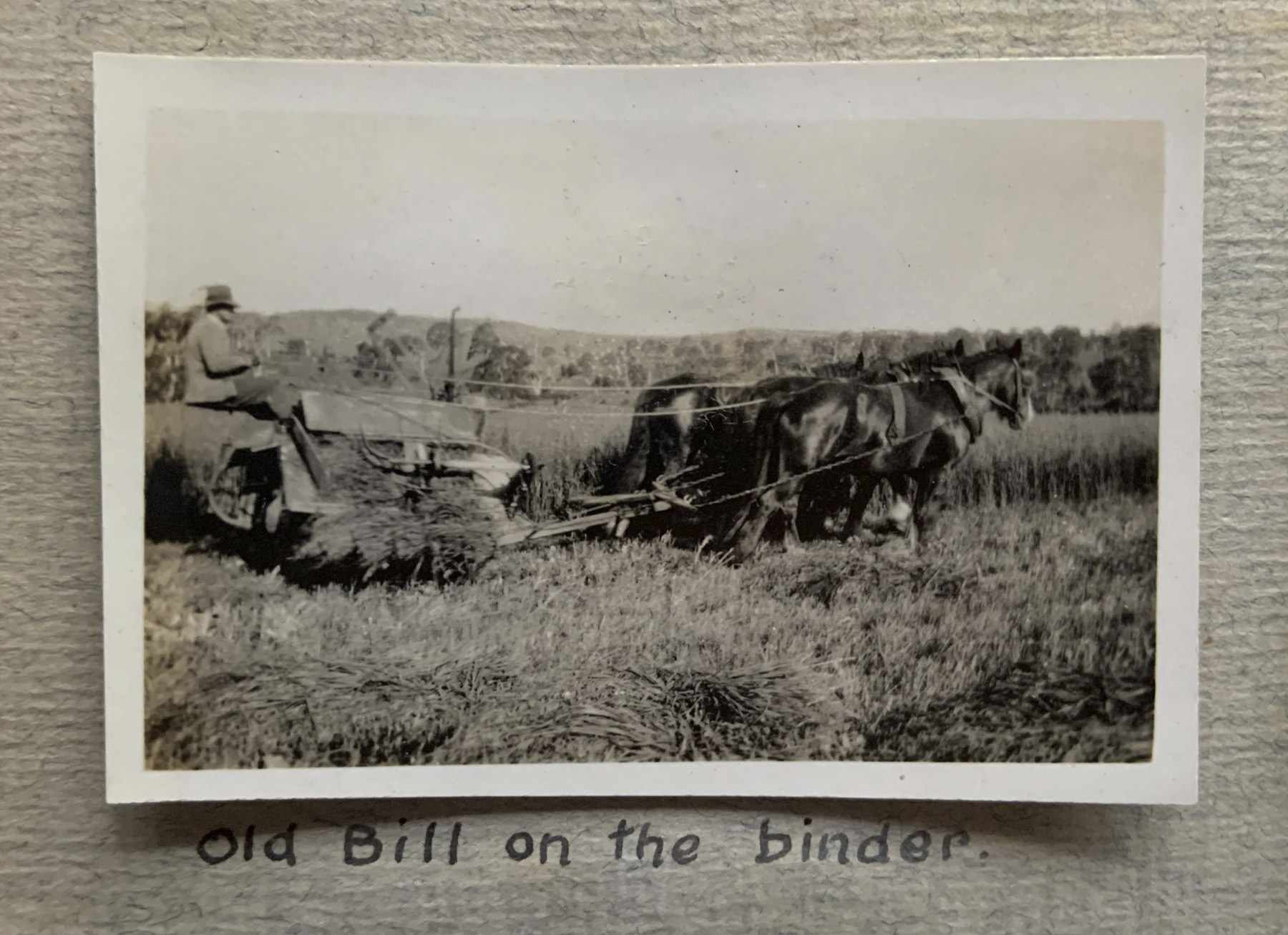
 

"Old Bill on the binder," November, 1933 in John "Jack" Riverstone Faviell 1922-1933 photo album


“Old Bill on the binder,” November, 1933 in John “Jack” Riverstone Faviell 1922-1933 photo album
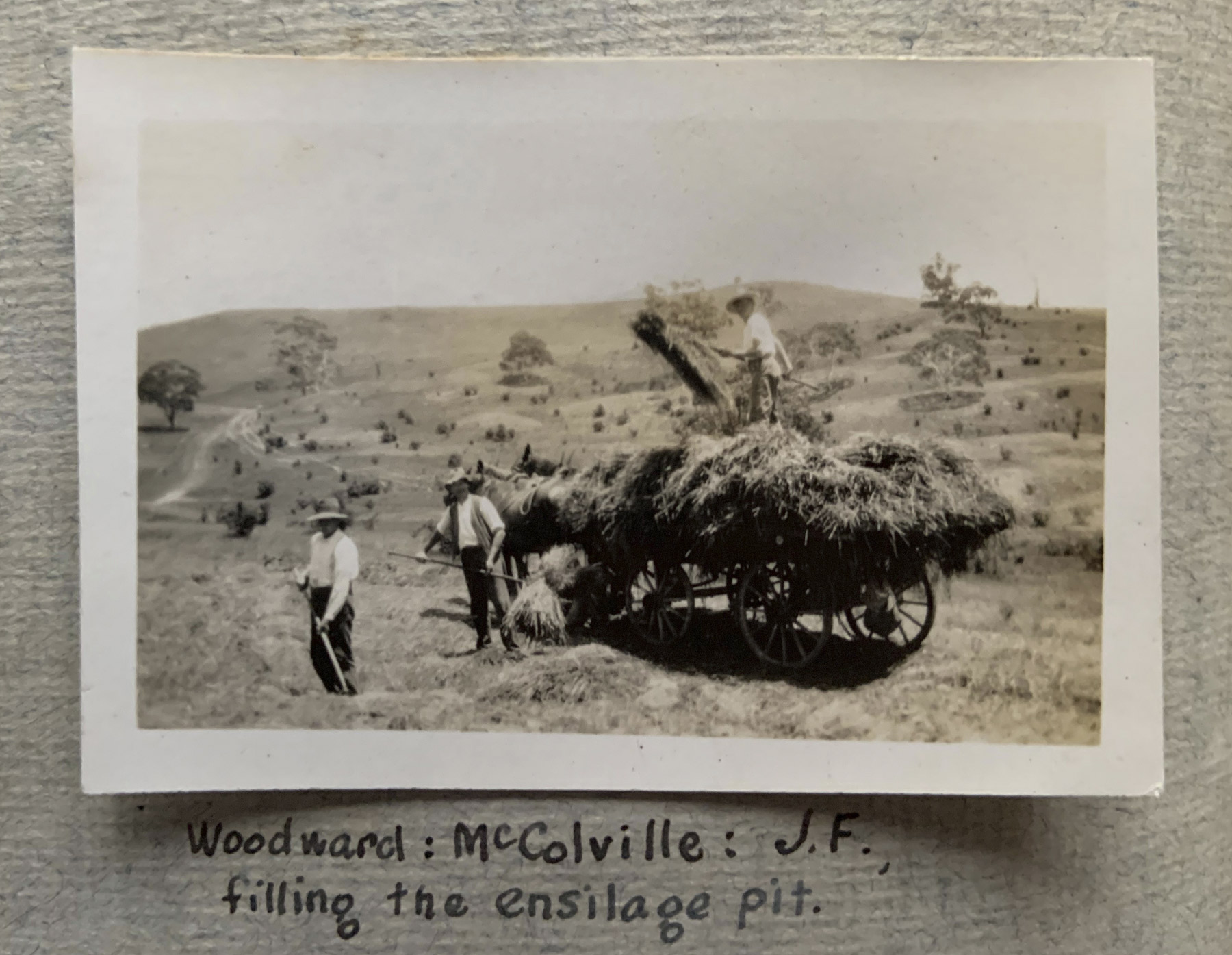
 

"Woodward : McColville ; J.F., filling the ensilage pit," November, 1933 in John "Jack" Riverstone Faviell 1922-1933 photo album


“Woodward : McColville ; J.F., filling the ensilage pit,” November, 1933 in John “Jack” Riverstone Faviell 1922-1933 photo album


Silage is a type of fodder made from green foliage crops which have been preserved by acidification, achieved through fermentation. It can be fed to cattle, sheep and other such ruminants (cud-chewing animals). The fermentation and storage process is called ensilage, ensiling or silaging, and is usually made from grass crops, including maize, sorghum or other cereals, using the entire green plant (not just the grain).


"At "Millambri", Canowindra," 1933 in John "Jack" Riverstone Faviell 1922-1933 photo album


“At “Millambri”, Canowindra,” 1933 in John “Jack” Riverstone Faviell 1922-1933 photo album


"Bathurst," November 1933 in John "Jack" Riverstone Faviell 1922-1933 photo album


“Bathurst,” November 1933 in John “Jack” Riverstone Faviell 1922-1933 photo album


"Untitled (Victoria)," November, 1933 in John "Jack" Riverstone Faviell 1922-1933 photo album


“Untitled (Victoria),” November, 1933 in John “Jack” Riverstone Faviell 1922-1933 photo album


"Myers, Melbourne," November 1933 in John "Jack" Riverstone Faviell 1922-1933 photo album


“Myers, Melbourne,” November 1933 in John “Jack” Riverstone Faviell 1922-1933 photo album


"Bourke St., Melbourne," November 1933 in John "Jack" Riverstone Faviell 1922-1933 photo album


“Bourke St., Melbourne,” November 1933 in John “Jack” Riverstone Faviell 1922-1933 photo album
 

John "Jack" Riverstone Faviell 1922-1933 photo album back cover
 

John “Jack” Riverstone Faviell 1922-1933 photo album back cover


State Library of New South Wales website

LIKE ART BLACK ON FACEBOOK

Back to top

Season’s greetings from Art Blart 2022

December 2022


Monty Fresco (English, 1936-2013) 'Boy Brings Home Christmas Tree, Spitalfields Market, London' 1946


Monty Fresco (English, 1936-2013)
Boy Brings Home Christmas Tree, Spitalfields Market, London
1946
Gelatin silver print


Season’s Greetings from Art Blart

Thank you to all Art Blart readers for their support in 2022!

Marcus


LIKE ART BLART ON FACEBOOK

Back to top

Exhibition: ‘American Silence: The Photographs of Robert Adams’ at the National Gallery of Art, Washington

Exhibition dates: 29th May – 2nd October, 2022

Curator: Sarah Greenough, senior curator and head of the department of photographs, National Gallery of Art


Robert Adams (American, b. 1937) 'Summer, Early Morning, Immigrant Cemetery, North of Bethune, Colorado' 1965 from the exhibition 'American Silence: The Photographs of Robert Adams' at the National Gallery of Art, Washington, May - Oct, 2022


Robert Adams (American, b. 1937)
Summer, Early Morning, Immigrant Cemetery, North of Bethune, Colorado
1965
Gelatin silver print
Image: 10.4 x 15.2 cm (4 1/8 x 6 in.)
National Gallery of Art, Washington, Pepita Milmore Memorial Fund and Gift of Robert and Kerstin Adams
© Robert Adams, Courtesy Fraenkel Gallery, San Francisco


The quiet of the great beyond

With gratitude, I admire the photographs of Robert Adams. I admire their perspicuous (“clear, lucid”, able to be seen through) and perspicacious (“keen, astute,” able to see through) nature.

They imbibe (“absorb, assimilate,” ideas or knowledge) in us “the wonder and fragility of the American landscape, its inherent beauty, and the inadequacy of our response to it… [they] capture the sense of peace and harmony that the beauty of nature can instill in us – “the silence of light,” as he calls it… [and they] question our silent complicity in the desecration of that beauty by consumerism, industrialisation, and lack of environmental stewardship… While these photographs lament the ravages that have been inflicted on the land, they also pay homage to what remains.”

Like so many photographers of the American landscape, Adams’ debt to the vision of Walker Evans can be seen in his early work, in images such as Movie Theater, Otis, Colorado (1965, below) and Catholic Church, Summer, Ramah, Colorado (1965, below) – but even in images such as Wheat Stubble, South of Thurman, Colorado (1965, below) we can begin to see the beginnings of Adams personal artistic signature, the quiet of “the great beyond” (both physically and spiritually).

In modernist photographs that step off from Walker Evans’ legacy, Adams quiet, still photographs require of the viewer contemplation and reflection… reflection on the isolation of tract housing seemingly dropped into the vast American landscape. In these photographs (such as the two photographs Newly Occupied Tract Houses, Colorado Springs, 1968 below) Adams’ use of near/far is exemplary, with the nearness of the new excavation, the new scarring of the earth, contrasting with the sublime majesty of the mountains beyond. Other more personal psychological scarring can be seen in the two photographs Colorado Springs (1968-1971, below) where single, isolated, anonymous human beings are occluded in silhouette or shadow, damned by the hot sun.

In other photographs houses become like fossilised dinosaur skeletons, their graves marked by ironic street names such as Darwin Pl. (Frame for a Tract House, Colorado Springs, 1969 below), or multiply across the landscape, breeding like some genetically identical sequence (Pikes Peak Park, Colorado Springs, 1969, below). Even petrol stations blare out the name “Frontier” as though to irrevocably define that here we live on the edge of nowhere. And so it goes in Adams’ work… isolated people living in a barren landscape being colonised and inhabited without much thought for the beauty or the destruction of the landscape.

From the mid-1970s onwards, Adams’ landscape photographs begin to eschew all but the smallest pointers to human habitation, but this makes these human marks on the landscape all the more intrusive because of it. For example, in the photograph of the vast landscape South of the Rocky Flats Nuclear Weapons Plant, Jefferson County, Colorado (1976, below) the only markings of human activity are the tyre marks in the foreground and the telegraph poles, road and cars at far right… and then the title hits you with a double-whammy, “Rocky Flats Nuclear Weapons Plant”, not present in the photograph but present in our consciousness (of the landscape). Even less evidence of human existence is signalled in the photograph Missouri River, Clay County, South Dakota (1977, below), but then we notice at bottom left a discarded tin can, just a discarded tin can, but this one tin can says so much about our use and abuse of our only habitable planet, earth.

In image after image, roads scar the landscape, planes fly overhead, industry and housing colonise the sublime, and human beings hug and are alienated amongst concrete jungles and car parks. New development erodes the earth leaving behind the detritus of human existence. Old growth trees are slaughtered in clearcut operations in which every tree has been cut down and removed. A dead albatross rots on an expanse of beach (The Sea Beach, Albatross, 2015 below) while in the distance the photographer picks out 4 ghosts of human beings (The Sea Beach, 2015 below).

Adams’ photographic vision is extra ordinary and I cannot fault his individual photographs. I become engrossed in them. I breathe their atmosphere. He has a resolution, both in terms of large format aesthetic, the aesthetic of beauty and of using materials, light and composition… that seems exactly right. He possesses that superlative skill of few great photographers, and by that I mean: sometimes he has true compassion** / parallel to a religious compassion, but not based on something higher / just perfect human. In some of his photographs (such as East from Flagstaff Mountain, Boulder County, Colorado 1975, below) he possesses real forgiveness, in others there is the perfection of cruel, the perfection of de/composition.

** achieved by Arbus, Atget and sometimes by Clift, Gowin.

And then, each image holds small clues vital to the overall conversation that is the accumulation of his work and it is in their collective accumulation of meaning that Adams’ photographs grow and build to shatter not just the American silence on environmental issues, but the deafening silence of the whole industrialised world. In their holistic nature, Adams’ body of work becomes punctum and because of this his work produces other “things”, things as great as anything the French literary theorist, essayist, philosopher, critic, and semiotician Roland Barthes wrote about. As in Barthes’ seminal work Camera Lucida, Adams’ work reminds us that the “photograph is evidence of ‘what has ceased to be’. Instead of making reality solid, it reminds us of the world’s ever changing nature.”1

Human beings can never leave anything as they find it, they always have to possess and change whatever they see in a form of desecration (the action of damaging or showing no respect toward something holy or very much respected). Except human beings do not respect the only place that have to live on, this earth. When will it change?

As Alain de Botton observes on the importance of the sublime places to the human psyche,

“If the world is unfair or beyond our understanding, sublime places suggest it is not surprising things should be thus. We are the playthings of the forces that laid out the oceans and chiselled the mountains. Sublime places acknowledge limitations that we might otherwise encounter with anxiety or anger in the ordinary flow of events. It is not just nature that defies us. Human life is as overwhelming, but it is the vast spaces of nature that perhaps provide us with the finest, the most respectful reminder of all that exceeds us. If we spend time with them, they may help us to accept more graciously the great unfathomable events that molest our lives and will inevitably return us to dust.”2


We loose these places at our peril and the peril of the entire human race.

Dr Marcus Bunyan


1/ Anonymous. “Roland Barthes,” on the Wikipedia website Nd [Online] Cited 23/09/2022

2/ Alain de Botton. The Art of Travel. London: Penguin, 2002, pp. 178-179.


Many thankx to the National Gallery of Art for allowing me to publish the photographs in the posting. Please click on the photographs for a larger version of the image.


“Robert Adams’s photographs often seem to demand that viewers do a double-take. Seemingly ordinary subjects like tree stumps, tract housing or the moon seen from a parking lot “require very careful looking and careful consideration,” says curator Sarah Greenough, before they reveal the photographer’s deeply personal visions of nature – and, sometimes, his despair at what humans have done with it.”


Peter Saenger. “Robert Adams Takes Photos That Face Facts,” on The Wall Street Journal website May 13, 2022 [Online] Cited 23/06/2022


Robert Adams (American, b. 1937) 'Wheat Stubble, South of Thurman, Colorado' 1965, printed 1988 from the exhibition 'American Silence: The Photographs of Robert Adams' at the National Gallery of Art, Washington, May - Oct, 2022


Robert Adams (American, b. 1937)
Wheat Stubble, South of Thurman, Colorado
1965, printed 1988
Gelatin silver print
Image: 22.9 x 27.9cm (9 x 11 in.)
Collection of Jeffrey Fraenkel and Alan Mark
© Robert Adams, Courtesy Fraenkel Gallery, San Francisco


For 50 years, Robert Adams (b. 1937) has made compelling, provocative, and highly influential photographs that show us the wonder and fragility of the American landscape, its inherent beauty, and the inadequacy of our response to it. This exhibition explores the reverential way he looks at the world around him and the almost palpable silence of his work.

Many of these photographs of the American West capture the sense of peace and harmony that the beauty of nature can instill in us – “the silence of light,” as he calls it, that he sees on the prairie, in the woods, and by the ocean. Other pictures question our silent complicity in the desecration of that beauty by consumerism, industrialisation, and lack of environmental stewardship. Divided into three sections – The Gift, Our Response, and Tenancy – the exhibition features some 175 works from the artist’s most important projects and includes pictures of suburban sprawl, strip malls, highways, homes, and stores, as well as rivers, skies, the prairie, and the ocean.

While these photographs lament the ravages that have been inflicted on the land, they also pay homage to what remains.


Robert Adams (American, b. 1937) 'Movie Theater, Otis, Colorado' 1965, printed c. 1977 from the exhibition 'American Silence: The Photographs of Robert Adams' at the National Gallery of Art, Washington, May - Oct, 2022


Robert Adams (American, b. 1937)
Movie Theater, Otis, Colorado
1965, printed c. 1977
Gelatin silver print
Image: 16.3 x 20.3cm (6 7/16 x 8 in.)
National Gallery of Art, Washington, Pepita Milmore Memorial Fund and Gift of Robert and Kerstin Adams
© Robert Adams, Courtesy Fraenkel Gallery, San Francisco


Robert Adams (American, b. 1937) 'Catholic Church, Winter, Ramah, Colorado' 1965, printed 1982


Robert Adams (American, b. 1937)
Catholic Church, Winter, Ramah, Colorado
1965, printed 1982
Gelatin silver print
Image: 22.3 x 16.4cm (8 3/4 x 6 7/16 in.)
National Gallery of Art, Washington, Pepita Milmore Memorial Fund and Gift of Robert and Kerstin Adams
© Robert Adams, Courtesy Fraenkel Gallery, San Francisco


Robert Adams (American, b. 1937) 'Catholic Church, Summer, Ramah, Colorado' 1965, printed 1981


Robert Adams (American, b. 1937)
Catholic Church, Summer, Ramah, Colorado
1965, printed 1981
Gelatin silver print
Image: 21.5 x 16.4cm (8 7/16 x 6 7/16 in.)
National Gallery of Art, Washington, Pepita Milmore Memorial Fund and Gift of Robert and Kerstin Adams
© Robert Adams, Courtesy Fraenkel Gallery, San Francisco


Robert Adams (American, b. 1937) 'Store, Elizabeth, Colorado' 1965, printed 1988


Robert Adams (American, b. 1937)
Store, Elizabeth, Colorado
1965, printed 1988
Gelatin silver print
Image: 26.9 x 22.8cm (10 9/16 x 9 in.)
National Gallery of Art, Washington, Pepita Milmore Memorial Fund and Gift of Robert and Kerstin Adams
© Robert Adams, Courtesy Fraenkel Gallery, San Francisco


Robert Adams (American, b. 1937) 'Arriba, Colorado' 1966, printed 1981


Robert Adams (American, b. 1937)
Arriba, Colorado
1966, printed 1981
Gelatin silver print
Image: 28.4 x 22.7cm (11 3/16 x 8 15/16 in.)
National Gallery of Art, Washington, Pepita Milmore Memorial Fund and Gift of Robert and Kerstin Adams
© Robert Adams, Courtesy Fraenkel Gallery, San Francisco


Robert Adams (American, b. 1937) 'Schoolyard, Ramah, Colorado' 1968


Robert Adams (American, b. 1937)
Schoolyard, Ramah, Colorado
1968
Gelatin silver print
Image: 15.2 x 15.2 cm (6 x 6 in.)
Private collection, San Francisco
© Robert Adams, Courtesy Fraenkel Gallery, San Francisco


Robert Adams (American, b. 1937) 'Newly Occupied Tract Houses, Colorado Springs' 1968


Robert Adams (American, b. 1937)
Newly Occupied Tract Houses, Colorado Springs
1968
Gelatin silver print
Image: 12.7 x 13.3cm (5 x 5 1/4 in.)
Private collection, San Francisco
© Robert Adams, Courtesy Fraenkel Gallery, San Francisco


Robert Adams (American, b. 1937) 'New Tract Housing, Colorado Springs' 1968, printed 1981


Robert Adams (American, b. 1937)
New Tract Housing, Colorado Springs
1968, printed 1981
Gelatin silver print
Image: 14.4 x 15cm (5 11/16 x 5 7/8 in.)
Philadelphia Museum of Art, Purchased with the Alice Newton Osborn Fund, 1982
Courtesy of the Philadelphia Museum of Art
© Robert Adams, Courtesy Fraenkel Gallery, San Francisco


Robert Adams (American, b. 1937) 'Colorado Springs' 1968, printed 1983


Robert Adams (American, b. 1937)
Colorado Springs
1968, printed 1983
Gelatin silver print
Image: 15.2 x 15.2cm (6 x 6 in.)
National Gallery of Art, Washington, Gift of Mary and Dan Solomon and Patrons’ Permanent Fund
© Robert Adams, Courtesy Fraenkel Gallery, San Francisco


Robert Adams (American, b. 1937) 'Colorado Springs' 1968-1971


Robert Adams (American, b. 1937)
Colorado Springs
1968-1971
Gelatin silver print
Image: 15.2 x 15.2cm (6 x 6 in.)
Private collection, San Francisco
© Robert Adams, Courtesy Fraenkel Gallery, San Francisco


Robert Adams (American, b. 1937) 'Alameda Avenue, Denver' 1968-1971


Robert Adams (American, b. 1937)
Alameda Avenue, Denver
1968-1971
Gelatin silver print
Image: 15.2 x 15.2cm (6 x 6 in.)
Private collection, San Francisco
© Robert Adams, Courtesy Fraenkel Gallery, San Francisco


Robert Adams (American, b. 1937) 'Northeast of Keota, Colorado' 1969, printed 1981


Robert Adams (American, b. 1937)
Northeast of Keota, Colorado
1969, printed 1981
Gelatin silver print
Image: 39.2 x 47.8cm (15 7/16 x 18 13/16 in.)
National Gallery of Art, Washington, Pepita Milmore Memorial Fund and Gift of Robert and Kerstin Adams
© Robert Adams, Courtesy Fraenkel Gallery, San Francisco


Robert Adams (American, b. 1937) 'Frame for a Tract House, Colorado Springs' 1969, printed 1984


Robert Adams (American, b. 1937)
Frame for a Tract House, Colorado Springs
1969, printed 1984
Gelatin silver print
Image: 15.1 x 15cm (5 15/16 x 5 7/8 in.)
National Gallery of Art, Washington, Gift of Mary and David Robinson
© Robert Adams, Courtesy Fraenkel Gallery, San Francisco


Robert Adams (American, b. 1937) 'Basement for a Tract House, Colorado Springs' 1969


Robert Adams (American, b. 1937)
Basement for a Tract House, Colorado Springs
1969
Gelatin silver print
Image: 26.6 x 27.6cm (10 1/2 x 10 7/8 in.)
National Gallery of Art, Washington, Gift of Robert and Kerstin Adams
© Robert Adams, Courtesy Fraenkel Gallery, San Francisco


Robert Adams (American, b. 1937) 'Colorado Springs' 1969


Robert Adams (American, b. 1937)
Colorado Springs
1969
Gelatin silver print
Image: 15.6 x 15.2cm (6 1/8 x 6 in.)
Private collection, San Francisco
© Robert Adams, Courtesy Fraenkel Gallery, San Francisco


Robert Adams (American, b. 1937) 'Pikes Peak Park, Colorado Springs' 1969


Robert Adams (American, b. 1937)
Pikes Peak Park, Colorado Springs
1969
Gelatin silver print
Image: 15.1 x 15.2cm (5 15/16 x 6 in.)
Yale University Art Gallery, Purchased with a gift from Saundra B. Lane, a grant from the Trellis Fund, and the Janet and Simeon Braguin Fund
© Robert Adams, Courtesy Fraenkel Gallery, San Francisco


Robert Adams (American, b. 1937) 'New Housing, Colorado Springs' 1969, printed 2005


Robert Adams (American, b. 1937)
New Housing, Colorado Springs
1969, printed 2005
Gelatin silver print
Image: 17.5 x 15.1cm (6 7/8 x 5 15/16 in.)
National Gallery of Art, Washington, Pepita Milmore Memorial Fund and Gift of Robert and Kerstin Adams
© Robert Adams, Courtesy Fraenkel Gallery, San Francisco


Robert Adams (American, b. 1937) 'Pikes Peak, Colorado Springs' 1969


Robert Adams (American, b. 1937)
Pikes Peak, Colorado Springs
1969
Gelatin silver print
Image: 14 x 14.9cm (5 1/2 x 5 7/8 in.)
Private collection, San Francisco
© Robert Adams, Courtesy Fraenkel Gallery, San Francisco


For 50 years, Robert Adams (b. 1937) has made compelling, provocative, and highly influential photographs that show the wonder and fragility of the American landscape, its inherent beauty, and the inadequacy of our response to it. American Silence: The Photographs of Robert Adams celebrates the art of this seminal American photographer and explores the reverential way he looks at the world around him and the almost palpable silence of his work. Organised in cooperation with the artist, the exhibition is accompanied by a fully illustrated catalog. American Silence: The Photographs of Robert Adams is on view from May 29 through October 2, 2022, in the West Building of the National Gallery of Art.

Capturing the sense of peace and harmony created through what Adams calls “the silence of light” that can be seen on the prairie, in the woods, and by the ocean, American Silence features some 175 pictures from 1965 to 2015. Other images on view question our moral silence to the desecration of that beauty by consumerism, industrialisation, and lack of environmental stewardship. Divided into three sections – The Gift, Our Response, and Tenancy – the exhibition includes works from not only the artist’s most important projects but also lesser-known ones that depict suburban sprawl, strip malls, highways, homes, and stores, as well as rivers, skies, the prairie, and the ocean. While these photographs lament the ravages that have been inflicted on the land, they also pay homage to what remains.

“The photographs in this exhibition encourage us to experience the sense of silence that the beauty of nature can inspire while asking us to question our own silent complicity in the face of its desecration,” said Kaywin Feldman, director of the National Gallery of Art. “We are deeply grateful to Robert Adams and his wife, Kerstin, for their steadfast commitment to this endeavour and for their many donations to the National Gallery. I would like to extend our thanks to the Trellis Fund, Jane P. Watkins, The Shared Earth Foundation, Randi and Bob Fisher, Wes and Kate Mitchell, Nion McEvoy, Greg and Aline Gooding, and the James D. and Kathryn K. Steele Fund for Photography whose generous support has made this exhibition possible as well as to all our lenders for their willingness to share their treasured works of art with our public.”

About the exhibition

The exhibition begins with The Gift, which presents selected works that reveal the silence, beauty, peace, and spiritual harmony found in the landscape itself. Spanning three decades, this section includes photographs from Prairie (1978), Perfect Times, Perfect Places (1988), Listening to the River (1994), Pine Valley (2005), and This Day (2011). These pictures demonstrate the artist’s exceptional ability to find the sublime in the vast vistas and quiet, often overlooked, corners of the sparse and fragile American West, particularly in Colorado and Oregon, two areas of the country that Adams knows intimately. Infused with a deep understanding of the way light articulates forms, these photographs illuminate the natural world and demonstrate how Adams seeks to illustrate, in his own words, “a quiet so absolute that it allows one to begin again, to love the future.”

The largest section of the exhibition, Our Response examines how Americans have dealt with both the potential and the vulnerability of the West. Divided into six thematic subjects arranged chronologically, this section begins with “Early Hispanic and Plains Communities,” including work from some of the artist’s earliest publications: White Churches of the Plains (1970), The Architecture and Art of Early Hispanic Colorado (1974), and Prairie (1978). These pictures portray the respectful nature of older settlements in the West and acknowledge the importance of the gravel roads, farmhouses, furrowed fields, stores, and churches. They also demonstrate how early settlers attempted to achieve a unity with nature, rather than dominate over it.

“Our Imprint on the Land” and “A New West” feature works from seminal early publications by Adams: The New West: Landscapes along the Colorado Front Range (1974), denver: A Photographic Survey of the Metropolitan Area (1977), From the Missouri West (1980), and What We Bought: The New World, Scenes from the Denver Metropolitan Area, 1970-1974 (1995). “Our Imprint on the Land” includes pictures made along the Missouri River around the time of the 1976 bicentennial of the United States, a moment of national reflection on the past and assessment of the present. The photographs in “A New West” address the construction of a new kind of American environment. Dominated by cars, highways, cheaply fabricated homes, and commercial developments, these pictures emphasise the lack of community and the great isolation that grew in these new suburban communities.

“Our Lives and Our Children” depicts the area near Rocky Flats, a nuclear weapons plant northwest of Denver, where Adams photographed the simple dignity of everyday people to illustrate what would be lost in a nuclear disaster. Our Response ends with “Southern California” and “A Mythic Forest,” drawing works from two of his sharpest critiques: Los Angeles Spring (1986), depicting the destruction of the fragile landscape around Los Angeles in the early 1980s, and Turning Back: A Photographic Journal of Re-exploration (2005), illustrating the American timber industry’s exploitation of the North­west forests.

American Silence concludes with a selection of works from one of the artist’s recent books, Tenancy: Between the River and the Sea; The Nehalem Spit, the Coast of Oregon (2017). Divided into three parts, this series of photographs was made between 2013 and 2015 along a two-mile promontory on the Oregon coast, the Nehalem Spit. The first examines the eastern edge of the spit where massive tree stumps washed up on the shore reveal the brutality of the clearcutting done farther up the Nehalem River. The second part looks at the spit itself, a sanctuary of small trees, meadows, and dunes resting near a large geologic fault, and the third depicts the ever-changing beauty and wonder of the ocean to the west, as well as the people who seek “to escape illusion and to be reconciled,” as Adams noted. Tenancy illustrates his belief that we are only temporary occupants of the land that nourishes and sustains us, and it reveals the strength of his convictions, his deep spirituality, and the eloquent power of his vision.

Exhibition Catalog

Published by the National Gallery of Art and Aperture, New York, American Silence: The Photographs of Robert Adams traces the evolution of his work, highlighting the importance of faith to his art and – through his elegant visual reckonings – how “what was” has become “what is.” It is richly illustrated, with over 200 compelling photographs that explore the profound questions of our responsibility to the land and the moral dilemmas of progress. This extensive 332-page monograph includes award-winning curator Sarah Greenough’s in-depth examination of the evolution of his art as well as personal reflections by the celebrated nonfiction author Terry Tempest Williams and writings by Adams himself, along with a timeline of the artist’s life.

Press release from the National Gallery of Art, Washington


Robert Adams (American, b. 1937) 'Genoa, Colorado' 1970


Robert Adams (American, b. 1937)
Genoa, Colorado
1970
Gelatin silver print
Image: 19.1 x 19.1cm (7 1/2 x 7 1/2 in.)
Private collection, San Francisco
© Robert Adams, Courtesy Fraenkel Gallery, San Francisco


Robert Adams (American, b. 1937) 'Boys in a Pickup, Simla, Colorado' 1970, printed 1991


Robert Adams (American, b. 1937)
Boys in a Pickup, Simla, Colorado
1970, printed 1991
Gelatin silver print
Image: 15.1 x 14.2cm (5 15/16 x 5 9/16 in.)
National Gallery of Art, Washington, Pepita Milmore Memorial Fund and Gift of Robert and Kerstin Adams
© Robert Adams, Courtesy Fraenkel Gallery, San Francisco


Robert Adams (American, b. 1937) 'Lakewood, Colorado' 1970, printed 1981


Robert Adams (American, b. 1937)
Lakewood, Colorado
1970, printed 1981
Gelatin silver print
Image: 15.1 x 15cm (5 15/16 x 5 7/8 in.)
Philadelphia Museum of Art, Purchased with the Alice Newton Osborn Fund, 1982
Courtesy of the Philadelphia Museum of Art
© Robert Adams, Courtesy Fraenkel Gallery, San Francisco


Robert Adams (American, b. 1937) 'Walking to a Shopping Center, North Edge of Denver' 1970-1974


Robert Adams (American, b. 1937)
Walking to a Shopping Center, North Edge of Denver
1970-1974
Gelatin silver print
Image: 15.1 x 19.2cm (5 15/16 x 7 9/16 in.)
Philadelphia Museum of Art, Purchased with the Alice Newton Osborn Fund, 1982
Courtesy of the Philadelphia Museum of Art
© Robert Adams, Courtesy Fraenkel Gallery, San Francisco


Robert Adams (American, b. 1937) 'Sandstone Grave Marker, Walsenburg, Colorado' 1972


Robert Adams (American, b. 1937)
Sandstone Grave Marker, Walsenburg, Colorado
1972
Gelatin silver print
Image: 15.2 x 15.2cm (6 x 6 in.)
National Gallery of Art, Washington, Pepita Milmore Memorial Fund and Gift of Robert and Kerstin Adams
© Robert Adams, Courtesy Fraenkel Gallery, San Francisco


Robert Adams (American, b. 1937) 'Clarkville, Colorado' 1972


Robert Adams (American, b. 1937)
Clarkville, Colorado
1972
Gelatin silver print
Image: 18.4 x 16.5cm (7 1/4 x 6 1/2 in.)
Private collection, San Francisco
© Robert Adams, Courtesy Fraenkel Gallery, San Francisco


Robert Adams (American, b. 1937) 'North of Keota, Colorado' 1973


Robert Adams (American, b. 1937)
North of Keota, Colorado
1973
Gelatin silver print
Image: 15.2 x 19cm (6 x 7 1/2 in.)
Private collection, San Francisco
© Robert Adams, Courtesy Fraenkel Gallery, San Francisco


Robert Adams (American, b. 1937) 'Longmont, Colorado' 1973, printed 1988


Robert Adams (American, b. 1937)
Longmont, Colorado
1973, printed 1988
Gelatin silver print
Image: 15.1 x 19.3cm (5 15/16 x 7 5/8 in.)
National Gallery of Art, Washington, Pepita Milmore Memorial Fund and Gift of Robert and Kerstin Adams
© Robert Adams, Courtesy Fraenkel Gallery, San Francisco


Robert Adams (American, b. 1937) 'Tract House, Longmont, Colorado' 1973


Robert Adams (American, b. 1937)
Tract House, Longmont, Colorado
1973
Gelatin silver print
Image: 15.6 x 19.4cm (6 1/8 x 7 5/8 in.)
Collection of Frish Brandt and August Fischer
© Robert Adams, Courtesy Fraenkel Gallery, San Francisco


Robert Adams (American, b. 1937) 'Longmont, Colorado' 1973, printed 1981


Robert Adams (American, b. 1937)
Longmont, Colorado
1973, printed 1981
Gelatin silver print
Image: 15.2 x 19.4cm (6 x 7 5/8 in.)
Philadelphia Museum of Art, Purchased with the Alice Newton Osborn Fund, 1982
Courtesy of the Philadelphia Museum of Art
© Robert Adams, Courtesy Fraenkel Gallery, San Francisco


Robert Adams (American, b. 1937) 'Lakewood, Colorado' 1973-1974, printed 2008


Robert Adams (American, b. 1937)
Lakewood, Colorado
1973-1974, printed 2008
Gelatin silver print
Image: 15.2 x 15.1cm (6 x 5 15/16 in.)
National Gallery of Art, Washington, Pepita Milmore Memorial Fund and Gift of Robert and Kerstin Adams
© Robert Adams, Courtesy Fraenkel Gallery, San Francisco


Robert Adams (American, b. 1937) 'From Interstate 25, North Edge of Denver' 1973


Robert Adams (American, b. 1937)
From Interstate 25, North Edge of Denver
1973
Gelatin silver print
Image: 15.2 x 19.1cm (6 x 7 1/2 in.)
National Gallery of Art, Washington, Pepita Milmore Memorial Fund and Gift of Robert and Kerstin Adams
© Robert Adams, Courtesy Fraenkel Gallery, San Francisco


Robert Adams (American, b. 1937) 'Mobile Home Park, North Edge of Denver' 1973, printed 2005


Robert Adams (American, b. 1937)
Mobile Home Park, North Edge of Denver
1973, printed 2005
Gelatin silver print
Image: 15.2 x 19.8cm (6 x 7 13/16 in.)
National Gallery of Art, Washington, Gift of Mary and Dan Solomon and Patrons’ Permanent Fund
© Robert Adams, Courtesy Fraenkel Gallery, San Francisco


Robert Adams (American, b. 1937) 'North Edge of Denver' 1973-1974, printed 2008


Robert Adams (American, b. 1937)
North Edge of Denver
1973-1974, printed 2008
Gelatin silver print
Image: 15.2 x 19.2cm (6 x 7 9/16 in.)
National Gallery of Art, Washington, Gift of Robert and Kerstin Adams
© Robert Adams, Courtesy Fraenkel Gallery, San Francisco


Robert Adams (American, b. 1937) 'Next to Interstate 25, Denver' 1973, printed 1991


Robert Adams (American, b. 1937)
Next to Interstate 25, Denver
1973, printed 1991
Gelatin silver print
Image: 15.2 x 19.3cm (6 x 7 5/8 in.)
National Gallery of Art, Washington, The Ahmanson Foundation and Gift of Robert and Kerstin Adams
© Robert Adams, Courtesy Fraenkel Gallery, San Francisco


Robert Adams (American, b. 1937) 'Outdoor Theater, North Edge of Denver' 1973-1974


Robert Adams (American, b. 1937)
Outdoor Theater, North Edge of Denver
1973-1974
Gelatin silver print
Image: 15.6 x 19.7cm (6 1/8 x 7 3/4 in.)
National Gallery of Art, Washington, Gift of Robert and Kerstin Adams
© Robert Adams, Courtesy Fraenkel Gallery, San Francisco


Robert Adams (American, b. 1937) 'Highway, Northeast Denver' 1973


Robert Adams (American, b. 1937)
Highway, Northeast Denver
1973
Gelatin silver print
Image: 15.1 x 19.1cm (5 15/16 x 7 1/2 in.)
Stephen G. Stein Employee Benefit Trust
© Robert Adams, Courtesy Fraenkel Gallery, San Francisco


Robert Adams (American, b. 1937) 'Longmont, Colorado' 1973-1974, printed 2001


Robert Adams (American, b. 1937)
Longmont, Colorado
1973-1974, printed 2001
gelatin silver print
Image: 16.8 x 17.2cm (6 5/8 x 6 3/4 in.)
Private collection
© Robert Adams, Courtesy Fraenkel Gallery, San Francisco


Robert Adams (American, b. 1937) 'Lakewood, Colorado' 1973


Robert Adams (American, b. 1937)
Lakewood, Colorado
1973
Gelatin silver print
Image: 14.3 x 15.1cm (5 5/8 x 5 15/16 in.)
National Gallery of Art, Washington, Pepita Milmore Memorial Fund and Gift of Robert and Kerstin Adams
© Robert Adams, Courtesy Fraenkel Gallery, San Francisco


Robert Adams (American, b. 1937) 'Lakewood, Colorado' 1973, printed 1979


Robert Adams (American, b. 1937)
Lakewood, Colorado
1973, printed 1979
gelatin silver print
Image: 15.2 x 15.2cm (6 x 6 in.)
National Gallery of Art, Washington, Pepita Milmore Memorial Fund and Gift of Robert and Kerstin Adams
© Robert Adams, Courtesy Fraenkel Gallery, San Francisco


Robert Adams (American, b. 1937) 'Longmont, Colorado' 1973


Robert Adams (American, b. 1937)
Longmont, Colorado
1973
Gelatin silver print
Image: 17.2 x 15.2cm (6 3/4 x 6 in.)
National Gallery of Art, Washington, Pepita Milmore Memorial Fund and Gift of Robert and Kerstin Adams
© Robert Adams, Courtesy Fraenkel Gallery, San Francisco


Robert Adams (American, b. 1937) 'Boulder County, Colorado' 1974


Robert Adams (American, b. 1937)
Boulder County, Colorado
1974
Gelatin silver print
Image and sheet: 15.2 x 19.2cm (6 x 7 9/16 in.)
Philadelphia Museum of Art, Purchased with the Alice Newton Osborn Fund, 1982
Courtesy of the Philadelphia Museum of Art
© Robert Adams, Courtesy Fraenkel Gallery, San Francisco


Robert Adams (American, b. 1937) 'Lakewood, Colorado' 1974, printed 1981


Robert Adams (American, b. 1937)
Lakewood, Colorado
1974, printed 1981
Gelatin silver print
Image: 22.8 x 29.2cm (9 x 11 1/2 in.)
Philadelphia Museum of Art, Purchased with the Alice Newton Osborn Fund, 1982
Courtesy of the Philadelphia Museum of Art
© Robert Adams, Courtesy Fraenkel Gallery, San Francisco


Robert Adams (American, b. 1937) 'Arvada, Colorado' 1974


Robert Adams (American, b. 1937)
Arvada, Colorado
1974
Gelatin silver print
Image: 15.2 x 19.7cm (6 x 7 3/4 in.)
National Gallery of Art, Washington, The Ahmanson Foundation and Gift of Robert and Kerstin Adams
© Robert Adams, Courtesy Fraenkel Gallery, San Francisco


Robert Adams (American, b. 1937) 'Shopping Mall and Parking Lot, Denver' 1974, printed 1980s


Robert Adams (American, b. 1937)
Shopping Mall and Parking Lot, Denver
1974, printed 1980s
Gelatin silver print
Image: 15.2 x 19.4cm (6 x 7 5/8 in.)
National Gallery of Art, Washington, Gift of Robert and Kerstin Adams
© Robert Adams, Courtesy Fraenkel Gallery, San Francisco


Robert Adams (American, b. 1937) 'Northeast from Flagstaff Mountain, Boulder County, Colorado' 1975


Robert Adams (American, b. 1937)
Northeast from Flagstaff Mountain, Boulder County, Colorado
1975
Gelatin silver print
Image: 38.1 x 47.9cm (15 x 18 7/8 in.)
National Gallery of Art, Washington, Gift of Robert and Kerstin Adams
© Robert Adams, Courtesy Fraenkel Gallery, San Francisco


Robert Adams (American, b. 1937) 'East from Flagstaff Mountain, Boulder County, Colorado' 1975


Robert Adams (American, b. 1937)
East from Flagstaff Mountain, Boulder County, Colorado
1975
Gelatin silver print
Image: 22.9 x 28.6cm (9 x 11 1/4 in.)
Fraenkel Gallery, San Francisco
© Robert Adams, Courtesy Fraenkel Gallery, San Francisco


Robert Adams (American, b. 1937) 'Garden of the Gods, El Paso County, Colorado' 1976


Robert Adams (American, b. 1937)
Garden of the Gods, El Paso County, Colorado
1976
Gelatin silver print
Image: 22.9 x 28.3cm (9 x 11 1/8 in.)
National Gallery of Art, Washington, Pepita Milmore Memorial Fund and Gift of Robert and Kerstin Adams
© Robert Adams, Courtesy Fraenkel Gallery, San Francisco


Robert Adams (American, b. 1937) 'South of the Rocky Flats Nuclear Weapons Plant, Jefferson County, Colorado' 1976


Robert Adams (American, b. 1937)
South of the Rocky Flats Nuclear Weapons Plant, Jefferson County, Colorado
1976
Gelatin silver print
Image: 17.4 x 21.8cm (6 7/8 x 8 9/16 in.)
National Gallery of Art, Washington, Pepita Milmore Memorial Fund and Gift of Robert and Kerstin Adams
© Robert Adams, Courtesy Fraenkel Gallery, San Francisco


Robert Adams (American, b. 1937) 'Lakewood, Jefferson County, Colorado' 1976


Robert Adams (American, b. 1937)
Lakewood, Jefferson County, Colorado
1976
Gelatin silver print
Image: 22.9 x 28.6cm (9 x 11 1/4 in.)
National Gallery of Art, Washington, Gift of Robert and Kerstin Adams
© Robert Adams, Courtesy Fraenkel Gallery, San Francisco


Robert Adams (American, b. 1937) 'Longmont, Colorado' 1976


Robert Adams (American, b. 1937)
Longmont, Colorado
1976
Gelatin silver print
Image: 17.8 x 17.8cm (7 x 7 in.)
Private collection, San Francisco
© Robert Adams, Courtesy Fraenkel Gallery, San Francisco


Robert Adams (American, b. 1937) 'Berthoud, Colorado' 1976


Robert Adams (American, b. 1937)
Berthoud, Colorado
1976
Gelatin silver print
Image: 12.7 x 12.7 cm (5 x 5 in.)
Philadelphia Museum of Art, Purchased with funds contributed by Marilyn L. Steinbright, 1985
Courtesy of the Philadelphia Museum of Art
© Robert Adams, Courtesy Fraenkel Gallery, San Francisco


Robert Adams (American, b. 1937) 'Missouri River, Clay County, South Dakota' 1977


Robert Adams (American, b. 1937)
Missouri River, Clay County, South Dakota
1977
Gelatin silver print
Image: 22.7 x 28.1cm (8 15/16 x 11 1/16 in.)
National Gallery of Art, Washington, Gift of Mary and Dan Solomon and Patrons’ Permanent Fund
© Robert Adams, Courtesy Fraenkel Gallery, San Francisco


Robert Adams (American, b. 1937) 'Concrete and Ice, Missouri River, Clay County, South Dakota' 1977


Robert Adams (American, b. 1937)
Concrete and Ice, Missouri River, Clay County, South Dakota
1977
Gelatin silver print
Image: 18 x 22.2cm (7 1/16 x 8 3/4 in.)
National Gallery of Art, Washington, Pepita Milmore Memorial Fund and Gift of Robert and Kerstin Adams
© Robert Adams, Courtesy Fraenkel Gallery, San Francisco


Robert Adams (American, b. 1937) 'Larimer County, Colorado' 1977


Robert Adams (American, b. 1937)
Larimer County, Colorado
1977
Gelatin silver print
Image: 22.5 x 28.1cm (8 7/8 x 11 1/16 in.)
National Gallery of Art, Washington, Gift of Jeffrey Fraenkel and Alan Mark
© Robert Adams, Courtesy Fraenkel Gallery, San Francisco


Robert Adams (American, b. 1937) 'Abandoned Car, Carbon County, Wyoming' 1977


Robert Adams (American, b. 1937)
Abandoned Car, Carbon County, Wyoming
1977
Gelatin silver print
Image: 22.8 x 28.5cm (9 x 11 1/4 in.)
National Gallery of Art, Washington, Pepita Milmore Memorial Fund and Gift of Robert and Kerstin Adams
© Robert Adams, Courtesy Fraenkel Gallery, San Francisco


Robert Adams (American, b. 1937) 'Arkansas River Canyon, Colorado' 1977


Robert Adams (American, b. 1937)
Arkansas River Canyon, Colorado
1977
Gelatin silver print
Image: 22.7 x 28.5cm (8 15/16 x 11 1/4 in.)
National Gallery of Art, Washington, Gift of Lou and Di Stovall
© Robert Adams, Courtesy Fraenkel Gallery, San Francisco


Robert Adams (American, b. 1937) 'Highway 287, Larimer County, Colorado' 1977


Robert Adams (American, b. 1937)
Highway 287, Larimer County, Colorado
1977
Gelatin silver print
Image: 22.3 x 28.5cm (8 3/4 x 11 1/4 in.)
National Gallery of Art, Washington, Pepita Milmore Memorial Fund and Gift of Robert and Kerstin Adams
© Robert Adams, Courtesy Fraenkel Gallery, San Francisco


Robert Adams (American, b. 1937) 'Longmont, Colorado' 1977


Robert Adams (American, b. 1937)
Longmont, Colorado
1977
Gelatin silver print
Image: 12.7 x 12.7cm (5 x 5 in.)
Philadelphia Museum of Art, Purchased with the Alice Newton Osborn Fund, 1982
Courtesy of the Philadelphia Museum of Art
© Robert Adams, Courtesy Fraenkel Gallery, San Francisco


Robert Adams (American, b. 1937) 'Fort Collins, Colorado' 1977, printed 1985


Robert Adams (American, b. 1937)
Fort Collins, Colorado
1977, printed 1985
Gelatin silver print
Image: 12.7 x 12.7cm (5 x 5 in.)
Philadelphia Museum of Art, Purchased with funds contributed by Marilyn L. Steinbright, 1985
Courtesy of the Philadelphia Museum of Art
© Robert Adams, Courtesy Fraenkel Gallery, San Francisco


Robert Adams (American, b. 1937) 'Development Road, San Timoteo Canyon, Redlands, California' 1977


Robert Adams (American, b. 1937)
Development Road, San Timoteo Canyon, Redlands, California
1977
Gelatin silver print
Image: 17.8 x 22.2cm (7 x 8 3/4 in.)
Philadelphia Museum of Art, Purchased with a grant from the National Endowment for the Arts and with matching funds contributed by Mr. and Mrs. Robert A. Hauslohner and Harvey S. Shipley Miller, 1980
Courtesy of the Philadelphia Museum of Art
© Robert Adams, Courtesy Fraenkel Gallery, San Francisco


Robert Adams (American, b. 1937) 'Edge of San Timoteo Canyon, Redlands, California' 1977-1978


Robert Adams (American, b. 1937)
Edge of San Timoteo Canyon, Redlands, California
1977-1978
Gelatin silver print
Image: 17.8 x 22.5cm (7 x 8 7/8 in.)
Philadelphia Museum of Art, Purchased with a grant from the National Endowment for the Arts and with matching funds contributed by Mr. and Mrs. Robert A. Hauslohner and Harvey S. Shipley Miller, 1980
Courtesy of the Philadelphia Museum of Art
© Robert Adams, Courtesy Fraenkel Gallery, San Francisco


Robert Adams (American, b. 1937) 'Santa Ana Wash, Norton Air Force Base, San Bernardino County, California' 1977-1978


Robert Adams (American, b. 1937)
Santa Ana Wash, Norton Air Force Base, San Bernardino County, California
1977-1978
Gelatin silver print
Image: 17.8 x 22.2cm (7 x 8 3/4 in.)
Philadelphia Museum of Art, Purchased with a grant from the National Endowment for the Arts and with matching funds contributed by Mr. and Mrs. Robert A. Hauslohner and Harvey S. Shipley Miller, 1980
Courtesy of the Philadelphia Museum of Art
© Robert Adams, Courtesy Fraenkel Gallery, San Francisco


Robert Adams (American, b. 1937) 'Nebraska State Highway 2, Box Butte County, Nebraska' 1978, printed 1991


Robert Adams (American, b. 1937)
Nebraska State Highway 2, Box Butte County, Nebraska
1978, printed 1991
Gelatin silver print
Image: 22.2 x 27.8cm (8 3/4 x 10 15/16 in.)
National Gallery of Art, Washington, The Ahmanson Foundation and Gift of Robert and Kerstin Adams
© Robert Adams, Courtesy Fraenkel Gallery, San Francisco


Robert Adams (American, b. 1937) 'Umatilla County, Oregon' 1978


Robert Adams (American, b. 1937)
Umatilla County, Oregon
1978
Gelatin silver print
Image: 38.2 x 47.6cm (15 1/16 x 18 3/4 in.)
National Gallery of Art, Washington, Patrons’ Permanent Fund
© Robert Adams, Courtesy Fraenkel Gallery, San Francisco


Robert Adams (American, b. 1937) 'Quarried Mesa Top, Pueblo County, Colorado' 1978


Robert Adams (American, b. 1937)
Quarried Mesa Top, Pueblo County, Colorado
1978
Gelatin silver print
Image: 38 x 47cm (14 15/16 x 18 1/2 in.)
National Gallery of Art, Washington, Patrons’ Permanent Fund
© Robert Adams, Courtesy Fraenkel Gallery, San Francisco


Robert Adams (American, b. 1937) 'Edge of San Timoteo Canyon, Redlands, California' 1978


Robert Adams (American, b. 1937)
Edge of San Timoteo Canyon, Redlands, California
1978
Gelatin silver print
Image: 22.7 x 28.3cm (8 15/16 x 11 1/8 in.)
National Gallery of Art, Washington, Gift of Mary and Dan Solomon and Patrons’ Permanent Fund
© Robert Adams, Courtesy Fraenkel Gallery, San Francisco


Robert Adams (American, b. 1937) 'Eucalyptus along Interstate 10, Redlands, California' 1978


Robert Adams (American, b. 1937)
Eucalyptus along Interstate 10, Redlands, California
1978
Gelatin silver print
Image: 22.9 x 28.3cm (9 x 11 1/8 in.)
Collection of Frish Brandt and August Fischer
© Robert Adams, Courtesy Fraenkel Gallery, San Francisco


Robert Adams (American, b. 1937) 'Longmont, Colorado' 1979, printed 1985


Robert Adams (American, b. 1937)
Longmont, Colorado
1979, printed 1985
Gelatin silver print
Image: 12.7 x 12.7cm (5 x 5 in.)
National Gallery of Art, Washington, Gift of Mary and David Robinson
© Robert Adams, Courtesy Fraenkel Gallery, San Francisco


Robert Adams (American, b. 1937) 'Longmont, Colorado' 1979


Robert Adams (American, b. 1937)
Longmont, Colorado
1979
Gelatin silver print
Image: 22.9 x 22.5cm (9 x 8 7/8 in.)
Robert and Kerstin Adams, Courtesy Fraenkel Gallery, San Francisco
© Robert Adams, Courtesy Fraenkel Gallery, San Francisco


Robert Adams is a man who walks with silences. I feel the pace of his stride in the quiet, acute considerations of his photographs of the American West. That he is drawn to sources of light in darkness, be it the moon, the shimmering light on poplar leaves, or the lonely lamp radiating on to the streets from a house in the suburbs, inspires me to pursue my own night walks in summer. In the embrace of the night, my own darkness is absorbed into an uncommon stillness that does not frighten me. I see the eye-shine of other creatures and it is a comfort to know we are not alone.

The stillness married to loneliness in Adams work is something I understand as a westerner born in the suburbs of 1955. Though we have never met, he photographed my mother on one of his walks in Colorado Springs (1968) even though she was sitting in a different living room on Moor Mont Drive in Salt Lake City, Utah. …

The silhouette of the woman I see in the window, facing the door that is closed, in a red brick house, with a putting-green lawn, where a gentle curve of concrete leads to the entrance, is the home I was raised in as a child. I write this long sentence intentionally, because those were the days of my childhood that felt languid and secure.

This was the New West that Robert Adams captured in the middle of construction. We lived inside the green square houses used in the game Monopoly. But what we always knew was that beyond the dust of development and the play money that became real, wildness awaited us – even if it was the empty lot next door or the dirt road nearby that led to the creek shaded by cottonwoods.

Cottonwoods were the guardians of our childhood. They were deemed safe by our parents. They sheltered us from the heat of summer and the claustrophobia of winter. We knew their secrets. Inside their tangled skirts of lower branches families of house wrens lived and in the upper branches, great horned owls could be heard. The cottonwoods’ massive fluted trunks were our hide-and-seek. And if we gave our siblings a hand-stirrup up, we could climb into the large embrace of the trees. Once in the cottonwood’s arms, we were camouflaged in its rustling leaves – we would simply listen. It’s where I learned to trust other species more than my own. My love of solitude was nurtured inside these cathedral groves of cottonwoods.

The cottonwoods that appear in Weld County, Colorado (1992) and reappear throughout Adams’ work are emblematic of his intimacy and understanding of the American West. Cottonwoods root themselves near water. They are the wanderer’s hope in arid country. Water is the difference between living and dying in the West. And when Adams speaks of his affection toward one particular cottonwood in a field in Colorado, photographing it over many years, only to return one day to see it cut down – he faced what remained of the beloved tree as grieving kin. The body of a man, the body of a tree, there is no separation in the shared reach of a relationship. …

Robert Adams has been led by Beauty on what could be seen as the spiritual path of the artist as he followed forms of light again and again through the depths of darkness, even his own. Never easy, but often, glorious. We are the beneficiaries of his focus. He is a trustworthy companion. I choose to walk with him. Perhaps, he learned something about tenacious love as a form of being on those solitary summer nights as he walked in moonlight with an eye toward stillness.

Terry Tempest Williams. “Terry Tempest Williams on Walking with Robert Adams,” on the National Gallery of Art website May 19, 2022 [Online] Cited 31/05/2022, excerpted from the afterword by Terry Tempest Williams in the book American Silence: The Photographs of Robert Adams.


Robert Adams (American, b. 1937) 'Denver' 1980


Robert Adams (American, b. 1937)
Denver
1980
Gelatin silver print
Image: 16.8 x 17.2cm (6 5/8 x 6 3/4 in.)
Robert and Kerstin Adams, Courtesy Fraenkel Gallery, San Francisco
© Robert Adams, Courtesy Fraenkel Gallery, San Francisco


Robert Adams (American, b. 1937) 'Denver' 1980


Robert Adams (American, b. 1937)
Denver
1980
Gelatin silver print
Image: 20.3 x 15.9cm (8 x 6 1/4 in.)
Robert and Kerstin Adams, Courtesy Fraenkel Gallery, San Francisco
© Robert Adams, Courtesy Fraenkel Gallery, San Francisco


Robert Adams (American, b. 1937) 'Denver' 1980


Robert Adams (American, b. 1937)
Denver
1980
Gelatin silver print
Image: 24.6 x 22.7cm (9 11/16 x 8 15/16 in.)
National Gallery of Art, Washington, Pepita Milmore Memorial Fund and Gift of Robert and Kerstin Adams
© Robert Adams, Courtesy Fraenkel Gallery, San Francisco


Robert Adams (American, b. 1937) 'Denver' 1980


Robert Adams (American, b. 1937)
Denver
1980
Gelatin silver print
Image: 26 x 22.6cm (10 1/4 x 8 7/8 in.)
National Gallery of Art, Washington, Pepita Milmore Memorial Fund and Gift of Robert and Kerstin Adams
© Robert Adams, Courtesy Fraenkel Gallery, San Francisco


Robert Adams (American, b. 1937) 'Longmont, Colorado' 1980


Robert Adams (American, b. 1937)
Longmont, Colorado
1980
Gelatin silver print
Image: 18.1 x 15.6cm (7 1/8 x 6 1/8 in.)
Robert and Kerstin Adams, Courtesy Fraenkel Gallery, San Francisco
© Robert Adams, Courtesy Fraenkel Gallery, San Francisco


Robert Adams (American, b. 1937) 'Denver' 1980


Robert Adams (American, b. 1937)
Denver
1980
Gelatin silver print
Image: 27.9 x 22.5cm (11 x 8 7/8 in.)
Robert and Kerstin Adams, Courtesy Fraenkel Gallery, San Francisco
© Robert Adams, Courtesy Fraenkel Gallery, San Francisco


Robert Adams (American, b. 1937) 'Weld County, Colorado' 1981, printed 1987


Robert Adams (American, b. 1937)
Weld County, Colorado
1981, printed 1987
Gelatin silver print
Image: 38 x 47.6cm (14 15/16 x 18 3/4 in.)
National Gallery of Art, Washington, Pepita Milmore Memorial Fund and Gift of Robert and Kerstin Adams
© Robert Adams, Courtesy Fraenkel Gallery, San Francisco


Robert Adams (American, b. 1937) 'Weld County, Colorado' 1981, printed 1988


Robert Adams (American, b. 1937)
Weld County, Colorado
1981, printed 1988
Gelatin silver print
Image: 37.8 x 47cm (14 7/8 x 18 1/2 in.)
National Gallery of Art, Washington, Pepita Milmore Memorial Fund and Gift of Robert and Kerstin Adams
© Robert Adams, Courtesy Fraenkel Gallery, San Francisco


Robert Adams (American, b. 1937) 'Denver' 1981


Robert Adams (American, b. 1937)
Denver
1981
Gelatin silver print
Image: 14.6 x 15.2cm (5 3/4 x 6 in.)
Robert and Kerstin Adams, Courtesy Fraenkel Gallery, San Francisco
© Robert Adams, Courtesy Fraenkel Gallery, San Francisco


Robert Adams (American, b. 1937) 'Denver' 1981


Robert Adams (American, b. 1937)
Denver
1981
Gelatin silver print
Image: 17.15 x 16.83cm (6 3/4 x 6 5/8 in.)
Robert and Kerstin Adams, Courtesy Fraenkel Gallery, San Francisco
© Robert Adams, Courtesy Fraenkel Gallery, San Francisco


Robert Adams (American, b. 1937) 'Denver' 1981


Robert Adams (American, b. 1937)
Denver
1981
Gelatin silver print
Image: 17.2 x 17.2cm (6 3/4 x 6 3/4 in.)
Robert and Kerstin Adams, Courtesy Fraenkel Gallery, San Francisco
© Robert Adams, Courtesy Fraenkel Gallery, San Francisco


Robert Adams (American, b. 1937) 'Denver' 1981


Robert Adams (American, b. 1937)
Denver
1981
Gelatin silver print
Image: 18.4 x 15.7cm (7 1/4 x 6 3/16 in.)
Yale University Art Gallery, Purchased with a gift from Saundra B. Lane, a grant from the Trellis Fund, and the Janet and Simeon Braguin Fund
© Robert Adams, Courtesy Fraenkel Gallery, San Francisco


Robert Adams (American, b. 1937) 'Denver' 1981


Robert Adams (American, b. 1937)
Denver
1981
Gelatin silver print
Image: 20.6 x 15.9cm (8 1/8 x 6 1/4 in.)
Robert and Kerstin Adams, Courtesy Fraenkel Gallery, San Francisco
© Robert Adams, Courtesy Fraenkel Gallery, San Francisco


Robert Adams (American, b. 1937) 'Denver' 1981


Robert Adams (American, b. 1937)
Denver
1981
Gelatin silver print
Image: 17.8 x 15.9cm (7 x 6 1/4 in.)
Fraenkel Gallery, San Francisco
© Robert Adams, Courtesy Fraenkel Gallery, San Francisco


Robert Adams (American, b. 1937) 'Remains of a Eucalyptus Windbreak, Redlands, California' 1982, printed 1990


Robert Adams (American, b. 1937)
Remains of a Eucalyptus Windbreak, Redlands, California
1982, printed 1990
Gelatin silver print
Image: 38.1 x 47.5cm (15 x 18 11/16 in.)
National Gallery of Art, Washington, Pepita Milmore Memorial Fund and Gift of Robert and Kerstin Adams
© Robert Adams, Courtesy Fraenkel Gallery, San Francisco


Robert Adams (American, b. 1937) 'Firebreak, above East Highland, California' 1982


Robert Adams (American, b. 1937)
Firebreak, above East Highland, California
1982
Gelatin silver print
Image: 27.4 x 22.8cm (10 13/16 x 9 in.)
National Gallery of Art, Washington, The Ahmanson Foundation and Gift of Robert and Kerstin Adams
© Robert Adams, Courtesy Fraenkel Gallery, San Francisco


Robert Adams (American, b. 1937) 'Santa Ana Wash, Redlands, California' 1982


Robert Adams (American, b. 1937)
Santa Ana Wash, Redlands, California
1982
Gelatin silver print
Image: 38 x 47.1cm (14 15/16 x 18 9/16 in.)
National Gallery of Art, Washington, Pepita Milmore Memorial Fund and Gift of Robert and Kerstin Adams
© Robert Adams, Courtesy Fraenkel Gallery, San Francisco


Robert Adams (American, b. 1937) 'Rialto, California' 1982


Robert Adams (American, b. 1937)
Rialto, California
1982
Gelatin silver print
Image: 22.8 x 28.6cm (9 x 11 1/4 in.)
National Gallery of Art, Washington, The Ahmanson Foundation and Gift of Robert and Kerstin Adams
© Robert Adams, Courtesy Fraenkel Gallery, San Francisco


Robert Adams (American, b. 1937) 'Looking toward the Mountains in Smog, Weld County, Colorado' 1983


Robert Adams (American, b. 1937)
Looking toward the Mountains in Smog, Weld County, Colorado
1983
Gelatin silver print
Image: 37.8 x 47cm (14 7/8 x 18 1/2 in.)
National Gallery of Art, Washington, Gift of Robert and Kerstin Adams
© Robert Adams, Courtesy Fraenkel Gallery, San Francisco


Robert Adams (American, b. 1937) 'Boulder County, Colorado' 1983


Robert Adams (American, b. 1937)
Boulder County, Colorado
1983
Gelatin silver print
Image: 37.8 x 47.5cm (14 7/8 x 18 11/16 in.)
National Gallery of Art, Washington, Pepita Milmore Memorial Fund and Gift of Robert and Kerstin Adams
© Robert Adams, Courtesy Fraenkel Gallery, San Francisco


Robert Adams (American, b. 1937) 'Old Estate Road, Redlands, California' 1983


Robert Adams (American, b. 1937)
Old Estate Road, Redlands, California
1983
Gelatin silver print
Image: 22.9 x 28.6cm (9 x 11 1/4 in.)
National Gallery of Art, Washington, Gift of Robert and Kerstin Adams
© Robert Adams, Courtesy Fraenkel Gallery, San Francisco


Robert Adams (American, b. 1937) 'Eucalyptus Branch, Redlands, California' 1983


Robert Adams (American, b. 1937)
Eucalyptus Branch, Redlands, California
1983
Gelatin silver print
Image: 37.9 x 47.1cm (14 15/16 x 18 9/16 in.)
Philadelphia Museum of Art, Gift of the Friends of the Philadelphia Museum of Art, 1986
Courtesy of the Philadelphia Museum of Art
© Robert Adams, Courtesy Fraenkel Gallery, San Francisco


Robert Adams (American, b. 1937) 'On Signal Hill, Overlooking Long Beach, California' 1983, printed 1990


Robert Adams (American, b. 1937)
On Signal Hill, Overlooking Long Beach, California
1983, printed 1990
Gelatin silver print
Image: 22.9 x 28.5cm (9 x 11 1/4 in.)
National Gallery of Art, Washington, Gift of Mary and Dan Solomon and Patrons’ Permanent Fund
© Robert Adams, Courtesy Fraenkel Gallery, San Francisco


Robert Adams (American, b. 1937) 'Broken Trees, East of Riverside, California' 1983


Robert Adams (American, b. 1937)
Broken Trees, East of Riverside, California
1983
Gelatin silver print
Image: 37.6 x 46.7cm (14 13/16 x 18 3/8 in.)
Philadelphia Museum of Art, Purchased with the Alice Newton Osborn Fund, 1986
Courtesy of the Philadelphia Museum of Art
© Robert Adams, Courtesy Fraenkel Gallery, San Francisco


Robert Adams (American, b. 1937) 'Eroding Edge of a Former Citrus-Growing Estate, Highland, California' 1983


Robert Adams (American, b. 1937)
Eroding Edge of a Former Citrus-Growing Estate, Highland, California
1983
Gelatin silver print
Image: 38 x 46.7cm (14 15/16 x 18 3/8 in.)
Philadelphia Museum of Art, Purchased with the Alice Newton Osborn Fund, 1986
Courtesy of the Philadelphia Museum of Art
© Robert Adams, Courtesy Fraenkel Gallery, San Francisco


Robert Adams (American, b. 1937) 'On Top of the La Loma Hills, Colton, California' 1983


Robert Adams (American, b. 1937)
On Top of the La Loma Hills, Colton, California
1983
Gelatin silver print
Image: 38 x 47cm (14 15/16 x 18 1/2 in.)
Philadelphia Museum of Art, Purchased with the Alice Newton Osborn Fund, 1986
Courtesy of the Philadelphia Museum of Art
© Robert Adams, Courtesy Fraenkel Gallery, San Francisco


Robert Adams (American, b. 1937) 'New Development on a Former Citrus-Growing Estate, Highland, California' 1983


Robert Adams (American, b. 1937)
New Development on a Former Citrus-Growing Estate, Highland, California
1983
Gelatin silver print
Image: 38.1 x 47cm (15 x 18 1/2 in.)
Andrew Szegedy-Maszak and Elizabeth Bobrick
© Robert Adams, Courtesy Fraenkel Gallery, San Francisco


Robert Adams (American, b. 1937) 'New Housing, Reche Canyon, San Bernardino County, California' 1983


Robert Adams (American, b. 1937)
New Housing, Reche Canyon, San Bernardino County, California
1983
Gelatin silver print
Image: 37.9 x 47.8cm (14 15/16 x 18 13/16 in.)
Philadelphia Museum of Art, Purchased with funds contributed by Ann and Donald W. McPhail and the Atlantic Richfield Foundation, 1986
Courtesy of the Philadelphia Museum of Art
© Robert Adams, Courtesy Fraenkel Gallery, San Francisco


Robert Adams (American, b. 1937) 'Interstate 10, West Edge of Redlands, California' 1983


Robert Adams (American, b. 1937)
Interstate 10, West Edge of Redlands, California
1983
Gelatin silver print
Image: 37.5 x 45.7cm (14 3/4 x 18 in.)
Christine and Michael J. Murray
© Robert Adams, Courtesy Fraenkel Gallery, San Francisco


Robert Adams (American, b. 1937) 'Fontana, California' 1983


Robert Adams (American, b. 1937)
Fontana, California
1983
Gelatin silver print
Image: 22.9 x 28.6cm (9 x 11 1/4 in.)
National Gallery of Art, Washington, Gift of Robert and Kerstin Adams
© Robert Adams, Courtesy Fraenkel Gallery, San Francisco


Robert Adams (American, b. 1937) 'Weld County, Colorado' 1984


Robert Adams (American, b. 1937)
Weld County, Colorado
1984
Gelatin silver print
Image: 38 x 47.7cm (14 15/16 x 18 3/4 in.)
National Gallery of Art, Washington, The Ahmanson Foundation and Gift of Robert and Kerstin Adams
© Robert Adams, Courtesy Fraenkel Gallery, San Francisco


Robert Adams (American, b. 1937) 'Weld County, Colorado' 1984


Robert Adams (American, b. 1937)
Weld County, Colorado
1984
Gelatin silver print
Image: 37.9 x 46.8cm (14 15/16 x 18 7/16 in.)
National Gallery of Art, Washington, The Ahmanson Foundation and Gift of Robert and Kerstin Adams
© Robert Adams, Courtesy Fraenkel Gallery, San Francisco


Robert Adams (American, b. 1937) 'Weld County, Colorado' 1984


Robert Adams (American, b. 1937)
Weld County, Colorado
1984
Gelatin silver print
Image: 38.1 x 47.3cm (15 x 18 5/8 in.)
National Gallery of Art, Washington, Gift of Robert and Kerstin Adams
© Robert Adams, Courtesy Fraenkel Gallery, San Francisco


Robert Adams (American, b. 1937) 'Sally, Weld County, Colorado' 1984, printed 1990


Robert Adams (American, b. 1937)
Sally, Weld County, Colorado
1984, printed 1990
Gelatin silver print
Image: 22.7 x 28.2cm (8 15/16 x 11 1/8 in.)
National Gallery of Art, Washington, Gift of Mary and David Robinson
© Robert Adams, Courtesy Fraenkel Gallery, San Francisco


Robert Adams (American, b. 1937) 'Weld County, Colorado' 1992


Robert Adams (American, b. 1937)
Weld County, Colorado
1992
Gelatin silver print
Image: 37 x 46cm (14 9/16 x 18 1/8 in.)
National Gallery of Art, Washington, Pepita Milmore Memorial Fund and Gift of Robert and Kerstin Adams
© Robert Adams, Courtesy Fraenkel Gallery, San Francisco


Robert Adams (American, b. 1937) 'Irrigation Canal, Larimer County, Colorado' 1995


Robert Adams (American, b. 1937)
Irrigation Canal, Larimer County, Colorado
1995
Gelatin silver print
Image: 29 x 22.8cm (11 7/16 x 9 in.)
National Gallery of Art, Washington, Pepita Milmore Memorial Fund and Gift of Robert and Kerstin Adams
© Robert Adams, Courtesy Fraenkel Gallery, San Francisco


Robert Adams (American, b. 1937) 'Poplars, Harney County, Oregon' 1999


Robert Adams (American, b. 1937)
Poplars, Harney County, Oregon
1999
Photogravure
Image: 50.5 x 40cm (19 7/8 x 15 3/4 in.)
National Gallery of Art, Washington, Linda Hackett and Russell Munson Fund and Alfred H. Moses and Fern M. Schad Fund
© Robert Adams, Courtesy Fraenkel Gallery, San Francisco


Robert Adams (American, b. 1937) 'Poplars, Harney County, Oregon' 1999


Robert Adams (American, b. 1937)
Poplars, Harney County, Oregon
1999
Photogravure
Image: 49.3 x 40cm (19 7/16 x 15 3/4 in.)
National Gallery of Art, Washington, Linda Hackett and Russell Munson Fund and Alfred H. Moses and Fern M. Schad Fund
© Robert Adams, Courtesy Fraenkel Gallery, San Francisco


Robert Adams (American, b. 1937) 'Poplars, Harney County, Oregon' 1999


Robert Adams (American, b. 1937)
Poplars, Harney County, Oregon
1999
Photogravure
Image: 50.5 x 40cm (19 7/8 x 15 3/4 in.)
National Gallery of Art, Washington, Linda Hackett and Russell Munson Fund and Alfred H. Moses and Fern M. Schad Fund
© Robert Adams, Courtesy Fraenkel Gallery, San Francisco


Robert Adams (American, b. 1937) 'Poplars, Harney County, Oregon' 1999


Robert Adams (American, b. 1937)
Poplars, Harney County, Oregon
1999
Photogravure
Image: 50 x 40cm (19 11/16 x 15 3/4 in.)
National Gallery of Art, Washington, Linda Hackett and Russell Munson Fund and Alfred H. Moses and Fern M. Schad Fund
© Robert Adams, Courtesy Fraenkel Gallery, San Francisco


Robert Adams (American, b. 1937) 'Clearcut, Coos County, Oregon' 1999


Robert Adams (American, b. 1937)
Clearcut, Coos County, Oregon
1999
Gelatin silver print
Image: 28.2 x 22.7cm (11 1/8 x 8 15/16 in.)
National Gallery of Art, Washington, Pepita Milmore Memorial Fund and Gift of Robert and Kerstin Adams
© Robert Adams, Courtesy Fraenkel Gallery, San Francisco


Robert Adams (American, b. 1937) 'Kerstin next to an Old-Growth Stump, Coos County, Oregon' 1999


Robert Adams (American, b. 1937)
Kerstin next to an Old-Growth Stump, Coos County, Oregon
1999
Gelatin silver print
Image: 27.9 x 22.9cm (11 x 9 in.)
San Francisco Museum of Modern Art, Gift of Daniel Greenberg and Susan Steinhauser
© Robert Adams, Courtesy Fraenkel Gallery, San Francisco
Photograph: Don Ross


Robert Adams (American, b. 1937) 'Clearcut, Coos County, Oregon' 1999


Robert Adams (American, b. 1937)
Clearcut, Coos County, Oregon
1999
Gelatin silver print
Image: 22.7 x 28.2cm (8 15/16 x 11 1/8 in.)
National Gallery of Art, Washington, Pepita Milmore Memorial Fund and Gift of Robert and Kerstin Adams
© Robert Adams, Courtesy Fraenkel Gallery, San Francisco


Robert Adams (American, b. 1937) 'Columbia County, Oregon' 1999-2001


Robert Adams (American, b. 1937)
Columbia County, Oregon
1999-2001
Gelatin silver print
Image: 31.3 x 39.7cm (12 5/16 x 15 5/8 in.)
San Francisco Museum of Modern Art, Purchase through a gift of an anonymous donor
© Robert Adams, Courtesy Fraenkel Gallery, San Francisco
Photograph: Don Ross


Robert Adams (American, b. 1937) 'Baker County, Oregon' 2000


Robert Adams (American, b. 1937)
Baker County, Oregon
2000
Gelatin silver print
Image: 20.6 x 26.1cm (8 1/8 x 10 1/4 in.)
National Gallery of Art, Washington, Gift of Robert and Kerstin Adams
© Robert Adams, Courtesy Fraenkel Gallery, San Francisco


Robert Adams (American, b. 1937) 'Clearcut, Coos County, Oregon' c. 2000


Robert Adams (American, b. 1937)
Clearcut, Coos County, Oregon
c. 2000
Gelatin silver print
Image: 39.4 x 31.3cm (15 1/2 x 12 5/16 in.)
San Francisco Museum of Modern Art, Gift of Daniel Greenberg and Susan Steinhauser
© Robert Adams, Courtesy Fraenkel Gallery, San Francisco
Photograph: Don Ross


Robert Adams (American, b. 1937) 'Clearcut, Clatsop County, Oregon' c. 2000


Robert Adams (American, b. 1937)
Clearcut, Clatsop County, Oregon
c. 2000
Gelatin silver print
Image: 22.8 x 28.6cm (9 x 11 1/4 in.)
National Gallery of Art, Washington, Gift of Robert and Kerstin Adams
© Robert Adams, Courtesy Fraenkel Gallery, San Francisco


Robert Adams (American, b. 1937) 'Clearcut, Clatsop County, Oregon' c. 2000


Robert Adams (American, b. 1937)
Clearcut, Clatsop County, Oregon
c. 2000
Gelatin silver print
Image: 22.5 x 28.6cm (8 7/8 x 11 1/4 in.)
San Francisco Museum of Modern Art, Purchase through a gift of an anonymous donor
© Robert Adams, Courtesy Fraenkel Gallery, San Francisco
Photograph: Don Ross


Robert Adams (American, b. 1937) 'Clearcut, Clatsop County, Oregon' 2001


Robert Adams (American, b. 1937)
Clearcut, Clatsop County, Oregon
2001
Gelatin silver print
Image: 22.8 x 28.9cm (9 x 11 3/8 in.)
National Gallery of Art, Washington, Pepita Milmore Memorial Fund and Gift of Robert and Kerstin Adams
© Robert Adams, Courtesy Fraenkel Gallery, San Francisco


Robert Adams (American, b. 1937) 'Kerstin, Old-Growth Stump, the Last Evidence of the Original Forest, Clatsop County, Oregon' c. 2001


Robert Adams (American, b. 1937)
Kerstin, Old-Growth Stump, the Last Evidence of the Original Forest, Clatsop County, Oregon
c. 2001
Gelatin silver print
Image: 22.8 x 28.7cm (9 x 11 5/16 in.)
National Gallery of Art, Washington, Pepita Milmore Memorial Fund and Gift of Robert and Kerstin Adams
© Robert Adams, Courtesy Fraenkel Gallery, San Francisco


These views of the American West evoke a wide range of memories, myths, and regrets associated with America’s final frontier. In the nineteenth century, that frontier began at the Missouri River. Beyond it lay a landscape of natural grandeur and purity, challenging the spirit and promising redemption. At the time the pictures were made, the hand of man had not so much disfigured as domesticated that paradise, leaving its mark of intrusion almost casually, with the assurance of absolute triumph. Adams recorded this intrusion with neither judgment nor irony; the land he shows has simply been changed, reduced, made ordinary. Yet a second look makes it apparent that the hand of man has, after all, its limitations. The simple natural facts imposed upon by civilization still exert a mysterious counterforce: they abide, in a kind of triumph of resignation. That counterforce is present in all of Adams’s images, recognizable as the same silence and stillness that once summoned pioneers into a wilderness, and now summon their descendants to remember.

~ from the book Robert Adams: From the Missouri West

9.5 x 11.5 in, Hardcover
First edition, 46 b&w photographs
Aperture
1980


denver and What We Bought, together with The New West, form a loose trilogy of Robert Adams’s work exploring the rapidly developing landscape of the Denver metropolitan area from 1968 through 1974. In the former two books, Adams created a comprehensive document that was resolute in its avoidance of romantic notions of the American West and dispassionately honest about man’s despoliation of the land. Both books demonstrate the artist at the height of his powers as a documentary photographer and a poetic sequencer of images.

The photographs featured in denver and What We Bought show tract housing with mountain ranges in the distance, trailer lots devoid of people, suburban streets through generic windows, shopping mall interiors, and parking lots: subjects distinctly unspectacular, familiar, and banal. Adams’s compositions are straightforward and democratic, and it is this precise turn from sentimentality that has made Adams one of the most influential figures in the history of American photography.

~ the publisher

8 x 9.25 in., Hardbound
136 pages, 117 tritone illustrations
Yale University Press
2009


Listening to the River is a celebration of anonymous places where we can still find nature’s beauty. Robert Adams first visited these particular locations as a boy, when the West seemed unchanging. Now in his fifties, he returns to them with the affection of a longtime acquaintance. The book records hushed walks when irrelevancies are forgotten, when sunlight makes the fields, hills, and roads new. Adams has chosen twelve poems by William Stafford to accompany the pictures. Both photographer and poet observe a practice of quiet in the out-of-doors, and both discover there a promise.

This is an optimistic book, though not a sentimental one: a number of the photographs record views of the suburban West. “Any tree in the path of development appears to have an uncertain future,” Adams observes. Listening to the River affirms, however, that trees and other elements of nature are ultimately protected. “Part of what their beauty means,” says the photographer, “is that they are safe.”

In 1989 Adams spoke at the Philadelphia Museum of Art about his enjoyment of the landscape, citing as an example his experiences at rural crossroads on the plains: “Sometimes there doesn’t seem to be anything there at all – just two roads, four fields, and sky. Small things, however, can become important – a lark or a mailbox or sunflowers. And if I wait I may see the architecture – the roads and the fields and the sky. Were you and I to drive the prairie together, and the day turned out to be a good one, we might not say much. We might get out of the truck at a crossroads, stretch, walk a little ways, and then walk back. Maybe the lark would sing. Maybe we would stand for a while, all views to the horizon, all roads interesting. We might find there a balance of form and openness, even of community and freedom. It would be the world as we had hoped, and we would recognize it together.”

~ the publisher

10 x 13 in, Hardcover
Featuring poems by William Stafford; 176 plates
Aperture
1994


Robert Adams (American, b. 1937) 'The River's Edge' 2015


Robert Adams (American, b. 1937)
The River’s Edge
2015
Gelatin silver print
Image: 19.8 x 29.9cm (7 13/16 x 11 3/4 in.)
National Gallery of Art, Washington, Gift of Stephen G. Stein
© Robert Adams, Courtesy Fraenkel Gallery, San Francisco


Robert Adams (American, b. 1937) 'The River's Edge' 2015


Robert Adams (American, b. 1937)
The River’s Edge
2015
Gelatin silver print
Image: 19.7 x 29.8cm (7 3/4 x 11 3/4 in.)
National Gallery of Art, Washington, Gift of Stephen G. Stein
© Robert Adams, Courtesy Fraenkel Gallery, San Francisco


Robert Adams (American, b. 1937) 'The River's Edge' 2015


Robert Adams (American, b. 1937)
The River’s Edge
2015
Gelatin silver print
Image: 19.9 x 29.9cm (7 13/16 x 11 3/4 in.)
National Gallery of Art, Washington, Gift of Stephen G. Stein
© Robert Adams, Courtesy Fraenkel Gallery, San Francisco


Robert Adams (American, b. 1937) 'The River's Edge' 2015


Robert Adams (American, b. 1937)
The River’s Edge
2015
Gelatin silver print
Image: 19.8 x 30cm (7 13/16 x 11 13/16 in.)
National Gallery of Art, Washington, Gift of Stephen G. Stein
© Robert Adams, Courtesy Fraenkel Gallery, San Francisco


Robert Adams (American, b. 1937) 'The River's Edge' 2015


Robert Adams (American, b. 1937)
The River’s Edge
2015
Gelatin silver print
Image: 19.8 x 29.8cm (7 13/16 x 11 3/4 in.)
National Gallery of Art, Washington, Gift of Stephen G. Stein
© Robert Adams, Courtesy Fraenkel Gallery, San Francisco


Robert Adams (American, b. 1937) 'The Interior of the Spit' 2015


Robert Adams (American, b. 1937)
The Interior of the Spit
2015
Gelatin silver print
Image: 22.5 x 28.7cm (8 7/8 x 11 5/16 in.)
National Gallery of Art, Washington, Gift of Stephen G. Stein
© Robert Adams, Courtesy Fraenkel Gallery, San Francisco


Robert Adams (American, b. 1937) 'The Interior of the Spit' 2015


Robert Adams (American, b. 1937)
The Interior of the Spit
2015
Gelatin silver print
Image: 22.6 x 28.8cm (8 7/8 x 11 5/16 in.)
National Gallery of Art, Washington, Gift of Stephen G. Stein
© Robert Adams, Courtesy Fraenkel Gallery, San Francisco


Robert Adams (American, b. 1937) 'The Interior of the Spit' 2015


Robert Adams (American, b. 1937)
The Interior of the Spit
2015
Gelatin silver print
Image: 22.6 x 28.8cm (8 7/8 x 11 5/16 in.)
National Gallery of Art, Washington, Gift of Stephen G. Stein
© Robert Adams, Courtesy Fraenkel Gallery, San Francisco


Robert Adams (American, b. 1937) 'The Sea Beach' 2015


Robert Adams (American, b. 1937)
The Sea Beach
2015
Gelatin silver print
Image: 22.6 x 28.2cm (8 7/8 x 11 1/8 in.)
National Gallery of Art, Washington, Gift of Stephen G. Stein
© Robert Adams, Courtesy Fraenkel Gallery, San Francisco


Robert Adams (American, b. 1937) 'The Sea Beach' 2015


Robert Adams (American, b. 1937)
The Sea Beach
2015
Gelatin silver print
Image: 22.7 x 28.8cm (8 15/16 x 11 5/16 in.)
National Gallery of Art, Washington, Gift of Stephen G. Stein
© Robert Adams, Courtesy Fraenkel Gallery, San Francisco


Robert Adams (American, b. 1937) 'The Sea Beach' 2015


Robert Adams (American, b. 1937)
The Sea Beach
2015
Gelatin silver print
Image: 22.5 x 28.5cm (8 7/8 x 11 1/4 in.)
National Gallery of Art, Washington, Gift of Stephen G. Stein
© Robert Adams, Courtesy Fraenkel Gallery, San Francisco


Robert Adams (American, b. 1937) 'The Sea Beach' 2015


Robert Adams (American, b. 1937)
The Sea Beach
2015
Gelatin silver print
Image: 22.5 x 28.3cm (8 7/8 x 11 1/8 in.)
National Gallery of Art, Washington, Gift of Stephen G. Stein
© Robert Adams, Courtesy Fraenkel Gallery, San Francisco


Robert Adams (American, b. 1937) 'The Sea Beach' 2015


Robert Adams (American, b. 1937)
The Sea Beach
2015
Gelatin silver print
Image: 22.6 x 28.2cm (8 7/8 x 11 1/8 in.)
National Gallery of Art, Washington, Gift of Stephen G. Stein
© Robert Adams, Courtesy Fraenkel Gallery, San Francisco


Robert Adams (American, b. 1937) 'The Sea Beach, Albatross' 2015


Robert Adams (American, b. 1937)
The Sea Beach, Albatross
2015
Gelatin silver print
Image: 22.5 x 28.2cm (8 7/8 x 11 1/8 in.)
National Gallery of Art, Washington, Gift of Stephen G. Stein
© Robert Adams, Courtesy Fraenkel Gallery, San Francisco


Robert Adams (American, b. 1937) 'The Sea Beach' 2015


Robert Adams (American, b. 1937)
The Sea Beach
2015
Gelatin silver print
Image: 22.5 x 28.5cm (8 7/8 x 11 1/4 in.)
National Gallery of Art, Washington, Gift of Stephen G. Stein
© Robert Adams, Courtesy Fraenkel Gallery, San Francisco


Robert Adams (American, b. 1937) 'The Sea Beach' 2015


Robert Adams (American, b. 1937)
The Sea Beach
2015
Gelatin silver print
Image: 22.8 x 28.8cm (9 x 11 5/16 in.)
National Gallery of Art, Washington, Gift of Stephen G. Stein
© Robert Adams, Courtesy Fraenkel Gallery, San Francisco


Robert Adams (American, b. 1937) 'The Sea Beach' 2015


Robert Adams (American, b. 1937)
The Sea Beach
2015
Gelatin silver print
Image: 22.5 x 28.4cm (8 7/8 x 11 3/16 in.)
National Gallery of Art, Washington, Gift of Stephen G. Stein
© Robert Adams, Courtesy Fraenkel Gallery, San Francisco


Robert Adams (American, b. 1937) 'The Sea Beach' 2015


Robert Adams (American, b. 1937)
The Sea Beach
2015
Gelatin silver print
Image: 22.7 x 28.9cm (8 15/16 x 11 3/8 in.)
National Gallery of Art, Washington, Gift of Stephen G. Stein
© Robert Adams, Courtesy Fraenkel Gallery, San Francisco


Robert Adams (American, b. 1937) 'The Sea Beach' 2015


Robert Adams (American, b. 1937)
The Sea Beach
2015
Gelatin silver print
Image: 22.5 x 28cm (8 7/8 x 11 in.)
National Gallery of Art, Washington, Gift of Stephen G. Stein
© Robert Adams, Courtesy Fraenkel Gallery, San Francisco


Robert Adams (American, b. 1937) 'The Sea Beach' 2015


Robert Adams (American, b. 1937)
The Sea Beach
2015
Gelatin silver print
Image: 22.8 x 28.9cm (9 x 11 3/8 in.)
National Gallery of Art, Washington, Gift of Stephen G. Stein
© Robert Adams, Courtesy Fraenkel Gallery, San Francisco


Robert Adams (American, b. 1937) 'The Sea Beach' 2015


Robert Adams (American, b. 1937)
The Sea Beach
2015
Gelatin silver print
Image: 22.7 x 28.9cm (8 15/16 x 11 3/8 in.)
National Gallery of Art, Washington, Gift of Stephen G. Stein
© Robert Adams, Courtesy Fraenkel Gallery, San Francisco


Robert Adams (American, b. 1937) 'The Sea Beach' 2015


Robert Adams (American, b. 1937)
The Sea Beach
2015
Gelatin silver print
Image: 22.6 x 28.3cm (8 7/8 x 11 1/8 in.)
National Gallery of Art, Washington, Gift of Stephen G. Stein
© Robert Adams, Courtesy Fraenkel Gallery, San Francisco


National Gallery of Art
National Mall between 3rd and 7th Streets
Constitution Avenue NW, Washington

Opening hours:
Daily 10am – 5pm

National Gallery of Art website

LIKE ART BLART ON FACEBOOK

Back to top

Exhibition: ‘Mary Ellen Mark: Girlhood’ at the National Museum of Women in the Arts, Washington

Exhibition dates: 3rd March – 8th August, 2021


Mary Ellen Mark (American, 1940-2015) 'Tashara and Tanesha Reese, Twins Days Festival, Twinsburg, Ohio' 1998 (printed later) from the exhibition 'Mary Ellen Mark: Girlhood' at the National Museum of Women in the Arts, Washington, March - August, 2021


Mary Ellen Mark (American, 1940-2015)
Tashara and Tanesha Reese, Twins Days Festival, Twinsburg, Ohio
1998 (printed later)
Gelatin silver print
20 x 24 in.
National Museum of Women in the Arts, Gift of Robert and Kathi Steinke; Photo by Lee Stalsworth
© Mary Ellen Mark / The Mary Ellen Mark Foundation


I have always liked Mary Ellen Mark’s work.

Photographing subjects living outside of mainstream society, there is something of the spirit of Diane Arbus present in her photographs (see Tashara and Tanesha Reese, Twins Days Festival, Twinsburg, Ohio 1998, above) but pushed further, photographed with more sensitivity and compassion for subject matter.

As a photographer Mark blends into the background leaving her subjects to speak for themselves. Intimate moments, abandoned youths, institutionalised patients and child prostitutes are all documented with a sensitive eye. She does not judge.

Her work is not about developing novels ways of representation. As an artist it is not always about being “fashionable” or “contemporary” or coming up with new ways to represent things. With her subjects comfortable in her presence and before her lens, she records what she sees. She lets her subjects tell their own stories.

Sumeja Tulic states that the photograph Falkland Road, Mumbai, India (1978, below) “leaves one uncomfortable at the sight of girls and women performing their sexuality before her lens.” I don’t feel uncomfortable, do you?

I understand the circumstances of the photograph, I feel sadness that this is happening, I feel anger that this girl has to sell her body to men to survive. I feel the injustice of the world. I want there to be fairness and equity in the world not men controlling women… and I feel the empathy of the photographer towards her subject.

“I don’t like to photograph children as children,” Mark said. “I like to see them as adults, as who they really are. I’m always looking for the side of who they might become.”

Through her vision we might be able to access some of the many paths that life may take: from teen runaway to sex worker, to drug addict, to mother of ten.

Unbounded steps on the precious path of life.

Dr Marcus Bunyan


Many thankx to the National Museum of Women in the Arts for allowing me to publish the photographs in the posting. Please click on the photographs for a larger version of the image.


Mary Ellen Mark (American, 1940-2015) 'Emine Dressed Up for Republic Day. Trabzon, Turkey' Nd from the exhibition 'Mary Ellen Mark: Girlhood' at the National Museum of Women in the Arts, Washington, March - August, 2021


Mary Ellen Mark (American, 1940-2015)
Emine Dressed Up for Republic Day. Trabzon, Turkey
Nd
Gelatin silver print
© Mary Ellen Mark/The Mary Ellen Mark Foundation


In 1965, Mark was awarded a Fulbright Scholarship to photograph in Turkey. She took this portrait in the courtyard of Emine’s home. Mark gave minimal direction, encouraging the girl to pose herself. With a hand on her hip, Emine mimics an older teen, but her unbuckled, dirt-stained shoes and hair loosening from its bow reveal markers of childhood. Calling this “the first strong photograph I made,” Mark captured a young girl’s eagerness to grow up.


Mary Ellen Mark (American, 1940-2015) 'Women and Children in a Doorway, Mexico' 1965


Mary Ellen Mark (American, 1940-2015)
Women and Children in a Doorway, Mexico
1965
Vintage gelatin silver print
11 x 14 in.
National Museum of Women in the Arts, Gift of Jill and Jeffrey Stern
© Mary Ellen Mark / The Mary Ellen Mark Foundation
Photo by Lee Stalsworth


Mary Ellen Mark (American, 1940-2015) 'Laurie in the Bathtub, Ward 81, Oregon State Hospital, Salem, Oregon' 1976 (printed later)


Mary Ellen Mark (American, 1940-2015)
Laurie in the Bathtub, Ward 81, Oregon State Hospital, Salem, Oregon
1976 (printed later)
Gelatin silver print
20 x 24 in.
National Museum of Women in the Arts, Gift of Susan and Earl Cohen
© Mary Ellen Mark / The Mary Ellen Mark Foundation
Photo by Lee Stalsworth


In 1975, Mark visited the hospital in which Milos Forman’s film One Flew Over the Cuckoo’s Next (1975) was being shot, on assignment for The Pennsylvania Gazette. The living conditions inside Women’s Ward 81 greatly affected Mark, and she returned a year later, living inside the facility for 36 days. During this time, she made a body of work about the institutionalised patients. The exhibition includes one of these photographs: a girl, Laurie, submerged in a bathtub [featured image]. Her hair rests on the bathtub’s rim, and her eyes gaze out at Mark. The photograph excludes the institutional surroundings, transforming the frame into a scene of deceptive domesticity.

Text from Sumeja Tulic. “Mary Ellen Mark’s distinct depictions of girlhood reflect the diverse realities of that word,” on the 1854 website March 2021 [Online] Cited 03/04/2021.


Mark approached her subjects with sensitivity and compassion. While photographing on the set of the film One Flew Over the Cuckoo’s Nest (1975), shot at the Oregon State Hospital, Mark encountered young women living in a high-security ward for patients considered dangerous to themselves or others. Interested in getting to know the residents, Mark gained temporary permission to live in an adjacent ward. Laurie’s open expression in this portrait reveals little of the institutional environment, as Mark strove to capture the women’s inner selves beyond their diagnoses.


Mary Ellen Mark (American, 1940-2015) 'Girl Jumping over a Wall, Central Park. New York City' Nd


Mary Ellen Mark (American, 1940-2015)
Girl Jumping over a Wall, Central Park. New York City
Nd
Gelatin silver print
© Mary Ellen Mark / The Mary Ellen Mark Foundation


Mary Ellen Mark (American, 1940-2015) 'Falkland Road, Mumbai, India' 1978


Mary Ellen Mark (American, 1940-2015)
Falkland Road, Mumbai, India
1978
Dye transfer print
20 x 24 in.
National Museum of Women in the Arts, Gift of Jean Rossall
© Mary Ellen Mark / The Mary Ellen Mark Foundation


Mark was not always successful in challenging stereotypes or developing novel ways of representation. An image depicting a woman applying lipstick to the lips of a girl sitting on a bed in a dimly-lit room is a jarring example of this. There is synchronicity between the unbuttoned buttons on the girl’s dress and her slightly open mouth. Mark’s caption states that she made the photograph in a brothel, where villagers brought the girl after her husband left her. The image is part of Falkland Road (1981), a book about sex workers in Bombay, India. Although Mark invested deeply in making the series, the work leaves one uncomfortable at the sight of girls and women performing their sexuality before her lens.

Text from Sumeja Tulic. “Mary Ellen Mark’s distinct depictions of girlhood reflect the diverse realities of that word,” on the 1854 website March 2021 [Online] Cited 03/04/2021.


Mark spent three months photographing the brothels that line Falkland Road in Mumbai, India. Though she typically worked in black and white, for this project she used colour film. The vibrant saturation of the jewel-toned walls, curtains, and clothing heightens the intensity of this somber scene in which a teenage sex worker is made up for a client. Mark portrayed each of her subjects with dignity and empathy. Her photographs called international attention to the injustices faced by these overlooked young women.


Mary Ellen Mark (American, 1940-2015) 'Jeanette and Victor, Brooklyn, New York' 1979 (printed later)


Mary Ellen Mark (American, 1940-2015)
Jeanette and Victor, Brooklyn, New York
1979 (printed later)
Gelatin silver print
16 x 20 in.
National Museum of Women in the Arts, Gift of Shaun Lucas
© Mary Ellen Mark / The Mary Ellen Mark Foundation
Photo by Lee Stalsworth


This portrait of Jeanette and her boyfriend, Victor, captures the tenderness of young love. Mark met fifteen-year-old Jeanette when she was five months pregnant. Several times a week for the remainder of the teen’s pregnancy, Mark visited and photographed the couple and their families in Brooklyn, eventually documenting the birth of their daughter. “Photographing Jeanette was a great learning experience for me,” Mark said. “I learned that you can capture more intimate moments by blending into the background.”


Mary Ellen Mark (American, 1940-2015) 'Runaway Girls on Pike Street, Seattle, Washington' 1983


Mary Ellen Mark (American, 1940-2015)
Runaway Girls on Pike Street, Seattle, Washington
1983
Vintage gelatin silver print
16 x 20 in.
National Museum of Women in the Arts, Gift of Robert and Kathi Steinke
© Mary Ellen Mark / The Mary Ellen Mark Foundation


In 1983, Mark traveled to Seattle to document runaway and abandoned youths living on the streets for Life magazine. That assignment became the basis for Streetwise, a photographic series and film documenting the challenges, complexities, and occasional joys in the lives of these children and teenagers. Many of the youths Mark photographed in Seattle fled violent homes or were forced to the streets by poverty. In this image, two girls rest against a graffitied wall on Pike Street, a popular gathering place for the city’s homeless youth.


An icon of modern photography, Mary Ellen Mark (American, 1940-2015) created compassionate and candid portraits of subjects living outside of mainstream society. From street children in Seattle to circus performers in India, Mark captured the lives and stories of individuals with empathy, humour, and candour. Through the lens of her camera, she cut through social and societal barriers to champion overlooked communities in the United States, India, Mexico, the former Soviet Union, and other countries.

Mary Ellen Mark: Girlhood examines Mark’s depictions of girls and young women living in a variety of circumstances around the globe. While Mark photographed people from all walks of life, she was particularly interested in children. “I don’t like to photograph children as children,” Mark said. “I like to see them as adults, as who they really are. I’m always looking for the side of who they might become.”

Made possible by a recent donation from the Photography Buyers Syndicate of more than 160 Mary Ellen Mark works, this presentation includes approximately 30 photographs that span the artist’s 50-year career – from her earliest work in Turkey in the 1960s to images taken on Polaroid film in the early 2000s. Mary Ellen Mark: Girlhood highlights some of the artist’s best-known series, including “Prom,” “Streetwise,” and “Twins,” offering viewers an intriguing glimpse into the artist’s wondrous and uncanny vision of girlhood.

Text from the National Museum of Women in the Arts website


Mary Ellen Mark (American, 1940-2015) 'Classroom, Kiev, Ukraine' 1987 (printed later)


Mary Ellen Mark (American, 1940-2015)
Classroom, Kiev, Ukraine
1987 (printed later)
Gelatin silver print
16 x 20 in.
National Museum of Women in the Arts, Gift of Robert and Kathi Steinke
© Mary Ellen Mark / The Mary Ellen Mark Foundation


Mary Ellen Mark (American, 1940-2015) 'Lakeisha, South Dallas' 1988 (printed later)


Mary Ellen Mark (American, 1940-2015)
Lakeisha, South Dallas
1988 (printed later)
Gelatin silver print
20 x 16 in.
National Museum of Women in the Arts, Gift of Robert and Kathi Steinke
© Mary Ellen Mark / The Mary Ellen Mark Foundation
Photo by Lee Stalsworth


Mary Ellen Mark (American, 1940-2015) 'Child Acrobat with Two Children in Peacock Costumes, Great Royal Circus, Himmatnagar, India' 1989 (printed later)


Mary Ellen Mark (American, 1940-2015)
Child Acrobat with Two Children in Peacock Costumes, Great Royal Circus, Himmatnagar, India
1989 (printed later)
Gelatin silver print
16 x 20 in.
National Museum of Women in the Arts, Gift of Jill and Jeffrey Stern
© Mary Ellen Mark / The Mary Ellen Mark Foundation


In 1968, during her first visit to India, Mark encountered the Indian circus. Her photographs of the events hint at strange and wondrous sights – including this fantastically costumed trio – but focus on the performers in their down time. Mark said, “I wanted to document the lives of the people when they weren’t performing… If I had photographed from the audience’s point of view, I would have just been a spectator.”


Mary Ellen Mark (American, 1940-2015) 'Batman and Little Barbies at the Toys "R" Us Holiday Parade, New York' 2002 (printed later)


Mary Ellen Mark (American, 1940-2015)
Batman and Little Barbies at the Toys “R” Us Holiday Parade, New York
2002 (printed later)
Gelatin silver print
20 x 16 in.
National Museum of Women in the Arts, Gift of Susan and Earl Cohen
© Mary Ellen Mark / The Mary Ellen Mark Foundation
Photo by Lee Stalsworth


Mary Ellen Mark (American, 1940-2015) 'Idesha and Mikayla Preston, 8 Years Old, Idesha Older by 10 Minutes, Twinsburg, Ohio' 2002


Mary Ellen Mark (American, 1940-2015)
Idesha and Mikayla Preston, 8 Years Old, Idesha Older by 10 Minutes, Twinsburg, Ohio
2002
Polaroid
28 1/4 x 22 in.
National Museum of Women in the Arts, Gift of Susan and Earl Cohen
© Mary Ellen Mark / The Mary Ellen Mark Foundation


Mary Ellen Mark (American, 1940-2015) 'Ursula Phillips and Gregg Whitlock Jr., Malcolm X Shabazz Prom' 2006


Mary Ellen Mark (American, 1940-2015)
Ursula Phillips and Gregg Whitlock Jr., Malcolm X Shabazz Prom
2006
Polaroid
28 1/4 x 22 in.
National Museum of Women in the Arts, Gift of Frieder K. Hofmann
© Mary Ellen Mark / The Mary Ellen Mark Foundation


Mary Ellen Mark (American, 1940-2015) 'Lucas Nathan and Grace Bush-Vineberg, Palisades Charter High School Prom, Los Angeles, California' 2008


Mary Ellen Mark (American, 1940-2015)
Lucas Nathan and Grace Bush-Vineberg, Palisades Charter High School Prom, Los Angeles, California
2008
Polaroid
28 1/4 x 22 in.
National Museum of Women in the Arts, Gift of Robert and Kathi Steinke
© Mary Ellen Mark / The Mary Ellen Mark Foundation


From 2006 to 2009, Mark traveled the United States documenting high school proms. A rite of passage for American teens, the prom symbolises an impending transition to adulthood. Mark’s subjects exhibit a range of reactions; some pose seriously with their dates, while others affect more playful mannerisms. Mark used a six-foot-high, 240-pound Polaroid 20 x 24 Land Camera for these portraits. As with the smaller, more familiar Polaroid instant cameras, each shot produces just one unique print with no negative.


Mary Ellen Mark (American, 1940-2015) 'J'Lisa Looks Through the Blinds, Streetwise Revisited' Nd


Mary Ellen Mark (American, 1940-2015)
J’Lisa Looks Through the Blinds, Streetwise Revisited
Nd
Gelatin silver print
© Mary Ellen Mark / The Mary Ellen Mark Foundation


The exhibition also includes one photograph, which Mark took the year before her death. In J’Lisa Looks Through the Blinds (2014), a child gazes through broken window blinds. The subject is the daughter of Erin Blackwell, better known as, Tiny. Mark first photographed Tiny in 1983 while working on her most influential body of work, Streetwise. When Mark met Tiny, she was a teen sex worker. By the end of Mark’s life, Tiny was a mother of 10 children and a recovered drug addict. Streetwise also became a film in 1984, documenting runaway children living on the streets of Seattle.

Text from Sumeja Tulic. “Mary Ellen Mark’s distinct depictions of girlhood reflect the diverse realities of that word,” on the 1854 website March 2021 [Online] Cited 03/04/2021.


Mark often took personal interest in those she met and photographed, and in some instances she formed lasting connections with her subjects. Mark’s involvement with Erin Blackwell (nicknamed “Tiny”) began in 1983 while filming the Streetwise (1984) documentary, when the girl was just thirteen. Over the next thirty-two years, Mark documented Tiny’s transition from teen runaway to sex worker, to drug addict, to mother of ten. In this image, Tiny’s daughter J’Lisa peers out of a window, her expression brimming with anticipation and skepticism.


National Museum of Women in the Arts
1250 New York Ave., NW
Washington, DC 20005

Opening hours:
Exhibition hours
Monday – Saturday 10am – 5pm
Sunday 12 – 5pm

National Museum of Women in the Arts website

LIKE ART BLART ON FACEBOOK

Back to top

Photo album: ‘John “Jack” Riverstone Faviell (1892-1960), 1922-1933’ Part 1

July 2021

Warning: Aboriginal and Torres Strait Islander readers should be aware that this posting contains images and names of people who may have since passed away.


John "Jack" Riverstone Faviell (1892-1960), 1922-1933 photo album front cover
 

John “Jack” Riverstone Faviell 1922-1933 photo album front cover


Discovered in an op shop (charity shop in America), this is the most historically important and exciting Australian photo album that I have ever found.

Belonging to John “Jack” Riverston Faviell, a senior New South Wales public accountant and featuring his photographs, the album ranges across the spectrum of Australian life and culture from the East to the West of the continent in the years 1922-1933. A list of locations and topics can be seen below.

I undertake a fuller analysis of the album in Part 2 of the posting in an essay titled Golden splendour: privilege, ceremony and racism in 1920s-1930s Australia (2023), the second part of the posting containing previously unpublished photographs of the opening of the Sydney Harbour Bridge.

In this posting there are some important photographs of “Aboriginal Types, along the Trans-Australian Railway” and “Australian Desert Blacks.” The Indigenous Australians had come to trade boomerangs and spears in return for money and clothing. According to the excellent book Bitter Fruit: Australian photographs to 1963 by Michael Graham-Stewart and Francis McWhannell, after the completion of the continental railway in 1917,

“The Railway provided a source of income for Aboriginal people, much to the ire of the Chief Protector  of Aborigines in Western Australia, A. O. Neville, to whom the slightest hint of autonomy was anathema. There was some begging (Neville was convinced that children were being ‘bred’ for the purpose), but also a system of charging for photographs. Boomerang and spear demonstrations were given, and artefacts were souvenired.

The most important stop on the line was Ooldea. This was situated six kilometres south of Ooldea Soak, one of the few places in the region with permanent water. The site had long been of great ceremonial and social significance for Aboriginal people, a fact attested by the profusion of stone artefacts in the area… It was a junction of migratory routes, a centre for exchange, and a refuge in times of drought.”1


As Episode 1 of the series ‘Australia in Colour’ states of similar home movie images, “these photographs offer an unfiltered glimpse into a world seldom seen.”2

Other fascinating images in this posting include the grave of bushranger John Dunn; the Macquarie Watchtower in La Perouse; the goldfields and mines of Kalgoorlie and “Boulder City” in Western Australia; the oldest inhabitant of Geraldton, W.A.; Fremantle prison; and pearling in Shark’s Bay, W.A. including two photographs – one of the dilapidated “White’s Cemetery” with single cross and bones and the other a “Grave in the Niggers Cemetery” with nothing but a mound of earth and some dead branches. Other photographs offer casual racism as a matter of course in their titles.

Dr Marcus Bunyan

PS. This album is now in the State Library of New South Wales collection, given its importance in documenting through photographs regional NSW, Indigenous Australians and the opening of the Sydney Harbour Bridge. See Part 2 of the posting for these previously unseen images of the opening of the bridge.


Footnotes

1/ Michael Graham-Stewart and Francis McWhannell. Bitter Fruit: Australian photographs to 1963. Michael Graham-Stewart, 2017, p. 66.

2/ Episode 1 Season 1: “Outpost Of Empire”: This episode charts the story of the nation from 1897 to 1929 as agriculture transforms the land. ‘Australia in Colour’ is the history of Australia told via a unique collection of cinematic moments brought to life for the first time in stunning colour. It tells the story of how Australia came to be the nation it is today. Narrated by Hugo Weaving, it’s a reflection on our nation’s character, its attitudes, its politics, and its struggle to value its Indigenous and multicultural past. ‘Australia in Colour’ gives us a chance to relive history from a fresh perspective.


Grateful thankx to Douglas Stewart Fine Books for their research help with this photo album. Please click on the photographs for a larger version of the image.


“Biscuits and cake and fruit were thrown to them from the train windows, while their boomerangs and native weapons, and their importance in the landscape as subjects for photography, brought many a shilling and sixpence for them to spend.”


Daisy Bates, The Passing of the Aborigines quoted in Bitter Fruit: Australian photographs to 1963.1


“John “Jack” Riverston Faviell, was a senior NSW public accountant. Originally from Colinroobie, near Narrandera in NSW, he married Melanie Audrey Pickburn (daughter of Judge Pickburn) in a society wedding at St James’ Church, Sydney, in February 1925. He built no. 20 Yarranabbe Rd, Darling Point as their first married home but he divorced Audrey in October 1930. He would later remarry in 1934, as would Audrey.”


Jon Dickson. Douglas Stewart Fine Books


Locations

Blue Mountains, NSW (1922)
Leura Falls, NSW (1922)
Weeping Rock, Wentworth Falls, NSW (1922)
Tarana Picnic Races, NSW (1922)
Doona, Breeza, NSW (1922)
Avoca, NSW (1922)
Newcastle Races, NSW (1923)
Belmont / Belmont Regatta, NSW (1923)
Hawkesbury, NSW (1923)
Frenches Forest, NSW (1923)
“Foxlow” Station, Bungedore, NSW (1923)
Sydney, NSW (Customs House, National Art Gallery, Mitchell Library, Darlinghurst Courthouse) (1923)
Muswellbrook Picnic Races, NSW (1923)
Maitland / Maitland Cup Meeting, NSW (1923)
Breeza, NSW (1923)
Wiseman’s Ferry, NSW (1923)
Moss Vale / Sutton Forest Church, NSW (1923)
Frensham, NSW (1923)
La Perouse, NSW (Historical Society Excursion) (1923)
Old Customs Watch Tower, La Perouse (1923)
The Old Illawarra Road, NSW (1923)
Yarcowie, SA (1923)
Trans-Australian Railway (Port Augusta to Kalgoorlie) (1923)
Karonie, WA (1923)
Kalgoorlie, WA (1923)
Boulder City, WA (1923)
Fremantle, WA (1923)
Geraldton, WA (1923)
Shark’s Bay, WA (1923)
Henry Freycinet Estuary, WA (1923)
Tamala Station, WA (1923)
Perth, WA (1923)
Adelaide, SA (Torrens River) (1923)
“Redbank,” Scone, NSW (1924)
Muswellbrook Picnic Races, NSW (1924)
“Craigieburn,” Bowral, NSW (1924)
The Dudley Cup at Kensington, NSW (1924)
Camden Grammar School, NSW (1924)
Liverpool Church, NSW (1924)
Landsdowne Bridge, NSW (1924)
Jenolan Caves, NSW (1924)
Avon Dam, NSW (1924)Herald Office, Pitt Street, NSW (1924)
Camping, Cronulla, NSW (1925)
Roseville, NSW (1926)
Whale Beach, NSW (1927)
Visit of the Duke and Duchess of York, Macquarie Street, NSW (1927)
20, Yarranabbe Rd., Darling Point, NSW (1926)
Canberra, ACT (1927)
Jenolan Caves, NSW (Lady Dorothy Hope-Morley) (1927)
Ellen’s Isle, Loch Katrine, Scotland (1925)
Sydney Harbour Bridge, NSW (1931-32)
“Springfield,” Byng, Near Orange, NSW (1932)
Lucknow, near Orange, NSW (1933)
Hawkesbury, NSW (1933)
Bathurst, NSW (1933)
“Millambri, ” Canowindra, NSW (1933)
Melbourne, VIC (1933)


Topics

Men
Pastoralism and grazing
Horses / country horse racing
Sheep and shearing
Cows
Mill / logging
Pine plantation
Bush
Bores and dams
Cathedral / churches
Tennis
Golf
Cars (Ford, Pan-American, Essex, Oldsmobile, early Hupmobile, Chrysler 70)
Buses
Bank, post office
Pastoral Play
Monuments
Rock carvings
Houses
Cemetery / tombstones
John Dunn, executed 1866
South Australian Railways / locomotives
S.A. constable and Adelaide cop
Indigenous Australians (Aboriginal types, along the Trans-Australian Railway)
Australian Desert Blacks
Gold mine / gold panning
Mining (Boulder and Perseverance Mines)
Convict gaol
Oldest inhabitant (Henry Desmond)
Hotels
Beach and sea, surf girls
Mother of pearl
Dates
Afghan / camels
Yachting, sailing / boats
Guano
Fred Adams, Boss-Pearler
Stations and station hands
Rowing
Dredging
Polo
Rugby
Caves
Guns
Nobility and royalty
Camping, picnics
Tennis
House building / old houses
Parliament House
Prime Ministers residence
Bridges and bridge building
Federal and state governors
The world’s first auto-gyro plane (1909-1912)
The Southern Cross
Pioneers
Mounted police
First house in Byng
Rabbiting
Glamour
Social status / socialite
Family
Women and children
Sydney Harbour Bridge opening
Carillon (bells)
Myers and Bourke Street, Melbourne


"Blue Mountains, N.S.W," January 1922 in John "Jack" Riverstone Faviell 1922-1933 photo album


“Blue Mountains, N.S.W,” January, 1922 in John “Jack” Riverstone Faviell 1922-1933 photo album


"Blue Mountains, N.S.W," January 1922 in John "Jack" Riverstone Faviell 1922-1933 photo album


“Blue Mountains, N.S.W,” January, 1922 in John “Jack” Riverstone Faviell 1922-1933 photo album


"Blue Mountains, N.S.W," January 1922 in John "Jack" Riverstone Faviell 1922-1933 photo album


“Blue Mountains, N.S.W,” January, 1922 in John “Jack” Riverstone Faviell 1922-1933 photo album


Blue Mountains

The Blue Mountains are a mountainous region and a mountain range located in New South Wales, Australia. The region borders on Sydney’s metropolitan area, its foothills starting about 50 kilometres (31 mi) west of centre of the state capital, close to the major suburb of Penrith. The public’s understanding of the extent of the Blue Mountains is varied, as it forms only part of an extensive mountainous area associated with the Great Dividing Range. Officially the Blue Mountains region is bounded by the Nepean and Hawkesbury rivers in the east, the Coxs River and Lake Burragorang to the west and south, and the Wolgan and Colo rivers to the north. Geologically, it is situated in the central parts of the Sydney Basin. …

The Blue Mountains have been inhabited for millennia by the Gundungurra people, now represented by the Gundungurra Tribal Council Aboriginal Corporation based in Katoomba, and, in the lower Blue Mountains, by the Darug people, now represented by the Darug Tribal Aboriginal Corporation…

Examples of Aboriginal habitation can be found in many places. In the Red Hands Cave, a rock shelter near Glenbrook, the walls contain hand stencils from adults and children. On the southern side of Queen Elizabeth Drive, at Wentworth Falls, a rocky knoll has a large number of grinding grooves created by rubbing stone implements on the rock to shape and sharpen them. There are also carved images of animal tracks and an occupation cave. The site is known as Kings Tableland Aboriginal Site and dates back 22,000 years.

Text from the Wikipedia website

You’ll find the locality of Kanimbla Valley in New South Wales about 90km west-northwest of Sydney. At about 677m above sea level, Kanimbla Valley is one of the higher localities in New South Wales.


"Tarana Picnic Races," January 1922 in John "Jack" Riverstone Faviell 1922-1933 photo album


“Tarana Picnic Races,” January, 1922 in John “Jack” Riverstone Faviell 1922-1933 photo album


Tarana

Tarana is a small town in the Central West of New South Wales, Australia in the City of Lithgow.


"Doona, Breeza," October 1922 in John "Jack" Riverstone Faviell 1922-1933 photo album


“Doona, Breeza,” October, 1922 in John “Jack” Riverstone Faviell 1922-1933 photo album


J. Pickering – John Pickering, grazier of Breeza, Upper Hunter Valley, killed by a log he was loading onto a wagon in February 1924.
B.B. Capper – Capper family of Rossmer Homestead at Breeza, Upper Hunter Valley.
Doona Station and Breeza Station owned by the Clift family.

Information from Douglas Stewart Fine Books


"Doona, Breeza," October 1922 in John "Jack" Riverstone Faviell 1922-1933 photo album


“Doona, Breeza,” October, 1922 in John “Jack” Riverstone Faviell 1922-1933 photo album


Breeza

Breeza is a small village located about 45 kilometres south east of Gunnedah on the Kamilaroi Highway. The aboriginal name for Breeza means “one hill”.

The village overlooks the rich fertile Liverpool Plains and this diverse farming area produces many and varied crops throughout the year. When in season, the fields of sunflowers, sorghum, canola, wheat and cotton provide a picturesque vista across the sweeping plains.

Breeza was settled in 1848 by Andrew Lang. Old folk say that Bushranger Ben Hall was born at Breeza, he was in fact born near Maitland, but his father, Ben Hall Snr worked on Breeza Station at one time. A mural ‘Ben Hall’s Wall’ stands in the heart of Breeza to commemorate Ben Hall’s final years set against “those wild colonial days” of yesteryear.

Text from the australias.guide website [Online] Cited 18/10/2019


"Avoca," Xmas, 1922 in John "Jack" Riverstone Faviell 1922-1933 photo album


“Avoca,” Xmas, 1922 in John “Jack” Riverstone Faviell 1922-1933 photo album


Avoca Beach

Avoca Beach is a coastal suburb of the Central Coast region of New South Wales, Australia, about 95 kilometres (59 mi) north of Sydney. Avoca Beach is primarily a residential suburb but also a popular tourist destination. Terrigal is a major coastal suburb of the Central Coast region of New South Wales, Australia, located 12 kilometres (7 mi) east of Gosford on the Pacific Ocean. (Text from the Wikipedia website)


"Newcastle Races," New Year, 1923 in John "Jack" Riverstone Faviell 1922-1933 photo album


“Newcastle Races,” New Year, 1923 in John “Jack” Riverstone Faviell 1922-1933 photo album


Located in the heart of Newcastle on the picturesque Hunter Coast only two hours drive north of Sydney is Newcastle Racecourse. In operation for over 100 years, the Newcastle Racecourse is the largest provincial club in NSW.
 

"Belmont," New Year, 1923 in John "Jack" Riverstone Faviell 1922-1933 photo album


“Belmont,” New Year, 1923 in John “Jack” Riverstone Faviell 1922-1933 photo album


Belmont, on Lake Macquarie near Newcastle, NSW.


"Saddington's Ford," New Year, 1923 in John "Jack" Riverstone Faviell 1922-1933 photo album


“Saddington’s Ford,” New Year, 1923 in John “Jack” Riverstone Faviell 1922-1933 photo album


"Belmont," 1923 in John "Jack" Riverstone Faviell 1922-1933 photo album


“Belmont,” 1923 in John “Jack” Riverstone Faviell 1922-1933 photo album


John C Reid and Mark C Reid

The Reid brothers John C Reid and Mark C Reid were nephews of Sir George Houstoun Reid, 4th Prime Minister of Australia and former Premier of New South Wales prior to Federation. On Friday 14 January, 1898 the Reid boys were at the train station to welcome their uncle the Premier to Newcastle.

Roger Steel, Historian, Belmont

O.E. Friend (died 1942)

O.E. Friend was a very wealthy man and was Director of the Commercial Banking Company of Sydney with a keen interest in pastoral pursuits, investments, etc., Perhaps Faviell worked for Friend or was a close confidante, which would explain all the shots of pastoral locations (Friend’s interests).

Information from Douglas Stewart Fine Books

Obituary

MR. O. E. FRIEND DIES IN SYDNEY

Mr O. E. Friend, 60, died today. He was a director of the Permanent Trustee Company, the Commercial Banking Company of Sydney, Pitt, Son, and Badgery, the United Insurance, and Howard Smith companies, and several other business organisations. Mr. Friend was keenly interested in pastoral pursuits. He was chairman of directors of Retreat Station Ltd., Queensland, and was formerly president of the Royal Historical Society.

The Courier-Mail, Brisbane, Qld., Tue 26 May, 1942, Page 4 on the Trove website [Online] Cited 05/11/2019


"Belmont Regatta," 1.1.23 in John "Jack" Riverstone Faviell 1922-1933 photo album


“Belmont Regatta,” 1.1.23 in John “Jack” Riverstone Faviell 1922-1933 photo album


Belmont Regatta

I am researching the local history of Belmont, NSW and in particular the history of the Belmont Sailing Club. The Belmont Sailing Club was formed at a meeting on 13th May 1922 and it held its first race on 7th October 1922.

Whilst an annual regatta had been held on Belmont Bay for some decades, the Belmont Regatta held on 1st January 1923 is the first run under the auspices of the newly formed Belmont Sailing Club. The photo in the album would be the earliest photograph of 16ft skiffs sailing on Belmont Bay.

Interestingly, John C. Reid, living in Weeroona on the shores of Lake Macquarie was the sailing club’s first patron, having been involved previously with the Belmont regattas as well as the regattas held on Newcastle Harbour. He was also a benefactor providing trophies for the club and had a high profile having formerly been the Mayor of Newcastle and the French Consul for Newcastle, there to assist French sailors. He played a significant role following the wreck of the ship Adolphe (1904, see below) in Newcastle Harbour. His younger brother Mark Christian Reid was the sailing club’s first President. Both of these men lived truly amazing lives.

Is there any possibility of getting a high resolution scan of a few of these photographs?  In particular the photo of the 1923 Belmont Regatta is priceless.

The skiffs in the club then used numbers on their sails instead of ensigns like other 16ft skiff clubs. Its hard to see, but it looks like the leading skiff has the number one on the sail, making it the skiff named ‘Clift’ (No numbers are visible on the sails just splotches – Marcus). That name Clift is significant in Belmont as you can see from your photo album. The Clifts were wealthy graziers from Breeza who would holiday at Belmont in their 17 room home.

Roger Steel, Historian, Belmont

Email to Marcus Bunyan 07/07/2021


This slide depicts the wreck of the 'Adolphe' as photographed on 30 September 1904. You can also see the mast of the shipwreck Regent Murray in this photo. University of Newcastle Library's Cultural Collections


This slide depicts the wreck of the Adolphe as photographed on 30 September 1904. You can also see the mast of the shipwreck Regent Murray in this photo.
University of Newcastle Library’s Cultural Collections


Adolphe

The Adolphe was a sailing ship that was wrecked at the mouth of the Hunter River in New South Wales, Australia, in 1904. The ship is now the most prominent of several wrecks on what is now the Stockton breakwall, which protects Newcastle harbour. The rescue of the ship’s crew has gone down in local maritime history as one of the most remarkable in local waters.
On 30 September 1904, the Adolphe was being towed through the entrance of Newcastle harbour by the tugs Hero and Victoria after an 85-day voyage in ballast from Antwerp under the command of Captain Lucas. Heavy seas prevented the tugs from holding her, and after the tug hawser parted she was swept first on to the wreck of the Colonist, then battered by waves that forced her on top of other submerged wrecks on what was then called the Oyster Bank. The lifeboat hurried to the scene and within two hours all 32 of the crew had been taken off. The northern breakwater of the entrance to the port of Newcastle was extended after the loss of the Adolphe. The French consul made an official visit to Newcastle to recognise the efforts of the lifeboat crew.
Text from the Wikipedia website


"Fun at The Lake," 17/19 February, 1923 in John "Jack" Riverstone Faviell 1922-1933 photo album


“Fun at The Lake,” 17/19 February, 1923 in John “Jack” Riverstone Faviell 1922-1933 photo album


"O.E.F. (O.E. Friend) & B.B.C. (Basil Cappers)," 17/19 February, 1923 in John "Jack" Riverstone Faviell 1922-1933 photo album


“O.E.F. (O.E. Friend) & B.B.C. (Basil Cappers),” 17/19 February, 1923 in John “Jack” Riverstone Faviell 1922-1933 photo album


"The Basil Cappers' departure for England," 9 March, 1923 in John "Jack" Riverstone Faviell 1922-1933 photo album


“The Basil Cappers’ departure for England,” 9 March, 1923 in John “Jack” Riverstone Faviell 1922-1933 photo album


"Untitled," 1923 in John "Jack" Riverstone Faviell 1922-1933 photo album


“Untitled,” 1923 in John “Jack” Riverstone Faviell 1922-1933 photo album


"Pan-American, 6666," 1923 in John "Jack" Riverstone Faviell 1922-1933 photo album


“Pan-American, 6666,” 1923 in John “Jack” Riverstone Faviell 1922-1933 photo album


"The Hawkesbury from the train," 1923 in John "Jack" Riverstone Faviell 1922-1933 photo album


“The Hawkesbury from the train,” 1923 in John “Jack” Riverstone Faviell 1922-1933 photo album


"Foxlow," 3/5 March, 1923 in John "Jack" Riverstone Faviell 1922-1933 photo album


“Foxlow,” 3/5 March, 1923 in John “Jack” Riverstone Faviell 1922-1933 photo album


"Foxlow," March, 1923 in John "Jack" Riverstone Faviell 1922-1933 photo album


“Foxlow,” March, 1923 in John “Jack” Riverstone Faviell 1922-1933 photo album


"Foxlow," 3/5 March, 1923 in John "Jack" Riverstone Faviell 1922-1933 photo album


“Foxlow,” 3/5 March, 1923 in John “Jack” Riverstone Faviell 1922-1933 photo album


"Foxlow Station, Bungendore," 3/5 March, 1923 in John "Jack" Riverstone Faviell 1922-1933 photo album


“Foxlow Station, Bungendore,” 3/5 March, 1923 in John “Jack” Riverstone Faviell 1922-1933 photo album


"Foxlow," 3/5 March, 1923 in John "Jack" Riverstone Faviell 1922-1933 photo album


“Foxlow,” 3/5 March, 1923 in John “Jack” Riverstone Faviell 1922-1933 photo album


Foxlow

Bungendore property “Foxlow” has more than 7500 hectares of land. It was purchased by F.B.S Falkiner (the son of F.S. Falkiner) in 1920.

Before the Falkiner family ownership, “Foxlow” had been in the hands of the Osborne family, and previously the Rutledge family; they had a short ownership of two years after purchasing it from John Hosking, in the 1860s. Hosking himself was the first mayor of Sydney, and had given the property its name, after his wife, Martha Foxlow Terry.

Mr Falkiner said “Foxlow” was one of the first farms to be taken up in the Molonglo Valley.

The property was profiled in The Land‘s country homes series in 1976, which detailed the property’s history extending back to an original grant in 1839 to Thomas Wood.

It is not known exactly when Hosking himself purchased the property, but his ownership lasted until 1868 when it was purchased by Thomas Rutledge, and then later George Osborne, who had owned the property for 50 years before the Falkiner family ownership.

Nick Heydon. “Historic ‘Foxlow’ offering,” on The Land website 26 April 2014 [Online] Cited 28/10/2019

Foxlow sold for $15 million in 2015.


"Mr Friend examining the old bell," March, 1923 in John "Jack" Riverstone Faviell 1922-1933 photo album


“Mr Friend examining the old bell,” March, 1923 in John “Jack” Riverstone Faviell 1922-1933 photo album


"Sydney," 1923 in John "Jack" Riverstone Faviell 1922-1933 photo album


“Sydney,” 1923 in John “Jack” Riverstone Faviell 1922-1933 photo album


"Customs House," Sydney, 1923 in John "Jack" Riverstone Faviell 1922-1933 photo album


“Customs House,” Sydney, 1923 in John “Jack” Riverstone Faviell 1922-1933 photo album


Customs House, Sydney

Customs House, Sydney is a heritage-listed museum space, visitor attraction, commercial building and performance space located in the Circular Quay area at 45 Alfred Street, in the Sydney central business district, in the City of Sydney local government area of New South Wales, Australia. The building served as a customs house prior to Federation and then as the head office of New South Wales operations of the Government of Australia agency Department of Trade and Customs (and its successors) until 1988. The customs function relocated to a new site in 1990. The initial designs were by Mortimer Lewis and it was built during 1845 by under the administration of Governor Sir George Gipps.

Text from the Wikipedia website


"National Art Gallery," Sydney, 1923 in John "Jack" Riverstone Faviell 1922-1933 photo album


“National Art Gallery,” Sydney, 1923 in John “Jack” Riverstone Faviell 1922-1933 photo album


"Upper Hunter Amateur Race Club Meeting... (Muswellbrook Picnic Races)" 15/16 May, 1923 in John "Jack" Riverstone Faviell 1922-1933 photo album


“Upper Hunter Amateur Race Club Meeting… (Muswellbrook Picnic Races)” 15/16 May, 1923 in John “Jack” Riverstone Faviell 1922-1933 photo album


Muswellbrook

Muswellbrook is a town in the Upper Hunter Region of New South Wales, Australia, about 243 km (151 mi) north of Sydney and 127 km (79 mi) north-west of Newcastle. Geologically, Muswellbrook is situated in the northern parts of the Sydney basin, bordering the New England region. The area is predominantly known for coal mining and horse breeding, but has also developed a reputation for gourmet food and wine production.

Text from the Wikipedia website


"Upper Hunter Amateur Race Club Meeting... (Muswellbrook Picnic Races)" 15/16 May, 1923 in John "Jack" Riverstone Faviell 1922-1933 photo album


“Upper Hunter Amateur Race Club Meeting… (Muswellbrook Picnic Races)” 15/16 May, 1923 in John “Jack” Riverstone Faviell 1922-1933 photo album


"The Button's Essex," May, 1923 in John "Jack" Riverstone Faviell 1922-1933 photo album


“The Button’s Essex,” May, 1923 in John “Jack” Riverstone Faviell 1922-1933 photo album


"Muswellbrook Picnic Races," 15/16 May, 1923 in John "Jack" Riverstone Faviell 1922-1933 photo album


“Muswellbrook Picnic Races,” 15/16 May, 1923 in John “Jack” Riverstone Faviell 1922-1933 photo album


"Muswellbrook Picnic Races," 15/16 May, 1923 in John "Jack" Riverstone Faviell 1922-1933 photo album


“Muswellbrook Picnic Races,” 15/16 May, 1923 in John “Jack” Riverstone Faviell 1922-1933 photo album


"Belmont," 23/25 June, 1923 in John "Jack" Riverstone Faviell 1922-1933 photo album


“Belmont,” 23/25 June, 1923 in John “Jack” Riverstone Faviell 1922-1933 photo album


Belmont Soldier's Memorial Hall and Belmont School of Arts


Three women standing in front of Belmont Soldier’s Memorial Hall (middle) and Belmont School of Arts (right) in John “Jack” Riverstone Faviell 1922-1933 photo album


Belmont Soldier’s Memorial Hall and Belmont School of Arts

My interest in the photo of the women in front of the Belmont Soldier’s Memorial Hall (opened 1921) (above) is also in the hope of seeing what is written on the building beside it (it says Belmont Literary Institute – more commonly known as the Belmont School of Arts, opened 1914). If it is the School of Arts, this suggests the building may have been moved at some stage. I’m very curious as I believed the School of Arts was close by in an adjoining street.

Roger Steel, Historian, Belmont

Belmont

Belmont is a suburb in the Hunter Region of New South Wales, Australia, located 20 kilometres (12 mi) from Newcastle’s central business district on the eastern side of Lake Macquarie and is part of the City of Lake Macquarie. Belmont is situated on a sandy peninsula formed by the Tasman Sea on the east and Lake Macquarie.


""Weroona", Belmont," 23/25 June, 1923 in John "Jack" Riverstone Faviell 1922-1933 photo album


“”Weroona”, Belmont,” 23/25 June, 1923 in John “Jack” Riverstone Faviell 1922-1933 photo album


3 women at Weeroona in John "Jack" Riverstone Faviell 1922-1933 photo album


3 women at Weeroona in John “Jack” Riverstone Faviell 1922-1933 photo album


Weeroona and the Reid’s

If we look carefully at the photograph of the 3 women at Weeroona with the lake in the back ground (above), you can see the old stone ferry jetty. It was in a state of disrepair in 1923 and Mark C Reid, having been a former Alderman on Newcastle Council and a very prominent business man, was lobbying Lake Macquarie Shire Council to have the jetty repaired. Note this jetty became the club house of Lake Macquarie Yacht Club in the early 1930’s, built at the end of the pier, and still in the same location to this day. I’ve attached an old postcard (below) which shows a view of the yacht club from the Weeroona boatshed.

Some of the information from the Wikipedia page is not correct (below). John C Reid didn’t live in Weeroona during his retirement as he died relatively young and Mark C Reid took over his brother’s position as manager of John Reid Limited and as French Consul following his brother’s unexpected death. The Crippled Children’s Association did purchase Weeroona in about 1950 following Mark C Reid’s death however based on my memory, Weeroona would have been demolished much later than 1979.

Roger Steel, Historian, Belmont

John Christian Reid

John Christian Reid, JP (1873 – 20 March 1932) was a New South Wales businessman, yachtsman and alderman, who served several terms as Mayor of Newcastle… In retirement, Reid lived with his family at his residence, “Weroona”, in Belmont, which later became the holiday home for the NSW Crippled Children’s Association and was demolished in 1979.

Text from the Wikipedia website


The Reid's water-front, Lake Macquarie in John "Jack" Riverstone Faviell 1922-1933 photo album


The Reid’s water-front, Lake Macquarie in John “Jack” Riverstone Faviell 1922-1933 photo album


'Belmont, Near Newcastle' 1950s? Postcard


Belmont, Near Newcastle
1950s?
Postcard
Colour lithograph


"Maitland," 25 August, 1923 in John "Jack" Riverstone Faviell 1922-1933 photo album


“Maitland,” 25 August, 1923 in John “Jack” Riverstone Faviell 1922-1933 photo album


Maitland

Maitland is a city in the Lower Hunter Valley of New South Wales, Australia and the seat of Maitland City Council, situated on the Hunter River approximately 166 kilometres (103 mi) by road north of Sydney and 35 km (22 mi) north-west of Newcastle. It is on the New England Highway about 17 km (11 mi) from its start at Hexham.


"Dr Kennedy's house, East Maitland," August, 1923 in John "Jack" Riverstone Faviell 1922-1933 photo album


“Dr Kennedy’s house, East Maitland,” August, 1923 in John “Jack” Riverstone Faviell 1922-1933 photo album


"Maitland Cup Meeting," Spring, 1923 in John "Jack" Riverstone Faviell 1922-1933 photo album


“Maitland Cup Meeting,” Spring, 1923 in John “Jack” Riverstone Faviell 1922-1933 photo album


"Finish of The Cup," Spring, 1923 in John "Jack" Riverstone Faviell 1922-1933 photo album


“Finish of The Cup,” Spring, 1923 in John “Jack” Riverstone Faviell 1922-1933 photo album


"Breeza (Doona Cyprus Pine Venture)," 13th September, 1923 in John "Jack" Riverstone Faviell 1922-1933 photo album


“Breeza (Doona Cyprus Pine Venture),” 13th September, 1923 in John “Jack” Riverstone Faviell 1922-1933 photo album


""Karua" household," September, 1923 in John "Jack" Riverstone Faviell 1922-1933 photo album


“”Karua” household,” September, 1923 in John “Jack” Riverstone Faviell 1922-1933 photo album


"Breeza," 13th September, 1923 in John "Jack" Riverstone Faviell 1922-1933 photo album


“Breeza,” 13th September, 1923 in John “Jack” Riverstone Faviell 1922-1933 photo album


John Pickering was killed by a log, 1924. Cyprus Pine venture was an investment project that Friend and Faviell were working on with Pickering and Capper?

Information from Douglas Stewart Fine Books


Breeza

Breeza is a locality in New South Wales, Australia. It is about 43 kilometres south of Gunnedah, in the Liverpool Plains agricultural region. The area around Breeza in particular is called the “Breeza Plains”. The name “Breeza” may be derived from an Aboriginal word meaning “one hill”.


"The team in the bush," Breeza, September 1923 in John "Jack" Riverstone Faviell 1922-1933 photo album


“The team in the bush,” Breeza, September 1923 in John “Jack” Riverstone Faviell 1922-1933 photo album


"Breeza," 13th September, 1923 in John "Jack" Riverstone Faviell 1922-1933 photo album


“Breeza,” 13th September, 1923 in John “Jack” Riverstone Faviell 1922-1933 photo album


"Wiseman's Ferry," 25 November, 1923 in John "Jack" Riverstone Faviell 1922-1933 photo album


“Wiseman’s Ferry,” 25 November, 1923 in John “Jack” Riverstone Faviell 1922-1933 photo album


Wisemans Ferry

Wisemans Ferry is a town in the state of New South Wales, Australia, located 75 kilometres north north-west of the Sydney central business district in the local government areas of Hornsby Shire, The Hills Shire, City of Hawkesbury and Central Coast Council. The town is a tourist spot with picnic and barbecue facilities. As well as a rich convict and colonial heritage in the area, the Dharug National Park and Yengo National Park are close by.

The town was originally called Lower Portland Headland, but the name was eventually changed to Wisemans Ferry, named after Solomon Wiseman, a former convict (1778-1838), who received a land grant in the area from Governor Macquarie in 1817. Wiseman established a ferry service on the Hawkesbury River in 1827 for the transport of produce and provisions to the convicts building the Great North Road and was known to many as King of the Hawkesbury.

Text from the Wikipedia website


"Moss Vale," 8/9 December, 1923 in John "Jack" Riverstone Faviell 1922-1933 photo album


“Moss Vale,” 8/9 December, 1923 in John “Jack” Riverstone Faviell 1922-1933 photo album


Moss Vale

Moss Vale is a town in the Southern Highlands of New South Wales, Australia, in the Wingecarribee Shire. At the 2016 census, it has a population of 8,579 and is sited on the Illawarra Highway, which connects to Wollongong and the Illawarra coast via Macquarie Pass.


"Frensham Pastoral Play," 8th December 1923 in John "Jack" Riverstone Faviell 1922-1933 photo album


“Frensham Pastoral Play,” 8th December 1923 in John “Jack” Riverstone Faviell 1922-1933 photo album


Frensham School

Frensham School is an independent non-denominational comprehensive single-sex early learning, primary, and secondary day and boarding school for girls, located at Mittagong, south of Sydney, in the Southern Highlands region of New South Wales, Australia.


"La Perouse (Historical Society Excursion)," 17 November, 1923 in John "Jack" Riverstone Faviell 1922-1933 photo album


“La Perouse (Historical Society Excursion),” 17 November, 1923 in John “Jack” Riverstone Faviell 1922-1933 photo album


Captain J. H. Watson, Royal Historical Society

O.E. Friend was President of the Royal Historical Society. Faviell was evidently also a member and visited La Perouse on a RHS excursion, with O.E. Friend. Friend disappears from the album after this time. Did Friend and Faviell part ways?

Information from Douglas Stewart Fine Books


La Perouse

La Perouse is a suburb in south-eastern Sydney, in the state of New South Wales, Australia. The suburb of La Perouse is located about 14 kilometres southeast of the Sydney central business district, in the City of Randwick.


"La Perouse (Historical Society Excursion)," 17 November, 1923 in John "Jack" Riverstone Faviell 1922-1933 photo album


“La Perouse (Historical Society Excursion),” 17 November, 1923 in John “Jack” Riverstone Faviell 1922-1933 photo album


"John Dunn. Executed, 19.3.1866," 17 November, 1923 in John "Jack" Riverstone Faviell 1922-1933 photo album


“John Dunn. Executed, 19.3.1866,” 17 November, 1923 in John “Jack” Riverstone Faviell 1922-1933 photo album


John Dunn

John Dunn (14 December 1846 – 19 March 1866) was an Australian bushranger. He was born at Murrumburrah near Yass in New South Wales. He was 19 years old when he was hanged in Darlinghurst Gaol. He was buried in the former Devonshire Street Cemetery in Sydney.


"Old Customs Watch Tower, La Perouse," 17 November, 1923 in John "Jack" Riverstone Faviell 1922-1933 photo album


“Old Customs Watch Tower, La Perouse,” 17 November, 1923 in John “Jack” Riverstone Faviell 1922-1933 photo album


Macquarie Watchtower

The Macquarie Watchtower is the earliest known surviving, sandstone tower building in Australia, the oldest surviving building on Botany Bay, and has long been recognised as a picturesque landmark on the headland, particularly popular for wedding photographs. The c. 1820 Macquarie Watchtower is thought to have been commissioned by Governor Macquarie. Not only is it the oldest surviving watchtower in Australia but it is the only known tower specifically constructed for colonial border protection and the prevention of smuggling.


"The old Illawarra Road," in John "Jack" Riverstone Faviell 1922-1933 photo album


“The old Illawarra Road,” 1923 in John “Jack” Riverstone Faviell 1922-1933 photo album


"Vera Capper and the children," in John "Jack" Riverstone Faviell 1922-1933 photo album


“Vera Capper and the children,” 1923 in John “Jack” Riverstone Faviell 1922-1933 photo album


"South Australian Railways," in John "Jack" Riverstone Faviell 1922-1933 photo album


“South Australian Railways,” 1923 in John “Jack” Riverstone Faviell 1922-1933 photo album


South Australian Railways

South Australian Railways (SAR) was the statutory corporation through which the Government of South Australia built and operated railways in South Australia from 1854 until March 1978, when its non-urban railways were incorporated into Australian National, and its Adelaide urban lines were transferred to the State Transport Authority.


"Terowie to Pt. Augusta, 120 ml," c. 1923 in John "Jack" Riverstone Faviell 1922-1933 photo album


“Terowie to Pt. Augusta, 120 ml.,” 1923 in John “Jack” Riverstone Faviell 1922-1933 photo album


"S.A. Constable," 1923 in John "Jack" Riverstone Faviell 1922-1933 photo album


“S.A. Constable,” 1923 in John “Jack” Riverstone Faviell 1922-1933 photo album


"Trans-Australian Railway (Port August to Kalgoorlie, 1051 miles)," 1923 John "Jack" Riverstone Faviell 1922-1933 photo album


“Trans-Australian Railway (Port August to Kalgoorlie, 1051 miles),” 1923 in John “Jack” Riverstone Faviell 1922-1933 photo album


Trans-Australian Railway

The Trans-Australian Railway crosses the Nullarbor Plain of Australia from Port Augusta in South Australia to Kalgoorlie in Western Australia. It includes a 478-kilometre (297 mi) stretch of dead-straight track, the world’s longest, between the 797 km (495 mi) post west of Ooldea and the 1,275 km (792 mi) post west of Loongana.

The line forms an important freight route between Western Australia and the eastern states. Currently two passenger services also use the line, the Indian Pacific for its entire length and The Ghan between Port Augusta and Tarcoola. Earlier passenger services on the route were known as the Great Western Express.

Text from the Wikipedia website


"Aboriginal Types, along the Trans-Australian Railway," 1923 in John "Jack" Riverstone Faviell 1922-1933 photo album


“Aboriginal Types, along the Trans-Australian Railway,” 1923 in John “Jack” Riverstone Faviell 1922-1933 photo album


"At Ooldea, S.A." 1923 in John "Jack" Riverstone Faviell 1922-1933 photo album


“At Ooldea, S.A.,” 1923 in John “Jack” Riverstone Faviell 1922-1933 photo album


"At Barton, S.A.," 1923 in John "Jack" Riverstone Faviell 1922-1933 photo album


“At Barton, S.A.,” 1923 in John “Jack” Riverstone Faviell 1922-1933 photo album


"Ooldea," 1923 in John "Jack" Riverstone Faviell 1922-1933 photo album


“Ooldea,” 1923 in John “Jack” Riverstone Faviell 1922-1933 photo album


Ooldea

Ooldea is a tiny settlement in South Australia. It is on the eastern edge of the Nullarbor Plain, 863 km (536 mi) west of Port Augusta on the Trans-Australian Railway. Ooldea is 143 km (89 mi) from the bitumen Eyre Highway.


"At Ooldea," 1923 in John "Jack" Riverstone Faviell 1922-1933 photo album


“At Ooldea,” 1923 in John “Jack” Riverstone Faviell 1922-1933 photo album


"Australian Desert Blacks," 1923 in John "Jack" Riverstone Faviell 1922-1933 photo album


“Australian Desert Blacks,” 1923 in John “Jack” Riverstone Faviell 1922-1933 photo album


"Untitled," 1923 in John "Jack" Riverstone Faviell 1922-1933 photo album


“Untitled,” 1923 in John “Jack” Riverstone Faviell 1922-1933 photo album


"Kalgoorlie," 1923 in John "Jack" Riverstone Faviell 1922-1933 photo album


“Kalgoorlie,” 1923 in John “Jack” Riverstone Faviell 1922-1933 photo album


Kalgoorlie-Boulder

Kalgoorlie-Boulder, known colloquially as just Kalgoorlie, is a city in the Goldfields-Esperance region of Western Australia, located 595 km (370 mi) east-northeast of Perth at the end of the Great Eastern Highway. The city was founded in 1889 by the amalgamation of the towns of Kalgoorlie and Boulder, which developed in 1893 during the Coolgardie gold rush, on Western Australia’s “Golden Mile”. It is also the ultimate destination of the Goldfields Water Supply Scheme and the Golden Pipeline Heritage Trail.

Text from the Wikipedia website


"Where gold was first found, by Hannan. 15 Jan., 1893," 1923 in John "Jack" Riverstone Faviell 1922-1933 photo album


“Where gold was first found, by Hannan. 15 Jan., 1893,” 1923 in John “Jack” Riverstone Faviell 1922-1933 photo album


"Boulder City," 1923 in John "Jack" Riverstone Faviell 1922-1933 photo album


“Boulder City,” 1923 in John “Jack” Riverstone Faviell 1922-1933 photo album


Boulder

Boulder is a suburb in the Western Australian Goldfields 595 kilometres (370 mi) east of Perth and bordering onto the town of Kalgoorlie in the Eastern Goldfields region.


"Perseverence Mine," 1923 in John "Jack" Riverstone Faviell 1922-1933 photo album


“Perseverence Mine,” 1923 in John “Jack” Riverstone Faviell 1922-1933 photo album


Perseverance Gold Mine, Golden Mile Mines, Kalgoorlie-Boulder, Kalgoorlie-Boulder Shire, Western Australia, Australia

The lease was spoken as the richest 24 acre block on the Golden Mile in 1901. Ten shafts were on the lease, but the two most important was Main Shaft (700feet 1901) in the centre of the block accessing the Perseverance Lode, and No6 Shaft (600 feet 1901) near the southern boundary on the Consols Lode. Measurements are in imperial in keeping with the historic references. Lake View Consols was to its north, South Kalgurli to its south, Associated to its east, and Great Boulder Proprietary to its west.

The general manager of the mine was Ralph Nicholls who arrived in July 1899, about three years after the mine opened. He was in for a torrid time later. A new mill was constructed shortly after to process the sulphide ore, while remaining oxidised ore was taken to Hannan’s Public Crushing Company, which the mine owned. All ore was processed at a new mill constructed on the lease in 1910.

Around 1900 a series of scandals hit the Golden Mile mines. From 1896-1900 they had mined incredibly rich ore loads, but as these became exhausted, lower (but still very profitable) gold grades became the norm. Several of the mines had over estimated the potential gold which could be extracted, leading to wild fluctuations in share prices. Employees of the companies were accused of what we would now call insider trading of shares they owned.

Around 1903, the Boulder Perseverance Mine was the latest to be caught in the scandal. The outcry finally forced the Government’s hand which launched a Royal Commission. Delivering its report in 1904, it was scathing of the company.

Text from “Perseverance Gold Mine (Boulder Perseverance Mine),” on the mindat.org website [Online] Cited 29/10/2019


"Boulder Mine," 1923 in John "Jack" Riverstone Faviell 1922-1933 photo album


“Boulder Mine,” 1923 in John “Jack” Riverstone Faviell 1922-1933 photo album


Great Boulder Gold Mine, Golden Mile Mines, Kalgoorlie-Boulder, Kalgoorlie-Boulder Shire, Western Australia, Australia

The Great Boulder Mine was the first large scale mine on the Golden Mile, and considered the largest and richest on the field.

The town of Boulder (as in Kalgoorlie-Boulder) was named after the mine.

Visitors to the underground workings in the early part of the Twentieth Century wrote in amazement at seeing ore shoots loaded with fine grained gold. One writer wrote the battery was barely keeping up with gold being processed from the access tunnels, let alone the ore shoots. In 1929 the mine had extracted the most gold of any location in Western Australia. In 1940 it was noted as the second largest producer to that point in Australia.

The discovery of gold at Hannans, just north of the Golden Mile, led to the greatest gold-rush in Australia’s history. After only a couple of years of frenzied activity, by thousands of individual miners, the alluvial gold had been exhausted.

British speculators successfully floated the Great Boulder and Lakeview Mines in 1895 to access the rich underground reefs. The Great Boulder Gold Mines Limited was formed at this time, until it ceased as a company in 1972. …

Between 1895-1931 over four million tonnes of ore was processed for almost the same amount in ounces of gold. Dividends amounted to 3524% of the initial capital invested. The company had produced 15 million pounds of gold monetary wise, and 7.5 million pounds in profits.

Text from “Great Boulder Gold Mine,” on the mindat.org website [Online] Cited 29/10/2019


"Fremantle," 1923 in John "Jack" Riverstone Faviell 1922-1933 photo album


“Fremantle,” 1923 in John “Jack” Riverstone Faviell 1922-1933 photo album


"Interior Courtyard, Old Gaol," Fremantle, 1923 in John "Jack" Riverstone Faviell 1922-1933 photo album


“Interior Courtyard, Old Gaol,” Fremantle, 1923 in John “Jack” Riverstone Faviell 1922-1933 photo album


Fremantle Prison

Fremantle Prison, sometimes referred to as Fremantle Gaol or Fremantle Jail, is a former Australian prison and World Heritage Site in Fremantle, Western Australia. The six-hectare (15-acre) site includes the prison cellblocks, gatehouse, perimeter walls, cottages, and tunnels. It was initially used for convicts transported from Britain, but was transferred to the colonial government in 1886 for use for locally-sentenced prisoners. Royal Commissions were held in 1898 and 1911, and instigated some reform to the prison system, but significant changes did not begin until the 1960s.

Text from the Wikipedia website


"Geraldton, W.A.," in John "Jack" Riverstone Faviell 1922-1933 photo album


“Geraldton, W.A.,” in John “Jack” Riverstone Faviell 1922-1933 photo album


Geraldton

Geraldton is a coastal city in the Mid West region of the Australian state of Western Australia, 424 kilometres (263 mi) north of the state capital, Perth.


"Oldest Inhabitant (Henry Desmond.)," Geraldton, W.A. 1923 in John "Jack" Riverstone Faviell 1922-1933 photo album


“Oldest Inhabitant (Henry Desmond.),” Geraldton, W.A. 1923 in John “Jack” Riverstone Faviell 1922-1933 photo album


"Shark's Bay, W.A.," 1923 in John "Jack" Riverstone Faviell 1922-1933 photo album


“Shark’s Bay, W.A.,” 1923 in John “Jack” Riverstone Faviell 1922-1933 photo album


Pearling interests? Investments? in Western Australia (Information from Douglas Stewart Fine Books)


Shark Bay

Shark Bay is a World Heritage Site in the Gascoyne region of Western Australia. The 23,000-square-kilometre (8,900 sq mi) area is located approximately 800 kilometres (500 mi) north of Perth, on the westernmost point of the Australian continent.


"The only street (Entirely paved of Mother of Pearl)," 1923 in John "Jack" Riverstone Faviell 1922-1933 photo album


“The only street (Entirely paved of Mother of Pearl),” 1923 in John “Jack” Riverstone Faviell 1922-1933 photo album


"Shark's Bay," 1923 in John "Jack" Riverstone Faviell 1922-1933 photo album


“Shark’s Bay,” 1923 in John “Jack” Riverstone Faviell 1922-1933 photo album


"White's Cemetery," 1923 in John "Jack" Riverstone Faviell 1922-1933 photo album


“White’s Cemetery,” Shark’s Bay, 1923 in John “Jack” Riverstone Faviell 1922-1933 photo album


"Grave in Nigger's Cemetery," Shark's Bay, 1923 in John "Jack" Riverstone Faviell 1922-1933 photo album


“Grave in Nigger’s Cemetery,” Shark’s Bay, 1923 in John “Jack” Riverstone Faviell 1922-1933 photo album


"Shark's Bay," 1923 in John "Jack" Riverstone Faviell 1922-1933 photo album


“Shark’s Bay,” 1923 in John “Jack” Riverstone Faviell 1922-1933 photo album


Gin

Gin is the term for an Aboriginal woman. It is racist, the derogatory saying most people would be familiar with is “looks like a gin’s camp”, meaning they think the place is dirty/untidy.


"Shark's Bay," 1923 in John "Jack" Riverstone Faviell 1922-1933 photo album


“Shark’s Bay,” 1923 in John “Jack” Riverstone Faviell 1922-1933 photo album


"All Mother-of-Pearl," 1923 in John "Jack" Riverstone Faviell 1922-1933 photo album


“All Mother-of-Pearl,” 1923 in John “Jack” Riverstone Faviell 1922-1933 photo album


State Library of New South Wales website

LIKE ART BLACK ON FACEBOOK

Back to top

Photographs: ‘The “Green Ticket” roundup – first roundup of Jews in France during World War II’, Memorial de la Shoah, Paris

May 2021


Harry Croner (German, 1903-1992) 'Untitled [Japy Gymnasium: the arrested men are parked in the stands upstairs]' May 14, 1941 from 'The "Green Ticket" roundup – first roundup of Jews in France during World War II', Memorial de la Shoah, Paris


Harry Croner (German, 1903-1992)
Untitled [Japy Gymnasium: the arrested men are parked in the stands upstairs]
May 14, 1941


Japy Gymnasium: the arrested men are parked in the stands upstairs. The centre of the gymnasium is emptied. Only police officers circulate. The first stage of the roundup has already taken place: the summoned Jews have entered the mousetrap. We see for the first time the interior of Japy and the hundreds of Jewish men crowded together.


Death, duplicity and dishonour

Recently discovered at a Normandy flea market, these photographs by German photographer Harry Croner are taken from 5 contact sheets of 35mm negatives (probably taken on a Leica or similar). These documentary photographs are efficient, well seen, silent and in light of subsequent events… eloquent and emotional. They depict the first roundup of French Jews in Paris on May 14, 1941 at the Japy Gymnasium and a day later at the internment camps into which they were placed.

Lured to several places across the city in a pre-planned trap, Jews were “summoned to town halls across the city for what was billed as routine registration. Instead, the 3,747 men who showed up were arrested by the French authorities… As far as the Japy gymnasium is concerned, 1,061 Jews are summoned at 7.00 am; 800 respond to the summons. When they arrive, they are checked and detained inside the gymnasium. The person accompanying them is asked to go to their home and return with a suitcase containing their personal belongings.”

Today, we know that these images are probably the last photographs of these men alive that were ever taken. They were held in the internment camps for a year before being deported to the Auschwitz-Birkenau death camp. A year later during the “during the Vel’ d’Hiv’ Roundup of July 16 and 17, 1942, it is the families’ turn to be arrested and detained in these same camps before their deportation to the Auschwitz-Birkenau camp”

In collusion with and at the behest of their Nazi overlords, this was not the French government’s finest hour.

The roundup – overseen by the Germans, supervised by government officials (through the General Commissariat for Jewish Affairs, created by the Vichy State in March 1941 and run by fascist and anti-Semite Louis Darquier de Pellepoix, Commissioner-General for Jewish Affairs), enforced by the French police – was undertaken with alacrity, complicity and a ruthless efficiency.


The ironic aspect of these photographs is that Harry Croner, the German Army photographer, was soon after kicked out of the German Army after it was discovered that his father was Jewish. “In 1940 Croner was drafted and came to the Western Front as a war correspondent, but was then dismissed as “unfit for military service” because of his Jewish father. Back in Berlin, he worked in his shop for a while. In 1944, Croner was sent to a labour camp and in March 1945 was taken prisoner by the Americans, from which he was not released until April 1946.” So Croner ended up in the very place, a concentration camp, which he depicted so efficiently a few years earlier.

The head of the museum’s photography department Lior Lalieu-Smadja has wondered whether this knowledge of his Jewish father made Croner capture these Jewish men in a more humane light than other propaganda photographs of the same event. In an emotional sense I would say “yes” to this question, but in a technical sense, I do not think so. I don’t think the knowledge of his heritage would have influenced the aesthetic and pictorial construction of the images. In the photographs we can observe a wonderful balance within the picture frame – the use of strong intersectional points, the use of diagonals (the angle of the buses in Arrested men leave the gymnasium by bus for Austerlitz station), the use of near to far, the massing of bodies in crowd scenes, the use of flash, evidence of the decisive moment (Arrested men leave the gymnasium by bus for Austerlitz station) as the gendarme and the man turn to look at the camera coupled with the attitude of the man’s leg as he kisses his partner goodbye, and the use of the punctum in the image… the couple sitting on the stairs at top right in Inside the Japy Gymnasium, Paris XI, place of arrest of foreign Jews on May 14, 1941; the boy with his hands in his pockets in Japy gymnasium: some men still arrive carrying their summons; and the women staring out of the window of the Boutique à Louer at far right in Arrested men leave the gymnasium by bus for Austerlitz station, reminiscent of the ghostly faces of men pictured by Eugène Atget staring out of the windows of Parisian bars and cafés.

But above all these are now, today, emotional photographs, ultimately a memorialisation of the soon to be dead, photographs of people that we know are soon to be dead. They are gut wrenching in their simplicity, heart wrenching in their emotional power – the anguish of the women, that last kiss, the stoicism and calm of the men – as we trace the journey of the condemned. We can literally follow the route of one unknown man (see the first three images below) to his known fate.

A final thought enters my head… would Croner have still been in the German Army for the rest of the war, part of the Nazi war machine, if it was not discovered that his father was Jewish? Would he have hidden that fact in order to survive while at the same time serving the fascists even as they killed his own kind? The paradox of this seemingly absurd and contradictory proposition, might have been undeniable.

Dr Marcus Bunyan


All photographs digitally cleaned and balanced by Dr Marcus Bunyan. Many thankx to the Memorial de la Shoah for allowing me to publish the photographs in the posting. Please click on the photographs for a larger version of the image.


“Pure evil operates tidily, silently and seems so stylish.”


Jane Silberman


“The French gendarmes had licence to slap, beat, kick, whip, or insult any prisoner who broke the [Drancy] camp rules, but since these rules were never published it meant that they could ill-treat whomever they wanted whenever they wanted – and, with one or two honourable exceptions, this is just what they did. In 1942, when there were female and male prisoners in the camp, the French commandant of the camp, Marcelin Vieux, was seen whipping a woman for being too slow to move away from the middle of the yard. Another inmate remembered Vieux punching inmates and beating them with his truncheon. He also vividly recalled his two violently anti-Semitic French subordinates, who never went on patrol without their truncheons at the ready. Dr. Falkenstein, another prisoner, saw one of these men hit a four-year-old girl so hard that he knocked her unconscious.”


David Drake. ‘Paris at War: 1939-1944’. Harvard University Press, 2015, p. 209.


5 contact sheets were recently discovered by the Shoah Memorial, retracing photo after photo of the fate of the Jews summoned by the “green ticket round-up”, the context of the raid, the German and French sponsors and especially the families excluded until now from the known propaganda photos of this roundup. While the press echoed it at the time, the official images were intended to be dehumanising and humiliating for these foreign Jews. The emotion and the dismay of these families, shown in these photos, are a rare illustration of the Shoah in France.


Harry Croner (German, 1903-1992) 'Untitled [Japy Gymnasium: the arrested men peer outside the upper windows of the gymnasium]' May 14, 1941 (detail) from 'The "Green Ticket" roundup – first roundup of Jews in France during World War II', Memorial de la Shoah, Paris


Harry Croner (German, 1903-1992)
Untitled [Japy Gymnasium: the arrested men peer outside the upper windows of the gymnasium] (detail)
May 14, 1941


Harry Croner (German, 1903-1992) 'Untitled [Men boarding a train at Austerlitz station for the Loiret camps]' May 14, 1941 (detail)


Harry Croner (German, 1903-1992)
Untitled [Men boarding a train at Austerlitz station for the Loiret camps] (detail)
May 14, 1941


Harry Croner (German, 1903-1992) 'Untitled [Theodor Dannecker oversees the transfer of the rounded up Jews to the Austerlitz station]' May 14, 1941 (detail)


Harry Croner (German, 1903-1992)
Untitled [Theodor Dannecker oversees the transfer of the rounded up Jews to the Austerlitz station] (detail)
May 14, 1941


Never-before-seen photos going on display in Paris this week shine a light on a dark moment in France’s role in rounding up Jews to send to Nazi death camps during World War II. The “green ticket round-up” was first carried out in Paris on May 14 and 15, 1941, with more than 6,000 foreign-born Jews summoned to town halls across the city for what was billed as routine registration. Instead, the 3,747 men who showed up were arrested by the French authorities and shipped to camps south of Paris. Thousands more were rounded up in the following months.

They were held there for a year before being deported to the Auschwitz death camp.

By chance, a stash of 98 photos from the first green ticket round-up, taken by a German soldier on propaganda duty, were recently discovered by the Memorial de la Shoah, the Holocaust Museum of Paris.

Most were taken at the Japy sports hall in the city’s 11th arrondissement, where close to 1,000 were arrested, and where the photos are being put on display from Friday, exactly 80 years on. One shows SS officer Theodor Dannecker, who was in charge of implementing the “Final Solution” in France, alongside French police commissioner Francois Bard in the hall. Others show couples embracing outside, unaware that they would never see each other again.

“These photos are important because we see the opposite of Nazi propaganda that tried to depict these people as sub-human ‘parasites’,” said Lior Lalieu-Smadja, who heads the museum’s photography department. Was that a deliberate move by the photographer? “One has to wonder,” said Lalieu-Smadja, not least because the photographer was identified as Harry Croner, who was soon after kicked out of the German army after it was discovered that his father was Jewish.

The photos were bought years ago by an antiques dealer in Normandy who had found them at a flea market. He pulled them out of storage recently and contacted the museum, who informed him they were the only known pictures from the infamous round-up. Little else is known about the photos’ journey.

“The only thing we know for certain is that once they were taken, they were sent directly to Berlin. The photographer himself could not keep them, which makes this discovery even more incredible,” said Lalieu-Smadja.

Press release from the Memorial de la Shoah website


Harry Croner (German, 1903-1992) 'Untitled [Inside the Japy Gymnasium, Paris XI, place of arrest of foreign Jews on May 14, 1941]' May 14, 1941


Harry Croner (German, 1903-1992)
Untitled [Inside the Japy Gymnasium, Paris XI, place of arrest of foreign Jews on May 14, 1941] [with Theodor Dannecker at third right]
May 14, 1941


A German delegation with SS Theodor Dannecker, responsible for Jewish affairs in France, and French led by the prefect of police François Bard, comes to inspect the operation.


Harry Croner (German, 1903-1992) 'Untitled [Japy gymnasium: relatives, often wives and their children, are asked to separate from the summoned men]' May 14, 1941


Harry Croner (German, 1903-1992)
Untitled [Japy gymnasium: relatives, often wives and their children, are asked to separate from the summoned men]
May 14, 1941


Japy gymnasium: relatives, often wives and their children, are asked to separate from the summoned men. They are asked to come back with some things for 2 to 3 days. The reasons given are the same: “examination of the situation”.


Harry Croner (German, 1903-1992) 'Untitled [Japy gymnasium: relatives, often wives and their children, are asked to separate from the summoned men]' May 14, 1941 (detail)


Harry Croner (German, 1903-1992)
Untitled [Japy gymnasium: relatives, often wives and their children, are asked to separate from the summoned men] (detail)
May 14, 1941


Harry Croner (German, 1903-1992) 'Untitled [Japy gymnasium: some men still arrive carrying their summons]' May 14, 1941


Harry Croner (German, 1903-1992)
Untitled [Japy gymnasium: some men still arrive carrying their summons]
May 14, 1941


Japy gymnasium: some men still arrive carrying their summons and are received by the police who guard the entrance to the gymnasium. Women with children arrive with suitcases and packages. The following scenes show them standing in line and waiting their turn to hand over the suitcases.


Harry Croner (German, 1903-1992) 'Untitled [Japy gymnasium: some men still arrive carrying their summons]' May 14, 1941 (detail)


Harry Croner (German, 1903-1992)
Untitled [Japy gymnasium: some men still arrive carrying their summons] (detail)
May 14, 1941


Harry Croner (German, 1903-1992) 'Untitled [Japy gymnasium: families waiting to hand over the suitcases to their loved ones]' May 14, 1941


Harry Croner (German, 1903-1992)
Untitled [Japy gymnasium: families waiting to hand over the suitcases to their loved ones]
May 14, 1941


Green Ticket roundup: The Shoah Memorial discovers a previously unpublished photo-reportage

The Shoah Memorial announces the recent acquisition of five contact sheets, totalling 98 photographs. This as yet unreleased photo-reportage accurately details every step of the first mass arrest of Jews in Paris by the French police forces on the orders of the German authorities 80 years ago, on May 14, 1941.

The discovery in detail

The Shoah Memorial has purchased five contact sheets – documenting the location of the roundup known as the “Green Ticket” on May 14, 1941 – from two specialised collectors. The contact sheets acquired by the Memorial, numbered 182 to 187 (contact sheet 185 is missing), represent 98 photographs. The photographer’s five rolls of film provide a reality that differs greatly from the photos released by the collaborationist press alone. For the first time, the location of the arrests as well as the protagonists of the roundup are captured from multiple angles. Dehumanised until then by propaganda and even completely erased from reportages, the families of the detainees are shown during their emotional farewells, before the very eyes of onlookers and neighbours. The most important element of this discovery, which is indispensable to history and to the duty of remembrance, allows us to follow the trajectory of these rounded-up men, from their arrival at the Japy gymnasium – the site of the trap, in Paris – up to their internment in the camps of the Loiret.

What the photographs reveal

The 98 photographs printed on contact sheets give a chronological, step-by-step run-down of the roundup.

1/ The first images show the protagonists of the roundup engaged in a discussion inside the Japy gymnasium. The two German and French sponsors are perfectly recognisable:
– Théodor Dannecker (1913-1945), who represents Eichmann in France and heads Section IV J of the Gestapo, in charge of Jewish affairs
– Admiral François Bard (1889-1944), the recently appointed Prefect of the Paris Police

2/ The Japy photo series: the arrested men are confined to the upper floor bleachers. The first stage of the roundup has already taken place: the Jews who have been summoned have entered the trap. These as yet unreleased photos show the interior of Japy and the hundreds of Jewish men crowded together, as well as those accompanying them, often their wives

3/ The exterior of Japy: men are still arriving carrying their summons and are received by the police officers at the entrance to the gymnasium. They bid farewell to their families while a line of women and children is formed. They wait to hand over clothes to their loved ones

4/ The neighbourhood is closed off. Neighbours are at their windows. Families are pushed to the back of the street and wait to hear from their loved one. They have anguished faces. The police blocks the street, then evacuates it

5/ Men of all ages who have been arrested come out one by one, watched over by police officers and carrying their belongings, board buses parked just outside the gymnasium, rue Japy

6/ The arrival at the Paris-Austerlitz railway station through the rear entrance to the station

7/ At Pithiviers, a previously unpublished view of the black hangar – of which there were no images until now – during the internment of the Jews, which will subsequently serve as the registration centre for the Vel’ d’Hiv’ detainees and for deportations

The “Green Ticket” roundup: first roundup of Jews in France during World War II

The “Green Ticket” Roundup is the first mass arrest of Jews in Paris, and it takes place on Wednesday May 14, 1941. These unsuspecting men, mainly foreigners from Eastern Europe are summoned on Wednesday morning by the Police Prefecture with a “green ticket” for a “status review” and asked to be accompanied by a relative or friend.

The men, most of them family men who were army volunteers at the beginning of the war and therefore fought for France, expect a verification of their status. Fleeing antisemitism and persecutions in their countries of origin – Poland, USSR, Romania, Czechoslovakia – and believing that they will find refuge in the land of freedom, they are arrested chiefly because they are Jewish and foreigners.

Several assembly points are indicated on the “green tickets”: the Caserne Napoléon (in the 4th arrondissement), the Caserne des Minimes (in the 3rd arrondissement), 52 rue Edouard Pailleron (in the 19th arrondissement), 33 rue de la Grange-aux-belles (in the 10th arrondissement) and the Japy gymnasium (in the 11th arrondissement) as well as other centres in the arrondissement police stations and Paris suburbs.

As far as the Japy gymnasium is concerned, 1,061 Jews are summoned at 7.00 am; 800 respond to the summons. When they arrive, they are checked and detained inside the gymnasium. The person accompanying them is asked to go to their home and return with a suitcase containing their personal belongings.

After that, the 3,700 arrested Jews are taken to the Paris-Austerlitz railway station in special buses, under the supervision of French police officers, and interned in the Pithiviers and Beaune-la-Rolande camps (in the Loiret). They spend more than a year there before being deported directly to the Auschwitz-Birkenau camp by Convoy #4 on June 25, 1942, #5 on June 28, 1942 and #6 on July 17, 1942. During the Vel’ d’Hiv’ Roundup of July 16 and 17, 1942, it is the families’ turn to be arrested and detained in these same camps before their deportation to the Auschwitz-Birkenau camp between July and September 1942.

Propoganda photographs

As of the Armistice on June 25, 1940, the press is muzzled in France by the German occupier, and press photography is placed under censorship control. The Propaganda Kompanie (PK), set up within the Wehrmacht, is made up of photographers, cameramen, radio and press reporters, who are equipped with high-performance photographic material. This unit, under the direct control of Germany’s Minister of Propaganda, Joseph Goebbels, is in charge of documenting the historic dimension of the military effort and producing propaganda reports for foreign countries, for the press and for domestic agencies.

The Shoah Memorial

The Shoah Memorial, Europe’s largest archives center dedicated to the history of the Shoah, is a place of remembrance, of education and of transmission on the history of the genocide of the Jews during World War II in Europe. Today it incorporates five sites: the Shoah Memorial in Paris and the Shoah Memorial in Drancy, the Lieu de mémoire du Chambon-sur-Lignon (Haute-Loire), the CERCIL Musée – Mémorial des Enfants du Vel d’Hiv (Loiret), and the Centre culturel Jules Isaac de Clermont-Ferrand (Puy-de-Dôme).

Opened to the public on January 27, 2005 in the historic Marais district, the Paris site provides multiple spaces and an awareness program catering to all audiences: a permanent exhibition on the Holocaust and the history of the Jews in France during World War II; a temporary exhibition space; an auditorium programming screenings and symposia; The Wall of Names on which the names of 76,000 Jewish men, women and children deported from France between 1942 and 1944 as part of the “Final Solution” are engraved; the documentation center (50 million archive materials and 1,500 sound archives, 350,000 photographs, 3,900 drawings and objects, 12,000 posters and postcards, 30,000 cinema documents, 14,500 movie titles including 2,500 testimonials, and 80,000 books) and its reading room; educational spaces where children’s workshops and activities for classrooms and teachers take place; a specialty bookstore.

Better understanding the history of the Holocaust is also aimed at preventing the return of hatred and all forms of intolerance today. The Memorial has also been working for more than a decade on education programs focusing on other genocides of the 20th century, such as the genocide of the Tutsis in Rwanda, or the Armenian genocide.

Press release from the Shoah Memorial


Harry Croner (German, 1903-1992) 'Untitled [Japy Gymnasium: the arrested men peer outside the upper windows of the gymnasium]' May 14, 1941


Harry Croner (German, 1903-1992)
Untitled [Japy Gymnasium: men arrested awaiting their fate in the mousetrap that the Japy gymnasium has become]
May 14, 1941


Harry Croner (German, 1903-1992) 'Untitled [Japy Gymnasium: men arrested awaiting their fate in the mousetrap that the Japy gymnasium has become]' May 14, 1941 (detail)


Harry Croner (German, 1903-1992)
Untitled [Japy Gymnasium: men arrested awaiting their fate in the mousetrap that the Japy gymnasium has become] (detail)
May 14, 1941


Harry Croner (German, 1903-1992) 'Untitled [The inhabitants of the district discover the fate of their now captive neighbours]' May 14, 1941


Harry Croner (German, 1903-1992)
Untitled [The inhabitants of the district discover the fate of their now captive neighbours]
May 14, 1941


The inhabitants of the district discover the fate of their now captive neighbours and the unusual emotion that reigns around the Japy gymnasium.


Harry Croner (German, 1903-1992) 'Untitled [The inhabitants of the district discover the fate of their now captive neighbours]' May 14, 1941 (detail)


Harry Croner (German, 1903-1992)
Untitled [The inhabitants of the district discover the fate of their now captive neighbours] (detail)
May 14, 1941


Harry Croner (German, 1903-1992)

West Berlin stage: Harry Croner’s photographs from four decades

For 40 years, press photographer Harry Croner (German, 1903-1992) accompanied life in Halbstadt with his camera: the reconstruction and creation of new landmarks, large and small events, celebrities from culture and politics, especially what happened on the city’s stages. His acquaintance with many artists living and visiting Berlin made it possible for him to take impressive snapshots and portraits. Croner’s photographic work, which is being presented for the first time with this selection, is the chronicle of an era and at the same time an homage to a small island of world politics, which was above all one thing, the big stage for culture.

Late career as a photographer

Harry Croner was born on March 16, 1903 in Berlin. From 1920 to 1922 he completed a commercial apprenticeship, worked for various automobile companies as an advertising manager and finally as a travel representative for Bayerische Motorenwerke. When he set up his own photo business in Berlin-Wilmersdorf in 1933, he probably already had a career as a photographer in mind. In addition to selling cameras and accessories, he also took portraits. In 1940 Croner was drafted and came to the Western Front as a war correspondent, but was then dismissed as “unfit for military service” because of his Jewish father. Back in Berlin, he worked in his shop for a while. In 1944, Croner was sent to a labour camp and in March 1945 was taken prisoner by the Americans, from which he was not released until April 1946.

The estate

With the support of the Prussian Sea Trade Foundation, the extensive archive (around 100,000 black and white photographs and over 1.3 million negatives) was acquired in February 1989. A representative part of the estate was digitised in 2013, supported by the Digitalization Service of the State of Berlin. accessible online.

Text from the Stiftung Stadtmuseum Berlin website [Online] Cited 20/05/2021 translated from the German by Google Translate


Harry Croner (German, 1903-1992) 'Untitled [Arrested men leave the gymnasium by bus for Austerlitz station]' May 14, 1941


Harry Croner (German, 1903-1992)
Untitled [Arrested men leave the gymnasium by bus for Austerlitz station]
May 14, 1941


After a few hours, the men left the scene under police custody and had to board requisitioned buses for transfer to the Austerlitz station.


Harry Croner (German, 1903-1992) 'Untitled [Arrested men leave the gymnasium by bus for Austerlitz station]' May 14, 1941


Harry Croner (German, 1903-1992)
Untitled [Arrested men leave the gymnasium by bus for Austerlitz station]
May 14, 1941


Harry Croner (German, 1903-1992) 'Untitled [Arrested men leave the gymnasium by bus for Austerlitz station]' May 14, 1941 (detail)


Harry Croner (German, 1903-1992)
Untitled [Arrested men leave the gymnasium by bus for Austerlitz station] (detail)
May 14, 1941


Harry Croner (German, 1903-1992) 'Untitled [Arrested men leave the gymnasium by bus for Austerlitz station]' May 14, 1941


Harry Croner (German, 1903-1992)
Untitled [Arrested men leave the gymnasium by bus for Austerlitz station]
May 14, 1941


Harry Croner (German, 1903-1992) 'Untitled [Arrested men leave the gymnasium by bus for Austerlitz station]' May 14, 1941 (detail)


Harry Croner (German, 1903-1992)
Untitled [Arrested men leave the gymnasium by bus for Austerlitz station] (detail)
May 14, 1941


Harry Croner (German, 1903-1992) 'Untitled [Men boarding a train at Austerlitz station for the Loiret camps]' May 14, 1941


Harry Croner (German, 1903-1992)
Untitled [Men boarding a train at Austerlitz station for the Loiret camps]
May 14, 1941


Harry Croner (German, 1903-1992) 'Untitled [Men boarding a train at Austerlitz station for the Loiret camps]' May 14, 1941 (detail)


Harry Croner (German, 1903-1992)
Untitled [Men boarding a train at Austerlitz station for the Loiret camps] (detail)
May 14, 1941


The 3,710 men arrested in Paris at the various summons were transferred to the Austerlitz station to be interned in the Pithiviers and Beaune-la-Rolande camps. Four convoys of passenger wagons are formed, two convoys with 2140 men to the camp of Beaune-la-Rolande and two convoys with 1570 men to that of Pithiviers. These convoys arrive on the afternoon of May 14.


Harry Croner (German, 1903-1992) 'Untitled [Theodor Dannecker oversees the transfer of the rounded up Jews to the Austerlitz station]' May 14, 1941


Harry Croner (German, 1903-1992)
Untitled [Theodor Dannecker oversees the transfer of the rounded up Jews to the Austerlitz station]
May 14, 1941


Theodor Dannecker oversees the transfer of the rounded up Jews to the Austerlitz station. His presence in the photos in this roundup shows that he followed and supervised the entire roundup.


Theodor Dannecker (German, 1913-1945)

Theodor Dannecker (German, 27 March 1913 – 10 December 1945) was an SS-captain (Hauptsturmführer), and an associate of Adolf Eichmann. As a specialist on Nazi anti-Jewish policies (Judenberater), he was one of those who orchestrated the Final Solution in several countries during the World War II genocide of European Jews in what became known as the Holocaust … In December 1945, Dannecker was arrested by the United States Army, and, on 10 December, he committed suicide in Bad Tölz. …

From September 1940 until July 1942, Dannecker was leader of the Judenreferat at the SD office in Paris, where he ordered and oversaw round ups by French Police. More than 13,000 Jews were deported to Auschwitz concentration camp where most died in the Final Solution. …

Dannecker developed under Eichmann into one of the SS’s most ruthless and experienced experts on the “Jewish Question”, and his involvement in the genocide of European Jewry was one of primary responsibility. A passage from a 1942 report by Dannecker illustrates how the “Jewish Question” was handled in France:

“Subject: Points for the discussion with the French State Secretary for Police, Bousquet… The recent operation for arresting stateless Jews in Paris has yielded only about 8,000 adults and about 4,000 children. But trains for the deportation of 40,000 Jews, for the moment, have been put in readiness by the Reich Ministry of Transport. Since the deportation of the children is not possible for the time being, the number of Jews ready for removal is quite insufficient. A further Jewish operation must therefore be started immediately. For this purpose Jews of Belgian and Dutch nationality may be taken into consideration, in addition to the former German, Austrian, Czech, Polish and Russian Jews who have so far been considered as being stateless. It must be expected, however, that this category will not yield sufficient numbers, and thus the French have no choice but to include those Jews who were naturalised in France after 1927, or even after 1919.”1

Text from the Wikipedia website

1/ “Eichmann trial – The District Court Sessions”. Nizkor Project. 9 May 1961. Retrieved 23 December 2013


Harry Croner (German, 1903-1992) 'Untitled [Theodor Dannecker oversees the transfer of the rounded up Jews to the Austerlitz station]' May 14, 1941 (detail)


Harry Croner (German, 1903-1992)
Untitled [Theodor Dannecker oversees the transfer of the rounded up Jews to the Austerlitz station] (detail)
May 14, 1941


Harry Croner (German, 1903-1992) 'Untitled [Theodor Dannecker oversees the transfer of the rounded up Jews to the Austerlitz station]' May 14, 1941 (detail)


Harry Croner (German, 1903-1992)
Untitled [Theodor Dannecker oversees the transfer of the rounded up Jews to the Austerlitz station] (detail)
May 14, 1941


Harry Croner (German, 1903-1992) 'Untitled [The photos were taken the day after the raid at the Pithiviers and Beaune-la Rolande camps]' May 15, 1941


Harry Croner (German, 1903-1992)
Untitled [The photos were taken the day after the raid at the Pithiviers and Beaune-la Rolande camps]
May 15, 1941


The photos were taken the day after the raid at the Pithiviers and Beaune-la Rolande camps. The men had to settle in cold and unsanitary barracks under construction. The straw that will serve as mattresses in the bedsteads is still outside the barracks.


Harry Croner (German, 1903-1992) 'Untitled [The day after the raid, the men arrested at the Pithiviers camp]' May 15, 1941


Harry Croner (German, 1903-1992)
Untitled [The day after the raid, the men arrested at the Pithiviers camp]
May 15, 1941


Harry Croner (German, 1903-1992) 'Untitled [The day after the raid, the men arrested at the Pithiviers camp]' May 15, 1941 (detail)


Harry Croner (German, 1903-1992)
Untitled [The day after the raid, the men arrested at the Pithiviers camp] (detail)
May 15, 1941


Harry Croner (German, 1903-1992) 'Untitled [Green Ticket Roundup, the next day at the Pithiviers camp. The black hut can be seen where the Vel d'Hiv raids will be recorded in 1942]' May 15, 1941


Harry Croner (German, 1903-1992)
Untitled [Green Ticket Roundup, the next day at the Pithiviers camp. The black hut can be seen where the Vel d’Hiv raids will be recorded in 1942]
May 15, 1941


Harry Croner (German, 1903-1992) 'Untitled [The day after the roundup of the Billet Vert, a French gendarme posted on a watchtower in the Beaune-la-Rolande camp]' May 15, 1941


Harry Croner (German, 1903-1992)
Untitled [The day after the roundup of the Billet Vert, a French gendarme posted on a watchtower in the Beaune-la-Rolande camp]
May 15, 1941


The gendarme to the left of the photo, posted in a watchtower, monitoring the Beaune-la-Rolande camp, is the emblematic photo from the film Nuit et Brouillard, censored when it was released in 1955.


Nuit Et Brouillard (Night and Fog)
Alain Resnais
1955


Holocaust, Hebrew Sho’ah, Yiddish and Hebrew Ḥurban (“Destruction”), the systematic state-sponsored killing of six million Jewish men, women, and children and millions of others by Nazi Germany and its collaborators during World War II. The Germans called this “the final solution to the Jewish question.” The word Holocaust is derived from the Greek holokauston, a translation of the Hebrew word ‘olah, meaning a burnt sacrifice offered whole to God. This word was chosen because in the ultimate manifestation of the Nazi killing program – the extermination camps – the bodies of the victims were consumed whole in crematoria and open fires.


Memorial de la Shoah
17, rue Geoffroy l’Asnier
75004 Paris
Phone: + 33 (0)1 42 77 44 72

Opening hours:
Sunday – Friday 10am – 6pm

Memorial de la Shoah website

LIKE ART BLART ON FACEBOOK

Back to top

Marcus Bunyan black and white archive: ‘Orphans and small groups’ 1994-1996 Part 1

February 2021


Marcus Bunyan (Australian, b. 1958) 'Bamboo' 1994-1996


Marcus Bunyan (Australian, b. 1958)
Tall Bamboo
1994-1996
Gelatin silver print


I am scanning my negatives made during the years 1991-1997 to preserve them in the form of an online archive as a process of active memory, so that the images are not lost forever. These photographs were images of my life and imagination at the time of their making, the ideas I was thinking about and the people and things that surrounded me.

All images © Marcus Bunyan. Please click the photographs for a larger version of the image. Please remember these are just straight scans of the prints, all full frame, no cropping !

Marcus

Photographs are available from this series for purchase. As a guide, a vintage 8″ x 10″ silver gelatin print costs $700 plus tracked and insured shipping. For more information please see my Store web page.


Marcus Bunyan (Australian, b. 1958) 'Baby, Oslo' 1994-1996


Marcus Bunyan (Australian, b. 1958)
Baby, Oslo
1994-1996
Gelatin silver print


Marcus Bunyan (Australian, b. 1958) 'Baby, Oslo' 1994-1996


Marcus Bunyan (Australian, b. 1958)
Baby, Oslo
1994-1996
Gelatin silver print


Marcus Bunyan (Australian, b. 1958) 'Baby, Oslo' 1994-1996


Marcus Bunyan (Australian, b. 1958)
Baby, Oslo
1994-1996
Gelatin silver print


Marcus Bunyan (Australian, b. 1958) 'Baby, Oslo' 1994-1996


Marcus Bunyan (Australian, b. 1958)
Baby, Oslo
1994-1996
Gelatin silver print


Marcus Bunyan (Australian, b. 1958) 'Barrows' 1994-1996


Marcus Bunyan (Australian, b. 1958)
Barrows
1994-1996
Gelatin silver print


Marcus Bunyan (Australian, b. 1958) 'Barrows' 1994-1996


Marcus Bunyan (Australian, b. 1958)
Barrows
1994-1996
Gelatin silver print


Marcus Bunyan (Australian, b. 1958) 'Bellows' 1994-1996


Marcus Bunyan (Australian, b. 1958)
Bellows
1994-1996
Gelatin silver print


Marcus Bunyan (Australian, b. 1958) 'Bonsai' 1994-1996


Marcus Bunyan (Australian, b. 1958)
Bonsai
1994-1996
Gelatin silver print


Marcus Bunyan (Australian, b. 1958) 'Bricks and cups' 1994-1996


Marcus Bunyan (Australian, b. 1958)
Bricks and cups
1994-1996
Gelatin silver print


Marcus Bunyan (Australian, b. 1958) 'Cabbage' 1994-1996


Marcus Bunyan (Australian, b. 1958)
Cabbage
1994-1996
Gelatin silver print


Children and flowers


Marcus Bunyan (Australian, b. 1958) 'Children and flowers I' 1994-1996


Marcus Bunyan (Australian, b. 1958)
Children and flowers I
1994-1996
Gelatin silver print


Marcus Bunyan (Australian, b. 1958) 'Children and flowers II' 1994-1996


Marcus Bunyan (Australian, b. 1958)
Children and flowers II
1994-1996
Gelatin silver print


Marcus Bunyan (Australian, b. 1958) 'Children and flowers III' 1994-1996


Marcus Bunyan (Australian, b. 1958)
Children and flowers III
1994-1996
Gelatin silver print


Marcus Bunyan (Australian, b. 1958) 'Children and flowers IV' 1994-1996


Marcus Bunyan (Australian, b. 1958)
Children and flowers IV
1994-1996
Gelatin silver print

______________________________


Marcus Bunyan (Australian, b. 1958) 'Corrugations I' 1994-1996


Marcus Bunyan (Australian, b. 1958)
Corrugations I
1994-1996
Gelatin silver print


Marcus Bunyan (Australian, b. 1958) 'Corrugations II' 1994-1996


Marcus Bunyan (Australian, b. 1958)
Corrugations II
1994-1996
Gelatin silver print


Marcus Bunyan (Australian, b. 1958) 'Corrugations III' 1994-1996


Marcus Bunyan (Australian, b. 1958)
Corrugations III
1994-1996
Gelatin silver print


Marcus Bunyan (Australian, b. 1958) 'Corrugations IV' 1994-1996


Marcus Bunyan (Australian, b. 1958)
Corrugations IV
1994-1996
Gelatin silver print


Marcus Bunyan (Australian, b. 1958) 'Crazy paving' 1994-1996


Marcus Bunyan (Australian, b. 1958)
Crazy paving
1994-1996
Gelatin silver print


Marcus Bunyan (Australian, b. 1958) 'Marguerite Daisy I' 1994-1996


Marcus Bunyan (Australian, b. 1958)
Marguerite Daisy I
1994-1996
Gelatin silver print


Marcus Bunyan (Australian, b. 1958) 'Marguerite Daisy II' 1994-1996


Marcus Bunyan (Australian, b. 1958)
Marguerite Daisy II
1994-1996
Gelatin silver print

______________________________


Marcus Bunyan (Australian, b. 1958) 'Doll face I' 1994-1996


Marcus Bunyan (Australian, b. 1958)
Doll face I
1994-1996
Gelatin silver print


Marcus Bunyan (Australian, b. 1958) 'Doll face II' 1994-1996


Marcus Bunyan (Australian, b. 1958)
Doll face II
1994-1996
Gelatin silver print


Marcus Bunyan (Australian, b. 1958) 'Drainpipe I' 1994-1996


Marcus Bunyan (Australian, b. 1958)
Drainpipe I
1994-1996
Gelatin silver print


Marcus Bunyan (Australian, b. 1958) 'Drainpipe II' 1994-1996


Marcus Bunyan (Australian, b. 1958)
Drainpipe II
1994-1996
Gelatin silver print


Marcus Bunyan (Australian, b. 1958) 'Face I (William Klein)' 1994-1996


Marcus Bunyan (Australian, b. 1958)
Face I (William Klein)
1994-1996
Gelatin silver print


Marcus Bunyan (Australian, b. 1958) 'Face II (William Klein)' 1994-1996


Marcus Bunyan (Australian, b. 1958)
Face II (William Klein)
1994-1996
Gelatin silver print


Marcus Bunyan (Australian, b. 1958) 'Gate I' 1994-1996


Marcus Bunyan (Australian, b. 1958)
Gate I
1994-1996
Gelatin silver print


Marcus Bunyan (Australian, b. 1958) 'Gate II' 1994-1996


Marcus Bunyan (Australian, b. 1958)
Gate II
1994-1996
Gelatin silver print


Marcus Bunyan (Australian, b. 1958) 'Chalice I' 1994-1996


Marcus Bunyan (Australian, b. 1958)
Chalice I
1994-1996
Gelatin silver print


Marcus Bunyan (Australian, b. 1958) 'Chalice II' 1994-1996


Marcus Bunyan (Australian, b. 1958)
Chalice II
1994-1996
Gelatin silver print


Marcus Bunyan (Australian, b. 1958) 'Chalice III' 1994-1996


Marcus Bunyan (Australian, b. 1958)
Chalice III
1994-1996
Gelatin silver print


Marcus Bunyan (Australian, b. 1958) 'Cracked' 1994-1996


Marcus Bunyan (Australian, b. 1958)
Cracked
1994-1996
Gelatin silver print


Marcus Bunyan (Australian, b. 1958) 'Gumnuts' 1994-1996


Marcus Bunyan (Australian, b. 1958)
Gumnuts
1994-1996
Gelatin silver print


Marcus Bunyan (Australian, b. 1958) 'Hat I' 1994-1996


Marcus Bunyan (Australian, b. 1958)
Hat I
1994-1996
Gelatin silver print


Marcus Bunyan (Australian, b. 1958) 'Hat II' 1994-1996


Marcus Bunyan (Australian, b. 1958)
Hat II
1994-1996
Gelatin silver print


Marcus Bunyan (Australian, b. 1958) 'Helicopter, flag pole and sun' 1994-1996


Marcus Bunyan (Australian, b. 1958)
Helicopter, flag pole and sun
1994-96
Gelatin silver print


Marcus Bunyan (Australian, b. 1958) 'If?' 1994-1996


Marcus Bunyan (Australian, b. 1958)
If?
1994-1996
Gelatin silver print


Marcus Bunyan (Australian, b. 1958) 'Jubilee Street, Melbourne' 1994-1996


Marcus Bunyan (Australian, b. 1958)
Jubilee Street, Melbourne
1994-1996
Gelatin silver print


Marcus Bunyan (Australian, b. 1958) 'Kids horse I' 1994-1996


Marcus Bunyan (Australian, b. 1958)
Kids horse I
1994-1996
Gelatin silver print


Marcus Bunyan (Australian, b. 1958) 'Kids horse II' 1994-1996


Marcus Bunyan (Australian, b. 1958)
Kids horse II
1994-1996
Gelatin silver print


Marcus Bunyan (Australian, b. 1958) 'Monster' 1994-1996


Marcus Bunyan (Australian, b. 1958)
Monster
1994-1996
Gelatin silver print


Marcus Bunyan (Australian, b. 1958) 'Marquetry' 1994-1996


Marcus Bunyan (Australian, b. 1958)
Marquetry
1994-1996
Gelatin silver print


Marcus Bunyan (Australian, b. 1958) 'Saint Gregory I' 1994-1996


Marcus Bunyan (Australian, b. 1958)
Saint Gregory I
1994-1996
Gelatin silver print


Marcus Bunyan (Australian, b. 1958) 'Saint Gregory II' 1994-1996


Marcus Bunyan (Australian, b. 1958)
Saint Gregory II
1994-1996
Gelatin silver print


Marcus Bunyan (Australian, b. 1958) 'Saint Gregory III' 1994-1996


Marcus Bunyan (Australian, b. 1958)
Saint Gregory III
1994-96
Gelatin silver print


Melbourne gay pride 1994


Marcus Bunyan (Australian, b. 1958) 'Melbourne gay pride' 1994


Marcus Bunyan (Australian, b. 1958)
Melbourne gay pride
1994
Gelatin silver print


Marcus Bunyan (Australian, b. 1958) 'Body painting, Melbourne gay pride' 1994


Marcus Bunyan (Australian, b. 1958)
Body painting, Melbourne gay pride
1994
Gelatin silver print


Marcus Bunyan (Australian, b. 1958) 'Body painting, Melbourne gay pride' 1994


Marcus Bunyan (Australian, b. 1958)
Body painting, Melbourne gay pride
1994
Gelatin silver print


Marcus Bunyan (Australian, b. 1958) 'Body painting, Melbourne gay pride' 1994


Marcus Bunyan (Australian, b. 1958)
Body painting, Melbourne gay pride
1994
Gelatin silver print


Marcus Bunyan (Australian, b. 1958) 'Body painting, Melbourne gay pride' 1994


Marcus Bunyan (Australian, b. 1958)
Body painting, Melbourne gay pride
1994
Gelatin silver print


Marcus Bunyan (Australian, b. 1958) 'James Dean, Melbourne gay pride' 1994


Marcus Bunyan (Australian, b. 1958)
James Dean, Melbourne gay pride
1994
Gelatin silver print


Marcus Bunyan (Australian, b. 1958) 'Banquet table, Melbourne gay pride' 1994


Marcus Bunyan (Australian, b. 1958)
Banquet table, Melbourne gay pride
1994
Gelatin silver print


Marcus Bunyan (Australian, b. 1958) 'Eagle brand, Melbourne gay pride' 1994


Marcus Bunyan (Australian, b. 1958)
Eagle brand, Melbourne gay pride
1994
Gelatin silver print


Marcus Bunyan (Australian, b. 1958) 'Pentagram, Melbourne gay pride' 1994


Marcus Bunyan (Australian, b. 1958)
Pentagram, Melbourne gay pride
1994
Gelatin silver print


Marcus Bunyan (Australian, b. 1958) 'Love, Melbourne gay pride' 1994


Marcus Bunyan (Australian, b. 1958)
Love, Melbourne gay pride
1994
Gelatin silver print


Marcus Bunyan (Australian, b. 1958) 'Dragons wing, Melbourne gay pride' 1994


Marcus Bunyan (Australian, b. 1958)
Dragons wing, Melbourne gay pride
1994
Gelatin silver print


Marcus Bunyan (Australian, b. 1958) 'Rose Kennedy, Melbourne gay pride' 1994


Marcus Bunyan (Australian, b. 1958)
Rose Kennedy, Melbourne gay pride
1994
Gelatin silver print


Marcus Bunyan (Australian, b. 1958) 'Om, Melbourne gay pride' 1994


Marcus Bunyan (Australian, b. 1958)
Om, Melbourne gay pride
1994
Gelatin silver print


Marcus Bunyan website

Marcus Bunyan black and white archive 1991-1997

LIKE ART BLART ON FACEBOOK

Back to top

Photographs: Max Dupain (Australian, 1911-1992) Part 2

December 2020


Max Dupain (Australian, 1911-1992) '(Seven Yachts in the Bay)' Nd


Max Dupain (Australian, 1911-1992)
(Seven Yachts in the Bay)
Nd
Gelatin silver print
29 x 37cm (11.4 x 14.6 in.)


A second tranche of photographs from the Australian photographer Max Dupain. This means that Art Blart has one of the largest groups of his work online with larger images.

In this posting I have grouped the images through ships and boats; surf and beach; nudes / montage / surrealism; city and Harbour Bridge; dance and abstraction; portraits and Pictorialism – finishing with two stunning bromoil landscapes.

View Max Dupain photographs Part 1

Dr Marcus Bunyan


All images are used under fair use conditions for the purpose of educational research. Please click on the photographs for a larger version of the image.


Max Dupain (Australian, 1911-1992) 'Hero Towing Pamir to Sydney Heads' c. 1940s


Max Dupain (Australian, 1911-1992)
Hero Towing Pamir to Sydney Heads
c. 1940s
Gelatin silver print
41 x 39.5cm


Pamir was a four-masted barque built for the German shipping company F. Laeisz. One of their famous Flying P-Liners, she was the last commercial sailing ship to round Cape Horn, in 1949. By 1957, she had been outmoded by modern bulk carriers and could not operate at a profit. Her shipping consortium’s inability to finance much-needed repairs or to recruit sufficient sail-trained officers caused severe technical difficulties. On 21 September 1957, she was caught in Hurricane Carrie and sank off the Azores, with only six survivors rescued after an extensive search.

Text from the Wikipedia website


A model of Pamir, a four-masted barque


A model of Pamir, a four-masted barque that was one of the famous Flying P-Liner sailing ships of the German shipping company F. Laeisz


Max Dupain (Australian, 1911-1992) 'Rigging Sails' Nd


Max Dupain (Australian, 1911-1992)
Rigging Sails
Nd
Gelatin silver print
25.5 x 25cm


Max Dupain (Australian, 1911-1992) 'Life at the Spit' Nd


Max Dupain (Australian, 1911-1992)
Life at the Spit
Nd
Gelatin silver print
23.5 x 22cm


Max Dupain (Australian, 1911-1992) '(Aerial of Waters Edge)' 1930s


Max Dupain (Australian, 1911-1992)
(Aerial of Waters Edge)
1930s
Gelatin silver print
26 x 24cm


Max Dupain (Australian, 1911-1992) '(Aerial View of Manly Beach)' 1938


Max Dupain (Australian, 1911-1992)
(Aerial View of Manly Beach)
1938
Gelatin silver print
23 x 31cm


Max Dupain (Australian, 1911-1992) '(Life Guards Marching with Reel)' Nd


Max Dupain (Australian, 1911-1992)
(Life Guards Marching with Reel)
Nd
Gelatin silver print
34.5 x 30cm


Max Dupain (Australian, 1911-1992) '(Sunbaking by the Wall)' Nd


Max Dupain (Australian, 1911-1992)
(Sunbaking by the Wall)
Nd
Gelatin silver print
30.5 x 32cm


Max Dupain (Australian, 1911-1992) '(Surfboard, Umbrella and Crowds)' Nd


Max Dupain (Australian, 1911-1992)
(Surfboard, Umbrella and Crowds)
Nd
Gelatin silver print
29 x 25.5cm


Max Dupain (Australian, 1911-1992) 'Stiff Nor'Easter' 1940s


Max Dupain (Australian, 1911-1992)
Stiff Nor’Easter
1940s
Gelatin silver print
38 x 40.5cm


Max Dupain (Australian, 1911-1992) 'Beach Watchers, Bondi' 1940s


Max Dupain (Australian, 1911-1992)
Beach Watchers, Bondi
1940s
Gelatin silver print
28.5 x 25.5cm


Max Dupain (Australian, 1911-1992) 'Surf Race Start' 1947


Max Dupain (Australian, 1911-1992)
Surf Race Start
1947
Gelatin silver print
36 x 37cm


Max Dupain (Australian, 1911-1992) 'Picnicker Leaving the Beach' Nd


Max Dupain (Australian, 1911-1992)
Picnicker Leaving the Beach
Nd
Gelatin silver print
30 x 34.5cm


Max Dupain (Australian, 1911-1992) 'Beach Play' 1937


Max Dupain (Australian, 1911-1992)
Beach Play
1937
Gelatin silver print
30.5 x 36cm


Max Dupain (Australian, 1911-1992) '(Nude Figures)' 1930s


Max Dupain (Australian, 1911-1992)
(Nude Figures)
1930s
Gelatin silver print
24 x 20cm


Max Dupain (Australian, 1911-1992) '(Nude in Shadow on the Sand)' 1937


Max Dupain (Australian, 1911-1992)
(Nude in Shadow on the Sand)
1937
Gelatin silver print
35.5 x 30cm


Max Dupain (Australian, 1911-1992) '(Nude Montage)' 1930s


Max Dupain (Australian, 1911-1992)
(Nude Montage)
1930s
Gelatin silver print
34.5 x 33cm


Max Dupain (Australian, 1911-1992) '(Standing Nude on Sand)' 1930s


Max Dupain (Australian, 1911-1992)
(Standing Nude on Sand)
1930s
Gelatin silver print
39 x 33.5cm


Max Dupain (Australian, 1911-1992) '(Nude Sunbaker)' 1939


Max Dupain (Australian, 1911-1992)
(Nude Sunbaker)
1939
Gelatin silver print
35 x 46.5cm


Max Dupain (Australian, 1911-1992) '(Rhythmic Form)' 1935


Max Dupain (Australian, 1911-1992)
(Rhythmic Form)
1935
Gelatin silver print


Max Dupain (Australian, 1911-1992) 'Debussy Quartet in G' 1937


Max Dupain (Australian, 1911-1992)
Debussy Quartet in G
1937
Gelatin silver print
30.5 x 23.5cm


Max Dupain. '(Solarised Nude and Rays of Light)' 1935


Max Dupain (Australian, 1911-1992)
(Solarised Nude and Rays of Light)
1935
Gelatin silver print
12.5 x 9.5cm


Max Dupain. '(Nude and Pole)' 1934


Max Dupain (Australian, 1911-1992)
(Nude and Pole)
1934
Gelatin silver print
45.5 x 36cm


Max Dupain. 'Little Nude' 1938


Max Dupain (Australian, 1911-1992)
Little Nude
1938
Gelatin silver print
41 x 31cm


Max Dupain (Australian, 1911-1992) 'Spontaneous Composition' 1935


Max Dupain (Australian, 1911-1992)
Spontaneous Composition
1935
Gelatin silver print
38 x 41cm


Max Dupain (Australian, 1911-1992) '(Moira in the Mirror)' 1931


Max Dupain (Australian, 1911-1992)
(Moira in the Mirror)
1931
Gelatin silver print
25.5 x 28cm


Max Dupain (Australian, 1911-1992) '(Elizabeth Street, Melbourne)' Nd


Max Dupain (Australian, 1911-1992)
(Elizabeth Street, Melbourne)
Nd
Gelatin silver print
40.5 x 39cm


Max Dupain (Australian, 1911-1992) '(Angel Statue, 392 Bus and Terraces)' Nd


Max Dupain (Australian, 1911-1992)
(Angel Statue, 392 Bus and Terraces)
Nd
Gelatin silver print
28 x 38cm


Max Dupain (Australian, 1911-1992) '(Australian Hotel, The Rocks)' Nd


Max Dupain (Australian, 1911-1992)
(Australian Hotel, The Rocks)
Nd
Gelatin silver print
31 x 38cm


Max Dupain (Australian, 1911-1992) '(Hickson Road)' Nd


Max Dupain (Australian, 1911-1992)
(Hickson Road)
Nd
Gelatin silver print
39 x 50.5cm


Max Dupain (Australian, 1911-1992) 'Darling Harbour from Studio Window' 1940s


Max Dupain (Australian, 1911-1992)
Darling Harbour from Studio Window
1940s
Gelatin silver print
32 x 45cm


Max Dupain (Australian, 1911-1992) 'Brooms for Sale' 1950


Max Dupain (Australian, 1911-1992)
Brooms for Sale
1950
Gelatin silver print
31.5 x 44.5cm


Max Dupain (Australian, 1911-1992) 'George Street Silhouette' 1940


Max Dupain (Australian, 1911-1992)
George Street Silhouette
1940
Gelatin silver print
30.5 x 29.5cm


Max Dupain (Australian, 1911-1992) 'Central Station, Sydney' 1939


Max Dupain (Australian, 1911-1992)
Central Station, Sydney
1939
Gelatin silver print
40 x 39cm


Max Dupain (Australian, 1911-1992) 'Collins Street, Melbourne' 1946


Max Dupain (Australian, 1911-1992)
Collins Street, Melbourne
1946
Gelatin silver print
42 x 39.5cm


Max Dupain (Australian, 1911-1992) 'Morning, Kings Cross Ice Wagon' Nd


Max Dupain (Australian, 1911-1992)
Morning, Kings Cross Ice Wagon
Nd
Gelatin silver print
45 x 40.5cm


Max Dupain (Australian, 1911-1992) 'Parking, Macquarie Street' 1930s


Max Dupain (Australian, 1911-1992)
Parking, Macquarie Street
1930s
Gelatin silver print
39 x 48.5cm


Max Dupain (Australian, 1911-1992) 'Suburban Terraces' Nd


Max Dupain (Australian, 1911-1992)
Suburban Terraces
Nd
Gelatin silver print
28 x 38cm


Max Dupain (Australian, 1911-1992) 'Hobart Siesta' 1947


Max Dupain (Australian, 1911-1992)
Hobart Siesta
1947
Gelatin silver print
38.5 x 38cm


Max Dupain (Australian, 1911-1992) 'Diver, Northbridge Baths' Nd


Max Dupain (Australian, 1911-1992)
Diver, Northbridge Baths
Nd
Gelatin silver print
23 x 18.5cm


Max Dupain (Australian, 1911-1992) '(Milson's Point)' Nd


Max Dupain (Australian, 1911-1992)
(Milson’s Point)
Nd
Gelatin silver print
30.5 x 32.5cm


Max Dupain (Australian, 1911-1992) '(Harbour Bridge at Dusk)' Nd


Max Dupain (Australian, 1911-1992)
(Harbour Bridge at Dusk)
Nd
Gelatin silver print
31 x 28.5cm


Max Dupain (Australian, 1911-1992) 'Sydney from South Pylon' 1938


Max Dupain (Australian, 1911-1992)
Sydney from South Pylon
1938
Gelatin silver print
38 x 50.5cm


Max Dupain (Australian, 1911-1992) '(Harbour Bridge Closed at Night)' 1946


Max Dupain (Australian, 1911-1992)
(Harbour Bridge Closed at Night)
1946
Gelatin silver print
18 x 24cm


Max Dupain (Australian, 1911-1992) '(Harbour Bridge with Traffic, Buses and Policeman)' 1940-1950s


Max Dupain (Australian, 1911-1992)
(Harbour Bridge with Traffic, Buses and Policeman)
1940-1950s
Gelatin silver print
17.5 x 24cm


Max Dupain (Australian, 1911-1992) 'Observatory Hill, Looking North to the Sydney Harbour Bridge' 1940


Max Dupain (Australian, 1911-1992)
Observatory Hill, Looking North to the Sydney Harbour Bridge
1940
Gelatin silver print
40.5 x 40cm


Max Dupain (Australian, 1911-1992) '(Four Graces)' Nd


Max Dupain (Australian, 1911-1992)
(Four Graces)
Nd
Gelatin silver print
37 x 48cm


Max Dupain (Australian, 1911-1992) '(Four Graces)' Nd


Max Dupain (Australian, 1911-1992)
(Four Graces)
Nd
Gelatin silver print
24 x 30.5cm


Max Dupain (Australian, 1911-1992) 'Design – Suburbia' 1933


Max Dupain (Australian, 1911-1992)
Design – Suburbia
1933
Gelatin silver print
29.5 x 23cm


Max Dupain (Australian, 1911-1992) 'Design in Barred Light' Nd


Max Dupain (Australian, 1911-1992)
Design in Barred Light
Nd
Gelatin silver print
25 x 18.5cm


Max Dupain (Australian, 1911-1992) '(Timelapse Nude Figure)' Nd


Max Dupain (Australian, 1911-1992)
(Timelapse Nude Figure)
Nd
Gelatin silver print
23.5 x 29.5cm


Max Dupain (Australian, 1911-1992) '(Nude Figure and Light)' 1930s


Max Dupain (Australian, 1911-1992)
(Nude Figure and Light)
1930s
Gelatin silver print
30.5 x 36cm


Max Dupain (Australian, 1911-1992) '(Portrait and Shadows)' Nd


Max Dupain (Australian, 1911-1992)
(Portrait and Shadows)
Nd
Gelatin silver print
50 x 40cm


Max Dupain (Australian, 1911-1992) 'Domestic Poem, Douglas Stewart' Nd


Max Dupain (Australian, 1911-1992)
Domestic Poem, Douglas Stewart
Nd
Gelatin silver print
27 x 26cm


Max Dupain (Australian, 1911-1992) 'Jean' 1936-1937


Max Dupain (Australian, 1911-1992)
Jean
1936-1937
Gelatin silver print
37 x 31cm


Max Dupain (Australian, 1911-1992) 'Tired Soldier in Queensland Train' 1943


Max Dupain (Australian, 1911-1992)
Tired Soldier in Queensland Train
1943
Gelatin silver print
45 x 40.5cm


Max Dupain (Australian, 1911-1992) 'Hostel Breakfast' Nd


Max Dupain (Australian, 1911-1992)
Hostel Breakfast
Nd
Gelatin silver print
31 x 41cm


Max Dupain (Australian, 1911-1992) '(Three Men at Work)' 1940s


Max Dupain (Australian, 1911-1992)
(Three Men at Work)
1940s
Gelatin silver print
52 x 49cm


Max Dupain (Australian, 1911-1992) 'Waiting for the Queen' 1954


Max Dupain (Australian, 1911-1992)
Waiting for the Queen
1954
Gelatin silver print
38.5 x 39.5cm


Max Dupain (Australian, 1911-1992) '(Waiting for the Queen)' Nd


Max Dupain (Australian, 1911-1992)
(Waiting for the Queen)
Nd
Gelatin silver print
24.5 x 24cm


Max Dupain (Australian, 1911-1992) 'Enter The Queen' 1954


Max Dupain (Australian, 1911-1992)
Enter The Queen
1954
Gelatin silver print
50 x 50cm


Max Dupain (Australian, 1911-1992) 'Gloucester Landscape' 1951


Max Dupain (Australian, 1911-1992)
Gloucester Landscape
1951
Gelatin silver print
40.5 x 50.5cm


Max Dupain (Australian, 1911-1992) 'Sundown, Mona Vale Marshes' 1932


Max Dupain (Australian, 1911-1992)
Sundown, Mona Vale Marshes
1932
18.5 x 24cm


Max Dupain (Australian, 1911-1992) 'The Flight of the Spectres' 1932


Max Dupain (Australian, 1911-1992)
The Flight of the Spectres
1932
Bromoil
27.5 x 29cm


LIKE ART BLART ON FACEBOOK

Back to top

Exhibition: ‘Robert Frank – Memories’ at the Fotostiftung Schweiz, Winterthur, Zürich

Exhibition dates: 12th September, 2020 – 10th January, 2021

Curator: Martin Gasser


Robert Frank (Swiss, 1924-2019) 'White Tower, New York' 1948 from the exhibition 'Robert Frank – Memories' at the Fotostiftung Schweiz, Winterthur, Zürich, Sept 2020 - Jan 2021


Robert Frank (Swiss, 1924-2019)
White Tower, New York
1948
Gelatin silver print
© Andrea Frank Foundation; courtesy Pace/MacGill Gallery, New York


An interesting selection of media images, including some early Swiss and American photographs, which are rarely seen.

Frank’s perceptiveness of human beings and their context of being and becoming is incredible. Look at the faces in Landsgemeinde, Hundwil (1949, below), Paris (1952, below) and the attitude of the bodies, surmounted by the sun (top left), in London (1951, below).

“It is important to see what is invisible to others.”

Dr Marcus Bunyan


Many thankx to Fotostiftung Schweiz for allowing me to publish the photographs in the posting. Please click on the photographs for a larger version of the image.


The recently deceased Robert Frank is widely regarded as one of the most important photographers of our time. His book The Americans, first published in Paris in 1958 and then in New York the following year, is quite possibly the most influential photo book of the 20th century. As a kind of photographic road movie, it sketches a gloomy social portrait that served as a wake-up call to all of America at the time. And his personal style, alternating between documentary and subjective expression, radically changed post-war photography. But The Americans wasn’t merely a spontaneous stroke of genius. Frank’s early works already feature back stories and side plots that are closely connected to the themes and images of his legendary book. The Fotostiftung Schweiz holds a collection of lesser-known works – many of which were donated by the artist – which illustrate the consolidation of Frank’s subjective style. In addition to essays from Switzerland and Europe, it also includes works from early 1950s America that are on par with the well-known classics, but remained unpublished for editorial reasons. At the heart of the exhibition Robert Frank – Memories is the narrative force of Frank’s visual language, which developed in opposition to all conventions and only received international recognition when Frank had already abandoned photography and turned to the medium of film.

The exhibition is accompanied by a presentation of the books that publisher Gerhard Steidl produced with Robert Frank over a period of more than 15 years.


Robert Frank (Swiss, 1924-2019) 'New York City' 1948 from the exhibition 'Robert Frank – Memories' at the Fotostiftung Schweiz, Winterthur, Zürich, Sept 2020 - Jan 2021


Robert Frank (Swiss, 1924-2019)
New York City
1948
Gelatin silver print
© Andrea Frank Foundation; courtesy Pace/MacGill Gallery, New York


Robert Frank (Swiss, 1924-2019) 'Landsgemeinde, Hundwil' 1949


Robert Frank (Swiss, 1924-2019)
Landsgemeinde, Hundwil
1949
Gelatin silver print
© Andrea Frank Foundation; courtesy Pace/MacGill Gallery, New York


Robert Frank (Swiss, 1924-2019) 'Landsgemeinde, Hundwil' 1949


Robert Frank (Swiss, 1924-2019)
Landsgemeinde, Hundwil
1949
Gelatin silver print
© Andrea Frank Foundation; courtesy Pace/MacGill Gallery, New York


Robert Frank (Swiss, 1924-2019) 'Landsgemeinde, Hundwil' 1949 (detail)


Robert Frank (Swiss, 1924-2019)
Landsgemeinde, Hundwil (detail)
1949
Gelatin silver print
© Andrea Frank Foundation; courtesy Pace/MacGill Gallery, New York


Robert Frank (Swiss, 1924-2019) 'Landsgemeinde, Hundwil' 1949 (detail)


Robert Frank (Swiss, 1924-2019)
Landsgemeinde, Hundwil (detail)
1949
Gelatin silver print
© Andrea Frank Foundation; courtesy Pace/MacGill Gallery, New York


Robert Frank (Swiss, 1924-2019) 'London' 1951


Robert Frank (Swiss, 1924-2019)
London
1951
Gelatin silver print
© Andrea Frank Foundation; courtesy Pace/MacGill Gallery, New York


Robert Frank (Swiss, 1924-2019) 'Paris' 1952


Robert Frank (Swiss, 1924-2019)
Paris
1952
Gelatin silver print
© Andrea Frank Foundation; courtesy Pace/MacGill Gallery, New York


Robert Frank (Swiss, 1924-2019) 'New York City' early 1950s


Robert Frank (Swiss, 1924-2019)
New York City
early 1950s
Gelatin silver print
© Andrea Frank Foundation; courtesy Pace/MacGill Gallery, New York


Robert Frank, who was born in Zurich in 1924 and died last year in Canada, is widely regarded as one of the most important photographers of our time. Over the course of decades, he has expanded the boundaries of photography and explored its narrative potential like no other. Robert Frank travelled thousands of miles between the American East and West Coasts in the mid-1950s, going through nearly 700 films in the process. A selection of 83 black-and-white images from this blend of diary, sombre social portrait and photographic road movie would leave its mark on generations of photographers to come. The photobook The Americans was first published in Paris, followed by the US in 1959 – with an introduction by Beat writer Jack Kerouac, no less. Off-kilter compositions, cut-off figures and blurred motion marked a new photographic style teetering between documentation and narration that would have a profound impact on postwar photography.

It is quite possibly the single most influential book in the history of photography; however, rather than being a spontaneous stroke of genius, Frank had worked on his subjective visual language for years. Many of his photographs from Switzerland, Europe and South America, as well as his rarely shown works from the USA in the early 1950s, are on a par with the famous classics from The Americans. The photographer’s early work, which remained unpublished for editorial reasons and is therefore little known to this day, reveals connections to those iconic pictures that still define our image of America, even today.

At the heart of the exhibition Robert Frank – Memories is the narrative force of Robert Frank’s visual language, which developed in opposition to all conventions and only received international recognition after Frank had already abandoned photography and turned to the medium of film. The exhibition mainly features vintage silver gelatin prints from the collection of the Fotostiftung Schweiz, which either come from the former collection of Robert Frank’s long-time friend Werner Zryd (now owned by the Swiss Confederation) or were donated to the Fotostiftung Schweiz by the artist himself. They are complemented by a number of loans from the Fotomuseum Winterthur. A presentation of the books and films that publisher Gerhard Steidl released with Robert Frank over a period of more than 15 years accompanies the exhibition (in the corridor leading to the library and in the seminar room).

Early Work

In March 1947, Robert Frank arrived in New York following an adventurous journey on a cargo ship. The young, ambitious photographer had found Switzerland too stifling and he hoped to gain new freedom in America liberated from social and family obligations. The photographer carried a 6×6 Rolleiflex and a small spiral-bound book of 40 photographs taken during his apprentice years from 1941 to 1946. This portfolio included landscapes, portraits, personal photojournalistic works, and meticulously executed still lifes, all of which reveal that the 22-year old was a highly skilled photographer. It is therefore unsurprising that influential Harper’s Bazaar art director Alexey Brodovitch swiftly hired Frank as an assistant photographer after seeing his portfolio and first test photos.

In the magazine’s in-house photo studio, Frank photographed fashion industry products from clinical shots of women’s shoes and every imaginable accessory to laboriously staged fashion shoots and occasionally even photojournalistic assignments offering a little more freedom. Frank was successful and rose through the ranks, but quickly realised that this industry cared only about money, an attitude to which he couldn’t reconcile himself. Only a few months later, he quit his job in order to be able to work wholly free of constraints. He traveled to Peru and Bolivia the following year and often used his 35 mm Leica. Later he recalled: “I was making a kind of diary. I was very free with the camera. I didn’t think of what would be the correct thing to do; I did what I felt good doing. I was like an action painter.”

Frank returned to Europe in spring 1949. He photographed the yearly cantonal assembly in the Swiss canton of Appenzell Ausserrhoden, during which citizens (exclusively men back then) voted by a show of hands. However, he was unsuccessful in placing this story with a major periodical, even though he circulated the images via the acclaimed agency Magnum. Evidently, Frank had focused too little on the actual events. He was more interested in the bystanders’ stances than in the pomp of government officials wearing tailcoats and top hats. His photographs of this assembly prefigure the penetrating and critical gaze he would later level on America’s societal and political landscape. Here as there, his was an outsider’s subjective and inward looking perspective.

Black White and Things

In late 1949, the international magazine Camera published a first selection of Robert Frank’s work. The accompanying text described him as a photographer who loved “truth and unvarnished reality”, as someone “whose thirst for experience compelled him to get out and capture life with his camera”. Indeed, Frank worked chiefly in Paris, London, and Spain between 1949 and 1953, frequently traveling between Europe and the US. He reported on a bullfighter in Spain and observed life in London’s financial district. In Paris he took pictures of objects – mostly chairs and flowers – photographs he assembled in an album dedicated to his future wife. In subsequent years, he shook off any sentimental tendencies.

Frank continued his attempts to publish both smaller and more substantial stories and photo essays in glossy magazines such as Life, but with limited success. His reportage on Welsh coal miner Ben James, which appeared in U.S. Camera 1955 annual, was a rare exception. But Frank found himself less and less able to reconcile himself with the conventional view of photography as a universal language accessible to all. Instead, he increasingly distanced himself from print media’s expectations and developed a strong aversion to what he once termed stereotypical “Life stories”, “those goddamned stories with a beginning and an end”.

In autumn 1952, Frank created Black White and Things with his Zurich-based friend Werner Zryd. This handmade book comprising 34 photographs was an attempt to counter these expectations with something new: an intuitively ordered series of photos with neither text nor linear narrative structure, introduced simply by Saint-Exupéry’s famed lines from The Little Prince: “It is only with the heart that one can see rightly; what is essential is invisible to the eye.” Accordingly, Black White and Things is a kind of three-part visual poem: “Black” evokes death, materialism, loneliness, and anonymity; “White” evokes home, love, religion, and camaraderie; and “Things” engages with diametrical oppositions such as friendship and cruelty, and affection and solitude. The order and pairing of the images sparks thoughts, associations, and feelings. Yet Frank’s evocative arrangement is intentionally ambiguous and open: “Something must be left for the onlooker, he must have something to see. It is not all said for him.”

America, America

After a further trip to New York – which he assured his mother would be his last – Robert Frank applied for a Guggenheim fellowship in October 1954. His project proposal was for an “observation and record of what one naturalised American finds to see in the United States that signifies the kind of civilisation born here and spreading elsewhere”. The result was to be a book, for which he had already won support from Arnold Kübler, the long-standing editor of the Zurich-based culture magazine Du, and Robert Delpire, a young publisher in Paris. Thanks to help from Alexey Brodovitch, Walker Evans, Edward Steichen and others, Frank was the first European photographer to be awarded this generous fellowship. The award made it possible for him to set off on his now-legendary road trips across the US in spring 1955.

Over almost two years, Frank took more than 20,000 photographs on his travels. He made roughly 1,000 work prints in the autumn and winter of 1956-57, which he pinned to the walls and laid on the floor of his apartment. At the time his home was East Village, New York, where artists including Alfred Leslie and Willem de Kooning also lived. Over many months Frank made countless passes through his photographs, eliminating those images he was unsure of and focusing on specific themes. He constantly rearranged the selection that was gradually coming together until he had a first mocked-up book with just under 90 images and the provisional title America, America. Frank took this book with him when he traveled to Europe in summer 1957, showing it to Delpire and his Swiss photographer friend Gotthard Schuh.

Over the years, the America photographs not included in his final selection disappeared into archives and collections or even got lost altogether. Only recently has it been possible to ascertain that many of the rejected and unpublished photographs were of the same caliber as the 83 book images Frank and Delpire agreed on. Frank’s contact sheets show that these photos were often taken directly before or after the images that have become icons of photographic history. Rather than putting forth a single message, Frank’s dark take on 1950s America contains impressive variations, facets, and excursuses that made a powerful impression on many, including his early supporter, Schuh. Schuh wrote to his young friend: “I don’t know America, but your photographs frighten me because in them you show, with visionary alertness, things that affect us all.”

The Americans

Following the first French edition of Les Américains, Robert Frank’s book was published as The Americans in New York in 1959. The English edition dropped the cover illustration and the selection of texts on America (which Delpire had insisted on over Frank’s protests), and added an introduction by Jack Kerouac. Frank had much in common with the Beat poets, though he only met them after his Guggenheim-funded travels. Like Kerouac’s main character in On the Road, Frank crisscrossed the country with apparent aimlessness, working spontaneously. Moreover, his work shares a stylistic consonance with Beat literature: Frank had abandoned all technical conventions and photographed intuitively instead. Many of his photographs are underexposed and grainy; they frame a scene and omit key details; their horizons are slanting and the lighting is often murky. Frank’s focus was the everyday, the fleeting, and the marginal. People are shown turning away from the camera, and his landscapes are desolate and bleak, “really more like Russia”, as Frank once remarked to Kerouac. He flouted the rules he had learned during his early training as a photographer in Switzerland in order to be as true as possible to his subjective experience and to capture unvarnished reality.
Kerouac’s introduction begins with the words: “That crazy feeling in America when the sun is hot on the streets and music comes out of the jukeboxes or from a nearby funeral, that’s what Robert Frank has captured in tremendous photographs taken as he traveled on the road around practically forty-eight states in an old used car (on Guggenheim Fellowship) and with the agility, mystery, genius, sadness and strange secrecy of a shadow photographed scenes that have never been seen before on film …” The Americans is a long, poetic image arc with cross-references, digressions, and associations, but also mental leaps and ambiguities, which provoked many critics. Although most acknowledged that Frank’s photographs were highly powerful, they read his take on Americans as a malicious attack on the country. Frank, a Jewish foreigner, was resented for picking up on the racism, hollow patriotism, commodified cheer, and political corruption lurking behind the façade of American society. Even before his groundbreaking book was published, Robert Frank wrote: “Above all, I know that life for a photographer cannot be a matter of indifference. Opinion often consists of a kind of criticism. But criticism can come out of love. It is important to see what is invisible to others.”
Martin Gasser, Curator


Robert Frank (Swiss, 1924-2019) "Los Angeles" 1955


Robert Frank (Swiss, 1924-2019)
“Los Angeles”
1955
Gelatin silver print
© Andrea Frank Foundation; courtesy Pace/MacGill Gallery, New York


Robert Frank (Swiss, 1924-2019) 'City fathers – Hoboken, New Jersey' 1955


Robert Frank (Swiss, 1924-2019)
City fathers – Hoboken, New Jersey
1955
Gelatin silver print
© Andrea Frank Foundation; courtesy Pace/MacGill Gallery, New York


Robert Frank (Swiss, 1924-2019) 'Bus-Stop, Detroit' 1955


Robert Frank (Swiss, 1924-2019)
Bus-Stop, Detroit
1955
Gelatin silver print
© Andrea Frank Foundation; courtesy Pace/MacGill Gallery, New York


Robert Frank (Swiss, 1924-2019) 'Bar – Gallup, New Mexico' 1955


Robert Frank (Swiss, 1924-2019)
Bar – Gallup, New Mexico
1955
Gelatin silver print
© Andrea Frank Foundation; courtesy Pace/MacGill Gallery, New York


Robert Frank (Swiss, 1924-2019) 'Charity Ball – New York' 1954


Robert Frank (Swiss, 1924-2019)
Charity Ball – New York
1954
© Andrea Frank Foundation; courtesy Pace / MacGill Gallery, New York
Collection of the Swiss Photo Foundation


Müller + Hess, Wendelin Hess and Jesse Wyss, Basel / Zurich


Müller + Hess, Wendelin Hess and Jesse Wyss, Basel / Zurich


Fotostiftung Schweiz
Grüzenstrasse 45
CH-8400 Winterthur (Zürich)
Phone: +41 52 234 10 30

Opening hours:
Tuesday – Sunday 11am – 6pm
Wednesday 11am – 8pm
Closed on Mondays

Fotostiftung Schweiz website

LIKE ART BLART ON FACEBOOK

Back to top

Photographs: ‘Early French aviator glass slides’ c. 1913-1914

August 2020


Unknown photographer. 'Untitled [Early French aviators]' c. 1913-1914 (detail)


Unknown photographer (French)
Untitled [Early French aviators] (detail)
c. 1913-1914
Positive from glass plate negative


Those daring young men in their war machines

I have always been fascinated with flight, and aeroplanes. When I was seventeen, I tried to enrol in the RAF as a fighter pilot, hence my own interest in the subject artistically over the last 10 years.

These fabulous and rare French large format glass slides were for sale on Ebay many moons ago, illustrated as negative images only. They fetched an enormous sum of money, far beyond the humble means I had at my disposal to purchase them. But I kept the negative jpg images, inverted them into positives, and I have cleaned them up as best I can. Not the best outcome, not the best quality, but better than nothing … and it means that other people can get to see them.

Taken in 1913, or possibly in 1914 the first year of the Great War – there are no guns present on the bomber, but this is not unusual for the early part of the war as can be seen in the photograph of Captain Maurice Happe in his bomber of 1915 below – I have spent a long time researching the make of the bomber and, with the help of the knowledgeable Jacques Crouille (thank you!), ascertaining the period uniforms that the men are wearing. The photographs seem to have been shot in one sitting, for the images contain the same wooden sheds, picket fence, and two bomber aircraft (one with wire wheels, one with solid wheels) of the “pusher” type, possibly a Farman MF.11 Shorthorn bomber. This means that the propellor is at the back of the aircraft pushing the plane along, instead of being placed in the front.

What I find fascinating are the attitudes of the men toward the camera, and the wonderful details present in the images. With their nonchalantly relaxed pose, arm on wing, clad in thick, buttoned flight suits trimmed at leg and neck with real fur to keep them warm up in the beyond, these daring young men stare straight at the camera. Their early leather helmets or “bone domes”, used in motor-racing and adopted by pilots as head protection, rest on the wing beside them. Some wear thick bezelled, large crowned aviation (a term coined in 1863) watches, which in the Great War were to be used to make coordinated attacks possible at a precise moment. As the men pose in front of their aircraft, what is also notable is the fragility of the machine: lashings of wood and canvas, wire wheels, and a huge amount of wire bracing, so much so it seems that the pilots are caught in a spiders web of the stuff as they stand there staring down the camera.

It must be winter, for snow and mud is on the ground, caking their short boots, knee length boots, and the wheels of the bombers. With slicked down hair, sometimes parted in the middle, sometimes paired with a moustache, the men’s waists are cinched with thick belts, their hands sheathed in leather gloves. Or. Clutching their gloves in bare hands. One handsome young man – possibly a mechanic wearing the dark blue uniform of the Chasseurs Alpins, his large beret carrying the yellow (daffodil) hunting horn insignia – is encased in the wonderfully titled “bandes molletières” (or puttees in English terminology), attire more regularly seen on infantry troops, and wears a ring on the fifth finger of his right hand. What is most amusing is the small doll attached to the front of bomber in the first photograph in the posting, like a carved figurehead on the bow of a ship (see above). A good luck charm?

These men would have needed it. Because of their slow speed (106km/h), bombers were particularly susceptible to German fighters (over 160km/h) and ground fire. No parachutes were issued to the crews of Allied “heavier-than-air” aircraft in World War 1, since it was thought that if a pilot had a parachute he would jump from the plane when hit rather than trying to save the aircraft (Wikipedia). The average life expectancy of a British Royal Flying Corp (RFC) pilot was just 18 airborne hours.

Dr Marcus Bunyan


These photographs are used under “fair use” conditions for the purpose of research and education. Please click on the photographs for a larger version of the image.


Unknown photographer. 'Untitled [Early French aviators]' c. 1913-1914


Unknown photographer (French)
Untitled [Early French aviators]
c. 1913-1914
Positive from glass plate negative


Unknown photographer. 'Captain Maurice Happe, rear seat, commander of French squadron MF 29, seated in his Farman MF.11 Shorthorn bomber with a Captain Berthaut' c. 1915


Unknown photographer
Captain Maurice Happe, rear seat, commander of French squadron MF 29, seated in his Farman MF.11 Shorthorn bomber with a Captain Berthaut. The plane bears the insignia of the first unit, a Croix de Guerre
c. 1915
Gelatin silver print
Library of Congress


Italian Army Photographers 1915-1918. 'World War 1 - Italian Army: Second Battle of the Isonzo - Farman MF.11 Shorthorn light bomber of the Italian air force' between 18 July - 3 August 1915


Italian Army Photographers 1915-1918
World War 1 – Italian Army: Second Battle of the Isonzo – Farman MF.11 Shorthorn light bomber of the Italian air force
between 18 July – 3 August 1915
Gelatin silver print
Italian Army Historic Photogallery
CC By 2.5


Farman MF.11 Shorthorn bomber

The Maurice Farman MF.11 Shorthorn is a French aircraft developed before World War I by the Farman Aviation Works. It was used as a reconnaissance and light bomber during the early part of World War I, later being relegated to training duties. …

A pusher configuration unequal-span biplane like the earlier Farman MF.7, the MF.11 differed in lacking the forward-mounted elevator, the replacement of the biplane horizontal tail surfaces with a single surface with a pair of rudders mounted above it, and the mounting of the nacelle containing crew and engine in the gap between the two wings. The aircraft was also fitted with a machine gun for the observer, whose position was changed from the rear seat to the front in order to give a clear field of fire. …

The MF.11 served in both the British and French air services on the Western Front in the early stages of the war. As a light bomber it flew the first bombing raid of the war when on 21 December 1914 an MF.11 of the Royal Naval Air Service attacked German artillery positions around Ostend, Belgium.

The MF.11 was withdrawn from front-line service on the Western Front in 1915, but continued to be used by the French in Macedonia and the Middle East, while the British also used it in the Dardanelles, and Africa. The Australian Flying Corps (AFC), provided with the MF.11 by the British Indian Army, operated it during the Mesopotamian campaign of 1915-16.

Text from the Wikipedia website


Farman MF 11, photo reconnaissance


Unknown photographer. 'Untitled [Early French aviator]' c. 1913-1914


Unknown photographer (French)
Untitled [Early French aviator]
c. 1913-1914
Positive from glass plate negative


Unknown photographer. 'Untitled [Early French aviator]' c. 1913-1914


Unknown photographer (French)
Untitled [Early French aviator]
c. 1913-1914
Positive from glass plate negative


Unknown photographer. 'Untitled [Early French aviator]' c. 1913-1914

Unknown photographer. 'Untitled [Early French aviator]' c. 1913-1914


Unknown photographer (French)
Untitled [Early French aviator] (details)
c. 1913-1914
Positive from glass plate negative


Unknown photographer. 'Untitled [Early French aviator]' c. 1913-1914


Unknown photographer (French)
Untitled [Early French aviator] (detail)
c. 1913-1914
Positive from glass plate negative


Unknown photographer. 'Untitled [Early French aviator]' c. 1913-1914

Unknown photographer. 'Untitled [Early French aviator]' c. 1913-1914


Unknown photographer (French)
Untitled [Early French aviator] (details)
c. 1913-1914
Positive from glass plate negative


Unknown photographer. 'Untitled [Early French aviator]' c. 1913-1914


Unknown photographer (French)
Untitled [Early French aviator]
c. 1913-1914
Positive from glass plate negative


The winged badge worn on the vaseure, probably blue, indicates that this man is WW1 French aviation. French pilots wore kepi. This is not the case here. This man wore a beret with a badge, a horn, from the “Chasseurs Alpins”. At least in the beginning, a member of French aviation wore equipment from their first assignment. Here, probably Chasseurs Alpins. He’s not a pilot nor an officer, maybe a mechanic? Chasseurs Alpins were, and still are, elite mountain troops based in The Alps.

Jacques Crouille


Chasseur

Chasseur, a French term for “hunter”, is the designation given to certain regiments of French and Belgian light infantry (chasseurs à pied) or light cavalry (chasseurs à cheval) to denote troops trained for rapid action.

Chasseurs Alpins

The Chasseurs Alpins (English: Alpine Hunters) are the elite mountain infantry of the French Army. They are trained to operate in mountainous terrain and in urban warfare. …

France created its own mountain corps in the late 19th century in order to oppose any Italian invasion through the Alps. In 1859-70 Italy became unified, forming a powerful state. The French army saw this geopolitical change as a potential threat to their Alpine border, especially as the Italian army was already creating troops specialised in mountain warfare (the Alpini). On December 24, 1888, the first troupes de montagne (“mountain troops”) corps were created from 12 of the 31 existing Chasseurs à pied (“Hunters on Foot'”/”Foot Rifles'”) battalions.

Initially these units were named bataillons alpins de chasseurs à pied (“Alpine Battalions of Hunters on Foot”/”Alpine Foot Rifle Battalions”). Later this was shortened to bataillons de chasseurs alpins (“Battalions of Alpine Hunters”). From their establishment the chasseurs Alpins wore a plain and practical uniform designed to be suitable for mountain service. This comprised a loose-fitting dark blue jacket and blue-grey breeches, together with a large beret carrying the yellow (daffodil) hunting horn insignia of the Chasseur branch. They are believed to have been the first regular military unit to have worn this form of headdress.

Text from the Wikipedia website


Unknown photographer. 'Untitled [Early French aviator]' c. 1913-1914

Unknown photographer. 'Untitled [Early French aviator]' c. 1913-1914


Unknown photographer (French)
Untitled [Early French aviator] (details)
c. 1913-1914
Positive from glass plate negative


Bandes molletières

The bottom photograph shows his “bandes molletières” (literally “bandages”, in English leggings or more usually puttees).

Bandes molletières is a ribbon of cloth that encloses the calves from the ankle to the knee, and which was worn by the military. It protects the leg and replaces high boots, avoiding the entry of dirt or mud when crawling, without aggravating the shortage of leather, the main raw material necessary for the manufacture of boots.

They are fast to set up (30 seconds for cross-mounting with a little training) and, when properly adjusted, their compression effect allows men to withstand long periods of standing. Nevertheless, they become sodden with water in wet ground and when it rains.

Puttees

Puttee, also spelled puttie, is the name, adapted from the Hindi paṭṭī, bandage (Skt. paṭṭa, strip of cloth), for a covering for the lower part of the leg from the ankle to the knee, alternatively known as: legwraps, leg bindings, winingas, or wickelbander. They consist of a long narrow piece of cloth wound tightly, and spirally round the leg, and serving to provide both support and protection. They were worn by both mounted and dismounted soldiers, generally taking the place of the leather or cloth gaiter.

Text from the Wikipedia website


Unknown photographer. 'Untitled [Early French aviator]' c. 1913-1914

Unknown photographer. 'Untitled [Early French aviator]' c. 1913-1914


Unknown photographer (French)
Untitled [Early French aviator] (details)
c. 1913-1914
Positive from glass plate negative


Unknown photographer. 'Untitled [Early French aviator]' c. 1913-1914


Unknown photographer (French)
Untitled [Early French aviator]
c. 1913-1914
Positive from glass plate negative


The winged badge worn on the vaseure, probably sand colour, says that this man is WW1 French aviation. He may be an observer / gunner as he is wearing a kepi, but not a good one. He has no wings on the collar, so he’s not an officer. The gloves and the watch may indicate he is member of the flight crew. Observer? Gunner? It’s hard to be precise as the French air force was at its beginning and uniforms came from different army corps. Aviation at that time was part of the Land Force.

Jacques Crouille

Kepi

The kepi is a cap with a flat circular top and a peak, or visor. Etymologically, the term is a loanword of the French képi, itself a re-spelled version of the Alemannic Käppi: a diminutive form of Kappe, meaning “cap”. In Europe, this headgear is most commonly associated with French military and police uniforms, though versions of it were widely worn by other armies during the late 19th and early 20th centuries.


Unknown photographer. 'Untitled [Early French aviator]' c. 1913-1914

Unknown photographer. 'Untitled [Early French aviator]' c. 1913-1914


Unknown photographer (French)
Untitled [Early French aviator] (details)
c. 1913-1914
Positive from glass plate negative


Kepi, French Air Service, Kiffin Rockwell, Lafayette Escadrille


Kepi, French Air Service, Kiffin Rockwell, Lafayette Escadrille

This kepi is an example of the type worn by Foreign Legion in the French Army during the First World War. This kepi was worn by Kiffin Rockwell in the French Air Service. It was not unusual for individuals that transferred to the air service to continue to use the uniform of their original service branch.

Kiffin Rockwell flew with the Lafayette Escadrille during World War I. Kiffin and his brother Paul went to France in August 1914 and joined the French Foreign Legion. Kiffin entered combat in the winter of 1915 and was severely wounded at Neuville-Saint-Vaast later that May. Following a lengthy convalescence, Kiffin obtained a transfer to the French Air Service and was one of the original members of the Escadrille Lafayette, a squadron of American pilots flying for France. Rockwell shot down his first of four German aircraft on May 18, 1916, in Alsace. On September 23, 1916, he was shot down over Verdun and buried at Luxiul. For his services to France, Rockwell was awarded the Medaille Miliataire and the Croix de Guerre with two palms.

Text and image from the National Air and Space Museum website [Online] Cited 12/03/2019. No longer available online


Unknown photographer. 'Untitled [Early French aviator]' c. 1913-1914

Unknown photographer. 'Untitled [Early French aviator]' c. 1913-1914


Unknown photographer (French)
Untitled [Early French aviator] (details)
c. 1913-1914
Positive from glass plate negative


Unknown photographer. 'Untitled [Early French aviator]' c. 1913-1914


Unknown photographer (French)
Untitled [Early French aviator]
c. 1913-1914
Positive from glass plate negative


Unknown photographer. 'Untitled [Early French aviator]' c. 1913-14


Unknown photographer (French?)
Untitled [Early French aviator]
c. 1913-1914
Positive from glass plate negative


Unknown photographer. 'Untitled [Early French aviator]' c. 1913-1914


Unknown photographer (French)
Untitled [Early French aviator] (detail)
c. 1913-1914
Positive from glass plate negative


German pilot helmet of World War I. Dated to 1910s


German pilot helmet of World War I
Dated to 1910s
Hat size 57
Made of Leather, wool, cotton/linen and metal
Height: 150 mm (5.9 in); Width: 210 mm (8.2 in); Depth: 225 mm (8.8 in)
Hamburg Museum
CC3.0


Unknown photographer. 'Untitled [Early French aviator]' c. 1913-1914


Unknown photographer (French)
Untitled [Early French aviator]
c. 1913-1914
Positive from glass plate negative


Unknown photographer. 'Untitled [Early French aviator]' c. 1913-1914

Unknown photographer. 'Untitled [Early French aviator]' c. 1913-1914


Unknown photographer (French)
Untitled [Early French aviator] (details)
c. 1913-1914
Positive from glass plate negative


Unknown photographer. 'Untitled [Early French aviator]' c. 1913-1914

Unknown photographer. 'Untitled [Early French aviator]' c. 1913-1914


Unknown photographer (French)
Untitled [Early French aviator] (details)
c. 1913-1914
Positive from glass plate negative


Unknown photographer. 'Untitled [Early French aviator]' c. 1913-1914


Unknown photographer (French)
Untitled [Early French aviator]
c. 1913-1914
Positive from glass plate negative


Unknown photographer. 'Untitled [Early French aviator]' c. 1913-1914

Unknown photographer. 'Untitled [Early French aviator]' c. 1913-1914


Unknown photographer (French)
Untitled [Early French aviator] (details)
c. 1913-1914
Positive from glass plate negative


Unknown photographer. 'Untitled [Early French aviator]' c. 1913-1914


Unknown photographer (French)
Untitled [Early French aviator]
c. 1913-1914
Positive from glass plate negative


Unknown photographer. 'Untitled [Early French aviator]' c. 1913-1914

Unknown photographer. 'Untitled [Early French aviator]' c. 1913-1914


Unknown photographer (French)
Untitled [Early French aviator] (details)
c. 1913-1914
Positive from glass plate negative


LIKE ART BLART ON FACEBOOK

Back to top