Photographs: ‘Australia’ Part 1

December 2018

Warning: Aboriginal and Torres Strait Islander readers should be aware that this posting contains images and names of people who may have since passed away.


Anonymous photographer. 'Parlour, Broken Hill, New South Wales' 1895


Anonymous photographer
Parlour, Broken Hill, New South Wales
1895
Gelatin silver print


A German Rönisch piano with a copy of “A Country Girl” above the keyboard (I can’t find any reference online to this song?). To the right, a two-panel screen with Christmas cards, one with the words “Hearty Greetings” and another with the date “1895”.


The last posting for 2018 features a selection of Australian black and white photographs that belong to a friend of mine, who has kindly allowed me to scan and publish them. The images have been digitally cleaned after scanning. The titles of the photographs are annotated on the back of the images.

The photographs are mainly of pastoral, colonial, outback, station, homestead and mining life, and picture the remoteness of these properties and towns c. 1910s-1950s. They also evidence the nature of white, colonial, patriarchal society much in evidence on pastoral stations during this time period. Hardly a women appears in these photographs, and Indigenous Australians usually only appear as stockmen or trackers.

Of most interest to me are the photographs of Poolamacca Station, c. 1910.

In the first photograph, Christmas Day, Poolamacca Station, north of Broken Hill, New South Wales (below) what is going on in the photograph remains a bit of a mystery. A man lies, apparently comatose, on a mattress outside, on the ground, in the strong midday sun (note the short length of the shadows). The man to the right reaches forward to clasp his hand, while other men around clasp each other’s hands to form a circle around the body. Some men look down at the body on the mattress, others stare straight at the camera, smoking cigars. A handsome man with a moustache, on bended knee and wearing a waistcoat, third from left, smiles broadly at the camera. A man at the back of the group rests his head against the stone of the building, eyes closed, as though he is drunk. The length of the exposure can be judged by the several blurred figures, particularly of the man standing and the head of the man at right rear.

Several scenarios are possible: is the man lying on the mattress really ill? Is it some kind of religious play being performed on Christmas Day? Are they all drunk and mucking about? And/or is it some kind of game, a charade? The circle of hands suggests to me it is a type of friendship game for the person lying on the mattress, a bond between them all, a supposition reinforced by the handsome man smiling at the camera. If the situation were serious, he would not be smiling. The second photograph, taken at the same time (before or afterwards?), features the men now accompanied by women, piled high on a cart pulled by four horses. At left behind the front horses can be seen what I believe is the same corrugated iron and building that appears at left in the first image. We can only guess the narrative in the first photograph because we do not have enough clues. Nevertheless, the photograph and its story remain a fascinating mystery.

The third and fourth photographs also tell an enigmatic story. Again, they have both been taken at the same time, as can be seen by the same riveted water tank behind each group in the photographs. The same fair-haired child also appears at right in the first photograph and sitting in his mother’s lap in the second photograph. From the length of his white apron, the white man in the photograph is possibly a cook or butcher at Poolamacca Station. The photographs also put lie to George Dutton’s claim that “in 1910 there was only two boys left” at Poolamacca Station (see extract from The Mutawintji research project report below).

What we have here is, possibly, an interracial marriage or partnership, a frontier marriage? whose Australian

“… boundary-crossing lovers are still omitted from the historical memory of the nation. Despite their long-term, cross-generational legacies, these unions virtually became a secret of state. …

These lovers generated families at the core of the cultural and historical interface that became the Australian nation. However, the young coloniser state did not like it.

From the coming of Federation until the 1960s, love affairs between Aboriginal people and others were severely restricted across all of northern Australia. Queensland moved rapidly to curb courtship and marriage between white Australian men and Aboriginal women. Western Australia and the Northern Territory followed. That didn’t mean that relationships stopped. Love often prevailed. …

Police and missionary enforcers placed white working class men living with Aboriginal women under sexual surveillance, forcing them to either apply for permits or be arrested. Many were fined or jailed. The Chief Protectors, who had the power to decide who could marry whom, regularly refused their written requests to marry.

Although largely untouched by the new laws, magistrates, pastoralists, police and missionaries also fell in love with Aboriginal women. It was not uncommon for cattle station owners and managers to practice a form of cross-frontier polygamy, sustaining relationships with both a white wife and an Aboriginal woman. …

Australian lovers who were willing to cross these punitive marriage bars showed an uncommon courage. Out of this “illicit love” came new generations who carry on the battles for their ancestors and their communities. Some are the very same people who are required today to justify their Aboriginality because of mixed descent. They have to keep explaining who they are and why they are speaking out.”1


What these rare photographs speak of is a love, an intimacy, and affection within a family unit. Just look at the gentleness as the man holds the child’s hands and the smile on the mother’s face. It is just a gorgeous photograph of love and happiness between white and black, of a smiling women with her children. Passed down through time, it is a privilege to be able to look, to understand, to feel the power of this relationship all of these years later.

Dr Marcus Bunyan


All of these photographs have been digitally cleaned. Many thankx to my friend Daniel for allowing me to publish the photographs in the posting. Please click on the photographs for a larger version of the image.


1/ Professor Ann McGrath. “Celebrating white men and their black lovers,” on The Sydney Morning Herald website [Online] Cited 30/12/2018


1910s Australia


Anonymous photographer. 'Christmas Day, Poolamacca Station, north of Broken Hill, New South Wales' c. 1910


Anonymous photographer
Christmas Day, Poolamacca Station, north of Broken Hill, New South Wales
c. 1910
Gelatin silver print


Anonymous photographer. 'Christmas Day, Poolamacca Station, north of Broken Hill, New South Wales' c. 1910 (detail)


Anonymous photographer
Christmas Day, Poolamacca Station, north of Broken Hill, New South Wales (detail)
c. 1910
Gelatin silver print


Anonymous photographer. 'Christmas guests, Poolamacca Station, north of Broken Hill, New South Wales' c. 1910


Anonymous photographer
Christmas guests, Poolamacca Station, north of Broken Hill, New South Wales
c. 1910
Gelatin silver print


Poolamacca Station

It is situated about 50 kilometres (31 mi) north of Broken Hill and 174 kilometres (108 mi) north east of Mannahill at the eastern end of the Barrier Range adjoining Sturts Meadows. The station currently occupies an area of 40,000 acres (16,187 ha). The abandoned township of Tarrawingee is situated within the boundaries of the station.

The property was established in the 1860s with the first owners of the run being Messrs Jones and Goode. In 1867 a shepherd staged a hoax with a white quartz gold find that lead to an aborted gold rush to the area. The first property in the area was Mount Gipps Station In 1865 with Corona, Mundi Mundi and Poolamacca being established shortly afterward. Sidney Kidman worked at Poolamacca during the 1870s as a boundary rider and stockman.

In 1877 the property was put up for auction by the trustees of the estate of Messrs E. M. Bagot and G. Bennett. At this stage the property was approximately 900 square miles (2,331 km2) in size along with a flock of 34,906 sheep. The property comprised ten separate runs including the 64,000 acre Bijerkerno run to the 25,000 acre Torrowangee run.

John Brougham acquired a half share in Poolamacca in 1889 and later secured the lease outright. Brougham remained at Poolamacca until 1915 when he moved to Adelaide. In 1892 approximately 50 Aboriginal people, were moved to Poolamacca station which under the regime of the late owner, Mr J. Brougham, constituted a sanctuary for the last remaining Aboriginal inhabitants of the Barrier Ranges and adjacent areas.

The lease was later split into two properties: Poolamacca and Wilangee in the 1920s. Moss Smith sold the property in 1927 to the Pastoral company of Adelaide following the death of his daughter whose body was found buried in a warren in Poolamacca late the year before after she had gone missing for four months.

In 2002 the property was acquired by the Indigenous Land Corporation with the title holders being the Wilyakali Aboriginal Corporation when the property occupied an area of 507 square kilometres (196 sq mi).

Text from the Wikipedia website
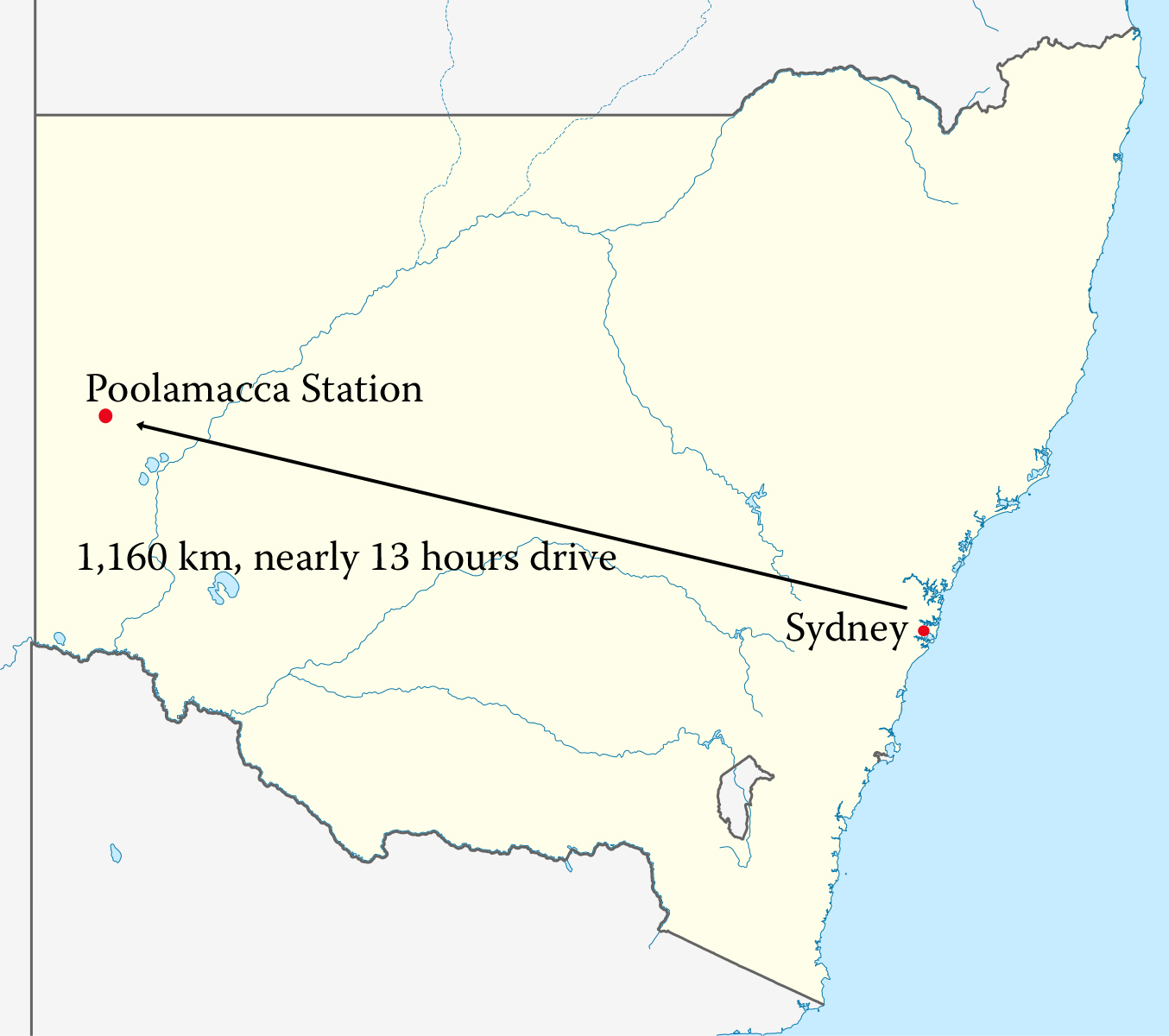
 

Sydney Poolamacca map


Sydney to Poolamacca map, New South Wales, Australia
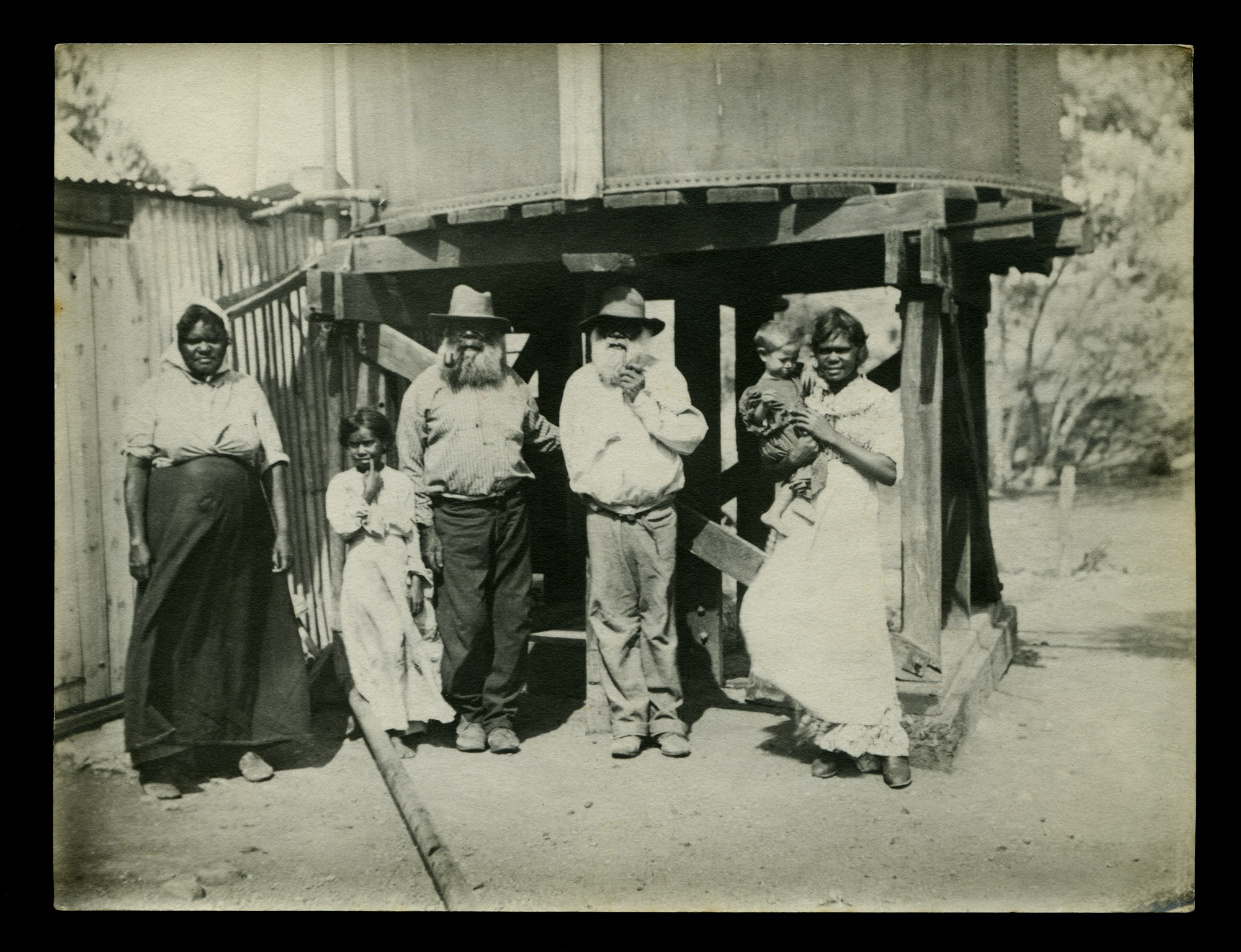
 

Anonymous photographer. Poolamacca Station, north of Broken Hill, New South Wales' c. 1910


Anonymous photographer
Poolamacca Station, north of Broken Hill, New South Wales
c. 1910
Gelatin silver print
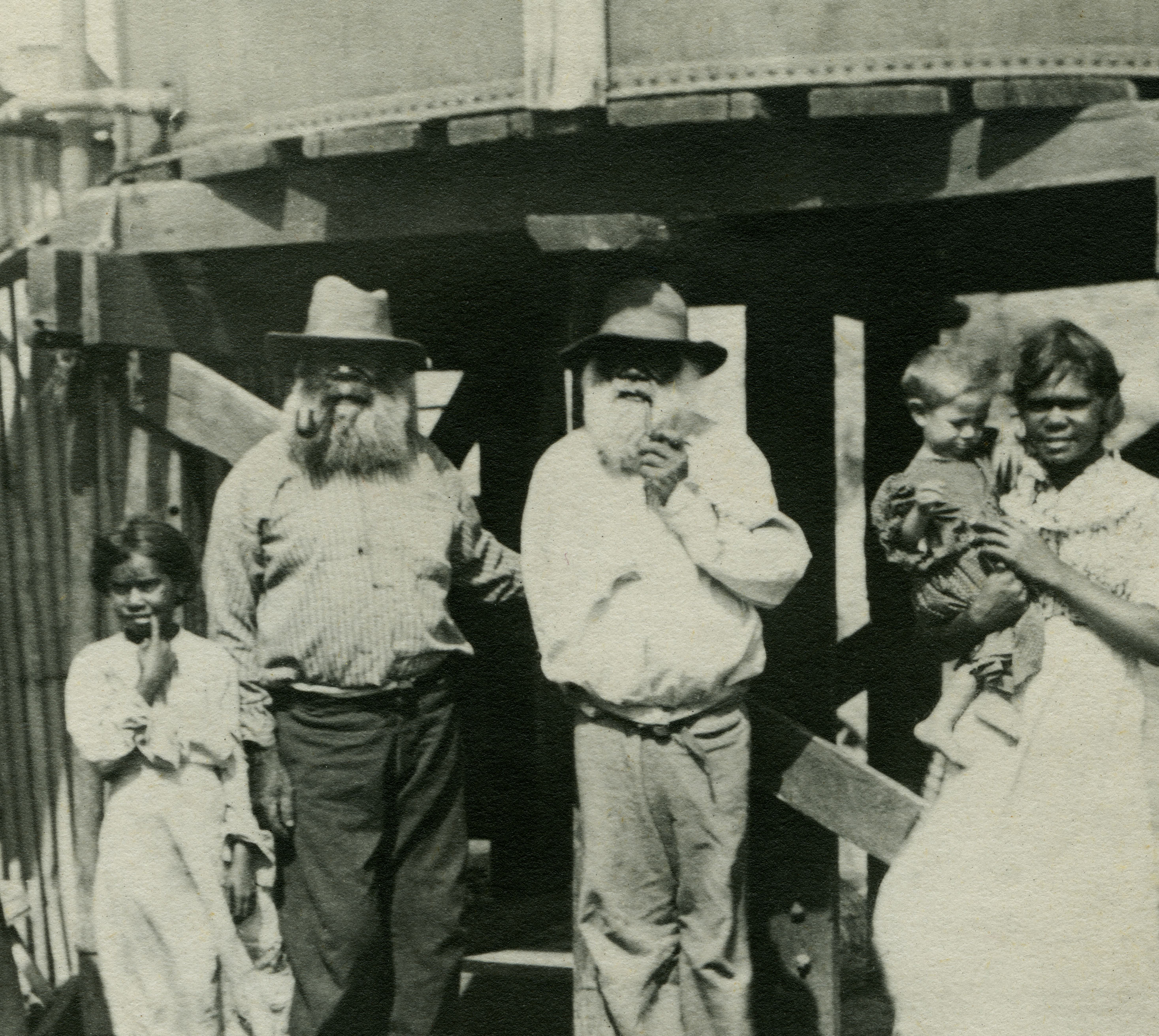
 

Anonymous photographer. Poolamacca Station, north of Broken Hill, New South Wales' c. 1910 (detail)


Anonymous photographer
Poolamacca Station, north of Broken Hill, New South Wales (detail)
c. 1910
Gelatin silver print


Anonymous photographer. Poolamacca Station, north of Broken Hill, New South Wales' c. 1910


Anonymous photographer
Poolamacca Station, north of Broken Hill, New South Wales
c. 1910
Gelatin silver print


Anonymous photographer. Poolamacca Station, north of Broken Hill, New South Wales' c. 1910 (detail)


Anonymous photographer
Poolamacca Station, north of Broken Hill, New South Wales (detail)
c. 1910
Gelatin silver print


Extracts from The Mutawintji research project

Keith Brougham, the son of John Brougham, the owner of Poolamacca (and brother of John Brougham Jnr of Gnalta station, now part of Mutawintji National Park), describes how the first pastoralists mapped out their original station boundaries by including the best waterholes:

“The wild aborigines were a help by following their tracks, as they knew of any existing water away from the river… One old aborigine who claims to be from one of the wild tribes told me the walkabout was a good sign to watch for – at that time a mob were having a hunt for a new hunting ground and had camped about midday. While they were stopped a pregnant woman had a baby there. Next day they were off again, mother and child and went straight to a waterhole, which the white people found by following their tracks” (Brougham, K.W.C. 1920, West of the Darling, MS, State Library of South Australia, p. 14)


… In 1862, the area north-west of Mt Murchison on the Darling River near present day Wilcannia was still frontier country. Mt Gipps station7, set up in 1865 (Kearns 1982), was the first station in the Broken Hill area. It included the country to the north of Broken Hill and the hill that was to become the Broken Hill mine and city. Mt Gipps was followed soon after by Poolamacca, Corona and Mundi Mundi.

No actual descriptions of the annexation of Mutawintji by pastoralists have been found so far, but as permanent waterholes are few to the north-west of the Darling River, descriptions of the annexure of other important water sources such as Yancannia in the mid 1860s suggest that there was likely to have been conflict. Yancannia station, to the north of Mutawintji, had been established by 1865 and contemporary accounts describe conflict with the local Aboriginal people. By 1872 the Aboriginal people of Yancannia gave the owners “very little trouble” and “a few of them [were] very useful” (Reid in Shaw, M.T. 1987, Yancannia Creek, Melbourne University Press, Melbourne, p. 104).

Dr Jeremy Beckett, Dr Luise Hercus, Dr Sarah Martin (edited by Claire Colyer). The Mutawintji research project report. MUTAWINTJI: Aboriginal Cultural Association with Mutawintji National Park. Published in 2008 by the Office of the Registrar, Aboriginal Land Rights Act 1983 (NSW), pp. 9-10.


It is clear from the Bonney records that people moved backwards and forwards between Yancannia, Momba, Tarella, Wonnaminta, Poolamacca and Gnalta/Mootwingee stations from the 1860s and through the 1880s. Bonney lists about 44 people as living at Momba and Tarella around 1881; some of the people from Momba have been traced and the descendents of some of the people Bonney described are Aboriginal owners of Mutawintji National Park. …

In 1892 about 50 Aboriginal people, including Outalpa George, were camped near Olary. At about this time they moved to Poolamacca station which “under the regime of the late owner, Mr J. Brougham, constituted a sanctuary for the last remaining Aboriginal inhabitants of the Barrier Ranges and adjacent areas” (Mawson, D. and Hossfeld, P.S. 1926, ‘Relics of Aboriginal Occupation in the Olary District’, Transactions of the Royal Society of South Australia, 50, pp. 17-25).

Keith Brougham, the son of John Brougham, writes about the 1890s:

“[in] 1892 [at] Poolamacca … we were amazed by the number of Aboriginals that were there… I had a boy mate staying with me and about two hundred blacks were camped in a sort of inlet in the hills of Silverton Hill, as it was called west of the homestead … The Aboriginals were practically in their wild state and did not speak our language” (Brougham MS n.d, p.1)

“… cotton dresses, high coloured and a great favourite of the [women] went as soon as they were landed, and olive oil for the [women’s] hair, always in demand” (Brougham MS n.d, p.2).

“[the Aboriginal people] were very handy in the woolshed at shearing time. The [women] did all the piece picking and men on the tables and picking up. The pickers were excellent at their job and all had a good eye, male and female” (Brougham MS n.d, p.3)

“… At Poolamacca my mother … employed a … girl who was neat and tidy, an extra good worker, and in 1896 she was really good” (Brougham MS n.d, p.12)

“… [at] Euriowie we had a lot of aboriginals working in the creeks surrounding this country picking up slugs of pure tin and bagging it” (Brougham MS n.d, p.23).


The APB [Aboriginal Protection Board] minutes recorded between 1890 and 1901 seldom mention the Mutawintji area. The only stations in the far north-west that received help from the APB were Poolamacca, occasionally Sturts Meadows, and the fringe camps at Milparinka, Tibooburra, Wanaaring and Wilcannia. The only station that consistently received rations throughout 1890-1901 was Poolamacca. Sturts Meadows (just to the west of Mutawintji) received rations in 1893, 1897 and 1898. Most stations either managed to fully employ the Aboriginal people living there or provided food and clothing of some sort without asking for compensation. …

During John Brougham’s time at Poolamacca during the 1890s and early 1900s, the station was something of a sanctuary for Aboriginal people but many had moved on by the time the Brougham family left. Some followed the Broughams to Gnalta station (now part of Mutawintji National Park) while others went to stations like Yancannia, where a large number of Aboriginal people lived and worked (Shaw, M.T. 1987, Yancannia Creek, Melbourne University Press, Melbourne). …

According to George Dutton, who was born on Yancannia station, there was a sizeable Aboriginal population at Poolamacca until about 1910, but almost none thereafter. George Dutton told Jeremy Beckett:

“At Poolamacca in 1901 there was a big mob of blackfellas, two hundred men without the women and kids. When I went back in 1910 there was only two boys left and graves all round” (Beckett, J. 1978, ‘George Dutton’s Country: Portrait of an Aboriginal Drover’, Aboriginal History, vol. 2 (1), pp. 19).


Dr Jeremy Beckett, Dr Luise Hercus, Dr Sarah Martin (edited by Claire Colyer). The Mutawintji research project report. MUTAWINTJI: Aboriginal Cultural Association with Mutawintji National Park. Published in 2008 by the Office of the Registrar, Aboriginal Land Rights Act 1983 (NSW), pp. 14-16.
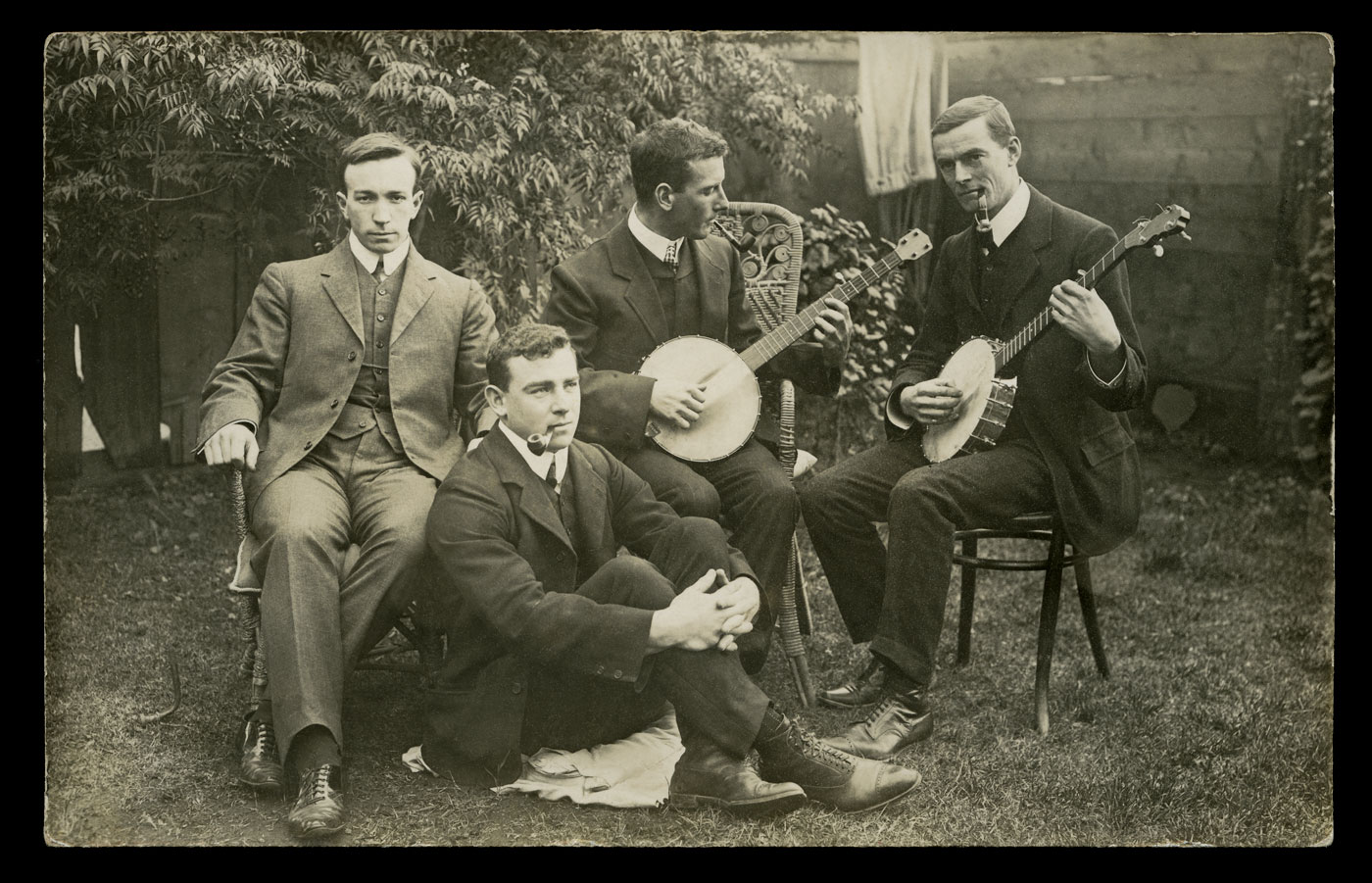
 

Anonymous photographer. 'Banjo playing in the garden, Broken Hill, far west of outback New South Wales' c. 1910-1920


Anonymous photographer
Banjo playing in the garden, Broken Hill, far west of outback New South Wales
c. 1910-1920
Gelatin silver print
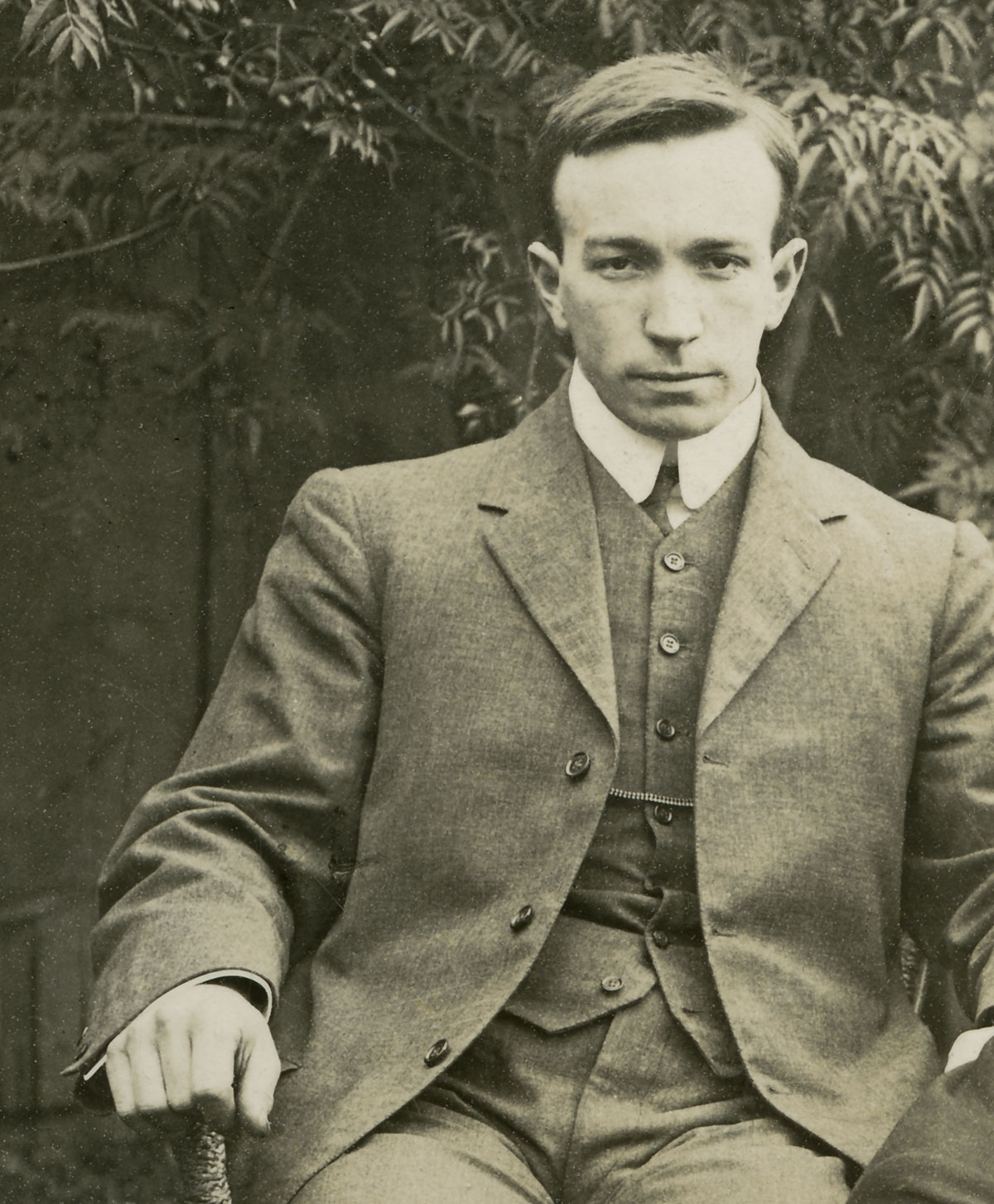
 

Anonymous photographer. 'Banjo playing in the garden, Broken Hill, far west of outback New South Wales' c. 1910-1920 (detail)


Anonymous photographer
Banjo playing in the garden, Broken Hill, far west of outback New South Wales (detail)
c. 1910-1920
Gelatin silver print


Anonymous photographer. 'Banjo playing in the garden, Broken Hill, far west of outback New South Wales' c. 1910-1920 (detail)


Anonymous photographer
Banjo playing in the garden, Broken Hill, far west of outback New South Wales (detail)
c. 1910-1920
Gelatin silver print
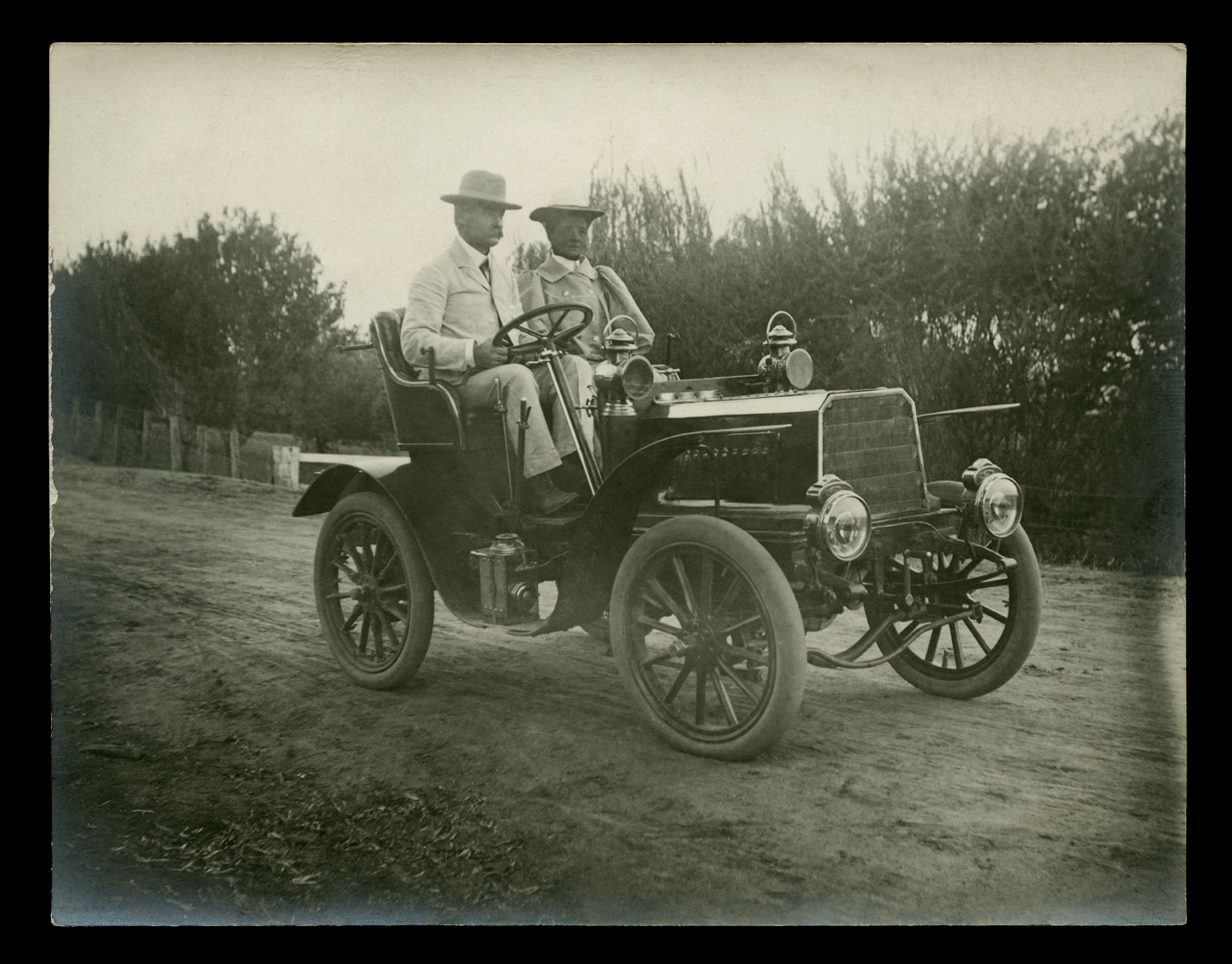
 

Anonymous photographer. 'Dr Tham?, Wagga Wagga, New South Wales' c. 1900-1910


Anonymous photographer
Dr Tham?, Wagga Wagga, New South Wales
c. 1900-1910
Gelatin silver print
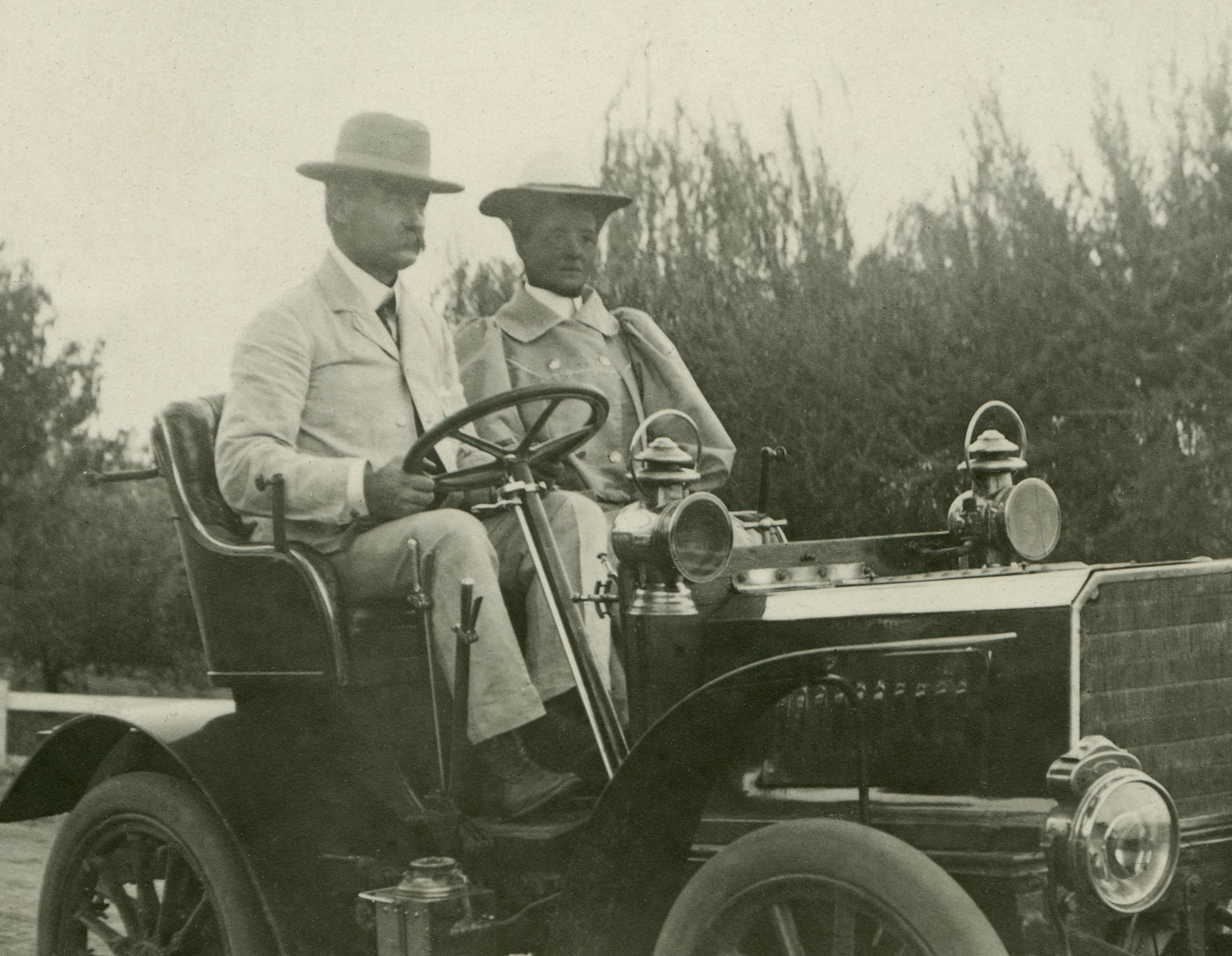
 

Anonymous photographer. 'Dr Tham?, Wagga Wagga, New South Wales' c. 1900-1910 (detail)


Anonymous photographer
Dr Tham?, Wagga Wagga, New South Wales (detail)
c. 1900-1910
Gelatin silver print
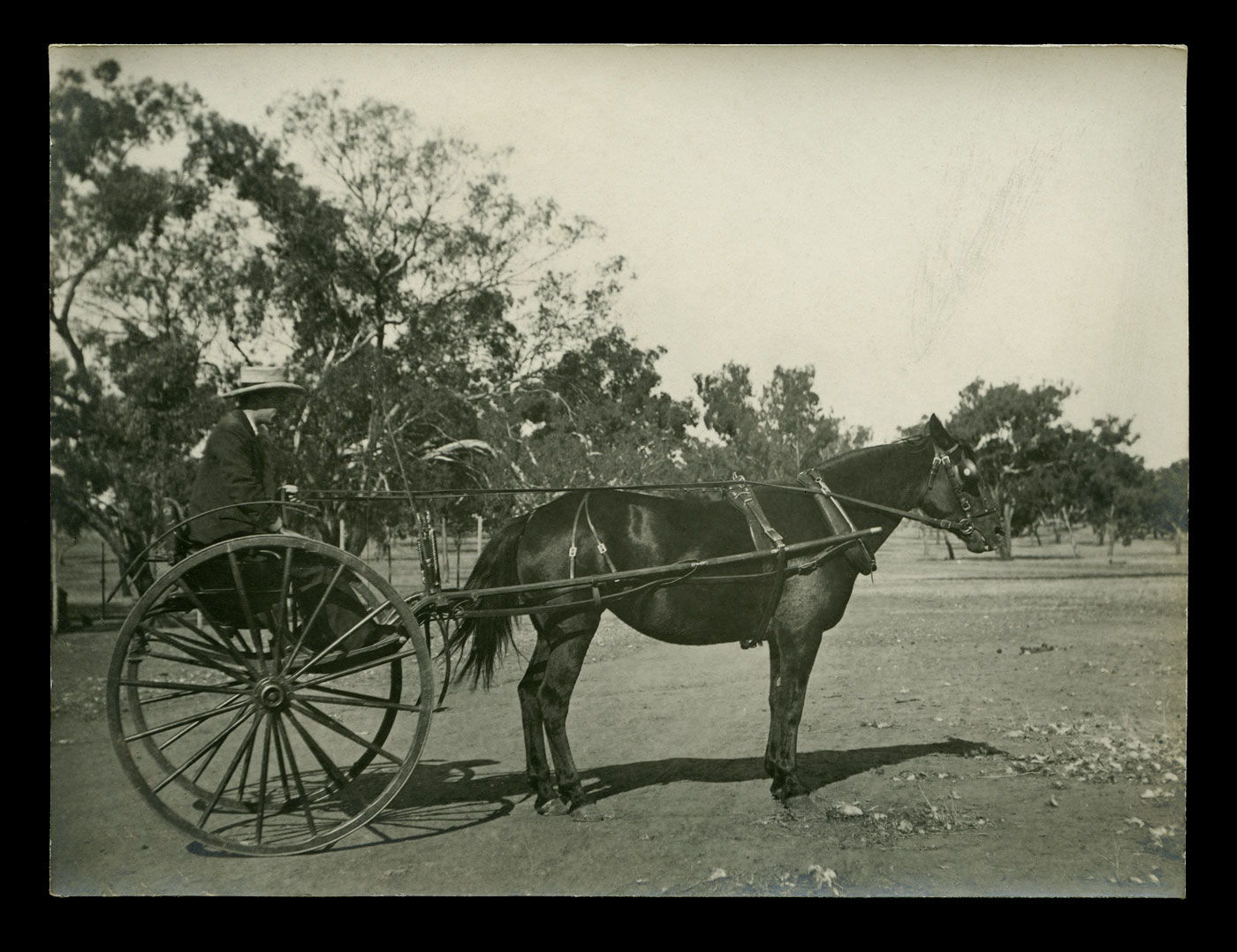


Anonymous photographer. 'Horse and trap, Wagga Wagga, New South Wales' c. 1910


Anonymous photographer
Horse and trap, Wagga Wagga, New South Wales
c. 1910
Gelatin silver print


Anonymous photographer. 'Largs Pier Hotel, North-western suburb of Adelaide, South Australia' c. 1910


Anonymous photographer
Largs Pier Hotel, North-western suburb of Adelaide, South Australia
c. 1910
Gelatin silver print


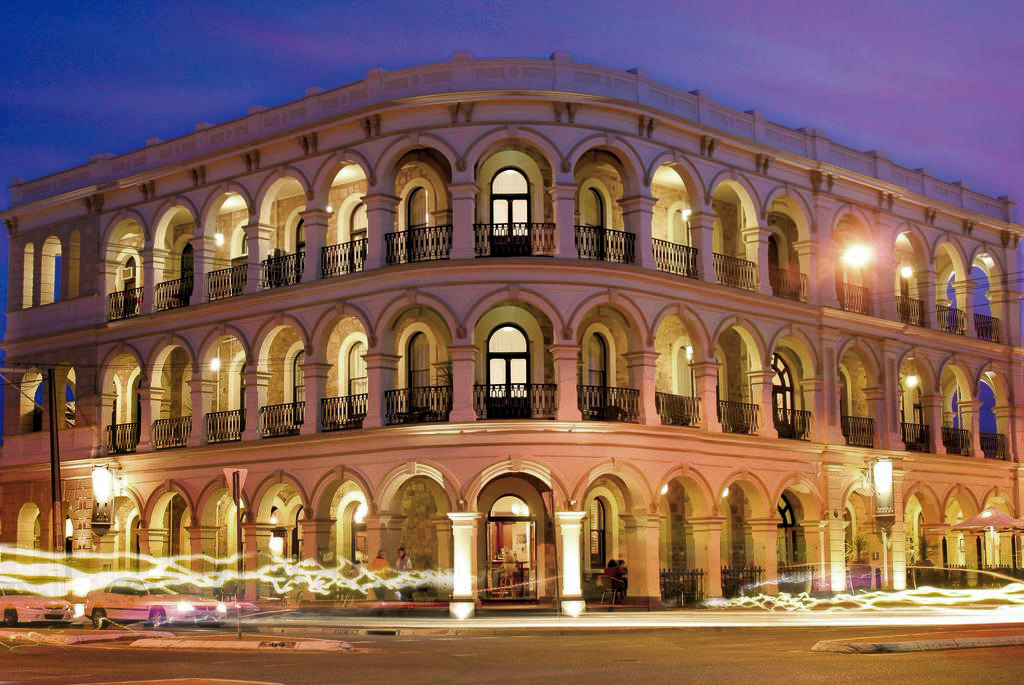
Largs Pier Hotel

Largs Pier Hotel is located on the corner of The Esplanade and Jetty Road in Largs Bay, South Australia.

The Largs Pier Hotel opened in 1882 on the same day as the Largs Bay Railway and Pier. Believed to be 23rd of December according to The Port Adelaide Historical Society. From 1882 till around 1892 the Largs Pier was the primary port of call for New Australians travelling from Europe. Many of these immigrants spent their first nights in Australia at the hotel.

Text from the Wikipedia website
 

Largs Pier Hotel, South Australia


Largs Pier Hotel, South Australia today


1930s Australia
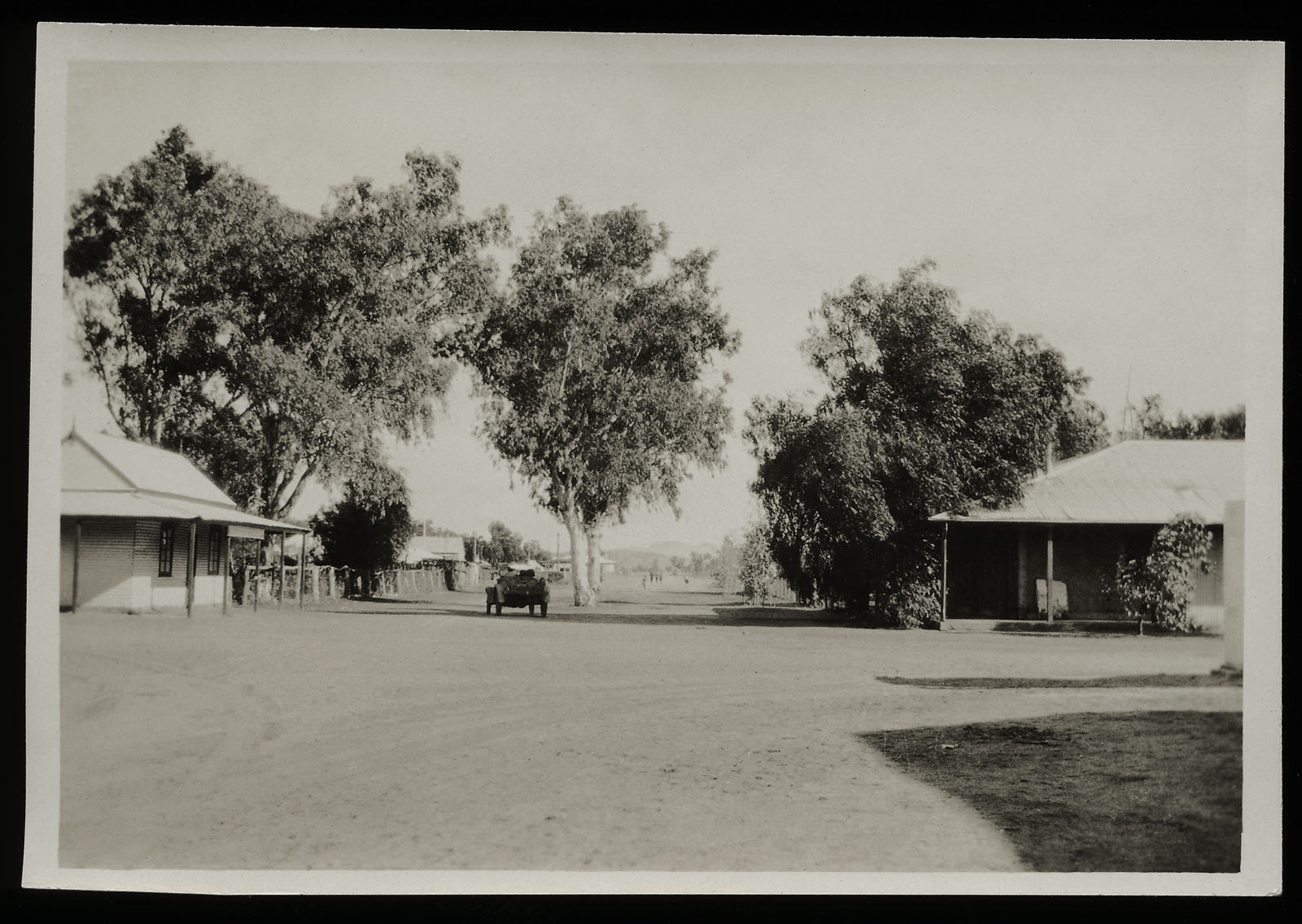
 

Anonymous photographer. 'Alice Springs' c. 1930


Anonymous photographer
Alice Springs
c. 1930
Gelatin silver print


Anonymous photographer. 'Alice Springs' c. 1930 (detail)


Anonymous photographer
Alice Springs (detail)
c. 1930
Gelatin silver print
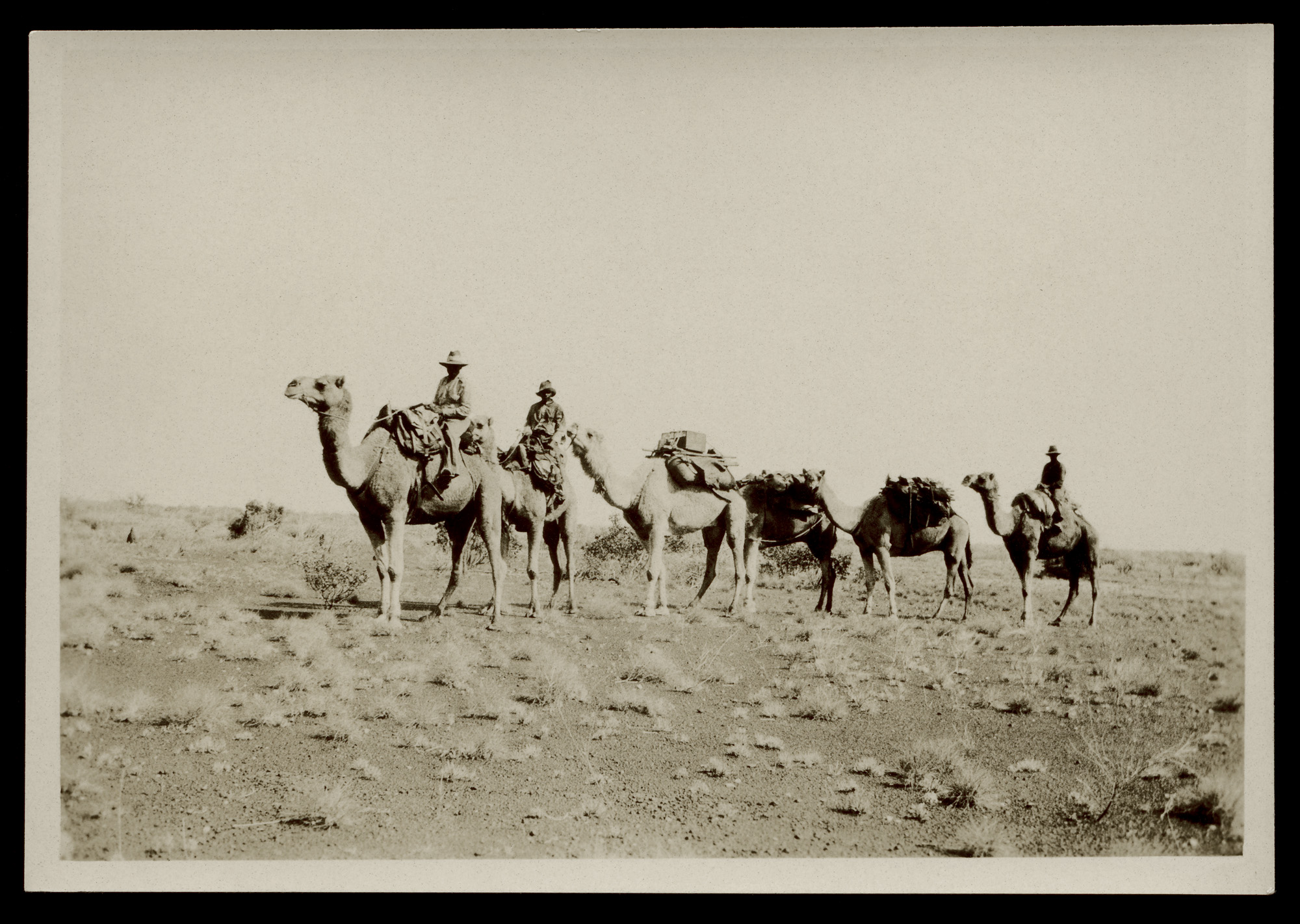
 

Anonymous photographer. 'Police camels' c. 1930


Anonymous photographer
Police camels
c. 1930
Gelatin silver print
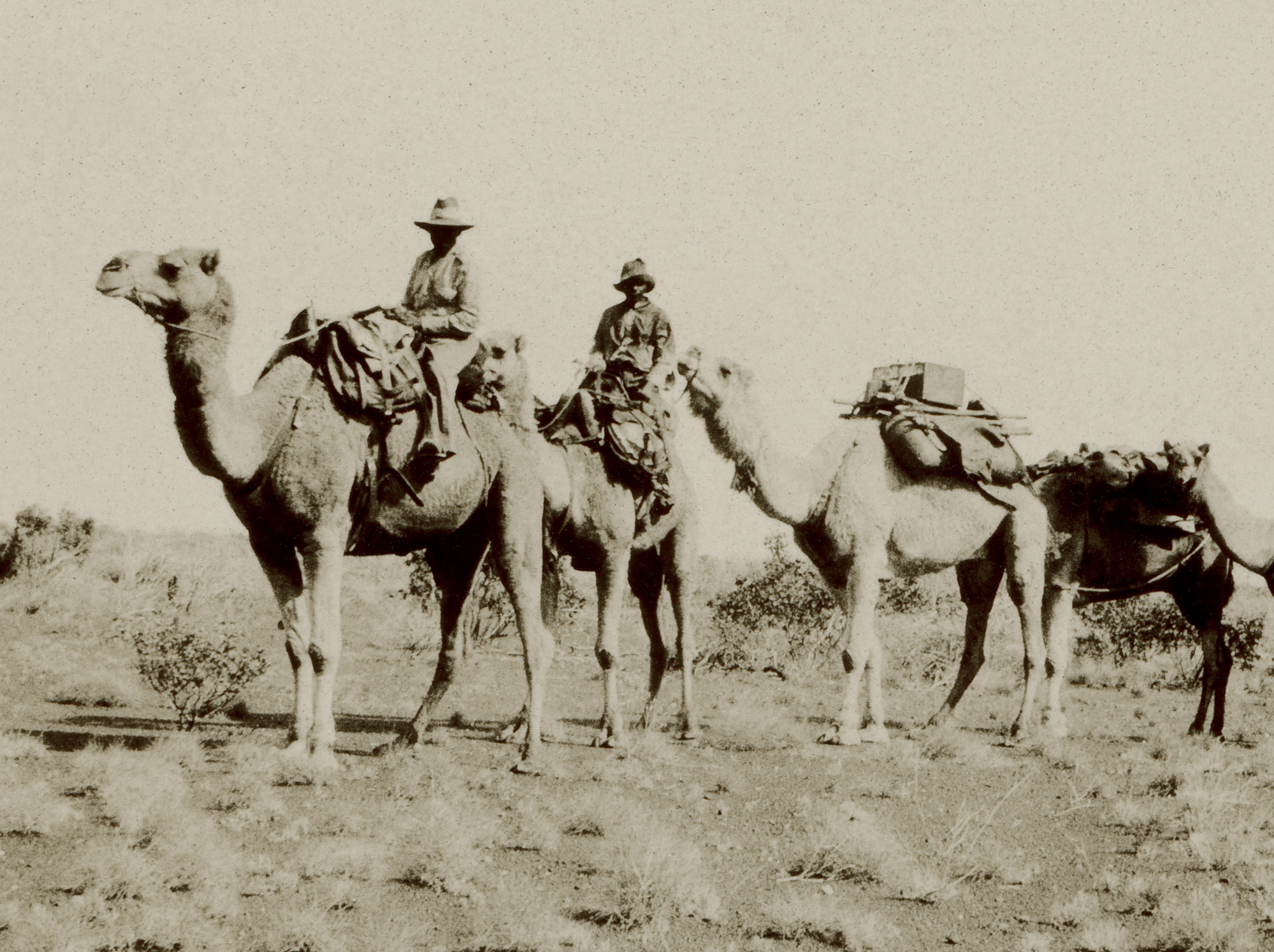
 

Anonymous photographer. 'Police camels' c. 1930 (detail)


Anonymous photographer
Police camels (detail)
c. 1930
Gelatin silver print


Note the Aboriginal police tracker second from left. This could be in the Northern Territory.
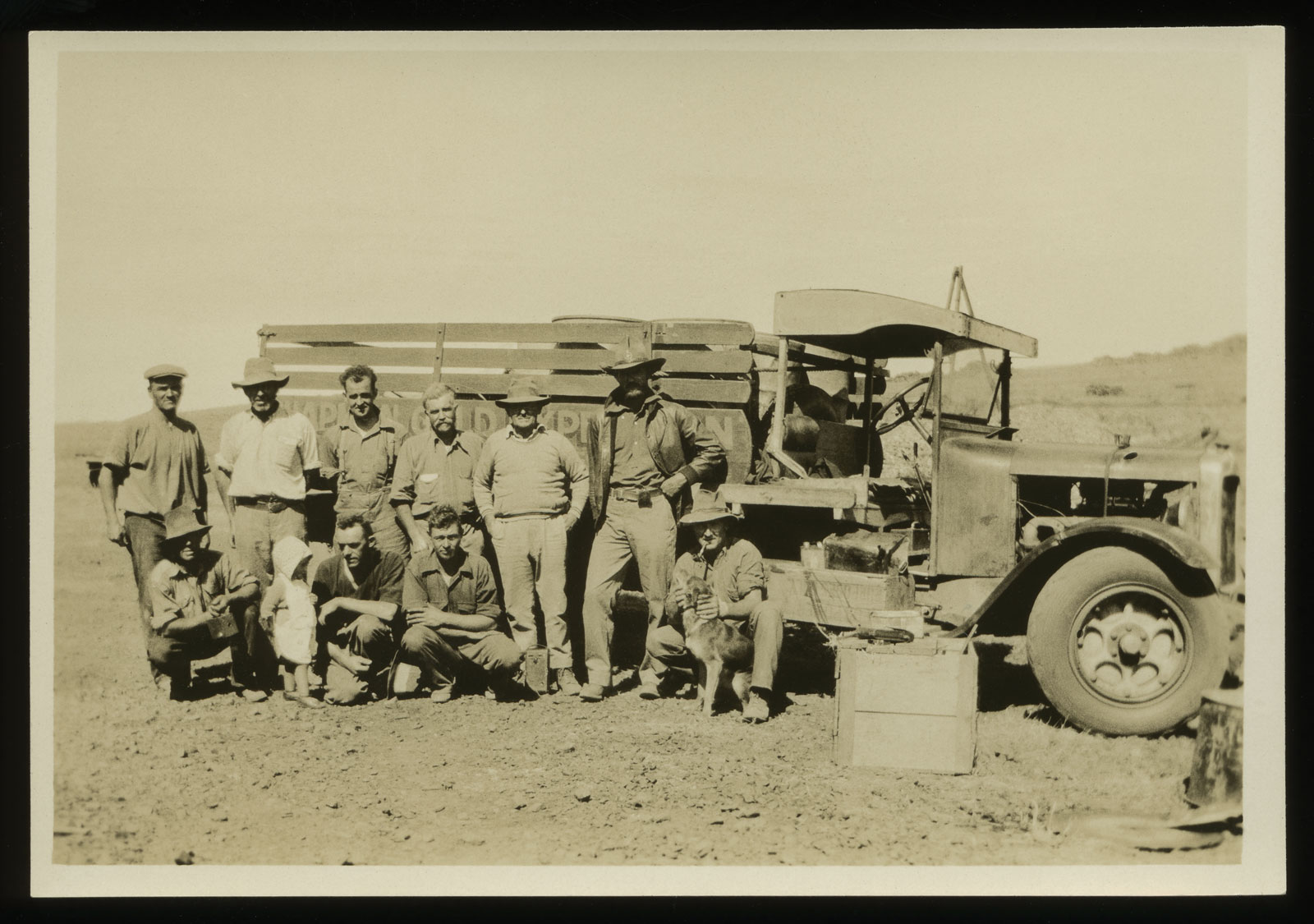
 

Anonymous photographer. 'At the Granites' c. 1930


Anonymous photographer
At the Granites
c. 1930
Gelatin silver print


This photograph is possibly from around the Granites gold mine in the Tanami Desert of the Northern Territory of Australia. You can make out the word “gold” on the truck behind the men.

Gold was discovered in the Tanami Desert by Alan Davidson. He arrived in the area in 1898 prospecting until 1901. He took the name Tanami for the region from local Aboriginal people who visited his camp. “On inquiry [he] learned that the native name of the rockholes (from [which the party obtained water] was Tanami, and that they “never died,” he said. Davidson showed the gold specimens to these Aboriginal people, who recognised it and described “mobs of similar stone to the east, together with a large creek containing plenty of water and fish. This they said was “two days’ sleep to the south of east”.

Text from the Wikipedia website
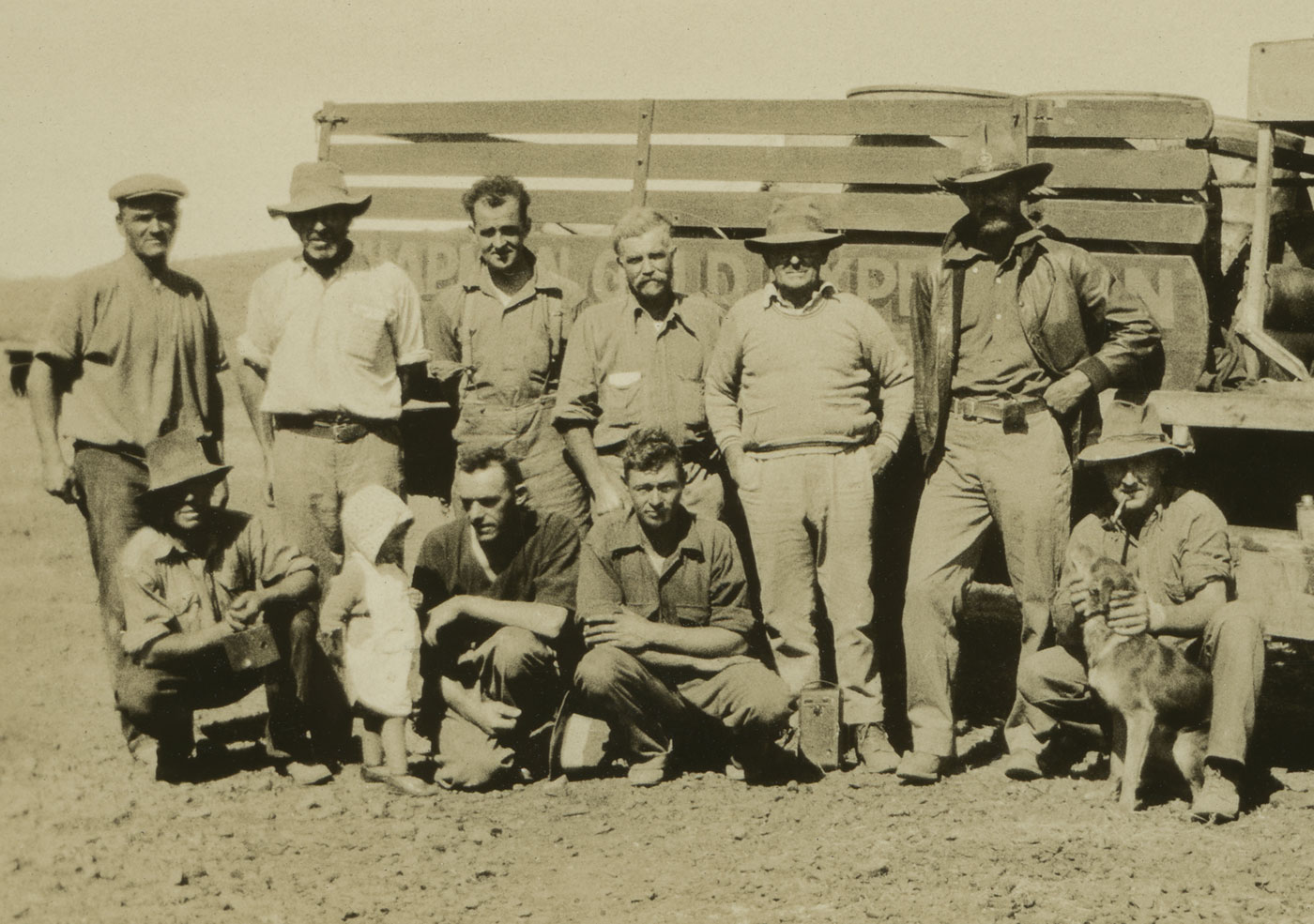
 

Anonymous photographer. 'At the Granites' c. 1930 (detail)


Anonymous photographer
At the Granites (detail)
c. 1930
Gelatin silver print


Note the man crouching at left holding a Kodak box camera, and the folding camera (most probably a Kodak as well) at the feet of the man third from right.


Anonymous photographer. 'At the Granites' c. 1930 (detail)


Anonymous photographer
At the Granites (detail)
c. 1930
Gelatin silver print


1950s Australia


Anonymous photographer. 'Roy Hill Homestead, Pilbara region of Western Australia' c. 1950


Anonymous photographer
Roy Hill Homestead, Pilbara region of Western Australia
c. 1950
Gelatin silver print
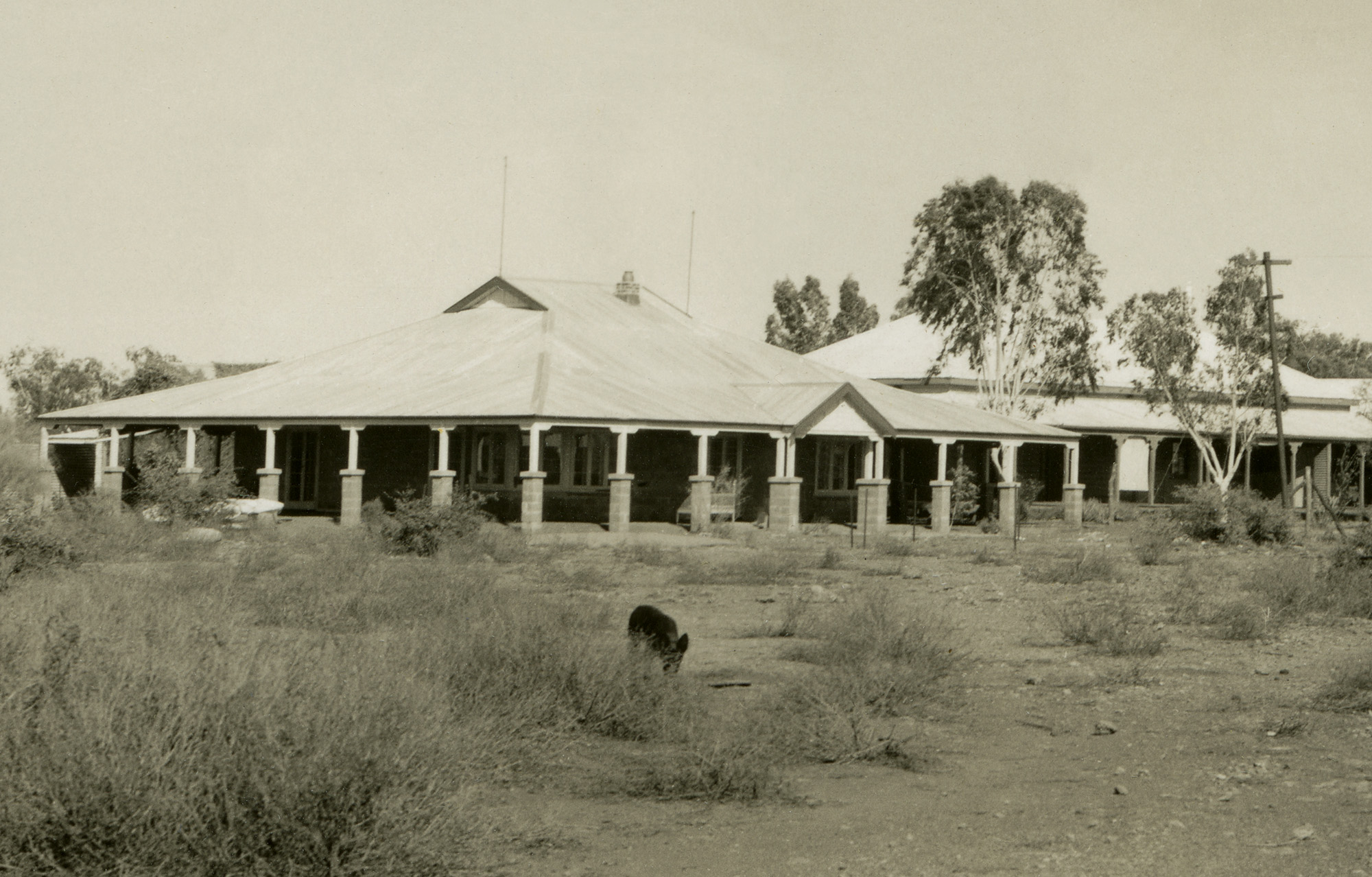
 

Anonymous photographer. 'Roy Hill Homestead, Pilbara region of Western Australia' c. 1950 (detail)


Anonymous photographer
Roy Hill Homestead, Pilbara region of Western Australia (detail)
c. 1950
Gelatin silver print


Roy Hill Homestead

Statement of significance

Roy Hill Station has strong heritage significance as it has aesthetic, historical, scientific, and social values. It represents more than a hundred years of life on a Pilbara station, and its buildings and structures, reflect an evolutionary pattern of development. Roy Hill Station was the home of Alexander Langdon (Alex) Spring who made an enormous contribution to local government in the region between 1940-1970. He was a Councillor for 31 years, and was the first President of the East Pilbara Shire in 1972. He was made a Freeman of the Shire of East Pilbara in 1973. becoming the 13th Freeman in Western Australia.

Roy Hill continues to have significance as a large pastoral station, representing some of the other stations which owners did not want included in the Shire of East Pilbara Heritage Inventory.

History

Nat Cooke, the owner of Mallina Station near Port Hedland, founded Roy Hill Station in 1886 after searching for new pastures when Mallina had suffered a number of years of drought. With gold on his mind Cooke was always looking for gold bearing ore in his search for new grazing land. He was successful in bringing gold rock specimens to the authorities in 1886 though he had to accept a share with two other prospectors in the reward for the first gold found in the district. Despite his gold mining efforts around Nullagine, Nat Cooke started a going concern on Roy Hill Station which is situated on the headwaters of the Fortescue River. The first official lease of 20.000 acres was granted to D McKay in January 1890.

H L Spring was one of a consortium who established Roy Hill Pastoral Company in 1919 with Jim Smith as Manager. Mount Fraser. an adjoining station, was incorporated in 1919. bringing the lease up to approx. one million acres. Initially the property was set up as a cattle station. By 1925 there were 11,500 head of cattle. In 1928 sheep were introduced and the sheep numbers built up to 46.000 by the mid 1960s. At the same time 5,000-7,000 cattle were maintained. Roy Hill Station was one of the first in Australia to transport large numbers of cattle by truck from about 1925.

As Roy Hill was centrally located in relation to the other stations, it became a natural meeting point for a range of activities, particularly the meetings of the Nullagine Road Board. Roy Hill still remained an isolated station which greatly benefited from the introduction of the Flying Doctor Service and the School of the Air. Oral history collected from past employees of Roy Hill Station highlights the contribution made by the Aboriginal stockman to the running of the station. About 20 Aboriginal stockmen were employed during the 1930s.

The Spring family was associated with Roy Hill Station for many decades. It was managed after 1938 by Alex Spring who later became the first Shire President of the East Pilbara Shire, formed in 1972. The large, once gracious homestead had wide verandahs shading the windows. Surrounding the homestead were vegetable gardens and large flower beds, along with alfalfa for the milking cows and working horses, irrigated by water pumped from the river.

Evidence of the importance of Roy Hill’s central position in the district is found in the old Post Office and General Store situated next to the homestead. The old iron building still shows signs of its years of service as some furniture and shelving remain in the Post Office and Store. The main road used to lead people right past the Roy Hill Store and Post Office, but has since been realigned. The Post Office played a vital role for the people of the isolated Nullagine district, maintaining its own postcode for a number of years. The Post Office and Store closed in 1971.

Physical description

Roy Hill Homestead is situated 1km off the main road halfway between Newman and Nullagine. Roy Hill Station consists of a large number of buildings which demonstrate the dynamic process of running a pastoral station over a period of more than a century. There are a number of corrugated iron sheds built at different times for mechanical work and storage of station equipment. Close by is the aircraft directional beacon available for the nearby airstrip if a plane was lost. The original airstrip was approx. 6 miles from the homestead. Part of the very old cattle stockyards still stand next to a disused cattle killing hoist, reflecting a time when pastoralists regularly butchered cattle for their home consumption. The yards were the main trucking yards and general handling yards.

The large main house is one of a number of buildings that have been erected on the station since the turn of the century. It has cement block walls with a corrugated iron roof. Surrounding the large and once gracious home is a wide verandah. The house originally consisted of three bedrooms, a living room, guest room, dining room and school room. Nearby the house is a cluster of older buildings including a ‘Nissan hut’ shaped kitchen and dining room for workers and the old Post Office. Office and General Store.

The Post Office, Office and General Store has corrugated iron walls and a gabled tin roof. Inside the Post Office are the pigeon holes and other associated post office fittings. The service hatch for the Post Office is still visible from the outside. The General Store (to the rear of the Post Office) still has its shelves in place and much of the old equipment that has been collected there over the years gives a feeling of stepping back into another time. In the immediate vicinity of the homestead property are other remnants from the past.

Concrete pads found amongst the grass are the remains of Aboriginal stockmens quarters and the many rainwater tanks are reminders of the need to collect and store all water needed for consumption. A light aircraft parked near the airstrip is an important vehicle for transport and for mustering.
Today the house stands unoccupied and the owner and any employees live in transportable homes near the old house.

Shire of East Pilbara. “Roy Hill Homestead and former Post Office,” on the the State Heritage Office, Government of Western Australia website Nd [Online] Cited 15/03/2022
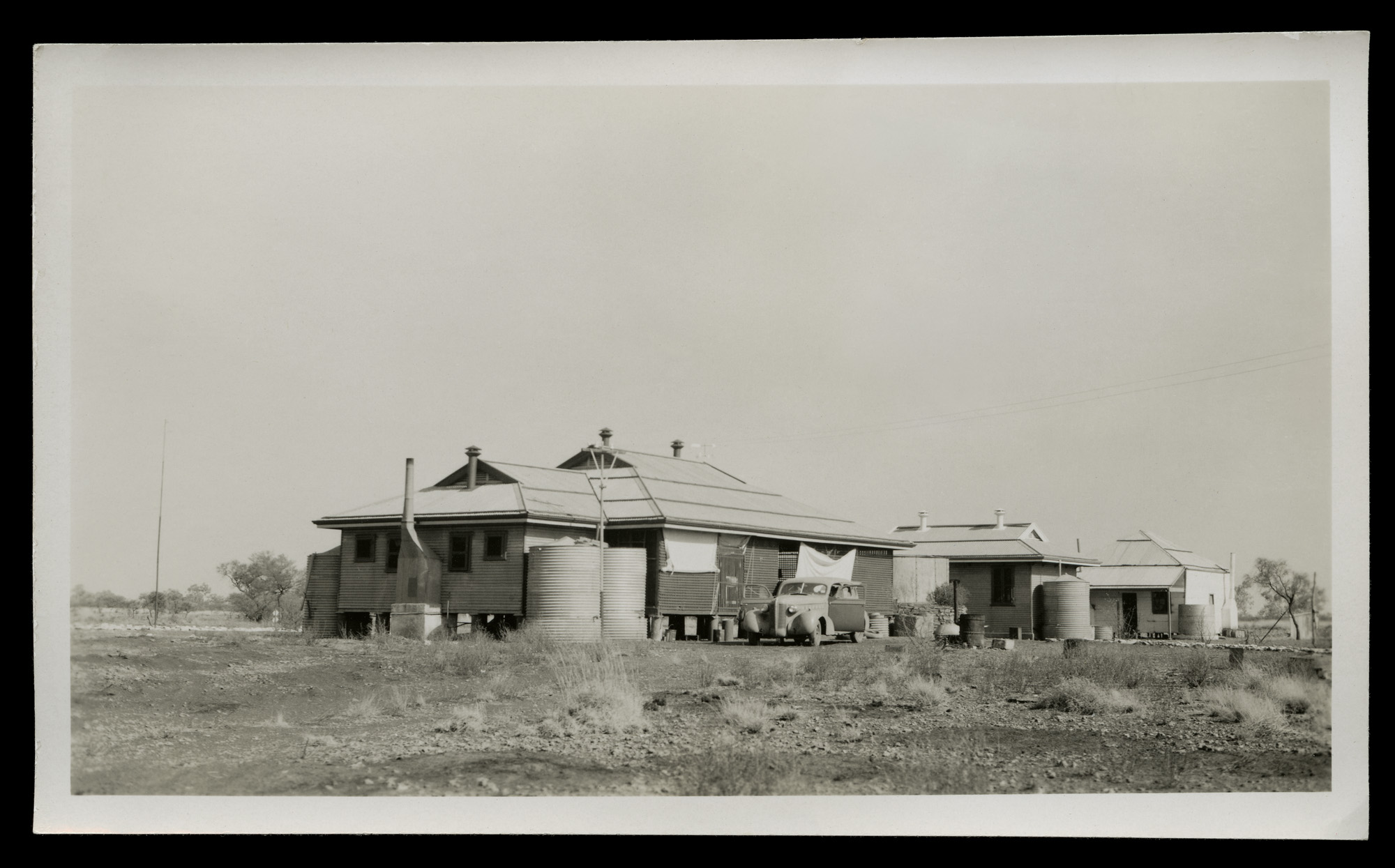
 

Anonymous photographer. 'Mundiwindi Station, Pilbara region of Western Australia' c. 1950


Anonymous photographer
Mundiwindi Station, Pilbara region of Western Australia
c. 1950
Gelatin silver print


Mundiwindi

Mundiwindi just off the Jigalong Mission Road in Western Australia is a locality about 1000km north-northeast of Perth. Mundiwindi is at an altitude of about 575m above sea level. The nearest ocean is the Indian Ocean about 410km north-northwest of Mundiwindi. The nearest more populous place is the town of Newman which is 71km away with a population of around 3,500.

Mundiwindi is a ghost town in the Pilbara region of Western Australia. The town is around 1,150 kilometres (710 mi) north east of Perth and 124 kilometres (77 mi) south east of Newman, along the Jigalong Mission road. The town was established in 1914 as a telegraph station. The station was closed in 1977. The telegraph station was a link on the Australian Overland Telegraph Line linking the settled regions of Australia to the submarine cable at Broome. A weather station operated at the site between 1915 and 1981.

Text from the Wikipedia website


Anonymous photographer. 'Mundiwindi Station, Pilbara region of Western Australia' c. 1950 (detail)


Anonymous photographer
Mundiwindi Station, Pilbara region of Western Australia (detail)
c. 1950
Gelatin silver print


Anonymous photographer. 'Cardawan Station, central Western Australia' c. 1950


Anonymous photographer
Cardawan Station, central Western Australia
c. 1950
Gelatin silver print


Stockman (Australia)

In Australia a stockman (plural stockmen) is a person who looks after the livestock on a large property known as a station, which is owned by a grazier or a grazing company. A stockman may also be employed at an abattoir, feedlot, on a livestock export ship, or with a stock and station agency. …

History

The role of the mounted stockmen came into being early in the 19th century, when in 1813 the Blue Mountains separating the coastal plain of the Sydney region from the interior of the continent was crossed. The town of Bathurst was founded shortly after, and potential farmers moved westward, and settled on the land, many of them as squatters. The rolling country, ideal for sheep and the large, often unfenced, properties necessitated the role of the shepherd to tend the flocks.

Early stockmen were specially selected, highly regarded men owing to the high value and importance of early livestock. All stockmen need to be interested in animals, able to handle them with confidence and patience, able to make accurate observations about them and enjoy working outdoors.

Australian Aborigines were good stockmen who played a large part in the successful running of many stations. With their intimate bonds to their tribal places, and local knowledge they also took considerable pride in their work. After the gold rushes white labour was expensive and difficult to retain. Aboriginal women also worked with cattle on the northern stations after this practice developed in northern Queensland during the 1880s. A Native administration Act later stopped the employment of women in the cattle camps. Aborigines and their families received the regular provision of food and clothing to retain their labour, but were paid only a small wage.

Text from the Wikipedia website


For more information on the role and conditions of Aboriginal stockmen, please see the book Aborigines in the Northern Territory Cattle Industry by Dr Frank Stevens, Australian National University Press, 1974.


“Perhaps nowhere in Australia have working and living conditions for Aborigines been so bad as on Northern Territory cattle stations. Though the Aborigines’ skill in handling cattle is acknowledged by their white employers, rarely have they gained recognition in any material way. None were paid full wages, many were fortunate if they received any cash wages at all, almost all lived in appalling conditions, and many were subjected to physical violence.

These facts emerge clearly from Dr Stevens’s thorough research into the conditions obtaining on Territory pastoral properties in the 1960s. During surveys in 1965 followed up in 1967, Dr Stevens questioned employers and both black and white workers in the industry, eliciting some revealing replies. It was apparent that the Aboriginal workers were fully aware of their degraded position and the way in which they were exploited.

Where possible Dr Stevens visited the Aboriginal station ‘camps’, though he met with opposition from some station owners, reluctant to allow him free access. In almost all of them the living conditions were primitive, the best of accommodation being little more than a corrugated iron hut. Few camps had running water or cooking facilities.

In the growing awareness of the Aborigines’ plight in Australia, this book is an important testimony of the conditions in which many lived and worked, conditions that must no longer be allowed to exist.”

Book jacket
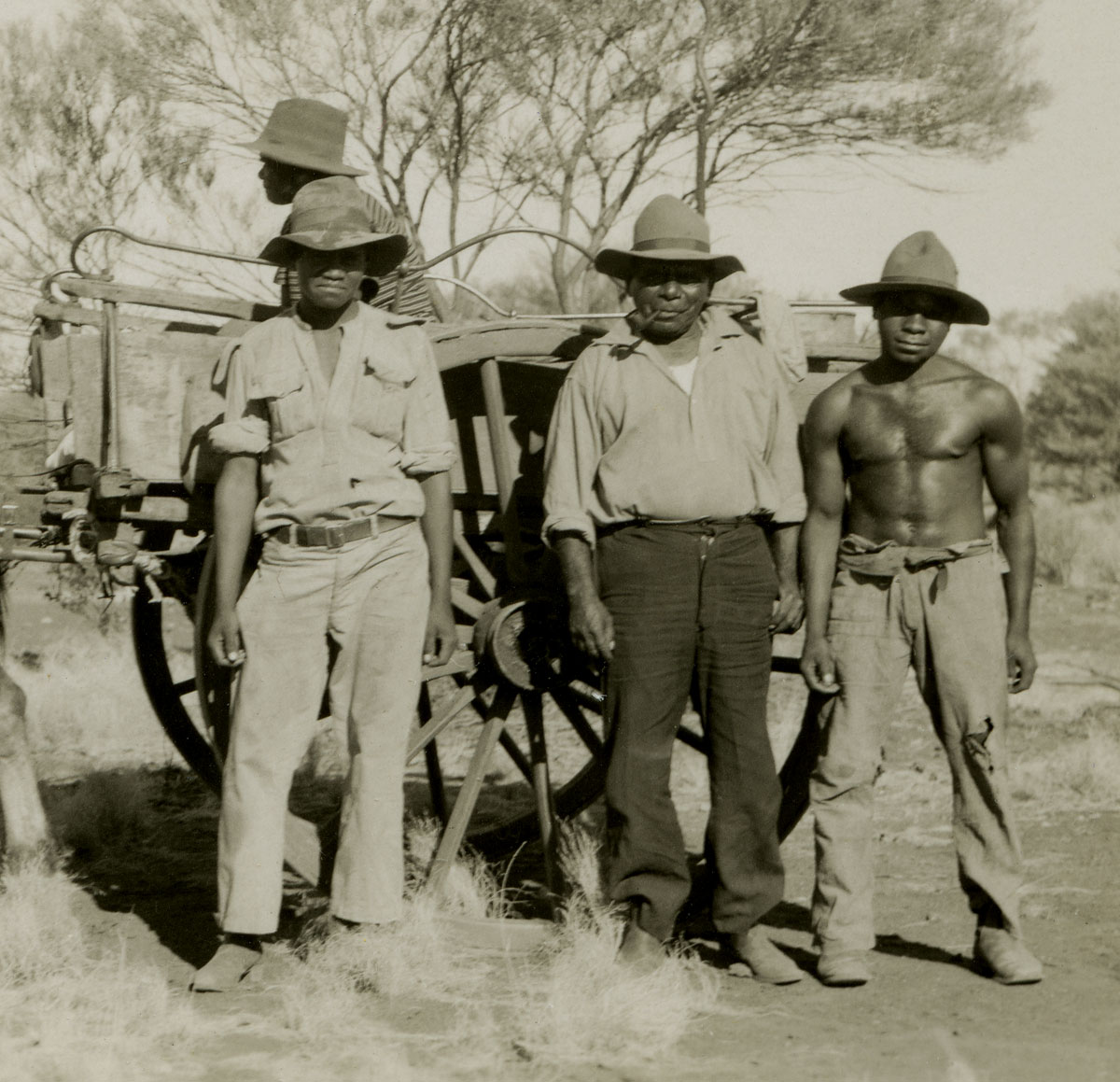
 

Anonymous photographer. 'Cardawan Station, central Western Australia' c. 1950 (detail)


Anonymous photographer
Cardawan Station, central Western Australia (detail)
c. 1950
Gelatin silver print


Anonymous photographer. 'Railway Hotel, Lake Austin township, Murchison region of Western Australia' c. 1950


Anonymous photographer
Railway Hotel, Lake Austin township, Murchison region of Western Australia
c. 1950
Gelatin silver print


Austin, Western Australia

Austin is an abandoned town in the Murchison region of Western Australia. The town is located south of Cue on an island in Lake Austin and for this reason was also known as Lake Austin and The Island Lake Austin.

The lake and the town are both named after surveyor Robert Austin, who was the first European to explore and chart the area. Austin initially named the lake the Great Inland Marsh but the name was later changed to Lake Austin. The townsite was gazetted in 1895. When Austin travelled through the area he described it as very indifferent but also added the geological features indicate rich goldfields.

Text from the Wikipedia website


Anonymous photographer. 'Railway Hotel, Lake Austin township, Murchison region of Western Australia' c. 1950 (detail)


Anonymous photographer
Railway Hotel, Lake Austin township, Murchison region of Western Australia (detail)
c. 1950
Gelatin silver print


LIKE ART BLART ON FACEBOOK

Back to top

Marcus Bunyan black and white archive: ‘Études’ 1994

November 2016


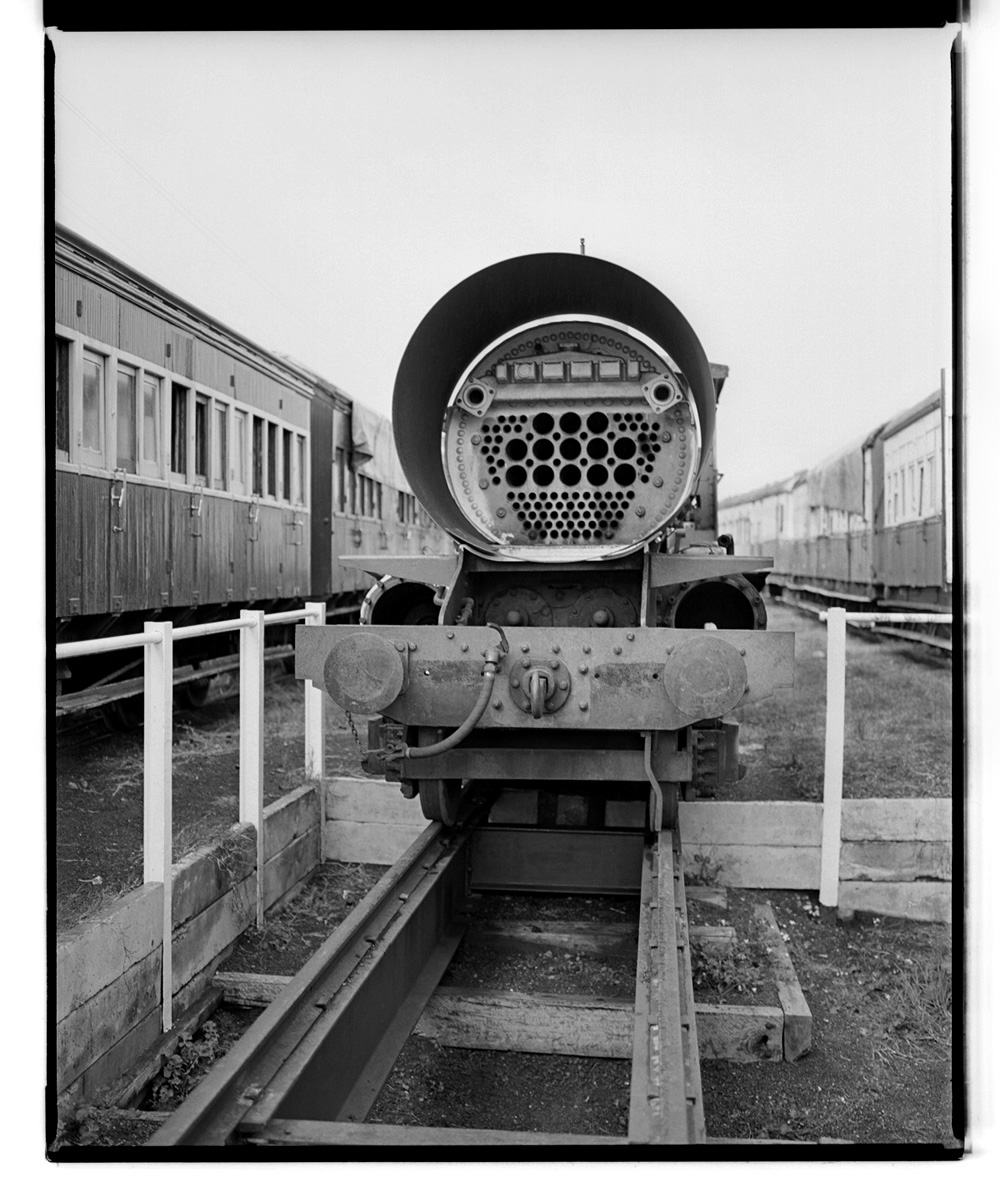
Marcus Bunyan (Australian, b. 1958) 'Untitled' from the series 'Études' 1994


Marcus Bunyan (Australian, b. 1958)
Untitled
1994
from the series Études
Silver gelatin print


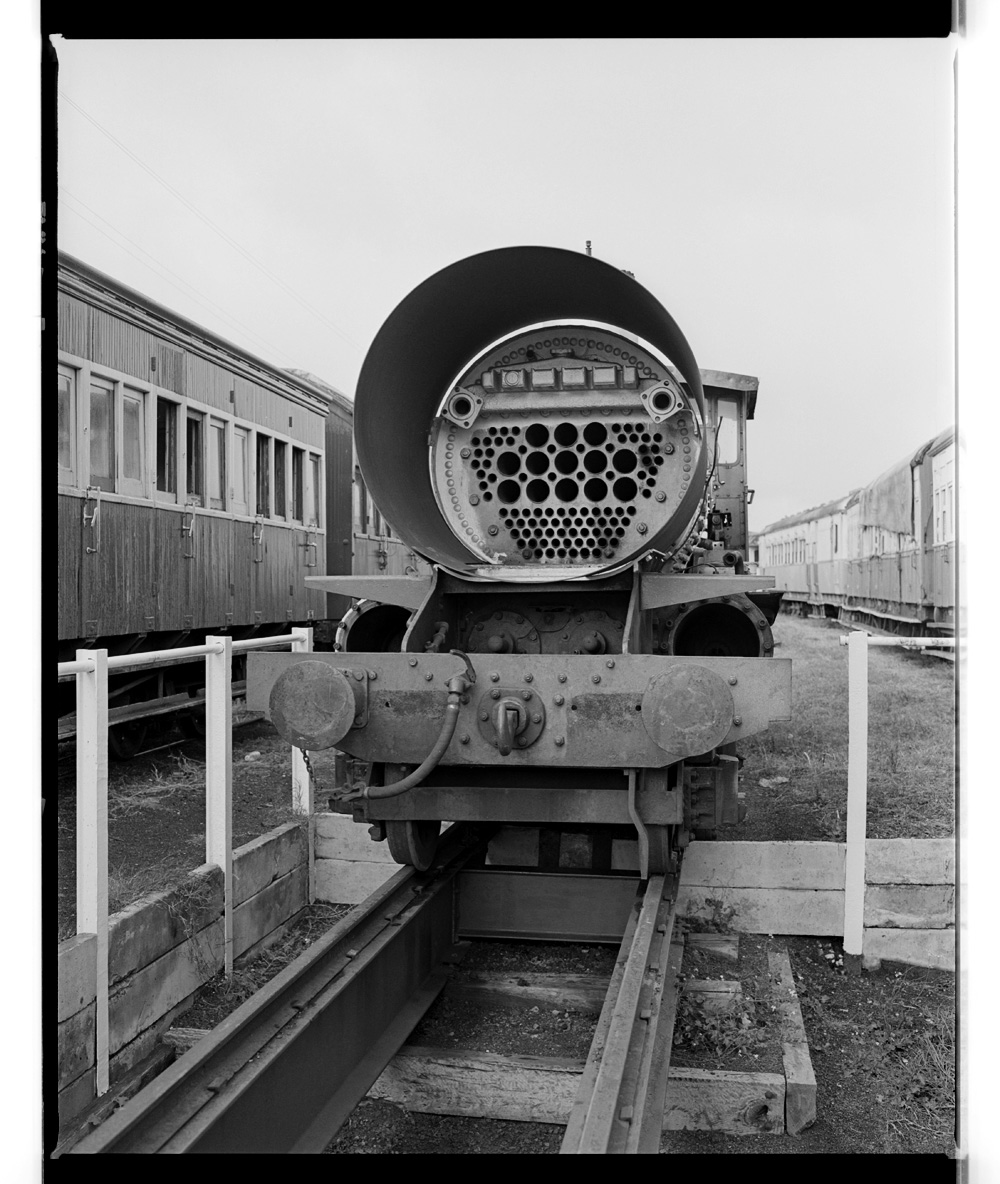
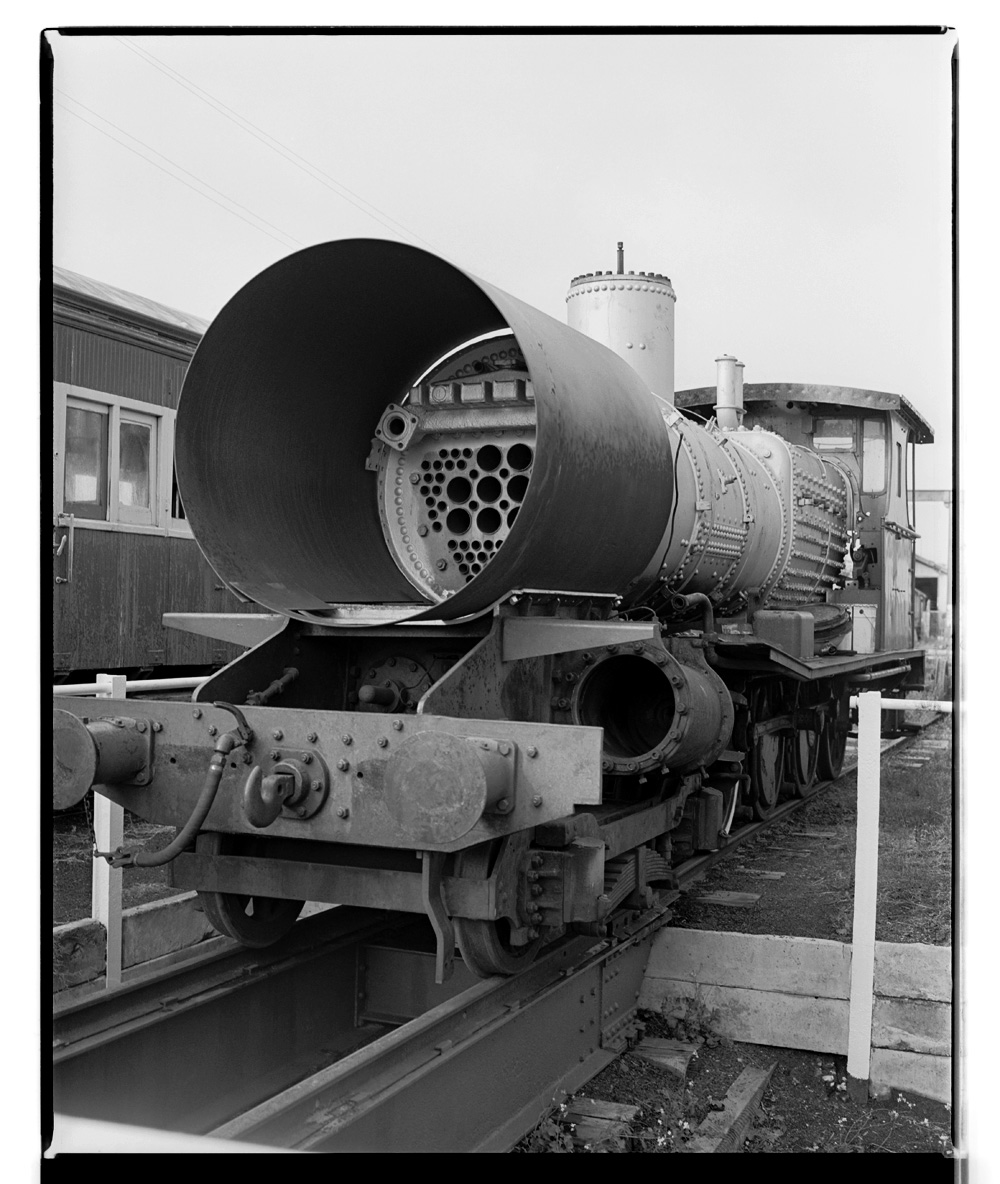
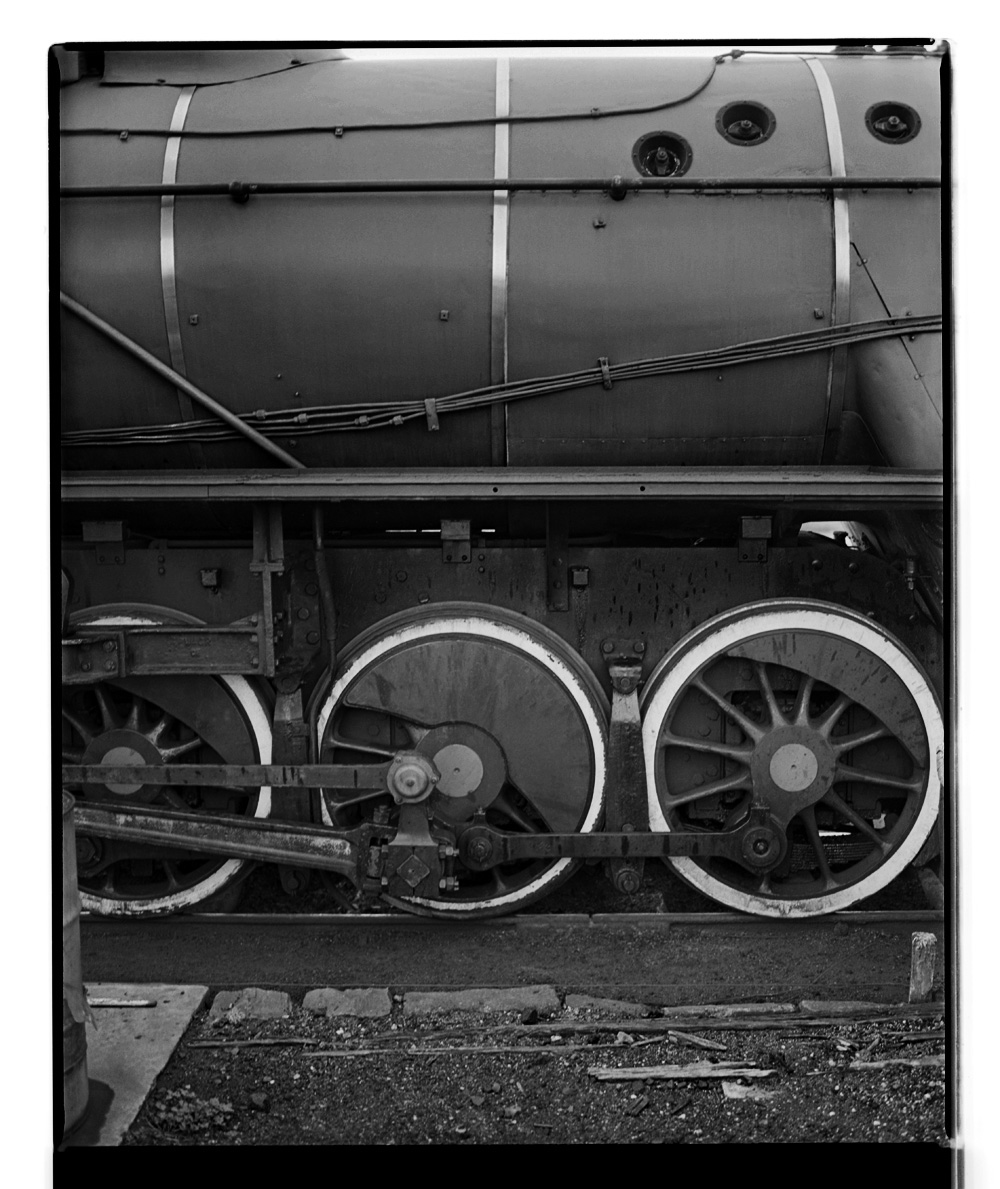
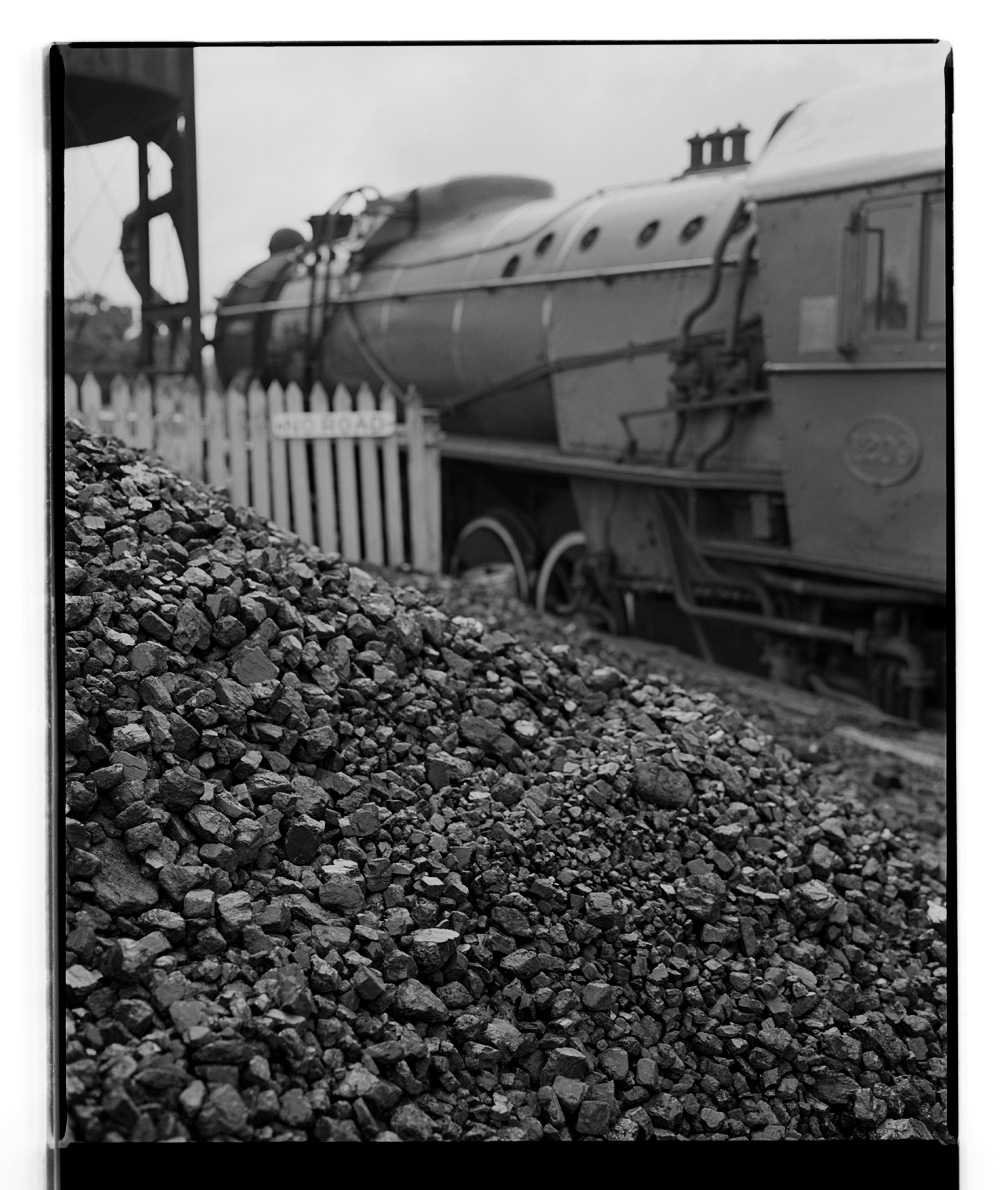
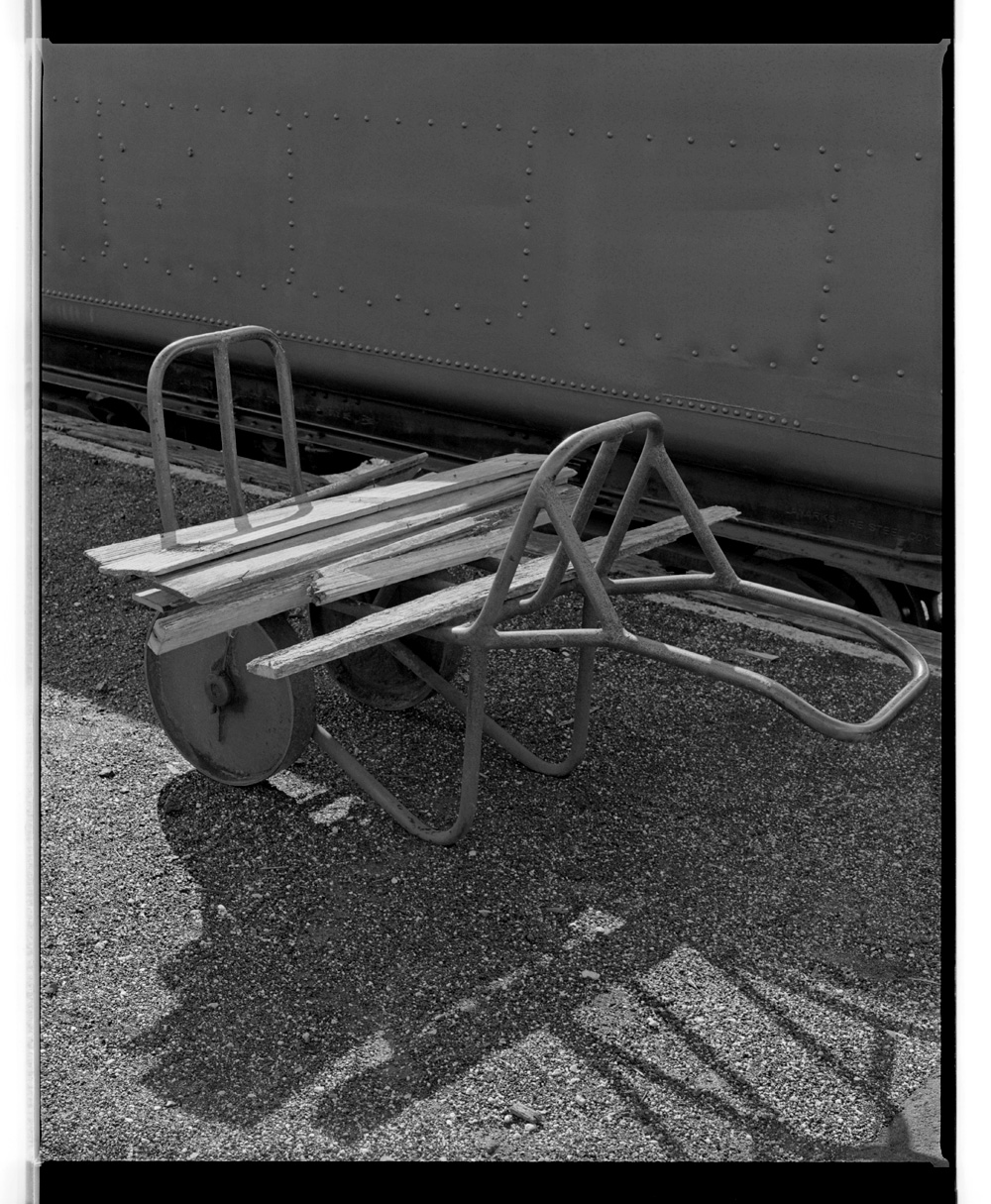
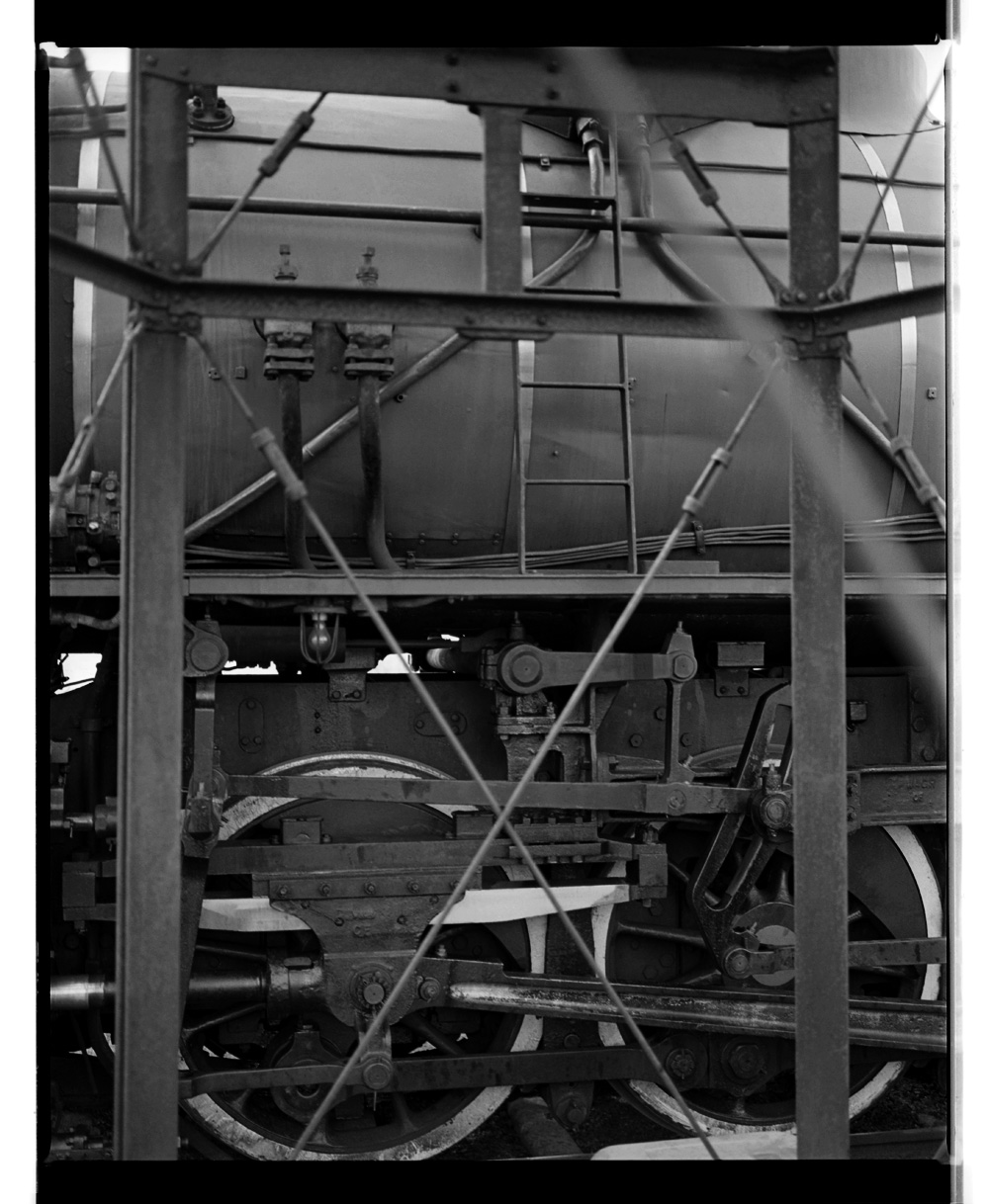
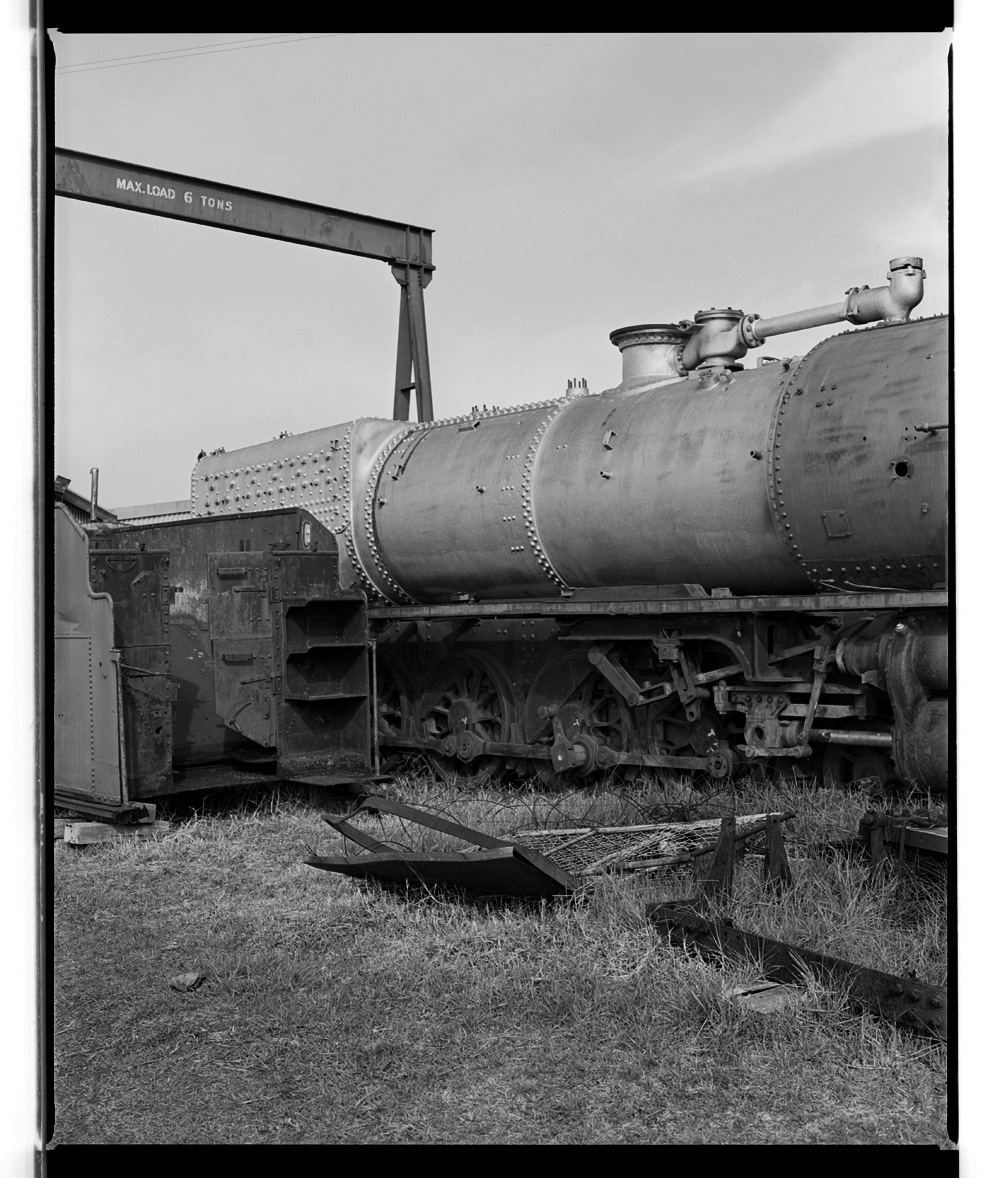
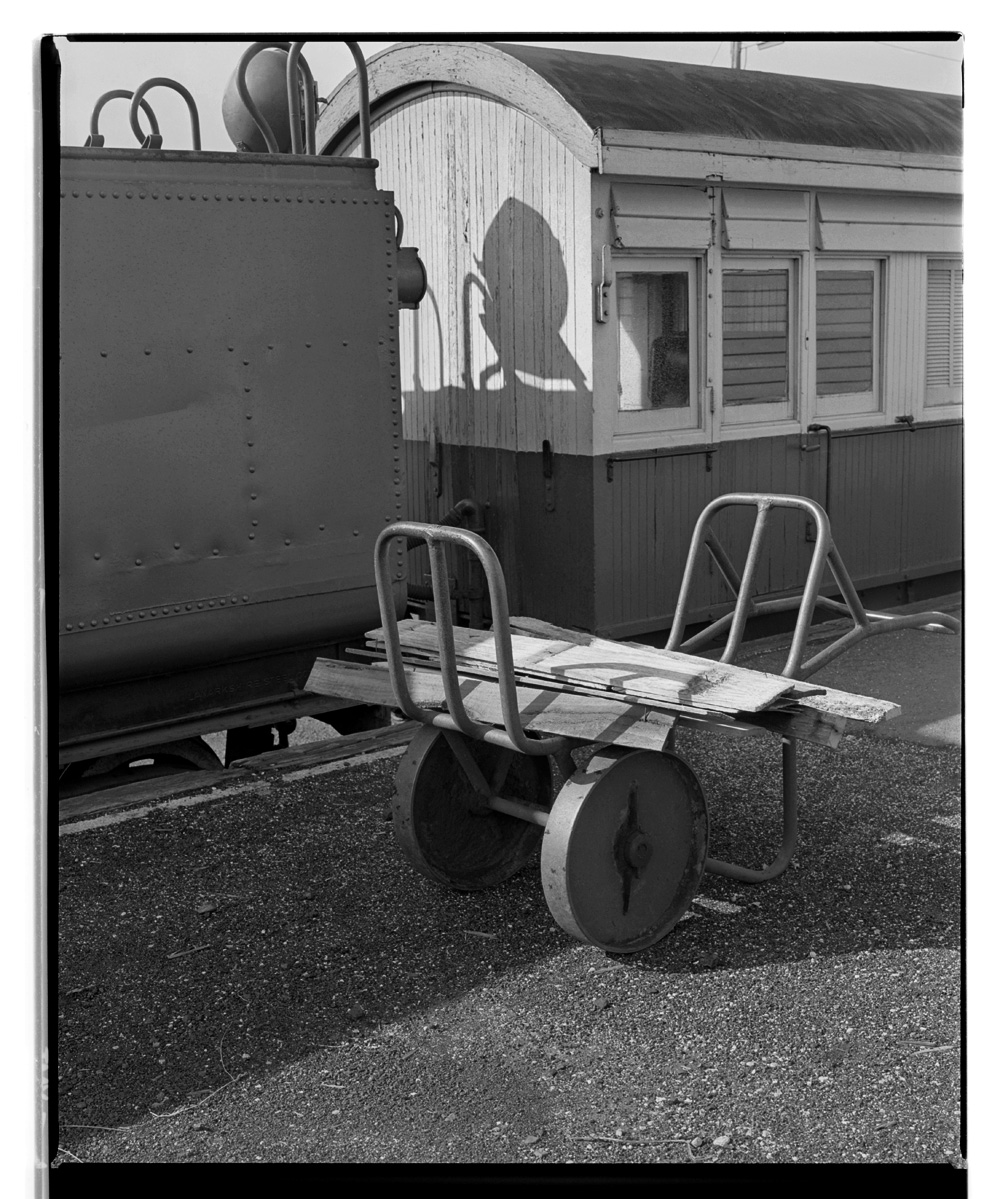
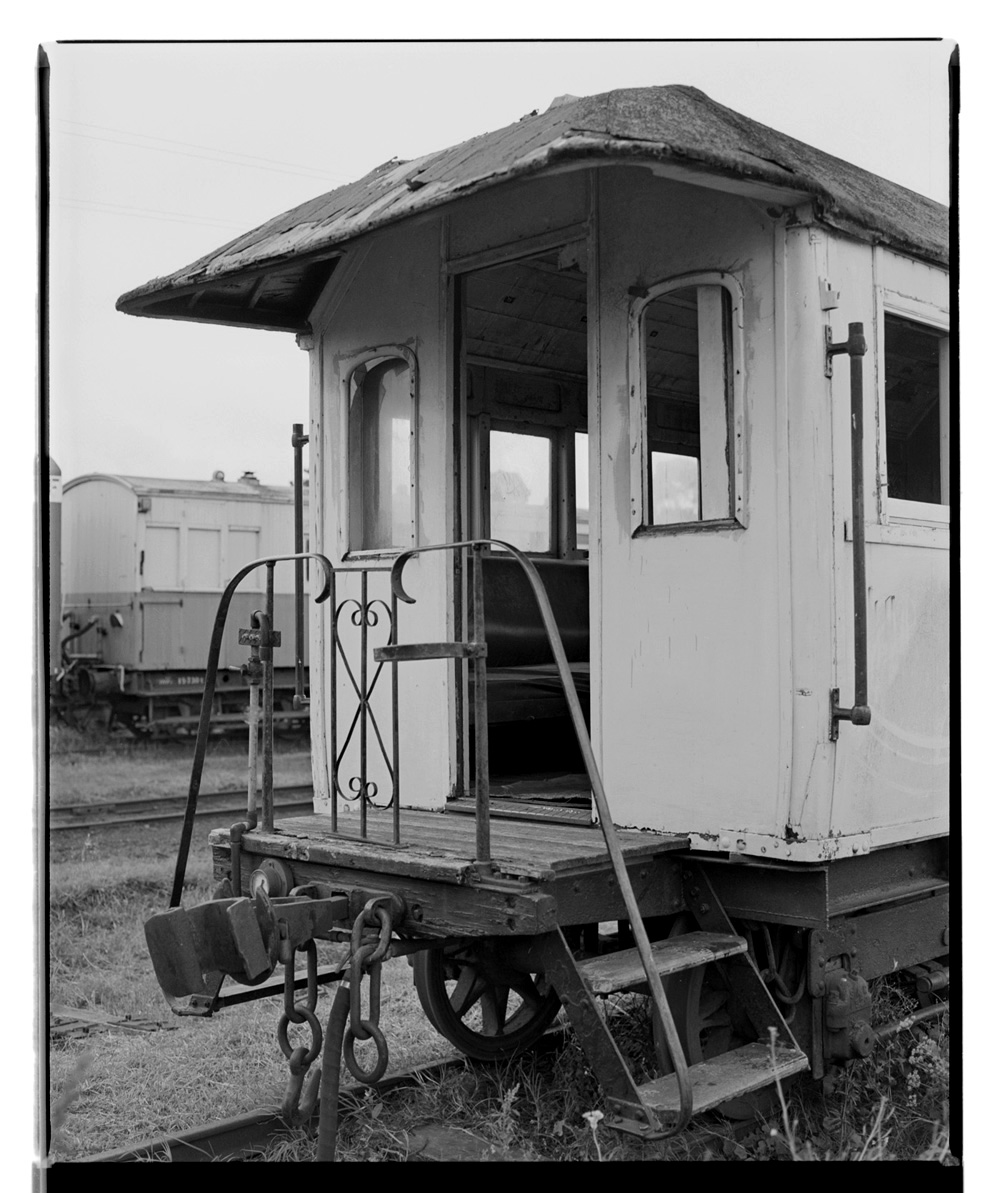
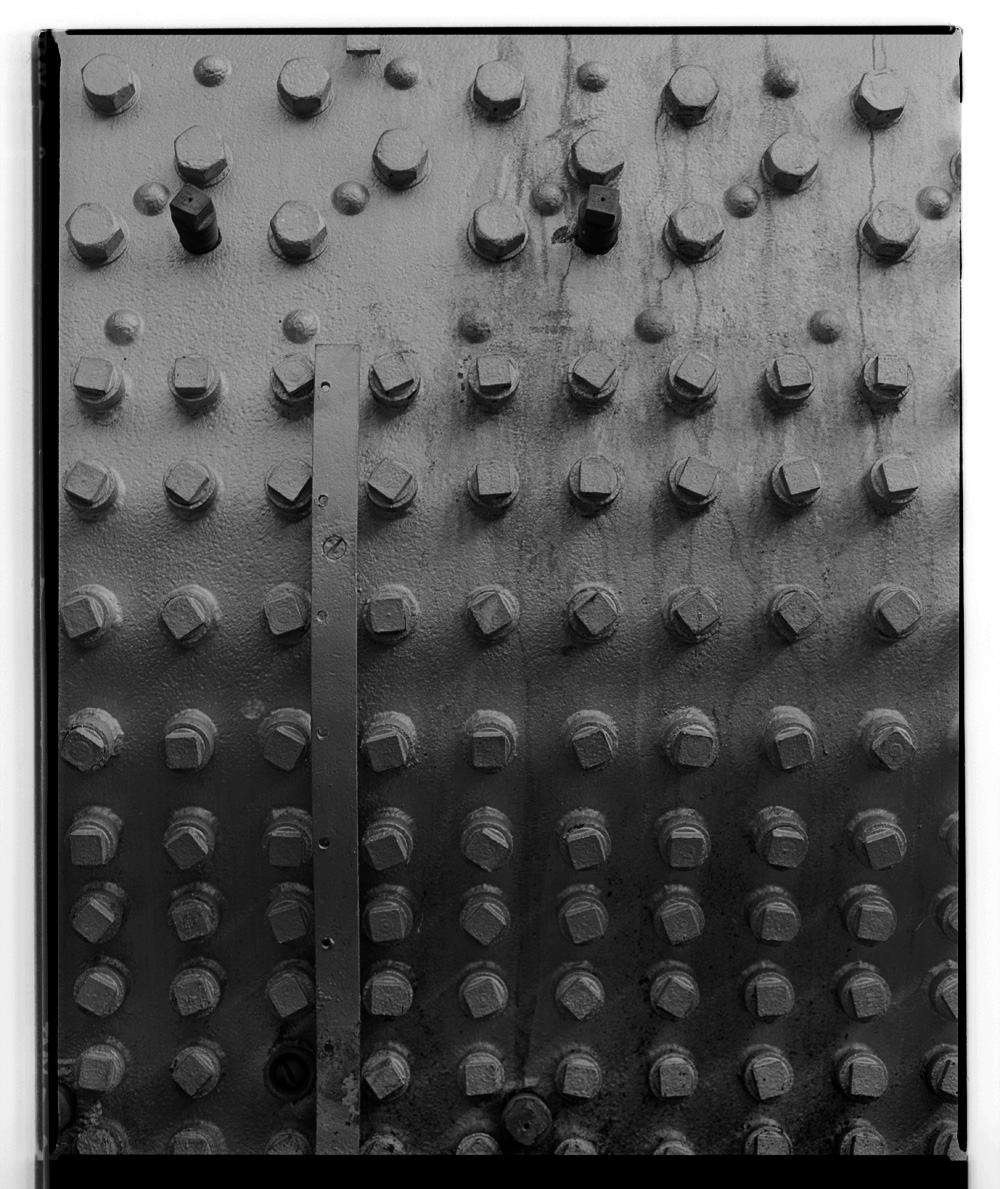
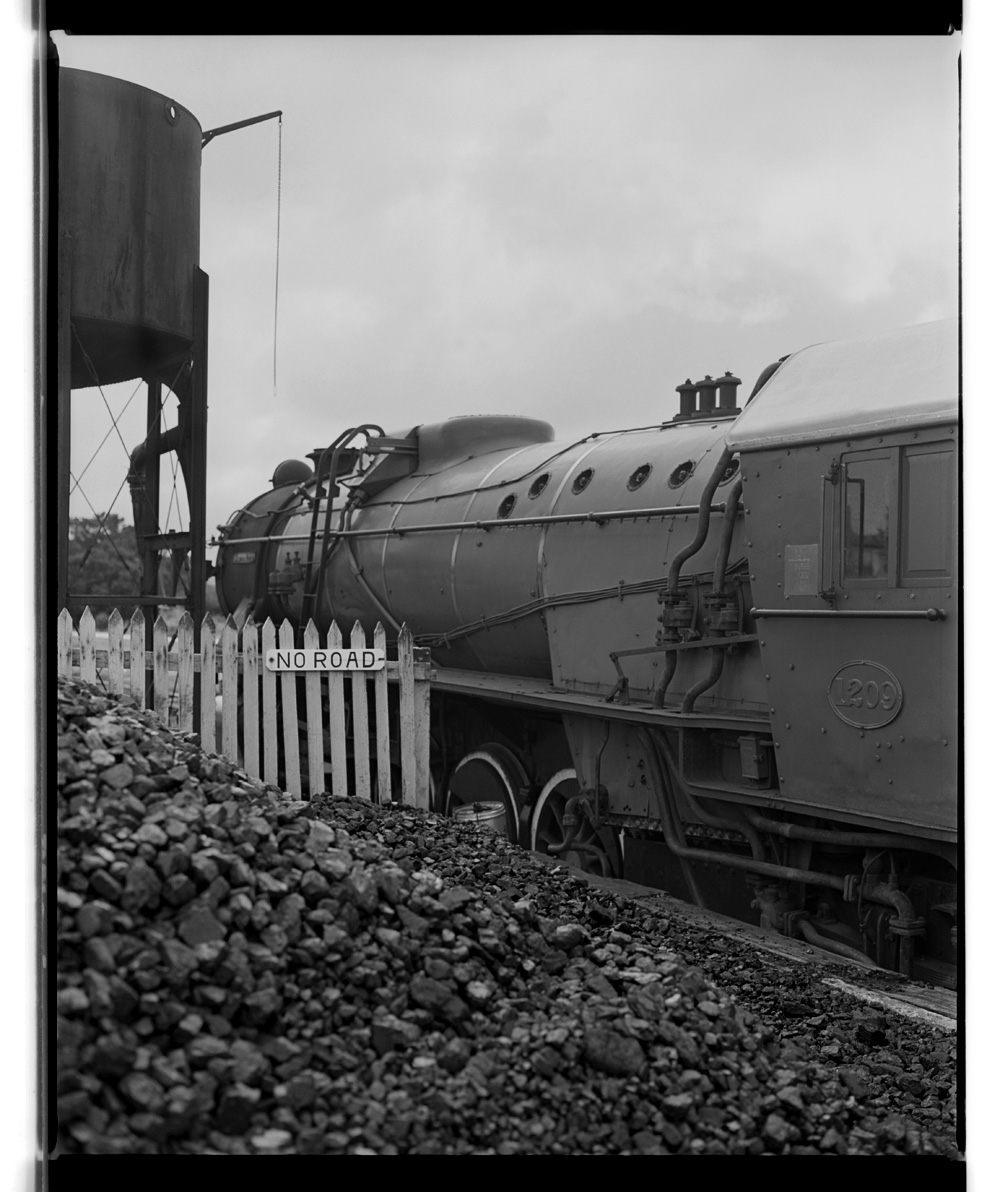
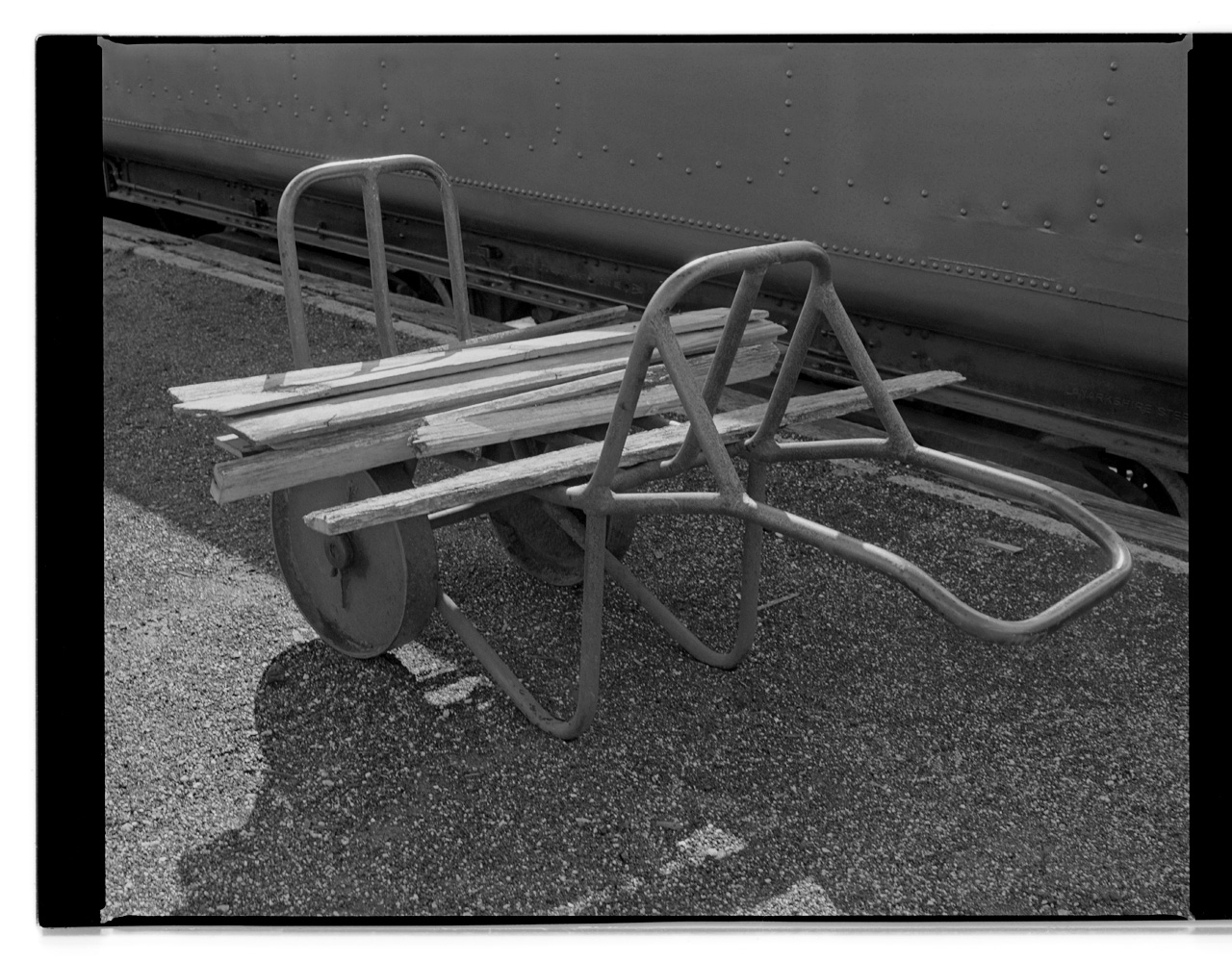
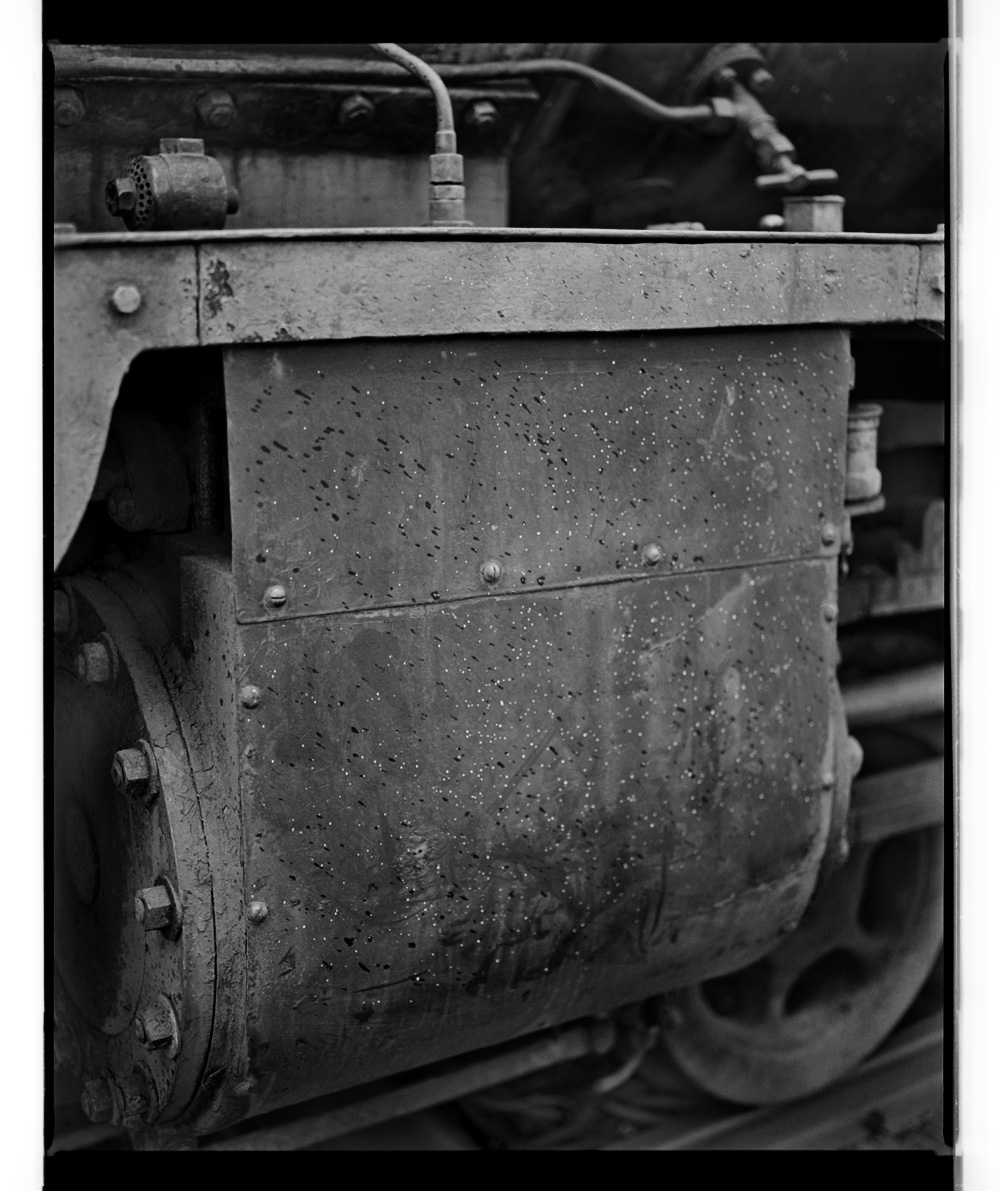
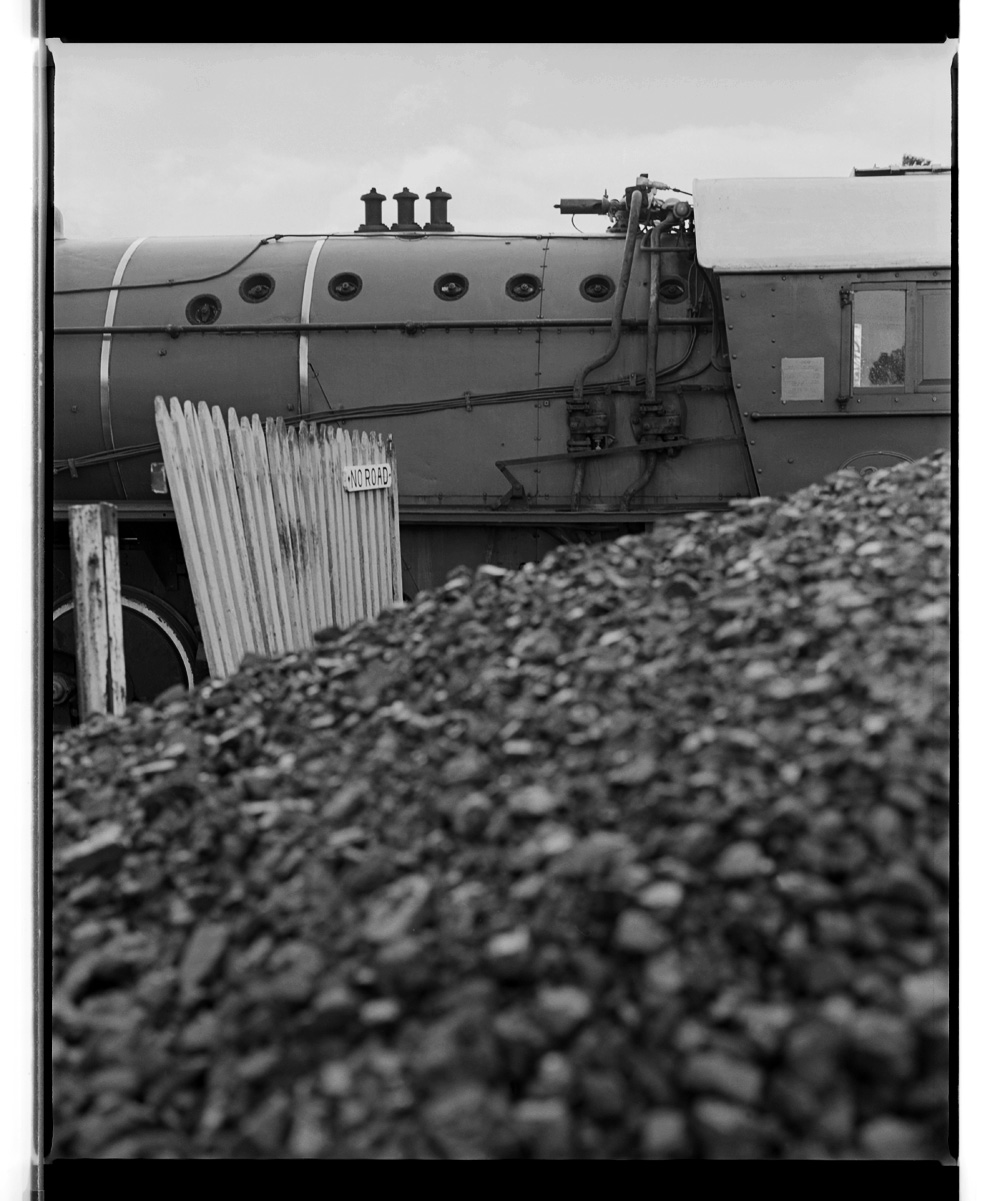
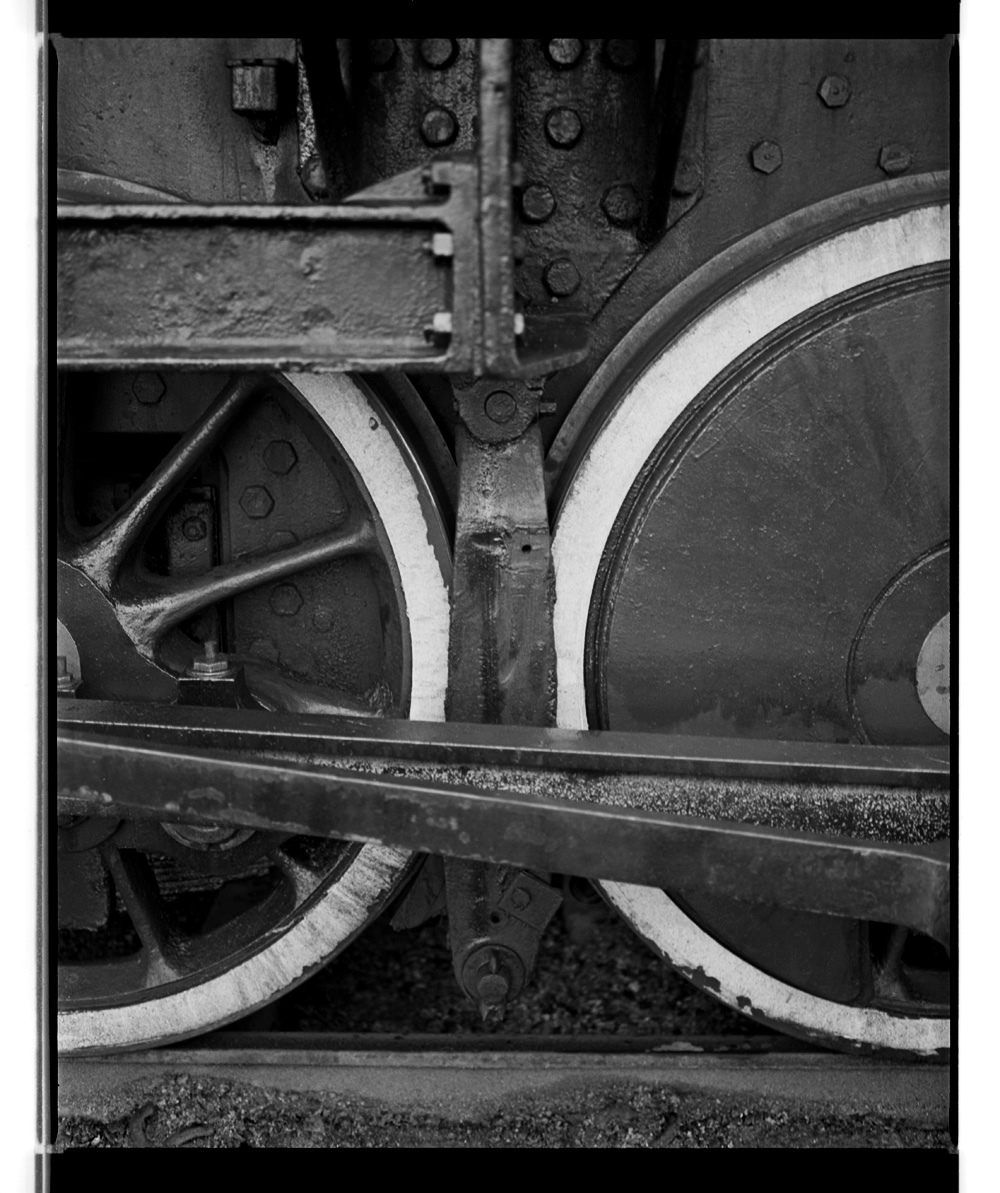
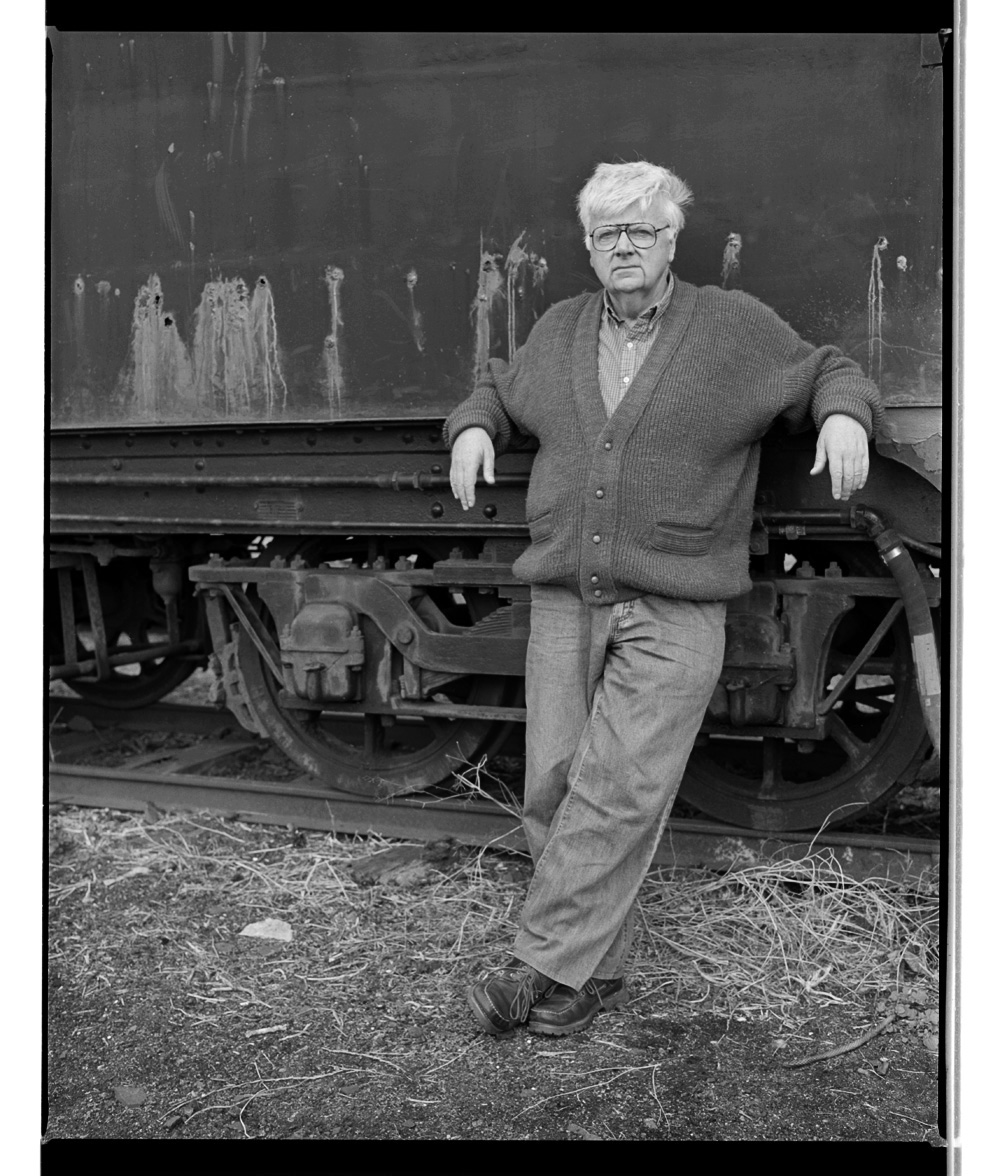
Studies taken at Newport railway workshops, Melbourne in 1994 with my Mamiya RZ67.

I am scanning my negatives made during the years 1991-1997 to preserve them in the form of an online archive as a process of active memory, so that the images are not lost forever. These photographs were images of my life and imagination at the time of their making, the ideas I was thinking about and the people and things that surrounded me.

Please remember these are just straight scans of the prints, all full frame, no cropping!

Dr Marcus Bunyan


All images © Marcus Bunyan. Please click the photographs for a larger version of the image.

Photographs are available from this series for purchase. As a guide, a vintage 8″ x 10″ silver gelatin print costs $700 plus tracked and insured shipping. For more information please see my Store web page.


Marcus Bunyan (Australian, b. 1958) 'Untitled' from the series 'Études' 1994


Marcus Bunyan (Australian, b. 1958)
Untitled
1994
from the series Études
Silver gelatin print


Marcus Bunyan (Australian, b. 1958) 'Untitled' from the series 'Études' 1994


Marcus Bunyan (Australian, b. 1958)
Untitled
1994
from the series Études
Silver gelatin print


Marcus Bunyan (Australian, b. 1958) 'Untitled' from the series 'Études' 1994


Marcus Bunyan (Australian, b. 1958)
Untitled
1994
from the series Études
Silver gelatin print


Marcus Bunyan (Australian, b. 1958) 'Untitled' from the series 'Études' 1994


Marcus Bunyan (Australian, b. 1958)
Untitled
1994
from the series Études
Silver gelatin print


Marcus Bunyan (Australian, b. 1958) 'Untitled' from the series 'Études' 1994


Marcus Bunyan (Australian, b. 1958)
Untitled
1994
from the series Études
Silver gelatin print


Marcus Bunyan (Australian, b. 1958) 'Untitled' from the series 'Études' 1994


Marcus Bunyan (Australian, b. 1958)
Untitled
1994
from the series Études
Silver gelatin print


Marcus Bunyan (Australian, b. 1958) 'Untitled' from the series 'Études' 1994


Marcus Bunyan (Australian, b. 1958)
Untitled
1994
from the series Études
Silver gelatin print


Marcus Bunyan (Australian, b. 1958) 'Untitled' from the series 'Études' 1994


Marcus Bunyan (Australian, b. 1958)
Untitled
1994
from the series Études
Silver gelatin print


Marcus Bunyan (Australian, b. 1958) 'Untitled' from the series 'Études' 1994


Marcus Bunyan (Australian, b. 1958)
Untitled
1994
from the series Études
Silver gelatin print


Marcus Bunyan (Australian, b. 1958) 'Untitled' from the series 'Études' 1994


Marcus Bunyan (Australian, b. 1958)
Untitled
1994
from the series Études
Silver gelatin print


Marcus Bunyan (Australian, b. 1958) 'Untitled' from the series 'Études' 1994


Marcus Bunyan (Australian, b. 1958)
Untitled
1994
from the series Études
Silver gelatin print


Marcus Bunyan (Australian, b. 1958) 'Untitled' from the series 'Études' 1994


Marcus Bunyan (Australian, b. 1958)
Untitled
1994
from the series Études
Silver gelatin print


Marcus Bunyan (Australian, b. 1958) 'Untitled' from the series 'Études' 1994


Marcus Bunyan (Australian, b. 1958)
Untitled
1994
from the series Études
Silver gelatin print


Marcus Bunyan (Australian, b. 1958) 'Untitled' from the series 'Études' 1994


Marcus Bunyan (Australian, b. 1958)
Untitled
1994
from the series Études
Silver gelatin print


Marcus Bunyan (Australian, b. 1958) 'Untitled' from the series 'Études' 1994


Marcus Bunyan (Australian, b. 1958)
Untitled
1994
from the series Études
Silver gelatin print


Marcus Bunyan (Australian, b. 1958) 'Jim Black, artist' from the series 'Études' 1994


Marcus Bunyan (Australian, b. 1958)
Jim Black, artist
1994
from the series Études
Silver gelatin print


Marcus Bunyan black and white archive page

LIKE ART BLART ON FACEBOOK

Back to top

Exhibition: ‘The Sievers Project’ at the Centre for Contemporary Photography (CCP), Fitzroy, Melbourne

Exhibition dates: 13th June – 31st August 2014

Artists: Jane Brown, Cameron Clarke, Zoë Croggon, Therese Keogh, Phuong Ngo, Meredith Turnbull, Wolfgang Sievers

Curators: Naomi Cass and Kyla McFarlane


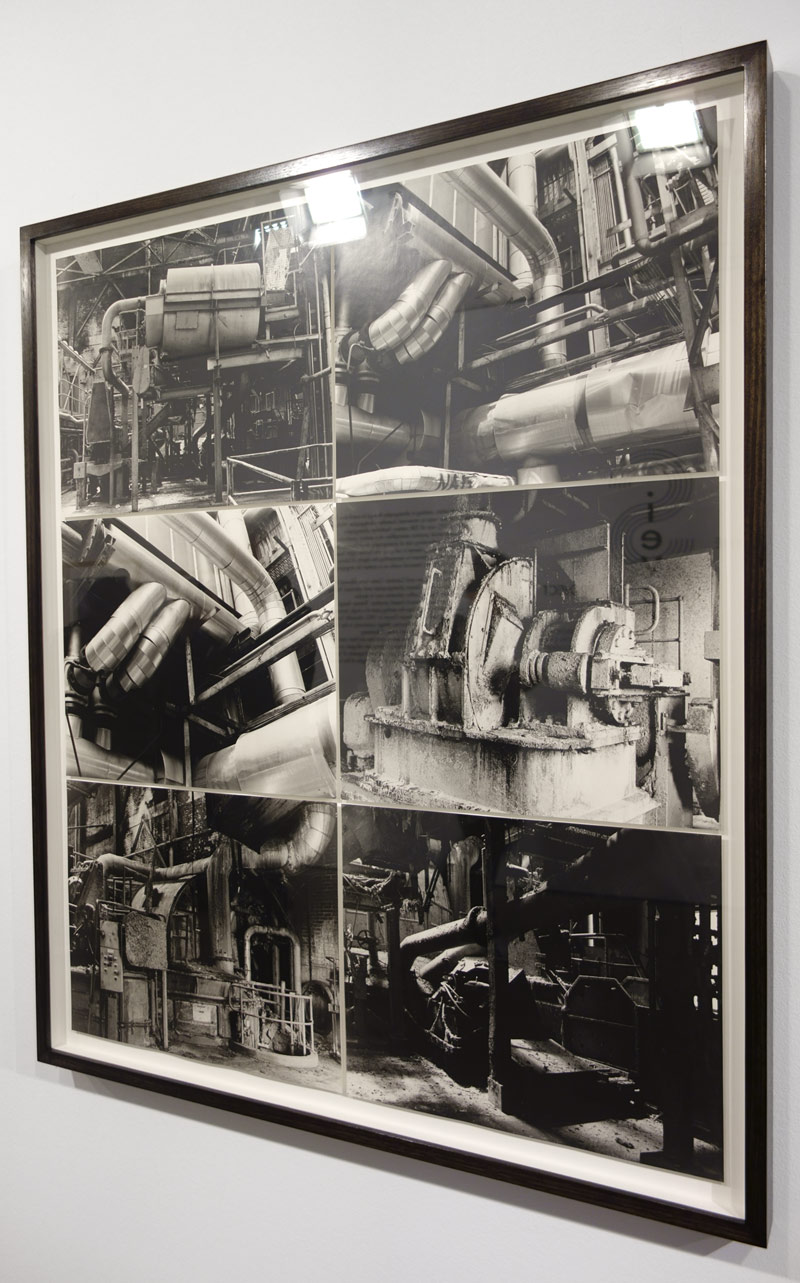
Jane Brown (Australian, b. 1967) 'Triptych. The Paper Mill (former Amcor and APM site), Fairfield' 2014 (installation view)


Jane Brown (Australian, b. 1967)
Triptych. The Paper Mill (former Amcor and APM site), Fairfield
2014
3 panels of 9, 6 and 6 selenium toned, fibre-based, gelatin silver prints


Curated by CCP Director Naomi Cass and Kyla McFarlane, this intelligent exhibition features the work of six early career artists who respond in diverse ways to renowned Australian photographer Wolfgang Sievers (1913-2007). It was a joy to see again the large vintage silver gelatin, almost clinically composed photographs by Sievers. The light, tonality and stillness of the images make them seem mythic, modern and monumental.

Each artist offers a unique “take” on Sievers influence on Australian photography and design, including his interest in refugees and human rights issues and the representation of the dignity of labour (although the machine is more often represented in Sievers work with a distinct lack of human presence and the act of work itself).

My personal favourites were Phuong Ngo’s intimate silver gelatin photographs in four groups of sweat shop workers in Vietnam, people on boats coming to Australia, photographs of textile workers in Australia and photographs of his mother. Phuong Ngo’s shared stories of young Vietnamese refugees and the journeys taken by their mothers told through photographs is very moving, but only after you are told what the four bodies of images are about. Positioned in the small Gallery Four it was also difficult to associate this installation with the rest of the exhibition. Initially I thought it was a separate exhibition until the linkages were told, the light dawned, and the connections were made.

While Cameron Clarke’s photographs of Ford factory workers and machinery are meticulously lit and digitally observed, producing a strong body of work, it is Jane Brown’s gridded analogue triptych which steals the show (see photographs above and below). These are superbly rich and textured photographs, beautifully seen and resolved within the shifting mise-en-scène. Brown’s images kinetically flow from one image to another even as they are self contained within a modernist grid. In some instances the artist has used the same photograph within the triptych but cropped in a different manner, which pushes and pulls the viewer into a different perspective on the subject matter. This is highly intelligent art making that observes the self contained nature and monumentality of Sievers work and reworks it, lucidly commenting on the dis/integration of these spaces and industries in the present day.

This series of work is the best sequence of photographs I have seen this year and any institution worthy of their salt should snap up these works for their collection.

Dr Marcus Bunyan


Many thankx to the Director Naomi Cass and the CCP for allowing me to publish the text and photographs in the posting. Please click on the photographs for a larger version of the image. All installation photographs © Marcus Bunyan 2014


Installation photographs of Jane Brown's 'Triptych. The Paper Mill (former Amcor and APM site), Fairfield' 2014 (installation view details) at the exhibition 'The Sievers Project' at the Centre for Contemporary Photography (CCP)

Installation photographs of Jane Brown's 'Triptych. The Paper Mill (former Amcor and APM site), Fairfield' 2014 (installation view details) at the exhibition 'The Sievers Project' at the Centre for Contemporary Photography (CCP)

Installation photographs of Jane Brown's 'Triptych. The Paper Mill (former Amcor and APM site), Fairfield' 2014 (installation view details) at the exhibition 'The Sievers Project' at the Centre for Contemporary Photography (CCP)

Installation photographs of Jane Brown's 'Triptych. The Paper Mill (former Amcor and APM site), Fairfield' 2014 (installation view details) at the exhibition 'The Sievers Project' at the Centre for Contemporary Photography (CCP)


Installation photographs of Jane Brown Triptych. The Paper Mill (former Amcor and APM site), Fairfield 2014 (details) at the exhibition The Sievers Project at the Centre for Contemporary Photography (CCP)


Jane Brown (Australian, b. 1967) 'Staircase. The Paper Mill (former Amcor and APM site), Fairfield, 2014' 2014


Jane Brown (Australian, b. 1967)
Staircase. The Paper Mill (former Amcor and APM site), Fairfield, 2014
2014
Fibre-based, gelatin silver print


Jane Brown (Australian, b. 1967) 'Mining machinery, Line of Lode Miners Memorial Complex, Broken Hill 2014-06-10' 2014


Jane Brown (Australian, b. 1967)
Mining machinery, Line of Lode Miners Memorial Complex, Broken Hill 2014-06-10
2014
Brown toned, fibre-based, gelatin silver print
Courtesy the artist


Installation photograph of Jane Brown's work at the exhibition 'The Sievers Project' at the Centre for Contemporary Photography (CCP)


Installation photograph of Jane Brown’s work at the exhibition The Sievers Project at the Centre for Contemporary Photography (CCP)


Wolfgang Sievers (Australian born Germany, 1913-2007) 'Gears for the Mining Industry, Vickers Ruwolt, Burnley, Victoria, 1967' 1967


Wolfgang Sievers (Australian born Germany, 1913-2007)
Gears for the Mining Industry, Vickers Ruwolt, Burnley, Victoria, 1967
1967
Gelatin silver photograph
49.6 x 39.3cm
National Library of Australia, Wolfgang Sievers Photographic Archive


Wolfgang Sievers (Australian born Germany, 1913-2007) 'Sulphuric Acid Plant Electrolytic Zinc, Risoon, Tasmania, 1959' 1959


Wolfgang Sievers (Australian born Germany, 1913-2007)
Sulphuric Acid Plant Electrolytic Zinc, Risoon, Tasmania, 1959
1959
Gelatin silver photograph


Installation photograph of the work of Meredith Turnbull (foreground) and Zoë Croggon (rear wall) at the exhibition The Sievers Project at the Centre for Contemporary Photography (CCP)


Installation photograph of the work of Meredith Turnbull (foreground) and Zoë Croggon (rear wall) at the exhibition The Sievers Project at the Centre for Contemporary Photography (CCP)


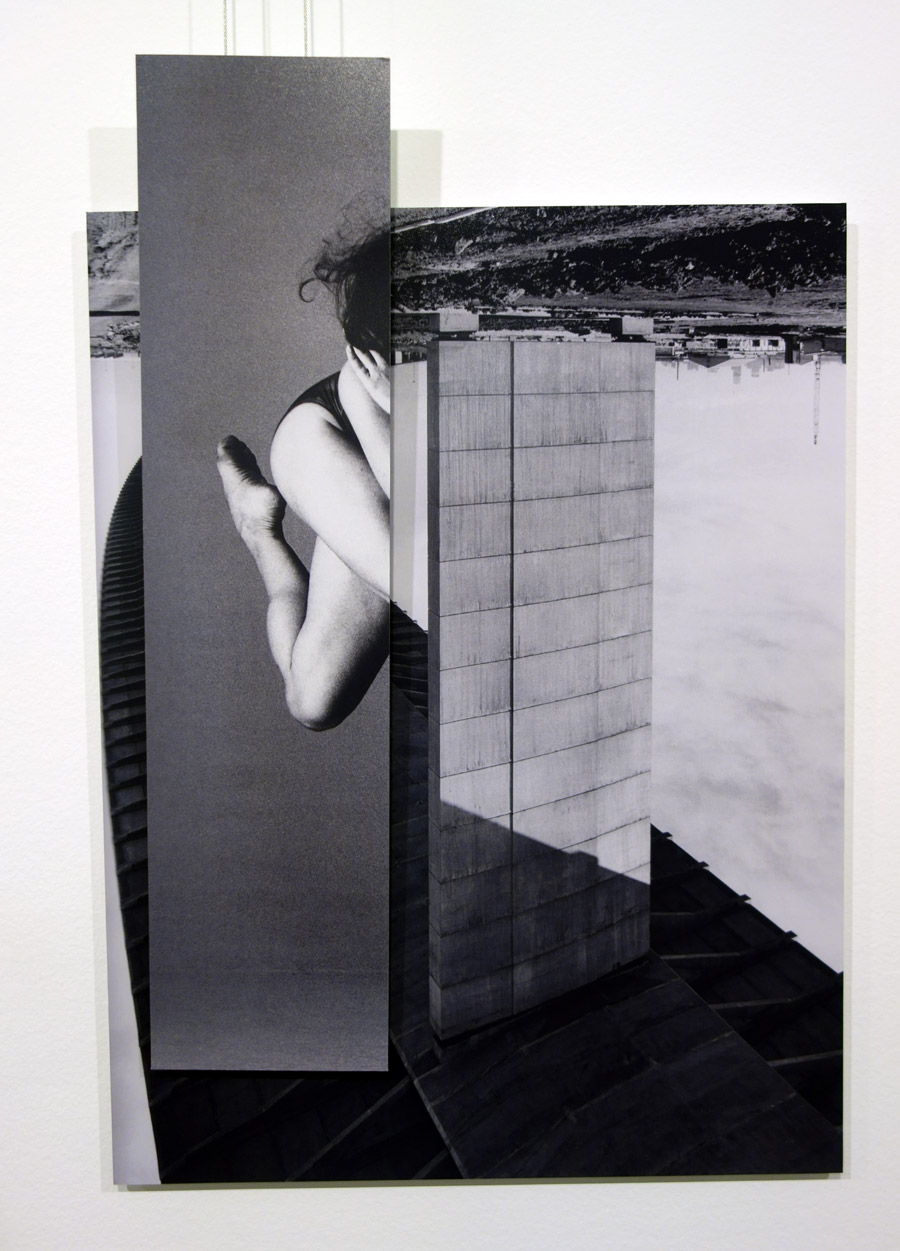
Zoë Croggon (Australian, b. 1989) 'John Holland Constructions, Ginninderra Bridge (after Wolfgang Sievers)' 2014


Zoë Croggon (Australian, b. 1989)
John Holland Constructions, Ginninderra Bridge (after Wolfgang Sievers)
2014
Photocollage
70 cm x 86cm
Courtesy the artist and Daine Singer, Melbourne


Zoë Croggon (Australian, b. 1989) 'Comalco Aluminium Used in the Construction of the National Gallery of Victoria [7] (after Wolfgang Sievers)' 2014


Zoë Croggon (Australian, b. 1989)
Comalco Aluminium Used in the Construction of the National Gallery of Victoria [7] (after Wolfgang Sievers)
2014
Photocollage
Courtesy the artist and Daine Singer, Melbourne


Zoë Croggon (Australian, b. 1989) 'Comalco Aluminium Used in the Construction of the National Gallery of Victoria [18] (after Wolfgang Sievers)' 2014


Zoë Croggon (Australian, b. 1989)
Comalco Aluminium Used in the Construction of the National Gallery of Victoria [18] (after Wolfgang Sievers)
2014
Photocollage
Courtesy the artist and Daine Singer, Melbourne


Zoë Croggon (Australian, b. 1989) 'Westgate Bridge (after Wolfgang Sievers)' 2014


Zoë Croggon (Australian, b. 1989)
Westgate Bridge (after Wolfgang Sievers)
2014
Photocollage
Courtesy the artist and Daine Singer, Melbourne


“Six early career artists, working in photography through to installation, have responded in diverse ways to renowned Australian photographer Wolfgang Sievers (1913-2007), icon of 20th century Australian photography. Sievers’ commercial practice exemplifies mid-century positivism and modernity, and the myth-making role of photography. As a German Jewish immigrant, he had a strong interest in refugees and human rights issues as well as an expressed commitment to representing the dignity of labour. The Sievers Project presents key historical works as a context for engaging the past through the present.

Photographers Jane Brown and Cameron Clarke have followed in his footsteps to industrial clients Sievers photographed and valorised, finding sites that are visually dynamic within industries now in decline. Through her intrepid, research-based practice, Therese Keogh has developed a materially-rich work from the starting point of a single, anomalous photograph Sievers took at the Roman Forum in 1953. Meredith Turnbull draws on his connections with Melbourne’s design community in the 1950s and 60s, including Gerard Herbst and Frederick Romberg. In Sievers’ photographs of industrial sewing machines and their machinists, Phuong Ngo finds shared stories of young Vietnamese refugees and the journeys taken by their mothers. Zoë Croggon positions fragments of Sievers’ iconic architectural photographs against found photographs of the human body in movement.”

Text from the CCP website


Foreword to the catalogue

The Sievers Project follows a number of exhibitions over the last five years where CCP has opened up a vista on contemporary practice by exhibiting early work by living artists such as Bill Henson, Kohei Yoshiyuki and Robert Rooney, as well as historical photography, alongside contemporary work. As a commissioning exhibition we have titled this a ‘project’ to point towards the year-long research period integral to the exhibition, capturing the curatorial gesture of inviting early career artists to engage with the past.

The Sievers Project represents a significant curatorial endeavour for CCP, the tale of which is recounted in the Introduction. It would simply not have taken place were it not for the willingness and generosity of Julian Burnside AO QC to participate, through allowing the artists research access to his Wolfgang Sievers collection and lending work from it for the exhibition, as well as contributing an essay for this catalogue.

I acknowledge the artists for setting out on this project and for returning with thoughtful and excellent work. It has been a pleasure to both engage with and exhibit the work of Jane Brown, Cameron Clarke, Zoë Croggon, Therese Keogh, Phuong Ngo and Meredith Turnbull.

The Sievers Project has been dignified by contributions by a number of experts and I wish to acknowledge Professor Helen Ennis, Australian National University School of Art who has also contributed a catalogue essay; Madeleine Say, Picture Librarian, Eve Sainsbury, Exhibitions Curator and Clare Williamson, Senior Exhibitions Curator, State Library of Victoria; Maggie Finch, Curator of Photography, National Gallery of Victoria and Professor Harriet Edquist and Kaye Ashton, Senior Coordinator, RMIT Design Archives, who all took time to speak about Sievers and share his work with the artists.

Opportunities to commission artists are relatively rare and funding through the inaugural Early Career Artist Commissions Grant from the Australia Council has enabled the project. CCP is pleased to acknowledge this recognition and support. We are delighted that Lovell Chen Architects & Heritage Consultants have provided further critical support to realise the project, for which we are grateful. We see a germane link between Lovell Chen and the premise of The Sievers Project.

The Besen Family Foundation are champions for enabling CCP to produce catalogues for selected exhibitions. I acknowledge the Foundation for their long-standing and generous engagement with CCP. We thank the National Library of Australia for providing permission to reproduce Sievers’ work in this catalogue.

The Sievers Project has provided a welcome opportunity for CCP to engage with colleagues in the fi eld of architecture and we are delighted to acknowledge a partnership with the Robin Boyd Foundation to present public programs. We are grateful to Tony Lee from the Foundation for his interest in the project.

Without doubt CCP’s ability to both present contemporary art well and look after artists is greatly enhanced through the longstanding and generous support of Tint Design and Sofi tel Melbourne on Collins. CCP is pleased to present a parallel exhibition of The Sievers Project at the 2014 Melbourne Art Fair and we thank the Melbourne Art Foundation for enabling CCP to bring the exhibition to broad new audiences. For the Art Fair exhibition we are also indebted to Christine Downer, previous CCP Board member and current supporter, for the loan of a major Sievers work.

The Sievers Project has been ably assisted by Philippa Brumby, curatorial intern. Co-curator Dr Kyla McFarlane and I thank Philippa for her wide-ranging skills over a substantial period of time. Lastly, I acknowledge Kyla for her excellent curatorial work and for the pleasure of collaborating with such a playful, dedicated and steely intellect.

Naomi Cass, Director, CCP


And what about his Legacy?

A response to this necessarily combines elements of certitude and speculation. Sievers himself was totally committed to ensuring his legacy as a photographer. He spent years meticulously cataloguing and documenting his work and was assiduous in placing as much of it as he could in major photography collections around the country – art galleries and libraries. The bulk of his archive, a staggering 65,000 negatives and prints, was acquired by the National Library where it has been digitised and is available online to users in perpetuity. But there is another aspect to his preoccupation with legacy that has troubled me over the years – his desire to control the readings of his work, to ensure that he ‘owned’ the contextualisation and interpretation of it. As I see it, some of the framing narratives he constructed were retrospective and are misleading because they are not borne out by the evidence, that is, by the photographs themselves. This is especially apparent in his insistence that the relationship between ‘man and machine’ was central to his industrial photography. In my assessment of his enormous archive, images that extol this interaction are actually relatively few in number. They are outweighed by thousands and thousands of other industrial scenes in which the worker is locked into the dreary, repetitive tasks associated with mass production, or is not present at all having been displaced by machines that are far more efficient than humans will ever be. In other words, the bulk of Sievers’ own photographs contradict his central tenet of the dignity of labour in the modern machine era. The most important aspect of his legacy is undoubtedly his photographs and the astonishingly vast, high quality body of architectural and industrial work he produced between 1938 and the early 1970s. My view is that his black and white photography is the best although he did not agree with me, arguing that his colour photography, with its expressive and dramatic qualities, was equally fine. For me, it is his black and white images that are visionary, their precision, clarity and drama embodying the belief in progress that underpinned modernity. I would also suggest Sievers’ legacy isn’t confined to his photography. As a man he cared deeply about the world and wanted it to be better. He was closely involved in the restoration of Karl Friedrich Schinkel’s buildings in Berlin in the 1990s and in the re-evaluation of his own father’s reputation (Professor Johannes Sievers was an expert on Schinkel and had used his young son’s photographs in his books on the architect in the 1930s). Wolfgang donated his photographs to fund-raising campaigns for human rights and remained a passionate antiwar activist until his death.

What would he have thought about this project?

I suspect that he would have been thrilled to know that his contribution to Australian life and photography is the touchstone for the six photographers involved in the project and that his work continues to be appreciated.

Professor Helen Ennis is Director of the Centre for Art History and Art Theory at ANU School of Art, Canberra.


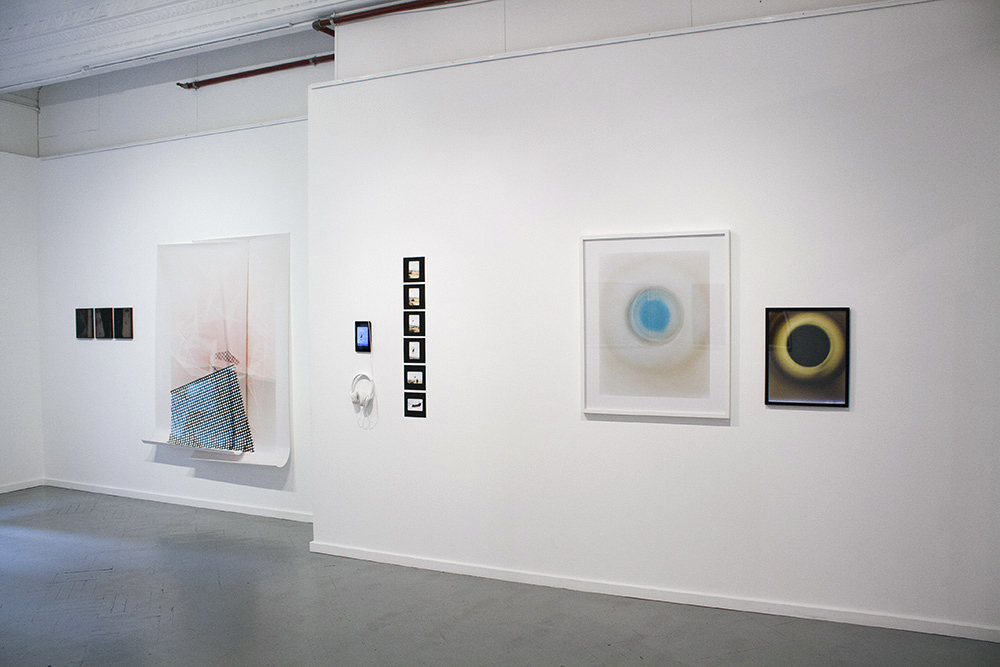
Installation photographs of the exhibition 'The Sievers Project' at the Centre for Contemporary Photography (CCP)

Installation photographs of the exhibition 'The Sievers Project' at the Centre for Contemporary Photography (CCP)

Installation photographs of the exhibition 'The Sievers Project' at the Centre for Contemporary Photography (CCP)

Installation photographs of the exhibition 'The Sievers Project' at the Centre for Contemporary Photography (CCP)

Installation photographs of the exhibition 'The Sievers Project' at the Centre for Contemporary Photography (CCP)


Installation photographs of the exhibition The Sievers Project at the Centre for Contemporary Photography (CCP)


Installation photograph of the work of Therese Keogh (detail) in the exhibition 'The Sievers Project' at the Centre for Contemporary Photography (CCP)


Installation photograph of the work of Therese Keogh (detail) in the exhibition The Sievers Project at the Centre for Contemporary Photography (CCP)


Installation photograph of the work of Meredith Turnbull (detail) in the exhibition 'The Sievers Project' at the Centre for Contemporary Photography (CCP)


Installation photograph of the work of Meredith Turnbull (detail) in the exhibition The Sievers Project at the Centre for Contemporary Photography (CCP)


Therese Keogh. 'In the Forum Romanum (after Sievers)' 2013 (installation view)


Therese Keogh
In the Forum Romanum (after Sievers) (installation view)
2013
Graphite on paper
Courtesy the artist


Cameron Clarke. 'Loui Nedeski, Ford Motor Company, Geelong' 2014


Cameron Clarke
Loui Nedeski, Ford Motor Company, Geelong
2014
Archival inkjet print
50 x 63 cm
Courtesy the artist


Cameron Clarke. 'Küsters Washer, Bruck Textiles, Wangaratta' 2014


Cameron Clarke
Küsters Washer, Bruck Textiles, Wangaratta (detail)
2014
Archival inkjet print


Cameron Clarke. 'Theis Dye Jets, Bruck Textiles, Wangaratta' 2014


Cameron Clarke
Theis Dye Jets, Bruck Textiles, Wangaratta (detail)
2014
Archival inkjet print


Phuong Ngo (Australian, b. 1983) 'Untitled' 2014


Phuong Ngo (Australian, b. 1983)
Untitled
2014
from the Mother Vietnam series
Inkjet print
Courtesy the artist


Centre for Contemporary Photography

No permanent exhibition space at the moment

Centre for Contemporary Photography website

LIKE ART BLART ON FACEBOOK

Back to top

Catalogue essay: ‘Being (t)here: Gay liberation photography in Australia 1971-73’ from the exhibition ‘Out of the closets, onto the streets’

Exhibition dates: Tuesday 22nd July – Saturday 26th July, 2014

Artists represented: Philip Potter, John Storey, John Englart, Barbara Creed, Ponch Hawkes, Rennie Ellis

Curators: Dr Marcus Bunyan and Nicholas Henderson


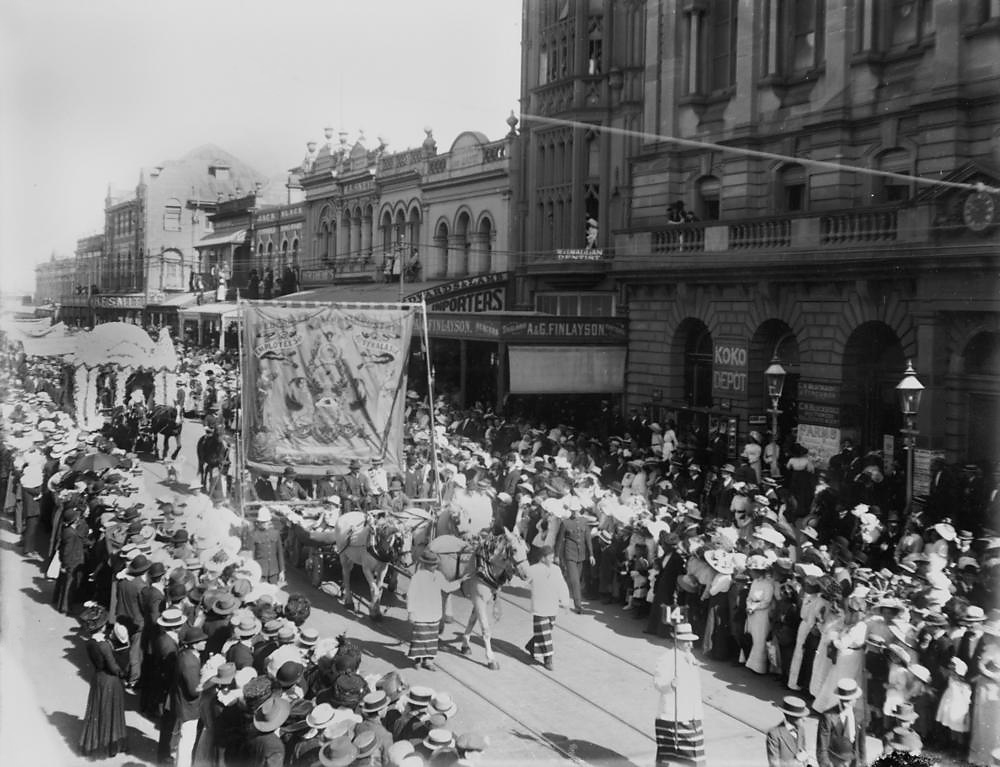
Photographer unknown. 'The original eight hour day banner' 1856


Figure 1
Photographer unknown
The original eight hour day banner
1856


This is my catalogue essay that accompanies the exhibition Out of the closets, into the streets: gay liberation photography 1971-73 at Edmund Pearce Gallery, Melbourne. It’s a bit of a read (3,000 words) but stick with it. I hope you like the insights into the background of the images and the people in the exhibition.

Dr Marcus Bunyan


Many thankx to all the artists for allowing me to publish the photographs in the posting. Please click on the photographs for a larger version of the image. Download the Being (t)here catalogue essay (2.2Mb pdf)


Being (t)here: Gay liberation photography in Australia 1971-73


“For the colour and the soundtrack to be part of the politics, even a central part of the politics… meant something new by way of embodiment. Much of the political action was about being there, about putting one’s body on the line. A demonstration, sit-in or blockade is centrally about occupying space. A nonviolent movement tried to occupy space with bodies, not bullets.

It was a key feature of the new left that this embodied politics couldn’t stop in the streets: that is, the public arena as conventionally understood. ‘Being there’ politically also applied to households, classrooms, sexual relations, workplaces and the natural environment.”1


I came out as a gay man in 1975, six years after Stonewall and only a few short years after the photographs in this exhibition were taken. The first open acknowledgement of my nascent sexuality was to walk into a newsagent in Notting Hill Gate, London, head down, red as a beetroot and pick up a copy of Gay Times. I literally flung the money at the person behind the counter and ran out. I was so embarrassed. I was seventeen.

From the gay rag I found the name of the local convenor of the Campaign for Homosexual Equality (CHE) and went to meet him at his home. John was the very first openly gay man that I had ever met. We became lifelong friends. He used to hold coffee evenings a couple of times a week in his flat so that the local gay men had somewhere safe and secure to meet – to chat and laugh, to talk about love and life. Once a month there was a pub that we all went to in the country for a bit of a dance night, but that was it unless you went up to London to a nightclub.

None of us were very active politically, although we kept an eye on the papers and we all understood the discrimination and persecution we faced. But by the very act of being openly gay, as most of us were, we were making a political statement. I was openly gay at college in London and stopped “passing” as something I was not (a straight man) by coming out to my family and friends. I placed my being – there, there and there, in different contexts, so that my family, friends and the community could not ignore my sexuality. I never lived in fear but there was a great deal of self-loathing going on behind the scenes. In those days you were always thought of as “abnormal” and defective if you were a poofter. And there was the guilt of that association. As James Nichols observes, “To be gay or lesbian meant belonging to a genealogy of suffering, to have a dramatic, if not a tragic, destiny. Despite the many battles and certain victories that ensued, the homosexual remained a victim in the collective consciousness; a hidden man.”2  William Leonard continues the theme: “If concealment is a psychic wounding that divides each gay man against himself, it is also a collective division that precludes the forms of public association and political affiliation on which gay liberation depends. As gay men confront their own internalised feelings of self-recrimination, if not disgust, they begin to rattle the closet door and seek out, in public, others of their own kind.”3 And rattle the closet door I did. I flaunted my hi-vis identity for all to see. If the liberation movement meant putting your body on the line – not so much by consciously protesting on the streets but by being visible in whatever setting as a gay man – then I certainly did that.

Photography documented this Gay Liberation thing, the emergence in public and private of gay people. It not only documented this visibility but also represented it in very aesthetic and artistic ways that up until now have not really been recognised as such. This is where the photographs in this exhibition make their presence known. As gay people found their voice in the early 1970s artists, often at the very beginning of their careers, were there to capture meetings in lounge rooms, consciousness raising groups and street protests. The photographer as artist was not just a witness to these events but actively participated in these actions, which they envisioned in a subjective way. Unlike earlier images of protest marches where there is an observational distance between the photographer / event which allowed for the depiction of environment and numbers (for example in the 8 hour day marches, see figures 1-4) – from the mid-1960s onwards there is a seismic shift in how photographs represent social change and observed history. Now the photographer marches with the inmates and becomes an intimate participant in the proceedings (see figures 5-6).

In this revolutionary era, the artist evidences an empathy with the events being photographed, an up close and personal point of view. Whatever meeting or protest they were there to record was important to them, be it anti-Vietnam war, anti-Apartheid, pro abortion, nuclear disarmament, Gay Liberation, Women’s Liberation, Aboriginal rights, anti-fascist marches and student protests from around the world. And it didn’t matter whether the photographers were gay, straight or whatever. People appropriated public and private space as a form of collective activism, using social movement cultures to re-make the world. The ways of imagining life and transformation, of imaging life and transformation were enabled by the photographer actively participating in these events. The photographer’s “second sight” did not consist in “seeing” but in being there.

As Professor Barbara Creed states of her interest in artistically documenting these actions, “I was very keen on the slogan – ‘The personal is political’. I was in favour of political action of all kinds – direct action, demonstrations, marches, meetings, consciousness raising groups, media publicity, television appearances, coming out at work, talks to schools etc. I was also very interested in the possibility of using artistic practices (film, photography, poetry, fiction, art) to build solidarity among gay people and to help change public opinion.”4

While “the early demonstrations illustrated in this exhibition did often include sympathetic “straights” – a term that seems to have disappeared from the language – for whom gay liberation was part of a wider set of cultural issues,”5 for gay men pictured in the photographs these meetings and marches could be seen as a form of “coming out”, or a place to find solidarity, friendship or sex.6 Gay Pride Week in 1973, for example, was seen as a chance to target, “all the institutions of our oppression: the police courts, job discrimination, the bigoted churchmen and politicians, the media, the psychiatrists, the aversion therapists, the military, the schools, the universities, the work-places … It will also seek to change the mind of the prejudiced, the fearful, the conditioned, the sexually repressed, all those who in oppressing us, oppress themselves.”7 It was also intended to say to gay and straight alike, “gay is good, gay is proud, gay is aggressively fighting for liberation. It will say to gays: come out and stand up. Only you can win your own liberation. Come out of the ghettos, the bars and beats, from your closets in suburbia and in your own minds and join the struggle for your own liberation.”8

For photographers it was a chance to picture a changing world. As Sydney photographer Roger Scott has observed, “I knew I could make a point with my camera. It was exciting. The old conservative world was ending and a new Australia was beginning.”9 With the birth of a new Australia came the end of the White Australia policy when the Whitlam Government passed laws to ensure that race would be totally disregarded as a component for immigration to Australia in 1973; with it came the presence of gay people on the streets shouting ‘come out, come out, wherever you are’ – but certainly not in the newspapers or on television for there was, essentially, the suppression of any reference to, or reportage of ‘homosexuals’ in the mainstream press in Australia.10 If they were pictured, gay people still usually turned away from the camera or had their faces blacked out for fear of discrimination and abuse. As artist John Storey notes, “Conservatism flooded the media, government and all the rest. Homophobia was everywhere but was not a term used in public.”11

As for what prompted artists to document organisations and events, Professor Creed remarks, “I loved to film life around me. I had access to good equipment. I thought it was important to have a visual record of the emergence of Gay Liberation. I believed that films and photos would help to create a sense of community for everyone involved in Gay Liberation. Many members of Gay Lib had been ‘closeted’ all of their lives and so it was a new experience for them to join what is best described as an alternative family. In those days, the Gay Lib group was relatively small – perhaps 30-40 members, so we all knew each other. We held regular meetings, joined CR groups, took part in demonstrations, went away for weekend group events, held dances etc. I also wanted to capture the way we looked, couples together, friends, what we wore, our fashions and styles. Some of the guys had a fantastic sense of style – much more than many of the women who were in revolt against ‘feminine’ fashion. I hoped my films and photos would give support to the gay community and to our emerging sense of forming a new identity.”12

By their very embodiment, the art and politics of these photographs awakens what Roland Barthes calls the “intractable reality” of the image 13 – that prick of consciousness (the punctum), that madness that documents activism and freedom from persecution as both aesthetic and ethical, performative and political. Here, the idea of “being there” – being fully present, in mind and body; being there at the marches; being in the images; being in front of the image looking at it; coupled with the physical presence of the photograph, manifests itself most strongly. Even today, the photographs shock the viewer with their intractable reality. You can just feel the passion of these people, the police presence, the fear, and the authenticity of the photographers’ voice – raw, in your face, people really standing up to be counted.

There is also another side to these photographs – the documentation of the more private moments (meetings, consciousness raising groups, friends in the car etc) and the portrayal of gays one on one, close up and personal with the camera in mugshots used in a grid for the cover of CAMP Ink magazine in 1972. Only today can we truly appreciate the intimacy and beauty of these photographs: the photographs of two young gay men in the back of a VW Kombi van that exists only as a 35mm contact print, now scanned and rescued from oblivion; or the presence of gays posing for the camera against a neutral backdrop, every pore of their skin able to be seen (a precursor to the large colour portraits of Thomas Ruff). As Professor Creed states of her desire to capture these intimate moments, “In the 70s film, media and television rarely if ever depicted us at all – let alone our public or private lives. I have always been drawn to the aesthetic power of film and photography to represent the inner world and inner lives of people. The visual image is a great leveller – it reveals the commonality of living things, the need for affection, companionship, community. Contrary to popular myths of the time, gays and lesbians also have a need for intimacy, as does everyone else. When I made my documentary, Homosexuality A Film For Discussion, I included a segment of intimate moments between couples before the commencement of the documentary street interviews, to link the two (private and public together) and to show that many of the negative comments from the general public about loneliness did not match the actual lives of gay people.”14

So where did the photographs that were taken by these artists end up? Often they were collectively passed from hand to hand and used in newsletters, pamphlets and magazines such as CAMP Ink. As Jill Matthews, who compiled the album of Adelaide photographs observes, “The groups and events were very collective enterprises. In those days anyone who had a camera took photos. If people took photos of you, you asked for copies or they gave you prints. There were many prints made and various people had copies. At the time the use of the photos was personal and collective. The newsletters were collective enterprises with everyone chipping in, using whatever was to hand. There was no editor, although some efforts were made to achieve a sense of continuity. Making the newsletters were always fun group events, with a lot of different things you could do, they were basically parties really.”15

Eventually the photographs settled in personal archives and were largely forgotten or were donated to institutions such as the Australian Lesbian and Gay Archives (now the Australian Queer Archives). And then they all but disappeared from view.

A second (but different) “coming out”

With this exhibition these eclectic photographs re-emerge in a kind of second “coming out.” Having been put away for so many years they appear in the clear light of day, in the clear light of new thinking about their artistic merit and how they act as memory aids to feelings and relationships, events and politics.

While analogue photographic images carry Roland Barthes imprint ‘this has been’ – in other words, a photograph is a depiction of something that has already happened, that is already dead – images do not have fixed or settled meanings. As Scott McQuire insightfully observes, meaning in images “is always transactive: it is the result of complex and dynamic processes of interpretation, contestation and translation. Evidence and testimony is always to be actively produced in the complex present… the photograph’s combination of unprecedented visual detail, which seems to anchor the image in a particular time and place, [is] coupled to the endless capacity for images to travel into new times and places.”16 He goes on to say that photographic history is littered with images that have their meaning altered by entry into a new setting. The images in this exhibition are a case in point for I am examining them as artworks as much as they can be seen as documentary evidence of things that have been.

We should not be afraid of this new interpretation for, as McQuire notes, “Too often when we talk about ‘context’ in relation to a photograph, it is as if there is a finite set of connections that might be fully reproduced, if only we had the time or resources. In other words, the polysemy of the image is given a cursory and limited acknowledgement, in the hope that it can be thereby tamed. Rather than this partial, rather defensive acknowledgement of the fragility of meaning, I am arguing that we need to begin with acceptance of the irreducible openness of technological images. This quality is integrally related to the capacity of any image to circulate and appear in new situations.”17 In other words there is no definitive context for any image and we should not be afraid to approach new interpretations of the work or the coexistence of many possible meanings within that work. This process can be seen as analogous in a contextual sense to the construction of what the French philosopher Henri Bergson (1859-1941) called the ‘composite’ in the physical sense, which he defined as, “construction / model where things different in kind are reconciled through our experience over time. Differences are reconciled not unified. The composite embraces ideas of complexity and multiplicity, allowing different conventions, materials and contents to coexist in an artwork. It therefore permits complexities and relationships of readings to coexist. The viewer becomes aware of new and shifting layers of content revealed over the time of viewing, and of our role in constructing, interpreting and experiencing content(s). This is not just theoretical, it is the way we experience and negotiate the world everyday, as complexity in the continuum of time and space.”18 The viewer thus creates a composite view of these images in the here and now.

The images importance, then, lies in the interplay between the historical and the contemporary, between self-representation and imposed representation, and the relationship between subject and photographer. Their residence in the Australian Lesbian and Gay Archives (ALGA) archive (now the Australian Queer Archives (AQuA), which undoubtedly preserves them, marks this institutional passage, this transition of marginalised histories from private to public, “which does not always mean from the secret to the non-secret.” Under the privileged topology of ALGA they are classified and ordered and made available for study and research, but we must also acknowledge that archives give shape to and regulate cultural memory. They influence our perception of the past and present. As Jacques Derrida writes in Archive Fever: “”There is no political power without control of the archive, if not of memory.” He indicates that the stakes are high over the memorialisation and excavation of sites and people’s histories.”19 This does not mean that ALGA does not promote an active engagement with the works it holds in safe keeping, far from it. They encourage the use of the archive by artists and the recontextualisation and renarrativisation of the images in this exhibition, from documentary objects to visual art works and back again, could not have occurred without their forthright help. But as Mathias Danbolt notes in his excellent article Not Not Now: Archival Engagements in Queer Feminist Art, archives will always be sites of contestation: “The conversations on archives in queer and feminist contexts tend to center on ways to break with the strictures and structures of archival logics, in order to give room for alternative forms of historical (and herstorical) transmissions. But even though archival logics tend to be a continual object of critique in feminist and queer work, the desire for archives is still present… If the process of archivisation is fundamentally about conferring historical status upon material, how to avoid that the status as archival disconnect the queer feminist “past” from the “present” – the “then” from the “now”?”20 Danbolt goes on to suggest that this process is a balancing act, “between the desire for having a history, and the anxiety for being historicised, in the sense of being cut off – metaphorically, practically, systemically – from the present.”21

For me, then, this exhibition is as much about freeing these images from the guardianship of the archive, if ever so briefly, to let them live again in the real world, to let them speak for themselves, as those first gay protesters did all those years ago. To free them of the shackles of being seen as “historical” documentary photographs, the official history of gay liberation in Australia and for them to be seen works of art in their own right. It is about the representation of queer identity through the evidence of photography – from that place, in that time, now breathing in a different era, these people fighting for their liberty. It is about these images and the people in them being (t)here.

In contemporary society, where we are flooded with a maelstrom of images, I believe it is important to contemplate these images for more than just a few seconds in order to understand their history and importance not just for the past, but also for the present and the future. Today, we compose our stories and our histories out of fragments and alterations of spaces. We gather together our sources (in archives, for example) and try and make sense of the past in the present for the future. This process of understanding is about an acknowledgement of the past in the present for the future. Again I say, it is about being (t)here.

In an era of ubiquitous media images, the photographs in this exhibition deserve our attention and contemplation for they are survivors – images that perceptively visualise the initial stages of Gay Liberation in Australia, images that are still alive in the present. Their contemporary re-emergence may lead the community to finally have some iconographic images of the early stages of gay resistance and visibility – intimate representations of protests, meetings and events that ultimately changed the lives of many GLBTI people. They may also have some damn good art upon which to feast their eyes.


Dr Marcus Bunyan
July 2014

Word count: 3,423


Endnotes

1/ Connell, Raewyn. “Ours is in colour: the new left of the 1960s,” in Carolyn D’Cruz and Mark Pendleton (eds.,). After Homosexual: The Legacies of Gay Liberation. Perth: UWA Publishing, 2013, p. 43.

2/ Nichols, James. “Sébastien Lifshitz Releasing ‘The Invisibles: Vintage Portraits of Love and Pride’,” on The Huffington Post website 05/01/2014 [Online] cited 02/05/2014.

3/ Leonard, William. “Altman on Halperin: politics versus aesthetics in the constitution of the male homosexual,” in Carolyn D’Cruz and Mark Pendleton (eds.,). After Homosexual: The Legacies of Gay Liberation. Perth: UWA Publishing, 2013, p. 197.

4/ Email text in response to the question ‘What were your politics during your involvement with Gay Liberation/events (Gay Pride Week etc)’ to co-curator Nicholas Henderson 01/06/2014.

5/ Altman, Dennis. “Out of the closets, into the streets.” Catalogue essay. Melbourne, 2014, p. 2.

6/ Ibid.,

7/ Anon. “Gay Pride Week,” in Melbourne Gay Liberation Newsletter, 1973 quoted in Ritale, Jo and Willett, Graham. “Rennie Ellis at Gay Pride Week, September 1973,” in The La Trobe Journal No. 87, May 2011, pp. 87-88 [Online] Cited 11/07/2014.

8/ Ibid., p. 88.

9/ Scott, Roger quoted in Scott, Roger; McFarlane, Robert and Hock, Peter. Roger Scott: from the street. Neutral Bay, N.S.W.: Chapter & Verse, 2001, p. 13.

10/ Email text from co-curator Nicholas Henderson 12/03/2014.

11/ Email text from John Storey to co-curator Nicholas Henderson 17/05/2014.

12/ Email text in response to the question ‘What prompted you to document the organisations/events?’ to co-curator Nicholas Henderson 01/06/2014.

13/ Barthes, Roland. Camera lucida: Reflections on photography. Hill and Wang, 1st American edition, 1981.

14/ Email text in response to the question ‘One of the aspects of your photographs that I am quite intrigued by is the documentation of the more private moments (meetings, consciousness raising groups, friends in the car etc), what brought you to photograph these subjects?’ to co-curator Nicholas Henderson 01/06/2014.

15/ Jill Matthews notes from telephone conversation to Nicholas Henderson, Tuesday 22 April 2014.

16/ McQuire, Scott. “Photography’s afterlife: Documentary images and the operational archive,” in Journal of Material Culture 18(3) 2013, p. 227.

17/ Ibid.,

18/ Thomas, David. “Composite Realities Amid Time and Space: Recent Art and Photograph,” on the Centre for Contemporary Photography website [Online] Cited 12/07/2014. No longer available online

19/ Derrida, Jacques. Archive Fever. Chicago: University of Chicago Press, 1996, 4, note 1 quoted in Eckersall, Peter. “The Site is a Stage/The Stage is a Site,” on the Archaeology and Narration blog, Saturday, April 9, 2011 [Online] Cited 05/07/2014.

20/ Danbolt, Mathias. “Not Not Now: Archival Engagements in Queer Feminist Art,” in Imhoff, Aliocha and Quiros, Kantuta (eds.,). Make an effort to remember. Or, failing that, invent. Bétonsalon No. 14, 2013, p. 4. ISSN: 2114-155X.

21/ Ibid., p. 5.


John F. Shale (Australian, 1855-1924) 'Mounted police assembled in the square during the General Strike, Brisbane' 1912


Figure 2
John F. Shale (Australian, 1855-1924)
Mounted police assembled in the square during the General Strike, Brisbane
1912


Photographer unknown. 'Eight Hour Day parade in Brisbane' 1912


Figure 3
Photographer unknown
Eight Hour Day parade in Brisbane
1912


Photographer unknown. 'Women evening students' float on Park Street in the 1940s' Photo, Mitchell Library, State Library of NSW


Figure 4
Photographer unknown
Women evening students’ float on Park Street in the 1940s
Photo, Mitchell Library, State Library of NSW


Ponch Hawkes (Australian, b. 1946) 'Poofters!' 1973, printed 2014


Figure 5
Ponch Hawkes (Australian, b. 1946)
Poofters!
1973, printed 2014
Digital C type print on Kodak Endura Matte
© Ponch Hawkes


John Englart (Australian, b. 1955) 'Gay Pride Week poster, Gay Pride march outside the Town Hall Hotel, Sydney Town Hall' Sydney, 1973


Figure 6
John Englart
(Australian, b. 1955)
Gay Pride Week poster, Gay Pride march outside the Town Hall Hotel, Sydney Town Hall
Sydney, 1973
Digital C type print on Kodak Endura Matte
© John Englart


LIKE ART BLART ON FACEBOOK

Back to top

Exhibition: ‘View from the Window’ at Edmund Pearce Gallery, Melbourne

Exhibition dates: 2nd – 19th July 2014

Curated by: Vivian Cooper Smith and Jason McQuoid

Artists include: Sean Barrett, Danica Chappell, Kim Demuth, Jackson Eaton, Mike Gray, Megan Jenkinson, Benjamin Lichtenstein, Phuong Ngo, Izabela Pluta, Kate Robertson, Jo Scicluna, Vivian Cooper Smith, Melanie Jayne Taylor and Justine Varga


Installation view of the exhibition 'View from the Window' at Edmund Pearce Gallery, Melbourne, July 2014


Installation view of the exhibition View from the Window at Edmund Pearce Gallery, Melbourne, July 2014


Photography can be anything your heart desires (or so they say)…

Another stimulating exhibition at Edmund Pearce Gallery, Melbourne.

My personal favourites are the works of Jo Scicluna and the two large “sculptural” photographs by Kim Demuth, but every artist in the exhibition had something interesting to offer.

Marcus


Many thankx to Edmund Pearce Gallery for allowing me to publish the photographs in the posting. Please click on the photographs for a larger version of the image.


Justine Varga (Australian, b. 1984) 'Morning' from the series 'Sounding Silence' 2014


Justine Varga (Australian, b. 1984)
Morning from the series Sounding Silence
2014
Type C print
77 x 61cm
Edition of 6 + 1AP
Images courtesy of the artist, Stills Gallery, Sydney and Hugo Michell Gallery, Adelaide


Justine Varga (Australian, b. 1984) 'Evening' from the series 'Sounding Silence' 2014


Justine Varga (Australian, b. 1984)
Evening
from the series Sounding Silence
2014
Type C print
47 x 38.5cm
Edition of 6 + 1AP
Images courtesy of the artist, Stills Gallery, Sydney and Hugo Michell Gallery, Adelaide


Izabela Pluta (Australian born Poland, b. 1979) 'Study for a sham ruin #7 and #8' 2012 (installation view)


Izabela Pluta (Australian born Poland, b. 1979)
Left: Study for a sham ruin #7, pigment print, 50 x 50cm, 2012 (installation view)
Right: Study for a sham ruin #8, acrylic on pigment print, 50 x 50cm, 2012
Images courtesy of the artist, Dianne Tanzer Gallery + Projects, Melbourne and Galerie pompom, Sydney


Izabela Pluta (Australian born Poland, b. 1979) 'Study for a sham ruin #7 and #8' 2012


Izabela Pluta (Australian born Poland, b. 1979)
Left: Study for a sham ruin #7, pigment print, 50 x 50cm, 2012
Right: Study for a sham ruin #8, acrylic on pigment print, 50 x 50cm, 2012
Images courtesy of the artist, Dianne Tanzer Gallery + Projects, Melbourne and Galerie pompom, Sydney


Megan Jenkinson (New Zealand, b. 1958) 'Promise – Morrell’s Islands' 2009


Megan Jenkinson (New Zealand, b. 1958)
Promise – Morrell’s Islands
2009
Type lenticular
22.6 x 38cm
Edition of 5
Image courtesy the artist and Stills Gallery, Sydney


Megan Jenkinson (New Zealand, b. 1958) 'Solace – Morrell's Islands' 2009


Megan Jenkinson (New Zealand, b. 1958)
Solace – Morrell’s Islands
2009
Type lenticular
21.7 x 38cm
Edition of 5
Image courtesy the artist and Stills Gallery, Sydney


View from the Window presents current thinking around photography (if we can even talk of something called photography any more).

The exhibition adapts its name from the oldest existing camera photograph, View from the Window at Le Gras by Nicéphore Niépce. Created with a cumbersome process using Bitumen of Judeah, it remains a trace of a day nearly two hundred years ago and a fragile, enigmatic object today. Since that time, photography has undergone continual seismic shifts in its short history. Given its technological foundations it was inevitable that as new processes and techniques were discovered they would influence current photographic practice. From daguerreotypes, cyanotypes through to Kodachrome, C-41, digital negatives and Photoshop just about everything has changed how we engage with the medium.

With the ubiquity of the modern photographic image View from the Window attempts to highlight the need for considered reflection upon the place and value of current photographic practices. The artists respond to this by considering what ‘photography’ is, and in doing so re-shape, re-imagine, expand and break it down. They explore new thinking with traditional techniques and invent new methods of image making. The work is digital and analogue, flat and sculptural, conceptual and experiential, whole and fragmented. Despite all this, the photographic ‘idea’ remains – reshaping the way we see the world.

Press release from the Edmund Pearce Gallery website


Installation view of the exhibition 'View from the Window' at Edmund Pearce Gallery, Melbourne, July 2014


Installation view of the exhibition View from the Window at Edmund Pearce Gallery, Melbourne, July 2014


Jo Scicluna (Australian, b. 1969) 'Where A Circle Meets A Line (#4)' 2014 (installation view)


Jo Scicluna (Australian, b. 1969)
Where A Circle Meets A Line (#4)
(installation view)
2014
Archival pigment ink on cotton rag, victorian ash timber, tinted acrylic
37.5 x 37.5cm
Edition of 5
Image courtesy of the artist


Jo Scicluna (Australian, b. 1969) 'Where I Have Always Been (An Island)' 2014 (detail)


Jo Scicluna (Australian, b. 1969)
Where I Have Always Been (An Island) (detail)
2014
Archival pigment ink on cotton rag, Victorian Ash timber, acrylic
45 x 45cm
Edition of 5
Image courtesy of the artist


Extracts from the catalogue essay View from the Window

Over 180 years ago, the French inventor Nicéphore Niépce produced View from the Window at Le Gras. Depicting the view over a series of buildings and the countryside surrounding a French estate, this fragile work was produced in a camera obscura by focusing light onto a pewter plate coated with Bitumen of Judea. Its archaic form and production seem far removed from the digitally-augmented, large-scale work of many contemporary artists, yet it still haunts photography. As well as recalling the origins of photography, it indicates a number of enduring polarities: analogue and digital; image and object; physical darkroom practices and digital post-production; personal and institutional or collective experiences; and duration and snapshot…

As these artists’ works demonstrate, the field of contemporary photography is fundamentally multifarious, constantly eluding attempts to delimit and define it. Despite the diversity of these practices, they share a sense of critical inquiry. Whether working with analogue photographs in darkrooms or digital images in post-production, building physical objects or emphasising the immaterial, these artists all foreground the capacity for photography to interrogate our understanding of the world. Consequently these practices recall art historian Bernd Stiegler’s vision of photography as a ‘reflective medium’.5 By this term Stiegler refers to the inextricable link between photography and realism, but importantly not a form of realism understood as naïve mimesis. Rather, for Stiegler, photography reflects upon the structures and assumptions through which we perceive the world, it ‘plumbs the conditions and limits of our understanding of reality’.6 More than a veridical document or hollow simulacrum, photography thus exists as image, object and process, potentially all simultaneously.

The complexity of these works signals a second common element: the investment of time. All these artists expend considerable time and effort in producing their work, as do any dedicated artists. However, the relevance of this observation is that this temporal investment differentiates such work from the overwhelming glut of photographic images that circulate through the electronic networks of globalised society. Although it would be disingenuous and insensitive to claim that tourist snaps of well-travelled monuments are only meaningless ephemera or signs of globalised homogeneity,7 the near ubiquity of photographic images highlights the need for considered reflection upon the place and value of photographic practices. Committed to extended periods of observation and experimentation, these artists display the patience and persistence to interrogate the problems and possibilities of photography. At their gentle request we repay this dedication through our own extended viewing, for without the time to look we might lose the time to think.

Christopher Williams-Wynn
2014

Christopher Williams-Wynn is an art history honours graduate of The University of Melbourne, and co-founder and co-editor of Dissect Journal.


5/ Bernd Stiegler, ‘Photography as the Medium of Reflection’ in Robin Kelsey and Blake Stimson (eds), The Meaning of Photography. Williamstown, MA: Sterling and Francine Clark Art Institute, 2008, pp. 194-197.
6/ Ibid., p. 197.
7/ John Urry and Jonas Larsen, The Tourist Gaze 3.0, London: SAGE Publications, 2011, pp. 155-187.


Kim Demuth (Australian born England) '12.16am 18.02.2009' 2012


Kim Demuth (Australian born England)
12.16am 18.02.2009
2012
Sculptural photography
110 x 92 x 6.5cm
Edition of 3
Image courtesy of the artist


Kim Demuth (Australian born England) '9.55am 11.06.2008' 2012


Kim Demuth (Australian born England)
9.55am 11.06.2008
2012
Sculptural photography
110 x 88 x 6.5cm
Edition of 3
Image courtesy of the artist


Sean Barrett. 'Cool Aether' 2014


Sean Barrett
Cool Aether
2014
Duratrans on blackwood lightbox
80 x 60cm
Edition of 3
Image courtesy of the artist


Sean Barrett. 'Bright Swarm' 2014


Sean Barrett
Bright Swarm
2014
Duratrans on blackwood lightbox
80 x 60cm
Edition of 3
Image courtesy of the artist


Sean Barrett. 'Dual Aurora' 2014


Sean Barrett
Dual Aurora
2014
Duratrans on blackwood lightbox
80 x 60cm
Edition of 3
Image courtesy of the artist


Edmund Pearce Gallery

This gallery has now closed.

LIKE ART BLART ON FACEBOOK

Back to top

Review: ‘The Rennie Ellis Show’ at Monash Gallery of Art, Wheelers Hill, Melbourne

Exhibition dates: 3rd April – 8th June 2014


Ponch Hawkes (Australian, b. 1946) 'Rennie Ellis photographing at the Gay Liberation march, Elizabeth Street, Melbourne, 1973' 1973


Ponch Hawkes (Australian, b. 1946)
Rennie Ellis photographing at the Gay Liberation march, Elizabeth Street, Melbourne, 1973
1973
Silver gelatin photograph
© Ponch Hawkes


In researching photographs for the upcoming exhibition Out of the closets, onto the streets: Gay Liberation photography 1971-73 I came across this photograph taken by Ponch Hawkes of the Gay Liberation march that was part of Gay Pride week in 1973. Ponch had never seen this image before until I scanned the negative. And there, front and centre as always, is Rennie Ellis capturing the action… What a special find and a wonderful photograph by Ponch!


We Are Family

This is FAB, one of the best experiences I have had this year at an exhibition in Melbourne. You know you are having a good time when you laugh out loud at so many photographs, sharing the experience of the artist as though you had been there. As indeed I had, for in many cases the clubs pictured in Rennie Ellis’ photographs are the ones I went to.

I remember: Wednesday nights at Inflation in the late 80s, where to satisfy licensing restrictions you had to be served a “meal” so that you could drink alcohol (Dining Out, Inflation, 1980 below). The famous Razor Club (1986-1992), based at the Light Car Club of Australia’s clubrooms on the corner of Queens Road and Roy Street, opposite the Albert Park Lake and golf course. “It was Melbourne’s version of Studio 54, the hedonistic, off-the-wall New York disco of the late ’70s – both places notoriously hard to get into but once inside a wonderland of celebrities, freaks, transvestites and fantastic music free from the tyranny of genre.” Once on a big party night the gang of us tried to get in but the queue was so long it was impossible – so I went down the side, climbed up the drain pipes past the ladies loo, and up to the first floor balcony where someone pulled me over – completely off my face, just to get my friends in. Zu Zu’s, Cadillac Bar, 397, Commerce Club, Tasty, Freakazoid, Dome, Baseline, Hardware Club, The Peel and so many parties you could poke a stick at – what a time we had!

There to capture it all – affectionately, non-judgementally – was Rennie Ellis. He wasn’t like Diane Arbus, who thrust her camera as an outsider at people, waiting for a reaction. He was always part of the action because he was part of the family. He was a humanist photographer in the true sense of the word, for he loved photographing human beings, their social relations and their habitats, whatever that might be – sunning, partying, boozing, smoking, picking up. He referred to himself as a “people perv.”

Ellis had an eloquently clumsy eye, and for the type of baroque photographs he took this is a great thing. No perfect framing, no perfect tension points within the image, no regular alignment of horizontals, verticals or diagonals – just instinctual images taken in a split second, with his own particular brand of humour embedded in them. And always with this slight eccentricity in his vision. Look at the image of Dancing People, Razor Club (1991, below) and notice the odd hand poking in at the left hand side and the attitude of the dancers, or Fully equipped, Albert Park Beach (c. 1981, below), with the angle of the three cigarettes, the drink and the bottle of sun tan lotion strapped to the hip – FIERCE!

But he was not averse to understanding the structure of his images either, as can be seen by my comparison between the tight, formal structure of Paul Strand’s The Family, Luzzara, Italy (1953, below) and the looser, more natural gathering in Ellis’ The Gang, Windsor (1976, below); or the influence of other artists on his work, for example Norman Lindsay in his My Bare Lady, The Ritz, St Kilda (1977, below). Ellis also liked to push and pull at the pictorial plane; he liked to use pairs of people; he was not afraid of out of focus elements in the foreground of his images; he used chiaroscuro; and his use of light is always excellent. Above all, there is a consistency to his vision that never falters – a concatenation of images that is his style?

This is not just nostalgia. These are bloody good images, and Ellis takes these insightful type of images over and over again – the excesses of hedonism, the influences of wealth, the see-and-be-seen syndrome, things erotic and bizarre and, most importantly, enduring friendships. He photographs what he sees with a love and affection for his subject matter. None of this “staged” vernacular photography that I recently featured in an exhibition at the Art Gallery of New South Wales. This is the real deal. A friend said to me recently, “Ah, but you know, he never did in depth photo-essays like Mary Ellen Mark did of the circus, for example.” To which I have a one word reply: BULLSHIT. His whole oeuvre is a huge photo-essay on the human race, specifically the construction of Australian identity as evidenced in sections like portraits, gangs, sharpies, Aboriginals, Kings Cross, Social Documentary, Decadence, Graffiti, Life’s a Parade, Life’s a Beach etc…

When you look at his photography it would seem to me that his images dissolve the barriers between image / subject / viewer. It’s a strange phenomena to feel so connected to a person’s work. It’s the journey that he takes us on, that we went on too – not so much the destination but the rejoicing in this journey… of company, of environment, friends, places – the joy of being human. He was allowed entry into these public/private spaces because he earned our trust. He lived with the people, and they allowed him to take a bit of their life with him – as a photographic memory, to be retold and relived in the present, allowing us all to relive those times and places. It’s the love, trust, humour and anticipation of the journey that make Ellis’ images truly unique in the history of Australian photography.

Dr Marcus Bunyan


Many thankx to Manuela Furci, Rennie Ellis Photographic Archive and the Monash Gallery of Art for allowing me to publish the photographs in the posting. Please click on the photographs for a larger version of the image.


Rennie Ellis (Australian, 1940-2003) 'Dancing People, Razor Club' 1991


Rennie Ellis (Australian, 1940-2003)
Dancing People, Razor Club
1991
Selenium-toned gelatin silver print
26.7 x 40.7cm
Courtesy of the Rennie Ellis Photographic Archive


Robyn Dean (Australian) 'Marcus dancing at an unknown club, Melbourne' c. 1991-1992


Robyn Dean (Australian)
Marcus dancing at an unknown club, Melbourne
c. 1991-1992


Rennie Ellis (Australian, 1940-2003) 'Dining Out, Inflation' 1980


Rennie Ellis (Australian, 1940-2003)
Dining Out, Inflation
1980
Selenium-toned gelatin silver print
26.7 x 40.7cm
Courtesy of the Rennie Ellis Photographic Archive


SISTER SLEDGE – WE ARE FAMILY (1979) OFFICIAL VIDEO


Rennie Ellis (Australian, 1940-2003) 'Fitzroy extrovert' 1974


Rennie Ellis (Australian, 1940-2003)
Fitzroy extrovert
1974
Selenium-toned gelatin silver print
40.5 x 50.8cm
Courtesy of the Rennie Ellis Photographic Archive


Rennie Ellis (Australian, 1940-2003) 'Dino Ferrari, Toorak Road' 1976


Rennie Ellis (Australian, 1940-2003)
Dino Ferrari, Toorak Road
1976
Selenium-toned gelatin silver print
26.7 x 40.7cm
Courtesy of the Rennie Ellis Photographic Archive


Rennie Ellis (Australian, 1940-2003) 'Bon Scott and Angus Young, Atlanta, Georgia' 1978


Rennie Ellis (Australian, 1940-2003)
Bon Scott and Angus Young, Atlanta, Georgia
1978
Selenium-toned gelatin silver print
26.7 x 40.7cm
Courtesy of the Rennie Ellis Photographic Archive


Ronald Belford “Bon” Scott (9 July 1946 – 19 February 1980) was a Scottish-born Australian rock musician, best known for being the lead singer and lyricist of Australian hard rock band AC/DC from 1974 until his death in 1980.

Angus McKinnon Young (born 31 March 1955) is a Scottish-born Australian guitarist best known as a co-founder, lead guitarist, and songwriter of the Australian hard rock band, AC/DC. Known for his energetic performances, schoolboy-uniform stage outfits, and popularisation of Chuck Berry’s duckwalk, Rolling Stone magazine ranked Young as the 24th greatest guitarist of all time.

AC/DC’s popularity grew throughout the 1970s, initially in Australia, and then internationally. Their 1979 album Highway to Hell reached the top twenty in the United States, and the band seemed on the verge of a commercial breakthrough. However, on 19 February 1980, Scott died after a night out in London. AC/DC briefly considered disbanding, but the group quickly recruited vocalist Brian Johnsonof the British glam rock band Geordie. AC/DC’s subsequent album, Back in Black, was released only five months later, and was a tribute to Scott.

Text from the Wikipedia website


AC/DC – Highways to Hell (Official Video)


Rennie Ellis (Australian, 1940-2003) 'At the Pub, Brisbane' 1982


Rennie Ellis (Australian, 1940-2003)
At the Pub, Brisbane
1982
Selenium-toned gelatin silver print
26.7 x 40.7cm
Courtesy of the Rennie Ellis Photographic Archive


Rennie Ellis (Australian, 1940-2003) 'The Gang, Windsor' 1976


Rennie Ellis (Australian, 1940-2003)
The Gang, Windsor
1976
Selenium-toned gelatin silver print
26.7 x 40.7cm
Courtesy of the Rennie Ellis Photographic Archive


Paul Strand (American, 1890-1976) 'The Family, Luzzara, Italy' 1953


Paul Strand (American, 1890-1976)
The Family, Luzzara, Italy
1953
Silver gelatin photograph


The photographer Rennie Ellis (1940-2003) is a key figure in Australian visual culture. Ellis is best remembered for his effervescent observations of Australian life during the 1970s-90s, including his now iconic book Life is a beach. Although invariably inflected with his own personality and wit, the thousands of social documentary photographs taken by Ellis during this period now form an important historical record.

The Rennie Ellis Show highlights some of the defining images of Australian life from the 1970s and ’80s. This is the period of Gough Whitlam and Malcolm Fraser, Paul Keating and Bob Hawke; AC/DC and punk rock; cheap petrol and coconut oil; Hare Krishnas and Hookers and Deviant balls.

This exhibition of over 100 photographs provides a personal account of what Ellis termed ‘a great period of change’. Photographs explore the cultures and subcultures of the period, and provide a strong sense of a place that now seems worlds away, a world free of risk, of affordable inner city housing, of social protest, of disco and pub rock, of youth and exuberance.

Text from the MGA website


Rennie Ellis (Australian, 1940-2003) 'My son Josh learns to swim' 1972


Rennie Ellis (Australian, 1940-2003)
My son Josh learns to swim
1972
Selenium-toned gelatin silver print
26.7 x 40.7cm
Courtesy of the Rennie Ellis Photographic Archive


Rennie Ellis (Australian, 1940-2003) 'My Bare Lady, The Ritz, St Kilda' 1977


Rennie Ellis (Australian, 1940-2003)
My Bare Lady, The Ritz, St Kilda
1977
Digital C Type photograph
Fuji Crystal Archive print
Courtesy of the Rennie Ellis Photographic Archive


Norman Lindsay (Australian, 1879-1969) 'The Olympians' Nd


Norman Lindsay (Australian, 1879-1969)
The Olympians
Nd
Oil on canvas
Collection of Hamilton Art Gallery


Rennie Ellis (Australian, 1940-2003) 'Richmond fans, Grand Final, MCG' 1974


Rennie Ellis (Australian, 1940-2003)
Richmond fans, Grand Final, MCG
1974
Chromogenic print
40.5 x 50.8 cm
Courtesy of the Rennie Ellis Photographic Archive


Interesting to note that Ellis must have been shooting both black and white and colour film during the VFL Grand Final of 1974. He must have had two cameras with him (this is more likely than swapping between films in the same 35mm camera) to shoot the photograph above in colour and the black and white image of Robbie McGhie (1974, below).


Rennie Ellis (Australian, 1940-2003) 'Mr Muscleman, Albert Park Beach' c. 1986


Rennie Ellis (Australian, 1940-2003)
Mr Muscleman, Albert Park Beach
c. 1986
Chromogenic print
26.7 x 40.7cm
Courtesy of the Rennie Ellis Photographic Archive


Rennie Ellis (Australian, 1940-2003) 'Fully equipped, Albert Park Beach' c. 1981


Rennie Ellis (Australian, 1940-2003)
Fully equipped, Albert Park Beach
c. 1981
Digital C Type photograph
Fuji Crystal Archive print
Courtesy of the Rennie Ellis Photographic Archive


Rennie Ellis (Australian, 1940-2003) 'Don and Patrizia, St Kilda Beach' 1985


Rennie Ellis (Australian, 1940-2003)
Don and Patrizia, St Kilda Beach
1985
Chromogenic print
40.5 x 50.8cm
Courtesy of the Rennie Ellis Photographic Archive


Rennie Ellis (Australian, 1940-2003) 'Berlin Party, Inflation, Melbourne' 1980


Rennie Ellis (Australian, 1940-2003)
Berlin Party, Inflation, Melbourne
1980
Digital C Type photograph
Fuji Crystal Archive print
Courtesy of the Rennie Ellis Photographic Archive


Rennie Ellis book covers: 'Decade, 1970-1980' (left) and 'Decadent, 1980-2000' (right)


Rennie Ellis book covers: Decade: 1970-1980 (left) and Decadent: 1980-2000 (right)


Decade: 1970-1980 is a photography book showcasing Rennie Ellis’ (1940-2003) contribution to photography and social history. With an introduction by film maker and Rennie contemporary Paul Cox and an essay by academic Susan Van Wyk, Decade highlights Ellis as one of Australia’s most important chroniclers of the 1970s. The photographs, predominantly black and white, are drawn from a core selection originally made by Rennie from his own unpublished book, supplemented by other significant and iconic images from 1970 to 1980 drawn from the Rennie Ellis Photographic Archive and the State Library of Victoria Rennie Ellis collection. Many of the photographs are accompanied by extended captions written by Rennie himself, published here for the first time. Decade explores the cultures and sub-cultures of the seventies: the political upheavals, alternative lifestyles and counter culture, the women’s movement, gay liberation, the new religions and cults, pop festivals, Vietnam and other protests, massage parlours, the disco scene, the blossoming of Australia’s film industry, the new sexual freedom, Aboriginal rights, street festivals, the new theatre, fashion, drugs and the emergence of a decadent and hedonistic society that would later characterise the 1980s.

Decadent: 1980-2000 is a photography book showcasing Rennie Ellis’ (1940-2003) contribution to photography and social history. It is a fascinating snapshot of the wild, opulent, sometimes tacky and always decadent 1980s in Australia by a true original. With an introduction by photographer and Rennie contemporary William Yang and an essay by photographer and art critic Robert McFarlane, Decadent highlights Ellis as one of Australia’s most important chroniclers of the 1980s. The photographs, both colour and black and white, are drawn from the Rennie Ellis Photographic Archive and the State Library of Victoria Rennie Ellis collection. Decadent explores the rise of the hedonism that we now associate with the 1980s. Ellis’ boundary-pushing, racy and sometimes voyeuristic works capture a society that seems to be revelling in its abandonment of the politically charged 1970s documented in Decade.

About the Author

No other photographer has documented – in such depth – the life and times in Australia, throughout the 1970s until his death in 2003, with such insight into the human condition as Rennie Ellis. His non-judgmental approach was his ‘access-to-all-areas’ pass. Ellis used his camera as a key to open the doors to the social arenas of the rich and famous and to enter the underbelly of the nightclubs, bearing witness to the indulgences and excesses. In today’s post-Henson era, these captured moments offer an intimate access to an Australia tantalisingly, but sadly, now almost out of reach.


Rennie Ellis (Australian, 1940-2003) 'Robert McGhie, Grand Final, MCG' 1974


Rennie Ellis (Australian, 1940-2003)
Robert McGhie, Grand Final, MCG
1974
Selenium-toned gelatin silver print
50.8 x 40.5cm
Courtesy of the Rennie Ellis Photographic Archive


Robert ‘Robbie’ McGhie is a former Australian rules football player who played in the VFL between 1969 and 1972 and again in 1979 for the Footscray Football Club, from 1973 to 1978 for the Richmond Football Club and in 1980 and 1981 for the South Melbourne Football Club. His height was 192 cm and he weighed 85.5 kg. He played 46 games for Footscray, 80 games for Richmond and 16 games for South Melbourne. He was a Richmond Premiership Player 1973, 1974 (the year this photograph by Rennie Ellis was taken at the Grand Final).


Rennie Ellis (Australian, 1940-2003) 'Property of Hells Angels, Kings Cross' 1970-1971


Rennie Ellis (Australian, 1940-2003)
Property of Hells Angels, Kings Cross
1970-1971
Selenium-toned gelatin silver print
50.8 x 40.5cm
Courtesy of the Rennie Ellis Photographic Archive


Invitation to The Rennie Ellis Show at the Monash Gallery of Art


Invitation to The Rennie Ellis Show at the Monash Gallery of Art


Monash Gallery of Art
860 Ferntree Gully Road, Wheelers Hill
Victoria 3150 Australia
Phone: + 61 3 8544 0500

Opening hours:
Tue – Fri: 10am – 5pm
Sat – Sun: 10pm – 4pm
Mon/public holidays: closed

Monash Gallery of Art website

Rennie Ellis Photographic Archive

LIKE ART BLART ON FACEBOOK

Back to top

Text / review: ‘A Vocabulary of Printing and the Syntax of the Image’ from the exhibition ‘KHEM’ at Strange Neighbour, Fitzroy, Melbourne

Exhibition dates: 11th April – 3rd May 2014

Curator: Linsey Gosper

Artists: Jane Brown, Ponch Hawkes, Siri Hayes, Ruth Maddison, Lloyd Stubber, David Tatnall, Claudia Terstappen


Emmet Gowin printing mask for The Hint That Is a Garden: Siena, Italy 1975


Emmet Gowin printing mask for The Hint That Is a Garden: Siena, Italy 1975 (below)


A Vocabulary of Printing and the Syntax of the Image


“No matter how slow the film, Spirit always stands still long enough for the photographer It has chosen.”

“One should not only photograph things for what they are but for what else they are.”


Minor White


As an artist who originally trained in the alchemical, analogue art of photography, the magic of this process will always hold sway in my heart. No matter how many excellent digital photographs I see, there is always a longing for silver – that indescribable feeling of looking at a master printers work, an image that literally takes your breath away. I hardly ever get that in a digital print. For me, it’s the difference between the fidelity of a CD and the aura of an LP, with all its scratches and pops, hisses and, yes, atmosphere.

Minor White, that guru of enlightenment, knew how difficult it was to capture spirit in a photograph. To make a connection between photographer and object, back through a glass lens and a metal box onto a piece of plastic or glass (completing a Zen circle), then printed onto a piece of paper. There are three ways it goes: you see something (you previsualise it) and you don’t capture it in the negative; you don’t see it, and the negative surprises you; but, best of all, you see it and you capture it – the object of your attention reveals itself to you. Then all you have to do is print it – easier said than done. Much testing and assessing, dodging and burning to balance the print knowing that, as MW says, each negative is like a dragon that an image has to be wrenched from.


No longer for ears …: sound
which like a deeper ear,
hears us, who only seem
to be hearing. Reversal of spaces.


Extract from Rainer Maria Rilke Gong 1925


When you do the analogue printing yourself (or when assessing a digital test print at a lab such as CPL Digital), the most important thing is to understand the vocabulary of printing. In both analogue and digital printing it all starts from the negative/file. If you don’t understand your negative or digital file, what hope have you of attaining a good end result? You must study the negative to understand its pushes and pulls, what needs to be held back, what other areas brought forward in the image. You have to feel the balance within the negative/file in the sensibility of the print. Darren from CPL observes that he has a lot of photographers and students come in and say, “I don’t want it to be like that,” but then they can’t explain what they do want it to be like or how they can get there. They have no vocabulary of printing or how to get the “feel” that they want from the print. I believe this is where training in the analogue darkroom can stand digital photographers in good stead.

What photographers need to understand is the syntax of an image, “the system of organization used in putting lines together to form pictures that can stand as representations of particular objects,”1 where they is a clear association between the structure of photographic prints and the linguistic structure that makes verbal communication possible. Photographers are the Keepers of Light and photography broke the boundaries of the visual field that had been delimited by etchings and prints, to allow human beings to see far beyond the physical field of view, to have photographic power over space and time which fundamentally changed the scope of human consciousness.2 Photography makes drawing unnecessary in the physical sense, but through previsualisation photography is predicated on mental drawing (with light) and through the physical form of the photograph, the print, photography has a syntactical basis – which comes from the languages of the photographer inherent in human consciousness and the chemical, optical and mechanical relationships that make photography possible. Both feeling and technology.

I believe that these two things go hand in hand and when photographers have no language, no vocabulary to describe what they want from a photographic print, then they are basically coming up against the limitations of their feelings, technologies and the machine. “Genius is constantly frustrated – and tempered – by the machine.”3 As William Crawford observes, “You simply cannot look at photographs as if they were ends without means. Each is the culmination of a process in which the photographer makes his decisions and discoveries within a technological framework.”4 “Each step in the photographic process plays a syntactical role to the degree that it affects the way the information, the sentiment, the surprises, and the frozen moments found in photographs actually meet the eye.”5 In the case of the photographic print, this means understanding the emotional linguistic vocabulary of printing through the syntax of the image.


With these thoughts in mind, the two standouts in this delightful group exhibition are Claudia Terstappen and Ponch Hawkes. Terstappen’s Brazilian rainforest photographs are as well seen and exquisitely printed as ever but this time they are slightly let down by the nearness of the frame and the colour of the moulding, both of which seen to limit the breathe of the image. Hawkes’ photographs are sublime (especially the two reproduced below), the best silver gelatin photographs that I have seen by an Australian artist in since Terstappen’s last solo exhibition In the Shadow of Change at Monash Gallery of Art. They have wonderful tonality and presence, and a quietness that really lets you contemplate the image through the beauty of the print – and a snip at only $800 each framed!

Other artists in the exhibition have singular images that are interesting (pictured below), but the major disappointment are the prints of Jane Brown. When I first saw the images of Brown’s Australian Gothic at Edmund Pearce Gallery in 2012 I said that they were, “small, darkly hewn, traditionally printed silver gelatin photographs… surrealist tinged, film noir-ish mise-en-scènes, the ones that emphasise the metaphorical darkness of the elements gathered upon the stage. Photographs such as Big TroutThe Female Factory, Adelong, New South Wales and Captain’s Flat Hotel, New South Wales really invoke a feeling of unhomely (or unheimlich), where nature is out of kilter. These images unsettle our idea of Oztraliana, our perceived sense of Self and our place in the world. They disrupt normal transmission; they transmutate the seen environment, transforming appearance, nature and form.”6 This was again the feeling that I got when I saw the series at a later exhibition at the Centre for Contemporary Photography.

Not this time. The prints shown here are much darker and have become almost ungrammatical; where the syntax of the image has broken down so that the linguistic structure of the image makes communication nearly impossible. It is not enough just to make prints darker and darker, hoping for some mystery to magically appear in the image because it won’t. This is a case of overprinting the negative, forcing the vocabulary of the image through a wish to impart something emphatic, some condition of being from the negative that has been imperfectly understood. Is this because this is Edition 2 out of 7, a different printer and a different size? I don’t know the answer to those questions, but Brown really needs to go back to the negatives and reassess the results, especially as these nearly incomprehensible prints are selling for an overinflated $2,000 each framed.

Dr Marcus Bunyan


Footnotes

1/ Crawford, William. “Photographic Syntax,” in Crawford, William. The Keepers of Light: A History and Working Guide to Early Photographic Processes. Morgan and Morgan, 1979, p. 2

2/ Ibid., p. 5

3/ Ibid., p. 6

4/ Ibid., p. 6

5/ Ibid., p. 7

6/ Bunyan, Marcus. Review: Jane Brown / Australian Gothic at Edmund Pearce Gallery, Melbourne, 6th May 2012 [Online] Cited 21st April 2014


Many thankx to Strange Neighbour for allowing me to publish the photographs in the posting. Please click on the photographs for a larger version of the image.


Emmet Gowin (American, b. 1941) 'The Hint That Is a Garden: Siena, Italy' Dedicated to Frederick Sommer, 1975


Emmet Gowin (American, b. 1941)
The Hint That Is a Garden: Siena, Italy
Dedicated to Frederick Sommer, 1975
Gelatin silver print
19.5 x 24.5cm (7 11/16 x 9 5/8 in.)
Gift of Mrs Saul Reinfeld


William Crawford. "Photographic Syntax," in William Crawford. The Keepers of Light: A History and Working Guide to Early Photographic Processes. Morgan and Morgan, 1979, p. 6.


William Crawford. “Photographic Syntax,” in William Crawford. The Keepers of Light: A History and Working Guide to Early Photographic Processes. Morgan and Morgan, 1979, p. 6.


Claudia Terstappen (Australian born Germany, b. 1959) 'Jungle I (Brazil)' 1991


Claudia Terstappen (Australian born Germany, b. 1959)
Jungle I (Brazil)
1991
From the series Ghosts at the Jucurucu
Silver gelatin print
46 x 68cm


Lloyd Stubber (Australian) 'Untitled' 2012


Lloyd Stubber (Australian)
Untitled
2012
Fibre-based silver gelatin print
11 x 14 inches


David Tatnall (Australian, b. 1955) 'Clifton Springs Jetty' 2012


David Tatnall (Australian, b. 1955)
Clifton Springs Jetty
2012
From the series Coastal Pinholes
Silver gelatin contact print
20 x 25cm


Ruth Maddison (Australian, b. 1945) 'Bellambi, NSW' 1989


Ruth Maddison (Australian, b. 1945)
Bellambi, NSW
1989
Hand coloured gelatin silver print
19.6 x 49cm
Vintage print, unique state


Ruth Maddison (Australian, b. 1945) 'Self-portrait #2' 2004


Ruth Maddison (Australian, b. 1945)
Self-portrait #2
2004
From the series Light touches
Sun print on black and white photographic paper
Vintage print, unique state


“The process of analogue photography is created through darkness and light. To celebrate the launch of the Strange Neighbour Darkroom this exhibition brings together a group of artists who pursue and extend the practice of analogue and darkroom photography. These artists work across many of the countless possibilities of the medium: 35mm, medium format and large format photography, and their diverse processes include pinhole photography, photograms, sun prints, fibre printing and hand colouring. Contemporary photographers are driving the current resurgence in analogue photography and Strange Neighbour is excited to be able to facilitate this irreplaceable art form. Darkroom practice is unique and magickal, alive and well.”

Press release from the Strange Neighbour website


Khem; a possible derivative of the word alchemy, the native name of Egypt, is thought to mean black. Some scholars maintain that Khem is derived from a root meaning wise.1

Alchemy is described as chemistry endowed with magic, and alchemists as those who work with metals and keep these operations secret.2 Apart from the obvious associations of working with metals (silver) and chemistry, there are more subtle and intimate parallels between the art and science of alchemy and darkroom practice.

It is common among darkroom practitioners to consider the process as ‘magic’. When most people encounter printing their first photograph in the darkroom, the simple sight of an image appearing on the paper in the developer tray seems ‘magical’. Even experienced darkroom practitioners never lose this special feeling. Exhibiting artist, Siri Hayes notes, “Watching images come up in developing tray is as mysterious and exciting as any magic show. Perhaps more so as there are no tricks except that the photographic product is the grandest of illusions.”

Distinct from many other forms of photography, darkroom based practice is now specialised, with few people having access to the knowledge, equipment and skills associated with the medium. Like a secret esoteric order, few share this wisdom, and even those willing to teach it may keep special recipes, techniques and discoveries to themselves or within a select dedicated group. Some of this information, although scientific, is not completely understood in rational terms of facts or calculations, but is more related to intuition and perception. It is technical and it is intuitive.

The complex rituals associated with the process allow practitioners to get into a headspace that is conducive to contemplation, bringing forth intuition, allowing space for chance and universal cause and effect. In this art and science there are so many variables with endless possibilities. Ruth Maddison‘s Sun prints are made without camera, film, enlarger or developer. She states, “the tonal range depends on variables like paper stock, length of time in sun or shade, whether the objects are wet or dry … and an unpredictable magic that happens when light sensitive paper is touched by light.”

In this unpredictable environment often mistakes lead to new ideas and create new methodologies. One of the charms of analogue processes is the discovery of beauty through error. Ponch Hawkes recalls this as disasters and wonderful happenstance. Claudia Terstappen remarks it is the number of variables in the darkroom that leaves the creative process wide open and it is often these inaccuracies caused by chemical reactions that lead to a new meaning. This is what makes analogue processes so valuable and irreplaceable. There are many effects in the analogue process that one can recreate with digital technologies, but not invent.

Imperfections caused by these variables or ‘mistakes’ may imbue the image with a ‘spirit’ and otherworldliness, as if the energy of a place or person has been captured. Black and white photography too has the ability to transcend time, memory and death. Jane Brown says, “I examine this a lot in my work – landscapes seem to have vestiges or traces of past life and memorials become otherworldly.” Claudia Terstappen’s work, “is motivated by the stories, beliefs and histories of the people who live there. Here people spoke about the forest spirits that one should be aware of. B+W images suggest a kind of silence.” At a symbolic level, silence is part of most sacred traditions3, and it is part of darkroom practice.

Using analogue processes and working in the darkroom can be aligned to the slow movement, of valuing quality over quantity and returning to a feeling of connectedness. For the images in this exhibition David Tatnall has used an 8 x 10 inch pinhole camera and made contact prints. He expresses of this technology, “my reasons for using this slow, cumbersome and fickle means to make photographs is because I feel it conveys the interaction of the sky and water, the presence of wind and the pulse of nature. I am particularly interested in how the long exposures and lack of sharpness make these features merge into something else… (The) simplicity: no lens, shutter or batteries, no need to upgrade, no click or buzz, no flashing lights or mega pixels no viewfinder and no distortion.” For Ruth Maddision, “she says of working with hand colouring, the pleasure of it – I love working on the real object again, and away from the screen.”

Clearly there is belief and an element of trust in the medium. Lloyd Stubber‘s images in this exhibition are taken from a one-month round the world trip. On return he processed the 15 rolls of film in his laundry. Perhaps the potential fear of loss is overwhelmed by the sense of anticipation, surprise and the flood of memories that return on seeing the work at a later date, as compared to digital, which is immediate and holds none of the mystery.

Another important distinction of darkroom and analogue practice from other forms of photography is the presence of artist’s hand throughout the entire progression of creation to final outcome. In each step of the process, significant choices are made from the many possibilities, from exposing light sensitive film in the camera, developing the film, to printing and finishing the art object. The artist’s mark is therefore not only discernible but also inherently valuable. To Ponch Hawkes, being the maker is of significance. For Terstappen, The physicality of arriving at the ‘perfect’ Gelatin Silver print – with its deep tonal ranges – is something that I highly value.

Contemporary artists are driving the current resurgence in analogue photography. This is a treasured, magickal4 and irreplaceable art form. It is with great pleasure that I declare the Strange Neighbour Darkroom open, and may it provide the space and opportunity for the love of darkroom practice to be enjoyed, shared and fostered.”

Linsey Gosper, curator, darkroom lover, 2014

1/ Francis Melville. The Book of Alchemy. Quarto Publishing plc, 2002, p. 6
2/ Kurt Seligman. Magic, Supernaturalism and Religion. Pantheon Books, 1948, p. 84
3/ Ami Ronnberg (ed.,). The Book of Symbols. Taschen, 2010, p. 676
4/ Magick, in the context of Aleister Crowley’s Thelema, is a term used to differentiate the occult from stage magic and is defined as the Science and Art of causing Change to occur in conformity with Will, including both mundane acts of will as well as ritual magic


Jane Brown (Australian, b. 1967) 'Decommissioned Art History Library, University of Melbourne' 2012-2013


Jane Brown (Australian, b. 1967)
Decommissioned Art History Library, University of Melbourne
2012-2013
Fibre-based gelatin silver print
44 x 49.5cm
Edition 2 of 7


Jane Brown (Australian, b. 1967) 'Lathamstowe' 2011- 2013


Jane Brown (Australian, b. 1967)
Lathamstowe
2011- 2013
Fibre-based, gelatin silver print
46 x 44cm
Edition 2 of 7


Ponch Hawkes (Australian, b. 1946) 'Silken Seam' 2005


Ponch Hawkes (Australian, b. 1946)
Silken Seam
2005
Silver gelatin print
34 x 34cm
Courtesy of the artist and Chrysalis Gallery, Melbourne


Ponch Hawkes (Australian, b. 1946) 'Rouleau' 2005


Ponch Hawkes (Australian, b. 1946)
Rouleau
2005
Silver gelatin print
34 x 34cm
Courtesy of the artist and Chrysalis, Melbourne


Siri Hayes (Australian, b. 1977) 'Aquatic listening device' 2009


Siri Hayes (Australian, b. 1977)
Aquatic listening device
2009
Silver gelatin print
39 x 45cm
Courtesy of the artist and M.33, Melbourne


Strange Neighbour

This gallery has now closed

LIKE ART BLART ON FACEBOOK

Back to top

Review: ‘Stephen Dupont / The White Sheet Series No. 1’ at Edmund Pearce Gallery, Melbourne

Exhibition dates: 2nd April – 3rd May 2014


Stephen Dupont (Australian, b. 1967) 'Untitled #16' 2010


Stephen Dupont (Australian, b. 1967)
Untitled #16
2010
Silver gelatin print and ink
20 x 16″ (51 x 40.5cm) / edition of 5 + 2 AP’s


This is a wonderful exhibition by Stephen Dupont at Edmund Pearce Gallery. Using a 4″ x 5″ Polaroid type 55 and striping away the emulsion, Dupont is left with a fine grain large format black and white negative (which he can use in an enlarger) with the “Polaroid frame look”, which he incorporates into the silver gelatin prints.1

Most of the photographs are glorious, notably the ones where Dupont pulls back from his subject to reveal the context of the sitter (much like taking the mat of a Daguerreotype to reveal more of the studio hidden underneath). I particularly like where you can see two hands poking over the top of the white sheet hiding the person behind (see Untitled #08 2010, below). The spontaneity and improvisation of this act is very appealing. As Dupont observes this allows him “to reveal the audience gathering and the environment around the sheet. This is meant to give the viewer a real sense of place and time, and a window onto the streets of Haridwar.” This technique gives the images real presence, they fairly “sing” to me from the gallery wall. And then! to surround the silver with hand printed Indian textile stamps in red ink… these images are really something.

Dupont’s incisiveness at the coal face of the pictorial plane is also exemplary. Notice the construction of Untitled #14 (2010, below), and observe the arms of the protagonists. An arm is raised aloft mirroring the arm of the swami in the photograph behind and also the supporting pole of the tent at top right. His other arm points to the earth but this is crossed by the arm of an out of focus man at left, which forms a strong diagonal intervention into the image as he reaches out. The money and mobile phone, at bottom left, add to the incongruity of the scene.

I am less enamoured with Dupont’s riff on Richard Avedon’s contextless background portraits. They don’t really possess the power or presence of the photographs mentioned above or of Avedon’s portraits from the series In The American West. I would have also liked to have seen the field journal (the small images at the bottom of the posting) in the exhibition. It would have been fascinating to read the text and view the other textile stamp designs. Finally, a couple of prints at a much larger size would have been good to see, to break the regularity of the series.

Having said that, you really have to see these images in the flesh for they look so much better than when reproduced online. The red is luminous and it is a joy to see good silver gelatin prints instead of so-so digital failures (Polly Borland I hope your ears are burning). This exhibition is a perfect example of what Bill Henson was talking about in his recently curated exhibition Wildcards: Bill Henson shuffles the deck at Monash Gallery of Art (MGA) where he states that his interest “is in the photograph as an object, in the physical presence of the print or whatever kind of technology is being used to make it…”2 where the images appeal not just to the eye but to the whole body, “because photographs are first and foremost objects, their size, shape grouping and texture are as important as the images they’re recording.”3

These photographs have, as Henson notes of some photographs, “the ability to suggest some other thing and that’s what draws you in.”4 You stand in front of the best of these images and contemplate them with a sense of wonder, for they suggest to the viewer – through the hand and eye of the artist in the analogue process, through the hand of the artist when applying the wood block printing which was made with much spontaneity and feeling – other worlds of which we know very little brought close to our imagination. Through their inherent textures and tonalities, their physical presence, there is a sense of the people who populate that place, but more than that, there is a sense of our own fragility and mortality.

A feeling of anOther existence for our life if we had been born into such worlds.
And that is what makes these images so compelling.

Dr Marcus Bunyan


Footnotes

1/ According to Wikipedia, “Type 55 negatives are the famous source of the “Polaroid frame look” … the Polaroid reagent / gel is squeezed between the negative and positive. Some of the reagent is trapped underneath the onion-skin-like frame that crops the print into a perfect 4 x 5 image. This reagent however creates an impression of that frame on the negative, which is not protected. The result is a perfect negative, but with imperfect frame-like image surrounded 3 of the four sides, while the 4th side shows the impression of the connective mesh that controls aspects of the Polaroid packet’s sleeve functionality.”

2/ Interview with Bill Henson by Toby Fehily posted 01 Feb 2014 on the Art Guide Australia website [Online] Cited 18/02/2014. No longer available online

3/ Fiona Gruber. “Review of Wildcards, Bill Henson Shuffles the Deck” on the Guardian website, Wednesday 12 February 2014 [Online] Cited 16/03/2014

4/ Fehily op. cit.,


Many thankx to Edmund Pearce Gallery for allowing me to publish the photographs in the posting. Please click on the photographs for a larger version of the image.


Stephen Dupont (Australian, b. 1967) 'Untitled #08' 2010


Stephen Dupont (Australian, b. 1967)
Untitled #08
2010
Silver gelatin print and ink
20 x 16″ (51 x 40.5cm) / edition of 5 + 2 AP’s


Stephen Dupont (Australian, b. 1967) 'Untitled #14' 2010


Stephen Dupont (Australian, b. 1967)
Untitled #14
2010
Silver gelatin print and ink
20 x 16″ (51 x 40.5cm) / edition of 5 + 2 AP’s


Stephen Dupont (Australian, b. 1967) 'Untitled #04' 2010


Stephen Dupont (Australian, b. 1967)
Untitled #04
2010
Silver gelatin print and ink
20 x 16″ (51 x 40.5cm) / edition of 5 + 2 AP’s


Edmund Pearce is excited to present a solo exhibition by legendary Australian photographer Stephen Dupont, entitled The White Sheet Series Number 1. This new series was shot during India’s most important Hindu Festival, Kumbh Mela, and features portraits of pilgrims and visitors combined with hand printed Indian textile stamps.

Stephen Dupont has produced a remarkable body of visual work throughout his career; hauntingly beautiful photographs of fragile cultures and marginalised peoples. He captures the human dignity of his subjects with great intimacy and his images have received international acclaim for their artistic integrity and valuable insight into the people, culture and communities that have existed for hundreds of years, yet are fast disappearing from our world.

Mark Feeney of the Boston Globe states, “Inevitably, Dupont is an outsider; yet he’s an engaged outsider, full of calm, clear-eyed curiosity. There’s not just a sense of place in his work but also something that matters even more: a sense of the people who populate that place.”

Stephen’s work has earned him a number of photography’s most prestigious prizes, including a Robert Capa Gold Medal citation from the Overseas Press Club of America. His work has featured in influential publications such as The New Yorker, Aperture and The New York Times Magazine; and he has had major exhibitions in London, Paris, New York, Sydney, Canberra, Tokyo, and Shanghai. His photographic artist books and portfolios are held in numerous private collections and by prestigious institutions such as the National Gallery of Australia, the National Library of Australia, the British Library and the Library of Congress in Washington DC to name but a few.

Press release from the Edmund Pearce Gallery website


Stephen Dupont (Australian, b. 1967) 'Untitled #07' 2010


Stephen Dupont (Australian, b. 1967)
Untitled #07
2010
Silver gelatin print and ink
20 x 16″ (51 x 40.5cm) / edition of 5 + 2 AP’s


Stephen Dupont (Australian, b. 1967) 'Untitled #13' 2010


Stephen Dupont (Australian, b. 1967)
Untitled #13
2010
Silver gelatin print and ink
20 x 16″ (51 x 40.5cm) / edition of 5 + 2 AP’s


Stephen Dupont (Australian, b. 1967) 'Untitled #12' 2010


Stephen Dupont (Australian, b. 1967)
Untitled #12
2010
Silver gelatin print and ink
20 x 16″ (51 x 40.5cm) / edition of 5 + 2 AP’s


Stephen Dupont (Australian, b. 1967) 'Untitled #18' 2010


Stephen Dupont (Australian, b. 1967)
Untitled #18
2010
Silver gelatin print and ink
20 x 16” (51 x 40.5cm) / edition of 5 + 2 AP’s


Richard Avedon at work


Richard Avedon at work


Richard Avedon (American, 1923-2004) 'Bill Curry, drifter, Interstate 40, Yukon, Oklahoma, 6/16/80' 1980


Richard Avedon (American, 1923-2004)
Bill Curry, drifter, Interstate 40, Yukon, Oklahoma, 6/16/80
1980
from In the American West, 1979-1984


Stephen Dupont artist book


This body of work is a selection of portraits I made in 2010 at India’s most important Hindu festival called the Kumbh Mela. In one of four locations every four years Hindu pilgrims and visitors descend into the holy waters of the Ganges River to purify the soul in a spiritual ritual considered the largest peaceful gathering in the world. The photographs were taken in Haridwar of pilgrims and sadhus I chose randomly during that festival.

Inspired by an earlier series I made of anonymous portraits of Afghans in Kabul titled Axe Me Biggie, or Mr Take My Picture, but instead of an existing Afghan outdoor studio backdrop I chose the white sheet this time for its purity and simplicity. My subjects were asked to simply stand and pose before my camera. I use a white bed sheet to create an outdoor studio that not only captures my subject but also allows me to reveal the audience gathering and the environment around the sheet. This is meant to give the viewer a real sense of place and time, and a window onto the streets of Haridwar. Had I used the backdrop in a conventional way, to solely isolate a person, you’d have the impression that they were taken anywhere – New York, Sydney, or in a studio. This process is a creative choice and allows me with some control over my sitter but brings with it the spontaneity and surprise of what may take place around the zone I am working in: the gaze of someone holding the sheet that has no idea they are in the frame, or a hand holding the sheet or something else that crops up in front or behind. In the end my portraits are environmental or even landscapes.

Over many years of travel throughout India I have been collecting textile stamps and I decided to use them on my photographs. The research and experiments started in my field journal and then to the final hand printed images in this show. I wanted to create a relationship with Indian design and cloth, the Polaroid borders and the people in my pictures. Much like my photographic practice here the wood block printing was made with much spontaneity and feeling. The photographs have been handcrafted by Chris Reid at Blanco Negro using warmtone paper and processed in a specialised developer for unique tonality.

Stephen Dupont
Sydney, February 28, 2014


Edmund Pearce Gallery

This gallery has now closed.

LIKE ART BLART ON FACEBOOK

Back to top

Exhibition and book launch preview: ‘In the Folds of Hills’ by Kristian Laemmle-Ruff at The Field Institute, Melbourne

Exhibition dates: 1st – 8th May 2014

Exhibition opening and book launch: Thursday 1st May, 6 – 8.30 pm

To be opened by Robert McFarlane
Stories by Charlotte Laemmle


Kristian Laemmle-Ruff (Australian) 'In the Folds of Hills' book cover 2014


Kristian Laemmle-Ruff (Australian)
In the Folds of Hills book cover
2014


One of my favourite contemporary Australian photographers has a new book and exhibition!

Hopefully a review to follow but having seen a digital copy of the book, the sensitivity of the work feels admirable… unrecalled stories and photographs of people’s lives and the environments in which they live.

The book retails for $60 AUD and will be available in selected book stores nationally. It is being published by Pearce Press and includes a foreword by former prime minister Malcolm Fraser and an essay by Robert McFarlane.

Marcus


Many thankx to Kristian Laemmle-Ruff for allowing me to publish the photographs in the posting. Please click on the photographs for a larger version of the image.


Kristian Laemmle-Ruff (Australian) 'Barn in the Mist' 2014


Kristian Laemmle-Ruff (Australian)
Barn in the Mist
2014


Foreword

In the Folds of Hills depicts a life in the secluded valleys around Lima, a little over 100 kms from Melbourne, Victoria. Kristian Laemmle-Ruff not only has great technical control of his craft, but translates this skill into truly artistic photographs.

His images of ordinary objects from everyday life invite the viewer to slow down and contemplate. These photos create a narrative that offers us insight into the way these people live.

The portfolio focuses on individuals who have lived most, if not all their lives in this area. They would all be hard-working and modest in their possessions. Their individual characters shine through the photographs with a rugged determination and strength.

In the Folds of Hills will come to have historic significance because it captures aspects of Australian rural life, which in many parts of this country are fast disappearing.

Rt Hon Malcolm Fraser AC CH


Kristian Laemmle-Ruff (Australian) 'Lima East Valley' 2014


Kristian Laemmle-Ruff (Australian)
Lima East Valley
2014


Kristian Laemmle-Ruff (Australian) 'Ralph Pearce' 2014


Kristian Laemmle-Ruff (Australian)
Ralph Pearce
2014


Photographer’s Note

This project began with a curiosity to discover something that is quietly going unnoticed. As our cities grow and society increasingly relies on technological advances, there remain those older generations whose lives are still rooted in a past era: the early to mid 20th century. This was an era where small-scale labor-intensive livelihoods could thrive. In the face of changing needs and corporate competition these kinds of livelihoods, such as the family-owned farm, are disappearing.

Susan Sontag wrote in her book On Photography that “a beautiful subject can be the object of rueful feelings because it has aged or decayed or no longer exists … Photography is a twilight art.” This photo-series also lingers in some kind of twilight zone and has a sense of urgency; indeed one person has passed away since being photographed.

I first intended to capture day-to-day life and work in these secluded rural valleys. With subject matter so steeped in romanticism, I felt a need to explore beyond the ‘countryside’ clichés and idealisation common in the attitudes of city people. After meeting the subjects and gaining their trust, I sensed personal stories that needed to be told. To my surprise these stories were told not so much in the words spoken, but rather in the person’s material surrounds. Domestic interiors scattered with objects became allegories for human experience. These environments were full of memory.

It wasn’t uncommon for someone to still live in the house they were born in. An empty chair, a leaning barn, a clock ticking on the wall: these once mundane objects became potent symbols of their owner’s past, their hopes and their reality. Some objects suggested loss and melancholia, others embodied feelings of pride and even humour.

In the Folds of Hills is an exploration of the wisdom and rich humanity found in the characters living and working on this land. In celebrating and acknowledging them and their stories, the photo-narratives also offer a somewhat poetic insight into their inner worlds.

Kristian Laemmle-Ruff


Kristian Laemmle-Ruff (Australian) 'On Mother's Bed' 2014


Kristian Laemmle-Ruff (Australian)
On Mother’s Bed
2014


Kristian Laemmle-Ruff (Australian) 'Old Flowers' 2014


Kristian Laemmle-Ruff (Australian)
Old Flowers
2014


Ralph Pearce

Ralph’s knowledge and understanding of this part of the world is humbling. Rainfall patterns, geography and vegetation are things that matter to Ralph. He invites us to climb into his ute and drives to a stand of fabled Lima stringybarks. Few now exist in the valley. Our gentle giant is very much at home amongst the tall timbers that have been his livelihood for so many years.

“I still love mucking about in the bush,” chuckles Ralph with a twinkle in his eye. He shows us his tools, most importantly his axes, and carefully describes their variations and uses. The sheds back at the homestead hold a treasury of farming history and Ralph proudly shows us the old dairy, his shearing shed and a faithful companion, a Honda 110 motorbike. The land continues to give Ralph what he needs. His vegetable patch is impressive and the old gnarled fruit trees bear their gifts seasonally. Once a fortnight Ralph drives to Benalla for groceries and a chat. Every second Tuesday evening he travels to the nearby Moorngag Hall for a round of cards with friends from the district. Charlie Jensen, his childhood mate, collects him.

When next we visit Ralph he shows us around the rest of his house. His mother was clearly a significant influence. She died in 1985 aged ninety-eight and was blind for the last nine years of her life. Ralph cared for her. Her suitcase, packed for hospital, still sits in her room. Little has changed in the house since she died.

ABC Radio keeps Ralph informed. And informed he is. Television has never made an appearance in this house. Ralph speaks to us with the wisdom of someone who has seen many fashions and many politicians come and go. One cannot help but be touched by the simplicity and integrity of this man’s life. Ralph is a quiet gentleman, unassuming, self-reliant and comfortable within his skin.

Extract from stories by Charlotte Laemmle from the book In the Folds of Hills


Kristian Laemmle-Ruff (Australian) 'Ralph's oven' 2014


Kristian Laemmle-Ruff (Australian)
Ralph’s oven
2014


The Field Institute at The Compound Interest (Centre for the Applied Arts)
15-25 Keele Street, Collingwood, Victoria

LIKE ART BLART ON FACEBOOK

Back to top

Melbourne’s magnificent nine 2013

January 2014


Darron Davies (Australian) 'Encased' 2012


Darron Davies (Australian)
Encased 
2012
Archival Pigment Print on Photo Rag
80 x 80cm / edition of 6


Here’s my pick of the nine best local exhibitions which featured on the Art Blart art and cultural memory archive in 2013 (plus a favourite of the year from Hobart). Enjoy!

Dr Marcus Bunyan


1/ Review: Terraria by Darron Davies at Edmund Pearce Gallery, Melbourne

This is the first “magical” exhibition of photography that I have seen in Melbourne this year. Comprising just seven moderately large Archival Pigment Print on Photo Rag images mounted in white frames, this exhibition swept me off my feet. The photographs are beautiful, subtle, nuanced evocations to the fragility and enduring nature of life…

A sense of day / dreaming is possible when looking at these images. Interior / exterior, size / scale, ego / self are not fixed but fluid, like the condensation that runs down the inside of these environments (much like blood circulates our body). This allows the viewer’s mind to roam at will, to ponder the mysteries of our short, improbable, joyous life. The poetic titles add to this introspective reflection. I came away from viewing these magical, self sustaining vessels with an incredibly happy glow, more aware of my own body and its relationship to the world than before I had entered Darron Davies enveloping, terrarium world.


Darron Davies (Australian) 'The Red Shard' 2012


Darron Davies (Australian)
The Red Shard 
2012
Archival Pigment Print on Photo Rag
80 x 80cm / edition of 6


2/ Review: Confounding: Contemporary Photography at NGV International, Melbourne

Presently, contemporary photography is able to reveal intangible, constructed vistas that live outside the realm of the scientific. A photograph becomes a perspective on the world, an orientation to the world based on human agency. An image-maker takes resources for meaning (a visual language, how the image is made and what it is about), undertakes a design process (the process of image-making), and in so doing re-images the world in a way that it has never quite been seen before.

These ideas are what a fascinating exhibition titled Confounding: Contemporary Photography, at the National Gallery of Victoria, Melbourne investigates. In the confounding of contemporary photography we are no longer witnessing a lived reality but a break down of binaries such as sacred and profane, public and private, natural and artificial, real and dreamed environments as artists present their subjective visions of imagined, created worlds. Each image presents the viewer with a conundrum that investigates the relationship between photographs and the “real” world they supposedly record. How do these photographs make you feel about this constructed, confounding world? These fields of existence?


Thomas Demand (German b. 1964) 'Public housing' 2003


Thomas Demand (German b. 1964)
Public housing
2003
type C photograph
100.1 x 157cm (image and sheet)
National Gallery of Victoria, Melbourne
Purchased with funds donated by the Bowness Family Fund for Contemporary Photography, 2010
© Thomas Demand/VG Bild-Kunst, Bonn. Licensed by VISCOPY, Sydney


Eliza Hutchison (Australian, b. 1965) 'The ancestors' 2004


Eliza Hutchison (Australian, b. 1965)
The ancestors
2004
Light-jet print
95.4 x 72.9cm (image), 105.4 x 82.9cm (sheet)
National Gallery of Victoria, Melbourne
Purchased with funds arranged by Loti Smorgon for Contemporary Australian Photography, 2005
© Eliza Hutchison, courtesy Murray White Room


3/ Review: Louise Bourgeois: Late Works at Heide Museum of Modern Art, Melbourne


'Louise Bourgeois: Late Works' installation view Heide Museum of Modern Art, Melbourne


Louise Bourgeois: Late Works installation view
Heide Museum of Modern Art, Melbourne
Photograph: John Gollings 2012


Louise Bourgeois (French-American, 1911-2010) 'Untitled' 2002


Louise Bourgeois (French-American, 1911-2010)
Untitled
2002
Tapestry and aluminium
43.2 x 30.5 x 30.5cm
Courtesy Cheim & Read and Hauser & Wirth
Photo: Christopher Burke
© Louise Bourgeois Trust


This is a tough, stimulating exhibition of late works by Louise Bourgeois at Heide Museum of Modern Art, Melbourne. All the main themes of the artist’s work explored over many years are represented in these late works: memory, emotion, anxiety, family, relationships, childhood, pain, desire and eroticism are all present as are female subjectivity and sexuality, expressed through the body…

Bourgeois’ work gives me an overall feeling of immersion in a world view, one that transcends the pain and speaks truth to power. Bourgeois confronted the emotion, memory or barrier to communication that generated her mood and the work. She observed, “My art is an exorcism. My sculpture allows me to re-experience fear, to give it a physicality, so that I am able to hack away at it.” By weaving, stitching and sewing Bourgeois threaded the past through the present and enacted, through artistic performance, a process of repair and reconstruction, giving meaning and shape to frustration and suffering. I have not been so lucky. My mother refuses to discuss the past, will not even come close to the subject for the pain is so great for her. I am left with a heaviness of heart, dealing with the demons of the past that constantly lurk in the memory of childhood, that insistently impinge on the man I am today. Louise Bourgeois’ sculptures brought it all flooding back as the work of only a great artist can, forcing me to become an ethical witness to her past, my past. A must see exhibition this summer in Melbourne.


4/ Exhibition: Petrina Hicks: Selected Photographs, 2013 at Helen Gory Galerie, Prahran, Melbourne

A stunning, eloquent and conceptually complex exhibition buy Petrina Hicks at Helen Gory Galerie…

I am just going to add that the photograph Venus (2013, below) is one of the most beautiful photographs that I have seen “in the flesh” (so to speak) for a long while. Hicks control over the ‘presence’ of the image, her control over the presence within the image is immaculate. To observe how she modulates the colour shift from blush of pink within the conch shell, to colour of skin, to colour of background is an absolute joy to behold. The pastel colours of skin and background only serve to illuminate the richness of the pink within the shell as a form of immaculate conception (an openness of the mind and of the body). I don’t really care who is looking at this photograph (not another sexualised male gaze!) the form is just beauty itself. I totally fell in love with this work.

Forget the neo-feminist readings, one string of text came to mind: The high fidelity of a fetishistic fecundity.


Petrina Hicks (Australian, b. 1972) 'Venus' 2013


Petrina Hicks (Australian, b. 1972)
Venus
2013
Pigment print, Edition of 8
100 x 100cm


Petrina Hicks (Australian, b. 1972) 'Enigma' 2013


Petrina Hicks (Australian, b. 1972)
Enigma
2013
Pigment print, Edition of 8
100 x 100cm


5/ Exhibition: Density by Andrew Follows at Anita Traverso Gallery, Richmond

I include this in my list of magnificent photographic exhibitions for the year not because I curated it, but because of the conceptualisation, the unique quality of the images and the tenacity of a visually impaired artist to produce such memorable work.

A wonderful exhibition by vision impaired photographer Andrew Follows at Anita Traverso Gallery, Richmond. It has been a real pleasure to mentor Andrew over the past year and to see the fruits of our labour is incredibly satisfying. The images are strong, elemental, atmospheric, immersive. Due to the nature of Andrew’s tunnel vision there are hardly any traditional vanishing points within the images, instead the ‘plane of existence’ envelops you and draws you in.


Density n.

The degree of optical opacity of a medium or material, as of a photographic negative;

Thickness of consistency;

Complexity of structure or content.


Andrew Follows (Australian, d. 2019) 'Number 31, Eltham' 2013


Andrew Follows (Australian, d. 2019)
Number 31, Eltham
2013
Digital photograph on archival cotton rag
130 cm x 86.5cm


Andrew Follows (Australian, d. 2019) 'Green, Montsalvat' 2013


Andrew Follows (Australian, d. 2019
Green, Montsalvat
2013
Digital photograph on archival cotton rag
130 cm x 86.5 cm


Carol Jerrems (Australian, 1949-1980) 'Mark and Flappers' 1975


Carol Jerrems (Australian, 1949-1980)
Mark and Flappers
1975
Gelatin silver photograph
National Gallery of Australia, Canberra
© Ken Jerrems and the Estate of Lance Jerrems


Carol Jerrems (Australian, 1949-1980) 'Carol Jerrems, self-portrait with Esben Storm' c. 1975


Carol Jerrems (Australian, 1949-1980)
Carol Jerrems, self-portrait with Esben Storm
c. 1975
Gelatin silver photograph
National Gallery of Australia, Canberra
Gift of Mrs Joy Jerrems 1981
© Ken Jerrems and the Estate of Lance Jerrems


6/ Review: Carol Jerrems: photographic artist at the Monash Gallery of Art, Wheelers Hill, Melbourne

This is a fascinating National Gallery of Australia exhibition about the work of Australian photographer Carol Jerrems at Monash Gallery of Art, Wheelers Hill – in part both memorable, intimate, informative, beautiful, uplifting and disappointing…

The pity is that she died so young for what this exhibition brought home to me was that here was an artist still defining, refining her subject matter. She never had to time to develop a mature style, a mature narrative as an artist (1975-1976 seems to be the high point as far as this exhibition goes). This is the great regret about the work of Carol Jerrems. Yes, there is some mediocre work in this exhibition, stuff that really doesn’t work at all (such as the brothel photographs), experimental work, individual and collective images that really don’t impinge on your consciousness. But there are also the miraculous photographs (and for a young photographer she had a lot of those), the ones that stay with you forever. The right up there, knock you out of the ball park photographs and those you cannot simply take away from the world. They live on in the world forever.

Does Jerrems deserve to be promoted as a legend, a ‘premier’ of Australian photography as some people are doing? Probably not on the evidence of this exhibition but my god, those top dozen or so images are something truly special to behold. Their ‘presence’ alone – their physicality in the world, their impact on you as you stand before them – guarantees that Jerrems will forever remain in the very top echelons of Australian photographers of all time not as a legend, but as a women of incredible strength, intelligence, passion, determination and vision.


7/ Exhibition: Edward Steichen & Art Deco Fashion at NGV International, Melbourne

What a gorgeous exhibition. It’s about time Melbourne had a bit of style put back into the National Gallery of Victoria, and this exhibition hits it out of the park. Not only are the photographs absolutely fabulous but the frocks are absolutely frocking as well. Well done to the NGV for teaming the photographs with the fashion and for a great install (makes a change to see 2D and 3D done so well together). Elegant, sophisticated and oozing quality, this is a sure fire winner….


Installation photograph of the exhibition 'Edward Steichen & Art Deco Fashion' at NGV International


Installation photograph of the exhibition Edward Steichen & Art Deco Fashion at NGV International


Edward Steichen (American 1879-1973, emigrated to United States 1881, worked in France 1906-1923) 'Marlene Dietrich' 1934


Edward Steichen (American 1879-1973, emigrated to United States 1881, worked in France 1906-1923)
Marlene Dietrich
1934
Gelatin silver photograph
Courtesy Condé Nast Archive
© 1924 Condé Nast Publications


8/ Exhibition: Reinventing the Wheel: the Readymade Century at the Monash University Museum of Art (MUMA), Melbourne

Monash University Museum of Art (MUMA) is generating an enviable reputation for holding vibrant, intellectually stimulating group exhibitions on specific ideas, concepts and topics. This exhibition is no exception. It is one of the best exhibitions I have seen in Melbourne this year. Accompanied by a strong catalogue with three excellent essays by Thierry de Duve, Dr Rex Butler and Patrice Sharkey, this is a must see exhibition for any Melbourne art aficionado before it closes.

“This transition is a flash, a boundary where this becomes that, not then, not that – falling in love, jumping of a bridge. Alive : dead; presence : absence; purpose : play; mastery : exhaustion; logos : silence; worldly : transcendent. Not this, not that. It is an impossible presence, present – a moment of unalienated production that we know exists but we cannot define it, place it. How can we know love? We can speak of it in a before and after sense but it is always a past moment that we recognise.”

Dr Marcus Bunyan. Made Ready: A Philosophy of Moments. December 2013


Jeff Koons (American, b. 1955) 'Balloon dog (Red)' 1995 designed


Jeff Koons (American, b. 1955)
Balloon dog (Red)
1995 designed
Porcelain, ed. 1113/2300
11.3 x 26.3 cm diameter
National Gallery of Victoria, Melbourne


Andrew Liversidge (Australian, b. 1979) 'IN MY MIND I KNOW WHAT I THINK BUT THAT’S ONLY BASED ON MY EXPERIENCE' 2009


Andrew Liversidge (Australian, b. 1979)
IN MY MIND I KNOW WHAT I THINK BUT THAT’S ONLY BASED ON MY EXPERIENCE
2009
10,000 $1 coins (AUD)
30 x 30 x 30cm
Courtesy of the artist and The Commercial Gallery, Sydney


9/ Review: Claudia Terstappen: In The Shadow Of Change at the Monash Gallery of Art, Wheelers Hill, Melbourne


Claudia Terstappen (Australian born Germany, b. 1959) 'Cabbage trees (Queensland, Australia)' 2002


Claudia Terstappen (Australian born Germany, b. 1959)
Cabbage trees (Queensland, Australia)
2002
from the series Our ancestors 1990-
Gelatin silver print
29 x 29cm
Courtesy  of the artist


Claudia Terstappen (Australian born Germany, b. 1959) 'Zion Park (USA)' 1996


Claudia Terstappen (Australian born Germany, b. 1959)
Zion Park (USA)
1996
from the series Sacred land of the Navajo Indians 1990-
Gelatin silver print
37 x 37cm
Courtesy  of the artist


Without doubt this is the best pure photography exhibition I have seen this year in Melbourne. The exhibition is stimulating and enervating, the image making of the highest order in its aesthetic beauty and visual complexity. The artist explores intangible spaces which define our physical and spiritual relationship with the un/known world…

In Terstappen’s work there is no fixed image and no single purpose, a single meaning, or one singular existence that the images propose. They transcend claims about the world arising from, for example, natural or scientific attitudes or theories of the ontological nature of the world. As the artist visualises, records the feeling of the facts, such complex and balanced images let the mind of the viewer wander in the landscape. In their fecundity the viewer is enveloped in that situation of not knowing. There is the feeling of the landscape, a sensitivity to being “lost” in the landscape, in the shadow of ‘Other’, enhanced through the modality of the printing. Dreamworld vs analytical / descriptive, there is the enigma of the landscape and its spiritual places. Yes, the sublime, but more an invocation, a plea to the gods for understanding. This phenomenological prayer allows the artist to envelop herself and the viewer in the profundity – the great depth, intensity and emotion – of the landscape. To be ‘present’ in the the untrammelled places of the world as (divine) experience…

I say to you that this is the most sophisticated reading of the landscape that I have seen in a long time – not just in Australia but from around the world. This is such a joy of an exhibition to see that you leave feeling engaged and uplifted. Being in the gallery on your own is a privilege that is hard to describe: to see (and feel!) landscape photography of the highest order and by an Australian artist as well.
 

10/ Exhibition: Joan Ross: Touching Other People’s Shopping at Bett Gallery, Hobart

The claiming of things
The touching of things
The digging of land
The tagging of place
The taking over of the world

Tag and capture.
Tag and capture.
Shop, dig, spray, destroy.


An ironic critique of the pastoral, neo/colonial world, tagged and captured in the 21st century.

Excellent work. The construction, sensibility and humour of the videos is outstanding. I also responded to the two works Tag and capture and Shopping for butterfly (both 2013, below).


Joan Ross (Australian, b. 1961) 'Tag and capture' 2013


Joan Ross (Australian, b. 1961)
Tag and capture
2013
hand painted pigment print on cotton rag paper
50 x 47cm (image size)
edition of 3


Joan Ross (Australian, b. 1961) 'Shopping for butterfly' 2013


Joan Ross (Australian, b. 1961)
Shopping for butterfly
2013
hand painted pigment print on cotton rag paper
51.5 x 50cm (image size)
edition of 3


LIKE ART BLART ON FACEBOOK

Back to top