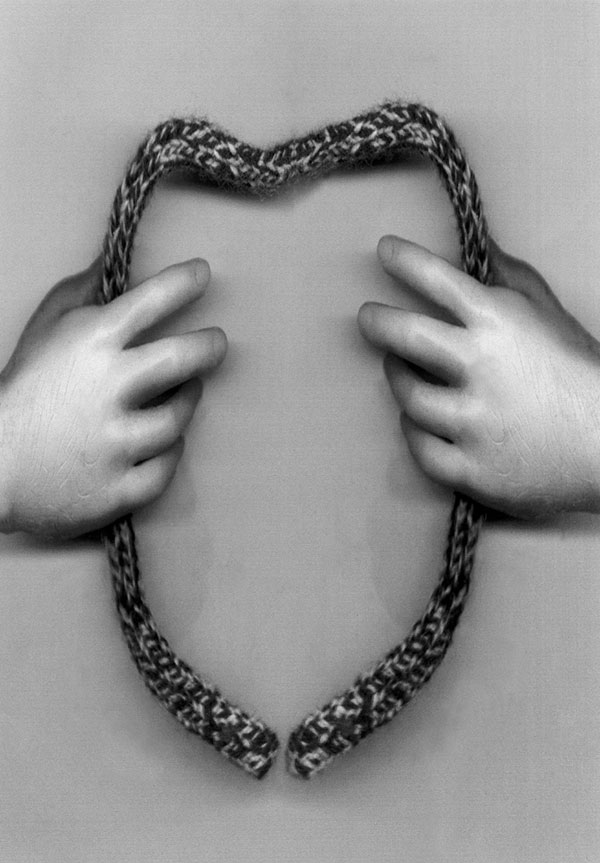
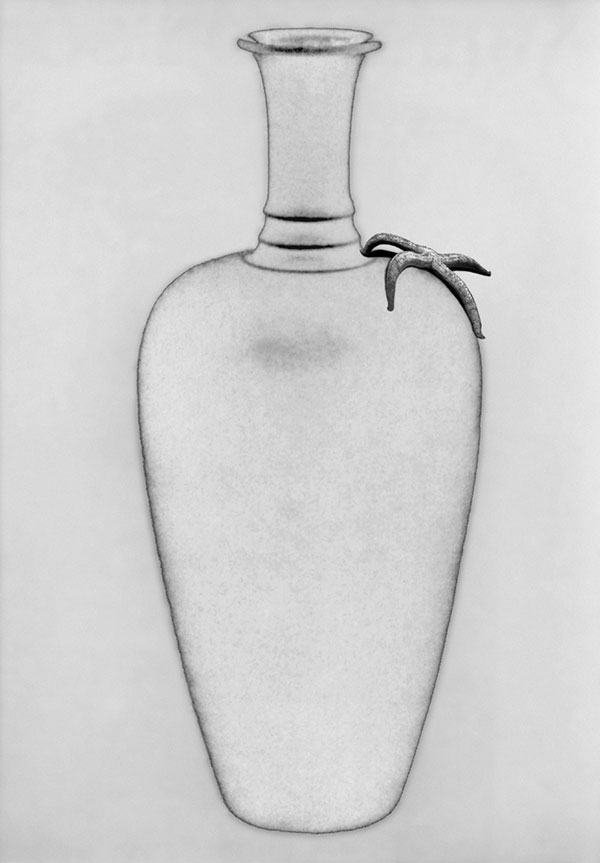
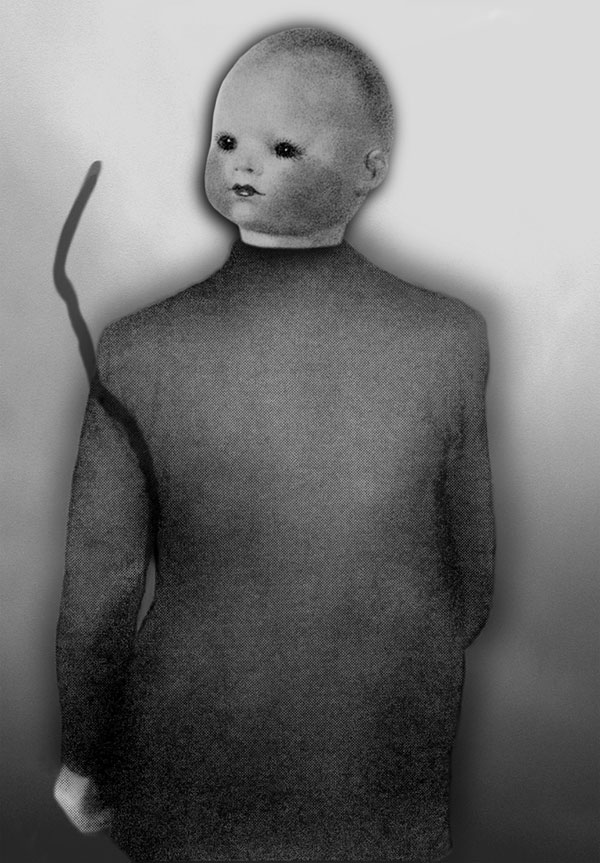
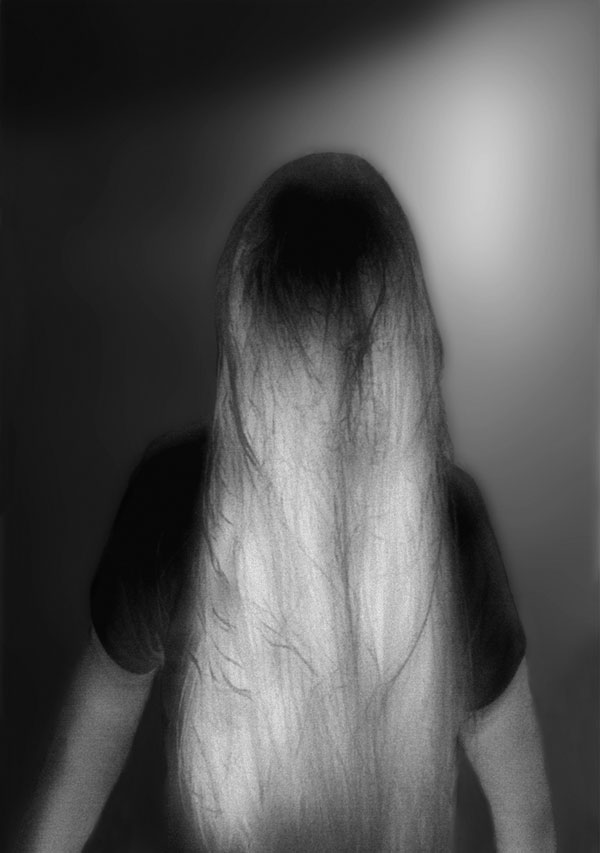
Marcus Bunyan black and white archive: South Yarra and surrounds, 1994

June 2013

PLEASE NOTE: THIS POSTING CONTAINS ART PHOTOGRAPHS OF MALE NUDITY – IF YOU DO NOT LIKE PLEASE DO NOT LOOK, FAIR WARNING HAS BEEN GIVEN


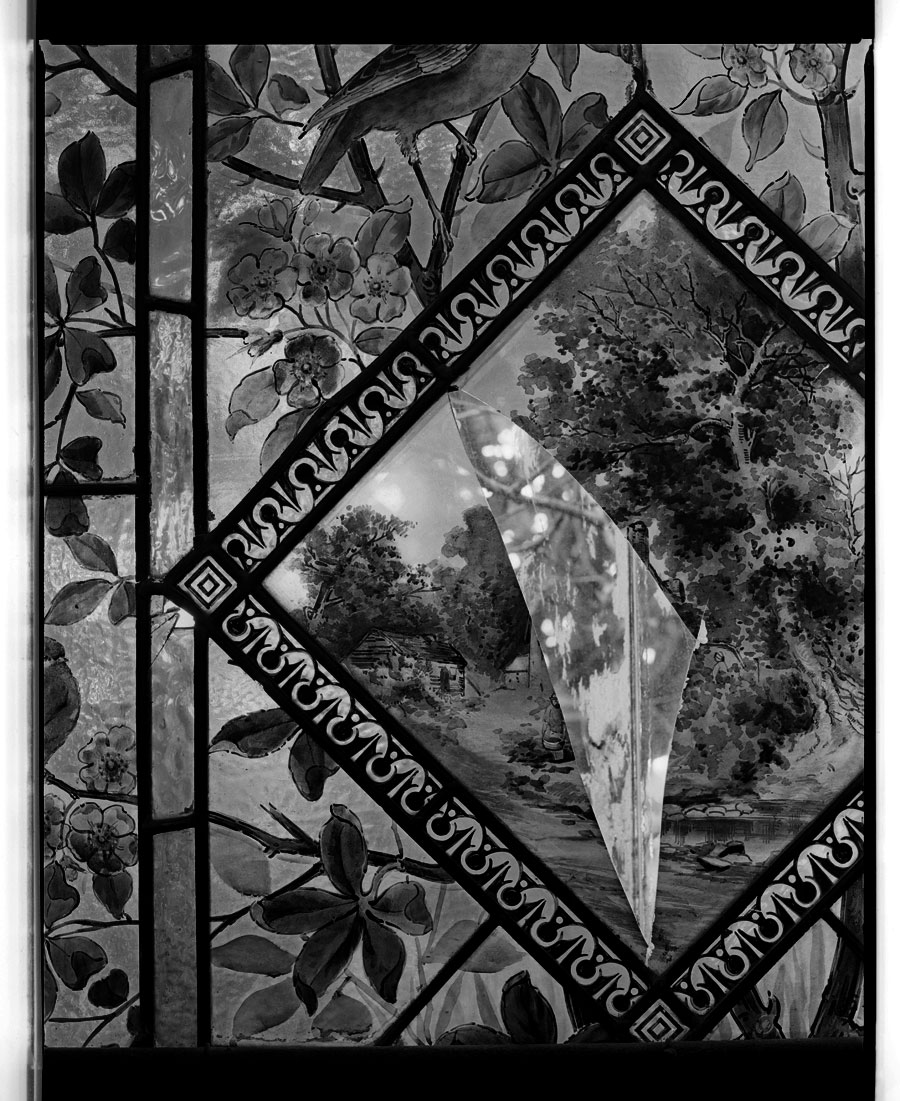
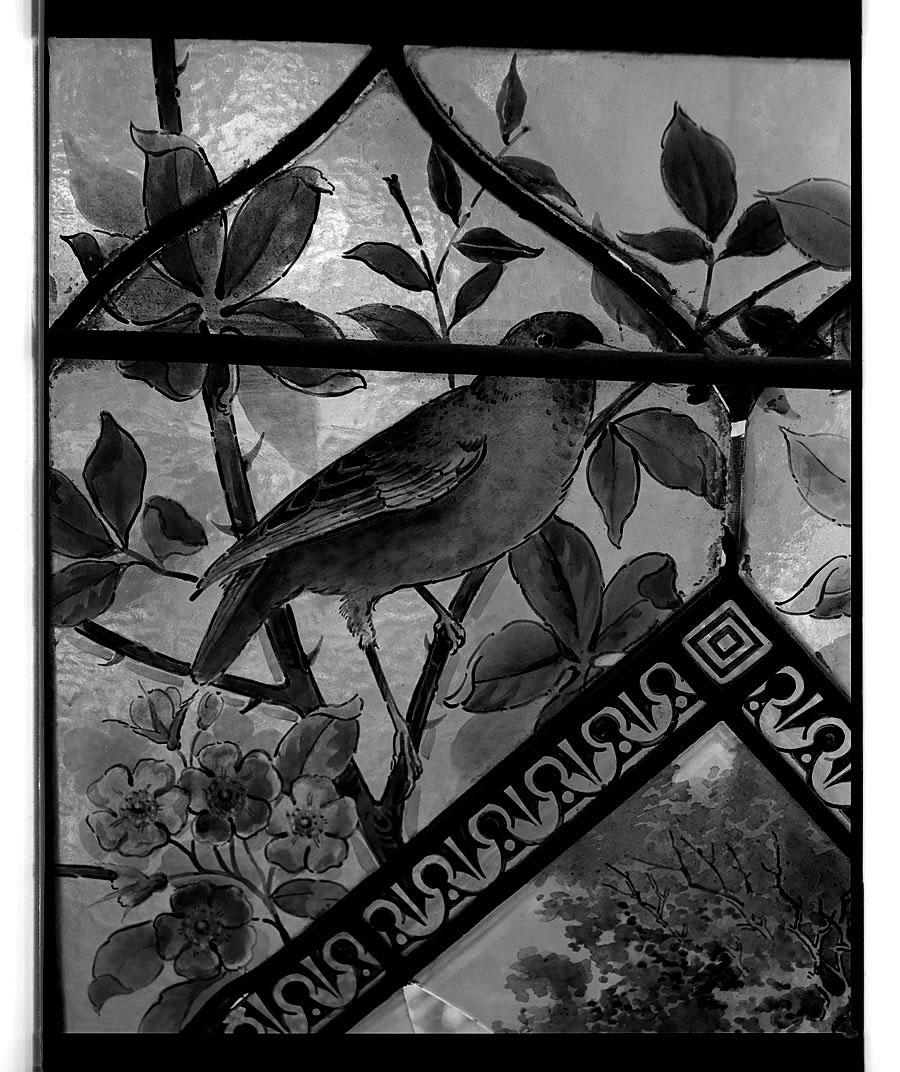
Marcus Bunyan (Australian, b. 1958) 'Stained glass, cracked' 1994


Marcus Bunyan (Australian, b. 1958)
Stained glass, cracked
1994
Silver gelatin photograph


I am scanning my negatives made during the years 1991-1997 to preserve them in the form of an online archive as a process of active memory, so that the images are not lost forever. These photographs were images of my life and imagination at the time of their making, the ideas I was thinking about and the people and things that surrounded me.

All images © Marcus Bunyan. Please click the photographs for a larger version of the image; remember these are just straight scans of the negatives !

Photographs are available from this series for purchase. As a guide, a vintage 8″ x 10″ silver gelatin print costs $700 plus tracked and insured shipping. For more information please see my Store web page.


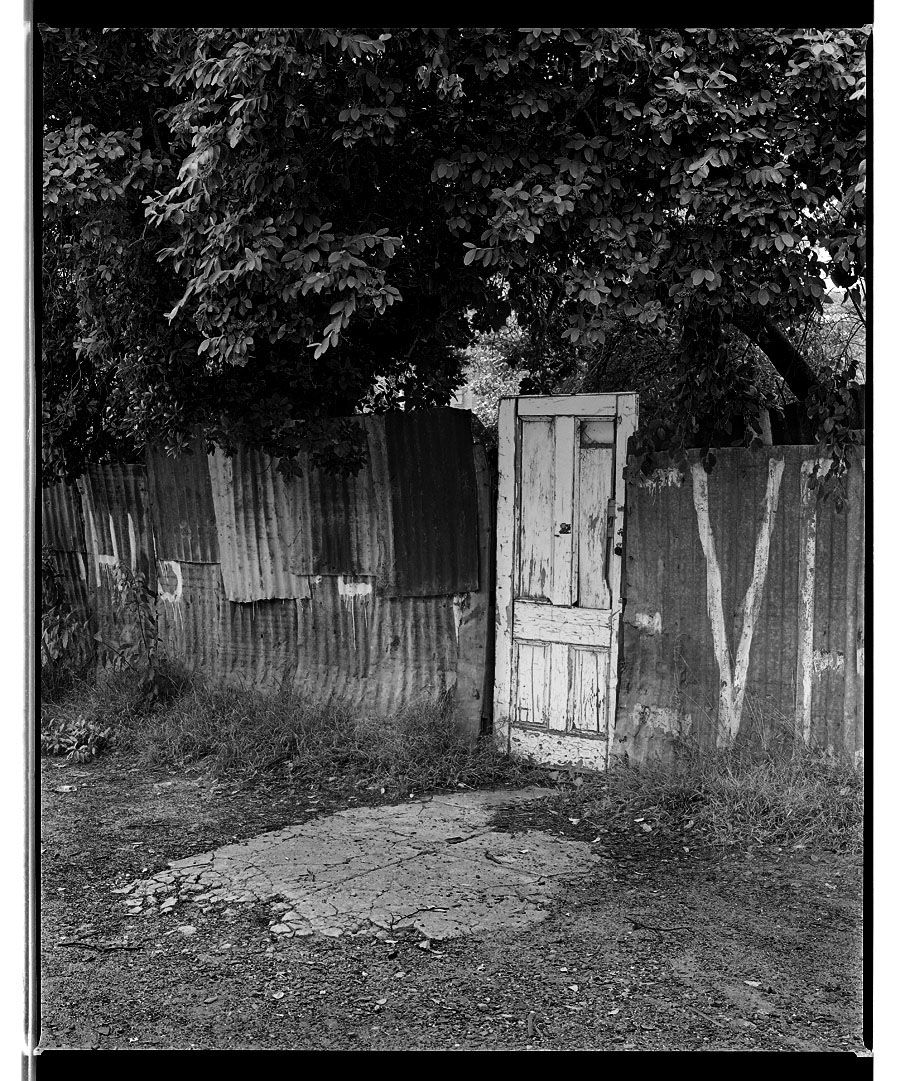
Marcus Bunyan (Australian, b. 1958) 'White door 1' 1994


Marcus Bunyan (Australian, b. 1958)
White door 1
1994
Silver gelatin photograph


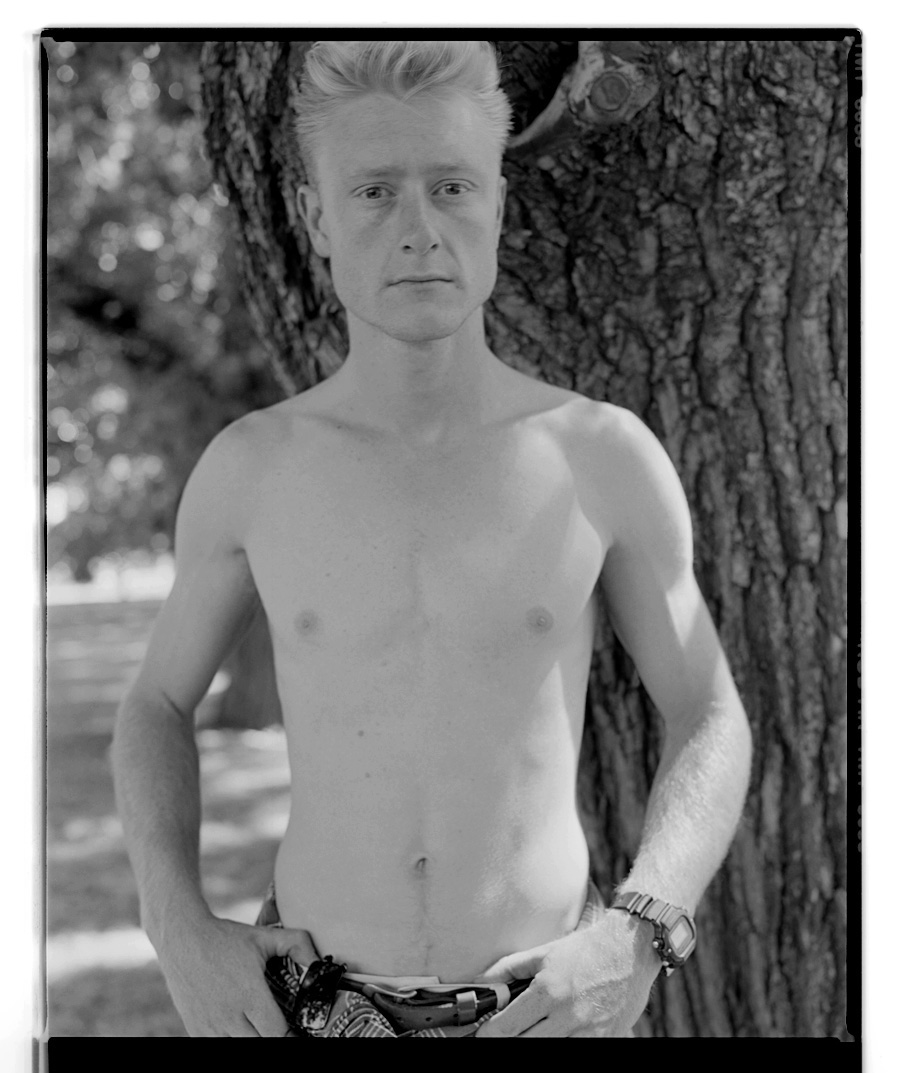
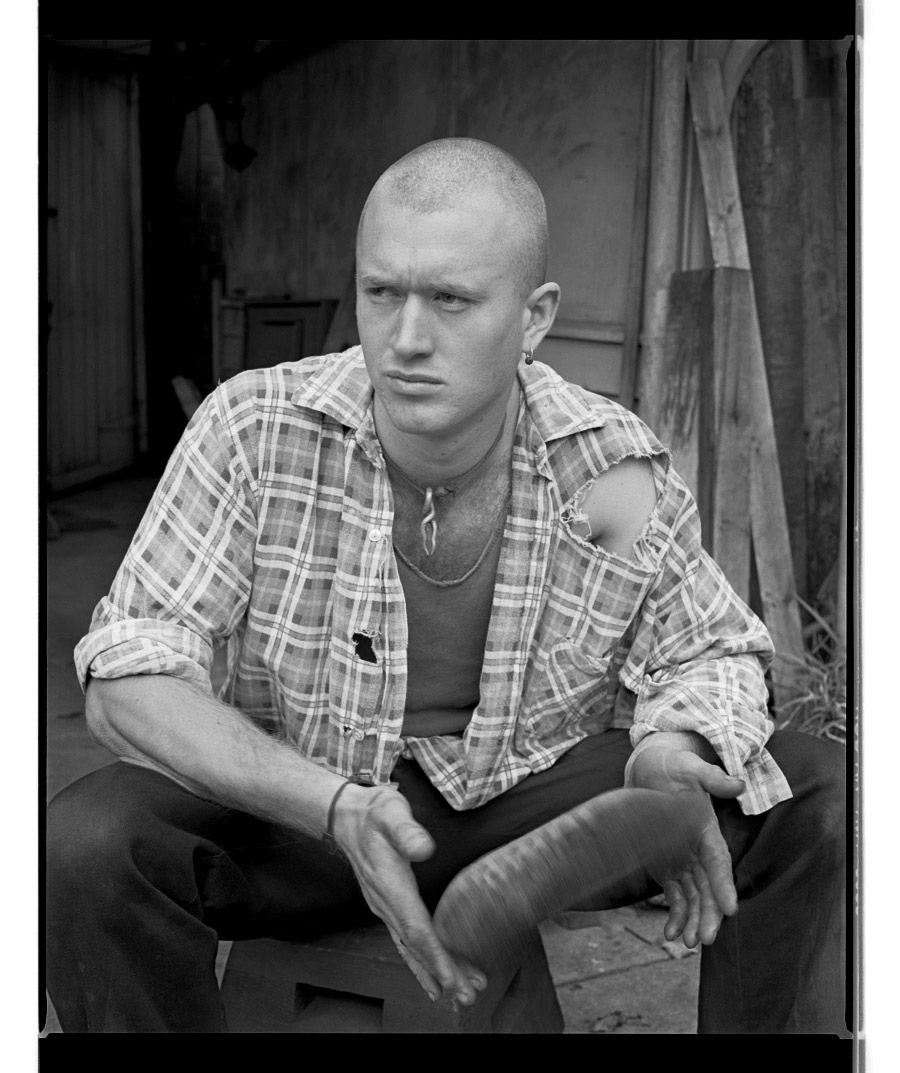
Marcus Bunyan (Australian, b. 1958) 'Damien, 1994' 1994


Marcus Bunyan (Australian, b. 1958)
Damien, 1994
1994
Silver gelatin photograph


Marcus Bunyan (Australian, b. 1958) 'Night repair' 1994


Marcus Bunyan (Australian, b. 1958)
Night repair
1994
Silver gelatin photograph


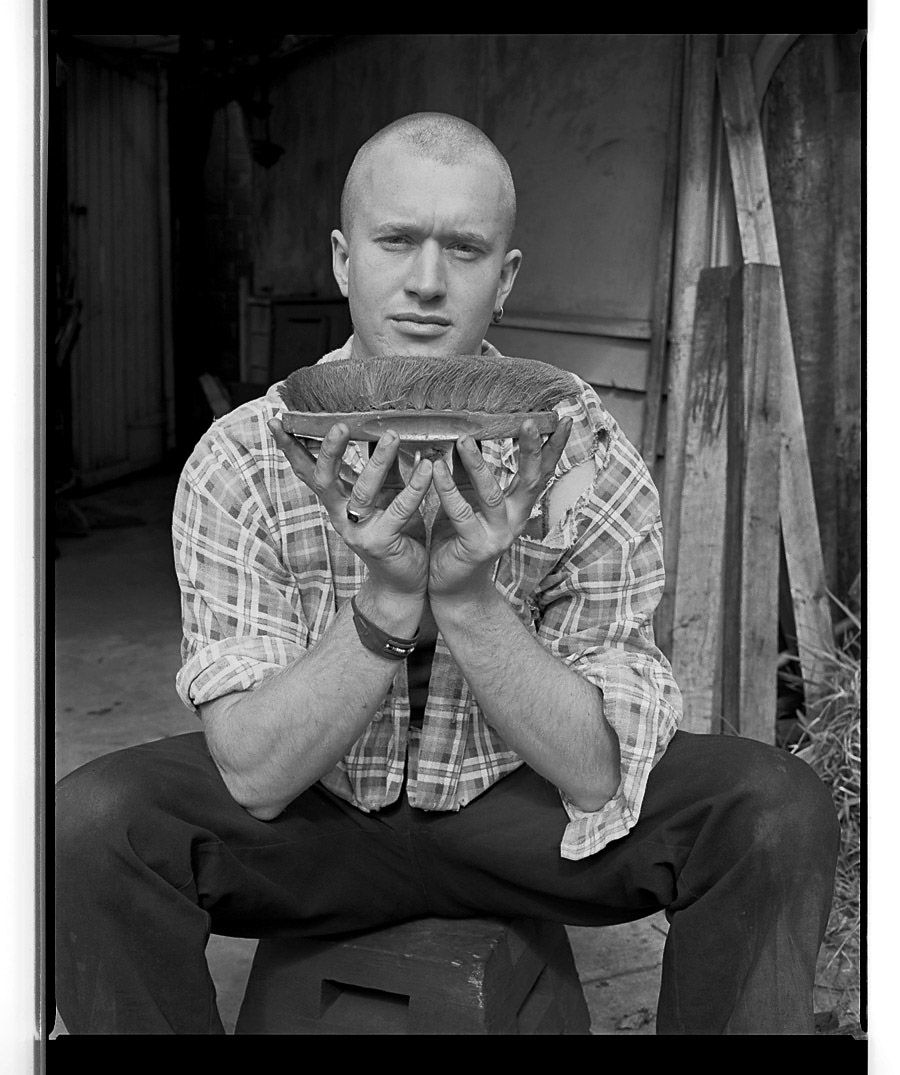
Marcus Bunyan (Australian, b. 1958) 'Jerry holding a brush, South Yarra' 1994


Marcus Bunyan (Australian, b. 1958)
Jerry holding a brush, South Yarra
1994
Silver gelatin photograph


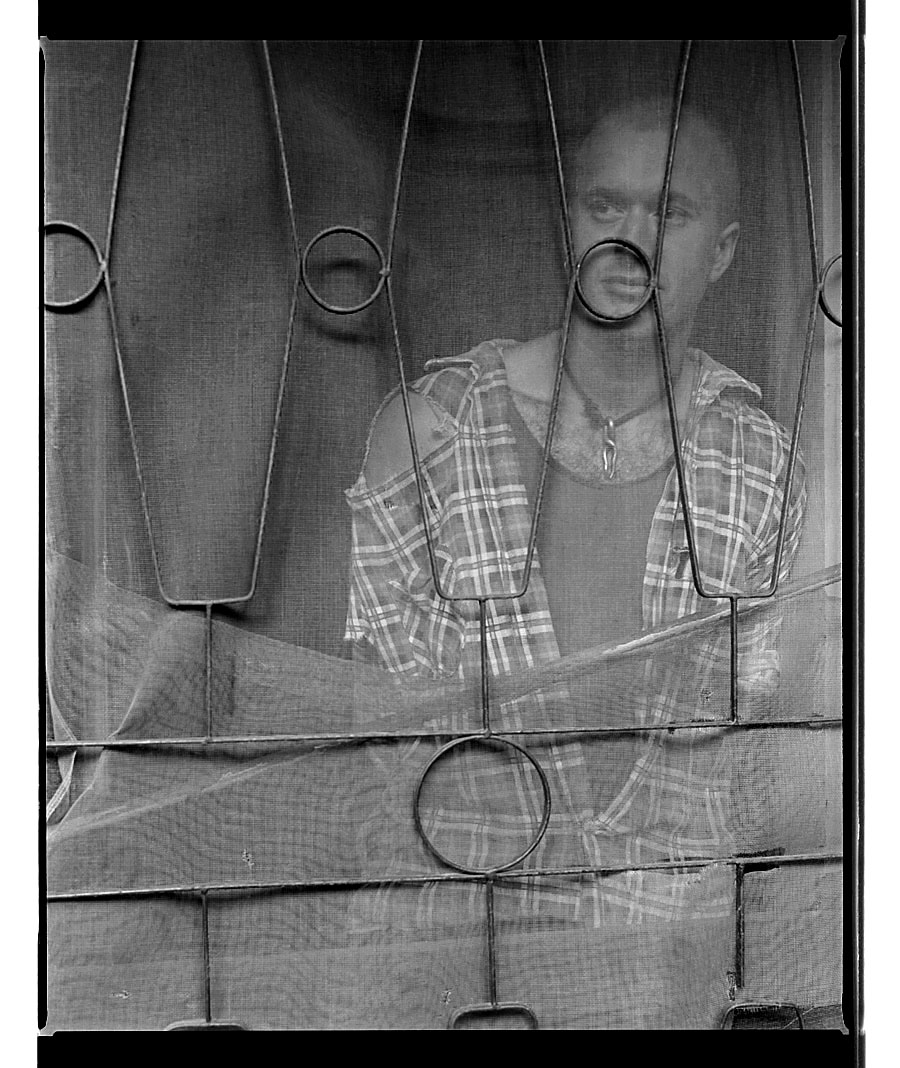
Marcus Bunyan (Australian, b. 1958) 'Jerry behind safety screen, Punt Road, South Yarra' 1994


Marcus Bunyan (Australian, b. 1958)
Jerry behind safety screen, Punt Road, South Yarra
1994
Silver gelatin photograph


Marcus Bunyan (Australian, b. 1958) 'Presence' 1994


Marcus Bunyan (Australian, b. 1958)
Presence
1994
Silver gelatin photograph


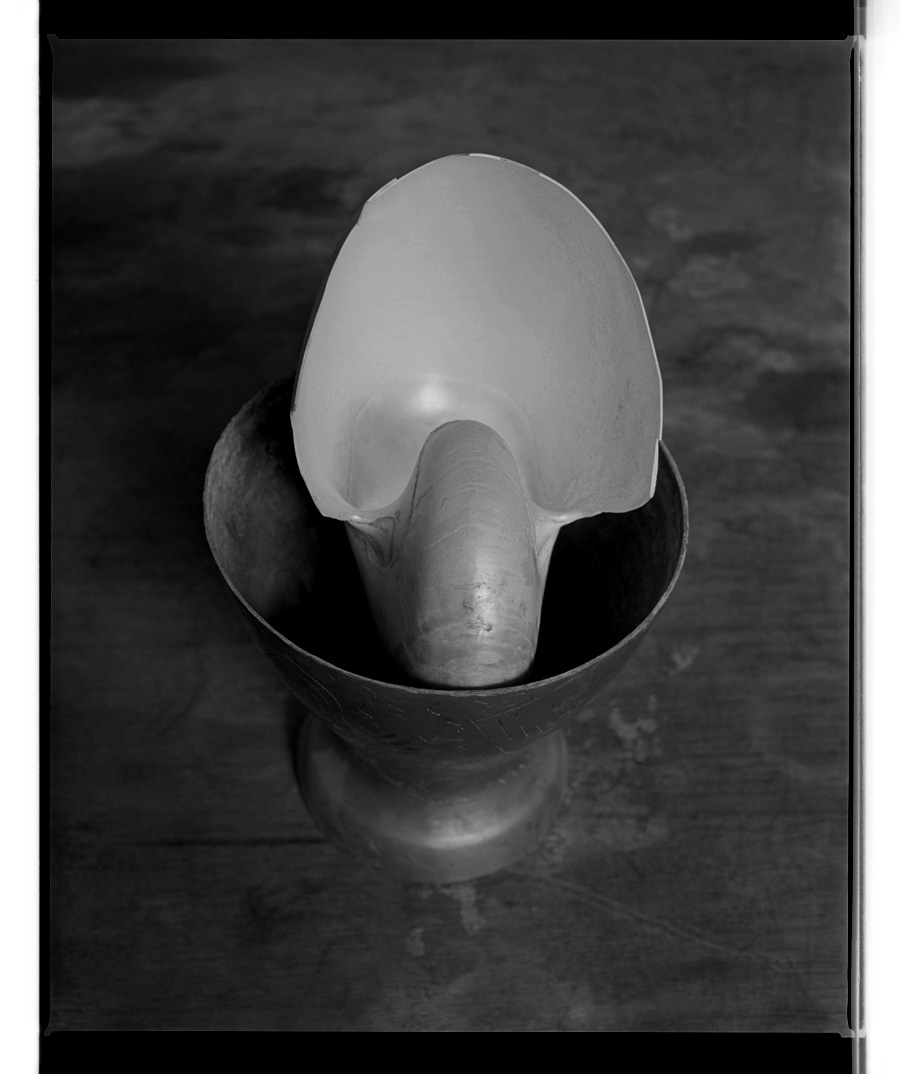
Marcus Bunyan (Australian, b. 1958) 'Nautilus shell in cup' 1994


Marcus Bunyan (Australian, b. 1958)
Nautilus shell in cup
1994
Silver gelatin photograph


Marcus Bunyan (Australian, b. 1958) 'Jerry with shaved head' 1994


Marcus Bunyan (Australian, b. 1958)
Jerry with shaved head
1994
Silver gelatin photograph


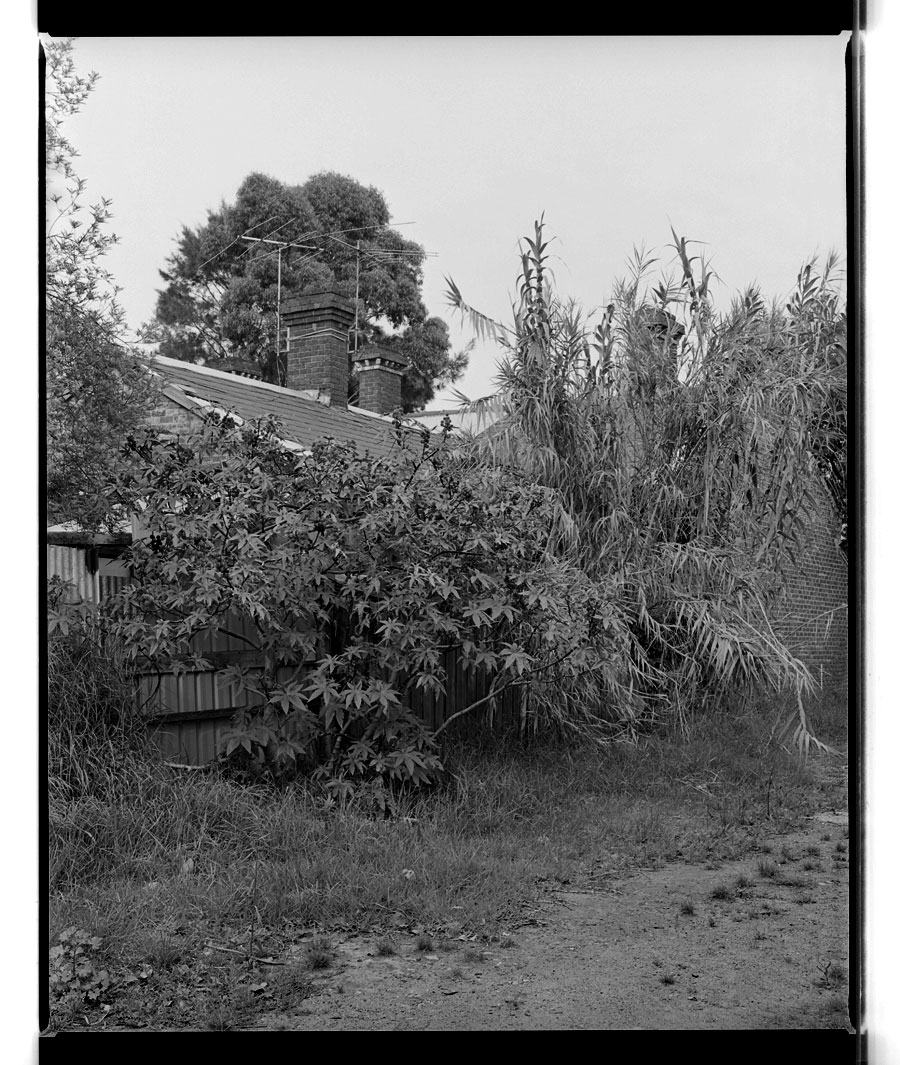
Marcus Bunyan (Australian, b. 1958) 'Undergrowth' 1994


Marcus Bunyan (Australian, b. 1958)
Undergrowth
1994
Silver gelatin photograph


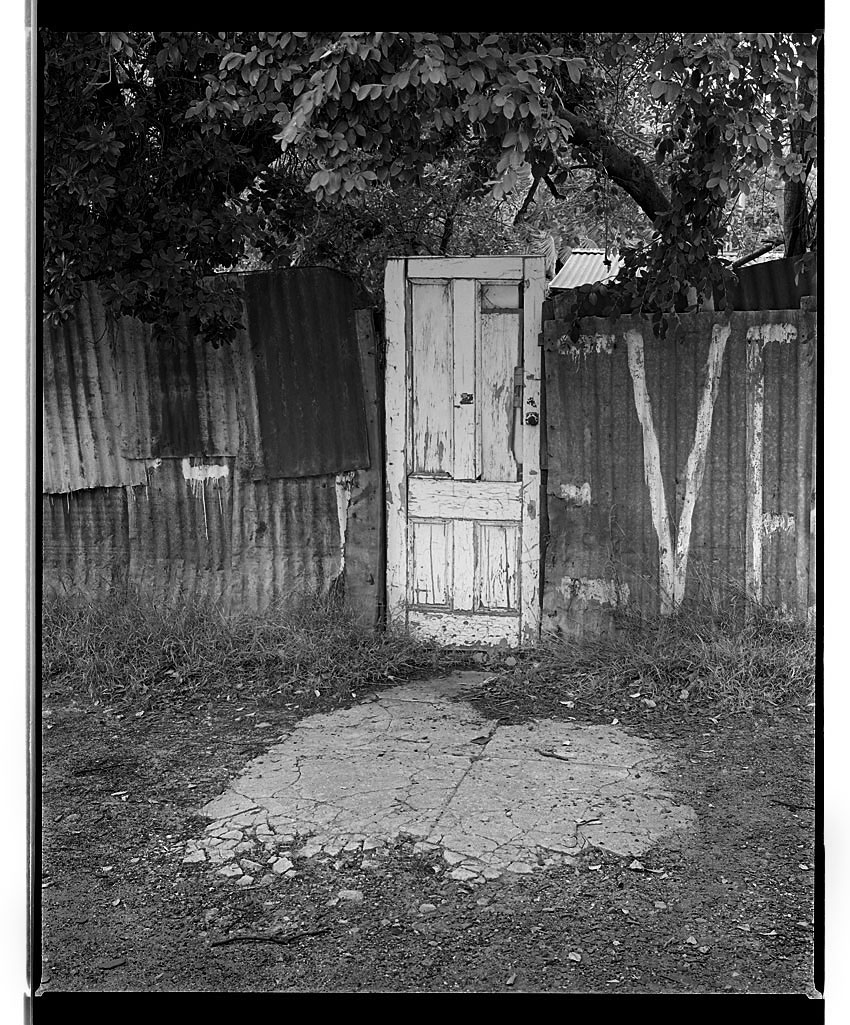
Marcus Bunyan (Australian, b. 1958) 'White door 2' 1994


Marcus Bunyan (Australian, b. 1958)
White door 2
1994
Silver gelatin photograph


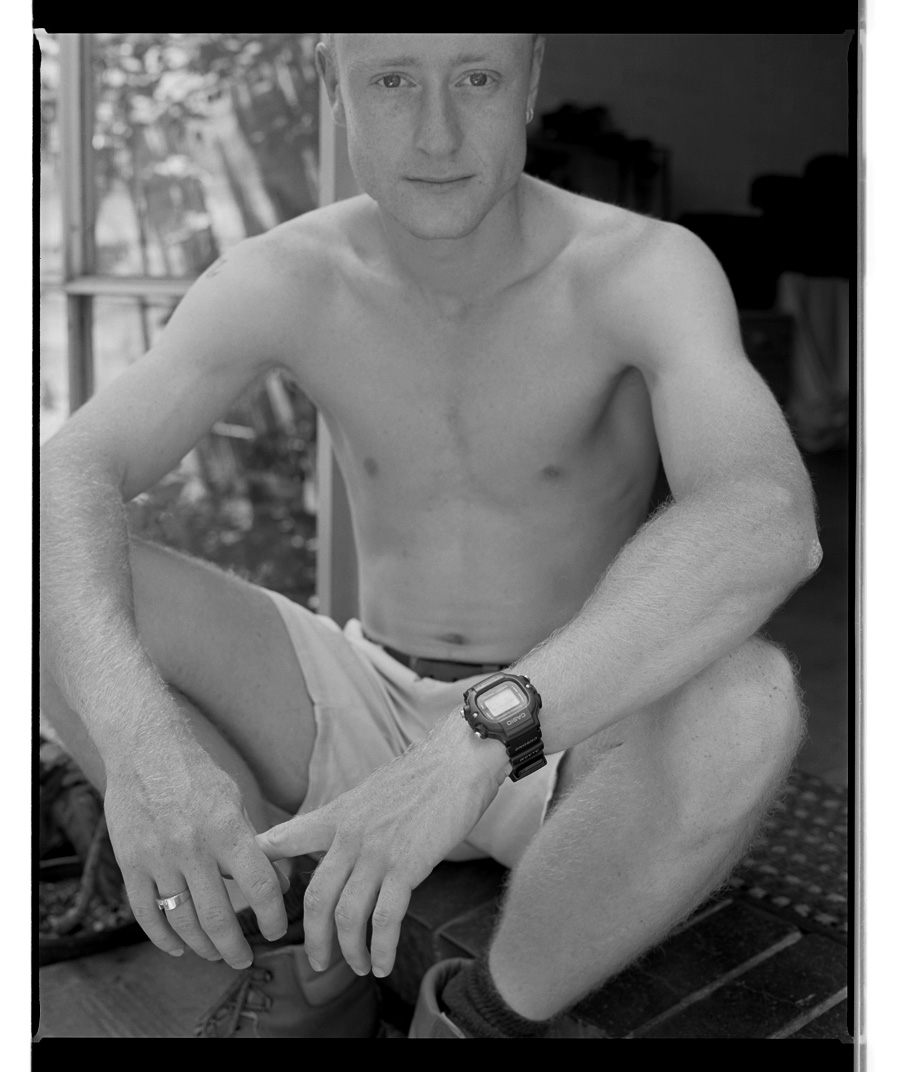
Marcus Bunyan (Australian, b. 1958) 'Damien sitting outside his flat, South Yarra, 1994' 1994


Marcus Bunyan (Australian, b. 1958)
Damien sitting outside his flat, South Yarra, 1994
1994
Silver gelatin photograph


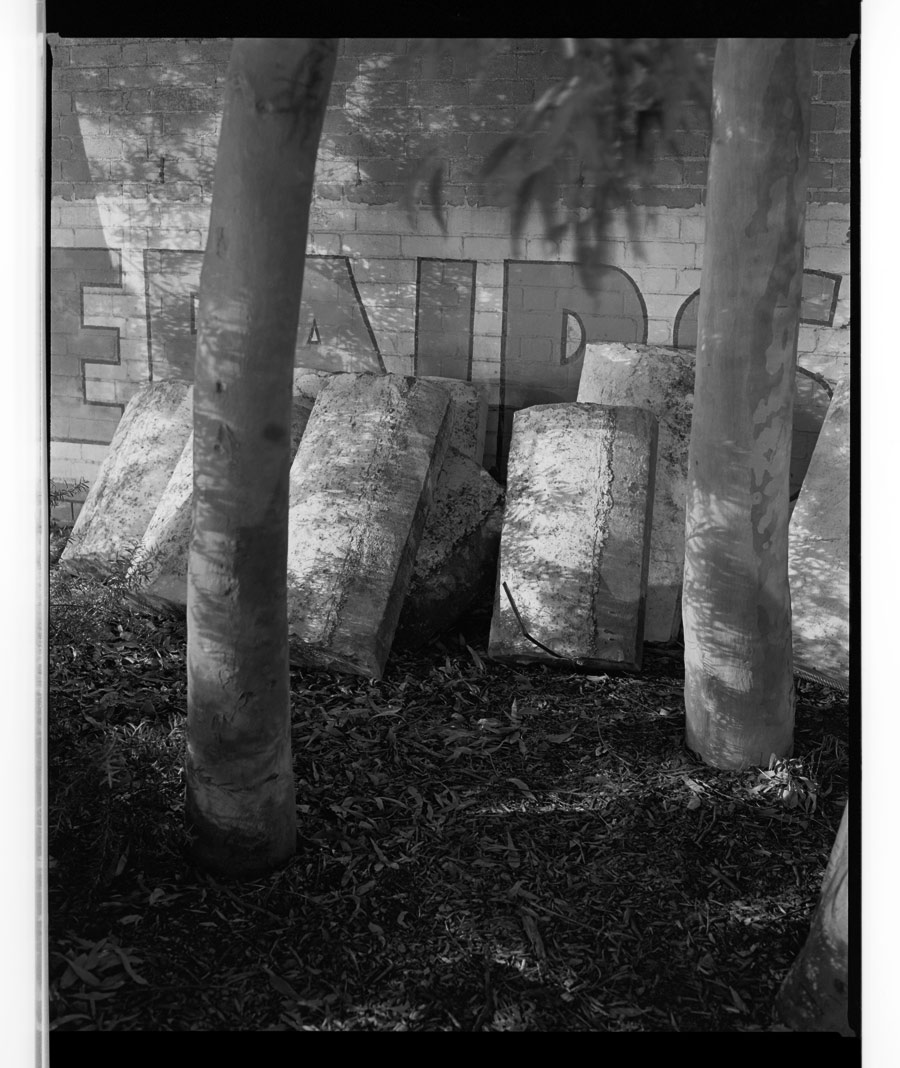
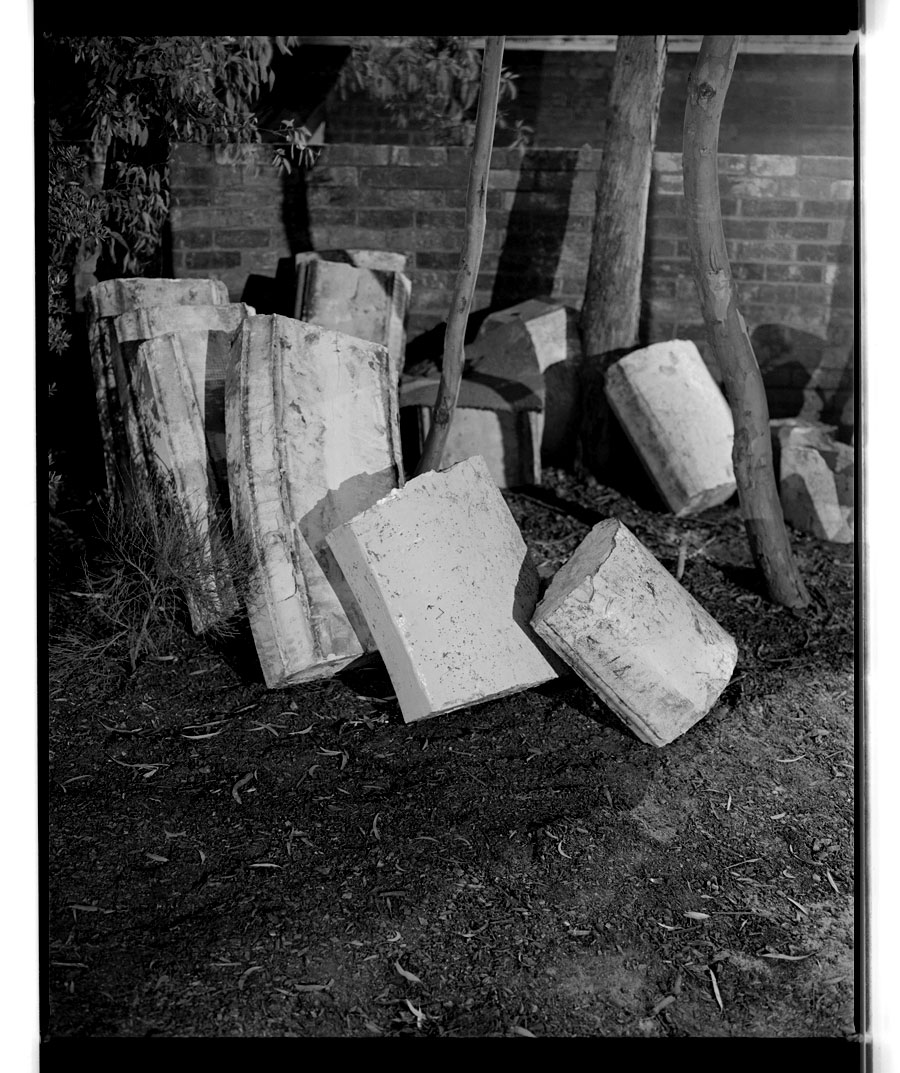
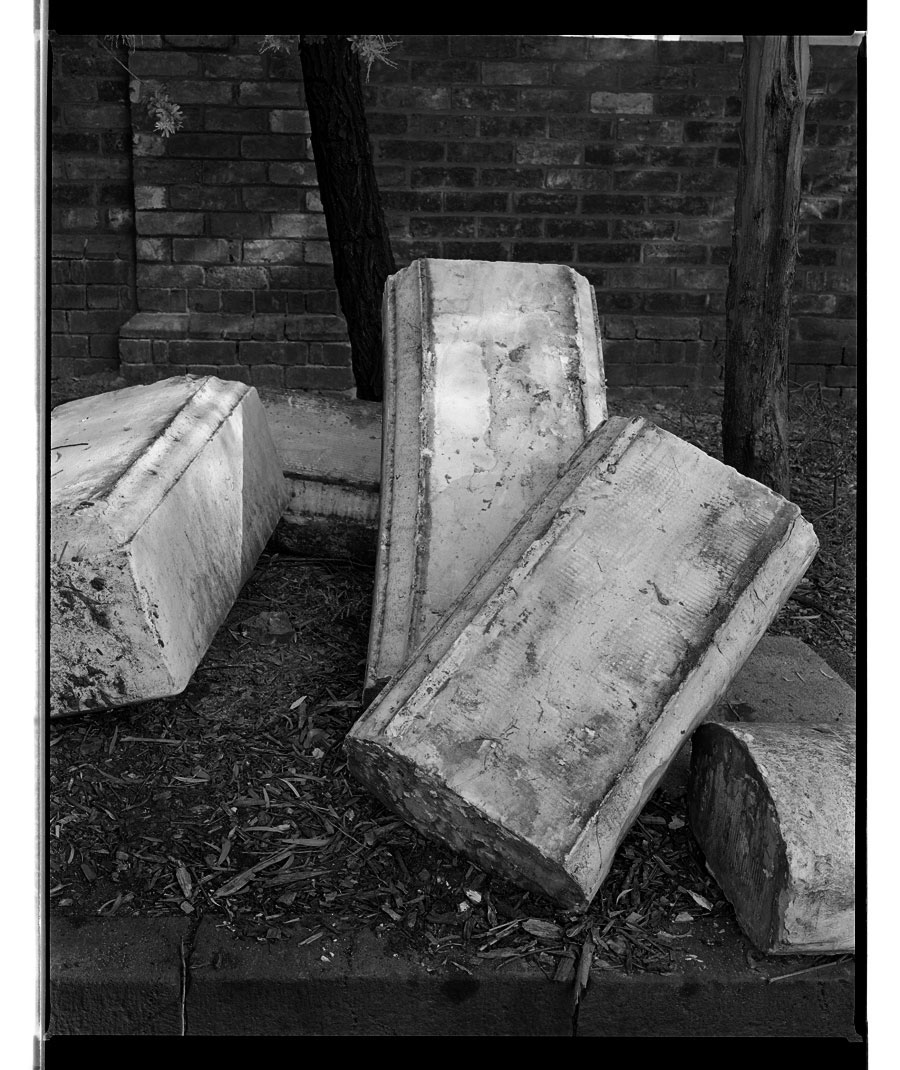
Marcus Bunyan (Australian, b. 1958) 'Trees, capstone, shadows' 1994


Marcus Bunyan (Australian, b. 1958)
Trees, capstone, shadows
1994
Silver gelatin photograph


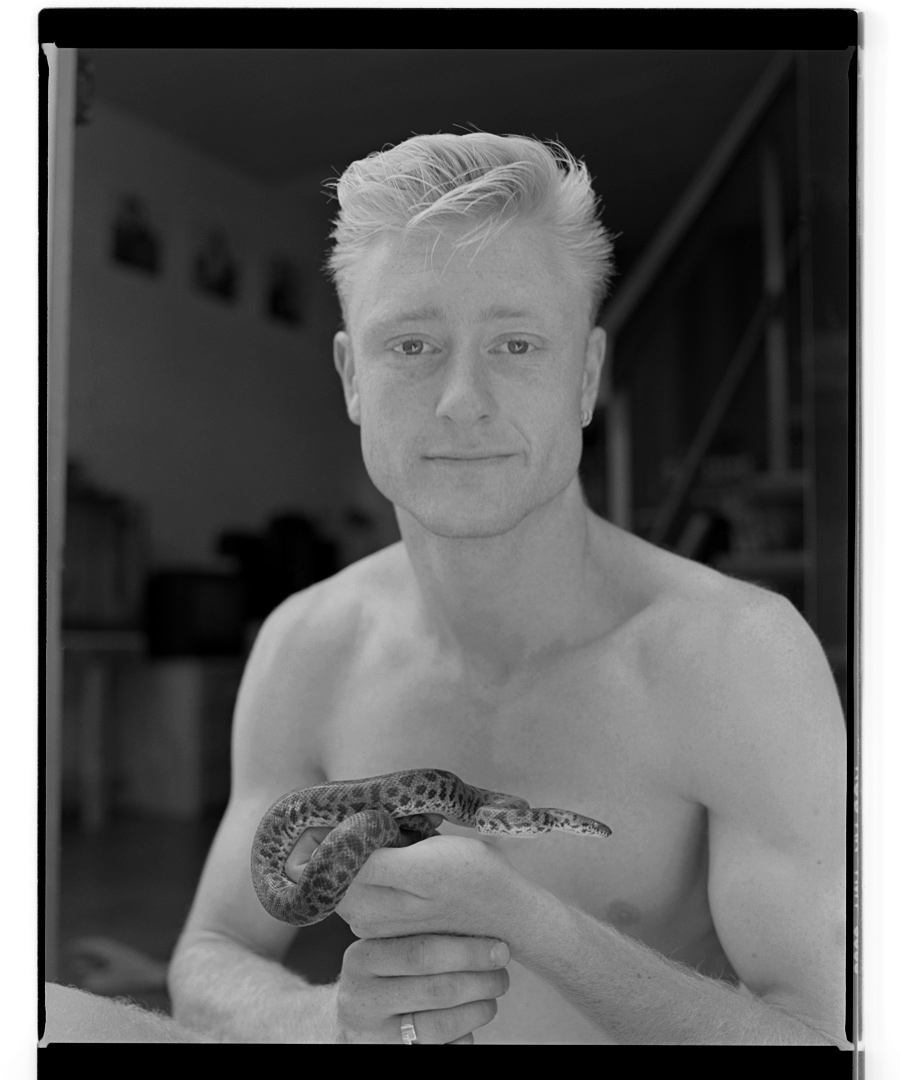
Marcus Bunyan (Australian, b. 1958) 'Damien with snake' 1994


Marcus Bunyan (Australian, b. 1958)
Damien with snake
1994
Silver gelatin photograph


Marcus Bunyan (Australian, b. 1958) 'Glass bird, Punt Road, South Yarra' 1994


Marcus Bunyan (Australian, b. 1958)
Glass bird, Punt Road, South Yarra
1994
Silver gelatin photograph


Marcus Bunyan (Australian, b. 1958) 'Easter Sunday' 1994


Marcus Bunyan (Australian, b. 1958)
Easter Sunday
1994
Silver gelatin photograph


Marcus Bunyan (Australian, b. 1958) 'Capstone, night, Windsor train station' 1994


Marcus Bunyan (Australian, b. 1958)
Capstone, night, Windsor train station
1994
Silver gelatin photograph


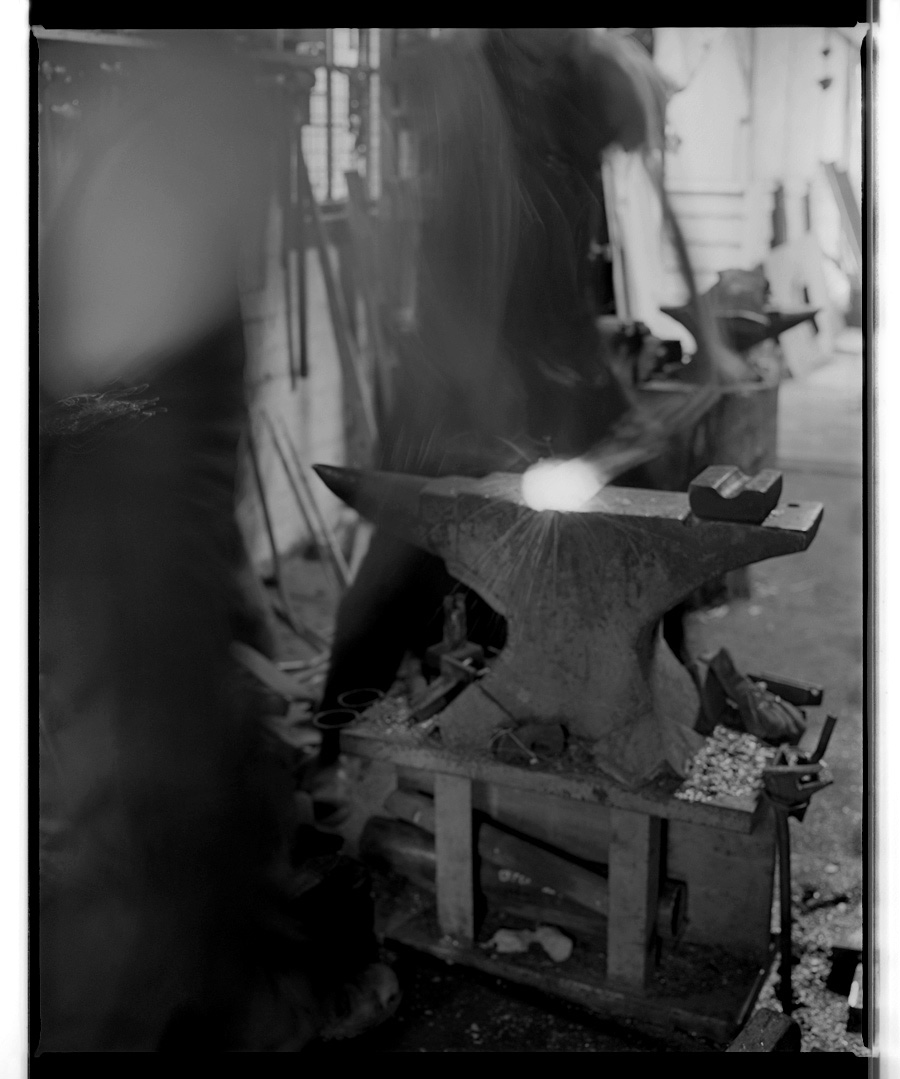
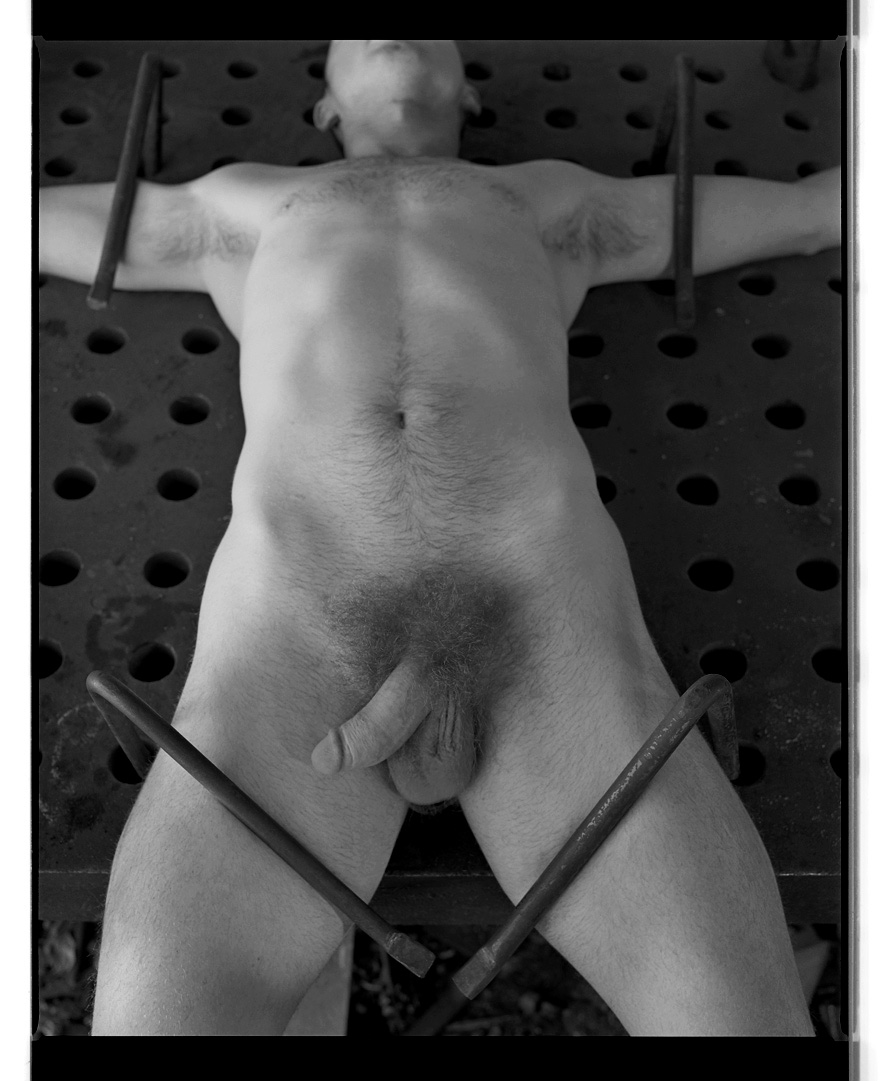
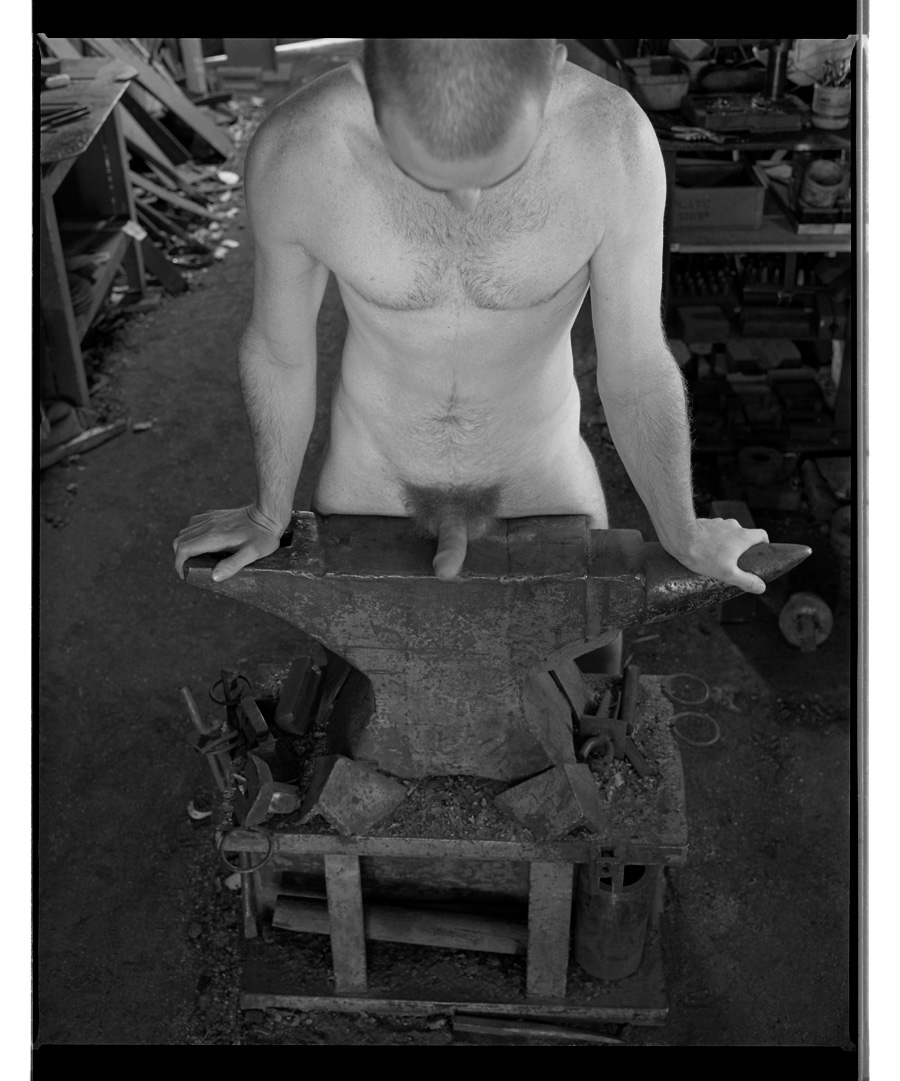
Marcus Bunyan (Australian, b. 1958) 'Paul, cock on anvil' 1994


Marcus Bunyan (Australian, b. 1958)
Paul, cock on anvil
1994
Silver gelatin photograph


Marcus Bunyan black and white archive 1991-1997

LIKE ART BLART ON FACEBOOK

Back to top

Review: ‘Lee Grant / Belco Pride’ at Edmund Pearce Gallery, Melbourne

Exhibition dates: 5th June – 22nd June 2013


Lee Grant (Australian, b. 1973) 'Belco Pride' 2008


Lee Grant (Australian, b. 1973)
Belco Pride
2008
Archival pigment print
60 x 60cm
Edition of 8 + 2 AP


In Belco Pride, the photographer Lee Grant comes as close as you are ever likely to come to an Australian version of the American photographer Alec Soth (Sleeping by the Mississippi, Niagara). That is a great compliment indeed.

This is an intelligent, cohesive exhibition which features 5 large colour photographs and a grid of 3 x 9 smaller colour photographs that form a topographical map of a suburb in Canberra called Belconnen. The body of work investigates how humans inhabit a specific place and how that place in turn influences the formation of identity and a sense of belonging and community. These themes are set in the context of a shifting, migratory, multicultural Australian suburb. The photographs are beautifully shot and individually well resolved; these square photographs then go on to form a holistic body that gives the viewer a wonderful sense of the people and place being photographed.

Grant likes to shoot formally and frontally, but that does not mean that there is not subtly and humour present in these photographs. Technically she likes to vary depth of field to emphasise the context of place: in some images, for example Ashleigh in her Formal Dress (2008, below), depth of field is minimal in order to bring focus onto Ashleigh and the texture of her formal dress. The artist also likes to change light conditions from bright sunlight (Alisha and baby Saul, 2009 below), to overcast (Belco Pride, 2008 above) to gathering gloom (George with his model aeroplane, 2008 below); she also likes to push and pull figures and objects within the pictorial frame, from close up to mid-distance to infinity (the rendering of houses for example). This shading of space and tonality adds a beautiful luminosity to the series.

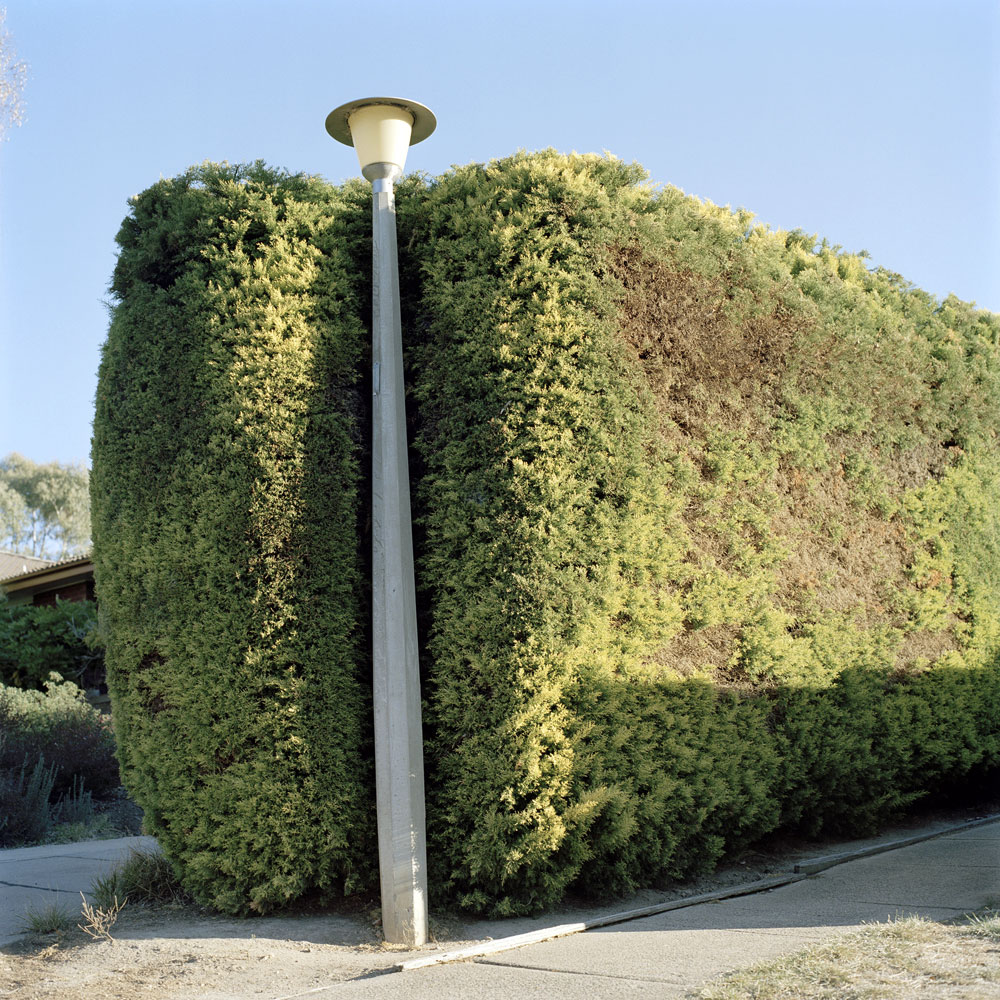
The humour and detail present is also fun: the suits of the sons two sizes too big in The Duot Family (2009, below); the barbed wire looming ominously above the white graffiti  ‘Belco Pride’; the off kilter lamp post in Suburban Hedge (2008, below) being swallowed by the hedge; and the delicious way that the lead from Kiki travels down and trails along the ground to Chucky the dog. There is a real affection and affinity for this place and people that is expressed in these photographs. They are unusually contemplative for this type of photography and that is perhaps a reflection on Grant’s Korean-Australian heritage.

Other work on her website is a mixed bag: the Sudanese Portraits are very successful, reminding me of the work of Mali photographer Malick Sidibé, while Window on the Orient is interesting but the photographs are a little ‘flat’ due to their subject matter. The Road to Kuvera and Welcome to Vietnam lack the same connection and insight into the human condition that Belco Pride possesses, and this body of work seems to be her strongest so far in terms of an enunciation of her inner vision. I await new work with interest.

Dr Marcus Bunyan


Many thankx to Edmund Pearce for allowing me to publish the photographs in the posting. Please click on the photographs for a larger version of the image.


Lee Grant (Australian, b. 1973) 'The Duot Family' 2009


Lee Grant (Australian, b. 1973)
The Duot Family
2009
Archival pigment print
110 x 110cm
Edition of 4 + 2 AP


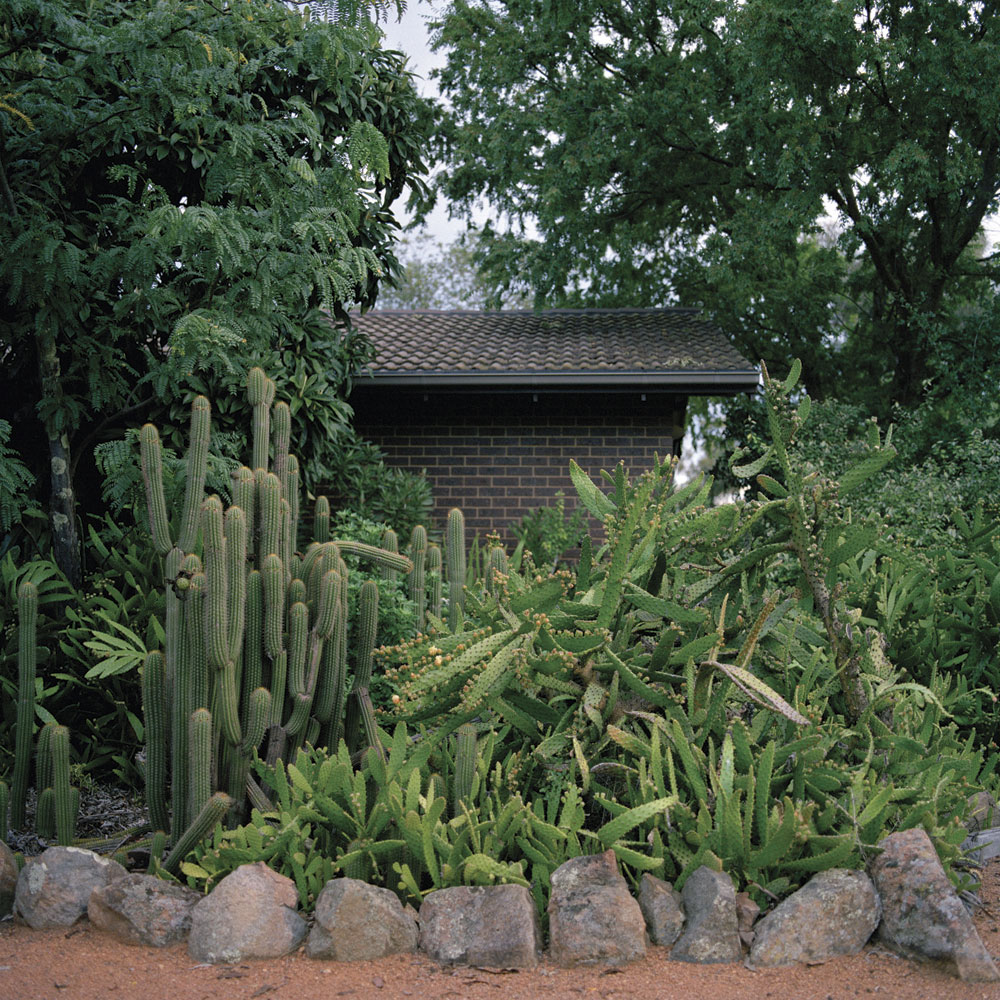
Lee Grant (Australian, b. 1973) 'Cactus Garden' 2012


Lee Grant (Australian, b. 1973)
Cactus Garden
2012
Archival pigment print
110 x 110cm
Edition of 4 + 2 AP


Lee Grant (Australian, b. 1973) 'Ashleigh in her Formal Dress' 2008


Lee Grant (Australian, b. 1973)
Ashleigh in her Formal Dress
2008
Archival pigment print
110 x 110cm
Edition of 4 + 2 AP


Lee Grant (Australian, b. 1973) 'Suburban Hedge' 2008


Lee Grant (Australian, b. 1973)
Suburban Hedge
2008
Archival pigment print
110 x 110cm
Edition of 4 + 2 AP


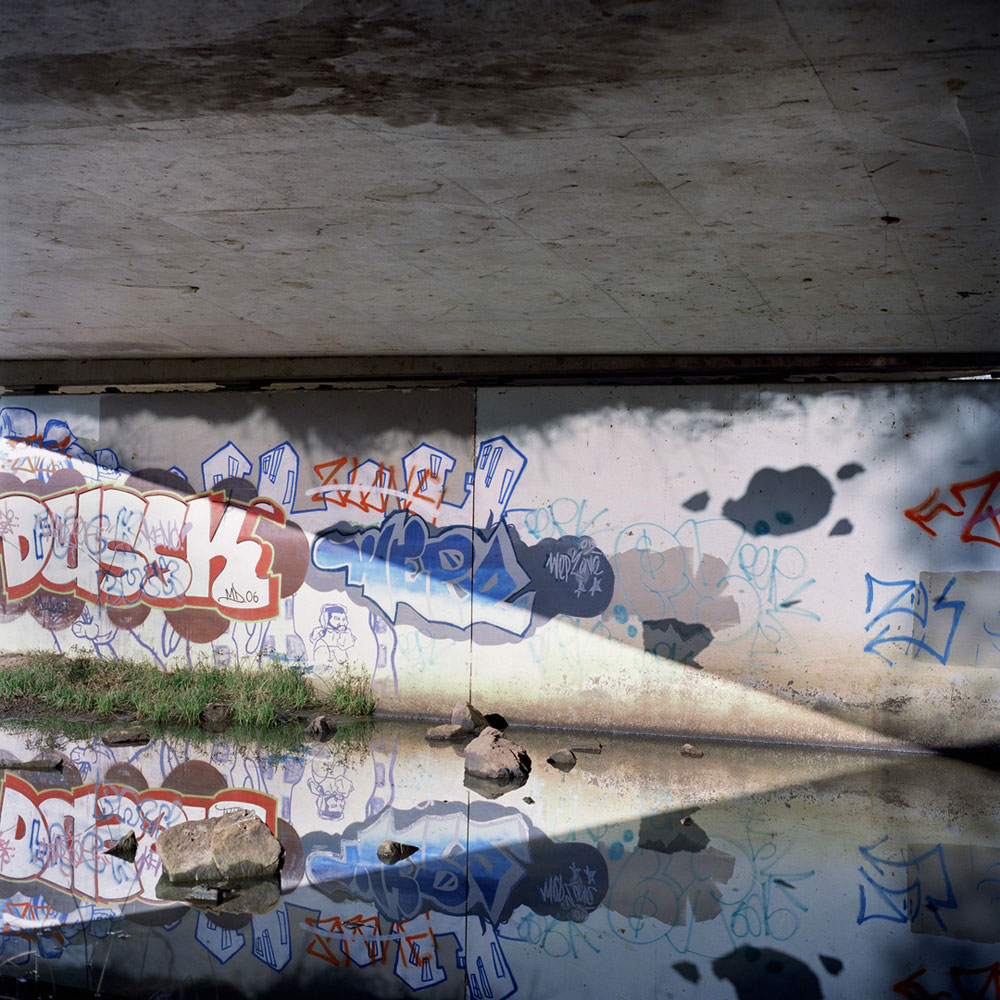
Lee Grant (Australian, b. 1973) 'Graffheads' 2009


Lee Grant (Australian, b. 1973)
Graffheads
2009
Archival pigment print
60 x 60cm
Edition of 8 + 2 AP


Lee Grant (Australian, b. 1973) 'Roxy and Jess' 2008


Lee Grant (Australian, b. 1973)
Roxy and Jess
2008
Archival pigment print
60 x 60cm
Edition of 8 + 2 AP


Belco’s a hole… but it’s our hole.

I’ve been told that you never truly leave behind the place you grew up. That it remains deep within your experience of the world. Feeling conflicted about one’s place of origin is certainly not unique, but for me, the process of returning ‘home’ and reconciling my perception of place with its banal and vernacular reality was a surprising yet cathartic experience. The photographs in this series express the idea that belonging, connection and identity is deeply rooted in the specifics of one’s inhabited landscape. The landscape depicted here being the 25 northernmost suburbs of Canberra known as Belconnen, or to us locals, as ‘Belco’.

As a photographer, I am interested in the way migrant communities adapt to new environments, particularly in western cultures and much of my work explores themes of identity, belonging and community set often in the context of the Australian suburbs.

Lee Grant


“I always believed it was the things you don’t choose that makes you who you are. Your city, your neighbourhood, your family. People here take pride in these things, like it was something they’d accomplished. The bodies around their souls, the cities wrapped around those. I lived on this block my whole life; most of these people have.”

Dennis Lehane


Lee Grant’s latest exhibition at Edmund Pearce, Belco Pride, explores how belonging, connection and identity is deeply rooted in the specifics of one’s inhabited landscape. The landscape depicted here being the 25 northernmost suburbs of Canberra known as Belconnen, or to the locals, as ‘Belco’.

Lee is a documentary photographer who lives and works in Canberra. She holds a degree in Anthropology and in 2010 completed a Master of Philosophy at the ANU School of Art. Lee has exhibited at the Australian Centre for Photography, the Monash Gallery of Art and the National Portrait Gallery amongst others. She has been a finalist in the National Photographic Portrait Prize, the Head On Alternative Portrait Prize, the Josephine Ulrick and Win Schubert Prize and the Olive Cotton Award. Lee was also the winner of the prestigious Bowness Photography Prize in 2010. Her work is held in the National Library, the Canberra Museum and Art Gallery as well as numerous private collections.


Lee Grant (Australian, b. 1973) 'Kiki and Chucky' 2008


Lee Grant (Australian, b. 1973)
Kiki and Chucky
2008
Archival pigment print
60 x 60cm
Edition of 8 + 2 AP


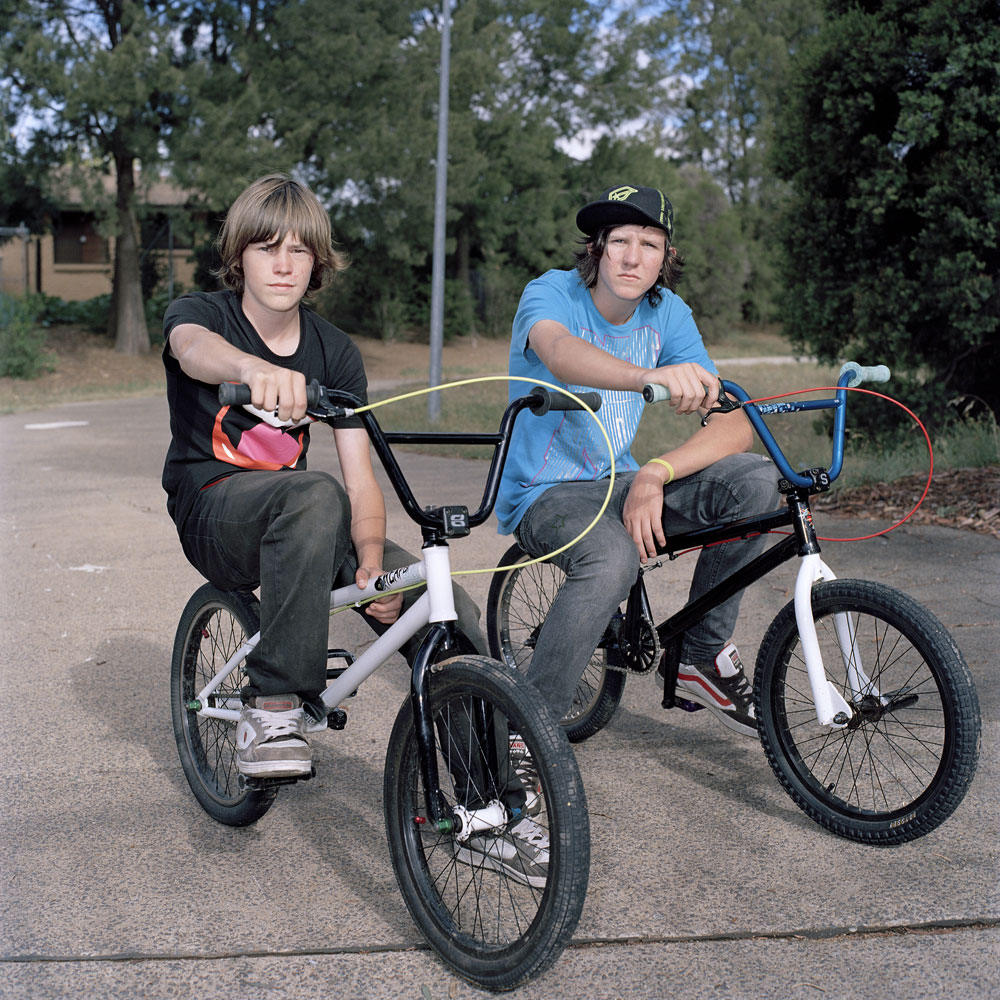
Lee Grant (Australian, b. 1973) 'Nathan & Mac, BMX bros' 2009


Lee Grant (Australian, b. 1973)
Nathan & Mac, BMX bros
2009
Archival pigment print
60 x 60cm
Edition of 8 + 2 AP


Lee Grant (Australian, b. 1973) 'A View of Suburbia' 2009


Lee Grant (Australian, b. 1973)
A View of Suburbia
2009
Archival pigment print
60 x 60cm
Edition of 8 + 2 AP


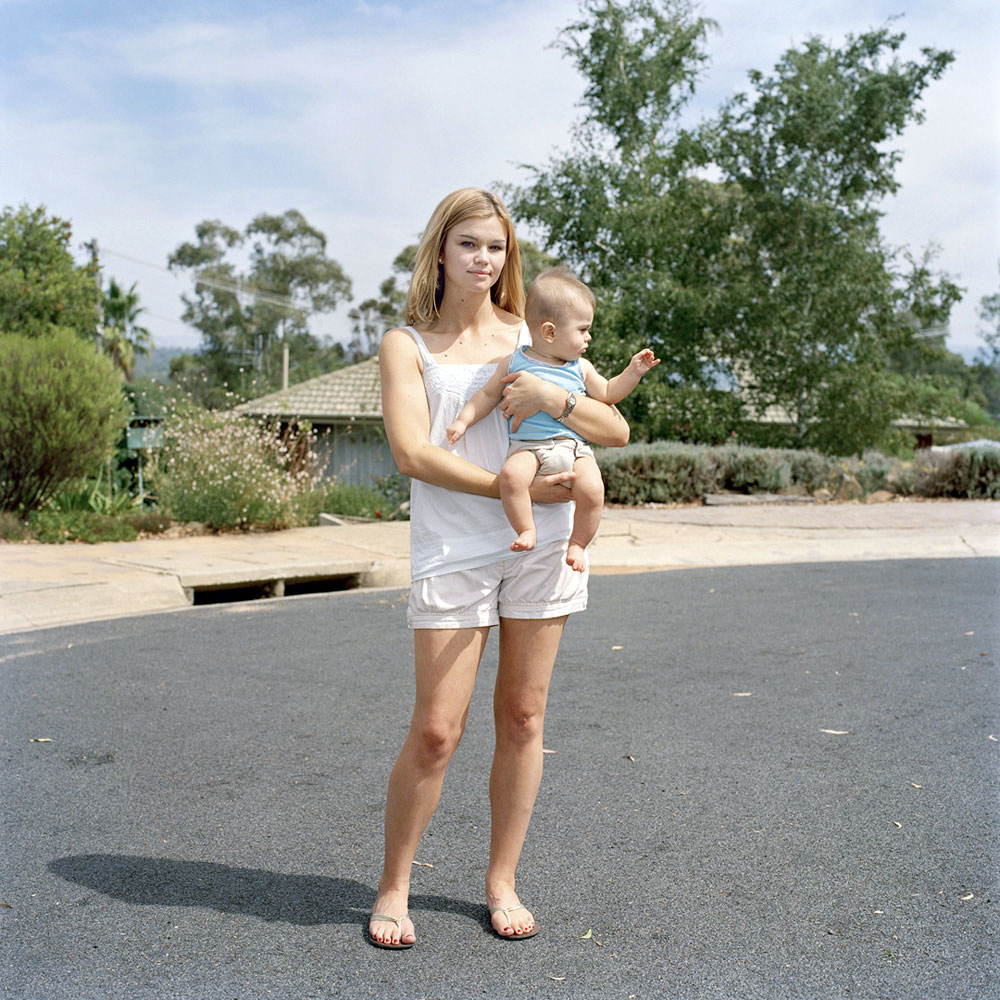
Lee Grant (Australian, b. 1973) 'Alisha and baby Saul' 2009


Lee Grant (Australian, b. 1973)
Alisha and baby Saul
2009
Archival pigment print
60 x 60cm
Edition of 8 + 2 AP


Lee Grant (Australian, b. 1973) 'George with his model aeroplane' 2008


Lee Grant (Australian, b. 1973)
George with his model aeroplane
2008
Archival pigment print
60 x 60cm
Edition of 8 + 2 AP


Lee Grant (Australian, b. 1973) 'Ginninderra Creek on a Winter's morning' 2008


Lee Grant (Australian, b. 1973)
Ginninderra Creek on a Winter’s morning
2008
Archival pigment print
60 x 60cm
Edition of 8 + 2 AP


Lee Grant (Australian, b. 1973) 'The Beehive' 2008


Lee Grant (Australian, b. 1973)
The Beehive
2008
Archival pigment print
60 x 60cm
Edition of 8 + 2 AP


Lee Grant (Australian, b. 1973) 'Lee' 2010


Lee Grant (Australian, b. 1973)
Lee
2010
Archival pigment print
60 x 60cm
Edition of 8 + 2 AP


Edmund Pearce Gallery

This gallery is now closed.

LIKE ART BLART ON FACEBOOK

Back to top

Exhibition: ‘Sentinels’ by David Wood at Gasworks Arts Park, Albert Park

Exhibition dates: 29th May – 16th June 2013


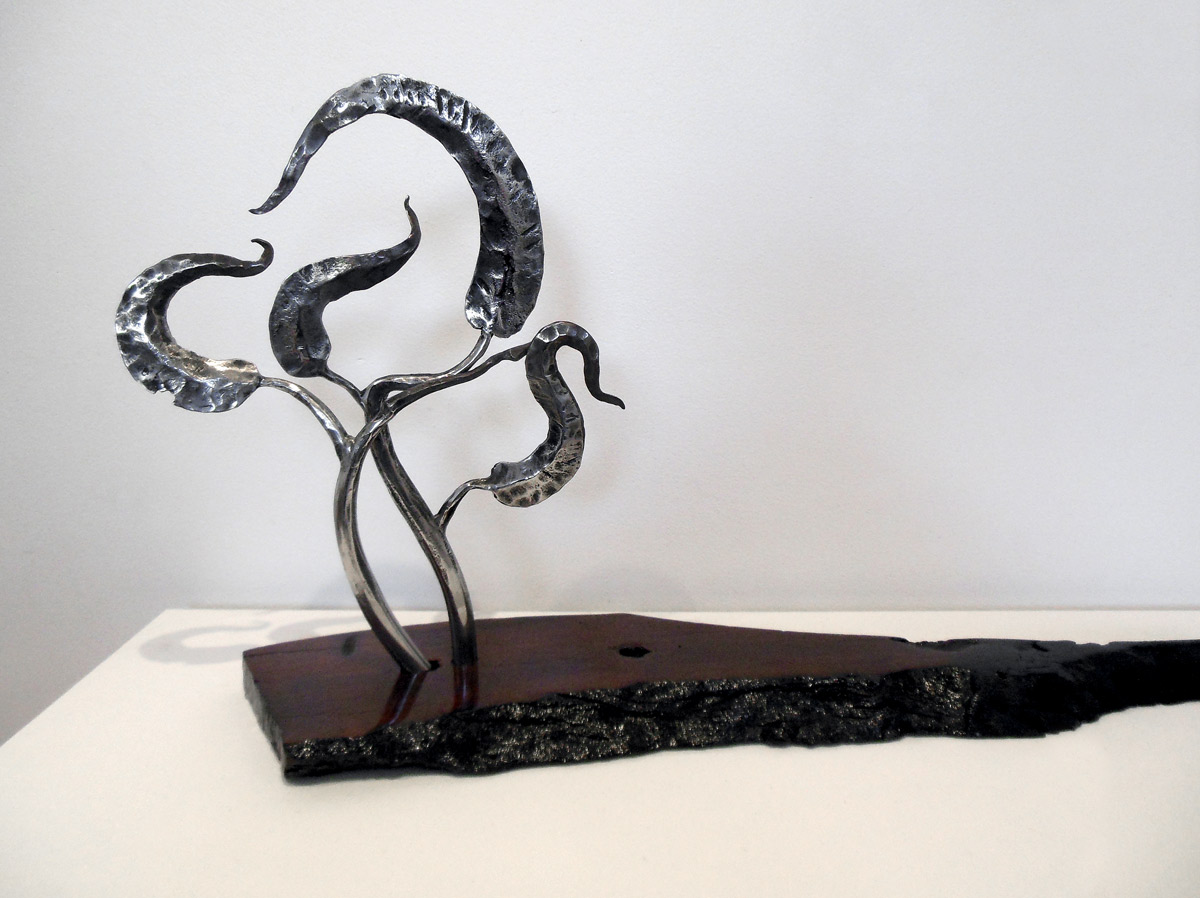
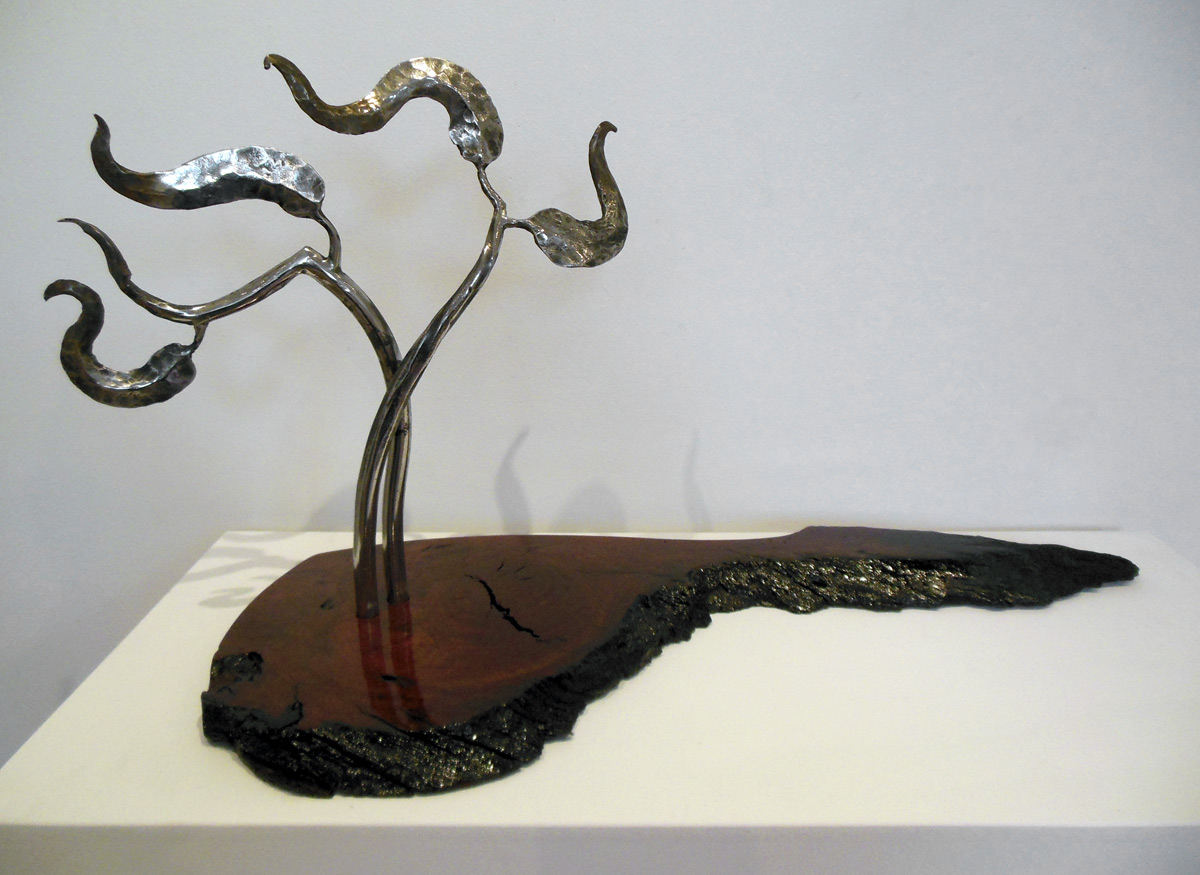
David Wood (Australian) 'Ghost Gum Three' 2013


David Wood (Australian)
Ghost Gum Three
2013
Stainless steel and red gum
76 x 310 x 44cm
Photo: Marcus Bunyan


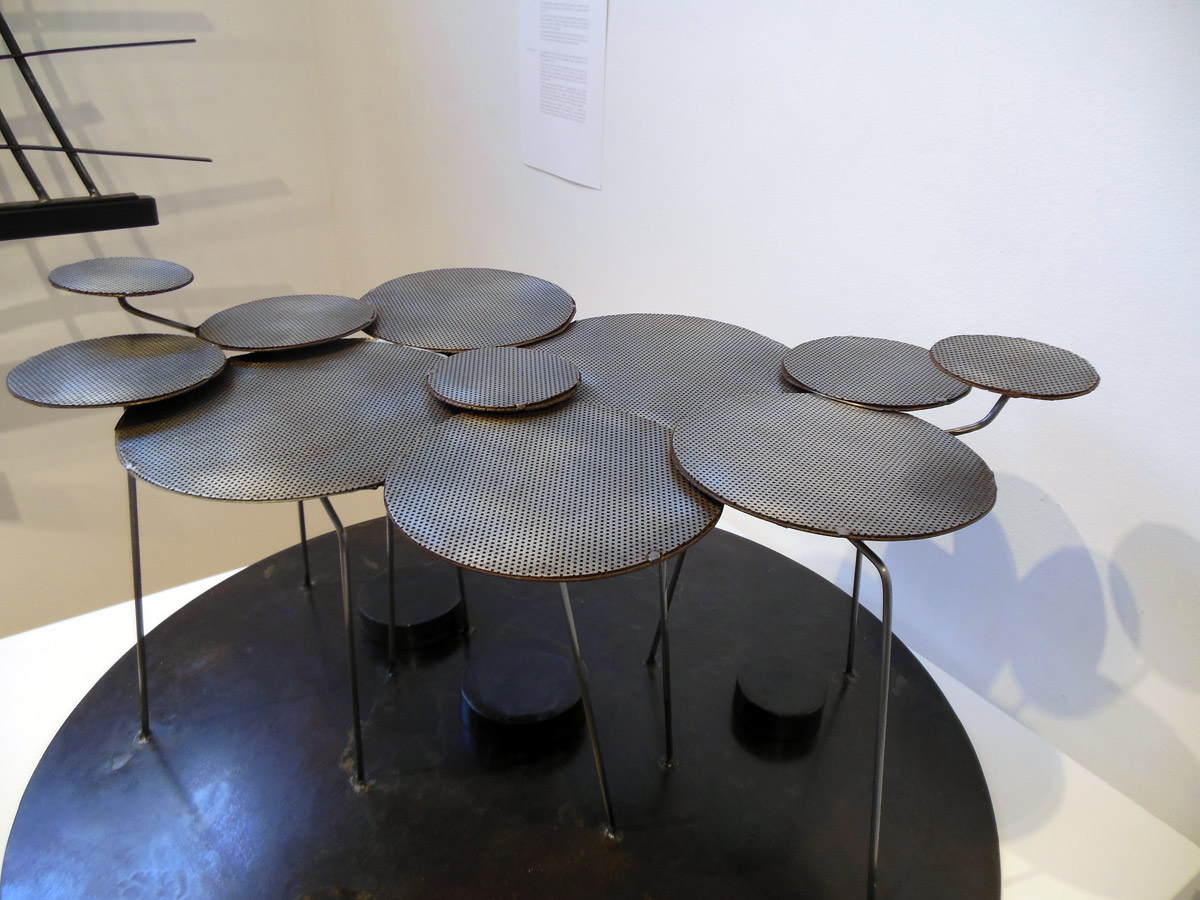
A solid first solo exhibition from my friend David Wood at Gasworks Arts Park. Conceptually the show needed a little tightening but technically the work is outstanding (as you would expect from the owner of Bent Metal and one of Melbourne’s best blacksmiths) and aesthetically pleasing. I particularly liked the topographic remapping of both Port Phillip Bay and St Kilda Junction.

Anyone who knows Melbourne intimately would recognise the ramps and walkways that bisect the interior of the junction even in their abstract form, especially the tram ramp ascending from Dandenong Road to St Kilda Road. I also admired the Nardoo sentinels, which are to be made at full size for a public park in Berwick later in the year.

Dr Marcus Bunyan


Many thankx to Woody for allowing me to publish the photographs in the posting. Please click on the photographs for a larger version of the image.


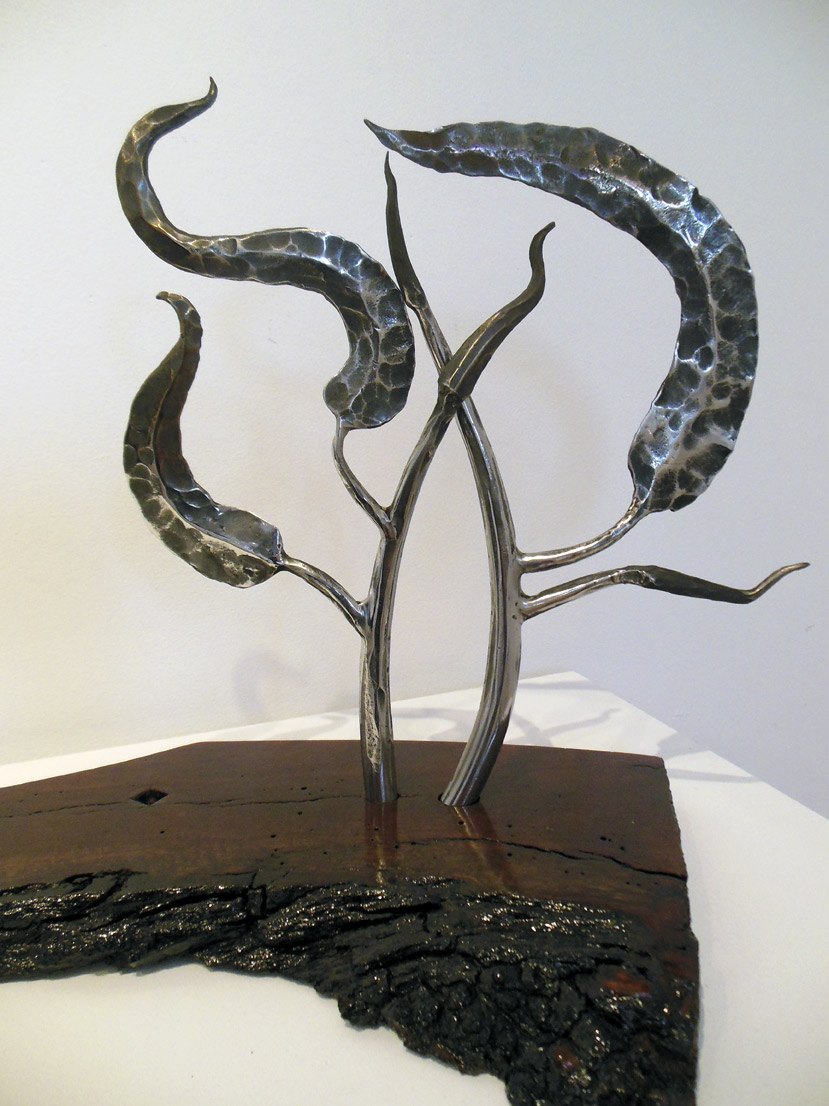
David Wood (Australian) 'Ghost Gum One' 2013


David Wood (Australian)
Ghost Gum One
2013
Stainless steel and red gum
72 x 170 x 39cm
Photo: Marcus Bunyan


David Wood (Australian) 'Ghost Gum Two' 2013


David Wood (Australian)
Ghost Gum Two
2013
Stainless steel and red gum
78 x 24 x 36cm
Photo: Marcus Bunyan


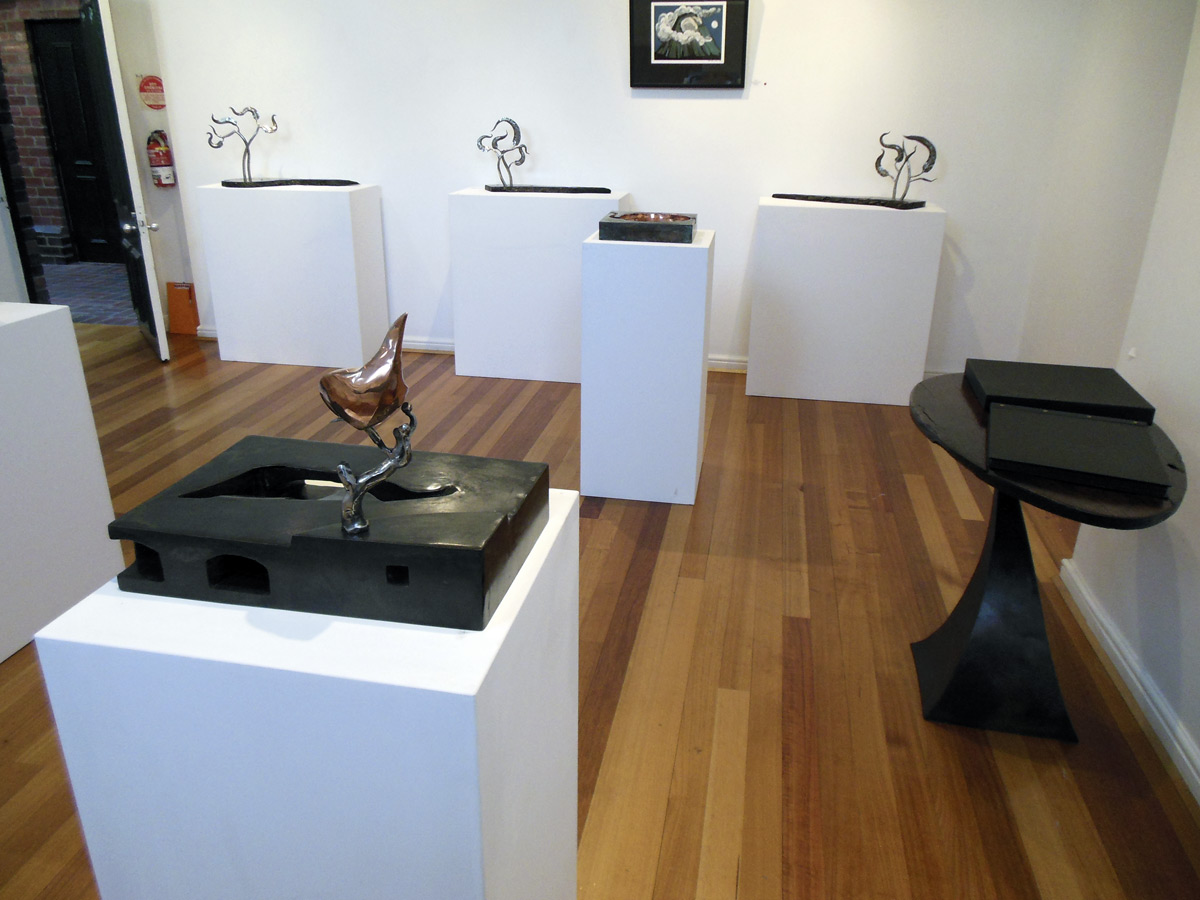
Installation view of the exhibition 'Sentinels' by David Wood at Gasworks Art Park


Installation view of the exhibition Sentinels by David Wood at Gasworks Art Park
Photo: Marcus Bunyan


My work has two main driving forces – a desire to explore and continue a blacksmithing inheritance and investigating place and how we interact with the physical world. I am interested in how landmarks within landscape can shape, reflect and define our Nation’s ethos and their place as sentinels within our history.

I use traditional forging techniques and prefer to leave hammer marks and traces of process exposed, as testament, on the finished sculpture. The medium itself represents an industry crucial to our economy but detrimental to our landscape.

This current group of work, inspired by the burning of two ghost gums in the Northern Territory is a personal muse on Australian culture. The burning of the ghost gums made famous by Albert Namatjira was a terrible act of vandalism. Small silvery ghostly gum trees stand upon burnt timber bases intended to evoke images of landscape and cultural practice, both ancient and current. Forged vessels take inspiration from the ghost gums’ colour and form.

The pieces are abstract representations in metals and timber of trees, mountain ranges and land formations. Mountain ranges are used to survey our cities and towns. They collect our water and are harvested for their riches. Once they were homes to spiritual beings.

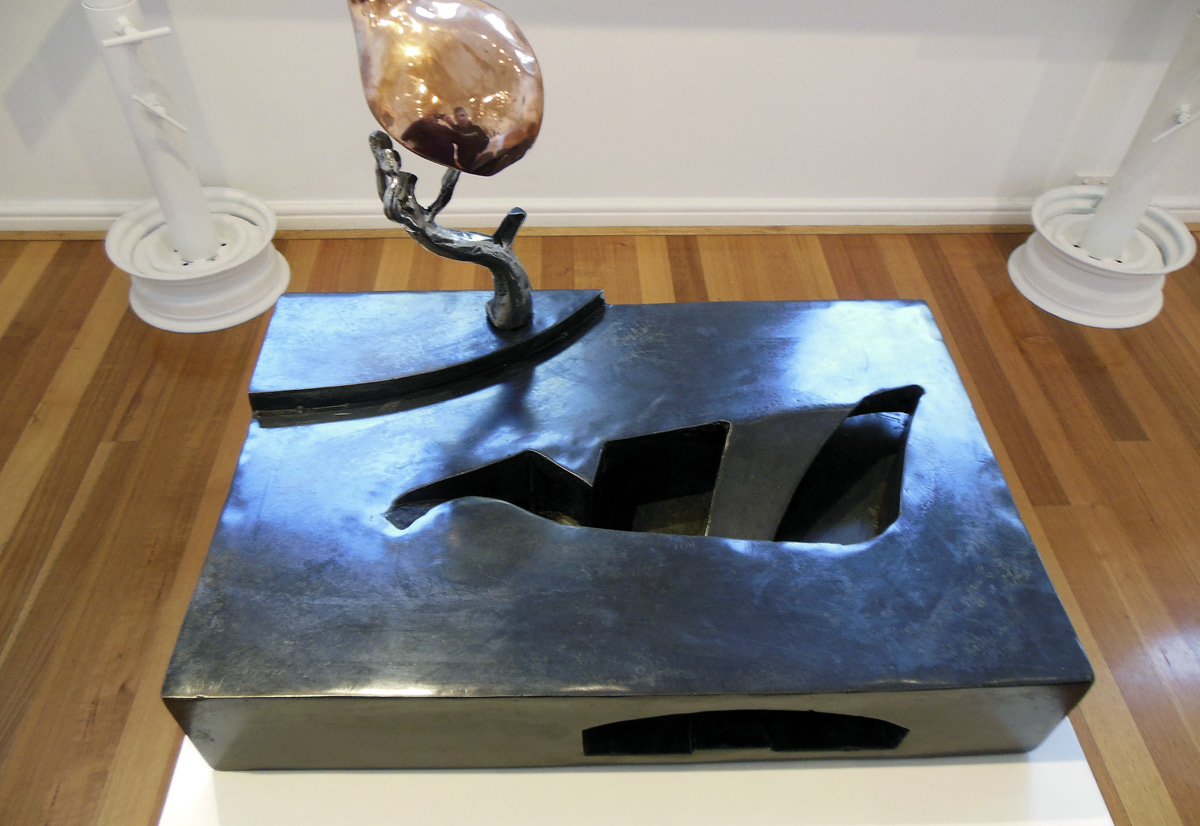
I was born at the base of mount Baw Baw and have created homage. This mountain for me is a keeper of secrets. As an adult I live upon the shores of Port Phillip Bay, a quiet sleeping giant. St Kilda junction is a lyrical gesture to paths crossing and the corroboree tree that still watches over this site.

Bought together, the sculptures encapsulate a personal sense of belonging to a place. They also endeavour to explore greater cultural notions of ownership.

Artist statement by David Wood


David Wood (Australian) 'Port Phillip Bay' 2013


David Wood (Australian)
Port Phillip Bay
2013
Copper
33 x 33 x 70cm
Photo: Marcus Bunyan


David Wood (Australian) 'St Kilda Junction' 2013


David Wood (Australian)
St Kilda Junction
2013
Stainless steel, mild steel and copper
27 x 40 x 32cm
Photo: Marcus Bunyan


David Wood (Australian) 'St Kilda Junction' 2013 (detail)


David Wood (Australian)
St Kilda Junction (detail)
2013
Stainless steel, mild steel and copper
27 x 40 x 32cm
Photo: Marcus Bunyan


David Wood (Australian) 'Nardoo sentinels' 2013 (detail)

David Wood (Australian) 'Nardoo sentinels' 2013 (detail)


David Wood (Australian)
Nardoo sentinels (detail)
2013
Mild steel
Photos: Marcus Bunyan


Nardoo sentinels

Inspired by classical structures within great gardens, in particular the Temple of the Winds in the Royal Melbourne Botanic Gardens, this functional sculpture reflects the transparency of our native landscape, significant in shaping our cultural ethos. Mirroring a cluster of trees with their canopy hovering above, it defines its space and surrounds. This group of sentinels stand together to offer protection from the elements.

The singular motif takes the form of nardoo, a native water and food plant. Its finishes mimicking its natural colours and hues. Intended to be a water collector, the shelter is engineered to allow rainwater to drain through its canopy and channel down its stems. Visibility of water flow adds a kinetic dimension to the sculpture. Commissioned exclusively by Pask Development Group, via Tract Landscape Architects, this rotunda is a central feature for a public park. It will stand proud later this year.


David Wood (Australian) 'Nardoo sentinels' (left) and 'Reed Rotunda' (right) 2013


David Wood (Australian)
Nardoo sentinels (left) and Reed Rotunda (right)
2013
Mild steel
Photo: Marcus Bunyan


David Wood (Australian) 'Reed rotunda' 2013


David Wood (Australian)
Reed rotunda
2013
Mild steel
70 x 70 x 46cm
Photo: Marcus Bunyan


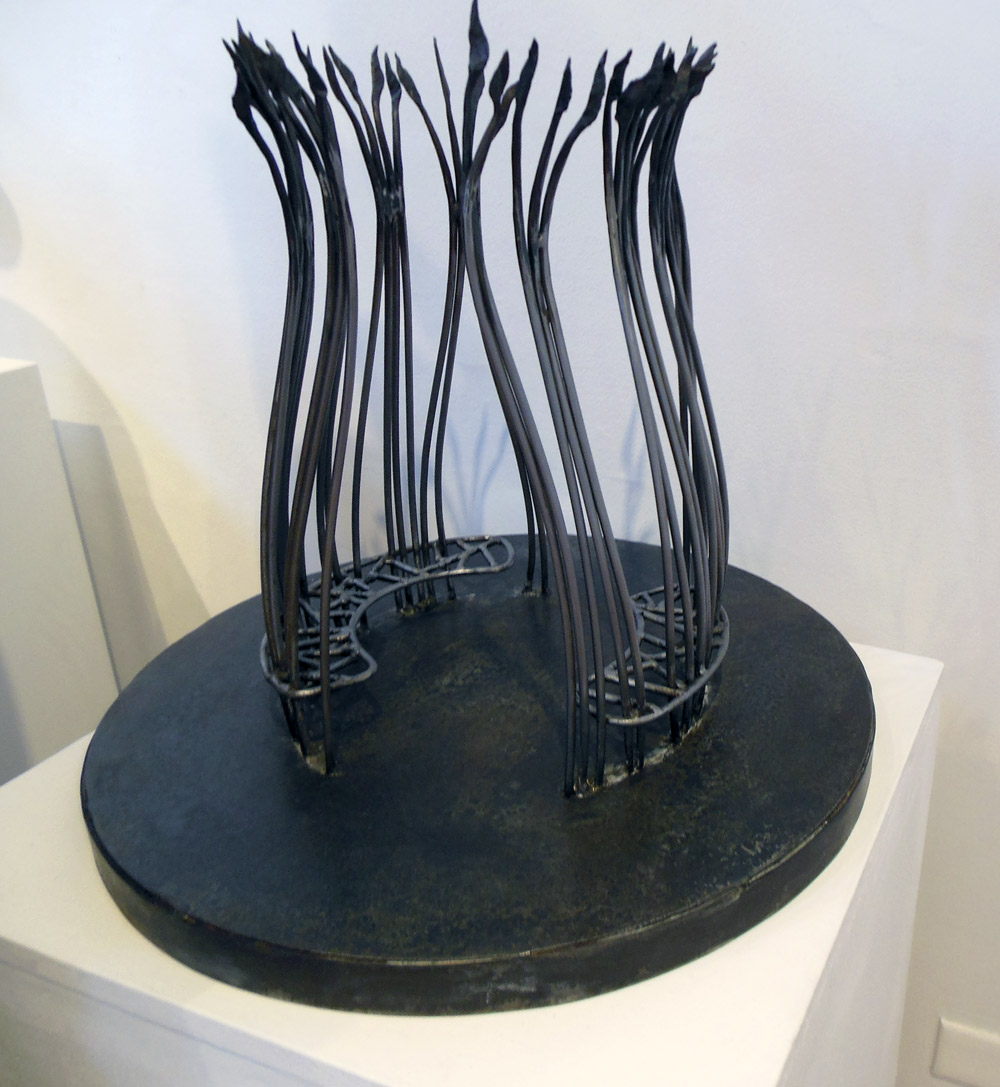
Reed rotunda

The design derives a motif from the natural growth of the Phragmite Australis reeds, a wetland plant indigenous to our continent home.

The common reed is known to everyone and surrounds us. It plays an integral role in conservation as habitat and a guardian for wildlife. A natural purifier, removing toxins from our creeks and wetlands. A reed standing alone may be insignificant, but when congregating on mass, it becomes a formidable force in both structure and function. An organic organism that frames and protects the landscape, moves and changes colour with the seasons, rides the wind and plays with light and shade.

Often overlooked as a feature of landscape or viewed as slightly raggedy, this piece invites visitors to celebrate these reeds as something beautiful and to use them as a metaphor for community, refuge and purification of the spirit and soul.


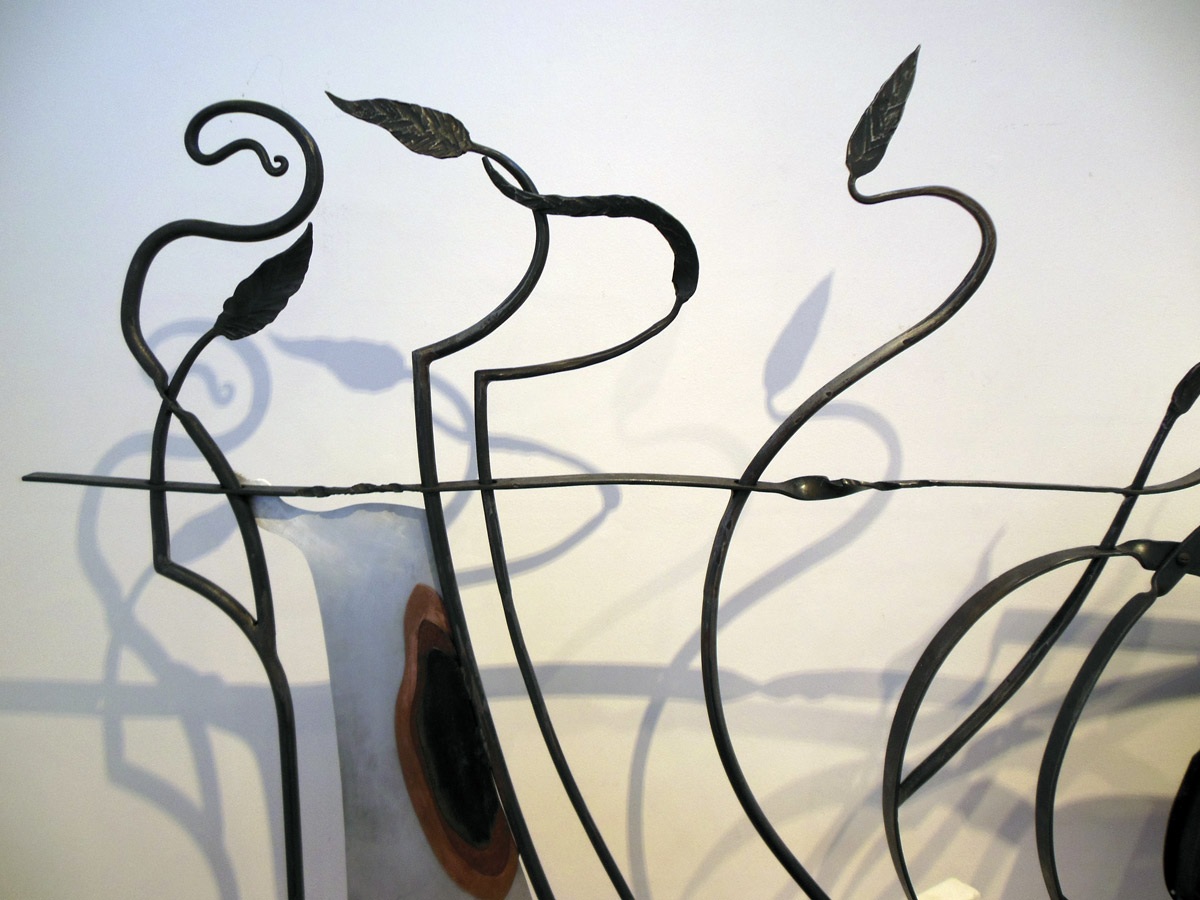
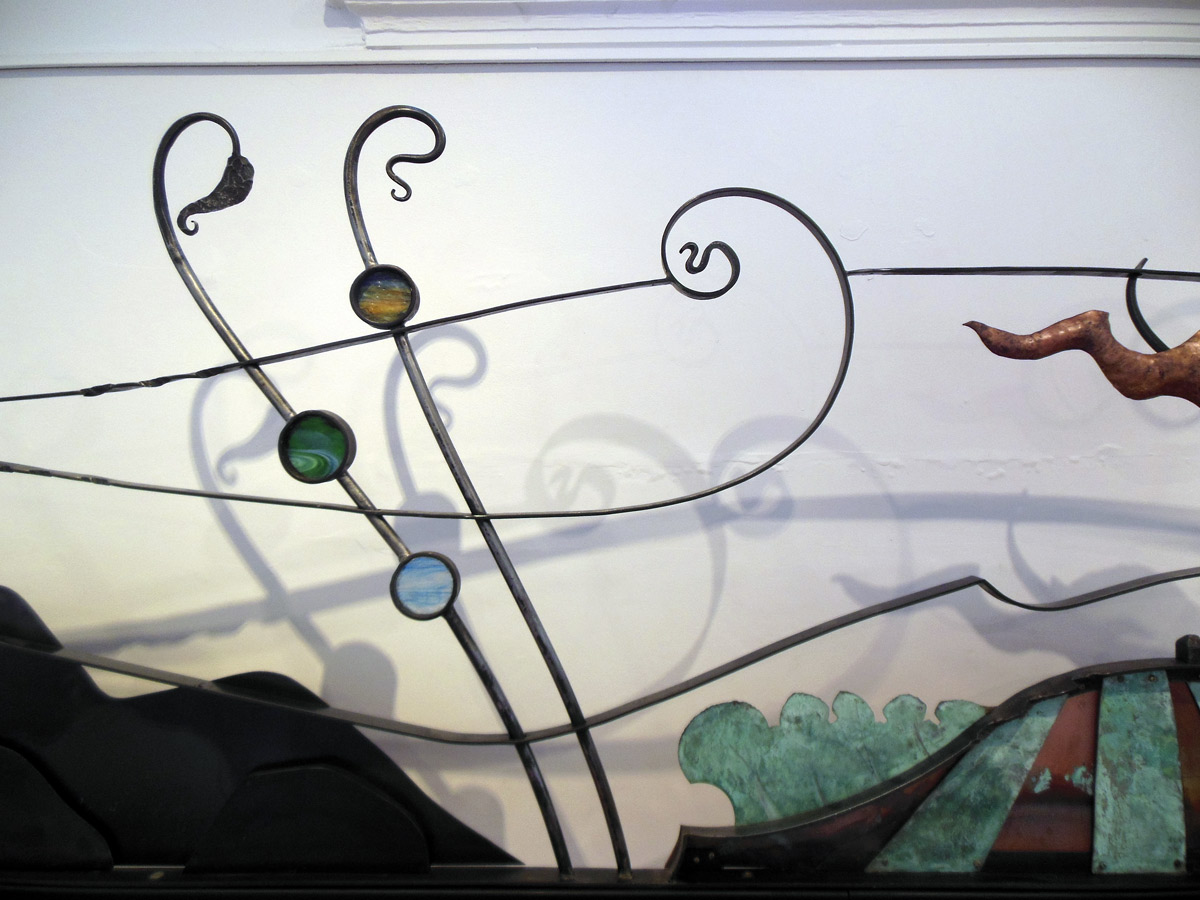
David Wood (Australian) 'Baw Baw wall feature' 2013 (detail)

David Wood (Australian) 'Baw Baw wall feature' 2013 (detail)


David Wood (Australian)
Baw Baw wall feature (detail)
2013
Mild steel, stainless steel, copper, brass, aluminium and glass
6200 x 500 x 70cm
Photos: Marcus Bunyan


Gasworks Arts Park
21 Graham Street
Albert Park VIC 3206
Phone: (03) 8606 4200

Gallery hours: 10am – 4pm each day

Gasworks Arts Park website

LIKE ART BLART ON FACEBOOK

Back to top

Exhibition: ‘Sophia Szilagyi: water studies’ at Beaver Galleries, Canberra

Exhibition dates: 23rd May – 11th June 2013


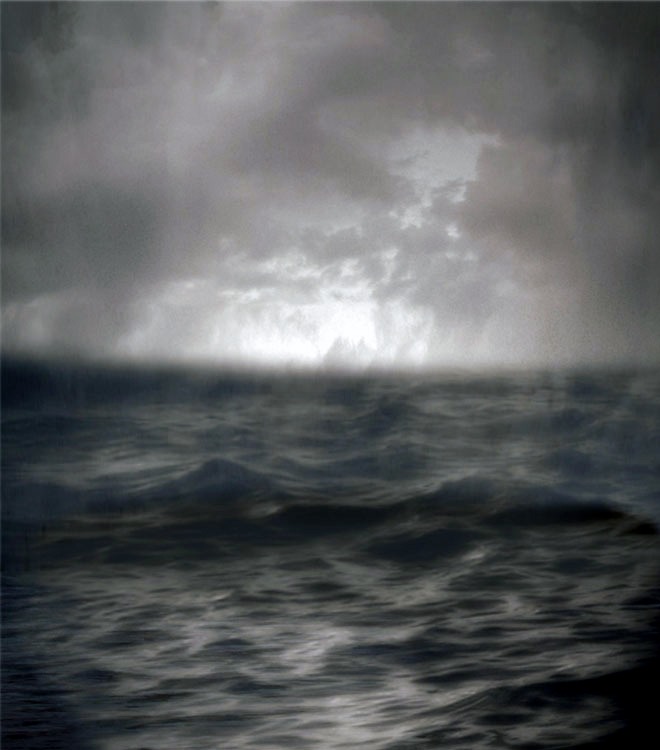
Sophia Szilagyi (Australian, b. 1973) 'night waves I' 2013


Sophia Szilagyi (Australian, b. 1973)
night waves I
2013
Pigment print on archival rag paper
Edition 2 of 15
29 x 29cm


“It is intangible, incalculable, a thing to be felt, not comprehended – a music of the eyes, a melody of the heart…”


John Ruskin, art critic


“Once, Turner had himself lashed to the mast of a ship for several hours, during a furious storm, so that he could later paint the storm. Obviously, it was not the storm itself that Turner intended to paint. What he intended to paint was a representation of the storm. One’s language is frequently imprecise in that manner, I have discovered.”

David Markson, Wittgenstein’s Mistress


How appropriate that these stunning water studies by artist Sophia Szilagyi should be exhibited in Canberra as the blockbuster J. M. W. Turner exhibition Turner from the Tate: The Making of a Master opens at the National Gallery of Australia.

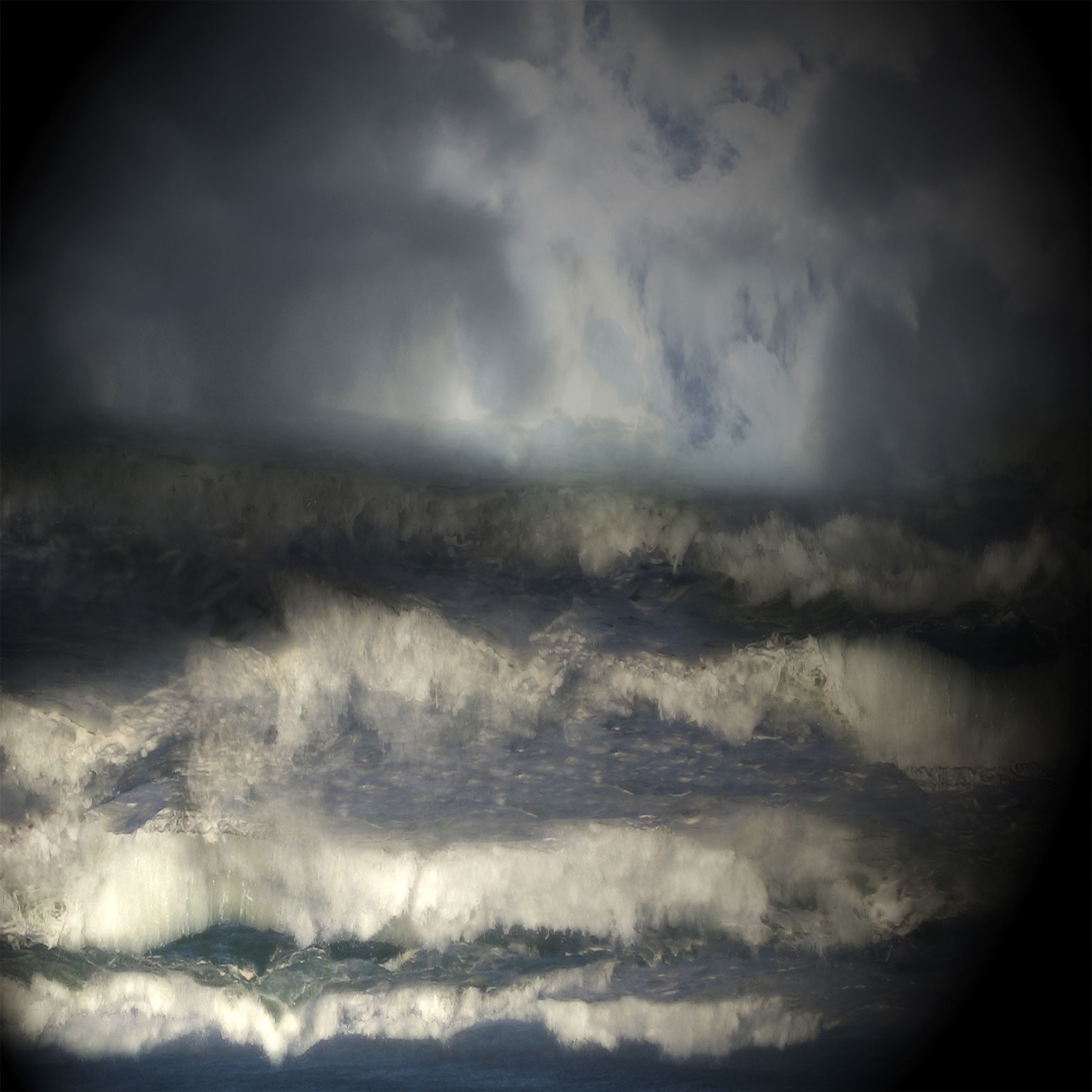
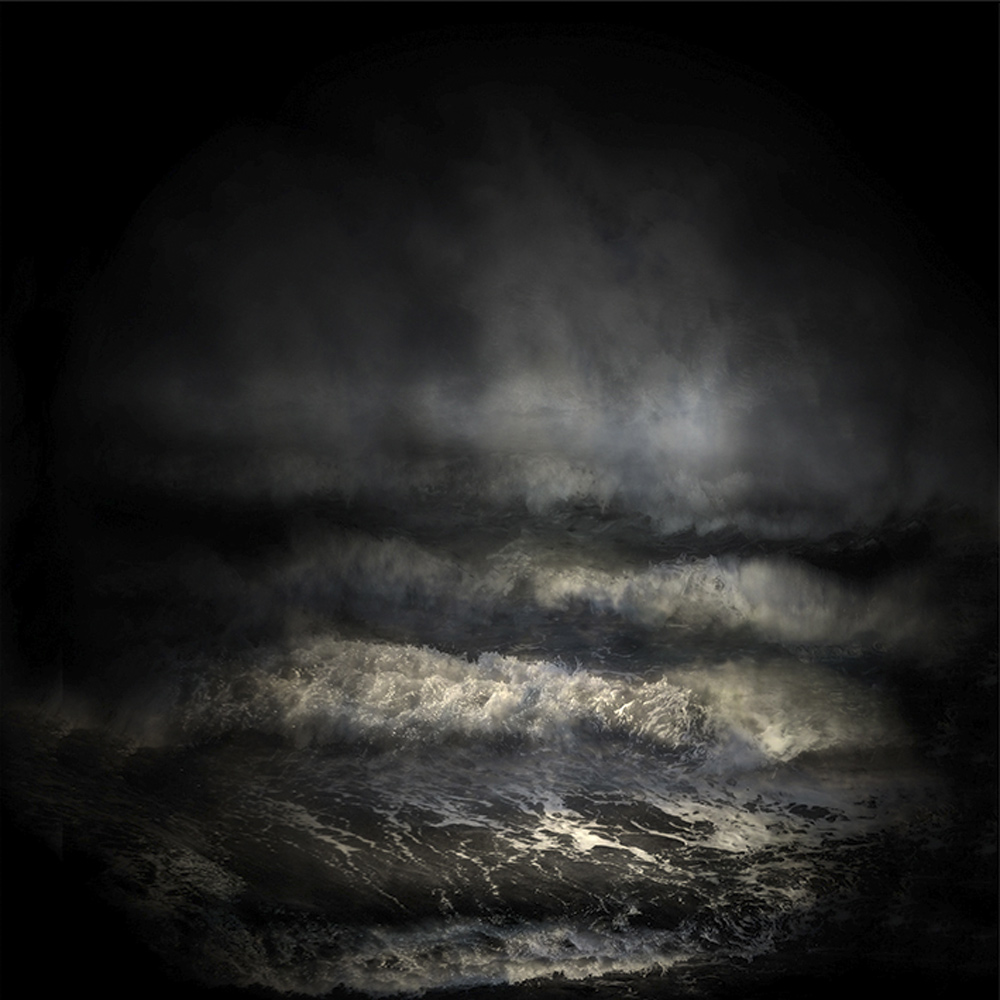
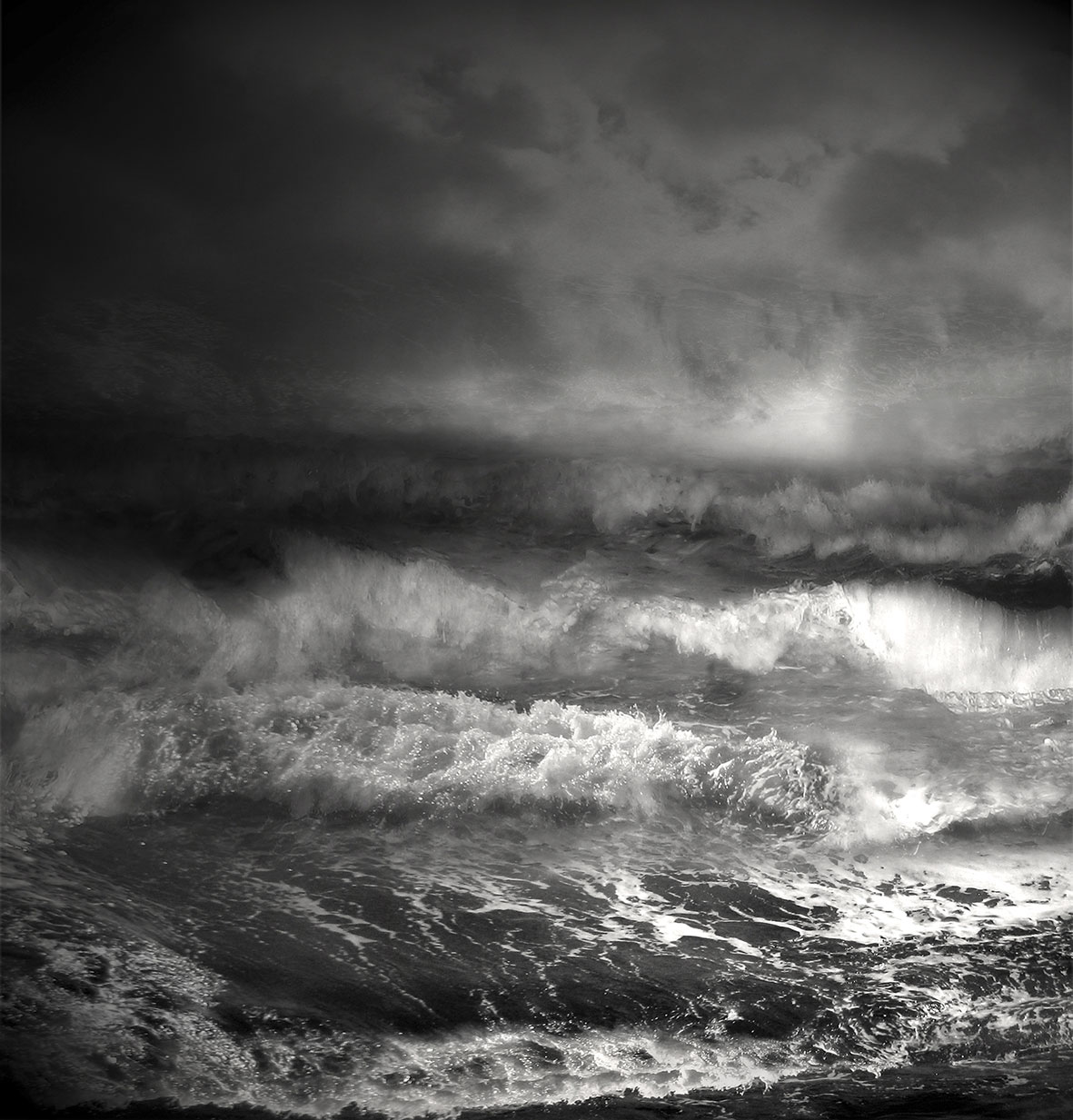
I love everything thing about these works: the compacted and layered sense of space (the eye of the printmaker brought to bare in the construction of the images rather than the eye of the photographer), the lack of a traditional vanishing point that allows the viewer to be immersed in the prints, the tonality, the texture and immediacy of the images. Szilagyi pushes the work to the limits and, amid the swirling masses of light and colour, a powerful mood is evoked.1 These towering, raging canvases portray the gathering force of the sea, its immediacy and energy; its danger, wonder and sublime beauty. They are as much landscapes of the mind and the imagination as of the sea. Turner, lashed to  a mast during a furious storm so that he could later paint a representation of the storm, would surely have been proud of these meditations upon nature/life. Bravura. Bravo.

Dr Marcus Bunyan


1/ See Grishin, Sasha. “Genius shows his true colours,” in The Age newspaper, Saturday, June 1, 2013, p. 2.


Many thankx to Beaver Galleries for allowing me to publish the photographs in the posting. Please click on the photographs for a larger version of the image.


“Light shimmers, darkness settles, the sea opens its arms to swallow up the sky. Sophia Szilagyi’s imagery evokes the natural world and imbues it with an emotional resonance through the artist’s skilful manipulation of diametrically opposed elements. Light abuts dark, the dense almost claustrophobic space in some works contrast with open seas and vast skies that imply the infinite in others. Imagery is constructed through digital printmaking techniques, layered to create textural complexities, while capturing the oscillations in mood and atmosphere that mirror the ebb and flow of human emotions. Fear, wonder, and danger exist in these images that capture the beauty and grandeur found in the physical world, while also charting an internal topography.”


Marguerite Brown


Sophia Szilagyi (Australian, b. 1973) 'stormy seas (after Courbet)' 2013


Sophia Szilagyi (Australian, b. 1973)
stormy seas (after Courbet)
2013
Pigment print on archival rag paper
Edition 2 of 15
30 x 35cm


Sophia Szilagyi (Australian, b. 1973) 'wave' 2013


Sophia Szilagyi (Australian, b. 1973)
wave
2013
Pigment print on archival rag paper
Edition 9 of 20
49.5 x 57cm


Sophia Szilagyi (Australian, b. 1973) 'breaking' 2013


Sophia Szilagyi (Australian, b. 1973)
breaking
2013
Pigment print on archival rag paper
Edition 4 of 10
96 x 122cm


Sophia Szilagyi is a printmaker who uses digital printmaking to create scenes of re-interpreted memory and experience. In her multi-layered compositions, Sophia explores the relationship between fiction and non-fiction, challenging our perceptions of reality and the effects of physical sensation and emotional response on memory. Sophia’s artistic process begins with an impression of a certain painting, personal photograph or experience. Images from a variety of sources are combined and overlapped so that the general interpretation of her work is a patchwork of real and imagined experiences. Sophia achieves this seamless layering by using digital technology, giving her the freedom to manipulate the imagery to create the desired mood and expression. The completed works are printed on archival rag paper as this highly absorbent surface enhances the softness and dreamlike quality of her imagery. In this current exhibition, Sophia draws her inspiration from the sea and coast, exploring the dualities of intersections between light and dark, earth and ocean. Through her prints, Sophia seeks to capture a sense of wonder, fear, beauty and, sometimes, danger that exists in both nature and the imagination.

Sophia Szilagyi graduated with First Class Honours from the School of Art and Culture at RMIT in 2000. Since graduating, Sophia has held a number of solo shows as well as participating in many group exhibitions across Australia. Her work has been selected in numerous print awards including the Fremantle Print Prize (2007) and the Banyule Award for Works on Paper (2011, 2009 and 2007). In 2005, Sophia was commissioned to complete a work for the Print Council of Australia and her work is represented in collections including the Burnie Regional Art Museum, La Trobe Regional Art Gallery, Wagga Wagga Art Gallery, Queensland University of Technology and State Library of Victoria.

Press release from Beaver Galleries


Sophia Szilagyi (Australian, b. 1973) 'light sea' 2013


Sophia Szilagyi (Australian, b. 1973)
light sea
2013
Pigment print on archival rag paper
Edition 1 of 15


Sophia Szilagyi (Australian, b. 1973) 'dark sea' 2013


Sophia Szilagyi (Australian, b. 1973)
dark sea
2013
Pigment print on archival rag paper
Edition 1 of 15
22 x 22 cm


Sophia Szilagyi (Australian, b. 1973) 'ocean view I' 2013


Sophia Szilagyi (Australian, b. 1973)
ocean view I
2013
Pigment print on archival rag paper
Edition 1 of 5
76 x 77cm


Sophia Szilagyi (Australian, b. 1973) 'ocean view II' 2013


Sophia Szilagyi (Australian, b. 1973)
ocean view II
2013
Pigment print on archival rag paper
Edition 4 of 5
78 x 74cm


Sophia Szilagyi (Australian, b. 1973) 'settling' 2013


Sophia Szilagyi (Australian, b. 1973)
settling
2013
Pigment print on archival rag paper
Edition 2 of 10
80 x 70cm


Beaver Galleries
81 Denison Street
Deakin, Canberra
ACT 2600, Australia
Phone: 02 6282 5294

Opening hours
Tuesday – Saturday 10am – 5pm

Beaver Galleries website

LIKE ART BLART ON FACEBOOK

Back to top

Exhibition: ‘Alan Constable: Ten Cameras’ at South Willard, Los Angeles

Exhibition dates: 4th May – 2nd June 2013

Curator: Ricky Swallow


Wow it really happened! Congratulations to Alan Constable, Sim Lutin and Melissa Petty from Arts Project Australia and to Ricky Swallow for curating.


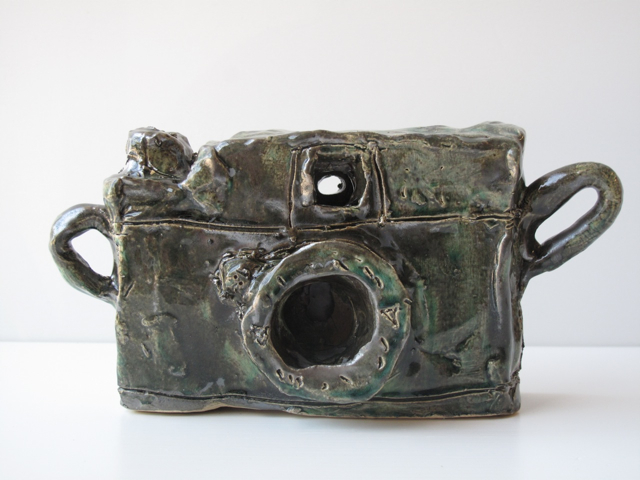
Alan Constable (Australian, b. 1956) 'Red NEK SLR' 2011


Alan Constable (Australian, b. 1956)
Red NEK SLR
2011
Ceramic
5.5 x 12.25 x 4.75 inches
© Alan Constable


“How would a comb that cannot untangle hair look? You can make the object dangerous, humorous, useless, sinister.”


Christina Ramberg


Alan Constable’s cameras are real ‘things’; they command constant attention from their audience and from their lucky owners. The resemblance of these sculptures to cameras is a starting point more than an end point, in the same way a swelling foot as painted by Phillip Guston behaves unlike any sensible foot, or a collage of a doorway by James Castle exceeds the expectation its structural simplicity presents.

Constable’s sculpture makes malleable mischief of both the form and function of the camera. In his hands it becomes an anthropomorphic character with endless variations and possibility. Specific types are modelled in clay from magazine advertisements with apt abbreviation and gesture, then glazed and fired in solid, sometimes soupy colours that further activate their surfaces and transform their sober dispositions.

The glazed surfaces are embellished with details so specific and beautiful they necessitate a tactile engagement with the object. As ‘things’ they still buzz with the handling and energy Constable employs in their making. Dials formed separately and thumbed into position, viewfinder windows cut directly through surfaces together with an oversized scale give Constable’s cameras the feeling of buildings or vessels. Scribed lines articulate both panels and seams, skewed inscriptions indicate model and make: all this information registers with efficiency to produce compelling objects.

The basic slab built walls forming the camera’s body also conceal one of the most interesting elements about these sculptures – internal chambers and walls have been built during the early stages of the works. Such entombed detail points towards Constable’s dedication to conceive and map a complete object, a total exploration of his subject based on unique invention and interpretation.”

Ricky Swallow, April 2013


South Willard is pleased to present Alan Constable: Ten Cameras as its next Shop Exhibit. Curated by Ricky Swallow in collaboration with Arts Project Australia, this is the first solo presentation of Constable’s ceramic sculptures in the United States. Now in his late 50’s, Constable has been producing his art at Arts Project studio’s in Melbourne since 1987, and has exhibited his camera sculptures in both gallery and institutional exhibitions to critical praise over the past 7 years.

Constable is also participating in Outsiderism curated by Alex Baker at Fleisher Ollman gallery in Philadelphia this month.

Ricky wishes to thank Alex Baker for his introduction to Alan’s work, and Sim Luttin and Melissa Petty at Arts Project Australia for their generous assistance.


Alan Constable (Australian, b. 1956) 'Orange AKI SLR' 2011


Alan Constable (Australian, b. 1956)
Orange AKI SLR
2011
Ceramic
6 x 10 x 4 inches
© Alan Constable


Alan Constable (Australian, b. 1956) 'Green SLR' 2011


Alan Constable (Australian, b. 1956)
Green SLR
2011
Ceramic
7.75 x 9 x 3 inches
© Alan Constable


South Willard

Arts Project Australia website

LIKE ART BLART ON FACEBOOK

Back to top

Exhibition: ‘Pat Brassington: Quill’ at Bett Gallery, Hobart

Exhibition dates: 10 May – 31 May 2013


Pat Brassington (Australian, b. 1942) 'Blink' 2013


Pat Brassington (Australian, b. 1942)
Blink
2013
Pigment print
72 x 50cm (paper size)
edition of 8


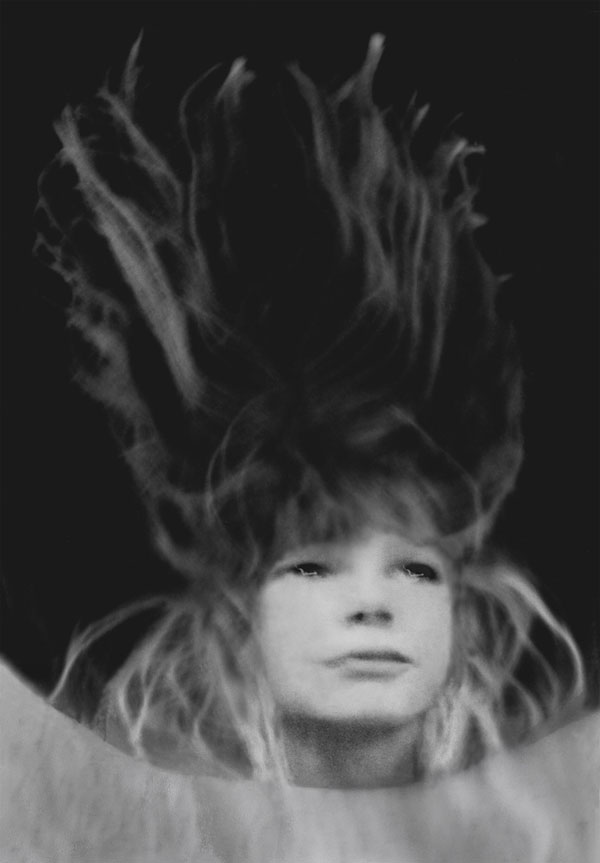
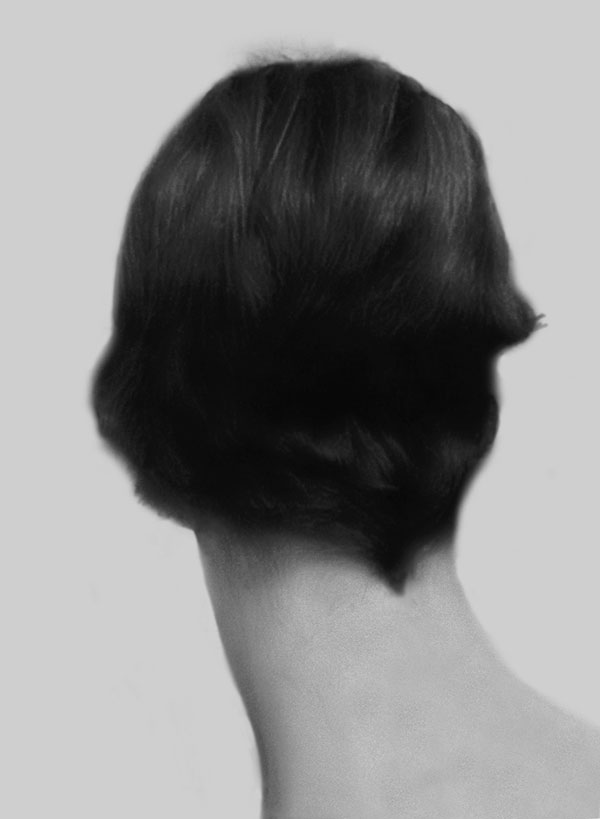
Always enigmatic but slightly more accessible new work from Australia’s master of ambiguity Pat Brassington. Not that I would say that any of these images are really memorable in their own right but collectively they speak to the alienation of everyday life – alienation from Self, shadow and surroundings.

Marcus


Many thankx to Bett Gallery for allowing me to publish the photographs in the posting. Please click on the photographs for a larger version of the image.


Pat Brassington (Australian, b. 1942) 'Candie' 2013


Pat Brassington (Australian, b. 1942)
Candie
2013
Pigment print
60 x 44cm (paper size)
edition of 8


Pat Brassington (Australian, b. 1942) 'Deuce' 2013


Pat Brassington (Australian, b. 1942)
Deuce
2013
Pigment print
72 x 50cm (paper size)
edition of 8


Pat Brassington (Australian, b. 1942) 'Fathoms Deep' 2013


Pat Brassington (Australian, b. 1942)
Fathoms Deep
2013
Pigment print
72 x 50cm (paper size)
edition of 8


Pat Brassington (Australian, b. 1942) 'Masterclass' 2013


Pat Brassington (Australian, b. 1942)
Masterclass
2013
Pigment print
72 x 50cm (paper size)
edition of 8


Pat Brassington (Australian, b. 1942) 'Matinee' 2013


Pat Brassington (Australian, b. 1942)
Matinee
2013
Pigment print
72 x 50cm (paper size)
edition of 8


Pat Brassington (Australian, b. 1942) 'Mind Game' 2013


Pat Brassington (Australian, b. 1942)
Mind Game
2013
Pigment print
60 x 46cm (paper size)
edition of 8


Pat Brassington (Australian, b. 1942) 'Quicksilver' 2013


Pat Brassington (Australian, b. 1942)
Quicksilver
2013
Pigment print
60 x 50cm (paper size)
edition of 8


Pat Brassington (Australian, b. 1942) 'Shadow Boxer' 2013


Pat Brassington (Australian, b. 1942)
Shadow Boxer
2013
Pigment print
72 x 50cm (paper size)
edition of 8


Pat Brassington (Australian, b. 1942) 'The Guest' 2013


Pat Brassington (Australian, b. 1942)
The Guest
2013
Pigment print
60 x 44cm (paper size)
edition of 8


Pat Brassington (Australian, b. 1942) 'Untitled' 2013


Pat Brassington (Australian, b. 1942)
Untitled
2013
Pigment print, unframed
90 x 65cm (paper size)
edition of 8


Bett Galllery
65 Murray Street
Hobart Tas 7000
Australia
Phone: +61 (0) 3 6231 6511

Opening hours:
Monday – Friday 10am – 5.30pm
Saturday 10am – 4pm
Closed Sundays

Bett Gallery website

LIKE ART BLART ON FACEBOOK

Back to top

Review: ‘Aliza Levi / Books on a White Background’ at Edmund Pearce Gallery, Melbourne

Exhibition dates: 10th April – 4th May 2013


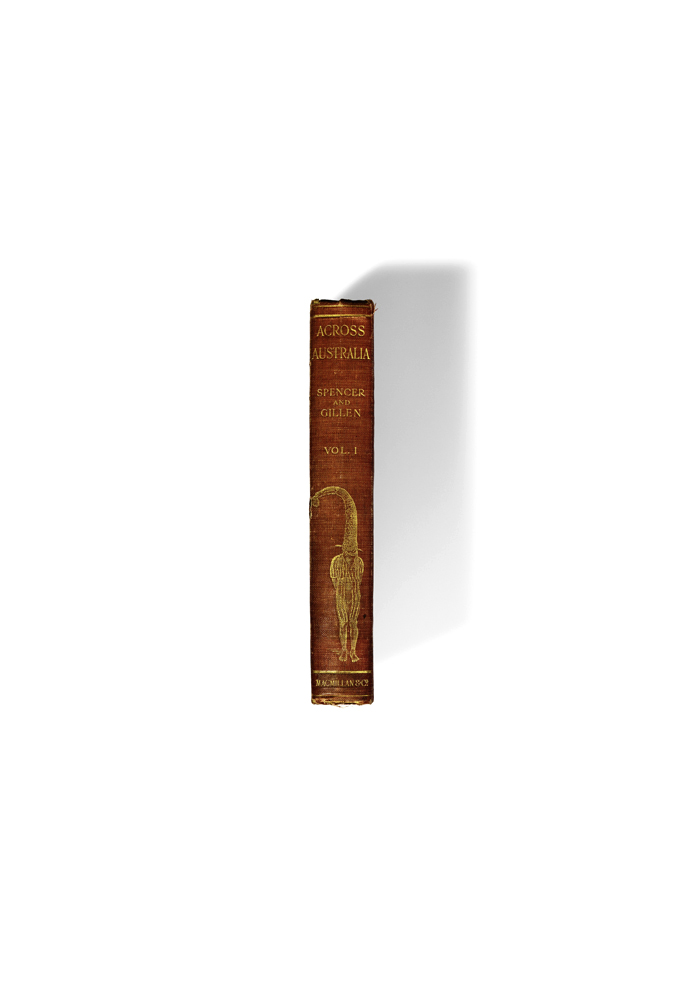
Aliza Levi (South African, b. 1969) 'Across Australia' 2011


Aliza Levi (South African, b. 1969)
Across Australia
2011
Archival Inkjet Print
59 x 42cm


Aura of white

Shadow of black

Books for the boys *

Black bodies out the back


* Books for the bourgeois

* Books for the parlour

* Books for the burning

* Books to hide memories

* Books lost in archives

* Books still in libraries

* Books for the tower (implying Babel)

* Books for the scrapheap

* Books for academics

* Books for the garbo

* Books for the church stall

* Books to forget


Dr Marcus Bunyan


Many thankx to Edmund Pearce Gallery for allowing me to publish the photographs in the posting. Please click on the photographs for a larger version of the image.


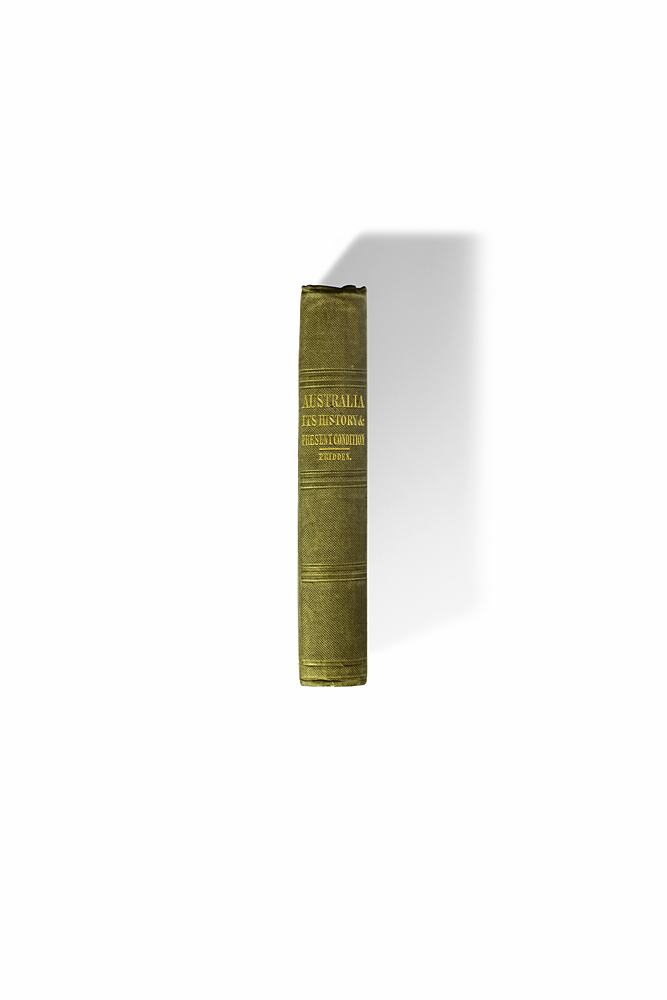
Aliza Levi (South African, b. 1969) 'Australia, its History and Present Condition' 2013


Aliza Levi (South African, b. 1969)
Australia, its History and Present Condition
2013
Archival Inkjet Print
59 x 42cm


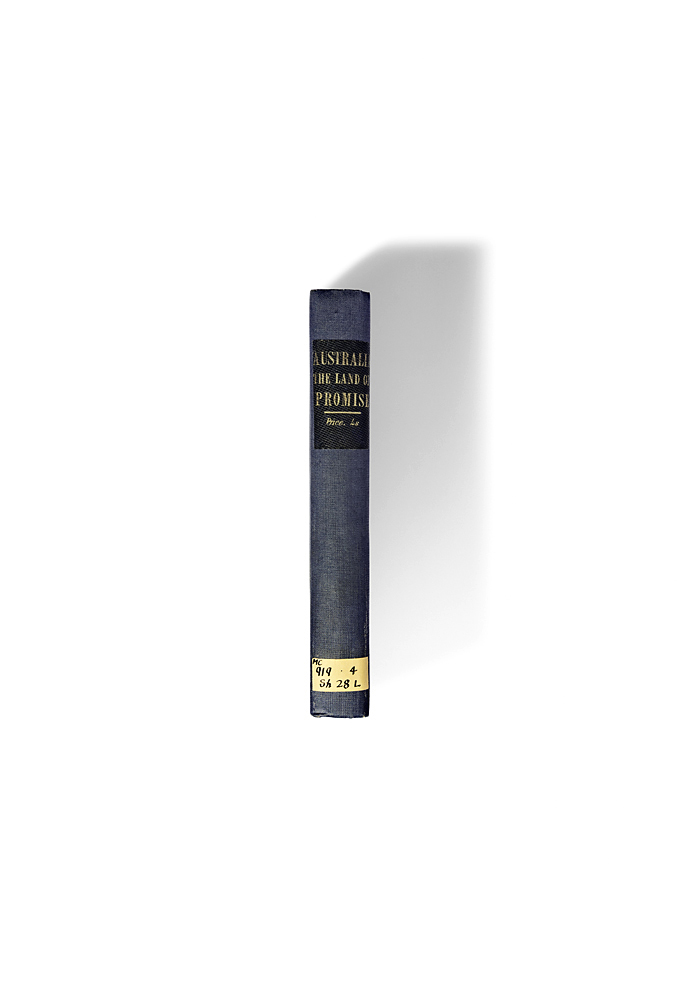
Aliza Levi (South African, b. 1969) 'Australia the Land of Promise' 2012


Aliza Levi (South African, b. 1969)
Australia the Land of Promise
2012
Archival Inkjet Print
59 x 42cm


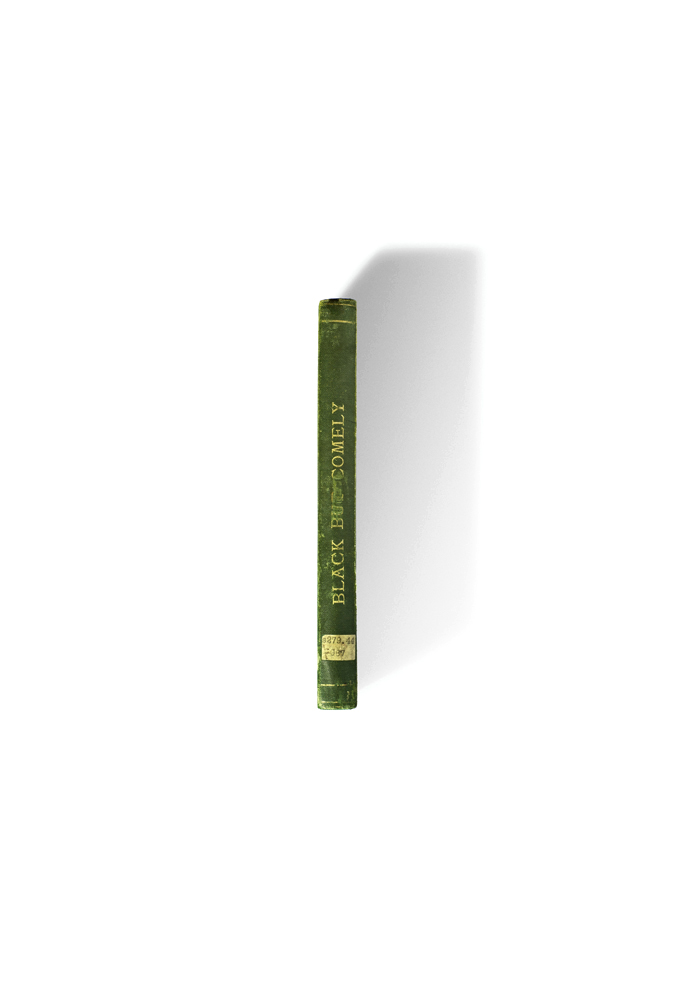
Aliza Levi (South African, b. 1969) 'Black But Comely' 2013


Aliza Levi (South African, b. 1969)
Black But Comely
2013
Archival Inkjet Print
59 x 42cm


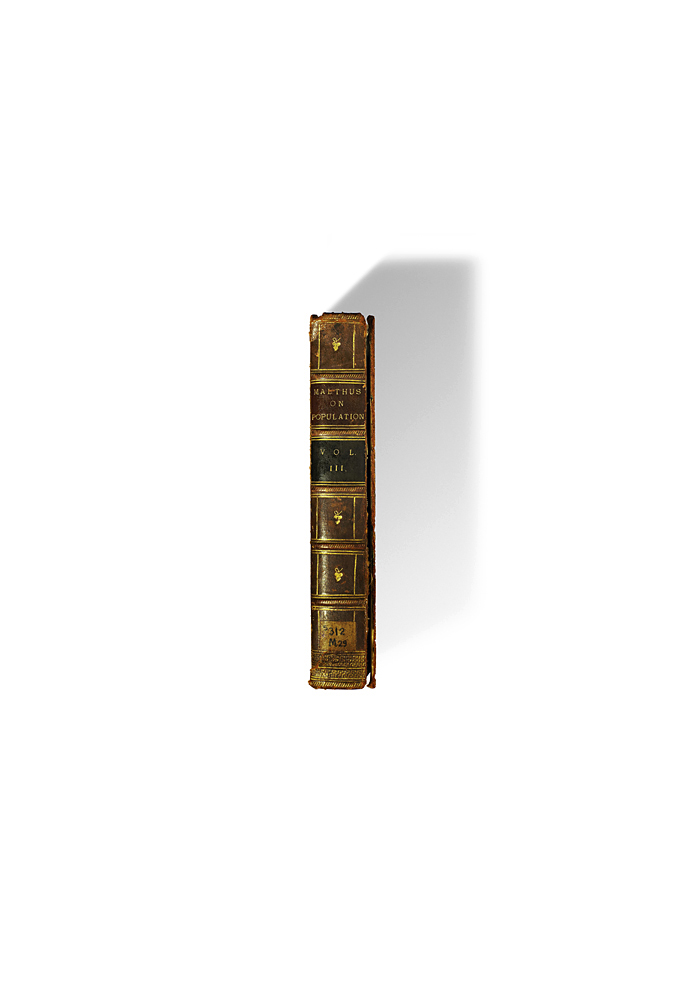
Aliza Levi (South African, b. 1969) 'Malthus on Population' 2012


Aliza Levi (South African, b. 1969)
Malthus on Population
2012
Archival Inkjet Print
59 x 42cm


“I began this series by choosing books that reflected the assumptions and behaviour of the nineteenth century colonists, the persistent notations of self and other. I soon started to notice, that many of the titles were pertinent to today. A blurring of time and relevance, where views from a hundred years ago were intersecting with current attitudes and events.”


Aliza Levi


South African born artist, Aliza Levi premiers her latest body of work Books on a White Background at Edmund Pearce Gallery. Camera and lights in hand, Aliza has been photographing nineteenth century books in small town junk shops, second-hand book dealers, flea markets, rare book collections and libraries both here and in her native South Africa. Books authored by anthropologists, ethnologists and laypersons who took it upon themselves to comment on their travels. To date she has captured nearly 250 books.

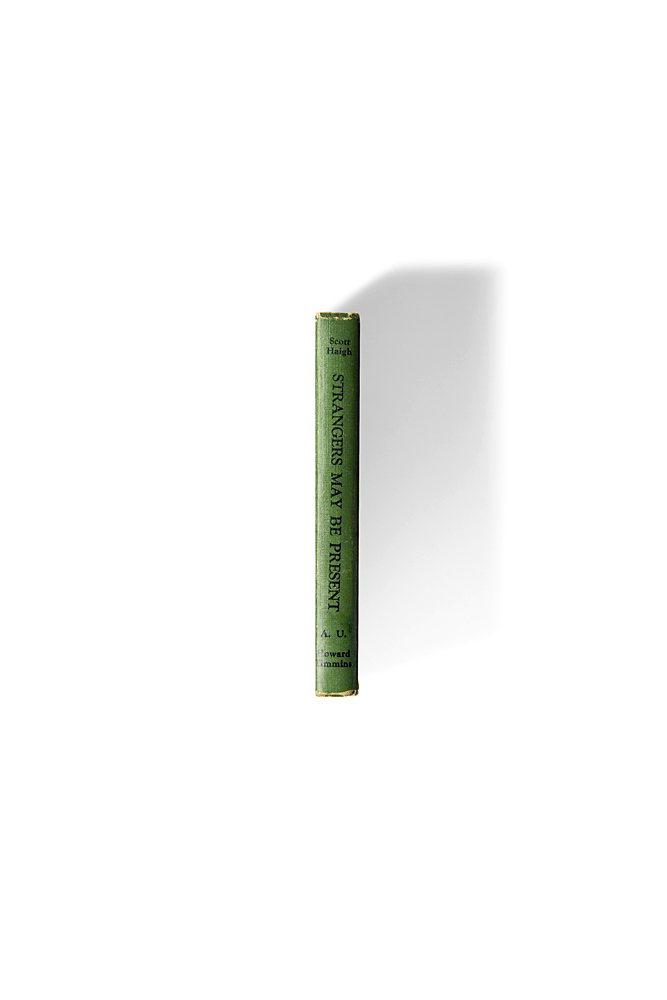
The books, were initially chosen to reflect the ideologies and assumptions of the nineteenth century West. However, Aliza soon realised, that some of the titles were pertinent to today. A blurring of time and relevance where titles from a hundred years ago were intersecting with current attitudes and events. For example, the book Strangers May be Present, in its evocation of colonial settlers viewing the other as stranger also evoked for her the more recent, disturbing events in which the other is articulated: xenophobic attacks and corrective rapes in South Africa. Closer to home, the century old book entitled Australia, the Land of Promise immediately raises questions around certain stark realities such as refugee detention centres.

Kate Warren writes in the accompanying exhibition essay: “The precise regularity of her photographic compositions create a compelling visual plane that immediately draws the viewer’s attention. But look closer. In the situation that Levi presents us with, the seductive nature of the visual cannot escape the immediacy of language. The force of their titles – often starkly confronting and potentially upsetting – leaves the embossing, decoration and materiality of the books themselves as an ironic supplement.”

Born in 1969 in South Africa, Aliza Levi’s practice is multidisciplinary in form yet single-minded in concept. Much of her work presents a relationship to land, consciousness and memory brought on by her South African and Australian citizenship. Having recently presented her work in the UK, this is her first solo show in Melbourne, where she has been producing art as well as facilitating women’s art groups with refugees from Sudan. Levi is currently completing a Masters Degree in Fine Art at Monash University.

Press release from the Edmund Pearce Gallery website


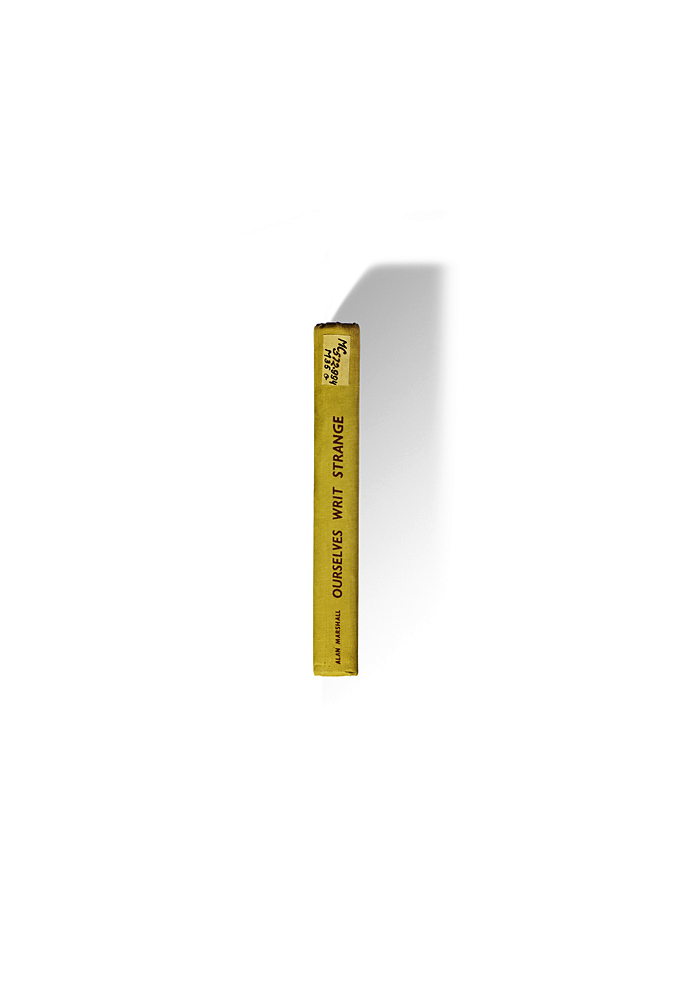
Aliza Levi (South African, b. 1969) 'Ourselves Writ Strange' 2011


Aliza Levi (South African, b. 1969)
Ourselves Writ Strange
2011
Archival Inkjet Print
59 x 42cm


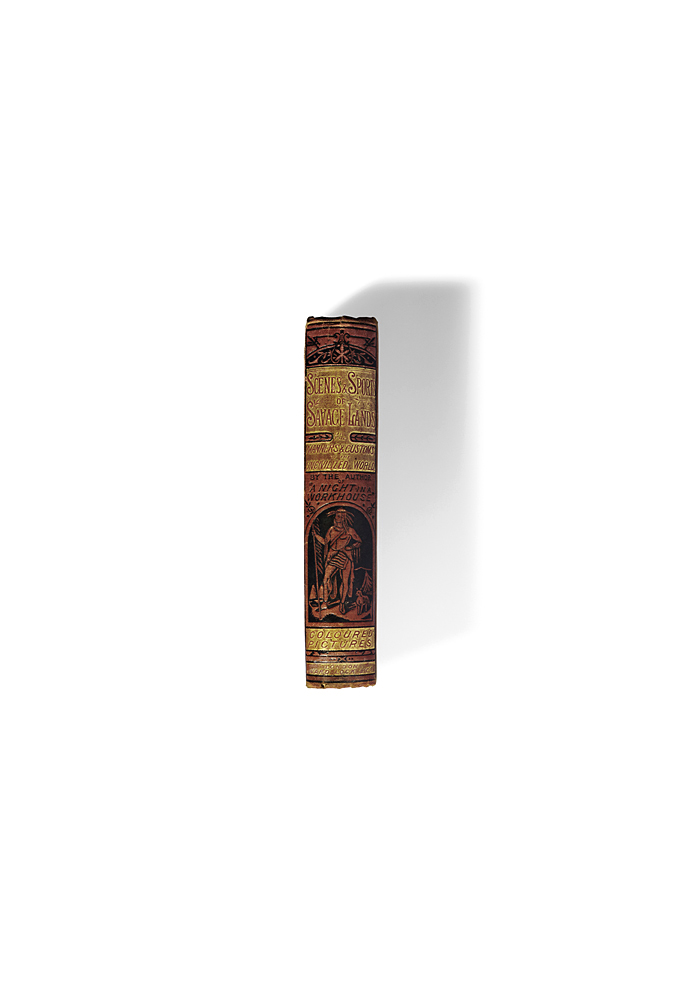
Aliza Levi (South African, b. 1969) 'Scenes and Sports of Savage Lands' 2012


Aliza Levi (South African, b. 1969)
Scenes and Sports of Savage Lands
2012
Archival Inkjet Print
59 x 42cm


Aliza Levi (South African, b. 1969) 'Strangers May Be Present' 2010


Aliza Levi (South African, b. 1969)
Strangers May Be Present
2010
Archival Inkjet Print
59 x 42cm


Aliza Levi (South African, b. 1969) 'The Art of Living in Australia' 2012


Aliza Levi (South African, b. 1969)
The Art of Living in Australia
2012
Archival Inkjet Print
59 x 42 cm


Textual thresholds: The uncomfortable nature of titles in Books on a White Background

Kate Warren

Aliza Levi’s research-based photographic project, Books on a White Background (2012), confronts the viewer with an array that is at once visually compelling and profoundly difficult to look at. The precise regularity of her photographic compositions, the ‘grid-like’ repetition of these images’ installation, the consistent form and shape of her subject matter, and the contrast between the stark white background and the darker shadows thrown, all create a compelling visual plane that immediately draws the viewer’s attention. But look closer. In the situation that Levi presents us with, the seductive nature of the visual cannot escape the immediacy of language. The force of their titles – often starkly confronting and potentially upsetting – leaves the embossing, decoration and materiality of the books themselves as an ironic supplement.

This is not a ‘library’. Although developed from Levi’s archival research, the final photographic project is not an ‘archive’. Rather than displaying the original books themselves as objets trouvés, Levi disavows their materiality and tactility. Photographing the books’ ‘spines’, she not only flattens but removes entirely from view their ‘flesh’ the pages and the content – and in doing so opens up a liminal space that can accommodate and illuminate a multiplicity of (sometimes uncomfortable) and connections between the past and the present.

In the human form, our spines form the connection between the psychical realm of our brains and the physicality of our bodies; between our ‘inner’ subjectivity and our ‘outer’ ability to move, communicate and interact with our surroundings. Likewise in the case of the books that Levi photographs; the spines and titles are liminal spaces that mediate their content and the cultural and historical contexts in which they exist. Gérard Genette calls this the ‘paratext’, the “fringe [which] constitutes a zone between text and off-text, a zone not only of transition but also of transaction: a privileged place of a pragmatics and a strategy, of an influence on the public.” Levi’s project works at this juncture. By denying access to the detailed substance and content of these books she denies their overt ‘authority’, yet at the same time she reveals uncomfortable legacies that persist and cannot be wholly escaped.

The various ‘post’ discourses (post-colonialism, post-structuralism, post-modernism) and their influential theorists and practitioners have done enormous amounts of work to deconstruct and destabilise dominant narratives and histories. The process is necessarily ongoing and open-ended; because although many narratives that were once unquestioned have been removed from their dominance and acceptability, it is often through language that their traces and legacies remain.

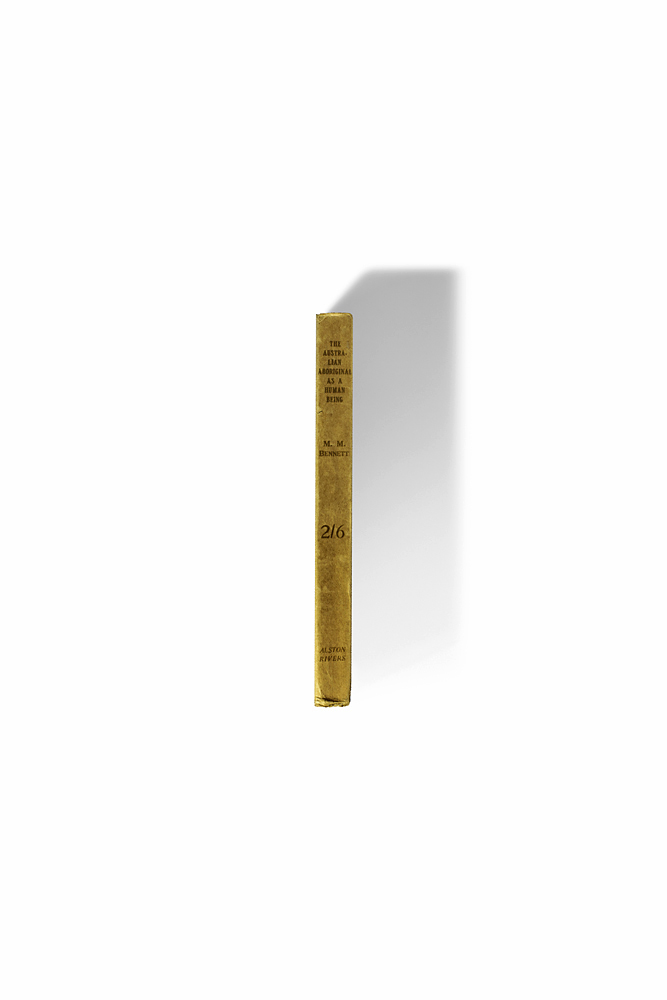
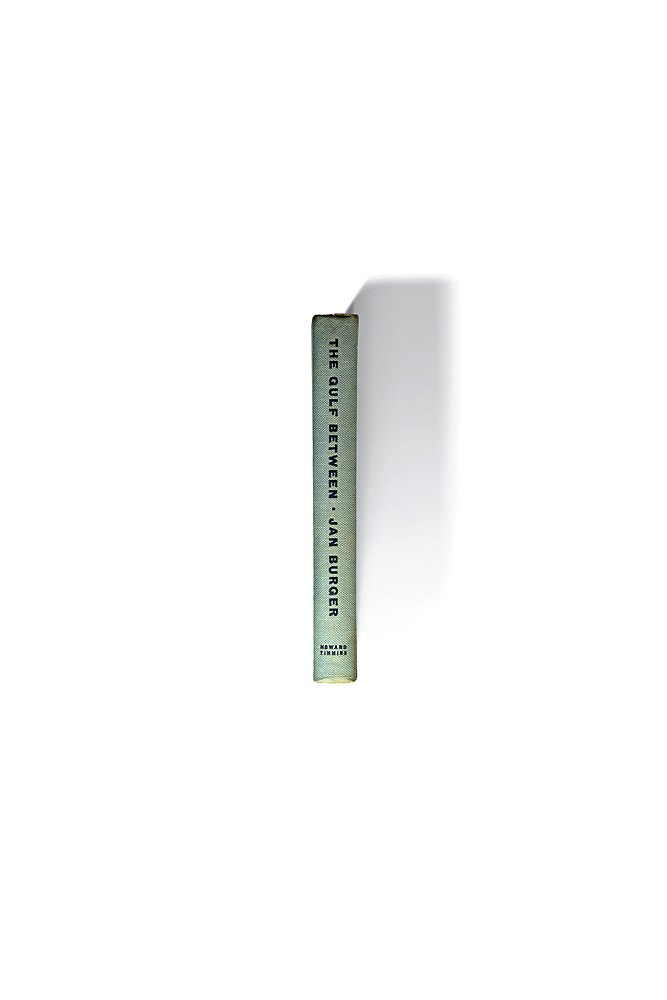
Thus in the selection of Australian books included in this exhibition, there emerges jarring and disturbing contrasts between titles that clearly belie values that are no longer widely accepted (such as The Aboriginal as Human Being), and other titles which still resonate with national myths (such as Australia the Land of Promise). Other titles like Ourselves Writ Large and The Gulf Between become more ambiguous; for without access to the specificities of their content, these books’ paratexts are revealed in Levi’s project as (necessarily) multifaceted signifiers. They immediately open up a ‘zone of transaction’ that reveals the past as an immanent presence, constantly transformed by and transforming of the present. These now abstracted titles retain a force and power to reveal uncomfortable truths and forgotten narrative tropes, speaking to the way that Australian history and presumed cultural values are constructed and repeated in our contemporary life.

Kate Warren would like to thank Aliza Levi for the stimulating and ongoing discussions; and David Wlazlo for his timely and astute insights.

Gérard Genette, Paratexts: Thresholds of Interpretation (Cambridge: Cambridge University Press, 1997), p. 2.


Aliza Levi (South African, b. 1969) 'The Aboriginal as Human Being' 2012


Aliza Levi (South African, b. 1969)
The Aboriginal as Human Being
2012
Archival Inkjet Print
59 x 42cm


Aliza Levi (South African, b. 1969) 'The Gulf Between' 2012


Aliza Levi (South African, b. 1969)
The Gulf Between
2012
Archival Inkjet Print
59 x 42cm


Aliza Levi (South African, b. 1969) 'The Report of the Aborigines Committee of the Meeting for Sufferings 1840' 2012


Aliza Levi (South African, b. 1969)
The Report of the Aborigines Committee of the Meeting for Sufferings 1840
2012
Archival Inkjet Print
59 x 42cm


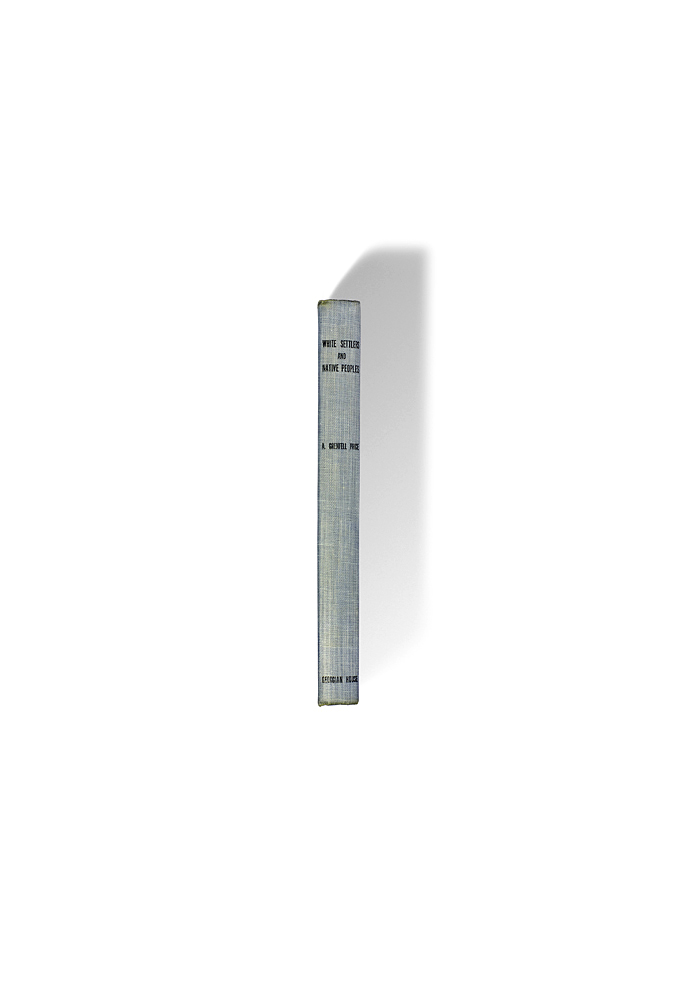
Aliza Levi (South African, b. 1969) 'White Settlers and Native Peoples' 2012


Aliza Levi (South African, b. 1969)
White Settlers and Native Peoples
2012
Archival Inkjet Print
59 x 42cm


Edmund Pearce Gallery

This gallery is no longer open.

LIKE ART BLART ON FACEBOOK

Back to top

Review: ‘Shrouds’ by Mike Reid at the Colour Factory Gallery, Fitzroy, Melbourne

Exhibition dates: 8th March – 30th March 2013


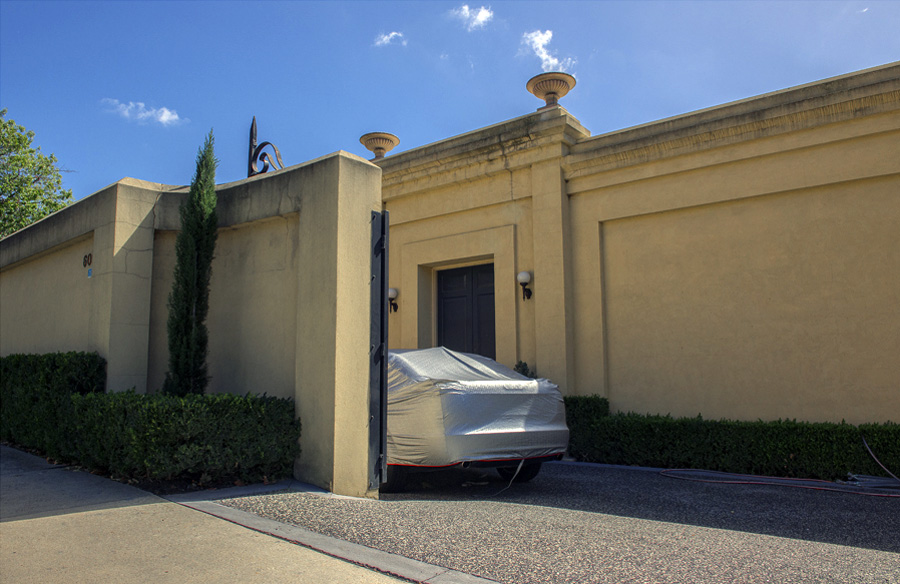
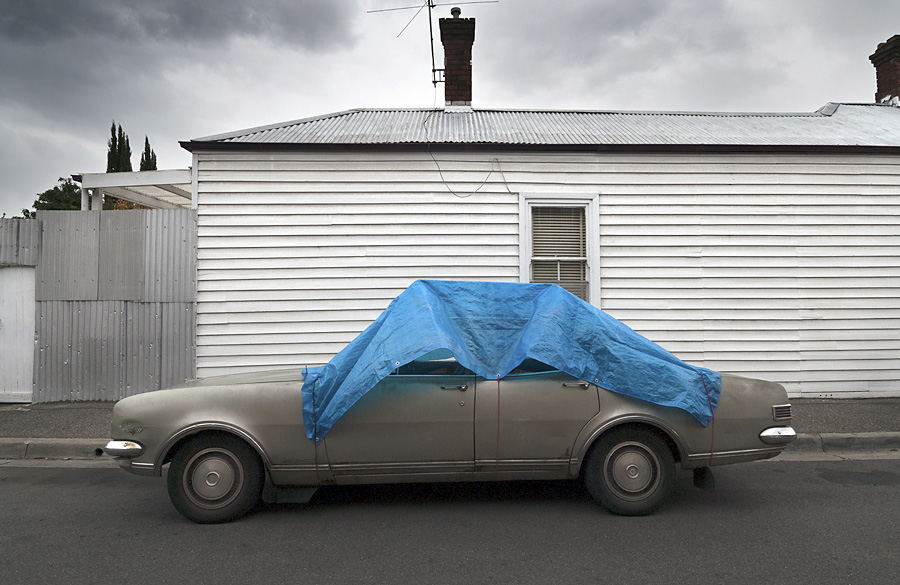
Mike Reid (Australian) 'Santa Monica, Los Angeles, USA' Nd


Mike Reid (Australian)
Santa Monica, Los Angeles, USA
Nd


“Any discovery changing the nature, or the destination of an object or phenomenon constitutes a Surrealist achievement. Already the automats are multiplying and dreaming… realism prunes trees, Surrealism prunes life.”


J-A. Boiffard, Paul Ellard and Roger Vitrac, in La Revolution Surréaliste, December 1924, p. 2, quoted in Arturo Schwarz, Man Ray: the rigour of imagination, Thames & Hudson, London, 1977, p. 161.


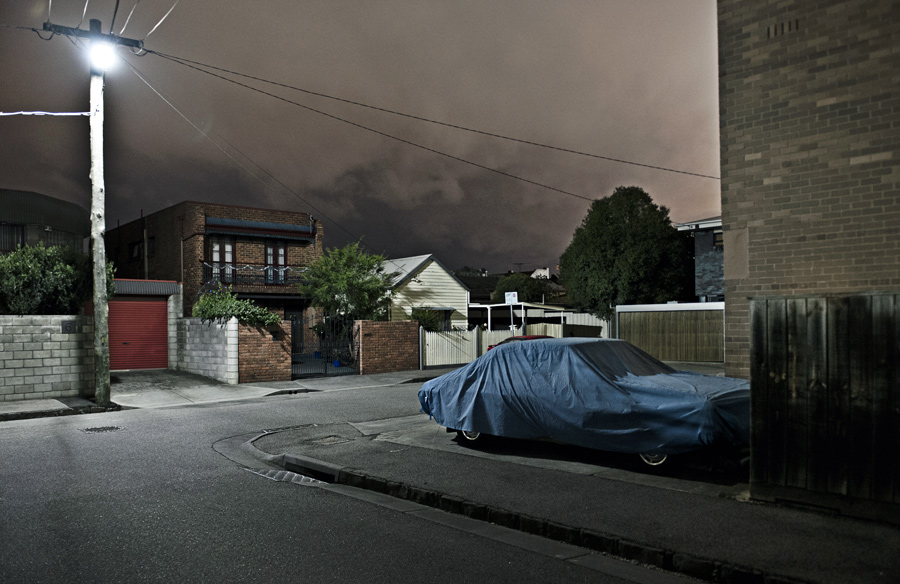
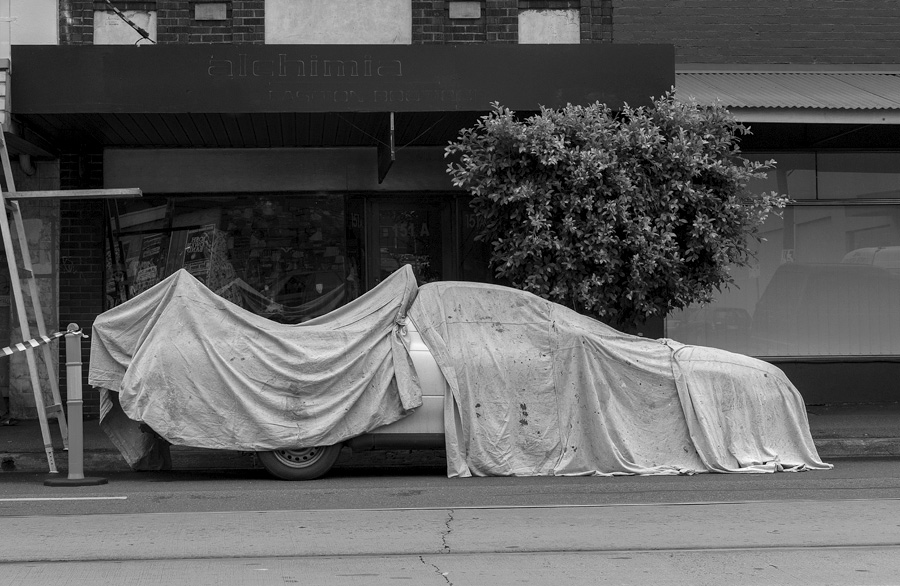
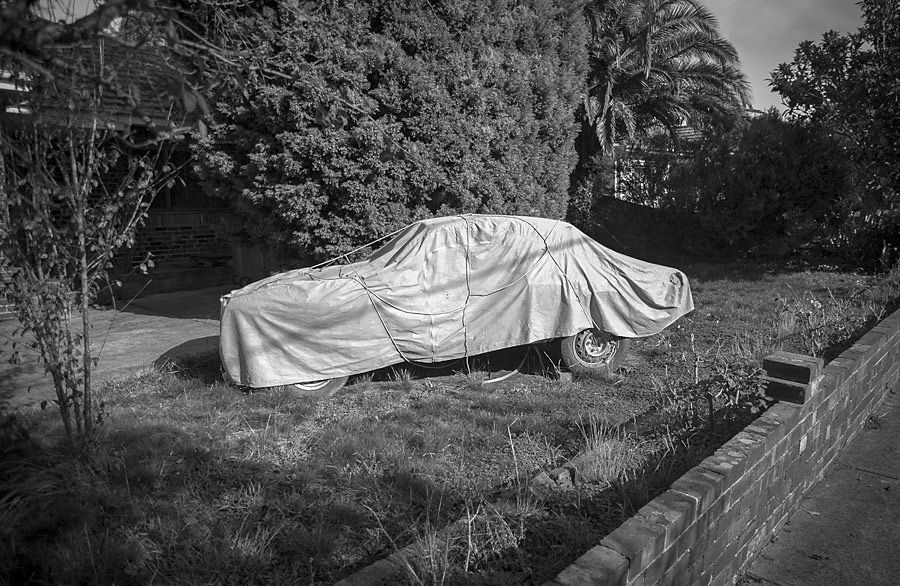
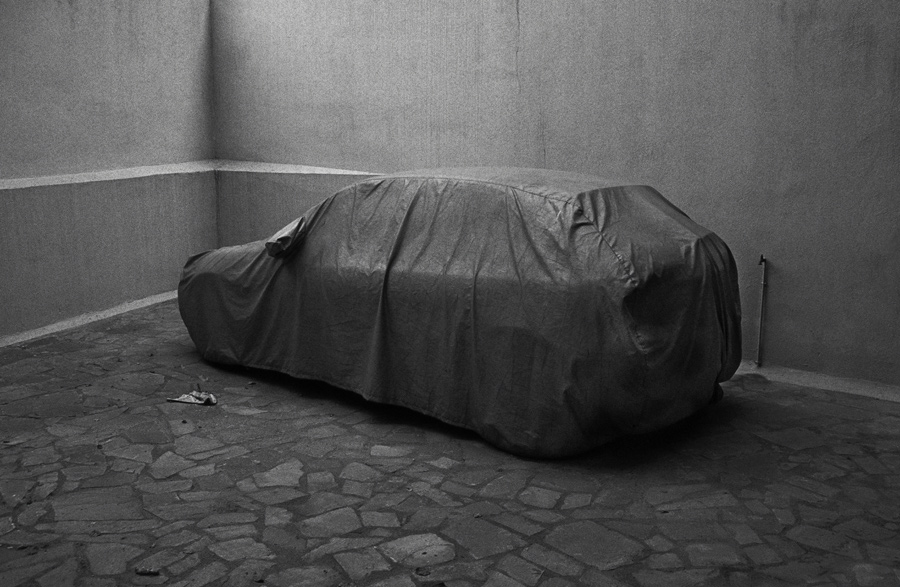
This is a strong exhibition of documentary photography by Mike Reid at the Colour Factory Gallery. Interesting idea; well seen formal photographs; good use of colour (brown, blue, silver, red and green shrouds); nice sized prints appropriate to the subject matter; and an excellent self published book to accompany the exhibition. This is just what it is – a solid exhibition of documentary photography.

Unfortunately the artist cannot leave it there. In his almost unintelligible artist statement (below), he tries to lever the concept of resurrection onto the work, meandering from Horus and Osiris through The Shroud of Turin, to Jewish Tachrichim (burial shrouds) and onto the commerce of Billabong and the politics of the burqa linking, very tenuously, the covering of Islamic women with the idea of these cars being “old bombs.”

Here I take issue with Reid’s conceptualisation of the word “shroud” vis a vis his photographs of covered cars. One of the definitions of shroud is “A cloth used to wrap a body for burial” but the more pertinent use of the word in relation to this work is “To shut off from sight; something that conceals, protects, or screens” from the Middle English schrud, garment. These are not abandoned, lifeless vehicles awaiting resurrection but loved vehicles that have been protected from the elements by their owners, wrapped and cocooned jewels that are in a state of hibernation. If they were unwanted they would have been abandoned by their owners to the elements, not protected beneath a concealing garment in a state of metamorphosis. The shrouding of the car acts like a Surrealist canvas, hinting at the structure underneath (the Cadillac, the Volkswagen, the Morris Minor) but allowing the viewer to discover the changing nature of the object.

All that was needed to accompany the exhibition and the book was something like the quotation at the top of the posting. Leave the rest up to the strength of the work and the viewer. They have the intelligence and imagination to work out what is going on without all the proselytising that only reveals the artist’s ultimate disconnection from the source. In other words, less is more. Nothing more, nothing less.

Dr Marcus Bunyan


Many thankx to the Colour Factory Gallery for allowing me to publish the photographs in the posting. Please click on the photographs for a larger version of the image.


Mike Reid (Australian) 'Toorak, Victoria' Nd


Mike Reid (Australian)
Toorak, Victoria
Nd


Mike Reid (Australian) 'South Fremantle, Western Australia' Nd


Mike Reid (Australian)
South Fremantle, Western Australia
Nd


Mike Reid (Australian) 'Richmond, Victoria' Nd


Mike Reid (Australian)
Richmond, Victoria
Nd


Shrouds, by Mike Reed is a collection of photographs of covered cars. His love of gleaning was inherited from his ‘rag and bone’ father who amassed a metal detritus found on the bicycle route home from the factory where he worked. This assortment was stockpiled in his father’s rusted sheds, which appeared like an ‘Aladdin’s cave’ to a youthful Mike.

“The car was draped with a plastic sheet in the back blocks of Surfers Paradise whilst seeking to photograph decay in the landscape… You start with one and then see another then… over time, the medley plays into a collection… patterns precipitate or idiosyncrasies evolve from within…This is the joy of “seeing”.”

“Within my category of covered cars I began to view these still loved but lifeless vehicles, as if a resurrection was about to take place… for the heavenly roads of restoration or hell.”

Mike equates the car covers to the burial garments adorning the dead in preparation for resurrection. Mike cites the ‘wrapping’ of objects found in the work of artists’ Christo, Jean Claude, Man Ray and Magritte as inspiration. This incredible accumulation of images spans over two decades and 6 countries. A small selection has been chosen for this exhibition and a larger range appears in his book to be launched at the opening of Shrouds.

Press release from the Colour Factory Gallery website


Mike Reid (Australian) 'Richmond, Victoria' Nd


Mike Reid (Australian)
Richmond, Victoria
Nd


Mike Reid (Australian) 'Macleod, Victoria' Nd


Mike Reid (Australian)
Macleod, Victoria
Nd


Shrouds

The resurrection of the dead is a fundamental and central doctrine of Judaism, Christianity, and Islam. Many religious critics have alleged that even Christ’s resurrection was borrowed from the accounts of Osiris, God of the underworld, and the best-known deity in all of ancient Egyptian history. As a life-death-rebirth deity, Horus, the Sun God, and Osiris became a reflection of the annual cycle of crop harvesting as well as reflecting people’s desires for a successful afterlife. The Masons, Illuminati, Priory De Sion, clandestine government groups, and others believed that on December 22, 2012, Osiris would be resurrected. Nothing happened on that world shattering day but Spam and candle sales most certainly went through the roof. Thus in preparation to meet thy maker, a shroud, burial sheet or winding-cloth, usually cotton or linen but with no pockets, is wrapped around a body after it has been ceremonially washed and readied for burial.

Certainly the most controversial and famous burial garment is the Shroud of Turin. It is now stored in the Cathedral of St. John the Baptist in Turin, Northern Italy after the crusaders stole it and bought it first to France around 1204.

Many believe this 4.3 by 1.1m linen cloth of a rare herringbone weave covered the beaten and crucified body of Jesus of Nazareth when He was laid in a tomb prior to His resurrection. Is it really the cloth that wrapped His bloodstained body, or is it simply a medieval hoax? This has lead to intense scrutiny by forensic experts, scientists, chemists, immunologists, pathologists, believers, historians, and writers regarding the where, when, and how the bloodstain image on the shroud was created. C-14 Carbon dating carried out in 1988, dated the cloth between 1260 and 1390.

In Jewish religious traditions the Tachrichim (burial shrouds) are traditional simple white burial garments, containing no pockets, usually made from 100% pure linen.A shroud or sometimes a prayer shawl for a man, in which Jews are dressed by the Chevra Kadisha for burial after undergoing a taharah (purification ceremony). Burying the departed in a garment is considered a testimony of faith in the resurrection of the body (commentary of Shach). This is a fundamental principle of faith, one of the thirteen principles, which the Rambam enumerates as being essential to Jewish belief. More to the point today we have an insurrection, while not yet violent against the wearing of another kind of covering… the niqab or the burqa. European governments are escalating the introduction of laws on the basis that the face covering, along with ski masks and bikies helmets, encourages female subjugation, lack of communication, non-safety, isolation, female abuse, oppression of freedom and non-conformity to the western culture. In fact the Koran only dictates to modesty in dress. May I say it that Billabong could improve sales with the launch of a ‘Tri-Kini’ on the beaches next summer.

Meanwhile… “The 2012 ban in France is officially the second country in Europe, after Belgium, to introduce a full ban on a garment which immigration minister Eric Besson has called a “walking coffin.””1 Indeed Australian Liberal Cory Bernadi said, “The burqa is no longer simply the symbol of female repression and Islamic culture, it is now emerging as a disguise of bandits and n’er do wells.”2 More so now the government and police authorities in the Netherlands, a usually very tolerant nation, have become anxious regarding security worries that a terrorist could use one for concealment. Well my shrouded cars could be the same, as most do conceal “old bombs.”

The inspiration for my rag tag assortment evolved from the artistes Christo and Jeanne-Claude who have wrapped, covered whole buildings, bridges and landscapes. Other favourites of mine, Man Ray and Rene Magritte have objects and humans covered as well, specifically Magrittes’ Las Amants 1 & II (The Lovers)3 1928. A plastic explanation is that “love is blind” and that the mantles are symbolic to the idea that a devoted lover would identify his soul mate in any form, immortal love. Another interpretation of Magrittes’ shrouds is that the paintings symbolise his mothers’ death. Magritte, when only 14, discovered her lifeless body which was naked apart from her nightdress that had swathed up around her face.

I started recording these morphological images over 20 years ago. The first was draped with a plastic sheet in a paddock in the back blocks of Surfers Paradise while meandering aimlessly, seeking decay in the landscape.

With my wandering and collecting shots I realised I have inherited the trait from my father. In his latter years my father became a rag and bone man in order to supplement the low family income. A bicycle route from his employment at Laminex factory to home lay through the local hard rubbish dump. Copper wire, lead, iron, even an aerial practice bomb, military helmets, a stockless revolver and rifle, rusted tools… festooned from his bike and festooned from his gladstone bag. Two rusting sheds contained somewhat the ever-growing metal waste for selling or keeping… an Aladdins’ cave to a young boy, everyday re-discovering lifes’ discards care of the Dendy Street tip.

Within my category of covered cars I began to view these still loved but lifeless vehicles, as if a resurrection was about to take place… for the heavenly roads of restoration or hell… (a scrap yard)

Mike Reed, 2013


1/ The Telegraph, April 11 , 2011, “Peter Allen In Paris”
2/ Cory Bernadi, SMH, May 6, 2011
3/ “Las Amants” 1 is in the NGA collection, Canberra, NGA


Mike Reid (Australian) 'Brunswick East, Victoria' Nd


Mike Reid (Australian)
Brunswick East, Victoria
Nd


Mike Reid (Australian) 'Fairfield, Victoria' Nd


Mike Reid (Australian)
Fairfield, Victoria
Nd


Man Ray (American, 1890-1976) 'L'Enigme d'Isidore Ducasse' 1920, remade 1972


Man Ray (American, 1890-1976)
L’Enigme d’Isidore Ducasse
1920, remade 1972
Sewing machine, wool and string
355 x 605 x 335 mm


Mike Reid (Australian) 'Athens, Greece' Nd


Mike Reid (Australian)
Athens, Greece
Nd


Colour Factory Gallery
409-429 Gore Street
Fitzroy, Victoria 3056
Phone: +61 3 9419 8756

Opening hours:
Closed for refurbishment

Mike Reed Photography website

Colour Factory Gallery website

LIKE ART BLART ON FACEBOOK

Back to top

Review: ‘Andrew Curtis: Moonlight Mile’ at Blockprojects, Melbourne

Exhibition dates: 6th February – 3rd March 2013


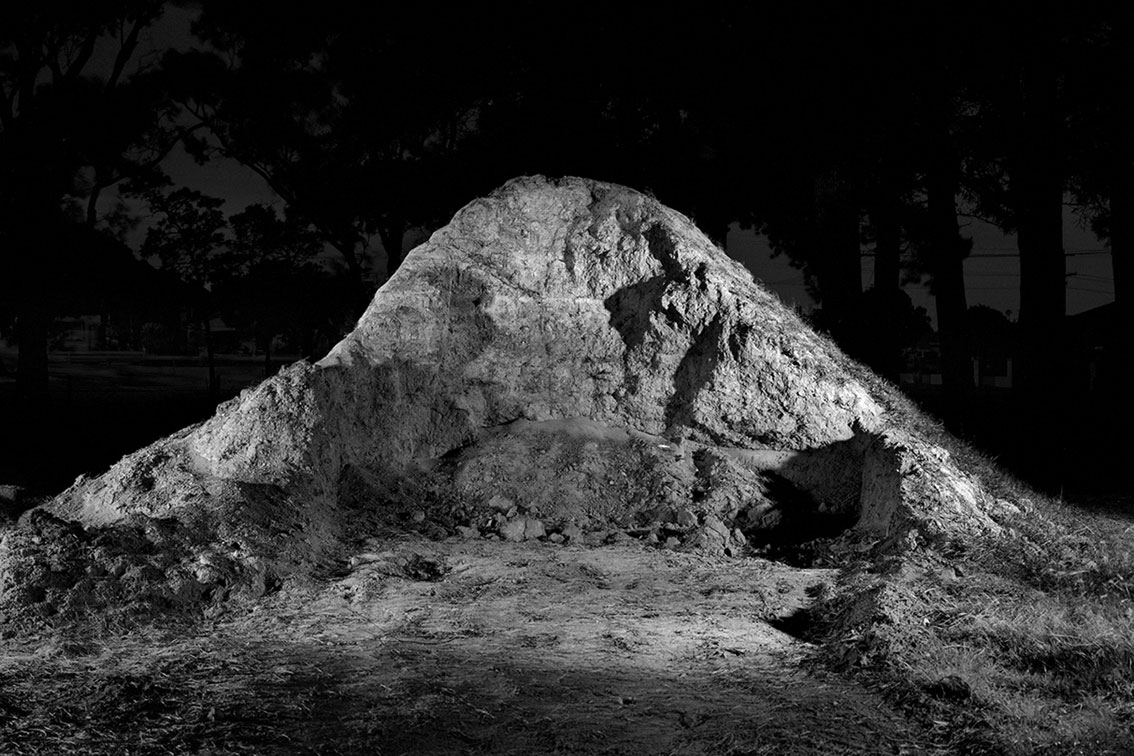
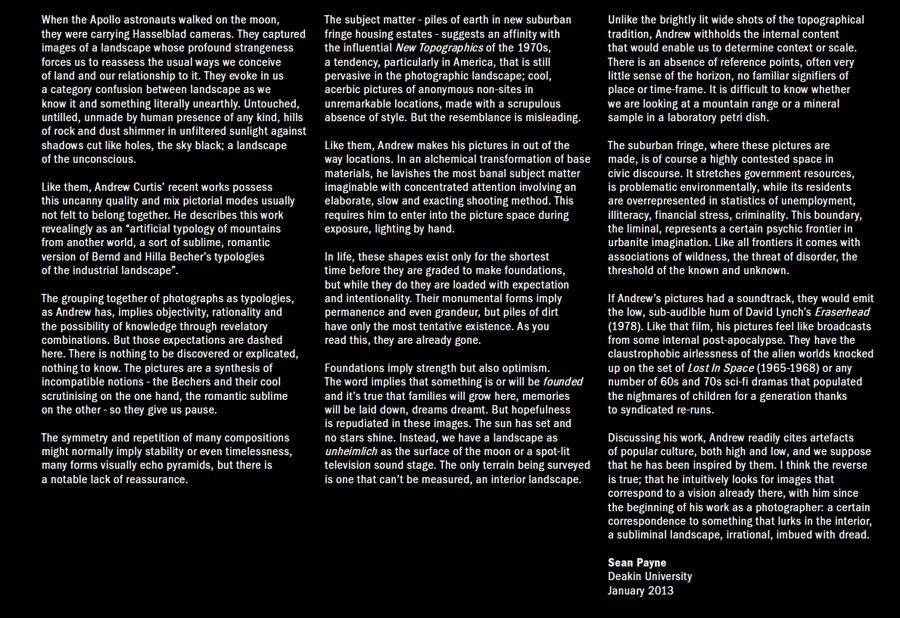
Andrew Curtis (Australian, b. 1966) 'Wonthaggi' 2012


Andrew Curtis (Australian, b. 1966)
Wonthaggi
2012
Archival pigment print on cotton rag
120 x 180cm


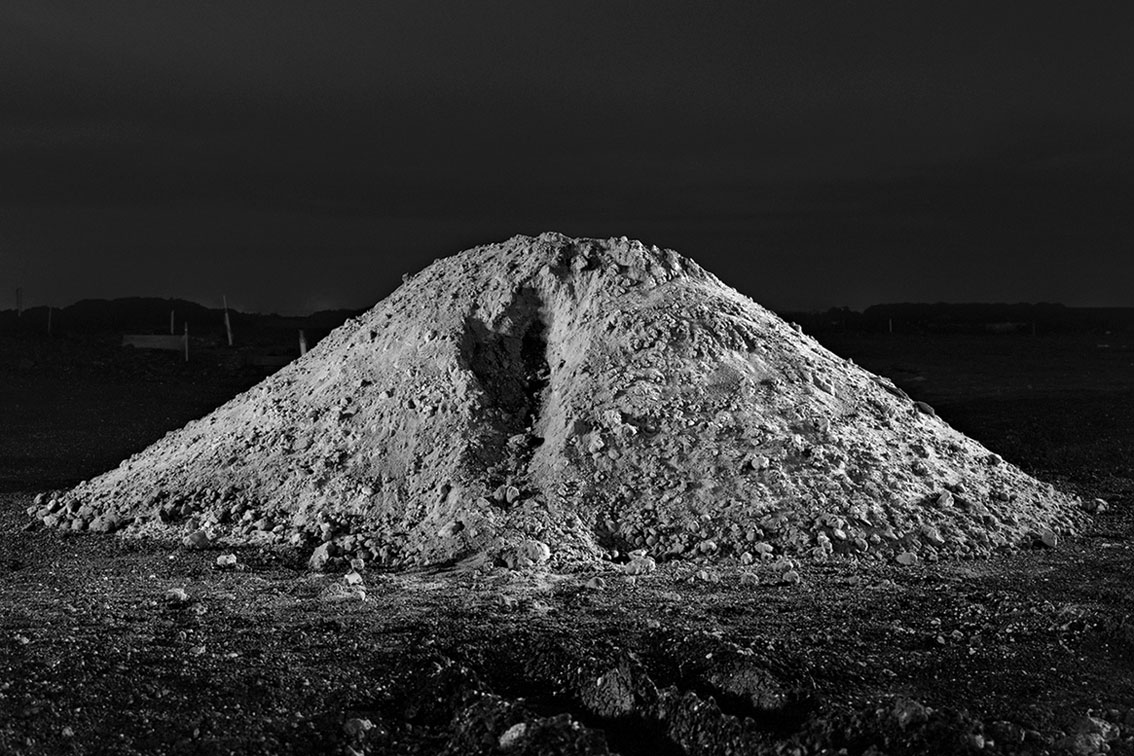
This is a strong exhibition of large scale hybrid black and white photographs by Andrew Curtis at Blockprojects, Cremone. The photographs look grand in the simple, beautiful exhibition space, perhaps too grand, too sympatico with the theme of the work: mountains made out of piles of earth dumped at building sites in the outer suburbs of Melbourne. There is humour and absurdity here as Dan Rule notes, but also more than a hint of the sublime. By playing with scale (narratives of the miniature, the gigantic) and light (these images have been studiously lit from different angles during a long time exposure), Curtis tricks the eye of the viewer, just for a split second (the punctum?), elucidating “the strength of the almost blinding role that expectation plays in our reading of an image.” (Dan Rule)

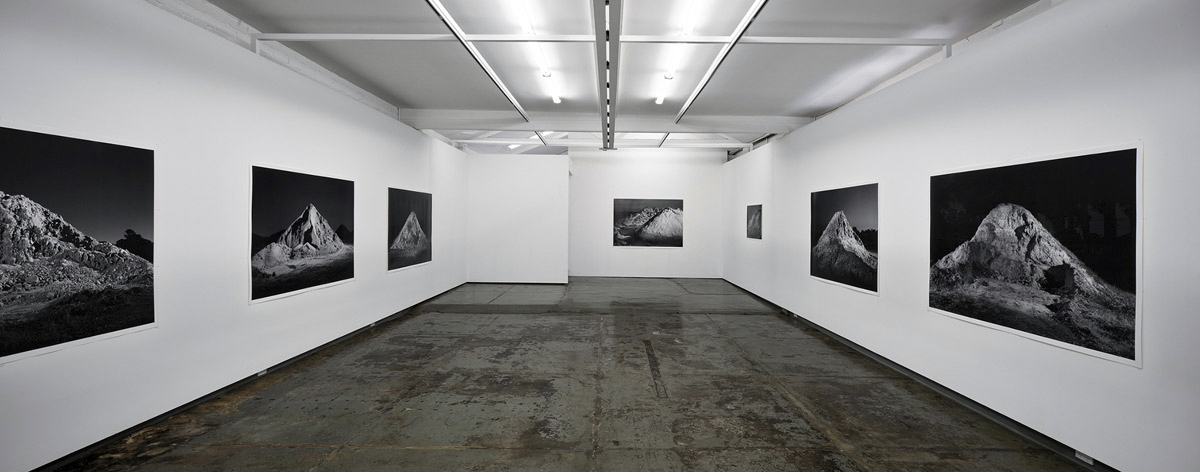
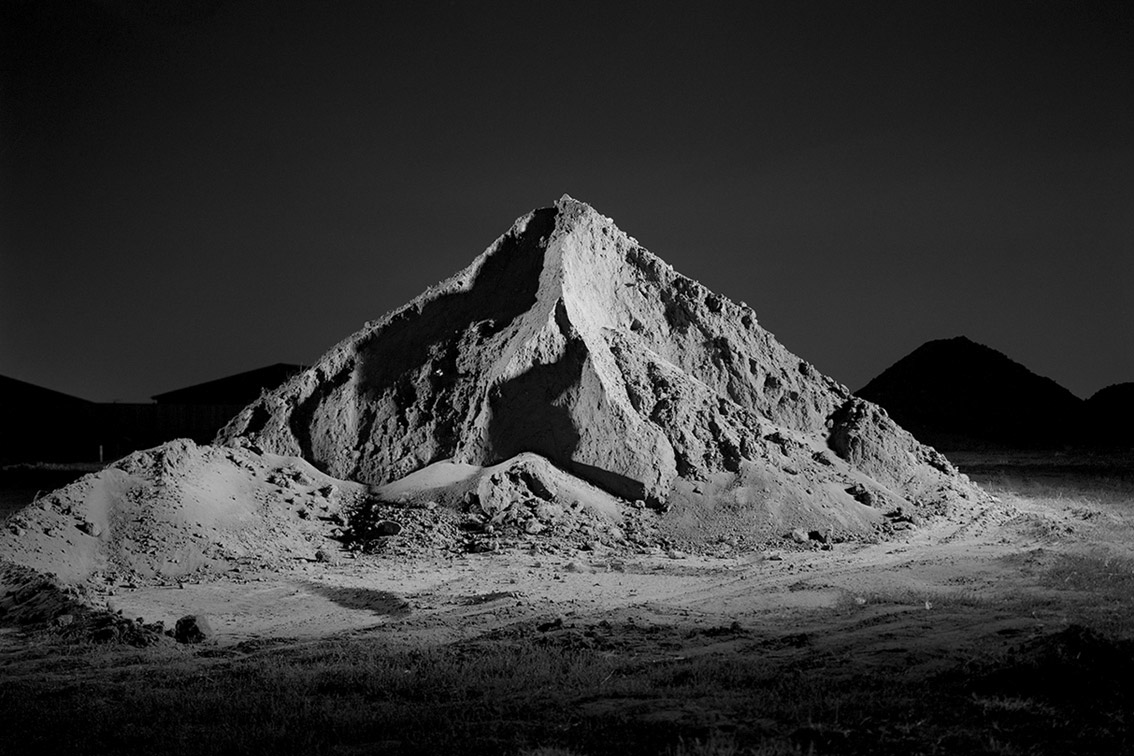
What do I mean by hybrid monochrome images – the work was shot on a 4 x 5 large format film camera and then printed digitally as an archival pigment print on cotton rag. Personally, if I went to all the trouble to shoot on film, then why wouldn’t I go the distance and get them printed the traditional way to preserve the optical veracity that large format brings? With this in mind I asked myself why the images had to be so big (the gigantism of most contemporary photography) for the smaller image, Point Cook 2 (2012, below) seemed at least as valid, perhaps more so as an image, than the larger photographs. It was almost as if the smaller size gave the subject more validity in terms of its abstractness (see installation photograph below). Perhaps a size in between the two presented in the exhibition and printed the analogue way would have been more appropriate to the spirit of the work.

The other thing that I found puzzling was the lack of depth of field from front to back of most of the images. The foregrounds were invariably out of focus (when you could actually see them) which is a strange choice when using a large format camera, where everything can be in focus front to back (a la F64). Curtis’ aesthetic choice is directly from the Pictorialist handbook, as is his decision to darken the out of focus foreground with an aura of black so that nothing is visible (see Hoppers Crossing 1, 2 and 3 below). This makes for a strange reading of the photographs where the mountain becomes isolated yet is the sole grounding of the image (save for a shadowy horizon line behind), a trope that didn’t really work for me.

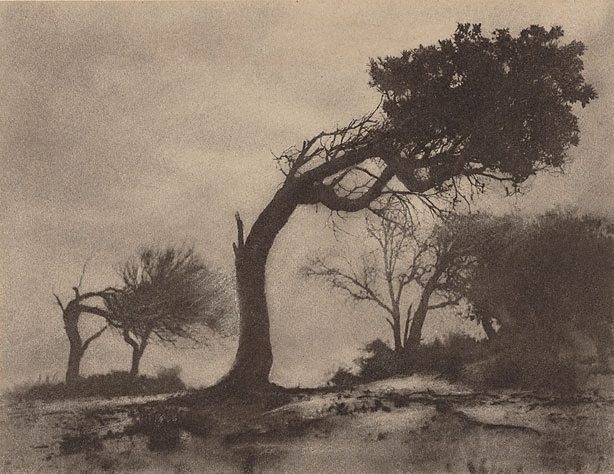
My favourite images where the more intimate images such as Point Cook 2 and Wonthaggi (both 2012). In both, the foreground is agreeably present to lead the eye into the image. In Point Cook 2 the eye is also led in from the right hand side by the spine of the mountain range, the light on the earth matching the ethereal light in the sky. A good image. Even better is Wonthaggi where the stand alone isolation of the monolithic mountains in most of the other images is broken by the “shoulders” of the mountain disappearing out of frame. This, combined with more subtle lighting and the presence of massed shadows of trees in the background, adds a valuable context to the image while at the same time referencing the history of Australian photography through the images of people such as Harold Cazneaux.

Dr Marcus Bunyan


PS. Just as a general point of interest. It is so difficult to make the right choice when displaying large, dark photographs in a gallery setting. If you pin them to the wall, as here, there tend to be waves in the photographs and a client who wants to purchase the print has to factor in where to get the print framed and how much this is going to cost: a lot of hassle for a potential client. If you do get the work framed there is the initial upfront cost plus the dark image is more than obscured by the glass in front of the image, lessening the photographs presence in front of the viewer. Finally there is the choice to have the photograph mounted on aluminium (dibond mounting) or facemounting a print onto acrylic. This gets rid of the need for framing and keeps the print flat but a serious collector of photography will not touch them because they have been stuck down with glue to these materials. A perplexing problem indeed.


Many thankx to Blockprojects for allowing me to publish the photographs in the posting. Please click on the photographs for a larger version of the image.


Harold Cazneaux (Australian, 1878-1953) 'The bent tree, Narrabeen' 1914


Harold Cazneaux (Australian, 1878-1953)
The bent tree, Narrabeen
1914
Bromoil photograph
14.6 x 18.9cm


Andrew Curtis (Australian, b. 1966) 'Point Cook 2' 2012


Andrew Curtis (Australian, b. 1966)
Point Cook 2
2012
Archival pigment print on cotton rag
66 x 100cm


Installation view of 'Andrew Curtis: Moonlight Mile' at Blockprojects, Melbourne


Installation view of Andrew Curtis: Moonlight Mile exhibition at Blockprojects, Melbourne


Andrew Curtis (Australian, b. 1966) 'Hoppers Crossing 1' 2012


Andrew Curtis (Australian, b. 1966)
Hoppers Crossing 1
2012
Archival pigment print on cotton rag
120 x 180cm


Andrew Curtis (Australian, b. 1966) 'Hoppers Crossing 2' 2012


Andrew Curtis (Australian, b. 1966)
Hoppers Crossing 2
2012
Archival pigment print on cotton rag
120 x 180cm


Andrew Curtis (Australian, b. 1966) 'Hoppers Crossing 3' 2012


Andrew Curtis (Australian, b. 1966)
Hoppers Crossing 3
2012
Archival pigment print on cotton rag
120 x 180cm


Catalogue essay by Sean Payne, Deakin University


Catalogue essay by Sean Payne, Deakin University (please enlarge to read)


Andrew Curtis (Australian, b. 1966) 'Point Cook 1' 2012


Andrew Curtis (Australian, b. 1966)
Point Cook 1
2012
Archival pigment print on cotton rag
120 x 180cm


Andrew Curtis (Australian, b. 1966) 'Almurta' 2011


Andrew Curtis (Australian, b. 1966)
Almurta
2011
Archival pigment print on cotton rag
120 x 180cm


Blockprojects
Level 1 / 252 Church Street
Richmond, VIC 3121
Phone: +61 3 8395 1028

Opening hours:
Wednesday to Saturday: 12am – 5pm

Blockprojects website

LIKE ART BLART ON FACBEOOK

Back to top

Review: ‘Louise Bourgeois: Late Works’ at Heide Museum of Modern Art, Melbourne

Exhibition dates: 24th November 2012 – 11th March 2013

Louise Bourgeois & Australian Artists
13 October 2012 – 14 April 2013


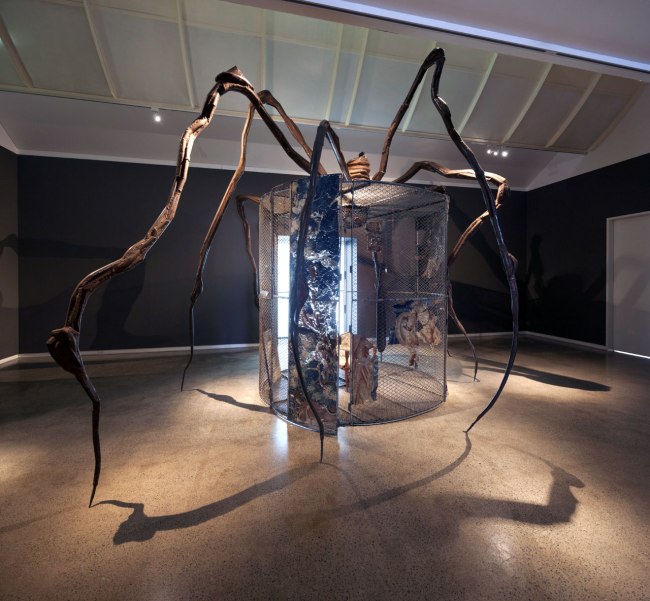
'Louise Bourgeois: Late Works' installation view Heide Museum of Modern Art, Melbourne Photograph: John Gollings 2012


Louise Bourgeois: Late Works installation view
Heide Museum of Modern Art, Melbourne
Photograph: John Gollings 2012


Tough Love

This is a tough, stimulating exhibition of late works by Louise Bourgeois at Heide Museum of Modern Art, Melbourne. All the main themes of the artist’s work explored over many years are represented in these late works: memory, emotion, anxiety, family, relationships, childhood, pain, desire and eroticism are all present as are female subjectivity and sexuality, expressed through the body. As the quotation above by Bourgeois states, her body became her sculpture.

I am no expert on the work of the artist. But what I will try and enunciate are my feelings when viewing the exhibition. Firstly, I thought the drawings by Louise Bourgeois in Heide II were the most magical thing that I saw all day; they seemed to be the well spring of her creativity, the initial thought sketched quickly and imperiously. Secondly, series such as Dawn (2007, below) and The Waiting Hours (2007), assemblages of cut fragments of her dresses and other textiles used to create spiral three-dimensional realities, were the most beautiful, peaceful Zen based works in the exhibition possessing as they did a calm, resolved, mandala-like presence. Lastly, the main group of sculptures were, for me, hard to look at. A series of severed heads, dismembered bodies, tapestry fragments, spiders, bones, an orrery-like planetarium, pendulous objects stuck with needles, kitchen implements and the house brought back memories of my own childhood.

I was born in the late 1950’s to a mother who didn’t really want to have children, to a mother who was already being beaten up by an abusive husband before she was even married, who lived on a remote, isolated farm in the middle of nowhere. I can’t imagine what my mother went through in those early years raising two children – with no hope of help or escape, with no women’s refuge to flee to, stuck there doing her best to protect her children and herself from a violent, mentally ill man. You cannot imagine the torment I went through for the first 18 years of my life, trying to protect my mother when I was old enough, creating my own worlds to escape the reality of the present (which is why I probably became an artist, to still create my own worlds). There were good times at Christmas and bonfire night, but the best part was growing up on the land, learning the rhythms of nature, learning to drive on a tractor and combine harvester, but always in the back of your mind was the instant of abuse lurking around the corner, the inherent violence of life. It is only now, as I have grown older, that I can truly appreciate the dire predicament that my mother was in and acknowledge a profound sense of gratitude towards her protection of me as a baby and child.

That is why this exhibition is, for me, tough love. The emotions of Bourgeois’ sculptures are close to the bone. As Jason Smith observes, “Bourgeois saw her mother as rational, patient and stoic in her nurturing, in contrast to the temperament of her father whom she regarded as irrationally emotional, unreasonable and capable of psychological cruelty. Bourgeois became aware at an early age that she was living in a time and social environment in which women and their identities were subordinate to men.”As Bourgeois says of the spider (her mother), “she was deliberate, clever, patient, soothing, reasonable, dainty, subtle, indispensable, neat and as useful as a spider. She could also defend herself, and me.” This is what my mother did as well, at great cost to herself.

Bourgeois’ work gives me an overall feeling of immersion in a world view, one that transcends the pain and speaks truth to power. Bourgeois confronted the emotion, memory or barrier to communication that generated her mood and the work. She observed, “My art is an exorcism. My sculpture allows me to re-experience fear, to give it a physicality, so that I am able to hack away at it.” By weaving, stitching and sewing Bourgeois threaded the past through the present and enacted, through artistic performance, a process of repair and reconstruction, giving meaning and shape to frustration and suffering. I have not been so lucky. My mother refuses to discuss the past, will not even come close to the subject for the pain is so great for her. I am left with a heaviness of heart, dealing with the demons of the past that constantly lurk in the memory of childhood, that insistently impinge on the man I am today. Louise Bourgeois’ sculptures brought it all flooding back as the work of only a great artist can, forcing me to become an ethical witness to her past, my past. A must see exhibition this summer in Melbourne.

Dr Marcus Bunyan


Many thankx to curator and Director Jason Smith and Heide Museum of Modern Art for allowing me to publish the photographs in the posting. Please click on some of the photographs for a larger version of the image.


“What counts, our whole purpose, is to try to understand what we are about, to scrutinise ourselves… Every day you have to abandon your past or accept it, and then, if you cannot accept it, you become a sculptor.”

“The fears of the past were connected with the functions of the body, they reappear through the body. For me, sculpture is the body. My body is my sculpture.”


Louise Bourgeois


“What images can art find for depicting femaleness from within, as distinct from the familiar male conventions of looking at it from the outside, from the eye-line of another gender?” Hughes questioned in a commentary that implied no precedents. “… [Her] influence on young artists has been enormous.”


Robert Hughes quoted by Annemarie Kiely on the Vogue Living Blog [Online] Cited 28/02/2013 no longer available online
 

“Yes, there are the oft-told stories of the father and the mistress, but it is Bourgeois’s intense love of her mother and her [mother’s] death that completely transformed her life… The art ultimately became about her never-ending grief… and her continuing desire  as a woman. It’s still so potent; not just as a memory, but as a constant.”


Jason Smith, Curator, Director and CEO of Heide quoted by Annemarie Kiely on the Vogue Living Blog [Online] Cited 28/02/2013 no longer available online


'Louise Bourgeois: Late Works' installation view Heide Museum of Modern Art, Melbourne Photograph: John Gollings 2012


Louise Bourgeois: Late Works installation view
Heide Museum of Modern Art, Melbourne
Photograph: John Gollings 2012


“The friend (the spider – why the spider?) because my best friend was my mother and she was deliberate, clever, patient, soothing, reasonable, dainty, subtle, indispensable, neat and as useful as a spider. She could also defend herself, and me.”


Louise Bourgeois, from Ode to my Mother, 1995


Louise Bourgeois (French-American, 1911-2010) 'Spider' 1997 (detail)


Louise Bourgeois (French-American, 1911-2010)
Spider (detail)
1997
Steel, tapestry, wood, glass, fabric, rubber, silver, gold, bone
449.6 × 665.5 × 518.2cm
The Easton Foundation, New York, NY
Photograph: John Gollings 2012


Louise Bourgeois (French-American, 1911-2010) 'Dawn' 2007 (detail)


Louise Bourgeois (French-American, 1911-2010)
Dawn (detail)
2007
Fabric book, 12 pages
12 1/4 x 9 3/4 inches each


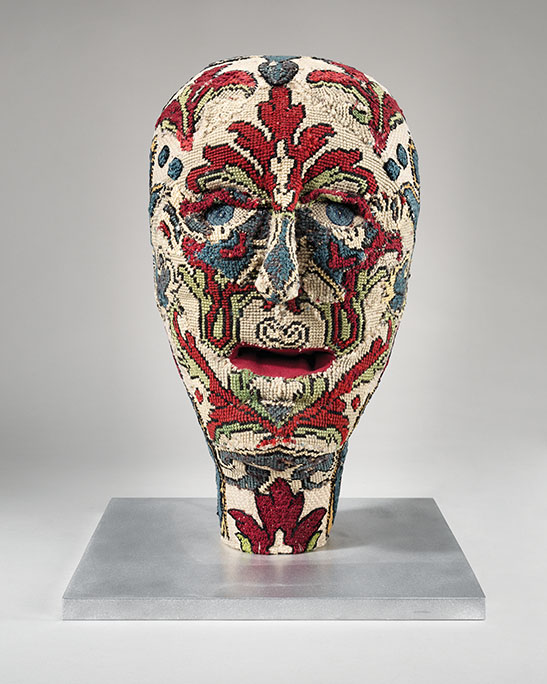
Around 1996, aged 85, Bourgeois began to mine her closets for the garments and textiles that she had worn, collected and stored over a lifetime, and use them to make sculpture and ‘fabric drawings’, continuing her lifelong recall and articulations of familial dysfunction, desire and fear, anger and remorse, isolation and connectedness. In the recycling and reconstruction of her clothing and collected textiles Bourgeois intensified her work’s expression of the human body and of life’s episodes (those as daughter, wife, mother, woman, artist). The materiality of these works testifies to the impression of Bourgeois’ past on her psyche and on reparative acts of making through which her past was reconciled in her present. The beauty of the past for Bourgeois resided in the nurturing, repairing, fortifying and protective tendencies of her mother, which she aligned with the processes of stitching and assembling.

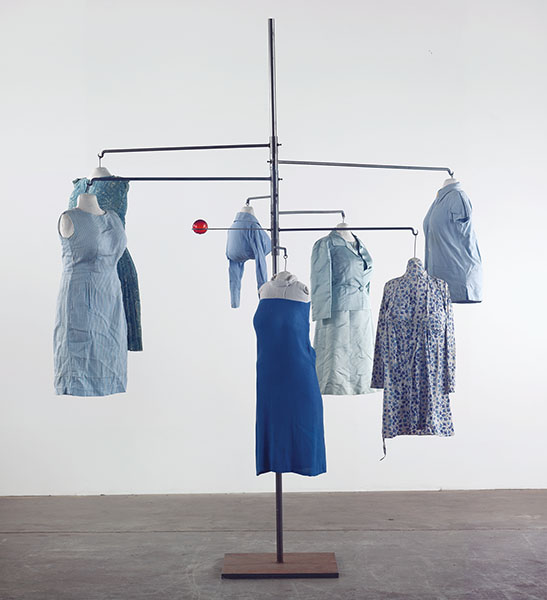
Blue Days (1996) is one of a number of works in which Bourgeois suspended, stuffed and shaped her dresses and shirts, sometimes adding abstract sculptural elements like the red glass sphere that operates here like a nucleus around which the new sculptural bodies circulate. With its intimate relation to the skin and contours of the body, to time and seasons, clothing was used for its power to summon memory: ‘You can retell your life … by the shape, weight, colour and smell of those clothes in your closet. They are like the weather, the ocean, changing all the time.’

In other works Bourgeois’ fragmented figures and anatomical parts give physical form to anxieties rising from unfulfilled desire, acts of betrayal, losses or thwarted communication. Couple IV embodies the dark confusion of the child happening upon the sexual embrace of the adults. The copulating, decapitated lovers appear as an encased ‘archaeological specimen’ and signal Bourgeois’ fraught obsession not only with the infidelities of her father, but also with sex itself. For Bourgeois there is ‘a fatal attraction not towards one or the other, but to the phenomena of copulation … I am exasperated by the vision of the copulating couple, and it makes me so furious … that I chop their heads [off]. This is it … I turn violent. The sewing is a defence. I am so afraid of the things I might do. The defence is to do the opposite of what you want to do.’

Louise Bourgeois’ practice was an elaborate articulation of an existence in which the sculpting world and the living world were one. Her late works summoned the past and confronted the present, and the passage of time, by using the very garments in which the experiences of her life, loves and longings resided.

Jason Smith, Curator, Director and CEO, Heide Museum of Modern Art. “Louise Bourgeois,” on The Melbourne Review website, November 2012 [Online] Cited 26/02/2013 no longer available online


Louise Bourgeois (French-American, 1911-2010) 'Blue Days' 1996


Louise Bourgeois (French-American, 1911-2010)
Blue Days
1996
cloth, steel, glass
292.1 × 205.7 × 241.3cm
Courtesy Cheim & Read and Hauser & Wirth
© Louise Bourgeois Trust / Licensed by VAGA, New York / Viscopy, Sydney


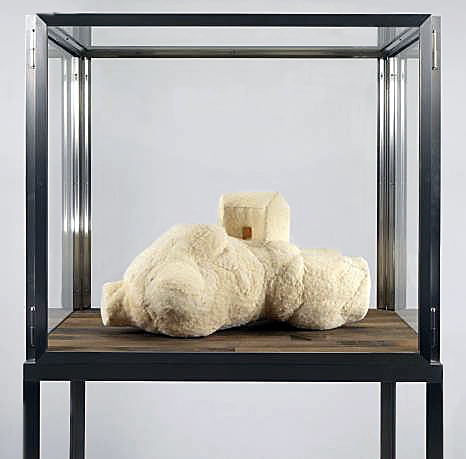
Louise Bourgeois (French-American, 1911-2010) 'Femme Maison' 2001


Louise Bourgeois (French-American, 1911-2010)
Femme Maison
2001
fabric, steel
35.6 × 38.1 × 66cm
Courtesy Cheim & Read and Hauser & Wirth
© Louise Bourgeois Trust / Licensed by VAGA, New York / Viscopy, Sydney
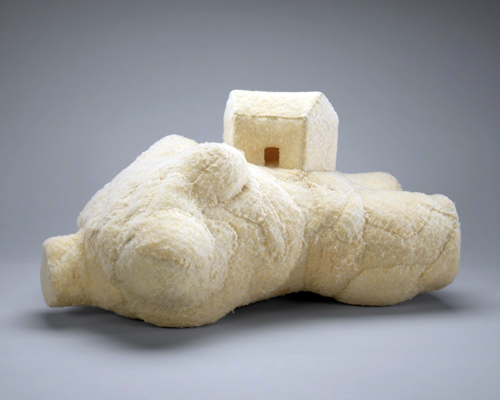
 

Louise Bourgeois (French-American, 1911-2010) 'Femme Maison' 2001


Louise Bourgeois (French-American, 1911-2010)
Femme Maison (detail)
2001
fabric, steel
35.6 × 38.1 × 66cm
Courtesy Cheim & Read and Hauser & Wirth
© Louise Bourgeois Trust / Licensed by VAGA, New York / Viscopy, Sydney


Note that Femme Maison and other artworks are encased in ‘cells’. In one sense, the cell encases and protects the artwork; however, Louise Bourgeois’ intention was to use the cell also as a way of containing the memory held within the work.

The hybrid form of Femme Maison – with its dual translations to ‘woman house’ or housewife – appeared in drawings, paintings and sculpture, and in degrees of abstraction and figuration, from the mid 1940s onwards. In this key late work the textured fabric affirms the central relationship of woman with the domestic space. Stories of the house and the home defined Bourgeois’ identity. The architectural house and its contents – especially the table, bed and chair – and the familial home and its occupants, were the structures that shaped Bourgeois’ unstable sense of self, and her relationships with others. This work plays on the house literally growing out of the woman’s body (the nurturing mother) or, conversely, pinning her dismembered body to the ground, registering the paralysing power of fear, and recalling a painful childhood.
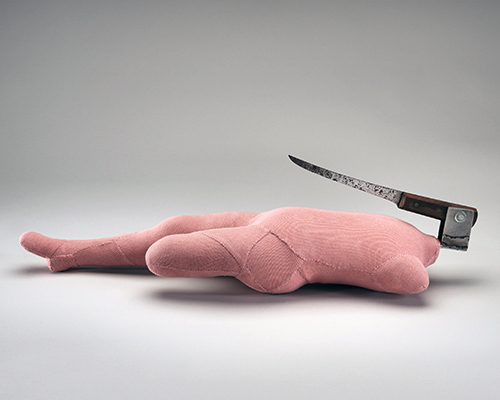
 

Louise Bourgeois (French-American, 1911-2010) 'Knife Figure' 2002


Louise Bourgeois (French-American, 1911-2010)
Knife Figure
2002
fabric, steel, wood
22.2 × 76.2 × 19.1cm
Courtesy Cheim & Read and Hauser & Wirth
© Louise Bourgeois Trust / Licensed by VAGA, New York / Viscopy, Sydney


Louise Bourgeois (French-American, 1911-2010) 'Untitled' 2002


Louise Bourgeois (French-American, 1911-2010)
Untitled
2002
Tapestry and aluminium
43.2 x 30.5 x 30.5cm
Courtesy Cheim & Read and Hauser & Wirth
© Louise Bourgeois Trust
Photo: Christopher Burke
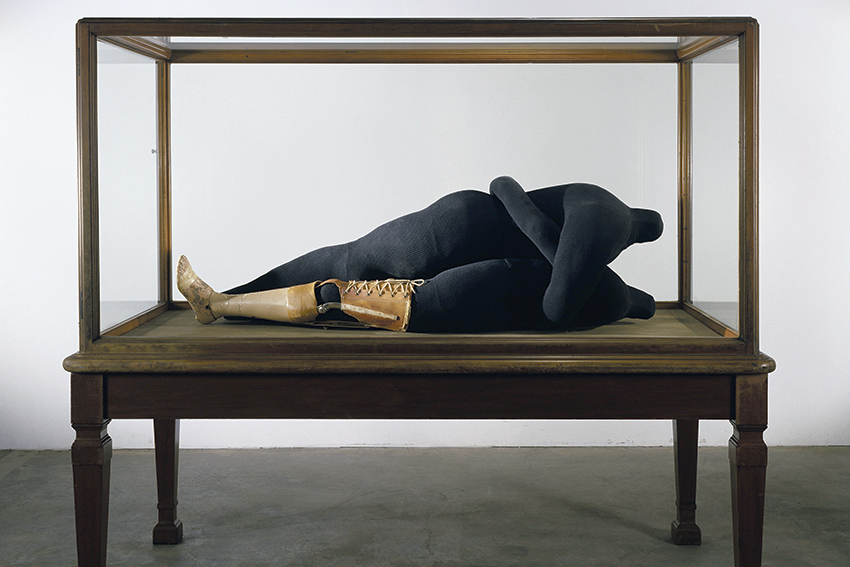
 

Louise Bourgeois (French-American, 1911-2010) 'Couple IV' 1997


Louise Bourgeois (French-American, 1911-2010)
Couple IV
1997
fabric, leather, stainless steel, plastic
50.8 × 165.1 × 77.5cm
Courtesy Cheim & Read and Hauser & Wirth
© Louise Bourgeois Trust / Licensed by VAGA, New York / Viscopy, Sydney


Louise Bourgeois (French-American, 1911-2010) 'Untitled' 2002


Louise Bourgeois (French-American, 1911-2010)
Untitled
2002
Tapestry, aluminium
43.2 x 30.5 x 30.5cm
The Easton Foundation, New York, NY.


Louise Bourgeois (French-American, 1911-2010) 'Cinq' 2007


Louise Bourgeois (French-American, 1911-2010)
Cinq
2007
fabric, stainless steel
61 × 35.6 × 35.6cm
Courtesy Cheim & Read and Hauser & Wirth
© Louise Bourgeois Trust / Licensed by VAGA, New York / Viscopy, Sydney


Heide Museum of Modern Art is proud to present two major exhibitions featuring the work of Louise Bourgeois. The first, Louise Bourgeois: Late Works includes over twenty, key works direct from the late artist’s studio in New York. The second exhibition, Louise Bourgeois and Australian Artists presents a selection of works by contemporary Australian artists who have been inspired by Bourgeois alongside prints and drawings from her vast graphic oeuvre. Louise Bourgeois (1911-2010) was one of the most inventive, provocative and influential artists of the twentieth century. Although her work has been exhibited extensively overseas, it has rarely been seen in Australia, and only once in significant depth, at the National Gallery of Victoria (NGV) in 1995 in an exhibition curated by then NGV curator Jason Smith. Louise Bourgeois: Late Works focuses on Bourgeois’s use of fabric in sculpture and what she termed ‘fabric drawings’. A preoccupation with memory and time, human relationships, fear and its annihilation, sexuality and the erotic body, are all emphases of Bourgeois’ final works.

Louise Bourgeois: Late Works is the first exhibition in Australia to survey the work of this profoundly important artist since her death in 2010 and has been curated by Jason Smith, now Heide Director & CEO – in close collaboration with the Bourgeois studio, New York – as a follow up to the 1995 exhibition at the NGV. Focusing on the final fifteen years of Bourgeois’ career, the exhibition examines the use of fabric in her works, and includes 18 sculptures, two suites of ‘fabric drawings’, watercolours, embroidered texts and lithographs never before seen in Australia. In the fabric works the processes of deconstructing and reconstructing, are applied to the contents of Bourgeois’ closets. The recycling of her garments, collected textiles and tapestry fragments intensifies her work’s expression of self-portraiture, and the profound personal experiences that defined her life and art.

Fabric was important to Louise Bourgeois, who grew up in her parents’ tapestry making business. In 1996, in her mid-eighties, Bourgeois began to transform the garments and textiles that she had worn, collected and stored over a lifetime into sculptures and ‘fabric drawings’. For her, sewing was an act of healing or reparation, linked to memories of her mother who ‘would sit out in the sun and repair a tapestry or a petit point’, an image of calm amid more distressing family dynamics.

Central to the exhibition is Spider, 1997 one of the Bourgeois’ Cells sculptures which is dominated, enclosed and protected by a gargantuan spider – a recurring and powerful motif in the artist’s work. Bourgeois created her spider sculptures partly in tribute to her mother, saying: ‘Like a spider, my mother was a weaver. Spiders are helpful and protective, just like my mother’. The female body and female subjectivity are concentrations in the exhibition.

The familial, biographical stories that provided life-long fuel for Bourgeois’ art are well known: her parents’ tapestry workshop in which she learnt the value of art as a form of reparation; her father’s public infidelity; her mother’s betrayal and early death; her complex sense of abandonment; her constant analysis of self; her belief in art a form of exorcism and as a potential reconciliation with the past.

Another highlight of the exhibition is the haunting Couple IV 1997, depicting a pair of copulating, and decapitated, lovers. The embracing figures are cast in the black of mourning, and appear as an encased ‘archaeological specimen’ in the vitrine. The work signals Bourgeois’ fraught obsession with the past, the infidelities of her father, and with sex itself.

Surrealism and pathos combine in Bourgeois’ smaller, intimate works like Knife figure 2002 and Untitled 2002. Here we see a dark side of the domestic with the knife and the whisk looming threateningly large in relation to the prone, dismembered bodies. In their colouration and homely material qualities they inspire tenderness and protection, yet as with so many of Bourgeois’ bodies, each remains cut off from the world and isolated to deal with its fate.”

Press release from the Heide Museum of Modern Art website


Louise Bourgeois & Australian Artists

This exhibition looks at relationships, both real and imagined, between the art of Louise Bourgeois (1911-2010) and that of ten Australian artists, in the rare context of a solo Bourgeois exhibition at Heide. Some pay direct homage to Bourgeois’ work or consider similar themes, while the connection of others registers more instinctually, on the level of a shared psychological intensity. Many of the works are rooted in memory and emotion, with a core that remains indecipherable – they do not illustrate or explain.

Forged regardless of fashion or fortune, Bourgeois’ oeuvre gave several artists in this exhibition the impetus to use personal subject matter as a creative source in the late 1980s and 1990s, an era when a cool, detached conceptualism dominated. Many share Bourgeois’ subjective focus and use the human body as a vehicle for self-expression, while for others her work’s formal precision and constant reinvention inspire. All respond to the exemplary fusion in Bourgeois’ art between inner compulsion and formal discipline, instinct and intelligence.

The Australian artists are Del Kathryn Barton, Pat Brassington, Janet Burchill, Carolyn Eskdale, Brent Harris, Joy Hester, Kate Just, Patricia Piccinini, Heather B. Swann.

Statement from the from the Heide Museum of Modern Art website


Janet Burchill (Australian, b. 1955) 'Following the Blind Leading the Blind' 1997


Janet Burchill (Australian, b. 1955)
Following the Blind Leading the Blind
1997
Synthetic polymer and enamel paint on wood
144.6 × 142.6 × 29.8cm
National Gallery of Victoria, Melbourne Purchased 1999


“The grid is a very peaceful thing, because nothing can go wrong … everything is complete. There is no room for anxiety … everything has a place. Everything is welcome.”


Louise Bourgeois


I had a weak-at-the-knees, tingle-all-over moment when I saw Louise Bourgeois’ work for the first time about fifteen years ago in Los Angeles. Yes I am a CRAZY fan. And, yes, it’s true I lay under her big spider in Tokyo and cried…

These are the releases I hope for in our vast world of art. Encounters when the artwork is somehow so inexplicably intimate, so beyond, so seemingly effortless that there can be no defence. In these moments there is an opening-up within the body, the mind, within all the senses … an experience of recognition, relief and awe that informs one’s deeper creative makeup.


Del Kathryn Barton
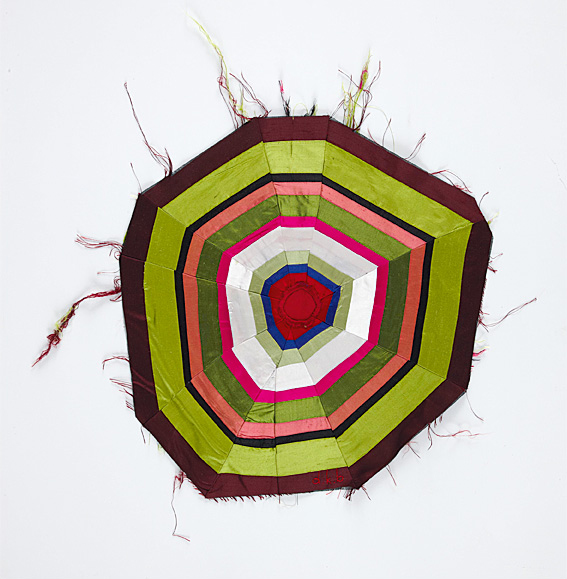


Del Kathryn Barton (Australian, b. 1972) 'no other side' 2012


Del Kathryn Barton (Australian, b. 1972)
no other side
2012
(one part of nine)
Dupion silk and embroidery cotton
9 parts, each 42 × 45cm
In collaboration with Karen Barton
Courtesy of the artist and Roslyn Oxley9 Gallery, Sydney


“I guess every artist has other practices that they aspire to. Louise Bourgeois’ practice – by which I mean the combination of the works, the way that they were made, the artist and the way that she conducted herself – is such a practice for me. The way that she worked for so long, and continued to develop her work in good times and bad, as well as the way that her works are so much of their times but at the same time not quite in sync with them inspires me. The fact that I hardly know the work she made prior to her fifties demonstrates the truth of the idea that art is a lifetime project that can continue to evolve as an artist matures. And then, of course, there is the work itself.”


Patricia Piccinini
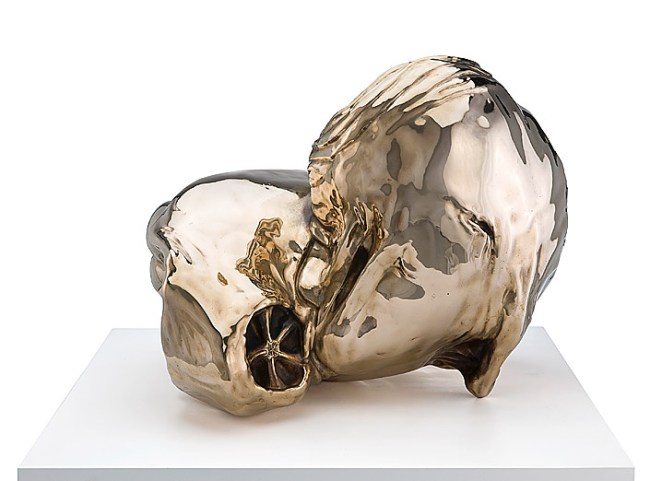


Patricia Piccinini (Australian, b. 1965) 'The Uprising' 2008 bronze


Patricia Piccinini (Australian, b. 1965)
The Uprising
2008
Bronze


Patricia Piccinini (Australian, b. 1965) 'The Uprising' 2008 bronze (detail)


Patricia Piccinini (Australian, b. 1965)
The Uprising (detail)
2008
Bronze


“The massive aorta-like The Uprising, with its labyrinthine musculature, is a much stranger work. It establishes a bridge between the Vespa stags and the transgenic creatures, while being simultaneously amorphous and representational. Corporeal and mechanical, it suggests the plastic, porous, and uncertain world of the new nature that is at the core of the figurative works. For this reason it is physically sited at the boundary between natural history and art history…”


Juliana Engberg
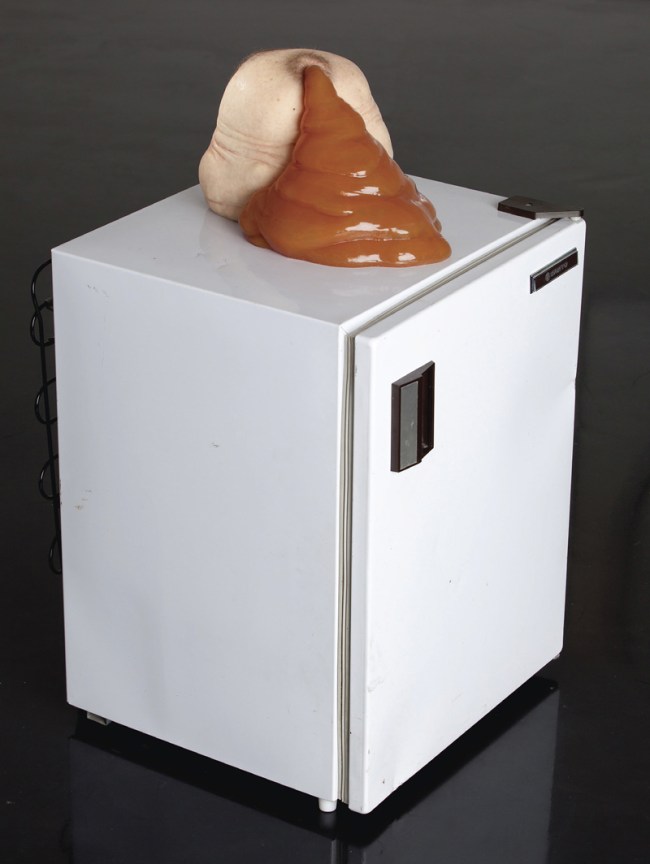


Patricia Piccinini (Australian, b. 1965) 'Nectar' 2012


Patricia Piccinini (Australian, b. 1965)
Nectar
2012
Silicone, fibreglass, human hair, refrigerator edition 1/6
83 × 48 × 51cm
Courtesy of the artist, Tolarno Galleries, Melbourne, and Haunch of Venison, London and New York


“Taking her cue from the vague boundaries of the biotech world, ‘where it is difficult to figure exactly where the good becomes tainted and the bad becomes justifiable’, Piccinini considers her own hybrid creations, however abject or grotesque, as lovable, associated with fecundity, growth and optimism. Like Bourgeois, she presents strange couplings of the animal and the human, that despite their de-formations always convey intimacy and warmth. Here the title Nectar suggests that there may be something nourishing in what might otherwise appear as a failed experiment.”

Text from educational pdf
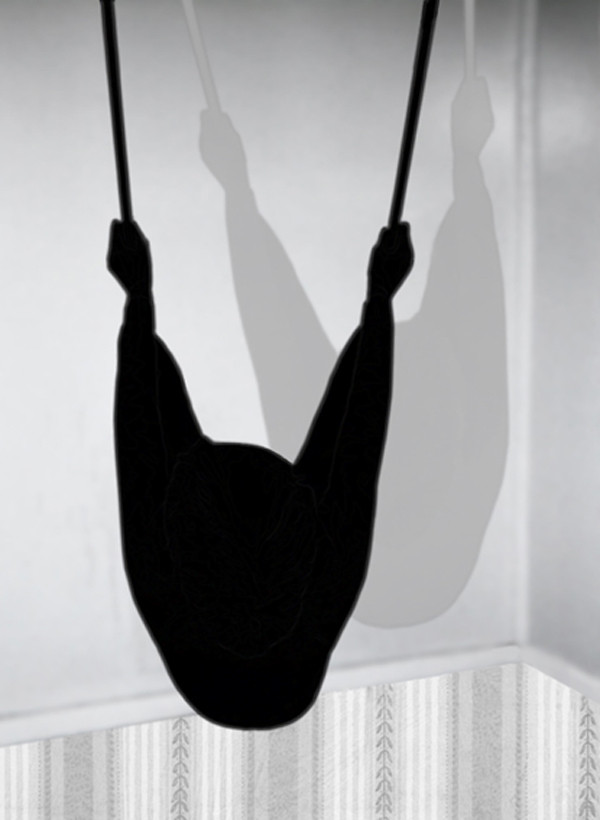
 

Pat Brassington (Australian, b. 1942) 'House guest #2' 2007


Pat Brassington (Australian, b. 1942)
House guest #2
2007
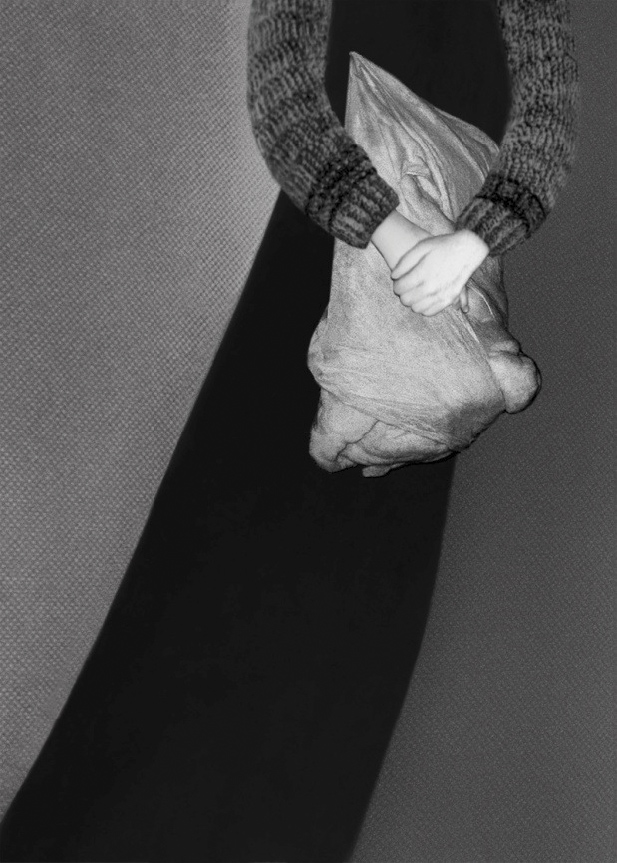
 

Pat Brassington (Australian, b. 1942) 'The Guardian' 2009


Pat Brassington (Australian, b. 1942)
The Guardian
2009
Pigment print on paper edition 6/8
112 × 87.5cm
Heide Museum of Modern Art, Melbourne
Purchased with funds from the Robert Salzer Foundation 2009


Louise Bourgeois at Heide Museum

A behind-the-scenes look at how the works of Louise Bourgeois, including her famous Spider were installed at Heide Museum.


Heide Museum of Modern Art
7, Templestowe Road
Bulleen, Victoria 3105

Opening hours:
(Heide II and Heide III)
Tuesday, Wednesday, Sunday, 10am – 5pm
Thursday – Saturday, 10am – 8pm

Heide Museum of Modern Art website

LIKE ART BLART ON FACEBOOK

Back to top