Exhibition: ‘Vivian Maier: Photographs from the Maloof Collection’ at the Howard Greenberg Gallery, New York

Exhibition dates:  15th December 2011 – 26th January 2012


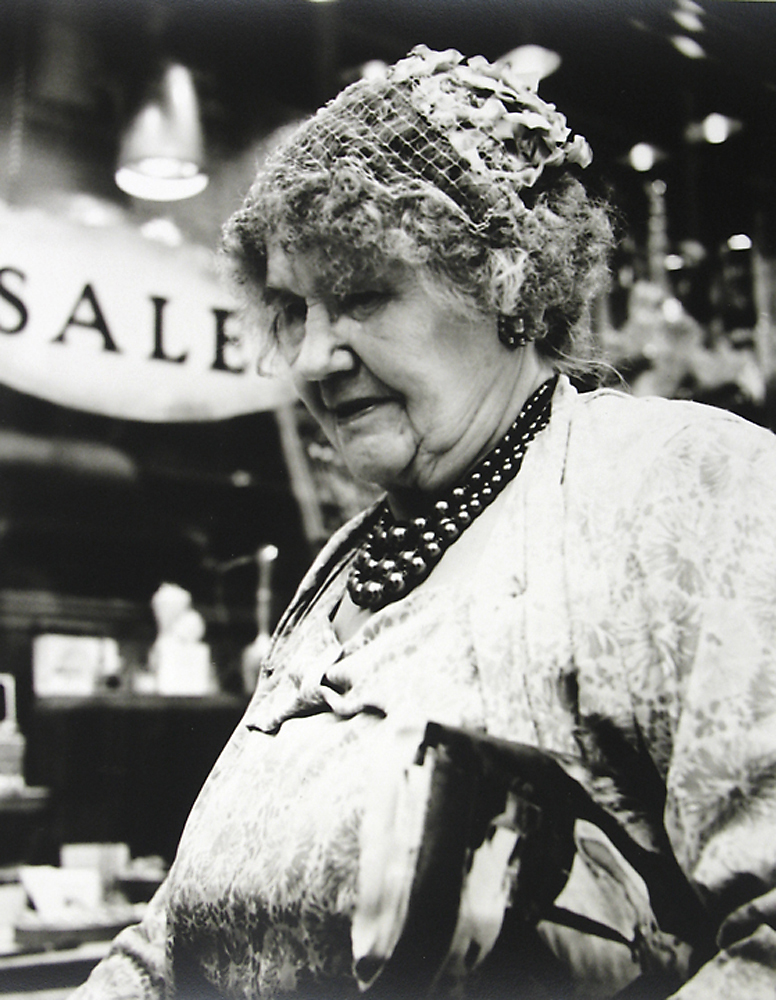
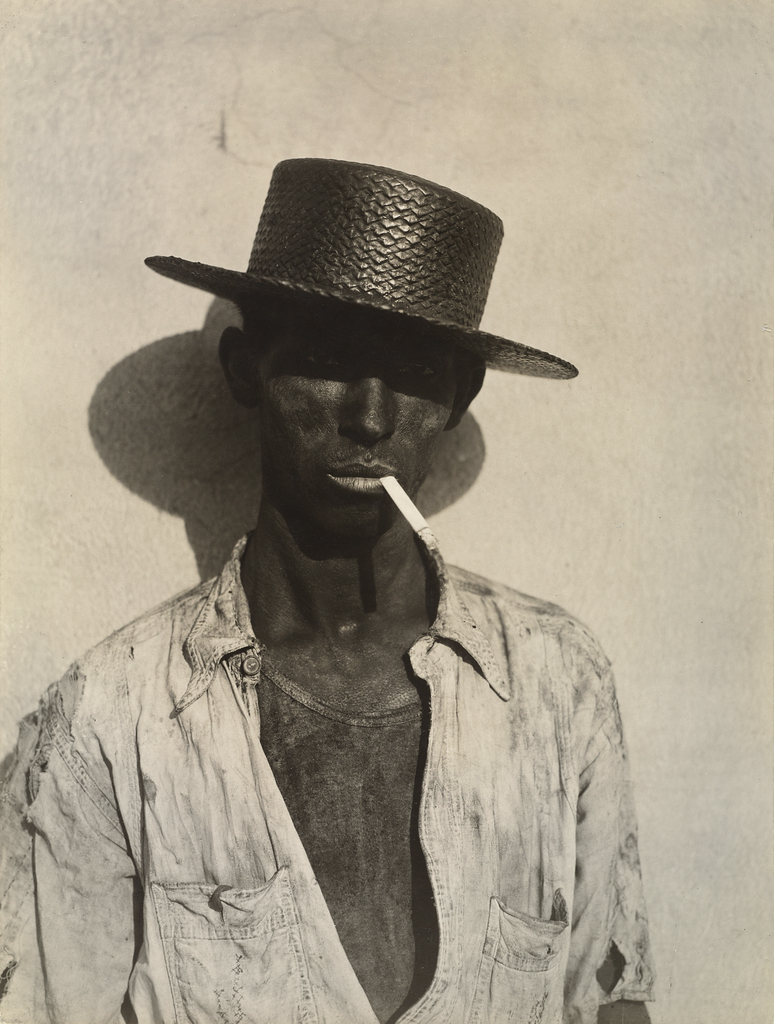
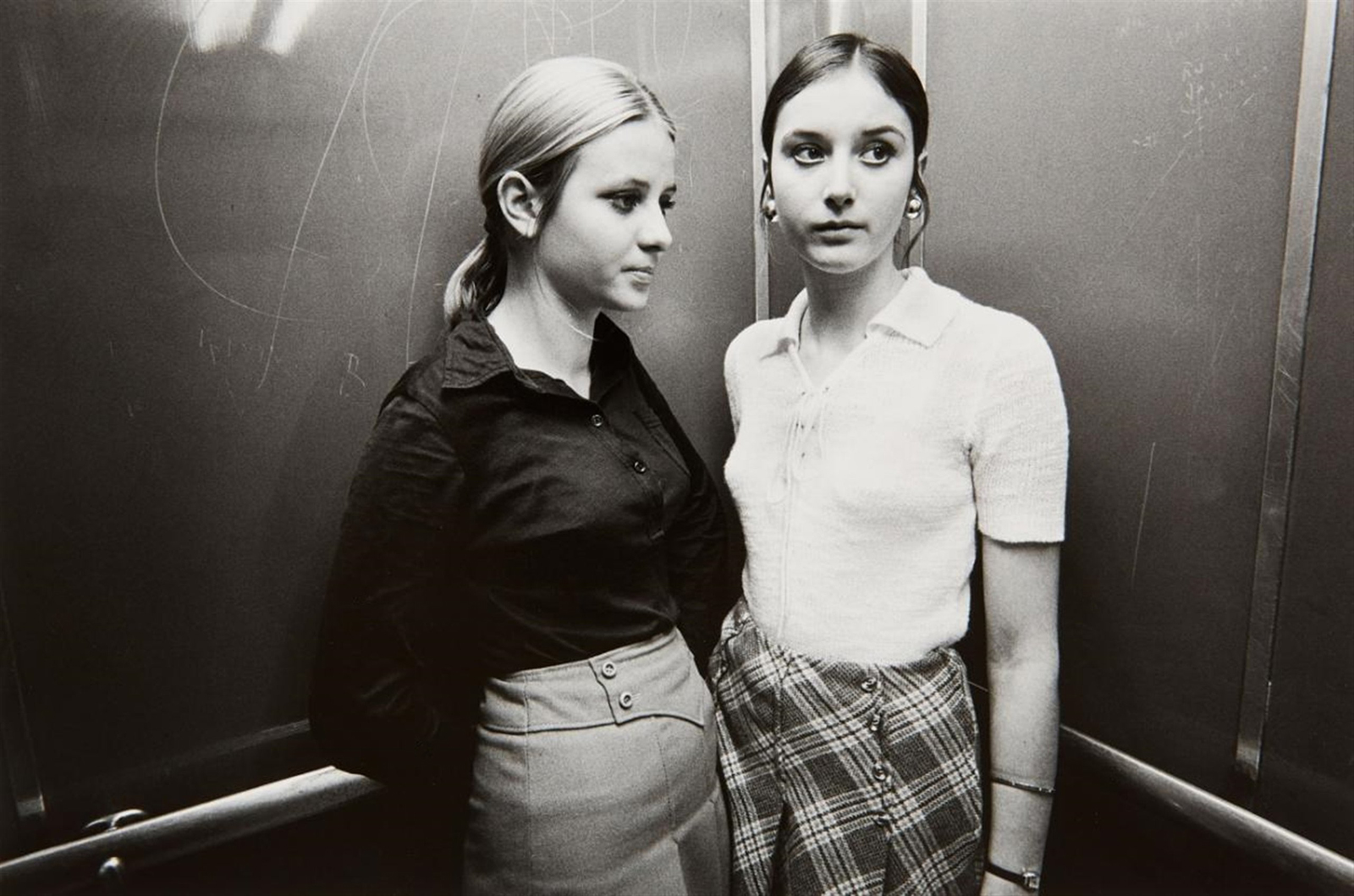
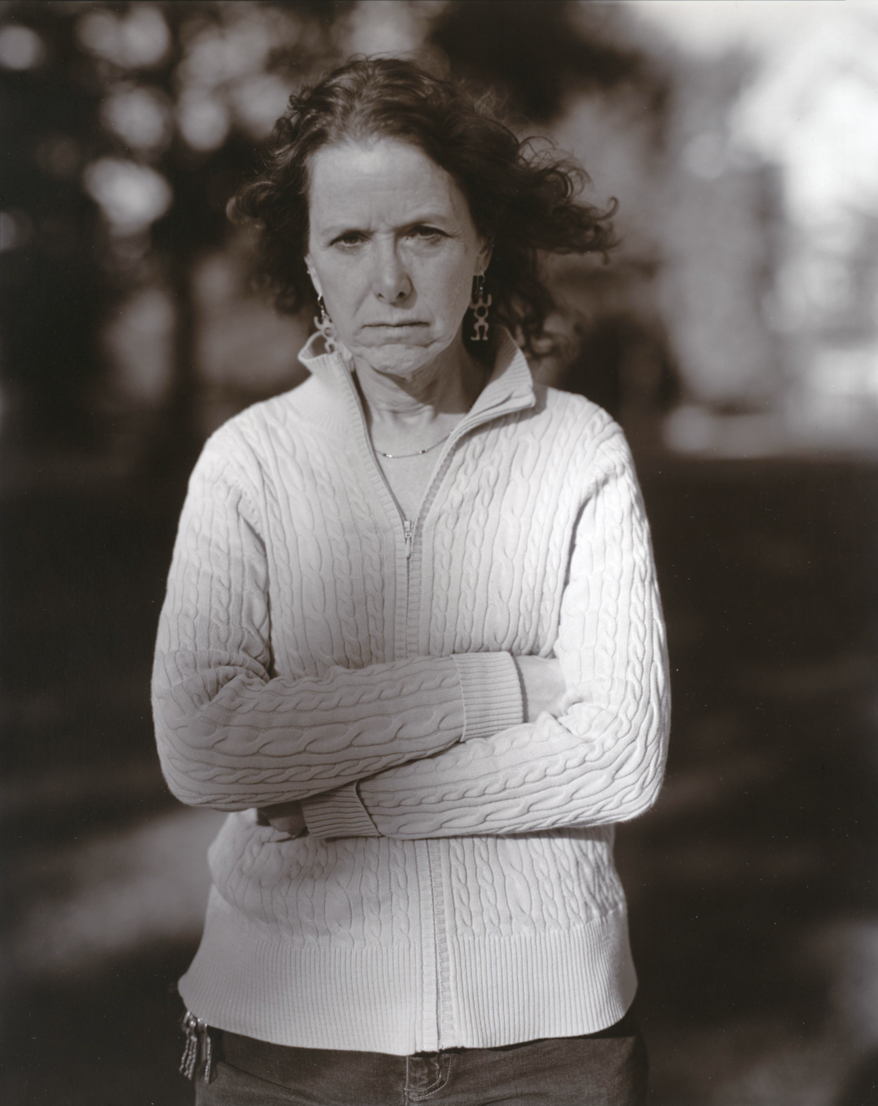
Vivian Maier (American, 1926-2009) 'Untitled (portrait of a woman)' date unknown


Vivian Maier (American, 1926-2009)
Untitled (portrait of a woman)
Date unknown
© Vivian Maier/Maloof Collection, Courtesy Howard Greenberg Gallery


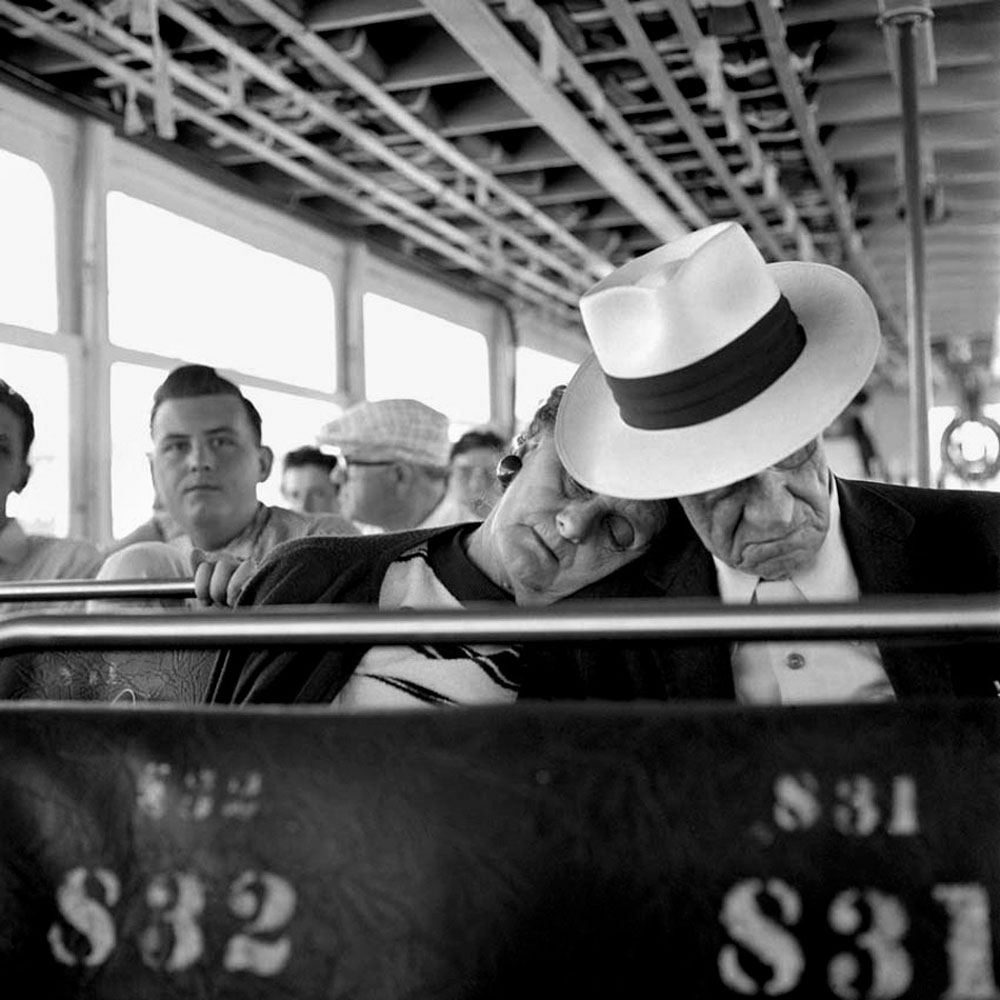
Another photographer who is getting more recognition. Out of the work I have seen the portraits are the strongest. Some of them feel like precursors to the confronting portraits of women made by Diane Arbus while others offer a more reflective, contemplative examination of human presence.

Dr Marcus Bunyan


Many thankx to Alicia Colen for her help and to the Howard Greenberg Gallery for allowing me to publish the photographs in the posting.


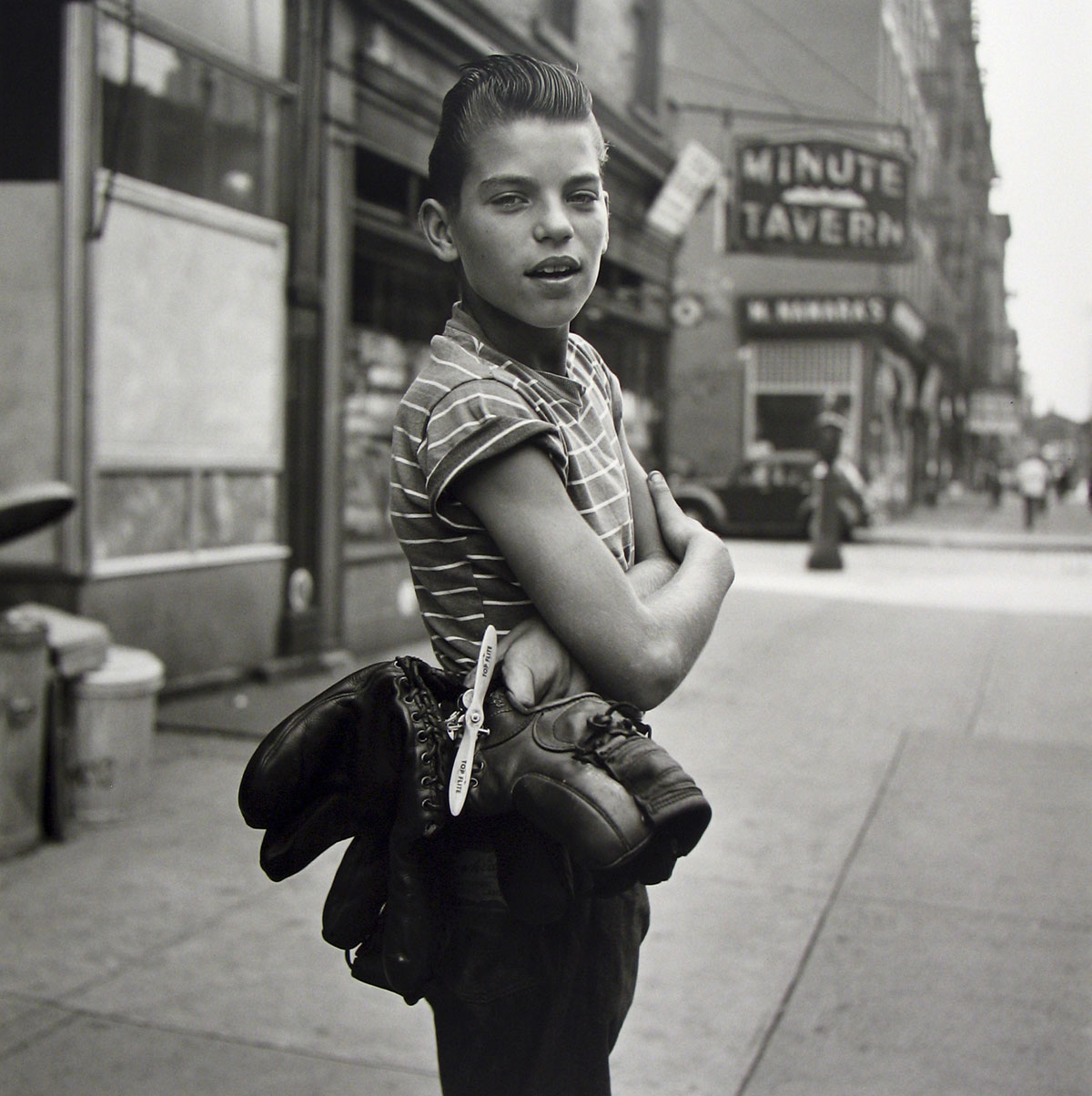
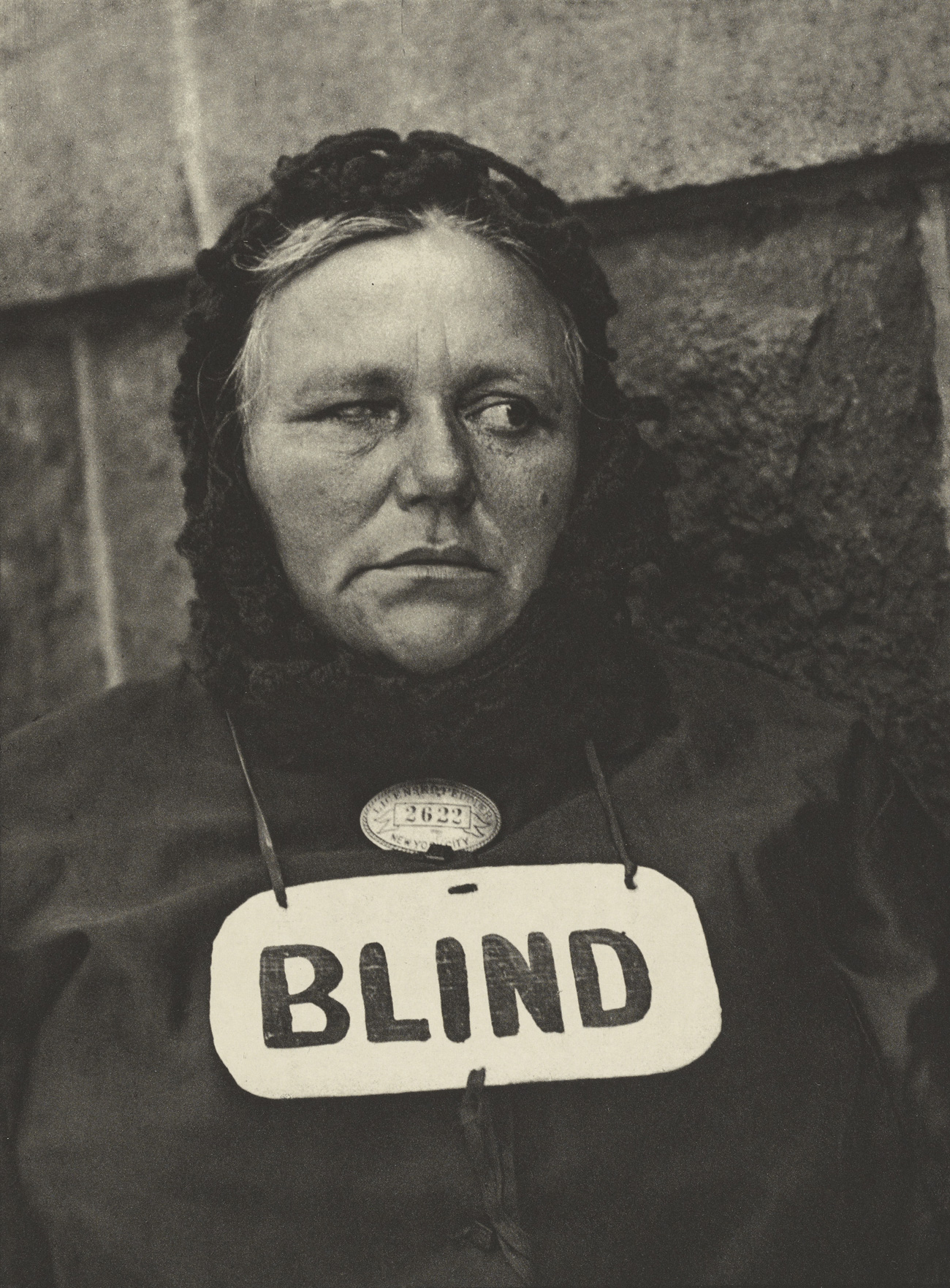
Vivian Maier (American, 1926-2009) 'Untitled' c. 1950's


Vivian Maier (American, 1926-2009)
Untitled
c. 1950’s
© Vivian Maier/Maloof Collection, Courtesy Howard Greenberg Gallery


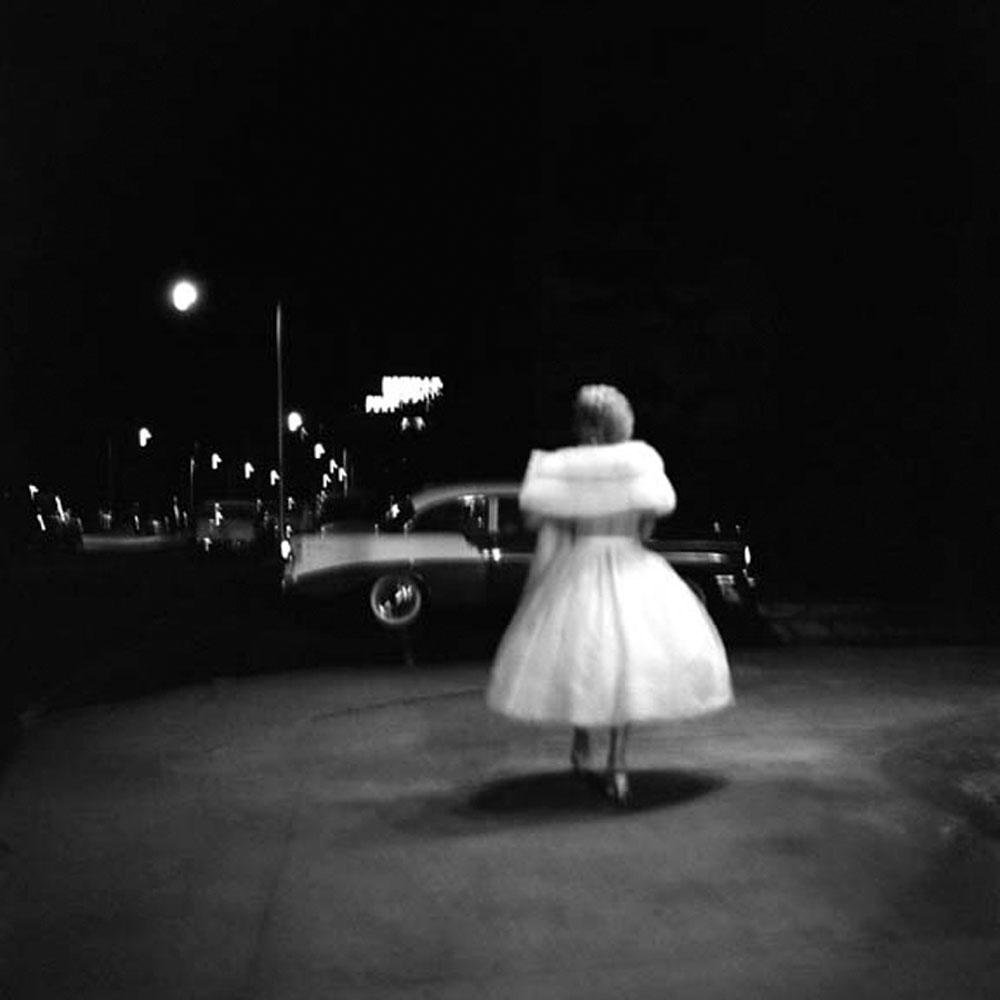
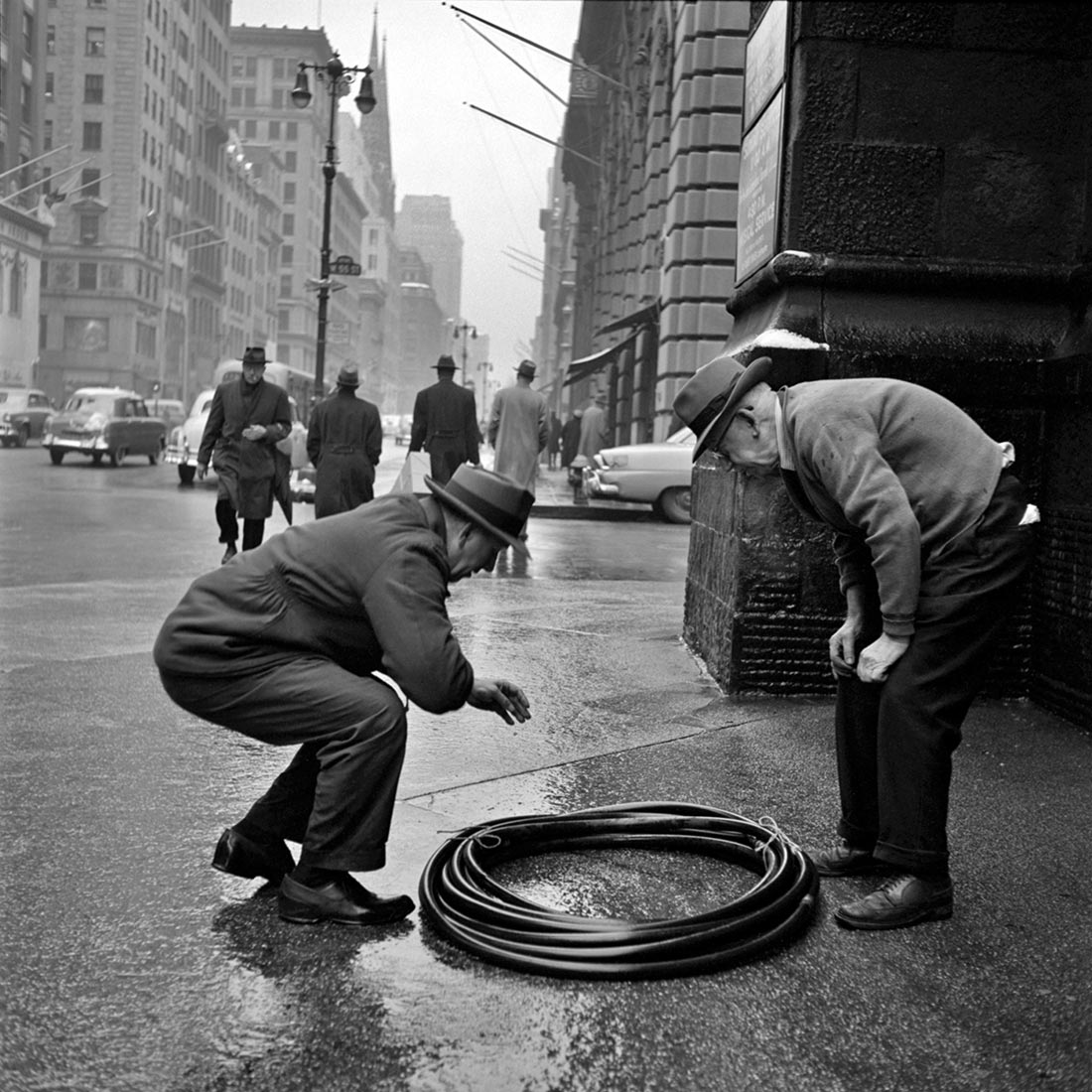
Vivian Maier (American, 1926-2009) 'Untitled' c. 1950's


Vivian Maier (American, 1926-2009)
Untitled
c. 1950’s
© Vivian Maier/Maloof Collection, Courtesy Howard Greenberg Gallery


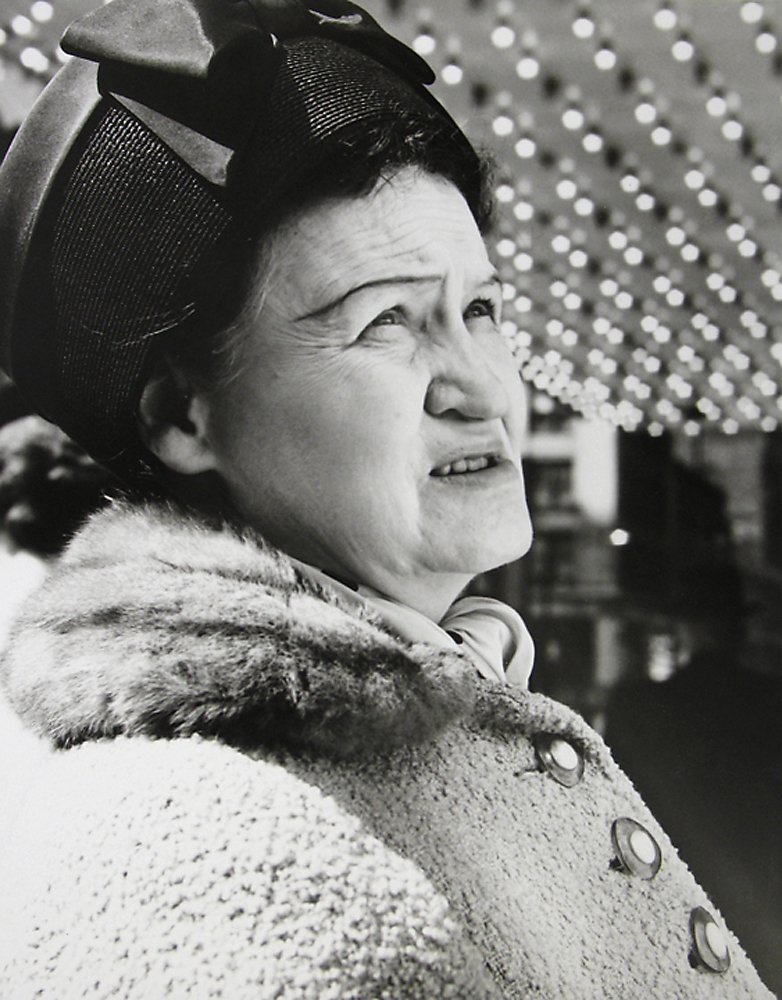
Vivian Maier (American, 1926-2009) 'Untitled' c. 1950's


Vivian Maier (American, 1926-2009)
Untitled
c. 1950’s
© Vivian Maier/Maloof Collection, Courtesy Howard Greenberg Gallery


Vivian Maier (American, 1926-2009) 'Untitled' 1954


Vivian Maier (American, 1926-2009)
Untitled
1954
Gelatin silver print, printed later
© Vivian Maier/Maloof Collection, Courtesy Howard Greenberg Gallery


Vivian Maier (American, 1926-2009) 'Florida' 1957


Vivian Maier (American, 1926-2009)
Florida
1957
Gelatin silver print, later print
© Vivian Maier/Maloof Collection, Courtesy Howard Greenberg Gallery


Vivian Maier (American, 1926-2009) 'New York, New York City' Nd


Vivian Maier (American, 1926-2009)
New York, New York City
Nd
Gelatin silver print, later print
© Vivian Maier/Maloof Collection, Courtesy Howard Greenberg Gallery


Vivian Maier (American, 1926-2009) 'Untitled' Nd


Vivian Maier (American, 1926-2009)
Untitled
Nd
Gelatin silver print, later print
© Vivian Maier/Maloof Collection, Courtesy Howard Greenberg Gallery


Howard Greenberg Gallery is proud to present the recently discovered work of street photographer, Vivian Maier (1926-2009), from the Maloof Collection.

A nanny by trade, Vivian Maier’s street and travel photography was discovered by John Maloof in 2007 at a local auction house in Chicago. Always with a Rolleiflex around her neck, she managed to amass more than 2,000 rolls of films, 3,000 prints and more than 100,000 negative which were shared with virtually no one in her lifetime. Her black and white photographs-mostly from the 50s and 60s-are indelible images of the architecture and street life of Chicago and New York. She rarely took more than one frame of each image and concentrated on children, women, the elderly, and indigent. The breadth of Maier’s work also reveals a series of striking self-portraits as well as prints from her travels to Egypt, Bangkok, Italy, and the American Southwest, among dozens of other international cities.

“My fascination with her story has only grown, as has my involvement with her photographs. It is such an unusual story with no resolution. At first her images are extremely well seen, quality photographs of life on the street, in New York City and Chicago. But as one looks at the body of her work, she reveals her deeper interests. Then one tries to imagine who she was, what motivated her, her personality. It is not everyday that one becomes so involved and even obsessed with a particular photographer,” comments Howard Greenberg.

What little is known about Maier’s life is the result of John Maloof’s extensive research. He discovered her obituary on line in 2009 which was just the beginning of his investigative work. An American of French and Austro-Hungarian extraction, Maier split her time between Europe and the US, returning to NY in 1951. In 1956, she ultimately settled in Chicago where she worked as nanny for more than forty years. For a brief period in the 1970s she worked as a nanny to journalist, Phil Donahue’s children. Towards the end of her life, Maier was supported by the children she had cared for in the early 50s. Unbeknownst to them, one of Maier’s storage lockers (containing her massive group of negatives) was auctioned off due to delinquent payments.

After purchasing the first collection of Maier photographs in 2007, Maloof acquired more from another buyer at the same auction. He has since established the Maloof Collection to promote the work of Vivian Maier and to safeguard the archive for future generations. The archive consists of approximately 100,000 to 150,000 negatives; over 3,000 prints; hundreds of rolls of film; home movies; audio tape interviews, and other items representing roughly 90% of Maier’s work. Through Maloof’s efforts, Vivian Maier’s photographs have been exhibited internationally and have received significant critical attention. In November, Powerhouse Books will publish Vivian Maier: Street Photographer, edited by Maloof with a foreword by Geoff Dyer. John Maloof is also co-producing a documentary about Vivian Maier.

Press release from the Howard Greenberg Gallery


Vivian Maier (American, 1926-2009) 'Untitled' c. 1950's


Vivian Maier (American, 1926-2009)
Untitled
c. 1950’s
© Vivian Maier/Maloof Collection, Courtesy Howard Greenberg Gallery


Vivian Maier (American, 1926-2009) 'Uptown West, New York, NY, January 26, 1955' 1955


Vivian Maier (American, 1926-2009)
Uptown West, New York, NY, January 26, 1955
1955
© Vivian Maier/Maloof Collection, Courtesy Howard Greenberg Gallery


Vivian Maier (American, 1926-2009) 'New York, New York City' 1954


Vivian Maier (American, 1926-2009)
New York, New York City
1954
Gelatin silver print, printed later
© Vivian Maier/Maloof Collection, Courtesy Howard Greenberg Gallery


Vivian Maier (American, 1926-2009) 'Untitled' 1956


Vivian Maier (American, 1926-2009)
Untitled
1956
Gelatin silver print, printed later
© Vivian Maier/Maloof Collection, Courtesy Howard Greenberg Gallery


Vivian Maier (American, 1926-2009) 'Untitled, Chicago, May 16, 1957' 1957


Vivian Maier (American, 1926-2009)
Untitled, Chicago, May 16, 1957
1957
© Vivian Maier/Maloof Collection, Courtesy Howard Greenberg Gallery


Vivian Maier (American, 1926-2009) 'Florida' 1960


Vivian Maier (American, 1926-2009)
Florida
1960
Gelatin silver print, printed later
© Vivian Maier/Maloof Collection, Courtesy Howard Greenberg Gallery


Vivian Maier (American, 1926-2009) 'Untitled' Nd


Vivian Maier (American, 1926-2009)
Untitled
Nd
Gelatin silver print, printed later
© Vivian Maier/Maloof Collection, Courtesy Howard Greenberg Gallery


Vivian Maier (American, 1926-2009) 'New York City' 1955


Vivian Maier (American, 1926-2009)
New York City
1955
Gelatin silver print, printed later
© Vivian Maier/Maloof Collection, Courtesy Howard Greenberg Gallery


Vivian Maier (American, 1926-2009) 'New York City, Self-Portrait, September 10th, 1955' 1955


Vivian Maier (American, 1926-2009)
New York City, Self-Portrait, September 10th, 1955
1955
© Vivian Maier/Maloof Collection, Courtesy Howard Greenberg Gallery


Howard Greenberg Gallery
The Fuller Building
41 East 57 Street
Suite 1406
New York, NY 10022
Phone: 212.334.0010

Gallery hours:
Tuesday – Friday 10.00am – 5.00pm

Howard Greenberg Gallery website

LIKE ART BLART ON FACEBOOK

Back to top

Exhibition: ‘After the Gold Rush: Contemporary Photographs from the Collection’ at The Metropolitan Museum of Art, New York

Exhibition dates: 22nd March, 2011 – 2nd January, 2012


Many thankx to The Metropolitan Museum of Art, New York for allowing me to publish the photographs in the posting. Please click on the photographs for a larger version of the image.


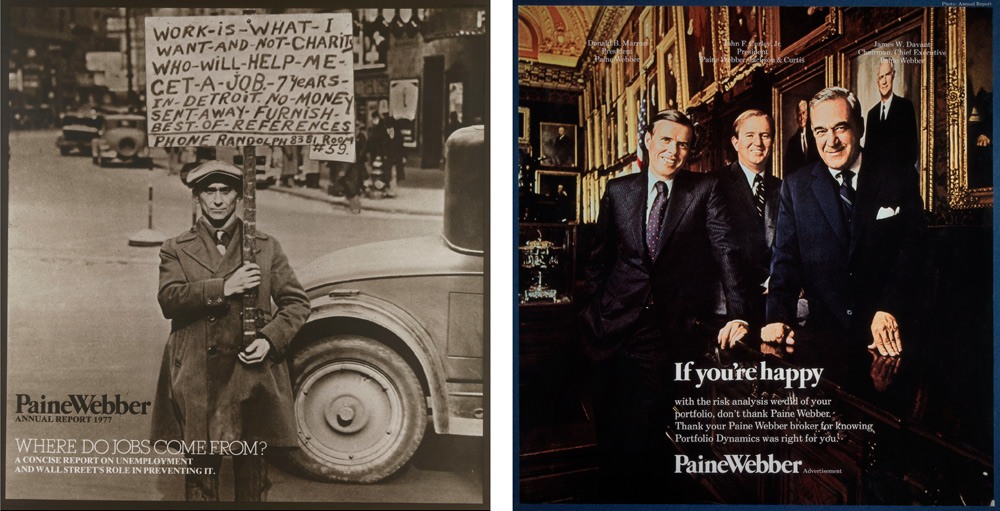
Hans Haacke (German, born 1936). 'Thank You, Paine Webber' 1979


Hans Haacke (German, b. 1936)
Thank You, Paine Webber
1979
Gelatin silver print and chromogenic print
The Metropolitan Museum of Art
Purchase, Vital Projects Fund Inc. Gift, through Joyce and Robert Menschel, 2010
© Hans Haacke


Since the early 1970s Haacke has taken on the intertwined political and corporate forces that use cultural patronage as a smokescreen to advance interests that are often antithetical to the vitality of free speech and expression in democracies. Haacke made this work just as the strategy of appropriation – lifting an image out of its original context and re-presenting it in critical fashion – began to make waves in the New York art world of the late 1970s. Like all effective appropriation, it exposes a prior instance of borrowing – in this case, how the investment firm Paine Webber used a documentary photograph to give its annual report the veneer of social concern. The artist then pointedly contrasted it with an image from the same annual report of a beaming trio of executives in a painting-lined gallery. As a counterpoint to the protestor’s signboard, Haacke dropped in text from a different Paine Webber ad campaign to show on whose backs the “risk management” is taking place – a biting indictment, the relevance of which has only increased since the recent economic downturn.

Wall text


Jeff Wall (Canadian, born 1946). 'The Storyteller' 1986


Jeff Wall (Canadian, b. 1946)
The Storyteller
1986
Silver dye bleach transparency in light box
The Metropolitan Museum of Art
Purchase, Charlene and David Howe, Henry Nias Foundation Inc., Jennifer and Robert Yaffa, Harriet Ames Charitable Trust, and Gary and Sarah Wolkowitz Gifts, 2006
Image courtesy of the artist
© Jeff Wall


Wall’s staged tableaux straddle the worlds of the museum and the street. His subjects are scenes of urban and suburban disarray that he witnessed firsthand – the kinds of things anyone might see while wandering around a city and its outskirts. Working like a movie director, he restages the scene using nonprofessionals as actors and presents his photographs as colour transparencies in light boxes such as those of large-scale public advertisements found at airports and bus stops. The scale and ambition of his pictures – scenes of everyday life shot through with larger intimations of political struggle – equally evoke the Salon paintings of nineteenth century French painters such as Gustave Courbet and Édouard Manet, which were themselves brazen combinations of canonical and contemporary subjects.

The Storyteller is set in a barren, leftover slice of land next to a highway overpass in Vancouver, where the artist lives. Various groupings of modern urban castaways – perhaps descendants of the Native Americans who occupied the land before the arrival of Europeans – are dispersed around the hillside, a mini-catalogue of art-historical reference. Like the upside-down, half-submerged figure of Icarus in the background of Brueghel’s Landscape with the Fall of Icarus, the woman speaking and gesticulating to the two men listening at the lower left becomes the key to unifying the fractured and alienating environment from which Wall’s picture is constructed.

Wall text


Laurie Simmons (American, b. 1949). 'Walking Gun' 1991


Laurie Simmons (American, b. 1949)
Walking Gun
1991
Gelatin silver print
The Metropolitan Museum of Art
Purchase, Anonymous Gift, 1998
© Laurie Simmons


The early 1990s marked the last moment when a wide swath of women artists responded to the sexism they saw as pervasive in the culture – from the rape trial of William Kennedy Smith to the Supreme Court nomination hearings for Clarence Thomas. A pioneer of set-up photography, Simmons dramatically expanded the scale of her constructed tableaux for a series of spotlighted puppet-like objects perched atop doll legs: revolvers, houses, cameras, and cakes. This armed and dangerous example refers to the old-movie cliché where a man carrying a gun is shown in shadow profile. Here, Simmons offers instead the death-dealing seductress – also familiar from film noir – in monumental miniature, a doll capable of turning on its master at a moment’s notice.

Wall text


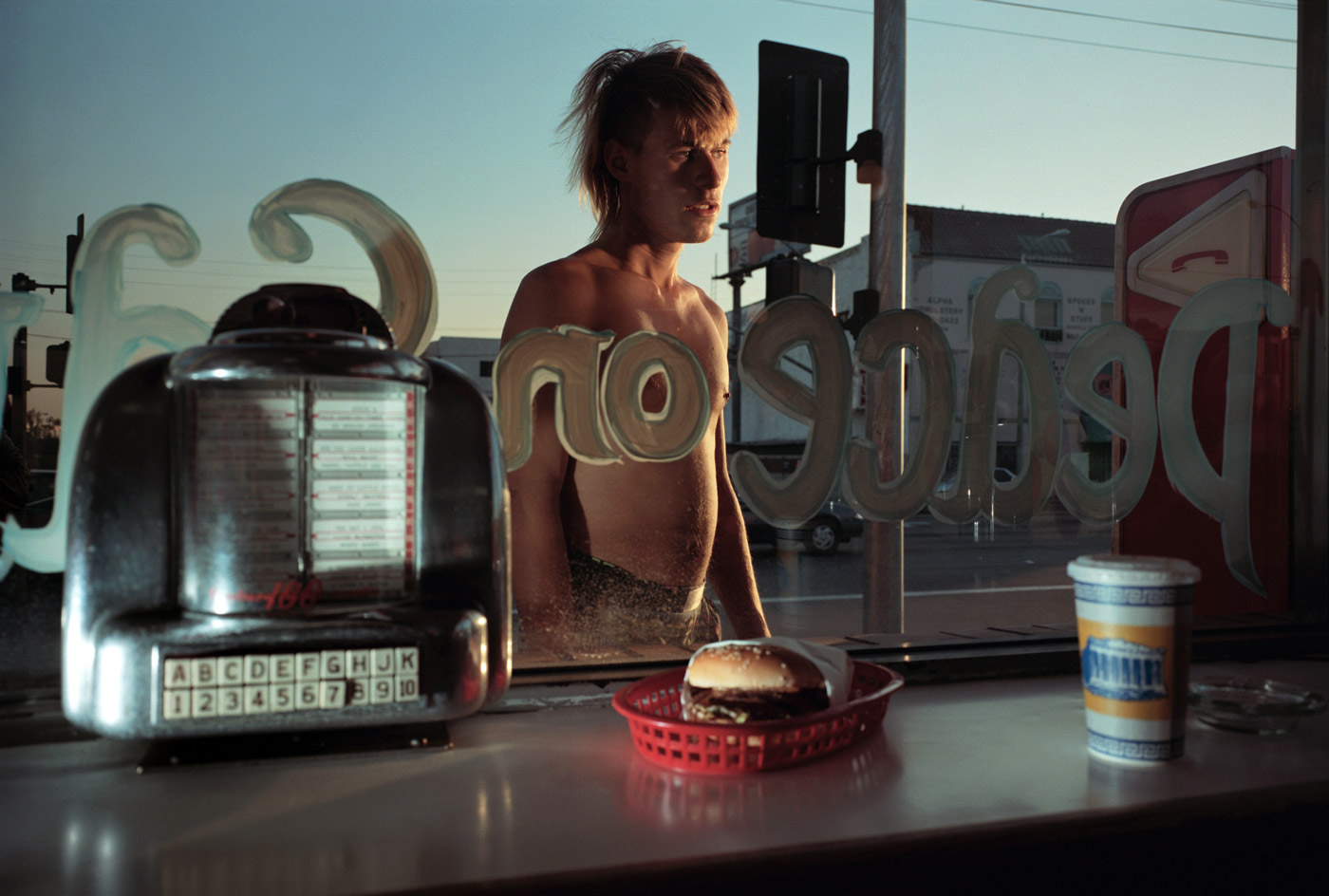
Philip-Lorca diCorcia (American, b. 1953). 'Todd M. Brooks, 22 Years Old, from Denver, Colorado, $40' 1991


Philip-Lorca diCorcia (American, b. 1953)
Todd M. Brooks, 22 Years Old, from Denver, Colorado, $40
1991
Chromogenic print
The Metropolitan Museum of Art
Purchase, The Horace W. Goldsmith Foundation Gift, through Joyce and Robert Menschel, 1991
Image courtesy the artist and David Zwirner, New York
© Philip-Lorca diCorcia


In the middle of the 1990’s, diCorcia gained international recognition for his large color photographs of street scenes and passersby. For an earlier series, he traveled to Los Angeles on a fellowship from the National Endowment for the Arts, and worked on a part of Santa Monica Boulevard frequented by male prostitutes and drug addicts. For each picture he made there, he carefully composed his setting, then asked young men to pose for him, giving them a small fee (from twenty to fifty dollars) that was negotiated each time.

At that time, NEA support of artists such as Robert Mapplethorpe was highly controversial, and diCorcia had to sign a document stating that he would not produce any “obscene” work while on his fellowship. He set up the whole negotiating procedure as a symbolic way of sharing his grant with people whose behavior would surely have been condemned by the censors. The titles always mention the name, the age and the origin of the model, as well as the amount paid. The staged situation interacts with the raw reality of the exchange of money, blurring the boundaries between documentary and fiction, yet preserving an authentic emotional charge.

Text from The Metropolitan Museum of Art website


Philip-Lorca diCorcia (American, b. 1953) 'Eddie Anderson, 21 Years Old, from Houston, Texas, $20' 1991


Philip-Lorca diCorcia (American, b. 1953)
Eddie Anderson, 21 Years Old, from Houston, Texas, $20
1991
Chromogenic print
Image: 39.2 x 57.8 cm (15 7/16 x 22 3/4 in.)
The Metropolitan Museum of Art
Purchase, The Horace W. Goldsmith Foundation Gift, through Joyce and Robert Menschel, 1991
Image courtesy the artist and David Zwirner, New York
© Philip-Lorca diCorcia


The Metropolitan Museum of Art will present After the Gold Rush: Contemporary Photographs from the Collection from March 22, 2011, through January 2, 2012, in the Joyce and Robert Menschel Hall for Modern Photography. Drawn entirely from the Museum’s permanent collection, the exhibition features 25 photographs dating from 1979 to the present by 15 contemporary artists.

The exhibition’s title, After the Gold Rush, is taken from a classic 1970 song by Neil Young, whose verses contrast a romanticised past with a present of squandered plenty and an uncertain future. Inspired by the recent political and economic upheavals in America and abroad, this selection juxtaposes new photographs that take the long view of the world’s current condition with prescient works from the 1980s and 1990s that remain startlingly relevant today.

This is the first occasion for the Museum to present recently acquired works by: Gretchen Bender, James Casebere, Moyra Davey, Katy Grannan, Hans Haacke, An-My Lê, Curtis Mann, Trevor Paglen, and Wolfgang Tillmans. Also featured are photographs by: Philip-Lorca diCorcia, Robert Gober, Adrian Piper, Laurie Simmons, Jeff Wall, and Christopher Williams.

After the Gold Rush begins with Hans Haacke’s Thank You, Paine Webber (1979) – the first work by this legendary provocateur of Conceptual art to enter the Metropolitan’s collection. Haacke’s biting photo-diptych is so pertinent to the recent economic downturn that it seems as if it could have been made yesterday. In this work, the artist appropriated images from the investment firm’s annual report to convey his viewpoint that big business provides a veneer of social concern to mask the brutal effects of the “risk management” they offer their clients.

Other works in After the Gold Rush use varying degrees of artifice and photographic realism to reflect on marginalised and repressed voices. Measuring over 14 feet long and presented as a backlit transparency in a light box, The Storyteller (1986) is Jeff Wall’s signature image and is typical of his method. Working from memory, the artist uses nonprofessional actors and real locations to meticulously restage a scene of urban blight that he witnessed in his native Vancouver. Wall plays this photographic verisimilitude against compositions and figural poses indebted to French painters such as Gustave Courbet, Edouard Manet, and Georges Seurat. A comparison of Wall’s Storyteller with Courbet’s Young Ladies of the Village (1852), on view in the Museum’s galleries for Nineteenth and Early Twentieth-Century European Paintings and Sculpture, reveals parallels: in both, a keenly observed moment of telling social interaction taking place on a sloping landscape. Each artist has combined a daringly modern subject with references to earlier art.

Philip-Lorca diCorcia is another key figure in the development of staged photography. In the early 1990s, the artist created a series of works in response to the political attacks on gays and federal funding of the arts in the U.S. DiCorcia hired male hustlers to pose for their portraits out on the streets – and paid them with grant money he received from the National Endowment for the Arts. At the same moment, a wide swath of women artists addressed issues of sexism and racism: examples of this politically pointed art are represented by Laurie Simmons’ Walking Gun (1991) – a spotlighted puppet of doll legs and a revolver that seems capable of turning on its master at a moment’s notice – and Adrian Piper’s 1992 work Decide Who You Are #24 (A Moving Target), which includes a childhood image of Anita Hill as part of a blistering meditation in word and image on racial politics. Such works are missives from a time not so long ago when artists regularly commented on present-day politics and culture through their art. (Because of light sensitivity, this work by Adrian Piper will be on view through Sunday, September 26.)

Although the recently made photographs in After the Gold Rush seem at first glance to be less overtly political than their predecessors, they nevertheless address vital issues about contemporary society. James Casebere’s epic vision of America, Landscape with Houses (Dutchess County, NY) #1, (2009), is based on a tabletop model that the artist spent 18 months building. The photograph shows a suburban subdivision of the kind recently ravaged by the foreclosure crisis, and its sunny sense of “Morning in America” comments ironically on the country’s future prospects. An-My Lê’s similarly sweeping five-part photographic piece Suez Canal Transit, USS Dwight Eisenhower, Egypt (2009) will also be featured. Lê is interested in the way in which U.S. armed forces come into contact with the rest of the world. This major new work – which seems at first to be a straightforward panorama of military might overseas – subtly undercuts the viewer’s expectations to question the current position of the U.S. on the global stage.

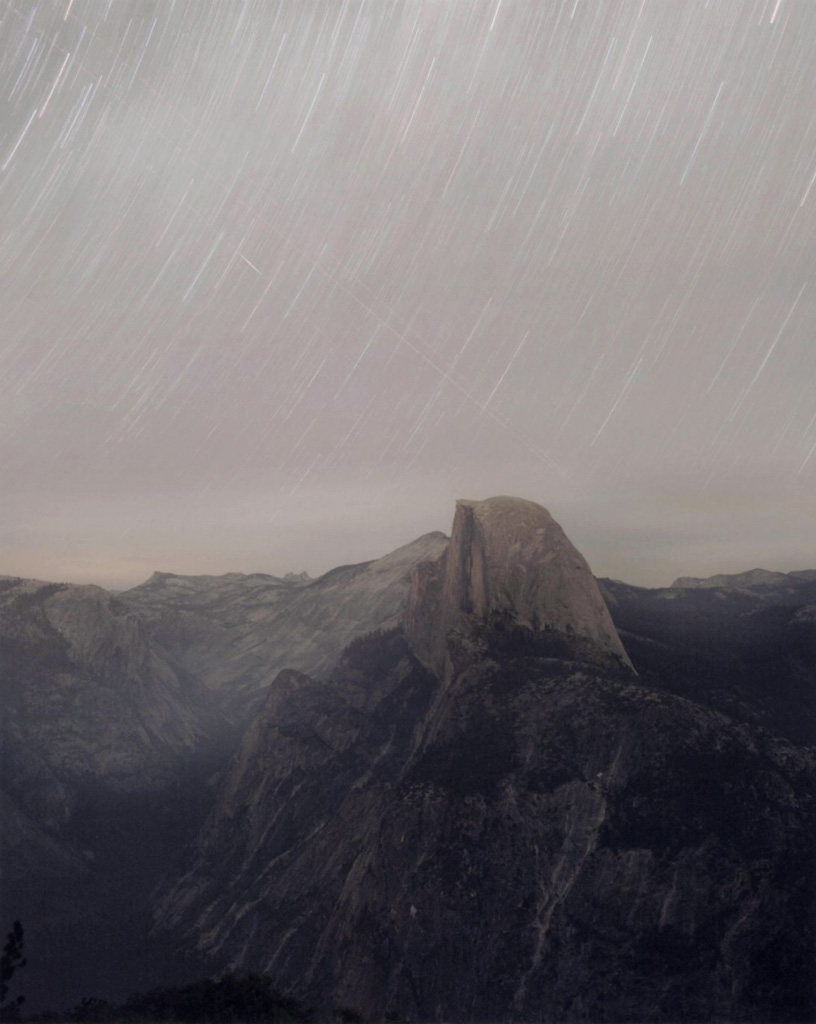
Trevor Paglen is a young artist whose works plot the “black world” of covert military operations, from telephoto images of predator drones taken from miles away, to software that follows planes used for the extraordinary rendition of suspected terrorists. Paglen’s 2008 photograph KEYHOLE IMPROVED CRYSTAL from Glacier Point (Optical Reconnaissance Satellite; USA 186) shows the ghostly white streak of an American reconnaissance satellite bisecting star trails above Yosemite’s Half Dome, a rock formation photographed in the 1860s by artists including Carleton Watkins. To make these and other photographs, Paglen collaborated with amateur astronomers who were originally trained by the U.S. government to look out for Soviet satellites during the Cold War, but turned their attention to American surveillance in recent years.

The final piece in After the Gold Rush is a suite of five recently acquired photographs from 2007-2009 by the celebrated photographer Wolfgang Tillmans. The grouping shifts focus from macro to micro: from expansive aerial views of Shanghai and Dubai to close ups that suggest the smallest increments of sustenance and regeneration. Taken together, they evoke the interconnectedness of all things and a grounding of the political in the personal as a way for an engaged yet expressive art.

Press release from The Metropolitan Museum of Art website


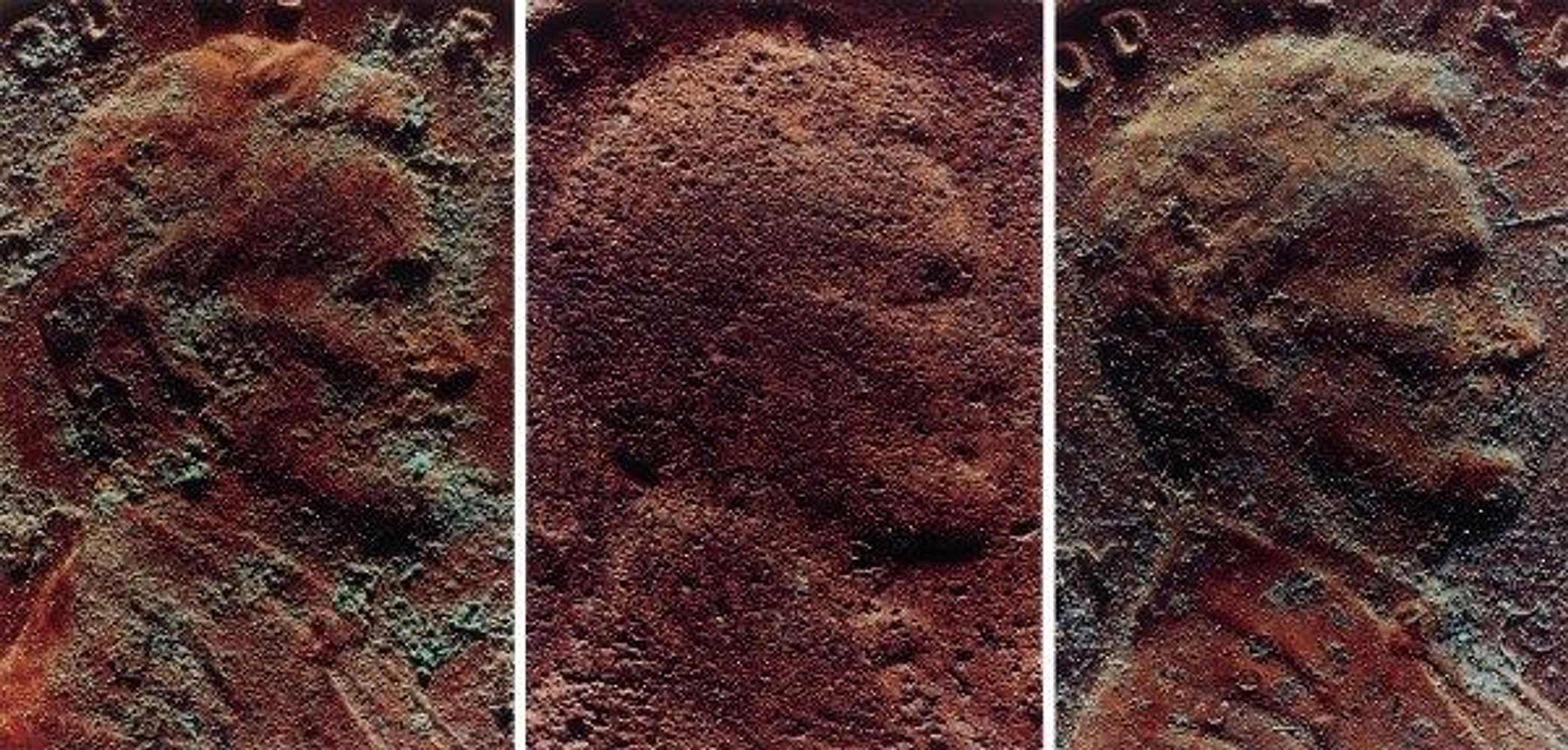
Moyra Davey (American born Canada, b. 1958) 'Copperhead Grid' 1990 (detail)


Moyra Davey (American born Canada, b. 1958)
Copperhead Grid (detail)
1990
Chromogenic prints
Image: 8 3/4 in. × 6 in. (22.3 × 15.3cm) each
Sheet: 10 × 8 in. (25.4 × 20.3cm) each
The Metropolitan Museum of Art
Purchase, Vital Projects Fund Inc. Gift, through Joyce and Robert Menschel, 2011
© Moyra Davey


It was in 1990 – at the height of a worldwide economic recession that also marked the end of the 1980s art bubble – that Davey began photographing the scratched, worn-away surfaces of pennies, the most devalued and lowest form of currency. Her accumulation of one hundred micro-photographic specimens is constructed around the readymade patterns of decay that countless anonymous owners have unconsciously wrought upon their surfaces; their base materiality is incisively contrasted with the most elevated of national symbols. As with all of Davey’s work, there is a melancholic sense of loss that connects subject and form: like pennies, photographs are objects of exchange imprinted by contact with the world around them.

Text from The Metropolitan Museum of Art website


Adrian Piper (American, born 1948). 'Decide Who You Are #24: A Moving Target' 1992


Adrian Piper (American, b. 1948)
Decide Who You Are #24: A Moving Target
1992
Photo-mechanical processes on three panels
The Metropolitan Museum of Art
Gift of Peter Norton Family Foundation, 1994
© Adrian Piper


Piper is an artist and a philosophy professor who works in a variety of media, including performance, video, sound pieces, photography, drawing, and writing. She often explores issues of autobiography, racism, and stereotyping. For her 1992 series Decide Who You Are, the artist used a triptych format in which a different appropriated photograph is flanked by an image of the “three wise monkeys” maxim advocating “See No Evil, Speak No Evil, Hear No Evil” at left, and at right a photograph of a young girl who, though not identified, is Anita Hill – who had recently been thrust into the spotlight for accusing then-nominee for Supreme Court Justice Clarence Thomas of sexual harassment. The verse in the left panel changes in each individual work in the series, while that on the right is unchanging – what the artist once described as “a comprehensive, textbook compendium of commonly invoked litanies of denial and intimidation, from the bland to the vaguely menacing” and “a must for novices and aspiring leaders in business, politics, and culture.”

Wall text


Christopher Williams (American, b. 1956). '3 White (DG's Mr. Postman) Fourth Race, Phoenix Greyhound Park, Phoenix, Arizona, August 22, 1994' 1994


Christopher Williams (American, b. 1956)
3 White (DG’s Mr. Postman) Fourth Race, Phoenix Greyhound Park, Phoenix, Arizona, August 22, 1994
1994
Gelatin silver print
The Metropolitan Museum of Art
Purchase, Charina Foundation Inc. and Jennifer and Joseph Duke Gifts, 2003
© Christopher Williams


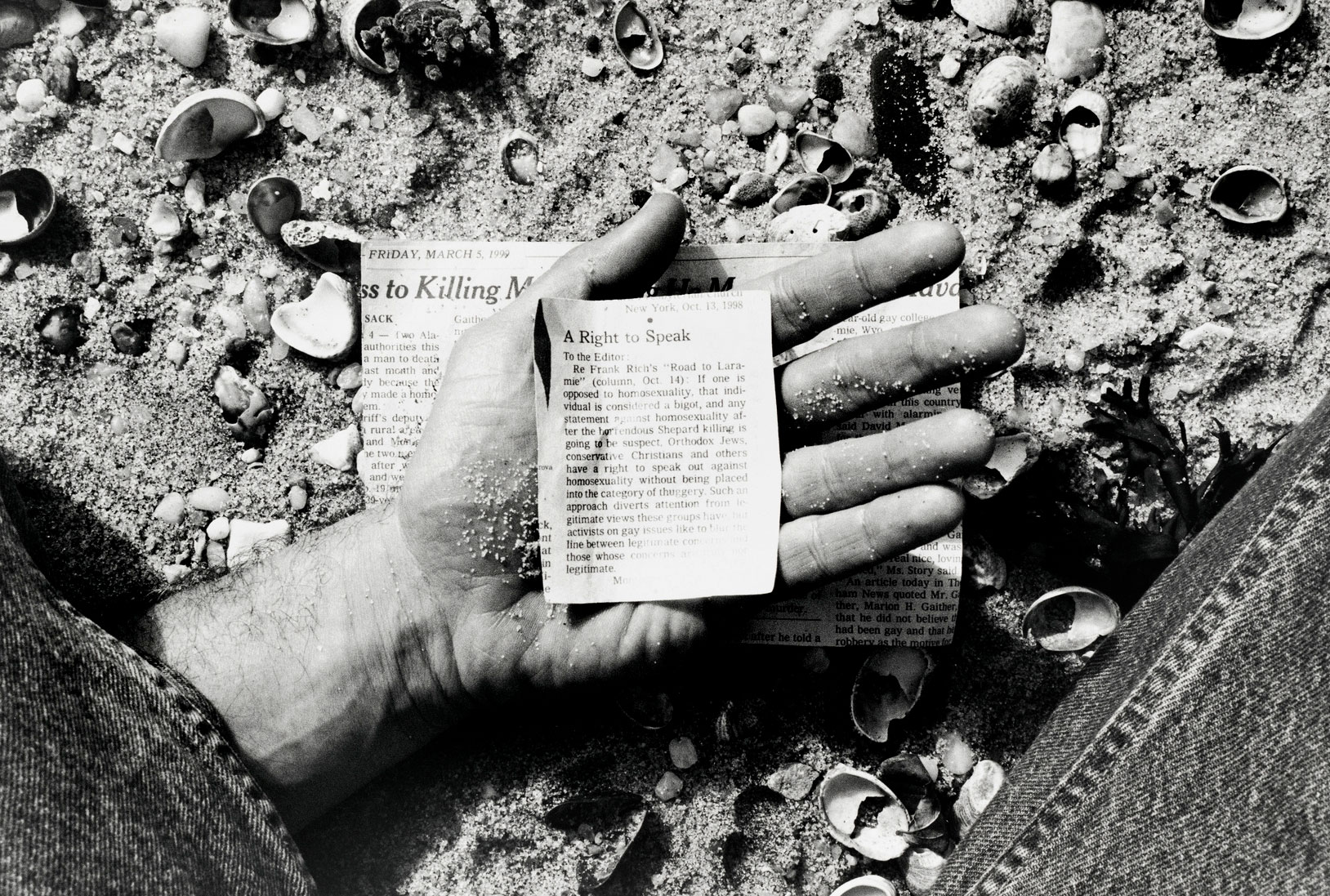
Robert Gober (American, b. 1954) 'Page 12 / Untitled (Detail from 1978-2000)' 1978-2000


Robert Gober (American, b. 1954)
Page 12 / Untitled (Detail from 1978-2000)
1978-2000
Gelatin silver print
40.6 x 50.8cm (16 x 20 in.)
The Metropolitan Museum of Art
Purchase, Charina Foundation Inc. Gift, 2002
© Robert Gober


Robert Gober works primarily in sculpture, installations, and photography. He is perhaps best known for his delicate, ghostly hand crafted versions of domestic fixtures, such as drains, beds, doors, and sinks. Through these uncanny replicas, Gober invests mass produced objects with personal meaning – the private, unruly desires and memories of the individual. This image appeared in the book (his first in the genre) that Gober created to accompany his installation representing the United States at the 2000 Venice Biennale. In it, the artist interweaves his own journey to New York in 1978 as a young gay man with the toxic fallout of homophobic recrimination that accompanied the murder of the Wyoming college student Matthew Shepard twenty years later.

Text from The Metropolitan Museum of Art website


Robert Gober superimposes a man’s hand between two newspaper articles, clipped neatly and placed on a shell-strewn beach. Below his hand, the article refers to Matthew Shepard’s death. Above it, a letter to the editor argues that “Orthodox Jews, conservative Christians and others have a right to speak out against homosexuality without being placed in the category of thuggery.” While the piece obviously precedes Jonathan Rauch’s provocative and important piece in the December issue of the Advocate arguing that gay people should tolerate a certain amount of anti-gay sentiment as a sign that they’re legally and socially secure enough to practice tolerance, it’s a useful encapsulation of the dilemma behind that argument. It’s hard to cast off past threats if you’re not entirely sure they’re past.

Alyssa Rosenberg. “Gay Americans, Censorship, And ‘After The Gold Rush’ At The Metropolitan Museum Of Art,” on the Think Progress website November 28, 2011 [Online] Cited 11/12/2024


Robert Gober (American, b. 1954). 'Untitled (Detail from "1978-2000")' 2000


Robert Gober (American, b. 1954)
Untitled (Detail from “1978-2000”)
2000
Gelatin silver print
The Metropolitan Museum of Art
Purchase, Jennifer and Joseph Duke Gift, 2002
© Robert Gober


James Casebere (American, b. 1953). 'Landscape with Houses (Dutchess County, NY) #1' 2009


James Casebere (American, b. 1953)
Landscape with Houses (Dutchess County, NY) #1
2009
Chromogenic print
The Metropolitan Museum of Art
Purchase, Alfred Stieglitz Society Gifts, 2011
© James Casebere


Trevor Paglen (American, b. 1974) 'KEYHOLE IMPROVED CRYSTAL from Glacier Point (Optical Reconnaissance Satelltte; USA 186)' 2008


Trevor Paglen (American, b. 1974)
KEYHOLE IMPROVED CRYSTAL from Glacier Point (Optical Reconnaissance Satelltte; USA 186)
2008
Chromogenic print
Image: 95.3 x 76.2cm (37 1/2 x 30 in.)
Frame: 96.5 × 77.5cm (38 × 30 1/2 in.)
The Metropolitan Museum of Art
Purchase, Vital Projects Fund Inc. Gift, through Joyce and Robert Menschel, 2011
© Trevor Paglen


Trained as a geographer, Paglen is an artist who plots the topography of a new global and celestial space – the “black world” of covert military operations. Examples of his subjects include the supposed sites used for the extraordinary rendition of prisoners, which he shoots with specially designed cameras from up to forty miles away, and the network of private planes used to transport them under the radar. This image shows the ghostly white streak of an American reconnaissance satellite bisecting star trails above Yosemite’s Half Dome, a rock formation photographed in the 1860s by the photographer Carleton Watkins when the West was still being explored. In order to track such spacecraft, Paglen uses a database created by amateur astronomers who were trained by the U.S. government to search the skies for Soviet sputniks but continued their hobby after the end of the Cold War by tracking our own satellites. In this work, the artist brings into one composition two historically disparate moments in geographic and celestial colonisation.

Text from The Metropolitan Museum of Art website


Wolfgang Tillmans (German, b. 1968).' Oriental Pearl' 2009


Wolfgang Tillmans (German, b. 1968)
Oriental Pearl
2009
Inkjet print
The Metropolitan Museum of Art
Purchase, Vital Projects Fund Inc. Gift, through Joyce and Robert Menschel, 2010
Image courtesy the artist and Andrea Rosen Gallery, New York
© Wolfgang Tillmans


The Metropolitan Museum of Art
1000 Fifth Avenue at 82nd Street
New York, New York 10028-0198
Phone: 212-535-7710

Opening hours:
Sunday – Tuesday and Thursday: 10am – 5pm
Friday and Saturday: 10am – 9pm
Closed Wednesday

The Metropolitan Museum of Art website

LIKE ART BLART ON FACEBOOK

Back to top

Exhibition: ‘Robert Adams: The Place We Live, A Retrospective Selection of Photographs’ at the The Denver Art Museum (DAM)

Exhibition dates:  25th September 2011 – 1st January 2012


Many thankx to The Denver Art Museum for allowing me to publish the photographs in the posting. Please click on the photographs for a larger version of the image.


Robert Adams (American, b. 1937) 'Burning oil sludge, north of Denver, Colorado' 1973-1974


Robert Adams (American, b. 1937)
Burning oil sludge, north of Denver, Colorado
1973-1974
Gelatin silver print
Yale University Art Gallery, purchased with a gift from Saundra B. Lane, a grant from the Trellis Fund and the Janet and Simeon Braguin Fund


Robert Adams (American, b. 1937) 'North of Keota, Colorado' 1973


Robert Adams (American, b. 1937)
North of Keota, Colorado
1973 printed 1989
Gelatin silver print
Yale University Art Gallery, purchased with a gift from Saundra B. Lane, a grant from the Trellis Fund and the Janet and Simeon Braguin Fund


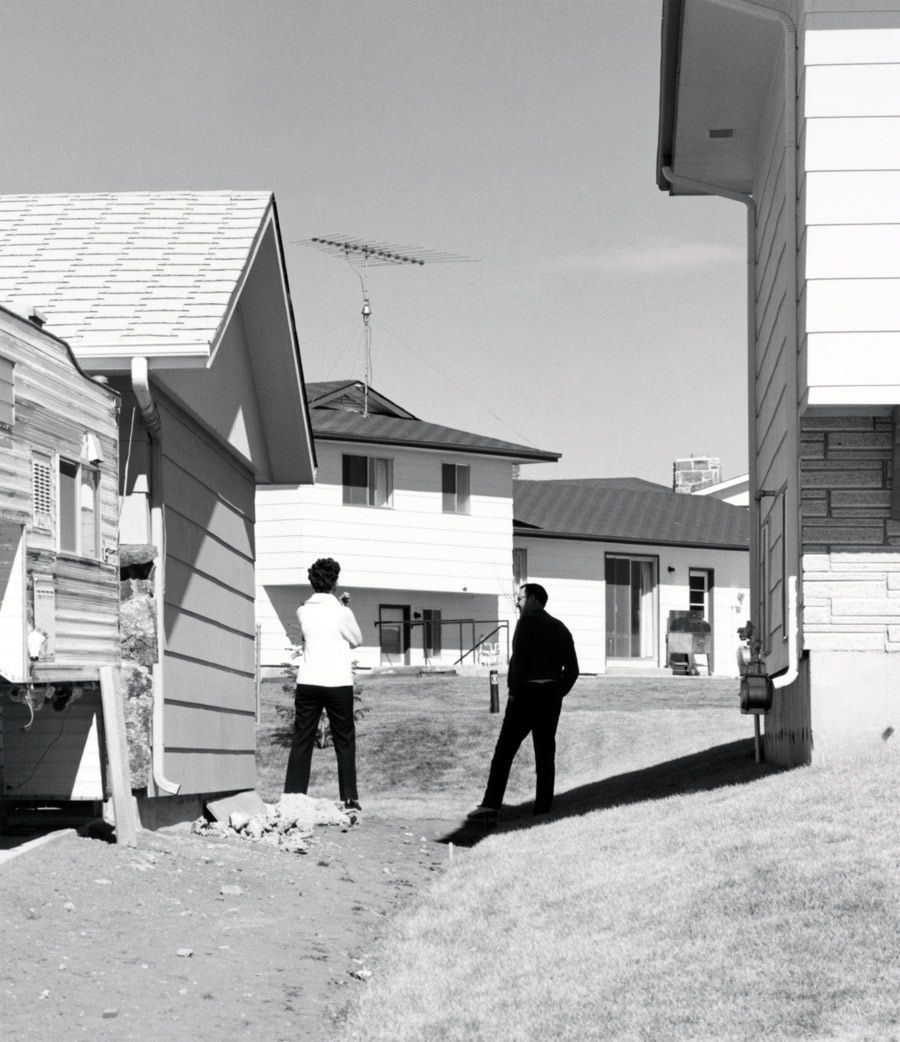
Robert Adams (American, b. 1937) 'Mobile home park, north edge of Denver, Colorado' 1973-1974


Robert Adams (American, b. 1937)
Mobile home park, north edge of Denver, Colorado
1973-1974
Gelatin silver print
Yale University Art Gallery, purchased with a gift from Saundra B. Lane, a grant from the Trellis Fund and the Janet and Simeon Braguin Fund


The Denver Art Museum (DAM) is the first U.S. venue for Robert Adams: The Place We Live, A Retrospective Selection of Photographs. The exhibition features more than 200 black-and-white photos spanning Adams’s 45-year career, showcasing the artistic legacy of the American photographer and his longstanding engagement with the contemporary Western landscape. Adams lived and worked in Colorado for nearly 30 years. Many of his most acclaimed images were taken in the Rocky Mountain region and will strike a familiar chord with visitors. The exhibition, organised by the Yale University Art Gallery, will be on view September 25, 2011 – January 1, 2012 in the museum’s Gallagher Family Gallery.

“We’re excited to host the work of one of the foremost photographers of our time,” said Eric Paddock, the DAM’s curator of photography. “Robert Adams’s striking yet quiet photos provoke thought about current economic, political and environmental issues Westerners confront every day. We think visitors will see something very familiar in his work.”

Since becoming a photographer in the mid-1960s, Adams has been widely regarded as one of the most significant and influential chroniclers of the American West. Adams’s photographs and writing insist that the realities of everyday landscapes are as beautiful as idealised scenes from nature. They ask questions about the ways people change and interact with nature, and what it means to live simply and quietly in today’s world. This commitment earned Adams prominence in photography’s “New Topographics” movement of the late 20th century and lends authority to his ongoing work. His photographs of Colorado suburban growth and clear cut forests in the Pacific Northwest, for example, express shock at mainstream social and economic values.

“The Denver Art Museum is pleased to be the first U.S. venue for The Place We Live, showcasing our continued commitment to our photography program,” said Christoph Heinrich, Frederick and Jan Mayer Director of the DAM. “Colorado has a rich photography history and we’re excited to have visitors engage with these artworks that provide a narrative to the American experience and take a fresh look at their surroundings.”

Featuring more than 200 gelatin silver prints, The Place We Live weaves together four decades of Adam’s work into a cohesive, epic narrative of American experience in the late 20th and early 21st centuries. Each of the photographer’s major projects is represented, from early pictures of quiet buildings and monuments erected by prior settlers of his native Colorado to his most recent images of forests and migratory birds in the Pacific Northwest.

Biography

Born in Orange, N.J., in 1937, Robert Adams moved with his family from Madison, Wis., to Denver, Colo., at the age of 15. He earned a doctorate degree from the University of Southern California and, intent on pursuing an academic career, returned to Colorado in 1962 as an assistant professor of English at Colorado College. Disturbed by the rapid transformation of the Colorado Springs and Denver areas, Adams began photographing a landscape transformed by tract housing, highways, strip malls and gas stations. “The pictures record what we purchased, what we paid and what we could not buy,” Adams wrote. “They document a separation from ourselves, and in turn from the natural world that we professed to love.” Since 1997, he has lived and worked in Oregon.”

Press release from The Denver Art Museum


Robert Adams (American, b. 1937) 'Lakewood, Colorado' 1968-1971


Robert Adams (American, b. 1937)
Lakewood, Colorado
1968-1971
Gelatin silver print
Yale University Art Gallery, purchased with a gift from Saundra B. Lane, a grant from the Trellis Fund and the Janet and Simeon Braguin Fund


Robert Adams (American, b. 1937) 'In a New Subdivision, Colorado Springs, Colorado' 1969


Robert Adams (American, b. 1937)
In a New Subdivision, Colorado Springs, Colorado
1969
Gelatin silver print
Yale University Art Gallery, purchased with a gift from Saundra B. Lane, a grant from the Trellis Fund and the Janet and Simeon Braguin Fund


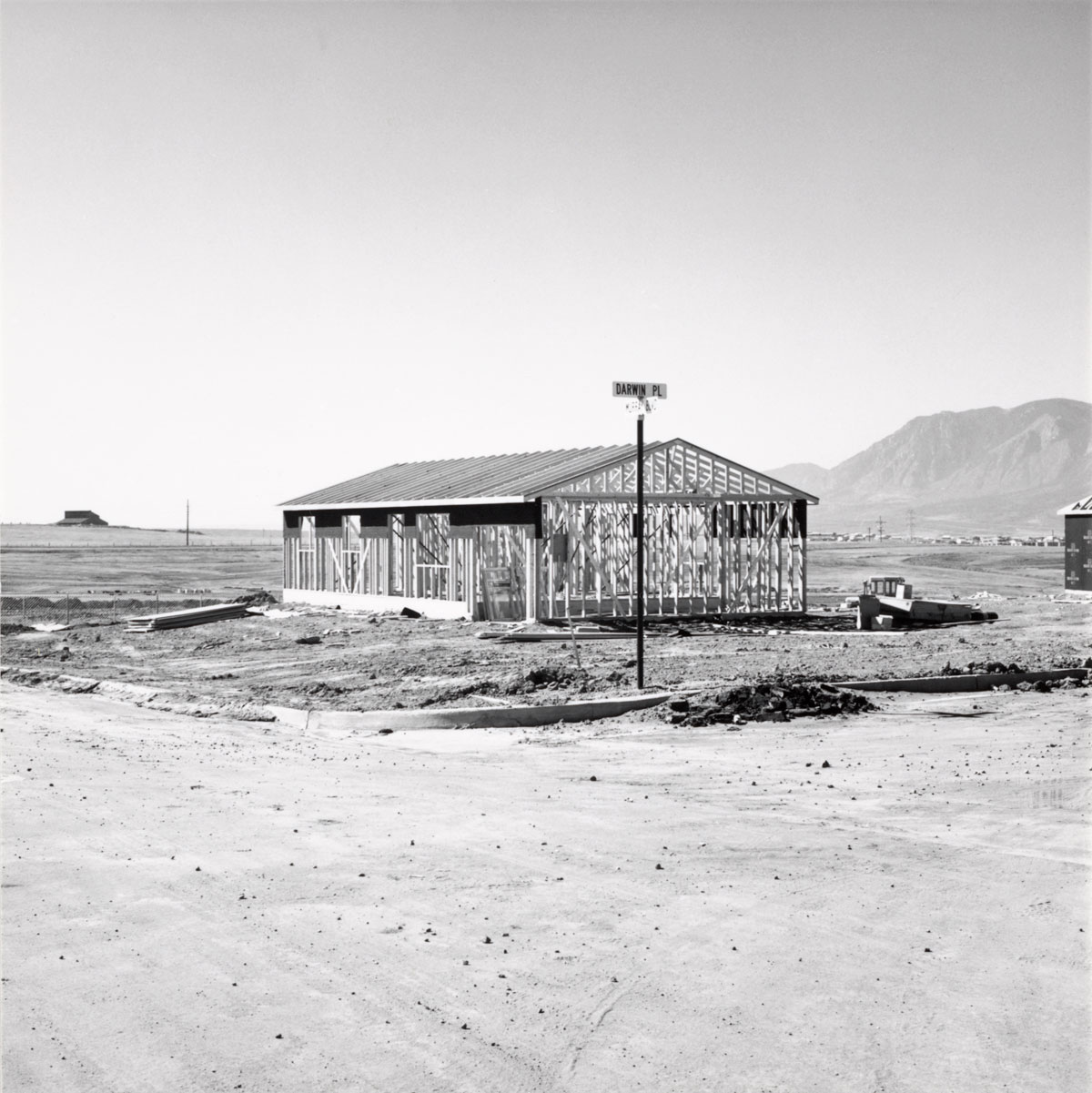
Robert Adams (American, b. 1937) 'Frame for a Tract House, Colorado Springs, Colorado' 1969


Robert Adams (American, b. 1937)
Frame for a Tract House, Colorado Springs, Colorado
1969
Gelatin silver print
Yale University Art Gallery, purchased with a gift from Saundra B. Lane, a grant from the Trellis Fund and the Janet and Simeon Braguin Fund


Robert Adams (American, b. 1937) 'Pikes Peak, Colorado Springs, Colorado' 1969


Robert Adams (American, b. 1937)
Pikes Peak, Colorado Springs, Colorado
1969
Gelatin silver print
Yale University Art Gallery, purchased with a gift from Saundra B. Lane, a grant from the Trellis Fund and the Janet and Simeon Braguin Fund


Robert Adams (American, b. 1937) 'Denver, Colorado' c. 1970


Robert Adams (American, b. 1937)
Denver, Colorado
c. 1970
Gelatin silver print
Yale University Art Gallery, purchased with a gift from Saundra B. Lane, a grant from the Trellis Fund and the Janet and Simeon Braguin Fund


Robert Adams (American, b. 1937) 'Longmont, Colorado' 1973-1974, printed 2007


Robert Adams (American, b. 1937)
Longmont, Colorado
1973-1974, printed 2007
Gelatin silver print
Yale University Art Gallery, purchased with a gift from Saundra B. Lane, a grant from the Trellis Fund and the Janet and Simeon Braguin Fund


Robert Adams (American, b. 1937) 'Eden, Colorado' 1968


Robert Adams (American, b. 1937)
Eden, Colorado
1968
Gelatin silver print
Yale University Art Gallery
Purchased with a gift from Saundra B. Lane, a grant from the Trellis Fund and the Janet and Simeon Braguin Fund


Robert Adams (American, b. 1937) 'Colorado Springs, Colorado' 1974


Robert Adams (American, b. 1937)
Colorado Springs, Colorado
1968
Gelatin silver print
Yale University Art Gallery
Purchased with a gift from Saundra B. Lane, a grant from Trellis Fund, and the Janet and Simeon Braguin Fund


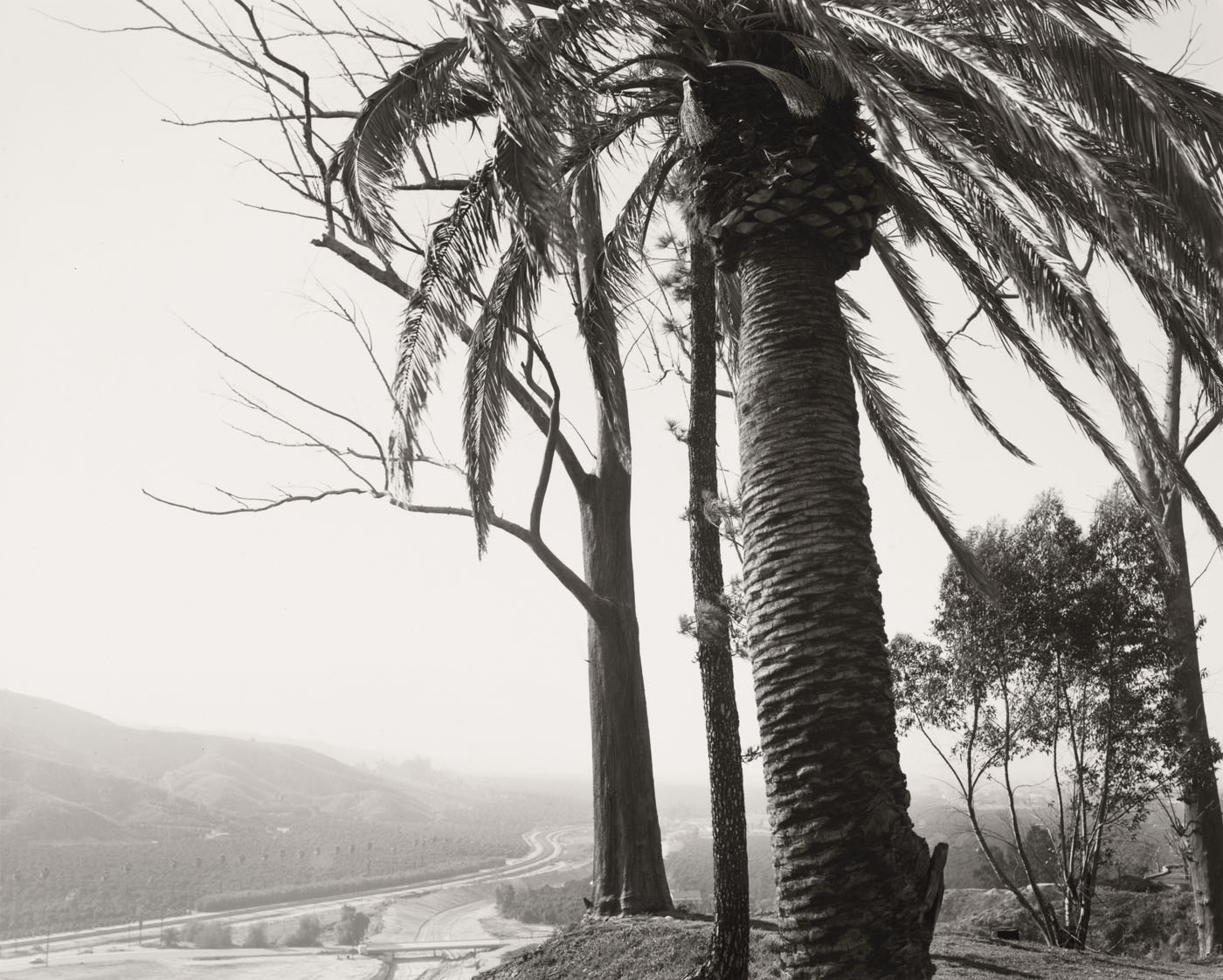
Robert Adams (American, b. 1937) 'Edge of San Timoteo Canyon, Redlands, California' 1978


Robert Adams (American, b. 1937)
Edge of San Timoteo Canyon, looking toward Los Angeles, Redlands, California
1978
Gelatin silver print
Yale University Art Gallery
Purchased with a gift from Saundra B. Lane, a grant from the Trellis Fund and the Janet and Simeon Braguin Fund


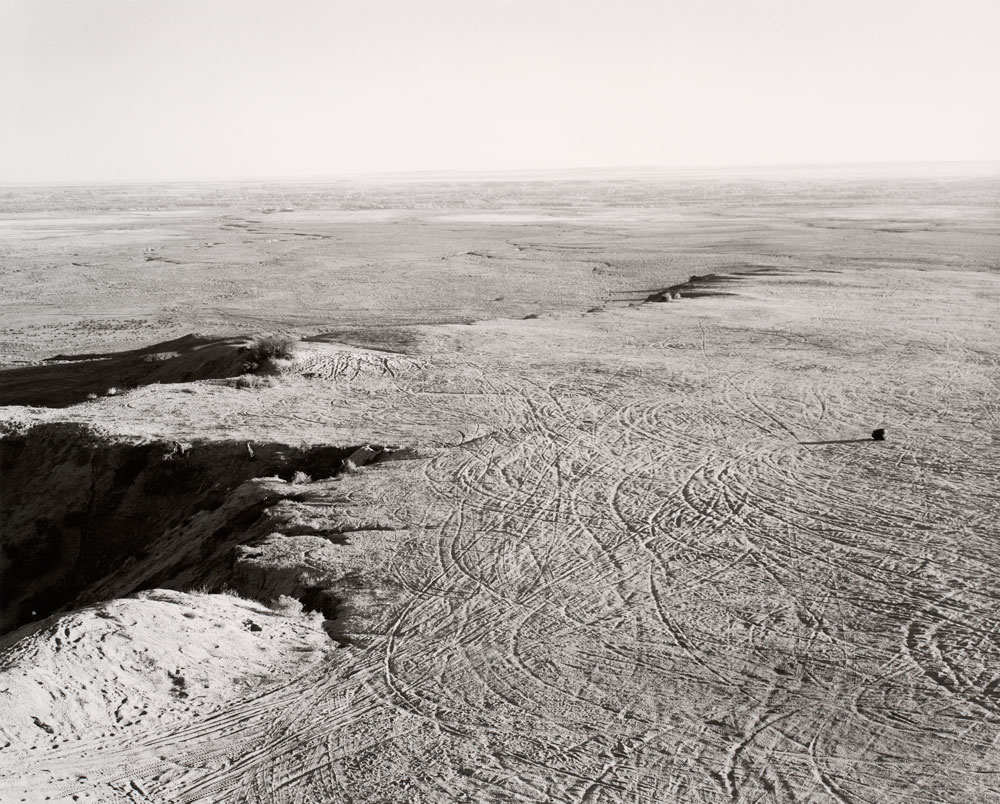
Robert Adams (American, b. 1937) 'Quarried Mesa Top, Pueblo County, Colorado' 1978


Robert Adams (American, b. 1937)
Quarried Mesa Top, Pueblo County, Colorado
1978
Gelatin silver print
Yale University Art Gallery
Purchased with a gift from Saundra B. Lane, a grant from Trellis Fund, and the Janet and Simeon Braguin Fund


Robert Adams (American, b. 1937) 'Longmont, Colorado' 1979, printed 1985


Robert Adams (American, b. 1937)
Longmont, Colorado
1979, printed 1985
Gelatin silver print
Yale University Art Gallery, purchased with a gift from Saundra B. Lane, a grant from the Trellis Fund and the Janet and Simeon Braguin Fund


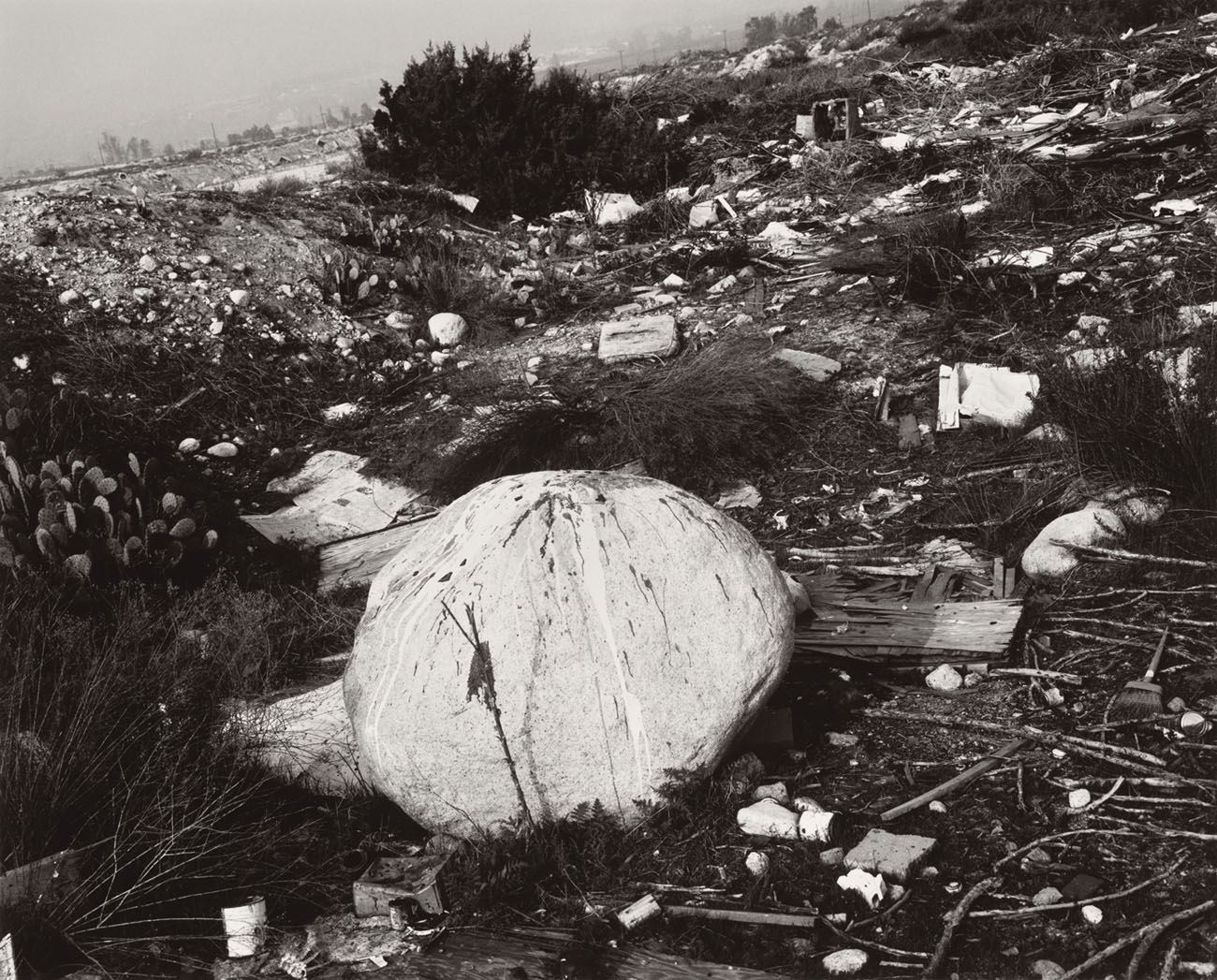
Robert Adams (American, b. 1937) 'Santa Ana Wash, Redlands, California' 1982


Robert Adams (American, b. 1937)
Santa Ana Wash, Redlands, California
1983, printed 1991
Gelatin silver print
Yale University Art Gallery, purchased with a gift from Saundra B. Lane, a grant from the Trellis Fund and the Janet and Simeon Braguin Fund


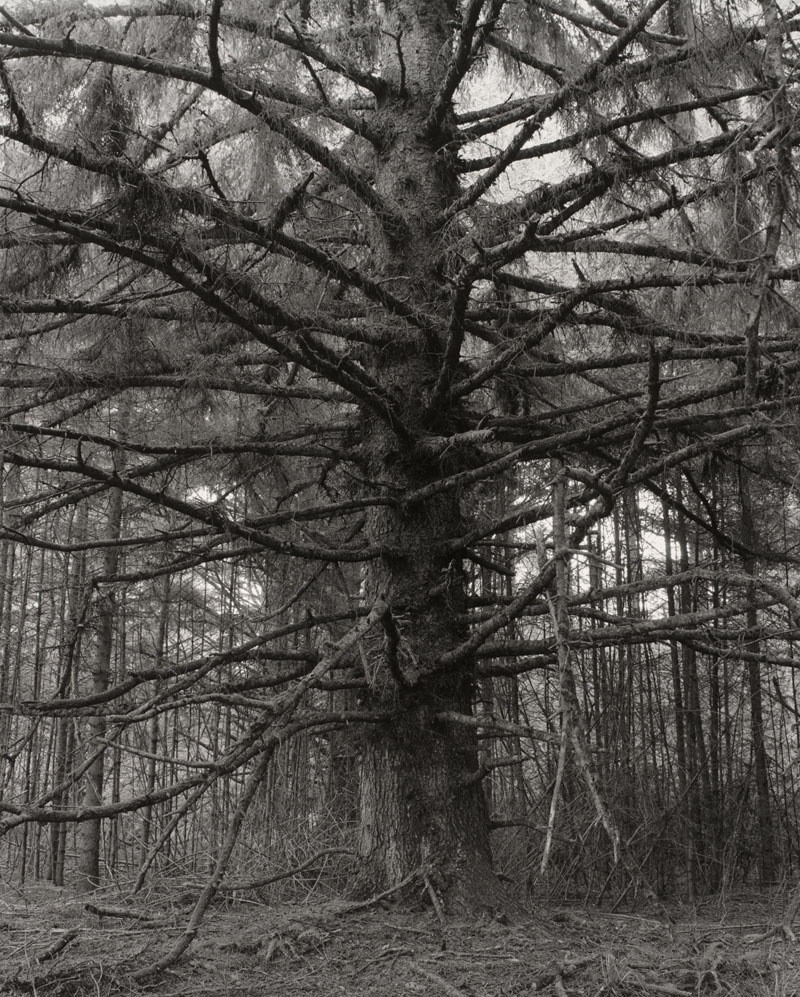
Robert Adams (American, b. 1937) 'Sitka spruce, Cape Blanco State Park, Curry County, Oregon' 1999-2000


Robert Adams (American, b. 1937)
Sitka spruce, Cape Blanco State Park, Curry County, Oregon
1999-2000
Gelatin silver print
Yale University Art Gallery, purchased with a gift from Saundra B. Lane, a grant from the Trellis Fund and the Janet and Simeon Braguin Fund


The Denver Art Museum
Civic Center Cultural Complex
located on 13th Avenue between Broadway and Bannock in downtown Denver

Opening hours:
Daily 10am – 5pm

The Denver Art Museum website

LIKE ART BLART ON FACEBOOK

Back to top

Exhibition: ‘Bare Witness: Photographs by Gordon Parks’ at the Phoenix Art Museum

Exhibition dates: 20th August – 6th November 2011


Many thankx to the Phoenix Art Museum for allowing me to publish the photographs in the posting. Please click on the photographs for a larger version of the image.


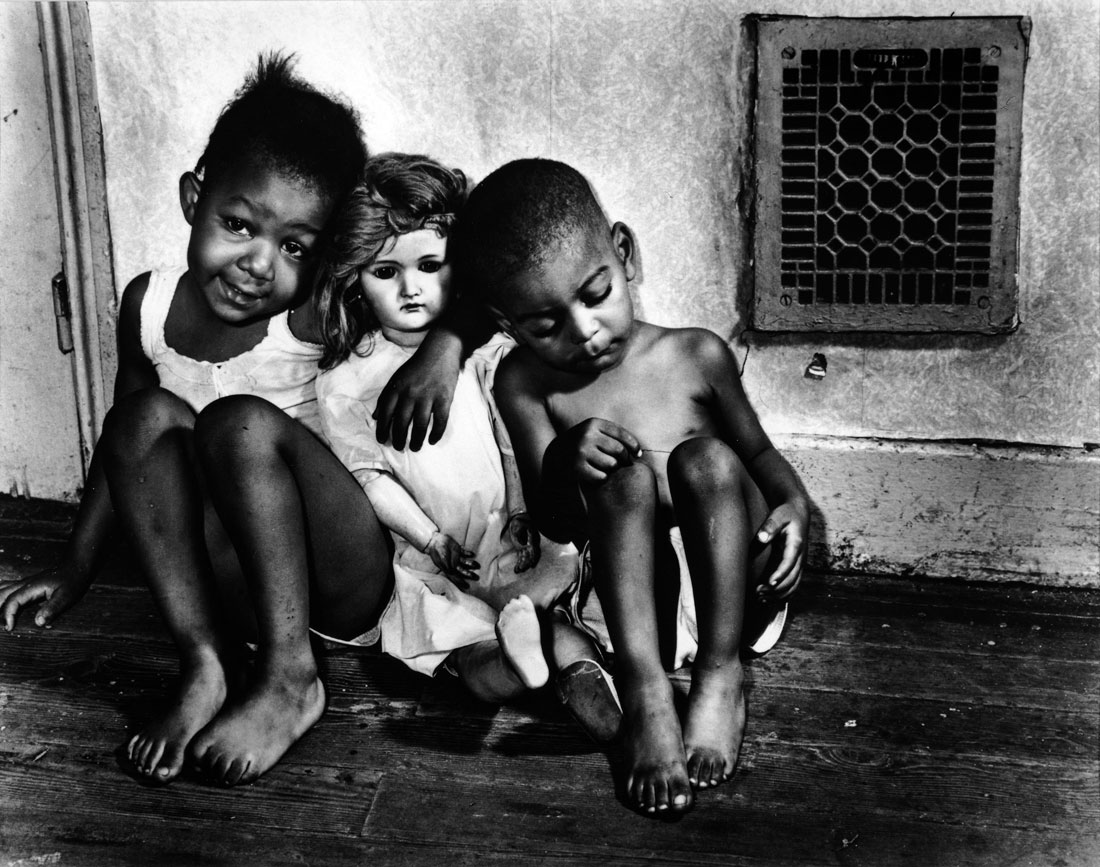
Gordon Parks (American, 1912-2006) 'Children with Doll (Ella Watson’s Grandchildren)' 1942


Gordon Parks (American, 1912-2006)
Children with Doll (Ella Watson’s Grandchildren)
1942
Gelatin silver print
11 x 14 inches
Lent by The Capitol Group Foundation
© 2006 The Gordon Parks Foundation


Gordon Parks (American, 1912-2006) 'Ingrid Bergman at Stromboli' 1949


Gordon Parks (American, 1912-2006)
Ingrid Bergman at Stromboli
1949
Gelatin silver print
16 x 20 inches
Lent by The Capitol Group Foundation
© 2006 The Gordon Parks Foundation


Gordon Parks (American, 1912-2006) 'Black Muslim Rally' New York, 1963


Gordon Parks (American, 1912-2006)
Black Muslim Rally
New York, 1963
Gelatin silver print
16 x 20 inches
Lent by The Capitol Group Foundation
© 2006 The Gordon Parks Foundation


Gordon Parks (American, 1912-2006) 'Alberto Giacometti, Paris' 1951


Gordon Parks (American, 1912-2006)
Alberto Giacometti, Paris
1951
Gelatin silver print
16 x 20 inches
Lent by The Capitol Group Foundation
© 2006 The Gordon Parks Foundation


Gordon Parks spent the majority of his professional career at the crossroads of the glamorous and the ghetto – two extremes the noted photographer knew well.  Perhaps best recognised for his works chronicling the African-American experience, Parks was also an accomplished fashion photographer. Bare Witness: Photographs by Gordon Parks provides a revealing look at the diversity and breadth of Parks’s most potent imagery. Featuring 73 works specifically selected by Parks for the photographic collection of the Los Angeles-based Capital Group, Bare Witness divulges heart wrenching images, iconic moments, celebrities and slices of everyday life.

Born in 1912 in Fort Scott, Kansas, Parks, who died in 2006 at age 93, was an African American photographer who began working professionally in the 1930’s. Parks tackled the harsh truth and dignity of the black urban and rural poor in the United States. He photographed aspects of the Civil Rights movements and individuals associated with the Black Panthers and Black Muslims. For nearly 25 years, from 1948 to 1972, he served as staff photographer for Life magazine. He also established himself as a foremost fashion photographer, providing spreads for respected magazines such as Vogue.

Bare Witness features many of Parks’s most memorable images such as “American Gothic.” Taken during Parks’s brief time with the Farm Security Agency, the photograph depicts a black cleaning woman named Ella Watson standing stiffly in front of an American flag, a mop in one hand and a broom in the other. Also included in the exhibition is a series of photos from Parks’s most famous Life magazine essay about Flavio da Silva, a malnourished and asthmatic boy living in a Rio de Janerio slum. Portraits of Muhammad Ali, Duke Ellington, Alexander Calder, Ingrid Bergman, Langston Hughes and Malcolm X among others will also be on view.

“Whether photographing celebrities or common folk, children or the elderly, Harlem gang leaders or fellow artists, Parks brought his straightforward, sympathetic ear and mind to bear witness to late 20th century civilisation,” commented Hilarie Faberman, the Robert M. and Ruth L. Halperin Curator of Modern and Contemporary Art at Cantor Arts Center and organiser of the exhibition. “His photographs balance the dichotomies of black and white, rich and poor, revealing his strengths and struggles as an artist and a man.”

In addition to his documentary and fashion photography, Parks was a filmmaker, author, musician and publisher. He was the first black artist to produce and direct a major Hollywood film, “The Learning Tree” in 1969, which was based on his early life experiences. He subsequently directed the popular action films “Shaft” and “Shaft’s Big Score.” He was a founder and editorial director of Essence magazine and wrote several autobiographies, novels and poems. In 1988, he received the National Medal of Arts award and throughout his lifetime was the recipient of 40 honorary doctorates from colleges and universities in the United States and England.

“Parks was a renaissance man whose career embodied the American ideal of equality and whose art was deeply personal. This exhibition is an exciting opportunity for Museum visitors to experience the poignant images he made over five decades,” commented Rebecca Senf, Norton Curator of Photography, Phoenix Art Museum.

The exhibition includes an illustrated catalogue with an essay by photography scholar Maren Stange who writes frequently on modern American culture. This exhibition has already enjoyed a five-venue tour, where the photographs were received with great excitement. The exhibition has been revived for a final showing at the Phoenix Art Museum. Bare Witness: Photographs by Gordon Parks was organised by the Iris & B. Gerald Cantor Center for Visual Arts at Stanford University. The exhibition and its accompanying catalogue are made possible by generous support from The Capital Group Foundation, the Cantor Arts Center’s Hohbach Family Fund, and Cantor Arts Center’s Members.

Press release from the Phoenix Museum of Art website


Gordon Parks (American, 1912-2006) 'American Gothic' 1942


Gordon Parks (American, 1912-2006)
American Gothic
1942
Gelatin silver print
24 x 20 inches
Lent by The Capitol Group Foundation
© 2006 The Gordon Parks Foundation


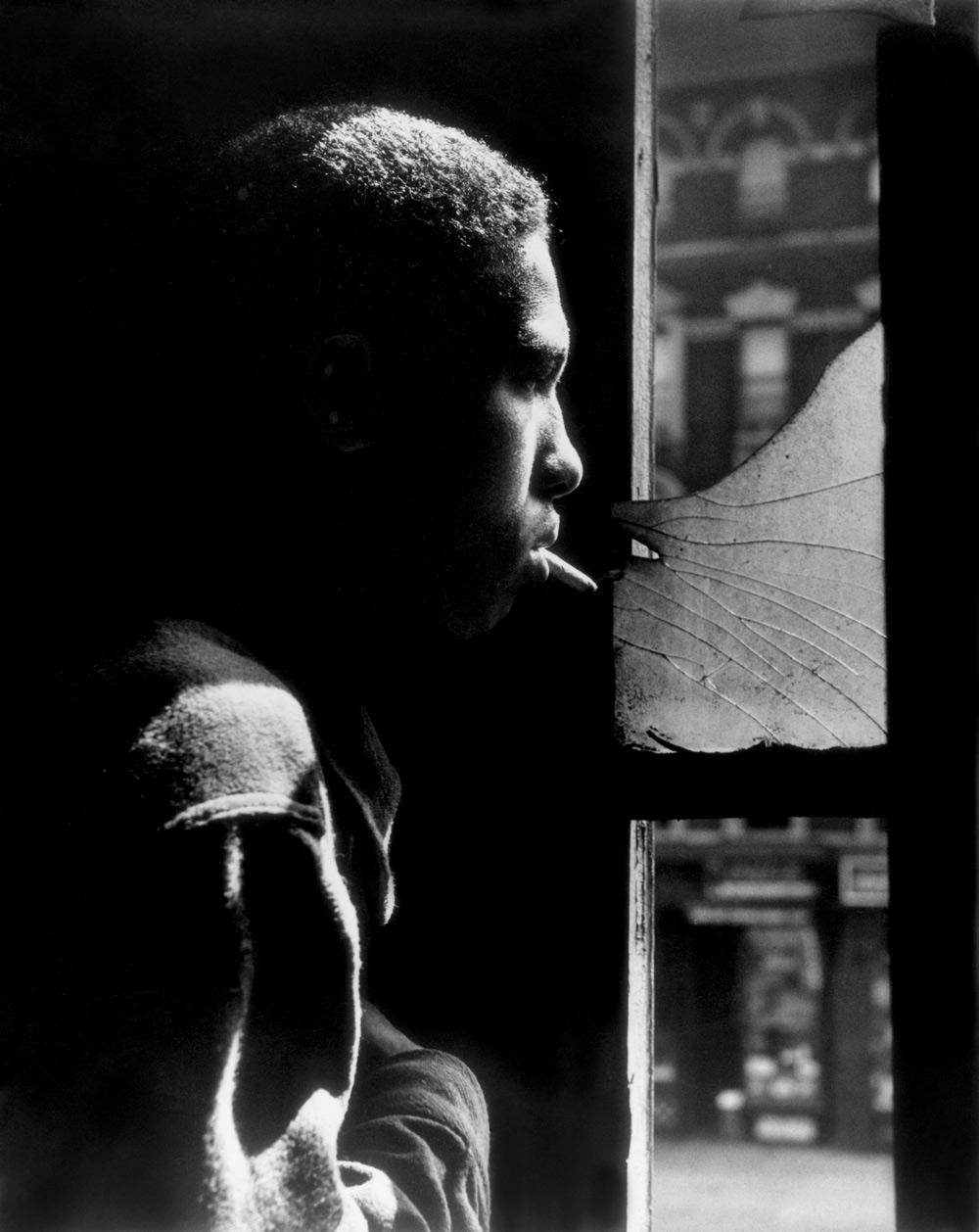
Gordon Parks (American, 1912-2006) 'Red Jackson, Harlem' 1948


Gordon Parks (American, 1912-2006)
Red Jackson, Harlem
1948
Gelatin silver print
Lent by The Capitol Group Foundation
© 2006 The Gordon Parks Foundation


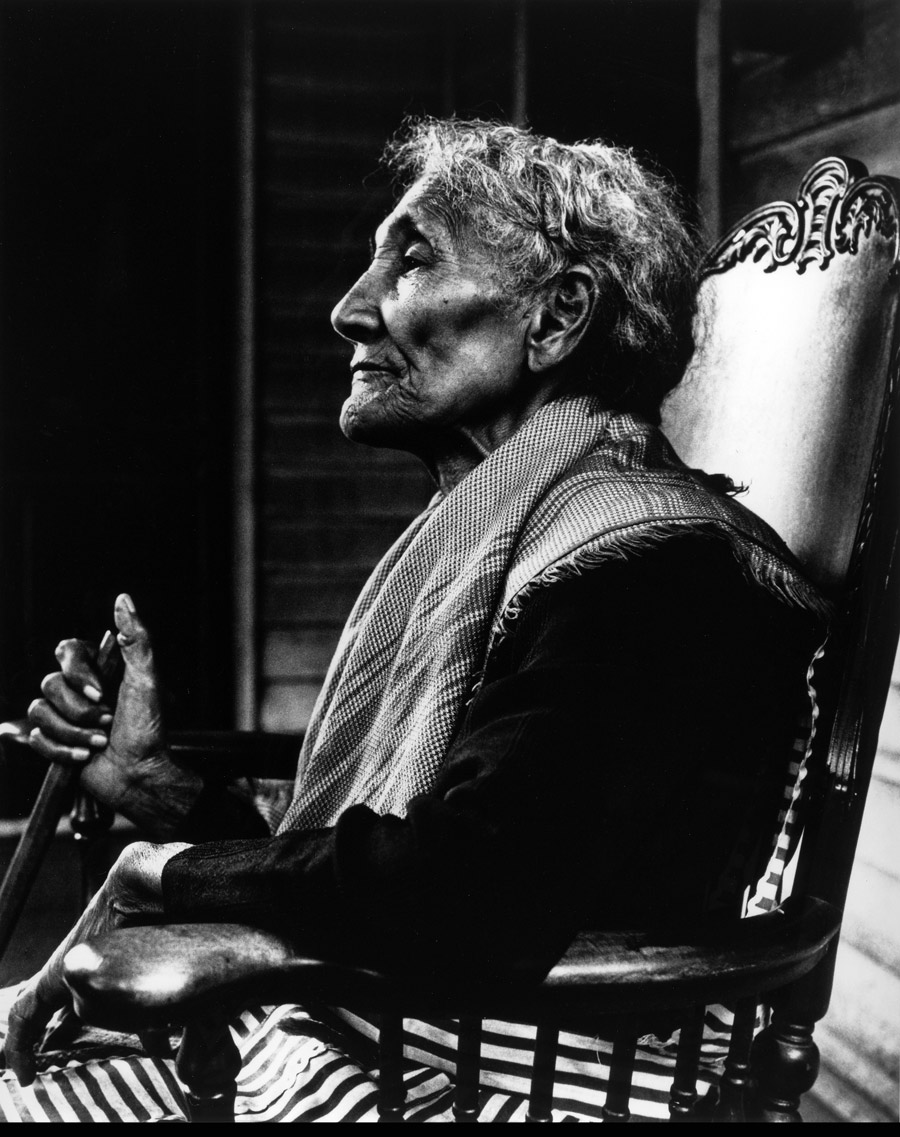
Gordon Parks (American, 1912-2006) 'Mrs. Jefferson, Fort Scott' 1949


Gordon Parks (American, 1912-2006)
Mrs. Jefferson, Fort Scott
1949
Gelatin silver print
20 x 16 inches
Lent by The Capitol Group Foundation
© 2006 The Gordon Parks Foundation


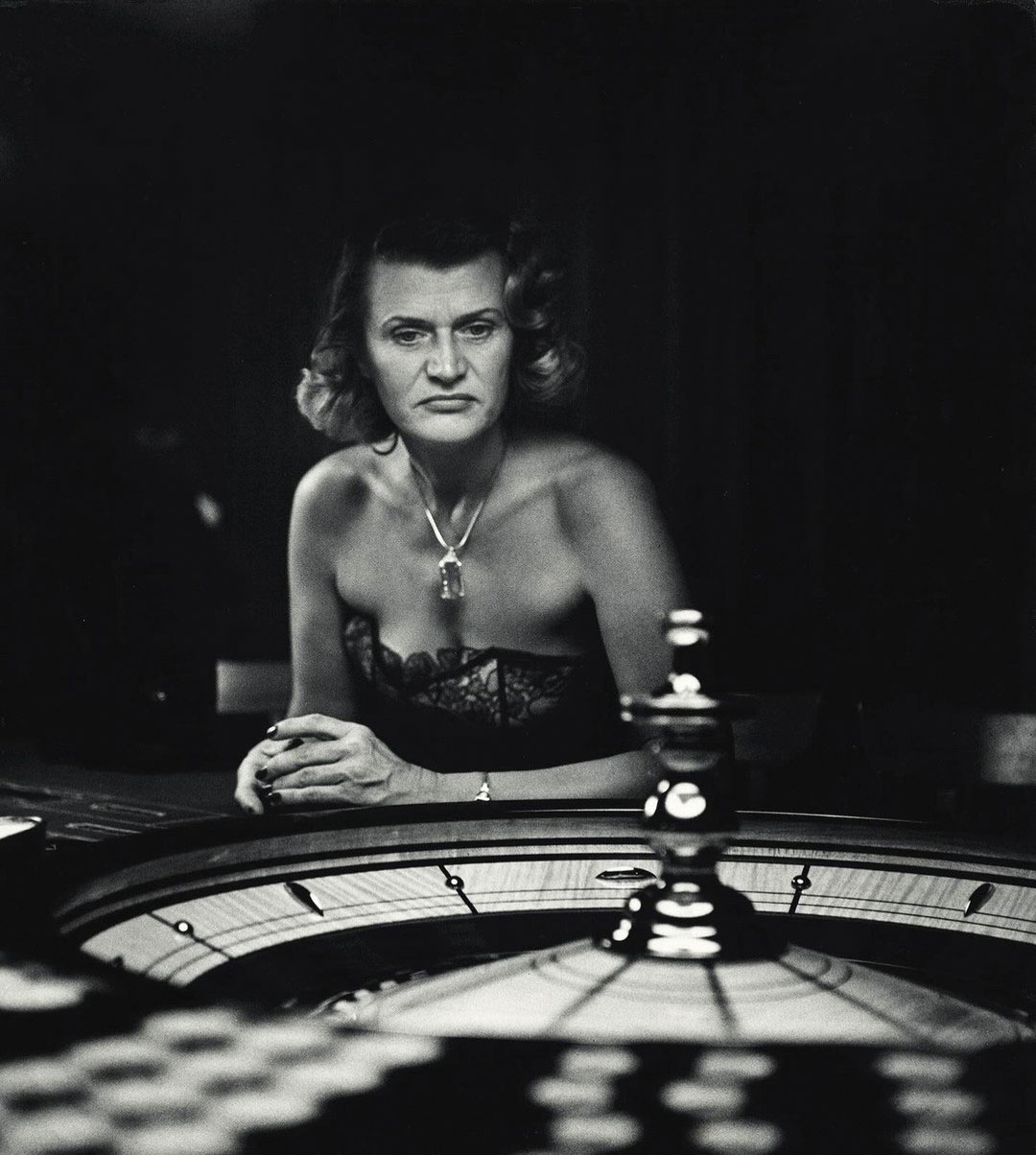
Gordon Parks (American, 1912-2006) 'A Gambling Woman, Caribe Hilton Hotel, San Juan, Puerto Rico' December 1949


Gordon Parks (American, 1912-2006)
A Gambling Woman, Caribe Hilton Hotel, San Juan, Puerto Rico
December 1949
Gelatin silver print
20 x 16 inches
Lent by The Capitol Group Foundation
© 2006 The Gordon Parks Foundation


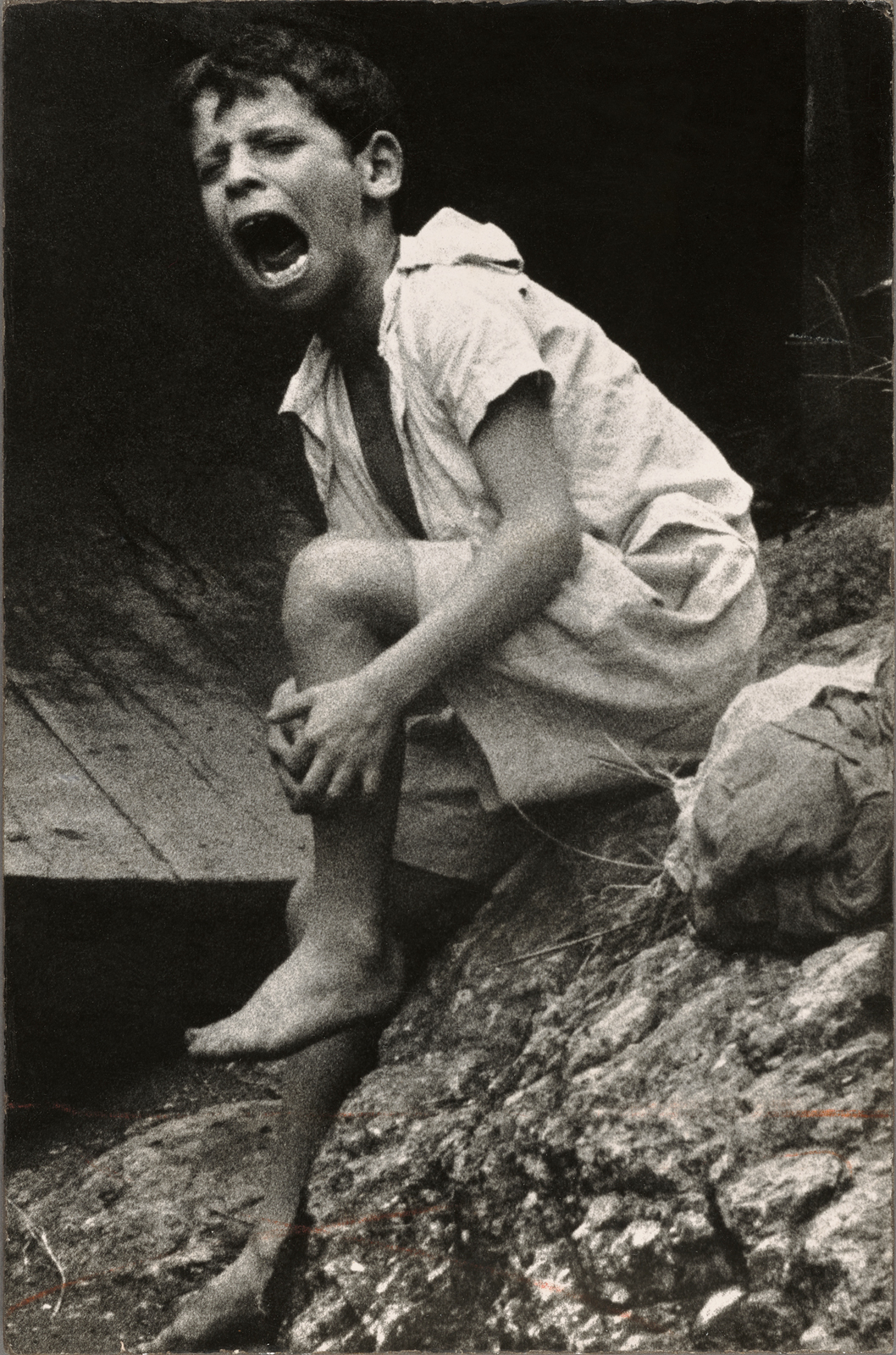
Gordon Parks (American, 1912-2006) 'Mário da Silva, Crying after Being Bitten by Dog, Rio de Janeiro, Brazil' 1961


Gordon Parks (American, 1912-2006)
Mário da Silva, Crying after Being Bitten by Dog, Rio de Janeiro, Brazil
1961
Gelatin silver print
14 x 11 inches
Lent by The Capitol Group Foundation
© 2006 The Gordon Parks Foundation


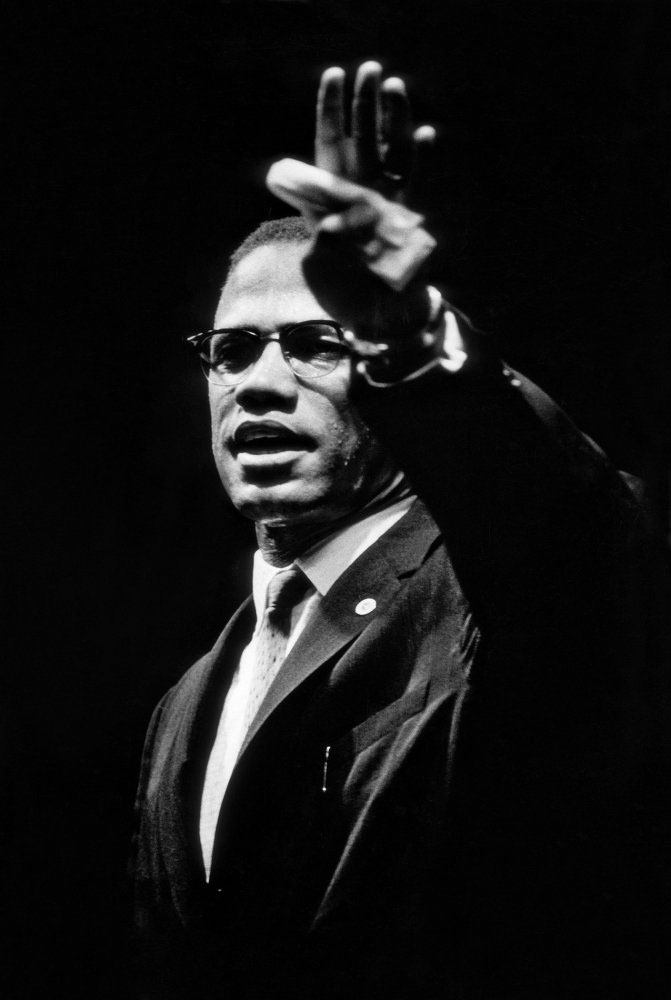
Gordon Parks (American, 1912-2006) 'Malcolm X at Rally, Chicago, Illinois' 1963


Gordon Parks (American, 1912-2006)
Malcolm X at Rally, Chicago, Illinois
1963
From the series Chicago Muslim Story (1963)
Gelatin silver print
Lent by The Capitol Group Foundation
© 2006 The Gordon Parks Foundation


Gordon Parks relocated from Minnesota to Chicago’s South Side in 1940, immersing himself in the local art community while operating a portrait studio out of the South Side Community Art Center. In 1941 he was awarded a Rosenwald Fellowship for a portfolio of photographs he created on the South Side; the award gave him the means to move east to Washington, DC. By 1948 Life magazine hired him as its first African American staff photographer.

In 1963 Parks returned to Chicago on assignment for Life to report on the Nation of Islam, newly headquartered in the city. Parks gained unprecedented access to this radical civil rights movement through his friendship with Malcolm X, who arranged a meeting with Elijah Muhammad, the group’s leader, so that Parks could obtain permission to proceed with the story. Parks spent weeks with the Black Muslim community, documenting a range of its activities – from self-defense training to religious services led by Malcolm X.

Parks’s photo-essay ran in the May 31, 1963, issue of Life, along with an essay by Parks that reflects on his dual status as insider and outsider. The text begins with his return to Chicago after nearly a decade and his memories of “the hopelessness that seeped into the black souls of that jungle.” Parks goes on to describe his current position: “I was a Black Man in White Man’s clothing, sent by the very ‘devils’ [Elijah Muhammad] criticized so much… . I wondered whether or not my achievements in the white world had cost me a certain objectivity.” He concludes, “I sympathize with much of what they say, but I also disagree with much of what they say… . Nevertheless, I acknowledge that the circumstance of common struggle has willed us brothers.”

Text from the Art Institute of Chicago website 


Gordon Parks (American, 1912-2006) 'Muhammad Ali' c. 1970


Gordon Parks (American, 1912-2006)
Muhammad Ali
c. 1970
Gelatin silver print
24 x 20 inches
Lent by The Capitol Group Foundation
© 2006 The Gordon Parks Foundation


Gordon Parks (American, 1912-2006) 'Muhammad Ali' 1970


Gordon Parks (American, 1912-2006)
Muhammad Ali
1970
Cibachrome
20 x 16 inches
Lent by The Capitol Group Foundation
© 2006 The Gordon Parks Foundation


Phoenix Art Museum
McDowell Road & Central Avenue
1625 N. Central Avenue
Phoenix, AZ 85004

Opening hours:
Monday Closed
Tuesday Closed
Wednesday 10am – 9pm
Thursday – Sunday 10am – 5pm

Phoenix Art Museum website

LIKE ART BLART ON FACEBOOK

Back to top

Exhibition: ‘A Turbulent Lens: The Photographic Art of Virna Haffer’ at Tacoma Art Museum

Exhibition dates: 2nd July – 16th October 2011


Virna Haffer (American, 1899-1974) 'Eleventh Street Bridge' c. 1930s


Virna Haffer (American, 1899-1974)
Eleventh Street Bridge
c. 1930s
Woodblock print
Tacoma Art Museum, Gift of Carolyn Schneider


It is such a joy constructing this blog. I get to educate myself on these wonderful, half-forgotten photographers and then bring their photographs to you. What a life Haffer must have had: she found success as a photographer, printmaker, painter, musician, sculptor, and published writer. Independent-minded and self-sufficient, as most artists are, this is an artist I would have liked to have met!

Dr Marcus Bunyan


Many thankx to the Tacoma Art Museum for allowing me to publish the photographs in the posting. Please click on the photographs for a larger version of the image.


Virna Haffer (American, 1899-1974) 'Abstract #2' c. 1960s


Virna Haffer (American, 1899-1974)
Abstract #2
c. 1960s
Photogram
Collection of the Washington State Historical Society, gift of the estate of Virna Haffer


Virna Haffer (American, 1899-1974) 'Untitled [tree and chair]' c. 1962


Virna Haffer (American, 1899-1974)
Untitled [tree and chair]
c. 1962
From the series Aftermath
Photogram
50.8 x 40.6cm
National Gallery of Australia
Gift of the Estate of Virna Haffer 2011


Virna Haffer (American, 1899-1974) 'Swirl' c. 1940


Virna Haffer (American, 1899-1974)
Swirl
c. 1940
Gelatin silver print
39.4 x 31.8cm
National Gallery of Australia
Gift of the Estate of Virna Haffer 2011


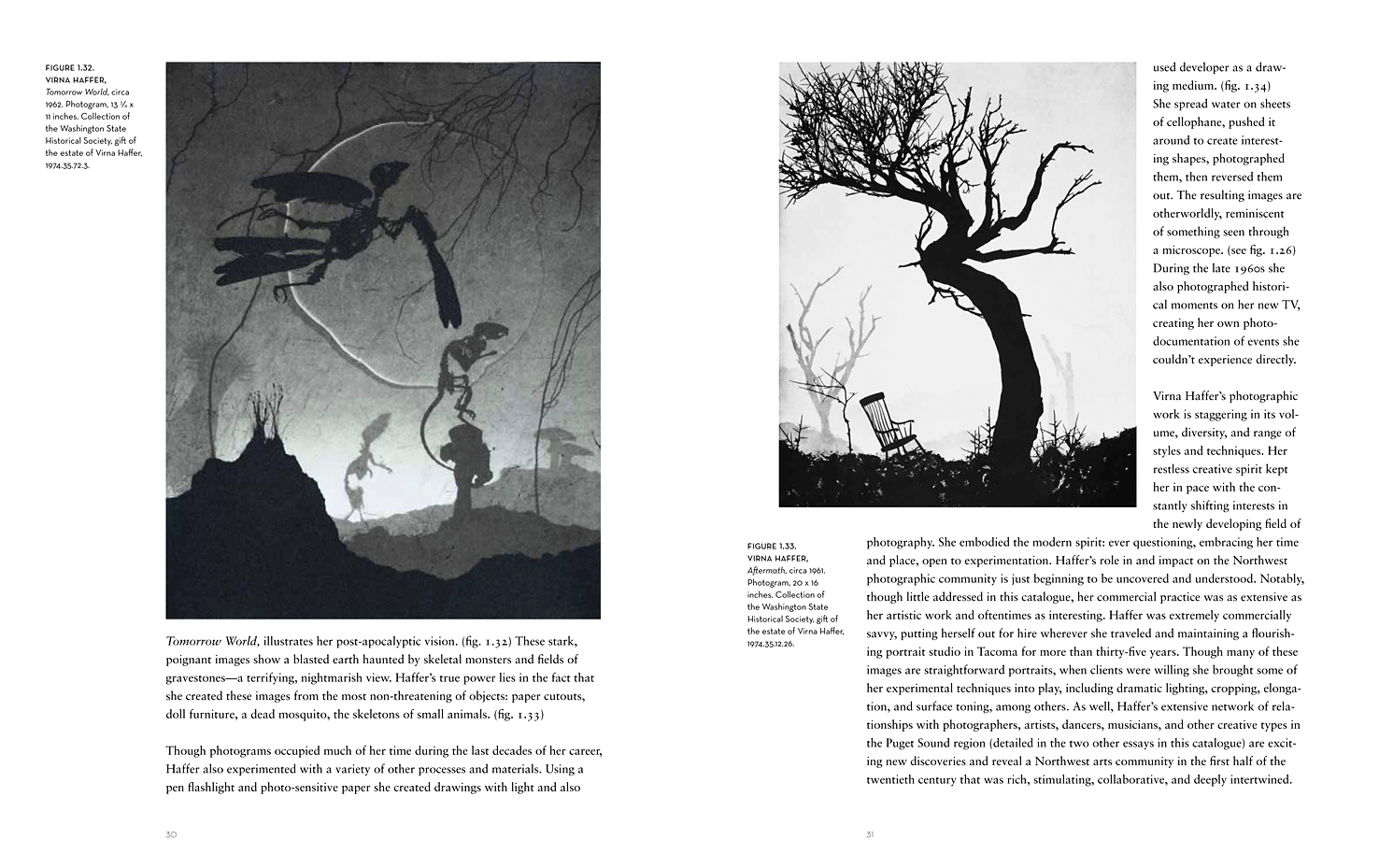
Virna Haffer (American, 1899-1974) 'Aftermath' c. 1962


Virna Haffer (American, 1899-1974)
Aftermath
c. 1962
Photogram
Collection of the Washington State Historical Society, gift of the estate of Virna Haffer


One of the most inventive Northwest artists of her time, Virna Haffer was an internationally recognised and respected Tacoma photographer who has slipped from both regional and national art history books. This summer, Tacoma Art Museum uncovers her innovative artwork.

In a career spanning more than six decades, Haffer found success as a photographer, printmaker, painter, musician, sculptor, and published writer, though she is known first and foremost as a photographer. Self-taught, she began her ambitious career in the early 1920s, both running a successful portrait studio (where she photographed the likes of the Weyerhaeuser and Chihuly families) and also exhibiting her unique artistic images around the world.

The curatorial team of Margaret Bullock, Christina Henderson, and David Martin searched through more than 30,000 of Virna Haffer’s photographic negatives, prints, and woodblocks at the Washington State Historical Society and Tacoma Public Library’s Special Collections to create this exhibition and its accompanying catalogue.

“It is an amazing opportunity to be able to bring the life and work of Virna Haffer to light once again,” said Margaret Bullock, Tacoma Art Museum’s Curator of Collections and Special Exhibitions, and a co-curator of the Haffer exhibition. “Her artistic curiosity is palpable in her work, which in itself is staggering in its volume, diversity, and range. Her role in and impact on the Northwest photographic community is just beginning to be uncovered and understood as we explore her unrivalled photographic legacy.”

Raised in the utopian community of Home Colony in South Puget Sound in the early 1900s, Haffer’s love of photography was sparked when she was just ten years old. Raised to be independent-minded and self-sufficient, she left school at the age of 15 to become a professional photographer. In 1914 she apprenticed herself to Tacoma photographer Harriette H. Ihrig where she absorbed the necessary technical skills along with the business know-how to run a commercial studio. She started exhibiting her fine art photographs in 1924.

Haffer tirelessly experimented with techniques and evolved her own rules, pushing beyond the boundaries of her medium to methodically master a variety of photographic styles and techniques. Her body of work includes images that can be classified as Pictoralist, surrealist, documentary, and modernist. She experimented with a wide range of imagery, such as multiple overlapping exposures, eccentric viewpoints, composite images, and a non-mechanical photographic process called the photogram.

“Virna Haffer has been an all too well kept Tacoma secret,” said Stephanie A. Stebich, Director of Tacoma Art Museum. “Her work has been quietly appreciated for decades awaiting reconsideration. Given her Tacoma roots, pivotal role in Tacoma’s art community throughout her career, and diverse and stunning body of work, Virna Haffer is a perfect subject for the museum’s Northwest Perspective Series, which celebrates the work of regional artists.”

Haffer’s passion for photography not only brought her success in business with her own portrait photography studio, but also international recognition. Her commercial portrait work can be found in homes all over Tacoma, while her fine art photographs can be found in the permanent collections of institutions as prestigious as the Metropolitan Museum of Art in New York City.

Text from the Tacoma Museum of Art website


Virna Haffer (American, 1899-1974) 'Mina Quevli' c. 1930


Virna Haffer (American, 1899-1974)
Mina Quevli
c. 1930
Gelatin silver print
Collection of the Washington State Historical Society, gift of the estate of Virna Haffer


Virna Haffer (American, 1899-1974) 'Franz Brasz, The Artist' c. 1937


Virna Haffer (American, 1899-1974)
Franz Brasz, The Artist
c. 1937
Gelatin silver print
Collection of the Washington State Historical Society, gift of the estate of Virna Haffer


Franz Brasz

Arnold Franz Brasz (July 19, 1888 – April 1, 1966) was an American painter, sculptor, and printmaker who was born in Polk County, Wisconsin on July 19, 1888. He studied at the Minneapolis School of Fine Arts and also with Robert Henri in New York. By the early 1920s, he was dividing his time between southern California and Wisconsin. He is considered a member of the Ashcan School, and his public commissions include Fruit Pickers, a 1940 mural in the city hall of Redlands, California showing four Native American farm workers. Brasz died at his home in Glendale, California on April 1, 1966.

Virna Haffer

Virna Haffer (1899-1974) was an American photographer, printmaker, painter, musician, and published author.

Born in 1899 in Aurora, Illinois, Haffer and her family moved to the utopian community of Home in South Puget Sound in Washington State in 1907. When she was 15 years old Haffer became the apprentice of the photographer Harriette H. Ihrig. She opened her own portrait photography studio in Tacoma, Washington and began publishing her photographs in 1924. Haffer was known for experimenting with unusual, quirky techniques and created her own artistic style that stretched the boundaries of artistic classifications in the early twentieth century. Haffer’s work was eccentric; she produced Pictorialist, modern, surreal, and documentary style work.

Haffer was married three times, the second time to socialist and labor advocate Paul Raymond Haffer, with whom she had one son, Jean Paul Haffer. One of her works as a commercial photographic portraitist was a childhood picture of future glass artist Dale Chihuly.

Haffer’s work was first exhibited in 1924 in the Fifth Annual F&N Salon of Pictorial Photography, and in 1928 at the Seattle Camera Club’s Fourth International Exhibition. By 1930 her work was internationally recognised, and often appeared in publications such as the American Annual of Photography. In addition, she won recognition and prizes in photographic competitions in the United States in the 1930s. In the 1960s she took an interest in producing photograms, and in 1969 she published a book about the process called Making Photograms: The Creative Process of Painting With Light. Haffer’s work was also the subject of several solo exhibitions at locations including the Massachusetts Institute of Technology, 1960; California Museum of Science and Industry, Los Angeles, 1964; New York Camera Club, 1967 and the Museum of Contemporary Crafts, NYC, 1968. A posthumous retrospective of her work, A Turbulent Lens: The Photographic Art of Virna Haffer, was produced at the Tacoma Art Museum in 2011.

Text from the Wikipedia website


Virna Haffer (American, 1899-1974) 'Old Tacoma Hotel Fire' c. 1935


Virna Haffer (American, 1899-1974)
Old Tacoma Hotel Fire
c. 1935
Gelatin silver print
Collection of the Washington State Historical Society, gift of the estate of Virna Haffer


Virna Haffer (American, 1899-1974) 'The Family' 1929


Virna Haffer (American, 1899-1974)
The Family
1929
Woodblock print
Collection of the Washington State Historical Society, gift of the estate of Virna Haffer


Virna Haffer (American, 1899-1974) 'Hooverville' c. 1936


Virna Haffer (American, 1899-1974)
Hooverville
c. 1936
Gelatin silver print
Collection of the Washington State Historical Society, gift of the estate of Virna Haffer


Virna Haffer (American, 1899-1974) 'Self Portrait' 1929


Virna Haffer (American, 1899-1974)
Self Portrait
1929
Gelatin silver print with added pigmentation
Private collection


'A Turbulent Lens: The Photographic Art of Virna Haffer' catalogue cover

'A Turbulent Lens: The Photographic Art of Virna Haffer' catalogue pages

'A Turbulent Lens: The Photographic Art of Virna Haffer' catalogue pages

'A Turbulent Lens: The Photographic Art of Virna Haffer' catalogue pages

'A Turbulent Lens: The Photographic Art of Virna Haffer' catalogue pages


A Turbulent Lens: The Photographic Art of Virna Haffer catalogue cover and pages


Tacoma Art Museum
1701 Pacific Avenue
Tacoma, WA 98402

Opening hours:
Wednesday – Sunday 10am – 5pm

Tacoma Art Museum website

LIKE ART BLART ON FACEBOOK

Back to top

Exhibition: ‘A Revolutionary Project: Cuba from Walker Evans to Now’ at the J. Paul Getty Museum, Los Angeles

Exhibition dates: 17th May – 2nd October 2011


Many thankx to the J. Paul Getty Museum for allowing me to publish the photographs in the posting. Please click on the photographs for a larger version of the image.


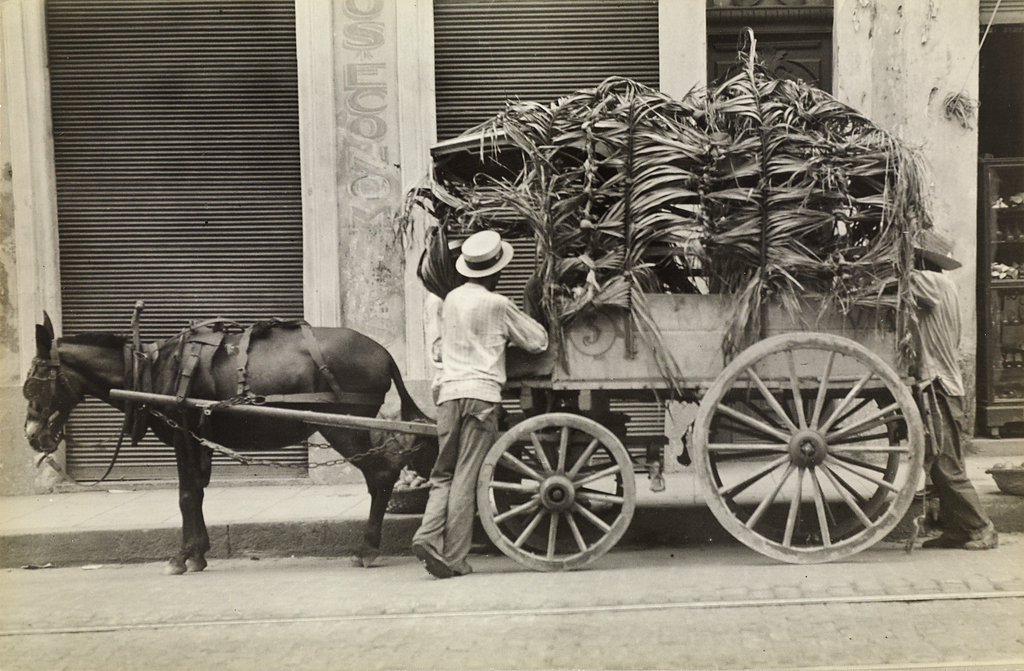
Walker Evans (American, 1903-1975) 'Mule, Wagon and Two Men, Havana' 1933


Walker Evans (American, 1903-1975)
Mule, Wagon and Two Men, Havana
1933
Gelatin silver print
13.8 x 21cm (5 7/16 x 8 1/4 in.)
The J. Paul Getty Museum, Los Angeles
© Walker Evans Archive, The Metropolitan Museum of Art


Walker Evans (American, 1903-1975) 'Spectacle, Capital Steps, Possibly Independence Day' May 20, 1933


Walker Evans (American, 1903-1975)
Spectacle, Capital Steps, Possibly Independence Day
May 20, 1933
Gelatin silver print
19.7 x 25.3cm (7 3/4 x 9 15/16 in.)
The J. Paul Getty Museum, Los Angeles
© Walker Evans Archive, The Metropolitan Museum of Art


Walker Evans (American, 1903-1975) 'Old Havana Housefronts' 1933


Walker Evans (American, 1903-1975)
Old Havana Housefronts
1933
Gelatin silver print
17.6 x 22.7cm (6 15/16 x 8 15/16 in.)
The J. Paul Getty Museum, Los Angeles
© Walker Evans Archive, The Metropolitan Museum of Art


Walker Evans (American, 1903-1975) 'Balcony Spectators' 1933


Walker Evans (American, 1903-1975)
Balcony Spectators
1933
Gelatin silver print
19.8 x 25.2cm (7 13/16 x 9 15/16 in.)
The J. Paul Getty Museum, Los Angeles
© Walker Evans Archive, The Metropolitan Museum of Art


Exhibition Marks First Showing of Getty’s Walker Evan’s Cuban Photographs; Also on view are Cuban Revolutionary Photographs and Contemporary Work by Virginia Beahan, Alex Harris, and Alexey Titarenko

Cuba’s attempt to forge an independent state with an ambitious set of social goals, all the while moored to powerful political and economic interests, has been a source of fascination for nations, intellectuals, and artists alike. On display at the J. Paul Getty Museum, the Getty Center, May 17 – October 2, 2011, A Revolutionary Project: Cuba from Walker Evans to Now, looks at three critical periods in the island nation’s history as witnessed by photographers before, during, and after the country’s 1959 Revolution.

A Revolutionary Project juxtaposes Walker Evans’s 1933 images from the end of the Gerardo Machado dictatorship with views by contemporary foreign photographers Virginia Beahan (American, b. 1946), Alex Harris (American, b. 1949), and Alexey Titarenko (Russian, b. 1962), who have explored Cuba since the withdrawal of Soviet support in the 1990s. A third section bridging these two eras presents pictures by Cuban photographers who participated in the country’s 1959 Revolution, including Alberto Korda, Perfecto Romero, and Osvaldo Salas.

“The Museum’s collection of Walker Evans prints is the largest in the U.S., but until now, we have not shown his photographs of Cuba,” explains Judith Keller, senior curator of photographs. “This exhibition allows us the opportunity to showcase this body of work, alongside newer work in the collection.”

1933: Evans in Havana

Walker Evans (1903-1975) is one of the photographers most responsible for the way we now imagine American life in the 1930s. His distinctive photographic style, which he declared “transcendent documentary,” was nurtured in New York in the late 1920s and fully formed by his experience in Cuba in 1933. In the spring of that year, Walker Evans was asked by publisher J. B. Lippincott to produce a body of work about Cuba to accompany a book by the radical journalist Carleton Beals (1893-1979). This book, The Crime of Cuba, would be a scathing indictment of the then-current regime of Cuban President Gerardo Machado. Leaving the country less than two months before Machado was forced out of office, Evans was able to capture Cuba at the start of the revolutionary movement but almost 30 years before the 1959 Revolution.

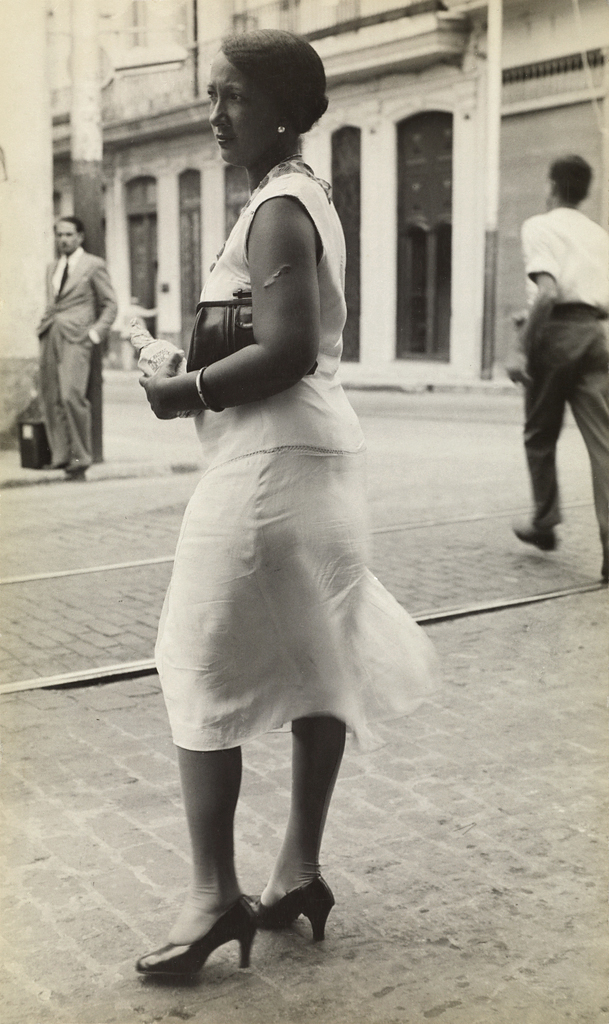
During Evans’s time in Cuba, he made substantial strides in his photographic practice. There he worked with different format cameras, large and small, one more deliberate and descriptive, the other more spontaneous and agile. He created both close-up and wide, inclusive compositions that he could then combine in intense sequences to best communicate his response to the poverty, the ferment, and the beauty of his environment. While in Havana, Evans met the American writer, Ernest Hemingway (1899-1961), whose acclaimed avant-garde work he knew and admired. Hemingway’s terse narrative style, which he was then applying to his own Harry Morgan stories set in Havana and Key West, no doubt influenced Evans’s approach to the subject of Cuba’s current political and economic struggles. Evans’s photographs also reflect the inspiration of French photographer Eugène Atget’s Parisian pictures that Evans critiqued for an arts journal in 1931. The series that comprised Atget’s thorough study of “Old Paris” seem to have provided additional motivation for Evans’s selection of Havana subjects: the signage of urban storefronts, the abundant street offerings of fresh produce, the decorative balconies of old houses, the many studies of archaic horse-drawn wagons and carriages, and the portraits of women, some of whom appear to be prostitutes.

1958-1966: Revolution

Machado’s fall from rule in 1933 resulted in a long power struggle that culminated in the country’s 1959 socialist revolution to overthrow dictator Fulgencio Batista, anchoring Cuba to the Soviet bloc for the next thirty years and defining a relationship with the United States that still exists today. Fidel Castro, Ernesto “Che” Guevara, and their new government harnessed photography as a means of keeping the project of the Revolution at the forefront of Cuba’s collective consciousness. As both genuine records of popular insurrection and propagandistic documents used for political purposes, pictures of the Revolution and its aftermath have shaped how both Cubans and Americans understand the significance of that revolutionary moment. Photographs in the second section of the exhibition are drawn from the work of nine Cuban photographers who participated in recording the political context and triumphs of the emerging state in the years surrounding 1959.

Included in the exhibition is an iconic image of the revolutionary hero Che Guevara by Alberto Korda titled Guerrillero Heroico (March 5, 1960). One of the world’s most reproduced images, it has been adopted for political causes, appearing on countless numbers of t-shirts, banners, and street art around the globe. The print on view in the exhibition is among the earliest versions of the photograph known to exist. Made as a press print, it was used as a source to reproduce the image in media outlets a year after Korda photographed Guevara at a rally in Havana.

Also on display in the exhibition is the well-known revolutionary photograph Patria o Muerte, Cuba (Negative, January 1959; print, 1984) by Osvaldo Salas, one of Cuba’s most important photographers. Salas effectively captures and conveys the populist fervour in Cuba shortly after the movement’s triumph with an image of a patriotic sign framed by a celebratory crowd.

The photographs included in this section of the exhibition are culled from the extensive holdings of Cuban photography assembled by the Austrian collector, Christian Skrein, including a number of recent acquisitions by the Museum.

Since 1991: The Special Period

After Soviet troops began to withdraw from Cuba in September of 1991, the troubled Cuban economy suffered severe internal shortages, and Fidel Castro declared what is known as the “Special Period” (período especial), marked by food rationing, energy conservation, and a decline of public services. In the nearly twenty years since the Soviet withdrawal, Cubans have managed to survive through perseverance, the forging of new political relationships, and the easing of socialist systems. This period of transition, which continues today with the recent transfer of power from Fidel Castro to his brother Raúl, has attracted the attention of photographers from around the world who are interested in exploring the relationship between Cuba’s revolutionary past and its uncertain future. The final section of the exhibition looks specifically at the work of three contemporary photographers with diverse approaches to documenting the island in recent decades: Virginia Beahan, Alex Harris, and Alexey Titarenko.

Virginia Beahan’s work concentrates on the landscape’s relationship to history and culture. In 2001, she began a multiyear project on Cuba, photographing its topography in search of remnants of the island’s diverse past. The work resulted in a publication in 2009 called Cuba: Singing with Bright Tears. Beahan’s Cuba is a land of contradictions, full of disappointments and hope, decay and rejuvenating beauty, simultaneously anchored to the past while looking beyond the present. Born and raised in Leningrad (now Saint Petersburg), Russia, Alexey Titarenko became fascinated with Cuba in 2003, when he made his first trip to Havana. Titarenko’s goal was to represent the soul of the Cuban capital. In the artist’s photographs, the city is shown with little overt reference to its politics. Instead, Titarenko describes the conditions of life in the communist country, depicting people persevering amid varying states of ruin. Venturing out of the tourist zones of Havana into the network of dilapidated avenues beyond the old city walls, his images depict a grey metropolis whose inhabitants congregate on the streets to collect food rations, fix long-outmoded cars, and play baseball.

A former student of Walker Evans, Alex Harris made several trips to Cuba following the collapse of the eastern bloc and the dissolution of the Soviet Union, developing a powerful body of colour work that addresses the country’s cultural fabric during a period of difficult economic circumstances. His photographs focus on portraits of women whose lives are affected by the tourist-fuelled sex trade, landscapes made through the windshields of refurbished 1950s American cars, and monuments to the Cuban national hero José Martí. His study was published in the form of a book, The Idea of Cuba, in 2007. Through these distinct vantage points, Harris probed the country’s propensity for ingenuity as it underwent great transition.

Press release from the J. Paul Getty Museum website


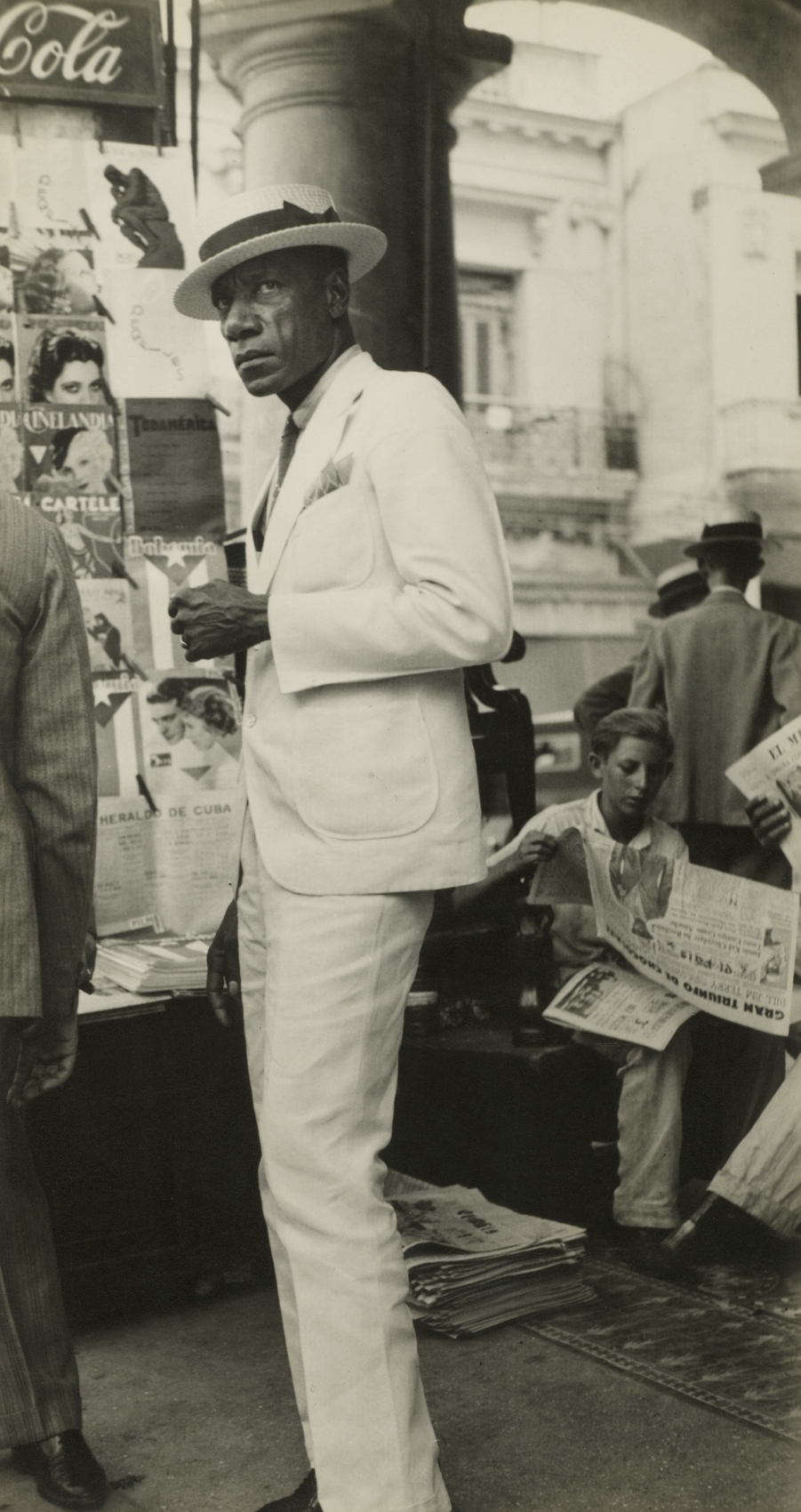
Walker Evans (American, 1903-1975) 'Citizen in Downtown Havana' 1933


Walker Evans (American, 1903-1975)
Citizen in Downtown Havana
1933
Gelatin silver print
22.2 x 11.7cm (8 3/4 x 4 5/8 in.)
The J. Paul Getty Museum, Los Angeles


Walker Evans (American, 1903-1975) 'Woman on the Street, Havana' 1933


Walker Evans (American, 1903-1975)
Woman on the Street, Havana
1933
Gelatin silver print
24.6 x 14.6cm (9 11/16 x 5 3/4 in.)
The J. Paul Getty Museum, Los Angeles
© Walker Evans Archive, The Metropolitan Museum of Art


Walker Evans (American, 1903-1975) 'Woman in a Courtyard' 1933


Walker Evans (American, 1903-1975)
Woman in a Courtyard
1933
Gelatin silver print
25.3 x 16.2cm (9 15/16 x 6 3/8 in.)
The J. Paul Getty Museum, Los Angeles
© Walker Evans Archive, The Metropolitan Museum of Art


Walker Evans (American, 1903-1975) 'Coal Dockworkers, Havana' 1933


Walker Evans (American, 1903-1975)
Coal Dockworkers, Havana
1933
Gelatin silver print
15.6 × 21.1cm (6 1/8 × 8 5/16 in.)
The J. Paul Getty Museum, Los Angeles
© Walker Evans Archive, The Metropolitan Museum of Art


Walker Evans (American, 1903-1975) 'Coal Dockworkers, Havana' 1933


Walker Evans (American, 1903-1975)
Coal Dockworkers, Havana
1933
Gelatin silver print
12.7 × 17.7cm (5 × 6 15/16 in.)
The J. Paul Getty Museum, Los Angeles
© Walker Evans Archive, The Metropolitan Museum of Art


Walker Evans (American, 1903-1975) 'Coal Dockworker, Havana' 1933


Walker Evans (American, 1903-1975)
Coal Dockworker, Havana
1933
Gelatin silver print
9.7 × 13.7cm (3 13/16 × 5 3/8 in.)
The J. Paul Getty Museum, Los Angeles
© Walker Evans Archive, The Metropolitan Museum of Art


Walker Evans (American, 1903-1975) 'Coal Loader, Havana' 1933


Walker Evans (American, 1903-1975)
Coal Loader, Havana
1933
Gelatin silver print
17.1 × 12.2cm (6 3/4 × 4 13/16 in.)
The J. Paul Getty Museum, Los Angeles
© Walker Evans Archive, The Metropolitan Museum of Art


Walker Evans (American, 1903-1975) 'Coal Stevedore, Havana' 1933


Walker Evans (American, 1903-1975)
Coal Stevedore, Havana
1933
Gelatin silver print
20.2 x 15.2cm (7 15/16 x 6 in.)
The J. Paul Getty Museum, Los Angeles
© Walker Evans Archive, The Metropolitan Museum of Art


Walker Evans (American, 1903-1975) 'Stevedore' 1933


Walker Evans (American, 1903-1975)
Stevedore
1933
Gelatin silver print
20.1 x 15.1cm (7 15/16 x 5 15/16 in.)
The J. Paul Getty Museum, Los Angeles
© Walker Evans Archive, The Metropolitan Museum


Walker Evans (American, 1903-1975) 'Negro Child, Havana' 1933


Walker Evans (American, 1903-1975)
Negro Child, Havana
1933
Gelatin silver print
19.5 x 14.8cm (7 11/16 x 5 13/16 in.)
The J. Paul Getty Museum, Los Angeles
© Walker Evans Archive, The Metropolitan Museum


Walker Evans (American, 1903-1975) 'Negro Child, Havana' 1933


Walker Evans (American, 1903-1975)
Negro Child, Havana
1933
Gelatin silver print
19.8 x 13.2cm (7 13/16 × 5 3/16 in.)
The J. Paul Getty Museum, Los Angeles
© Walker Evans Archive, The Metropolitan Museum


The J. Paul Getty Museum
1200 Getty Center Drive
Los Angeles, California 90049

Opening hours:
Tuesday – Friday, Sunday 10am – 5.30pm
Saturday 10am – 8pm
Monday Closed

The J. Paul Getty Museum website

LIKE ART BLART ON FACEBOOK

Back to top

Exhibition, Films, Events and Symposia: ‘Jack Smith: A Feast for Open Eyes’ at the Institute of Contemporary Arts (ICA), London

Dates: 7th – 18th September 2011


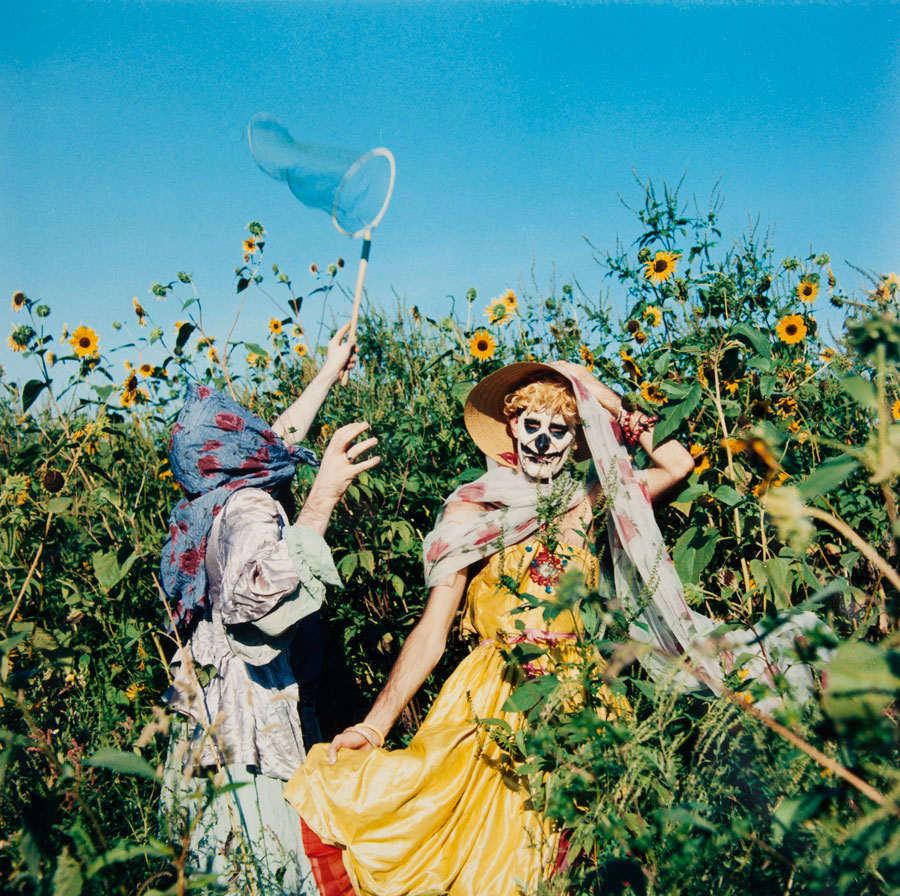
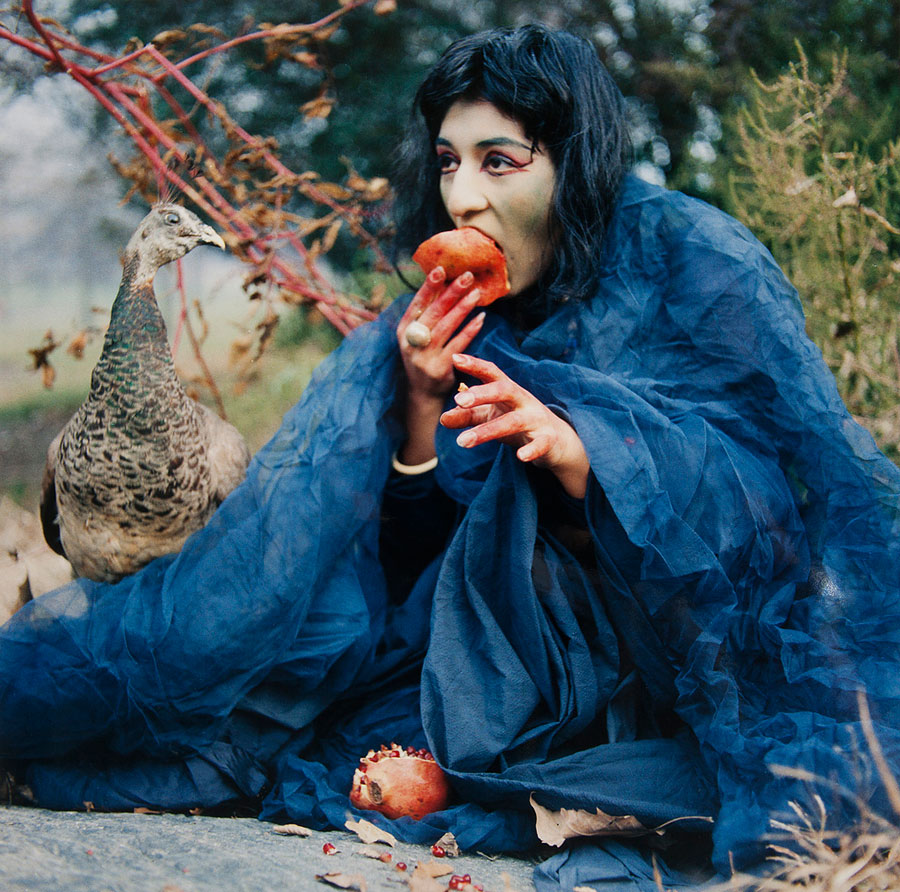
Jack Smith (American, 1932-1989) 'Untitled' c. 1958-1962/2011


Jack Smith (American, 1932-1989)
Untitled
c. 1958-1962/2011
Analog C-print hand printed from original colour negative on Fuji Crystal Archive paper
14 x 11 inches (35.6 x 27.9cm)
Copyright Estate of Jack Smith
Courtesy Gladstone Gallery, New York and Brussels


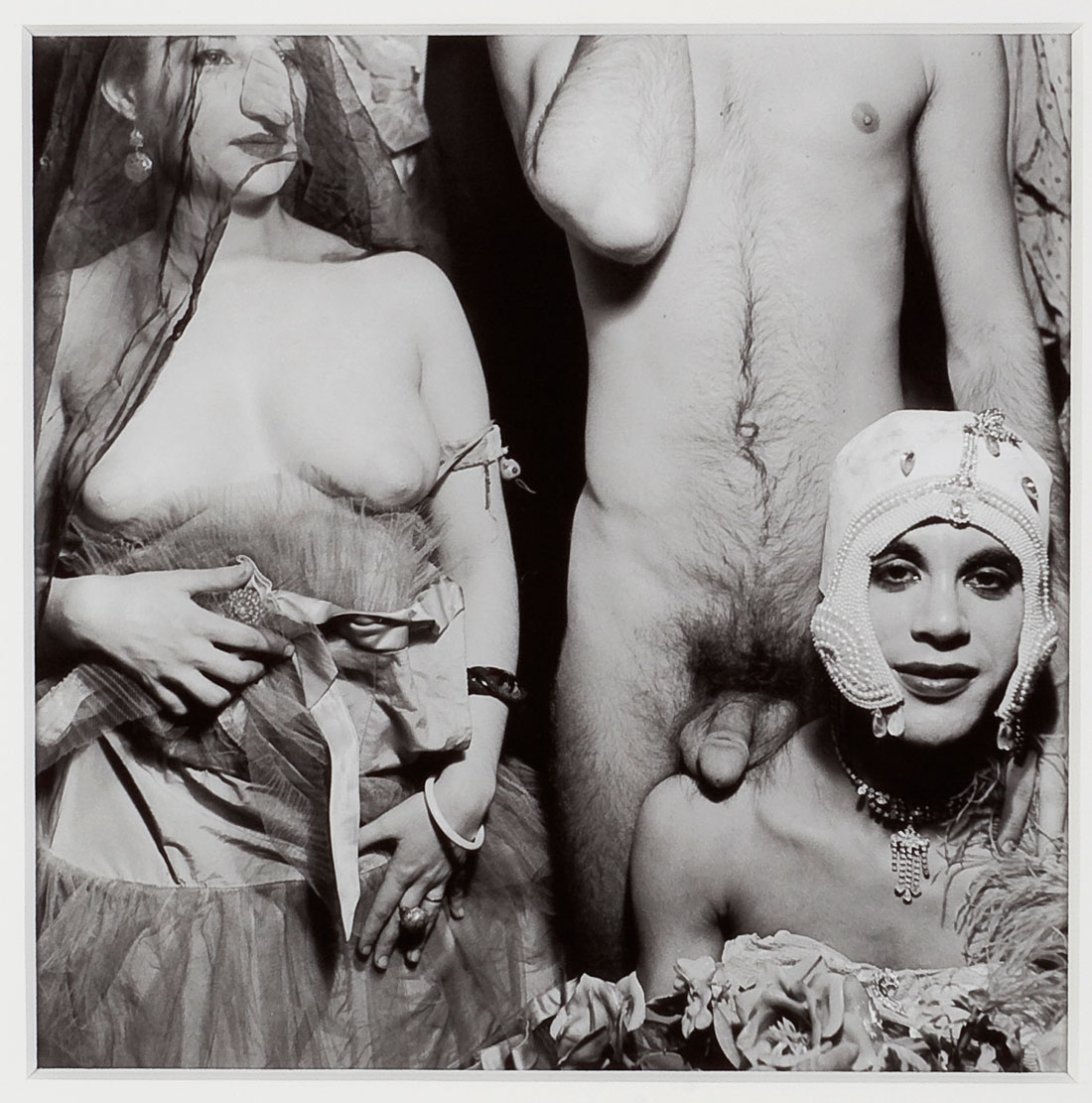
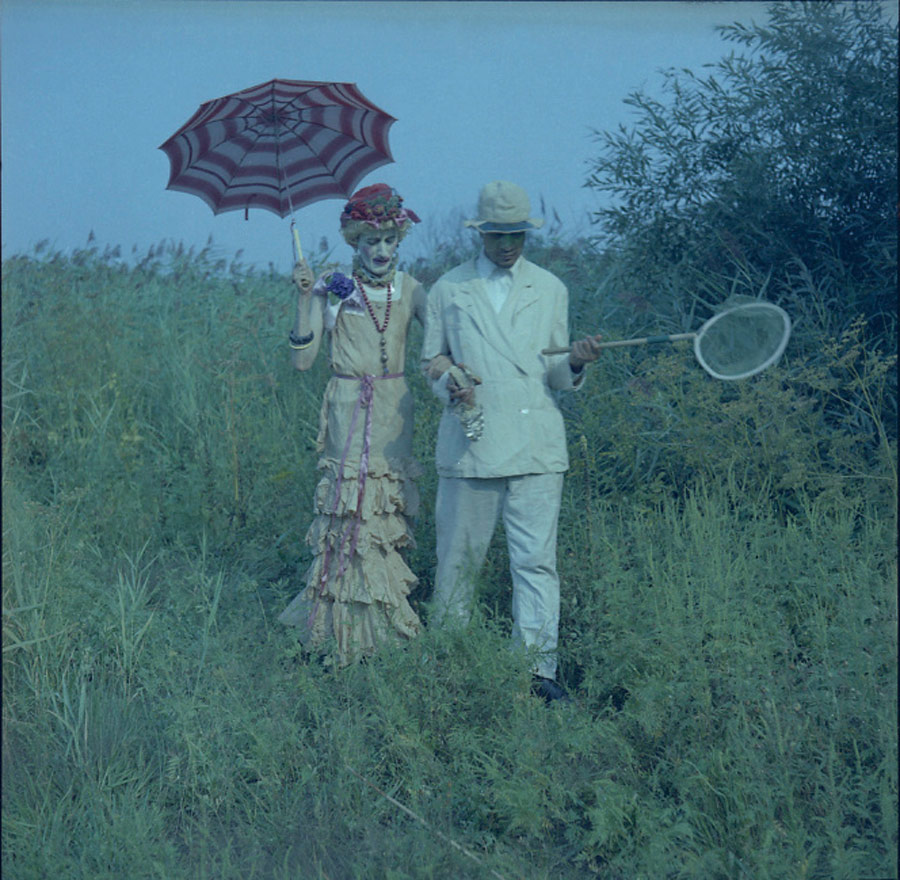
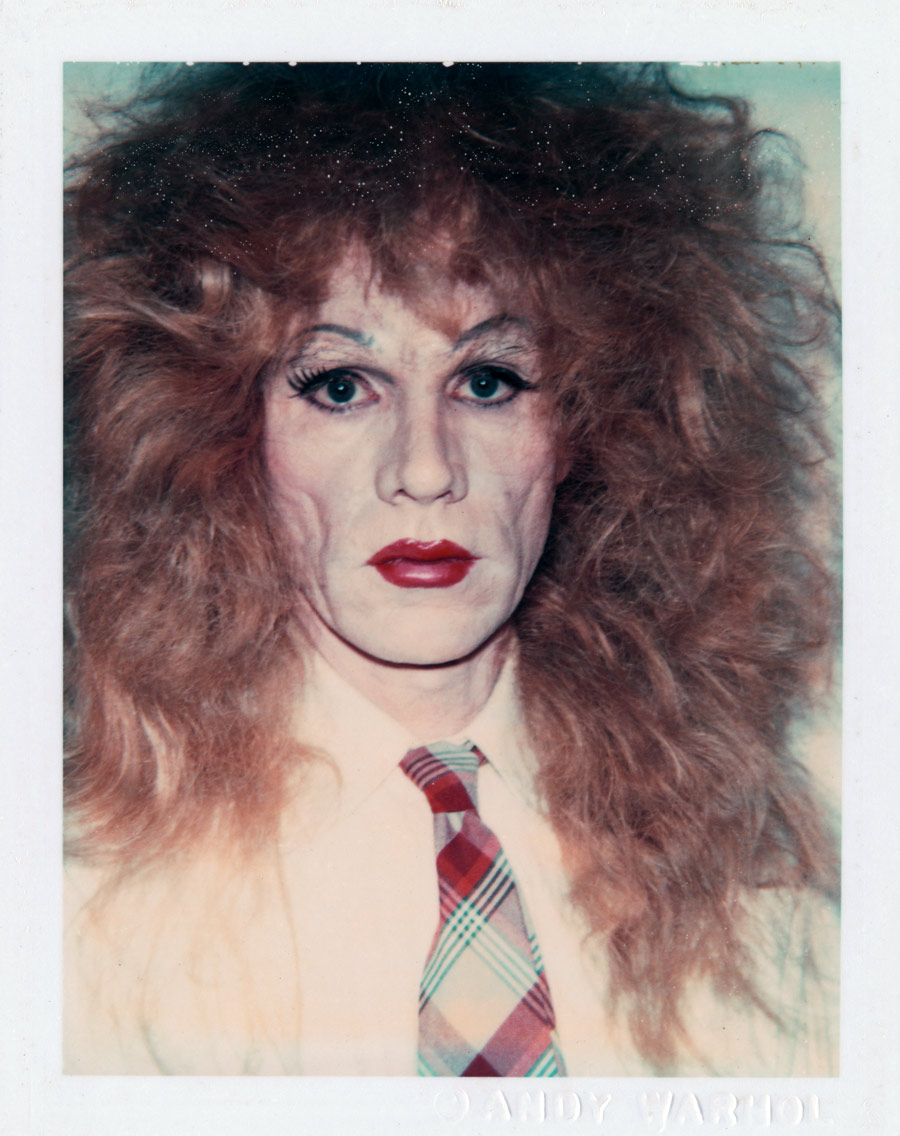
His photographic works are rare and remain largely unknown according to Wikipedia. They shouldn’t be.

Dr Marcus Bunyan


Many thankx to the ICA for allowing me to publish the photographs in the posting. Please click on the photographs for a larger version of the image.


Jack Smith: A Feast for Open Eyes

‘The only true underground filmmaker’ – John Waters

ICA director Gregor Muir introduces the work of Jack Smith in this two week season. Jack Smith: A Feast for Open Eyes is on from 7 – 18 September 2011


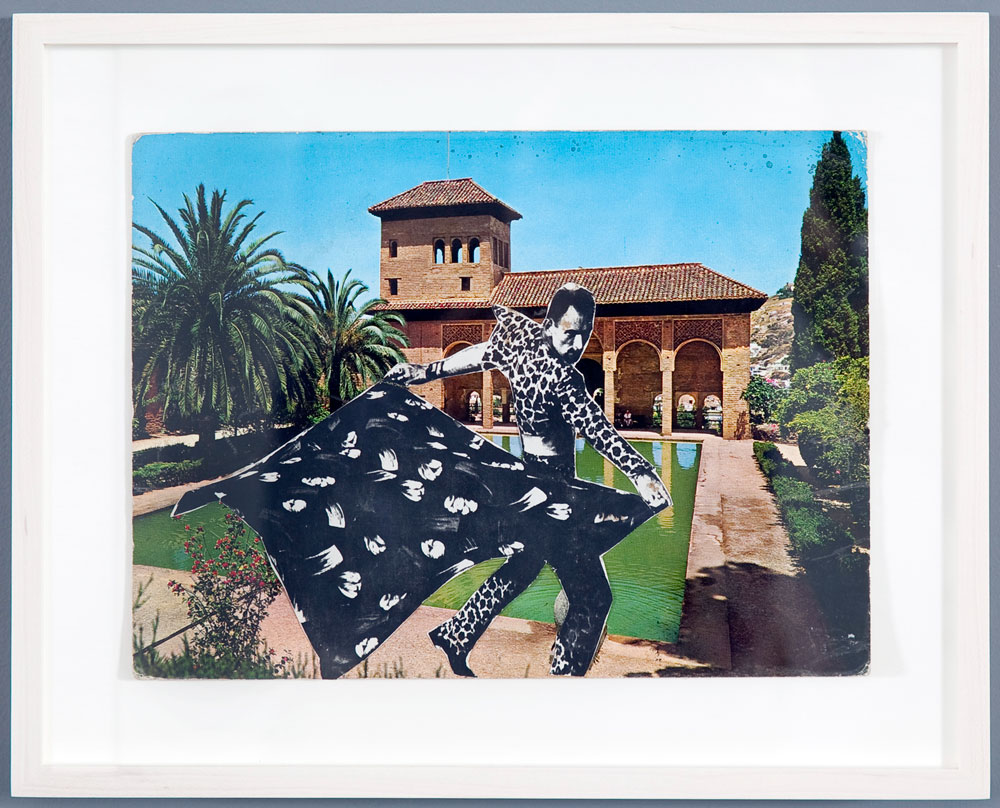
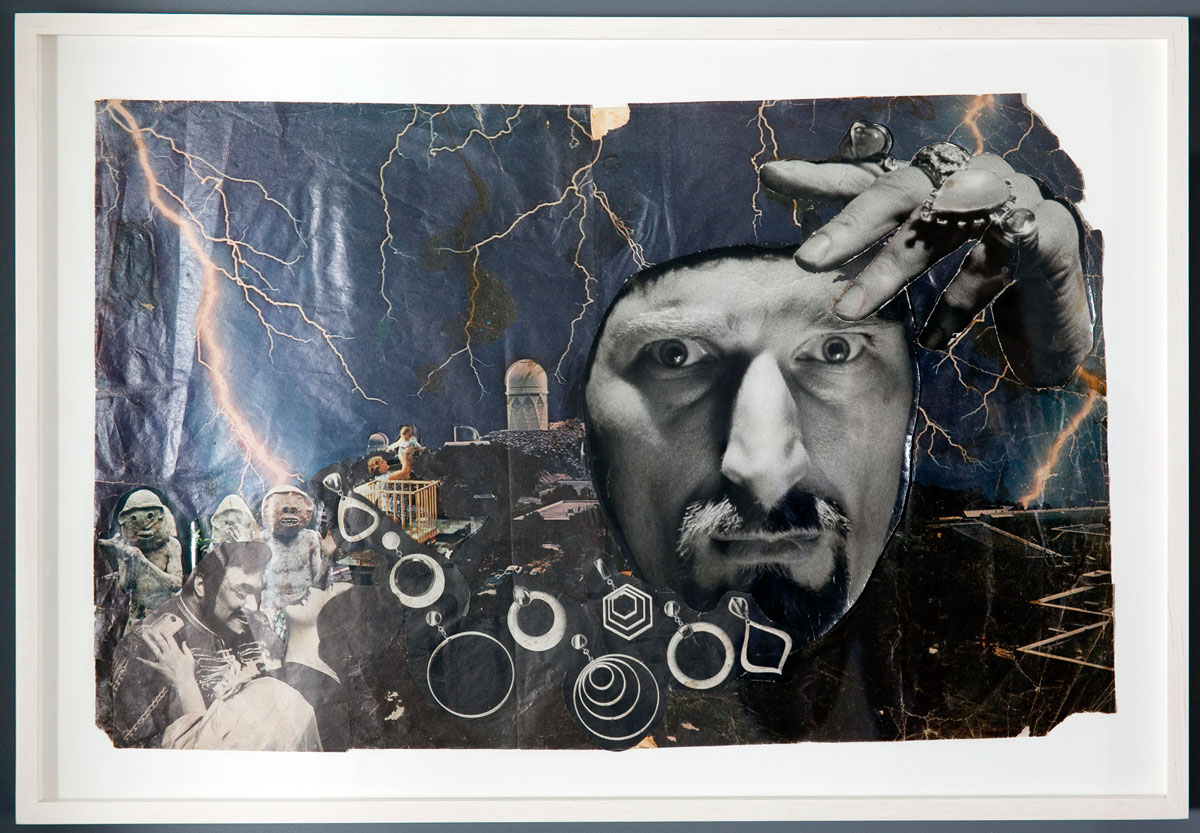
Jack Smith (American, 1932-1989) 'Untitled' 1982


Jack Smith (American, 1932-1989)
Untitled
1982
Mixed media on paper
6 1/8 x 8 7/8 inches (15.6 x 22.5cm)
Copyright Estate of Jack Smith
Courtesy Gladstone Gallery, New York and Brussels


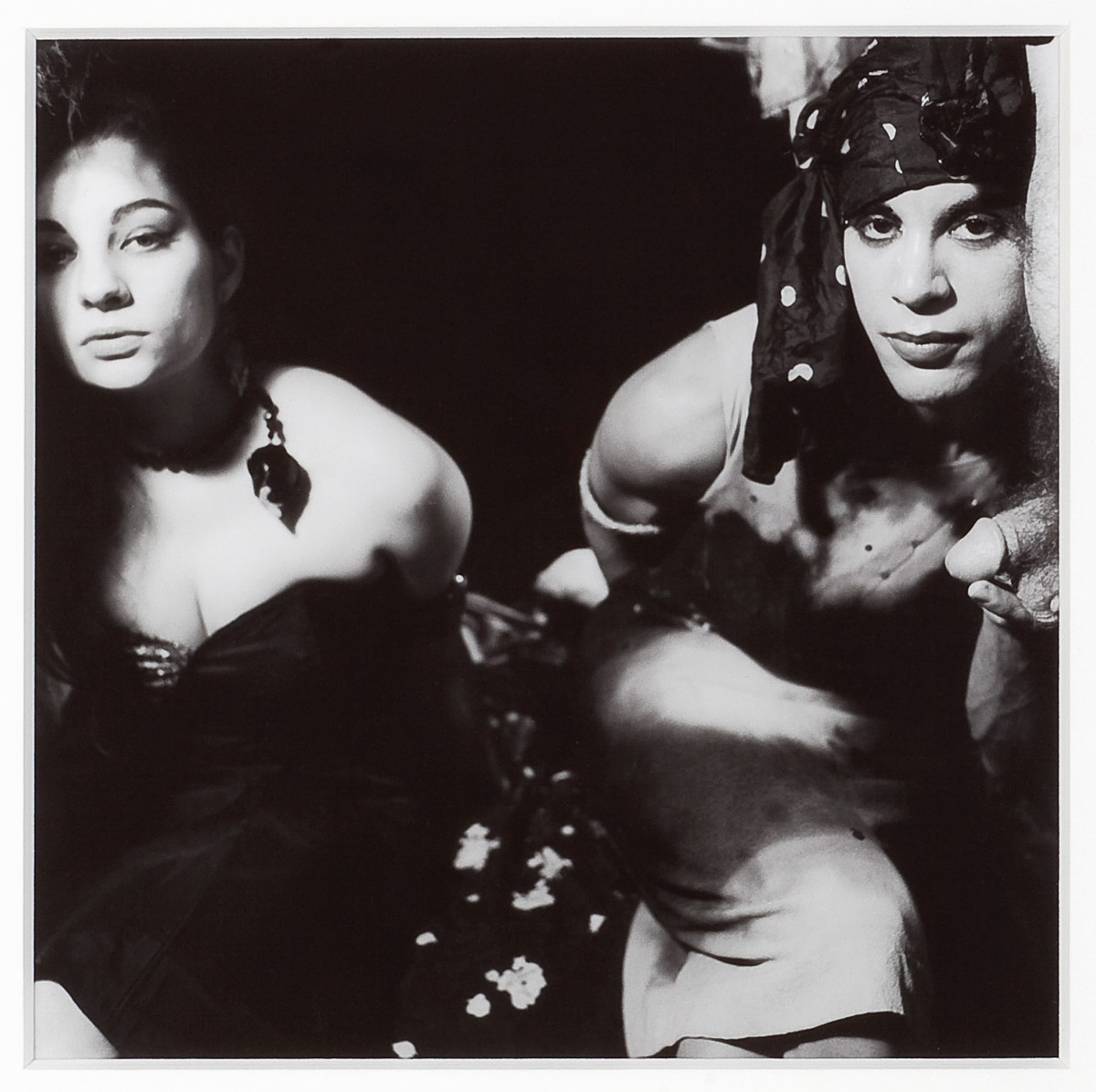
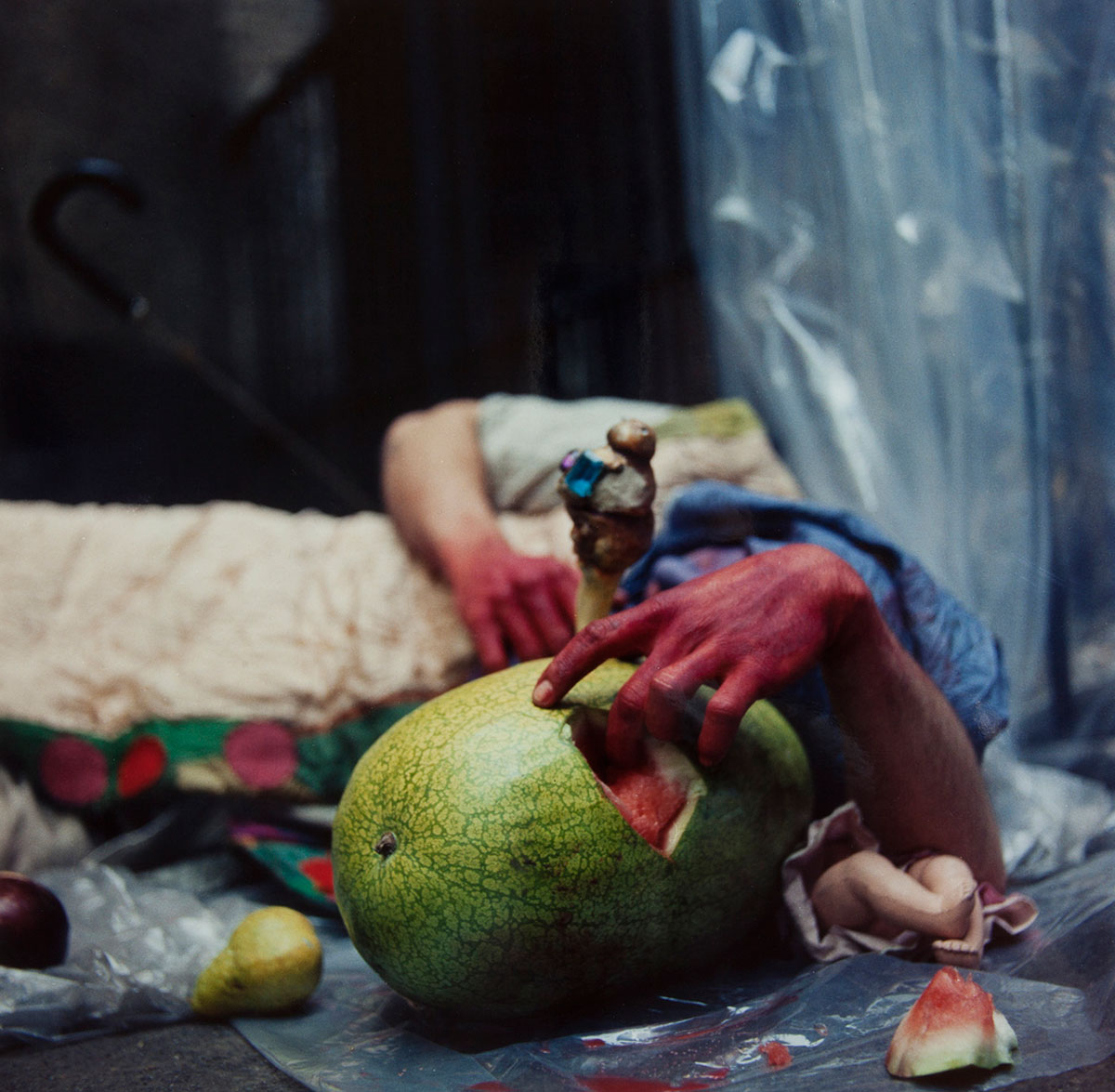
Jack Smith (American, 1932-1989) 'Untitled' c. 1958-1962/2011


Jack Smith (American, 1932-1989)
Untitled
c. 1958-1962/2011
Black and white gelatin silver print
10 x 8 inches (25.4 x 20.3cm)
Copyright Estate of Jack Smith
Courtesy Gladstone Gallery, New York and Brussels


“Jack Smith (November 14, 1932 in Columbus, Ohio – September 25, 1989 in New York City) was an American filmmaker, actor, and pioneer of underground cinema. He is generally acclaimed as a founding father of American performance art, and has been critically recognised as a master photographer, though his photographic works are rare and remain largely unknown.

Smith was one of the first proponents of the aesthetics which came to be known as ‘camp’ and ‘trash’, using no-budget means of production (e.g. using discarded colour reversal film stock) to create a visual cosmos heavily influenced by Hollywood kitsch, orientalism and with Flaming Creatures created drag culture as it is currently known. Smith was heavily involved with John Vaccaro, founder of The Playhouse of The Ridiculous, whose disregard for conventional theater practice deeply influenced Smith’s ideas about performance art. In turn, Vaccaro was deeply influenced by Smith’s aesthetics. It was Vaccaro who introduced Smith to glitter and in 1966 and 1967, Smith created costumes for Vaccaro’s Playhouse of The Ridiculous. Smith’s style influenced the film work of Andy Warhol as well as the early work of John Waters. While all three were part of the 1960s gay arts movement, Vaccaro and Smith refuted the idea that their sexual orientation was responsible for their art.

After his last film, No President (1967), Smith created performance and experimental theatre work until his death on September 25, 1989 from AIDS-related pneumonia.”

Text from the Wikipedia entry


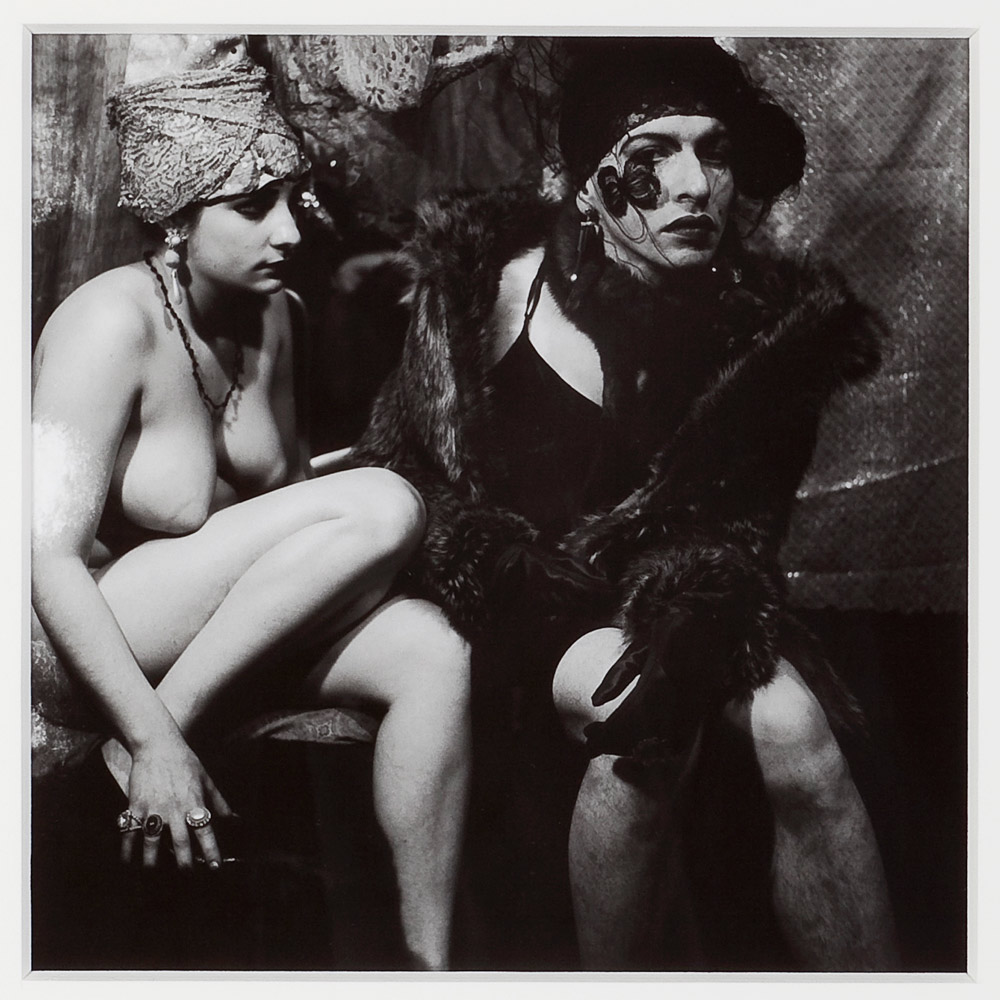
Jack Smith (American, 1932-1989) 'Untitled' c. 1958-1962/2011


Jack Smith (American, 1932-1989)
Untitled
c. 1958-1962/2011
Analog C-print hand printed from original colour negative on Fuji Crystal Archive paper
14 x 11 inches (35.6 x 27.9cm)
Copyright Estate of Jack Smith
Courtesy Gladstone Gallery, New York and Brussels


Legendary American artist, filmmaker and actor Jack Smith (1932-1989), described by Andy Warhol as the only person he would ever copy and by John Waters as “the only true underground filmmaker”, is celebrated at the Institute of Contemporary Arts (ICA) in film, performance and debate with a retrospective of Smith’s work from 7 to 18 September 2011.

Working in New York from the 1950s until his death in 1989, Smith unequivocally resisted and upturned accepted conventions, whether artistic, moral or legal. Irreverent in tone and delirious in effect, Smith’s films, such as the notorious Flaming Creatures (1963), are both wildly camp and subtly polemical. Smith is best known for his contributions to underground cinema but his influence extends across performance art, photography and experimental theatre.

A Feast for Open Eyes: Jack Smith maps out the breadth of Smith’s practice, from his collaborative film productions to his individual writings, and looks at his legacy in the UK drawing upon a generation of New York artists with whom Smith was closely involved, including Jonas Mekas and Penny Arcade, and younger artists and filmmakers whom he influenced. John Zorn, a long-term Smith collaborator selects records to accompany an installation of slides documenting Smith’s work, as he used to in collaboration with Smith in the 1970s and 80s.

The retrospective opens with a screening of Flaming Creatures introduced by Chris Dercon, Director of Tate Modern, who was a close friend of Smith’s. The film is followed by the screening of an interview, recorded exclusively for the ICA this summer, with Jonas Mekas, a founder member of Anthology Film Archives who faced obscenity charges for defending Flaming Creatures in the 1960s. The presentation is introduced by Dominic Johnson, author of the forthcoming monograph Glorious Catastrophe: Jack Smith, Performance and Visual Culture (Manchester University Press) and co-curator of A Feast for Open Eyes.

Press release from the ICA website


Jack Smith (American, 1932-1989) 'Untitled' c. 1978


Jack Smith (American, 1932-1989)
Untitled
c. 1978
Mixed media on paper
13 x 20 3/4 inches (33 x 52.7cm)
Copyright Estate of Jack Smith
Courtesy Gladstone Gallery, New York and Brussels


Jack Smith (American, 1932-1989) 'Untitled' c. 1958-1962/2011


Jack Smith (American, 1932-1989)
Untitled
c. 1958-1962/2011
Analog C-print hand printed from original colour negative on Fuji Crystal Archive paper
14 x 11 inches (35.6 x 27.9cm)
Copyright Estate of Jack Smith
Courtesy Gladstone Gallery, New York and Brussels


Jack Smith (American, 1932-1989) 'Untitled' c. 1958-1962/2011


Jack Smith (American, 1932-1989)
Untitled
c. 1958-1962/2011
Black and white gelatin silver print
10 x 8 inches (25.4 x 20.3cm)
Copyright Estate of Jack Smith
Courtesy Gladstone Gallery, New York and Brussels


Jack Smith (American, 1932-1989) 'Untitled' c. 1958-1962/2011


Jack Smith (American, 1932-1989)
Untitled
c. 1958-1962/2011
Black and white gelatin silver print
10 x 8 inches (25.4 x 20.3cm)
Copyright Estate of Jack Smith
Courtesy Gladstone Gallery, New York and Brussels


Jack Smith (American, 1932-1989) 'Untitled' c. 1958-1962


Jack Smith (American, 1932-1989)
Untitled
c. 1958-1962
Color negative
2 1/4 x 2 1/4 inches 
(5.7 x 5.7cm)
Copyright Estate of Jack Smith
Courtesy Gladstone Gallery, New York and Brussels


Institute of Contemporary Arts
The Mall,
London,
SW1Y 5AH

Opening hours:
Tuesday – Sunday 12 – 9pm
Closed Mondays

ICA website

LIKE ART BLART ON FACEBOOK

Back to top

Exhibition: ‘The Mind’s Eye, 50 Years of Photography by Jerry Uelsmann’ at the Harn Museum of Art, Florida

Exhibition dates: 14th June – 11th September 2011


Jerry Uelsmann (American, 1934-2022)
 'Apocalypse II
' 1967


Jerry Uelsmann (American, 1934-2022)
Apocalypse II
1967
Gelatin silver print
10 3/4 x 13 5/8 in (27.2 x 34.5cm)
Collection of the artist
© Jerry Uelsmann


Uelsmann is one of my favourite artists. His unique vision and the skill required to execute that vision using multiple exposure of negatives in the darkroom (remember, this is all done with no Photoshop!) is outstanding. Observe the sensitivity to subject matter and the placement of disparate elements in the surrealist landscape. His photographs have real allegorical power and lodge in the viewer’s psyche. My particular favourites are the library and the house on the tree stump. Uelsmann achieves wonderful resolution to inner visions and then makes the dream-like tableaux accessible to the viewer. As one who started as a black and white photographer and who experimented with multiple exposures on one piece of silver gelatin paper in the darkroom, I can attest to how enormously difficult this process is.

The text on Wikipedia states:

“Uelsmann is a master printer producing composite photographs with multiple negatives and extensive darkroom work. He uses up to a dozen enlargers at a time to produce his final images … Uelsmann is a champion of the idea that the final image need not be tied to a single negative, but may be composed of many … he does not seek to create narratives, but rather allegorical surrealist imagery of the unfathomable … Today, with the advent of digital cameras and Photoshop, photographers are able to create a work somewhat resembling Uelsmann’s in less than a day, however, at the time Uelsmann was considered to have almost “magical skill” with his completely analog tools.”


I thank him for having the creative energy to be a magician.

Dr Marcus Bunyan

See another posting on this exhibition.


Many thankx to the Harn Museum of Art for allowing me to publish the photographs in the posting. Please click on the photographs for a larger version of the image.


Jerry Uelsmann (American, 1934-2022) 'Magritte’s Touchstone' (first version)
 Nd


Jerry Uelsmann (American, 1934-2022)
Magritte’s Touchstone (first version)
Nd
Gelatin silver print
Collection of the artist
© Jerry Uelsmann


Jerry Uelsmann (American, 1934-2022)
 'Mechanical Man #2' 1959


Jerry Uelsmann (American, 1934-2022)
Mechanical Man #2
1959
Gelatin silver print
Collection of the artist
© Jerry Uelsmann


The first critical retrospective of American photographer Jerry Uelsmann’s work will open at the Harn Museum of Art at the University of Florida on June 14, 2011. Uelsmann, known for his iconic, surreal style and his innovative composite printing techniques, has spent more than 50 years challenging and advocating for the acceptance of photography as an experimental art form. The Mind’s Eye, 50 Years of Photography by Jerry Uelsmann, organised by the Peabody Essex Museum in Salem, Massachusetts will feature 89 works from every phase of the artist’s wide-ranging career, including a selection of rare pieces that have never before been on public view. Additional works from the artist’s collection will be on view only during this leg of the exhibition, open through September 11, 2011.

“The Harn Museum of Art is delighted to welcome this important exhibition of photographic works by the University of Florida’s own Jerry Uelsmann, a graduate research professor in the art department from 1960 to 1998,” said Rebecca Nagy, director of the Samuel P. Harn Museum of Art. “Jerry has been, and continues to be a leader in the field and we are delighted to celebrate and look back on such a long, important, and innovative career.”

The exhibition will emphasise Uelsmann’s profound influence on the field of photography through his revolutionary mastery of composite photography. Through the presentation of images from different stages of his works, viewers will gain a new understanding of the artist’s creative process and the evolution of Uelsmann’s ideas throughout his career. The pieces on view will be drawn from the artist’s personal archive of vintage materials, and are the definitive prints of the images. A few examples of the artist’s photo sculptures, artist’s books and albums will give viewers first-hand insight into Uelsmann’s creative process.

“From the beginning of his career, Uelsmann has advocated for the acceptance of photography as an experimental art form,” said Phillip Prodger, curator of photography at the Peabody Essex Museum. “Uelsmann’s photography provides a valuable touchstone for understanding new trends in photographic art. His ideas and work have become even more relevant as photography embraces Photoshop and other computer technologies for altering and manipulating photographic pictures.”

Beginning in the late 1950s, Uelsmann succeeded in combining negatives in the darkroom to create synthetic compositions that conjure the illusion of photographic truth. Although these pictures are visually convincing, they depict scenes that often have no analogue in the real world. Evocative, unsettling, and often humorous, Uelsmann’s photographs are seldom easily resolved, inviting reflection without obvious resolution. His most famous technique, seamlessly fabricating photographs from unrelated negatives to create imaginary scenes, helped build his reputation as an experimental photographer, and cemented his standing as a leader of non-literal photography.

“My visual quest is driven by a desire to create a universe capable of supporting feelings and ideas,” said Jerry Uelsmann. “I am drawn to art that challenges one’s sense of reality.”

Press release from the Harn Museum of Art website


Jerry Uelsmann (American, 1934-2022)
 'Untitled' 
1964


Jerry Uelsmann (American, 1934-2022)
Untitled
1964
Gelatin silver print
13 3/4 x 10 1/4 in (34.9 x 26.1cm)
Collection of the artist
© Jerry Uelsmann


Jerry Uelsmann (American, 1934-2022)
 'Untitled'
 1976


Jerry Uelsmann (American, 1934-2022)
Untitled
1976
Gelatin silver print
19 5/8 x 14 1/4 in (49.9 x 36.3cm)
Collection of the artist
© Jerry Uelsmann


Jerry Uelsmann (American, 1934-2022)
 'Untitled'
 1982


Jerry Uelsmann (American, 1934-2022)
Untitled
1982
Gelatin silver print
13 1/4 x 10 3/8 in (33.8 x 26.4cm)
Collection of the artist
© Jerry Uelsmann


Jerry Uelsmann (American, 1934-2022)
 'Untitled'
 2003


Jerry Uelsmann (American, 1934-2022)
Untitled
2003
Gelatin silver print
19 3/8 x 15 in (49.1 x 38cm)
Collection of the artist
© Jerry Uelsmann


Jerry Uelsmann (American, 1934-2022) 'Dream Theater' 2004


Jerry Uelsmann (American, 1934-2022)
Dream Theater
2004
Gelatin silver print
Collection of the artist
© Jerry Uelsmann


Samuel P. Harn Museum of Art
SW 34th Street and Hull Road
Gainesville, Florida 32611-2700

Opening hours:
Tuesday – Saturday 10am – 5pm
Sunday 1 – 5pm
The museum is closed on Mondays and state holidays.

Samuel P. Harn Museum of Art website

LIKE ART BLART ON FACEBOOK

Back to top

Exhibition: ‘Series of Portraits. A century of photographs’ at Museum für Kunst und Gewerbe, Hamburg

Exhibition dates: 1st April – 17th July 2011


Many thankx to Michaela Hille for her help and to Museum für Kunst und Gewerbe, Hamburg for allowing me to publish the photographs in the posting. Please click on the photographs to view a larger version of the image.


Hermann Biow (German, 1804-1850) 'Heinrich Jakob Venedey' 1848


Hermann Biow (German, 1804-1850)
Heinrich Jakob Venedey
1848
Daguerreotype
20.8 x 15.4cm
Museum für Kunst und Gewerbe, Hamburg


Hermann Biow was an important German daguerreotypist in the early days of photography. Biow became known through his portrait photography during his lifetime. He portrayed politicians, celebrities and wealthy citizens, including Franz Liszt, Alexander von Humboldt and Friedrich Wilhelm IV. He is also known for his parliamentarian portraits of the first German National Assembly in the Paulskirche in Frankfurt in 1848/1849. Today Biow is primarily seen as the founder of German documentary photography.

A daguerreotype of Heinrich Jakob Venedey from 1848 made by Hermann Biow in Frankfurt. Venedey (1805-1871) was a member of the German National Assembly in Frankfurt’s Paulskirche in 1848/1849 as a deputy for Hessen-Homburg. The lawyer belonged to the factions Deutscher Hof and Westendhall of the National Assembly.

Text translated by Google Translate from the German Wikipedia website


Hermann Biow (German, 1804-1850) 'Heinrich Joseph Gerhard Compes' 1848


Hermann Biow (German, 1804-1850)
Heinrich Joseph Gerhard Compes
1848
Daguerreotype
20.4 x 14.8cm
Museum für Kunst und Gewerbe, Hamburg


A daguerreotype of Heinrich Joseph Gerhard Compes (that’s Gerhard Compes) from 1848 by Hermann Biow in Frankfurt. Compes was a member of the German National Assembly in Frankfurt’s Paulskirche in 1848/1849 as a deputy for the 19th province of Rhineland (Siegburg). The Cologne lawyer belonged to the Württemberger Hof faction of the National Assembly.

Text translated by Google Translate from the German Wikipedia website


August Sander (German, 1876-1964) [Farmer, Westerwald (Bauer, Westerwald)] 1910


August Sander (German, 1876-1964)
[Farmer, Westerwald (Bauer, Westerwald)]
1910
Gelatin silver print
© Photograph. Samml./SK Stiftung Kultur – A. Sander Archiv, Köln/VG Bild-Kunst, Bonn 2011
Foto: Jorg Arend/Harald Dubau/Maria Thrun, Museum fur Kunst und Gewerbe Hamburg
Museum fur Kunst und Gewerbe Hamburg


The first section of People of the Twentieth Century is dedicated to the farmer. It begins with a Stammappe, or portfolio of archetypes. Usually three-quarter-length portraits, the photographs depict old farming men, women, and couples seated in their homes or against a natural backdrop. Each is captioned to suggest the fundamental role played by the individual in a balanced society. Sander referred to this farmer as the “earthbound man.” Other archetypes include the “philosopher,” the “fighter or revolutionary,” and the “sage.” All had female counterparts, while couples were labeled as “propriety and harmony.”

Identifying this figure as the “earthbound man,” Sander forged an implicit reference to the soil as a source of livelihood. The farmer’s hands grasp the cane, which keeps him upright and connected to the earth.

Text from the J. Paul Getty Museum website [Online] Cited 04/02/2020


August Sander (German, 1876-1964) 'Jungbauern' (Young Farmers) 1914


August Sander (German, 1876-1964)
Jungbauern, Westerwald, 1914
1914, printed 1962
Gelatin silver print
28.5 x 21.9cm
© Photograph. Samml./SK Stiftung Kultur – A. Sander Archiv, Köln/VG Bild-Kunst, Bonn 2011
Foto: Jorg Arend/Harald Dubau/Maria Thrun, Museum fur Kunst und Gewerbe Hamburg
Museum fur Kunst und Gewerbe Hamburg


August Sander (German, 1876-1964) 'Notar, Köln, 1924' 1924


August Sander (German, 1876-1964)
Notar, Köln, 1924
1924, printed 1962
Gelatin silver print
29.1 x 20.5cm
© Photograph. Samml./SK Stiftung Kultur – A. Sander Archiv, Köln/VG Bild-Kunst, Bonn 2011
Foto: Jorg Arend/Harald Dubau/Maria Thrun, Museum fur Kunst und Gewerbe Hamburg
Museum fur Kunst und Gewerbe Hamburg


Helmar Lerski (Swiss, 1871-1956) 'Old Working Woman from Germany' (left) and 'Beggar from Saxony' (right) both 1928-1931


Helmar Lerski (Swiss, 1871-1956)
Old Working Woman from Germany (left)
1928-1931
Gelatin silver print

Helmar Lerski (Swiss, 1871-1956)
Beggar from Saxony (right)
1928-1931
Gelatin silver print


The portraits in Lerski’s Everyday Heads show unemployed workers whom the photographer met at a Berlin job centre where he hired them to sit for him. Old Working Woman from Germany 1928-1931 is a close-up shot of a woman’s face, eyes down and mouth shut as though she is quietly contemplating something outside of the picture’s frame (left, above). It is impossible to tell whether this meditative look, a common feature of his portraits, was suggested by Lerski but it is evident that he was in control of nearly every aspect of his pictures. An experienced movie cameraman, he used artificial light reflected by mirrors and screens to give his models an aura and monumentality that people would be familiar with from expressionist feature films. Oblique angles, in line with modernist sensibilities, helped to reinforce the impression of grandeur. He also cropped the images and introduced extra screens so as to eliminate the space around his models heads, and any details from what remained of the background. This also served on occasions to compromise the integrity of the subject’s face though, in other cases, he preferred to blur the contours of the face using strong shadows, as can be seen in Beggar from Saxony 1928-1931 (right, above). The results produced a general notion of everyday people rather than an endorsement of individuality as praised in traditional portraiture. Like Sander and Retzlaff, Lerski only gave the individuals’ professions in the captions, and was keen not to exemplify their class affiliation or social rank. The pictures provide no information about either, focusing instead on the face. In this way Lerski enhanced the common human dignity normally ignored in ‘everyday’ faces, and more especially in those humiliated by unemployment during the post-1929 economic crisis.

Wolfgang Brückle. “Face-Off in Weimar Culture: The Physiognomic Paradigm, Competing Portrait Anthologies, and August Sander’s Face of Our Time,” in Tate Papers No.19 Spring 2013 [Online] Cited 04/20/2020


Heinrich Riebesehl (German, 1938-2010) 'Menschen im Fahrstuhl (People in the elevator)' 1969


Heinrich Riebesehl (German, 1938-2010)
Menschen im Fahrstuhl (People in the elevator)
1969
Gelatin silver print


Heinrich Riebesehl (German, 1938-2010) 'Menschen im Fahrstuhl (People in the elevator)' 1969


Heinrich Riebesehl (German, 1938-2010)
Menschen im Fahrstuhl (People in the elevator)
1969
Gelatin silver print


The exhibition comprises 400 exhibits and reflects on important artistic positions in photographic portraiture. During the eventful 20th century portrait photography continually redefines itself, between dissolution of the traditional concept of the subject in the masses and the pursuit of individuality and identity – culturally, socially and in terms of gender. Portraiture is one of the traditional genres in art and was one of the driving forces behind the invention of photography in the 19th century. The image of the human being is subject to constant change, which is also reflected in photography. In postmodern society mass media create ever-changing ideals according to various requirements in tune with a quick succession of trends. Art photography responds to the changes and reflects the development sometimes with spectacular results while it questions the medium of photography itself. The exhibition presents 35 carefully chosen international artists, who through history have opened up a dialogue among themselves; they are referencing each other’s work, and are received and interpreted in ever new contexts. On show are works by Diane Arbus, Hans-Peter Feldmann, Lee Friedlander, Nan Goldin, Roni Horn, Jurgen Klauke, Annie Leibovitz, Helmar Lerski, Irving Penn, Judith Joy Ross, Thomas Ruff, August Sander, Cindy Sherman, Andy Warhol and others. An exhibition in cooperation with the Sammlung Niedersächsische Sparkassenstiftung on the occasion of the 5th Photography Triennial in Hamburg.

“The PORTRAIT-PHOTOGRAPH is a closed field of forces. Four image-repertoires intersect here, oppose and distort each other. In front of the lens, I am at the same time: the one I think I am, the one I want others to think I am, the one the photographer thinks I am, and the one he makes use of to exhibit his art.” (Roland Barthes, Camera Lucida, London, 1984, p. 13). The photographic portrait does indeed combine contrary interests. The relationship between photographer and sitter is crucial. The third factor is the viewer, who is already being considered during the process of photographing. In the knowledge of the particular psychological situation resulting from the presence of a camera, Richard Avedon laconically stated: A photographic portrait is a picture of someone who knows he is being photographed.” The sitters’ reactions to the camera differ, depending on how experienced they are. Fact is: It is not possible to not communicate, as Paul Watzlawick’s research on communication shows. People demean themselves, even if they withdraw or turn away.

The confrontation climaxes in the principle of frontality, which remains valid today although it is constantly being tried and questioned. The project Serial Portraits invites the visitor on a journey through time starting from the beginnings with Hermann Biow’s (1804-1850) daguerreotypes, David Octavius Hill’s (1802-1870) and Robert Adamson’s (1821-1848) talbotypes up to the digital present with Michael Najjar’s (b. 1966) cyborgs, and wondering whether classical portraiture has come to its end.

The beginning includes a model case, where due to the long exposure necessary the models do not live out of the moment but into the moment, as Walter Benjamin said (Little History of Photography, 1931). Thirty-Minute Dialogue by Kyungwoo Chun (b. 1969) from 2000 is examining the synthesis of expression, which is necessitated by the models’ keeping still for so long. An exposure time of half an hour allows the work to penetrate the depths of the pictorial space.

The creativity of the 1920s and the New Vision inspires a “visual vocabulary” appropriate for modernity. Its different forms can be seen in the individual responses of photographers such as August Sander (1876-1964). Being a typical studio photographer, he works on a typology of “man of the 20th century”, beginning with the agricultural type, his Stammappe (engl.: Germinal Portfolio) being a memorial to the latter. Helmar Lerski (1871-1956) takes a different stance; having originally worked in film, he is photographing his Everyday Heads in extreme close-ups. Making use of effective lighting in his studio, he invites unknown sitters from the street and fashions characteristic heads.

Sander’s oeuvre represents a turning point for comparative vision as a genuine principle in series. Considering photography of the 1920s and questioning the photographer’s position as well as the medium itself, author-photography in the 1970s is developing a new idea of documentary. Thomas Ruff (b. 1958) is testing the limits, when he presupposes that photography can merely reflect the surface of things. Bernhard Fuchs is adding a personal touch when he is seeking out the places of his own past. The great portrait photographer Irving Penn is cornering his celebrities in a corner of his studio and allows them to find their place, according to their inclinations and abilities to self-represent.

Diane Arbus (1923-1971) is holding a one-sided dialog, certainly not giving equal weight to the photographer’s interests and that of her models. While the frontality signals the conventionally due deference, the complex composition of her pictures is dominated by the superior gaze directed at the supposedly others, the freaks of bourgeois society. Until now Arbus is misinterpreted as a documentary photographer. It is being ignored that photography inevitably presents a specific view of reality and that the viewer’s position has been carefully constructed within the picture.

Only pictures that have been taken without the awareness of those represented document a found situation at the same time as they present a monologue. Heinrich Riebesehl (1938-2010) chose this method for his series Menschen im Fahrstuhl (engl.: People in an Elevator), which he completed in just one day. In a moment of pause people can reflect and are not forced to react to being observed. In his pictures the photographer respects their individuality without judging social differences.

Examples for comparability as principle in a series can be found early on. Hermann Biow’s (1804-1850) daguerreotypes as unique copies of the members of parliament in the Paulskirche in Frankfurt from 1848/1849 were later reproduced as lithographs and distributed in portfolios. These politicians were the direct successors to the galleries of ancestral portraits in stately homes, whereby the new medium was democratic. Rudolph Duhrkoop’s Hamburgische Männer und Frauen amAnfang des XX. Jahrhunderts (engl.: Men and Women of Hamburg in the Early XXth Century) represent the citizens in this tradition.

Since 1975 Nicholas Nixon (b. 1974) is extending the series The Brown Sisters every year. His study is observing changes, while Hans-Peter Feldmann (b. 1941) is representing a century through 101 average people in his sequence 100 Jahre (engl.: 100 Years). It is fascinating, how the uniqueness of each person even if they remain anonymous is transported in the photographic portrait. Judith Joy Ross’ (b. 1946) series Protesting the U. S. War in Iraq documents a seriousness in the sitters’ faces, the political dimension of which can only be fully grasped with the information on the context. As with every photograph the title or accompanying text is part of the message.

Press release from the Museum für Kunst und Gewerbe, Hamburg website


Andy Warhol (American, 1928-1987) 'Self-Portrait in Drag (Platinum Pageboy Wig)' 1981


Andy Warhol (American, 1928-1987)
Self-Portrait in Drag (Platinum Pageboy Wig)
1981
Foto: Christoph Irrgang, Hamburg
© 2011 The Andy Warhol Foundation for the Visual Arts, Inc./Artists Rights Society (ARS), New York
Hamburger Kunsthalle


Andy Warhol (American, 1928-1987) 'Self-Portrait in Drag' 1981


Andy Warhol (American, 1928-1987)
Self-Portrait in Drag
1981
Foto: Christoph Irrgang, Hamburg
© 2011 The Andy Warhol Foundation for the Visual Arts, Inc./Artists Rights Society (ARS), New York
Hamburger Kunsthalle


Andy Warhol (American, 1928-1987) 'Self-Portrait in Drag (Long Reddish-Brown Wig and Plaid Tie)' 1981/82


Andy Warhol (American, 1928-1987)
Self-Portrait in Drag (Long Reddish-Brown Wig and Plaid Tie)
1981/1982
Foto: Christoph Irrgang, Hamburg
© 2011 The Andy Warhol Foundation for the Visual Arts, Inc. / Artists Rights Society (ARS), New York
Hamburger Kunsthalle


Thomas Ruff (German, b. 1958) 'Portrait (T. Ruff)' 1983


Thomas Ruff (German, b. 1958)
Portrait (T. Ruff)
1983
Colour Print
24 x 18cm
Thomas Ruff/VG Bild-Kunst, Bonn 2011
Niedersachsische Sparkassenstiftung, Hannover


Thomas Ruff (German, b. 1958) 'Portrait (C. Bernhard)' 1985


Thomas Ruff (German, b. 1958)
Portrait (C. Bernhard)
1985
Colour Print
24 x 18cm
© Thomas Ruff/VG Bild-Kunst, Bonn 2011
Niedersachsische Sparkassenstiftung, Hannover


Nan Goldin (American, b. 1953) 'All by Myself' 1993-1996 (detail)


Nan Goldin (American, b. 1953)
All by Myself (detail)
1993-1996
Project installation with 89 colour slides and programmed soundtrack, running time: 5 min. 33 sec
© Nan Goldin/Courtesy Matthew Marks Gallery, New York
Foto: Christoph Irrgang, Hamburg
Hamburger Kunsthalle, Dauerleihgabe F. und W. Stiftung fur zeitgenossische Kunst in der Hamburger Kunsthalle


Nan Goldin (American, b. 1953) 'All by Myself' 1993-1996 (detail)


Nan Goldin (American, b. 1953)
All by Myself (detail)
1993-1996
Project installation with 89 colour slides and programmed soundtrack, running time: 5 min. 33 sec
© Nan Goldin/Courtesy Matthew Marks Gallery, New York
Foto: Christoph Irrgang, Hamburg
Hamburger Kunsthalle, Dauerleihgabe F. und W. Stiftung fur zeitgenossische Kunst in der Hamburger Kunsthalle


Rineke Dijkstra (Dutch, b. 1959) 'Montemor, Portugal, May 1, 1994' 1994


Rineke Dijkstra (Dutch, b. 1959)
Montemor, Portugal, May 1, 1994
1994
C-Print
35.2 x 27.8 cm
© Rineke Dijkstra
Foto/Photo: Jorg Arend/Harald Dubau/Maria Thrun, Museum fur Kunst und Gewerbe Hamburg
Haus der Photographie/Sammlung F. C. Gundlach, Hamburg


Michael Schmidt (German, 1945-2014) From the 81-part series 'Women' 1997-1999


Michael Schmidt (German, 1945-2014)
Aus der 81-teiligen serie Frauen
From the 81-part series Women
1997-1999
Gelatin silver print
44.1 x 29.9cm
© Michael Schmidt
Niedersachsische Sparkassenstiftung, Hannover


Michael Najjar (German, b. 1966) 'Stephan_2.0' from the 'nexus project part I' 1999


Michael Najjar (German, b. 1966)
Stephan_2.0 from the nexus project part I
1999
Hybrid photography, archival pigment print, aludibond, diasec
140 x 100cm / 56 x 40 in, edition of 6


Nexus Project

The series “nexus project part I” investigates the implications of the future enhancement of the human brain with miniaturised computer chips, infiltrated in the neuronal structures of the human organism.

Such a development will give birth to a new form of life – the cyborg, a hybrid compound of human and machine. A new set of questions are raised concerning issues of difference and identification between biologically correct beings and technically or genetically enhanced humans.

This development brings with it a host of new concerns: What impact will neuro-implants have on human consciousness? How will society cope with this kind of being, and what implications will they have for our social and cultural interaction?

“nexus project part I” consists of eight photographic portraits. These have undergone a digital modification of the iris, which gives the portrait faces an intimidating, almost inhuman look whilst at the same time it exerts a strong direct fascination on the viewer.

The highly charged poles of tensions and cross-tensions between fascination and intimidation also shape the para-meters in which the future development of human being to hybrid organism will take place.

Text from the Michael Najjar website [Online] Cited 04/02/2020


Kyungwoo Chun (Korean, b. 1969) 'Thirty-Minute Dialogue #1' 2000


Kyungwoo Chun (Korean, b. 1969)
Thirty-Minute Dialogue #1
2000
Gelatin silver print
40 x 50cm
© Kyungwoo Chun


Roni Horn (American, b. 1955) 'Portrait of an Image (with Isabelle Huppert)' 2005


Roni Horn (American, b. 1955)
Portrait of an Image (with Isabelle Huppert)
2005
50 Fotografien (Version 1)
Colour Print
38.1 x 31.8cm
© Courtesy the artist and Hauser & Wirth


Judith Joy Ross (American, b. 1946) 'Jane C. Keller, Protesting the U.S. War in Iraq, Williamsport, Pennsylvania' from the series 'Protest the War' 2006


Judith Joy Ross (American, b. 1946)
Jane C. Keller, Protesting the U.S. War in Iraq, Williamsport, Pennsylvania, from the series Protest the War
2006
Gelatin silver print


Judith Joy Ross (American, b. 1946) 'Lynn Estomin, Protesting the U.S. War in Iraq, Williamsport, Pennsylvania' from the series 'Protest the War' 2006


Judith Joy Ross (American, b. 1946)
Lynn Estomin, Protesting the U.S. War in Iraq, Williamsport, Pennsylvania, from the series Protest the War
2006
Gelatin silver print


Nicholas Nixon (American, b. 1947) 'The Brown Sisters, East Greenwich, R.I.' 1980


Nicholas Nixon (American, b. 1947)
The Brown Sisters, East Greenwich, R.I.
1980
Gelatin silver print


Nicholas Nixon (American, b. 1947) 'The Brown Sisters, Boston' 2012


Nicholas Nixon (American, b. 1947)
The Brown Sisters, Boston
2012
Gelatin silver print


Museum für Kunst und Gewerbe Hamburg
Steintorplatz, 20099 Hamburg

Opening hours:
Tuesday – Sunday 10am – 6pm
Thursday until 9 pm
Closed Mondays

Museum fur Kunst und Gewerbe Hamburg website

LIKE ART BLART ON FACEBOOK

Back to top

Review: ‘American Dreams: 20th century photography from George Eastman House’ at Bendigo Art Gallery, Victoria

Exhibition dates: 16th April – 10th July 2011
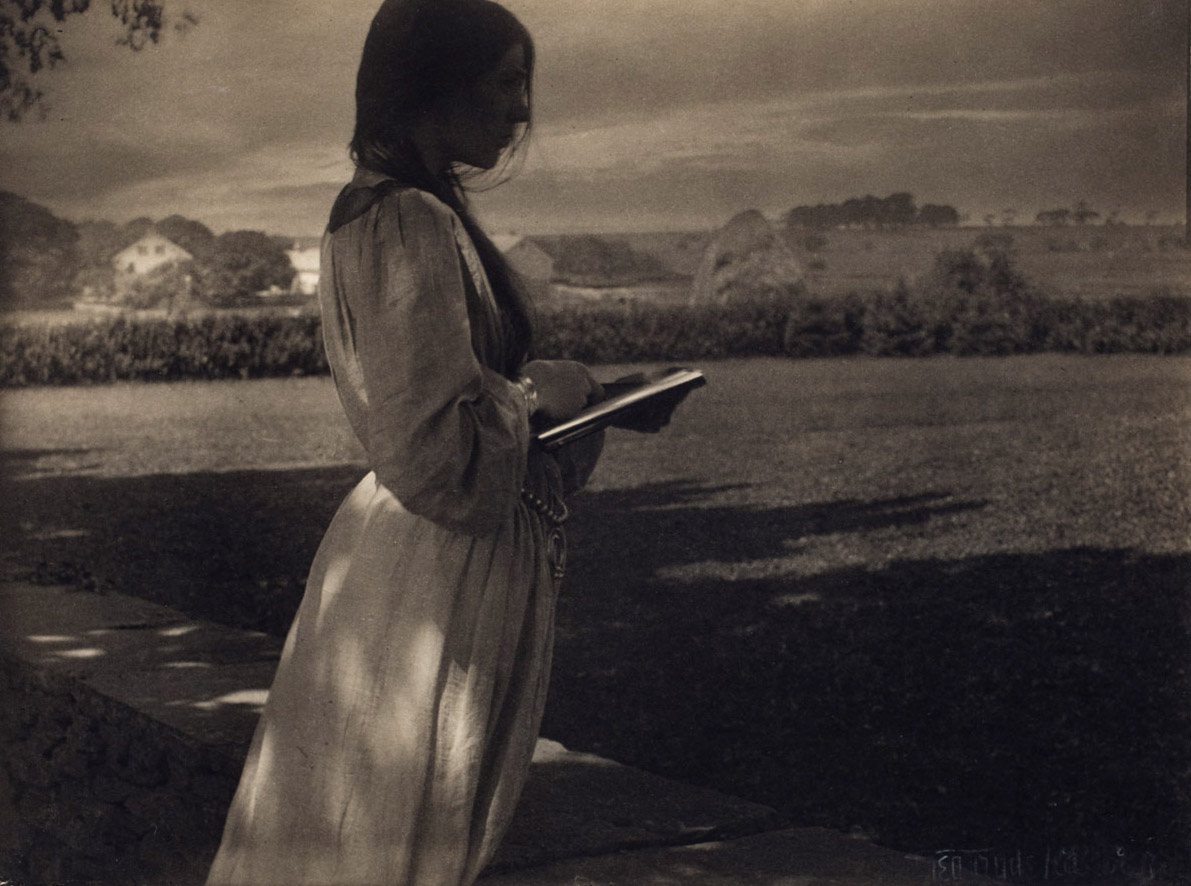
 

Gertrude Käsebier (American, 1852-1934) 'The Sketch (Beatrice Baxter)' 1903


Gertrude Käsebier (American, 1852-1934)
The Sketch (Beatrice Baxter)
1903
Platinum print
Gift of Hermine Turner
Collection of George Eastman House, International Museum of Photography and Film


This is a fabulous survey exhibition of the great artists of 20th century American photography, a rare chance in Australia to see such a large selection of vintage prints from some of the masters of photography. If you have a real interest in the history of photography you must see this exhibition, showing as it is just a short hour and a half drive (or train ride) from Melbourne at Bendigo Art Gallery.

I talked with the curator, Tansy Curtin, and asked her about the exhibition’s gestation. This is the first time an exhibition from the George Eastman House has come to Australia and the exhibition was 3-4 years in the making. Tansy went to George Eastman House in March last year to select the prints; this was achieved by going through solander box after solander box of vintage prints and seeing what was there, what was available and then making work sheets for the exhibition – what a glorious experience this would have been, undoing box after box to reveal these magical prints!

The themes for the exhibition were already in the history of photography and Tansy has chosen almost exclusively vintage prints that tell a narrative story, that make that story accessible to people who know little of the history of photography. With that information in mind the exhibition is divided into the following sections:

Photography becomes art; The photograph as social document; Photographing America’s monuments; Abstraction and experimentation; Photojournalism and war photography; Fashion and celebrity portraiture; Capturing the everyday; Photography in colour; Social and environmental conscience; and The contemporary narrative.


There are some impressive, jewel-like contact prints in the exhibition. One must remember that, for most of the photographers working after 1940, exposure, developing and printing using Ansel Adams Zone System (where the tonal range of the negative and print can be divided into 11 different ‘zones’ from 0 for absolute black and to 10 for absolute white) was the height of technical sophistication and aesthetic choice, equal to the best gaming graphics from today’s age. It was a system that I used in my black and white film development and printing. Film development using a Pyrogallol staining developer (the infamous ‘pyro’, a developer I tried to master without success in a few trial batches of film) was also technically difficult but the ability of this developer to obtain a greater dynamic range of zones in the film itself was outstanding.

“The Zone System provides photographers with a systematic method of precisely defining the relationship between the way they visualise the photographic subject and the final results… An expressive image involves the arrangement and rendering of various scene elements according to photographer’s desire. Achieving the desired image involves image management (placement of the camera, choice of lens, and possibly the use of camera movements) and control of image values. The Zone System is concerned with control of image values, ensuring that light and dark values are rendered as desired. Anticipation of the final result before making the exposure is known as visualisation.”1

Previsualisation, the ability of the photographer to see ‘in the mind’s eye’ the outcome of the photograph (the final print) before even looking through the camera lens to take the photograph, was an important skill for most of these photographers. This skill has important implications for today’s photographers, should they choose to develop this aspect of looking: not as a mechanistic system but as a meditation on the possibilities of each part of the process, the outcome being an expressive print.


A selection of the best photographs in the exhibition could include,

1/ An original 1923 Alfred Steiglitz Equivalent contact print – small (approx. 9cm x 12cm, see below), intense, the opaque brown blacks really strong, the sun shining brightly through the velvety clouds. In the Equivalents series the photograph was purely abstract, standing as a metaphor for another state of being, in this case music. A wonderful melding of the technical and the aesthetic the Equivalents “are generally recognised as the first photographs intended to free the subject matter from literal interpretation, and, as such, are some of the first completely abstract photographic works of art.”2

2/ Paul Strand Blind (1915, printed 1945) – printed so dark that you cannot see the creases in the coat of the blind woman with a Zone 3 dark skin tone.

3/ Lewis Hine [Powerhouse mechanic] see below, vintage 1920 print full of subtle tones. Usually when viewing reproductions of this image it is either cropped or the emphasis is on the body of the mechanic; in this print his skin tones are translucent, silvery and the emphasis is on the man in unison with the machine. The light is from the top right of the print and falls not on him directly, but on the machinery at upper right = this is the emotional heart of this image!

4/ Three tiny vintage Tina Modotti prints from c. 1929 – so small, such intense visions. I have never seen one original Modotti before so to see three was just sensational.

5/ Walker Evans View of Morgantown, West Virginia vintage 1935 print – a cubist dissection of space and the image plane with two-point perspective of telegraph pole with lines.

6/ An Edward S. Curtis photogravure Washo Baskets (1924, from the portfolio The North American Indian) – such a sumptuous composition and the tones…

7/ Ansel Adams 8″ x 10″ contact print of Winter Storm (1944, printed 1959, see above) where the blackness of the mountain on the left hand side of the print was almost impenetrable and, because of the large format negative, the snow on the rock in mid-distance was like a sprinkling of icing sugar on a cake it was that sharp.

8/ A most splendid print of the Chrysler Building (vintage 1930 print, approx. 48 x 34cm) by Margaret Bourke-White – tonally rich browns, smoky, hazy city at top; almost like a platinum print rather than a silver gelatin photograph. The bottom left of the print was SO dark but you could still see into the shadows just to see the buildings.

9/ An original Robert Capa 1944 photograph from the Omaha Beach D Day landings!

10/ Frontline soldier with canteen, Saipan (1944, vintage print) by W Eugene Smith where the faces of the soldiers were almost Zone 2-3 and there was nothing in the print above zone 5 (mid-grey) – no physical and metaphoric light.

11/ One of the absolute highlights: two vintage Edward Weston side by side, the form of one echoing the form of the other; Nude from the 50th Anniversary Portfolio 1902-1952 (1936, printed 1951), an 8″ x 10″ contact print side by side with an 8″ x 10″ contact print of Pepper No. 30 (vintage 1930 print). Nothing over zone 7 in the skin tones of the nude, no specular highlights; the sensuality in the pepper just stunning – one of my favourite prints of the day – look at the tones, look at the light!

12/ Three vintage Aaron Siskind (one of my favourite photographers) including two early prints from 1938 – wow. Absolutely stunning.

13/ Harry Callahan. That oh so famous image of Eleanor and Barbara, Chicago (vintage 1953 print) that reminds me of the work of Jeffrey Smart (or is it the other way around). The wonderful space around the figures, the beautiful composition, the cobblestones and the light – just ravishing.

14/ The absolute highlight: Three vintage Diane Arbus prints in a row – including a 15″ square image from the last series of work Untitled (6) (vintage 1971 print, see above) – the year in which she committed suicide. This had to be the moment of the day for me. This has always been one of my favourite photographs ever and it did not disappoint; there was a darkness to the trees behind the three figures and much darker grass (zone 3-4) than I had ever imagined with a luminous central figure. The joyousness of the figures was incredible. The present on the ground at the right hand side was a revelation – usually lost in reproductions this stood out from the grass like you wouldn’t believe in the print. Being an emotional person I am not afraid to admit it, I burst into tears…

15/ And finally another special… Two vintage Stephen Shore chromogenic colour prints from 1976 where the colours are still true and have not faded. This was incredible – seeing vintage prints from one of the early masters of colour photography; noticing that they are not full of contrast like a lot of today’s colour photographs – more like a subtle Panavision or Technicolor film from the early 1960s. Rich, subtle, beautiful hues. For a contemporary colour photographer the trip to Bendigo just to see these two prints would be worth the time and the car trip/rail ticket alone!


Not everything is sweetness and light. The print by Dorothea Lange Migrant Mother, Nipomo, California is a contemporary print from 2003, the vintage print having just been out on loan; the contemporary section, ‘The contemporary narrative’, is very light on, due mainly to the nature of the holdings of George Eastman House; and there are some major photographers missing from the line up including Minor White, Fredrick Sommer, Paul Caponigro, Wynn Bullock and William Clift to name just a few.

Of more concern are the reproductions in the catalogue, the images for reproduction supplied by George Eastman House and the catalogue signed off by them. The reproduction of Margaret Bourke-White’s Chrysler Building (1930, see below) bears no relationship to the print in the exhibition and really is a denigration to the work of that wonderful photographer. Other reproductions are massively oversized, including the Alfred Stieglitz Equivalent, Lewis Hine’s Powerhouse mechanic (see below) and Tina Modotti’s Woman Carrying Child (c. 1929). In Walter Benjamin’s terms (The Work of Art in the Age of Mechanical Reproduction) the aura of the original has been lost and these reproductions further erode the authenticity of the original in their infinite reproducability. Conversely, it could be argued that the reproduction auraticizes the original:

“The original artwork has become a device to sell its multiply-reproduced derivatives; reproductability turned into a ploy to auraticize the original after the decay of aura…”3

In other words, after having seen so many reproductions when you actually see the original – it is like a bolt of lightning, the aura that emanates from the original. This is so true of this exhibition but it still begs the question: why reproduce in the catalogue at a totally inappropriate size? Personally, I believe that the signification of the reproduction (in terms of size and intensity of visualisation) is so widely at variance with the original one must question the decision to reproduce at this size knowing that this variance is a misrepresentation of the artistic interpretation of the author.

In conclusion, this is a sublime exhibition well worthy of the time and energy to journey up to Bendigo to see it. A true lover of classical American black and white and colour photography would be a fool to miss it!

Dr Marcus Bunyan


1/ Anon. “Zone System,” on Wikipedia [Online] Cited 13/06/2011
2/ Anon. “Equivalents,” on Wikipedia [Online] Cited 13/06/2011
3/ Huyssen, Andreas. Twilight Memories: Marking Time in a Culture of Amnesia. London: Routledge, 1995, pp. 23-24


Many thankx to Tansy Curtin, Senior Curator, Programs and Access at Bendigo Art Gallery for her time and knowledge when I visited the gallery; and to Bendigo Art Gallery for allowing me to publish the text and photographs in the posting. Please click on the photographs for a larger version of the image.
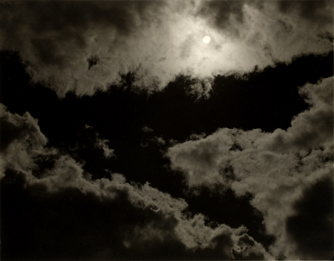


Alfred Stieglitz (American, 1864-1946) 'Equivalent' 1923


Actual size of print: 9.2 x 11.8 cm
Size of print in catalogue: 18.5 x 13.9 cm

These two photographs represent a proportionate relation between the two sizes as they appear in print and catalogue but because of monitor resolutions are not the actual size of the two prints.


Alfred Stieglitz (American, 1864-1946) 'Equivalent' 1923


Alfred Stieglitz (American, 1864-1946)
Equivalent
1923
Gelatin silver print
Collection of George Eastman House, International Museum of Photography and Film 


Lewis Hine (American, 1874-1940) '[Powerhouse mechanic]' 1920 catalogue size


Actual size of print: 16.9 x 11.8cm
Size of print in catalogue: 23.2 x 15.8cm

These two photographs represent a proportionate relation between the two sizes as they appear in print and catalogue but because of monitor resolutions are not the actual size of the two prints.


Lewis Hine (American, 1874-1940) '[Powerhouse mechanic]' 1920 catalogue size


Lewis Hine (American, 1874-1940)
[Powerhouse mechanic]
1920
Gelatin silver print
Transfer from the Photo League Lewis Hine Memorial Committee, ex-collection Corydon Hine
Collection of George Eastman House, International Museum of Photography and Film
 

Margaret Bourke-White (American, 1904-1971) 'Chrysler Building' New York City, 1930


As it approximately appears in the exhibition (above, from my notes, memory and comparing the print in the exhibition with the catalogue reproduction)

Below, as the reproduction appears in the catalogue (scanned)
 

Margaret Bourke-White (American, 1904-1971) 'Chrysler Building' New York City, 1930


Margaret Bourke-White (American, 1904-1971)
Chrysler Building
New York City
1930
Silver gelatin photograph


An exhibition of treasures from arguably the world’s most important photographic museum, George Eastman House, has been developed by Bendigo Art Gallery. The exhibition American Dreams will bring, for the first time, eighty of some of the most iconic photographic images from the 20th Century to Australia.

The choice of works highlights the trailblazing role these American artists had on the world stage in developing and shaping the medium, and the impact these widely published images had on the greater community.

Curator Tansy Curtin, who worked closely with George Eastman House developing the exhibition commented, “Through these images we can recognise the extraordinary ability of these artists, and their pivotal role influencing the evolution of photography. Their far-reaching images helped shape American culture, and impacted on the fundamental role photography has in communications today. Even more than this we can see through these artists the burgeoning love of photography that engaged a nation.”

Through these images we can see not only the development of photography, but also as some of the most powerful social documentary photography of last century, we see extraordinary moments captured in the lives of a wide range of Americans. The works distil the dramatic transformation that affected people during the 20th century – the affluence, degradation, loss, hope and change – both personally and throughout society.

The role of photography in nation building is exemplified in Ansel Adams’ majestic portraits of Yosemite national park, Bourke-White’s Chrysler building and images of migrants and farm workers during the Depression. Tansy Curtin added, “We see the United States ‘growing up’ through photography. We see hopes raised and crushed and the inevitable striving for the American Dream.” Director of Bendigo Art Gallery Karen Quinlan said, “We are thrilled to have been given this unprecedented opportunity to work with this unrivalled photographic archive. The resulting exhibition American Dreams, represents one of the most important and comprehensive collections of American 20th Century photography to come to Australia.”

George Eastman House holds over 400,000 images from the invention of photography to the present day. George Eastman, one time owner of the home in which the archives are housed, founded Kodak and revolutionised and democratised photography around the world. Eastman is considered the grandfather of snapshot photography.

American Dreams is one of the first exhibitions from this important collection to have been curated by an outside institution. It will be the first time Australian audiences have been given the opportunity to engage with this vast archive.

Press release from the Bendigo Art Gallery
 

Paul Strand (American, 1890-1976) 'Photograph - New York' Negative 1916; print June 1917


Paul Strand (American 1890-1976)
Blind woman, New York
1916
Platinum print
Collection of George Eastman House, International Museum of Photography and Film
 

Edward S. Curtis (American, 1868-1952) 'Washo Baskets' 1924


Edward S. Curtis (American, 1868-1952)
Washo Baskets
1924
From the portfolio The North American Indian
Photogravure
Collection of George Eastman House, International Museum of Photography and Film
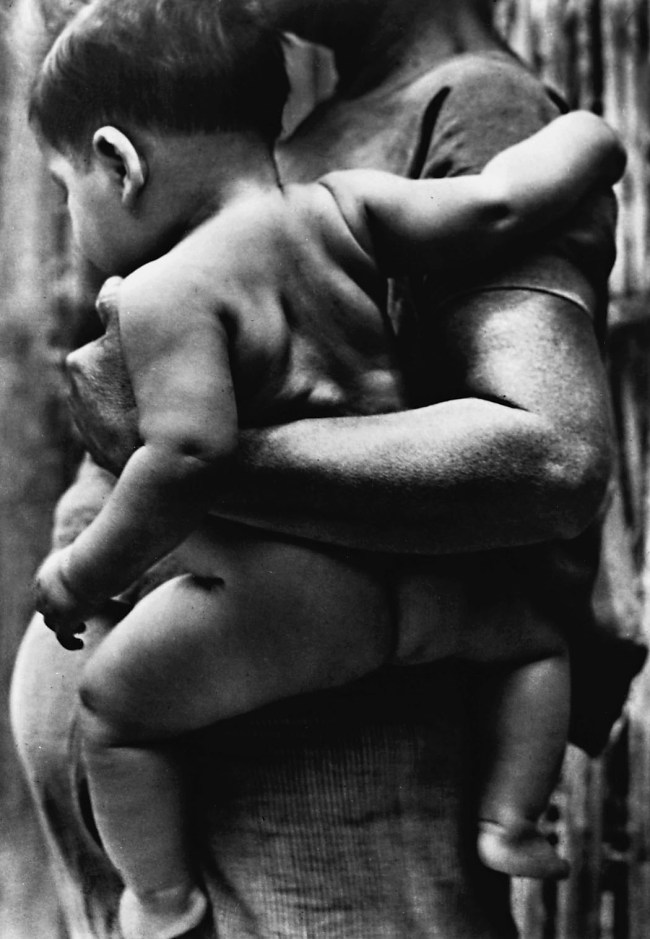
 

Tina Modotti (Italian / American / Mexican, 1896-1942) 'Woman Carrying Child' c. 1929


Tina Modotti (Italian / American / Mexican, 1896-1942)
Woman Carrying Child
c. 1929
Gelatin silver print
Collection of George Eastman House, International Museum of Photography and Film
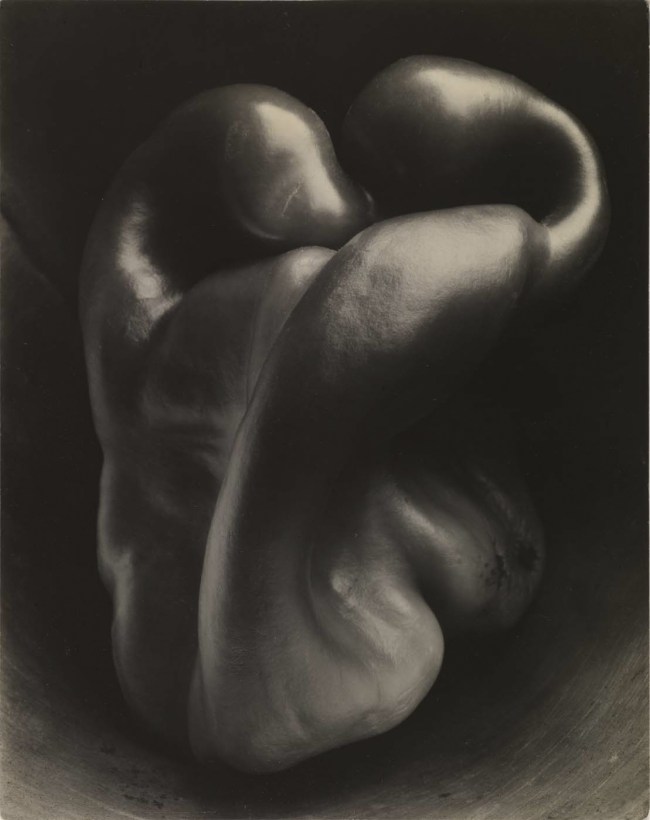
 

Edward Weston (American, 1886-1958) 'Pepper No. 30' 1930


Edward Weston (American, 1886-1958)
Pepper No. 30
1930
Vintage silver gelatin print
Collection of George Eastman House, International Museum of Photography and Film
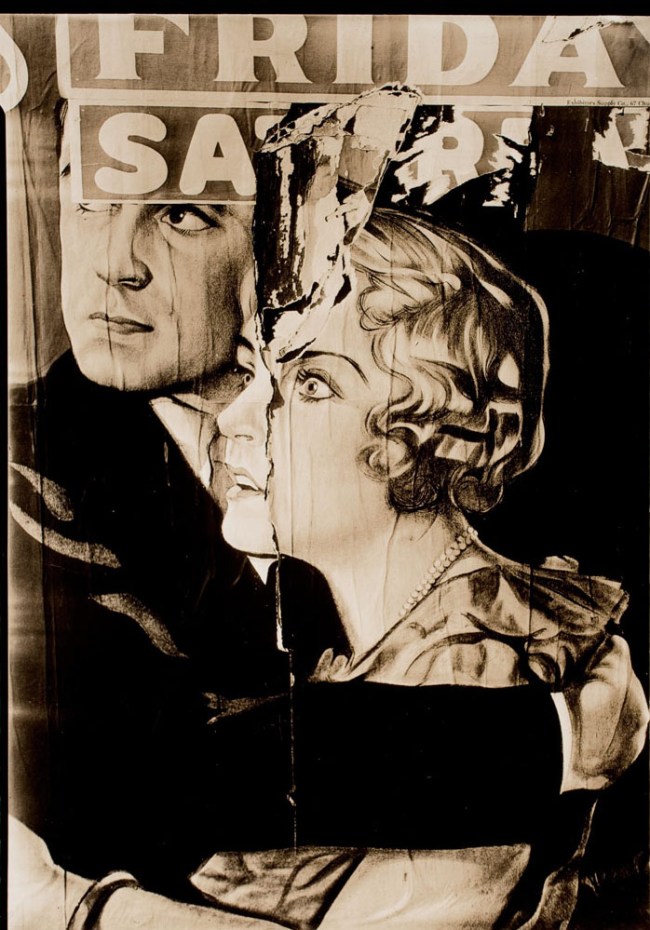
 

Walker Evans (American, 1903-1975) 'Torn Poster, Truro, Massachusetts' 1930


Walker Evans (American, 1903-1975)
Torn Poster, Truro, Massachusetts
1930
Gelatin silver contact print
Purchased with funds from National Endowment for the Arts
Collection of George Eastman House, International Museum of Photography and Film


Alfred Steiglitz (American, 1864-1946) '[Georgia O'Keefe hand on back tire of Ford V8]' 1933


Alfred Steiglitz (American, 1864-1946)
[Georgia O’Keefe hand on back tire of Ford V8]
1933
gelatin silver print
Part purchase and part gift from Georgia O’Keefe
Collection of George Eastman House, International Museum of Photography and Film
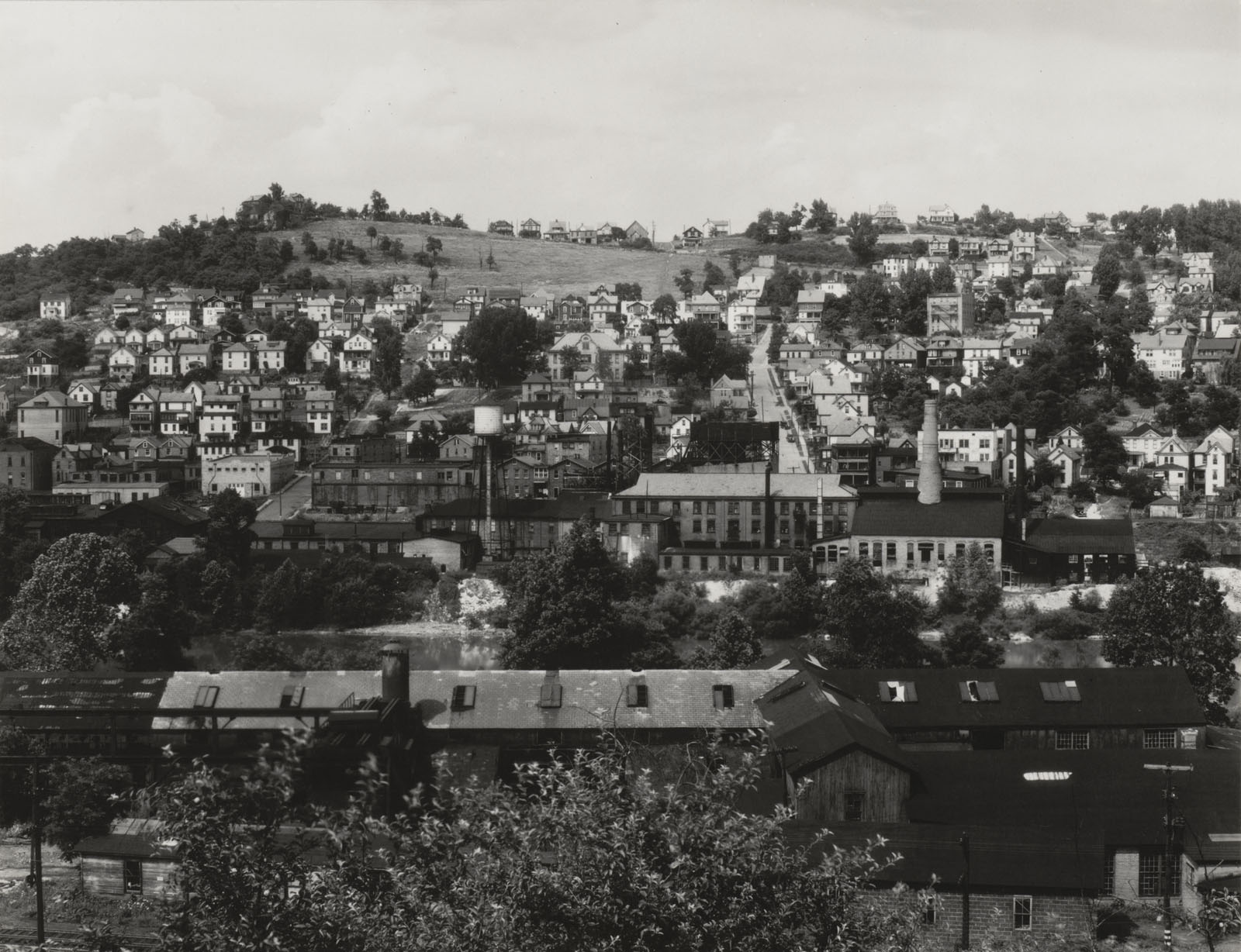
 

Walker Evans (American, 1903-1975) 'View of Morgantown, West Virginia' June, 1935


Walker Evans (American, 1903-1975)
View of Morgantown, West Virginia
June, 1935
Gelatin silver print
Collection of George Eastman House, International Museum of Photography and Film
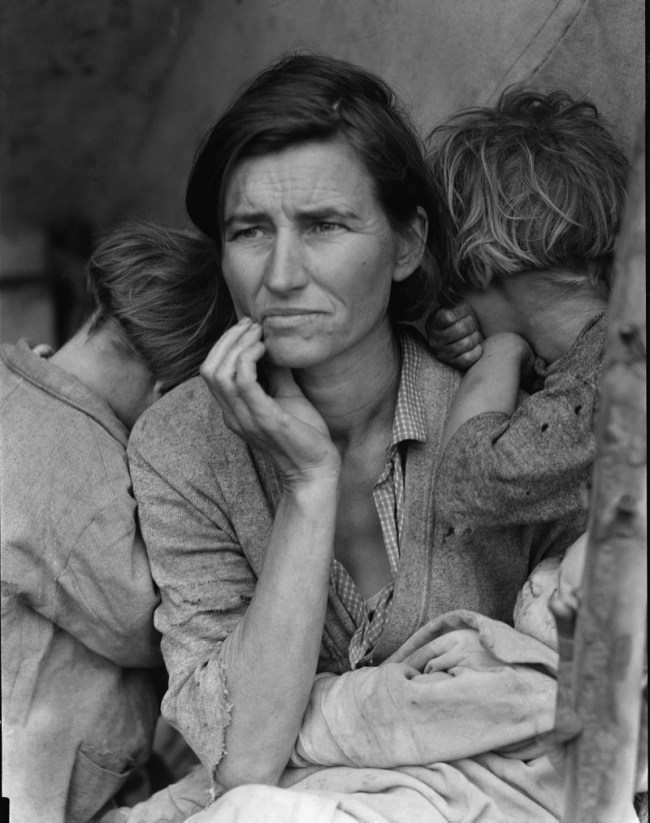
 

Dorothea Lange (American, 1895-1965) 'Migrant Mother, Nipomo, California' 1936, printed c. 2003


Dorothea Lange (American, 1895-1965)
Migrant Mother, Nipomo, California
1936, printed c. 2003
Photogravure print
Gift of Sean Corcoran
Collection of George Eastman House, International Museum of Photography and Film
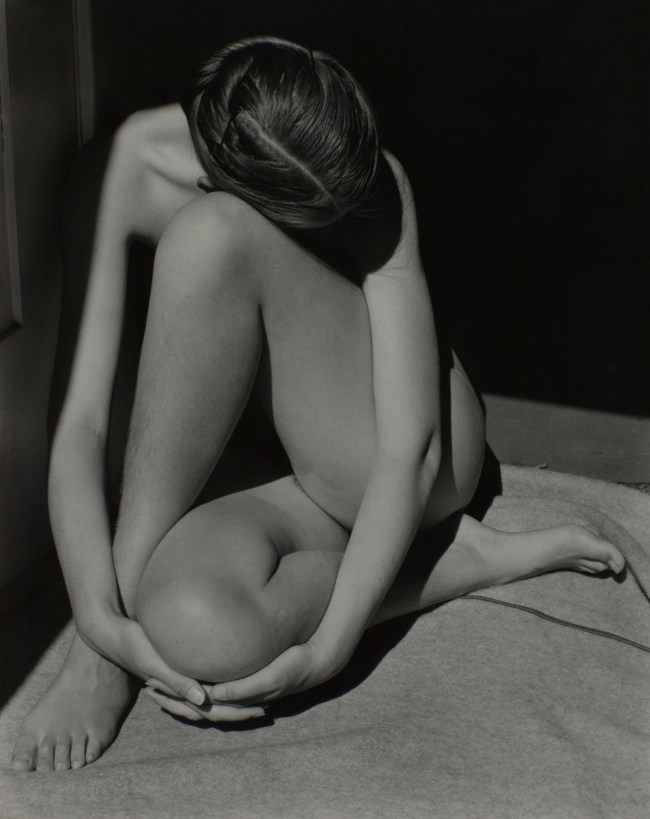
 

Edward Weston (American, 1886-1958) 'Nude' 1936


Edward Weston (American, 1886-1958)
Nude
1936, printed 1951
From the Fiftieth Anniversary Portfolio: 1902-1952, c. 1952
Vintage silver gelatin print
Collection of George Eastman House, International Museum of Photography and Film


Dorothea Lange (American, 1895-1965) 'Kern County California' 1938


Dorothea Lange (American, 1895-1965)
Kern County California
1938
Gelatin silver print
Exchange with Roy Stryker
Collection of George Eastman House, International Museum of Photography and Film


Ansel Adams (American, 1902-1984) 'Clearing Winter Storm, Yosemite National Park' c. 1938


Ansel Adams (American, 1902-1984)
Clearing Winter Storm, Yosemite National Park
c. 1938
Gelatin silver print
Collection of George Eastman House, International Museum of Photography and Film


W. Eugene Smith (American, 1918-1978) '[Frontline Soldier with Canteen at Saipan]' June 1944


W. Eugene Smith (American, 1918-1978)
[Frontline Soldier with Canteen at Saipan]
June 1944
Gelatin silver print
41.1 × 32.4cm
Collection of George Eastman House, International Museum of Photography and Film


Harry Callahan (American, 1912-1999) 'Eleanor and Barbara, Chicago' 1953


Harry Callahan (American, 1912-1999)
Eleanor and Barbara, Chicago
1953
Vintage gelatin silver print
Collection of George Eastman House, International Museum of Photography and Film
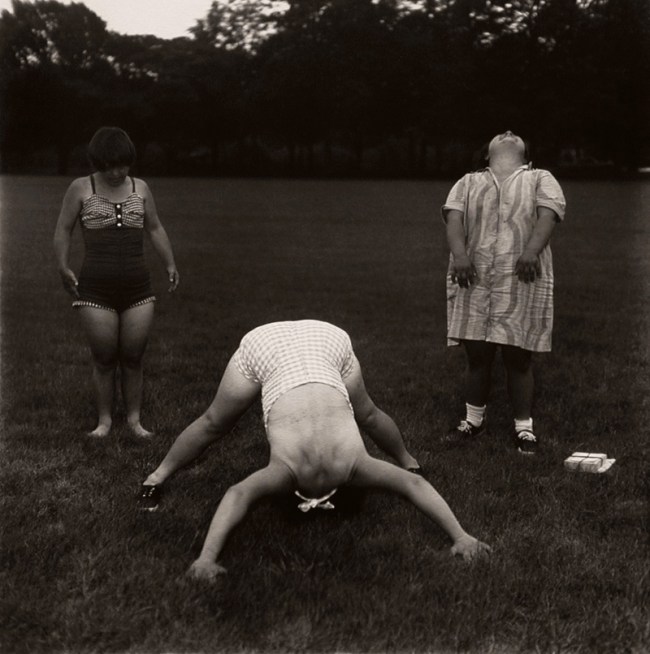
 

Diane Arbus (American, 1923-1971) 'Untitled (6)' 1971
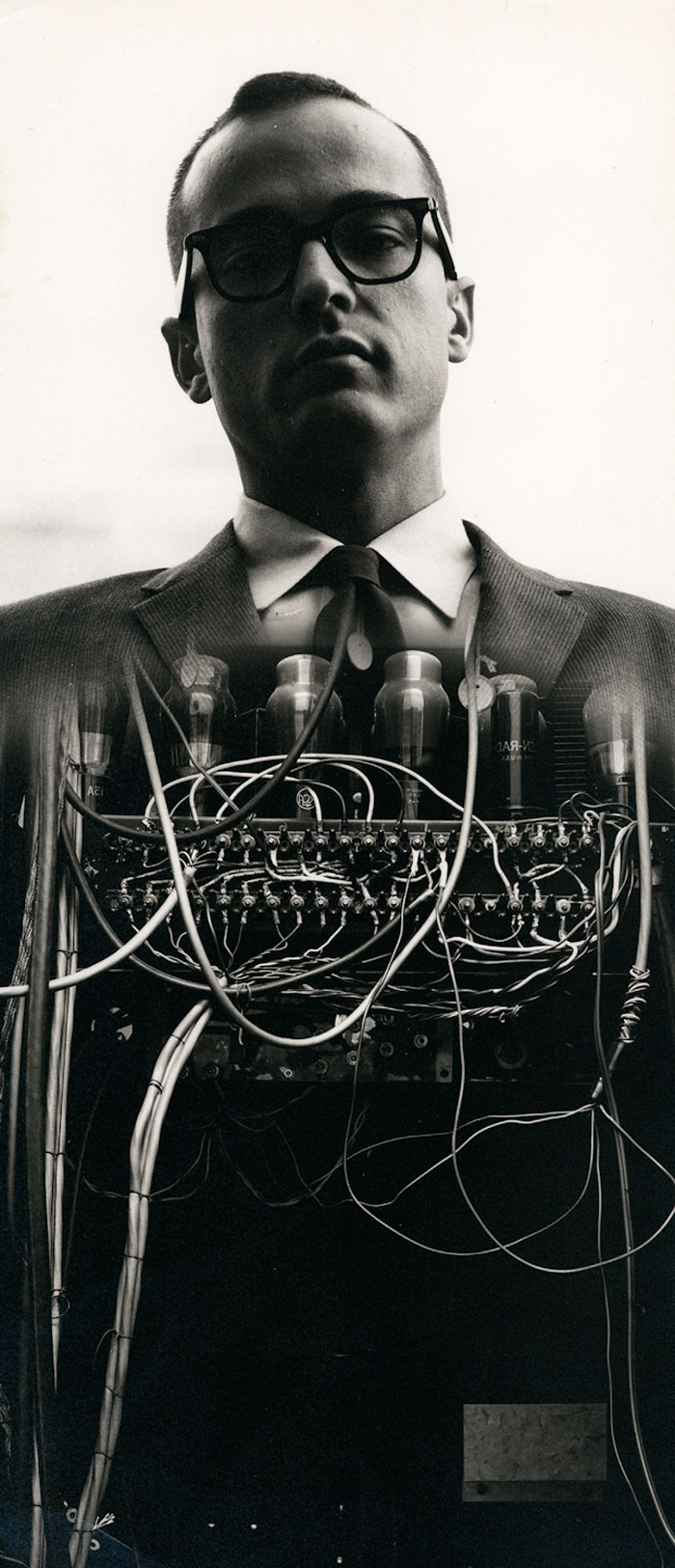
 

Diane Arbus (American, 1923-1971)
Untitled (6)
1971
Gelatin silver print
Collection of George Eastman House, International Museum of Photography and Film


Bendigo Art Gallery
42 View Street Bendigo
Victoria Australia 3550
Phone: 03 5434 6088

Opening hours:
Bendigo Art Gallery is open daily 10 am – 5 pm

Bendigo Art Gallery website

LIKE ART BLART ON FACEBOOK

Back to top