Exhibition dates: 21st April – 31st December, 2012
Curator: Karen Haas, Lane Curator of Photographs at the Museum of Fine Arts, Boston
Edward Weston (American, 1886-1958) Grand Canyon, Arizona 1941 Gelatin silver print The Lane Collection Courtesy, Museum of Fine Arts, Boston
“Not I, nor anyone else can travel that road for you,
You must travel it for yourself. It is not far, It is within reach,
Perhaps you have been on it since you were born, and did not know,
Perhaps it is every where on water and land.”
Walt Whitman. Part of Song of Myself from Leaves of Grass. 1855
Very little information about this exhibition on the website which is a pity because the photographs are exceptional, even if some do recall the style of other artists of the same era (Charles Sheeler, Berenice Abbott, Ansel Adams, Clarence John Laughlin, and Walker Evans for example).
In 1941, “Weston was commissioned to take photographs for a pricey two-volume edition of “Leaves of Grass.” So over the course of nearly 10 months, Weston and his wife, Charis, drove more than 24,000 miles, through 24 states. Of the nearly 700 photographs he developed, he sent 74 to the publisher. Forty-nine appeared in the book.” (Mark Feney) “Over the course of the project Weston managed to produce some of the most compelling images of his later career that took his photography in a new and important direction. Like Whitman’s epic poems, they draw us into the history of this nation, the beauty of its landscape and the forthrightness of its ordinary citizens.” (Encore)
“Leaves of Grass has its genesis in an essay called The Poet by Ralph Waldo Emerson, published in 1845, which expressed the need for the United States to have its own new and unique poet to write about the new country’s virtues and vices. Whitman, reading the essay, consciously set out to answer Emerson’s call as he began work on the first edition of Leaves of Grass. Whitman, however, downplayed Emerson’s influence, stating, “I was simmering, simmering, simmering; Emerson brought me to a boil.”
The first edition was published in Brooklyn at the Fulton Street printing shop of two Scottish immigrants, James and Andrew Rome, whom Whitman had known since the 1840s, on July 4, 1855. Whitman paid for and did much of the typesetting for the first edition himself. Sales on the book were few but Whitman was not discouraged. The first edition was very small, collecting only twelve unnamed poems in 95 pages. Whitman once said he intended the book to be small enough to be carried in a pocket. “That would tend to induce people to take me along with them and read me in the open air: I am nearly always successful with the reader in the open air.” About 800 were printed, though only 200 were bound in its trademark green cloth cover.
The title Leaves of Grass was a pun. “Grass” was a term given by publishers to works of minor value and “leaves” is another name for the pages on which they were printed. Whitman sent a copy of the first edition of Leaves of Grass to Emerson, the man who had inspired its creation. In a letter to Whitman, Emerson said “I find it the most extraordinary piece of wit and wisdom America has yet contributed.” He went on, “I am very happy in reading it, as great power makes us happy.”” (Amazon website)
Dr Marcus Bunyan
Many thankx to the Museum of Fine Arts, Boston for allowing me to publish the photographs in the posting. Please click on the photographs for a larger version of the image.
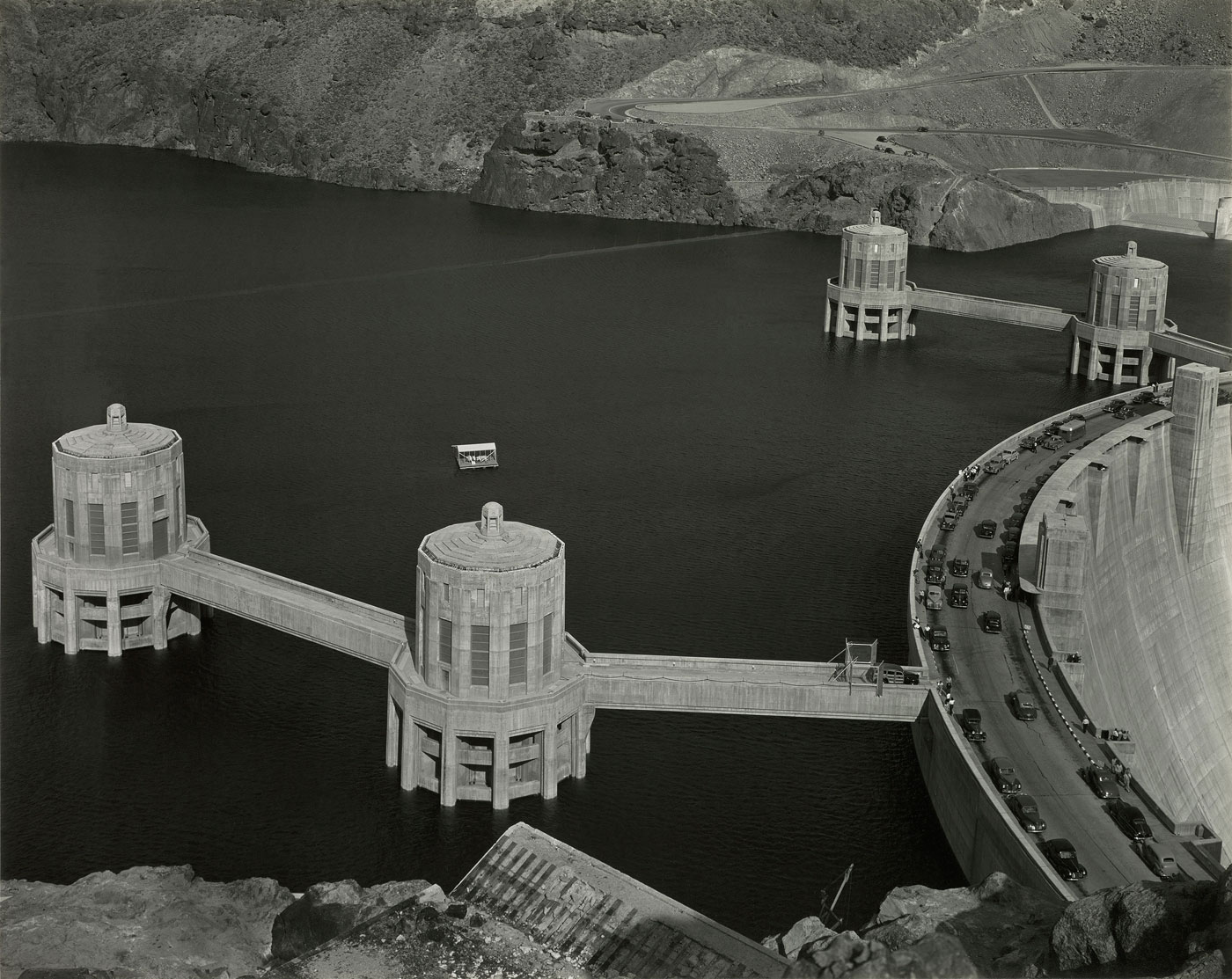
Edward Weston (American, 1886-1958) Boulder Dam 1941 Gelatin silver print The Lane Collection Courtesy, Museum of Fine Arts, Boston
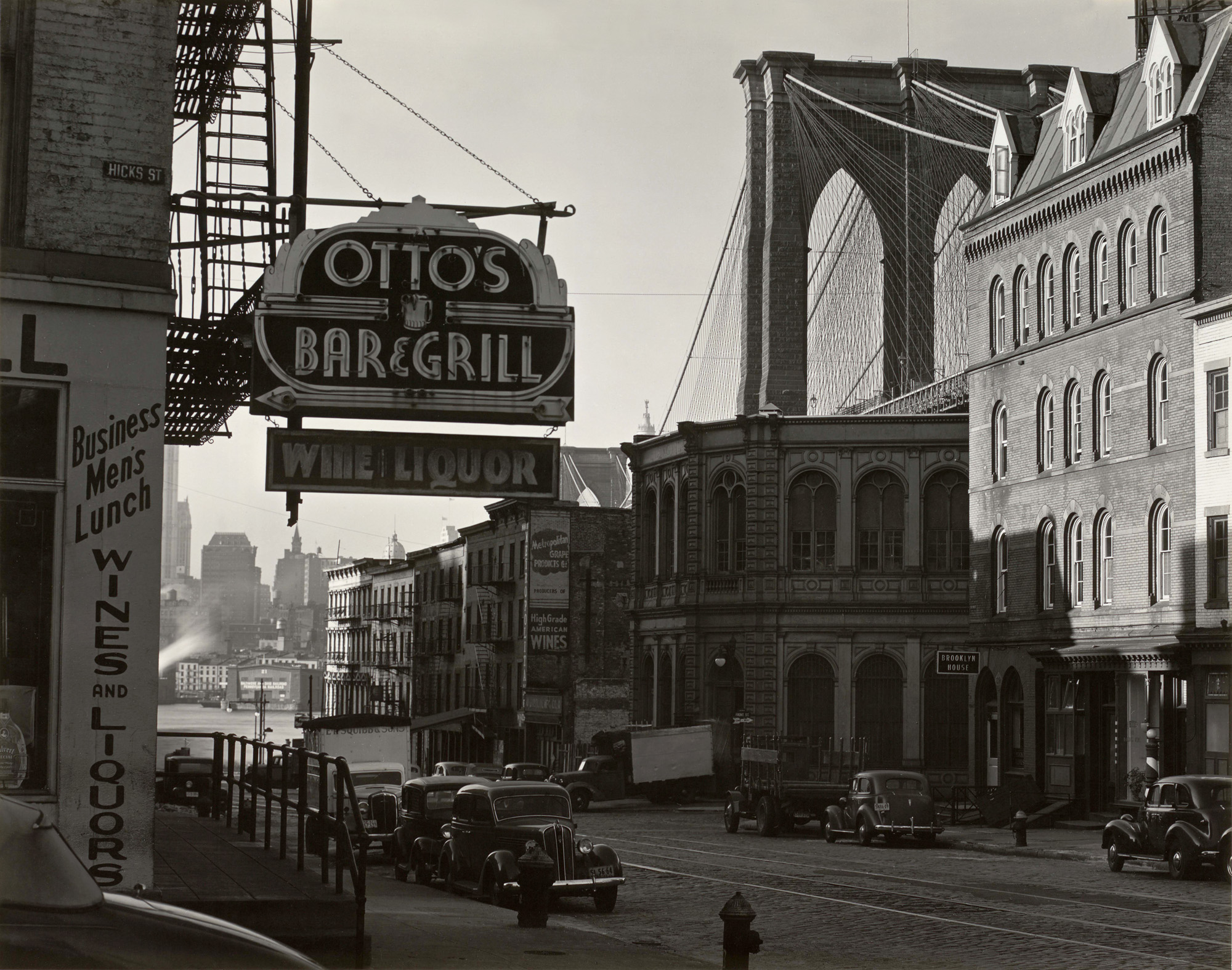
Edward Weston (American, 1886-1958) The Brooklyn Bridge 1941 The Lane Collection Courtesy, Museum of Fine Arts, Boston
Edward Weston (American, 1886-1958) From 515 Madison Avenue, New York 1941 Gelatin silver print The Lane Collection Courtesy, Museum of Fine Arts, Boston
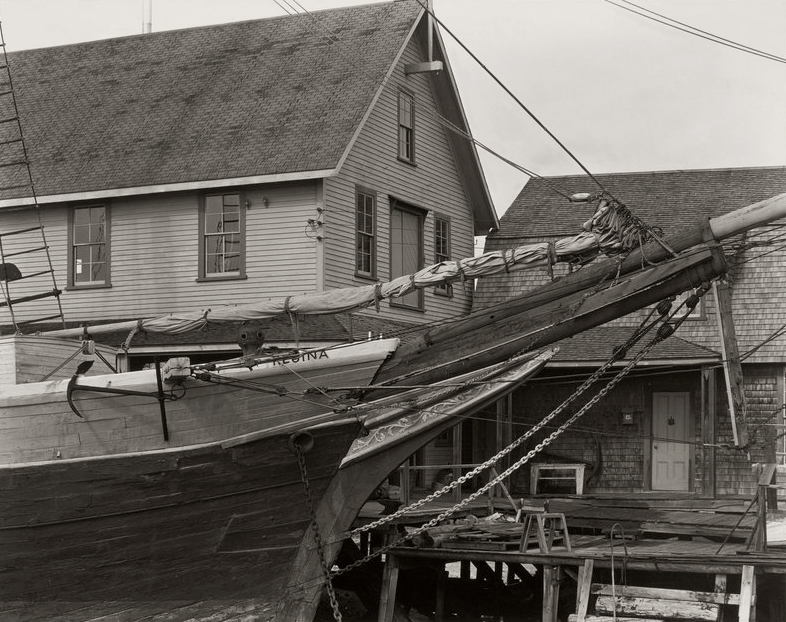
Edward Weston (American, 1886-1958) Schooner, Kennebunkport, Maine 1941 Gelatin silver print Courtesy of the Museum of Fine Arts, Boston
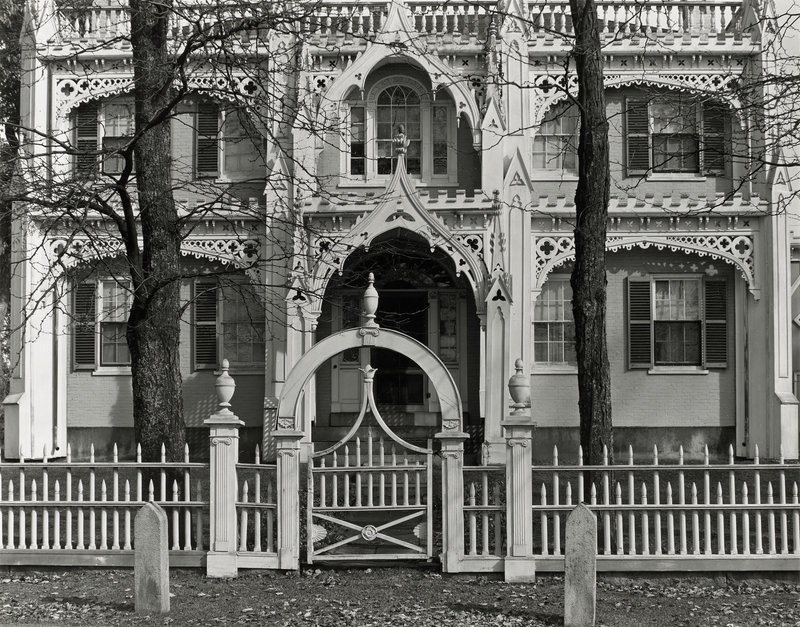
Edward Weston (American, 1886-1958) Wedding Cake House, Kennebunkport, Maine 1941 Gelatin silver print Courtesy of the Museum of Fine Arts, Boston
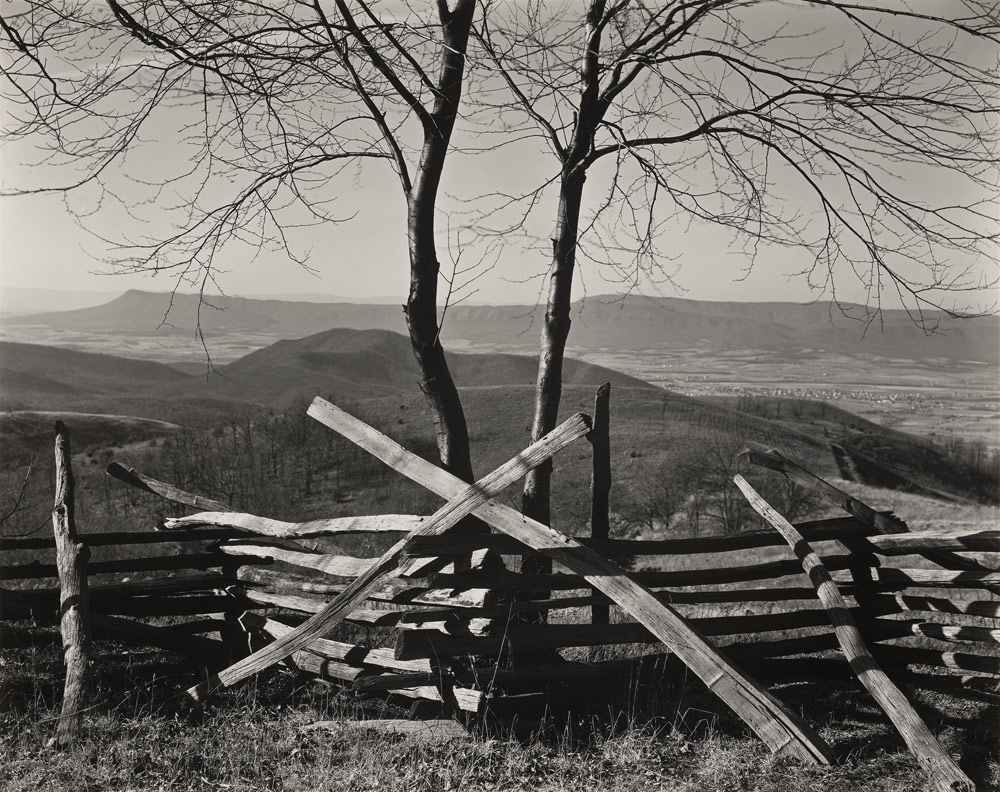
Edward Weston (American, 1886-1958) Shenandoah Valley, Virginia 1941 Gelatin silver print The Lane Collection Courtesy, Museum of Fine Arts, Boston
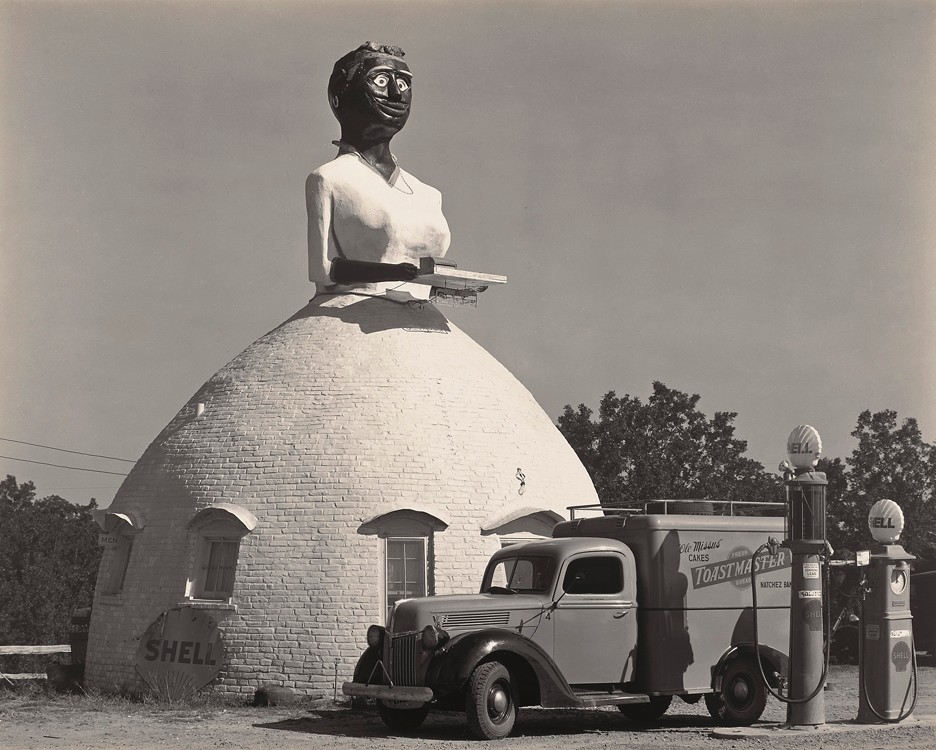
Edward Weston (American, 1886-1958) Mammy’s Cupboard, Natchez, Mississippi 1941 Gelatin silver print The Lane Collection Courtesy, Museum of Fine Arts, Boston
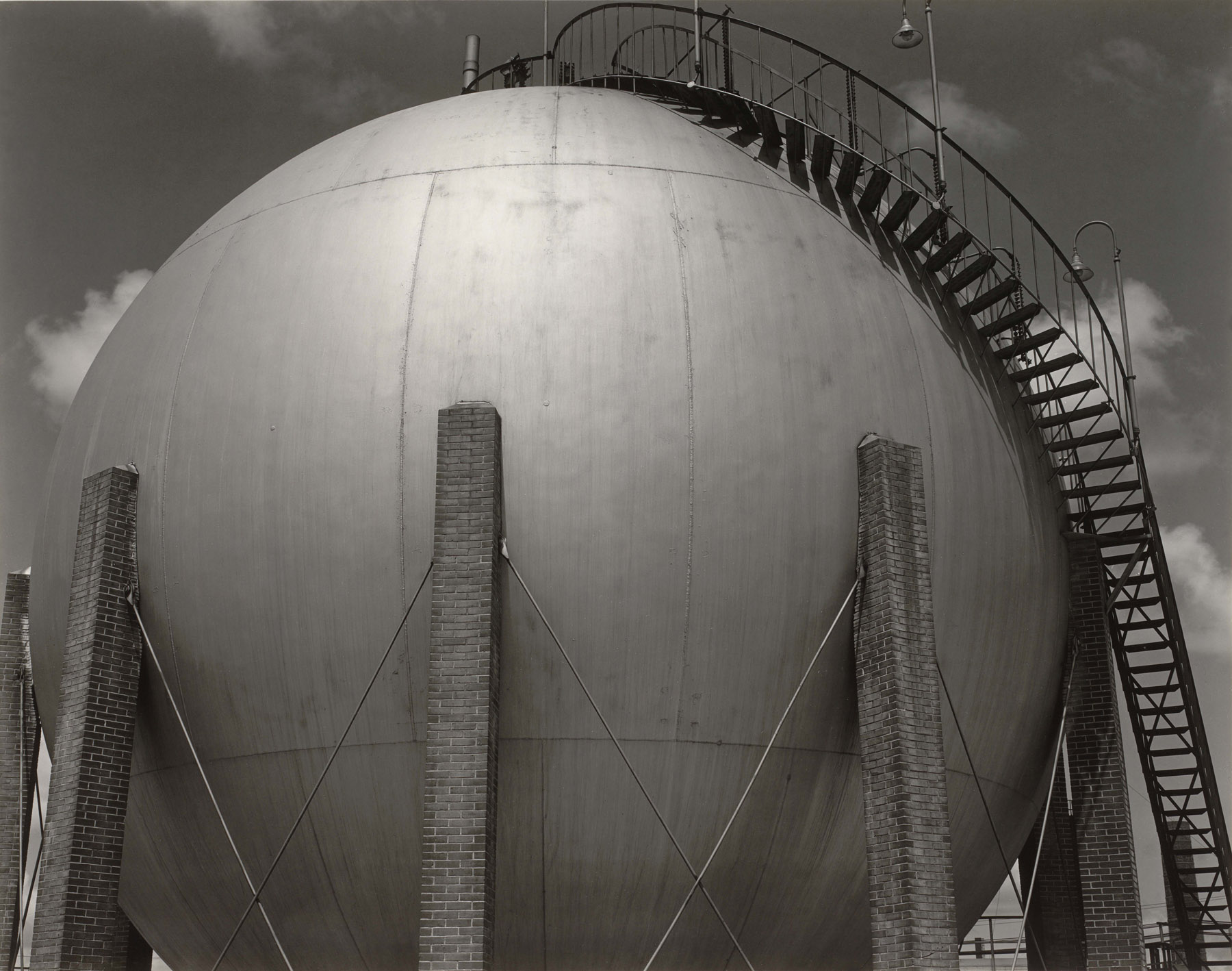
Edward Weston (American, 1886-1958) Gulf Oil, Port Arthur, Texas 1941 Gelatin silver print The Lane Collection Courtesy, Museum of Fine Arts, Boston
Edward Weston (American, 1886-1958) White Sands, New Mexico 1941 Gelatin silver print The Lane Collection Courtesy, Museum of Fine Arts, Boston
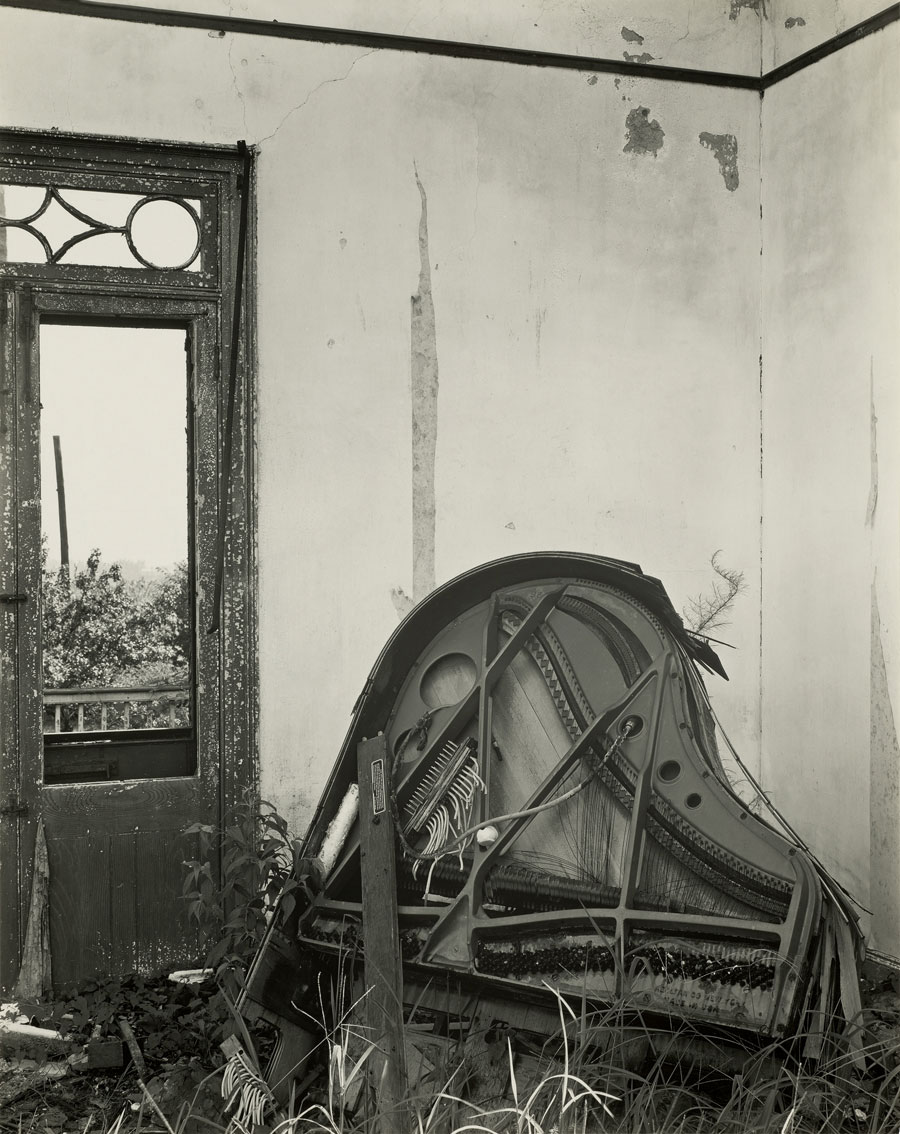
Edward Weston (American, 1886-1958) Woodlawn Plantation House, Louisiana 1941 Photograph, gelatin silver print The Lane Collection Courtesy, Museum of Fine Arts, Boston
In 1941, the Limited Editions Club of New York invited photographer Edward Weston to illustrate its deluxe edition of Walt Whitman’s epic poem Leaves of Grass. The commission inspired Weston and his wife, Charis, to take a cross-country trip, throughout the South, the Mid-Atlantic states, New England, and back to California, in their trusty Ford, which they nicknamed “Walt.” Weston’s photographs from this project – mostly made with large, 8 x 10 camera – are exceptionally wide-ranging, with a particular focus on urban and man-altered landscapes. Although he never wanted his images to literally reflect Whitman’s text, Weston did relate to the poet’s plainspoken style and his emphasis on the broad spectrum of human experience. Weston wrote of the Whitman book: “I do believe… I can and will do the best work of my life. Of course I will never please everyone with my America – wouldn’t try to.
Text from the MFA Boston website
Edward Weston (American, 1886-1958) Girod Cemetery, New Orleans, Louisiana 1941 Gelatin silver print The Lane Collection Courtesy, Museum of Fine Arts, Boston
Edward Weston (American, 1886-1958) Meraux Plantation House, Louisiana 1941 Gelatin silver print The Lane Collection Courtesy, Museum of Fine Arts, Boston
Edward Weston (American, 1886-1958) Belle Grove Plantation House, Louisiana 1941 Gelatin silver print The Lane Collection Courtesy, Museum of Fine Arts, Boston
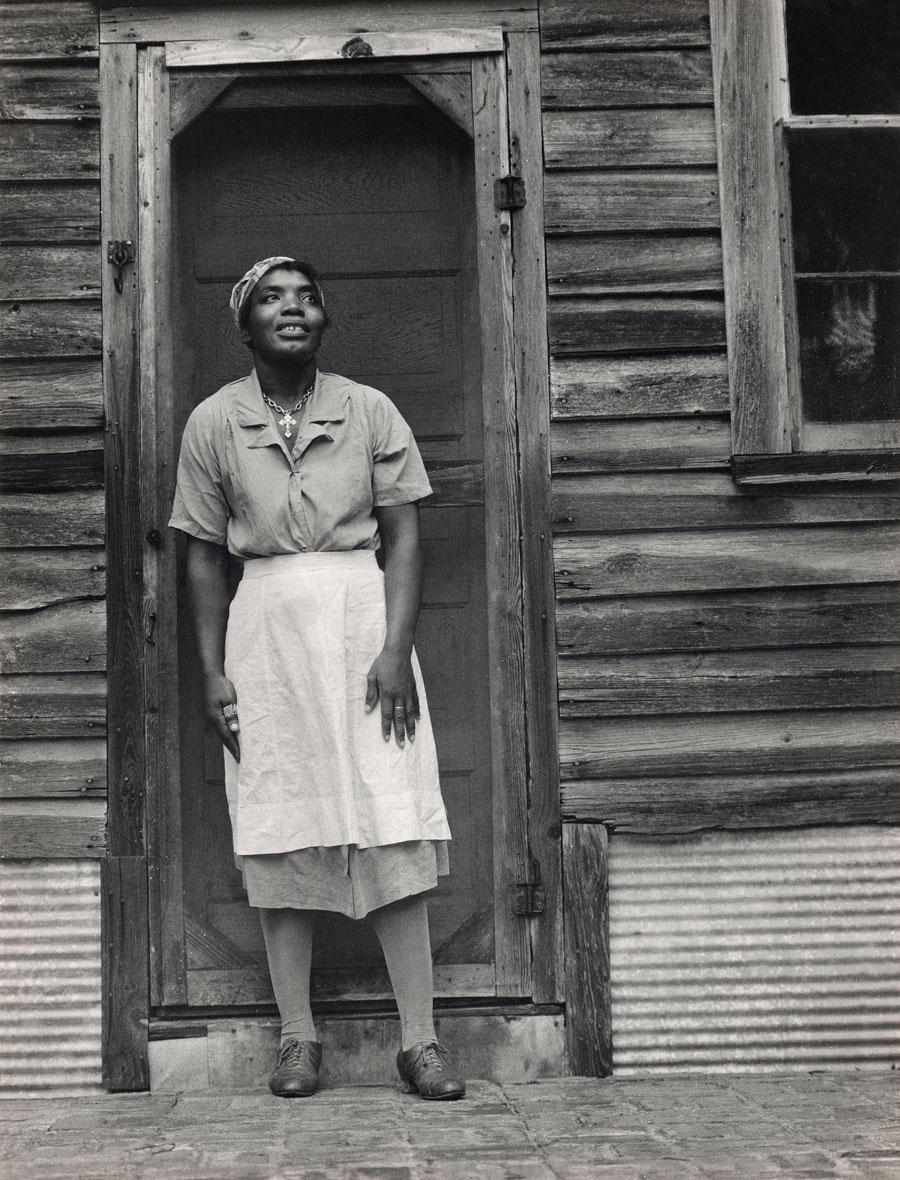
Edward Weston (American, 1886-1958) Bessie Jones. St. Simons Island, Georgia 1941 Gelatin silver print The Lane Collection Courtesy, Museum of Fine Arts, Boston
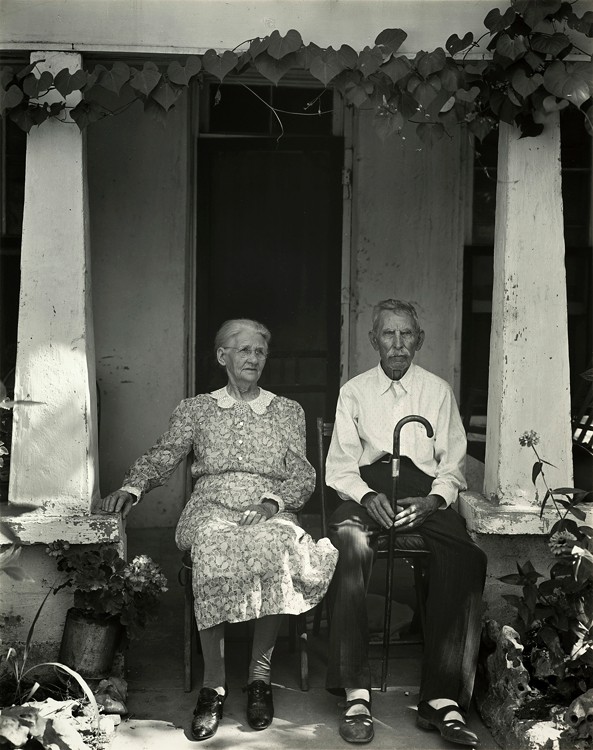
Edward Weston (American, 1886-1958) Mr. and Mrs. W. P. Fry, Burnet, Texas 1941 Gelatin silver print The Lane Collection Courtesy, Museum of Fine Arts, Boston
Walt Whitman (American, 1819-1892) Part of Song of Myself from Leaves of Grass 1855
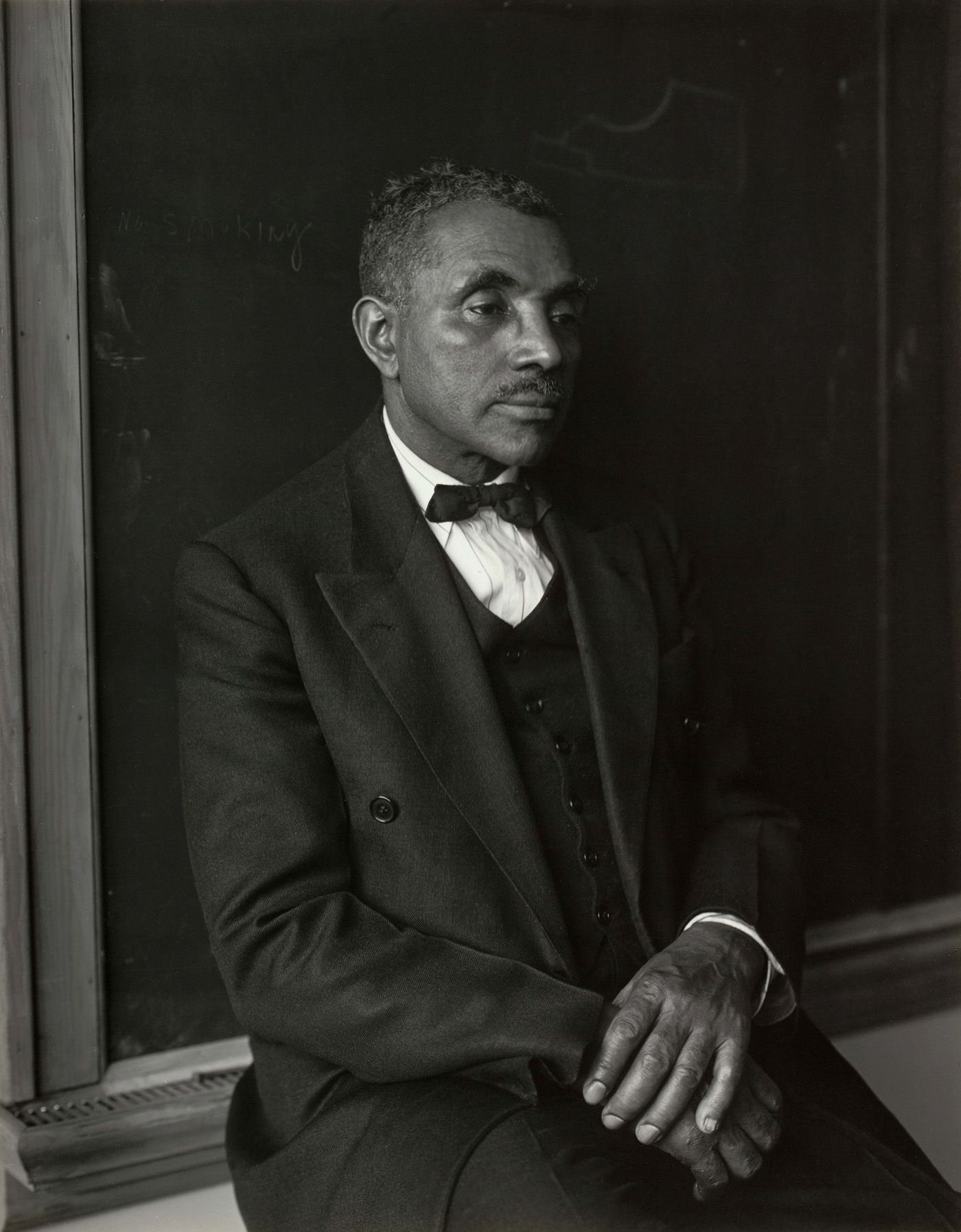
Edward Weston (American, 1886-1958) Mr. Brown Jones, Athens, Georgia 1941 Gelatin silver print The Lane Collection Courtesy, Museum of Fine Arts, Boston
Edward Weston (American, 1886-1958) Charis Wilson 1941 Photograph, gelatin silver print The Lane Collection Courtesy, Museum of Fine Arts, Boston
Museum of Fine Arts, Boston Avenue of the Arts 465 Huntington Avenue Boston, Massachusetts
While Anthony Friedkin has documented subjects as diverse as the marginalised gay community of San Francisco, convicts at Folsom Prison, and brothels in New York, it is the Southern California coastline that has remained a recurrent theme throughout his forty-five-year career. The Los Angeles native took up photography about the same time he learned to surf. His images of waves deftly communicate the primordial power and elusive mysteries that he ascribes to the ocean. This photograph of surfer Rick Dano on an early morning drive up the coast conveys a mood of quiet, anticipatory harmony.
Text from Pacific Standard Time at the Getty
I have never particularly liked Los Angeles as a city. There seems to be something unappealing about the place, some energy lurking just beneath the surface that you can’t quite put your finger on. Maybe it is the comparison with the vivacious San Francisco just up the coast, the awful public transport or, more spookily, the lack of people on the street. People never walk anywhere in LA, it’s a car town. When I did walk on the street I felt vulnerable and surveyed with suspicion by people in cars, like a rabbit caught in the headlights.
These photographs confirm this feeling. Unlike the visual acoustics of the architectural photographs of Julius Shulman (photographs that mythologised this urban metropolis and then exported that idealised presence and Californian mid-century design to the rest of the world) these photographs have an unbelievably desolatory nature to them. They seem to be joyless and sorrowful, devoid of warmth, comfort, or hope – as though the human and the city were separated, as if we are separated from a loved one.
The row after row of tinderbox houses, the ubiquitous cars, the sense of emptiness, hopelessness and menace (see Gary Winogrand Los Angeles 1964, below – if looks could kill this would be it, the bandaged broken nose just perfect for the photograph) all paint a picture of despair. Even the supposedly quiet, anticipatory harmony of the photograph of surfer Rick Dano by Anthony Friedkin (1978, below top) is, to me, full of unresolved tension. The mist in the background hanging over the rocks, blocking out the view, the filthy hands and the bandaged little finger of the right hand, the downcast eyes, the impossibly long cigarette handing from his lips and most importantly the empty distance between the figure and the safety of the automobile. The tension in that distance and the downcast eyes says nothing to me of harmony but of isolation, sadness and regret.
Los Angeles is not my favourite city but it is a fascinating place none the less, as these photographs attest.
Dr Marcus Bunyan
Many thankx to the J. Paul Getty Museum for allowing me to publish the photographs in the posting. Please click on the photographs for a larger version of the image.
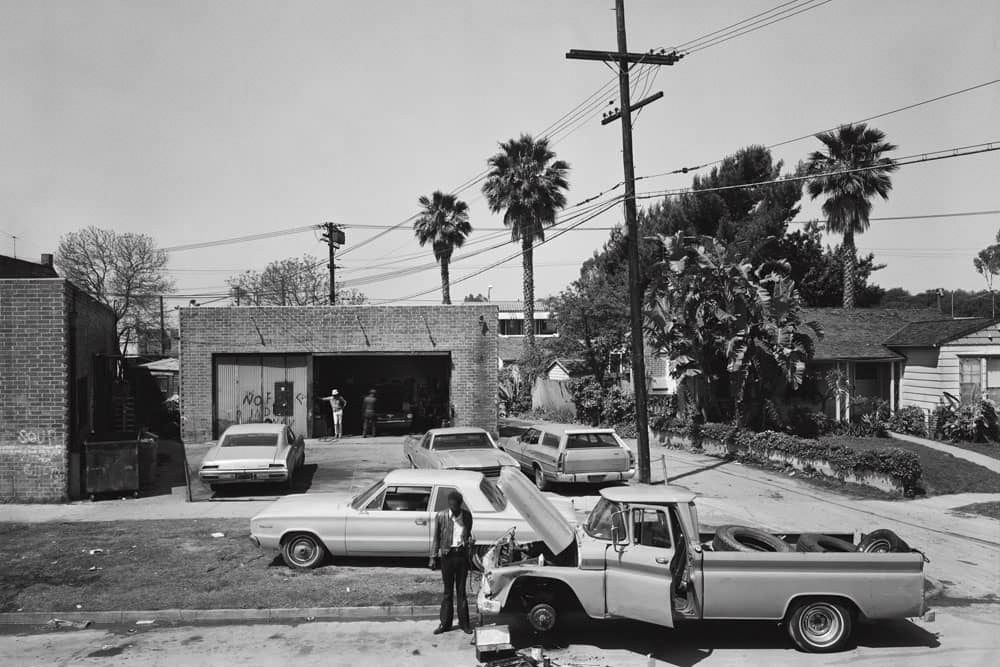
Hernandez started photographing what he refers to as “automotive landscapes” in 1977, using a 35mm camera until he realised that a large-format camera loaded with 5 x 7-inch negative film would provide the detail he desired. Taken from a slightly elevated vantage point, Hernandez’s image of an immobilised truck and its lone mechanic in front of a repair shop presents a sobering view of Los Angeles’s car-dominant culture.
This image of a couple seated in a parked convertible in front of a nightclub on Sunset Boulevard simultaneously captures the glamour and seediness associated with Hollywood. Evoking a 1940s or ’50s film noir crime drama, a seeming tough guy and femme fatale continue their heated conversation, apparently oblivious to the traffic around them – and to the photographer observing them. A native of New York City, Winogrand studied painting at Columbia University and photography at the New School for Social Research before doing freelance commercial work. He photographed incessantly, using a 35mm camera to create wide-angled or tilted shots that are densely composed and layered with meaning. More than 2,500 rolls of film remained undeveloped at the time of his death in 1984.
Text from Pacific Standard Time at the Getty
As part of the region-wide Pacific Standard Time: Art in L.A., 1945-1980 initiative, The J. Paul Getty Museum presents In Focus: Los Angeles, 1945-1980, an exhibition of photographs from the permanent collection made by artists whose time in Los Angeles inspired them to create memorable images of the city, on view at the Getty Center from December 20, 2011 – May 6, 2012.
This exhibition features both iconic and relatively unknown work by artists whose careers are defined by their association with Los Angeles, who may have lived in the city for a few influential years, or who might have visited only briefly,” said Virginia Heckert, curator, Department of Photographs, the J. Paul Getty Museum, and curator of the exhibition.
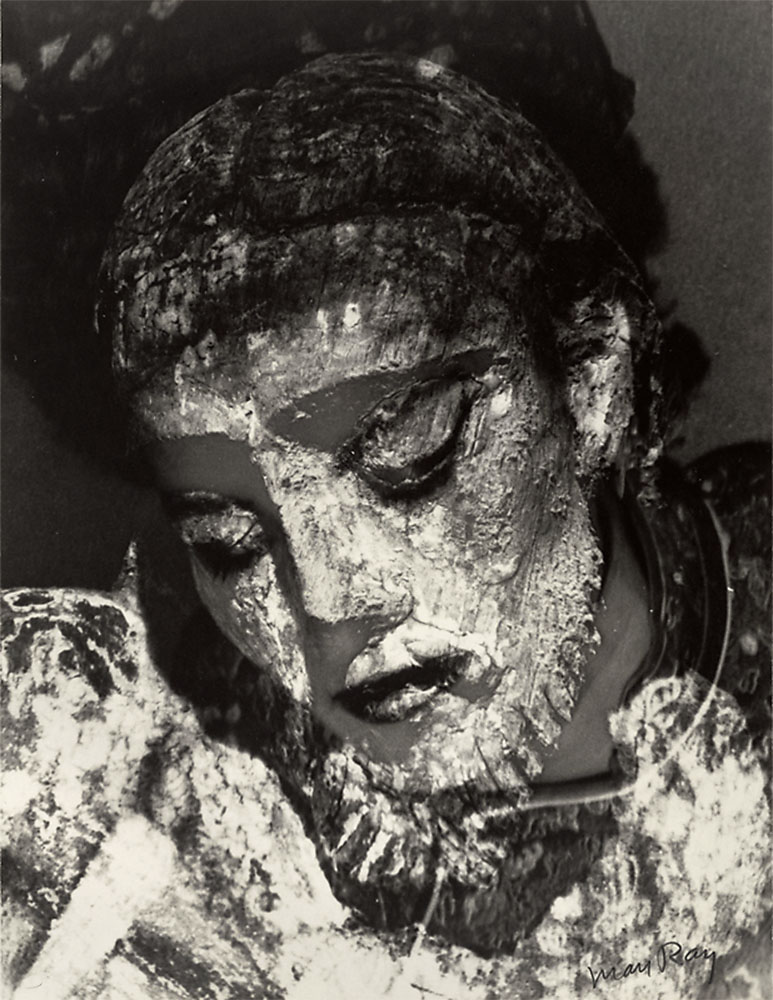
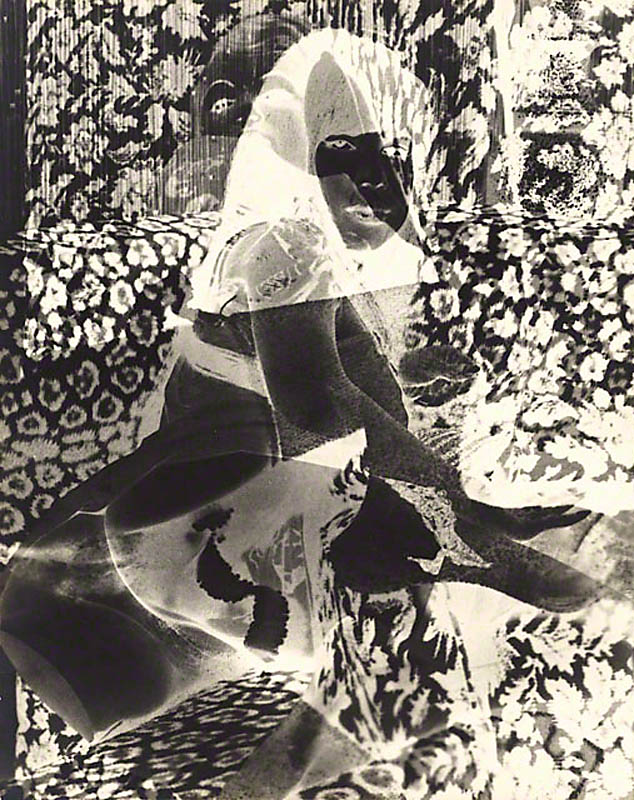
The photographs are loosely grouped around the themes of experimentation, street photography, architectural depictions, and the film and entertainment industry. Works featured in the exhibition are from artists such as Jo Ann Callis, Robert Cumming, Joe Deal, Judy Fiskin, Anthony Friedkin, Robert Heinecken, Anthony Hernandez, Man Ray, Edmund Teske, William Wegman, Garry Winogrand, and Max Yavno. Two of the works in the exhibition by Anthony Hernandez and Henry Wessel Jr. were acquired with funds from the Getty Museum Photographs Council. Drawn from the Museum’s permanent collection, including several recent acquisitions inspired by the Pacific Standard Time initiative, the exhibition offers visitors the opportunity to familiarise themselves with a broad range of approaches to the city of Los Angeles as a subject and to the photographic medium itself.
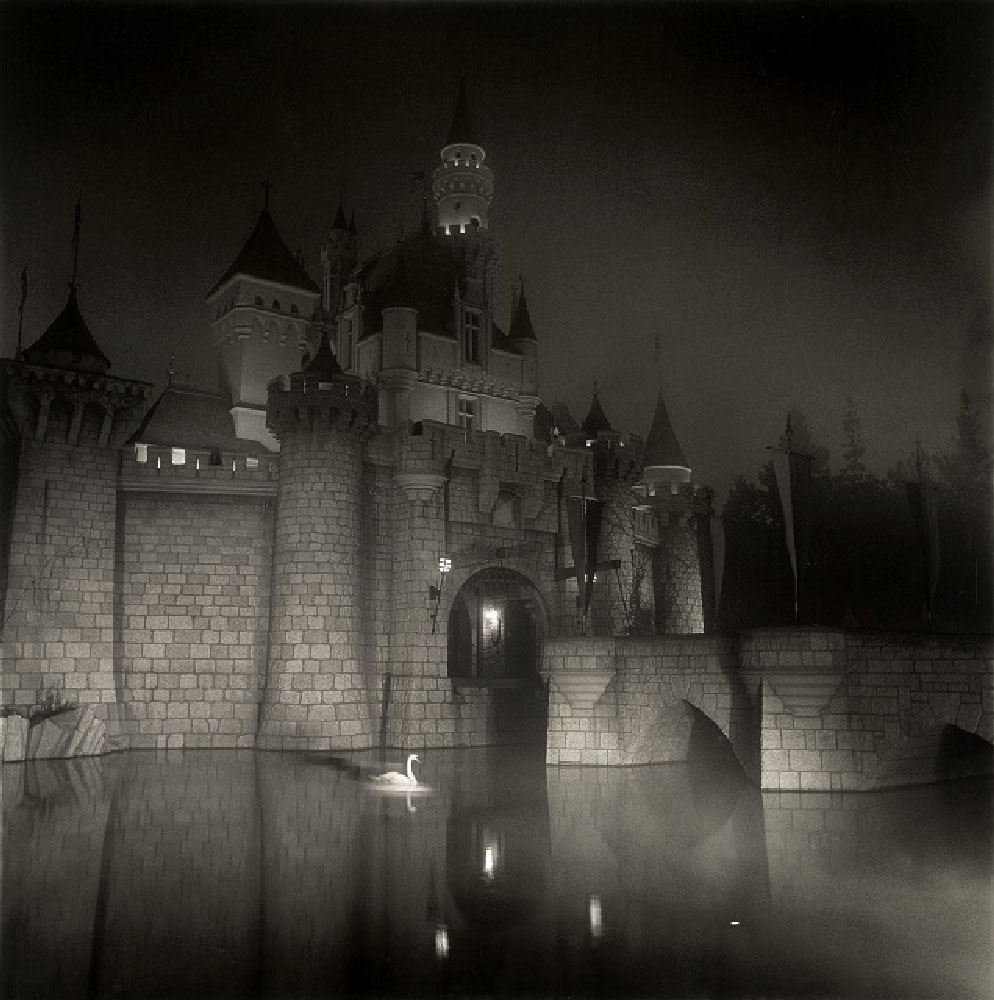
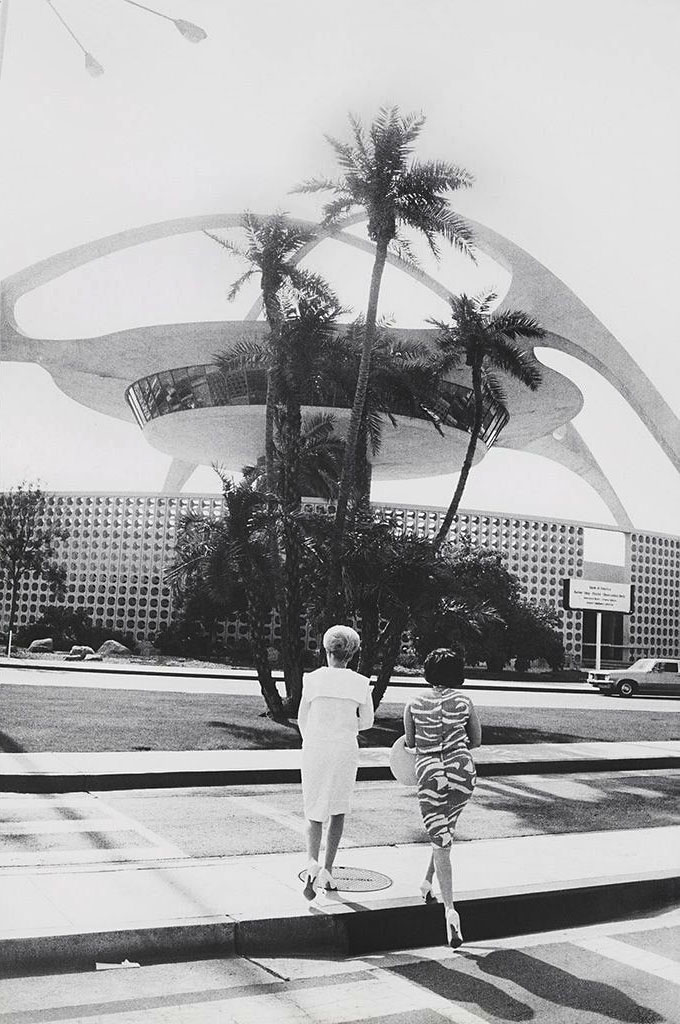
One of the most well-known works in the exhibition is Garry Winogrand’s photograph of two women walking towards the landmark theme building designed by Charles Luckman and William Pereira that has come to symbolise both Los Angeles International Airport and mid-century modern architecture in popular culture. Though a quintessential New Yorker, Winogrand made some of his most memorable photographs in Los Angeles, where he chose to settle in the final years of his life. Also included in the exhibition is Diane Arbus’ dreamily lit photograph of Sleeping Beauty Castle at Disneyland park in Anaheim. Although technically not located in either the city or the county of Los Angeles, Disneyland – and Arbus’ photograph – continues to capture the notion of entertainment and fantasy that has come to be so intrinsically associated with the city.
Other photographers in the In Focus: Los Angeles exhibition who produced the majority of their most creative work in the city include Edmund Teske, with his experimentation in the darkroom and his complex double solarisation process; Robert Heinecken, with images that are equally complex but often incorporate existing printed materials, such as negatives; Anthony Hernandez, whose portraits of Angelenos on the street emphasise the isolation of the individual in an urban environment; and Anthony Friedkin, who combines his passions for surfing and the Southland beaches in his photographs. The inclusion of three photographs from Judy Fiskin’s earliest photographic series, Stucco (1973-1976), provided the impetus for a monographic presentation of the artist’s complete photographic work by Getty Publications. Entitled Some Aesthetic Decisions: The Photographs of Judy Fiskin and featuring an introductory essay by curator Virginia Heckert, the book will be published concurrently with this exhibition.
Press release from the J. Paul Getty Museum website
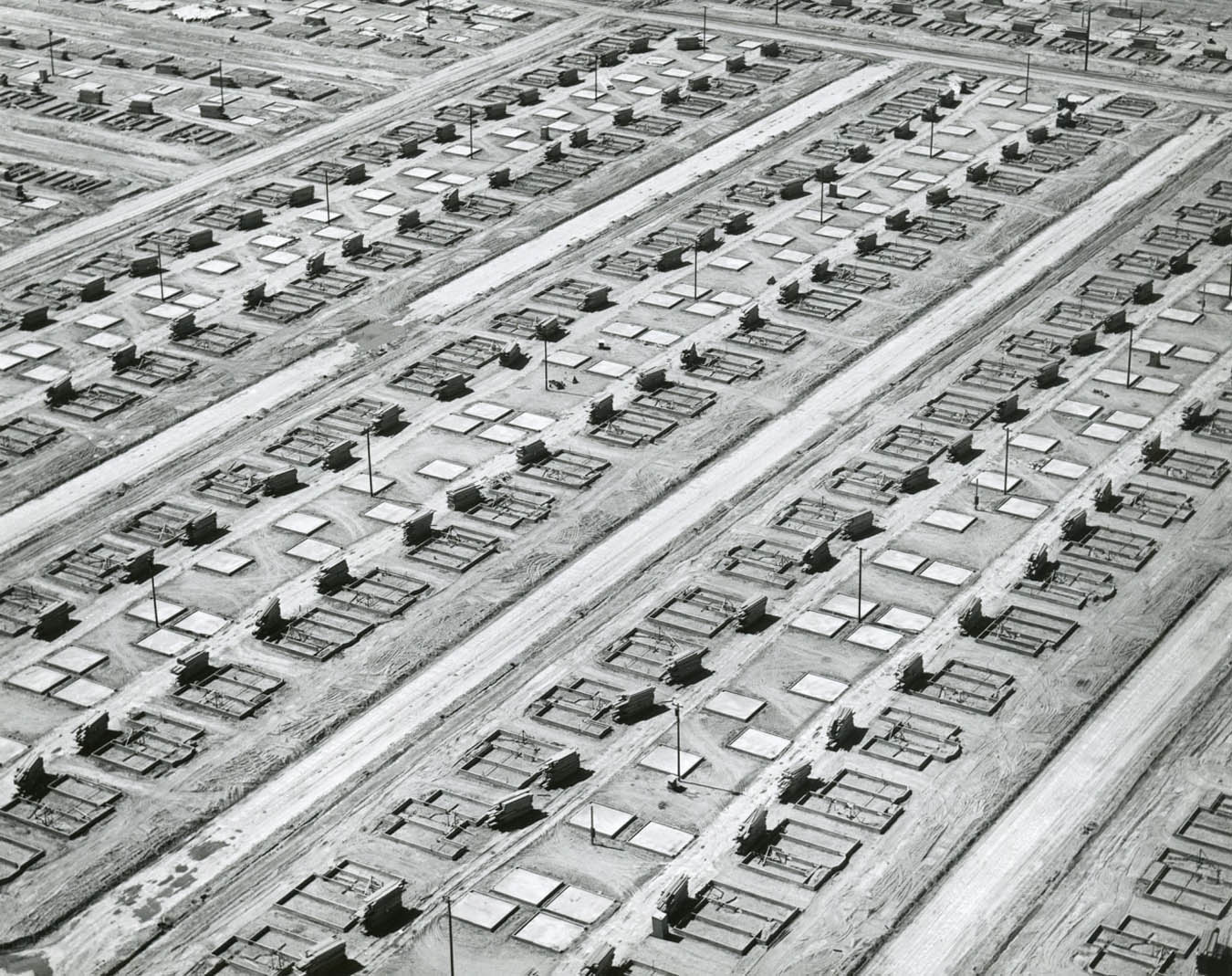
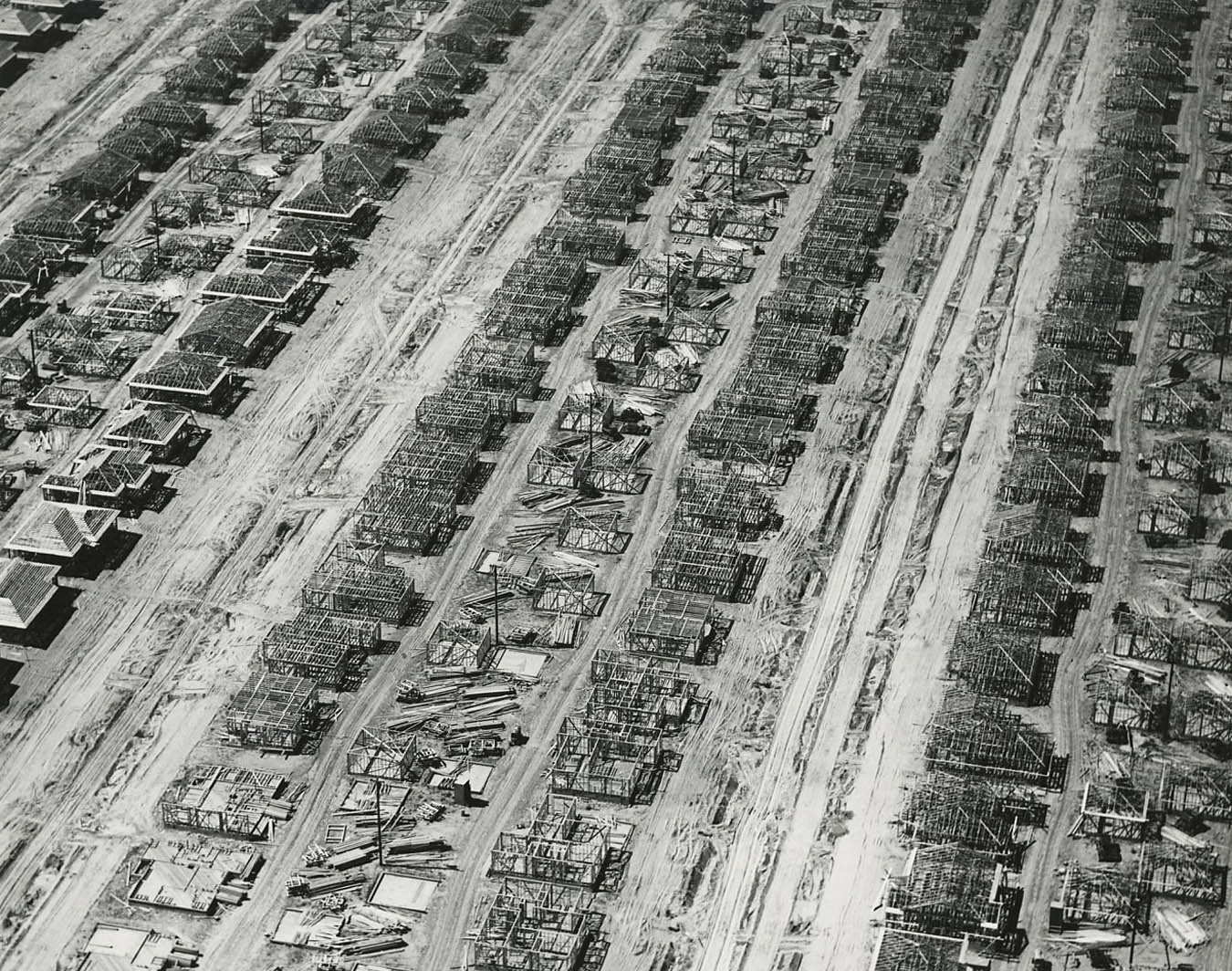
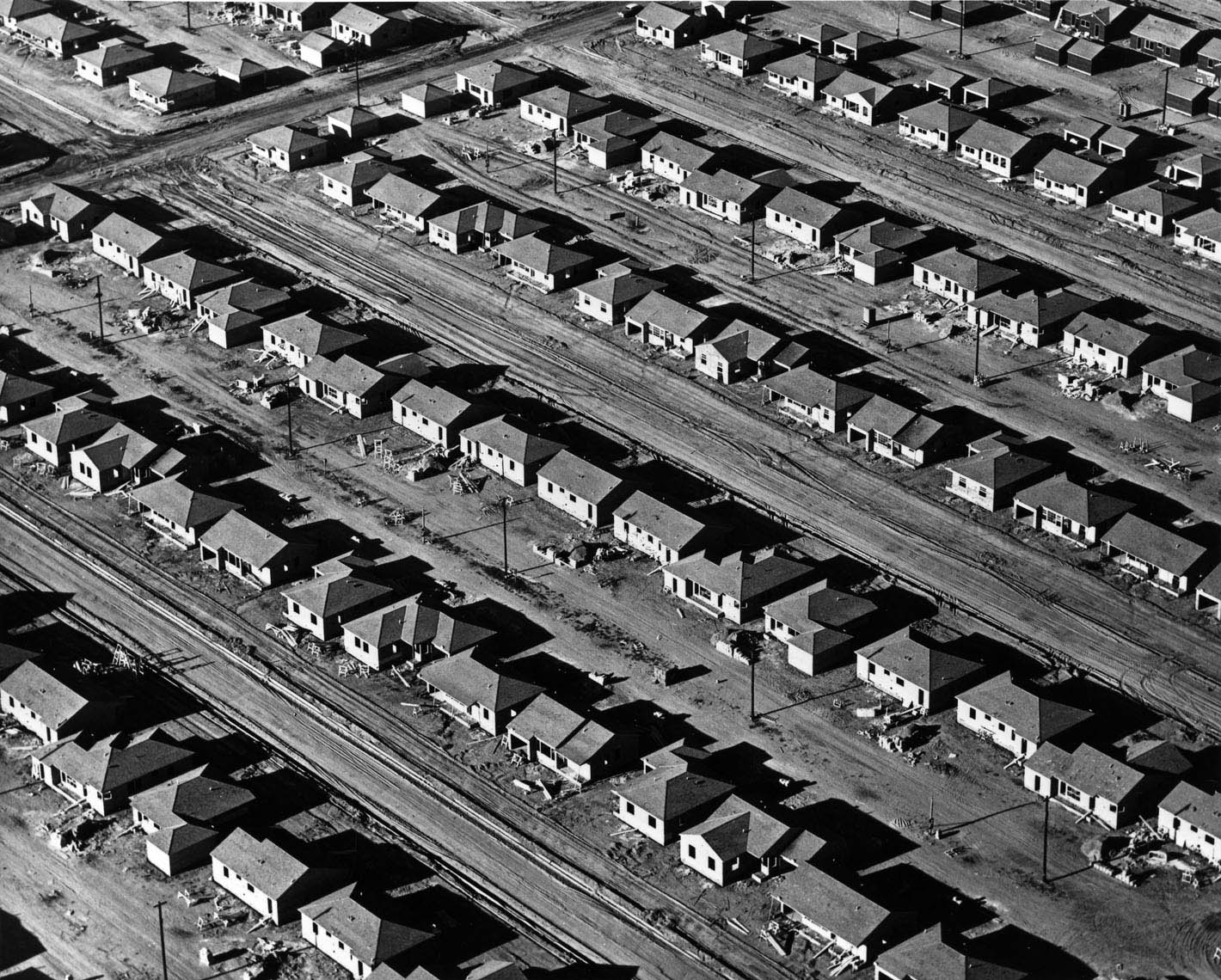
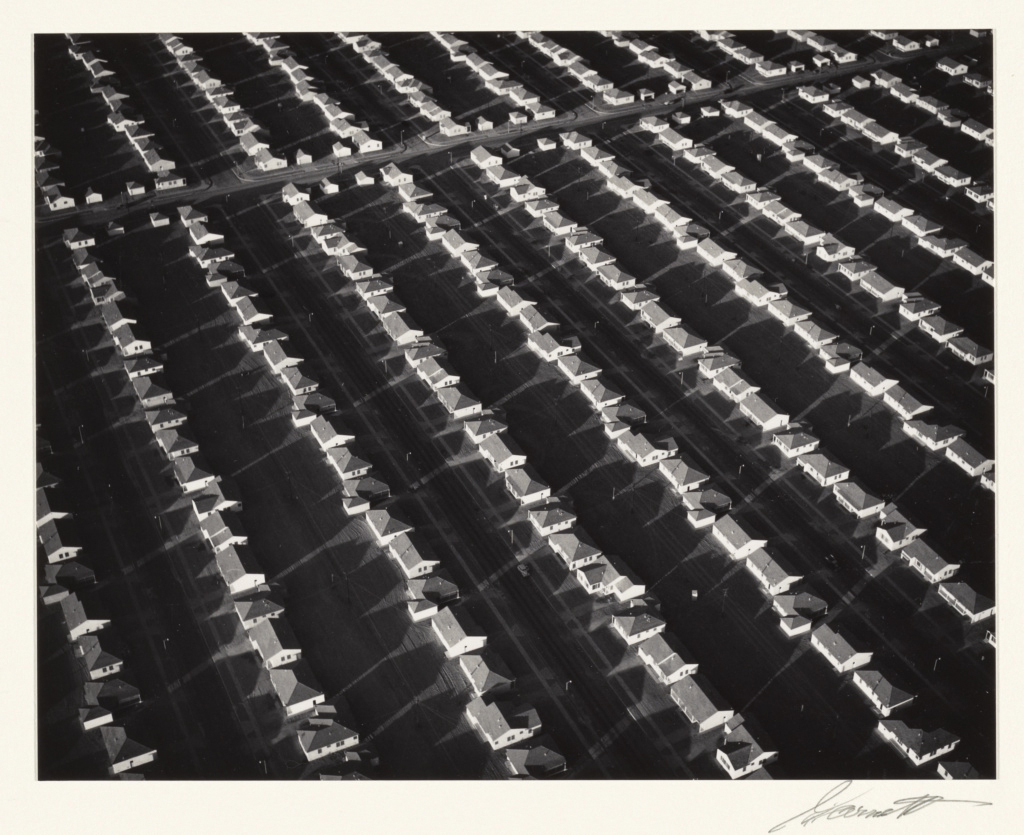
The reduced scale and regular spacing of shapes lend a toy-like quality to Garnett’s suite of prints depicting construction phases of tract housing in the Los Angeles County suburb of Lakewood. The deep shadows, overall patterning, and dramatic diagonals that slice through each composition introduce a sophisticated sense of design and abstraction. After studying photography at Art Center College of Design and military service during World War II, William Garnett learned to fly so that he could photograph his subjects from his Cessna 170-B airplane. Although he was hired by developers to document the construction of 17,500 affordable single-family residences in Lakewood, the majority of his aerial photographs depict the beauty of America’s landscape.
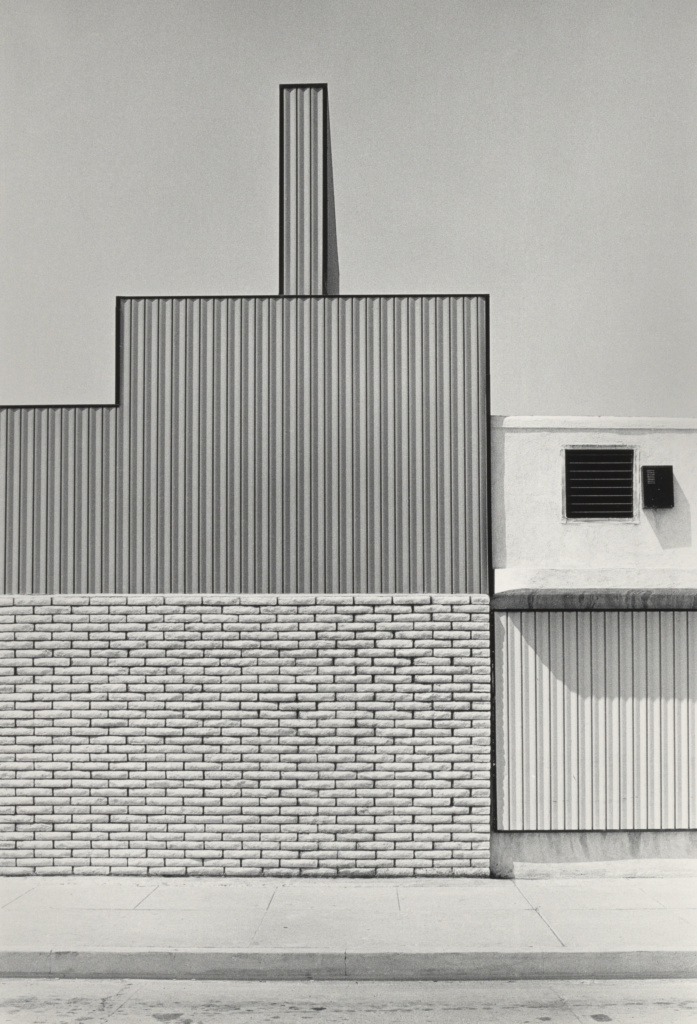
After working for ten years as a commercial photographer, Sydney native Grant Mudford received funding from the Australia Council for the Arts, enabling him to travel throughout the United States to pursue personal work. Mudford’s love of architecture – particularly the vernacular, often anonymous structures of urban America – is evident in the photographs he produced. His head-on depictions of the façades of simple commercial buildings are enlivened by signage, the play of light and shade, the placement of doors and windows, or, as in this image, the rich variety of textures.
Joe Deal rose to prominence in the mid-1970s when work he made as a graduate student at the University of New Mexico was included in the exhibition New Topographics: Photographs of a Man-Altered Landscape (1975). From 1976 to 1989, he taught photography at the University of California, Riverside, where he was instrumental in establishing a photography program and developing the university-affiliated California Museum of Photography. His photographs of Diamond Bar feature backyards of this primarily residential suburb located at the junction of the Pomona and Orange freeways in eastern Los Angeles County. Deal’s implementation of a slightly elevated perspective that eliminates the horizon line and provides a view into neighbouring yards effectively conveys the close quarters of life in a master-planned community.
“It is immediately apparent that no city has ever been produced by such an extraordinary mixture of geography, climate, economics, demography, mechanics and culture; nor is it likely that an even remotely similar mixture will ever occur again.” ~ Reyner Banham, Los Angeles: The Architecture of Four Ecologies, 1971
This exhibition features photographs – made between 1945 and 1980 – from the Museum’s collection that represent diverse responses to the city of Los Angeles as a subject and to photography as a medium for documentary and creative expression. It is loosely grouped around the themes of experimental photography, vernacular architecture, car culture, and fantasy and the film industry.
Both iconic and relatively unknown works are included. One of the best known is Garry Winogrand’s image of two women walking towards the Theme Building at L.A. International Airport (see image above). Though a quintessential New Yorker, Winogrand settled in Los Angeles near the end of his life.
Experimental Photography
With its reclining figure set against a patterned background, Robert Heineken’s image recalls the odalisques of French painter Henri Matisse (see image above). To Heineken, however, traditional subjects and techniques were of little interest. He created this camera-less photograph by using a page torn from a magazine as the negative. This allowed light to pass through and merge depictions on both sides of the page into a single image with reversed tones.
In 1963, Heineken founded the photography program at the University of California, Los Angeles. He forged new directions in photography, utilising strategies of manipulation and appropriation to address themes of consumer culture and sexual politics.
Vernacular Architecture
Judy Fiskin’s propensity to backlight her subjects makes it difficult to read the details in the modest examples of vernacular architecture found in Westside neighbourhoods of Los Angeles that she photographed for her Stucco series. Viewers may be inclined to squint against the harsh light of Southern California that Fiskin makes so palpable. Nevertheless, the small scale of her images, contained by the black edges of the negative, encourages close viewing.
After completing graduate studies in art history at UCLA, Fiskin joined the faculty of the California Institute of Arts in 1977.
Car Culture
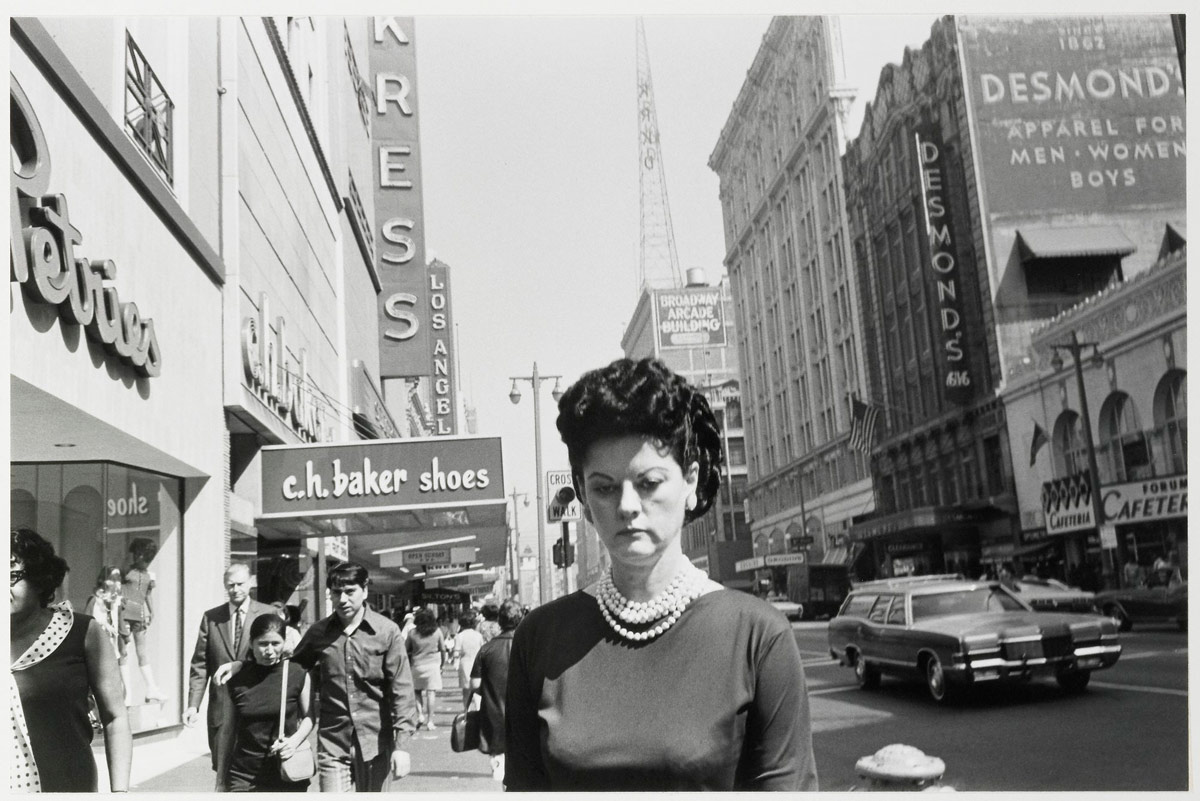
A native of Los Angeles, following two years of study at East Los Angeles College and two years of service in the U.S. Army, Anthony Hernandez took up photography in earnest around 1970.
For this image, Hernandez preset his 35mm camera so that objects within a specific range would be in focus. Then, while walking the streets of downtown Los Angeles, he swung the camera to his eye for a fraction of a second to capture fellow pedestrians as well as the ambient mood of a city more typically experienced from the driver’s seat (see image below).
Fantasy and the Film Industry
Los Angeles native Anthony Friedkin took up photography about the same time he learned to surf, and was already an accomplished photographer by age 16. He then studied at Art Center College of Design and the University of California, Los Angeles.
Friedkin began working as a still photographer for motion pictures in 1975. His depiction of row after row of film cans might be viewed as a historical document of a medium that has been replaced by new technology (see image below).
Following two years of study at East Los Angeles College and two years of service in the U.S. Army, Anthony Hernandez took up photography in earnest around 1970. For this image, he preset his 35mm camera so that objects within a specific range would be in focus. Then, while walking the streets of downtown Los Angeles, he swung the camera to his eye for a fraction of a second to capture fellow pedestrians as well as the ambient mood of a city more typically experienced from the driver’s seat. A native of Los Angeles, Hernandez has continued to photograph the city, addressing issues of community, shelter, and survival in his work.
Anthony Friedkin began taking photographs at a young age and had already published his work by the time he was 16. He nonetheless found it important to study photography seriously and did so at Art Center College of Design and the University of California, Los Angeles. Employment as a still photographer for motion pictures beginning in 1975 undoubtedly prepared him to create a portfolio of images of Universal Studios a few years later. His depiction of row after row of film cans might be viewed as a historical document of a medium that has been replaced by new technology. Friedkin’s continued commitment to shooting black-and-white film that he develops and prints in his own darkroom has become increasingly rare.
After completing his undergraduate degree in design at the University of California, Los Angeles, Darryl Curran entered the school’s newly established photography program, studying with Robert Heinecken, who is positioned toward the center of this image in a black turtleneck. The repeated printing of two frames is typical of Curran’s approach to the photographic medium and the ease with which he employs techniques and strategies derived from his background in printmaking and design. Another form of “mirroring” occurs in the placement of a Heineken beer bottle opposite Heinecken the artist. Curran founded the Department of Photography at California State University, Fullerton, where he taught from 1967 to 2001.
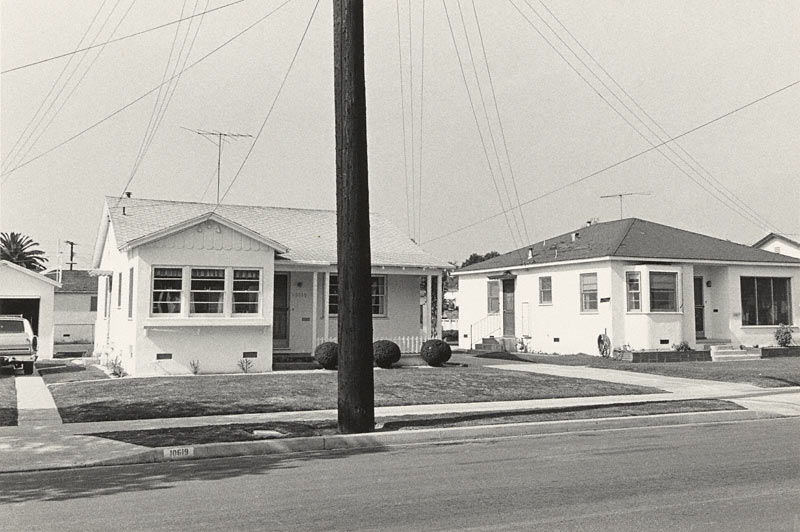
Henry Wessel began taking photographs while majoring in psychology at Pennsylvania State University in the mid-1960s. Travel throughout the United States in subsequent years led him to direct his gaze increasingly to details of human interaction with the natural and man-made environment. Wessel’s move to the West Coast in the early 1970s inspired him to incorporate light and climate into his work. His inclusion in the seminal exhibition New Topographics: Photographs of a Man-Altered Landscape, organised in 1975 by the George Eastman House in Rochester, New York, solidified his reputation as a keen observer of the American topography. In this image, electrical and telephone lines tether a row of modest residences to a single utility pole.
Text from Pacific Standard Time at the Getty
The J. Paul Getty Museum 1200 Getty Center Drive Los Angeles, California 90049
Many thankx to The Denver Art Museum for allowing me to publish the photographs in the posting. Please click on the photographs for a larger version of the image.
Robert Adams (American, b. 1937) Burning oil sludge, north of Denver, Colorado 1973-1974 Gelatin silver print Yale University Art Gallery, purchased with a gift from Saundra B. Lane, a grant from the Trellis Fund and the Janet and Simeon Braguin Fund
Robert Adams (American, b. 1937) North of Keota, Colorado 1973 printed 1989
Gelatin silver print
Yale University Art Gallery, purchased with a gift from Saundra B. Lane, a grant from the Trellis Fund and the Janet and Simeon Braguin Fund
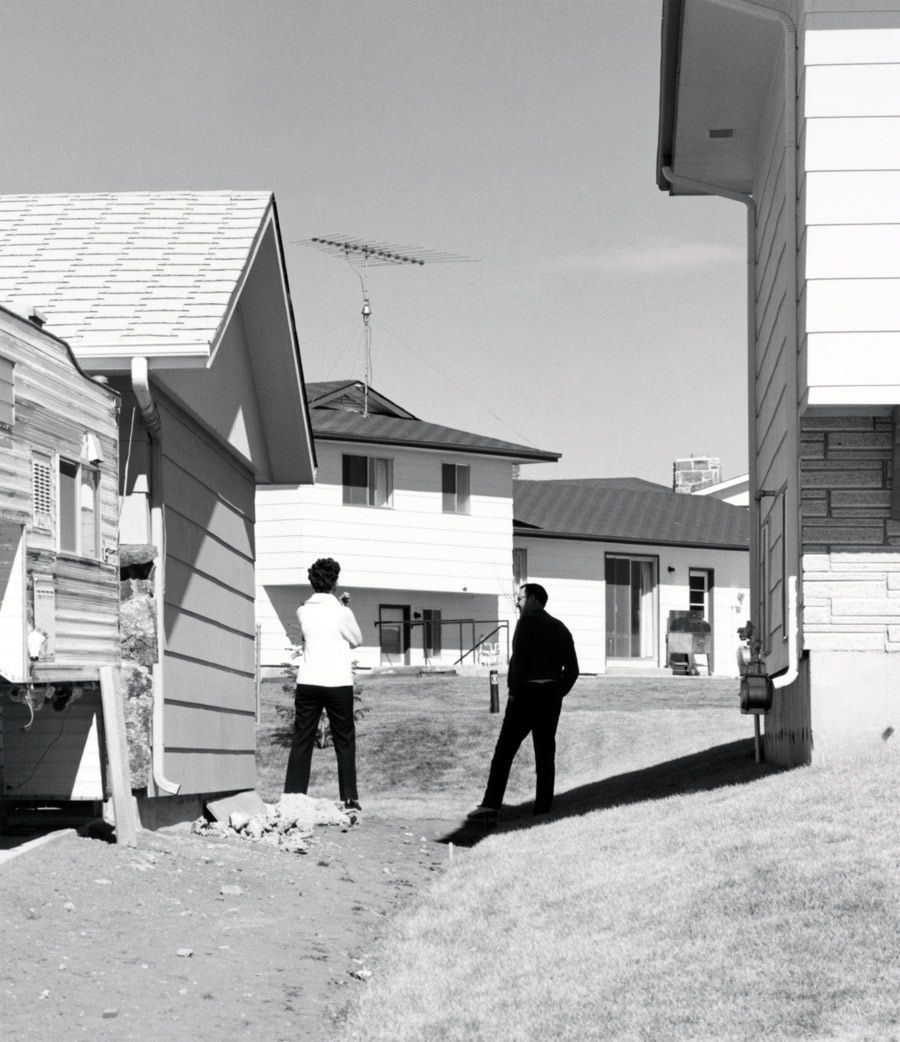
Robert Adams (American, b. 1937) Mobile home park, north edge of Denver, Colorado 1973-1974 Gelatin silver print Yale University Art Gallery, purchased with a gift from Saundra B. Lane, a grant from the Trellis Fund and the Janet and Simeon Braguin Fund
The Denver Art Museum (DAM) is the first U.S. venue for Robert Adams: The Place We Live, A Retrospective Selection of Photographs. The exhibition features more than 200 black-and-white photos spanning Adams’s 45-year career, showcasing the artistic legacy of the American photographer and his longstanding engagement with the contemporary Western landscape. Adams lived and worked in Colorado for nearly 30 years. Many of his most acclaimed images were taken in the Rocky Mountain region and will strike a familiar chord with visitors. The exhibition, organised by the Yale University Art Gallery, will be on view September 25, 2011 – January 1, 2012 in the museum’s Gallagher Family Gallery.
“We’re excited to host the work of one of the foremost photographers of our time,” said Eric Paddock, the DAM’s curator of photography. “Robert Adams’s striking yet quiet photos provoke thought about current economic, political and environmental issues Westerners confront every day. We think visitors will see something very familiar in his work.”
Since becoming a photographer in the mid-1960s, Adams has been widely regarded as one of the most significant and influential chroniclers of the American West. Adams’s photographs and writing insist that the realities of everyday landscapes are as beautiful as idealised scenes from nature. They ask questions about the ways people change and interact with nature, and what it means to live simply and quietly in today’s world. This commitment earned Adams prominence in photography’s “New Topographics” movement of the late 20th century and lends authority to his ongoing work. His photographs of Colorado suburban growth and clear cut forests in the Pacific Northwest, for example, express shock at mainstream social and economic values.
“The Denver Art Museum is pleased to be the first U.S. venue for The Place We Live, showcasing our continued commitment to our photography program,” said Christoph Heinrich, Frederick and Jan Mayer Director of the DAM. “Colorado has a rich photography history and we’re excited to have visitors engage with these artworks that provide a narrative to the American experience and take a fresh look at their surroundings.”
Featuring more than 200 gelatin silver prints, The Place We Live weaves together four decades of Adam’s work into a cohesive, epic narrative of American experience in the late 20th and early 21st centuries. Each of the photographer’s major projects is represented, from early pictures of quiet buildings and monuments erected by prior settlers of his native Colorado to his most recent images of forests and migratory birds in the Pacific Northwest.
Biography
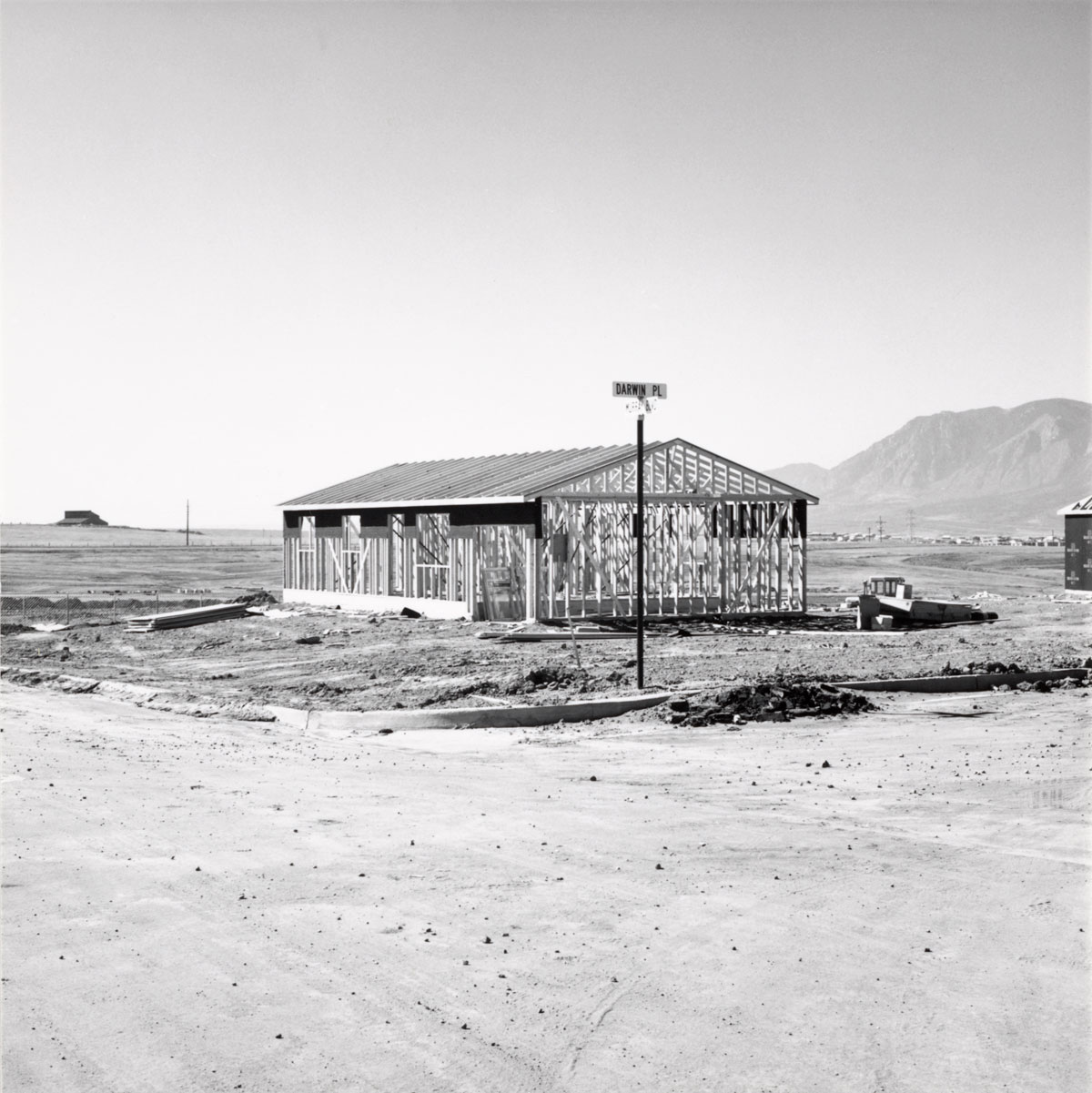
Born in Orange, N.J., in 1937, Robert Adams moved with his family from Madison, Wis., to Denver, Colo., at the age of 15. He earned a doctorate degree from the University of Southern California and, intent on pursuing an academic career, returned to Colorado in 1962 as an assistant professor of English at Colorado College. Disturbed by the rapid transformation of the Colorado Springs and Denver areas, Adams began photographing a landscape transformed by tract housing, highways, strip malls and gas stations. “The pictures record what we purchased, what we paid and what we could not buy,” Adams wrote. “They document a separation from ourselves, and in turn from the natural world that we professed to love.” Since 1997, he has lived and worked in Oregon.”
Press release from The Denver Art Museum
Robert Adams (American, b. 1937) Lakewood, Colorado 1968-1971 Gelatin silver print Yale University Art Gallery, purchased with a gift from Saundra B. Lane, a grant from the Trellis Fund and the Janet and Simeon Braguin Fund
Robert Adams (American, b. 1937) In a New Subdivision, Colorado Springs, Colorado 1969 Gelatin silver print Yale University Art Gallery, purchased with a gift from Saundra B. Lane, a grant from the Trellis Fund and the Janet and Simeon Braguin Fund
Robert Adams (American, b. 1937) Frame for a Tract House, Colorado Springs, Colorado 1969 Gelatin silver print Yale University Art Gallery, purchased with a gift from Saundra B. Lane, a grant from the Trellis Fund and the Janet and Simeon Braguin Fund
Robert Adams (American, b. 1937) Pikes Peak, Colorado Springs, Colorado 1969 Gelatin silver print Yale University Art Gallery, purchased with a gift from Saundra B. Lane, a grant from the Trellis Fund and the Janet and Simeon Braguin Fund
Robert Adams (American, b. 1937) Denver, Colorado c. 1970 Gelatin silver print Yale University Art Gallery, purchased with a gift from Saundra B. Lane, a grant from the Trellis Fund and the Janet and Simeon Braguin Fund
Robert Adams (American, b. 1937) Longmont, Colorado 1973-1974, printed 2007 Gelatin silver print Yale University Art Gallery, purchased with a gift from Saundra B. Lane, a grant from the Trellis Fund and the Janet and Simeon Braguin Fund
Robert Adams (American, b. 1937) Eden, Colorado 1968 Gelatin silver print Yale University Art Gallery Purchased with a gift from Saundra B. Lane, a grant from the Trellis Fund and the Janet and Simeon Braguin Fund
Robert Adams (American, b. 1937) Colorado Springs, Colorado 1968 Gelatin silver print Yale University Art Gallery Purchased with a gift from Saundra B. Lane, a grant from Trellis Fund, and the Janet and Simeon Braguin Fund
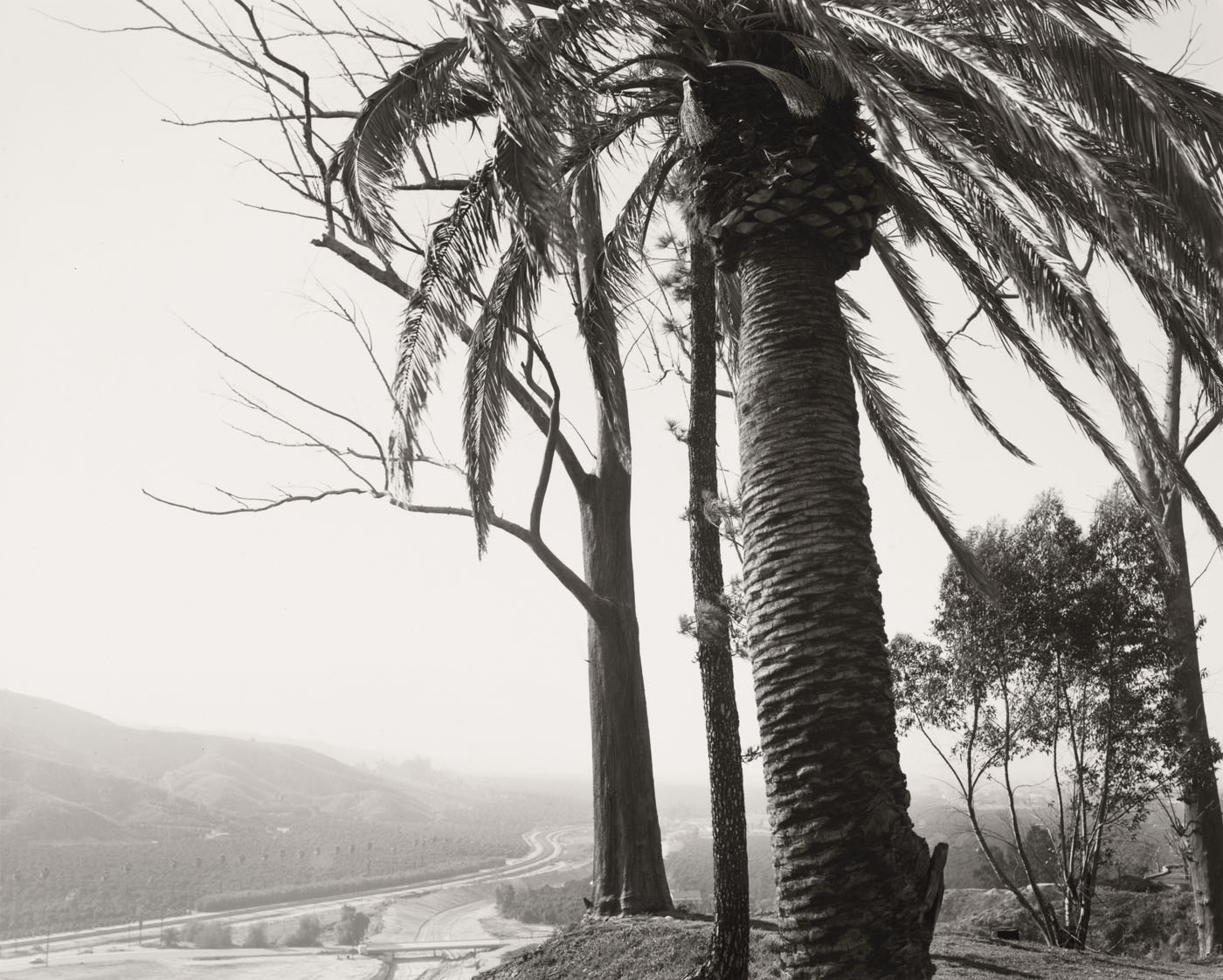
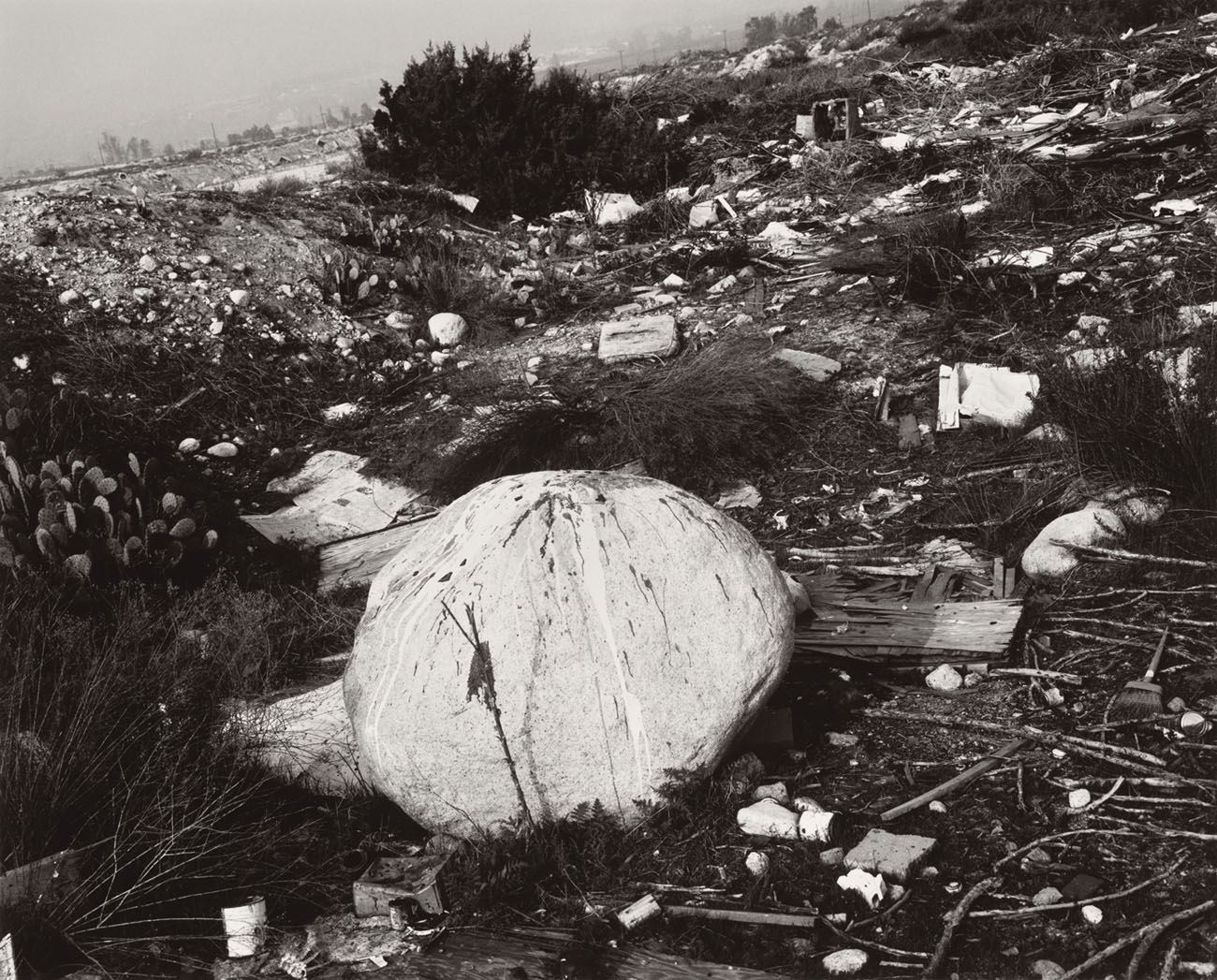
Robert Adams (American, b. 1937) Edge of San Timoteo Canyon, looking toward Los Angeles, Redlands, California 1978 Gelatin silver print Yale University Art Gallery Purchased with a gift from Saundra B. Lane, a grant from the Trellis Fund and the Janet and Simeon Braguin Fund
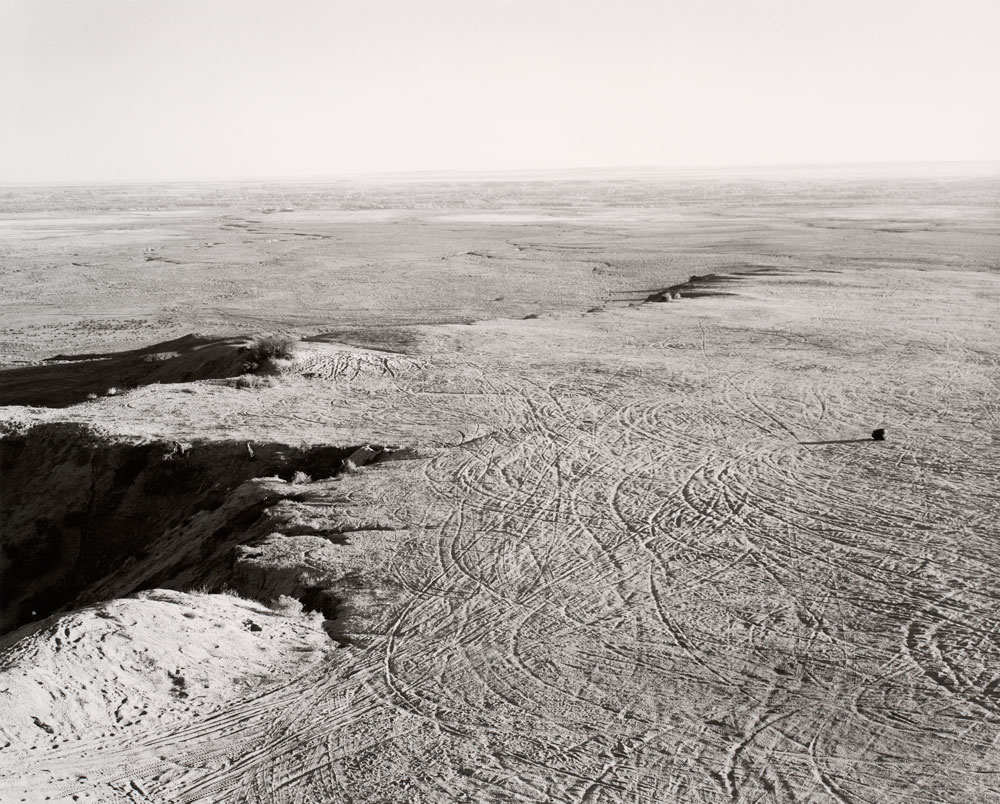
Robert Adams (American, b. 1937) Quarried Mesa Top, Pueblo County, Colorado 1978 Gelatin silver print Yale University Art Gallery Purchased with a gift from Saundra B. Lane, a grant from Trellis Fund, and the Janet and Simeon Braguin Fund
Robert Adams (American, b. 1937) Longmont, Colorado 1979, printed 1985 Gelatin silver print Yale University Art Gallery, purchased with a gift from Saundra B. Lane, a grant from the Trellis Fund and the Janet and Simeon Braguin Fund
Robert Adams (American, b. 1937) Santa Ana Wash, Redlands, California 1983, printed 1991 Gelatin silver print Yale University Art Gallery, purchased with a gift from Saundra B. Lane, a grant from the Trellis Fund and the Janet and Simeon Braguin Fund
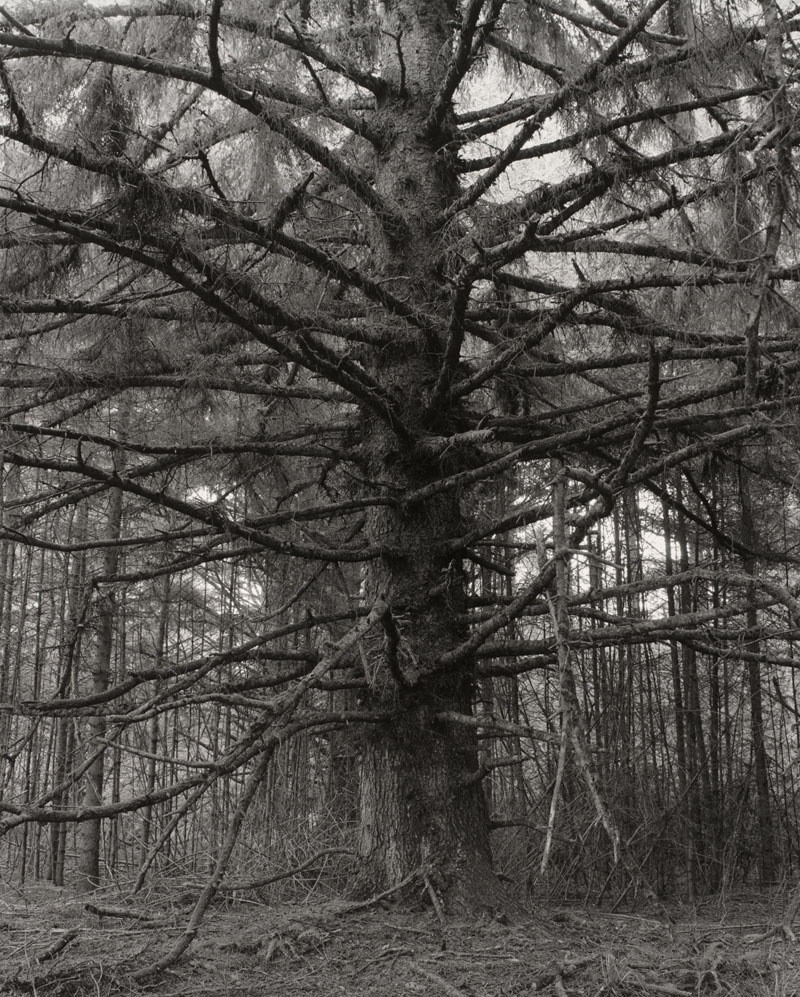
Robert Adams (American, b. 1937) Sitka spruce, Cape Blanco State Park, Curry County, Oregon 1999-2000 Gelatin silver print Yale University Art Gallery, purchased with a gift from Saundra B. Lane, a grant from the Trellis Fund and the Janet and Simeon Braguin Fund
The Denver Art Museum Civic Center Cultural Complex Located on 13th Avenue between Broadway and Bannock in downtown Denver
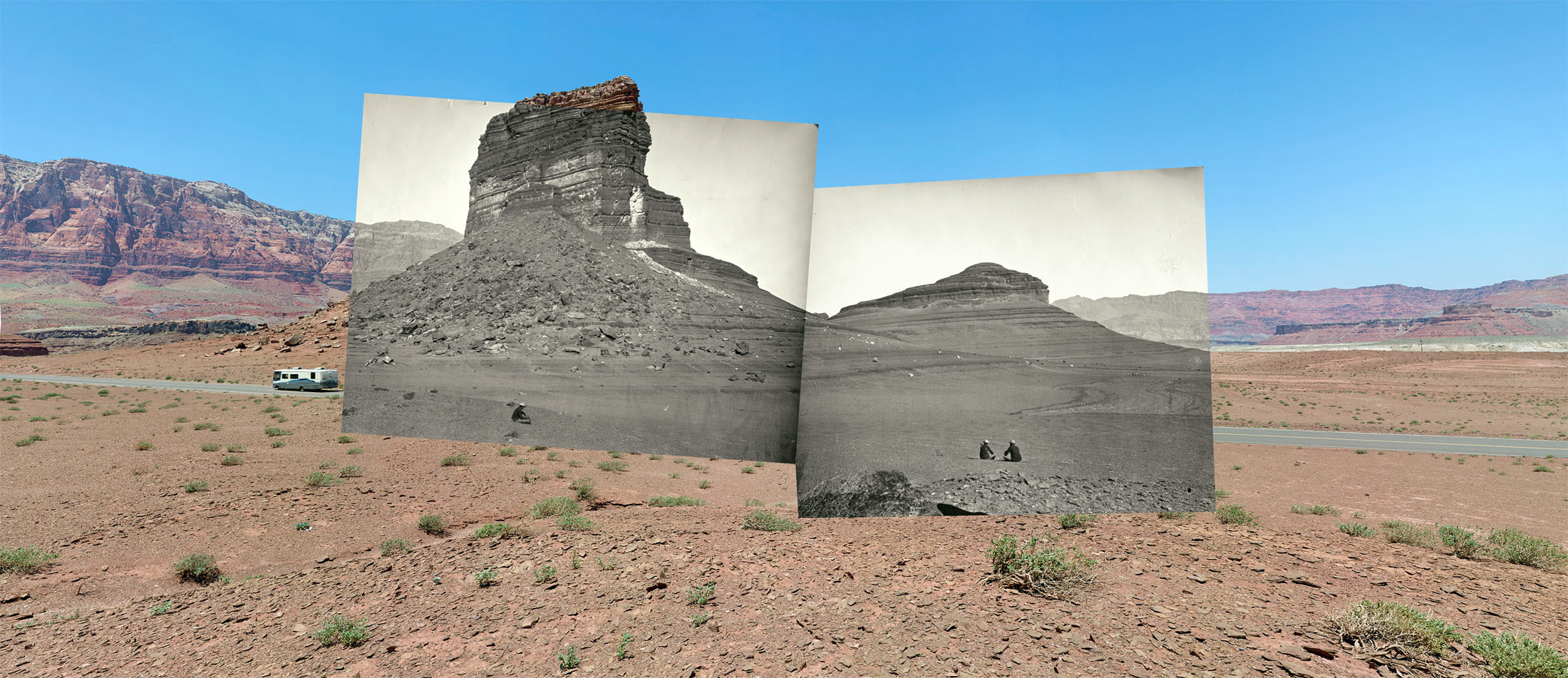
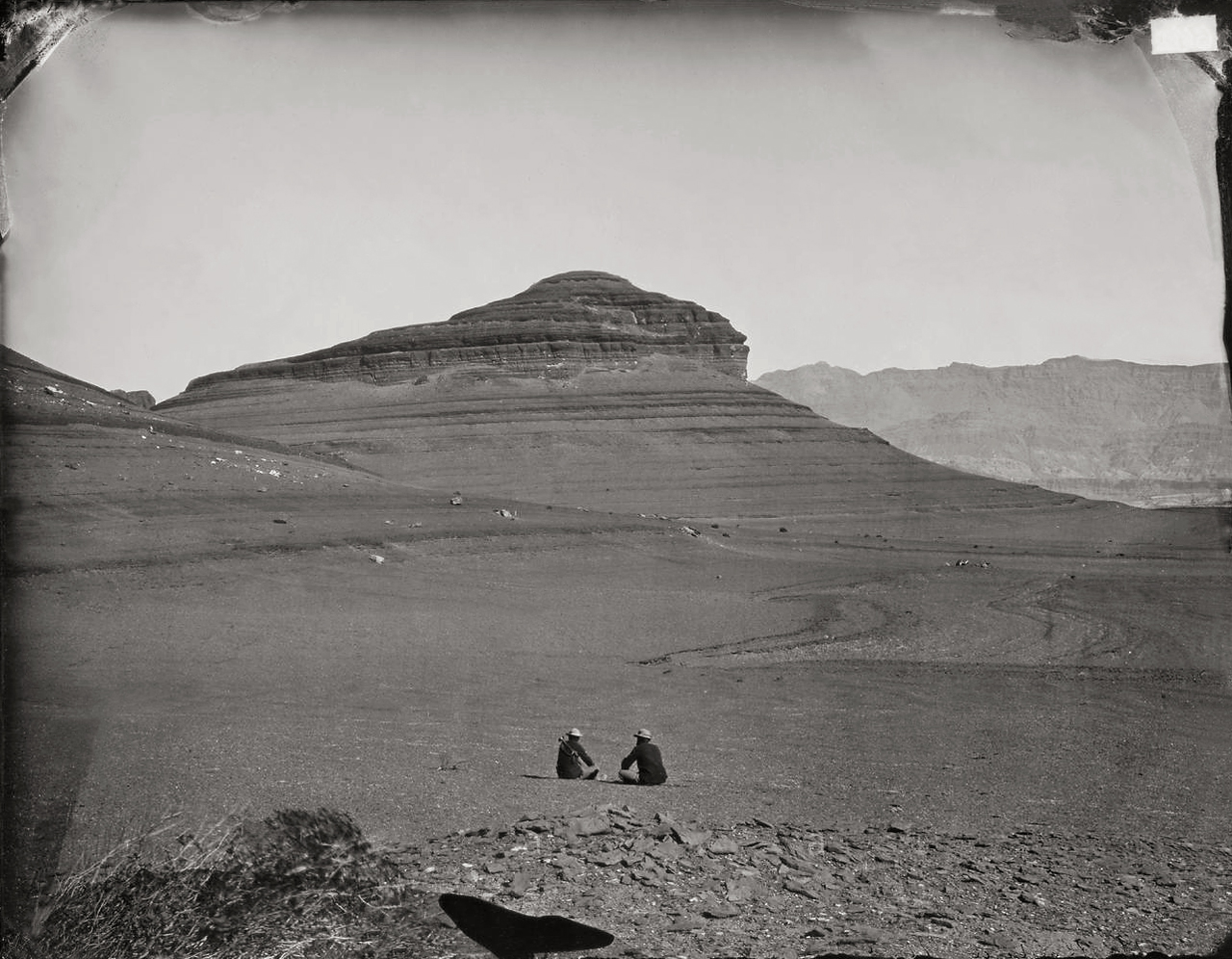
Mark Klett and Byron Wolfe Rock formations on the Road to Lee’s Ferry, Arizona 2008 Digital inkjet print 36″ h x 76″ w
Left inset: William Bell. Plateau North of the Colorado River near the Paris 1872 (courtesy National Archives) Right inset: William Bell. Headlands North of the Colorado River 1872 (courtesy National Archives)
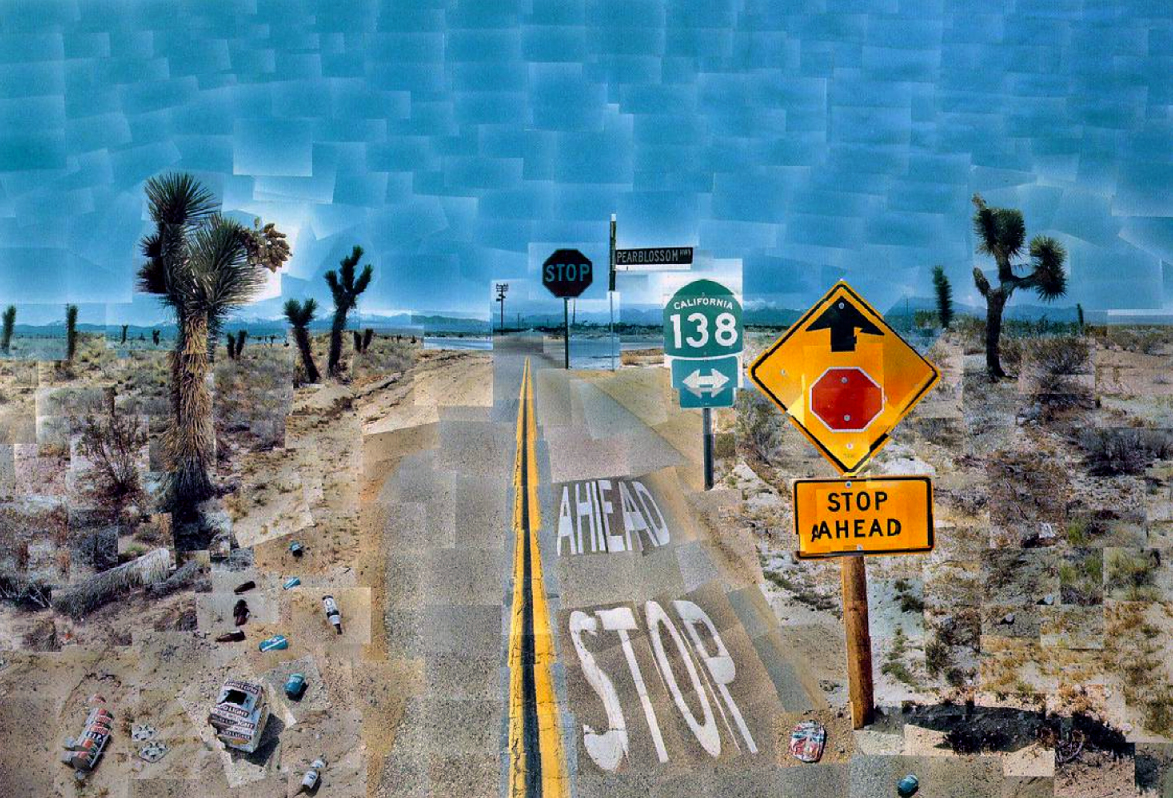
An interesting concept but I’m not entirely sure that the images are successful. Some work better than others. Perhaps it is not necessary for there to be an absolute registration across time and space, the continuation of a horizon line for example. The famous photographic collages by David Hockney are a case in point.
It doesn’t matter when the images were made, whether there is a second, or a century, between compositions. The camera and the artist are always selective, the camera always privileging one view over another view: all images are therefore constructions. Hockney pushes the boundaries of these constructions whereas I don’t think these images do to anywhere near the same extent.
There were some vaguely interesting videos on the Phoenix Art Museum website about the starting point, discovery, process and collaboration for the work which are no longer available. There is one video available on the Klett and Wolfe website.
Dr Marcus Bunyan
Many thankx to Phoenix Art Museum for allowing me to publish the photographs in the posting. Please click on the photographs for a larger version of the image.
William H. Bell (American, 1830-1910) Headlands North of the Colorado River 1872 Still Picture Records Section, Special Media Archives Services Division Courtesy National Archives
Arizona’s Grand Canyon – natural wonder, national park, tourist attraction, sacred land – is perhaps the world’s best “photo op.” The collaborative photographic team of Mark Klett and Byron Wolfe have set out to explore this celebrated place of dramatic beauty, and Phoenix Art Museum is proud to be the first to show a comprehensive look at their powerful, thoughtful, and playful approach to the Grand Canyon.
Drawn from two seasons of fieldwork, Charting the Canyon will include about 30 photographs ranging from a modest 20 by 20-inch print to a panorama nearly 10 feet wide. Mark Klett, a Regents Professor at Arizona State University, and Byron Wolfe, a former student of Klett’s who is now a Lantis’ University Professor teaches at California State University at Chico, have been interested in rephotographing historic images since their collaboration began in 1997.
Now the pair combines their own colour photographs with imagery by 19th-century photographer J. K. Hillers and artist William Holmes and by Ansel Adams and Edward Weston, who worked at the Canyon in the early 20th century. Klett and Wolfe respond to the historic images and the Canyon itself, yielding artworks that reconsider an icon, challenge how we perceive the land, and bring a new perspective to its portrayals.
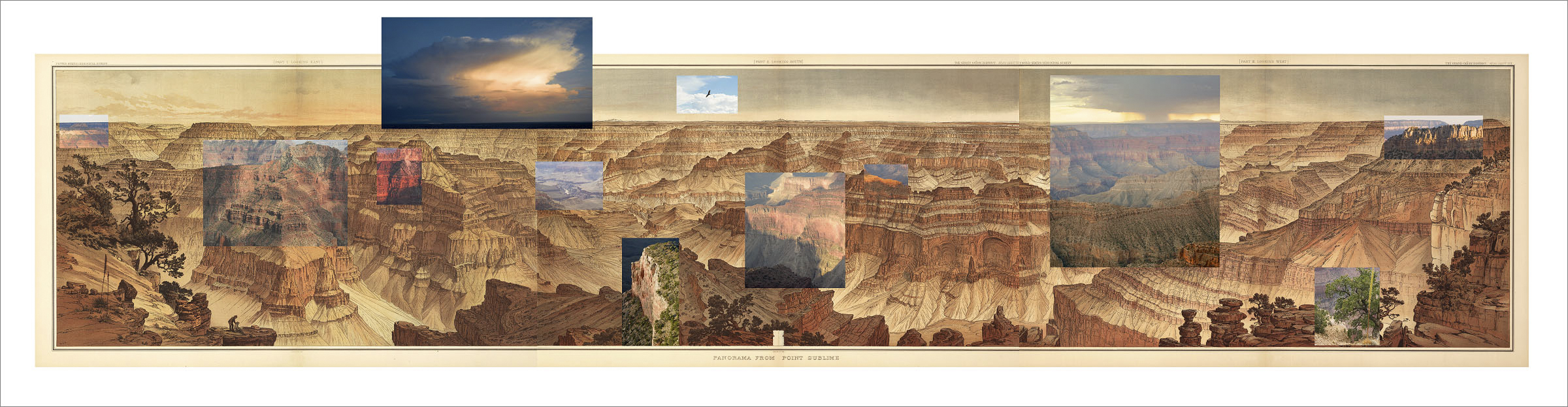
Charting the Canyon offers visual delights: the humorous layering of a 19th-century drawing with contemporary photographic details, the extension of an Ansel Adams view into a serene panorama, and the illusion of three-dimensions with a stereopticon viewer built for the twenty-first century, among others to be discovered in this unique exhibition.
Text from the Phoenix Art Museum website [Online] Cited 20/04/2009. No longer available online
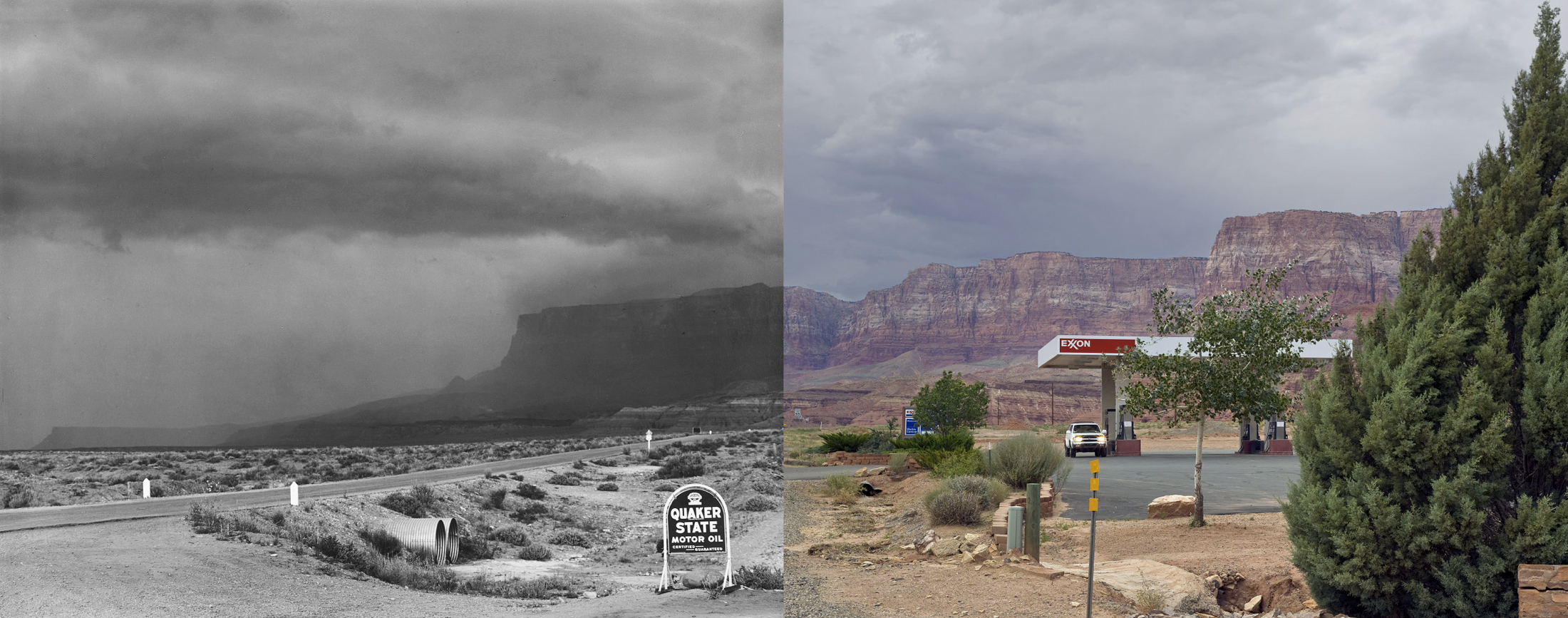
Mark Klett and Byron Wolfe Sixty-six years after Edward Weston’s “Storm, Arizona” From the Marble Canyon Trading Post 2007 Digital inkjet print 16″ h x 38.75″ w
Left: Edward Weston. Storm, Arizona 1941 (courtesy of the Center for Creative Photography, Tucson)
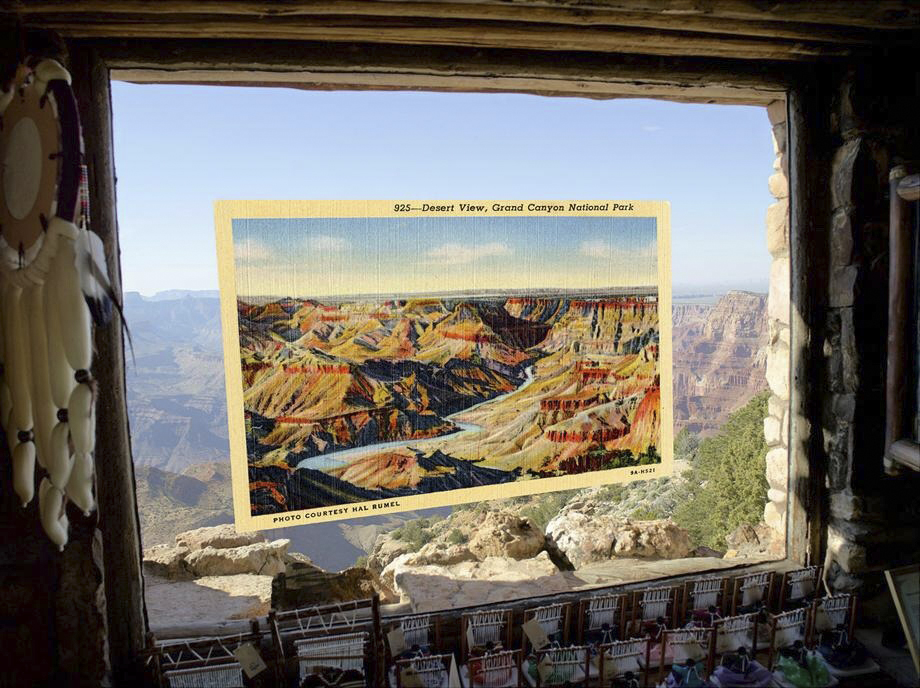
Mark Klett and Byron Wolfe Desert View: from the window of the Watchtower gift shop 2008
The Grand Canyon – natural wonder, sacred ground, national park, international tourist attraction – is perhaps the world’s best “photo op.” Vivid colours, breathtaking vistas and jaw dropping canyon depths have lured photographers to Northern Arizona for years. A new exhibition, Charting the Canyon: Photographs by Mark Klett and Byron Wolfe on view at Phoenix Art Museum through July 12, 2009, explores this celebrated place of dramatic beauty with large-scale sweeping panoramas that marry 21st century colour photographs with historic drawings and images.
In 2007, Mark Klett, a Regents Professor at Arizona State University, and Byron Wolfe, a former student of Klett’s and now a Lantis’ University Professor at California State University at Chico, headed to the Grand Canyon to re-envision the many images made at the site over the last 150 years. During two summers of field work, they identified the exact locations portrayed in early photographs and drawings. From those geographic points they created new photographs that incorporate the original view. Digital versions of the historic images are inserted within the contemporary photograph, creating combined images that convey the big picture surrounding earlier artists’ depicted view.
Working collaboratively, Klett and Wolfe challenge one another to invent new ways to integrate the historic images they discover. Charting the Canyon reveals their combined invention, offering provocative ways to think about the land, its history and our role in seeing it.
“Many of the things we’re trying to do seemed impossible at first – like merging several views of a scene from different times into a continuous space, or extending one photo’s frame to include spaces from multiple vantage points,” commented Klett. “We’re intentionally using playfulness as a way to stretch ideas, a kind of free form exploration that puts a premium on creative solutions to complex space and time problems.”
“The pleasure the artists experienced in the creative process comes through in their work. Charting the Canyon is a joyful exploration allowing Museum visitors to discover the Grand Canyon in a new and thought-provoking way,” commented Rebecca Senf, Norton Family Assistant Curator of photography, Phoenix Art Museum. “Phoenix Art Museum is proud to be the first to show a comprehensive look at Klett and Wolfe’s powerful, thoughtful and playful images.”
Charting the Canyon includes 26 photographs ranging from a modest 20 by 20-inch print to a panorama 10 feet wide. Exhibition highlights include: The humorous layering of a 19th-century drawing with contemporary photographic details. The extension of an Ansel Adams view into a serene panorama. The pairing of a black-and-white Edward Weston view with a colour image made 66 years later. The illusion of three-dimensions with a stereopticon viewer built for the 21st century.
Text from Artdaily.org website
Mark Klett and Byron Wolfe Point Imperial on the Grand Canyon, 50% Ansel Adams, 50% Red Wall Limestone 2008
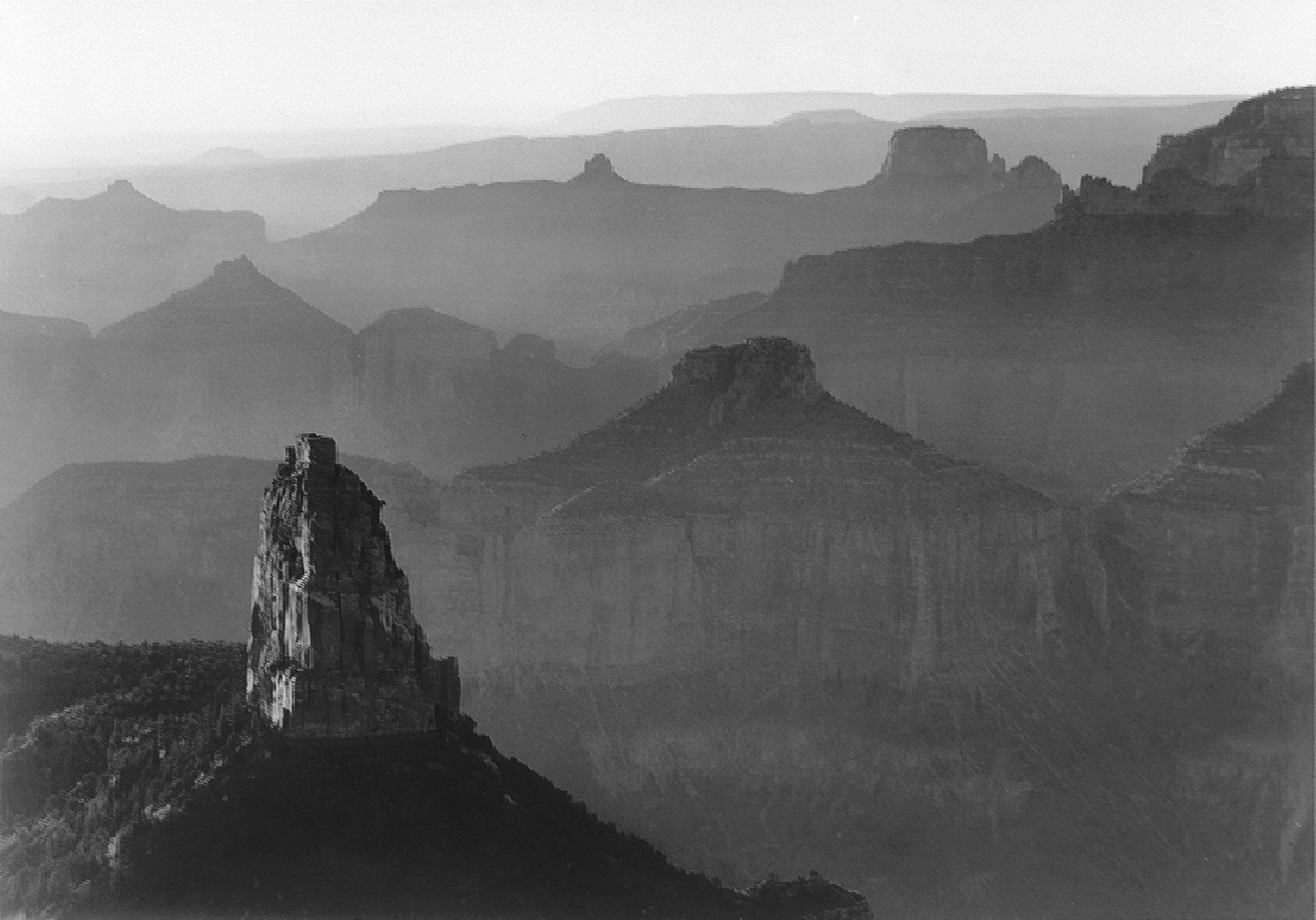
Left: Ansel Adams. Grand Canyon National Park, Arizona 1941
Ansel Adams (American, 1902-1984) Grand Canyon National Park, Arizona 1941 Gelatin silver print
Mark Klett and Byron Wolfe Panorama from Hopi Point on the Grand Canyon, made over two days extending the view of Ansel Adams 2007
Right: Ansel Adams. Grand Canyon National Park, Arizona 1941 (Courtesy of the Center for Creative Photography, Tucson, AZ)
Ansel Adams (American, 1902-1984) Grand Canyon National Park, Arizona 1941 Gelatin silver print Courtesy of the Center for Creative Photography, Tucson, AZ
“We’re intentionally using playfulness as a way to extend ideas, a kind of free-form exploration that puts a premium on creative solutions to complex space and time problems. Many of the things we’re trying to do seemed impossible at first – like merging several views of a scene from different times into a continuous space, or extending one photo’s frame to include spaces from multiple vantage points.”
Klett and Wolfes process of inserting historic views within contemporary photographs, or linking a number of different historic views, emphasises the possibilities of multiple interpretations of a single landscape. If we look at a photograph of the Grand Canyon, we bring to it our own cultural notions, myths, and memories, and read it based on our personal point of view. By bringing together images made throughout time, Klett and Wolfe remind us that any terrain is not only what we see and think about it in this present moment, but it is part of a long evolution of thought and use that includes the past and future, as well. The team’s photographs present time as overlapping layers, much like the stratigraphic rock of the Canyon. This unconventional presentation encourages viewers to see time as a flexible construction.
Text by Rebecca Senf, Assistant Curator of photography, Phoenix Art Museum from the exhibition brochure [Online] Cited 20/04/2009. No longer available online
Mark Klett and Byron Wolfe Details from the view at Point Sublime on the north rim of the Grand Canyon, based on the panoramic drawing by William Holmes (1882) 2007
Lithograph by William Henry Holmes, 1882. From Clarence Dutton, Atlas to Accompany the Monograph on the Tertiary History of the Grand Cañon District. (Courtesy of the Library of Congress).
David Hockney (English, b. 1937) Pearblossom Highway., 11-18th April 1986 #2 1986
Phoenix Art Museum McDowell Road & Central Avenue 1625 N. Central Avenue Phoenix, AZ 85004






















You must be logged in to post a comment.