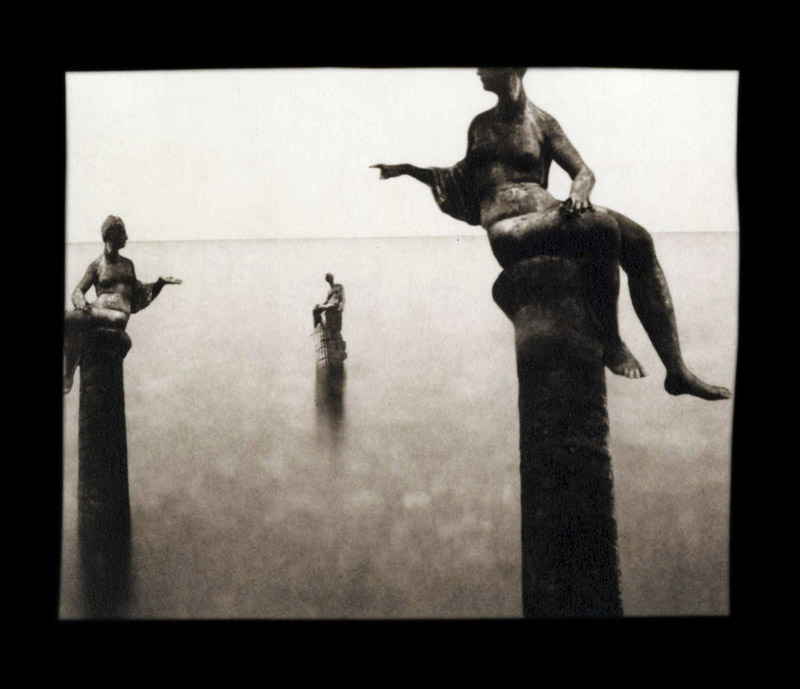
Exhibition: ‘Color! American Photography Transformed’ at the Amon Carter Museum of American Art, Fort Worth, Texas

Exhibition dates: 5th October 2013 – 5th January, 2014


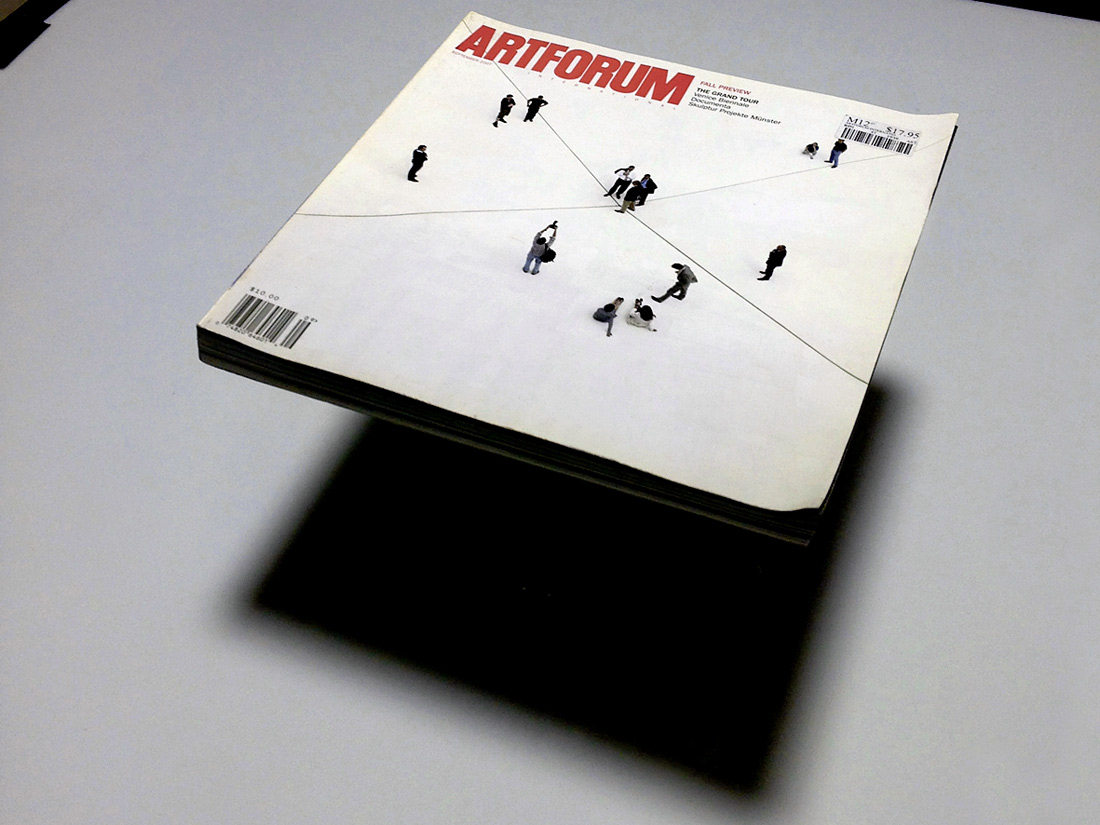
Alex Prager (American, b. 1979) 'Crowd #1 (Stan Douglas)' 2010


Alex Prager (American, b. 1979)
Crowd #1 (Stan Douglas)
2010
Dye coupler print
© Alex Prager, courtesy of the artist and Yancey Richardson Gallery


A very big subject to cover in one exhibition.

Marcus


Many thankx to the Amon Carter Museum of American Art for allowing me to publish the photographs in the posting. Please click on the photographs for a larger version of the image.


Jack Delano (American, 1914-1997) 'Chopping cotton on rented land near White Plains, Greene County, Georgia, 1941' 1941


Jack Delano (American, 1914-1997)
Chopping cotton on rented land near White Plains, Greene County, Georgia, 1941
1941
Inkjet print, 2013
Courtesy the Library of Congress


Laura Gilpin (American, 1891-1979) 'Still Life with Peaches' 1912


Laura Gilpin (American, 1891-1979)
Still Life with Peaches
1912
Lumière Autochrome
© 1979 Amon Carter Museum of American Art, Fort Worth, Texas


Jan Groover (American, 1943-2012) 'Untitled' 1978


Jan Groover (American, 1943-2012)
Untitled
1978
Dye coupler print
Amon Carter Museum of American Art, Fort Worth, Texas
© 1978 Jan Groover


Unknown photographer. 'Untitled (Woman with two daughters)' c. 1850s


Unknown photographer 
Untitled (Woman with two daughters)
c. 1850s
Salted paper print with applied color
Amon Carter Museum of American Art


Gregory Crewdson (American, b. 1962) 'Untitled (Dylan on the Floor)' from the 'Twilight Series' 1998-2002


Gregory Crewdson (American, b. 1962)
Untitled (Dylan on the Floor) from the Twilight Series
1998-2002
Dye coupler print
© Gregory Crewdson, Courtesy Gagosian Gallery


On October 5, the Amon Carter Museum of American Art opens Color! American Photography Transformed, a compelling examination of how colour has changed the very nature of photography, transforming it into today’s dominant artistic medium. Color! includes more than 70 exceptional photographs by as many photographers and is on view through January 5, 2014.

“Colour is so integral to photography today that it is difficult to remember how new it is or realise how much it has changed the medium,” says John Rohrbach, senior curator of photographs.

The exhibition covers the full history of photography, from 1839, when Frenchman Louis-Jacques-Mandé Daguerre (1787-1851) introduced his daguerreotype process, to the present. From the start, disappointed that photographs could only be made in black and white, photographers and scientists alike sought with great energy to achieve colour. Color! begins with a rare direct-colour photograph made in 1851 by Levi L. Hill (1816-1865), but explains how Hill could neither capture a full range of colour nor replicate his achievement. It then shows finely rendered hand-coloured photographs to share how photographers initially compensated for the lack of colour.

When producing colour photographs became commercially feasible in 1907 in the form of the glass-plate Autochrome, leading artists like Alfred Stieglitz (1864-1946) were initially overjoyed, according to Rohrbach. Color! offers exquisite examples of their work even as it explains their ultimate rejection of the process because it was too difficult to display and especially because they felt it mirrored human sight too closely to be truly creative.

“Although many commercial photographers embraced colour photography over succeeding decades, artists continued to puzzle over the medium,” Rohrbach explains. Color! reveals that many artists from Richard Avedon (1923-2004) to Henry Holmes Smith (1909-1986) tried their hand at making colour photographs through the middle decades of the 20th century, and it shows the wide range of approaches they took to colour. It also shares the background debates among artists and photography critics over how to employ colour and even whether colour photographs could have the emotional force of their black-and-white counterparts.

Only in 1976, when curator John Szarkowski at the Museum of Modern Art in New York heralded the young Memphis photographer William Eggleston’s (b. 1939) snapshot-like colour photographs as the solution to artful colour, did fine art colour photography gain full acceptance.

“Eggleston revealed how colour can simultaneously describe objects and stand apart from those objects as pure hue,” Rohrbach says. “In so doing, he successfully challenged the longstanding conception of photography as a medium that found its calling on close description.”

Color! illustrates through landmark works by Jan Groover (1943-2012), Joel Meyerowitz (b. 1938) and others the blossoming of artists’ use of colour photography that followed in the wake of Szarkowski’s celebration of Eggleston. It also reveals artists’ gradual absorption of the notion that colour could be used flexibly to critique cultural mores and to shape stories. In this new colour world, recording the look of things was important, but it was less important than conveying a message about life. In this important shift, led by artists as diverse as Andres Serrano (b. 1950) and Laurie Simmons (b. 1949), the exhibition explains, photography aligned itself far more closely with painting.

Color! shows how the rise of digital technologies furthered this transformation, as photographers such as Gregory Crewdson (b. 1962), Richard Misrach (b. 1949) and Alex Prager (b. 1979) have explicitly embraced the hues, scale, and even subjects of painting and cinema.

“Photography still gains its power and wide popularity today from its ability to closely reflect the world,” explains Rohrbach, “but Color! reveals how contemporary artists have been using reality not as an end unto itself, but as a jumping off point for exploring the emotional and cultural power of colour, even blurring of line between record and fiction to make their points. These practices, founded on colour, have transformed photography into the dominant art form of today even as they have opened new questions about the very nature of the medium.”

The exhibition will include an interactive photography timeline enabling visitors to contribute to the visual dialogue by sharing their own colour images. The photographs will be displayed along the timeline and on digital screens in the museum during the exhibition to illustrate how quantity, format and colour quality have evolved over time.

“By telling the full story of colour photography’s evolution, the exhibition innovatively uncovers the fundamental change that colour has brought to how photographers think about their medium,” says Andrew J. Walker, museum director. “The story is fascinating and the works are equally captivating. Photography fans and art enthusiasts in general will revel in the opportunity to see works by this country’s great photographers.

Press release from the Amon Carter Museum of American Art website
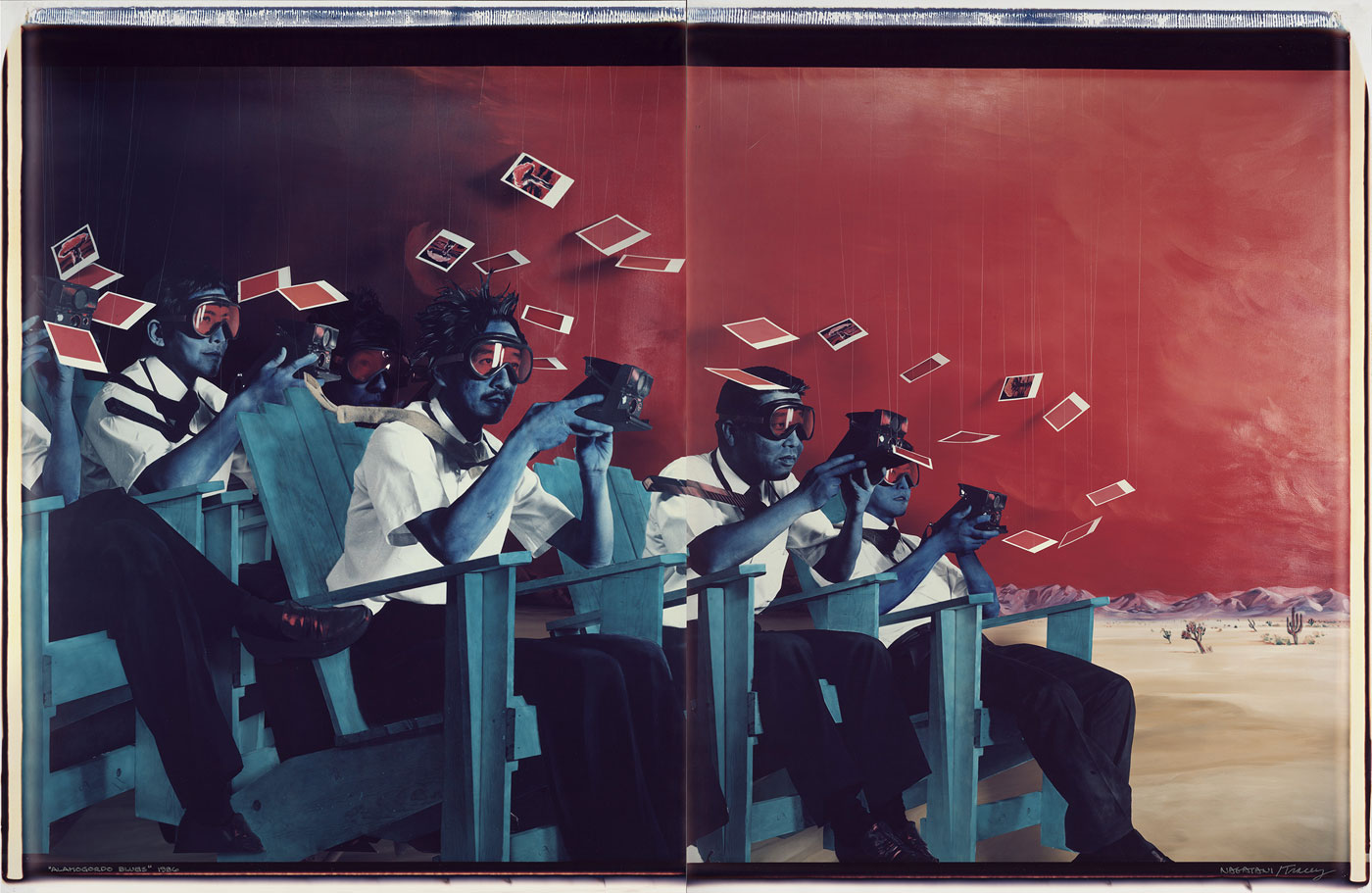
 

Patrick Nagatani (American, b. 1945) and Andree Tracey (American, b. 1948) 'Alamogordo Blues' 1986


Patrick Nagatani (American, b. 1945)
Andree Tracey (American, b. 1948)
Alamogordo Blues
1986
Dye diffusion print
Center for Creative Photography, University of Arizona
© Patrick Nagatani and Andree Tracey


Laurie Simmons (American, b. 1949) 'Woman/Red Couch/Newspaper' 1978


Laurie Simmons (American, b. 1949)
Woman/Red Couch/Newspaper
1978
Silver dye-bleach print
Los Angeles County Museum of Art, Ralph M. Parsons Fund
© Laurie Simmons


Sandy Skoglund (American, b. 1946) 'Revenge of the Goldfish, 1980' 1980


Sandy Skoglund (American, b. 1946)
Revenge of the Goldfish, 1980
1980
Silver dye-bleach print
St. Louis Art Museum, Gift of Mr. and Mrs. Fielding Lewis Holmes
© 1981 Sandy Skoglund


Mark Cohen (American, b. 1943) 'Boy in Yellow Shirt Smoking' 1977


Mark Cohen (American, b. 1943)
Boy in Yellow Shirt Smoking
1977
Dye coupler print
Courtesy the artist and ROSEGALLERY
© Mark Cohen


John F. Collins (American, 1888?-1988) 'Tire' 1938


John F. Collins (American, 1888?-1988)
Tire
1938
Silver dye-bleach print
Courtesy Howard Greenberg Gallery
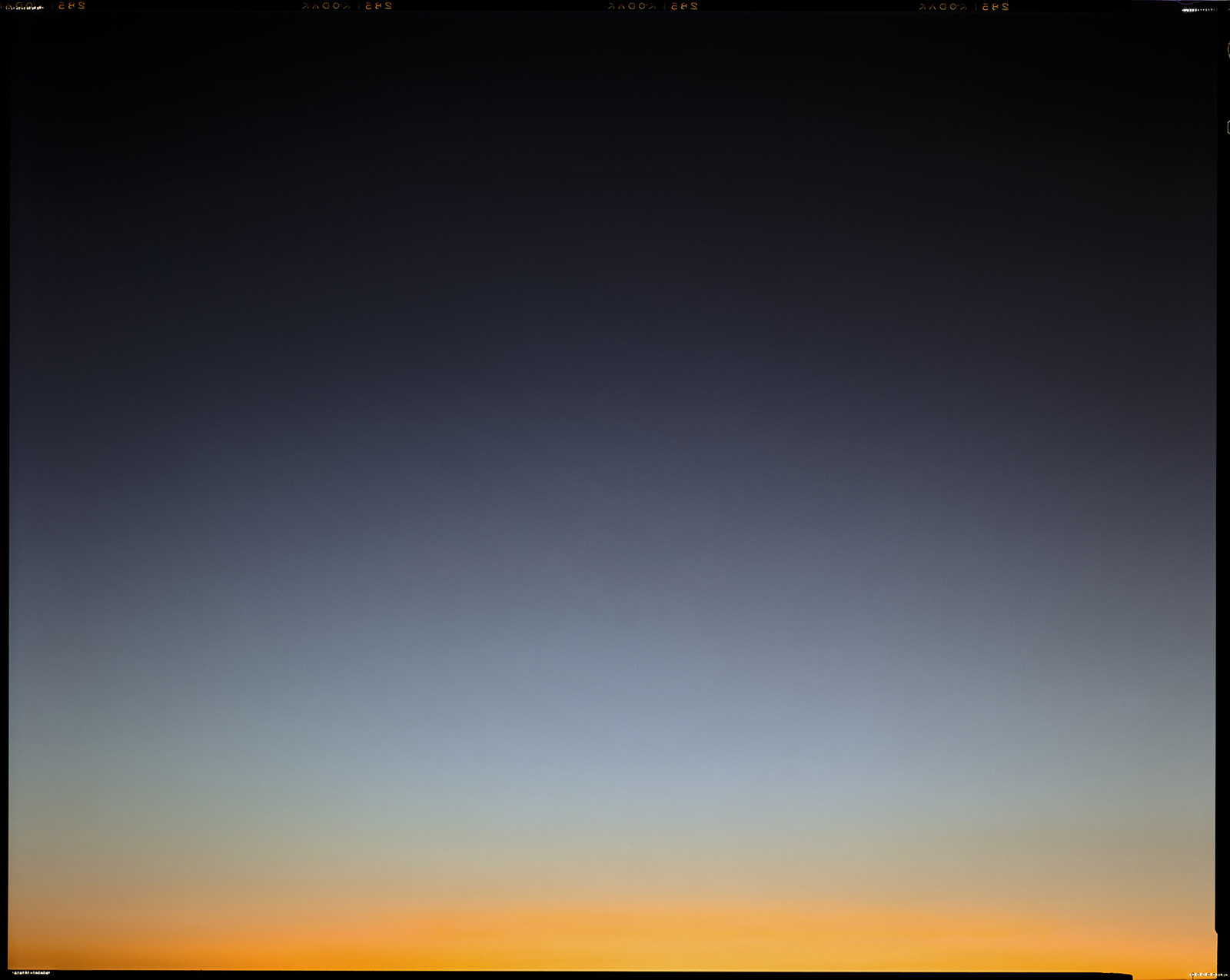
 

Richard Misrach (American, b. 1949) 'Paradise Valley (Arizona), 3.22.95, 7:05 P.M.' 1995


Richard Misrach (American, b. 1949)
Paradise Valley (Arizona), 3.22.95, 7:05 P.M.
1995
Dye coupler print
© Richard Misrach, courtesy Fraenkel Gallery, San Francisco, Marc Selwyn Fine Art, Los Angeles and Pace/MacGill Gallery, NY


Henry Holmes Smith (American, 1909-1986) 'Tricolor Collage on Black' 1946


Henry Holmes Smith (American, 1909-1986)
Tricolor Collage on Black
1946
Dye imbibition print over gelatin silver print
Indiana University Art Museum, Henry Holmes Smith Archive
© Smith Family Trust


Mitch Epstein (American, b. 1952) 'Flag' 2000


Mitch Epstein (American, b. 1952)
Flag
2000
Dye coupler print
Private collection
© Black River Productions


Trevor Paglen (American, b. 1974) 'The Fence (Lake Kickapoo, Texas)' 2010


Trevor Paglen (American, b. 1974)
The Fence (Lake Kickapoo, Texas)
2010
Dye coupler print, 2011
Amon Carter Museum of American Art, Fort Worth, Texas
© Trevor Paglen


Joaquin Trujillo (American, b. 1976) 'Jacky' 2003


Joaquin Trujillo (American, b. 1976)
Jacky
2003
From the series Los Niños
Inkjet print, 2011
Amon Carter Museum of American art, purchase with funds provided by the Stieglitz Circle of the Amon Carter Museum of American Art
© Joaquin Trujillo 2013


James N. Doolittle (American, 1889-1954) 'Ann Harding' c. 1932


James N. Doolittle (American, 1889-1954)
Ann Harding
c. 1932
Tricolor carbro print
Nelson-Atkins Museum of Art, Kansas City, MO


Amon Carter Museum
3501 Camp Bowie Boulevard
Fort Worth, TX 76107-2695

Opening hours:
Tuesday, Wednesday, Friday, Saturday:
 10am – 5pm
Thursday: 10am – 8pm
Sunday: 12am – 5pm
Closed Mondays and major holidays.

Amon Carter Museum of American Art website

LIKE ART BLART ON FACEBOOK

Back to top

Review: Polixeni Papapetrou ‘A Performative Paradox’ and Daniel von Sturmer 
’After Images’ at the Centre for Contemporary Photography (CCP), Fitzroy, Melbourne

Exhibition dates: 24th May – 14th July 2013


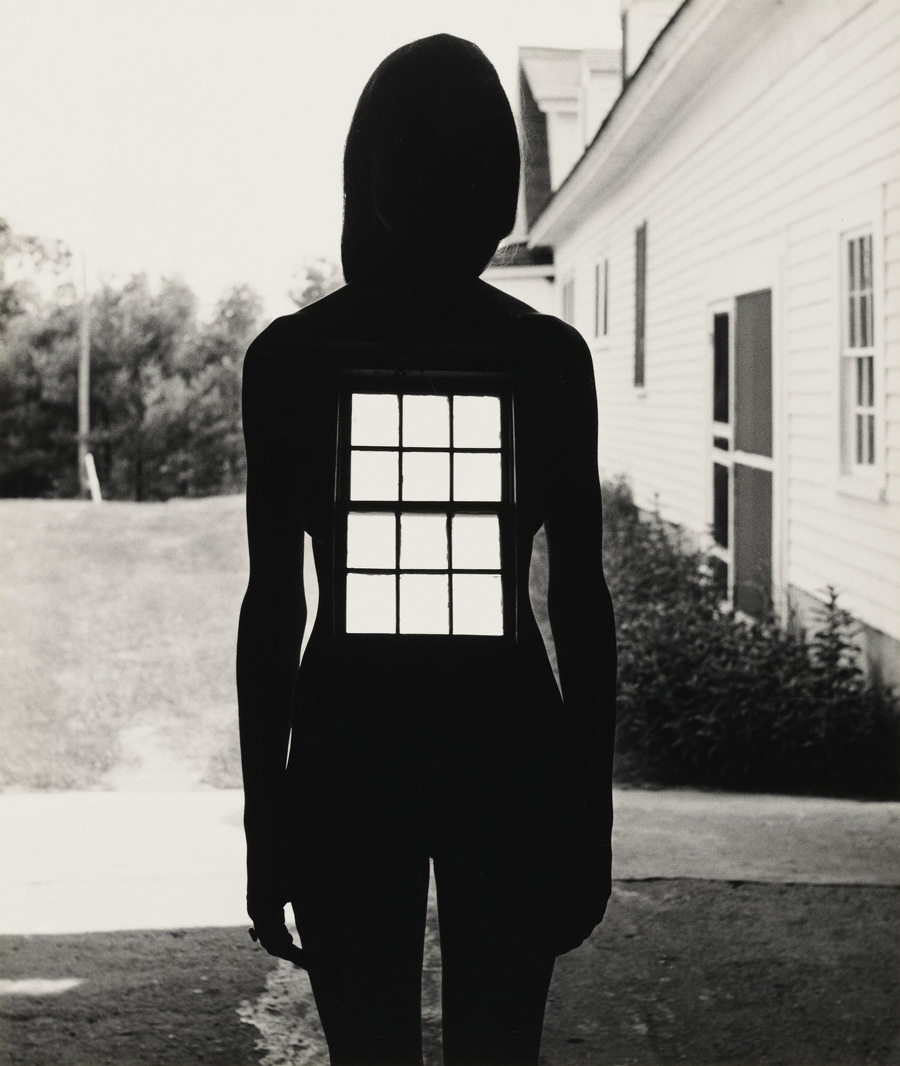
Polixeni Papapetrou (Australian, 1960-2018) 'Drag queen wearing cut out dress' 1993


Polixeni Papapetrou (Australian, 1960-2018)
Drag queen wearing cut out dress
1993
Gelatin silver photograph
28.5 x 28.5cm
Courtesy the artist and Nellie Castan Gallery, Melbourne and Stills Gallery, Sydney


Two solid if not overly memorable exhibitions are presented at the Centre for Contemporary Photography.

Polixeni Papapetrou A Performative Paradox is a bit of a dog’s breakfast. While it is wonderful to see early work by this artist – work that features Marilyn and Elvis impersonators, circus people, body builders and drag queens – too many bodies of work are crammed into too small a space with too few images. Some of the later series are represented by just one image giving a hotch potch feel to the whole exhibition ensemble. Perhaps it would have been better to concentrate solely on the early black-and-white images and colour images, work that is rarely seen and informs the staged work that followed. Having said that the black-and-white photographs are a joy to behold, documenting as they do performative identities. The photographs have an intangible presence. There are strong elements of the frontality of Diane Arbus in the photographs of circus performers and drag queens, coupled with a intrinsic understanding of light and texture. The photographs of drag queens are the highlight of both exhibitions and Drag queen wearing cut out dress (1993, below) reminded me of an early black-and-white photograph by Fiona Hall (Leura, New South Wales1974) in its use of patterned wallpaper. Let us hope there is a large retrospective of Polixeni’s work (at NGV or Heide for example) in the future, one that can do justice to the depth and complexity of her vision as an artist.
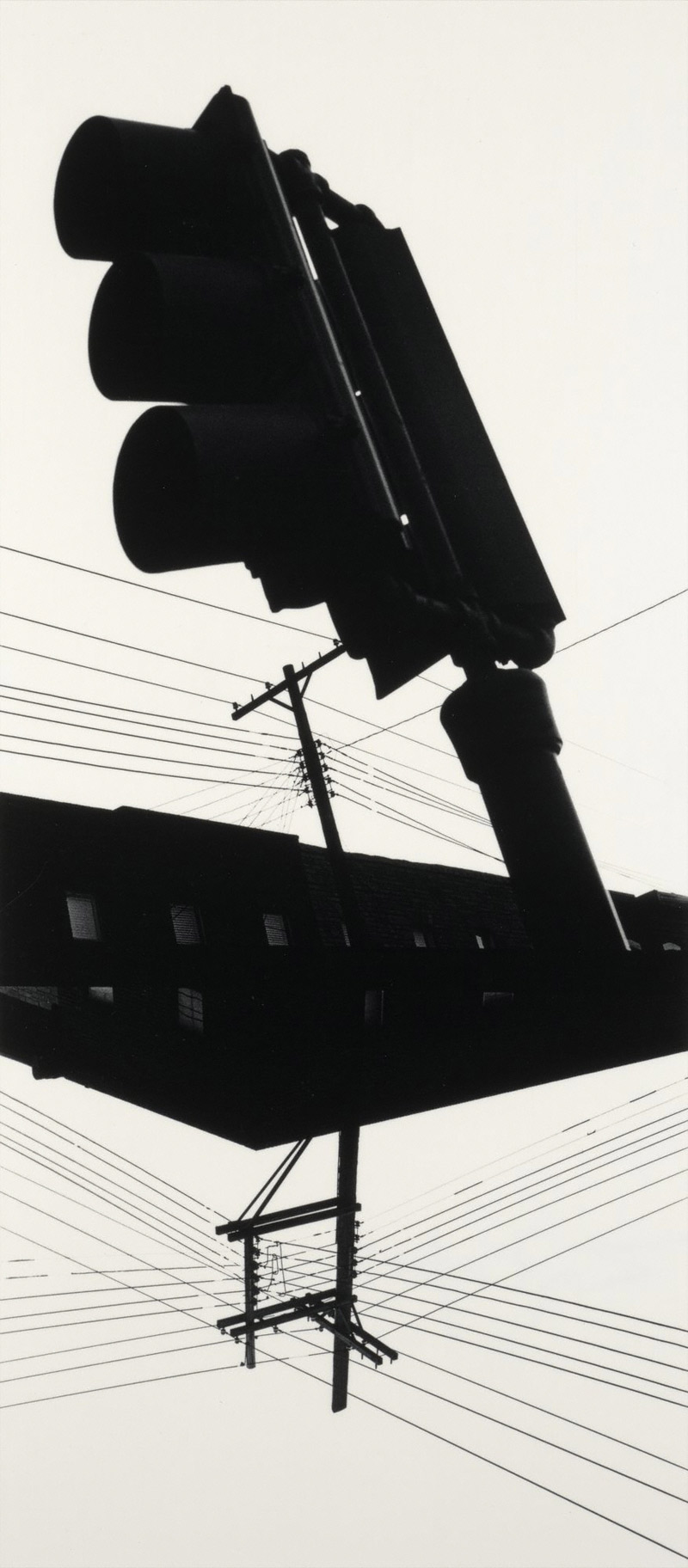
Daniel von Sturmer 
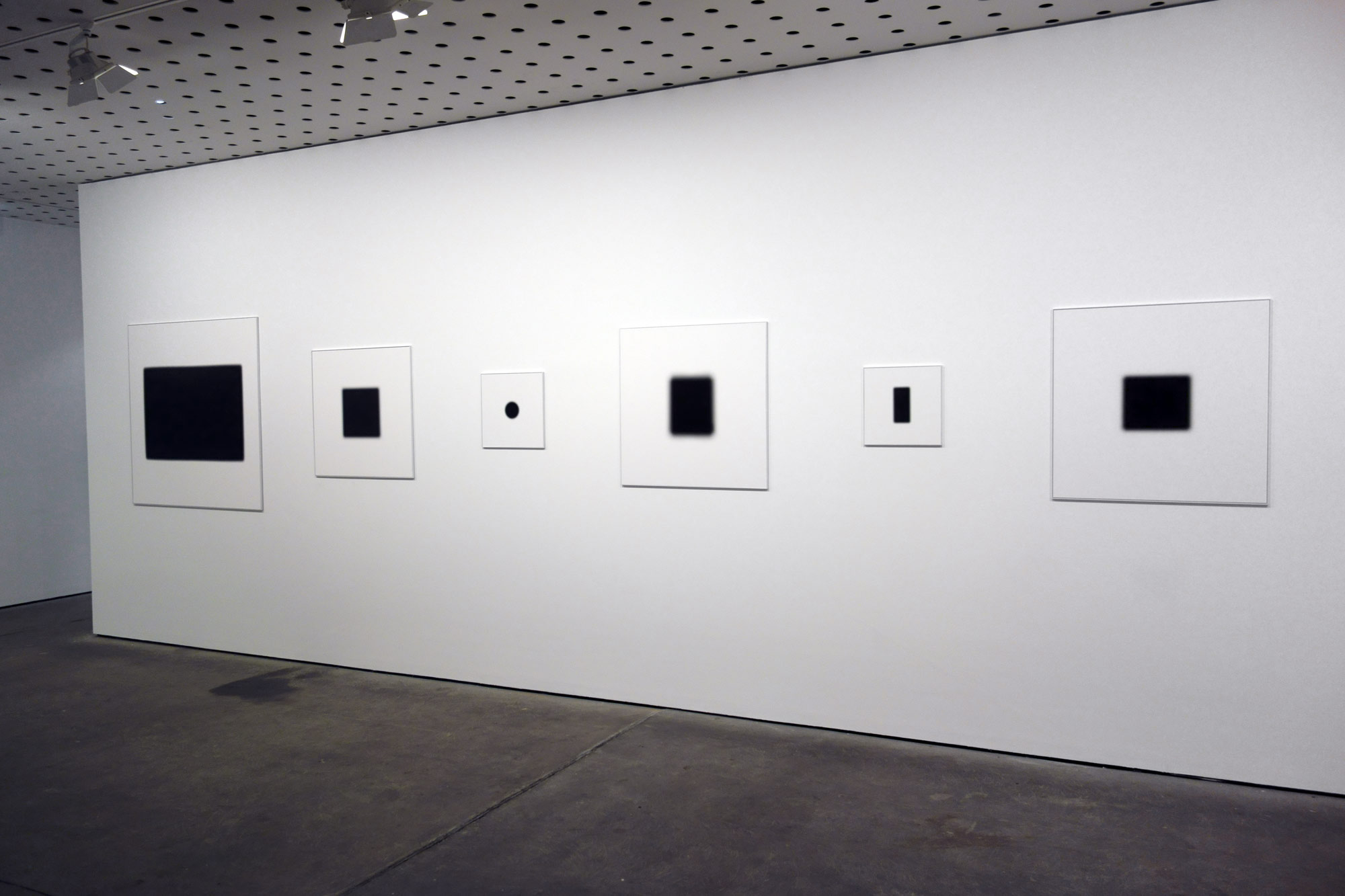
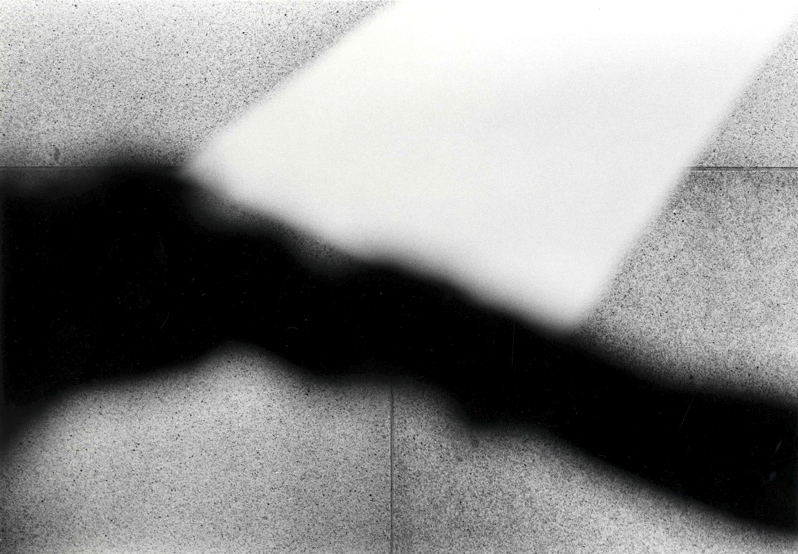
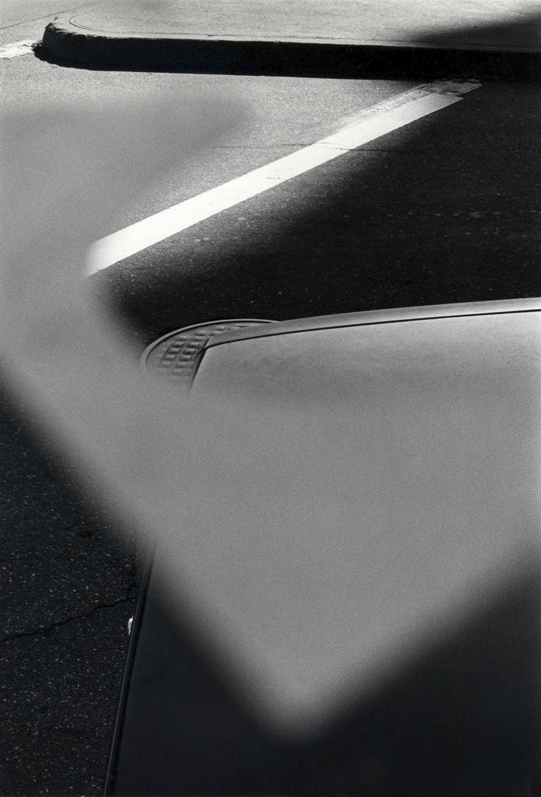
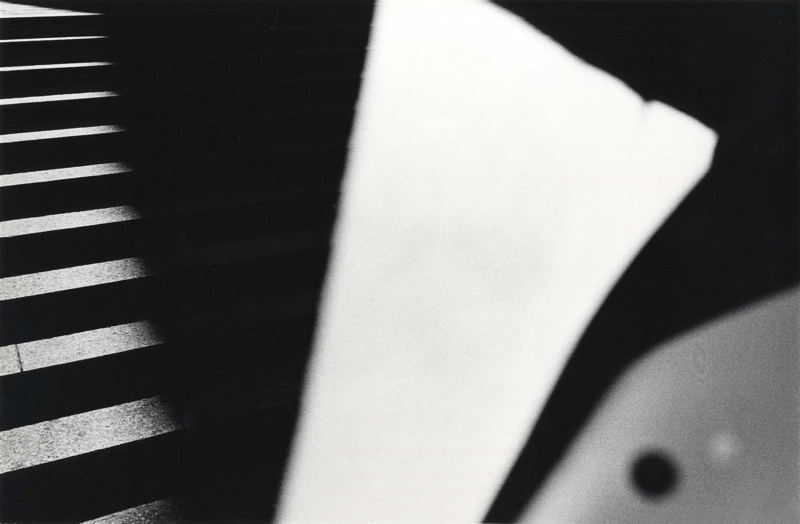
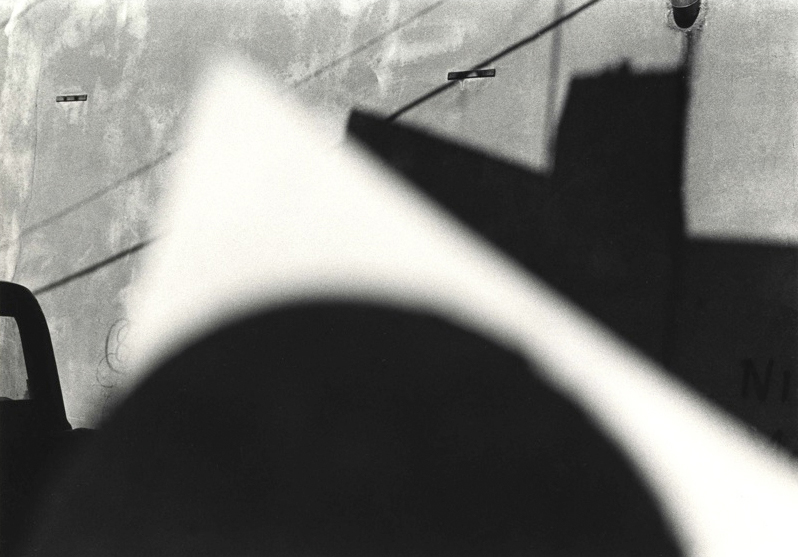
After Images is an interesting conceptual experiment, one that investigates the splitting of the image (shadow) from its referent (object). “The images propose a kind of transference; the object itself may be insignificant but its subjective meaning carries weight, and its shadow leaves a space the viewer fills with their own reading.” In their black-and-white fuzziness the work looks impressive when viewed in the gallery space (see installation views below) but upon close inspection the individual photographs fail to hold the viewers attention. Personally, I found it difficult to impart any great meaning to any of these works and the investigation certainly does not produce memorable images, ones that will stay with the viewer months and years later. For me the exhibition became an exercise in guessing what shadows were which objects, a game that grew quickly tiresome. The work then became an exercise in the importance of captioning an image, as I constantly looked around the room trying to match the titles of the works with the images themselves. As abstract images they imparted little metaphysical poetry as ghost images (an afterimage or ghost image is an optical illusion that refers to an image continuing to appear in one’s vision after the exposure to the original image has ceased). As images that investigate the link between text, object, shadow and language they started to become what the artist sought to enunciate: shadow objects bound to the realm of signification in some amorphous play, shadows that have the potential to become ‘Other’.

PS. As an analogy you could see these images as the equivalent of Jung’s human “shadow aspect” where, according to Jung, the shadow, in being instinctive and irrational, is prone to projection (as these shadows are projected by their objects). The shadow represents the entirety of the unconscious, ie. everything of which a person is not fully conscious, and is the seat of creativity. “Everyone carries a shadow,” Jung wrote, “and the less it is embodied in the individual’s conscious life, the blacker and denser it is.” (Jung, C.G. (1938). “Psychology and Religion.” In CW 11: Psychology and Religion: West and East. p. 131). Hence the potential halo/cination of these images.

Dr Marcus Bunyan


Many thankx to the CCP for allowing me to publish the photographs in the posting. Please click on the photographs for a larger version of the image. All installation photographs © Marcus Bunyan


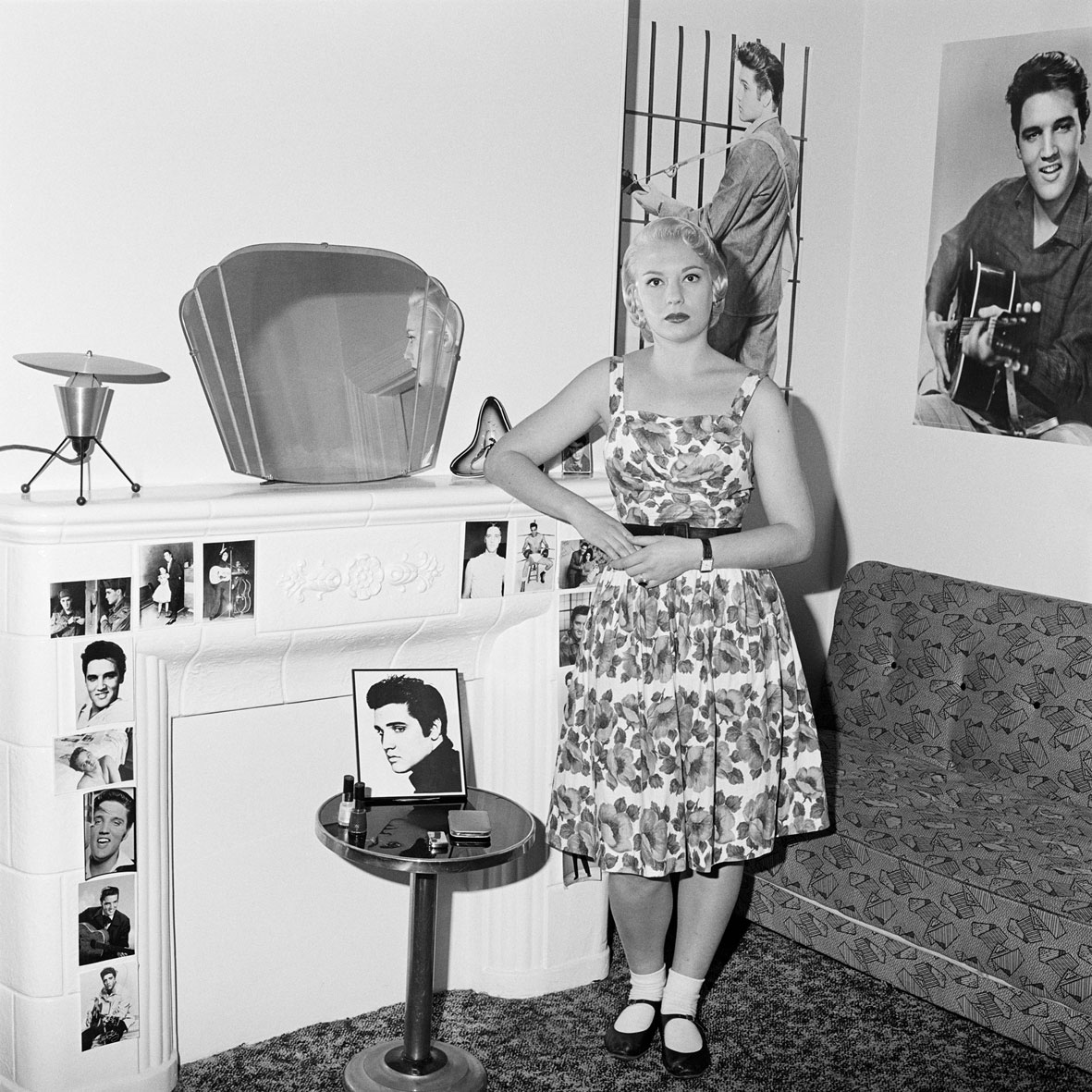
Polixeni Papapetrou (Australian, 1960-2018) 'Suzie, Elvis fan at home, Melbourne' 1989


Polixeni Papapetrou (Australian, 1960-2018)
Suzie, Elvis fan at home, Melbourne
1989
Selenium toned gelatin silver photograph
40.7 x 40.7cm
Courtesy the artist and Nellie Castan Gallery, Melbourne and Stills Gallery, Sydney


Polixeni Papapetrou (Australian, 1960-2018) 'Indian Brave' 2002


Polixeni Papapetrou (Australian, 1960-2018)
Indian Brave
2002
Pigment ink print
85 x 85cm
Courtesy the artist and Nellie Castan Gallery, Melbourne and Stills Gallery, Sydney


Polixeni Papapetrou (Australian, 1960-2018) 'Three young men paying homage to Elvis on the 13th anniversary of Elvis' death, Elvis Memorial Melbourne' 1990


Polixeni Papapetrou (Australian, 1960-2018)
Three young men paying homage to Elvis on the 13th anniversary of Elvis’ death, Elvis Memorial Melbourne
1990
Selenium toned gelatin silver photograph
40.7 x 40.7cm
Courtesy the artist and Nellie Castan Gallery, Melbourne and Stills Gallery, Sydney


This exhibition focuses on the performative in the work of Polixeni Papapetrou, from her early documentary work through to her directorial work with her children since 2002, regarded internationally as some of the most powerful and provocative works in the field of perfomative photography. Papapetrou’s enduring interest is in how the ‘other’ is represented and how the ‘other’ performs in reinforcing our own identity.

Polixeni Papapetrou is one of Australia’s leading contemporary photomedia artists. She has been exploring relationships between history, contemporary culture, landscape, identity and childhood through her photographic practice since the mid-eighties. In this exhibition, selected by Professor Anne Marsh in consultation with the artist, a particular thread has been selected across Papapetrou’s practice – that of the performative – from her early documentary work through to her directorial work with her children from 2002 to the present.

Her images are informed by her own experience as ‘other’, growing up as a Greek immigrant in a white, Anglo-Saxon, male-dominated culture in Australia in the 1960s and 1970s. Marilyn Monroe impersonators, Elvis Presley fans, body builders, circus performers and drag queens have all taken their turn in front of Papapetrou’s camera. All of these people are, one way or another, performing identities.

In 2002 Papapetrou turned her focus to the experience of childhood, using her children as the performers in her pictures. There is a challenging confusion between fantasy, mythology, archetype, animism and theatricality present in these works, ranging from the playful to the transgressive, wrangling with the question of identity and stressing the embodied nature of experience.

Text from the CCP website


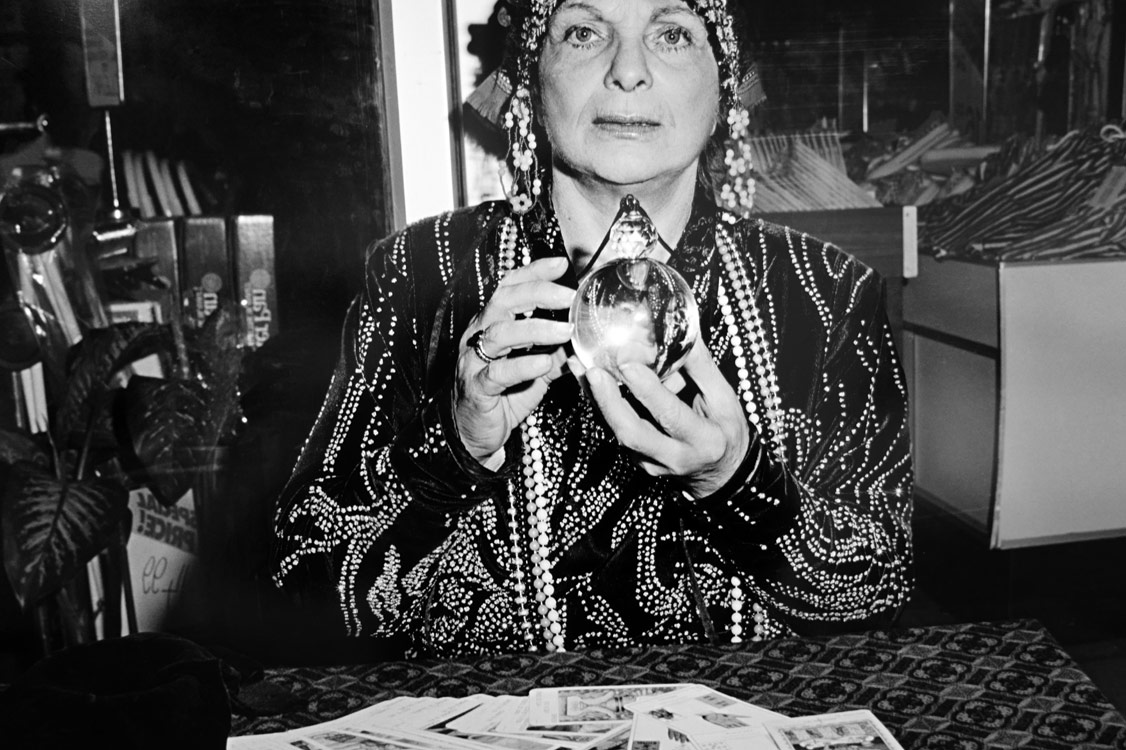
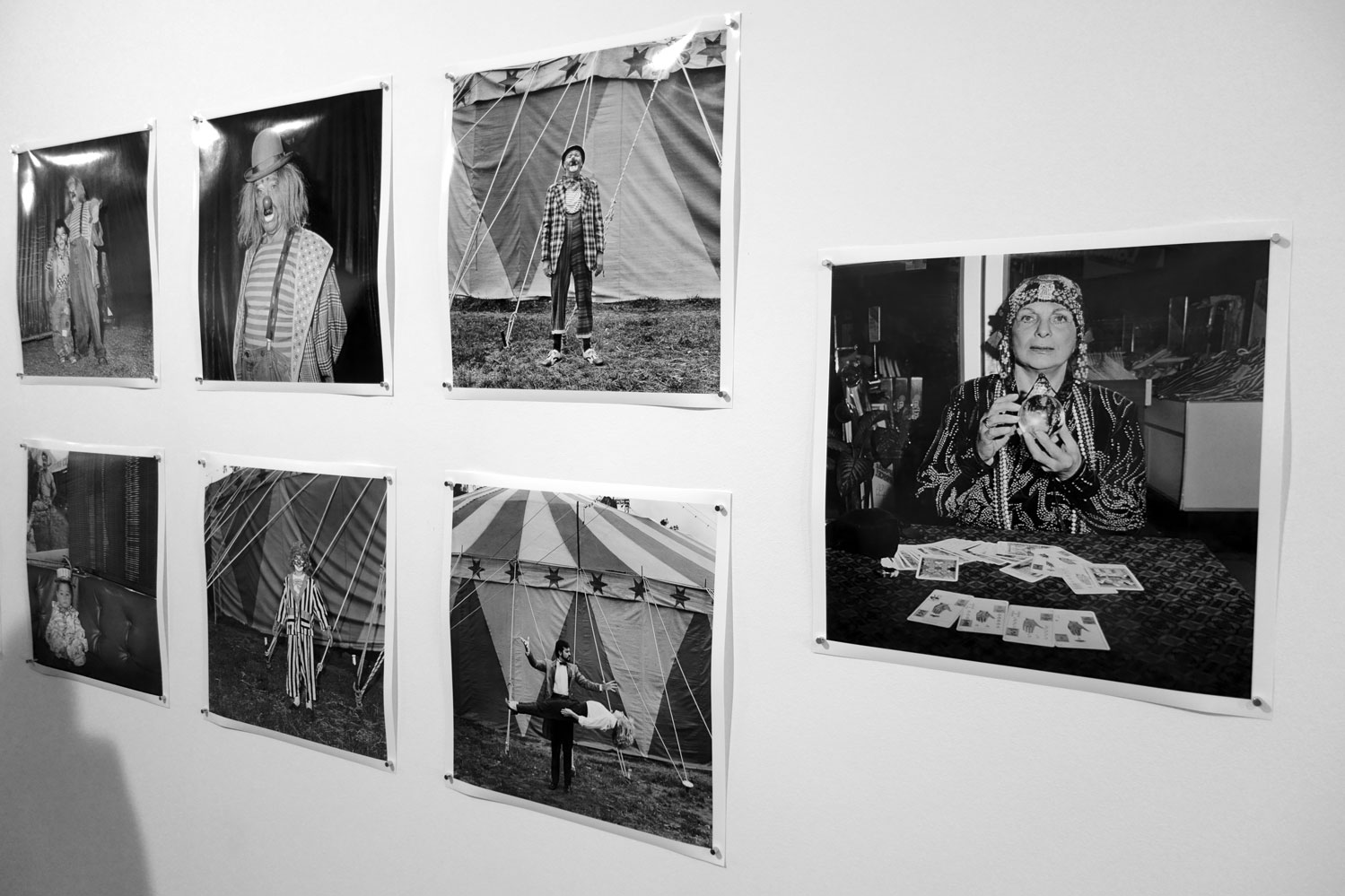
Polixeni Papapetrou (Australian, 1960-2018) 'Fortune teller' 1989 (detail)


Polixeni Papapetrou (Australian, 1960-2018)
Fortune teller (detail)
1989
From the series Ashton Circus, Silvers Circus 1989-1990


Polixeni Papapetrou. 'Levitation, Silvers Circus' 1989 (detail)


Polixeni Papapetrou (Australian, 1960-2018)
Levitation, Silvers Circus (detail)
1989
From the series Ashton Circus, Silvers Circus 1989-1990


Polixeni Papapetrou (Australian, 1960-2018) 'Ashton Circus, Silvers Circus' series 1989-1990 (installation view)


Polixeni Papapetrou (Australian, 1960-2018)
Ashton Circus, Silvers Circus series (installation view)
1989-1990
Photo: Marcus Bunyan


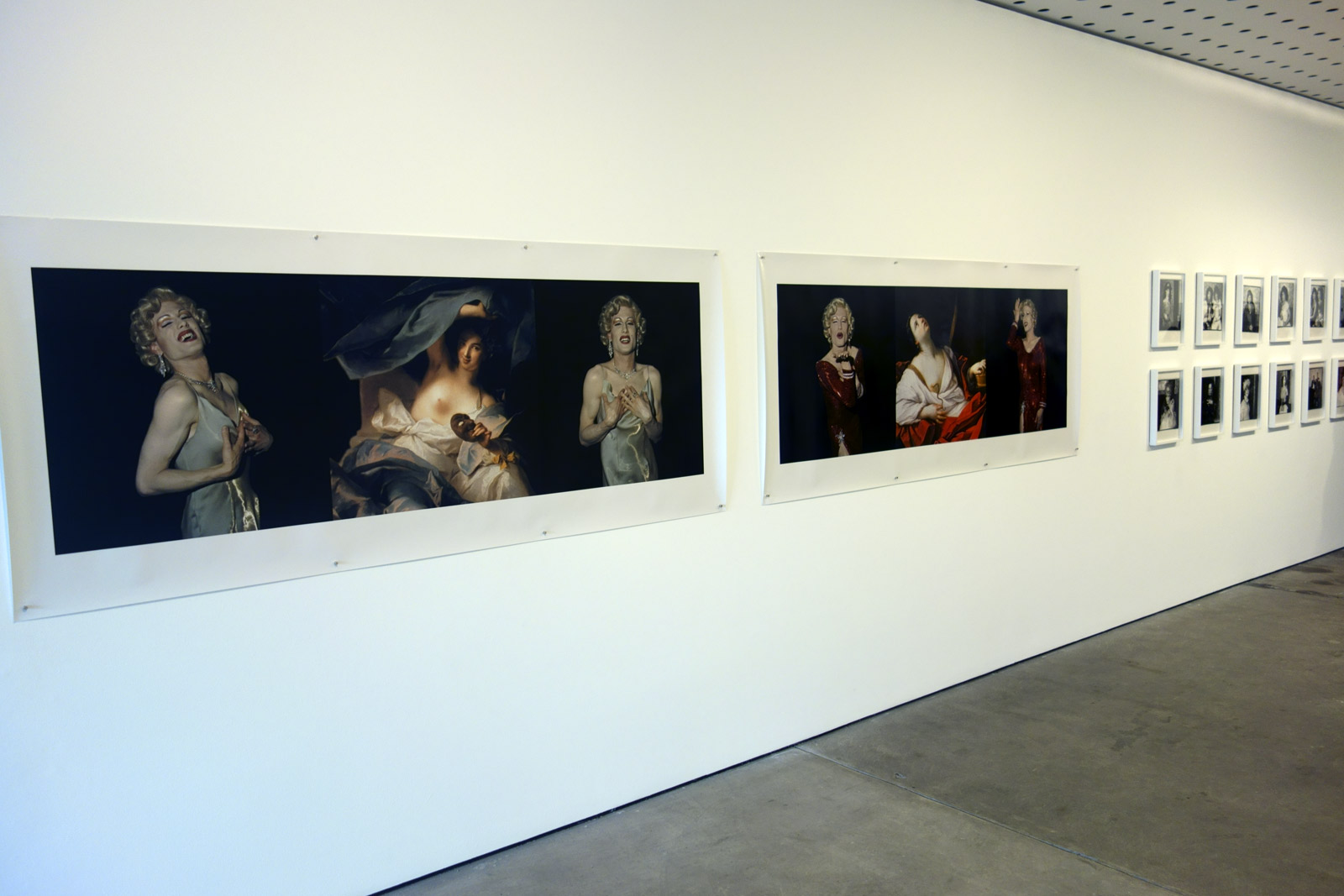
Installation view of Polixeni Papapetrou 'A Performative Paradox' at the Centre for Contemporary Photography (CCP)

Installation view of Polixeni Papapetrou 'A Performative Paradox' at the Centre for Contemporary Photography (CCP)

Installation view of Polixeni Papapetrou 'A Performative Paradox' at the Centre for Contemporary Photography (CCP)

Installation view of Polixeni Papapetrou 'A Performative Paradox' at the Centre for Contemporary Photography (CCP)

Installation view of Polixeni Papapetrou 'A Performative Paradox' at the Centre for Contemporary Photography (CCP)


Installation views of Polixeni Papapetrou A Performative Paradox at the Centre for Contemporary Photography (CCP)
Photos: Marcus Bunyan


Daniel von Sturmer (New Zealand, b. 1972) 'Production Still for After Images'


Daniel von Sturmer (New Zealand, b. 1972)
Production Still for After Images
Courtesy the artist and Anna Schwartz Gallery, Melbourne and Sydney


In After Images the shadows of a set of subjectively ‘important artefacts’ (a business card, a phone, a letter…) are presented alongside generic objects from the studio, for example: a bin, some tape, a ruler… Presented at 1:1 scale, the images propose a kind of transference; the object itself may be insignificant but its subjective meaning carries weight, and its shadow leaves a space the viewer fills with their own reading.

Photographed using a specially constructed ‘set’ to enable the separation of an object from its shadow, the resulting image stands alone, separated from its object yet inextricably bound to the realm of signification from which it has been cast.

Text from the CCP website


Installation view of Daniel von Sturmer 'After Images' at the Centre for Contemporary Photography (CCP)

Installation view of Daniel von Sturmer 'After Images' at the Centre for Contemporary Photography (CCP)

Installation view of Daniel von Sturmer 'After Images' at the Centre for Contemporary Photography (CCP)

Installation view of Daniel von Sturmer 'After Images' at the Centre for Contemporary Photography (CCP)

Installation view of Daniel von Sturmer 
'After Images' at the Centre for Contemporary Photography (CCP)


Installation views of Daniel von Sturmer 
After Images at the Centre for Contemporary Photography (CCP)
Photos: Marcus Bunyan


Centre for Contemporary Photography

No permanent exhibition space at the moment

Centre for Contemporary Photography website

LIKE ART BLART ON FACEBOOK

Back to top

Exhibition: ‘Saul Leiter’ at Kunst Haus Wien, Vienna

Exhibition dates: 31st January – 26th May 2013


Saul Leiter (American, 1923-2013) 'From the El' c. 1955


Saul Leiter (American, 1923-2013)
From the El
c. 1955
© Saul Leiter / Courtesy Howard Greenberg Gallery, New York


“I like it when one is not certain of what one sees.
We don’t know why the photographer has taken such a picture.
If we look and look, we begin to see and are still left with the pleasure of uncertainty.”


“It is not where it is or what it is that matters, but how you see it.”


“After the age of 75 you should not be photographed.
You should be painted by Rembrandt or Hals, but not by Caravaggio.”


Saul Leiter


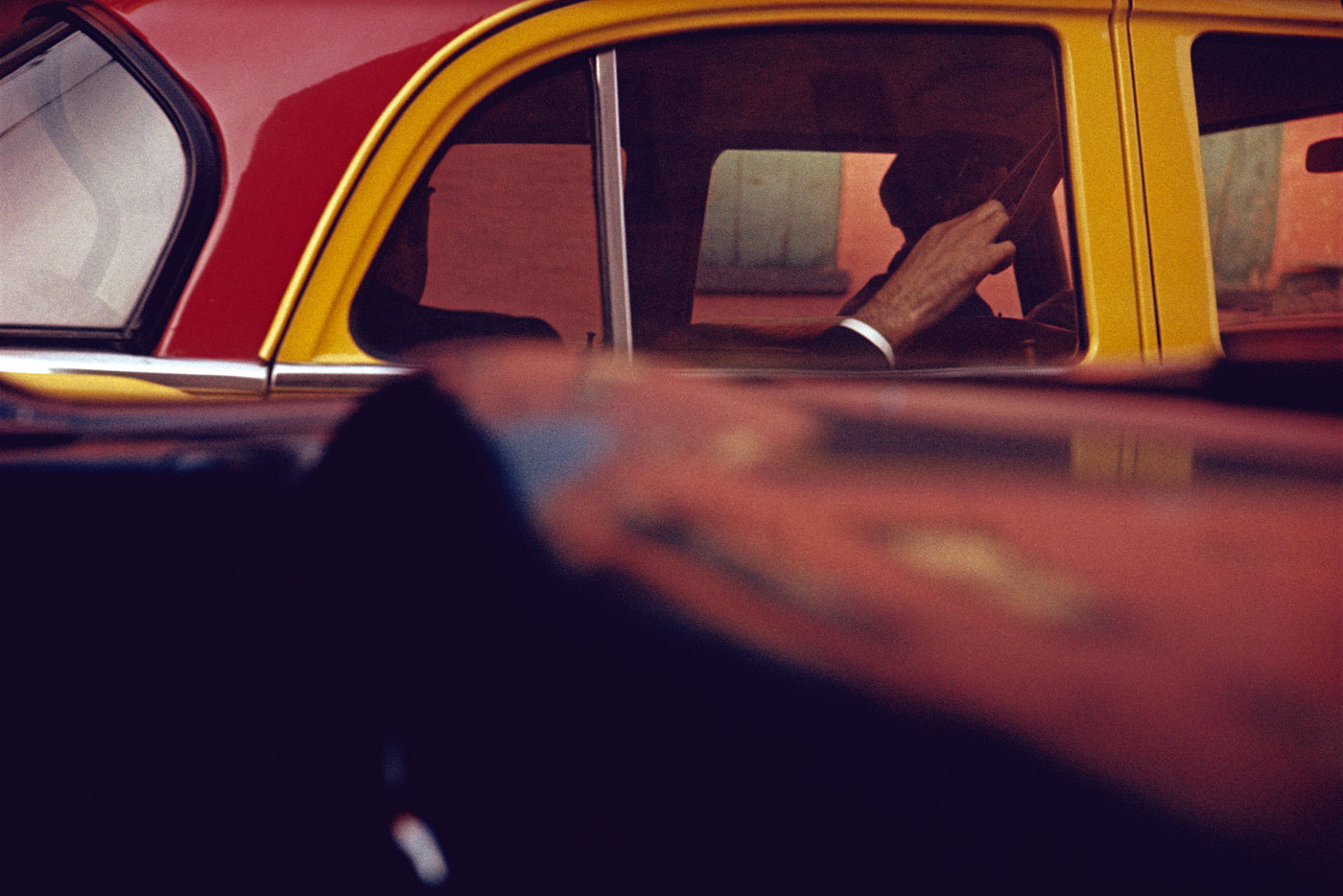
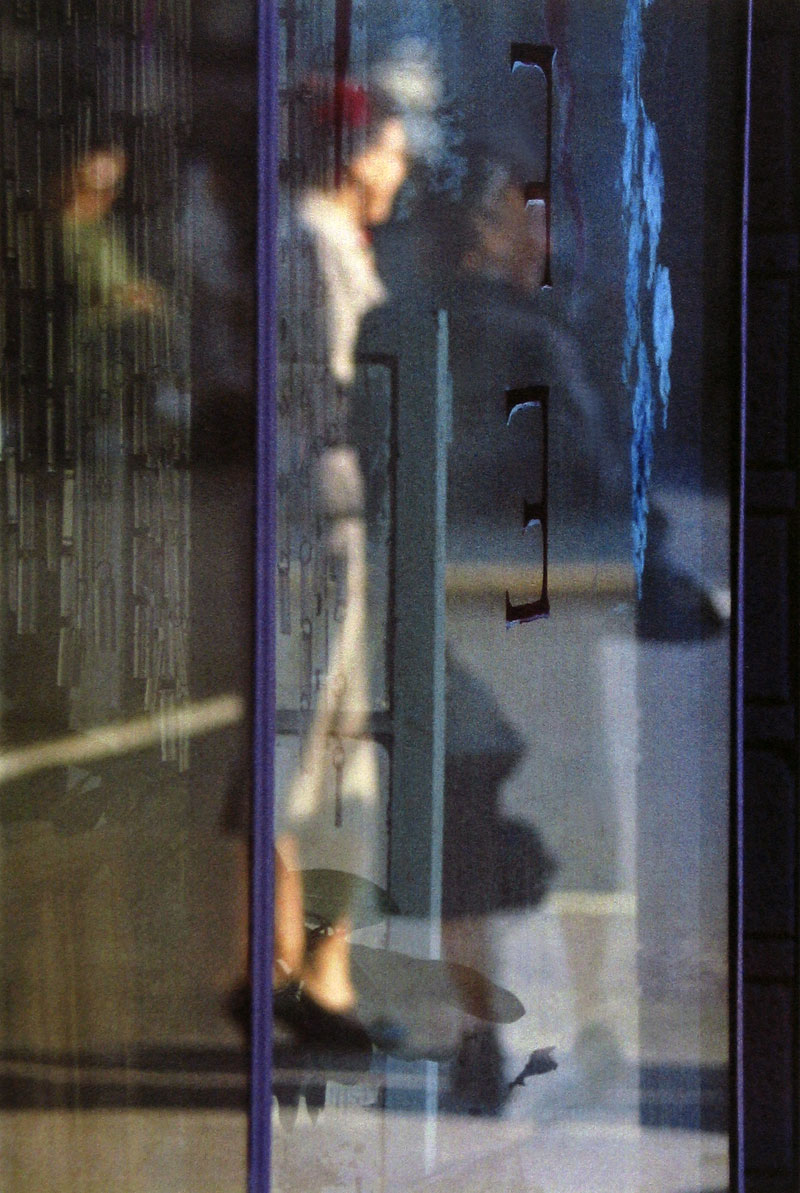
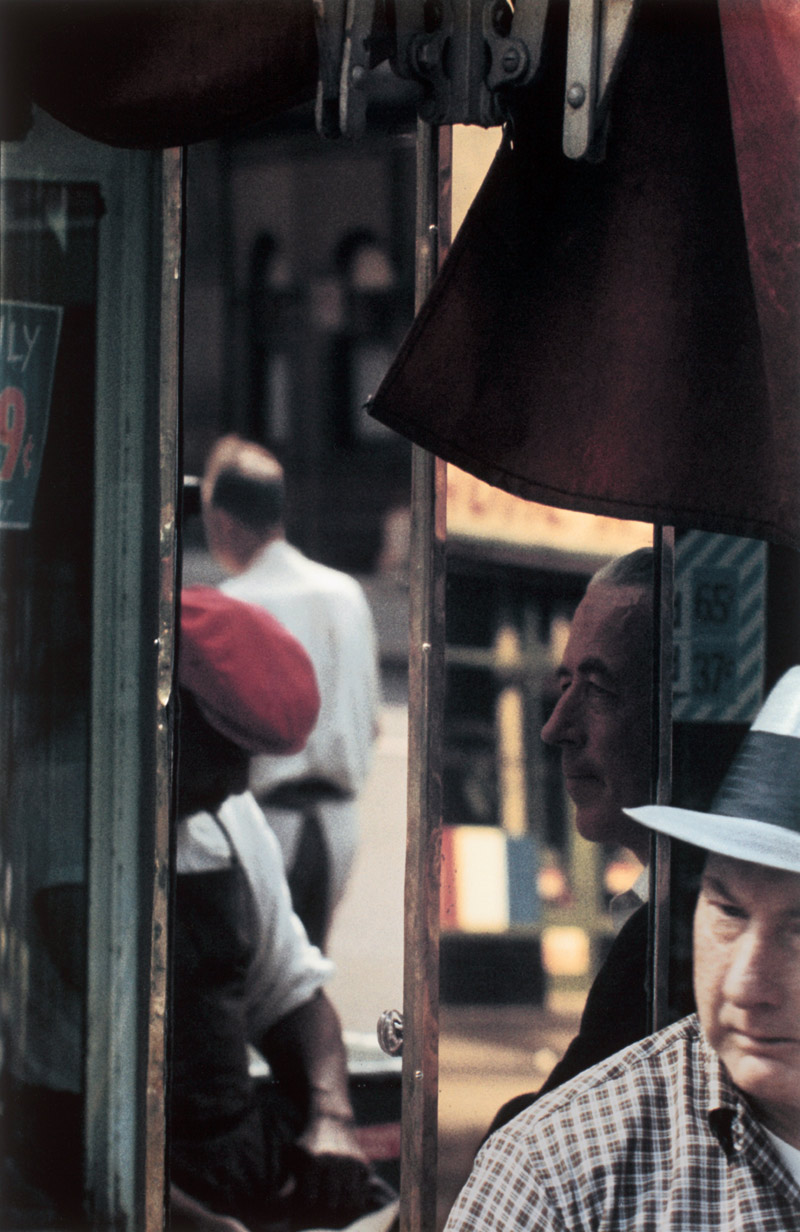
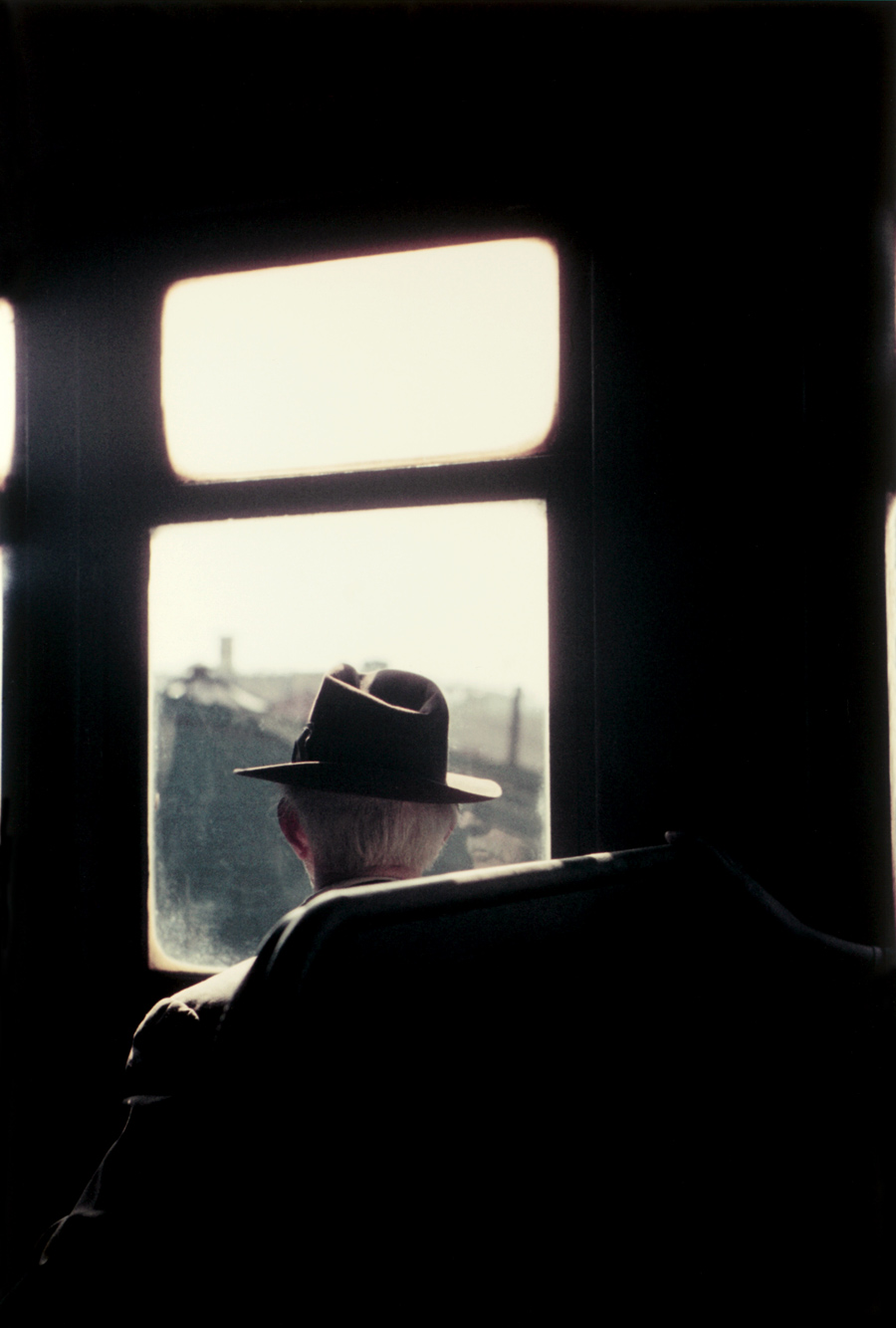
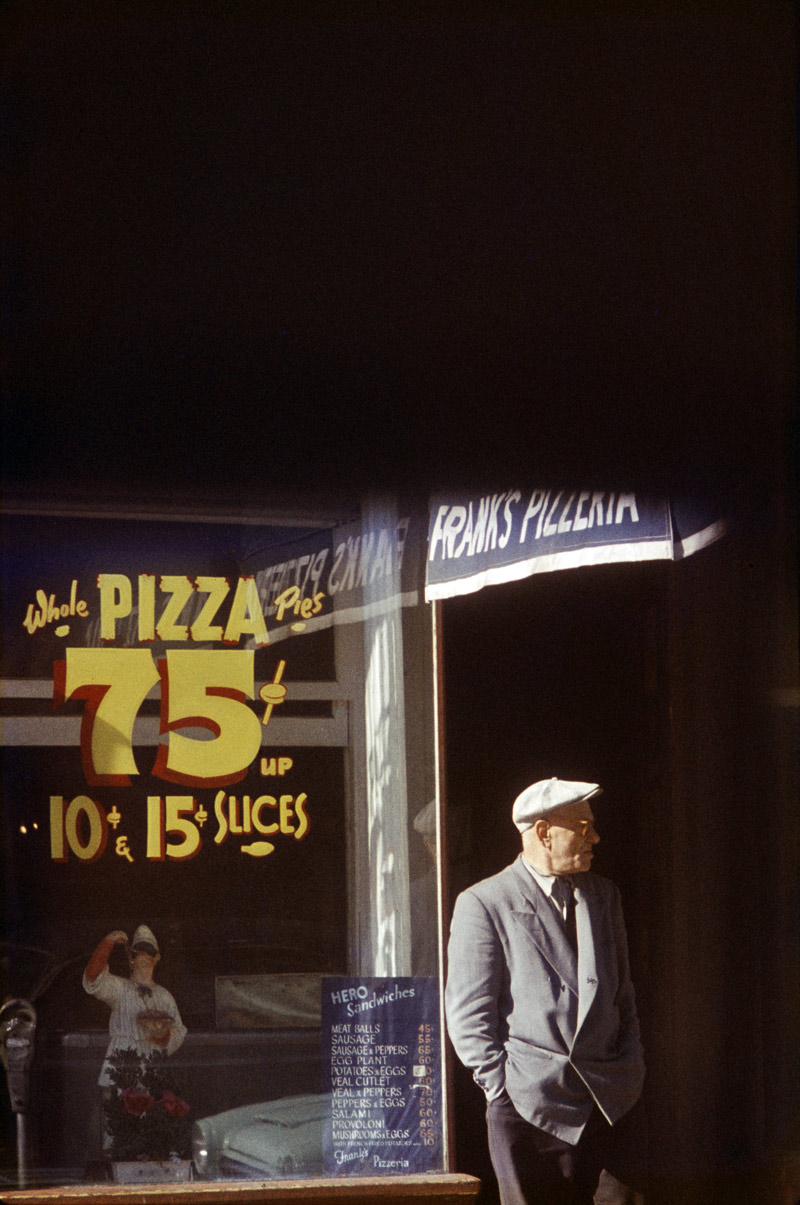
How brave was the photographer, occluding most of the colour image in darkness, something that had never been done before and has rarely been seen since. Look at the last three photographs in this posting to understand what I mean.

Considering that Saul Leiter’s colour photography predates William Eggleston and Stephen Shore by a couple of decades, it can truly be said that he is one of the early masters of colour photography. As the curator Ingo Taubhorn comments, “The older aesthetic views on the hegemony of black-and-white photography and the historical dating of the first artistic use of colour photography to the early 1970s need to be critically reviewed. Saul Leiter’s oeuvre essentially rewrites the history of photography.”

Well said.

Dr Marcus Bunyan


Many thankx to the Kunst Haus Wein for allowing me to publish the photographs in the posting. Please click on the photographs for a larger version of the image.


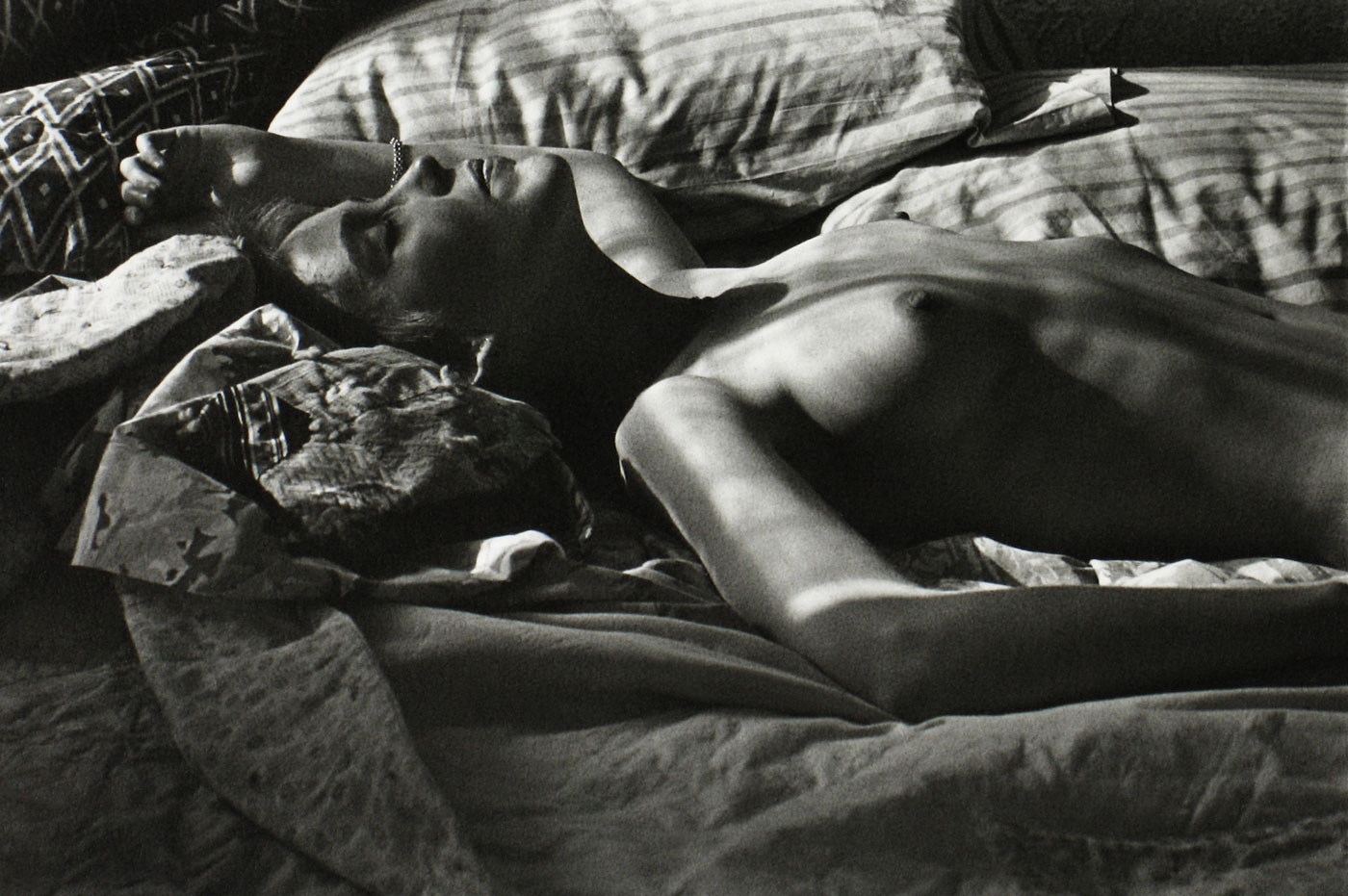
Saul Leiter (American, 1923-2013) 'Nude' 1970s


Saul Leiter (American, 1923-2013)
Nude
1970s
© Saul Leiter / Courtesy Howard Greenberg Gallery, New York


Saul Leiter (American, 1923-2013) 'Taxi' c. 1957


Saul Leiter (American, 1923-2013)
Taxi
c. 1957
© Saul Leiter / Courtesy Howard Greenberg Gallery, New York


KUNST HAUS WIEN is devoting a major retrospective to the oeuvre of the 89-year-old photographer and painter Saul Leiter. The exhibition, which was developed in cooperation with House of Photography / Deichtorhallen Hamburg, presents the wide range of this versatile artist’s works, including early black-and-white and colour photographs, fashion images, painted photographs of nudes, paintings and a number of his sketchbooks. One section of the exhibition is devoted to Saul Leiter’s most recent photographs, which he continues to take on the streets of New York’s East Village.

It is only in the last few years that Saul Leiter has received due recognition for his role as one of the pioneers of colour photography. As early as 1946, and thus well before the representatives of the so-called “new colour” photography in the 1970s, such as William Eggleston and Stephen Shore, he was one of the first to use colour photography for artistic shots, despite its being frowned upon by other artists of the day. “The older aesthetic views on the hegemony of black-and-white photography and the historical dating of the first artistic use of colour photography to the early 1970s need to be critically reviewed. Saul Leiter’s oeuvre essentially rewrites the history of photography,” comments curator Ingo Taubhorn.

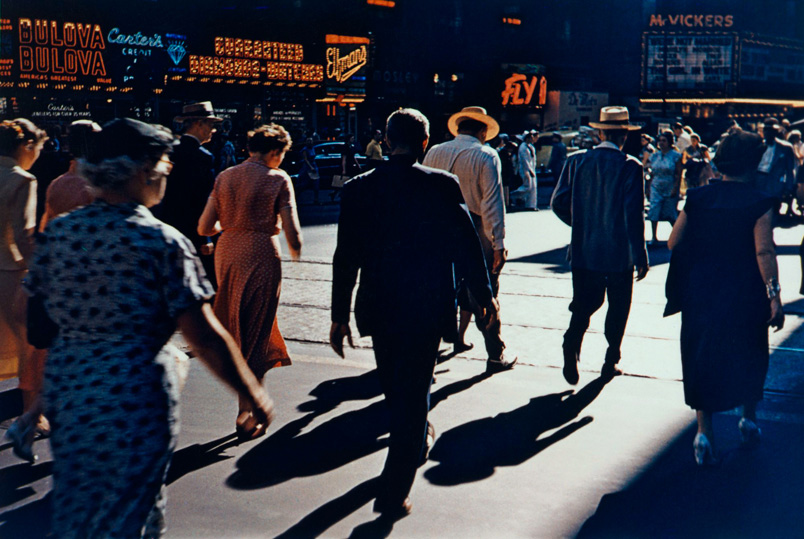
Saul Leiter has always considered himself both a painter and a photographer. In his painting and in his photographs he clearly tends towards abstraction and two-dimensionality. One often finds large deep-black areas, produced by shadows, taking up as much as three quarters of his photographs. Passers-by are not presented as individuals, but as blurred clouds of colour, filtered through misty panes of glass or wedged in between walls of buildings and traffic signs. The boundaries between the abstract and the representational in his paintings and photographs are virtually fluid. Saul Leiter’s street photography – a genre in which his work is matchless – is, in essence, painting metamorphosed into photography.

In Leiter’s works, the genres of street photography, portraiture, still life, fashion photography and architectural photography coalesce. He finds his motifs, such as shop windows, passers-by, cars, signs and – time and again – umbrellas, in the direct vicinity of his apartment in New York, where he has now lived for almost 60 years. The indeterminateness of detail, the blurring of movement and reduced depth of field, the use of shadows or deliberate avoidance of the necessary light, as well as the alienation caused by photographing through windows or as reflections, all combine to create the muted colour vocabulary of a semi-real, semiabstract urban space. These are the works of an as yet almost undiscovered modern master of colour photography.

About Saul Leiter

Saul Leiter discovered his passion for art at an early age and started painting as a teenager at the end of the 1940s. His family did not support him in his artistic endeavours; his father, a renowned Talmudic rabbi and scholar, had always hoped his son Saul would one day follow him in the family tradition and become a rabbi. Leiter was self-taught, but by no means uneducated. He read and learned a great deal about art, so that his knowledge and understanding constantly grew. In this way, he made sure that his own ideas and artistic works were duly related to the historical context.

In 1946, shortly after he had moved to New York, Leiter became acquainted with Richard Poussette-Dart, who introduced him to photography, a medium that appealed to Leiter very much and that he quickly made his own. Leiter soon resolved to use photography not only as a means of making art but as a way of earning a living. He started taking fashion photographs, and thanks to his good eye, his playful sense of humour, and his pronounced sense of elegance, swiftly emerged as an extraordinary fashion photographer. In the 1950s, Life magazine published photo spreads of Saul Leiter’s first black-and-white series. He took part in exhibitions, for example “Always the Young Strangers” (1953) curated by Edward Steichen at the Museum of Modern Art. From 1958 to 1967, Leiter worked for Harper’s Bazaar. Altogether he spent some 20 years photographing for various classic magazines as well as more recent ones: after Esquire and Harper’s he also worked for Show, Elle, British Vogue, Queen and Nova.


Saul Leiter (American, 1923-2013) 'New York' 1950s


Saul Leiter (American, 1923-2013)
New York
1950s
© Saul Leiter / Courtesy Howard Greenberg Gallery, New York


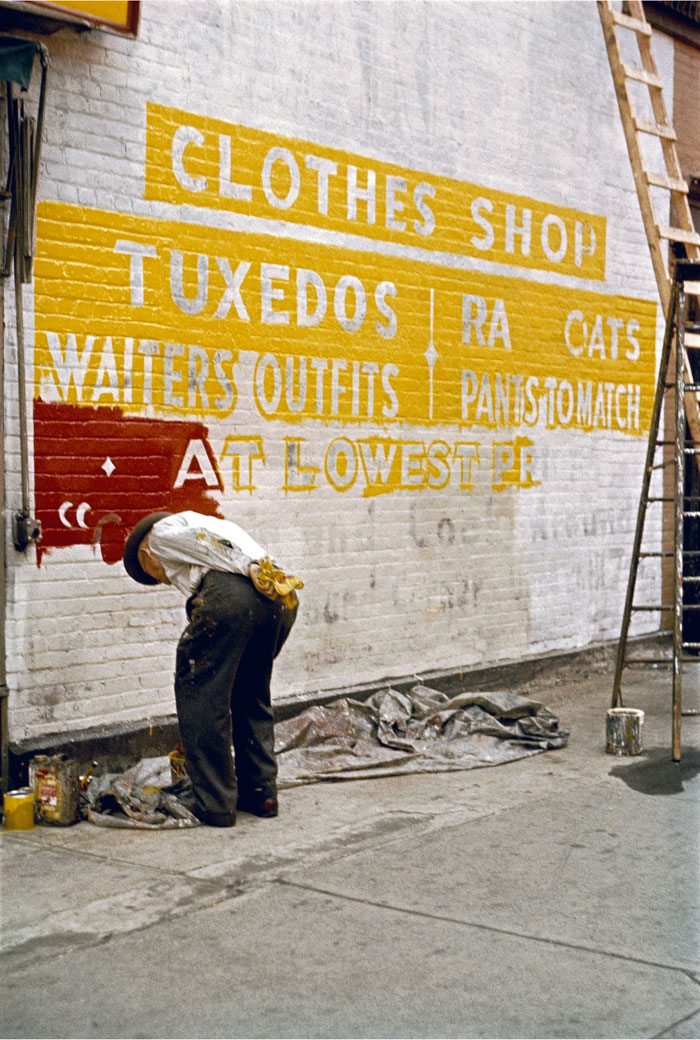
Saul Leiter (American, 1923-2013) 'Sign Painter' 1954


Saul Leiter (American, 1923-2013)
Sign Painter
1954
© Saul Leiter / Courtesy Howard Greenberg Gallery, New York


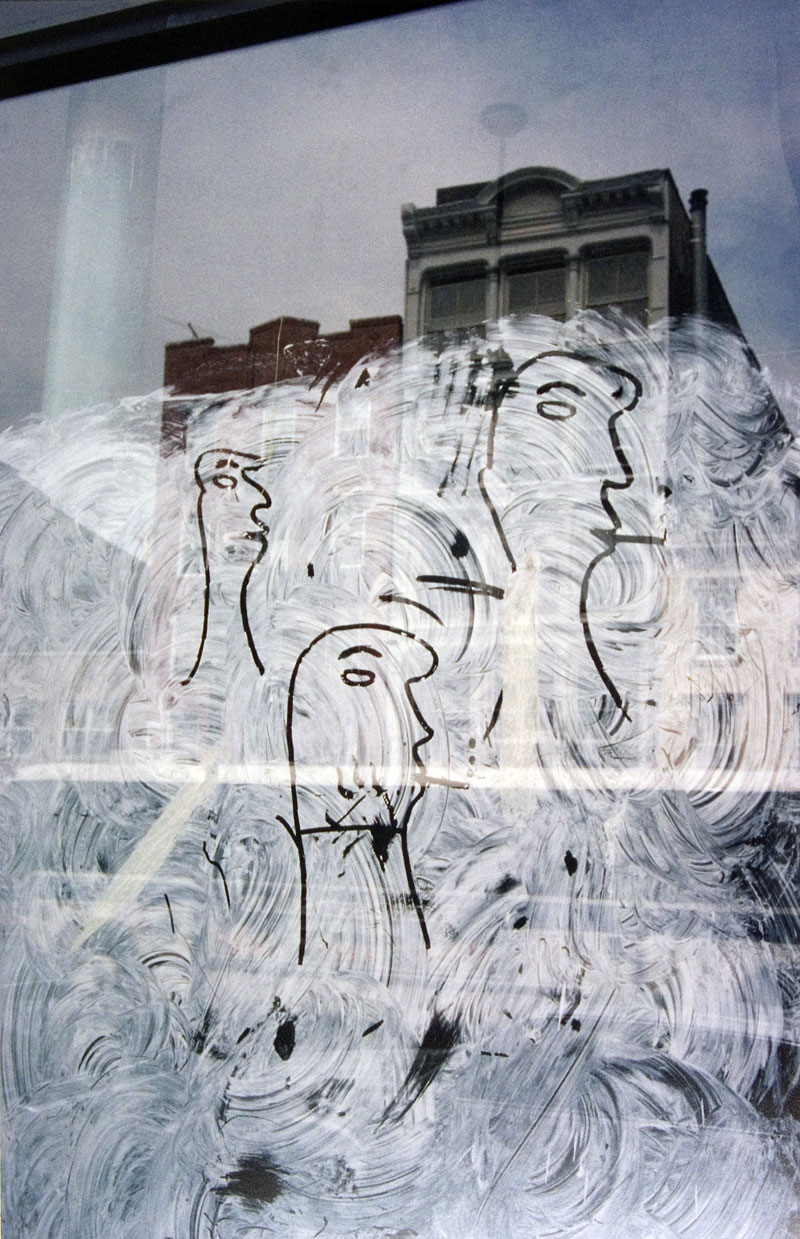
Saul Leiter (American, 1923-2013) 'Graffiti Heads' 1950


Saul Leiter (American, 1923-2013)
Graffiti Heads
1950
© Saul Leiter / Courtesy Howard Greenberg Gallery, New York


Saul Leiter (American, 1923-2013) 'Shirt' 1948


Saul Leiter (American, 1923-2013)
Shirt
1948
© Saul Leiter / Courtesy Howard Greenberg Gallery, New York


Saul Leiter (American, 1923-2013) 'Harlem' 1960


Saul Leiter (American, 1923-2013)
Harlem
1960
© Saul Leiter / Courtesy Howard Greenberg Gallery, New York


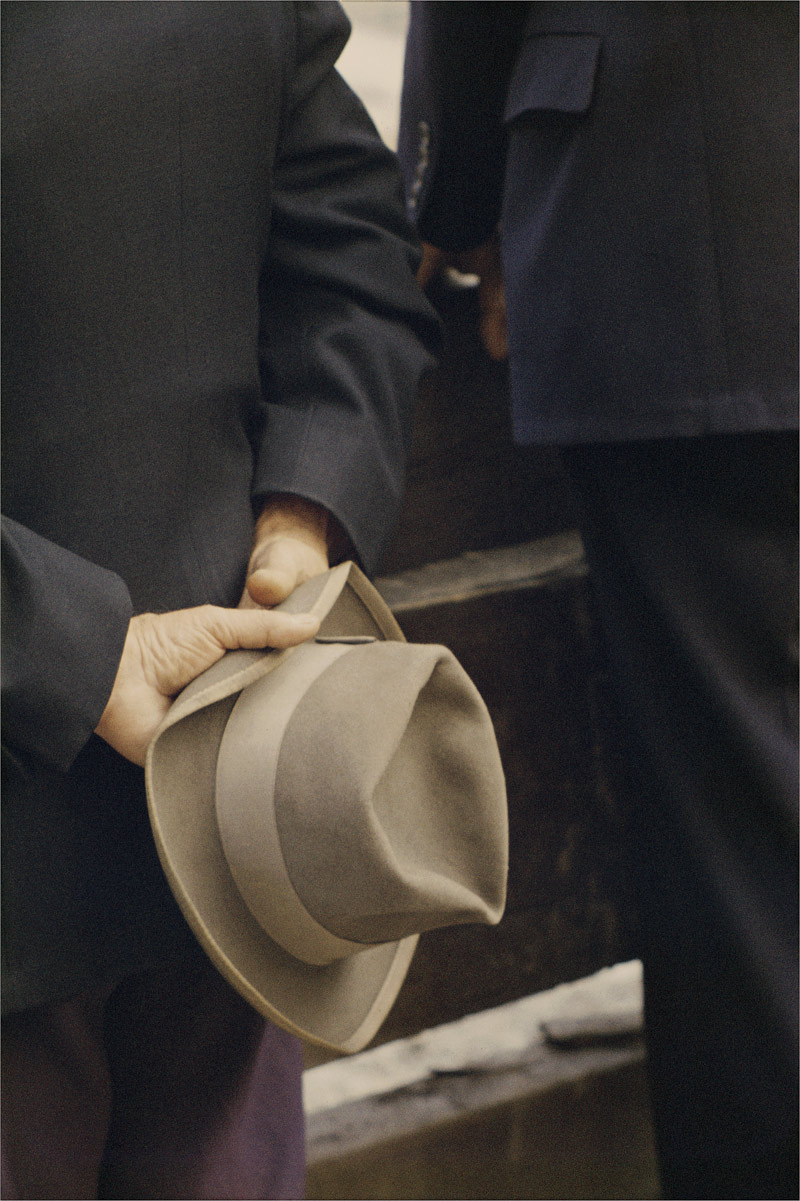
Saul Leiter (American, 1923-2013) 'Hat' 1956


Saul Leiter (American, 1923-2013)
Hat
1956
© Saul Leiter / Courtesy Howard Greenberg Gallery, New York


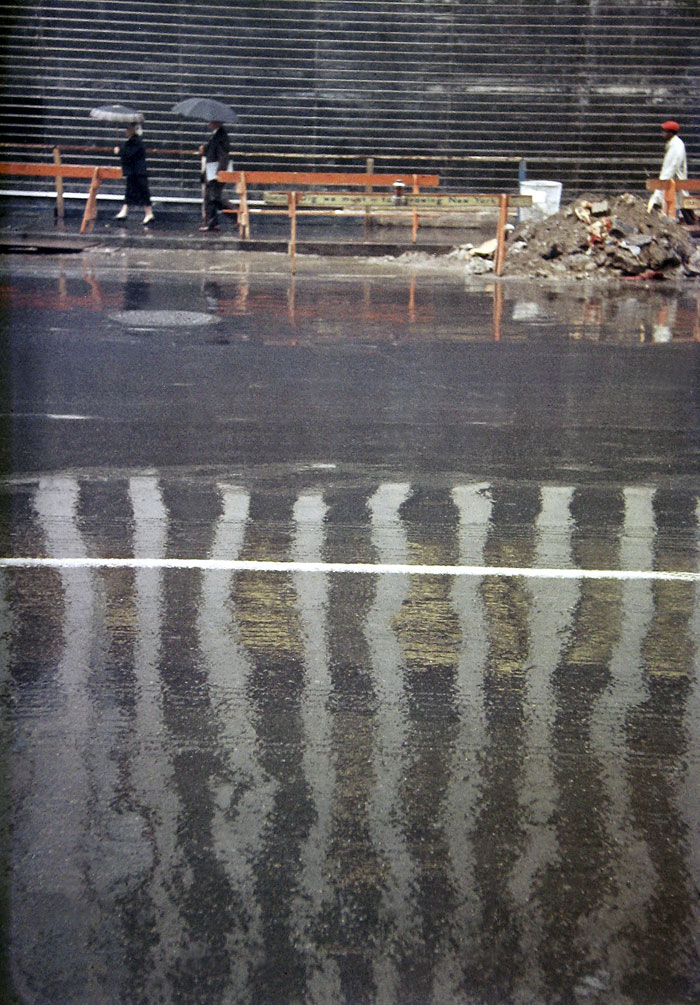
Saul Leiter (American, 1923-2013) 'Street Scene' 1957


Saul Leiter (American, 1923-2013)
Street Scene
1957
© Saul Leiter / Courtesy Howard Greenberg Gallery, New York


The exhibition chapters

Abstract Painting

Although his photographic oeuvre has dominated his image as an artist, Saul Leiter sees himself first and foremost as a painter. He began his artistic career as a painter, and while working as a photographer he never stopped painting and drawing. Leiter’s passion for art began when he was just a child, even though his ambitions received no support from his family. As a teenager he spent many hours in libraries studying art books. He found inspiration in the paintings of such artists as Vermeer, Bonnard, Vuillard and Picasso, as well as in Japanese graphic art. Leiter, who was self-taught, painted his first pictures in 1940. Most of them were lyrical, abstract compositions that reflected his admiration for the new American avant-garde. His ardent feeling for colour is recognisable even in these early paintings, as is his lifelong predilection for painting small format pastels and watercolours on paper.

After moving to New York in 1946, he sometimes presented his works together with abstract expressionist painters such as Willem de Kooning and Philip Guston. His studio was located on 10th Street in the East Village, which at that time was a neighbourhood very popular with avant-garde artists. Leiter shared these artists’ interest in abstraction and the use of colour, gesture and the element of chance, but he chose a radically different format for his works. Whereas many of his contemporaries, such as Jasper Johns or Franz Kline, painted wall-sized paintings that physically filled the beholder’s entire field of vision, Leiter worked in an intimate, small format. His works were also exhibited at the Tanager Gallery, one of the most important artist-run cooperatives in the East Village at that time. After switching the main focus of his work to photography in the late 1940s, however, Leiter stopped exhibiting his paintings.

Figurative Painting

Saul Leiter’s abstract painting frequently unites qualities of intimacy and familiarity with a sense of space reminiscent of an open landscape. Occasionally he also makes figurative sketches. Often these give mere intimations of a face or a body, perhaps a pointed nose, eyes and a mouth. Some of his male figures wear hats, similar to those worn by the religious Jews that peopled Leiter’s world in his youth. Most of these works focus on a single figure; only occasionally do we see a couple, or several figures grouped together. The quality of the line and the subtle suggestion of figures or heads in these paintings are reminiscent of paintings by Édouard Vuillard and Pierre Bonnard, in which facial features are hinted at through lines and fine shadings of colour rather than being defined by careful modelling.

Street Photography

When, in 1947, Saul Leiter attended an exhibition of works by the French photographer Henri Cartier-Bresson, he became convinced of the creative potential of this medium. He bought himself a 35mm Leica camera at a bargain and began, without any previous training, to take photographs on the streets of New York. At first he used only black-and-white film, but in 1948 he also started using colour film. His black-and-white photographs exhibit some elements of documentary photography but are nevertheless far removed from a photojournalistic style. Rather, they are subjective observations, often concentrating on a single individual in the big city. Leiter’s complex, multilayered works evoke feelings of alienation, melancholy and tension. Leiter underscores this impression by experimenting with strong contrasts, light and shadow, and asymmetrical compositions containing large areas in which the images are blurred.

Thematically and stylistically, there are great similarities between Leiter’s works and the works of other representatives of New York street photography of the same era, for example Ted Croner, Leon Levinstein, Louis Faurer and later Robert Frank and William Klein, today generally known as the New York School. Their radical new, subjective photography had a psychological component that revealed an unusual sensitivity to social turbulences and the uncertainty felt by many Americans during the years following the Second World War.

Colour Photography

Until well into the 1970s, colour photography was used almost exclusively for advertising and fashion magazines. Many photographers considered the vivid colours unsuitable for artistic expression. Moreover, they were unable to develop their colour film themselves, which made it a very expensive undertaking. It was not until 1976 that the Museum of Modern Art in New York gave its first exhibition devoted to colour photography, when it presented “Photographs by William Eggleston”.

Saul Leiter was one of the few photographers who did not reject colour photography. As a painter, he took a particular interest in street photography as a genre in which to experiment with colour film. As early as 1948, at the beginning of his career, he bought his first roles of 35mm Kodachrome colour slide film, which had been on the market since 1936. In order to save money, he often used film that had passed its sell-by date. Leiter particularly liked the resulting pictures with their delicate, muted colours.

The innumerable early colour photographs that Leiter took between 1948 and 1960 are of a unique painterly and narrative quality. They stand in contrast to the works of other photographers, in which colour is often the defining element of the composition. This circumstance, coupled with Leiter’s tendency towards abstraction, links Leiter’s photography with his painting. But in contrast to his painting (and his black-and-white photographs), his colour photographs are highly structured. It is the incomparable beauty of these works that has brought Leiter recognition as one of the masters of 20th-century photography.

Fashion Photography

In the late 1950s, Saul Leiter worked successfully in the fields of fashion photography and advertising. From the very first, his style was unmistakeable. His images were multilayered and complex, characterised by soft, impressionistic qualities and cubist changes of perspective. He was given his first commercial assignment in 1958 by Henry Wolf, at that time the new Art Director of Harper’s Bazaar, with whom Leiter became friends. Harper’s Bazaar was one of the leading American fashion magazines, presenting trail-blazing fashion series by photographers such as Richard Avedon or Lillian Bassman.

Subsequently, Leiter was given more and more prestigious assignments, and over the years began to spend almost all his time doing commercial work. Apart from Harper’s Bazaar, his fashion and advertising photos appeared in Elle and Show, in British Vogue and Queen and also in Nova. The amazing thing is that during this period, Leiter managed to retain his own narrative, stylised aesthetic, whereas other fashion photographers favoured a rather brittle, graphic style. In the 1970s, partly due to his own dwindling interest in commercial photography, Leiter received fewer and fewer assignments. In 1981 he gave up his studio on Fifth Avenue and in the following years led a quiet life far from the public eye.


Saul Leiter (American, 1923-2013) 'Carol Brown, 'Harper's Bazaar'' c. 1958


Saul Leiter (American, 1923-2013)
Carol Brown, ‘Harper’s Bazaar’
c. 1958
© Saul Leiter / Courtesy Howard Greenberg Gallery, New York


Saul Leiter (American, 1923-2013) 'Soames Bantry, 'Nova'' 1960


Saul Leiter (American, 1923-2013)
Soames Bantry, ‘Nova’
1960
© Saul Leiter / Courtesy Howard Greenberg Gallery, New York


Saul Leiter (American, 1923-2013) 'Walking' 1956


Saul Leiter (American, 1923-2013)
Walking
1956
© Saul Leiter / Courtesy Howard Greenberg Gallery, New York


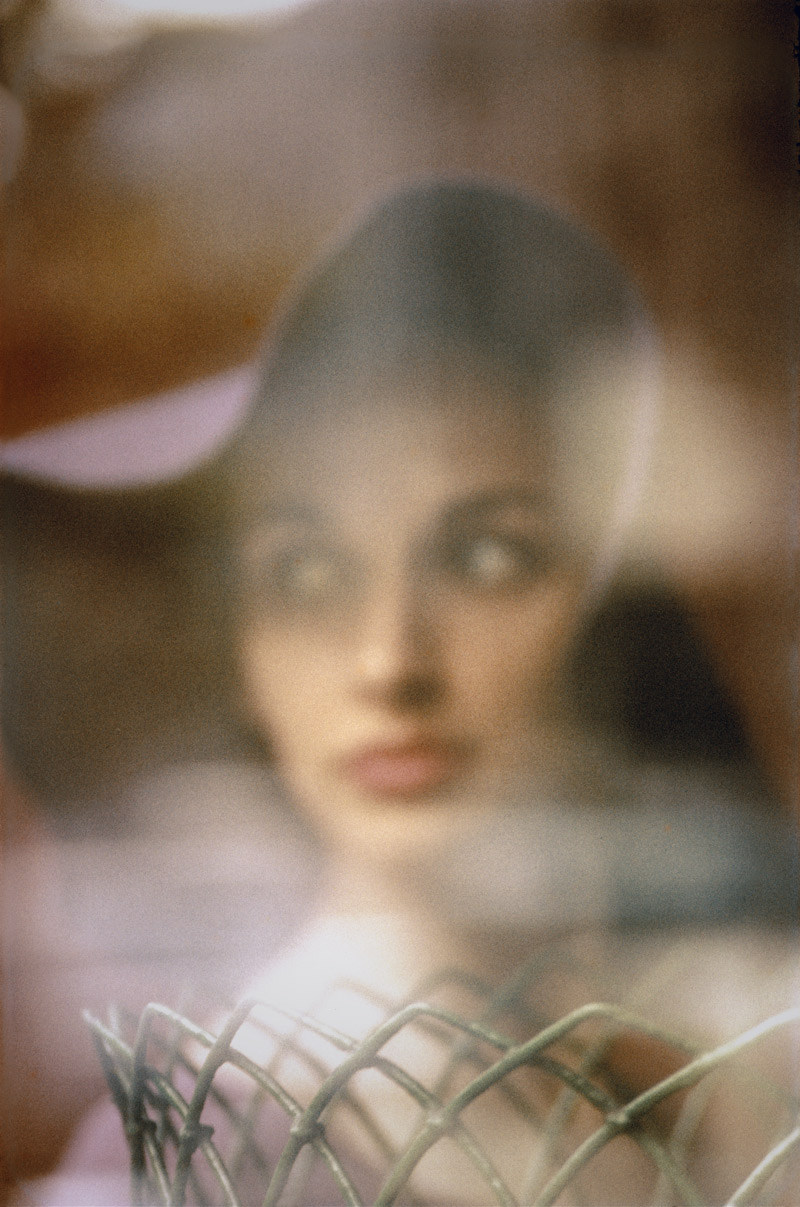
Saul Leiter (American, 1923-2013) 'Reflection' 1958


Saul Leiter (American, 1923-2013)
Reflection
1958
© Saul Leiter / Courtesy Howard Greenberg Gallery, New York


“I spent a great deal of my life being ignored. I was always very happy that way. Being ignored is a great privilege. That is how I think I learnt to see what others do not see and to react to situations differently. I simply looked at the world, not really prepared for anything.”


Saul Leiter


Art critic Roberta Smith wrote in 2005: “Mr. Leiter was a photographer less of people than of perception itself. His painter’s instincts served him well in his emphasis on surface, spatial ambiguity and a lush, carefully calibrated palette. But the abstract allure of his work doesn’t rely on soft focus, a persistent, often irritating photographic ploy, or the stark isolation of details, in the manner of Aaron Siskind or early Harry Callahan. Instead, Mr. Leiter captured the passing illusions of everyday life with a precision that might almost seem scientific, if it weren’t so poetically resonant and visually layered.”

Text from the Lens Culture website [Online] Cited 15/05/2013 no longer available online


Saul Leiter (American, 1923-2013) 'Shopping' c. 1953


Saul Leiter (American, 1923-2013)
Shopping
c. 1953
© Saul Leiter / Courtesy Howard Greenberg Gallery, New York


Saul Leiter (American, 1923-2013) 'Kutztown' 1948


Saul Leiter (American, 1923-2013)
Kutztown
1948
© Saul Leiter / Courtesy Howard Greenberg Gallery, New York


Saul Leiter (American, 1923-2013) 'Pizza, Patterson' 1952


Saul Leiter (American, 1923-2013)
Pizza, Patterson
1952
© Saul Leiter / Courtesy Howard Greenberg Gallery, New York


KUNST HAUS WIEN
Museum Hundertwasser
Untere Weißgerberstraße 13
1030 Vienna
Phone: +43-1-712 04 91

Opening hours:
Daily, 10am – 7pm

Kunst Haus Wein website

LIKE ART BLART ON FACEBOOK

Back to top

Exhibition: ‘The Photographs of Ray K. Metzker and the Institute of Design’ at the J. Paul Getty Museum, Los Angeles

Exhibition dates: 25th September, 2012 – 24th February, 2013


Ray K. Metzker (American, 1931-2014) 'New Mexico' negative 1972; print 1987


Ray K. Metzker (American, 1931-2014)
New Mexico
Negative 1972; print 1987
Gelatin silver print
17.8 x 27.9cm (7 x 11 in.)
The Nelson-Atkins Museum of Art, Gift of the Hall Family Foundation
© Ray K. Metzker


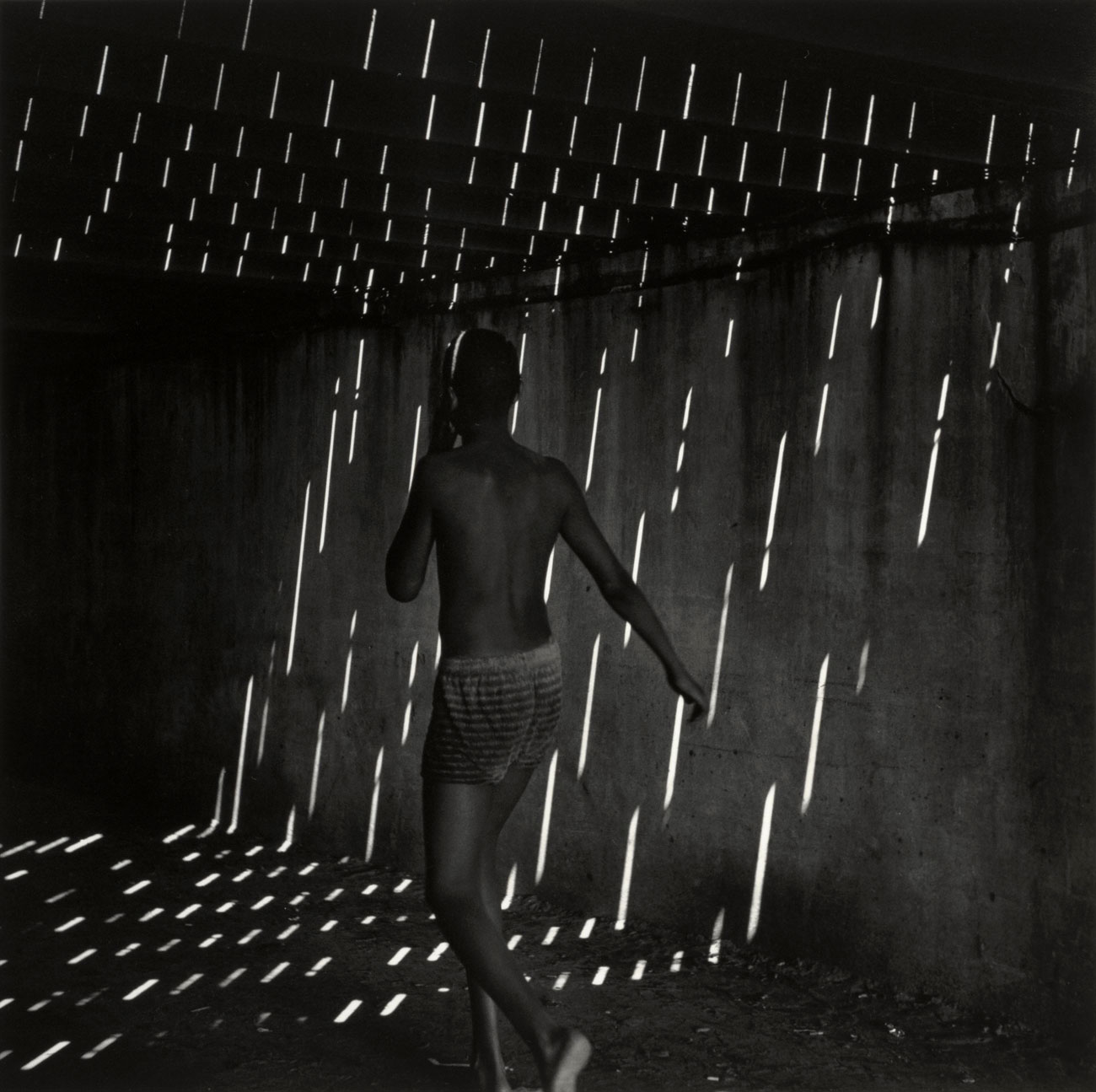
It is a pleasure to able to post more of the tough, no nonsense photographs of Ray. K. Metzker. Atlantic City (1966, below) is an absolute beauty – from the shards of light raining down at exaggerated speed on the right hand wall, to the colour of the body, the colouration of the sole of the uplifted foot matching that of the bathers, the out flung arm, the single ray of light hitting the top of the head, to the march into endless darkness at left of image. Imagine actually seeing that image and then capturing it on film…

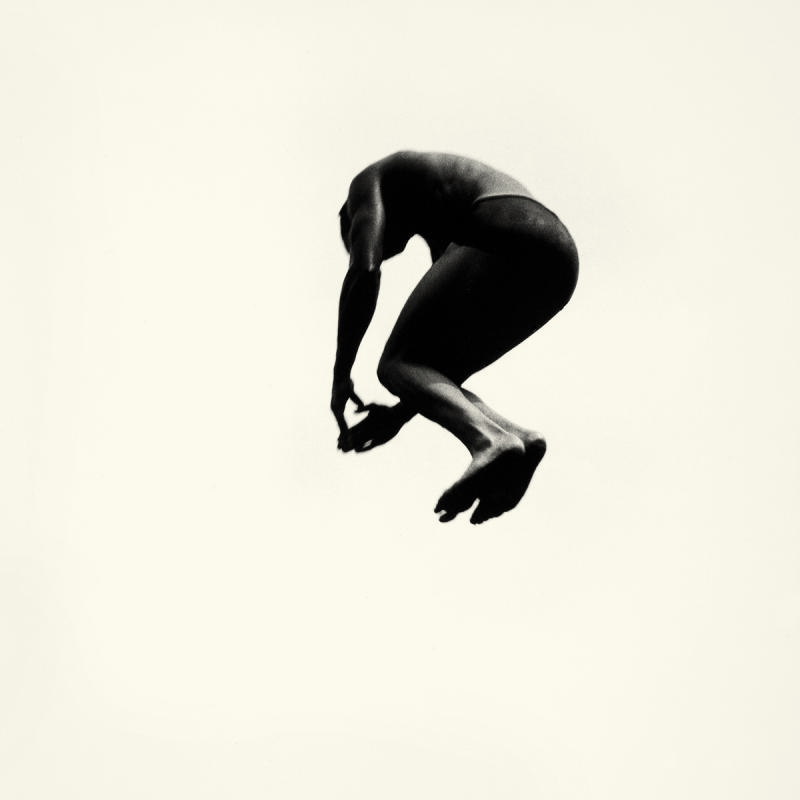
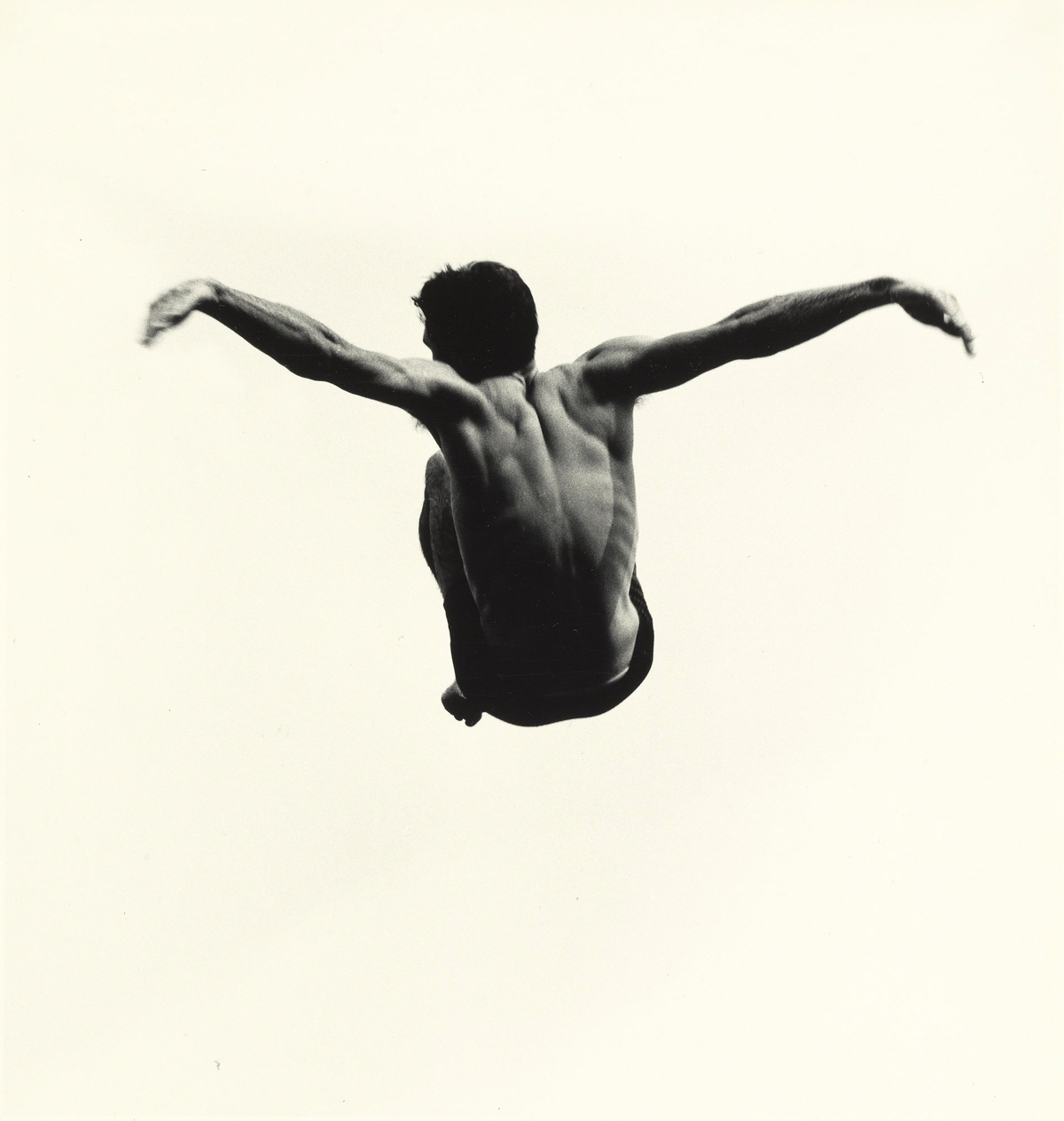
My personal favourite in the posting are the two photographs by Aaron Siskind. His monumental series, Pleasures and Terrors of Levitation, are photographs of divers leaping through the air captured from below to emphasise the abstract quality of their twisting shapes by isolating them against the sky:

“Highly formal, yet concerned with their subject as well as the idea they communicate, The Pleasures and Terrors of Levitation photographs depict the dark shapes of divers suspended mid-leap against a blank white sky. Shot with a hand-held twin-lens reflex camera at the edge of Lake Michigan in Chicago, the balance and conflict suggested by the series’ title is evident in the divers’ sublime contortions.” (Anonymous. “Aaron Siskind,” on the Museum of Contemporary Photography website 17/02/2013. No longer available online)

Such a simple idea, so well executed, the photographs become a single frame of Muybridge’s motion studies where the audience can imagine the rest of the sequence without seeing. Balance and conflict are in equilibrium and the pleasure and terror of jumping from the top board at the local swimming pool is caught in stasis, crystallised in a sublime field of existence under the gaze of the viewer.

Dr Marcus Bunyan


Many thankx to the J. Paul Getty Museum for allowing me to publish the photographs in the posting. Please click on the photographs for a larger version of the image.


Ray K. Metzker (American, 1931-2014) 'Valencia' 1961


Ray K. Metzker (American, 1931-2014)
Valencia
1961
Gelatin silver print
14.3 x 22.9cm (5 5/8 x 9 in.)
The Nelson-Atkins Museum of Art, Gift of the Hall Family Foundation
© Ray K. Metzker


Ray K. Metzker (American, 1931-2014) 'Atlantic City' negative, 1966; print, 2003


Ray K. Metzker (American, 1931-2014)
Atlantic City
negative, 1966; print, 2003
Gelatin silver print
20.3 x 20.3cm (8 x 8 in.)
The Nelson-Atkins Museum of Art, Gift of the Hall Family Foundation
© Ray K. Metzker


Ray K. Metzker (American, 1931-2014) 'Double Frame: Philadelphia' negative 1965; print 1972


Ray K. Metzker (American, 1931-2014)
Double Frame: Philadelphia
Negative 1965; print 1972
Gelatin silver print
21.6 x 9.8cm (8 1/2 x 3 7/8 in.)
The Nelson-Atkins Museum of Art, Gift of the Hall Family Foundation
© Ray K. Metzker


Ray K. Metzker (American, 1931-2014) 'Couplets: Atlantic City' negative 1969; print 1984


Ray K. Metzker (American, 1931-2014)
Couplets: Atlantic City
Negative 1969; print 1984
Gelatin silver print
22.9 x 15.6cm (9 x 6 1/8 in.)
The Nelson-Atkins Museum of Art, Gift of the Hall Family Foundation
© Ray K. Metzker


Ray K. Metzker (American, 1931-2014) 'City Whispers: Los Angeles' negative 1981; print 2006


Ray K. Metzker (American, 1931-2014)
City Whispers: Los Angeles
Negative 1981; print 2006
Gelatin silver print
26.8 x 41.4cm (10 9/16 x 16 5/16 in.)
The Nelson-Atkins Museum of Art, Gift of the Hall Family Foundation
© Ray K. Metzker


Ray K. Metzker (American, 1931-2014) 'City Whispers, Philadelphia' 1983


Ray K. Metzker (American, 1931-2014)
City Whispers, Philadelphia
1983
Gelatin silver print
24.5 x 24cm (9 5/8 x 9 7/16 in.)
The J. Paul Getty Museum, Los Angeles
© Ray K. Metzker


Metzker’s work is part of a revered tradition that emerged from the experimental approach of Chicago’s Institute of Design (ID), where he received his graduate degree in 1959. Inspired by instructors Harry Callahan and Aaron Siskind, Metzker fashioned an entirely personal synthesis of formal elegance, technical precision, and optical innovation. His composite works hold an important status in the history of creative photography: at the time of their making, they were unprecedented in ambition and perceptual complexity.

Metzker’s devotion to photographic seeing as a process of discovery is also deeply humanistic in its illumination of isolation and vulnerability. This exhibition offers a comprehensive overview of Metzker’s five-decade career, while also providing examples of work by instructors and fellow students at the Institute of Design in Chicago, where Metzker studied from 1956 to 1959. Learn more about Metzker’s diverse forays into photography as well as the ID and its profound influence.

Ray K. Metzker (American, 1931-2014) is one of the most dedicated and influential American photographers of the last half century. His photographs strike a distinctive balance between formal brilliance, optical innovation, and a deep human regard for the objective world. The Photographs of Ray K. Metzker and the Institute of Design, on view at the Getty Center September 25, 2012 – February 24, 2013, offers a comprehensive overview of Metzker’s five-decade career, while also providing examples of work by instructors and fellow students at the Institute of Design in Chicago, where Metzker studied from 1956 to 1959.

Organised in collaboration with Keith F. Davis, senior curator of photography at The Nelson-Atkins Museum of Art in Kansas City, Missouri, the exhibition is curated by Virginia Heckert, curator of photographs, and Arpad Kovacs, assistant curator of photographs, at the J. Paul Getty Museum. The exhibition features nearly 200 photographs, including approximately 80 from the holdings of The Nelson-Atkins Museum.

Ray K. Metzker

Dynamically composed, Metzker’s luminous black-and-white photographs feature subjects ranging from urban cityscapes to nature, all demonstrating the inventive potential of the photographic process. While a student at the ID, Metzker was mentored by renowned photographers Harry Callahan and Aaron Siskind. His curiosity led to experiments with high contrast, selective focus, and multiple images.

Metzker’s thesis project for the ID, a study of Chicago’s business district, or Loop, displayed many of these techniques. One image, a multiple exposure of commuters ascending a sun-bathed staircase, prefigures the novel Composites that he began to make in 1964. Whether documenting everyday life in an urban environment or exploring the natural landscapes, Metzker’s photographs often incorporate elements of abstraction. A longtime resident of Philadelphia, Metzker taught at the Philadelphia College of Art for many years. His frequent focus on Philadelphia and other cityscapes has yielded iconic images of automobiles, commuters, streets, sidewalks, and architectural facades.

“Metzker’s love of the photographic process has produced a rich body of work that suggests a vulnerability underlying the human condition,” explains Virginia Heckert, curator of photographs at the J. Paul Getty Museum. “With highlights and shadows pushed to extremes and multiple frames combined in innovative ways, his photographs create a graceful choreography of human interaction against urban settings.”

Metzker titles and groups his images based on their location or technique. The exhibition features Metzker’s most significant bodies of work, including Chicago (1956-59), Europe (1960-61), Early Philadelphia (1961-64), Double Frames and Couplets (1964-1969), Composites (1964-1984), Sand Creatures (1968-1977), Pictus Interruptus (1971-1980), City Whispers (1980-1983), Landscapes (1985-1996), and Late Philadelphia (1996-2009).

From the New Bauhaus to the Institute of Design

Revered for an energetic atmosphere of experimentation, the ID opened in the fall of 1937 under the name of the New Bauhaus. With the avant-garde artist and educator László Moholy-Nagy at the helm, the school was modelled after the German Bauhaus (1919-1933), which integrated principles of craft and technology into the study of art, architecture, and design. Photography quickly became an integral component of the curriculum.

Moholy-Nagy’s death in 1946 marked a pivotal moment in the school’s history. That year also saw the introduction of a new four-year photography program and the arrival of Harry Callahan, who was instrumental in hiring Aaron Siskind in 1951. The two became a formidable teaching duo and together created a graduate program that encouraged prolonged investigation of a single idea.

Callahan and Siskind served as Ray Metzker’s mentors during his graduate studies at the ID from 1956-59. Other key photography instructors at the ID included György Kepes, Nathan Lerner, Henry Holmes Smith, Arthur Siegel, Edmund Teske, Art Sinsabaugh, and Frederick Sommer. A selection from Metzker’s thesis project, along with those of fellow students Kenneth Josephson, Joseph Sterling, Joseph Jachna, and Charles Swedlund, was included in a 1961 issue of Aperture magazine devoted to the IDs graduate program in photography. Now a part of the Illinois Institute of Technology, the ID continues to educate students with the same innovative teaching philosophy that was a hallmark of the original Bauhaus.

Harry Callahan and Aaron Siskind

In 1946, the year of Moholy-Nagy’s death, the ID introduced a new four-year photography program and welcomed instructor Harry Callahan. Callahan was instrumental in hiring Aaron Siskind in 1951, and together they became a formidable teaching duo. Their work will be featured in two galleries within the exhibition, with a focus on photographs they created while at the ID.

Harry Callahan’s work benefitted greatly from the attitude of experimentation that was a hallmark of the ID, and his time at the school marked a particularly productive period in his own career. Architectural details, views of nature and intimate photographs of his wife, Eleanor and daughter, Barbara became subjects that defined his career. A central tenet of his teaching was to return to previously explored subjects, an approach that he himself practiced, as did Metzker.

Influenced by the Abstract Expressionist painters he befriended in the 1940s, Aaron Siskind’s work features abstracted textures and patterns excerpted from the real world. Often calligraphic in form, the urban facades, graffiti, stains, and debris he photographed capitalise on the flatness of the picture plane. In Pleasures and Terrors of Levitation, his studies of male divers against a blank sky experiments with the figure-ground relationship.

“Callahan and Siskind had vastly different visual styles and interests in subject matter” said Arpad Kovacs, assistant curator of photographs at the J. Paul Getty Museum. “However, both emphasised the expressive possibilities of the medium rather than the mechanics of producing a photograph. It was this shared interest in constantly challenging their students that came to define their influential presence at the ID.”

Also featured in the exhibition is work by a number of founding ID photography instructors and those who taught in the years Metzker attended the school, including György Kepes, Nathan Lerner, Henry Holmes Smith, Arthur Siegel, Edmund Teske, Art Sinsabaugh, and Frederick Sommer. Another gallery is dedicated to the work of ID students Kenneth Josephson, Joseph Sterling, Joseph Jachna, and Charles Swedlund, all of whom, together with Metzker, were featured in a 1961 issue of Aperture magazine that extolled the virtues of the ID’s photography program.”

Press release from the J. Paul Getty Museum website


Arthur Siegel (American, 1913-1978) 'State Street' 1949


Arthur Siegel (American, 1913-1978)
State Street
1949
Dye transfer print
21.9 x 26.4cm (8 5/8 x 10 3/8 in.)
The Nelson-Atkins Museum of Art, Gift of Hallmark Cards, Inc.,
© Estate of Arthur Siegel


Aaron Siskind (American, 1903-1991) 'Jerome, Arizona 21' 1949


Aaron Siskind (American, 1903-1991)
Jerome, Arizona 21
1949
Gelatin silver print
The J. Paul Getty Museum
© Aaron Siskind Foundation


Harry Callahan (American, 1912-1999) 'Eleanor, Chicago' 1952


Harry Callahan (American, 1912-1999)
Eleanor, Chicago
1952
Gelatin silver print
10.2 x 12.7cm (4 x 5 in.)
The J. Paul Getty Museum, Los Angeles
© Estate of Harry Callahan


Aaron Siskind (American, 1903-1991) 'Pleasures and Terrors of Levitation 25' 1957


Aaron Siskind (American, 1903-1991)
Pleasures and Terrors of Levitation 25
1957
Gelatin silver print
27.9 x 26.4cm (11 x 10 3/8 in.)
The J. Paul Getty Museum, Los Angeles
© Aaron Siskind Foundation


Aaron Siskind (American, 1903-1991) 'Pleasures and Terrors of Levitation 94' 1961


Aaron Siskind (American, 1903-1991)
Pleasures and Terrors of Levitation 94
1961
Gelatin silver print
27.9 x 26.1cm (11 x 10 1/4 in.)
The J. Paul Getty Museum, Los Angeles
© Aaron Siskind Foundation


Joseph Sterling (American, 1936-2010) 'Untitled' 1961


Joseph Sterling (American, 1936-2010)
Untitled
1961
Gelatin silver print
19.1 x 19.1cm (7 1/2 x 7 1/2 in.)
The Nelson-Atkins Museum of Art, Gift of Hallmark Cards, Inc.
Courtesy Stephen Daiter Gallery
© Deborah Sterling


Charles Swedlund (American, b. 1935) 'Buffalo, NY' about 1970


Charles Swedlund (American, b. 1935)
Buffalo, NY
about 1970
Gelatin silver print
18.7 x 15.9cm (7 3/8 x 6 1/4 in.)
The J. Paul Getty Museum, Los Angeles, Purchased in part with funds provided by an anonymous donor in memory of James N. Wood
© Charles Swedlund


The J. Paul Getty Museum
1200 Getty Center Drive
Los Angeles, California 90049

Opening hours:
Tuesday – Friday, Sunday 10am – 5.30pm
Saturday 10am – 8pm
Monday Closed

The J. Paul Getty Museum website

LIKE ART BLART ON FACEBOOK

Back to top

Exhibition: ‘Licht-Bilder (Light images). Fritz Winter and Abstract Photography’ at the Pinakothek der Moderne, Munich

Exhibition dates: 9th November 2012 – 17th February 2013


Fritz Winter (German, 1905-1976) 'K 35' 1934


Fritz Winter (German, 1905-1976)
K 35
1934
Oil on paper on canvas
110 x 75cm
Bayerische Staatsgemäldesammlungen Pinakothek der Moderne, München
© VG Bild-Kunst, Bonn 2012


The glorious paintings of Fritz Winter show a beautiful synergy with the abstract photographs. The relationship between painting and photography has always been a symbiotic one, a close mutualist relationship that has benefited both art forms. This is fully evidenced in this outstanding posting, where I have tried to sequence the artworks to reflect the nature of their individuality and their interdependence. Great blessings on the curators that assembled this exhibition: an inspired concept!

Dr Marcus Bunyan


Many thankx to the Pinakothek der Moderne, Munich for allowing me to publish the photographs in the posting. Please click on the photographs for a larger version of the image.


Alvin Langdon Coburn (American, 1882-1966) 'Vortograph' 1917 (1962)


Alvin Langdon Coburn (American, 1882-1966)
Vortograph
1917 (1962)
Gelatin silver print
30.6 x 25.5cm
George Eastman House, Rochester, New York
© Courtesy of George Eastman House, International Museum of Photography and Film


Francis Bruguière (American, 1879-1945) 'Abstract Study' c. 1926


Francis Bruguière (American, 1879-1945)
Abstract Study
c. 1926
Gelatin silver print
24.3 x 19.3cm
George Eastman House, Rochester, New York
© Courtesy of George Eastman House, International Museum of Photography and Film


Fritz Winter (German, 1905-1976) 'Einfallendes Licht II' 1935


Fritz Winter (German, 1905-1976)
Einfallendes Licht II (Incident Light II)
1935
Oil on paper on canvas
44.2 x 33.4cm
Konrad Knöpfel-Stiftung Fritz Winter im Kunstmuseum Stuttgart
© VG Bild-Kunst, Bonn 2012


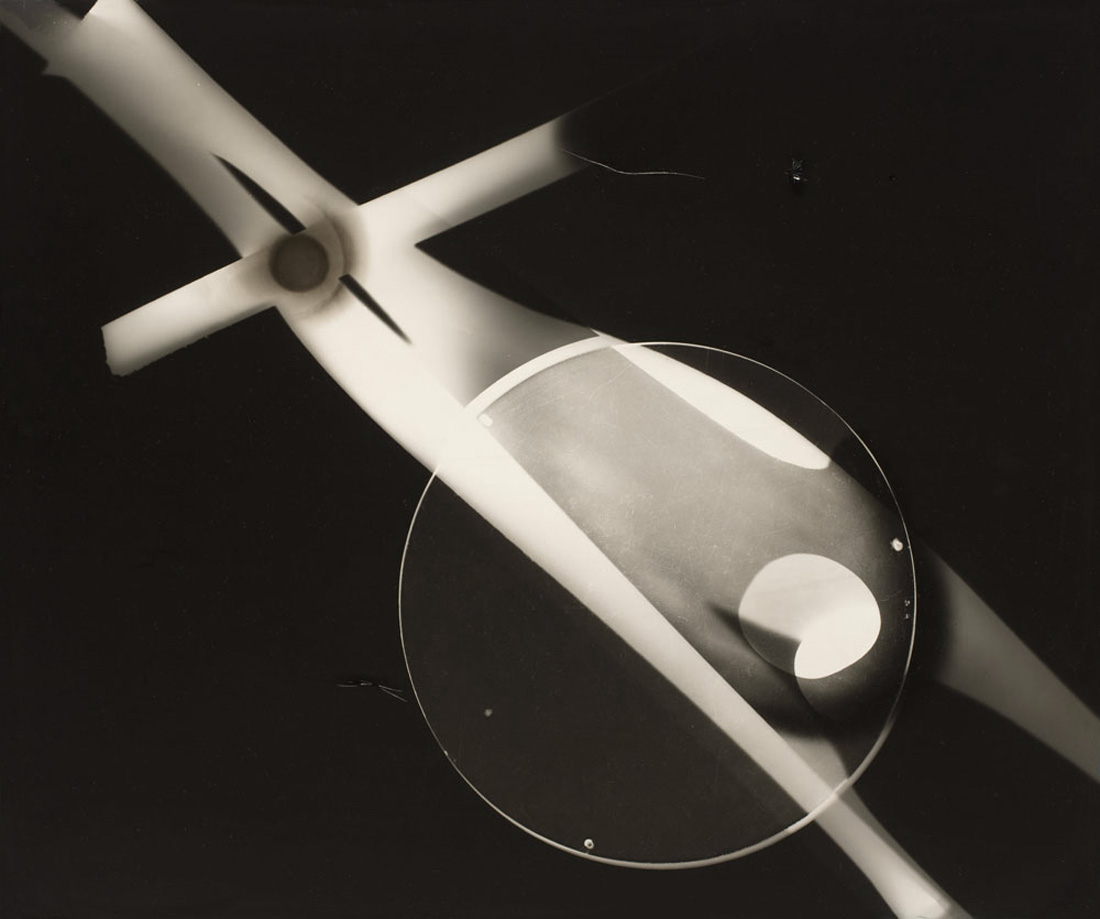
Laszlo Moholy-Nagy (Hungarian, 1895-1946) 'Untitled (Photogram)' c. 1939-1941


Laszlo Moholy-Nagy (Hungarian, 1895-1946)
Untitled (Photogram)
c. 1939-1941
Gelatin Silver Print
40 x 47.8cm
George Eastman House, Rochester, New York
© Artists Rights Society (ARS), New York / VG Bild-Kunst, Bonn 2012 Museum Folkwang, Essen, Fotografische Sammlung
© VG Bild-Kunst, Bonn 2012


In his lesser ­known early work, the German painter Fritz Winter (1905-1976) made an obsessive analysis of the aesthetic aspects of light. As a Bauhaus student he was influenced by the international avant­-garde’s boundless euphoria for light between Expressionism and Constructivism. The light of large cities with headlights, cinemas and illuminated advertisements gave a new impulse to aesthetics; x-­rays, radioactivity and microphotography made it possible to perceive previously unknown sources of energy and natural phenomena.

In his pictures of light beams and crystals created in 1934-1936, Winter devoted himself with virtuosity to aspects such as the reflection, radiation and refraction of light. His virtually monochrome paintings incorporate crystal shapes and bundles of rays; they focus on the earth’s interior and the infinite expanse of the cosmos; they block the pictorial space with dark grids or lend it a glass-­like transparency.

For the first time, 25 Licht-­Bilder by Fritz Winter will be juxtaposed with an international selection of 40 of the earliest abstract photographs in history of art. In the 1910s to 1930s artists experimented with the most varied of photographic techniques to ascertain the genuine qualities of photography beyond the merely representative. The New Vision in photography and abstract painting become immediately obvious through the display of vintage prints and paintings side by side.

The exhibition combines 25 exceptional paintings by Fritz Winter from German museums and private collections as well as 40 international lenders of photographic works including Centre Pompidou, Paris, George Eastman House in Rochester, New York, Museum Folkwang, Essen, Museum für Kunst und Gewerbe, Hamburg, Neue Galerie Kassel, Kunsthalle Mannheim, Ann and Jürgen Wilde Foundation, Munich and Kunstmuseum Stuttgart.

Press release from the Pinakothek der Moderne website


Fritz Winter (German, 1905-1976) 'Stufungen [Gradations]' 1934


Fritz Winter (German, 1905-1976)
Stufungen (Gradations)
1934
Oil on paper on canvas
100.5 x 75.5cm
Konrad Knöpfel-Stiftung Fritz Winter im Kunstmuseum Stuttgart
© VG Bild-Kunst, Bonn 2012


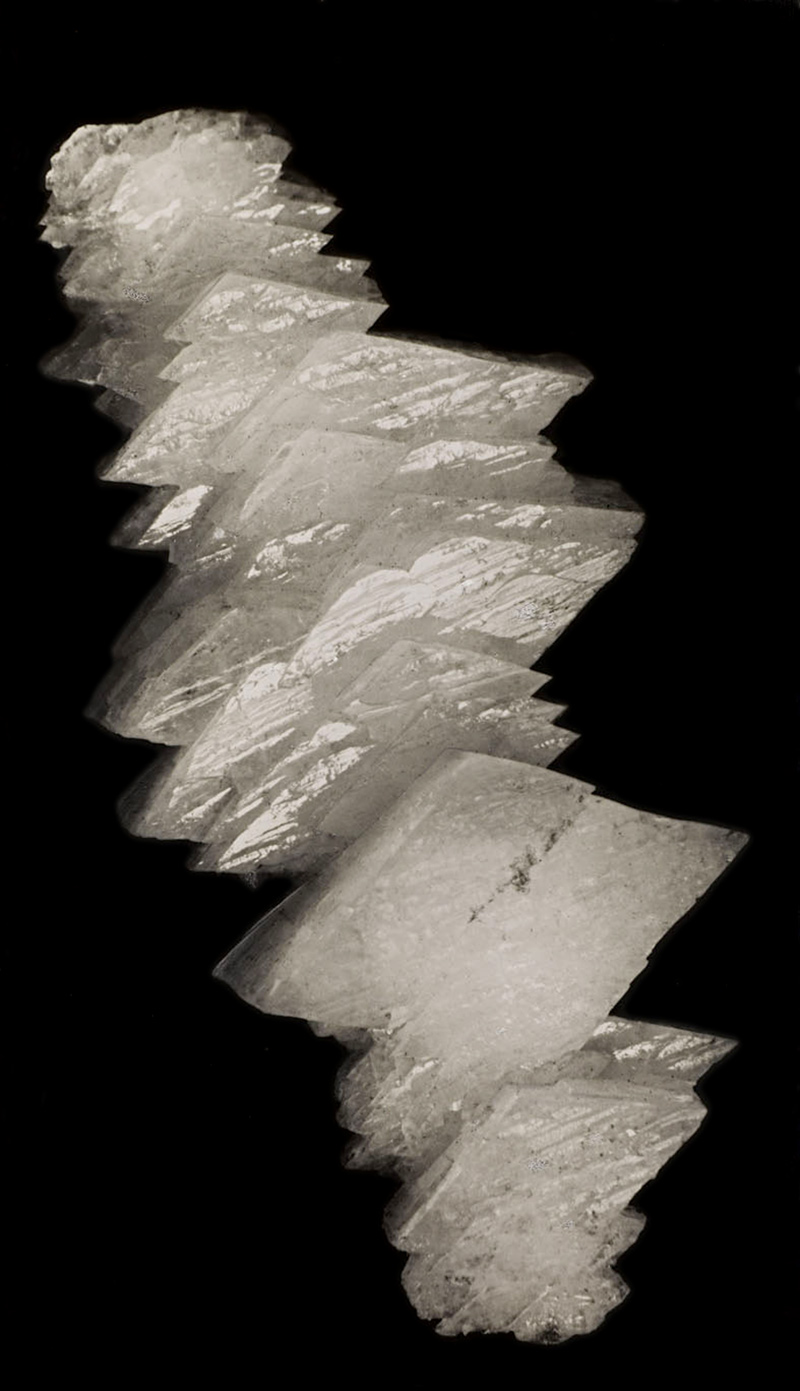
Alfred Ehrhardt (German, 1901-1984) 'Adular, Maderanertal, Schweiz' 1938-39


Alfred Ehrhardt (German, 1901-1984)
Adular, Maderanertal, Schweiz
1938-1939
Gelatin silver print
49.5 x 30cm
Stiftung Ann und Jürgen Wilde, Pinakothek der Moderne, München
© Alfred Ehrhardt Stiftung
© Courtesy of George Eastman House, International Museum of Photography and Film


Fritz Winter (German, 1905-1976) 'Weiß in Schwarz [White in Black]' 1934


Fritz Winter (German, 1905-1976)
Weiß in Schwarz (White in Black)
1934
Oil on paper on canvas
100.5 x 75.5cm
Museumslandschaft Hessen Kassel, Neue Galerie
© VG Bild-Kunst, Bonn 2012


Fritz Winter (German, 1905-1976) 'Licht, A 1' 1934


Fritz Winter (German, 1905-1976)
Licht, A 1
1934
Oil on paper on canvas
59 x 45cm
Private Collection
© VG Bild-Kunst, Bonn 2012


Laszlo Moholy-Nagy (Hungarian, 1895-1946) 'Untitled (Photogram)' 1925


Laszlo Moholy-Nagy (Hungarian, 1895-1946)
Untitled (Photogram)
1925
Gelatin silver print
23.7 x 17.8cm
Museum Folkwang, Essen, Fotografische Sammlung
© VG Bild-Kunst, Bonn 2012 Museum Folkwang, Essen, Fotografische Sammlung
© VG Bild-Kunst, Bonn 2012


Alfred Ehrhardt (German, 1901-1984) 'Beryll, Minas Geraes, Brasilien' 1938-39


Alfred Ehrhardt (German, 1901-1984)
Beryll, Minas Geraes, Brasilien
1938/1939
Gelatin silver print
49.7 x 29.9cm
Stiftung Ann und Jürgen Wilde, Pinakothek der Moderne, München
© bpk, Alfred Ehrhardt Stiftung
© Courtesy of George Eastman House, International Museum of Photography and Film


Pinakothek Der Moderne
Barer Strasse 40
Munich

Opening hours:
Daily except Monday 10am – 6pm
Thursday 10am – 8pm

Pinakothek der Moderne website

LIKE ART BLART ON FACEBOOK

Back to top

Exhibition: ‘Two of a Mind’ at the Laurence Miller Gallery, New York

Exhibition dates: 12th September – 17th November, 2012

RAY K. METZKER: Pictus Interruptus
RUTH THORNE-THOMSEN: Expeditions


Ray K. Metzker (American, 1931-2014) 'Pictus Interruptus (77EY24)' 1977


Ray K. Metzker (American, 1931-2014)
Pictus Interruptus (77EY24)
1977
Gelatin silver print


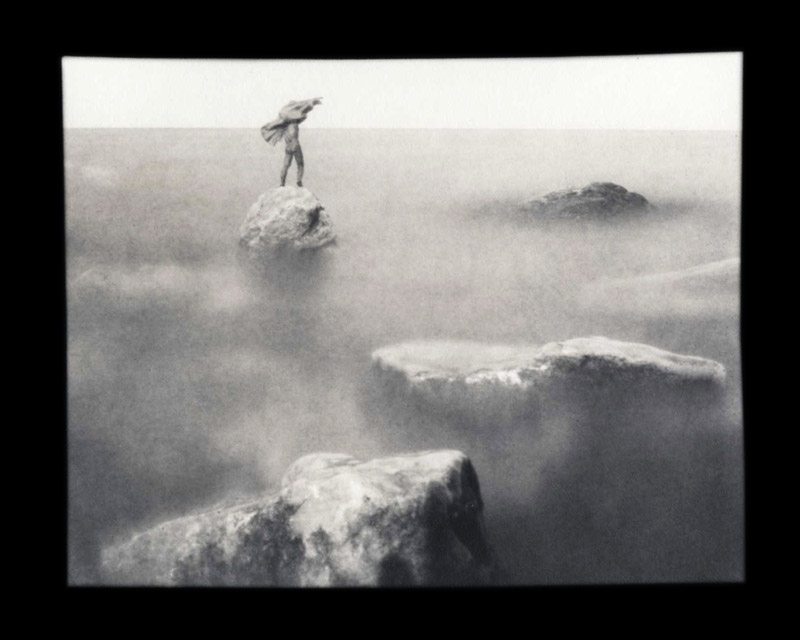
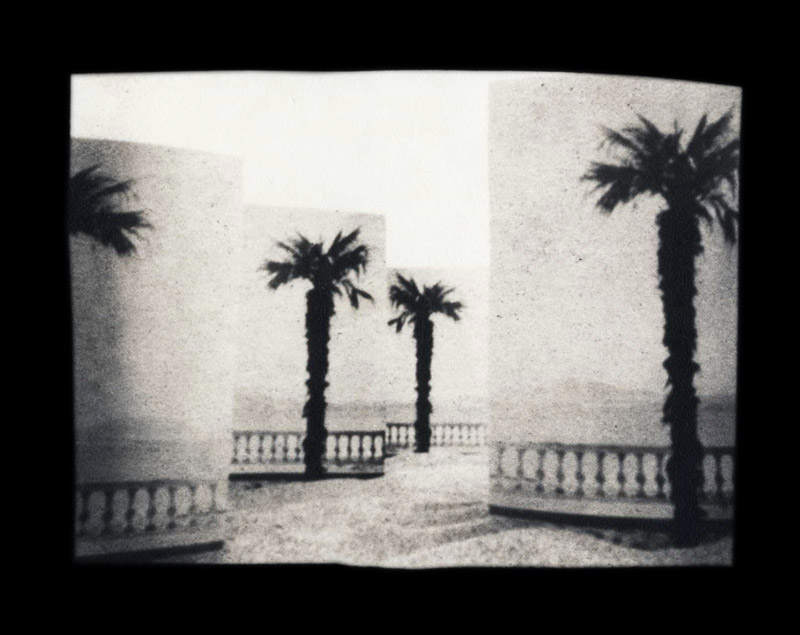
I like both these bodies of work but it is the enigmatic Expeditions that leave the most lasting impression on my subconscious, out imagining the abstract distortions of Metzker in my mind’s eye. While the images of Pictus Interruptus are interesting in a textural way, the photographs of Thorne-Thomsen are truly magical – like a photographic version of Joseph Cornell’s boxes they engage you wistfully, holding you in a quiet, silent, attentive dreamspace. Some of the photographs are almost Jungian in their holistic balance. Photographs such as Levitating Man and Trio are truly memorable, and in our over saturated media environment it is wonderful to find images that make us slow down and inhale their aura. You contemplate these images: that is the word, contemplation. Enjoy.


PS. Prima Materia, a title of one of Thorne-Thomsen’s series, “is, according to alchemists, the alleged primitive formless base of all matter, given particular manifestation through the influence of forms… The alchemical operation consists essentially in separating the prima materia, the so-called Chaos, into the active principle, the soul, and the passive principle, Mind-body dichotomy, the body. They are then reunited in personified form in the coniunctio, the ritual combination of sol and Luna, which yields the magical child – filius philosophorum – the reborn self, known as the ultima materia.” (Wikipedia)

Jung undertook an analysis of the ritual and processes of alchemy and found that while the alchemists were trying to turn lead into gold by melting the lead down and reforming it as gold, what they were actually doing was letting go of their old identity and reforming it anew. This could be seen as an early form of psychoanalysis that encouraged the process of what Jung calls individuation, the emergence of a new identity as the ego dissolves into the Self. “The symbols of the individuation process… mark its stages like milestones’, prominent among them for Jungians being ‘”the shadow, the Wise Old Man… and lastly the anima (female) in man and the animus (male) in woman”‘. Thus ‘there is often a movement from dealing with the persona at the start… to the ego at the second stage, to the shadow as the third stage, to the anima or animus, to the self as the final stage. Some would interpose the Wise Old Man and the Wise Old Woman as spiritual archetypes coming before the final step of the Self’.” (Wikipedia)

I see elements of this inner work in the art of Ruth Thorne-Thomsen.

Dr Marcus Bunyan


Many thankx to the Laurence Miller Gallery for allowing me to publish the photographs in the posting. Please click on the photographs for a larger version of the image.


Ray K. Metzker (American, 1931-2014) 'Pictus Interruptus (77FK42)' 1977


Ray K. Metzker (American, 1931-2014)
Pictus Interruptus (77FK42)
1977
Gelatin silver print


Ray K. Metzker (American, 1931-2014) 'Pictus Interruptus (78AD23)' 1978


Ray K. Metzker (American, 1931-2014)
Pictus Interruptus (78AD23)
1978
Gelatin silver print


Ray K. Metzker (American, 1931-2014) 'Pictus Interruptus (78BW19)' 1978


Ray K. Metzker (American, 1931-2014)
Pictus Interruptus (78BW19)
1978
Gelatin silver print


Ray K. Metzker (American, 1931-2014) 'Pictus Interruptus (80FP9a)' 1980


Ray K. Metzker (American, 1931-2014)
Pictus Interruptus (80FP9a)
1980
Gelatin silver print


Ray K. Metzker (American, 1931-2014) 'Pictus Interruptus (77FK28)' 1977


Ray K. Metzker (American, 1931-2014)
Pictus Interruptus (77FK28)
1977
Gelatin silver print


Ray K. Metzker (American, 1931-2014) 'Pictus Interruptus (77FW60)' 1977


Ray K. Metzker (American, 1931-2014)
Pictus Interruptus (77FW60)
1977
Gelatin silver print


Ray K. Metzker (American, 1931-2014) 'Pictus Interruptus (76EO4)' 1976


Ray K. Metzker (American, 1931-2014)
Pictus Interruptus (76EO4)
1976
Gelatin silver print


Laurence Miller Gallery is pleased to present Two of a Mind, photographs by Ray K. Metzker and Ruth Thorne-Thomsen, made between 1976 and 1991. Presently husband and wife, these two influential photographers independently created innovative and highly personal work that challenge our willingness to believe and stimulate our need to imagine.

Both achieved this by inserting images and objects into the view of the camera, turning reality on its head. Ray Metzker’s Pictus Interruptus series, made between 1976 and 1981, offers us inexplicable images – landscapes and cityscapes disrupted by abstract forms that combine, complement, and contrast with recognisable elements of the city or the land. Coat hangers, magazine images, folded paper and board were some of the items placed before the camera lens. Ruth Thorne-Thomsen’s Expeditions and Door series, as well as Prima Materia and Songs of the Sea, made between 1976 and 1991, also utilised the insertion of objects in front of her pin-hole camera, things like plastic and metal toys, children’s charms, ornaments and trinkets. The resulting images feel like poems come to life – credible enough to seem real, yet imaginary enough to seem like dreams.

Ray (1931-2014) and Ruth (born 1943) met in Chicago in 1980, and immediately felt a kinship of spirit and mind. Each had been pursuing a personal photographic vision which took reality as a starting point and then explored the world of the imagination to challenge the general belief that what a photograph presents is truth. Metzker was more intrigued by the possibilities of form and space, while Thorne-Thomsen pursued the possibilities of mythology and dreams. For each artist, reality and artifice became intertwined and inseparable. This is the first exhibition in which their photographs are presented together. This showing of Metzker’s images also coincides with a major retrospective of his work at the J. Paul Getty Museum in Los Angeles, opening September 25th and continuing through February 24, 2013.

Text from the Laurence Miller Gallery website


Ruth Thorne-Thomsen (American, b. 1943) 'Echo Wisconsin' 1991


Ruth Thorne-Thomsen (American, b. 1943)
Echo Wisconsin
1991
From the series Songs of the Sea
Gelatin silver print


Ruth Thorne-Thomsen (American, b. 1943) 'Icarus Figure Wisconsin' 1993


Ruth Thorne-Thomsen (American, b. 1943)
Icarus Figure Wisconsin
1993
From the series Songs of the Sea
Gelatin silver print


Ruth Thorne-Thomsen (American, b. 1943) 'Paper Palms California' 1981


Ruth Thorne-Thomsen (American, b. 1943)
Paper Palms California
1981
From the Expeditions Series
Gelatin silver print


Ruth Thorne-Thomsen (American, b. 1943) 'Trio Wisconsin' 1991


Ruth Thorne-Thomsen (American, b. 1943)
Trio Wisconsin
1991
From the series Songs of the Sea
Gelatin silver print


Ruth Thorne-Thomsen (American, b. 1943) 'Levitating Man Wisconsin' 1983


Ruth Thorne-Thomsen (American, b. 1943)
Levitating Man Wisconsin
1983
From the Door Series
Gelatin silver print


Ruth Thorne-Thomsen (American, b. 1943) 'Chair Over Point Wisconsin' 1983


Ruth Thorne-Thomsen (American, b. 1943)
Chair Over Point Wisconsin
1983
From the Door Series
Gelatin silver print


Laurence Miller Gallery

There is no longer a physical exhibition space for this gallery. Laurence Miller Gallery currently operates as a private fine art photography dealer.

Opening hours:
We are open by appointment only, with locations in New Hope, Pa. and New York City.

Laurence Millery Gallery website

LIKE ART BLART ON FACEBOOK

Back to top