Exhibition: ‘Women War Photographers – From Lee Miller to Anja Niedringhaus’ at the Fotomuseum Winterthur, Zurich

Exhibition dates: 29th February – 24th May, 2020

Curators: Anne-Marie Beckmann and Felicity Korn and adapted by Nadine Wietlisbach for Fotomuseum Winterthur.


Gerda Taro (German, 1910-1937) 'Republican militiawoman training on the beach outside Barcelona, Spain' August 1936 from the exhibition 'Women War Photographers – From Lee Miller to Anja Niedringhaus' at the Fotomuseum Winterthur, Zurich, Feb - May, 2020


Gerda Taro (German, 1910-1937)
Republican militiawoman training on the beach outside Barcelona, Spain
August 1936
Gelatin silver print
© International Center of Photography, New York


“Moments even of beauty. “Well I speak of ‘the lust of the eye’ – a biblical phrase – because much of the appeal of battle is simply this attraction of the outlandish, the strange… but, there is of course an element of beauty in this. And I must say that this, is, surely from ancient times one of the most enduring appeals of battle.””


Anonymous. From Episode 26 of ‘The World At War’, 1973-1974


The lust of the eye

While “there has been a long tradition of female photographers working in crisis zones”, and this exhibition “explodes the commonly held notion that war photography is a professional world entirely populated by men,” how do war photographs taken by women differ from their male counterparts? What does being a woman bring to the table of war photography that is different, in terms of engagement with people, feeling, context, and time and place? Do they have to differ?

The press release states that, “Even though the staging and narrative strategies of female photographers do not differ in any fundamental way from those of their male colleagues, women have had to repeatedly carve out their position on the front line and operate outside the structures envisaged for them.” In other words they defy the patriarchal structures that define contemporary society, because they operate outside what is expected of them. But does that make their photographs any different to that of men? Or, while defying hegemonic structures, do they still buy into a systematic photographic representation of war that has existed for decades?

While the press release offers a sop to difference – positing that, “in some regions and cultural milieus, their gender has also given them privileges denied to their male colleagues granting them access to families and to people affected by the conflict. This has enabled them to paint a nuanced picture of the effects of war on the civilian population” – this nuancing is not greatly evident in the photographs in this posting.

Personally what I am looking for is a more empathetic way photography can portray the effects of war through storytelling, not just the physical evidence – I was there, I captured this – but the feelings that war evokes. I, for one, never get this from the war photography of the photojournalists. The images they make are made for the fast-moving world of news reportage, and they are always working to find the one image, the one instance, that bears “witness to unimaginable realities, to move viewers.” Rarely does this strategy work.

Much of the display of the appeal of battle in the history of war photography “is simply this attraction of the outlandish, the strange…” With much war photography, “there is of course an element of beauty in this.” Consider Carolyn Cole’s ethereally beautiful photograph Dozens of bodies are laid in a mass grave on the outskirts of Monrovia, Liberia (2003, below). Who could not agree with the artist that there is not an element of beauty in this – held in opposition to its being “other” than reportage.

But if you read the poem Vergissmeinnicht (Forget Me Not) by the British war poet Keith Douglas (below), dead at 24 on the battlefield of Normandy, this poem has more engagement, more heartfelt feeling about war, death, love and loss in its prophetic lines than a thousand images I will never remember.

Dr Marcus Bunyan


Many thankx to Fotomuseum Winterthur for allowing me to publish the photographs in the posting. Please click on the photographs for a larger version of the image.


Vergissmeinnicht (Forget Me Not) (1943)

Keith Douglas 

Three weeks gone and the combatants gone,
returning over the nightmare ground
we found the place again, and found
the soldier sprawling in the sun.

The frowning barrel of his gun
overshadowing. As we came on
that day, he hit my tank with one
like the entry of a demon.

Look. Here in the gunpit spoil
the dishonoured picture of his girl
who has put: Steffi. Vergissmeinnicht.
in a copybook gothic script.

We see him almost with content,
abased, and seeming to have paid
and mocked at by his own equipment
that’s hard and good when he’s decayed.

But she would weep to see today
how on his skin the swart flies move;
the dust upon the paper eye
and the burst stomach like a cave.

For here the lover and killer are mingled
who had one body and one heart.
And death who had the soldier singled
has done the lover mortal hurt.


Remember the war poet Keith Douglas (English, 1920-1944) killed in the Invasion of Normandy on June 9, 1944 at the age of 24.


Gerda Taro (German, 1910-1937) 'Man with child in militia dress, Barcelona, Spain' August 1936 from the exhibition 'Women War Photographers – From Lee Miller to Anja Niedringhaus' at the Fotomuseum Winterthur, Zurich, Feb - May, 2020


Gerda Taro (German, 1910-1937)
Man with child in militia dress, Barcelona, Spain
August 1936
Gelatin silver print
© International Center of Photography, New York


Gerda Taro (German, 1910-1937) 'Republican soldiers with artillery, Monte Aragon, east of Huesca, Spain' August 1936


Gerda Taro (German, 1910-1937)
Republican soldiers with artillery, Monte Aragon, east of Huesca, Spain
August 1936
Gelatin silver print
© International Center of Photography, New York
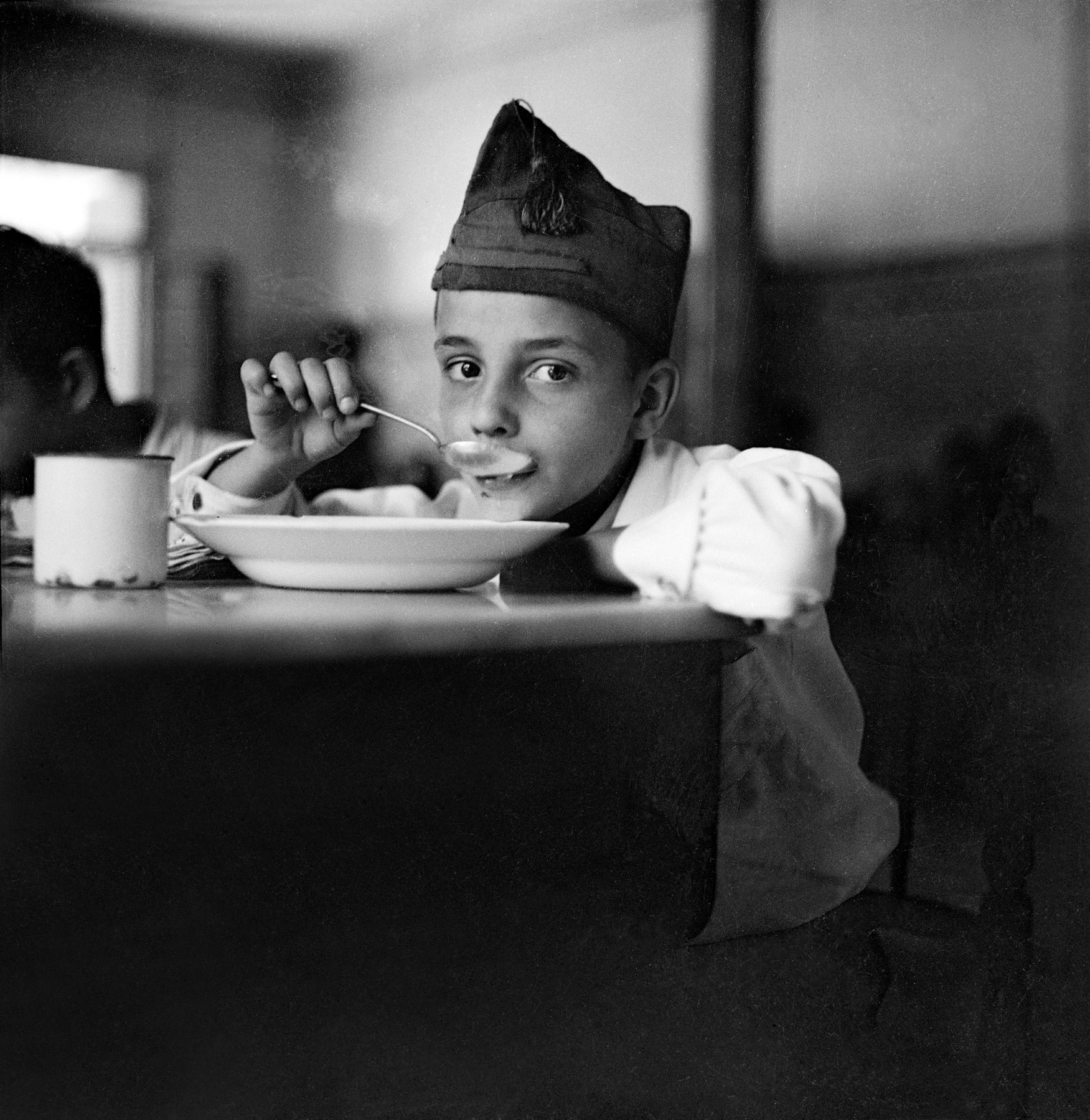
 

Gerda Taro (German, 1910-1937) 'War orphan eating soup, Madrid, Spain' 1937


Gerda Taro (German, 1910-1937)
War orphan eating soup, Madrid, Spain
1937
Gelatin silver print
© International Center of Photography, New York


Lee Miller (American, 1907-1977) 'View of the landing craft, Normandy Beach, France' 1944


Lee Miller (American, 1907-1977)
View of the landing craft, Normandy Beach, France
1944
Gelatin silver print
© Lee Miller Archives, England 2019. All rights reserved
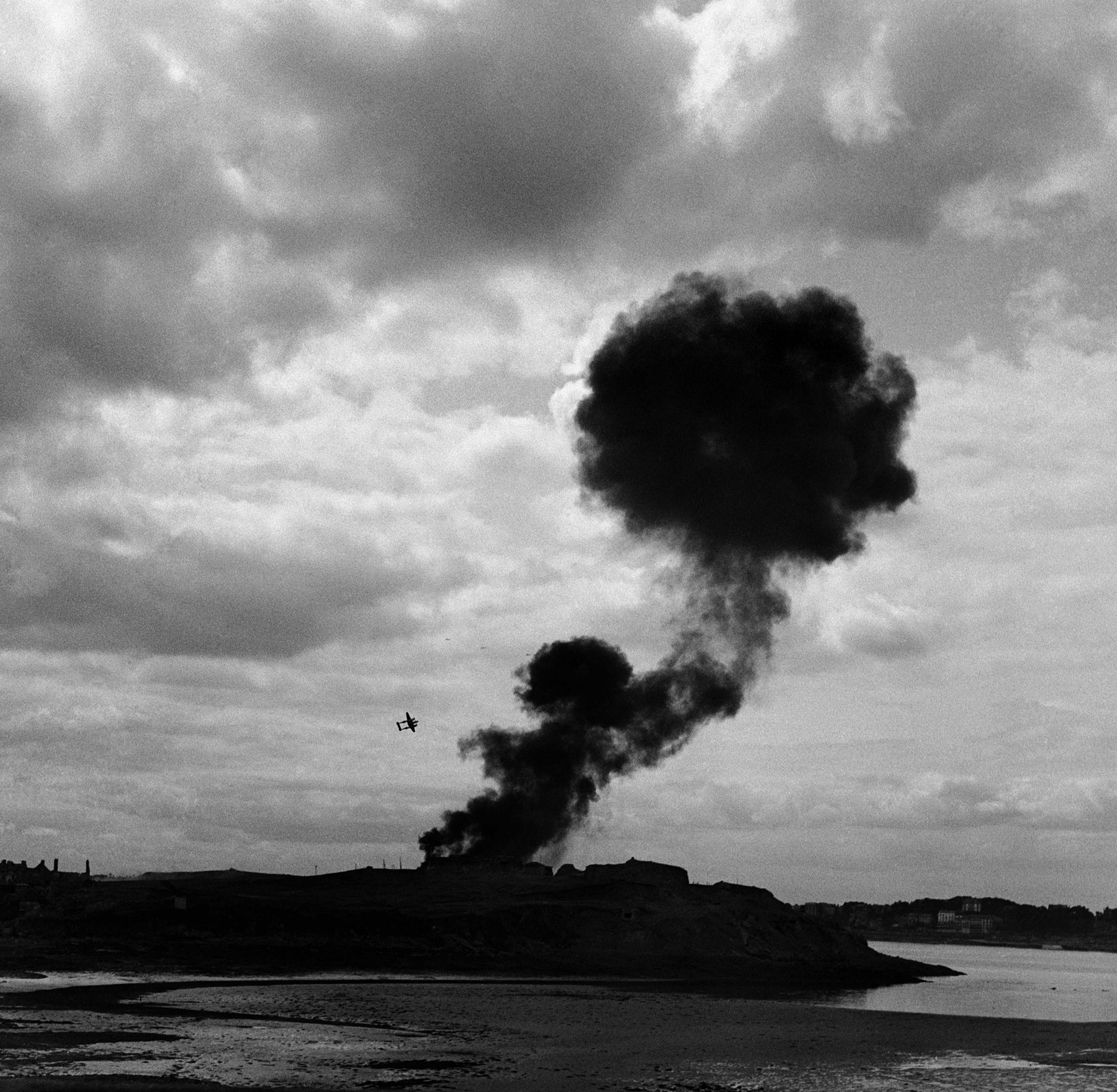
 

Lee Miller (American, 1907-1977) 'Fall of the citadel' 1944


Lee Miller (American, 1907-1977)
Fall of the citadel. The black cloud of smoke mounts high after first bombs have been dropped by P38s, Saint-Malo, France
1944
Gelatin silver print
© Lee Miller Archives, England 2019. All rights reserved


Lee Miller (American, 1907-1977) 'Freed prisoners scavenging in the rubbish dump, Dachau' Germany, 1945


Lee Miller (American, 1907-1977)
Freed prisoners scavenging in the rubbish dump, Dachau
Germany, 1945
Gelatin silver print
© Lee Miller Archives, England 2019. All rights reserved


Lee Miller wrote: ‘Prisoners were prowling these heaps, some of which were burning, in the hope of finding something more presentable than what they were wearing already’


Lee Miller (American, 1907-1977) 'Homeless children, Budapest, Hungary' 1946


Lee Miller (American, 1907-1977)
Homeless children, Budapest, Hungary
1946
Gelatin silver print
© Lee Miller Archives, England 2019. All rights reserved


Catherine Leroy (French, 1944-2006) 'Vietnam' April 1967


Catherine Leroy (French, 1944-2006)
Vietnam. US Navy officer Vernon Wike with a dying US Marine at the Battle of Hill 881, near Khe Sanh
April 1967
Gelatin silver print


Catherine Leroy (French, 1944-2006) 'Vietnam' September 1966


Catherine Leroy (French, 1944-2006)
Vietnam. US bombs pummel Binh Dinh province
September 1966
Gelatin silver print


Françoise Demulder (French, 1947-2008) 'Massacre at Quarantaine in Beirut, Lebanon' 1976


Françoise Demulder (French, 1947-2008)
Massacre at Quarantaine in Beirut, Lebanon
1976
Gelatin silver print
© Succession Françoise Demulder/Roger-Viollet
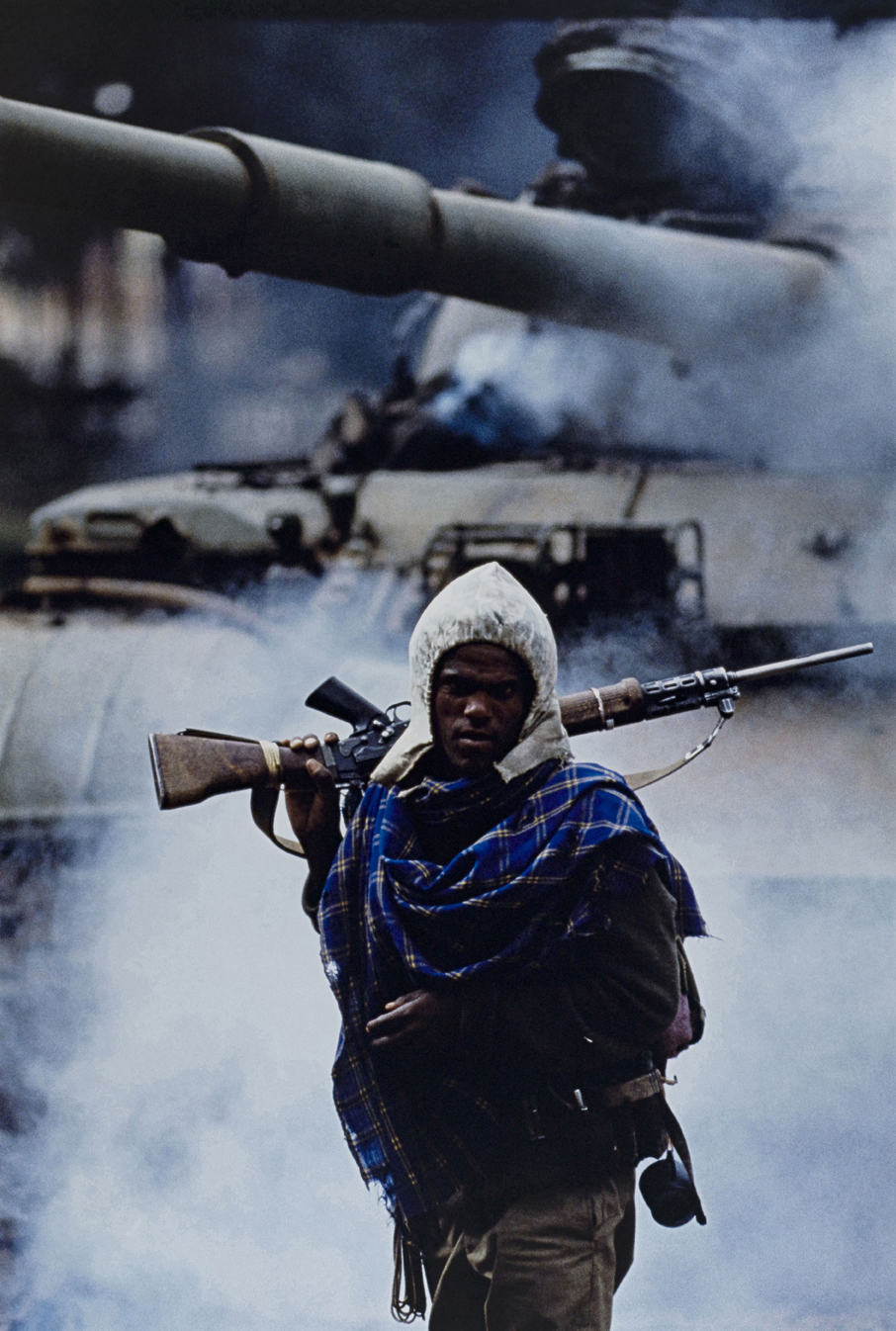
 

Françoise Demulder (French, 1947-2008) 'The capture of Addis Ababa: a partisan of the Revolutionary Democratic Front of the Ethiopian Peoples, Ethiopia' 30 May 1991


Françoise Demulder (French, 1947-2008)
The capture of Addis Ababa: a partisan of the Revolutionary Democratic Front of the Ethiopian Peoples, Ethiopia
30 May 1991
Pigment print on baryta paper
42 x 29.7cm
© Succession Françoise Demulder/Roger-Viollet


Fall of Addis Ababa. F.D.R.P.E. (Revolutionary Democratic Front of the Ethiopian People). Ethiopia, May 30, 1991


Christine Spengler (French, b. 1945) 'Nouenna, Western Sahara' December 1976


Christine Spengler (French, b. 1945)
Nouenna, Western Sahara. A woman holds her child and a rifle during training of Polisario soldiers in Western Sahara. The Polisario was an army dedicated to fighting Moroccan and Mauritanian occupation
December 1976
Gelatin silver print
© Christine Spengler


The exhibition Women War Photographers – From Lee Miller to Anja Niedringhaus is devoted to photojournalistic coverage of international wars and conflicts. On display are some 140 images shot between 1936 and 2011 by a number of women photojournalists and documentary photographers: Carolyn Cole (b. 1961), Françoise Demulder (1947-2008), Catherine Leroy (1944-2006), Susan Meiselas (b. 1948), Lee Miller (1907-1977), Anja Niedringhaus (1965-2014), Christine Spengler (b. 1945) and Gerda Taro (1910-1937). Their pictures provide a fragmentary insight into the complex reality of war, taking in a range of military theatres from the Spanish Civil War, World War II and the Vietnam War to more recent international conflicts in the Balkans, Afghanistan, Iraq and Libya.

The positions of the eight photographers present different ways of engaging with war and its effects – from traditional war reporting and embedded photojournalism to innovative approaches to social documentary photography. The particular perspectives chosen for the exhibition shift between objective distance and personal emotional involvement.

Curated by Anne-Marie Beckmann and Felicity Korn and adapted by Nadine Wietlisbach for Fotomuseum Winterthur, the exhibition focuses on women’s positions, making clear the long tradition of female photographers working in crisis zones. In the process, it explodes the commonly held notion that war photography is a professional world entirely populated by men. Even though the staging and narrative strategies of female photographers do not differ in any fundamental way from those of their male colleagues, women have had to repeatedly carve out their position on the front line and operate outside the structures envisaged for them. On the other hand, in some regions and cultural milieus, their gender has also given them privileges denied to their male colleagues granting them access to families and to people affected by the conflict. This has enabled them to paint a nuanced picture of the effects of war on the civilian population.

The pictures shown in the exhibition were primarily intended for the fast-moving world of news reportage. Their distribution via mass media has made them a significant force, influencing the discourses being conducted around war and discussions about the controversial impact of images of war. Shot over a period of almost a century, these pictures also bear witness to the evolution of photojournalism as a professional field – especially when seen in the context of a constantly changing media landscape that is once again undergoing radical upheaval as the digital revolution takes its course.

The photographers’ choice of visual and narrative strategies is the product of an ongoing quest, as they seek to bear witness to unimaginable realities, to move viewers, to sensitise them to the complex geo- and sociopolitical circumstances in the combat zones, and ultimately to have an effect on people’s attitudes and actions by making these situations visible. In an age when global conflict is a constant, these strategies continue to express the belief that engaging with images of violence can help us to take responsibility and bring about change.

The Women behind the Camera

In her pictures of the Spanish Civil War, German Jewish photographer Gerda Taro (1910-1937) sided with the political agenda of the Republicans. With the genre of photo essays still in its infancy, her pictures found their way into magazines like Vu and Regards. Taro was the first woman war photographer to be killed in the field: her tragic death in 1937 at the age of only twenty-six garnered international attention. However, she faded into oblivion soon afterwards, as picture agencies increasingly accredited her photographs to her partner Robert Capa.

In 1944, as a correspondent for the fashion magazine Vogue, American photographer Lee Miller (1907-1977) began documenting the Allied push against the German Reich. Initially commissioned to take pictures in a military hospital, Miller found herself on the front line owing to an internal error in military communications. She accompanied the Allied troops as they advanced from Normandy into southern Germany. Miller was one of the group of photojournalists who witnessed the Dachau and Buchenwald concentration camps at firsthand directly after their liberation.

One of the best-known photojournalists of the Vietnam War is French photographer Catherine Leroy (1944-2006). Her pictures give a clear indication of the freedom of movement she enjoyed on the front lines, where she took photographs of the conflict both from the air and on the ground, often creating short sequences of images showing a particular chain of events. Magazines like Paris Match and Life made use of the narrative potential of these pictures and printed full-page spreads of her work.

Françoise Demulder (1947-2008) likewise began her career in Vietnam, where in 1975, after most foreign journalists had already left the country, she took exclusive pictures of North Vietnamese troops invading Saigon. While working for the Gamma and Sipa Press photo agencies, Demulder also turned her attention to military actions and their impact on the civilian population.

Christine Spengler (b. 1945), who was born in Alsace, took her first photographs of an armed conflict in Chad. Later, in the 1970s, she began documenting a range of conflicts and crises in different parts of the world, including Vietnam as well as Cambodia, Iran, Western Sahara and Lebanon. A particular focus of her photographs are the local women and children and the lives they lead behind the front lines.

As an independent photographer, American Susan Meiselas (b. 1948) documented the Sandinista uprising against the Somoza regime in Nicaragua in the late 1970s. Her photo of the “Molotov Man” went on to become a cult image and is still in circulation today as a symbol of protest used in a wide range of contexts. Meiselas, who would become a Magnum photographer, chose colour as a medium for her documentary work at a time when its use was mainly limited to commercial projects. Her book Nicaragua is one of the earliest colour publications documenting war.

American Carolyn Cole (b. 1961), who has worked for the Los Angeles Times since 1994, also takes pictures in colour. She has worked as a photojournalist in the Kosovo War, Afghanistan, Liberia and Iraq. Her photographs, which are still used today in both print and online media, reveal a contemporary approach to war photography that is a reflection as much as anything of technical changes within the profession.

In the 1990s German photographer Anja Niedringhaus (1965-2014) began working in war and crisis zones ranging from the Balkans to Iraq, Afghanistan and Libya. Niedringhaus felt a special sense of connection to the civilian population, whose living conditions she documented. As an “embedded journalist”, she would accompany soldiers on operations, reporting up-close on their deployment in the different combat zones. On 4 April 2014, Niedringhaus was shot and killed inside a base used by security forces in Khost Province during her coverage of the elections in Afghanistan.

Press release from the Fotomuseum Winterthur website [Online] Cited 11/03/2020
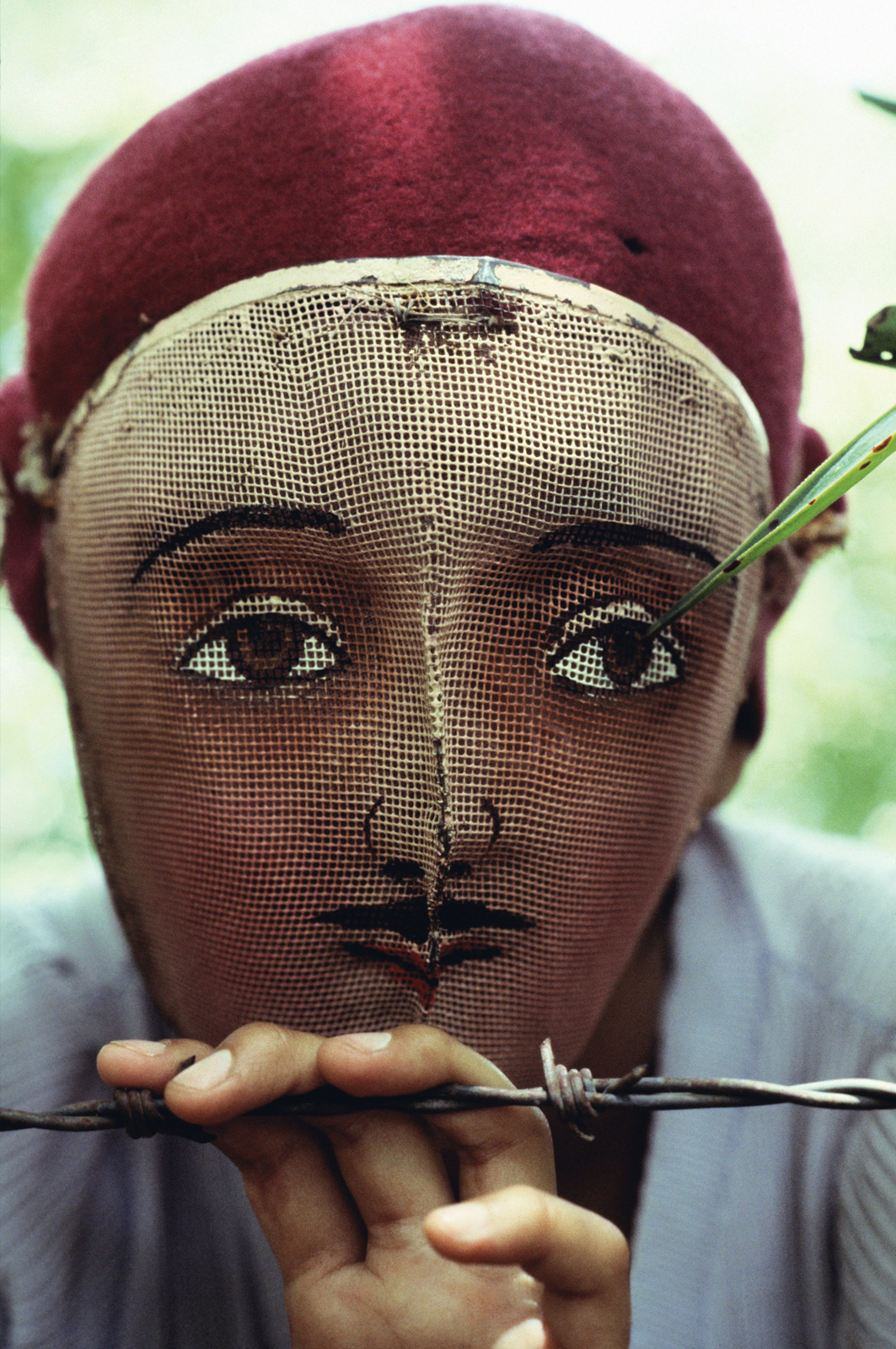
 

Susan Meiselas (American, b. 1948) 'Traditional Indian dance mask from the town of Monimbó, adopted by the rebels during the fight against Somoza to conceal identity, Nicaragua' 1978


Susan Meiselas (American, b. 1948)
Traditional Indian dance mask from the town of Monimbó, adopted by the rebels during the fight against Somoza to conceal identity, Nicaragua
1978
© Susan Meiselas / Magnum Photos
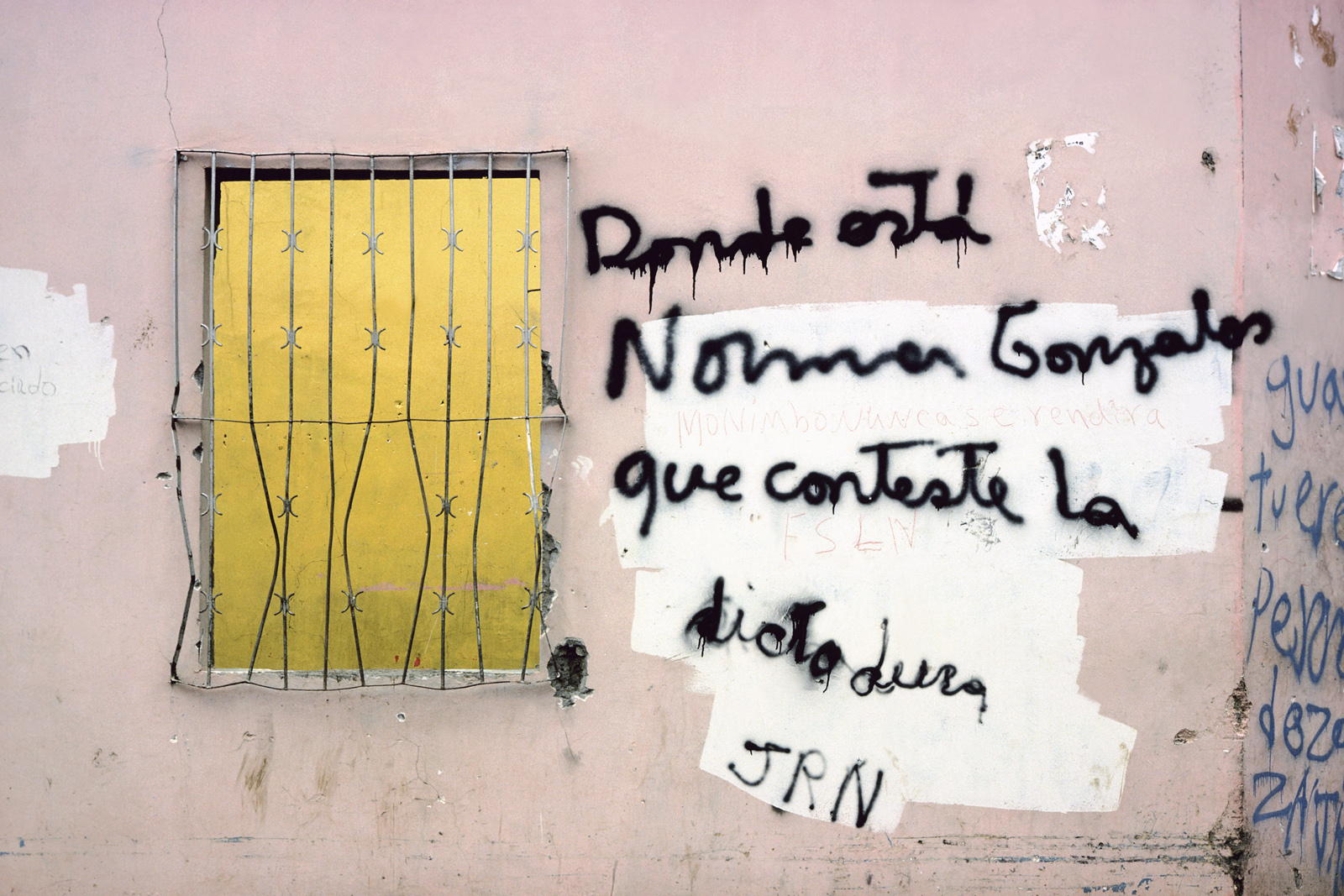
 

Susan Meiselas (American, b. 1948) 'Wall graffiti on Somoza supporter's burned house in Monimbó, asking "Where is Norman Gonzales? The dictatorship must answer", Nicaragua' 1978


Susan Meiselas (American, b. 1948)
Wall graffiti on Somoza supporter’s burned house in Monimbó, asking “Where is Norman Gonzales? The dictatorship must answer”, Nicaragua
1978
© Susan Meiselas / Magnum Photos


Susan Meiselas (American, b. 1948) 'Sandinistas at the walls of the Estelí National Guard headquarters, Nicaragua' July 1979


Susan Meiselas (American, b. 1948)
Sandinistas at the walls of the Estelí National Guard headquarters, Nicaragua
July 1979
© Susan Meiselas / Magnum Photos


Susan Meiselas (American, b. 1948) 'Wall, Managua, Nicaragua' 1979


Susan Meiselas (American, b. 1948)
Wall, Managua, Nicaragua
1979
© Susan Meiselas / Magnum Photos
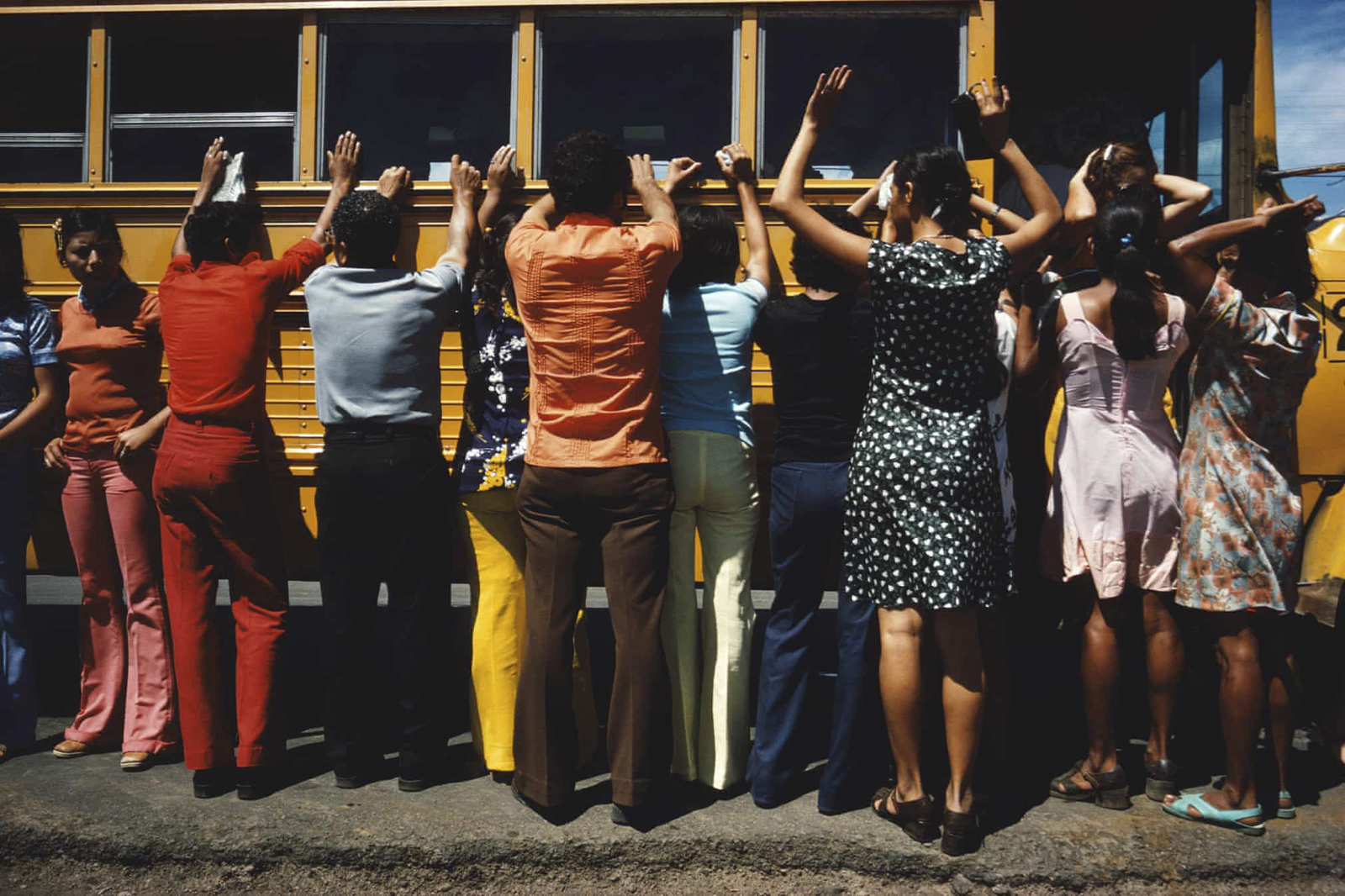
 

Susan Meiselas (American, b. 1948) 'Soldiers search bus passengers along the Northern Highway, El Salvador' 1980


Susan Meiselas (American, b. 1948)
Soldiers search bus passengers along the Northern Highway, El Salvador
1980
© Susan Meiselas / Magnum Photos
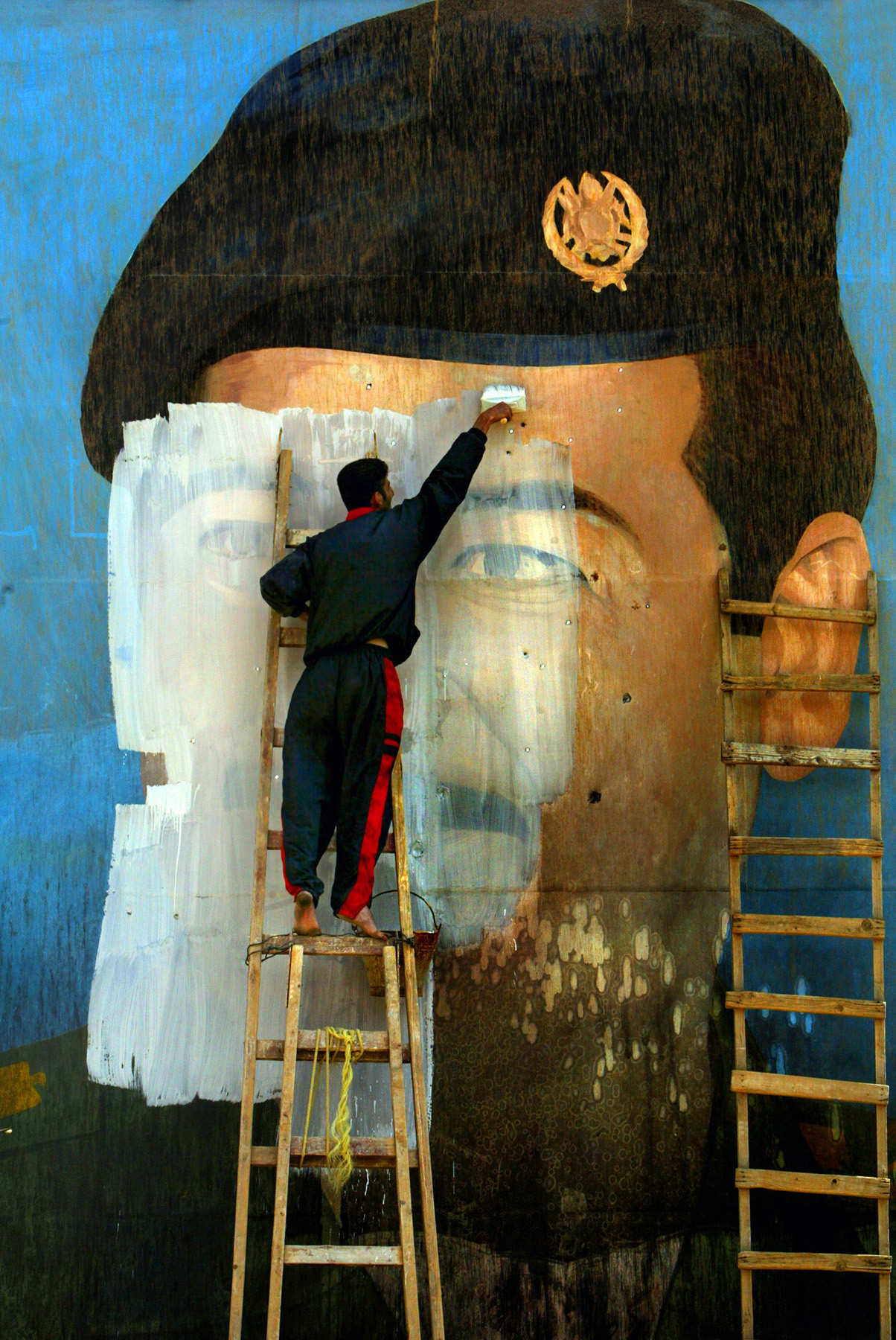
 

Carolyn Cole (American, b. 1961) 'An image of Saddam Hussein, riddled with bullet holes' April 2003


Carolyn Cole (American, b. 1961)
An image of Saddam Hussein, riddled with bullet holes, is painted over by Salem Yuel. Symbols of the leader disappeared quickly throughout Baghdad soon after US troops arrived in the city and took control, Baghdad, Iraq
April 2003
© Carolyn Cole / Los Angeles Times


Carolyn Cole (American, b. 1961) 'Iraqi police officers line up in combat gear to take part in one of several war preparation exercises, Baghdad, Iraq' 2003


Carolyn Cole (American, b. 1961)
Iraqi police officers line up in combat gear to take part in one of several war preparation exercises, Baghdad, Iraq
2003
© Carolyn Cole / Los Angeles Times


Carolyn Cole (American, b. 1961) Refugee children line up for a meagre handout of rice, the only food they receive at the refugee camp where they are staying on the outskirts of Monroiva, Liberia August 2003


Carolyn Cole (American, b. 1961)
Refugee children line up for a meagre handout of rice, the only food they receive at the refugee camp where they are staying on the outskirts of Monroiva, Liberia
August 2003
Gelatin silver print
© Carolyn Cole / Los Angeles Times


Carolyn Cole (American, b. 1961) 'Dozens of bodies are laid in a mass grave on the outskirts of Monrovia, Liberia' August 2003


Carolyn Cole (American, b. 1961)
Dozens of bodies are laid in a mass grave on the outskirts of Monrovia, Liberia
August 2003
© Carolyn Cole / Los Angeles Times


Carolyn Cole (American, b. 1961) 'A US marine is covered in camouflage face paint during the battle for Najaf, Iraq' August 2004


Carolyn Cole (American, b. 1961)
A US marine is covered in camouflage face paint during the battle for Najaf, Iraq, where American forces spent weeks bombing and fighting their way to the city’s holy Imam Ali Shrine, before negotiating an end to the fighting, Najaf, Iraq
August 2004
© Carolyn Cole / Los Angeles Times


Anja Niedringhaus (German, 1965-2014) 'Afghan men on a motorcycle overtake Canadian soldiers' September 2010


Anja Niedringhaus (German, 1965-2014)
Afghan men on a motorcycle overtake Canadian soldiers with the Royal Canadian Regiment during a patrol in the Panjwaii district, southwest of Kandahar, Salavat, Afghanistan
September 2010
© picture alliance / AP Images


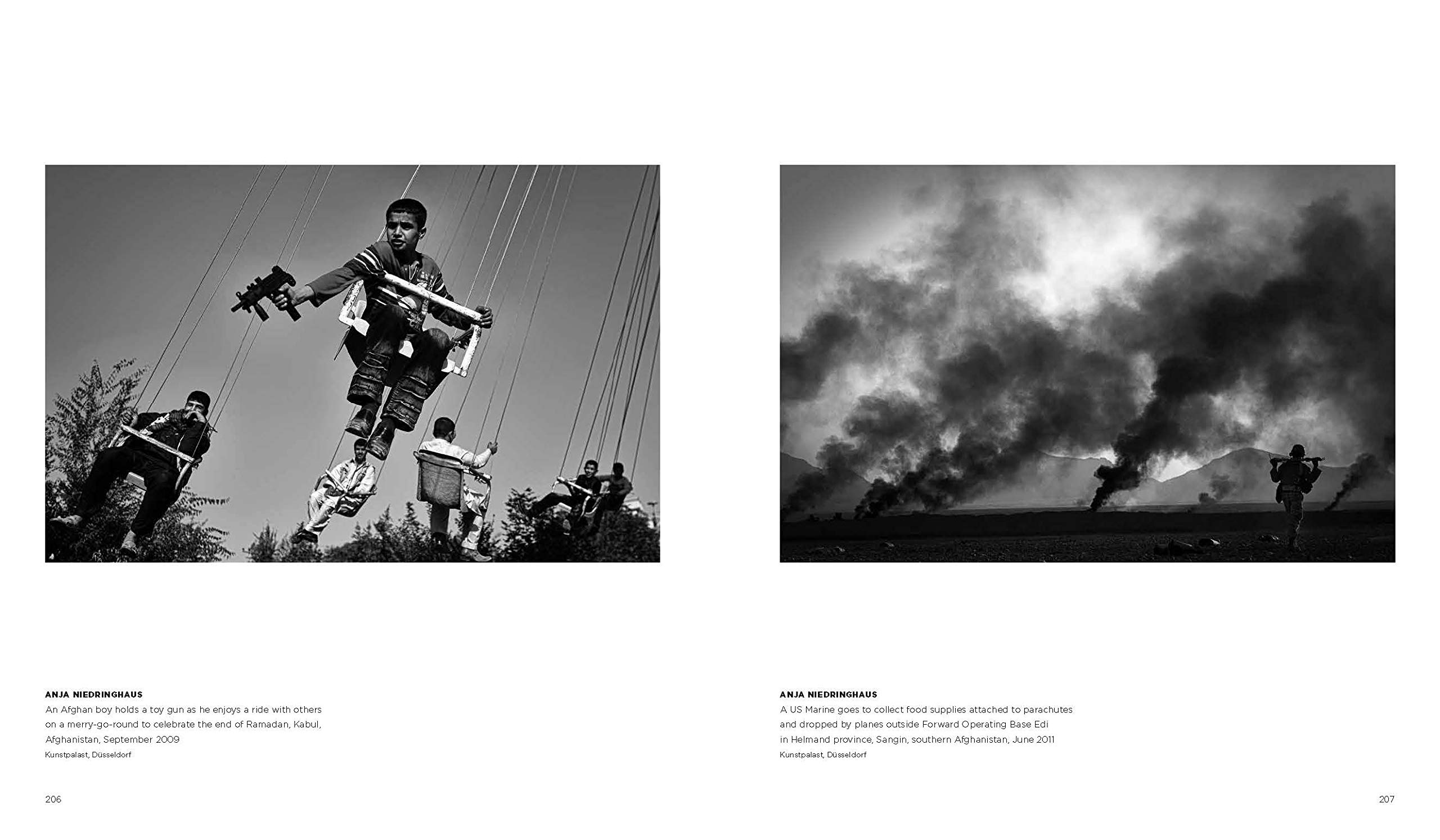
Anja Niedringhaus (German, 1965-2014) 'An Afghan boy holds a toy gun' September 2009


Anja Niedringhaus (German, 1965-2014)
An Afghan boy holds a toy gun as he enjoys a ride with others on a merry-go-round to celebrate the end of Ramadan, Kabul, Afghanistan
September 2009
© picture alliance / AP Images
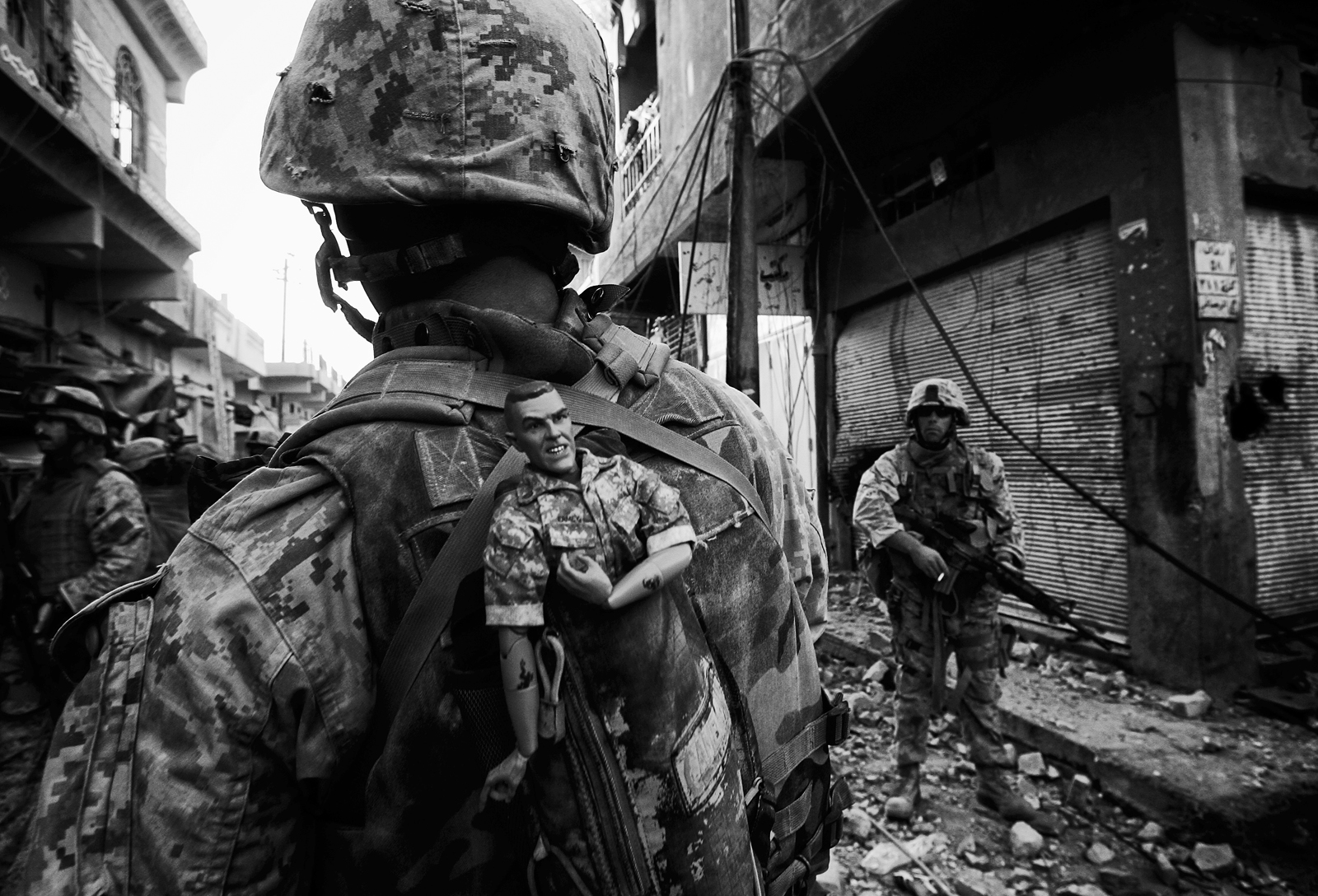
 

Anja Niedringhaus (German, 1965-2014) 'A US Marine of the 1st Division carries a GI Joe mascot as a good luck charm' November 2004


Anja Niedringhaus (German, 1965-2014)
A US Marine of the 1st Division carries a GI Joe mascot as a good luck charm in his backpack while his unit pushes further into the western part of the city, Fallujah, Iraq
November 2004
© picture alliance / AP Images


Anja Niedringhaus (German, 1965-2014) 'Baghdad, Iraq. US Marines raid the house of an Iraqi delegate in the Abu Ghraib district' November 2004


Anja Niedringhaus (German, 1965-2014)
Baghdad, Iraq. US Marines raid the house of an Iraqi delegate in the Abu Ghraib district
November 2004
© picture alliance / AP Images


Anja Niedringhaus (German, 1965-2014) 'A Canadian soldier with the Royal Canadian Regiment chases a chicken during a patrol in Salavat' September 2010


Anja Niedringhaus (German, 1965-2014)
A Canadian soldier with the Royal Canadian Regiment chases a chicken during a patrol in Salavat. Seconds later, the Canadian patrol comes under attack by militants who toss grenades over the wall, Salavat, Afghanistan
September 2010
© picture alliance / AP Images
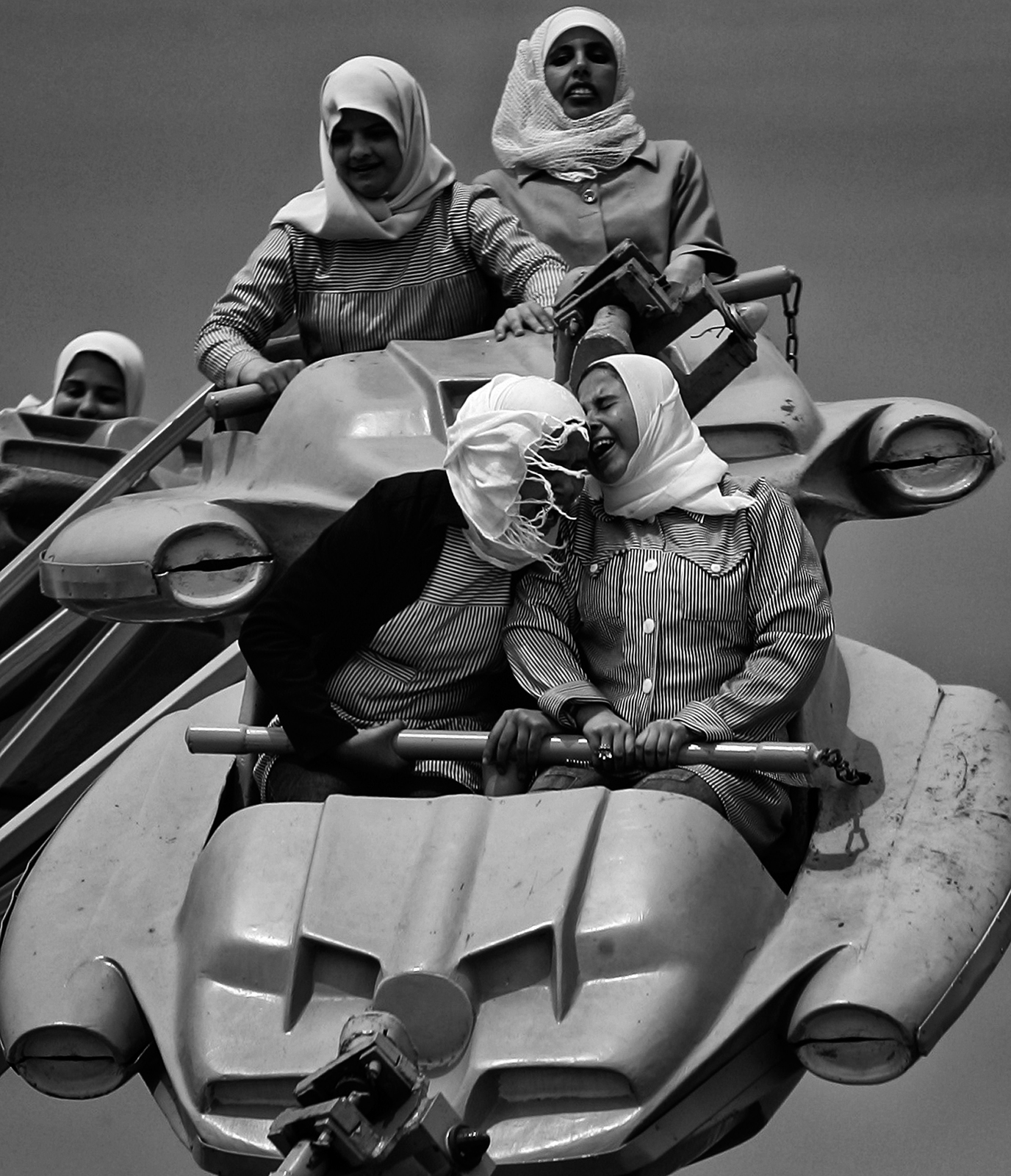
 

Anja Niedringhaus (German, 1965-2014) 'Palestinians enjoy a ride at an amusement park outside Gaza City, Gaza City, Gaza Strip' March 2006


Anja Niedringhaus (German, 1965-2014)
Palestinians enjoy a ride at an amusement park outside Gaza City, Gaza City, Gaza Strip
March 2006
© picture alliance / AP Images


'Women War Photographers - From Lee Miller to Anja Niedringhaus' book cover


Women War Photographers – From Lee Miller to Anja Niedringhaus book cover


Discover eight remarkable women war photographers who have documented harrowing and unforgettable crises and combat around the world for the past eighty years.

Women have been on the front lines of war photography for more than a century. With access to places men cannot go and with startling empathy in the face of danger, the women who photograph war lend a unique perspective to the consequences of conflict. From intimate glimpses of daily life to the atrocities of conflict, this powerful book reveals the range and depth of eight women photographers’ contributions to wartime photojournalism.

Each photographer is introduced by a brief, informative essay followed by reproductions of a selection of their works. Included here are images by Lee Miller, who documented the liberation of Dachau and Buchenwald. The first woman to parachute into Vietnam, Catherine Leroy was on the ground during the Tet Offensive and was captured by the North Vietnamese Army at the age of 22. Susan Meiselas raised international awareness around the Somoza regime’s catastrophic effects in Nicaragua.

German reporter Anja Niedringhaus worked on assignment in nearly every major conflict of the 1990s, from the Balkans to Libya, Iraq to Afghanistan. The work of Carolyn Cole, Francoise Demulder, Christine Spengler, and Gerda Taro round out this collective profile of courage under pressure and of humanity in the face of war.

163 colour photographs

About the Authors

Anne-Marie Beckmann is an art historian and curator. She is Director of the Deutsche Borse Photography Foundation in Frankfurt, Germany. She has published several books on photography. Felicity Korn is an art historian, curator, and an advisor to the Director General at the Museum Kunstpalast in Dusseldorf, Germany. She was previously a curator at the Stadel Museum in Frankfurt.
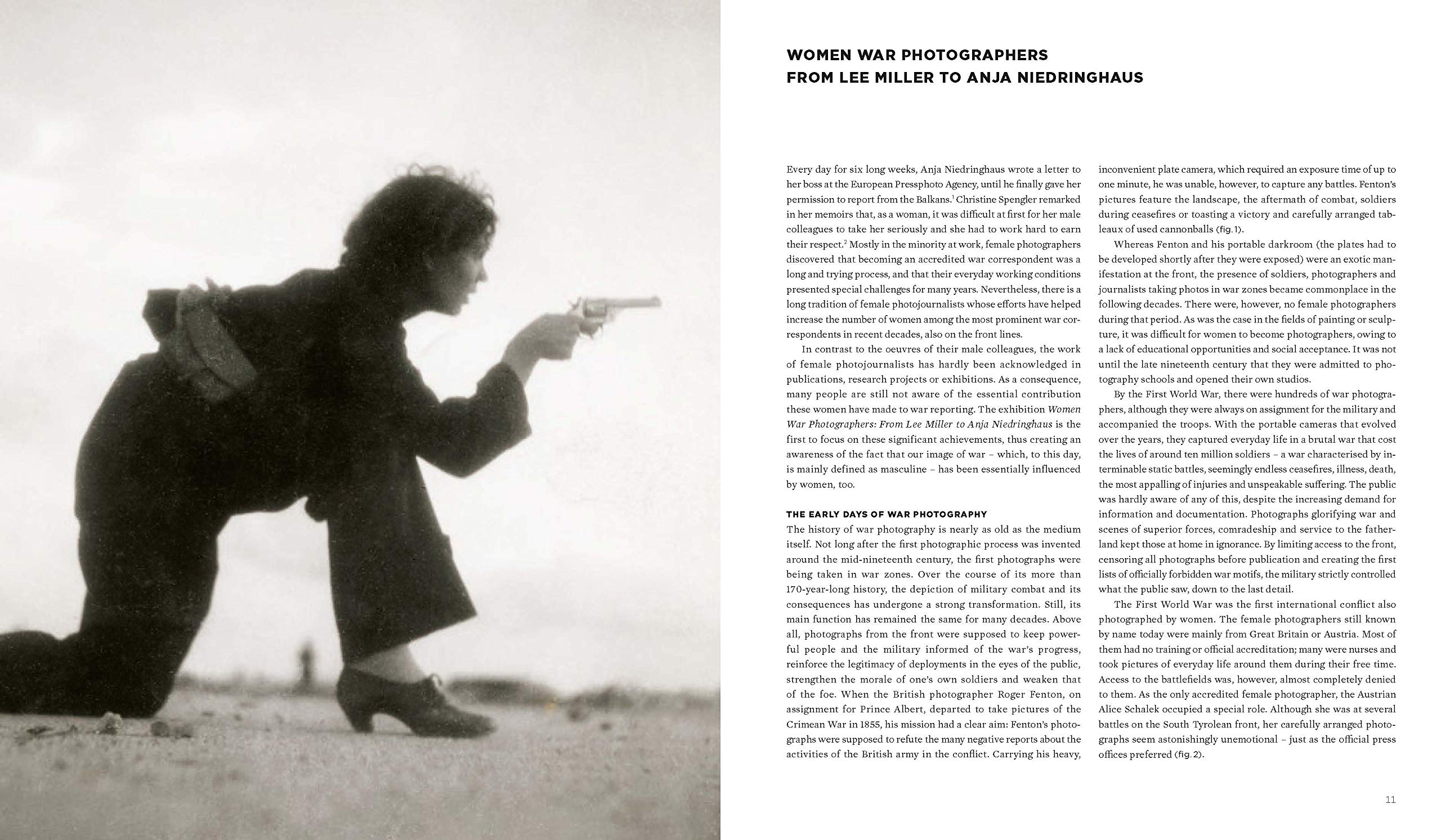
 

'Women War Photographers - From Lee Miller to Anja Niedringhaus' book pages

'Women War Photographers - From Lee Miller to Anja Niedringhaus' book pages

'Women War Photographers - From Lee Miller to Anja Niedringhaus' book pages

'Women War Photographers - From Lee Miller to Anja Niedringhaus' book pages

'Women War Photographers - From Lee Miller to Anja Niedringhaus' book pages

'Women War Photographers - From Lee Miller to Anja Niedringhaus' book pages


Women War Photographers – From Lee Miller to Anja Niedringhaus book pages


Fotomuseum Winterthur
Grüzenstrasse 44 + 45
CH-8400
Winterthur (Zürich)

Opening hours:
Tuesday to Sunday 11am – 6pm
Wednesday 11am – 8pm
Closed on Mondays
Fotomuseum Winterthur website

LIKE ART BLART ON FACEBOOK

Back to top

Exhibition: ‘A Lasting Memento: John Thomson’s Photographs Along the River Min’ at the Peabody Essex Museum (PEM), Salem MA

Exhibition dates: 1st June, 2019 – 17th May, 2020

Curator: Sarah Kennel, PEM’s Byrne Family Curator of Photography


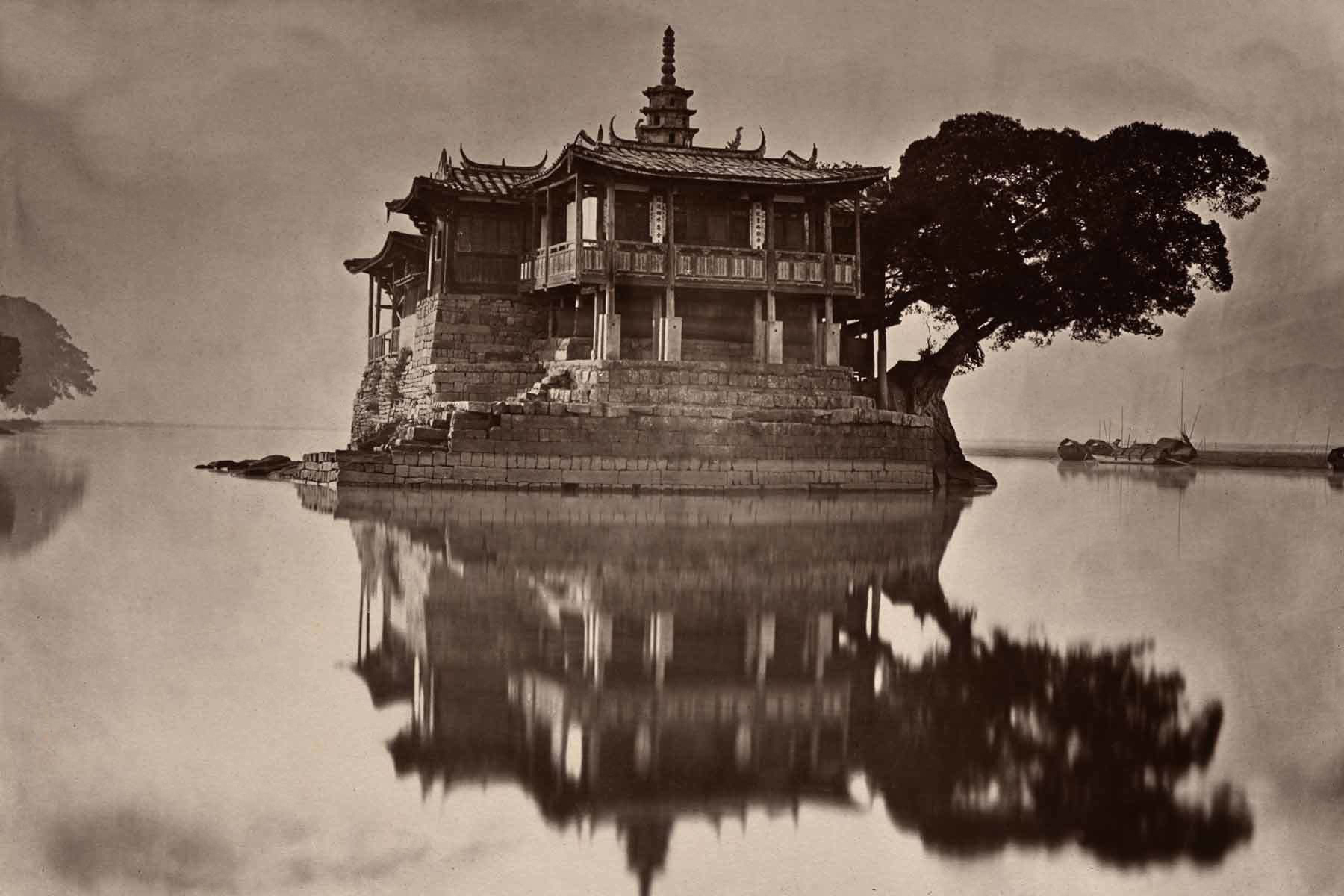
John Thomson (Scottish, 1837-1921) 'The Island Pagoda' 1873 from the exhibition 'A Lasting Memento: John Thomson's Photographs Along the River Min' at the Peabody Essex Museum (PEM), Salem MA, June 2019 - May 2020


John Thomson (Scottish, 1837-1921)
The Island Pagoda
1873
Carbon print
Gift of the Estate of Mrs. Anthony Rives
© Peabody Essex Museum. Photography by Ken Sawyer


Greetings from Australia.

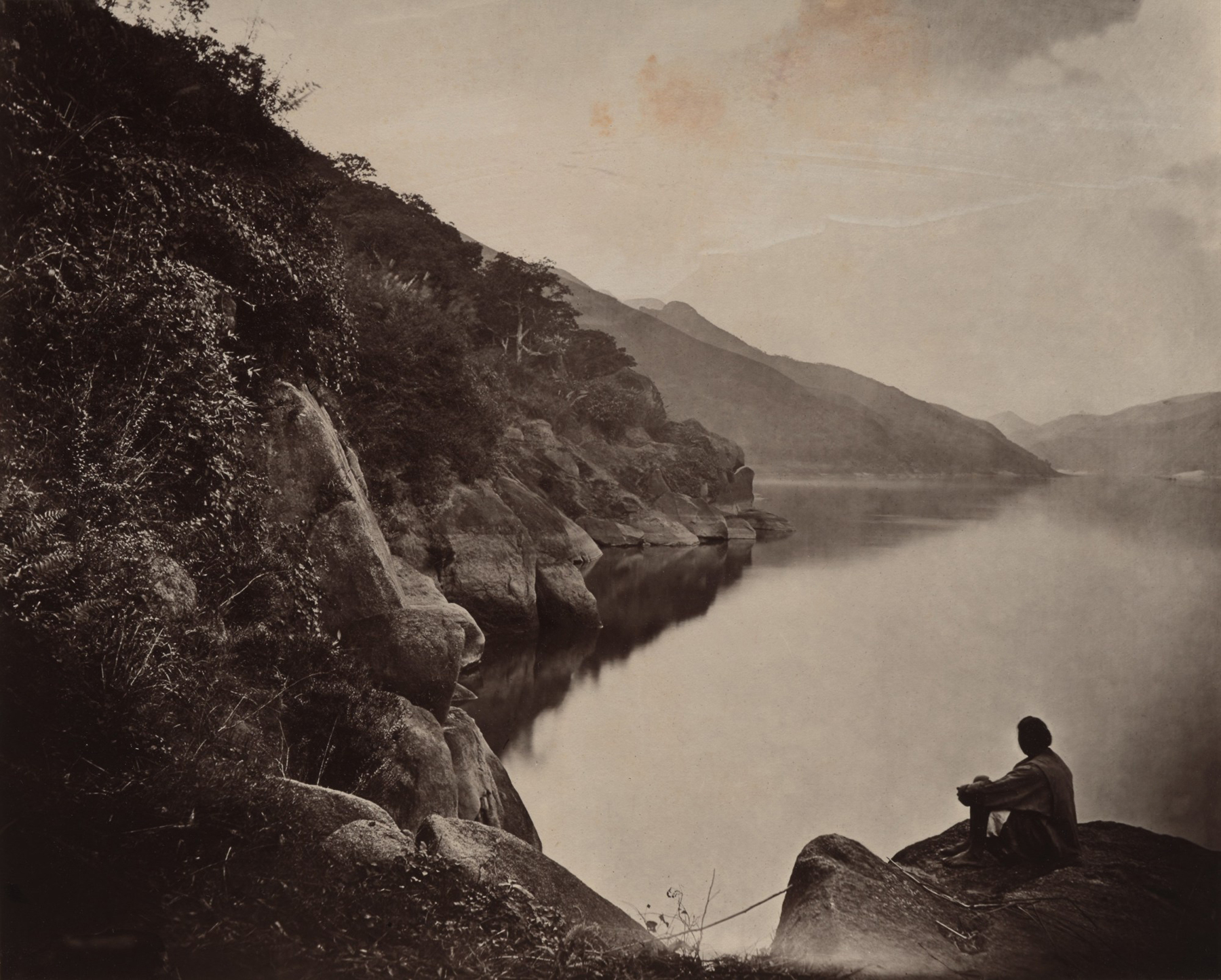
Since we can’t go travelling ourselves at the moment let us travel, virtually, through time – back to the 19th century – and space, to journey with Scottish-born travel photographer up the River Min to the Chinese city of Fuzhou (Foochow). Let us wonder at these European colonial photographs, reflections of pagoda, bucolic landscapes, Eastern temples, Western churches and dangerous rapids. Thomson “portrayed a halcyon land, with romanticised vistas that reference the ethereal atmosphere of Chinese paintings and the sweeping panoramas of European paintings.”

Let us luxuriate, then, in these stunning carbon prints – their rich colour, their stillness – as lasting mementos of a vanished land, as memory objects reanimated in our imagination, so that we can travel beyond our current confinement.

Dr Marcus Bunyan


Many thankx to the Peabody Essex Museum for allowing me to publish the photographs in the posting. Please click on the photographs for a larger version of the image.


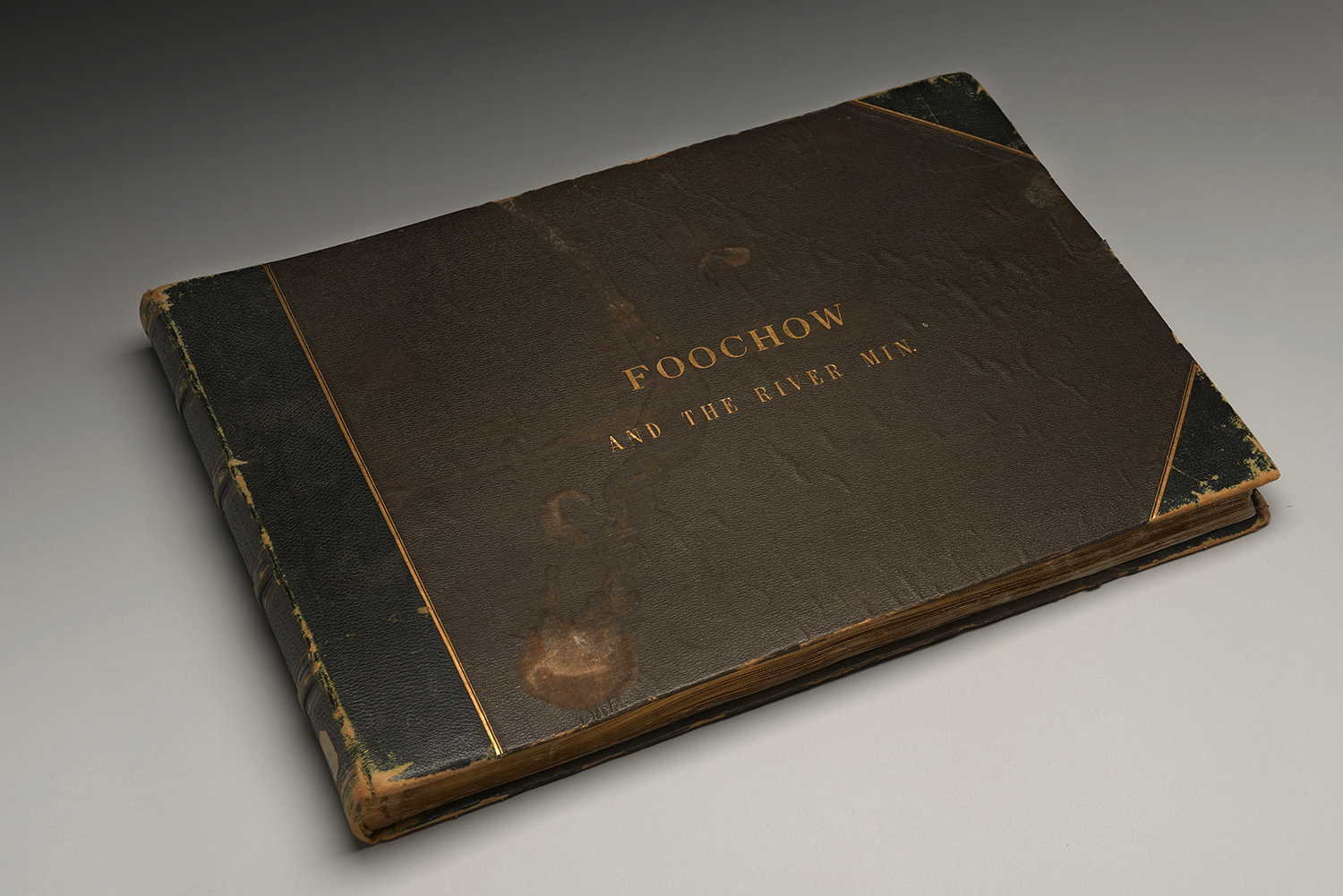
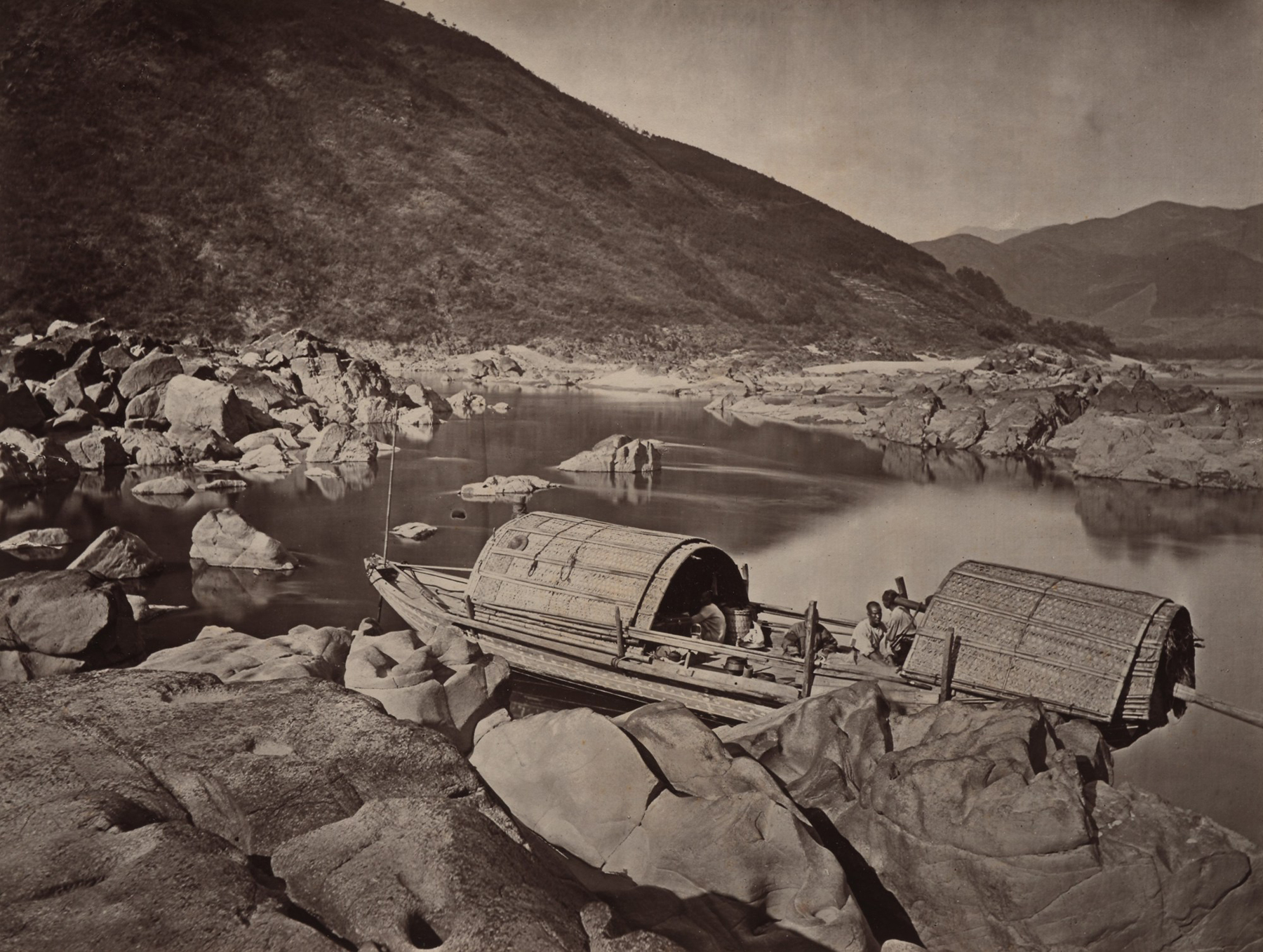
As far as travel souvenirs go, few can beat John Thomson’s leather-bound photo album Foochow and the River Min. From 1870 to 1871, the Scottish-born photographer traveled 160 miles up the River Min to document the area in and around the city of Fuzhou (Foochow), an important centre of international trade and one of the most picturesque provinces in China. Thomson sold his book by advance subscription to the foreign residents of Fuzhou – tea planters, merchants, missionaries and government officials 0 who wanted a way to share their experiences with friends and family back home.

Fewer than 10 of the original 46 copies of this album survived, and the Peabody Essex Museum is privileged to own two of them. A Lasting Memento: John Thomson’s Photographs Along the River Min presents this rare collection of photographs for the first time at PEM. The exhibition also features 10 works by contemporary Chinese photographer Luo Dan.


Installation view of the exhibition 'A Lasting Memento: John Thomson's Photographs Along the River Min' at the Peabody Essex Museum (PEM), Salem MA 


Installation view of the exhibition A Lasting Memento: John Thomson’s Photographs Along the River Min at the Peabody Essex Museum (PEM), Salem MA


John Thomson (Scottish, 1837-1921) 'Foochow and the River Min' 1870-1871


John Thomson (Scottish, 1837-1921)
Foochow and the River Min
1870-1871
Leather-bound photo album
© Peabody Essex Museum
Photography by Ken Sawyer


John Thomson (Scottish, 1837-1921) 'Pagoda Island' 1870-1871 from the exhibition 'A Lasting Memento: John Thomson's Photographs Along the River Min' at the Peabody Essex Museum (PEM), Salem MA, June 2019 - May 2020


John Thomson (Scottish, 1837-1921)
Pagoda Island
1870-1871
Carbon print
Gift of the Estate of Mrs. Anthony Rives
© Peabody Essex Museum
Photography by Ken Sawyer


John Thomson (Scottish, 1837-1921) 'Yuen-Fu Rapid' 1870-1871 from the exhibition 'A Lasting Memento: John Thomson's Photographs Along the River Min' at the Peabody Essex Museum (PEM), Salem MA, June 2019 - May 2020


John Thomson (Scottish, 1837-1921)
Yuen-Fu Rapid
1870-1871
Carbon print
Gift of the Estate of Mrs. Anthony Rives
© Peabody Essex Museum
Photography by Ken Sawyer


John Thomson (Scottish, 1837-1921) 'Yen Ping Rapid' 1870-1871


John Thomson (Scottish, 1837-1921)
Yen Ping Rapid
1870-1871
Carbon print
Gift of the Estate of Mrs. Anthony Rives
© Peabody Essex Museum
Photography by Ken Sawyer


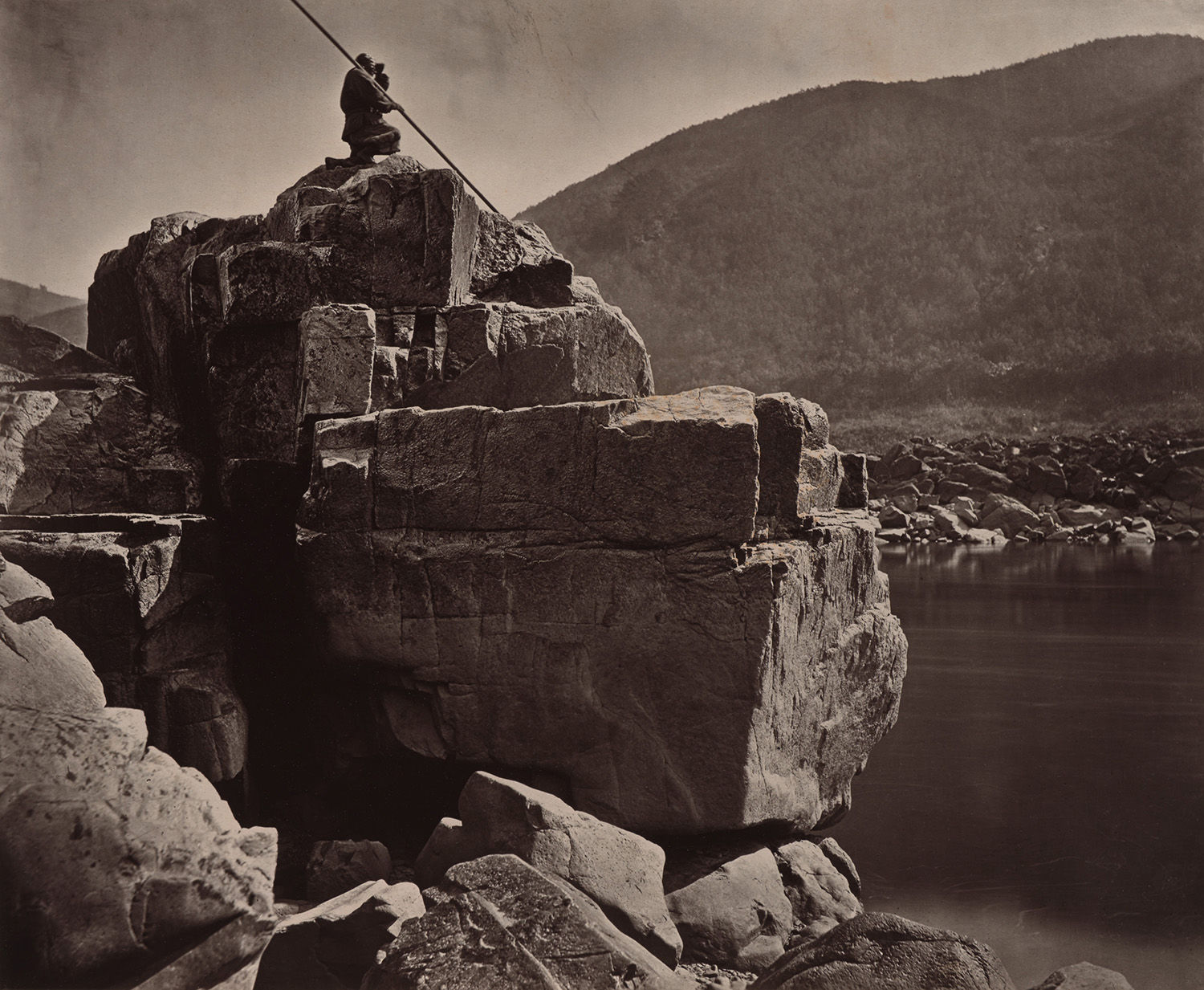
John Thomson (Scottish, 1837-1921) 'Rocks in the Rapids' 1870-1871


John Thomson (Scottish, 1837-1921)
Rocks in the Rapids
1870-1871
Carbon print
Gift of the Estate of Mrs. Anthony Rives
© Peabody Essex Museum
Photography by Ken Sawyer


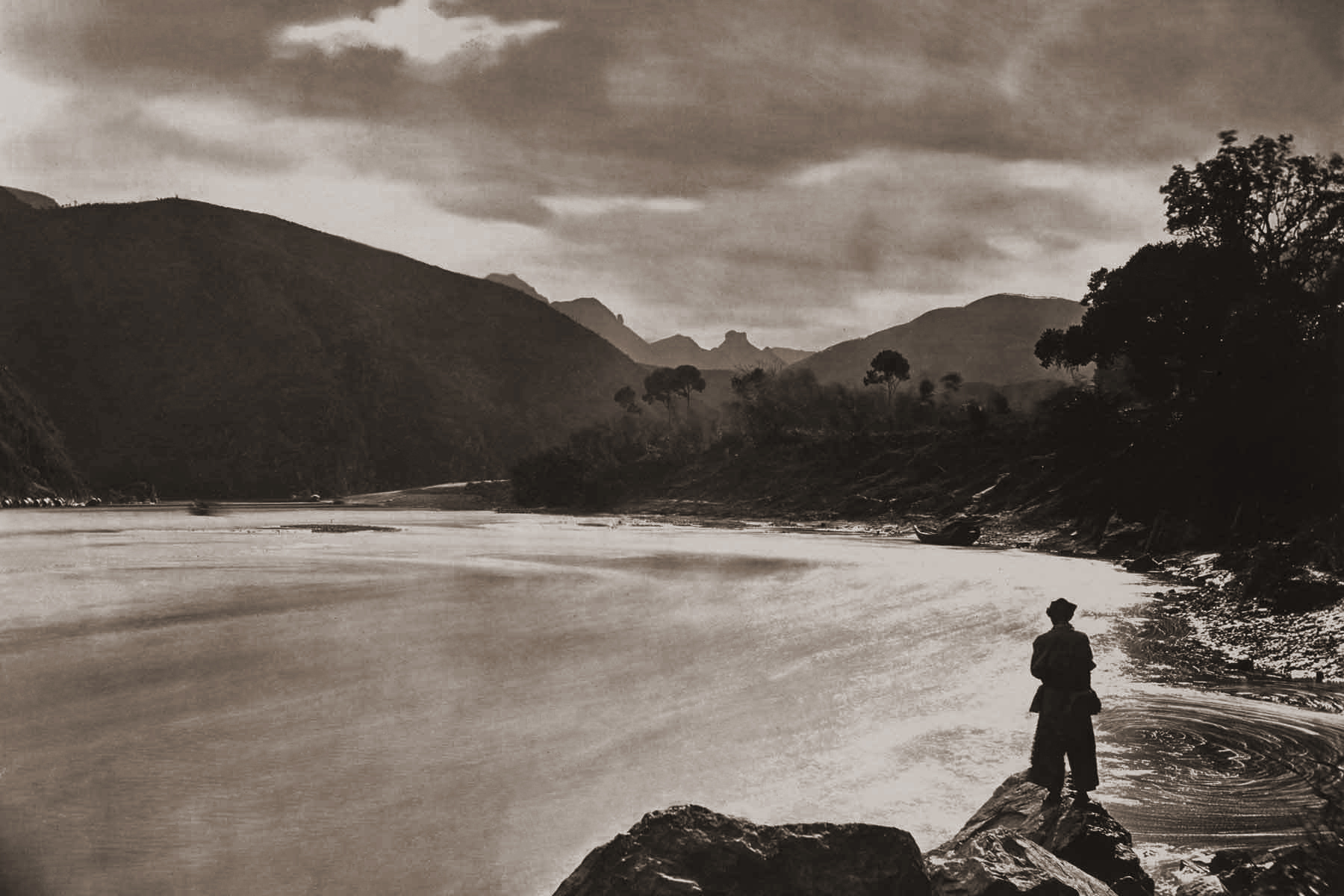
John Thomson (Scottish, 1837-1921) 'A Reach of the Min' 1870-1871


John Thomson (Scottish, 1837-1921)
A Reach of the Min
1870-1871
Carbon print
Gift of the Estate of Mrs. Anthony Rives
© Peabody Essex Museum
Photography by Ken Sawyer


John Thomson (Scottish, 1837-1921) 'A Rapid Boat' 1870-1871


John Thomson (Scottish, 1837-1921)
A Rapid Boat
1870-1871
Carbon print
Gift of the Estate of Mrs. Anthony Rives
© Peabody Essex Museum
Photography by Ken Sawyer


Photographic Journeys Past and Present Show China in a New Light

The Peabody Essex Museum (PEM) presents a voyage into 19th-century China through one of PEM’s photographic treasures, John Thomson’s rare album Foochow and the River Min. More than forty striking landscapes, city views, and portrait studies will be on view, captured by Thomson as he travelled in the Fujian province in Southeast China from 1870 to 1871. These prints are complemented by a selection of photographs by contemporary artist Luo Dan, who was inspired by Thomson to undertake his own journey in southwestern China in 2010. A Lasting Memento: John Thomson’s Photographs Along the River Min is on view at PEM from June 1, 2019 through May 17, 2020.

From 1870 to 1871, Scottish-born photographer John Thomson traveled 160 miles up the River Min to document the area in and around the city of Fuzhou (Foochow), one of the most picturesque regions in China. Thomson gathered eighty photographs from this voyage into an album titled Foochow and the River Min which was sold by advance subscription to the foreign residents of Fuzhou – tea planters, merchants, missionaries and government officials – who wanted a way to share their experiences with friends and family back home. Of the 46 copies originally published, fewer than 10 survive today and PEM is privileged to own two of them, both of which are featured in the exhibition.

“Many people have a conception of China as very industrialised and modern, even sterile, but these photographs complicate that notion and reveal the country’s incredible beauty and geographic diversity,” says Sarah Kennel, PEM’s Byrne Family Curator of Photography. “The roots of China’s rapid modernisation go back to the 19th-century and are part of a larger history of maritime culture, trade, and globalisation that are also entwined with PEM’s origin story. This exhibition affirms how photography can bring us back to another place in time and can change the way we see the world.”

Thomson was a renowned photographer, focusing on fine art, landscape, and architectural photos, and was often credited with being one of the first photographers to use pictures in conjunction with journalistic commentary. Foochow and the River Min is accompanied by introductory text, presenting a pictorial journey featuring the character of the growing city of Fuzhou, the beauty of the landscapes surrounding the River Min, as well as Thomson’s studies of the people he encountered there.

Documenting Eastern culture

Thomson is considered one of the first photographers to document East and South Asia. Born in Scotland, he learned photography while still in school, working as an apprentice to a maker of optical and scientific instruments. In 1862, he joined his older brother William, also a photographer and watchmaker, in Singapore, where they established a studio. Thomson spent the next several years photographing throughout Asia, including Cambodia, India, and Thailand. By 1866, he had joined the Royal Ethnological Society of London, was elected a Fellow member of the Royal Geographic Society, and styled himself as an expert on Eastern cultures. In 1868, he established a studio in Hong Kong, a burgeoning centre of photography and trade. For the next four years, Thomson traveled and photographed throughout China before returning in 1872 to Britain, where he remained until his death in 1921.

The exhibition follows Thomson’s journey up the River Min, from the city of Fuzhou to Nanping. “Thomson’s extraordinary gifts as a photographer are evident in his compositions, including his famous view of the floating island pagoda,” says Kennel. “You can look at these as merely beautiful pictures, but if you unlock them a little bit they tell the story of an important moment of economic trade, cultural exchange, and political tension.”

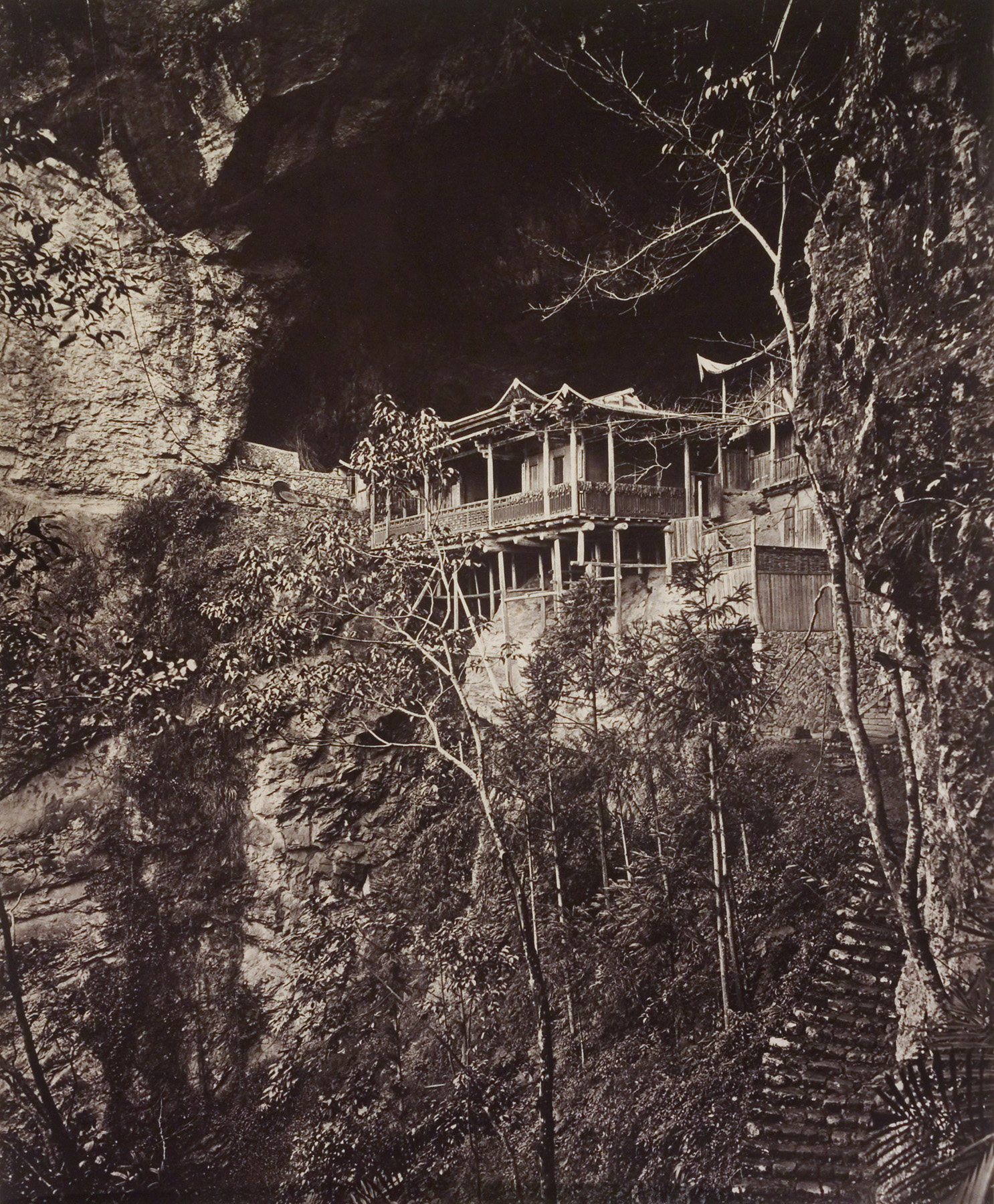
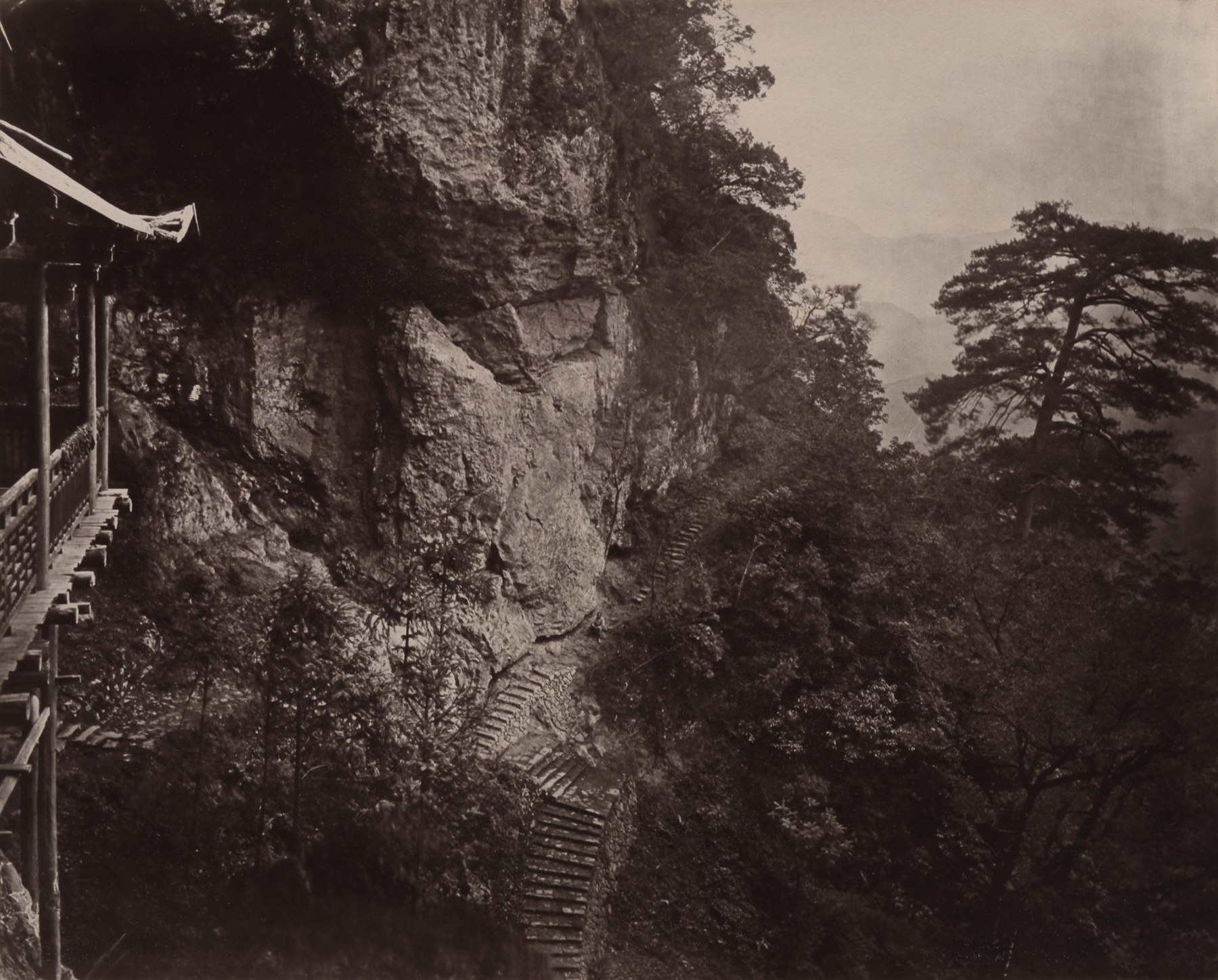
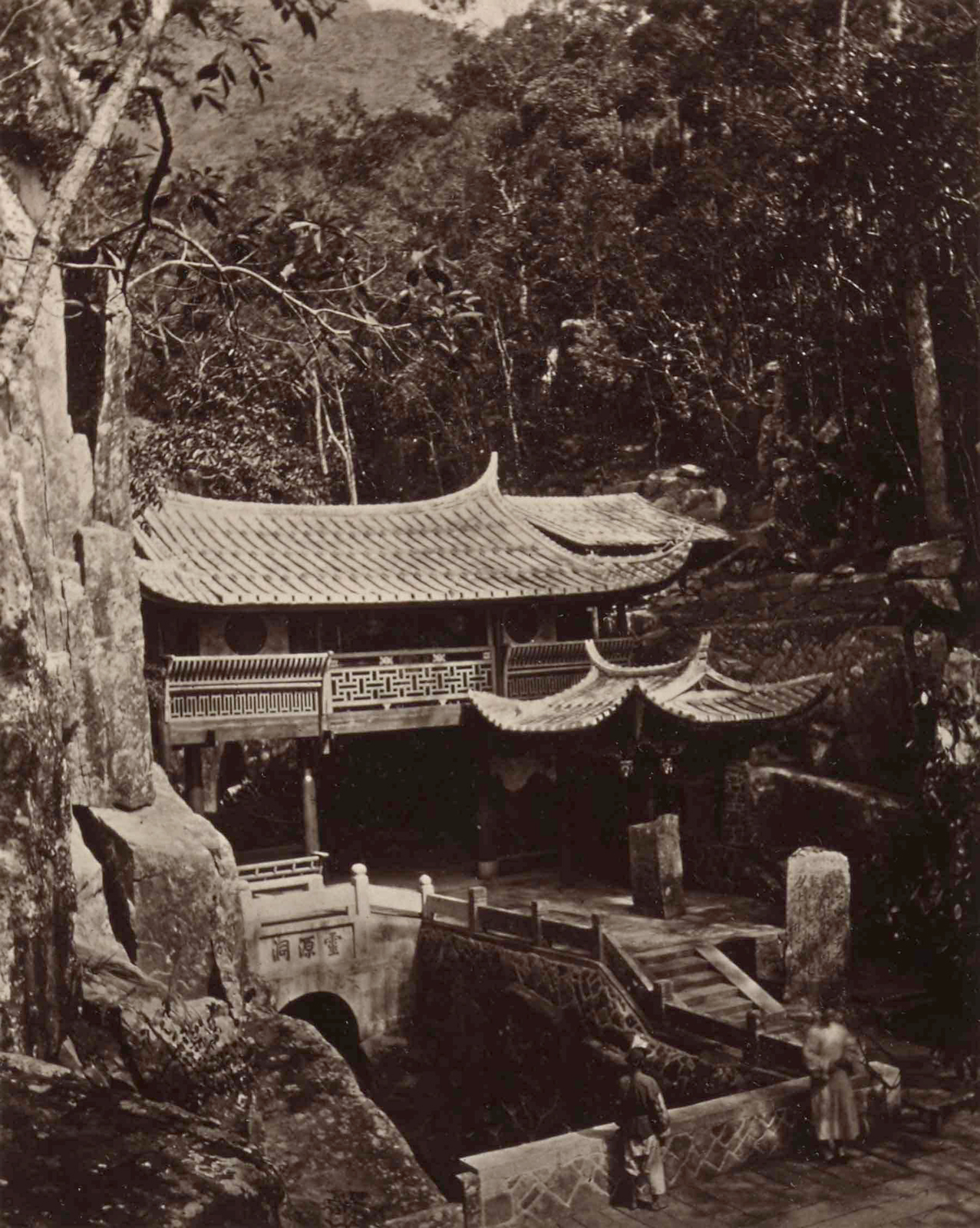
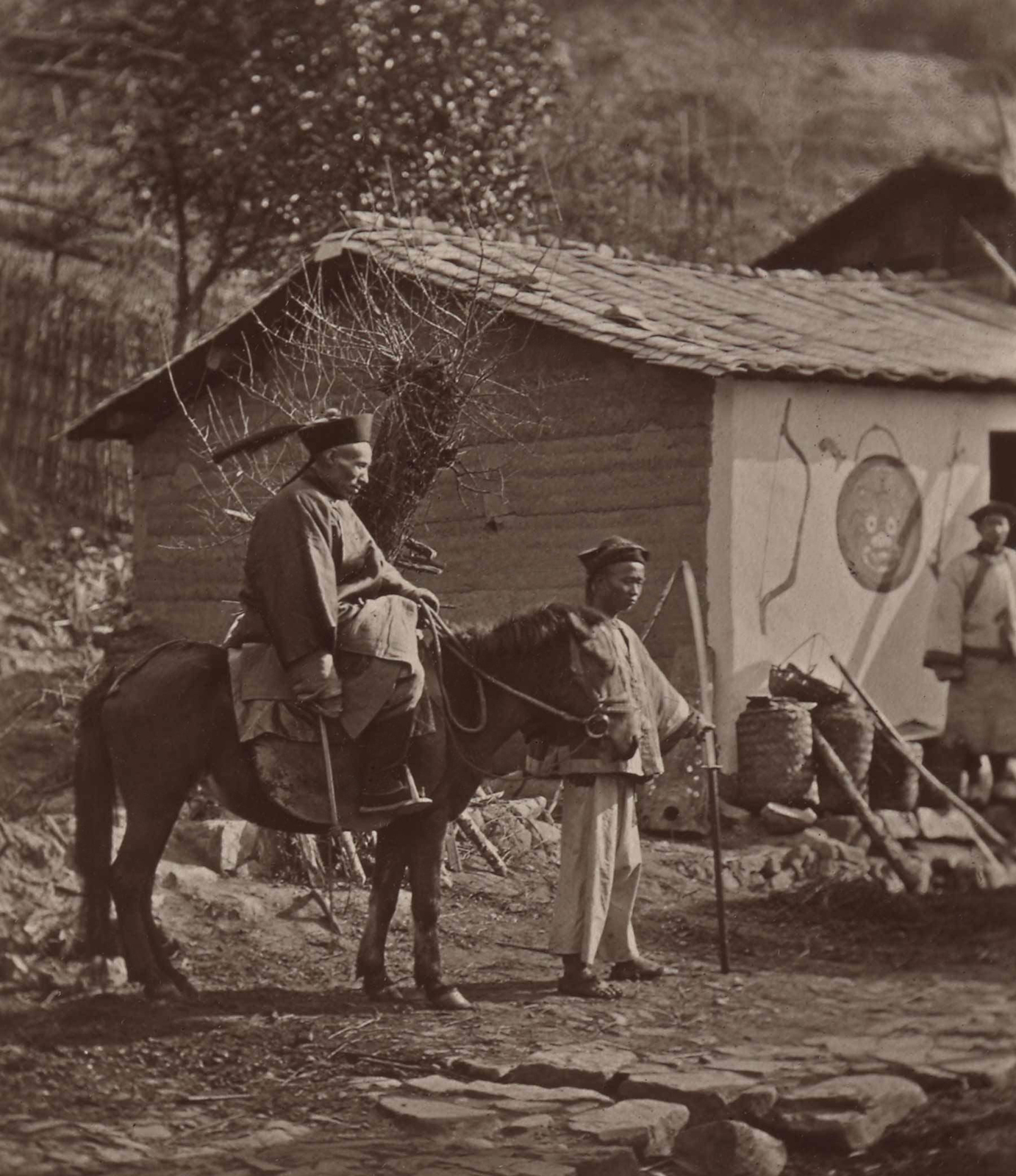
Among the works on view are an extraordinary series on the Yuen Fu monastery, tucked high up a steep, rocky ravine. A strain of wistful romanticism is present, particularly in landscape photographs that incorporate a solitary figure.

In order to make his negatives, Thomson used the wet-collodion process. This required him to set up a large camera on a tripod and prepare the photographic plate on the spot by dipping it into light-sensitive chemicals in a makeshift darkroom, putting it in a plate holder and making the exposure within five minutes. He experimented with these processes while traveling by boat or ascending very steep hills and traversing rough terrain with a coterie of Chinese employees who not only hauled his equipment but also sometimes carried Thomson himself. Missionary and business colleagues helped facilitate introductions and provide access to unique locations so that Thomson could make his landscapes and portraits. The albums were printed using the carbon process, which imbues them with a rich, purplish tonality.

Inspired by Thomson

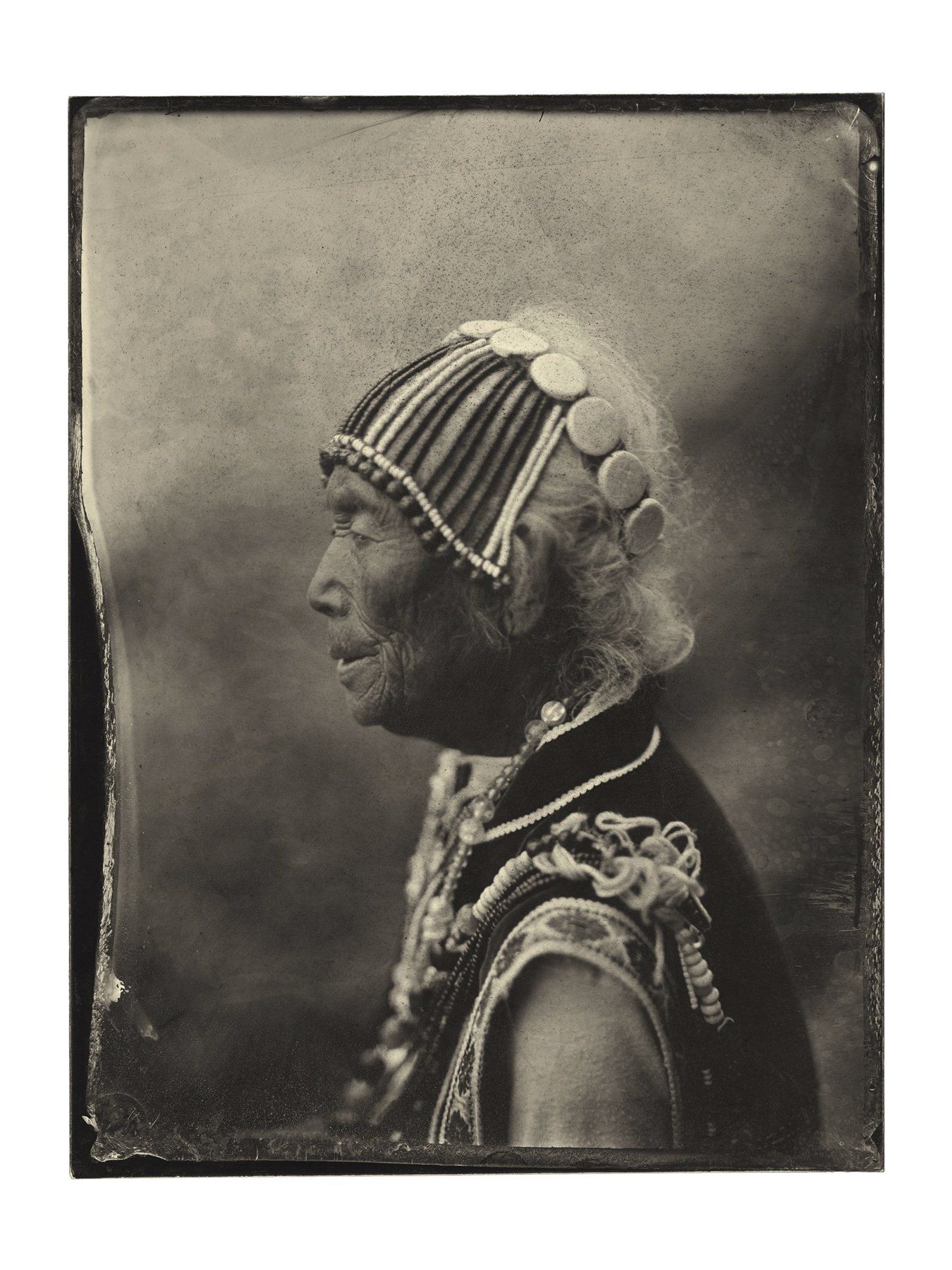
Contemporary Chinese photographer Luo Dan’s work focuses on the impact of modernisation and globalisation in China. Inspired by Thomson’s example, Luo traveled to the remote Nu River Valley in southwestern China, where he lived with and photographed the Lisu and Nu Christian ethnic minority communities for nearly two years, using the same hand-made wet-collodion process that Thomson had employed some 150 years earlier. Luo was especially interested in what he perceived as the villagers’ connection to local cultural traditions. A Lasting Memento features 10 works by Luo that reflect on and reverberate with the spirit and enterprise of Thomson’s 19th-century project.

Press release from the Peabody Essex Museum website


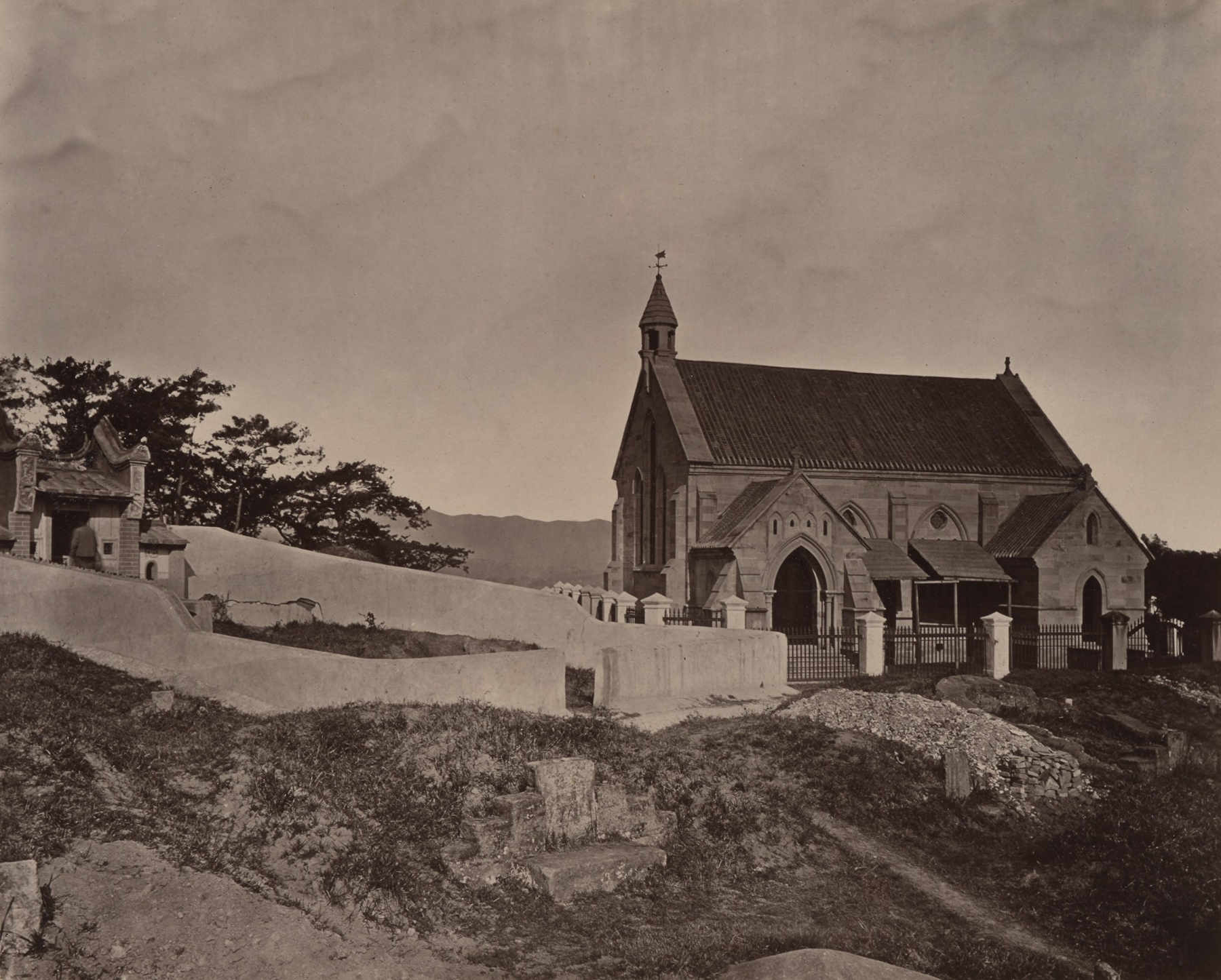
John Thomson (Scottish, 1837-1921) 'Foochow Church' 1870-1871


John Thomson (Scottish, 1837-1921)
Foochow Church
1870-1871
Carbon print
Gift of the Estate of Mrs. Anthony Rives
© Peabody Essex Museum
Photography by Ken Sawyer


John Thomson (Scottish, 1837-1921) 'Foochow and the River Min (Yuen Fu monastery)' 1870-1871


John Thomson (Scottish, 1837-1921)
Foochow and the River Min (Yuen Fu monastery)
1870-1871
Carbon print
Gift of the Estate of Mrs. Anthony Rives
© Peabody Essex Museum
Photography by Ken Sawyer


John Thomson (Scottish, 1837-1921) 'Right Shoulder of Cave' 1870-1871


John Thomson (Scottish, 1837-1921)
Right Shoulder of Cave (view from the building above looking down to the left)
1870-1871
Carbon print
Gift of the Estate of Mrs. Anthony Rives
© Peabody Essex Museum
Photography by Ken Sawyer


John Thomson (Scottish, 1837-1921) 'A Small Temple at Ku-Shan' 1870-1871


John Thomson (Scottish, 1837-1921)
A Small Temple at Ku-Shan
1870-1871
Carbon print
Gift of the Estate of Mrs. Anthony Rives
© Peabody Essex Museum
Photography by Ken Sawyer


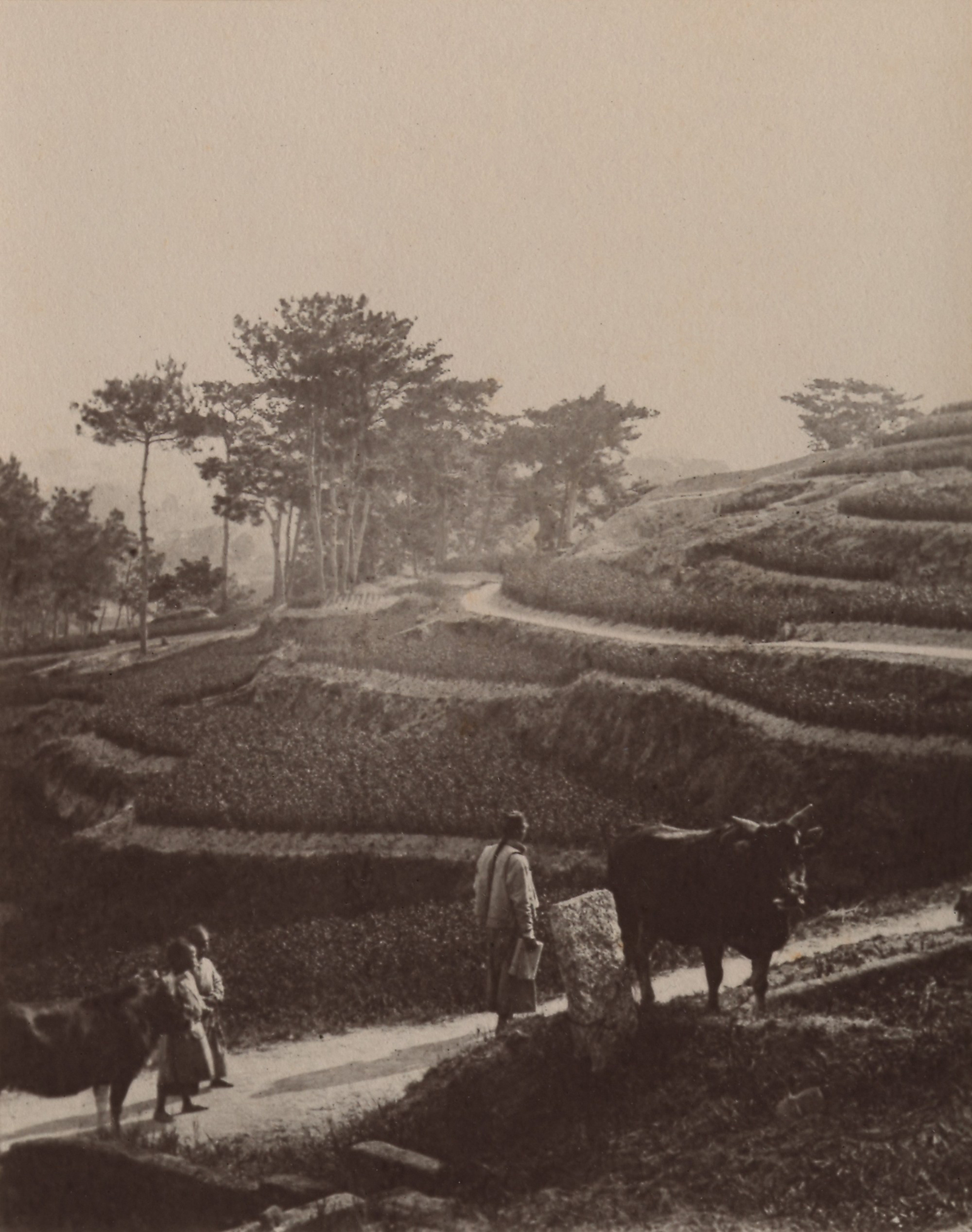
John Thomson (Scottish, 1837-1921) 'Road to the Plantation' 1870-1871


John Thomson (Scottish, 1837-1921)
Road to the Plantation
1870-1871
Carbon print
Gift of the Estate of Mrs. Anthony Rives
© Peabody Essex Museum
Photography by Ken Sawyer


“In an eerie parallel to today, the late 1800’s represented an international inflection point, with rampant Western industrialisation spurring expansive global trade, cultural exchange and attendant political tension. The invention of photography in 1839 enabled our earliest photographs of faraway lands and exotic cultures, most often brought back by wealthy amateurs (many of those images are held in the rich archives of the PEM.) Not so with John Thomson, a renowned professional photographer who garnered capital through pre-paid subscriptions to his album “Foochow and the River Min.” Thomson photographed the project on a two-year journey, traveling 160 miles up the River Min, from the city of Fuzhou (Foochow) to Nanping, considered one of the most picturesque regions in China.

In this scenic southeast region of China, a new British tea trade was flourishing. Thomson’s album catered to the interests of foreign tea planters, merchants, missionaries and governmental officials. These ex-patriots clamoured to share with their European family and friends Thomson’s skilfully crafted documentary photographs of the Chinese land and people who shaped their new lives. Interestingly, Thomson did not photograph much industry or commerce. Rather, he portrayed a halcyon land, with romanticised vistas that reference the ethereal atmosphere of Chinese paintings and the sweeping panoramas of European paintings. …

Thomson’s carbon prints are technically awe-inspiring. Utilising the cumbersome wet-plate collodion method of creating negatives on large, delicate glass plates that must be exposed while still wet in a hefty view camera on a tripod, Thomson then created his photographic prints on paper with the tricky but stable carbon method in his studio. I imagine this undertaking bore similarities to Hannibal crossing the Alps and that Thomson must have been a robust and determined 33 year-old. Perhaps he was also a perfectionist, because Thomson’s prints from the 1870’s are impeccably pristine. Come see, it is uncanny.”

Elin Spring. “Images of China, Then & Now,” on the What Will You Remember? website [Online] Cited 29/03/2020


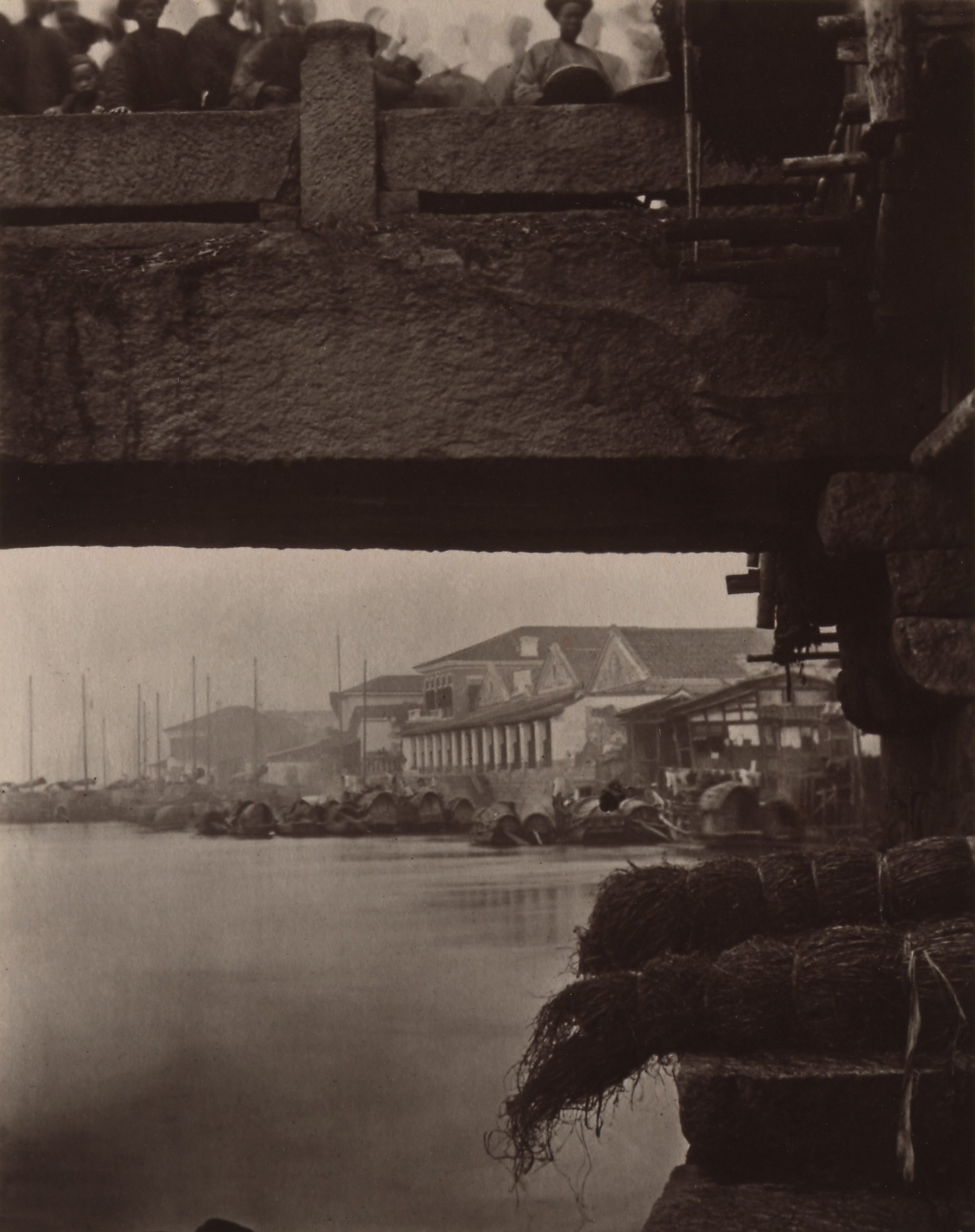
John Thomson (Scottish, 1837-1921) 'Part of Lower Bridge' 1870-1871


John Thomson (Scottish, 1837-1921)
Part of Lower Bridge
1870-1871
Carbon print
Gift of the Estate of Mrs. Anthony Rives
© Peabody Essex Museum
Photography by Ken Sawyer


John Thomson (Scottish, 1837-1921) 'A Military Mandarin' (detail) 1873


John Thomson (Scottish, 1837-1921)
A Military Mandarin (detail)
1873
Carbon print
Gift of the Estate of Mrs. Anthony Rives, 1972


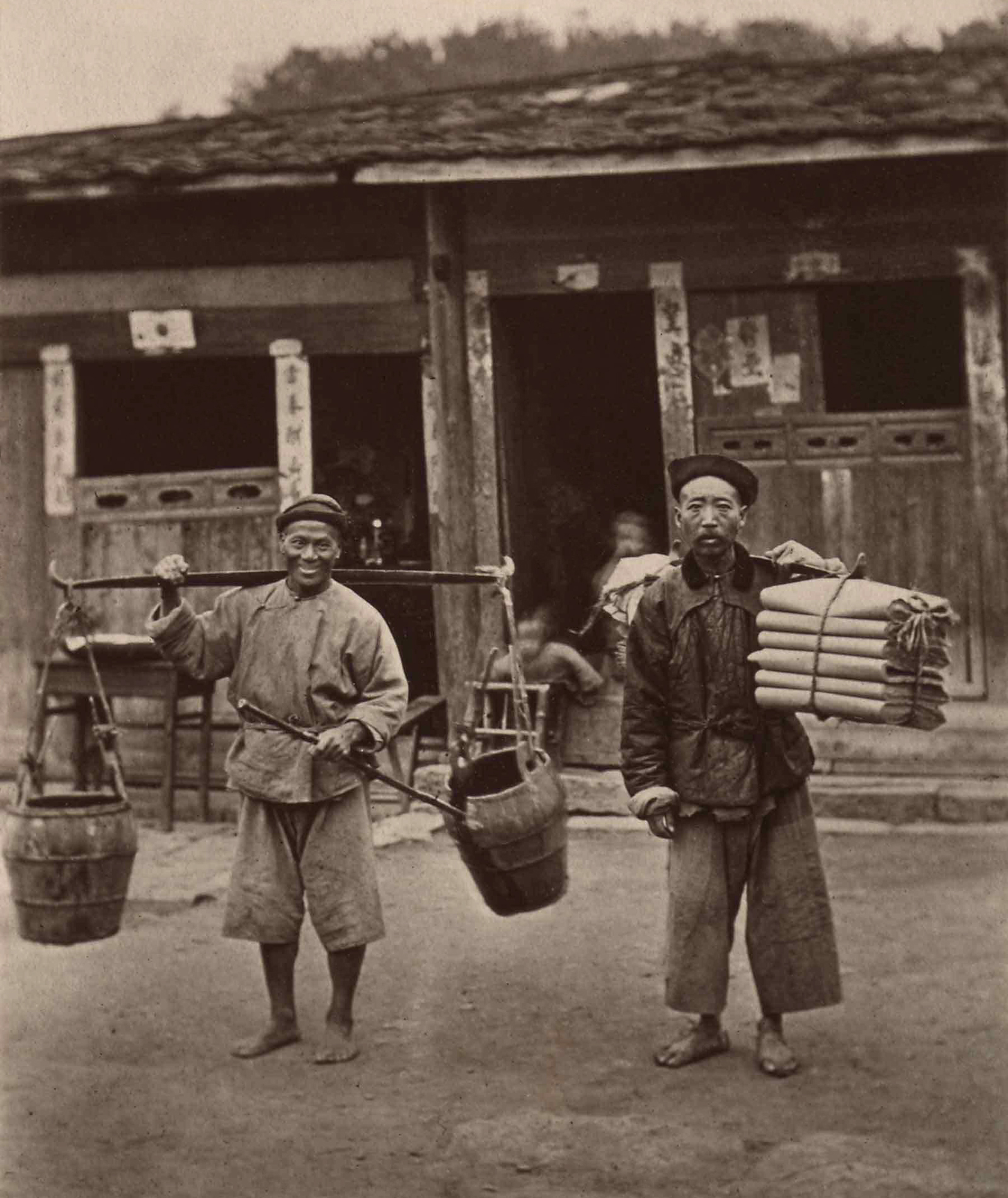
John Thomson (Scottish, 1837-1921) 'Hired Labourers' 1870-1871


John Thomson (Scottish, 1837-1921)
Hired Labourers
1870-1871
Carbon print
Gift of the Estate of Mrs. Anthony Rives
© Peabody Essex Museum
Photography by Ken Sawyer


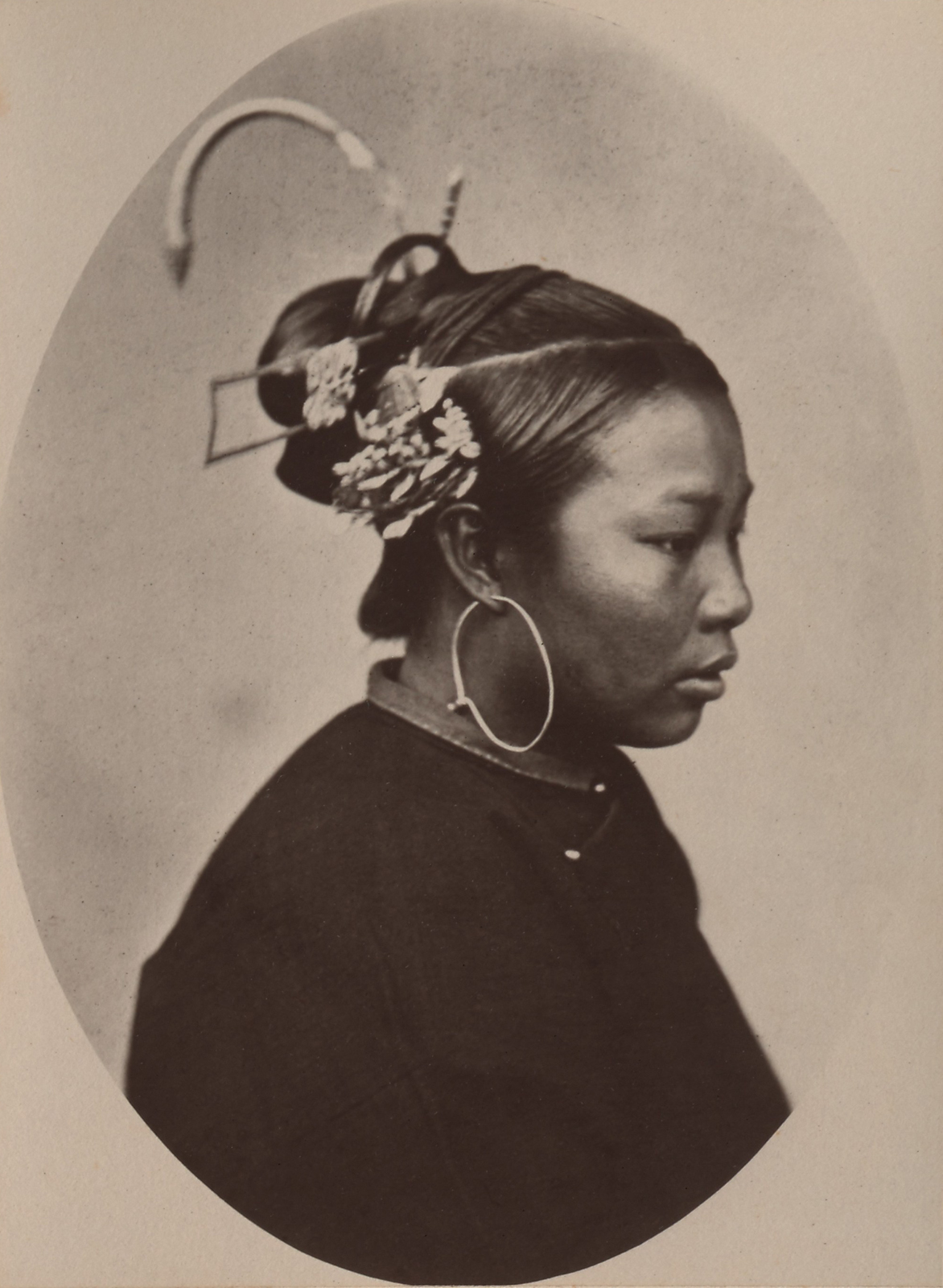
John Thomson (Scottish, 1837-1921) 'Mode of Dressing the Hair' 1870-1871


John Thomson (Scottish, 1837-1921)
Mode of Dressing the Hair
1870-1871
Carbon print
Gift of the Estate of Mrs. Anthony Rives
© Peabody Essex Museum
Photography by Ken Sawyer


John Thomson (Scottish, 1837-1921)

John Thomson (14 June 1837 – 29 September 1921) was a pioneering Scottish photographer, geographer, and traveller. He was one of the first photographers to travel to the Far East, documenting the people, landscapes and artefacts of eastern cultures. Upon returning home, his work among the street people of London cemented his reputation, and is regarded as a classic instance of social documentary which laid the foundations for photojournalism. He went on to become a portrait photographer of High Society in Mayfair, gaining the Royal Warrant in 1881. …

Travels in China

After a year in Britain, Thomson again felt the desire to return to the Far East. He returned to Singapore in July 1867, before moving to Saigon for three months and finally settling in Hong Kong in 1868. He established a studio in the Commercial Bank building, and spent the next four years photographing the people of China and recording the diversity of Chinese culture.

Thomson traveled extensively throughout China, from the southern trading ports of Hong Kong and Canton to the cities of Peking and Shanghai, to the Great Wall in the north, and deep into central China. From 1870 to 1871 he visited the Fukien region, travelling up the Min River by boat with the American Protestant missionary Reverend Justus Doolittle, and then visited Amoy and Swatow.

He went on to visit the island of Formosa (modern-day Taiwan) with the missionary Dr James Laidlaw Maxwell, landing first in Takao in early April 1871. The pair visited the capital, Taiwanfu (now Tainan), before travelling on to the aboriginal villages on the west plains of the island. After leaving Formosa, Thomson spent the next three months travelling 3,000 miles up the Yangtze River, reaching Hupeh and Szechuan.

Thomson’s travels in China were often perilous, as he visited remote, almost unpopulated regions far inland. Most of the people he encountered had never seen a Westerner or camera before. His expeditions were also especially challenging because he had to transport his bulky wooden camera, many large, fragile glass plates, and potentially explosive chemicals. He photographed in a wide variety of conditions and often had to improvise because chemicals were difficult to acquire. His subject matter varied enormously: from humble beggars and street people to Mandarins, Princes and senior government officials; from remote monasteries to Imperial Palaces; from simple rural villages to magnificent landscapes.

Thomson returned to England in 1872

See the full Wikipedia website entry


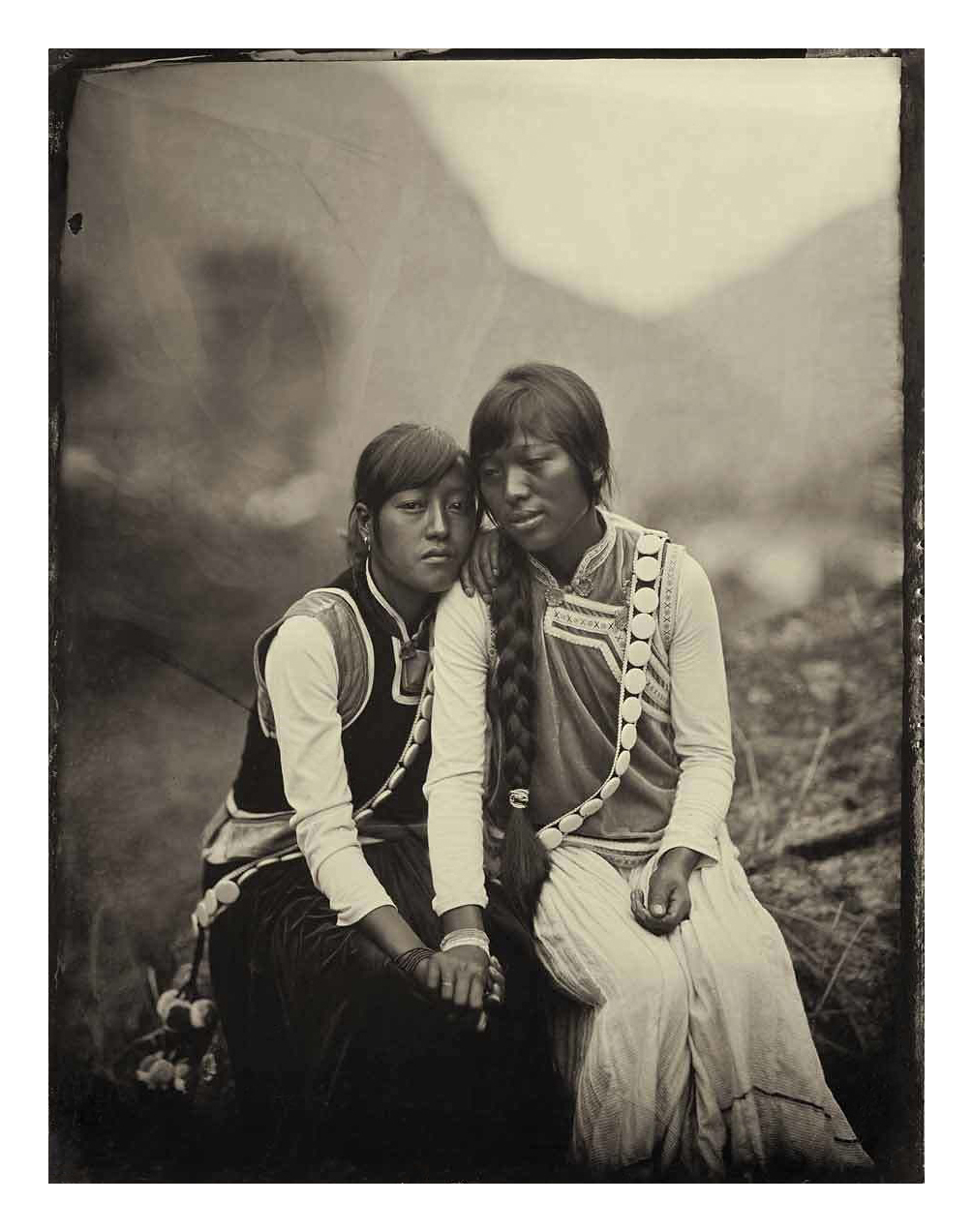
Luo Dan (Chinese, b. 1968) 'Simple Song No. 4 (Yang Du Lei and Her Sister Yang Hua Lin, WaWa Village)' 2010


Luo Dan (Chinese, b. 1968)
Simple Song No. 4 (Yang Du Lei and Her Sister Yang Hua Lin, WaWa Village)
2010
Inkjet print from collodion negatives
© Luo Dan, Courtesy of M97 Gallery


Luo Dan (Chinese, b. 1968) 'Simple Song No. 7 (Jin Ma Wei, Lao Mu Deng Village)' 2010


Luo Dan (Chinese, b. 1968)
Simple Song No. 7 (Jin Ma Wei, Lao Mu Deng Village)
2010
Inkjet print from collodion negatives
© Luo Dan, Courtesy of M97 Gallery


Luo Dan (Chinese, b. 1968)

Luo Dan was born in Chongqing, China, in 1968 and graduated from the Sichuan Fine Art Academy in 1992. He currently lives and works in Chengdu, China.

On another trip, Luo Dan found a remote village, in the Nu River valley in the western part of Yunnan Provence that still remained authentic to a simple agricultural life. This was a predominantly Christian village, the Lisu (a Chinese minority nationality), who were converted to Christianity by missionaries many years before. Luo Dan was attracted to their lifestyle and beliefs.

Luo Dan returned to photograph the villagers with a wooden box camera that he had found in Shandong. The camera was really a museum piece with a lens from 1900 that was slightly soft in its focus. Luo Dan decided to use a wet plate collodion process. This process was first used in the 1850s, using glass plates to make a negative. The process required the photographic material to be coated, sensitised, exposed and developed within the span of about fifteen minutes, necessitating a portable darkroom for use in the field. Luo Dan converted a minivan to a travelling darkroom.

Luo himself says,

“As photography grew ever more technologically complete, it drifted ever farther from its earliest starting point. External factors entered in, and its purity was gradually lost. …

The collodian process is from the earliest times of photography and although laborious, produces remarkable detail and a sense of timelessness that comes from the historic nature of the process. This area is very remote and has almost been forgotten by the modern world. In his photographs, titled “Simple Song”, Luo Dan wishes to show something of the human condition that goes beyond the preoccupations of modern China; materialism, urban development and economic growth. China’s economic achievements are remarkable but on other levels there are many gaps and voids in human experience due to this rapid development. Luo Dan’s work holds a mirror to show that there is an alternate view, one that may have a more spiritual value.

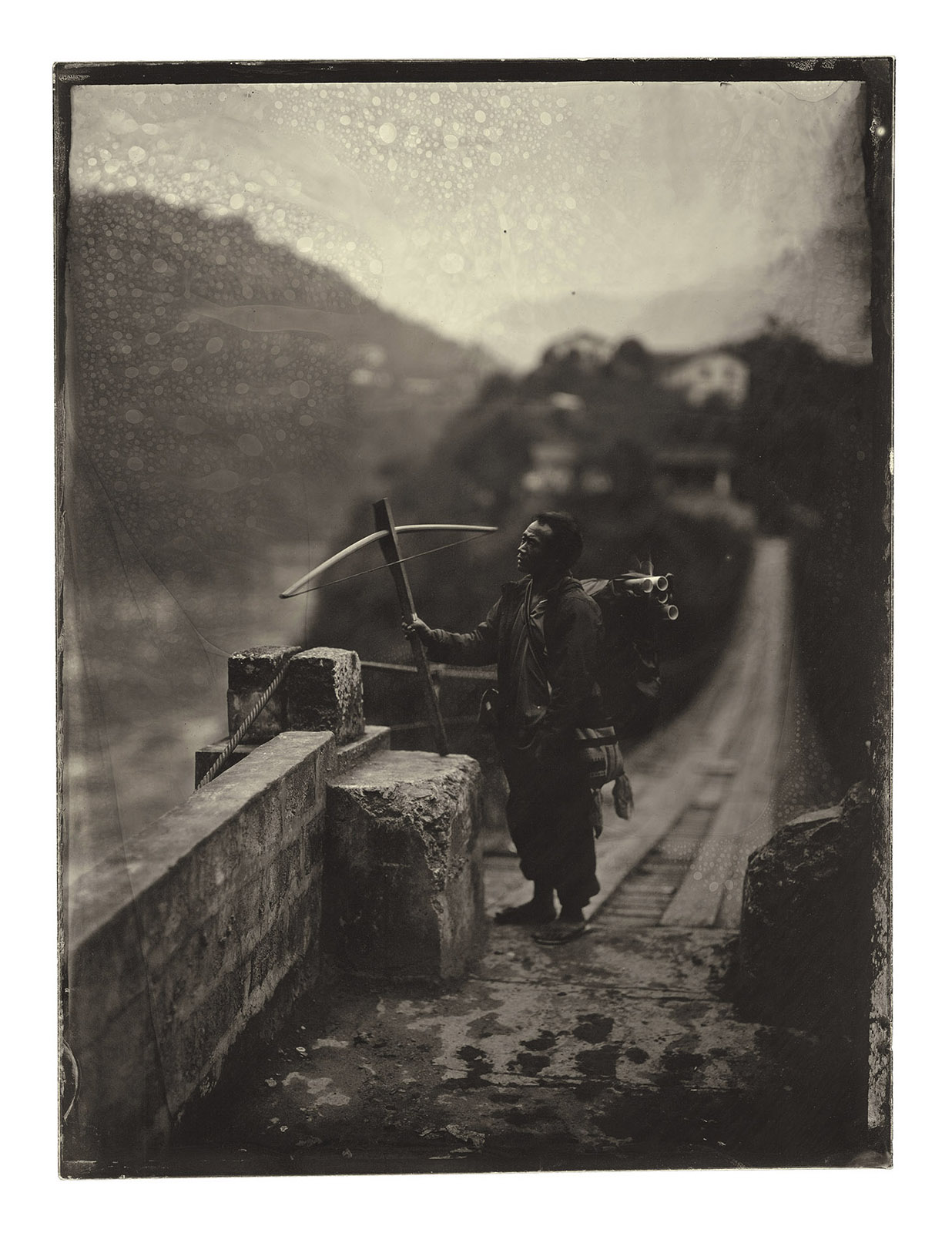
Luo Dan photographs his subjects with a very clear, steady gaze with an awareness of placement and composition. The collodion process makes very slow exposures and the subject must hold the position for up to a minute depending on the light. Often the images are slightly soft due to the movement of the subject or the surroundings. There is also a limited depth of field at times that selectively isolates the subject in front of the softer focus of the background.

His interest in this place and its people has some reference to anthropology in his scrutiny, however the photographs are so much more than an anthropological or ethnographic study by an outsider. The photographs document the lives of the Lisu people through their daily activities, their possessions and traditional costumes. The people are often posed in their Sunday best. They have a timelessness, a ‘difficult to place’ sense of being from the past but also the present and the future. The villagers could continue with this traditional lifestyle for many years to come. There is some concern however, that China’s demand for power will result in dams for hydropower, forever changing this region. Luo Dan stayed in the villages for about twelve months while making this series and he keeps returning.

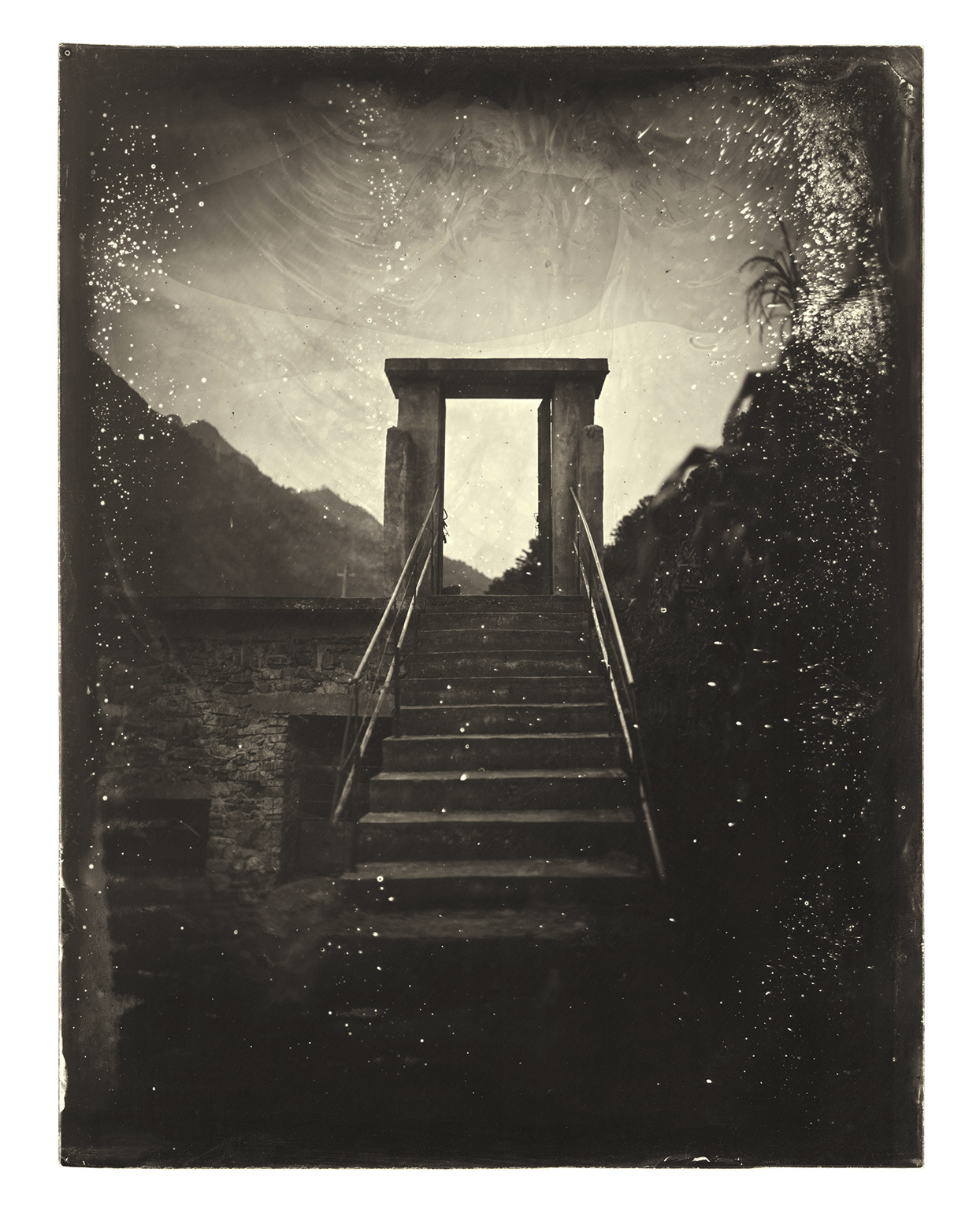
The wet-plate process necessitates a very hands-on approach by the photographer. It reaches back to the basic fundamentals of photography; the effect of light on silver halide crystals that results in an image. Luo Dan’s photographs show the collodion process through the peeling and painterly edges of the prints, the marks and imperfections and the incredible detail of the collodion. The final works are the result of scanning the glass plates and printing the works to a larger scale on Ilford gold silk fibre paper. They are incredibly beautiful and capture a moment in time with great sensitivity. For some photographers who use this process it becomes all about the technique, however this is not the case. Luo Dan uses the wet-plate collodion technique as a way to return to a handcrafted skill of the past that mirrors the primitive tools and farming methods of the villagers. He is an alchemist in the way he creates ‘magic’ with his wooden box, glass and chemicals. The immediacy of the technique enables the villages to share this magic in the making of the glass plates. He is an authentic cultural observer.

In his words, “I travelled a long road, saw a lot of things, and in the end realised that all differences are actually similarities. And so I stopped, and looked in a single place for something unchanging, tried to figure out why this place had the power to stand still in time.”

Anonymous text from the China Photo Education website [Online] Cited 31/03/2020


Luo Dan (Chinese, b. 1968) 'Simple Song No. 28 (Sha Yi Hai with His Crossbow, Shi Di Village)' 2010


Luo Dan (Chinese, b. 1968)
Simple Song No. 28 (Sha Yi Hai with His Crossbow, Shi Di Village)
2010
Inkjet print from collodion negatives
© Luo Dan, Courtesy of M97 Gallery


Luo Dan (Chinese, b. 1968) 'Simple Song No. 62 (Door)' 2012


Luo Dan (Chinese, b. 1968)
Simple Song No. 62 (Door)
2012
Inkjet print from collodion negatives
© Luo Dan, Courtesy of M97 Gallery


Peabody Essex Museum
East India Square
161 Essex Street
Salem, MA 01970-3783 USA
Phone: 978-745-9500, 866-745-1876

Opening hours:
Open Thursday – Monday 10am – 5pm
Closed Tuesday and Wednesday

Peabody Essex Museum website

LIKE ART BLART ON FACEBOOK

Back to top

Photographs: ‘Australia 1946-1947’ Part 2 March 2020

March 2020


Unknown photographer (Australian) 'Untitled (Flinders Street railway station)' 1946-1947


Unknown photographer (Australian)
Untitled (Flinders Street railway station)
1946-1947
Medium format negative
Collection of Nicholas Henderson


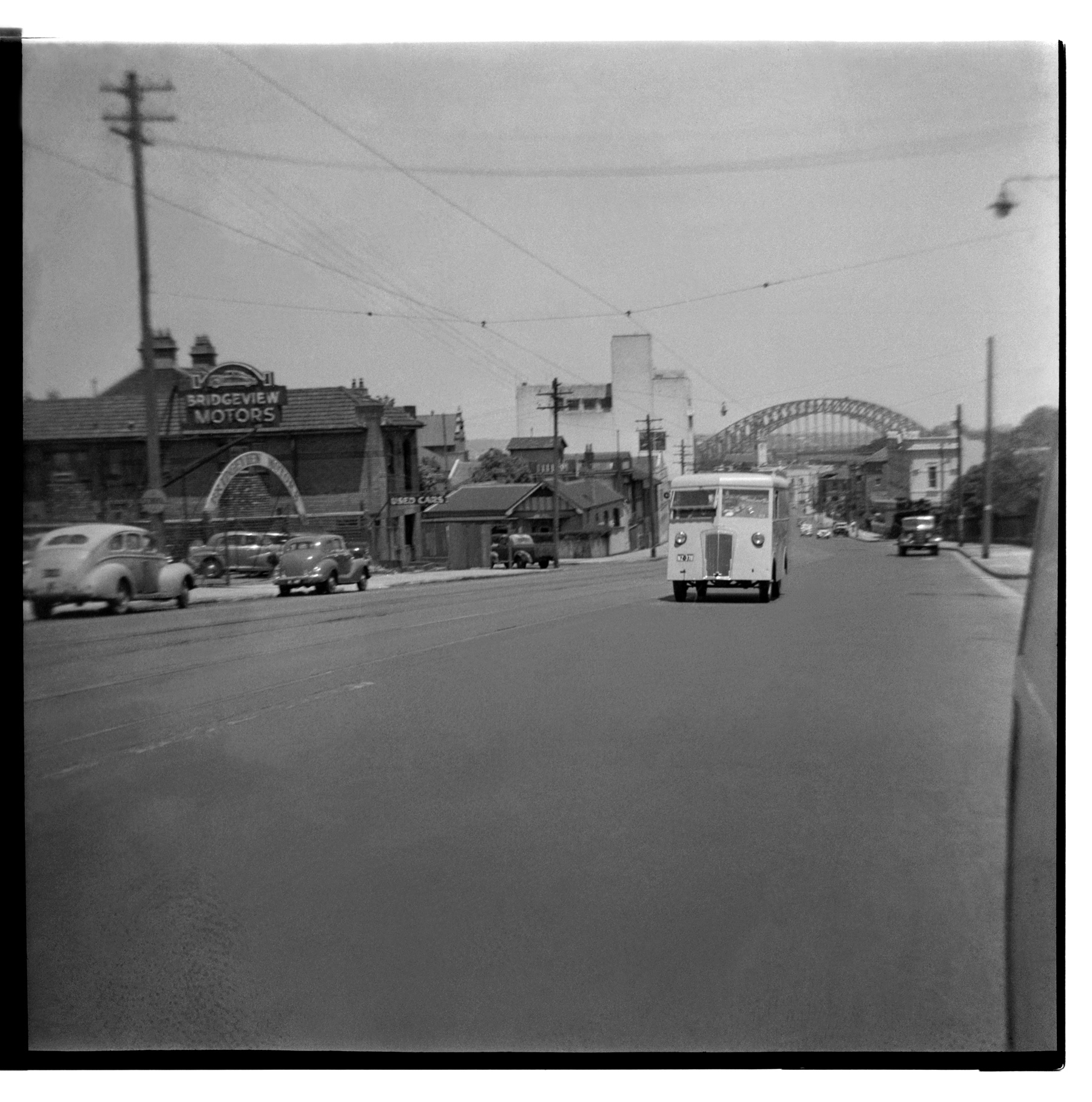
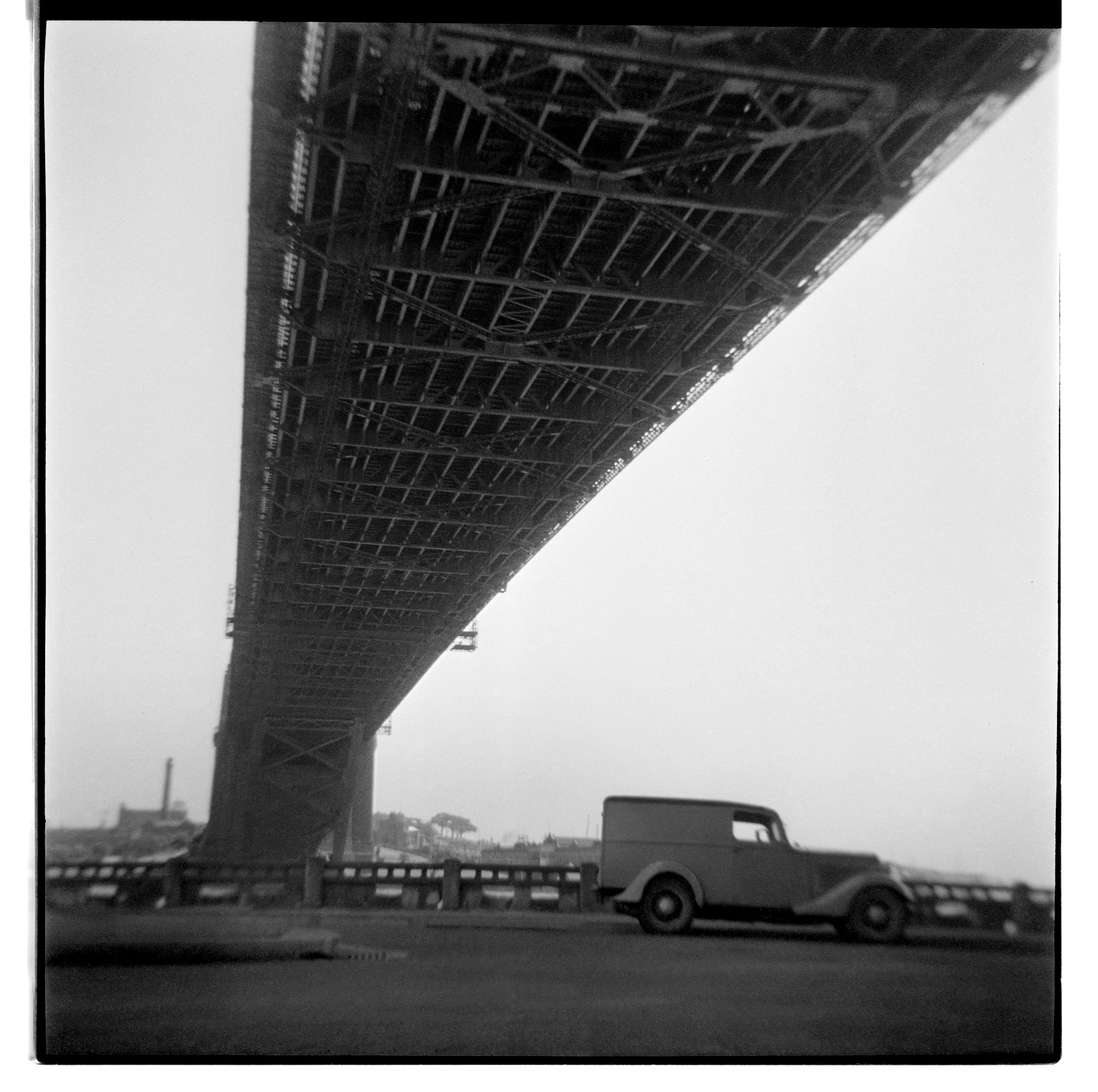
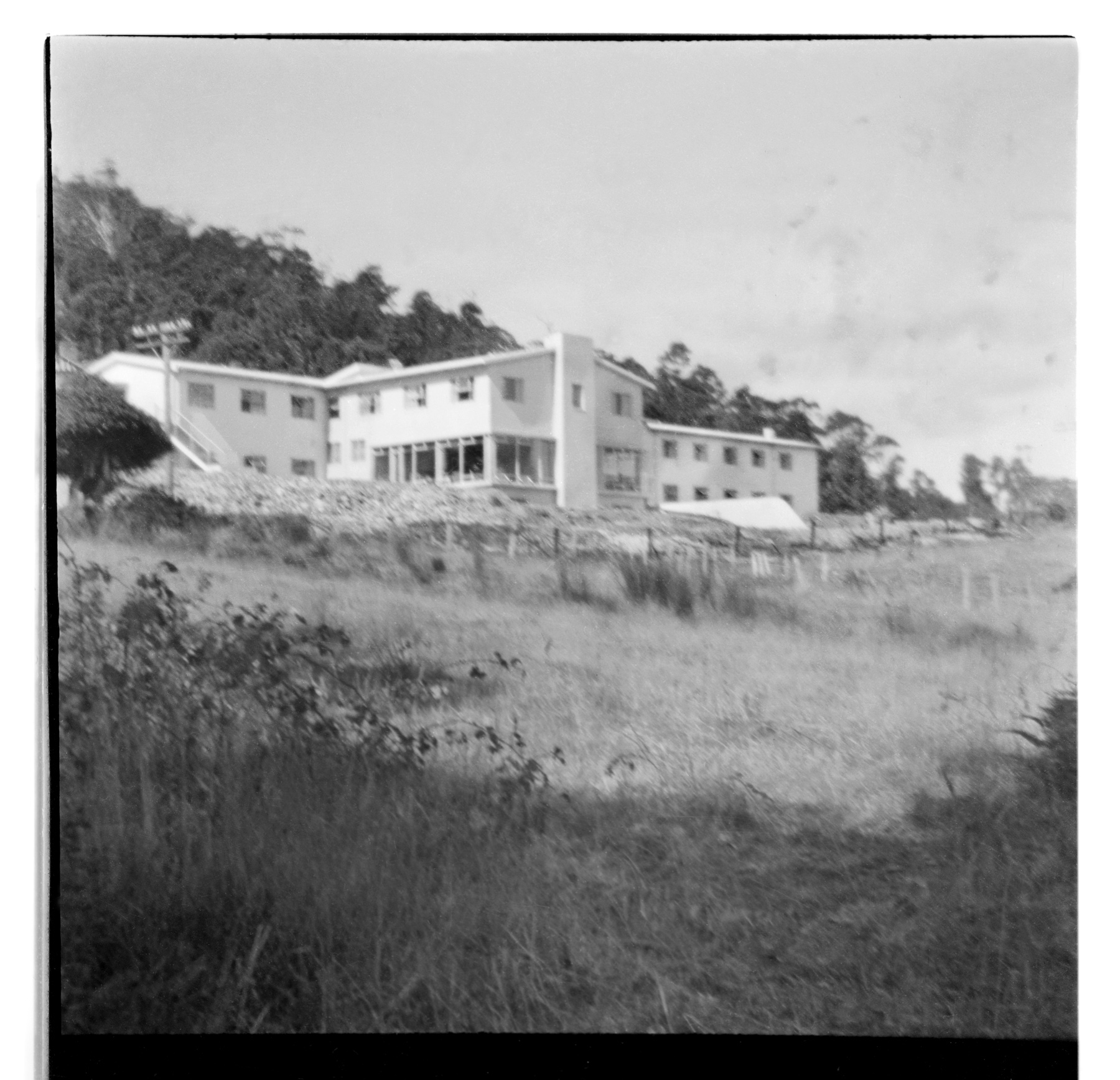
Another mountain of work scanning and cleaning 50 of these 2 1/4″ square (6 x 6 cm) medium format black and white negatives which come from the collection of my friend Nick Henderson. In Part 2 of the posting the family travel to Melbourne, Colac and Tasmania. The photographs of postwar Melbourne are fascinating. There are also pictures of mining works, a speedcar racer, picnic, pub, dogs, ballerinas, actors, children and some stunning, Frank Hurley-esque photographs of Sydney Harbour Bridge.

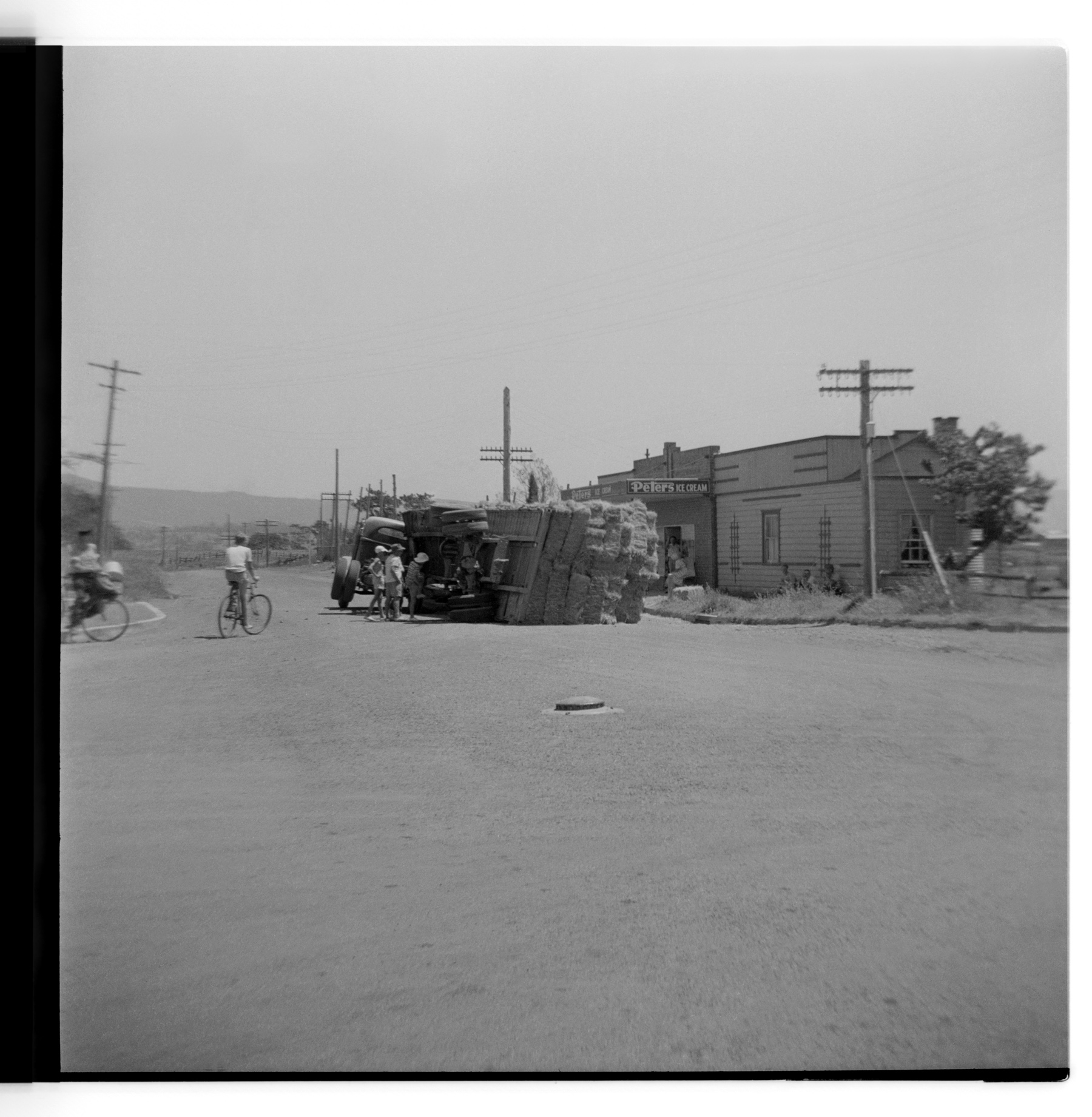
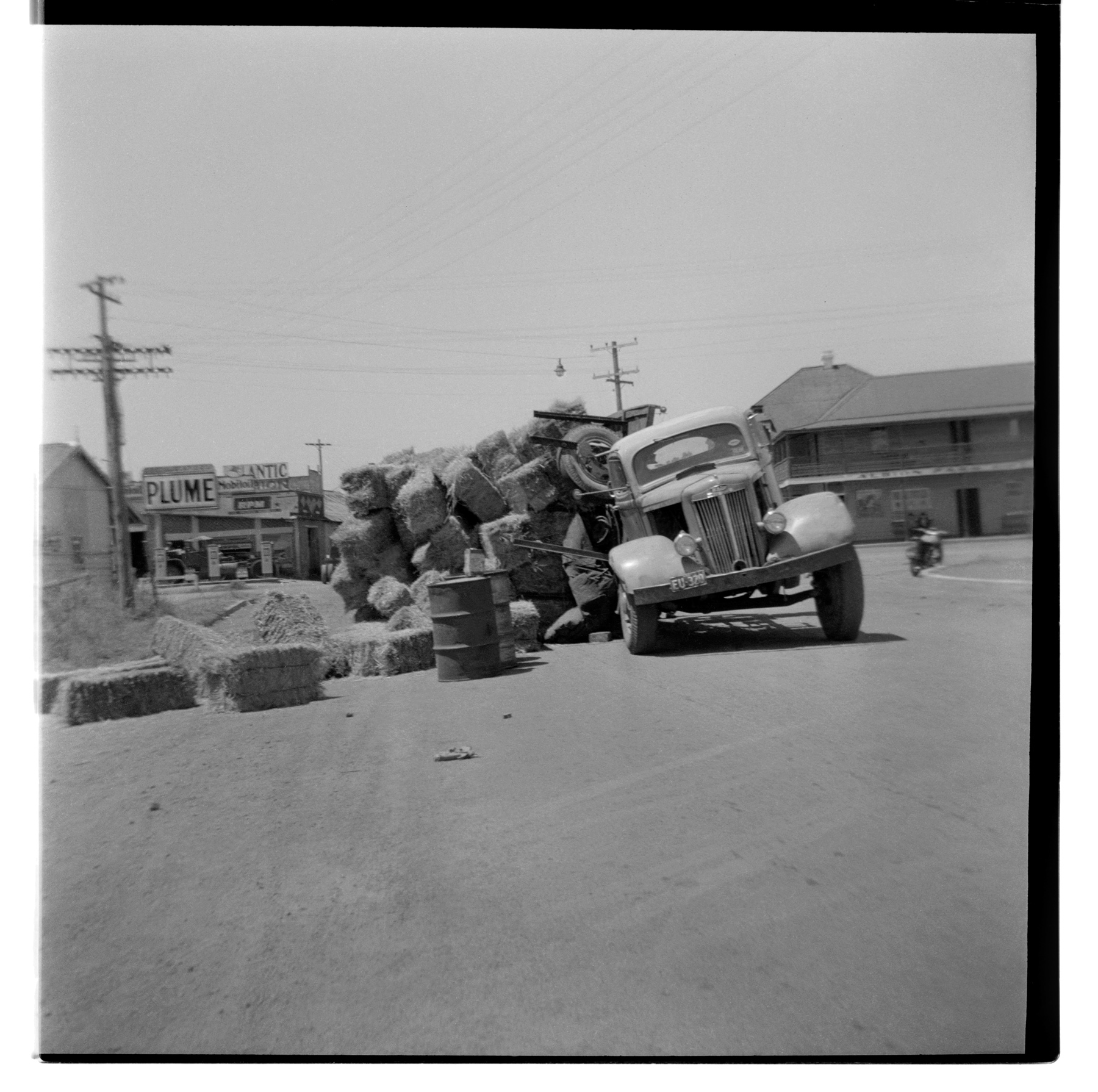
The photographs seem as though from another world. The Pacific Highway in North Sydney is almost deserted of traffic. A fascinating set of four photographs are Road accident, hay truck, Albion Park, New South Wales. In the first photograph from a distance we observe that a hay truck has lost its load, possibly after rounding the corner from left at too fast a speed, the intersection marked in the road by a small metal bollard. Small children inspect the underside of the truck while a boy on a bike rides to join them. What strikes one is the openness of the scene, the lack of other cars, and the spareness of the landscape, with only the “milk bar” with the Peters ice cream sign showing any sign of commerce. In the second image the photographer has moved around to the front side of the truck which tilts at a crazy angle. Two forty-gallon oil drums, possibly from the truck, have been placed upright on the road while bales of hay little the bitumen. In the background a petrol station advertises PLUME, Mobiloil, and Atlantic tyres(?) and on the right we can make out the Albion Park Hotel and the intersection around which the truck came.

In the third image which again shows the underside of the truck men have joined the scene, talking to presumably the shirtless truck driver in peaked cap, sheepishly standing among the twisted axles and staring at the camera. To the left two shoeless boys observe the scene. In the last photograph of the front of the truck we see kids sitting on the hay bails posing for the camera, while at far right the shirtless truck driver may be in conversation with others. What a glorious sequence of Walker Evans type social documentary photography… a brief context, an accident, a shooting star in the timeline of the galaxy.

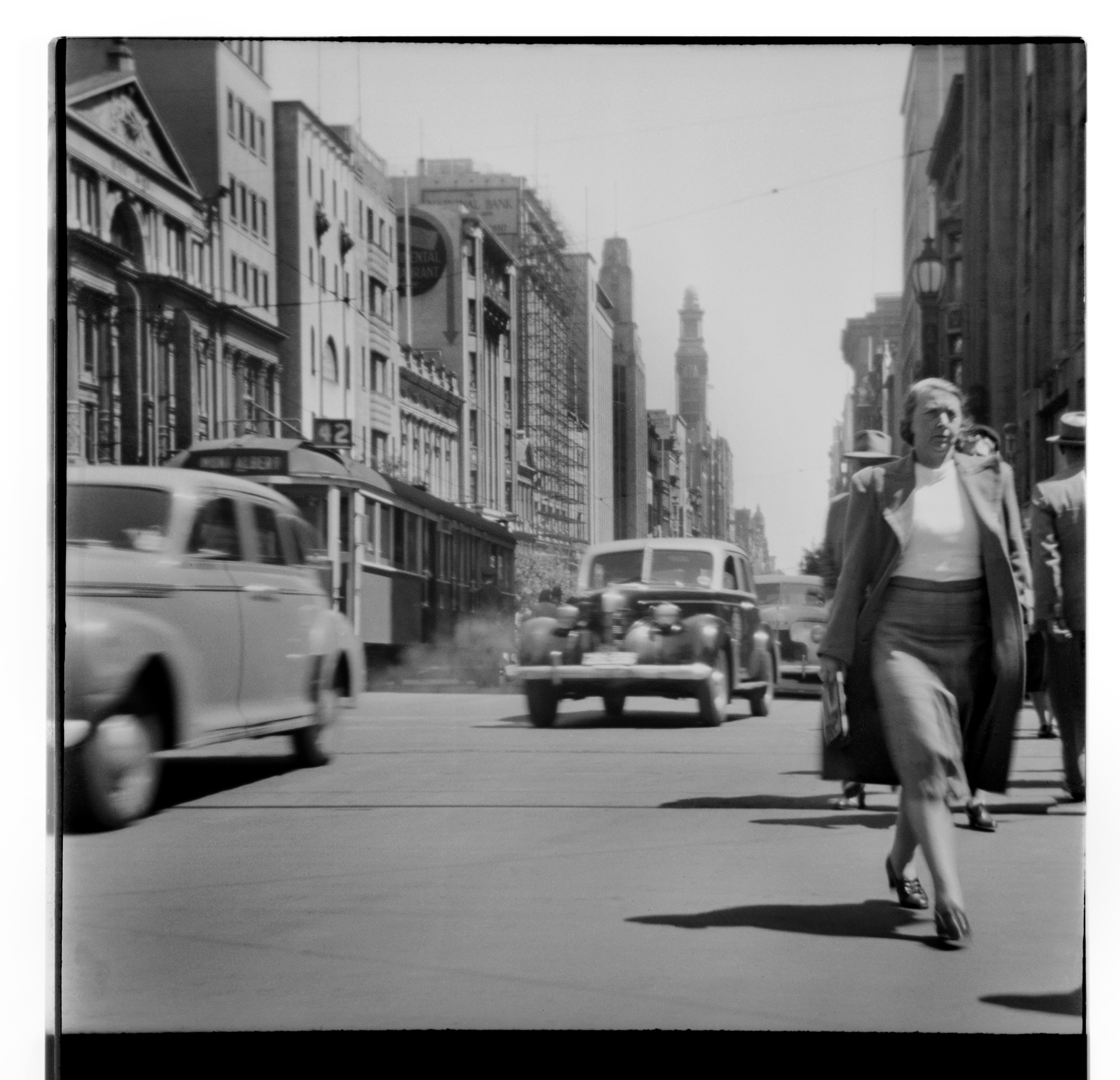
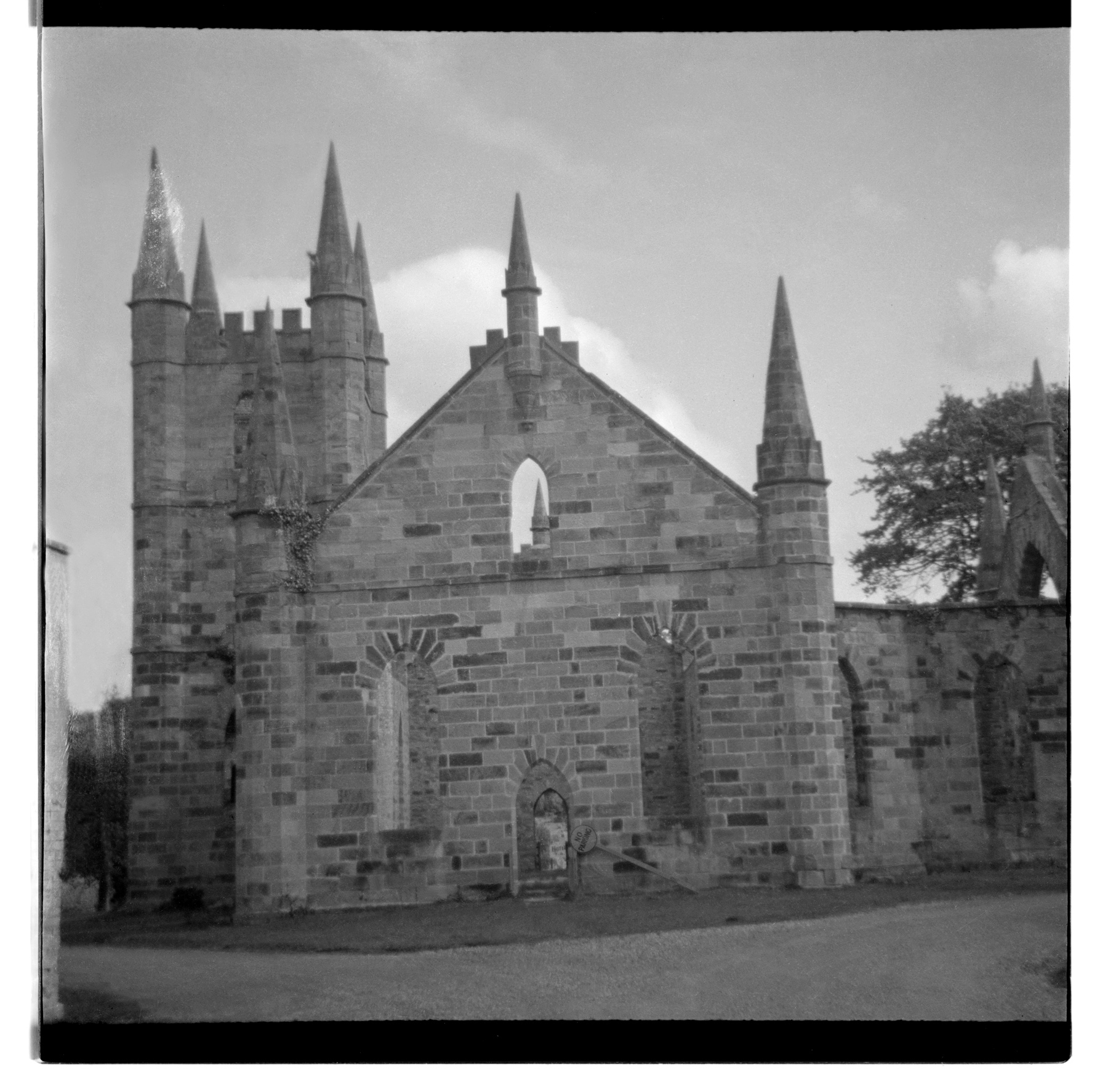
My two favourite photographs in the posting: the almost solarised image of the Convict-built church at Port Arthur convict colony ruins; but more especially Number 42 tram going to Mont Albert. This photograph should become a classic in the annals of Australian photography. In one dynamic image the photographer has captured the hustle and bustle of postwar Melbourne – the women striding purposefully towards us, the Silver Top taxi cresting the rise at speed, the number 42 tram to Mont Albert kicking up dust from the tracks, the shadows, the gothic buildings, the towers behind and the vanishing point. A superlative image.

Hopefully there will be part 3 of this series when I get chance to scan some more negatives. In the meantime you can view Part 1 and these images. Enjoy!

Dr Marcus Bunyan


Many thankx to Nick Henderson for allowing me to publish the photographs in the posting. All photographs collection of Nick Henderson. Please click on the photographs for a larger version of the image.


Unknown photographer (Australian) 'Untitled (Y.M.C.A, City Road, South Melbourne)' 1946-1947


Unknown photographer (Australian)
Untitled (Y.M.C.A, City Road, South Melbourne)
1946-1947
Medium format negative
Collection of Nicholas Henderson


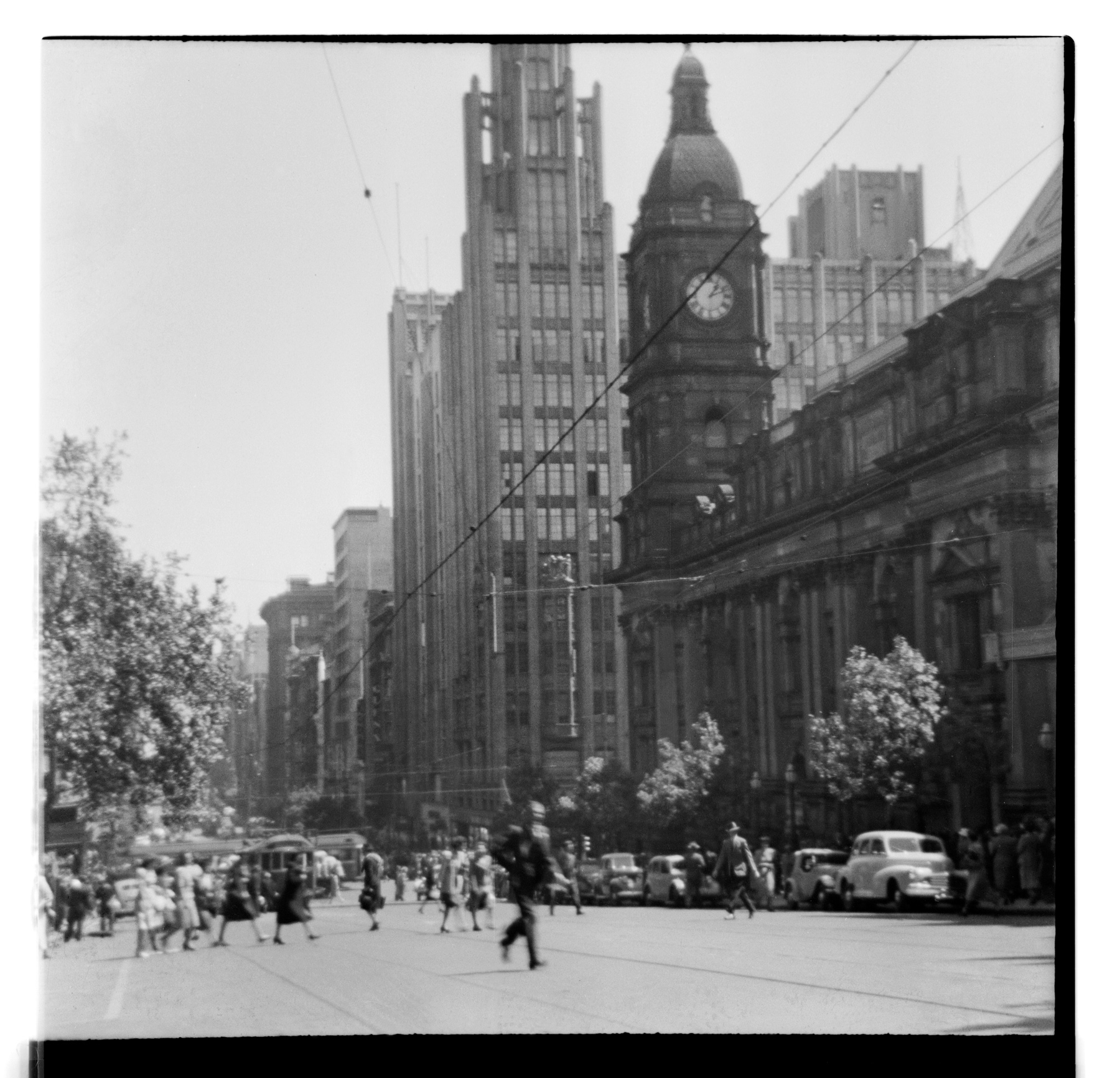
Unknown photographer (Australian) 'Untitled (Collins Street, Melbourne)' 1946-1947


Unknown photographer (Australian)
Untitled (Collins Street, Melbourne looking west from just above the Swanston Street intersection, Town Hall on the right, and then the Manchester Unity building across Swanston Street, probably taken from in front of the Regent Theatre)
1946-1947
Medium format negative
Collection of Nicholas Henderson


Unknown photographer (Australian) 'Untitled (Looking at Flinders Street railway station on Elizabeth Street, Melbourne)' 1946-1947


Unknown photographer (Australian)
Untitled (Looking at Flinders Street railway station on Elizabeth Street, Melbourne)
1946-1947
Medium format negative
Collection of Nicholas Henderson


Unknown photographer (Australian) 'Untitled (Centreway Building on Collins Street, 259-263 Collins Street)' 1946-1947


Unknown photographer (Australian)
Untitled (Centreway Building on Collins Street, 259-263 Collins Street)
1946-1947
Medium format negative
Collection of Nicholas Henderson


Unknown photographer (Australian) 'Untitled (Melbourne street)' 1946-1947


Unknown photographer (Australian)
Untitled (Melbourne street)
1946-1947
Medium format negative
Collection of Nicholas Henderson


Unknown photographer (Australian) 'Untitled (A. C. Goode House at 389-399 Collins)' 1946-1947


Unknown photographer (Australian)
Untitled (A. C. Goode House at 389-399 Collins) (the Gothic building at right)
1946-1947
Medium format negative
Collection of Nicholas Henderson


Unknown photographer (Australian) 'Untitled (Russell Street taken from near Collins Street)' 1946-1947


Unknown photographer (Australian)
Untitled (Russell Street taken from near Collins Street)
1946-1947
Medium format negative
Collection of Nicholas Henderson


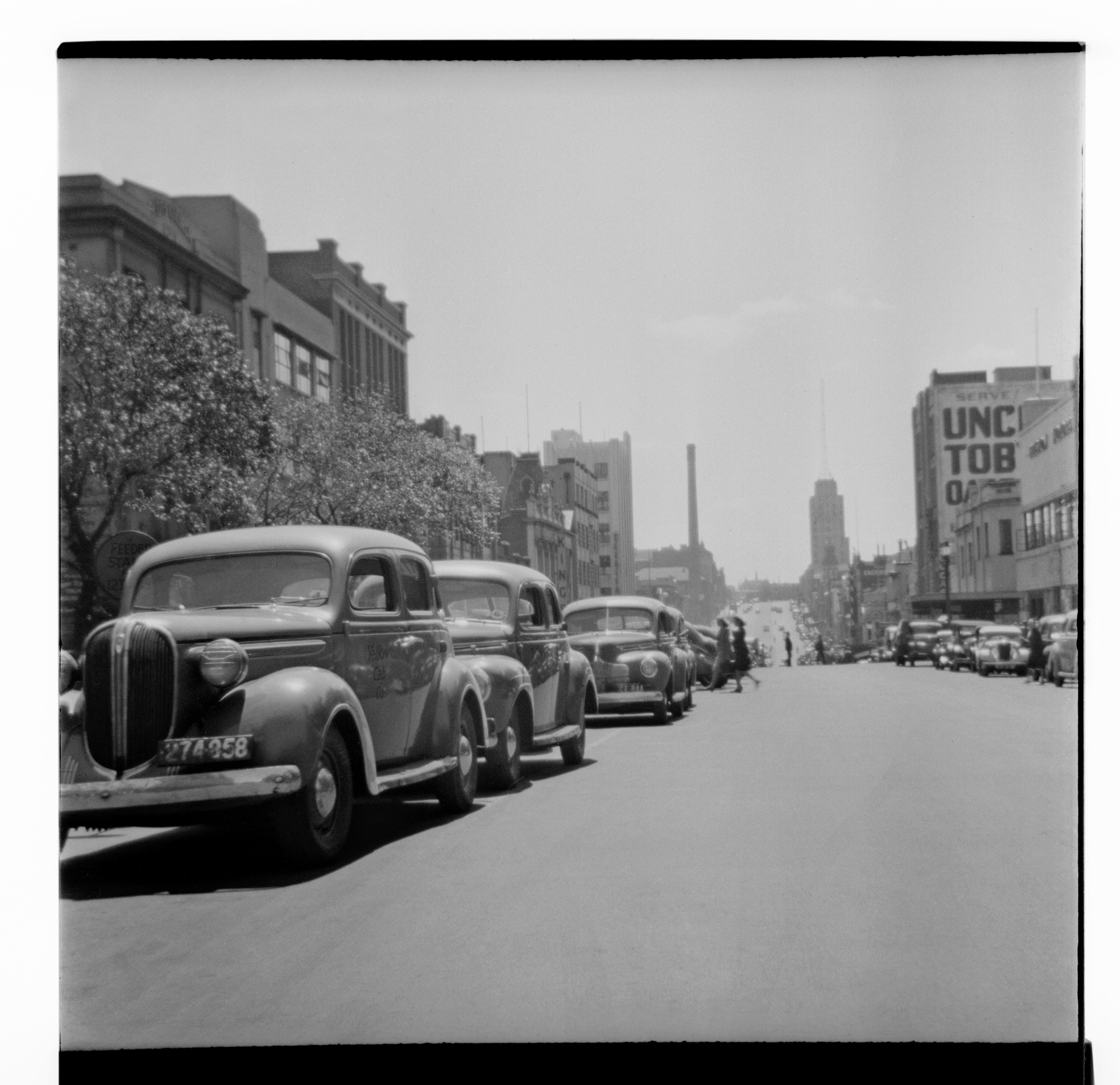
Russell Street with police radio tower viewed from Collins street. American 1930’s car’s that where popular then, Dodge, Chevy, Lincoln & Fords! Yellow cab at left, and the cars are facing the same way both sides of the road. The Holden Motor Company built Buick, Chevy & Pontiac from “CKD” kits from the USA. Parking in the middle of the road (so we are not seeing the other side of the road).


Unknown photographer (Australian) 'Untitled (Exhibition Street, looking from Collins Street, down past Flinders Lane)' 1946-1947


Unknown photographer (Australian)
Untitled (Exhibition Street, looking from Collins Street, down past Flinders Lane)
1946-1947
Medium format negative
Collection of Nicholas Henderson


Unknown photographer (Australian) 'Untitled (Collins Street looking up towards Old Treasury Building)' 1946-1947


Unknown photographer (Australian)
Untitled (Collins Street looking up towards Old Treasury Building)
1946-1947
Medium format negative
Collection of Nicholas Henderson


Unknown photographer (Australian) 'Untitled (Number 42 tram going to Mont Albert)' 1946-1947


Unknown photographer (Australian)
Untitled (Number 42 tram going to Mont Albert)
1946-1947
Medium format negative
Collection of Nicholas Henderson


Photograph taken where – Collins and Swanston Street? The lady is walking towards or just beyond the Melbourne Town Hall, the tram is on the other side of the road going the opposite way towards Mont Albert. In the centre background is the APA Tower and in front of it is the Mutual Life and Citizens Assurance Co (MLC) building. In the far distance is the Federal Hotel and Coffee Palace. Silver Top Pontiac Taxi (1937) slippery leather seats! Front bench seats with full length grab bar too hold on when cornering! (centre of image).

Many thankx to James Nolen for help identifying this image.


Unknown photographer (Australian) 'Untitled (St Paul's Cathedral, Melbourne looking from Flinders Street Railway Station)' 1946-1947


Unknown photographer (Australian)
Untitled (St Paul’s Cathedral, Melbourne looking from Flinders Street railway station)
1946-1947
Medium format negative
Collection of Nicholas Henderson


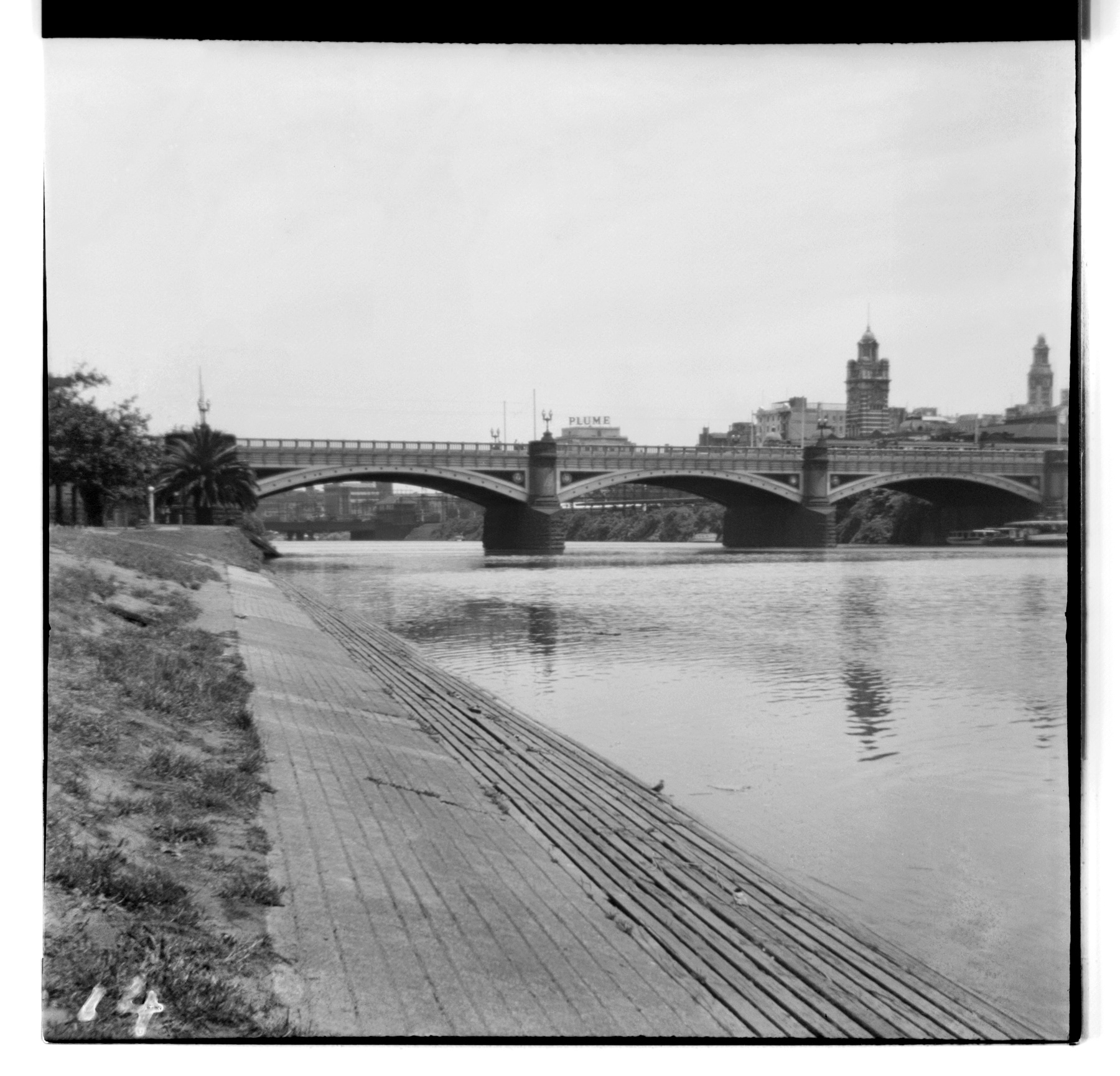
Unknown photographer (Australian) 'Untitled (Princes Bridge, Melbourne on the Yarra River with Flinders Street Railway Station to the right)' 1946-1947


Unknown photographer (Australian)
Untitled (Princes Bridge, Melbourne on the Yarra River with Flinders Street railway station to the right)
1946-1947
Medium format negative
Collection of Nicholas Henderson


Unknown photographer (Australian) 'Untitled (Seagulls, rowing sheds on the Yarra River, Melbourne)' 1946-1947


Unknown photographer (Australian)
Untitled (Seagulls, rowing sheds on the Yarra River, Melbourne)
1946-1947
Medium format negative
Collection of Nicholas Henderson


Unknown photographer (Australian) 'Untitled (Bill Edwards speedcar, Victoria)' 1946-1947


Unknown photographer (Australian)
Untitled (Bill Edwards speedcar, Victoria)
1946-1947
Medium format negative
Collection of Nicholas Henderson


Unknown photographer (Australian) 'Untitled (Bill Edwards speedcar, Victoria)' 1946-1947


Unknown photographer (Australian)
Untitled (Bill Edwards speedcar, Victoria)
1946-1947
Medium format negative
Collection of Nicholas Henderson


Unknown photographer (Australian) 'Untitled (Union Club Hotel, Colac)' 1946-1947


Unknown photographer (Australian)
Untitled (Union Club Hotel, Colac)
1946-1947
Medium format negative
Collection of Nicholas Henderson


Union Club Hotel, Colac 2010


Union Club Hotel, Colac
2010
Wikimedia Commons
Creative Commons Attribution-Share Alike 3.0 Unported


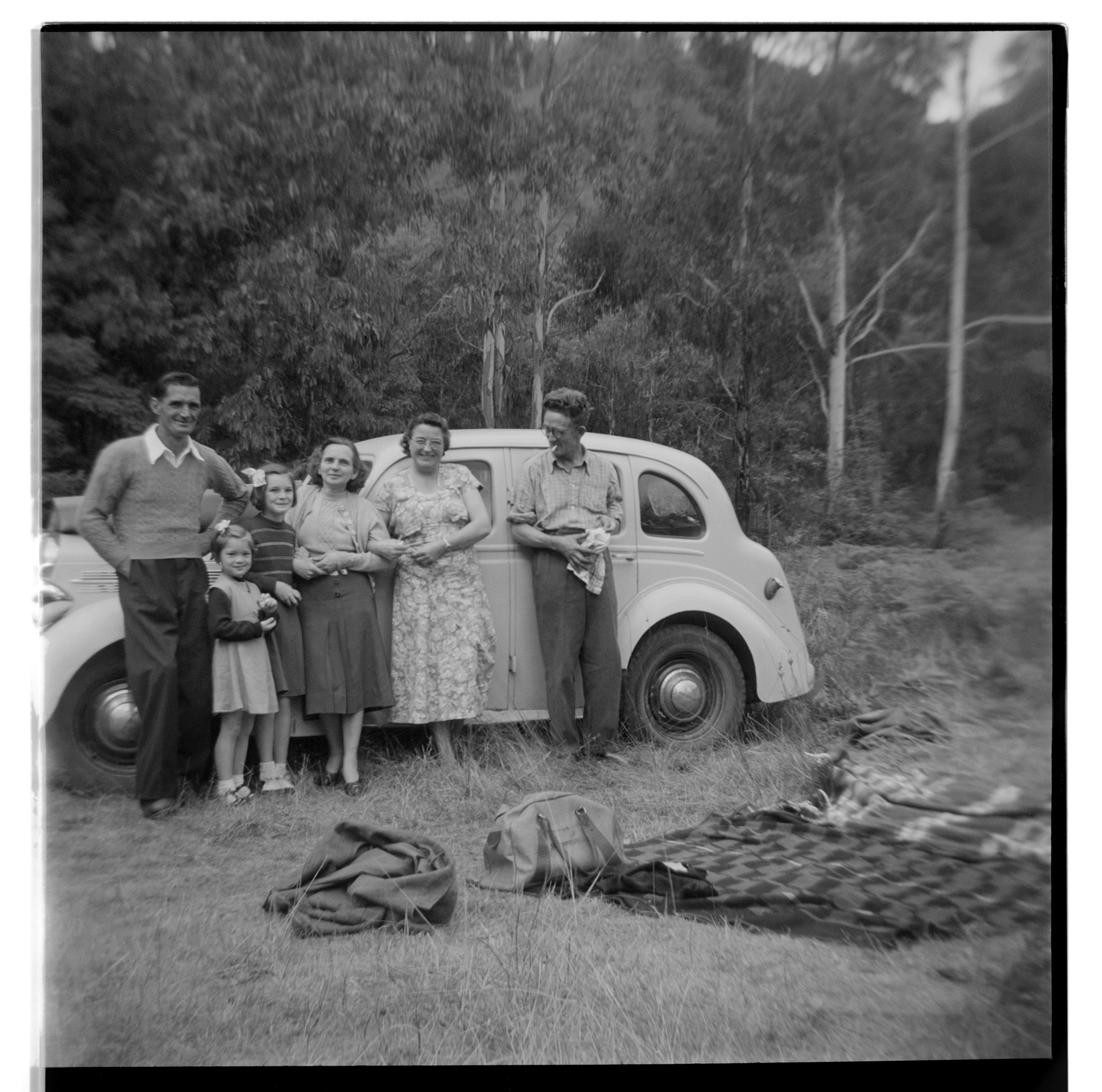
Unknown photographer (Australian) 'Untitled (Picnic, family and car)' 1946-1947


Unknown photographer (Australian)
Untitled (Picnic, family and car)
1946-1947
Medium format negative
Collection of Nicholas Henderson


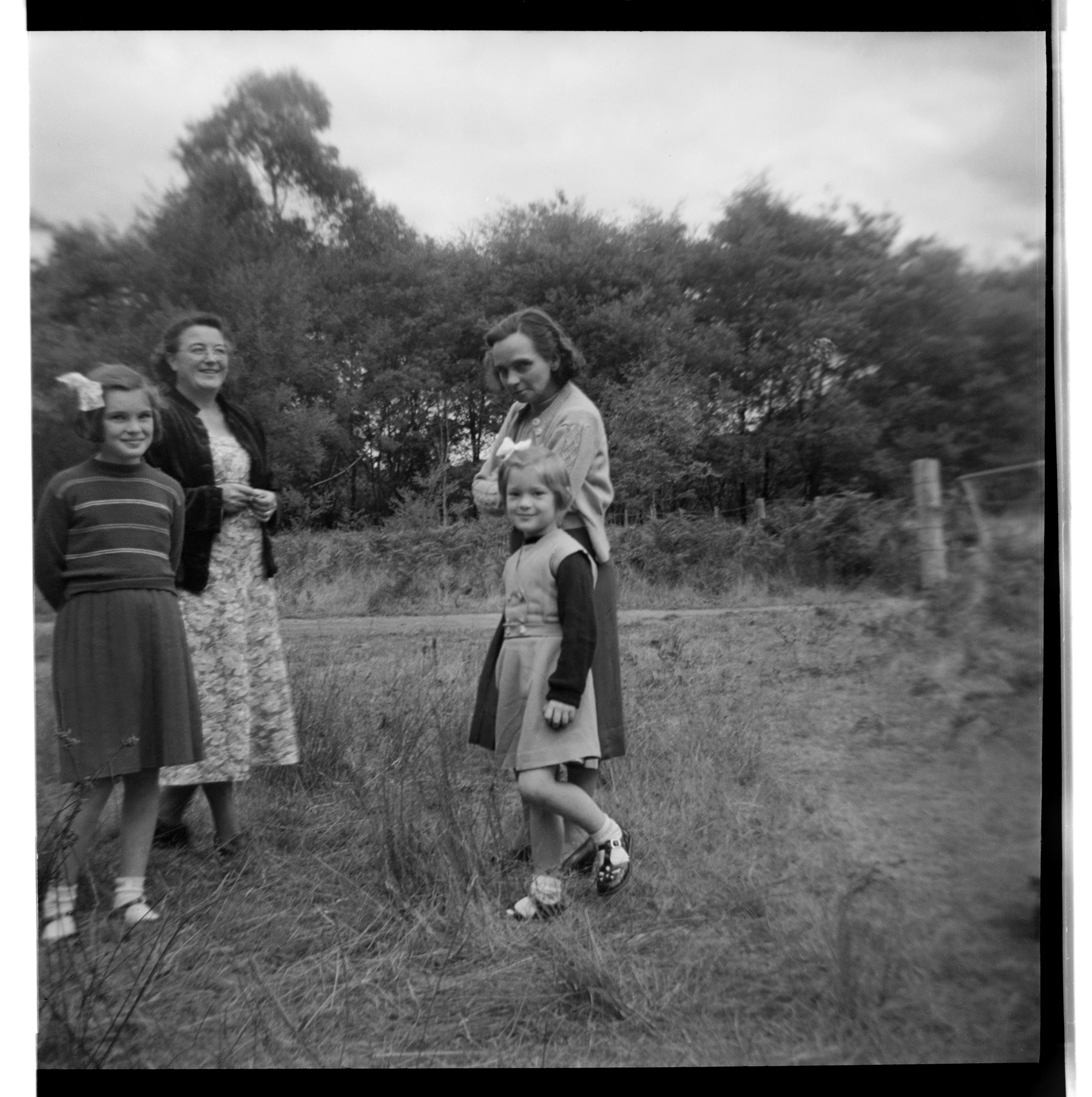
Unknown photographer (Australian) 'Untitled (Two women and two girls)' 1946-1947


Unknown photographer (Australian)
Untitled (Two women and two girls)
1946-1947
Medium format negative
Collection of Nicholas Henderson


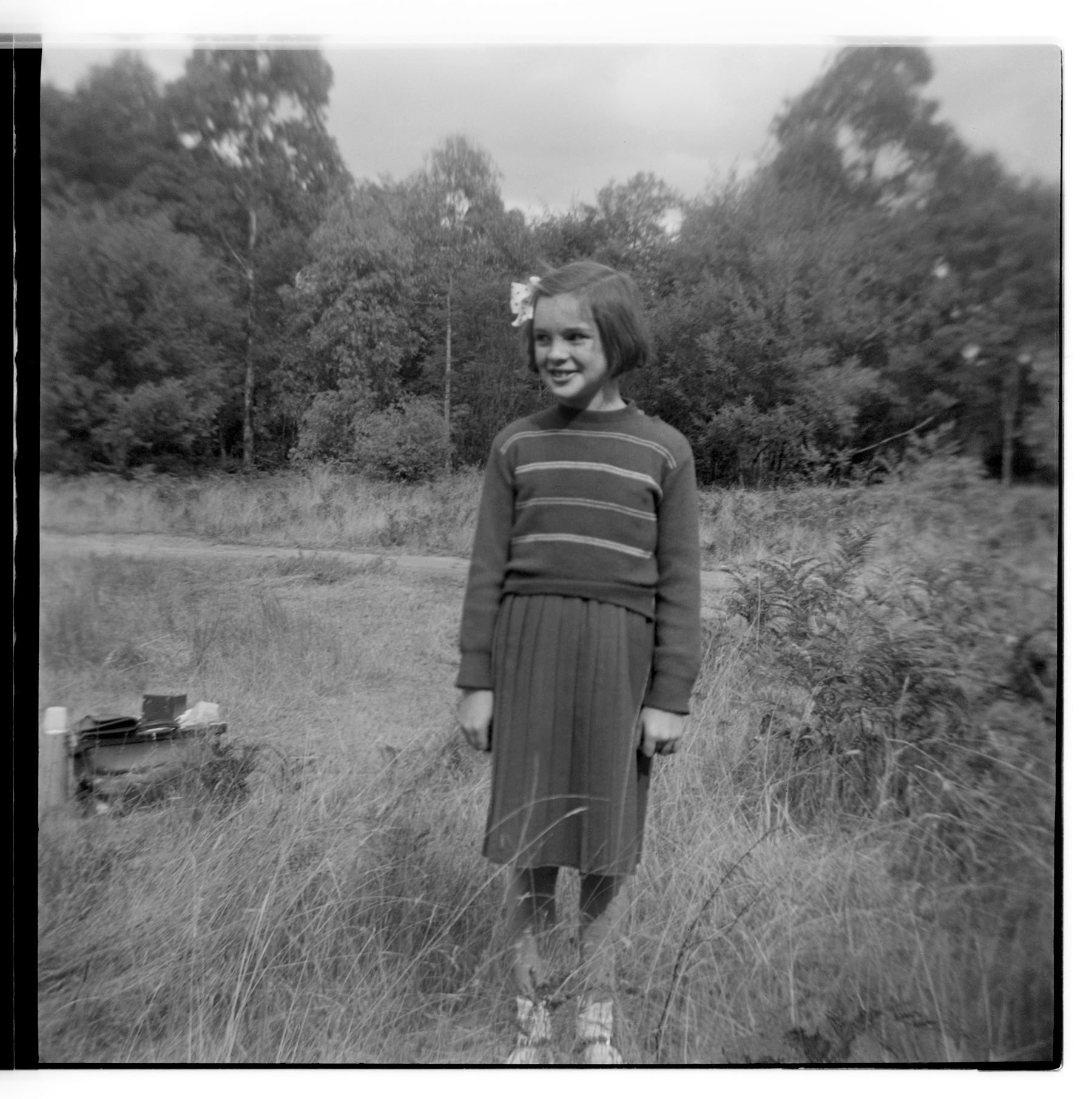
Unknown photographer (Australian) 'Untitled (Girl)' 1946-1947


Unknown photographer (Australian)
Untitled (Girl)
1946-1947
Medium format negative
Collection of Nicholas Henderson


Unknown photographer (Australian) 'Untitled (Girl)' 1946-1947


Unknown photographer (Australian)
Untitled (Girl)
1946-1947
Medium format negative
Collection of Nicholas Henderson


Unknown photographer (Australian) 'Untitled (Two lads and two children)' 1946-1947


Unknown photographer (Australian)
Untitled (Two lads and two children)
1946-1947
Medium format negative
Collection of Nicholas Henderson


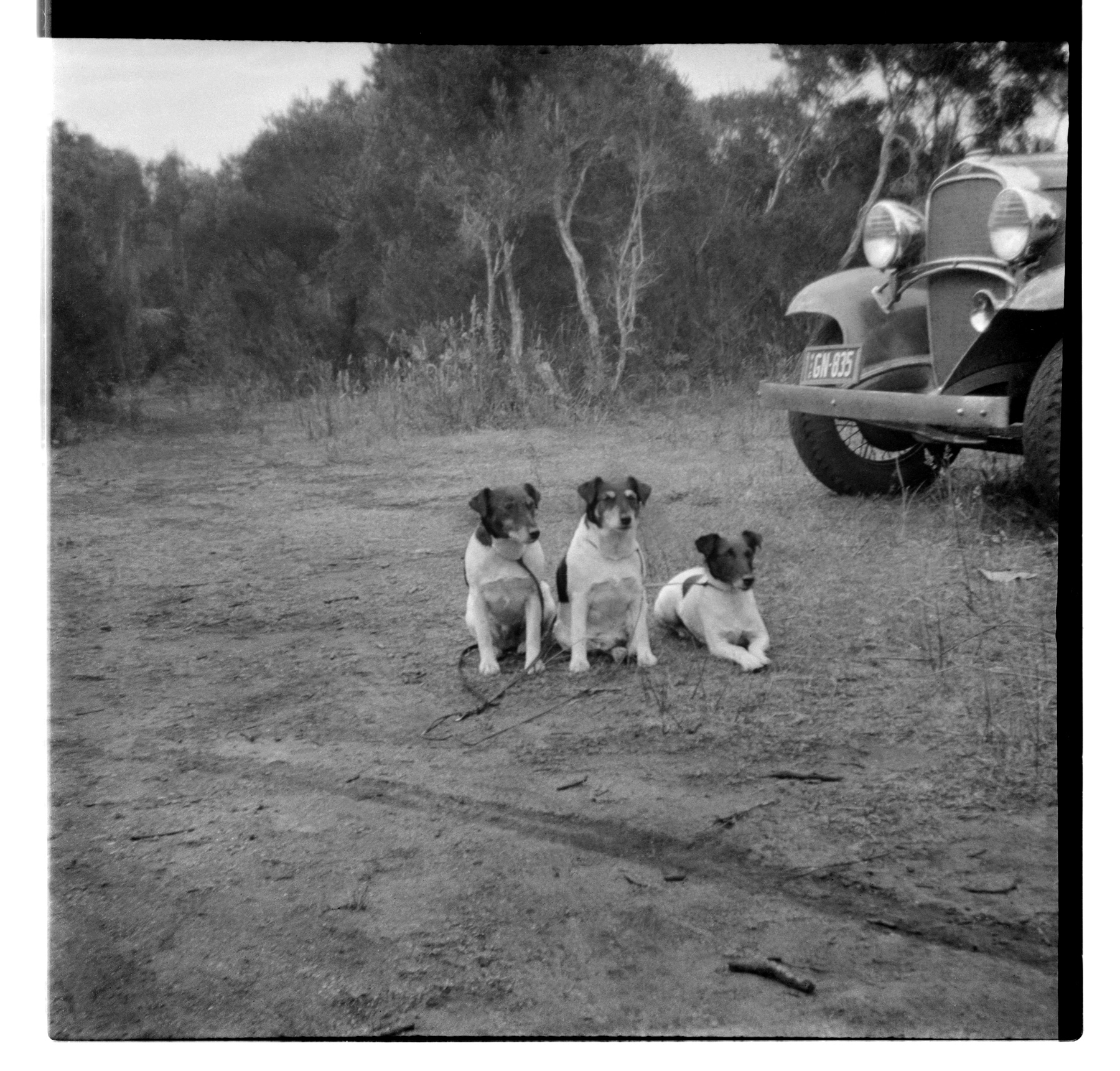
Unknown photographer (Australian) 'Untitled (Three dogs)' 1946-1947


Unknown photographer (Australian)
Untitled (Three dogs)
1946-1947
Medium format negative
Collection of Nicholas Henderson


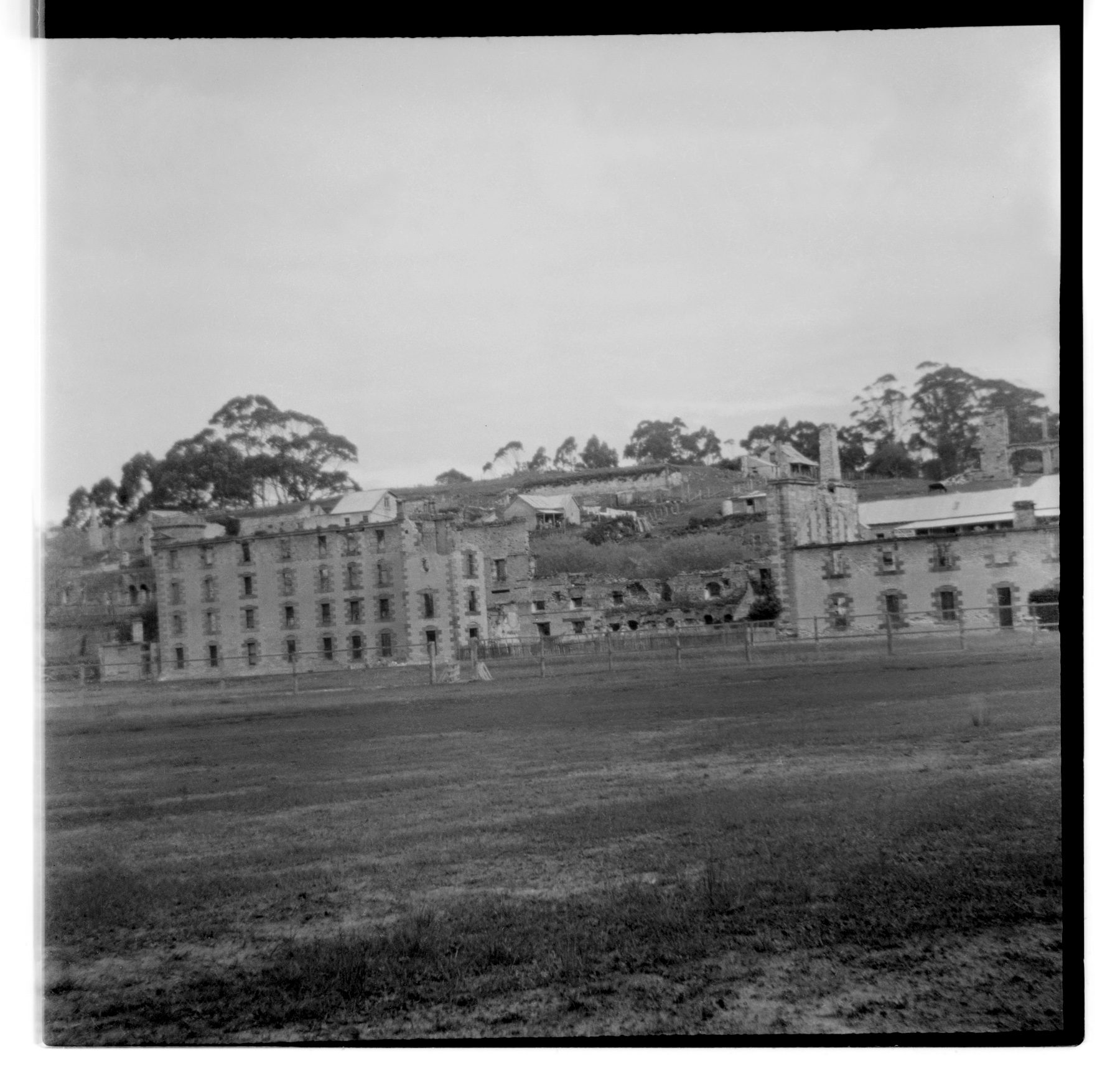
Unknown photographer (Australian) 'Untitled (Port Arthur ruins, Tasmania)' 1946-1947


Unknown photographer (Australian)
Untitled (Port Arthur convict colony ruins, Tasmania)
1946-1947
Medium format negative
Collection of Nicholas Henderson


Unknown photographer (Australian) 'Untitled (Port Arthur convict colony ruins, Tasmania)' 1946-1947


Unknown photographer (Australian)
Untitled (Port Arthur convict colony ruins, Tasmania)
1946-1947
Medium format negative
Collection of Nicholas Henderson


Unknown photographer (Australian) 'Untitled (Port Arthur convict colony ruins, Tasmania)' 1946-1947


Unknown photographer (Australian)
Untitled (Port Arthur convict colony ruins, Tasmania)
1946-1947
Medium format negative
Collection of Nicholas Henderson


Unknown photographer (Australian) 'Untitled (Convict-built church at Port Arthur convict colony ruins, Tasmania)' 1946-1947


Unknown photographer (Australian)
Untitled (Convict-built church at Port Arthur convict colony ruins, Tasmania)
1946-1947
Medium format negative
Collection of Nicholas Henderson


Unknown photographer (Australian) 'Untitled (Pirates Bay Lookout, Tasmania)' 1946-1947


Unknown photographer (Australian)
Untitled (Pirates Bay Lookout, Tasmania)
1946-1947
Medium format negative
Collection of Nicholas Henderson


One of the Tasman Peninsula’s finest coastal lookouts is actually on the Forestier Peninsula, high on the hillsides above the Tesselated Pavement. Pirates Bay Lookout gives panoramic views down the east coast of Tasmania Peninsula and overs spectacular vistas towards Cape Hauy and Cape Pillar, which are both visible on a clear day. The lookout is on Pirates Bay Drive, the turnoff to the left off Tasman Highway being around 2 km before reaching Eaglehawk Neck when approaching from Dunalley. The lookout can also be accessed from Eaglehawk Neck. Simply take the Scenic drive past the Lufra Hotel.

Text from the Our Tasmania website [Online] Cited 29/03/2020


Pirates Bay Lookout, Tasmania 2009


Pirates Bay Lookout, Tasmania
2009
Wikimedia Commons
Creative Commons Attribution-Share Alike 2.0 Generic


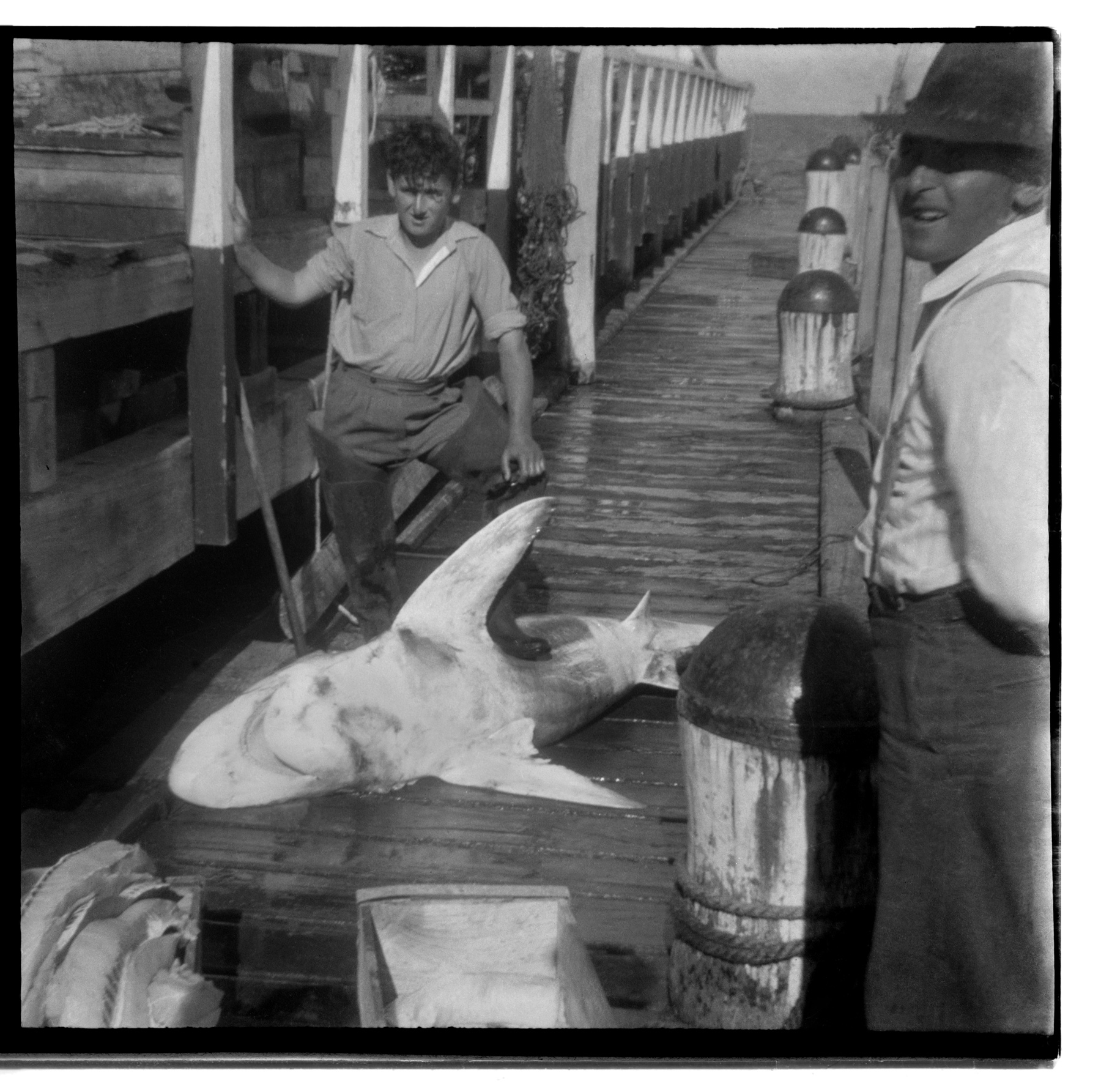
Unknown photographer (Australian) 'Untitled (Men and shark)' 1946-1947


Unknown photographer (Australian)
Untitled (Men and shark) (location unknown)
1946-1947
Medium format negative
Collection of Nicholas Henderson


Unknown photographer (Australian) 'Untitled (Mining landscape)' 1946-1947


Unknown photographer (Australian)
Untitled (Mining landscape) (location unknown)
1946-1947
Medium format negative
Collection of Nicholas Henderson


Unknown photographer (Australian) 'Untitled (Mining landscape)' 1946-1947


Unknown photographer (Australian)
Untitled (Mining landscape) (location unknown)
1946-1947
Medium format negative
Collection of Nicholas Henderson


Unknown photographer (Australian) 'Untitled (Mining landscape)' 1946-1947


Unknown photographer (Australian)
Untitled (Mining landscape) (location unknown)
1946-1947
Medium format negative
Collection of Nicholas Henderson


Unknown photographer (Australian) 'Untitled (Three dogs)' 1946-1947


Unknown photographer (Australian)
Untitled (Three dogs)
1946-1947
Medium format negative
Collection of Nicholas Henderson


Unknown photographer (Australian) 'Untitled (Two dogs)' 1946-1947


Unknown photographer (Australian)
Untitled (Two dogs)
1946-1947
Medium format negative
Collection of Nicholas Henderson


Unknown photographer (Australian) 'Untitled (Smiling girl with pigtails)' 1946-1947


Unknown photographer (Australian)
Untitled (Smiling girl with pigtails)
1946-1947
Medium format negative
Collection of Nicholas Henderson


Unknown photographer (Australian) 'Untitled (Two ballerinas)' 1946-1947


Unknown photographer (Australian)
Untitled (Two ballerinas)
1946-1947
Medium format negative
Collection of Nicholas Henderson


Unknown photographer (Australian) 'Untitled (Man and ballerina)' 1946-1947


Unknown photographer (Australian)
Untitled (Man and ballerina)
1946-1947
Medium format negative
Collection of Nicholas Henderson


Unknown photographer (Australian) 'Untitled (Women in gown)' 1946-1947


Unknown photographer (Australian)
Untitled (Women in gown)
1946-1947
Medium format negative
Collection of Nicholas Henderson


Unknown photographer (Australian) 'Untitled (Three girls)' 1946-1947


Unknown photographer (Australian)
Untitled (Three girls)
1946-1947
Medium format negative
Collection of Nicholas Henderson


Unknown photographer (Australian) 'Untitled (Two women, a man and a dog)' 1946-1947


Unknown photographer (Australian)
Untitled (Two women, a man and a dog)
1946-1947
Medium format negative
Collection of Nicholas Henderson


Unknown photographer (Australian) 'Untitled (Road accident, hay truck, Albion Park, New South Wales)' 1946-1947


Unknown photographer (Australian)
Untitled (Road accident, hay truck, Albion Park, New South Wales)
1946-1947
Medium format negative
Collection of Nicholas Henderson


Unknown photographer (Australian) 'Untitled (Road accident, hay truck, Albion Park, New South Wales)' 1946-1947


Unknown photographer (Australian)
Untitled (Road accident, hay truck, Albion Park, New South Wales)
1946-1947
Medium format negative
Collection of Nicholas Henderson


Unknown photographer (Australian) 'Untitled (Road accident, hay truck, Albion Park, New South Wales)' 1946-1947


Unknown photographer (Australian)
Untitled (Road accident, hay truck, Albion Park, New South Wales)
1946-1947
Medium format negative
Collection of Nicholas Henderson


Unknown photographer (Australian) 'Untitled (Road accident, hay truck, Albion Park, New South Wales)' 1946-1947


Unknown photographer (Australian)
Untitled (Road accident, hay truck, Albion Park, New South Wales)
1946-1947
Medium format negative
Collection of Nicholas Henderson


Unknown photographer (Australian) 'Untitled (Bridgeview Motors, 267 Pacific Highway, North Sydney with Sydney Harbour Bridge in the background)' 1946-1947


Unknown photographer (Australian)
Untitled (Bridgeview Motors, 267 Pacific Highway, North Sydney with Sydney Harbour Bridge in the background)
1946-1947
Medium format negative
Collection of Nicholas Henderson


Unknown photographer (Australian) 'Untitled (Lavender street, Lavender Bay looking towards the Sydney Harbour Bridge)' 1946-1947


Unknown photographer (Australian)
Untitled (Lavender street, Lavender Bay looking towards the Sydney Harbour Bridge)
1946-1947
Medium format negative
Collection of Nicholas Henderson

Unknown photographer (Australian) 'Untitled (Dawes Point ferry, under the Sydney Harbour Bridge looking to Fort Denison)' 1946-1947


Unknown photographer (Australian)
Untitled (Dawes Point ferry, under the Sydney Harbour Bridge looking to Fort Denison)
1946-1947
Medium format negative
Collection of Nicholas Henderson


Unknown photographer (Australian) 'Untitled (Sydney Harbour Bridge, south looking north showing the North Sydney Olympic Pool in the background left)' 1946-1947


Unknown photographer (Australian)
Untitled (Sydney Harbour Bridge, south looking north showing the North Sydney Olympic Pool in the background left)
1946-1947
Medium format negative
Collection of Nicholas Henderson


The North Sydney Olympic Pool is a swimming and exercise complex located adjacent to Sydney Harbour at Milsons Point in North Sydney between the Sydney Harbour Bridge and Luna Park. Designed by architects Rudder & Grout in the Inter-War Free Classical style with art deco-style decorations, the Olympic-sized outdoor pool was built on part of the Dorman Long workshops site following the completion of the Harbour Bridge. The pool opened 4 April 1936 and hosted the swimming and diving events for the 1938 Empire Games.

Text from the Wikipedia website


Unknown photographer (Australian) 'Untitled (Sydney Harbour Bridge, north looking south showing DC current power station stack to the left)' 1946-1947


Unknown photographer (Australian)
Untitled (Sydney Harbour Bridge, north looking south showing DC current power station stack to the left)
1946-1947
Medium format negative
Collection of Nicholas Henderson


Unknown photographer (Australian) 'Untitled (Under the Sydney Harbour Bridge, north looking south showing DC current power station stack to the left)' 1946-1947


Unknown photographer (Australian)
Untitled (Under the Sydney Harbour Bridge, north looking south showing DC current power station stack to the left)
1946-1947
Medium format negative
Collection of Nicholas Henderson


LIKE ART BLACK ON FACEBOOK

Back to top

Exhibition: ‘Dorothea Lange: Words & Pictures’ at the Museum of Modern Art, New York

Exhibition dates: 9th February – 9th May, 2020

Curator: Sarah Hermanson Meister, with River Bullock, Beaumont & Nancy Newhall Curatorial Fellow, assisted by Madeline Weisburg, Modern Women’s Fund Twelve-Month Intern, Department of Photography, The Museum of Modern Art.


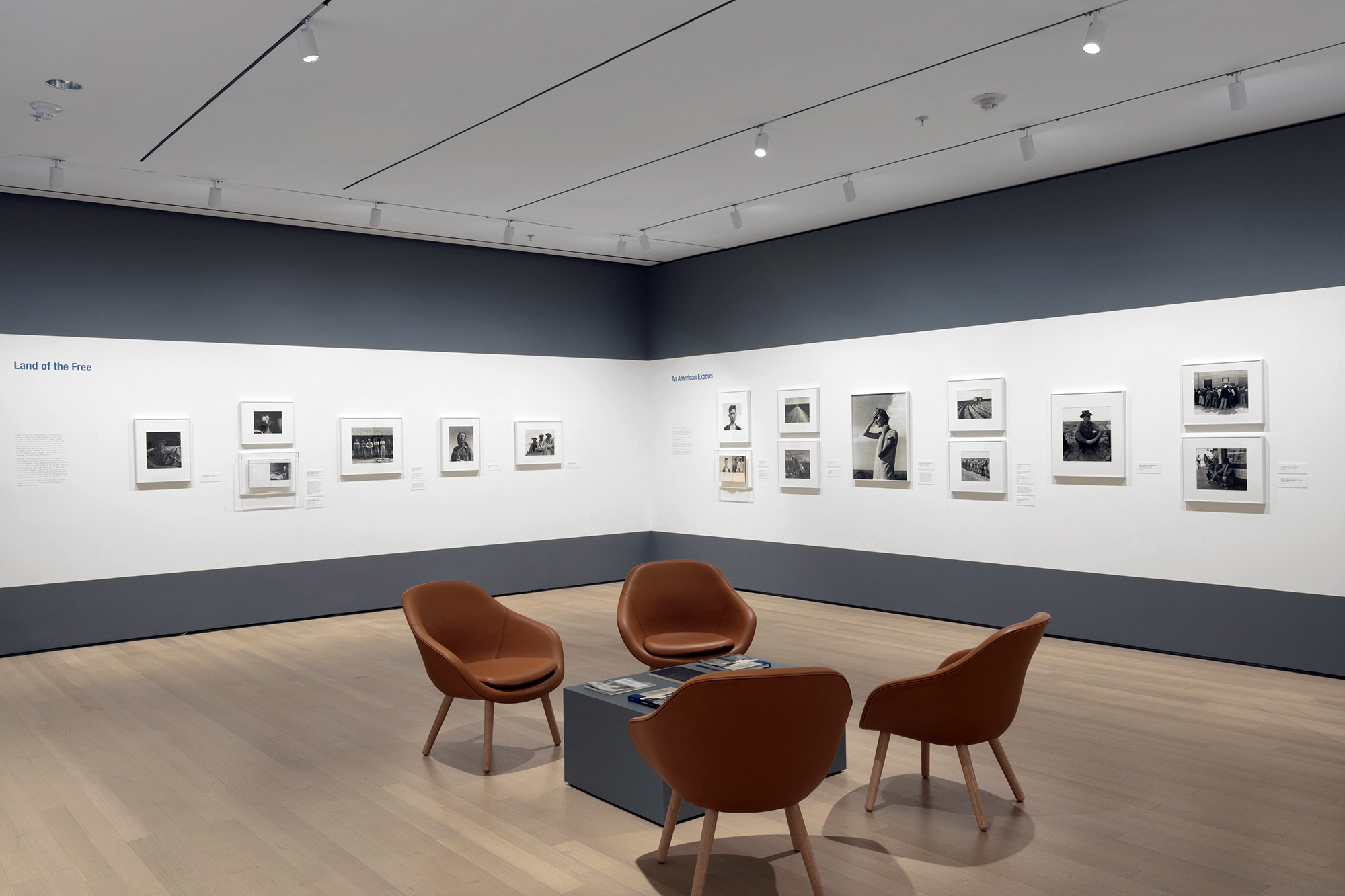
Dorothea Lange (American, 1895-1965) 'Six Tenant Farmers without Farms, Hardeman County, Texas' 1937, printed 1965 from the exhibition 'Dorothea Lange: Words & Pictures' at the Museum of Modern Art, New York, Feb - May, 2020


Dorothea Lange (American, 1895-1965)
Six Tenant Farmers without Farms, Hardeman County, Texas
1937, printed 1965
Gelatin silver print
12 15/16 × 16 5/8″ (32.9 × 42.2cm)
The Museum of Modern Art, New York. Purchase


This image appeared in Land of the Free and later in Lange and Paul Taylor’s documentary photobook An American Exodus: A Record of Human Erosion (1941), where Lange cropped out the sixth, smaller man, perhaps to simplify the idea of strength and virility conveyed there.


Dorothea Lange (American, 1895-1965) 'A Half-Hour Later, Hardeman County, Texas' 1937, printed 1965 from the exhibition 'Dorothea Lange: Words & Pictures' at the Museum of Modern Art, New York, Feb - May, 2020


Dorothea Lange (American, 1895-1965)
A Half-Hour Later, Hardeman County, Texas
1937, printed 1965
Gelatin silver print
12 1/8 × 15 3/16″ (30.8 × 38.6cm)
The Museum of Modern Art, New York. Purchase


“All photographs – not only those that are so-called ‘documentary,’ … can be fortified by words.”

“And the assignment was… see what was really there. What does it look like, what does it feel like, what actually is the human condition.”


Dorothea Lange


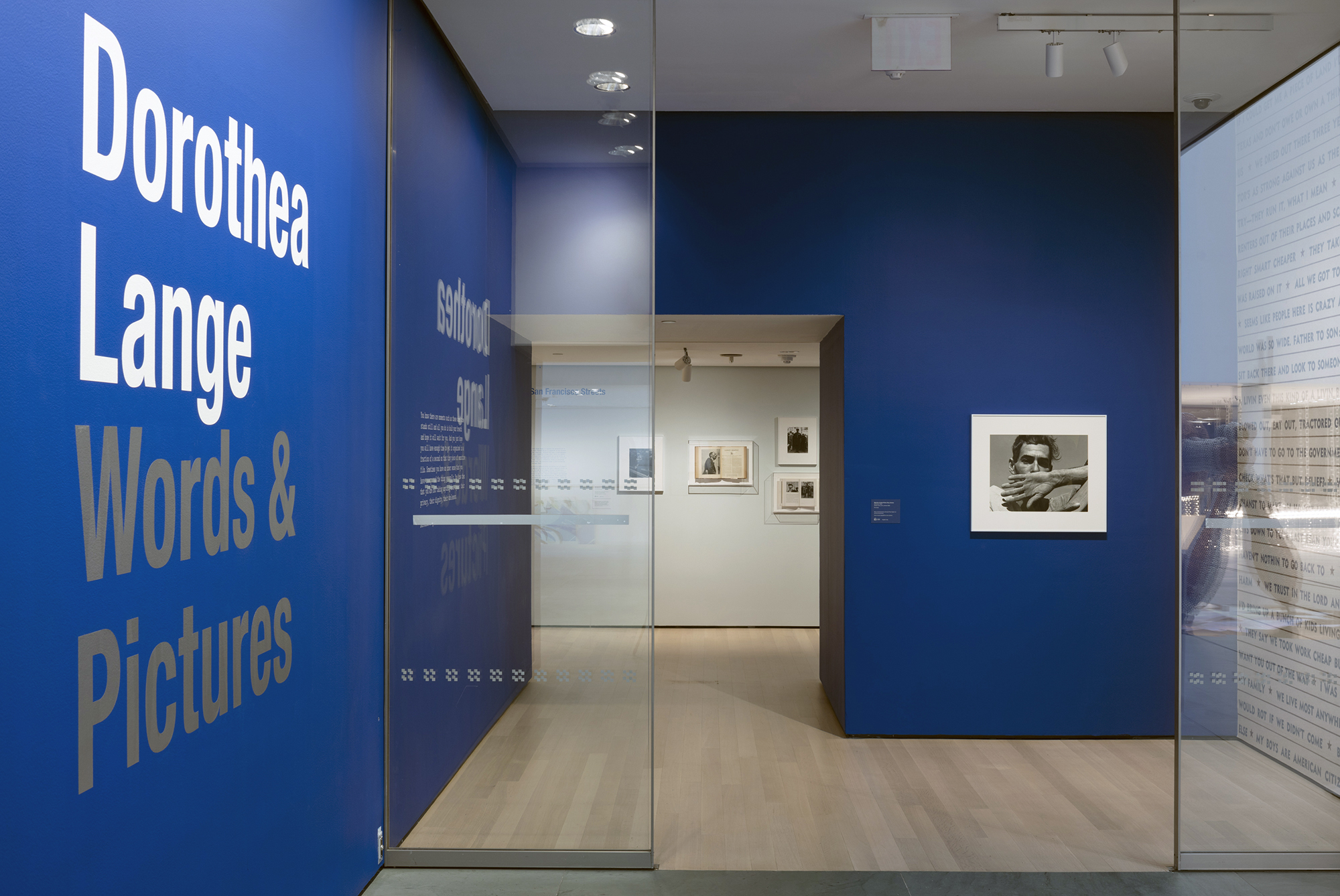
“Lange took so many memorable photographs that it is challenging to shortlist them. One of the greatest is at the entrance to the MoMA show: “Migratory Cotton Picker, Eloy, Arizona” (1940). The farmworker’s hands are close to the lens of the camera. One hand is holding a wooden beam; it could be the implement of his impending crucifixion. The other hand, with its open palm and splayed fingers, covers his mouth. Unforgettably powerful, the photograph resembles self-portraits by Austrian expressionist painter Egon Schiele, who shared Lange’s interest in extremities – hands and feet, and also, wretched misery.”


Arthur Lubow


Closer and closer

While MoMA has closed temporarily due to the novel coronavirus (COVID-19) pandemic, I believe it is important to document and write about those exhibitions that would have been running during this distressing time, as a form of social inclusion, social connection if you like, in the virtual world. I know that I am feeling particularly isolated at the moment, fighting off depression, with a lack of my usual routine and coffee with friends.

Great art always inspires, engages me, makes me feel and care about the world around me. In these photographs by that most excellent of photographers Dorothea Lange, of another desperate time, The Great Depression, we can feel her sincerity and intensity, that resolute gift of seeing the world clearly, despite the abject misery that surrounds her. Fast forward future, and we see the lines of the newly unemployed, desperate, penniless, snaking around the block of the social security buildings here in Australia, this very day.

Lange’s photographs don’t need words. Words are never enough.

The faces weary, furrowed, parched under baking sun, rutted like the land, Tractored Out, Childress County, Texas (1938). Dark eyes pierce the marrow, astringent lines, heavy eyebrows, mirror, set above, tight, tight mouth, Young Sharecropper, Macon County, Georgia (July 1937). I feel what, his pain? his sadness? his despair? Hands, arms, feet, form an important part of Lange’s visual armoury, arm/ory, amour. The hand to chin of Migrant Mother, Nipomo, California (March 1936); the bony arms of Woman of the High Plains, Texas Panhandle (June 1938); hand obscuring face, steely gaze, Funeral Cortege, End of an Era in a Small Valley Town, California (1938); weathered, beaten hands, beaten, Migratory Cotton Picker, Eloy, Arizona (November 1940). These extremities are expressions not just of her subjects, but of herself. A virtual self-portrait.

“One of the greatest is at the entrance to the MoMA show: “Migratory Cotton Picker, Eloy, Arizona” (1940). The farmworker’s hands are close to the lens of the camera. One hand is holding a wooden beam; it could be the implement of his impending crucifixion. The other hand, with its open palm and splayed fingers, covers his mouth. Unforgettably powerful, the photograph resembles self-portraits by Austrian expressionist painter Egon Schiele, who shared Lange’s interest in extremities – hands and feet, and also, wretched misery.” (Press release)

Lange “is a key link in a chain of photographic history. From Evans, she learned how to frame precise images of clapboard churches. But unlike Evans, who usually preferred to keep a distance and capture a building’s architectural integrity, Lange always wanted, as she said when describing how she made “Migrant Mother,” to move “closer and closer”.” Moving closer, her photographs possess an un/bridled intimacy with troubled creatures. Moving closer, seeing clearly. Closer and closer, till death, parts.

Dr Marcus Bunyan


Many thankx to MoMA for allowing me to publish the photographs in posting. Please click on the photographs for a larger version of the image.


Dorothea Lange: Words & Pictures MoMA exhibition


'Dorothea Lange: Words & Pictures' introduction text


Dorothea Lange: Words & Pictures introduction text


Installation view of 'Dorothea Lange: Words & Pictures', The Museum of Modern Art, New York, February 9, 2020 - May 9, 2020 with at right, 'Migratory Cotton Picker, Eloy, Arizona' November 1940


Installation view of Dorothea Lange: Words & Pictures, The Museum of Modern Art, New York, February 9, 2020 – May 9, 2020 with at right, Migratory Cotton Picker, Eloy, Arizona November 1940
© 2020 The Museum of Modern Art
Photo: John Wronn


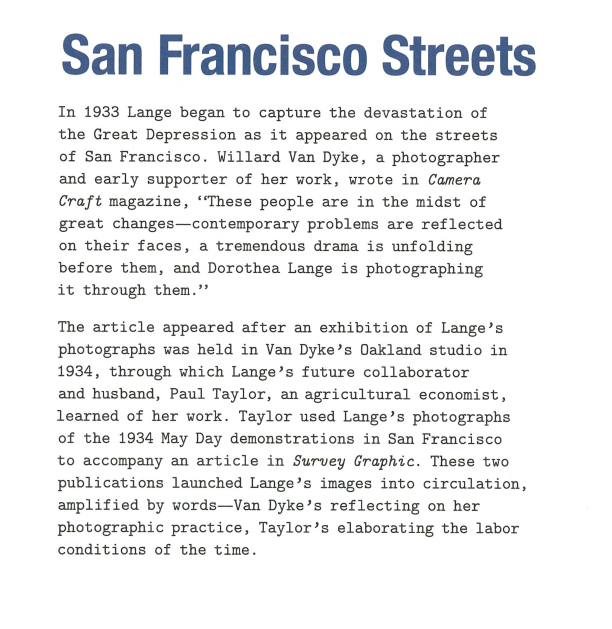
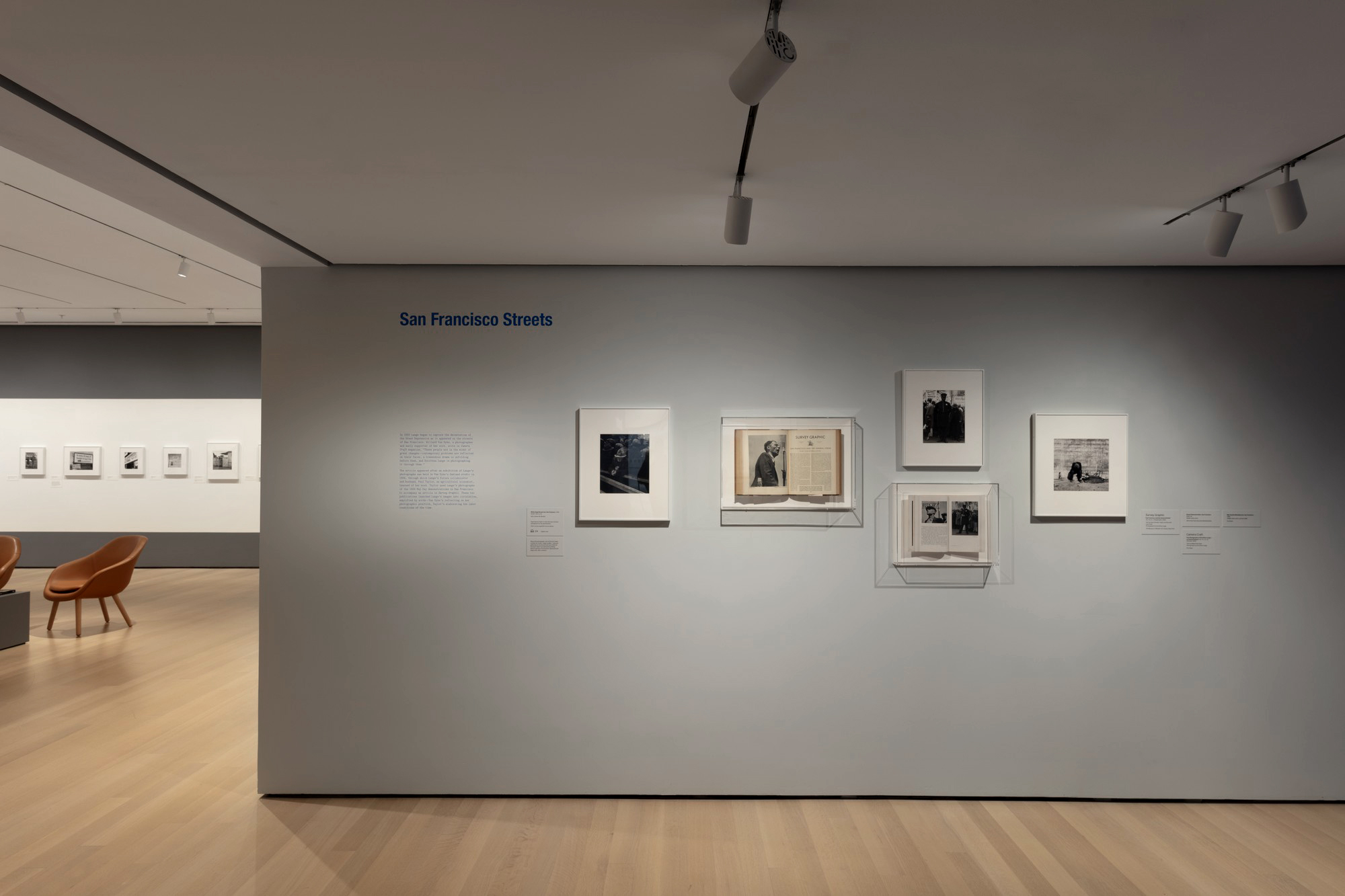
'San Francisco Streets' wall text from the exhibition 'Dorothea Lange: Words & Pictures' at the Museum of Modern Art, New York


Installation view of 'Dorothea Lange: Words & Pictures', The Museum of Modern Art, New York, February 9, 2020 - May 9, 2020 showing at centre left, 'White Angel Bread Line, San Francisco' 1933


San Francisco Streets

Installation view of Dorothea Lange: Words & Pictures, The Museum of Modern Art, New York, February 9, 2020 – May 9, 2020 showing at centre left, White Angel Bread Line, San Francisco 1933
© 2020 The Museum of Modern Art
Photo: John Wronn


Dorothea Lange (American, 1895-1965) 'White Angel Bread Line, San Francisco' 1933 from the exhibition 'Dorothea Lange: Words & Pictures' at the Museum of Modern Art, New York, Feb - May, 2020


Dorothea Lange (American, 1895-1965)
White Angel Bread Line, San Francisco
1933
Gelatin silver print
10 3/4 x 8 7/8″ (27.3 x 22.6cm)
The Museum of Modern Art, New York. Gift of Albert M. Bender


About this photograph, one of the first made outside her studio, Lange recalled, “I was just gathering my forces and that took a little bit because I wasn’t accustomed to jostling about in groups of tormented, depressed and angry men, with a camera.”


'Government Work' wall text from the exhibition 'Dorothea Lange: Words & Pictures' at the Museum of Modern Art, New York


Installation view of 'Dorothea Lange: Words & Pictures', The Museum of Modern Art, New York, February 9, 2020 - May 9, 2020 showing at fifth from left bottom, 'Funeral Cortege, End of an Era in a Small Valley Town, California' 1938; at fourth from left top, 'Grayson, San Joaquin Valley, California' 1938; and at fifth from left top, 'Ex-Slave with Long Memory, Alabama' c. 1937


Government Work

Installation view of Dorothea Lange: Words & Pictures, The Museum of Modern Art, New York, February 9, 2020 – May 9, 2020 showing at fifth from left bottom, Funeral Cortege, End of an Era in a Small Valley Town, California 1938; at fourth from left top, Grayson, San Joaquin Valley, California 1938; and at fifth from left top, Ex-Slave with Long Memory, Alabama c. 1937
© 2020 The Museum of Modern Art
Photo: John Wronn


“We use the camera as a tool of research. Upon a tripod of photographs, captions, and text we rest themes evolved out of long observations in the field.”


Dorothea Lange and Paul Taylor, 1939


Dorothea Lange (American, 1895-1965) 'Funeral Cortege, End of an Era in a Small Valley Town, California' 1938, printed c. 1958


Dorothea Lange (American, 1895-1965)
Funeral Cortege, End of an Era in a Small Valley Town, California
1938, printed c. 1958
Gelatin silver print
9 7/16 × 8″ (24 × 20.3cm)
The Museum of Modern Art, New York. Purchase


Dorothea Lange (American, 1895-1965) 'Grayson, San Joaquin Valley, California' 1938, printed 1965


Dorothea Lange (American, 1895-1965)
Grayson, San Joaquin Valley, California
1938, printed 1965
Gelatin silver print
10 3/8 x 16 15/16″ (26.3 x 43cm)
The Museum of Modern Art, New York. Purchase


Regarding this picture, Dorothea Lange’s field notes report: “Grayson was a migratory agricultural labourers’ shack town. It was during the season of the pea harvest. Late afternoon about 6 o’clock. Boys were playing baseball in the road that passes this building, which was used as a church. Otherwise, this corpse, lying at the church, was alone, unattended, and unexplained.” The full negative she made there represents not just this doorway but the entire whitewashed gabled façade. The concrete steps in front of the entrance and foundation blocks are visible. Apparently the form in the doorway was what drew Lange to the scene, however; it has been suggested that she later realised this central feature was important enough to carry the composition and proceeded to concentrate on the portion of the negative with the shallow portal holding the body. She published an even more severely cut-down version in the 1940 US Camera Annual. Bearing the title Doorstep Document, it eliminates the three plain boards that frame the doorway, making the depth of the threshold less evident and the wrapped figure and worn double doors more prominent and funereal.

It is not known why Lange identified the form as a corpse rather than a homeless person. Today we are more inclined to think the latter, since such scenes are common. The relaxed, uncovered pose of the feet indicates a voluntary reclining position. Lange was also some distance away when she made the exposure. One of the playing children may have suggested the corpse idea to test its shock value, and perhaps Lange adopted it for future propaganda purposes. Grayson was just a small town southwest of Modesto, and this church was probably one of the few places of refuge it offered.

It would seem peculiar for the feet of a dead person to be exposed. Here they represent the life, the personality, of this anonymous citizen. Always sensitive to the appearance and performance of others’ feet, due to her own deformity, Lange made hundreds of photographs on the theme. This one is among the most melancholy.

Judith Keller, Dorothea Lange, In Focus: Photographs from the J. Paul Getty Museum (Los Angeles: J. Paul Getty Museum, 2002), 40. © 2002 J. Paul Getty Trust


Dorothea Lange (American, 1895-1965) 'Ex-Slave with Long Memory, Alabama' c. 1937, printed 1965


Dorothea Lange (American, 1895-1965)
Ex-Slave with Long Memory, Alabama
c. 1937, printed 1965
Gelatin silver print
15 3/16 × 11 15/16″ (38.5 × 30.3cm)
The Museum of Modern Art, New York. Purchase


Dorothea Lange 'Land of the Free'

Dorothea Lange 'Land of the Free'


Dorothea Lange (American, 1895-1965)
Archibald Macleish (American, 1892-1982)
Land of the Free
1938
Letterpress open: 9 7/16 x 13 1/8″ (24 x 33.4cm)
The Museum of Modern Art Library, New York


Open at Lange’s Ditched, Stalled and Stranded, San Joaquin Valley, California February 1936


'Land of the Free' wall text from the exhibition 'Dorothea Lange: Words & Pictures' at the Museum of Modern Art, New York


Installation view of 'Dorothea Lange: Words & Pictures', The Museum of Modern Art, New York, February 9, 2020 - May 9, 2020 with at left, 'Ditched, Stalled and Stranded, San Joaquin Valley, California' February 1936; and at centre, 'Six Tenant Farmers without Farms, Hardeman County, Texas' 1937


Land of the Free

Installation view of Dorothea Lange: Words & Pictures, The Museum of Modern Art, New York, February 9, 2020 – May 9, 2020 with at left, Ditched, Stalled and Stranded, San Joaquin Valley, California February 1936; and at centre, Six Tenant Farmers without Farms, Hardeman County, Texas 1937
© 2020 The Museum of Modern Art
Photo: John Wronn


Installation view of 'Dorothea Lange: Words & Pictures', The Museum of Modern Art, New York, February 9, 2020 - May 9, 2020


Land of the Free and An American Exodus

Installation view of Dorothea Lange: Words & Pictures, The Museum of Modern Art, New York, February 9, 2020 – May 9, 2020
© 2020 The Museum of Modern Art
Photo: John Wronn


FOR THE ENTIRE second half of Dorothea Lange’s life, a quotation from the English philosopher Francis Bacon floated in her peripheral vision: “The contemplation of things as they are, without error or confusion, without substitution or imposture, is in itself a nobler thing than a whole harvest of invention.” She pinned a printout of these words up on her darkroom door in 1933. It remained there until she died, at 70, in 1965 – three months before her first retrospective opened at the Museum of Modern Art in New York and three decades after she took the most iconic photograph in the medium’s history.


Dorothea Lange (American, 1895-1965) 'Migrant Mother, Nipomo, California' March 1936


Dorothea Lange (American, 1895-1965)
Migrant Mother, Nipomo, California
March 1936
Gelatin silver print
11 1/8 x 8 9/16″ (28.3 x 21.8cm)
The Museum of Modern Art, New York. Purchase


The captions used to describe Migrant Mother are as varied as the publications in which they appeared: “A destitute mother, the type aided by the WPA.” “A worker in the ‘peach bowl.'” “Draggin’-around people.” “In a camp of migratory pea-pickers, San Luis Obispo County, California.” Even in ostensibly factual settings such as newspapers, government reports, or a museum cataloguing sheet, no fixed phrase or set of words was associated with the image until 1952, when it was published as Migrant Mother.


'Lange Migrant Mother / Popular Photography' wall text from the exhibition 'Dorothea Lange: Words & Pictures' at the Museum of Modern Art, New York


Installation view of 'Dorothea Lange: Words & Pictures', The Museum of Modern Art, New York, February 9, 2020 - May 9, 2020

Installation view of 'Dorothea Lange: Words & Pictures', The Museum of Modern Art, New York, February 9, 2020 - May 9, 2020

Installation view of 'Dorothea Lange: Words & Pictures', The Museum of Modern Art, New York, February 9, 2020 - May 9, 2020 with at left, 'Sunlit Oak' c. 1957


Migrant Mother / Popular Photography

Installation views of Dorothea Lange: Words & Pictures, The Museum of Modern Art, New York, February 9, 2020 – May 9, 2020 with at left in the bottom photograph, Sunlit Oak c. 1957 (below)
© 2020 The Museum of Modern Art
Photo: John Wronn


Dorothea Lange (American, 1895-1965) 'Sunlit Oak' c. 1957, printed 1965


Dorothea Lange (American, 1895-1965)
Sunlit Oak
c. 1957, printed 1965
Gelatin silver print
30 7/8 × 41 1/8″ (78.4 × 104.5cm)
The Museum of Modern Art, New York. Purchase


Dorothea Lange (American, 1895-1965) 'Kern County, California' 1938


Dorothea Lange (American, 1895-1965)
Kern County, California
1938
Gelatin silver print
12 7/16 x 12 1/2″ (31.6 x 31.7cm)
The Museum of Modern Art, New York. Purchase


'Pictures of Words' wall text from the exhibition 'Dorothea Lange: Words & Pictures' at the Museum of Modern Art, New York


Installation view of 'Dorothea Lange: Words & Pictures', The Museum of Modern Art, New York, February 9, 2020 - May 9, 2020 with at left, 'Western Addition, San Francisco, California' 1951; at fifth from left, 'Kern County, California' 1938; at third from right, 'Crossroads Store, North Carolina' July 1939


Pictures of Words

Installation view of Dorothea Lange: Words & Pictures, The Museum of Modern Art, New York, February 9, 2020 – May 9, 2020 with at left, Western Addition, San Francisco, California 1951 (below); at fifth from left, Kern County, California 1938 (above); at third from right, Crossroads Store, North Carolina July 1939 (below)
© 2020 The Museum of Modern Art
Photo: John Wronn


Dorothea Lange (American, 1895-1965) 'Western Addition, San Francisco, California' 1951, printed 1965


Dorothea Lange (American, 1895-1965)
Western Addition, San Francisco, California
1951, printed 1965
Gelatin silver print
7 3/16 × 6″ (23.8 × 17.4cm)
The Museum of Modern Art, New York. Purchase


Dorothea Lange (American, 1895-1965) 'Crossroads Store, North Carolina' July 1939, printed 1965


Dorothea Lange (American, 1895-1965)
Crossroads Store, North Carolina
July 1939, printed 1965
Gelatin silver print
9 11/16 × 13 9/16″ (24.6 × 34.4cm)
The Museum of Modern Art, New York. Purchase


Dorothea Lange (American, 1895-1965) 'Tractored Out, Childress County, Texas' 1938


Dorothea Lange (American, 1895-1965)
Tractored Out, Childress County, Texas
1938
Gelatin silver print
9 5/16 x 12 13/16″ (23.6 x 32.6cm)
The Museum of Modern Art, New York. Purchase


Lange and Taylor’s captions in An American Exodus consider the human impact of environmental crises. The one for this image reads, “Tractors replace not only mules but people. They cultivate to the very door of the houses of those whom they replace.”


Dorothea Lange (American, 1895-1965) 'The Road West, New Mexico' 1938, printed 1965


Dorothea Lange (American, 1895-1965)
The Road West, New Mexico
1938, printed 1965
Gelatin silver print
9 5/8 × 13 1/16″ (24.5 × 33.2cm)
The Museum of Modern Art, New York. Purchase


The image was memorialised later by Robert Frank


Dorothea Lange and Paul S. Taylor. 'An American Exodus. A Record of Human Erosion' New York: Reynal & Hitchcock, 1939

Dorothea Lange and Paul S. Taylor. 'An American Exodus. A Record of Human Erosion' New York: Reynal & Hitchcock, 1939


A seminal work in documentary studies, with powerful photographs of the Depression era made by the wife and husband team of Dorothea Lange and Paul Taylor. They were hired by the Farm Security Administration to document the 300,000 strong, Depression era exodus from rural America, and the struggles these migrant workers overcame in search of basic necessities. The documentary photographer and social scientist’s goal was to “use the camera as a tool of research. Upon a tripod of photographs, captions, and text we rest themes evolved out of long observations in the field. We adhere to the standards of documentary photography as we have conceived them. Quotations which accompany photographs report what the persons photographed said, not what we think might be their unspoken thoughts.” p. 6.

Text from the Abe Books website [Online] Cited 24/02/2020


Dorothea Lange (American, 1895-1965) 'Woman of the High Plains, Texas Panhandle' June 1938, printed 1965


Dorothea Lange (American, 1895-1965)
Woman of the High Plains, Texas Panhandle
June 1938, printed 1965
Gelatin silver print
29 3/4 × 24″ (75.6 × 61cm)
The Museum of Modern Art, New York. Purchase


“IF YOU DIE, YOU’RE DEAD – THAT’S ALL”

When it was published in An American Exodus, this portrait was captioned “If you die, you’re dead – that’s all.” This line was taken from Lange’s field notes, which quote the woman at greater length: “‘We made good money a pullin’ bolls, when we could pull. But we’ve had no work since March. … You can’t get no relief here until you’ve lived here a year. This county’s a hard country. They won’t help bury you here. If you die, you’re dead, that’s all.'”


'An American Exodus' wall text from the exhibition 'Dorothea Lange: Words & Pictures' at the Museum of Modern Art, New York


Installation view of 'Dorothea Lange: Words & Pictures', The Museum of Modern Art, New York, February 9, 2020 - May 9, 2020

Installation view of 'Dorothea Lange: Words & Pictures', The Museum of Modern Art, New York, February 9, 2020 - May 9, 2020 with at left, 'Young Sharecropper, Macon County, Georgia' July 1937; at second left top, 'The Road West, New Mexico' 1938; at centre 'Woman of the High Plains, Texas Panhandle' June 1938; and second right, 'Jobless on the Edge of a Peafield, Imperial Valley, California' February 1937


An American Exodus

Installation view of Dorothea Lange: Words & Pictures, The Museum of Modern Art, New York, February 9, 2020 – May 9, 2020 with at left, Young Sharecropper, Macon County, Georgia July 1937; at second left top, The Road West, New Mexico 1938; at centre Woman of the High Plains, Texas Panhandle June 1938; and second right, Jobless on the Edge of a Peafield, Imperial Valley, California February 1937
© 2020 The Museum of Modern Art
Photo: John Wronn


Dorothea Lange (American, 1895-1965) 'Young Sharecropper, Macon County, Georgia' July 1937, printed 1965


Dorothea Lange (American, 1895-1965)
Young Sharecropper, Macon County, Georgia
July 1937, printed 1965
Gelatin silver print
11 3/4 × 11 3/4″ (29.8 × 29.9cm)
The Museum of Modern Art, New York. Purchase


Dorothea Lange (American, 1895-1965) 'Jobless on the Edge of a Peafield, Imperial Valley, California' February 1937, printed 1965


Dorothea Lange (American, 1895-1965)
Jobless on the Edge of a Peafield, Imperial Valley, California
February 1937, printed 1965
Gelatin silver print
16 15/16 × 15 3/4″ (43 × 40.1cm)
The Museum of Modern Art, New York. Purchase


Dorothea Lange and Paul S. Taylor. 'An American Exodus. A Record of Human Erosion' New York: Reynal & Hitchcock, 1939

Dorothea Lange and Paul S. Taylor. 'An American Exodus. A Record of Human Erosion' New York: Reynal & Hitchcock, 1939


Dorothea Lange and Paul S. Taylor
An American Exodus. A Record of Human Erosion
New York: Reynal & Hitchcock, 1939
First edition. Hardcover
Letterpress open: 10 1/4 x 15 3/8″ (26 x 39.1cm)
The Museum of Modern Art Library, New York


Empathy and Artistry: Rediscovering Dorothea Lange

John Szarkowski was about 13 when he saw an image by Dorothea Lange that “enormously impressed” him. After he had become the powerful director of photography at the Museum of Modern Art, he would recall that he took it to be a “picture of the hard-faced old woman, looking out of the handsome oval window of the expensive automobile with her hand to her face as if the smell of the street was offending her, and I thought, ‘Isn’t that marvellous?’ That a photographer can pin that specimen to the board as some kind of exotic moth and show her there in her true colours.”

A quarter of a century after his initial encounter with the photo, working in 1965 with Lange on his first one-artist retrospective at MoMA, he read her full caption for “Funeral Cortege, End of an Era in a Small Valley Town, California,” and realised that the fancy car belonged to an undertaker and that the expression he took for haughtiness was grief.

The wry confession of his mistake, which Szarkowski made in 1982 to an interviewer, is not mentioned in “Dorothea Lange: Words and Pictures,” which opened Sunday at MoMA. But it illustrates the curatorial theme: Lange’s pictures require verbal commentary to be read legibly.

Curiously, though, the strength of Lange’s photographs at MoMA undercuts the exhibition’s concept. With or without the support of words, Dorothea Lange (1895-1965), created some of the greatest images of the unsung struggles and overlooked realities of American life. Her most iconic photograph, which came to be called “Migrant Mother,” portrays a grave-faced woman in ragged clothing in Nipomo, Calif., in 1936, with two small children burying their faces against her shoulders, and a baby nestled in her lap. It is one of the most famous pictures of all time.

Yet Lange was not simply a Depression photographer. As this revelatory, heartening exhibition shows, she was an artist who made remarkable pictures throughout a career that spanned more than four decades. The photos she took in 1942 of interned Japanese-Americans (which the government suppressed until 1964) display state-administered cruelty with stone-cold clarity: One dignified man in a three-piece suit and overcoat is wearing a tag, like a steer, while disembodied white hands on either side examine and prod him. Her prescient photographs of environmental degradation portray the human cost of building a dam that flooded the Berryessa Valley near Napa. Her empathetic portraits of African-American field hands shine a light on a system of peonage that predated and outlasted the 1930s.

Nevertheless, her fame rests largely on the indelible images she made, starting in 1935, as an employee of the Resettlement Administration and its successor, the Farm Security Administration, both under the leadership of Roy Stryker. Lange endured a fractious relationship with Stryker, who seemed deeply discomfited by a strong-minded woman. He fired her in 1940, saying she was “uncooperative.” To his credit, however, he always acknowledged that “Migrant Mother” was the key image of the Depression.

Seeking a deeper understanding of the economic crisis, Lange and her collaborators in the field interviewed her subjects, and she incorporated their words into her captions. She was the first photographer to do that systematically. The show’s curator, Sarah Hermanson Meister, who drew from the museum’s collection of more than 500 Lange prints, includes many of the captions in the wall labels, in an installation that is patterned after Szarkowski’s 1966 Lange show. (The artist died of esophageal cancer before it opened.)

Lange took so many memorable photographs that it is challenging to shortlist them. One of the greatest is at the entrance to the MoMA show: “Migratory Cotton Picker, Eloy, Arizona” (1940). The farmworker’s hands are close to the lens of the camera. One hand is holding a wooden beam; it could be the implement of his impending crucifixion. The other hand, with its open palm and splayed fingers, covers his mouth. Unforgettably powerful, the photograph resembles self-portraits by Austrian expressionist painter Egon Schiele, who shared Lange’s interest in extremities – hands and feet, and also, wretched misery. …

Many wonderful Lange photographs are not overtly political. “Bad Trouble Over the Weekend” (1964) is a close-up of a woman’s hands folded over her face; one hand bears a wedding band and holds an unlit cigarette. (The subject was her daughter-in-law.) And Lange photographed multi-trunked oaks with the same acuity as fingered hands.

The fame of “Migrant Mother” has cropped Lange’s reputation unfairly. She is a key link in a chain of photographic history. From Evans, she learned how to frame precise images of clapboard churches. But unlike Evans, who usually preferred to keep a distance and capture a building’s architectural integrity, Lange always wanted, as she said when describing how she made “Migrant Mother,” to move “closer and closer.” Her 1938 photograph, “Death in the Doorway,” of a church entrance in the San Joaquin Valley reveals a blanketed corpse that someone, probably unable to afford a burial, has deposited. Evans would never have gone there.

In turn, Lange was revered by the documentary photographers who followed her. The greatest of them, Robert Frank, paid her direct homage in “The Americans,” shooting from the same vantage point the New Mexico highway that Lange had memorialised in “An American Exodus.”

But photography was heading off in a different direction. A year after his Lange exhibition, Mr. Szarkowski mounted “New Documents,” which introduced a younger generation of American photographers: Diane Arbus, Lee Friedlander and Garry Winogrand. Speaking to me in 2003, he explained that these photographers were “rejecting Dorothea’s attitude” that “documentary photography was supposed to do some good” and instead using the camera “to explore their own experience and their own life and not to persuade somebody else what to do or what to work for.” That notion was hardly foreign to Lange. In a picture of a lame person, “Walking Wounded, Oakland” (1954), she found, as did the New Documents artists, a real-life subject that mirrored her own life.

One happy consequence of our dismal political moment is a rediscovery of Lange. In 2018, a major exhibition from her archive was staged at the Barbican Center in London and the Jeu de Paume in Paris.

Perhaps now younger photographers will be inspired to pick up her banner. The need is all too apparent. Where is the photographer of clear eyed empathy and consummate artistry to depict the disquiet, hopelessness and desperate fortitude that riddle the American body politic of today? Who will bring us our “Migrant Mother”?

Arthur Lubow. “Empathy and Artistry: Rediscovering Dorothea Lange,” on The New York Times website Feb. 13, 2020 [Online] Cited 24/03/2020.


Dorothea Lange (American, 1895-1965) 'Migratory Cotton Picker, Eloy, Arizona' November 1940


Dorothea Lange (American, 1895-1965)
Migratory Cotton Picker, Eloy, Arizona
November 1940
Gelatin silver print
19 15/16 × 23 13/16″ (50.7 × 60.5cm)
The Museum of Modern Art, New York. Purchase


Lange '12 Million Black Voices'


Dorothea Lange (American, 1895-1965)
Edwin Rosskam (American, 1903-1985)
Richard Wright (American, 1908-1960)
12 Million Black Voices: A Folk History of the Negro in the United States
1941
Offset lithography open: 10 1/4 x 14 1/2″ (26 x 36.8cm)
The Museum of Modern Art Library


'12 Million Black Voices' wall text from the exhibition 'Dorothea Lange: Words & Pictures' at the Museum of Modern Art, New York


Installation view of 'Dorothea Lange: Words & Pictures', The Museum of Modern Art, New York, February 9, 2020 - May 9, 2020


12 Million Black Voices

Installation view of Dorothea Lange: Words & Pictures, The Museum of Modern Art, New York, February 9, 2020 – May 9, 2020
© 2020 The Museum of Modern Art
Photo: John Wronn


Dorothea Lange (American, 1895-1965) 'Richmond, California' 1942


Dorothea Lange (American, 1895-1965)
Richmond, California
1942
Gelatin silver print
9 3/4 x 7 11/16″ (24.7 x 19.5cm)
The Museum of Modern Art, New York. Purchase


Dorothea Lange (American, 1895-1965) 'Richmond, California' 1942


Dorothea Lange (American, 1895-1965)
Richmond, California
1942, printed 1965
Gelatin silver print
10 7/16 × 13 3/16″ (26.5 × 33.5cm)
The Museum of Modern Art, New York. Purchase


During World War II, at the height of antiJapanese sentiment, Lange documented an explicitly racist billboard advertising the Southern Pacific railroad company. Rather than portraying the billboard in isolation, she disrupted the frame with a handmade sign that seems to undermine the commodification of such political sentiments.


'World War II' wall text from the exhibition 'Dorothea Lange: Words & Pictures' at the Museum of Modern Art, New York


Installation view of 'Dorothea Lange: Words & Pictures', The Museum of Modern Art, New York, February 9, 2020 - May 9, 2020 with at second left top, 'One Nation Indivisible, San Francisco 1942'; and at second left bottom, 'Just About to Step into the Bus for the Assembly Center, San Francisco' April 6, 1942


World War II

Installation view of Dorothea Lange: Words & Pictures, The Museum of Modern Art, New York, February 9, 2020 – May 9, 2020 with at second left top, One Nation Indivisible, San Francisco 1942 (below); and at second left bottom, Just About to Step into the Bus for the Assembly Center, San Francisco April 6, 1942 (below)
© 2020 The Museum of Modern Art
Photo: John Wronn


Dorothea Lange (American, 1895-1965) 'One Nation Indivisible, San Francisco' 1942


Dorothea Lange (American, 1895-1965)
One Nation Indivisible, San Francisco
1942
Gelatin silver print
13 1/8 × 9 13/16″ (33.4 × 25cm)
The Museum of Modern Art, New York. Purchase


Dorothea Lange (American, 1895-1965) 'Just About to Step into the Bus for the Assembly Center, San Francisco' April 6, 1942, printed 1965


Dorothea Lange (American, 1895-1965)
Just About to Step into the Bus for the Assembly Center, San Francisco
April 6, 1942, printed 1965
Gelatin silver print
10 3/8 × 9 13/16″ (26.3 × 25cm)
The Museum of Modern Art, New York. Purchase


The Museum of Modern Art presents Dorothea Lange: Words & Pictures, the first major solo exhibition at the Museum of the photographer’s incisive work in over 50 years. On view from February 9 through May 9, 2020, Dorothea Lange: Words & Pictures includes approximately 100 photographs drawn entirely from the Museum’s collection. The exhibition also uses archival materials such as correspondence, historical publications, and oral histories, as well as contemporary voices, to examine the ways in which words inflect our understanding of Lange’s pictures. These new perspectives and responses from artists, scholars, critics, and writers, including Julie Ault, Wendy Red Star, and Rebecca Solnit, provide fresh insight into Lange’s practice. Dorothea Lange: Words & Pictures is organised by Sarah Meister, Curator, with River Bullock, Beaumont & Nancy Newhall Curatorial Fellow, assisted by Madeline Weisburg, Modern Women’s Fund Twelve-Month Intern, Department of Photography, The Museum of Modern Art.

Toward the end of her life, Dorothea Lange (1895-1965) remarked, “All photographs – not only those that are so-called ‘documentary,’ and every photograph really is documentary and belongs in some place, has a place in history – can be fortified by words.” Organised loosely chronologically and spanning her career, the exhibition groups iconic works together with lesser known photographs and traces their varied relationships to words: from early criticism on Lange’s photographs to her photo-essays published in LIFE magazine, and from the landmark photobook An American Exodus to her examination of the US criminal justice system. The exhibition also includes groundbreaking photographs of the 1930s – including Migrant Mother (1936) – that inspired pivotal public awareness of the lives of sharecroppers, displaced families, and migrant workers during the Great Depression. Through her photography and her words, Lange urged photographers to reconnect with the world – a call reflective of her own ethos and working method, which coupled an attention to aesthetics with a central concern for humanity.

“It seems both timely and urgent that we renew our attention to Lange’s extraordinary achievements,” said Sarah Meister. “Her concern for less fortunate and often overlooked individuals, and her success in using photography (and words) to address these inequities, encourages each of us to reflect on our own civic responsibilities. It reminds me of the unique role that art – and in particular photography – can play in imagining a more just society.”

The exhibition begins in 1933, when Lange, then a portrait photographer, first brought her camera outside into the streets of San Francisco. Lange’s increasing interest in the everyday experience of people she encountered eventually led her to work for government agencies, supporting their objective to raise public awareness and to provide aid to struggling farmers and those devastated by the Great Depression. During this time, Lange photographed her subjects and kept notes that formed the backbone of government reports; these and other archival materials will be represented alongside corresponding photographs throughout the exhibition. Lange’s commitment to social justice and her faith in the power of photography remained constant throughout her life, even when her politics did not align with those who were paying for her work. A central focus of the exhibition is An American Exodus, a 1939 collaboration between Lange and Paul Schuster Taylor, her husband and an agricultural economist. As an object and as an idea, An American Exodus highlights the voices of her subjects by pairing first-person quotations alongside their pictures. Later, Lange’s photographs continued to be useful in addressing marginalised histories and ongoing social concerns. Throughout her career as a photographer for the US Government and various popular magazines, Lange’s pictures were frequently syndicated and circulated outside of their original context. Lange’s photographs of the 1930s helped illustrate Richard Wright’s 12 Million Black Voices (1941), and her 1950s photographs of a public defender were used to illustrate Minimizing Racism in Jury Trials (1969), a law handbook published after Black Panther Huey P. Newton’s first trial during a time of great racial strife.

This collection-based exhibition would not be possible had it not been for Lange’s deep creative ties to the Museum during her lifetime. MoMA’s collection of Lange photographs was built over many decades and remains one of the definitive collections of her work. Her relationship to MoMA’s Department of Photography dates to her inclusion in its inaugural exhibition, in 1940 which was curated by the department’s director, Edward Steichen. Lange is a rare artist in that both Steichen and his successor, John Szarkowski, held her in equally high esteem. More than a generation after her first retrospective, organised by Szarkowski at MoMA in 1966, Dorothea Lange: Words & Pictures uses both historical and contemporary words to encourage a more nuanced understanding of words and pictures in circulation.

Press release from MoMA website


Dorothea Lange (American, 1895-1965) 'Richmond, California' 1942


Dorothea Lange (American, 1895-1965)
Richmond, California
1942
Gelatin silver print
7 3/8 x 6 5/8″ (18.8 x 16.9cm)
The Museum of Modern Art, New York. Purchase


'The Family of Man' wall text from the exhibition 'Dorothea Lange: Words & Pictures' at the Museum of Modern Art, New York

Installation view of 'Dorothea Lange: Words & Pictures', The Museum of Modern Art, New York, February 9, 2020 - May 9, 2020 with at left, 'Richmond, California' 1942


The Family of Man and World War II

Installation view of Dorothea Lange: Words & Pictures, The Museum of Modern Art, New York, February 9, 2020 – May 9, 2020 with at left, Richmond, California 1942 (above)
© 2020 The Museum of Modern Art
Photo: John Wronn


Dorothea Lange (American, 1895-1965) 'Café near Pinole, California' 1956, printed 1965


Dorothea Lange (American, 1895-1965)
Café near Pinole, California
1956, printed 1965
Gelatin silver print
11 15/16 × 16 7/8″ (30.3 × 42.8cm)
The Museum of Modern Art, New York. Purchase


Dorothea Lange (American, 1895-1965) '"Guilty, Your Honor," Alameda County Courthouse, California' 1955-1957, printed 1965


Dorothea Lange (American, 1895-1965)
“Guilty, Your Honor,” Alameda County Courthouse, California
1955-1957, printed 1965
Gelatin silver print
17 1/16 × 14 15/16″ (43.3 × 37.9cm)
The Museum of Modern Art, New York. Purchase


'Public Defender' wall text from the exhibition 'Dorothea Lange: Words & Pictures' at the Museum of Modern Art, New York


Installation view of 'Dorothea Lange: Words & Pictures', The Museum of Modern Art, New York, February 9, 2020 - May 9, 2020

Installation view of 'Dorothea Lange: Words & Pictures', The Museum of Modern Art, New York, February 9, 2020 - May 9, 2020 showing at second left, '"Guilty, Your Honor," Alameda County Courthouse, California' 1955-1957; ; and at right, 'The Defendant, Alameda County Courthouse, California' 1957


Public Defender

Installation view of Dorothea Lange: Words & Pictures, The Museum of Modern Art, New York, February 9, 2020 – May 9, 2020 showing at second left, “Guilty, Your Honor,” Alameda County Courthouse, California 1955-1957 (above); and at right, The Defendant, Alameda County Courthouse, California
1957 (below)
© 2020 The Museum of Modern Art
Photo: John Wronn


Dorothea Lange (American, 1895-1965) 'The Defendant, Alameda County Courthouse, California' 1957


Dorothea Lange (American, 1895-1965)
The Defendant, Alameda County Courthouse, California
1957
Gelatin silver print
12 3/8 x 10 1/8″ (31.4 x 25.8cm)
The Museum of Modern Art, New York. Purchase


Dorothea Lange (American, 1895-1965) 'The Witness, Alameda County Courthouse, California' 1955-57, printed c. 1958


Dorothea Lange (American, 1895-1965)
The Witness, Alameda County Courthouse, California
1955-1957, printed c. 1958
Gelatin silver print
10 5/16 × 8 1/2″ (26.2 × 21.6cm)
The Museum of Modern Art, New York. Gift of the artist


'Late Work' wall text from the exhibition 'Dorothea Lange: Words & Pictures' at the Museum of Modern Art, New York


Installation view of 'Dorothea Lange: Words & Pictures', The Museum of Modern Art, New York, February 9, 2020 - May 9, 2020 with at left 'Man Stepping from Cable Car, San Francisco' 1956, and at third left 'Walking Wounded, Oakland' 1954


Late work

Installation view of Dorothea Lange: Words & Pictures, The Museum of Modern Art, New York, February 9, 2020 – May 9, 2020 with at left Man Stepping from Cable Car, San Francisco 1956, and at third left Walking Wounded, Oakland, 1954
© 2020 The Museum of Modern Art
Photo: John Wronn


Dorothea Lange (American, 1895-1965) 'Walking Wounded, Oakland' 1954, printed c. 1958


Dorothea Lange (American, 1895-1965)
Walking Wounded, Oakland
1954, printed c. 1958
Gelatin silver print
7 1/2 × 9 1/2″ (19 × 24.2cm)
The Museum of Modern Art, New York. Gift of the artist


Lange’s choice of title for this image was almost certainly influenced by her own experience with disability. As a child she had contracted polio, which left her with a permanent limp. Toward the end of her life she reflected, “No one who hasn’t lived the life of a semi-cripple knows how much that means. I think it perhaps was the most important thing that happened to me, and formed me, guided me, instructed me, helped me, and humiliated me. All those things at once. I’ve never gotten over it and I am aware of the force and the power of it.”


Dorothea Lange (American, 1895-1965) 'Man Stepping from Cable Car, San Francisco' 1956


Dorothea Lange (American, 1895-1965)
Man Stepping from Cable Car, San Francisco
1956
Gelatin silver print
9 3/4 x 6 7/16″ (24.8 x 16.4cm)
The Museum of Modern Art, New York. Purchase


Dorothea Lange (American, 1895-1965) 'Woman in Purdah, Upper Egypt' 1963, printed 1965


Dorothea Lange (American, 1895-1965)
Woman in Purdah, Upper Egypt
1963, printed 1965
Gelatin silver print
12 7/16 × 15 15/16″ (31.6 × 40.5cm)
The Museum of Modern Art, New York. Purchase


Dorothea Lange (American, 1895-1965) 'Bad Trouble Over the Weekend' 1964, printed 1965


Dorothea Lange (American, 1895-1965)
Bad Trouble Over the Weekend
1964, printed 1965
Gelatin silver print
7 3/16 × 5 3/4″ (18.2 × 14.6cm)
The Museum of Modern Art, New York. Purchase


Lange grappled extensively with the titles of the photographs included in her 1966 MoMA retrospective. In a letter to the curator, John Szarkowski, she wrote, “I propose also to caption each print separately, beyond time and place, sometimes with two or three words, sometimes with a quotation, sometimes with a brief commentary. This textual material I shall be working on for some time, on and of.” Rather than identify the subject of this photo as her daughter-in-law, Lange’s title extends the image’s affective reach.


The Museum of Modern Art
11 West 53 Street
New York, NY 10019
Phone: (212) 708-9400

Opening hours:
10.30am – 5.30pm
Open seven days a week

MoMA website

LIKE ART BLART ON FACEBOOK

Back to top

Exhibition: ‘Liquid Light: 500 Years of Venetian Glass’ at NGV International, Melbourne

Exhibition dates: 8th March 2019 – 13th April, 2020


Italy, Venice (manufacturer) 'Bowl' c. 1736 from the exhibition 'Liquid Light: 500 Years of Venetian Glass' at NGV International, Melbourne, March 2019 - April 2020


Italy, Venice (manufacturer)
Bowl
c. 1736
Glass (latticinio)
6.1 x 12.0cm diameter
National Gallery of Victoria, Melbourne Purchased, 1871


I love art glass, glass art: either old or contemporary, Italian, Scandinavian or Australian, it doesn’t matter. I have a collection of contemporary art glass myself. This love of glass comes from my parents who took us kids to see glass blowing on the island of Mallorca when we were growing up. Our house had numerous pieces of beautiful mouth blown glass brought back from the Balearic Islands.

My favourite period for Italian glass is the 1960s. My favourite techniques are the use of ‘millefiori’ (the production of glass canes or rods, known as ‘murrine’, with multicoloured patterns which are viewable only from the cut ends of the cane), latticinio (which resembles lace) and vetro a retorti (twisted glass). Venetian mirrors and chandeliers are another love: imagine them twinkling in the candlelight when there was no electricity!

Glass is such a malleable medium. The results can look effortless, sublime… but only after years of experience and experimentation by the artist. The delicacy, colour, iridescence, form and strength (of purpose) of glass is mesmerising. Words are not enough.

Dr Marcus Bunyan


Many thankx to the National Gallery of Victoria for allowing me to publish the photographs in the posting. Please click on the photographs for a larger version of the image.


Italy, Venice / Spain (manufacturer) 'Jug' Mid 16th century from the exhibition 'Liquid Light: 500 Years of Venetian Glass' at NGV International, Melbourne, March 2019 - April 2020


Italy, Venice / Spain (manufacturer)
Jug
Mid 16th century
Glass (vetro a retorti decoration)
16.6 x 14.2 x 9.4cm
National Gallery of Victoria, Melbourne
Purchased through The Art Foundation of Victoria with the assistance of Mrs Margaret Stewart, Founder Benefactor, 1987


Italy, Venice (manufacturer) 'Oil and vinegar cruet' c. 1680 from the exhibition 'Liquid Light: 500 Years of Venetian Glass' at NGV International, Melbourne, March 2019 - April 2020


Italy, Venice (manufacturer)
Oil and vinegar cruet
c. 1680
Glass (applied decoration)
23.0 x 11.3 x 9.5cm
National Gallery of Victoria, Melbourne William and Margaret Morgan Endowment, 1973


Installation view of 'Serpent-stem goblet (Flügelglas)' (early 17th century), The Netherlands, Holland / Germany (manufacturer)


Installation view of Serpent-stem goblet (Flügelglas), (early 17th century), The Netherlands, Holland / Germany (manufacturer) on display as part of Liquid Light: 500 Years of Venetian Glass at NGV International from 8 March 2018 – 13 April 2020
Photo: Tom Ross


The Netherlands, Holland / Germany. 'Serpent-stem goblet (Flügelglas)' early 17th century


The Netherlands, Holland / Germany
Serpent-stem goblet (Flügelglas)
Early 17th century
Glass (façon de Venise), (red and white threads, applied and pincered decoration)
28.3 x 10.0cm diameter
Felton Bequest, 1977
Photo: Victoria Zschommler


Italy, Venice (manufacturer) 'Tazza' 18th century


Italy, Venice (manufacturer)
Tazza
18th century
Glass
2.3 x 17.1cm diameter
National Gallery of Victoria, Melbourne Purchased, 1871


Installation view of 'Tazza' 18th century, Italy, Venice (manufacturer)


Installation view of Tazza, 18th century, Italy, Venice (manufacturer) on display as part of Liquid Light: 500 Years of Venetian Glass at NGV International from 8 March 2018 – 13 April 2020
Photo: Tom Ross


Installation view of 'Liquid Light: 500 Years of Venetian Glass' on display at NGV International


Left to right

Giuseppe Briati (Italian 1686-1772) (manufacturer)
Bowl
c. 1736
Glass (latticinio)
6.1 x 12.0cm diameter
Purchased, 1871

Italy, Venice
Decanter
c. 1800
Glass
(a-b) 36.5 x 7.3cm diameter (overall)
Purchased, 1919

Venice and Murano Glass and Mosaic Company, Venice (manufacturer) Italian est. 1859
Wine glass
c. 1880
Glass
16.5 x 6.9cm diameter
Photo: Victoria Zschommler


Italy, Venice (manufacturer) 'Vase' 18th century


Italy, Venice (manufacturer)
Vase
18th century
Glass
14.9 x 11.6 x 8.0cm
National Gallery of Victoria, Melbourne Purchased, 1871


Installation view of 'Liquid Light: 500 Years of Venetian Glass' on display at NGV International showing Italian glass, covered bowl and goblet from the 18th century


Clockwise from left

Italy, Venice
Vase
18th century
Glass
14.9 x 11.6 x 8.0cm
Purchased, 1871

Italy, Venice
Covered bowl
18th century
Glass
(a-b) 14.2 x 13.2 x 12.0cm (overall)
Purchased, 1871

Italy, Venice
Goblet
c. 1794
Glass, silver
12.0 x 10.7cm diameter
Purchased, 1871
Photo: Victoria Zschommler


Italy, Venice (manufacturer) 'Beaker' Late 18th century


Italy, Venice (manufacturer)
Beaker
Late 18th century
Glass (enamel, gilt)
10.5 x 8.0cm diameter
National Gallery of Victoria, Melbourne Purchased, 1871


Italy, Venice (manufacturer) 'Covered bowl and stand' late 18th century


Italy, Venice (manufacturer)
Covered bowl and stand
Late 18th century
Glass (applied decoration)
(a-c) 14.0 x 15.2cm diameter (overall)
National Gallery of Victoria, Melbourne Purchased, 1871


Venice And Murano Glass And Mosaic Company, Venice (manufacturer) Italy est. 1859 'Ewer' c. 1870


Venice And Murano Glass And Mosaic Company, Venice (manufacturer) Italy est. 1859
Ewer
c. 1870
Glass
15.9 x 6.6 x 6.1cm
National Gallery of Victoria, Melbourne Purchased, 1874


Venice And Murano Glass And Mosaic Company, Venice (manufacturer) Italy est. 1859 'Goblet' c. 1878


Venice And Murano Glass And Mosaic Company, Venice (manufacturer) Italy est. 1859
Goblet
c. 1878
Glass
17.4 x 9.9cm diameter
National Gallery of Victoria, Melbourne Purchased, 1881


Venice And Murano Glass And Mosaic Company, Venice (manufacturer) Italy est. 1859 'Decanter' c. 1880


Venice And Murano Glass And Mosaic Company, Venice (manufacturer) Italy est. 1859
Decanter
c. 1880
Glass
(a-b) 23.6 x 12.9 x 11.2cm (overall)
National Gallery of Victoria, Melbourne Purchased, 1881


Installation view of 'Liquid Light: 500 Years of Venetian Glass' on display at NGV International

Installation view of 'Tazza', 18th century, Italy, Venice (manufacturer) on display as part of 'Liquid Light: 500 Years of Venetian Glass' at NGV International from 8 March 2018 - 13 April 2020


Installation view of Tazza, 18th century, Italy, Venice (manufacturer) on display as part of Liquid Light: 500 Years of Venetian Glass at NGV International from 8 March 2018 – 13 April 2020
Photo: Tom Ross


Venice and Murano Glass and Mosaic Company, Venice (manufacturer) Italy est. 1859 'Ewer' c. 1880


Venice and Murano Glass and Mosaic Company, Venice (manufacturer) Italy est. 1859
Ewer
c. 1880
Glass
24.7 x 12.1 x 9.9cm
National Gallery of Victoria, Melbourne Gift of John H. Connell, 1914


Venice And Murano Glass And Mosaic Company, Venice (manufacturer) Italy est. 1859 'Jug' c. 1880


Venice And Murano Glass And Mosaic Company, Venice (manufacturer) Italy est. 1859
Jug
c. 1880
Glass
27.2 x 13.3 x 10.7cm
National Gallery of Victoria, Melbourne Gift of John H. Connell, 1914


Venetian glass is famous throughout the world for its vibrant colour and crystalline clarity, elaborate design and unmatched craftsmanship, honed over hundreds of years by local artisans on the island of Murano in Venice, Italy.

Liquid Light: 500 Years of Venetian Glass draws upon the National Gallery of Victoria’s extensive holdings of Venetian glass, ranging in date from the sixteenth to the twentieth century, including the NGV’s especially rich material from the nineteenth-century revival period.

In displays exploiting the characteristic brilliance and vivid colour palette of Murano glass, the exhibition traverses five centuries of style – from Baroque to post-modernism – through a display of glassware, including elaborate champagne flutes and goblets, bowls and vases, tableware and decorative objects.

Highlights from the exhibition include an opulent Serpent-stem goblet from the early seventeenth century, replete with intertwining dragons that coil around its stem, and a bottle-shaped Patchwork vase by Fulvio Bianconi, c. 1950, created by masterfully fusing blocks of coloured glass into a kaleidoscope of colour.

The exhibition will showcase the Venetians’ technical prowess through considered displays of the famous cristallo body, known for its transparent, watery fineness, as well as lattimo, a milky, white glass coveted for its resemblance to porcelain, and vetro a filigrana – glasses decorated with fine white threads twisted into elaborate patterns.
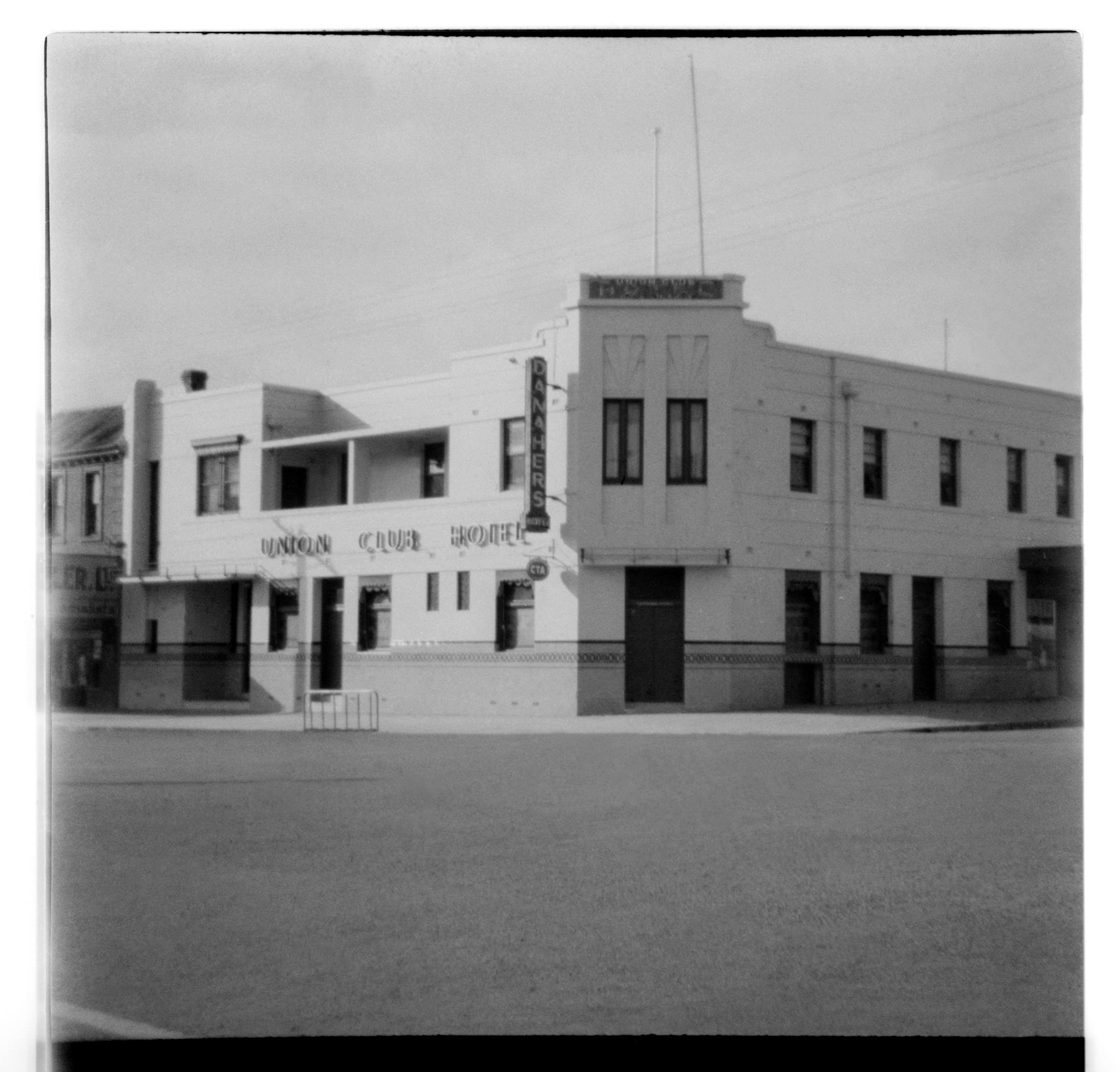
Though the secret formula for Venetian glass was heavily guarded on Murano, its qualities were emulated by major European glasshouses, particularly in the Netherlands. Through exquisite displays of ‘façon de Venise’ glass, the exhibition will celebrate the indelible impact and legacy of Venetian glass on glassblowing world-wide.

Venetian glass experienced a major revival in the nineteenth-century as Venice became part of the newly unified Kingdom of Italy. The unification sparked the restoration of traditional Italian industries, including the Muranese glass industry, which enjoyed a resurgence in connoisseurship and supremacy.

In 1871 a large collection of Venetian glass was acquired by the NGV directly from Venice by the proconsul to the Kingdom of Italy, and a further group of works was acquired in 1874, from the manufactory of Antonio Salviati, the father of the Venetian glass revival. Further important groups of nineteenth-century Venetian glass entered the Collection from the Italian displays at the 1880-81 Melbourne International Exhibition.

Tony Ellwood AM, Director, NGV said, ‘The first examples of Venetian glass entered the NGV Collection nearly 150 years ago. This exhibition will celebrate not only the breadth and beauty of the glassware in the NGV Collection, but also the rich legacy of the art form from the sixteenth century to today.’

Press release from the National Gallery of Victoria [Online] Cited 13/02/2020


Venice and Murano Glass and Mosaic Company, Venice (manufacturer) Italy est. 1859 'Chalice' c. 1880


Venice and Murano Glass and Mosaic Company, Venice (manufacturer) Italy est. 1859
Chalice
c. 1880
Glass (pincered and applied decoration)
30.0 x 10.3cm diameter
National Gallery of Victoria, Melbourne Purchased, 1881


Venice And Murano Glass And Mosaic Company, Venice (manufacturer) Italy est. 1859 'Kuttrolf' c. 1880


Venice And Murano Glass And Mosaic Company, Venice (manufacturer) Italy est. 1859
Kuttrolf
c. 1880
Glass
21.6 x 10.9cm diameter
National Gallery of Victoria, Melbourne Purchased, 1881


Installation view of 'Kuttrolf' c. 1880, Venice and Murano Glass and Mosaic Company, Venice (manufacturer)


Installation view of Kuttrolf, c. 1880, Venice and Murano Glass and Mosaic Company, Venice (manufacturer) on display as part of Liquid Light: 500 Years of Venetian Glass at NGV International from 8 March 2018 – 13 April 2020
Photo: Tom Ross


Venice And Murano Glass And Mosaic Company, Venice (manufacturer) Italy est. 1859 'Goblet' c. 1880


Venice And Murano Glass And Mosaic Company, Venice (manufacturer) Italy est. 1859
Goblet
c. 1880
Glass
23.2 x 14.1 x 7.6cm
National Gallery of Victoria, Melbourne Gift of John H. Connell, 1914


Installation view of 'Liquid Light: 500 Years of Venetian Glass' on display at NGV International from 8 March 2018 - 13 April 2020 showing at centre, 'Goblet' c. 1880 by the Venice And Murano Glass And Mosaic Company, Venice


Installation view of Liquid Light: 500 Years of Venetian Glass on display at NGV International from 8 March 2018 – 13 April 2020 showing at centre, Goblet c. 1880 by the Venice And Murano Glass And Mosaic Company, Venice
Photo: Tom Ross


Venice and Murano Glass and Mosaic Company, Venice (manufacturer) Italy, est. 1859 'Covered goblet' c. 1880


Venice and Murano Glass and Mosaic Company, Venice (manufacturer) Italy, est. 1859
Covered goblet
c. 1880
Glass
(a-b) 29.1 x 15.4 x 10.8cm (overall)
National Gallery of Victoria, Melbourne Purchased, 1881


Installation view of 'Liquid Light: 500 Years of Venetian Glass' on display at NGV International showing Italian goblet, covered goblet and wine glass, all 19th century


Left to right

Venice and Murano Glass and Mosaic Company, Venice (manufacturer) Italian est. 1859
Covered goblet
c. 1880
Glass
(a-b) 29.1 x 15.4 x 10.8cm (overall)
Purchased, 1881

Venice and Murano Glass and Mosaic Company, Venice (manufacturer) Italian est. 1859
Goblet
c. 1880
Glass
18.3 x 12.0cm diameter
Purchased, 1881

Venice and Murano Glass and Mosaic Company, Venice (manufacturer) Italian est. 1859
Wine glass
c. 1880
Glass (blown, applied decoration)
11.7 x 6.8 x 5.9cm
Purchased, 1881
Photo: Victoria Zschommler


Vetreria Fratelli Toso, Murano, Venice (attributed to) (manufacturer) Italy 1854-1901 'Vase' c. 1890-1900


Vetreria Fratelli Toso, Murano, Venice (attributed to) (manufacturer) Italy 1854-1901
Vase
c. 1890-1900
Glass (murrine decoration)
25.5 x 19.7 x 15.1cm
National Gallery of Victoria, Melbourne Purchased, 1996


Millefiori

Millefiori is a glasswork technique which produces distinctive decorative patterns on glassware. The term millefiori is a combination of the Italian words “mille” (thousand) and “fiori” (flowers). Apsley Pellatt in his book Curiosities of Glass Making was the first to use the term “millefiori”, which appeared in the Oxford English Dictionary in 1849; prior to that, the beads were called mosaic beads. While the use of this technique long precedes the term “millefiori”, it is now most frequently associated with Venetian glassware.

The manufacture of mosaic beads can be traced to Ancient Roman, Phoenician and Alexandrian times. Canes, probably made in Italy, have been found as far away as 8th century archaeological sites in Ireland. Millefiori beads have been uncovered from digs at Sandby borg, Öland, Sweden, dating apparently from the late 5th or early 6th century. A piece of millefiori was found, along with unworked garnets, in a purse at the early 7th century Anglo-Saxon burial site at Sutton Hoo.

The technical knowledge for creating millefiori was lost by the eighteenth century, and the technique was not revived until the nineteenth century. Within several years of the technique’s rediscovery, factories in Italy, France and England were manufacturing millefiori canes. They were often incorporated into fine glass art paperweights.

Until the 15th century, Murano glass makers were only producing drawn Rosetta beads made from moulded Rosetta canes. Rosetta beads are made by the layering of a variable number of layers of glass of various colours in a mould, and by pulling the soft glass from both ends until the cane has reached the desired thickness. It is then cut into short segments for further processing.

The millefiori technique involves the production of glass canes or rods, known as murrine, with multicoloured patterns which are viewable only from the cut ends of the cane. A murrine rod is heated in a furnace and pulled until thin while still maintaining the cross section’s design. It is then cut into beads or discs when cooled.

Text from the Wikipedia website


Installation view of 'Liquid Light: 500 Years of Venetian Glass' on display at NGV International

Installation view of 'Liquid Light: 500 Years of Venetian Glass' on display at NGV International showing at left, 'Goblet' c. 1878 by the Venice and Murano Glass and Mosaic Company, Venice


Installation view of Liquid Light: 500 Years of Venetian Glass on display at NGV International from 8 March 2018 – 13 April 2020 showing at left in the bottom image, Goblet c. 1878 by the Venice and Murano Glass and Mosaic Company, Venice
Photo: Tom Ross


Venice and Murano Glass and Mosaic Company, Venice (manufacturer) Italian est. 1859 'Goblet' c. 1878


Venice and Murano Glass and Mosaic Company, Venice (manufacturer) Italian est. 1859
Goblet
c. 1878
Glass
15.1 x 14.1cm diameter
Purchased, 1881
Photo: Victoria Zschommler


Installation view of 'Liquid Light: 500 Years of Venetian Glass' on display at NGV International

Installation view of 'Liquid Light: 500 Years of Venetian Glass' on display at NGV International

Installation view of 'Liquid Light: 500 Years of Venetian Glass' on display at NGV International


Installation view of Liquid Light: 500 Years of Venetian Glass on display at NGV International from 8 March 2018 – 13 April 2020
Photo: Tom Ross


Installation view of 'Candelabrum' c. 1880, Venice and Murano Glass and Mosaic Company, Venice (manufacturer)


Installation view of Candelabrum, c. 1880, Venice and Murano Glass and Mosaic Company, Venice (manufacturer) on display as part of Liquid Light: 500 Years of Venetian Glass at NGV International from 8 March 2018 – 13 April 2020
Photo: Tom Ross


Installation view of 'Liquid Light: 500 Years of Venetian Glass' on display at NGV International

Installation view of 'Liquid Light: 500 Years of Venetian Glass' on display at NGV International

Installation view of 'Liquid Light: 500 Years of Venetian Glass' on display at NGV International

Installation view of 'Liquid Light: 500 Years of Venetian Glass' on display at NGV International


Installation view of Liquid Light: 500 Years of Venetian Glass on display at NGV International from 8 March 2018 – 13 April 2020
Photo: Tom Ross


Installation view of 'Tazza' c. 1880, Venice and Murano Glass and Mosaic Company, Venice (manufacturer)


Installation view of Tazza, c. 1880, Venice and Murano Glass and Mosaic Company, Venice (manufacturer) on display as part of Liquid Light: 500 Years of Venetian Glass at NGV International from 8 March 2018 – 13 April 2020. Photo: Tom Ross


Venice and Murano Glass and Mosaic Company, Venice (manufacturer) Italian est. 1859 'Tazza' c. 1880


Venice and Murano Glass and Mosaic Company, Venice (manufacturer) Italian est. 1859
Tazza
c. 1880
Glass (applied decoration)
23.4 x 22.3cm diameter
Purchased, 1881
Photo: Victoria Zschommler


Installation view of 'Liquid Light: 500 Years of Venetian Glass' on display at NGV International showing Italian glass ewers 19th century


Left to right

Venice and Murano Glass and Mosaic Company, Venice (manufacturer) Italian est. 1859
Ewer
c. 1880
Glass (blown, applied decoration)
25.8 x 9.9 x 9.2cm
Purchased, 1881

Venice and Murano Glass and Mosaic Company, Venice (manufacturer) Italian est. 1859
Ewer
c. 1880
Glass (blown, applied decoration)
26.0 x 9.7cm diamater
Purchased, 1881
Photo: Victoria Zschommler


Installation view of 'Liquid Light: 500 Years of Venetian Glass' on display at NGV International showing Italian glass goblets 19th century


Left to right

Venice and Murano Glass and Mosaic Company, Venice (manufacturer) Italian est. 1859
Goblet
c. 1870
Glass
14.1 x 10.2 x 9.4cm
Purchased, 1881

Venice and Murano Glass and Mosaic Company, Venice (manufacturer) Italian est. 1859
Goblet
c. 1880
Glass (pincered and applied decoration)
28.7 x 9.9cm diameter
Purchased, 1881
Photo: Victoria Zschommler


Installation view of 'Liquid Light: 500 Years of Venetian Glass' on display at NGV International showing Italian glass goblet, vase and tazza 19th century


Clockwise from left

Venice and Murano Glass and Mosaic Company, Venice (manufacturer) Italian est. 1859
Tazza
c. 1880
Glass
11.9 x 14.2cm diameter
Purchased, 1881

Venice and Murano Glass and Mosaic Company, Venice (manufacturer) Italian est. 1859
Goblet
c. 1878
Glass
19.7 x 12.4cm diameter
Purchased, 1881

Venice and Murano Glass and Mosaic Company, Venice (manufacturer) Italian est. 1859
Vase
c. 1880
Glass
13.2 x 8.8 x 7.9cm
Purchased, 1881
Photo: Victoria Zschommler


Venice and Murano Glass and Mosaic Company, Venice (manufacturer) Italian est. 1859 'Bottle' c. 1878


Venice and Murano Glass and Mosaic Company, Venice (manufacturer) Italian est. 1859
Bottle
c. 1878
Glass
(a-b) 16.0 x 13.1 x 11.8cm (overall)
Purchased, 1881
Photo: Victoria Zschommler


Venini & Co., Murano (manufacturer) Italy est. 1921 Fulvio Bianconi (designer) (Italy 1915-96) 'Handkerchief (Fazzoletto) vase' 1949


Venini & Co., Murano (manufacturer) Italy est. 1921
Fulvio Bianconi (designer) (Italy 1915-96)
Handkerchief (Fazzoletto) vase
1949 designed, c. 1950-60 manufactured
Glass (vetro a fili decoration)
19.8 x 34.0 x 21.7cm
National Gallery of Victoria, Melbourne Purchased from Admission Funds, 1989


Installation view of 'Liquid Light: 500 Years of Venetian Glass' on display at NGV International


Clockwise from right

Vetreria Fratelli Toso, Murano, Venice (Italian 1854-1901) (manufacturer)
Vase
c. 1890-1900
Glass (murrine decoration)
25.5 x 19.7 x 15.1cm
Purchased, 1996

Richard Marquis (American born 1945) (designer)
Non-functional teapot
1976
Glass (murrini (mosaic) decoration, applied decoration)
8.6 x 15.8 x 12.6cm
Presented through The Art Foundation of Victoria by Terence Lane, Fellow, 1996

Venini & Co., Murano (Italian est. 1921) (manufacturer)
Fulvio Bianconi (Italian 1915-1996) (designer)
Patchwork (Pezzato) vase
c. 1950
Glass
36.6 x 14.6 x 10.9cm
Felton Bequest, 1952
Photo: Victoria Zschomm


Venini & Co., Murano (manufacturer) Italy est. 1921 Fulvio Bianconi (designer) (Italy, 1915-96) 'Patchwork (Pezzato) vase' c. 1950


Venini & Co., Murano (manufacturer) Italy est. 1921
Fulvio Bianconi (designer) (Italy, 1915-96)
Patchwork (Pezzato) vase
c. 1950
Glass
36.6 x 14.6 x 10.9cm
National Gallery of Victoria, Melbourne Felton Bequest, 1952


Installation view of 'Liquid Light: 500 Years of Venetian Glass' on display at NGV International from 8 March 2018 - 13 April 2020

Installation view of 'Liquid Light: 500 Years of Venetian Glass' on display at NGV International


Installation view of Liquid Light: 500 Years of Venetian Glass on display at NGV International from 8 March 2018 – 13 April 2020
Photo: Tom Ross


NGV International
180 St Kilda Rd, Melbourne

Opening hours:
Open daily, 10am – 5pm

National Gallery of Victoria website

LIKE ART BLART ON FACEBOOK

Back to top

European photographic research tour exhibition: ‘Benjamin Katz Berlin Havelhöhe, 1960/61’ at Museum Ludwig, Cologne

Exhibition dates: 7th June – 22nd September, 2019
Visited September 2019 posted March 2020

Cu­ra­tor: Bar­bara En­gel­bach


Benjamin Katz (Belgian, b. 1939)
'Untitled' 1960-1961 from the series 'Ber­lin Havel­höhe (1960/1961)' from the exhibition 'Benjamin Katz Berlin Havelhöhe, 1960/61' at Museum Ludwig, Cologne, June - Sept, 2019


Benjamin Katz (Belgian, b. 1939)
Untitled
1960-1961
From the series Ber­lin Havel­höhe (1960/1961)
Gelatin silver print


The eye of the law guards

I saw this TERRIFIC exhibition at Museum Ludwig while I was on my European photography research trip. None of the photographs are available online, so I am grateful that I took some iPhone installation images while I was there.

Tight, focused social documentary images that have real presence and power. They feel cooly and directly observed, essential, gritty, a unique take on an in/hospitable institution and the people in it. The word Havelhöhe translates to “hospital”. Katz was there for 18 months for the treatment of tuberculosis.

I admire the light, subject matter and the photographer’s point of view, his frontal and demanding perspective.

Dr Marcus Bunyan


All iPhone installation images taken by Marcus Bunyan. Please click n the photographs for a larger version of the image.


Installation view of the exhibition 'Benjamin Katz Berlin Havelhöhe, 1960/61' at the Museum Ludwig, Cologne

Installation view of the exhibition 'Benjamin Katz Berlin Havelhöhe, 1960/61' at the Museum Ludwig, Cologne


Installation views of the exhibition Benjamin Katz Berlin Havelhöhe, 1960/61 at the Museum Ludwig, Cologne
Photos: Marcus Bunyan


Ben­jamin Katz became known in the 1980s as a fixture of the art scene in West Germany. He took portraits of artists such as Ge­org Baselitz, James Lee Byars, A.R. Penck, Cindy Sh­er­man, and Rose­marie Trock­el, pho­to­graphed the bustling art scene at openings, and doc­u­ment­ed the cre­a­tion of major ex­hi­bi­tions such as West­kunst in Cologne in 1981, doc­u­men­ta 7 in Kas­sel in 1982, and von hi­er aus in Düs­sel­dorf in 1984.

On the oc­ca­sion of the eightieth birthday of Benjamin Katz (born on June 14, 1939, in An­tw­erp, Bel­gi­um), the Mu­se­um Lud­wig will present his series of photographs Ber­lin Havel­höhe (1960/1961), which has never before been shown in its en­tire­ty. The series was re­cent­ly acquired di­rect­ly from the artist’s archive. Even before Katz de­vot­ed himself pro­fes­sio­n­al­ly to pho­tog­ra­phy, he captured his sur­round­ings in 1960 and 1961 during an eighteen-month stay at the Havel­höhe hospital. Suf­fer­ing from tu­ber­cu­lo­sis, he spent his time there as a patient and pho­to­graphed ev­ery­day life: his fellow patients, the hos­pi­tal staff, the buildings built during the Nazi era as an air force academy, and the sur­round­ing area. The pho­to­graphs rep­re­sent a socio-historical as well as an artistic and per­so­noal doc­u­ment, since they record Katz’s be­gin­n­ings as a photographer. Ber­lin Havel­höhe also ex­em­pli­fies the image of the artist as a young man.

Di­rec­tor Yil­maz Dziewior: “The Mu­se­um Lud­wig has a large col­lec­tion of Katz’s por­traits of artists span­n­ing sev­er­al de­cades. It al­so in­cludes his ex­ten­sive docu­men­ta­tion of the 1981 ex­hi­bi­tion West­kunst as well as pho­to­graphs from the in­s­tal­la­tion of many ex­hi­bi­tions. I am all the more de­light­ed that we were able to ac­quire Ber­lin Havel­höhe, a sig­ni­f­i­cant ear­ly se­ries by Katz. We would like ex­press our warmest thanks for his trust and for shar­ing his me­m­ories with us.”

The en­tire se­ries will be shown in the form of for­ty-one pho­to­graphs print­ed in three dif­fer­ent sizes and 318 vin­tage prints mount­ed on A4 pa­per. On the first floor, as part of the per­ma­nent col­lec­tion, the Mu­se­um Lud­wig will al­so pre­sent Katz’s well-known por­traits of artists, which he took dur­ing his stu­dio vis­its begin­n­ing in the 1980s, in­clud­ing Ge­org Baselitz, A.R. Penck, Ger­hard Richter, and Rose­marie Trock­el.

Ben­jamin Katz: Ber­lin Havel­höhe, 1960/1961 is the sixth pre­sen­ta­tion in the pho­tog­ra­phy room, which since 2017 has fea­tured chang­ing se­lec­tions of the approx­i­mate­ly 70,000 works from the Mu­se­um Lud­wig pho­tog­ra­phy col­lec­tion. The pho­tog­ra­phy room is lo­cat­ed in the per­ma­nent col­lec­tion on the se­cond floor.

Text from the gallery website [Online] Cited 04/03/2020


Wall text from the exhibition 'Benjamin Katz Berlin Havelhöhe, 1960/61' at the Museum Ludwig, Cologne


Wall text from the exhibition Benjamin Katz Berlin Havelhöhe, 1960/61 at the Museum Ludwig, Cologne
Photo: Marcus Bunyan


Photograph from the exhibition 'Benjamin Katz Berlin Havelhöhe, 1960/61' (installation view)


Benjamin Katz (Belgian, b. 1939)
Untitled (installation view)
1960-1961
From the series Ber­lin Havel­höhe (1960/1961)
Gelatin silver print
Photo: Marcus Bunyan


Benjamin Katz (Belgian, b. 1939)
'Untitled' 1960-1961 from the series 'Ber­lin Havel­höhe (1960/1961)' from the exhibition 'Benjamin Katz Berlin Havelhöhe, 1960/61' at Museum Ludwig, Cologne, June - Sept, 2019


Benjamin Katz (Belgian, b. 1939)
Untitled
1960-1961
From the series Ber­lin Havel­höhe (1960/1961)
Gelatin silver print


Installation view of the exhibition 'Benjamin Katz Berlin Havelhöhe, 1960/61' at the Museum Ludwig, Cologne


Installation view of the exhibition Benjamin Katz Berlin Havelhöhe, 1960/61 at the Museum Ludwig, Cologne
Photo: Marcus Bunyan


Photograph from the exhibition 'Benjamin Katz Berlin Havelhöhe, 1960/61' (installation view)


Benjamin Katz (Belgian, b. 1939)
Untitled (installation view)
1960-1961
From the series Ber­lin Havel­höhe (1960/1961)
Gelatin silver print
Photo: Marcus Bunyan


Benjamin Katz (Belgian, b. 1939)
'Untitled' 1960-1961 from the series 'Ber­lin Havel­höhe (1960/1961)' from the exhibition 'Benjamin Katz Berlin Havelhöhe, 1960/61' at Museum Ludwig, Cologne, June - Sept, 2019


Benjamin Katz (Belgian, b. 1939)
Untitled
1960-1961
From the series Ber­lin Havel­höhe (1960/1961)
Gelatin silver print


Photograph from the exhibition 'Benjamin Katz Berlin Havelhöhe, 1960/61' (installation view)


Benjamin Katz (Belgian, b. 1939)
Untitled (installation view)
1960-1961
From the series Ber­lin Havel­höhe (1960/1961)
Gelatin silver print
Photo: Marcus Bunyan


Installation view of the exhibition 'Benjamin Katz Berlin Havelhöhe, 1960/61' at the Museum Ludwig, Cologne


Installation view of the exhibition Benjamin Katz Berlin Havelhöhe, 1960/61 at the Museum Ludwig, Cologne
Photo: Marcus Bunyan


Photograph from the exhibition 'Benjamin Katz Berlin Havelhöhe, 1960/61' (installation view)


Benjamin Katz (Belgian, b. 1939)
Untitled (installation view)
1960-1961
From the series Ber­lin Havel­höhe (1960/1961)
Gelatin silver print
Photo: Marcus Bunyan


Benjamin Katz (Belgian, b. 1939)
'Untitled' 1960-1961 from the series 'Ber­lin Havel­höhe (1960/1961)' from the exhibition 'Benjamin Katz Berlin Havelhöhe, 1960/61' at Museum Ludwig, Cologne, June - Sept, 2019


Benjamin Katz (Belgian, b. 1939)
Untitled
1960-1961
From the series Ber­lin Havel­höhe (1960/1961)
Gelatin silver print


Installation view of the exhibition 'Benjamin Katz Berlin Havelhöhe, 1960/61' at the Museum Ludwig, Cologne


Installation view of the exhibition Benjamin Katz Berlin Havelhöhe, 1960/61 at the Museum Ludwig, Cologne
Photo: Marcus Bunyan


Photograph from the exhibition 'Benjamin Katz Berlin Havelhöhe, 1960/61' (installation view)


Benjamin Katz (Belgian, b. 1939)
Untitled (installation view)
1960-1961
From the series Ber­lin Havel­höhe (1960/1961)
Gelatin silver print
Photo: Marcus Bunyan


Benjamin Katz (Belgian, b. 1939)
'Untitled' 1960-1961 from the series 'Ber­lin Havel­höhe (1960/1961)' from the exhibition 'Benjamin Katz Berlin Havelhöhe, 1960/61' at Museum Ludwig, Cologne, June - Sept, 2019


Benjamin Katz (Belgian, b. 1939)
Untitled
1960-1961
From the series Ber­lin Havel­höhe (1960/1961)
Gelatin silver print


Installation view of the exhibition 'Benjamin Katz Berlin Havelhöhe, 1960/61' at the Museum Ludwig, Cologne


Installation view of the exhibition Benjamin Katz Berlin Havelhöhe, 1960/61 at the Museum Ludwig, Cologne
Photo: Marcus Bunyan


Photograph from the exhibition 'Benjamin Katz Berlin Havelhöhe, 1960/61' (installation view)


Benjamin Katz (Belgian, b. 1939)
Untitled (installation view)
1960-1961
From the series Ber­lin Havel­höhe (1960/1961)
Gelatin silver print
Photo: Marcus Bunyan


Photograph from the exhibition 'Benjamin Katz Berlin Havelhöhe, 1960/61' (installation view)


Benjamin Katz (Belgian, b. 1939)
Untitled (installation view)
1960-1961
From the series Ber­lin Havel­höhe (1960/1961)
Gelatin silver print
Photo: Marcus Bunyan


Photograph from the exhibition 'Benjamin Katz Berlin Havelhöhe, 1960/61' (installation view)


Benjamin Katz (Belgian, b. 1939)
Untitled (installation view)
1960-1961
From the series Ber­lin Havel­höhe (1960/1961)
Gelatin silver print
Photo: Marcus Bunyan


Photograph from the exhibition 'Benjamin Katz Berlin Havelhöhe, 1960/61' (installation view)


Benjamin Katz (Belgian, b. 1939)
Untitled (installation view)
1960-1961
From the series Ber­lin Havel­höhe (1960/1961)
Gelatin silver print
Photo: Marcus Bunyan


Photograph from the exhibition 'Benjamin Katz Berlin Havelhöhe, 1960/61' (installation view)


Benjamin Katz (Belgian, b. 1939)
Untitled (installation view)
1960-1961
From the series Ber­lin Havel­höhe (1960/1961)
Gelatin silver print
Photo: Marcus Bunyan


Photograph from the exhibition 'Benjamin Katz Berlin Havelhöhe, 1960/61' (installation view)


Benjamin Katz (Belgian, b. 1939)
Untitled (installation view)
1960-1961
From the series Ber­lin Havel­höhe (1960/1961)
Gelatin silver print
Photo: Marcus Bunyan


Photograph from the exhibition 'Benjamin Katz Berlin Havelhöhe, 1960/61' (installation view)


Benjamin Katz (Belgian, b. 1939)
Untitled (installation view)
1960-1961
From the series Ber­lin Havel­höhe (1960/1961)
Gelatin silver print
Photo: Marcus Bunyan


Some of the text translates as: ‘The English finder’ (bottom left) and ‘The eye of the law guards’ (centre)


Photograph from the exhibition 'Benjamin Katz Berlin Havelhöhe, 1960/61' (installation view)


Benjamin Katz (Belgian, b. 1939)
Untitled (installation view)
1960-1961
From the series Ber­lin Havel­höhe (1960/1961)
Gelatin silver print
Photo: Marcus Bunyan


Photograph from the exhibition 'Benjamin Katz Berlin Havelhöhe, 1960/61' (installation view)


Benjamin Katz (Belgian, b. 1939)
Untitled (installation view)
1960-1961
From the series Ber­lin Havel­höhe (1960/1961)
Gelatin silver print
Photo: Marcus Bunyan


Installation view of the exhibition 'Benjamin Katz Berlin Havelhöhe, 1960/61' at the Museum Ludwig, Cologne


Installation view of the exhibition Benjamin Katz Berlin Havelhöhe, 1960/61 at the Museum Ludwig, Cologne
Photo: Marcus Bunyan


Photograph from the exhibition 'Benjamin Katz Berlin Havelhöhe, 1960/61' (installation view)


Benjamin Katz (Belgian, b. 1939)
Untitled (installation view)
1960-1961
From the series Ber­lin Havel­höhe (1960/1961)
Gelatin silver print
Photo: Marcus Bunyan


Benjamin Katz (Belgian, b. 1939)
'Untitled' 1960-1961 from the series 'Ber­lin Havel­höhe (1960/1961)' from the exhibition 'Benjamin Katz Berlin Havelhöhe, 1960/61' at Museum Ludwig, Cologne, June - Sept, 2019


Benjamin Katz (Belgian, b. 1939)
Untitled
1960-1961
From the series Ber­lin Havel­höhe (1960/1961)
Gelatin silver print


Photograph from the exhibition 'Benjamin Katz Berlin Havelhöhe, 1960/61' (installation view)


Benjamin Katz (Belgian, b. 1939)
Untitled (installation view)
1960-1961
From the series Ber­lin Havel­höhe (1960/1961)
Gelatin silver print
Photo: Marcus Bunyan


Photograph from the exhibition 'Benjamin Katz Berlin Havelhöhe, 1960/61' (installation view)


Benjamin Katz (Belgian, b. 1939)
Untitled (installation view)
1960-1961
From the series Ber­lin Havel­höhe (1960/1961)
Gelatin silver print
Photo: Marcus Bunyan


Benjamin Katz (Belgian, b. 1939)
'Untitled' 1960-1961 from the series 'Ber­lin Havel­höhe (1960/1961)' from the exhibition 'Benjamin Katz Berlin Havelhöhe, 1960/61' at Museum Ludwig, Cologne, June - Sept, 2019


Benjamin Katz (Belgian, b. 1939)
Untitled
1960-1961
From the series Ber­lin Havel­höhe (1960/1961)
Gelatin silver print


Museum Ludwig
Heinrich-Böll-Platz, 50667 Köln, Germany

Opening hours:
Tues­­day through Sun­­day: 10 am – 6 pm

Museum Ludwig website

LIKE ART BLART ON FACEBOOK

Back to top

Photographs: ‘Australia 1946-1947’ Part 1 March 2020

March 2020


Unknown photographer (Australian) 'Untitled (girl on porch)' 1946-1947


Unknown photographer (Australian)
Untitled (girl on porch)
1946-1947
Medium format negative
Collection of Nicholas Henderson


One of the great joys about compiling this archive is the ability to rescue unloved and unknown images. To give them a voice in the contemporary world.

These 2 1/4″ square (6 x 6cm) medium format black and white negatives come from the collection of my friend Nick Henderson. There is no marking on any of the negatives, leading me to believe that the film numbers were on the backing paper of the 120 film roll. The negatives are housed in paper packets adorned with a logo and words ‘APS Developing and Printing Service’ – perhaps Australian Photographic Services? Each packet contains basic title information for some of the photographs. Looking at the photographs and their perspective on the world, it would seem that the camera is a waist view camera, in other words the photographer was looking down into the viewfinder, the camera not held at eye level. The camera could possibly have been a Voigtländer or similar camera (see below). The quality of the negatives is reasonable, with some fall off in terms of sharpness occurring at the edge of the image. The photographs can be dated to 1946-1947 due to the February 1947 expiry Victorian registration label on the Chevrolet (thank you Simon Barnfield for spotting this!), are taken by an unknown photographer (probably male)… photographs of life in Sydney, his family and their travels around Australia. This is the first tranche of photographs with roughly the same number to come in the second part of the posting.

What makes these photographs particularly interesting is:

1/ the breadth of subject matter taken just after the Second World War and the fact that they are medium format

2/ the relaxed nature and beauty of the photographs of the children, and the light!

3/ the unknown images of places such as Bondi Beach and historical monuments, such as that of the forlorn The Dog on the Tuckerbox

4/ the photographs of the motor sport activity of hillclimbing, unfortunately no place known but its has been suggested it could be the 90-years-old Maldon hill climb at Mt Tarrengower because of the box-ironbark (and the fact that there are photographs of Maldon in the collection).


Variously we have country towns, theatrical groups, sailing, boating, churches, Sydney ferries, a trip to Maldon in Victoria for the Maldon Show, family picnics, cars and caravans, houses and horse riding, churches and children, and the oh so cute dogs in their own car boxes. So Australian. The photographs really give an extensive insight into suburban life in Australia just after the privations of the Second World War… and the photographer had a good eye. That is what is most important – that they knew how to take a good photograph.

Talking to my friend James McArdle who writes the oh so excellent On this Date in Photography website (essential reading!), he was unaware of the time it takes to prepare images for these postings. It has literally taken me hours and hours of hard work to scan these negatives and then digitally clean and balance them. All to give them a new lease of life in the world, to preserve their captured memories and histories. I hope you can appreciate all the hard work and admire the images I have revealed.

See Part 2 of the posting

Dr Marcus Bunyan


Many thankx to Nick Henderson for allowing me to publish the photographs in the posting. All photographs collection of Nick Henderson. Please click on the photographs for a larger version of the image. See Part 2 of the posting.


APS (Australian Photographic Services?) Developing and Printing Service 'Film packets and negatives' 1946-1947

APS (Australian Photographic Services?) Developing and Printing Service 'Film packets and negatives' 1946-47


APS (Australian Photographic Services?) Developing and Printing Service
Film packets and negatives
1946-1947
Negatives: 2 1/4″ square (6 x 6 cm)
Packet (closed): 3 7/8 x 3 1/4″ (10cm x 8cm)
Collection of Nicholas Henderson


Voigtländer Brillant 1930s


Voigtländer Billiant
1930s
Photograph by Rama, Wikimedia Commons, Cc-by-sa-2.0-fr


The Voigtländer Brillant is a range of pseudo-TLR cameras, and later true TLR cameras, taking 6 × 6 cm exposures on 120 film, made by Voigtländer from 1932. Famed Hungarian-Dutch photographer Eva Besnyö used a Brillant for her early work.


Unknown photographer (Australian) 'Untitled (Circular Quay, Sydney)' 1946-1947


Unknown photographer (Australian)
Untitled (Circular Quay, Sydney)
1946-1947
Medium format negative
Collection of Nicholas Henderson


Unknown photographer (Australian) 'Untitled (Karrabee ferry, Sydney, leaving High St Wharf, Kurraba in the background)' 1946-1947


Unknown photographer (Australian)
Untitled (Karrabee ferry, Sydney, leaving High St Wharf, Kurraba in the background)
1946-1947
Medium format negative
Collection of Nicholas Henderson


Karingal and Karrabee ferry

Karingal and Karrabee were built by Morrison & Sinclair, Balmain for Sydney Ferries Limited, being launched in 1913. They were the smallest of the round-ended K-class Sydney ferries, and could carry 608 and 653 passengers respectively.

They were near identical sister ferries operated by Sydney Ferries Limited and its NSW State Government operated successors on Sydney Harbour from 1913 until 1984. Wooden ferries built at the time of Sydney Ferries’ rapid early twentieth century, they were the smallest of the round-end “K-class ferries”.

The ferries were built as coal-fired steamer and were converted to diesel in the 1930s – the first Sydney Harbour ferries to be so converted. Unlike many early twentieth century Sydney Ferries, they survived the opening of the Sydney Harbour Bridge in the 1930s, and the State Government takeover in 1951.

Karrabee sank at Circular Quay after taking on water during the Great Ferry Race in 1984 – an incident that received extensive media coverage – and did not return to service. Karingal, and the other three remaining old wooden ferries, were taken out of service shortly after Karrabee’s sinking. In service for 71 years, they were among the longest-serving ferries on Sydney Harbour.

“Karingal” and “Karrabee” are Australian Aboriginal words meaning ‘happy home’ and ‘cockatoo’ respectively.

Text from the Wikipedia website [Online] Cited 12/12/2019


Unknown photographer (Australian) 'Untitled (Bondi Beach, Sydney)' 1946-1947


Unknown photographer (Australian)
Untitled (Bondi Beach, Sydney)
1946-1947
Medium format negative
Collection of Nicholas Henderson


Unknown photographer (Australian) 'Untitled (Bondi Beach, Sydney)' 1946-1947


Unknown photographer (Australian)
Untitled (Bondi Beach, Sydney)
1946-1947
Medium format negative
Collection of Nicholas Henderson


Unknown photographer (Australian) 'Untitled (Bondi Beach, Sydney)' 1946-1947


Unknown photographer (Australian)
Untitled (Bondi Beach, Sydney)
1946-1947
Medium format negative
Collection of Nicholas Henderson


Unknown photographer (Australian) 'Untitled (The Dog on the Tuckerbox)' 1946-1947


Unknown photographer (Australian)
Untitled (The Dog on the Tuckerbox)
Gundagai, 1946-1947
Medium format negative
Collection of Nicholas Henderson


Unknown photographer (Australian) 'Untitled (The Dog on the Tuckerbox)' 1946-1947


Unknown photographer (Australian)
Untitled (The Dog on the Tuckerbox)
Gundagai, 1946-1947
Medium format negative
Collection of Nicholas Henderson


The Dog on the Tuckerbox

The Dog on the Tuckerbox is an Australian historical monument and tourist attraction, located at Snake Gully, approximately five miles (eight kilometres) from Gundagai, New South Wales as described in the song of the same name.

The inspiration for the statue has been traced to a doggerel poem, “Bullocky Bill”, published anonymously by “Bowyang Yorke” in 1857 (other references have 1880 in the Gundagai Times, however confirmation of either is hard to find), which humorously describes a series of misfortunes faced by a bullock driver, culminating in his dog either sitting on or spoiling the food in his tucker-box (an Australian colloquialism for a box that holds food, similar to a lunchbox, but larger). …

A dog monument was first erected at a site nine miles from Gundagai in 1926. Gundagai stonemason Frank Rusconi suggested a memorial using the legend of the Dog on the Tuckerbox in 1928; and in 1932 the proposal was taken up by the community…

The Back to Gundagai Committee chose the Five Mile camping site rather than the Nine Mile Peg as a location for the monument on the basis that it was more convenient to the Hume Highway and closer to the town, thereby more beneficial to tourism.

A nationwide competition was held to obtain the most suitable inscription for the monument. The chosen inscription on the base of the monument was written by Brian Fitzpatrick of Sydney. The inscription says:

“Earth’s self upholds this monument
To conquerors who won her when
Wooing was dangerous, and now
Are gathered unto her again.”

The dog section of the monument was modelled by Rusconi and cast at ‘Oliver’s Foundry’ in Sydney. Rusconi also sculpted its base.

The Dog on the Tuckerbox monument was erected in 1932 as part of ‘Back to Gundagai’ week, and a large crowd “gathered to her again” to witness the unveiling by Prime Minister Joseph Lyons on 28 November 1932. It was planned to donate money placed in the wishing well at the base of the monument to the Gundagai District Hospital. A souvenir shop was also opened nearby. Copyright on the monument was vested in the Gundagai Hospital, who for many years received a useful income from receipt of royalties from firms using the iconic image.

Text from the Wikipedia website [Online] Cited 12/12/2019


Unknown photographer (Australian) 'Untitled (hillclimb, possibly at Maldon, Victoria)' 1946-1947


Unknown photographer (Australian)
Untitled (hillclimb, possibly at Maldon, Victoria)
1946-1947
Medium format negative
Collection of Nicholas Henderson


Unknown photographer (Australian) 'Untitled (hillclimb, possibly at Maldon, Victoria)' (detail) 1946-1947


Unknown photographer (Australian)
Untitled (hillclimb, possibly at Maldon, Victoria) (detail)
1946-1947
Medium format negative
Collection of Nicholas Henderson


Unknown photographer (Australian) 'Untitled (hillclimb, possibly at Maldon, Victoria)' 1946-1947


Unknown photographer (Australian)
Untitled (hillclimb, possibly at Maldon, Victoria)
1946-1947
Medium format negative
Collection of Nicholas Henderson


Unknown location, possibly the 90-years-old Maldon hill climb at Mt Tarrengower because of the box-ironbark (and the fact that there are photographs of Maldon in the collection).


Unknown photographer (Australian) 'Untitled (hillclimb, possibly at Maldon, Victoria)' (detail) 1946-1947


Unknown photographer (Australian)
Untitled (hillclimb, possibly at Maldon, Victoria) (detail)
1946-1947
Medium format negative
Collection of Nicholas Henderson


Unknown photographer (Australian) 'Untitled (hillclimb, possibly at Maldon, Victoria)' 1946-1947


Unknown photographer (Australian)
Untitled (hillclimb, possibly at Maldon, Victoria)
1946-1947
Medium format negative
Collection of Nicholas Henderson


Unknown photographer (Australian) 'Untitled (hillclimb, possibly at Maldon, Victoria)' (detail) 1946-1947


Unknown photographer (Australian)
Untitled (hillclimb, possibly at Maldon, Victoria) (detail)
1946-1947
Medium format negative
Collection of Nicholas Henderson


Unknown photographer (Australian) 'Untitled (boat)' 1946-1947


Unknown photographer (Australian)
Untitled (boat)
1946-1947
Medium format negative
Collection of Nicholas Henderson


Unknown photographer (Australian) 'Untitled (boat at sea)' 1946-1947


Unknown photographer (Australian)
Untitled (boat at sea)
1946-1947
Medium format negative
Collection of Nicholas Henderson


Unknown photographer (Australian) 'Untitled (child on porch)' 1946-1947


Unknown photographer (Australian)
Untitled (child on porch)
1946-1947
Medium format negative
Collection of Nicholas Henderson


Unknown photographer (Australian) 'Untitled (boy outside house)' 1946-1947


Unknown photographer (Australian)
Untitled (boy outside house)
1946-1947
Medium format negative
Collection of Nicholas Henderson


Unknown photographer (Australian) 'Untitled (boy smiling)' 1946-1947


Unknown photographer (Australian)
Untitled (boy smiling)
1946-1947
Medium format negative
Collection of Nicholas Henderson


Unknown photographer (Australian) 'Untitled (boy and girl smiling)' 1946-1947


Unknown photographer (Australian)
Untitled (boy and girl smiling)
1946-1947
Medium format negative
Collection of Nicholas Henderson


Unknown photographer (Australian) 'Untitled (child on lawn)' 1946-1947


Unknown photographer (Australian)
Untitled (child on lawn)
1946-1947
Medium format negative
Collection of Nicholas Henderson


Unknown photographer (Australian) 'Untitled (child and chairs)' 1946-1947


Unknown photographer (Australian)
Untitled (child and chairs)
1946-1947
Medium format negative
Collection of Nicholas Henderson


Unknown photographer (Australian) 'Untitled (man and woman)' 1946-1947


Unknown photographer (Australian)
Untitled (man and woman)
1946-1947
Medium format negative
Collection of Nicholas Henderson


Unknown photographer (Australian) 'Untitled (house)' 1946-47


Unknown photographer (Australian)
Untitled (house)
1946-1947
Medium format negative
Collection of Nicholas Henderson


Unknown photographer (Australian) 'Untitled (boy on horse)' 1946-47


Unknown photographer (Australian)
Untitled (boy on horse)
1946-1947
Medium format negative
Collection of Nicholas Henderson


Unknown photographer (Australian) 'Untitled (dog and saucepan)' 1946-47


Unknown photographer (Australian)
Untitled (dog and saucepan)
1946-1947
Medium format negative
Collection of Nicholas Henderson


Unknown photographer (Australian) 'Untitled (1932 Chevrolet)' 1946-47


Unknown photographer (Australian)
Untitled (1932 Chevrolet)
1946-1947
Medium format negative
Collection of Nicholas Henderson


Unknown photographer (Australian) 'Untitled (1932 Chevrolet and caravan)' 1946-47


Unknown photographer (Australian)
Untitled (Chevrolet and caravan)
1946-1947
Medium format negative
Collection of Nicholas Henderson


Unknown photographer (Australian) 'Untitled (1932 Chevrolet and dogs)' 1946-47


Unknown photographer (Australian)
Untitled (1932 Chevrolet and dogs)
1946-1947
Medium format negative
Collection of Nicholas Henderson


The photographs can be dated to 1946-1947 due to the February 1947 expiry Victorian registration label on the Chevrolet. Thank you to Simon Barnfield for spotting this.


Unknown photographer (Australian) 'Untitled (1932 Chevrolet and caravan)' 1946-47


Unknown photographer (Australian)
Untitled (Chevrolet and caravan)
1946-1947
Medium format negative
Collection of Nicholas Henderson


Unknown photographer (Australian) 'Untitled (Man and car)' 1946-47


Unknown photographer (Australian)
Untitled (man and car)
1946-1947
Medium format negative
Collection of Nicholas Henderson


Unknown photographer (Australian) 'Untitled (family picnic)' 1946-47


Unknown photographer (Australian)
Untitled (family picnic)
1946-1947
Medium format negative
Collection of Nicholas Henderson


Unknown photographer (Australian) 'Untitled (Man and car)' 1946-47


Unknown photographer (Australian)
Untitled (man and car)
1946-1947
Medium format negative
Collection of Nicholas Henderson


Unknown photographer (Australian) 'Untitled (house on hill)' 1946-47


Unknown photographer (Australian)
Untitled (house on hill)
1946-1947
Medium format negative
Collection of Nicholas Henderson


Unknown photographer (Australian) 'Untitled (room interior)' 1946-47


Unknown photographer (Australian)
Untitled (room interior)
1946-1947
Medium format negative
Collection of Nicholas Henderson


Unknown photographer (Australian) 'Untitled (Future Miss Maldons, Maldon Show, Maldon, Victoria, with Maldon Timber & Hardware at 28 Main Street in the background)' 1946-47


Unknown photographer (Australian)
Untitled (Future Miss Maldons, Maldon Show, Maldon, Victoria, with Maldon Timber & Hardware at 28 Main Street in the background)
1946-1947
Medium format negative
Collection of Nicholas Henderson


Where are they now, so many ghosts with flowers in their hair.


Unknown photographer (Australian) 'Untitled (Scottish band, Maldon Show, Maldon, Victoria)' 1946-47


Unknown photographer (Australian)
Untitled (Scottish band, Maldon Show, Maldon, Victoria)
1946-1947
Medium format negative
Collection of Nicholas Henderson


Unknown photographer (Australian) 'Untitled (church)' 1946-47


Unknown photographer (Australian)
Untitled (church)
1946-1947
Medium format negative
Collection of Nicholas Henderson


Unknown photographer (Australian) 'Untitled (church)' 1946-1947


Unknown photographer (Australian)
Untitled (church)
1946-1947
Medium format negative
Collection of Nicholas Henderson


Unknown photographer (Australian) 'Untitled (group of actors)' 1946-1947


Unknown photographer (Australian)
Untitled (group of actors)
1946-1947
Medium format negative
Collection of Nicholas Henderson


Unknown photographer (Australian) 'Untitled (actor and ballerina)' 1946-1947


Unknown photographer (Australian)
Untitled (actor and ballerina)
1946-1947
Medium format negative
Collection of Nicholas Henderson


Unknown photographer (Australian) 'Untitled (actor)' 1946-1947


Unknown photographer (Australian)
Untitled (actor)
1946-1947
Medium format negative
Collection of Nicholas Henderson


Unknown photographer (Australian) 'Untitled (band performances)' 1946-1947


Unknown photographer (Australian)
Untitled (band performances)
1946-1947
Medium format negative
Collection of Nicholas Henderson


Unknown photographer (Australian) 'Untitled (Bilsons, country town)' 1946-1947


Unknown photographer (Australian)
Untitled (Bilsons, country town)
1946-1947
Medium format negative
Collection of Nicholas Henderson


LIKE ART BLACK ON FACEBOOK

Back to top

Exhibition: ‘Unseen: 35 Years of Collecting Photographs’ at the J. Paul Getty Museum, Los Angeles

Exhibition dates: 17th December, 2019 – 8th March, 2020

Curators: Jim Ganz, senior curator of photographs at the Getty Museum in collaboration with Getty curators Mazie Harris, Virginia Heckert, Karen Hellman, Arpad Kovacs, Amanda Maddox, and Paul Martineau.


Weegee (Arthur Fellig) (American born Austria, 1899-1968) '[Calypso]' about 1944; before 1946 from the exhibition Exhibition: 'Unseen: 35 Years of Collecting Photographs' at the J. Paul Getty Museum, Los Angeles, Dec 2019 - March 2020


Weegee (Arthur Fellig) (American born Austria, 1899-1968)
[Calypso]
about 1944; before 1946
Gelatin silver print
26.2 x 33.3cm (10 5/16 x 13 1/8 in.)
The J. Paul Getty Museum, Los Angeles
© International Center of Photography


Imagine having these photographs in your collection!

My particular favourite is Hiromu Kira’s The Thinker (about 1930). For me it sums up our singular 1 thoughtful 2 imaginative 3 ephemeral 4 ether/real 5 existence.

“Aether is the fifth element in the series of classical elements thought to make up our experience of the universe… Although the Aether goes by as many names as there are cultures that have referenced it, the general meaning always transcends and includes the same four “material” elements [earth, air, water, fire]. It is sometimes more generally translated simply as “Spirit” when referring to an incorporeal living force behind all things. In Japanese, it is considered to be the void through which all other elements come into existence.” (Adam Amorastreya. “The End of the Aether,” on the Resonance website Feb 16, 2015 [Online] Cited 23/02/2020)

Dr Marcus Bunyan


Many thankx to the J. Paul Getty Museum for allowing me to publish the photographs in the posting. Please click on the photographs for a larger version of the image.


Carleton Watkins (American, 1829-1916) '[Guadalupe Mill]' 1860 from the exhibition Exhibition: 'Unseen: 35 Years of Collecting Photographs' at the J. Paul Getty Museum, Los Angeles, Dec 2019 - March 2020


Carleton Watkins (American, 1829-1916)
[Guadalupe Mill]
1860
Salted paper print
Image (dome-topped): 33.8 × 41.6cm (13 5/16 × 16 3/8 in.)
The J. Paul Getty Museum, Los Angeles


Martin Munkácsi (American born Hungary, 1896-1963) 'The Goalie Gets There a Split Second Too Late' about 1923 from the exhibition Exhibition: 'Unseen: 35 Years of Collecting Photographs' at the J. Paul Getty Museum, Los Angeles, Dec 2019 - March 2020


Martin Munkácsi (American born Hungary, 1896-1963)
The Goalie Gets There a Split Second Too Late
about 1923
Gelatin silver print
29.8 × 36.7cm (11 3/4 × 14 7/16 in.)
The J. Paul Getty Museum, Los Angeles
© Estate of Martin Munkácsi, Courtesy Howard Greenberg Gallery, New York


Hiromu Kira (American, 1898-1991) 'The Thinker' about 1930


Hiromu Kira (American, 1898-1991)
The Thinker
about 1930
Gelatin silver print
27.9 × 35.1cm (11 × 13 13/16 in.)
The J. Paul Getty Museum, Los Angeles
© Sadamura Family Trust


Hiromu Kira (1898-1991) was one of the most successful and well-known Japanese American photographers in prewar Los Angeles. He was born in Waipahu, O’ahu, Hawai’i on April 5, 1898, but was sent to Kumamoto, Japan, for his early education. When he was eighteen years old, he returned to the United States and settled in Seattle, Washington, where he first became interested in photography. In 1923, he submitted prints to the Seattle Photography Salon which accepted two of the photographs. In 1923, his work was accepted in the Pittsburg Salon and the Annual Competition of American Photography. He found work at the camera department of a local Seattle pharmacy and began meeting other Issei, Nisei and Kibei photographers such as Kyo Koike and joined the Seattle Camera Club.

In 1926, Kira moved to Los Angeles with his wife and two young children. Although he was never a member of the Japanese Camera Pictorialists of California, a group that was active in Los Angeles at that time, he developed strong friendships with club members associated with the pictorialist movement of the 1920s and ’30s such as K. Asaishi and T. K. Shindo. In 1928, Kira was named an associate of the Royal Photography Society, and the following year he was made a full fellow and began exhibiting both nationally and internationally. In 1929 alone, Kira exhibited ninety-six works in twenty-five different shows. In the late twenties, he worked at T. Iwata’s art store. In 1931, his photograph The Thinker, made while showing a customer how to use his newly purchased camera properly, appeared on the March 1931 issue of Vanity Fair magazine.

On December 5, two days before the attack on Pearl Harbor, Kira was selected to be included in the 25th Annual International Salon of the Camera Pictorialists of Los Angeles. Within a few months, he was forced to store his camera, photography books and prints in the basement of the Nishi Hongwanji Buddhist Temple in Little Tokyo, Los Angeles for the duration of World War II. He and his family were incarcerated at Santa Anita Assembly Center and the Gila River, Arizona concentration camp from 1942-1944, leaving the latter in April 1944.
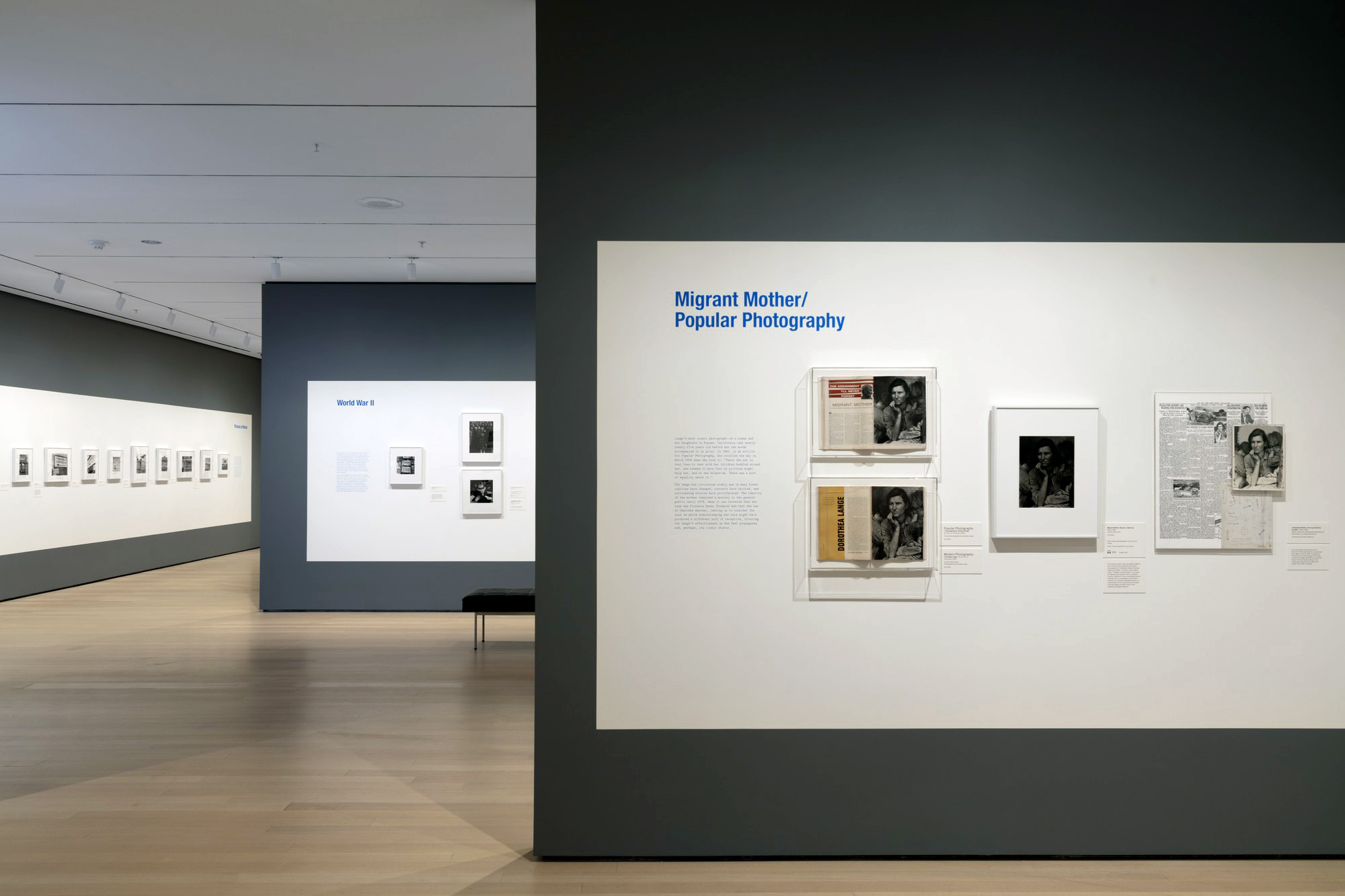
Following his release, he lived briefly in Chicago before returning to Los Angeles in 1946, where he remained for the rest of his life. In Los Angeles, he worked as a photo retoucher and printer for the Disney, RKO and Columbia Picture studios but never exhibited again as he had before the war.

Text from the Hiromu Kira page on the Densho Encyclopedia website [Online] Cited 23/02/2020


Marinus Jacob Kjeldgaard (Danish, 1884-1964, active Paris, France late 1930s - late 1940s) '[Collage: Balance of Powers]' about 1939


Marinus Jacob Kjeldgaard (Danish, 1884-1964, active Paris, France late 1930s – late 1940s)
[Collage: Balance of Powers]
about 1939
Gelatin silver print
28.5 × 32cm (11 1/4 × 12 5/8 in.)
The J. Paul Getty Museum, Los Angeles
© Estate of Marinus Jacob Kjeldgaard


Paul Outerbridge (American, 1896-1958) '[Egg in Spotlight]' 1943


Paul Outerbridge (American, 1896-1958)
[Egg in Spotlight]
1943
Gelatin silver print
26.4x 34.4cm (10 3/8 x 13 9/16 in.)
The J. Paul Getty Museum, Los Angeles
© 2019 G. Ray Hawkins Gallery, Beverly Hills, CA


Emil Cadoo (American, 1926-2002) 'Children of Harlem' 1965


Emil Cadoo (American, 1926-2002)
Children of Harlem
1965
Gelatin silver print
20.3 × 25.2cm (8 × 9 15/16 in.)
The J. Paul Getty Museum, Los Angeles, Gift of Joyce Cadoo / Janos Gat Gallery
© Estate of Emil Cadoo, courtesy of Janos Gat Gallery


Anthony Hernandez (American, b. 1947) 'Los Angeles #1' 1969


Anthony Hernandez (American, b. 1947)
Los Angeles #1
1969
Gelatin silver print
18.9 × 28.4cm (7 7/16 × 11 3/16 in.)
The J. Paul Getty Museum, Los Angeles, Purchased in part with funds provided by the Photographs Council
© Anthony Hernandez


William Eggleston (American, b. 1939) 'Dolls on Cadillac, Memphis' 1972


William Eggleston (American, b. 1939)
Dolls on Cadillac, Memphis
1972
Chromogenic print
25.4 × 38.1cm (10 × 15 in.)
The J. Paul Getty Museum, Los Angeles
© Eggleston Artistic Trust


William Wegman (American, b, 1943) 'Dog and Ball' 1973


William Wegman (American, b, 1943)
Dog and Ball
1973
Gelatin silver print
The J. Paul Getty Museum, Los Angeles
© William Wegman


Marketa Luskacova (Czech, b. 1944) 'Sclater St, Woman with Baby and Girl' 1975


Markéta Luskačová (Czech, b. 1944)
Sclater St, Woman with Baby and Girl
1975
Gelatin silver print
21 x 31.8cm (8 1/4 x 12 1/2 in.)
The J. Paul Getty Museum, Los Angeles
© Markéta Luskačová


Markéta Luskačová (Czech, b. 1944)

Markéta Luskačová (born 1944) is a Czech photographer known for her series of photographs taken in Slovakia, Britain and elsewhere. Considered one of the best Czech social photographers to date, since the 1990s she has photographed children in the Czech Republic, Slovakia, and also Poland…

In the 1970s and 1980s, the communist censorship attempted to conceal her international reputation. Her works were banned in Czechoslovakia, and the catalogues for the exhibition Pilgrims in the Victoria and Albert Museum were lost on their way to Czechoslovakia.

Luskačová started photographing London’s markets in 1974. In the markets of Portobello Road, Brixton and Spitalfields, she “[found] a vivid Dickensian staging”.

In 2016 she self-published a collection of photographs of street musicians, mostly taken in the markets of east London, under the title To Remember – London Street Musicians 1975-1990, and with an introduction by John Berger.

Text from the Wikipedia website [Online] Cited 23/02/2020


Marketa Luskacova (Czech, b. 1944) 'Men around Fire, Spitalfields Market' Negative 1976, print 1991


Markéta Luskačová (Czech, b. 1944)
Men around Fire, Spitalfields Market
Negative 1976, print 1991
Gelatin silver print
22.8 x 32.9cm (9 x 12 15/16 in.)
The J. Paul Getty Museum, Los Angeles
© Markéta Luskačová


Shigeichi Nagano (Japanese, 1925-2019, active Tokyo, Japan) '[Tokyo, Aobadai (Nishi Saigoyama Park), Meguro Ward]' 1988


Shigeichi Nagano (Japanese, 1925-2019)
[Tokyo, Aobadai (Nishi Saigoyama Park), Meguro Ward]
1988
Gelatin silver print
26 × 39.4cm (10 1/4 × 15 1/2 in.)
The J. Paul Getty Museum, Los Angeles, Purchased with funds provided by the Photographs Council
© Shigeichi Nagano


Shigeichi Nagano (Japanese, 1925-2019)

During the 1960s Nagano observed the period of intense economic growth in Japan, depicting the lives of Tokyo’s sarariman with some humour. The photographs of this period were only published in book form much later, as Dorīmu eiji and 1960 (1978 and 1990 respectively).

Nagano exhibited recent examples of his street photography in 1986, winning the Ina Nobuo Award. He published several books of his works since then, and won a number of awards. Nagano had a major retrospective at the Tokyo Metropolitan Museum of Photography in 2000.

Nagano died two months short of his 94th birthday, on January 30, 2019.

Text from the Wikipedia website


Catherine Opie (American, b. 1961) 'Untitled #15' 1997


Catherine Opie (American, b. 1961)
Untitled #15
1997
Inkjet print
40.6 × 104.1cm (16 × 41 in.)
The J. Paul Getty Museum, Los Angeles
© Catherine Opie


Nan Goldin (American, b. 1953) 'Self Portrait, Red, Zurich' 2002


Nan Goldin (American, b. 1953)
Self Portrait, Red, Zurich
2002
Silver-dye bleach print
Framed (outer dim): 72.4 x 104.1cm (28 1/2 x 41 in.)
The J. Paul Getty Museum, Los Angeles
© Nan Goldin, courtesy of Matthew Marks Gallery and the artist


Hong Hao (Chinese, b. 1965) 'My Things No. 5 - 5,000 Pieces of Rubbish' 2002


Hong Hao (Chinese, b. 1965)
My Things No. 5 – 5,000 Pieces of Rubbish
2002
Chromogenic print
120 × 210.8cm (47 1/4 × 83 in.)
The J. Paul Getty Museum, Los Angeles, Anonymous Gift
© Hong Hao, Courtesy of Chambers Fine Art


Veronika Kellndorfer (German, b. 1962) 'Succulent Screen' 2007


Veronika Kellndorfer (German, b. 1962)
Succulent Screen
2007
Silkscreen print on glass
288 × 351.5cm (113 3/8 × 138 3/8 in.)
Gift of Christopher Grimes in honour of Virginia Heckert
The J. Paul Getty Museum, Los Angeles
© Veronika Kellndorfer


A three-panel silkscreen print on glass, Succulent Screen depicts a detail view of one of the signature miter-cut windows of Frank Lloyd Wright’s Freeman House. The house was built in the Hollywood Hills in 1923, was listed on the National Register of Historic Places in 1971 as a California Historical Landmark and as Los Angeles Historic-Cultural Monument #247 in 1981; it was bequeathed to the USC School of Architecture in 1986.

Text from the Getty Museum website


Sharon Core (American, b. 1965) 'Early American, Strawberries and Ostrich Egg' 2007


Sharon Core (American, b. 1965)
Early American, Strawberries and Ostrich Egg
2007
Chromogenic print
42.8 x 56.8cm (16 7/8 x 22 3/8 in.)
The J. Paul Getty Museum, Los Angeles
© Sharon Core


The Getty Museum holds one of the largest collections of photographs in the United States, with more than 148,000 prints. However, only a small percentage of these have ever been exhibited at the Museum. To celebrate the 35th anniversary of the founding of the Department of Photographs, the Getty Museum is exhibiting 200 of these never-before-seen photographs and pull back the curtain on the work of the many professionals who care for this important collection in Unseen: 35 Years of Collecting Photographs, on view December 17, 2019 – March 8, 2020.

“Rather than showcasing again the best-known highlights of the collection, the time is right to dig deeper into our extraordinary holdings and present a selection of never-before-seen treasures. I have no doubt that visitors will be intrigued and delighted by the diversity and quality of the collection, whose riches will support exhibition and research well into the decades ahead,” says Timothy Potts, director of the J. Paul Getty Museum.
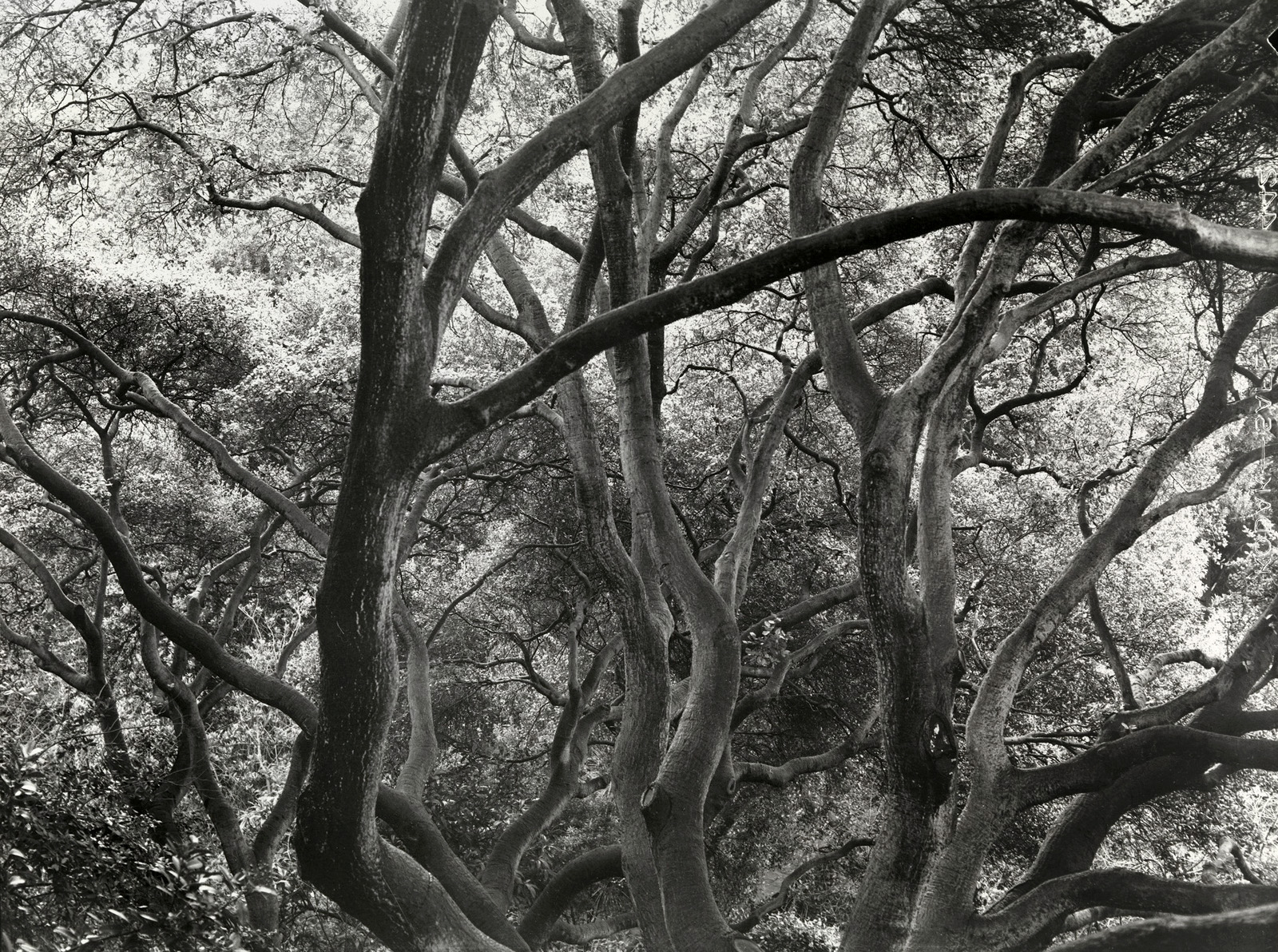
The exhibition includes photographs by dozens of artists from the birth of the medium in the mid-19th century to the present day. The selection also encompasses a variety of photographic processes, including the delicate cyanotypes of Anna Atkins (British, 1799-1871), Polaroids by Carrie Mae Weems (American, born 1953) and Mary Ellen Mark (American, 1940-2015) and an architectural photographic silkscreen on glass by Veronika Kellndorfer (German, born 1962).

Visual associations among photographs from different places and times illuminate the breadth of the Getty’s holdings and underscore a sense of continuity and change within the history of the medium. The curators have also personalised some of the labels in the central galleries to give voice to their individual insights and perspectives.

Growth of the collection

In 1984, as the J. Paul Getty Trust was in the early stages of conceiving what would eventually become the Getty Center, the Getty Museum created its Department of Photographs. It did so with the acquisition of several world-famous private collections, including those of Sam Wagstaff, André Jammes, Arnold Crane, and Volker Kahmen and Georg Heusch. These dramatic acquisitions immediately established the Museum as a leading center for photography.

While the founding collections are particularly strong in 19th and early 20th century European and American work, the department now embraces contemporary photography and, increasingly, work produced around the world. The collection continues to evolve, has been shaped by several generations of curators and benefits from the generosity of patrons and collectors.

Behind the scenes

In addition to the photographs on view, the exhibition spotlights members of Getty staff who care for, handle, and monitor these works of art.

“What the general public may not realise is that before a single photograph is hung on a wall, the object and its related data is managed by teams of professional conservators, registrars, curators, mount-makers, and many others,” says Jim Ganz, senior curator of photographs at the Getty Museum. “In addition to exposing works of art in the collection that are not well known, we wanted to shed light on the largely hidden activity that goes into caring for such a collection.”

Collecting Contemporary Photography

The department’s collecting of contemporary photography has been given strong encouragement by the Getty Museum Photographs Council, and a section of the exhibition will be dedicated to objects purchased with the Council’s funding. Established in 2005, this group supports the department’s curatorial program, especially with the acquisition of works made after 1945 by artists not yet represented or underrepresented in the collection. Since its founding, the Council has contributed over $3 million toward the purchase of nearly five hundred photographs by artists from Argentina, Australia, Canada, Japan, Korea, Malaysia, South Africa, and Taiwan, as well as Europe and the United States.

Looking ahead

The exhibition also looks towards the future of the collection, and includes a gallery of very newly-acquired works by Laura Aguilar (American, 1959-2018), Osamu Shiihara (Japanese, 1905-1974), as well as highlights of the Dennis Reed collection of photographs by Japanese American photographers. The selection represents the department’s strengthening of diversity in front of and behind the camera, the collection of works relevant to Southern California communities, and the acquisition of photographs that expand the understanding of the history of the medium.

“With this exhibition we celebrate the past 35 years of collecting, and look forward to the collection’s continued expansion, encompassing important work by artists all over the world and across three centuries,” adds Potts.

Unseen: 35 Years of Collecting Photographs is on view December 17, 2019 – March 8, 2020 at the Getty Center. The exhibition is organised by Jim Ganz, senior curator of photographs at the Getty Museum in collaboration with Getty curators Mazie Harris, Virginia Heckert, Karen Hellman, Arpad Kovacs, Amanda Maddox, and Paul Martineau.

Press release from the J. Paul Getty Museum [Online] Cited 09/20/2020


Hiroshi Sugimoto (Japanese, b. 1948) 'Botanical Specimen (Erica mutabolis), March 1839' 2009
 

Hiroshi Sugimoto (Japanese, born 1948)
Botanical Specimen (Erica mutabolis), March 1839
2009
Toned gelatin silver print
93.7 x 74.9cm (36 7/8 x 29 1/2 in.)
© Hiroshi Sugimoto


Julia Margaret Cameron (British born India, 1815-1879) '[Spring]' 1873


Julia Margaret Cameron (British born India, 1815-1879)
[Spring]
1873
Albumen silver print
35.4 × 25.7cm (13 15/16 × 10 1/8 in.)
The J. Paul Getty Museum, Los Angeles


Reverend William Ellis (British, 1794-1872) and Samuel Smith. '[Portrait of a Black Couple]' about 1873


Reverend William Ellis (British, 1794-1872) and Samuel Smith
[Portrait of a Black Couple]
about 1873
Albumen silver print
24.1 × 18.6cm (9 1/2 × 7 5/16 in.)
The J. Paul Getty Museum, Los Angeles


Prince Roland Napoleon Bonaparte (French, 1858-1924) 'Jacobus Huch, 26 ans' about 1888


Prince Roland Napoleon Bonaparte (French, 1858-1924)
Jacobus Huch, 26 ans
about 1888
Albumen silver print
15.9 × 10.9cm (6 1/4 × 4 5/16 in.)
The J. Paul Getty Museum, Los Angeles


Underwood & Underwood (American, founded 1881, dissolved 1940s) 'Les Chiens du Front, eux-mems, portent des masques contre les gaz' May 27, 1917


Underwood & Underwood (American, founded 1881, dissolved 1940s)
Les Chiens du Front, eux-mems, portent des masques contre les gaz
May 27, 1917
Rotogravure
22 × 20.4cm (8 11/16 × 8 1/16 in.)
The J. Paul Getty Museum, Los Angeles


László Moholy-Nagy (American born Hungary, 1895-1946) '[The Law of the Series]' 1925


László Moholy-Nagy (American born Hungary, 1895-1946)
[The Law of the Series]
1925
Gelatin silver print
21.6 × 16.2cm (8 1/2 × 6 3/8 in.)
The J. Paul Getty Museum, Los Angeles
© 2019 Estate of László Moholy-Nagy / Artists Rights Society (ARS), New York


Martin Munkácsi (American born Hungary, 1896-1963) 'Big Dummies' 1927-1933


Martin Munkácsi (American born Hungary, 1896-1963)
Big Dummies
1927-1933
Gelatin silver print
33.5 × 26.7cm (13 3/16 × 10 1/2 in.)
The J. Paul Getty Museum, Los Angeles
© Estate of Martin Munkácsi, Courtesy Howard Greenberg Gallery, New York


Munkácsi was a newspaper writer and photographer in Hungary, specialising in sports. At the time, sports action photography could only be done in bright light outdoors. Munkácsi’s innovation was to make sport photographs as meticulously composed action photographs, which required both artistic and technical skill.

Munkácsi’s break was to happen upon a fatal brawl, which he photographed. Those photos affected the outcome of the trial of the accused killer, and gave Munkácsi considerable notoriety. That notoriety helped him get a job in Berlin in 1928, for Berliner Illustrirte Zeitung, where his first published photo was a motorcycle splashing its way through a puddle. He also worked for the fashion magazine Die Dame.

More than just sports and fashion, he photographed Berliners, rich and poor, in all their activities. He traveled to Turkey, Sicily, Egypt, London, New York, and Liberia, for photo spreads in Berliner Illustrirte Zeitung.

The speed of the modern age and the excitement of new photographic viewpoints enthralled him, especially flying. There are aerial photographs; there are air-to-air photographs of a flying school for women; there are photographs from a Zeppelin, including the ones on his trip to Brazil, where he crossed over a boat whose passengers wave to the airship above.

On 21 March 1933, he photographed the fateful Day of Potsdam, when the aged President Paul von Hindenburg handed Germany over to Adolf Hitler. On assignment for Berliner Illustrirte Zeitung, he photographed Hitler’s inner circle, although he was a Jewish foreigner.

Munkácsi left for New York City… Munkácsi died in poverty and controversy. Several universities and museums declined to accept his archives, and they were scattered around the world.

Text from the Wikipedia website [Online] Cited 23/02/2020


Erwin Blumenfeld (American born Germany, 1897-1969) 'Hitlerfresse (Hitler's Mug)' January 30, 1933


Erwin Blumenfeld (American born Germany, 1897-1969)
Hitlerfresse (Hitler’s Mug)
January 30, 1933
Gelatin silver print collage with ink
29.2 × 21.3cm (11 1/2 × 8 3/8 in.)
The J. Paul Getty Museum, Los Angeles
© The Estate of Erwin Blumenfeld


Erwin Blumenfeld (American born Germany, 1897-1969)

Blumenfeld was born in Berlin on 26 January 1897. As a young man he worked in the clothes trade and wrote poetry. In 1918 he went to Amsterdam, where he came into contact with Paul Citroen and Georg Grosz. In 1933 he made a photomontage showing Hitler as a skull with a swastika on its forehead; this image was later used in Allied propaganda material in 1943.

He married Lena Citroen, with whom he had three children, in 1921. In 1922 he started a leather goods shop, which failed in 1935. He moved to Paris, where in 1936 he set up as a photographer and did free-lance work for French Vogue. After the outbreak of the Second World War he was placed in an internment camp; in 1941 he was able to emigrate to the United States. There he soon became a successful and well-paid fashion photographer, and worked as a free-lancer for Harper’s Bazaar, Life and American Vogue. Blumenfeld died in Rome on 4 July 1969.

Text from the Wikipedia website [Online] Cited 23/02/3030


Paul Wolff (German, 1887-1951) and Dr Wolff & Tritschler OHG (German, founded 1927, dissolved 1963) '[Dog at the beach]' 1936


Paul Wolff (German, 1887-1951) and Dr Wolff & Tritschler OHG (German, founded 1927, dissolved 1963)
[Dog at the beach]
1936
Gelatin silver print
23.4 x 17.8cm (9 3/16 x 7 in.)
The J. Paul Getty Museum, Los Angeles
© Dr Paul Wolff & Tritschler, Historisches Bildarchiv, D-77654 Offenburg, Germany


Barbara Morgan (American, 1900 - 1992) 'City Shell' 1938


Barbara Morgan (American, 1900-1992)
City Shell
1938
Gelatin silver print
49.2 × 39.4cm (19 3/8 × 15 1/2 in.)
Reproduced courtesy of the Barbara and Willard Morgan Photographs and Papers, Library Special Collections, Charles E. Young Research Library, UCLA
The J. Paul Getty Museum, Los Angeles


Walker Evans (American, 1903 - 1975) '[Two Giraffes, Circus Winter Quarters, Sarasota]' 1941


Walker Evans (American, 1903-1975)
[Two Giraffes, Circus Winter Quarters, Sarasota]
1941
Gelatin silver print
15.1 × 18.3cm (5 15/16 × 7 3/16 in.)
The J. Paul Getty Museum, Los Angeles
© Walker Evans Archive, The Metropolitan Museum of Art


Horst P. Horst (American born Germany, 1906-1999) 'Hands, Hands' 1941


Horst P. Horst (American born Germany, 1906-1999)
Hands, Hands
1941
Platinum and palladium print
23.7 × 17cm (9 5/16 × 6 11/16 in.)
The J. Paul Getty Museum, Los Angeles, Gift of Manfred Heiting
© The Estate of Horst P. Horst and Condé Nast


Erwin Blumenfeld (American born Germany, 1897-1969) 'Maroua Motherwell, New York' 1941-1943


Erwin Blumenfeld (American born Germany, 1897-1969)
Maroua Motherwell, New York
1941-1943
Gelatin silver print
48.5 x 38.7cm (19 1/8 x 15 1/4 in.)
The J. Paul Getty Museum, Los Angeles
© The Estate of Erwin Blumenfeld


Henry Holmes Smith (American, 1909-1986) 'Photography Student' 1947


Henry Holmes Smith (American, 1909-1986)
Photography Student
1947
Gelatin silver print
11.4 × 9.6cm (4 1/2 × 3 3/4 in.)
The J. Paul Getty Museum, Los Angeles, Gift of the Smith Family Trust
© J. Paul Getty Trust


Henry Holmes Smith (American, 1909-1986)

Henry Holmes Smith (1909-1986) was an American photographer and one of the most influential fine art photography teachers of the mid 20th century. He was inspired by the work that had been done at the German Bauhaus and in 1937 was invited to teach photography at the New Bauhaus being founded by Moholy-Nagy in Chicago. After World War II, he spent many years teaching at Indiana University. His students included Jerry Uelsmann, Jack Welpott, Robert W. Fichter, Betty Hahn and Jaromir Stephany.

Smith was often involved in the cutting edge of photographic techniques: in 1931 he started experimenting with high-speed flash photography of action subjects, and started doing colour work in 1936 when few people considered it a serious artistic medium. His later images were nearly all abstract, often made directly (without a camera, i.e. like photograms), for instance images created by refracting light through splashes of water and corn syrup on a glass plate. However, although acclaimed as a photographic teacher, Holmes’ own photographs and other images did not achieve any real recognition from his peers.

Text from the Wikipedia website [Online] Cited 23/02/2020


Andreas Feininger (American born France, 1906-1999) 'Elegant Disk Clam, dosinia elegans, Conrad' 1948


Andreas Feininger (American born France, 1906-1999)
Elegant Disk Clam, dosinia elegans, Conrad
1948
Gelatin silver print
30.4 x 23.8cm (11 15/16 x 9 3/8 in.)
The J. Paul Getty Museum, Los Angeles
© Estate of Gertrud E. Feininger


Alexander Rodchenko (Russian, 1891-1956) 'Roll (of Film)' 1950


Alexander Rodchenko (Russian, 1891-1956)
Roll (of Film)
1950
Gelatin silver print
30.5 × 24cm (12 × 9 7/16 in.)
The J. Paul Getty Museum, Los Angeles
© 2019 Estate of Alexander Rodchenko / UPRAVIS, Moscow / Artists Rights Society, NY


Otto Steinert (German, 1915-1978) 'Schlammweiher 2' Negative 1953, print about 1960s


Otto Steinert (German, 1915-1978)
Schlammweiher 2
Negative 1953, print about 1960s
Gelatin silver print
39.6 x 29.1cm (15 9/16 x 11 7/16 in.)
The J. Paul Getty Museum, Los Angeles
Courtesy Galerie Johannes Faber


André Kertész (American born Hungary, 1894-1985) 'Still Life with Snake' Negative 1960; print later


André Kertész (American born Hungary, 1894-1985)
Still Life with Snake
Negative 1960; print later
Gelatin silver print
Image: 24.8 × 19.7cm (9 3/4 × 7 3/4 in.)
The J. Paul Getty Museum, Los Angeles
© Estate of André Kertész


Malick Sidibé (Malian, 1936-2016) 'Vues de dos' Nd, print 2003


Malick Sidibé (Malian, 1936-2016)
Vues de dos
Nd, print 2003
Gelatin silver print, glass, paint, cardboard, tape, and string
36.5 x 27cm (14 3/8 x 10 5/8 in.)
The J. Paul Getty Museum, Los Angeles
© Estate of Malick Sidibé


Irving Penn (American, 1917-2009) 'Red Apples' July 15, 1985


Irving Penn (American, 1917-2009)
Red Apples
July 15, 1985
Silver-dye bleach print
25.4 × 20.3cm (10 × 8 in.)
The J. Paul Getty Museum, Los Angeles, Gift of Nancy and Bruce Berman
© 1985 Irving Penn


Lyle Ashton Harris (American, b. 1965) 'Man and Woman #1' 1987-1988


Lyle Ashton Harris (American, b. 1965)
Man and Woman #1
1987-1988
Gelatin silver print
74.3 x 48.9cm (29 1/4 x 19 1/4 in.)
The J. Paul Getty Museum, Los Angeles
© Lyle Ashton Harris


Jim Dow (American, b. 1942) 'Doll Repair Shop Window, Buenos Aires, Argentina' 1990


Jim Dow (American, b. 1942)
Doll Repair Shop Window, Buenos Aires, Argentina
1990
Chromogenic print
51.2 × 40.6cm (20 3/16 × 16 in.)
The J. Paul Getty Museum, Los Angeles, Gift of Nancy and Bruce Berman
© Jim Dow


Carrie Mae Weems (American, b. 1953) 'See No Evil' 1991


Carrie Mae Weems (American, b. 1953)
See No Evil
1991
Dye diffusion print (Polaroid Polacolor)
61 × 50.5cm (24 × 19 7/8 in.)
The J. Paul Getty Museum, Los Angeles, Gift of Daniel Greenberg and Susan Steinhauser
© Carrie Mae Weems


Myoung Ho Lee (South Korean, b. 1975) '[Tree #2]' 2006


Myoung Ho Lee (South Korean, b. 1975)
[Tree #2]
2006
Inkjet print
39.8 × 32.1cm (15 11/16 × 12 5/8 in.)
The J. Paul Getty Museum, Los Angeles, Purchased with funds provided by the Photographs Council
© Myoung Ho Lee, Courtesy Yossi Milo Gallery, New York


Daniel Naudé (South African, b. 1984) 'Africanis 18. Murraysburg, Western Cape, 10 May 2010' 2010


Daniel Naudé (South African, b. 1984)
Africanis 18. Murraysburg, Western Cape, 10 May 2010
2010
60 x 60cm (23 5/8 x 23 5/8 in.)
The J. Paul Getty Museum, Los Angeles
© Daniel Naudé


Pieter Hugo (South African, b. 1976) 'Aissah Salifu, Agbogbloshie Market, Accra, Ghana' 2010


Pieter Hugo (South African, b. 1976)
Aissah Salifu, Agbogbloshie Market, Accra, Ghana
2010
From the Permanent Error series
Digital chromogenic print
81.3 x 81.3cm (32 x 32 in.)
The J. Paul Getty Museum, Los Angeles
© Pieter Hugo


Mona Kuhn (German born Brazil, 1969) 'Portrait 37' 2011


Mona Kuhn (German born Brazil, 1969)
Portrait 37
2011
Chromogenic print
38.3 x 38.1cm (15 1/16 x 15 in.)
The J. Paul Getty Museum, Los Angeles
© Mona Kuhn


Alison Rossiter (American, b. 1953) 'Eastman Kodak Azo E, expired May 1927, processed 2014' 2014


Alison Rossiter (American, b. 1953)
Eastman Kodak Azo E, expired May 1927, processed 2014
2014
Gelatin silver print
25 x 20cm (9 13/16 x 7 7/8 in.)
The J. Paul Getty Museum, Los Angeles
© Alison Rossiter


The J. Paul Getty Museum
1200 Getty Center Drive
Los Angeles, California 90049

Opening hours:
Daily 10am – 5.30pm

The J. Paul Getty Museum website

LIKE ART BLACK ON FACEBOOK

Back to top

Photographs: Gordon Parks “The Atmosphere of Crime” 1957

February 2020


Gordon Parks (American, 1912-2006) 'Untitled, New York, New York' 1957 from Gordon Parks' "The Atmosphere of Crime" 1957


Gordon Parks (American, 1912-2006)
Untitled, New York, New York
1957
Pigmented inkjet print, printed 2019
13 3/4 x 21″ (35 × 53.3 cm)
The Museum of Modern Art, New York. The Family of Man Fund
© The Gordon Parks Foundation


The photo essay as haunting and elegiac poem: “a richly-hued, cinematic portrayal of a largely hidden world: that of violence, police work and incarceration, seen with empathy and candour.”

Parks is one of my favourite photographers. He continues to astound me with his experimentation and percipience, his sensitive insight, into his subjects becoming: “a more nuanced view that reflected the social and economic factors tied to criminal behaviour and a rare window into the working lives of those charged with preventing and prosecuting it.” All captured by his probing camera – using natural light, flash, low depth of field, blur, high angles, low angles, perspective,  transience, informality and chiaroscuro.

Two photographs in the posting suffice to speak of the photographers art: pointing figure, veins, clenched first and revelation, the blue fairy of light, in the beautiful Narcotics Addict, Chicago, Illinois; and body carriage interior, overweight man, braced, shadow, fag hanging out of mouth, pulling – all dreams laid bare. The photographer crouching at the same level. Shooting Victim in Cook County Morgue, Chicago, Illinois.

Wonderful to see the layout of the Life Magazine photo essay as well. Notice how Raiding Detectives, Chicago, Illinois is cropped claustrophobically tight, giving little sense of the passage of the tenement. Similarly, the hand and cigarette in Untitled, Chicago, Illinois (cover for the new book about the series), is bound by the cropping and shadows. Other images from the shoots Drug Search, Chicago, Illinois and Untitled, San Quentin, California are also used, expanding the context of the scene.

His photographs “give shape to the ground against which poverty, addiction, and race become criminalised,” allowing “Life’s readers to see the complexity of these chronically oversimplified situations.” They also enable us to enter a liminal space, where we feel both the mundane horror and specular beauty of life in medias res.

Dr Marcus Bunyan


Many thankx to the Museum of Modern Art for allowing me to publish some of the photographs in the posting. Please click on the photographs for a larger version of the image.


Gordon Parks (American, 1912-2006) 'Untitled, Chicago, Illinois' 1957 from Gordon Parks' "The Atmosphere of Crime" 1957


Gordon Parks (American, 1912-2006)
Untitled, Chicago, Illinois
1957
Pigmented inkjet print, printed 2019
11 7/8 x 17 15/16″ (30.1 x 45.6cm)
The Museum of Modern Art, New York. The Family of Man Fund
© The Gordon Parks Foundation


Gordon Parks (American, 1912-2006) 'Untitled, Chicago, Illinois' 1957 from Gordon Parks' "The Atmosphere of Crime" 1957


Gordon Parks (American, 1912-2006)
Untitled, Chicago, Illinois
1957
Pigmented inkjet print, printed 2019
13 3/4 x 21″ (35 x 53.3cm)
The Museum of Modern Art, New York. The Family of Man Fund
© The Gordon Parks Foundation


Gordon Parks (American, 1912-2006) 'Raiding Detectives, Chicago, Illinois' 1957


Gordon Parks (American, 1912-2006)
Raiding Detectives, Chicago, Illinois
1957
Pigmented inkjet print, printed 2019
11 7/8 x 17 15/16″ (30.1 × 45.6cm)
The Museum of Modern Art, New York. The Family of Man Fund
© The Gordon Parks Foundation


MoMA Acquires 56 Photographs from Gordon Parks’s Groundbreaking 1957 Series “The Atmosphere of Crime”

The Museum of Modern Art has acquired 56 prints from American artist Gordon Parks’s series of colour photographs made in 1957 for a Life magazine photo essay titled “The Atmosphere of Crime.” The Museum and The Gordon Parks Foundation collaborated closely on the selection of 55 modern colour prints that MoMA purchased from the Foundation, and the Foundation has also given the Museum a rare vintage gelatin silver print (a companion to a print Parks himself gave the Museum in 1993). A generous selection of these prints will go on view in May 2020 as part of the first seasonal rotation of the Museum’s newly expanded and re-envisioned collection galleries. The collection installation Gordon Parks and “The Atmosphere of Crime” will be located on the fourth floor, with Parks’s work as an anchor for exploring representations of criminality in photography, with a particular focus on work made in the United States.

One of the preeminent photographers of the mid-20th century, Gordon Parks (1912-2006) left behind a body of work that documents American life and culture from the early 1940s to the 2000s. Born in Fort Scott, Kansas, Parks worked as a youth in St. Paul, Minnesota, before discovering photography in 1937. He would come to view it as his “weapon of choice” for attacking issues including race relations, poverty, urban life, and injustice. After working for the US government’s Farm Security Administration in the early 1940s, Parks found success as a fashion photographer and a regular contributor to Ebony, Fortune, Glamour, and Vogue before he was hired as the first African American staff photographer at Life magazine in 1948.

In 1957, Life assigned Parks to photograph for the first in a series of articles addressing the perceived rise of crime in the US. With reporter Henry Suydam, Parks traversed the streets of New York, Chicago, Los Angeles, and San Francisco, producing a range of evocative colour images, 12 of which were featured in the debut article, “The Atmosphere of Crime,” on September 9, 1957. Parks’s empathetic, probing views of crime scenes, police precincts, hospitals, morgues, and prisons do not name or identify “the criminal,” but instead give shape to the ground against which poverty, addiction, and race become criminalised. Shot using available light, Parks’s atmospheric photographs capture mysterious nocturnal activity unfolding on street corners and silhouetted figures with raised hands in the murky haze of a tenement hallway.

A robust selection from this acquisition will anchor a display within a fourth-floor collection gallery, titled Gordon Parks and “The Atmosphere of Crime.” Using Parks’s work as a point of departure, the installation will draw from a range of other works in the Museum’s collection, offering varied representations of crime and criminality. Since the 1940s, the Museum has collected and exhibited photographs of crime as represented in newspapers and tabloids, exemplified by the dramatic, flash-lit work of Weegee, complemented by 19th-century precedents such as mug shots, whose purported objectivity was expected to facilitate the identification of criminals, as well as acquisitions across media that point to subsequent investigations and more contemporary concerns.

While Parks’s work was first displayed at MoMA in 1948, and was included in the landmark exhibition The Family of Man in 1955, it wasn’t until 1993 that five of his photographs were approved for the Museum’s collection (including a large-scale gelatin silver print from the 1957 series on crime mentioned above). The Museum has since supported the acquisition of additional vintage prints in 2011 and 2014 (including Harlem Newsboy, currently on view on the Museum’s fifth floor).

“As an artist of the highest order and a passionate advocate for civil rights, Parks made iconic photographs that continue to speak poignantly to the complexity of cultural politics and racial bias in the United States,” said Sarah Meister, curator in MoMA’s Department of Photography. “This acquisition substantially improves the Museum’s holdings of Gordon Parks’s achievement, reflecting our commitment to the artist and fostering the possibility of situating his work within a broad range of contemporary concerns. His enduring impact on the history of photography and representation cannot be overstated.”

“MoMA’s acquisition reinforces the significance of Gordon Parks as an artist whose practice continues to inspire future generations,” said Peter W. Kunhardt, Jr., executive director of The Gordon Parks Foundation. “Parks knew that his camera could be a powerful weapon, more potent than violence, and that pictures and words could further social change. The Atmosphere of Crime series remains as timeless and relevant today as when the photographs were made more than 50 years ago.”

Sarah Meister has also collaborated on The Gordon Parks Foundation’s forthcoming publication Gordon Parks: The Atmosphere of Crime, 1957, to be published by Steidl in spring 2020. The book’s expansive selection of never-before-published photographs from Parks’s original reportage was selected and sequenced by Meister, and her illustrated text situates this critically important photo essay within both Parks’s career and historic representations of crime and criminality. Other contributors include Bryan Stevenson, founder of the Equal Justice Initiative and author of Just Mercy (Spiegel & Grau, 2014), and Nicole Fleetwood, Professor of American studies and art history at Rutgers University and author of Marking Time: Art in the Age of Mass Incarceration (Harvard University Press, 2020). The book also features a foreword by MoMA’s director Glenn D. Lowry and The Gordon Parks Foundation’s executive director, Peter W. Kunhardt, Jr.

Press release from MoMA


Gordon Parks (American, 1912-2006) 'Drug Search, Chicago, Illinois' 1957


Gordon Parks (American, 1912-2006)
Drug Search, Chicago, Illinois
1957
Pigmented inkjet print, printed 2019
11 7/8 x 17 15/16″ (30.1 × 45.6cm)
The Museum of Modern Art, New York. The Family of Man Fund
© The Gordon Parks Foundation


Gordon Parks (American, 1912-2006) '"Wrong Place at the Wrong Time," Chicago, Illinois' 1957


Gordon Parks (American, 1912-2006)
“Wrong Place at the Wrong Time” Chicago, Illinois
1957
Pigmented inkjet print, printed 2019
The Museum of Modern Art, New York. The Family of Man Fund
© The Gordon Parks Foundation


Gordon Parks (American, 1912-2006) 'Untitled, San Quentin, California' 1957


Gordon Parks (American, 1912-2006)
Untitled, San Quentin, California
1957
Pigmented inkjet print, printed 2019
11 7/8 x 17 15/16″ (30.1 x 45.6cm)
The Museum of Modern Art, New York. The Family of Man Fund
© The Gordon Parks Foundation


Gordon Parks (American, 1912-2006) 'Detectives Grilling a Suspect, Chicago, Illinois' 1957


Gordon Parks (American, 1912-2006)
Detectives Grilling a Suspect, Chicago, Illinois
1957
Pigmented inkjet print, printed 2019
The Museum of Modern Art, New York. The Family of Man Fund
© The Gordon Parks Foundation


Gordon Parks (American, 1912-2006) 'Knifing Victim I, Chicago, Illinois' 1957


Gordon Parks (American, 1912-2006)
Knifing Victim I, Chicago, Illinois
1957
Pigmented inkjet print, printed 2019
The Museum of Modern Art, New York. The Family of Man Fund
© The Gordon Parks Foundation


When Life magazine asked Gordon Parks to illustrate a recurring series of articles on crime in the United States in 1957, he had already been a staff photographer for nearly a decade, the first African American to hold this position. Parks embarked on a six-week journey that took him and a reporter to the streets of New York, Chicago, San Francisco and Los Angeles. Unlike much of his prior work, the images made were in colour. The resulting eight-page photo-essay “The Atmosphere of Crime” was noteworthy not only for its bold aesthetic sophistication, but also for how it challenged stereotypes about criminality then pervasive in the mainstream media. They provided a richly-hued, cinematic portrayal of a largely hidden world: that of violence, police work and incarceration, seen with empathy and candour.

Parks rejected clichés of delinquency, drug use and corruption, opting for a more nuanced view that reflected the social and economic factors tied to criminal behaviour and a rare window into the working lives of those charged with preventing and prosecuting it. Transcending the romanticism of the gangster film, the suspense of the crime caper and the racially biased depictions of criminality then prevalent in American popular culture, Parks coaxed his camera to do what it does best: record reality so vividly and compellingly that it would allow Life‘s readers to see the complexity of these chronically oversimplified situations. The Atmosphere of Crime, 1957 includes an expansive selection of never-before-published photographs from Parks’ original reportage.

Co-published with The Gordon Parks Foundation and The Museum of Modern Art. Text by Nicole Fleetwood and Bryan Stevenson.

Text from the Steidl website [Online] Cited 16/02/2020


Gordon Parks (American, 1912-2006) 'Narcotics Addict, Chicago, Illinois' 1957


Gordon Parks (American, 1912-2006)
Narcotics Addict, Chicago, Illinois
1957
Pigmented inkjet print, printed 2019
The Museum of Modern Art, New York. The Family of Man Fund
© The Gordon Parks Foundation


Gordon Parks (American, 1912-2006) 'Police Bring in Victim, Chicago, Illinois' 1957


Gordon Parks (American, 1912-2006)
Police Bring in Victim, Chicago, Illinois
1957
Pigmented inkjet print, printed 2019
The Museum of Modern Art, New York. The Family of Man Fund
© The Gordon Parks Foundation


Gordon Parks (American, 1912-2006) 'Shooting Victim in Cook County Morgue, Chicago, Illinois' 1957


Gordon Parks (American, 1912-2006)
Shooting Victim in Cook County Morgue, Chicago, Illinois
1957
Pigmented inkjet print, printed 2019
The Museum of Modern Art, New York. The Family of Man Fund
© The Gordon Parks Foundation


Gordon Parks' photo essay 'The Atmosphere of Crime' in 'Life Magazine', September 9, 1957

Gordon Parks' photo essay 'The Atmosphere of Crime' in 'Life Magazine', September 9, 1957

Gordon Parks' photo essay 'The Atmosphere of Crime' in 'Life Magazine', September 9, 1957

Gordon Parks' photo essay 'The Atmosphere of Crime' in 'Life Magazine', September 9, 1957

Gordon Parks' photo essay 'The Atmosphere of Crime' in 'Life Magazine', September 9, 1957


Gordon Parks’ photo essay The Atmosphere of Crime in Life Magazine September 9, 1957


Gordon Parks (American, 1912-2006) 'Untitled, Chicago, Illinois' 1957


Gordon Parks (American, 1912-2006)
Untitled, Chicago, Illinois
1957
Gelatin silver print
19 1/4 x 13″ (48.9 × 33cm)
The Museum of Modern Art, New York. Gift of the Gordon Parks Foundation
© The Gordon Parks Foundation


'The Atmosphere of Crime, 1957' (cover)


The Atmosphere of Crime, 1957 (cover)
Text by Nicole Fleetwood and Bryan Stevenson
Series edited by Peter W. Kunhardt, Jr.
Edited by Sarah Hermanson Meister
168 pages, 70 images
Hardback / Half-linen
25 x 29cm
English
ISBN 978-3-95829-696-1
Published Spring 2020


The Museum of Modern Art
11 West 53 Street
New York, NY 10019
Phone: (212) 708-9400

Opening hours:
10.30am – 5.30pm
Open seven days a week

Museum of Modern Art website

LIKE ART BLACK ON FACEBOOK

Back to top

Exhibition: ‘Dora Maar’ at Tate Modern, London

Exhibition dates: 20th November 2019 – 15th March 2020

Curators: Dora Maar is curated by Karolina Ziebinska-Lewandowska, Curator, Centre Pompidou, Paris, Damarice Amao, Assistant Curator, Centre Pompidou, Paris and Amanda Maddox, Associate Curator, the J. Paul Getty Museum, Los Angeles with Emma Lewis, Assistant Curator, Tate Modern. The Tate Modern presentation is curated by Emma Lewis, Assistant Curator with Emma Jones, Curatorial Assistant, Tate Modern.


Dora Maar (French, 1907-1997) 'Untitled (Hand-Shell)' 1934 from the exhibition 'Dora Maar' at Tate Modern, London, November 2019 - March 2020


Dora Maar (French, 1907-1997)
Untitled (Hand-Shell)
1934
Gelatin silver print on paper
401 x 289 mm
Centre Pompidou, Musée national d’art moderne, Paris
Photo © Centre Pompidou, MNAM-CCI, Dist. RMN-Grand Palais
Image Centre Pompidou, MNAM-CCI © ADAGP, Paris and DACS, London 2019


What a creative woman. But yet another abused by the ego of a male, that of her lover, Picasso.

Beth Gersh-Nesic observes, “Was Dora Maar’s brilliant career cut short by the typical conflicts facing professional women in the 1930s, and even today? Or was she a victim of Picasso’s psychological abuse, which chipped away at her original confidence? Was she compromised to the point that she only wanted to please the man she loved? According to art historian John Richardson, Dora Maar sacrificed her gifts on the altar of her art god, her idol, Picasso. Based on the early Surrealist photographs we see in her retrospective, one can only wish she hadn’t taken up with Picasso, for it seems she might have achieved far more in her lifetime without him.”

What we can say is that Maar left behind a strong body of photographic work – from fashion and commercial, to restrained, classical formalism with surrealist inflections; from street photography to “the stuff of delirium and nightmare, [which] taps into the unconscious, internalised sublime”, her Portrait of Ubu (1936, below) reminding me strongly of William Blake’s painting The Ghost of a Flea (c. 1819). Ubu is “a ghastly being of indeterminate origin and melancholy aspect… [an idea] something like l’informe, the concept Maar’s lover Georges Bataille coined to describe his fellow-Surrealists’ admiration for all things larval and grotesquely about-to-be.” Ubu is a her dark notion of a street “urchin”.

Her warped photomontages are technical marvels. “”She captures the mysterious,” Caws wrote, “in a combination of the unresolved and the sharply angled. This frequently creates a sense of ambiguity, even menace.” Caws notes that Dora Maar responded to Louis Aragon’s invocation “for each person there is one image to find that will disturb the whole universe.” Maar’s images managed to “disturb and reveal” with a bit of the macabre mixed in.”

But her images are more than a bit of this and a bit of that. They possess a utilitarian feeling in the enunciation of their menace, which makes them all the more effective when impinging on our waking dreams. Susan Sontag notes, “Photographs are perhaps the most mysterious of all the objects that make up, and thicken, the environment we recognise as modern” (Sontag, On Photography, p. 2). Thicken is the critical word. Maar’s photographs thicken our atmospheric (and mental) miasma, prescient of our modern world full of dark passages: pitch black sewers, fatbergs, drone strikes, bush fire skies, virus, murder and mayhem. In the back of my head. My eyes. Roll, roll, roll. Skewered. Roasted.

Dr Marcus Bunyan


Many thankx to the Tate Britain for allowing me to publish the photographs in the posting. Please click on the photographs for a larger version of the image.


The most accomplished examples of Maar’s art are the photomontages of 1935 and 1936. There were already many vaults and arches in her Mont-Saint-Michel pictures; now she took the cloistral galleries of the Orangerie at Versailles, upended them so that they looked like sewers, and populated them with cryptic beings engaged in arcane rituals or dramas. In “The Simulator,” [below] a boy from one of her street photographs is bent backward at an obscene angle; Maar has retouched his eyes so that they roll back in his head toward us, like one of those thrashing hysterics photographed in the nineteenth century. In “29 Rue d’Astorg” (below) – of which Maar made several versions, black-and-white and hand-coloured – a human figure with a curtailed, avian head is seated beneath arches that have been subtly warped in the darkroom.


Brian Dillon. “The Voraciousness and Oddity of Dora Maar’s Pictures,” on The New Yorker website May 21, 2019 [Online] Cited 23/11/2019


During the 1930s, Dora Maar’s provocative photomontages became celebrated icons of surrealism.

Her eye for the unusual also translated to her commercial photography, including fashion and advertising, as well as to her social documentary projects. In Europe’s increasingly fraught political climate, Maar signed her name to numerous left-wing manifestos – a radical gesture for a woman at that time.

Her relationship with Pablo Picasso had a profound effect on both their careers. She documented the creation of his most political work, Guernica 1937. He painted her many times, including Weeping Woman 1937. Together they made a series of portraits combining experimental photographic and printmaking techniques.

In middle and later life Maar withdrew from photography. She concentrated on painting and found stimulation and solace in poetry, religion, and philosophy, returning to her darkroom only in her seventies.

This exhibition will explore the breadth of Maar’s long career in the context of work by her contemporaries.

Text from the Tate Modern website


Dora Maar (French, 1907-1997) 'Woman sitting in profile, the bust dressed in a blouse made of tattoo patterns drawn on the photograph' c. 1930 from the exhibition 'Dora Maar' at Tate Modern, London, November 2019 - March 2020


Dora Maar (French, 1907-1997)
Woman sitting in profile, the bust dressed in a blouse made of tattoo patterns drawn on the photograph
c. 1930
Gelatin silver print
Private Collection
© Estate of Dora Maar / DACS 2019, All Rights Reserved


Dora Maar (French, 1907-1997) 'Child with a Beret' c. 1932


Dora Maar (French, 1907-1997)
Child with a Beret
c. 1932
Gelatin silver print
Courtesy VEGAP / Museo Nacional Centro de Arte Reina Sofia


Dora Maar (French, 1907-1997) 'Barcelona, Saleswomen in the Butcher Shop' 1933


Dora Maar (French, 1907-1997)
Barcelona, Saleswomen in the Butcher Shop
1933
Silver Gelatin Print
48.7 x 38.8cm
Private Collection
© Adagp, Paris 2019
Photo: © Fotogasull


Dora Maar (French, 1907-1997) 'Blind Street Peddler, Barcelona' 1933


Dora Maar (French, 1907-1997)
Blind Street Peddler, Barcelona
1933
Gelatin silver print
Image: 39.3 x 29.3cm (15 1/2 x 11 9/16 in.)
Gift of David Raymond
The Cleveland Museum of Art
© 2013 Artists Rights Society (ARS), New York / ADAGP, Paris


Dora Maar (French, 1907-1997) 'Street Boy on the Corner of the rue de Genets' 1933


Dora Maar (French, 1907-1997)
Street Boy on the Corner of the rue de Genets
1933
Gelatin silver print
Harvard Art Museums/ Fogg Museum, Richard and Ronay Menschel Fund for the Acquisition of Photographs
© ADAGP, Paris and DACS, London 2019


Dora Maar (French, 1907-1997) 'Repent for the Kingdom of Heaven is at Hand' 1934


Dora Maar (French, 1907-1997)
Repent for the Kingdom of Heaven is at Hand
1934
Gelatin silver print
Sheet: 24.3 × 18cm (9 9/16 × 7 1/16 in.)
© Dora Maar Estate/Artists Rights Society (ARS), New York/ADAGP, Paris
Gift of David and Marcia Raymond


Dora Maar (French, 1907-1997) 'Stairwell and Plants in Kew Gardens' 1934


Dora Maar (French, 1907-1997)
Stairwell and Plants in Kew Gardens
1934
Gelatin silver print, ferrotyped
Image: 28 x 24cm (11 x 9 7/16 in.)
John L. Severance Fund
The Cleveland Museum of Art
© 2013 Artists Rights Society (ARS), New York / ADAGP, Paris


Dora Maar (French, 1907-1997) 'Pearly King collecting money for the Empire Day' 1935


Dora Maar (French, 1907-1997)
Pearly King collecting money for the Empire Day
1935
Gelatin silver print
Tate
© Estate of Dora Maar / DACS 2019, All Rights Reserved


Dora Maar (French, 1907-1997) 'Carousel at Night' 1931-1936


Dora Maar (French, 1907-1997)
Carousel at Night
1931-1936
Gelatin silver print, ferrotyped
Image: 25 x 19.8cm (9 13/16 x 7 13/16 in.)
John L. Severance Fund
The Cleveland Museum of Art
© 2013 Artists Rights Society (ARS), New York / ADAGP, Paris


Installation view of the exhibition 'Dora Maar' at Tate Modern, 2019

Installation view of the exhibition 'Dora Maar' at Tate Modern, 2019 showing the photographs 'Untitled (Nude)' 1930s (left) and 'Untitled (Nude)' c. 1938 (right)


Installation views of the exhibition Dora Maar at Tate Modern, 2019 showing, in the bottom image, the photographs Untitled (Nude) 1930s (left) and Untitled (Nude) c. 1938 (right)


Dora Maar (French, 1907-1997) 'Assia' 1934


Dora Maar (French, 1907-1997)
Assia
1934
Gelatin silver print
26.4 x 19.5cm


This autumn, Tate Modern presents the first UK retrospective of the work of Dora Maar (1907-1997) whose provocative photographs and photomontages became celebrated icons of surrealism. Featuring over 200 works from a career spanning more than six decades, this exhibition shows how Maar’s eye for the unusual also translated to her commercial commissions, social documentary photographs, and paintings – key aspects of her practice which have, until now, remained little known.

Born Henriette Théodora Markovitch, Dora Maar grew up between Argentina and Paris and studied decorative arts and painting before switching her focus to photography. In doing so, Maar became part of a generation of women who seized the new professional opportunities offered by advertising and the illustrated press. Tate Modern’s exhibition will open with the most important examples of these commissioned works. Around 1931, Maar set up a studio with film set designer Pierre Kéfer specialising in portraiture, fashion photography and advertising. Works such as Untitled (Les années vous guettent) c. 1935 – believed to be an advertising project for face cream that Maar made by overlaying two negatives – will reveal Maar’s innovative approach to constructing images through staging, photomontage and collage. Striking nude studies such as that of famed model Assia Granatouroff will also reveal how women photographers like Maar were beginning to infiltrate relatively taboo genres such as erotica and nude photography.

During the 1930s, Maar was active in left-wing revolutionary groups led by artists and intellectuals. Reflecting this, her street photography from this time shot in Barcelona, Paris and London captured the reality of life during Europe’s economic depression. Maar shared these politics with the surrealists, becoming one of the few photographers to be included in the movement’s exhibitions and publications. A major highlight of the show will be outstanding examples of this area of Maar’s practice, including Portrait d’Ubu 1936, an enigmatic image thought to be an armadillo foetus, and the renowned photomontages 29, rue d’Astorg c. 1936 and Le Simulateur 1935. Collages and publications by André Breton, Georges Hugnet, Paul and Nusch Eluard, and Jacqueline Lamba will place Maar’s work in context with that of her inner circle.

In the winter of 1935-1936 Maar met Pablo Picasso and their relationship of around eight years had a profound effect on both their careers. She documented the creation of his most political work Guernica 1937, offering unprecedented insight into his working process. He in turn immortalised her in the motif of the ‘weeping woman’. Together they made a series of portraits that combined experimental photographic and printmaking techniques, anticipating her energetic return to painting in 1936. Featuring rarely seen, privately-owned canvases such as La Conversation 1937 and La Cage 1943, and never-before exhibited negatives from the Dora Maar collection at the Musée National d’art Moderne, the exhibition will shed new light on the dynamic between these two artists during the turbulent wartime years.

After the Second World War, Maar began dividing her time between Paris and the South of France. During this period, she explored diverse subject matter and styles before focusing on gestural, abstract paintings of the landscape surrounding her home. Though these works were exhibited to acclaim in London and Paris into the 1950s, Maar gradually withdrew from artistic circles. As a result, the second half of her life became shrouded in mystery and speculation. The exhibition will reunite over 20 works from this little-known – yet remarkably prolific – period. Dora Maar concludes with a substantial group of camera-less photographs that she made in the 1980s when, four decades after all but abandoning the medium, Maar returned to her darkroom.

Dora Maar is curated by Karolina Ziebinska-Lewandowska, Curator, Centre Pompidou, Paris, Damarice Amao, Assistant Curator, Centre Pompidou, Paris and Amanda Maddox, Associate Curator, the J. Paul Getty Museum, Los Angeles with Emma Lewis, Assistant Curator, Tate Modern. The Tate Modern presentation is curated by Emma Lewis, Assistant Curator with Emma Jones, Curatorial Assistant, Tate Modern.

The exhibition will be accompanied by a fully-illustrated catalogue jointly published by Tate and the J. Paul Getty Museum and a programme of talks and events in the gallery.

Press release from Tate Britain [Online] Cited 16/11/2019


Installation view of the exhibition 'Dora Maar' at Tate Modern, 2019 showing at second left, 'Untitled (Study of Beauty)' (c. 1931)


Installation views of the exhibition Dora Maar at Tate Modern, 2019 showing at second left, Untitled (Study of Beauty) (c. 1931, below)


Dora Maar. 'Untitled (Study of Beauty)' c. 1931


Dora Maar (French, 1907-1997)
Untitled (Study of Beauty)
c. 1931
Gelatin silver print
© 2013 Artists Rights Society (ARS), New York / ADAGP, Paris


Dora Maar (French, 1907-1997) 'Untitled (Lee Miller)' c. 1933


Dora Maar (French, 1907-1997)
Untitled (Lee Miller) (multiple exposure)
c. 1933
Gelatin silver print


Dora Maar (French, 1907-1997) 'Untitled (Mannequin sitting in profile in dress and evening jacket)' c. 1932-1935


Dora Maar (French, 1907-1997)
Untitled (Mannequin sitting in profile in dress and evening jacket)
c. 1932-1935
Gelatin silver print enhanced with colours
29.9 x 23.8cm
Collection Centre Pompidou, Paris, Musée national d’art moderne, Centre de création industrielle
© ADAGP, Paris, 2019


Dora Maar (French, 1907-1997) 'Untitled (Fashion photograph Model star)' c. 1935


Dora Maar (French, 1907-1997)
Untitled (Fashion photograph Model star)
c. 1935
Gelatin silver print
300 x 200 mm
Collection Therond
© ADAGP, Paris and DACS, London 2019


Dora Maar (French, 1907-1997) 'Model in Swimsuit' 1936


Dora Maar (French, 1907-1997)
Model in Swimsuit
1936
Gelatin silver on paper
197 x 167 mm
The J. Paul Getty Museum, Los Angeles
© ADAGP, Paris and DACS, London 2019


Dora Maar (French, 1907-1997) 'Portrait of Lise Deharme, at home in front of her birdcage' 1936


Dora Maar (French, 1907-1997)
Portrait of Lise Deharme, chez elle devant sa cage a oiseaux
Portrait of Lise Deharme, at home in front of her birdcage 
1936
Gelatin silver print


Dora Maar (French, 1907-1997) 'Publicity Study, Pétrole Hahn' 1934-1935


Dora Maar (French, 1907-1997)
Publicity Study, Pétrole Hahn
1934-1935
Silver gelatin print on a flexible support in cellulose nitrate
17.6 x 24cm
Collection Centre Pompidou, Paris, Musée national d’art moderne Centre de création industrielle
© Adagp, Paris 2019
Photo: © Centre Pompidou, MNAM-CCI / Dist. RMN-GP


Associated with Pierre Kéfer from 1930 to 1934, she collaborated in 1931 on the photographic illustration of the art historian Germain Bazin’s book Le Mont Saint-Michel (1935). She then shared a studio with Brassaï, after which Emmanuel Sougez, the spokesman for the New Photography movement, became her mentor. Her work met the aesthetic criteria of the time: close-ups of flowers and objects, and photograms in the style of Man Ray. She also took portraits, original publicity shots, and fashion and erotic photographs. In 1934, while traveling alone in Spain, Paris and London, she shot a vast number of urban views (posters, shop windows, ordinary people). Both a passionate lover and committed intellectual, she became the mistress of the filmmaker Louis Chavance and of the writer Georges Bataille, whom she met in a left-wing activist group. She signed the Contre-Attaque manifesto and rubbed shoulders with the agitprop artistic group Octobre. A close friend of Jacqueline Lamba, who became Breton’s wife, she was fully involved in the surrealist group, of whose members she made many portraits. At the height of her creativity in 1935-1936, she composed strange and bold photomontages, the most famous being 29, rue d’Astorg and The Simulator (both below). Some of her compositions verge on eroticism, like the photomontage showing fingers crawling out of a shell and sensually digging into the sand (Untitled, 1933-1934, top). She also used her city photographs as backdrops for unsettling scenes: her Portrait of Ubu (1936, below) – in fact the picture of an armadillo foetus – conforms to the surrealists’ fascination for macabre and deformity.

Anne Reverseau. “Dora Maar,” from the Dictionnaire universel des créatrices on the Archives of Women Artists Research & Exhibitions website [Online] Cited 16/11/2019


Dora Maar (French, 1907-1997) 'Les yeux' c. 1932-1935


Dora Maar (French, 1907-1997)
Les yeux (The eyes)
c. 1932-1935
Silver print on flexible media
29.5 x 23.5cm
© Centre Pompidou, MNAM-CCI, Dist. RMN-Grand Palais
Image Centre Pompidou, MNAM-CCI, © ADAGP, Paris


Dora Maar (French, 1907-1997) 'Untitled' 1935


Dora Maar (French, 1907-1997)
Untitled
1935
Photomontage
232 x 150 mm
Musée National d’Art Moderne – Centre Pompidou (Paris, France)
© Estate of Dora Maar / DACS 2019, All Rights Reserved


When Maar began her career, the illustrated press was expanding quickly. This created a growing market for experimental photography. Maar embraced this opportunity, exploring the creative potential of staged images, darkroom experiments, collage and photomontage.

Most of Maar’s work had one thing in common: an uncanny atmosphere. Her connection to the surrealists led her to create fantastical images. This included using photomontage to bring together contrasting images and reflect the workings of the unconscious mind.

Unlike many other photomontage creators of this time, Maar did not use photographs taken from illustrated newspapers or magazines. Instead the images often came from her own work, including both street and landscape photography. This experimentation and obvious construction became a defining feature of Maar’s work.

Anonymous text from “Seven Things to Know: Dora Maar,” on the Tate website [Online] Cited 16/11/2019


Installation view of the exhibition 'Dora Maar' at Tate Modern, 2019 showing at second left, 'Arcade' (1934)


Installation view of the exhibition Dora Maar at Tate Modern, 2019 showing at second left, Arcade (1934, see below)


Dora Maar. 'Arcade' 1934


Dora Maar (French, 1907-1997)
Arcade
1934
Photomontage


Dora Maar (French, 1907-1997) 'Danger' 1936


Dora Maar (French, 1907-1997)
Danger
1936
Gelatin silver print


Dora Maar (French, 1907-1997) '29 rue d'Astorg' c. 1936


Dora Maar (French, 1907-1997)
29 rue d’Astorg
c. 1936
Photograph, hand-coloured gelatin silver print on paper
294 x 244 mm
Collection Centre Pompidou, Paris. Musée national d’art moderne Centre de création industrielle
Photo: © Centre Pompidou, MNAM-CCI / P. Migeat / Dist. RMN-GP
© ADAGP, Paris and DACS, London 2019


Dora Maar (French, 1907-1997) 'The Simulator' 1936


Dora Maar (French, 1907-1997)
The Simulator
1936
Silver gelatin print printed on a carton
27 x 22.2cm (excluding the margin)
Gift from Marguerite Arp-Hagenbach in 1973
Collection Centre Pompidou, Paris Musée national d’art moderne, Centre de création industrielle
© Adagp, Paris 2019
Photo: © Centre Pompidou, MNAM-CCI / P. Migeat / Dist. RMN-GP


Maar’s early photomontages look almost as modish and styled as her fashion work. From a shell resting on sand, a dummy hand protrudes, with delicate fingers and painted nails, just like Maar’s own (see top image). In a way, the image could be by one of many photographers of the period – Cecil Beaton, say, or Angus McBean – who politely surrealised their pictures, as if the artistic movement were merely a visual style. Except: there is something ominously self-involved about this hybrid thing. The shell and hand recall Bataille’s obsessions with crustaceans, mollusks, and orphaned or butchered body parts. The hand rhymes with similar ones in the photographs of Claude Cahun, where they sometimes have masturbatory implications. And what are we to make of the storm-lit, gothic sky that looms over this auto-curious object?

The most accomplished examples of Maar’s art are the photomontages of 1935 and 1936. There were already many vaults and arches in her Mont-Saint-Michel pictures; now she took the cloistral galleries of the Orangerie at Versailles, upended them so that they looked like sewers, and populated them with cryptic beings engaged in arcane rituals or dramas. In “The Simulator,” (above) a boy from one of her street photographs is bent backward at an obscene angle; Maar has retouched his eyes so that they roll back in his head toward us, like one of those thrashing hysterics photographed in the nineteenth century. In “29 Rue d’Astorg” (above) – of which Maar made several versions, black-and-white and hand-coloured – a human figure with a curtailed, avian head is seated beneath arches that have been subtly warped in the darkroom.

Brian Dillon. “The Voraciousness and Oddity of Dora Maar’s Pictures,” on The New Yorker website May 21, 2019 [Online] Cited 23/11/2019


Dora Maar also participated in the Surrealists’ group exhibitions, such as the one at Charles Ratton’s Gallery in 1936, wherein her Portrait of Ubu became the “icon of Surrealism,” according to her biographer Mary Ann Caws in her exceptional book Picasso’s Weeping Woman: The Life and Art of Dora Maar (2000). “She captures the mysterious,” Caws wrote, “in a combination of the unresolved and the sharply angled. This frequently creates a sense of ambiguity, even menace.” (p. 20) Caws notes that Dora Maar responded to Louis Aragon’s invocation “for each person there is one image to find that will disturb the whole universe.” Maar’s images managed to “disturb and reveal” with a bit of the macabre mixed in. (p. 71)

Beth Gersh-Nesic. “Picasso’s Weeping Woman as Artist Instead of Muse: Dora Maar’s Retrospective at Centre Pompidou,” on the Bonjour Paris website July 24, 2019 [Online] Cited 23/11/2019


Installation view of the exhibition 'Dora Maar' at Tate Modern, 2019 showing Maar's photographs 'Portrait of Ubu' (1936, left), 'Untitled (Hand-Shell)' (1934, top middle) and 'Danger' (1936, bottom right)


Installation view of the exhibition Dora Maar at Tate Modern, 2019 showing Maar’s photographs Portrait of Ubu (1936, left), Untitled (Hand-Shell) (1934, top middle) and Danger (1936, bottom right) Photo: Tate (Andrew Dunkley)


Dora Maar (French, 1907-1997) 'Portrait of Ubu' 1936


Dora Maar (French, 1907-1997)
Portrait of Ubu
1936
Silver gelatin print
24 x 18cm
Collection Centre Pompidou, Paris, Musée national d’art moderne, Centre de création industrielle
© Adagp, Paris
Photo: © Centre Pompidou, MNAM-CCI / P. Migeat / Dist. RMN-GP


In 1936, at the summit of her celebrity as a photographic artist, Dora Maar showed her picture “Portrait of Ubu” in the International Surrealist Exhibition, at the New Burlington Galleries, London. Named after a scatological, ur-Surrealist play by Alfred Jarry, from 1896, the black-and-white photograph shows a ghastly being of indeterminate origin and melancholy aspect. Maar would never say what the clawed, scaly creature was, nor where she had come across it. Her Ubu has elements of Jarry’s porcine, louse-like original, and, with its doleful eye and drooping ears, it also resembles an ass or an elephant. Scholars generally agree that the monster is in fact an armadillo foetus, preserved in a specimen jar. It is also an idea: something like l’informe, the concept Maar’s lover Georges Bataille coined to describe his fellow-Surrealists’ admiration for all things larval and grotesquely about-to-be.

Brian Dillon. “The Voraciousness and Oddity of Dora Maar’s Pictures,” on The New Yorker website May 21, 2019 [Online] Cited 23/11/2019


Installation view of the exhibition 'Dora Maar' at Tate Modern, 2019 showing her series of portrait photomontages from the mid-1930s


Installation view of the exhibition Dora Maar at Tate Modern, 2019 showing her series of portrait photomontages from the mid-1930s (see below)


Dora Maar (French, 1907-1997) 'Double Portrait with Hat' c. 1936-1937


Dora Maar (French, 1907-1997)
Double Portrait with Hat
c. 1936-37
Gelatin silver print, montage with handwork on negative
Image: 29.8 x 23.8cm (11 3/4 x 9 3/8 in.)
Gift of David Raymond
The Cleveland Museum of Art
© Artists Rights Society (ARS), New York / ADAGP, Paris


To produce this complex image, Maar sandwiched together two negatives of the same model, one frontal and one profile, scavenged from a magazine assignment on springtime hats, and painted the background and hat (or decomposing halo?) onto the negative. Softening the emulsion, she scraped and lifted it off, techniques that involve destruction and suggest disintegration. The face evokes Picasso’s depictions of female faces, especially his 1938 paintings of weeping women for which Maar was the model. Although the divided face is not Maar’s, it is tempting to interpret it as a reflection of her emotional state at the time, torn between her career and independence and Picasso’s demands and potent personality. frontal and one profile, scavenged from a magazine assignment on springtime hats, and painted the background and hat (or decomposing halo?) onto the negative. Softening the emulsion, she scraped and lifted it off, techniques that involve destruction and suggest disintegration. The face evokes Picasso’s depictions of female faces, especially his 1938 paintings of weeping women for which Maar was the model. Although the divided face is not Maar’s, it is tempting to interpret it as a reflection of her emotional state at the time, torn between her career and independence and Picasso’s demands and potent personality.

Text from The Cleveland Museum of Art website [Online] Cited 16/11/2019


Dora Maar (French, 1907-1997) 'Profile portrait with glasses and hat' 1930-1935


Dora Maar (French, 1907-1997)
Profile portrait with glasses and hat
1930-1935
Gelatin silver print
© Dora Maar Estate/Artists Rights Society (ARS), New York/ADAGP, Paris


Dora Maar (French, 1907-1997) 'Man looking inside a sidewalk inspection door, London' c. 1935


Dora Maar (French, 1907-1997)
Man looking inside a sidewalk inspection door, London
c. 1935
Gelatin silver print
Collection of Michael Mattis and Judith Hochberg, New York
Courtesy art2art Circulating Exhibitions
© Estate of Dora Maar / DACS 2019, All Rights Reserved​


Maar became involved with the surrealists from 1933 and was one of the few artists – and even fewer women – to be included in the surrealists’ exhibitions. She became close to the group because of their shared left-wing politics at a time of social and civil unrest in France.

Maar’s photography and photomontages explore surrealist themes such as eroticism, sleep, the unconscious and the relationship between art and reality. Cropped frames, dramatic angles, unexpected juxtapositions and extreme close-ups are used to create surreal images. Contrasting with the idea of a photograph as a factual record, Maar’s scenes disorientate the viewer and create new worlds altogether.

Anonymous text from “Seven Things to Know: Dora Maar,” on the Tate website [Online] Cited 16/11/2019


Installation view of the exhibition 'Dora Maar' at Tate Modern, 2019 showing Maar's photographs 'Portrait of Nusch Éluard' (1935, left) and 'Les années vous guettent' (The Years are Waiting for You) (1932, right)


Installation view of the exhibition Dora Maar at Tate Modern, 2019 showing Maar’s photographs Portrait of Nusch Éluard (1935, left) and Les années vous guettent (The Years are Waiting for You) (1932, right)


Dora Maar (French, 1907-1997) 'Portrait of Nusch Éluard' 1935


Dora Maar (French, 1907-1997)
Portrait of Nusch Éluard
1935
Gelatin silver print


Dora Maar (French, 1907-1997) 'Les années vous guettent' (The Years are Waiting for You) 1932


Dora Maar (French, 1907-1997)
Les années vous guettent (The Years are Waiting for You)
1932
Gelatin silver print
© Dora Maar Estate/Artists Rights Society (ARS), New York/ADAGP, Paris


Dora Maar (French, 1907-1997) 'Untitled' c. 1940


Dora Maar (French, 1907-1997)
Untitled
c. 1940
Gelatin silver print


Eileen Agar (1899-1991) 'Photograph of Dora Maar and Pablo Picasso on the beach' September 1937


Eileen Agar (British-Argentinian, 1899-1991)
Photograph of Dora Maar and Pablo Picasso on the beach
September 1937
Gelatin silver print
68 x 60 mm
Taken in Juan-les-pins, France
Tate Archive
Presented to Tate Archive by Eileen Agar in 1989 and transferred from the photograph collection in 2012


Eileen Agar (1899-1991) 'Photograph of Dora Maar, Nusch Éluard, Pablo Picasso and Paul Éluard on the beach' September 1937


Eileen Agar (British-Argentinian, 1899-1991)
Photograph of Dora Maar, Nusch Éluard, Pablo Picasso and Paul Éluard on the beach
September 1937
Gelatin silver print
66 x 66 mm
Taken in Juan-les-pins, France
Tate Archive
Presented to Tate Archive by Eileen Agar in 1989 and transferred from the photograph collection in 2012


Dora Maar (French, 1907-1997) 'Portrait of Picasso, Paris, studio 29, rue d'Astorg' Winter, 1935


Dora Maar (French, 1907-1997)
Portrait of Picasso, Paris, studio 29, rue d’Astorg
Winter, 1935
Silver gelatin negative on flexible support in cellulose nitrate
12 x 9cm
Collection Centre Pompidou, Paris Musée national d’art moderne Centre de création industrielle
© Adagp, Paris 2019
Photo: © Centre Pompidou, MNAM-CCI / Dist. RMN-GP


Dora Maar (French, 1907-1997) 'Portrait of Pablo Picasso' 1936


Dora Maar (French, 1907-1997)
Portrait of Pablo Picasso
1936
Pastel on paper
57.5 x 45cm
Private collection, Yann Panier
Courtesy Galerie Brame and Lorenceau
© Adagp, Paris 2019
© The Museum of Fine Arts, Houston


Pablo Picasso (Spanish, 1881-1973) 'Portrait of Dora Maar' 1937


Pablo Picasso (Spanish, 1881-1973)
Portrait of Dora Maar
1937
Musée National Picasso-­Paris
Copyright RMN-Grand Palais, Mathieu Rabeau and Succession Picasso, 2018


Dora Maar (French, 1907-1997) 'Guernica' May-June, 1937


Dora Maar (French, 1907-1997)
Guernica
May-June, 1937
Gelatin silver print
Musée National Picasso-­Paris
Copyright RMN-Grand Palais, Mathieu Rabeau and Succession Picasso, 2018


Dora Maar. 'Picasso working on "Guernica"' 1937


Dora Maar (French, 1907-1997)
Picasso working on “Guernica”
1937
Gelatin silver print
Courtesy VEGAP / Museo Nacional Centro de Arte Reina Sofia


Dora Maar. 'Picasso working on "Guernica"' 1937


Dora Maar (French, 1907-1997)
Picasso working on “Guernica”
1937
Gelatin silver print
Courtesy VEGAP / Museo Nacional Centro de Arte Reina Sofia


Installation view of the exhibition 'Dora Maar' at Tate Modern, 2019 showing Maar's painting 'The Conversation' 1937


Installation view of the exhibition Dora Maar at Tate Modern, 2019 showing Maar’s painting The Conversation 1937
Photo: Tate (Andrew Dunkley)


Dora Maar (French, 1907-1997) 'The Conversation' 1937


Dora Maar (French, 1907-1997)
The Conversation
1937
Oil on canvas
162 x 130cm
Fundación Almine y Bernard Ruiz-Picasso para el Arte, Madrid
© FABA © ADAGP, Paris and DACS, London 2019
Photo: Marc Domage


“I must dwell apart in the desert,” the artist and surrealist photographer Dora Maar once said. “I want to create an aura of mystery about my work. People must long to see it.

“I’m still too famous as Picasso’s mistress to be accepted as a painter.”

These words form part of a conversation recorded by Maar’s friend, the art writer James Lord, in his memoir “Picasso and Dora.” During the exchange, the French artist also explains how she rationalised the work of her later years, given that she rarely exhibited and was not in demand. …

With its deliberate focus on their art, the exhibition doesn’t address certain troubling questions about the pair’s unequal personal relationship. In her memoirs, Picasso’s later lover, Françoise Gilot, recounted the brutal bullying to which the artist subjected Maar. Picasso once described the time that Maar and a previous lover, Marie-Thérèse Walter, came to blows in his studio as one of his “choicest memories.”

It’s a subject Maar didn’t shy away from in her art, painting herself alongside Walter in “The Conversation,” one of the works on show at the Tate Modern. Maar is depicted facing away while Walter looks directly at the viewer.

During the aforementioned exchange with James Lord, Maar told the writer that Picasso’s portraits of her were “lies.” But the struggle for recognition she went on to describe is more insightful – that she had to survive in the “desert” to be celebrated on her own terms.

Max Ramsay. “Dora Maar is no longer Picasso’s ‘Weeping Woman’,” on the CNN website 20th November 2019 [Online] Cited 23/11/2019


Pablo Picasso (Spanish, 1881-1973) 'Dora Maar seated' 1938


Pablo Picasso (Spanish, 1881-1973)
Dora Maar seated
1938
Ink, gouache and oil paint on paper on canvas
Support: 689 x 625 mm
Frame: 925 x 685 x 120 mm
Tate
Purchased 1960


In late 1935 or early 1936, Maar met Pablo Picasso. They became lovers soon afterwards. She was at the height of her career, while he was emerging from what he described as ‘the worst time of my life’. He had not sculpted or painted for months.

Their relationship had a huge affect on both their careers. Maar documented the creation of Picasso’s most political work, Guernica 1937, encouraged his political awareness and educated him in photography. Specifically, Maar taught Picasso the cliché verre technique – a complex method combining photography and printmaking.

Picasso painted Maar in numerous portraits, including Weeping Woman 1937. However, Maar explained that she felt this wasn’t a portrait of her. Instead it was a metaphor for the tragedy of the Spanish people. Picasso also encouraged Maar to return to painting. The flattened features and bold outlines of the cubist-style portraits Maar made at this time suggest Picasso’s influence. By 1940 her passport listed her profession as ‘photographer-painter’.

Anonymous text from “Seven Things to Know: Dora Maar,” on the Tate website [Online] Cited 16/11/2019


Installation view of the exhibition 'Dora Maar' at Tate Modern, 2019 showing portraits of the artist by numerous artists


Installation view of the exhibition Dora Maar at Tate Modern, 2019 showing portraits of the artist by numerous artists, some of which you can see below


Dora Maar (French, 1907-1997) 'Self-portrait with Fan' 1930


Dora Maar (French, 1907-1997)
Self-portrait with Fan
1930
Gelatin silver print


Emmanuel Sougez (French, 1889-1972) 'Dora Maar' Paris, 1934


Emmanuel Sougez (French, 1889-1972)
Dora Maar
Paris, 1934
Gelatin silver print


Dora Maar considered the French commercial photographer Emmanuel Sougez (1889-1972) her mentor. Her first commission was a book on Mont-Saint-Michel written by art critic Germain Bazin. She collaborated with the stage-set designer Pierre Kéfer in 1931. From that experience they formed a business partnership, set up at first in his parents’ garden in Neuilly and then moving to their own studio at 9 rue Campagne-Première, lent by the Polish photographer Harry Ossip Meerson (1910-1991), younger brother of the cinema art director Lazare Meerson (1900-1938), who had worked with Kéber at Film Albatros studio in the mid-1920s. Harry Meerson also lent out his darkroom to the Hungarian photographer Brassai (Gyula Halász, 1899-1984), who became Dora Maar’s close friend. Her contact with Brassai brought her into the Surrealist circle.

The Kéfer-Dora Maar studio produced glamorous, innovative images for advertising and portraits, becoming part of the booming industry of commercial photography in glossy magazines. It was a fertile context for Dora Maar’s imagination. Her perspective on the modern women of the 1930s produced models oozing with elegant sensuality. Cool, natural, sometimes athletic, sometimes aristocratic, the Kéfer-Dora Maar female gave off a whiff of eroticise insouciance that emanated from Dora’s own disposition. This conceptualisation of contemporary beauty fed the appetite for luxury and leisure time activities, despite the Great Depression. It was a fantasy for some, a reality for others. During this period of working intensely with Pierre Kéfer, Dora had affairs with the filmmaker Louis Chavance (c. 1932-1933) and the erotically transgressive writer Georges Bataille (late 1933-1934). The Kéfer-Dora Maar studio closed in 1934.

Beth Gersh-Nesic. “Picasso’s Weeping Woman as Artist Instead of Muse: Dora Maar’s Retrospective at Centre Pompidou,” on the Bonjour Paris website July 24, 2019 [Online] Cited 23/11/2019


Man Ray (American, 1890-1976) 'Portrait of Dora Maar' 1936


Man Ray (American, 1890-1976)
Portrait of Dora Maar
1936
Gelatin silver print


Rogi André (née Rosa Klein) 'Dora Maar, Paris' 1941


Rogi André (née Rosa Klein) (French born Hungary, 1900-1970)
Dora Maar, Paris
1941
Gelatin silver print
6 1/2 x 4 1/2 in. (16.5 x 11.4cm)


Brassaï (French-Hungarian, 1899-1984) 'Dora Maar in her workshop rue de Savoie' 1943


Brassaï (French-Hungarian, 1899-1984)
Dora Maar dans son atelier rue de Savoie (Dora Maar in her workshop rue de Savoie)
1943
Gelatin silver print
© Adagp, Paris 2019 / Estate Brassaï – RMN-Grand Palais


Izis (Israel Bidermanas) (Lithuanian-Jewish, 1911-1980) 'Dora Maar' 1946


Izis (Israel Bidermanas) (Lithuanian-Jewish, 1911-1980)
Dora Maar
1946
Gelatin silver print


Izis (Israel Bidermanas) (Lithuanian-Jewish, 1911-1980)

Israëlis Bidermanas (17 January 1911 in Marijampolė – 16 May 1980 in Paris), who worked under the name of Izis, was a Lithuanian-Jewish photographer who worked in France and is best known for his photographs of French circuses and of Paris.

Upon the liberation of France at the end of World War II, Izis had a series of portraits of maquisards (rural resistance fighters who operated mainly in southern France) published to considerable acclaim. He returned to Paris where he became friends with French poet Jacques Prévert and other artists. Izis became a major figure in the mid-century French movement of humanist photography – also exemplified by Brassaï, Cartier-Bresson, Doisneau, Sabine Weiss and Ronis – with “work that often displayed a wistfully poetic image of the city and its people.”

For his first book, Paris des rêves (Paris of Dreams), Izis asked writers and poets to contribute short texts to accompany his photographs, many of which showed Parisians and others apparently asleep or daydreaming. The book, which Izis designed, was a success. Izis joined Paris Match in 1950 and remained with it for twenty years, during which time he could choose his assignments.

Text from the Wikipedia website


Irving Penn (American, 1917-2009) 'Dora Maar' France 1948


Irving Penn (American, 1917-2009)
Dora Maar
France 1948
Gelatin silver print


Dora Maar (French, 1907-1997) 'Still life' 1941


Dora Maar (French, 1907-1997)
Still life
1941
Oil on canvas
© Adagp, Paris, 2019
Photo: © Centre Pompidou, MNAM-CCI / P. Migeat / Dist. RMN-GP


Dora Maar (French, 1907-1997) 'Still Life with Jar and Cup' 1945


Dora Maar (French, 1907-1997)
Still Life with Jar and Cup
1945
Oil on canvas
45.5 x 50cm
Private Collection
© Adagp, Paris, 2019
Photo: © Centre Pompidou, MNAM-CCI / P. Migeat / Dist. RMN-GP


Dora Maar (French, 1907-1997) 'Landscape in Lubéron' 1950's


Dora Maar (French, 1907-1997)
Landscape in Lubéron
1950’s
Private collection of Nancy B. Negley
© Adagp © Brice Toul


Although the late works are not as significant contributions to the history of art as her Surrealist photomontages, they inform our knowledge of this Parisian artist’s accomplishments in general and beg the question: Was Dora Maar’s brilliant career cut short by the typical conflicts facing professional women in the 1930s, and even today? Or was she a victim of Picasso’s psychological abuse, which chipped away at her original confidence? Was she compromised to the point that she only wanted to please the man she loved? According to art historian John Richardson, Dora Maar sacrificed her gifts on the altar of her art god, her idol, Picasso. Based on the early Surrealist photographs we see in her retrospective, one can only wish she hadn’t taken up with Picasso, for it seems she might have achieved far more in her lifetime without him.

Beth Gersh-Nesic. “Picasso’s Weeping Woman as Artist Instead of Muse: Dora Maar’s Retrospective at Centre Pompidou,” on the Bonjour Paris website July 24, 2019 [Online] Cited 23/11/2019


Installation view of the exhibition 'Dora Maar' at Tate Modern, 2019 showing Maar's paintings and photograms from the 1950s-1980s


Installation view of the exhibition Dora Maar at Tate Modern, 2019 showing Maar’s paintings and photograms from the 1950s-1980s (see below)


Dora Maar (French, 1907-1997) 'Untitled' c. 1957


Dora Maar (French, 1907-1997)
Untitled
c. 1957
Watercolour
© Adagp, Paris 2019
Photo: © Centre Pompidou


Dora Maar (French, 1907-1997) 'Untitled' 1980s


Dora Maar (French, 1907-1997)
Untitled
1980s
Gelatin silver print
23.5 × 17.4cm (9 1/4 × 6 7/8 in.)
© Dora Maar Estate/Artists Rights Society (ARS), New York/ADAGP, Paris

Abstract photogram


The 1940s brought a series of traumas. Maar’s father left Paris for Argentina, her mother and best friend Nusch Eluard both died suddenly, her relationship with Picasso ended, and friends went into exile. The difficulty of this time is reflected in some of her work from this period.

Maar was included in many group and solo exhibitions in the 1940s and 1950s. In the mid-1940s she began to spend more time in rural surroundings of Ménerbes in the south of France. Here she regained her confidence as a painter and developed her own style of abstract landscapes. Exhibited across Europe, this work received very positive reviews.

In the 1980s, Maar returned to photography. However, she was no longer interested in photographing life on the street. Instead, Maar was interested in what she could create in the darkroom and experimented with hundreds of photograms (camera-less photographs).

Dora Maar died on July 16, 1997, at 89 years old. Throughout her life she created a vast and varied range of work, much of which was only discovered after her death.

Anonymous text from “Seven Things to Know: Dora Maar,” on the Tate website [Online] Cited 16/11/2019


Dora Maar (French, 1907-1997) 'Untitled' c. 1980


Dora Maar (French, 1907-1997)
Untitled
c. 1980
Gelatin silver print
23.5 × 30cm (9 1/4 × 11 13/16 in.)
© Dora Maar Estate/Artists Rights Society (ARS), New York/ADAGP, Paris


Dora Maar (French, 1907-1997) 'Untitled' 1980s


Dora Maar (French, 1907-1997)
Untitled
1980s
Silver gelatin print
9 x 6cm
Collection Centre Pompidou, Paris. Musée national d’art moderne Centre de création industrielle
© Adagp, Paris
Photo: © Centre Pompidou, MNAM-CCI / P. Migeat / Dist. RMN-GP


Dora Maar (French, 1907-1997) 'Untitled' c. 1980


Dora Maar (French, 1907-1997)
Untitled
c. 1980
Silver gelatin print
9 x 6cm
Collection Centre Pompidou, Paris. Musée national d’art moderne Centre de création industrielle
© Adagp, Paris
Photo: © Centre Pompidou, MNAM-CCI / P. Migeat / Dist. RMN-GP


Tate Modern
Bankside
London SE1 9TG
United Kingdom

Opening hours:
Daily 10.00 – 18.00

Tate Modern website

LIKE ART BLART ON FACEBOOK

Back to top