Review: ‘Aliza Levi / Books on a White Background’ at Edmund Pearce Gallery, Melbourne

Exhibition dates: 10th April – 4th May 2013


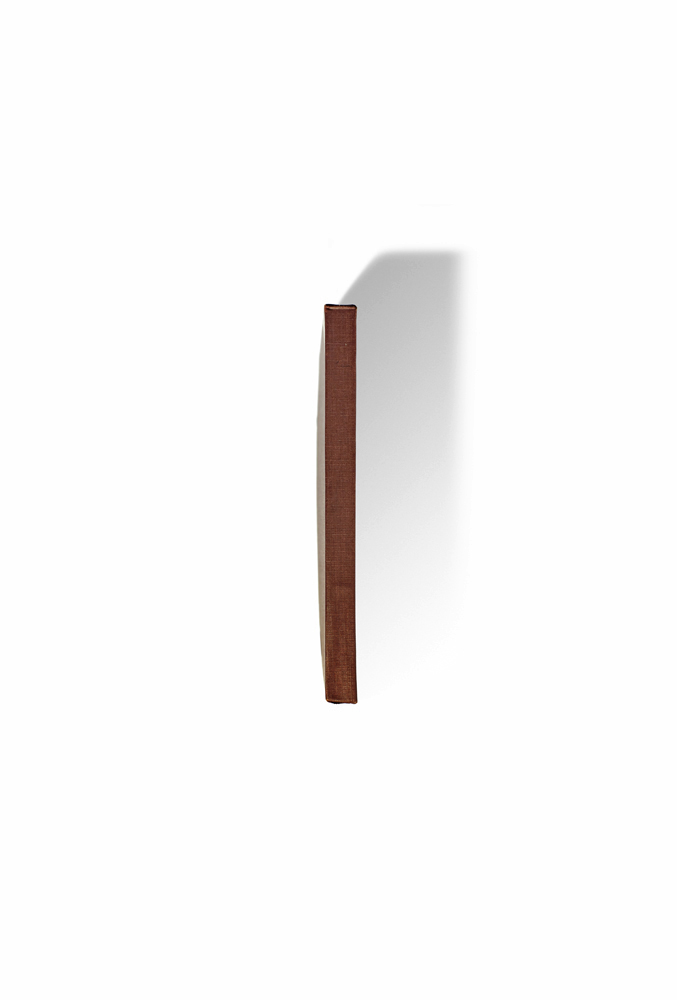
Aliza Levi (South African, b. 1969) 'Across Australia' 2011


Aliza Levi (South African, b. 1969)
Across Australia
2011
Archival Inkjet Print
59 x 42cm


Aura of white

Shadow of black

Books for the boys *

Black bodies out the back


* Books for the bourgeois

* Books for the parlour

* Books for the burning

* Books to hide memories

* Books lost in archives

* Books still in libraries

* Books for the tower (implying Babel)

* Books for the scrapheap

* Books for academics

* Books for the garbo

* Books for the church stall

* Books to forget


Dr Marcus Bunyan


Many thankx to Edmund Pearce Gallery for allowing me to publish the photographs in the posting. Please click on the photographs for a larger version of the image.


Aliza Levi (South African, b. 1969) 'Australia, its History and Present Condition' 2013


Aliza Levi (South African, b. 1969)
Australia, its History and Present Condition
2013
Archival Inkjet Print
59 x 42cm


Aliza Levi (South African, b. 1969) 'Australia the Land of Promise' 2012


Aliza Levi (South African, b. 1969)
Australia the Land of Promise
2012
Archival Inkjet Print
59 x 42cm


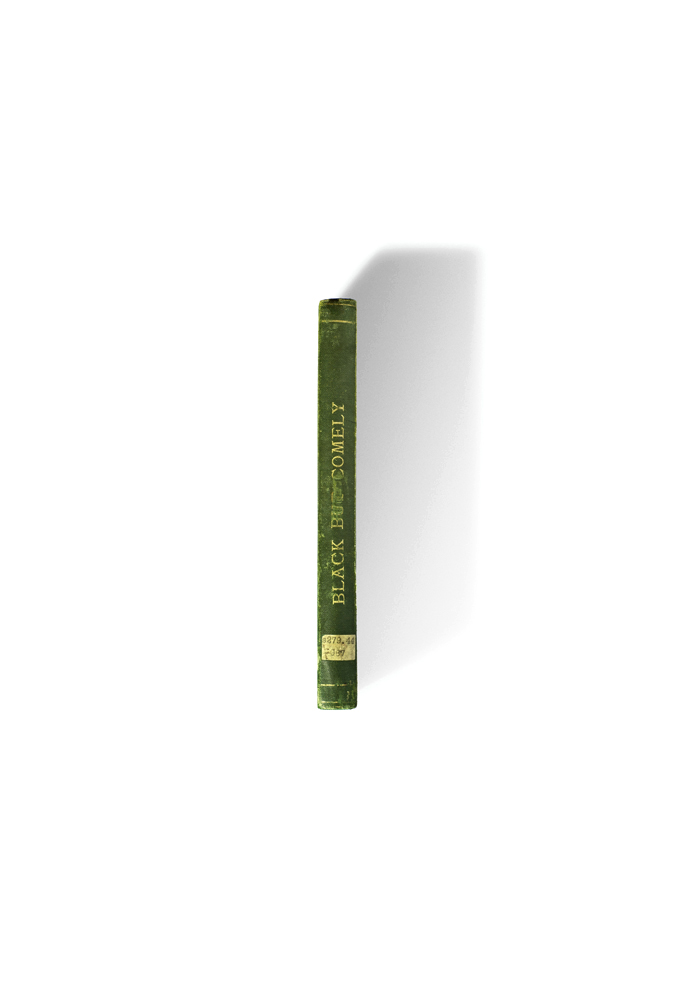
Aliza Levi (South African, b. 1969) 'Black But Comely' 2013


Aliza Levi (South African, b. 1969)
Black But Comely
2013
Archival Inkjet Print
59 x 42cm


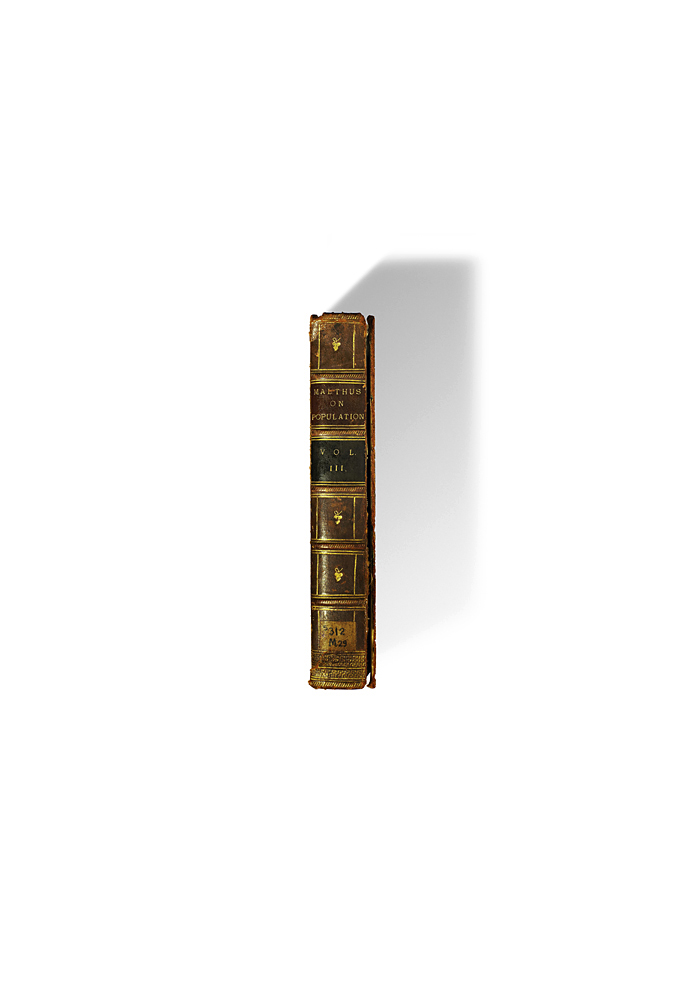
Aliza Levi (South African, b. 1969) 'Malthus on Population' 2012


Aliza Levi (South African, b. 1969)
Malthus on Population
2012
Archival Inkjet Print
59 x 42cm


“I began this series by choosing books that reflected the assumptions and behaviour of the nineteenth century colonists, the persistent notations of self and other. I soon started to notice, that many of the titles were pertinent to today. A blurring of time and relevance, where views from a hundred years ago were intersecting with current attitudes and events.”


Aliza Levi


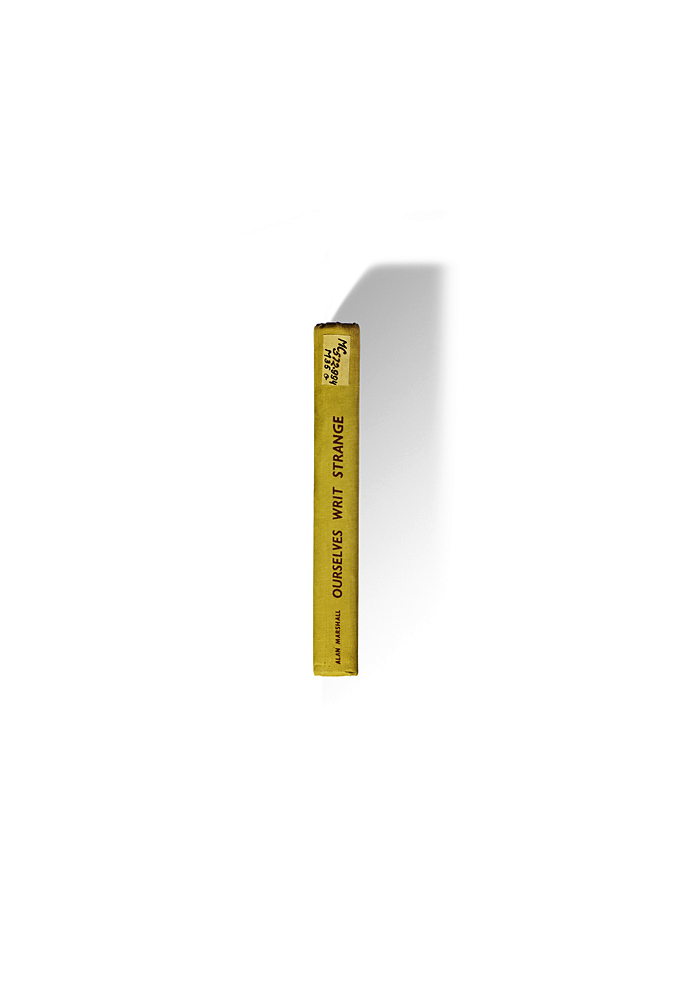
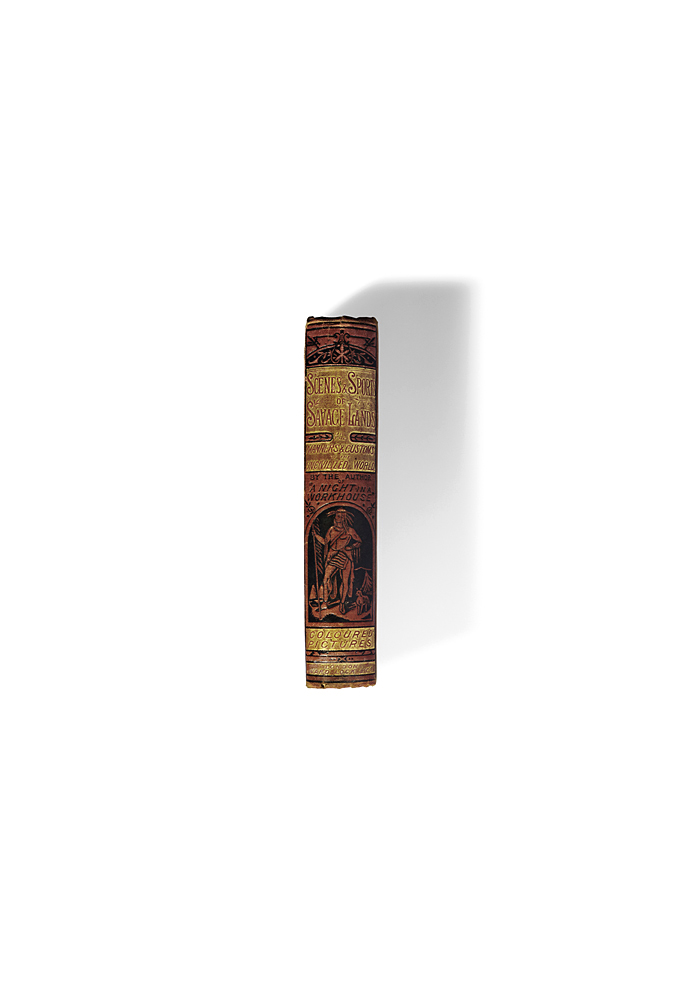
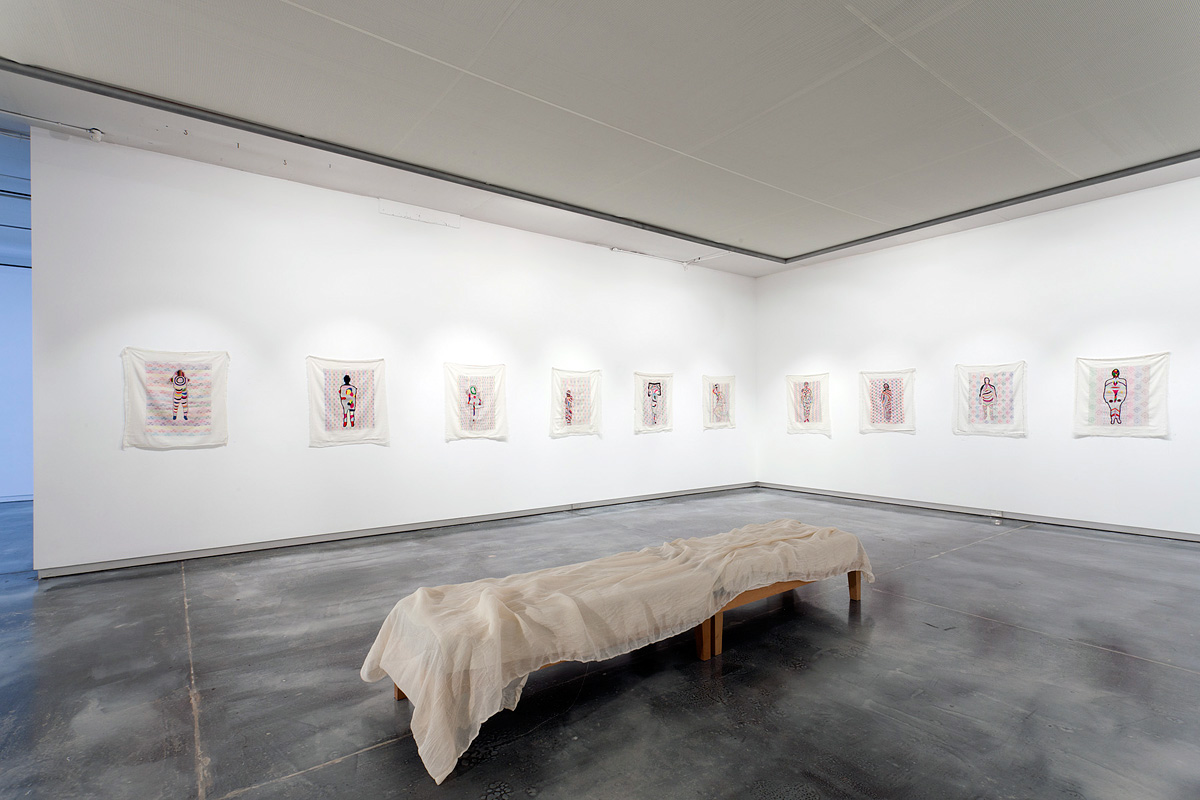
South African born artist, Aliza Levi premiers her latest body of work Books on a White Background at Edmund Pearce Gallery. Camera and lights in hand, Aliza has been photographing nineteenth century books in small town junk shops, second-hand book dealers, flea markets, rare book collections and libraries both here and in her native South Africa. Books authored by anthropologists, ethnologists and laypersons who took it upon themselves to comment on their travels. To date she has captured nearly 250 books.

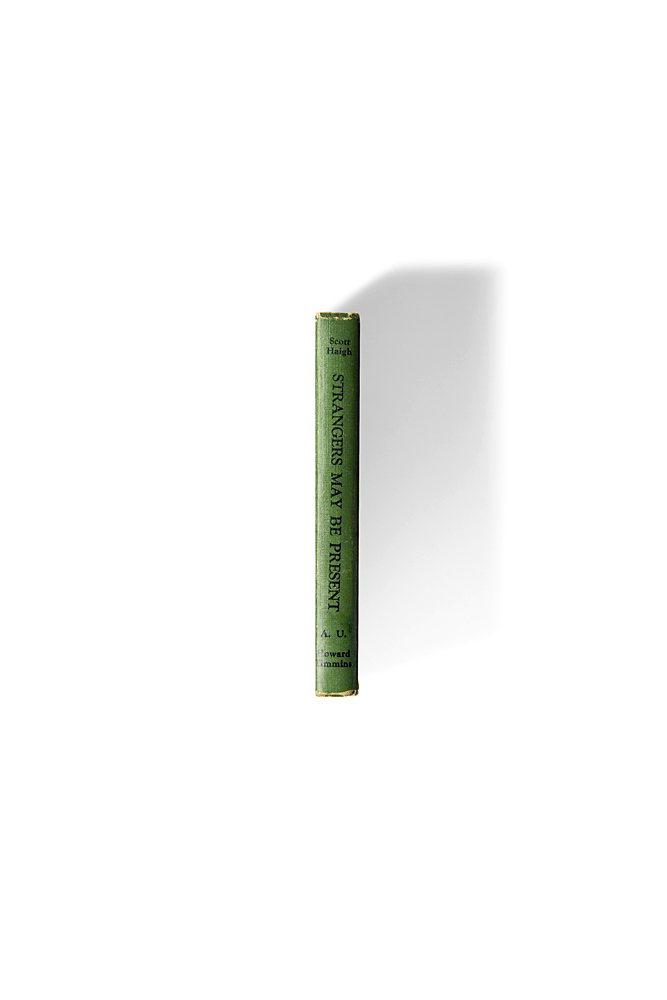
The books, were initially chosen to reflect the ideologies and assumptions of the nineteenth century West. However, Aliza soon realised, that some of the titles were pertinent to today. A blurring of time and relevance where titles from a hundred years ago were intersecting with current attitudes and events. For example, the book Strangers May be Present, in its evocation of colonial settlers viewing the other as stranger also evoked for her the more recent, disturbing events in which the other is articulated: xenophobic attacks and corrective rapes in South Africa. Closer to home, the century old book entitled Australia, the Land of Promise immediately raises questions around certain stark realities such as refugee detention centres.

Kate Warren writes in the accompanying exhibition essay: “The precise regularity of her photographic compositions create a compelling visual plane that immediately draws the viewer’s attention. But look closer. In the situation that Levi presents us with, the seductive nature of the visual cannot escape the immediacy of language. The force of their titles – often starkly confronting and potentially upsetting – leaves the embossing, decoration and materiality of the books themselves as an ironic supplement.”

Born in 1969 in South Africa, Aliza Levi’s practice is multidisciplinary in form yet single-minded in concept. Much of her work presents a relationship to land, consciousness and memory brought on by her South African and Australian citizenship. Having recently presented her work in the UK, this is her first solo show in Melbourne, where she has been producing art as well as facilitating women’s art groups with refugees from Sudan. Levi is currently completing a Masters Degree in Fine Art at Monash University.

Press release from the Edmund Pearce Gallery website


Aliza Levi (South African, b. 1969) 'Ourselves Writ Strange' 2011


Aliza Levi (South African, b. 1969)
Ourselves Writ Strange
2011
Archival Inkjet Print
59 x 42cm


Aliza Levi (South African, b. 1969) 'Scenes and Sports of Savage Lands' 2012


Aliza Levi (South African, b. 1969)
Scenes and Sports of Savage Lands
2012
Archival Inkjet Print
59 x 42cm


Aliza Levi (South African, b. 1969) 'Strangers May Be Present' 2010


Aliza Levi (South African, b. 1969)
Strangers May Be Present
2010
Archival Inkjet Print
59 x 42cm


Aliza Levi (South African, b. 1969) 'The Art of Living in Australia' 2012


Aliza Levi (South African, b. 1969)
The Art of Living in Australia
2012
Archival Inkjet Print
59 x 42 cm


Textual thresholds: The uncomfortable nature of titles in Books on a White Background

Kate Warren

Aliza Levi’s research-based photographic project, Books on a White Background (2012), confronts the viewer with an array that is at once visually compelling and profoundly difficult to look at. The precise regularity of her photographic compositions, the ‘grid-like’ repetition of these images’ installation, the consistent form and shape of her subject matter, and the contrast between the stark white background and the darker shadows thrown, all create a compelling visual plane that immediately draws the viewer’s attention. But look closer. In the situation that Levi presents us with, the seductive nature of the visual cannot escape the immediacy of language. The force of their titles – often starkly confronting and potentially upsetting – leaves the embossing, decoration and materiality of the books themselves as an ironic supplement.

This is not a ‘library’. Although developed from Levi’s archival research, the final photographic project is not an ‘archive’. Rather than displaying the original books themselves as objets trouvés, Levi disavows their materiality and tactility. Photographing the books’ ‘spines’, she not only flattens but removes entirely from view their ‘flesh’ the pages and the content – and in doing so opens up a liminal space that can accommodate and illuminate a multiplicity of (sometimes uncomfortable) and connections between the past and the present.

In the human form, our spines form the connection between the psychical realm of our brains and the physicality of our bodies; between our ‘inner’ subjectivity and our ‘outer’ ability to move, communicate and interact with our surroundings. Likewise in the case of the books that Levi photographs; the spines and titles are liminal spaces that mediate their content and the cultural and historical contexts in which they exist. Gérard Genette calls this the ‘paratext’, the “fringe [which] constitutes a zone between text and off-text, a zone not only of transition but also of transaction: a privileged place of a pragmatics and a strategy, of an influence on the public.” Levi’s project works at this juncture. By denying access to the detailed substance and content of these books she denies their overt ‘authority’, yet at the same time she reveals uncomfortable legacies that persist and cannot be wholly escaped.

The various ‘post’ discourses (post-colonialism, post-structuralism, post-modernism) and their influential theorists and practitioners have done enormous amounts of work to deconstruct and destabilise dominant narratives and histories. The process is necessarily ongoing and open-ended; because although many narratives that were once unquestioned have been removed from their dominance and acceptability, it is often through language that their traces and legacies remain.

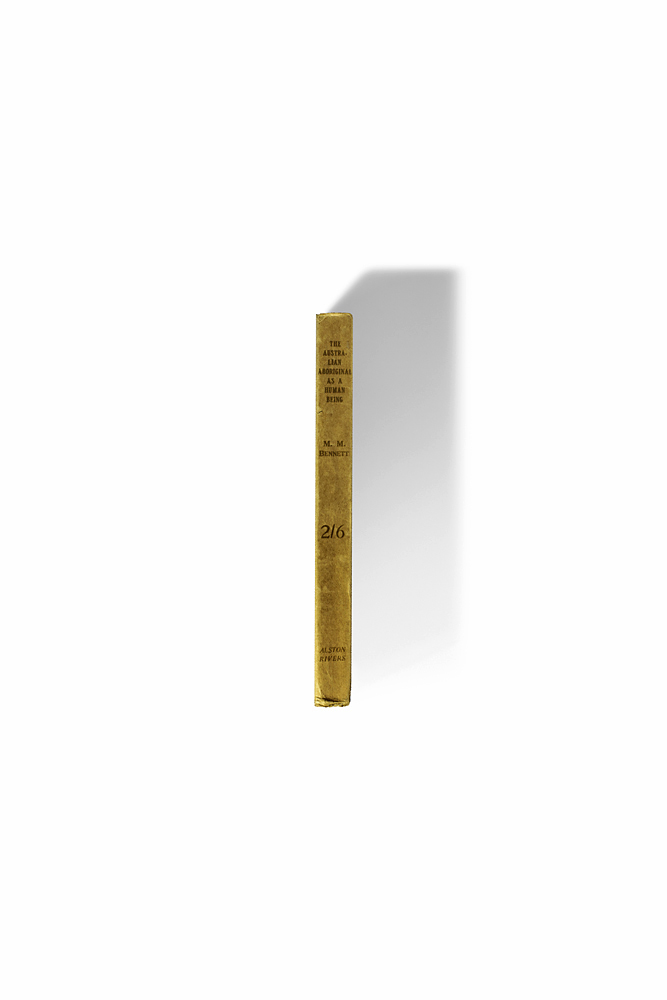
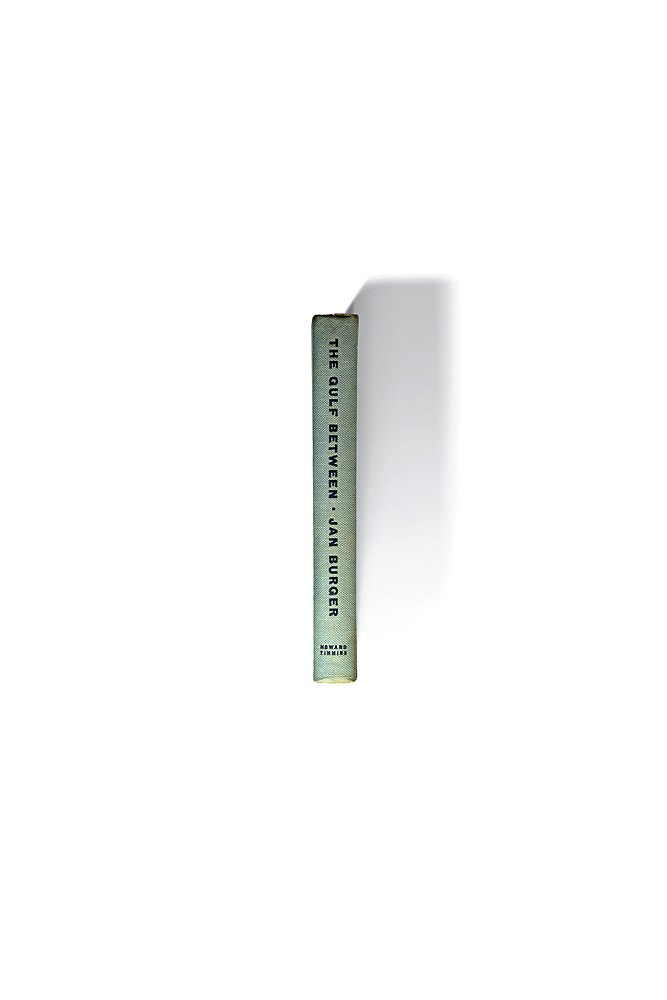
Thus in the selection of Australian books included in this exhibition, there emerges jarring and disturbing contrasts between titles that clearly belie values that are no longer widely accepted (such as The Aboriginal as Human Being), and other titles which still resonate with national myths (such as Australia the Land of Promise). Other titles like Ourselves Writ Large and The Gulf Between become more ambiguous; for without access to the specificities of their content, these books’ paratexts are revealed in Levi’s project as (necessarily) multifaceted signifiers. They immediately open up a ‘zone of transaction’ that reveals the past as an immanent presence, constantly transformed by and transforming of the present. These now abstracted titles retain a force and power to reveal uncomfortable truths and forgotten narrative tropes, speaking to the way that Australian history and presumed cultural values are constructed and repeated in our contemporary life.

Kate Warren would like to thank Aliza Levi for the stimulating and ongoing discussions; and David Wlazlo for his timely and astute insights.

Gérard Genette, Paratexts: Thresholds of Interpretation (Cambridge: Cambridge University Press, 1997), p. 2.


Aliza Levi (South African, b. 1969) 'The Aboriginal as Human Being' 2012


Aliza Levi (South African, b. 1969)
The Aboriginal as Human Being
2012
Archival Inkjet Print
59 x 42cm


Aliza Levi (South African, b. 1969) 'The Gulf Between' 2012


Aliza Levi (South African, b. 1969)
The Gulf Between
2012
Archival Inkjet Print
59 x 42cm


Aliza Levi (South African, b. 1969) 'The Report of the Aborigines Committee of the Meeting for Sufferings 1840' 2012


Aliza Levi (South African, b. 1969)
The Report of the Aborigines Committee of the Meeting for Sufferings 1840
2012
Archival Inkjet Print
59 x 42cm


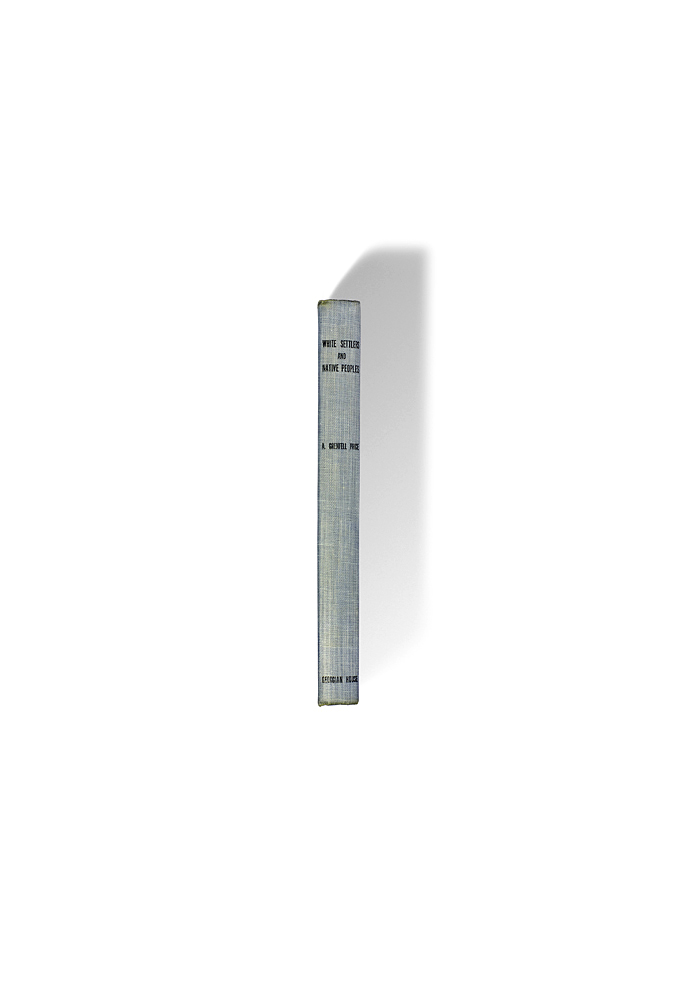
Aliza Levi (South African, b. 1969) 'White Settlers and Native Peoples' 2012


Aliza Levi (South African, b. 1969)
White Settlers and Native Peoples
2012
Archival Inkjet Print
59 x 42cm


Edmund Pearce Gallery

This gallery is no longer open.

LIKE ART BLART ON FACEBOOK

Back to top

Review: ‘Shrouds’ by Mike Reid at the Colour Factory Gallery, Fitzroy, Melbourne

Exhibition dates: 8th March – 30th March 2013


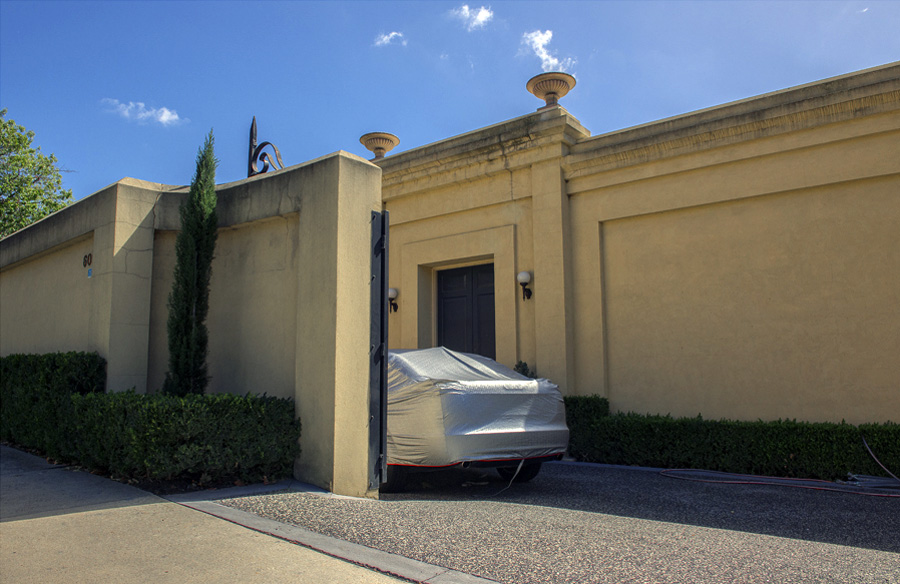
Mike Reid (Australian) 'Santa Monica, Los Angeles, USA' Nd


Mike Reid (Australian)
Santa Monica, Los Angeles, USA
Nd


“Any discovery changing the nature, or the destination of an object or phenomenon constitutes a Surrealist achievement. Already the automats are multiplying and dreaming… realism prunes trees, Surrealism prunes life.”


J-A. Boiffard, Paul Ellard and Roger Vitrac, in La Revolution Surréaliste, December 1924, p. 2, quoted in Arturo Schwarz, Man Ray: the rigour of imagination, Thames & Hudson, London, 1977, p. 161.


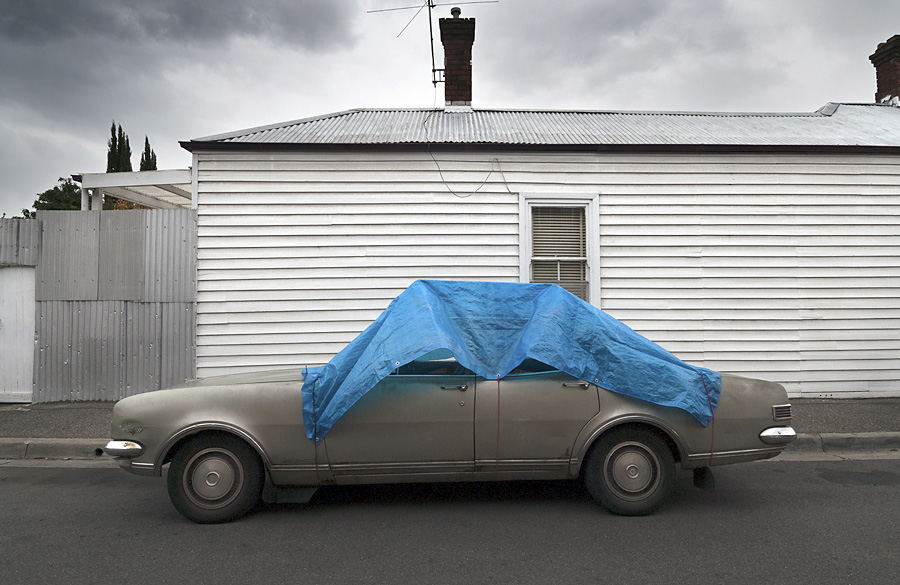
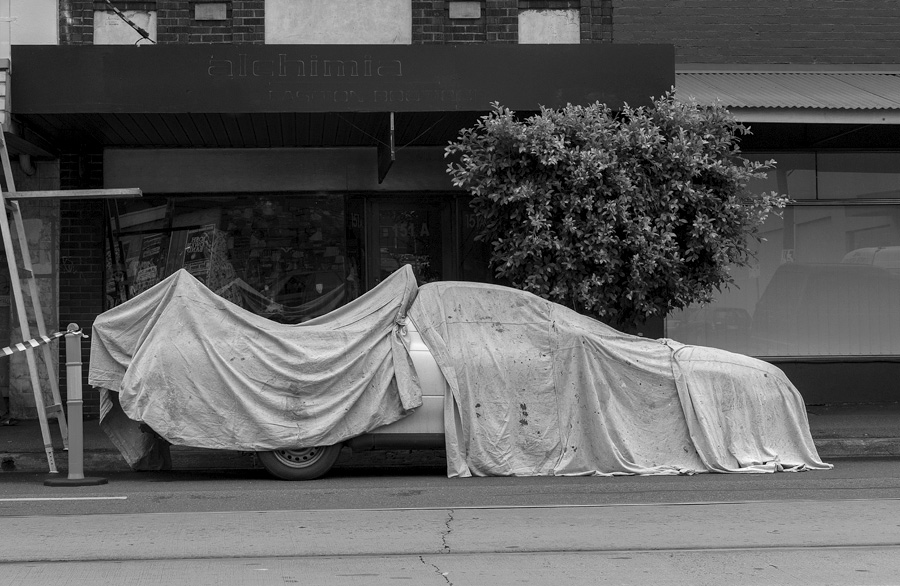
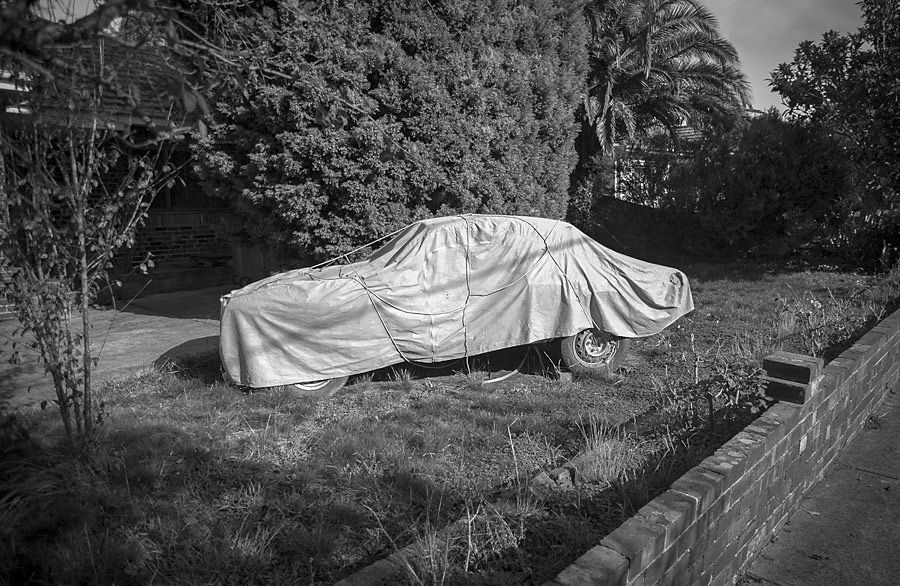
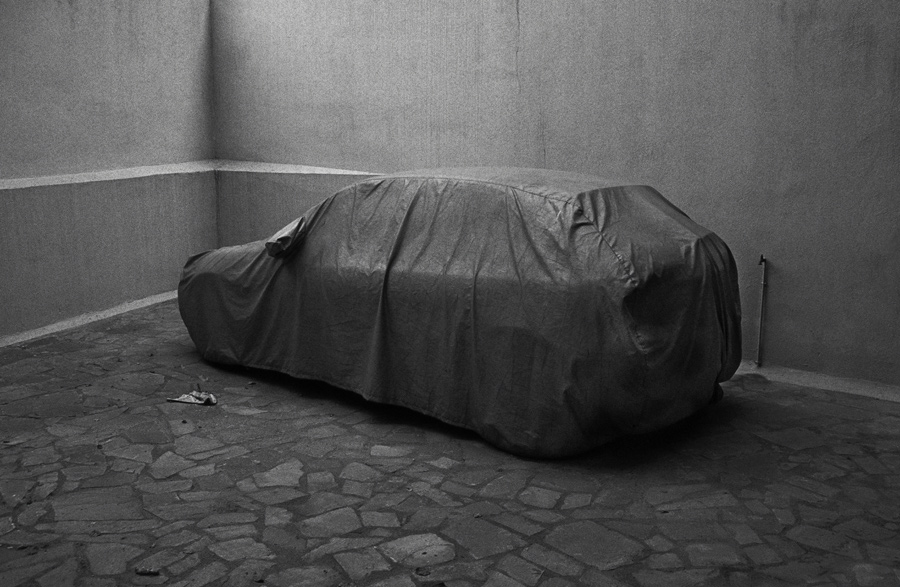
This is a strong exhibition of documentary photography by Mike Reid at the Colour Factory Gallery. Interesting idea; well seen formal photographs; good use of colour (brown, blue, silver, red and green shrouds); nice sized prints appropriate to the subject matter; and an excellent self published book to accompany the exhibition. This is just what it is – a solid exhibition of documentary photography.

Unfortunately the artist cannot leave it there. In his almost unintelligible artist statement (below), he tries to lever the concept of resurrection onto the work, meandering from Horus and Osiris through The Shroud of Turin, to Jewish Tachrichim (burial shrouds) and onto the commerce of Billabong and the politics of the burqa linking, very tenuously, the covering of Islamic women with the idea of these cars being “old bombs.”

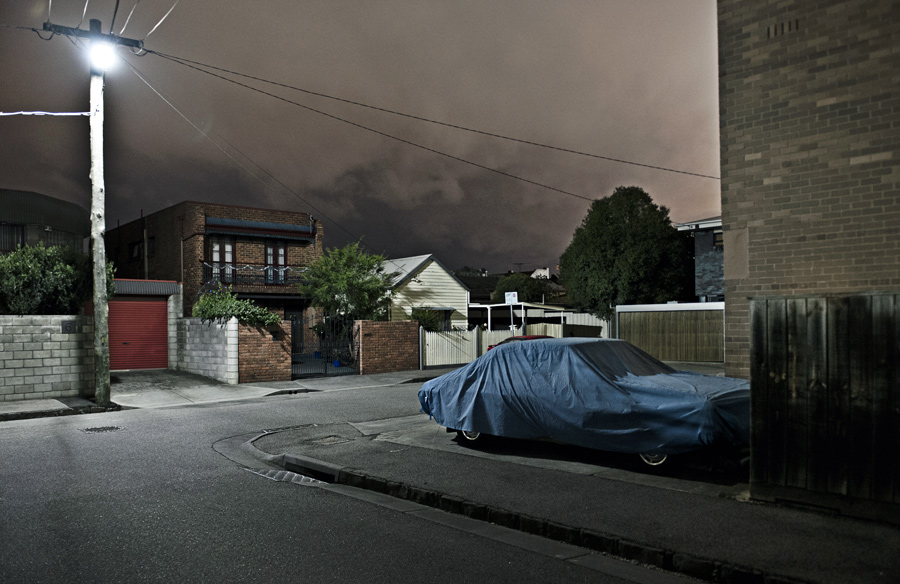
Here I take issue with Reid’s conceptualisation of the word “shroud” vis a vis his photographs of covered cars. One of the definitions of shroud is “A cloth used to wrap a body for burial” but the more pertinent use of the word in relation to this work is “To shut off from sight; something that conceals, protects, or screens” from the Middle English schrud, garment. These are not abandoned, lifeless vehicles awaiting resurrection but loved vehicles that have been protected from the elements by their owners, wrapped and cocooned jewels that are in a state of hibernation. If they were unwanted they would have been abandoned by their owners to the elements, not protected beneath a concealing garment in a state of metamorphosis. The shrouding of the car acts like a Surrealist canvas, hinting at the structure underneath (the Cadillac, the Volkswagen, the Morris Minor) but allowing the viewer to discover the changing nature of the object.

All that was needed to accompany the exhibition and the book was something like the quotation at the top of the posting. Leave the rest up to the strength of the work and the viewer. They have the intelligence and imagination to work out what is going on without all the proselytising that only reveals the artist’s ultimate disconnection from the source. In other words, less is more. Nothing more, nothing less.

Dr Marcus Bunyan


Many thankx to the Colour Factory Gallery for allowing me to publish the photographs in the posting. Please click on the photographs for a larger version of the image.


Mike Reid (Australian) 'Toorak, Victoria' Nd


Mike Reid (Australian)
Toorak, Victoria
Nd


Mike Reid (Australian) 'South Fremantle, Western Australia' Nd


Mike Reid (Australian)
South Fremantle, Western Australia
Nd


Mike Reid (Australian) 'Richmond, Victoria' Nd


Mike Reid (Australian)
Richmond, Victoria
Nd


Shrouds, by Mike Reed is a collection of photographs of covered cars. His love of gleaning was inherited from his ‘rag and bone’ father who amassed a metal detritus found on the bicycle route home from the factory where he worked. This assortment was stockpiled in his father’s rusted sheds, which appeared like an ‘Aladdin’s cave’ to a youthful Mike.

“The car was draped with a plastic sheet in the back blocks of Surfers Paradise whilst seeking to photograph decay in the landscape… You start with one and then see another then… over time, the medley plays into a collection… patterns precipitate or idiosyncrasies evolve from within…This is the joy of “seeing”.”

“Within my category of covered cars I began to view these still loved but lifeless vehicles, as if a resurrection was about to take place… for the heavenly roads of restoration or hell.”

Mike equates the car covers to the burial garments adorning the dead in preparation for resurrection. Mike cites the ‘wrapping’ of objects found in the work of artists’ Christo, Jean Claude, Man Ray and Magritte as inspiration. This incredible accumulation of images spans over two decades and 6 countries. A small selection has been chosen for this exhibition and a larger range appears in his book to be launched at the opening of Shrouds.

Press release from the Colour Factory Gallery website


Mike Reid (Australian) 'Richmond, Victoria' Nd


Mike Reid (Australian)
Richmond, Victoria
Nd


Mike Reid (Australian) 'Macleod, Victoria' Nd


Mike Reid (Australian)
Macleod, Victoria
Nd


Shrouds

The resurrection of the dead is a fundamental and central doctrine of Judaism, Christianity, and Islam. Many religious critics have alleged that even Christ’s resurrection was borrowed from the accounts of Osiris, God of the underworld, and the best-known deity in all of ancient Egyptian history. As a life-death-rebirth deity, Horus, the Sun God, and Osiris became a reflection of the annual cycle of crop harvesting as well as reflecting people’s desires for a successful afterlife. The Masons, Illuminati, Priory De Sion, clandestine government groups, and others believed that on December 22, 2012, Osiris would be resurrected. Nothing happened on that world shattering day but Spam and candle sales most certainly went through the roof. Thus in preparation to meet thy maker, a shroud, burial sheet or winding-cloth, usually cotton or linen but with no pockets, is wrapped around a body after it has been ceremonially washed and readied for burial.

Certainly the most controversial and famous burial garment is the Shroud of Turin. It is now stored in the Cathedral of St. John the Baptist in Turin, Northern Italy after the crusaders stole it and bought it first to France around 1204.

Many believe this 4.3 by 1.1m linen cloth of a rare herringbone weave covered the beaten and crucified body of Jesus of Nazareth when He was laid in a tomb prior to His resurrection. Is it really the cloth that wrapped His bloodstained body, or is it simply a medieval hoax? This has lead to intense scrutiny by forensic experts, scientists, chemists, immunologists, pathologists, believers, historians, and writers regarding the where, when, and how the bloodstain image on the shroud was created. C-14 Carbon dating carried out in 1988, dated the cloth between 1260 and 1390.

In Jewish religious traditions the Tachrichim (burial shrouds) are traditional simple white burial garments, containing no pockets, usually made from 100% pure linen.A shroud or sometimes a prayer shawl for a man, in which Jews are dressed by the Chevra Kadisha for burial after undergoing a taharah (purification ceremony). Burying the departed in a garment is considered a testimony of faith in the resurrection of the body (commentary of Shach). This is a fundamental principle of faith, one of the thirteen principles, which the Rambam enumerates as being essential to Jewish belief. More to the point today we have an insurrection, while not yet violent against the wearing of another kind of covering… the niqab or the burqa. European governments are escalating the introduction of laws on the basis that the face covering, along with ski masks and bikies helmets, encourages female subjugation, lack of communication, non-safety, isolation, female abuse, oppression of freedom and non-conformity to the western culture. In fact the Koran only dictates to modesty in dress. May I say it that Billabong could improve sales with the launch of a ‘Tri-Kini’ on the beaches next summer.

Meanwhile… “The 2012 ban in France is officially the second country in Europe, after Belgium, to introduce a full ban on a garment which immigration minister Eric Besson has called a “walking coffin.””1 Indeed Australian Liberal Cory Bernadi said, “The burqa is no longer simply the symbol of female repression and Islamic culture, it is now emerging as a disguise of bandits and n’er do wells.”2 More so now the government and police authorities in the Netherlands, a usually very tolerant nation, have become anxious regarding security worries that a terrorist could use one for concealment. Well my shrouded cars could be the same, as most do conceal “old bombs.”

The inspiration for my rag tag assortment evolved from the artistes Christo and Jeanne-Claude who have wrapped, covered whole buildings, bridges and landscapes. Other favourites of mine, Man Ray and Rene Magritte have objects and humans covered as well, specifically Magrittes’ Las Amants 1 & II (The Lovers)3 1928. A plastic explanation is that “love is blind” and that the mantles are symbolic to the idea that a devoted lover would identify his soul mate in any form, immortal love. Another interpretation of Magrittes’ shrouds is that the paintings symbolise his mothers’ death. Magritte, when only 14, discovered her lifeless body which was naked apart from her nightdress that had swathed up around her face.

I started recording these morphological images over 20 years ago. The first was draped with a plastic sheet in a paddock in the back blocks of Surfers Paradise while meandering aimlessly, seeking decay in the landscape.

With my wandering and collecting shots I realised I have inherited the trait from my father. In his latter years my father became a rag and bone man in order to supplement the low family income. A bicycle route from his employment at Laminex factory to home lay through the local hard rubbish dump. Copper wire, lead, iron, even an aerial practice bomb, military helmets, a stockless revolver and rifle, rusted tools… festooned from his bike and festooned from his gladstone bag. Two rusting sheds contained somewhat the ever-growing metal waste for selling or keeping… an Aladdins’ cave to a young boy, everyday re-discovering lifes’ discards care of the Dendy Street tip.

Within my category of covered cars I began to view these still loved but lifeless vehicles, as if a resurrection was about to take place… for the heavenly roads of restoration or hell… (a scrap yard)

Mike Reed, 2013


1/ The Telegraph, April 11 , 2011, “Peter Allen In Paris”
2/ Cory Bernadi, SMH, May 6, 2011
3/ “Las Amants” 1 is in the NGA collection, Canberra, NGA


Mike Reid (Australian) 'Brunswick East, Victoria' Nd


Mike Reid (Australian)
Brunswick East, Victoria
Nd


Mike Reid (Australian) 'Fairfield, Victoria' Nd


Mike Reid (Australian)
Fairfield, Victoria
Nd


Man Ray (American, 1890-1976) 'L'Enigme d'Isidore Ducasse' 1920, remade 1972


Man Ray (American, 1890-1976)
L’Enigme d’Isidore Ducasse
1920, remade 1972
Sewing machine, wool and string
355 x 605 x 335 mm


Mike Reid (Australian) 'Athens, Greece' Nd


Mike Reid (Australian)
Athens, Greece
Nd


Colour Factory Gallery
409-429 Gore Street
Fitzroy, Victoria 3056
Phone: +61 3 9419 8756

Opening hours:
Closed for refurbishment

Mike Reed Photography website

Colour Factory Gallery website

LIKE ART BLART ON FACEBOOK

Back to top

Exhibition: ‘Thomas Demand’ at the National Gallery of Victoria, Melbourne

Exhibition dates: 30th November 2012 – 17th March 2013


Thomas Demand (German, b. 1964) 'Copyshop' 1999


Thomas Demand (German, b. 1964)
Copyshop
1999
C-Print / Perspex
183.5 × 300cm
Collection of John Kaldor, Sydney
Courtesy Taka Ishii Gallery, Sprüth Magers Berlin London, Esther Schipper, Berlin, Matthew Marks Gallery
© Thomas Demand, VG Bild-Kunst, Bonn / VISCOPY, Sydney


Sitting here in my non-air-conditioned flat trying to survive Melbourne’s autumn heatwave is no fun; my mind has turned to mush. So instead of trying to write an in depth review of this exhibition I shall just make some salient comments, for fear my sweat would literally buckle Demand’s meticulously constructed paper models before he could photograph them.

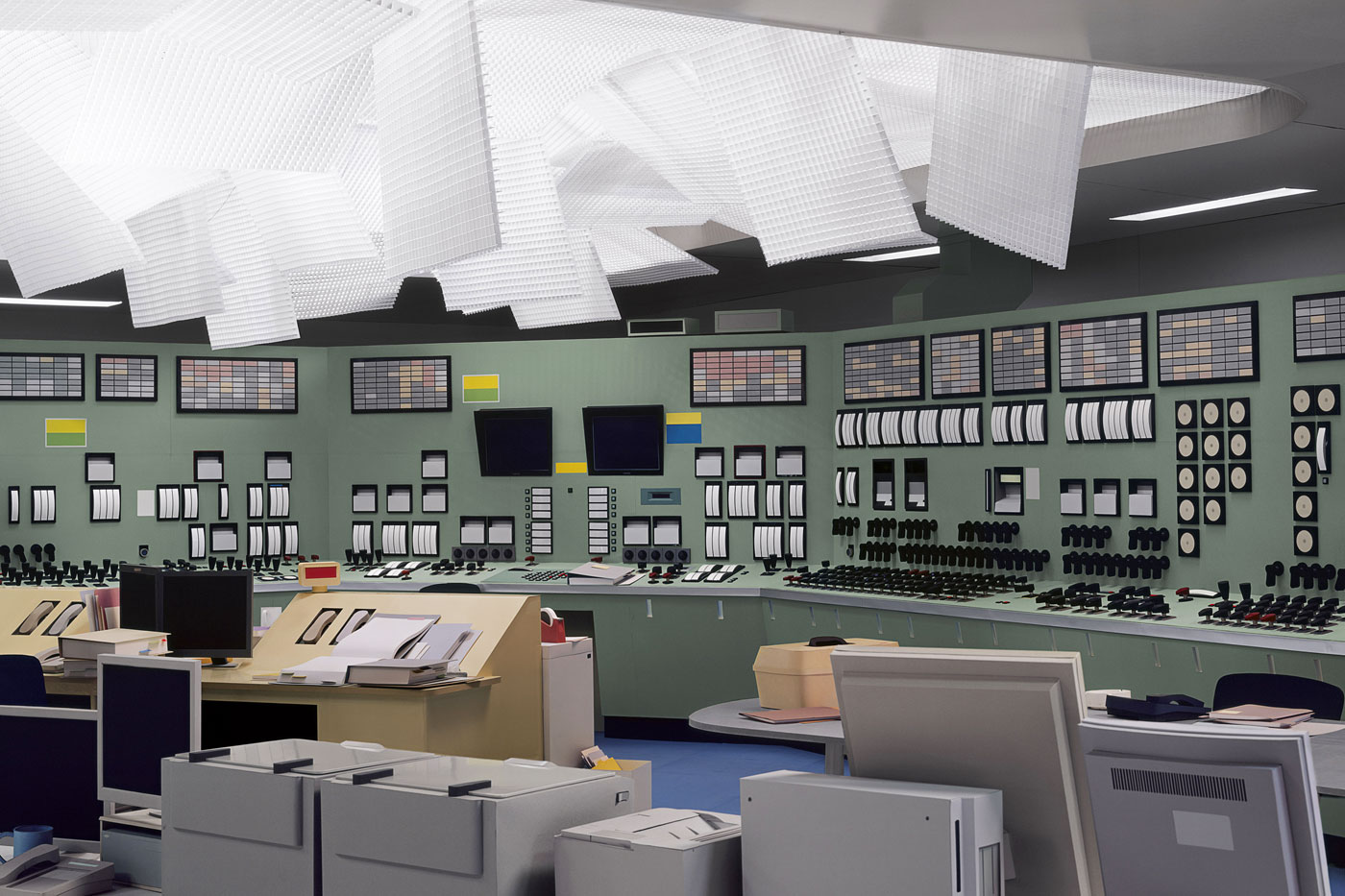
Demand is firstly a sculpture, constructing studio-sized models of photographs that reference “source material in the archive that already has some fateful resonance,” (Robert Nelson, The Age, 12th December 2012) such as the control room of the Fukushima nuclear reactor, the Geneva hotel bath tub where the German politician Uwe Barschel found a brutal death – personally my mind went to David E. Scherman’s photograph of Lee Miller in Hitler’s bathtub (see below); scenes of nature such as Clearing (2003, below) or Grotto (2006, below) that are hyperreal simulacra of natural phenomena; and modular environments and objects, such as Copyshop (1999), Space Simulator (2003) and Bullion (2003, all below) that strip away the relational intimacy between man and environment by the removal of all labelling and tactility of surface. Demand then photographs his denuded “models” before destroying them, the photograph then becoming the soul evidence of their intrinsic existence (much like the documentary evidence of photographs of Land Art). Demand’s visualisation of the environment is triple coded (photograph, model, photograph), a hybrid tri-articulation that produces new identities that release energies of multiplicity, irony and destabilisation.

Robert Nelson observes in The Age that Demand’s world is paper thin and because the eye detects the forgery, “the famous icon of unthinkable fortune [Bullion] – which might have played a part in some famous heist or the security of a national economy – is also a lie, a tinsel falsehood of no substance… All of Demand’s pictures have an empty or hollow character, which defies the earnest weight of their associations.” Dan Rule insightfully notes that, “By removing the image’s reference or index, only to so painstakingly recast it, he [Demand] begs us to look and look again. These resolutely “unreal” images demand that we consider reality with much greater care.” (Dan Rule, The Age, 19th January 2013). Christopher Allen in The Weekend Australian (2nd March, 2013) states that Demand’s huge final prints, hidden under a layer of Perspex, “adds another level of truth and illusion that preoccupies Demand as it must any serious photographer today. In this case, the photographs can claim to be, for what this is worth, absolutely and literally true in their recording of their subject; it is only the subject itself that is entirely illusory and fabricated.”

Interesting comments all. Demand’s recasting of the relationship between image and referent (image and the object being photographed) is critical to his practice, but I am unsure that all photographers have to be preoccupied with the relationship between truth and illusion as Allen states. As my recent review of the exhibition Confounding: Contemporary Photography noted not all photographs have to confound the relationship between truth and illusion in order to be art. “Collectively, it is the ideas contained within the images in this exhibition that unsettle the relationship between the photograph and the world in the mind of the viewer, not their confounding.” As in the Jeff Wall Photographs exhibition, there is not much emotion in any of these images and perhaps this is an outcome of the long pre-photographic production process.

Demand’s recordings, re-orderings of a constructed reality are fabrications of the highest calibre, amazing to witness at first hand (is that really a model, how does he do that with paper and lighting?!), and yet one is left with a feeling that the work needed something more to go beyond this illusion, some layering that takes the viewer beyond the surface of the image, beyond the understanding of image / model / reality. I look at the photographs, I understand the skill, the imbrication of the process – I think that is the word I want, meaning the covering with a design in which one element covers a part of another – the looking again at a fabricated (our!) reality but the photographs still leave me a little cold of heart, of empty and hollow character. Perhaps that is the point, however it doesn’t make me want to look at the photographs over weeks, months and years and let them reveal themselves to me. Like the paper on which they are printed they are a little paper thin.

Dr Marcus Bunyan


Many thankx to the National Gallery of Victoria for allowing me to publish the photographs in the posting. Please click on the photographs for a larger version of the image.


Thomas Demand (German, b. 1964) 'Kontrollraum / Control Room' 2011


Thomas Demand (German, b. 1964)
Kontrollraum / Control Room
2011
C-Print / Perspex
200 × 300cm
Courtesy Taka Ishii Gallery, Sprüth Magers Berlin London, Esther Schipper, Berlin, Matthew Marks Gallery
© Thomas Demand, VG Bild-Kunst, Bonn / VISCOPY, Sydney


Thomas Demand is regarded as one of the world’s leading contemporary artists whose work in photography and, most recently stop-animation films, is at the forefront of contemporary art. Demand initially worked as a sculptor who used photography to document his ephemeral creations. From 1993 his creative practice changed and, from then on, he made sculptures for the sole purpose of photographing them. Demand begins with an image, often taken from media sources and frequently dealing with traumatic or politically important events, and creates a life-size replica of the image using paper and cardboard. The effect of these uncanny reconstructions is to destabilise our understanding of the sites which we ‘know’ so well through reproduction. This exhibition features a selection of photographs and 35mm films as chosen by the artist.

Organised with The Museum of Contemporary Art, Tokyo

Text from the National Gallery of Victoria website


Thomas Demand (German, b. 1964) 'Labor / Laboratory' 2000


Thomas Demand (German, b. 1964)
Labor / Laboratory
2000
C-Print / Perspex
180 × 268cm
Courtesy Taka Ishii Gallery, Sprüth Magers Berlin London, Esther Schipper, Berlin, Matthew Marks Gallery
© Thomas Demand, VG Bild-Kunst, Bonn / VISCOPY, Sydney


Thomas Demand (German, b. 1964) 'Space Simulator' 2003


Thomas Demand (German, b. 1964)
Space Simulator
2003
C-Print / Perspex
300 × 429.4cm
Courtesy Taka Ishii Gallery, Sprüth Magers Berlin London, Esther Schipper, Berlin, Matthew Marks Gallery
© Thomas Demand, VG Bild-Kunst, Bonn / VISCOPY, Sydney


Thomas Demand (German, b. 1964) 'Lichtung / Clearing' 2003


Thomas Demand (German, b. 1964)
Lichtung / Clearing
2003
C-Print / Perspex
192 × 495cm
Courtesy Taka Ishii Gallery, Sprüth Magers Berlin London, Esther Schipper, Berlin, Matthew Marks Gallery
© Thomas Demand, VG Bild-Kunst, Bonn / VISCOPY, Sydney


Thomas Demand (German, b. 1964) 'Public housing' 2003


Thomas Demand (German, b. 1964)
Public housing
2003
C-Print / Perspex
Courtesy Taka Ishii Gallery, Sprüth Magers Berlin London, Esther Schipper, Berlin, Matthew Marks Gallery
© Thomas Demand, VG Bild-Kunst, Bonn / VISCOPY, Sydney


Public housing also shows the influence, in part, of Demand’s early photographic training. A member of the so-called Düsseldorf School (along with Thomas Ruff, Thomas Struth, Candida Hofer and Andreas Gursky), Demand was taught photography by Bernd and Hilla Becher. The Bechers had an austere approach, creating a vast archive of formally composed images of industrial structures. The rigour of this training is apparent in the objective approach Demand brings to his subjects. However, as Public housing demonstrates, from this starting point he creates work with a strange, disarming beauty in a style that is distinctly the artist’s own.

The origin for Public housing is the back of a Singapore $10 banknote which Demand recreates with great fidelity and in the characteristic pink tones of the original. The artist has expressed a fascination for currency that depicts modern architecture and has collected examples from many countries But, the meaning of his resulting image is somewhat ambiguous. It can be read either as a work that critiques modern housing estates with their often soulless and depressingly formulaic architecture or, in contrast, as an expression of national pride. It appears that the latter meaning was intended by the artist, who has written that Public housing ‘shows that the capital of finance in Asia also has a heart for the underprivileged’ (email to author).

Isobel Crombie, Senior Curator, Photography, National Gallery of Victoria (in 2011).

Isobel Crombie. “Thomas Demand Public housing,” 2011, published on the NGV website 2013 [Online] Cited 23/07/2024


Thomas Demand (German, b. 1964) 'Regen / Rain' (still) 2008


Thomas Demand (German, b. 1964)
Regen / Rain (still)
2008
35 mm colour film, sound, 4 min, looped
Courtesy Taka Ishii Gallery, Sprüth Magers Berlin London, Esther Schipper, Berlin, Matthew Marks Gallery
© Thomas Demand, VG Bild-Kunst, Bonn / VISCOPY, Sydney


One of the world’s most influential contemporary artists, Thomas Demand, will be the subject of a new exhibition announced by the National Gallery of Victoria. The exhibition will be the first major Australian survey of the artist’s work and will comprise large scale photographs and films never before shown in Australia.

NGV Director, Tony Ellwood said the addition of Thomas Demand to the NGV’s exhibition schedule is part of an exciting and ambitious summer program.

“When the opportunity came up to hold an exhibition of Thomas Demand’s work this summer, it was just too good to miss. Thomas Demand will be part of a great summer program at the NGV and has been timed to coincide with the Jeff Wall Photographs exhibition being held at NGV Australia.” …

Works in the exhibition will span the artist’s career from 1997 to 2012. Recent works presented in the exhibition include Control Room (2011, above), which depicts the Fukushima Daiichi nuclear power plant and Tribute (2011, below), a work based on images taken at the site of tragic mass panic at Europe’s biggest rave party.

Susan van Wyk, NGV Curator of Photography said Thomas Demand is widely regarded as one of the world’s leading contemporary artists.

“Thomas has a unique style in which he creates paper models of objects and scenes, often taken from media sources like flickr or newspaper reports. These intricate life size models are then photographed.

“The results are disquieting images that subvert our understanding of reality and fiction and draws attention to how we engage with the media and modern technologies,” said Ms Van Wyk.

Press release from the National Gallery of Victoria


Thomas Demand (German, b. 1964) 'Grotte / Grotto' (detail) 2006


Thomas Demand (German, b. 1964)
Grotte / Grotto (detail)
2006
C-Print / Perspex
Photograph: Marcus Bunyan


Thomas Demand (German, b. 1964) 'Bullion' 2003


Thomas Demand (German, b. 1964)
Bullion
2003
C-Print / Perspex
42 × 60cm
Courtesy Taka Ishii Gallery, Sprüth Magers Berlin London, Esther Schipper, Berlin, Matthew Marks Gallery
© Thomas Demand, VG Bild-Kunst, Bonn / VISCOPY, Sydney


Thomas Demand (German, b. 1964) 'Parlament / Parliament' 2009


Thomas Demand (German, b. 1964)
Parlament/Parliament
2009
C-Print / Perspex
Courtesy Taka Ishii Gallery, Sprüth Magers Berlin London, Esther Schipper, Berlin, Matthew Marks Gallery
© Thomas Demand, VG Bild-Kunst, Bonn / VISCOPY, Sydney


David E. Scherman (American, 1916-1997) 'Lee Miller in Hitler's bath, Hitler's apartment, Munich, Germany 1945' 1945


David E. Scherman (American, 1916-1997)
Lee Miller in Hitler’s bath, Hitler’s apartment, Munich, Germany 1945
1945
From Lee Miller: A Life by Carolyn Burke
© Lee Miller Archives


Thomas Demand (German, b. 1964) 'Badezimmer / Bathroom' 1997


Thomas Demand (German, b. 1964)
Badezimmer / Bathroom
1997
C-Print / Perspex
160 × 122cm
Courtesy Taka Ishii Gallery, Sprüth Magers Berlin London, Esther Schipper, Berlin, Matthew Marks Gallery
© Thomas Demand, VG Bild-Kunst, Bonn / VISCOPY, Sydney


When you look at the work of Thomas Demand, at some point you realise that what you are looking at cannot be real. As this becomes apparent you understand that you are looking at a paper simulation of the world.

Demand’s early studies, in the 1980s and early 90s, were in sculpture and he built his constructions out of paper and cardboard. At this time, photography was simply the tool the artist used to document his sculptural work. Around 1993, however, an important shift occurred in Demand’s practice. His meticulously constructed objects were no longer the final works. The photographs that had previously served as an efficient means of recording his ephemeral sculptures instead became Demand’s prime interest. From this point on his models existed, not to be seen as three-dimensional sculptures but, to be photographed in two-dimensions.

The act of building his sculptural subjects is a bit like the architectural process and involves drawings, plans, engineering, even quantity surveying. A finished work may contain hundreds of thousands of hand-cut and assembled paper elements. Another of the more extraordinary things about his constructions is their scale. Demand extrapolates and estimates dimensions of the elements in his source images and then reconstructs them at life-size. The environs Demand builds have an amazing fidelity.

In the process of making his photographs, Demand literally inhabits the structures he builds, walking in and around them. He does so not only to find the right position to photograph from, but also to establish a relationship with a place. Demand describes this act as unsettling, saying, ‘When I walk around them I feel a strange sense of destabilisation. You transpose yourself to a time and place in which you could never be’. The scale of his models enables him to physically relate to them as if to the original object or scene – a model bath is big enough to sit in and a forest clearing is large enough to enter and walk through. Demand’s working process therefore enables him to have physical encounters with things, places and times that exist elsewhere or in the past.

Susan van Wyk. “The Constructed Worlds of Thomas Demand,” on the NGV website 15 February 2013 [Online] Cited 23/07/2024


Thomas Demand (German, b. 1964) 'Tribute' 2011


Thomas Demand (German, b. 1964)
Tribute
2011
C-Print / Perspex
166 × 125cm
Courtesy Taka Ishii Gallery, Sprüth Magers Berlin London, Esther Schipper, Berlin, Matthew Marks Gallery
© Thomas Demand, VG Bild-Kunst, Bonn / VISCOPY, Sydney


The Solitude of the Picture

Jeff Wall & Thomas Demand: In Conversation

On the eve of opening their respective exhibitions, Jeff Wall and Thomas Demand in conversation about their work and process.


NGV International
180 St Kilda Road

Opening hours
Daily 10am – 5pm

National Gallery of Victoria website

LIKE ART BLART ON FACEBOOK

Back to top

Melbourne’s magnificent eleven 2012

January 2013


Here’s my pick of the eleven best artists/exhibitions which featured on the Art Blart blog in 2012. Enjoy!

Marcus


1/ Review: The work of Robyn Hosking, AT_SALON at Anita Traverso Gallery, Richmond

6th March – 24th March 2012


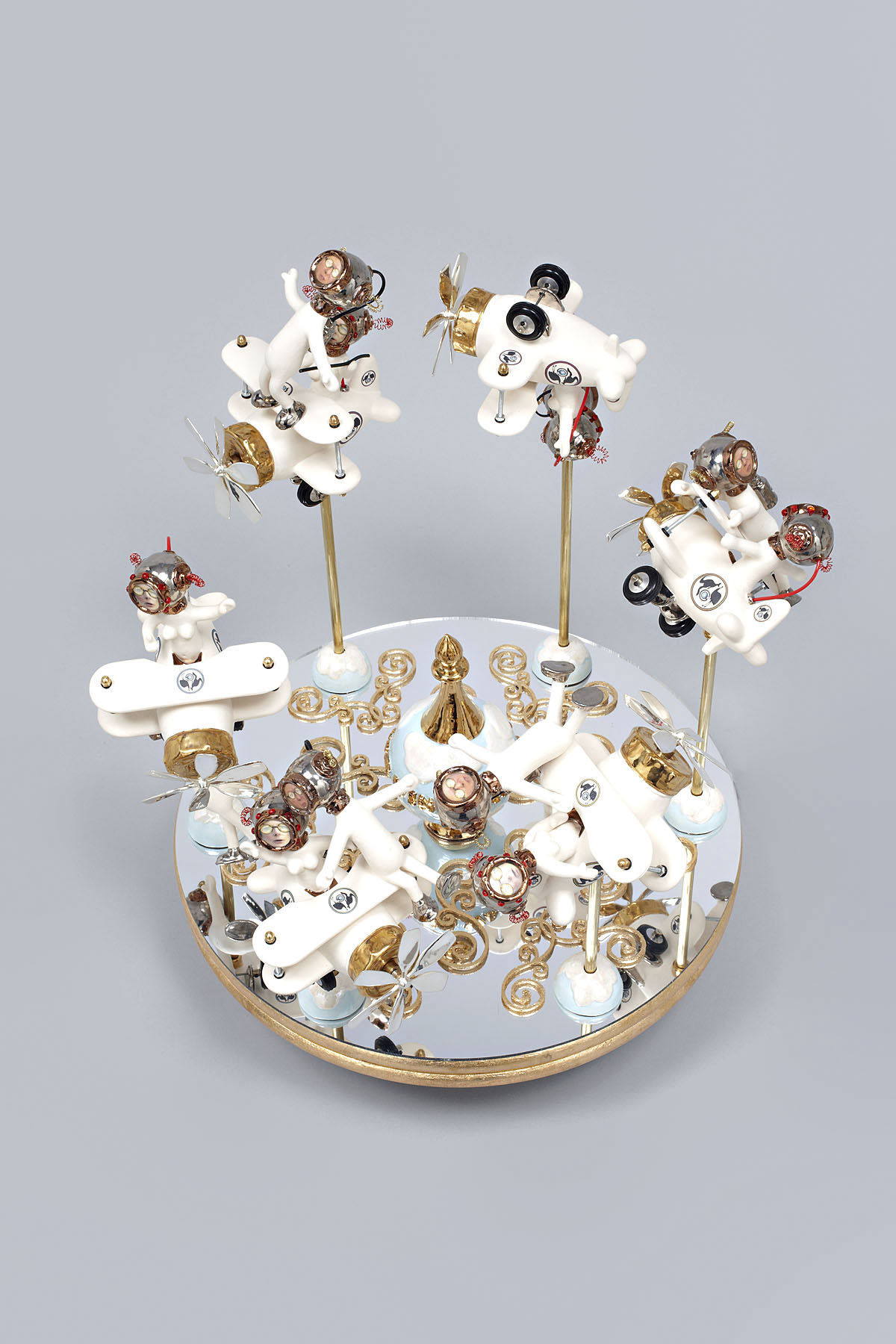
Robyn Hosking (Australian, b. 1948) 'The Wing Walker' 2011


Robyn Hosking (Australian, b. 1948)
The Wing Walker
2011
Mixed media


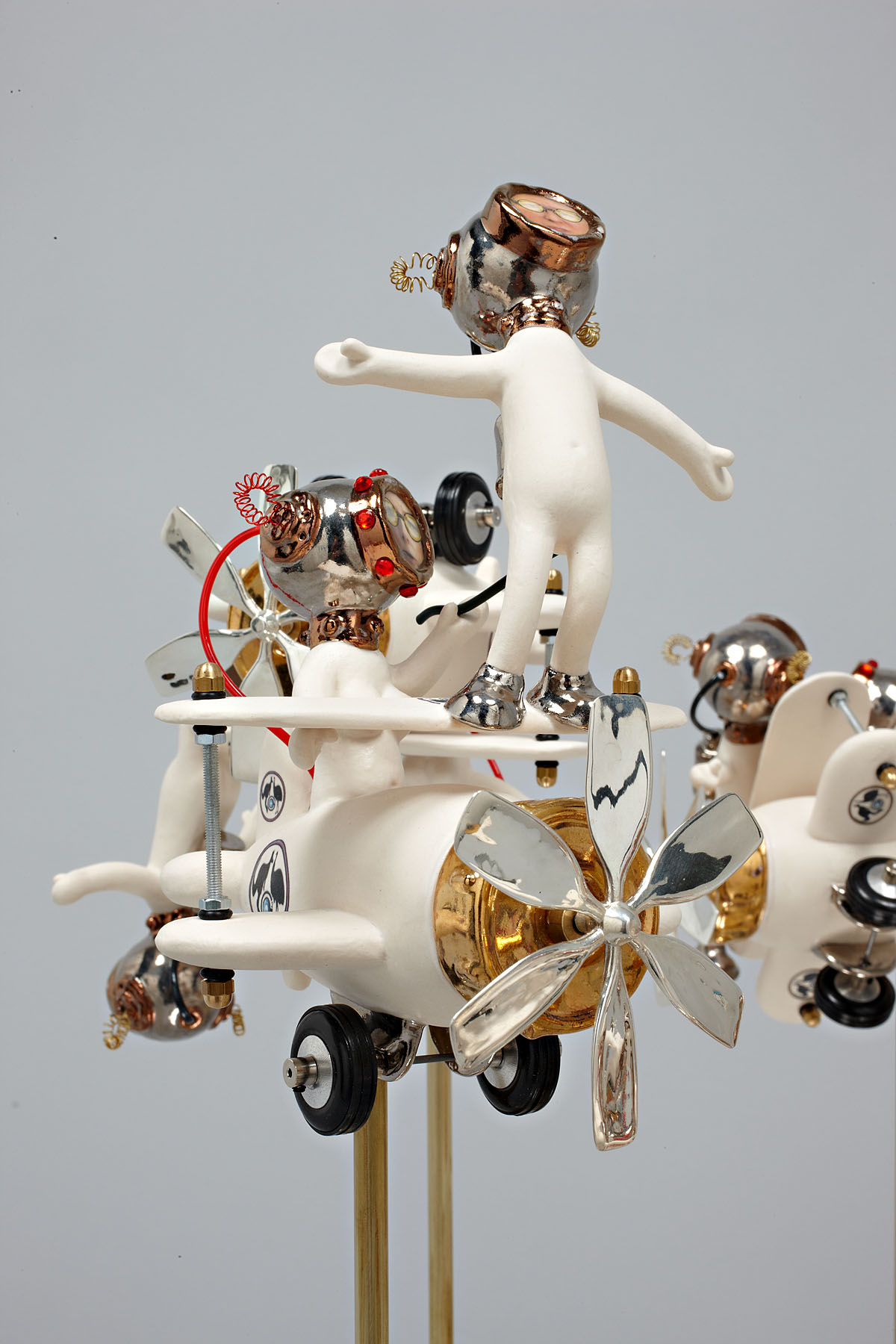
Robyn Hosking (Australian, b. 1948) 'The Wing Walker' 2011 (detail)


Robyn Hosking (Australian, b. 1948)
The Wing Walker (detail)
2011
Mixed media


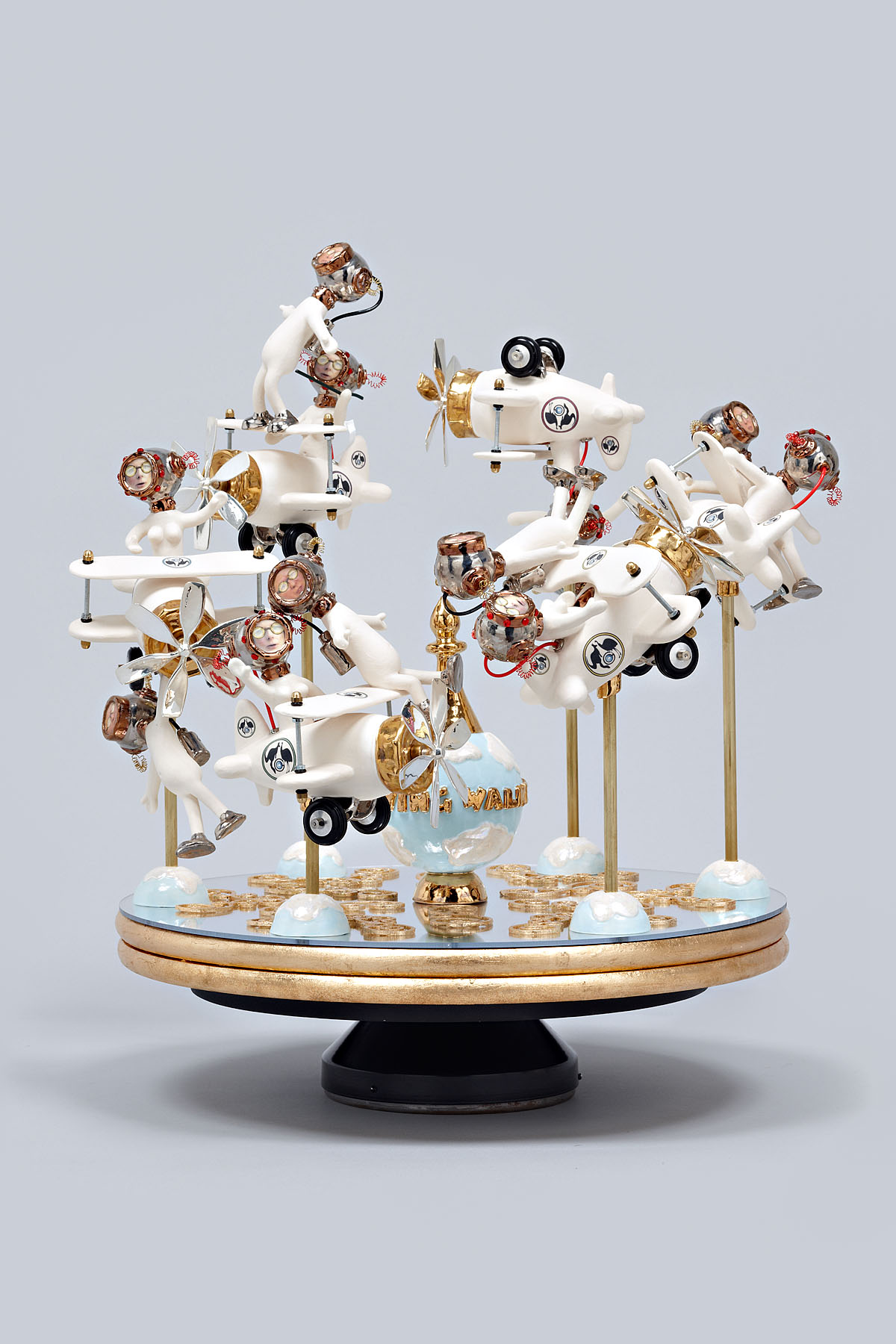
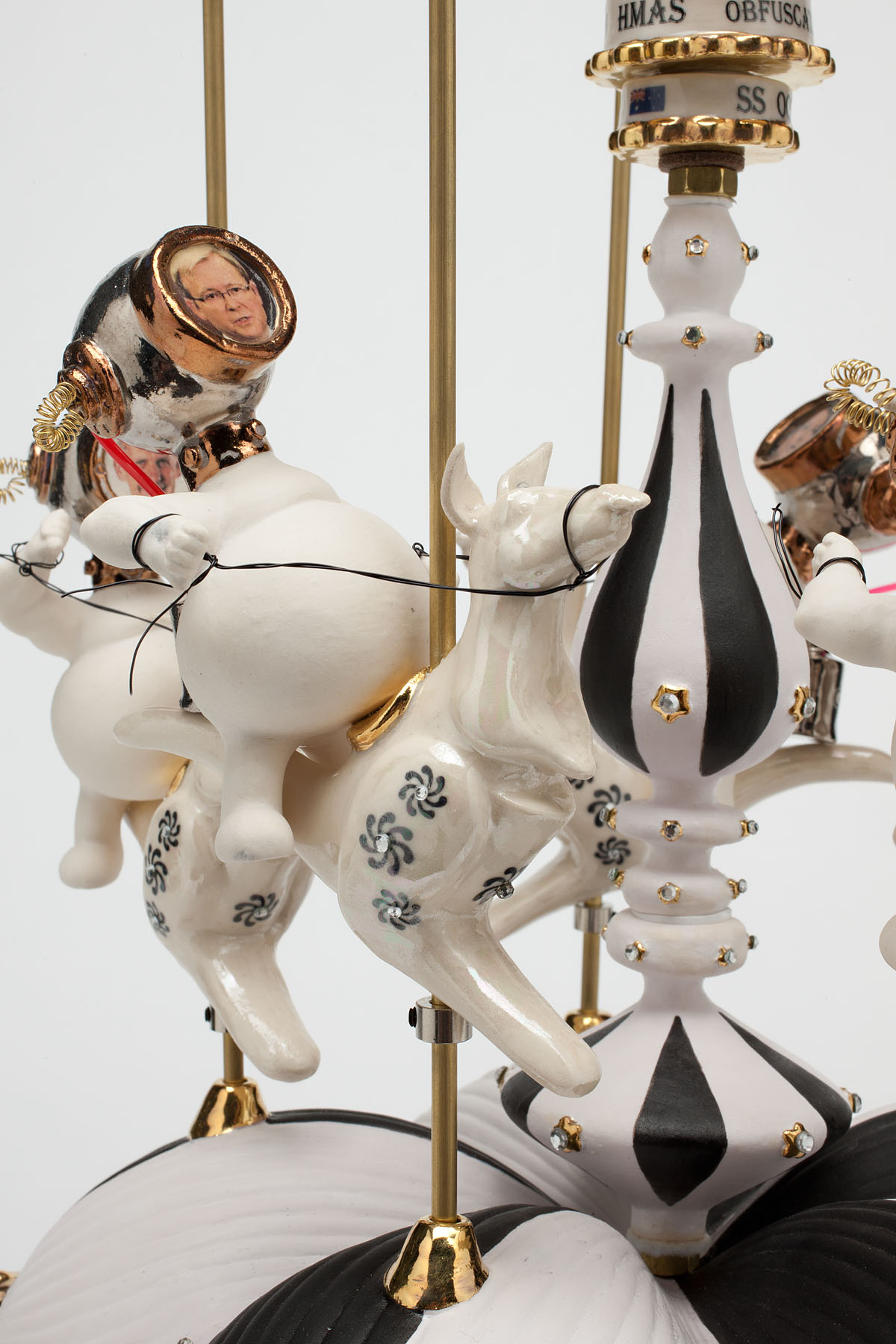
… My favourite has to be The Wing Walker (2011) as an irate Julia Gillard tries to get rid of Kevin Rudd once and for all, even poking him with a stick to push him off the edge of the biplane. Balanced on a slowly revolving turntable with the world at its centre, this political merry-go round is panacea for the soul for people sick of politicians. This is brilliant political satire. The planes are all ends up and even when Julia thinks she has got rid of Kevin there he is, hanging on for dear life from the undercarriage of one of the planes…

Reminding me of the fantasy creatures of Tom Moore, these whimsical manifestations deal with serious, life changing and challenging issues with purpose, feeling and a wicked sense of humour. I really enjoyed this art (and joy is the correct word) because it takes real world issues, melds fantasy and pointed observation and reflects it back, as the artist observes, in a funfair’s distorted mirror. Magic!


2/ Review: Martin Parr: In Focus at Niagara Galleries, Richmond, Melbourne

Exhibition dates: 6th March – 31st March 2012

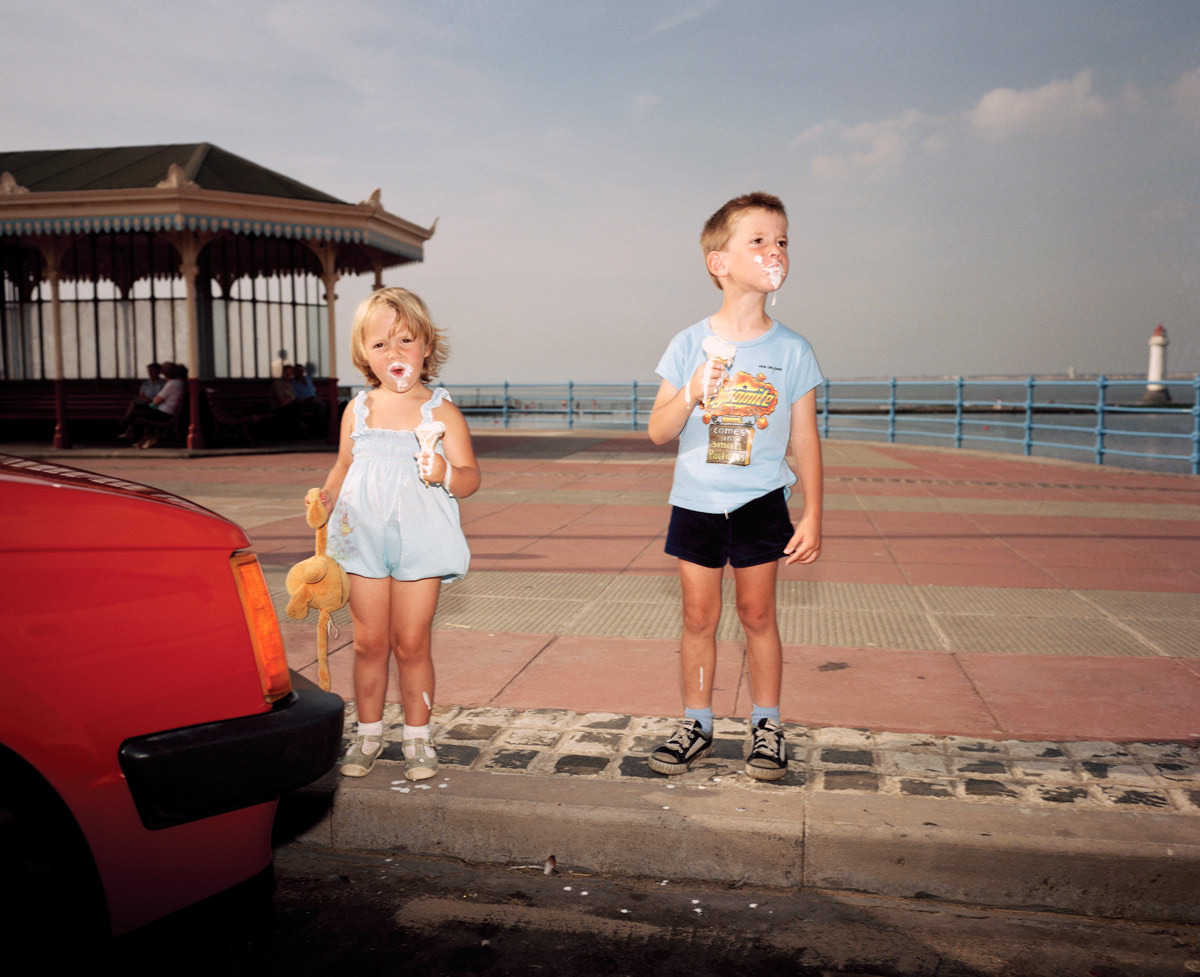
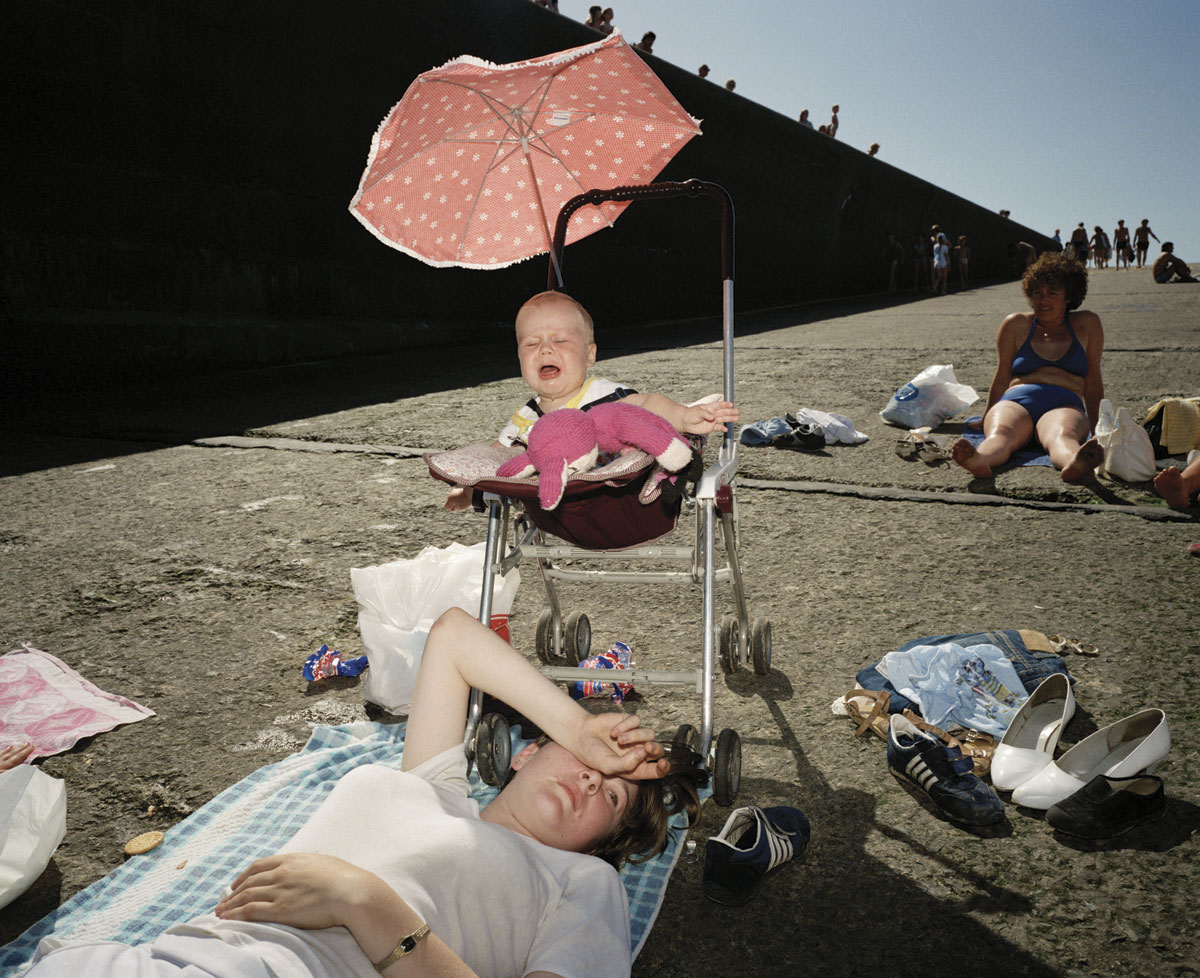
This is a fine exhibition of the work of celebrated English photographer Martin Parr at Niagara Galleries, Richmond, albeit with one proviso. The mainly large colour prints are handsomely displayed in plain white frames within the gallery space and are taken from his well known series: Last Resort, Luxury, New British and British Food. Parr’s work is at its best when he concentrates on the volume of space within the image plane and the details that emerge from such a concentrated visualisation – whether it be the tension points within the image, assemblage of colour, incongruity of dress, messiness of childhood or philistine nature of luxury.

And so it goes. The dirt under the fingernails of the child eating a doughnut, the lurid colours of the popsicle and jacket of the kid with dribble on his face, all fantastic… They are joyous paeans to the quirky, incongruous worlds in which we live and circulate. They evidence life itself in all its orthogonal absurdity.


Martin Parr (British, b. 1952) 'England. New Brighton' 1983-1985


Martin Parr (British, b. 1952)
England. New Brighton
1983-1985
From the series Last Resort
1983-1985
Pigment print
Edition of 5
102 x 127cm
Image courtesy of the artist and Niagara Galleries, Melbourne


Martin Parr (British, b. 1952) 'England. New Brighton' 1983-1985


Martin Parr (British, b. 1952)
England. New Brighton
1983-1985
From the series Last Resort
Pigment print
Edition of 5
102 x 127 cm
Image courtesy of the artist and Niagara Galleries, Melbourne


3/ Review: Tourist #5: Disappearing Project 1 – 41 by Nicola Loder at Helen Gory Galerie, Prahran, Melbourne

Exhibition dates: 14th March – 7th April 2012

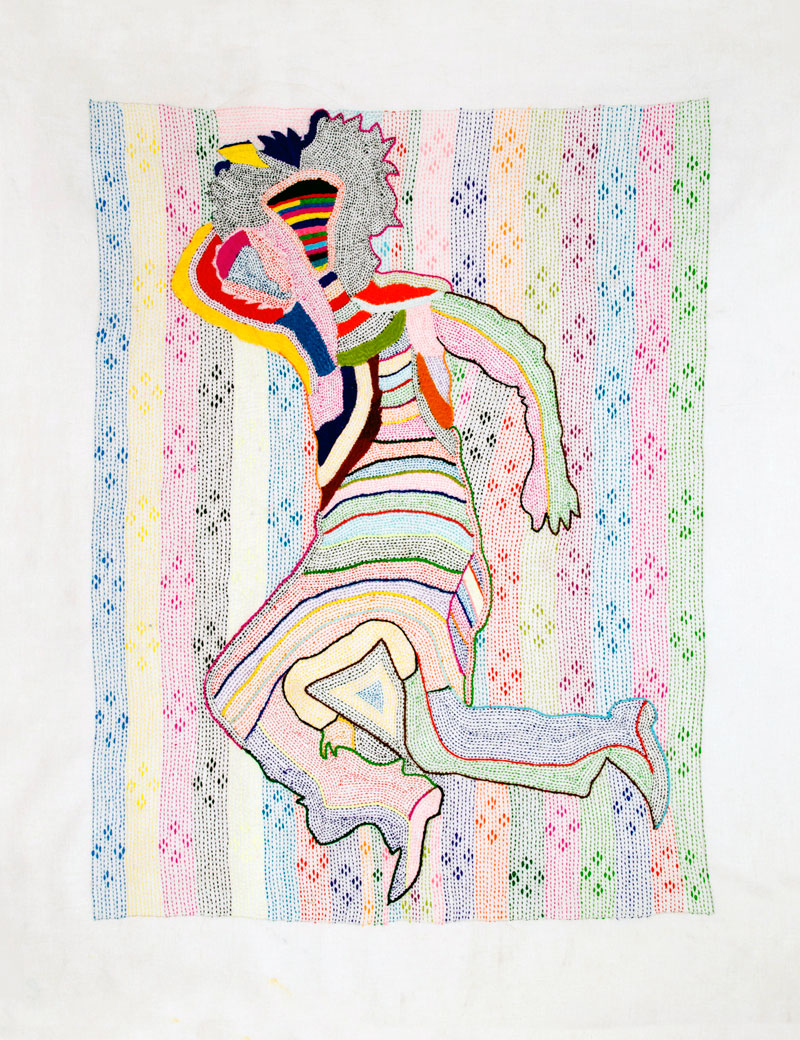
I have always loved the work of Nicola Loder ever since I saw her solo exhibition Child 1-175: A Nostalgia for the Present at Stop 22 Gallery in St Kilda in 1996. This exhibition is no exception. Loder is the consummate professional, her work is as imaginative and intriguing as ever and there has been a consistent thematic development of ideas within her work over a long period of time. These ideas relate to the nature of seeing and being seen, the mapping of identity and the process of its (dis)appearance…

Loder’s exquisitely sensuous description of disappearance allows us to see the phenomenal word afresh. I look forward with a sense of anticipation to the next voyage of discovery the artist will take me on.


'Tourist #5: Disappearing Project 1-41' by Nicola Loder, installation photograph at Helen Gorie Galerie


Tourist #5: Disappearing Project 1-41 by Nicola Loder, installation photograph at Helen Gorie Galerie


Nicola Loder (Australian, b. 1964) 'Tourist #5: Disappearing Project 1-41 (no 11)' 2012


Nicola Loder (Australian, b. 1964)
Tourist #5: Disappearing Project 1-41 (no 11)
2012
Polyester thread, muslin
86 x 69cm


4/ Review: Jane Brown / Australian Gothic at Edmund Pearce Gallery, Melbourne

Exhibition dates: 25th April – 12th May 2012


Jane Brown (Kuwait, Australia, b. 1967) 'Big Trout, New South Wales' 2010

Jane Brown (Kuwait, Australia, b. 1967)
Big Trout, New South Wales
2010
Museo silver rag print
59 x 46cm


Jane Brown (Kuwait, Australia, b. 1967) 'Adelong, New South Wales' 2011


Jane Brown (Kuwait, Australia, b. 1967)
Adelong, New South Wales
2011
Fibre based, silver gelatin print
16.5 x 20.5cm


This is a good exhibition of small, darkly hewn, traditionally printed silver gelatin photographs, beautifully hung in the small gallery at Edmund Pearce and lit in the requisite, ambient manner. There are some outstanding photographs in the exhibition. The strongest works are the surrealist tinged, film noir-ish mise-en-scènes, the ones that emphasise the metaphorical darkness of the elements gathered upon the stage. Photographs such as Big TroutThe Female Factory, Adelong, New South Wales and Captain’s Flat Hotel, New South Wales really invoke a feeling of unhomely (or unheimlich), where nature is out of kilter. These images unsettle our idea of Oztraliana, our perceived sense of Self and our place in the world. They disrupt normal transmission; they transmutate the seen environment, transforming appearance, nature and form.


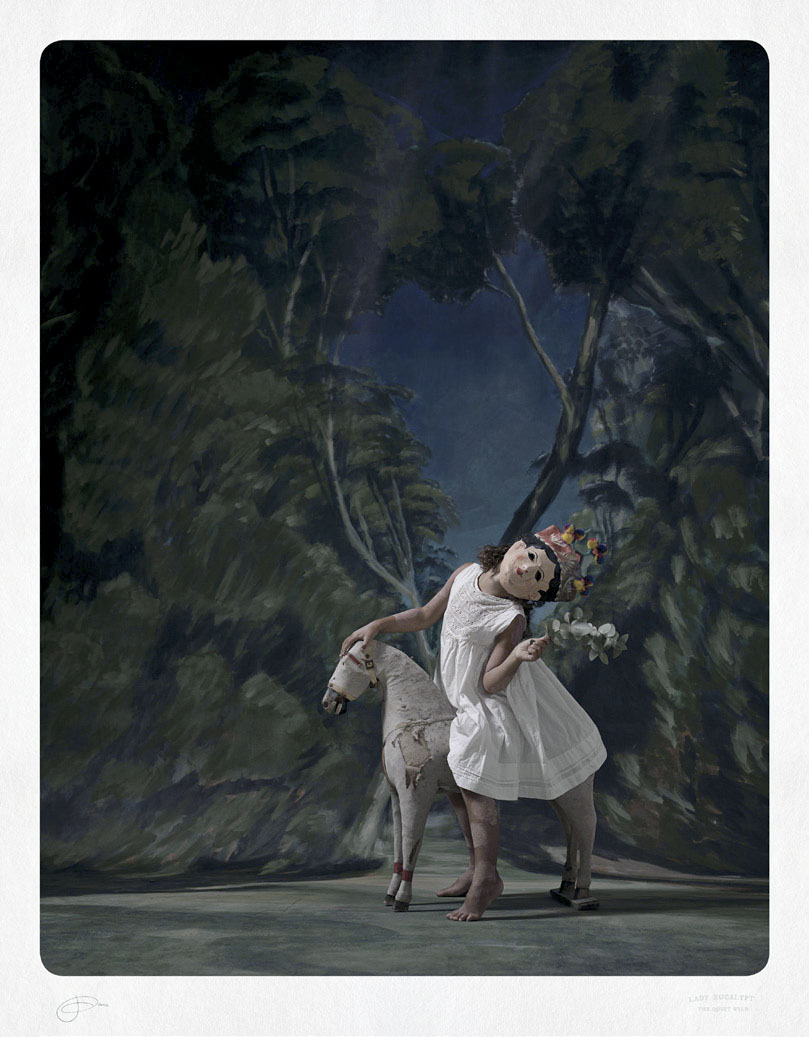
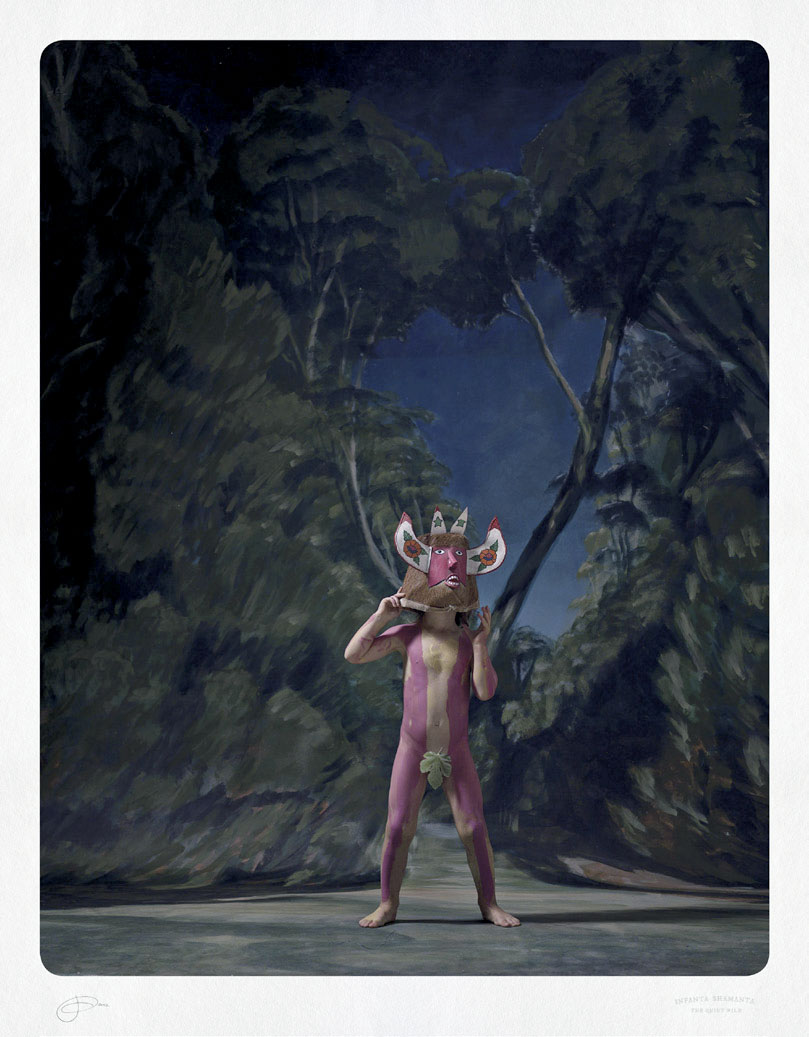
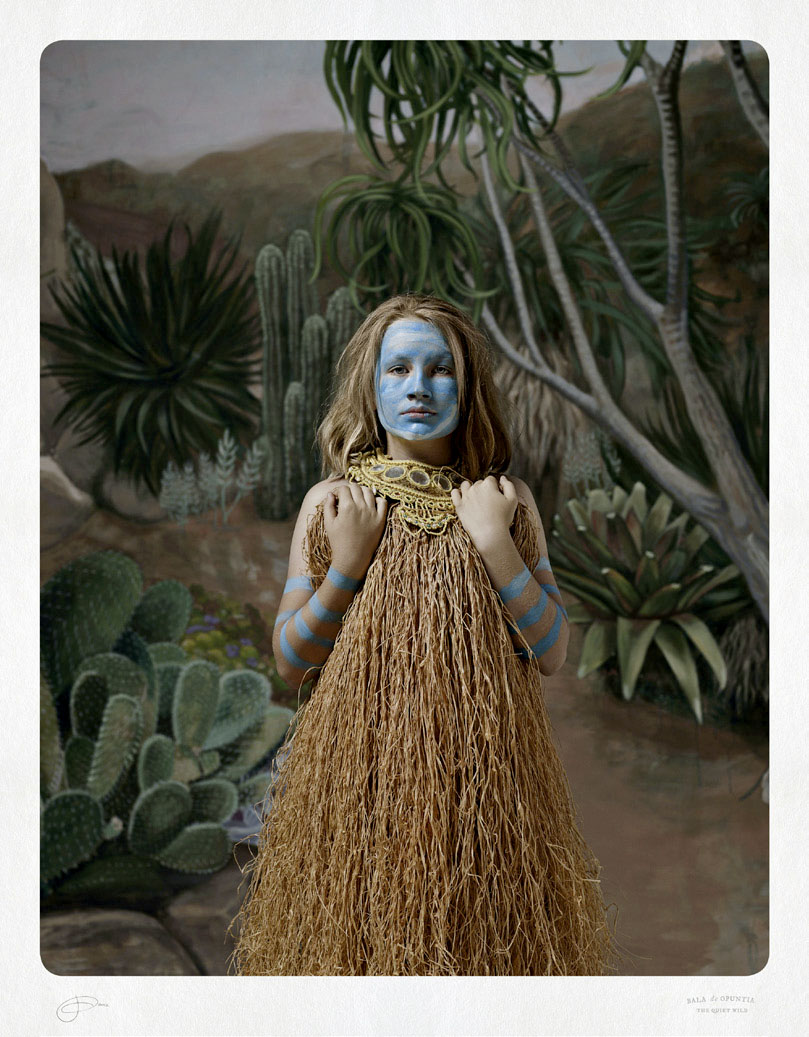
5/ Review: Jacqui Stockdale: The Quiet Wild at Helen Gory Galerie, Melbourne

Exhibition dates: 18th April – 19th May 2012


Jacqui Stockdale (Australian, b. 1968) 'Rama-Jaara the Royal Shepherdess' 2012


Jacqui Stockdale (Australian, b. 1968)
Rama-Jaara the Royal Shepherdess
2012
Type C Print
100 x 78cm


Jacqui Stockdale (Australian, b. 1968) 'Lagunta Man, Leeawuleena' 2012 Type C Print 100 x 78cm


Jacqui Stockdale (Australian, b. 1968)
Lagunta Man, Leeawuleena
2012
Type C Print
100 x 78cm


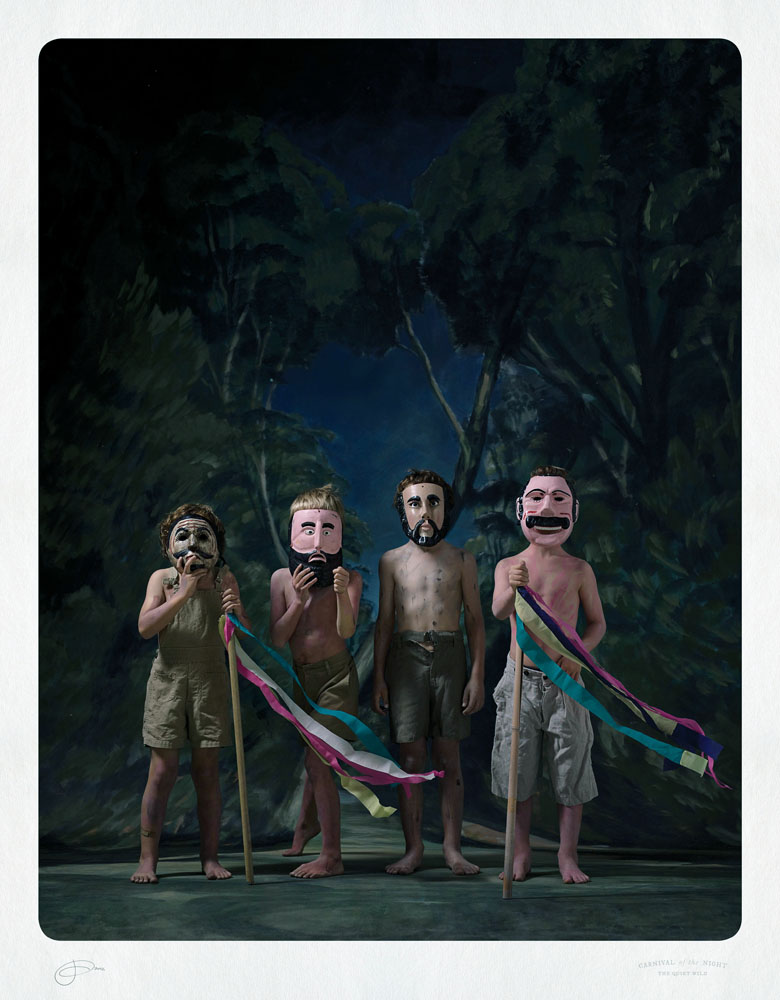
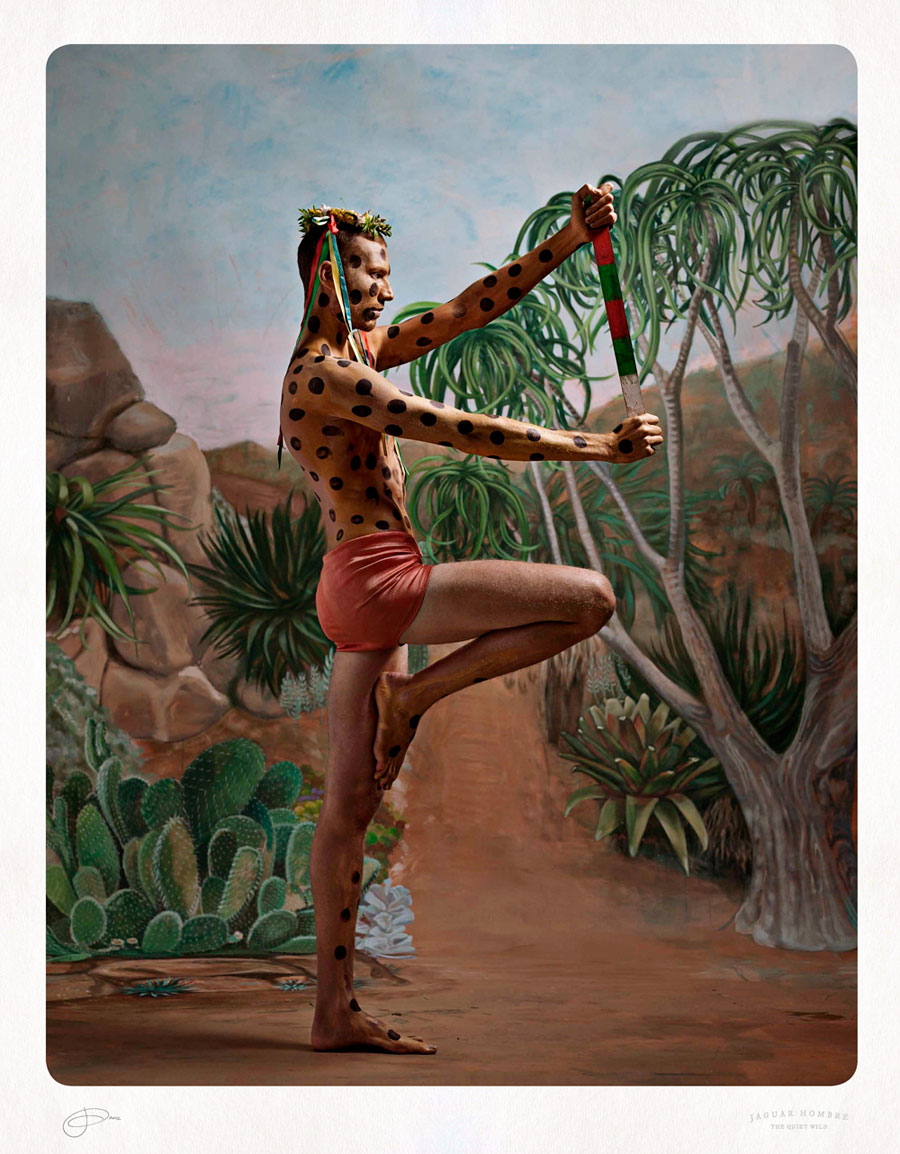
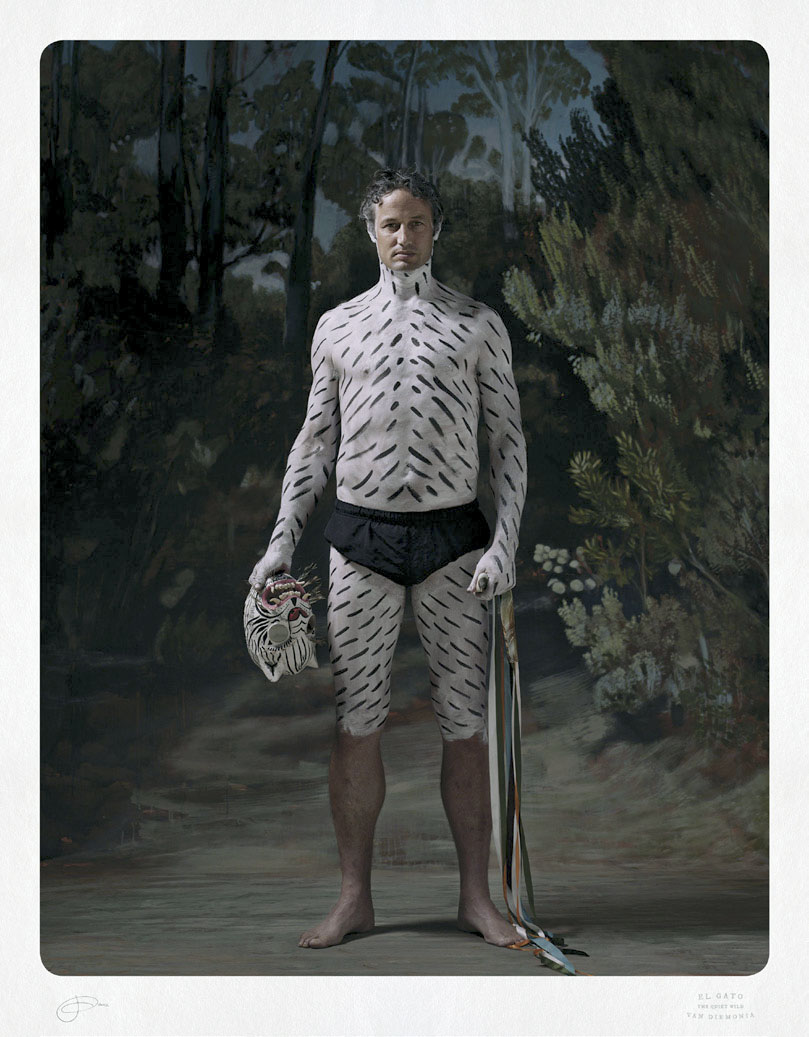
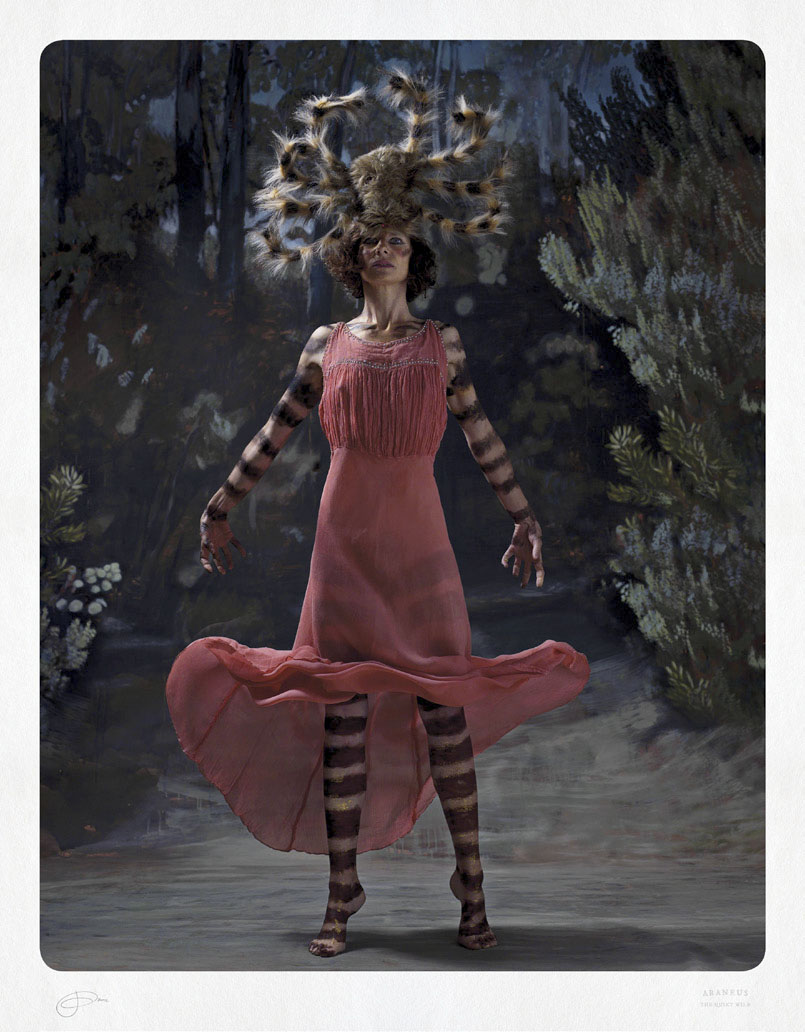
These are incredibly humorous, magical and symbolic photographs. A thought came into my mind when I was in the gallery surrounded by the work: for me they represented a vision of the Major Arcana of the Tarot (for example Jaguar Hombre could be seen as an inverted version of the Hanged Man with his foot in a figure four, the Hanged Man symbolising the need to just be in the world, yielding his mind and body to the Universal flow). The Major Arcana deal with the human condition, each card representing the joys and sorrows every man and woman can experience in a lifetime. In a way Stockdale offers us her own set of subversive Major Arcana, images that transgress the boundaries of the colonial vernacular, offering the viewer a chance to explore the heart of the quiet wild.


6/ Review: Littoral by Kristian Laemmle-Ruff at Colour Factory Gallery, Fitzroy

Exhibition dates: 4th May – 26th May 2012


It was such a joy then to walk around the corner from the CCP to the Colour Factory Gallery and view the exhibition Littoral by emerging artist Kristian Laemmle-Ruff. This is one of the best, if not the best, “photography” exhibition I have seen so far this year. As soon as you walk into the simple, elegant gallery you are surrounded by fourteen large scale horizontal photographs that are suffused with colour variations bouncing across the gallery – here a blue, there a green, now a lush orange palette. The effect is much like Monet’s waterlilies at the Musée de l’Orangerie in Paris; seated in the middle of the four curved paintings you are surrounded by large daubs of paint of various hues that have an elemental effect – resonances of earth, air, water, fire – on the viewer. The same affection of colour and space can be found in Laemmle-Ruff’s photographs.


Kristian Laemmle-Ruff (Australian) 'Olympic Stadium' 2012


Kristian Laemmle-Ruff (Australian)
Olympic Stadium
2012
Type C print
100cm x 67cm


Kristian Laemmle-Ruff (Australian) 'Truck in Safi' 2010


Kristian Laemmle-Ruff (Australian)
Truck in Safi
2010
Type C print
100cm x 67cm


7/ Review: Lost & Found: Family Photos Swept away by the 3.11 East Japan Tsunami at the Centre for Contemporary Photography (CCP), Fitzroy, Melbourne

Exhibition dates: 1st June – 15th July 2012

What we are left with in these images are vestiges of presence, remnants or traces of people that have passed on. In a kind of divine intervention, these photographs ask the viewer questions about the one fact that we cannot avoid in our lives, our own mortality, and what remains after we pass on. We can never know these people and places, just as we can never know the place and time of our death – when our “time” is up – but these photographs awaken in us a subconscious remembering: that we may be found (in life), then lost (through death), then found again in the gaze of the viewer looking at the photographs in the future present. We are (dis)continuous beings.

There is no one single reading of these photographs for “there are only competing narratives and interpretations of a world that cannot be wholly, accurately described.” These indescribable photographs impinge on our consciousness calling on us to remember even as the speed of contemporary life asks us to forget. This ethical act of looking, of mourning and remembering, of paying homage to presence acknowledges that we choose not to let pass into the dark night of the soul these traces of our forebears, for each emanation is deeply embedded within individual and cultural memory.

These photographs are a contemporary form of Western ‘dreaming’ in which we feel a link to the collective human experience. In this reification, we bear witness to the (re)assemblance of life, the abstract made (subconsciously) concrete, as material thing. These images of absent presence certainly reached out and touched my soul. Vividly, I choose to remember rather than to forget.


'Untitled' from 'Lost and Found' 2011

'Untitled' from 'Lost and Found' 2011


Anonymous photographer
Untitled
2011
From Lost and Found 2011


8/ Review: Berlinde De Bruyckere: We are all Flesh at the Australian Centre for Contemporary Art (ACCA), Melbourne

Exhibition dates: 2nd June – 29th July 2012

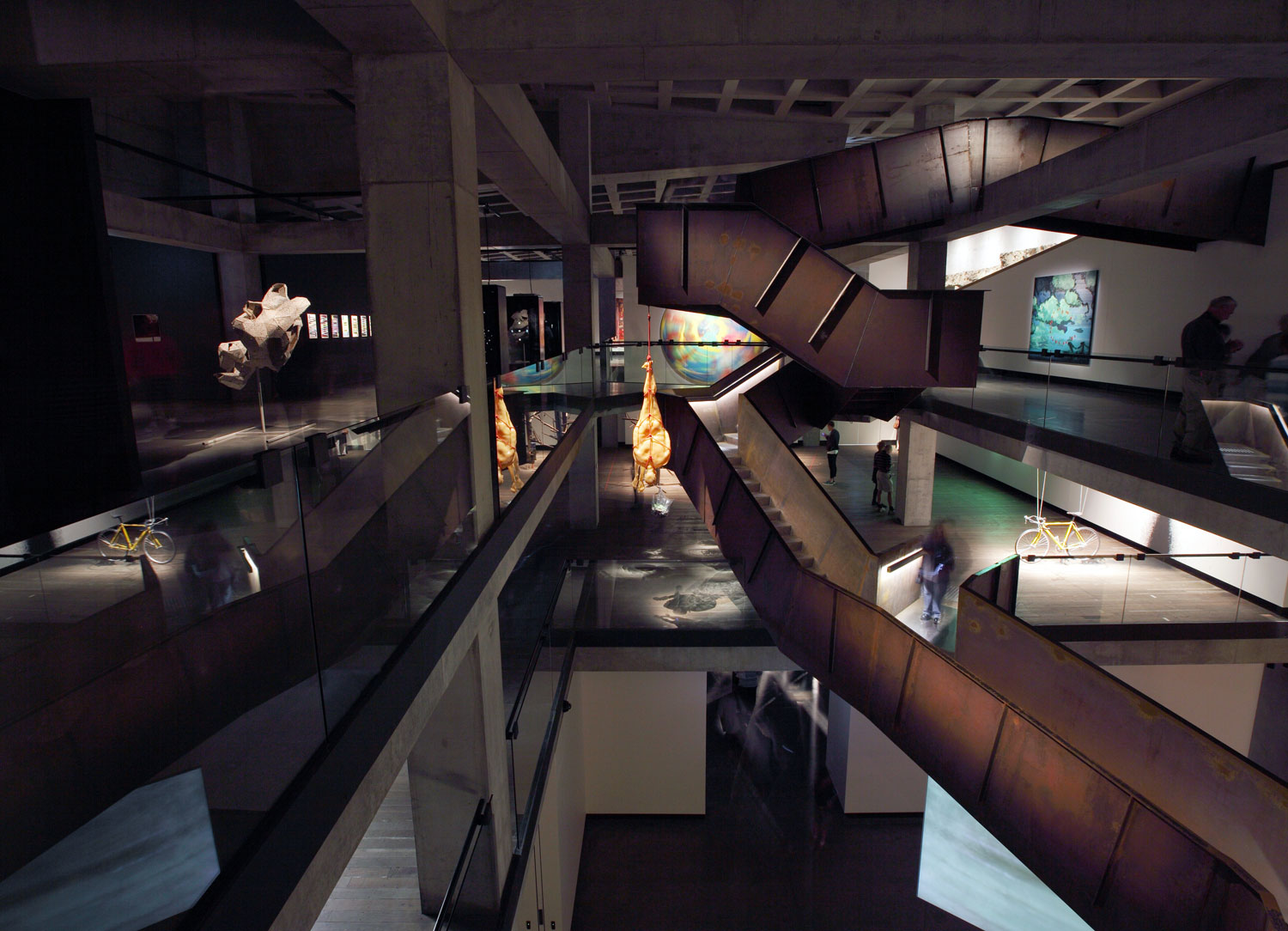
The main work We Are All Flesh (2012) reminded me of a version of the game The Hanged Man (you know, the one where you have to guess the letters of a word and if you don’t get the letter, the scaffold and the hanged man are drawn). The larger of the two hanging pieces featured two horse skins of different colours intertwined like a ying yang paux de deux. Psychologically the energy was very heavy. The use of straps to suspend the horses was inspired. Memories of Rembrandt’s The Anatomy Lesson of Dr. Nicolaes Tulp and The Godfather rose to the surface. My favourite piece was 019 (2007). Elegant in its simplicity this beautiful display case from a museum was dismantled and shipped over to Australia in parts and then reassembled here. The figurative pieces of wood, made of wax, seemed like bodies drained of blood displayed as specimens. The blankets underneath added an element of comfort. The whole piece was restrained and beautifully balanced. Joseph Beuys would have been very proud.

The “visceral gothic” contained in the exhibition was very evident. I liked the artist’s trembling and shuddering. Her narratives aroused a frisson, a moment of intense danger and excitement, the sudden terror of the risen animal


Berlinde De Bruyckere (Belgian, b. 1964) 'We Are All Flesh' 2012


Berlinde De Bruyckere (Belgian, b. 1964)
We Are All Flesh
2012
Treated horse skin, epoxy, iron armature
280 x 160 x 100cm
Courtesy the artist, Hauser & Wirth and Galleria Continua


Berlinde De Bruyckere (Belgian, b. 1964) '019' 2007


Berlinde De Bruyckere (Belgian, b. 1964)
019
2007
Wax, epoxy, metal, glass, wood, blankets
293.5 x 517 x 77.5cm
Private Collection, Paris


9/ Review: Light Works at NGV International, Melbourne

Exhibition dates: 23rd March – 16th September 2012

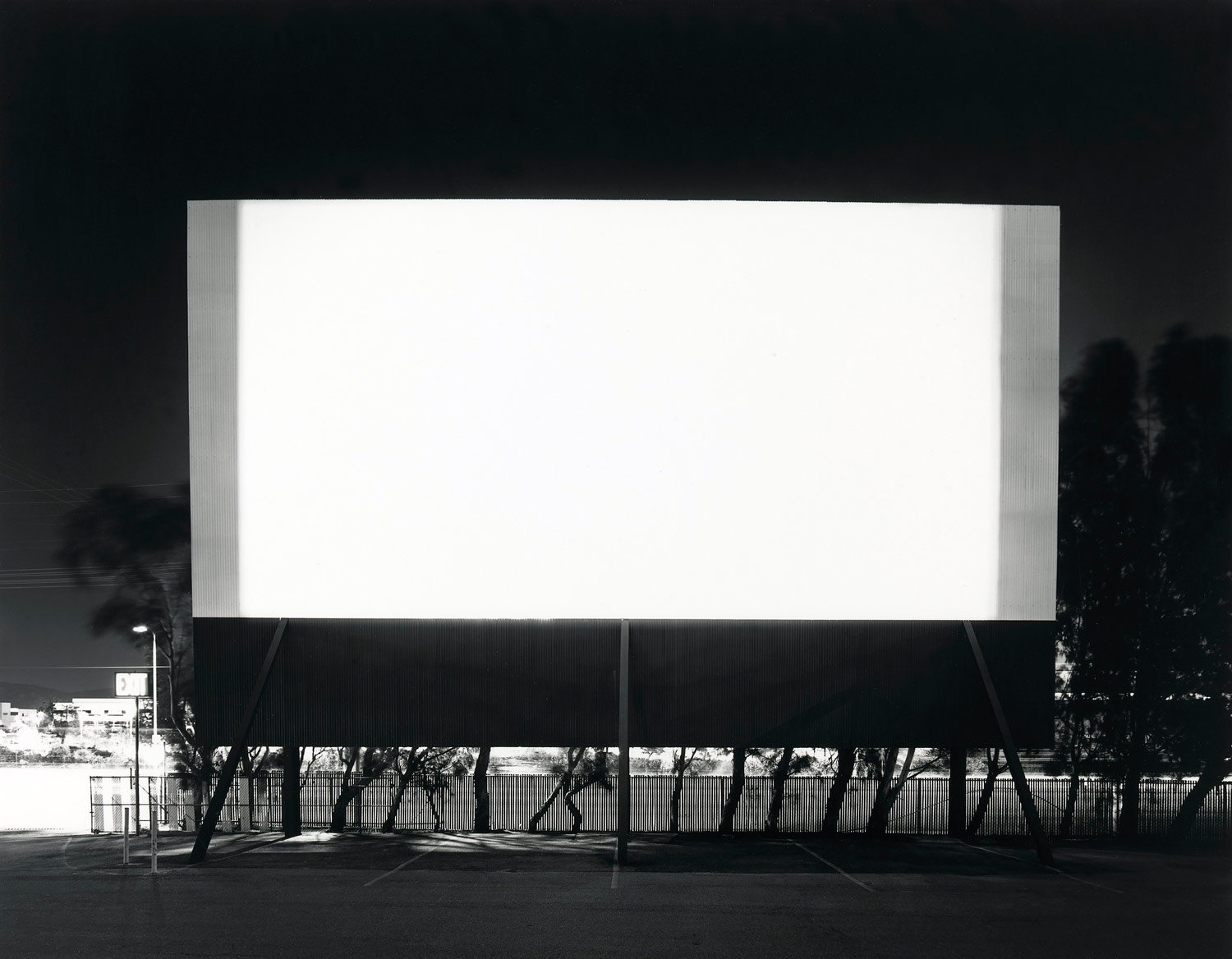
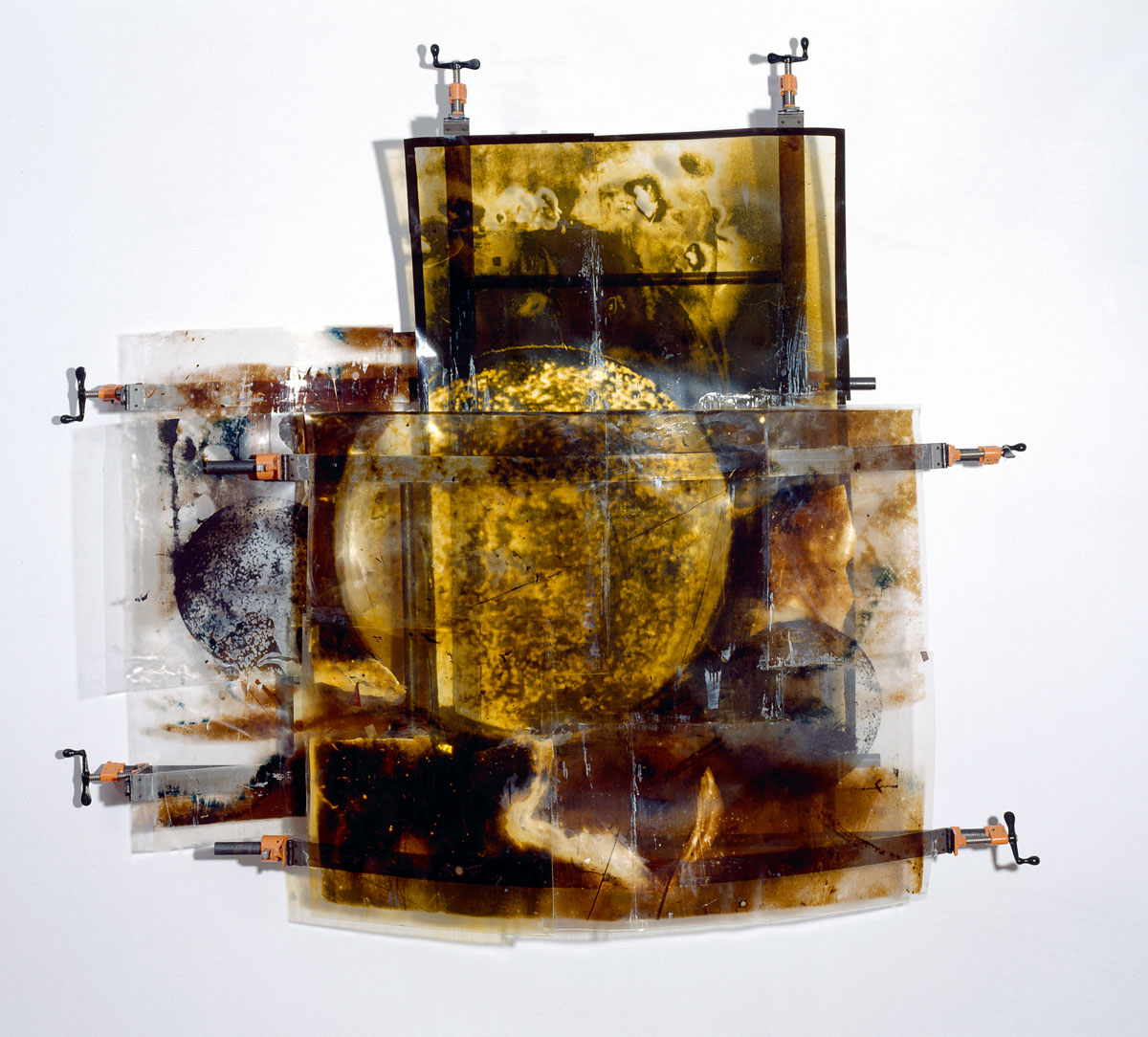
This is an intimate and stimulating photographic exhibition at the NGV International featuring the work of artists Mike and Doug Starn, David Stephenson, Hiroshi Sugimoto, Bill Henson, Adam Fuss, Simone Douglas, Park Hong-Chun, Eugenia Raskopoulos, Sam Shmith, Christoph Dahlhausen and Patrick Bailly-Maitre-Grand. It is fantastic to see an exhibition of solely contemporary photographs at the National Gallery of Victoria taken from their collection (with nary a vintage silver gelatin photograph in sight!), one which examines the orchestration of light from which all photography emanates – used by different photographers in the creation, and there is the key word, of their work. Collectively, the works seem to ooze a mysterious inner light, a facing towards the transcendent divine – both comforting, astonishing and terrifying in part measure.


Hiroshi Sugimoto (Japanese, b. 1948-, worked in United States 1972- ) 'Winnetka Drive-In, Paramount' 1993


Hiroshi Sugimoto (Japanese, b. 1948-, worked in United States 1972- )
Winnetka Drive-In, Paramount
1993
Gelatin silver photograph
42.3 x 54.1cm
National Gallery of Victoria, Melbourne
Purchased with funds donated by the Bowness Family Fund for Contemporary Photography, 2009
© Hiroshi Sugimoto, courtesy The Pace Gallery, New York


Mike Starn (American, b. 1961) and Doug Starn (American, b. 1961)
'Sol Invictus' 1992


Mike Starn (American, b. 1961) and Doug Starn (American, b. 1961)
Sol Invictus
1992
Orthographic film, silicon, pipe clamps, steel and adhesive tape
175 x 200 x 35cm
National Gallery of Victoria, Melbourne
Purchased with funds donated by the National Gallery Women’s Association, 1994
© Doug Starn, Mike Starn/ARS, New York. Licensed by VISCOPY, Sydney


10/ Review: Gregory Crewdson: In A Lonely Place at the Centre for Contemporary Photography (CCP), Fitzroy, Melbourne

Exhibition dates: 28th September – 11th November 2012

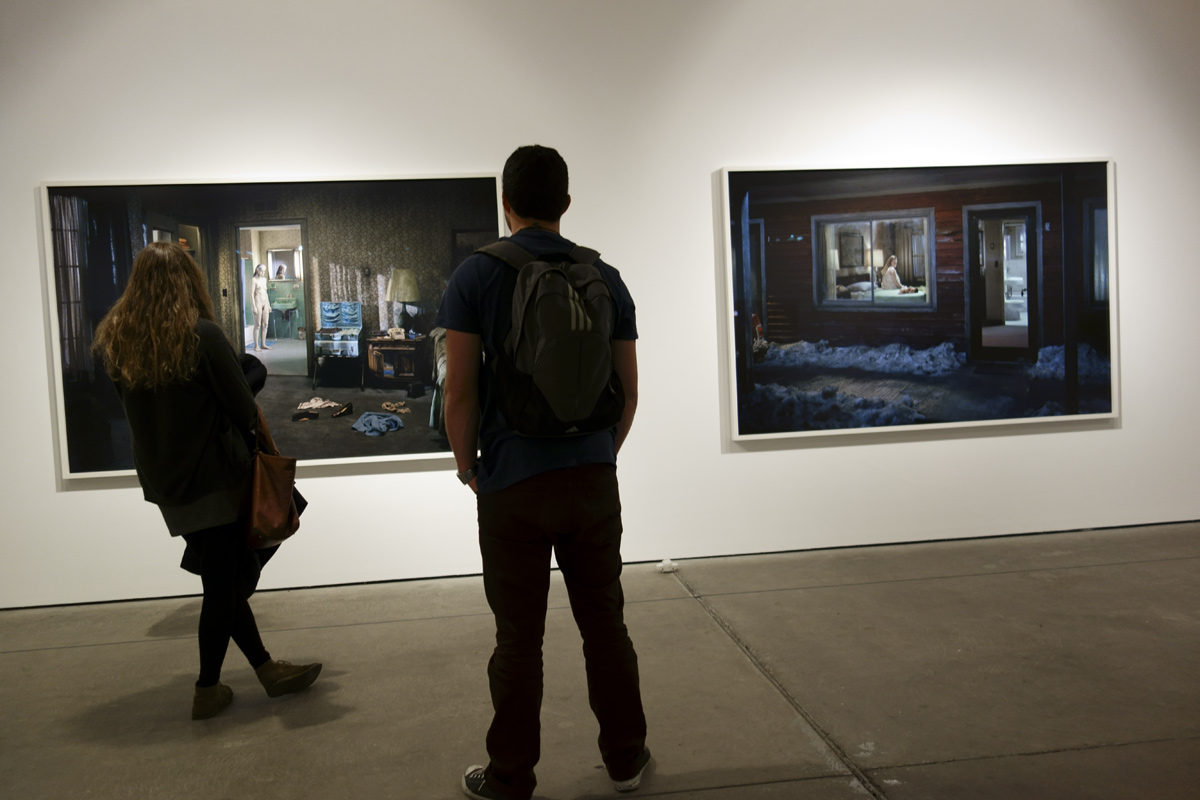
In his visual mosaics Crewdson engages our relationship with time and space to challenge the trace of experience. His tableaux act as a kind of threshold or hinge of experience – between interior and exterior, viewer and photograph. His photographs are a form of monism in which two forces (interior / exterior) try to absorb each other but ultimately lead to a state of equilibrium. It is through this “play” that the context of the photographs and their relationship to each other and the viewer are “framed.” This device emphasises the aesthetic as much as information and encourages the viewer to think about the relationship between the body, the world of which it is part and the dream-reason of time. This intertextual (n)framing (n meaning unspecified number in mathematics) encourages the viewer to explore the inbetween spaces in the non-narrative / meta-narrative, “and by leaps (intuitive leaps, poetic leaps, leaps of faith)” encourage escapism in the imagination of the viewer. It is up to us as viewers to seek the multiple, disparate significances of what is concealed in each photograph as “felt knowledge” (Walter Benjamin), recalling to mind the sensory data placed before our eyes, something that can be experienced but cannot be explained by man: “the single moment of the present amidst the transience of life and searching for some kind of eternal truth.”


Installation photograph of the series 'Beneath the Roses' from the exhibition 'Gregory Crewdson: In a Lonely Place' at the Centre for Contemporary Photography (CCP), Melbourne


Installation photograph of the series Beneath the Roses from the exhibition Gregory Crewdson: In a Lonely Place at the Centre for Contemporary Photography (CCP), Melbourne


Gregory Crewdson (American, b. 1962) 'Untitled (Maple Street)' 2003-2005


Gregory Crewdson (American, b. 1962)
Untitled (Maple Street)
2003-2005
© Gregory Crewdson. Courtesy Gagosian Gallery


11/ Exhibition: Janina Green: Ikea at Edmund Pearce Gallery, Melbourne

Exhibition dates: 28th November 28 – 15th December 2012


Installation photograph of 'Ikea' by Janina Green at Edmund Pearce Gallery, Melbourne


Installation photograph of Ikea by Janina Green at Edmund Pearce Gallery, Melbourne


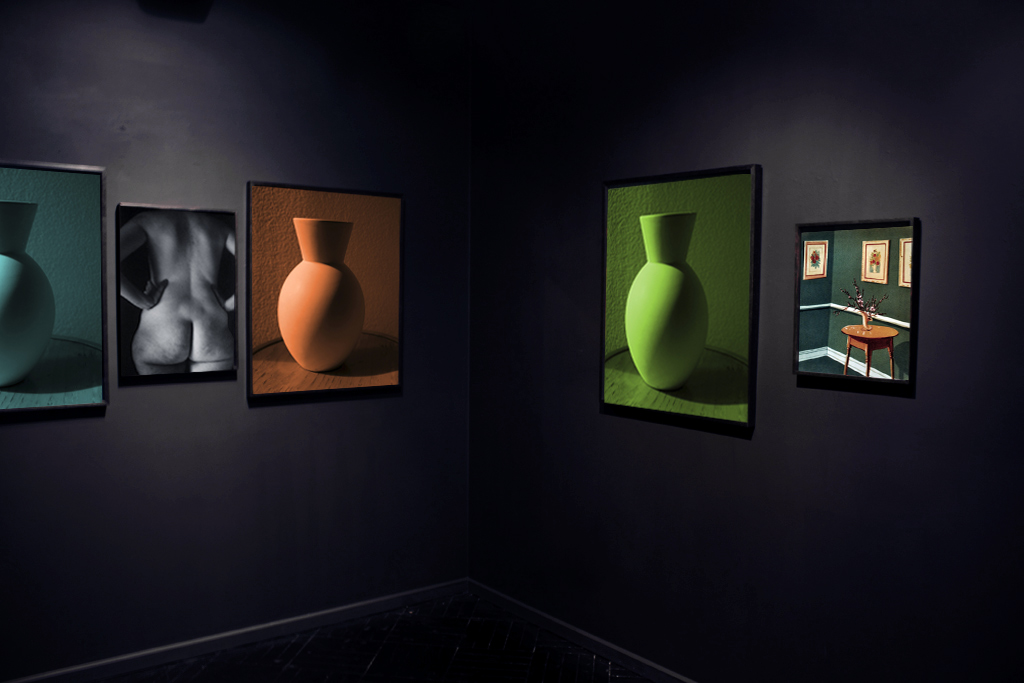
Janina Green (Australian born Germany, b. 1944) 'Orange vase' 1990 reprinted 2012


Janina Green (Australian born Germany, b. 1944)
Orange vase
1990 reprinted 2012
Silver gelatin print on fibre based paper, hand-tinted with orange photo dye
85 x 70 cm


Fable = invent (an incident, person, or story)

Simulacrum = pretends to be a faithful copy, but it is a copy with no original

Performativity = power of discourse, politicization of abjection, ritual of being

Body / identity / desire = imperfection, fluidity, domesticity, transgression, transcendence


Intimate, conceptually robust and aesthetically sensitive.
The association of the images was emotionally overwhelming.
An absolute gem. One of the highlights of the year.


LIKE ART BLART ON FACEBOOK

Back to top

Review: ‘Gregory Crewdson: In A Lonely Place’ at the Centre for Contemporary Photography (CCP), Fitzroy, Melbourne

Exhibition dates: 28th September – 11th November 2012


Installation photograph of the series 'Beneath the Roses' (2003-2008) from the exhibition 'Gregory Crewdson: In A Lonely Place' at the Centre for Contemporary Photography (CCP), Fitzroy, Melbourne

Installation photograph of the series 'Beneath the Roses' (2003-2008) from the exhibition 'Gregory Crewdson: In A Lonely Place' at the Centre for Contemporary Photography (CCP), Fitzroy, Melbourne


Installation photographs of the series Beneath the Roses (2003-2008) from the exhibition Gregory Crewdson: In A Lonely Place at the Centre for Contemporary Photography (CCP), Fitzroy, Melbourne
Photos: Dr Marcus Bunyan


Downfall of a dream: (n)framing the enigma in Gregory Crewdson’s Beneath the Roses

After the excoriating diatribe by Robert Nelson in The Age newspaper (“Unreal stills, unmoving images” Wednesday October 17 2012) I hope this piece of writing will offer greater insight into the work of this internationally renowned artist. With some reservations, I like Crewsdon’s work, I like it a lot – as do the crowds of people flocking to the Centre for Contemporary Photography, Fitzroy to see the exhibition. Never have I seen so many people at the CCP looking at contemporary photography before and that can only be a good thing.

Let’s get the basics out of the way first. The early series Fireflies are small silver gelatin photographs that capture “the tiny insects’ transient moments of light as they illuminate the summer night.” These are minor works that fail to transcend the ephemeral nature of photography, fail to light the imagination of the viewer when looking at these scenes of dusky desire and discontinuous lives. The series of beautiful photographs titled Sanctuary (2010) evidence the “ruin of the legendary Cinecittà studios, which was founded by Mussolini in the 1930s and is associated with the great Italian film director Federico Fellini.” Wonderful photographs of doorways, temples, dilapidated stage sets with excellent use of soft miasmic light creating an atmosphere of de/generation (as though a half-remembered version of Rome had passed down through the generations) interfaced with contemporary Rome as backdrop. The digital prints show no strong specular highlights, no deep blacks but a series of transmutable grey and mid tones that add to the overall feeling of romantic ruin. It is a pity that these photographs are not printed as silver gelatin photographs, for they would have had much more depth of feeling than they presently possess. They just feel a little “thin” to me to sustain the weight of atmosphere required of them.

But it is the series Beneath the Roses (2003-2008) that has made Crewdson truly famous. Shot using a large format camera, Crewdson makes large-scale photographs of elaborate and meticulously staged tableaux, which have been described as “micro-epics” that probe the dark corners of the psyche. Working in the manner of a film director, he leads a production crew, which includes a director of photography, special effects and lighting teams, casting director and actors. He typically makes several exposures that he later digitally combines to produce the final image. Photographs in the series of “brief encounters” include external dioramas (shot in a down at heel Western Massachusetts town), where Crewdson shuts down streets and lights the whole scene; to interior dialogues where houses are built on sound stages and the artist can control every detail of the production. Influences on these works include, but are not limited to:

David Lynch (Blue Velvet, Twin Peaks), Alfred Hitchcock (Vertigo), Steven Spielberg (Close Encounters), the paintings of Edward Hopper, Diane Arbus (the detritus of her photographic interiors), film noir, psychoanalysis, American suburbia, the American dream, the photographs of Walker Evans, Cindy Sherman and surrealism. Concepts that you could link to the work include loneliness, alienation, apathy, resignation, mystery, contemplation and confusion, identity, desire, memory and imagination.


Now to the nuts and bolts of the matter.

Another major influence that I will add is that of the great Italian director Federico Fellini (La Dolce Vita – The Sweet Life) who shot most of that film on the sets at Cinecittà studios in Rome. It is perhaps no coincidence that Crewdson, on his first overseas film shoot, shot the series Sanctuary at the very same location. Crewdson’s photographs in the series Beneath the Roses are an American form of  “The Sweet Life.” In 1961, the New York Times film critic Bosley Crowther praised Fellini’s “brilliantly graphic estimation of a whole swath of society in sad decay and, eventually, a withering commentary on the tragedy of the over-civilized… Fellini is nothing if not fertile, fierce and urbane in calculating the social scene around him and packing it onto the screen. He has an uncanny eye for finding the offbeat and grotesque incident, the gross and bizarre occurrence that exposes a glaring irony. He has, too, a splendid sense of balance and a deliciously sardonic wit that not only guided his cameras but also affected the writing of the script. In sum, it is an awesome picture, licentious in content but moral and vastly sophisticated in its attitude and what it says.”1 The same could equally be said of the Crewdson and his masterpieces in Beneath the Roses. Crewdson is in love with Fellini’s gesture – of the uplifting of the characters and their simultaneous descent into “sweet” hedonism, debauchery and decadence using the metaphor of downfall (downfall links each scene in La Dolce Vita, that of a “downward spiral that Marcello sets in motion when descending the first of several staircases (including ladders) that open and close each major episode.”)2 Crewdson’s “spectacular apocalypses of social enervation”3 mimic Fellini’s gestural flourishes becoming Crewdson’s theme of America’s downfall, America as a moral wasteland. Crewdson’s is “an aesthetic of disparity” that builds up a cumulative impression on the viewer that finds resolution in an “overpowering sense of the disparity between what life has been or could be, and what it actually is.”4

Crewdson’s cinematic encounters are vast and pin sharp when seen in the flesh. No reproduction on the web can do their physical presence justice; it is the details that delight in these productions. You have to get up close and personal with the work. His dystopic landscapes are not narratives as such, not stills taken from a movie (for that implies an ongoing story) but open-ended constructions that allow the viewer to imagine the story for themselves. They do not so much evoke a narrative as invite the viewer to create one for themselves – they are an “invitation” to a narrative, one that explores the anxiety of the (American) imagination, an invitation to empathise with the dramas at play within contemporary environments. For me, Crewdson’s extra ordinary photographs are a form of enigma (a puzzling or inexplicable occurrence or situation), the picture as master puzzle (where all the pieces fit perfectly together in stillness) that contains a riddle or hidden meaning. Clues to this reading can be found in one of the photographs from the series (Blue Period, see detail image, below) where Crewdson deliberately leaves the door of a bedside cupboard open to reveal a “Perfect PICTURE PUZZLE” box inside. The viewer has to really look into the image and understand the significance of this artefact.

Another reading that I have formulated is of the transience of space and time within Crewdson’s series. In the disquieting, anonymous townscapes people look out from their porches (or the verandas are lit and empty), they abandon their cars or walk down desolate streets hardly ever looking directly out at the viewer. The photographs become sites of mystery and wonder hardly anchored (still precisely anchored?) in time and space. This disparity is emphasised in the interior dialogues. The viewer (exterior) looks at a framed doorway or window (exterior) looking into an scene (interior) where the walls are usually covered with floral wallpaper (interior / exterior) upon which hangs a framed image of a Monet-like landscape (exterior) (see detail image, above). Exterior, exterior, interior, interior / exterior, exterior. The trees of the landscape invade the home but are framed; exterior/framed, interior/mind. There is something mysterious going on here, some reflection of an inner state of mind.

In his visual mosaics Crewdson engages our relationship with time and space to challenge the trace of experience. His tableaux act as a kind of threshold or hinge of experience – between interior and exterior, viewer and photograph. His photographs are a form of monism in which two forces (interior / exterior) try to absorb each other but ultimately lead to a state of equilibrium. It is through this “play” that the context of the photographs and their relationship to each other and the viewer are “framed.” This device emphasises the aesthetic as much as information and encourages the viewer to think about the relationship between the body, the world of which it is part and the dream-reason of time.5 This intertextual (n)framing (n meaning unspecified number in mathematics) encourages the viewer to explore the inbetween spaces in the non-narrative / meta-narrative,”and by leaps (intuitive leaps, poetic leaps, leaps of faith)”6 encourage escapism in the imagination of the viewer. It is up to us as viewers to seek the multiple, disparate significances of what is concealed in each photograph as “felt knowledge” (Walter Benjamin), recalling to mind the sensory data placed before our eyes, something that can be experienced but cannot be explained by man: “the single moment of the present amidst the transience of life and searching for some kind of eternal truth.”7

Finally, in a more adverse reading of the photographs from the series Beneath the Roses, I must acknowledge the physically (not mentally) static nature of the images where every detail of the mise-en-scène is fully articulated and locked down: from the perfect trickle of blood running from the woman’s vagina in Blue Period, to the reflections in mirrors, the detritus of living scattered on the bedroom floor, the dirty telephone, packed suitcases and keys in locks to the desolate looks of the participants that never engage with the viewer. Despite allusions of despair, in their efficacy (their static and certain world order), there is no real chthonic madness here, no real messiness of the capture of death, murder and the wastage of human life (famine, AIDS, cancer or the blood running over the pavement in one of Weegee’s murder scenes for example). This is Fellini’s gross and bizarre LITE. Americurbana “is being addressed with the same reserve and elegance that ensures that the institution – artistic, political, what you will – is upheld and never threatened. It is pre-eminently legible, it elicits guilt but not so much as to cause offence.”8 I must also acknowledge the male-orientated viewpoint of the photographs, where men are seated, clothed, lazy or absent and all too often women are doing the washing or cooking, are naked and vulnerable. In their portrayal of (usually) half dressed or naked females the photographs evidence a particularly male view of the world, one that his little empathy or understanding of how a female actually lives in the world. For me this portrait of the feminine simply does not work. The male photographer maintains control (and power) by remaining resolutely (in)visible.

Overall this is a outstanding exhibition that thoroughly deserves that accolades it is receiving. Sitting in the gallery space for an hour and a half and soaking up the atmosphere of these magnificent works has been for me one of the art experiences of 2012. Make sure that you do not miss these mesmerising prophecies.

Dr Marcus Bunyan


1/ Crowther’s review first published in The New York Times, April 20, 1961. In Fava and Vigano, 105 quoted in Anon. “La Dolce Vita,” on Wikipedia Footnote 30 [Online] Cited 20/10/2012. en.wikipedia.org/wiki/La_Dolce_Vita

2/ Anon. “La Dolce Vita,” on Wikipedia Footnote 30 [Online] Cited 20/10/2012. en.wikipedia.org/wiki/La_Dolce_Vita

3/ Sultanik, Aaron. Film, a Modern Art. Cranbury, N.J: Cornwall Books, 1986, p. 408

4/ Richardson, Robert. “Waste Lands: The Breakdown of Order,” in Bondanella (ed.), Federico Fellini: Essays in Criticism, p. 111 quoted in Anon. “La Dolce Vita,” on Wikipedia Footnote 30 [Online] Cited 20/10/2012. en.wikipedia.org/wiki/La_Dolce_Vita

5/ Bacon, Julie Louise. “Liquid Archive: On Ambivalence,” in Liquid Archive. Melbourne: Monash University Museum of Art (MUMA), 2012, p. 119

6/ Kirshenblatt-Gimblett, Barbara. “The Museum – A Refuge for Utopian Thought,” in Rüsen, Jörn; Fehr Michael, and Ramsbrock, Annelie (eds.). Die Unruhe der Kultur: Potentiale des Utopischen. Velbrück Wissenschaft, 2004. In German.

7/ Kataoka, Mami commenting on the work of Allan Kaprow. “Transient Encounters,” in Broadsheet: Criticism, Theory, Art Vol 41.3, September 2012, p. 174

8/ Geczy, Adam. “A dish served lukewarm,” in Broadsheet: Criticism, Theory, Art Vol 41.3, September 2012, p. 177

Many thankx to the artist, Gagosian Gallery and the Centre for Contemporary Photography for allowing me to publish the photographs in the posting. Special thankx to Director of the CCP Naomi Cass and Ms. James McKee from Gagosian Gallery for facilitating the availability of the media images. Please click on the photographs for a larger version of the image.

All photographs © Gregory Crewdson. Courtesy Gagosian Gallery.

Installation and detail photographs © Dr Marcus Bunyan


Gregory Crewdson (American, b. 1962) 'Untitled (Blue Period)' 2003-2005


Gregory Crewdson (American, b. 1962)
Untitled (Blue Period)
2003-2005
© Gregory Crewdson. Courtesy Gagosian Gallery


Gregory Crewdson (American, b. 1962) 'Untitled (Blue Period)' 2003-2005 (detail)

Gregory Crewdson (American, b. 1962) 'Untitled (Blue Period)' 2003-2005 (detail)

Gregory Crewdson (American, b. 1962) 'Untitled (Blue Period)' 2003-2005 (detail)


Details from Gregory Crewdson’s Untitled (Blue Period) (2003-2005, above) from the series Beneath the Roses (2003-2008)
Photos: Dr Marcus Bunyan


“The American middle-class nightmare: nothing is clean, orderly, idyllic, or romantic. In his perfectly staged, hyperrealistic tableaux, photographer Gregory Crewdson reveals the claustrophobic limbo and abyss of spiritual repression that is the typical suburb. Here, hushed-up violence, alienation, isolation, and emptiness are nothing new or unfamiliar, but rather part of the everyday neighbourhood experience.”

Gregory Crewdson, In a Lonely Place, Abrams Publishing, New York, 2011


“I have always been fascinated by the poetic condition of twilight. By its transformative quality. Its power of turning the ordinary into something magical and otherworldly. My wish is for the narrative in the pictures to work within that circumstance. It is that sense of in-between-ness that interests me.”


Gregory Crewdson


Gregory Crewdson (American, b. 1962) 'Untitled (Maple Street)' 2003-2005


Gregory Crewdson (American, b. 1962)
Untitled (Maple Street)
2003-2005
© Gregory Crewdson. Courtesy Gagosian Gallery


Gregory Crewdson (American, b. 1962) 'Untitled (Shane)' 2006


Gregory Crewdson (American, b. 1962)
Untitled (Shane)
2006
© Gregory Crewdson. Courtesy Gagosian Gallery


Gregory Crewdson (American, b. 1962) 'Untitled (Brief Encounter)' 2006


Gregory Crewdson (American, b. 1962)
Untitled (Brief Encounter)
2006
© Gregory Crewdson. Courtesy Gagosian Gallery


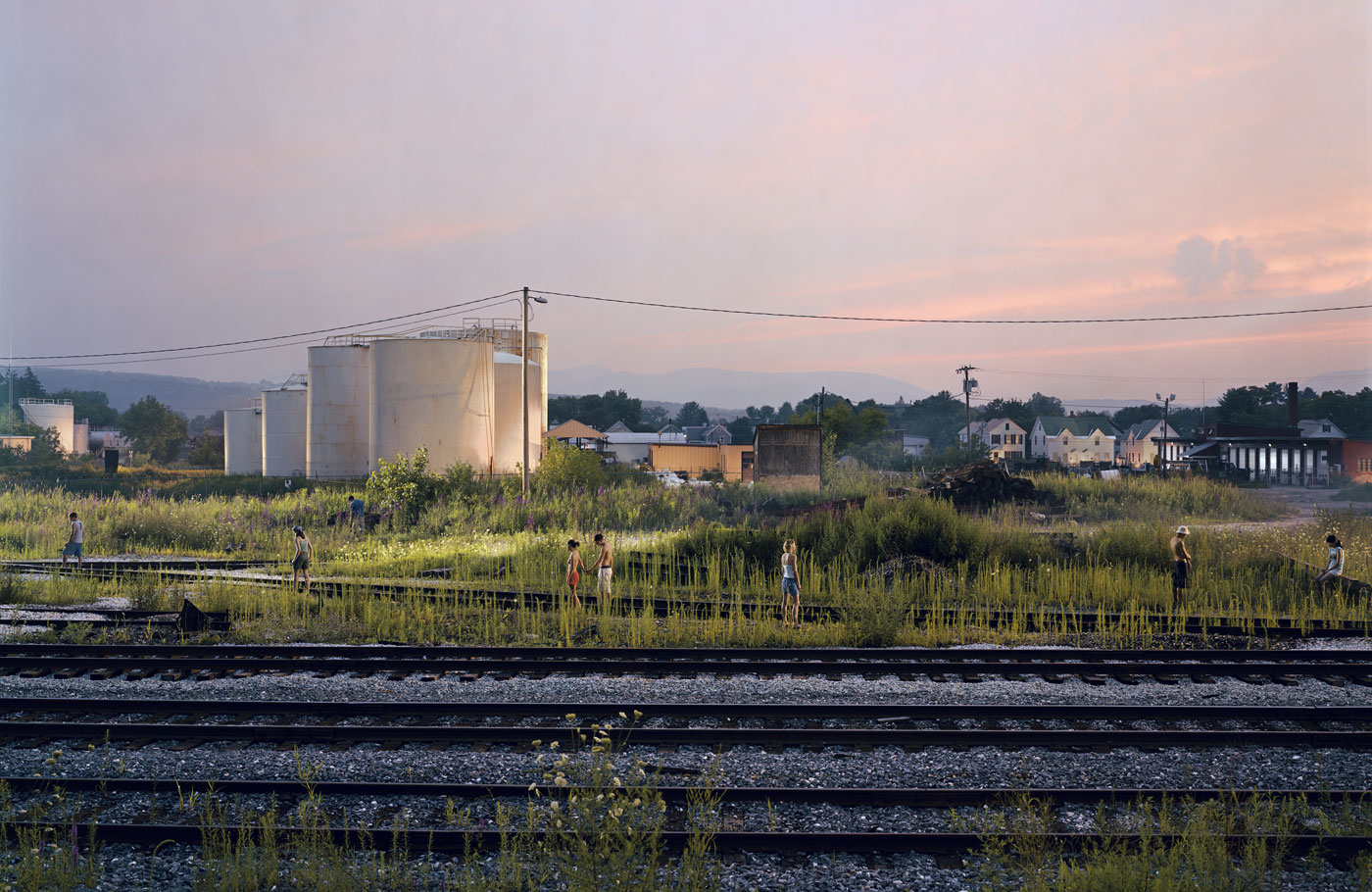
Gregory Crewdson (American, b. 1962) 'Untitled (Railway Children)' 2003-2005


Gregory Crewdson (American, b. 1962)
Untitled (Railway Children)
2003-05
© Gregory Crewdson. Courtesy Gagosian Gallery


In a Lonely Place presents selections from three major series by Gregory Crewdson, Fireflies (1996), Beneath the Roses (2003-2008), Sanctuary (2010) and, presented for the first time, the video Field Notes (2009). The exhibition title comes from Nicholas Ray’s 1950s film noir of the same name, one of many films that inspired Crewdson. In a Lonely Place is evocative of an underlying mood-a quiet feeling of alienation and loneliness that links the three series selected by curators Estelle Af Malmborg, Jens Erdman Rasmussen and Felix Hoffmann. In a Lonely Place presents the first comprehensive exhibition of Crewdson’s work in Australia.

In Beneath the Roses, anonymous townscapes, forest clearings and broad, desolate streets are revealed as sites of mystery and wonder; similarly, ostensibly banal interiors become the staging grounds for strange human scenarios. Crewdson’s scenes are tangibly atmospheric: visually alluring and often deeply disquieting. Never anchored precisely in time or place, these and the other narratives of Beneath the Roses are located in the dystopic landscape of the anxious American imagination. Crewdson explores the American psyche and the dramas at play within quotidian environments.

In his most recent series, Sanctuary (2010), Crewdson has taken a new direction, shooting for the first time outside the US. During a trip to Rome, he visited the legendary Cinecittà studios, which was founded by Mussolini in the 1930s and is associated with the great Italian film director Federico Fellini. Crewdson discovered fragments of a past glory, with occasional unexpected views of the surrounding contemporary Roman suburbia. Cinecittà is a lonely place deserted by the film crews who once used the site to recreate settings of ancient Rome, medieval Italy and nineteenth-century New York.

In the intimate photographs of Fireflies, Crewdson portrays the mating ritual of fireflies at dusk, capturing the tiny insects’ transient moments of light as they illuminate the summer night. Unlike the theatrical scale of the Beneath the Roses and Sanctuary series, Fireflies is a quiet meditation on the nature of light and desire, as the images reflect not only upon the fleeting movements of the insects in their intricate mating ritual, but upon the notion of photography itself, in capturing a single ephemeral moment.

Gregory Crewdson received a BA from the State University of New York, Purchase, New York in 1985 and an MFA in Photography from Yale School of Art, Yale University, New Haven, Connecticut in 1988. He has exhibited widely in the United States and Europe. He is Associate Professor and Director of Graduate Studies in Photography at the Yale School of Art, Yale University. Gregory Crewdson is represented by Gagosian Gallery and White Cube Gallery.

Press release from the Gagosian Gallery website


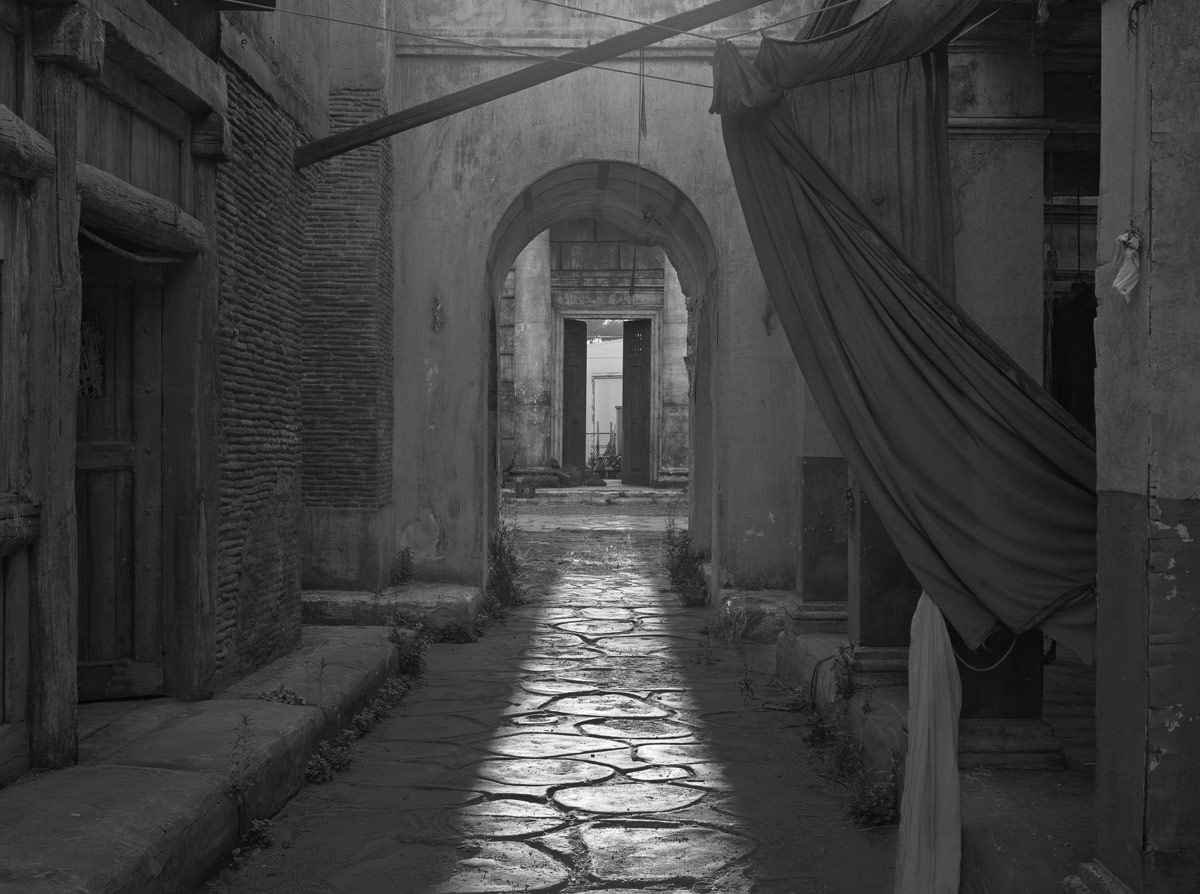
Installation photograph of the series 'Sanctuary' (2010) from the exhibition 'Gregory Crewdson: In A Lonely Place' at the Centre for Contemporary Photography (CCP), Fitzroy, Melbourne

Installation photograph of the series 'Sanctuary' (2010) from the exhibition 'Gregory Crewdson: In A Lonely Place' at the Centre for Contemporary Photography (CCP), Fitzroy, Melbourne


Installation photographs of the series Sanctuary (2010) from the exhibition Gregory Crewdson: In A Lonely Place at the Centre for Contemporary Photography (CCP), Fitzroy, Melbourne
Photos: Dr Marcus Bunyan


Gregory Crewdson (American, b. 1962) 'Untitled (1)' 2009


Gregory Crewdson (American, b. 1962)
Untitled (1)
2009
© Gregory Crewdson. Courtesy Gagosian Gallery


Gregory Crewdson (American, b. 1962) 'Untitled (17)' 2009


Gregory Crewdson (American, b. 1962)
Untitled (17)
2009
© Gregory Crewdson. Courtesy Gagosian Gallery


Gregory Crewdson (American, b. 1962) 'Untitled (8)' 2009


Gregory Crewdson (American, b. 1962)
Untitled (8)
2009
© Gregory Crewdson. Courtesy Gagosian Gallery


Gregory Crewdson (American, b. 1962) 'Untitled (2)' 2009


Gregory Crewdson (American, b. 1962)
Untitled (2)
2009
© Gregory Crewdson. Courtesy Gagosian Gallery


Gregory Crewdson (American, b. 1962) 'Untitled' 1996


Gregory Crewdson (American, b. 1962)
Untitled
1996
© Gregory Crewdson. Courtesy Gagosian Gallery


Gregory Crewdson – Close Up – Ovation

In this Ovation TV original special, acclaimed photographers Albert Maysles, Sylvia Plachy, Andrew Moore and Timothy Greenfield-Sanders discuss the impact their work has on their lives and on culture as a whole.

Gregory Crewdson is an American photographer who is best known for elaborately staged, surreal scenes of American homes and neighborhoods.

In this interview, acclaimed photographer, Gregory Crewdson shares with us insight into his techniques.


Centre for Contemporary Photography

No permanent exhibition space at the moment

Gagosian Gallery website

Centre for Contemporary Photography website

LIKE ART BLART ON FACEBOOK

Back to top

Review: ‘Photographic abstractions’ at the Monash Gallery of Art (MGA), Melbourne

Exhibition dates: 3rd August – 30th September 2012

Artists: Andrew Browne, John Cato, Jo Daniell, John Delacour, Peter Elliston, Joyce Evans, Chantel Faust, Susan Fereday, Anthony Figallo, George Gittoes, John Gollings, Graeme Hare, Melinda Harper, Paul Knight, Peter Lambropoulos, Bruno Leti, Anne MacDonald, David Moore, Grant Mudford, Harry Nankin, Ewa Narkiewicz, John Nixon, Rose Nolan, Jozef Stanislaw Ostoja-Kotkowski, Robert Owen, Wes Placek, Susan Purdy, Scott Redford, Jacky Redgate, Wolfgang Sievers, David Stephenson, Mark Strizic and Rick Wood.
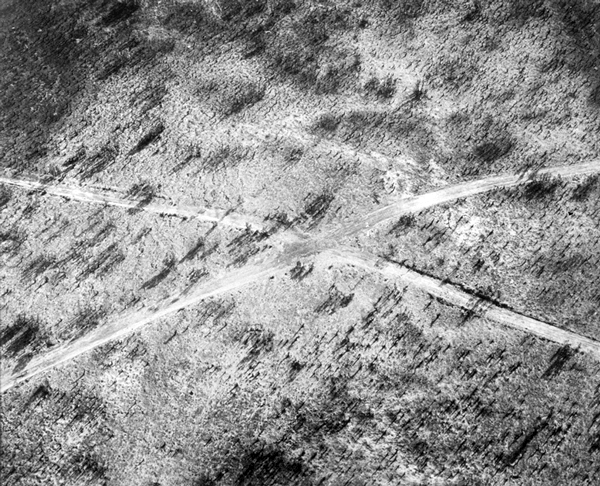
 

John Gollings (Australia, b. 1944) 'Untitled' 1988 From the series 'Bushfire aerials'


John Gollings (Australia, b. 1944)
Untitled
1988
From the series Bushfire aerials
Gelatin silver print
45.5 x 56.0cm
Monash Gallery of Art, City of Monash Collection
© courtesy of the artist


Dropping the abstract ball

There are some excellent works in this interestingly themed exhibition at the Monash Gallery of Art. Unfortunately the exhibition, the theme and the work are let down by two curatorial decisions. Before I address those issues I will give my insight into some of the work presented:

~ A wonderful print of Sisters of Charity, Washington DC by David Moore (1956) where the starched cornettes of the sisters reminded me of paper doves. The kicker or punctum in this image is the hand of one of the sisters pointing skywards/godwards

~ Wonderful David Stephenson Star Drawing. I always like photographs from this series. Taken in Central Australia using as many as 72 multiple exposures, Stephenson used a set of rules for each exposure – deciding on the length and amount of exposure and how far he would rotate the camera between each exposure before embarking on the creation of each image. The construction of the image was pre-determined  but because of the movement of the earth and stars over a couple of hours, the result always incorporated an element of chance. Stephenson draws with light that is millions of years old, the source of which may not exist by the time the light falls on Stephenson’s photographic plate (the star might be dead)

~ John Gollings Untitled from the Bushfire series. Beautiful, luminous black and white silver gelatin prints of tracks in bushfire affected areas. These aerial photographs make the surface of the earth seem like the surface of the skin complete with hairs and wrinkles. In process they reference the New Topographics exhibition of 1975, where the mapping of the landscape is etched into the surface of the photographic print, where the pictorial plane records the environment like the marks on an etching plate. “The pictures were stripped of any artistic frills and reduced to an essentially topographic state, conveying substantial amounts of visual information but eschewing entirely the aspects of beauty, emotion and opinion.”

~ The beautiful Scott Redford Urinal photographs where the subject becomes secondary to the abstract visual elements as the flash bounces off the metal surfaces. Tight camera angles and a limited colour palette cause an almost transcendent composition. The swirls and markings and the sword-like quality of the central image (see below) remind me of Excalibur rising from the lake, dripping water.

~ Four photographs by John Cato, one each from Petroglyph 1971-79, Waterway 1971-79, Proteus 1971-79 and Tree – a journey 1971-79. These were incredibly beautiful and moving photographs, abstractions of the natural world. You need to be reminded what an amazing artist John was, one of the very best Australian photographers, his poetic photographs are cosmological in their musicology and composition

~ Two photographs from Paul Knight’s outstanding Cinema curtain series (below). For me there was a textural, sensory experience here, an intimacy with the subject matter that forced me to focus on the surface of the photograph, the flat plane of the photographic print, itself a highly abstract form. Amazing

~ My particular favourite in the exhibition were the unknown to me works of the artist Jozef Stanislaw Ostoja-Kotkowski (see the two images directly below). These photographs were the most delightful surprise of the exhibition – landscapes of the mind that had great feeling and focus, felt movement, space, flow of light and energy. This was wonderfully nuanced work that I wanted to see more of


Some excellent work then that was let down by two curatorial decisions. The first was the amount of work in the exhibition by each artist – a couple of prints here, another three small prints there – that really never gave the viewer chance to fully engage with the outcomes that the artist was trying to achieve nor explore the process that the artist was using. I know this was a group exhibition trying to highlight work from the collection but a more useful contribution would have been less artist’s in the exhibition with greater work from each, allowing for a more focused exhibition.

Far more serious, however, was the lack of any text that placed the work in a socio-cultural context. At the beginning of the exhibition there was 5 short paragraphs on a wall as you enter the space with mundane insights such as:

~ Photographic language engages the senses and imagination and challenges the way we “look” at the world
~ Through the use of cropping and obscure angle the familiar is made unfamiliar
~ Colour, shape and form (geometric patterns) are important
~ Some artists’ eliminate the camera altogether through photograms, scanner, collage
~ Use of multiple exposures, distortion, mirroring
~ By drilling down into the substances and processes of photography we can reflect on the very nature of photography itself
~ Exploring geometry and patterns found in nature and the built environment or alluding to more intangible themes such as time, mortality and spirituality


I have précised the five paragraphs but that’s all you get!

The only other information comes from brief wall texts accompanying each artist and these sound bites really don’t give any social and cultural context to the artist, the time they lived in or the social themes that would have influenced the work. For example, who would know from this exhibition that the artist John Cato was one of the first photographers in Australia to create visual tone poems using images of the Australian landscape, one of the first to work in sequences of images and who would go on to be a teacher of great repute, helping other emerging photographic artists at a critical time in the development of Australian art photography. Nobody. Also, I wanted to know more about the “substances” and “processes” of photography in regard to photographic abstraction. There was no serious theoretical enquiry, no educational component offered to the viewer here.

While money might be tight there is really no excuse for this lack of creditable, researched, insightful information. You don’t need a catalogue, all you need is a photo-stated 4-6 page essay to be given to visitors (if they desire to have one, if they want the information). It doesn’t take money it takes will to inform and educate the viewer about this important aspect of Australian photographic history. For a subject so engaging this was most disappointing. In this particular case the curators really did drop the abstract ball.

Dr Marcus Bunyan


Many thankx to the Monash Gallery of Art for allowing me to publish the photographs in the posting. Please click on the photographs for a larger version of the image.
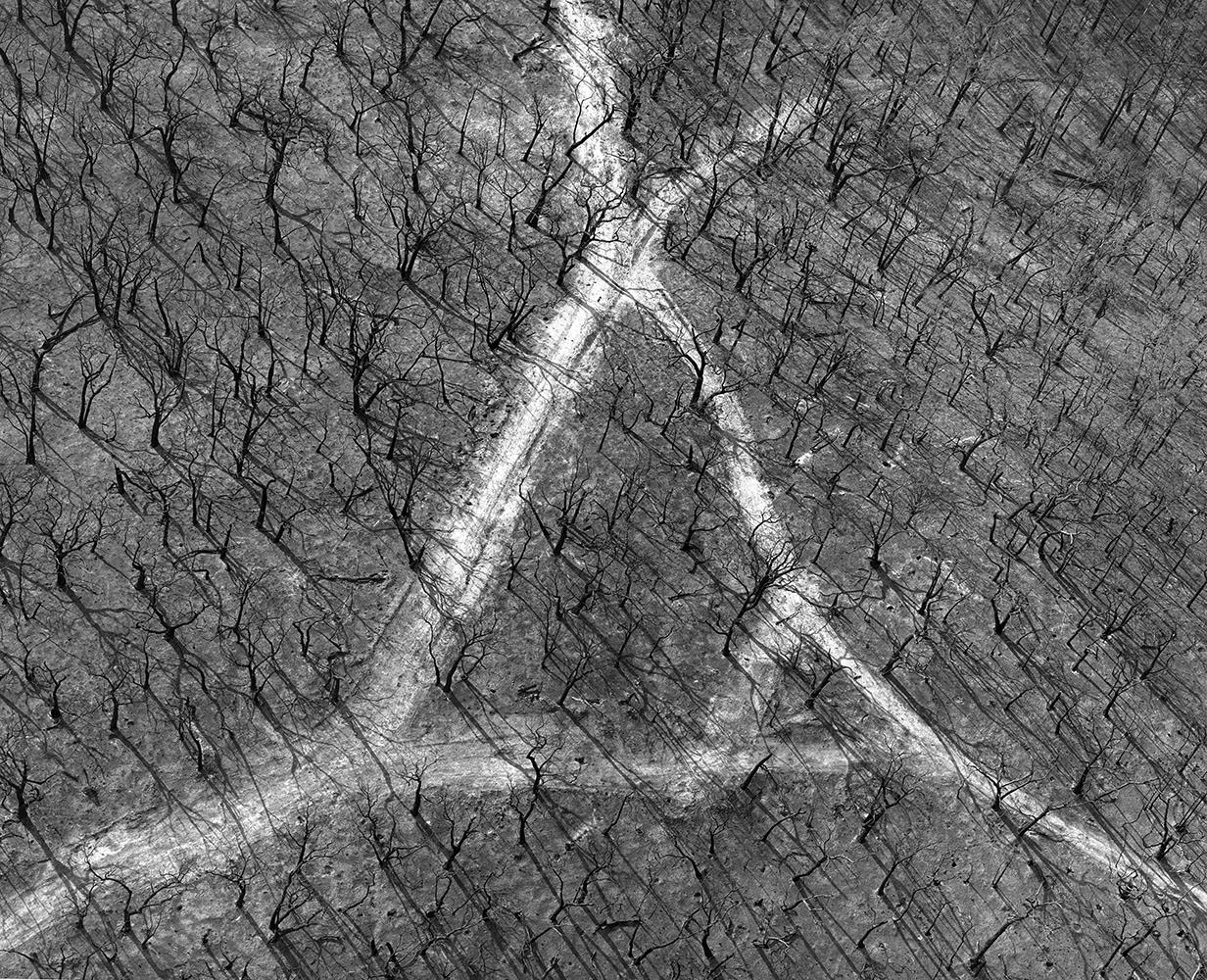


John Gollings (Australia, b. 1944) 'Untitled' 1988 From the series 'Bushfire aerials'


John Gollings (Australia, b. 1944)
Untitled
1988
From the series Bushfire aerials
Gelatin silver print
45.5 x 55.0cm
Monash Gallery of Art, City of Monash Collection
© courtesy of the artist


While John Gollings is best known for his work as an architectural photographer, he has produced a number of works that hone in on the Australian landscape. This aerial photograph looks down onto a landscape that has been scorched by bushfire. Viewed from above, without any horizon line to give a sense of scale or orientation to the terrain, this charred topography takes on the appearance of hairy, stubbled skin. Gollings uses this ambiguity to great effect, making the dirt tracks look like wounds that have scarred the surface of the earth, and the effects of smoke and ash look like bruises. In this respect, the use of aerial photography has allowed the images to be read as abstract ciphers of ecological trauma.

Text from the Monash Gallery of Arts website
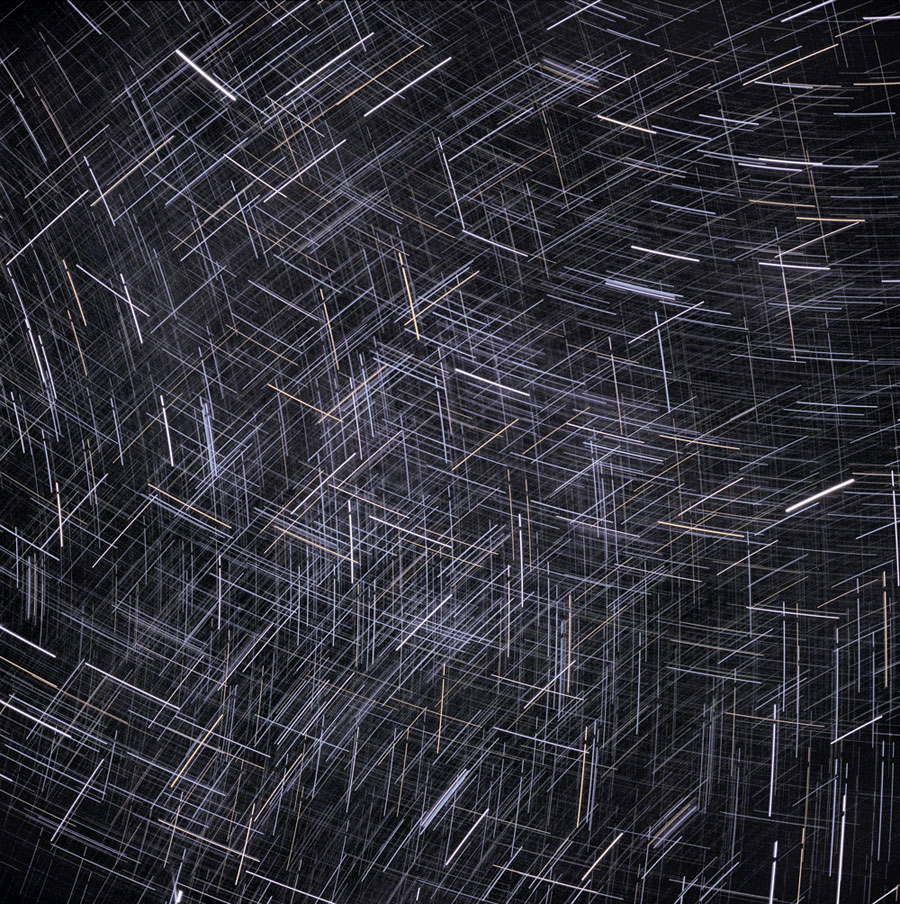
 

David Stephenson (born USA 1955 arrived Australia 1982) 'Star drawing 1996/402' 1996 From the series 'Star drawings' 1995-2006


David Stephenson (born USA 1955 arrived Australia 1982)
Star drawing 1996/402
1996
From the series Star drawings 1995-2006
Chromogenic print, printed 2008
55.8 x 55.8cm
Monash Gallery of Art, City of Monash Collection
© courtesy of the artist, John Buckley Gallery Melbourne, Boutwell Draper Gallery, Sydney and Bett Gallery, Hobart


In a career spanning over 40 years, David Stephenson has consistently used photography to transcend visible reality, photographing built and natural environments to explore abstract, intangible themes such as time, mortality and spirituality. Stephenson made these Star drawings in Central Australia, overlaying as many as 72 different exposures to make one work. For each photograph he used a list of predetermined rules. For instance, he would decide on the length and number of exposures and how far he would rotate his camera between each exposure before embarking on the creation of each image. The images, each of which took a couple of hours to produce, were in this sense pre-planned; however, the amount of variables involved such as the movement of the earth and the stars during each shoot, meant the result always incorporated an element of chance. Interested in the idea that photography is essentially drawing with light, Stephenson’s series of experimental abstract patterns is not so much about documenting the night sky as it is about conceptually exploring the nature of light, time and photography itself.

Text from the Monash Gallery of Arts website
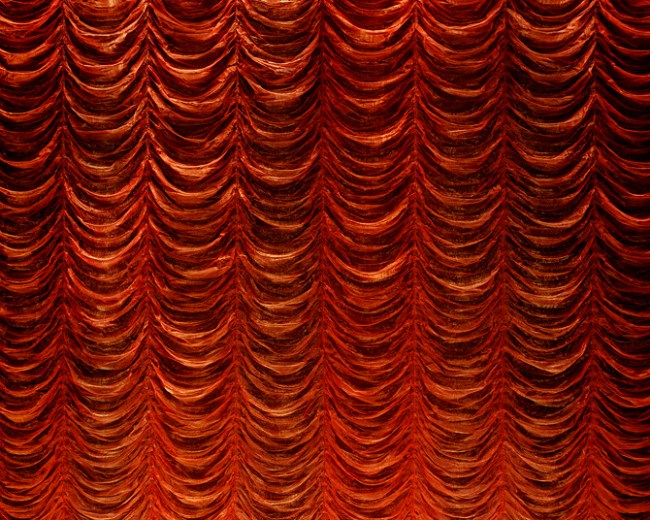
 

Paul Knight (Australia, b. 1976) 'Cinema curtain #3' 2004


Paul Knight (Australia, b. 1976)
Cinema curtain #3
2004
Chromogenic print
43.5 x 55.0cm
Monash Gallery of Art, City of Monash Collection
© courtesy of the artist


The function of the stage curtain in the cinema was to help suspend the illusion of reality in the moving image of the film. The idea being that the plain white screen behind the curtain was never seen without the moving image on it. So the illusion always existed behind the curtain and was simply masked-off from us by it. This is partly why the image was alway projected onto the curtain for a moment before it was opened, to ensure that we never saw the dead white screen. These works use this function of the cinema stage curtain as a way of engaging with the meta-reality offered by the flat-plane of a photographic print. Utilising the lure of aesthetics and pattern to bring the viewer onto the folded membrane of the curtain and onto the essentially flat plane of the print. Both give way to a potential of volume.

Text from the Paul Knight website [Online] Cited 21/09/2012 no longer available online


Paul Knight (Australia, b. 1976) 'Cinema curtain #4' 2004


Paul Knight (Australia, b. 1976)
Cinema curtain #2
2004
Chromogenic print
43.5 x 55.0cm
Monash Gallery of Art, City of Monash Collection
© courtesy of the artist
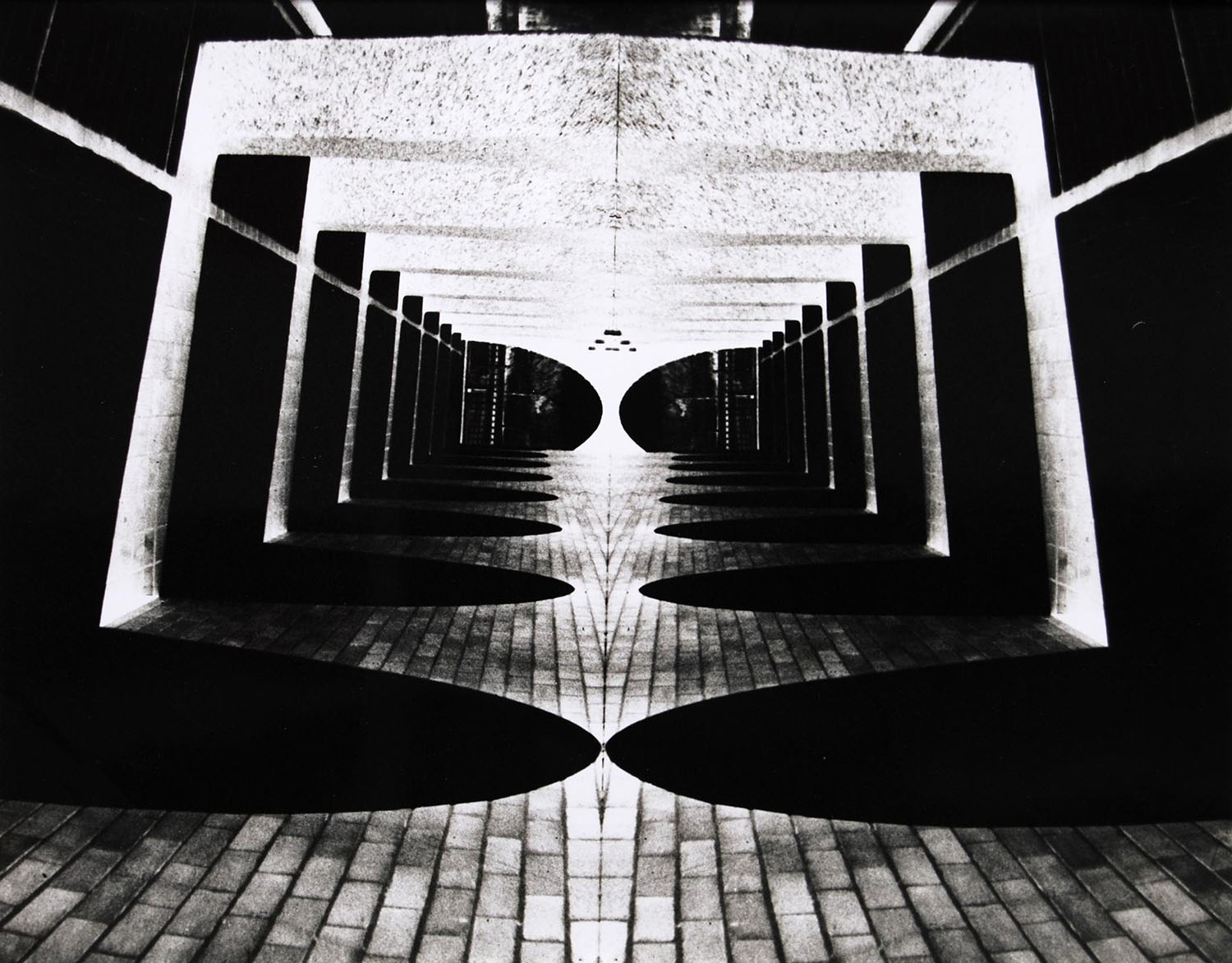
 

Jozef Stanislaw Ostoja-Kotkowski (born Poland 1922 arrived Australia 1949 died 1994) 'Australia Square – Sydney' 1971 From the series 'Inscape 871'


Jozef Stanislaw Ostoja-Kotkowski (born Poland 1922 arrived Australia 1949 died 1994)
Australia Square – Sydney
1971
From the series Inscape 871
Gelatin silver print
29.4 x 24.0cm
Monash Gallery of Art, City of Monash Collection
© courtesy of the artist


Originally trained as a painter, Jozef Stanislaw Ostoja-Kotkowski was interested in the advancement of art materials and techniques. He worked across a variety of media, including painting, sculpture, photography, electronic sound and light projections. He was also interested in combining different art forms and experimented with blending photography with music and sound.

Ostoja-Kotkowski played a key role in the development of experimental photography as well as electronic art in Australia. While his subjects were taken from the real world, they were photographically distorted and abstracted so that many became unrecognisable. He used this technique to create the series Inscape 871, examples of which are exhibited here. Inscape refers to an inner landscape, or images of the mind, while 871 refers to the month and year the works were completed. This series was included in the National Gallery of Victoria’s exhibition Frontiers (1971), which featured five Australian experimental photographers.

Text from the Monash Gallery of Arts website
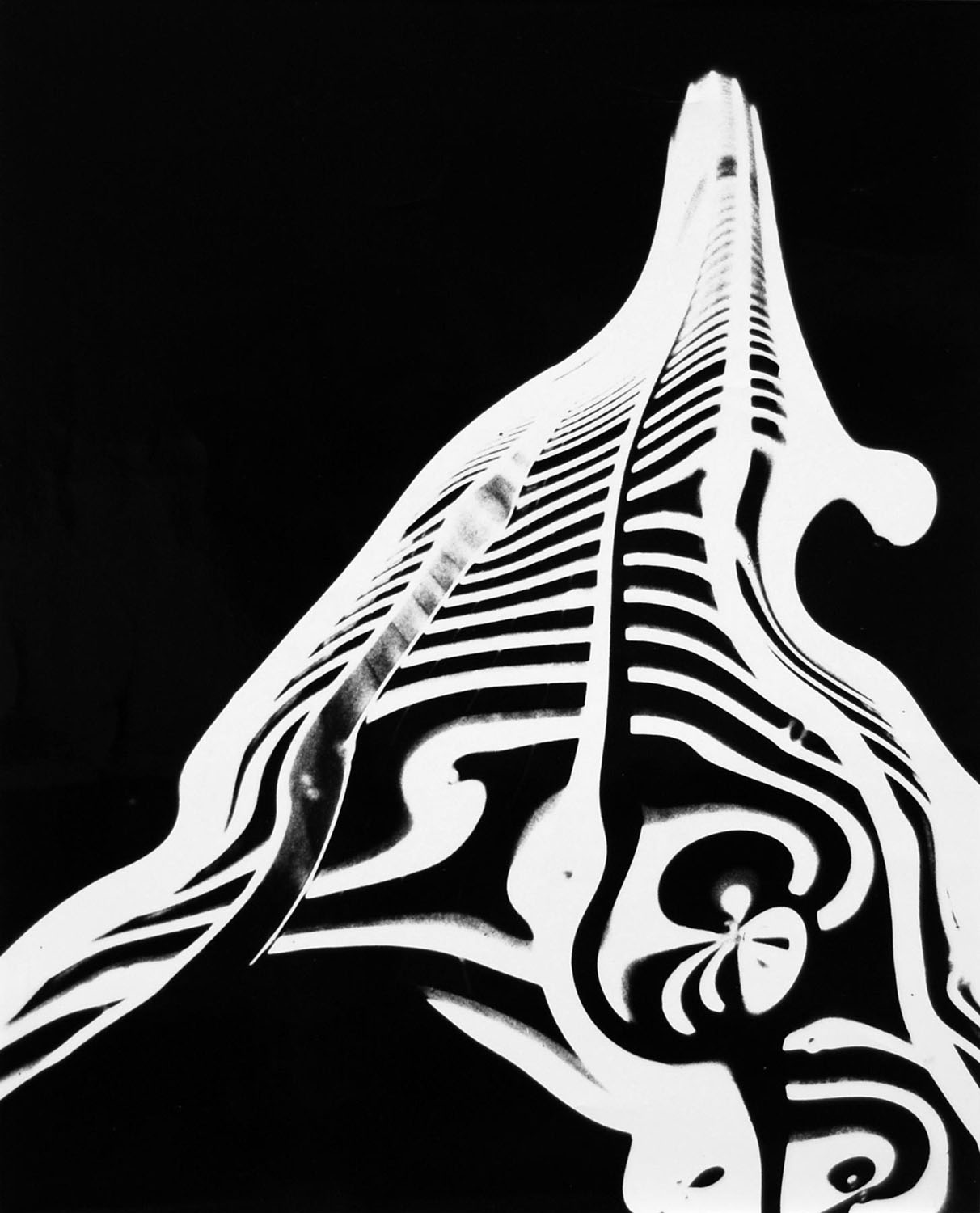
 

Jozef Stanislaw Ostoja-Kotkowski (born Poland 1922 arrived Australia 1949 died 1994) 'Untitled' c. 1971


Jozef Stanislaw Ostoja-Kotkowski (born Poland 1922 arrived Australia 1949 died 1994)
Untitled
c. 1971
Gelatin silver print
29.4 x 24.0cm
Monash Gallery of Art, City of Monash Collection
Donated by Ken Scarlett 2004
© courtesy of the Estate of J S Ostoja-Kotkowski
 

Anne MacDonald (Australia, b. 1960) 'Cloth (red velvet)' 2004


Anne MacDonald (Australia, b. 1960)
Cloth (red velvet)
2004
Ink-jet print
105 x 70cm
Collection of the artist
© courtesy of the artist and Bett Gallery, Hobart


John Cato (Australian, 1926-2011) 'Tree – a journey' 1971-1979


John Cato (Australian, 1926-2011)
Tree – a journey
1971-1979
From the series Essay I
Gelatin silver print
35.5 x 27.5cm
Monash Gallery of Art, City of Monash Collection
© courtesy of the John Cato Estate
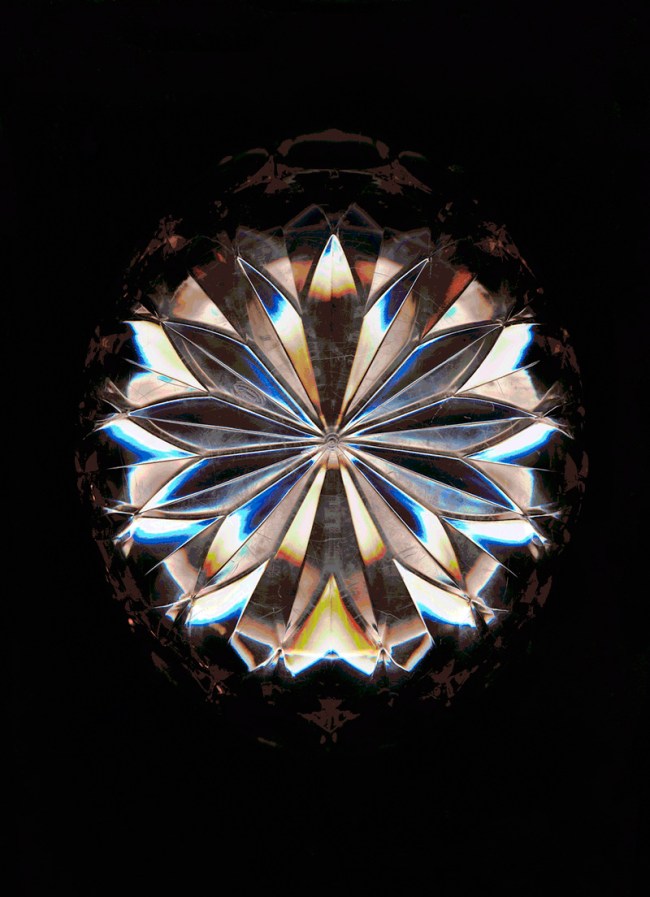
 

Chantal Faust (Australian, b. 1980) 'Waiting' 2007


Chantal Faust (Australian, b. 1980)
Waiting
2007
From the series Milk
Chromogenic print
80.0 x 58.0cm
Collection of the artist
© courtesy of the artist


Like much of Chantal Faust’s photographic work, her series Milk was produced using a digital flatbed scanner, a method that allowed her to generate photographs without the use of a camera. The series documents milk being drunk from a bowl and can be linked to the tradition of 1960s and 1970s ‘process art’. During the late 20th century, photography was often employed by artists who wanted to document performance-based art actions and activities. Faust’s ‘action’ of slurping milk from a bowl is a playful extension of this tradition.

Text from the Monash Gallery of Art website


Chantal Faust. 'Lap Milk' 2007


Chantal Faust (Australian, b. 1980)
Lap Milk
2007
From the series Milk
Chromogenic print
80.0 x 58.0cm
Collection of the artist
© courtesy of the artist


Drawing on MGA’s collection of Australian photographs, Photographic abstractions highlights the work of 33 Australian artists who use photography to achieve abstract effects. Ranging from modernist geometric abstraction and the psychedelic experiments and conceptual projects of the 1970s, through to recent explorations of pixelated pictorial space, this exhibition surveys a rich history of abstract Australian art photography. Photography is traditionally recognised for its ability to depict, record and document the world. However, this exhibition sets out to challenge these assumptions. As co-curator of the exhibition and MGA Curator Stephen Zagala states, “The artists in this exhibition are less concerned with documenting the world and more interested in engaging the senses, exciting the imagination and making the ordinary appear extraordinary.”

Some artists have eliminated the camera altogether, preferring the effects that can be achieved with photograms and digital scans. Other artists have experimented with multiple exposures, mirrored images, irregular lenses and the printing of the usually discarded stubs of negatives. Co-curator and MGA Curatorial Assistant Stella Loftus-Hills says, “Photography has always been tied to abstraction. Some of the first photographs ever produced were abstract and subsequent photographers have sought out abstract compositions in their work.”

One highlight of the exhibition is a selection of works by the iconic Australian photographer David Moore, who experimented with abstract photography alongside his more well-known figurative work. In Moore’s Blue collage (1983) the process of cutting bands of colour from existing photographs to create a new composition celebrates the artist’s imagination above and beyond the camera’s ability to capture content.

Artists include Andrew Browne, John Cato, Jo Daniell, John Delacour, Peter Elliston, Joyce Evans, Chantel Faust, Susan Fereday, Anthony Figallo, George Gittoes, John Gollings, Graeme Hare, Melinda Harper, Paul Knight, Peter Lambropoulos, Bruno Leti, Anne MacDonald, David Moore, Grant Mudford, Harry Nankin, Ewa Narkiewicz, John Nixon, Rose Nolan, Jozef Stanislaw Ostoja-Kotkowski, Robert Owen, Wes Placek, Susan Purdy, Scott Redford, Jacky Redgate, Wolfgang Sievers, David Stephenson, Mark Strizic and Rick Wood.

Press release from the MGA website
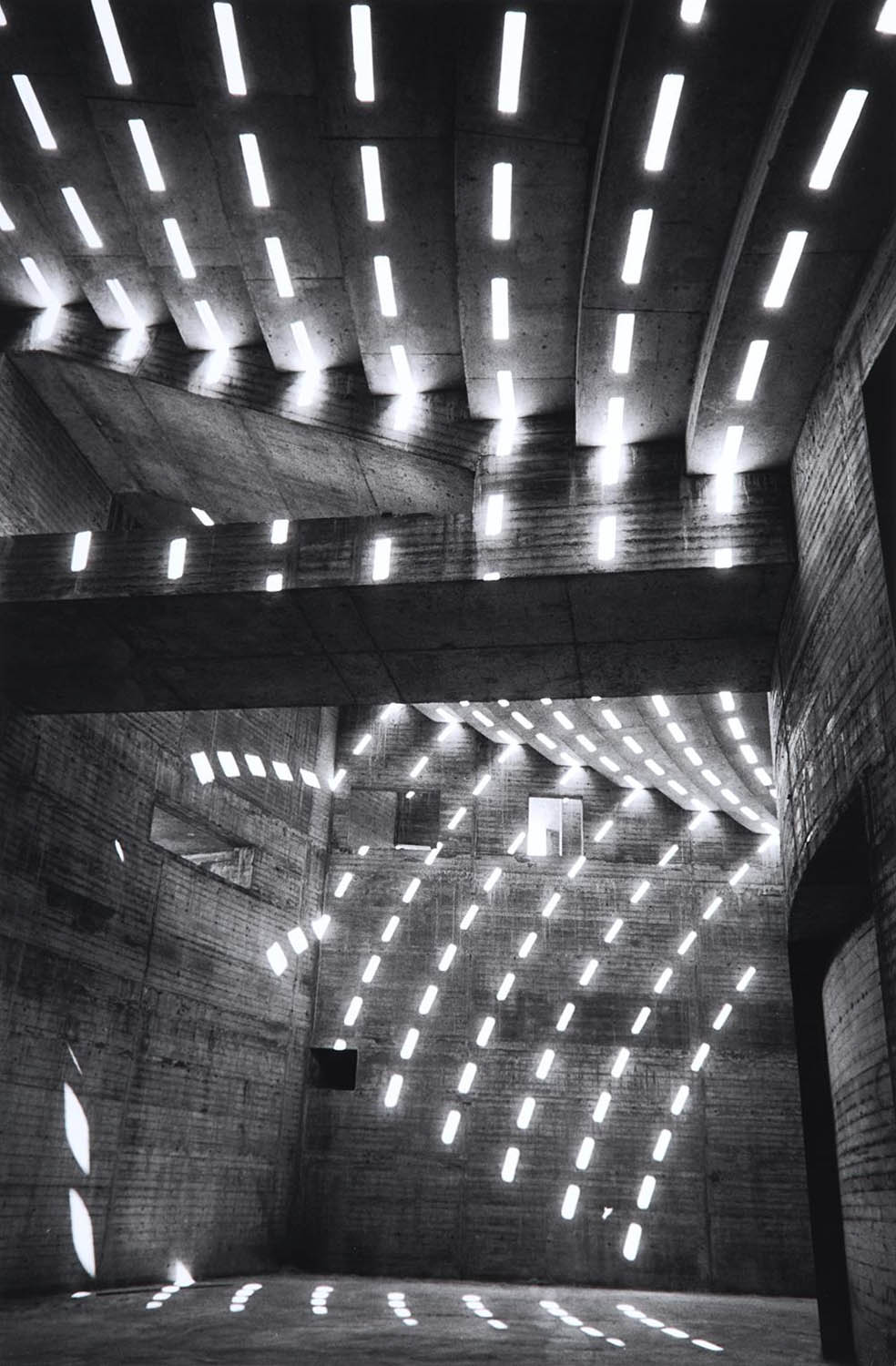
 

David Moore (Australian, 1927-2003) 'Sun patterns within the Sydney Opera House' 1962


David Moore (Australian, 1927-2003)
Sun patterns within the Sydney Opera House
1962
Gelatin silver print, printed 2005
37.75 x 25.0cm
Monash Gallery of Art, City of Monash Collection
© courtesy of the Estate of David Moore


David Moore (Australian, 1927-2003) 'Sisters of Charity' 1956


David Moore (Australian, 1927-2003)
Sisters of Charity, Washington DC
1956
Gelatin silver print
30.5 x 19.5cm
Monash Gallery of Art, City of Monash Collection
© courtesy of the Estate of David Moore
 

Robert Owen (Australian, b. 1937) 'Street, Burano, Italy' 1978


Robert Owen (Australian, b. 1937)
Street, Burano, Italy
1978
Silver dye bleach print
20 x 25cm
Monash Gallery of Art, City of Monash Collection
© courtesy of the artist and Arc One Gallery, Melbourne
 

Robert Owen (Australian, b. 1937) 'Green Sheet, Burano, Italy' 1978


Robert Owen (Australian, b. 1937)
Green Sheet, Burano, Italy
1978
Silver dye bleach print
Monash Gallery of Art, City of Monash Collection
© courtesy of the artist and Arc One Gallery, Melbourne
 

Scott Redford (Australian, b. 1962) 'Urinal (Broadbeach)' 2000-2001


Scott Redford (Australian, b. 1962)
Urinal (Broadbeach)
2000-2001
From the Urinals series 1988-2001
Chromogenic print
Collection of the artist
© courtesy of the artist
 

Scott Redford (Australian, b. 1962) 'Urinal (Surfer's Paradise)' 2000-2001


Scott Redford (Australian, b. 1962)
Urinal (Surfer’s Paradise)
2000-2001
From the Urinals series 1988-2001
Chromogenic print
Collection of the artist
© courtesy of the artist
 

Scott Redford (Australian, b. 1962) 'Urinal (Fortitude Valley)' 2000-01


Scott Redford (Australian, b. 1962)
Urinal (Fortitude Valley)
2000-2001
From the Urinals series 1988-2001
Chromogenic print
Collection of the artist
© courtesy of the artist


Redford’s photographs of urinals… dialogue with art historical motifs that precede discourses of minimal art and postmodern understandings of the abject. In representing the site of male urination, they evoke the oxidation paintings of Andy Warhol, who directed young men to piss onto canvases prepared with copper oxide, resulting in compelling abstract imagery… All of that is in Redford’s photographs and at the same time they are completely empty and quiet and contemplative… They are pure sensory experience like rainfall, even transcendent in their purity. They are concerned with beauty, but they are beyond debates about beauty. They are indifferent and in this they are transcendent.

Chapman, Christopher. “Scott Redford’s urinals,” in Redford, Scott et.al. Bricks are Heavy (exhibition catalogue). Brisbane: Institute of Modern Art, pp. 6-7.


Monash Gallery of Art
860 Ferntree Gully Road, Wheelers Hill
Victoria 3150 Australia
Phone: +61 3 8544 0500

Opening hours:
Tuesday – Friday 10am – 5pm
Saturday – Sunday 10am – 4pm
Mon/public holidays: closed

Monash Gallery of Art website

LIKE ART BLART ON FACEBOOK

Back to top

Review: ‘Jacqui Stockdale: The Quiet Wild’ at Helen Gory Galerie, Melbourne

Exhibition dates: 18th April – 19th May 2012


Jacqui Stockdale. 'Rama-Jaara the Royal Shepherdess' 2012


Jacqui Stockdale (Australian, b. 1968)
Rama-Jaara the Royal Shepherdess
2012
Type C Print
100 x 78cm


After a slow start to the season there has be a veritable feast of excellent photography exhibitions in Melbourne over the last month or so, including John Gollings and Jane Brown at Edmund Pearce Gallery, the Fred Kruger and Light Works exhibitions (at NGVA and NGVI respectively), Littoral by Kristian Laemmle-Ruff at Colour Factory (the next local review after this one) and this exhibition, The Quiet Wild by Jacqui Stockdale at Helen Gory Galerie.

This is a very strong exhibition by Jacqui Stockdale, the metre tall colour prints (printed by the Colour Factory) displaying magnificently in the large gallery at Helen Gory. The photographs remind me of a perverse take on the ethnographic Cartes de visite that were produced during the colonial Victorian era in Australia, images of native peoples taken in studios with painted backdrops together with their cultural artefacts (which, coincidentally, can be seen in great detail and sadness in the Fred Kruger exhibition at NGVA). Drawing on personal places and stories, Mexican carnival and wrestlers masks, Indian masks, Aboriginal names and locations, Velasquez’s Las Meninas, the ghost of Frida Kahlo, rituals, gods (such as Rama) and deities, Australian scenery, performance (the process of painting the models and the outcome of this interaction), Stockdale creates a wonderful melange of archetypal characters that subvert traditional identities and narratives. Her creations “shape-shift” and frustrate attempts at categorization and assimilation.

Stockdale’s performative tactics and multiple modes of address, her polyvocal subject if you like, may be said to be an effect of textuality: “a conscious recognition and pursuit of an altogether different set of values and historical and cultural trajectories.”1 Undeniably this performative act (this “ritual spectacle”2) has links to the Bakhtin’s idea of the carnivalesque and the carnival paradigm, which accords to certain patterns of play. Stockdale inverts cultural stereotypes (which embody elements of fixity, repetition, and ambivalence) located within the realms of the fetish, the scopic, and the Imaginary in order to subvert the collective memory of viewers that have been inscribed with a stereotypical collective vernacular: her work transgresses the fantasy that plays a formative role in colonial exercises of power.3

Bakhtin likens the carnivalesque in literature to the type of activity that often takes place in the carnivals of popular culture. In the carnival… social hierarchies of everyday life – their solemnities and pieties and etiquettes, as well as all ready-made truths – are profaned and overturned by normally suppressed voices and energies. Thus, fools become wise, kings become beggars; opposites are mingled (fact and fantasy, heaven and hell).”4

In Stockdale’s world, a “world upside-down” (quite appropriate for Australia), “Each new identity is one of inversion; man becomes woman, child becomes adult, animals transform into humans and vice-versa. Another example of this inversion can be seen in the “branding” of her photographs. In colonial Cartes de visite the sitter is, more often than not, unknown – unless it is an important person. It is the photographer’s name which is printed on the front and back of the card. In these photographs the photographers name is an illegible signature at bottom left, while the title of the person in the photograph is stamped into the work at bottom right. Here Stockdale again inverts traditional textual readings, the titles of her “photographic portraits that embody a world of mystical characters in masquerade” indecipherable to the uninitiated: a coded language of identity and place – Lagunta ManEl Gato, Les Jumeaux, Dogboy of Gondwanan, Infanta Shamanta and Rama Jaara, The Royal Shepherdess. ‘Lagunta’ is Aboriginal for Tasmanian Tiger and ‘Leeawuleena’ for the land around Cradle Mountain. ‘El Gato’ is the cat, ‘Jaara’ being the Aboriginal name for the Long Gully region and ‘Gondwanan’ the name for the southernmost of two supercontinents (the other being Laurasia) before the world split apart into the structure that we known today.

These are incredibly humorous, magical and symbolic photographs. A thought came into my mind when I was in the gallery surrounded by the work: for me they represented a vision of the Major Arcana of the Tarot (for example Jaguar Hombre could be seen as an inverted version of the Hanged Man with his foot in a figure four, the Hanged Man symbolising the need to just be in the world, yielding his mind and body to the Universal flow). The Major Arcana deal with the human condition, each card representing the joys and sorrows every man and woman can experience in a lifetime. In a way Stockdale offers us her own set of subversive Major Arcana, images that transgress the boundaries of the colonial vernacular, offering the viewer a chance to explore the heart of the quiet wild.

Dr Marcus Bunyan


1/ Fisher, Jean. “Witness for the Prosecution: The Writings of Coco Fusco,” in Fusco, Coco. The Bodies That Were Not Ours. London: Routledge, 2001, pp. 227-228

2/ Bakhtin, Mikhail. Rabelais and His World (trans. Helene Iswolsky). Cambridge: MIT Press, 1968, p. 5

3/ “According to Bhabha, stereotypes are located within the realms of the fetish, the scopic, and the Imaginary. He suggests that fantasy plays a formative role in colonial exercises of power. Bhabha describes the mechanism of cultural stereotypes as embodying elements of fixity, repetition, fantasy, and ambivalence, and suggests that if certain types of images are constantly presented in a range of different contexts, they will become imprinted onto the collective memory of viewers and inscribed within a collective vernacular.”
Vercoe, Caroline. “Agency and Ambivalence: A Reading of Works by Coco Fusco,” in Fusco, Coco. The Bodies That Were Not Ours. London: Routledge, 2001, p. 240

4/ Anon. “Carnivalesque,” on Wikipedia. [Online] Cited 13/05/2012


Many thankx to Helen Gory Galerie for allowing me to publish the photographs in the posting. Please click on the photographs for a larger version of the image.


Jacqui Stockdale. 'Les Jumeaux' 2012


Jacqui Stockdale (Australian, b. 1968)
Les Jumeaux
2012
Type C Print
100 x 78cm


Jacqui Stockdale (Australian, b. 1968) 'Crudellia de Mon Botanica' 2012


Jacqui Stockdale (Australian, b. 1968)
Crudellia de Mon Botanica
2012
Type C Print
100 x 78cm


Jacqui Stockdale (Australian, b. 1968) 'Carnivale of the Night' 2012


Jacqui Stockdale (Australian, b. 1968)
Carnivale of the Night
2012
Type C Print
100 x 78cm


In this modern world of distractions there is a wild nature that stirs inside of us. A desire for transcendence, to become someone else, dance part naked and chant our lost songs so that they can be heard above the sounds of cities and mobile ring tones.

The Quiet Wild is a series of photographic portraits that embodies a world of mystical characters in masquerade set against hand-painted landscapes. The portraits playfully mimic the genre of exotic postcards and historical paintings where a fanciful subject is formally positioned within a make-believe landscape. The hand-painted settings in my photographs feature Australian scenery from places around Australia that have meaning to me including my mother’s property in Bendigo, the Melbourne Botanical Gardens and Lake Saint Claire in Tasmania.

I paint the models bodies and combine costumes and props including my own collection of rare masks originally used in dances of Mexican Carnival. This new work responds to established portrayals of human identity and masquerade informed by my research into different aspects of folk Carnivals where the masquerades are a fusion of clandestine voodoo, ancestral memory and personal revelation ritual and performance. Performance also plays a part in my photographic process where I interact with the models and allow the process to greatly determine the outcome. Each new identity is one of inversion; man becomes woman, child becomes adult, animals transform into humans and vice-versa.

The difference between painting the human subject and taking their portrait with a camera it is that during a photo shoot there is more of an element of performance. The subject, over a period of many hours often becomes a new character, extending a side of them that is not prevalent in daily life or invents a new identity. This is brought about by what I dress them in and how I direct them, provoking certain ideas, strengths about an animal power or super natural deity. I begin with an idea of character and a selection of costumes and them work intuitively as though in the dark or with eyes part open. I rarely end up with what I first imagined and revel in the surprise or discovery of a combined effort.

The inspiration for this series of work has come from a unique, rich and beautiful form of human expression that is found in the ritual side of folk art in the cultures around the world but mostly in Mexico. The traditional dances of Mexican Carnival provide an opportunity to revive the primeval gods from the depths of our communal memory, since dance constitutes our remotest language and most primitive sacred offering. The masks I have used in this series are from these types of ritual dance. They are recontextualised and worn in the works Lagunta Man and El Gato, Les Jumeaux, Dogboy of Gonwanan, Infanta Shamanta and Carnival of the Night. Other influences come from images of Exotic Postcards, regarding the formal presentation of the models, the constructed settings and the borders and way of labelling the image. Luchadora Botanica was influenced by a Goya Painting, Negro Returno – I wanted to bring one of my recent collages to life, See ‘to return’.

What I have done is imagined my own family as part ritualistic characters, setting in them in a landscape that I have visited.”

Artist statement by Jacqui Stockdale 2012


Jacqui Stockdale. 'Jaguar Hombre' 2012


Jacqui Stockdale (Australian, b. 1968)
Jaguar Hombre
2012
Type C Print
100 x 78cm


Jacqui Stockdale. 'Lagunta Man, Leeawuleena' 2012


Jacqui Stockdale (Australian, b. 1968)
Lagunta Man, Leeawuleena
2012
Type C Print
100 x 78cm


Jacqui Stockdale (Australian, b. 1968) 'El Gato, Leeawuleena' 2012


Jacqui Stockdale (Australian, b. 1968)
El Gato, Leeawuleena
2012
Type C Print
100 x 78cm


Jacqui Stockdale (Australian, b. 1968) 'Araneus' 2012


Jacqui Stockdale (Australian, b. 1968)
Araneus
2012
Type C Print
100 x 78cm


Jacqui Stockdale (Australian, b. 1968) 'Princess Eucalypt' 2012


Jacqui Stockdale (Australian, b. 1968)
Princess Eucalypt
2012
Type C Print
100 x 78cm


Jacqui Stockdale (Australian, b. 1968) 'Infanta Shamanta' 2012


Jacqui Stockdale (Australian, b. 1968)
Infanta Shamanta
2012
Type C Print
100 x 78cm


The ghost of Frida Kahlo is a haunting one that permeates many artists consciousness bringing with it not just a tragic story but intoxicating aromas of Mexican exotic, masks, Voo-Doo, bloody Mayan rituals and Catholicism gone troppo.

This is clearly evidenced in Jacqui Stockdale’s latest exhibition at Helen Gory Galerie in works such as Negro-Returno, Long Gully. The white lacy heart-shaped overlay of ghostly trees conceals a part-portrait of Frida here depicted in front of Long Gully Bendigo, the Stockdale property, after the Black Saturday bush fire three years ago. This haunting shadowy backdrop appears again in Rama Jaara, The Royal Shepherdess, ‘Jaara’ being the Aboriginal name for the Long Gully region. It is a personal aside of something that obviously touched this artist deeply, one to which she has bought her troupe of tableau vivant players to. Here, a Mauritian girl called Mimi, standing at attention, arms akimbo, dressed in remnants of regal colonial attire. The pose reminiscent of that of the Infanta Margarita in Velasquez’s Las Meninas. The dog has moved from bottom right to bottom left, here a small spotted Chinese Joss paper effigy made for the journey to the afterlife, rather than a great bounding Spanish mastiff. Our young self-possessed Mimi stares directly out of the picture space not as an Infanta, but as one of nature’s children, a shepherdess, her hairstyle resembling a ram’s head, informing that part of the title, ‘Rama’ a play on words.

Both the artists brothers are also players in this tableau: the younger as Lagunta Man, Leeawuleena and the artist’s twin as El Gato, van Diemonia. ‘Lagunta’ is Aboriginal for Tasmanian Tiger and ‘Leeawuleena’ for the land around Cradle Mountain. ‘El Gato’ is the cat, and both carrying a filmic reference to the recent movie The Hunter, filmed around Cradle Mt in Northern Tasmania. While the compositional phrasing has more than a nostalgic whiff of 19th century still studio photography, seen here such staged manners marry well to popular cinematic culture.

As this exhibition unfolds certain characterising concerns appear and reappear. Decapitation, and cross-cultural iconography make this a lavish art dining at the high table of pictorial fusion cuisine. Mexican masks, Joss paper, skulls, rites of passage tit-bits mix it with popular culture on the shag pile to produce a totally new hybrid. Folk memories merge with diaristic experiences, found objects flirt with finely painted trompe-oeil effects in an almost self-regulating metamorphosis.

In this Stockdale becomes a sort of gatekeeper, a ring master choreographer who will both mystify and amaze you with her family carnivale. Picture by picture, costume by costume, the staged imagined and the real, combine into a most fascinating enticement I find impossible to resist.

Catalogue essay by Jeff Makin, 2012


Jacqui Stockdale (Australian, b. 1968) 'Bala Opuntia' 2012


Jacqui Stockdale (Australian, b. 1968)
Bala Opuntia
2012
Type C Print
100 x 78cm


Jacqui Stockdale. 'Dogboy of Gondwanan' 2012


Jacqui Stockdale (Australian, b. 1968)
Dogboy of Gondwanan
2012
Type C Print
100 x 78cm


Jacqui Stockdale. 'Negro Returno, Long Gully' 2012


Jacqui Stockdale (Australian, b. 1968)
Negro Returno, Long Gully
2012
Type C Print
100 x 78cm


Jacqui Stockdale. 'Luchadora Botanica' 2012


Jacqui Stockdale (Australian, b. 1968)
Luchadora Botanica
2012
Type C Print
100 x 78cm


Helen Gory Galerie

This gallery has now closed.

LIKE ART BLART ON FACEBOOK

Back to top
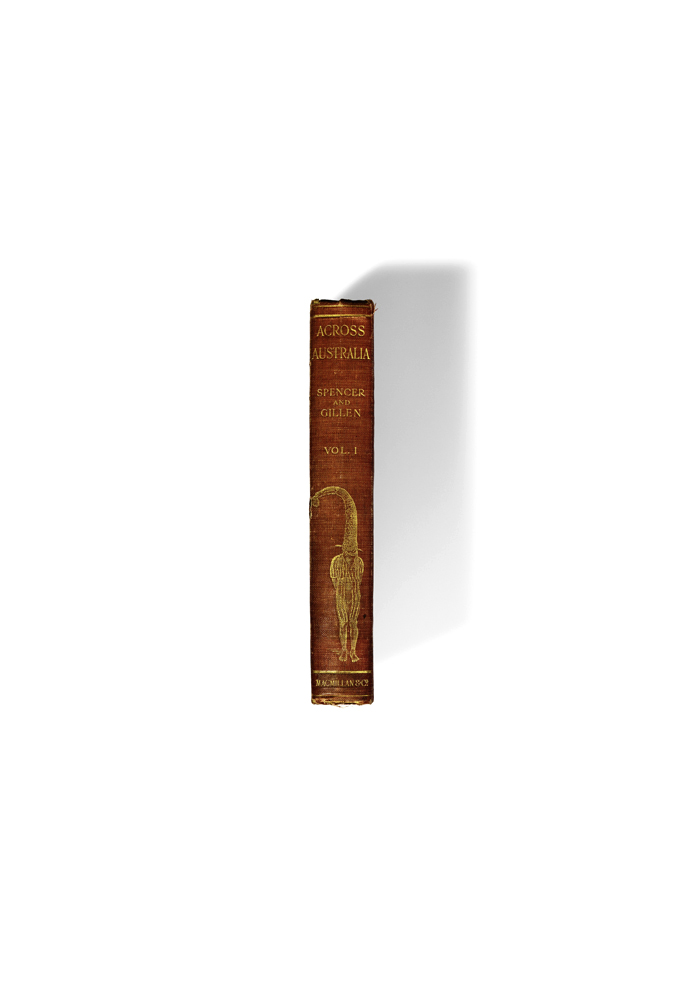
Review: ‘Jane Brown / Australian Gothic’ at Edmund Pearce Gallery, Melbourne

Exhibition dates: 25th April – 12th May 2012


Jane Brown (Kuwait, Australia, b. 1967) 'Big Trout, New South Wales' 2010


Jane Brown (Kuwait, Australia, b. 1967)
Big Trout, New South Wales
2010
Museo silver rag print
59 x 46cm


As you should know by now, this blog tries to promote the work of less well known artists and subject matter. So instead of concentrating on the wonderful aerial bushfire photographs of the well-known artist John Gollings (showing in the same gallery in different spaces with the work of Michael Norton) I have decided to do a posting on the exhibition Australian Gothic by Jane Brown.

This is a good exhibition of small, darkly hewn, traditionally printed silver gelatin photographs, beautifully hung in the small gallery at Edmund Pearce and lit in the requisite, ambient manner. There are some outstanding photographs in the exhibition. The strongest works are the surrealist tinged, film noir-ish mise-en-scènes, the ones that emphasise the metaphorical darkness of the elements gathered upon the stage. Photographs such as Big TroutThe Female Factory, Adelong, New South Wales and Captain’s Flat Hotel, New South Wales really invoke a feeling of unhomely (or unheimlich), where nature is out of kilter. These images unsettle our idea of Oztraliana, our perceived sense of Self and our place in the world. They disrupt normal transmission; they transmutate the seen environment, transforming appearance, nature and form. Less successful in this quest are the bushfire landscapes. I feel these add little to the narrative thread of the exhibition and could have easily been left out in a judicious cull of the photographs. This would have made the overarching story line stronger still.

One of the best photographs in the exhibition is Lathamstowe (2011, below). This dark, brooding, intense photograph is a beautifully realised visualisation, one that balances scale, tone, light, form and darkness to create a haunting image that stays with you a long time after you have seen it. This one images says it all: the artist has talent. More please!

Dr Marcus Bunyan


Many thankx to Edmund Pearce Gallery for allowing me to publish the photographs in the posting. Please click on the photographs for a larger version of the image.


Jane Brown (Kuwait, Australia, b. 1967) 'Bushfire Landscape I' 2011


Jane Brown (Kuwait, Australia, b. 1967)
Bushfire Landscape I
2011
Fibre based, silver gelatin print
16.5 x 20.5cm


Jane Brown (Kuwait, Australia, b. 1967) 'Bushfire Landscape II, Lake Mountain, Victoria' 2010


Jane Brown (Kuwait, Australia, b. 1967)
Bushfire Landscape II, Lake Mountain, Victoria
2010
Fibre based, silver gelatin print
16.5 x 19.5cm


Jane Brown (Kuwait, Australia, b. 1967) 'The Female Factory (convict women’s prison), Ross, Tasmania' 2009


Jane Brown (Kuwait, Australia, b. 1967)
The Female Factory (convict women’s prison), Ross, Tasmania
2009
Fibre based, silver gelatin print
15.8 x 19.5cm


Jane Brown (Kuwait, Australia, b. 1967) 'Front Bar, Wonthaggi Hotel, Victoria' 2012


Jane Brown (Kuwait, Australia, b. 1967)
Front Bar, Wonthaggi Hotel, Victoria
2012
Fibre based, selenium toned, gelatin silver print


Jane Brown (Kuwait, Australia, b. 1967) 'Bush Christmas, Victoria' 2011


Jane Brown (Kuwait, Australia, b. 1967)
Bush Christmas, Victoria
2011
Fibre based, selenium toned, gelatin silver print


Jane Brown (Kuwait, Australia, b. 1967) 'Lathamstowe' 2011


Jane Brown (Kuwait, Australia, b. 1967)
Lathamstowe
2011
Fibre based, silver gelatin print
16.5 x 16.5cm


“I find it interesting how monochrome is used to differentiate the living and the dead, the past and the present. It has an ability to transcend the constraints of time, memory and death. I examine this a lot in my work – landscapes seem to have vestiges or traces of past life and memorials become otherworldly.”


Jane Brown. ‘Weekend Australian Review’, August 2011


“The antipodes was seen as a world of reversals, the dark subconscious of Britain. It was for all intents and purposes Gothic par excellence.”


Gary Turcotte. “Australian Gothic,” in Marie Mulvey-Roberts (ed.). The Handbook to Gothic Literature. 1998


Comprising photographs taken in rural New South Wales, the ACT, Victoria and Tasmania, this exhibition takes its cue from the gothic imaginings of colonial Australia. We see images of a convict past, the bush Christmas, unforgiving landscapes and melancholic hotels. It carries echoes of the cinema of Wake in Fright (1971) and the Cars that Ate Paris (1974)Rendering visible the themes of the melancholic and the uncanny, Australian Gothic manifests itself in rural isolation – where the homely becomes unhomely (or unheimlich) and where nature is out of kilter.


Jane Brown (Kuwait, Australia, b. 1967) 'Adelong, New South Wales' 2011


Jane Brown (Kuwait, Australia, b. 1967)
Adelong, New South Wales
2011
Fibre based, silver gelatin print
16.5 x 20.5cm


Jane Brown (Kuwait, Australia, b. 1967) 'Tumbarumba, New South Wales' 2012


Jane Brown (Kuwait, Australia, b. 1967)
Tumbarumba, New South Wales
2012
Fibre based, silver gelatin print
16.5 x 19.5cm


Jane Brown (Kuwait, Australia, b. 1967) 'One Way, Hobart, Tasmania' 2009


Jane Brown (Kuwait, Australia, b. 1967)
One Way, Hobart, Tasmania
2009
Fibre based, silver gelatin print
16.5 x 19.5cm


Jane Brown (Kuwait, Australia, b. 1967) 'Unheimlich, French Island, Victoria' 2010


Jane Brown (Kuwait, Australia, b. 1967)
Unheimlich, French Island, Victoria
2010
Fibre based, silver gelatin print
19 x 16cm


Jane Brown (Kuwait, Australia, b. 1967) 'Captain’s Flat Hotel, New South Wales' 2012


Jane Brown (Kuwait, Australia, b. 1967)
Captain’s Flat Hotel, New South Wales
2012
Fibre based, silver gelatin print
21.5 x 17.5cm


Edmund Pearce Gallery

This gallery has now closed.

LIKE ART BLART ON FACEBOOK

Back to top
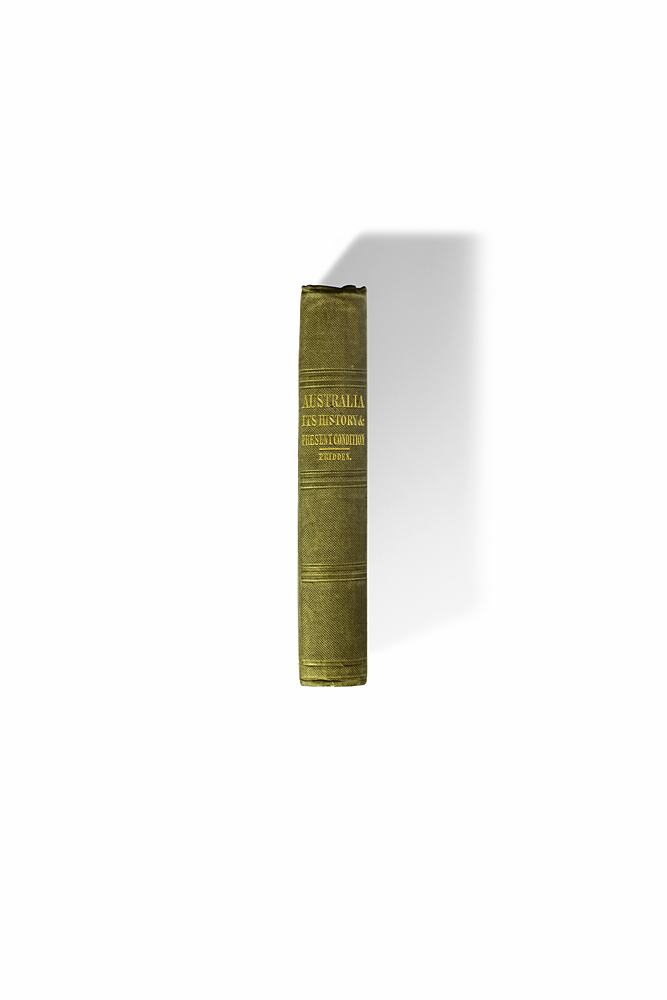
Review: The work of Robyn Hosking, ‘AT_SALON’ at Anita Traverso Gallery, Richmond

Exhibition dates: 6th March – 24th March 2012


Robyn Hosking (Australian, b. 1948) 'Dodgem Discourse' 2011


Robyn Hosking (Australian, b. 1948)
Dodgem Discourse
2011
Mixed media


Although not the first to promote the concept, Anita Traverso Gallery must be congratulated for exhibiting nine unrepresented emerging and mid-career artists in the AT_SALON exhibition program. This inaugural exhibition features hand-picked artists practicing over a variety of media including ceramics, textiles, drawing, painting and photography allowing them to exhibit in a professional gallery environment which bridges the gap between artist-run spaces and full gallery representation.

Out of the nine artists it was the hilarious work of Robyn Hosking that was the standout for me. While guffaw inducing one couldn’t help but be entranced by these waggish, chimerical creations and wonder at their technical brilliance. Every detail, every nuance is meticulously observed and the sculptures are beautifully made (mostly using glazed ceramics). Every observation on contemporary politics, war and beauty regimes is concisely conceptualised and executed with panache and humour. For example, in the work Dodgem Discourse (2011) Senator Bob Brown, leader of the Australian Greens, is the only diver figure not to be in his dodgem car while everyone else is bashing into each other, having got out to push his car because the solar power has failed. What you cannot see in the photograph is that the lights atop the dodgem poles flash on and off on every other car except his! While Julia Gillard’s car is emblazoned with the number 1 on its side, another gem is that the number plates say “Question Time” referring to question time in Parliament, but also a double entendre as the viewer questions the supposed wisdom of our elected officials.

HMAS Ineptitude (2011) assiduously comments on the white elephant that is the North South pipeline while the slowly revolving HMAS Obfuscation (2011) – how I love that word: the hiding of intended meaning in communication, making communication confusing, wilfully ambiguous – spins the SPIN, spelt out on the wing-like form at the top of the sculpture, on the machinations of our politicians who are mounted on rearing ceramic kangaroos with the large, gold lettered word PARLIAMENT on the base. Profound, amusing and beautifully made.

My favourite has to be The Wing Walker (2011) as an irate Julia Gillard tries to get rid of Kevin Rudd once and for all, even poking him with a stick to push him off the edge of the biplane. Balanced on a slowly revolving turntable with the world at its centre, this political merry-go round is panacea for the soul for people sick of politicians. This is brilliant political satire. The planes are all ends up and even when Julia thinks she has got rid of Kevin there he is, hanging on for dear life from the undercarriage of one of the planes. Priceless…

Reminding me of the fantasy creatures of Tom Moore, these whimsical manifestations deal with serious, life changing and challenging issues with purpose, feeling and a wicked sense of humour. I really enjoyed this art (and joy is the correct word) because it takes real world issues, melds fantasy and pointed observation and reflects it back, as the artist observes, in a funfair’s distorted mirror. Magic!

Dr Marcus Bunyan


Many thankx to Anita for allowing me to publish the photographs in the posting. Please click on the photographs for a larger version of the image.


Robyn Hosking (Australian, b. 1948) 'Dodgem Discourse' 2011 (detail)


Robyn Hosking (Australian, b. 1948)
Dodgem Discourse (detail)
2011
Mixed media


Robyn Hosking (Australian, b. 1948) 'The Wing Walker' 2011

Robyn Hosking (Australian, b. 1948) 'The Wing Walker' 2011


Robyn Hosking (Australian, b. 1948)
The Wing Walker
2011
Mixed media


Robyn Hosking (Australian, b. 1948) 'The Wing Walker' 2011 (detail)

Robyn Hosking (Australian, b. 1948) 'The Wing Walker' 2011 (detail)


Robyn Hosking (Australian, b. 1948)
The Wing Walker (detail)
2011
Mixed media


Robyn Hosking Artist Statement

My work launches a humorous, freewheeling attack on our desensitisation to the white noise and emptiness surrounding us. Looking like a hybrid between art, machine and toy, my sculptures maintain a circus-like sense of amusement and curiosity for the viewer, all the while sending up societal norms and politics.

I like to celebrate the lavishly eccentric design of past eras and the sense of possibility it embodied. As hackneyed as it sounds, a Brave New World is upon us, stranger perhaps than our imaginations can conceive of. While my work casts a disparaging eye at the use of technology for inane and selfish reasons – from Botox to weaponry – it retains a playful, humorous edge. I am not interested in producing depressingly macabre images. Every work becomes a caricature or parody, as though the world is being viewed in a funfair’s distorted mirror.


Robyn Hosking (Australian, b. 1948) 'HMAS Ineptitude' 2011

Robyn Hosking (Australian, b. 1948) 'HMAS Ineptitude' 2011


Robyn Hosking (Australian, b. 1948)
HMAS Ineptitude
2011
Mixed media


Robyn Hosking (Australian, b. 1948) 'HMAS Ineptitude' 2011 (detail)

Robyn Hosking (Australian, b. 1948) 'HMAS Ineptitude' 2011 (detail)


Robyn Hosking (Australian, b. 1948)
HMAS Ineptitude (detail)
2011
Mixed media


Robyn Hosking (Australian, b. 1948) 'HMAS Obfuscation' 2011


Robyn Hosking (Australian, b. 1948)
HMAS Obfuscation
2011
Mixed media


Robyn Hosking (Australian, b. 1948) 'HMAS Obfuscation' 2011 (detail)

Robyn Hosking (Australian, b. 1948) 'HMAS Obfuscation' 2011 (detail)


Robyn Hosking (Australian, b. 1948)
HMAS Obfuscation (detail)
2011
Mixed media


Anita Traverso Gallery

Anita Traverso Gallery website

LIKE ART BLART ON FACEBOOK

Back to top
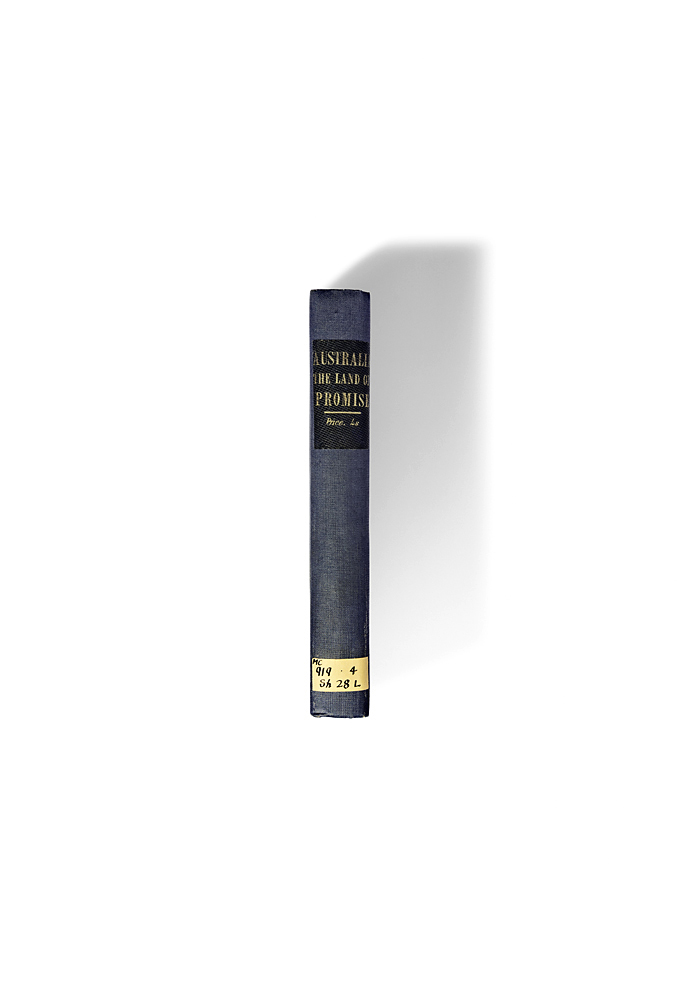
melbourne’s magnificent nine 2011

December 2011


Here’s my pick of the nine best exhibitions in Melbourne (with excursions to Bendigo and Hobart thrown in) that appeared on the Art Blart art and cultural archive in 2011. Enjoy!

Dr Marcus Bunyan


1/ Sidney Nolan: Drought Photographs at Australian Galleries, Melbourne, March 2011

Sidney Nolan (Australian, 1917-1992) 'Untitled (calf carcass in tree)' 1952


Sidney Nolan (Australian, 1917-1992)
Untitled (calf carcass in tree)
1952
archival inkjet print
23.0 cm x 23.0cm


This was a superb exhibition of 61 black and white photographs by Sidney Nolan. The photographs were shot using a medium format camera and are printed in square format from the original 1952 negatives.

The work itself was a joy to behold. The photographs hung together like a symphony, rising and falling, with shape emphasising aspects of form. The images flowed from one to another. The formal composition of the mummified carcasses was exemplary, the resurrected animals (a horse, for example, propped up on a fifth leg) and emaciated corpses like contemporary sculpture. The handling of the tenuous aspects of human existence in this uniquely Australian landscape was also a joy to behold. Through an intimate understanding of how to tension the space between objects within the frame Nolan’s seemingly simple but complex photographs of the landscape are previsualised by the artist in the mind’s eye before he even puts the camera to his face.
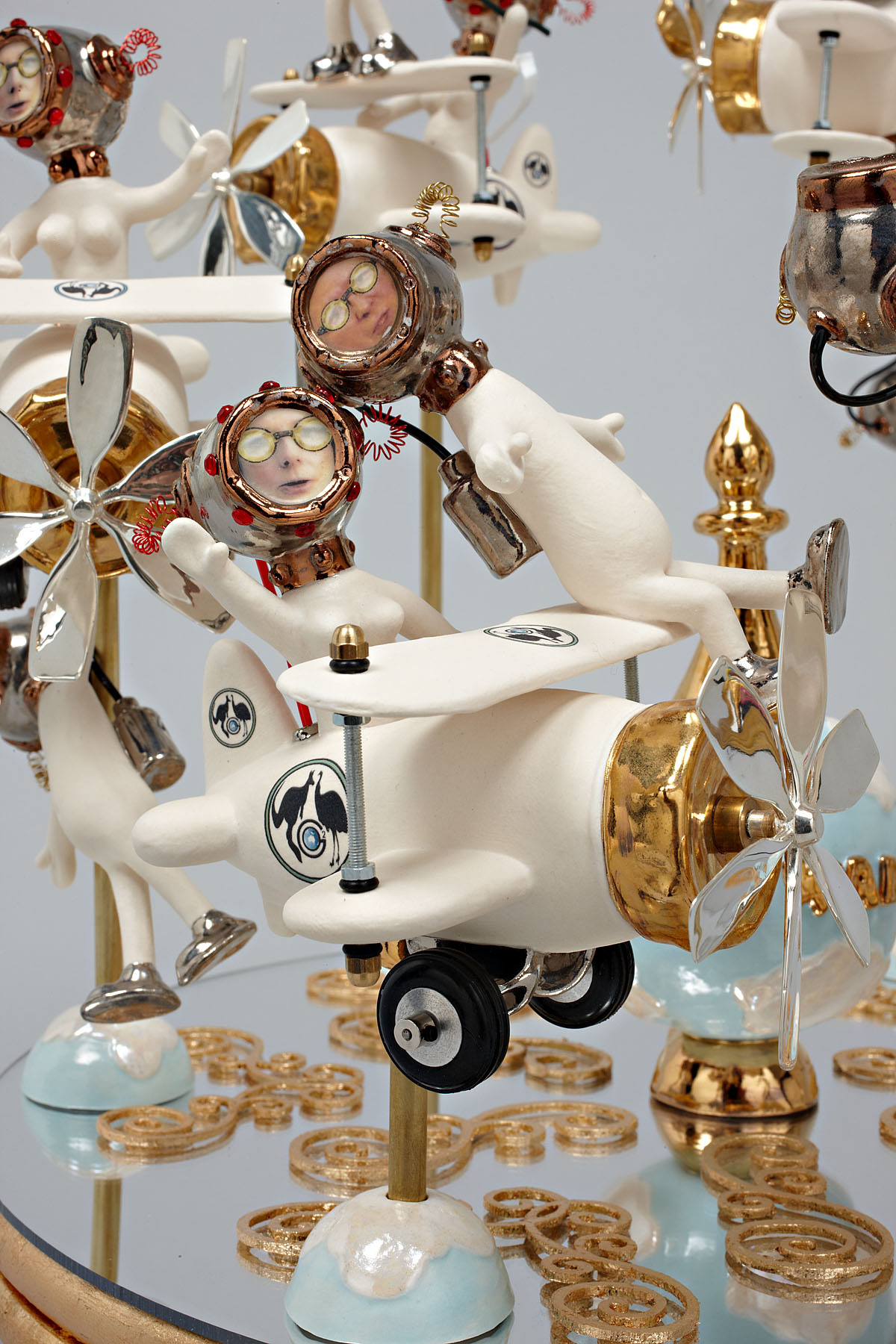
 

2/ Bill Henson at Tolarno Galleries, Melbourne, March – April 2011

This was an exquisite exhibition by one of Australia’s preeminent artists. Like Glenn Gould playing a Bach fugue, Bill Henson is grand master in the performance of narrative, structure, composition, light and atmosphere. The exhibition featured thirteen large colour photographs printed on lustre paper (twelve horizontal and one vertical) – nine figurative of adolescent females, two of crowd scenes in front of Rembrandt paintings in The Hermitage, St. Petersburg (including the stunning photograph that features The return of the prodigal son c. 1662 in the background, see below) and two landscapes taken off the coast of Italy. What a journey this exhibition took you on!

Henson’s photographs have been said by many to be haunting but his images are more haunted than haunting. There is an indescribable element to them (be it the pain of personal suffering, the longing for release, the yearning for lost youth or an understanding of the deprecations of age), a mesmeric quality that is not easily forgotten. The photographs form a kind of afterimage that burns into your consciousness long after the exposure to the original image has ceased. Haunted or haunting they are unforgettable.


Bill Henson (Australian, b. 1955) 'Untitled' 2009/10


Bill Henson (Australian, b. 1955)
Untitled
2009/10
CL SH767 N17B
Archival inkjet pigment print
127 x 180cm
Edition of 5


3/ Networks (cells & silos) at Monash University Museum of Art (MUMA), Caulfield, February – April 2011

This was a vibrant and eclectic exhibition at MUMA, one of the best this year in Melbourne. The curator Geraldine Barlow gathered together some impressive, engaging works that were set off to good effect in the new gallery spaces. I spent a long and happy time wandering around the exhibition and came away visually satiated and intellectually stimulated. The exhibition explored “the connections between artistic representation of networks; patterns and structures found in nature; and the rapidly evolving field of network science, communications and human relations.”


Installation photograph of one of the galleries in the exhibition 'NETWORKS (cells & silos)' at the newly opened Monash University Museum of Art (MUMA)


Installation photograph of one of the galleries in the exhibition NETWORKS (cells & silos) at the newly opened Monash University Museum of Art (MUMA) with Nick Mangan’s Colony (2005) in the foreground


4/ Monika Tichacek, To all my relations at Karen Woodbury Gallery, Richmond, May 2011

This was a stupendous exhibition by Monika Tichacek, at Karen Woodbury Gallery. One of the highlights of the year, this was a definite must see!

The work was glorious in it’s detail, a sensual and visual delight (make sure you click on the photographs to see the close up of the work!). The riotous, bacchanalian density of the work was balanced by a lyrical intimacy, the work exploring the life cycle and our relationship to the world in gouache, pencil & watercolour. Tichacek’s vibrant pink birds, small bugs, flowers and leaves have absolutely delicious colours. The layered and overlaid compositions show complete control by the artist: mottled, blotted, bark-like wings of butterflies meld into trees in a delicate metamorphosis; insects are blurred becoming one with the structure of flowers in a controlled effusion of life.
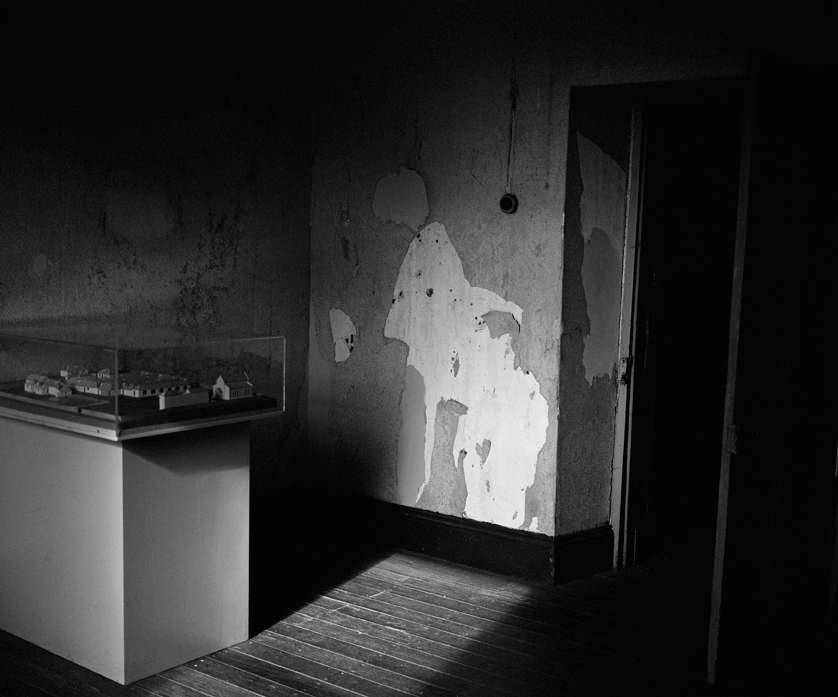
 

Monika Tichacek (Australian born Switzerland, b. 1975) 'To all my relations' 2011 (detail)


Monika Tichacek (Australian born Switzerland, b. 1975)
To all my relations (detail)
2011


5/ American Dreams: 20th century photography from George Eastman House at Bendigo Art Gallery, Victoria, April – July 2011

Diane Arbus (American, 1923-1971) 'Untitled (6)' 1971


Diane Arbus (American, 1923-1971)
Untitled (6)
1971
Gelatin silver print


This was a fabulous survey exhibition of the great artists of 20th century American photography, a rare chance in Australia to see such a large selection of vintage prints from some of the masters of photography. If you had a real interest in the history of photography then you hopefully saw this exhibition, showing as it is just a short hour and a half drive (or train ride) from Melbourne at Bendigo Art Gallery.


6/ Time Machine: Sue Ford at Monash Gallery of Art, Wheelers Hill, Victoria, April – June 2011

Sue Ford (Australian, 1943-2009) 'Self-portrait' 1976


Sue Ford (Australian, 1943-2009)
Self-portrait 1976
1976
From the series Self-portrait with camera (1960-2006)
Selenium toned gelatin silver print, printed 2011
24 x 18cm
courtesy Sue Ford Archive


This beautifully hung exhibition flowed like music, interweaving up and down, the photographs framed in thin, black wood frames. It featured examples of Ford’s black and white fashion and street photography; a selection of work from the famous black and white Time series (being bought for their collection by the Art Gallery of New South Wales); a selection of Photographs of Women – modern prints from the Sue Ford archive that are wonderfully composed photographs with deep blacks that portray strong, independent, vulnerable, joyous women (see last four photographs below); and the most interesting work in the exhibition, the posthumous new series Self-portrait with camera (1960-2006) that evidence, through a 47 part investigation using colour prints from Polaroids, silver gelatin prints printed by the artist, prints made from original negatives and prints from scanned images where there was no negative available, a self-portrait of the artist in the process of ageing.

Whether looking down, looking toward or looking inward these fantastic photographs show a strong, independent women with a vital mind, an élan vital, a critical self-organisation and an understanding of the morphogenesis of things that will engage us for years to come. Essential looking.


7/ The Museum of Old and New Art (MONA), Hobart, August 2011

My analogy: you are standing in the half-dark, your chest open, squeezing the beating heart with blood coursing between your fingers while the other hand is up your backside playing with your prostrate gland. I think ringmeister David Walsh would approve. My best friends analogy: a cross between a car park, night club, sex sauna and art gallery.

Weeks later I am still thinking about the wonderful immersive, sensory experience that is MONA. Peter Timms in an insightful article in Meanjin calls it a post-Google Wunderkammer, or wonder chest. It can be seen as a mirabilia – a non-historic installation designed primarily to delight, surprise and in this case shock. The body, sex, death and mortality are hot topics in the cultural arena and Walsh’s collection covers all bases. The collection and its display are variously hedonistic, voyeuristic, narcissistic, fetishistic pieces of theatre subsumed within the body of the spectacular museum architecture …

Spectatorship and their attendant erotics has MONA as a form of fetishistic cinema. It is as if what Barthes calls “the eroticism of place” were a modern equivalent of the eighteenth century genius loci, the “genius of the place.” The place is spectacular, the private collection writ large as public institution, the symbolic power of the institution masked through its edifice. The art become autonomous, cut free from its cultural associations, transnational, globalised, experienced through kinaesthetic means; the viewer meandering through the galleries, the anti-museum, as an international flaneur. Go. Experience!


Corten Stairwell & Surrounding Artworks February 2011 Museum of Old and New Art – interior


Corten Stairwell & Surrounding Artworks
February 2011
Museum of Old and New Art – interior
Photo credit: MONA/Leigh Carmichael
Image Courtesy of MONA Museum of Old and New Art


8/ John Bodin: Rite of Passage at Anita Traverso Gallery, Richmond, August – September 2011

John Bodin (Australian) 'I Was Far Away From Home' 2009


John Bodin (Australian)
I Was Far Away From Home
2009
Type C print on metallic paper
80 x 110cm


The photographs become the surface of the body, stitched together with lines, markers pointing the way – they are encounters with the things that we see before us but also the things that we carry inside of us. It is the interchange between these two things, how one modulates and informs the other. It is this engagement that holds our attention: the dappled light, ambiguity, unevenness, the winding path that floats and bobs before our eyes looking back at us, as we observe and are observed by the body of these landscapes.

One of the fundamental qualities of the photographs is that they escape our attempts to rationalise them and make them part of our understanding of the world, to quantify our existence in terms of materiality. I have an intimate feeling with regard to these sites of engagement. They are both once familiar and unfamiliar to us; they possess a sense of nowhereness. A sense of groundlessness and groundedness. A collapsing of near and far, looking down, looking along, a collapsing of the constructed world.

Like the road in these photographs there is no self just an infinite time that has no beginning and no end. The time before my birth, the time after my death. We are just in the world, just being somewhere. Life is just a temporary structure on the road from order to disorder. “The road is life,” writes Jack Kerouac in On the Road.


9/ Juan Davila: The Moral Meaning of Wilderness at the Monash University Museum of Art (MUMA), Caulfield, August – October 2011

Simply put, this was one of the best exhibitions I saw in Melbourne this year.

I had a spiritual experience with this work for the paintings promote in the human a state of grace. The non-material, the unconceptualisable, things which are outside all possibility of time and space are made visible. This happens very rarely but when it does you remember, eternally, the time and space of occurrence. I hope you had the same experience.


Juan Davila (Chilean, b. 1946, emigrated Australia 1974) 'Wilderness' 2010


Juan Davila (Chilean, b. 1946, emigrated Australia 1974)
Wilderness
2010
© Juan Davila, Courtesy Kalli Rolfe Contemporary Art


10/ In camera and in public at the Centre for Contemporary Photography, Melbourne, September – October 2011

Kohei Yoshiyuki (Japanese, b. 1946) 'Untitled' 1971


Kohei Yoshiyuki (Japanese, b. 1946)
Untitled
1971
From the series The Park
Gelatin Silver Print
© Kohei Yoshiyuki, Courtesy Yossi Milo Gallery, New York


Curated by Naomi Cass as part of the Melbourne Festival, this was a brilliant exhibition at the Centre for Contemporary Photography, Melbourne. The exhibition explored, “the fraught relationship between the camera and the subject: where the image is stolen, candid or where the unspoken contract between photographer and subject is broken in some way – sometimes to make art, sometimes to do something malevolent.” It examined the promiscuity of gazes in public / private space specifically looking at surveillance, voyeurism, desire, scopophilia, secret photography and self-reflexivity. It investigated the camera and its moral and physical relationship to the unsuspecting subject.


11/ The Mad Square: Modernity in German Art 1910 – 37 at The National Gallery of Victoria, Melbourne, November 2011 – March 2012

This is one of the best exhibitions this year in Melbourne bar none. Edgy and eclectic the work resonates with the viewer in these days of uncertainty: THIS should have been the Winter Masterpieces exhibition!

The title of the exhibition, The mad square (Der tolle Platz) is taken from Felix Nussbaum’s 1931 painting of the same name where “the ‘mad square’ is both a physical place – the city, represented in so many works in the exhibition, and a reference to the state of turbulence and tension that characterises the period.”The exhibition showcases how artists responded to modern life in Germany in the interwar years, years that were full of murder and mayhem, putsch, revolution, rampant inflation, starvation, the Great Depression and the rise of National Socialism. Portrayed is the dystopian, dark side of modernity (where people are the victims of a morally bankrupt society) as opposed to the utopian avant-garde (the prosperous, the wealthy), where new alliances emerge between art and politics, technology and the mass media. Featuring furniture, decorative arts, painting, sculpture, collage and photography in the sections World War 1 and the Revolution, Dada, Bauhaus, Constructivism and the Machine Aesthetic, Metropolis, New Objectivity and Power and Degenerate Art, it is the collages and photographs that are the strongest elements of the exhibition, particularly the photographs. What a joy they are to see.


Albert Renger-Patzsch (American born Hungary, 1895-1946) 'Harbour with crane' c. 1927


Albert Renger-Patzsch (American born Hungary, 1895-1946)
Harbour with crane
c. 1927
Gelatin silver photograph
Printed image 22.7 h x 16.8 w cm
Purchased 1983
National Gallery of Australia, Canberra


LIKE ART BLART ON FACEBOOK

Back to top