Exhibition dates: 24th September – 13th December, 2009
Curators: Wang Huangsheng, An Ge and Hu Wugong
Many thankx to the China Institute in America for allowing me to publish the photographs in the posting. Please click on the photographs for a larger version of the image.
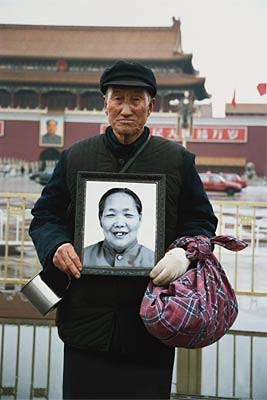
Hao Junchen (Chinese) Hugging a portrait of his wife deceased wife, an elderly man fulfils their dream of visiting Beijing 2003 Gelatin silver print
Feng Jianxin (Chinese) A soldier bids farewell to his wife and child who have just visited him and are now returning home Weichang, Hebei Winter 1987
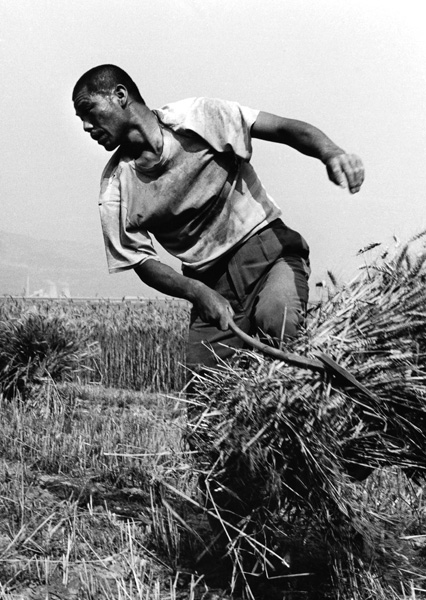
Hu Wugong (Chinese) Migrant wheat farmer in the field in Guanzhong 1998 Gelatin silver print
Wei Dezhong (Chinese, b. 1934) At the Red Flag Canal construction project, suspended labourers cut a channel 1960 Gelatin silver print
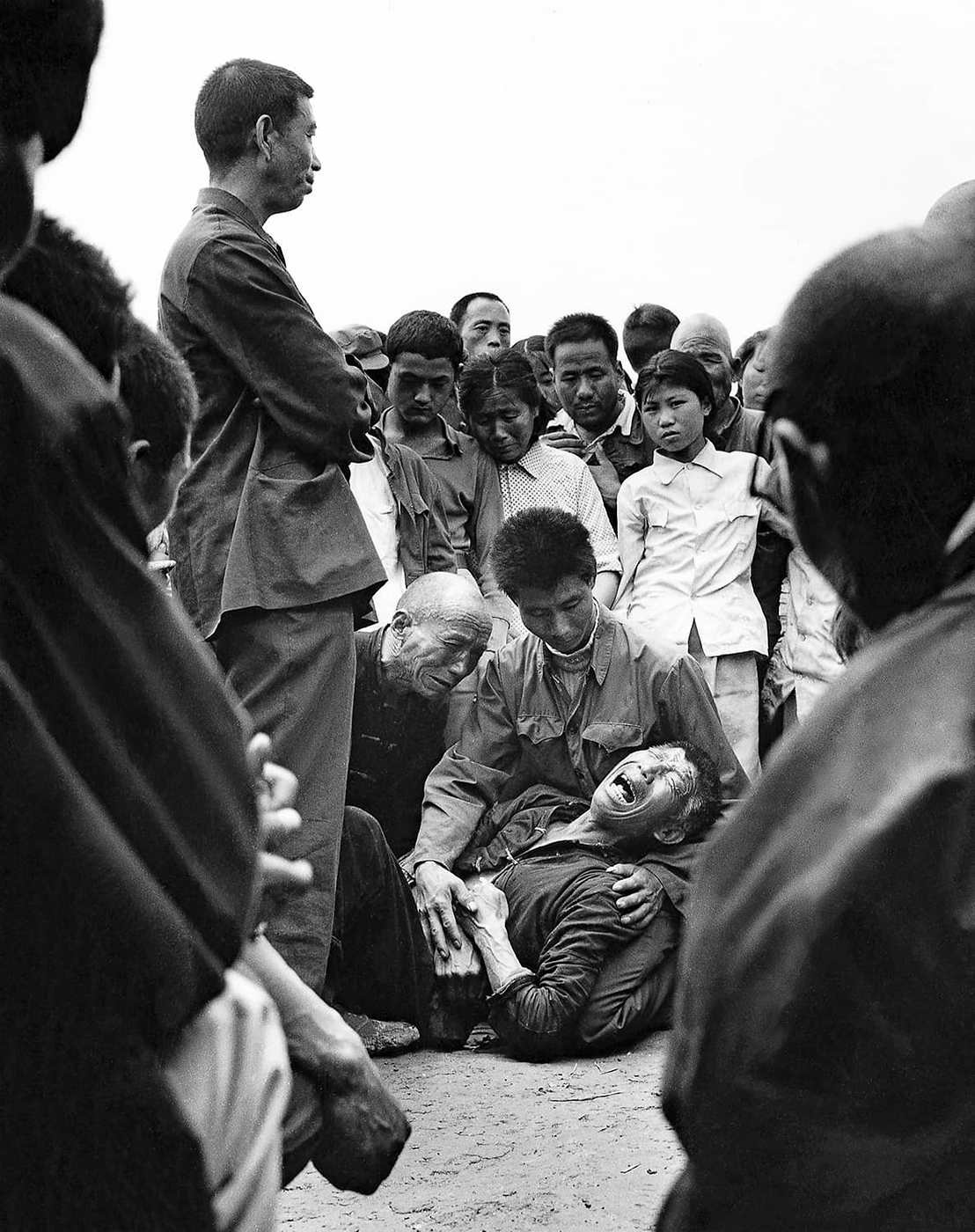
Liu Jun (Chinese) A Parent-Official Like This 1985 Gelatin silver print 51 × 40.7cm
A new exhibition of documentary photography, Humanism in China: A Contemporary Record of Photography, will be on view at China Institute Gallery from September 24 through December 13, 2009, revealing a glimpse of China never before seen in the U.S. The photographs, dating from 1951 though 2003, offer intimate portraits of rural and urban daily life in China, beyond the glossy veneer of the economic boom. A fully illustrated catalogue will accompany the exhibition.
Much in the way that The Family of Man, the 1955 landmark photography exhibition curated by Edward Steichen at The Museum of Modern Art in New York, explored the universality of the human experience, Humanism in China: A Contemporary Record of Photography offers rare insight into ordinary and extraordinary human experiences – in this case, taking place in China over the last 50 years.
Humanism in China: A Contemporary Record of Photography was organised by the Guangdong Museum of Art and represents the first large-scale collection of photography acquired permanently by any museum in China. Opening at the Guangdong Museum in 2003, the exhibition has since travelled to seven venues in China, Germany and Scotland. The curators, Wang Huangsheng, An Ge and Hu Wugong, visited photographers’ homes and studios in more than 20 provinces and viewed an estimated 100,000 photographs before selecting 600 images by 248 photographers. The exhibition at China Institute Gallery will offer a more tightly focused selection – 100 photographs by more than 80 photographers – chosen by Dr. Jerome Silbergeld, Professor of Chinese Art History at Princeton University.
Together the images present an unvarnished, starkly realistic view of the hardships and rewards of social modernisation. “These photographs are not just about society and history but are equally about photography itself and the history of documentary photography in China,” Silbergeld writes in the catalogue essay.
Willow Hai Chang, the Director of China Institute Gallery, notes “The medium and language of photography provide an exceptional opportunity to foster a dialogue, enhancing communication and understanding about everyday life in China. Growing up in China and returning there often, I have witnessed the transforming relationship the Chinese have experienced with photography – from the fear that the camera could steal one’s soul that still exists in some remote regions to the urban proliferation of cell-phone cameras and social-networking sites filled with portraits. Photography also provides a most compelling method of recording history, and Humanism in China: A Contemporary Record of Photography creates a contextual framework for both the traditional and modern elements of life in China.”
The emerging themes from the exhibition span an enormous range of human emotions. Tragedy can be seen in the eyes of a man holding a portrait of his deceased wife, while fear is evident as victims flee rising floodwaters. There is also a graceful patience on view as a couple awaits their country wedding, and utter joy is clearly evident as a man displays his wads of cash after winning the lottery.
One of the most striking images in the exhibition is Iron Rice Bowl (see below), Hei Ming’s 2000 portrait of a Muslim chef squatting in front of a crude construction workers’ restaurant, his skullcap mimicking the customers’ rice bowls hanging on the restaurant’s facade. Another notable image, Geng Yensheng’s painterly photograph Miners at Wumeng Mountain (see below), 2003, depicts the harsh working conditions in the mountainous district where Yunnan, Sichuan and Guizhou provinces come together. As Silbergeld writes, the photograph of the young bathing miners “brings social bitterness and formal beauty into a perfectly fused relationship.”
One of the images, A Parent-Official Like This (see above), became well known in China. In May 1985, Liu Jun had his camera ready when he witnessed a rural deputy chief from the Baishui region in Shaanxi province forcefully push a 60-year-old villager to the ground in a dispute over migration. The resulting photograph captures the horrific arrogance of the authority figure as he towers over the powerless villager whose mouth is contorted in pain. The award-winning image is considered the foremost work of photographic social criticism since the 1949 revolution.
Press release from the China Institute in America website [Online] Cited 20/10/2009 no longer available online
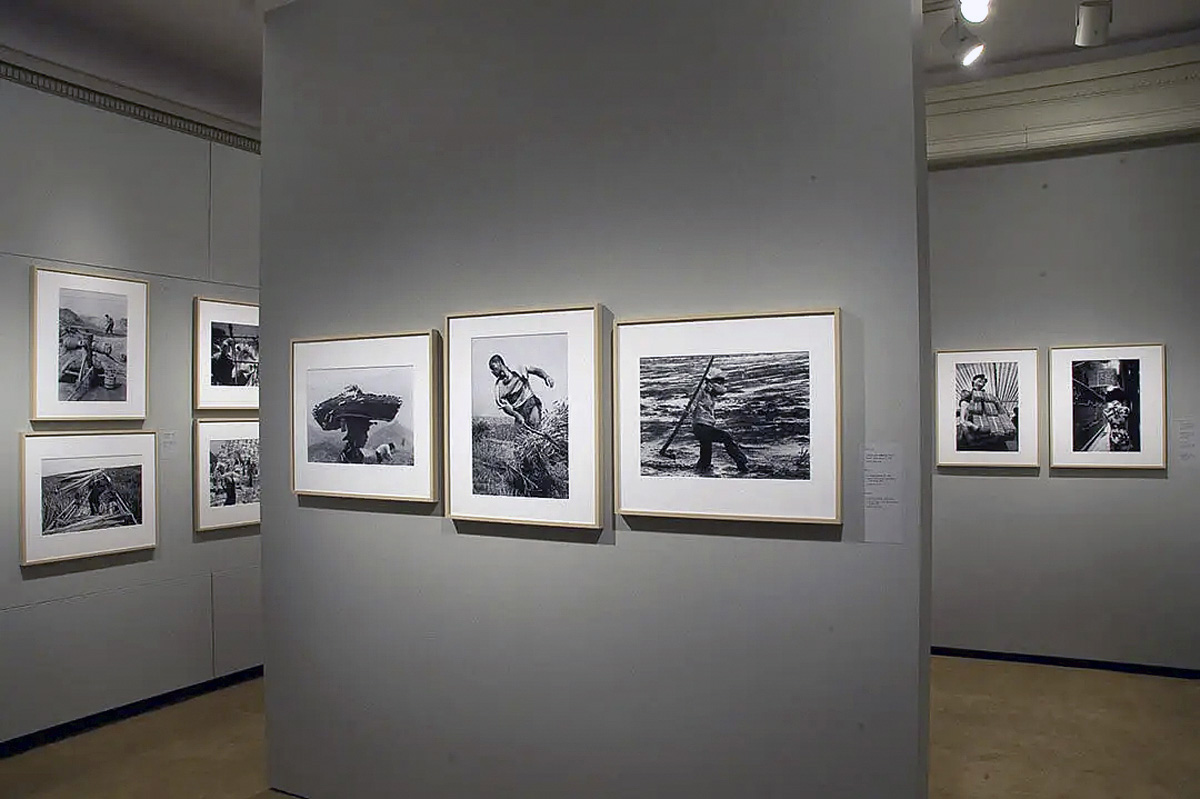
Installation view of the exhibition Humanism in China: A Contemporary Record of Photography at the China Institute in America, New York, September – December, 2009
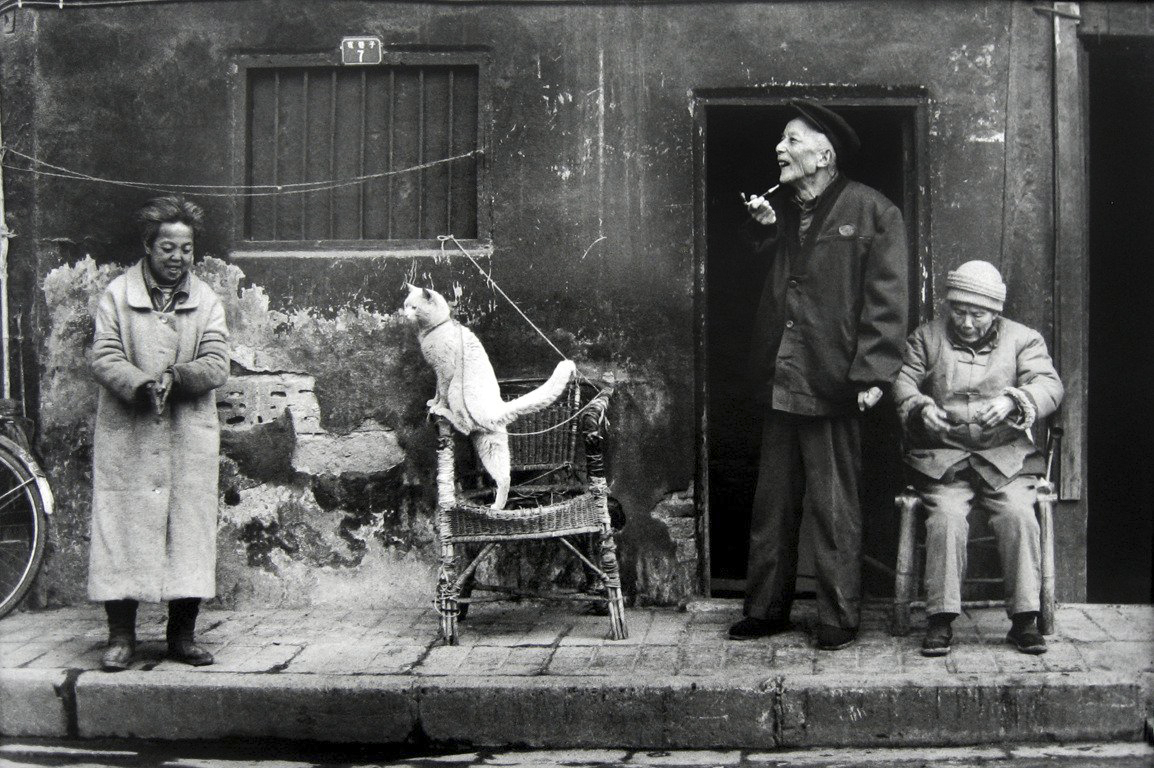
Wu Jialin (Chinese, b. 1926) Having a Chat, Cheng Du 1999 Gelatin silver print
Hei-Ming (Chinese, b. 1964) Iron Rice Bowl 2000 Gelatin silver print
Li Dan (Chinese) Tourists at the Wenshu Temple in Chengdu taking a souvenir photograph 1983 Gelatin silver print
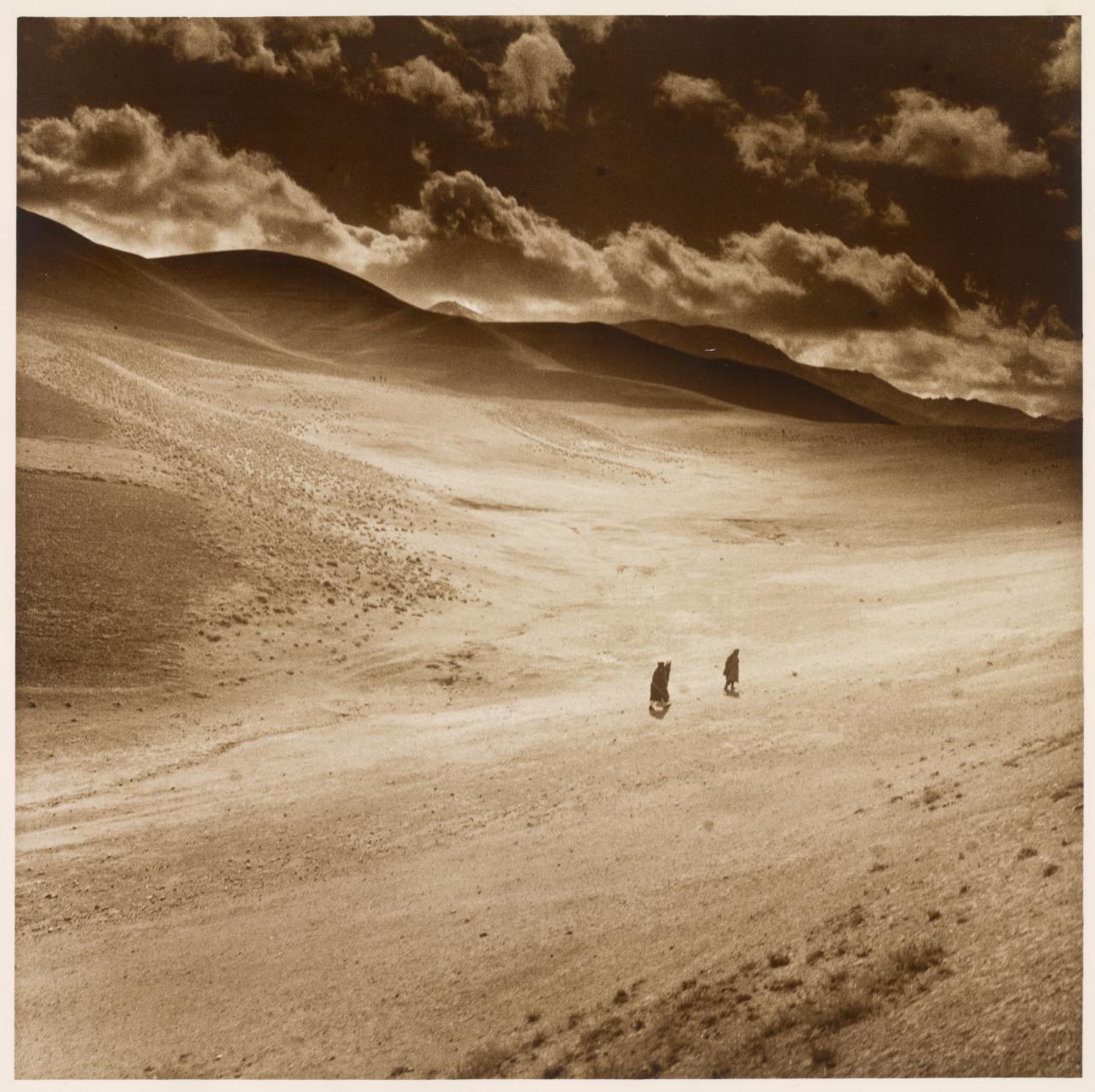
Max Pam (born Australia 1949, lived in Brunei 1980-1983) Road from Bamiyan 1971 Gelatin silver photograph 20.1 x 20.1cm National Gallery of Victoria, Melbourne Purchased, 1979
Long Distance Vision is a disappointingly wane exploration of travel photography at NGV Australia. With the exception of the work of Max Pam the exhibition lacks insight into the phenomena that the curators want the work to philosophically investigate: namely how photographs shape our expectations of a place (even before we arrive) and how photographs also serve to confirm our experience – the picture as powerful mnemonic tool.
Firstly a quick story: when travelling in America to study at the Kinsey Institute I boarded a train from Chicago to what I thought was Bloomington, Indiana only to arrive many hours later at Bloomington, Illinois. Unbeknownst to me this Bloomington also had a motel of the same name as I was staying at in Indiana! After much confusion I ended up at the local airport trying to catch a single seater aircraft to Bloomington, Indiana with no luck – at the end of my tether, fearful in a foreign country, in tears because I just had to be at this appointment the next morning. Riding to my rescue was a nineteen year old kid with no shoes, driving an ex-cop car, who drove me across the Mid-West states stopping at petrol stops in the dead of night. It was a surreal experience, one that I will never forget for the rest of my life … fear, apprehension, alienation, happiness, joy and the sublime all rolled into one.
I tell this story to illustrate a point about travel – that you never know what is going to happen, what experiences you will have, even your final destination. To me, photographs of these adventures not only document this dislocation but step beyond pure representation to become art that re-presents the nature of our existence.
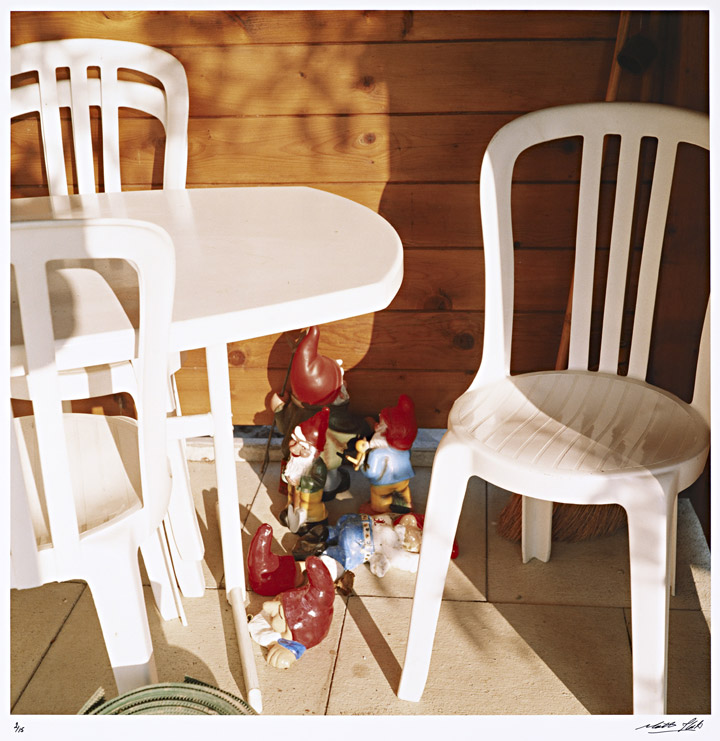
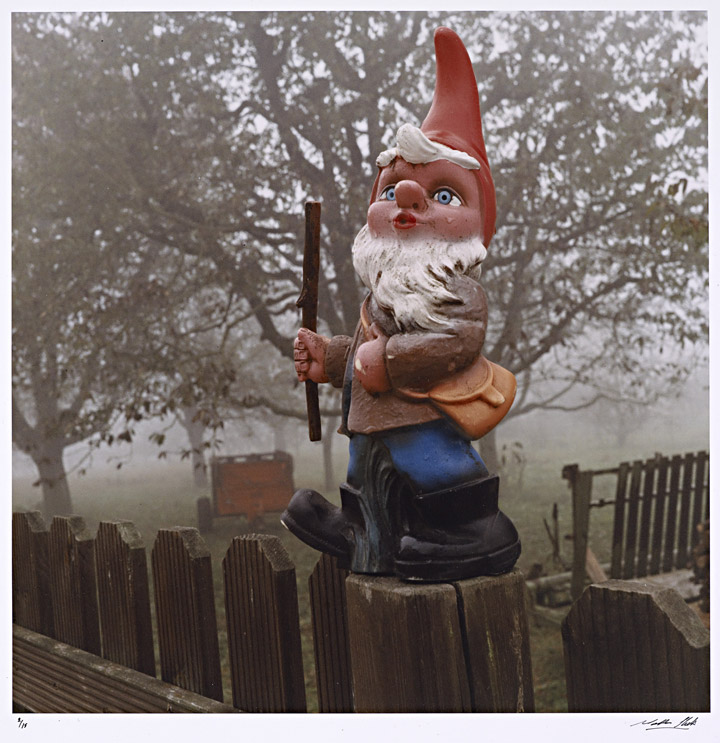
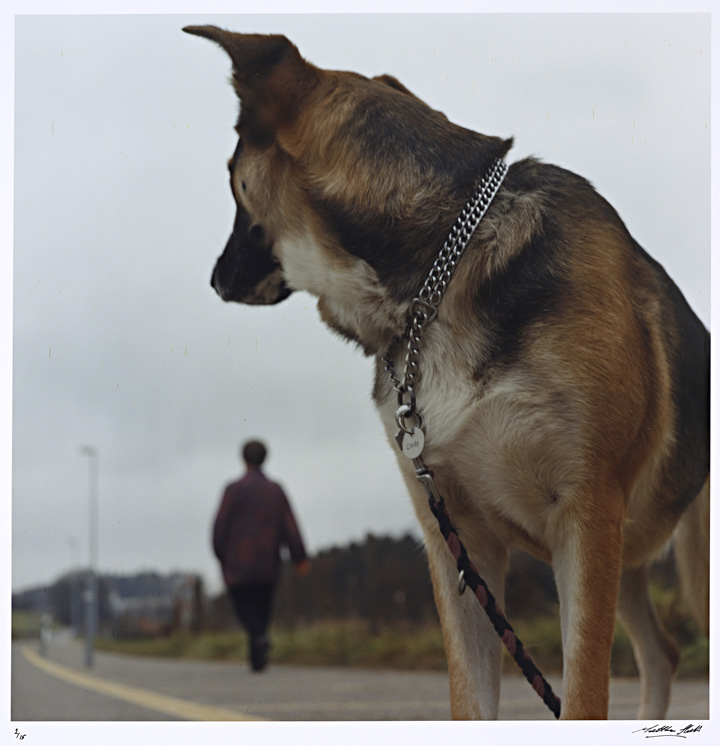
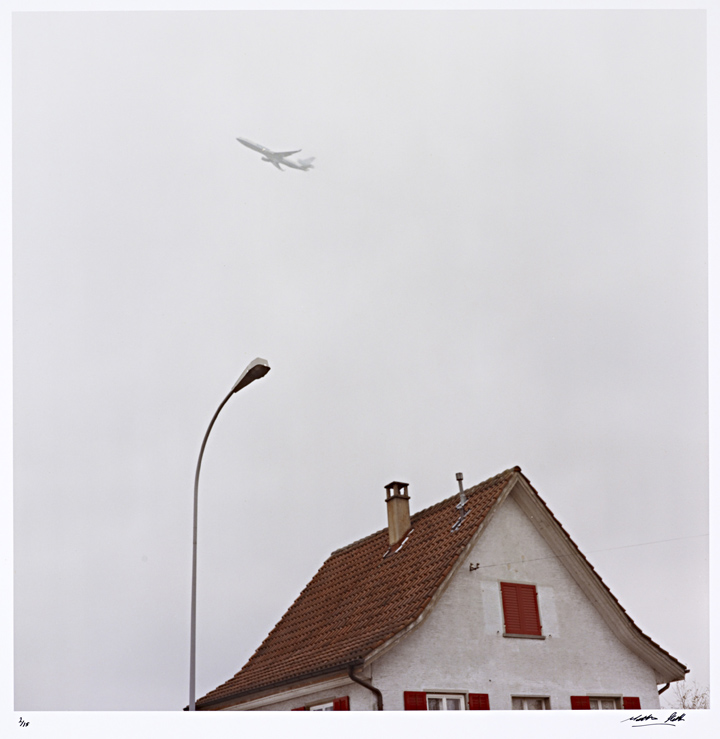
Matthew Sleeth‘s street photographs could be taken almost anywhere in the world (if it were not for a building with German writing on it). His snapshot aesthetic of caught moments, blinded people and dissected bodies in the observed landscape are evinced (to show in a clear manner; to prove beyond any reasonable doubt; to manifest; to make evident; to bring to light; to evidence – yes to bring to light, to evidence as photography does!) in mundane, dull, almost lifeless prints – ‘heavy’ photographs with a lack of shadow detail combined with a shallow depth of field. His remains, the people walking down the street and their shadow, are odd but as as The Age art critic Robert Nelson succinctly notes in his review of this exhibition, “To become art, the odd cannot remain merely quaint but has to signify an existential anomaly by implication.”1
If we look at the seminal photographs from the book The Americans by Robert Frank we see in their dislocated view of America a foreigners view of the country the artist was travelling across – a subjective view of America that reveals as much about the state of mind of the artist as the country he was exposing. No such exposition happens in the works of Matthew Sleeth.
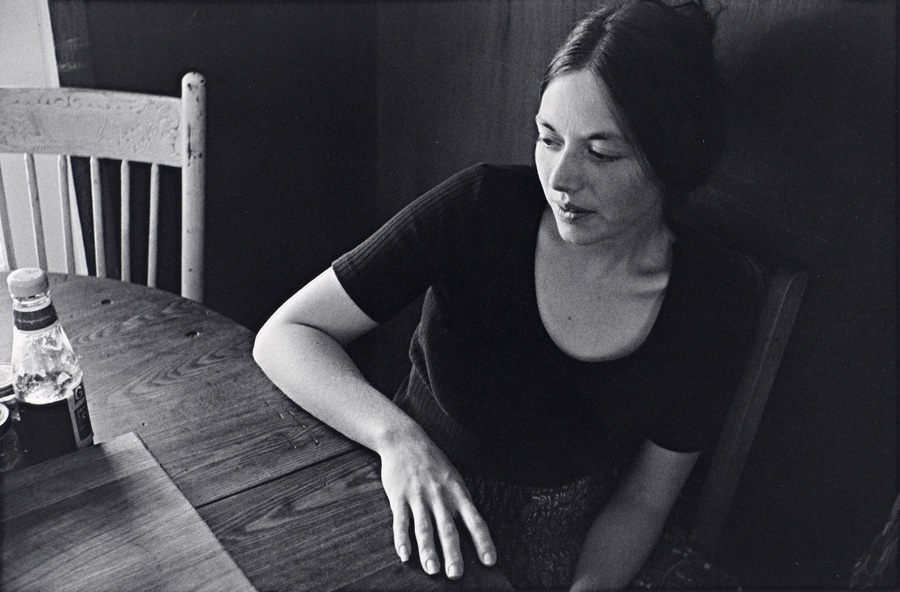
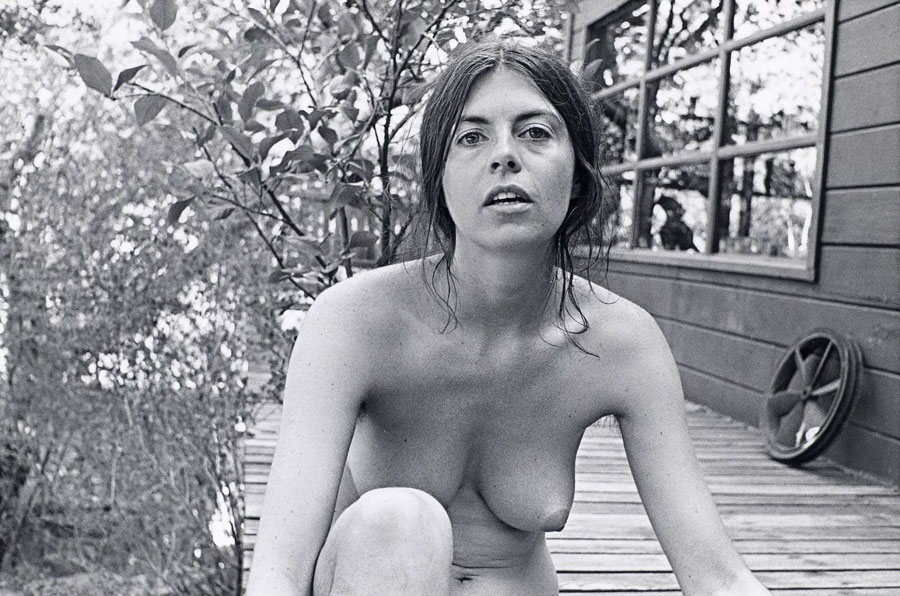
Christine Godden‘s photographs of family and friends have little to do with travel photography and I struggle to understand their inclusion in this exhibition. Though they are reasonable enough photographs in their own right – small black and white photographs of small intimacies (at the beach, in the garden, at the kitchen table, on the phone, on the porch, on the float, etc…) Godden’s anthropomorphist bodies have nothing to do with a vision of a new land as she had been living in San Francisco, New York and Rochester for six years over the period that these photographs were taken. Enough said.
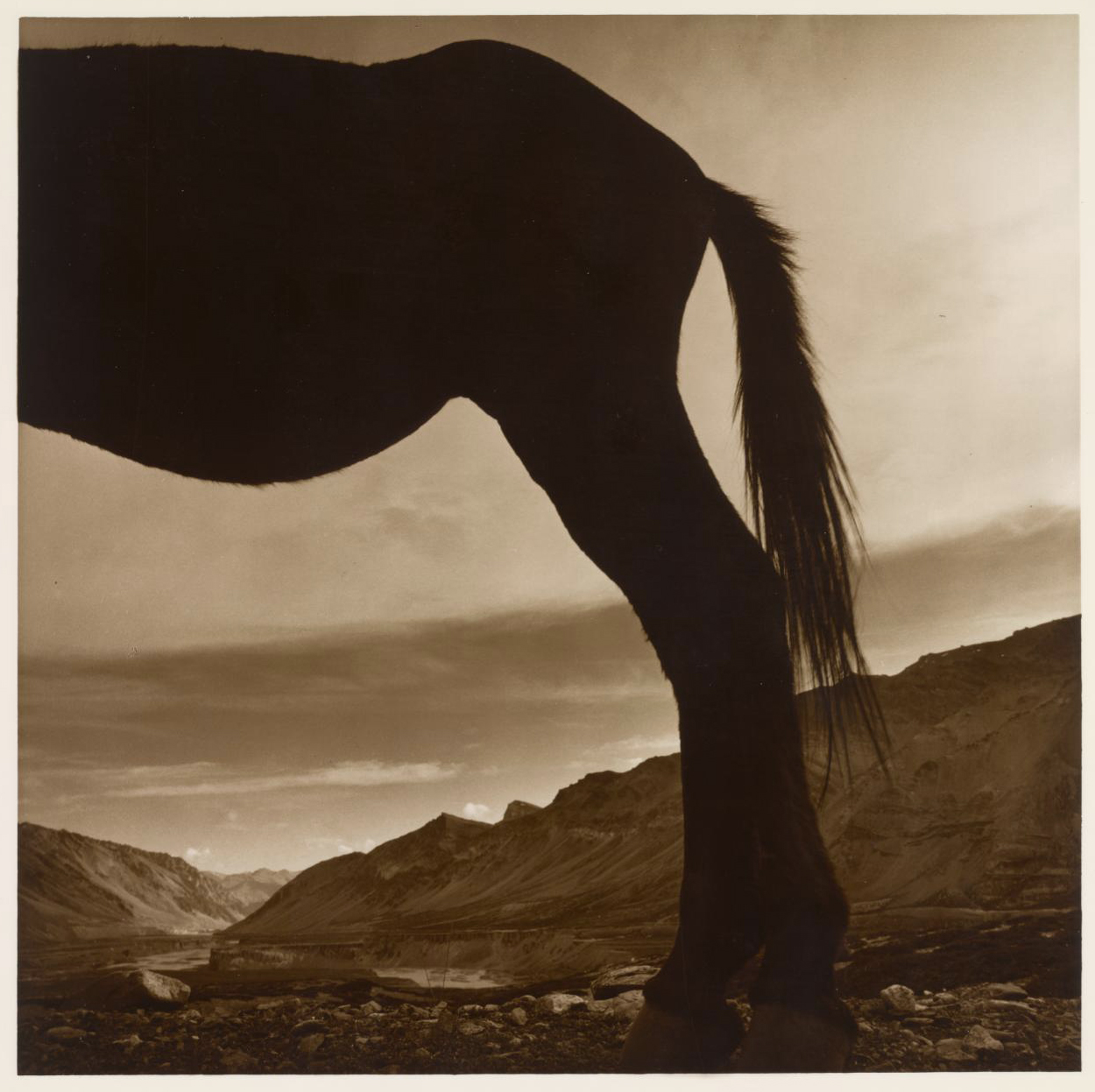
The highlight of the exhibition is the work of Max Pam. I remember going the National Gallery of Victoria in the late 1980s to view this series of work in the collection – and what a revelation they were then and remain so today. The square formatted, dark sepia toned silver gelatin prints of the people and landscapes of Tibet are both monumental and personal at one and the same time. You are drawn into their intimacies: the punctum of a boys feet; the gathering of families; camels running before a windstorm; human beings as specks in a vast landscape.
“If the world is unfair or beyond our understanding, sublime places suggest it is not surprising things should be thus. We are the playthings of the forces that laid out the oceans and chiselled the mountains. Sublime places acknowledge limitations that we might otherwise encounter with anxiety or anger in the ordinary flow of events. It is not just nature that defies us. Human life is as overwhelming, but it is the vast spaces of nature that perhaps provide us with the finest, the most respectful reminder of all that exceeds us. If we spend time with them, they may help us to accept more graciously the great unfathomable events that molest our lives and will inevitably return us to dust.”2
The meditation on place and space that the artist has undertaken gives true insight into the connection of man and earth, coming closest to Alain de Botton’s understanding of the significance of sublime places. Through a vision of a distant land the photographs transport us in an emotional journey that furthers our understanding of the fragility of life both of the planet and of ourselves.
While the National Gallery of Victoria holds some excellent photography exhibitions (such as Andreas Gursky and Rennie Ellis for example) this was a missed opportunity. The interesting concept of the exhibition required a more rigorous investigation instead of such a cursory analysis (which can be evidenced by the catalogue ‘essay’: one page the size of a quarter of an A4 piece of paper that glosses over the whole history of travel photography in a few blithe sentences).
Inspiration could have easily been found in Alain de Botton’s excellent book The Art of Travel. Here we find chapters titled “On Anticipation”, “On Travelling Places”, “On the Exotic”, “On Curiosity”, “On the Country and the City” and “On the Sublime” to name but a few, with places and art work to illustrate the journey: what more is needed to excite the mind!
Take Charles Baudelaire for example. He travelled outside his native France only once and never ventured abroad again. Baudelaire still dreamt of going to Lisbon, or Java or to the Netherlands but “the destination was not really the point. The true desire was to get away, to go, as he concluded, ‘Anywhere! Anywhere! So long as it is out of the world!'”3
Heavens, we don’t even have to leave home to create travel photography that is out of the world! Our far-sighted vision (like that of photographer Gregory Crewdson) can create psychological narratives of imaginative journeys played out for the camera.
Perhaps what was needed was a longer gestation period, further research into the theoretical nuances of travel photography (one a little death, a remembrance; both a dislocation in the non-linearity of time and space), a gathering of photographs from collections around Australia to better evidence the conceptual basis for the exhibition and a greater understanding of the irregular possibilities of travel photography – so that the work and words could truly reflect the title of the exhibition Long Distance Vision.
Dr Marcus Bunyan
1/ Nelson, Robert. “In blurred focus: le freak c’est chic,” in The Age newspaper. Friday, October 23rd 2009, p. 18
2/ de Botton, Alain. The Art of Travel. London: Penguin, 2002, p. 178-179
“The National Gallery of Victoria will celebrate the work of Christine Godden, Max Pam and Matthew Sleeth in a new exhibition, Long Distance Vision: Three Australian Photographers opening 28 August.
Long Distance Vision will include over 60 photographs from the NGV Collection exploring the concept of the ‘tourist gaze’ and its relationship with the three artists.
Susan van Wyk, Curator Photography, NGV said the exhibition provides a fascinating insight into the unusual perspective brought by the three photographers to their varied world travel destinations.
“There’s a sense in the works in the exhibition that the photographers are not from the places they choose to photograph, and that each is a visitor delighting in the scenes they encounter.
“What is notable about the photographs in Long Distance Vision is that rather than focussing on the well known scenes that each artist encountered, they have turned their attention to the ‘little things’, the details of the everyday,” said Ms van Wyk.
From the nineteenth century, photography has been a means by which people could discover the world, initially through personal collection and albums, and later via postcards, magazines, books and the internet.
Dr Gerard Vaughan, Director, NGV said that both contemporary photographers and tourists use the camera as a means to explore and capture the world.
“Through their photographs, the three artists featured in Long Distance Vision show us highly individual ways of seeing the world. This exhibition will surprise and delight visitors as our attention is drawn to not only what is different but what remains the same as we travel the world,” said Dr Vaughan.
Born in Melbourne in 1949, Max Pam began his career in various commercial photography studios in the 1960s. After responding to a university notice for assistance to drive a Volkswagen from Calcutta to London in 1969, Pam got his first taste of being a traveller. The body of Pam’s work in this exhibition is from the series The Himalayas, which was photographed over a number of early visits to India.
Christine Godden also travelled the popular overland route between Europe and India in the early 1970s, returning to Sydney in 1978. In 1972, after a period of travelling, Godden found her home in the US where she remained for six years. Godden’s photographs in this exhibition were taken between 1972 and 1974 during her stay in the US.
Born in Melbourne in 1972, Matthew Sleeth is another seasoned traveller. During the late 1990s, Sleeth settled in Opfikon, an outer suburb of Zurich, Switzerland. The series of photographs in Long Distance Vision were taken during this time, showing Sleeth’s interest not only in street photography, but also in the narrative possibilities in everyday scenes. Dotted with garishly coloured playhouses, naive sculptures and whimsical arrangements of garden gnomes Sleeth’s photographs go beyond the ‘picture-perfect’ scenes of typical tourist photography.
Long Distance Vision: Three Australian Photographers is on display at The Ian Potter Centre: NGV Australia, Federation Square from 28 August 2009 to 21 February 2010.”
Text from the National Gallery of Victoria press release
Exhibition dates: 12th September – 8th November, 2009
Many thankx to the Morris Museum of Art for allowing me to publish the photographs in the posting. Please click on the photographs for a larger version of the image.
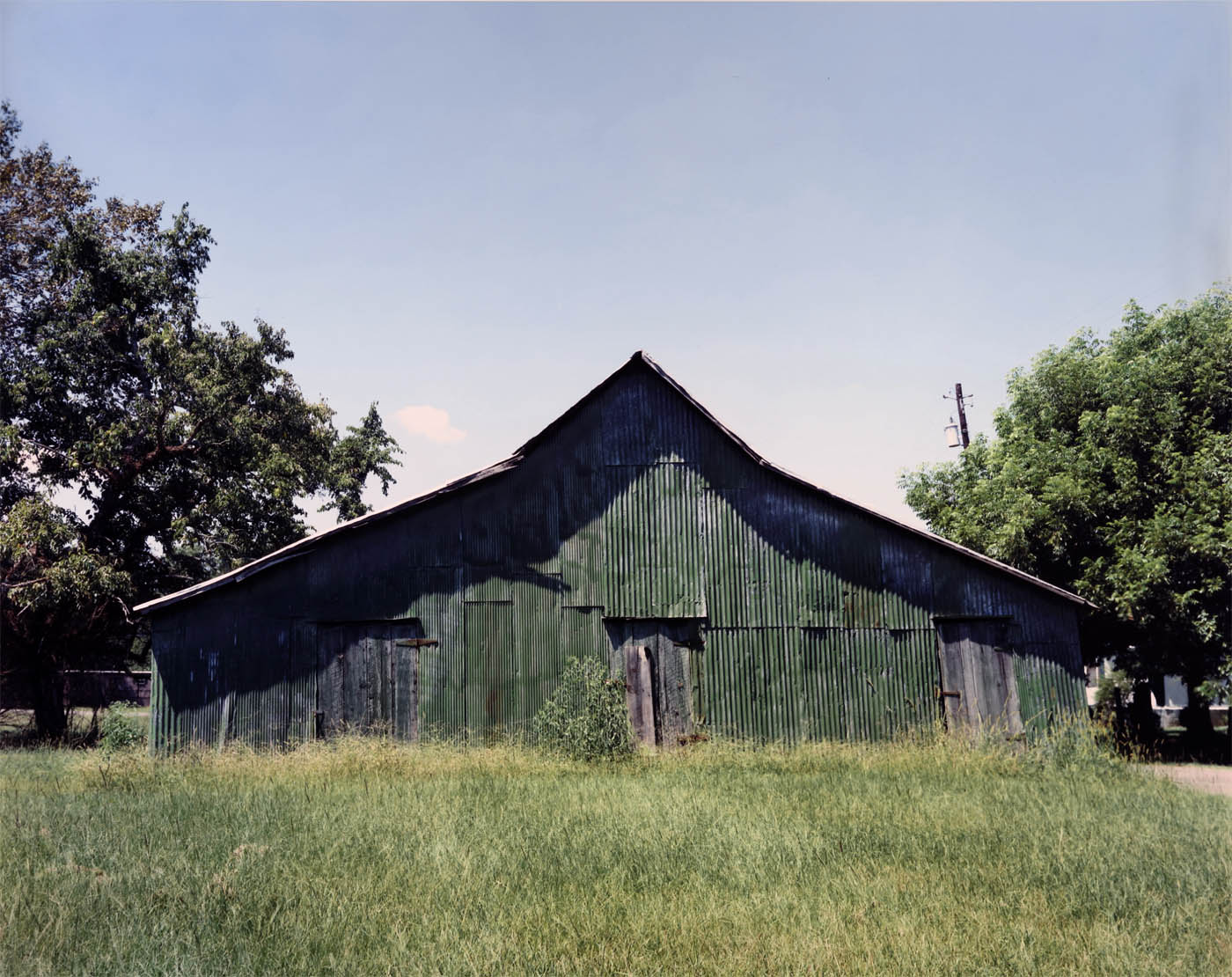
William Christenberry (American, 1936-2016) Green Warehouse, Newbern, Alabama 1997 Dye coupler print
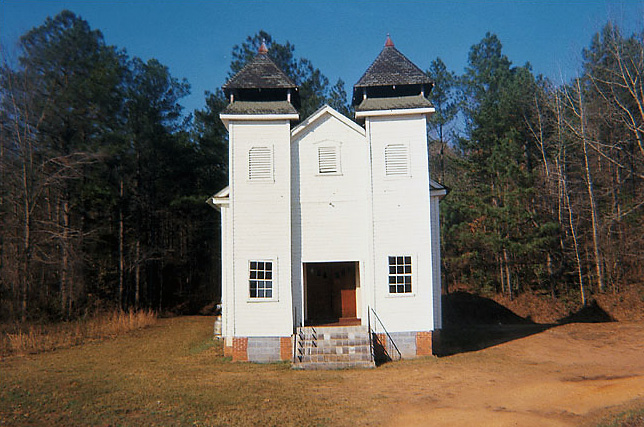
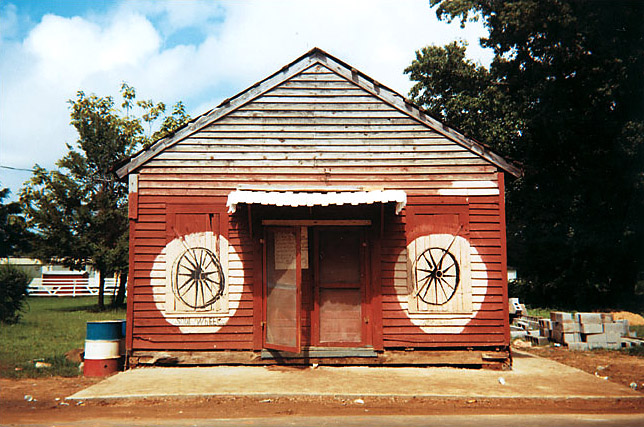
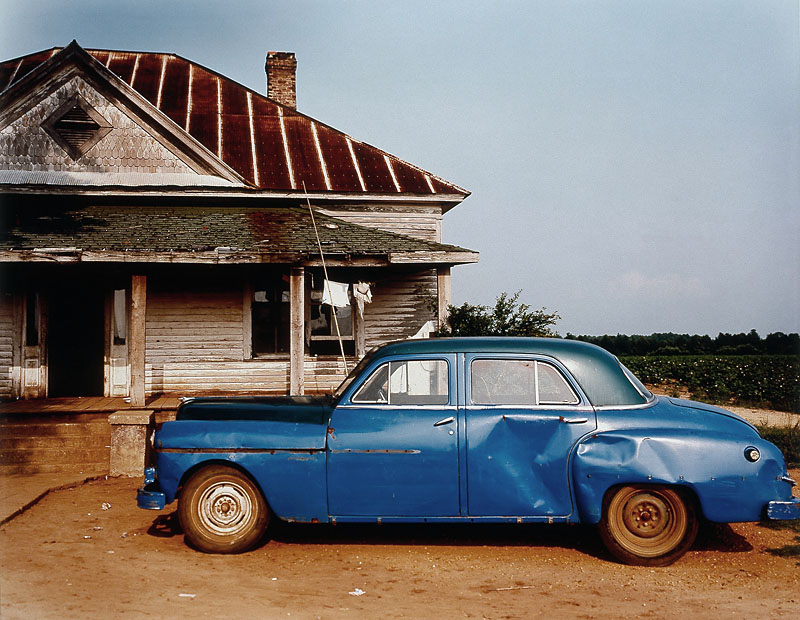
Widely recognised as a pioneer in the field of colour photography, William Christenberry has used this expressive medium to explore the American South for forty years. While pursuing this artistic quest he has drawn inspiration from Walker Evans, and influenced a generation of emerging photographers. William Christenberry: Photographs, 1961-2005 surveys his poetic documentation of southern vernacular architecture, signage, and landscape using a wide range of cameras, from his earliest Brownie photographs of the early 1960s to his later work with a large-format camera. Combining never-before-seen photographs, both old and new, with images that are now iconic, this exhibition comprises fifty vintage photographic works and one sculpture. Together, they convey the breadth of his singular photographic vision. Discuss the artistic objectives of his long-term interpretation of the Southern landscape with Michelle Norris of National Public Radio, Christenberry explained: “What I really feel very strongly about, and I hope reflects in all aspects of my work, is the human touch, the humanness of things, the positive and sometimes the negative and sometimes the sad.”
Text from the Morris Museum of Art website [Online] Cited 15/10/2009. No longer available online
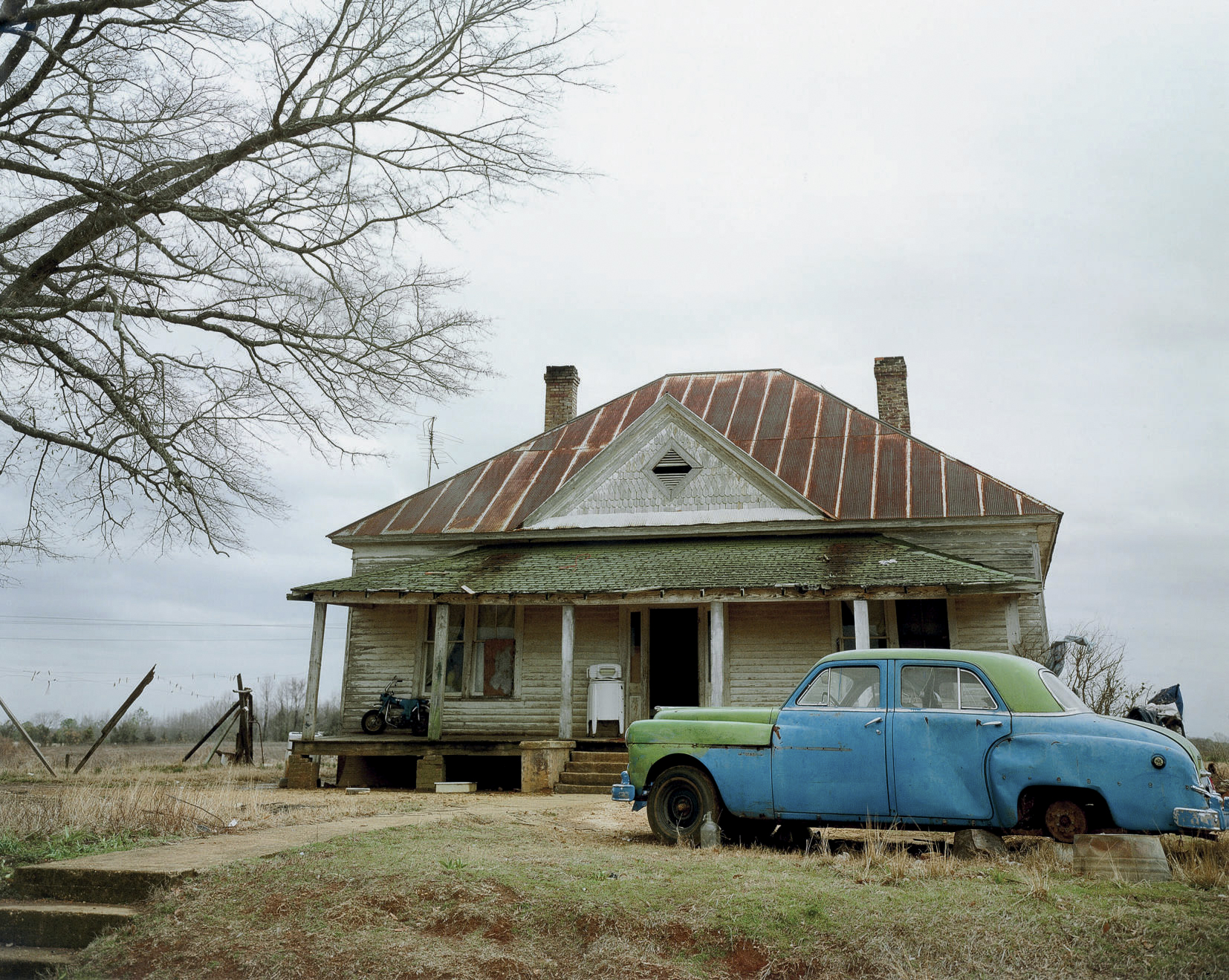
William Christenberry (American, 1936-2016) House and Car, near Akron, Alabama 1981
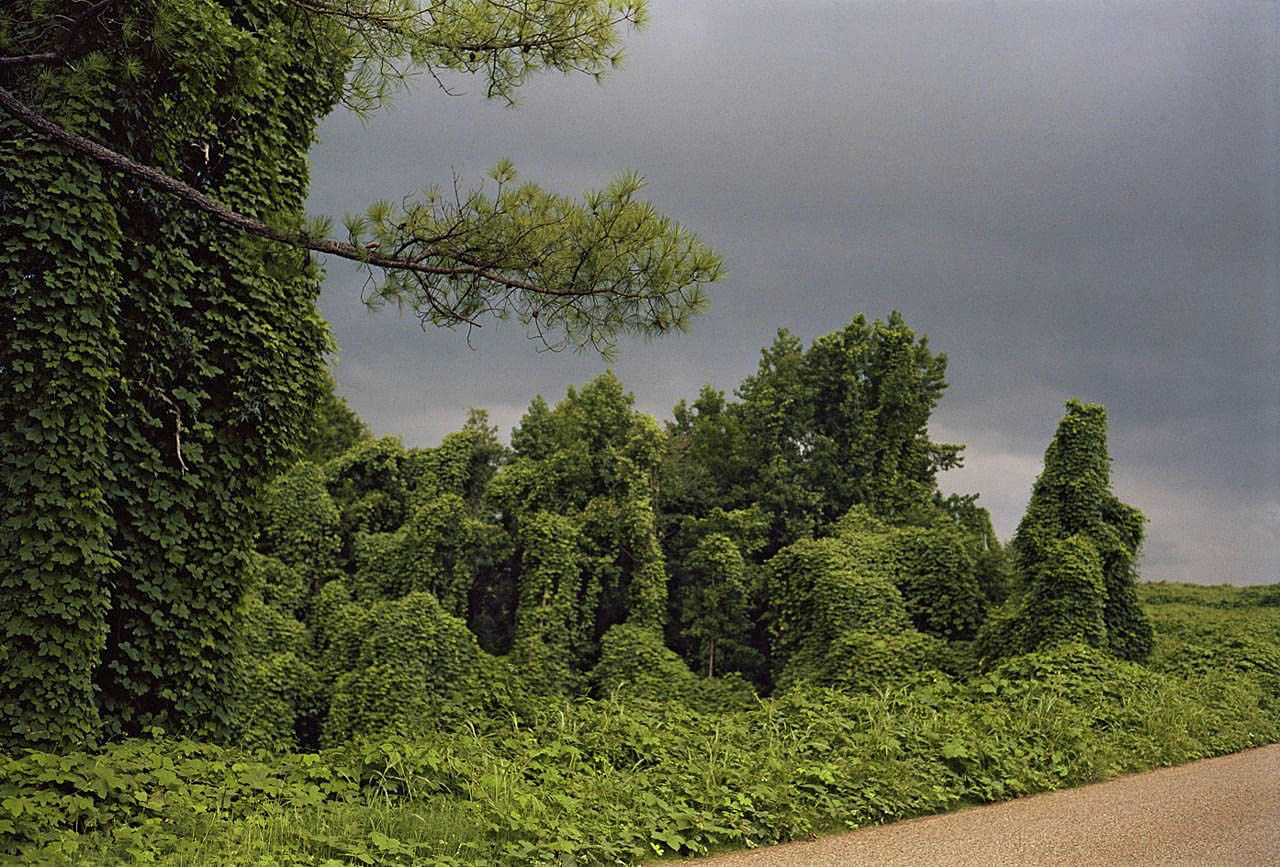
William Christenberry (American, 1936-2016) Kudzu with Storm Cloud, near Akron, Alabama 1981
“William Christenberry Photographs, 1961-2005, a phenomenal retrospective exhibition of Christenberry’s photographs, opens to the public at the Morris Museum of Art on September 16, 2009. The Morris Museum is the only Georgia venue hosting this exhibition.
“‘William Christenberry Photographs, 1961-2005’ is an overview of the career of one of the South’s most important living artists,” said Kevin Grogan, director of the Morris Museum of Art. “Organised by the Aperture Foundation, this exhibition brings to Augusta a body of work like no other. No one has so scrupulously and attentively captured a sense of place and time in quite the way that Bill Christenberry has. He is a remarkable artist, as is proven by this extraordinary body of work. He is America’s Proust.”
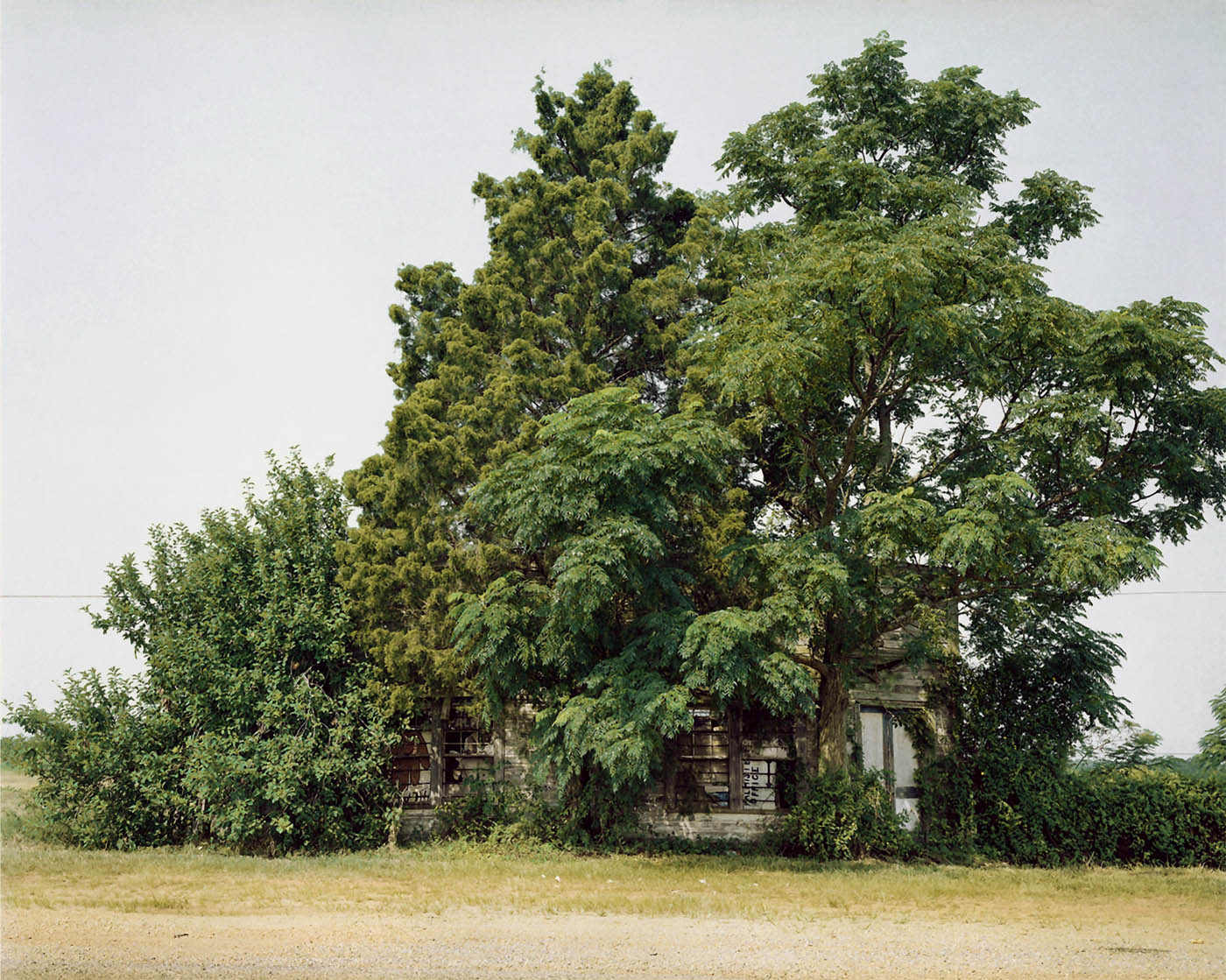
Since the early 1960s, William Christenberry has plumbed the regional identity of the American South, focusing his attention primarily on his childhood home, Hale County, Alabama. Widely recognised as a pioneer in the field of colour photography, Christenberry draws inspiration from the work of Walker Evans, while paralleling the work of such international practitioners as Bernd and Hilla Becher. Ranging from his earliest Brownie photographs to his later work with a large-format camera, William Christenberry Photographs, 1961-2005 is a survey of the artist’s poetic documentation of the Southern landscape and vernacular architecture that surrounded him as he grew up. The exhibition, coupling never-before-seen photographs with images that are now iconic, reveals how the history, the very story of place, is at the heart of Christenberry’s ongoing project. While the focus of his work is the American South, it touches on universal themes related to family, culture, nature, spirituality, memory, and ageing. Christenberry photographs real things in the real world – ramshackle buildings, weathered commercial signs, lonely back roads, rusted-out cars, whitewashed churches, decorated graves. Dutifully returning to photograph the same locations annually – the green barn, the palmist building, the Bar-B-Q Inn, among others – he has fulfilled a personal ritual and documented the physical changes wrought by every single year. Straddling past and present, Christenberry’s art suggests the gravity and power of the passage of time.
The exhibition is accompanied by a stunning monograph entitled William Christenberry, published by Aperture in cooperation with the Smithsonian American Art Museum. The book, a comprehensive survey, presents all aspects of the artist’s oeuvre as he intended it to be viewed and considered. More than half the work reproduced has not been previously published.”
Text from the press release on the Morris Museum of Art website [Online] Cited 15/10/2009. No longer available online
William Christenberry (American, 1936-2016) Sprott Church in Alabama 1971
William Christenberry (American, 1936-2016) T.B. Hick’s Store, Newbern, Alabama 1976
William Christenberry (American, 1936-2016) Farmhouse, Hale County, Alabama 1977
William Christenberry (American, 1936-2016) House and Car, near Akron, Alabama 1978
William Christenberry (American, 1936-2016) Palmist Building, Havanna, Alabama 1980
The Palmist Building is one of the most iconic structures in Christenberry’s extensive body of work. When he was a child, the clapboard building was a general store operated by his great uncle, but it was later home to a palm reader. The inverted hand-painted sign that covers a broken window initially enticed him to photograph the building in 1961. His earliest photographs pinpoint the sign itself and the peeling whitewash around it. As he became more engrossed in the project, Christenberry carefully examined the relationship of the building to its surroundings, particularly the chinaberry tree that eventually engulfed it.
Text from the High Museum of Art website
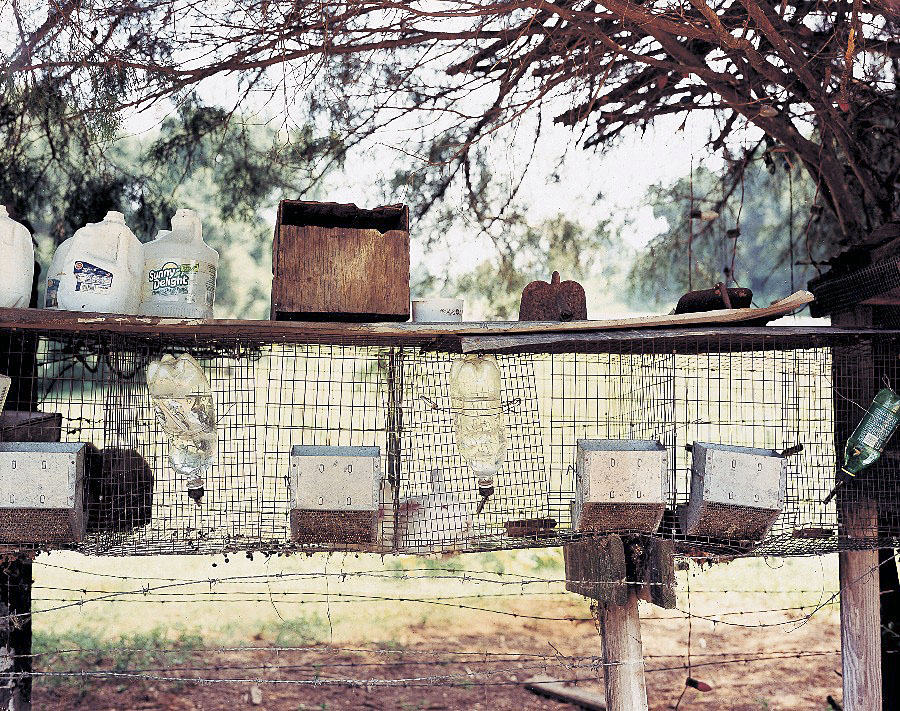
William Christenberry (American, 1936-2016) Rabbit Pen, near Moundville, Alabama 1998
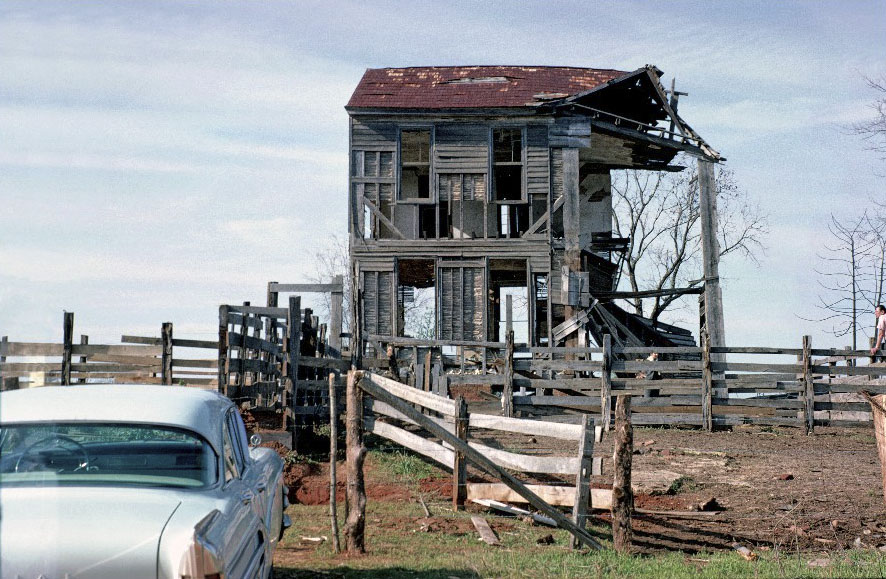
William Christenberry (American, 1936-2016) Old House, near Akron, Alabama 1964
Morris Museum of Art 1 Tenth Street Augusta, Georgia 30901 Phone: 706-724-7501
Opening Hours: Tuesday – Saturday: 10.00am – 5.00pm Sunday: 12 – 5.00pm Closed Mondays and major holidays
Exhibition dates: 24th September – 14th November, 2009
Exhibition artists: Peter Bialobrzeski, Stephane Couturier, DoDo Jin Ming, Toshio Shibata
Many thankx to Laurence Miller Gallery for allowing me to publish the photographs in the posting. Please click on the photographs for a larger version of the image.
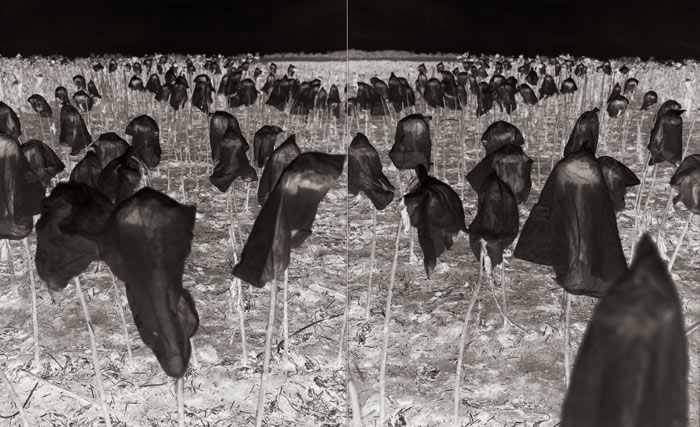
DoDo Jin Ming (Chinese, b. 1955) Behind My Eyes 2nd Movement, Plate I 2002
DoDo Jin Ming (Chinese, b. 1955) Behind My Eyes 2nd Movement, Plate VIII 2003
DoDo Jin Ming (Chinese, b. 1955) Free Element, Plate XXX 2002
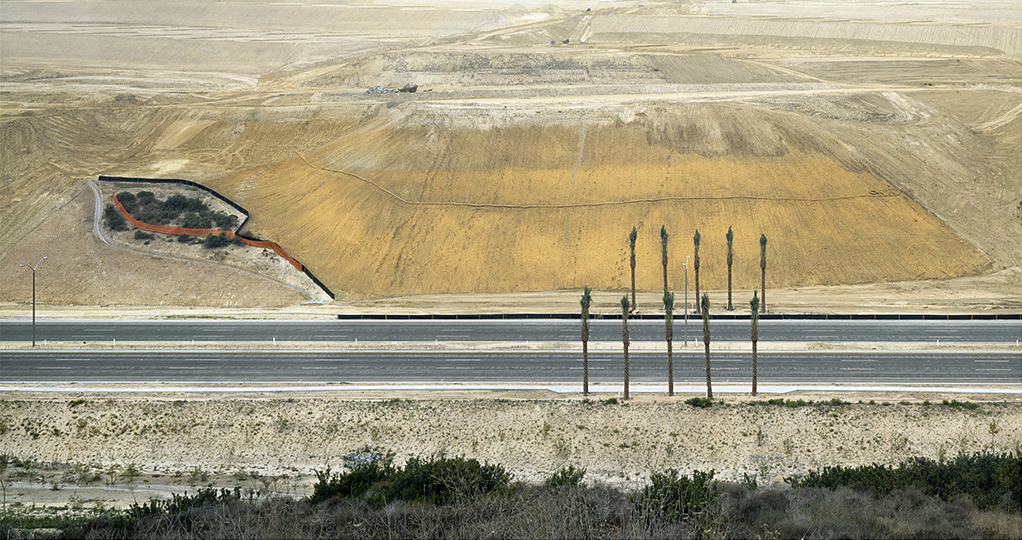
Stéphane Couturier (French, b. 1957) Olympic Parkway No. 1 2001
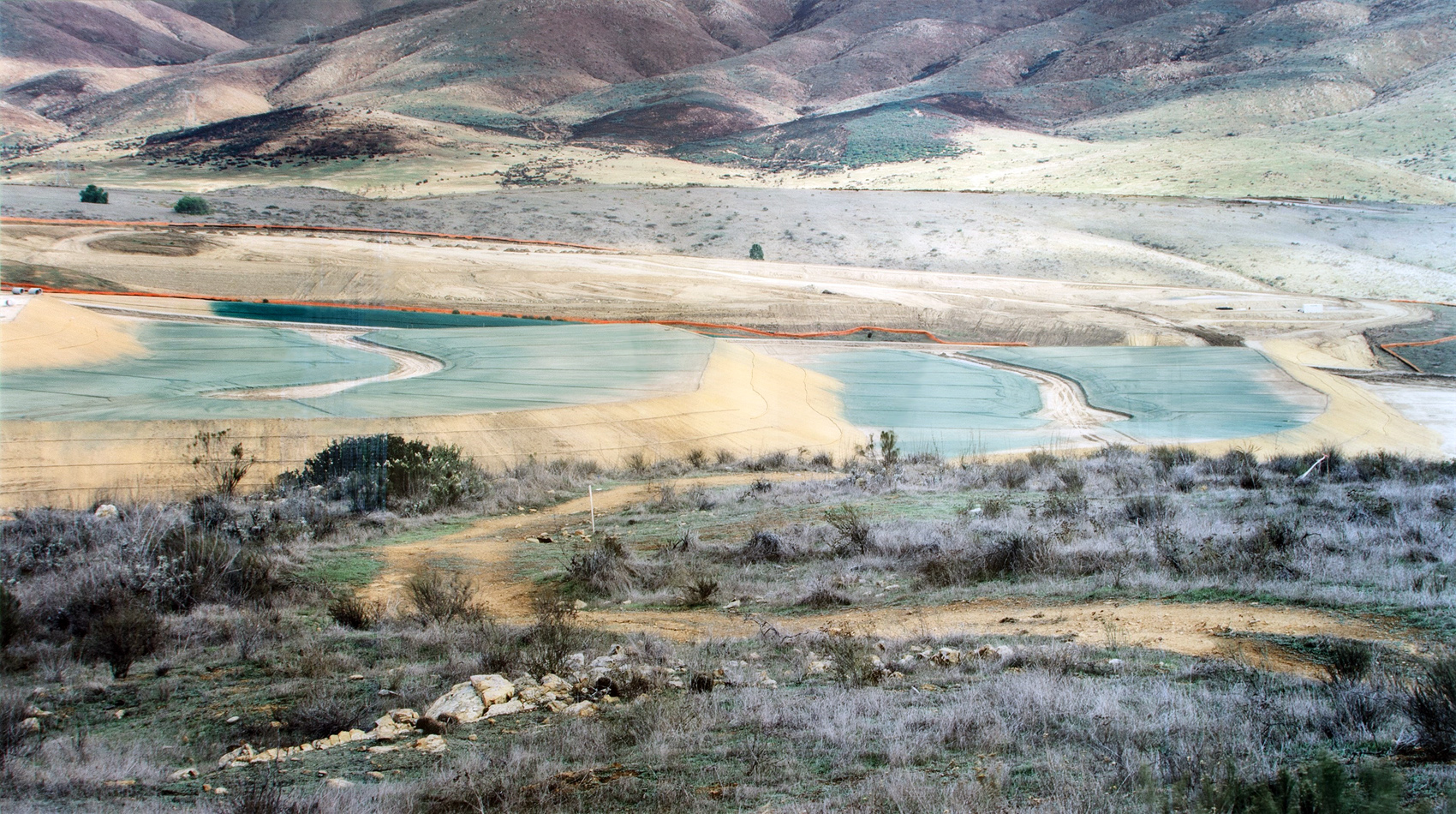
Stéphane Couturier (French, b. 1957) Proctor Valley No. 1 2004
Laurence Miller is pleased to present, as its opening show for the fall, The Abstracted Landscape, featuring the work of four midcareer international artists: Peter Bialobrzeski, from Hamburg; Stephane Couturier, from Paris; DoDo Jin Ming from Beijing and New York; and Toshio Shibata, from Tokyo.
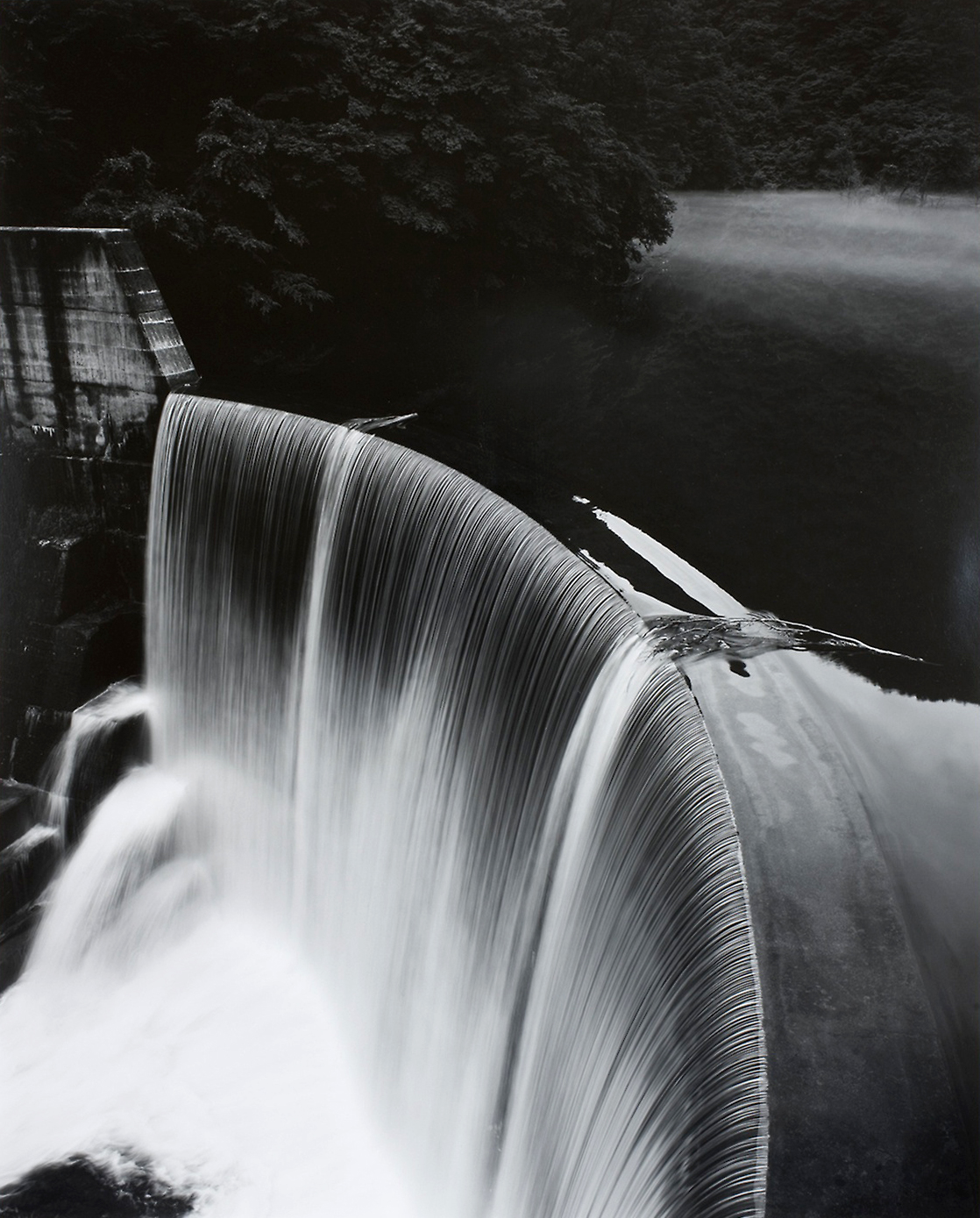
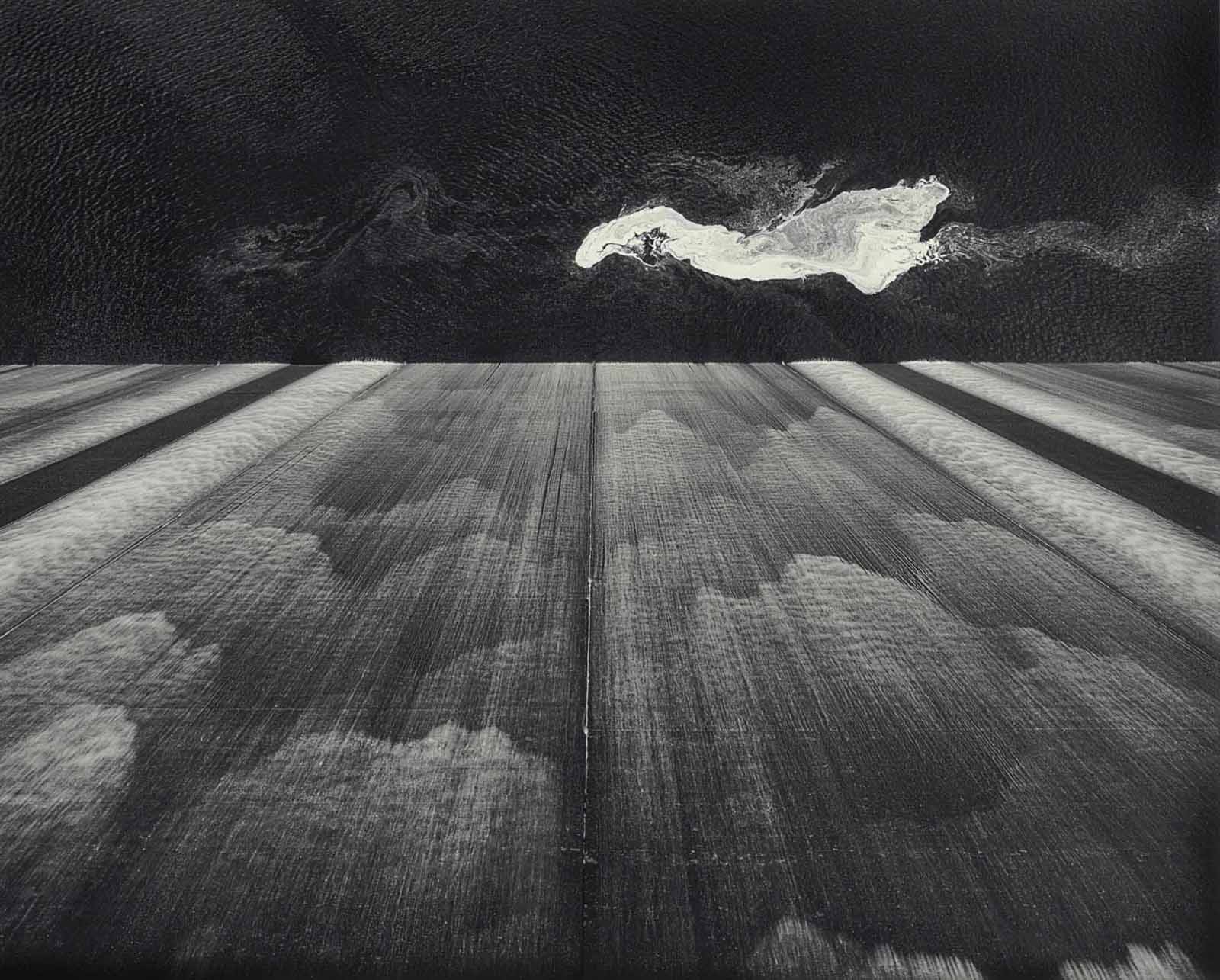
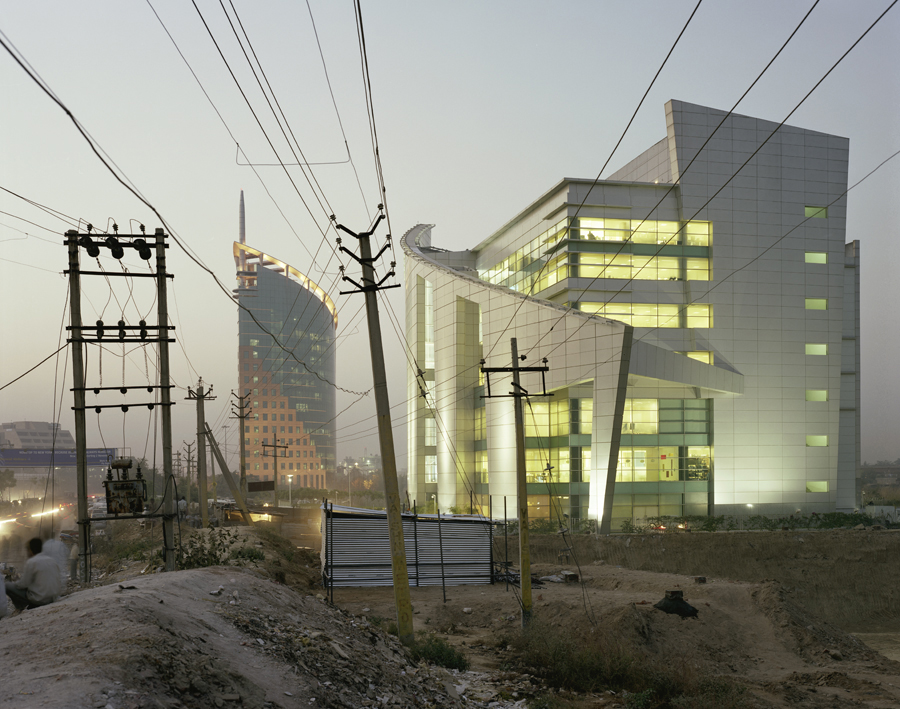
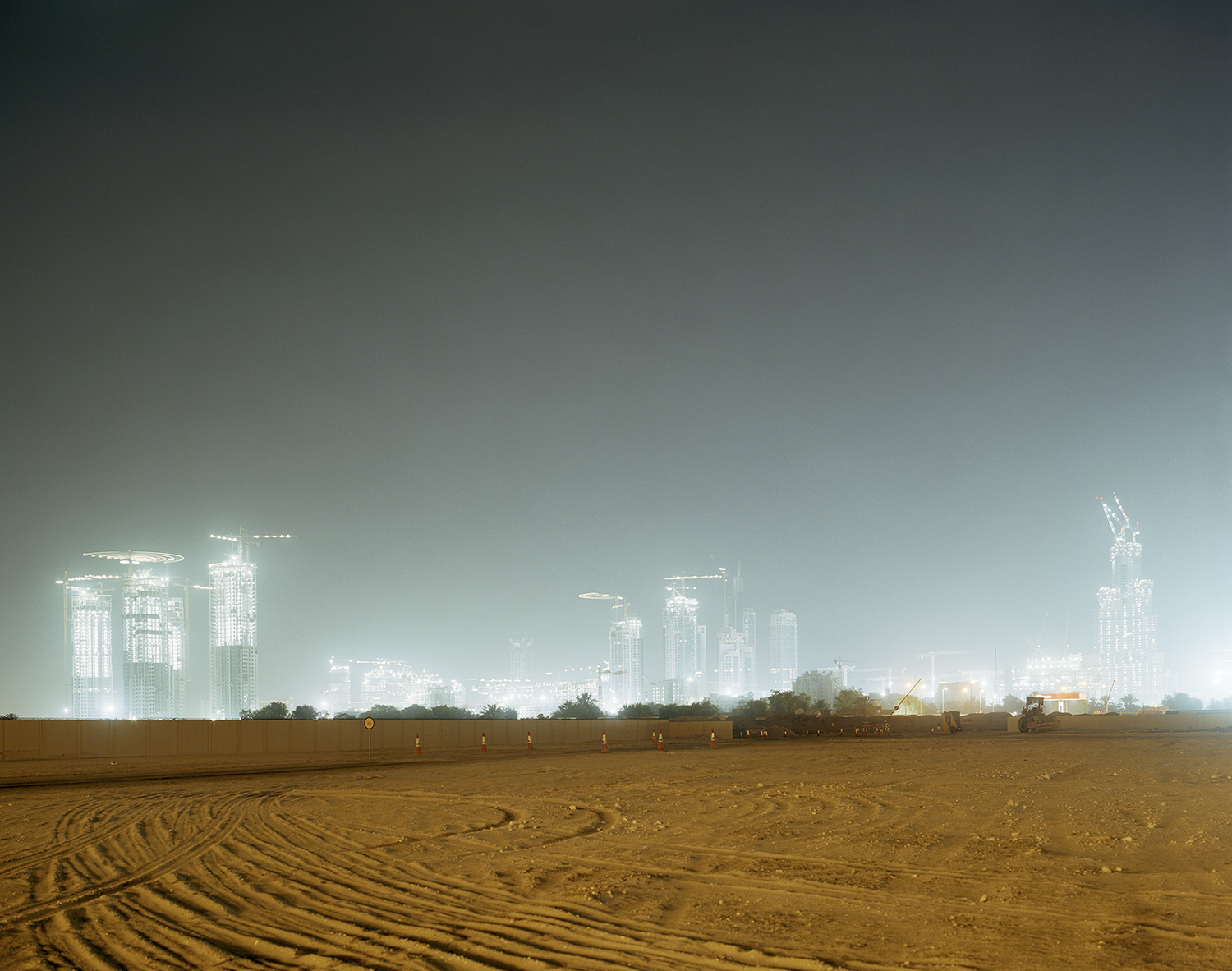
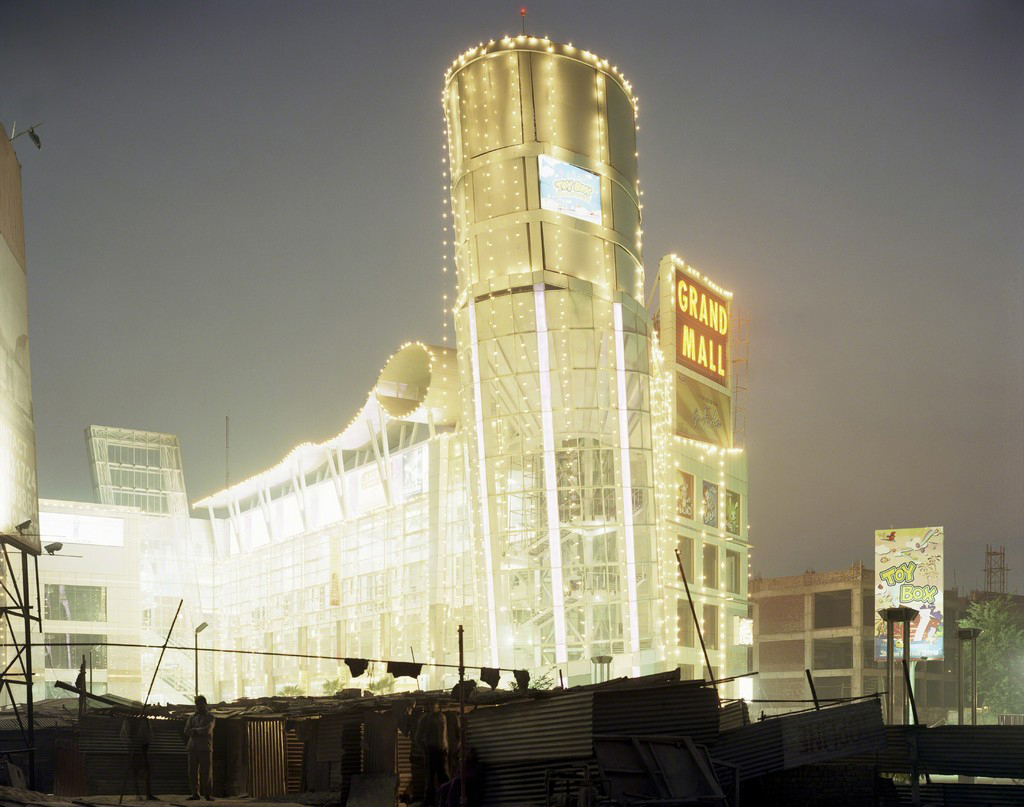
These four photographers each translate the landscape into a poetic and abstract vision, utilising techniques and processes unique to photography to create scenes that remain sufficiently recognisable yet unobtainable through the naked eye. Peter Bialobrzeski, in his series Lost in Transition, photographs rapid urbanisation and industrialisation by taking very long exposures, which create other-worldly colours and lighting not visible to the naked eye. Stéphane Couturier embraces the camera’s monocularity in his series from Havana to flatten our normal reading of space and render totally ambiguous the walls of a decaying interior. DoDo Jin Ming, in her series Behind My Eyes, applies the technique of negative printing to render mysterious and foreboding fields of sunflowers. And Toshio Shibata wields his large view camera, with multiple tilts and swings, to look straight down the side of a dam, creating a vertigo-inducing viewpoint we would be unable (and perhaps unwilling) to see directly with our own eyes.
Abstraction in the landscape has a rich tradition within the history of photography. Felix Teynard’s Egyptian views from the mid-1850’s are wonderfully abstract, as are those of J.B. Greene and August Salzmann. Timothy O’Sullivan, Carlton Watkins and William Henry Jackson each made views of the American west from the 1806’s through the 1880’s, that were equally rich in detail and minimal in composition. In the 20th century there are many examples, from George Seeley to Paul Strand, through Moholy Nagy and the Bauhaus to Edward Weston’s glorious sand dunes.
Text from the Laurence Miller Gallery website [Online] Cited 12/10/2009. No longer available online
Toshio Shibata (Japanese, b. 1949) Kashima Town, Fukushima Prefecture 1990
Toshio Shibata (Japanese, b. 1949) Grand Coulee Dam, Douglas County, WA 1996
Peter Bialobrzeski (German, b. 1961) Transition #33 from the series Lost in Transition 2005
Peter Bialobrzeski (German, b. 1961) Transition #20 from the series Lost in Transition 2005
Peter Bialobrzeski (German, b. 1961) Transition #23 from the series Lost in Transition 2005
Laurence Miller Gallery
Laurence Miller Gallery is now operating as a private dealer and consultant.
Exhibition dates: 29th September – 10th October, 2009
Curator: Amy Barclay
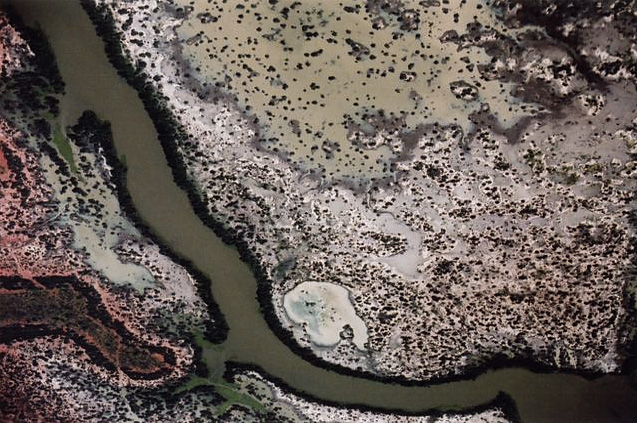
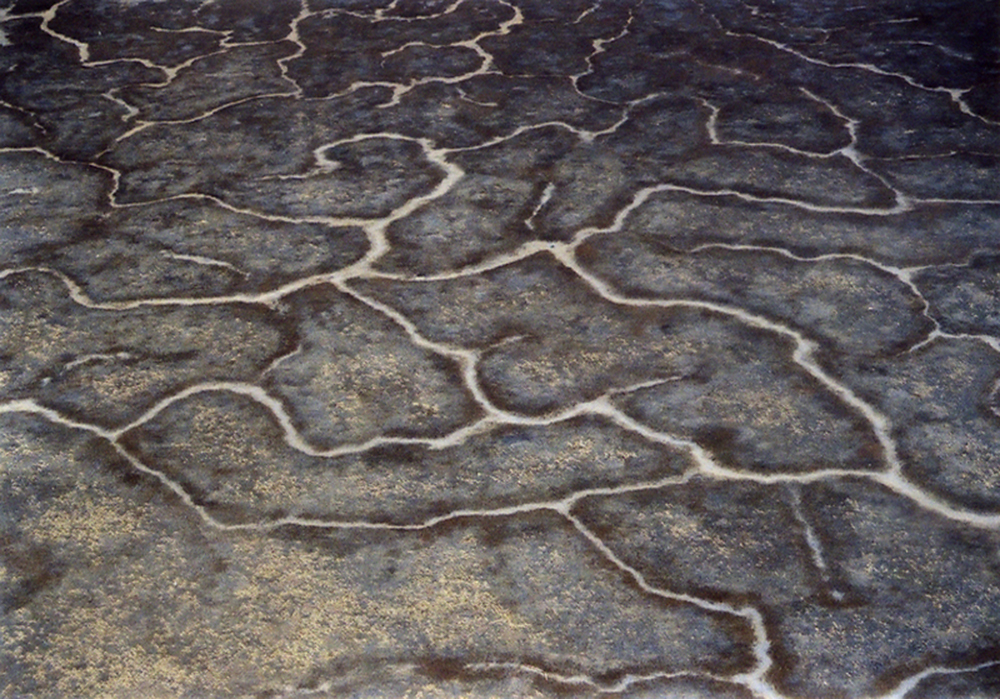
Kim Lawler (Australian) Between Lines #4 Aerial Photograph, Great Sandy Desert, Western Australia 2009
I finally made it to Kim Lawler’s exhibition Between Lines at fortyfive downstairs, Flinders Lane, Melbourne and, in many ways, the trip was well worth it. Lawler presents 12 prints from her eponymous series, aerial photographs taken over Western Australia.
Eschewing the essentially topographic state promoted in the “New Topographics: Photographs of a Man-Altered Landscape” of 1975 that have influenced so many photographers in recent decades (including the hyper-real photographs of the West Australian landscape by Edward Burtynsky where there is an emotional distance between the photograph and the viewer), Lawler instead mines the depths of abstraction in landscape photography.
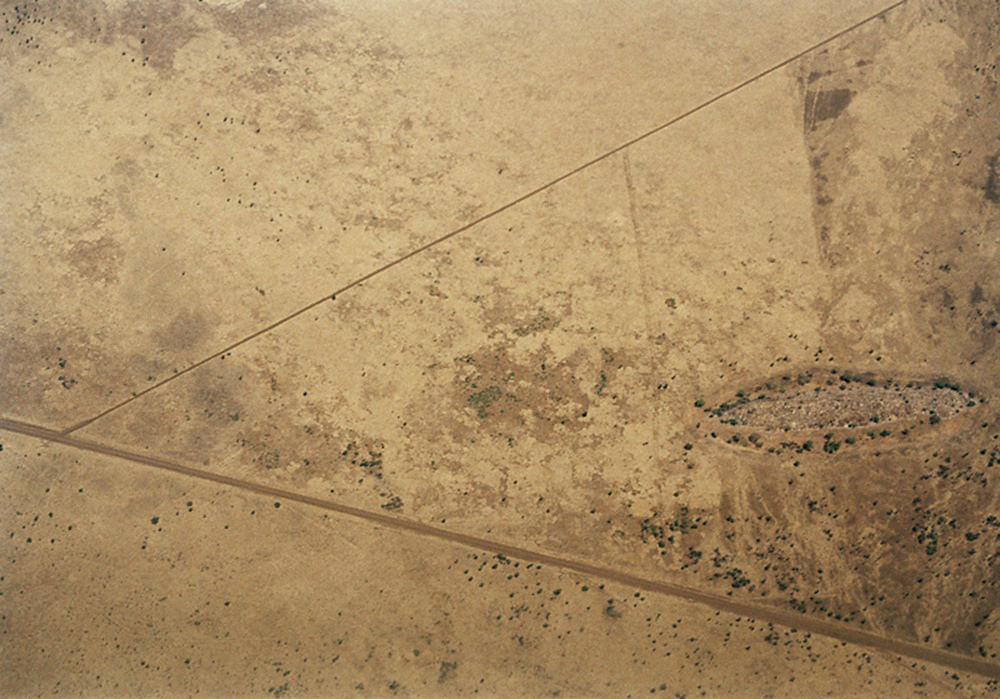
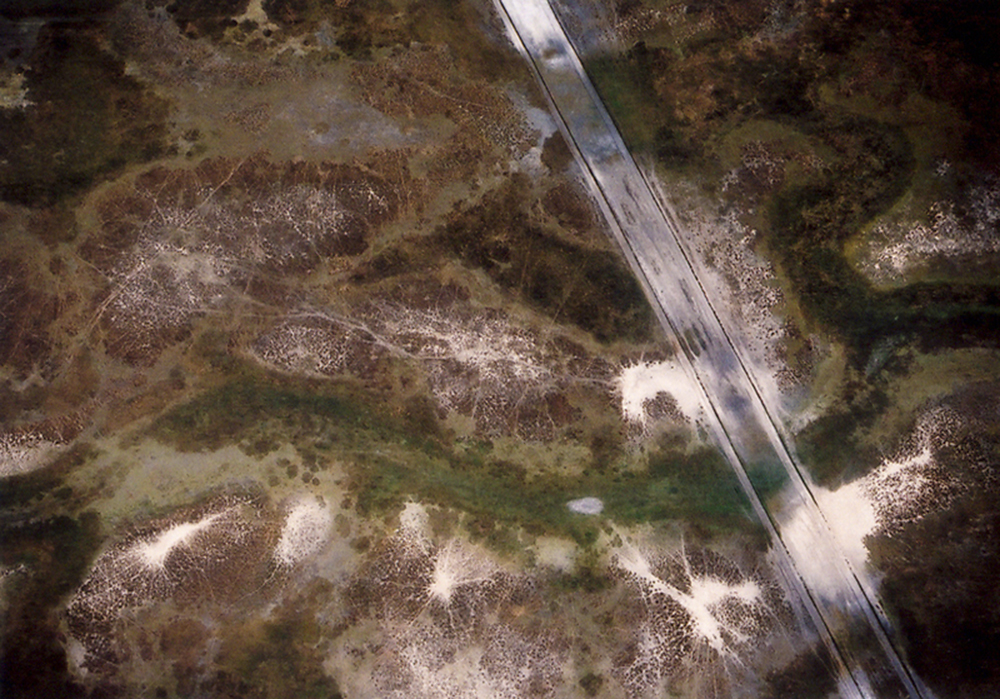
These are visceral photographs – in #4 the river and surrounds almost become vascular and cellular; in #13 the synapses and electrons infiltrate the highway reminding me of bomb craters from a Second World War landscape. In #7 the shrubs, unlike the precision of the New Topographics, become feckless dots, the landing strip a scar on the body; in #12 the toxic unsutured wound bleeds across the surface of the skin, white scar tissue surrounding it.
In these atypical mappings Lawler employs a taxonomy of disorder. The photographs are very soft in focus, soft in printing, big in the grain of the film and there is very little depth of field employed – in other words there is really nothing in focus at all, nothing that the eye and the mind can fix on. These are interstitial spaces (i.e. gaps between spaces full of structure or matter) and the title Between Lines is entirely appropriate for the work. The photographs contain beautiful textures, colours, surfaces.
This is their strength but also their weakness. The eye and the mind longs for something to hold onto, perhaps just a small fraction of the image to be in focus, so that the disorder plays off the order (for one cannot exist without the other!). Mutation only exists if their is something to mutate against. The other two small problems I had with the work were a matter of semantics and others may disagree – personally I found the size of the prints neither here nor there and they could have done with being about 2-3 inches larger and the white frames were too heavy. That is a funny thing to say about contemporary white frames, that they are too heavy for the work, but this is entirely possible: the moulding was too thick and the depth of the box frames to deep for my liking, detracting from the print itself and making the works darker than they needed to be.
Overall then an excellent exhibition that offers a positive variation on the cliched narrative of aerial photography of the Australian outback, one that questions the munificence of human habitation of the body and of the earth.
Dr Marcus Bunyan
Many thankx to fortyfive downstairs for allowing me to publish the photographs in the posting. Please click on the photographs for a larger version of the image.
Kim Lawler (Australian) Between Lines #7 (Landing Strip) Aerial Photograph, Great Sandy Desert, Western Australia 2009
Kim Lawler (Australian) Between Lines #8 (Jones Soak, position approximate) Aerial Photograph, Great Sandy Desert, Western Australia 2009
“Beyond romance or nostalgia, Lawler’s lucid visual studies reveal the aesthetic beauty of the stories being written and rewritten onto this responsive and at times fragile environment.”
~ Amy Barclay, curator
Between Lines comprises a series of aerial photographs taken in the Kimberley, far north Western Australia. This remote area is embedded with stories of Indigenous and non-Indigenous inhabitants, transitory visitors and scarred by multinational companies resource development. The artist, Kim Lawler, is concerned with markings, both natural and constructed, that tell stories of places, transitions and interruptions that occur within the landscape.
Between Lines is informed by Lawler’s experience of living in these regions and local perspectives on the displacement of people and their consequential relationship to the land that has taken place. It is also informed by the opposing qualities of abandon and connection that occur as the stories within these landscapes continue to unfold.
Competing demands for natural resources, and the resulting impact upon transitional landscapes, resonate with the stories of many generations of people that continue to flow through or inhabit each region. Attuned to the markings on these landscapes, it is these residual narratives ‘Between Lines’ seeks to record.
The imagery seen in Between Lines extends from Lawler’s previous artwork that interrogated additional Kimberley locations including: the remote Buccaneer Archipelago; the isolated far northern reaches of the Kimberley Coastline; Cockatoo Island iron ore mine and resort and; inland regions such as Warmun Aboriginal Community on the periphery of the Great Sandy Desert.
“Lawler’s eye is arrested by markings, natural and constructed, that trace and recount places, transitions and interruptions; the signifiers of change in a landscape millions of years old.”
Amy Barclay, curator
Text from the fortyfive downstairs website
Kim Lawler (Australian) Between Lines #12 Joseph Bonaparte Gulf, Northern Kimberley, Western Australia 2009
Kim Lawler (Australian) Between Lines #13 Great Northern Highway, Kimberley, Western Australia 2009
Kim Lawler (Australian) Between Lines #16 Cockatoo Island Cyanide Settling Pool, Yampi Sound, Western Australia 2009
fortyfive downstairs 45, Flinders Lane Melbourne 3000
Exhibition dates: 15th August – 27th September, 2009
Commissioning Curator: Juliana Engberg Coordinating Curator: Charlotte Day
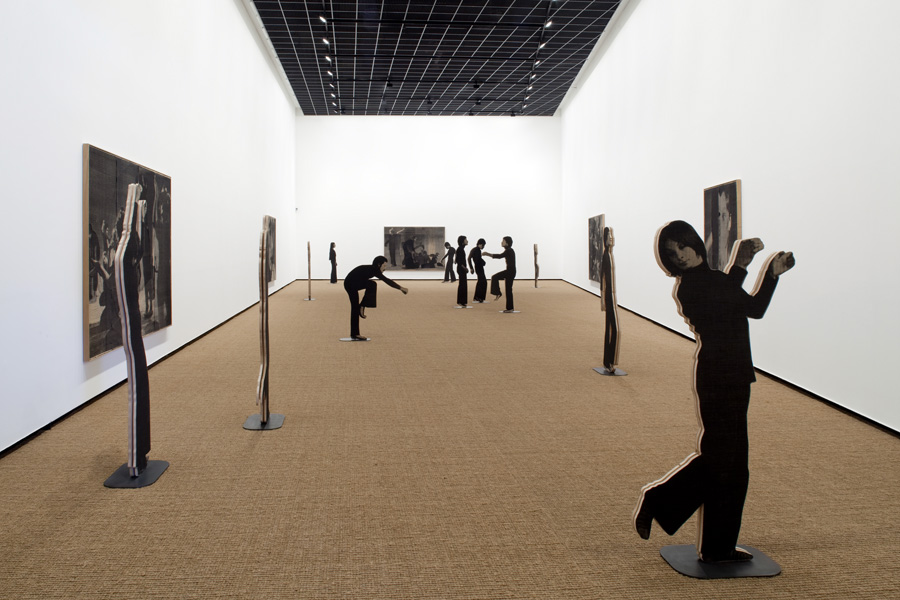
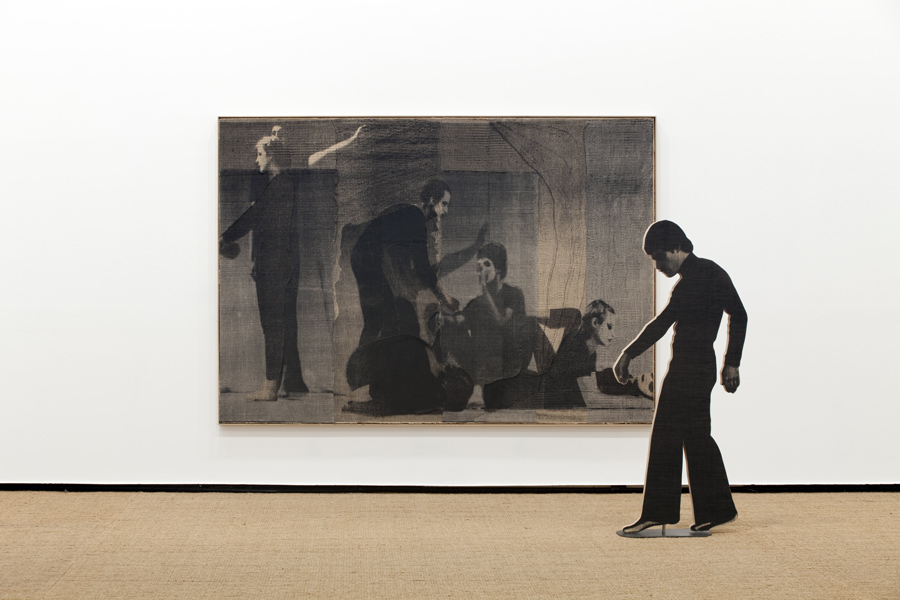
Installation view of Scenes by David Noonan at ACCA Photo: Marcus Bunyan
Thoughts
Limited colour palette of ochres, whites, browns and blacks.
Rough texture of floor covered in Jute under the feet.
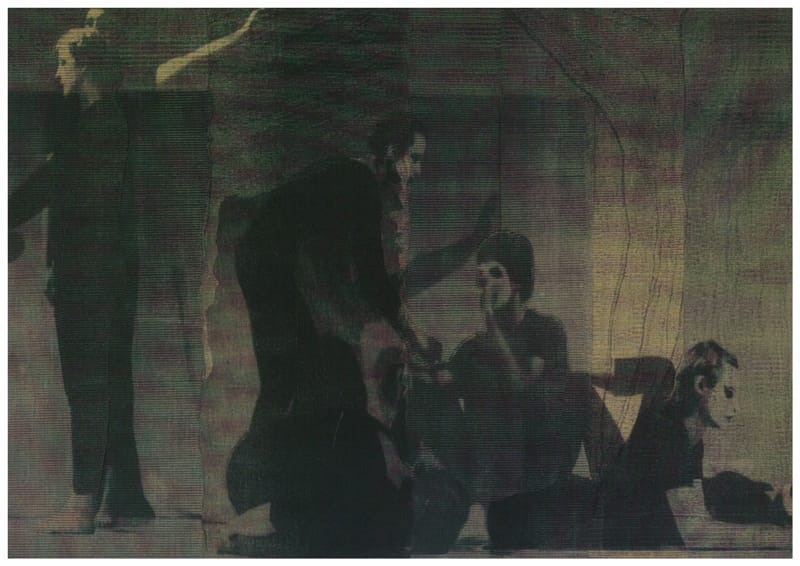
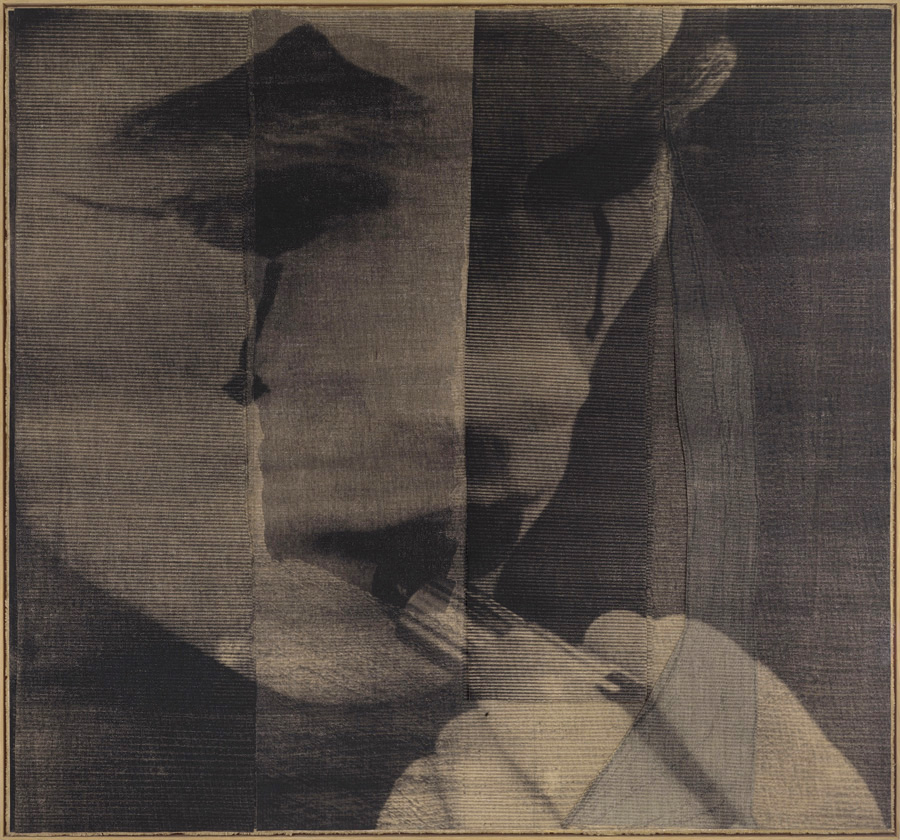
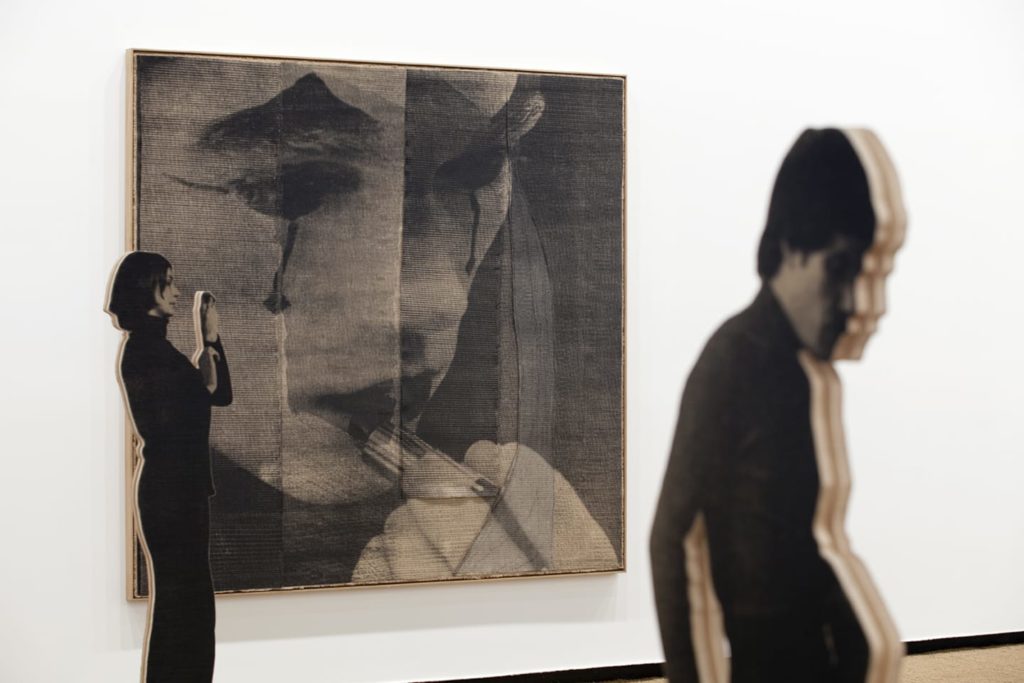
Layered, collaged print media figures roughly printed on canvas – elements of abstraction, elements of figuration.
The ‘paintings’ are magnificent; stripped and striped collages. Faces missing, dark eyes. There is something almost Rembrandt-esque about the constructed images, their layering, like Rembrandt’s Night Watch (1642) – but then the performance element kicks in – the makeup, the lipstick, the tragic / comedic faces.
Mannequin, doll-like cut-out figures, flat but with some volume inhabiting the tableaux vivant.
Twelve standing figures in different attitudes – a feeling of dancing figures frozen on stage, very Japanese Noh theater. Spatially the grouping and use of space within the gallery is excellent – like frozen mime.
The figures move in waves, rising and falling both in the standing figures and within the images on the wall.
Looking into the gallery is like looking through a picture window onto a stage set (see above image).
“The fracturing of identity, the distortion of the binaries of light and dark, absence/presence in spatio-temporal environments.
The performance as ritual challenging a regularized and constrained repetition of norms.” (Judith Butler).
Excellent, thought provoking exhibition.
Dr Marcus Bunyan
Many thankx to ACCA for allowing me to publish the photographs in the posting. Please click on the photographs for a larger version of the image.
Installation views of Scenes by David Noonan at ACCA Photos: Marcus Bunyan
Noonan often works with found photographic imagery taken from performance manuals, textile patterns and archive photographs to make densely layered montages. These works at once suggest specific moments in time and invoke disorientating a-temporal spaces in which myriad possible narratives emerge. The large-scale canvases framing this exhibition depict scenes of role-playing, gesturing characters, and masked figures set within stage-like spaces. Printed on coarsely woven jute, collaged fabric elements applied to the surface of the canvases further signal the cutting and splicing of images.
Noonan’s new suite of figurative sculptures, comprise life size wooden silhouettes faced with printed images of characters performing choreographed movements. While the figurative image suggests a body in space, the works’ two dimensional cut-out supports insist on an overriding flatness which lends them an architectural quality – as stand-ins for actual performers and as a means by which to physically navigate the exhibition space.
Press release from the Chisenhale Gallery website [Online] Cited 20/09/2009. No longer available online
For the Helen Macpherson Smith Commission, he will bring the characters depicted in his signature collage works off the wall and onto an imagined ‘stage’. Several life-size, wooden cut-out figures will inhabit the ACCA exhibition gallery, frozen in choreographed movements.
Noonan’s dancing figures will be framed by several large-scale canvas works, printed photographic and film imagery gleaned from performance manuals, textile patterns and interior books. Printed on coarse woven jute, he cuts, slices and montages images together constructing compositions that hover between two and three dimensionality, positive and negative space, past and present, stasis and action.
“‘Scenes’ recalls the experimental workshops and youth-focused exuberance of a more optimistic era, coinciding with the artists own childhood in the 1970s” says curator Charlotte Day. “With these new works, Noonan re-introduces the idea of ritual, of creating a temporal space beyond reason that is filled with both danger and hope.”
David Noonan (Australian, b. 1969) is the fifth recipient of the Helen Macpherson Smith Commission, one of the most significant and generous commissions in Australia. The partnership between ACCA and the Helen Macpherson Smith Trust offers Victorian artists the opportunity to create an ambitious new work of art, accompanied by an exhibition in ACCA’s exhibition hall.
Press release from the ACCA website [Online] Cited 20/09/2009. No longer available online
David Noonan returned to Melbourne with this significant project which extended his abiding interest in time and space. Using ACCA’s large room as a field of encounter, he created an ensemble of works in 2 and 3 dimensions that make purposeful use of the audience’s own navigation through the gallery. Visitors walking between David’s free-standing figures performed like time travellers in a landscape that had been paused. His enigmatic wall based works appeared to trap momentary scenes in a layered time warp.
This major commission allowed for an ambitious project by a Victorian artist who had reached a significant platform in their own practice. Elements of the commission were gifted to a Victorian regional gallery. In this case the recipient was Bendigo Art Gallery.
Text from the ACCA website [Online] Cited 24/04/2019
Installation views of Scenes by David Noonan at ACCA Photos: Marcus Bunyan
Australia Centre for Contemporary Art (ACCA) 111 Sturt Street, Southbank, Victoria 3006, Australia Phone: 03 9697 9999
Opening Hours: Tuesday to Friday 10am – 5pm Weekends & Public Holidays 11am – 5pm Open all public holidays except Christmas Day and Good Friday
Exhibition dates: 7th August – 27th September, 2009
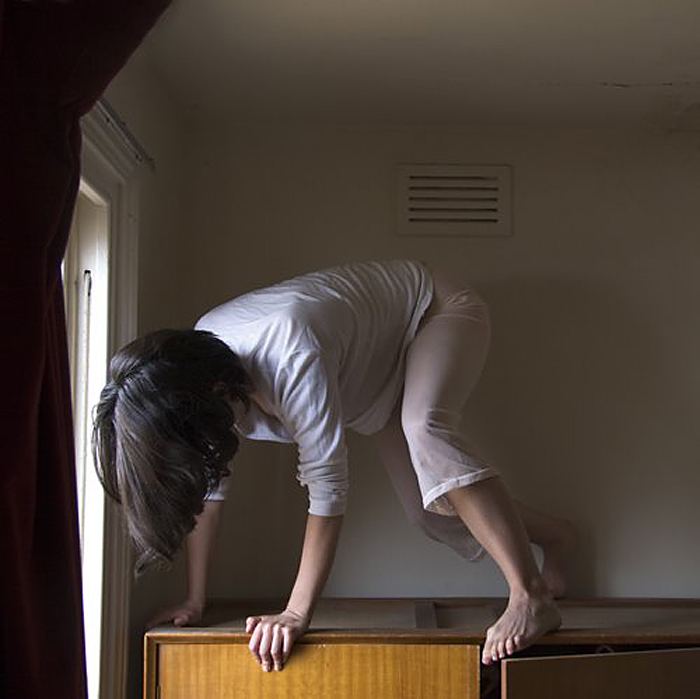
Clare Rae (Australian, b. 1981) Untitled 2009 From the series Climbing the Walls and Other Actions Pigment print on Museo Crane Silver Rag 50 x 50cm
“To withdraw into one’s corner is undoubtedly a meager expression. But despite its meagerness, it has numerous images, some, perhaps, of great antiquity, images that are psychologically primitive. At times, the simpler the image, the vaster the dreams.”
Gaston Bachelard.1
Usually I am not a great fan of ‘faceless’ photography as I call it but this series of work, Climbing the Walls and Other Actions (2009) by the artist Clare Rae is even better than the series by Tracey Moffatt in the previous review.
Exploring activities of the female body in closed domestic spaces these psychologically intense photographs push the physical boundaries of play through the navigation of space. As a child has little awareness about the inherent dangers of a seemingly benign environment so Rae’s self-portraits turn the lens on her conceptualisation of the inner child at play and the activating of the body in and through space. As the artist herself says, “the way children negotiate their surroundings and respond with an unharnessed spatial awareness, which I find really interesting when applied to the adult body.”2
Continuing the themes from the last review, that of spaces of intimacy and reverberation, these photographs offer us fragmentary dialectics that subvert the unity of the archetype, the unity of the body in space. Here the (in)action of the photographic freeze balances the tenuous positions of the body: a re-balancing of both interior and exterior space.
As Noel Arnaud writes, “Je suis l’espace ou je suis” (I am the space where I am). Further, Bachelard notes “… by changing space, by leaving the space of one’s usual sensibilities, one enters into communication with a space that is psychically innovating.”3
In these photographs action is opposed with stillness, danger opposed with suspension; the boundaries of space, both of the body and the environment, the interior and the exterior, memory and dream, are changed.
Space seems to open up and grow with these actions to become poetic space – and the simplicity of the images aids and abets the vastness of our dreams. This change of concrete space does not change our place, but our nature. Here the mapping of self in space, our existence, our exist-stance (to have being in a specified place whether material or spiritual), is challenged in the most beautiful way by these walls and actions, by these creatures, ambiguities, photographs.
Henri Lefebvre insightfully observes, “… each living body is space and has space: it produces itself in space and it also produces that space.”4
I am the (sublime) space where I am, that surrounds me with countless presences.
Dr Marcus Bunyan
1/ Bachelard, Gaston. The Poetics of Space. Boston: Beacon Press, 1969, p. 137
2/ Email from the artist 7th September, 2009
3/ Bachelard, Gaston. The Poetics of Space. Boston: Beacon Press, 1969, p. 206
4/ Lefebvre, Henri. The Production of Space. Oxford: Basil Blackwell, 1974, p. 170
All images by Clare Rae from the series Climbing the Walls and Other Actions 2009. Many thankx to Clare for allowing me to publish them.
Clare Rae (Australian, b. 1981) Untitled 2009 From the series Climbing the Walls and Other Actions Pigment print on Museo Crane Silver Rag 50 x 50cm
Clare Rae (Australian, b. 1981) Untitled 2009 From the series Climbing the Walls and Other Actions Pigment print on Museo Crane Silver Rag 50 x 50cm
Clare Rae (Australian, b. 1981) Untitled 2009 From the series Climbing the Walls and Other Actions Pigment print on Museo Crane Silver Rag 50 x 50cm
Climbing the Walls and Other Actions is primarily concerned with visually representing my experience of femininity, whilst also exploring aspects of representation that relate to feminism. The project considers the relationship between the body and space by including formal elements within each frame such as windows and corners. Through a sequence of precarious poses I explore my relationship with femininity, an approach born of frustration. I use the body to promote ideas of discomfort and awkwardness, resisting the passivity inherent in traditional representations of femininity. The images attempt to de-stabilise the figure, drawing tension from the potential dangers the body faces in these positions. Whilst the actions taking place are not in themselves particularly dangerous, the work demonstrates a gentle testing of physical boundaries and limitations via a child-like exploration of the physical environment.
Text from the Centre for Contemporary Photography website [Online] Cited 15/09/2009. No longer available online
Clare Rae (Australian, b. 1981) Untitled 2009 From the series Climbing the Walls and Other Actions Pigment print on Museo Crane Silver Rag 50 x 50cm
Clare Rae (Australian, b. 1981) Untitled 2009 From the series Climbing the Walls and Other Actions Pigment print on Museo Crane Silver Rag 50 x 50cm
Centre for Contemporary Photography Level 2, Perry St Building Collingwood Yards, Collingwood Victoria 3066
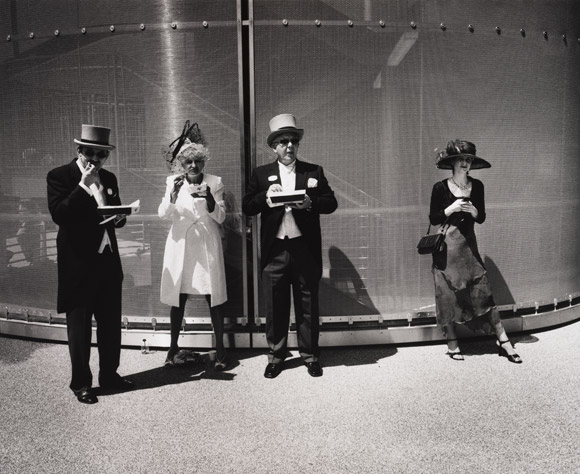
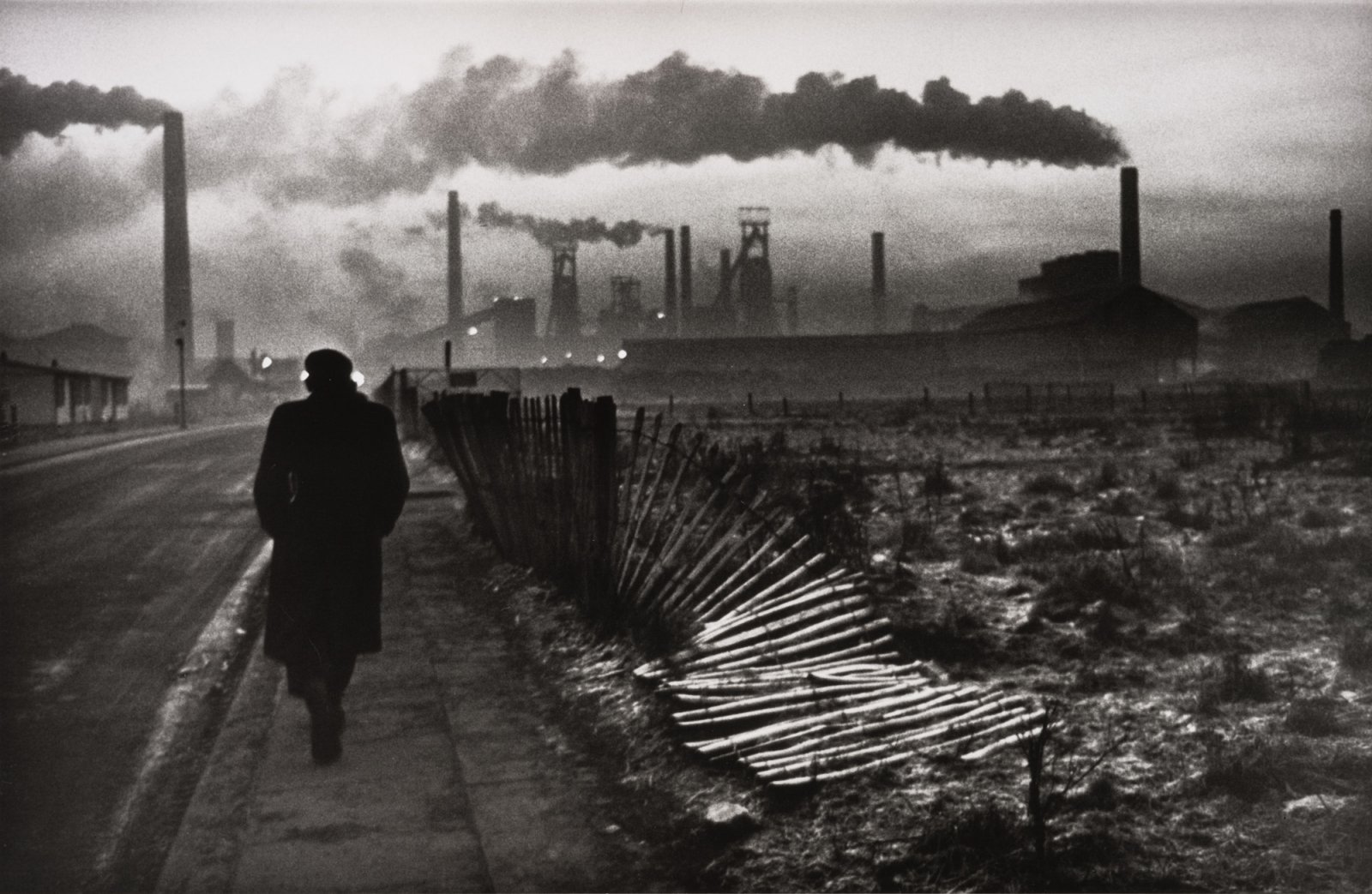
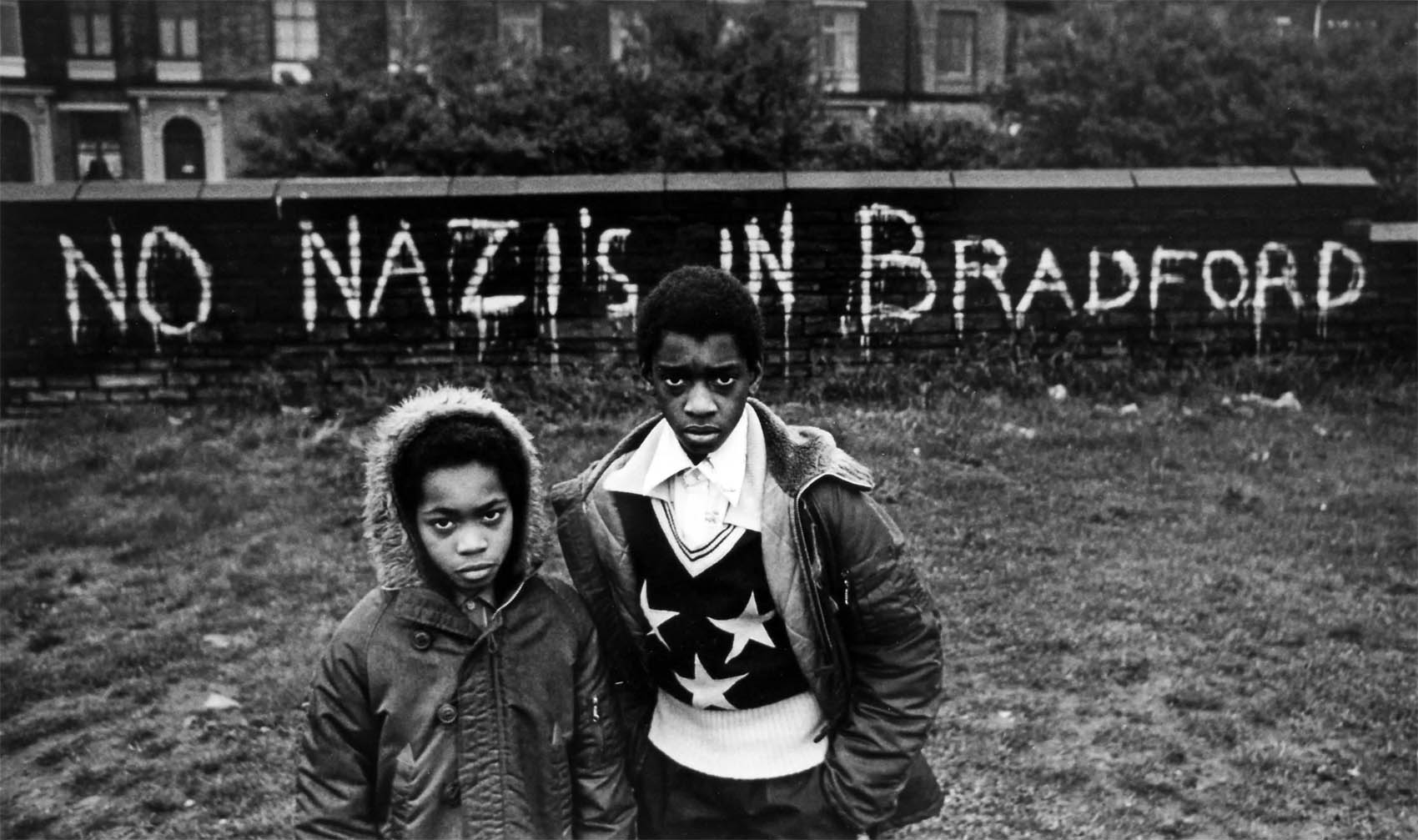
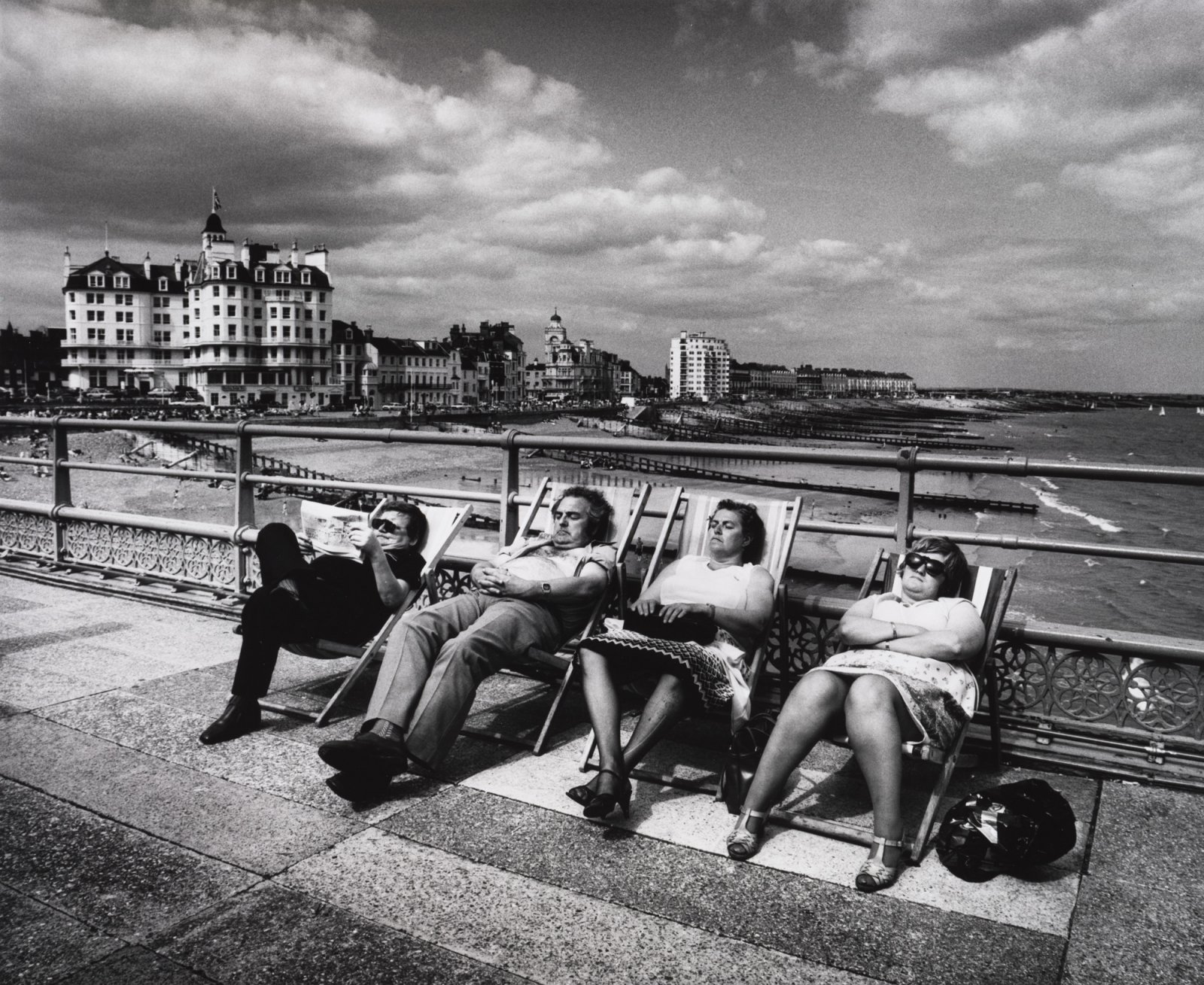
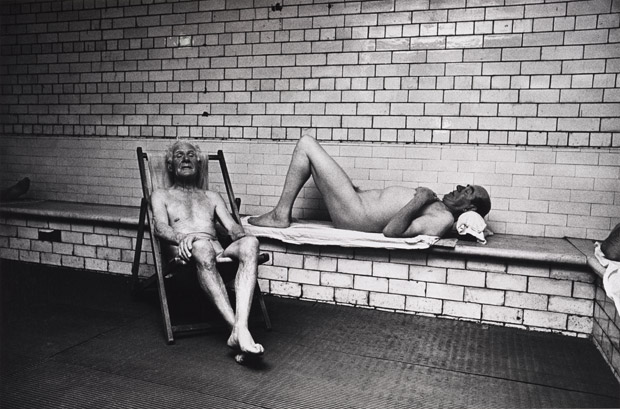
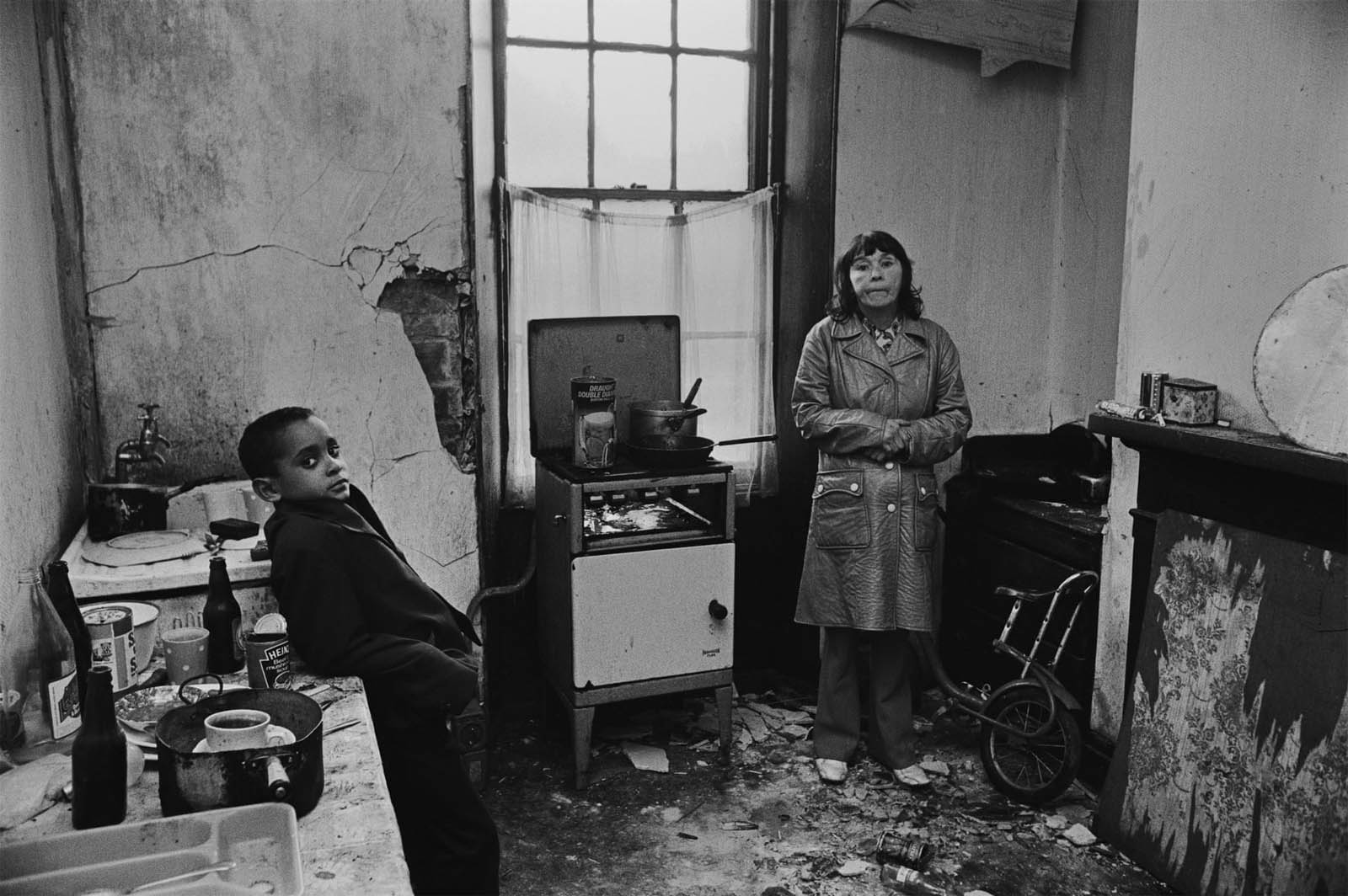
A passionate and personal view of England by one of our greatest living photographers, In England reflected on England from the 1950s to the present day. For half a decade McCullin recorded images of England, highlighting issues surrounding wealth, race, class and social justice. This was the first ever exhibition dedicated exclusively to this aspect of his work.
The images, taken mainly from two books – Homecoming (1979) and In England (2007) – are often imbued with their social or political context. Several exhibited photographs were taken during McCullin’s trips to Bradford and around his own home city, London, as well as Liverpool and the North East. The exhibition also included McCullin’s first ever published photograph, The Guv’nors.
Dr Marcus Bunyan
Many thankx to the National Media Museum for allowing me to publish the photographs in the posting. Please click on the photographs for a larger version of the image.
A passionate and personal view of Britain by one of our greatest living photographers is being showcased in a major free-to-enter exhibition at the National Media Museum from 8 May – 27 September 2009.
Don McCullin – In England reflects on Britain from the 1950s to the present day. For half a decade McCullin, in addition to travelling the world photographing war ravaged countries to great acclaim, has been recording England and highlighting issues surrounding wealth, race, class and social justice.
The National Media Museum is hosting the first ever exhibition dedicated exclusively to this aspect of his work. Curator Colin Harding said: “Although Don is probably best known for his war photography, he is not purely a war photographer and does not class himself as such. However, many of the 70 black and white images displayed in this new show are clearly influenced by his experiences abroad. Don’s vision of England is not a pretty one. He photographed what he saw and what he saw was often harsh – poverty, unemployment, discrimination, but he always photographs with passion and empathy.”
Many of the images have a political or social context and are taken extensively from two books – Homecoming (1979) and In England (2007); coincidentally published in the same years Margaret Thatcher came to power and Tony Blair left power respectively. Some of the images will be publicly displayed for the first time.
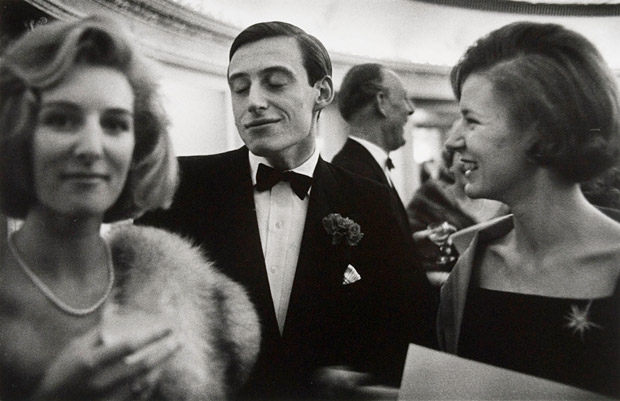
Don McCullin – In England gives audiences the chance to see his first ever published photograph – of The Guv’nors, a 1950s gang from his neighbourhood around Finsbury Park, London. The picture appeared in The Observer newspaper after a policeman was murdered by one of the gang members.
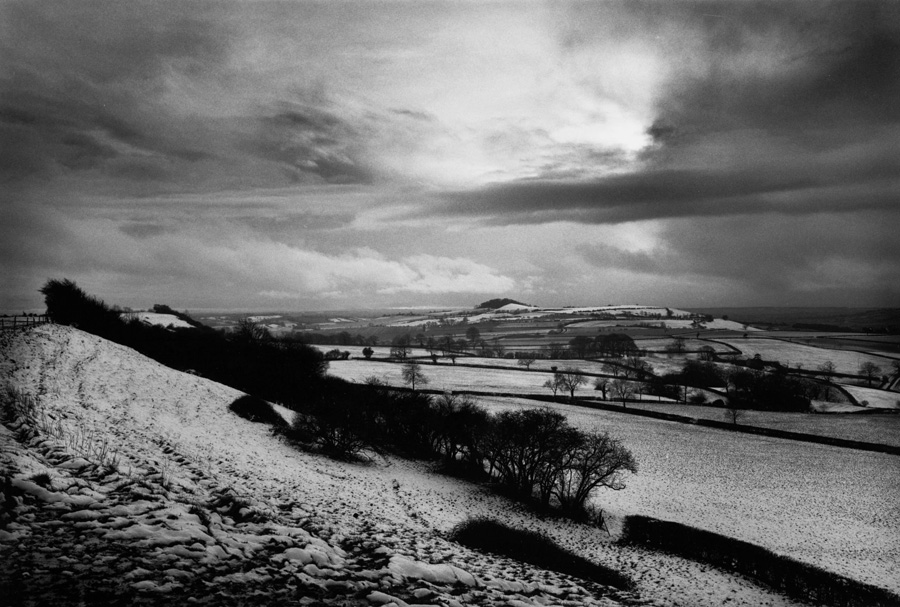
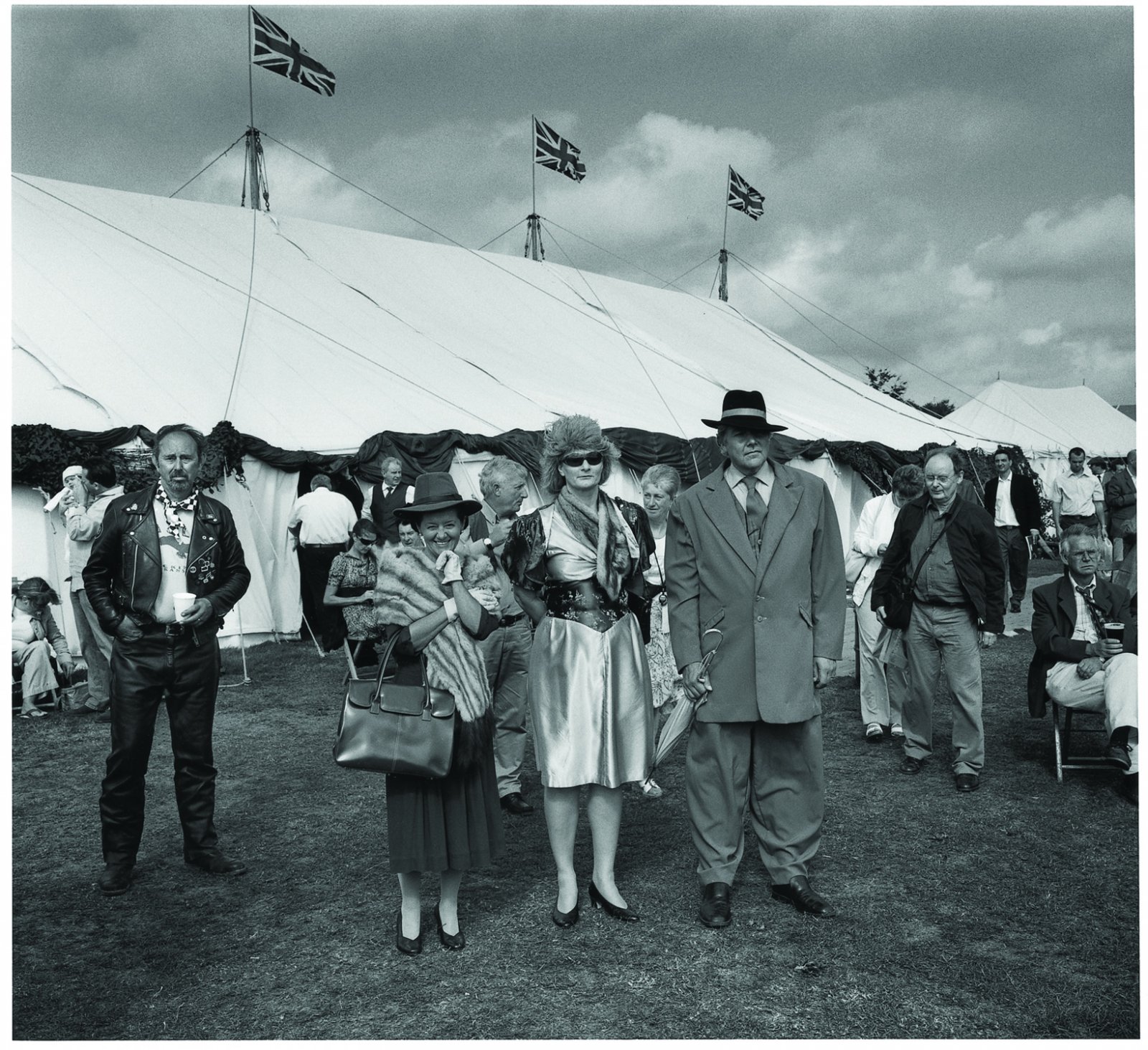
Several exhibited photographs were taken during McCullin’s trips to Bradford (the National Media Museum’s home city) and around his own home city, London, as well as Liverpool and the North East. Other aspects of English life are featured – a series of landscapes, including a study of Hadrian’s Wall taken earlier this year, a 1968 shoot with The Beatles, and trips to the seaside and Royal Ascot.
To complement the exhibition a new area will be produced on the Museum’s website offering exclusive video interviews, images, further information, and links to other relevant websites.
Text from the National Media Museum website Nd [Online] Cited 12/09/2009 no longer available online
Photographer Don McCullin on his early years In 2009 Don McCullin spoke to us about his early years as part of his In England exhibition at the museum.
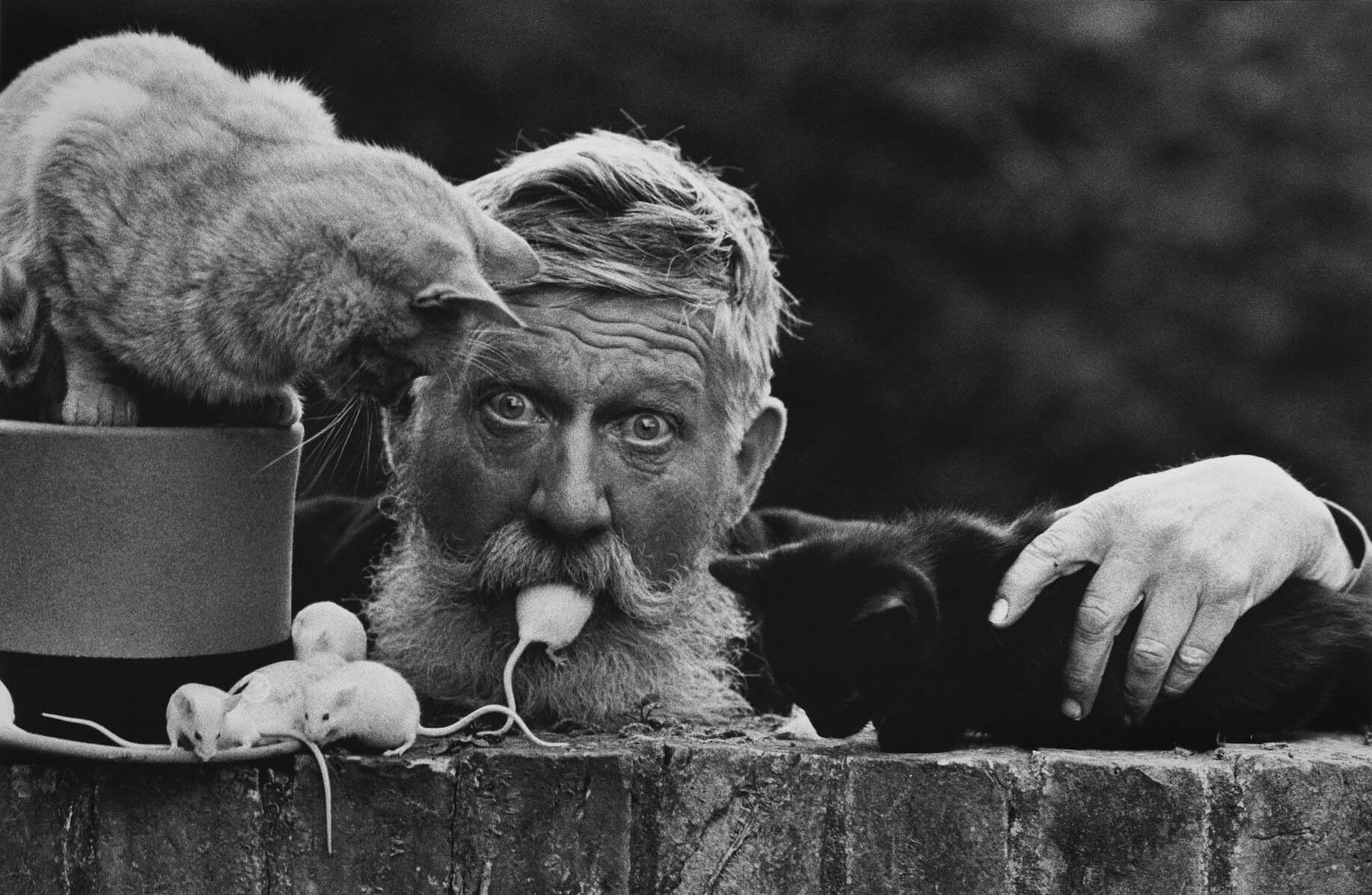
According to McCullin, a postcard of this photograph sold ‘like hotcakes’ in Australia. McCullin found Snowy, the man in the portrait, standing by the side of the road with an ice-cream barrow in Cambridge, in the early 1970s. He pulled the mouse out of his pocket and put it into his mouth as McCullin took pictures.
Exhibition dates: 3rd September – 3rd October, 2009
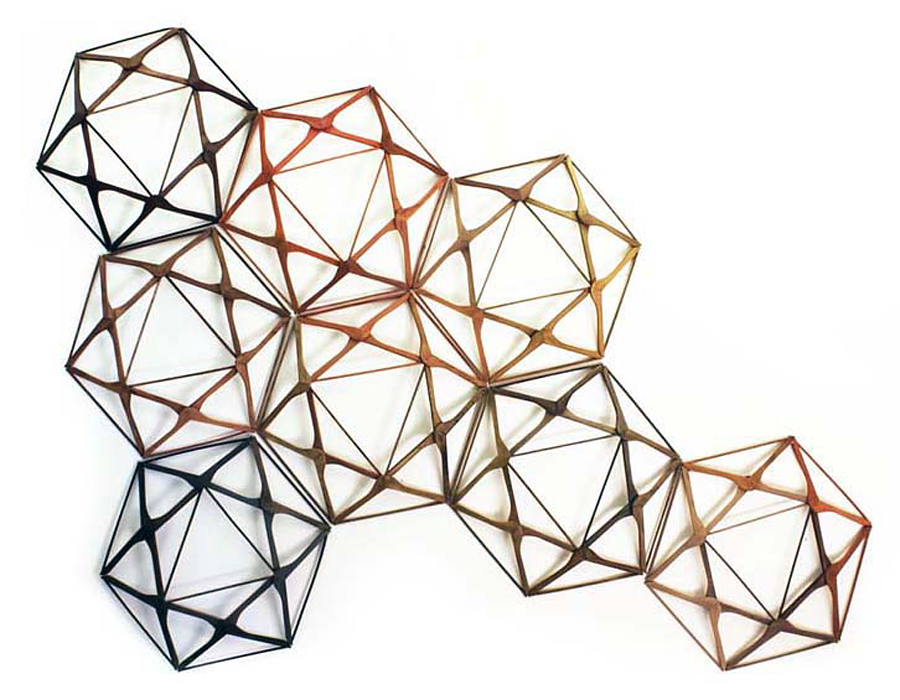
Lyndal Hargrave (Australia, b. 1959) Sacred Geometry 2009 Acrylic painted timber coat hangers, screws, staples 180 x 170cm Photo: Marcus Bunyan
This is a mixed bag of an exhibition by Lyndal Hargrave at Anita Traverso Gallery in Richmond, Melbourne.
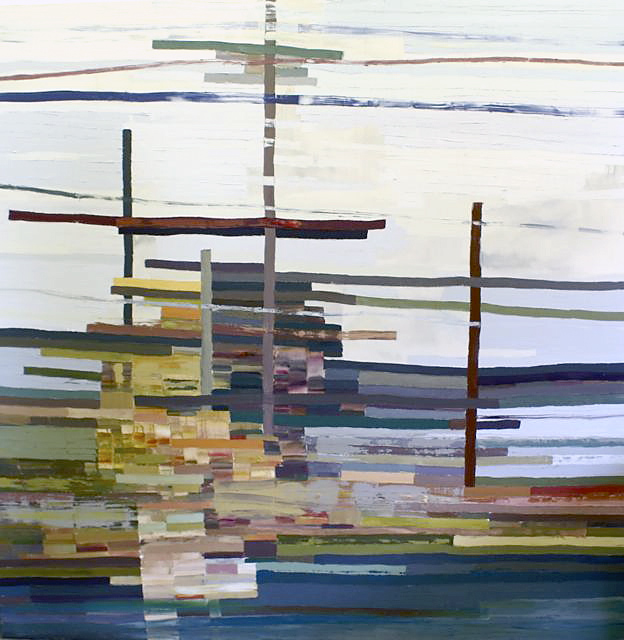
Despite one outstanding painting Breathing Space (2009, see below), the view from the back of the artist’s house onto a jetty with attendant wooden posts and sky, the other paintings are the weakest elements of the exhibition, lacking the strength and resonance of the sculptural work.
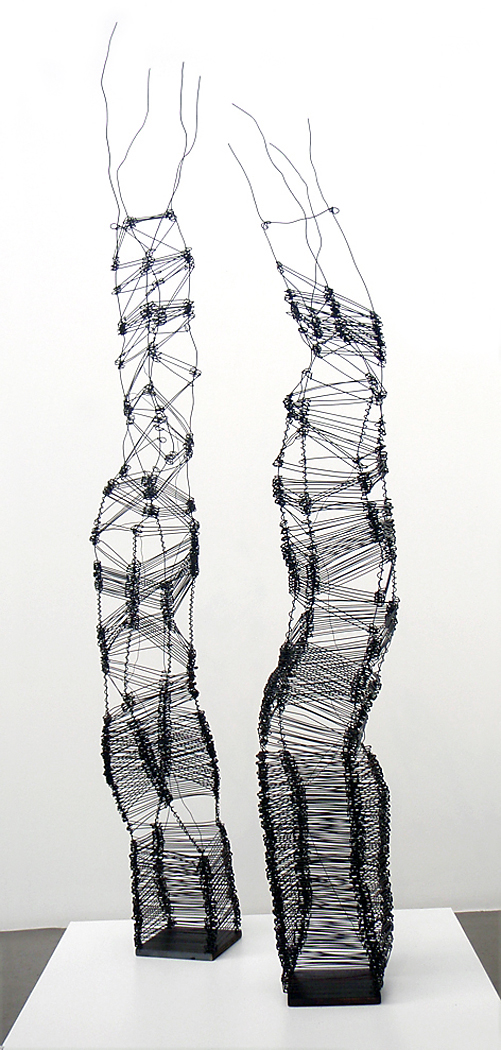
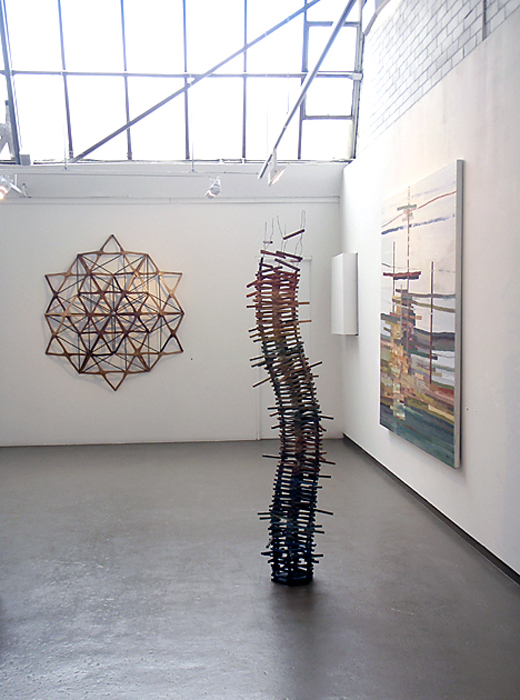
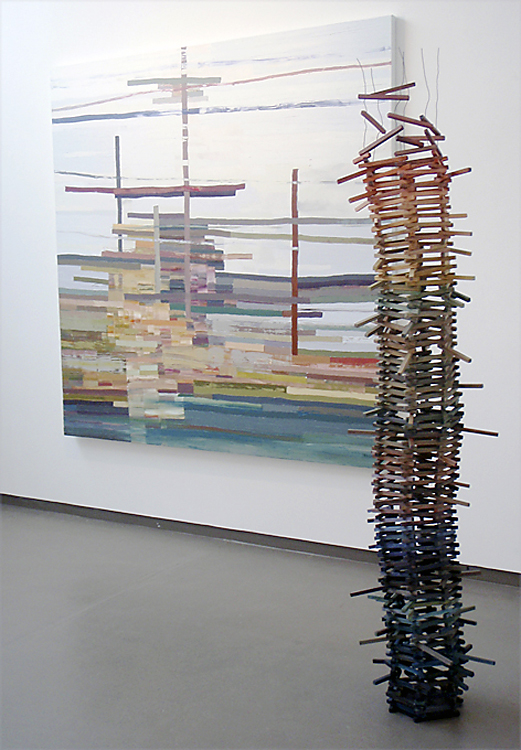
The two standing towers, Hairpin Dragons I & II and Jacob’s Ladder (both 2009, see below) are stronger work, Jacobs Ladder imitating the form of the painting Breathing Space in three-dimensional Cuisenaire-type coloured rods (see the installation photograph of the two pieces below).
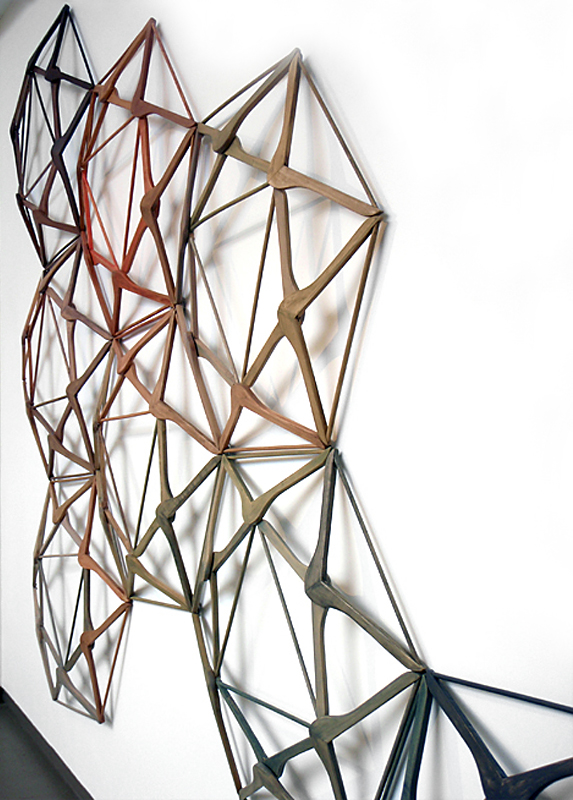
The best pieces in the exhibition are the wall mounted geometric, mandala-like sculptures made of wooden coat hangers. Delicately shifting patterns take the micro cellular form and make it macro, their patterns of construction offering a pleasing visual balance that is both complex, layered and innovative at one and the same time. As explorations of the notion of the universal structure, the golden ratio, they reward repeated viewing.
As the exhibition stands there are too many little pieces to make a holistic whole. Perhaps an exhibition solely of the towers or geometric pieces would have been stronger. I look forward to seeing how the geometric pieces (d)evolve in future work. Will the structures break down and reassemble in other marvellous incantations? I hope so!
Dr Marcus Bunyan
Many thankx to Anita Traverso Gallery for allowing me to publish the art work in the posting. Please click on some of the photographs for a larger version of the image.
Lyndal Hargrave (Australia, b. 1959) Arabesque 2009 Acrylic painted timber coat hangers, screws, staples 200 x 360cm Photo: Marcus Bunyan
Lyndal Hargrave (Australia, b. 1959) Arabesque (detail) 2009 Acrylic painted timber coat hangers, screws, staples 200 x 360cm Photo: Marcus Bunyan
Lyndal Hargrave (Australia, b. 1959) Hairpin Dragons I & II 2009 Wire, formply 170 x 15cm (varying) Photo: Marcus Bunyan
“It is a constant idea of mine that behind the cotton wool (of daily reality) is hidden a pattern, that we – I mean all human beings – are connected with this: that the whole world is a work of art; that we are parts of the work of art.”
~ Virginia Woolf
For as long as I can remember, my art practice has served as a filter between the outside world and my inside world. I realise now that the act of making the artwork informs my ideas rather than the other way round. Working intuitively results in a continuous stream of surprises that in retrospect mirror the pressing issues surrounding me at that time.
In All the Little Pieces my fascination with patterns of construction from micro to macro and natural to man-made continues. My work explores the gap between order and chaos and helps me to understand the meaning of balance.
Using mundane found objects, my sculptures probe the possibility of re-invention through the way the componentry of human habitation can be re-configured to offer us a new way of seeing and experiencing our world.
It is this process of metamorphosis that is at the centre of my investigation: how life forms make the transition from one state to another – tree to timber to tower or talisman; why some systems remain strong and others crumble.
Overarching my work is the notion of universal structure and the geometry that has informed our evolution from molecule to macro-system.”
Lyndal Hargrave 2009
Text from the Anita Traverso Gallery website
Lyndal Hargrave (Australia, b. 1959) Whirlpool Galaxy and The Samarian Star 2009 Acrylic painted timber coat hangers, screws, staples Photo: Marcus Bunyan
Installation view of the Lyndal Hargrave exhibition at Anita Traverso Gallery Photo: Marcus Bunyan
Photograph showing the relationship of form and colour between the work Jacob’s Ladder (2009) and the painting Breathing Space (2009) Photo: Marcus Bunyan
Lyndal Hargrave (Australia, b. 1959) Breathing Space 2009 Oil on canvas 200 x 200cm
Anita Traverso Gallery
The physical gallery has now closed.
PO Box 7001, Hawthorn North 3122 Phone: 0408 534 034 Email: art@anitatraversogallery.com.au
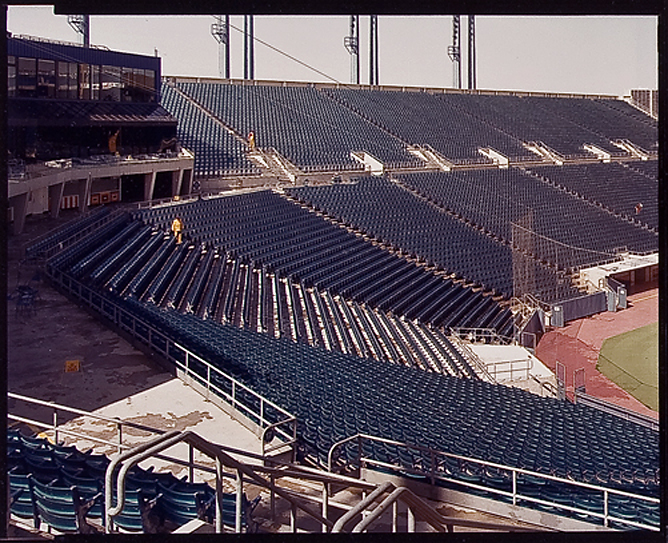
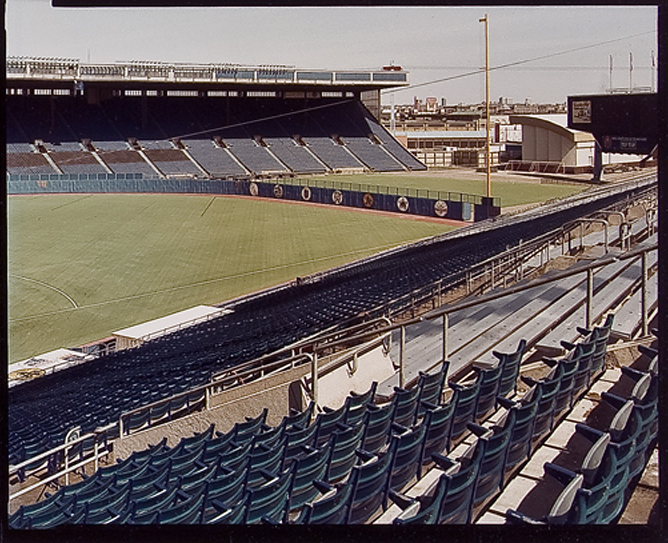
Jim Dow (American, b. 1942) Exhibition Stadium 1982 National Gallery of Canada, Ottawa Gift of Benjamin Greenberg, Ottawa, 1988 and 1989
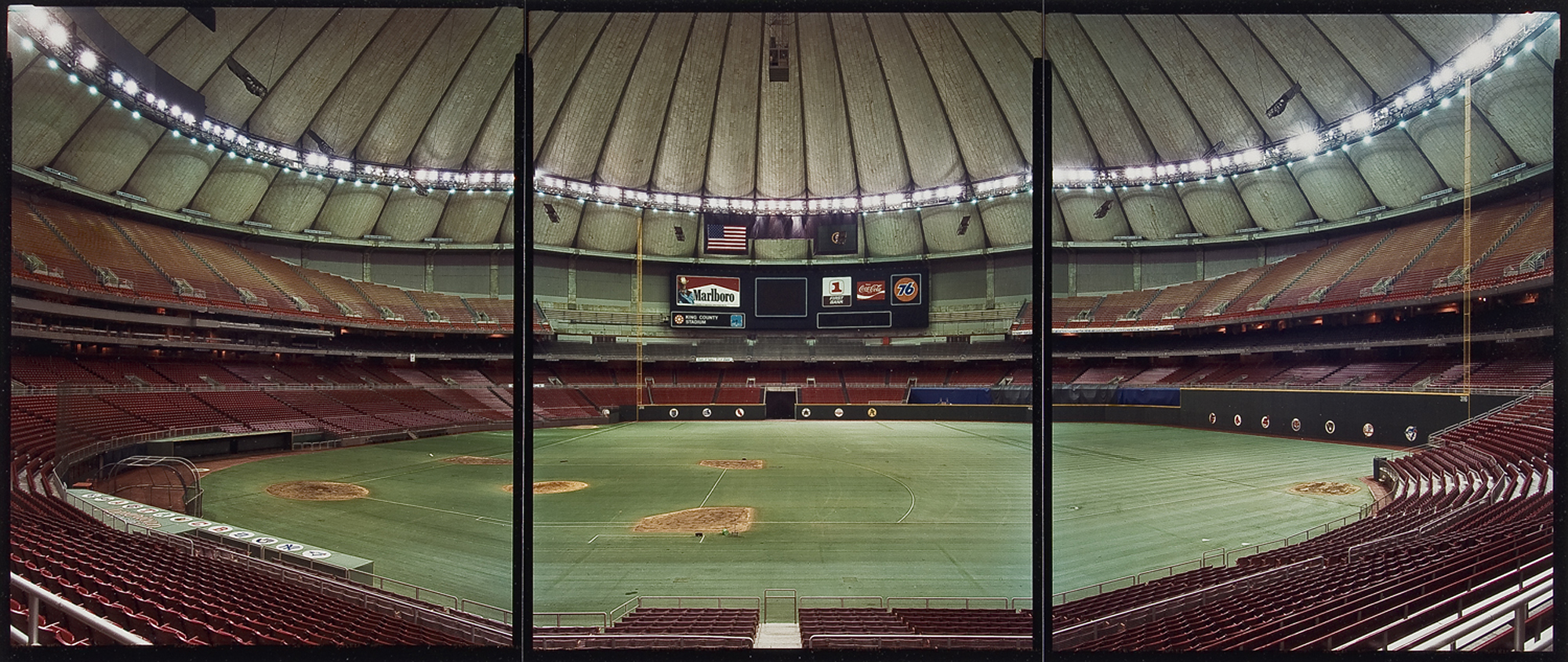
These feel like religious reliquaries, a triptych form which arises from early Christian art but here a paean to the monumentalisation of sport, architecture, human heroics and grandiosity.
Apologies that the blog is not wide enough to display these panoramic images at a decent size but you can click on the photographs to see a larger version of the image. I have also displayed each 8″ x 10″ negative sequentially.
Dr Marcus Bunyan
Many thankx to The National Gallery of Canada for allowing me to publish the photographs in the posting. Please click on the photographs for a larger version of the image.
Jim Dow (American, b. 1942) Exhibition Stadium (individual frames) 1982 National Gallery of Canada, Ottawa Gift of Benjamin Greenberg, Ottawa, 1988 and 1989
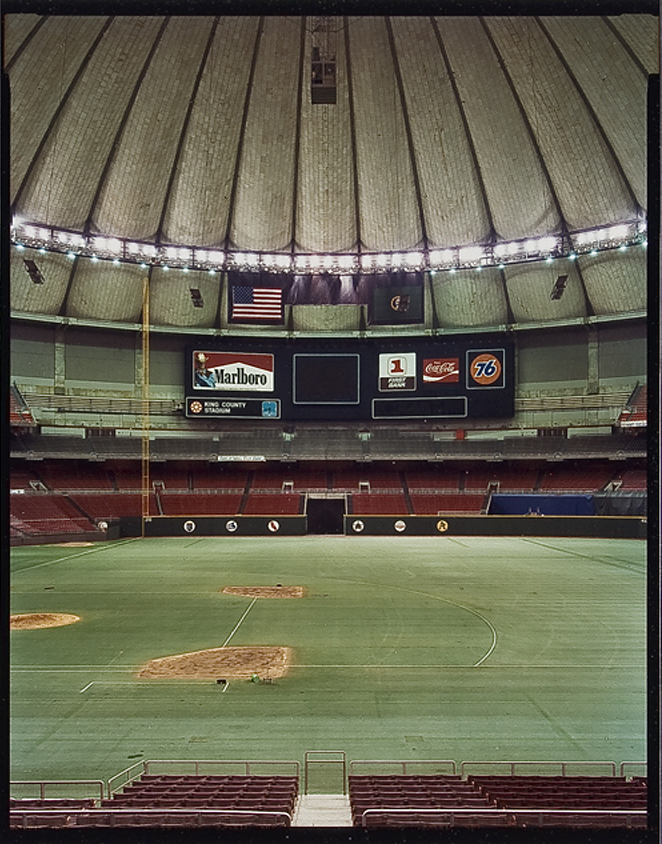
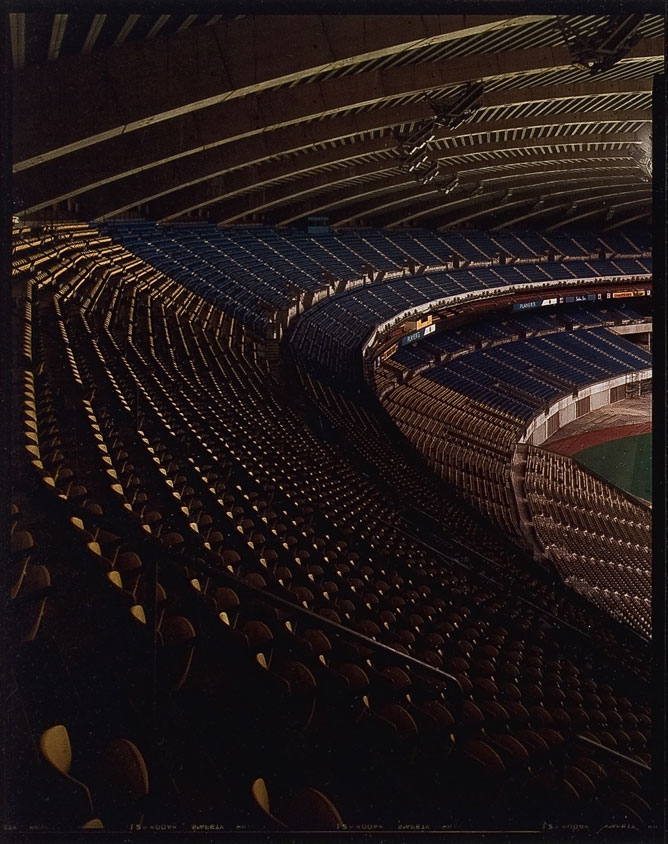
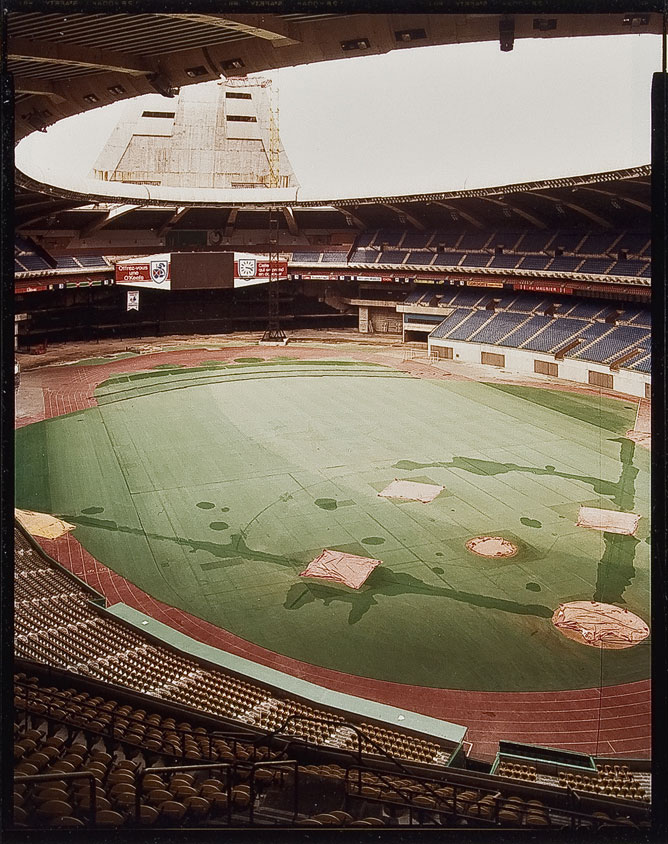
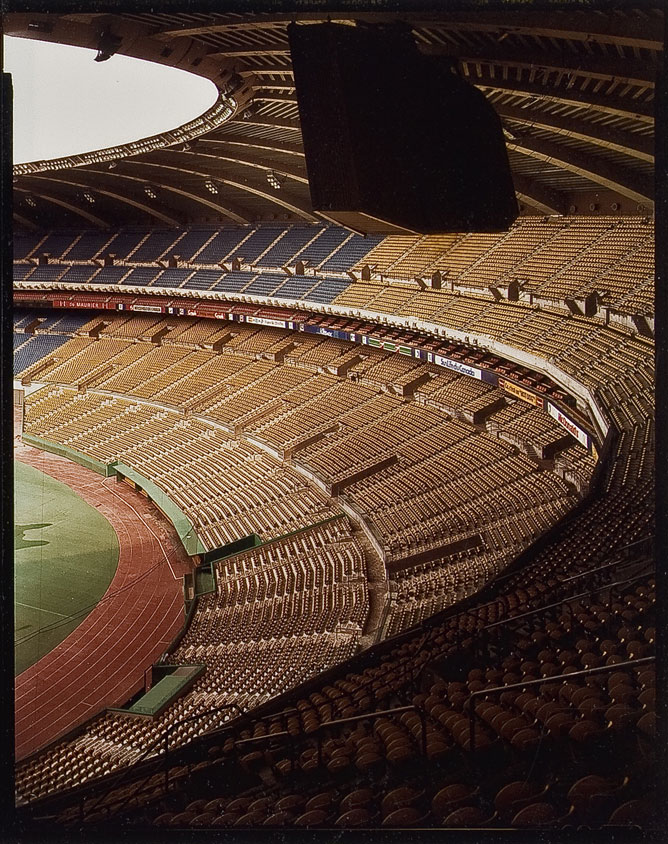
This installation from the National Gallery’s Collection of Photographs comprises 26 colour panoramic views of empty baseball stadiums across North America, from Exhibition Stadium, the home of the Toronto Blue Jays, and Montréal’s Olympic Stadium to the Houston Astro’s Astrodome. Taken in 1982, Jim Dow, a respected American photographer as well as a sports enthusiast, imparts through these images both a passion for the monumentality of the architecture and its abstract geometry and his love of baseball. The emptiness of the stadiums simultaneously evokes memory and a sense of anticipation.
Jim Dow’s interest in those places where people enact their everyday rituals, from the barbershop to the baseball park, has guided the path of his photographic career. Dow is concerned with capturing “human ingenuity and spirit” in endangered regional traditions – a barbershop with a heavy patina of town life covering the walls, the opulent time capsule of an old private New York club, the densely packed display of smoking pipes in an English tobacconist shop – all artefacts of a vanishing era.
Dow earned a B.F.A. and a M.F.A. in graphic design and photography from the Rhode Island School of Design in 1965 and 1968 respectively. An early influence was Walker Evans’s seminal book American Photographs (1938). Dow recalls the appeal of Evans’s “razor sharp, infinitely detailed, small images of town architecture and people. What stood out was a palpable feeling of loss … pictures that seemingly read like paragraphs, even chapters in one long, complex, rich narrative.” Soon after graduate school Dow had the opportunity to work with Evans. He was hired to print his mentor’s photographs for a 1972 Museum of Modern Art retrospective.
Dow has taught photography at Harvard, Tufts University and the School of the Museum of Fine Arts, Boston, and his work has been widely exhibited. Among his series is Corner Shops of Britain (1995), which features facades of small family-run businesses: vitrine-like shop windows showcase goods from candy jars to jellied eels. Another series, Time Passing (1984-2004), captures North Dakota “folk art” such as rural road signage, hand-painted billboards, and ornate gravestones.
Dow first gained attention for his panoramic triptychs of baseball stadiums, a project that began with an image he made of Veteran’s Stadium in Philadelphia in 1980. Using an 8 x 10″ camera, he has documented more than two hundred major and minor league parks in the United States and Canada.”
Text from Artdaily.org website [Online] Cited 17/04/2019
Jim Dow (American, b. 1942) The Kingdome. Seattle Mariners 1982 National Gallery of Canada, Ottawa Gift of Benjamin Greenberg, Ottawa, 1988 and 1989
Jim Dow (American, b. 1942) The Kingdome. Seattle Mariners (individual frames) 1982 National Gallery of Canada, Ottawa Gift of Benjamin Greenberg, Ottawa, 1988 and 1989
Jim Dow (American, b. 1942) Olympic Stadium, Montreal 1982 National Gallery of Canada, Ottawa Gift of Benjamin Greenberg, Ottawa, 1988 and 1989
Jim Dow (American, b. 1942) Olympic Stadium, Montreal (individual frames) 1982 National Gallery of Canada, Ottawa Gift of Benjamin Greenberg, Ottawa, 1988 and 1989
National Gallery of Canada 380 Sussex Drive P.O. Box 427, Station A Ottawa, Ontario Canada K1N 9N4



























 Art Blart _ art and cultural memory archive
You must be logged in to post a comment.