Exhibition: ‘A Revolutionary Project: Cuba from Walker Evans to Now’ at the J. Paul Getty Museum, Los Angeles

Exhibition dates: 17th May – 2nd October 2011


Many thankx to the J. Paul Getty Museum for allowing me to publish the photographs in the posting. Please click on the photographs for a larger version of the image.


Walker Evans (American, 1903-1975) 'Mule, Wagon and Two Men, Havana' 1933


Walker Evans (American, 1903-1975)
Mule, Wagon and Two Men, Havana
1933
Gelatin silver print
13.8 x 21cm (5 7/16 x 8 1/4 in.)
The J. Paul Getty Museum, Los Angeles
© Walker Evans Archive, The Metropolitan Museum of Art


Walker Evans (American, 1903-1975) 'Spectacle, Capital Steps, Possibly Independence Day' May 20, 1933


Walker Evans (American, 1903-1975)
Spectacle, Capital Steps, Possibly Independence Day
May 20, 1933
Gelatin silver print
19.7 x 25.3cm (7 3/4 x 9 15/16 in.)
The J. Paul Getty Museum, Los Angeles
© Walker Evans Archive, The Metropolitan Museum of Art


Walker Evans (American, 1903-1975) 'Old Havana Housefronts' 1933


Walker Evans (American, 1903-1975)
Old Havana Housefronts
1933
Gelatin silver print
17.6 x 22.7cm (6 15/16 x 8 15/16 in.)
The J. Paul Getty Museum, Los Angeles
© Walker Evans Archive, The Metropolitan Museum of Art


Walker Evans (American, 1903-1975) 'Balcony Spectators' 1933


Walker Evans (American, 1903-1975)
Balcony Spectators
1933
Gelatin silver print
19.8 x 25.2cm (7 13/16 x 9 15/16 in.)
The J. Paul Getty Museum, Los Angeles
© Walker Evans Archive, The Metropolitan Museum of Art


Exhibition Marks First Showing of Getty’s Walker Evan’s Cuban Photographs; Also on view are Cuban Revolutionary Photographs and Contemporary Work by Virginia Beahan, Alex Harris, and Alexey Titarenko

Cuba’s attempt to forge an independent state with an ambitious set of social goals, all the while moored to powerful political and economic interests, has been a source of fascination for nations, intellectuals, and artists alike. On display at the J. Paul Getty Museum, the Getty Center, May 17 – October 2, 2011, A Revolutionary Project: Cuba from Walker Evans to Now, looks at three critical periods in the island nation’s history as witnessed by photographers before, during, and after the country’s 1959 Revolution.

A Revolutionary Project juxtaposes Walker Evans’s 1933 images from the end of the Gerardo Machado dictatorship with views by contemporary foreign photographers Virginia Beahan (American, b. 1946), Alex Harris (American, b. 1949), and Alexey Titarenko (Russian, b. 1962), who have explored Cuba since the withdrawal of Soviet support in the 1990s. A third section bridging these two eras presents pictures by Cuban photographers who participated in the country’s 1959 Revolution, including Alberto Korda, Perfecto Romero, and Osvaldo Salas.

“The Museum’s collection of Walker Evans prints is the largest in the U.S., but until now, we have not shown his photographs of Cuba,” explains Judith Keller, senior curator of photographs. “This exhibition allows us the opportunity to showcase this body of work, alongside newer work in the collection.”

1933: Evans in Havana

Walker Evans (1903-1975) is one of the photographers most responsible for the way we now imagine American life in the 1930s. His distinctive photographic style, which he declared “transcendent documentary,” was nurtured in New York in the late 1920s and fully formed by his experience in Cuba in 1933. In the spring of that year, Walker Evans was asked by publisher J. B. Lippincott to produce a body of work about Cuba to accompany a book by the radical journalist Carleton Beals (1893-1979). This book, The Crime of Cuba, would be a scathing indictment of the then-current regime of Cuban President Gerardo Machado. Leaving the country less than two months before Machado was forced out of office, Evans was able to capture Cuba at the start of the revolutionary movement but almost 30 years before the 1959 Revolution.

During Evans’s time in Cuba, he made substantial strides in his photographic practice. There he worked with different format cameras, large and small, one more deliberate and descriptive, the other more spontaneous and agile. He created both close-up and wide, inclusive compositions that he could then combine in intense sequences to best communicate his response to the poverty, the ferment, and the beauty of his environment. While in Havana, Evans met the American writer, Ernest Hemingway (1899-1961), whose acclaimed avant-garde work he knew and admired. Hemingway’s terse narrative style, which he was then applying to his own Harry Morgan stories set in Havana and Key West, no doubt influenced Evans’s approach to the subject of Cuba’s current political and economic struggles. Evans’s photographs also reflect the inspiration of French photographer Eugène Atget’s Parisian pictures that Evans critiqued for an arts journal in 1931. The series that comprised Atget’s thorough study of “Old Paris” seem to have provided additional motivation for Evans’s selection of Havana subjects: the signage of urban storefronts, the abundant street offerings of fresh produce, the decorative balconies of old houses, the many studies of archaic horse-drawn wagons and carriages, and the portraits of women, some of whom appear to be prostitutes.

1958-1966: Revolution

Machado’s fall from rule in 1933 resulted in a long power struggle that culminated in the country’s 1959 socialist revolution to overthrow dictator Fulgencio Batista, anchoring Cuba to the Soviet bloc for the next thirty years and defining a relationship with the United States that still exists today. Fidel Castro, Ernesto “Che” Guevara, and their new government harnessed photography as a means of keeping the project of the Revolution at the forefront of Cuba’s collective consciousness. As both genuine records of popular insurrection and propagandistic documents used for political purposes, pictures of the Revolution and its aftermath have shaped how both Cubans and Americans understand the significance of that revolutionary moment. Photographs in the second section of the exhibition are drawn from the work of nine Cuban photographers who participated in recording the political context and triumphs of the emerging state in the years surrounding 1959.

Included in the exhibition is an iconic image of the revolutionary hero Che Guevara by Alberto Korda titled Guerrillero Heroico (March 5, 1960). One of the world’s most reproduced images, it has been adopted for political causes, appearing on countless numbers of t-shirts, banners, and street art around the globe. The print on view in the exhibition is among the earliest versions of the photograph known to exist. Made as a press print, it was used as a source to reproduce the image in media outlets a year after Korda photographed Guevara at a rally in Havana.

Also on display in the exhibition is the well-known revolutionary photograph Patria o Muerte, Cuba (Negative, January 1959; print, 1984) by Osvaldo Salas, one of Cuba’s most important photographers. Salas effectively captures and conveys the populist fervour in Cuba shortly after the movement’s triumph with an image of a patriotic sign framed by a celebratory crowd.

The photographs included in this section of the exhibition are culled from the extensive holdings of Cuban photography assembled by the Austrian collector, Christian Skrein, including a number of recent acquisitions by the Museum.

Since 1991: The Special Period

After Soviet troops began to withdraw from Cuba in September of 1991, the troubled Cuban economy suffered severe internal shortages, and Fidel Castro declared what is known as the “Special Period” (período especial), marked by food rationing, energy conservation, and a decline of public services. In the nearly twenty years since the Soviet withdrawal, Cubans have managed to survive through perseverance, the forging of new political relationships, and the easing of socialist systems. This period of transition, which continues today with the recent transfer of power from Fidel Castro to his brother Raúl, has attracted the attention of photographers from around the world who are interested in exploring the relationship between Cuba’s revolutionary past and its uncertain future. The final section of the exhibition looks specifically at the work of three contemporary photographers with diverse approaches to documenting the island in recent decades: Virginia Beahan, Alex Harris, and Alexey Titarenko.

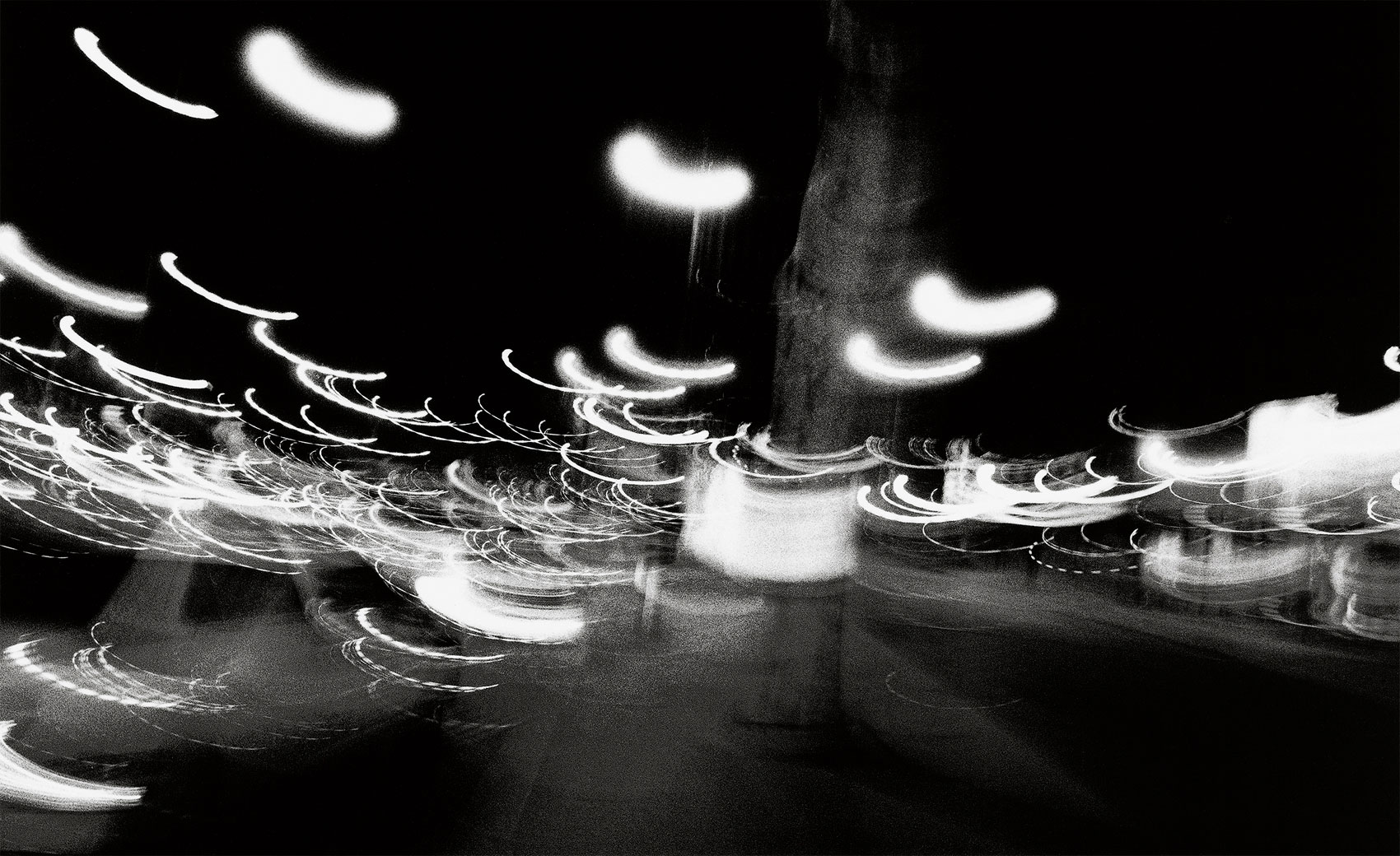
Virginia Beahan’s work concentrates on the landscape’s relationship to history and culture. In 2001, she began a multiyear project on Cuba, photographing its topography in search of remnants of the island’s diverse past. The work resulted in a publication in 2009 called Cuba: Singing with Bright Tears. Beahan’s Cuba is a land of contradictions, full of disappointments and hope, decay and rejuvenating beauty, simultaneously anchored to the past while looking beyond the present. Born and raised in Leningrad (now Saint Petersburg), Russia, Alexey Titarenko became fascinated with Cuba in 2003, when he made his first trip to Havana. Titarenko’s goal was to represent the soul of the Cuban capital. In the artist’s photographs, the city is shown with little overt reference to its politics. Instead, Titarenko describes the conditions of life in the communist country, depicting people persevering amid varying states of ruin. Venturing out of the tourist zones of Havana into the network of dilapidated avenues beyond the old city walls, his images depict a grey metropolis whose inhabitants congregate on the streets to collect food rations, fix long-outmoded cars, and play baseball.

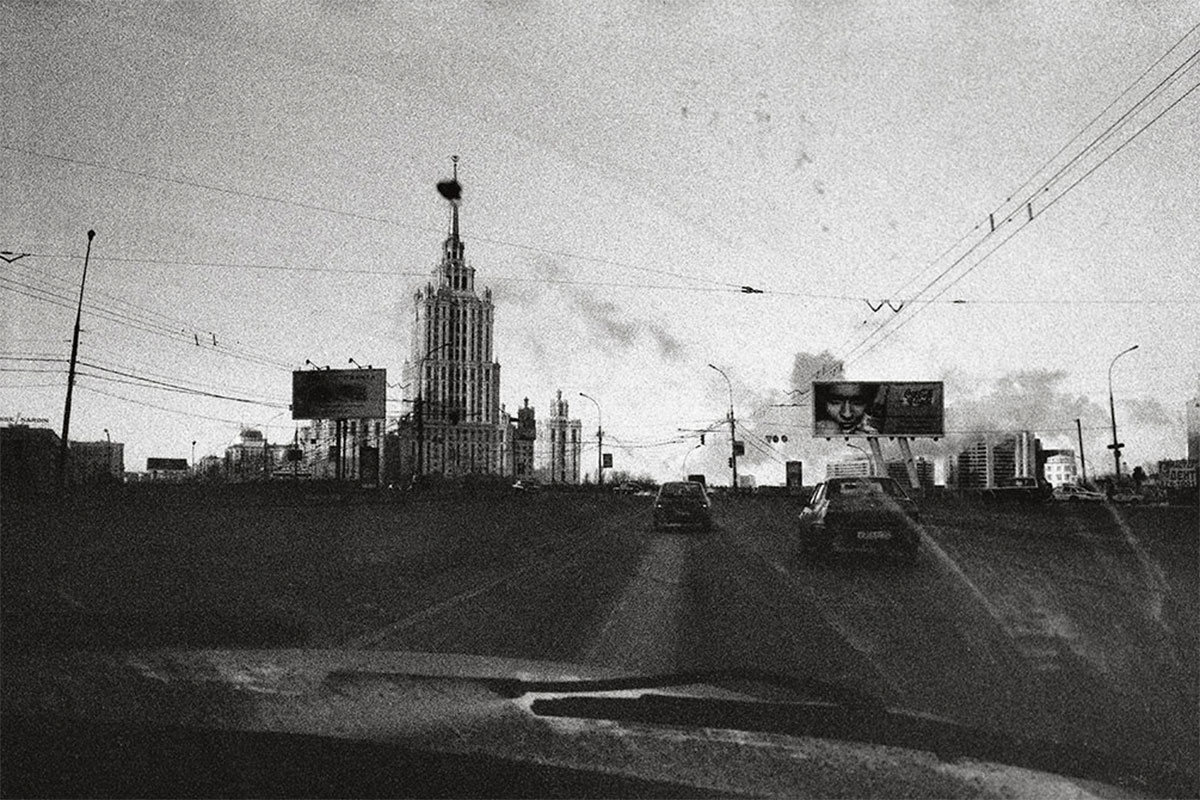
A former student of Walker Evans, Alex Harris made several trips to Cuba following the collapse of the eastern bloc and the dissolution of the Soviet Union, developing a powerful body of colour work that addresses the country’s cultural fabric during a period of difficult economic circumstances. His photographs focus on portraits of women whose lives are affected by the tourist-fuelled sex trade, landscapes made through the windshields of refurbished 1950s American cars, and monuments to the Cuban national hero José Martí. His study was published in the form of a book, The Idea of Cuba, in 2007. Through these distinct vantage points, Harris probed the country’s propensity for ingenuity as it underwent great transition.

Press release from the J. Paul Getty Museum website


Walker Evans (American, 1903-1975) 'Citizen in Downtown Havana' 1933


Walker Evans (American, 1903-1975)
Citizen in Downtown Havana
1933
Gelatin silver print
22.2 x 11.7cm (8 3/4 x 4 5/8 in.)
The J. Paul Getty Museum, Los Angeles


Walker Evans (American, 1903-1975) 'Woman on the Street, Havana' 1933


Walker Evans (American, 1903-1975)
Woman on the Street, Havana
1933
Gelatin silver print
24.6 x 14.6cm (9 11/16 x 5 3/4 in.)
The J. Paul Getty Museum, Los Angeles
© Walker Evans Archive, The Metropolitan Museum of Art


Walker Evans (American, 1903-1975) 'Woman in a Courtyard' 1933


Walker Evans (American, 1903-1975)
Woman in a Courtyard
1933
Gelatin silver print
25.3 x 16.2cm (9 15/16 x 6 3/8 in.)
The J. Paul Getty Museum, Los Angeles
© Walker Evans Archive, The Metropolitan Museum of Art


Walker Evans (American, 1903-1975) 'Coal Dockworkers, Havana' 1933


Walker Evans (American, 1903-1975)
Coal Dockworkers, Havana
1933
Gelatin silver print
15.6 × 21.1cm (6 1/8 × 8 5/16 in.)
The J. Paul Getty Museum, Los Angeles
© Walker Evans Archive, The Metropolitan Museum of Art


Walker Evans (American, 1903-1975) 'Coal Dockworkers, Havana' 1933


Walker Evans (American, 1903-1975)
Coal Dockworkers, Havana
1933
Gelatin silver print
12.7 × 17.7cm (5 × 6 15/16 in.)
The J. Paul Getty Museum, Los Angeles
© Walker Evans Archive, The Metropolitan Museum of Art


Walker Evans (American, 1903-1975) 'Coal Dockworker, Havana' 1933


Walker Evans (American, 1903-1975)
Coal Dockworker, Havana
1933
Gelatin silver print
9.7 × 13.7cm (3 13/16 × 5 3/8 in.)
The J. Paul Getty Museum, Los Angeles
© Walker Evans Archive, The Metropolitan Museum of Art


Walker Evans (American, 1903-1975) 'Coal Loader, Havana' 1933


Walker Evans (American, 1903-1975)
Coal Loader, Havana
1933
Gelatin silver print
17.1 × 12.2cm (6 3/4 × 4 13/16 in.)
The J. Paul Getty Museum, Los Angeles
© Walker Evans Archive, The Metropolitan Museum of Art


Walker Evans (American, 1903-1975) 'Coal Stevedore, Havana' 1933


Walker Evans (American, 1903-1975)
Coal Stevedore, Havana
1933
Gelatin silver print
20.2 x 15.2cm (7 15/16 x 6 in.)
The J. Paul Getty Museum, Los Angeles
© Walker Evans Archive, The Metropolitan Museum of Art


Walker Evans (American, 1903-1975) 'Stevedore' 1933


Walker Evans (American, 1903-1975)
Stevedore
1933
Gelatin silver print
20.1 x 15.1cm (7 15/16 x 5 15/16 in.)
The J. Paul Getty Museum, Los Angeles
© Walker Evans Archive, The Metropolitan Museum


Walker Evans (American, 1903-1975) 'Negro Child, Havana' 1933


Walker Evans (American, 1903-1975)
Negro Child, Havana
1933
Gelatin silver print
19.5 x 14.8cm (7 11/16 x 5 13/16 in.)
The J. Paul Getty Museum, Los Angeles
© Walker Evans Archive, The Metropolitan Museum


Walker Evans (American, 1903-1975) 'Negro Child, Havana' 1933


Walker Evans (American, 1903-1975)
Negro Child, Havana
1933
Gelatin silver print
19.8 x 13.2cm (7 13/16 × 5 3/16 in.)
The J. Paul Getty Museum, Los Angeles
© Walker Evans Archive, The Metropolitan Museum


The J. Paul Getty Museum
1200 Getty Center Drive
Los Angeles, California 90049

Opening hours:
Tuesday – Friday, Sunday 10am – 5.30pm
Saturday 10am – 8pm
Monday Closed

The J. Paul Getty Museum website

LIKE ART BLART ON FACEBOOK

Back to top

Exhibition: ‘Juan Davila: The Moral Meaning of Wilderness’ at the Monash University Museum of Art (MUMA), Caulfield

Exhibition dates: 4th August – 1st October 2011


Juan Davila (Chilean b. 1946, emigrated Australia 1974) 'Wilderness' 2010


Juan Davila (Chilean b. 1946, emigrated Australia 1974)
Wilderness
2010
© Juan Davila, Courtesy Kalli Rolfe Contemporary Art


“The ‘Moral Meaning of Wilderness’ exhibition is a tour of the various approaches to the landscape: ‘plein air’ painting, studio landscape work, sublime landscape, historical evocation of landscape, modernity and the landscape, natural disaster, childhood memory of a landscape, woman in the wilderness. The ‘After Image’ works seem to refer to fantasies, inner space, unnameable objects, microcosm and immense space. Within the representation of “the land” one easily forgets that we are dealing with complexity and a field of projections. The political, the sublime, the moral stance, corporate destruction and the future of our environment come to mind.”


Juan Davila 1


“In a state of grace, one sometimes perceives the deep beauty, hitherto unattainable, of another person. And everything acquires a kind of halo which is not imaginary: it comes from the splendour of the almost mathematical light emanating from people and things. One starts to feel that everything in existence – whether people or things – breathes and exhales the subtle light of energy. The world’s truth is impalpable.”


Clarice Lispector 2


Simply put, this is the best exhibition I have seen in Melbourne this year.

Feminine jouissance is critical to an understanding of the work of Juan Davila (see quotation below). It is the jouissance of the Other: ineffable, incapable of being expressed, indescribable, unutterable. Also critical is an understanding of the meaning of ‘wilderness’ and ‘after image’:

Wilderness “is a relative term suggesting the perspective of a visitor or interloper for whom the landscape is wild and Other – for the landscape was neither wild nor foreign to its original inhabitants, at least not until its transformation through colonising, farming and displacement.”3

“An after image … is an optical illusion that refers to an image continuing to appear in one’s vision after the exposure to the original image has ceased.”4


The most powerful works are the Wilderness and After Image paintings. Grouped together in a room at the far end of the gallery, the effect of these paintings is to be physically surrounded by the nebula of the unconscious mind. The feeling is not dissimilar to being consumed by the abstract, elemental quality of Monet’s Nymphéas (Water Lilies) at the Orangerie in Paris. Pair to more earthly landscapes (see images 2 and 3 below) the paintings are the closest experience in approaching the divine that I have felt in a long time. Their visual and noumenal ‘energy’ is superlative.

Robert Nelson observes that, “The after-image is a momentary body-memory – not intellectual but bizarrely willed – perhaps a bit like the recollection of a dream or the instant slip that uncannily reveals the unconscious. In monumentalising this trace, Davila delivers us to another ethereal zone: the breath of libido, buffeted by clouds of repression and misty internalised myths. As portraits of evanescent memory, they are wantonly memorable.”5

Indeed, they are memorable. I had a spiritual experience with this work for the paintings promote in the human a state of grace. The non-material, the unconceptualisable, things which are outside all possibility of time and space are made visible. This happens very rarely but when it does you remember, eternally, the time and space of occurrence. I hope you have the same experience.

Dr Marcus Bunyan


Many thankx to MUMA for allowing me to publish the images in the posting. Please click on the images for a larger version.


“The term jouissance, in French, denotes “pleasure” or “enjoyment.” The term has a sexual connotation (i.e., orgasm) lacking in the English word “enjoyment”, and is therefore left untranslated in English editions of the works of Jacques Lacan. In his Seminar “The Ethics of Psychoanalysis” (1959-1960) Lacan develops his concept of the opposition of jouissance and pleasure. The pleasure principle, according to Lacan, functions as a limit to enjoyment: it is the law that commands the subject to ‘enjoy as little as possible’. At the same time the subject constantly attempts to transgress the prohibitions imposed on his enjoyment, to go beyond the pleasure principle. Yet the result of transgressing the pleasure principle, according to Lacan, is not more pleasure but pain, since there is only a certain amount of pleasure that the subject can bear. Beyond this limit, pleasure becomes pain, and this ‘painful principle’ is what Lacan calls jouissance.

In his Seminar “Encore” (1972-1973) Lacan states that jouissance is essentially phallic. That is, insofar as jouissance is sexual it is phallic, meaning that it does not relate to the Other as such. Lacan admits, however, that there is a specifically feminine jouissance, a supplementary jouissance, which is beyond the phallus, a jouissance of the Other. This feminine jouissance is ineffable, for both women and men may experience it but know nothing about it.”6


Footnotes

1/ Davila, Juan quoted in “After Image: A conversation between Juan Davila and Kate Briggs,” in Juan Davila: The Moral Meaning of Wilderness catalogue. Canberra: ANU Drill Hall Gallery, 2011, p. 53.

2/ Lispector, Clarice. Discovering the World. Manchester: Carcanet Press, 1992, p. 122 quoted in Briggs, Kate. “Painting, an act of faith: Moments in the work of Juan Davila,” in Juan Davila: The Moral Meaning of Wilderness catalogue. Canberra: ANU Drill Hall Gallery, 2011, p. 8.

3/ Delany, Max. Introductory speech for “Contemporary Visions & Critiques of the Landscape.” Video of session. The Festival of Ideas, The Pursuit of Identity: Landscape, History and Genetics. The University of Melbourne [Online] Cited 21/09/2011. No longer available online

4/ Anon. “Afterimage,” on the Wikipedia website [Online] Cited 21/09/2011.

5/ Nelson, Robert. “Exhibition does not take air lightly,” in The Age newspaper. Wednesday, September 21st, 2011, p. 17.

6/ Anon. “Jouissance,” on the Wikipedia website [Online] Cited 21/09/2011.


Juan Davila (Chilean b. 1946, emigrated Australia 1974) 'A Man is Born Without Fear' 2010


Juan Davila (Chilean b. 1946, emigrated Australia 1974)
A Man is Born Without Fear
2010
© Juan Davila, Courtesy Kalli Rolfe Contemporary Art


Juan Davila (Chilean b. 1946, emigrated Australia 1974) 'After Image. A Man is Born Without Fear' 2010


Juan Davila (Chilean b. 1946, emigrated Australia 1974)
After Image. A Man is Born Without Fear
2010
© Juan Davila, Courtesy Kalli Rolfe Contemporary Art


Juan Davila (Chilean b. 1946, emigrated Australia 1974) 'Churchill National Park' 2009


Juan Davila (Chilean b. 1946, emigrated Australia 1974)
Churchill National Park
2009
© Juan Davila, Courtesy Kalli Rolfe Contemporary Art


The Moral Meaning of Wilderness features recent work by Juan Davila, one of Australia’s most distinguished artists. The exhibition sees Davila turn to the genres of landscape and history painting, at a time when the environment is as much a political as a cultural consideration. With technical virtuosity, Davila’s striking representations of nature achieve monumental significance, depicting beauty and emotion while addressing modern society’s ambivalence to nature and increasing consumerism.

The Moral Meaning of Wilderness represents a radical shift in Davila’s practice, whilst continuing to explore art’s relationship to nature, politics, identity and subjectivity in our post-industrial age. Davila pursues his exploration of the role of art as a means of social, cultural and political analysis.

While many contemporary artists turned away from representation of the landscape, due to its perceived allegiance to outmoded forms of national identity and representation, Davila has recently sought to revisit and reconsider our surroundings au natural.

His paintings are, at first view, striking representations of nature. The paintings, created since 2003, are undertaken en plain air, a pre-modern technique based on speed of execution in situ, and the use of large scale canvases characteristic of history painting. He has also employed other techniques such as studio painting and representations of the landscape with reference to the sublime, the historical, memory and modernity.

Text from the MUMA website


Juan Davila (Chilean b. 1946, emigrated Australia 1974) 'The Painter's Studio' 2006


Juan Davila (Chilean b. 1946, emigrated Australia 1974)
The Painter’s Studio
2006
© Juan Davila, Courtesy Kalli Rolfe Contemporary Art


Juan Davila (Chilean b. 1946, emigrated Australia 1974) '761 Wattletree Road' 2008


Juan Davila (Chilean b. 1946, emigrated Australia 1974)
761 Wattletree Road
2008
© Juan Davila, Courtesy Kalli Rolfe Contemporary Art


Juan Davila (Chilean b. 1946, emigrated Australia 1974) 'What About my Desire?' 2009


Juan Davila (Chilean b. 1946, emigrated Australia 1974)
What About my Desire?
2009
© Juan Davila, Courtesy Kalli Rolfe Contemporary Art


Juan Davila (Chilean b. 1946, emigrated Australia 1974) 'Australia: Nuclear Waste Dumping Ground' 2007


Juan Davila (Chilean b. 1946, emigrated Australia 1974)
Australia: Nuclear Waste Dumping Ground
2007
© Juan Davila, Courtesy Kalli Rolfe Contemporary Art


Monash University Museum of Art (MUMA)
Ground Floor, Building F.
Monash University Caulfield campus
900 Dandenong Road
Caulfield East, VIC 3145
Phone: 61 3 9905 4217

Opening hours:
Tuesday – Friday 10am – 5pm
Saturday 12 – 5pm

Monash University Museum of Art (MUMA) website

LIKE ART BLART ON FACEBOOK

Back to top

Exhibition: ‘László Moholy-Nagy. The Art of Light’ at the Ludwig Museum, Budapest

Exhibition dates: 9th June – 25th September 2011


László Moholy-Nagy (Hungarian, 1895-1946) 'Chairs at Margate' 1935


László Moholy-Nagy (Hungarian, 1895-1946)
Chairs at Margate
1935
Gelatin silver print diptych
36.9 x 29.5cm (each)
© Hattula Moholy-Nagy/VEGAP 2011


Different press photographs from this exhibition, one that I last posted when it was at Martin Gropius-Bau, Berlin.

Marcus


Many thankx to the Ludwig Museum for allowing me to publish the photographs in the posting. Please click on the photographs for a larger version of the image.


László Moholy-Nagy (Hungarian, 1895-1946) 'K VII' 1922


László Moholy-Nagy (Hungarian, 1895-1946)
K VII
1922
Oil on canvas
115.3 x 135.9cm
Tate, London
© Hattula Moholy-Nagy/VEGAP 2011


László Moholy-Nagy (Hungarian, 1895-1946) 'Composition A XI' 1923


László Moholy-Nagy (Hungarian, 1895-1946)
Composition A XI
1923
Oil on canvas
Image: 115.6 x 131.1cm
© Hattula Moholy-Nagy/VEGAP 2011


László Moholy-Nagy (Hungarian, 1895-1946) 'Eton. Eleves watching cricket from the pavilion on Agar's Plough' c. 1930


László Moholy-Nagy (Hungarian, 1895-1946)
Eton. Eleves watching cricket from the pavilion on Agar’s Plough
c. 1930
Gelatin silver print


László Moholy-Nagy (Hungarian, 1895-1946) 'Untitled' 1939


László Moholy-Nagy (Hungarian, 1895-1946)
Untitled
1939
Fujicolor Crystal Archive print
Image: 22.8 x 34.2cm
Courtesy of László Moholy-Nagy Estate and Andrea Rosen Gallery Inc., New York
© Hattula Moholy-Nagy/VEGAP 2011


László Moholy-Nagy (Hungarian, 1895-1946) 'Untitled' 1940-44


László Moholy-Nagy (Hungarian, 1895-1946)
Untitled
1940-1944
Fujicolor Crystal Archive print
Image: 22.8 x 34.2cm
Courtesy of László Moholy-Nagy Estate and Andrea Rosen Gallery Inc., New York
© Hattula Moholy-Nagy/VEGAP 2011


László Moholy-Nagy is a world-famous figure of twentieth-century avant-garde art. His visual art and theoretical works, photographs, films, educational activities and photograms – taken without a camera and now synonymous with his name – were of such significance that it is no exaggeration to say that since Moholy-Nagy, we see things differently; since Moholy-Nagy, our thinking about art has been transformed. His innovations over the decades have become so natural, his influence so pervasive, that we now almost have to rediscover him once again. In the series of Hungarian photographers who accomplished world fame – Robert Capa, Martin Munkácsi, György Kepes – the Ludwig Museum – Museum of Contemporary Art now presents the work of László Moholy-Nagy (1895-1946), focussing primarily his photography. This is a long-overdue show: Hungary has not held such an exhibition of Moholy-Nagy’s work since 1975, not even on the centenary of his birth in 1995.

Moholy-Nagy began his creative career in the first half of the twentieth century in Lajos Kassák’s activist circle where, at twenty years old, he was one of Hungary’s youngest avant-garde artists. In 1919 he left for Vienna then Berlin, where he came under the influence of Dadaism and Constructivism, which he later developed further independently. On the invitation of director Walter Gropius in 1923, he became a teacher at the Weimar Bauhaus, then the most progressive art school. There, alongside the Metal Workshop, he also led the definitive course in new arts education, the Foundation. The Bauhaus was more than a school: it was a way of life that unified life, art and science. As well as exploring painting, leading the Metal Workshop, writing and editing books and applying new typographies at the experimental, innovative Bauhaus school, Moholy-Nagy also turned towards photography and film as forms offering new possibilities in art. Photography, and in particular film represented new technologies that questioned the traditional principles of art, among them the uniqueness of the artefacts and the personal signature of the artist.

The central organising principle in Moholy-Nagy’s diverse activities was light: light defined his paintings, sculptures, photoplastics, photograms, photographs, typography and theatre sets. He did not regard photography as a tool for the perfect imaging of reality, rather, it was his conviction that the camera offered new discoveries and possibilities for modern people to finally liberate themselves from the obligation to depict, to copy reality. The years at the Bauhaus proved to be an experience that defined his entire life. After Berlin, Weimar and Dessau, he settled in Chicago in 1937, where he founded the ‘New Bauhaus’ and remained until the end of his life, working as an experimental, innovative artist and theorist. He regarded art as an activity that embraced the whole of life which was non-hierarchical, accessible and cultivatable by everyone, and he was a firm believer in the educational role of art.

The Ludwig Museum’s exhibition presents his diverse life achievement from 1922, with Moholy-Nagy’s photography, films, and works ‘made with light’ in central focus. His first writings on light as a medium were published in 1923, in the Broom magazine, New York. One of the most exciting parts of the exhibition is the compilation of all Moholy-Nagy’s films, shown together here for the first time and according to the artist’s original conception. Such an ambitious and large-scale exhibition of Moholy-Nagy’s oeuvre could only have been realised with international collaboration. This exhibition brings together over 200 pieces and documents from over twenty museums around the world (Tate, Whitney, Tokyo Metropolitan, etc.) as well as private collections. It is based on the curatorial concept of the director of Madrid’s la Fábrica, Oliva Maria Rubio, and is the result of joint work between the Martin-Gropius-Bau in Berlin and the Gemeentemuseum in The Hague. The exhibition has previously shown in Madrid, Berlin and The Hague, and will open to audiences in Budapest until the end of September.

Moholy-Nagy’s rich oeuvre also allows us to make slightly different emphases according to location. In Berlin, the legendary 1929 Film und Foto (FiFo) exhibition and his pedagogical works were emphasised, while in The Hague, the focus was on the time he spent in the Netherlands between 1933 and 1935. With the participation of two internationally-renowned Hungarian art historians, experts of Moholy-Nagy, Krisztina Passuth and Éva Bajkay, the Budapest exhibition is complemented by photographs and publications from Hungarian collections. Thanks to László Moholy-Nagy’s family, valuable documents that have not been seen in any of the earlier locations have been added to the exhibition.

Press release from the Ludwig Museum


László Moholy-Nagy (Hungarian, 1895-1946) 'The Benevolent Gentleman' 1924


László Moholy-Nagy (Hungarian, 1895-1946)
The Benevolent Gentleman
1924
Photoplastic, gelatin silver print


László Moholy-Nagy (Hungarian, 1895-1946) 'Jealousy' 1924-1927


László Moholy-Nagy (Hungarian, 1895-1946)
Jealousy
1924-1927
Photoplastic, gelatin silver print
30 x 24.6cm
Victoria & Albert Museum Collection, London
© Hattula Moholy-Nagy/VEGAP 2011


László Moholy-Nagy (Hungarian, 1895-1946) 'La Canebière Street, Marseilles - View Through the Balcony Grille' 1928


László Moholy-Nagy (Hungarian, 1895-1946)
La Canebière Street, Marseilles – View Through the Balcony Grille
1928
Gelatin silver print
24.4 x 17.5cm
George Eastman House Collection. Donated by Katharine Kuh
© Hattula Moholy-Nagy/VEGAP 2011


László Moholy-Nagy (Hungarian, 1895-1946) 'Costume Design for Tales of Hoffmann' 1929


László Moholy-Nagy (Hungarian, 1895-1946)
Costume Design for Tales of Hoffmann
1929
Watercolour on paper
34.3 x 27cm
Hattula Moholy-Nagy, Ann Arbor, Michigan
© Hattula Moholy-Nagy/VEGAP 2011


László Moholy-Nagy (Hungarian, 1895-1946) 'Portrait of Ellen Frank' c. 1929


László Moholy-Nagy (Hungarian, 1895-1946)
Portrait of Ellen Frank
c. 1929
Gelatin silver print


Interior view of the exhibition 'László Moholy-Nagy. The Art of Light' at Ludwig Museum - Museum of Contemporary Art


Interior view of the exhibition László Moholy-Nagy. The Art of Light at Ludwig Museum – Museum of Contemporary Art
© BUJNOVSZKY Tamás / Ludwig Museum – Museum of Contemporary Art, Archives


Interior view of the exhibition 'László Moholy-Nagy. The Art of Light' at Ludwig Museum - Museum of Contemporary Art

Interior view of the exhibition 'László Moholy-Nagy. The Art of Light' at Ludwig Museum - Museum of Contemporary Art

Interior view of the exhibition 'László Moholy-Nagy. The Art of Light' at Ludwig Museum - Museum of Contemporary Art


Interior views of the exhibition László Moholy-Nagy. The Art of Light at Ludwig Museum – Museum of Contemporary Art showing at left in the bottom image, Composition – Assemblage – Photogram (1926, below); and at right, Photogramm No. II (1929, below)
© BUJNOVSZKY Tamás / Ludwig Museum – Museum of Contemporary Art, Archives


László Moholy-Nagy (Hungarian, 1895-1946) 'Composition - Assemblage - Photogram' 1926


László Moholy-Nagy (Hungarian, 1895-1946)
Composition – Assemblage – Photogram
1926
Photogram and mixed media


László Moholy-Nagy (Hungarian, 1895-1946) 'Photogramm No. II' 1929


László Moholy-Nagy (Hungarian, 1895-1946)
Photogramm No. II
1929
Silver gelatin photograph
95.5 x 68.5cm


László Moholy-Nagy (Hungarian, 1895-1946) 'Lago Maggiore, Ascona, Switzerland' c. 1930


László Moholy-Nagy (Hungarian, 1895-1946)
Lago Maggiore, Ascona, Switzerland
c. 1930
Silver gelatin photograph


László Moholy-Nagy (Hungarian, 1895-1946) and Paul Hartland. 'Carnival: Composition with two masks' c. 1934


László Moholy-Nagy (Hungarian, 1895-1946) and Paul Hartland 
Carnival: Composition with two masks
c. 1934
Gemeentemuseum Den Haag


Ludwig Museum – Museum of Contemporary Art
Palace of Arts
Komor Marcell u. 1, Budapest, H-1095
Phone: +36 1 555 3444

Opening hours:
Tuesday – Sunday: 10am – 6pm
Closed on Mondays

Ludwig Museum website

LIKE ART BLACK ON FACEBOOK

Back to top

Exhibition, Films, Events and Symposia: ‘Jack Smith: A Feast for Open Eyes’ at the Institute of Contemporary Arts (ICA), London

Dates: 7th – 18th September 2011


Jack Smith (American, 1932-1989) 'Untitled' c. 1958-1962/2011


Jack Smith (American, 1932-1989)
Untitled
c. 1958-1962/2011
Analog C-print hand printed from original colour negative on Fuji Crystal Archive paper
14 x 11 inches (35.6 x 27.9cm)
Copyright Estate of Jack Smith
Courtesy Gladstone Gallery, New York and Brussels


His photographic works are rare and remain largely unknown according to Wikipedia. They shouldn’t be.

Dr Marcus Bunyan


Many thankx to the ICA for allowing me to publish the photographs in the posting. Please click on the photographs for a larger version of the image.


Jack Smith: A Feast for Open Eyes

‘The only true underground filmmaker’ – John Waters

ICA director Gregor Muir introduces the work of Jack Smith in this two week season. Jack Smith: A Feast for Open Eyes is on from 7 – 18 September 2011


Jack Smith (American, 1932-1989) 'Untitled' 1982


Jack Smith (American, 1932-1989)
Untitled
1982
Mixed media on paper
6 1/8 x 8 7/8 inches (15.6 x 22.5cm)
Copyright Estate of Jack Smith
Courtesy Gladstone Gallery, New York and Brussels


Jack Smith (American, 1932-1989) 'Untitled' c. 1958-1962/2011


Jack Smith (American, 1932-1989)
Untitled
c. 1958-1962/2011
Black and white gelatin silver print
10 x 8 inches (25.4 x 20.3cm)
Copyright Estate of Jack Smith
Courtesy Gladstone Gallery, New York and Brussels


“Jack Smith (November 14, 1932 in Columbus, Ohio – September 25, 1989 in New York City) was an American filmmaker, actor, and pioneer of underground cinema. He is generally acclaimed as a founding father of American performance art, and has been critically recognised as a master photographer, though his photographic works are rare and remain largely unknown.

Smith was one of the first proponents of the aesthetics which came to be known as ‘camp’ and ‘trash’, using no-budget means of production (e.g. using discarded colour reversal film stock) to create a visual cosmos heavily influenced by Hollywood kitsch, orientalism and with Flaming Creatures created drag culture as it is currently known. Smith was heavily involved with John Vaccaro, founder of The Playhouse of The Ridiculous, whose disregard for conventional theater practice deeply influenced Smith’s ideas about performance art. In turn, Vaccaro was deeply influenced by Smith’s aesthetics. It was Vaccaro who introduced Smith to glitter and in 1966 and 1967, Smith created costumes for Vaccaro’s Playhouse of The Ridiculous. Smith’s style influenced the film work of Andy Warhol as well as the early work of John Waters. While all three were part of the 1960s gay arts movement, Vaccaro and Smith refuted the idea that their sexual orientation was responsible for their art.

After his last film, No President (1967), Smith created performance and experimental theatre work until his death on September 25, 1989 from AIDS-related pneumonia.”

Text from the Wikipedia entry


Jack Smith (American, 1932-1989) 'Untitled' c. 1958-1962/2011


Jack Smith (American, 1932-1989)
Untitled
c. 1958-1962/2011
Analog C-print hand printed from original colour negative on Fuji Crystal Archive paper
14 x 11 inches (35.6 x 27.9cm)
Copyright Estate of Jack Smith
Courtesy Gladstone Gallery, New York and Brussels


Legendary American artist, filmmaker and actor Jack Smith (1932-1989), described by Andy Warhol as the only person he would ever copy and by John Waters as “the only true underground filmmaker”, is celebrated at the Institute of Contemporary Arts (ICA) in film, performance and debate with a retrospective of Smith’s work from 7 to 18 September 2011.

Working in New York from the 1950s until his death in 1989, Smith unequivocally resisted and upturned accepted conventions, whether artistic, moral or legal. Irreverent in tone and delirious in effect, Smith’s films, such as the notorious Flaming Creatures (1963), are both wildly camp and subtly polemical. Smith is best known for his contributions to underground cinema but his influence extends across performance art, photography and experimental theatre.

A Feast for Open Eyes: Jack Smith maps out the breadth of Smith’s practice, from his collaborative film productions to his individual writings, and looks at his legacy in the UK drawing upon a generation of New York artists with whom Smith was closely involved, including Jonas Mekas and Penny Arcade, and younger artists and filmmakers whom he influenced. John Zorn, a long-term Smith collaborator selects records to accompany an installation of slides documenting Smith’s work, as he used to in collaboration with Smith in the 1970s and 80s.

The retrospective opens with a screening of Flaming Creatures introduced by Chris Dercon, Director of Tate Modern, who was a close friend of Smith’s. The film is followed by the screening of an interview, recorded exclusively for the ICA this summer, with Jonas Mekas, a founder member of Anthology Film Archives who faced obscenity charges for defending Flaming Creatures in the 1960s. The presentation is introduced by Dominic Johnson, author of the forthcoming monograph Glorious Catastrophe: Jack Smith, Performance and Visual Culture (Manchester University Press) and co-curator of A Feast for Open Eyes.

Press release from the ICA website


Jack Smith (American, 1932-1989) 'Untitled' c. 1978


Jack Smith (American, 1932-1989)
Untitled
c. 1978
Mixed media on paper
13 x 20 3/4 inches (33 x 52.7cm)
Copyright Estate of Jack Smith
Courtesy Gladstone Gallery, New York and Brussels


Jack Smith (American, 1932-1989) 'Untitled' c. 1958-1962/2011


Jack Smith (American, 1932-1989)
Untitled
c. 1958-1962/2011
Analog C-print hand printed from original colour negative on Fuji Crystal Archive paper
14 x 11 inches (35.6 x 27.9cm)
Copyright Estate of Jack Smith
Courtesy Gladstone Gallery, New York and Brussels


Jack Smith (American, 1932-1989) 'Untitled' c. 1958-1962/2011


Jack Smith (American, 1932-1989)
Untitled
c. 1958-1962/2011
Black and white gelatin silver print
10 x 8 inches (25.4 x 20.3cm)
Copyright Estate of Jack Smith
Courtesy Gladstone Gallery, New York and Brussels


Jack Smith (American, 1932-1989) 'Untitled' c. 1958-1962/2011


Jack Smith (American, 1932-1989)
Untitled
c. 1958-1962/2011
Black and white gelatin silver print
10 x 8 inches (25.4 x 20.3cm)
Copyright Estate of Jack Smith
Courtesy Gladstone Gallery, New York and Brussels


Jack Smith (American, 1932-1989) 'Untitled' c. 1958-1962


Jack Smith (American, 1932-1989)
Untitled
c. 1958-1962
Color negative
2 1/4 x 2 1/4 inches 
(5.7 x 5.7cm)
Copyright Estate of Jack Smith
Courtesy Gladstone Gallery, New York and Brussels


Institute of Contemporary Arts
The Mall,
London,
SW1Y 5AH

Opening hours:
Tuesday – Sunday 12 – 9pm
Closed Mondays
ICA website

LIKE ART BLART ON FACEBOOK

Back to top

Review: ‘Scott’s Last Expedition’ at the Australian National Maritime Museum, Sydney

Exhibition dates: 17th June – 16th October 2011


Herbert Ponting (British, 1870-1935) 'The former whaling ship, the 'Terra Nova'' 1911


Herbert Ponting (British, 1870-1935)
The former whaling ship, the ‘Terra Nova’
1911
Gelatin silver print
Canterbury Museum NZ


“Greater love hath no man than this, that a man lay down his life for his friends.”


John 15:13


It is difficult to describe how heroic a figure Robert Scott, ‘Scott of the Antarctic’ was to a child of the Empire growing up in the 1960s. He and his doomed party were, and still are, the quintessential heroes of my youth. Despite what we now know of Scott’s failures in leadership and organisation, he and his comrades remain embedded in English consciousness as all that is noble about the explorers of the time. They may have failed to become the first to reach the South Pole and died on the return journey but what a magnificent effort it was, what camaraderie and fortitude they showed in the face of adversity.

At the centre of the exhibition at the Australian National Maritime Museum, Sydney is a representation of Scott’s base camp at Cape Evans. Visitors can walk inside the life-size hut and get a sense of the everyday realities for the 25 expedition members, from the cramped conditions and homeliness of the hut, to the wealth of specimens collected and experiments conducted. The exhibition also reunites the artefacts used by Scott and his team together with scientific specimens collected during the 1910-1913 expedition for the first time since their use in Antarctica. The exhibition uses life-size reproductions of the photographs of Herbert Ponting. At this scale it enables the viewer to inspect in intimate detail the habitus of their lives.

What a master of photography Ponting was. His photographs are classically framed and formally restrained; his use of light is magical. The camera always seems to be in the perfect position to capture the subject, neither too high or low but beautifully balanced so that the eye is led into the photograph, to investigate those wonderful nooks and crannies of the image plane. Because of the excellent quality press images I have been able to close in on details of the photographs (a la Ken Burns). The receding row of male faces to the left of Scott’s birthday dinner, June 1911 (below) that lead to Scott as the focal point at the head of the table, flags of St. George flying above, the two standing men acting as vertical counterpoints to the equipoise of the horizontal perspectival point – and then we glimpse the punctum of the piece of bread held between darkened fingers and thumb of the man caught in mid-conversation with his neighbour. Also note the framed images on the wall behind at top left, bearing witness to the fact that living is more civilised in such a desolate place if you are surrounded by images of culture and home.

This remembrance becomes poignant in the photograph Scott writing in his area of the expedition hut, Scott’s cubicle (below). In the detail of the image we observe candid photographs of what are presumably Scott’s wife in two photographs that are slightly different from each other, his wife and child, his father and small photographs of his children pinned to the hut’s wall. Memories of home and family that become multiple momenti mori – the death of the people in the images pinned to the wall, the death present in Pontings’ photograph (the little death at the point in time that the photograph was taken) and the death of Scott himself. The pocket watch hung from a wooden post only adds to this sense of refractive timelessness.

The sense of these men living in close quarters in this community is beautifully captured in Ponting’s photograph The Tenements, 9 October 1911 (below). Three vertical lozenges project into the space from the bottom of the image, each containing its own theatrical diorama. The balance and space between the men looking across, down, up and out of the image is outstanding. The distance between Oates in the top centre and the man on the right seems somehow infinite in the photograph, like the distance in Alfred Hitchcock’s film North by Northwest where Cary Grant is waiting for the bus in the middle of nowhere and on the other side of the road is another man, also waiting. The spatial tension between the two men in the photograph is palpable, emphasised by the stacked horizontal shelf behind them. The gaze of the man at bottom left allows the viewer some room for escape from the confines of the tenements and the confines of the image plane, for without that gaze the viewer would be caught with no way out. In the detail of this man we can, as before, note the importance of personal remembrances of home with a picture pinned on the wall behind his bunk and a Fry’s Cocoa box stored underneath.

And so to the final few photographs in the posting: the famous photograph of Scott and the Polar Party at the South Pole (below) taken by Henry Bowers. Taken the day after the party had arrived at the South Pole, only to discover that Roald Amundsen had beaten them to their goal by five weeks, Bowers (seated at bottom left) used a string to release the shutter of the camera that can just be seen in his right hand in the photograph – a photograph that was then printed by Herbert Ponting from the recovered glass plate negative. In the detail of Scott and Oates in this photograph you can see the weariness, anguish and defeat in faces that are sun and wind damaged, knowing that they had to trek all the way back from this awful place (as Scott himself said, “Great God! This is an awful place”).

I have put a photograph by Herbert Ponting, Captain Lawrence Edward Grace Oates during the British Antarctic Expedition of 1911-1913, below the detail of him at the South Pole. The face is almost unrecognisable from the strong, handsome face in Ponting’s picture, the prominent nose now blackened and dark being the only thing that make it recognisably the same person. In the detail of Ponting’s photograph, if you enlarge it, you can see two small points of light in his eyes, probably the light of the polar sun when Ponting took the photograph. For me these two spots of light become portents of what was to come as Oates walked out into a blizzard saying those immortal words, “I am just going outside and may be some time”. To me these points of light seared into his retina are like the driving snow that he walked out into in such a selfless act. It is very emotional for me as an Englishman and as a human being to look into the face of this man knowing what he was eventually to go through.

Though they failed in their quest to become the first to the South Pole, for this child, for this man they will forever remain my heroes.

Dr Marcus Bunyan


Many thankx to the Australian National Maritime Museum for allowing me to publish the photographs in the posting. Please click on the photographs for a larger version of the image.


Anonymous photographer. 'Captain Robert Falcon Scott' Nd


Anonymous photographer
Captain Robert Falcon Scott
Nd
Gelatin silver print
Licensed with permission of the Scott Polar Research Institute, University of Cambridge


Herbert Ponting (British, 1870-1935) 'Members of the 'Terra Nova' expedition with Scott in the centre' 1911


Herbert Ponting (British, 1870-1935)
Members of the ‘Terra Nova’ expedition with Scott in the centre
1911
Gelatin silver print
Canterbury Museum NZ


Herbert Ponting (British, 1870-1935) 'Scott’s birthday dinner, June 1911'


Herbert Ponting (British, 1870-1935)
Scott’s birthday dinner, June 1911
1911
Gelatin silver print
Canterbury Museum NZ


Herbert Ponting (British, 1870-1935) 'Scott’s birthday dinner, June 1911' 1911 (detail)


Herbert Ponting (British, 1870-1935)
Scott’s birthday dinner, June 1911 (detail)
1911
Gelatin silver print
Canterbury Museum NZ


Herbert Ponting (British, 1870-1935) 'Scott writing in his area of the expedition hut, Scott's cubicle' 1911


Herbert Ponting (British, 1870-1935)
Scott writing in his area of the expedition hut, Scott’s cubicle
1911
Gelatin silver print
Pennell Collection, Canterbury Museum NZ


Herbert Ponting (British, 1870-1935) 'Scott writing in his area of the expedition hut, Scott's cubicle' 1911 (detail)


Herbert Ponting (British, 1870-1935)
Scott writing in his area of the expedition hut, Scott’s cubicle (detail)
1911
Gelatin silver print
Pennell Collection, Canterbury Museum NZ


Herbert Ponting (British, 1870-1935) 'The Tenements, 9 October 1911' 1911


Herbert Ponting (British, 1870-1935)
The Tenements, 9 October 1911
1911
Gelatin silver print
Pennell Collection, Canterbury Museum NZ


Herbert Ponting (British, 1870-1935) 'The Tenements, 9 October 1911' 1911 (detail)


Herbert Ponting (British, 1870-1935)
The Tenements, 9 October 1911 (detail)
1911
Gelatin silver print
Pennell Collection, Canterbury Museum NZ


Herbert Ponting (British, 1870-1935) 'Edward Atkinson in the laboratory' 1911


Herbert Ponting (British, 1870-1935)
Edward Atkinson in the laboratory
1911
Silver gelatin print
Canterbury Museum NZ


Herbert Ponting (British, 1870-1935) 'Edward Atkinson in the laboratory' 1911 (detail)


Herbert Ponting (British, 1870-1935)
Edward Atkinson in the laboratory (detail)
1911
Silver gelatin print
Canterbury Museum NZ


One hundred years after its tragic end, the definitive story of British explorer Captain Robert Falcon Scott’s Terra Nova expedition to Antarctica is being told in a major international exhibition coming to the Australian National Maritime Museum this June.

Scott’s Last Expedition will reunite real artefacts used by Scott and his team together with rare scientific specimens collected during the 1910-1913 expedition for the first time since their use in Antarctica.

When Scott set off on what was his second journey to explore the Antarctic on board the former whaling ship Terra Nova, he could not have predicted it would be his last. Tragically he and four of his colleagues died on the return trek to the South Pole two years later, having lost the race to be first. The exhibition however will go beyond the familiar tales of the journey to the Pole and the death of the Polar party to explore the Terra Nova expedition from every angle.

“Over the years public perceptions of Scott have varied greatly, from hero to flawed leader, and discussions of what really happened still captivate people,” said museum director Mary-Louise Williams today. “This exhibition will give visitors a unique opportunity to immerse themselves in this epic journey and the remarkable landscape of Antarctica,” she said.

Visitors will uncover Scott the man, learn more about the people who made up the expedition and explore every fascinating detail of this historic journey. At the centre of the exhibition will be a life-size representation of Scott’s Cape Evans’ base camp. Visitors can walk inside and get a sense of the everyday realities for the expedition’s members… from the cramped conditions and homeliness of the hut to the wealth of specimens collected and scientific investigations conducted.

Original artefacts, equipment, clothes, and personal effects will be displayed for the first time in Australia and show the group’s attempts to make life in one of the most hostile environments on Earth as bearable as possible. Food tins including Fry’s Cocoa, Trufood Trumilk, and Symington’s Pea Flour recovered from the hut will be on display together with instruments, a microscope, and even Scott’s gramophone.

Photographs of the environment and life in camp taken by expedition photographer Herbert Ponting and poignant letters and diaries by various expedition members create a vivid picture of what life was like… working in hostile conditions, the struggles for survival and the strength of human endurance and courage.

Scott’s Terra Nova expedition made a significant contribution to Antarctic science. The expedition included a full scientific program with a large team of scientists making new discoveries which directly led to a greater understanding of Antarctica. The scientists had to endure harsh Antarctic conditions to carry out their work. It was cold, windy and completely dark in winter and, if not careful, the scientists could easily get frostbitten. And yet despite the conditions, the expedition left a rich legacy that continues to inspire and inform today.

Natural History Museum, London, the Canterbury Museum, Christchurch, New Zealand and the Antarctic Heritage Trust, New Zealand, have collaborated to create this exhibition to commemorate the centenary of the expedition and celebrate its achievements.

Press release from the Australian National Maritime Museum


Herbert Ponting (British, 1870-1935) 'A member of the team tucks into a tin of Heinz baked beans in the Ross Dependency, during Captain Robert Falcon Scott’s Terra Nova Expedition to the Antarctic, January 1912' 1912


Herbert Ponting (British, 1870-1935)
A member of the team tucks into a tin of Heinz baked beans in the Ross Dependency, during Captain Robert Falcon Scott’s Terra Nova Expedition to the Antarctic, January 1912
1912
Silver gelatin print
Canterbury Museum NZ


Neerav Bhatt (photographer) Installation view of the exhibition 'Scott's Last Expedition' at the Australian National Maritime Museum, Sydney, June - October 2011

Neerav Bhatt (photographer) Installation view of the exhibition 'Scott's Last Expedition' at the Australian National Maritime Museum, Sydney, June - October 2011

Neerav Bhatt (photographer) Installation view of the exhibition 'Scott's Last Expedition' at the Australian National Maritime Museum, Sydney, June - October 2011

Neerav Bhatt (photographer) Installation view of the exhibition 'Scott's Last Expedition' at the Australian National Maritime Museum, Sydney, June - October 2011

Neerav Bhatt (photographer) Installation view of the exhibition 'Scott's Last Expedition' at the Australian National Maritime Museum, Sydney, June - October 2011


Neerav Bhatt (photographer)
Installation view of the exhibition Scott’s Last Expedition at the Australian National Maritime Museum, Sydney, June – October 2011
CC BY-NC-SA 2.0


Scott and the Polar Party at the South Pole 1912


Scott and the Polar Party at the South Pole
Left to right: Captain Lawrence Oates, Lieutenant Henry Bowers (seated), Captain Robert Falcon Scott, Dr Edward Wilson (Seated), Petty Officer Edgar Evans
1912
Licensed with permission of the Scott Polar Research Institute, University of Cambridge.


Notice the camera release cord in the right hand of Lieutenant Henry Bowers.


The fatal journey

Scott’s 1,450 km journey to the geographic South Pole began on 1 November 1911, two weeks after the Norwegian polar explorer Roald Amundsen left his base camp at the Bay of Whales. Amundsen reached the pole first – on 14 December 1911 – and then raced back to tell the world their news. Scott and his team reached the Pole a month later on 17 January 1912 having been beset by fierce weather conditions. The disappointment was immense. The return journey was undertaken in horrid weather with harsh, intense cold and violent blizzards that, in the end, defeated them. Evans failed first, suffering concussion from a fall; Oates suffered dramatic frostbite to his feet – gangrene had set in – and he crawled out of the tent saying the now famous words, “I am just going outside and may be some time”. The remaining men – Scott, Wilson and Bowers – were weak with malnutrition, starvation and exhaustion and perished on or around 29/30 March 1912 – some three weeks after the world learned that Amundsen had reached the Pole first.


Captain Robert Falcon Scott at the South Pole (detail)


Captain Robert Falcon Scott at the South Pole (detail)


Captain Lawrence Oates at the South Pole (detail)


Captain Lawrence Oates at the South Pole (detail)


Herbert Ponting. 'Lawrence Oates' c. 1911


Herbert Ponting (British, 1870-1935)
Captain Lawrence Edward Grace Oates during the British Antarctic Expedition of 1911-1913
c. 1911
Silver gelatin print
Photographic Archive, Alexander Turnbull Library


Herbert Ponting. 'Captain Lawrence Edward Grace Oates during the British Antarctic Expedition of 1911-1913' c. 1911 (detail)


Herbert Ponting (British, 1870-1935)
Captain Lawrence Edward Grace Oates during the British Antarctic Expedition of 1911-1913 (detail)
c. 1911
Silver gelatin print
Photographic Archive, Alexander Turnbull Library


Anonymous photographer. 'The snow cairn raised over Scott, Bowers and Wilson by the search party, their final resting ground' 1912 (detail)


Anonymous photographer
The snow cairn raised over Scott, Bowers and Wilson by the search party, their final resting ground (detail)
1912
Silver gelatine print
Canterbury Museum NZ


Australian National Maritime Museum
2 Murray Street
Darling Harbour
Sydney NSW 2000
Australia

Opening hours:
Every day 10am – 4.00pm

Australian National Maritime Museum website

LIKE ART BLART ON FACEBOOK

Back to top

Exhibition: ‘Boris Mikhailov: Case History’ at The Museum of Modern Art (MoMA), New York

Exhibition dates: 26th May – 5th September 2011


Many thankx to The Museum of Modern Art for allowing me to publish the photographs in the posting. Please click on the photographs for a larger version of the image.


Boris Mikhailov (Ukrainian, born 1938) 
'Untitled', from the series 'Case History' 
1997-98


Boris Mikhailov (Ukrainian, b. 1938)
Untitled
1997-1998
From the series Case History
Chromogenic colour print
93″ x 49 15/16″ (236.2 x 126.8cm)
Courtesy the artist, Pace/MacGill Gallery, New York, and Galerie Barbara Weiss, Berlin
© 2011 Boris Mikhailov


The demise of the Soviet Union in 1991 spelled disaster for many citizens of Mikhailov’s native Kharkov, in Ukraine. As the state apparatus collapsed, bleak predictability rapidly gave way to chaos and want. The photographer, whose earlier work includes sympathetic records of communal pastimes, responded with a bitter series that starkly evokes the squalor of desperation, drink, and despair. In the same years, but in another photographic mode altogether, he experimented with flagrantly staged political and sexual satires.

A decade later, as a few made millions, the least fortunate Ukrainians were more desperate still. This untitled work (above) belongs to Mikhailov’s bold and risky series Case History, for which he paid Kharkov’s outcasts to pose and perform. The best of his new photographs improbably blend the opposing poles of his art. No-nonsense realism and impromptu playacting seamlessly conspire in a persuasive theater of wrenching misery.

Publication excerpt from The Museum of Modern Art, MoMA Highlights, New York: The Museum of Modern Art, revised 2004, originally published 1999, p. 357.


With Case History, Boris Mikhailov confronts viewers with the effects of the Soviet Union’s collapse on the homeless and marginalised people of Ukraine. To create these raw, colour-saturated, large-scale photographs, Mikhailov paid his subjects and worked with them to stage poses inspired by religious and historical paintings. “This is the first time I paid my models,” he explains. “I don’t think this is an issue. If models get paid to appear in an advertisement, nobody cares. Why can’t I? This gave me the possibility to photograph them, and gave them the possibility to live.”

Additional text from Seeing Through Photographs online course, Coursera, 2016

Mikhailov’s Case History series examines the social oppression and devastating poverty of a disenfranchised community in Kharkiv, Ukraine: those who had been left homeless by the rise of the capitalist oligarchy following the collapse of the Soviet Union. “The rich and the homeless – the new classes of a new society – this was, as we had been taught, one of the features of capitalism,” Mikhailov observed. A haunting document of post-Soviet urban conditions, the series captures the failed promise of capitalism with poetry and grit.

Gallery label from 2020


Case History / Boris Mikhailov


Boris Mikhailov (Ukrainian, born 1938) 
'Untitled', from the series 'Case History' 
1997-98


Boris Mikhailov (Ukrainian, b. 1938)
Untitled
1997-1998
From the series Case History
Chromogenic colour print
93″ x 49 15/16″ (236.2 x 126.8cm)
Courtesy the artist, Pace/MacGill Gallery, New York, and Galerie Barbara Weiss, Berlin
© 2011 Boris Mikhailov


Boris Mikhailov (Ukrainian, born 1938) 
'Untitled', from the series 'Case History' 
1997-1998


Boris Mikhailov (Ukrainian, b. 1938)
Untitled
1997-1998
From the series Case History
Chromogenic colour print
93″ x 49 15/16″ (236.2 x 126.8cm)
Courtesy the artist, Pace/MacGill Gallery, New York, and Galerie Barbara Weiss, Berlin
© 2011 Boris Mikhailov


Boris Mikhailov (Ukrainian, b. 1938) '
Untitled', from the series 'Case History' 
1997-98


Boris Mikhailov (Ukrainian, b. 1938)
Untitled
1997-1998
From the series Case History
Chromogenic colour print
93″ x 49 15/16″ (236.2 x 126.8cm)
Courtesy the artist, Pace/MacGill Gallery, New York, and Galerie Barbara Weiss, Berlin
© 2011 Boris Mikhailov


The Museum of Modern Art presents Boris Mikhailov: Case History, the first presentation dedicated entirely to the artist’s seminal series Case History (1997-98) in an American museum, from May 26 to September 5, 2011. Ukrainian-born Mikhailov (b. 1938) is one of the leading photographers from the former Soviet Union. For over 40 years, Mikhailov has explored the position of the individual within the mechanisms of public ideology, touching on such subjects as Ukraine under Soviet rule, the living conditions in post-communist Eastern Europe, and the fallen ideals of the Soviet Union. Although deeply rooted in a historical context, his work incorporates profoundly engaging and personal narratives of humour, lust, vulnerability, ageing, and death. The exhibition is organised by Eva Respini, Associate Curator of Photography, The Museum of Modern Art.

This exhibition, which features some 20 works, is selected from the larger body of work of Case History, which comprises 400 photographs and was published as a book in 1999. Arguably his most challenging body of work, it explores the deeply troubling circumstances of bomzhes – the homeless – a new class that emerged after the collapse of the Soviet Union in 1991. In 1996, after spending time abroad, he returned to Kharkov, which seemed like a changed city, with foreign ads and the glitz of a new western capitalist façade. Whereas most mainstream media focused on the new capitalists and rising oligarchs of the former Soviet republics, Mikhailov’s pictures describe the circumstances of a largely invisible underclass. Set against the bleak backdrop of the industrial city of Kharkov, his life-size colour photographs chronicle the oppression, devastating poverty, and everyday reality of a disenfranchised community living on the margins of the Ukraine’s new economic regime. Many of his subjects display their wounds, rashes, tattoos, and growths.

For Mikhailov the act of photographing was partly born out of a sense of responsibility: Case History records post-Soviet realities, in stark contrast to the previous histories of the Ukraine (1930s famine, war, Soviet losses in World War II) that went undocumented. One of the most haunting documents of post-Soviet urban conditions, these unforgettable pictures capture this new reality with poetry, clarity, and grit. The large size of Mikhailov’s pictures is in keeping with the scale of contemporary photography, creating a visceral and immersive viewing experience. Ms. Respini states, “Mikhailov inhabits the worlds of social documentarian and contemporary artist. It is partly the tension between these two roles that makes the work so complex and powerful.”

Case History also explores the complicated relationship between photographer and subject. The photographs are collaborations, sometimes the result of a spontaneous moment, other times directed by the artist. Central to the exhibition is the seven-part work the artist calls “requiem.” The mannered posing of the people in his pictures exposes the constructed nature of the photographs, challenging the idea of objective truth and authenticity implied by documentary photography. For Mikhailov, photographic seeing is an accountable act, and viewers participate in this act. With these pictures, Mikhailov implicates himself – and the viewers – in the act of looking.

Press release from The Museum of Modern Art website


Installation view of the exhibition 'Boris Mikhailov: Case History' at The Museum of Modern Art (MoMA), New York


Installation view of the exhibition Boris Mikhailov: Case History at The Museum of Modern Art (MoMA), New York


Boris Mikhailov (Ukrainian, b. 1938) '
Untitled', from the series 'Case History' 
1997-98


Boris Mikhailov (Ukrainian, b. 1938)
Untitled
1997-1998
From the series Case History
Chromogenic colour print
93″ x 49 15/16″ (236.2 x 126.8cm)
Courtesy the artist, Pace/MacGill Gallery, New York, and Galerie Barbara Weiss, Berlin
© 2011 Boris Mikhailov


Boris Mikhailov (Ukrainian, b. 1938) 'Untitled' 1997-1998


Boris Mikhailov (Ukrainian, b. 1938)
Untitled
1997-1998
From the series Case History
Chromogenic colour print
93″ x 49 15/16″ (236.2 x 126.8cm)
Courtesy the artist, Pace/MacGill Gallery, New York, and Galerie Barbara Weiss, Berlin
© 2011 Boris Mikhailov


Boris Mikhailov (Ukrainian, b. 1938) '
Untitled', from the series 'Case History' 
1997-1998


Boris Mikhailov (Ukrainian, b. 1938)
Untitled
1997-1998
From the series Case History
Chromogenic colour print
93″ x 49 15/16″ (236.2 x 126.8cm)
Courtesy the artist, Pace/MacGill Gallery, New York, and Galerie Barbara Weiss, Berlin
© 2011 Boris Mikhailov


What does it mean to present images like these as art in a museum? In one respect, they carry on a tradition of picturing the downtrodden exemplified in photographs by countless artists from Walker Evans to Andres Serrano, who has made studio images of homeless people resembling the heroic portraits of American Indians by the 19th century photographer Edward S. Curtis. Works like those tell us that, whatever their outward appearances and circumstances, the poor have souls that are worthy of respect.

Mr. Mikhailov’s photographs are not so ennobling. They render their subjects as exotic and even demonic. Specimens in a Boschian freak show, they elicit sympathy, revulsion or amazement but not admiration or empathy. Because there are no titles or captions, you don’t know who the people are or anything about their lives. Maybe some were research scientists or university professors fired for not toeing party lines or for crossing paths with a ruthless plutocrat at the wrong place and time; maybe they were all rounded up from an insane asylum or an alcoholic detox center. …

All seem to belong to a tribe or extended family of outcasts. But “the homeless,” you might want to object, is not a homogeneous population. It includes alcoholics, drug addicts, criminals, prostitutes, con artists, people with mental illnesses and hard-working citizens going through rough patches. Mr. Mikhailov is not concerned with personal particulars. Under his direction the subjects are, above all, actors who function mainly as allegorical symbols. They are metonyms for the underbelly of society, and their challenging revelations of their own usually hidden body parts is a metaphor for the whole project of exposing what polite society would prefer to keep under wraps. To the extent that they appear everywhere around the world, including in New York City, they are universal signs of capitalism’s failure to care for the less fortunate.

Ken Johnson. “Behold the Anonymous Downtrodden,” on The New York Times website June 2, 2011 [oNline] Cited 08/01/2025


Boris Mikhailov (Ukrainian, b. 1938) 'Untitled' 1997-1998


Boris Mikhailov (Ukrainian, b. 1938)
Untitled
1997-1998
From the series Case History
Chromogenic colour print
93″ x 49 15/16″ (236.2 x 126.8cm)
Courtesy the artist, Pace/MacGill Gallery, New York, and Galerie Barbara Weiss, Berlin
© 2011 Boris Mikhailov


Boris Mikhailov (Ukrainian, b. 1938) 'Untitled' 1997-1998


Boris Mikhailov (Ukrainian, b. 1938)
Untitled
1997-1998
From the series Case History
Chromogenic colour print
93″ x 49 15/16″ (236.2 x 126.8cm)
Courtesy the artist, Pace/MacGill Gallery, New York, and Galerie Barbara Weiss, Berlin
© 2011 Boris Mikhailov


Boris Mikhailov (Ukrainian, b. 1938) '
Untitled', from the series 'Case History' 
1997-98


Boris Mikhailov (Ukrainian, b. 1938)
Untitled
1997-1998
From the series Case History
Chromogenic colour print
93″ x 49 15/16″ (236.2 x 126.8cm)
Courtesy the artist, Pace/MacGill Gallery, New York, and Galerie Barbara Weiss, Berlin
© 2011 Boris Mikhailov


Boris Mikhailov (Ukrainian, b. 1938) '
Untitled', from the series 'Case History' 
1997-98


Boris Mikhailov (Ukrainian, b. 1938)
Untitled
1997-1998
From the series Case History
Chromogenic colour print
93″ x 49 15/16″ (236.2 x 126.8cm)
Courtesy the artist, Pace/MacGill Gallery, New York, and Galerie Barbara Weiss, Berlin
© 2011 Boris Mikhailov


The Museum of Modern Art
11 West 53 Street
New York, NY 10019
Phone: (212) 708-9400

Opening hours:
10.30am – 5.30pm
Open seven days a week

MoMA website

LIKE ART BLART ON FACEBOOK

Back to top

Exhibition: ‘Patricia Piccinini: The Fitzroy Series’ at the Centre for Contemporary Photography (CCP), Fitzroy, Melbourne

Exhibition dates: 12th August – 4th September 2011


Patricia Piccinini (Australian, b. 1965) 'Library, 8.45pm' 2011


Patricia Piccinini (Australian, b. 1965)
Library, 8.45pm
2011
Type C photograph
100 x 160cm
Courtesy the artist; Tolarno Galleries, Melbourne; Roslyn Oxley9 Gallery, Sydney; and Haunch of Venison, New York


A wonderful suite of photographs by Patricia Piccinini. When you see them “in the flesh” so to speak, five out of the six works (except for the last image below, Sitting Room, 2.30pm) are suffused with a beautiful, rich, dark honey-coloured light, even more so than the reproductions. This tonality adds to the romantic notion of the imaginary animals Piccinini creates – genetically modified, mutant child creatures and “Bottom Feeder” (for that is their name) rubbish scouring pets. The ordinariness of the environs that surround the mise-en-scènes supplements this feeling: books and bedrooms, workshops and sitting rooms allaying our fears, increasing our empathy. The humour is also delicious. Note the squirrel light in Bedroom, 10.30pm : inspired!

Of as much interest was Piccinini’s source material shown in the front gallery. I wrote most of the books, magazines and subjects of the photographs down because I was fascinated to see the inspiration for this artist:

~ Motorised chairs
~ Knots
~ Nests
~ American Native Indian hair (Edward S. Curtis)
~ Claws
~ Walruses
~ Skulls
~ Skeletons
~ Pupae
~ Scientific specimens
~ Birds covered in oil
~ Mammals of Australia
~ Darwin
~ Voyages of Discovery by Dr Tony Rice
~ Hiroshima Mon Amour by Marguerite Duras
~ Mag wheels
~ Big rigs (trucks)
~ Vespas
~ Custom cars and trucks
~ Morphed racing helmets
~ Photograph from Hitchcock’s The Birds
~ Braindead movie
~ Frankenstein by Mary Shelley
~ Newsweek: The Meaning of Michael (Jackson) July 13th, 2009
~ Rare breeds (sheep)
~ Simians, Cyborgs, and Women: The Reinvention of Nature by Donna ~ Haraway
~ Louise Bourgeois
~ Macro/Hall by Erwin Wurm
~ Le Cere del Museo dell Instituto Fiorentino di Anatonia Patalogia deformatives


Great work and a wonderful gesture by artist and galleries to support the Centre for Contemporary Photography.

Dr Marcus Bunyan


Many thankx to Karra Rees for her help and to the CCP for allowing me to publish the photographs in the posting. Please click on the photographs for a larger version of the image.


Patricia Piccinini (Australian, b. 1965) 'Alley, 11.15am' 2011


Patricia Piccinini (Australian, b. 1965)
Alley, 11.15am
2011
Type C photograph
100 x 160cm
Courtesy the artist; Tolarno Galleries, Melbourne; Roslyn Oxley9 Gallery, Sydney; and Haunch of Venison, New York.


Patricia Piccinini (Australian, b. 1965) 'Bedroom, 10.30pm' 2011


Patricia Piccinini (Australian, b. 1965)
Bedroom, 10.30pm
2011
Type C photograph
100 x 160cm
Courtesy the artist; Tolarno Galleries, Melbourne; Roslyn Oxley9 Gallery, Sydney; and Haunch of Venison, New York.


Patricia Piccinini (Australian, b. 1965) 'Street, 3.10am' 2011


Patricia Piccinini (Australian, b. 1965)
Street, 3.10am
2011
Type C photograph
100 x 160cm
Courtesy the artist; Tolarno Galleries, Melbourne; Roslyn Oxley9 Gallery, Sydney; and Haunch of Venison, New York.


Patricia Piccinini (Australian, b. 1965) 'Workshop, 7.00pm' 2011


Patricia Piccinini (Australian, b. 1965)
Workshop, 7.00pm
2011
Type C photograph
100 x 160cm
Courtesy the artist; Tolarno Galleries, Melbourne; Roslyn Oxley9 Gallery, Sydney; and Haunch of Venison, New York


To mark Centre for Contemporary Photography’s 25th Anniversary Patricia Piccinini has made a new series of work, never seen before. Entitled The Fitzroy Series, the exhibition of Piccinini’s new body of work, accompanied by video work and a display of her source material, is the major event in the celebrations of CCP’s 25th Anniversary in 2011.

CCP is delighted to be offering this exciting new series for the CCP 25th Anniversary Limited Edition Print fundraiser, each image in the series is generously provided in a limited edition of 4 + 1AP.

Eighty percent of funds raised through Limited Edition Prints enable CCP to support the practice and presentation of contemporary photography through provision of exhibitions, publications, education and public programs, with the artist retaining twenty percent.

What: CCP 25th Anniversary Limited Edition Print
Price: $9,320 each framed by Neo Frames (inc. gst on frame)
The first 12 prints are available at the CCP fundraiser price of $9,320 each framed by Neo Frames (inc. GST on frame)
NB. Credit card purchases attract a 1.5% merchant fee.
Prints are accompanied by a signed, numbered certificate and are provided courtesy of the artist; Tolarno Galleries, Melbourne; Roslyn Oxley9 Gallery, Sydney; and Haunch of Venison, New York.
Free Artist Floortalk: midday 27 August 2011


Patricia Piccinini (Australian, b. 1965) 'Sitting Room, 2.30pm' 2011


Patricia Piccinini (Australian, b. 1965)
Sitting Room, 2.30pm
2011
Type C photograph
100 x 160cm
Courtesy the artist; Tolarno Galleries, Melbourne; Roslyn Oxley9 Gallery, Sydney; and Haunch of Venison, New York.


Centre for Contemporary Photography

No permanent exhibition space at the moment

Centre for Contemporary Photography website

LIKE ART BLACK ON FACEBOOK

Back to top

Review: ‘Ricky Maynard: Portrait of a Distant Land’ at The Ian Potter Museum of Art, Melbourne

Exhibition dates: 25th May – 14th August 2011


Ricky Maynard (Australian, b. 1953) 'The Healing Garden, Wybalenna, Flinders Island, Tasmania' 2005 from the series 'Portrait of a Distant Land'


Ricky Maynard (Australian, b. 1953)
The Healing Garden, Wybalenna, Flinders Island, Tasmania
2005
From the series Portrait of a Distant Land
Gelatin silver resin-coated print
Museum of Contemporary Art, purchased with funds provided by the Coe and Mordant families, 2010
© Courtesy the artist


Having posted about this exhibition when it was presented at the Museum of Contemporary Art, Sydney I was looking forward to seeing it ‘in the flesh’ at The Ian Potter Museum of Art. I have seen the exhibition three times now and each time I have left feeling underwhelmed.

While it is encouraging to see the development of an Aboriginal photographic art practice and the documentary depiction from inside this culture as a form of visual oral history, there is something leaden about this story telling. Other than a few incisive images I had no feeling for these photographs; the photographs don’t really take me anywhere. The best of them give access to the spaces they depict (usually the landscapes of distant islands or mountains that evoke “a sense of absence that exist within these landscapes,” a sense of displacement and departure) but most of the work seems to be blocked at the surface of the image: there just seems to be no way in to the emotional and psychological aspects of the photographs. The viewer is hardly ever drawn into the pictures force field. Occasionally they come alive but even when photographing scenes of friends and happiness there is a deadness about the work – a portrait of an emotionally distant and constrained land that is understandable (due to the “existence of the struggle beneath the surface”) but does not make for very compelling art. Even in the printing the highlights are occluded and grey as though a miasma hovers over their production. Commenting in The Age newspaper, Dan Rule observes that series such as Maynard’s mid-80s The Moonbird People that describes the Aboriginal community of his native Flinders Island during the annual mutton bird season, “are at once formally sparse and richly layered in the textural and historical narrative of the land.” Poetic and bearing an incredible weight of history. Personally I didn’t buy into the poetry of the storytelling and I found the photographs heavy going as though that incredible weight of history was inexorably weighing them down. If you want to see real poetry in the art of photography look at the work of William Clift.

I am asked by the curator Keith Munro “Do not forget these faces” but there is nothing truly memorable about them unlike, for example, some of the photographs of Sue Ford or Carol Jerrems. A perfect example are the photographs of Wik elders from the series Returning to places That Name Us (2000, see three photographs below). The viewer is caught at the surface of these images, observing the minutiae of detail, the faces closely cropped at the forehead and neck against a contextless white background. These are confronting images of presence at the large size they are produced in the exhibition but what else are they? At a smaller scale one might have related to the scars, creases and furrows of the Elders like the bark of the tree weathering the storm, an intimacy with a fellow human being and their life journey – but not here. My favourite photograph was an untitled landscape from the series In the Footsteps of Others. In this beautiful image a mountain hovers in the distance while in the foreground dark grasses and trees are shot through with raked sunlight. A mysterious, haunting evocation of space and place that left me wanting more precisely because of its ambiguity and longing.

While the photographs capture individuals and their relationship to place it is a journey they do not take me on. This is the crux of the matter for a photographer – allowing the viewer to see things that are not immediately visible, to construct their own narrative and take that leap of faith invested in the equivalency of the image. For me this never happened with this exhibition.

Dr Marcus Bunyan


Many thankx to Katrina Raymond for her help and to The Ian Potter Museum of Art for allowing me to publish the text and photographs in the posting. Please click on the photographs for a larger version of the image.


“For me, photographs have always been personal and I hope to convey the intimacy of a diary. Photography has the ability to tell stories about the world and how the photograph has power to frame a culture.”


Ricky Maynard


Installation view of the exhibition 'Ricky Maynard: Portrait of a Distant Land' at The Ian Potter Museum of Art, Melbourne showing at left, 'Custodians' (2005); at third left, 'Coming Home' (2005); at second right, 'Mission'
(2005); and at right, 'Vansittart Island' (2007)


Installation view of the exhibition Ricky Maynard: Portrait of a Distant Land at The Ian Potter Museum of Art, Melbourne showing at left, Custodians (2005, below); at third left, Coming Home (2005, below); at second right, Mission
(2005, below); and at right, Vansittart Island (2007, below)


Ricky Maynard (Australian, b. 1953) 'Custodians' 2005 From the series ‘Portrait of a distant land’


Ricky Maynard (Australian, b. 1953)
Custodians
2005
From the series Portrait of a distant land
Gelatin silver resin-coated print
Museum of Contemporary Art, purchased with funds provided by the Coe and Mordant families, 2010
© Courtesy the artist


Ricky Maynard (Australian, b. 1953; Trawlwoolway) 'Coming Home' 2005 From the series 'Portrait of a distant land'


Ricky Maynard (Australian, b. 1953)
Coming Home
2005
From the series Portrait of a Distant Land
Gelatin silver photograph, selenium toned
37.4 × 54.1cm
© Ricky Maynard


Ricky Maynard (Australian, b. 1953) ‘Mission’ 2005 from the series ‘Portrait of a distant land’


Ricky Maynard (Australian, b. 1953)
Mission
2005
From the series Portrait of a distant land
Gelatin silver resin-coated print
70 x 100cm
Museum of Contemporary Art, purchased with funds provided by the Coe and Mordant families, 2010
© Courtesy the artist


Ricky Maynard (Australian, b. 1953) 'Vansittart Island' 2007 From the series 'Portrait of a Distant Land'


Ricky Maynard (Australian, b. 1953)
Vansittart Island
2007
From the series Portrait of a Distant Land
Gelatin silver photograph, selenium toned
33.9 x 52.1cm
© Ricky Maynard


Ricky Maynard (Australian, b. 1953) 'Broken Heart' 2005 From the series 'Portrait of a Distant Land'


Ricky Maynard (Australian, b. 1953)
Broken Heart
2005
From the series Portrait of a Distant Land
Gelatin silver resin-coated print
Museum of Contemporary Art, purchased with funds provided by the Coe and Mordant families, 2010
© Courtesy the artist


Portrait of a Distant Land is an exhibition of 60 works by leading indigenous photographer Ricky Maynard, spanning two decades of his practice. Through his photographs Ricky Maynard offers a journey of alternative perspectives and cultural insights. His passion and meticulous attention to detail encapsulates an honest and deeply felt interpretation of his people and the land they inhabit.

Drawing on six bodies of work, this remarkable exhibition was first shown as part of the inaugural Photoquai Biennale organised by Musée du Quai Branly in Paris.

Maynard is based on Flinders Island in Bass Strait and has been recording the lives of his people since the mid 1980s. Several of Maynard’s renowned photographs trace songlines, massacre sites, key historical events, important meeting places, sacred cultural sites and practices of Tasmanian Aboriginal people.

The artist works closely with the communities he photographs and his approach to social documentary represents a major development in the representation of Aboriginal and Torres Strait Islander people in Australia.

In Urban Diary (1997) Maynard focuses on the experiences of Aboriginal people in Melbourne’s beachside suburb, St Kilda, while his portraits of Wik elders in Returning to Places that Name Us (2000) are inspired by the landmark High Court of Australia’s ruling which recognised the existence of the traditional lands of the Wik people located on Cape York in northern Queensland. Also on view are images from the series The Moonbird People (1985-88) which depicts a Tasmanian Aboriginal community during the annual muttonbird season, and No More Than What You See (1993), a confrontational and emotionally-charged portrait of Indigenous people incarcerated in the South Australian prison system.

Maynard’s personal pilgrimage and spiritual journey as a member of the Ben Lomond and Big River people of Tasmania comes full circle with his images of important cultural sites, ochre trails and scarred trees represented in the series In the Footsteps of Others (2003).

Press release from The Ian Potter Museum of Art


Ricky Maynard (Australian, b. 1953) ‘Untitled’ 1997 From the series ‘Urban diary’


Ricky Maynard (Australian, b. 1953)
Untitled
1997
From  the series Urban diary
Gelatin silver fibre print
Museum of Contemporary Art, purchased with funds provided by the Coe and Mordant families, 2010
© Courtesy the artist


Ricky Maynard (Australian, b. 1953) ‘Untitled’ 1997 From the series ‘Urban diary’


Ricky Maynard (Australian, b. 1953)
Untitled
1997
From the series Urban diary
Gelatin silver fibre print
Museum of Contemporary Art, purchased with funds provided by the Coe and Mordant families, 2010
© Courtesy the artist


Portrait of a Distant Land

DO NOT FORGET THESE FACES – THEY HOLD SOMETHING YOU WOULD NOT BELIEVE 1

Through his photographs Ricky Maynard offers a journey of alternative perspectives and cultural insights. His passion and meticulous attention to detail encapsulates an honest and deeply felt interpretation of his people and the land they inhabit.

Maynard, of Tasmanian Aboriginal descent, is a documentary photographer who lives on Flinders Island in the Bass Strait between Tasmania and the southeast Australian mainland. This exhibition presents his latest developing body of work Portrait of a Distant Land, which he began in 2005, as well as a selection of images from five earlier series including The Moonbird People (1985-88), No More Than What You See (1993), Urban Diary (1997), Returning to Places that Name Us (2000) and In The Footsteps of Others (2003), tracing key aspects of Maynard’s practice to the present day.

The ten works from the Portrait of a Distant Land series trace song lines, key historical events, massacre sites, petroglyphs and midden2, important meeting places, sacred cultural sites and practices of Tasmanian Aboriginal people. Presented alongside insightful and poignant quotations by community members who have maintained their local cultural heritage, these powerful images reaffirm a cultural dynamic forged by a strong belief in the importance of upholding cultural integrity both in and through picture making. Importantly, they provide the viewer with a greater understanding of both individual and  collective histories from outside a dominant gaze. Wybalenna on Flinders Island as depicted in Death in Exile and The Healing Garden for instance, is one of numerous historically-scarred sites; and for Maynard Vansittart Island encapsulates the crude and culturally insensitive research and documentation by dominant societies that continues to this day. Some photographs such as Mission, Broken Heart and A Free Country capture moments of reflection while others, like Traitor and The Spit are powerfully loaded references to either specific historical acts of oppression that contributed greatly to the devastation of Aboriginal people of Tasmania or recall childhood memories of people and place. Alongside these works, Coming Home is an example of cultural assertion: it depicts the ongoing significance of muttonbird hunting to Maynard’s people.

The annual muttonbirding season is the subject of Maynard’s powerful and innovative black and white series The Moonbird People, a deeply personal story relating the importance of this tradition to the people on the islands in Bass Strait3. The series was commissioned for the book After 200 Years: Photographic Essays on Aboriginal and Islander Australia Today, produced as part of Australia’s bicentennial celebrations in 1988 4. These images record a cultural practice that significantly predates European colonisation and continues today.

Urban Diary focuses on the experiences of Aboriginal people in Melbourne’s beachside suburb, St Kilda. This body of work captures the interactions between members of the community whilst also depicting some of the challenges Aboriginal people face in urban environments. Through his ability to connect with his subjects, Maynard reveals and honours the humility of this group of individuals who have invited him into their lives.

In the early 1990s, Maynard was given special access by the South Australian Correctional Service to document the life of Aboriginal inmates held in South Australian prisons. No More Than What You See goes beyond mere documentation. The photographs not only reveal the regimented and sanitised environment that inmates are forced to inhabit, they emphasise the dehumanising aspects that have had an indelible impact upon their lives – suggesting personal experiences that may have led to imprisonment and demonstrating the effects of prison life upon them. The fact that the photographs were taken in 1993 during the International Year of the Indigenous People, makes the series more poignant.

Contributing to the provocative nature of this diverse range of images of male and female inmates are the piercing eyes that confront us and expressions of individuality: the family snapshots pinned to the walls of their cells that express the desire to make even the most hostile spaces appear homely. Maynard’s portrayal stands in stark contrast to the impersonal and statistical report of the Royal Commission into Aboriginal Deaths in Custody (1987-1990)5 and to the common presumption that young Aboriginal and Torres Strait Islander detainees will become adult offenders.

There is a change of direction in Returning to Places that Name Us. This series of exclusive large-scale portraits was inspired by the landmark High Court of Australia’s Wik ruling which recognised the existence of the traditional lands of the Wik people located on Cape York in northern Queensland.6 Maynard’s visit to Aurukun to photograph Wik elders became complicated because the Federal Government responded to the High Court ruling on Native Title with the introduction of an amended Wik ‘Ten Point Plan’. In his portraits of Wik elders, Maynard’s aim was to:

IDENTIFY IN THESE PICTURES THE EXISTENCE OF STRUGGLE BELOW THE SURFACE, TO SEE THINGS THAT ARE NOT IMMEDIATELY VISIBLE AND TO RECOGNISE THAT WHAT THINGS MEAN HAS MORE TO DO WITH THE OBSERVER.7

As Maynard has stated: ‘… I seek a balance between craftsmanship and social relevance. Photography has the ability to tell stories about the world and… the photograph has the power to frame a culture.’8

Important cultural sites found in the artist’s ‘country’ are the focus of the series In The Footsteps of Others including ochre trails, petroglyphs, stonework sites and scarred trees. Points of travel, contact and interaction, departure and displacement are also referenced. What you begin to sense in these landscapes is a strange absence, an echo of which occurs in his current body of work Portrait of a Distant Land. There is also a strong sense of presence within this absence – of markings, events and cultural practice that have been in existence for thousands of years.

In all of his photographs, Ricky Maynard’s emphasis is on the broader social and cultural context: he is determined not to present Aboriginal people as victims. Rather, he challenges the assumptions of many non-Indigenous Australians and proposes social change by questioning popular notions of historical events and shared histories. He addresses elements of historical amnesia or highlights social issues that affect Aboriginal people.

While this form of documentary photography is not something new, what becomes an interesting development is the formation of an Aboriginal photographic practice, documenting a cultural framework that sees Maynard acknowledge the importance of co-authorship between image maker and subject. This is significant from a wider Aboriginal viewpoint and certainly from the local perspective he represents in his latest body of work.

Focusing on Aboriginal people who historically were ignored and continually denied their cultural heritage, Ricky Maynard considers landscape photography to be a process of rediscovery, a ‘revaluation of where we find ourselves’… ‘a continuing journey’, a way ‘to address issues of identity, site, place and nation’.9 His personal pilgrimage and spiritual journey as a member of the Ben Lomond and Big River people of Tasmania back to the country where he produced his very first body of work The Moonbird People becomes then, much more than just a portrait of a distant land.

Keith Munro
Curator, Aboriginal and Torres Strait Islander Programs
Museum of Contemporary Art, Sydney


Footnotes

1/ Quote accompanying Custodians 2005, from the series Portrait of a Distant Land.

2/ Petroglyphs, pictures carved into stone, are one of the oldest forms of human expression. A midden (or kitchen midden) is an archaeological term used worldwide to describe any kind of feature containing waste products such as animal bones, shells and other refuse that indicate a site of human settlement. Shell middens, some nearly 40,000 years old, have been found in Australian coastal regions.

3/ Muttonbirding is the seasonal harvest of petrel chicks, especially the shearwater species, for food, oil and feathers. It usually refers to the more sustainable and regulated harvesting of chicks in the southern regions of Australia and New Zealand for five weeks every autumn. For the Bass Strait Islanders it is short-tailed shearwater, or ‘yolla’; and in Aotearoa/New Zealand it is the sooty shearwater or ‘titi’.

4/ Penny Taylor (ed), After 200 Years: Photographic Essays of Aboriginal and Islander Australia Today, Australian Institute of Aboriginal Studies, Aboriginal Studies Press, Canberra, 1988.

5/ The Royal Commission into Aboriginal Deaths in Custody led to fundamental changes to the way the criminal justice system deals with Indigenous people in Australia. The Commission (October 1987 and November 1990) investigated the deaths of 99 Aboriginal persons in police and prison custody between 1983-1987. The disproportionate rate at which Aboriginal people were arrested and imprisoned in Australia was identified as the principal and immediate explanation for deaths in custody. Although more than 300 of the Commission’s recommendations were adopted, little has changed and there is still widespread suspicion in the Aboriginal community about a spate of deaths in custody.

6/ Following the 1992 Mabo Decision that established that native title is recognised under Australian law, The High Court of Australia’s 1996 Wik Decision further investigated land ownership of pastoral leases. The Wik Decision recognised native title rights for land that was owned on behalf of the Australian public by government; issuing co-existence to Indigenous peoples and pastoral owners. The Native Title Amendment Act (commonly referred to as the ‘Ten Point Plan’), passed by the government in 1998 in response to the Wik Decision, counteracted the coexistence and authorised the absolute governing of land rights issues to the newly established Native Title Tribunal.

7/ Artist statement, Returning to Places that Name Us 2000.

8/ Artist statement, In Response to Place, exhibition catalogue, City Gallery, Melbourne Town Hall, Melbourne, 2007.

9/ Ibid.,


Ricky Maynard (Australian, b. 1953) ‘Bruce, Wik elder’ 2000


Ricky Maynard (Australian, b. 1953)
Bruce, Wik elder
2000
From the series Returning to places that name us
Gelatin silver fibre print
Museum of Contemporary Art, purchased with funds provided by the Coe and Mordant families, 2010
© Courtesy the artist


Ricky Maynard (Australian, b. 1953) ‘Arthur, Wik elder’ 2000


Ricky Maynard (Australian, b. 1953)
Arthur, Wik elder
2000
From the series Returning to places that name us
Gelatin silver fibre print
Museum of Contemporary Art, purchased with funds provided by the Coe and Mordant families, 2010
© Courtesy the artist


Ricky Maynard (Australian, b. 1953) ‘Gladys, Wik elder’ 2000


Ricky Maynard (Australian, b. 1953)
Gladys, Wik elder
2000
From the series Returning to places that name us
Gelatin silver fibre print
Museum of Contemporary Art, purchased with funds provided by the Coe and Mordant families, 2010
© Courtesy the artist


The Ian Potter Museum of Art
The University of Melbourne,
Corner Swanston Street and Masson Road
Parkville, Victoria 3010

Opening hours: Tuesday – Saturday 11am – 5pm

The Ian Potter Museum of Art website

LIKE ART BLART ON FACEBOOK

Back to top

Exhibition: ‘Another Story. Photography from the Moderna Museet Collection’ at Moderna Museet, Stockholm

Exhibition dates: 1st February, 2011 – 19th February, 2012


Installation view of the exhibition 'Another Story' at Moderna Museet, Stockholm


Installation view of the exhibition Another Story at Moderna Museet, Stockholm
Photo: Albin Dahlström/Moderna Museet


A posting from an exhibition highlighting a collection of over 100,000 photographs – how lucky are they!

Dr Marcus Bunyan


Many thankx to the Moderna Museet for allowing me to publish the photographs in the posting. Please click on the photographs for a larger version of the image.


Annika von Hausswolff (Swedish, b. 1967) 'I Am the Runway of Your Thoughts' 2008


Annika von Hausswolff (Swedish, b. 1967)
I Am the Runway of Your Thoughts
2008
Moderna Museet
© Annika von Hausswolff


In 2011, all the galleries will be successively rehung exclusively with photographic art. The chronology will be the same, but the 20th century will be presented from a partly new perspective. Moderna Museet will take a radical step, with Another Story – Photography from the Moderna Museet Collection. …

There is a growing interest in photography today, as proven by the panoply of exhibitions, fairs and festivals throughout the world. And this is hardly surprising. Nowadays, practically everyone is a photographer, at the very least snapping pictures with the camera built into most mobiles.

Moderna Museet’s collection of photography, ranging from 1840 to the present day, is one of the finest in Europe, featuring many of the most prominent names in photo history and comprising more than 100,000 photographs. The collection provides a historic background to the art of photography, and now we are sharing this with all our visitors. Moreover, several magnificent private donations have recently enriched the collection with works by famous artists practising in the field of photography.

Text from the Moderna Museet website


Another Story: Possessed by the Camera

1970-2010

Another Story: Possessed by the Camera highlighting contemporary photo-based art 1970-2010

From the 1970s, people have challenged the notion that the purpose of art is to show authentic identities. Instead, the camera is used to emphasise the potential of role-play and how identity can be constructed.

The reproduction of reality in the mass media has radically changed the conditions for our lives. The camera became an especially useful artistic tool in exploring the role-play of existence. The veracity of photography was called into question. By manipulating images and presenting them as authentic depictions, artists warned viewers to be critical and on their guard against how images are used in general.

These changes generated a broad range of photographic practices. Traditionally oriented photographers refined their aesthetic methods towards exquisitely artificial images. Robert Mapplethorpe, for instance, revived classical notions of beauty to undermine social prejudices against homosexuality.

Others experimented with digital manipulations and created new realities out of existing worlds. In the 1980s, the artistic use of photography went even further, in veritably philosophical studies of the many levels of meaning in representation. Since the late 1970s, Cindy Sherman has portrayed herself in stereotypical female disguises as a means of exploring the complexity of specific identities.

As a consequence of the dramatic innovations of the digital era, information and entertainment from far and wide are intermingled. Our formerly distinct notions of time and space have become fuzzier.

Annika von Hausswolff’s I Am the Runway of Your Thoughts from 2008 captures the feeling of trying to grasp and control something that is perceived as a vague threat. The concept of identity is no longer only linked to ethnicity, gender and class. Instead, it can be constructed out of surprising mixtures of given conditions and chosen ideals.

Text from the Moderna Museet website


Annika von Hausswolff (Swedish, b. 1967) 'I Am the Runway of Your Thoughts' 2008 (detail)


Annika von Hausswolff (Swedish, b. 1967)
I Am the Runway of Your Thoughts (detail)
2008
Moderna Museet
© Annika von Hausswolff


Andreas Gursky (German, b. 1955) 'Bibliothek' 1999


Andreas Gursky (German, b. 1955)
Bibliothek
1999
Moderna Museet
© Andreas Gursky/BUS 2011


Candida Höfer (German, b. 1944) 'The Louvre in Paris X 2005 - the caryatid hall' 2005


Candida Höfer (German, b. 1944)
The Louvre in Paris X 2005 – the caryatid hall
2005
Moderna Museet
© Candida Höfer/BUS 2011


Graciela Iturbide (Mexican, b. 1942) 'Magnolia (2), Juchitán, México' (Magnolia with Sombrero / Magnolia con sombrero) 1986


Graciela Iturbide (Mexican, b. 1942)
Magnolia (2), Juchitán, México (Magnolia with Sombrero / Magnolia con sombrero)
1986
Gelatin silver print
Moderna Museet
© Graciela Iturbide


Thomas Ruff (German, b. 1958) 'Häuser Nummer 9' 1989


Thomas Ruff (German, b. 1958)
Häuser Nummer 9
1989
Moderna Museet
© Thomas Ruff/BUS 2011


Cindy Sherman (American, b. 1954) 'Untitled' 2008


Cindy Sherman (American, b. 1954)
Untitled
2008
Moderna Museet
© Courtesy of the Artist and Metro Pictures


In 2011, Moderna Museet’s new directors, Daniel Birnbaum and Ann-Sofi Noring, will launch a new presentation of the collection. Another Story gives a fresh angle on art history, based on works from the Moderna Museet collection. We will start by focusing on photography, which will gradually be given a more prominent position, only to fill the entire exhibition of the permanent collection this autumn.

If you want an art collection to develop and stay alive, it can’t remain static. You need to present it in new ways and look at it from new angles. That may sound obvious, but it is not that common. In 2011, Moderna Museet will take a radical step, with Another Story. Photography from the Moderna Museet Collection. This is possibly the most extreme re-hanging of the collection undertaken in the history of the museum.

There is a growing interest in photography today, as proven by the panoply of exhibitions, fairs and festivals throughout the world. And this is hardly surprising. Nowadays, practically everyone is a photographer, at the very least snapping pictures with the camera built into most mobiles.

Moderna Museet’s collection of photography, ranging from 1840 to the present day, is one of the finest in Europe, featuring many of the most prominent names in photo history and comprising more than 100,000 photographs. The collection provides a historic background to the art of photography, and now we are sharing this with all our visitors. Moreover, several magnificent private donations have recently enriched the collection with works by famous artists practising in the field of photography.

Moderna Museet has one of Europe’s finest collections of photography, ranging from 1840 to the present day. Many of the most famous names in photographic history are represented, and the collection comprises more than 100,000 works. The re-hanging of the permanent collection exhibition will be done in three stages. In February, we will open the first part, Another Story: Possessed by the Camera, which presents contemporary photography-based art. Just before summer, we open Another Story: See the World!, presenting the period 1920-1980. This autumn, finally, we look at the early days of photography. Another Story: Written in Light presents the pioneers of photography from 1840 to the first three decades of the 20th century. In autumn 2011 and for the rest of the year, the entire permanent collection exhibition will consist of photography and photo-based art.

Text from the Moderna Museet website [Online] Cited 22/07/2011 no longer available online


Aleksandr Rodchenko (1891-1956) 'Sjukov-masten, radiomast i Moskva' 1929


Aleksandr Rodchenko (Russian, 1891-1956)
Sjukov-masten, radiomast i Moskva
1929
Gelatin silver print
Moderna Museet
© Aleksandr Rodtjenko


Another Story: See the World!

1920-1980

Another Story: See the World! focuses on the period 1920-1980.

Many documentary photographers are driven by a strong urge to portray events, places and people in their everyday surroundings. For some, it has been a life-long commitment to uncover and reveal social injustices. For others, it has represented a way of sharing experiences and developing documentary photography in a more personal and artistic direction.

The camera give photographers opportunities to approach vulnerable, sometimes hidden or forgotten, groups and environments. This presentation includes Larry Clark’s intimate and controversial photographs of his drugabusing friends in their hometown, Tulsa. The same theme is found in Nan Goldin’s raw colour portraits.

Amalias Street 5a is on the outskirts of old Riga, a wooden house with 37 inhabitants, documented by the photographer Inta Ruka since 2004. Together with Antanas Sutkus, she is a prominent figure on the Baltic photography scene that commented on and adapted itself to the Soviet Union in the 1980s and 90s, and then documented the changes in the post-Soviet era.

Christer Strömholm and his students also worked in the documentary tradition. Anders Petersen is perhaps the photographer who has most distinctly followed in Strömholm’s footsteps, as in his legendary series from Café Lehmitz in Hamburg (1967-70). Other photographers who have developed individual perspectives in their portrayals of Swedish society are JH Engström, Catharina Gotby and Lars Tunbjörk.

Throughout the history of photography, photographers have ventured for long periods into other people’s worlds and lives. To do that, however, and to earn their living while doing it, many photographers have worked simultaneously on independent projects, and on various commercial assignments. This has led to interesting links and shifts between socially oriented reportage, documentary projects, portrait photography and photographic art.

Text from the Moderna Museet website


August Sander (German, 1876-1964) 'Die elegante Frau - Sekrutärin beine WDR' 1927 /c. 1975


August Sander (German, 1876-1964)
Die elegante Frau – Sekrutärin beine WDR
1927 / c. 1975
Gelatin silver print
Moderna Museet
© August Sander/BUS 2011


August Sander (German, 1876-1964) 'Konditor' (Pastry Cook) 1928


August Sander (German, 1876-1964)
Konditor (Pastry Cook)
1928
Gelatin silver print
Moderna Museet
© August Sander/BUS 2011


August Sander (German, 1876-1964) 'Boxers. Paul Röderstein and Hein Hesse. Köln' c. 1928


August Sander (German, 1876-1964)
Boxers
1929
Gelatin silver print
Moderna Museet
© August Sander/BUS 2011


Christer Strömholm (Swedish, 1918-2002) 'Barcelona' 1959


Christer Strömholm (Swedish, 1918-2002)
Barcelona
1959
Gelatin silver print
Moderna Museet
© Christer Strömholm/Bildverksamheten Strömholm


Christer Strömholm (Swedish, 1918-2002) 'Gina and Nana' 1960


Christer Strömholm (Swedish, 1918-2002)
Gina and Nana
1960
Gelatin silver print
Moderna Museet
© Christer Strömholm/Bildverksamheten Strömholm


Christer Strömholm (Swedish, 1918-2002) 'Hiroshima' 1963/1981


Christer Strömholm (Swedish, 1918-2002)
Hiroshima
1963/1981
Gelatin silver print
Moderna Museet
© Christer Strömholm/Bildverksamheten Strömholm


Nan Goldin (American, b. 1953) 'Couple in bed, Chicago' 1977


Nan Goldin (American, b. 1953)
Couple in bed, Chicago
1977
Dye destruction print, Cibachrome
Moderna Museet
© Nan Goldin


Irving Penn (American, 1917-2009) 'Frozen Foods with String Beans, New York, 1977'


Irving Penn (American, 1917-2009)
Frozen Foods with String Beans, New York, 1977
1977
Moderna Museet
© Irving Penn Foundation


Irving Penn (American, 1917-2009) 'Mouth (for L'Oréal), New York, 1986'


Irving Penn (American, 1917-2009)
Mouth (for L’Oréal), New York, 1986
1986
Moderna Museet
© Irving Penn Foundation


Inta Ruka (Latvia, b. 1958) 'Rihards Stibelis' 2006


Inta Ruka (Latvia, b. 1958)
Rihards Stibelis
2006
From the series Amãlija’s street 5a
Gelatin silver print
Moderna Museet
© Inta Ruka


Julia Margaret Cameron (British born India, 1815-1879) 'The Mountain Nymph, Sweet Liberty' 1866


Julia Margaret Cameron (British born India, 1815-1879)
The Mountain Nymph, Sweet Liberty
1866
Albumen print
Moderna Museet


Another Story: Written in Light

1840-1930

Another Story: Written in Light focuses on the pioneers from 1840 and up to the first three decades of the 20th century

The third part of Another Story. Photography from the Moderna Museet Collection has the subtitle Written in Light. It delineates the infancy of photography, from the moment when the Frenchman Louis Jacques Mandé Daguerre developed the photographic process of the daguerreotype in 1839, to August Sander’s fascinating project People of the Twentieth Century, black-and-white portraits of German citizens from the first half of the 20th century.

In six rooms we present several pioneering feats of photography, unique works that contribute to Moderna Museet’s exceptional position among photography-collecting institutions. The section includes Julia Margaret Cameron, who portrayed famous Brits in the 1860s, revealing both their inner and outer character.

Guillaume Berggren’s photographs from 1880s Constantinople are legendary, as are Carleton E. Watkins’ documentation of the American West a few decades earlier. In addition to portraits, landscapes, nature and architecture were typical subjects for the early photographers. A few examples of present-day photography are interspersed, for instance Tom Hunter’s series in which he explored the urban landscape in the wake of industrialism around the turn of the millennium.

What does pictorialism stand for? In one of the larger rooms, we show photographs from the late 1800s up to the outbreak of the First World War, by photographers who were primarily fascinated by optical and visual issues. A seminal figure in the field of art photography is Henry B. Goodwin, famous for his striking artist portraits, painterly nudes and softly hazy Stockholm views.

Photography literally means “written in light”. The various experiments and remarkable documentations shown here encompass Nils Strindberg’s photographs from a disastrous balloon expedition to the North Pole in 1897. Three decades later, his negatives were developed, and the resulting prints are now in the Moderna Museet collection of photography.

Text from the Moderna Museet website


Carleton Watkins (American, 1829-1916) 'The Three Brothers' 1861


Carleton Watkins (American, 1829-1916)
The Three Brothers
1861
Moderna Museet
Albumen print


Julia Margaret Cameron (British born India, 1815-1879) 'Henry Taylor' October 10, 1867


Julia Margaret Cameron (British born India, 1815-1879)
Henry Taylor
October 10, 1867
Albumen print
Moderna Museet


G Félix T Nadar (France, 1820-1910) and Paul Nadar (France, 1856-1939) 'Sarah Bernhardt in Pierrot, Murder of His Wife' 1883/1938


G Félix T Nadar (France, 1820-1910) and Paul Nadar (France, 1856-1939)
Sarah Bernhardt in Pierrot, Murder of His Wife (Sarah Bernhardt dans Pierrot, assassin de sa femme)
1883/1938
Gelatin silver photograph from wet collodion negative mounted on cardboard
29.8 × 18.1cm
Moderna Museet
Purchase 1965


Nils Strindberg (Swedish, 1872-1897) '14/7 1897. The Eagle Balloon after landing' 1897/1930


Nils Strindberg (Swedish, 1872-1897)
Örnen efter landningen. Ur serien Ingenjör Andrées luftfärd, 14/7 1897
The Eagle after landing. From the series Engineer Andrée’s flight, 14/7 1897 
1897/1930
Moderna Museet
Gelatin silver print


Nils Strindberg (4 September 1872 – October 1897) was a Swedish photographer and scientist. He was one of the three members of S. A. Andrée’s ill-fated Arctic balloon expedition of 1897. …

Strindberg was invited to the Arctic balloon expedition of 1897 to create a photographic aerial record of the arctic. Before perishing on Kvitøya (White Island) with Andrée and Knut Frænkel, Strindberg recorded on film their long-doomed struggle on foot to reach populated areas. When the remains of the expedition were discovered by the Norwegian Bratvaag Expedition in 1930, five exposed rolls of film were found, one of them still in the camera. Docent John Hertzberg of the Royal Institute of Technology in Stockholm managed to save 93 of the theoretically 240 frames. A selection of these photos were published along with the diaries of the expedition as Med Örnen mot Polen (Stockholm: Bonnier (1930); British edition The Andrée diaries (1931); American edition Andrée’s Story (1932). The book credited the three explorers as its authors. In an article from 2004, Tyrone Martinsson published some digitally enhanced versions of Strindberg’s photos of the expedition, while lamenting the lack of care with which the original negatives were stored from 1944.

Text from the Wikipedia website


Henry B. Goodwin (Swedish, 1878-1971) 'Katarina Lift (Katarinahissen), Slussen, Stockholm, Sweden' 1918


Henry B. Goodwin (Swedish, 1878-1971)
Katarina Lift (Katarinahissen), Slussen, Stockholm, Sweden
1918
Moderna Museet
Public domain


Moderna Museet, Stockholm

Moderna Museet is ten minutes away from Kungsträdgården, and twenty minutes from T-Centralen or Gamla Stan. Walk past Grand Hotel and Nationalmuseum on Blasieholmen, opposite the Royal Palace. After crossing the bridge to Skeppsholmen, continue up the hill. The entrance to Moderna Museet and Arkitekturmuseet is on the left-hand side.

Opening hours:
Tuesday – Sunday 10am – 6pm
Closed Mondays
Moderna Museet website

LIKE ART BLART ON FACEBOOK

Back to top

Review: ‘Paradise’ by Brook Andrew at Tolarno Galleries, Melbourne

Exhibition dates: 18th June – 30th July 2011


Brook Andrew 'Paradise' installation at Tolarno Galleries, Melbourne


Brook Andrew Paradise installation at Tolarno Galleries, Melbourne


This is a strong, refined photo-ethnographic exhibition by Brook Andrew at Tolarno Galleries in Melbourne, one that holds the viewers attention, an exhibition that is witty and inventive if sometimes veering too closely to the simplistic and didactic in some works.

Rare postcards of Indigenous peoples and their colonising masters and surrounded by thick polished wood frames (the naturalness of the wood made smooth and perfect) and coloured neon lights that map out the captured identities, almost like a highlighting texta and forms of urban graffiti. This device is especially effective in works such as Men and Women (both 2011, below) with their male and female neon forms, and Flow Chart (2011, below) that references an anthropological map.

Other works such as Monument 1 (2011, below) lay the postcards into the rungs of a small step ladder covered in white paint that has echoes of the colonisers renovation of suburban homes and becomes a metaphor for the Indigenous peoples being stepped on, oppressed and downtrodden. In a particularly effective piece, Monument 2 (2011, below) the viewer stares down into a black box with multiple layers of neon that spell out the words ‘I see you’ in the Wiradjuri language: we can relate this work to Lacan’s story of the sardine can, where the point of view of the text makes us, the viewer, seem rather out of place in the picture, an alien in the landscape. The text has us in its sights making us uncomfortable in our position.

The work Paradise (2011, six parts, above) can certainly be seen as paradise lost but the pairing of black / white / colour postcards is the most reductive of the whole exhibition vis a vis Indigenous peoples and the complex discourse involved in terms of oppression, exploitation, empowerment, identity, mining rights and land ownership. The two quotations below can be seen to be at opposite ends of the same axis in this discourse. My apologies for the long second quotation but it is important to understand the context of what Akiko Ono is talking about with regard to the production of Indigenous postcards.


White… has the strange property of directing our attention to color while in the very same movement it exnominates itself as a color. For evidence of this we need look no further than to the expression “people of color,” for we know very well that this means “not White.” We know equally well that the color white is the higher power to which all colors of the spectrum are subsumed when equally combined: white is the sum totality of light, while black is the total absence of light. In this way elementary optical physics is recruited to the psychotic metaphysics of racism, in which White is “all” to Black’s “nothing”…”


Victor Burgin 1


“In his study of Aboriginal photography, Peterson also looks at the dynamics of colonial power relations in which both European and Aboriginal subjects are constituted in and by their relations to each other. Peterson in the main writes about two different contexts of the usage of photography of Aboriginal people

1. popular usage of photographs, especially in the form of postcards in the early twentieth century (Peterson 1985, 2005)

2. anthropologists’ ethnographic involvement with photography (Peterson 2003, 2006).

Regarding the first, Peterson depicts how the discourses of atypical (that is, disorganised) family structures and destitution among Aboriginal people were produced and interacted with the prevalent moral discourses of the time. He makes an important remark about the interactive dimensions that existed between the photographer and the Aboriginal subject. Hand-printed postcards in the same period showed much more positive images of Aboriginal people (Peterson 2005: 18-22). These were ‘real’ photographs taken by the photographers who had daily interactions with Aboriginal people…

Peterson gives greater attention to photographs taken by anthropologists for scientific purposes, and in this second context provides a more detailed treatment of his insight regarding the discrepancies between the colonisers’ discourse and the actual visual knowledge that photography offers…

These two contexts are not, of course, mutually exclusive. By dealing with image ethics and the changing photographic contract, Peterson (2003) shows the interlocking formations of popular image, anthropological knowledge and Aboriginal self-representation. In particular, it is important to remember that Aboriginal people have not always rejected collaboration with and appropriation of the idioms of the coloniser. Aboriginal people were not bothered by posing for photographers to produce images such as ‘naked’ Aboriginal men and women in formal pose, accompanied by an ‘unlikely combination’ of weapons (Peterson 2005); and at times complex negotiations occurred between the photographer and the photographed – resulting in both consent and refusal (Peterson 2003: 123-31).
These anecdotes suggest the necessity of unravelling the ‘lived’ dimensions of colonial and / or racial subjugation and resistance to that subjugation from the site of their occurrence …

Rather than scrutinising the authenticity of Aboriginality or taking it for granted that ethnographic photography is doomed to reproduce a colonial or anthropological power structure, it is more important to attend to the ‘instances in which colonized subjects undertake to represent themselves in ways that engage with the colonizer’s own terms’, as Pratt (1992: 7, emphasis in the original) suggests. She proposes the term ‘autoethnography’ to refer to these instances: ‘If ethnographic texts are a means by which Europeans represent to themselves their (usually subjugated) others, autoethnographic texts are those the others construct in response to or in dialogue with those metropolitan representations’ (Pratt 1992).

Akiko Ono 2


The work Paradise buys into the first quotation in a big way, playing as it does with the idioms of black / white / colour. It can also be seen as a form of autoethnographic text that uses rare postcards to critique historical relations between peoples and cultures. What it does not do, I feel, is delve deeper to try to understand the “interlocking formations of popular image, anthropological knowledge and Aboriginal self-representation” and resistance to that subjugation from the site of their occurrence. As the quotation observes “Aboriginal people have not always rejected collaboration with and appropriation of the idioms of the coloniser” and it is important to understand how the disciplinary systems of the coloniser (the ethnographic documenting through photography) were turned on their head to empower Indigenous people who undertake to represent themselves in ways that engage with the coloniser’s own terms. Nothing is ever just black and white. It is the interstitial spaces between that are always the most interesting.

In conclusion this an elegant exhibition of old and new, an autoethnographic text that seeks to address critical issues that look back at us and say – ‘I see you’.

Dr Marcus Bunyan


1/ Burgin, Victor. In/Different Spaces: Place and Memory in Visual Culture. Berkeley: University of California Press, 1995, p. 131

2/ Ono, Akiko. “Who Owns the ‘De-Aboriginalised’ Past? Ethnography meets photography: a case study of Bundjalung Pentecostalism,” in Musharbash, Yasmine and Barber, Marcus (eds.,). Ethnography & the Production of Anthropological Knowledge: Essays in honour of Nicolas Peterson. The Australian National University E Press [Online] Cited 16/07/2011 (no longer available online)

~ Peterson, N. 1998. “Welfare colonialism and citizenship: politics, economics and agency,” in N. Peterson and W. Sanders (eds.,). Citizenship and Indigenous Australians: Changing Conceptions and Possibilities. Cambridge: Cambridge University Press, pp. 101-17.
~ Peterson, N. 1999. “Hunter-gatherers in first world nation states: bringing anthropology home,” in Bulletin of the National Museum of Ethnology 23 (4), pp. 847-61.
~ Peterson, N. 2003. “The changing photographic contract: Aborigines and image ethics,” in C. Pinney and N. Peterson (eds.,). Photography’s Other Histories. Durham, NC: Duke University Press, pp. 119-45.
~ Peterson, N. 2005. “Early 20th century photography of Australian Aboriginal families: illustration or evidence?” in Visual Anthropology Review 21 (1-2), pp. 11-26.
~ Peterson, N. 2006. “Visual knowledge: Spencer and Gillen’s use of photography in The Native Tribes of Central Australia,” in Australian Aboriginal Studies (1), pp. 12-22
~ Pratt, M. L. 1992. Imperial Eyes: Travel Writings and Transculturation. London: Routledge


Footnote 1. Peterson has built up a collection of process-printed (that is, mass-produced) postcard images and hand-printed images dating from 1900 to 1920 (that is, real photographic postcards), over 20 years, during which time he obtained a copy every time he saw a new image. He feels confident that he has seen two-thirds of the process-printed picture postcards from the period although it is harder to estimate how many hand-printed images were circulating (Peterson 2005: 25n.3). He had a collection of 528 process-printed postcards (Peterson 2005: 25) and 272 hand-printed photographs (p. 18) by 2005.


Many thankx to Olivia Radonich for her help and to Tolarno Galleries for allowing me to publish the text and photographs in the posting. Please click on the photographs for a larger version of the image. Images courtesy the artist and Tolarno Galleries, Melbourne. Photos by Christian Capurro.


Brook Andrew 'Paradise' installation at Tolarno Galleries, Melbourne


Brook Andrew Paradise installation at Tolarno Galleries, Melbourne


Brook Andrew (Australian, b. 1970) 'Paradise 1 (red)' 2011


Brook Andrew (Australian, b. 1970)
Paradise 1 (red)
2011
Rare postcards, sapele, and neon
24.5 x 28.5 x 8cm


Brook Andrew (Australian, b. 1970) 'Paradise 2 (orange)' 2011


Brook Andrew (Australian, b. 1970)
Paradise 2 (orange)
2011
Rare postcards, sapele, and neon
24.5 x 34 x 8cm


Brook Andrew (Australian, b. 1970) 'Paradise 3 (yellow)' 2011


Brook Andrew (Australian, b. 1970)
Paradise 3 (yellow)
2011
Rare postcards, sapele, and neon
24.5 x 28.5 x 8cm


Brook Andrew (Australian, b. 1970) 'Paradise 4 (green)' 2011


Brook Andrew (Australian, b. 1970)
Paradise 4 (green)
2011
Rare postcards, sapele, and neon
25 x 33.5 x 8cm


Brook Andrew (Australian, b. 1970) 'Paradise 5 (magenta)' 2011


Brook Andrew (Australian, b. 1970)
Paradise 5 (magenta)
2011
Rare postcards, sapele, and neon
24.5 x 28 x 8cm


Brook Andrew (Australian, b. 1970) 'Flow Chart' 2011


Brook Andrew (Australian, b. 1970)
Flow Chart
2011
Rare postcards, sapele and neon
283 x 449.5 x 8.5cm


Brook Andrew 'Paradise' installation at Tolarno Galleries, Melbourne


Brook Andrew Paradise installation at Tolarno Galleries, Melbourne


Brook Andrew (Australian, b. 1970) 'Men' 2011


Brook Andrew (Australian, b. 1970)
Men
2011
Rare postcards, sapele, and neon
82 x 264 x 12.5cm


Brook Andrew (Australian, b. 1970) 'Women' 2011


Brook Andrew (Australian, b. 1970)
Women
2011
Rare postcards, sapele, and neon
179 x 179 x 6cm


Brook Andrew (Australian, b. 1970) 'Women' 2011 (detail)


Brook Andrew (Australian, b. 1970)
Women (detail)
2011
Rare postcards, sapele, and neon
179 x 179 x 6cm


Tolarno Galleries is pleased to present Paradise, a major solo exhibition by Brook Andrew. Widely regarded as a multi-disciplinary artist, Brook Andrew’s Jumping Castle War Memorial was a highlight of the 17th Biennale of Sydney. Recently his major installation, Ancestral Worship 2010, was included in 21st Century: Art in the First Decade at Gallery of Modern Art, Brisbane. His powerful new installation – Marks and Witness: A Lined crossing in Tribute to William Barak 2011 – was commissioned by the National Gallery of Victoria and is currently on display at Federation Square, Melbourne.

Paradise expands Brook Andrew’s interest in forgotten histories. His new works ask us to think about what has disappeared from our worlds, literally, and also from our consciousness. The exhibition features a number of assemblages made in neon and wood and incorporating rare postcards and photographs collected over many years. Men 2011 includes the original postcard that became the source for Sexy and Dangerous, Andrew’s iconic work of 1995.

Brook Andrew’s continuing search for curious portrait images from the 19th and early 20th century represents his fascination with the way the camera has documented a particular ‘colonial’ gaze and an interest in the exotic. Outlining or highlighting these images in glorious coloured neon emphasises this point.

However bright the neon, Brook Andrew’s works are characterised by a formal beauty and simplicity that explores conceptually complex ideas and themes. Nowhere is this more apparent than in Monument 4, a ‘boomerang bar’ or Monument 2, a black lacquer box of neon containing the words ‘I see you’ in Wiradjuri. Gazing into this ‘well of words’ is like looking into infinity.

Brook Andrew’s work is held in every major collection in Australia. An important survey of his work: Brook Andrew Eye to Eye was presented by Monash University Museum of Art in 2007. In 2008 his work was showcased in Theme Park at AAMU Museum of Contemporary Aboriginal Art in The Netherlands. Major publications accompanied both of these solo exhibitions.”

Press release from Tolarno Galleries


Brook Andrew (Australian, b. 1970) 'Monument 2' 2011


Brook Andrew (Australian, b. 1970)
Monument 2
2011
Black lacquer, wood, perspex, neon, mirror and wire
38 x 99 x 87cm


Brook Andrew (Australian, b. 1970) 'Monument 2' 2011 (detail)


Brook Andrew (Australian, b. 1970)
Monument 2 (detail)
2011
Black lacquer, wood, perspex, neon, mirror and wire
38 x 99 x 87cm


Brook Andrew (Australian, b. 1970) '18 lives in Paradise' Single box detail


Brook Andrew (Australian, b. 1970)
18 lives in Paradise
Single box detail
2011


The basic unit used in 18 Lives in Paradise is a cardboard printed box 50 x 50 x 50 cm. The boxes are the building blocks for a sculpture, wall or any other structure. The box is also a parody of the courier box – those containers daily transported around the globe in the vast movement of lives and identities today. What was thought of as fixed may not be so.

The images are sourced from postcards. The postcards range from the early to mid-twentieth century and form part of a worldwide curiosity in indigenous people, circus acts and personalities, environment and resources … The images come together as an assemblage of ‘freaks’ and represent the collision paths of indigenous and non-indigenous cultures; those being documented out of curiosity and those belonging to dominant cultures who have used the land and its people for entertainment and wealth.

18 Lives in Paradise can form a column or wall. It can be a barrier, a beacon or epitaph. En masse, the boxes are a symbol of many lives whose identities are sometimes twisted for the gaze of the curious world.

Brook Andrew 2011


Brook Andrew (Australian, b. 1970) 'Monument 1' 2011


Brook Andrew (Australian, b. 1970)
Monument 1
2011
Black lacquer, are postcards, wood, mirror and metal
104.5 x 69.5 x 58cm


Tolarno Galleries
Level 4, 104 Exhibition Street
Melbourne VIC 3000 Australia
Phone: +61 3 9654 6000

Opening hours:
Tues – Fri 10am – 5pm
Sat 1pm – 4pm

Tolarno Galleries website

LIKE ART BLART ON FACEBOOK

Back to top