This is one of those wonderful, idiosyncratic exhibitions that Art Blart has always liked to promote: small, occluded histories that have great importance to local people; spaces and histories that deserve to be acknowledged in a wider sphere; microcosms of everyday life, work and encounters expanded into the macrocosm of the universe, making us aware of the importance of the seemingly in/consequential in this dance of death we call life.
“This exhibition delves into how these spaces have fostered social and cultural exchange since the 19th century, becoming living capsules of history and community. They reflect the complexities of urban life, showcasing how people shape their surroundings and creating a unique atmosphere that has long inspired artists.” (Press release)
Dr Marcus Bunyan
Many thankx to the Museum Ephraim-Palais for allowing me to publish the photographs in the posting. Please click on the photographs for a larger version of the image.
Hans Baluschek (German, 1870-1935) Fleisch am Knochen (Meat on the Bone) Berlin, 1924 Pen and black ink on paper 27.7cm x 35.2cm Collection of the Berlin City Museum Foundation Reproduction: Michael Setzpfandt, Berlin
Heinrich Zille (German, 1858-1929) “Eine kleine Freundin hat doch jedermann, eine kleine Freundin braucht man dann und wann…” (“Everyone has a little friend, and one needs a little friend now and then…”) Berlin, 1924 Lithograph on laid paper 45.5cm x 36.8cm Collection of the Berlin City Museum Foundation
Ever wondered about the secret lives tucked away behind Berlin’s bustling streets?
The Museum Ephraim-Palais is inviting you on a captivating journey with its new exhibition, “Berlin Courtyards: Between Everyday Life, Work, and Encounters,” running from July 18, 2025, to January 18, 2026.
From cozy residential nooks to bustling commercial hubs and serene artist retreats, Berlin’s courtyards tell the vibrant story of a city constantly evolving. This exhibition delves into how these spaces have fostered social and cultural exchange since the 19th century, becoming living capsules of history and community. They reflect the complexities of urban life, showcasing how people shape their surroundings and creating a unique atmosphere that has long inspired artists.
“Berlin Courtyards” brings together nearly 100 striking photographs and graphics from the vast collection of the Stadtmuseum Berlin. Visitors will discover gems from legendary artists like Heinrich Zille, Hans Baluschek, and Manfred Hamm, alongside contemporary perspectives from photographers like André Kirchner and Günther Steffen.
Adding a fresh layer to the historical narrative are new artistic works by urban researchers Duygu Örs and Sinthujan Varatharajah, specially commissioned for the show. Their multi-sensory exploration of Wedding’s backyards, using texts, photos, videos, and sound, offers an intimate look at these overlooked spaces.
What’s more, the exhibition features a dynamic display of modern-day Berlin courtyards, crowdsourced through the Stadtmuseum Berlin’s “Berlin now!” photo campaign. You’ll see 40 framed photos on the walls, plus 50 smaller photo cards that visitors can rearrange, literally co-creating the exhibition experience. Due to overwhelming interest, the “Berlin now!” photo call has been extended until September 18, giving photography enthusiasts more time to submit their own unique views of Berlin’s courtyards. Selected photos will even be rotated into the framed display in October!
Adding another exciting dimension, junior curators from the Refik-Veseli School in Kreuzberg, mentored by Yella Hoepfner, will share their own “courtyard stories” across five dedicated areas within the Museum Ephraim-Palais, including spaces within the “BerlinZEIT” permanent exhibition. Their personal narratives will engage in a dialogue with objects from the Stadtmuseum Berlin’s collection, offering fresh, youthful insights.
Don’t miss this chance to experience Berlin from a new perspective, delving into the hidden heart of its neighborhoods through the eyes of both historical and contemporary artists.
Press release from Museum Ephraim-Palais
Rudolf Dührkoop (German, 1848-1918) From the portfolio Das malerische Berlin, Band 1 (Picturesque Berlin, Volume 1) 1911
Unknown photographer Hoffest in der Falckensteinstraße 27 (Garden festival at Falckensteinstraße 27) 1920 Postcard From the collection of Eberhard Müller
Installation views of the exhibition Berlin Courtyards: Between Everyday Life, Work, and Encounters at the Museum Ephraim-Palais, Berlin, July 2025 – January 2026 Photos: Alexander Rentsch
Berlin backyards have a lot to tell. Since the industrial revolution in the 19th century at the latest, Berlin has been a center of attraction for people from other regions of Germany and from other countries. The history of the city has therefore always been a history of migration.
Due to enormous population growth, spatial expansion and structural densification, Berlin is characterised by backyards like no other city. They are used for residential, educational, commercial, artistic, culinaric and many other purposes. Their history is diverse, just like the people who live there. With the special exhibition “Berliner Höfe” (Berlin Backyards) on the 3rd floor of the Museum Ephraim-Palais, the Stadtmuseum Berlin invites you to explore these urban spaces between past and present.
The backyards are exemplary of urban coexistence with all its contradictions. They show how people shape space. And they encourage us to take a closer look: What can backyards tell us about Berlin? What about ourselves? In short: What is going on there?
Graphics, photography and history
The special atmosphere of the Berlin backyards has repeatedly inspired graphic artists, draughtsmen and photographers to create images. In the exhibition, highlights from the museum collection meet the artistic works of urban researchers Duygu Örs and Sinthujan Varatharajah, which were created especially for “Berliner Höfe”. Using sounds and light, they deal with different sensory impressions from backyards that Örs and Varatharajah encountered in Wedding.
In addition, the junior curators from the Refik Veseli School in Kreuzberg and their mentor Yella Hoepfner present their own spaces in the permanent exhibition “BerlinZEIT” on the first and second floors of the museum. Their individual stories interact with objects from the collection.
Biographical data
Duygu Örs is a researcher, art educator and curator specialising in cultural and urban research. Since 2019 she has headed the education and mediation work of the Berlin Biennale for Contemporary Art, since 2025 with Jas Wenzel. At the Institute for Sociology and Cultural Organisation (ISKO) at Leuphana University Lüneburg, she is working on the role of the museum in the ‘Right to the City’ movement. She is also a co-founder of the curatorial research collective Curating through Conflict with Care (CCC). Translated with DeepL.com (free version)
Sinthujan Varatarajah (சிந்துஜன் வரதராஜா) writes and researches in Berlin. As a political geographer, Varatarajah focuses on issues of statelessness, im-/mobility and displacement from the perspective of infrastructure, logistics and building culture. Varatarajah has published several books since 2022. Varatarajah’s next book, ‘Where Time Stands Still’, will be published by Carl Hanser Verlag in spring 2026.
The heroes of this posting (I don’t know about the exhibition for I haven’t seen it!) are the photographs of Ron McCormick (English, b. 1947) which are deeply rooted in the traditions of photography and the community from which they emanate.
They picture an era of change in the East End of London in the 1970s with all the working class grittiness that area was renowned for. I remember going to Brick Lane market in the mid-1970s and it was a rough area. At that time, the East Enders seemed to be a throw back to a vanishing race born out of the Second World War: flat hats, heavy overcoats and a toughness to just carry on regardless. But things were changing.
“As the docks closed, and wholesale slum clearance replaced old neighbourhoods, many communities were being transformed beyond recognition… Yet a different East End was also coming into being, as new migrant communities created a space for themselves,” one that has become equally as British as previous white iterations. The narrow definition of an “East Ender” was gradually replaced with something more multicultural.
McCormick’s photographs picture such a transformation: Jewish, White, Muslim, Indian, Black, etc., all mixing together in a potpourri of ethnicities, “a vibrant cultural landscape with a variety of traditions, languages, and backgrounds existing together,” while his photographs are rooted in strong social documentary traditions.
In his work I can feel (the critical observation) the influence of Lewis Hine and Walker Evans, more recently that of Lisette Model and the interior photographs of Diane Arbus, Roman Vishniac’s photographs of Jewish life in Eastern Europe between the two World Wars, possibly even the contemporaneous portraits by Milton Rogovin.
Undoubtedly this blending of influences in his photographs ultimately reveals McCormick’s insightful eye and generous spirit: his love for the people he is photographing and his embeddedness in local social networks, deeply influenced by the social and cultural environment from which they emerge – a community in a time of rapid transition and social change.
Dr Marcus Bunyan
Many thankx to Four Corners for allowing me to publish the photographs in the posting. Please click on the photographs for a larger version of the image.
Four Corners’ autumn exhibition captures a unique moment of change in London’s East End.
As the docks closed, and wholesale slum clearance replaced old neighbourhoods, many communities were being transformed beyond recognition. Yet a different East End was also coming into being, as new migrant communities created a space for themselves.
A new generation of photographers were drawn to document ordinary people’s lives and give visibility to working-class experiences. They showed their photographs in everyday spaces where local people could view images of themselves and their own communities.
The exhibition features remarkable photographs by Ron McCormick and the Exit Photography collective of Nicholas Battye, Diane Bush, Alex Slotzkin, and Paul Trevor, alongside work by Ian Berry, John Donat, David Hoffman, Jessie Ann Matthews, Dennis Morris, Val Perrin, and Ray Rising.
With many thanks to Tower Hamlets Local History Library and Archives, Hackney Museum, the Royal Institute of British Architects, and Spectrum Photographic.
Brought together for the first time, these rarely seen photographs document a now-disappeared world. Bengali migrants live side-by-side with elderly Jewish shopkeepers and artisans, dockers socialise in Wapping’s clubs and pubs, neighbours and children celebrate at a raucous, multicultural Stepney festival.
But the images reveal streetscapes and communities in upheaval. Desolation hangs over the soon-to-be demolished streets, dock cranes stand lifeless over empty quays awaiting speculative redevelopment. Amid this apparent wasteland a different East End was coming into being. New migrant communities were creating a space for themselves as economic decline displaced earlier neighbourhoods.
A young generation of photographers were drawn to record ordinary people’s lives at this moment of rapid transition and to advocate for social change. Their exhibitions at the Half Moon Gallery attracted people to view images of themselves and their neighbours. At a time when photography was largely unrecognised by the art world, these photographers mounted ‘guerrilla’ exhibitions in launderettes, on estate walls, and even on portable sandwich boards. They were part of a flourishing community arts scene that gave a voice to local people, including at pioneering shows at the Whitechapel Art Gallery.
A World Apart features photographs by Ron McCormick and Exit Photograph – Nicholas Battye, Diane Bush, Alex Slotzkin, and Paul Trevor – alongside work by Ian Berry, John Donat, David Hoffman, Jessie Ann Matthews, Dennis Morris, Val Perrin, and Ray Rising.
These remarkable photographs celebrate the people of the East End, an area whose identity has been defined by centuries of migration. In an age of increasing social division and intolerance, its strong community history is ever more important today.
A World Apart is made possible through a National Lottery Heritage Fund project, which is helping build Four Corners’ archive collection and opening up its history to new audiences. The exhibition celebrates the early history of the Half Moon Gallery, Britain’s second independent photography gallery, as part of Four Corners 50th anniversary programme in 2025.
Photographers
Ron McCormick is a self-taught photographer who has exhibited and published for fifty years. His early photographs of Whitechapel were first shown alongside the poetry of east London schoolchildren in the controversial book Stepney Words produced by school teacher Chris Searle. He taught at the renowned School of Documentary Photography in Newport, where he ran the NEWPORT SURVEY, an annual record of the community life. A dynamic contributor to the revitalisation of British photography of the 1970s and 1980s, he was the second director the Half Moon Gallery, and the founding director of Side Gallery, Newcastle on Tyne. He runs Communimedia, a community design and production enterprise in South Wales. He has exhibited widely at the Institute of Contemporary Art, Whitechapel Art Gallery, Serpentine Gallery, Photographers Gallery, Barbican, MIT Cambridge USA; La Photo Galeria, Madrid, among others.
Exit was a collective of four photographers, Nicholas Battye, Diane Bush, Alex Slotzkin, and Paul Trevor. Their first project, Down Wapping, focused on Wapping’s working class community that was threatened by the closure of the docks and imminent redevelopment. It was shown at the E1 Festival in Stepney in 1973, and at the Photographers Gallery later that year. A booklet of the photographs was designed by Exit and published by the East End Docklands Action Group in 1974. After some changes, Paul Trevor, Nicholas Battye and Chris Steele-Perkins went on to create Survival Programmes from 1974-79, a significant study of social and economic poverty in Britain’s inner-cities. A with. Side Gallery in Newcastle toured the exhibition around the country, and a book of the work was published by Open University Press in 1982. Find out more
Ian Berry is a Magnum photojournalist who worked for Drum magazine in South Africa, where he was the only photographer to document the Sharpeville massacre in 1960. In 1972 he was commissioned by the Whitechapel Art Gallery to photograph the changing local community, creating work which contributed to his book The English (1978). He has worked internationally, covering the invasion of Czechoslovakia, the Irish Troubles, famine in Ethiopia, and conflicts in Israel, Vietnam, and the Democratic Republic of Congo. His work is represented in Black and Whites: L’Afrique du Sud (1988) and Living Apart (1996). His project Water focused on the disaster of climate change, and was published by GOST in 2023.
John Donat (1933-2004) was one of Britain’s foremost architectural photographers of his generation. After studying architecture, he took up photography full-time. His early images can be seen in Crete 1960 (Crete University Press, 1999). Donat captured the built environment with a social documentary, almost photojournalistic approach. He was commissioned by the Whitechapel Art Gallery to capture change taking place in the area for the exhibition This is Whitechapel in 1972, although the focus of the show became the work of another important photographer, Ian Berry.
David Hoffman is a documentary photographer of protest and social issues. Living in a squat in Fieldgate Mansions, east London in the 1970s, he recorded homelessness, anti-racism and protest. In particular, he documented homeless people at St Botolph’s refuge in Aldgate. He has covered many of the key moments in contemporary British protest – from Brixton in 1981 and Broadwater Farm in 1985, to the poll tax riots and the Occupy movement. Recent books are A Place to Live, Endurance and Joy in Whitechapel, published by Spitalfields Life Books and accompanied by a exhibition at The Museum of the Home in 2024; and Protest!, published by Image and Reality, 2025.
Jessie Ann Matthew was born in 1952 and educated at the Central School of Art and Design, London. She worked as a portrait photographer for the Scottish National Portrait Gallery, including The Seven Poets (1981) with paintings by Alexander Moffat. She participated in Men Photographed by Women at Half Moon Gallery in 1975, and Gaining Momentum: 8 women photograph women, a Half Moon touring show in 1981. More recently, Matthew has been making with texiles, in particular wall-hangings and paintings.
British-Jamaican photographer Dennis Morris is world-renowned for his images of music icons such as Bob Marley and Marianne Faithfull. Growing up in Dalston, east London, he started his career aged just eleven. His early documentary photographs include powerful work such as Growing Up Black, Southall and This Happy Breed, images that show everyday life and Black British culture which capturing the pride and resilience of London’s communities. While still a teenager, he showed his early work, Dalston Photographs at the Half Moon Gallery in 1973.
Ray Rising is an ex-docker and self-taught photographer, whose exhibition Redundant River was shown at the Half Moon Gallery in 1973. He went on to be a reportage photographer for Report Digital, covering issues such as the 1984 miners’ strike, the death of Colin Roach in police custody in 1983, anti-racist protests, CND campaigns, among others.
Curator: Maria L. Kelly, High Museum of Art assistant curator of photography
Aaron Siskind (American, 1903-1991) Pleasures and Terrors of Levitation #37 1953 Gelatin silver print High Museum of Art, Atlanta, gift of Adair and Joe B. Massey in honour of Gus Kayafas
Aaron Siskind was recognised for the ways he rendered his surroundings into often stark shapes and forms, which reflected his fascination with contemporary trends in abstract art. He was an influential teacher at Chicago’s Institute of Design, which was founded by László Moholy-Nagy as the New Bauhaus. This image of a person flying or falling comes from a series Siskind made of the contorted bodies of divers plunging into Lake Michigan. He masterfully created its disorienting effect through tight focus on the floating figure without contextual elements.
Text from the High Museum of Art website
While contemporarily AI-powered technologies are revolutionising the way we interact with and consume media, enabling us to “to process and analyse vast amounts of data quickly, making it easier to find and access the information we need” in the 1920s and 1930s there was also a revolution in the way artists (and their use of the camera) viewed and felt the world – one not based on information, image quality or duplicity in the veracity of the image but one based on the word, perspective – be that point of view, context, close ups, surreality, fragmentation, scale, concept, construction, colour, aesthetics, identity, gender, or radical experimentation.
In this departure from traditional photographic methods, “New Vision photographers foregrounded experimental techniques, including photograms, photomontages and compositions that favoured extreme angles and unusual viewpoints, and these extended to movements such as surrealism and constructivism.” (Press release)
To me, this New Vision is about experiencing different perspectives – experiencing, sensing, feeling and seeing the world in a new light. After the disasters and machine-ations, the destruction of a conservative way of life before the First World War, here was a way to grasp hold of (and picture) the speed of a new world order, the dreams of physiological analysis, the diversity of new identities, and the fluidity of rapidly evolving technological and social cultures.
While today this (r)evolution continues at an ever expanding pace with the consumption of huge amounts of information and images, I believe it may be advantageous to rest for a while on certain experiences and images … so that we let the daggers drop from our eyes, to ‘not make images’ in our minds eye but just to be present in the viewing of a photograph, so that we appreciate and understand every aspect of the great life spirit of this wondrous earth.
Then and now, new vision.
Dr Marcus Bunyan
Many thankx to the High Museum of Art for allowing me to publish the photographs in the posting. Please click on the photographs for a larger version of the image.
The New Vision movement of the 1920s and 1930s offered a revolutionary approach to seeing the world. It represented a rebellion against traditional photographic methods and an embrace of avant-garde experimentation and innovative techniques. László Moholy-Nagy, an artist and influential teacher at the Bauhaus in Germany, named this period of expansion the “New Vision.” Today, the term encompasses photographic developments that took place between the two World Wars in Europe, America, and beyond. New Vision photographers foregrounded inventive techniques, including photograms, photomontages, and light studies, and made photographs that favoured extreme angles and unusual viewpoints. These approaches – which also extended to more defined movements like Surrealism – spoke to a desire to find and see different perspectives in the wake of World War I.
Uniting more than one hundred works from the High’s photography collection, the exhibition traces the movement’s impact, from its origins in the 1920s to today, and demonstrates its long-standing effect on subsequent generations.
Text from the High Museum of Art website
Photography’s New Vision: Experiments in Seeing
Named by the influential German artist and teacher László Moholy-Nagy, the “New Vision” comprised an expansive variety of photographic exploration that took place in Europe, America, and beyond in the 1920s and 1930s. The movement was characterised by its departure from traditional photographic methods. New Vision photographers foregrounded experimental techniques, including photograms, photomontages, and light studies, and made photographs that favoured extreme angles and unusual viewpoints.
This exhibition, uniting more than one hundred works from the High’s robust photography collection, will trace the impact of the New Vision movement from its origins in the 1920s to today. Photographs from that era by Ilse Bing, Alexander Rodchenko, Imogen Cunningham, and Moholy-Nagy will be complemented by a multitude of works by modern and contemporary artists such as Barbara Kasten, Jerry Uelsmann, Hiroshi Sugimoto, and Abelardo Morell to demonstrate the long-standing impact of the movement on subsequent generations.
Text from the High Museum of Art website
Installation views of the exhibition Photography’s New Vision: Experiments in Seeing at the High Museum of Art, Atlanta, June 2025 – January 2026 Photos: Mike Jensen
The High Museum of Art presents “Photography’s New Vision: Experiments in Seeing” (June 13, 2025 – Jan. 4, 2026), an exhibition uniting more than 100 works from the High’s robust photography collection to trace the impact of the New Vision movement from its origins in the 1920s to today. Works include century-old photographs exemplifying themes from the movement and modern and contemporary images that emphasise the relevance of current artistic and social practices as a response to the technological and cultural changes that occurred in the early 20th century.
“This exhibition provides an opportunity to illuminate photographers’ creativity and innovative practices, all inspired by the progression of the medium in the 1920s and 30s,” said High Museum of Art Director Rand Suffolk. “Many of the works are rarely on view, so it will be an exciting experience for visitors to see them and learn about photographers’ abilities as they reflect reality while experimenting with technique and perspective.” Named by the influential German artist and teacher László Moholy-Nagy, the “New Vision” comprised an expansive variety of photographic exploration that took place in Europe, America and beyond in the 1920s and 1930s. The movement was characterised by its departure from traditional photographic methods. New Vision photographers foregrounded experimental techniques, including photograms, photomontages and compositions that favoured extreme angles and unusual viewpoints, and these extended to movements such as surrealism and constructivism.
“Experiments in Seeing” features nearly 100 photographers. It also demonstrates how the New Vision movement revolutionised the medium of photography in the early 20th century in response to the great societal, economic and technological shifts spurred by the upheaval of the two World Wars. Photographs from that era by Ilse Bing, Alexander Rodchenko, Imogen Cunningham and Moholy-Nagy have been complemented by a multitude of photographs by modern and contemporary artists such as Barbara Kasten, Jerry Uelsmann, Hiroshi Sugimoto and Abelardo Morell to demonstrate the long-standing impact of the movement on subsequent generations.
The first section of the exhibition delves into experimental techniques that foreground the light-sensitive aspects of photography, followed by works created through in-camera manipulations or additions to the surfaces of the prints. Subsequent sections explore inventive methods of capturing unexpected views of the world articulated with radical angles or detailed close-ups. Other works showcase surreal approaches to subjects such as humanlike forms and bodies, the use of mirrors and doubling, and everyday scenes heightened by uncanny moments or distorted through the interplay of light, shadow and water.
“Not only does the early 20th century and its art movements continue to be influential, but that time also echoes our current moment – one that feels similarly consequential and innovative with the development of new emerging technologies and methods of communicating,” said Maria L. Kelly, the High’s assistant curator of photography. “The movements and happenings of a century ago are akin to those of today and those shown in the exhibition. There remains a desire for alternative ways to see and approach the world through art, and particularly through photography.”
“Photography’s New Vision: Experiments in Seeing” is on view in the Lucinda W. Bunnen Galleries for Photography located on the Lower Level of the High’s Wieland Pavilion.
Press release from the High Museum of Art
“Light was considered the medium that permits photography. But for me it became the main subject: the protagonist of my photography.”
Ilse Bing, c. 1920s
Light Experimentation
After the trauma of World War I, many artists felt compelled to reconsider conventional art making methods to better reflect and engage with the world. Some photographers turned their attention to the essential element of photography: light. Through innovative visual investigations, cameraless photographs were produced, viewes of the world altered, and scientific discoveries made.
Experimentations with illumination and light-sensitive paper in the darkroom gave rise to photograms, enabling artists to pursue abstraction and to wield light as a sculptural element. The process of solarisation – reversing tones in a print using a flash of light during developing – provided an unconventional view of a subject. Early attempts to capture traces of light on film led to scientific innovations such as using strove lights to freeze movement, depicting magnetic fields, and tracing electrical currents on light sensitive paper.
These processes aim to reveal the invisible, with the elements of change as a constant companion. While artists can insert some control over the elements, the process ultimately shapes the final image. Many artworks in this section exist as unique prints, challenging the assumption of the reproducibility of photography, and emphasising the singularity of the creative moment.
Wall text from the exhibition
Francis Bruguière (American, 1879-1945) The Light That Never Was on Land or Sea c. 1925 Gelatin silver print High Museum of Art, Atlanta, purchase with funds from Georgia-Pacific Corporation
Nathan Lerner (American, 1913-1977) Light Drawing #8 (Smoke) 1938-1939 Gelatin silver print High Museum of Art, Atlanta, gift of Hilary Leff and Elliot Groffman
Ilse Bing (American born Germany, 1899-1998) Untitled [Seated Woman with Necklace, Solarized] 1943 Gelatin silver print High Museum of Art, Atlanta, gift of the Estate of Ilse Bing Wolff
Inspired by William Henry Fox Talbot, an inventor of photography who was fascinated with electromagnetic conduction, Hiroshi Sugimoto began applying charges of electricity directly to unexposed photographic film. After months of honing his technique in the darkroom, he managed to achieve remarkable results with a handheld wand charged by a generator. His Lightning Fields photographs are made without a camera or lens. Here, the abstract visual trace of an electric charge measuring over 400,000 volts sweeps across the composition, reading like the textures of a human hand, the upward tentacles of a fern, or the stark branches of a tree.
V. Elizabeth Turk is an Atlanta-based photographer whose work explores the connections between the human body and the natural world. To make this print, Turk used an analog process from the 1800s that involves coating a large sheet of paper with light-sensitive chemicals. She then arranged her model on top of the sheet and exposed it to light, creating a ghostly silhouette, before repeating the exposure with plants. The resulting photogram is a unique image in which botanical forms intersect with the body, alluding to bones, veins, and skin and suggesting a visceral bond between humans and the environment.
Text from the High Museum of Art website
“The limits of photography are incalculable; everything is so recent that even the mere act of searching may lead to creative results. […] The illiterate of the future will be the person ignorant of the use of the camera as well as of the pen.”
László Moholy-Nagy 1928
Radical Viewpoints
From photography’s inception in 1839, camera technology involved cumbersome equipment and time-consuming development processes until the advent of lightweight cameras in the 1920s. Photographers were then able to work more nimbly, transforming photography into a medium capable of capturing fleeting moments, unusual viewpoints, and multiple perspectives. The exploration of unexpected angles became a hallmark of New Vision photography. Sharp diagonals, extreme vantage points, and shortened perspectives opened novel pathways of perceiving otherwise commonplace environments.
Alexander Rodchenko, a pioneer in this method, championed the camera’s ability to reveal, stating, “in order to teach man to see from all viewpoints, it is necessary to photograph […] from completely unexpected viewpoints and in unexpected positions […] We don’t see what we are looking at. We don’t see marvellous perspectives.” This approach aimed to provide a fuller impression of subjects, prompting viewers to seek and appreciate what might otherwise be overlooked.
Though these early photographs may not appear groundbreaking today, their makers’ carefully considered methods transferred how photography is used. This is evident in photographers’ creative interpretations of their surroundings over the past century.
Alexander Rodchenko was a key figure in the movements of New Vision and Constructivism – abstract and functional art that reflected an industrial society. Advocating “to achieve a revolution in our visual thought,” he explored various methods, such as photographing from unexpected angles, to capture dynamic views and expose new realities. With a new, lightweight 35 mm camera, he often photographed from his apartment balcony to create dramatic scenes of the street below. The perspective in this photograph flattens the building’s stories into one visual field, giving the image a theatrical quality as an onlooker peers over the railing.
A central figure among twentieth-century American photographers, Walker Evans created works in his early career that sample from the New Vision aesthetic, which he may have encountered while abroad in Paris in 1926. His photographs of New York City, made after he returned to the United States, feature dramatically angled or cropped scenes of architecture and city life. Evans made numerous photographic studies of the Brooklyn Bridge from both below and on the bridge, portraying it less as a recognisable landmark and more as a hulking expanse whose form fills each tight frame.
Text from the High Museum of Art website
László Moholy-Nagy (Hungarian 1895-1946) Stage Set for Madame Butterfly 1931 Gelatin silver print High Museum of Art, Atlanta, purchase with funds from Georgia-Pacific Corporation
Moholy-Nagy, a leader of the New Vision, had an expansive artistic practice that included painting, photography, sculpture, film, and more. As a teacher at the Bauhaus, which connected art and industry, he believed in technology’s potential to advance art and society. In 1929, he became set designer at the Kroll Opera House and created avant-garde sets with translucent and perforated materials, often making light itself a sculptural element. Lucia Moholy, a photographer, writer, teacher, and Moholy-Nagy’s first wife, was commissioned as Kroll’s stage photographer. In this image, which either artist may have made, the sharp angle shot from above complicates the set of Madame Butterfly, emphasising intersecting, moving elements and heightening areas of light and shadow.
Similar to the practice of using unusual angles to offer unexpected perspectives, some photographers began capturing highly detailed, close-up views of objects. This approach affords a study of texture, pattern, and structure that may otherwise go unnoticed by the human eye. By eliminating surroundings that could offer a narrative, the physicality of the object becomes the primary focus, allowing it to transcend beyond its everyday existence.
Practitioners of straight photography in the United States and the concurrent New Objectivity movement in Germany shared a core desire to unearth a balance of the familiar and the foreign within intricate images of forms. While Imogen Cunningham and Edward Weston perfected carefully composed studies of plants and other natural matter, Albert Renger-Patzsch, Alexander Rodchenko, and Ralph Steiner explored scientific and industrial objects. Such images celebrated the technological advancements of the time and revealed how mechanical structures often mimic those found in nature, suggesting a shared framework, and a shared beauty, between humanmade and natural. The emphasis on detail and abstraction invites viewers to reconsider their perceptions of both the ordinary and the extraordinary in the world around them.
Eugenia de Olazabal (Mexican, b. 1936) Espinas c. 1985 Gelatin silver print High Museum of Art, Atlanta, gift of the artist
“Surrealism lies at the heart of the photographic enterprise: in the very creation of a duplicate world, of a reality in the second degree, narrower but more dramatic than the one perceived by natural vision.”
Susan Sontag, 1973
Surreality
Surrealism emerged as an artistic movement in reaction to the horrors of World War I. The often disconcerting imagery and literature of the movement reflected a world that felt disorienting and chaotic and captured how the very foundations of reason and humanity were tested and questioned through the realities of war. In his Surrealist Manifesto (1924), French writer Andre Breton advocates for a rejection of rational ways of approaching the world in four of dreams and imagination as pathways to new creative expressions.
Photography played an important role in the Surrealist movement. Artists valued how the medium could capture spontaneous moments that reveal the unexpected, be manipulated to stage scenes, or be altered with darkroom processes. They harness photography in a multitude of ways to create dreamlike and unconscious associations with reality. In these galleries, artists explore uncanny moments and create links to the human psyche by focusing on humanlike forms and fragmented body parts, mirrored and doubled views, and the impact of light and shadows in space.
Eugène Atget was the great chronicler of Paris at the turn of the century. His vast photographic archive captures a city on the precipice of modernisation. Though his photographs of empty city streets were documentary in nature, the Surrealists admired their dreamlike quality and claimed Atget as one of their own despite his protestations. They believed any photograph could shed its original context and intent when viewed with a surrealist sensibility. Atget’s photograph of mannequins peering out of a shop window appealed to the movement by embodying the uncanny valley, where the human likeness of a nonhuman entity evokes both affinity and discomfort in viewers.
Text from the High Museum of Art website
Florence Henri (Swiss born United States, 1893-1982) Composition 1932, printed 1972 Gelatin silver print High Museum of Art, Atlanta, gift of Dr. Joe B. Massey in honor of Maria L. Kelly
Florence Henri is well known for her manipulations of light and form that create complex, surrealist scenes. She used angled mirrors to frame, obscure, and replicate portions of scenes to dissolve a sense of perspective and space, as seen in this still life comprising mirrors, pears, and an image of the sea. After only one semester studying under László Moholy-Nagy at the Bauhaus in 1927, Henri shifted her focus from painting to photography and began using various experimental techniques such as photomontage, multiple exposures, photograms, and negative printing.
Barbara Kasten’s art is as much about the process of setting up innovative still life scenes as it is about the photographs she makes of them. Her Constructs series focuses on large-scale complex assemblages that she builds in her studio using a wide variety of materials, including painted wood, plaster, mirrors, screens, and fibers. Her work is not digitally altered; instead, she complicates the scene using mirrors and light, much in the tradition of Florence Henri, whose photograph is also on view in the exhibition.
Text from the High Museum of Art website
Manipulations
This final section features photographers from the New Vision period to the present day who experiment with physically manipulating photographs. Through approaches such as double exposure, photomontage, surface alteration, and multilayering, they challenge and expand our perceptions of reality. The artworks in this section prioritise the creative process through labour, intention, intervention, and theatricality.
Double exposures is the process of photographing multiple images with the same negative within the camera, resulting in layered images that often provide a frenetic, multifaceted view of a scene. In contrast to the in-camera process of double exposure, photomontage combines separate images in the darkroom to produce a final photograph that emphasises the image’s artifice and absurdity. Physically disrupting the surface of photographs with alterations such as adding unnatural colour, drawing connections, stitching into prints, or inscribing texts augments the visual experience and offers emotional and narrative depth. Finally, whether through ancient visual techniques like the camera obscure or new technologies like digital screens, these artists create enigmatic scenes by layering and physically transforming subject, composition, and image.
Wall text from the exhibition
Barbara Morgan (American, 1900-1992) Protest 1940 Gelatin silver print High Museum of Art, Atlanta, purchase
Noémie Goudal (French, b. 1984) Phoenix V 2021 Dye coupler print High Museum of Art, Atlanta, purchase through funds provided by patrons of Collectors Evening 2023
Noémie Goudal visualises “deep time” (geological history of the planet) and paleoclimatology (study of past climates) to challenge our perception of the world. Referring to the ancient continental split two billion years ago that formed South America and Africa, this image features the Phoenix atlantica, a palm tree that grows on both sides of the Atlantic. Goudal arranged strips of photographic prints of the palms made on one continent in front of the physical palms on the other and rephotographed the scene. The resulting image interweaves the two continents, creating a glitchy, kaleidoscopic view meant to unsettle our sense of stability and the constancy of the planet.
Text from the High Museum of Art website
Naima Green (American, b. 1992) It Lingers Sweetly 2022 Pigmented inkjet print High Museum of Art, Atlanta, purchase with funds from the LGBTQIA+ Photography Centennial Initiative
Naima Green’s practice centres connection and collaboration to cast a tender lens on her own queer community of colour. Her lyrical portraits take shape in intimate domestic spaces and airy outdoor environments that embody havens for the people in those spaces. Through double exposure and serial photographs, she provides what she calls “multiple entry points” into a moment in time, translating movements and emotions into a single image. She explains her interest in double exposure “as a means of capturing things that can’t be held in just one way … ,” allowing her to “play with loosening the narrative and letting go of some control.”
Text from the High Museum of Art website
The High Museum of Art 1280 Peachtree St NE Atlanta, GA 30309
My favourite era in the history of photography is the period between the wars.
The avant-garde photographers of the period were so inventive, challenging the act of looking through modern photographs featuring radical perspective, fragmentation, scale, concept, construction, colour, aesthetics, identity, gender, fashion, performance, photogram, photo collage, to name just a few.
Favourites include Germaine Krull (European, 1897-1985) and her magnificent book MÉTAL (1928) with its dissection of the Eiffel Tower; Florence Henri (Swiss born United States, 1893-1982) and her experimental compositions featuring mirrors and reflections; Claude Cahun (French, 1894-1954) and Marcel Moore (French, 1892-1972) and their subversion of gender norms; August Sander (German, 1876-1964) and his archetypal photographs from “People of the 20th Century”; Alexander Rodchenko (Russian, 1891-1956) and his revolutionary photographs; Walker Evans (American, 1903-1975) revealing photographs of New York subway passengers; Jakob Tuggener’s (Swiss, 1904-1988) alchemical photographs picturing the world or work and industry; Helmar Lerski‘s(Swiss, 1871-1956) metamorphosis of the human face; and Margaret Bourke-White‘s (American, 1906-1971) modern industrial America to name, again, just a few.
There are so many fantastic photographers from this period, pushing the boundaries of what was possible in photography without loosing sight of the stories they wanted to tell, and the immediacy and presence of the photograph.
Paul Outerbridge Jr. is another from the period, a much under appreciated artist in the vanguard of experimental photography, “a bold innovator, transforming ordinary objects, such as milk bottles, collars, eggs, into fractured Cubist constructions of light and form…
Throughout his career, Outerbridge pursued abstraction as both a visual language and an artistic philosophy. His still lifes, nudes, and commercial commissions all demonstrate his preoccupation with fractured planes, geometric tension, and the transformation of the commonplace into the extraordinary.” (Press release)
That’s what I like about this man’s photographs: their bold but radical simplicity, clear visualisation of the pictorial statement, and formal abstracted beauty.
His photographs are, and will remain, a joy to be/hold.
Dr Marcus Bunyan
Many thankx to the Fahey/Klein Gallery for allowing me to publish the photographs in the posting. Please click on the photographs for a larger version of the image.
Fahey/Klein Gallery is pleased to present Paul Outerbridge: Photographs, a landmark exhibition celebrating the visionary work of Paul Outerbridge (1896-1958), one of the most resourceful and provocative photographers of the twentieth century. This exhibition brings together a rare selection of Carbo prints, silver gelatin photographs, and platinum prints, tracing the evolution of a modernist whose daring vision helped redefine the possibilities of photography through Cubist experimentation and radical abstraction.
Outerbridge emerged in the 1920s as a bold innovator, transforming ordinary objects, such as milk bottles, collars, eggs, into fractured Cubist constructions of light and form. His platinum and silver gelatin prints reduced subjects to intersecting planes and geometric rhythms, revealing a structural beauty aligned with the avant-garde movements of his time. These works positioned him among artists and contemporaries such as Marcel Duchamp, Man Ray, and Edward Steichen, and demonstrate his embrace of Cubism’s challenge: to fracture reality and reassemble it as pure abstraction.
In the 1930s, Outerbridge turned to the technically demanding Carbo process, creating some of the most vibrant and enduring color photographs of the era. Here too, abstraction was his guiding principle. Color became a tool not just for description, but for reimagining form, flattening, faceting, and animating planes into startling compositions that rival the abstract canvases of Picasso and Kandinsky. His photographs were hailed as both artistic and technical sensations. As Outerbridge observed:
“One very important difference between monochromatic and color photography is this: in black and white you suggest; in color you state.”
Outerbridge’s practice blurred the boundaries between fine art and commercial photography. His Ide Collar (1922), published in Vanity Fair, was more than an advertisement. It was celebrated as both functional and formally radical. A chessboard of fractured black-and-white squares disrupted by the crisp curve of a collar. Duchamp himself hung the photograph in his Paris studio, recognising its affinity with the readymade and its radical modernist edge.
Throughout his career, Outerbridge pursued abstraction as both a visual language and an artistic philosophy. His still lifes, nudes, and commercial commissions all demonstrate his preoccupation with fractured planes, geometric tension, and the transformation of the commonplace into the extraordinary.
Paul Outerbridge’s work appeared in Vanity Fair, Harper’s Bazaar, House Beautiful, and McCall’s, and in exhibitions worldwide. After relocating to Southern California in 1943, he continued to write about and practice photography until his death in 1958. Today, his technical virtuosity, daring subject matter, and relentless pursuit of beauty secure his place as a pioneer who expanded the medium’s expressive range.
Gary Krueger (American, b. 1945) Los Angeles c. 1970s Vintage gelatin silver print 5 x 7 inches, 8 x 10 inch sheet
There’s a scene in one of my favourite movies, 1971’s American romantic black comedy-drama Harold and Maude directed by Hal Ashby, in which the glorious Ruth Gordon (in her best ever role) saves a tree from dying in the city by loading into the back of a ute, driving it at full speed through toll gates and out to the country to plant it in the forest, pursued by a motorcycle cop.
The joyful absurdity of her actions is mirrored in the terrific juxtapositions in life that are Gary Krueger’s considered photographs: for example, a “future tree” a circle with words in a lump of concrete surrounded by a constellation of fossil fuel oil stains.
As I said in a previous posting on the artist’s work, “Krueger’s street photography inverts the normal meaning of bathos… in that a silly or very ordinary subject suddenly changes to a beautiful or important one. There is black humour aplenty in these photographs as they picture the happenstance anachronisms of a major American city.”
Many thankx to the Joseph Bellows Gallery for allowing me to publish the photographs in the posting. Please click on the photographs for a larger version of the image.
Maude saves a Tree from the film Harold and Maude (1971) with Ruth Gordon and Bud Cort, directed by Hal Ashby
Gary Krueger (American, b. 1945) Los Angeles c. 1970s Vintage gelatin silver print 5 x 7 inches, 8 x 10 inch sheet
Gary Krueger (American, b. 1945) Los Angeles c. 1970s Vintage gelatin silver print 5 x 7 inches, 8 x 10 inch sheet
Gary Krueger (American, b. 1945) Los Angeles c. 1970s Vintage gelatin silver print 5 x 7 inches, 8 x 10 inch sheet
Gary Krueger (American, b. 1945) Los Angeles c. 1970s Vintage gelatin silver print 5 x 7 inches, 8 x 10 inch sheet
Gary Krueger (American, b. 1945) Los Angeles c. 1970s Vintage gelatin silver print 5 x 7 inches, 8 x 10 inch sheet
Gary Krueger (American, b. 1945) Los Angeles c. 1970s Vintage gelatin silver print 5 x 7 inches, 8 x 10 inch sheet
Gary Krueger (re)Discoveries presents a new collection of photographs from the artist’s archive. These vintage photographs display a sometimes frenetic and often bizarre and fragmented world. Taken mostly in Los Angeles, California in the mid to late 1970s, Krueger’s curiosity and instincts helped him to create a remarkable body of street photography, one that he describes as “split-second juxtapositions in life.”
After graduating High School in 1963, Gary Krueger (1945 – ) drove his 1954 Ford west from Cleveland, Ohio, to study graphic design and photography at the Chouinard Art Institute in Los Angeles from 1964 to 1967. Later Cal Arts, Chouinard was a professional art school founded in 1921 by Nelbert Murphy Chouinard. In 1961, Walt and Roy Disney guided the merger of Chouinard and the Los Angeles Conservatory of Music to establish the California Institute of the Arts. Notable alumni include Ed Ruscha, Larry Bell, Robert Irwin, Joe Goode, and Allen Ruppersberg, with whom Krueger collaborated on Ruppersberg’s narrative photo works, including 23 Pieces (1969) and 24 Pieces (1970). Upon graduation from Chouinard, Krueger was hired by WED, Disney’s “Imagineering” Division. to photograph the Park and its events. He eventually left WED to pursue a successful career as a commercial and editorial photographer.
“Gary Krueger’s plain ol’ photographs (unless I’m missing a point) – small, tough, and sharp – are good, granite reportage. Baldessari’s “Fables” and Krueger’s no-nonsense photos cut like a hot ripsaw through the cool, marshmallow quality of both exhibitions.” – Peter Plagens, from a 1973 ARTFORUM review of the exhibition, Southern California: Attitudes 1972, at the Pasadena Art Museum.
Gary Krueger’s work is represented in The Minneapolis Institute of Art, Museum of Fine Arts, Houston, Center for Creative Photography, Tucson, AZ, the Los Angeles County Museum of Art, and the Santa Barbara Museum of Art. His work has recently been feature in The Guardian, Creative Review, Huck and The Eye of Photography.
Press release from Joseph Bellows Gallery
Gary Krueger (American, b. 1945) Los Angeles c. 1970s Vintage gelatin silver print 5 x 7 inches, 8 x 10 inch sheet
Gary Krueger (American, b. 1945) Los Angeles c. 1970s Vintage gelatin silver print 5 x 7 inches, 8 x 10 inch sheet
Gary Krueger (American, b. 1945) Los Angeles c. 1970s Vintage gelatin silver print 5 x 7 inches, 8 x 10 inch sheet
Gary Krueger (American, b. 1945) Los Angeles c. 1970s Vintage gelatin silver print 5 x 7 inches, 8 x 10 inch sheet
Gary Krueger (American, b. 1945) Los Angeles c. 1970s Vintage gelatin silver print 5 x 7 inches, 8 x 10 inch sheet
Gary Krueger (American, b. 1945) Los Angeles c. 1970s Vintage gelatin silver print 5 x 7 inches, 8 x 10 inch sheet
Gary Krueger (American, b. 1945) Los Angeles c. 1970s Vintage gelatin silver print 5 x 7 inches, 8 x 10 inch sheet
Gary Krueger (American, b. 1945) Los Angeles c. 1970s Vintage gelatin silver print 5 x 7 inches, 8 x 10 inch sheet
Gary Krueger (American, b. 1945) Los Angeles c. 1970s Vintage gelatin silver print 5 x 7 inches, 8 x 10 inch sheet
Gary Krueger (American, b. 1945) Los Angeles c. 1970s Vintage gelatin silver print 5 x 7 inches, 8 x 10 inch sheet
Gary Krueger (American, b. 1945) Los Angeles c. 1970s Vintage gelatin silver print 5 x 7 inches, 8 x 10 inch sheet
Joseph Bellows Gallery 7661 Girrard Avenue La Jolla, California Phone: 858 456 5620
Opening hours: Tuesday – Saturday 11am – 5pm and by appointment
This is a magnificent exhibition of the 103 photographs that form American photographer Richard Avedon’s series and subsequent book of the same name, In The American West 1984.
“Avedon spent the next six years, from 1979 to 1984, traveling to 189 towns in 17 states – Arizona, California, Colorado, Idaho, Iowa, Kansas, Montana, Nebraska, Nevada, New Mexico, North Dakota, Oklahoma, Oregon, South Dakota, Texas, Utah, and Wyoming – and even up into Canada. He conducted 752 sittings, exposing 17,000 sheets of film through his large-format view camera.”1
“For five years, Avedon photographed miners, drovers, showmen, vendors, and vagabonds, alone or in small groups, in front of his view camera against a white background that enhanced their features, postures, and expressions. He thus created a striking portrait of this region and its residents, a departure from traditional representations and glorifications of the myth of the American West.”2
Using relatively small reference prints (40 x 50cm) not originally intended for exhibition made by the photographer at the time to produce the prints for his book, the hanging of this exhibition “on the line”, “follows the book, from the first to the last image… The blank pages are represented on the wall by a gap equivalent to the width of a frame, like a half-space. We have thus reproduced the rhythm of someone leafing through the book. We can see through this that Richard Avedon and Marvin Israel (1924-1984), artistic director, have constructed the rhythm of these images in a very precise manner”3, one which follows “the dynamics of the photograph on the page, and the inter-relationships, scaling and sequencing of groups of photographs.”
Breaking with the code of social documentary photography, Avedon brings to this project all his undoubted skill as a New York fashion photographer, reassigned to the artistic sphere: clarity of purpose, simplicity of representation, aesthetic beauty, clinical detail and contextless backgrounds.
While there is a long history of the use of plain backgrounds in portrait photography dating back to the infancy of the medium, Avedon was one of the first to employ such a technique in contemporary (I’d like to say postmodern) photo-portraits, where the subject is disassociated from their location, job, culture and is posed by the director of the theatrical show.
Over the five years of the project, Avedon worked closely with his subjects, often advertising for people to be photographed, street-casting his sitters, paying them for their time and providing prints of the resultant photographs. He or one of his assistants “took a Polaroid photograph of each of the models intended to pose. Clément Chéroux (curator of the exhibition) notes that, “Comparing these polaroids with Avedon’s portraits shows his ability to transcend the appearance of his models.”4
During the photographic sessions Avedon shot not from behind his camera but to the side, like the director of a play in rehearsal, front of stage. “He had a strong connection with his subjects, mimicking their position, and asking them to respond to a very small gesture by showing himself moving in one direction or another, and I think a lot of the work is in this relationship that he was establishing with the subject. Photographic literature usually focuses on the framing, the composition, but for me, this kind of interaction he was able to develop with the subject is where the work is, where he’s transforming the people that he met into a Richard Avedon photograph.”5
“A conductor of his own composition, Richard Avedon was able to weave an unparalleled fusional relationship with his models, while implacably directing them through his gaze, gestures or voice.”6
Thus, through his imagination, his direction and his creative experience Avedon conjured a subjective view of the American West every bit as much as myth as those cowboys in John Wayne movies, a kind of counter-mythology undercutting the eulogising of the American West, but a staged, fabricated, youthful, desolate, mysterious mythology none the less – a series which captures the ethos of the era (global recession, disease, dis/ease) counter to the one hoped for, “representing a sad, unsmiling America, which does not correspond to the one dreamed of.”7
Think that damned foreigner Robert Frank and his book The Americans, pointing the bone at the belly of the United States of America, holding a mirror up to their reflection8 and they certainly not liking what they saw. Indeed Avedon, while American and respectful of his subjects, could be seen as an interloper from New York exposing through his photographs the underbelly of this vast country colonised through divine providence and Manifest Destiny.
Avedon, while undercutting the myth of the American West through his storytelling, doesn’t seek to document, exploit or misrepresent his subjects, but to subjectively present them as on a theatrical set devoid of scenery – where their very appearance becomes scene / seen. As he himself said, “My concern is… the human predicament; only what I consider the human predicament may simply be my own.”
“Richard Avedon showed his own America, those we do not see, those we pass by without pausing, those who do the work, those who make America work.”9
Neither the series nor the exhibition are without fault, however.
While I believe that Avedon’s exceptional magnum opus In The American West has become one of the truly iconic photographic portrait series of the 20th century it can also be seen as problematic, not in the photographic sense, but in the sense that the photographs did not reflect the diverse reality of the West’s population. While the series may be Avedon’s subjective mythologising of the American West some people, myself included, find the lack of representation of Black Americans, Asian Americans and other ethnicities that have been integral to the development of the American West a point of contention. Are they not those that also do the work, those who also make America work, as much as those Avedon chose to photograph? Indeed there is a “significant demographic blind spot” in the whole series…
The other blind spot is the inability of commentators such as myself to publish some of the preparatory Polaroids that Avedon and his assistants took before posing his subjects. I asked the Fondation Henri Cartier-Bresson for some of the Polaroids to illustrate this posting and they said that none were available. Since the exhibition promotes the presence of these unpublished documents and the curator Clément Chéroux notes their importance for their ability to compare them with Avedon’s finished portraits, showing “his ability to transcend the appearance of his models,” they become vital to understanding Avedon’s creative process … and it would have been great to see the visualisation of his subjects from beginning to end.
Finally, in the juxtaposition of Polaroid and finished portrait we can begin to perceive the magical transformation and artistry and humanism of the man, Avedon, as he visualises his ode to the American West, composing his subjects so that they engage with the viewer directly from the photographic frame – the dynamics of the photographs creating iconic images of memorable characters, collectively constructing the rhythm of these images (from dark to light, from sublime to industrial) into an unforgettable sequence of photographs.
8/ Holding a mirror up to their reflection, i.e. to hold something up to scrutiny, to reveal an unpleasant truth, or to show something for what it truly is, often with the intent of providing insight or understanding.
9/ Nathalie Dassa, op.cit.,
Many thankx to the Fondation Henri Cartier-Bresson for allowing me to publish the photographs in the posting. Please click on the photographs for a larger version of the image.
“I don’t think the West in these portraits is any more accurate than John Wayne’s West.”
Richard Avedon at the exhibition opening in 1985
“Avedon’s most compelling photographs are about performance – his performance as well as his subjects’ – and depend on the engagement of their personalities. For this reason it is difficult to separate the photographer from the man. Indeed it is partly owing to the ineluctable presence of Avedon’s own psychology that his portraits transcend the mainstream of cultural history.”
Anonymous. “Body of Evidence,” on the Frieze website, 06 March 1994 [Online] Cited 23/09/2025
“Listen carefully to the stories of others and they may tell us something of ourselves. The story of any person exists first in the mind of its teller, perpetually renewing itself as, like smoke in wind, it is constantly shaped and reshaped in the flux of daily life. Narratives constructed from various facts, memories and rumours are added to, subtracted from, come together and fall apart in a continuous reassembling of experience and imagination. The human mind is a place where fact meets fiction, where reality and fantasy mingle easily and endlessly with fabrication, half-truths and invention. As they say, looking at something is no guarantee you will actually see it.”
To mark the 40th anniversary of Richard Avedon’s iconic work, In The American West, the Fondation Henri Cartier-Bresson presents, from April 30 to October 12, 2025, in collaboration with the Richard Avedon Foundation, an exceptional exhibition entirely dedicated to this iconic series.
Between 1979 and 1984, at the request of the Amon Carter Museum of American Art in Fort Worth, Texas, Richard Avedon traveled the American West and photographed more than 1,000 of its inhabitants. For five years, Avedon photographed miners, drovers, showmen, vendors, and vagabonds, alone or in small groups, in front of his view camera against a white background that enhanced their features, postures, and expressions.
He thus created a striking portrait of this region and its residents, a departure from traditional representations and glorifications of the myth of the American West. The sheer power of the 103 works that make up the final series and the book of the same name make In The American West a pivotal moment in Avedon’s work and a major milestone in the history of photographic portraiture.
The exhibition presented at the Fondation Henri Cartier-Bresson from April 30 to October 12, 2025, displays for the very first time in Europe all the images that appear in the original work, accompanied by previously unpublished documents.
Text from the YouTube website translated from the French by Google Translate [Online] Cited 23/09/2025
Richard Avedon photographing for In The American West
“We have some testimonies about the way that Avedon was working, and we know that he was not behind his camera, he was standing next to it. He had a strong connection with his subjects, mimicking their position, and asking them to respond to a very small gesture by showing himself moving in one direction or another, and I think a lot of the work is in this relationship that he was establishing with the subject. Photographic literature usually focuses on the framing, the composition, but for me, this kind of interaction he was able to develop with the subject is where the work is, where he’s transforming the people that he met into a Richard Avedon photograph.”
Installation view of the exhibition Richard Avedon ‘In the American West‘ at the Fondation Henri Cartier-Bresson, Paris, April – October 2025
“The hanging follows the book, from the first to the last image,” explains Clément Chéroux. “The blank pages are represented on the wall by a gap equivalent to the width of a frame, like a half-space. We have thus reproduced the rhythm of someone leafing through the book. We can see through this that Richard Avedon and Marvin Israel (1924-1984), artistic director, have constructed the rhythm of these images in a very precise manner.”
Nathalie Dassa. “Richard Avedon: The Living Forces of the American West,” on the Blind Magazine website, May 12, 2025 [Online] Cited 22/09/2025
“Here, the works are displayed throughout the building in classic fashion – in a single line – and in unusually small formats (40 × 50 centimetres). “These are the reference prints, made by the photographer at the time, to produce the prints for his book and the enlargements shown in his exhibitions,” explained Clément Chéroux, the foundation’s director. These prints were not intended for exhibition, but nonetheless their remarkable quality allows the public − for the first time in Europe − to discover this exceptional work in its entirety.”
Installation views of the exhibition Richard Avedon ‘In the American West‘ at the Fondation Henri Cartier-Bresson, Paris, April – October 2025
To mark the 40th anniversary of Richard Avedon’s iconic work In the American West, the Fondation Henri Cartier-Bresson, in collaboration with the Richard Avedon Foundation, presents an exclusive exhibition focused on this emblematic series.
Between 1979 and 1984, commissioned by the Amon Carter Museum of American Art in Fort Worth, Texas, Richard Avedon traveled across the American West to photograph over 1,000 of its inhabitants. For five years, Avedon photographed miners, herdsmen, showmen, salesmen and transient people, amongst others with rich histories, alone or in small groups, before his camera, against a white background that enhanced their features, postures and expressions, for a striking portrait of the territory and its residents, in stark contrast to traditional depictions and glorifications of the legend of the American West. The force of the 103 works that compose the book makes In the American West a pivotal event in Avedon’s career, and a milestone in the history of photographic portraits.
For the first time in Europe, the exhibition at the Fondation Henri Cartier-Bresson presents the whole series of images included in the original publication, while also showcasing the stages of its production and reception. The exhibition includes a full selection of engravers prints, which served as reference materials for both the exhibition and the 1985 book, as well as previously unpublished documents, such as preparatory Polaroids, test prints annotated by the photographer, and correspondence between the artist and his models.
To mark this anniversary, Abrams, the book’s original publisher, is reissuing the long out-of-print book.
Richard Avedon short biography
Richard Avedon was born to parents of Russian Jewish heritage in New York City. As a boy, he learned photography, joining the YMHA Camera Club at the age of twelve. Avedon joined the armed forces in 1942 during World War II, serving as Photographer’s Mate Second Class in the Merchant Marine. Making identification portraits of the crewmen with his Rolleiflex twin lens camera – a gift from his father – Avedon advanced his technical knowledge of the medium and began to develop a dynamic style. After two years of service he left the Merchant Marine to work as a photographer, making fashion images and studying with art director Alexey Brodovitch at the Design Laboratory of the New School for Social Research.
In 1945, Avedon set up his own studio and worked as a freelance photographer for various magazines. He quickly became the preeminent photographer used by Harper’s Bazaar.
From the beginning, Avedon made portraits for editorial publication as well: in the pages of Harper’s Bazaar, in Theater Arts, and in Life and Look magazines. From the outset, he was fascinated by photography’s capacity for suggesting the personality and evoking the life of his subjects. Only rarely did he idealize people; instead, he presented the face as a kind of landscape, with total clarity.
Avedon continued to make portraiture and fashion photography for magazine publications throughout his career. After parting ways with Harper’s Bazaar in 1965, he began a long-term relationship with Vogue that continued through 1988. In later years, he established formidable creative partnerships with the French publication Egoiste, and with The New Yorker. In the pages of these periodicals, Avedon reinvigorated his formalist style, investing his imagery with dynamism and theatricality. In addition, he supported his studio by making innovative advertising work for print and broadcast – defining the look of brands like Calvin Klein, Versace, and Revlon.
As his reputation grew and his signature aesthetic evolved, Avedon remained dedicated to extended portraiture projects as a means for exploring cultural, political, and personal concerns. In 1963-1964, he examined the civil rights movement in the American South. During the Vietnam War, he photographed students, countercultural artists and activists, and victims of the war, both in the United States and in Vietnam. In 1976, on a commission for Rolling Stone magazine, he produced The Family, a composite portrait of the American power elite at the time of the country’s Bicentennial election.
In 1985, Avedon created his magnum opus – In the American West. He portrayed members of the working class: butchers, coal miners, convicts, and waitresses, all photographed with precisionist detail, using the large format camera and plain white backdrop characteristic of his mature style. Despite their apparent minimalism and objectivism, however, Avedon emphasised that these portraits were not to be regarded as simple records of people; rather, he said, “the moment an emotion or a fact is transformed into a photograph it is no longer a fact but an opinion.”
Publication
Richard Avedon’s acclaimed work In the American West was first published in 1985 by American publishing house Abrams. For its 40th anniversary, Abrams is republishing the work in its original format.
“This was the beginning of his emblematic project “In the American West” that took him across 17 US states, where he photographed nearly 1,000 people from 1979 to 1984 and revealed a poor, hardworking America, far removed from the clichés and the myth of the glorious American West. He carried out this series with neither sociological intent nor a concern for objectivity. “This is a fictional West,” he said. “I don’t think the West of these portraits is any more conclusive than the West of John Wayne.””
“He needed to create disjunctions,” says Clément Chéroux. “The beekeeper remains a great image of the 20th century. After placing an ad, he chose this man suffering from alopecia, who no longer had any hair, no eyebrows. He took him to an entomologist who covered him with queen pheromones to attract bees. Through this staging, he wanted to make the audience understand that nothing is more complex than simplicity.”
Nathalie Dassa. “Richard Avedon: The Living Forces of the American West,” on the Blind Magazine website, May 12, 2025 [Online] Cited 22/09/2025
“The subjective part of the project is clear. And most of the photographs were from encounters where he photographed people he met as they were. He also stated very clearly that a few photographs were set up, and the photograph of the Bee Man is a good example of that. He first published an advertisement in the American Bee Journal to find the type of person he was interested in – we have the advertisement in the exhibition, we found the original magazine where it was published. So, he looked for that person and made some drawings in preparation for the shoot. He clearly had a dream of a specific image that he wanted to realize. And he made clear that he wanted to have this photograph to show the subjective part of the project, that it was not exclusively a documentary project. I think the Bee Man shows us that there isn’t truth on one side and fiction on the other. It’s much more complex.” …
“Just before the Bee Man, we have the coal miners, these very strong dark images and then suddenly you have the white body of Ronald Fisher with all these little bees. We wanted to respect this in the exhibition, the sense that it was not just a collection of twentieth-century photographs of Americans, but it was a group of images, a full sentence.”
“The year after [Glenn Busch’s] Working Menwas published came fashion photographer Richard Avedon‘s In the American West (New York: Abrams, 1985), the consistent theme of which, as Richard Bolton in Afterimage argues, sees “human experience as manifested in [no]thing but style,” a quality, less sombre, but equally arch, exoticising and stereotyping that is found also in the Small Trades studio series of 1950-51 by Irving Penn.”
James McArdle. “October 8: Prosopography,” on the On This Date In Photography website 08/10/2025 [Online] Cited 08/10/2025
“Avedon was aware of the subjectivity of what he presents. He was also very familiar with art history and pictorial references, such as those of Rembrandt. He made carcasses of sheep and cattle appear like hallucinations among the workers. His photography is therefore no more objective than that of John Wayne’s westerns. And that is what he had been criticised for: representing a sad, unsmiling America, which does not correspond to the one dreamed of. These are the people that Walker Evans and the traveling photographers sought out during the conquest of the West. He demonstrated this paradox. And this is the term Roland Barthes uses for him: the paradox of all great art. Richard Avedon showed his own America, those we do not see, those we pass by without pausing, those who do the work, those who make America work.”
Nathalie Dassa. “Richard Avedon: The Living Forces of the American West,” on the Blind Magazine website, May 12, 2025 [Online] Cited 22/09/2025
Avedon took this portrait in 1979 in Texas during the annual snake hunt in the small town of Sweetwater.
The portraits from In the American West may not be romantic images – no pomp and circumstance – but they are dignified. Coal miners, cotton farmers, and cowboys stand tall and proud. Avedon worked quickly, street-casting his subjects alongside his assistant Laura Wilson, setting up white paper backdrops and shooting instinctively. Post-production was another matter entirely: Chéroux’s exhibition showcases the meticulous care that went into each print, with Avedon’s instructions for dodging and burning scrawled across pictures.
I know and greatly admire the presence and directness of legendary American photographer Lee Friedlander’s photographs containing fractured planes within the image construction.
I know and appreciate (if not admire) the immediacy and in your face obstinacy (shoot at all costs!) of American photographer Garry Winogrand’s photographs.
What I didn’t know was the excellent 1980s social documentary and humanist work of the American photographer Joseph Rodríguez – for me, the unexpected hero of this exhibition.
Rodríguez’s moody, high contrast photographs of humanity and street scenes pictured from behind the wheel of his taxi in New York proffer an intuitive, empathetic and subjective view of the city and its people at a time of great economic and social upheaval.
“The photographs in the Taxi series are a significant document of the 1980s in New York, a period marked by economic and social upheaval and the AIDS crisis. On his journeys crisscrossing the city, Rodríguez does not depict despair, but rather shows people maintaining their dignity in the face of difficult and uncertain times.” (Text from Museum Ludwig)
Uncertain times, uncertain angles and perspectives, uncertain light give rise to a powerful body of work made certain by the talent of an impressive photographer. Glorious work.
Dr Marcus Bunyan
Many thankx to Museum Ludwig for allowing me to publish the photographs in the posting. Please click on the photographs for a larger version of the image.
(*1934 in Aberdeen, Washington, lives and works in New York City, New York)
Lee Friedlander began photographing at the age of fourteen and studied under Edward Kaminski at the Art Center School in Los Angeles until 1955. In 1956, he moved to New York, where he met Diane Arbus, Robert Frank, and Garry Winogrand. As early as the end of the 1950s, he made his first photographic forays into the streets of New York. His often humorous photographs reveal the complexity of American society, which he documented in thoughtful compositions.
In 1962, Friedlander photographed a parade in which American President John F. Kennedy also participated. His interest, however, was not in the event itself, but in the fleeting moments on the sidelines. One of the photographs taken that day shows a waiter and a boy attentively gazing out the window of a café. Upon closer inspection, it becomes clear that the crowd behind them is actually a reflection of the audience gathered outside for the parade. Due to the reflection, the café’s advertising signs also appear to be on the same plane as the signs on the opposite side of the street. Such interweaving of perspectives through reflections, as well as picture-in-picture constructions and unusual cropping, characterize Friedlander’s work of the 1960s. By focusing his camera on the often unnoticed details of daily life, capturing them with precise focus and exposure, he found a new way to depict contemporary America. His own presence, as a reflection or a shadow, in many of these images draws attention to the process of photography itself.
Friedlander does not create complete series. Each shot stands on its own as a “sharp and crudely amusing, bitterly comic observation” (Walker Evans). He initially used a Leica 35mm, whose wide angle he valued. In the early 1990s, he discovered the depth of field of the Hasselblad camera, which he also used to photograph the suburban towns of San Angelo, Texas. His subjects remained the same, only he continually reinvented them. In the 1990s, Friedlander created his photographs of flower stems trapped in glass containers and surrounded by a veil of condensation, transforming a sober detail of everyday life into a contemporary memento mori – a reminder of transience. The self-portraits, which unvarnishedly depict his ageing body, date from the same period.
Text from Museum Ludwig translated by Google Translate
The street life of cities has always been a fascinating subject for photographers, who have approached it in a variety of ways, from candid images documenting urban unrest to portraits that shine a spotlight on individuals. Since the nineteenth century, cities and photography have been directly linked through the idea of modernity. With the introduction of compact cameras such as the Leica, street photography developed into its own genre in the mid-twentieth century. Small-format cameras gave photographers greater flexibility and enabled them to respond quickly while remaining discrete. They explored public space without obtruding and, in contrast to staged photography, captured candid and spontaneous moments that had previously been considered unworthy photographic subjects. Influenced by Henri Cartier-Bresson’s concept of the “decisive moment,” these photographers sought to capture the fleeting instant when light, composition, and subject aligned to convey the significance of an event.
This exhibition in the Photography Rooms at the Museum Ludwig is dedicated to three protagonists from two generations of street photography: Garry Winogrand (b. 1928 in New York, d. 1984), Lee Friedlander (b. 1934 in Aberdeen, Washington, based in New York), and Joseph Rodríguez (b. 1951 in Brooklyn, based in New York). Despite all three photographers sharing the same subject matter, each one pursues a singular approach that produces distinct results. Iconic photographs from the 1960s to the 1980s are displayed alongside lesser-known examples from each photographer’s oeuvre. All of the works on display were included in donations made by the Bartenbach Family in 2015 and Volker Heinen in 2018, or have been acquired by the Museum Ludwig since 2001.
The landmark exhibition New Documents at the Museum of Modern Art in New York in 1967 helped launch the careers of Winogrand and Friedlander. Their striking photographs broke with visual conventions, such as a level horizon line or a centred main subject. Winogrand frequently tilted his viewfinder, producing skewed horizon lines that offer a new view of reality and make his images appear spontaneous, as does his purposeful use of blurriness, overexposure, underexposure, and backlighting. Friedlander, in turn, created compositions in which the viewer’s gaze is hindered by obstructions, such as shadows, signs, architectural elements, and streetlights, or is disoriented by reflections.
Winogrand and Friedlander, who are represented in the exhibition with twenty images each, both use photography in a self-reflective way that brings the formal aspects of photography to the fore. This encourages an analytical gaze, producing an emotional distance between the viewer and the subject, which often results in ambivalent images where the intention of the photographer remains unclear. Winogrand and Friedlander each developed their own distinct style, embracing originality and authorship by merging documentary photography and personal expression. While they attempted to distance themselves from photojournalism and social documentary photography, eschewing event-based, narrative-focused, and emotionally charged imagery, Rodriguez’s work deliberately engages with these genres. He aspires to give visibility to marginalised people by communicating with his subjects and attempting to tell their stories. Many of his photographs are accompanied by short commentaries that provide information about the context in which each image was created. Rodríguez’s pictures employ unusual perspectives and surprising compositions, and his use of reflections emphasises the subjectivity of the photographer’s empathic gaze beyond the momentariness of the shot. The exhibition features around twenty photographs from his Taxi series.
This is the first exhibition in the new Photography Rooms at the Museum Ludwig, centrally located on the second floor.
Text / press release from the Museum Ludwig website
Installation views of the exhibition Street Photography. Lee Friedlander, Joseph Rodríguez, Garry Winogrand at Museum Ludwig, Cologne, May – October, 2025 Photo: Historisches Archiv mit Rheinischem Bildarchiv/Vincent Quack
For many years, Garry Winogrand found his subjects right on his doorstep, on the streets of his birthplace and longtime home, New York. Whether they depict individuals or groups of people, his photographs are characterised by a special dynamism, which is also the result of the unusual perspectives of his shots. Often chaotic, sometimes surreal, the images tell stories from everyday life in the big city, but also from mass events such as sporting events or political demonstrations.
Winogrand distanced himself from both the social documentary photography popular in the 1930s and 1940s and from photojournalism, with which he himself earned his living for a long time. He was concerned with shifting the perspective from the object of the photograph to the camera: “I photograph to find out what things look like when photographed.” In his photographs, Winogrand found a formal equivalent for the diverging social forces of the 1960s. He captured passersby on the streets and public squares with a wide-angle lens in such a way that the horizons tilted and a clear center of gravity was missing. His photographs of women in public often deviated from this principle. He dedicated the book Women are Beautiful to this motif, which he returned to repeatedly throughout his career, in 1975. In another project, beginning in 1969, he focused on the media world in order to – as he put it – “study the events produced in the news.” With a distanced perspective, Winogrand captured press conferences, demonstrations, open-air festivals, and the hustle and bustle of the art world – the spectacles and pseudo-events of a society in transition.
Text from Museum Ludwig translated by Google Translate
“When I drove a cab, my taxi cab was a rolling psychology office. Everybody had something to say. Sometimes it’s just light conversation like the weather or kids. Baseball. But then you get all kinds of incredible stories. I was learning the foundations of humanism in my cab.”
Joseph Rodríguez
“To drive a cab back then, you either had to have a death wish or come to the job with a biography that inured you to the danger or graced you with such intuitive empathy/curiosity that to see and hear and sometimes engage with the cavalcade of humanity sliding in and out of your backseat trumped the nightly game of Russian roulette.”
Richard Price penned these poignant words that open photographer Joseph Rodríguez’s book, Taxi: Journey Through My Windows 1977-1987
Joseph Rodríguez
(*1951 in Brooklyn, New York City, New York, lives and works there)
Joseph Rodríguez was a teenager when street photography was celebrated in New York with exhibitions such as New Documents at the Museum of Modern Art, which also brought Friedlander and Winogrand to the fore. Rodríguez studied graphic design and photography at the School of Visual Arts in New York and the New York City Technical College. In 1985, he graduated with a degree in photojournalism and documentary photography from the International Center for Photography in New York. During his studies, he worked as a taxi driver, photographing his passengers and street scenes from behind the wheel. The exhibited works are from the Taxi series. They document, on the one hand, Rodríguez’s work as a taxi driver, who has to try to secure well-paid long-distance rides to earn a living and cover the costs of his hired taxi. During his twelve-hour shifts, Rodríguez captures city life in the various neighborhoods at different times of day, from nightlife to the busy hours of the day. His shots of passersby in the rearview mirror, of a sunrise, or of someone urinating in public who believes they are unobserved, testify to the fleeting nature of the moment. Rodríguez also engages directly with his passengers. His portraits convey the openness and respect with which he treats them. Rodríguez sees himself in the tradition of social documentary photography. He advocates the goal of giving visibility to those who are overlooked. He often adds short comments to his images that shed light on what is being photographed. He also uses unusual perspectives, surprising crops, and reflections. However, these emphasize the subjectivity of his empathetic gaze beyond the momentary nature of the moment.
The photographs in the Taxi series are a significant document of the 1980s in New York, a period marked by economic and social upheaval and the AIDS crisis. On his journeys crisscrossing the city, Rodríguez does not depict despair, but rather shows people maintaining their dignity in the face of difficult and uncertain times.
Text from Museum Ludwig translated by Google Translate
“14th Street & West Side Highway. That’s the back of the Anvil. These guys would come outside to take a leak. And of course they’re having a conversation, so who knows what happened after that.” ~ Joseph Rodríguez
The Anvil was a gay BDSM after-hours sex club located at 500 West 14th Street, Manhattan, New York City, that operated from 1974 to 1985.
Stephen Salmieri (American, b. 1945) Coney Island 1968 Vintage gelatin silver print
I love these photographs!
What’s not to like… generously sympathetic photographs that exhibit no pretension, containing interesting backgrounds and wonderful characters. The incongruity of a muscle man in leopard skin bathers in a snowy landscape at Coney Island … no worries!
“In the images, storefront booths, midway games, carnival architecture, and the shoreline provide the backdrop to Salmieri’s descriptive and engaging portraits.”
I particularly like the wonderful photograph of the large gentleman with tattoos in a white singlet sitting at a table surrounded by a halo of light bulbs. I also like how Salmieri gives some of his portraits context by including background information in his photographs.
The artist joins a rite of passage for many American photographers in taking photographs at Coney Island – that is, to capture the magic and mystique of this theatrical, carnivalesque place – one full of history, ceremony, community, tradition, fun, drama, people, sun and sand.1
Luminaries to have photographed there include Diane Arbus, Robert Frank, Weegee, Garry Winogrand, Bruce Davidson, Lisette Model, Walker Evans, Leon Levinstein, Arlene Gottfried, Harold Feinstein and Edward J. Kelty to name just a few.
Stephen Salmieri’s charismatic photographs are strong enough to join this pantheon of stars and the “vaunted tradition” of picturing Coney Island.
Dr Marcus Bunyan
1/ Bakhtin’s idea of the carnivalesque and the carnival paradigm accords to certain patterns of play where “the social hierarchies of everyday life… are profaned and overturned by normally suppressed voices and energies.”
“The carnival offers the chance to have a new outlook on the world, to realise the relative nature of all that exists, and to enter a completely new order of things.”
Bakhtin, Mikhail. Rabelais and his World (trans. Hélène Iswolsky). Bloomington: Indiana University Press, 1984, p. 34.
Many thankx to the Joseph Bellows Gallery for allowing me to publish the photographs in the posting. Please click on the photographs for a larger version of the image.
“These spare and emotional first images of a forgotten community, now lost in time, allowed me to forge a vision at a pivotal moment in my young life.”
Stephen Salmieri
Stephen Salmieri (American, b. 1945) Coney Island 1968 Vintage gelatin silver print
Stephen Salmieri (American, b. 1945) Coney Island 1971 Vintage gelatin silver print
Stephen Salmieri (American, b. 1945) Coney Island 1968 Vintage gelatin silver print
Stephen Salmieri (American, b. 1945) Coney Island 1969 Vintage gelatin silver print
Stephen Salmieri (American, b. 1945) Coney Island 1969 Vintage gelatin silver print
Stephen Salmieri (American, b. 1945) Coney Island 1969 Vintage gelatin silver print
Stephen Salmieri (American, b. 1945) Coney Island 1969 Vintage gelatin silver print
Stephen Salmieri (American, b. 1945) Coney Island 1969 Vintage gelatin silver print
Stephen Salmieri (American, b. 1945) Coney Island 1969 Vintage gelatin silver print
Stephen Salmieri (American, b. 1945) Coney Island 1969 Vintage gelatin silver print
Joseph Bellows Gallery is pleased to present an online exhibition of Stephen Salmieri’s photographs of Coney Island. Made between 1967 and 1972 with an array of cameras and black and white film, these images portray a cast of beachgoers and amusement park locals within the surrounding environment of one of America’s earliest and most illustrious seashore amusement parks.
The exhibition showcases Salmieri’s finely crafted vintage black and white prints. In the images, storefront booths, midway games, carnival architecture, and the shoreline provide the backdrop to Salmieri’s descriptive and engaging portraits. In a published statement on the photographs, the artist explains his process and motivation:
“The world of Coney Island has changed dramatically since I made these photographs. It was my first self-assigned project at twenty years of age, having just graduated from the School of Visual Arts. In choosing my subject I gravitated naturally to the familiar destination of my adolescent bike adventures.
I made the hour ride to Coney Island with all my cameras in tow all year round. I carried a 4 x 5 field camera, a 6 x 6 cm and a 35 mm format, and lots of Tri-X film.
In 1969, CAMERA magazine approached me at my first exhibition at the Underground Gallery. In my naivety, I did not realise that Coney Island was also the choice territory for such luminaries as Robert Frank, Lisette Model, Leon Levinstein, and Weegee. It wasn’t until the magazine published these photographs as part of their seminal Coney Island issue in 1971 that I realised I had become part of a vaunted tradition.
These spare and emotional first images of a forgotten community, now lost in time, allowed me to forge a vision at a pivotal moment in my young life.”
Salmieri’s photographs from this body of work were also featured in the exhibition Forever Coney: Photographs from the Brooklyn Museum Collection.
Salmieri’s work is included in the collections of the Museum of Modern Art, New York, Brooklyn Museum, New York, Smithsonian Institute, Washington D.C., Cooper-Hewitt National Design Museum, New York, Flint Institute, Michigan, the Museum of the City of New York, the Nelson-Atkins Museum, and the J. Paul Getty Museum. Publications include “American Grilles” (1978, Hartcourt-Brace) and “Cadillac: An American Icon” (1985, Rizzoli).
Text from the Joseph Bellows Gallery website
Stephen Salmieri (American, b. 1945) Coney Island 1970 Vintage gelatin silver print
Stephen Salmieri (American, b. 1945) Coney Island 1971 Vintage gelatin silver print
Stephen Salmieri (American, b. 1945) Coney Island 1971 Vintage gelatin silver print
Stephen Salmieri (American, b. 1945) Coney Island 1972 Vintage gelatin silver print
Stephen Salmieri (American, b. 1945) Coney Island 1967-1972 Vintage gelatin silver print
Robert Frank (American, 1924-2019) Coney Island 4th of July, 1958 Gelatin silver print
Edward J. Kelty (American, 1888-1967) Harlem Black Birds, Coney Island 1930
Walker Evans (American, 1903-1975) Couple at Coney Island, New York 1928 Gelatin silver print
Weegee (Arthur Fellig) (American born Ukraine, 1899-1968) Afternoon Crowd at Coney Island July 21st 1940
Garry Winogrand (American, 1928-1984) Coney Island, New York City, N.Y. 1952 Gelatin silver print
Leon Levinstein (American, 1910-1988) Coney Island 1955 Gelatin silver print
Diane Arbus (American, 1923-1971) Man in hat, trunks, socks and shoes, Coney Island, N.Y. 1960 1960 Gelatin silver print
Bruce Davidson (American, b. 1933) Two Youths, Coney Island 1958 From the series Brooklyn Gang
Joseph Bellows Gallery 7661 Girrard Avenue La Jolla, California Phone: 858 456 5620
Opening hours: Tuesday – Saturday 11am – 5pm and by appointment
Exhibition dates: 13th March – 28th September, 2025
Curator: Patricia Sorroche, Head of Exhibitions at the Museu Tàpies
Anna Malagrida (Spanish, b. 1970) Rue de Charenton 2008-2009 Photographic print on Dibond
Contradicting the hobgoblin of little minds
I love the conceptualisation of these photographs: interstitial spaces of the city, liminal spaces that ‘stand between’ one place and another.1
I love the abstract nature of these photographs, abstract paintings of the city which occlude symbols and signs, capture traces and gestures, where nothing is fixed and everything is fluid, up for interpretation through the imagination.
Unfortunately, the digital online reproductions make the spaces seem very flat and one-dimensional, in a liminal and spiritual sense.
I would have loved to have stood in the gallery to breathe in the presences of the photographs, their energy and spirit. Would they have held me? Is there enough for me to hang my hat on? Would they have reverberated in my soul. I don’t know. I can’t feel them through the digital reproductions.
I think of sitting in front of Monet’s massive curved paintings of Water Lillies at the Musée de l’Orangerie in Paris and being surrounded by these beautiful, shifting, elemental / alchemical abstract works of art. And being spell bound.
How would I feel surrounded by these representations, surfaces, depths of the city, these whitewashed absences (with all the connotations of race, power, money, and coverups that the name implies) that proffer different ways of seeing the world, places of the visible and the invisible.
“Her work forces us to confront our social and political condition of being, but from a poetic, liminal space, where contradiction is a symbol of the dualities of the human condition in the postmodern world.”2
Contradiction is NEVER a symbol for that would mean contradiction becomes a conventional representation of an object, function, or process. And the human condition in the postmodern world is far more than a duality … it is an intertextual multiplicity of points of view and nexus (the nexus between industry and political power, the nexus between business and government, the nexus between public space and private space, etc…)
“Do I contradict myself? Very well then I contradict myself, (I am large, I contain multitudes.)”
~ Walt Whitman from Leaves of Grass
Dr Marcus Bunyan
1/ A liminal space is a transitional place or state, like a hallway or adolescence, that is “in-between” two distinct stages or locations, creating a sense of unease or disorientation. The word comes from the Latin for “threshold,” and these spaces, often devoid of people and eerily familiar yet subtly wrong, can evoke feelings of nostalgia, anxiety, and the potential for creativity or personal growth during periods of uncertainty.
AI summary from Google
2/ Patricia Sorroche. Anna Malagrida. (Trans)gazes of the sensible. Curatorial statement, 2025
Many thankx to Colin Vickery for alerting me to this exhibition. Many thankx to Museu Tàpies for allowing me to publish the photographs in the posting. Please click on the photographs for a larger version of the image.
“I’m interested in the intuited spaces on the other side, what isn’t in the image, but is imagined. What lies beyond, outside the frame, is the place that activates the imagination, inventing a story or imagining a space. The things we intuit, which are on the other side, belong to the story or to the space itself. Through the metaphor of the window, I’m trying to create a space of in-betweenness and uncertainty.”
Anna Malagrida in Álvaro de la Rica, “Las fronteras transparentes. A propósito de las fotos de Anna Malagrida,” published in Revisiones, No. 7, 2011, p. 129.
Opacitas: Veiling Transparency takes us on a journey through the work of Anna Malagrida (Barcelona, 1970) and presents a project that explores photography, video and installation. Her gaze focuses on the liminal spaces that unite and separate, bringing opposites into conversation.
Malagrida mainly situates us in the city and in a few constructed natural spaces. Through a play of perspectives, from the interior to the exterior and vice versa, her photographs and video installations become windows that reveal and conceal the tensions that run through society. Her polysemic gaze escapes a univocal interpretation of images in order to inhabit certain entropic spaces that she invites us to discover through her work.
Malagrida’s images capture the remnants and the infralight traces, indexes, signs that refer to previous moments, social tensions or simple anonymous gestures. The visual ambiguity in her work is revealed through the texture of her images, which evoke pictorial references and dissolve the limits between appearance and reality. Images of closed shop windows painted with characteristic whitewash, an opaque veil that prevents us from looking inside and transforms these spaces into abstract surfaces, resembling large pictorial canvases. Poetic actions operate in her works with a multiplicity of meanings: the painter’s gesture is also that of the working body, and the city and the landscape are revealed from within. Said gestures are erased, cleansed or simply fixed by the passage of time, cyclical and mutable.
Her work, which transcends photography and painting, immerses the viewer in a visual experience with multiple meanings and invites them to look at the city and natural surroundings from a new perspective, one that reveals the vestiges of a landscape affected by social and economic change. Her practice is a space for reflecting on vulnerability, resistance and the possibility of reconstruction, both of the individual and the environment they inhabit.
Text from the Museu Tàpies website
Installation views of the exhibition Anna Malagrida. Opacitas: Veiling Transparency at Museu Tàpies, Barcelona, March – September, 2025
Installation view of the exhibition Anna Malagrida. Opacitas: Veiling Transparency at Museu Tàpies, Barcelona, March – September, 2025 showing La laveur du carreau 2010 (video still)
The Museu Tàpies presents Anna Malagrida’s exhibition Opacitas. Veiling Transparency. Curated by Patricia Sorroche, Head of Exhibitions at the Museu Tàpies, the exhibition offers a survey of the artist’s work through photography, video and installation.
This exhibition provides an opportunity to see, for the first time in Barcelona, the work of this artist, who was born in the city, but has spent most of her career in France.
Anna Malagrida’s project responds to the Museu Tàpies’ current aim of enabling discourses that institutions have left out and that have not found a space for representation in our most immediate reality.
Anna Malagrida (Barcelona, 1970) works with photography to navigate between that which is public and private, based on a play of perspectives and visions that shuns the realistic image to draw us into a game of collective imaginaries. The idea of the city and its significance as a social agent are present in her photographs, which function as archaeological vestiges of the social crises of contemporary city life.
The exhibition Opacitas. Veiling Transparency, curated by Patricia Sorroche, Head of Exhibitions at the Museu Tàpies, offers a survey of Anna Malagrida’s work through projects that explore photography, video and installation. Focusing on the liminal spaces that unite and separate, her gaze brings opposites into conversation.
Malagrida mainly situates us in the city and in a few constructed natural spaces. Through a play of perspectives, from the interior to the exterior and vice versa, her photographs and video installations become windows that reveal and conceal the tensions that run through society. Her gaze escapes a univocal interpretation of images, in order to inhabit certain spaces that she invites us to discover through her work.
Her images capture remnants and traces, signs that refer to previous moments, social tensions or simple anonymous gestures. The visual ambiguity in her work is revealed through the texture of her photographs and videos, which evoke pictorial references and dissolve the limits between appearance and reality. This can be seen, for example, in the images of closed shop windows painted with characteristic whitewash, an opaque veil that prevents us from looking inside and transforms these spaces into abstract surfaces, resembling large pictorial canvases. Poetic actions operate in her works with a multiplicity of meanings: the painter’s gesture is also that of the working body, and the city and the landscape are revealed from within. These gestures are erased, cleaned or simply fixed by the passage of time, cyclical and mutable.
Malagrida’s work, which transcends photography and painting, immerses the spectator in a visual experience with multiple meanings and invites us to look at the city and natural surroundings from a new perspective, one that reveals the vestiges of a landscape affected by social and economic change. Her practice is a space for reflecting on vulnerability, resistance and the possibility of reconstruction, both of the individual and the environment they inhabit.
The exhibition Opacitas. Veiling Transparency allows visitors to explore and delve into Anna Malagrida’s career through a selection of her works. The itinerary of the exhibition begins with the piece Vitrines (Shop Windows, 2008-2009), in which the artist photographs the windows of shops on the streets of Paris that had to close down due to the economic crisis and concealed their interiors by coating their windows with whitewash. The exercise of gazing through shop windows is also present in Le laveur du carreau (The Window Cleaner, 2010), an audiovisual piece that allows us to observe how a worker lathers and cleans the windows, in a visual play between opacity and transparency that also situates us in the intermediate zones.
In Danza de mujer (Woman Dance, 2017), filmed in the Jordanian desert, ‘Malagrida puts into question, through the movement of the veil, certain social policies in relation to specific groups, and how narrow perspectives promote ways of seeing the world that exclude a large part of it,’ in the words of the exhibition’s curator, Patricia Sorroche. Finally, Point de vue (2006), produced in the architectural complex that housed the Club Med tourist resort inaugurated in 1962 in the protected natural area of Cap de Creus, presents the traces of the economic systems that defied sustainability.
Sorroche concludes that ‘operating through opposites, through the decategorisation of traditional forms of representation and the overlapping of different languages, makes Anna Malagrida’s work move between textures, between the places of the visible and the invisible, to immerse us in a dialogue of opposites’. And she continues: ‘Her work multiplies our gazes, our ways of seeing the world, making it more porous, while at the same time enabling other ways of understanding, transmuting and transcending it. Her work forces us to confront our social and political condition of being, but from a poetic, liminal place, where contradiction is a symbol of the dualities of the human condition in a post-modern world. A space where we can come together to understand each other in possible societies of the common, based on a collective and communal view.’
The project Anna Malagrida. Opacitas. Veiling Transparency is completed with an exhibition booklet featuring texts by the curator and by art critic Marta Gili, as well as an interview with the artist. Malagrida and Gili will take part in the inaugural conversation of the exhibition, on 13 March at 6 pm, in an event that forms part of the project’s public programme, along with the talk by Morena Hanbury. Over the next few months, the Museu Tàpies’ Education Department will be offering a programme of tours and activities for all audiences.
Press release from Museu Tàpies
Anna Malagrida (Spanish, b. 1970) Rue Laffitte I 2008-2009 Photographic print on Dibond
Anna Malagrida (Spanish, b. 1970) Rue Laffitte II 2008-2009 Photographic print on Dibond
Anna Malagrida (Spanish, b. 1970) Vitrines. Boulevard Sébastopol. Aparadors. Boulevard Sébastopol 2008-2009 Photographic print on Dibond
Curatorial statement
Anna Malagrida. (Trans)gazes of the sensible
Patricia Sorroche
“Photography is, above all, a way of looking, it is not the same look. It is a way of seeing that has become conscious of itself, that has become reflexive.”
~ Susan Sontag, On Photography, 1977
What happens when we place ourselves in that intermediate space where the visible and the invisible intertwine? Anna Malagrida invites us to explore this question by delving into the dichotomy of opposites in her work, and by directing our gaze toward the space in-between, where our way of looking is amplified, expanded and transformed, blurring the boundaries between the perceptible and the imperceptible. Revisiting some of Malagrida’s works opens a path, a transmutation of our bodies and our drives as we move around her pieces. Like palimpsests, her works hold layers of memory for us to rewrite. Time, memory and narrative intertwine to confront us with a new perspective from which to observe the world.
Opacitas. Veiling Transparency takes as its starting point an apriorism where the poetic gesture reveals the political gesture. When Jacques Rancière speaks of the ‘distribution of the sensible’, what he offers us is the possibility of the gesture to modify and transform what is seen, felt or said within a society from a poetic space. Along the same lines, Martha Rosler maintains that poetry and art are spaces of resistance, as well as political and social reconfiguration. Based on this axiom, we can understand Malagrida’s photographs and works as a space where the poetic and the political intersect in a subtlety of visual nuances, allowing us to recodify ways of inhabiting space and time.
The journey begins with a hypallage, where the city is transformed into a text that is written and rewritten as we move forward. An accumulation of memories and desires, where each street, each wall, seems to tell a story waiting to be read. In the series Vitrines (Shop Windows, 2008-09), the city is highlighted as a place of tension, wherein Malagrida works on ‘the epidermal space of the city’.1 The financial crisis that devastated the economies of a global north during the early twenty-first century led to the bankruptcy of many businesses. The artist photographed and immortalised the shop windows of Parisian businesses forced to close as a consequence of the economic collapse. To conceal the view, the windows were painted or whitewashed, veiling the interior, creating absences. The photographs of these places, now hidden from view, place the postmodern subject in a liminal space, where the gaze is para-actional: we cannot see, but we can reinterpret the void. Here, the painted and erased surfaces invite us to draw upon the unconscious in order to activate these new visual paraphrases. Walking through those streets highlights the fragilities of being, the contemporary narratives marked by the strong tensions of a system alien to our daily lives.
An enormous pile of rubble in the middle of the gallery prevents the body from moving freely through the space. A ruin activated to challenge us directly, to make us reflect and think about our condition. It questions what remains as a memory of a past that projects us into the future; and it questions a present, as Andreas Huyssen recounted.2 In this way, the ruin takes on a double dimension: both of a past with its scars and wounds, and of a future that is being built, which rises and walks, opening up as a space that enables a society continually emerging and re-emerging.
Continuing with the idea of opposites and dualities, our path takes us to the next space, more intimate, more enclosed, darker. As if we were entering a camera obscura or a lens shutter, the viewer is immersed in darkness; but this is a darkness that reveals a transparency, opening windows and walls to the outside, and placing us in the active condition of looking out.
Danza de mujer (Woman Dance, 2007) invites us to enter into an experience where the body is exposed in its fragile condition, ‘reincorporating a sensitive look at that dialectical movement that, in part, the photographic device itself already deploys without imposing a reification of the world’.3 From a subtle artefact transporting us to a refuge in the Jordanian desert, a veil is swayed by the breeze entering through a small window. This simple poetic action condenses part of the characteristic axioms of Malagrida’s works. The darkness of the refuge, with the light filtering from the desert outside, the black veil fluttering synchronously and asynchronously. These opposites operate with determination, reminding us that what prevents us from looking transparently limits our ways of interpreting and thinking about the world.
The piece was made at a time of tension, when in France the veil was banned in all public places, and thus, Arab women were rendered invisible and blurred in a system that did not recognise the singularities of certain communities. Through the dance of the veil, Malagrida questions and puts into crisis the politics of the social in relation to certain specific groups, and how these narrow visions propose ways of seeing the world while excluding an important part of it.
From the symbolic and the poetic, Malagrida’s work opens up to the post-human condition of being, understood as a relational and concentric existence with its environment and communities. To understand this relational condition, Édouard Glissant referred to the poetics of relation, where the idea of time is cyclical, and societies can only be conceived in a structure of continuous relationships.
Another work encountered by the viewer is Le laveur de carreau (The Window Cleaner, 2010), where Malagrida draws a ‘parallel between the gesture of a sublimated painter and that of a worker carrying out an entrusted task’.4 Here, the idea permeating the artist’s work is established: the gesture becomes the subject of the action, the idea of genius as addressed by Walter Benjamin is made evident. The cleaner is a metaphor for the painter, who becomes blurred in his condition as a worker, in his social condition of being. In this video work, we find ourselves looking from inside a shop, while a worker lathers the window and then proceeds to remove the remains of water and soap with a squeegee. From the passive condition of the onlooker, we attend to the action happening before our eyes. In this way, we witness the moment of creation and also of destruction. The soapy water our cleaner spreads over the glass surface is a metonymy of the act of painting; a fleeting work, which disappearing shortly after, returns to the transparency of glass. As in previous works, Malagrida again operates from opposites, from the concepts of opacity and transparency. Just for an instant, she places us in an intermediate place, just as Marcel Broodthaers did in some of his most renowned films (for instance, in Abb. 1. Projection d’un film du Musée d’Art Moderne, 1971), where the camera was placed at the midpoint between the inside and the outside, in his case the gallery, but aiming at the same idea, at the place where art is conceived as a process in constant movement, a flow transcending the static to become transmutable.
Both the Vitrines series and Le laveur de carreau can be read as trompe l’oeil references to large Informalist canvases. As both John Berger and Antoni Tàpies remarked, art should allow us to discover the unknown, to enter into places where the tangible, the visible, cannot go. Art is the place of transformation, a place where the unknown emerges in its multiple and polysemic condition.
Although there is no set itinerary for the viewer to follow, the last of the pieces in this exhibition is Point de vue (2006), where new agents appear in dialogue with those we have encountered before. This installation was made in Cap de Creus, in the north of Catalonia, in a protected natural area, close to the border with France. Thanks to the Law of Natural Heritage and Biodiversity, after a few decades the tourist complex built here by Club Med was forced to close. Malagrida installed her camera inside this architectural complex, which remained standing as a vestige and trace of economic systems that try to evade certain norms and sustainability policies. In so doing, Malagrida returns us to the intermediate and intersectional space, since we encounter the traces people have left on the windows, full of dust and sand; scratched phrases proclaiming their condition as the poetics of social archaeology. The dust becomes a ‘residue’5 containing the possibility of the new, of what is to come, and of the passage of time.
The piece is also an allusion, a synecdoche where perspective plays a leading role. Composed of three large photographs, the piece reveals a landscape behind the dust, a perspective revealing our form of representation, whose signs are linked to society’s power and knowledge structures. A theory influenced by Erwin Panofsky,6 who studied Renaissance perspective as a structure for representing time, place and society at a certain moment in history: something which structures the worldview. In this way, perspective becomes a space for representing socio-political systems, while in the Renaissance it adopted a homogeneous, infinite and ordered character, in contrast to the medieval or Romanesque vision where space was hierarchical. The classical and orthodox perspective proposed by this work invites us to think about how the forms of representation are ways of making the world visible and reproducing it. This idea points to the manner in which the telling of history is based on a structure, on a certain perspective that determines what is to be highlighted and ignores other events or facts running counter to historical hegemonies. It is also interesting to notice how the different layers are discovered to the viewer: first the dust, then the inscriptions and finally the landscape. And how, returning to the notion of distance and horizon, by way of passing through the glass we are led to reimagine the possibilities of the outside.
In conclusion, operating from opposites, from the decategorisation of traditional forms of representation and the overlapping of different languages, makes Malagrida’s work move between textures, between places of the visible and the invisible, to immerse us in a dialogue of opposites. This dialogical premise with which we enter her works does not seek to block our view or interpretation, but rather opens up the multiplicity of discourse, of the image. Her work leads us to multiply our views, our ways of seeing the world, to make it more porous, while enabling other ways of understanding it, of transmuting it and traversing it. Her work forces us to confront our social and political condition of being, but from a poetic, liminal space, where contradiction is a symbol of the dualities of the human condition in the postmodern world. A place where we can meet and understand each other in possible societies of the common, from a collective and community-based place.
Footnotes
1/ Muriel Barthou, “Entretien à Anna Malagrida,” in L’invisible photographique ; pour une histoire de la photographie, Paris: La lettre volée, 2019.
2/ Andreas Huyssen, Present Pasts: Urban Palimpsests and the Politics of the Memory. Stanford: Stanford University Press, 2003.
3/ Marta Dahó, “Espacio de la continuidad. Lugares de la intersección. Algunas notas en torno a los trabajos de Anna Malagrida,” in (In)visibilidad (ex. cat.). La Coruña: Museo de Arte Contemporáneo Gas Natural Fenosa, 2016.
4/ Étienne Hat, “Entretien. Anna Malagrida,” in Anna Malagrida, Vitrines, Paris: Éditions Filigranes, 2025; Paris barricadé, Paris: Éditions Filigranes, 2025; and Los muros hablan, Paris: Éditions Filigranes, 2025. (Author’s translation.)
5/ Nicolas Bourriaud, Estética relacional. Buenos Aires: Adriana Hidalgo, 2006.
6/ Erwin Panofsky, La perspectiva como forma simbólica. Barcelona: Tusquets, 1999 (1927).
Anna Malagrida (Spanish, b. 1970) Rue Bleue 2008-2009 Photographic print on Dibond
Anna Malagrida (Spanish, b. 1970) Rue Lecourbe I 2008-2009 Photographic print on Dibond
Anna Malagrida (Spanish, b. 1970) Rue Riboutté 2008-2009 Photographic print on Dibond
Anna Malagrida (Spanish, b. 1970) Rue de Châteaudun 2008-2009 Photographic print on Dibond
I love artist’s that challenge your point of view, knowledge of the world, prejudices and biases – which we all have.
I love artist’s who make you think about the stories they tell, and how you relate to their intimate, constructed and memorable worlds.
Carrie Mae Weems is one such generational artist.
Weems blends the poetic and conceptual in photographs and bodies of work which investigate history, identity, racism, executive and patriarchal power from the perspectives of female / Black American.
What a fabulous artist, a guide into circumstances seldom seen, now revealed.
Dr Marcus Bunyan
Many thankx to Gallerie d’Italia, Turin for allowing me to publish the photographs in the posting. Please click on the photographs for a larger version of the image.
“I discovered that I was the reference point, and the point of view, pointing the viewer toward the likes of me in history. Later, I understood this photographic self to be a muse and a guide into the unknown.”
Carrie Mae Weems
“My work endlessly explodes the limits of tradition.”
“Weems was trained as both a dancer and a photographer before enrolling in the folklore studies program at the University of California, Berkeley, in the mid-1980s, where she became interested in the observation methods used in the social sciences. In the early 1990s, she began placing herself in her photographic compositions in an “attempt to create in the work the simultaneous feeling of being in it and of it.”2 She has since called this recurring figure an “alter-ego,” “muse,” and “witness to history” who can stand in for both the artist and audience. “I think it’s very important that as a Black woman she’s engaged with the world around her,” Weems has said, “she’s engaged with history, she’s engaged with looking, with being. She’s a guide into circumstances seldom seen.”3
Carrie Mae Weems: The Heart of the Matter at Gallerie d’Italia, Turin
Installation walk through of the exhibition 17th April – 7th September, 2025
Installation views of the exhibition Carrie Mae Weems: The Heart of the Matter at Gallerie d’Italia, Turin showing work from the series Roaming, 2006
Transcending medium, chronology, and geography, Carrie Mae Weems: The Heart of the Matter puts the artist – as well as her spiritual and philosophical journeys – at the center of the discourse. Weems is a touchstone artist, renowned for her work investigating history, identity, and power. A comprehensive survey, The Heart of the Matter features generous presentations of landmark bodies of work, from Family Pictures and Stories (1978-1984) to her most recent series on the Black church. Throughout the exhibition and accompanying book, the artist’s spiritual musings provide critical insight into the iconic artist’s mind and eye. Newly commissioned essays and additional contributions from esteemed thinkers and scholars across generations underscore the singular value of Weems’s vision in grappling with the complexities and injustices of the world around us.
Text from the Aperture website
Carrie Mae Weems (American, b. 1953) The Edge of Time – Ancient Rome 2006 From the series Roaming
Carrie Mae Weems’s “Rome Series,” titled ” Roaming” (2006), features photographs taken during her residency at the American Academy in Rome where she performed “photographic actions” contrasting her presence with grand architecture and monumental surroundings. In these works, Weems, often in her signature long black dress with her back to the camera, challenges viewers to confront power structures and historical contexts associated with the sites of Rome. The series explores themes of history, power, and the individual’s relationship to imposing edifices of authority.
AI generated text from Google
Installation views of the exhibition Carrie Mae Weems: The Heart of the Matter at Gallerie d’Italia, Turin showing work from the series Museums, 2006-ongoing
Installation views of the exhibition Carrie Mae Weems: The Heart of the Matter at Gallerie d’Italia, Turin
Gallerie d’Italia – Torino presents the exhibition by American artist Carrie Mae Weems, open to the public from April 17 to September 7, 2025. The exhibition is organised in collaboration with Aperture and curated by Sarah Meister, former curator of the photography department at MoMA in New York. It is part of the main program of the second edition of EXPOSED Torino Foto Festival, titled Beneath The Surface, curated by Menno Liauw and Salvatore Vitale.
A major new exhibition dedicated to the internationally renowned artist Carrie Mae Weems, known for her photographic explorations of cultural identity, sexism, and class belonging.
The exhibition will feature a world premiere of a project commissioned by Intesa Sanpaolo specifically for this occasion, integrated into a powerful retrospective showcasing works from Weems’ most famous photographic series. Visitors will be guided through the artist’s entire career, following a deeply personal and spiritual journey.
The selected works highlight Carrie Mae Weems’ unique ability to address the complexities and injustices of the world around us. Her photography is rooted in spaces often excluded from mainstream narratives: artists’ studios, Southern U.S. plantations, domestic interiors, and the “invisible institutions” that emerged as places of worship for Black communities during times of oppression, juxtaposed with images of monuments and museums that have historically been sites of exclusion.
At the heart of the exhibition is Preach, a new project created specifically for this event as an original commission. This ambitious and intense installation explores religion and spirituality among African American communities across generations. The series celebrates the profound, passionate, and joyful forms of worship that define Weems’ Black Church experience while simultaneously confronting the violence and oppression that are inseparable from this history. In the new poetic text accompanying the installation, Weems writes: “Through flames and bombs, pray wherever and whenever you can, in ports and cabins, in palaces and basements, in theaters and clubs. From your secret hiding place, you have discovered new forms of worship…”. Using herself as both muse and guide, Weems invites us to join in this spiritual awakening and to condemn the persecution that has turned these sacred spaces into sites of refuge and activism. Preach intertwines early images from Harlem, San Diego, and Sea Island, Georgia, with a vast collection of new works that evoke the transcendental and secular realities of Black religious expression today.
The retrospective also includes many of Weems’ early works, such as the historic Kitchen Table Series (1990) and Museums (2006-ongoing); a selection of more recent projects, such as Scenes and Takes (2016) and Painting the Town (2021); as well as significant video installations, including The Shape of Things (2021) and Leave Now! (2022). Together, these works take visitors on a journey spanning Weems’ entire career, showcasing the depth and diversity of her artistic language.
The exhibition also benefits from the collaboration of Fondazione Compagnia di San Paolo, which has developed activities inspired by the values of inclusion and the appreciation of diversity as a source of enrichment, themes that resonate with the exhibition’s content and align with the foundation’s strategic challenges. Photography serves as a tool for storytelling, documentation, and identity-building, contributing to inclusion and community formation. Through widespread urban communication campaigns and collaboration with the public program #Inside, the foundation’s initiatives aim to promote participation and extend the exhibition’s themes to increasingly diverse audiences, particularly in light of the simultaneous presence of the EXPOSED Torino Foto Festival 2025 in the city.
The exhibition Carrie Mae Weems: The Heart of the Matter will be accompanied by a catalogue co-published by Società Editrice Allemandi / Aperture. In addition to numerous images of the American artist’s works, the catalog will feature contributions from scholars of different generations, underscoring the unique value of Weems’ vision in addressing these themes.
Aperture
Aperture is a nonprofit publisher that leads conversations around photography worldwide. From its base in New York, Aperture connects global audiences and supports artists through the acclaimed quarterly magazine, books, exhibitions, digital platforms, public programs, limited-edition prints, and awards. Established in 1952 to advance “creative thinking, significantly expressed in words and photographs,” Aperture champions photography’s vital role in nurturing curiosity and encouraging a more just, tolerant society.
Carrie Mae Weems. Biography
Carrie Mae Weems, a conceptual artist, examines and challenges perceptions of race and femininity in search of new models of life. Rooted in the specificity of her experience as a Black woman yet universal in its exploration of family relationships, cultural identity, power structures, and social hierarchy, her artistic practice is primarily photographic but also incorporates text, textiles, audio, installations, and video.
Informed by storytelling, folklore traditions, and the observational methodologies of social sciences, her approach to image-making ranges from staged and serialised narratives to the appropriation and adaptation of archival and ethnographic imagery. Weems critically addresses photography’s complicity in perpetuating dehumanising representations and the historical omission of Black women from institutions and art canons.
Weems lives in Syracuse, New York, with her husband, Jeffrey Hoone. She is currently an Artist in Residence at Syracuse University.
Text from the Gallerie d’Italia website
Installation view of the exhibition Carrie Mae Weems: The Heart of the Matter at Gallerie d’Italia, Turin showing the work North Star, 2022
In 1936 Carrie Mae Weems’s grandfather Frank Weems traveled 550 miles to Chicago on foot from Earle, Arkansas, partly with the aid of the North Star, which appears in these seven oval photographs as a cold and abstract promise. Frank Weems had been beaten after organising a labour strike to protest abysmal wages and working conditions in the cotton fields. For the artist, the abstracted world holds a tremendous yet distant possibility that her grandfather seized step by step.
Text from the Art Institute of Chicago website
Installation view of the exhibition Carrie Mae Weems: The Heart of the Matter at Gallerie d’Italia, Turin showing at left, work from the series Family Pictures and Stories 1978-1984
Installation view of the exhibition Carrie Mae Weems: The Heart of the Matter at Gallerie d’Italia, Turin showing the installation Preach, 2025
At the heart of the exhibition is Preach… this ambitious and intense installation explores religion and spirituality among African American communities across generations. The series celebrates the profound, passionate, and joyful forms of worship that define Weems’ Black Church experience while simultaneously confronting the violence and oppression that are inseparable from this history.
In the new poetic text accompanying the installation, Weems writes: “Through flames and bombs, pray wherever and whenever you can, in ports and cabins, in palaces and basements, in theaters and clubs. From your secret hiding place, you have discovered new forms of worship…”. Using herself as both muse and guide, Weems invites us to join in this spiritual awakening and to condemn the persecution that has turned these sacred spaces into sites of refuge and activism.
Preach intertwines early images from Harlem, San Diego, and Sea Island, Georgia, with a vast collection of new works that evoke the transcendental and secular realities of Black religious expression today.
Text from the Gallerie d’Italia Instagram web page
Installation view of the exhibition Carrie Mae Weems: The Heart of the Matter at Gallerie d’Italia, Turin showing work from the Kitchen Table Series, 1990

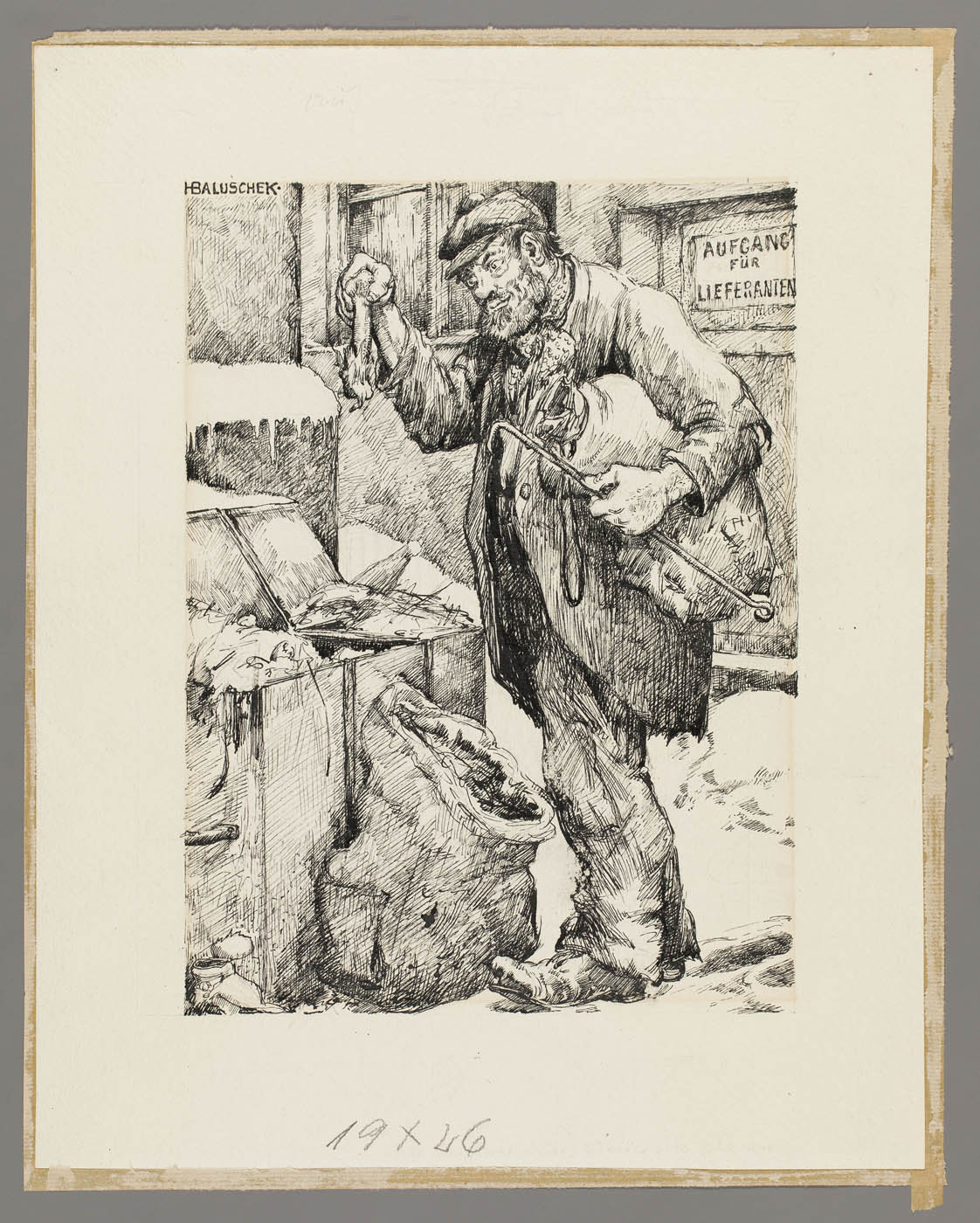
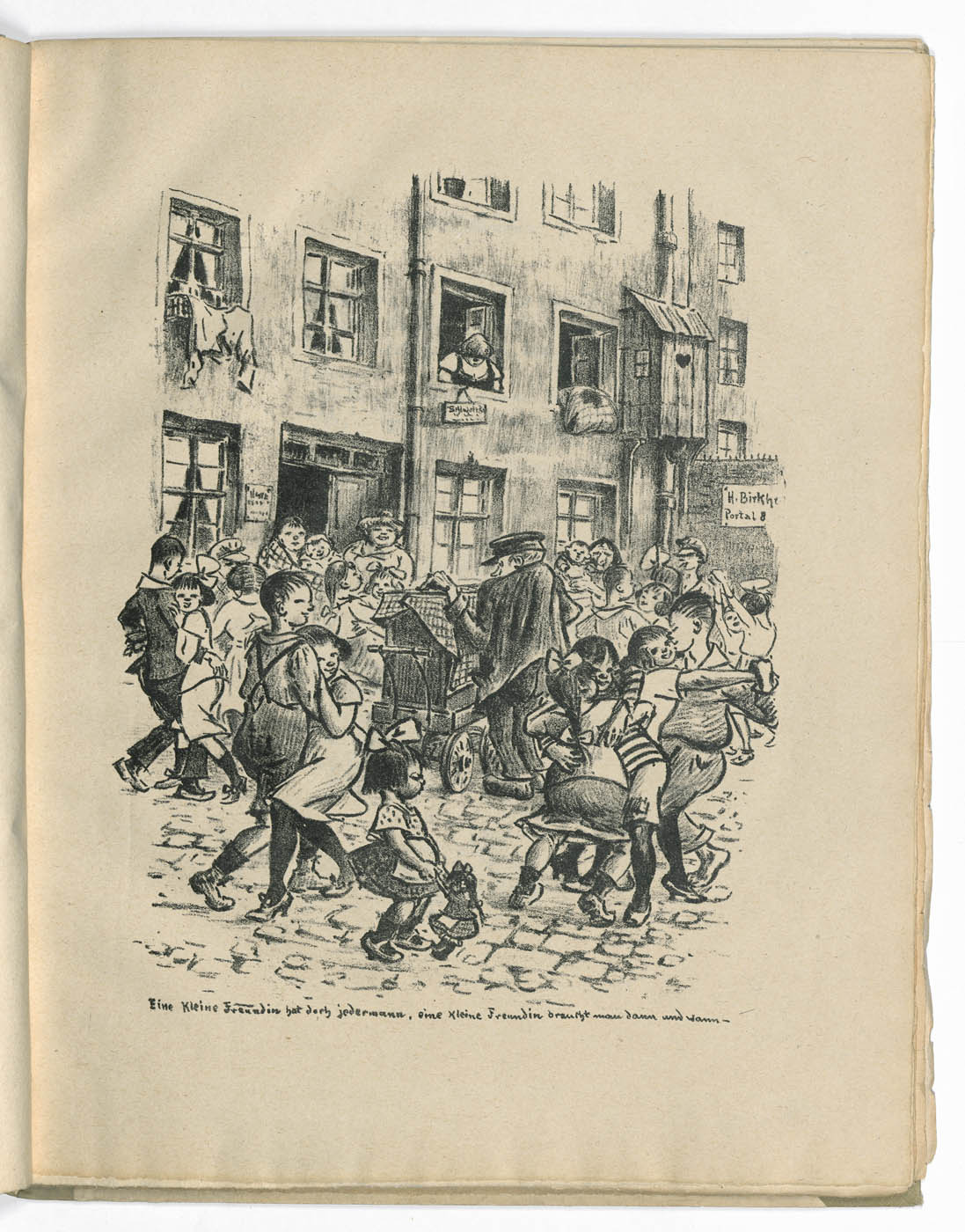
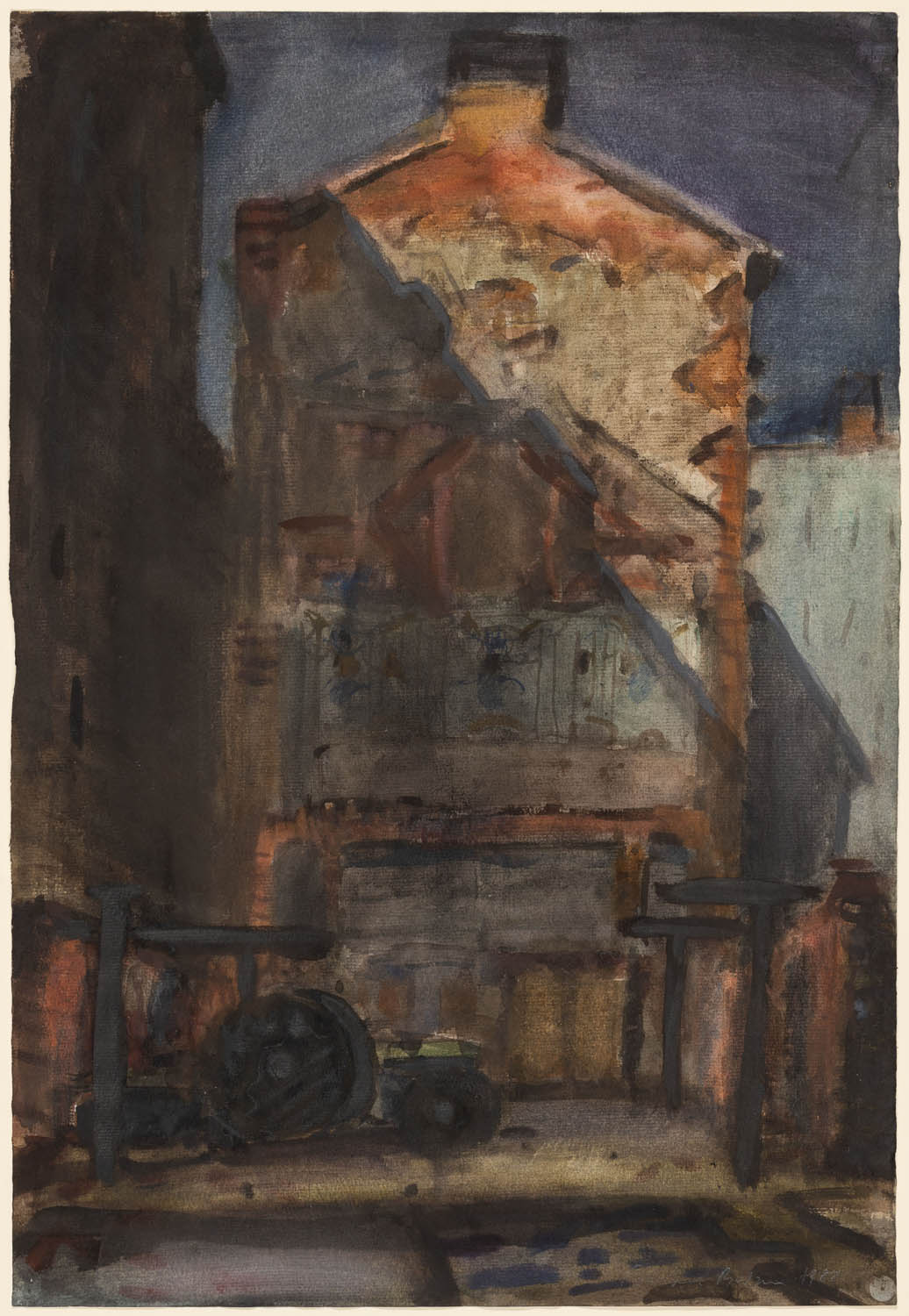
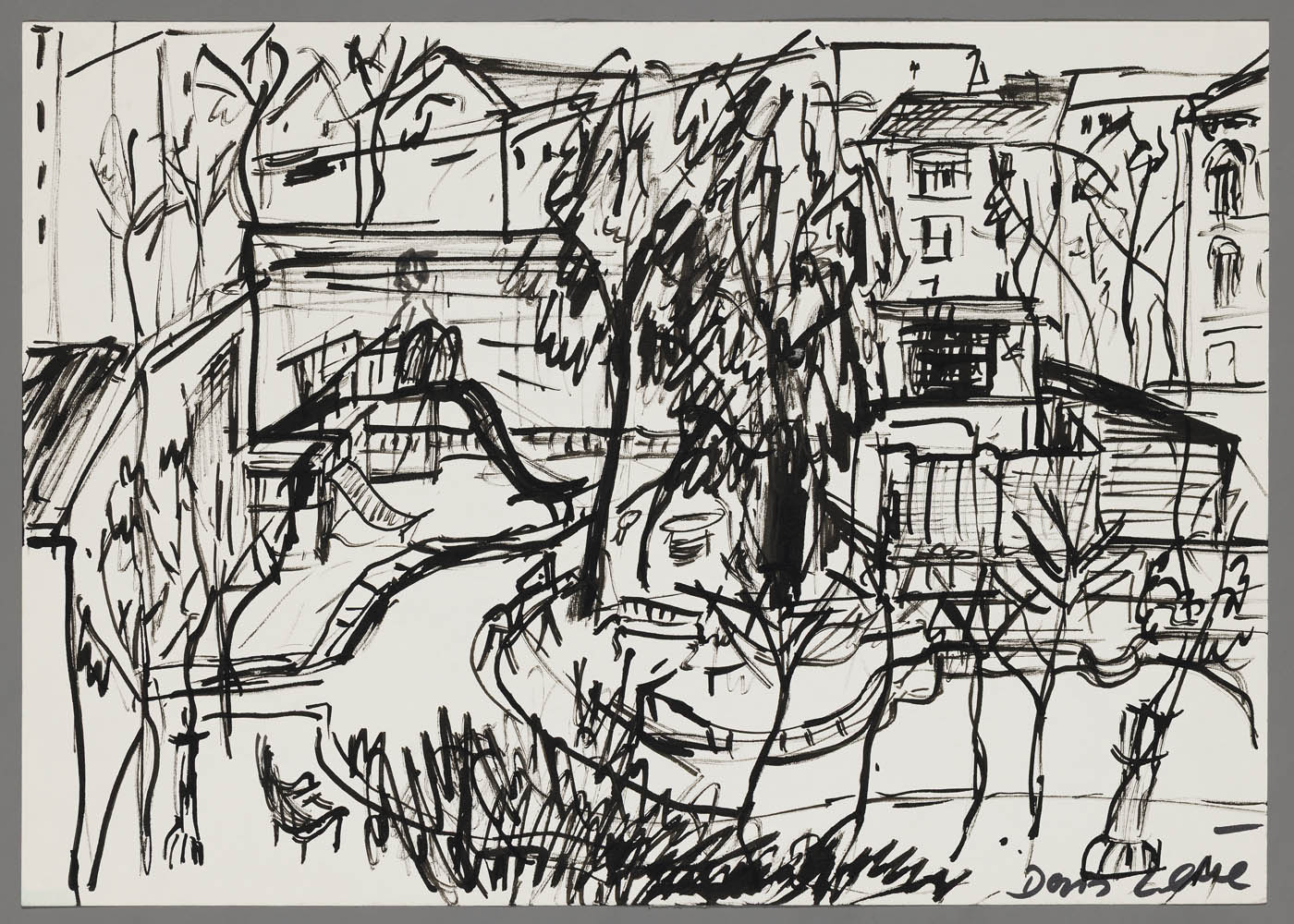
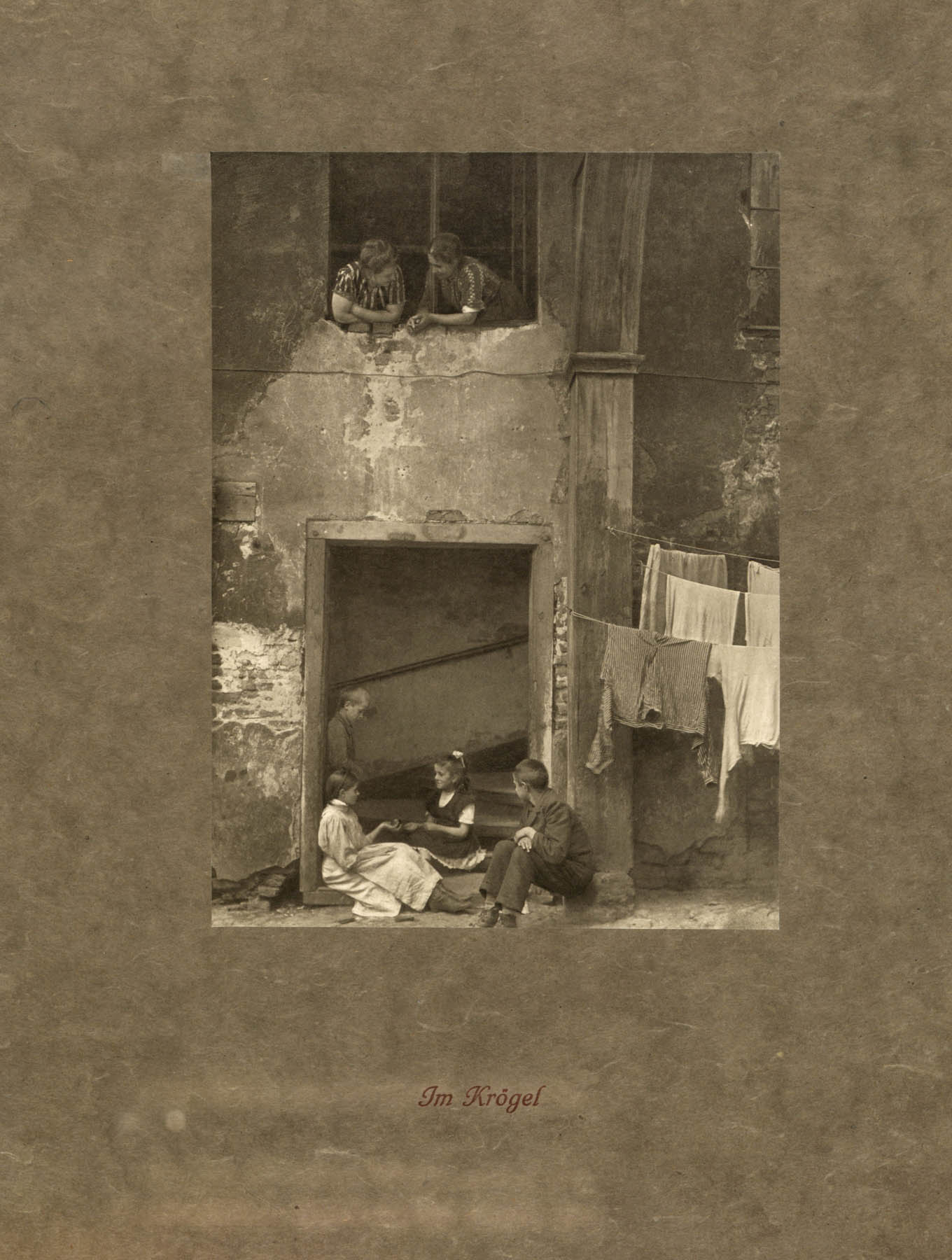
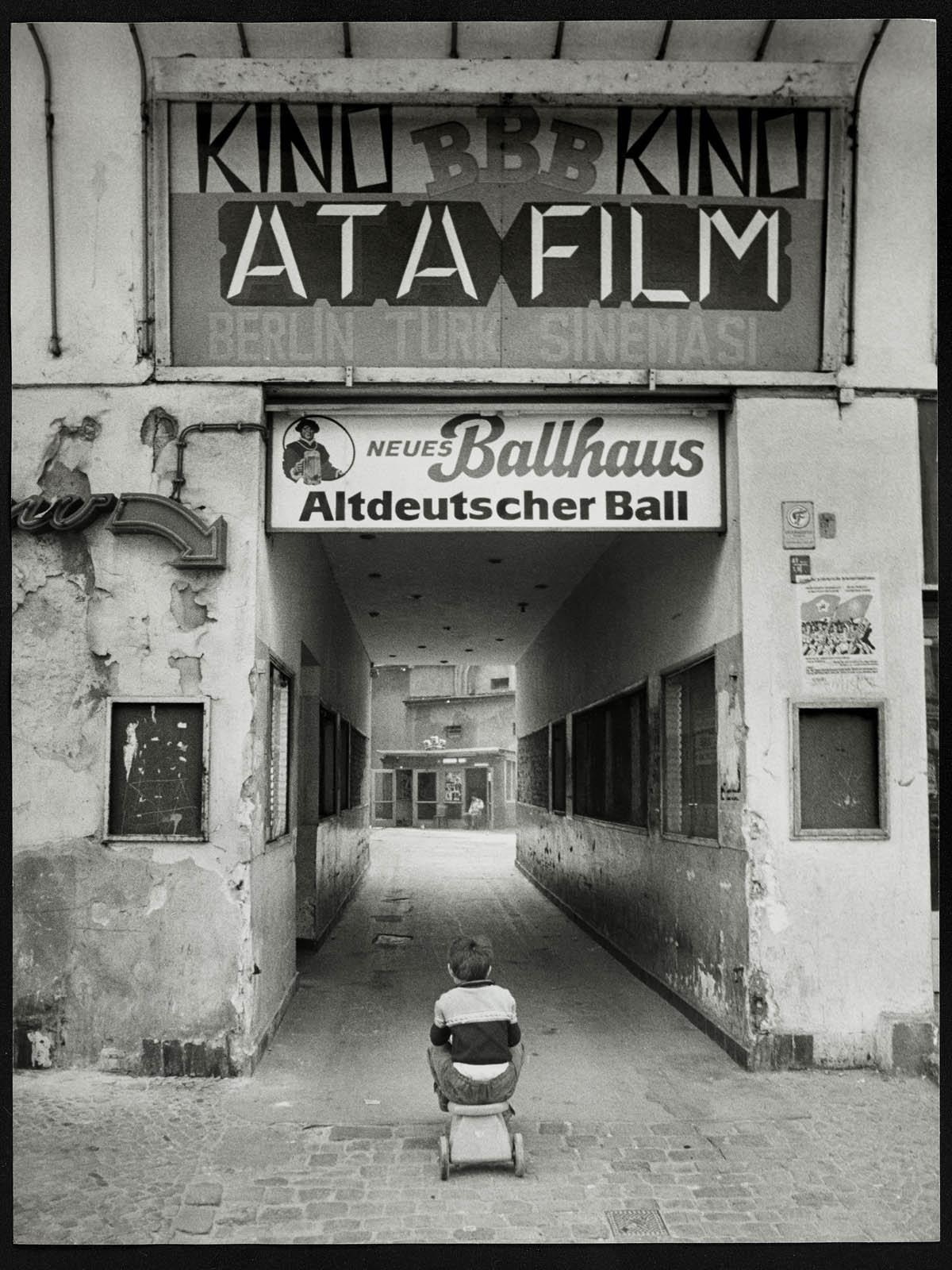

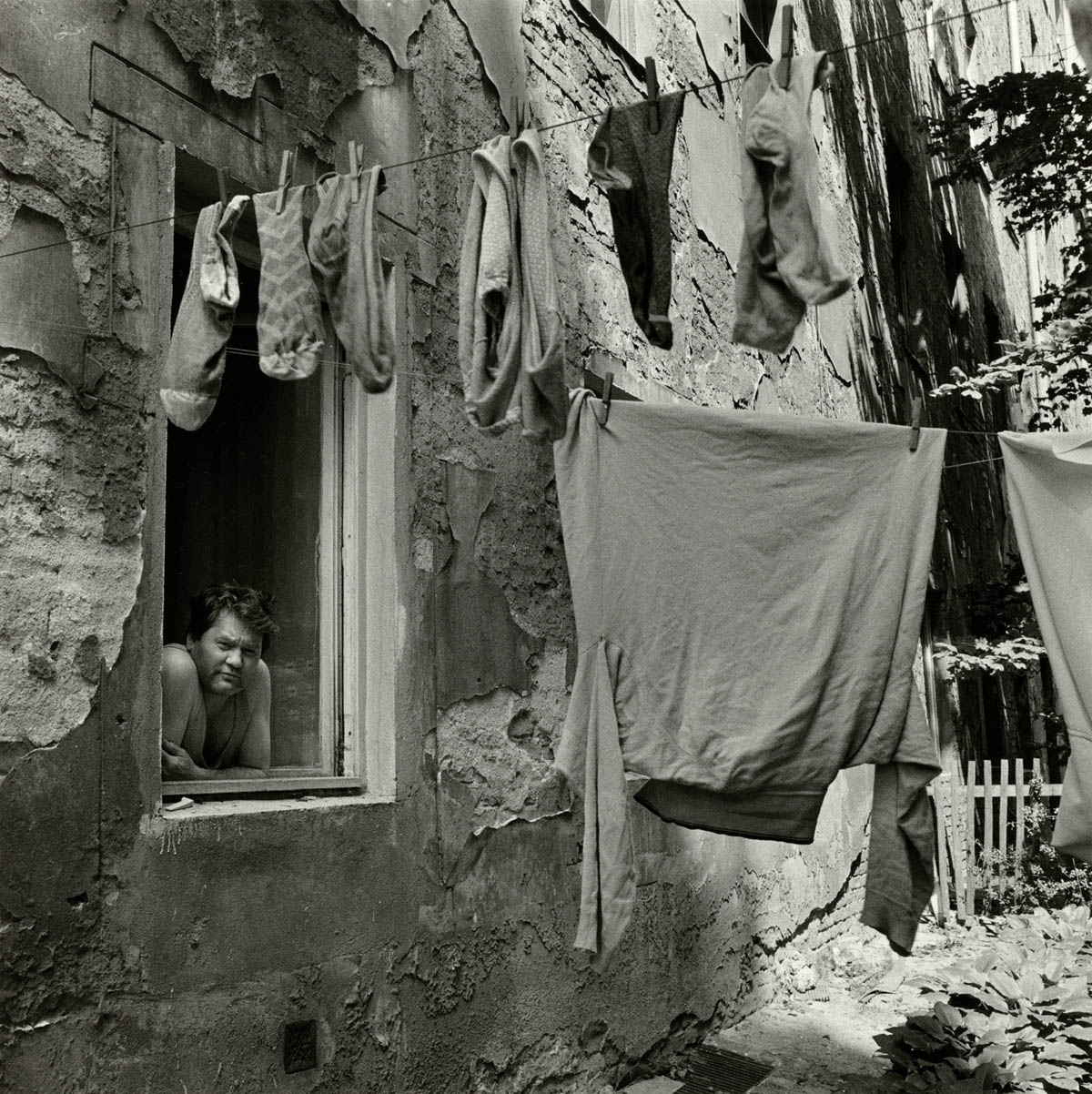
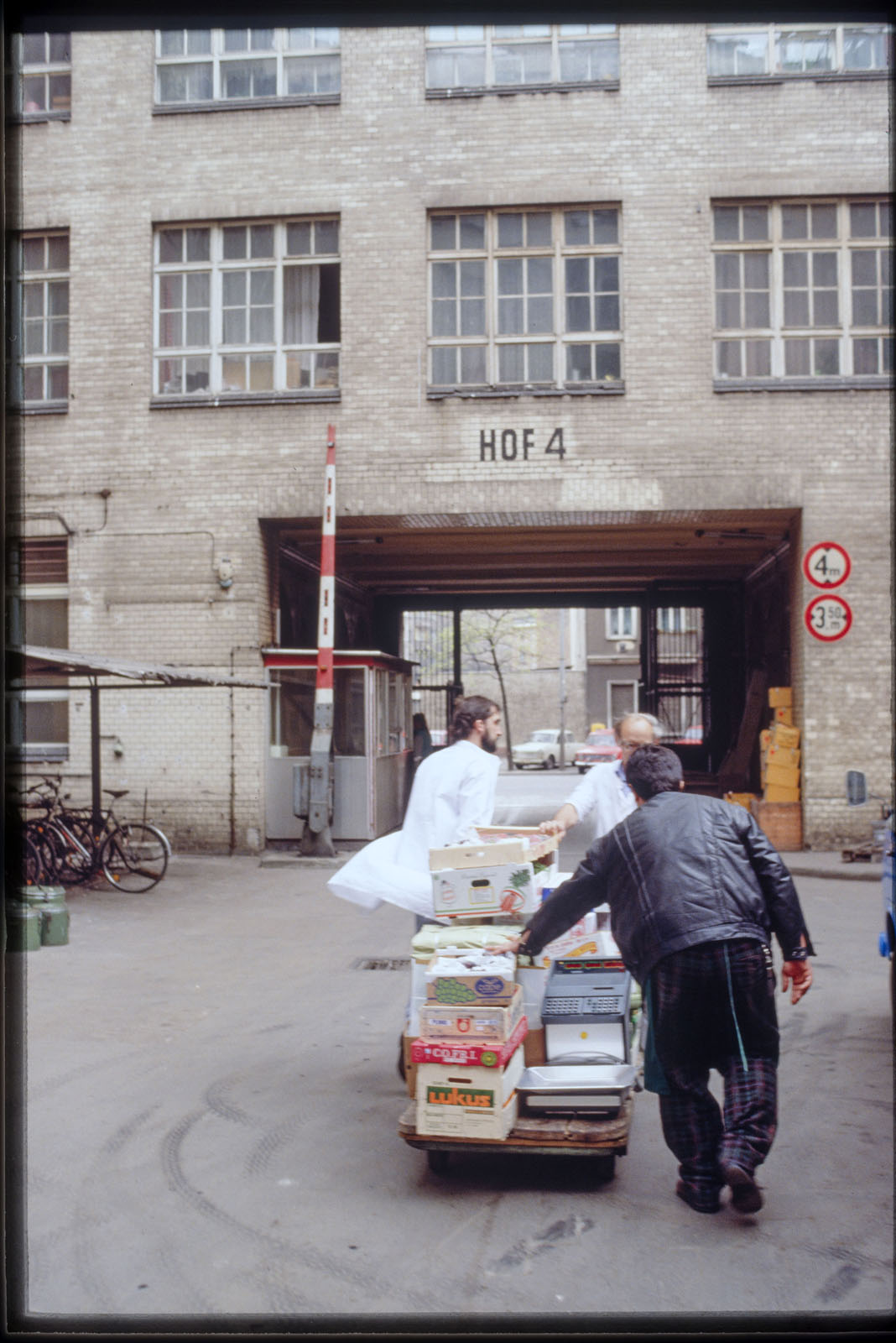
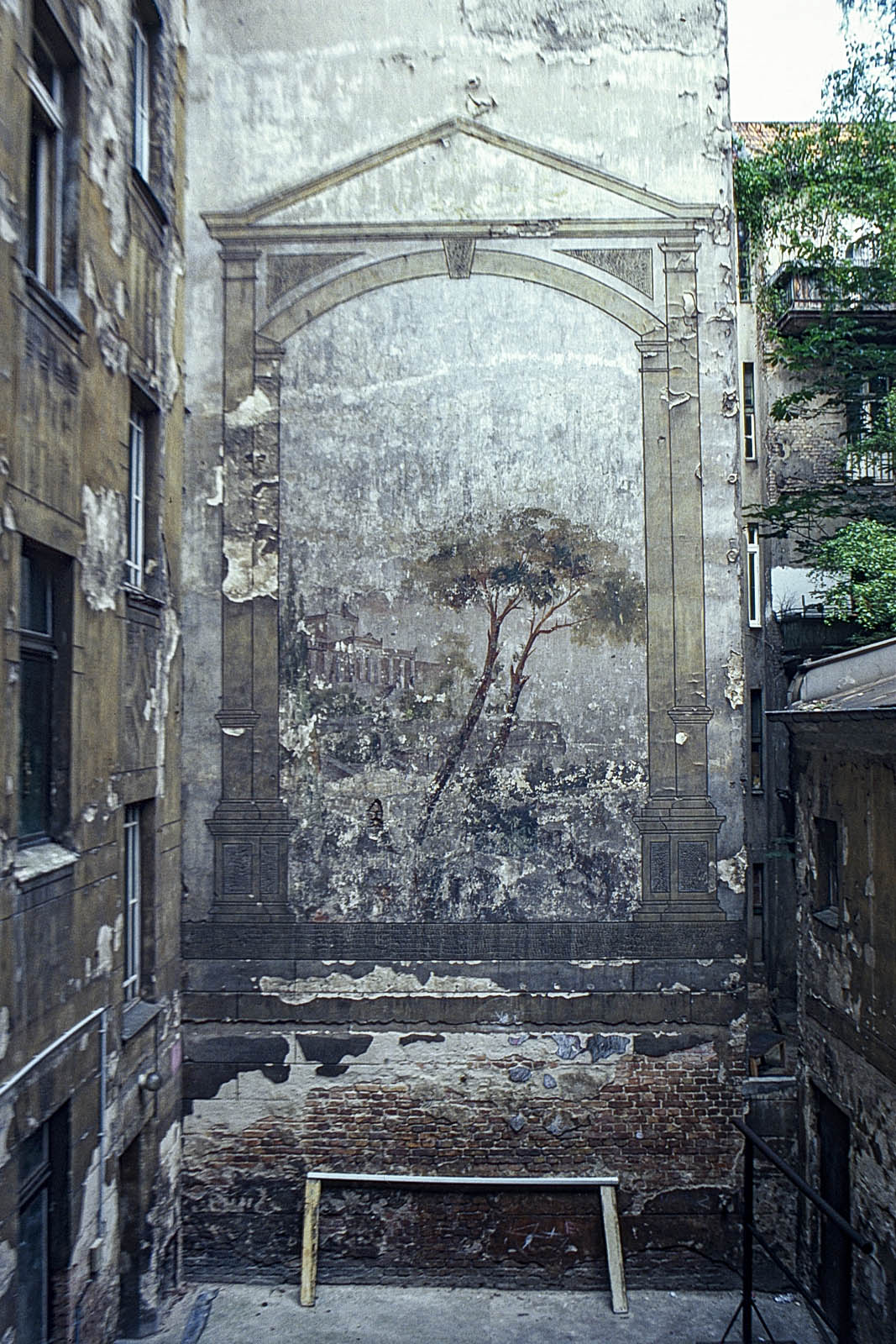
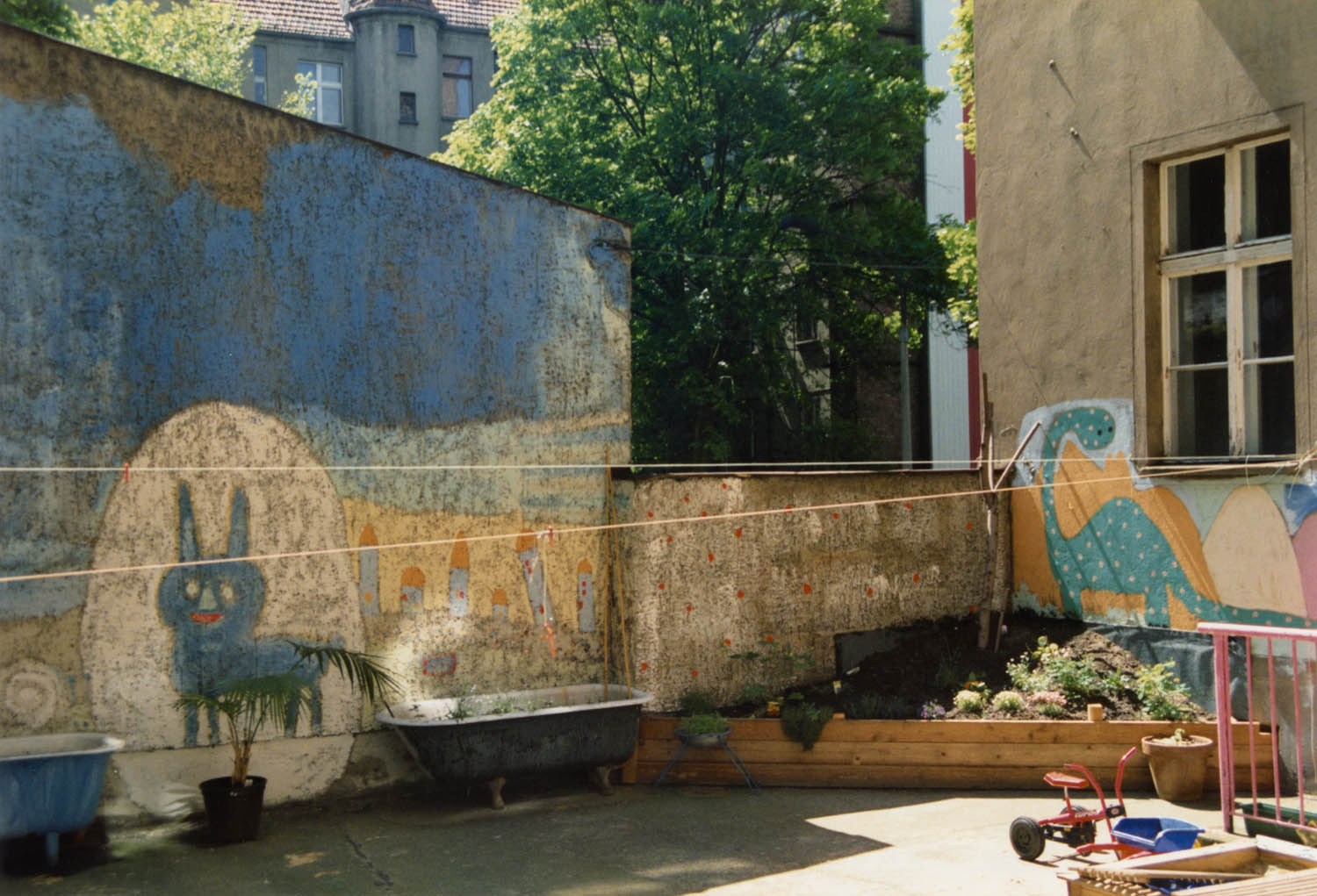

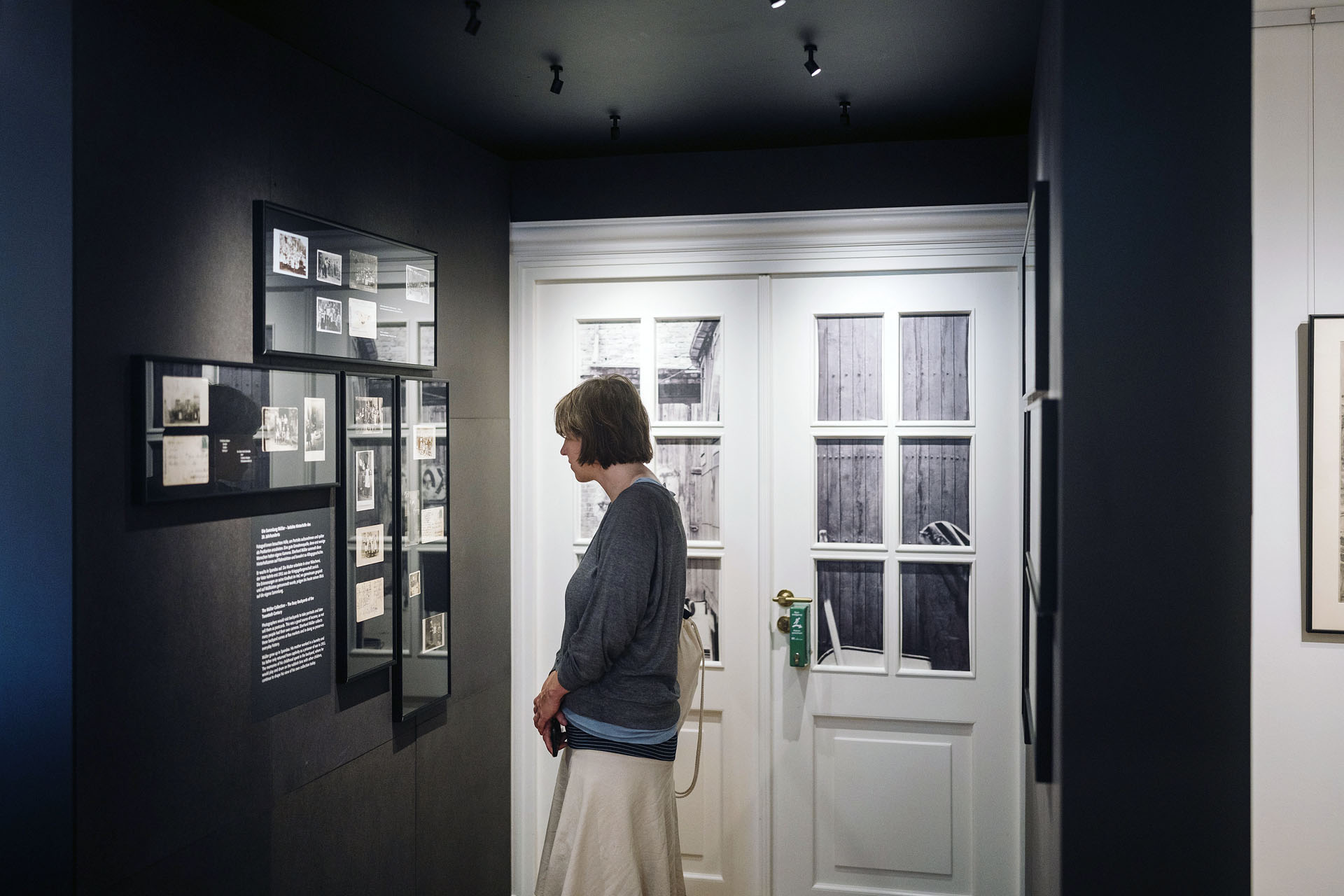
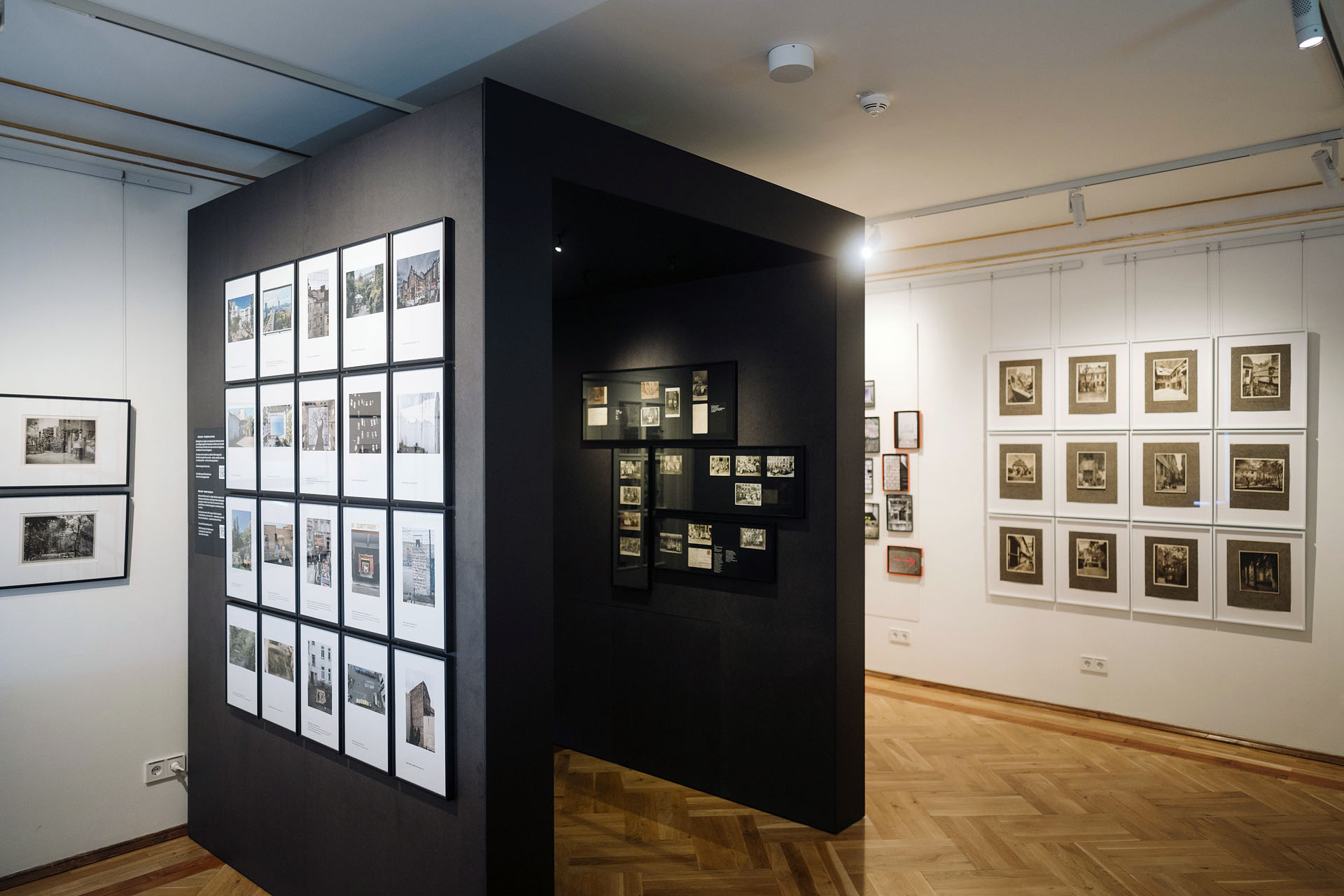
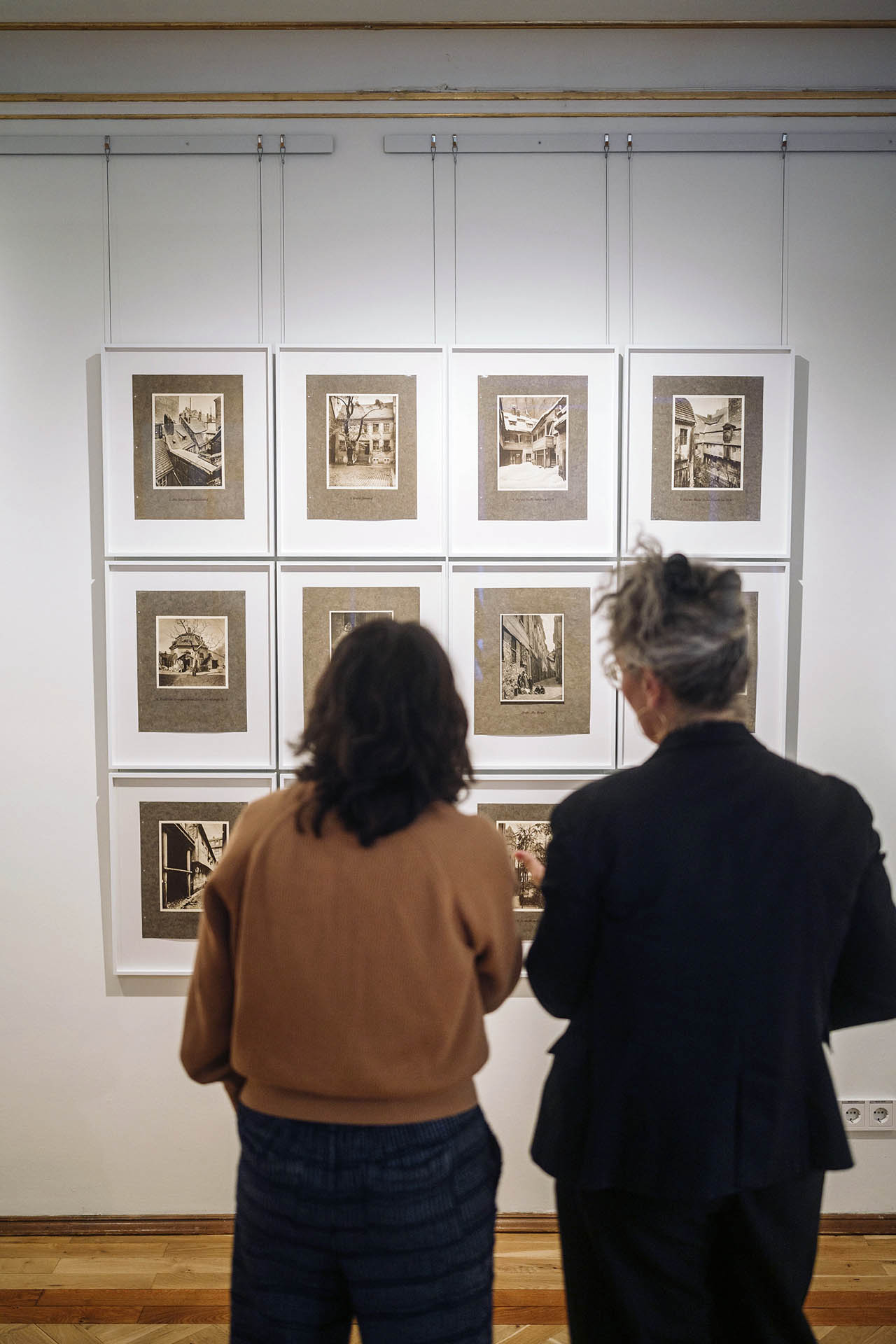
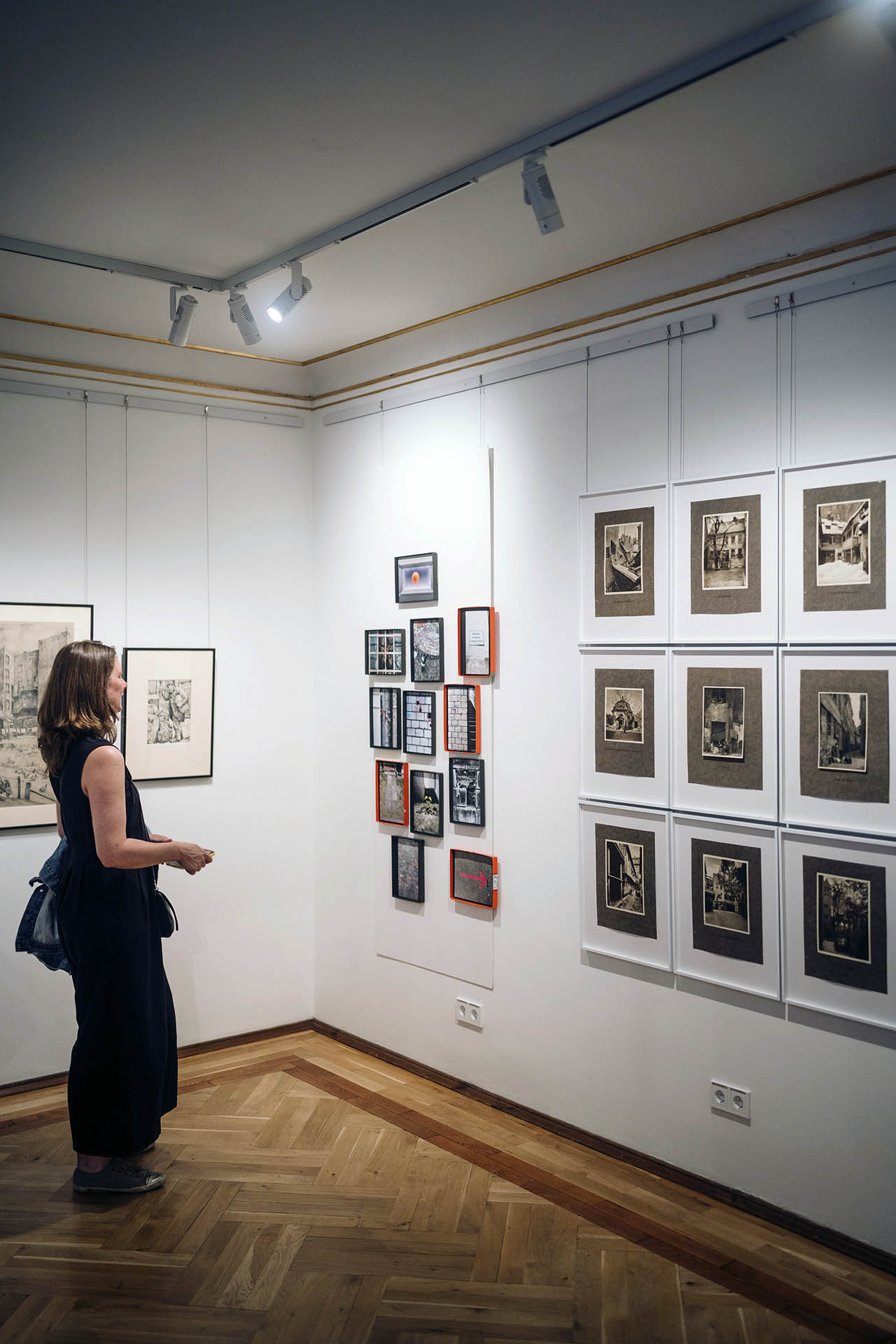
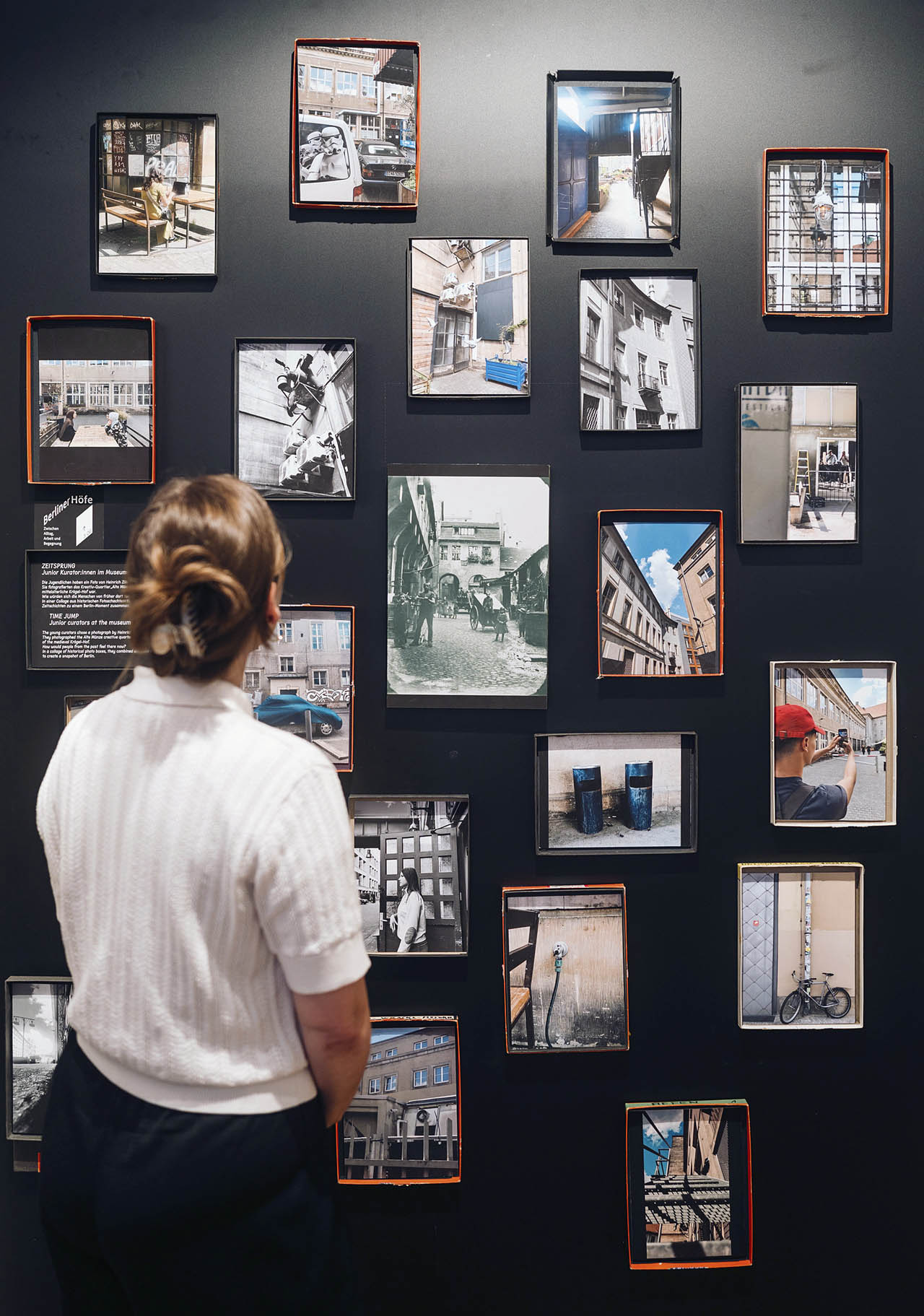
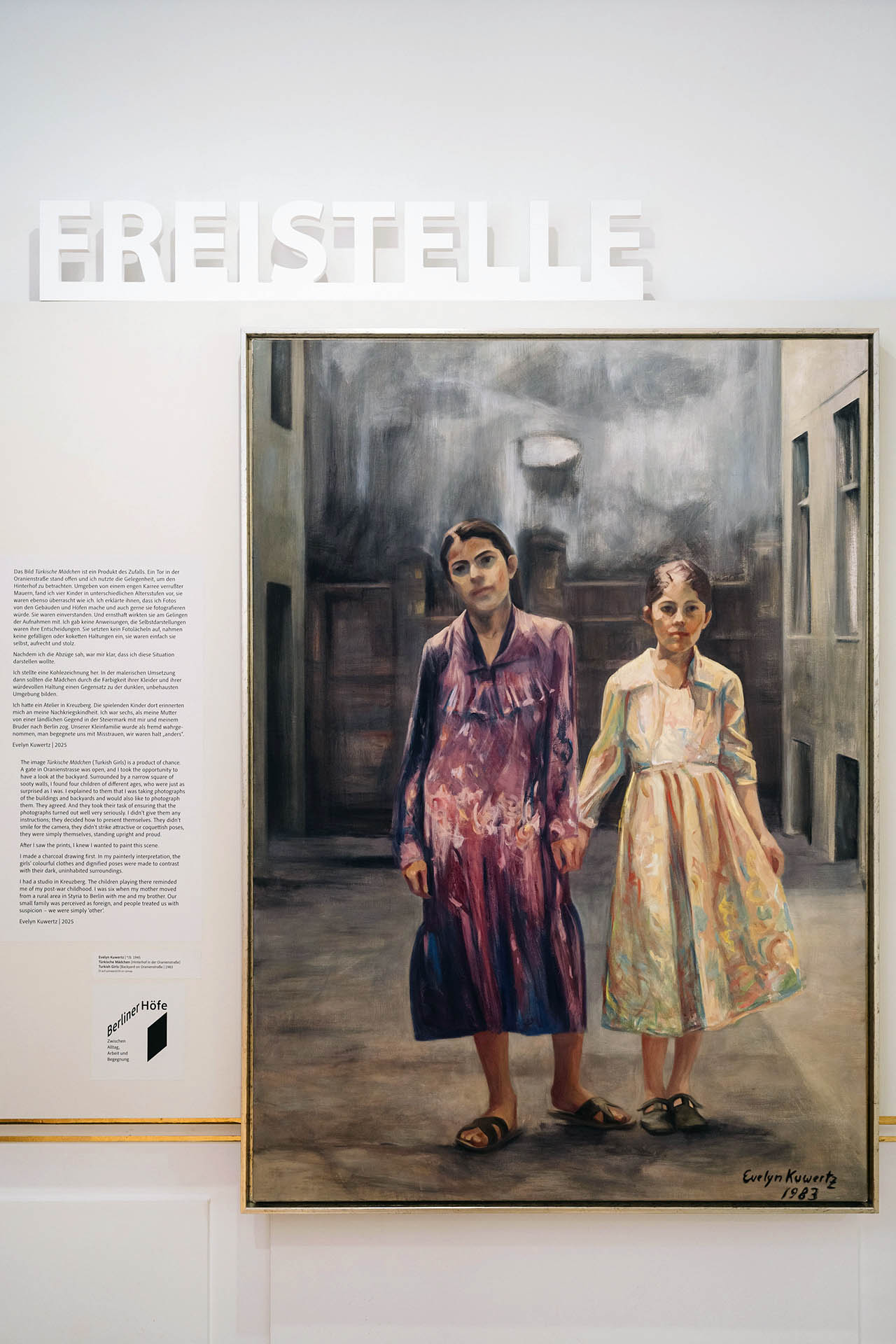
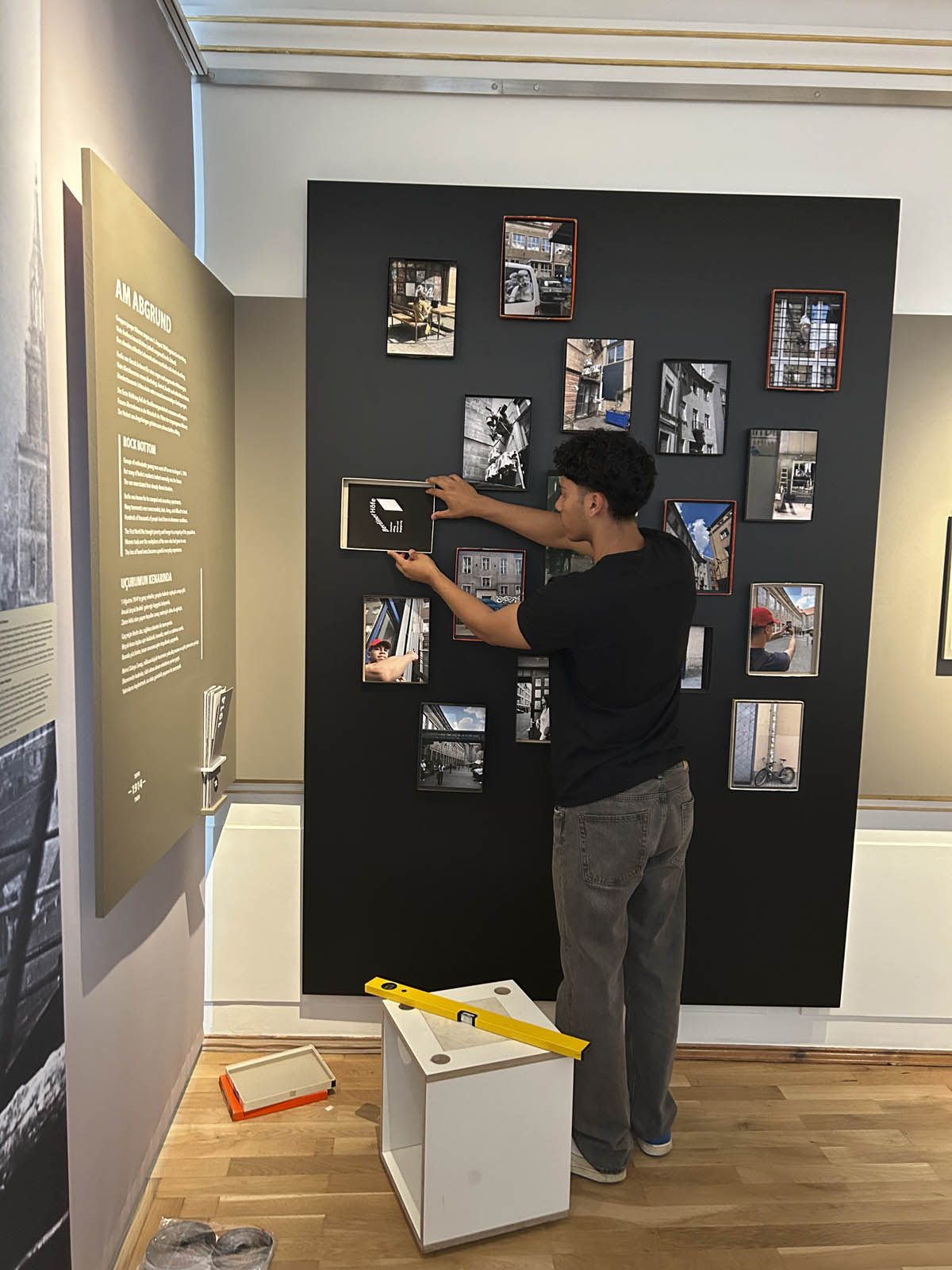
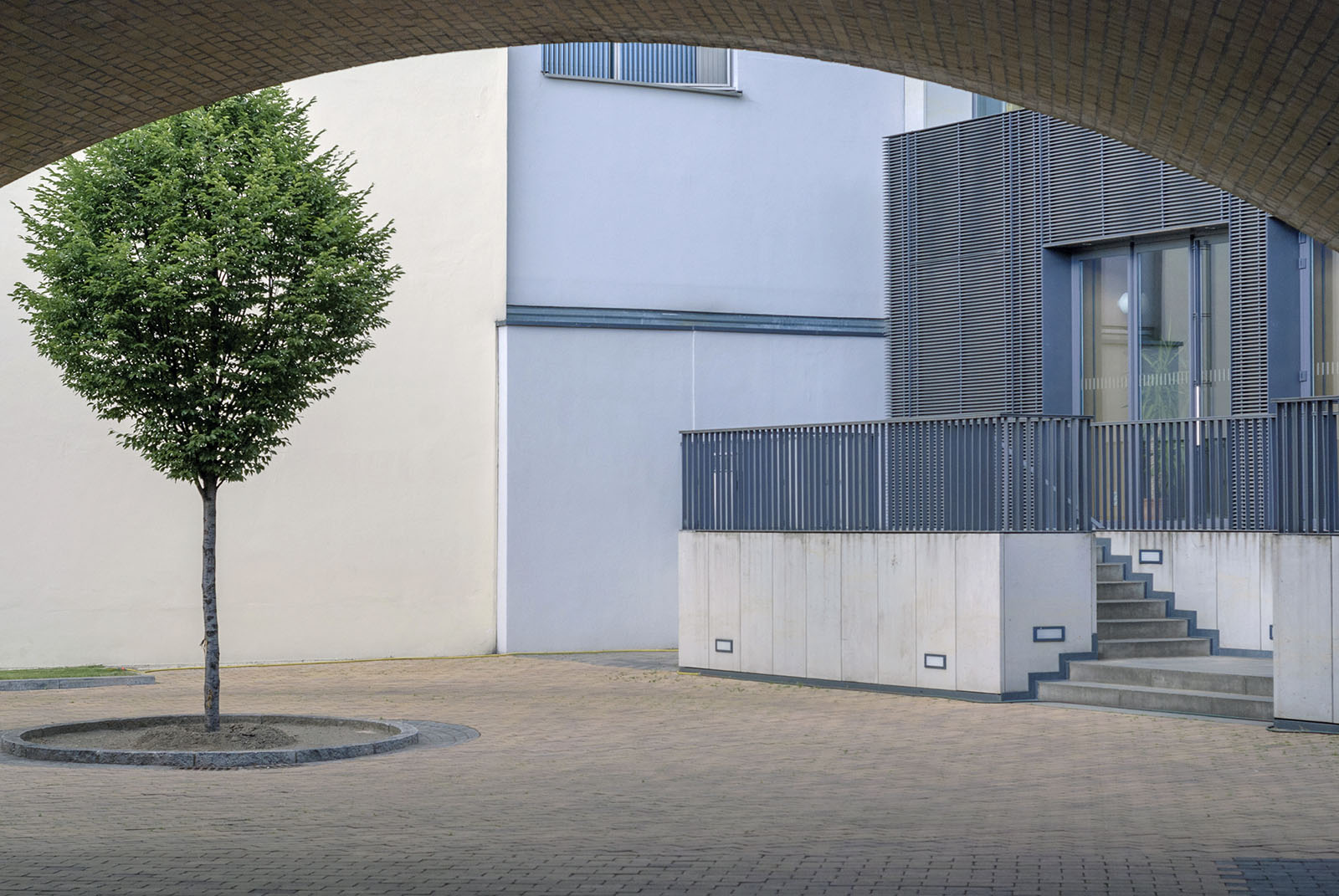
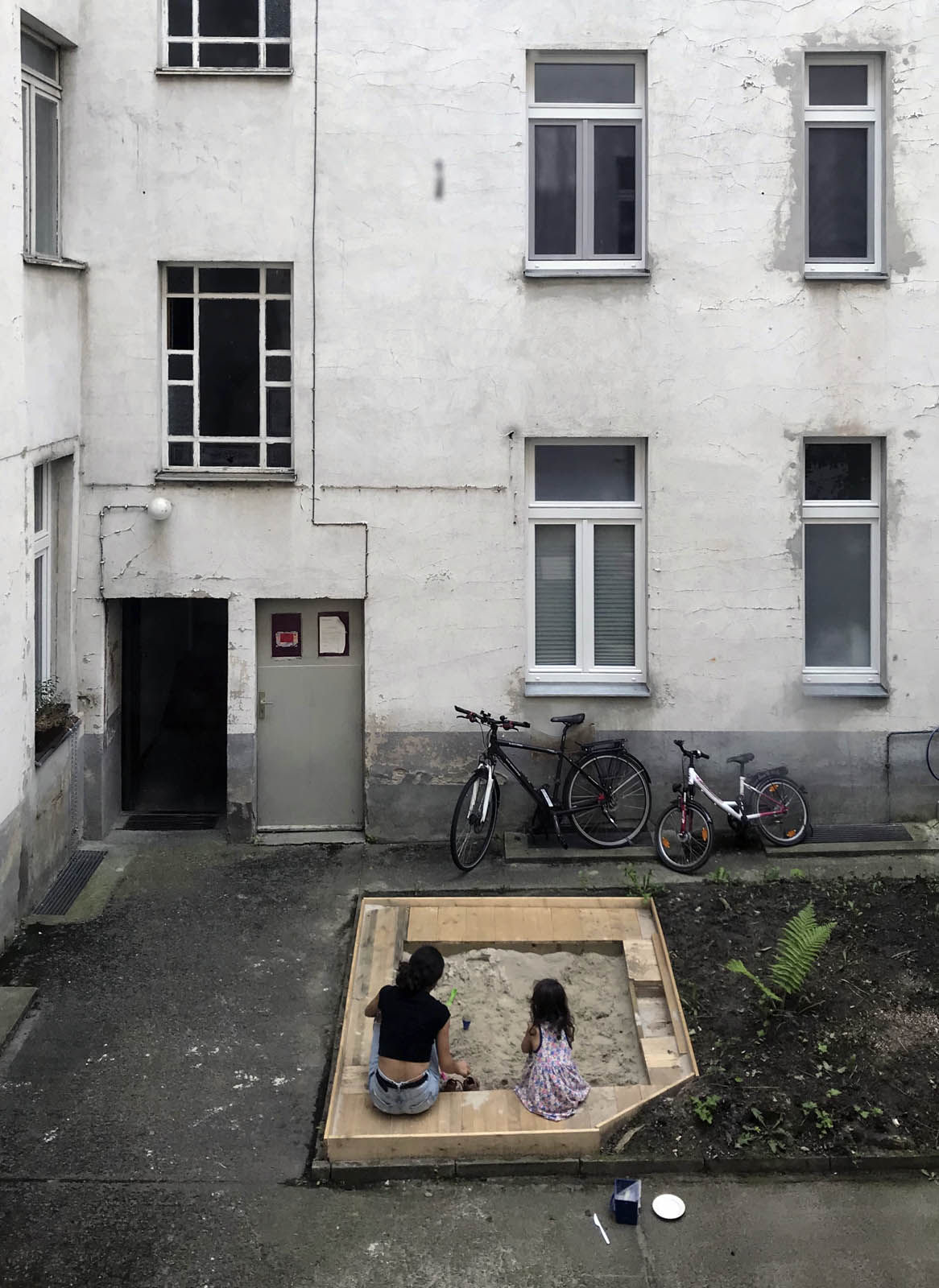
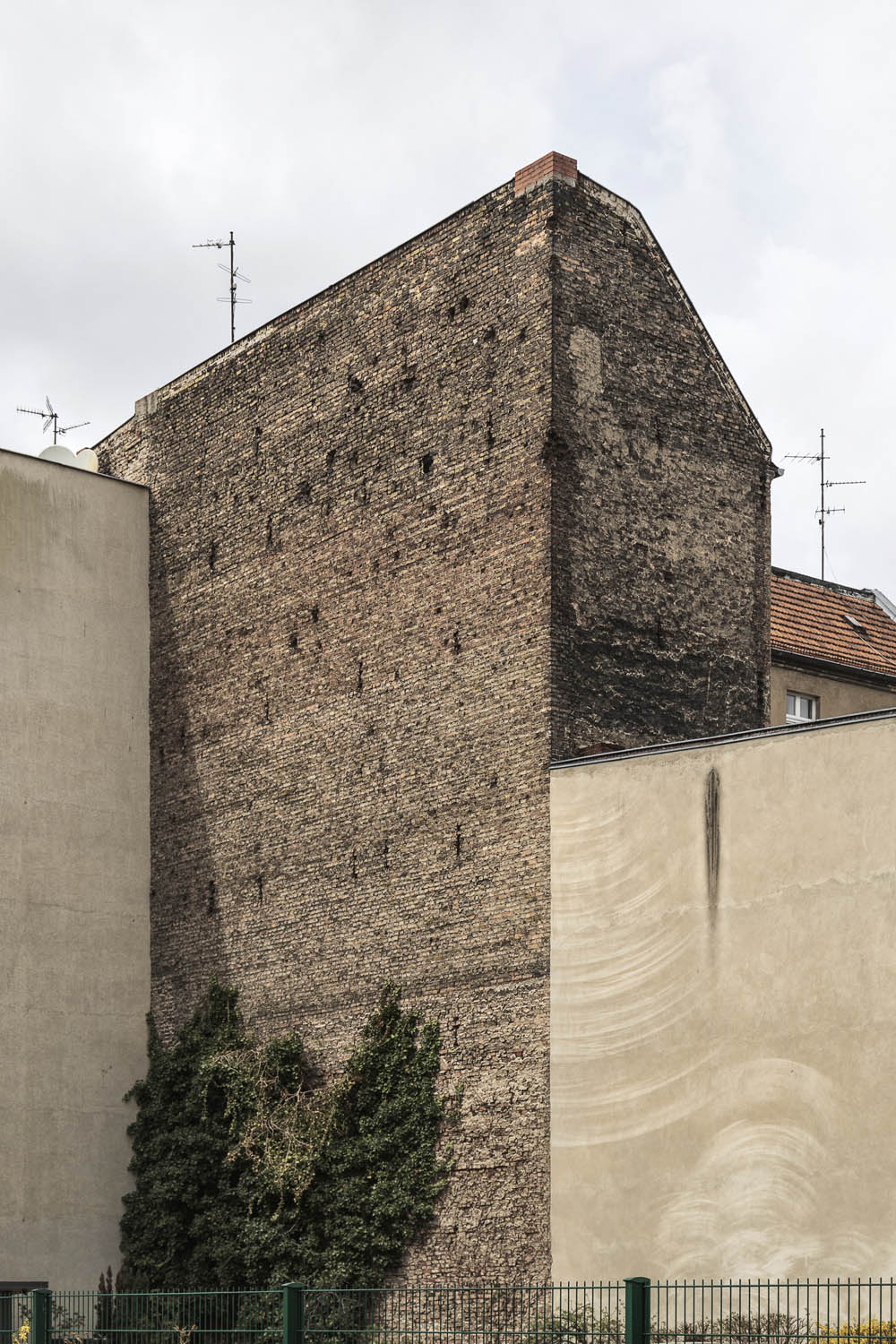
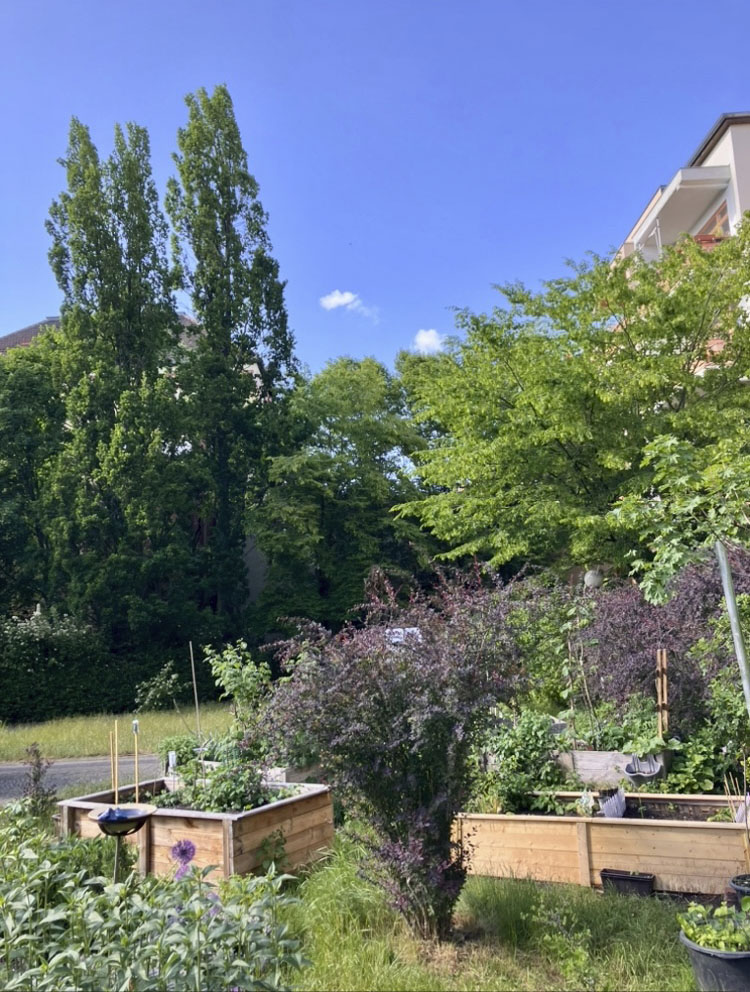
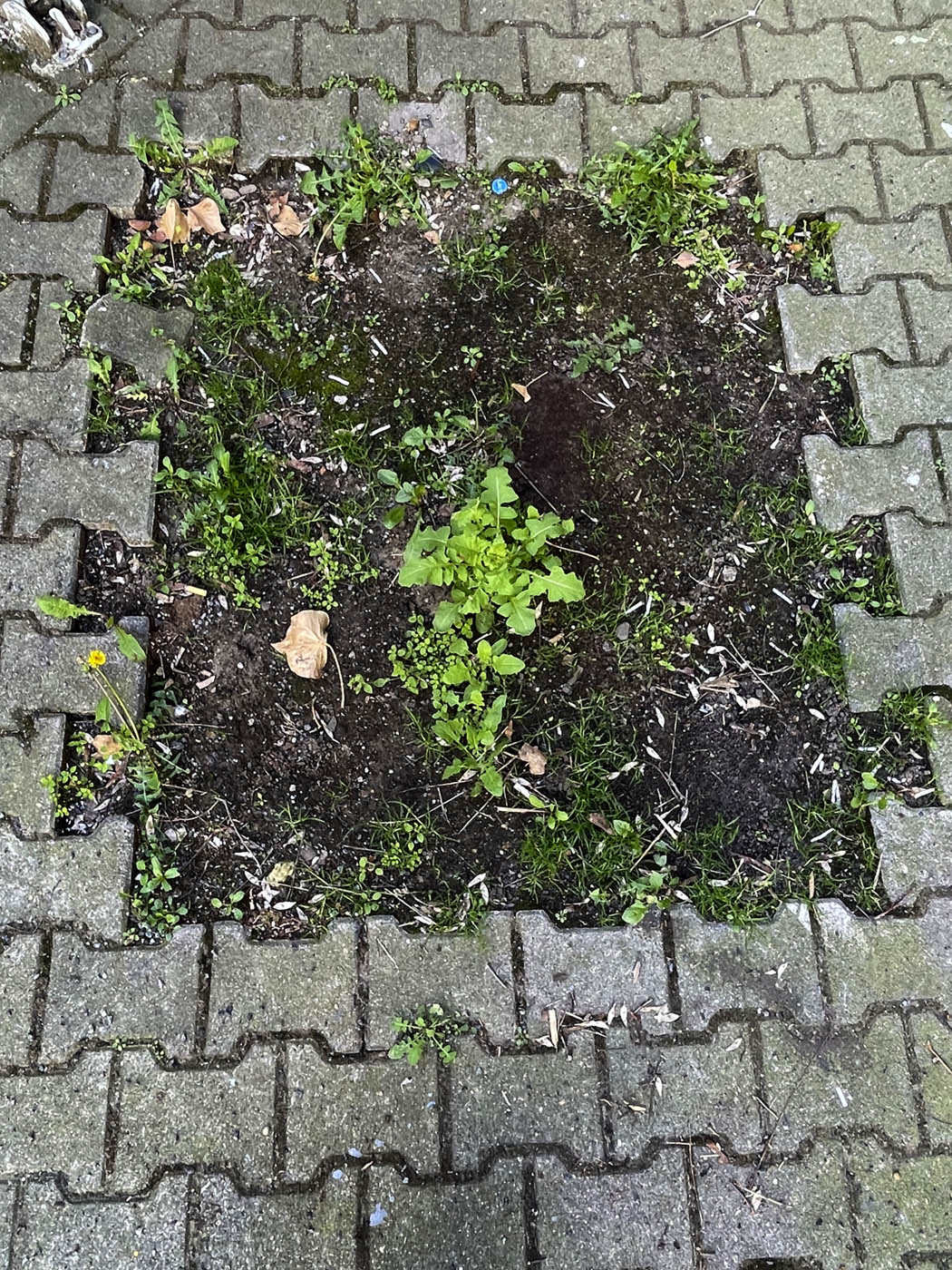
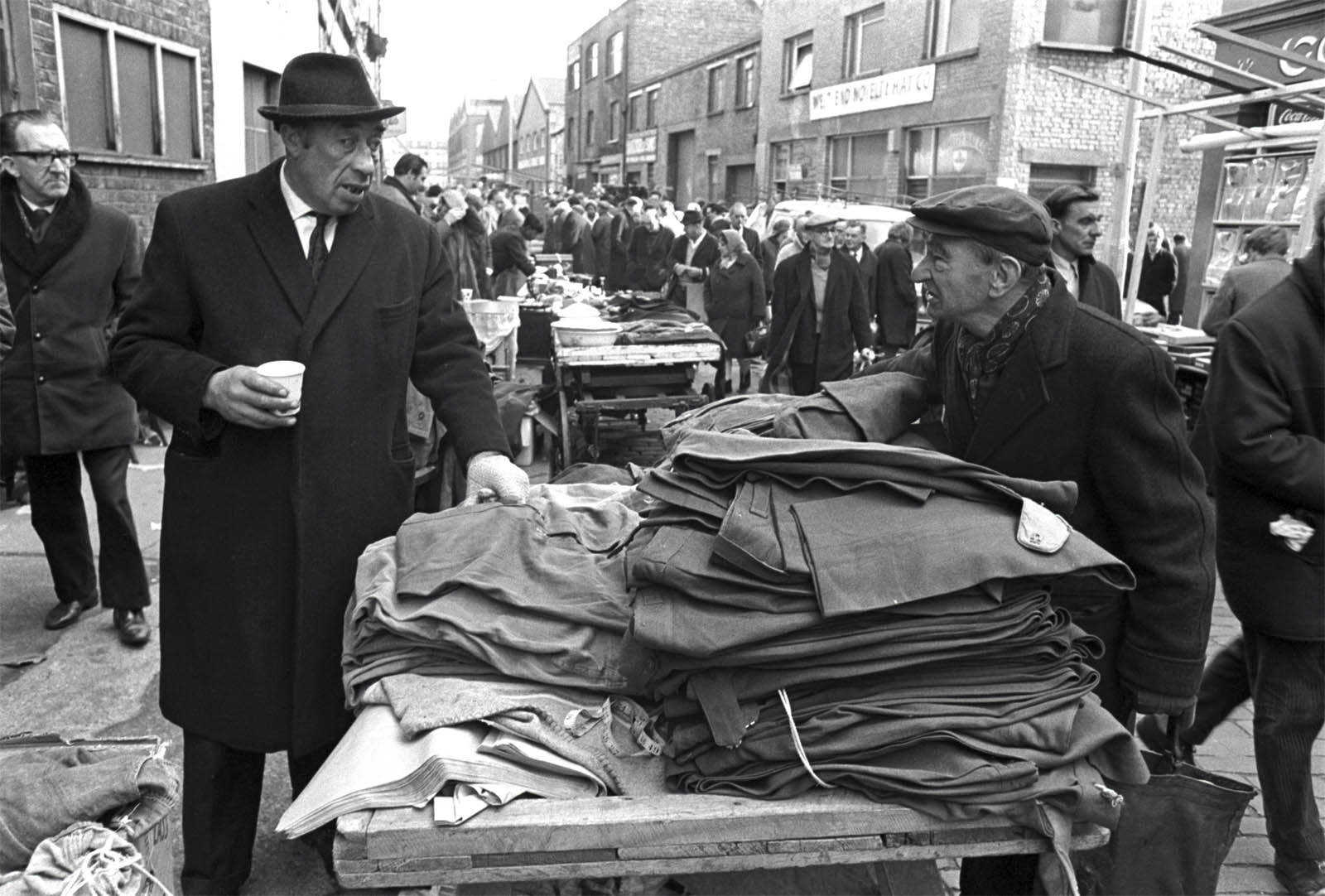
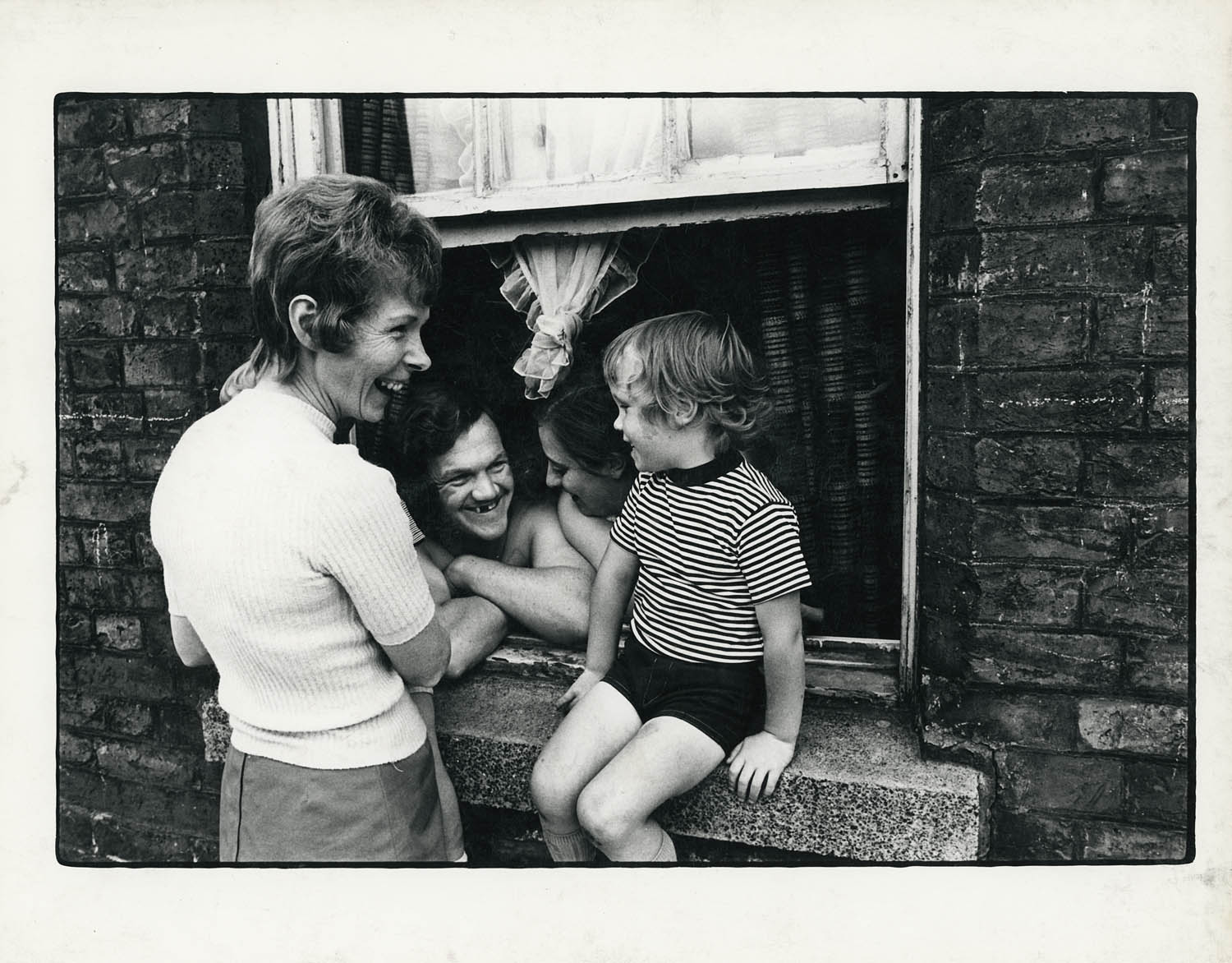

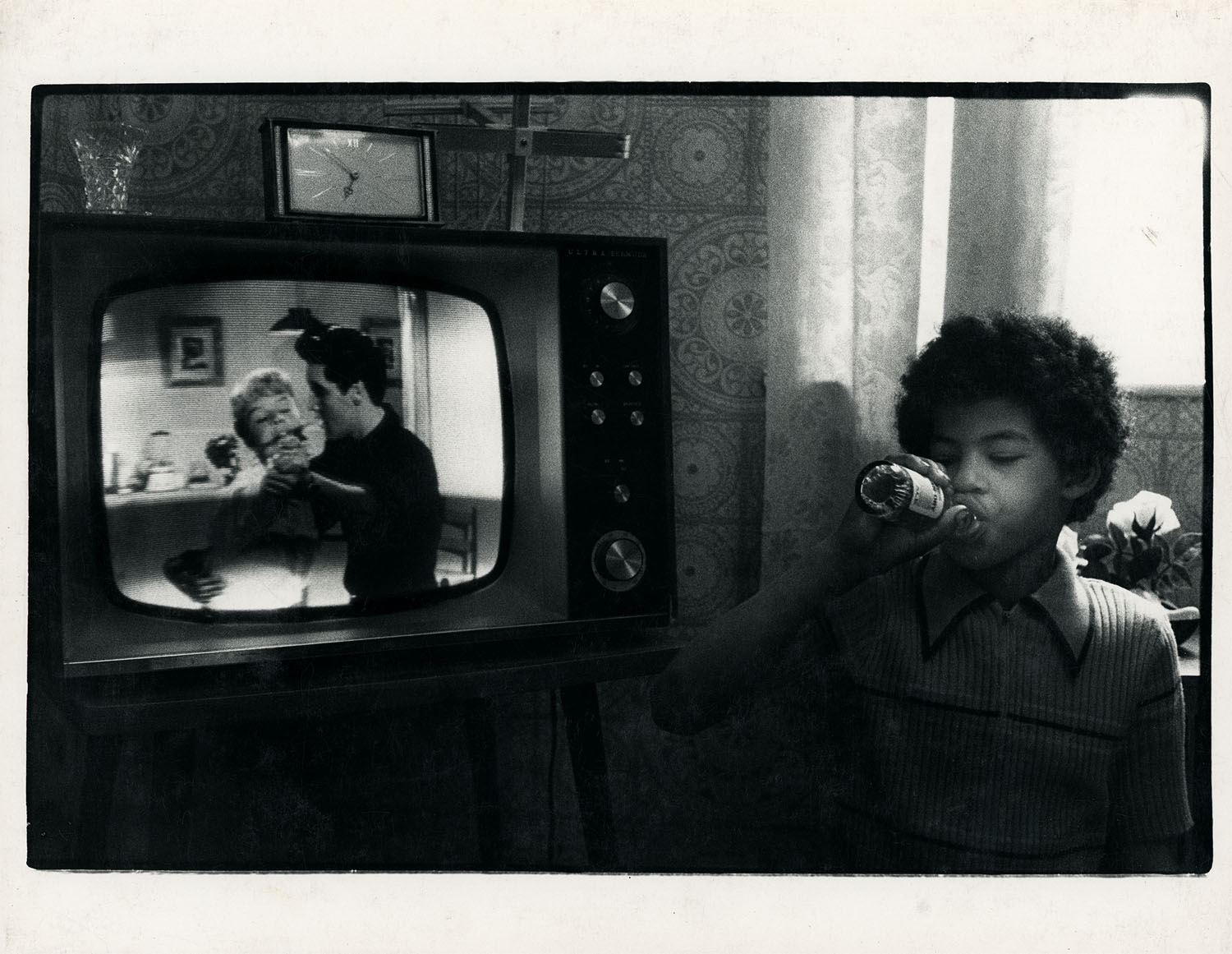
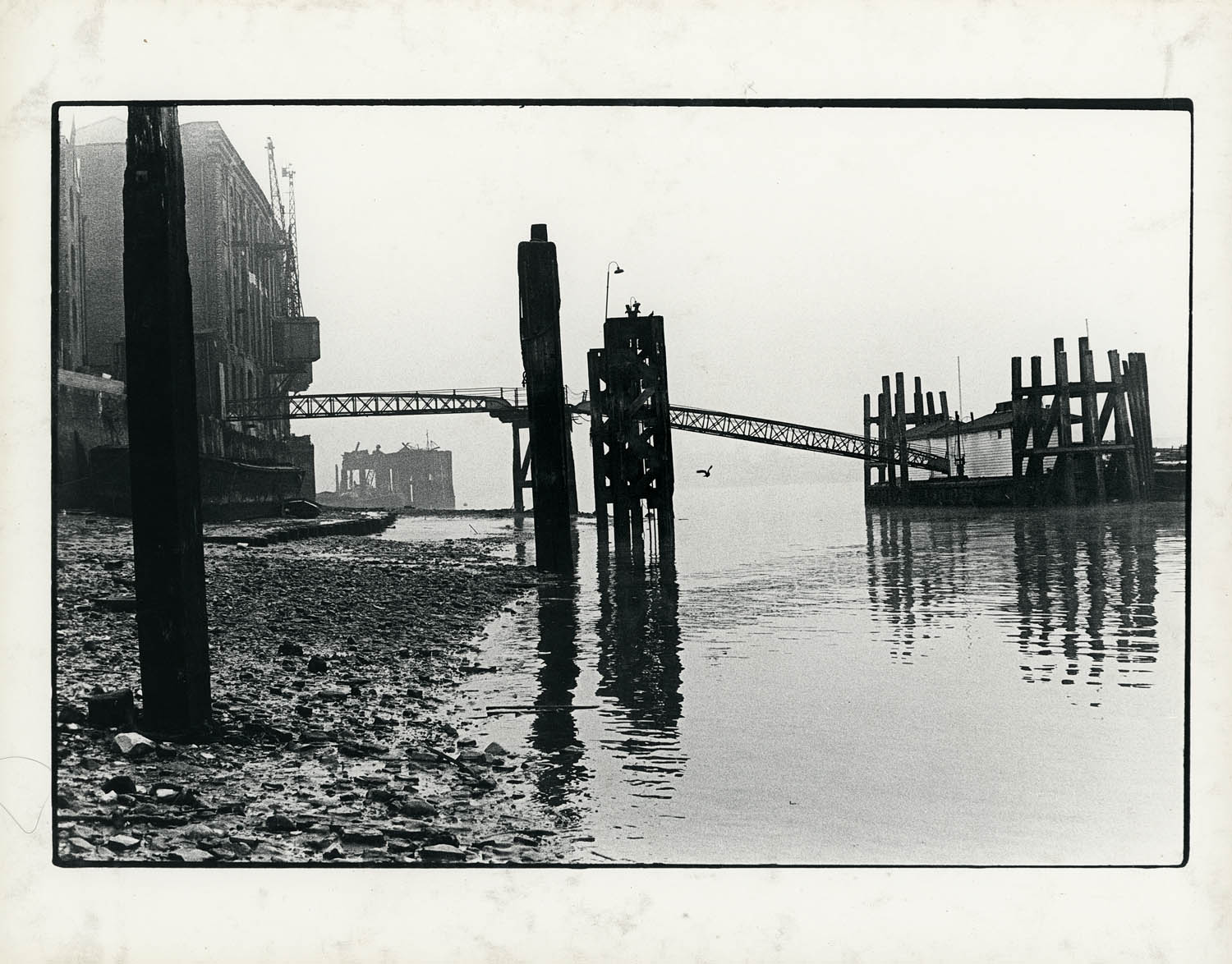
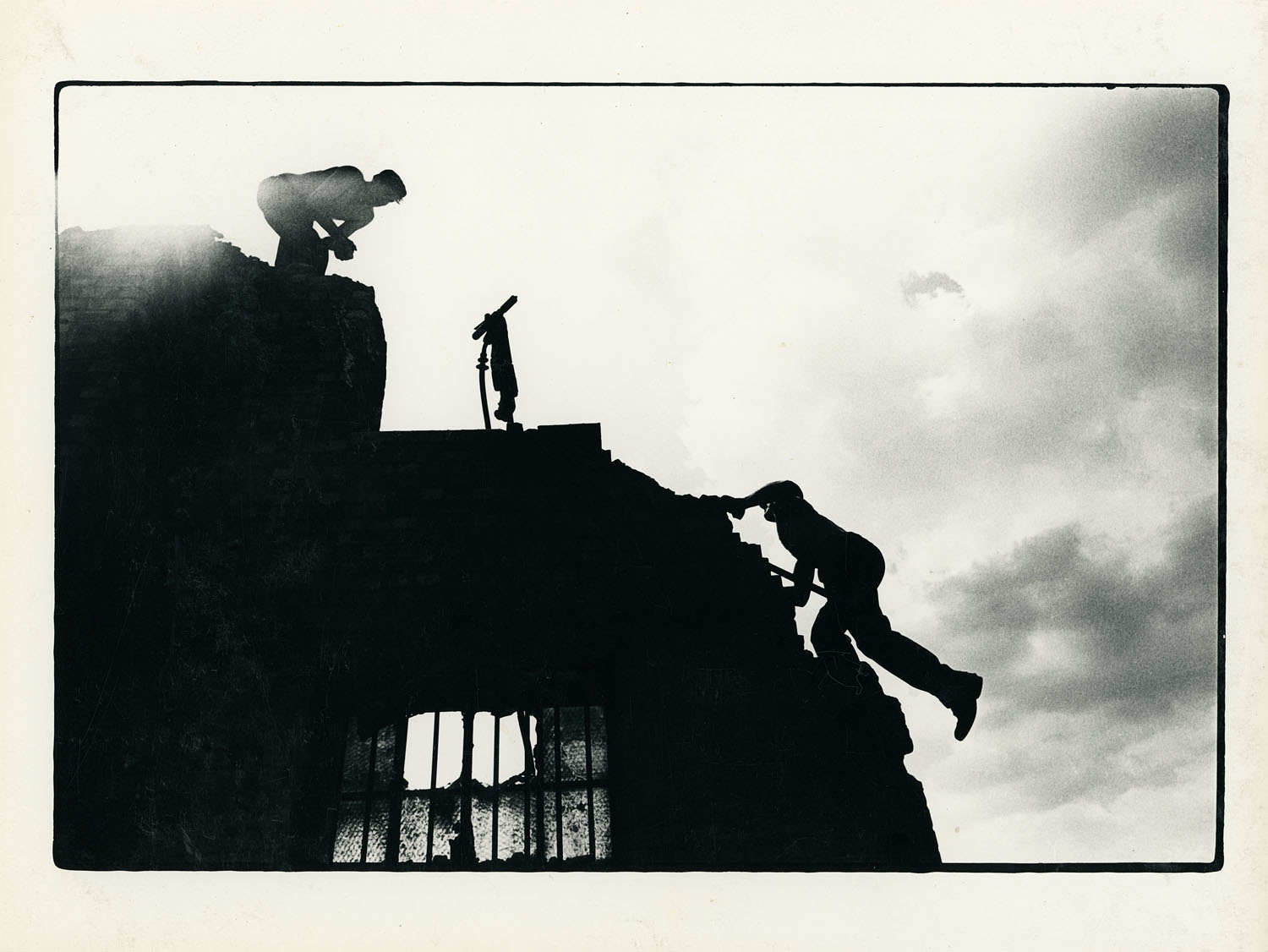
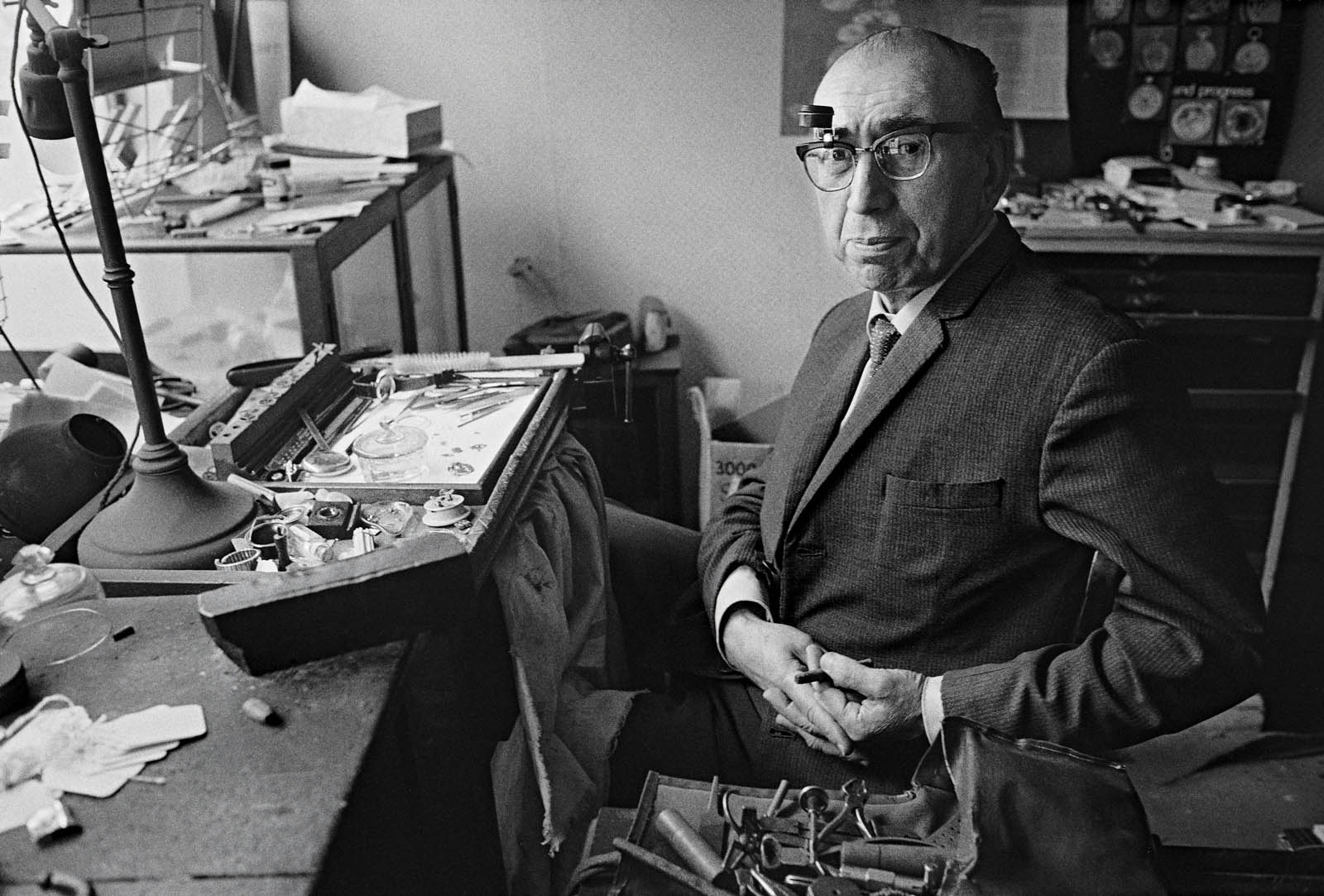
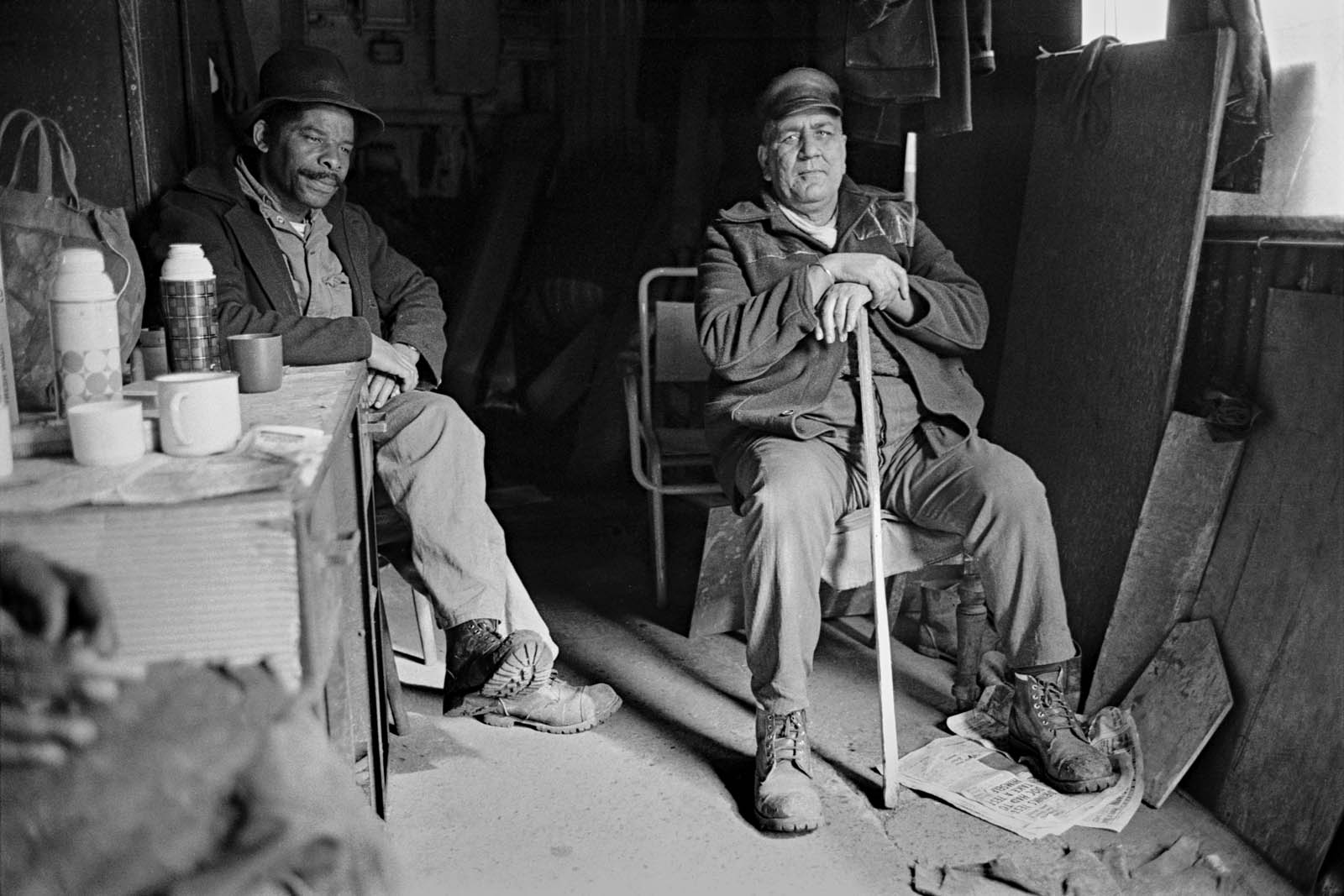
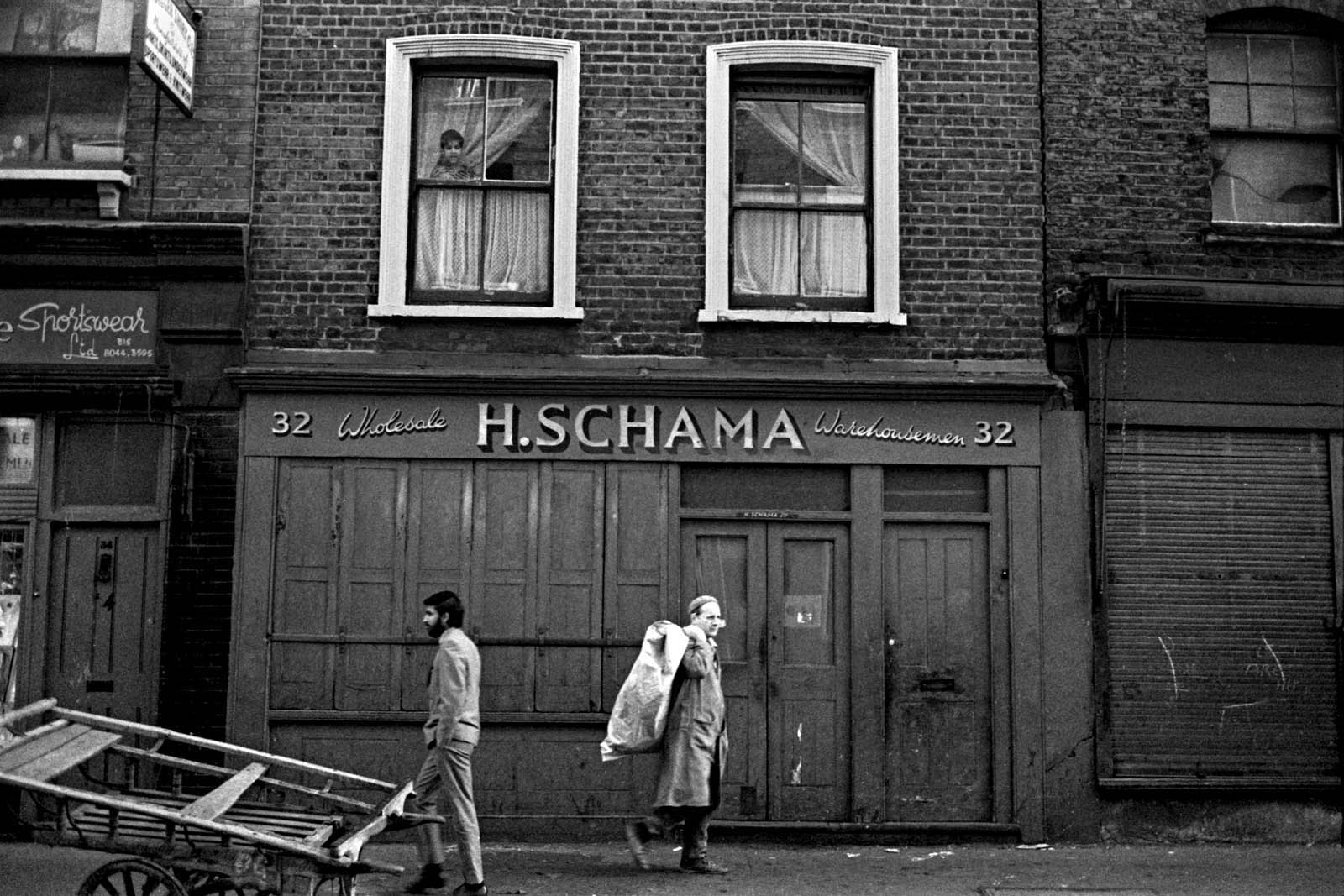
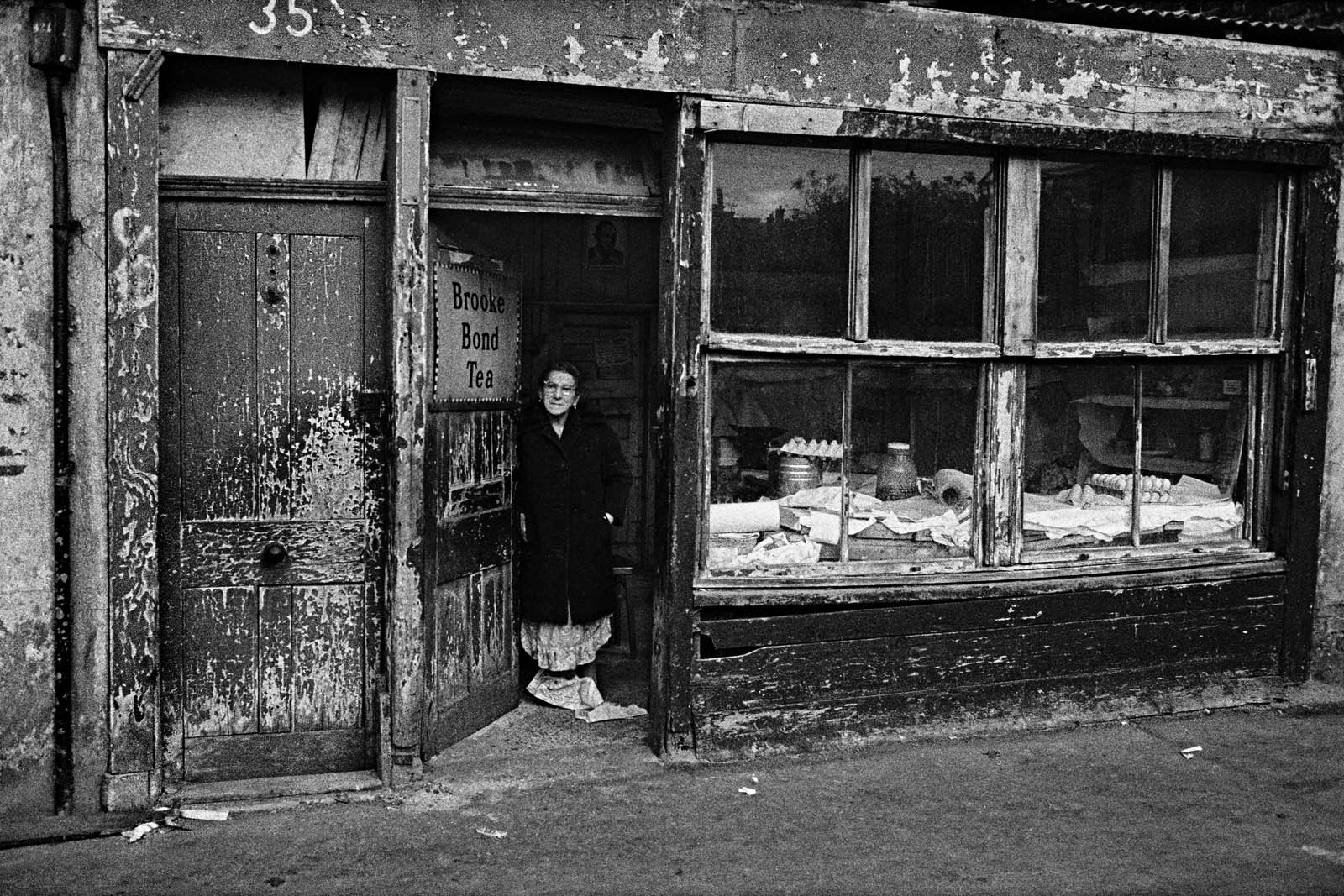
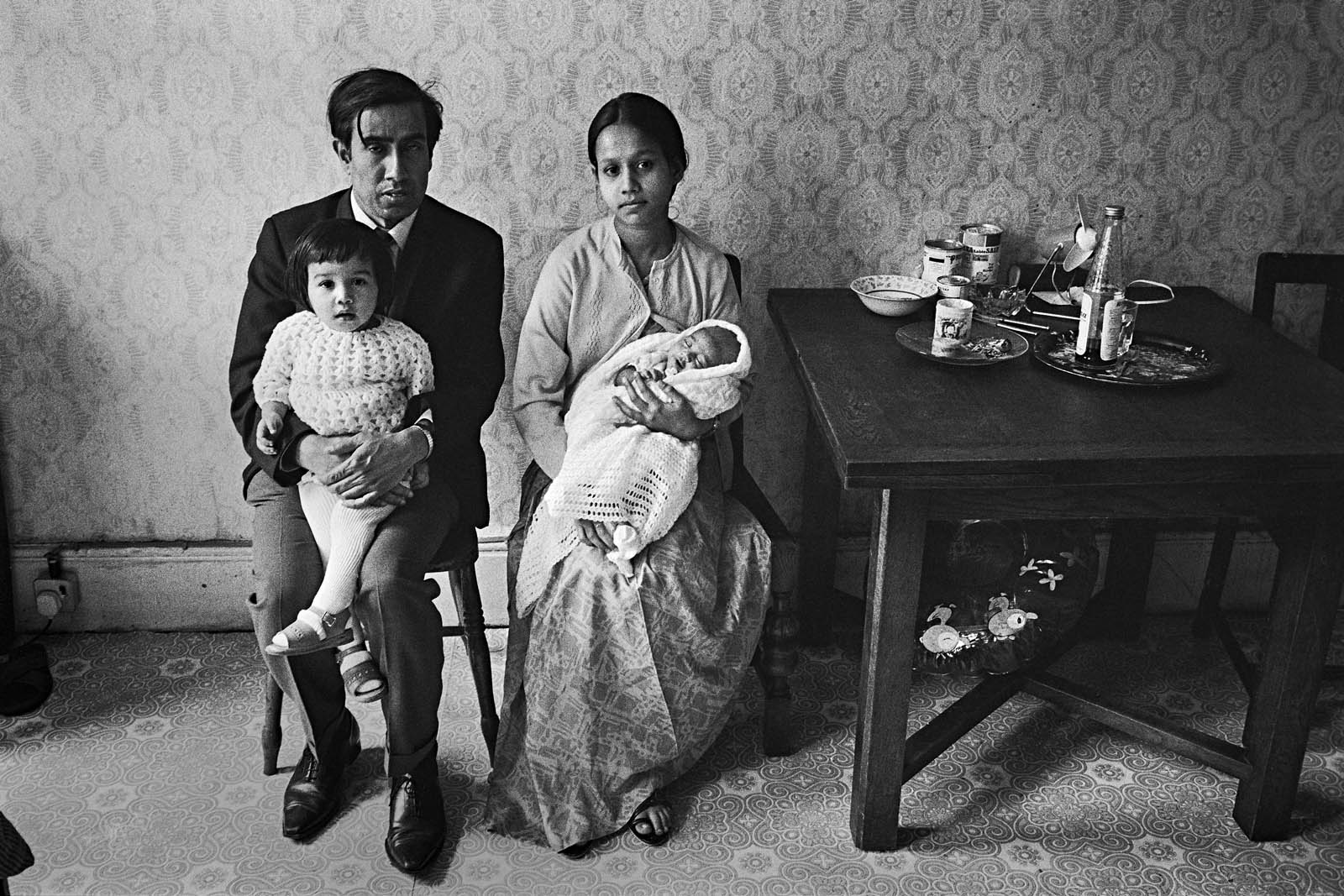
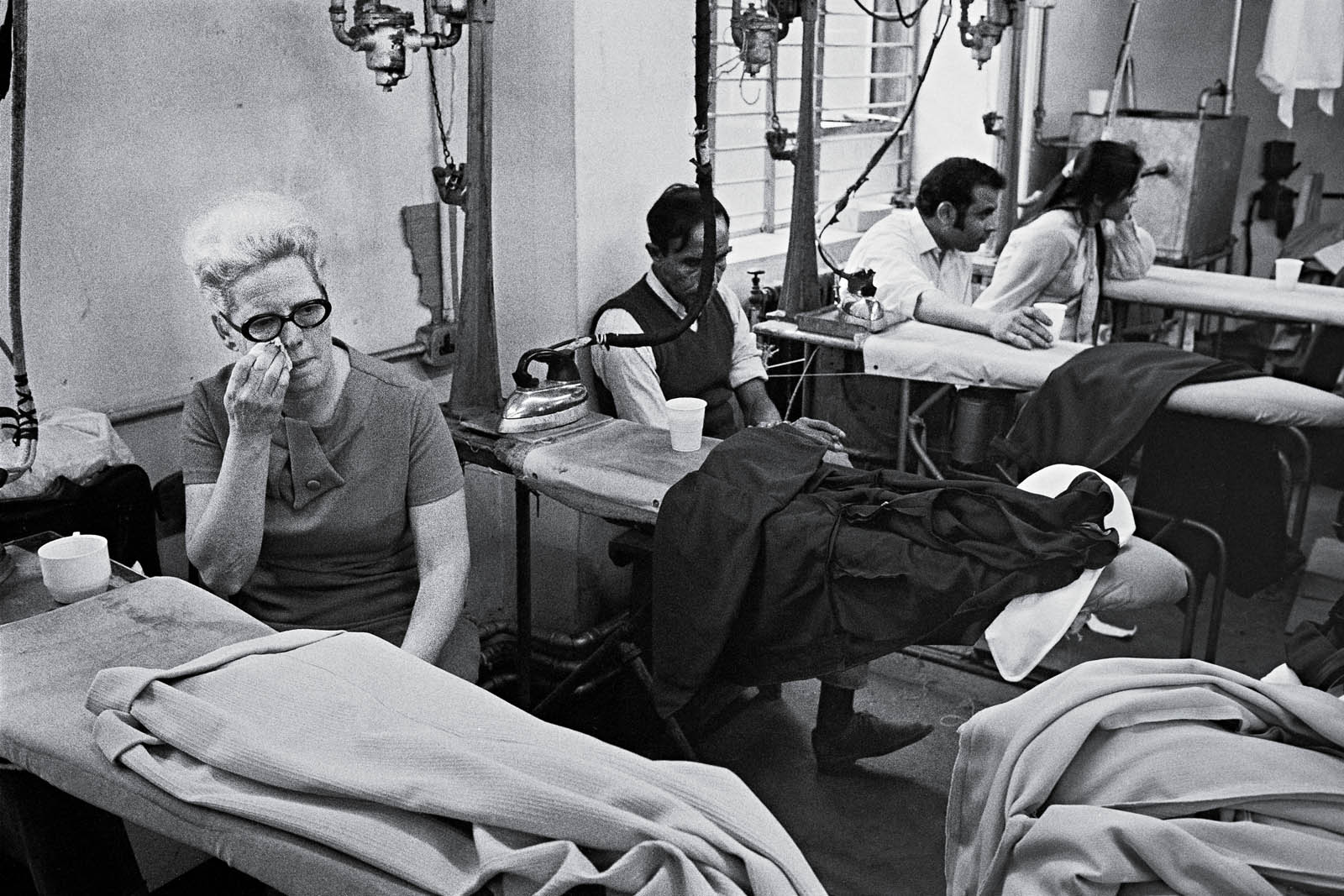
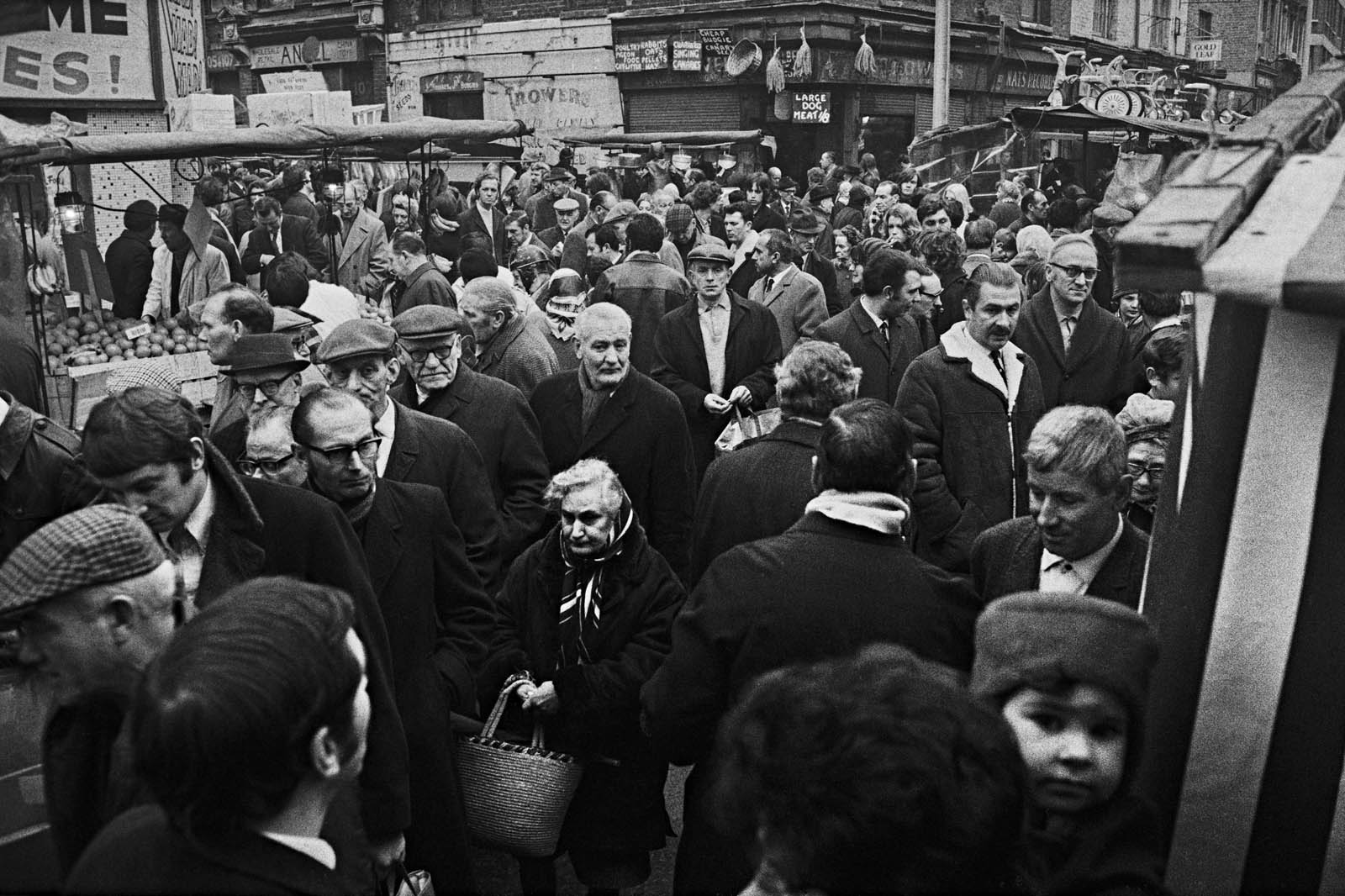
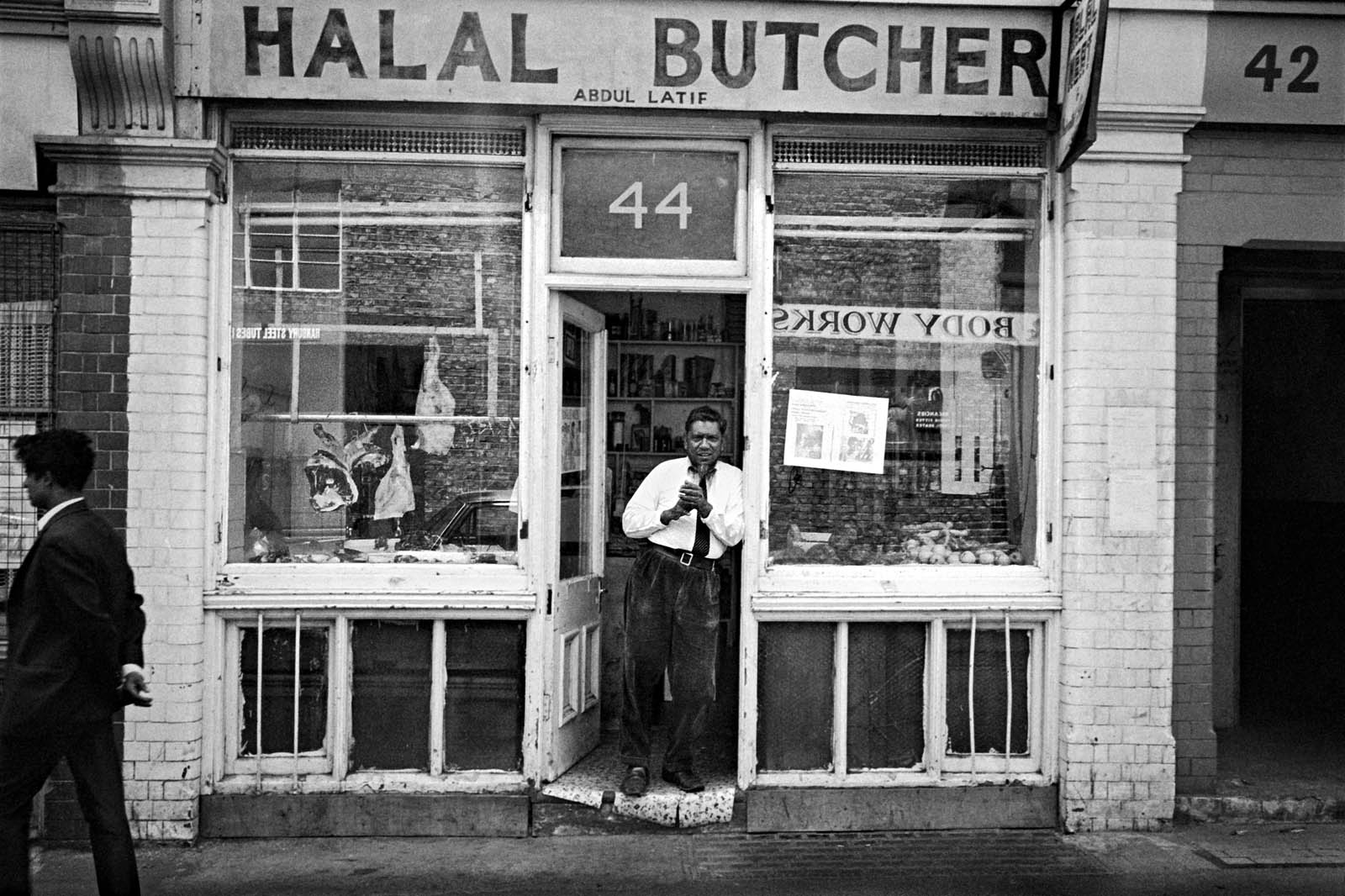
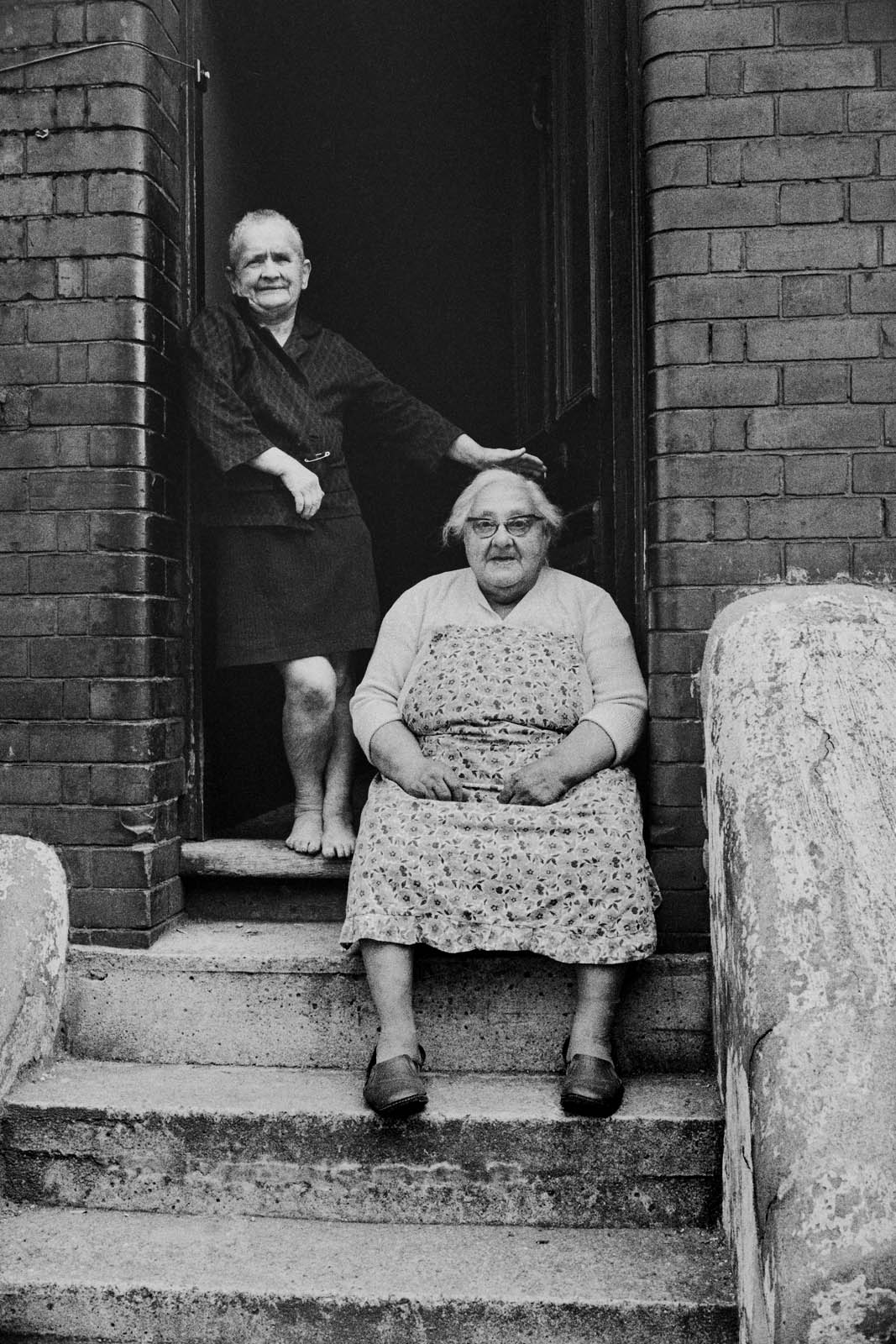
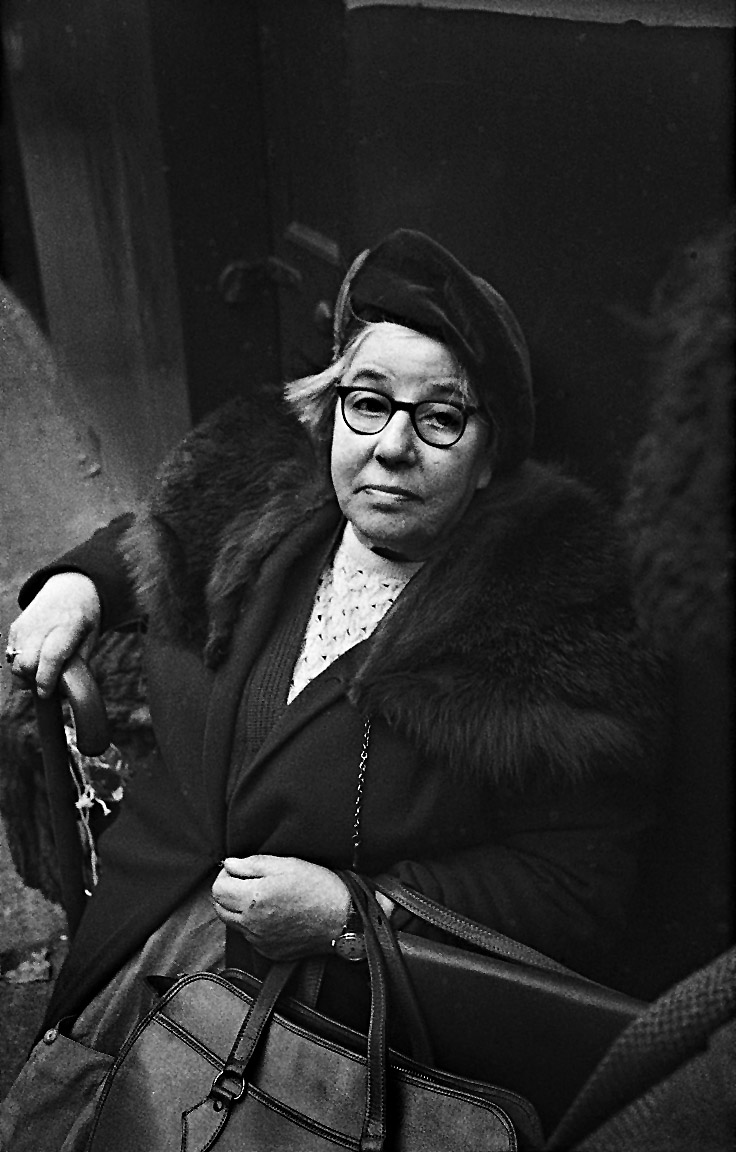
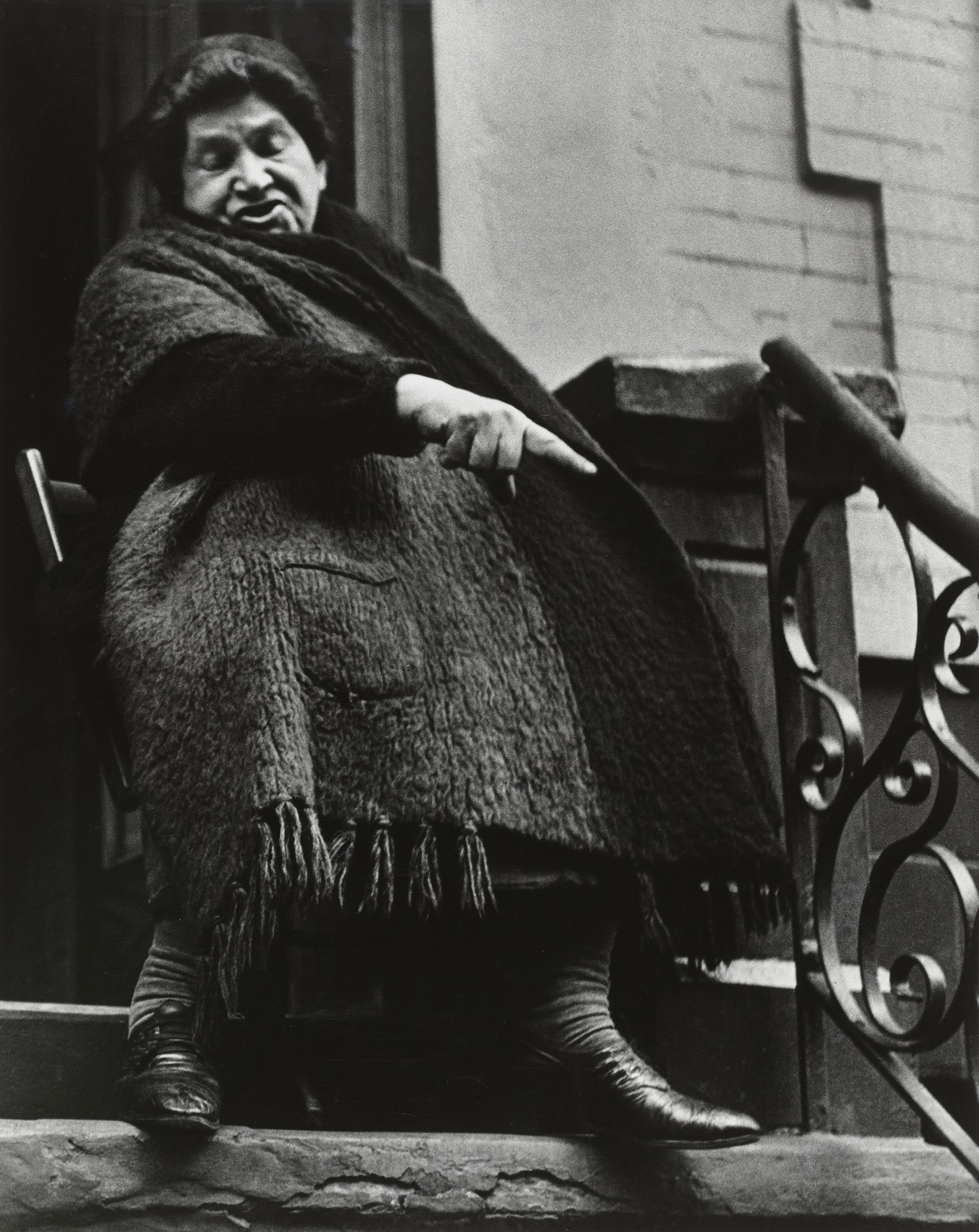
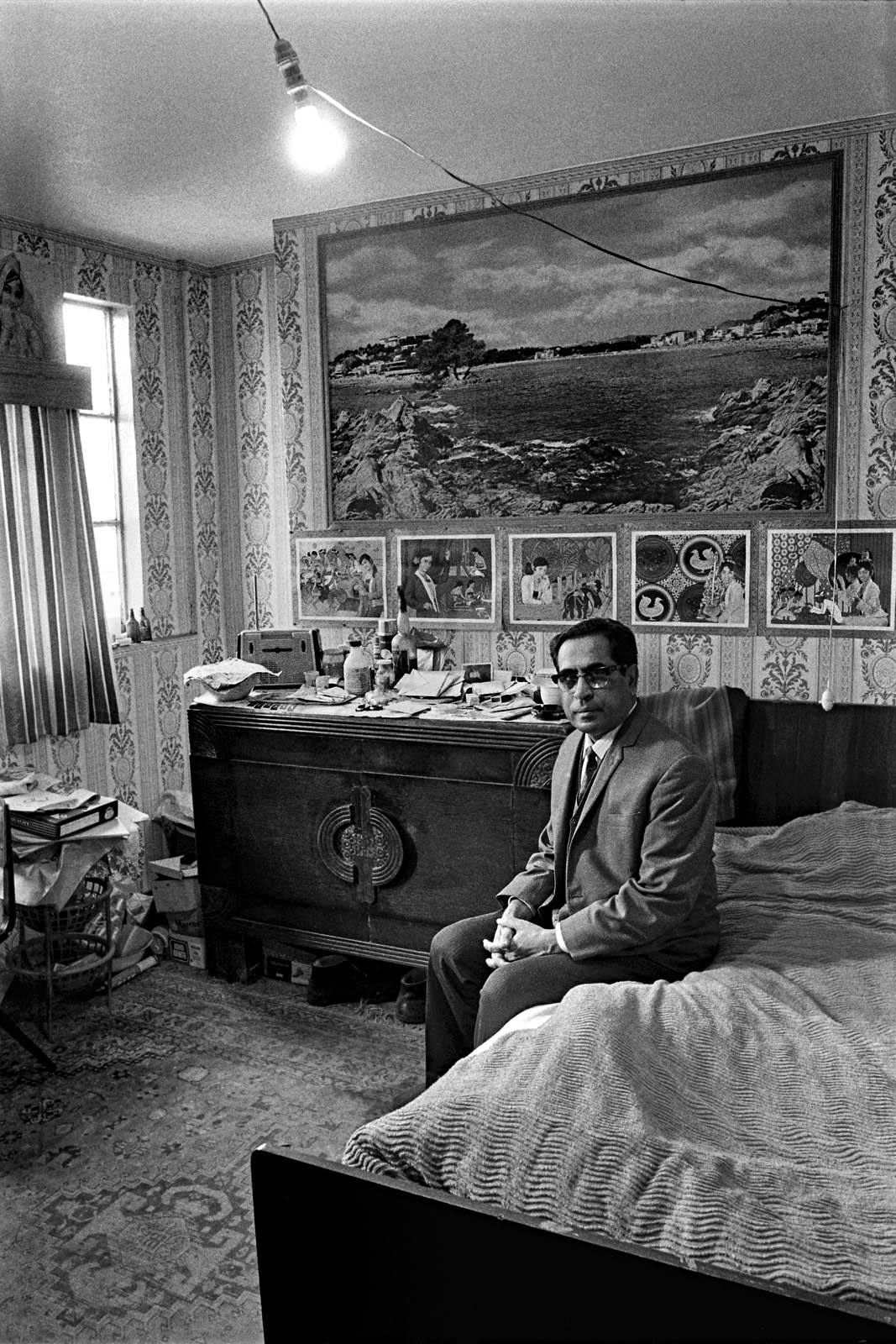
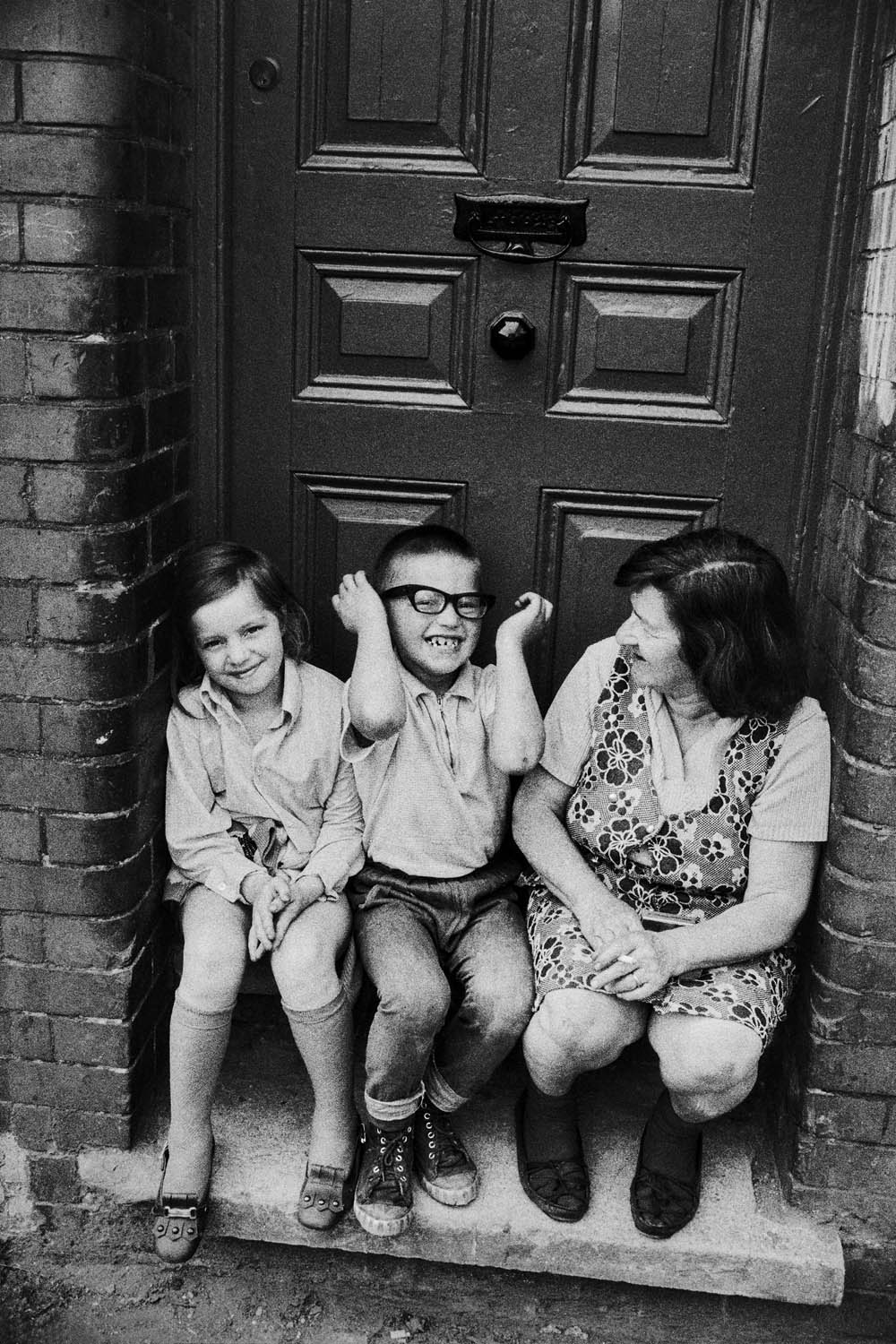
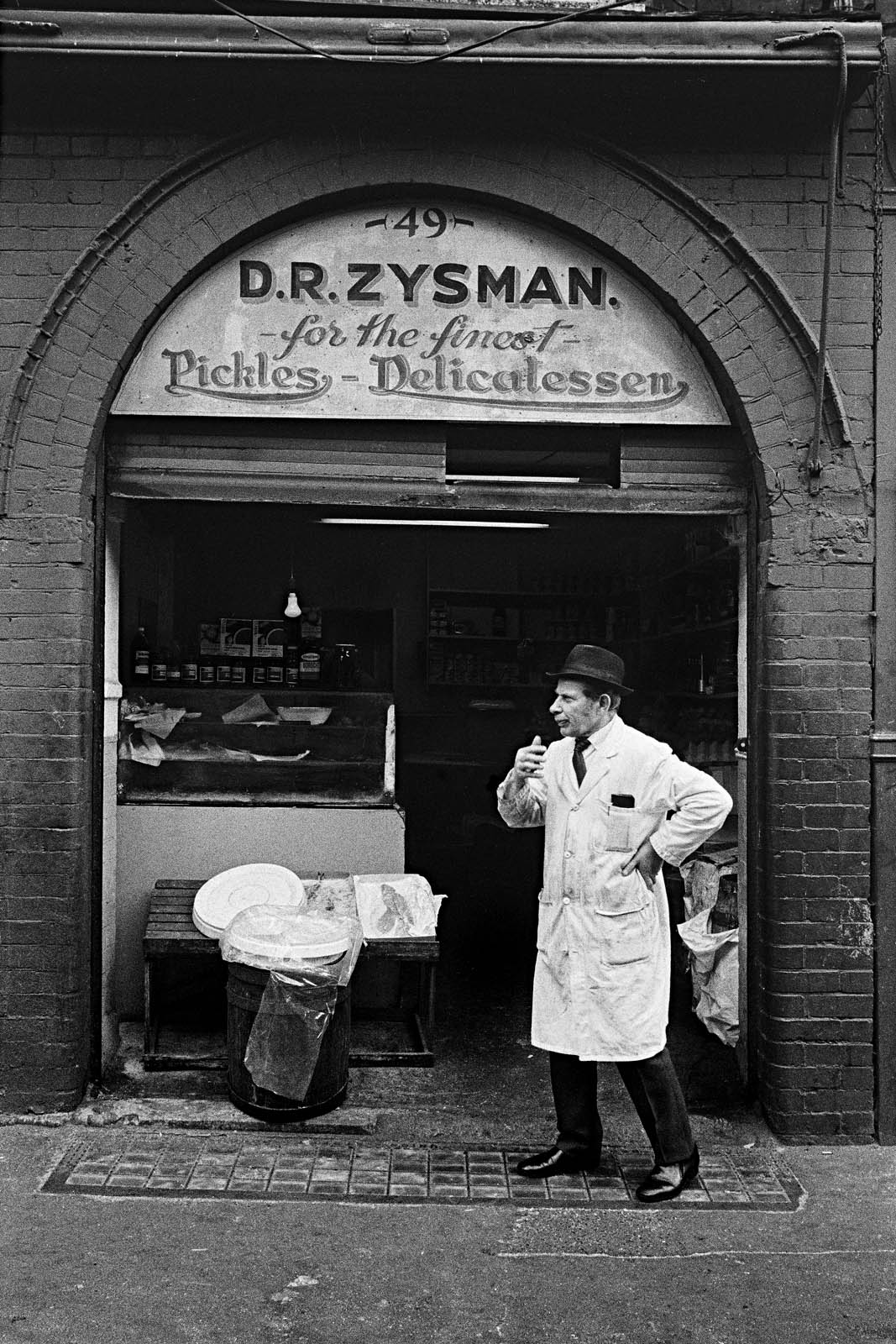
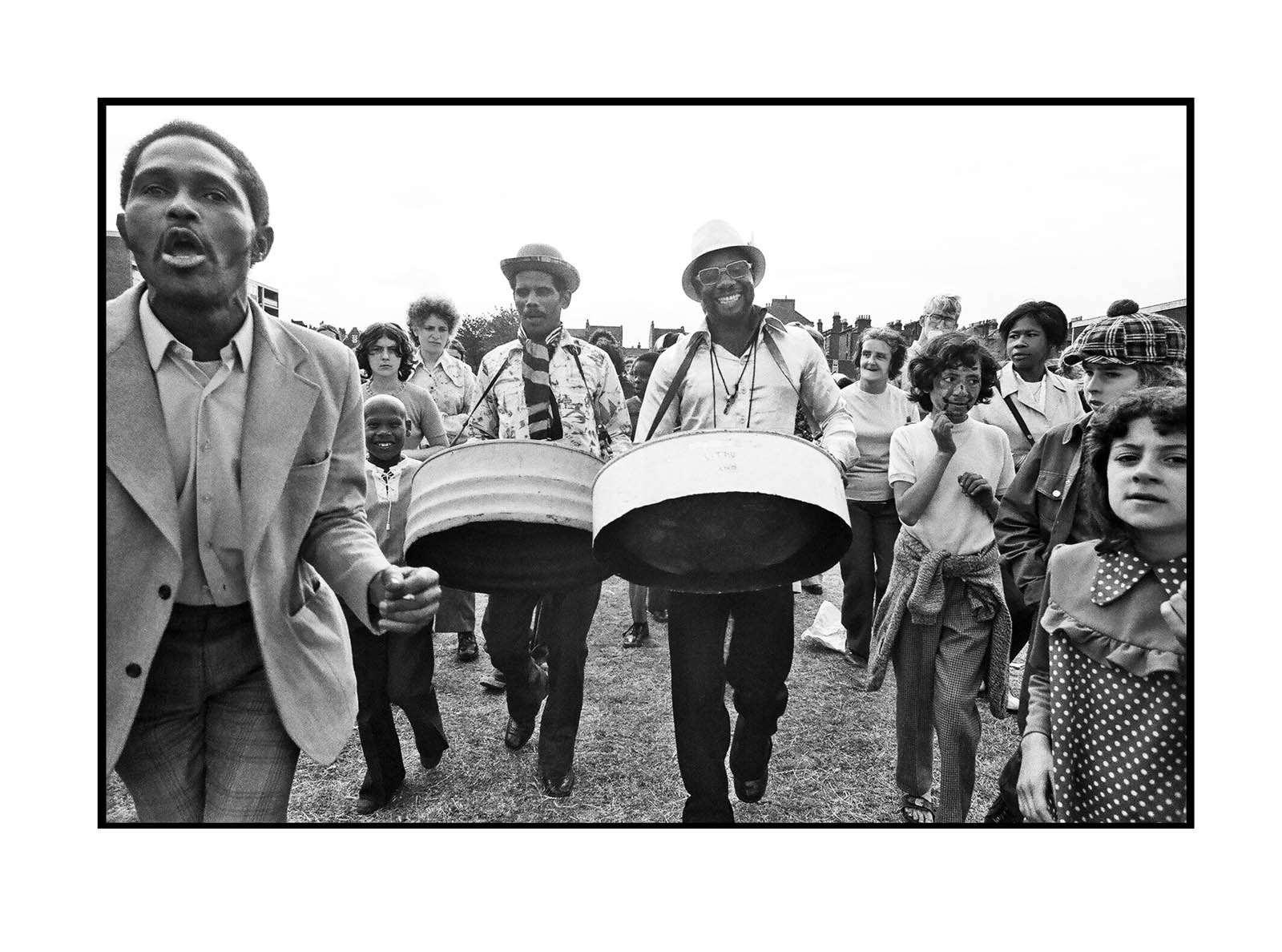
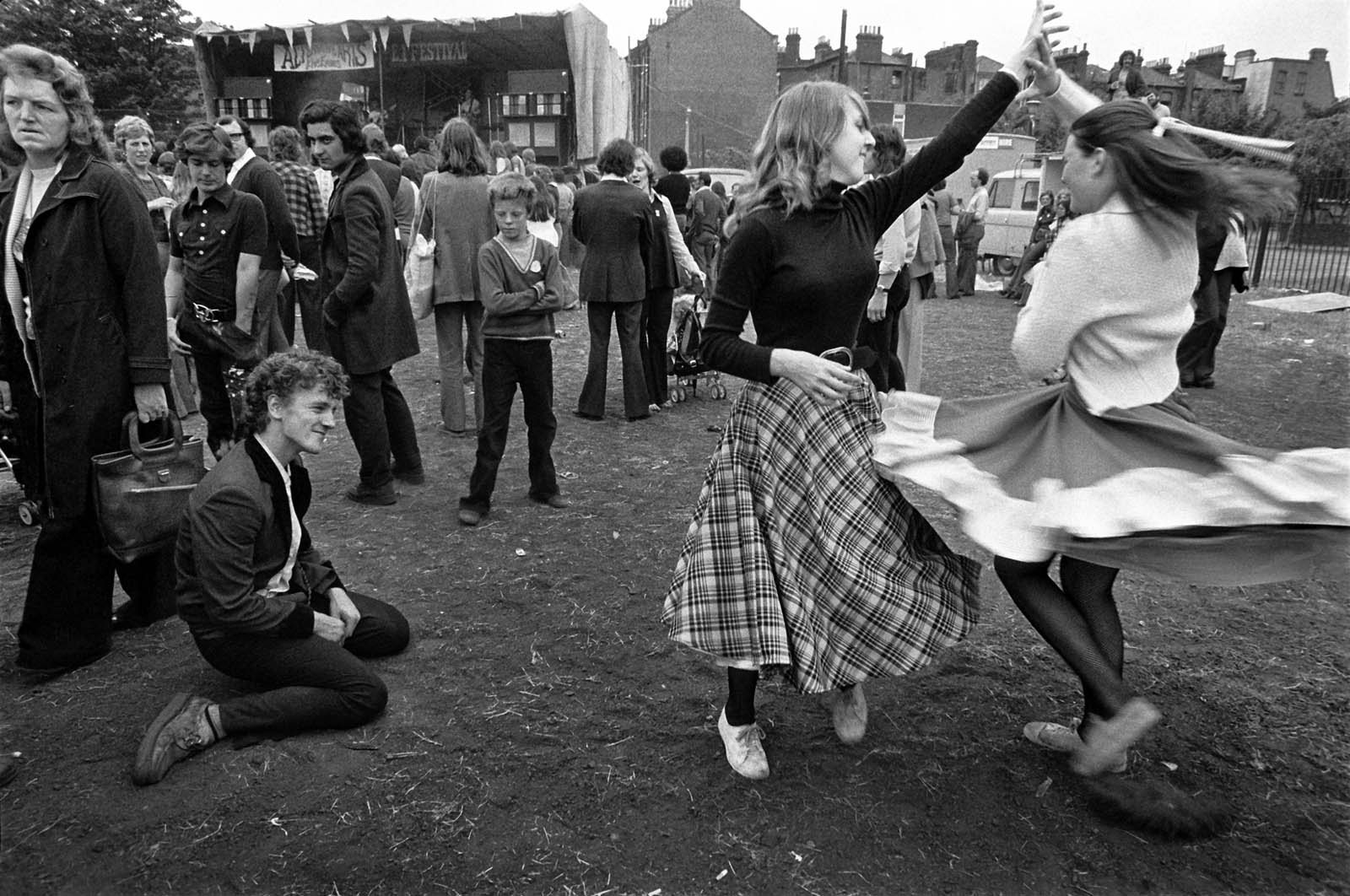

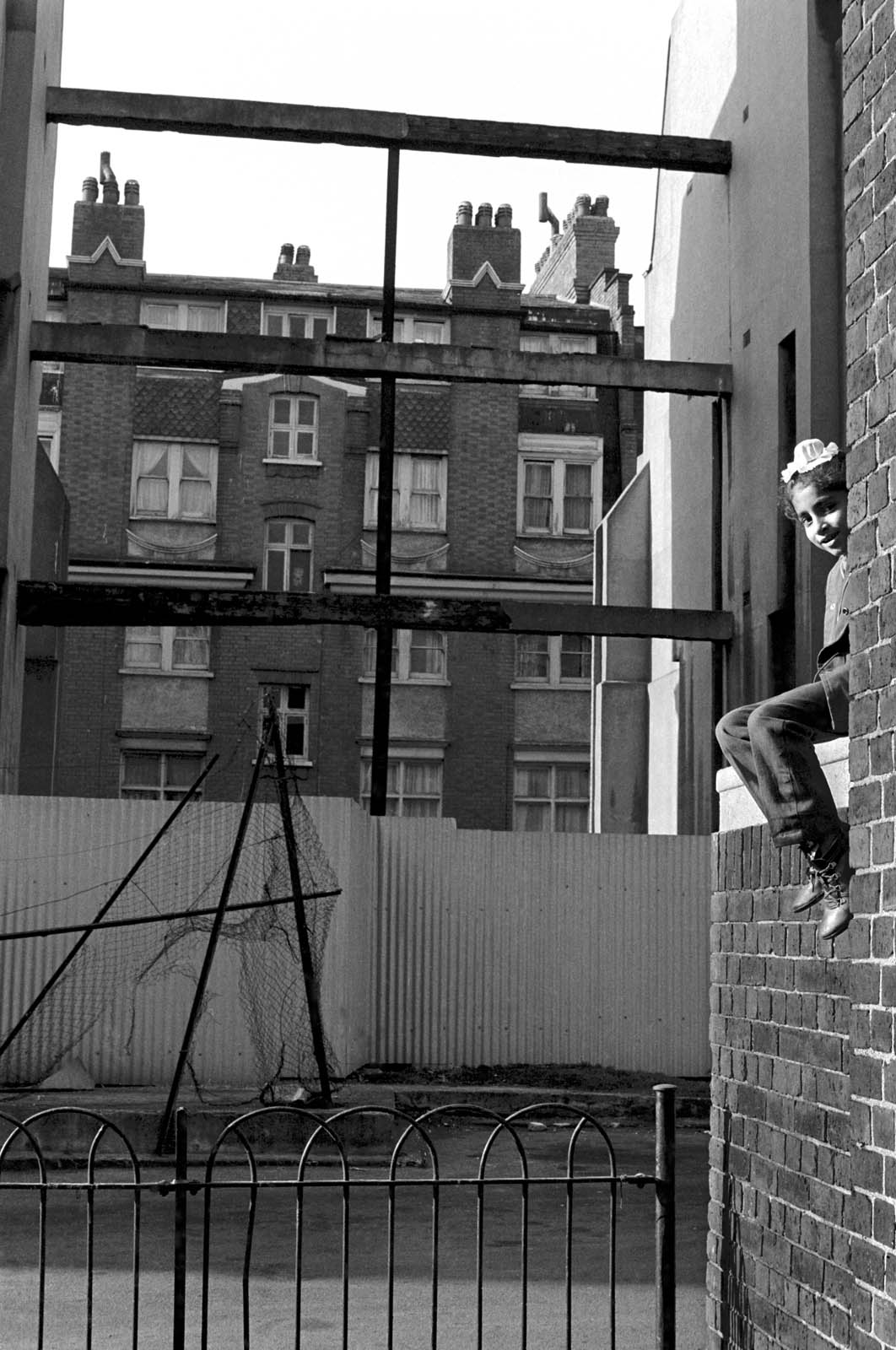
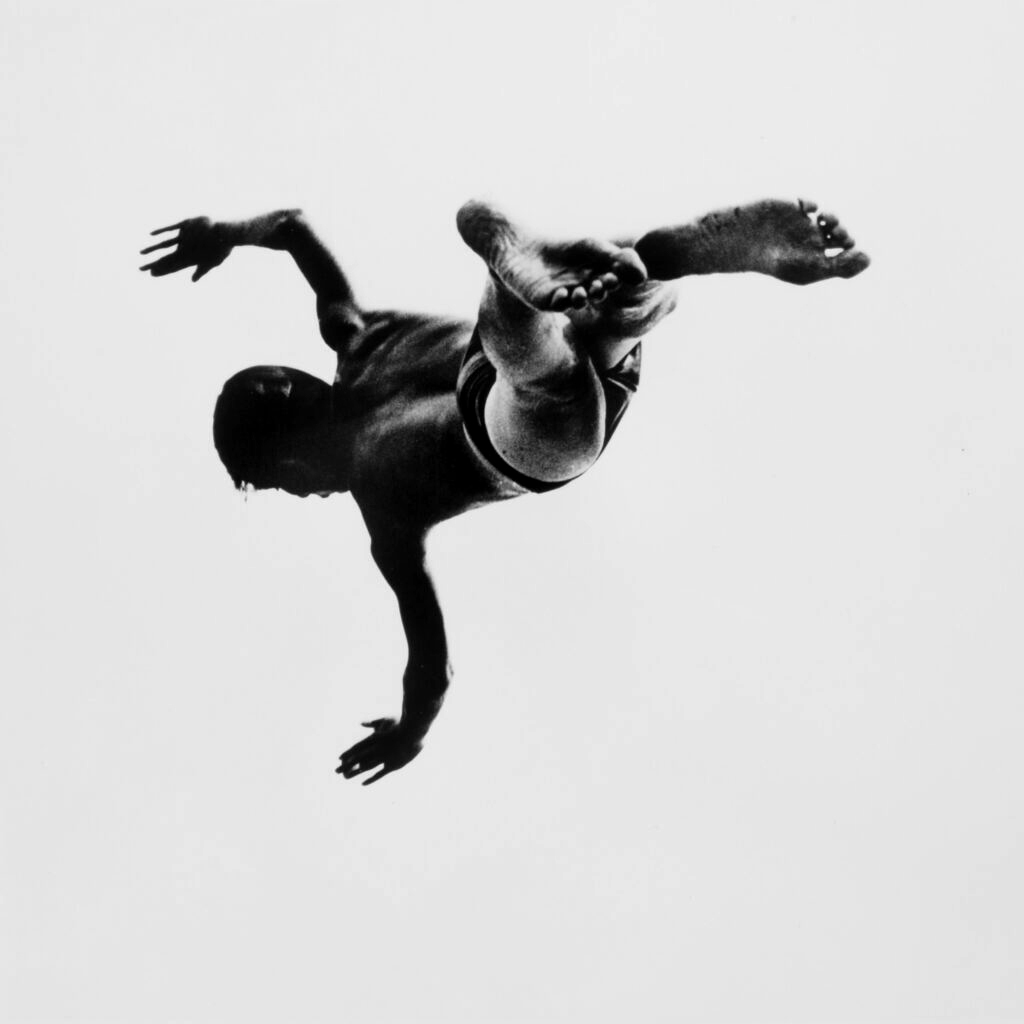


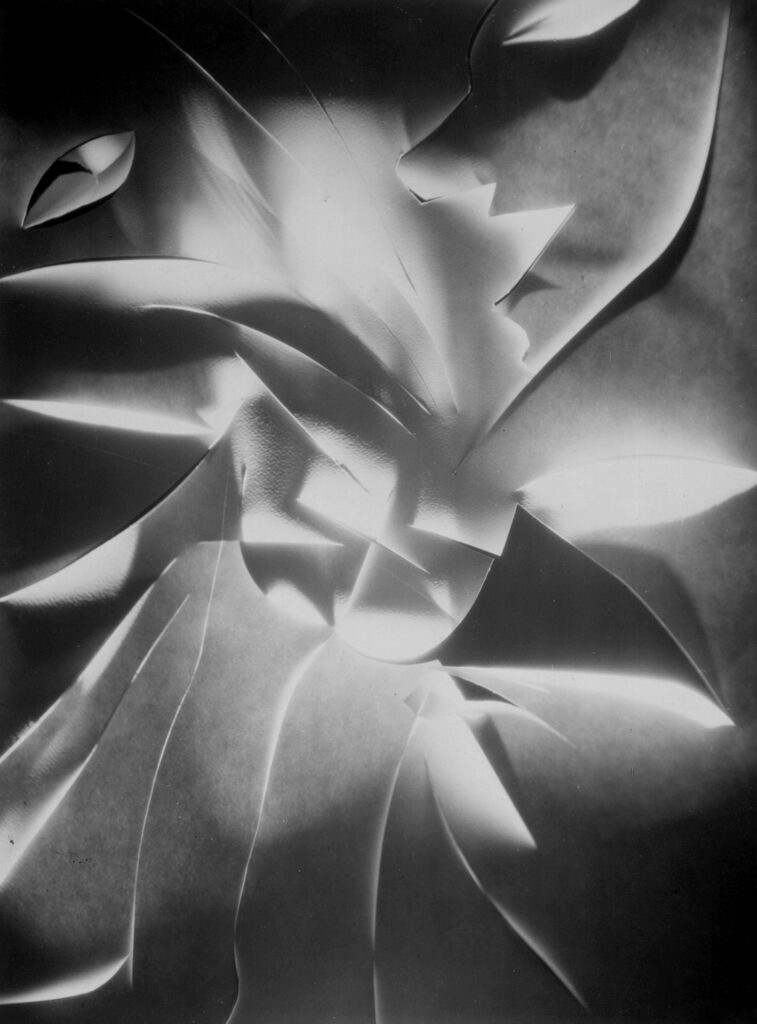
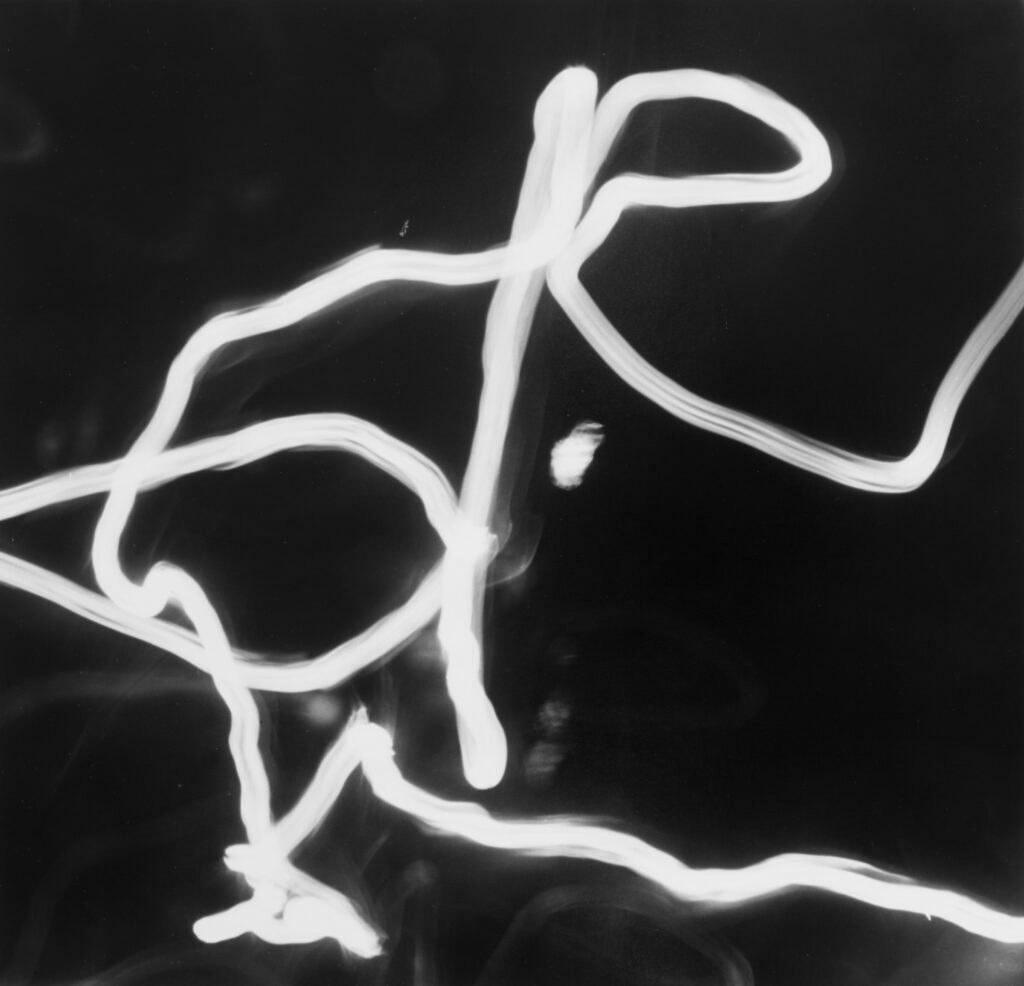
![Ilse Bing (American born Germany, 1899-1998) 'Untitled [Seated Woman with Necklace, Solarized]' 1943](https://artblart.com/wp-content/uploads/2025/10/ilse-bing-seated-woman-with-necklace.jpg "Ilse Bing (American born Germany, 1899-1998) 'Untitled [Seated Woman with Necklace, Solarized]' 1943")
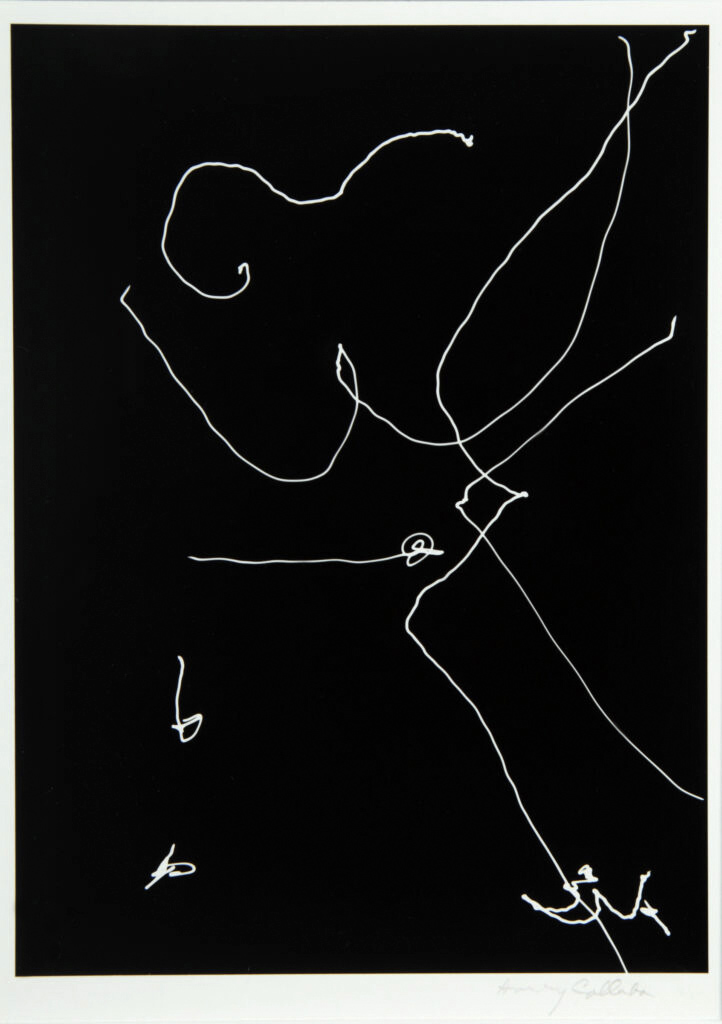

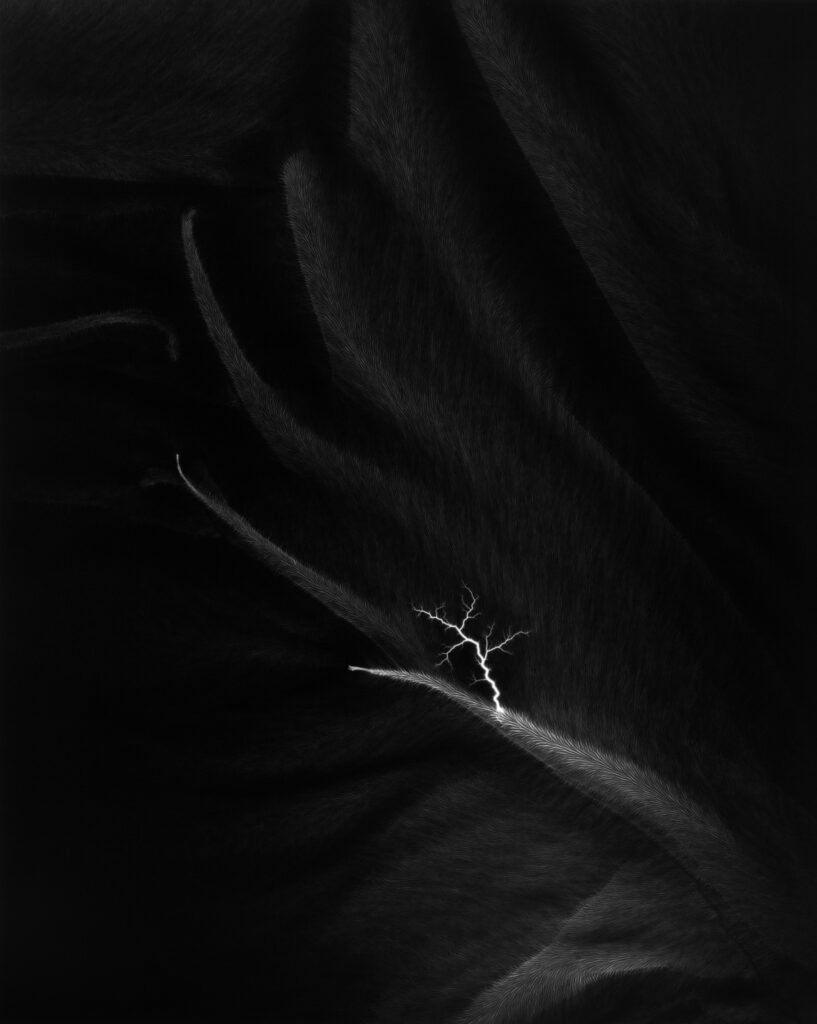


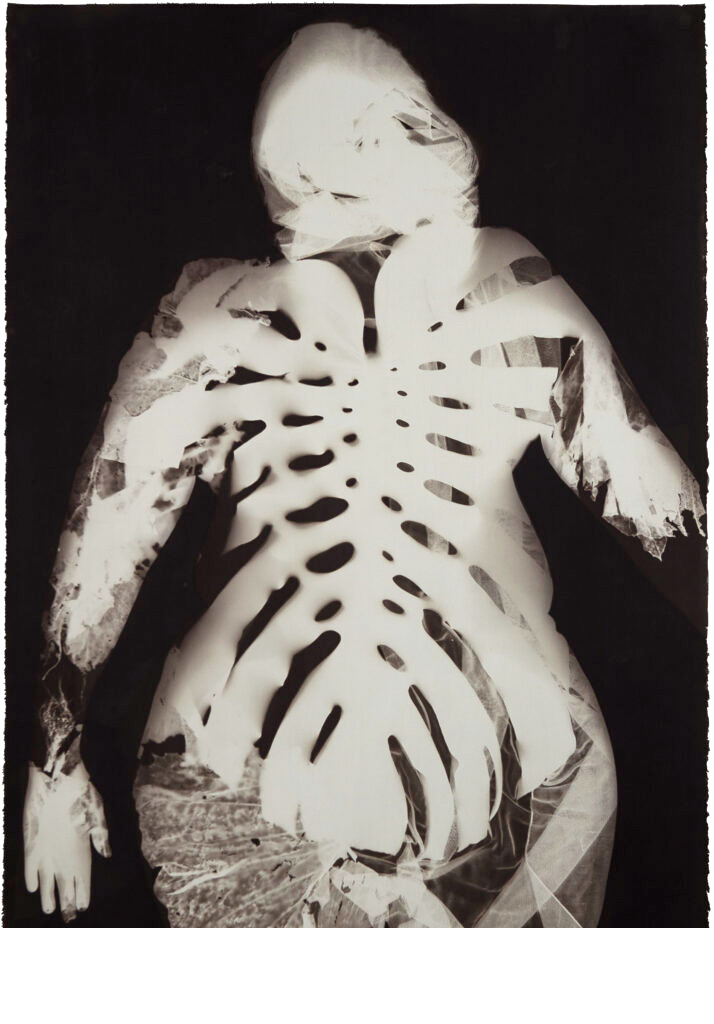
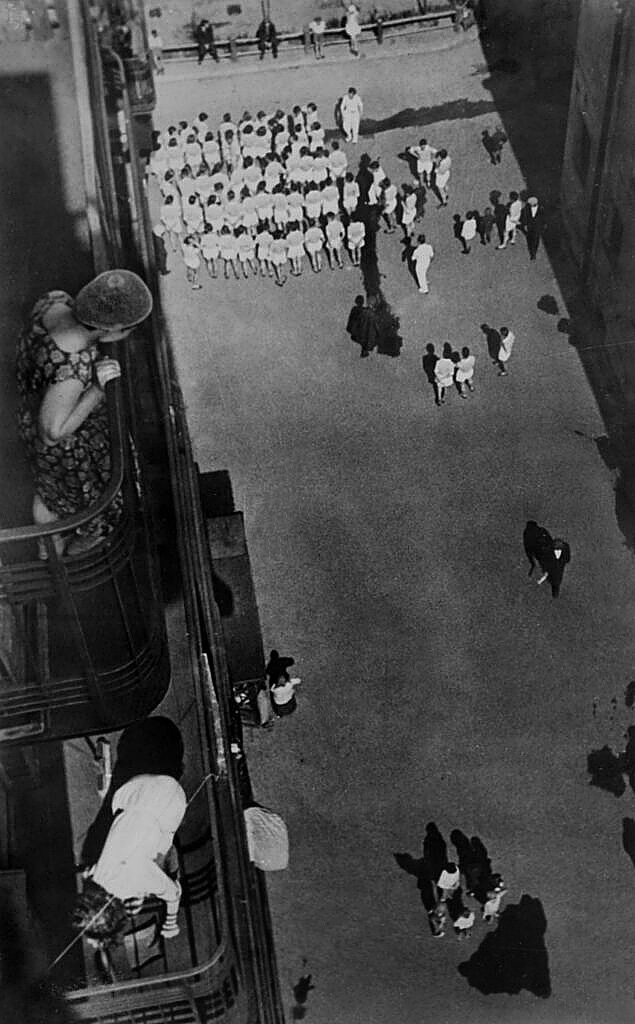


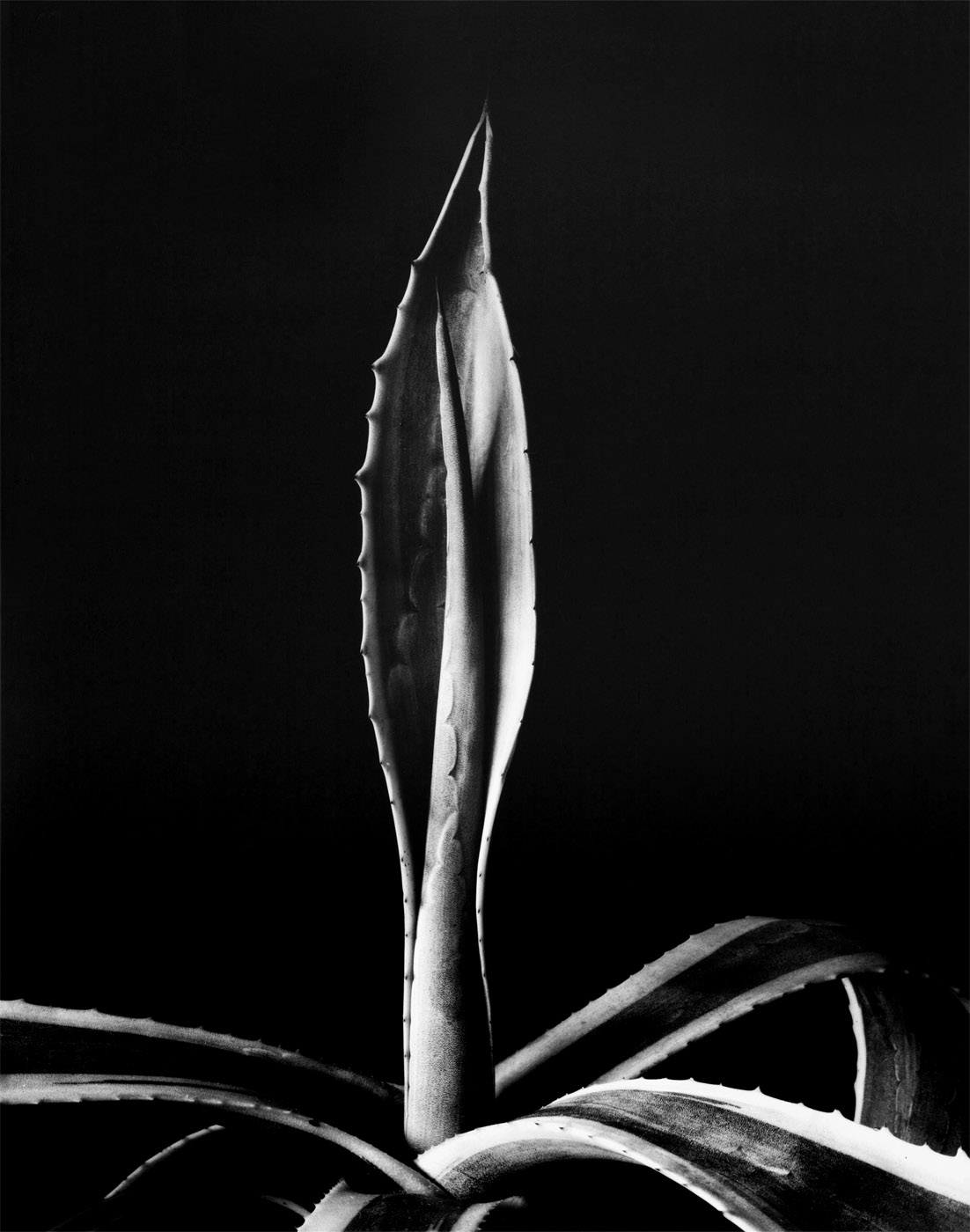
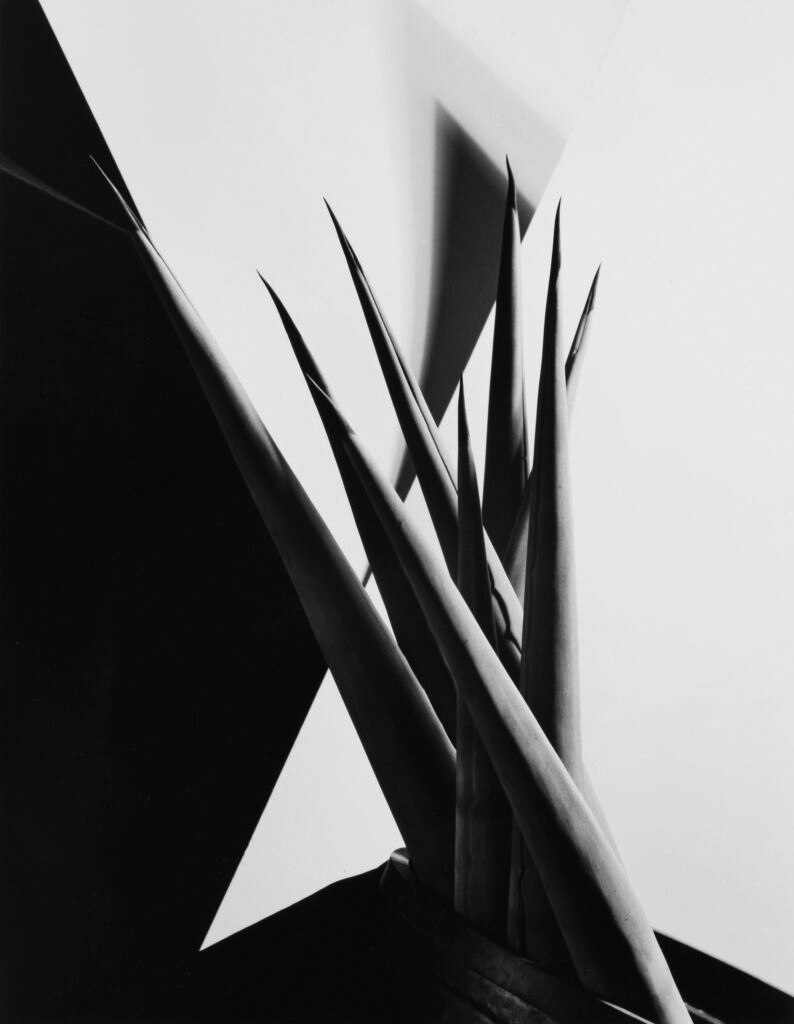
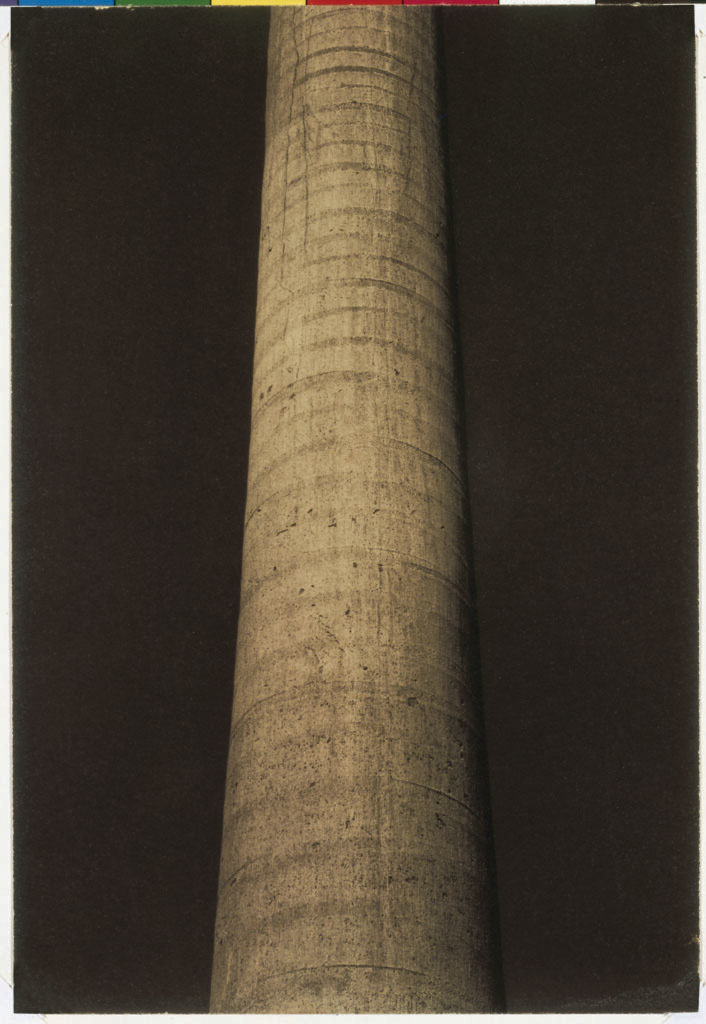

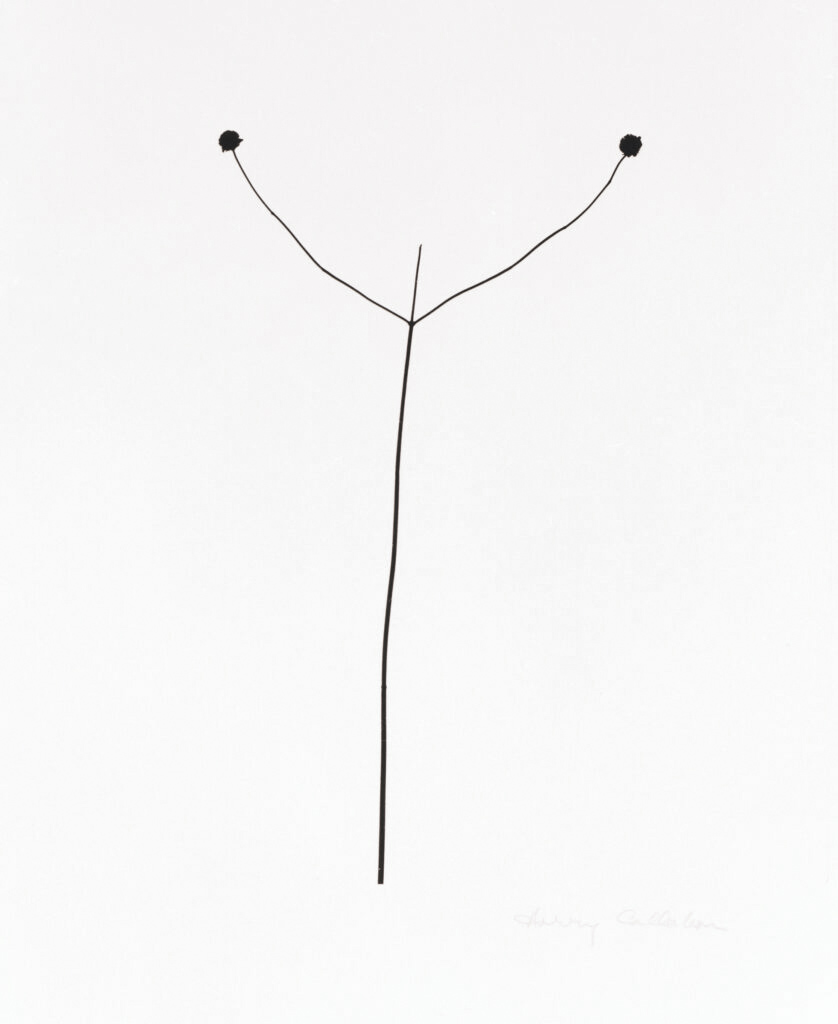
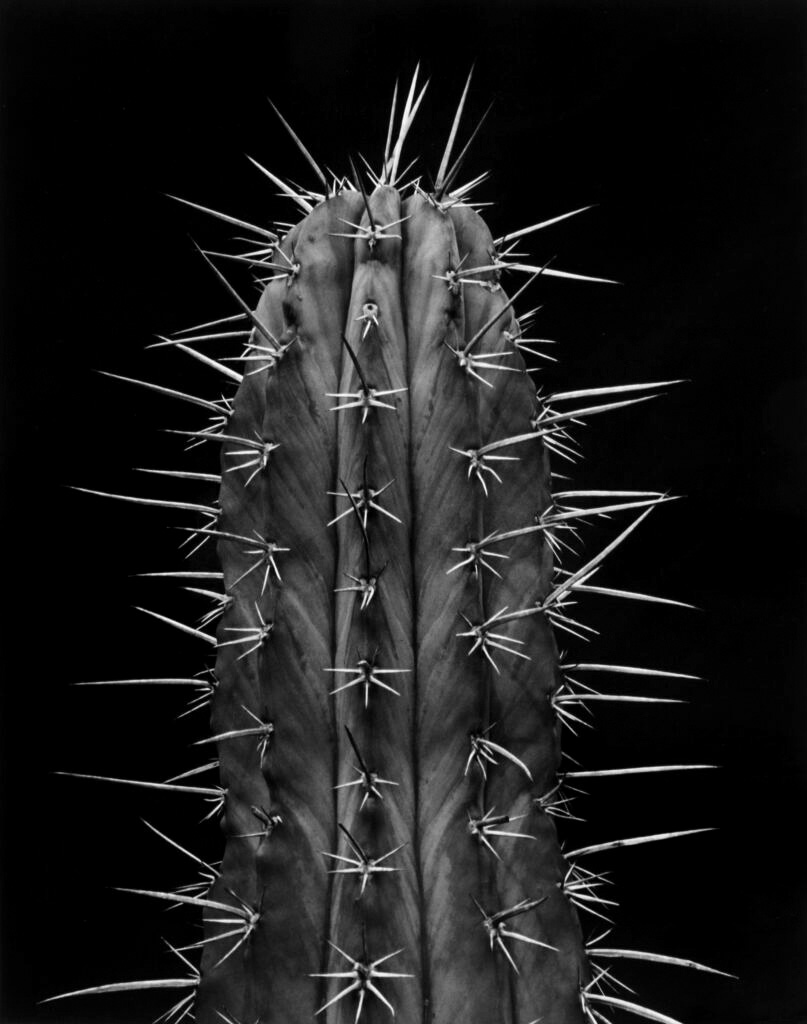


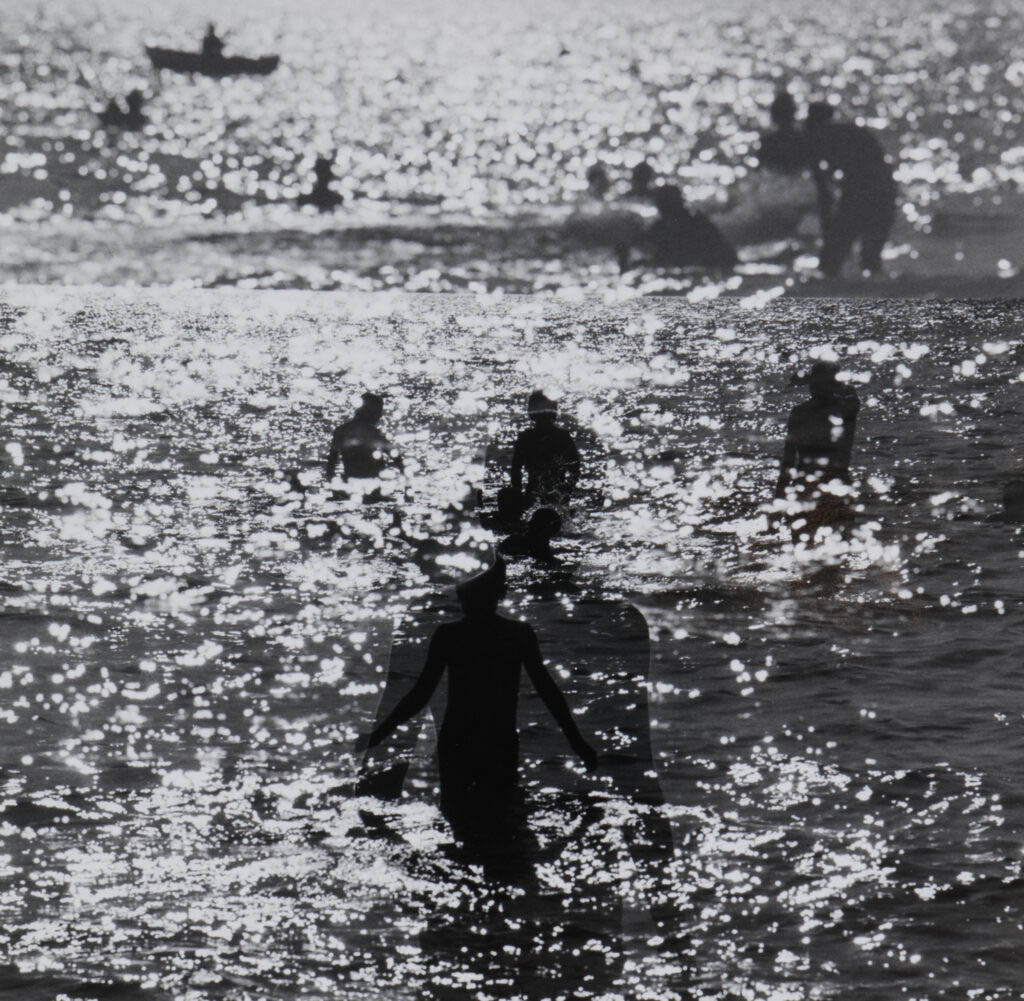


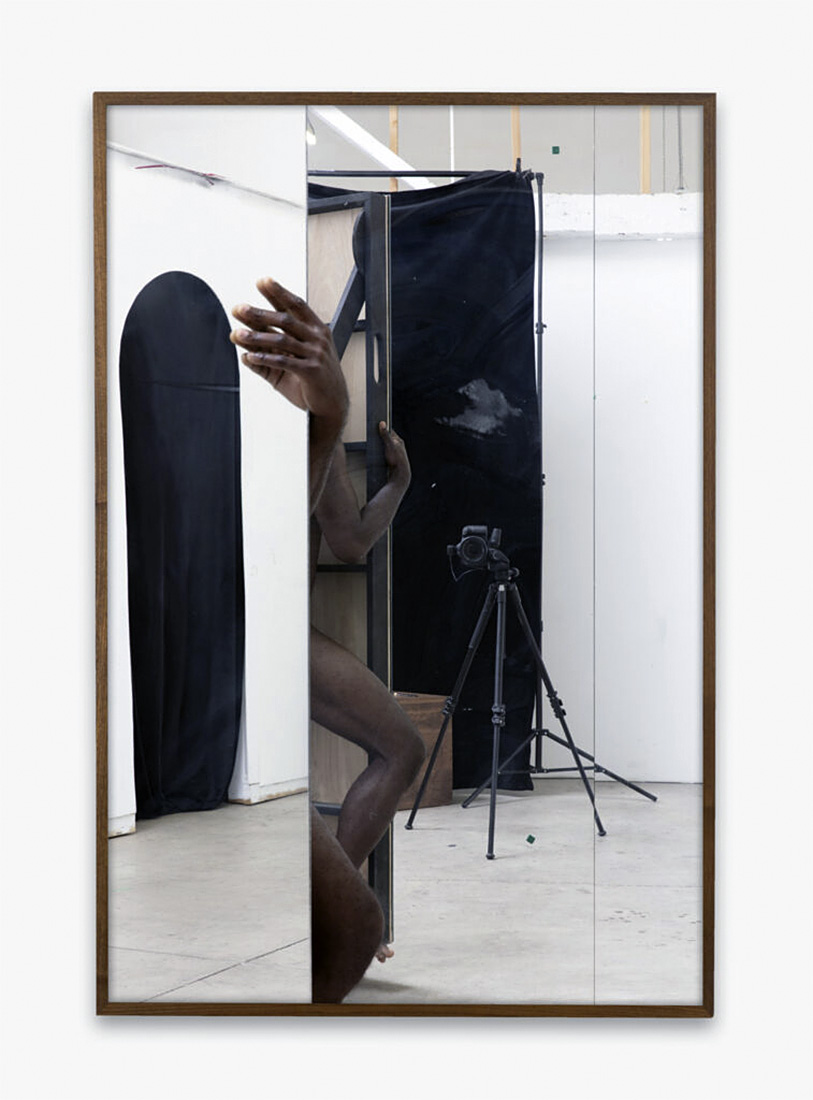
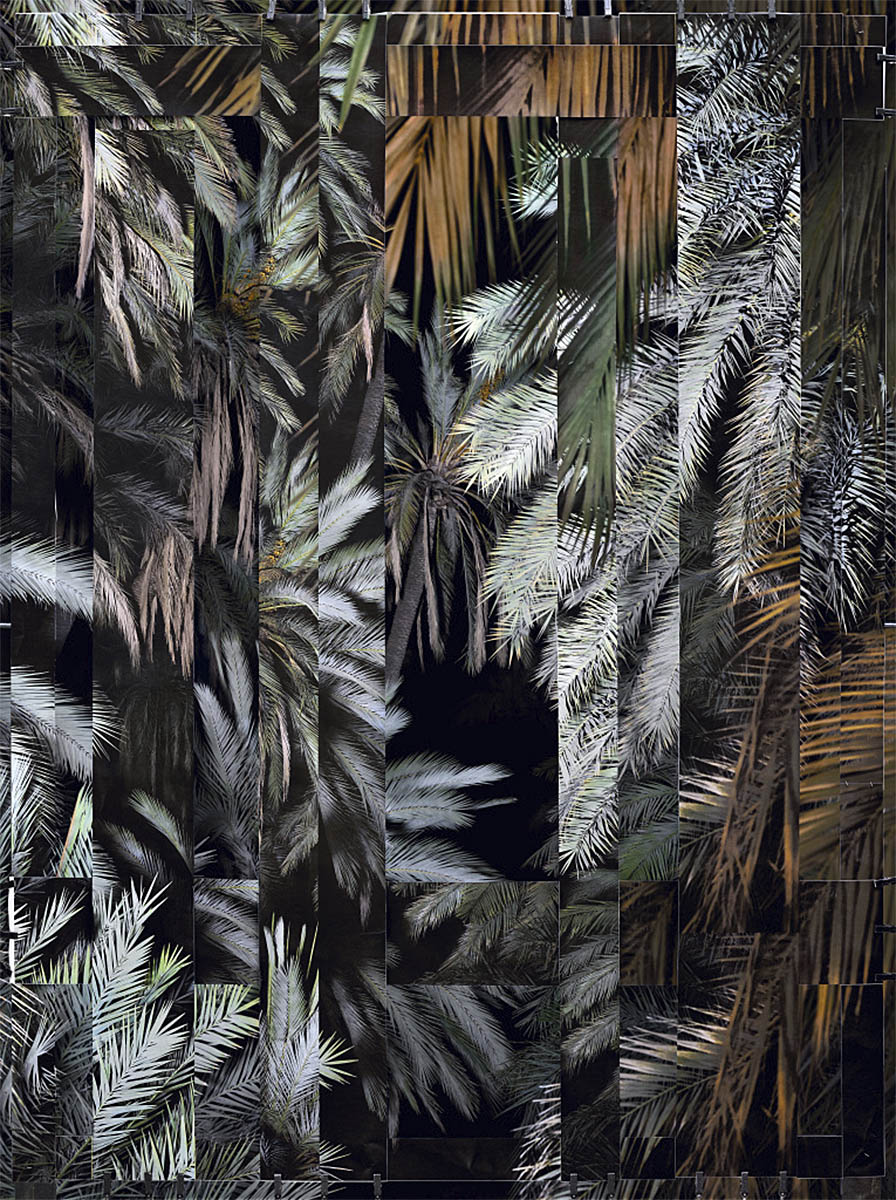
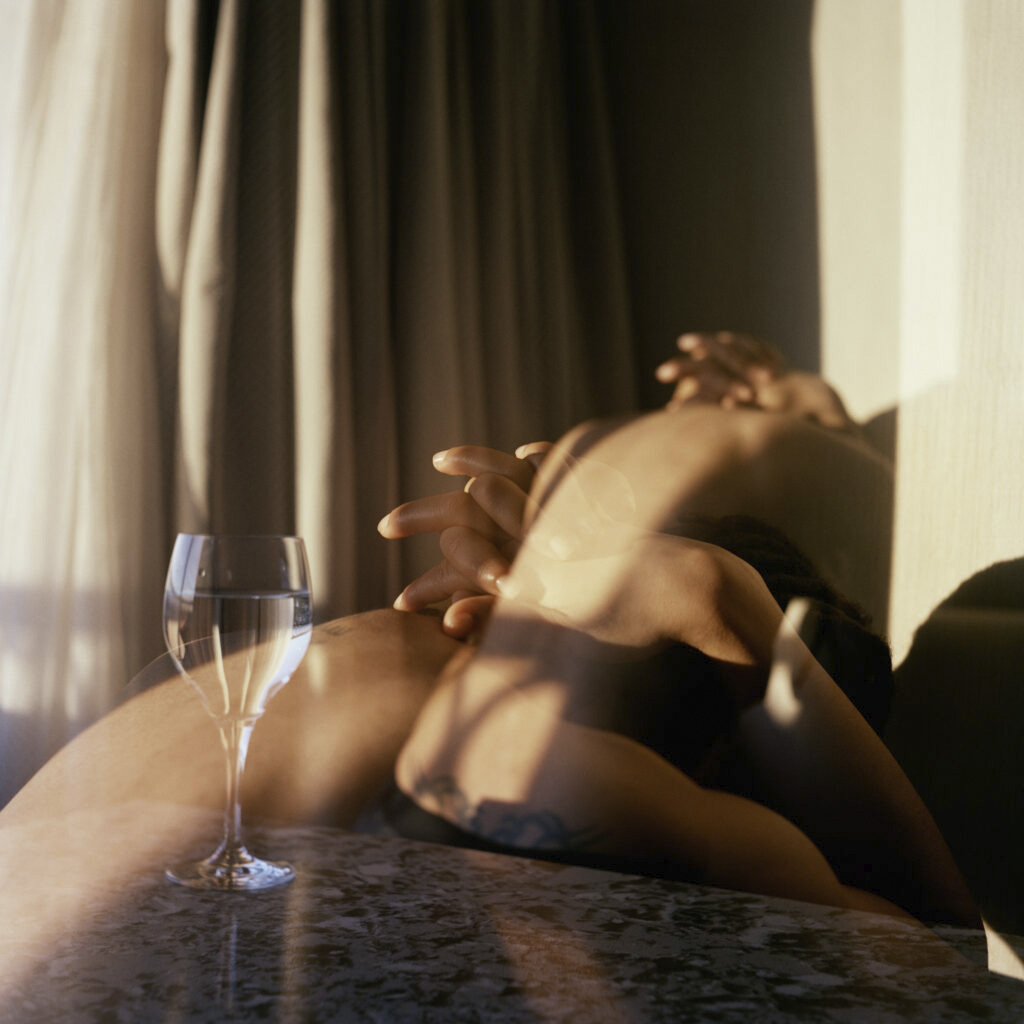
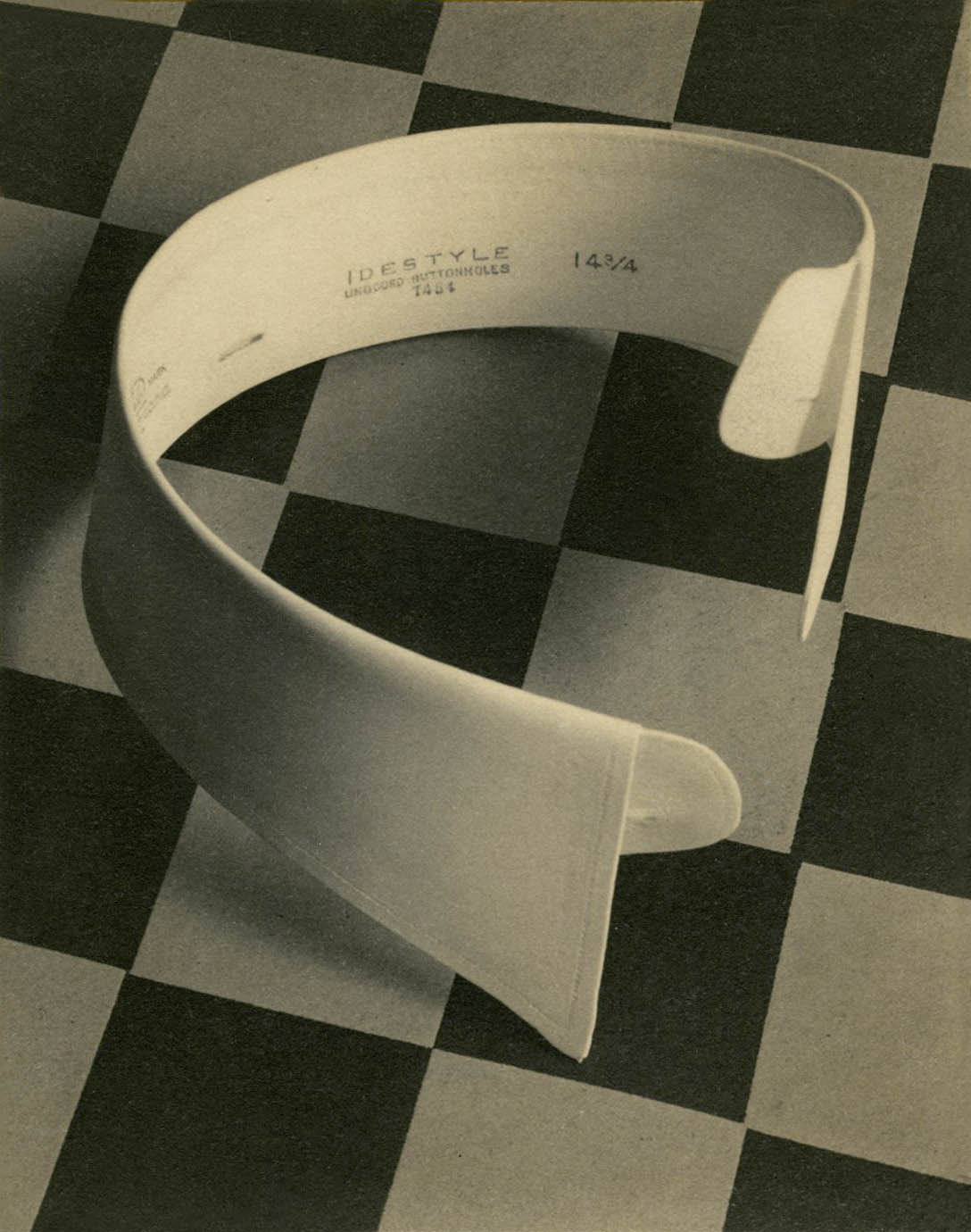
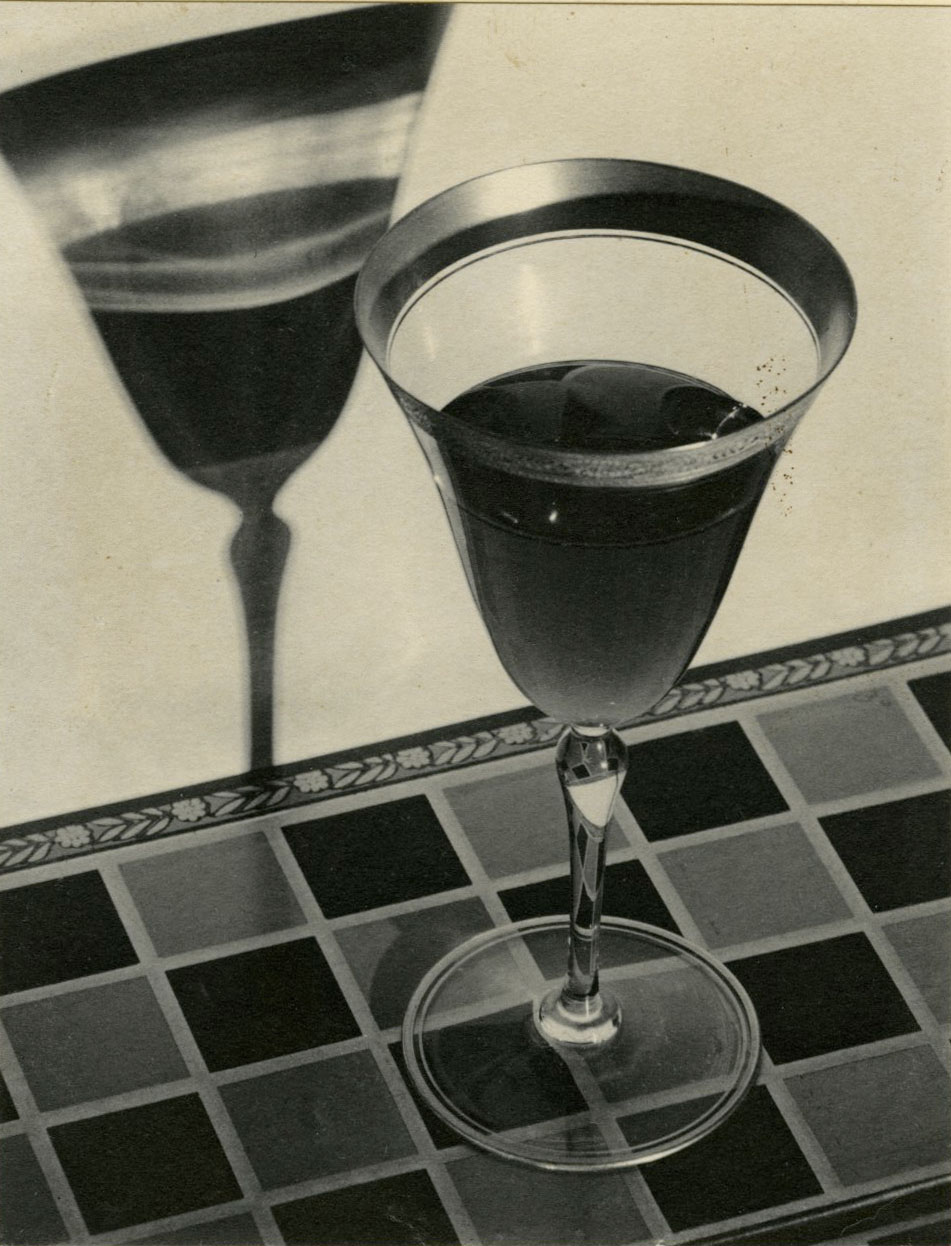
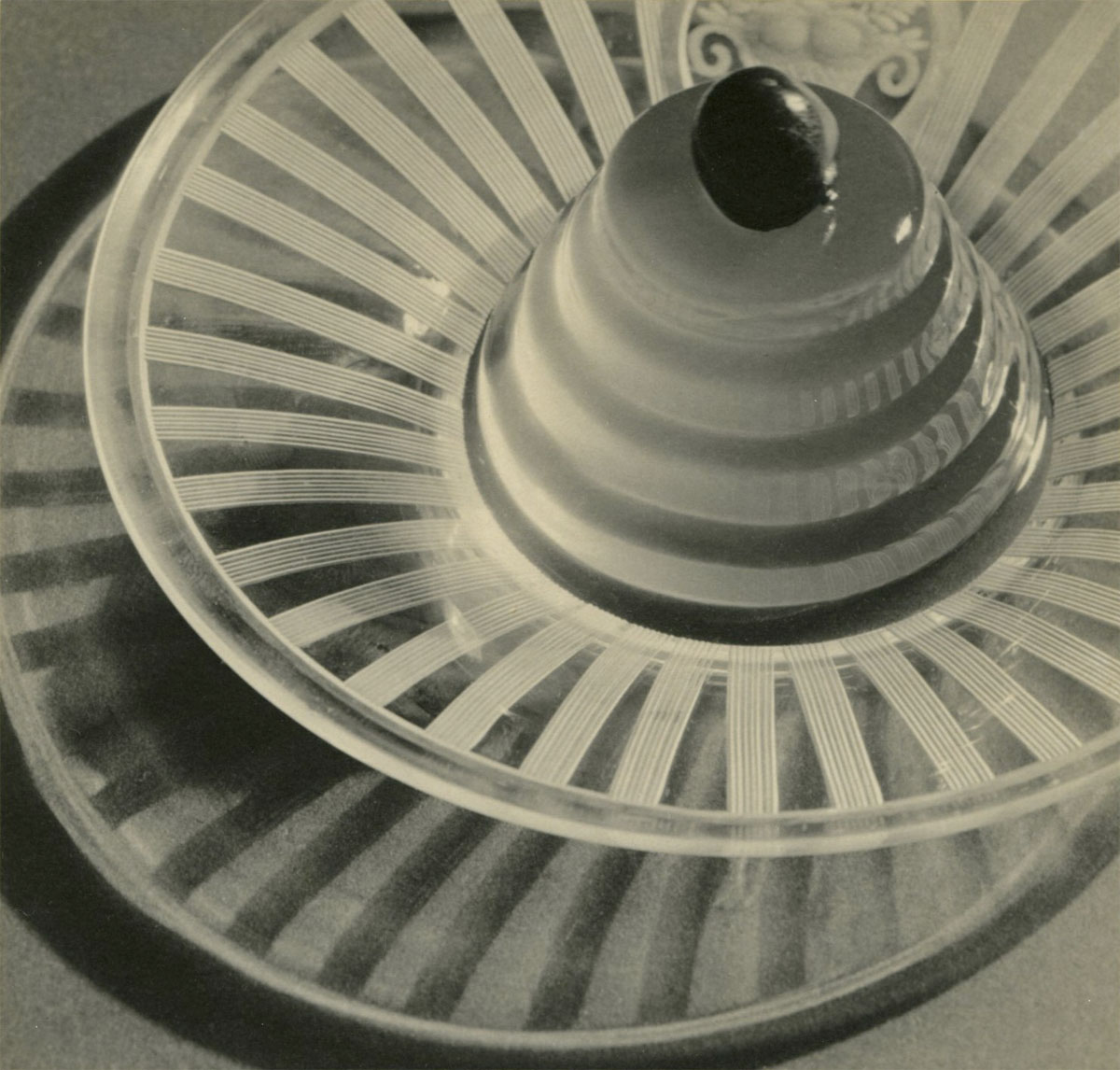
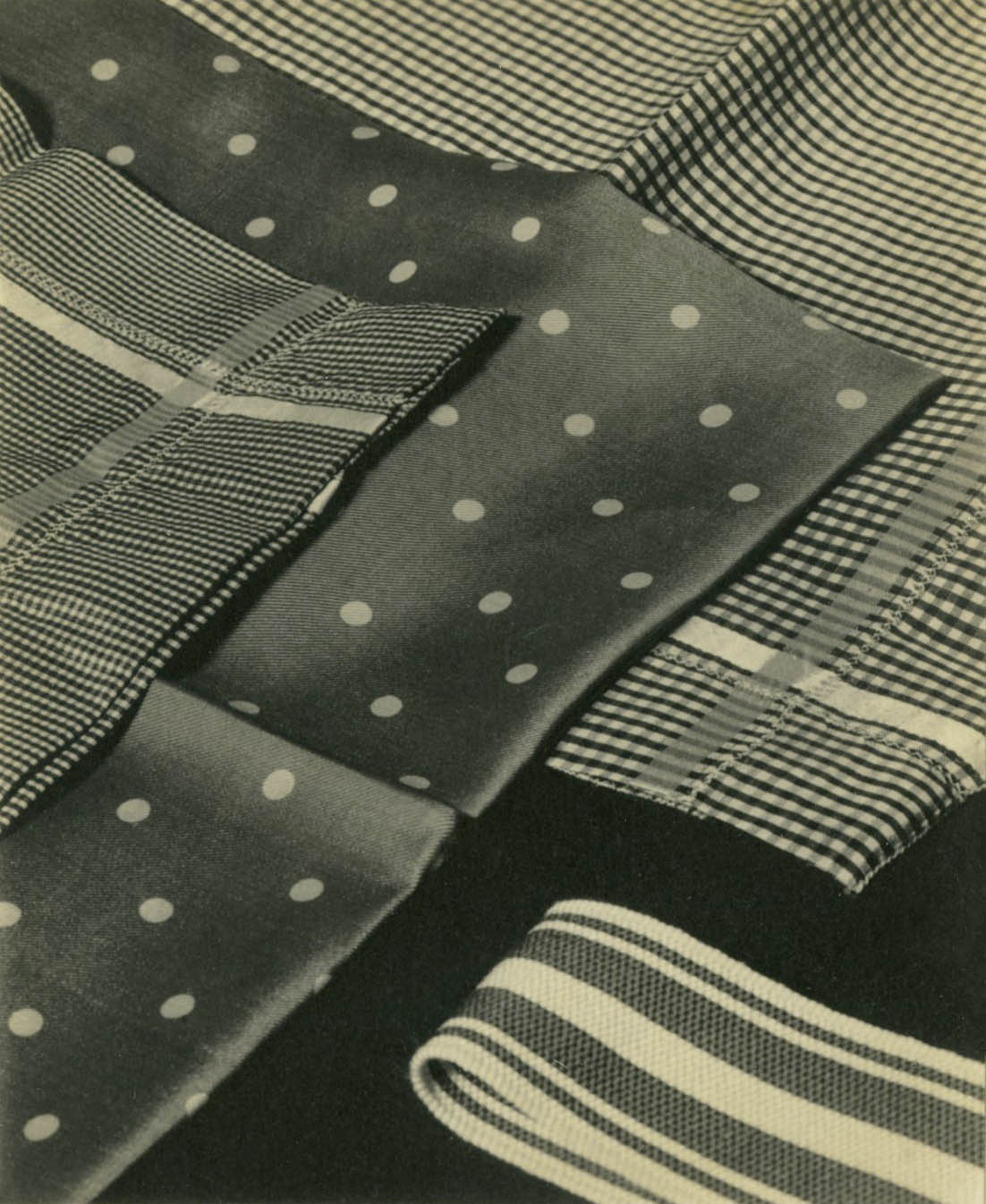
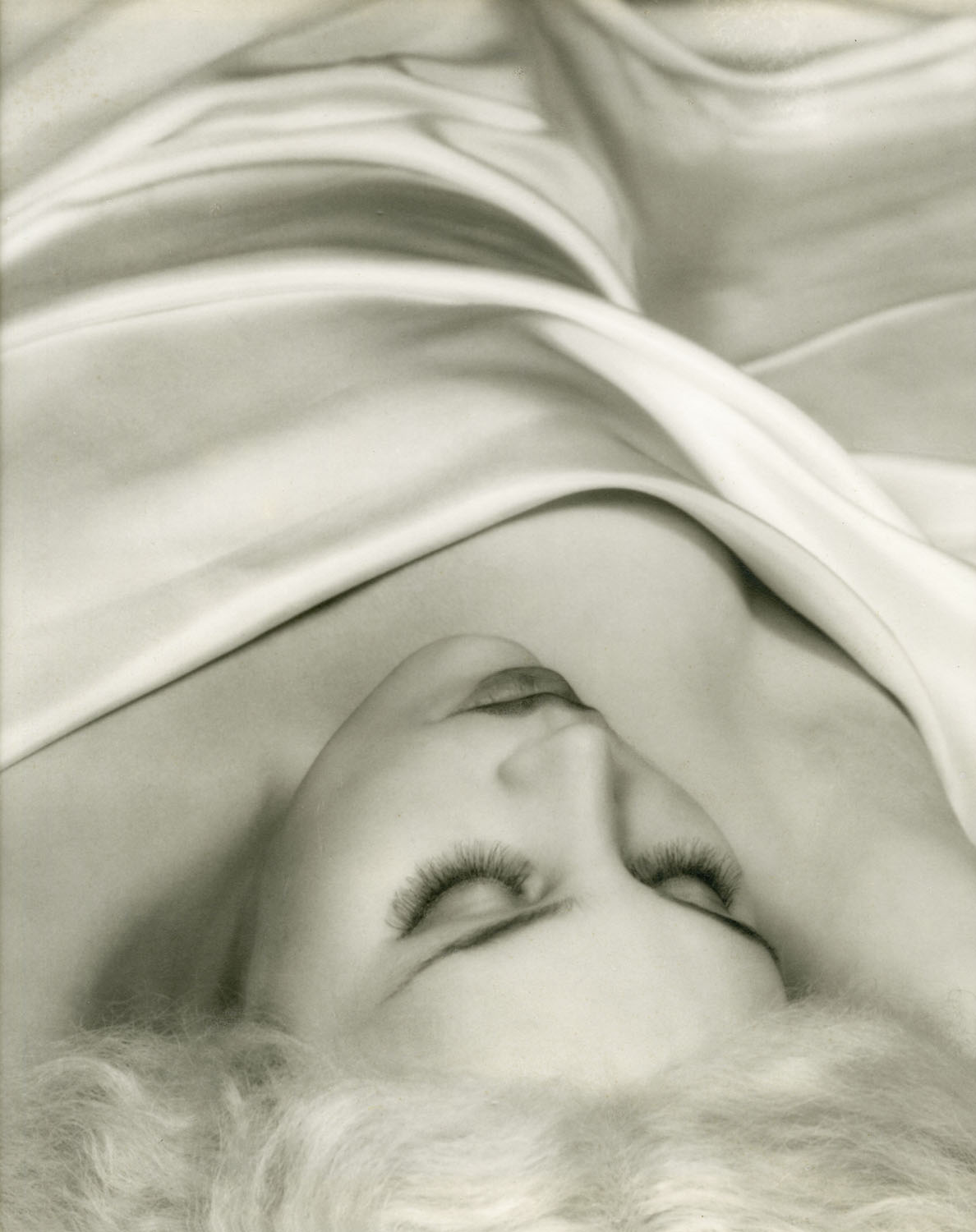
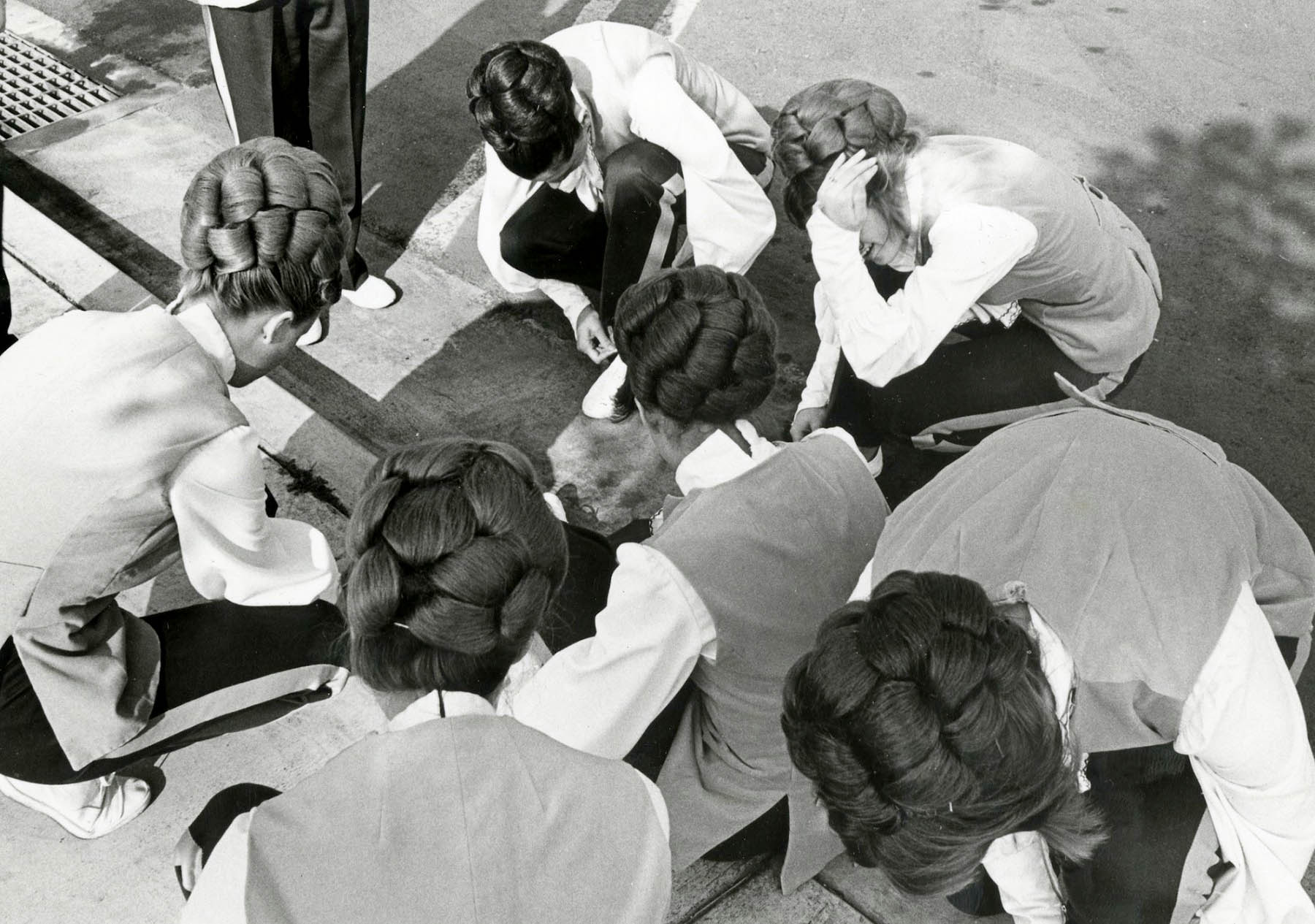
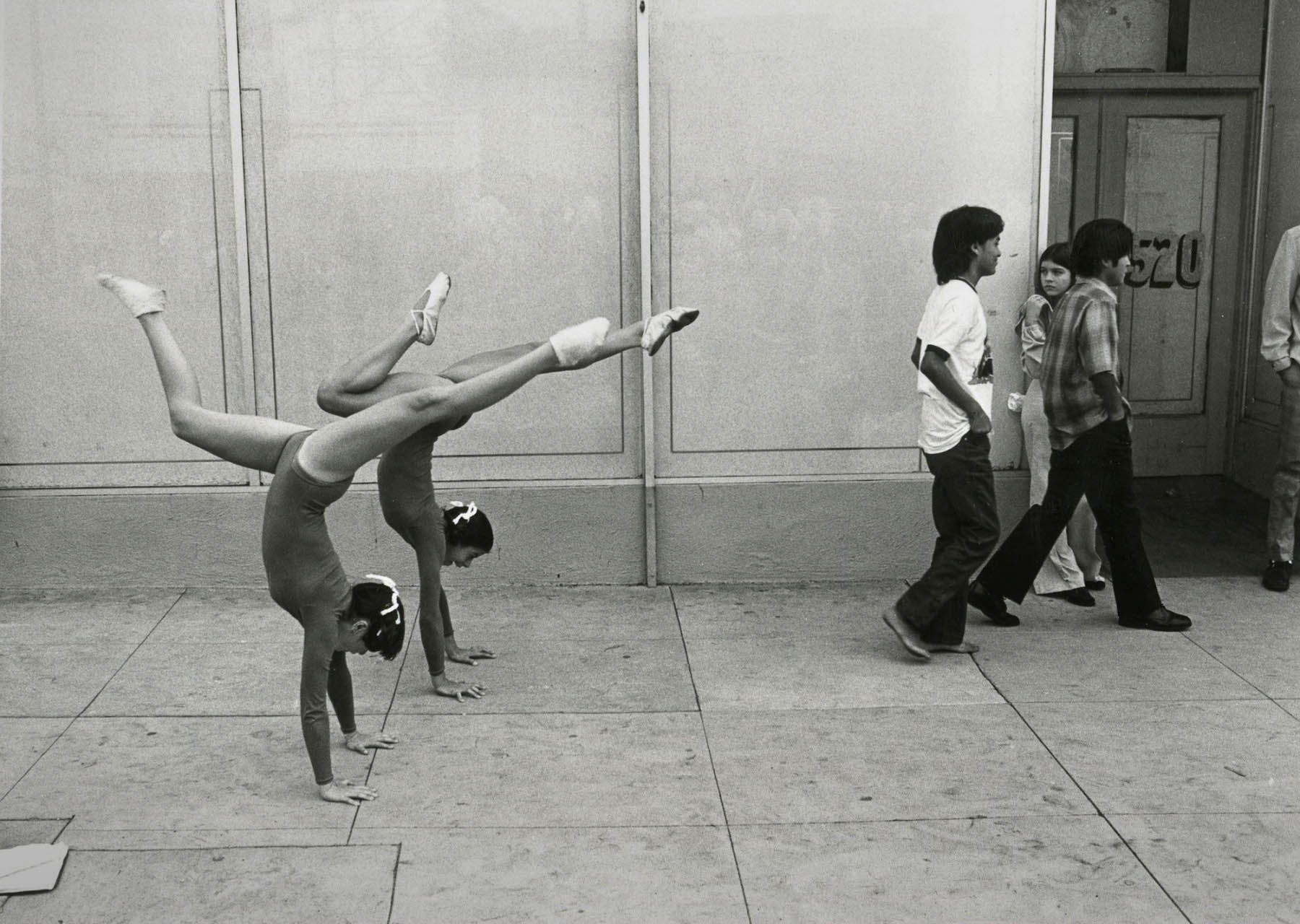
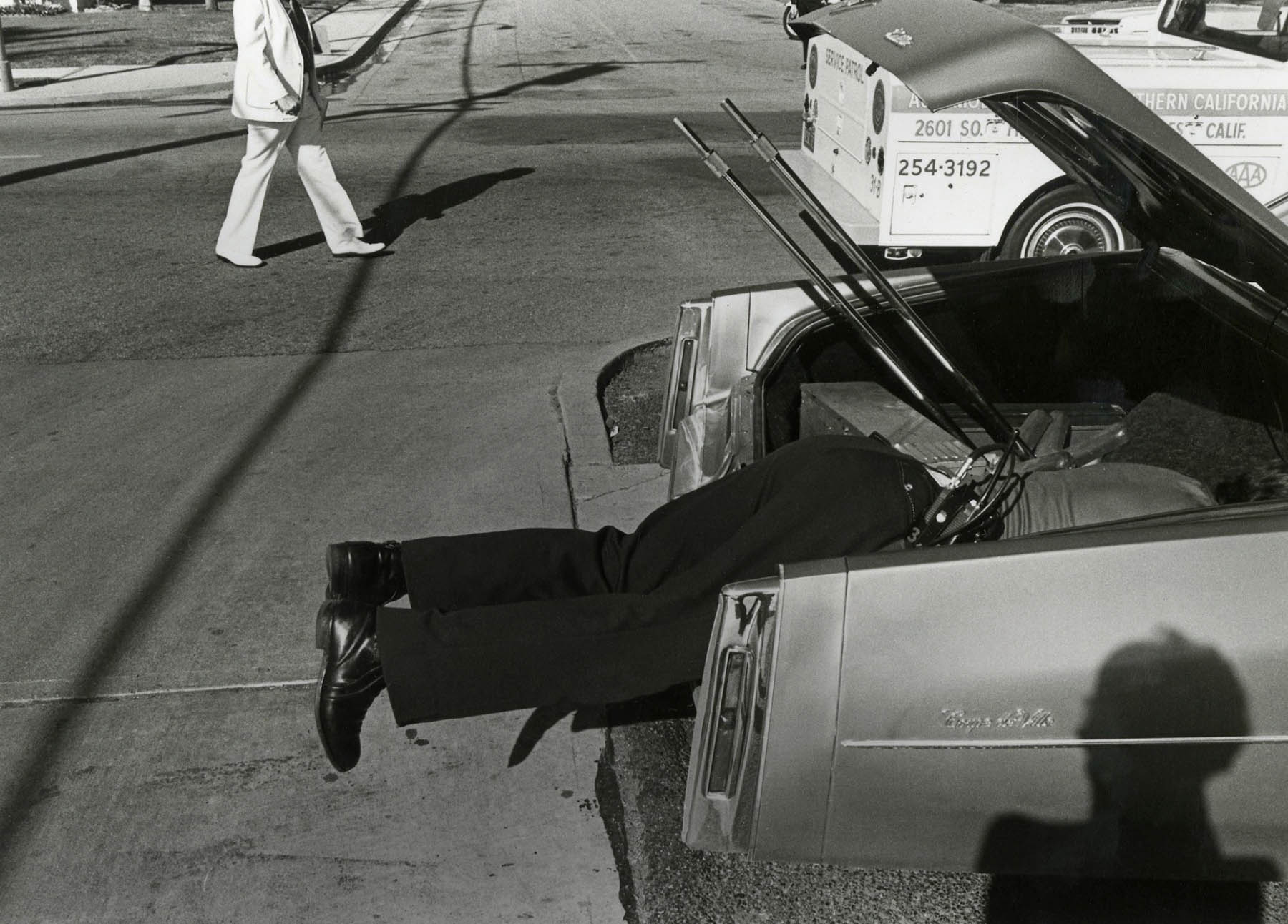
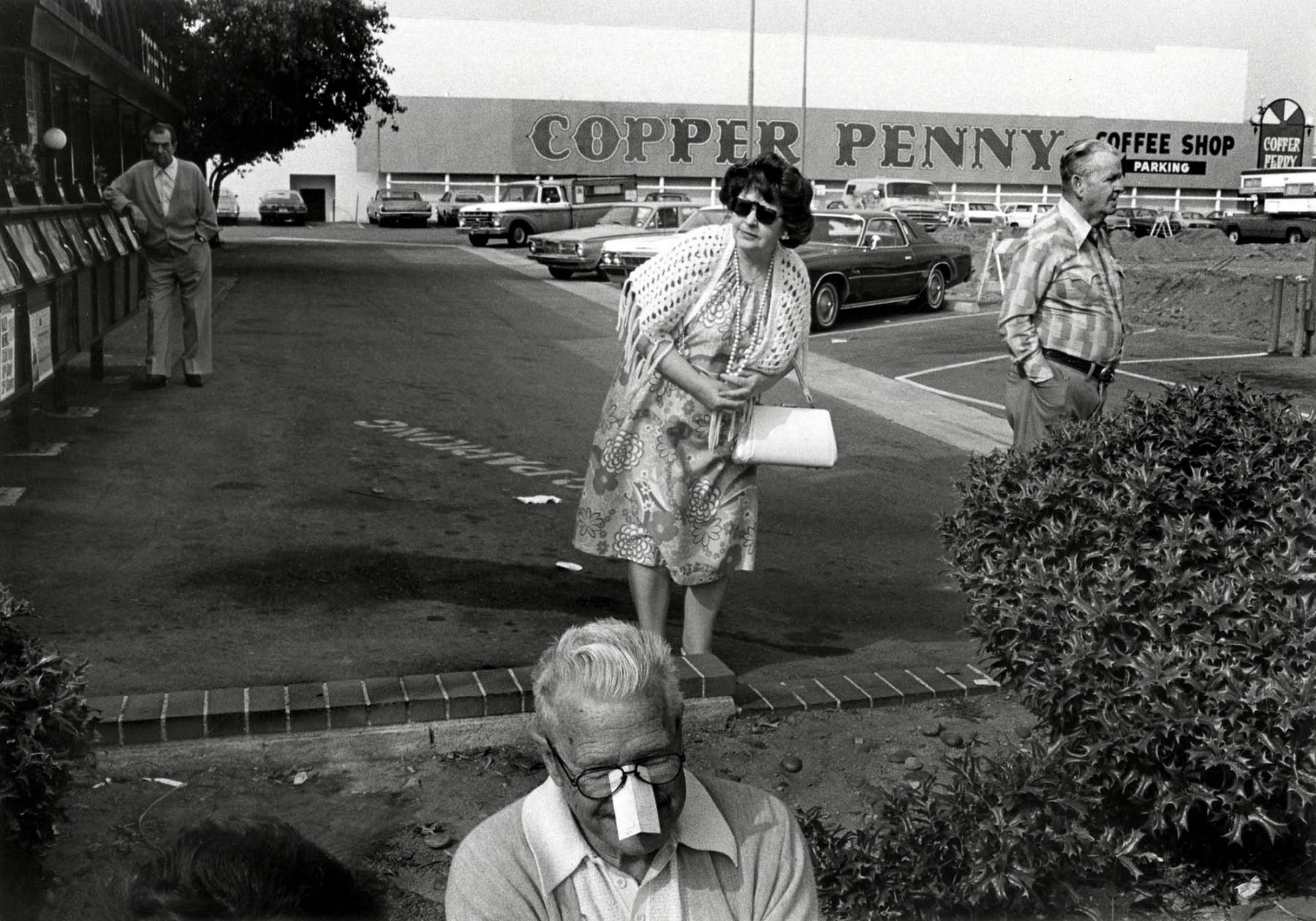
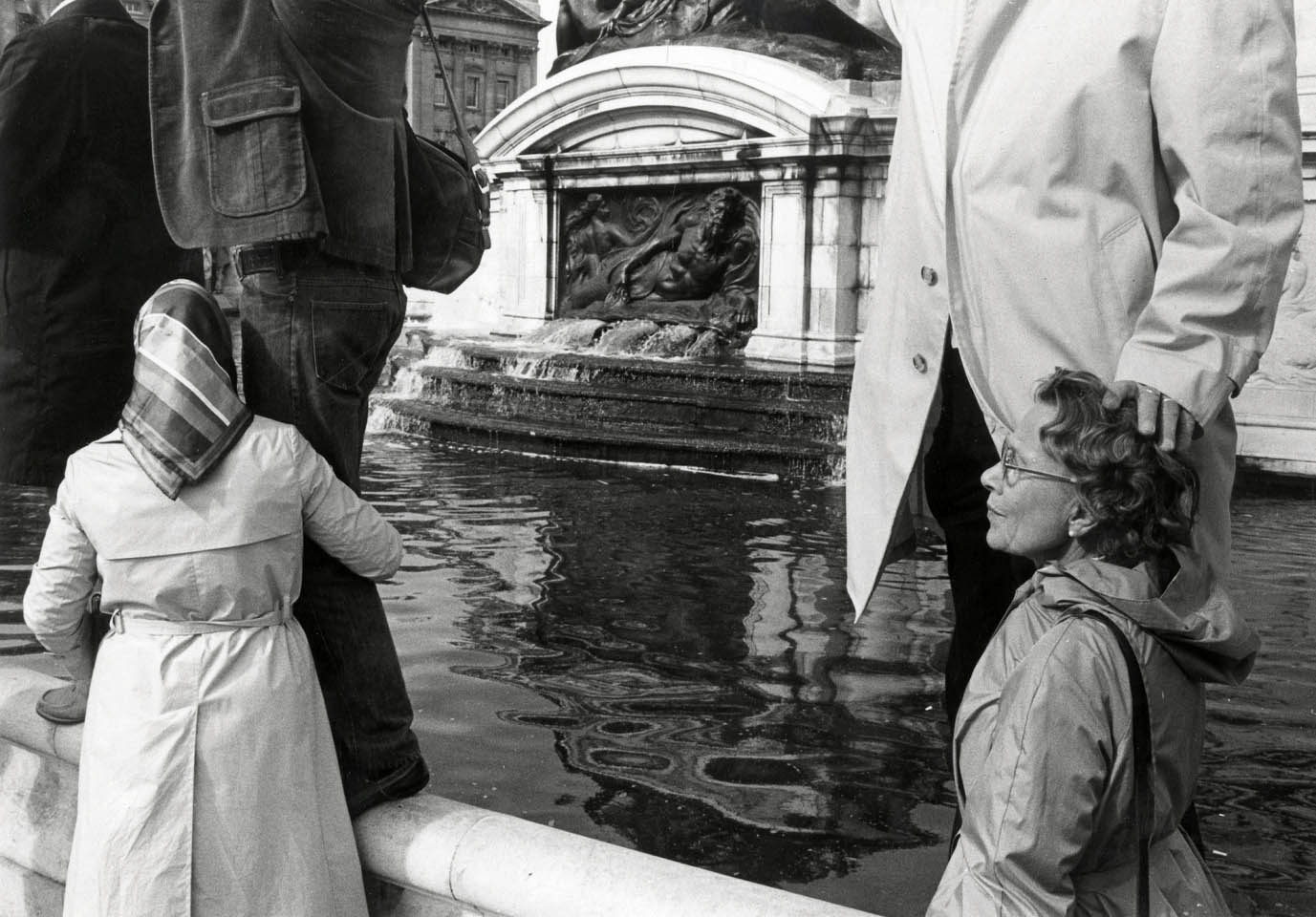
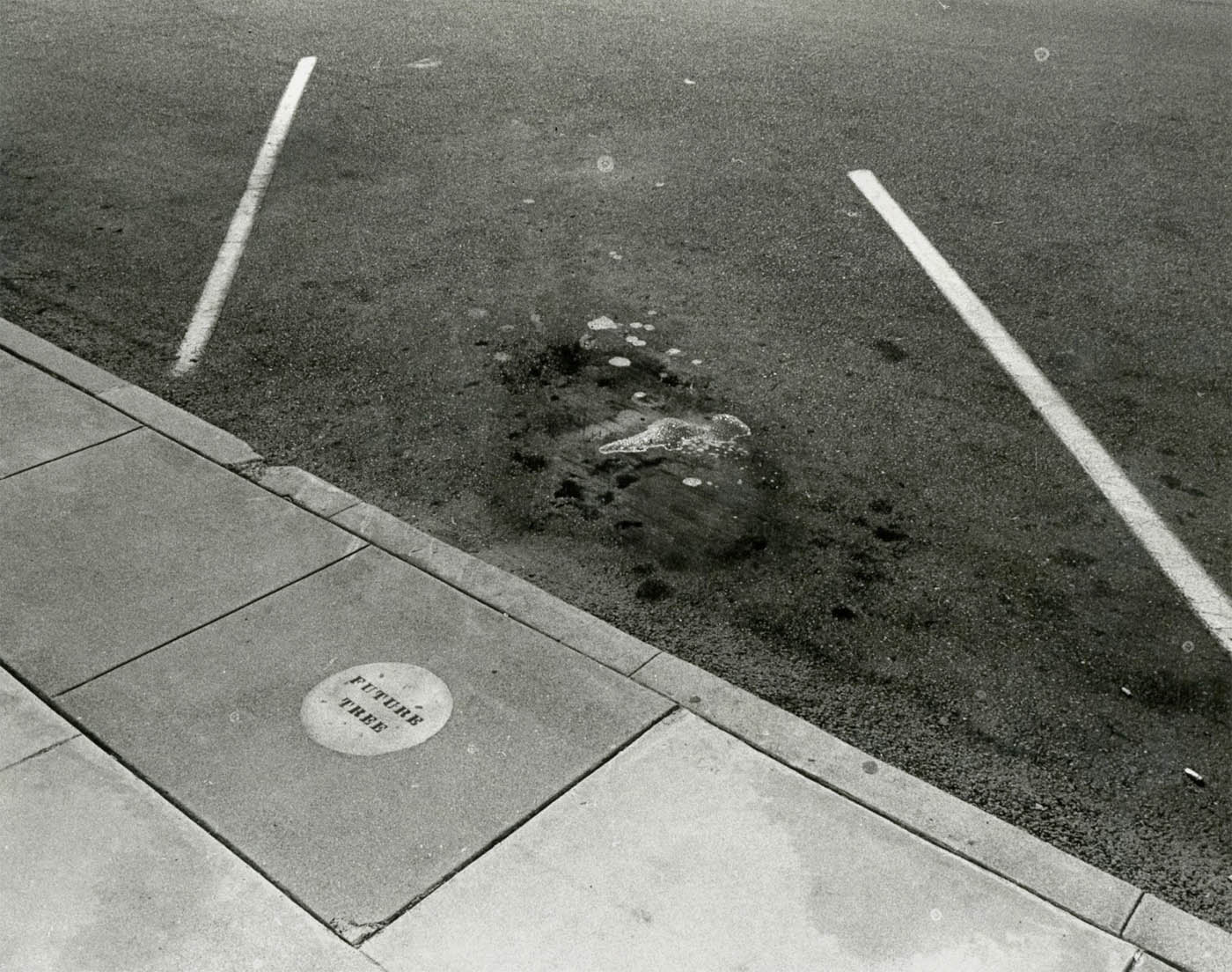
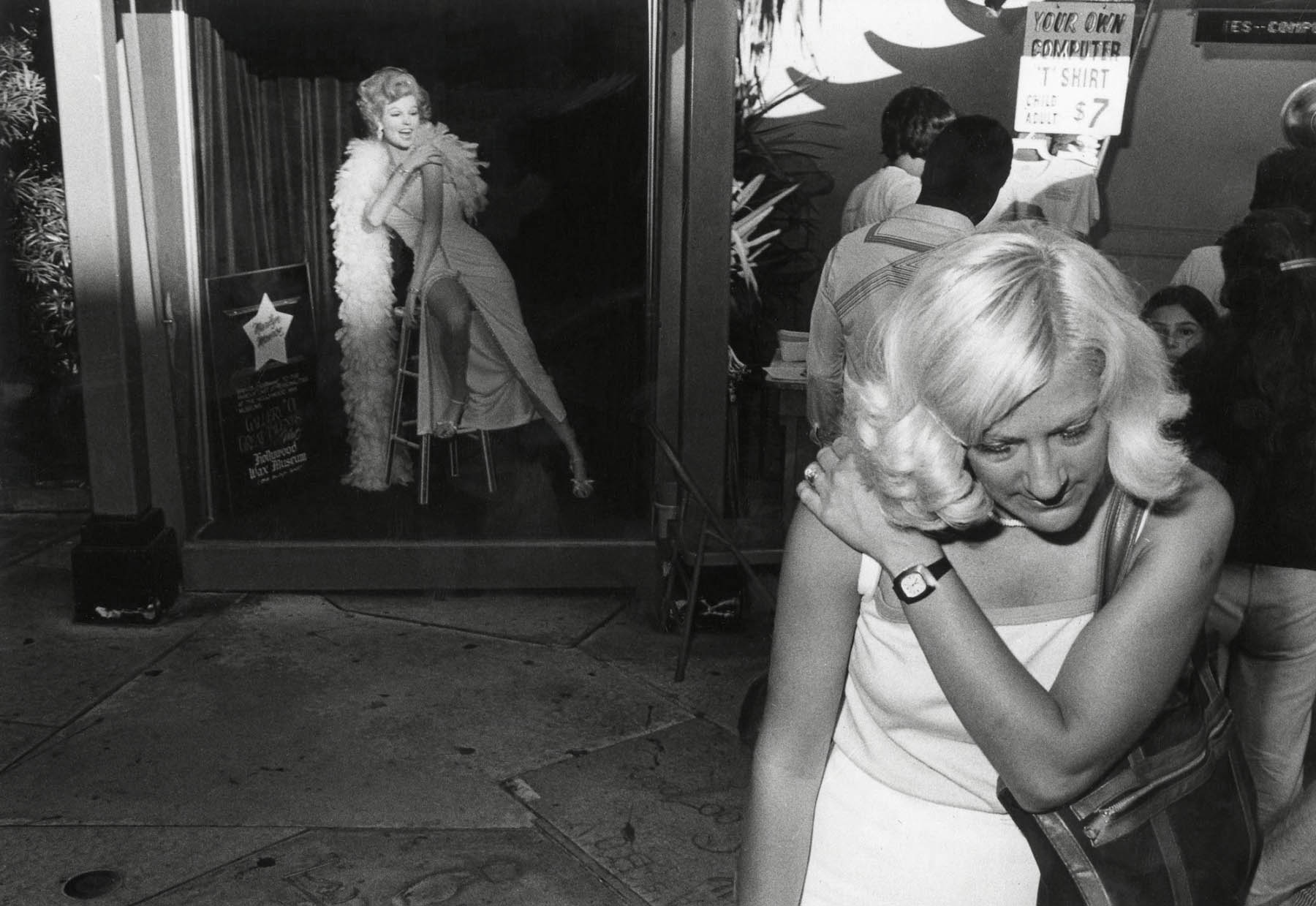
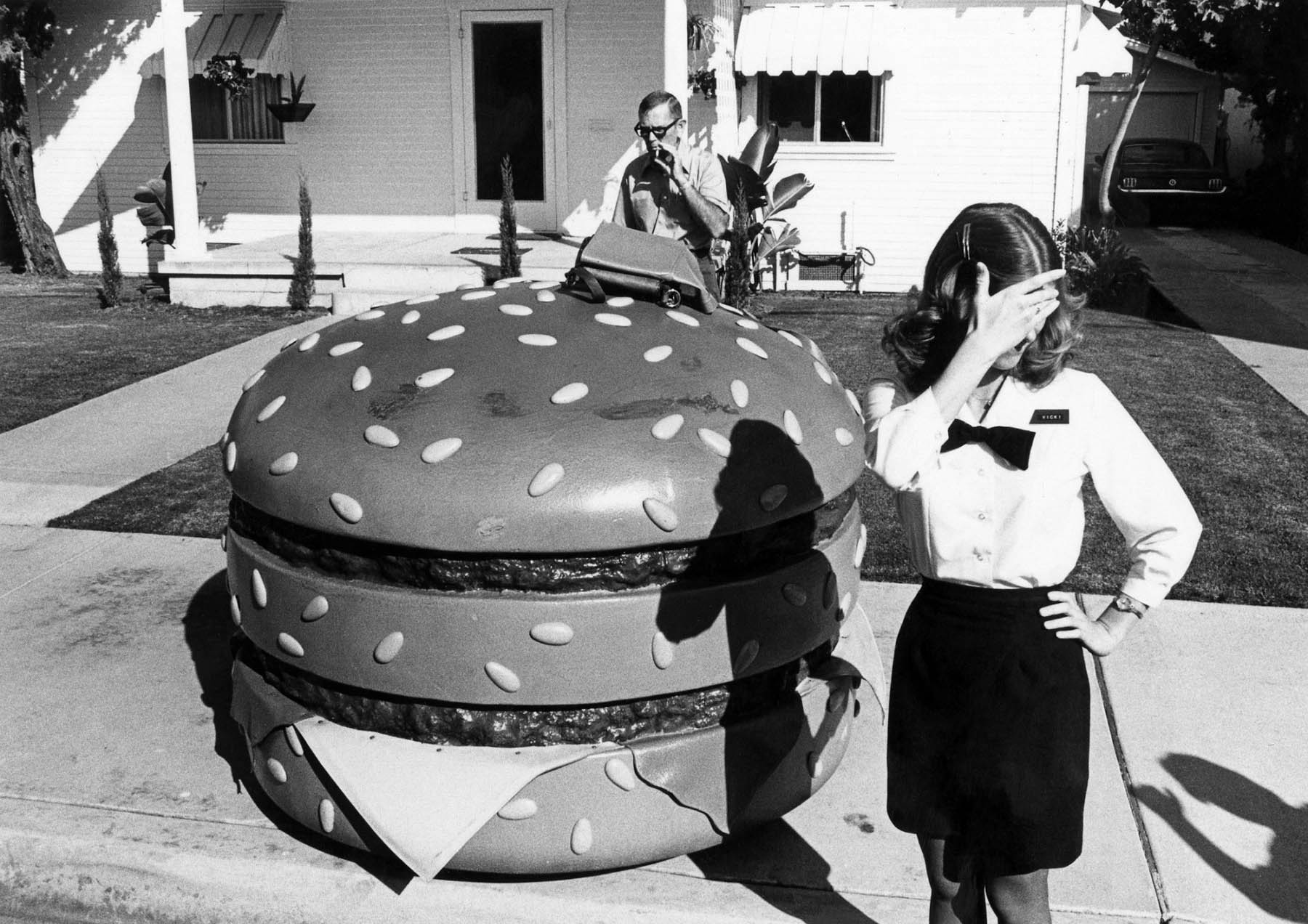
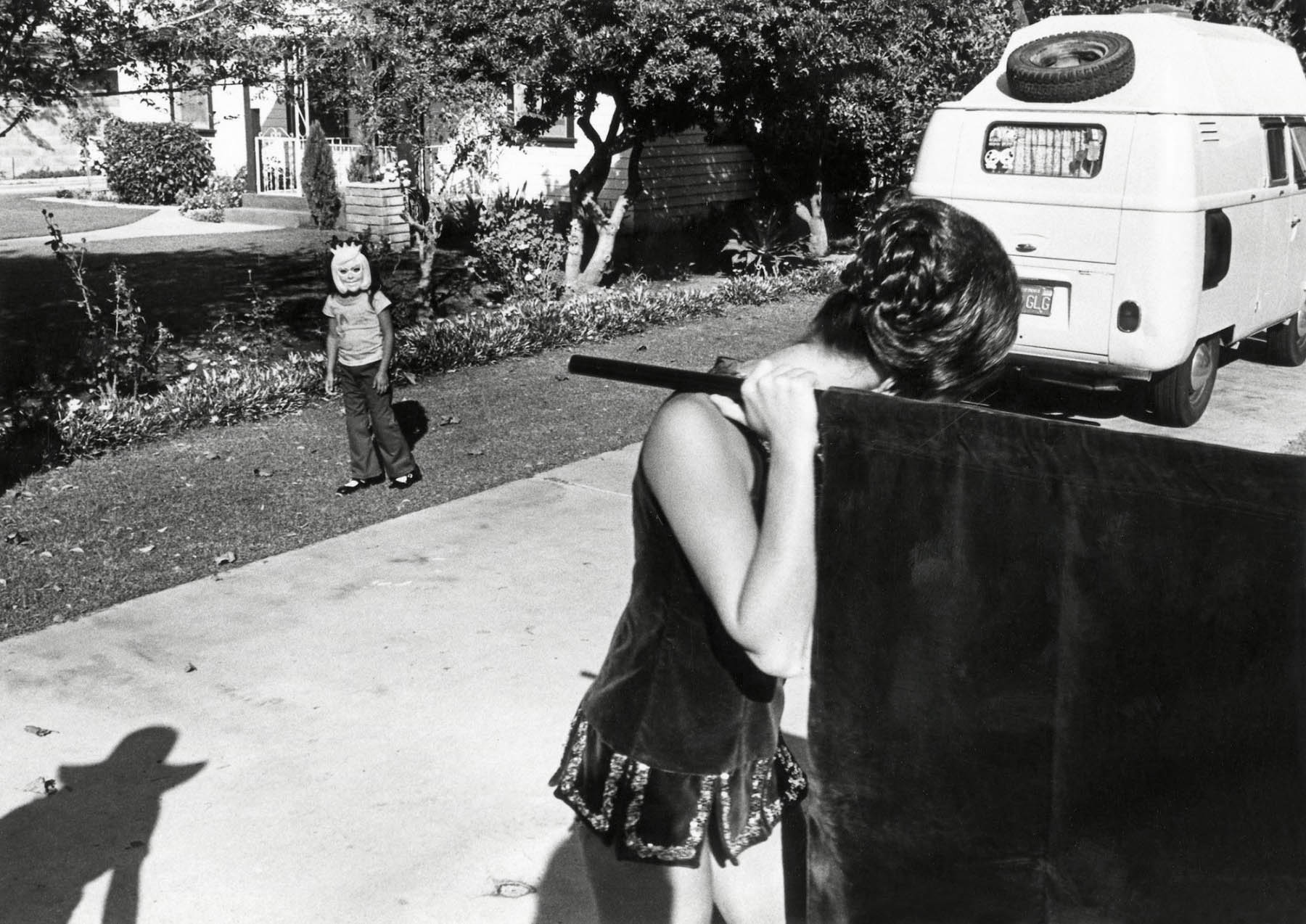
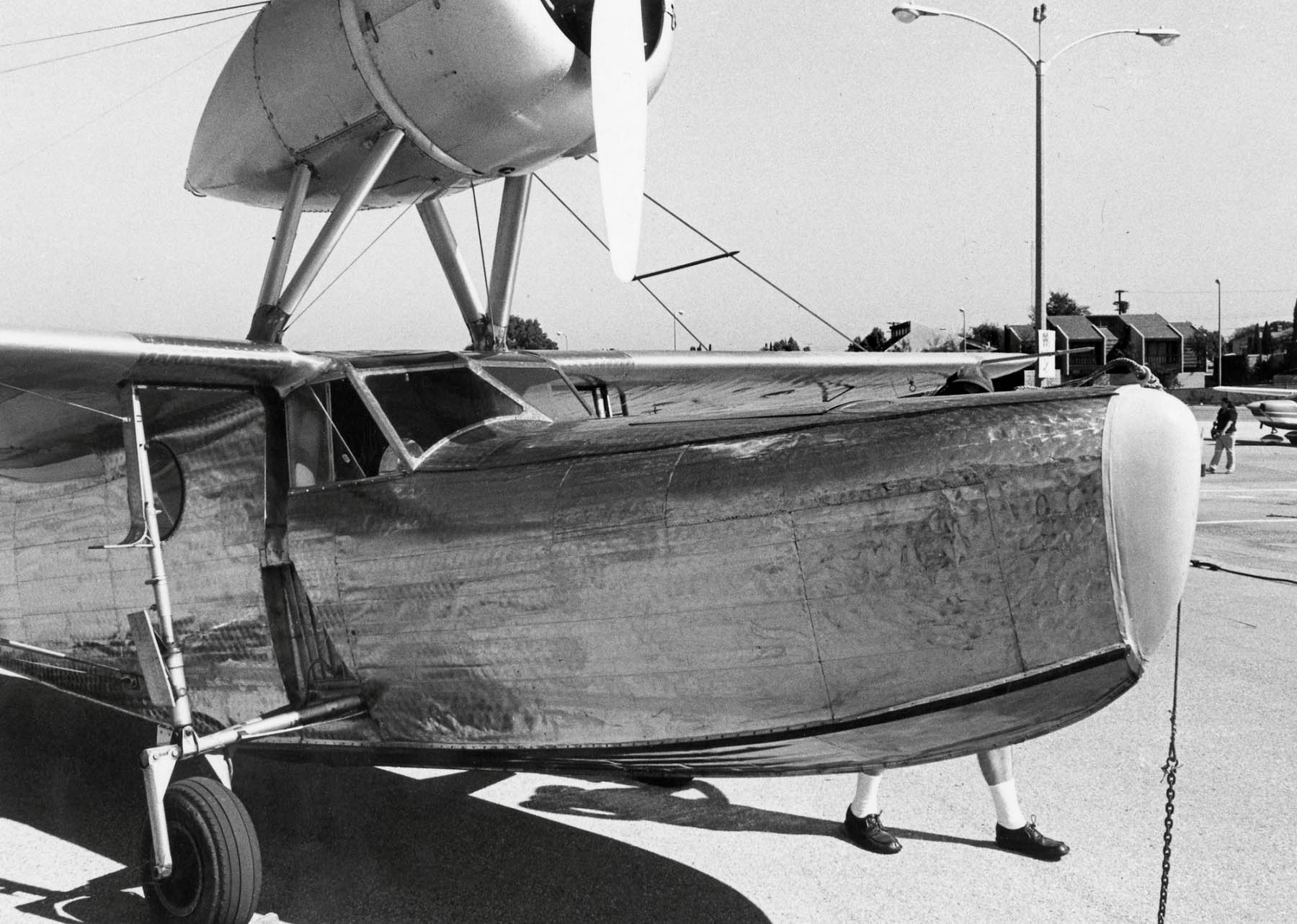
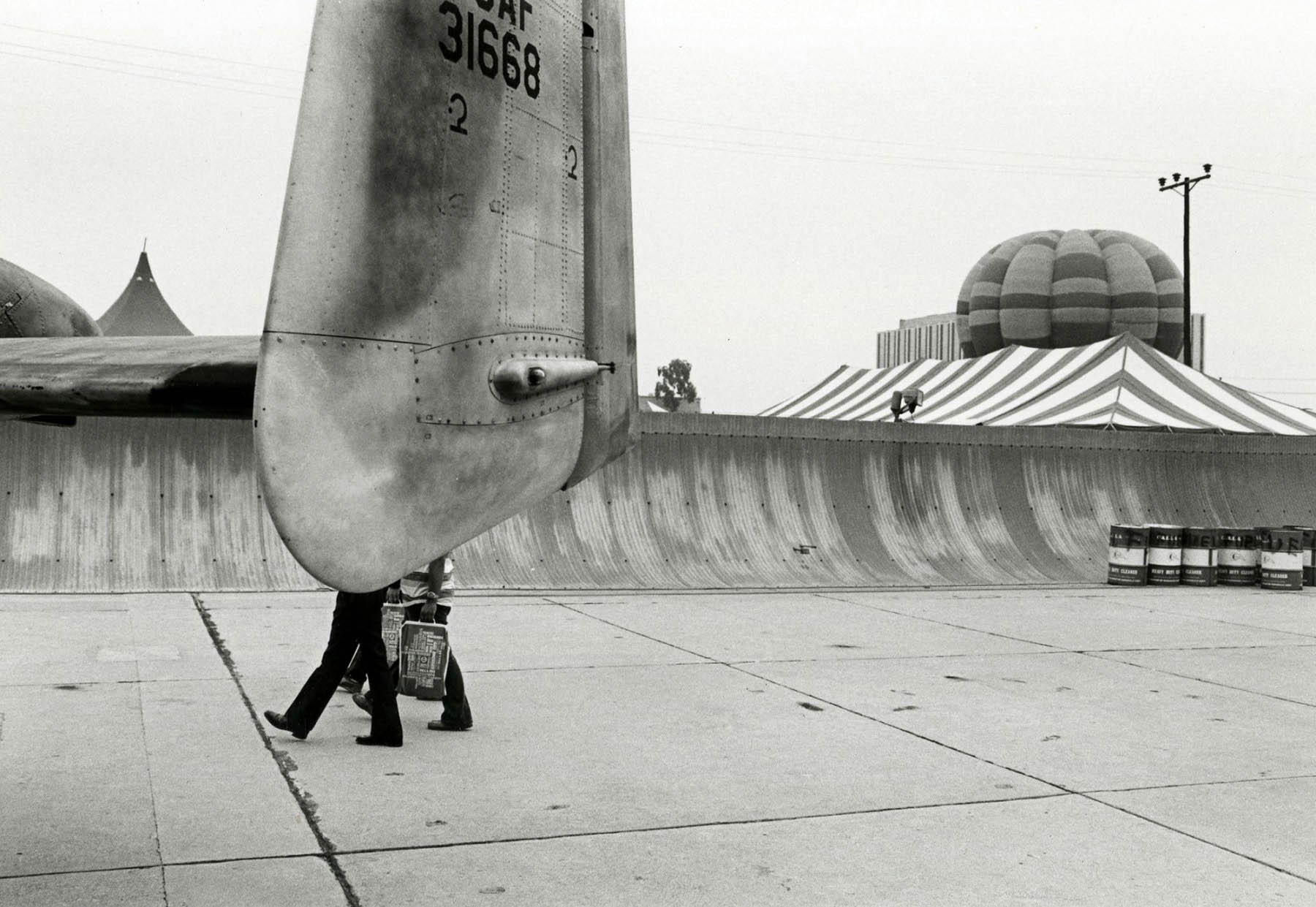
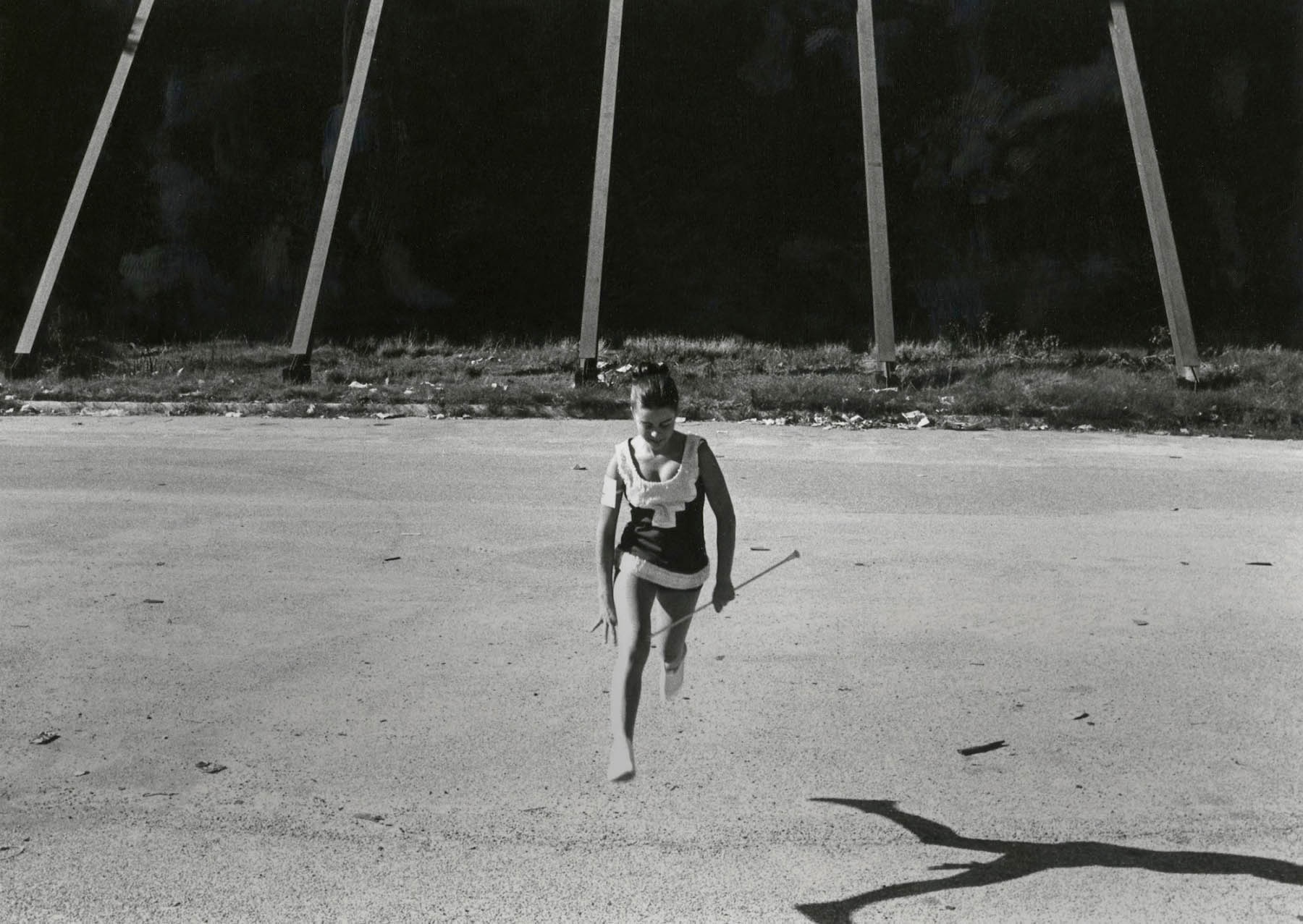
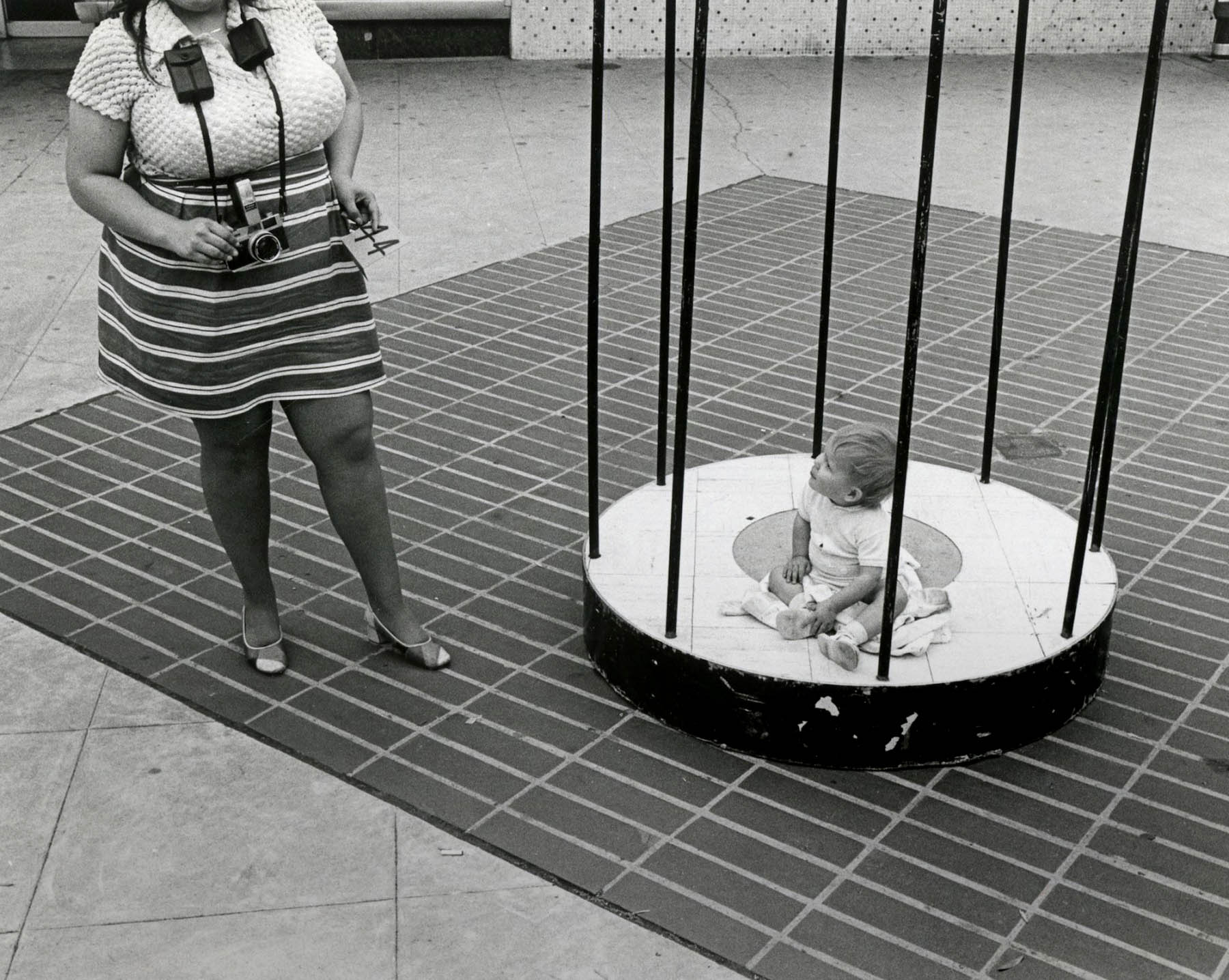
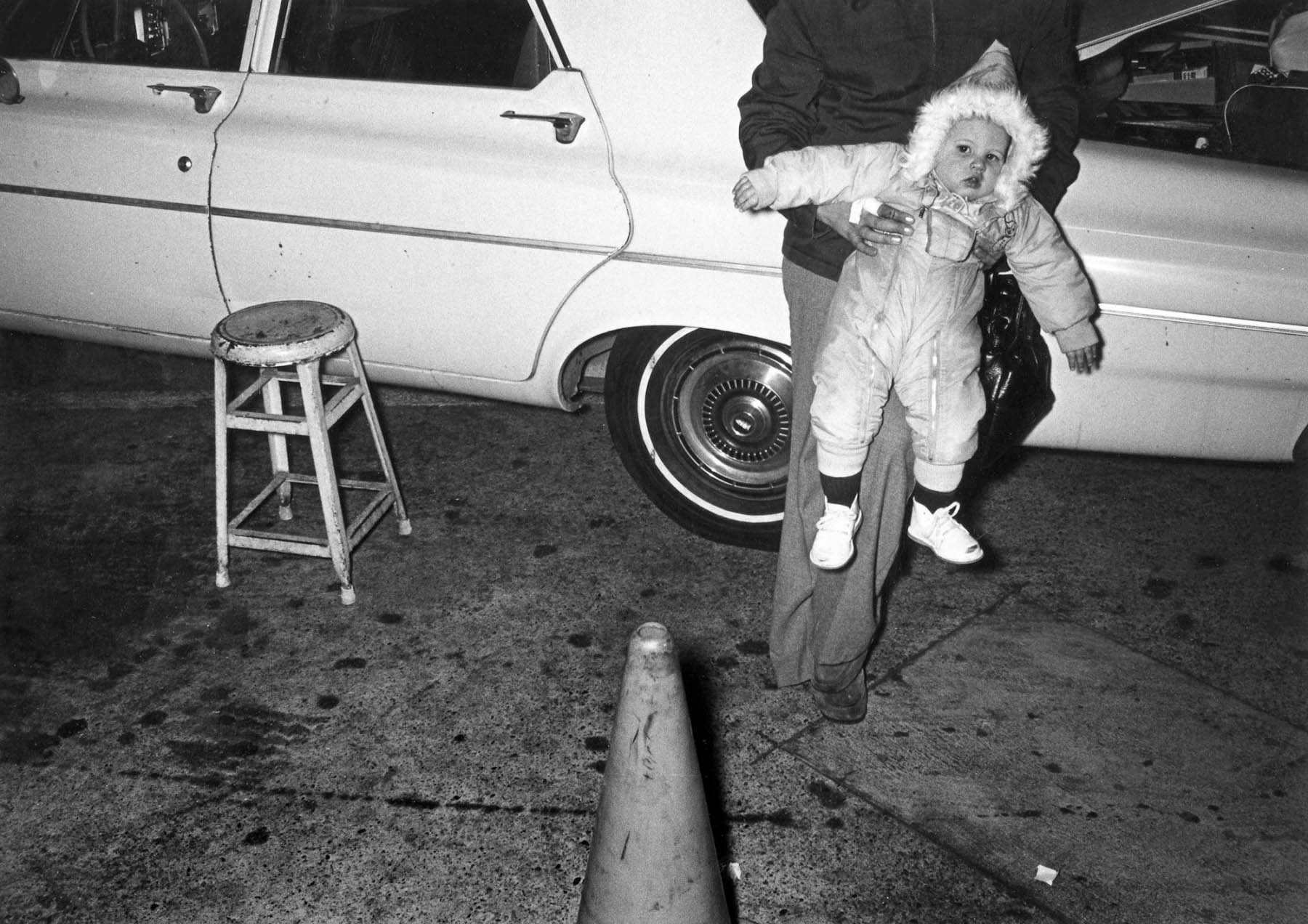
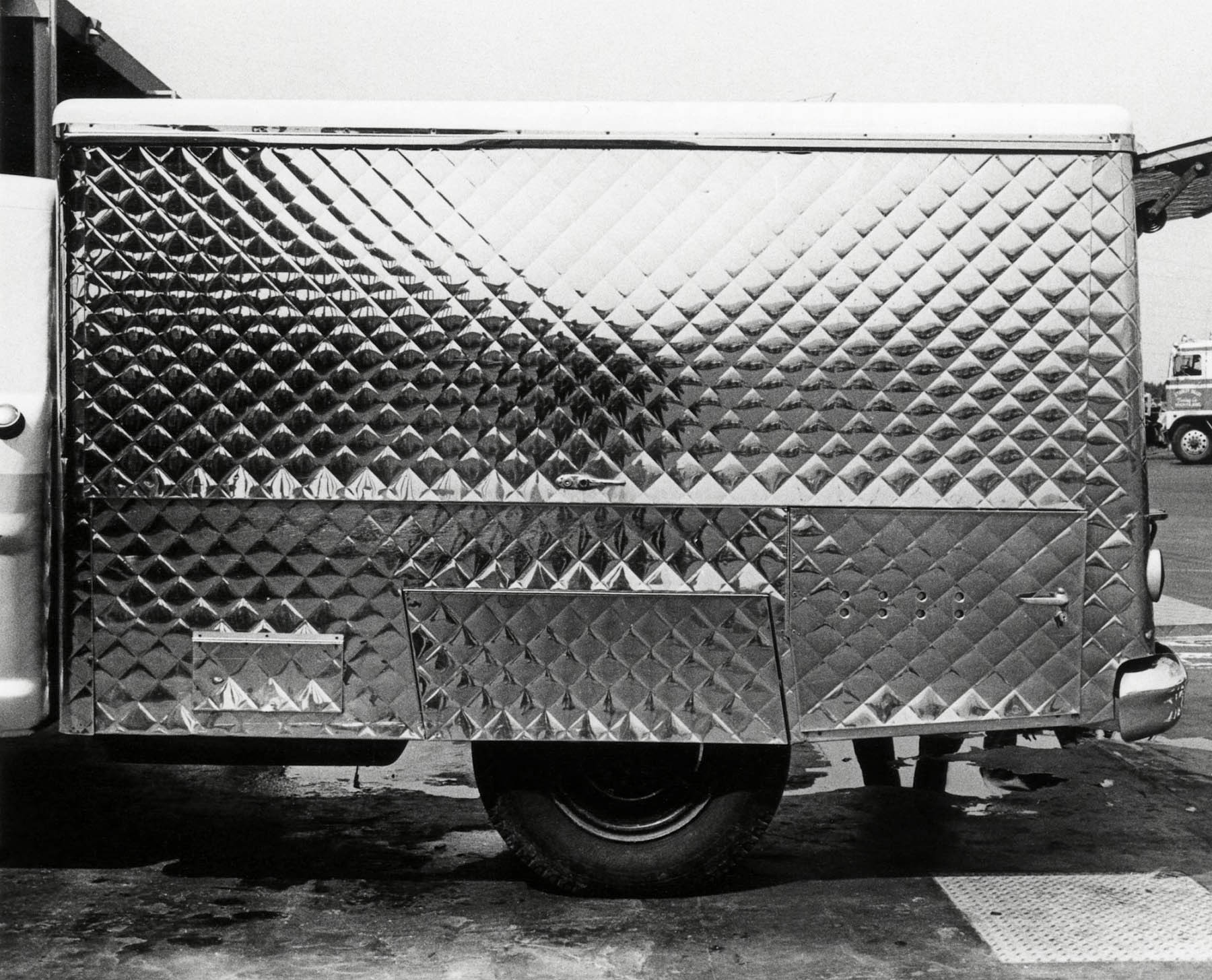
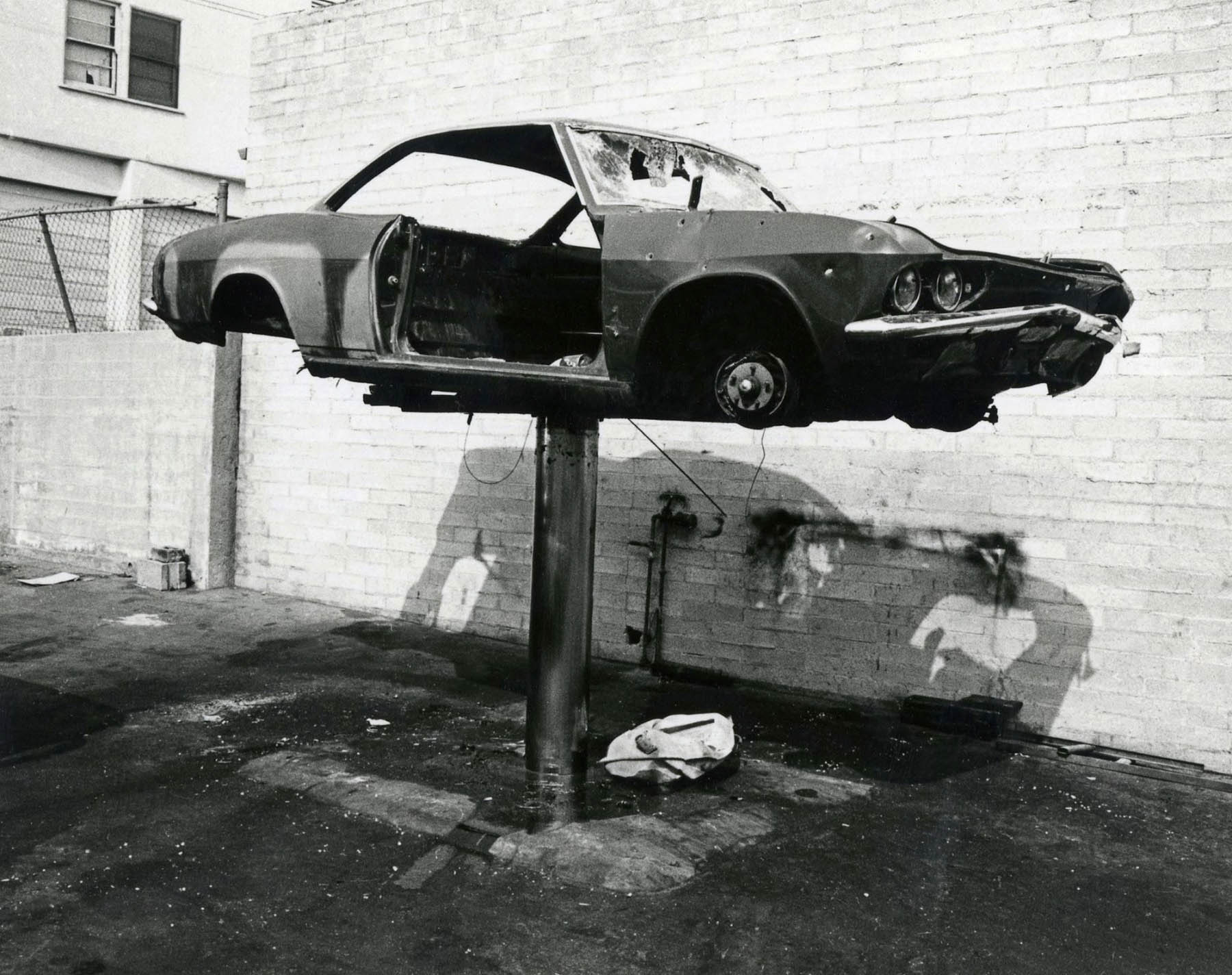
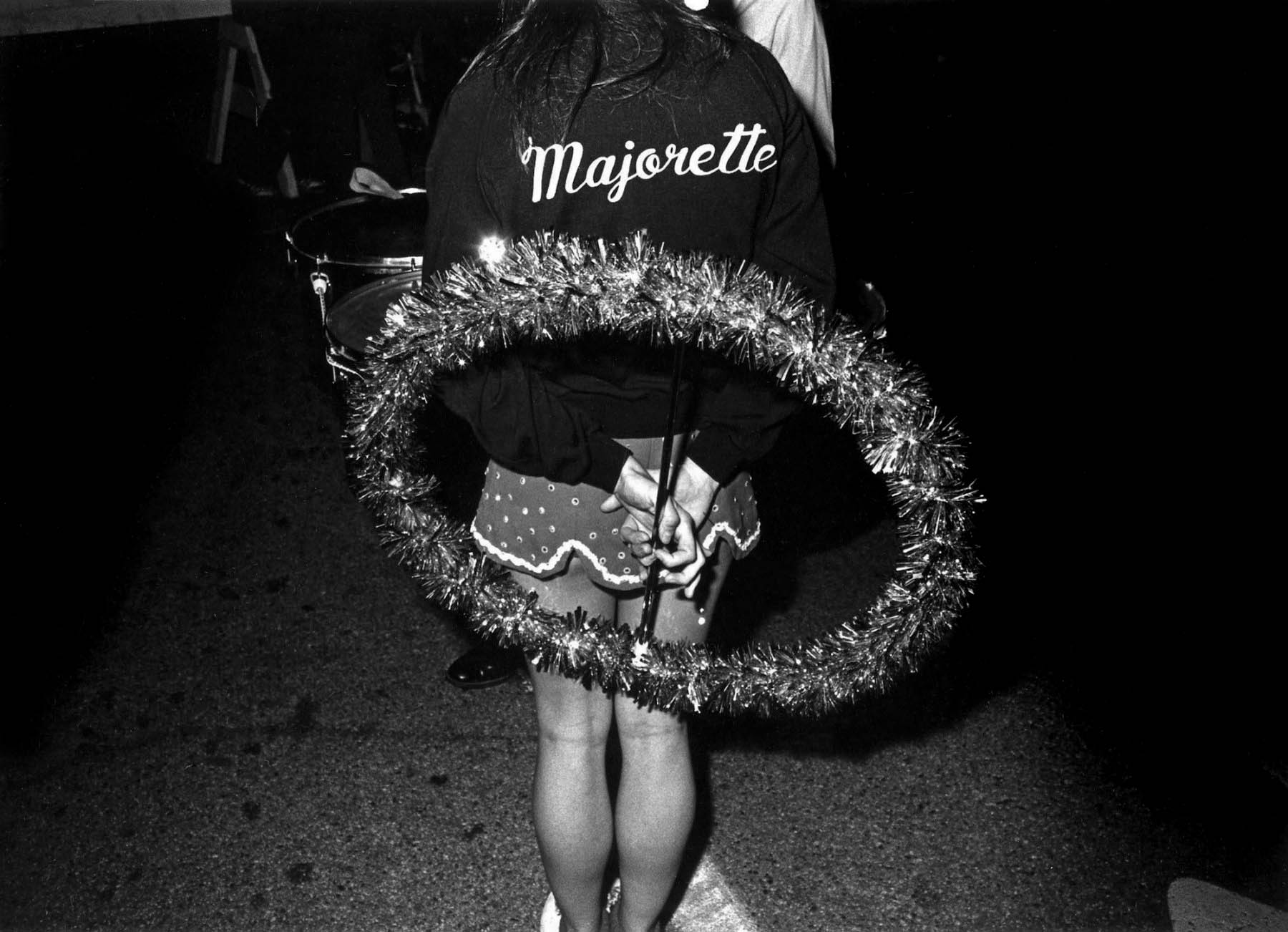
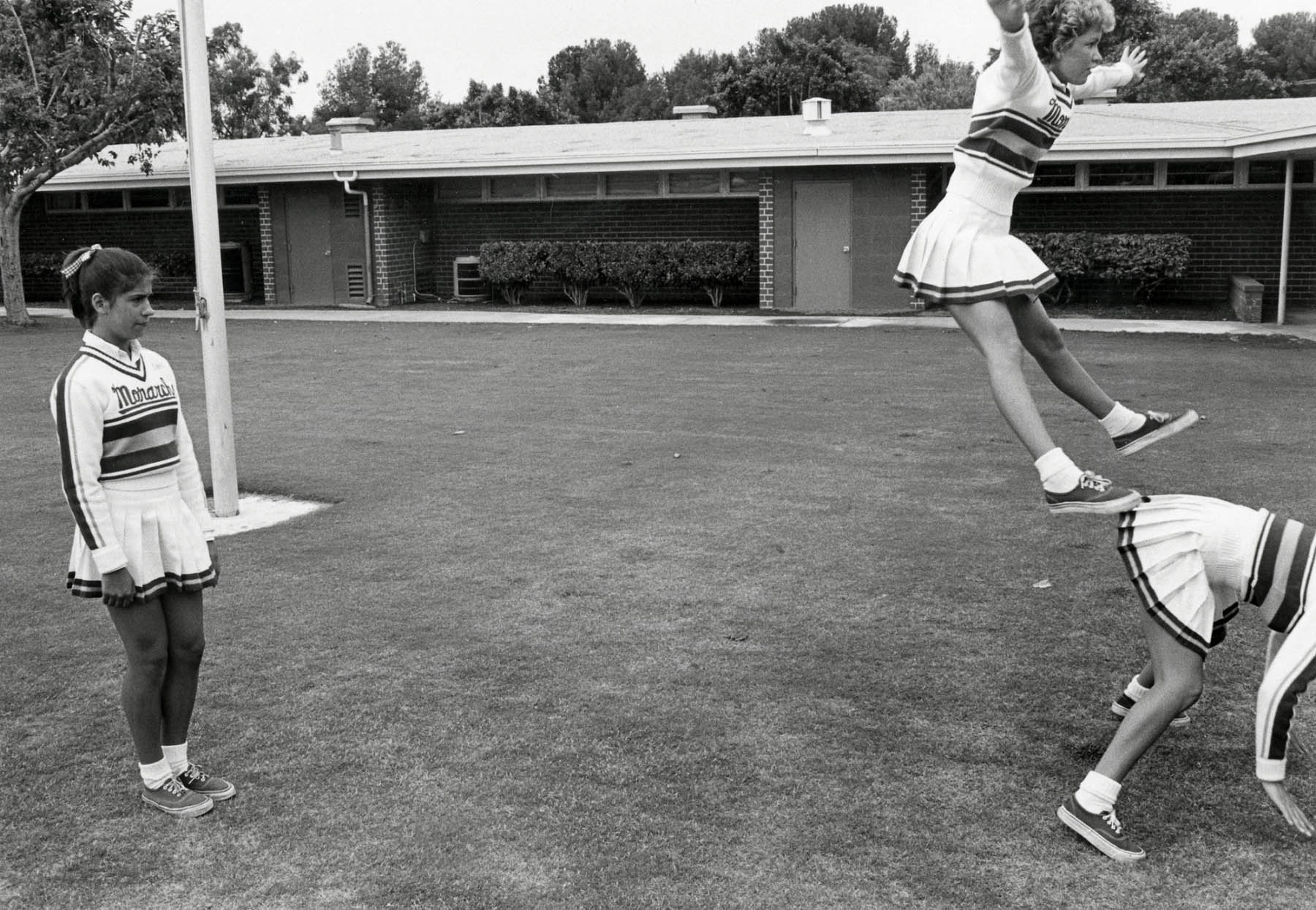

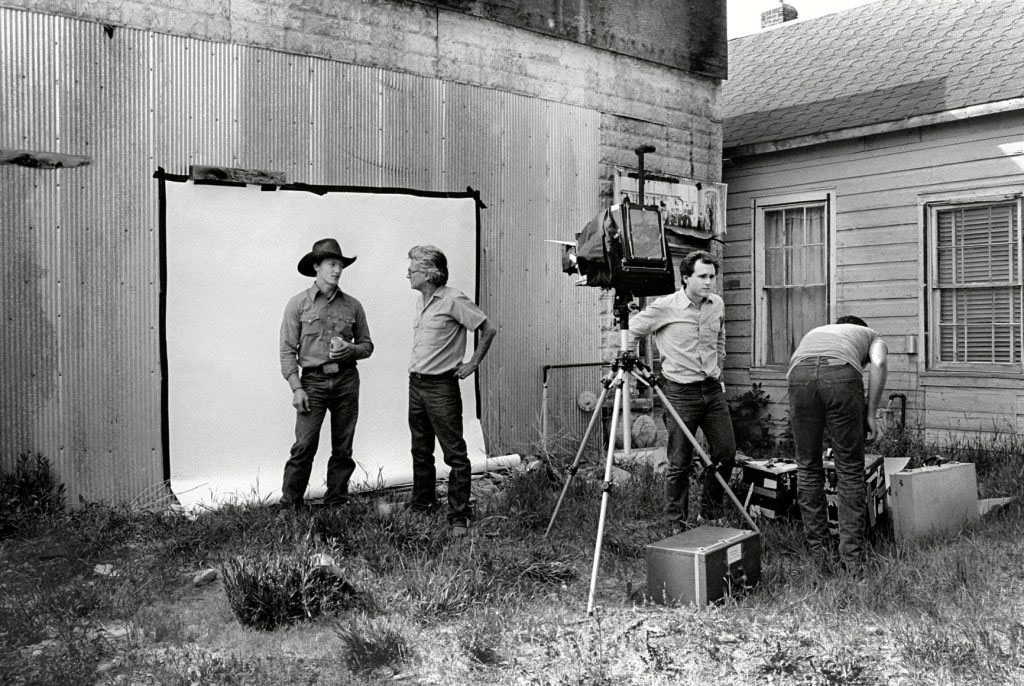
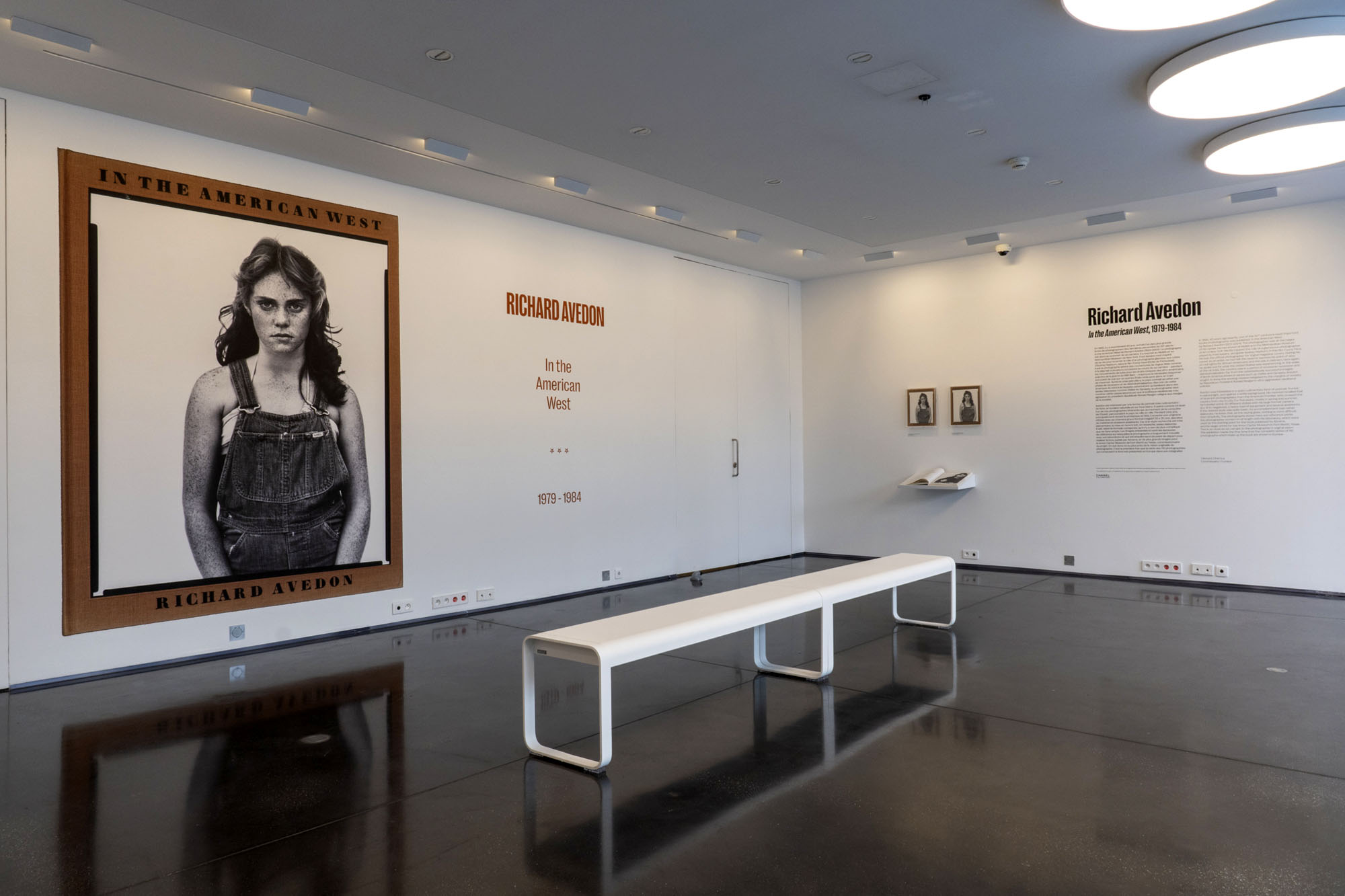
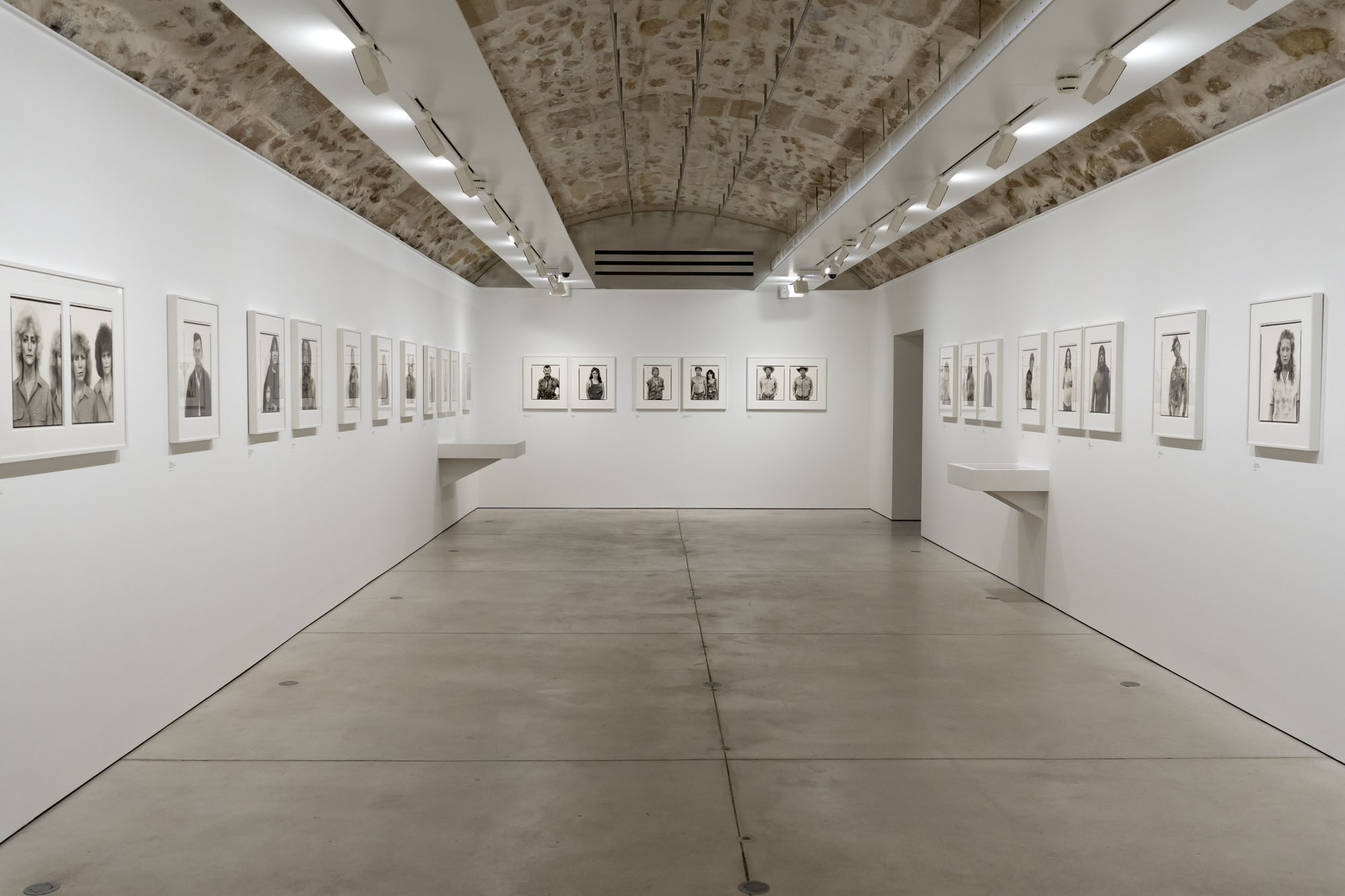
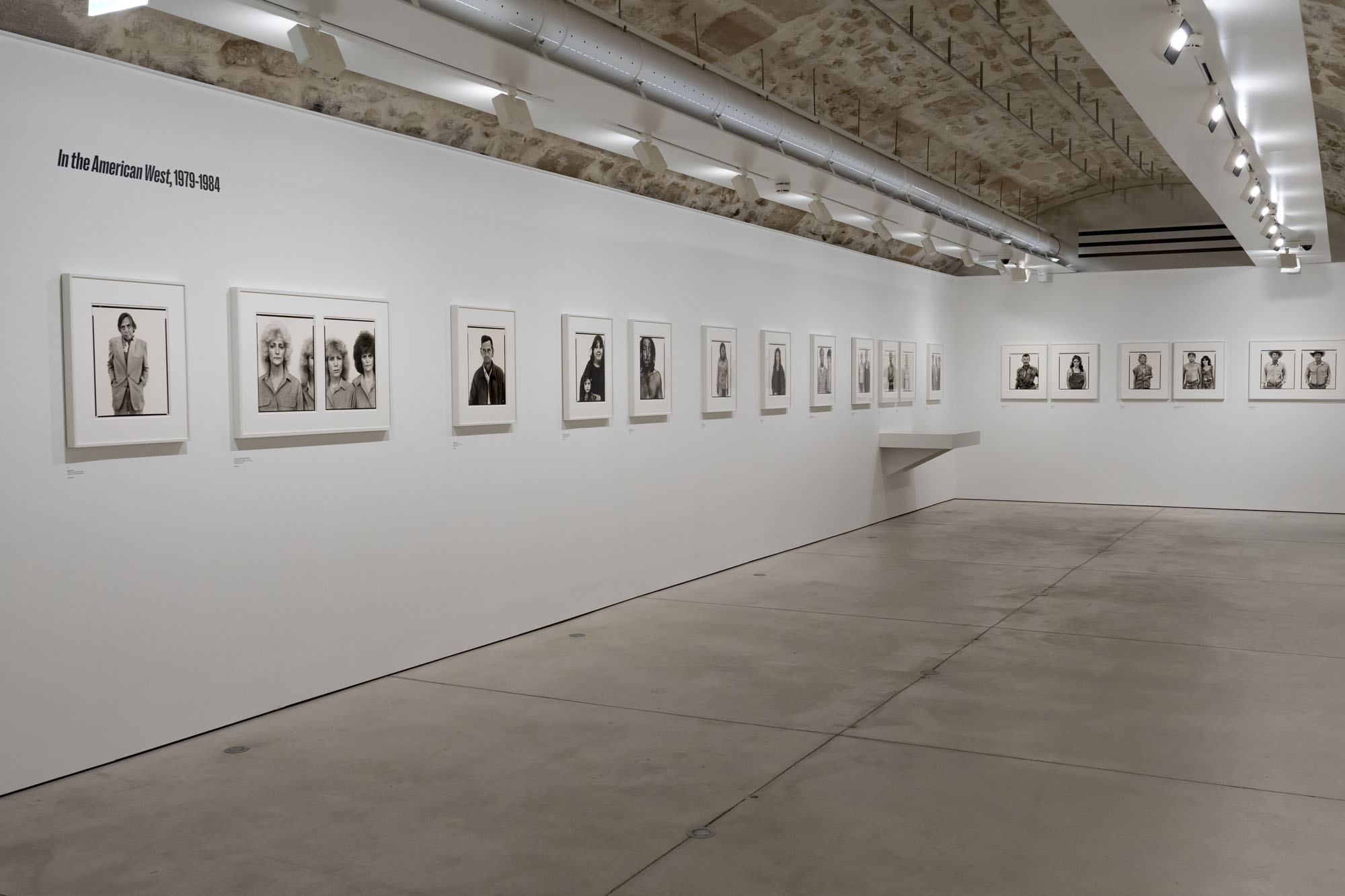
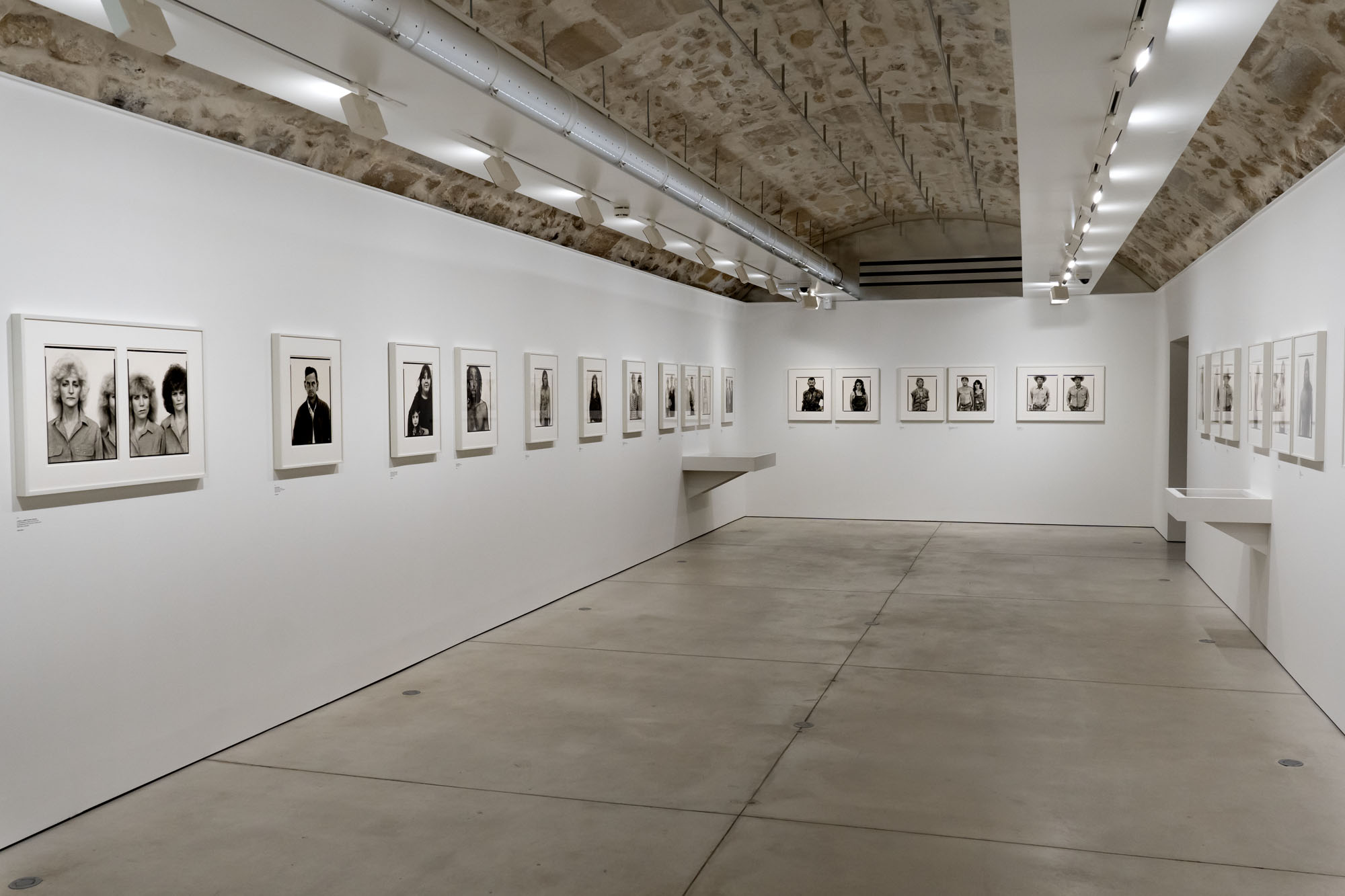

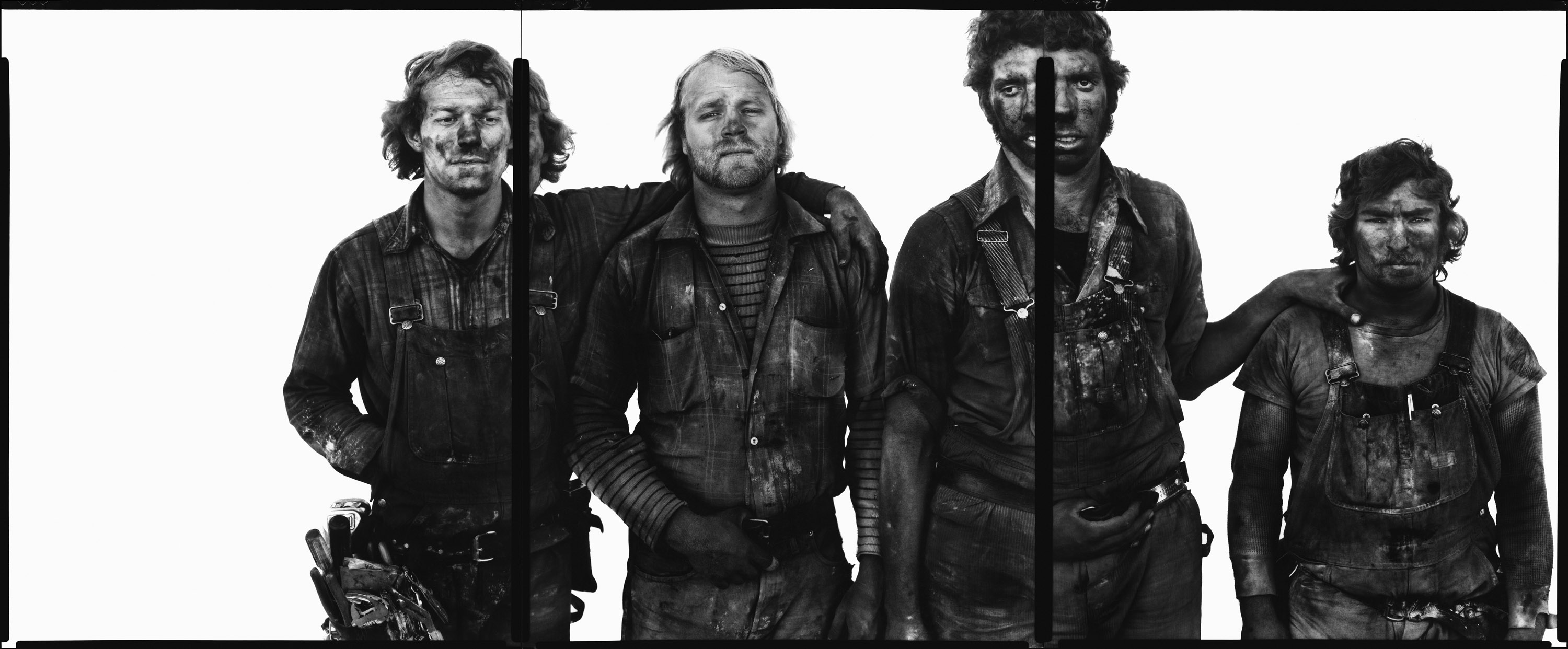


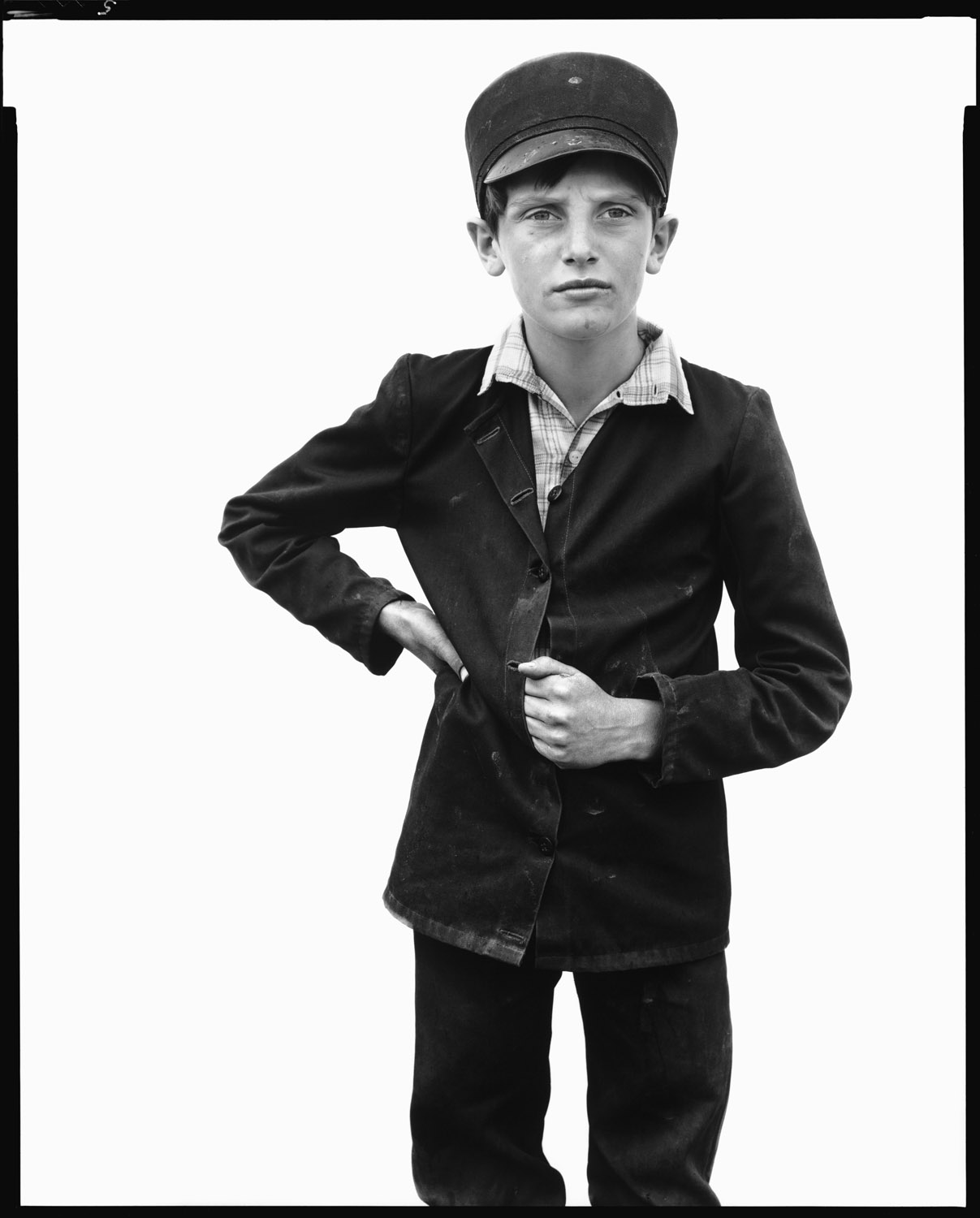
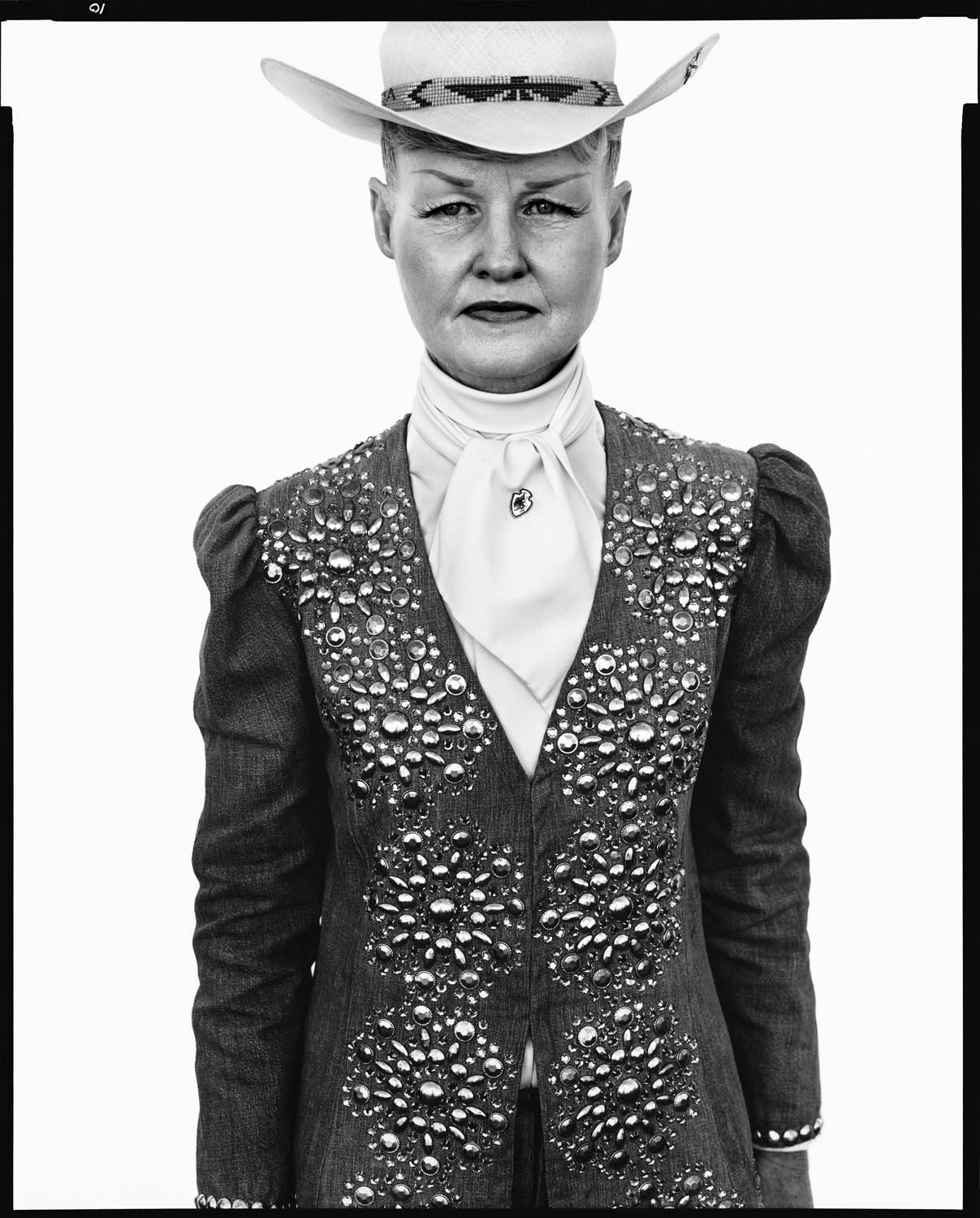
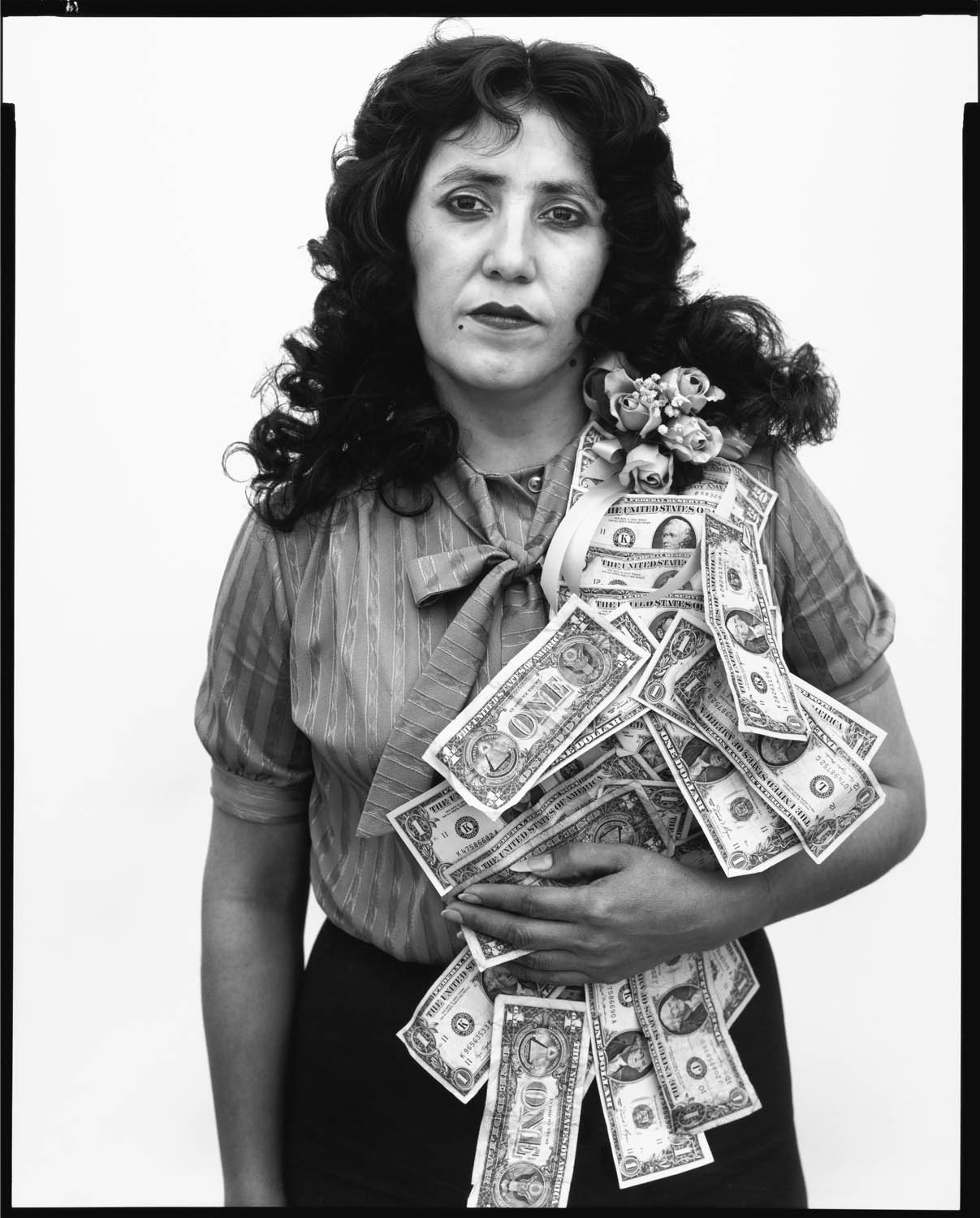


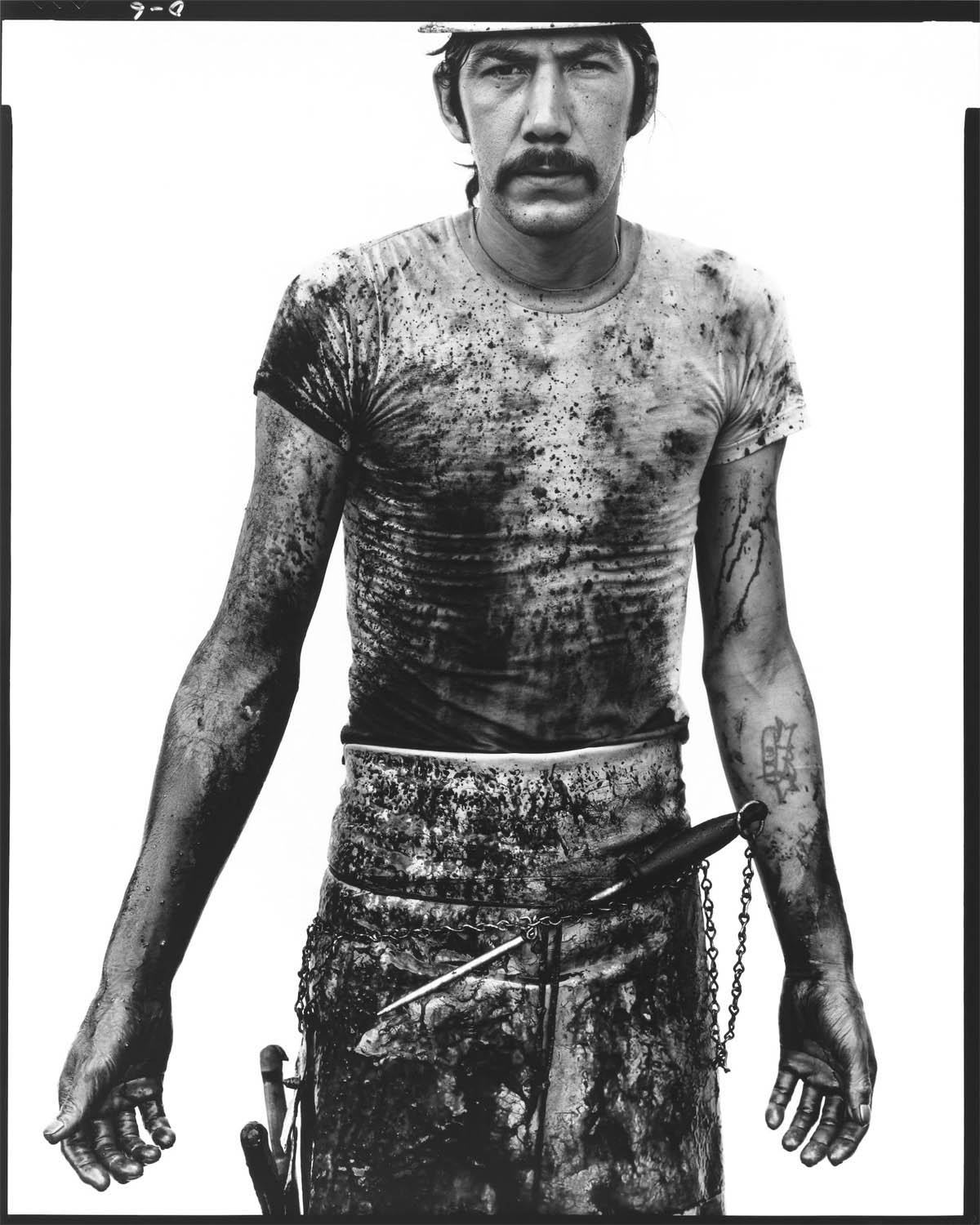


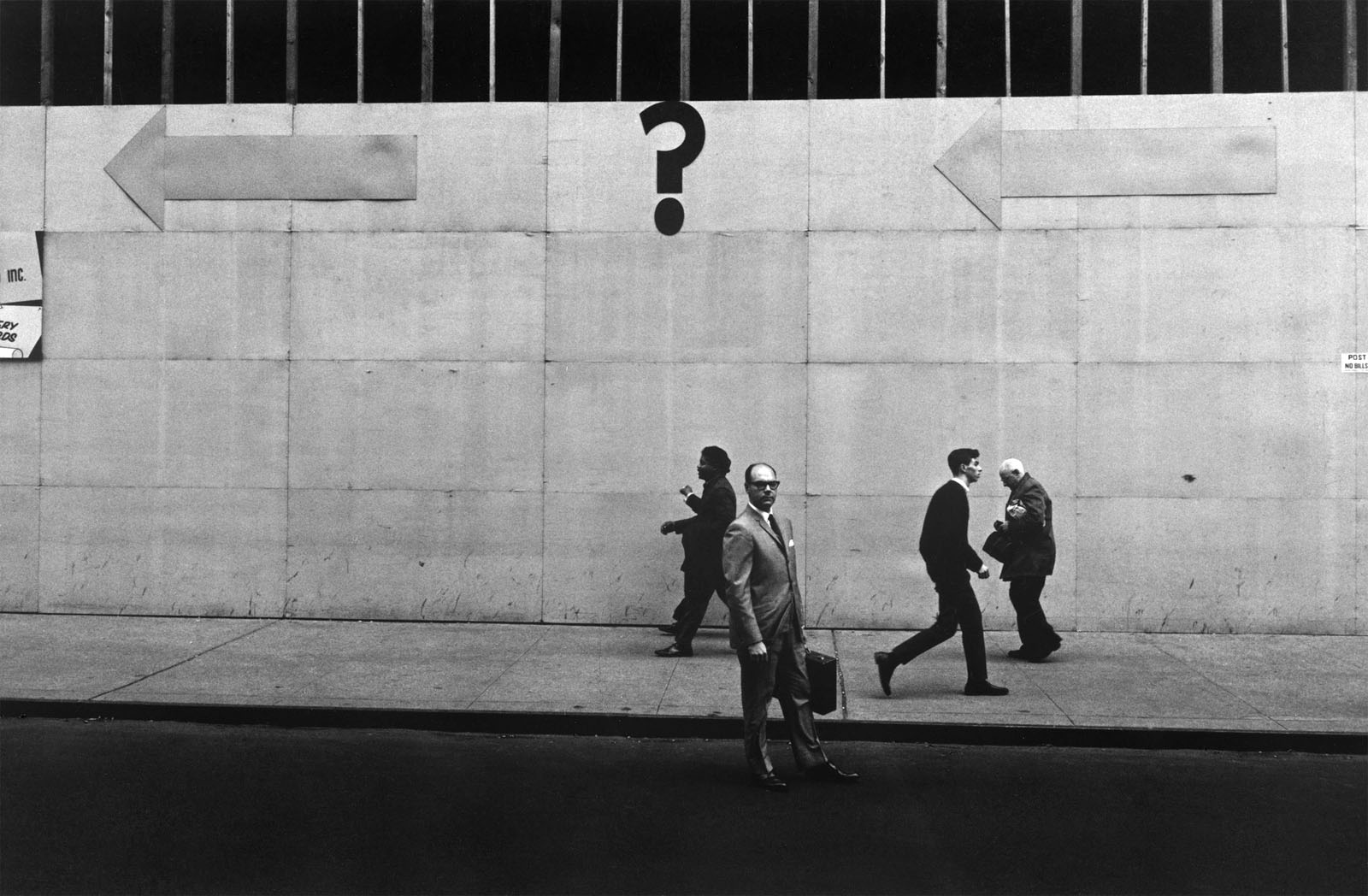

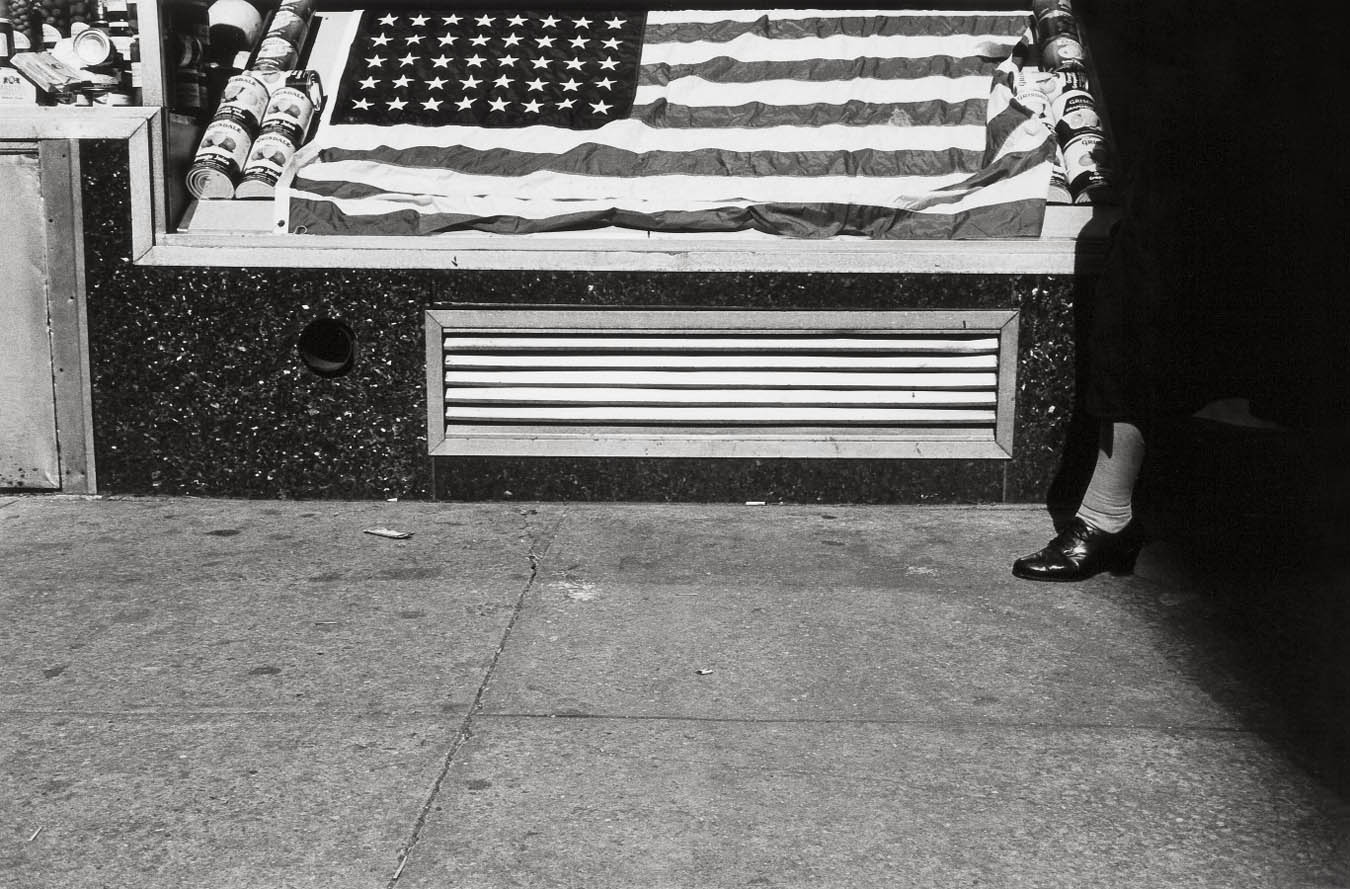

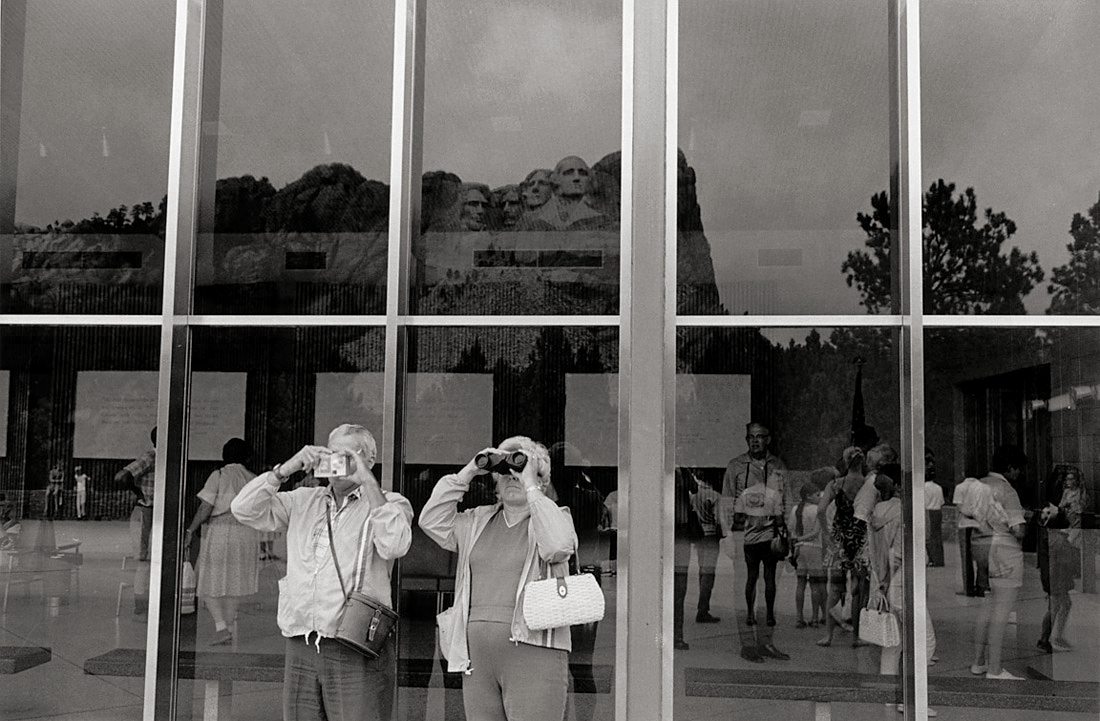
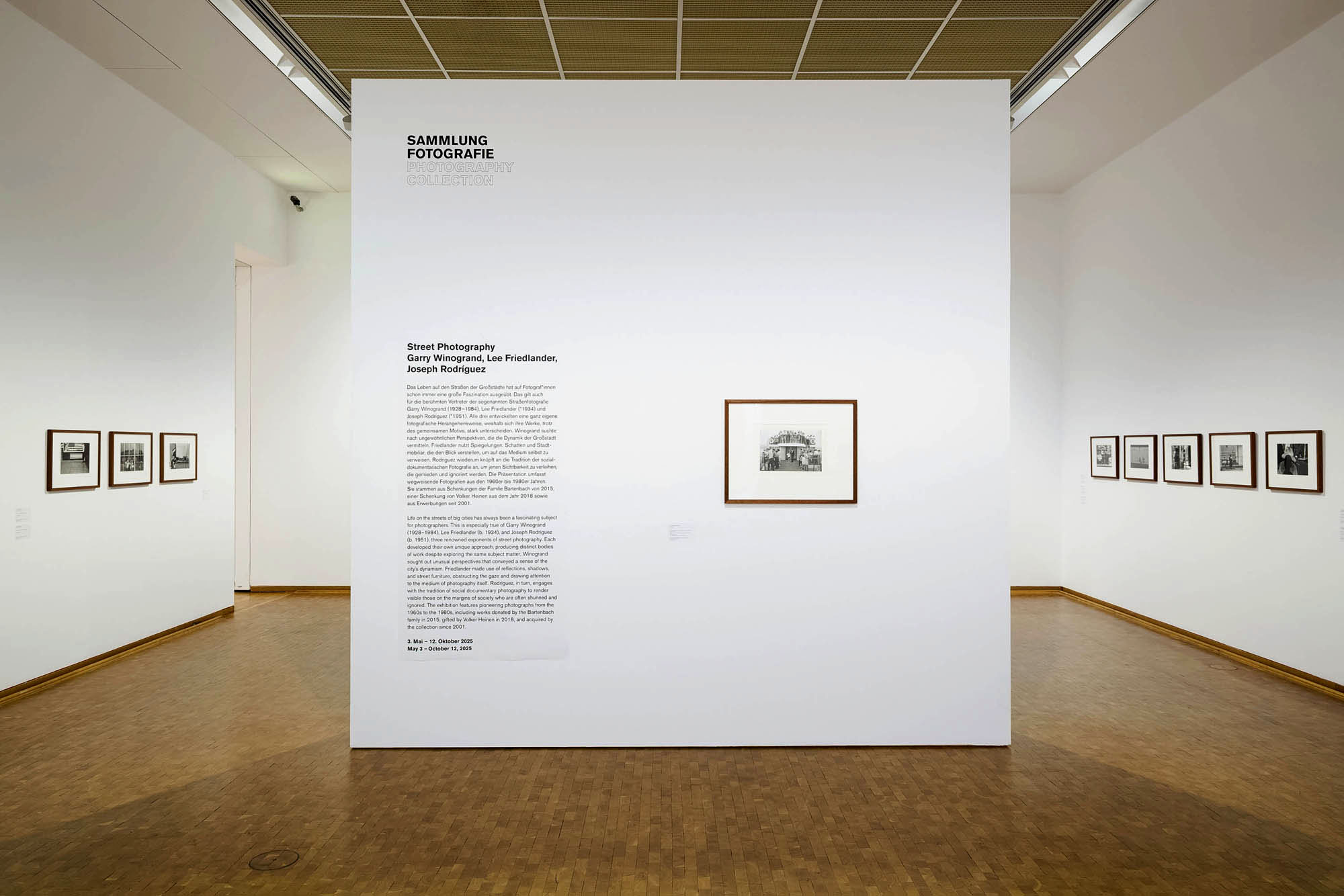
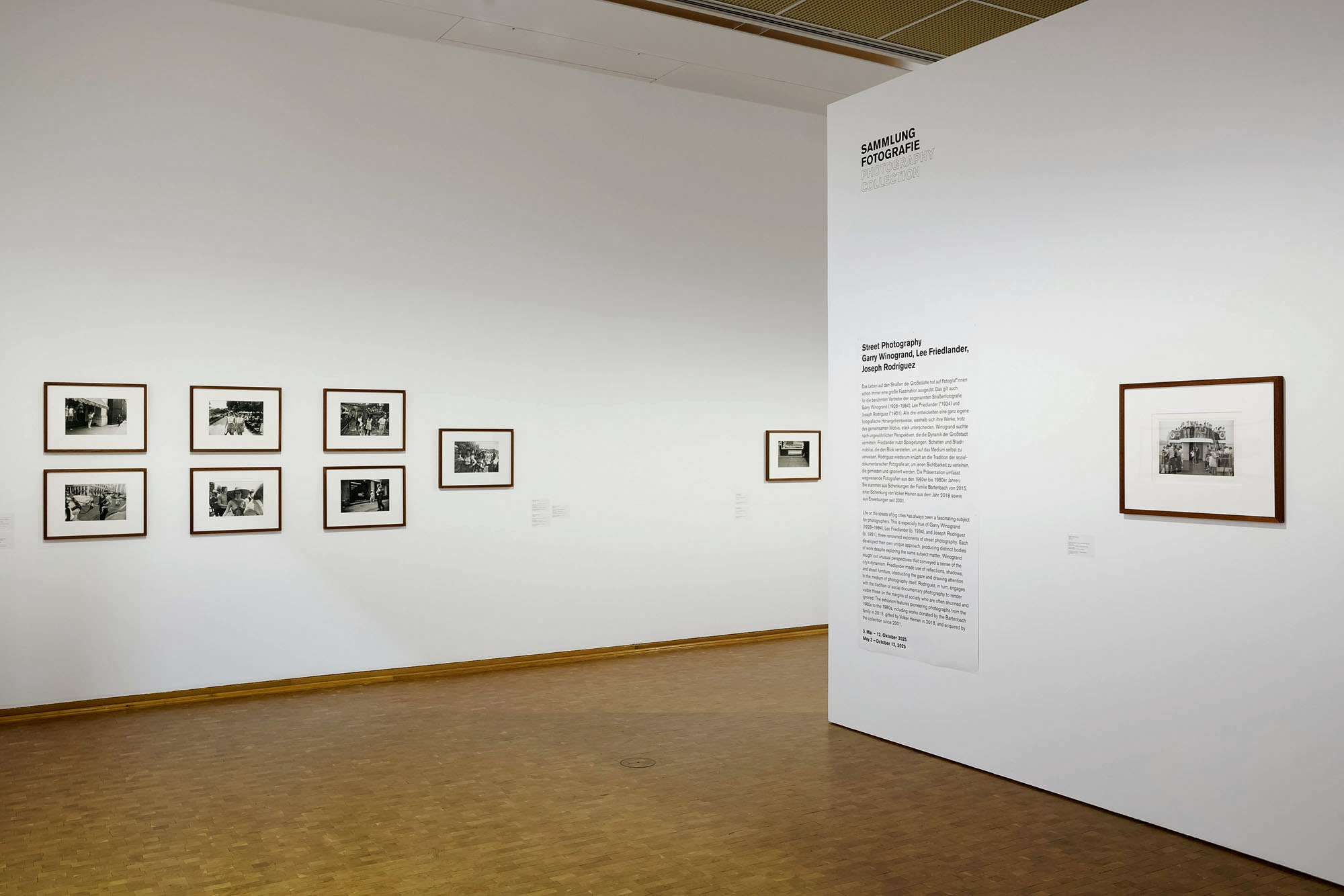
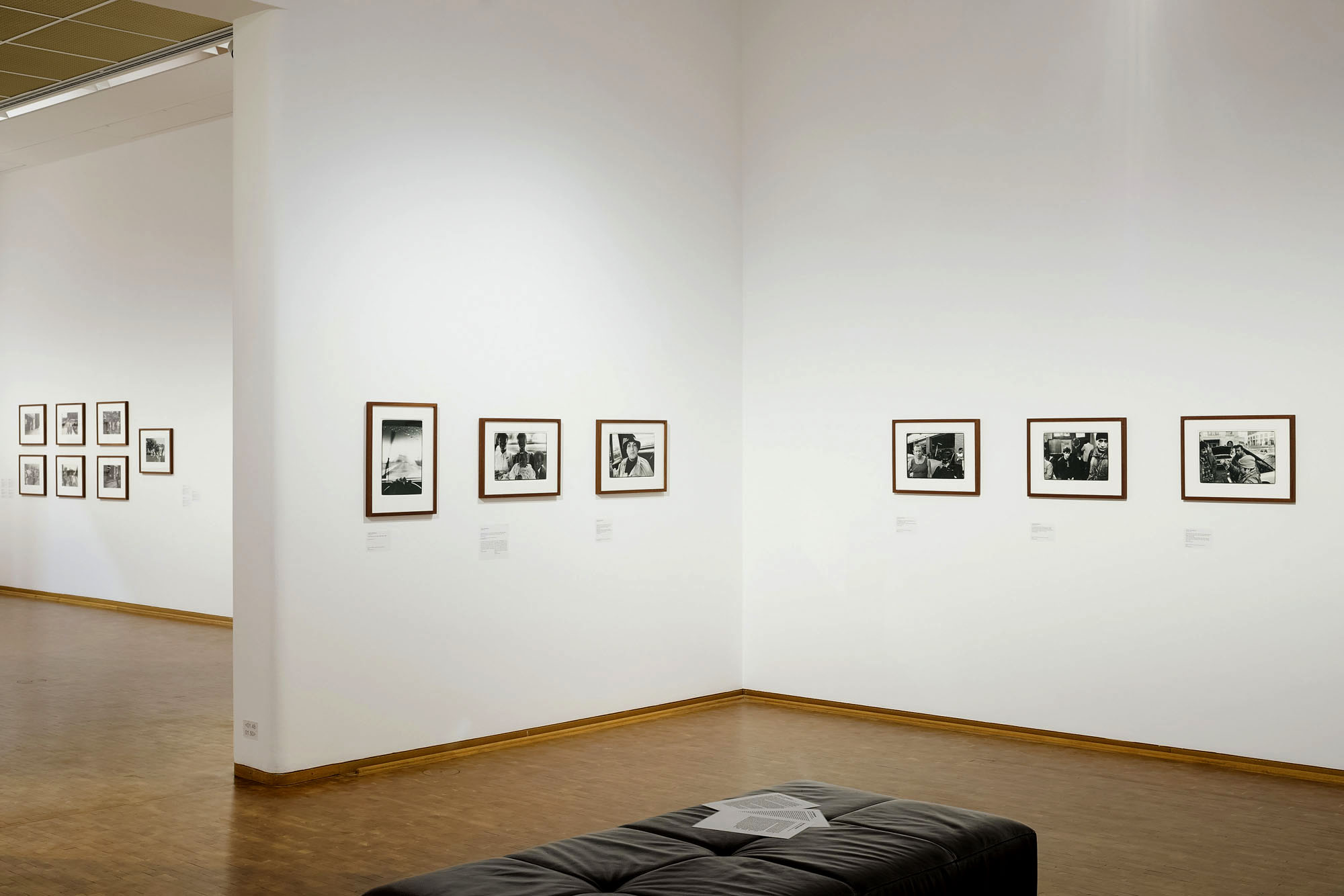
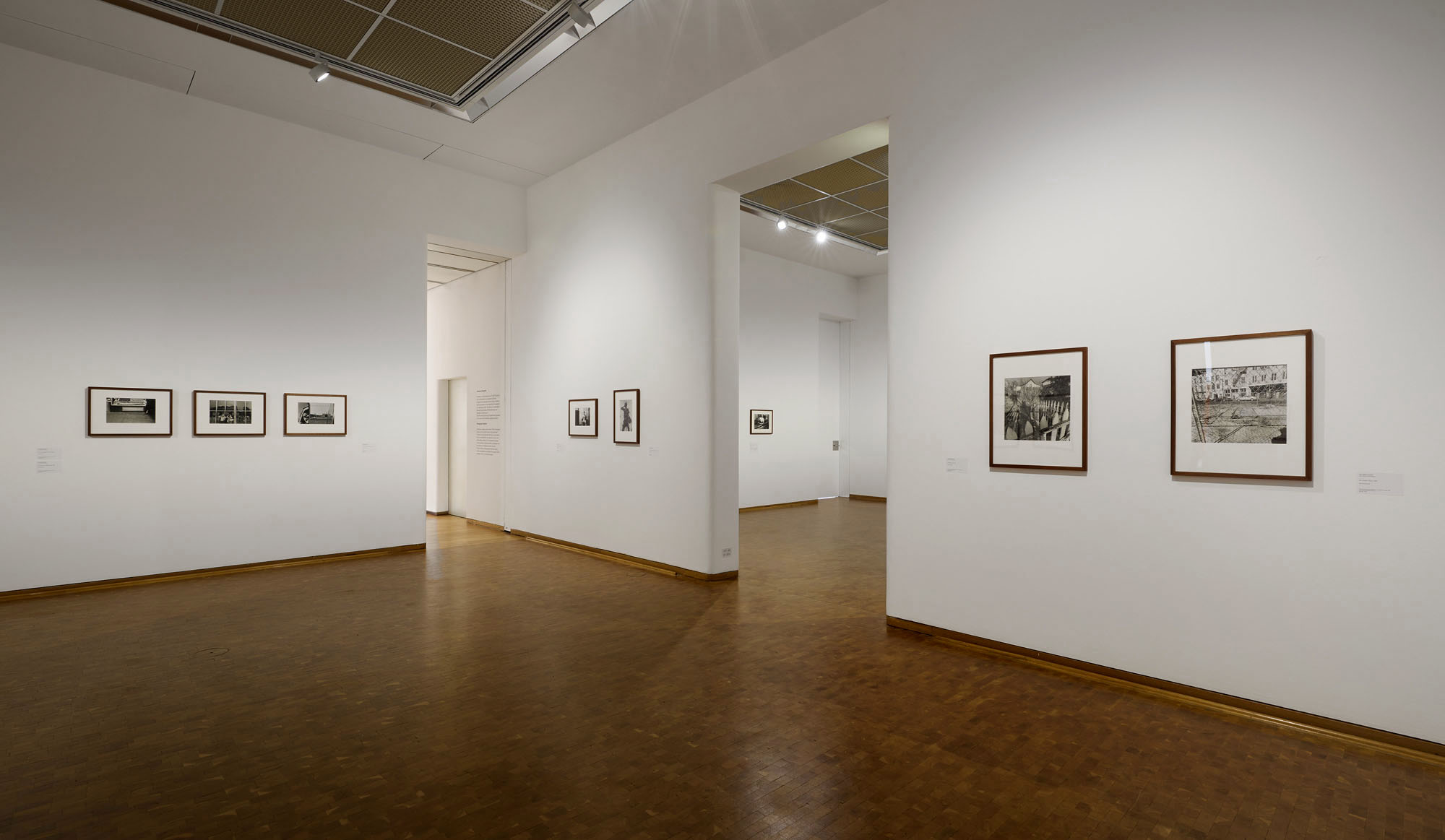
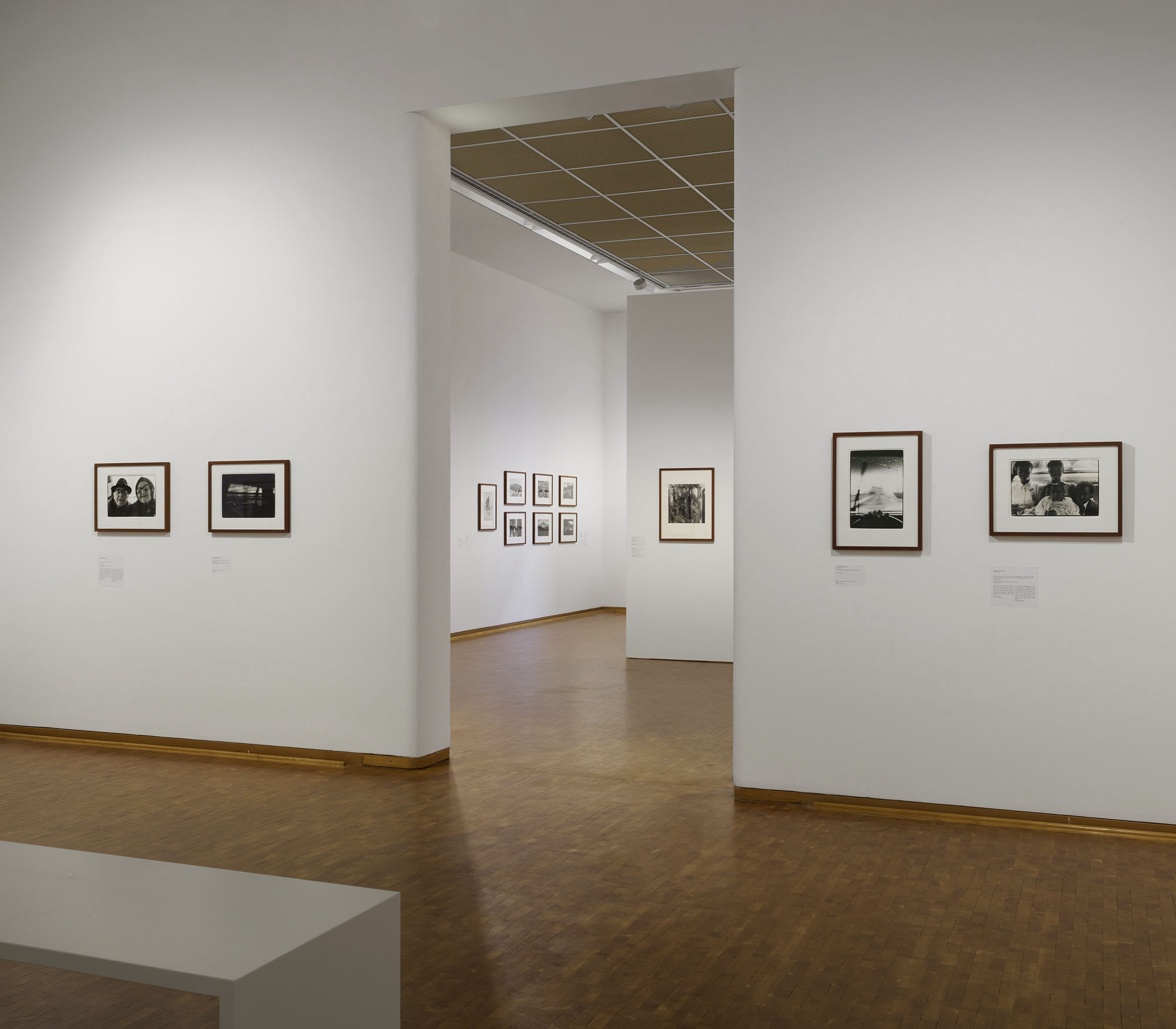
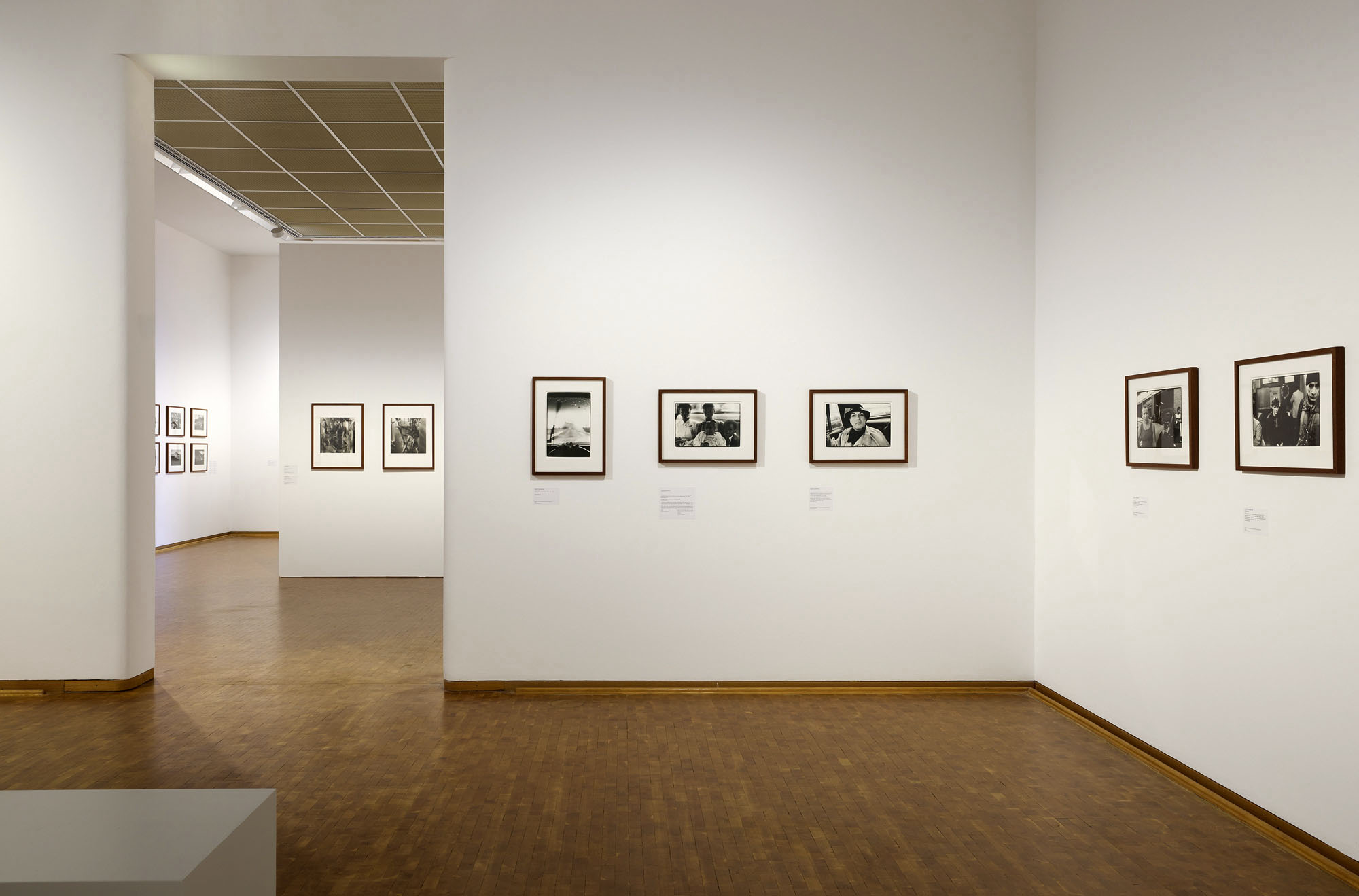
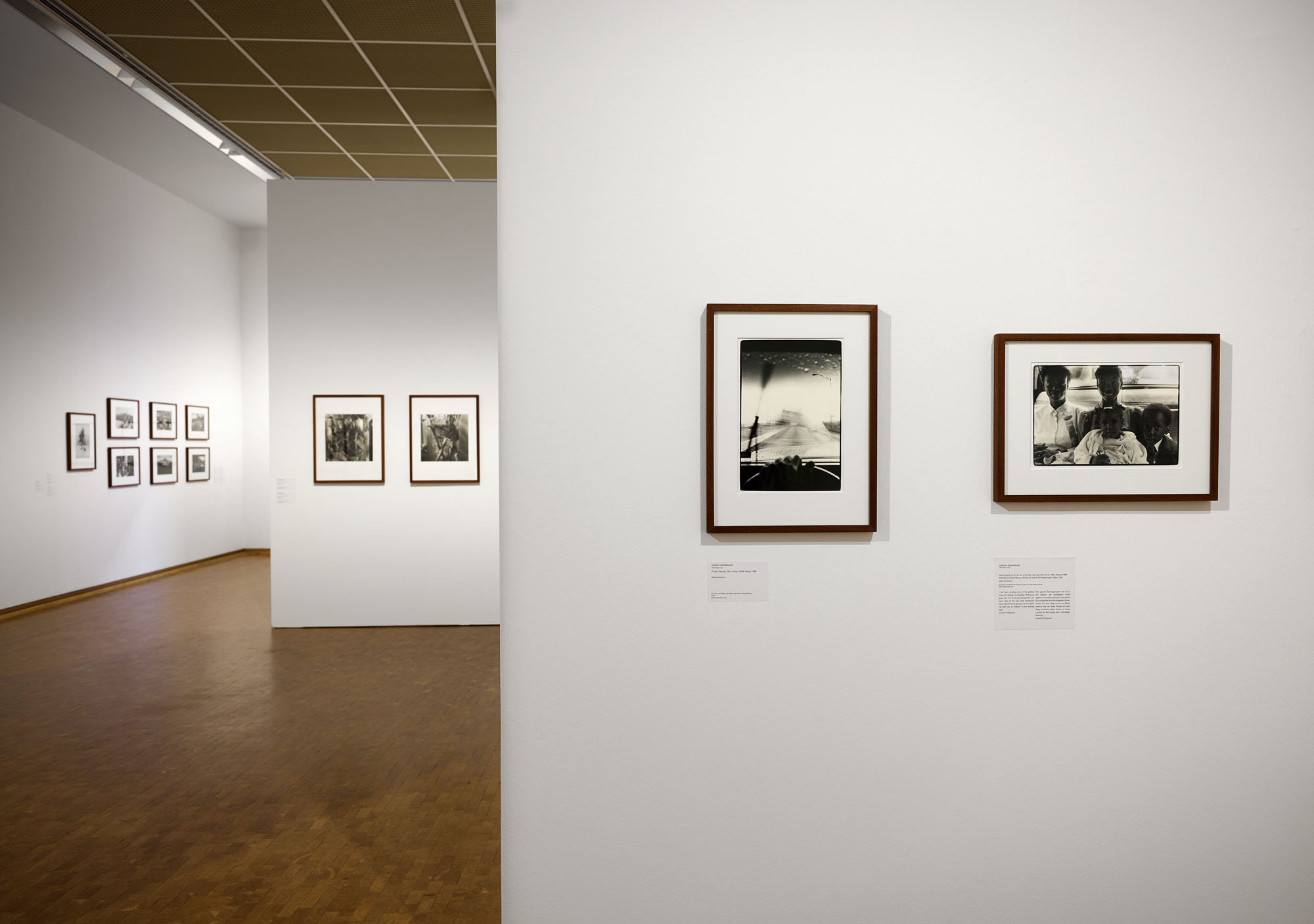
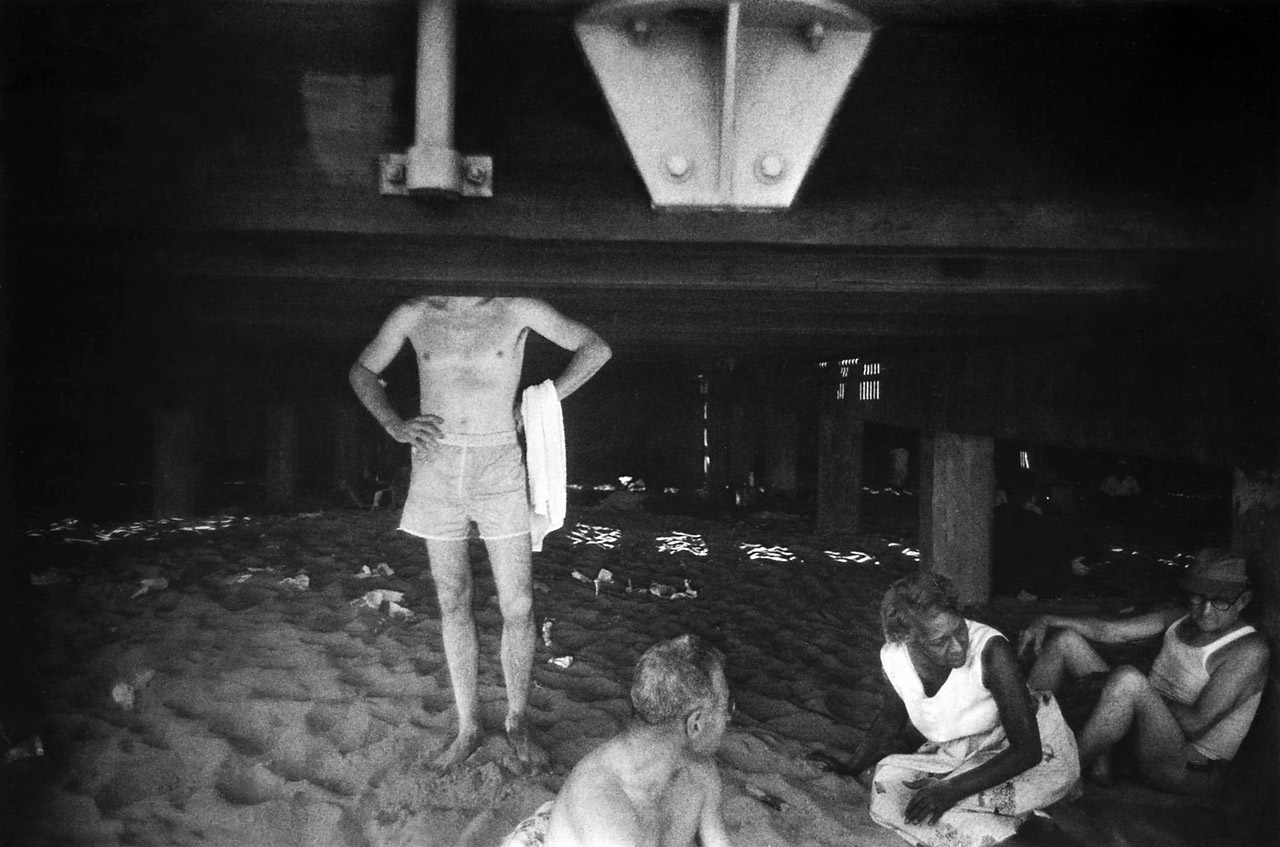

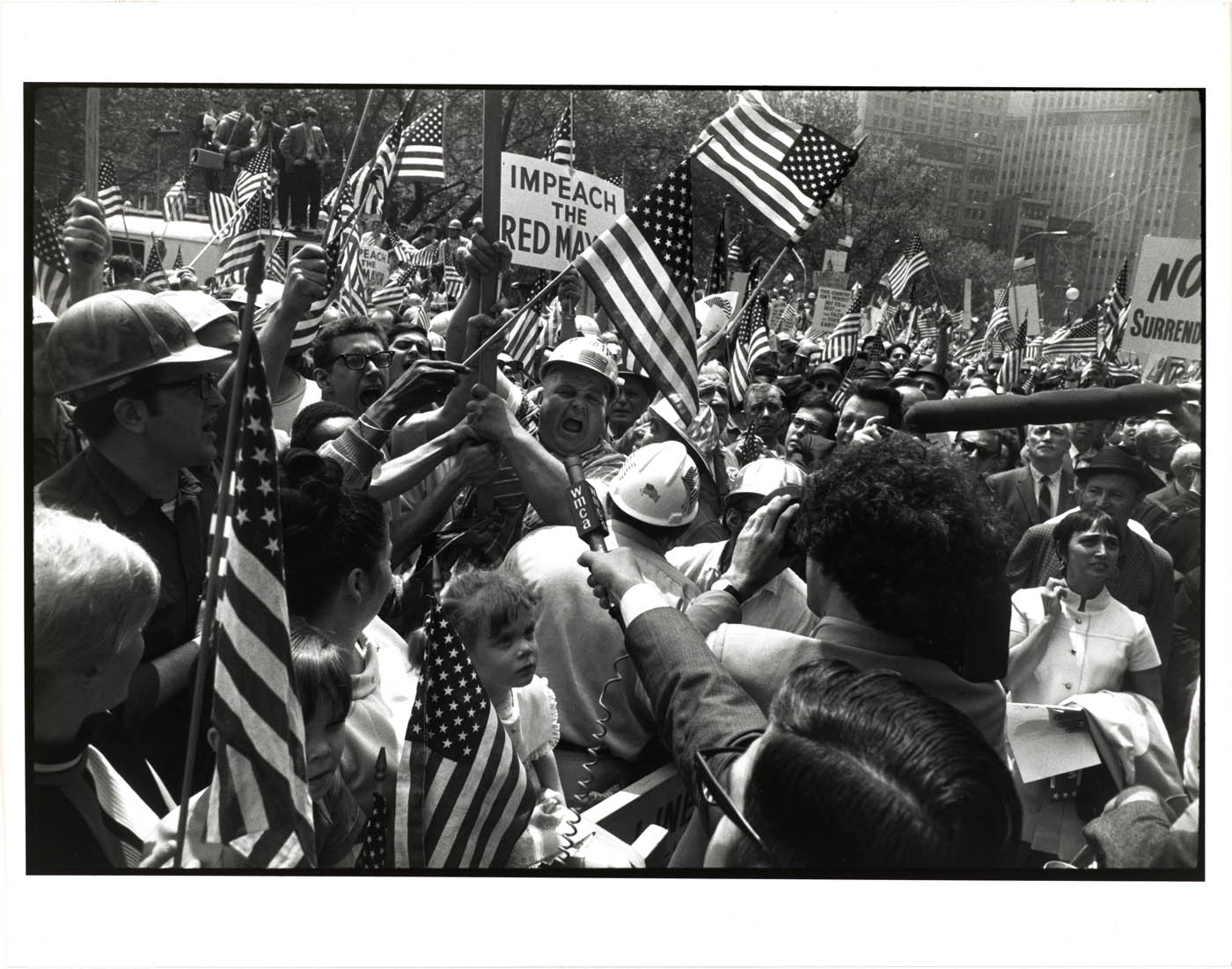
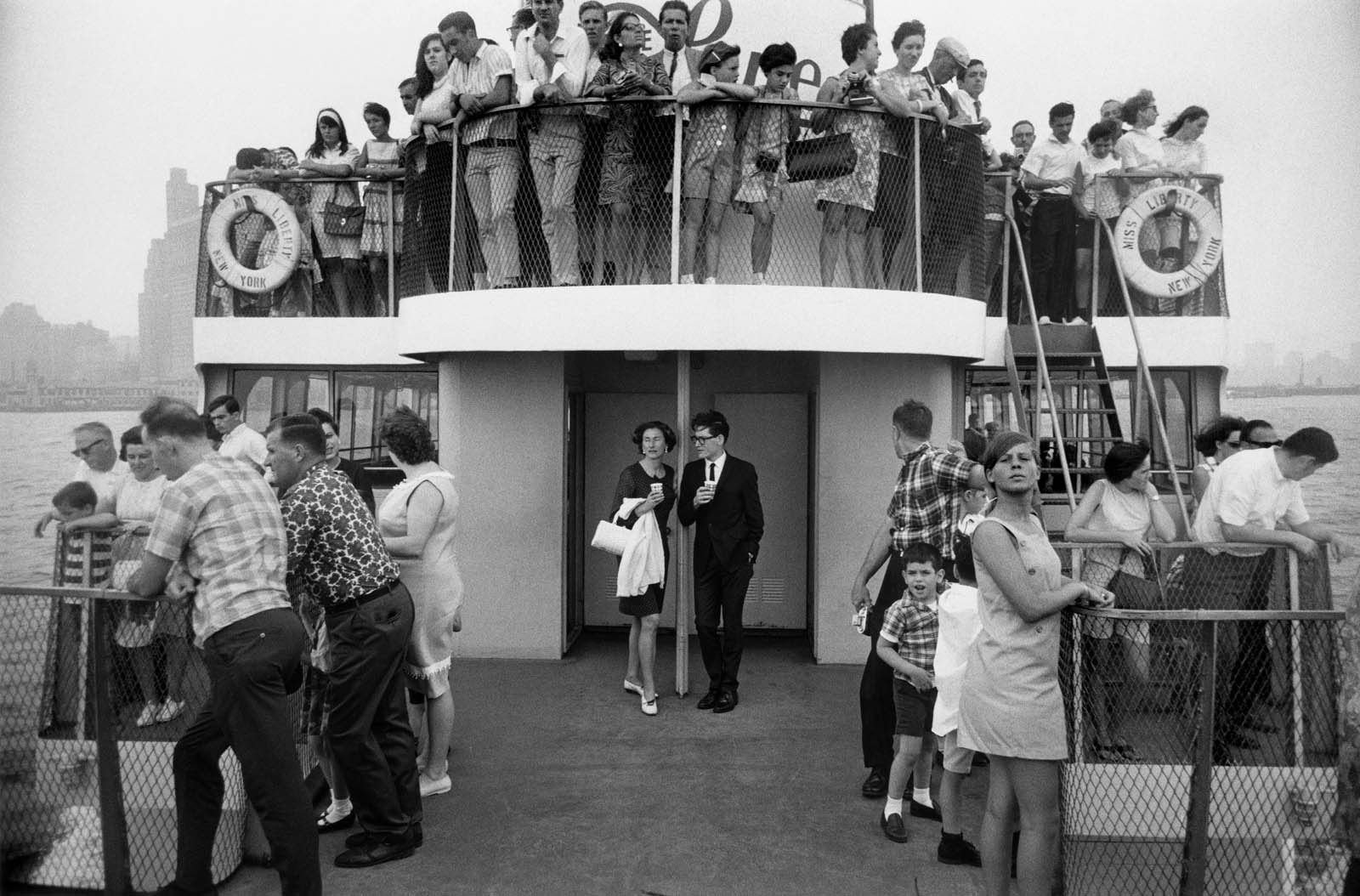
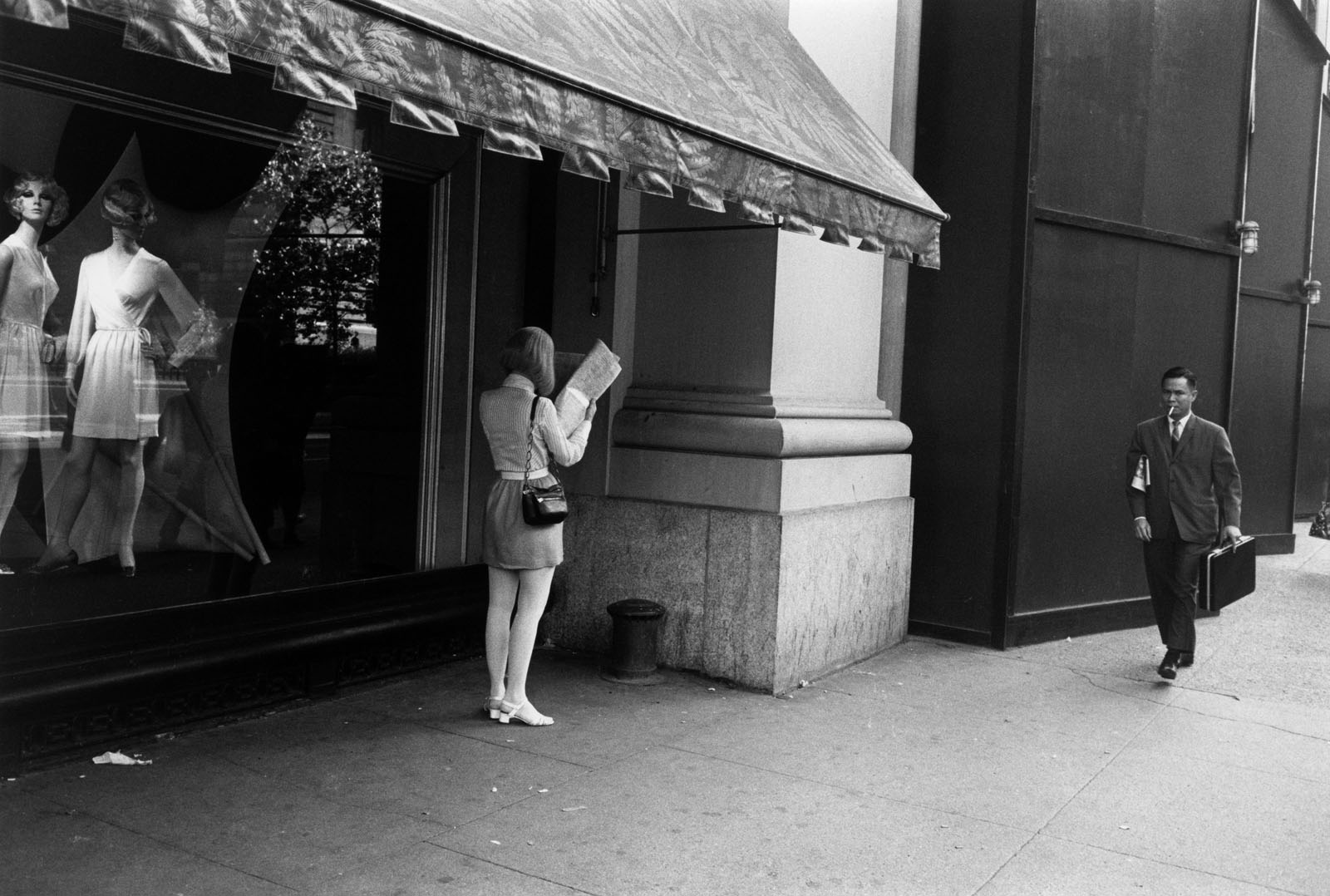
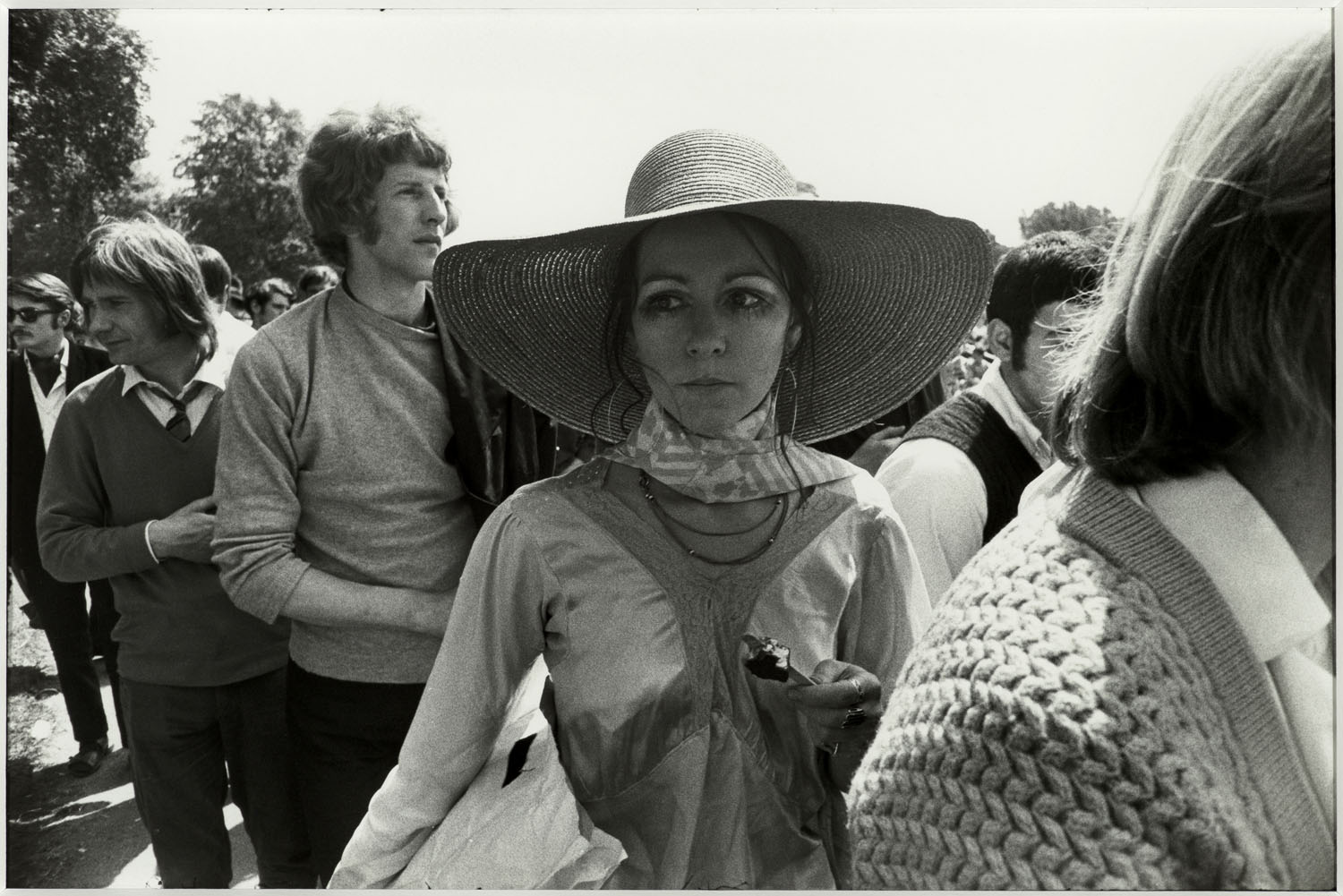
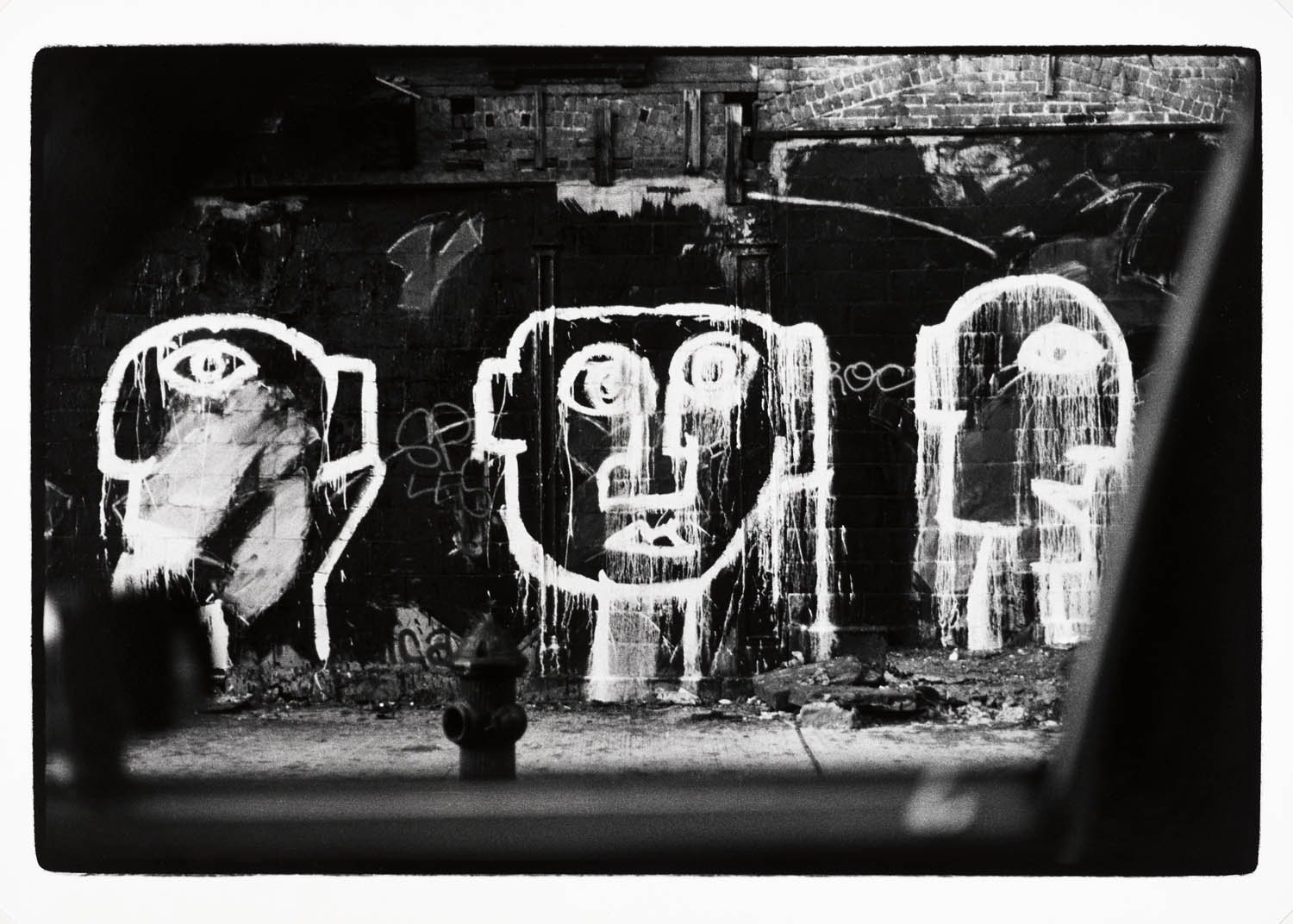
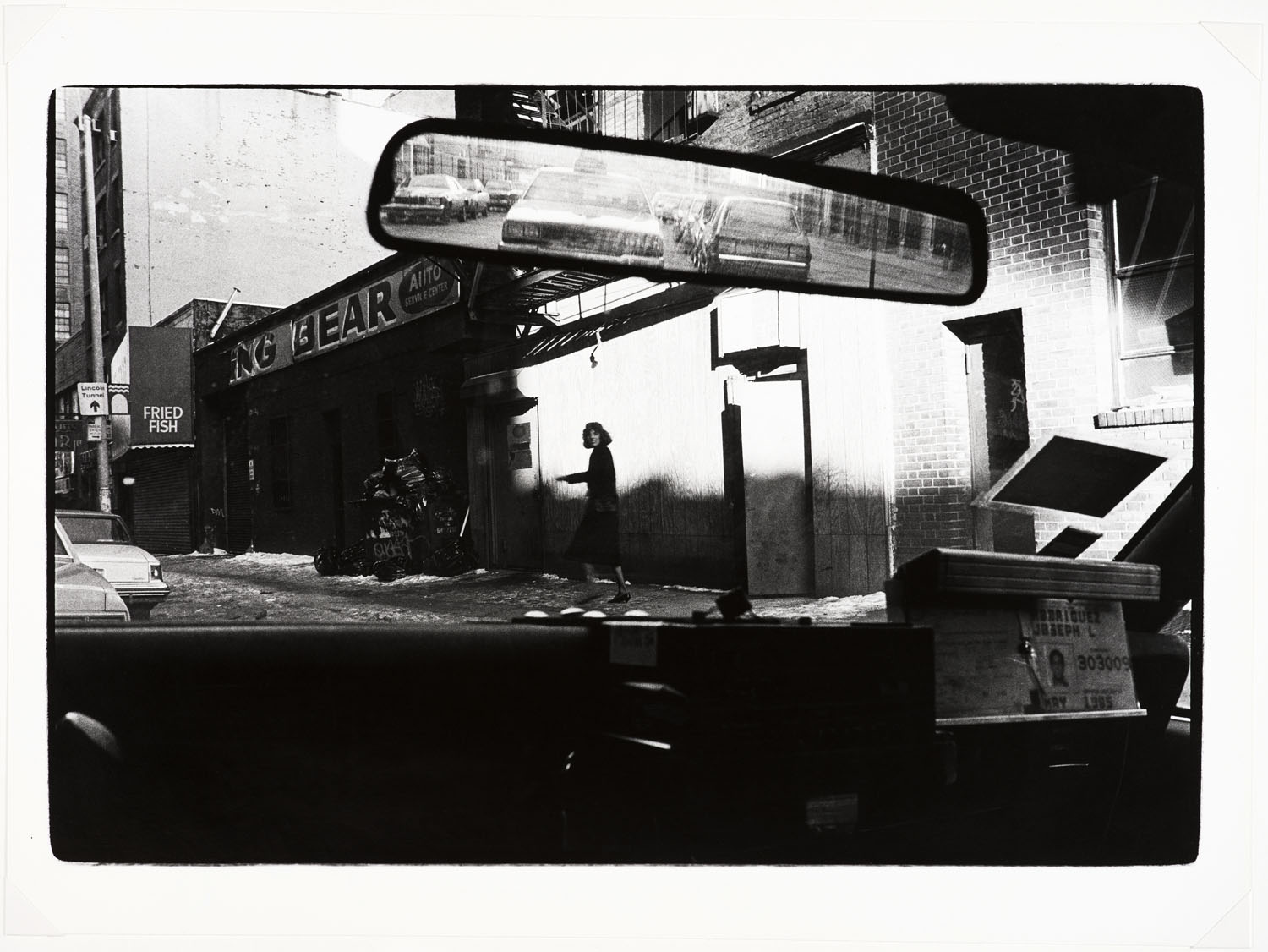
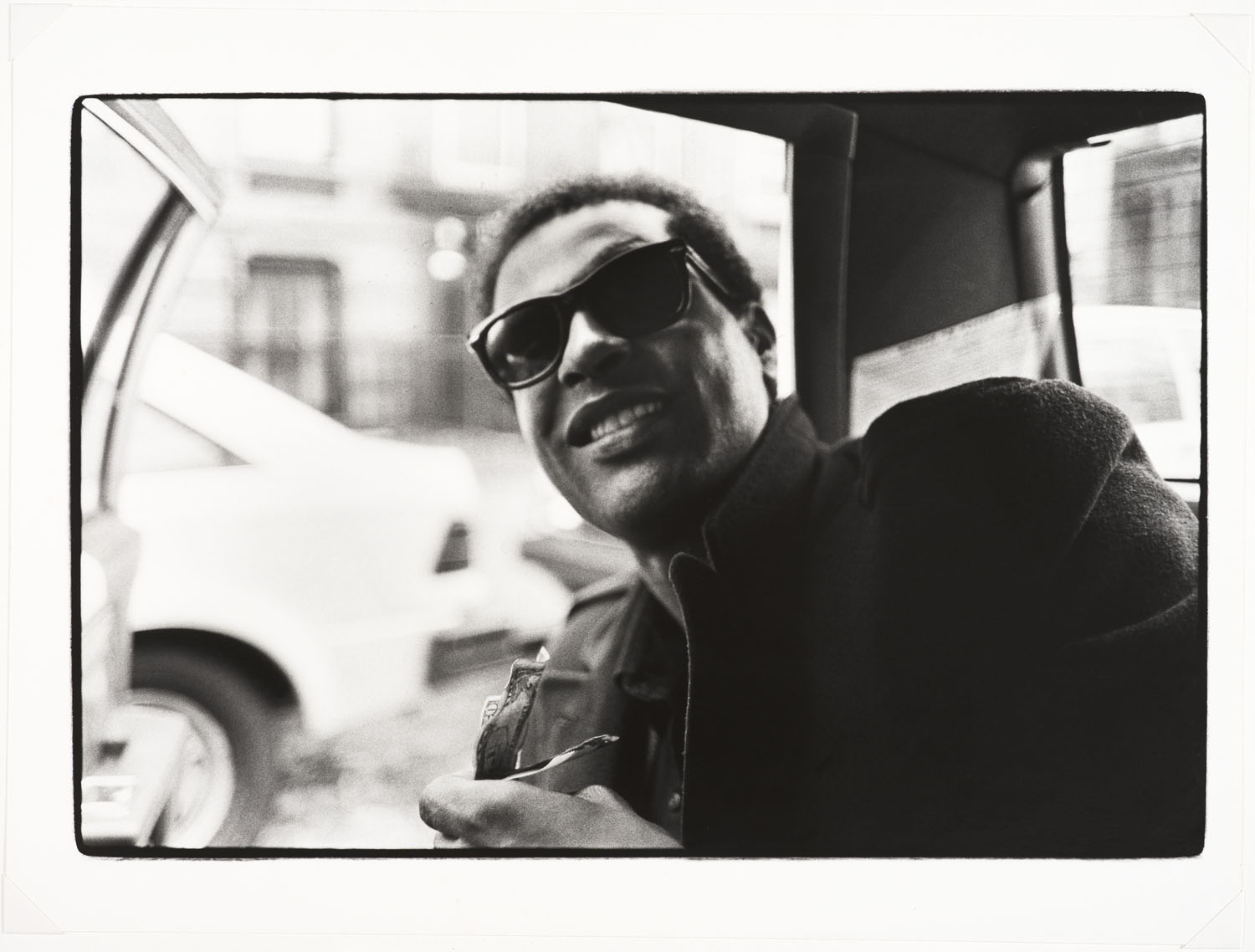

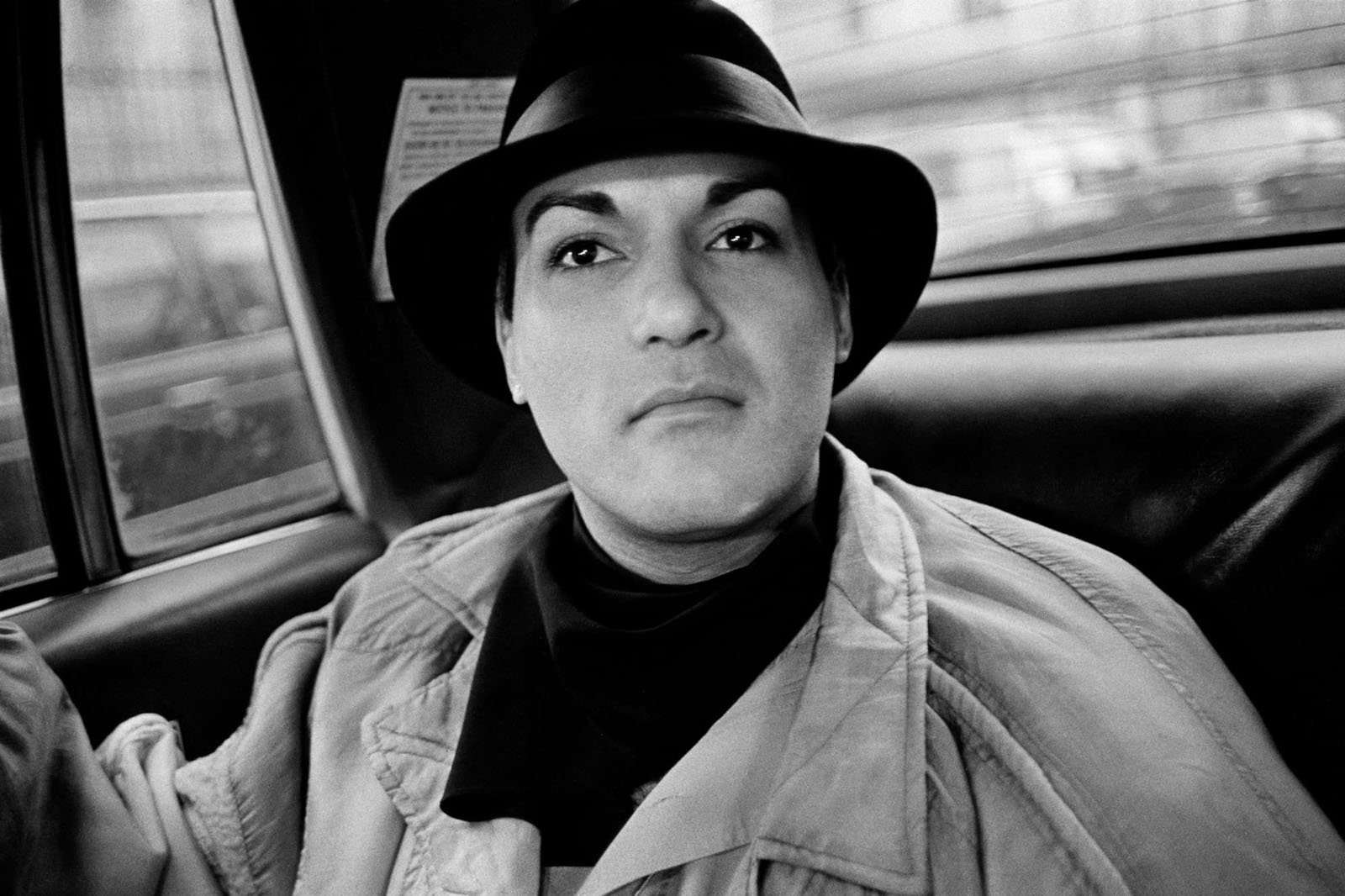
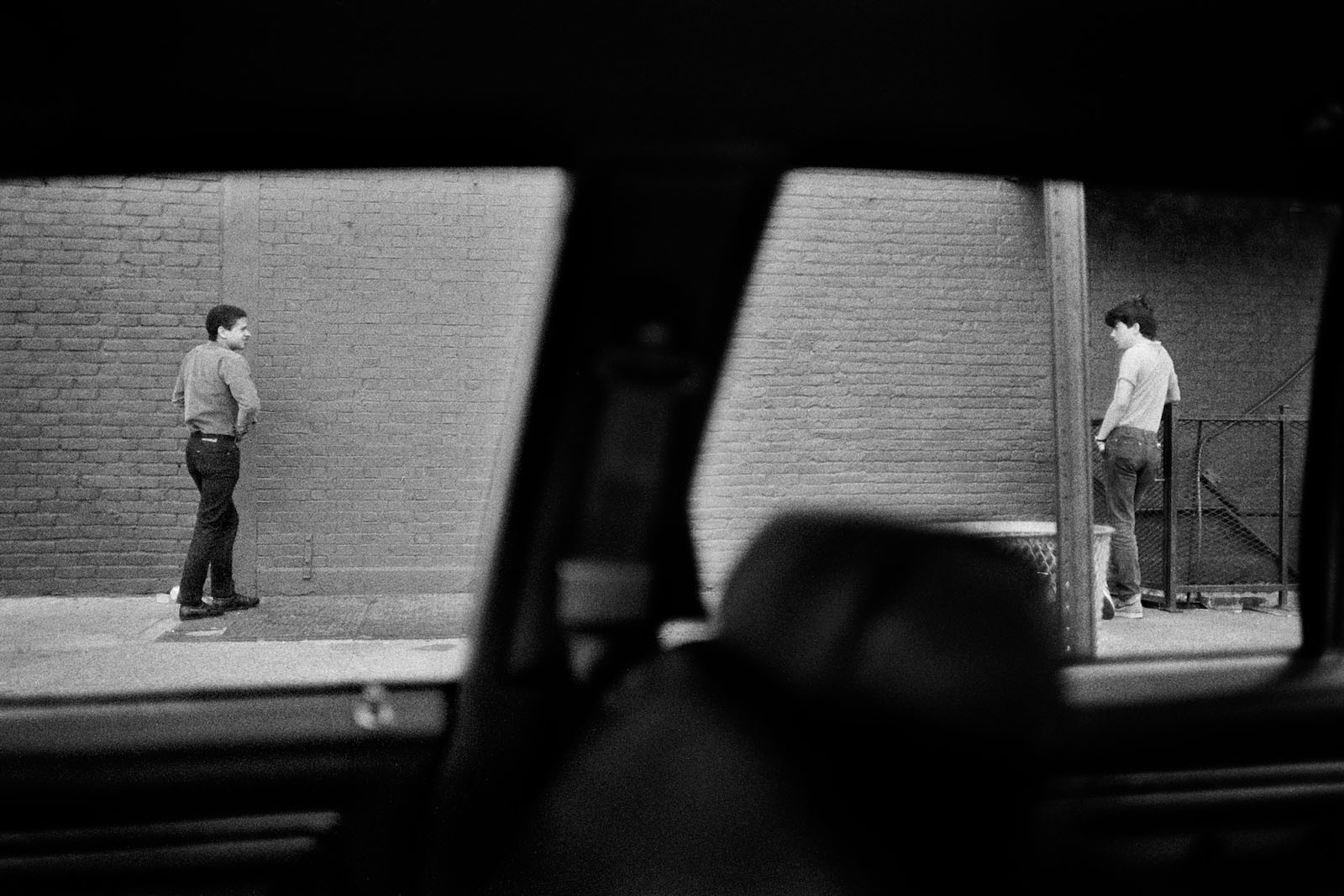


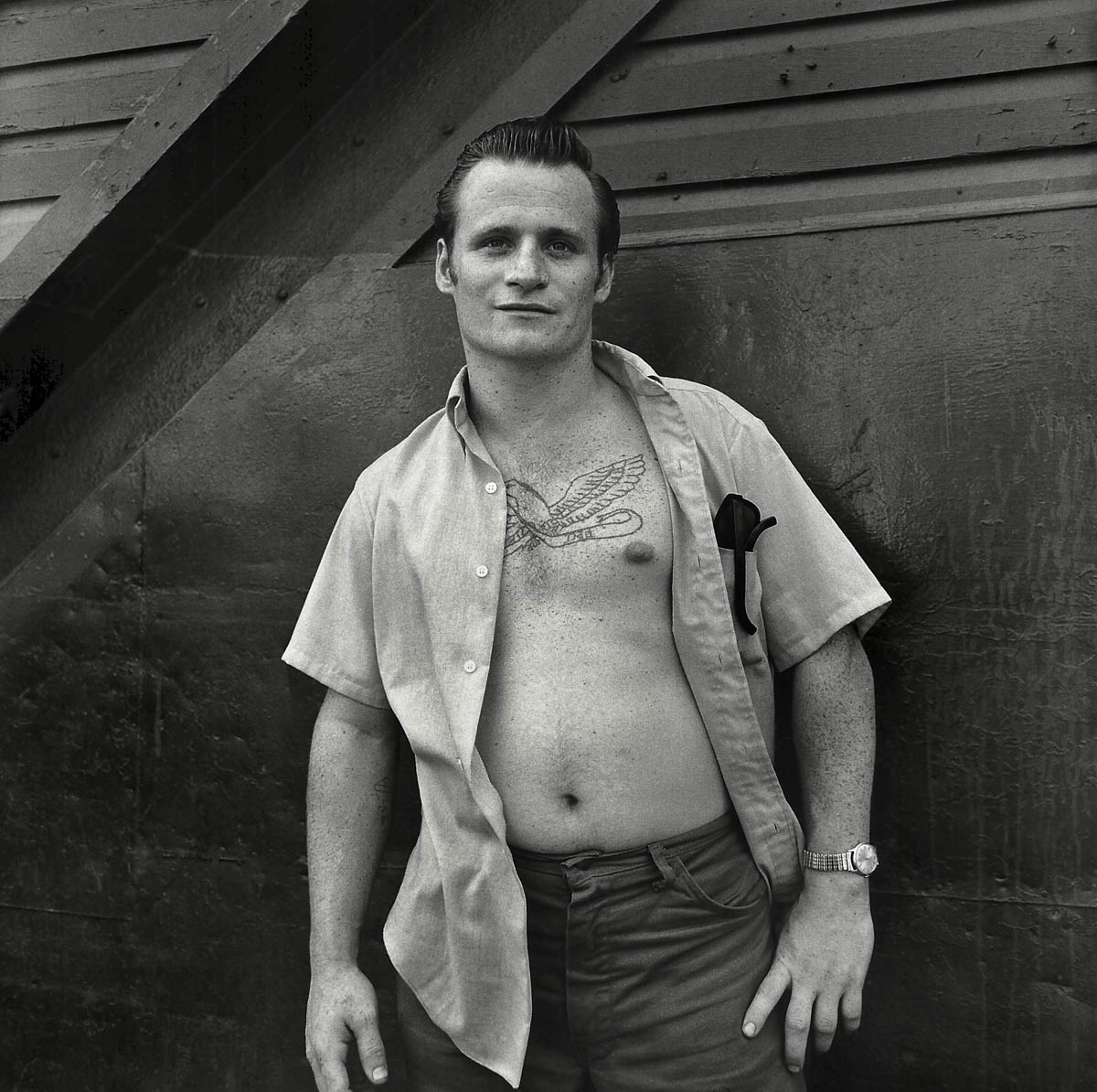


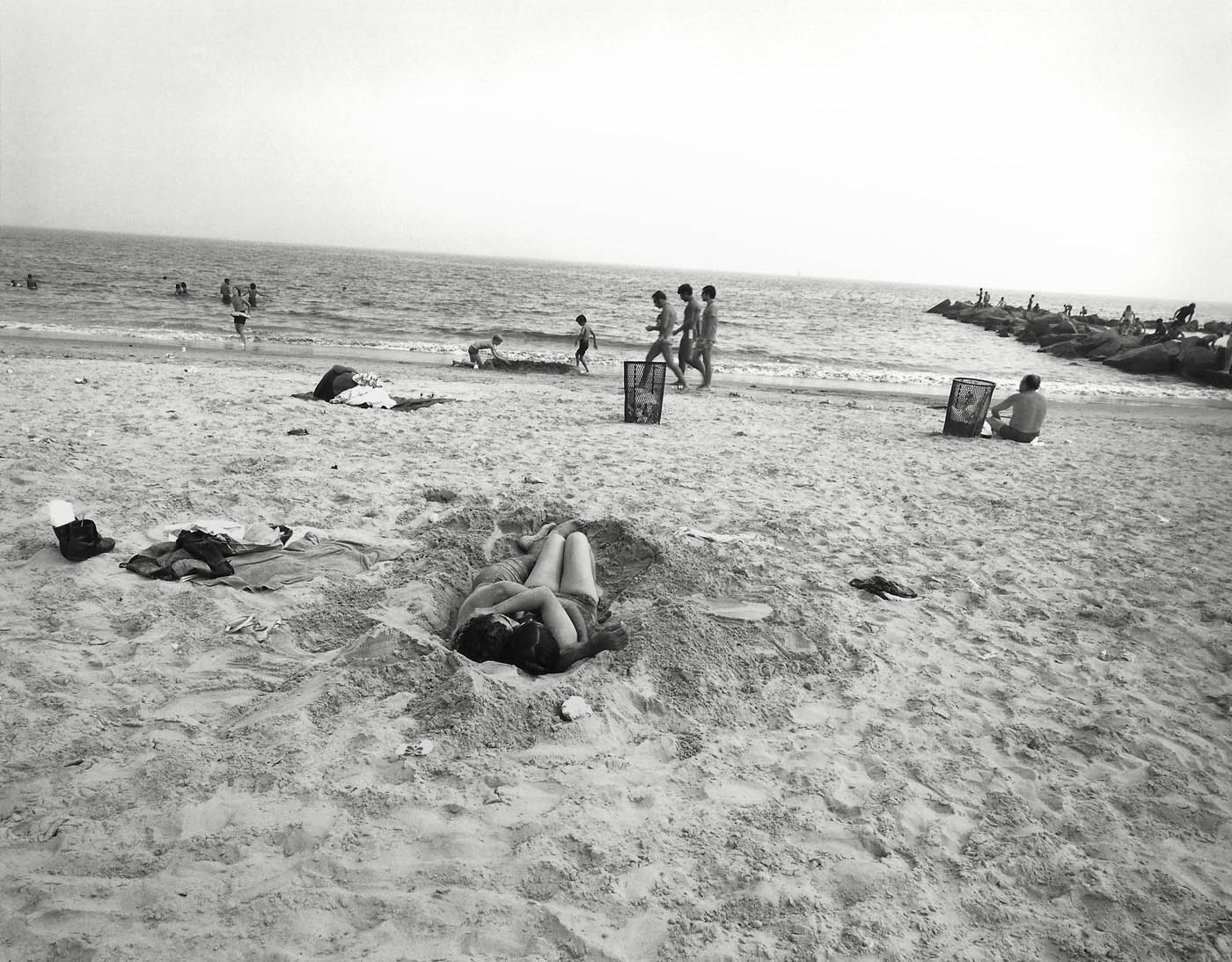


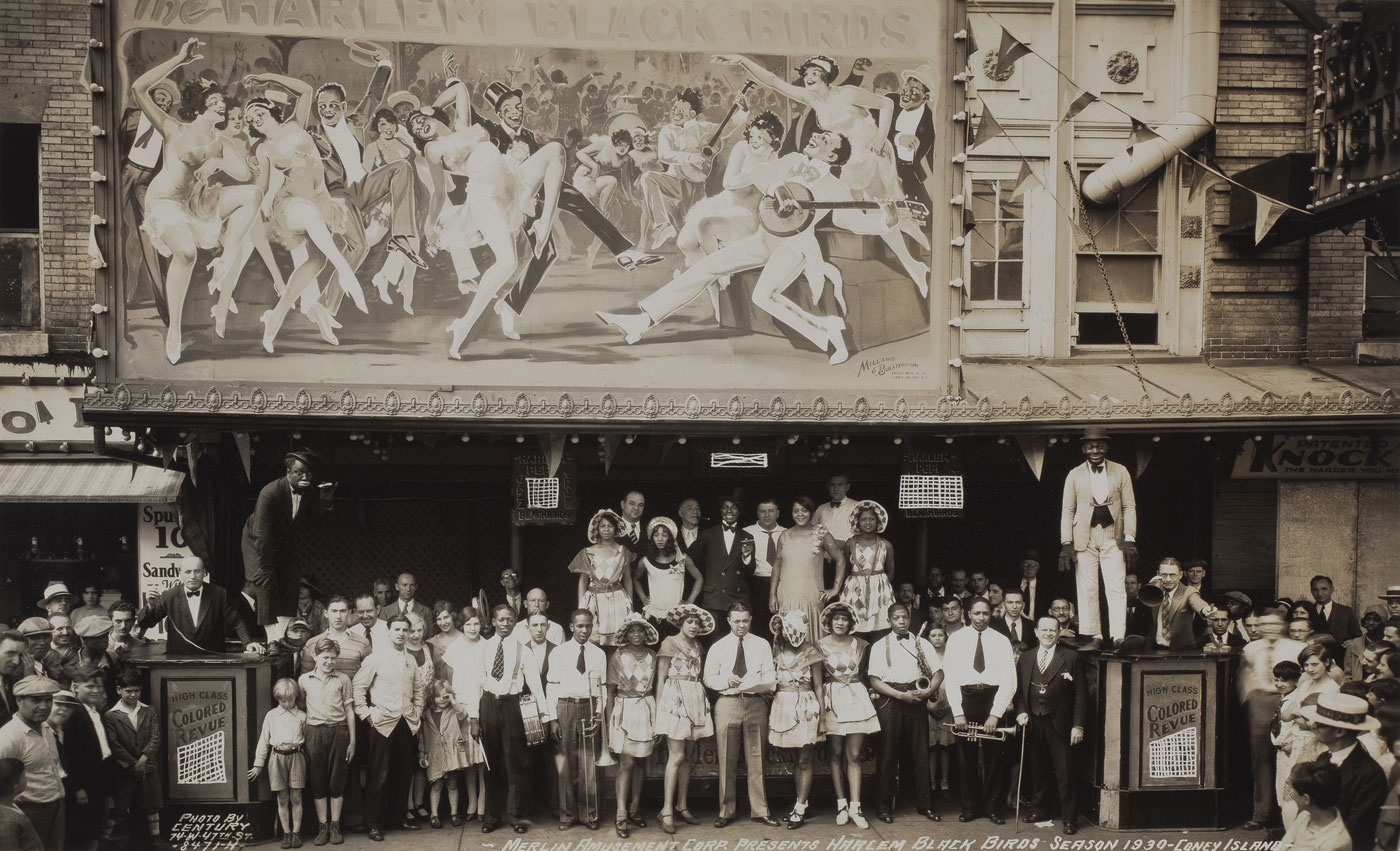
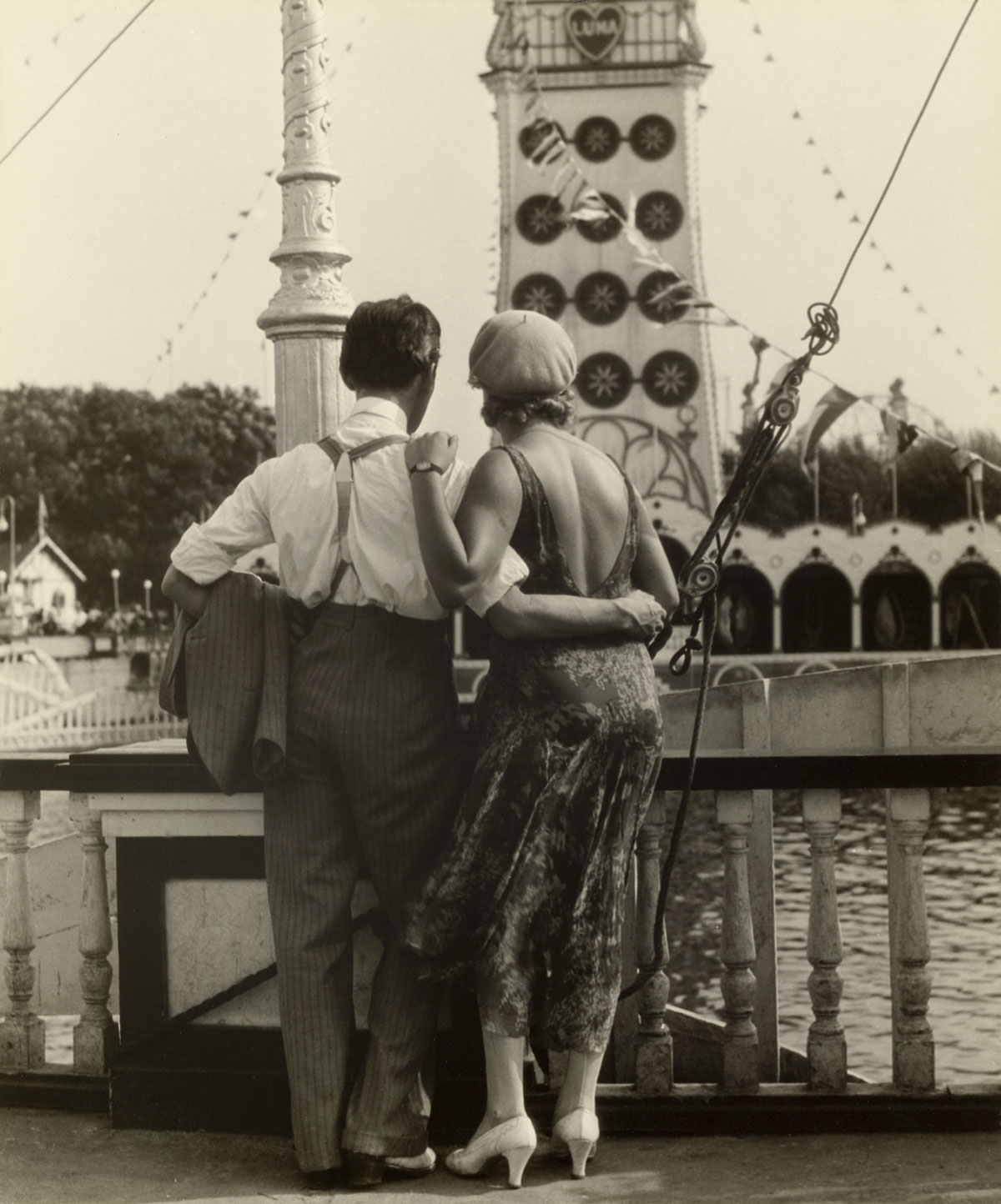

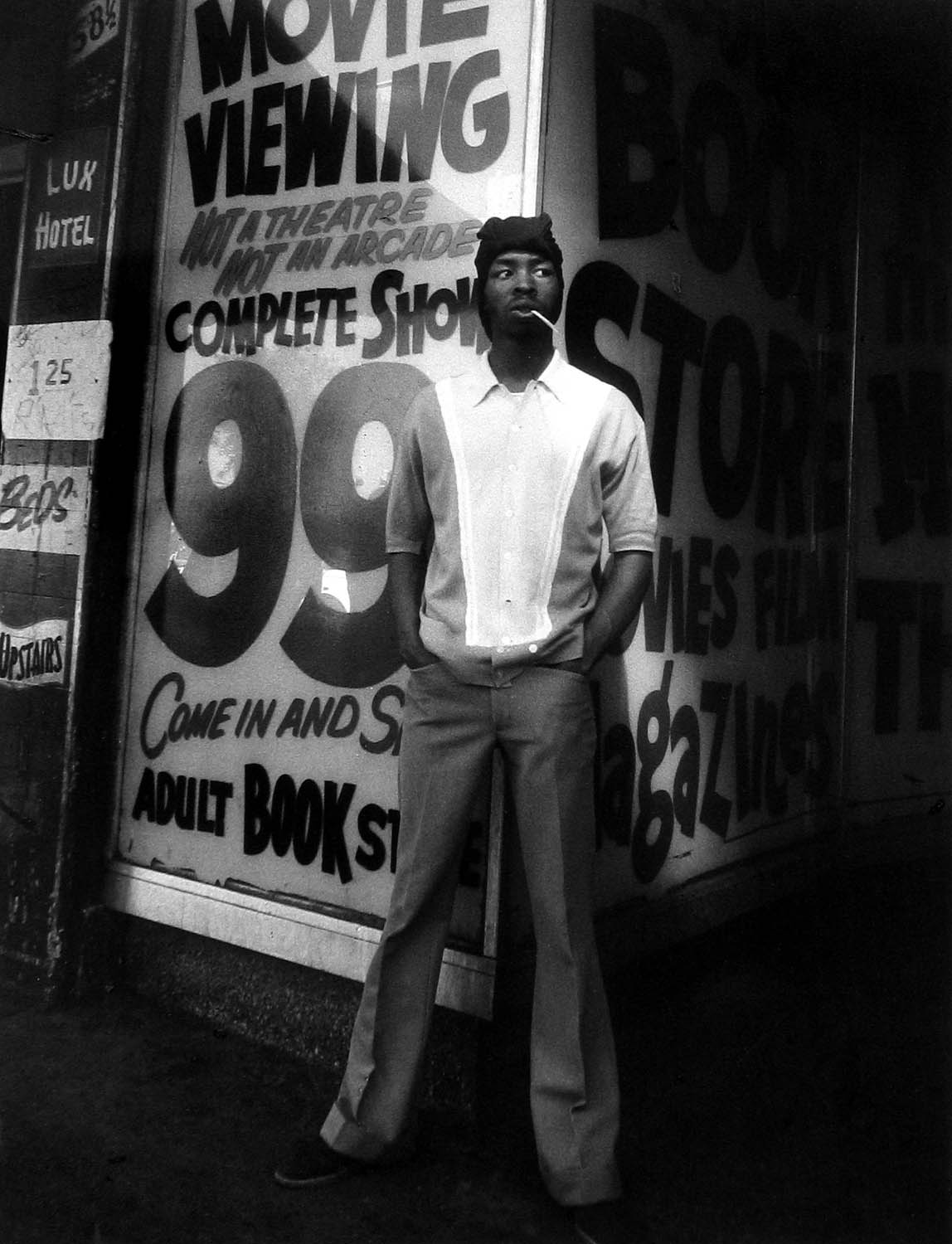
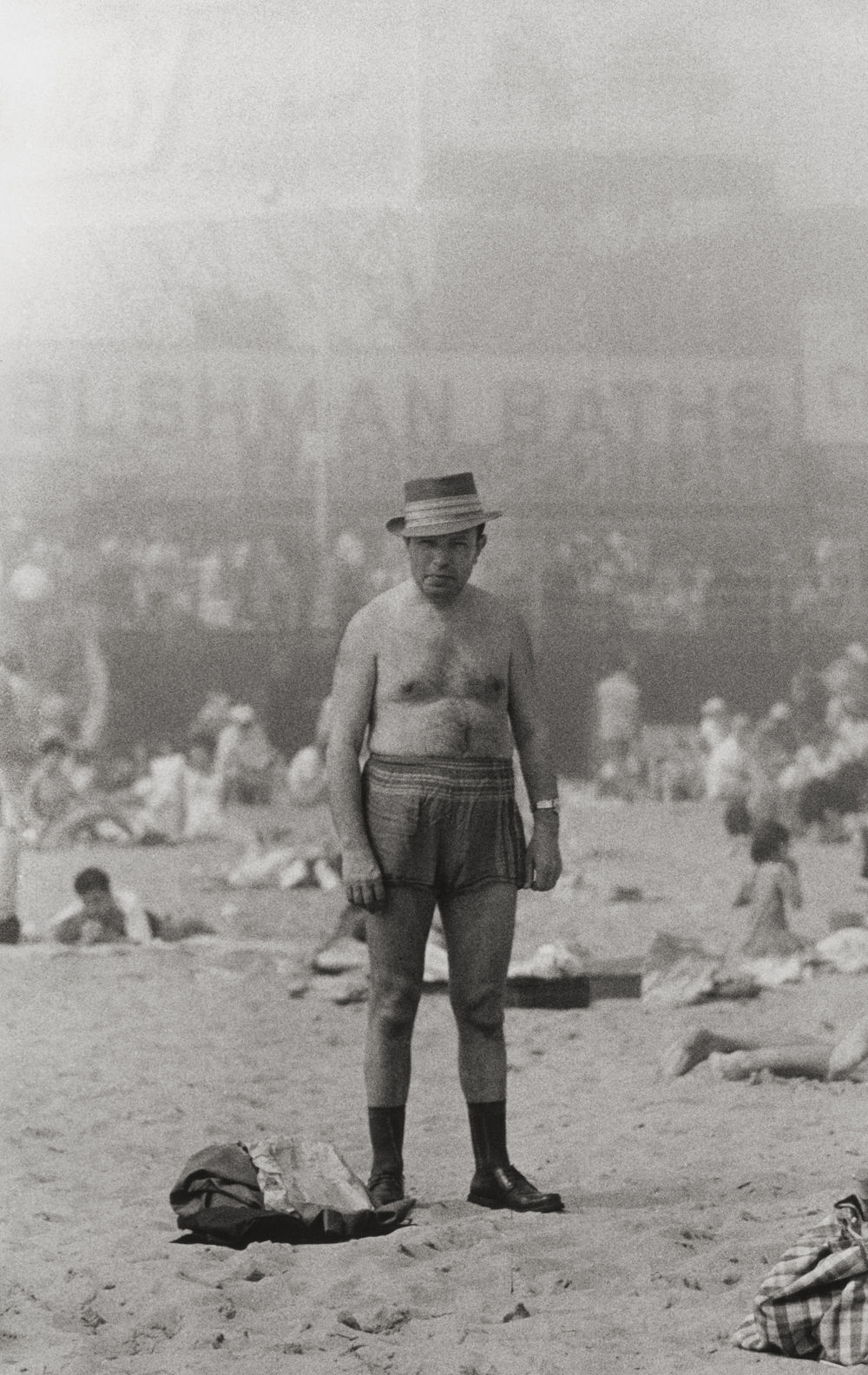
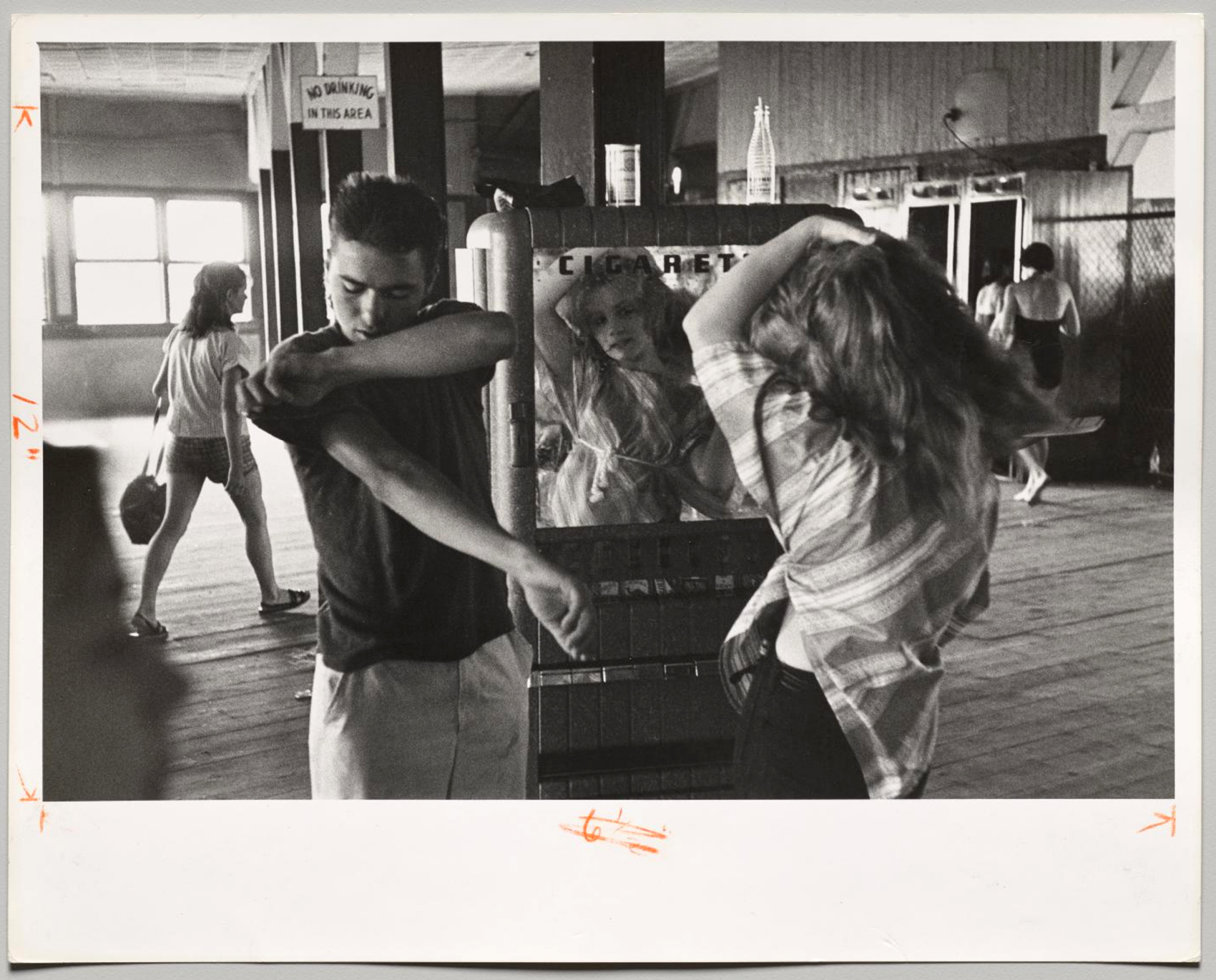

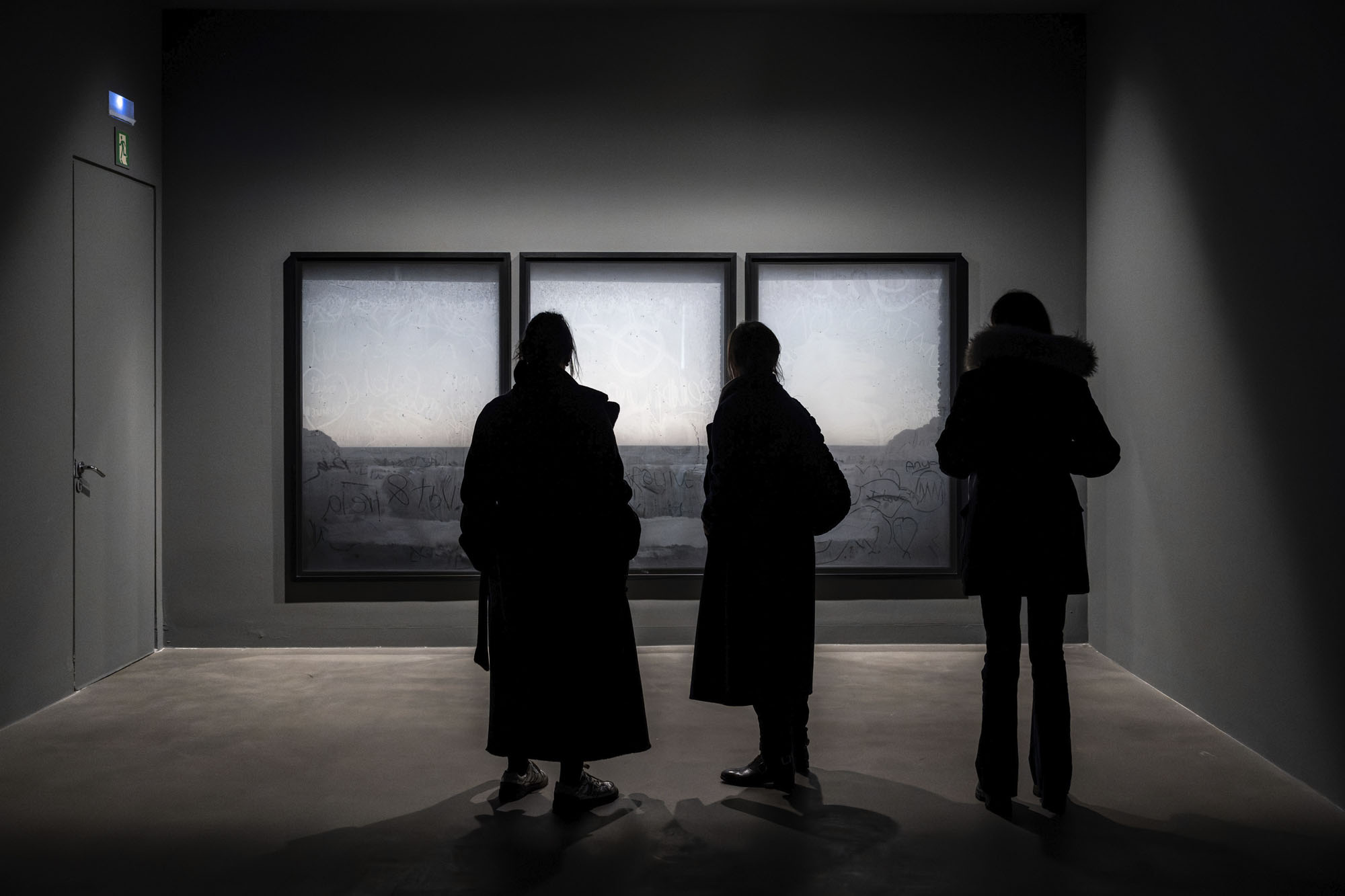
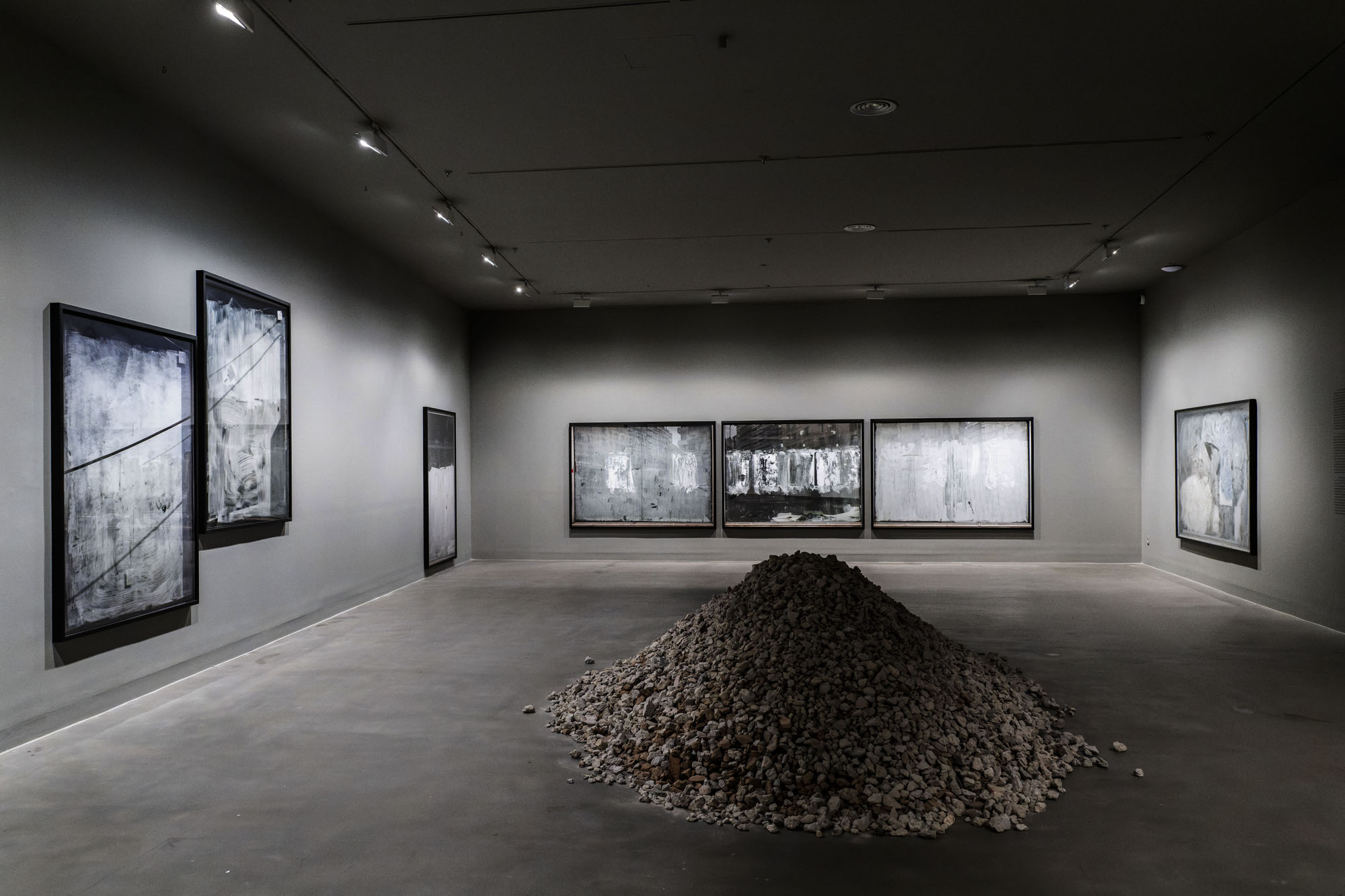
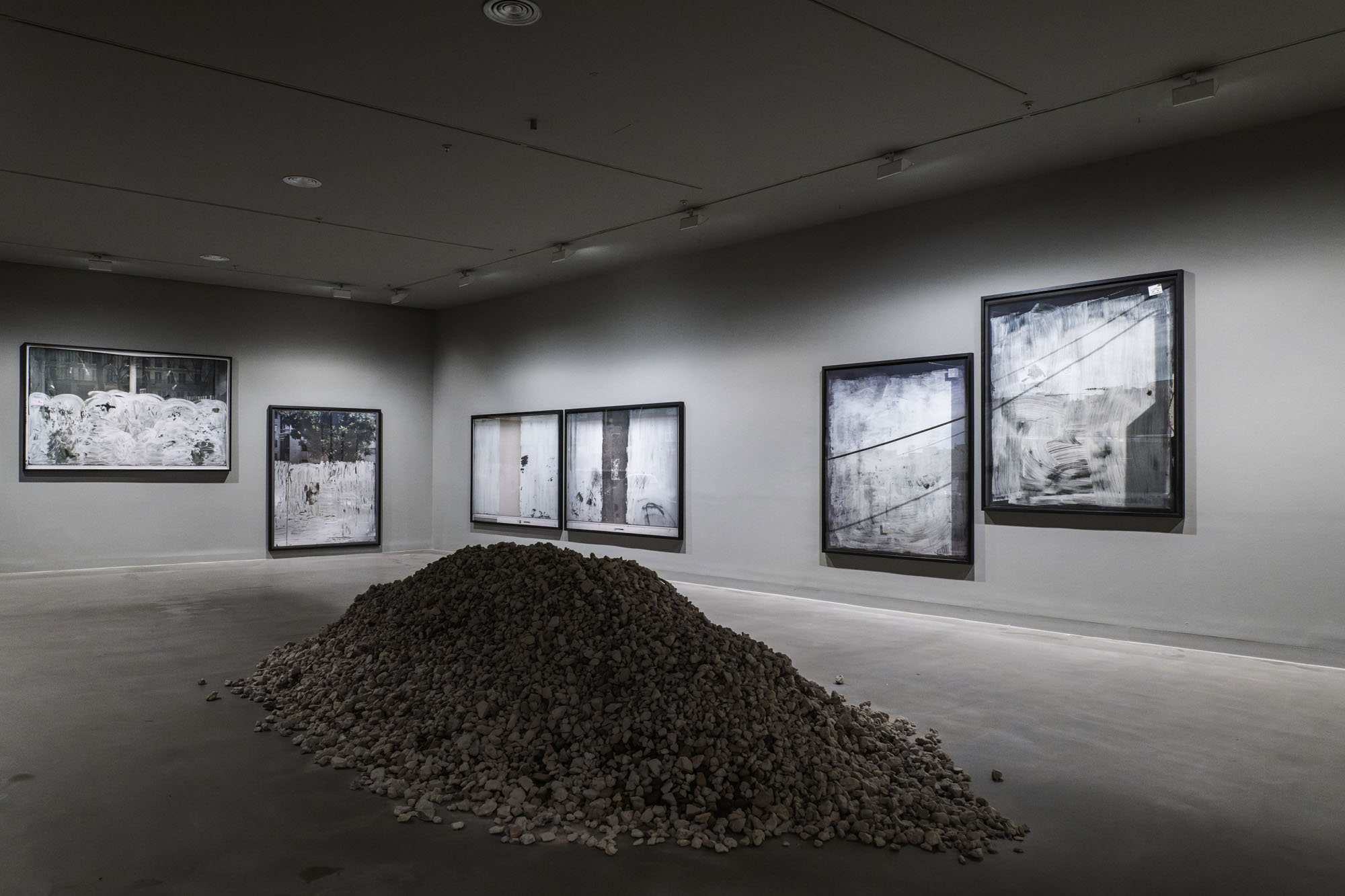
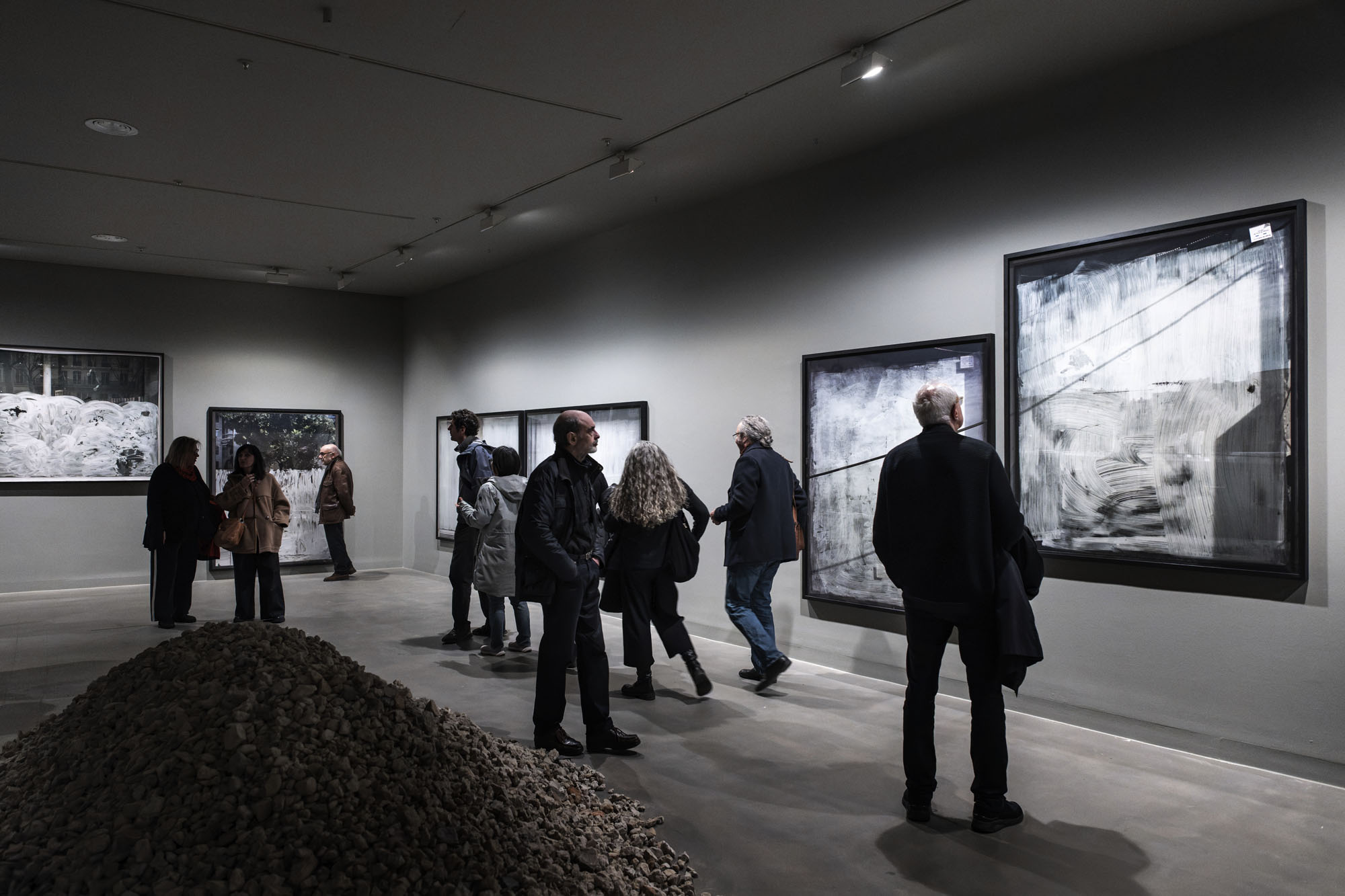
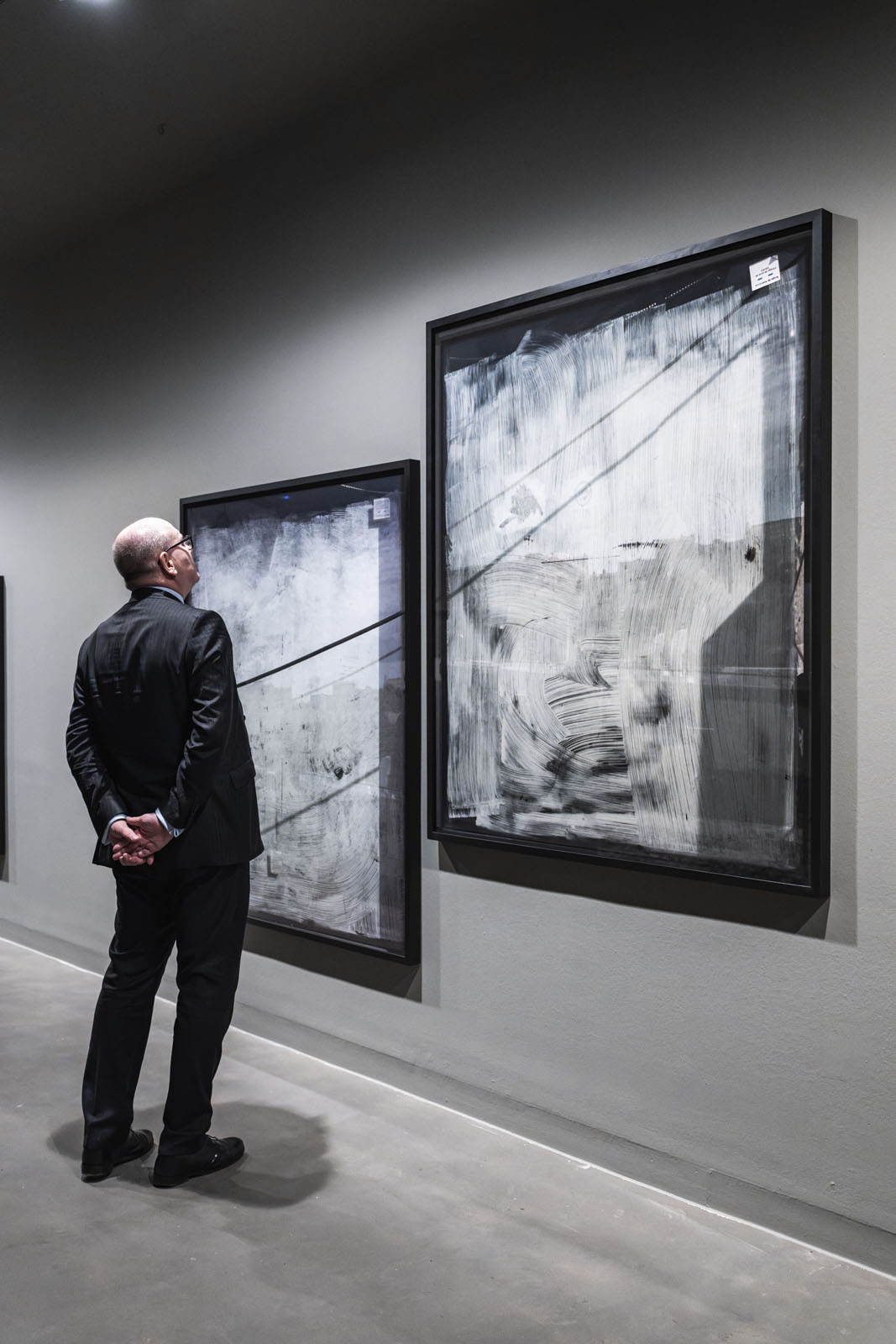
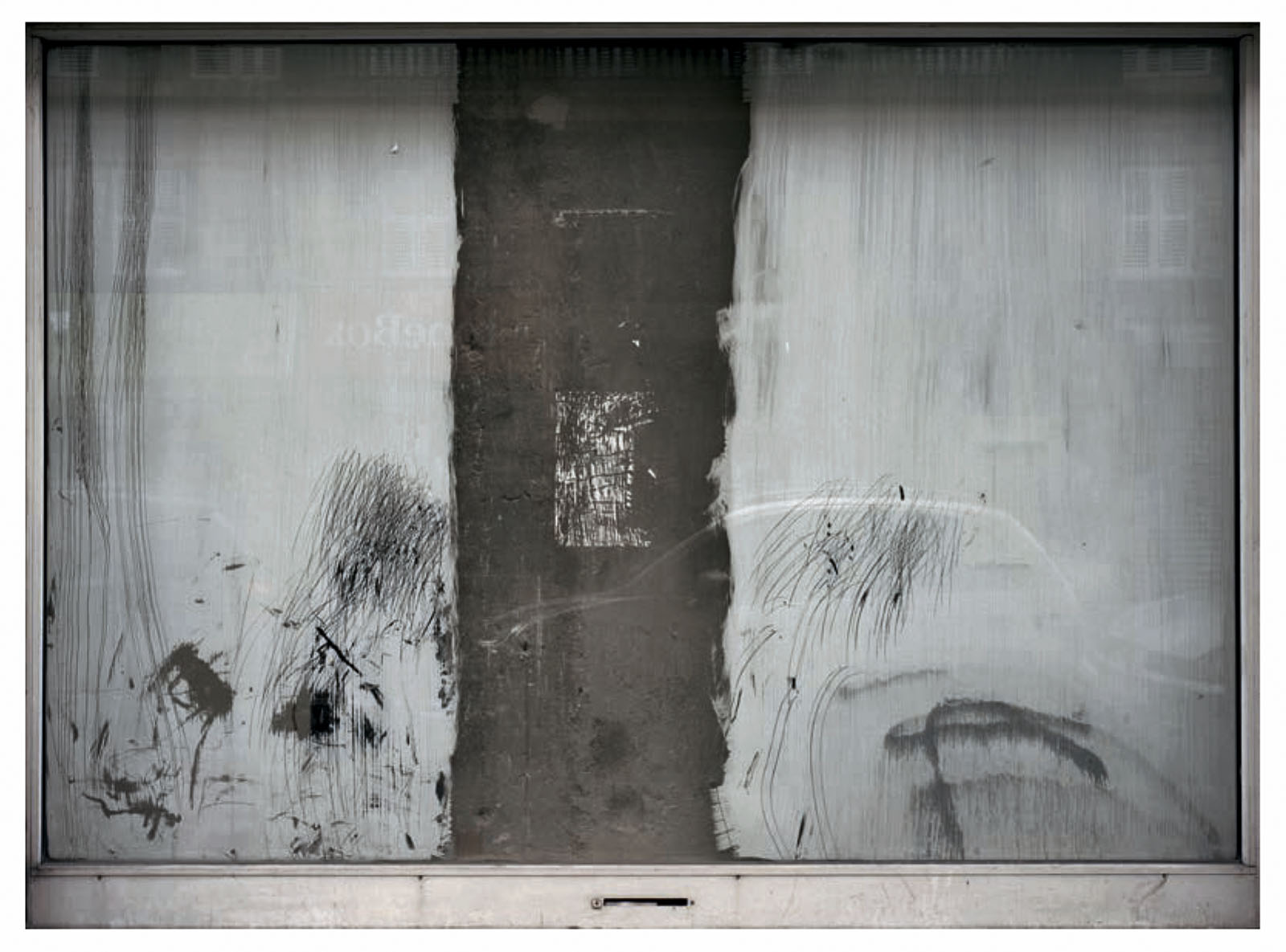
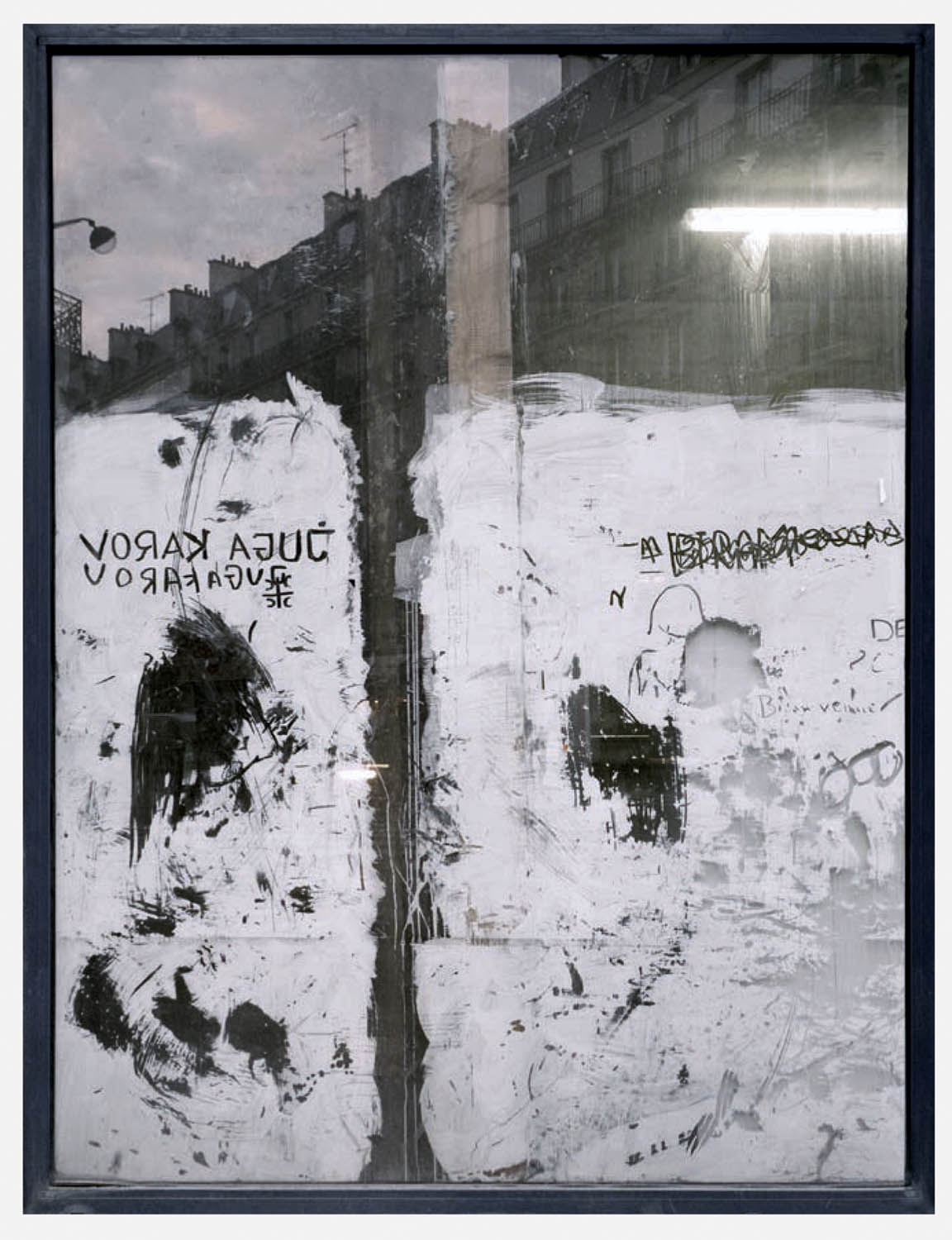
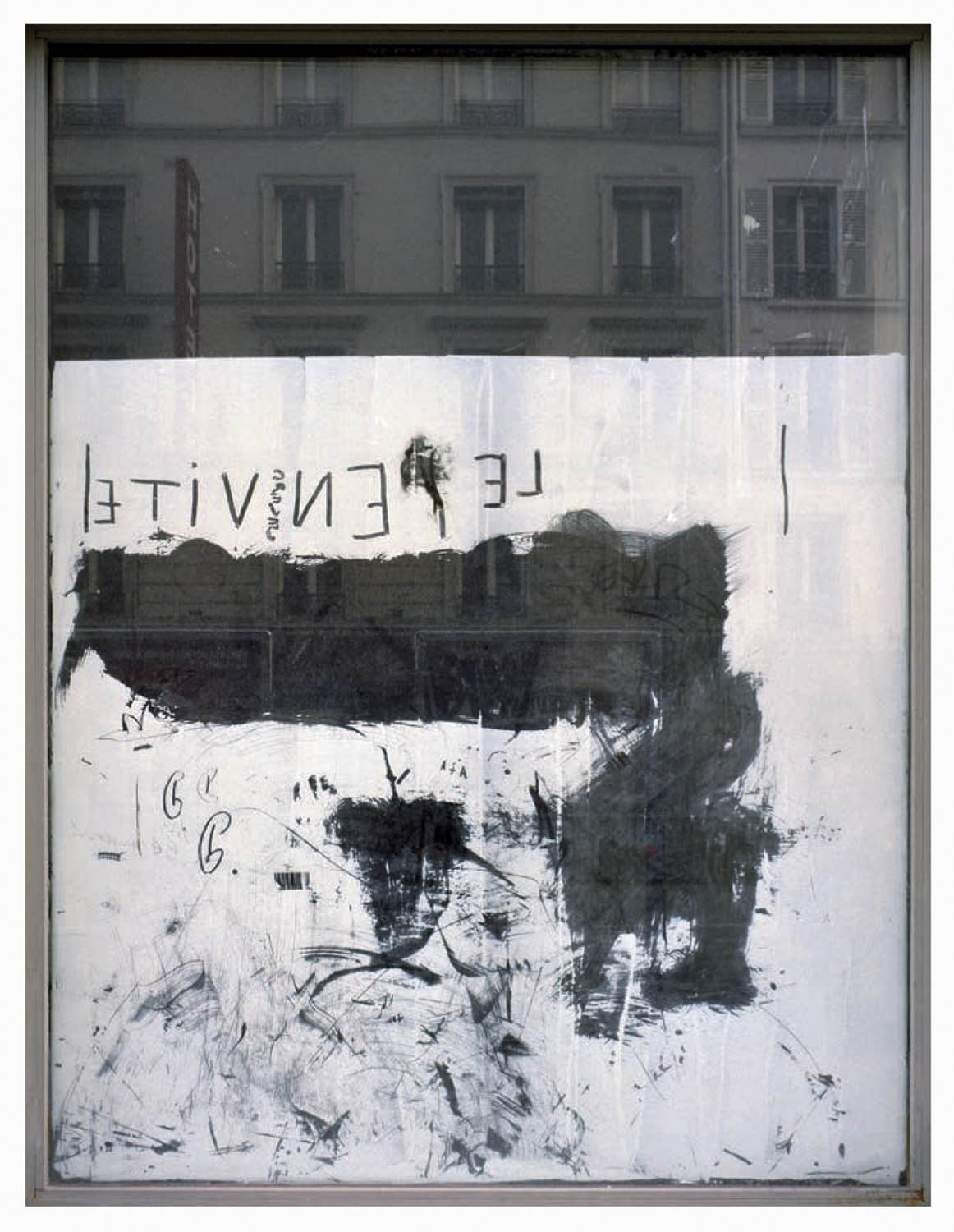
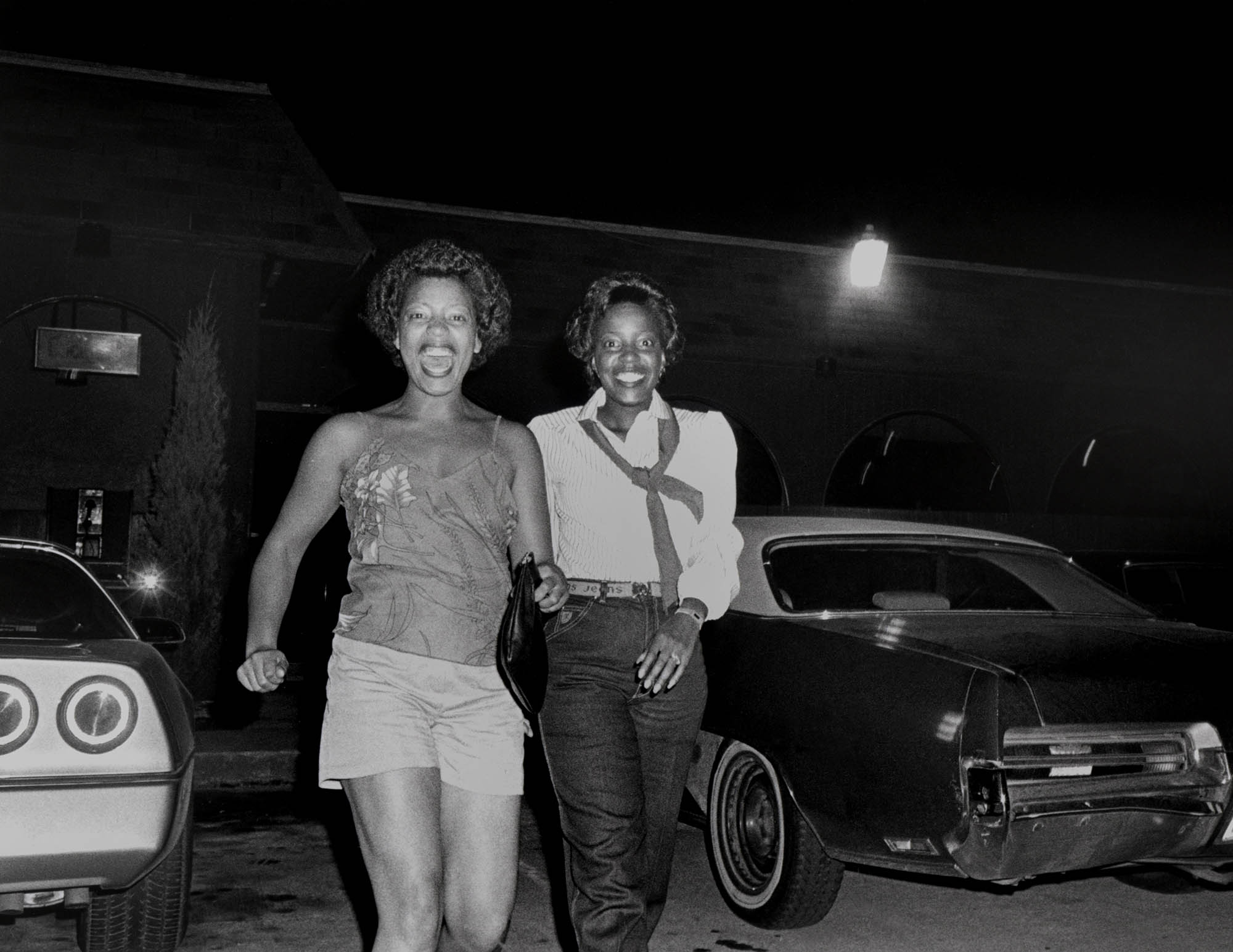


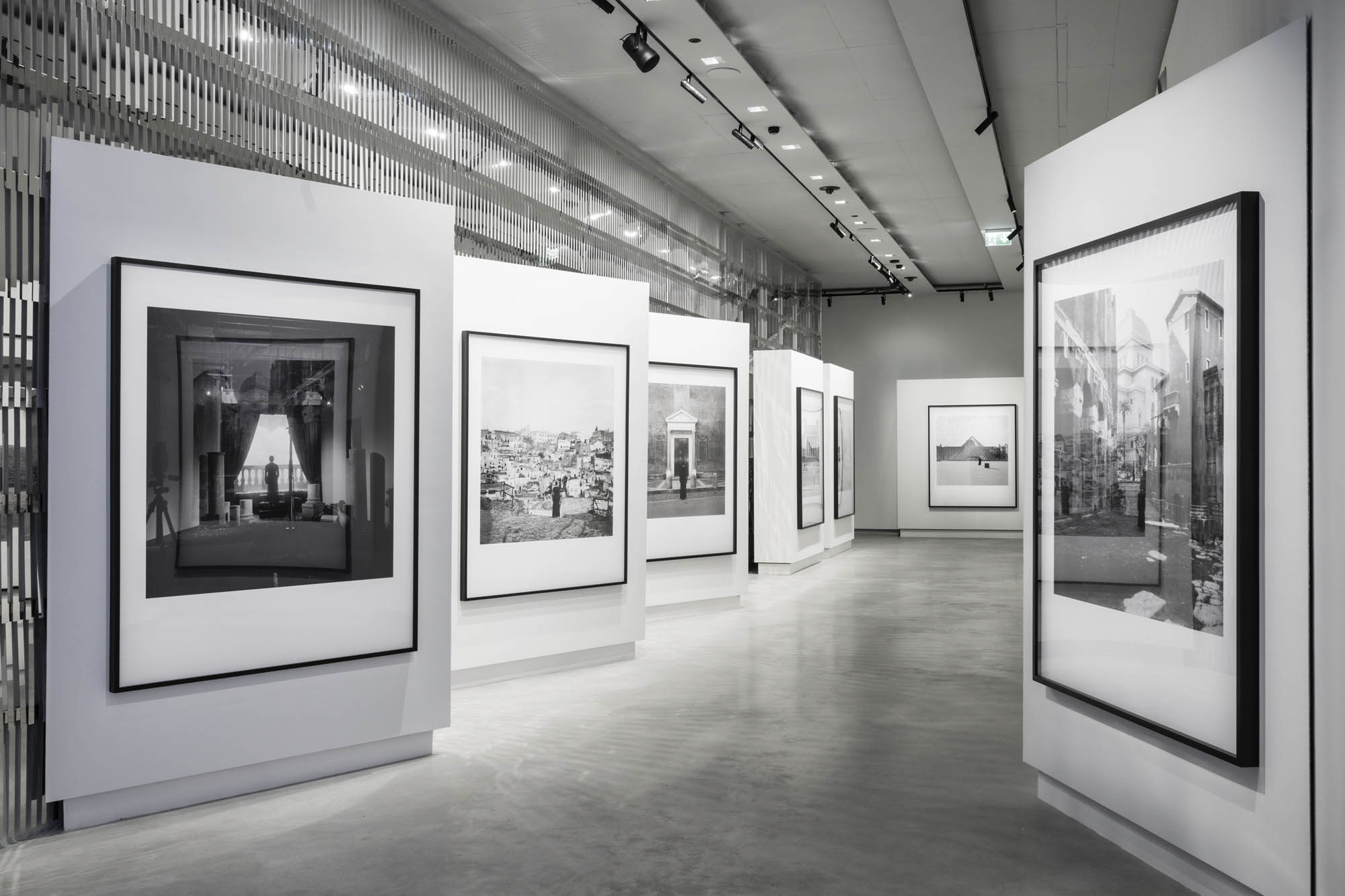


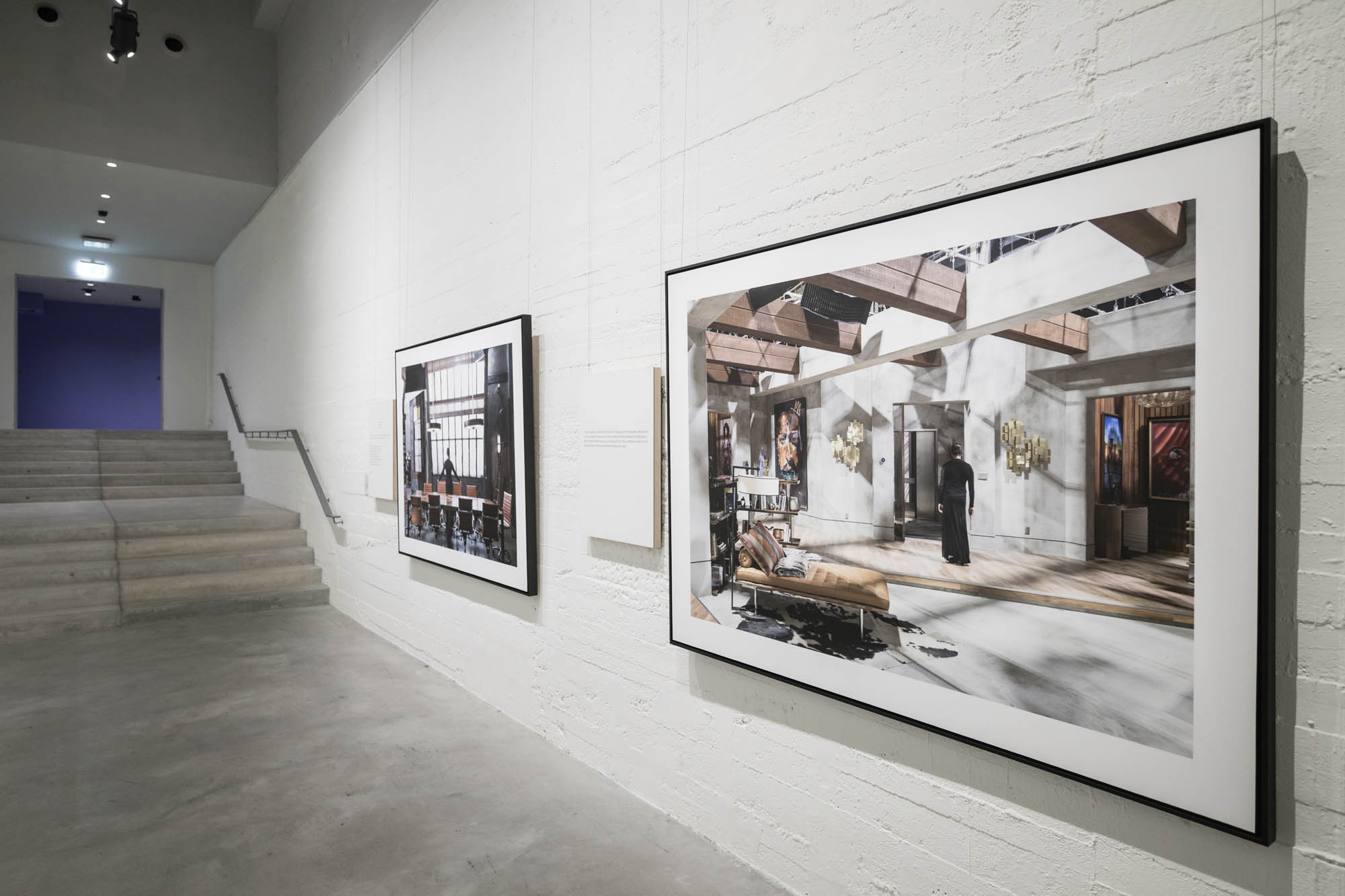
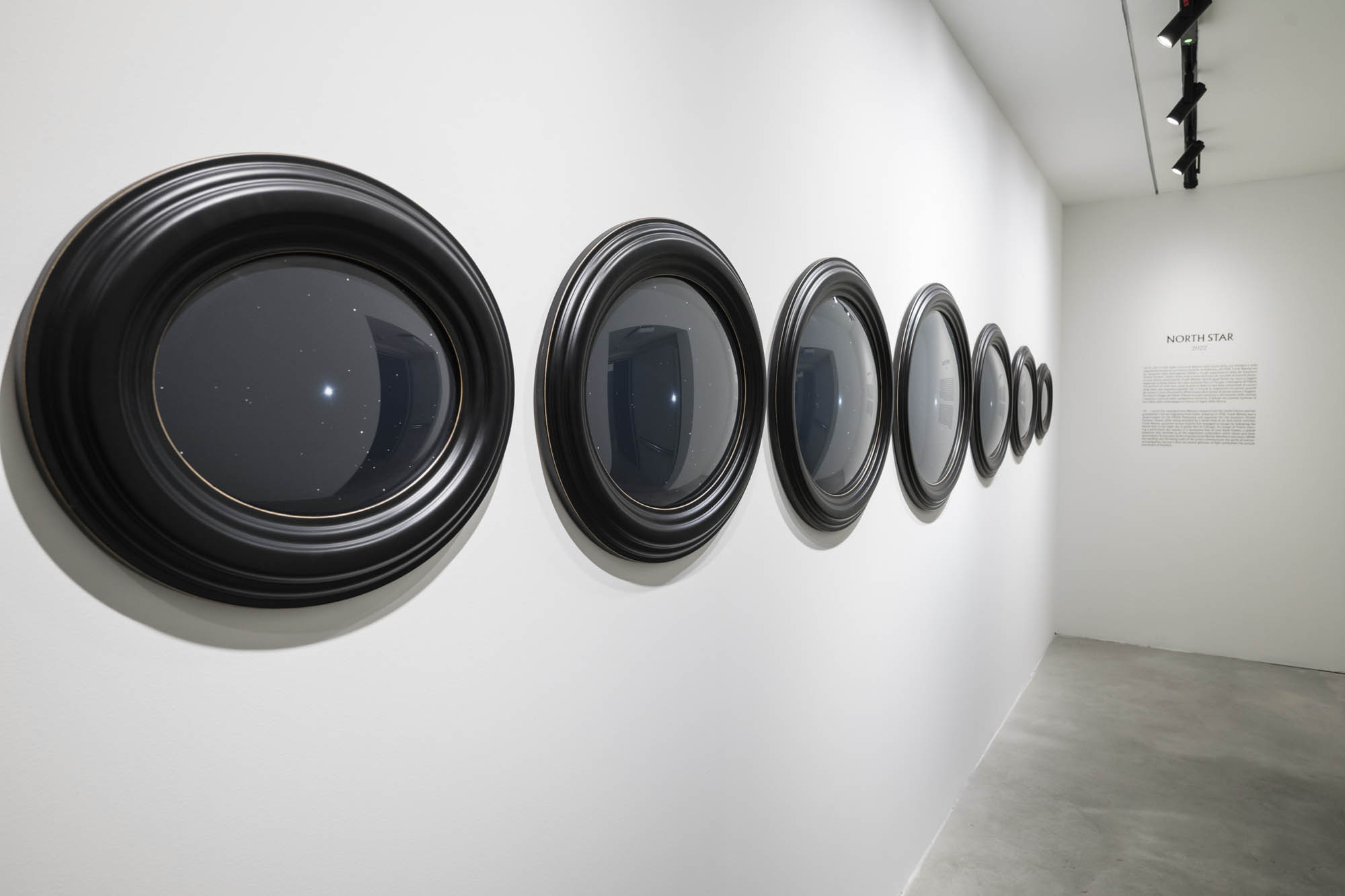

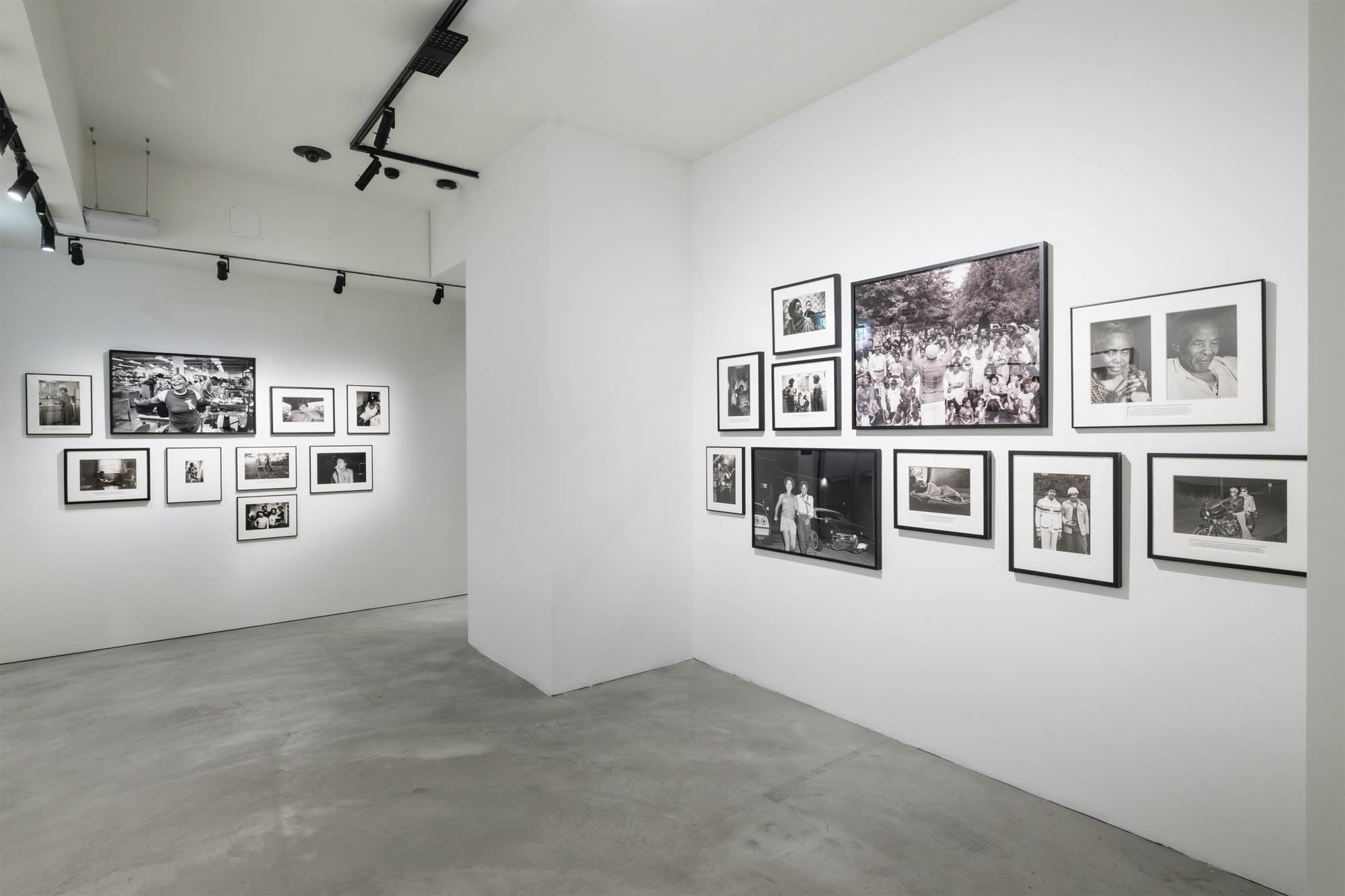
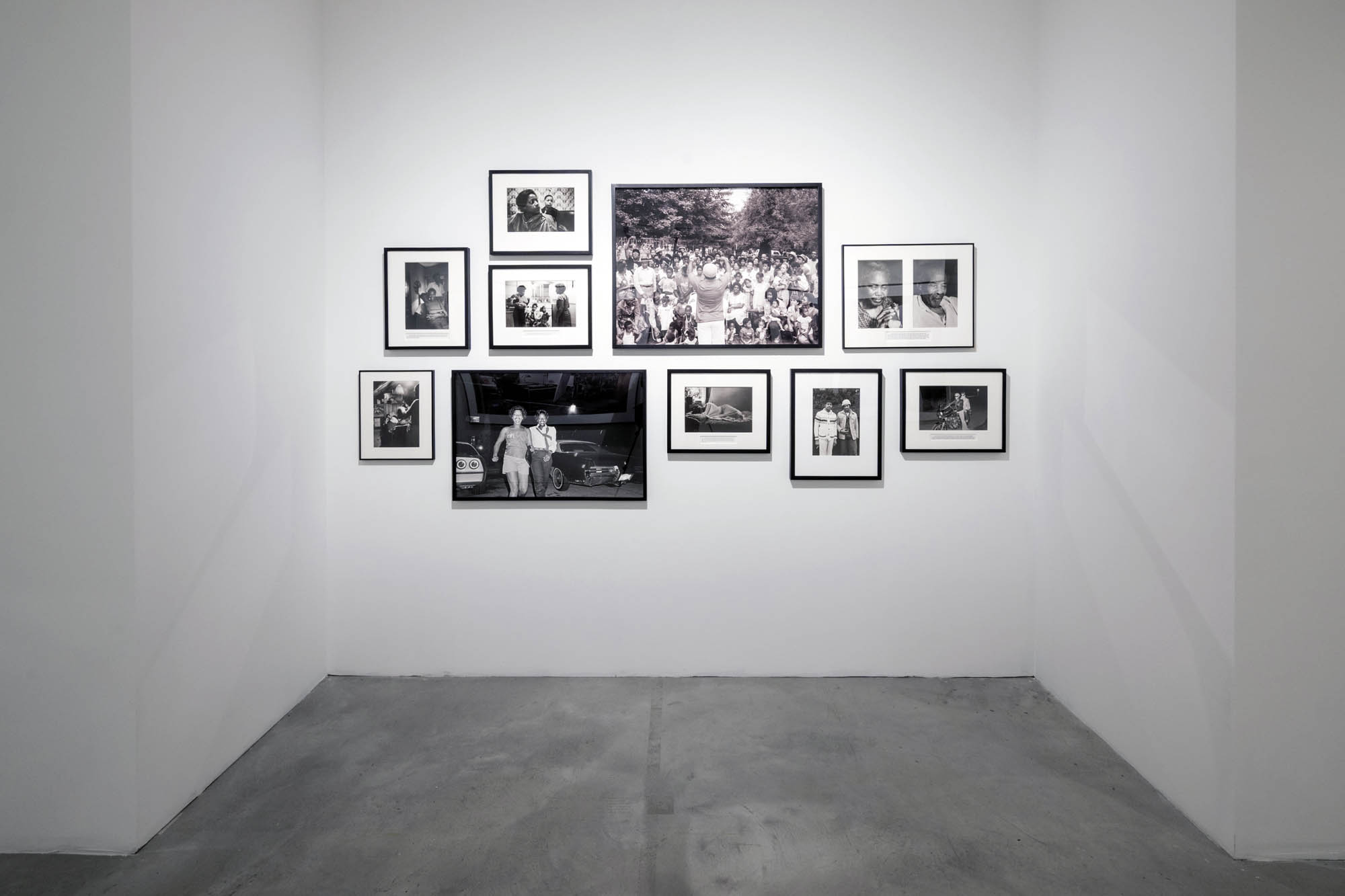

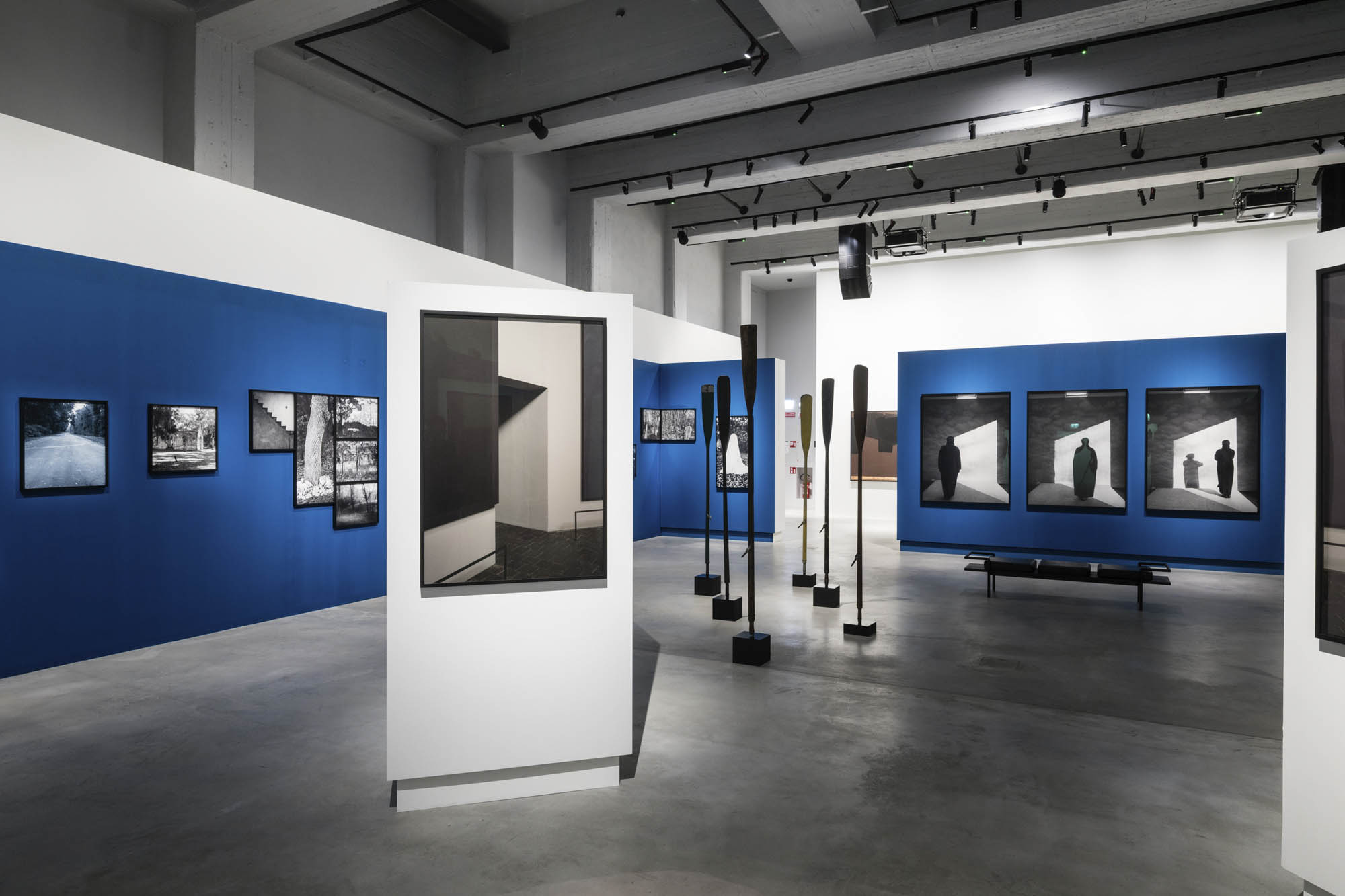
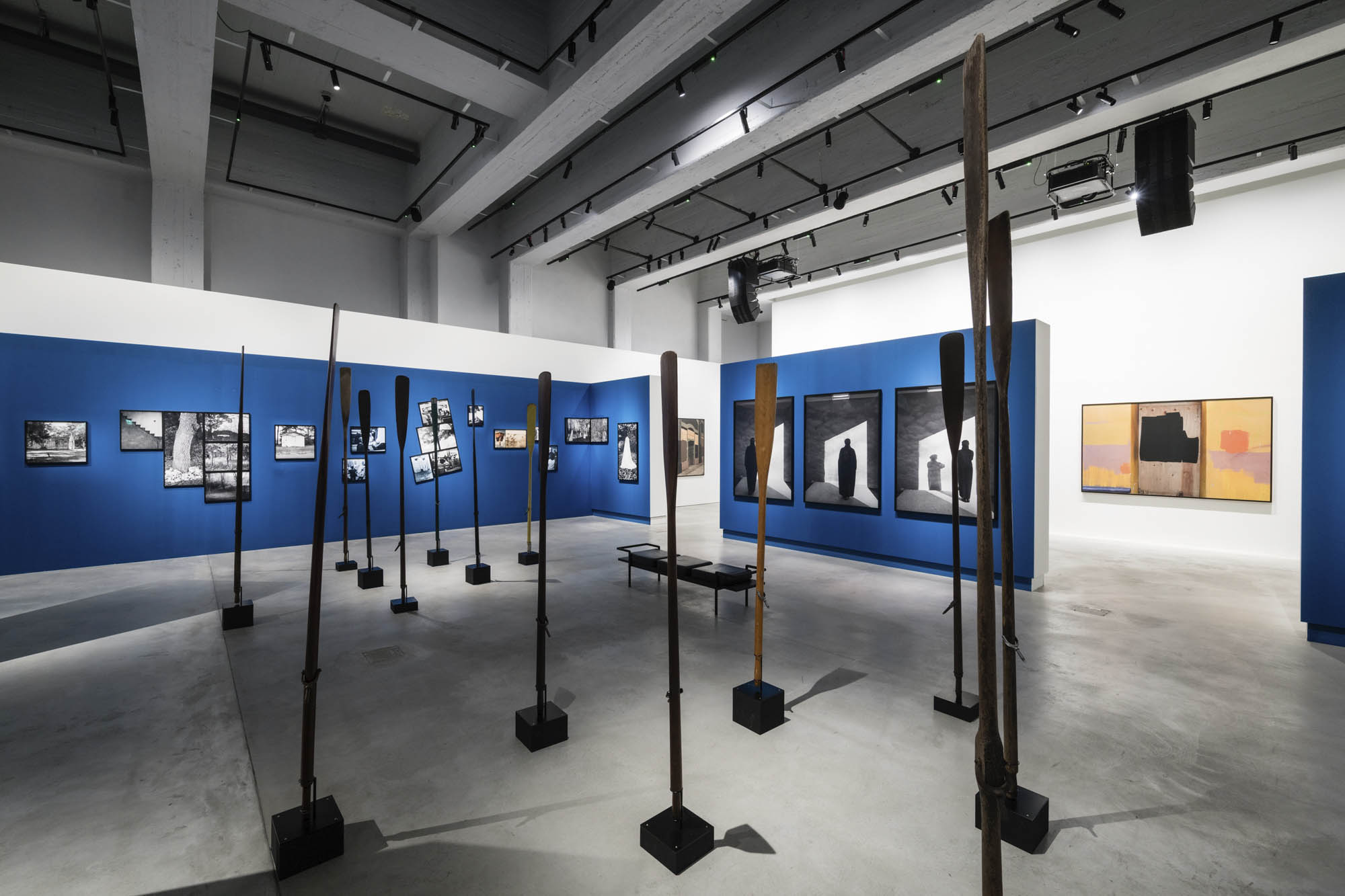

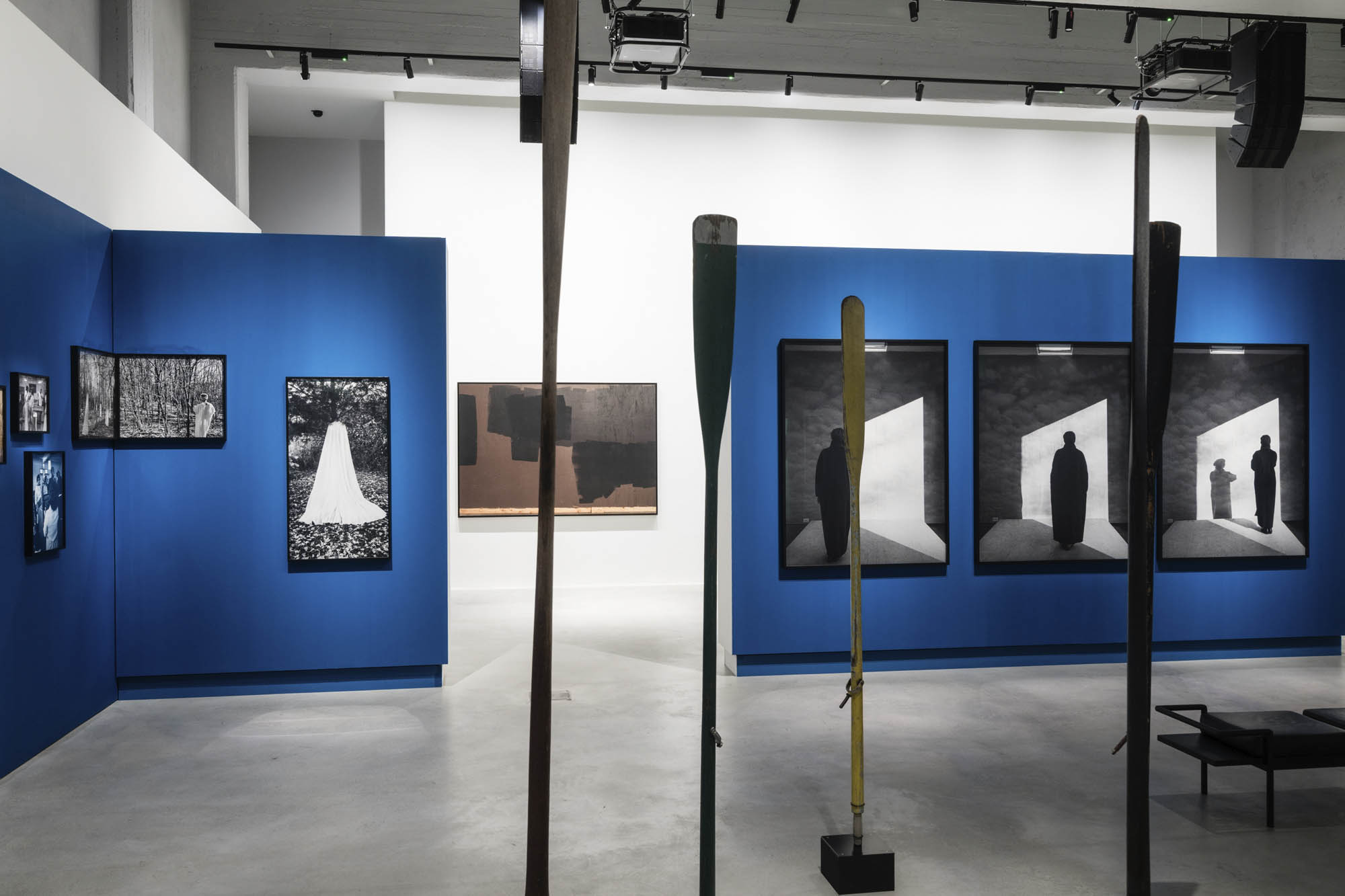
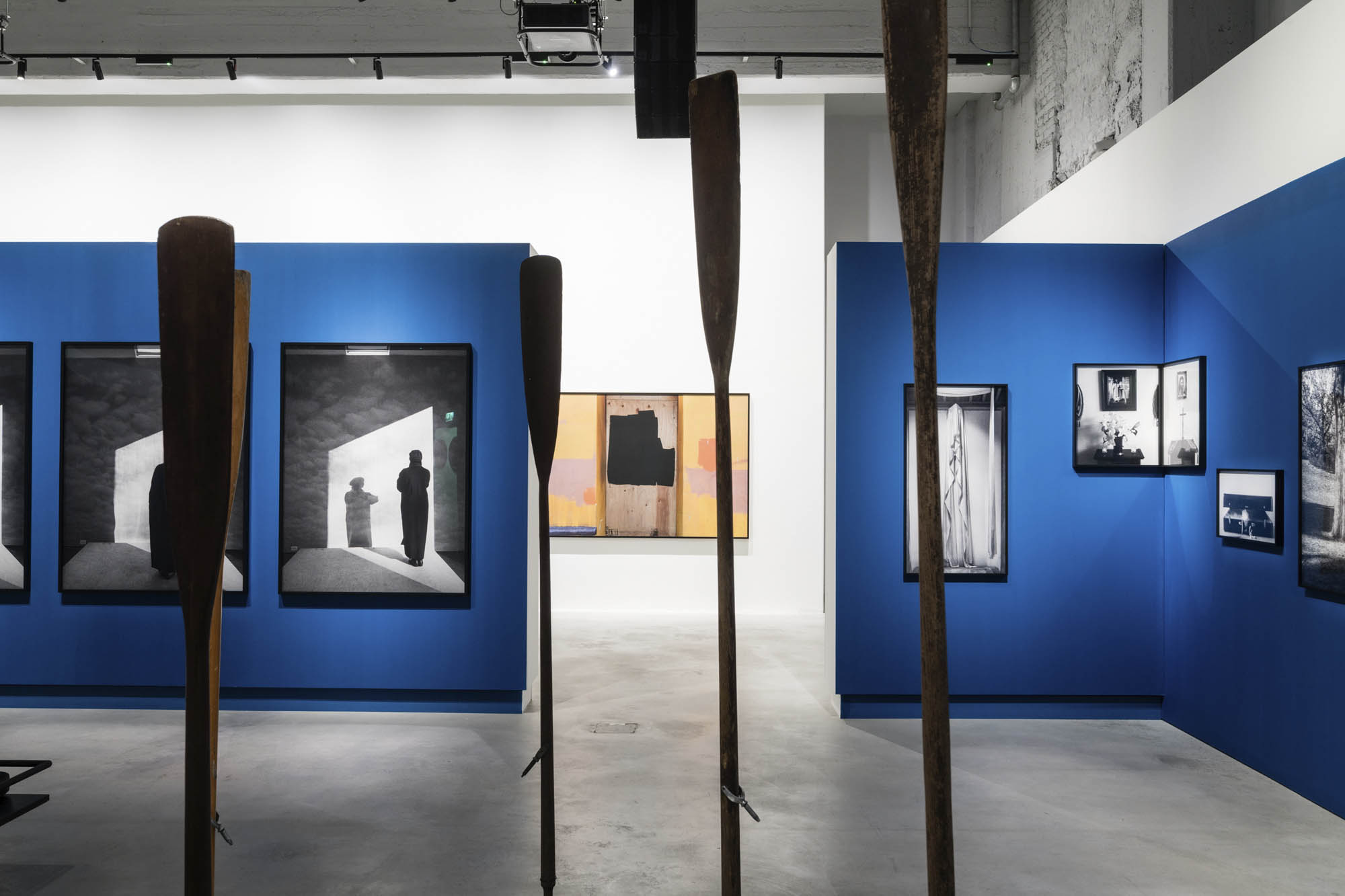
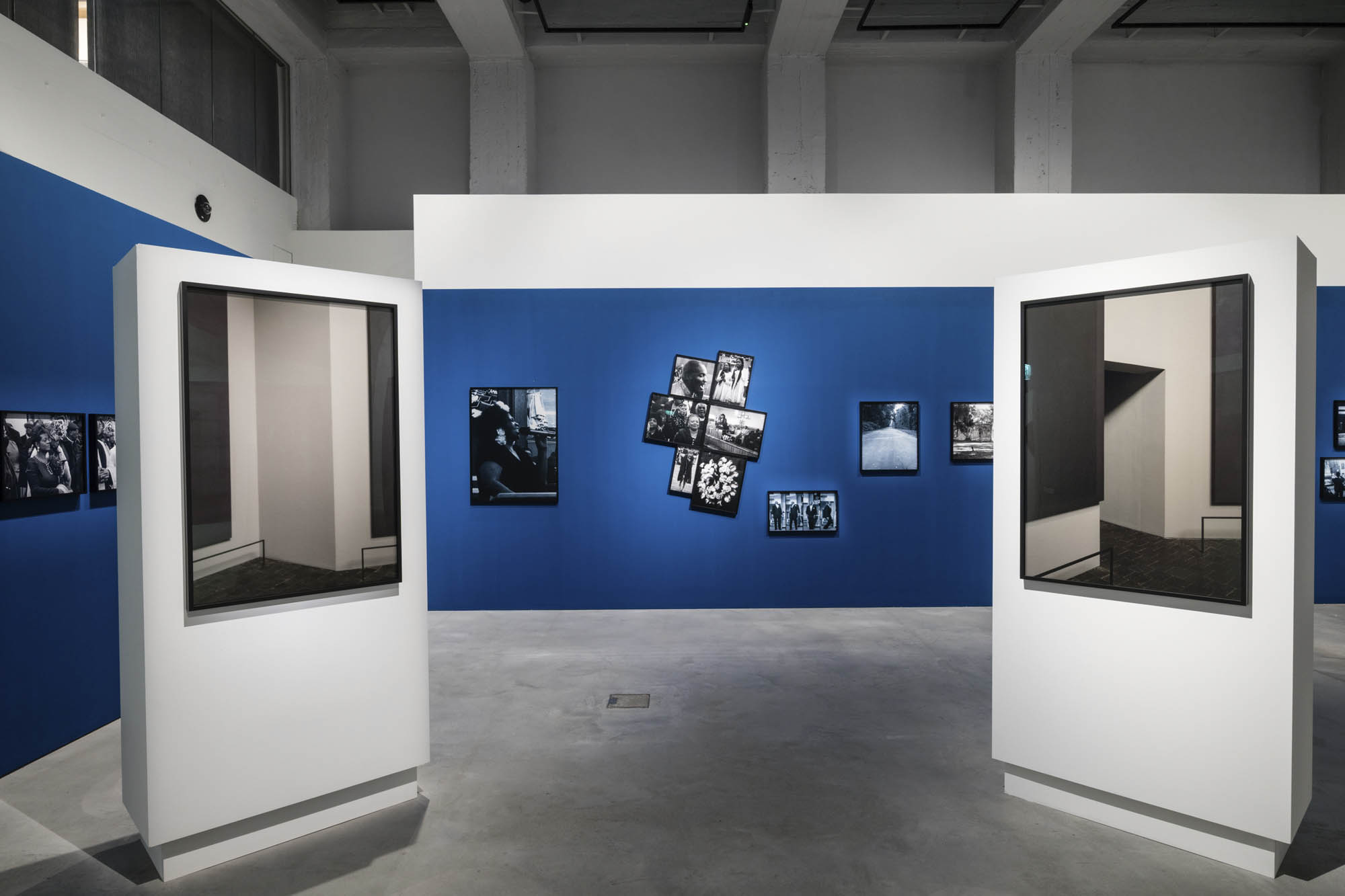
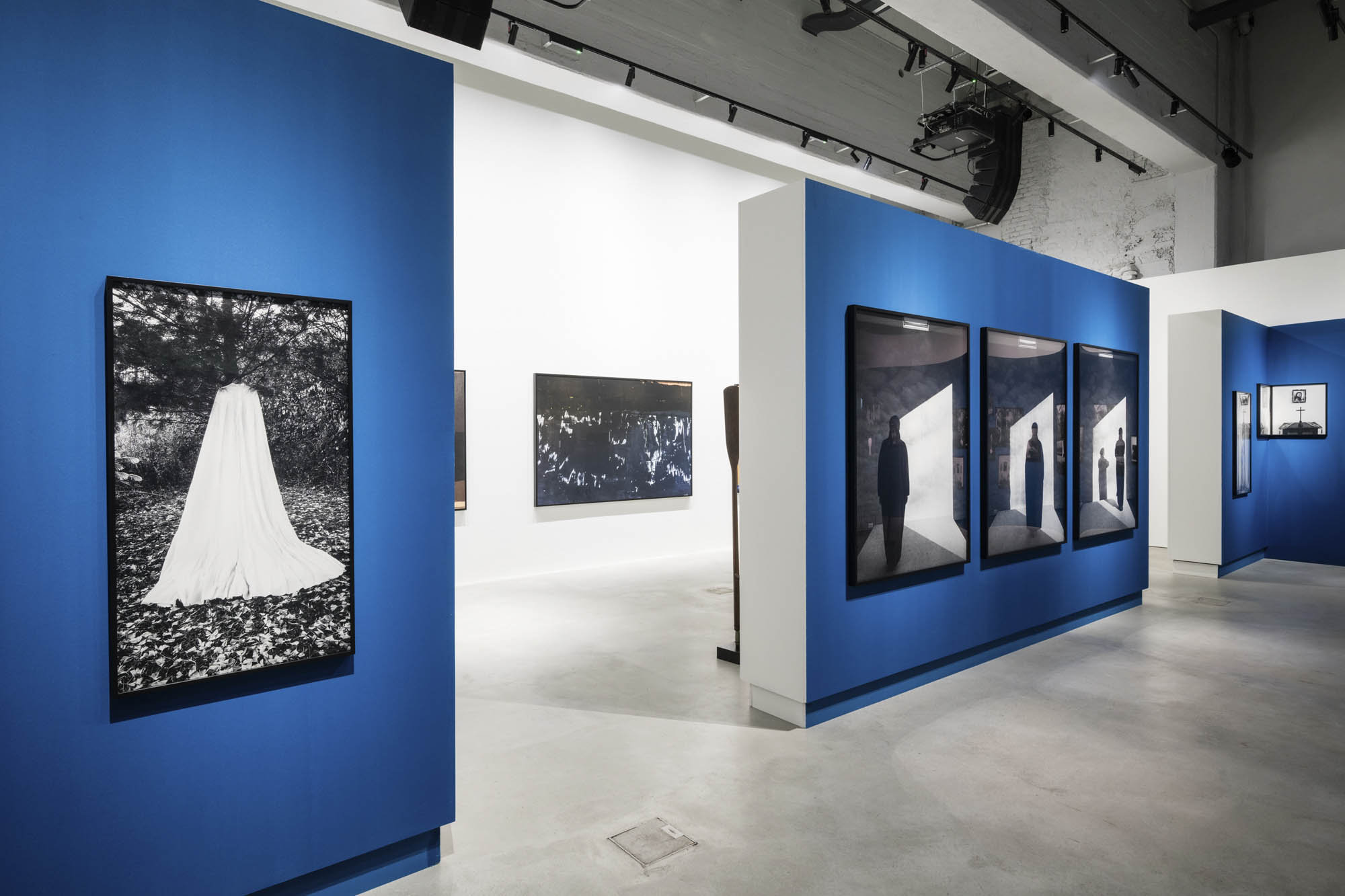
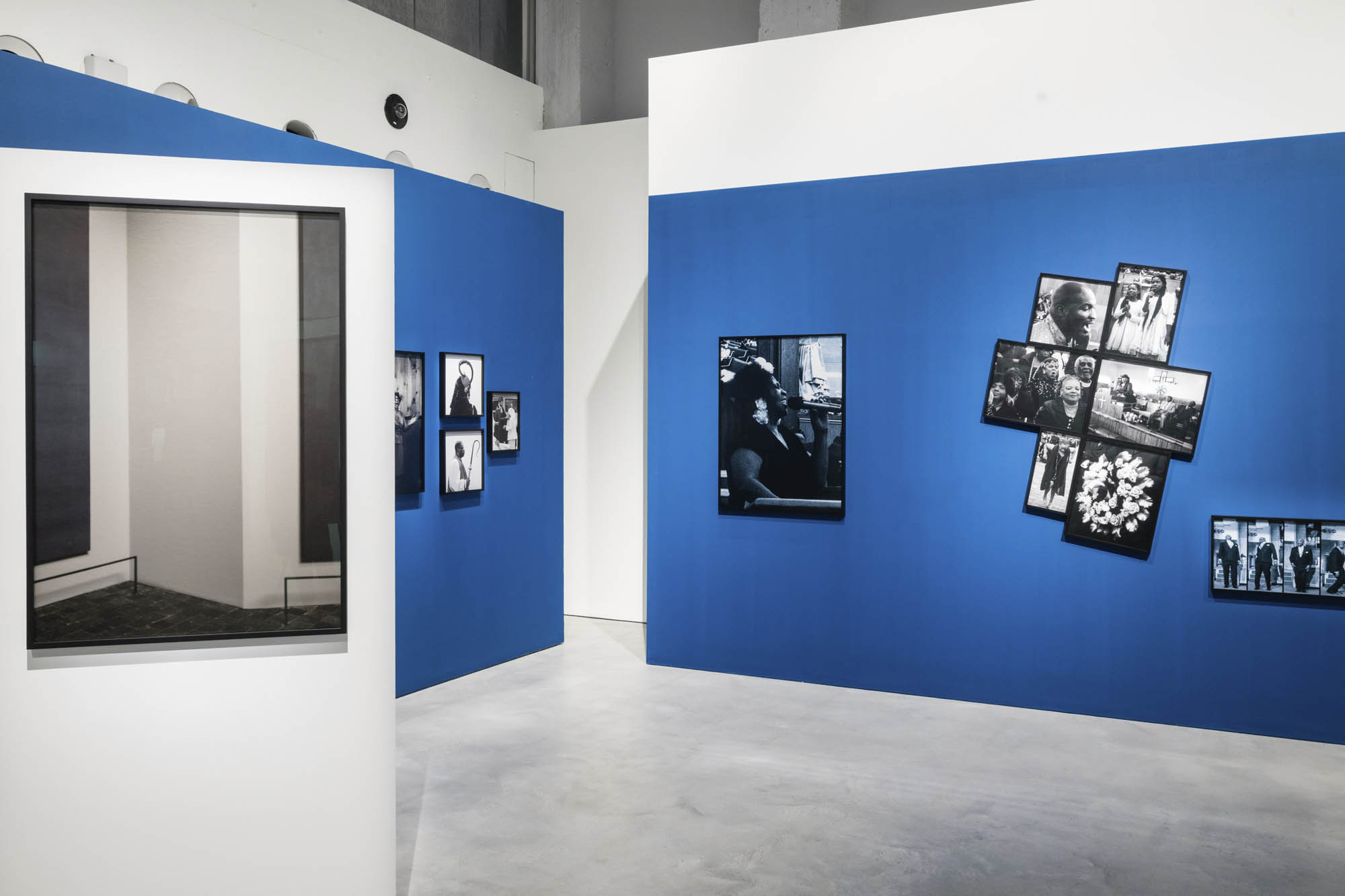
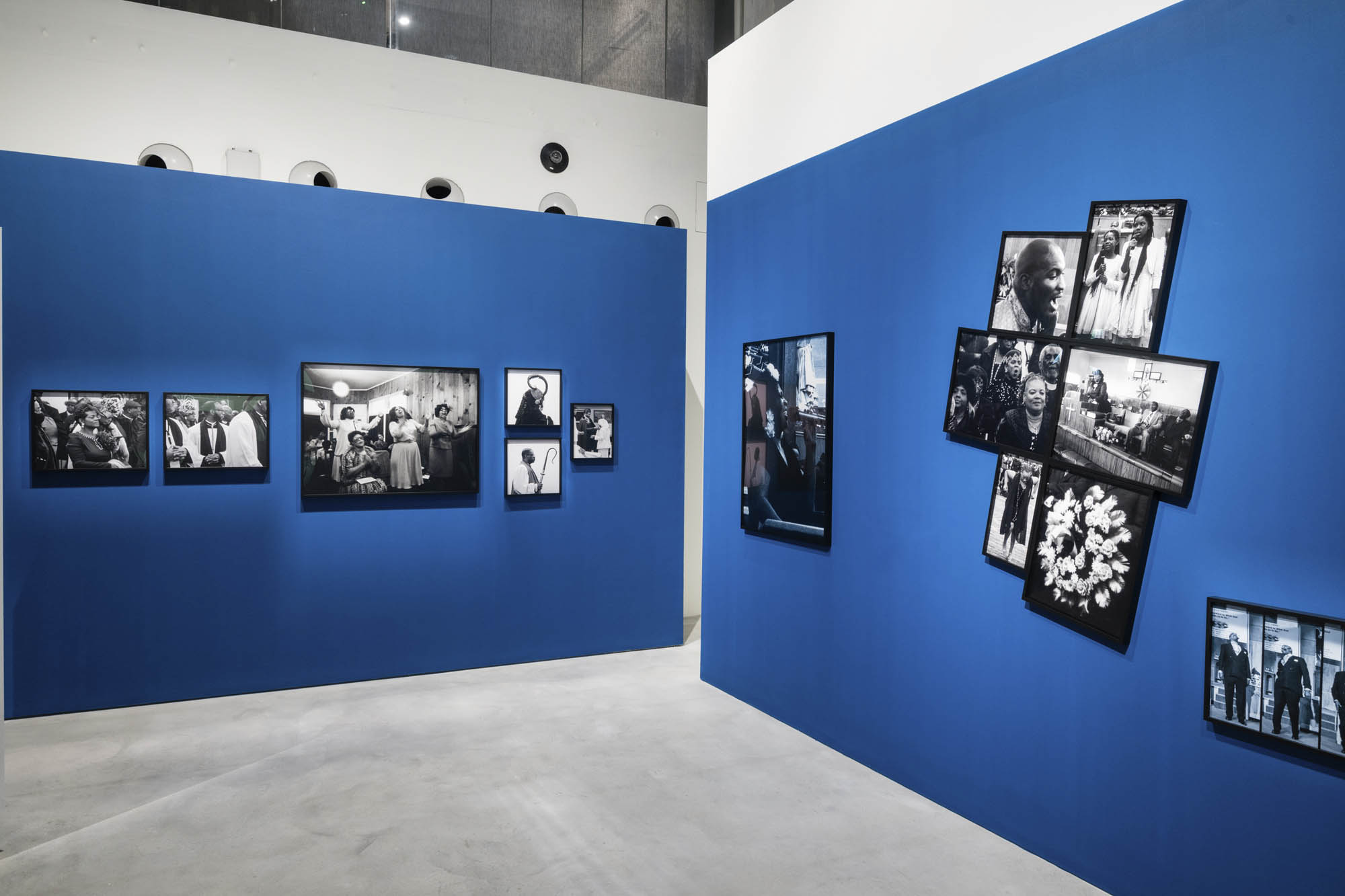
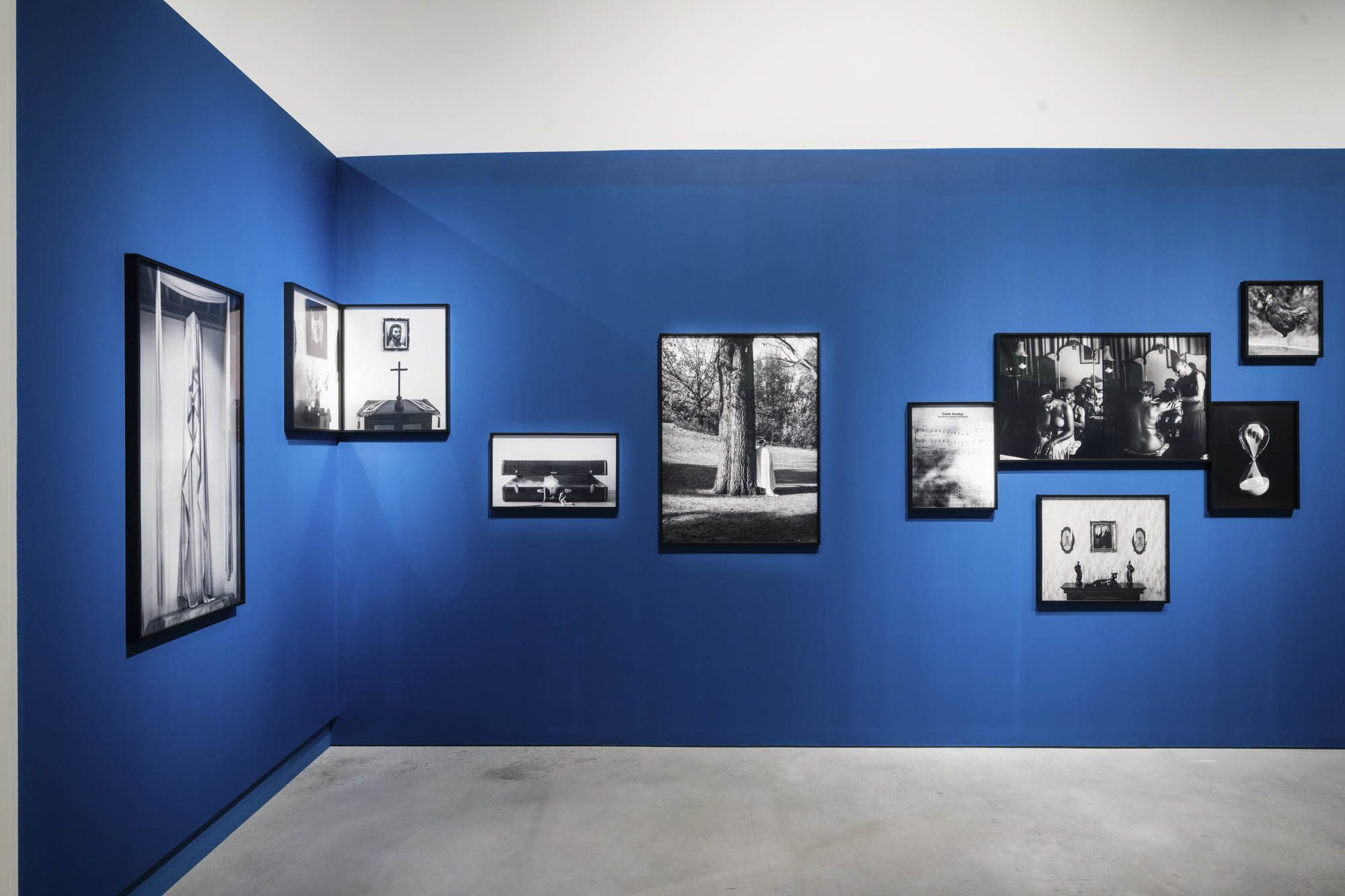

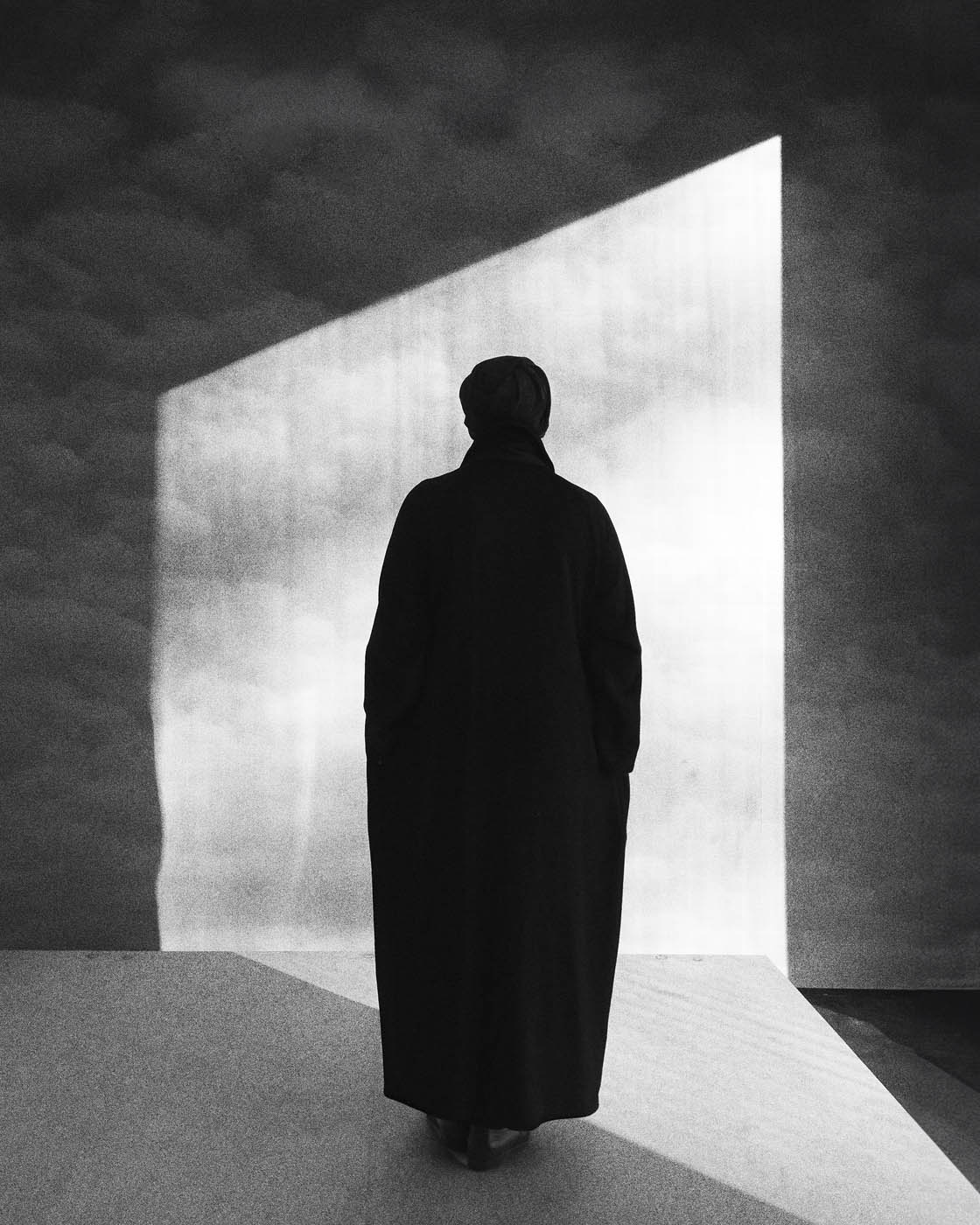

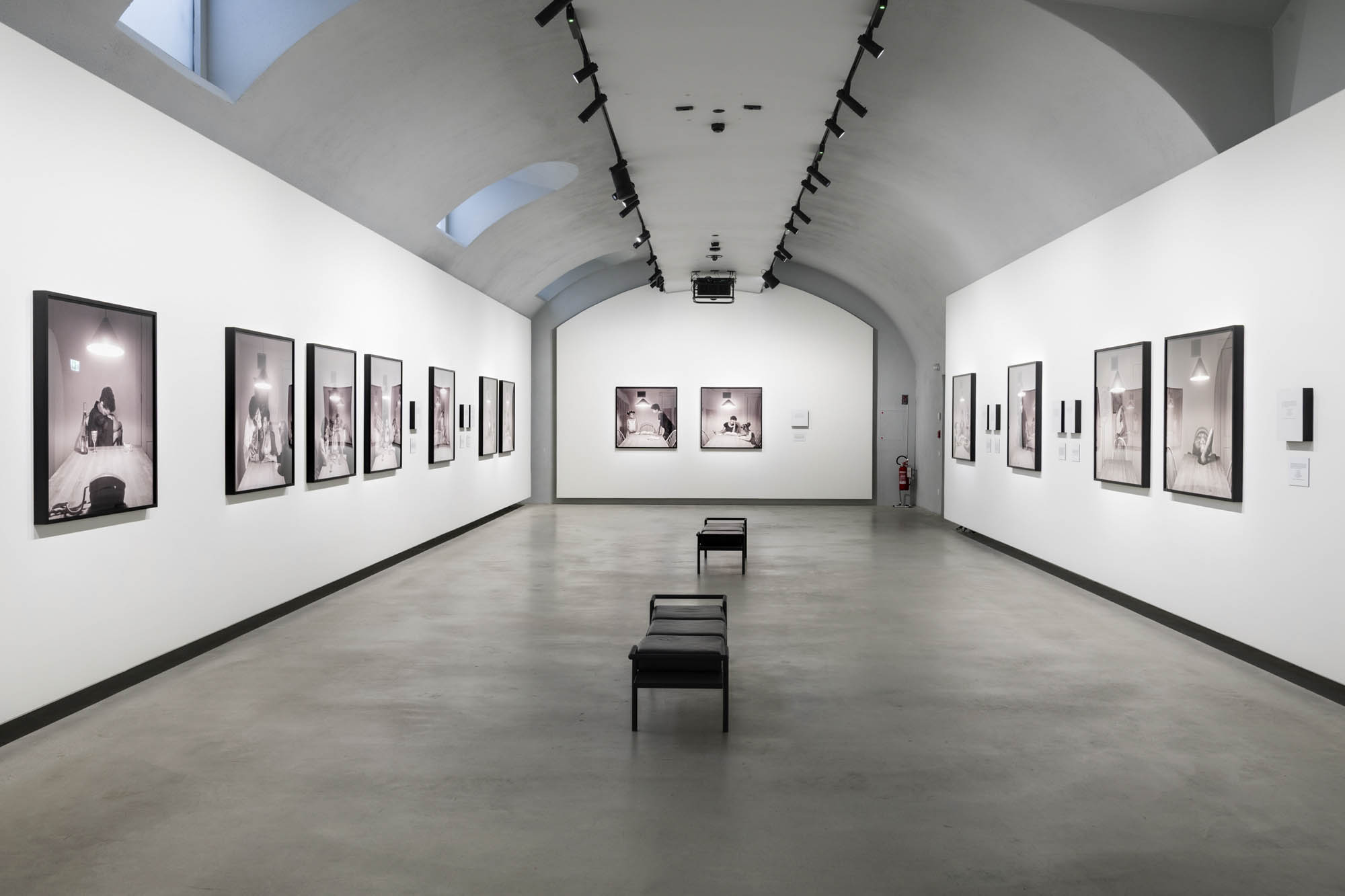
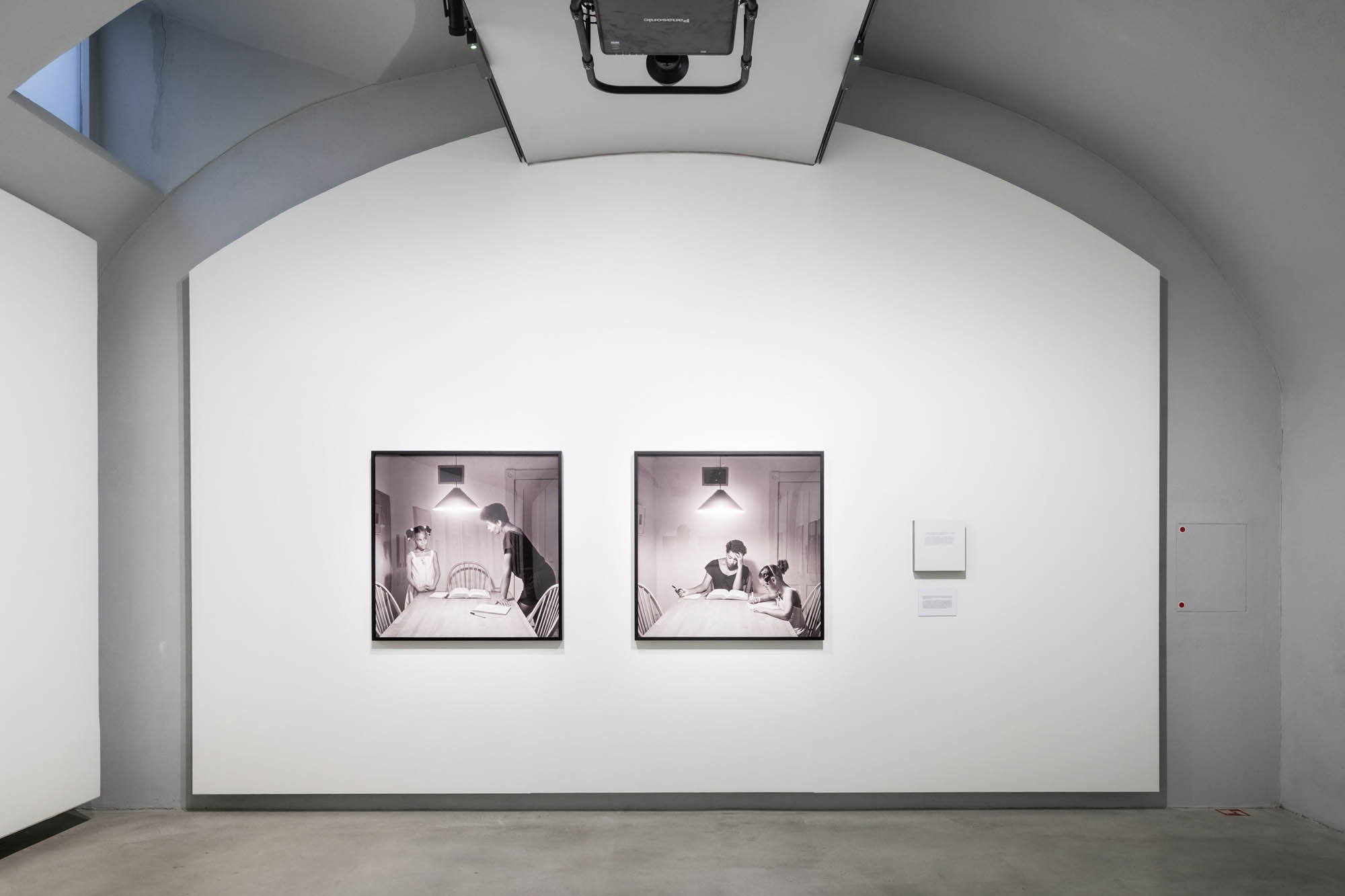
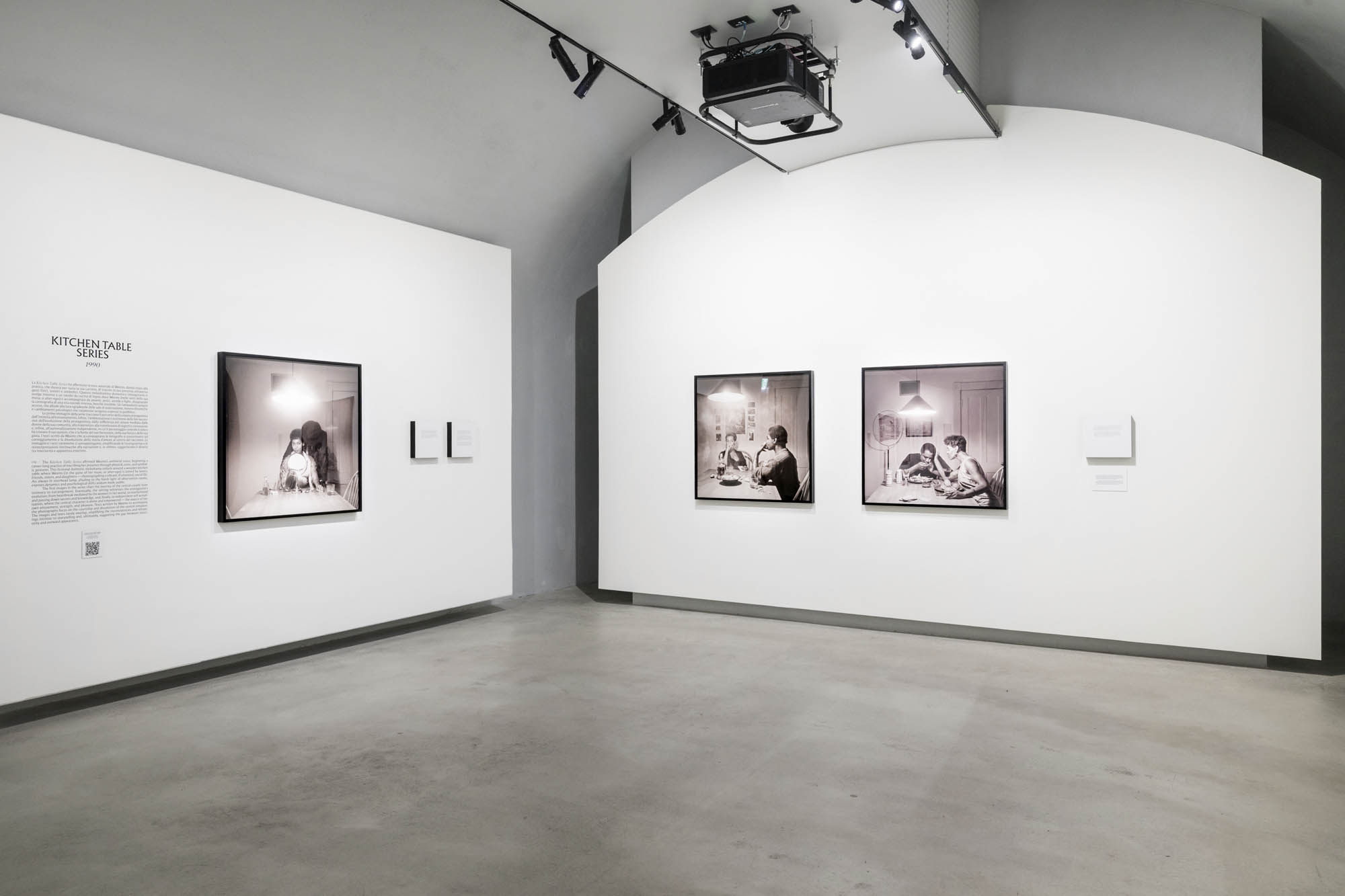
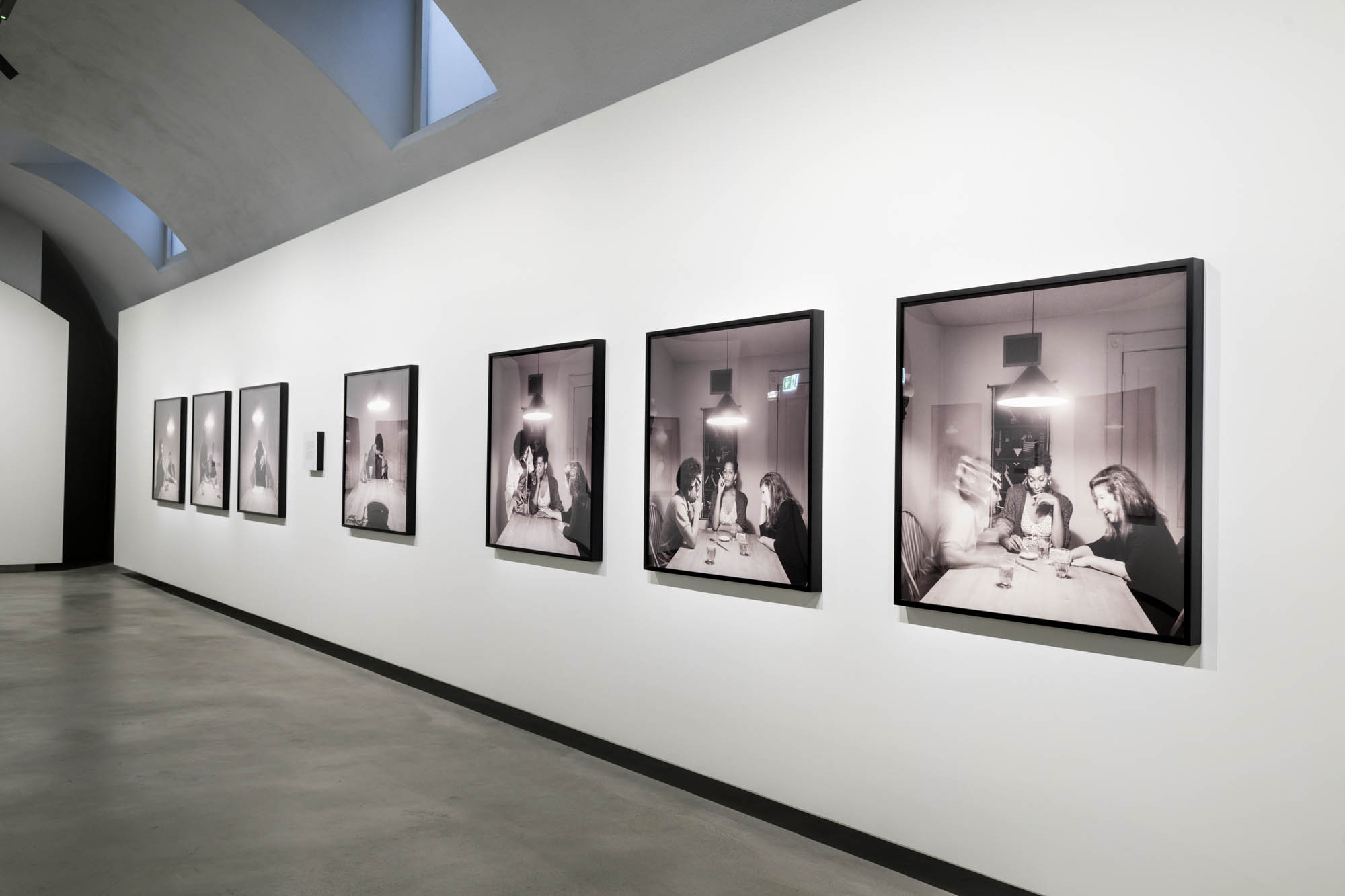
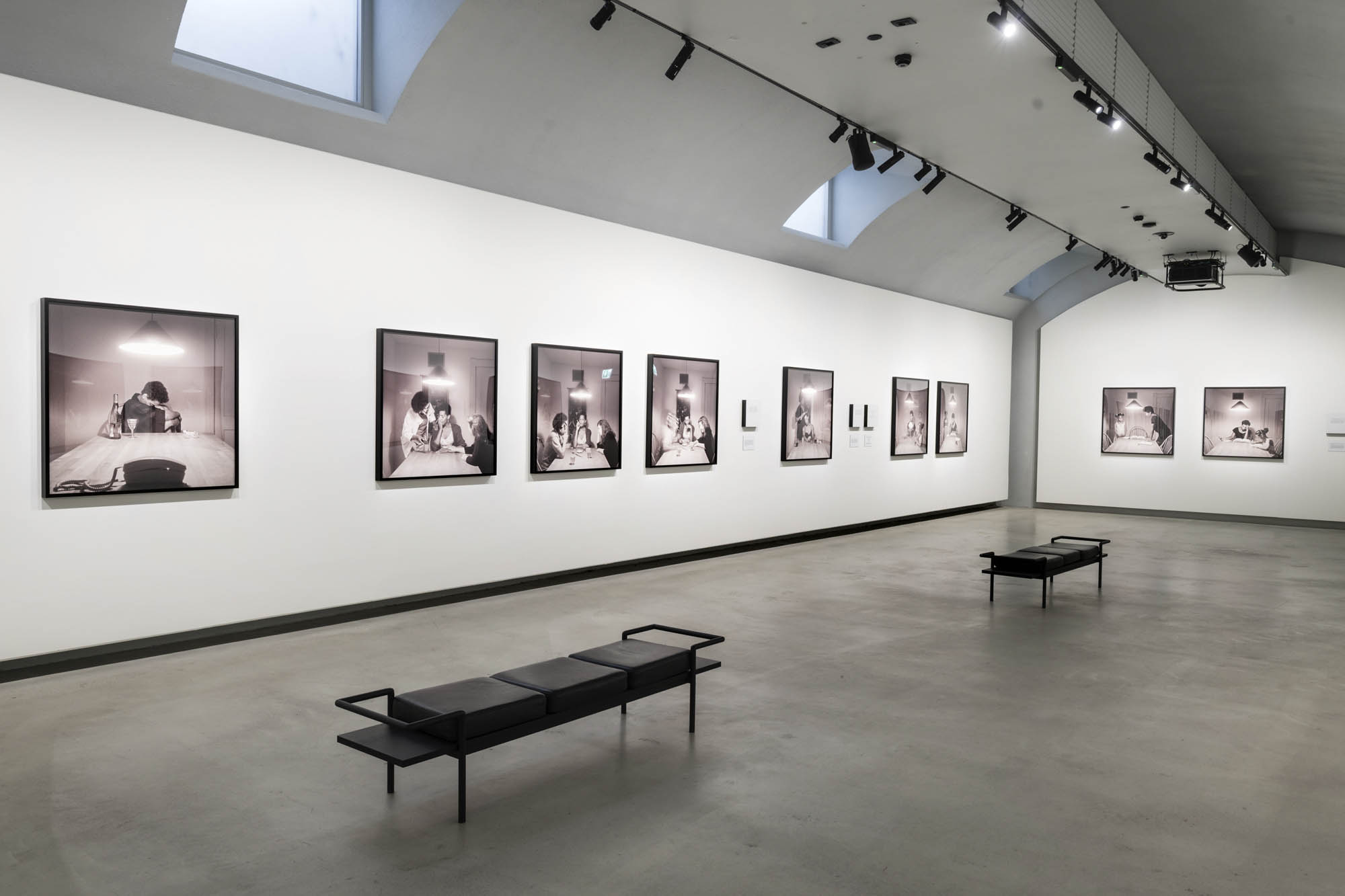
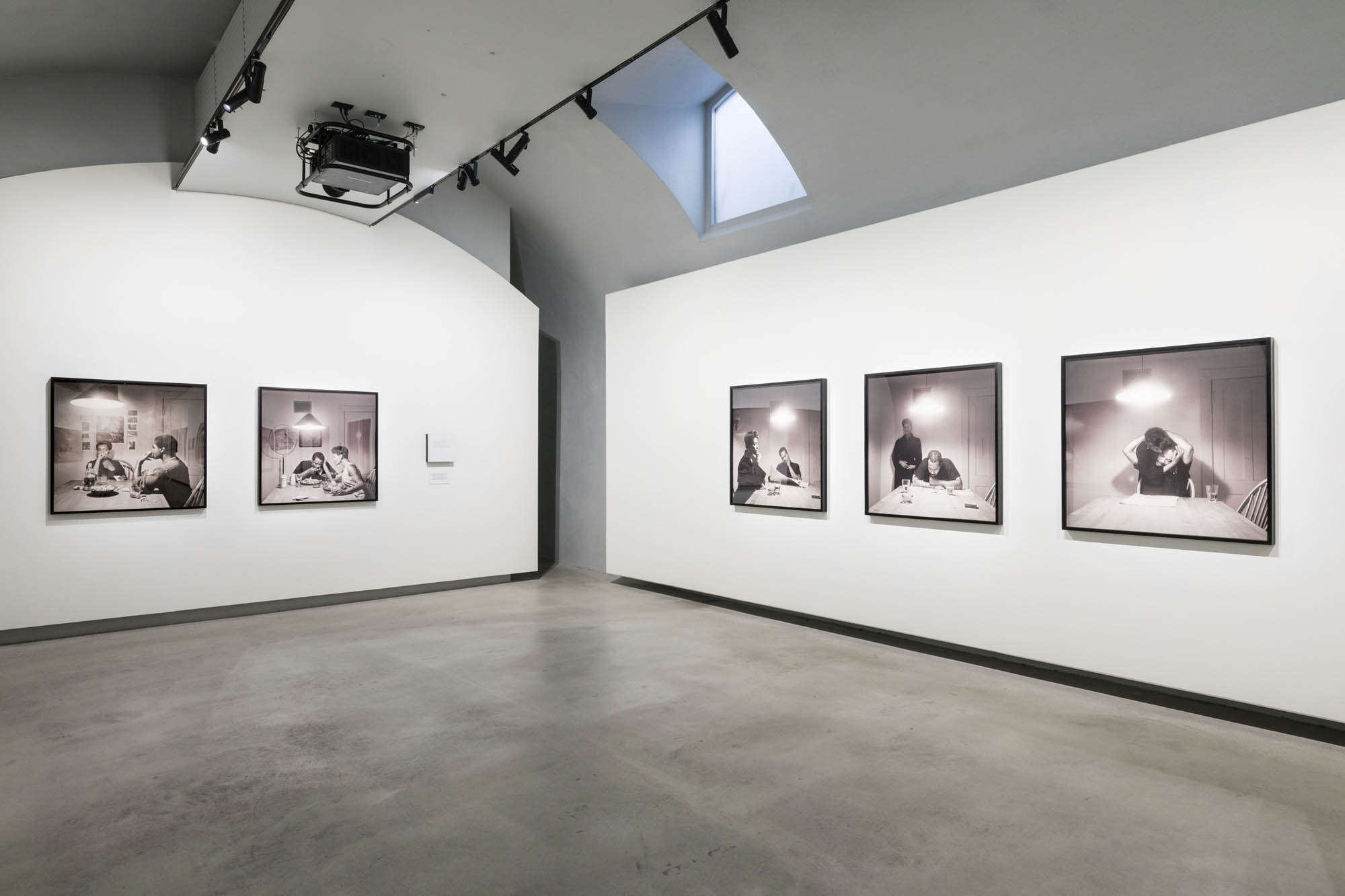
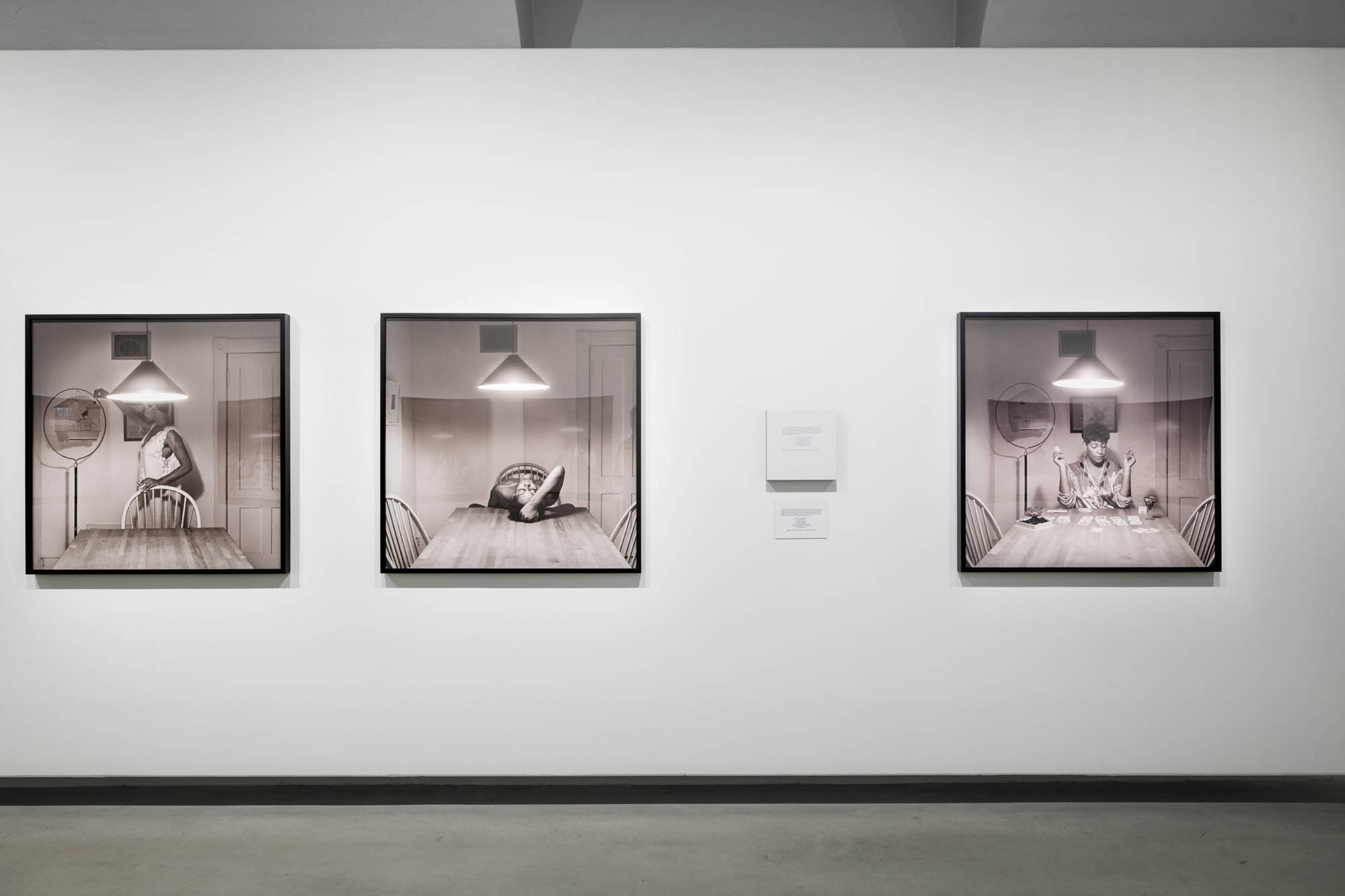
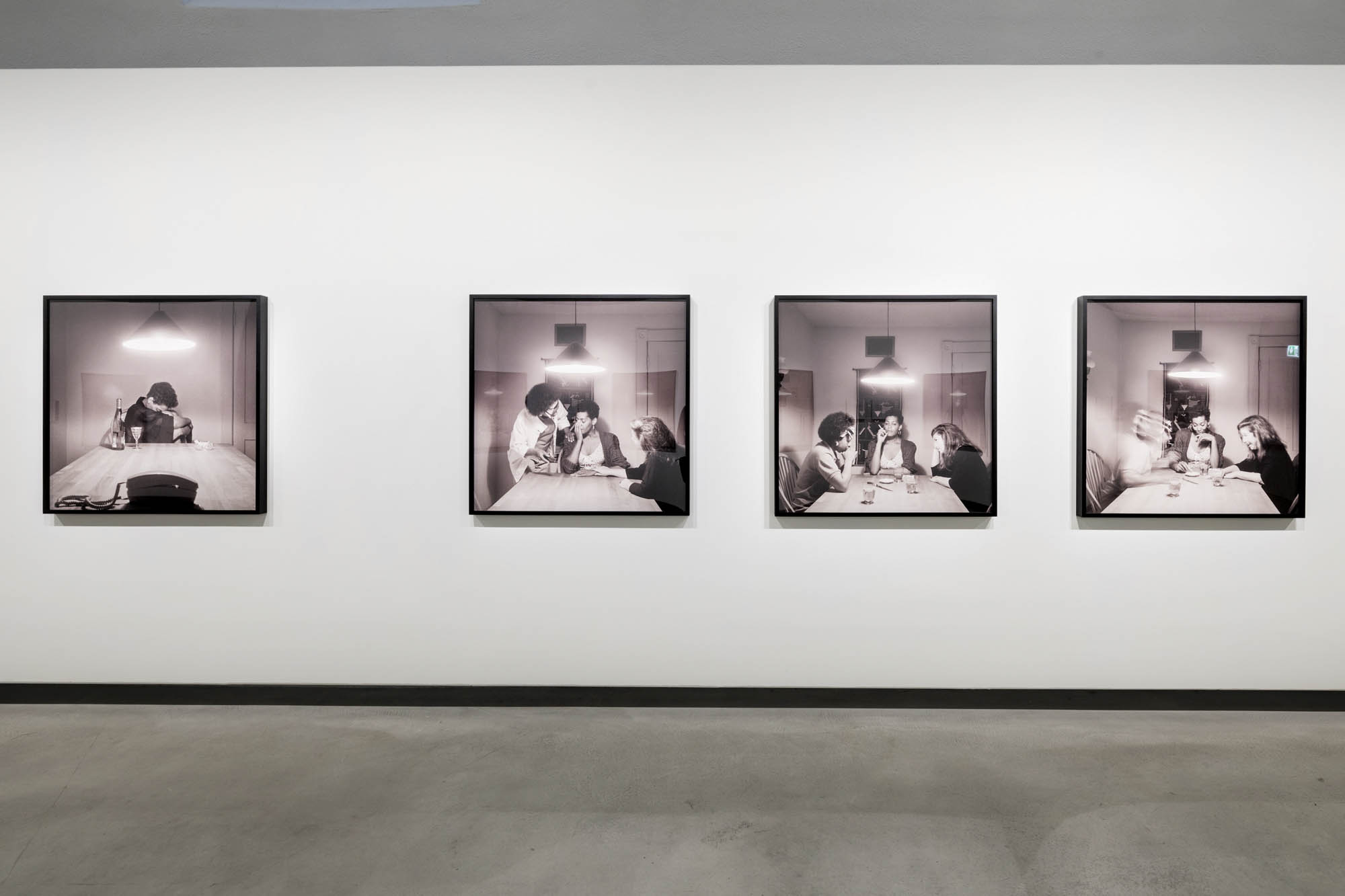
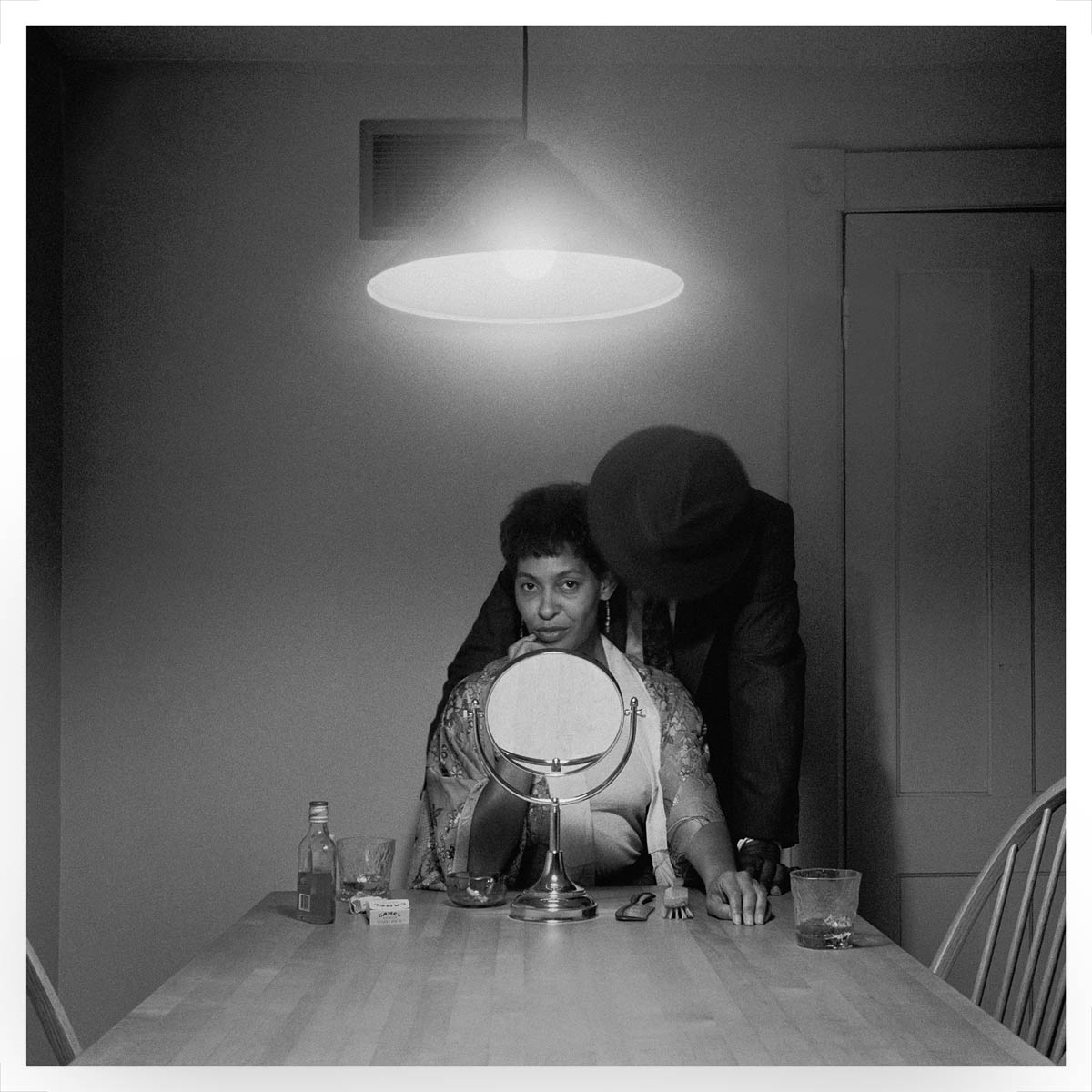


 Art Blart _ art and cultural memory archive
You must be logged in to post a comment.