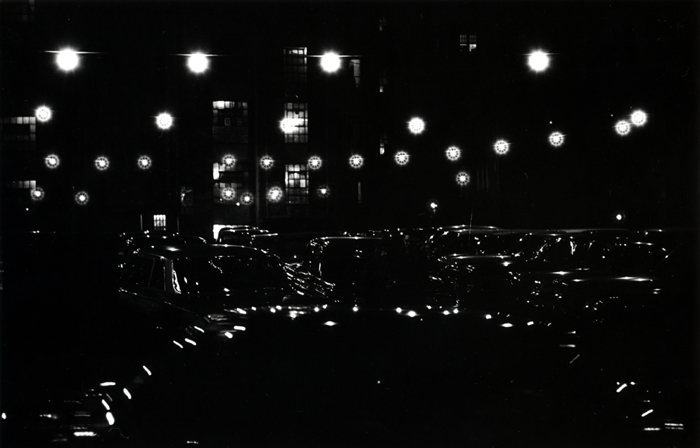
Ray K. Metzker (American, 1931-2014) Philadelphia, 1963 1963 Gelatin silver print
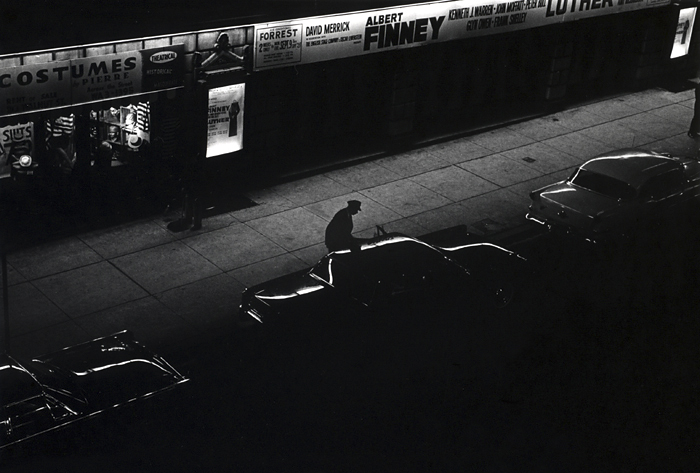
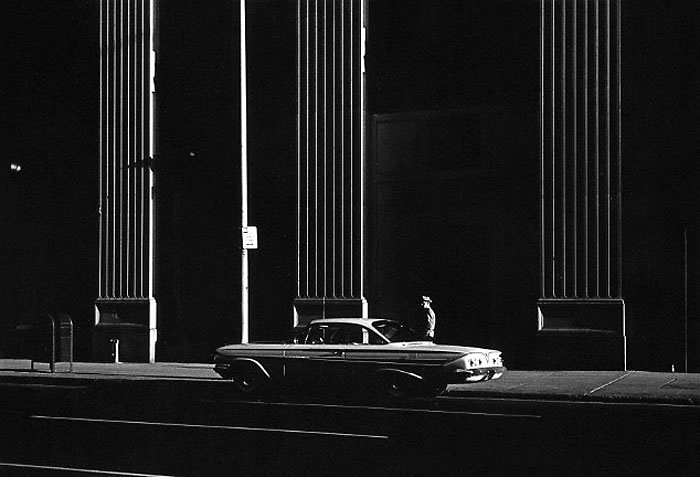
The early photographs from the 1960’s are stupendous!
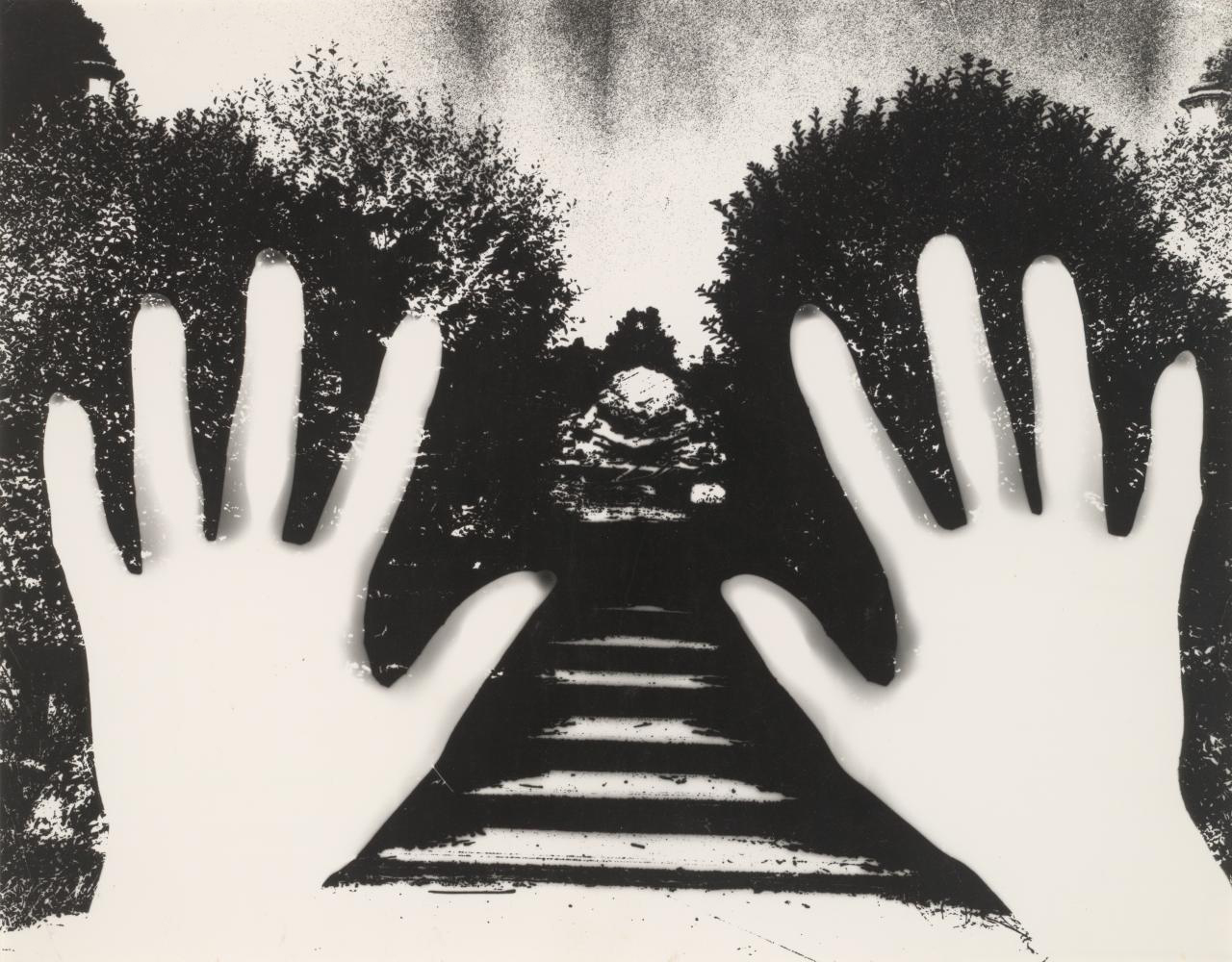
The pre-visualisation of the final photograph shows rare talent. The use of deep chiaroscuro is handled so adeptly, so confidently. The photographer is in full control of the modelling of the spaces and contours of the objects within the photographic frame. Metzker’s drawing with light surely comes from an enlightened mind. Magical. Wonderful.
Dr Marcus Bunyan
Many thankx to Laurence Miller Gallery for allowing me to publish the photographs in the posting. Please click on the photographs for a larger version of the image.
Ray K. Metzker (American, 1931-2014) Philadelphia, 1963 1963 Gelatin silver print
Ray K. Metzker (American, 1931-2014) Philadelphia 1963 Gelatin silver print
Ray K. Metzker (American, 1931-2014) Philadelphia, 1964 1964 Gelatin silver print
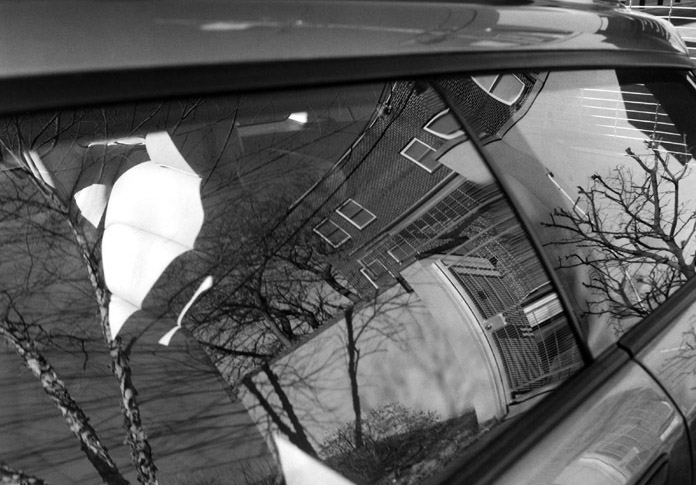
Ray K. Metzker (American, 1931-2014) Chicago, 1958 1958 Gelatin silver print
From November 24 through January 9 Laurence Miller Gallery celebrates Ray K. Metzker: AutoMagic. This exhibition features over fifty black-and-white photographs taken by this 78-year old master photographer over the past fifty years in which the automobile plays a pivotal role in the contest between light and shadow. Forty of the photographs have never been exhibited before.
From his earliest street pictures taken under the El in Chicago’s Loop in the mid-Fifties, to his most recent highly abstract views of reflections on Philadelphia car windows, Ray K. Metzker brings an exuberance of vision rarely found among today’s photographers. In total control of his camera and craft, Metzker transforms the mundane in daily urban life into intense images that sizzle, and delight the eye.
In the darkest recesses of a parking garage, we discover a single shimmering tail fin of a late 50’s Cadillac. In a scene more Orson Wells than Woody Allen, we witness a menacing shadow figure approaching a parked car, intent unknown. In a blizzard, we join the photographer and a single figure as they look at one another wondering why each other is standing there in the cascading snow.
The show also reveals a more tender side of Metzker, as we peer into car windows to see folks uninhibited within their mobile shelters, including a sleeping man with a medallion, head resting on the door; a man reading at the wheel of his damaged white coupe; and a man at the end of long day, hand upon his head.
Metzker’s work of the last few years, fondly nicknamed Autowackies, are a brilliant extension of his earlier forays into abstraction, and are only made possible by the contours of our newest cars and SUV’s, which wildly warp the architecture and cloud formations reflected on their glossy surfaces.
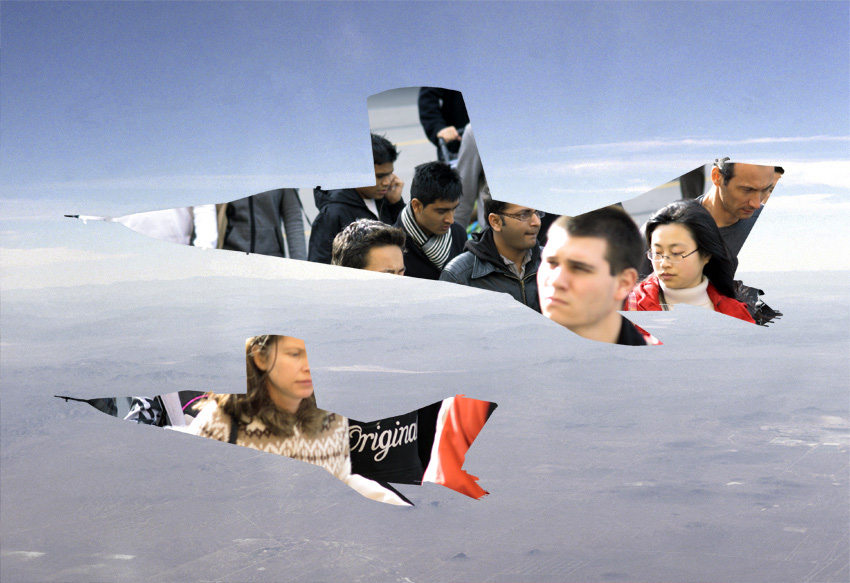
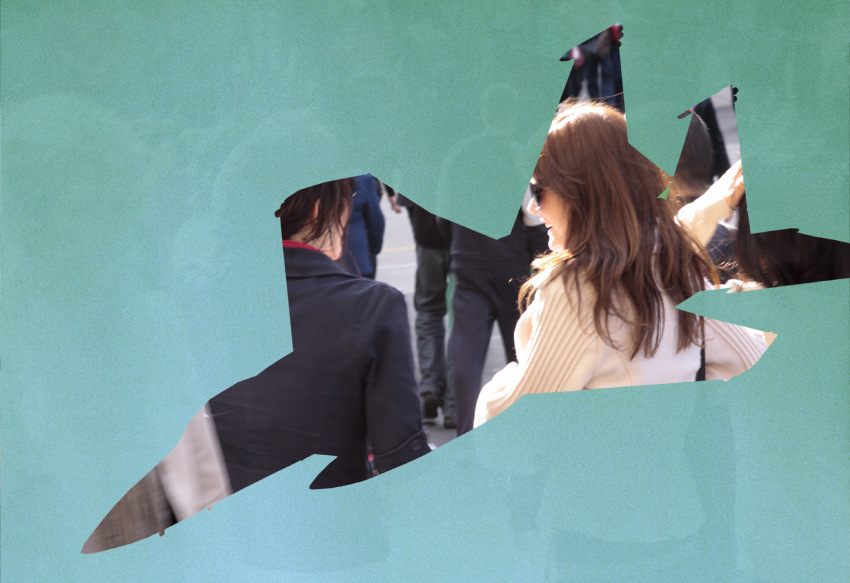
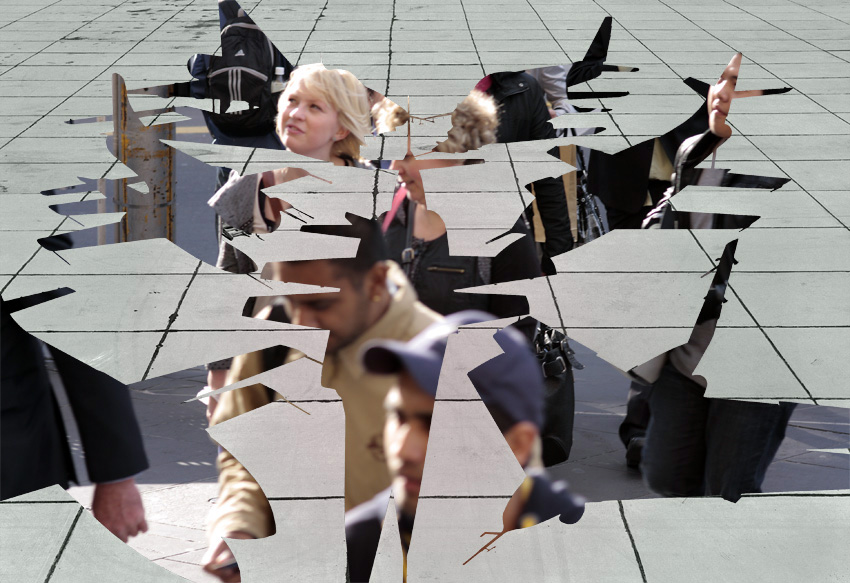
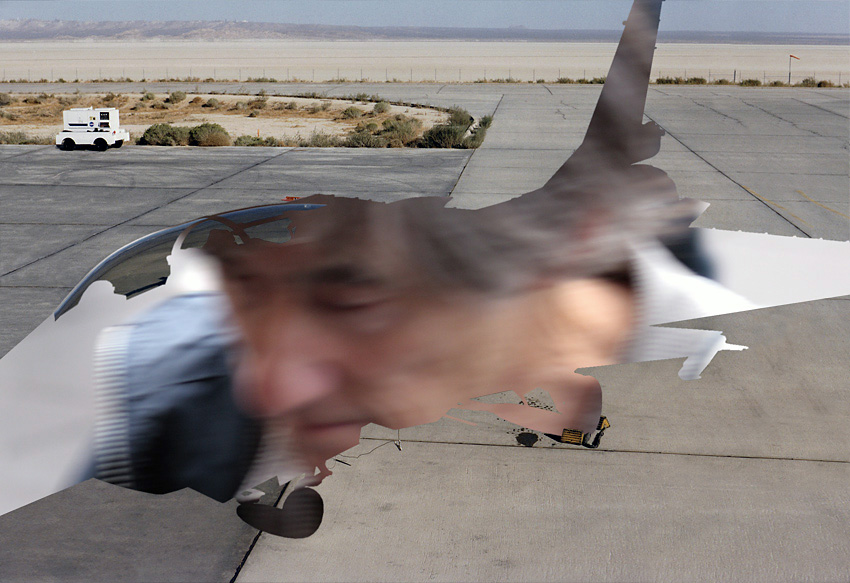
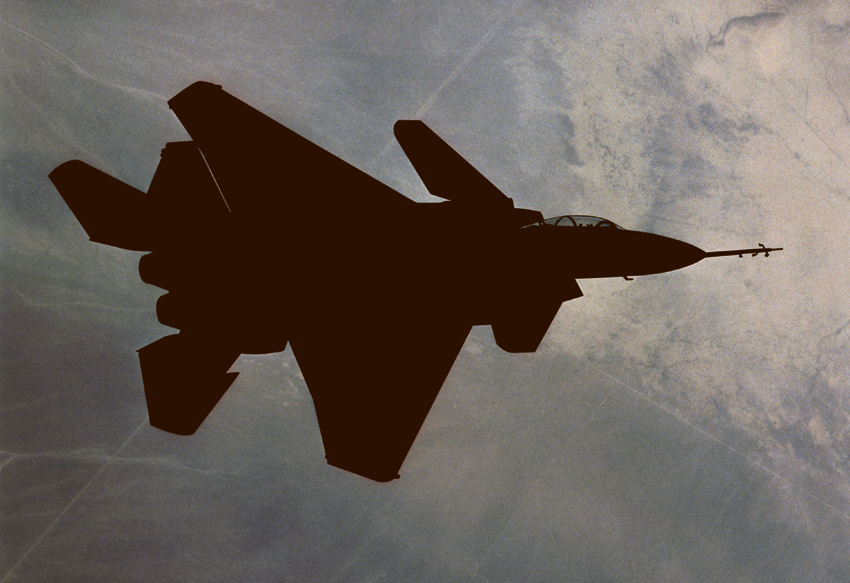
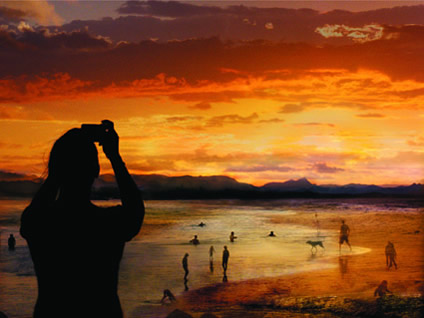
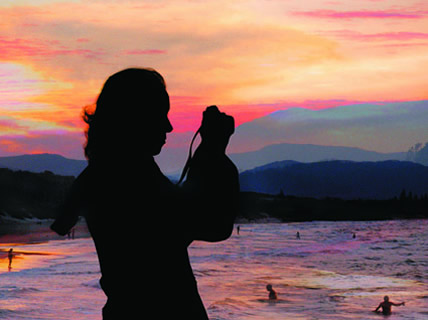
Marcus Bunyan (Australian, b. 1958) Untitled from the series There But For The Grace of You Go I 2009 Digital colour photograph
There But For The Grace of You Go I
A body of work, There But For The Grace of You Go I (2009) is now online on my website.
There are twenty images in the series which can be viewed as a sequence, rising and falling like a piece of music. Below are a selection of images from the series. The work continues an exploration into the choices human beings make. The silhouettes and landscapes of planes are taken from found copyright free images; the people from my photographs captured as they crossed the intersection outside Flinders Street Station, Melbourne. Other images are paintings from the Renaissance and POW’s during World War II.
I have always been creative from a very early age, starting as a child prodigy playing the piano at the age of five and going on to get my degree as a concert pianist at the Royal College of Music in London. I have always felt the music and being creative has helped me cope with life, living with bipolar.
These days as I reach my early 50’s ego is much less a concern – about being successful, about having exhibitions. I just make the work because I love making it and the process gives me happiness – in the thinking, in the making. I can loose myself in my work.
When Andrew Denton asked Clive James what brings him joy, James replies “The arts,“ and then qualified his answer. “What I mean is creativity. When I get lost in something that’s been made, it doesn’t matter who it is by. It could be Marvin Gaye singing ‘I Heard it Through the Grapevine’ or it could be the adagio of the Ninth Symphony …”
What a wise man.
Dr Marcus Bunyan
Please click on the photographs for a larger version of the image.
Photographs are available from this series for purchase. As a guide, a digital colour 16″ x 20″ costs $1000 plus tracked and insured shipping. For more information please see my Store web page.
Marcus Bunyan (Australian, b. 1958) Untitled from the series There But For The Grace of You Go I 2009 Digital colour photograph
Marcus Bunyan (Australian, b. 1958) Untitled from the series There But For The Grace of You Go I 2009 Digital colour photograph
Marcus Bunyan (Australian, b. 1958) Untitled from the series There But For The Grace of You Go I 2009 Digital colour photograph
Marcus Bunyan (Australian, b. 1958) Untitled from the series There But For The Grace of You Go I 2009 Digital colour photograph
Marcus Bunyan (Australian, b. 1958) Untitled from the series There But For The Grace of You Go I 2009 Digital colour photograph
Marcus Bunyan (Australian, b. 1958) Untitled from the series There But For The Grace of You Go I 2009 Digital colour photograph
Marcus Bunyan (Australian, b. 1958) Untitled from the series There But For The Grace of You Go I 2009 Digital colour photograph
Marcus Bunyan (Australian, b. 1958) Untitled from the series There But For The Grace of You Go I 2009 Digital colour photograph
Sue Ford (Australian, 1943-2009) Dissolution 2006 From the Last Light series
One thing always struck me about Sue Ford’s work when I saw it. The work had integrity.
Whatever she produced it was always interesting, valid and had integrity. She followed her own path as we all do – and her voice was clear, focused and eloquent. I loved her series Shadow Portraits – an erudite investigation into the nature of Australian identity if ever there was one!
Vale Sue Ford.
Dr Marcus Bunyan
Please click on some of the photographs for a larger version of the image.
Sue Ford (Australian, 1943-2009) Silhouette 2006 From the Last Light series
Sue Ford (Australian, 1943-2009) Apparition 2007 From the Last Light series
Sue Ford (Australian, 1943-2009) Transparent 2007 From the Last Light series
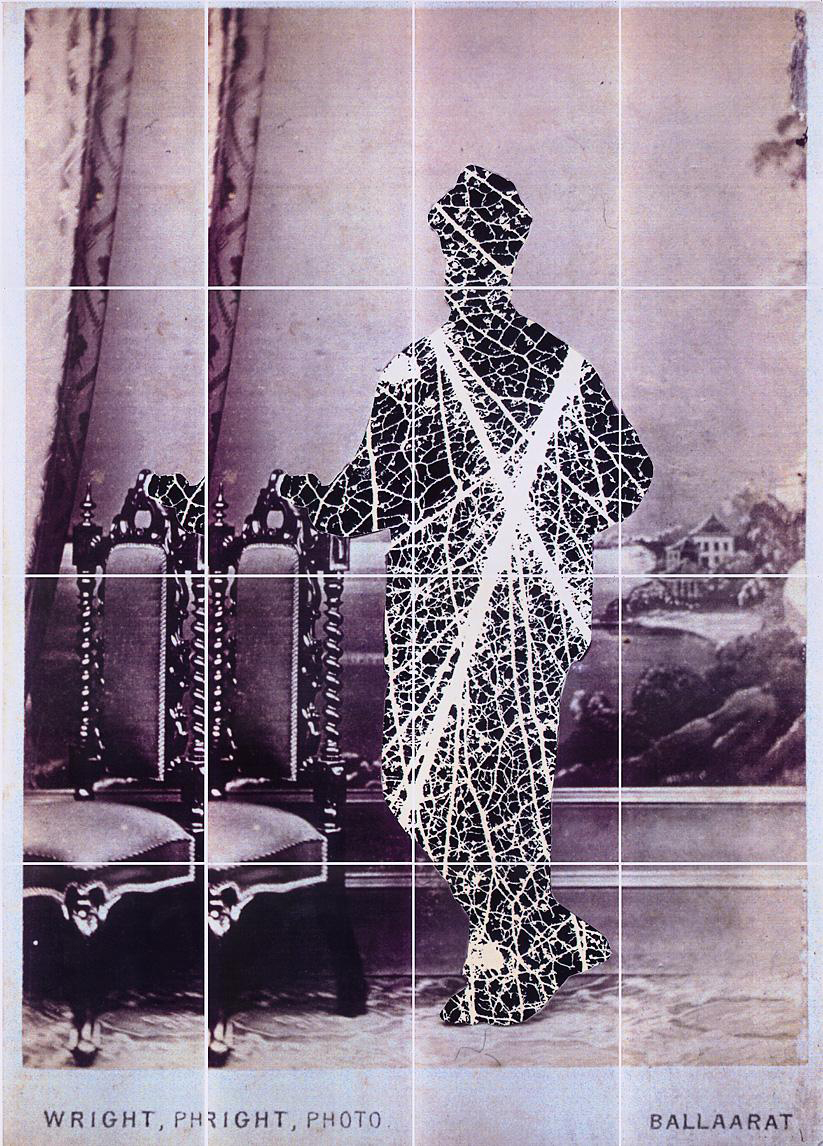
Sue Ford (Australian, 1943-2009) Shadow portraits (detail) 1994 Colour photocopies
Sue Ford (Australian, 1943-2009) Shadow portraits (detail) 1994 Colour photocopies
Sue Ford (Australian, 1943-2009) Shadow portraits (detail) 1994 Colour photocopies
For Shadow portraits, Ford, like numerous artists in this period, mined historical archives of photographs for her source material, decontextualising and reworking it. Her starting point was nineteenth-century studio portraits of settler Australians that were popular in colonial society. She exploded her previous practice and intense focus on the faces of individuals; in most cases the subjects of the original photographs used in Shadow portraits are unrecognisable. Their faces have been emptied out and replaced by Ford’s generic images of Australian foliage, especially fern fronds. All the details that define an individual, their character and appearance, have disappeared, just like the sitters themselves who have been dead for decades and exist only in ghosted form.
Individual works in Shadow portraits (above) rely on a dynamic relationship between historical and contemporary images to create something new. The original studio portrait is not intact, having undergone an extended process of transformation; being re-photographed, cut up and photocopied to eventually take the form of a large gridded image. Use of the grid – an obvious reference to European systems of containment and control – continues the experimentation evident in Yellowcake. Overlaps, like the doubled image of a stereoscopic card, are purposefully exploited. The aim is to destabilise a once-static historic image, to turn the small into big, the tones into colour, the positive into negative and so on. Through these means the colonial past is represented as having continuing reverberations: the loss of concreteness in the images and distortions of scale parallel the incompleteness, gaps and blow-outs characteristic of any historical narrative. As Zara Stanhope writes, Ford’s Shadow portraits ‘image the ongoing processes involved in the construction of histories, and the power to know and remember, that provides the opportunity to revisit or critique such accounts’.
Associate Professor Helen Ennis. “Sue Ford’s history,” in Art Journal 50, National Gallery of Victoria, 1 Jan 2013 [Online] Cited 11/05/2019
“I have always been interested in how actions taken in the past could affect and echo in peoples’ lives in the present. Most of my work is to do with thinking about human existence from this perspective.”
Sue Ford, “Project X’, in Helen Ennis & Virginia Fraser, Sue Ford: A Survey 1960-1995. Monash University Gallery, Clayton, 1995, p. 17
Until 1988 Ford was known principally for work that was motivated by feminist politics, that dealt with the lives of contemporary women and the politics of representation. She worked across media, using black and white photography, film and video. Her photography from the early 1960s onwards was based on what she regarded as photography’s objective capacity; in other words, she utilised the camera as a means of recording whatever she placed in front of it. This interest in ‘objectivity’ related more to the practices of conceptual art than to the heightened subjectivity, or subjective documentary that prevailed in art photography, especially during the seventies. Ford’s feminist photography can be regarded as objective but not as ‘documentary’ in the terms the latter is conventionally understood because there was nothing surreptitious or spontaneous about it. Her approach was non-exploitative and consensual in keeping with the politics of feminism and the counterculture. From the beginning of her career, her subjects were mostly friends and acquaintances; they knew they were being photographed and agreed to it. This consensual approach and its interrelated performative element were adopted by other feminist photographers, such as Carol Jerrems, Ponch Hawkes and Ruth Maddison, in their work during the 1970s.
In the 1970s and 80s Ford’s photography differed from mainstream practice in another fundamental way. It did not relate to the purist and fine art traditions that underpinned the case for photography’s acceptance as art. Her prints were grainy, rough and often very small. Ford conceived photography in radical terms, as a plastic medium that was entwined with other art practices. In an interview at the time she was awarded a scholarship to fund her studies at the Victorian College of the Arts in 1973-74, she emphasised her interest in artists’ use of photography: ‘Some artists are utilising phototechniques and are thinking in a photographic way. I want to use some of their techniques and materials to extend photography into other dimensions’.
Associate Professor Helen Ennis. “Sue Ford’s history,” in Art Journal 50, National Gallery of Victoria, 1 Jan 2013 [Online] Cited 11/05/2019
Great to have some really good quality photographs to show you from this exhibition!
Marcus
Many thankx to the Museum of Fine Arts in Boston for allowing me to publish the photographs in the posting. Please click on the photographs for a larger version of the image.
Dae-Soo Kim (Korean, b. 1955) Untitled 1999 From the series Bamboo 1998-2008 Gelatin silver photograph, printed 2007 Santa Barbara Museum of Art; museum purchase with funds provided by PhotoFutures
Bien-U Bae (Korean, b. 1950) Kyung ju 1985 From the series Sonamu Gelatin silver photograph The Museum of Fine Arts, Houston; museum purchase with funds provided by Photo Forum
This October, the Museum of Fine Arts, Houston, presents Chaotic Harmony: Contemporary Korean Photography, the most comprehensive exhibition of contemporary Korean photography to ever be shown in the United States. Organised by Anne Wilkes Tucker, The Gus and Lyndall Wortham Curator of Photography at the MFAH, and Karen Sinsheimer, Curator of Photography at the Santa Barbara Museum of Art, Chaotic Harmony features large scale photographs by 40 Korean artists, many of who have never before exhibited in international museum exhibitions and whose work will be on view in the United States for the first time in this show. At the MFAH, the works will be on display in the Audrey Jones Beck Building’s Cameron Foundation Gallery, as well as the Lower Beck Corridor, from October 18, 2009 through January 3, 2010, presenting a fascinating window onto the vital and constantly evolving country, Korea.
“As South Korea has exploded onto the international trade scene, South Korean artists have also emerged onto the global stage, which the recent high auction prices for Korean artwork attest to. Despite this fact, Korean art is still rarely presented in the United States, and the specific field of Korean photography is even less explored here,” said MFAH director Peter C. Marzio. “Following the MFAH’s tradition of presenting pioneering photography exhibitions, we are pleased to exhibit this brilliant survey of contemporary South Korean photography, which can be seen in the enhanced context of Your Bright Future and the museum’s Arts of Korea gallery.”
“Operating under a relatively new democracy in South Korea, artists experienced a burst of creative energy and freedom of expression in recent decades, and an entirely fresh perspective of modern-day Korea is presented in this show,” added curator Anne W. Tucker. “The photographers in ‘Chaotic Harmony’ observe the country’s notable growth in terms of industry and urbanisation and convey the resultant issues as well as reflect on the country’s ancient culture and religions.”
Within the exhibition, two distinct generations of Korean artists are represented: those born in the mid-1950s and 1960s, during a succession of military dictatorships when the country was still largely agrarian, and those born in the 1970s, predominantly in urban areas and who came into maturity in the new democratic era which began in 1987. With two exceptions, one work by each artist is included. Through recent works by both generations of photographers, Chaotic Harmony explores Korea through five thematic sections: land and sea; urbanisation and globalisation; family, friends, and memory; identity: cultural and personal; and anxiety.
Land and Sea
Most of the work represented in the “Land and Sea“ section of the exhibition was created by the first generation of Korean artists who traveled abroad for their graduate educations and brought their new ideas back to dramatically effect photographic styles in Korea. Nevertheless, many of them remained tied to Korean landscapes and traditions while embracing new aesthetic ideas. The extraordinarily beautiful land and seascapes in this section celebrate Korea’s surrounding oceans and the forests that cover large sections of its mountainous terrain. In addition, these photographers often explore religious practices that are primarily tied to nature. BAE Bien-u’s Kyung ju (1985, see photograph above) from the series Sonamu (which translates to “sacred pine grove“), documents mist-shrouded pine trees surrounding Gyeongiu, the ancient city of the Shilla kingdom (A.D. 668-935). KIM Young-sung’s Untitled photograph (2005) from the Dolman series, shows a man standing atop one of Korea’s 50,000 dolmans (or ancient tombs). Over 60 percent of the world’s 80,000 dolmans are located in Korea. Gap-Chul Lee has documented shamanism (as well as Buddhism) in Korea for decades, but most specifically in his series Conflict and Reaction (1990-2001).
Urbanisation and Globalisation
An ancient civilisation, South Korea has recently transformed into one of the world’s major global economies. Three-fourths of the population is categorised as urban, with half living in the country’s six major cities. Seoul is the world’s fourth largest metropolitan area. This section of the exhibition responds to the shift of the population from rural to city living, and the entrance of Korea on to the world stage. Young-Joon CHO’s Usual & Circle – Seoul Namdaemun, Rho Gwang-hyo (2005) is a diptych: the image on the left presents an urban area teeming with stores, advertisements, people, and traffic, while the image on the right isolates a woman who we would not have otherwise noticed in the larger view of the city. Her expression of emotional distress is consistent with all the isolated figures in the series. Ahn Sekwon documented Seoul’s rapid physical changes by photographing one particular neighbourhood of the Weolgok-dong section of Seoul in 2005, 2006, and 2007 as the old homes are destroyed to make room for new high rises. The resulting triptych (see photographs above) dramatically conveys the destruction of the modest-scale homes to make way for the towering scale of a modern city.
Family, Friends, and Memory
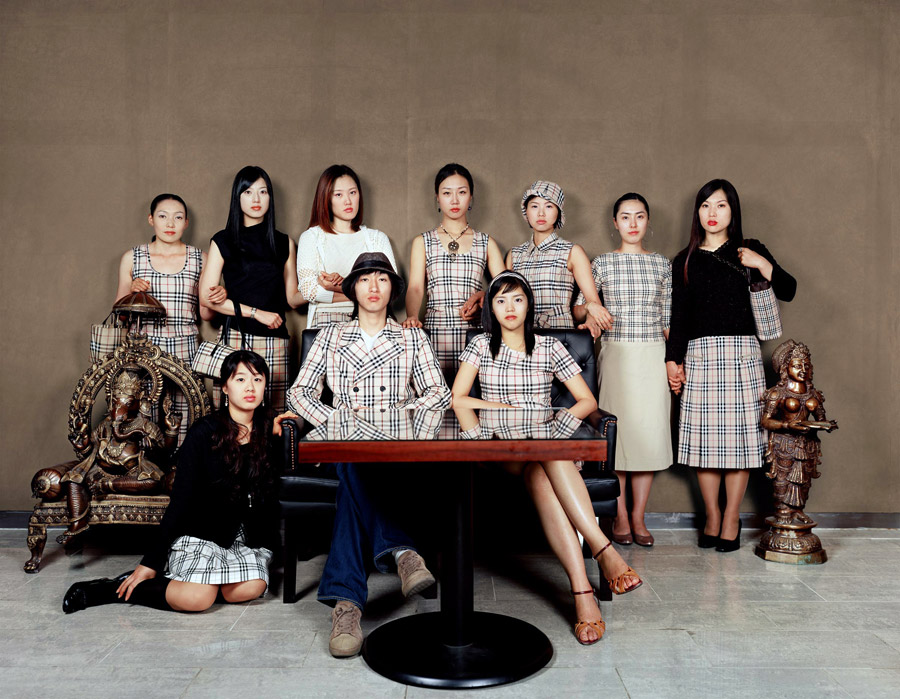
“Family, Friends, and Memory“ reflects the tensions in shifting societal values and practices as Korea continues its rapid growth. Traditionally, families followed Confucian norms: the father was the respected head of household and made decisions for his wife and children, financially supporting the family and arranging schooling and marriages. Social values have changed with increasing awareness of Western cultures through travel and the importation of Western products and media. Also with dramatic urban growth, came shifts from homes to crowded high rises, the entrance of women into the workforce, and other changes. Sunmin LEE’s photograph, Lee, Sunja’s House #1 – Ancestral Rites (2004, see below), portrays traditional values playing out in a modern setting: the men and boys of a family conduct traditional rituals in one room while the women watch from the doorway. Sanggil KIM’s Off-line: Burberry Internet Community (2005, see photograph below) depicts a modern phenomenon: people who met over the internet, united by a common passion, in this case, that of wearing Burberry Check (registered as a trademark of the Burberry brand) and enjoying an “off-line” get-together.
Identity: Cultural and Personal
Between 1910 to 1945, Japan annexed Korea and systematically attempted to eradicate Korean culture and identity, for example, by banning Korean literature and language from schools. Only six years after World War II, Korea was devastated by the Korean War. This section of Chaotic Harmony investigates what it means to be Korean today after this disruptive history. Some artists, such as Bohnchang KOO, seek to reclaim past cultural history, by photographing treasured and uniquely Korean items such as Celadon – the main type of ceramic produced in ancient Korea and generally exalted as Korea’s most significant artistic legacy. Jungjin Lee in term photographs native crafts from Korean folk culture. Exploring more personal aspects of identity is Yeondoo JUNG’s Bewitched #2 (below), a diptych juxtaposing images of the same teenager, mopping the floor of a Baskin Robbins in her day job and exploring the Arctic regions in her dream job (see photographs below); and Hyo Jin IN’s Violet #01 from the High School Lovers series (2007, below), which portrays an openly lesbian couple.
Anxiety
The “Anxiety” section of Chaotic Harmony investigates the constant tension provoked by strained relations and the potential of a violent outbreak between North and South Korea. Jung LEE’s Bordering North Korea, #2 (2005), from her 2005-2008 series of the same title, offers a view of North Korea seen from China and them superimposes over it an accompanying text chosen from the set phrases that North Koreans are allowed to say to the few foreigners who gain access to the country, such as Our country is the paradise of the people. She wants the viewer to experience both the beauty of the land and the palpable repression evident in the political slogans. Seung Woo Back references the subliminal fear of an attack from North Korea by staging “invasions” of toy soldiers that march across a family’s yard and up their wall to the kitchen window ledge, presumably unbeknownst to the person whose silhouette is visible though the window.”
Press release from the Museum of Fine Arts, Houston website [Online] Cited 11/11/2009. No longer available online
In “Family,” the last section of her essay, Sinsheimer addresses the traditional and changing structures of the Korean family: inter-racial marriage, Confucian traditions, the nuclear family, and the effects of consumerism on the younger generation. Sunmin Lee’s photograph of an ancestral ritual, Lee, Sunja’s House #1 – Ancestral Rites (2004, below), represents the loosening of Confucian practice as the participants wear Western dress. Yet modernisation goes only so far, since the women do not take part in this vestige of patriarchal society.
A pair of photographs from Jeong Mee Yoon’s The Pink & Blue Project (2005-2008, above), created during her studies in New York, shows portraits of children surrounded by their accumulated belongings arranged neatly on the floor. All pink for girls and all blue for boys, the massed items, suggest that a global consumerist culture, rather than national or ethnic values, determine male and female versions of identity and acquisition. As the author observes, these images of children engulfed by material abundance are “a portrait of consumerism.”
PA-YA (Korean, b. 1971) Noblesse Children #12 2008 From the series Noblesse Children 2008 Chromogenic photograph Santa Barbara Museum of Art; museum purchase with funds provided by PhotoFutures
Chan-Hyo Bae has chosen the iconography of queenliness to express his own feelings of cultural estrangement. Originally from South Korea and currently living in London, England, Bae begins from very simple, common sentiments of foreignness. His works – large-format colour prints, in which he plays unidentified female British monarchs from the 13th to 19th centuries (all his works are untitled) – initially appear to be a cheeky sort of wish fulfilment. One is readily reminded of Yasumasa Morimura, the Japanese artist who casts himself in Western art’s biggest roles, and also, perhaps, of the phenomenon of cosplay – the subculture of dressing up like fictional or historical characters – which originates in Japan but has become popular throughout Asia and the rest of the world. Bae seems to be performing a blatant paradox: that of the outsider gleefully destabilising the hierarchies of a culture about which he has admittedly fantasised, but which has forbade him full entrance because of an unalterable ethnicity.
Text from the photography-now website [Online] Cited 09/05/2019 no longer available online
Atget, one of my all time favourite photographers; Paris, a city that stirs the heart – what more can one ask!
Many thankx to the Frist Museum of Art (formerly the Frist Center for the Visual Arts) for allowing me to publish the photographs in the posting. Please click on the photographs for a larger version of the image.
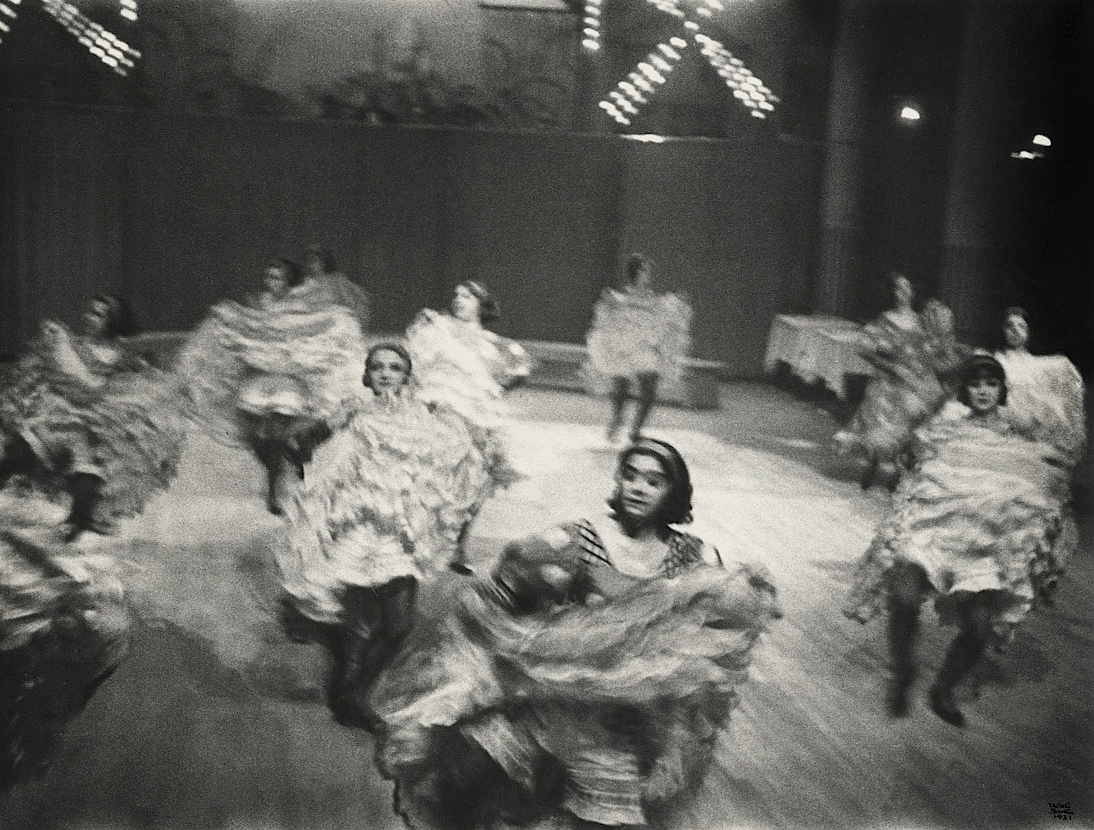
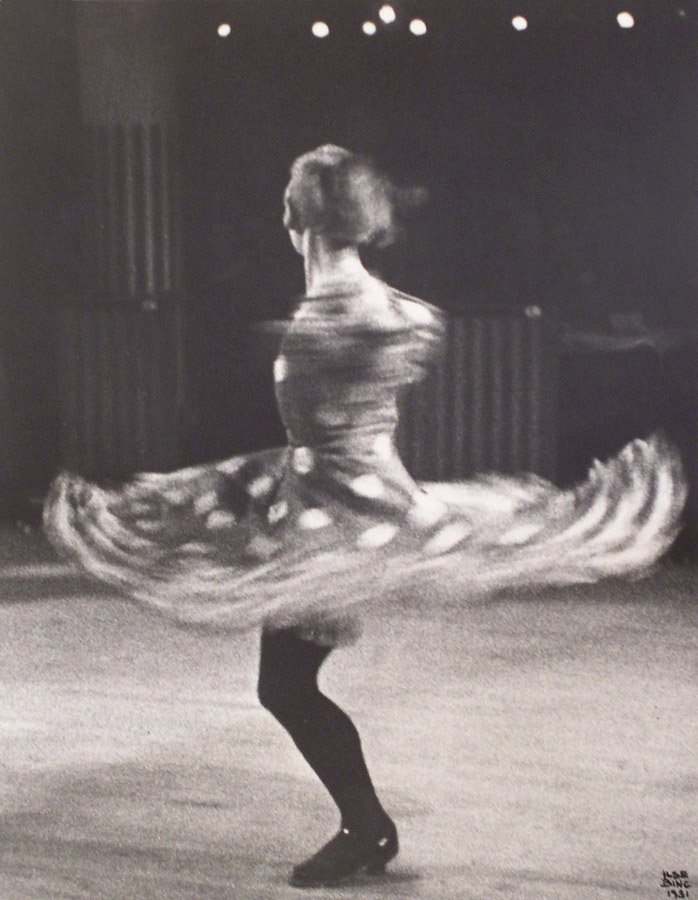
Ilse Bing (German, 1899-1998) French Can Can Dancers, Moulin Rouge 1931 Gelatin silver print
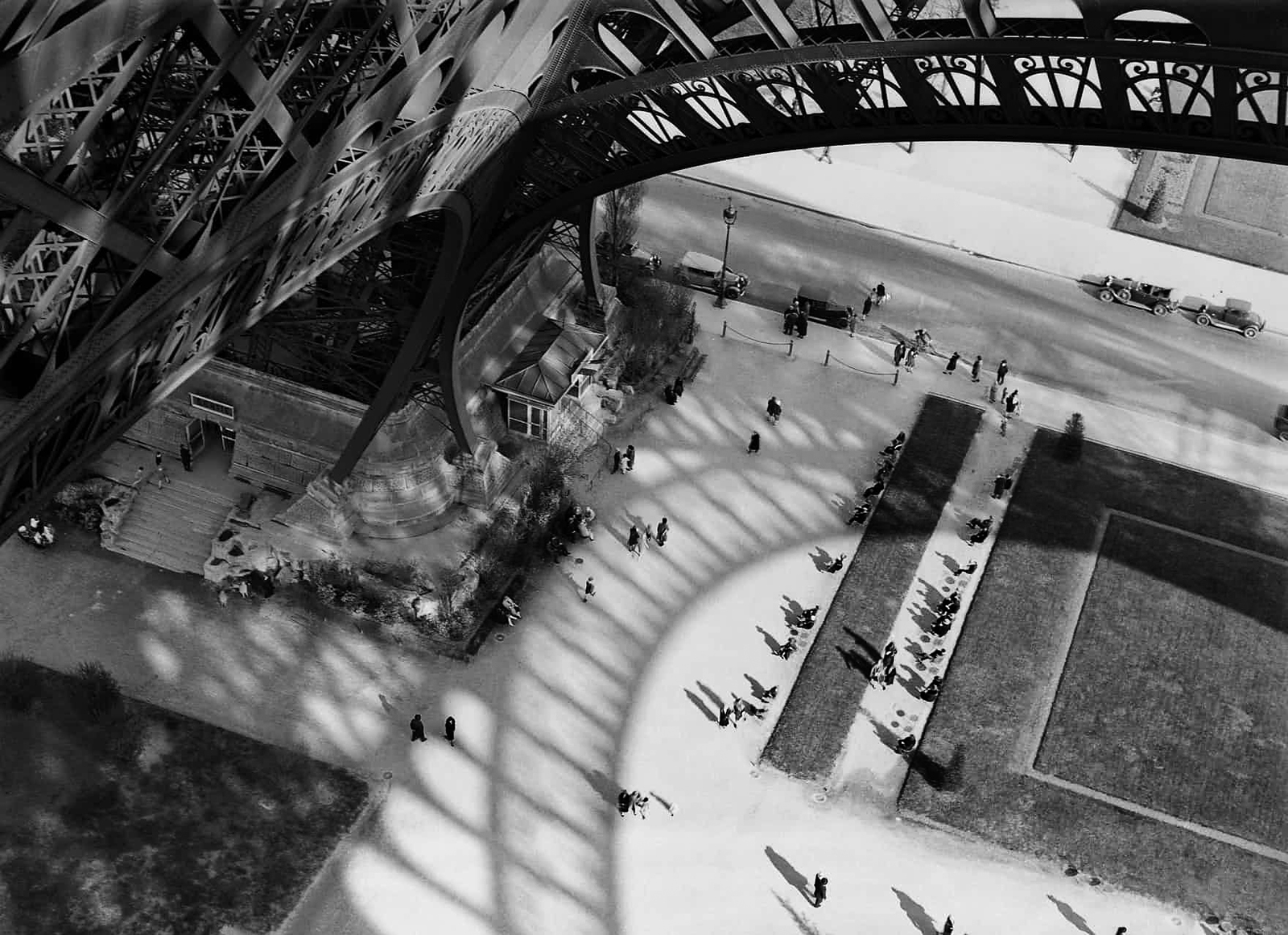
Andre Kertesz (Hungary, 1894-1985) Eiffel Tower, Paris 1929 Gelatin silver print
The Frist Center for the Visual Arts [now the Frist Museum of Art] will present Twilight Visions: Surrealism, Photography, and Paris, opening Sept. 10, 2009, in the Upper-Level Galleries. The show, which offers a unique perspective on Surrealism by examining the intersection of documentary photography, manipulated photography and film, will be on exhibition through Jan. 3, 2010, when it will travel to the International Center of Photography in New York followed by the Telfair Museum of Art in Savannah, Ga.
Guest Curator Therese Lichtenstein, Ph.D., New York-based art historian and photography scholar, has organised the exhibition, working with Frist Center Curator Katie Delmez.
The exhibition of more than 150 works, which features a preponderance of photographs but also includes films, books and period ephemera, explores the city of Paris as the literal and metaphoric base of Surrealism in the wake of the World War I. It was believed by the Surrealists that unconscious dreams, chance encounters and actions and automatism freed “pure thought,“ from all constraints imposed by conscious thought, reason or morals.
In conjunction with the exhibition, the Frist Center will partner with Nashville’s Belcourt Theatre and Vanderbilt University’s International Lens and the school’s French and film departments to present a Surrealism film series which will include the classic Un Chien Andalou (The Andalusian Dog) directed by Luis Buñuel and Salvador Dalí and several other rarely screened period films.
Paris was a hotbed of creative activity at the dawn of the 20th century, attracting artists and writers to its vibrant and wildly fertile art scene. Numerous galleries flourished during this period, fuelling the immigration of many of the world’s most talented artists. During the 1920s and 1930s, a number of photographers associated with Surrealism, including Man Ray, Brassaï, André Kertész, Ilse Bing and Germaine Krull, turned their lenses on the city of Paris with its dance halls, cafés and characters. These seemingly ordinary people and places not only had social histories but also became psychologically charged “found objects.“ In exploring the city’s commonplace as well as its monuments, these photographers used unusual viewpoints, manipulative lighting techniques and innovative technical processes to expose and examine “the marvellous“ in the everyday.
As Dr Lichtenstein writes, “The images in Twilight Visions form a collection of views of various urban spaces, filled with cultural artefacts. The viewer is invited to slowly contemplate the city – its architecture, its monuments, its public spaces and its denizens – as an ephemeral ruin, at once both of the past and the present.”
The Exhibition
Twilight Visions comprises five sections: images of the city at night and in the day, the transformation of well-known public monuments, the influence of Eugène Atget on the Surrealists; Parisian nightlife after hours and surreal figures.
The first section, “Marvellous Encounters”, includes photographs of city streets, shop windows, ordinary people and found objects that invite viewers to discover “the marvellous“ in common objects and familiar places. Many of the works in this section look both familiar and strange, as subjects were photographed from unexpected angles, using dim lighting, soft focus and abstracted views to create dreamlike images. Among the works in this section are photographs by Brassaï, Man Ray, Ilse Bing, André Kertész, Germaine Krull, Dora Maar and Joseph Breitenbach.
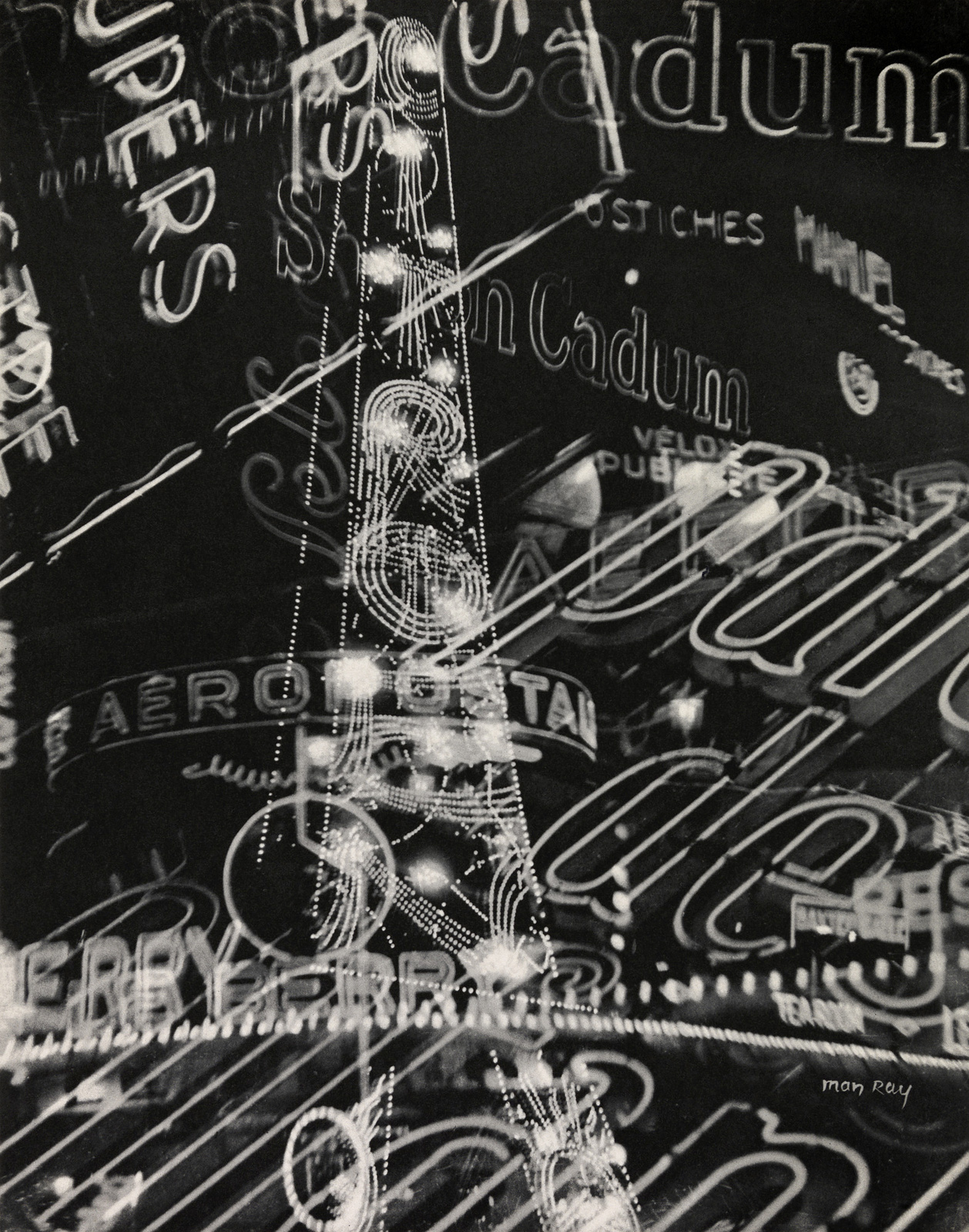
The second section of the exhibition, entitled “Photography’s Transformation of the Monument”, looks at the monuments of Paris, particularly the Eiffel Tower, to examine the ways they shape connections to past and future. Included in this section are works by André Kertész, Ilse Bing, Germaine Krull and Man Ray. The Eiffel Tower, constructed from 1887-1889, was designed to serve as the entry to the Paris World’s Fair commemorating the centennial anniversary of the French Revolution. The skeletal iron structure also was designed to be a radio transmitter and a beacon for commercial advertisements in the form of illuminated signs. In 1931 Man Ray created a series of photographs that were reproduced in a portfolio by the Paris Electric Company for an advertising booklet called Èlectricité, which was used to promote personal use of electricity. That same year, he photographed the tower at night and used the image as the basis for La Ville (The City, 1931 – see photograph below), a multiple-exposure print and one of the images used in Èlectricité. The Eiffel Tower, built as a utilitarian homage to the past, is transformed. The magic of electricity makes the tower visible at night, but in so doing, renders it unstable and non-architectural. Ray’s photograph turns the magnificent Eiffel Tower into indecipherable electrified text. In addition to Man Ray’s work, there are photographs by Ilse Bing, Georges Hugnet, André Kertész, Germaine Krull, Raoul Ubac and various postcards of the city that interrupt traditional heroic views of the monument.
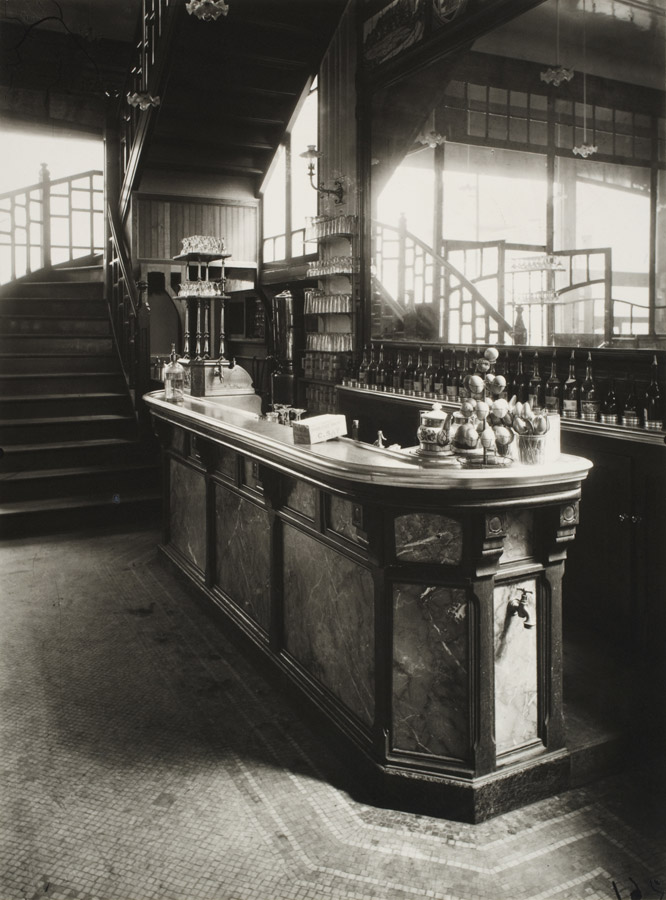
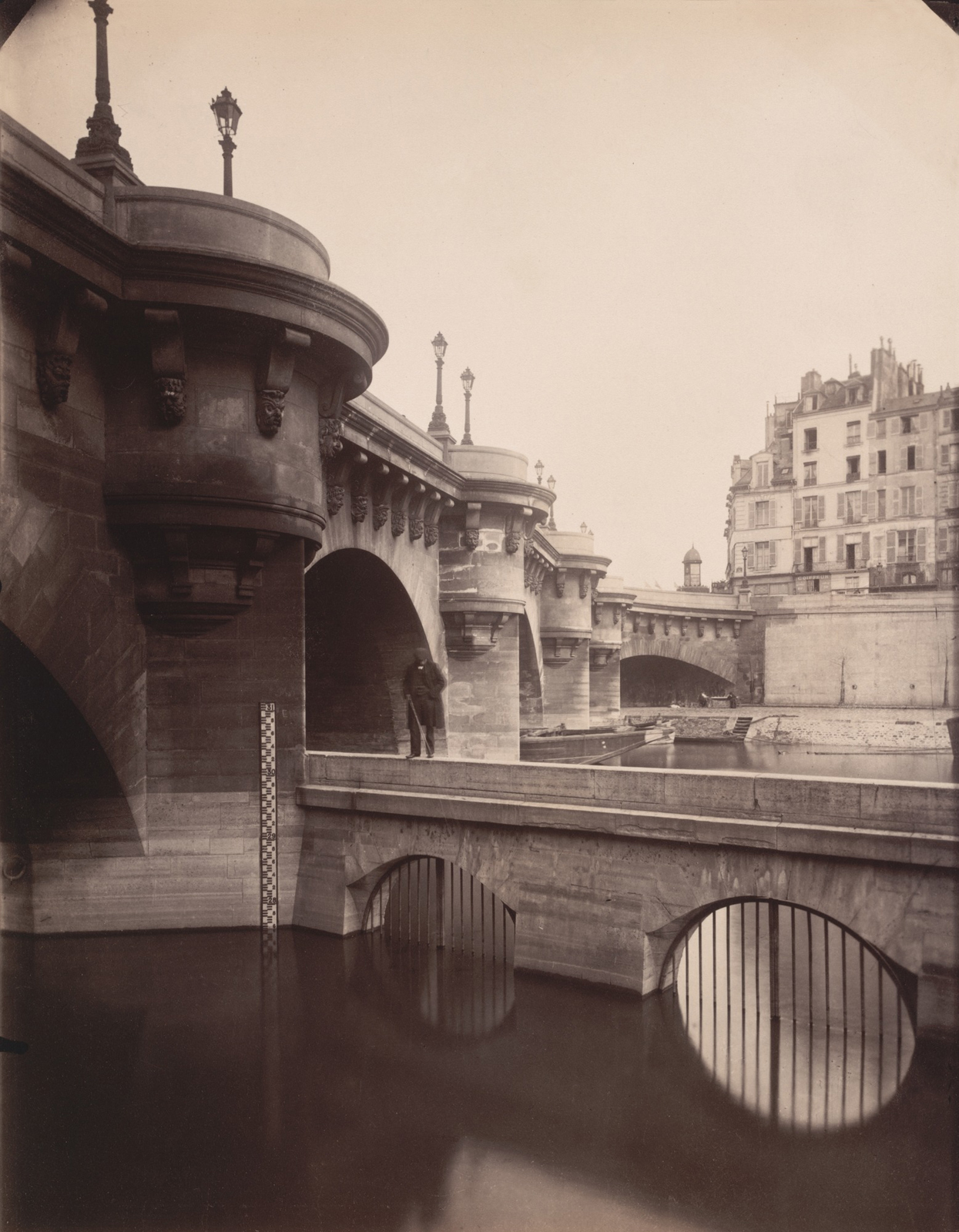
Section three, entitled “Looking at Atget”, examines the powerful work of Eugène Atget, a photographer who was “discovered“ in the 1920s by Man Ray. Following a stint as a sailor, a brief career as an actor and an attempt at becoming a painter, he turned to photography. Working quietly and modestly, Atget documented the loss of “old“ Parisian culture after the turn of the 20th century. But in so doing, his “poetry of the everyday“ also became a personal expression of nostalgia for the world that was disappearing before his lens. His work was straightforward yet magical. Works include Pont Neuf (1902-1903), The Wine Seller, 15 Rue Boyer (c. 1910) and Boulevard de Strasbourg (1926) (see photographs above).
Section four, “Portraits After Hours”, explores the Bohemian avant-garde culture of Paris. In the 1920s and 1930s, the cafés and cabarets of Montparnasse and Montmartre were a part of the transition to modernity taking place in the city. The antibourgeois, often seedy places that were the comfortable haunts of Parisian artists and intellectuals were becoming tourist destinations … fetishised places of fantasy and desire. As these locales metamorphosed into tourist sites where “regular“ folk could rub elbows with Parisian characters, increasingly, these locales became stage sets where the “actors“ relived the past for the cameras of the tourists. Ilse Bing’s photographs of Cancan dancers at the famed Moulin-Rouge capture the colour, flourish, nostalgia and exhilaration of the dance (see photographs above). Photographers represented in section four include: James Abbe, Ilse Bing, Brassaï and Man Ray.
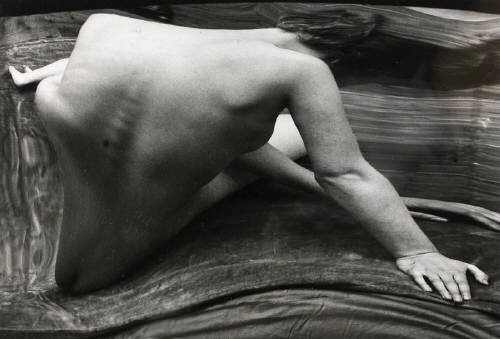
“Mutable Mirrors”, the fifth section of the exhibition, investigates the subject of shifting identities that was a part of the Surrealists’ desire to alter consciousness and transform concepts of personal, social and group identity. Issues of gender and sexuality and the roles of masquerade and play are examined in the works of Lee Miller, Nusch Eluard, Dora Maar, Claude Cahun, Raoul Ubac, Hans Bellmer, Georges Hugnet, André Kertész, Man Ray and Brassaï who experimented with techniques of doubling, distorting, multiplying and fragmenting their images. Included in this section are André Kertesz’s Distortions (1933) a series of photographs of nude women reflected in distorting mirrors that transform them into dreamlike creatures (see photographs below). The series was commissioned by the editor of the Parisian humour magazine, Le Sourire (The Smile).
Text from the Frist Museum of Art (formerly the Frist Center for the Visual Arts) website [Online] Cited 11/11/2009. No longer available online
Eugène Atget (French, 1857-1927) The Wine Seller, 15 Rue Boyer 1910-1911 Gelatin-silver print (printed by Berenice Abbott) Gift of Walter P. Chrysler, Jr., Chrysler Museum of Art, Norfolk, VA.
Eugène Atget (French, 1857-1927) Boulevard de Strasbourg 1926 Albumen print
Eugène Atget (French, 1857-1927) Rue du Figuier 1924 Albumen print 9 x 7 in. Gift of Walter P. Chrysler, Jr. by Exchange, Chrysler Museum of Art, Norfolk, VA.
Eugène Atget (French, 1857-1927) Pont-Neuf 1902-03 Albumen print 8 7/8 x 7″ (22.6 x 17.8cm)
Andre Kertesz (Hungary, 1894-1985) Distortion 144, Paris 1933 Gelatin silver print
Andre Kertesz (Hungary, 1894-1985) Distortion 147, Paris 1933 Gelatin silver print
The Distortions were made with a glass plate view camera and Kertesz used two particular female models for the series, Najinskaya Verackhatz and Nadia Kasine. Kertesz began this surrealist experimentation with mirrors in the late 1920’s with most of the exhibited images being attributed to 1932-33. The series was first exhibited in Paris in 1932 causing a sensation that helped catapult Kertesz to international fame in the art world. In 1936 they were exhibited in New York at the Museum Of Modern Art, again causing a furore. Kertesz had “fun house” mirrors installed in his studio to experiment and create the landmark series.
By the 1960’s the entire series of original glass plate negatives was thought to be permanently lost due to deterioration and oxidation. In the early 1970’s a highly trained restoration specialist was employed to salvage these innovative pieces of art history. Using a newly discovered technique for removing oxidation, he meticulously and painstakingly laboured on the plates until this masterpiece collection was perfectly restored to its original beauty…
Andre Kertesz (Hungary, 1894-1985) Distortion 38, Paris 1933 Gelatin silver print
Andre Kertesz (Hungary, 1894-1985) Distortion 40, Paris 1933 Gelatin silver print
Frist Art Museum 919 Broadway, Nashville, Tennessee, 37203
Exhibition dates: 22nd October – 21st November 2009
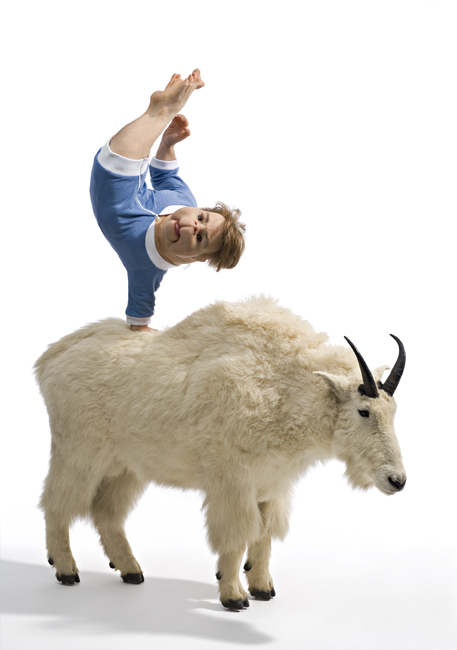
Patricia Piccinini (Australian, b. 1965) The Strength of one Hand (With Canadian Mountain Goat) 2009 Silicone, fibreglass, human hair, clothing, Canadian Mountain Goat
We are the clouds that veil the midnight moon; How restlessly they speed, and gleam, and quiver, Streaking the darkness radiantly! – yet soon Night closes round, and they are lost forever:
Or like forgotten lyres, whose dissonant strings Give various response to each varying blast, To whose frail frame no second motion brings One mood or modulation like the last.
We rest. – A dream has power to poison sleep; We rise. – One wandering thought pollutes the day; We feel, conceive or reason, laugh or weep; Embrace fond foe, or cast our cares away:
It is the same! – For, be it joy or sorrow, The path of its departure still is free: Man’s yesterday may ne’er be like his morrow; Nought may endure but Mutability.
Mutability by Percy Bysshe Shelley
When human imagination takes flight, as it does in this exhibition, the results are superlative. Piccinini is at the height of her powers as an artist, in full control of the conceptual ideas, their presentation and the effect that they have on the viewer. Witty, funny, thought-provoking and at times a little scary Piccinini’s exhibition (paradoxically entitled Unforced Intimacies) is an act of revelatio: the pulling aside of the genetic curtain to see what lies beneath.
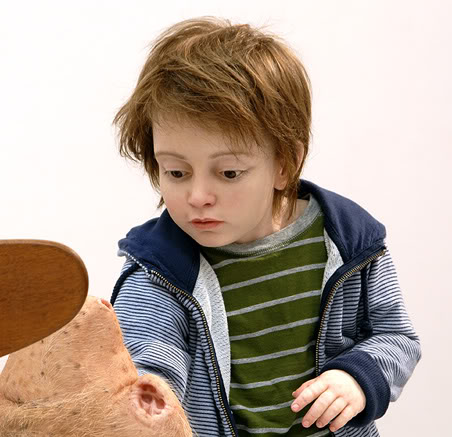
Featuring hyperrealist genetically modified creatures and human child figures Piccinini’s sculptures, drawings and video seem passionately alive in their verisimilitude (unlike Ricky Swallow’s resplendently dead relics at the NGV). In The Strength of one Hand (With Canadian Mountain Goat), the title perhaps a play on the traditional Zen koan The Sound of One Hand Clapping, a meditation on the nature of inner compassion, a walrus-child balances on one hand on the back of a Canadian Mountain Goat. The walrus-child has extended eyes, a voluminous lower lip with whiskers under the nose; the hyperreality of the hand on the back of the goat makes it seem like the hand will come alive! A mane of hair flows down the walrus-child’s back to feet that are conjoined – like an articulated merman – ending not in flippers but in toes complete with dirty, cracked and broken nails. Here the natural athleticism of the mountain goat, now dead and stuffed, is surmounted by the mutated walrus-child’s natural athleticism, poignantly suspended like an exclamation mark above the in-animate pommel horse.
In Balasana (The Child’s Pose) a child reposes in the yoga position on a tribal rug. Balanced on top of the child is a stuffed Red-necked Wallaby that perfectly inverts the concave of the child’s back, it’s front feet curled over while it’s rear feet are splayed. The luminosity of the skin of the child is incredible – such a technical feat to achieve this realism – that you are drawn to intimately examine the child’s face and hands. The purpose of The Child’s Pose in yoga is that it literally reminds us of our time as an infant and revives in us rather vivid memories of lying in this position. It also reminds us to cultivate our inner innocence so that we in turn may see the world without judgement or criticism. The paradoxes of the ‘unforced’ intimacy between the child and the wallaby can be read with this conceptualisation ‘in mind’.
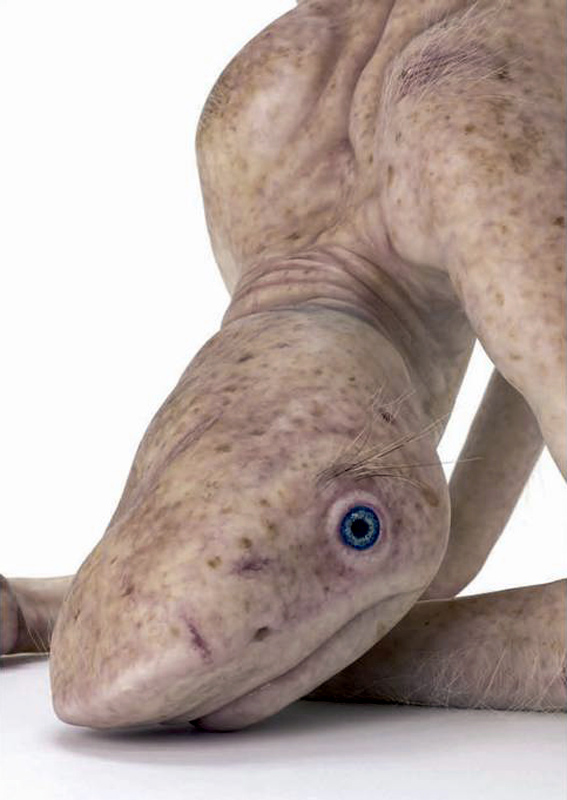
With The Bottom Feeder (2009) Piccinini’s imagination soars to new heights. With the shoulders of a human, the legs and forearms of what seems like a marsupial, the lowered head of a newt with intense staring blue eye (see photograph above), luminescent freckled skin covered in hair and a rear end that consists of both male and female genitalia that forms a ‘face’, the hermaphroditic bottom feeder is a frighteningly surreal visage. Inevitably the viewer is drawn to the exposed rump through a seemingly unforced interactivity, examining the folds and flaps of the labia and the hanging scrotum of this succulent feeder. Here Piccinini draws on psychoanalysis and Lacan’s theory of the mirror stage in a child’s development – where the child wants to merge with the mother to erase the self / other split by fulfilling the mother’s desire by having sex with her – thus erasing the mother’s lack, the idea of lack represented by the lack of a penis.1
As Jean Baudrillard notes of the mass of bodies on Brazil’s Copacabana beach, “Thousands of bodies everywhere. In fact, just one body, a single immense ramified mass of flesh, all sexes merged. A single, shameless expanded human polyp, a single organism, in which all collude like the sperm in seminal fluid … The sexual act is permanent, but not in the sense of Nordic eroticism: it is the epidermal promiscuity, the confusion of bodies, lips, buttocks, hips – a single fractal entity disseminated beneath the membrane of the sun.”2
An so it is here, all sexes merged within the anthropomorphised body of The Bottom Feeder, a body that challenges and subverts human perceptions of the form and sexuality of animals (including ourselves) that inhabit the world.
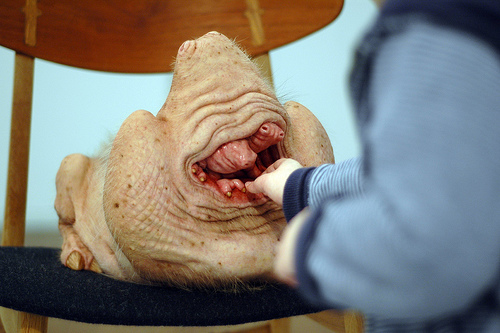
In Doubting Thomas (2008), my favourite piece in the exhibition, a skeptical child with pale and luminous skin is about to put his hand inside the mouth of a genetically modified mole like creature that has reared it’s hairy snout to reveal a luscious, fluid-filled mouth replete with suckers and teeth. You want to shout ‘No, don’t go there!’ as the child’s absent mother has probably already warned him – to no avail. Children only learn through experience, I suspect in this case a nasty one.
The terrains the Piccinini interrogates (nature and artifice, biogenetics, cloning, stem cell research, consumer culture) are a rematerialisation of the actual world through morphological ‘mapping’ onto the genomes of the future. Morphogenetic fields3 seem to surround the work with an intense aura; surrounded by this aura the animals and children become more spiritual in their silence. Experiencing this new world promotes an evolution in the way in which we conceive the future possibilities of life on this earth, this brave but mutably surreal new world.
This is truly one of the best exhibitions of the year in Melbourne.
Dr Marcus Bunyan
1/ Klages, M. Jacques Lacan. Boulder: University of Colorado, 2001 [Online] Cited 09/10/2009 no longer available online
2/ Baudrillard, Jean. Fragments: Cool Memories III, 1990-1995. London: Verso, 1997, p. 74
3/ “A morphogenetic field is a group of cells able to respond to discrete, localised biochemical signals leading to the development of specific morphological structures or organs.” Morphogenetic field definition on Wikipedia [Online] Cited 05/05/2019
Patricia Piccinini (Australian, b. 1965) The Strength of one Hand (With Canadian Mountain Goat) 2009 Silicone, fibreglass, human hair, clothing, Canadian Mountain Goat
Patricia Piccinini (Australian, b. 1965) The Strength of one Hand (With Canadian Mountain Goat) (detail) 2009 Silicone, fibreglass, human hair, clothing, Canadian Mountain Goat
Patricia Piccinini (Australian, b. 1965) The Bottom Feeder 2009 Silicone, fibreglass, steel, fox fur
Patricia Piccinini (Australian, b. 1965) The Bottom Feeder (detail) 2009 Silicone, fibreglass, steel, fox fur
Exploring concepts of what is “natural” in the digital age, Patricia Piccinini brings a deeply personal perspective to her work.
Rachel Kent notes: “Since the early 1990s, Piccinini has pursued an interest in the human form and its potential for manipulation and enhancement through bio-technical intervention. From the mapping of the human genome to the growth of human tissue and organs from stem cells, Piccinini’s art charts a terrain in which scientific progress and ethical questions are intertwined.”
Text from the Tolarno Galleries website [Online] Cited 05/05/2019 no longer available online
Patricia Piccinini (Australian, b. 1965) Doubting Thomas 2008 Silicone, fibreglass, human hair, clothing, chair
Patricia Piccinini (Australian, b. 1965) Doubting Thomas (detail) 2008
Patricia Piccinini (Australian, b. 1965) Doubting Thomas (detail) 2008
“Time and again my work returns to children, and their ambiguous relationships with the (only just) imaginary animals that I create. Children embody a number of the key issues in my work. Obviously they directly express the idea of genetics – both natural and artificial – but beyond that they also imply the responsibilities that a creator has to their creations. The innocence and vulnerability of children is powerfully emotive and evokes empathy – their presence softens the hardness of some of the more difficult ideas, but it can also elevate the anxiety level.”
Patricia Piccinini quoted on the Kaldor Public Art Projects website [Online] Cited 05/11/2009 no longer available online
“I am interested in the way that contemporary biotechnology and even philosophy erode the traditional boundaries between the artificial and the natural, as well as between species and even the basic distinctions between animal and human.”
Patricia Piccinini quoted in Sarah Hetherington. “Patricia Piccinini: Related Individuals,” on the Artlink website [Online] Cited 05/05/2019. No longer available online
Patricia Piccinini (Australian, b. 1965) Balasana Silicone, fibreglass, human hair, clothing, Red-necked Wallaby, rug 2009
Exhibition dates: 24th September – 13th December, 2009
Curators: Wang Huangsheng, An Ge and Hu Wugong
Many thankx to the China Institute in America for allowing me to publish the photographs in the posting. Please click on the photographs for a larger version of the image.
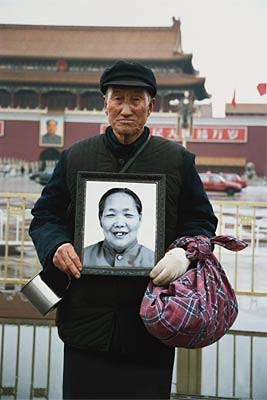
Hao Junchen (Chinese) Hugging a portrait of his wife deceased wife, an elderly man fulfils their dream of visiting Beijing 2003 Gelatin silver print
Feng Jianxin (Chinese) A soldier bids farewell to his wife and child who have just visited him and are now returning home Weichang, Hebei Winter 1987
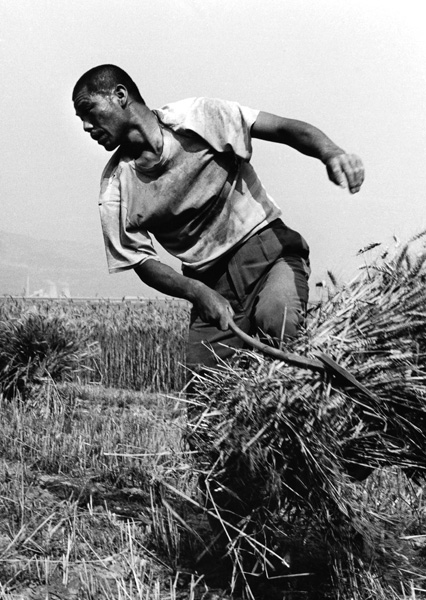
Hu Wugong (Chinese) Migrant wheat farmer in the field in Guanzhong 1998 Gelatin silver print
Wei Dezhong (Chinese, b. 1934) At the Red Flag Canal construction project, suspended labourers cut a channel 1960 Gelatin silver print
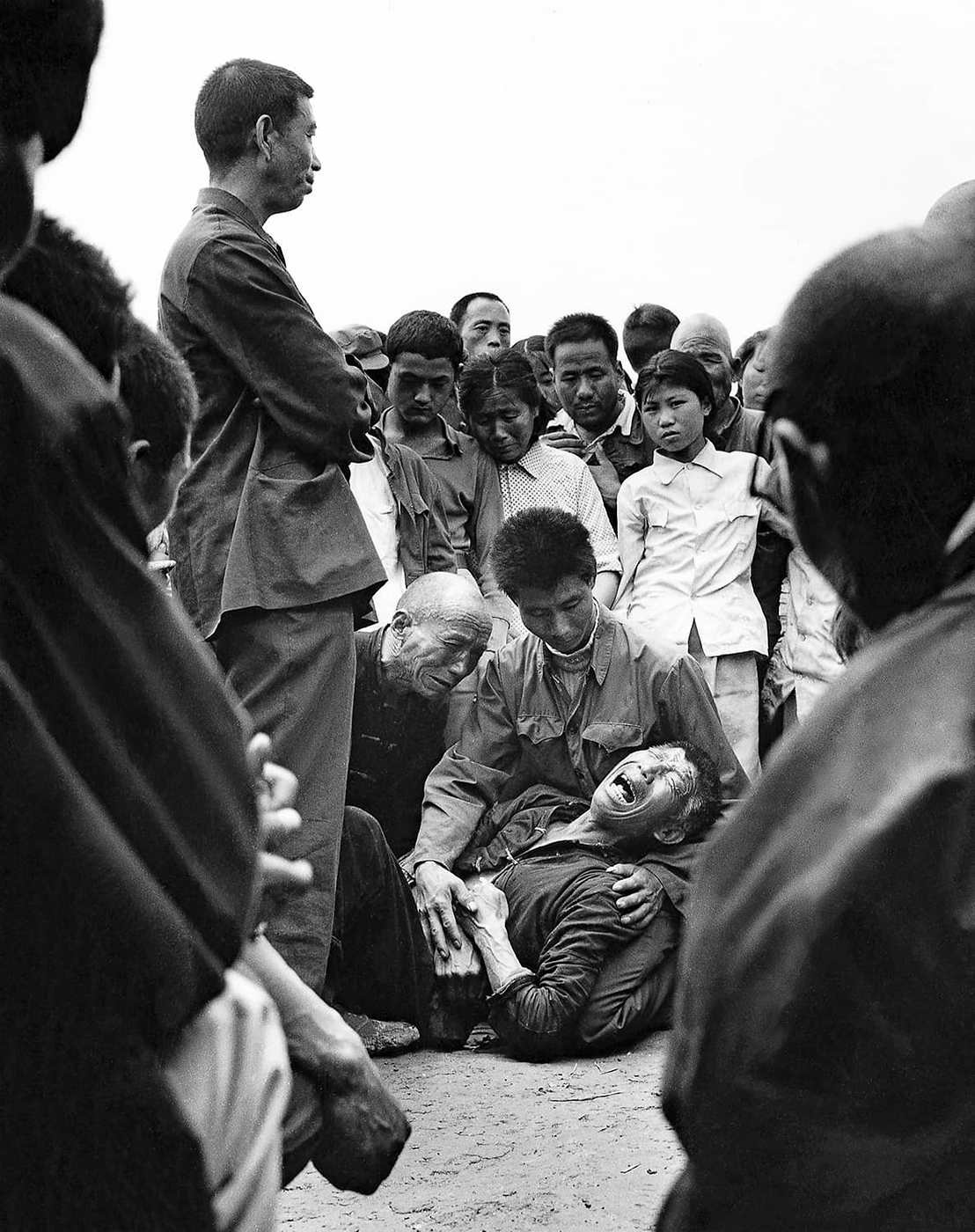
Liu Jun (Chinese) A Parent-Official Like This 1985 Gelatin silver print 51 × 40.7cm
A new exhibition of documentary photography, Humanism in China: A Contemporary Record of Photography, will be on view at China Institute Gallery from September 24 through December 13, 2009, revealing a glimpse of China never before seen in the U.S. The photographs, dating from 1951 though 2003, offer intimate portraits of rural and urban daily life in China, beyond the glossy veneer of the economic boom. A fully illustrated catalogue will accompany the exhibition.
Much in the way that The Family of Man, the 1955 landmark photography exhibition curated by Edward Steichen at The Museum of Modern Art in New York, explored the universality of the human experience, Humanism in China: A Contemporary Record of Photography offers rare insight into ordinary and extraordinary human experiences – in this case, taking place in China over the last 50 years.
Humanism in China: A Contemporary Record of Photography was organised by the Guangdong Museum of Art and represents the first large-scale collection of photography acquired permanently by any museum in China. Opening at the Guangdong Museum in 2003, the exhibition has since travelled to seven venues in China, Germany and Scotland. The curators, Wang Huangsheng, An Ge and Hu Wugong, visited photographers’ homes and studios in more than 20 provinces and viewed an estimated 100,000 photographs before selecting 600 images by 248 photographers. The exhibition at China Institute Gallery will offer a more tightly focused selection – 100 photographs by more than 80 photographers – chosen by Dr. Jerome Silbergeld, Professor of Chinese Art History at Princeton University.
Together the images present an unvarnished, starkly realistic view of the hardships and rewards of social modernisation. “These photographs are not just about society and history but are equally about photography itself and the history of documentary photography in China,” Silbergeld writes in the catalogue essay.
Willow Hai Chang, the Director of China Institute Gallery, notes “The medium and language of photography provide an exceptional opportunity to foster a dialogue, enhancing communication and understanding about everyday life in China. Growing up in China and returning there often, I have witnessed the transforming relationship the Chinese have experienced with photography – from the fear that the camera could steal one’s soul that still exists in some remote regions to the urban proliferation of cell-phone cameras and social-networking sites filled with portraits. Photography also provides a most compelling method of recording history, and Humanism in China: A Contemporary Record of Photography creates a contextual framework for both the traditional and modern elements of life in China.”
The emerging themes from the exhibition span an enormous range of human emotions. Tragedy can be seen in the eyes of a man holding a portrait of his deceased wife, while fear is evident as victims flee rising floodwaters. There is also a graceful patience on view as a couple awaits their country wedding, and utter joy is clearly evident as a man displays his wads of cash after winning the lottery.
One of the most striking images in the exhibition is Iron Rice Bowl (see below), Hei Ming’s 2000 portrait of a Muslim chef squatting in front of a crude construction workers’ restaurant, his skullcap mimicking the customers’ rice bowls hanging on the restaurant’s facade. Another notable image, Geng Yensheng’s painterly photograph Miners at Wumeng Mountain (see below), 2003, depicts the harsh working conditions in the mountainous district where Yunnan, Sichuan and Guizhou provinces come together. As Silbergeld writes, the photograph of the young bathing miners “brings social bitterness and formal beauty into a perfectly fused relationship.”
One of the images, A Parent-Official Like This (see above), became well known in China. In May 1985, Liu Jun had his camera ready when he witnessed a rural deputy chief from the Baishui region in Shaanxi province forcefully push a 60-year-old villager to the ground in a dispute over migration. The resulting photograph captures the horrific arrogance of the authority figure as he towers over the powerless villager whose mouth is contorted in pain. The award-winning image is considered the foremost work of photographic social criticism since the 1949 revolution.
Press release from the China Institute in America website [Online] Cited 20/10/2009 no longer available online
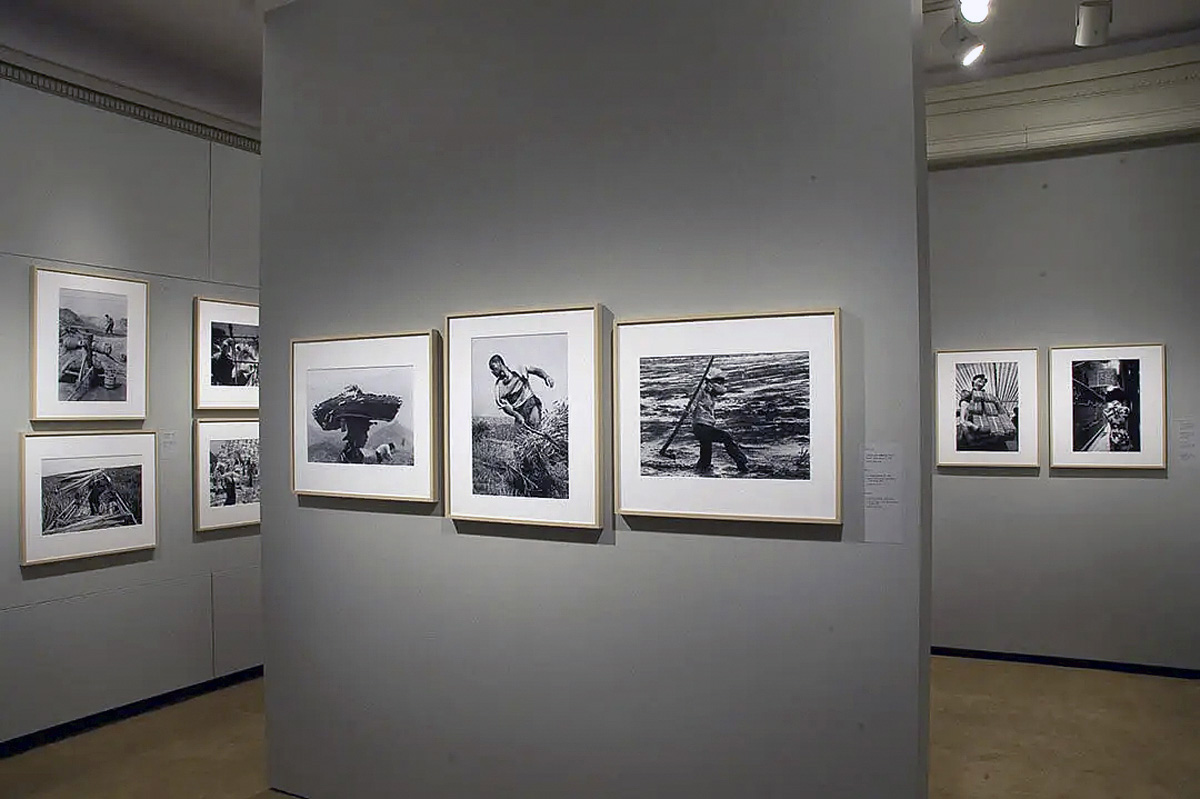
Installation view of the exhibition Humanism in China: A Contemporary Record of Photography at the China Institute in America, New York, September – December, 2009
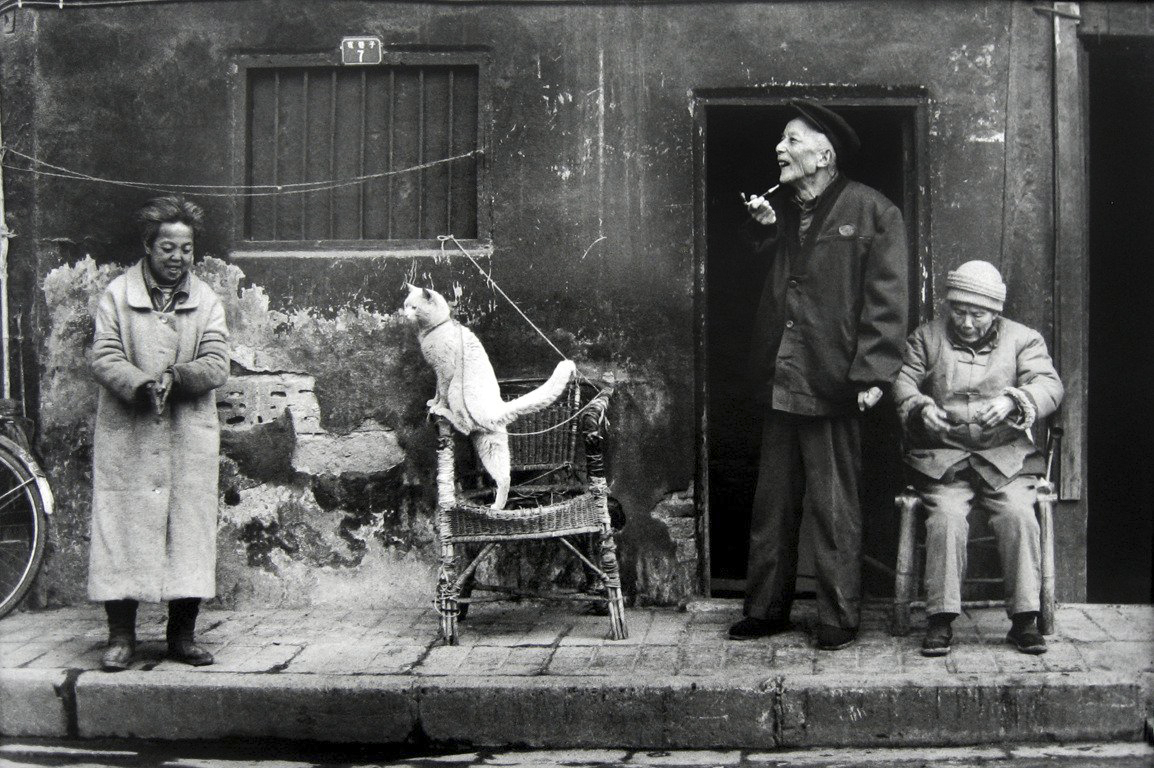
Wu Jialin (Chinese, b. 1926) Having a Chat, Cheng Du 1999 Gelatin silver print
Hei-Ming (Chinese, b. 1964) Iron Rice Bowl 2000 Gelatin silver print
Li Dan (Chinese) Tourists at the Wenshu Temple in Chengdu taking a souvenir photograph 1983 Gelatin silver print
Exhibition dates: 24th September – 14th November, 2009
Exhibition artists: Peter Bialobrzeski, Stephane Couturier, DoDo Jin Ming, Toshio Shibata
Many thankx to Laurence Miller Gallery for allowing me to publish the photographs in the posting. Please click on the photographs for a larger version of the image.
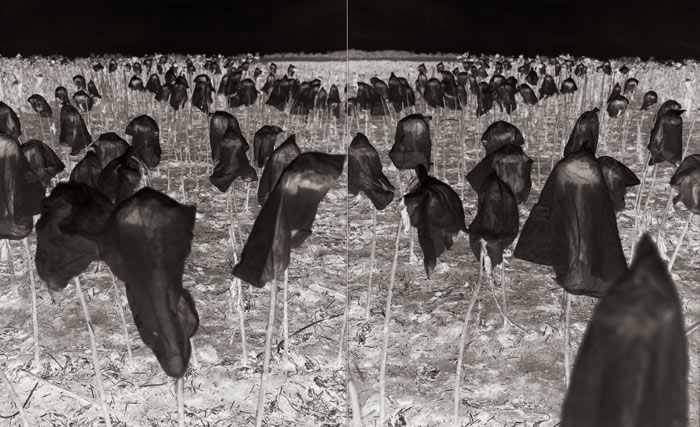
DoDo Jin Ming (Chinese, b. 1955) Behind My Eyes 2nd Movement, Plate I 2002
DoDo Jin Ming (Chinese, b. 1955) Behind My Eyes 2nd Movement, Plate VIII 2003
DoDo Jin Ming (Chinese, b. 1955) Free Element, Plate XXX 2002
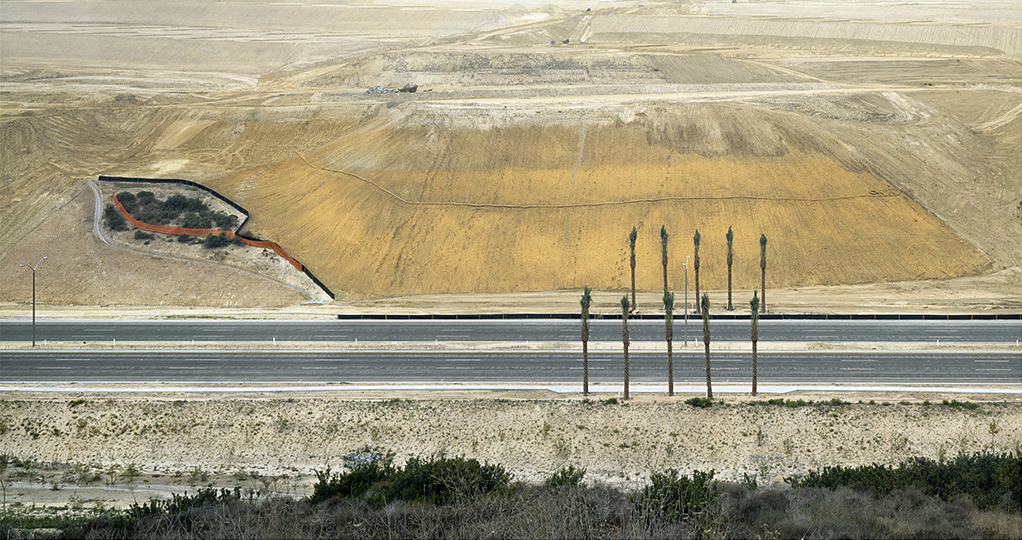
Stéphane Couturier (French, b. 1957) Olympic Parkway No. 1 2001
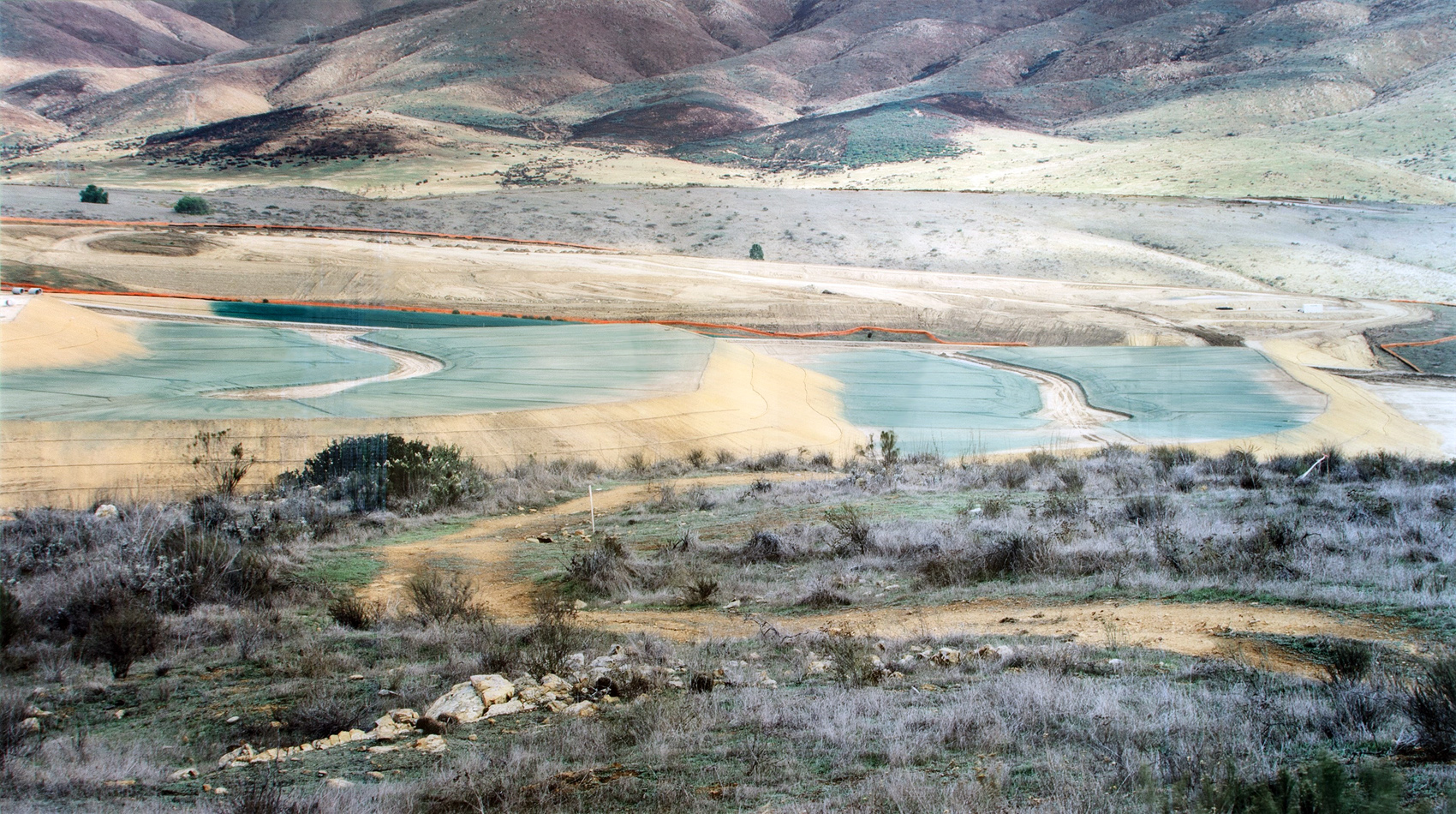
Stéphane Couturier (French, b. 1957) Proctor Valley No. 1 2004
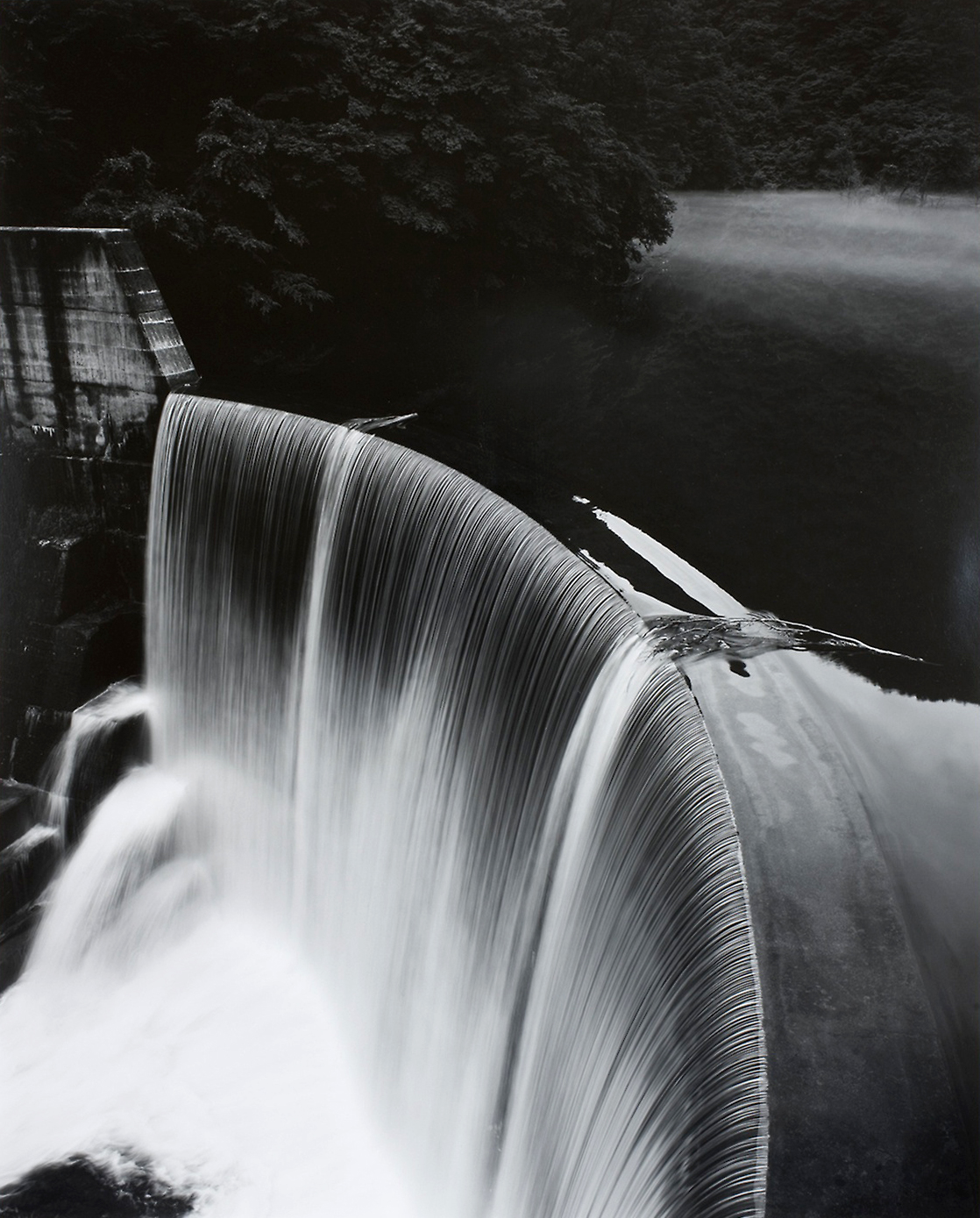
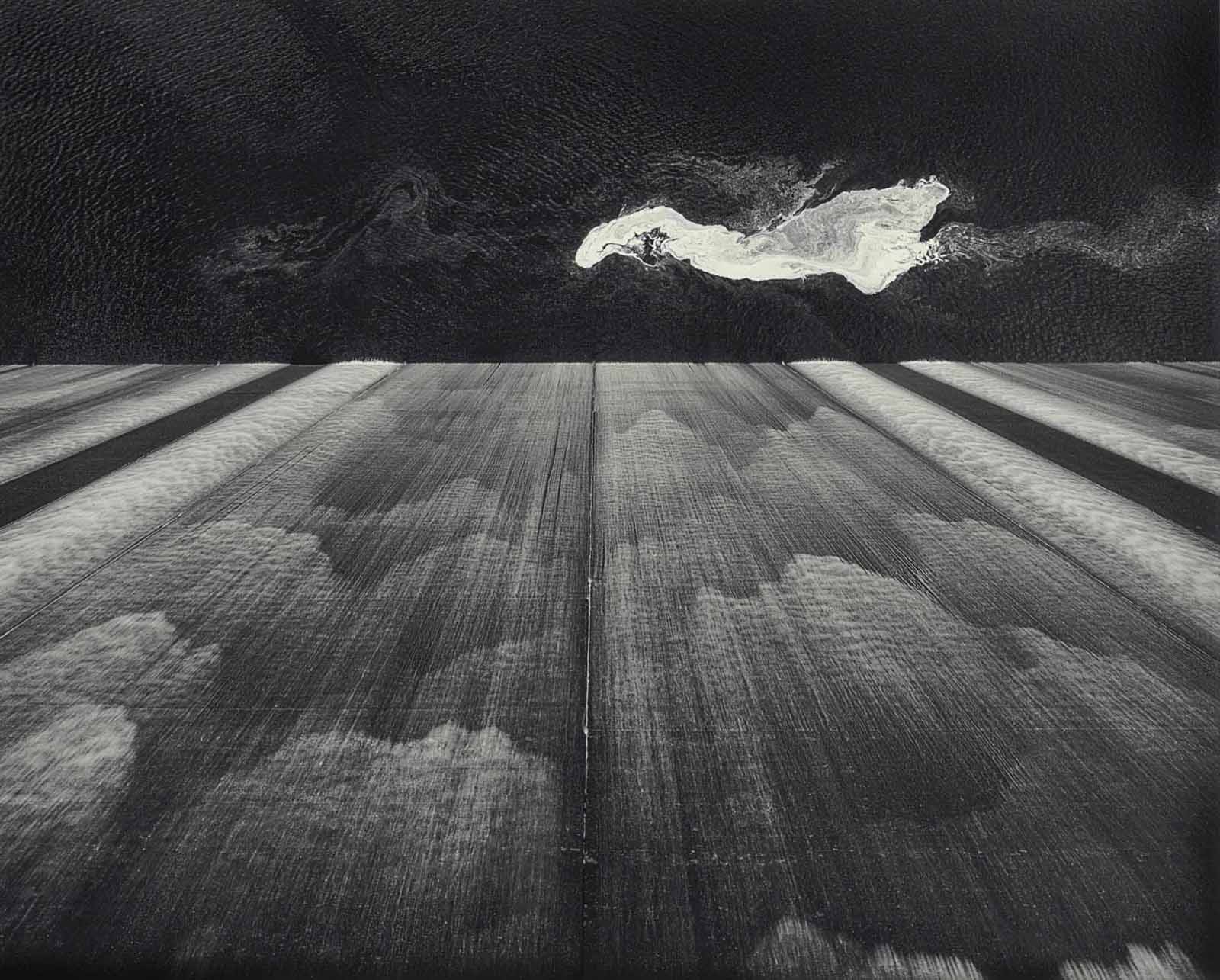
Laurence Miller is pleased to present, as its opening show for the fall, The Abstracted Landscape, featuring the work of four midcareer international artists: Peter Bialobrzeski, from Hamburg; Stephane Couturier, from Paris; DoDo Jin Ming from Beijing and New York; and Toshio Shibata, from Tokyo.
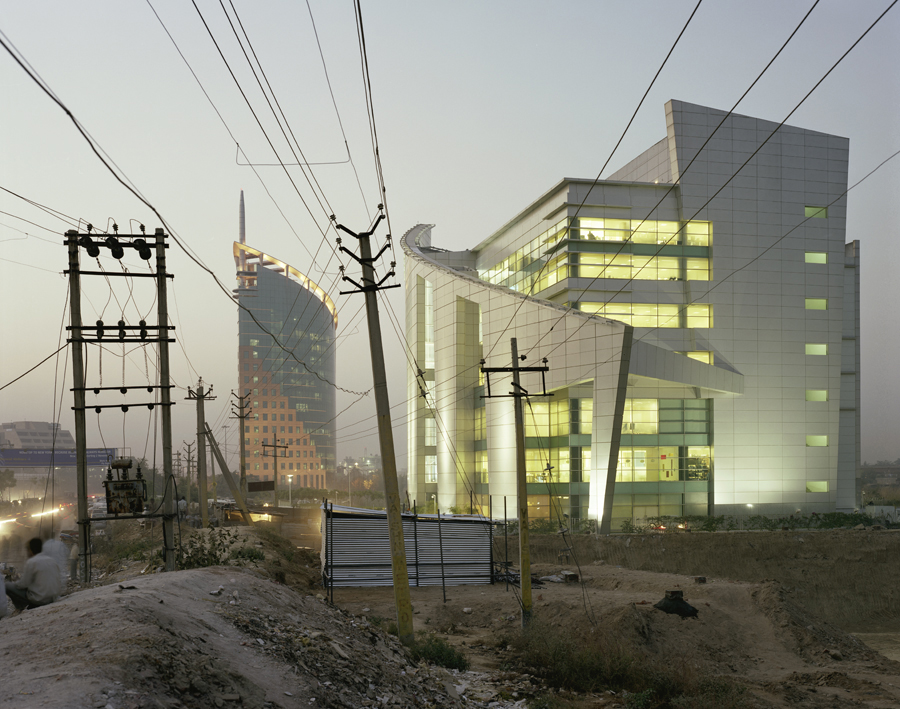
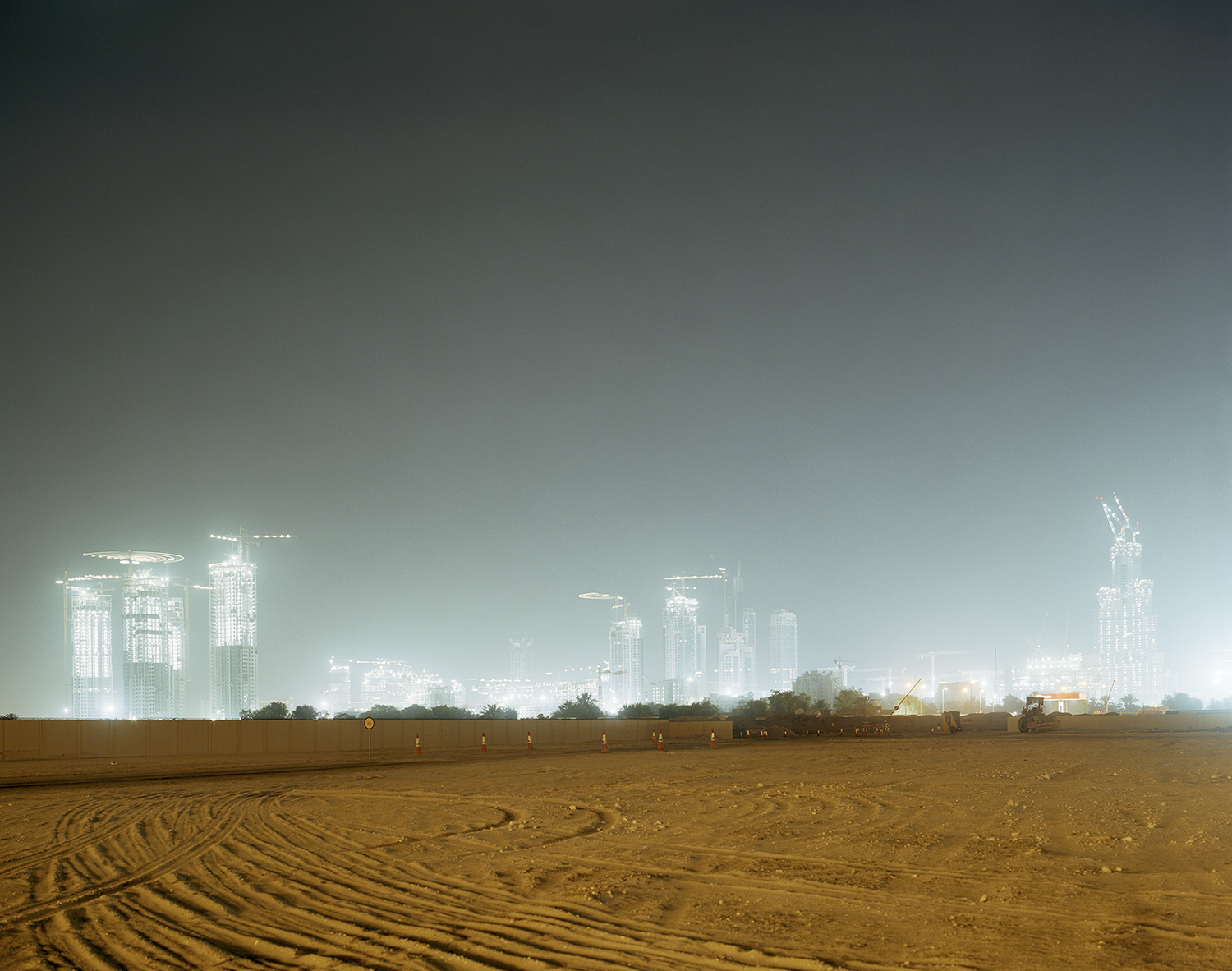
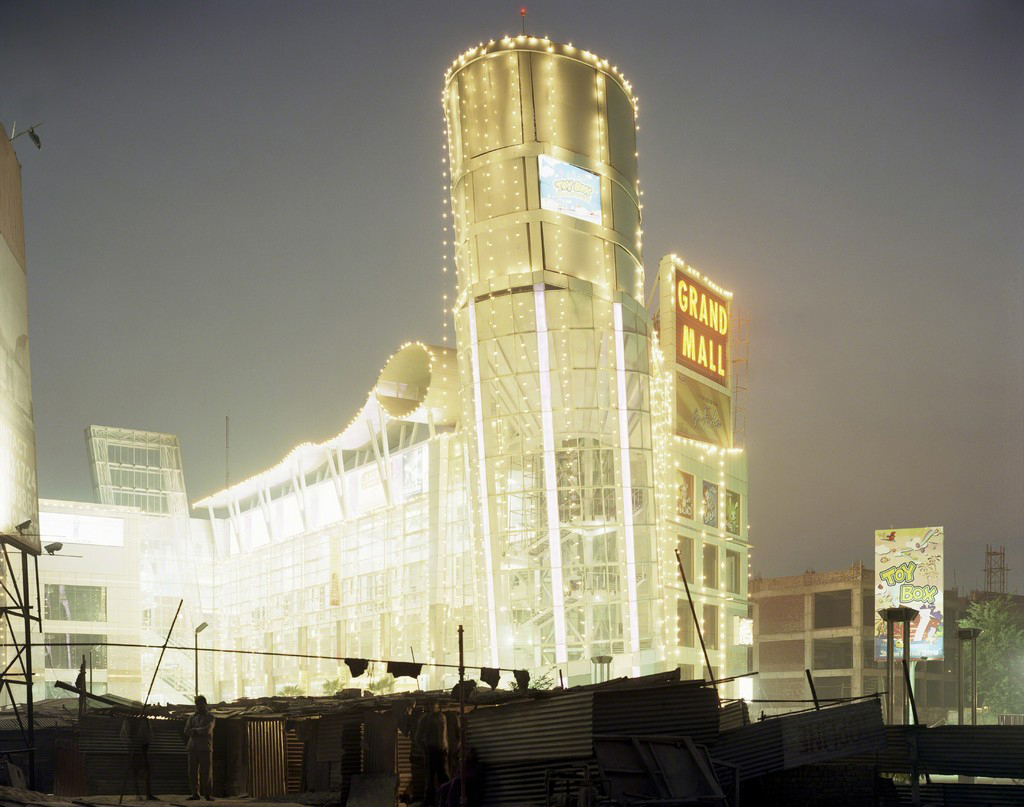
These four photographers each translate the landscape into a poetic and abstract vision, utilising techniques and processes unique to photography to create scenes that remain sufficiently recognisable yet unobtainable through the naked eye. Peter Bialobrzeski, in his series Lost in Transition, photographs rapid urbanisation and industrialisation by taking very long exposures, which create other-worldly colours and lighting not visible to the naked eye. Stéphane Couturier embraces the camera’s monocularity in his series from Havana to flatten our normal reading of space and render totally ambiguous the walls of a decaying interior. DoDo Jin Ming, in her series Behind My Eyes, applies the technique of negative printing to render mysterious and foreboding fields of sunflowers. And Toshio Shibata wields his large view camera, with multiple tilts and swings, to look straight down the side of a dam, creating a vertigo-inducing viewpoint we would be unable (and perhaps unwilling) to see directly with our own eyes.
Abstraction in the landscape has a rich tradition within the history of photography. Felix Teynard’s Egyptian views from the mid-1850’s are wonderfully abstract, as are those of J.B. Greene and August Salzmann. Timothy O’Sullivan, Carlton Watkins and William Henry Jackson each made views of the American west from the 1806’s through the 1880’s, that were equally rich in detail and minimal in composition. In the 20th century there are many examples, from George Seeley to Paul Strand, through Moholy Nagy and the Bauhaus to Edward Weston’s glorious sand dunes.
Text from the Laurence Miller Gallery website [Online] Cited 12/10/2009. No longer available online
Toshio Shibata (Japanese, b. 1949) Kashima Town, Fukushima Prefecture 1990
Toshio Shibata (Japanese, b. 1949) Grand Coulee Dam, Douglas County, WA 1996
Peter Bialobrzeski (German, b. 1961) Transition #33 from the series Lost in Transition 2005
Peter Bialobrzeski (German, b. 1961) Transition #20 from the series Lost in Transition 2005
Peter Bialobrzeski (German, b. 1961) Transition #23 from the series Lost in Transition 2005
Laurence Miller Gallery
Laurence Miller Gallery is now operating as a private dealer and consultant.
Exhibition dates: 30th September – 24th October, 2009
eX de Medici (Australia, b. 1959) Tooth and claw 2009 Pen, ink and mica on archival paper 114.0 x 521.0cm
Is it sinful to say that an Armalite rifle can be voluptuously seductive? Not in the hands of artist eX de Medici!
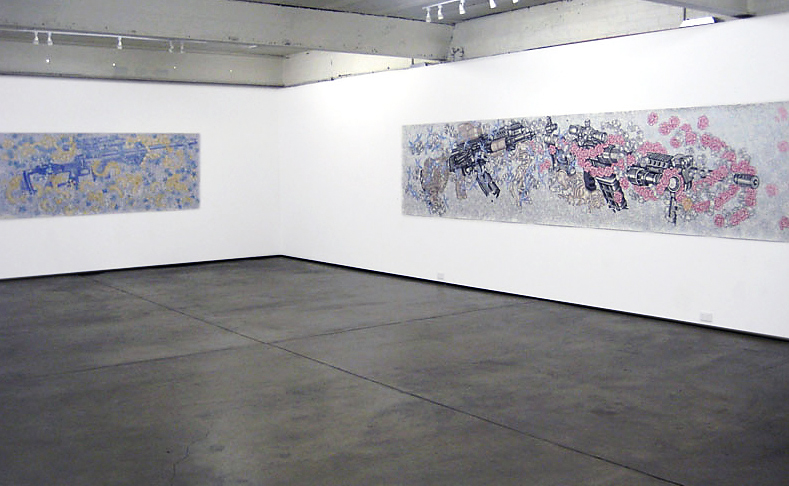
Taking a variety of contemporary military high-powered weapons (Armalite AR30 Tactical .308 Sniper, Modified AK 47, Blackwater AR15, Patriot Ordinance P45 .223 for example) eX de Medici’s armaments have a steely presence softened and consumed by multitudinous garlands of traditional tattoo ‘flash’ iconography (flowers, skulls, bows, stars, Chinese dragons, waves and swallows repeated in Escher-like patterns) and contorted skeletons. Using individual colour palettes for each of the three large pen, ink and mica on paper works in the exhibition, eX subverts the masculine symbology of gun culture and decomposes it within an ornamentation of deathly desire – new compositions in the dance of death: ‘U hurt me Baby, U Fkd me up gd, the hole tht u made (cross) me Ded …’
In other less skilled artist’s hands the subject matter could become cliched and trite but here de Medici balances the disparate elements in her compositions and brings the subject matter alive – sinuously jumping off the paper, entwining the viewer in their delicious ironies, all of us sweetly complicit in the terror war (send more meat, send more meat!), fighting tooth and nail to keep urban realities at arm’s length. The dark desires that these works contain possess an aesthetic beauty that swallows us up so that we, too, become ‘Barbarians All’. Highly recommended!
Dr Marcus Bunyan
Many thankx to Karen Woodbury Gallery for allowing me to publish the art work in the posting. Please click on some of the photographs for a larger version of the image.
eX de Medici (Australia, b. 1959) Tooth and claw (detail) 2009 Pen, ink and mica on archival paper 114.0 x 521.0cm
eX de Medici (Australia, b. 1959) Tooth and claw (details) 2009 Pen, ink and mica on archival paper 114.0 x 521.0cm
Installation view of Sweet Complicity by eX de Medici at Karen Woodbury Gallery, Melbourne showing at left, Send more meat (2009) and at right, Tooth and claw (2009) Photo: Marcus Bunyan
eX de Medici (Australia, b. 1959) Send more meat 2009 Pen, ink and mica on archival paper
eX de Medici (Australia, b. 1959) Send more meat (detail) 2009 Pen, ink and mica on archival paper
Sweet complicity is eX de Medici’s first and much anticipated exhibition at Karen Woodbury Gallery. The exhibition will comprise of three monumental pen, ink and mica works on archival paper. These works examine recurring themes in her practice such as power, war, death and violence via a decorative feminine veneer and aesthetic.
The recurrent use of symbolism in the form of weapons, skulls and garlands in her work re-appear with the addition of Chinese imagery (Imperial golden dragons, China’s five-pointed star, and the use of chrysanthemums). These potent works display a latent interest in scientific illustration and allude to de Medici’s characteristic stylised tattoo motifs that stems from her work as a tattooist. The almost obsessive repetition of pattern and immense detailing display eX’s dedication to her practice through the strong mental and physical commitment required to complete such awe-inspiring artworks that seduce the viewer.
There is an unmistaken polemic tone in de Medici’s practice that cannot be ignored. Different cultures, identities, actions and consequences are represented and centred on objects of warfare, allowing for disguised and layered political and moral statements.
de Medici lives and produces much of her work in the nation’s capital Canberra. Streams of influences inform the work; Canberra’s political and physical agendas, research resourced from various national institutions such as the CSIRO Entomological and Taxonomy Division, the National Library of Australia and the Australian War Memorial. She has recently returned from the Solomon Islands where she was chosen as an official war artist.
Text from the Karen Woodbury Gallery website [Online] Cited 05/10/2009. No longer available online
The defining theme in eX de Medici’s paintings is a consistent interrogation of power. The notion of ‘the personal’ doesn’t interest the artist. Instead she investigates authority and dissent through paintings of guns, surveillance devices and gas masks.
eX de Medici (Australia, b. 1959) American Sex/Funky Beat Machine 2009 Pen, ink and mica on archival paper Diptych, 114.0 x 249.0cm
eX de Medici (Australia, b. 1959) American Sex/Funky Beat Machine (detail) 2009 Pen, ink and mica on archival paper Diptych, 114.0 x 249.0cm
Exhibition dates: 29th September – 10th October, 2009
Curator: Amy Barclay
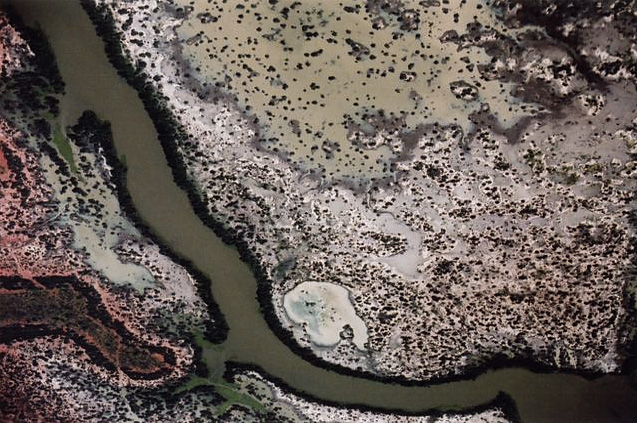
Kim Lawler (Australian) Between Lines #4 Aerial Photograph, Great Sandy Desert, Western Australia 2009
I finally made it to Kim Lawler’s exhibition Between Lines at fortyfive downstairs, Flinders Lane, Melbourne and, in many ways, the trip was well worth it. Lawler presents 12 prints from her eponymous series, aerial photographs taken over Western Australia.
Eschewing the essentially topographic state promoted in the “New Topographics: Photographs of a Man-Altered Landscape” of 1975 that have influenced so many photographers in recent decades (including the hyper-real photographs of the West Australian landscape by Edward Burtynsky where there is an emotional distance between the photograph and the viewer), Lawler instead mines the depths of abstraction in landscape photography.
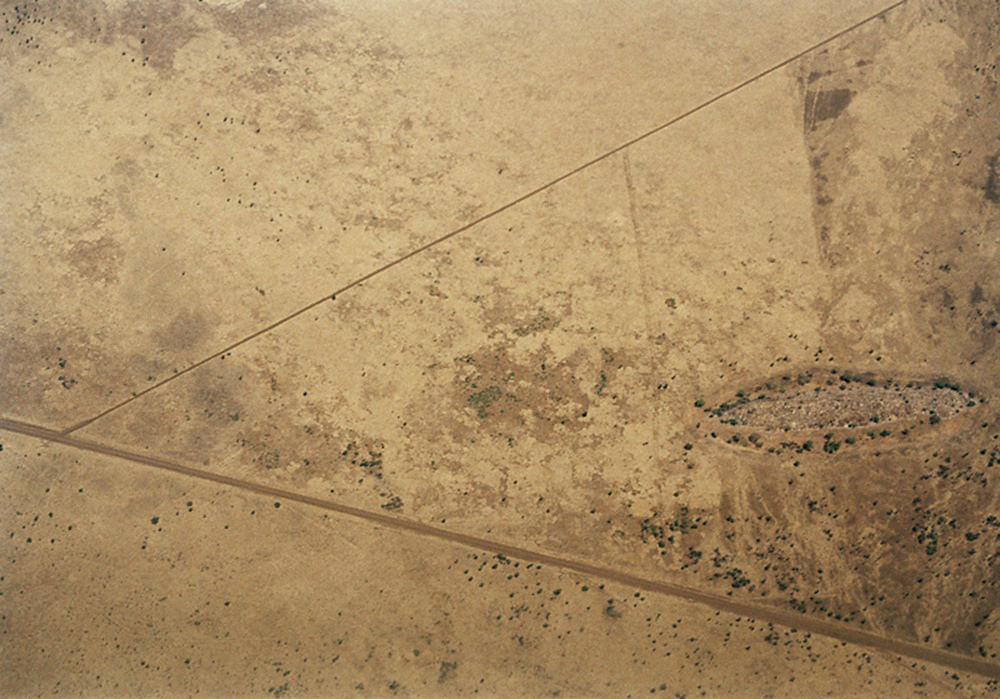
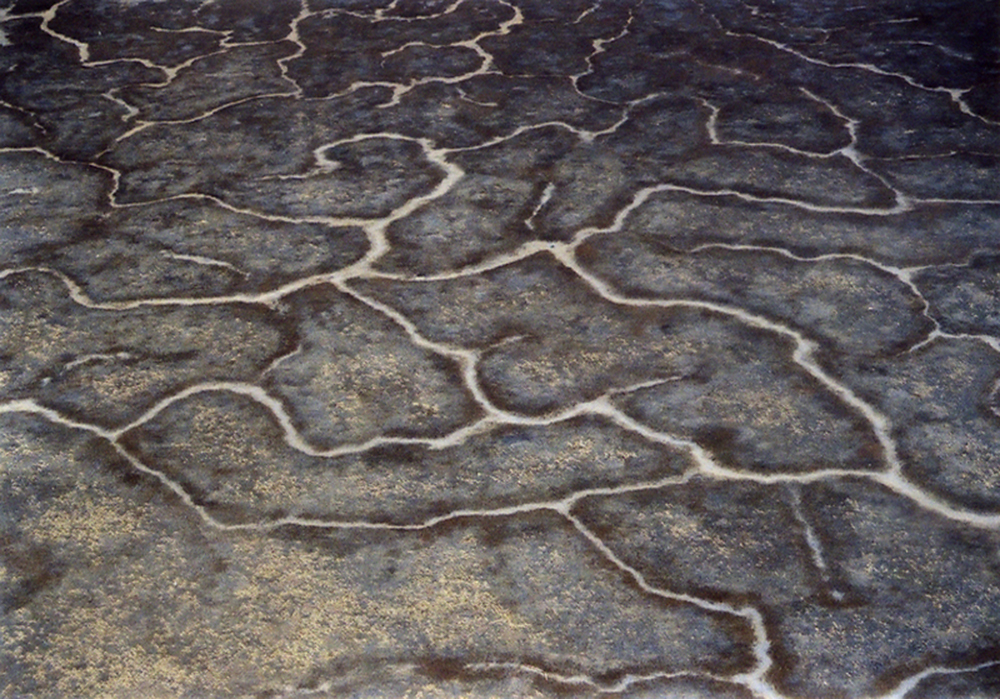
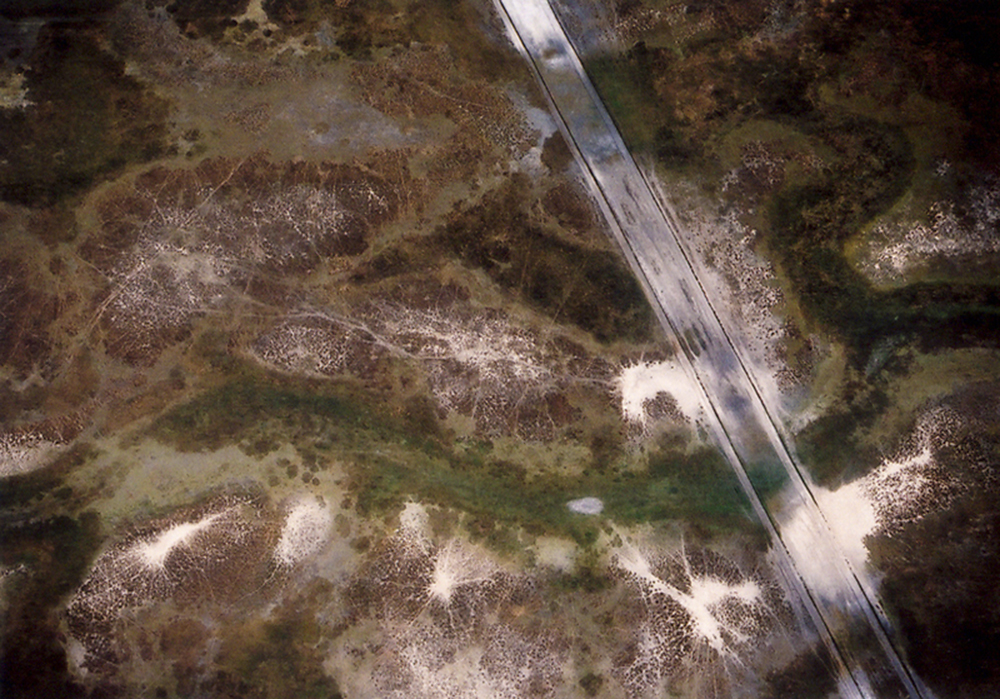
These are visceral photographs – in #4 the river and surrounds almost become vascular and cellular; in #13 the synapses and electrons infiltrate the highway reminding me of bomb craters from a Second World War landscape. In #7 the shrubs, unlike the precision of the New Topographics, become feckless dots, the landing strip a scar on the body; in #12 the toxic unsutured wound bleeds across the surface of the skin, white scar tissue surrounding it.
In these atypical mappings Lawler employs a taxonomy of disorder. The photographs are very soft in focus, soft in printing, big in the grain of the film and there is very little depth of field employed – in other words there is really nothing in focus at all, nothing that the eye and the mind can fix on. These are interstitial spaces (i.e. gaps between spaces full of structure or matter) and the title Between Lines is entirely appropriate for the work. The photographs contain beautiful textures, colours, surfaces.
This is their strength but also their weakness. The eye and the mind longs for something to hold onto, perhaps just a small fraction of the image to be in focus, so that the disorder plays off the order (for one cannot exist without the other!). Mutation only exists if their is something to mutate against. The other two small problems I had with the work were a matter of semantics and others may disagree – personally I found the size of the prints neither here nor there and they could have done with being about 2-3 inches larger and the white frames were too heavy. That is a funny thing to say about contemporary white frames, that they are too heavy for the work, but this is entirely possible: the moulding was too thick and the depth of the box frames to deep for my liking, detracting from the print itself and making the works darker than they needed to be.
Overall then an excellent exhibition that offers a positive variation on the cliched narrative of aerial photography of the Australian outback, one that questions the munificence of human habitation of the body and of the earth.
Dr Marcus Bunyan
Many thankx to fortyfive downstairs for allowing me to publish the photographs in the posting. Please click on the photographs for a larger version of the image.
Kim Lawler (Australian) Between Lines #7 (Landing Strip) Aerial Photograph, Great Sandy Desert, Western Australia 2009
Kim Lawler (Australian) Between Lines #8 (Jones Soak, position approximate) Aerial Photograph, Great Sandy Desert, Western Australia 2009
“Beyond romance or nostalgia, Lawler’s lucid visual studies reveal the aesthetic beauty of the stories being written and rewritten onto this responsive and at times fragile environment.”
~ Amy Barclay, curator
Between Lines comprises a series of aerial photographs taken in the Kimberley, far north Western Australia. This remote area is embedded with stories of Indigenous and non-Indigenous inhabitants, transitory visitors and scarred by multinational companies resource development. The artist, Kim Lawler, is concerned with markings, both natural and constructed, that tell stories of places, transitions and interruptions that occur within the landscape.
Between Lines is informed by Lawler’s experience of living in these regions and local perspectives on the displacement of people and their consequential relationship to the land that has taken place. It is also informed by the opposing qualities of abandon and connection that occur as the stories within these landscapes continue to unfold.
Competing demands for natural resources, and the resulting impact upon transitional landscapes, resonate with the stories of many generations of people that continue to flow through or inhabit each region. Attuned to the markings on these landscapes, it is these residual narratives ‘Between Lines’ seeks to record.
The imagery seen in Between Lines extends from Lawler’s previous artwork that interrogated additional Kimberley locations including: the remote Buccaneer Archipelago; the isolated far northern reaches of the Kimberley Coastline; Cockatoo Island iron ore mine and resort and; inland regions such as Warmun Aboriginal Community on the periphery of the Great Sandy Desert.
“Lawler’s eye is arrested by markings, natural and constructed, that trace and recount places, transitions and interruptions; the signifiers of change in a landscape millions of years old.”
Amy Barclay, curator
Text from the fortyfive downstairs website
Kim Lawler (Australian) Between Lines #12 Joseph Bonaparte Gulf, Northern Kimberley, Western Australia 2009
Kim Lawler (Australian) Between Lines #13 Great Northern Highway, Kimberley, Western Australia 2009
Kim Lawler (Australian) Between Lines #16 Cockatoo Island Cyanide Settling Pool, Yampi Sound, Western Australia 2009
fortyfive downstairs 45, Flinders Lane Melbourne 3000













































You must be logged in to post a comment.