Tom Moore Pondlurking installation photographs at Helen Gory Galerie, Prahran Photo: Marcus Bunyan
My apologies to readers for the paucity of reviews of exhibitions in Melbourne recently. It is not that I haven’t been circulating around town to lots of exhibitions, far from it. The fact is nothing has really rocked my boat, including my visit to a disappointing New 010 exhibition at ACCA, an exhibition redeemed only by the marvellous magnetic levitations of Susan Jacobs’ installation titled Being under no illusion (2010).
Compared to the wealth of interesting work in New 09, work that still resides in my consciousness, the art in the current exhibition seems bland, the work ultimately and easily forgettable (a case of conceptual constipation?). Even as the exhibition lauds the collaboration between artists, designers, curators, architects, trades people and the kitchen sink in the production of the work, nothing substantive or lasting emerges.
No such problem exists with the exhibition Pondlurking by Tom Moore at Helen Gory Galerie in Prahran. Wow, this show is good!
It produced in me an elation, a sense of exalted happiness, a smile on my dial that was with me the rest of the day. The installation features elegantly naive cardboard cityscape dioramas teeming with wondrous, whimsical mythological animals that traverse pond and undulating road. This bestiary of animals, minerals and vegetables (bestiaries were made popular in the Middle Ages in illustrated volumes that described various animals, birds and even rocks) is totally delightful.
In the text Moving Right Along the curator Julie Ewington notes connections in Moore’s work to the Garden of Earthly Delights by Hieronymus Bosch, the porcelain monkey orchestras of Miessen, parti-coloured hose of Medieval costume, the animals from Dr Suess’s books for children and Venetian glass figurines to name but a few. Another curator, Geoffrey Edwards, notes Moore’s accomplished technical skill in glass making, his use of lattice and trellis work in the figures themselves, namely the use of vetro a fili (broadly spaced) and vetro a retorti (twisted spiral) glass cane patterns.
While all of this is true what really stands out is the presence of these objects, their joyousness. The technical and conceptual never get in the way of good art. The Surrealist imagining of a new world order (the destruction of traditional taxonomies) takes place while balanced on one foot (see the installation image at the top of the page).
The morphogenesis of these creatures, as they build one upon another, turns the world upside down (as in Web Feet Duck Bum, below). Multi-eyed potato cars, ducks with eyes wearing high-heeled boots and three-legged devouring creatures segue from one state, condition, situation or element to another in a fluid condition of becoming. This morphogenesis is aided and abetted by the inherent fluidity of the glass medium itself skilfully used by Moore in the construction of his creatures. While the photographs below isolate the creatures within a contextless environment it is when the creatures are placed within the constructed environment so skilfully created by Moore that they come alive.
The interconnectedness of this fantastical world (the intertextual relationship of earth, water, air, life) seeks to break down the binaries of existence – good / bad, normal / mutation, presence / absence – until something else (e)merges.
Through their metamorphosed presence in a carnivalesque world that is both the weird and the wonderful, Moore’s glass creatures invite us to look at ourselves and the landscape we inhabit more kindly, more openly, and with a greater generosity of spirit.
Tom Moore Pondlurking installation photographs at Helen Gory Galerie, Prahran Photos: Marcus Bunyan
Tom Moore (Australian) Stylish Car 2008
Tom Moore (Australian) Birdboat with passenger with a vengeance (left) and Robot Island (right) 2010 and 2009
A candy striped fish pokes its head up, all lipstick-pink kissable lips as a voyaging duck sprouts tree-masts and becomes duck-ship-island captained by a lone gherkin boy. Delinquent birds rampage while a crested birdcar peacefully unfurls sweet green shoots. A cardboard city burns and there’s something odd lurking in the pond, metallic and curiously tuberous, it regards it all with a wary eye.
There’s a whole world at play here. Growing, flying and always moving, this isn’t ours turned upside down but something other, a unique universe bound together with a logic entirely its own. Tubers take to the air, birds grow wheels and everything overflows with energy, pushing out green tendrils toward each other.
Tom Moore’s gloriously appealing glass creatures spring from his own fantastical imagination and the rich seabeds of the mythical, imaginary and grotesque. From mediaeval bestiaries with their camel leopards and manticores, to misericord creatures through Lear and Seuss to Moore’s reimagining of an Colonial Australian epergne as a verdantly plumed robot bird with resplendent palm tree, his creatures reuse, recycle and recombine in their never ending metamorphoses.
There’s an irrepressible joyousness in these creatures constant flux as they burst the boundaries of animal / vegetable / mineral and do away with taxonomies and rationality, reinventing themselves in happy disregard of all humanity’s rules.
While lurking seems antithetical to all this busy-ness, to skylarking fatbirds and peripatetic potatoes, the will to knowledge at the core of all lurking is what propels this endless becoming. This insatiable urge to simply find out is the engine of this prolific universe. As duck becomes island and man becomes bird, Moore’s creatures ask an eternal ‘what if?’ and an insouciant ‘why not?’
This transformative energy inheres in the material itself, in the mutable and alchemical nature of glass, in the fusing and melding of forms as light is captured within and bounces off lustrous surfaces. As glass flows through its changeable states, like water, like rain, so do Moore’s folk transform and evolve.
It’s this continuous moving through forms that hints at other meanings. Sharing forms, being made as it were, of each other and sharing an essential nature, each creature reaches out to every other in a net of relations in an intricately connected universe. These deep bonds, seen in their loving regard for each other speak of the delicate structures and balance of ecosystems and an absolutely necessary attention to and care for the world.
For there are no humans here and it seems that it’s this carelessness, this lack of attention to the fragile connections between the world and its creatures that’s the reason. The cities burn and cars rightfully become compost.
This riotous parade has pulled the artist too into their exuberant tumble. Becoming man-bird and greeting the day with a drumming bird song he is the harbinger perhaps of a new order, one bright green and sparkling.
Jemima Kemp, 2010
Press release from the Helen Gory Galerie website [Online] 20/03/2010. No longer available online. Used under fair use conditions for the purposes of education and research
Tom Moore (Australian) Web Feet Duck Bum 2009
Tom Moore (Australian) Tasty Eyes With Five Friends 2007
Tom Moore (Australian) Snarsenvorg the Devourer 2008
Marcus Bunyan (Australian born England, b. 1958) Missing in Action (horizontal kenosis) No.4 2010 Digital photograph
Missing in Action (horizontal kenosis)
A body of work, Missing in Action (horizontal kenosis) (2010) is now online on my website.
There are nineteen images in the series which can be viewed as a sequence, rising and falling like a piece of music.
Below are a selection of images from the series.
Dr Marcus Bunyan
Photographs are available from this series for purchase. As a guide, a digital colour 16″ x 20″ costs $1000 plus tracked and insured shipping. For more information please see my Store web page.
Kenosis
“In Christian theology, Kenosis is the concept of the ‘self-emptying’ of one’s own will and becoming entirely receptive to God and his perfect will.”
Marcus Bunyan (Australian born England, b. 1958) Missing in Action (horizontal kenosis) No.5 2010 Digital photograph
Marcus Bunyan (Australian born England, b. 1958) Missing in Action (horizontal kenosis) No.6 2010 Digital photograph
Marcus Bunyan (Australian born England, b. 1958) Missing in Action (horizontal kenosis) No.8 2010 Digital photograph
Marcus Bunyan (Australian born England, b. 1958) Missing in Action (horizontal kenosis) No.9 2010 Digital photograph
Marcus Bunyan (Australian born England, b. 1958) Missing in Action (horizontal kenosis) No.16 2010 Digital photograph
Marcus Bunyan (Australian born England, b. 1958) Missing in Action (horizontal kenosis) No.17 2010 Digital photograph
“Curiosity is a vice that has been stigmatized in turn by Christianity, by philosophy and even by a certain conception of science. Curiosity, futility. I like the word however. To me it suggests something all together different: it evokes concern; it evokes the care one takes for what exists or could exist; an acute sense of the real which, however, never becomes fixed; a readiness to find our surroundings strange and singular; a certain restlessness in ridding ourselves of our familiarities and looking at things otherwise; a passion for seizing what is happening now and what is passing away; a lack of respect for traditional hierarchies of the important and the essential.”
Michel Foucault 1
“Swallow is at his best when he’s exploring ways to communicate through the innate qualities of materials … This is always going to be more affecting than glib post-modernism, but he just can’t help himself sometimes. So my deep dislike for portentous and ironic titles bristled up immediately here. ‘Salad Days’ and ‘Killing Time’ are only two of the jokey puns, the problem is that art that simply supports two meanings isn’t very smart or complex. There’s no room for subtext. Irony is not the complex and neutral form that ambiguity is. It doesn’t invite engagement or interpretation. Art ought to aspire to infinite meanings, or maybe even only one. Irony doesn’t make for good art, when irony is the defense mechanism against meaning, masking an anxiety about sincerity.”
John Matthews 2
Let’s cut through the hyperbole.
This is not the best exhibition since sliced bread as Penny Modra states in The Age (“the NGV highlight of 1609, 2009 and possibly 2109 too”). While it contains a few strong individual pieces this is not (even) a particularly good exhibition by Ricky Swallow at NGV Australia.
Featuring bronzes, watercolours and sculptures made from 2004-2009 that are sparingly laid out in the gallery space this exhibition comes as close to the National Gallery of Victoria holding a commercial show as you will find (you just need the price tags).
Using forms such as human skeletons, skulls, balloons encrusted with barnacles, dead animals and pseudo death masks that address issues of materials and memory, time and space, discontinuity and death, Swallow’s sculptures are finely made. The craftsmanship is superb, the attention to detail magnificent and there is a feeling of almost obsessional perfectionism to the pieces.
This much is given – the time and care taken over the construction, the hand of the maker, the presentation of specimen as momento mori is undeniable.
After seeing the exhibition three times the standout pieces for me are a life size dead sparrow cast in bronze (with the ironic title Flying on the ground is wrong 2006) – belly up, prostrate, feet curled under – that is delicate and poignant; Caravan (2008), barnacle encrusted bronze balloons that play with the ephemerality of life and form – a sculpture that is generous of energy and spirit, quiet yet powerful; Bowman’s record (2008), found objects of paper archery targets cast in bronze, the readymade solidified, the marks on paper made ambiguous hieroglyph of non-decaying matter, paper / bronze pierced by truth = I shot this, I was here (sometime); and Fig.1 (2008), a baby’s skull encased in a paper bag made of carved wood – the delicacy of surfaces, folds, the wooden paper collapsing into the skull itself creating the wonderful haunting presence of this piece. In these sculptures the work transcends the material state to engage the viewer in a conversation with the eternal beyond.
Swallow creates meaning through the humblest of objects where the object’s fundamental beauty relies on the passing of time for its very existence. In the above works he succeeds. In other works throughout the exhibition he fails.
There seems to be a spare, international aesthetic at work (much like the aesthetic of the Ron Mueck exhibition at NGV International on St. Kilda Road). The art is so kewl that you can’t touch it, a dude-ish ‘Californication’ having descended on Swallow’s work that puts an emotional distance between viewer and object. No chthonic nature here, no dirt under the fingernails, no blood on the hands – instead an Apollonian kewlness, all surface and show, that invites reflection on life as discontinuous condition through perfect forms that seem a bit twee and kitsch.
In Tusk (2007) two bronze skeletal arms hold hands in an undying bond but the sculpture simply fails to engage (the theme was brilliantly addressed by Louise Bourgeois in the first and only Melbourne Arts Biennale in 1999 with her carving in granite of two clasped hands); in History of Holding (2007) the icon of the Woodstock festival designed in 1969 is carved into a log of wood placed horizontally on the floor while a hand holding a peeled lemon (symbolising the passing of time in the still life genre) is carved from another log of wood placed vertically. One appreciates the craftsmanship of the carving but the sentiments are too saccharine, the surfaces too shallow – the allegorical layering that Swallow seeks stymied by the object’s iconic form. A friend of mine insightfully observed about the exhibition: “Enough of the blond wood thing – it’s so Space Furniture!”
As John Matthews opines in the above quotation from his review of the exhibition there seems to be a lack of sincerity and authenticity of feeling in much of Swallow’s work. Irony as evidenced in the two major pieces titled Salad Days (2005) and Killing Time (2003-2004) leaves little room for the layering of meaning:
“Irony is not the complex and neutral form that ambiguity is. It doesn’t invite engagement or interpretation.”
Well said.
Killing Time in particular adds nothing to the vernacular of Vanitas paintings of the 17th century, adds nothing to the mother tongue of contemporary concerns about the rape of the seas, fails to update the allegories of the futility of pleasure and the inevitability of death – in fact the allegories in Swallow’s sculpture, the way he tries to twist our conception of the real, seem to have lost the power to remind us of our doom. The dead wooden fish just stare back at us with doleful, hollow eyes. The stilted iconography has no layering; it does not destroy hierarchies but builds them up.
In his early work Swallow was full of curiosity, challenging the norms of culture and creation. I always remember his wonderful series of dioramas at the Melbourne Biennale that featured old record players and animated scenes (see the photograph of Rooftop shoot out with chimpanzee (1999) below). Wow they were hot, they were fun, they made you think and challenge how you viewed the world!
As Foucault notes in his excellent quotation at the top of the posting, curiosity promotes “an acute sense of the real which, however, never becomes fixed; a readiness to find our surroundings strange and singular; a certain restlessness in ridding ourselves of our familiarities and looking at things otherwise; a passion for seizing what is happening now and what is passing away; a lack of respect for traditional hierarchies of the important and the essential.”
While Swallow’s ‘diverse gestures of memorialisation’ still address the fundamental concerns of Foucault’s quotation his work seems to have become fixed in an Apollonian desire for perfection. He has forgotten how his early work challenged traditional hierarchies of existence; now, even as he twists and turns around a central axis, the conceptualisation of life, memory and death, his familiarity has become facsimile (a bricoleur is a master of nothing, a tinkerer fiddling at the edges).
His lack of respect has become sublimated (“to divert the expression of (an instinctual desire or impulse) from its unacceptable form to one that is considered more socially or culturally acceptable”), his tongue in cheek has become firmly fixed, his sculptures just hanging around not looking at things otherwise.
Dr Marcus Bunyan
1/ Foucault, Michel. “The Masked Philosopher” in Politics, philosophy, culture: interviews and other writings, 1977-1984. London: Routledge, 1988, p. 328
Ricky Swallow (born Australia 1974, lived in England 2003-06, United States 2006- ) Rooftop shoot out with chimpanzee 1999 From the series Even the odd orbit Cardboard, wood, plastic model figures and portable record player 53.0 h x 33.0 w x 30.0 d cm Collection of the National Gallery of Australia Gift of Peter Fay 2001
Please note: This art work is not in the exhibition
Ricky Swallow (born Australia 1974, lived in England 2003-06, United States 2006- ) Tusk (detail) 2007 Patinated bronze, brass Edition of 3 plus 1 Artist’s Proof 50 x 105 x 6cm National Gallery of Australia, Canberra Gift of the Prescott Family Foundation, 2008
Ricky Swallow (born Australia 1974, lived in England 2003-06, United States 2006- ) The Man from Encinitas 2009 Plaster, onyx, steel
Ricky Swallow’s sculptures address fundamental issues that lie at the core of who we are. Things have lives. We are our things. We are things. When all is said and done it is our things – our material possessions – that outlive us. Anyone who has lost a family member or close friend knows this: what we have before us once that person is gone are the possessions that formed a life. Just as we are defined and represented by the things that we collect over time, we are ultimately objects ourselves. When we are dead and decomposed what remains are our bones, another type of object. And then there is social science. Archaeology, a subfield of anthropology, is entirely based on piecing together narratives of human relations based on material culture, that is, objects both whole and fragmentary. It may seem obvious but it is worth stressing here that our understanding of cultures from the distant past, those that originated before the advent of writing, is entirely based on the study of objects and skeletal remains. Swallow’s art addresses these basic yet enduring notions and reminds us of our deep symbiotic relationship to the stuff of daily life.
Like the bricoleur put into popular usage by anthropologist Claude Levi-Strauss in his seminal book The Savage Mind, Ricky Swallow creates works of art often based on objects from his immediate surroundings. His method, however, is more of a second order bricolage: his sculptures are not assemblages of found objects, but rather elegantly crafted things. Hand-carved from wood or plaster or cast in bronze, these humble objects are transformed into memorials to both the quotidian and the passage of time.
Still life
The still life has been an important touchstone throughout Swallow’s recent practice as it is an inspired vehicle for the exploration of how meaning is generated by objects. Several sculptures in the exhibition reference the still-life tradition in which Swallow updates and personalises this time-honoured genre, in particular the vanitas paintings of 17th century Holland. Vanitas still lifes, through an assortment of objects that had recognisable symbolism to a 17th-century viewer, functioned as allegories on the futility of pleasure and the inevitably of death. Swallow’s embrace of still life convention, however, is non-didactic, secular and open-ended. Swallow is not obsessed by death. On the contrary, his focus on objects is about salvaging them from the dust bin of history and honouring their continued resonance in his life. Killing time, 2003-2004, and Salad days, 2005, depict animals that Swallow and his family either found or caught when he was young and best highlight how the artist reclaims the still life genre to explore personal narrative. Killing time, which depicts a bounty of fish and crustaceans spread across a table modelled after the Swallow family kitchen table of the artist’s youth, is rife with autobiographical association. It not only references an object from Swallow’s past, but also the profession of his father, a fisherman, and the fact that Swallow was raised by the sea. Salad days is another autobiographical work depicting a range of animals such as birds, a rabbit, mice and a fox skull. Like many boys growing up in rural environments, Swallow recalls shooting magpies, encountering nesting birds in his garage or discovering dead lizards or trapping live ones in an attempt to keep them as pets.
While not an overt still life, History of holding, 2007, suggests the genre in its fragmentary depiction of a musical instrument and the appearance of a lemon with falling rind. The hand holding / presenting a peeled lemon as the rind winds around the wrist in bracelet-like fashion is based on a cast of Swallow’s own hand, insinuating himself into this antiquated tradition. It is as if Swallow is announcing to us his deep interest in the temporality of objects through the presentation of the peeled lemon, which symbolises the passing of time and also appears in Killing time. The second component of History of holding is a sculptural interpretation of the Woodstock music festival icon designed by Arthur Skolnick in 1969, which still circulates today. History of holding, then, also references music, a leitmotif in Swallow’s art that appears both within the work itself, and also through Swallow’s use of titles.
Body fragments
Tusk, 2007 among several other works in the exhibition, explores the theme of body as fragment. Much has been discussed about Swallow’s use of the skeleton as a form rich in meaning within both the traditions of art history as well as popular culture (references range from the Medieval dance macabre and the memento mori of the still life tradition to the skeleton in rock music and skateboard art iconography). Tusk represents two skeletal arms with the hands clasped together in eternal union. A poignant work, Tusk is a meditation on permanence: the permanence of the human body even after death; the permanence of the union between two people, related in the fusion of the hands into that timeless symbol of love, the heart.
Swallow calls his watercolours “atmospheric presentations,” in contradistinction to his obviously more physical sculptures, and he sees them as respites from the intensity of labour and time invested in the sculptural work. They also permit experimentation in ways that sculpture simply does not allow. One nation underground, 2007, is a collection of images based on rock / folk musicians, several who had associations to 1960s Southern California, Swallow’s current home. Most of the subjects Swallow has illustrated in this work are now deceased; several experienced wide recognition only after their deaths. Like many of his sculptures, this group of watercolours tenderly painted with an air of nostalgia has the sensibility of a memorial – or as Swallow has called it “a modest monument”. The title of the work is based on a record album by another under-heralded rock band from the 1960s, Pearls Before Swine, and is a prime example of Swallow’s belief in the importance of titles to the viewing experience as clues or layers of meaning. In this case, the title hints at the quasi-cult status of the musicians and singers depicted. The featured musicians are Chris Bell (Big Star), Karen Dalton (a folk singer), Tim Buckley (legendary singer whose style spanned several genres and father to the late Jeff Buckley), Denny Doherty (The Mamas & the Papas ), Judee Sill (folk singer), Brian Jones (Rolling Stones), Arthur Lee (Love), John Phillips (The Mamas & the Papas ), Skip Spence (Jefferson Airplane and Moby Grape) and Phil Ochs (folk singer).
Killing time, 2003-2004, and Salad days, 2005, depict animals that Swallow and his family either found or caught when he was young and best highlight how the artist reclaims the still life genre to explore personal narrative. Killing time, which depicts a bounty of fish and crustaceans spread across a table modelled after the Swallow family kitchen table of the artist’s youth, is rife with autobiographical association. It not only references an object from Swallow’s past, but also the profession of his father, a fisherman, and the fact that Swallow was raised by the sea. Salad days is another autobiographical work depicting a range of animals such as birds, a rabbit, mice and a fox skull. Like many boys growing up in rural environments, Swallow recalls shooting magpies, encountering nesting birds in his garage or discovering dead lizards or trapping live ones in an attempt to keep them as pets.
“I’ve always been interested in how an object can be remembered and how that memory can be sustained and directed sculpturally, pulling things in and out of time, passing objects through the studio as a kind of filter returning them as new forms.”
Ricky Swallow in Goth: Reality of the Departed World. Yokohama: Yokohama Museum of Art, 2007
A new exhibition featuring the work of internationally renowned Australian artist Ricky Swallow will open at The Ian Potter Centre: NGV Australia on 16 October 2009.
Ricky Swallow: The Bricoleur is the artist’s first major exhibition in Australia since 2006. This exhibition will feature several of the artist’s well‐known intricately detailed, carved wooden sculptures as well as a range of new sculptural works in wood, bronze and plaster. The exhibition will also showcase two large groups of watercolours, an aspect of Swallow’s practice that is not as well known as his trademark works.
Salad days (2005) and Killing time (2003‐2004), which were featured in the 2005 Venice Biennale and are considered Swallow icons, will strike a familiar chord with Melbourne audiences.
Sculptures completed over the past year include bronze balloons on which bronze barnacles seamlessly cling (Caravan, 2008); a series of cast bronze archery targets (Bowman’s Record, 2008) that look like desecrated minimalist paintings; and carved wooden sculpture of a human skull inside what looks like a paper bag.
A highlight of the show will be Swallow’s watercolour, One Nation Underground (2007), recently acquired by the NGV. The work presents a collection of images based on 1960s musicians including Tim Buckley, Denny Doherty, Brian Jones and John Phillips.
Alex Baker, Senior Curator, Contemporary Art, NGV said the works in this exhibition explore the themes of life and death, time and its passing, mortality and immortality.
“Swallow’s art investigates how memory is distilled within the objects of daily life. His work addresses the fundamental issues that lie at the core of who we are, reminding us of our deep symbiotic relationship to the stuff of everyday life.”
“The exhibition’s title The Bricoleur refers to the kind of activities performed by a handyman or tinkerer, someone who makes creative use of whatever might be at hand. The Bricoleur is also the title of one of the sculptures in the exhibition, which depicts a forlorn houseplant with a sneaker wedged between its branches,” said Dr Baker.
Gerard Vaughan, Director, NGV, said this exhibition reinforces the NGV’s commitment to exhibiting and collecting world‐class contemporary art.
“The NGV has enjoyed a long and successful relationship with Ricky Swallow, exhibiting and acquiring a number of his works over the years. His detailed and exquisitely crafted replicas of commonplace objects never fail to inspire visitors to the Gallery.”
Ricky Swallow was born in Victoria in 1974 and currently lives and works in Los Angeles, California. His career has enjoyed a meteoric rise since winning the NGV’s prestigious Contempora5 art prize in 1999. Since then, Swallow has exhibited in the UK, Europe and the United States, and represented Australia at the 2005 Venice Biennale.
Ricky Swallow (born Australia 1974, lived in England 2003-2006, United States 2006- ) The Bricoleur (detail) 2006 Jelutong (Dyera costulata) 122 x 25 x 25cm Private collection
The Ian Potter Centre: NGV Australia Federation Square Corner of Russell and Flinders Streets, Melbourne
Co-curators: Juliana Engberg (serving as Curator and Commissioning Curator), with Anna Macdonald acting as the Coordinating Curator
Jenny Holzer (American, b. 1950) Projections Various dates With poetry by Wislawa Szymborska
“I draw from everything – from the National Security Archives collection to old material from the FBI’s website to postings by the ACLU. I concentrate on the content. It tends to be very rough material about what’s happened to soldiers in the field, about the good and bad choices they’ve been forced to make, and what has happened to detainees and civilians. I also go to material that’s almost completely gone, either whited out or blacked out, because that represents the issue. You don’t have to spill words when the page is completely black.”
Jenny Holzer
This is a patchy but ultimately redemptive exhibition by Jenny Holzer at the Australia Centre for Contemporary Art (ACCA), Melbourne. The main exhibition space at ACCA is filled with one installation created specifically for the space titled For ACCA (2009) that in essence is the same as the installation for The Massachusetts Museum of Contemporary Art (MASS MOCA)(see photographs above).
The work is projected by a Cameleon Teleprojecteur into the large space and features poems by Wislawa Szymborska with titles such as “The End and the Beginning”, “The Joy of Writing”, “Children of Our Age” and “The Terrorist, He’s Watching” scrolling a la Star Wars opening credits from the bottom upwards into the darkened space. The words that flow into the mis en scene are distorted at the edges like a fish eye lens distorts reality. EVERYTHING IS IN CAPITAL LETTERS TO EMPHASISE THE IMPORTANCE OF THE WORDS, JUST IN CASE WE MISSED THE POINT. It feels like you have been metaphorically hit over the head with the artist’s concern and frankly, I soon lost interest in the mobilisation of meaning:
“I don’t require changes from the surf, now diligent, now sluggish, obeying not me.”
“The Bomb in the bar will explode at thirteen twenty Now it’s just thirteen sixteen There’s still time for some to go in, and some to come out.”
“There’s one thing I won’t agree to: My own return. The privilege of presence – I give it up.”
“I survived you by enough, and only by enough, to contemplate from afar – “
“After Every War Someone has to tidy up. Things won’t pick themselves up, after all.”
More interesting are the 4 bean bags placed on the floor that are covered in matt grey heat sensitive fabric. As you sit in the bags your indentation heats up the fabric. Upon standing the mark of your body, your body temperature, forms silver Yves Klein-like paintings of glowing phosphorescence. Looking back into the projector from your recumbent position you get an eerie view of the words coming towards you on the floor and going away on the ceiling, your body illuminated in words. What spoils the installation for me is the didactic nature of the protestations, their proselytising soon wearing thin on a body more attuned to the pithy, insightful phrases of Barbara Kruger.
The electronic sculpture Torso (see image below) “emphatically addresses the private body enmeshed and lost in information and government operations.” (catalogue text). Featuring 10 doubled LED projectors programmed with case files of American soldiers accused of war crimes in the Middle East, abuse questions of detainees, ‘For Official Use Only’ texts and personal messages of love the sculpture is at first seen from a distance, framed by two rectangular doorways of the previous galleries. The mainly blue background and pink lettered light emanating from the sculpture is beautiful and quite magical and as one enters the empty space of the gallery the light focuses the eyes on the moving words, their repetition, their flashing, their running at different speeds and colours, all with the same message – words that seem to appear out of the wall and disappear back into it. The effect soon wears thin however; when you delve into the guts of the torso fascination begins to wane and you are left with repetition for repetition’s sake and with ‘pretty’ words that are just that: patterns of perniciousness displayed for our pleasure.
The reason that you must visit this exhibition is the last body of work. Working with declassified documents that relate to the wars in Iraq and Afghanistan Holzer’s Redaction paintings address the elemental force that is man’s (in)humanity to man (in the study of literature, redaction is a form of editing in which multiple source texts are combined (redacted) and subjected to minor alteration to make them into a single work).1 Silkscreen printed as oil on canvas these paintings are some of the most poignant, moving, terrifying, enraging pieces of art that I have seen in a long time. I was moved to tears. They are tough works and they deserve to be.
Autopsy reports, a “Wish List” for alternative interrogation techniques (Wish List/Gloves Off 2007), a handwritten letter from an Iraq student detailing his experience of torture (By the Name of God 2006) and palm prints – (some totally illegible as the censor eradicates human identity, erases with a double violence – to the person themselves, to the validation that they existed) – document a government’s malfeasance.
What a word malfeasance! Etymology: mal- + obsolete feasance doing, execution …
In these paintings the artist pulls back and lets the work speak for itself – and it is all the more powerful because of this. Using the physical process of the hand in the making of these images implicates every one of us in the complicities of the faceless bureaucrats and military personnel that hide behind blacked-out names. The most moving of the hand prints are the partial prints taken after death where some ‘body’ has pressed down the deceased detainees hand to make an impression, mapping an identity already deleted (Faint Hand 2007 – unfortunately I don’t have any images of these paintings to show you). One is even presented as it was taken, upside down (Right Hand Down 2007). These are indescribable images, they tear you up inside.
I left the exhibition feeling shell-shocked after experiencing intimacy with an evil that leaves few traces. In the consciences of the perpetrators? In the hearts of the living! Oh, how I wish to see the day when the human race will truly evolve beyond. We live in hope and the work of Jenny Holzer reminds us to be vigilant, to speak out, to have courage in the face of the unconscionable.
Dr Marcus Bunyan
Many thankx to the Australia Centre for Contemporary Art for allowing me to publish the photographs in the posting. Please click on the photographs for a larger version of the image.
“Date of birth; 1947 Date/time of Death: 26 Nov 2003 Circumstances of Death: This Iraq _____ died in U.S. custody”
“We are American soldiers, heirs to a long tradition of staying on the high ground. We need to stay there.”
Jenny Holzer (American, b. 1950) Torso 2007 LED projectors
Holzer became well-known in the 1980s for her text-based works and public art. Her first series, Truisms (1977-1979), contains concise, aphoristic statements that reveal and question truths, beliefs, and ideologies. While Truisms first appeared on posters placed in the urban environment, Holzer’s texts later took a number of forms including light projections on high-profile public buildings, LED (light emitting diode) signs, stickers placed on surfaces such as parking metres and telephone booths, and public furniture such as marble and granite benches. While Holzer still at times relies on the thirteen texts she wrote from 1977-2001, her recent practice has turned to incorporating the writings of others, including works by internationally celebrated poets and declassified government documents. Like her own texts, the borrowed writings and documents address personal and public calamities in a range of voices and tones that approximates the complexity of daily life.
Though Holzer has used words and ideas in public spaces for the past thirty years, she has also created large-scale projects for prominent institutions such as the Guggenheim Museum (New York), the Guggenheim Museum (Bilbao), the Whitney Museum of American Art (New York), and the Centre Pompidou (Paris).
For ACCA’s main exhibition hall, Holzer will project poetry in the form of light onto the floors, ceilings, and walls, making the language something felt as well as read. In addition, she will display works from a series that began in 2005 where she translates declassified government documents into paintings. The documents are left exactly as they were found when rendered through silkscreen onto oil-painted grounds. The marks of a censor are seen in the text blocked out by a black scribble or box. These works come, as Holzer has said, from her “frantic worrying about the war and attendant changes in American society.” The projections and paintings will be supplemented by an LED installation titled Torso. In this work, Holzer stacks ten semi-circular signs that display in red, blue, white, and purple light the statements, investigation reports, and emails from case files of soldiers accused of various crimes in the Middle East. Providing these voices, part damning, contradictory, sympathetic, anecdotal, and evidentiary, Holzer layers accounts of abuse and blame.
“Jenny Holzer’s words ask us to consider our thoughts and actions in the world. This essentially humanist and philosophical project encourages us to seek self enlightenment through examining our prejudices, false beliefs, fall back positions, and habits, to reach a new level of tolerance, understanding and self awareness”
Juliana Engberg, ACCA’s Artistic Director
Text from the ACCA website [Online] Cited 01/06/2010. No longer available online. Used under fair use conditions for the purposes of education and research
Jenny Holzer (American, b. 1950) Left Hand (Palm Rolled) 2007 Oil on linen 80 x 62 in. (203.2 x 157.5cm) Text: U.S. government document
What truly adds substance to the style are the Redaction Paintings. These blown-up pieces of censored materials, silk-screened on to stretched canvas, afford an unnerving glimpse at how we fight wars. Authored by countless bureaucratic functionaries, they feel both predictable and eye-opening.
All of the embedded journalists in the world couldn’t produce as clear a picture as the government did in documenting its own malfeasance. Many of these documents feature the blurred type of countless reproductions, a sign that time is burying these paperwork tragedies until they become illegible and unactionable.
Holzer didn’t have to doctor these documents for heightened effect; the black bars that enshroud the names of victims and their tormentors speak for themselves. One autopsy report describes the fatal suffocation of a prisoner of war forced to maintain a stress position. In some cases nearly whole documents are ominously blacked out, like a national Rorschach test.2
Jenny Holzer (American, b. 1950) DODDOACID 008769 2007 Oil on linen
Jenny Holzer (American, b. 1950) Right Hand (Palm Rolled) 2007 Oil on linen 80 x 62 in. (203.2 x 157.5cm) Text: U.S. government document
Jenny Holzer (American, b. 1950) Wish List/Gloves Off 2006 Oil on linen
“WISH LIST” document:
A captain in the US Army human intelligence division requested a “wish list” from subordinate interrogation teams for, “innovative interrogation techniques that will prove more successful than current methods.” One person interpreted this request to mean, “the captain wanted suggestions legal, illegal and somewhere in between.” The WISH LIST document is a summary of alternative interrogation techniques that the 4th Infantry Division, ICE, devised, including phone book strikes, low voltage electrocution and muscle fatigue inducement.
The document can no longer be found on the American Civil Liberties Union website. The “WISH LIST” is on p. 59.”3
Jenny Holzer (American, b. 1950) Right Hand DOD-044403 2007 Oil on linen
Footnotes
1/ Definition of redaction on Wikipedia website [Online] Cited 6 February 2010
2/ Arizona, Daniel. “Jenny Holzer and the Influence of Anxiety,” on More Intelligent Life.com website [Online] Cited January 2010. No longer available online
3/ Anon. “Jenny Holzer Projections.” on the MASS MOCA website [Online] Cited 17 January 2010. No longer available online
Australian Centre for Contemporary Art (ACCA) 111 Sturt Street Southbank Victoria 3006 Australia
Opening hours: Tuesday to Friday 10am – 5pm Weekends and Public Holidays 11am – 5pm Closed Monday Open all public holidays except Christmas Day and Good Friday
Curators: Anna Coliva (Director of the Galleria Borghese), Claudio Strinati (Special Superintendent for the PSAE and for the Museum Pole of the city of Rome), and Michael Peppiatt (art historian, biographer, and close friend of Francis Bacon)
Michelangelo Merisi da Caravaggio (Italian, 1571-1610) David with the Head of Goliath c. 1610 Oil on canvas 125 cm x 101cm (49 in × 40 in)
Two of my favourite artists together for the first time!
Individually they are dazzling but the curatorial nous to bring these two great painters together – fantastic.
Imagine going back to the time of Caravaggio – his paintings hanging in the churches of the powerful (not the rich, because the rich can never enter the kingdom of heaven) – lit by candlelight, all huge thrusting buttocks at eye level as you enter, the rich velvety colours, the drama, the dirty feet, the voluptuous forms stretched across the canvas.
Now imagine taking Bacon back to the same period. His sinuous, tortured bodies lit by candlelight – not a single electric light bulb (remember!) – innards spreading effusively, effluently along the floor. Can you imagine the gloomy interiors with Bacon’s figures looming out of the darkness? His Head VI screaming in the darkness …
Instinctively, intellectually we know how the paintings of a Baroque artist of the early 17th century affect how we look at the paintings of Bacon. This exhibition offers the reverse, in fact it rewrites how we look at Caravaggio – through the benediction of Bacon.
Both these rough-house homosexuals sure knew a thing or two about painting, flesh, desire and the eroticism of the human body. God bless em!
Dr Marcus Bunyan
PS. I have arranged the paintings below to illustrate some of the confluences and divergences between the two great artists, hopefully much as the actual exhibition will have done.
Many thankx to the Gallery Borghese for allowing me to publish the art work in the posting. Please click on the photographs for a larger version of the image.
Michelangelo Merisi da Caravaggio (Italian, 1571-1610) The Conversion of Saint Paul c. 1600-1601 Oil on canvas
Francis Bacon (British, 1909-1992) Study of George Dyer 1969 Oil on canvas
Michelangelo Merisi da Caravaggio (Italian, 1571-1610) Saint John the Baptist in the Wilderness 1604 Oil on canvas
“I have always aspired to express myself in the most direct and crudest way possible, and maybe, if something is transmitted directly, people find it horrifying. Because, if you say something in the most direct way to a person, the latter sometimes takes offence, even if what you said is a fact. Because people tend to take offence at facts, or at what was once called truth.”
~ Francis Baon
This is how the Irish genius Francis Bacon justified his modus operandi, his propensity for a disquieting and sometimes grotesque distortion of the form. His works, placed next to those of another “damned” painter of the history of art, the great Caravaggio, will be exhibited from 1st October 2009 to 24th January 2010 at the Galleria Borghese in Rome. On the occasion of the fourth centenary of Caravaggio’s death, and of the centenary of Bacon’s birth, the figures of these eccentric artists, who are considered excessive – each one in their own way in their own period – are interweaved and narrated for the first time at the Galleria Borghese, which will also have prestigious loans from the most important museums in the world. By Caravaggio, already familiar with the Galleria Borghese thanks to his relation with cardinal Scipione Borghese, six masterpieces will be on view, synthesising his entire production: Boy with basket of fruit, Sick little Bacchus, Madonna and Child with St. Anne (dei Palafrenieri), David with the head of Goliath, Saint Jerome writing and Saint John the Baptist. Other key works of his artistic career will be added to these pieces of the permanent collection: Peter’s denial (Metropolitan in New York), Saul’s fall (Santa Maria del Popolo in Rome), The Martyrdom of St. Orsola (Palazzo Zevallos Stigliano in Naples) and the Portrait of Antonio Martelli, Knight of Malta (Palazzo Pitti). About twenty works by Bacon, loaned by the most prestigious museums, will be placed next to Caravaggio’s masterpieces.
The exhibition has the objective, with an unusual style and combining for the first time the two authors, not so much to immerse visitors in a historical-critical reconstruction, as much as to suggest an alternative aesthetic experience generated by the confrontation between the two expressive idioms which are so far yet so close. To tell the truth, the comparison between the two artists betrays Bacon’s grammar, as he did not love to be measured against the great masters of the past, even with those he esteemed the most: he ingeniously looked at the great “pillars” of the history of art filtering them through photography, which convulsively stimulated his perception and guided his creativity, until he conceived works that were very far from their original source of inspiration. Yet Caravaggio and Francis Bacon have something in common: in their linguistic, formal and temporal diversity they are both undisputed paladins of the human figure, they were able to seize the arcane undertones of life and art, and translate them into representations of ruthless frankness. Through the truth of flesh, what emerges are existential anxieties and a careful analysis of the human soul. In Caravaggio it happens thanks to his realism taken to obsession, in which the rigorous plasticity of bodies and theatrical illumination do not reveal only pleasant and harmonious shapes, they do not spare the spectators’ eyes from the crudeness of the distressing and deformed aspect of a subject. For Bacon physical deformation is enslaved to the ferocious narration of the human condition. Therefore, the password of this “strange couple” of artists is “truth,” of purposes and/or of means.
Therefore, the true stars of the exhibition are the spectators, it is up to them to contemplate the works and find links and discrepancies between the two artists, according to their own sensibility and regardless of the conditions originally foreseen by the painters for their creations. Those pieces live, in the museum context of Villa Borghese, an autonomous existence, free from their first generated status. The exhibition “Caravaggio – Bacon” is curated by Anna Coliva, Director of the Galleria Borghese, Claudio Strinati, Special Superintendent for the PSAE and for the Museum Pole of the city of Rome and by Michael Peppiatt, biographer and close friend who knew very well Francis Bacon, organised by MondoMostre and made possible thanks to the support of BG Italia, ENEL and Vodafone.
Press release from the Gallery Borghese website [Online] Cited 12/12/2009. No longer available online. Used under fair use conditions for the purposes of education and research
Michelangelo Merisi da Caravaggio (Italian, 1571-1610) Saint Jerome Writing c. 1605-1606 Oil on canvas 112 x 157cm (44 in x 62 in)
Michelangelo Merisi da Caravaggio (Italian, 1571-1610) Young Sick Bacchus c. 1593 Oil on canvas 67 x 53cm (26 in x 21 in)
Michelangelo Merisi da Caravaggio (Italian, 1571-1610) John the Baptist (John in the Wilderness) c. 1610 Oil on canvas 159 x 124cm (63 in x 49 in)
Francis Bacon (British, 1909-1992) Triptych in Memory of George Dyer 1971 Oil on canvas
Francis Bacon (British, 1909-1992) Central panel of the Triptych in Memory of George Dyer 1971 Oil on canvas
Francis Bacon (British, 1909-1992) Right panel of the Triptych in Memory of George Dyer 1971 Oil on canvas
Francis Bacon (British, 1909-1992) Triptych August 1972 Oil on canvas
Michelangelo Merisi da Caravaggio (Italian, 1571-1610) The Denial of Saint Peter 1610 Oil on canvas 94 x 125.4cm (37 in x 49.4 in)
Francis Bacon (British, 1909-1992) Triptych of George Dyer 1973 Oil on canvas
Francis Bacon (British, 1909-1992) Central panel of the Triptych of George Dyer 1973 Oil on canvas
Francis Bacon (British, 1909-1992) Head VI 1949 Oil on canvas
Michelangelo Merisi da Caravaggio (Italian, 1571-1610) Boy with a Basket of Fruit c. 1593-1594 Oil on canvas 70 x 67cm (28 in x 26 in)
Michelangelo Merisi da Caravaggio (Italian, 1571-1610) Madonna and Child with St. Anne (dei Palafrenieri) 1606 Oil on canvas 292 x 211cm (115 in x 83 in)
Michelangelo Merisi da Caravaggio (Italian, 1571-1610) The portrait of Antonio Martelli, Knight of Malta 1608-1609 Oil on canvas 118.5 x 95.5cm (46.7 in x 37.6 in)
This is a strange survey exhibition of photographs by Malaysian-born Australian artist Simryn Gill at the Centre for Contemporary Photography, Melbourne – photographs that form distinctive bodies of work that support the artist’s other conversations in art but do not form the main backbone to her practice. Perhaps this is part of the problem and part of the beauty of the work.
While the work investigates the concepts of presence and absence, space, place and identity and the cultural inhabitation of nature there is a feeling that this is the work of an artist not used to putting images together in a sequence or body of work, not connecting the dots between ideas and image.
Intrinsically there is nothing wrong with the conceptual ideas behind the photographs or the individual photographs themselves. It’s the fact that the photographs don’t strike one as particularly memorable and they fail to mark the mind of the viewer in their multitudinous framings of reality.
In the series Forest (1996-1998, see photographs below) a selective vision of nature is invaded by cultural texts, torn pages of books mimicking natural forms such as roots, flowers and variegated leaves. The ‘natural’ context is inhabited by the cultural con-text to form a double inhabitation – “this strange hybrid nature before the paper rots away, suggestive of how nature is culturally inscribed and the futility of this attempt at containment.”1
This is a nice idea but the photographs fail to hold the attention of the viewer mainly because of the inability of the viewer to read the text that has been grafted onto the natural forms. I literally needed more from the work to hang my hat on and this is how I felt about much of this work presented here.
This feeling persists with another series Vegetation (1999, see photographs below). Mundane landscapes are inhabited by faceless human beings, their absence/presence marking the landscape while at the same time nature marks them. A good idea that needed to be pushed much further.
The main body of work in the exhibition is the series Dalam (2001, see photographs below), a 258 strong series of colour photographs presented in the gallery space in gridded formation (Dalam, in Malay, can mean ‘inside’, ‘interior’ or ‘deep’). Featuring a photographic record of the interior of numerous Malaysian homes these clinical yet someone hobby-like photographs record the minutiae of domestica – the intimacy of the interior balanced by a sense of isolation and loneliness through the absence of human presence.
Here, “the living room may be seen here as a cultural and social mask for its inhabitants. It’s the space into which others are welcomed on our own terms and onto which we project a portrayal of ourselves.”3
Although the work asks us “to rethink our concepts of spaces and domesticity in relation to various aspects such as socio-cultural identities, history and memory,” as presented in the gallery space the viewer is initially overwhelmed by the number, colour and construction of the interiors. Personally I found that in the mundanity / individuality of the repetition I soon lost interest in looking intimately at the work.
The photographs lack a certain spark, a certain clarity of vision in the actual taking of the images. None of the wonderful angles and intelligence of camera positioning of Eugene Atget here and maybe this is the point – the stifling ‘personality’ and banality of human habitation echoed in the photographs – but I would have rather have looked at a single monumentally intimate, magical image by Candida Hofer than all of these photographs put together!
Unfortunately in this survey exhibition there is only one photograph from what I regard as Simryn Gill’s best body of work, A small town at the turn of the century (1999-2000, see photograph below). Perhaps this was an oversight as this series would seem to bind the others more holistically together.
Photographs of this excellent series can be viewed on the Roslyn Oxley9 Gallery website and their presence in this exhibition would have certainly raised the bar in terms of the artist’s vision of nature, place and identity. The square colour format, the interior/exterior of the environments and naturalness of the photographs and their the fruitful bodies really have an eloquent power that most of the work at the Centre for Contemporary Photography seems to lack.
Other than the last body of work, Inland (2009, see photograph below) that is.
In the smallest most intimate space at the CCP are some of the most intimate images of Australian place that you will ever see. Spread out on a table in small stacks of jewel-like black and white and Cibachrome images the viewer is asked to done white gloves (ah, the delicious irony of white hands on the Australian land!) to view the empty interiors, landscapes and (hands holding) rocks of the interior. These are beautifully seen and resolved images. The rocks are most poignant.
Gill digs beneath the surface of this thing called Australian-ness and exposes not the vast horizons, decorous landscapes or rugged people (as Naomi Cass states below) but small intimacies of space and place, identity and memory. In the ability to shuffle the deck of cards, to reorder the photographs to make their own narrative the viewer becomes as much the author of the story being told as the artist herself – an open-ended intertextual narrative guided by the artist that investigates the very root of what it is to be Australian on a personal level.
I enjoyed this reordering, this subjective experience very much.
Dr Marcus Bunyan
Many thankx to the CCP for allowing me to publish the photographs in the posting. Please click on the photographs for a larger version of the image.
2/ Gill, Simryn. “May 2006,” in Off the Edge, Merdeka 50 years issue no. 33, September 2007, p. 83
3/ Day, Kate. “After Image: Photography at the Fruit Market Gallery,” on Culture 24 website. [Online] Cited 6th December 2009. No longer available online
“Both populating and haunting the patches of now feral vegetation evoking a sense of foreign/alien source that has been strained, even lost in the act of transplantation. It also parodies the fear of rampant occupation that historically imbues aspects of Australian to Northern neighbours.”10
In Rampant Gill photographed outbursts of introduced plant species in the Australian landscape such as bamboo and sugar cane, which now grow wild and uncontrolled in subtropical northern New South Wales. Again Gill incorporates performative elements, interacting with nature through ‘dressing’ the plants in garments such as lungis and sarongs which were worn by immigrant workers who harvested these crops. Gill explores of the connections between botany, geography and the idea of plants as ‘humanised’ entities – seen in these strange single or groups of ‘figures’ appearing displaced within the Australian landscape.
Text from the education resource for the exhibition Simryn Gill: Inland at the Centre for Contemporary Photography, Fitzroy [Online] Cited 12/05/2019. Used under fair use conditions for the purposes of education and research
Upon close inspection, this series of large scale black and white photographs of lush tropical plants reveal strips of paper and fragments of text which are embedded into tree trunks, covering leaf surfaces, transforming into aerial mangrove roots, weaving their way up walls and mimicking banana flowers.
The artist states: “I decided I needed to echo my situation in my art activities, and started making small interventions in the very rare wild places around where we lived, like gardens of unoccupied houses, roadside growths of tapioca and yam”.7
Returning from Australia to Singapore with her family, Gill went into overgrown gardens and open spaces she was familiar with to construct these site interventions, armed with glue and a range of books – some given to her by friends, others sourced from garage sales – including the colonial texts of Charles Darwin’s The Origin of Species and Daniel Defoe’s Robinson Crusoe, and an Indonesian version of the Hindu tale Ramayana. These works were explorations by Gill into her personal sense of place and history, as an outsider in Singapore. Works in the same series were created in other similar environments in countries such as Malaysia. Although they originate from specific locations, they can be read as anywhere in the tropics.
The process of entering these ‘little bits of jungle’ to construct these works was referred to by Gill as her ‘guerrilla activities’,8 and were temporary site specific interventions which she sought to document.
Her friend and fashion photographer Nicholas Leong, chose the camera and film which required long exposure, suiting Gill’s requirements to create large, dense flat tonal images. Together they documented the works before the paper was to rot away and return nature. This introduced Gill to analogue photography and its slow processing, which she values and continues to use.
Text from the education resource for the exhibition Simryn Gill: Inland at the Centre for Contemporary Photography, Fitzroy [Online] Cited 12/05/2019. Used under fair use conditions for the purposes of education and research
… In these works which were begun at a residency at Artpace in Texas, Gill begins the process of masking and disguising, of naturalising human figures into the landscape (in this case herself) through obscuring their heads with fruit and vegetation, that was to be so important in her later bodies of work such as A small town at the turn of the century.
Curator Sharmini Pereira has written: “In this series of photographs, her self-portrait dominates but only as a stream of disguises involving plants in various geographic locations; tumbleweed and aloe in Texas, mangrove and black boy in Australia, and bird’s nest fern in Singapore. The images bear an uncanny resemblance to a sequence of B-movie stills, where vengeful alien-plant-people threaten to over run the planet. Many Hollywood films have of course played out such narratives as a projection of Cold War anxieties fearful about the threat of Communist contamination. But if Vegetation represents the future through some fear located in the past, it does so through a mimetic representation of the present… Vegetation parodies the camera’s framing of today’s culture contact.
Beyond their still pathos, the enchanting appeal of these photographs lies in their somersaulting between the mythical moment of first contact and its reversal, which the mimetic moment of secondary contact ushers forth. The artist, “unrecognisable” in her jeans and desert boots and wearing her new plant hairstyle, lampoons the power of mimicry as a means of being both alien and indigenous at one and the same time. In as much as Vegetation offers us the chance to poke fun at the natives, it is also an image of the new 21st-century native – able to deliver the laughs rather than be controlled by them. It is here that we observe the breadth of relief that resides in the welcome opportunity to view imitation as a way of moving beyond the imitated…”
in “Simryn Gill – Selected Work”, AGNSW, 2002
Text from the Art Gallery of New South Wales website [Online] Cited 12/05/2019. Used under fair use conditions for the purposes of education and research
“Nature becomes just another clichéd signifier of place and of localness, which one may adopt while passing through a ‘strange’ place, or migrating to a new place, or indeed as a cover for invasion.”9
In these small framed photographs, Gill is now the subject within the natural environment. The series was started in San Antonia, Texas in 1999 and was part of a two-month residency during which time she produced a new body of work. Gill was wondering if – in this mimicry of nature – she actually could ‘disappear into the landscape’. On field trips she collected a range of desert plant matter, including aloe and tumble weed and took this back to the studio to construct headdresses. Again, using Nicholas Leong as the photographer, Gill then went back to the location to shoot the series. She continued to work on the series in Singapore using the mangrove and in Australia, the grass tree occasionally referred to as a ‘black boy’. The series is closely related to A small town at the turn of the century in its playfulness and parody of ethnographic portraits.
Text from the education resource for the exhibition Simryn Gill: Inland at the Centre for Contemporary Photography, Fitzroy [Online] Cited 12/05/2019. Used under fair use conditions for the purposes of education and research
Simryn Gill: Inland is a survey of photography and takes place in a photography gallery. It is important to declare at the outset, that while photography forms a significant and wondrous part of her practice, Simryn Gill does not consider herself a photographer; “For me, the taking of photographs is another tool in my bag of strategies, in that awkward pursuit of coherence we sometimes call art.”2 Simryn Gill: Inland embraces this conundrum as an entry point for considering Gill’s photography, and how photography might function more broadly as a way of engaging with the world.
Seven major series wind almost chronologically through the gallery – in this first survey of Gill’s photography – following a path, quite literally, from outside to inside, from found in nature to found in culture and back. Commencing with three series located outdoors, Forest (1996-1998), Rampant (1999) and Vegetation (1999), the survey moves to Gill’s sweeping interior series Dalam (2001). On the cusp of outside and inside is Power station (2004), which makes a curious and visceral analogy between the interior of her childhood home in Port Dickson, Malaysia and the interior of an adjacent power station. Like a medieval Book of Hours, the hand-sized concertina work Distance (2003-2009) is an attempt by Gill to convey the interior of her home in Marrickville, Sydney to someone residing outside Australia.
Gill’s most recent work Inland (2009), commissioned for this survey and photographed during a road trip from northern New South Wales to South Australia and across the bight to Western Australia, is at the heart of the exhibition. Gill’s only moving image work, Vessel (2004), commissioned for SBS Television, closes the exhibition’s journey with the almost imperceptible passage of a small fishing vessel across the horizon. To ground the exhibition, or perhaps to oversee our journey, one image is selected from Gill’s highly regarded series, A small town at the turn of the century (1999-2000).
Seeking an understanding of the politics of place informs her recent series. Inland confounds what is normally expected from photographs of Australia’s interior and eschews decorous landscapes, vast horizons or smiling rugged people, for modest interiors of homes. Indeed there are no people present, only the houses they have inhabited as evidence of their subjectivity.
Inland consists in piles of small jewel-like Cibachrome and black and white prints sitting on a table for viewers to peruse, heightening the provisional nature of its description, leaving open-ended the question of what can be known through photographic representation.
Naomi Cass, Exhibition Curator and Director Centre for Contemporary Photography
Press release from the Centre for Contemporary Photography website [Online] Cited 01/12/2009. No longer available online. Used under fair use conditions for the purposes of education and research
Dalam (Malay for ‘deep’, or ‘within’) is a suite of 260 photographic images, the result of Malaysian artist Simryn Gill’s sojourn across her home country over an eight-week period. She went up to the homes of complete strangers and asked to photograph their living spaces. Dalam is an expansive yet uncannily intimate survey of Malaysia at the turn of the century, a mélange of disparate ethnicities, religions, ideologies and allegiances. The title itself alludes to the depiction of interior spaces as signifiers of the individual lives that inhabit and activate them, but, even more importantly, it suggests an exploration of the social fabric of contemporary Malaysia. As the artist observes: “In conceiving the work I had wondered what the ‘inside’ of a place might look like. Do lots of people held together by geography add up to the idea of a nation or single unified group?” Dalam questions what historian Benedict Anderson famously dubbed “the imagined community”, or the various divergent structures that shape the modern nation-state.
Text from the Singapore Art Museum website [Online] Cited 12/05/2019. Used under fair use conditions for the purposes of education and research
Dalam (Malay for deep; inside; interior), is a series of two hundred and sixty colour photographs arranged in grid formation on the gallery walls.
“Gill deliberately began Dalam with the intention to document the living rooms of residents of the Malay peninsula, and her focus in each photograph is to capture the sense of place conveyed by the living room of the occupants.”11
Accompanied by a close friend, Gill took these over an eight-week period as they travelled across the Malaysian Peninsula. In towns mainly outside the city regions she knocked on the doors of strangers and asked if she could enter their houses to photograph their living rooms. Surprisingly, almost everyone agreed, and the resulting series gives a fascinating insight into the character of the Malaysian Peninsula, made up of a broad mix of people from diverse cultural backgrounds. Gill was again exploring her conflicting experience of being both insider and outsider; raised in Malaysia but also having lived outside for a very long time.
Text from the education resource for the exhibition Simryn Gill: Inland at the Centre for Contemporary Photography, Fitzroy [Online] Cited 12/05/2019. Used under fair use conditions for the purposes of education and research
How We Are in the World: The Photography of Simryn Gill
Simryn Gill: Inland is a survey of photography and takes place in a photography gallery. It is important to declare at the outset, that while photography forms a significant and wondrous part of her practice, Simryn Gill does not consider herself a photographer; “For me, the taking of photographs is another tool in my bag of strategies, in that awkward pursuit of coherence we sometimes call art”.1 Simryn Gill: Inland embraces this conundrum as an entry point for considering Gill’s photography, and how photography might function more broadly as a way of engaging with the world.
Seven major series wind almost chronologically through the gallery – in this first survey of Gill’s photography – following a path, quite literally, from outside to inside, from found in nature to found in culture and back. Commencing with three series located outdoors, Forest (1996-1998), Rampant (1999) and Vegetation (1999), the survey moves to Gill’s sweeping interior series Dalam (2001). On the cusp of outside and inside is Power station (2004), which makes a curious and visceral analogy between the interior of her childhood home in Port Dickson, Malaysia and the interior of an adjacent power station. Like a medieval Book of Hours, the hand-sized concertina work Distance (2003-2008) is an attempt by Gill to convey the interior of her home in Marrickville, Sydney to someone residing outside Australia. Gill’s most recent work Inland (2009), commissioned for this survey and photographed during a road trip from northern New South Wales to South Australia and across the bight to Western Australia, is at the heart of the exhibition. Gill’s only moving image work, Vessel (2004), screened on SBS Television, closes the exhibition’s journey with the almost imperceptible passage of a small fishing vessel across the horizon. To ground the exhibition, or perhaps to oversee our journey, one image is selected from Gill’s highly regarded series, A small town at the turn of the century (1999-2000).
Gill’s photography takes place within a broader practice that curator Russell Storer describes as “… subjecting found objects, books, local materials and sites – each of which carry specific meanings and histories – to a range of processes including photographing, collecting, erasing, casting, tearing, arranging, stitching, rubbing, wrapping and engraving”.2 Gill takes humble things in the world and shifts them; rearranges them with seemingly endless patience, craft and grace, to communicate something about how the object has come into being. This is not a matter of changing context to appreciate formal qualities as might a connoisseur, but rather a quest for understanding place.
Always evident in the found object is some kind of story that, as Gill gathers the item, is folded into the meaning of her work. The constituent parts of her installations – be they items found on the shore or collected from around her studios in Port Dickson or Sydney, or indeed a particular site Gill photographs – are gathered for their ability to evoke a history. Movement across the globe, of people and vegetation, both enforced and deliberate, if not the subject of her work is certainly a link. While not a unique story, resettlement is part of Gill’s individual and familial history. Her parents originally moved from India to Malaya prompted by the range of human predicaments, from political and economic upheaval, through to adventure and marriage. The displacement of objects echoes the journeys of people.
Naomi Cass Exhibition Curator and Director Centre for Contemporary Photography, extract from catalogue essay [Online] Cited 12/05/2019. Used under fair use conditions for the purposes of education and research
A small town at the turn of the century 1999-2000 is a series of 40 type C photographs taken by Gill in the town the artist grew up in. The documentation of the people and place of ones past could be highly nostalgic. Added to this is the moment at which Gill chose to document – the turn of the 20th into the 21st century. Such references to time and memory, the past and the present are potent but Gill has covered each of her subjects’ heads with tropical fruit. Rather than being absurd or ironical the head coverings move the images away from being portraits and into the broader realm of context. The context however is not necessarily as revealing as the viewer might wish. There are numerous variations on dress, interiors, exteriors, pose, and accoutrements that suggest activities (whether work or play). While it is usually clear that the environment is tropical (because of the fruit and foliage) the images provoke a complex set of reactions to the possible messages. Faceless, Gill’s subjects are ciphers constructed by external objects, presented with affection.
Text from the Art Gallery of New South Wales website [Online] Cited 12/05/2019. Used under fair use conditions for the purposes of education and research
Simryn Gill (Australian born Singapore, 1959) Distance 2003-2008 Artist book Installation views, Centre for Contemporary Photography
Distance (2003-2008)
Distance, an artist’s book of small colour photographs is produced as a hand-sized concertina work in an edition of just five. This beautiful work is “like a medieval Book of Hours”12 and is displayed in an elegant museum-like cabinet with a protective perspex covering. Distance was produced after many conversations Gill had with friends and family overseas and is an attempt to show them what her home is like. She took one hundred and thirty photographs, using a medium format camera, of everything in the interior of her home in Marrickville, Sydney; however the results seemed to fail in producing a truthful representation of her home, as Gill says, “the final result is almost like an incoherence, it’s too close, there is too much information”.13. Naomi Cass wrote with reference to this, ‘While Distance fails to communicate the gestalt of home, it is remarkable in its details and beauty’.14
Text from the education resource for the exhibition Simryn Gill: Inland at the Centre for Contemporary Photography, Fitzroy [Online] Cited 12/05/2019. Used under fair use conditions for the purposes of education and research
Simryn Gill (Australian born Singapore, 1959) Inland 2009 Cibachrome and silver gelatin photographs Photographs (quantity variable) 13 x 13cm (each)
Inland (2009)
“Through an extraordinary ability to engage with strangers, Gill and her fellow traveller Mary Maguire photographed the living rooms of eighty homes ranging in geographical location, socio-economic and cultural background.”15
Inland (2009) is a new series, which was commissioned for this exhibition. Using the same process to produce Dalam, Gill photographed this series on a road trip; however this time in Australia, from northern New South Wales to South Australia and across the bight to Western Australia. The photographs include views of the horizon, skyscapes, interior still life compositions and close ups of stones collected by Gill during her travels. Inland is at the heart of the exhibition and the mode of presentation differs to all other series in the exhibition, as these precious handmade small scale colour and black and white images are assembled on a table in piles for the visitor to examine, with white gloves.
Text from the education resource for the exhibition Simryn Gill: Inland at the Centre for Contemporary Photography, Fitzroy [Online] Cited 12/05/2019. Used under fair use conditions for the purposes of education and research
Centre for Contemporary Photography
As of 2025 CCP is without a permanent, dedicated space, and is instead presenting exhibitions and events in partnership with host institutions and organisations.
Marcus Bunyan (Australian, b. 1958) Untitled from the series There But For The Grace of You Go I 2009 Digital colour photograph
There But For The Grace of You Go I
A body of work, There But For The Grace of You Go I (2009) is now online on my website.
There are twenty images in the series which can be viewed as a sequence, rising and falling like a piece of music. Below are a selection of images from the series. The work continues an exploration into the choices human beings make. The silhouettes and landscapes of planes are taken from found copyright free images; the people from my photographs captured as they crossed the intersection outside Flinders Street Station, Melbourne. Other images are paintings from the Renaissance and found images of POWs during World War II.
I have always been creative from a very early age, starting as a child playing the piano at the age of five and going on to get my degree as a concert pianist at the Royal College of Music in London. I have always felt the music and being creative has helped me cope with life, living with bipolar.
These days as I reach my early 50’s ego is much less a concern – about being successful, about having exhibitions. I just make the work because I love making it and the process gives me happiness – in the thinking, in the making. I can loose myself in my work.
When Andrew Denton asked Clive James what brings him joy, James replies “The arts,“ and then qualified his answer. “What I mean is creativity. When I get lost in something that’s been made, it doesn’t matter who it is by. It could be Marvin Gaye singing ‘I Heard it Through the Grapevine’ or it could be the adagio of the Ninth Symphony …”
What a wise man.
Dr Marcus Bunyan
Please click on the photographs for a larger version of the image.
Photographs are available from this series for purchase. As a guide, a digital colour 16″ x 20″ costs $1000 plus tracked and insured shipping. For more information please see my Store web page.
Marcus Bunyan (Australian, b. 1958) Untitled from the series There But For The Grace of You Go I 2009 Digital colour photograph
Marcus Bunyan (Australian, b. 1958) Untitled from the series There But For The Grace of You Go I 2009 Digital colour photograph
Marcus Bunyan (Australian, b. 1958) Untitled from the series There But For The Grace of You Go I 2009 Digital colour photograph
Marcus Bunyan (Australian, b. 1958) Untitled from the series There But For The Grace of You Go I 2009 Digital colour photograph
Marcus Bunyan (Australian, b. 1958) Untitled from the series There But For The Grace of You Go I 2009 Digital colour photograph
Marcus Bunyan (Australian, b. 1958) Untitled from the series There But For The Grace of You Go I 2009 Digital colour photograph
Marcus Bunyan (Australian, b. 1958) Untitled from the series There But For The Grace of You Go I 2009 Digital colour photograph
Marcus Bunyan (Australian, b. 1958) Untitled from the series There But For The Grace of You Go I 2009 Digital colour photograph
“Rarely do I have such an emotional reaction to art. When it does happen it washes over me, it cleanses my soul and releases pent-up emotions – about life, about mortality, about being.” Dr Marcus Bunyan
Exhibition dates: 29th October – 6th December, 2009
Curator: family-curated under the cultural authority of Emily Kame Kngwarreye’s family
Emily Kame Kngwarreye (Australian, 1910-1996) My Country 1996 Synthetic polymer paint on canvas
“One can theorise about beauty all day, but words are weak and at day’s end one will go out into the blue and golden and multifarious world, and one will know with the responsive heart, before there is time for words, what is and isn’t beautiful.”
Leo Rubinfien1
There are certain existential experiences in art one will always remember:
~ The maelstrom of convulsive colours in the paintings of J. M. W. Turner at the Tate in London
~ Being alone in a gallery at the Louvre with six self-portraits by Rembrandt and embracing their inner humanity
~ Sitting in the Musée de l’Orangerie, Paris and being surrounded by the elemental forces of Monet’s panels of Nymphéas
Added to this list would be my experience of this exhibition of paintings by Emily Kame Kngwarreye.
It was a privilege to spend time alone with the work, just wandering around the gallery that is situated in an industrial estate in Port Melbourne. It is difficult for me to describe the experience such was the connection I had with the work, with the earth. I am emotional even writing about it. Standing in front of these paintings all pretensions of existence, all trappings of society, dissolve in colour, in presence.
I am a naturalised Australian having been born in England; I have never been to the far desert. This does not matter. What I felt, what I experienced was a connection to the land, to the stories that Emily has told in these paintings. We all come from the earth and return to it.
The paintings were created horizontally on the ground (like the painter Jackson Pollock who intuitively accessed the spiritual realm) and evidence a horizontal consciousness not a hierarchical one. Knowledge is not privileged over wisdom.
There is a balance between knowledge and wisdom – the knowledge gained through a life well lived and the wisdom of ancient stories that represent the intimacy of living on this world. The patterns and diversities of life complement each other and are in balance.
Wisdom comes from the Indo-European root verb weid, “to see,” the same root from which words like vision come.2 In this sense these are “Vedic” paintings in that they are ancient, sacred teachings, Veda meaning literally “I have seen.”
On this day I saw. I felt.
Rarely do I have such an emotional reaction to art. When it does happen it washes over me, it cleanses my soul and releases pent-up emotions – about life, about mortality, about being.
As Cafe del Mar in one of their songs, “The Messenger” sing:
“We, We got the feeling of Mystery, We got the touch of humanity, I know, we can’t live forever.”
Go and be touched.
Dr Marcus Bunyan
1/ Rubinfien, Leo. “Perfect Uncertainty: Robert Adams and the American West, (2002)” on Americansuburb X: Theory Nd [Online] Cited 22/11/2009. No longer available online
2/ Doczi, Gyorgy. The Power of Limits: Proportional Harmonies in Nature, Art and Architecture. Colorado: Shambala Publications, 1981, p. 127
Thank you to Leanne Collier and DACOU Aboriginal Art for allowing me to reproduce the three large photographs of two Wildflower paintings and one My Country painting.
Emily Kame Kngwarreye (Australian, 1910-1996) My Country 1996 Synthetic polymer paint on canvas
Emily Kame Kngwarreye (Australian, 1910-1996) My Country 1996 Synthetic polymer paint on canvas
Emily Kame Kngwarreye (Australian, 1910-1996) My Country 1996 Synthetic polymer paint on canvas
Emily Kame Kngwarreye is Australia’s most important and famous female artist. Hailed as a modernist ‘genius’, she has been compared to Rothko and de Kooning. An Anmatyerre elder from Utopia in the remote central desert region of the Northern Territory, Emily first took up painting on canvas in her late 70’s. She quickly became one of the leaders in the contemporary Aboriginal art movement, transforming her style several times during her short career of eight years. Today she is known as one of the greatest abstract painters of the 20th century.
This important exhibition of over 80 pieces covering all significant series and periods of Emily Kngwarreye’s artistic career is the first commercial retrospective exhibition to be held since she passed away in 1996. It gives the public an outstanding chance to view and purchase works in each of her styles. DACOU has retained numerous magnificent pieces over the years that will be included in this exhibition, such as rarely seen works from Emily’s Ochre Series, created with ochre and charcoal she collected from her country. On show will be the sister painting to the famous Earth’s Creation (also titled Earth’s Creation, 1994, 4 panels, 211 x 596cm) and just as splendid in colour and style.
Text from the DACOU Aboriginal Art website [Online] Cited 27/11/2009. No longer available online. Used under fair use conditions for the purposes of education and research
Inspired by her cultural life as an Anmatyerre elder Emily produced over 3000 paintings over the course of her short eight-year painting career. Her lifelong custodianship of the women’s Dreaming sites of her clan country and in particular her yam Dreaming is the driving force behind her work (Kame meaning yam seed). Her work displays an instinct created by decades of making art for private purposes, drawing in soft earth and ritual body painting. Strong lineal structures whereupon individual dots overlap lines and appearing within others trace the appearance of seeds, plants and tracks on her country.
Text from the University of Canberra website [Online] Cited 11/05/2019
David Stephenson (Australian born America, b. 1955) Nave, Laon Cathedral, Laon, France 2006/2007
I remember many years ago, in the mid-1990’s, seeing the wonderful Domes of David Stephenson displayed in Flinders Lane in what is now fortfivedownstairs gallery. They were a revelation in this light filled space, row upon row of luminous domes seemingly lit from within, filled with the sense of the presence of divinity. On the opposite wall of the gallery were row upon row of photographs of Italian graves depicting the ceramic photographic markers of Italian dead – markers of the impermanence of life. The doubled death (the representation of identity on the grave, the momento mori of the photograph) slipped quietly into the earth while opposite the domes ascended into heaven through their numinous elevation. The contrast was sublime.
Unfortunately the same cannot be said of the latest exhibition Heavenly Vaults by David Stephenson at John Buckley Gallery, Richmond.
The problems start with the installation of the exhibition.
As you walk into the gallery the 26 Cibachrome photographs are divided symmetrically down the axis of the gallery so that the prints reflect each other at both ends and each side of the gallery. It is like walking down the nave of a cathedral and observing the architectural restraint of the stained glass windows without their illumination. Instead of the punctum of light flooding through the stained glass windows, the varying of intensities, the equanimity of the square prints all exactly the same size, all reflecting the position of the other makes for a pedestrian installation. Some varying of the print size and placement would have added much life and movement to a static ensemble.
Another element that needed work was the prints themselves which, with a few notable exceptions, seemed remarkably dull and lifeless (unlike their digital reproductions which, paradoxically, seem to have more life!). They fail to adequately represent the aspirations of the vaults as they soar effortlessly overhead transposing the earthbound into the heaven-sent.
In the earlier work on the domes (which can be found in the book Visions of Heaven: The Dome in European Architecture) the symmetry of the mandala-like domes with their light-filled inner illumination worked well with the square format of the images making the photographs stand as equivalents for something else, other ineffable states of being.
“The power of the equivalent, so far as the expressive-creative photographer is concerned, lies in the fact that he can convey and evoke feelings about things and situations and events which for some reason or other are not or can not be photographed. The secret, the catch and the power lies in being able to use the forms and shapes of objects in front of the camera for their expressive-evocative qualities. Or to say this in another way, in practice Equivalency is the ability to use the visual world as the plastic material for the photographer’s expressive purposes. He may wish to employ the recording power of the medium, it is strong in photography, and document. Or he may wish to emphasize its transforming power, which is equally strong, and cause the subject to stand for something else too.”1
As Minor White further observes,
“When the image mirrors the man And the man mirrors the subject Something might take over”2
When the distance between object and image and image and viewer collapses then something else may be revealed: Spirit.
In this exhibition some of the singular images such as the Crossings, Choirs and Nave of the Church of Santa Maria, Hieronymite Monastery, Belém, Portugal (see photograph below) work best to achieve this revelation. They transcend the groundedness of the earthly plane through their inner ethereal light using a reductive colour palette and strong highlight/shadow detail.
Conversely the diptychs and triptychs of Nave and Choir (see photographs below and above) fail to impress. The singular prints pinned to the gallery wall are joined together to form pairs and trios but in this process the ‘space between’ the prints (mainly white photographic paper), the breathing space between two or more photographs that balances their disparate elements, the distance that Minor White calls ‘ice / fire’, does not work. There is no tension, no crackle, no visual crossover of the arches and vaults, spandrels and flutes. Here it is dead space that drags all down with it.
I found myself observing without engagement, looking without wonder or feeling – never a good sign!
The photographs of Domes and Vaults have served David Stephenson well for numerous years but the concept has become tired, the inspiration in need of refreshment through other avenues of exploration – both physical and spiritual.
Many thankx to Daniel and John Buckley Gallery for allowing me to reproduce the photographs from the exhibition. Please click on the photographs for a larger version of the image.
David Stephenson (Australian born America, b. 1955) Choir, Laon Cathedral, Laon, France 2006/2007
David Stephenson (Australian born America, b. 1955) St. Hugh’s Choir, Lincoln Cathedral, Lincoln, England 2006/2007
Installation view of Heavenly Vaults by David Stephenson at John Buckley Gallery, Richmond Photo: Marcus Bunyan
David Stephenson (Australian born America 1955) Nave, Cathedral of St. Barbara, Kutná Hora, Czech Republic 2008/2009
David Stephenson (Australian born America 1955) Choir, Cathedral of St. Barbara, Kutná Hora, Czech Republic 2008/2009
“While the subject of my photographs has shifted… my art has remained essentially spiritual – furthermore than two decades I have been exploring a contemporary expression of the sublime – a transcendental experience of awe with the vast space and time of existence.”
David Stephenson
Internationally renowned photographer David Stephenson has dedicated his practice to capturing the sublime in nature and architecture. Fresh from a successful exhibition at Julie Saul Gallery in New York, Stephenson returns to John Buckley Gallery for his third highly anticipated exhibition Heavenly Vaults. The exhibition will feature 26 selected prints from his latest monograph published by Princeton Architectural Press; Heavenly Vaults: From Romanesque to Gothic in European Architecture. Shaun Lakin, Director of the Monash Gallery of Art, will launch the book and exhibition at the opening, November 7th.
Stephenson began to photograph Gothic vaults in Spain and Portugal in 2003, while completing the work for his Domes project, and his first monograph Visions of Heaven: the Dome in European Architecture. He began to focus on the Vaults project in 2006, photographing Gothic churches and cathedrals in England, Belgium and France. With the assistance of an Australia Council Artist Fellowship in 2008-2009, Stephenson completed extensive fieldwork for the Vaults project, intensively photographing Romanesque and Gothic architecture in Italy, France, Spain, Portugal, Austria, the Czech Republic, Poland, and Germany. The exhibition at John Buckley Gallery coincides with the launch of his second monograph, Heavenly Vaults: from Romanesque to Gothic in European Architecture, published by Princeton Architectural Press, New York.
Even though the traditional systems the underpinned church architecture have lost their unequivocal power, David Stephenson’s photographs capture the resonance of those times. More importantly his work also suggest that the feelings of aspiration, transcendence, and infinity these buildings evoke in the viewer have an ongoing relevance beyond the religious setting and help us understand who and what we are.
Excerpt from Foreword, Heavenly Vaults, by Dr Isobel Crombie 2009
David Stephenson’s new book of photography is a love letter to the intricate, seemingly sui generis vaults of Europe’s Romanesque and Gothic cathedrals and churches.
Press release from the John Buckley website [Online] Cited 11/11/2009. No longer available online. Used under fair use conditions for the purposes of education and research
David Stephenson (Australian born America, b. 1955) Nave, Church of Santa Maria, Hieronymite Monastery, Belém, Portugal 2008/2009
‘While the subject of my photographs has shifted from the landscapes of the American Southwest and Tasmania, and the minimal horizons of the Southern Ocean, and the icy wastes of Antarctica, to sacred architecture and the sky at both day and night, my art has remained essentially spiritual – for more than two decades I have been exploring a contemporary expression of the sublime – a transcendental experience of awe with the vast space and time of existence.’
David Stephenson 1998.1
With poetic symmetry the Domes series considers analogous ideas. It is a body of work which has been ongoing since 1993 and now numbers several hundred images of domes in countries including Italy, Spain, Portugal, Turkey, England, Germany and Russia. The typological character of the series reveals the shifting history in architectural design, geometry and space across cultures and time, demonstrating how humankind has continually sought meaning by building ornate structures which reference a sacred realm.2 Stephenson photographs the oculus – the eye in the centre of each cupola. Regardless of religion, time or place, this entry to the heavens – each with unique architectural and decorative surround – is presented as an immaculate and enduring image. Placed together, the photographs impart the infinite variations of a single obsession, while also charting the passage of history, and time immemorial.
1. Van Wyk, S. 1998. “Sublime space: photographs by David Stephenson 1989-1998,” National Gallery of Victoria, Melbourne np 2. Hammond, V. 2005. “The dome in European architecture,” in Stephenson, D. 2005, Visions of heaven: the dome in European architecture, Princeton Architectural Press, New York p. 190
“Piccinini’s exhibition (paradoxically entitled “Unforced Intimacies”) is an act of revelatio: the pulling aside of the genetic curtain to see what lies beneath.” Dr Marcus Bunyan
Exhibition dates: 22nd October – 21st November 2009
Curator: the artist
Patricia Piccinini (Australian, b. 1965) The Strength of one Hand (With Canadian Mountain Goat) 2009 Silicone, fibreglass, human hair, clothing, Canadian Mountain Goat
We are the clouds that veil the midnight moon; How restlessly they speed, and gleam, and quiver, Streaking the darkness radiantly! – yet soon Night closes round, and they are lost forever:
Or like forgotten lyres, whose dissonant strings Give various response to each varying blast, To whose frail frame no second motion brings One mood or modulation like the last.
We rest. – A dream has power to poison sleep; We rise. – One wandering thought pollutes the day; We feel, conceive or reason, laugh or weep; Embrace fond foe, or cast our cares away:
It is the same! – For, be it joy or sorrow, The path of its departure still is free: Man’s yesterday may ne’er be like his morrow; Nought may endure but Mutability.
Mutability by Percy Bysshe Shelley
When human imagination takes flight, as it does in this exhibition, the results are superlative.
Piccinini is at the height of her powers as an artist, in full control of the conceptual ideas, their presentation and the effect that they have on the viewer. Witty, funny, thought-provoking and at times a little scary Piccinini’s exhibition (paradoxically entitled Unforced Intimacies) is an act of revelatio: the pulling aside of the genetic curtain to see what lies beneath.
Featuring hyperrealist genetically modified creatures and human child figures Piccinini’s sculptures, drawings and video seem passionately alive in their verisimilitude (unlike Ricky Swallow’s resplendently dead relics at the NGV). In The Strength of one Hand (With Canadian Mountain Goat), the title perhaps a play on the traditional Zen koan The Sound of One Hand Clapping, a meditation on the nature of inner compassion, a walrus-child balances on one hand on the back of a Canadian Mountain Goat. The walrus-child has extended eyes, a voluminous lower lip with whiskers under the nose; the hyperreality of the hand on the back of the goat makes it seem like the hand will come alive! A mane of hair flows down the walrus-child’s back to feet that are conjoined – like an articulated merman – ending not in flippers but in toes complete with dirty, cracked and broken nails. Here the natural athleticism of the mountain goat, now dead and stuffed, is surmounted by the mutated walrus-child’s natural athleticism, poignantly suspended like an exclamation mark above the in-animate pommel horse.
In Balasana (The Child’s Pose) a child reposes in the yoga position on a tribal rug. Balanced on top of the child is a stuffed Red-necked Wallaby that perfectly inverts the concave of the child’s back, it’s front feet curled over while it’s rear feet are splayed. The luminosity of the skin of the child is incredible – such a technical feat to achieve this realism – that you are drawn to intimately examine the child’s face and hands. The purpose of The Child’s Pose in yoga is that it literally reminds us of our time as an infant and revives in us rather vivid memories of lying in this position. It also reminds us to cultivate our inner innocence so that we in turn may see the world without judgement or criticism. The paradoxes of the ‘unforced’ intimacy between the child and the wallaby can be read with this conceptualisation ‘in mind’.
With The Bottom Feeder (2009) Piccinini’s imagination soars to new heights. With the shoulders of a human, the legs and forearms of what seems like a marsupial, the lowered head of a newt with intense staring blue eye (see photograph above), luminescent freckled skin covered in hair and a rear end that consists of both male and female genitalia that forms a ‘face’, the hermaphroditic bottom feeder is a frighteningly surreal visage. Inevitably the viewer is drawn to the exposed rump through a seemingly unforced interactivity, examining the folds and flaps of the labia and the hanging scrotum of this succulent feeder. Here Piccinini draws on psychoanalysis and Lacan’s theory of the mirror stage in a child’s development – where the child wants to merge with the mother to erase the self / other split by fulfilling the mother’s desire by having sex with her – thus erasing the mother’s lack, the idea of lack represented by the lack of a penis.1
As Jean Baudrillard notes of the mass of bodies on Brazil’s Copacabana beach, “Thousands of bodies everywhere. In fact, just one body, a single immense ramified mass of flesh, all sexes merged. A single, shameless expanded human polyp, a single organism, in which all collude like the sperm in seminal fluid … The sexual act is permanent, but not in the sense of Nordic eroticism: it is the epidermal promiscuity, the confusion of bodies, lips, buttocks, hips – a single fractal entity disseminated beneath the membrane of the sun.”2
An so it is here, all sexes merged within the anthropomorphised body of The Bottom Feeder, a body that challenges and subverts human perceptions of the form and sexuality of animals (including ourselves) that inhabit the world.
In Doubting Thomas (2008), my favourite piece in the exhibition, a skeptical child with pale and luminous skin is about to put his hand inside the mouth of a genetically modified mole like creature that has reared it’s hairy snout to reveal a luscious, fluid-filled mouth replete with suckers and teeth. You want to shout ‘No, don’t go there!’ as the child’s absent mother has probably already warned him – to no avail. Children only learn through experience, I suspect in this case a nasty one.
The terrains the Piccinini interrogates (nature and artifice, biogenetics, cloning, stem cell research, consumer culture) are a rematerialisation of the actual world through morphological ‘mapping’ onto the genomes of the future. Morphogenetic fields3 seem to surround the work with an intense aura; surrounded by this aura the animals and children become more spiritual in their silence.
Experiencing this new world promotes an evolution in the way in which we conceive the future possibilities of life on this earth, this brave but mutably surreal new world.
This is truly one of the best exhibitions of the year in Melbourne.
Dr Marcus Bunyan
1/ Klages, M. Jacques Lacan. Boulder: University of Colorado, 2001 [Online] Cited 09/10/2009 no longer available online
2/ Baudrillard, Jean. Fragments: Cool Memories III, 1990-1995. London: Verso, 1997, p. 74
3/ “A morphogenetic field is a group of cells able to respond to discrete, localised biochemical signals leading to the development of specific morphological structures or organs.” Morphogenetic field definition on Wikipedia [Online] Cited 05/05/2019
Please click on the photographs for a larger version of the image.
Patricia Piccinini (Australian, b. 1965) The Strength of one Hand (With Canadian Mountain Goat) 2009 Silicone, fibreglass, human hair, clothing, Canadian Mountain Goat
Patricia Piccinini (Australian, b. 1965) The Strength of one Hand (With Canadian Mountain Goat) (detail) 2009 Silicone, fibreglass, human hair, clothing, Canadian Mountain Goat
Patricia Piccinini (Australian, b. 1965) The Bottom Feeder 2009 Silicone, fibreglass, steel, fox fur
Patricia Piccinini (Australian, b. 1965) The Bottom Feeder (detail) 2009 Silicone, fibreglass, steel, fox fur
Exploring concepts of what is “natural” in the digital age, Patricia Piccinini brings a deeply personal perspective to her work.
Rachel Kent notes: “Since the early 1990s, Piccinini has pursued an interest in the human form and its potential for manipulation and enhancement through bio-technical intervention. From the mapping of the human genome to the growth of human tissue and organs from stem cells, Piccinini’s art charts a terrain in which scientific progress and ethical questions are intertwined.”
Text from the Tolarno Galleries website [Online] Cited 05/05/2019. No longer available online. Used under fair use conditions for the purposes of education and research
Patricia Piccinini (Australian, b. 1965) Doubting Thomas 2008 Silicone, fibreglass, human hair, clothing, chair
Patricia Piccinini (Australian, b. 1965) Doubting Thomas (detail) 2008
Patricia Piccinini (Australian, b. 1965) Doubting Thomas (detail) 2008
“Time and again my work returns to children, and their ambiguous relationships with the (only just) imaginary animals that I create. Children embody a number of the key issues in my work. Obviously they directly express the idea of genetics – both natural and artificial – but beyond that they also imply the responsibilities that a creator has to their creations. The innocence and vulnerability of children is powerfully emotive and evokes empathy – their presence softens the hardness of some of the more difficult ideas, but it can also elevate the anxiety level.”
Patricia Piccinini quoted on the Kaldor Public Art Projects website [Online] Cited 05/11/2009. No longer available online
“I am interested in the way that contemporary biotechnology and even philosophy erode the traditional boundaries between the artificial and the natural, as well as between species and even the basic distinctions between animal and human.”
Patricia Piccinini quoted in Sarah Hetherington. “Patricia Piccinini: Related Individuals,” on the Artlink website [Online] Cited 05/05/2019. No longer available online
Patricia Piccinini (Australian, b. 1965) Balasana Silicone, fibreglass, human hair, clothing, Red-necked Wallaby, rug 2009

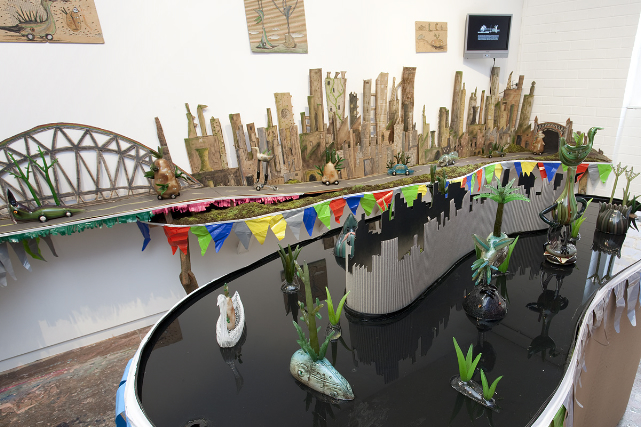
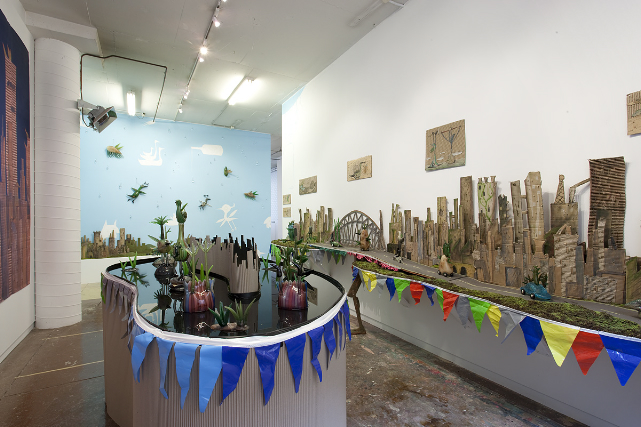
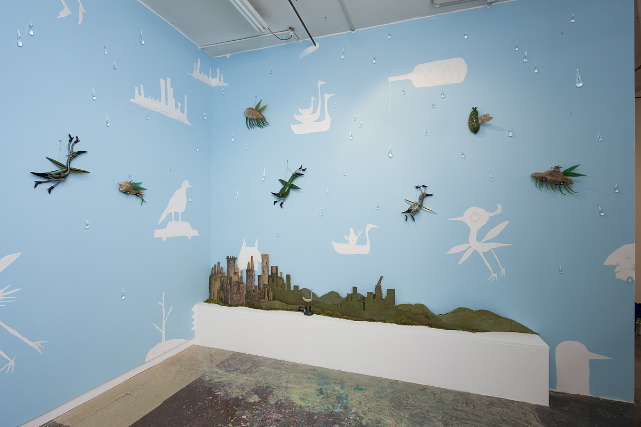
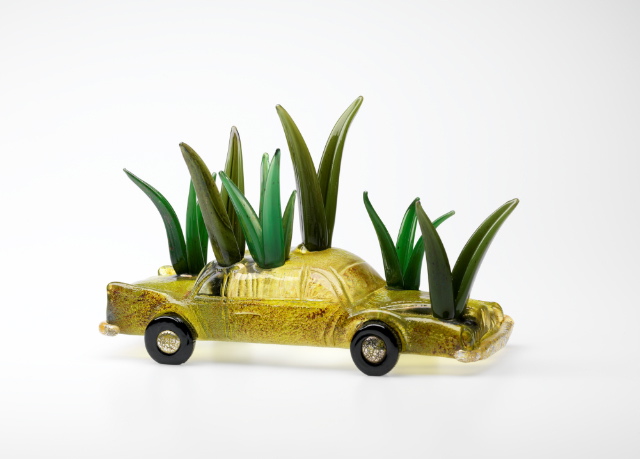
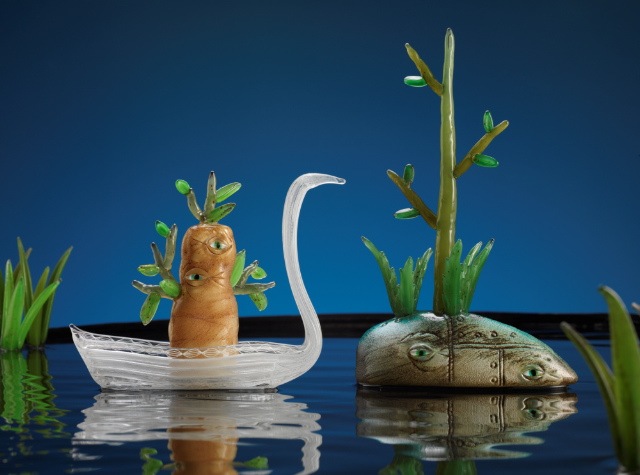
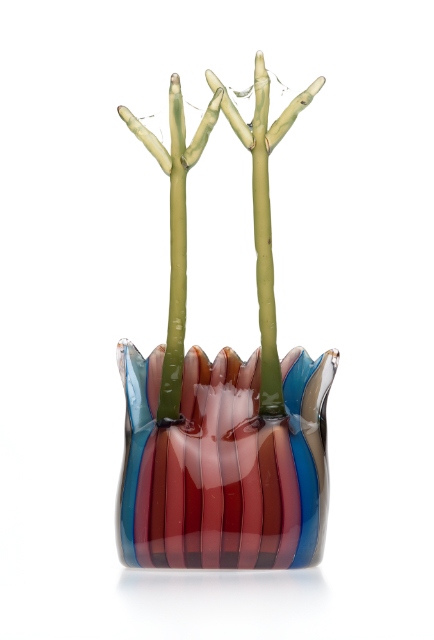
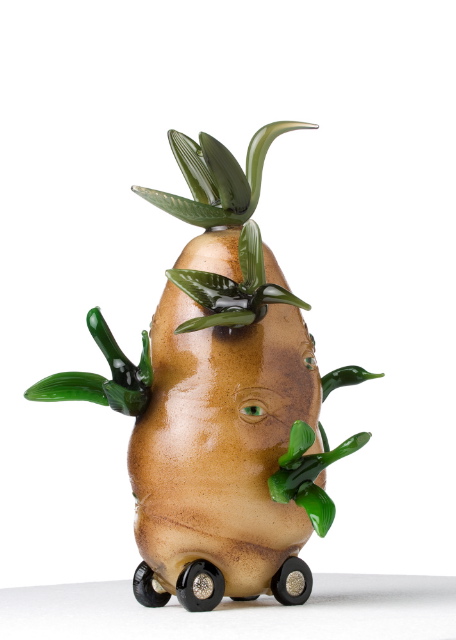
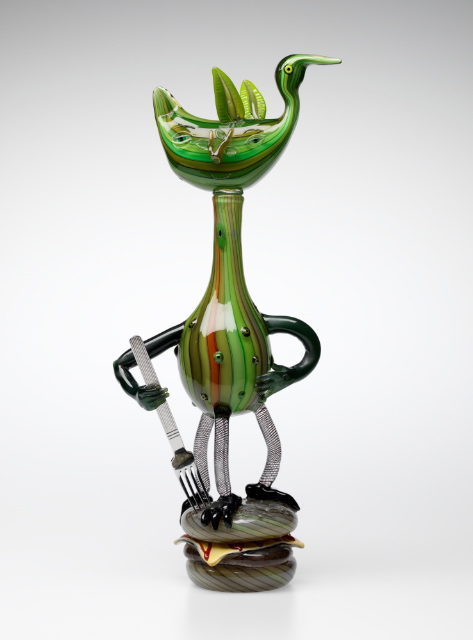
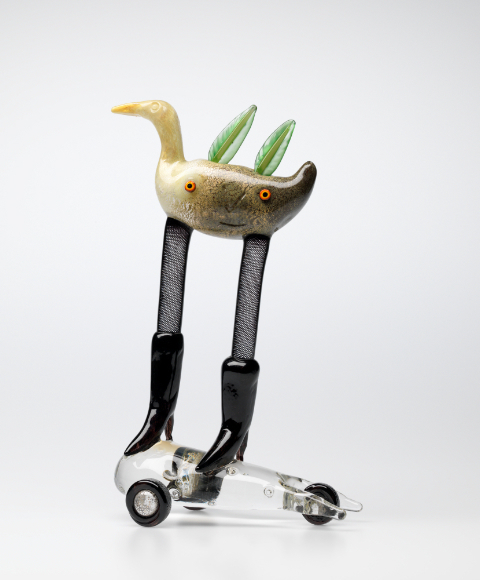
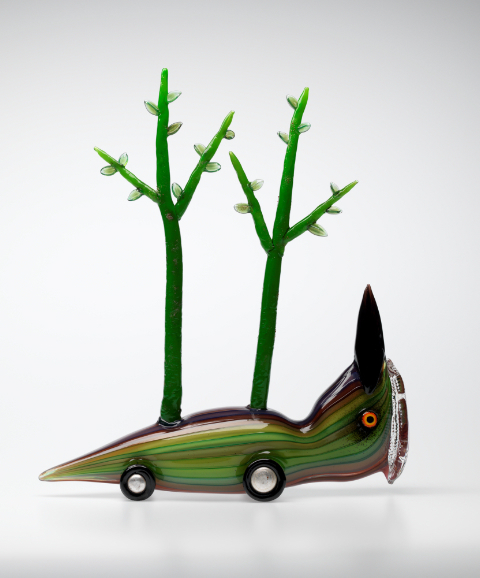

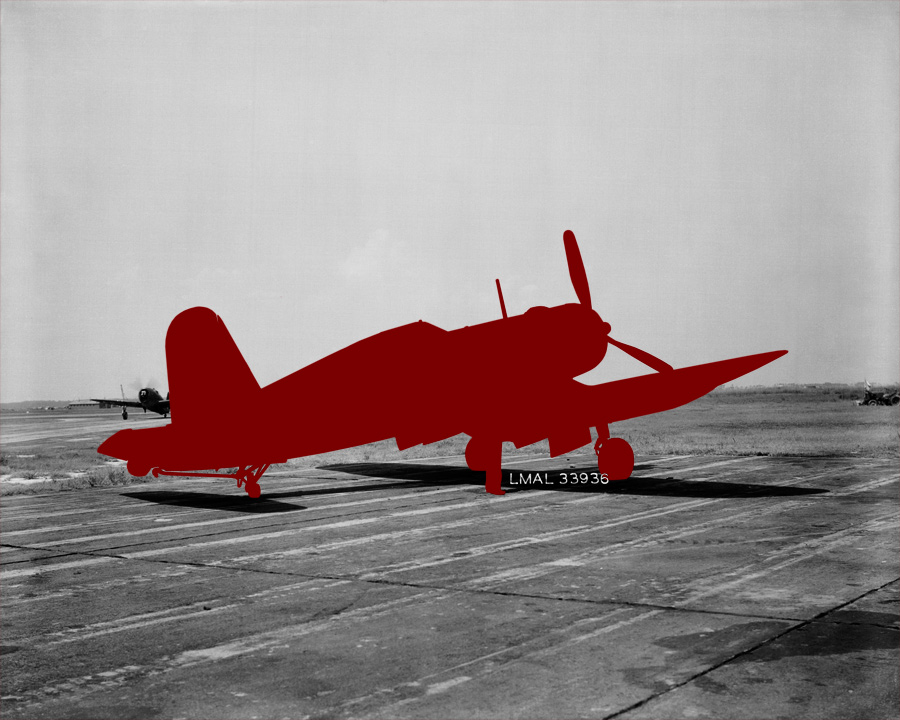


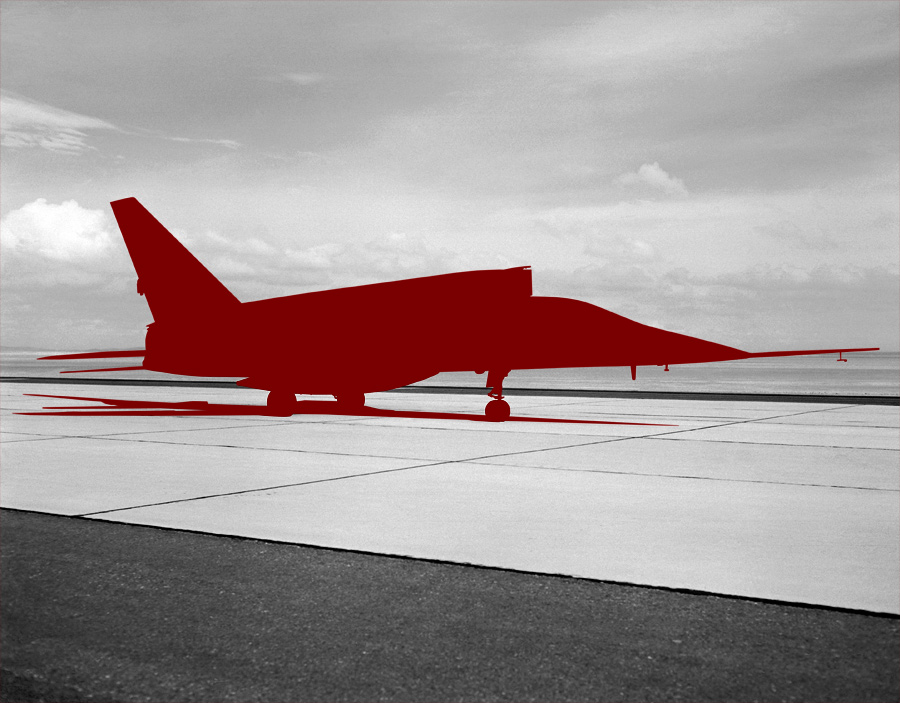
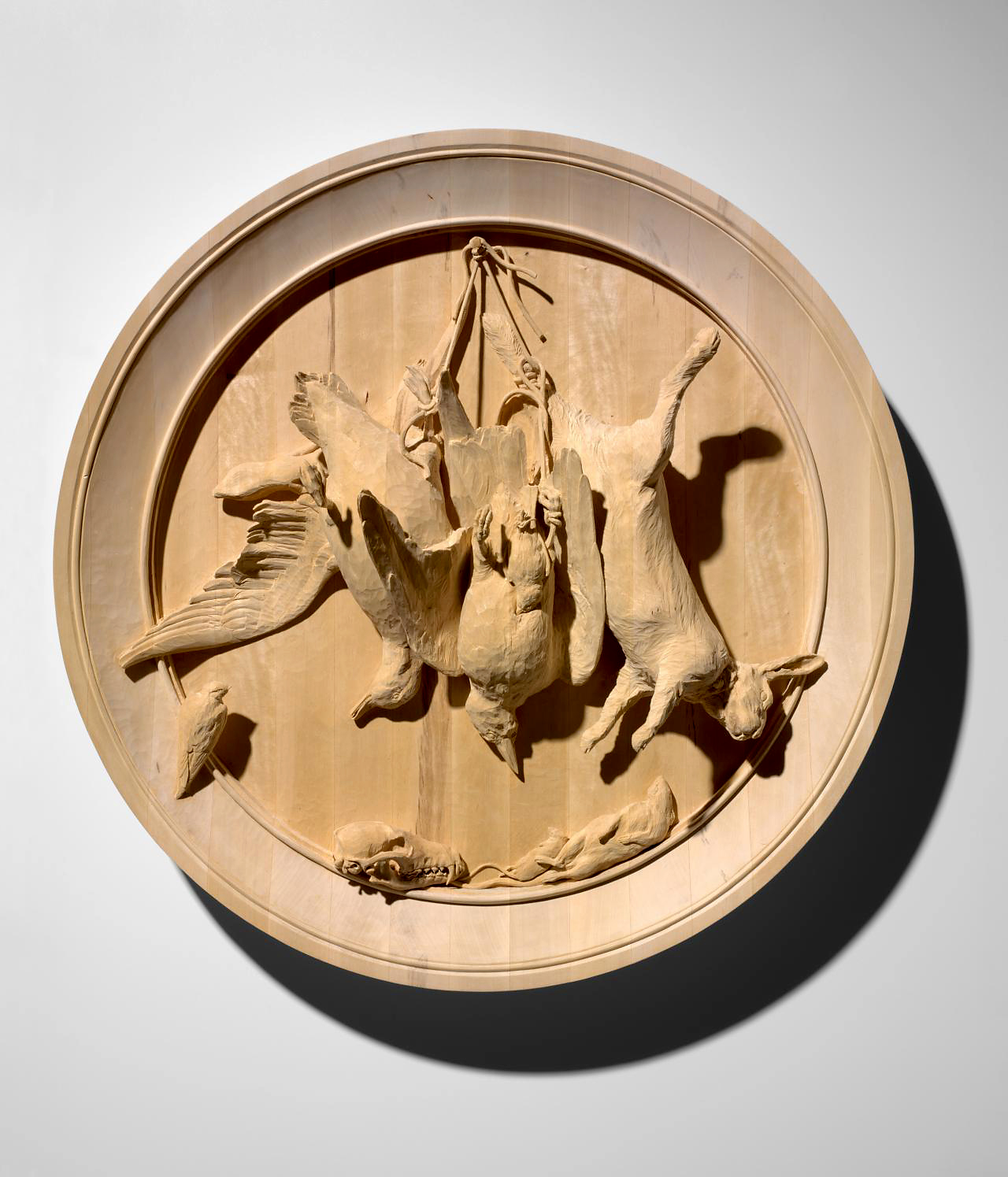

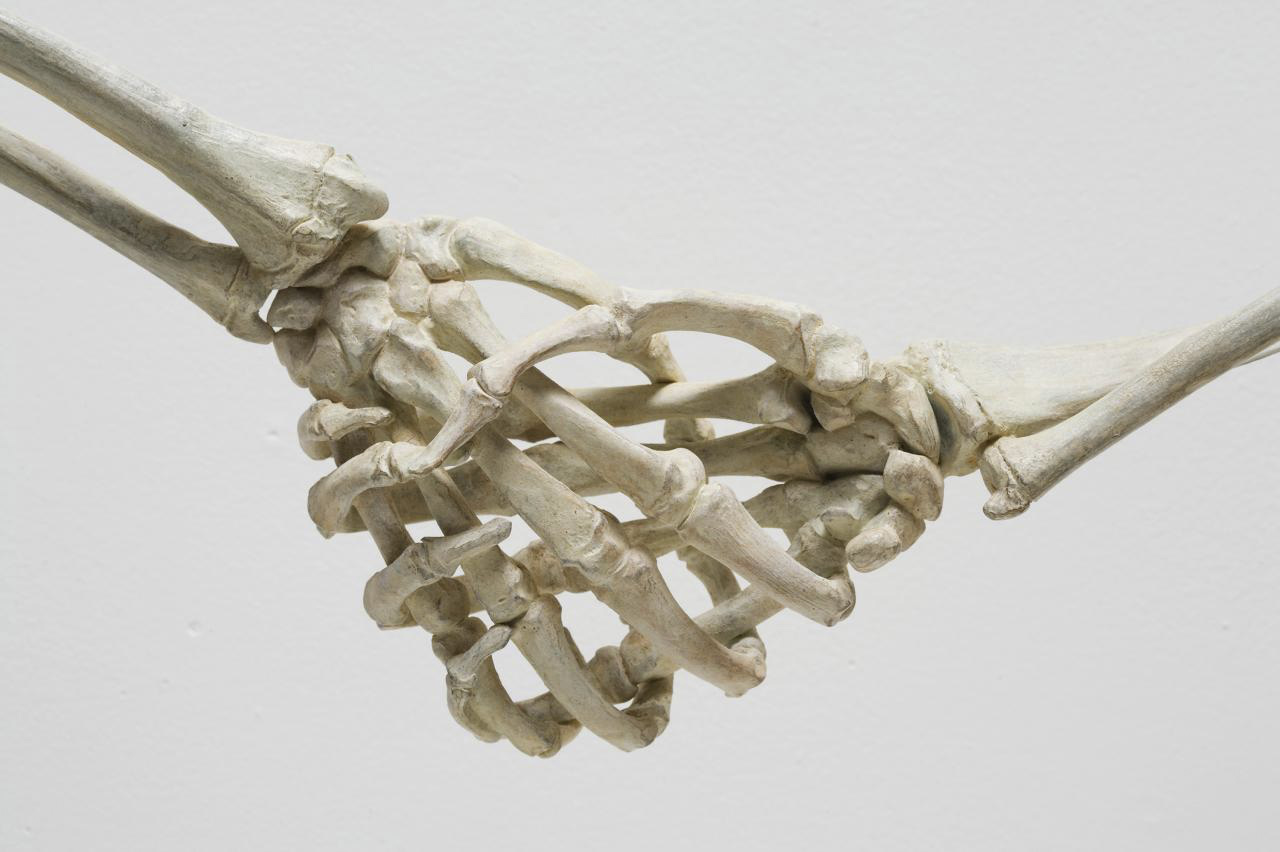


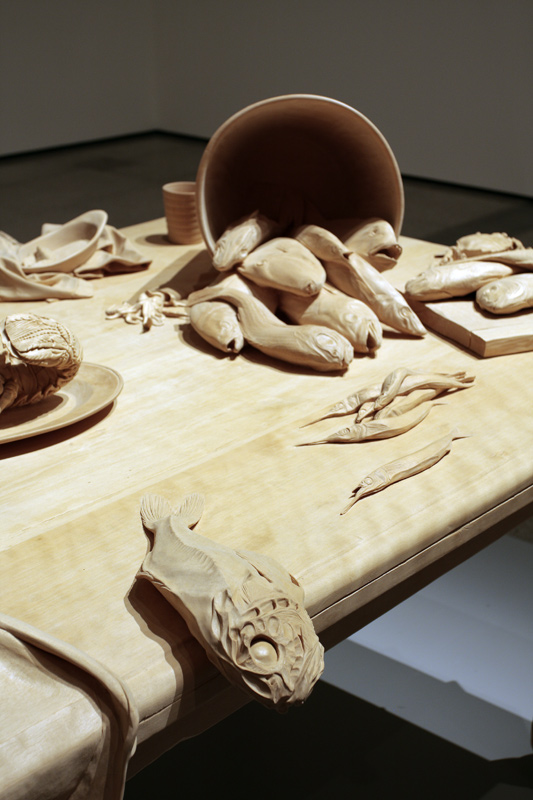

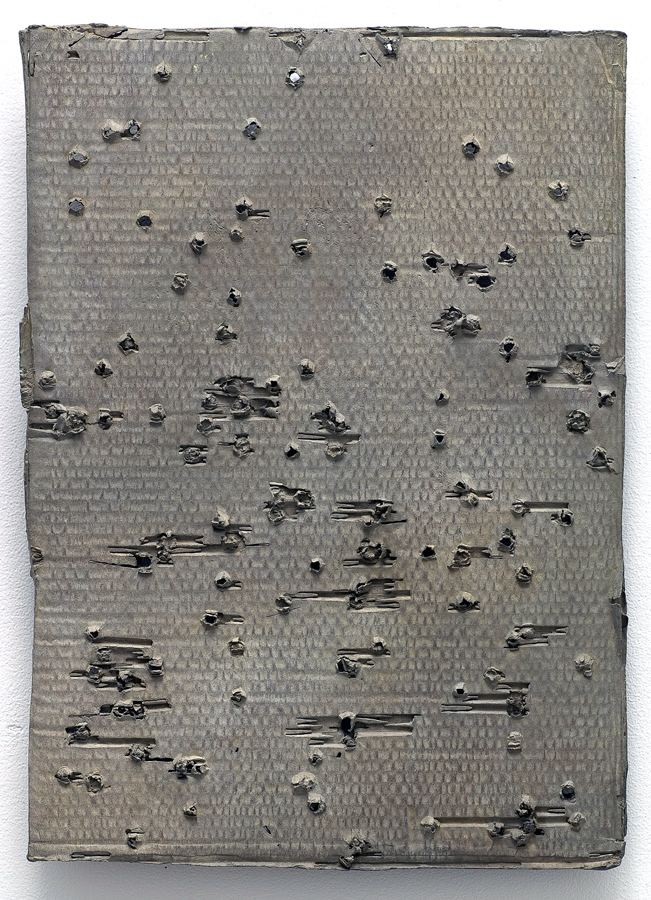
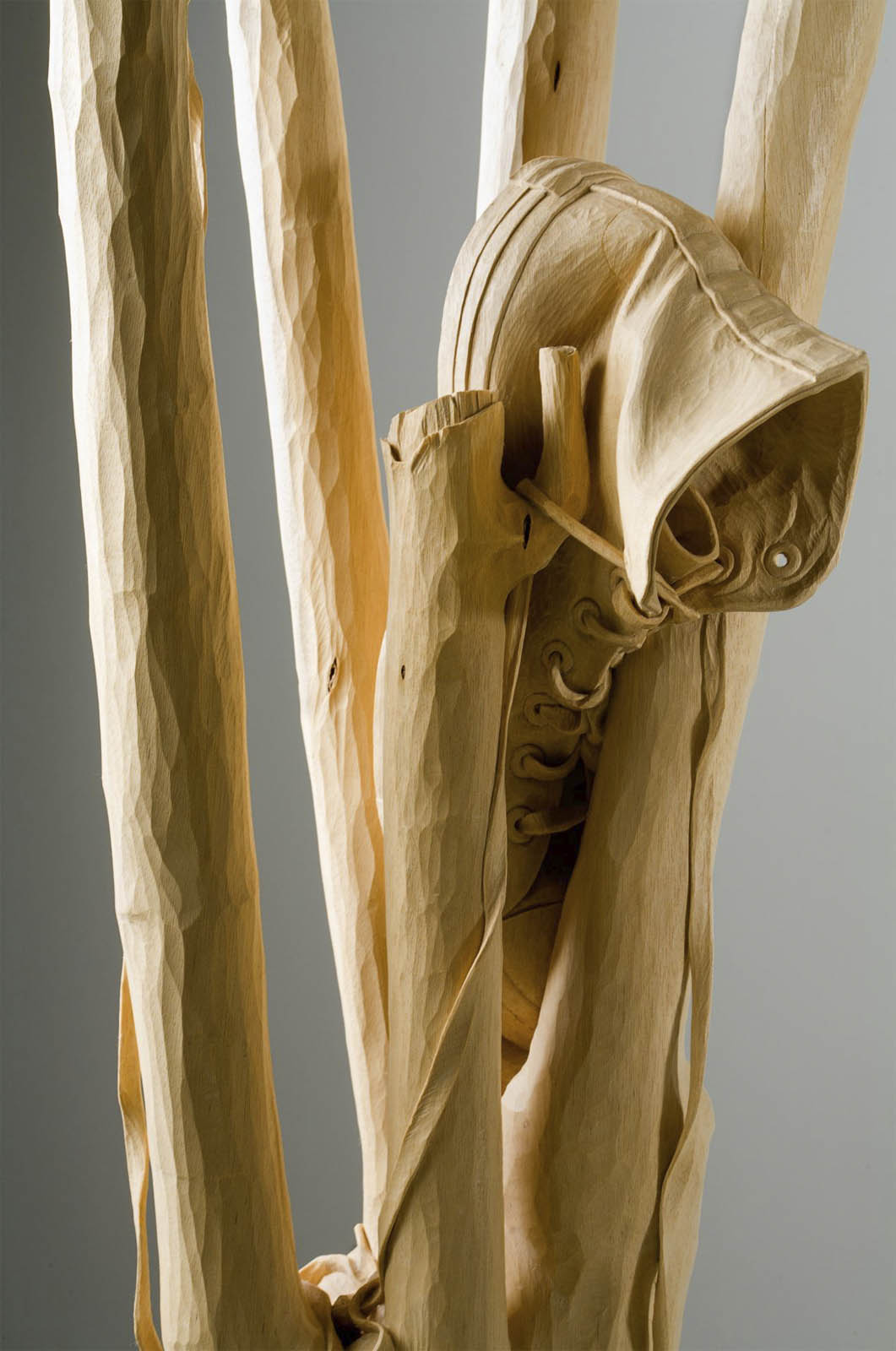
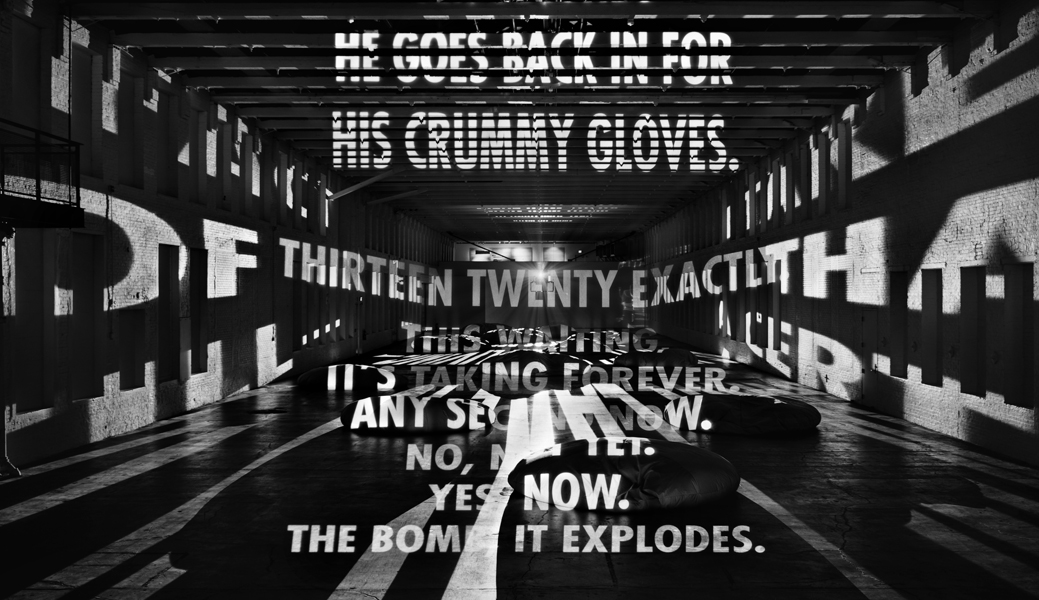
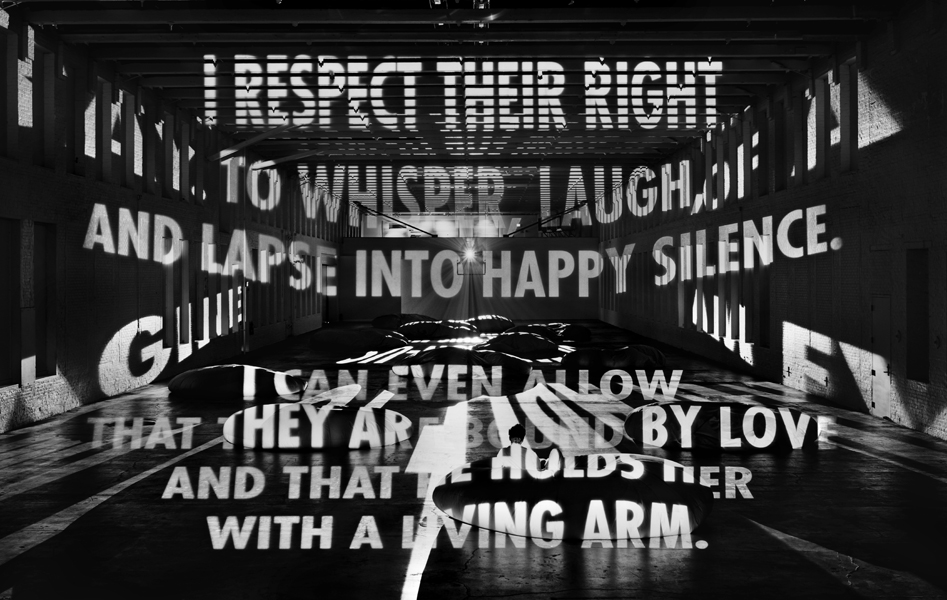
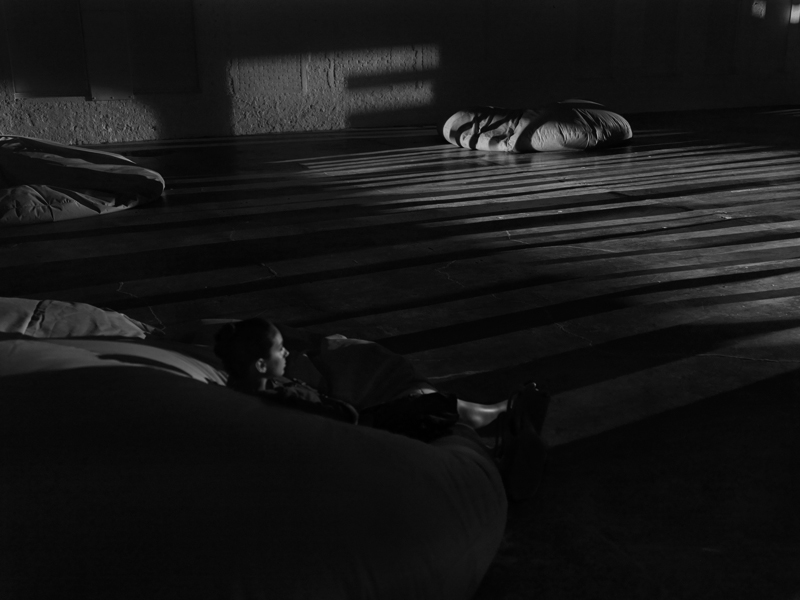
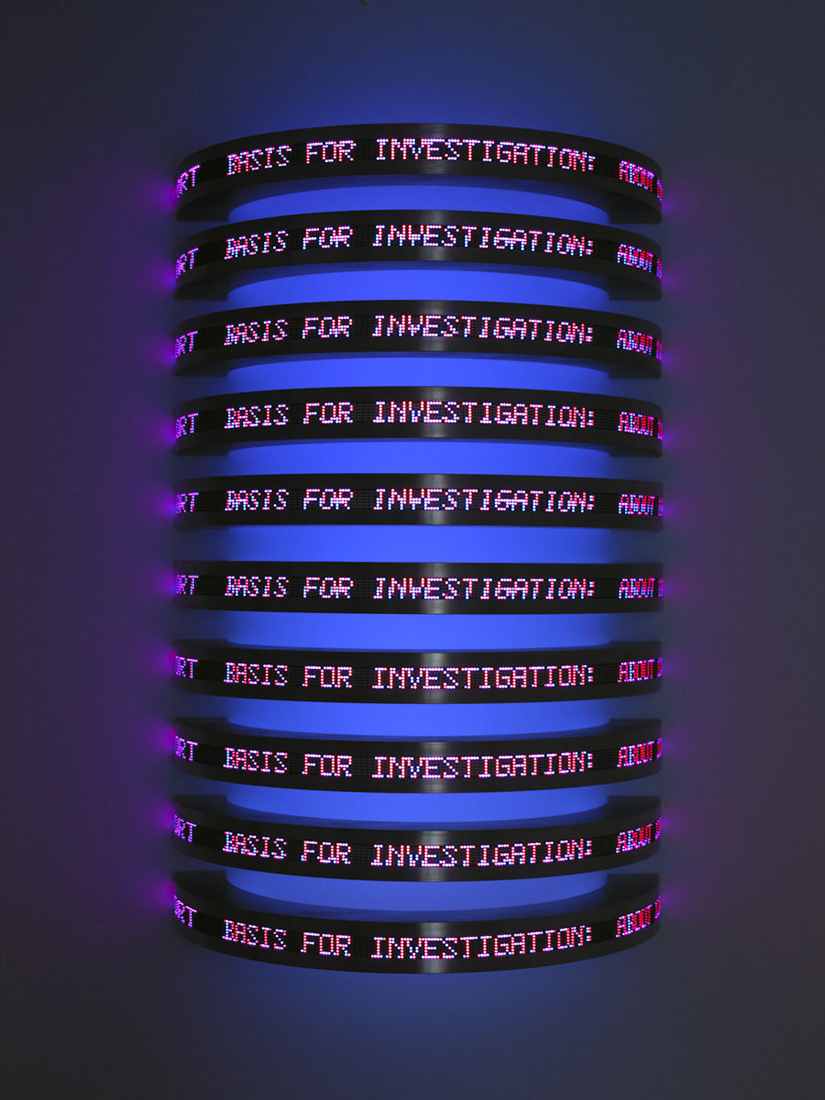
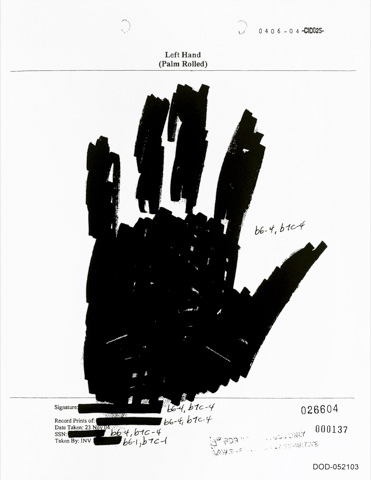
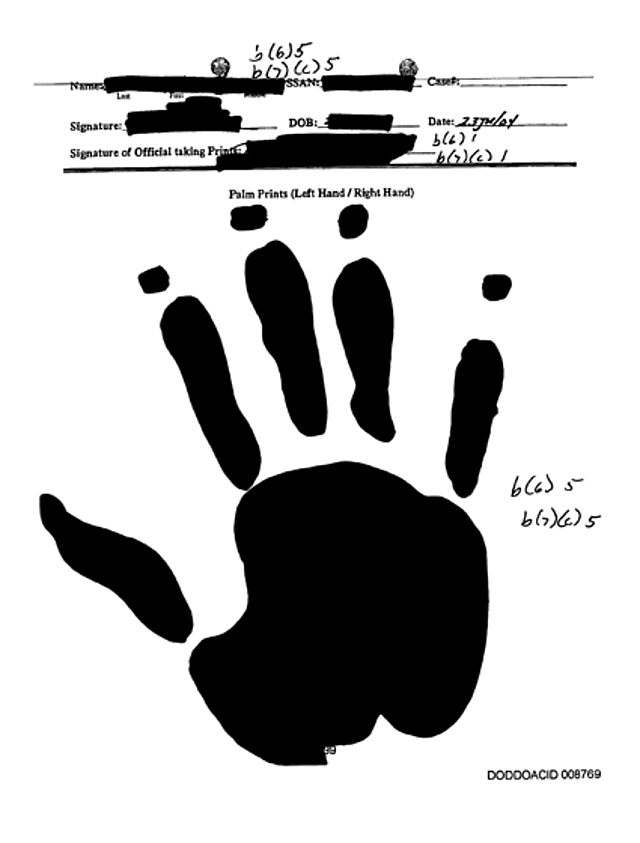
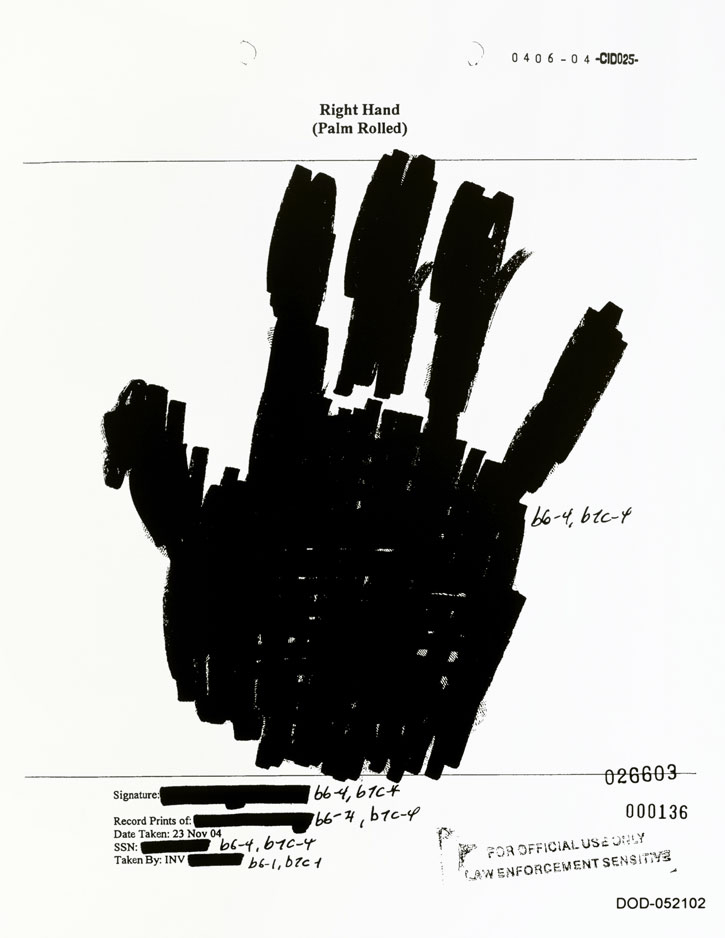
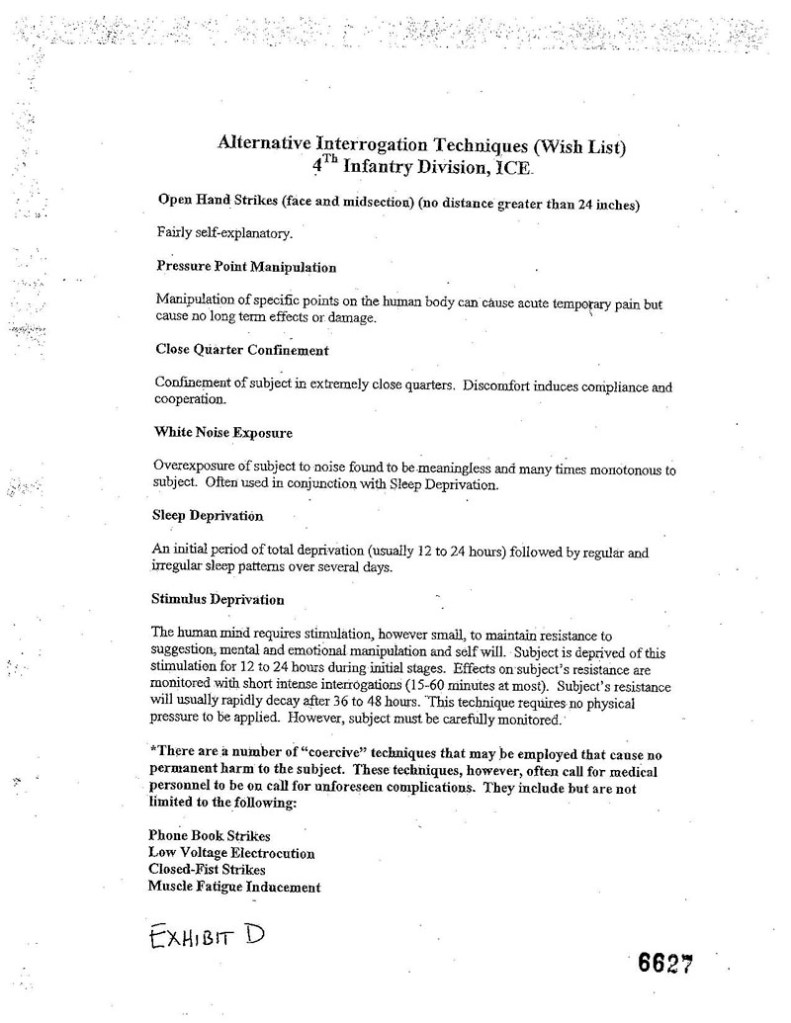
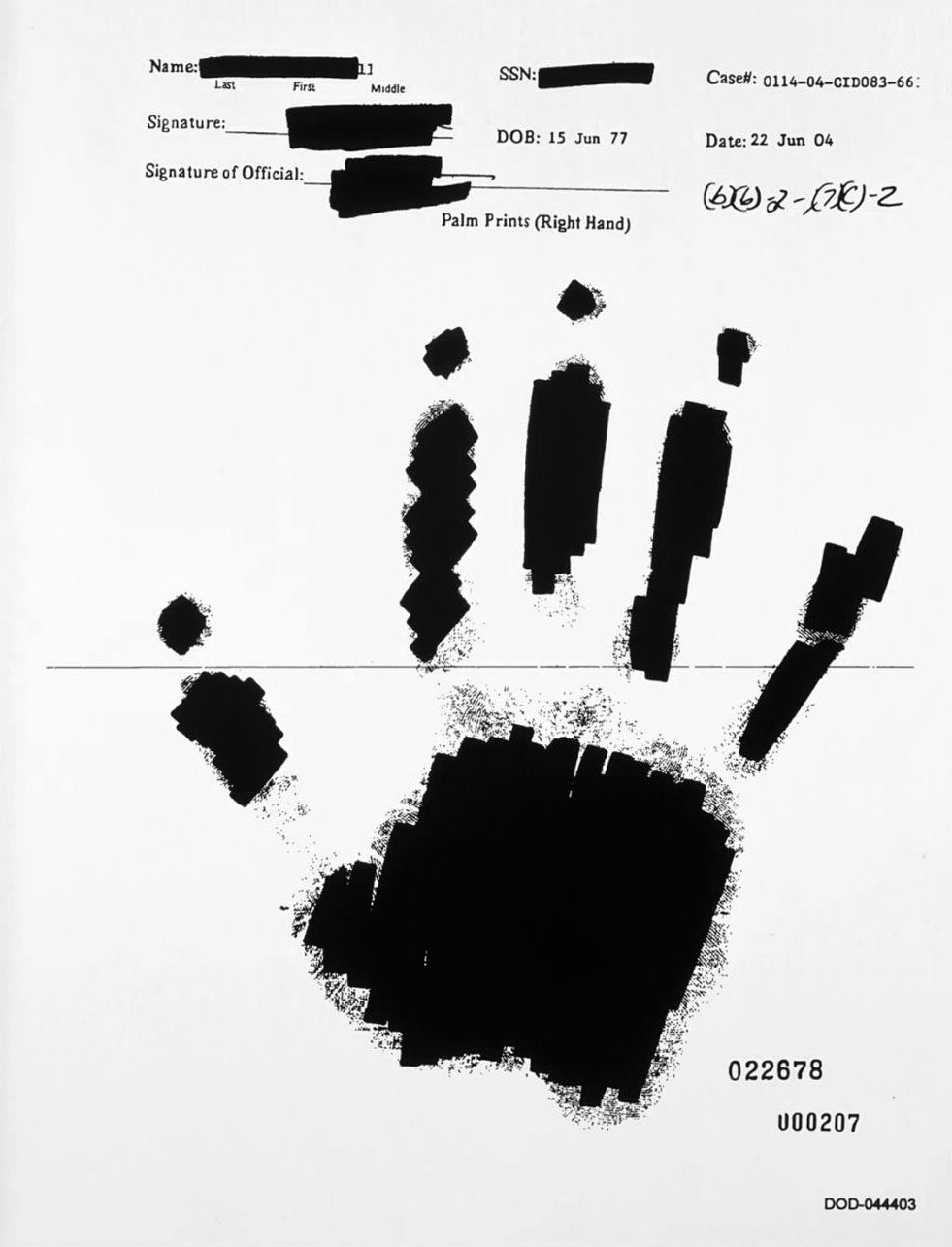

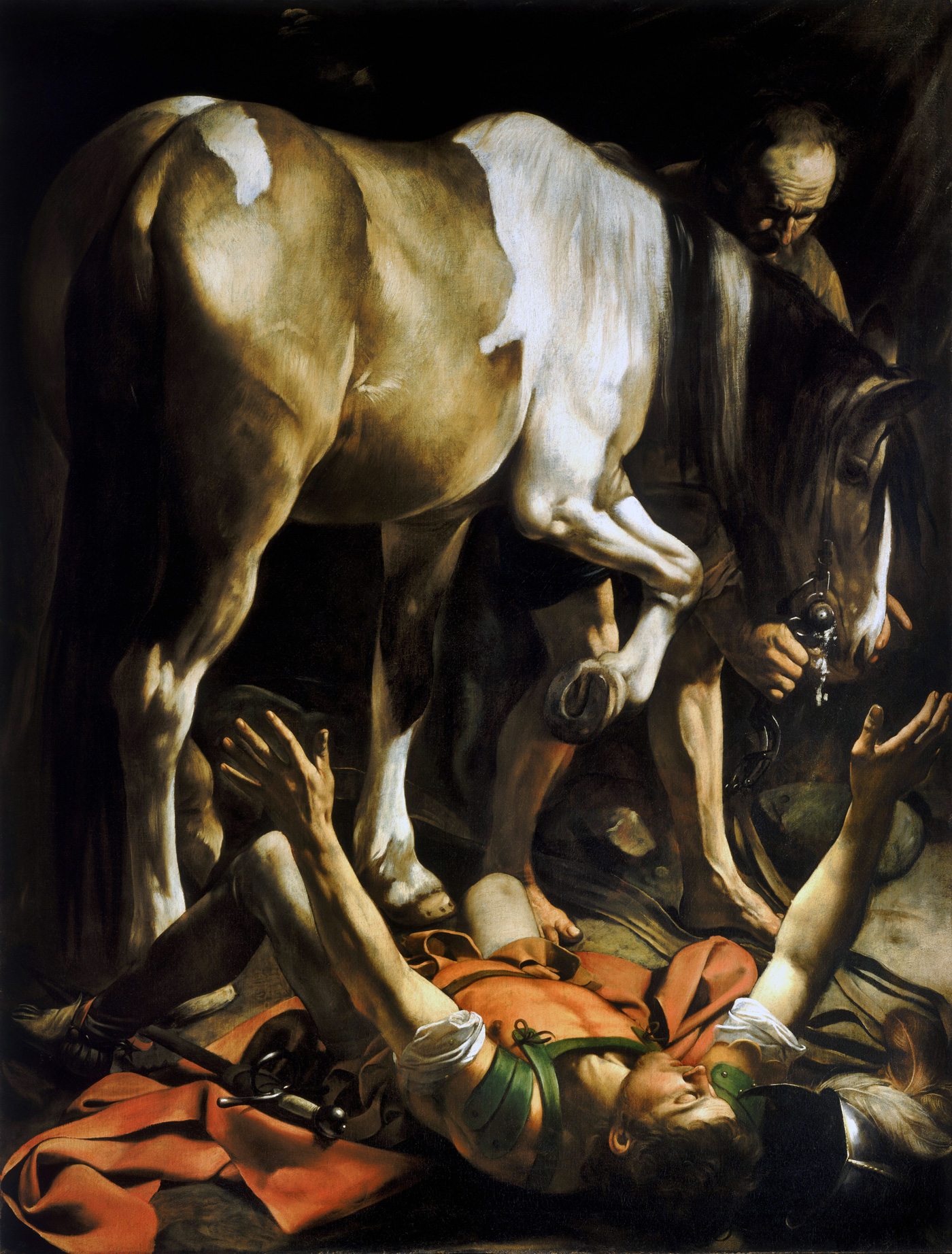


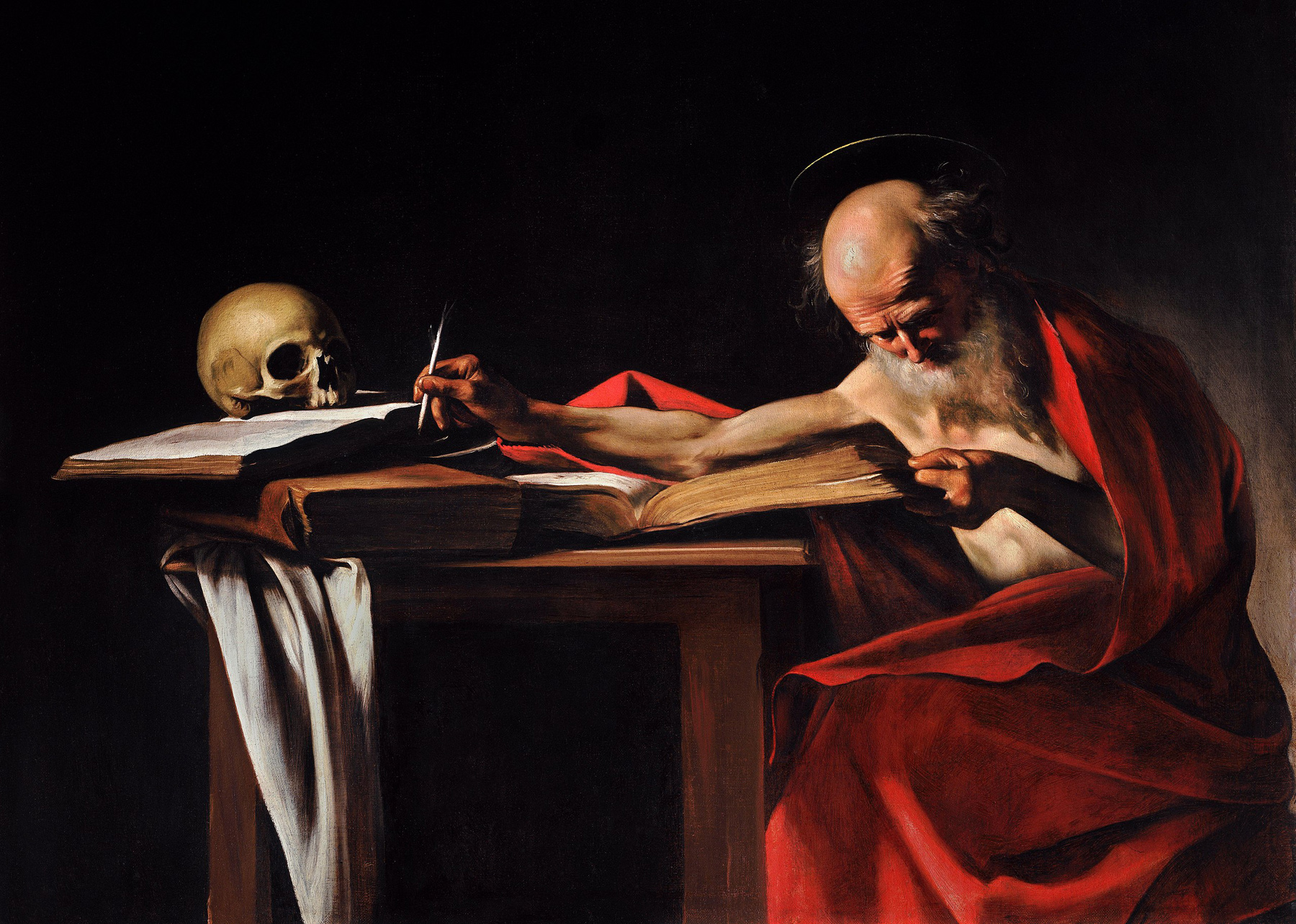


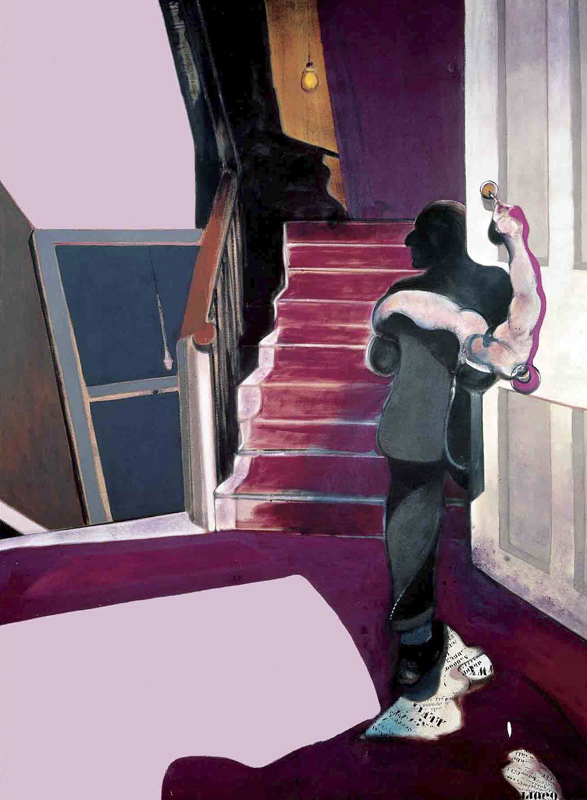
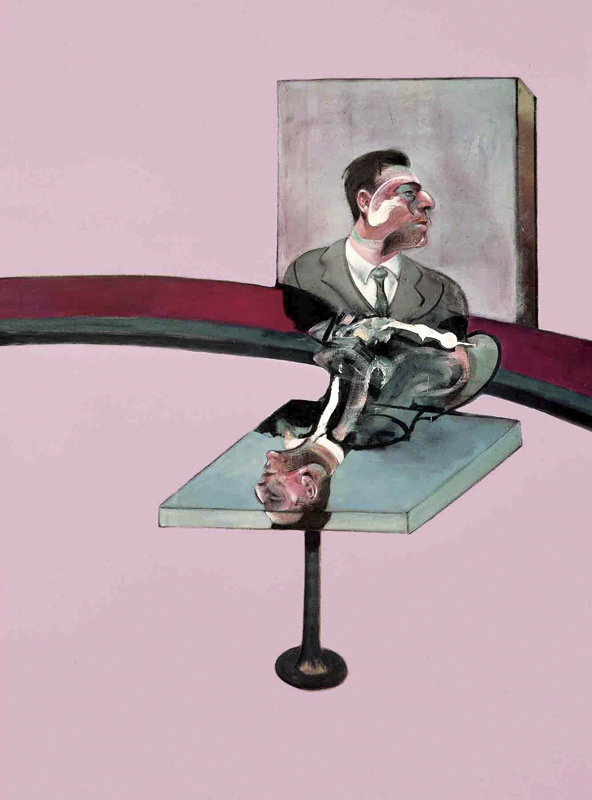


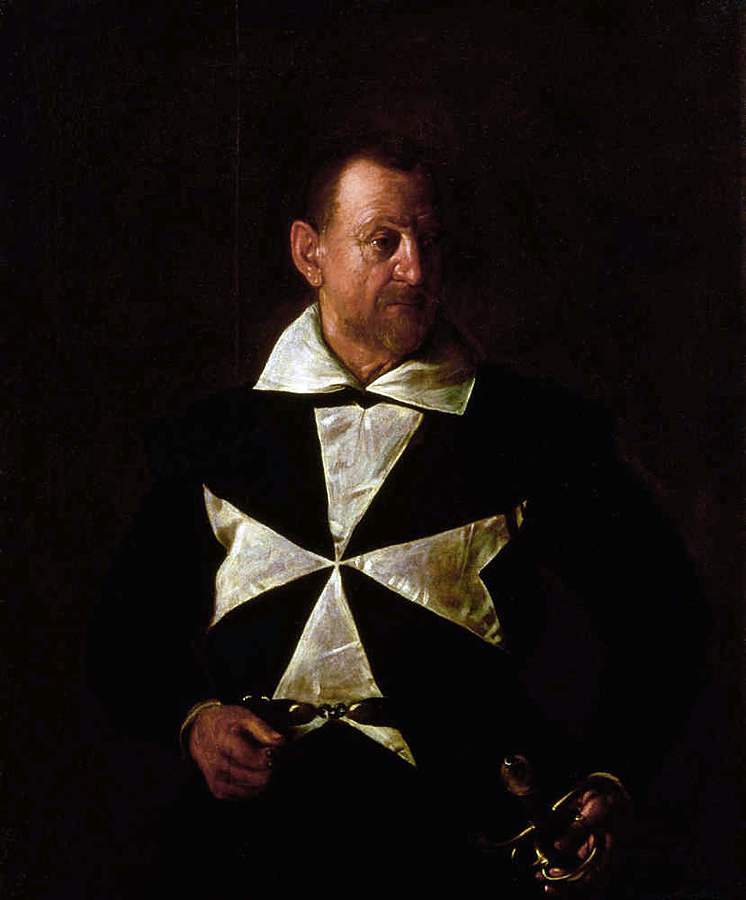


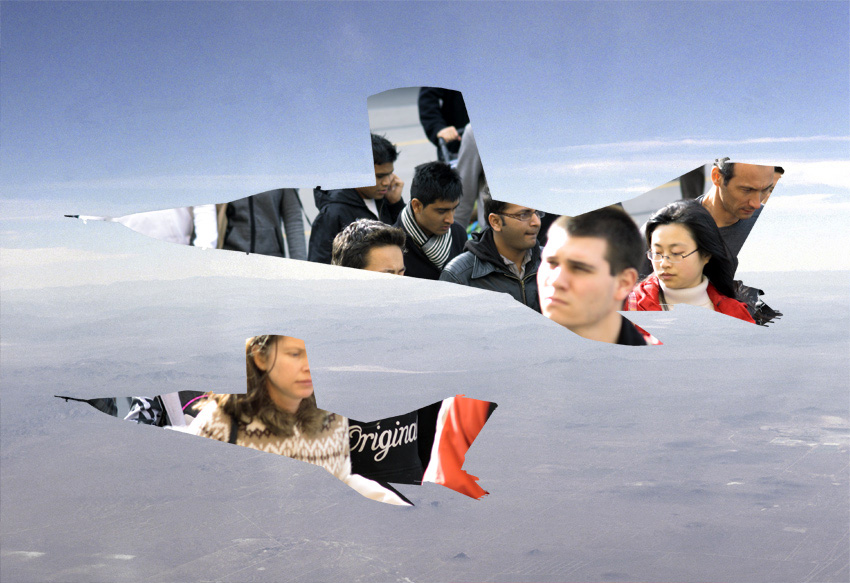
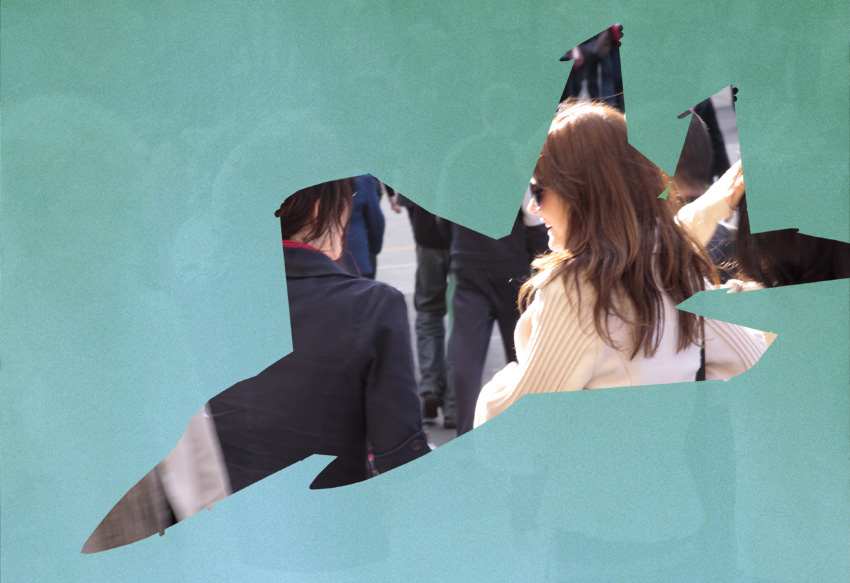
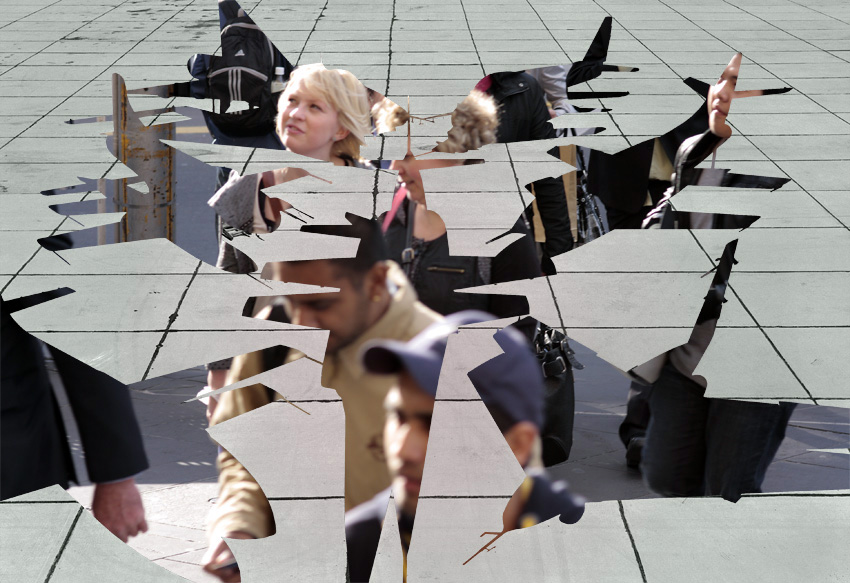


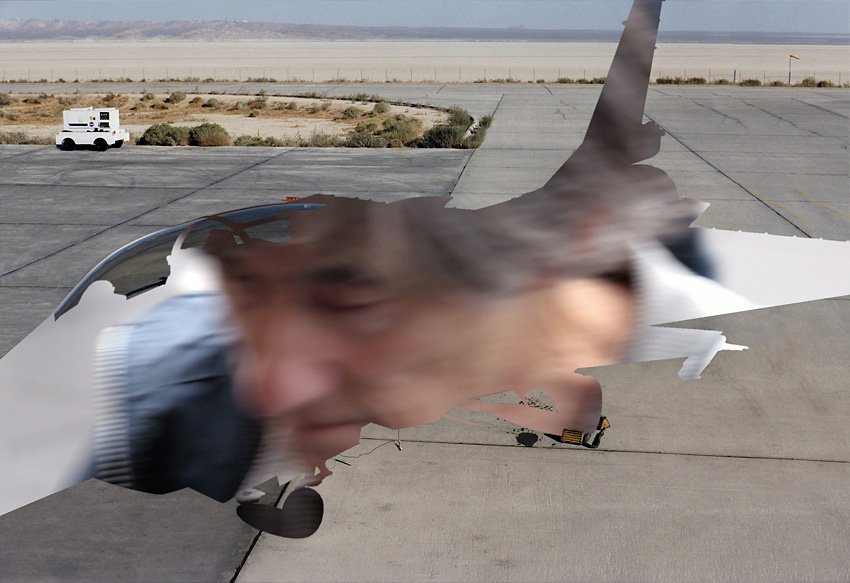
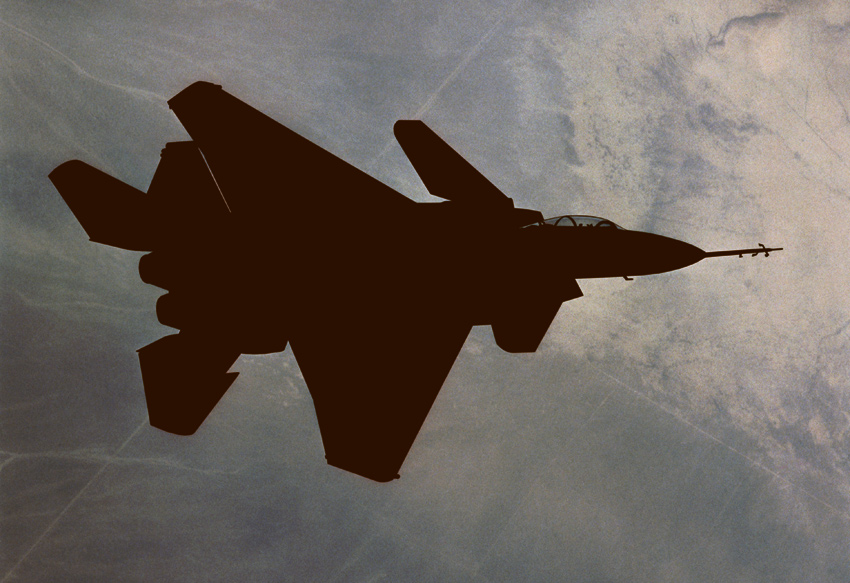


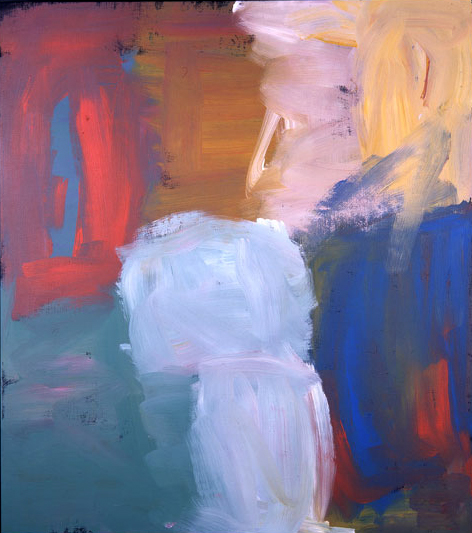
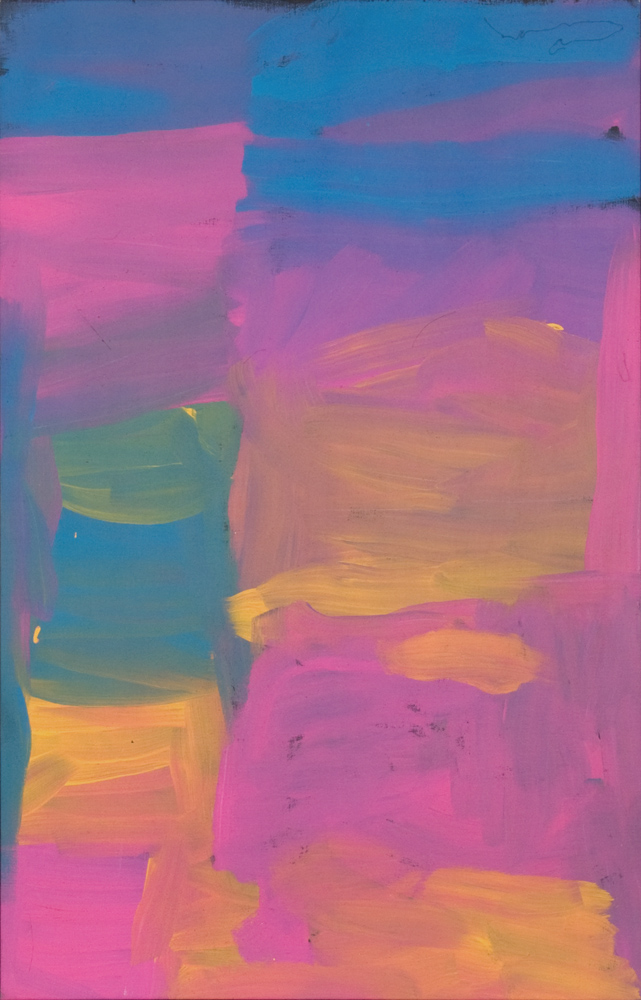
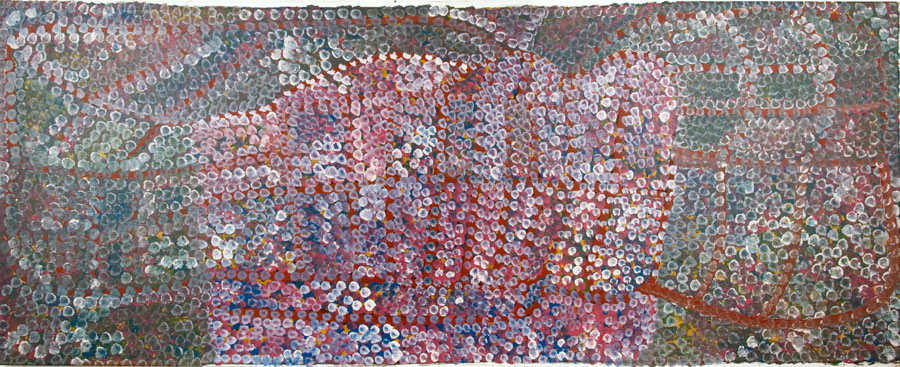

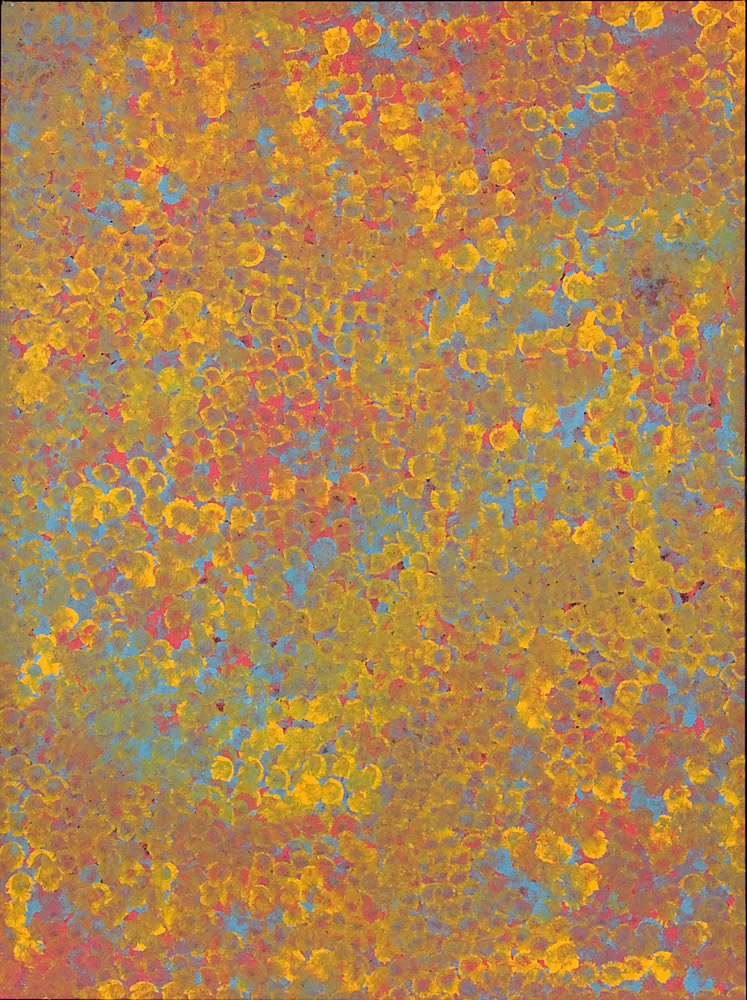

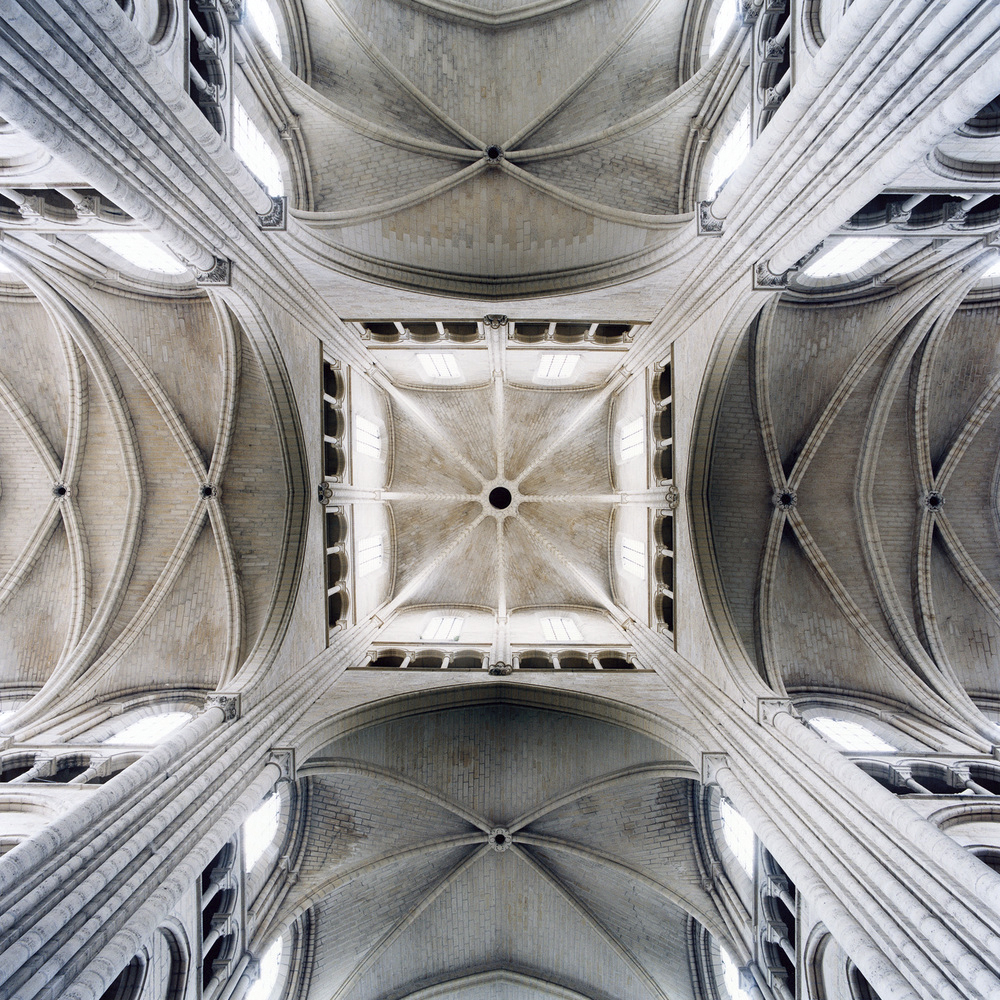


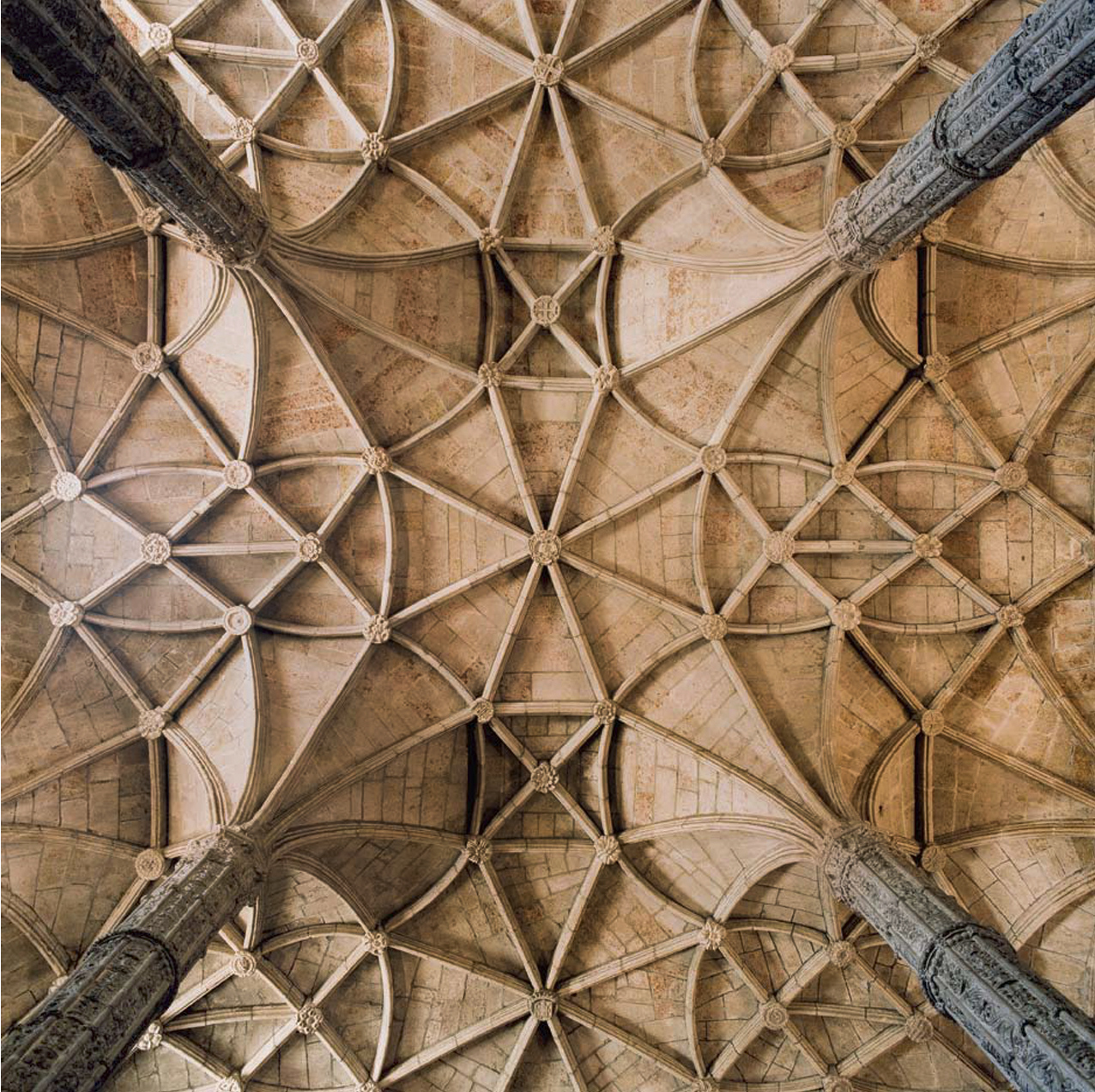


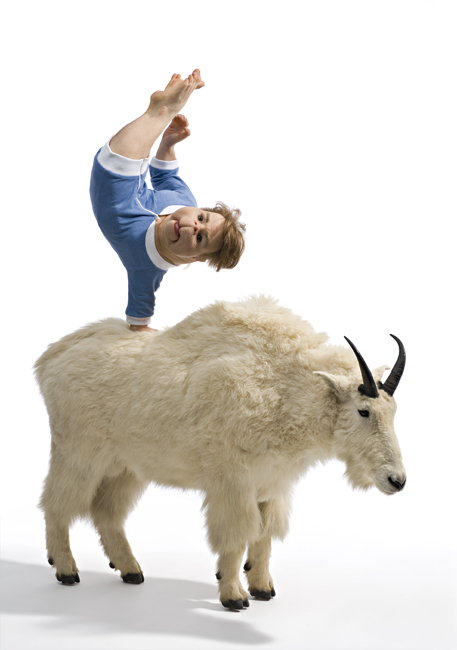
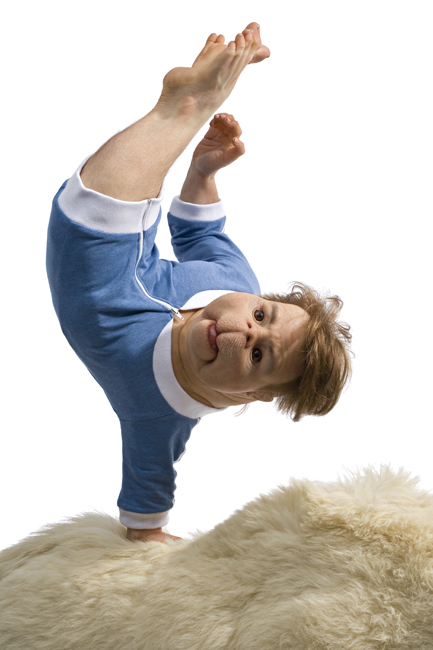


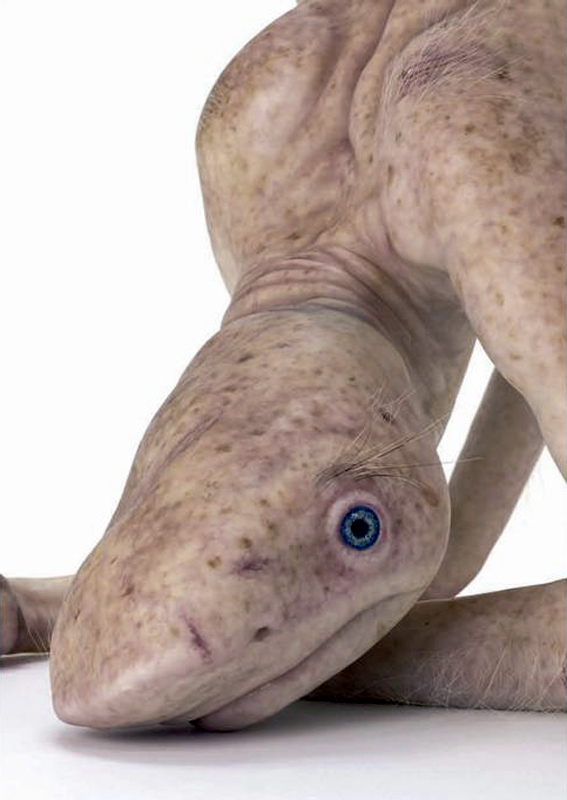

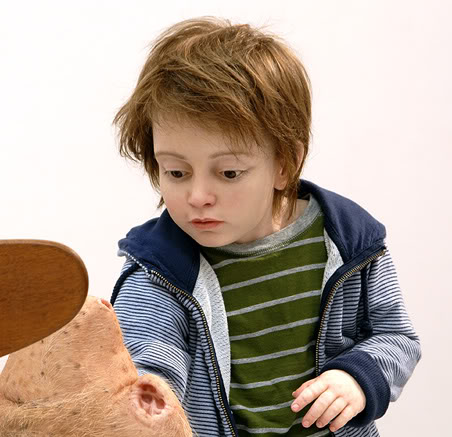
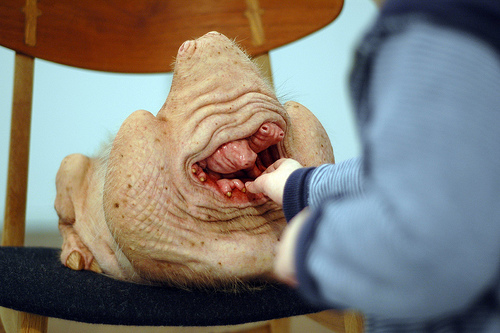


You must be logged in to post a comment.