“Möller’s recombinants are as deadly as they are beautiful. I really liked these creatures narcoleptic shadow dances.” Dr Marcus Bunyan
Exhibition dates: 20th October – 14th November, 2009
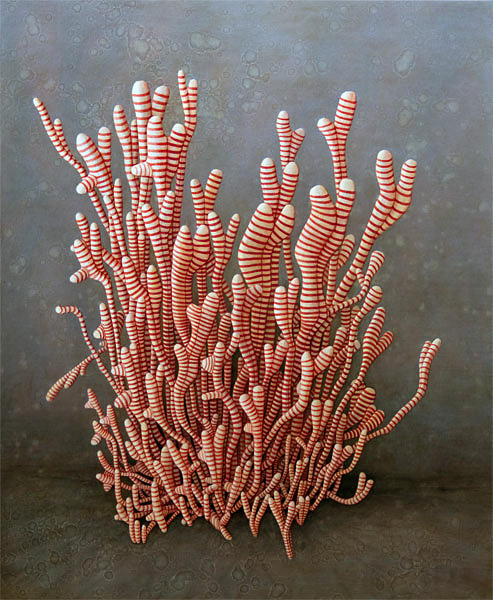
Vera Möller (Australian, b. 1955 Germany arrived Australia 1986) Rabinova 2009 Oil on linen 82 x 76cm
“I am interested in this border between the real and the imagined, the constructed and the natural.”
Vera Möller quoted in “Artist earns her stripes” on The Age newspaper website May 28, 2005 [Online] Cited 23/06/2022
There is a lot of mutability floating around current exhibitions in Melbourne at the moment. At the National Gallery of Victoria we have the deathly, eloquent freeze frame mutability of Ricky Swallow; at Tolarno Galleries we have the genetic hyper-realist mutability of Patricia Piccinini; and at Sophie Gannon Gallery we have the surreal, spatial mutability of Vera Möller.
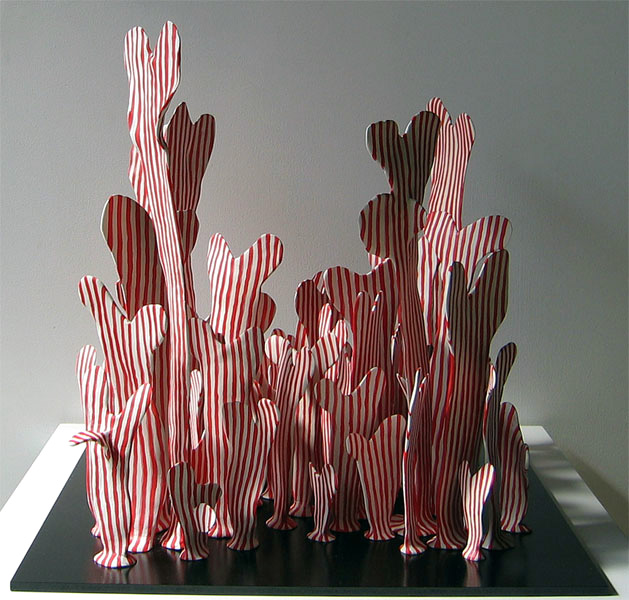
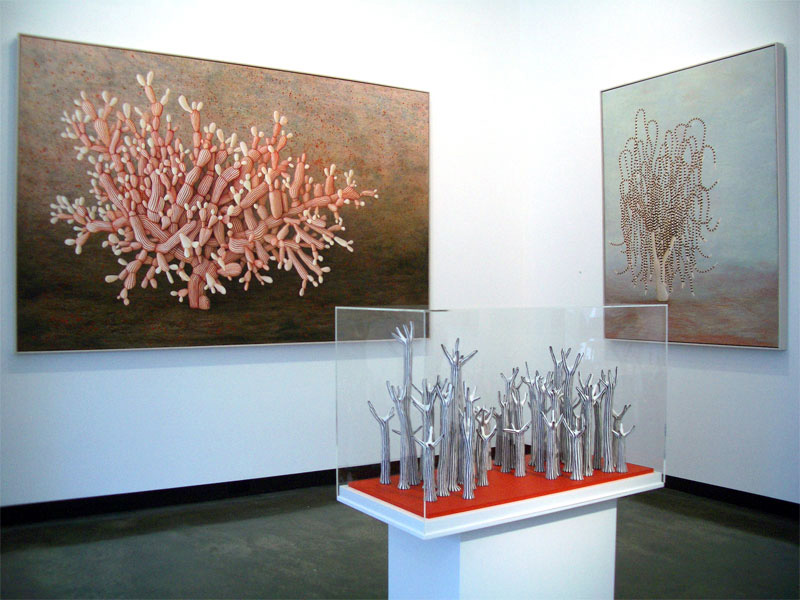
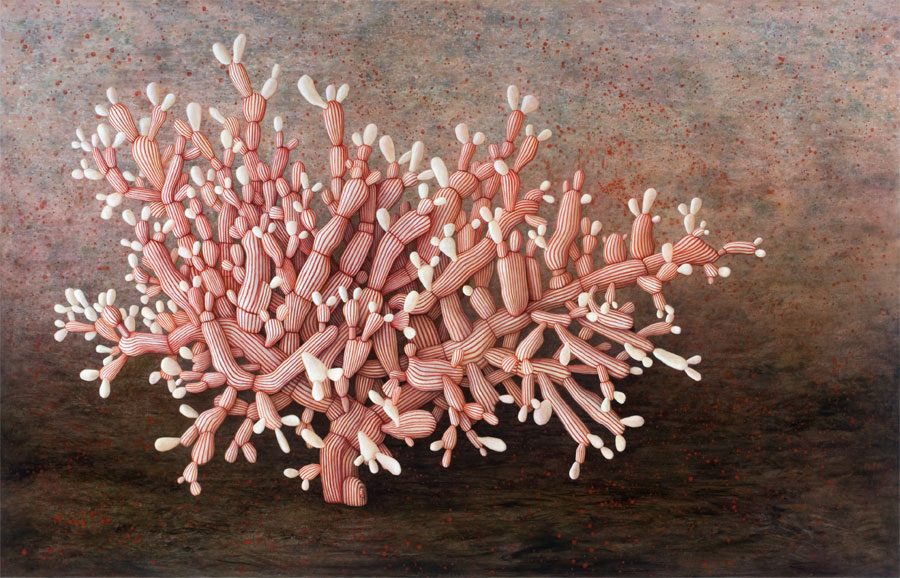
In this exhibition the real meets the imagined and the constructed encounters the natural in delicate sculptures and beautiful paintings. Coral snake and mutated striped hydras float above Phillip Huntersque backgrounds, looking oh so innocent until one remembers that hydras are predatory animals: the stripes, like the strips of a prisoners uniform not so innocent after all.
These ‘portraits’ (for that is what they strike me as) emerge from the recesses of the subconscious, rising up like some absurd alien fish from the deep. The sculptural forests of mutated specimens waft on the breeze of the ocean current. This detritus of biotechnology, living in the dark and the shadow, emerges into the light and space of the gallery – genetic recombinations in which a strands of genetic material are broken and then joined to another DNA molecule. In Möller’s work this chromosomal crossover has led to offspring (called ‘recombinants’) that dance to a surrealist tune: genetic algorithms that use mutation to maintain genetic diversity from one generation of chromosomes to the next.1
Spatially there is a lightness of touch and a beauty to their representation that brings the work alive within the gallery space. However, Möller’s recombinants are as deadly as they are beautiful. I really liked these creatures’ narcoleptic shadow dances.
Dr Marcus Bunyan
1/ Definition of mutation (genetic algorithm) in Wikipedia.
Many thankx to Sophie Gannon Gallery for allowing me to publish the art work in the posting. Please click on the photographs for a larger version of the image.
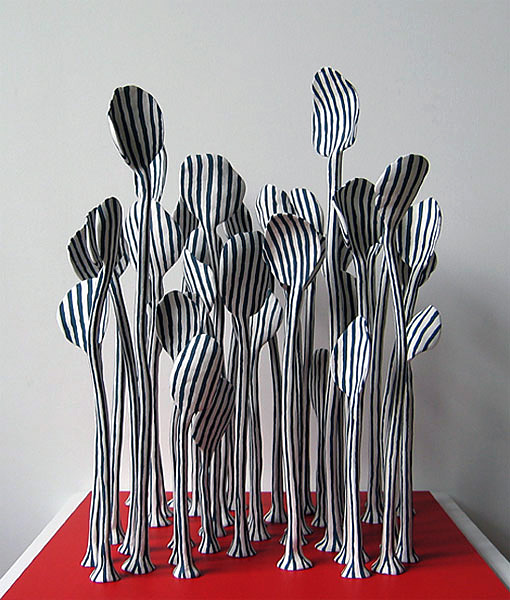
Vera Möller (Australian, b. 1955 Germany arrived Australia 1986) Martinette (installation view) 2009 Modelling material, acrylic and enamel paint, MDF, perspex cove
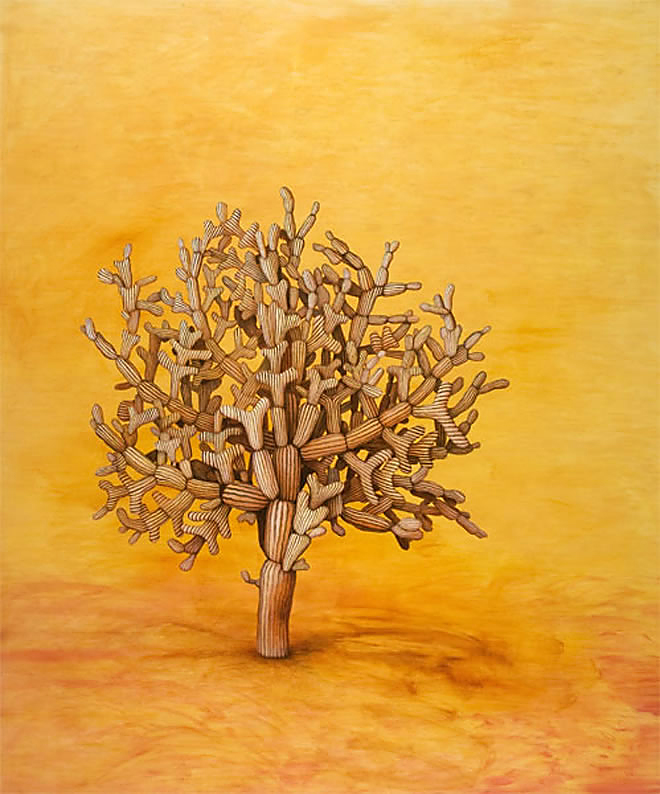
Vera Möller (Australian, b. 1955 Germany arrived Australia 1986) Veronium 2007 Oil on canvas 167 x 199cm
Vera Möller (Australian, b. 1955 Germany arrived Australia 1986) Shapinette 2009 Oil on linen 101 x 101cm
Vera Möller (Australian, b. 1955 Germany arrived Australia 1986) Telenium 2009 Oil on linen 165 x 135cm
Vera Möller (Australian, b. 1955 Germany arrived Australia 1986) Rubella 2008-2009
Vera Möller (Australian, b. 1955 Germany arrived Australia 1986) Bureniana (installation view) 2008 Modelling material, acrylic and enamel paint, MDF, perspex cover 60 x 61 x 61cm
Installation photographs of Nocturnalians and Shadow Eaters by Vera Möller at Sophie Gannon Gallery, Melbourne Photos: Marcus Bunyan
Interested in the boundaries between the real and the imagined, Vera Möller creates paintings and sculptures by placing fictional hybrid plants in existing terrains. Bright colours and patterns, coral-like and succulent-plant forms and toadstool shapes describe her depictions of dreamt-up specimens that evoke the natural world. Möller’s ‘fantasy specimens’ demonstrate the way in which her science background and art practice have steadily converged.
After training as a biologist in Germany, Möller migrated to Australia in 1986. She later completed a Bachelor of Fine Art at the Victorian College of the Arts and a PhD at Monash University. Her work has been exhibited in the USA, Japan, Finland, France, Germany and the UK, as well as throughout Australia.
Text from the Sophie Gannon Gallery website [Online] Cited 03/05/2019. No longer available online. Used under fair use conditions for the purposes of education and research
Vera Möller (Australian, b. 1955 Germany arrived Australia 1986) Benthinium 2008-2009 Oil on linen 140 x 220cm
Vera Möller (Australian, b. 1955 Germany arrived Australia 1986) Tokyana 2009 Oil on linen 137 x 107cm
Sophie Gannon Gallery 2, Albert Street, Richmond, Melbourne
Curator: Susan van Wyk, Curator of Photography at the NGV
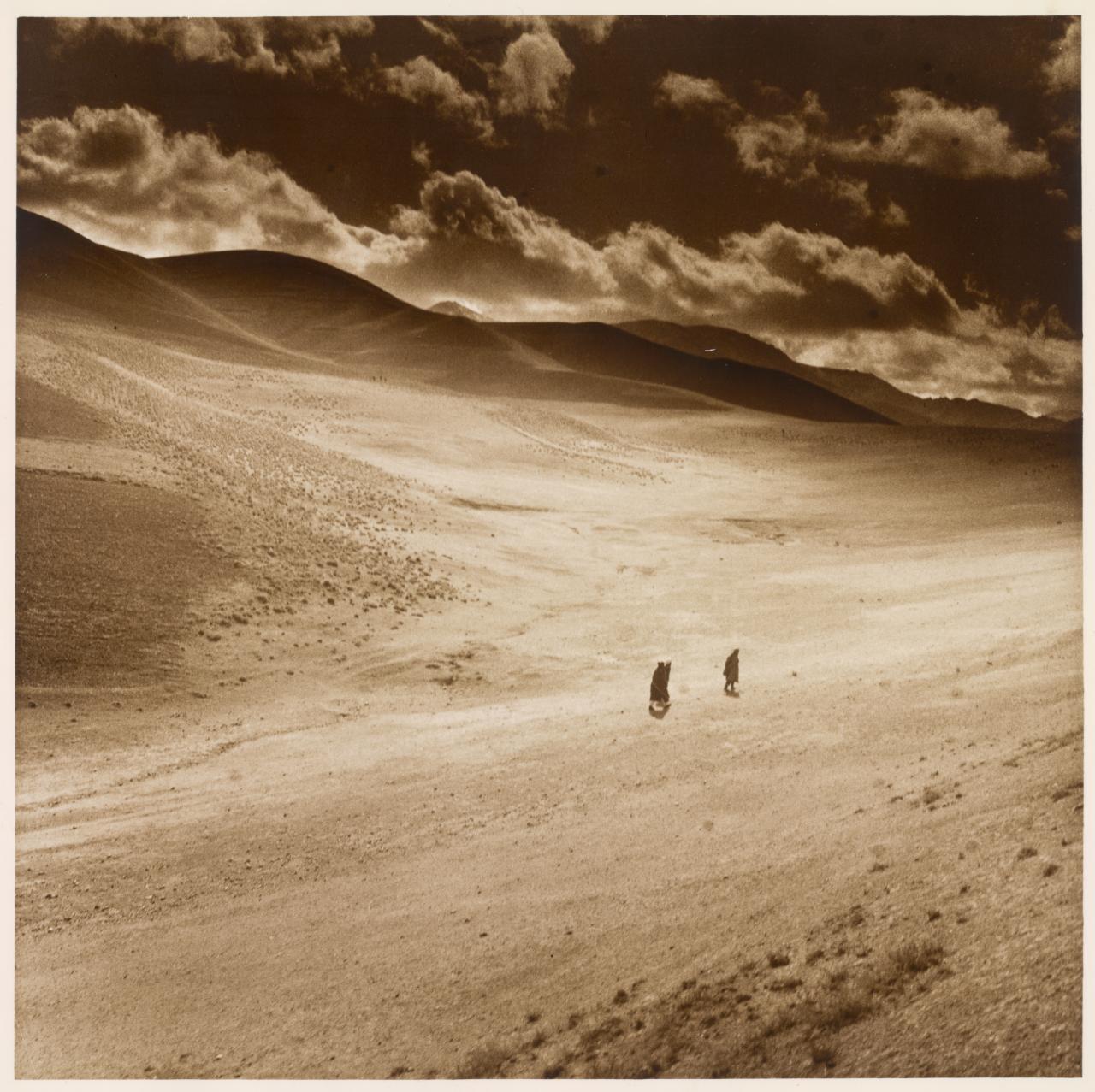
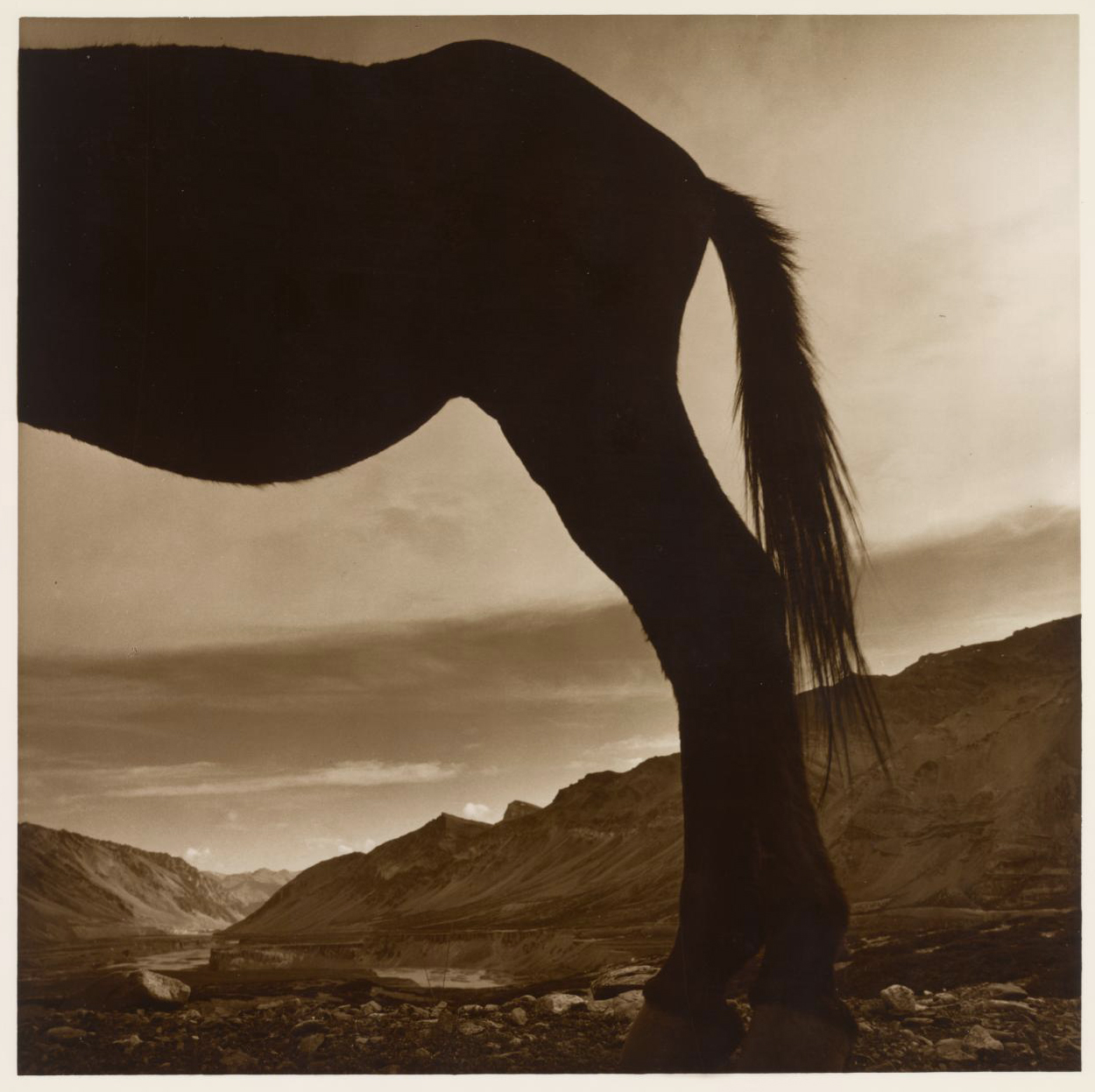
Max Pam (born Australia 1949, lived in Brunei 1980-1983) Road from Bamiyan 1971 Gelatin silver photograph 20.1 x 20.1cm National Gallery of Victoria, Melbourne Purchased, 1979
Long Distance Vision is a disappointingly wane exploration of travel photography at NGV Australia.
With the exception of the work of Max Pam the exhibition lacks insight into the phenomena that the curators want the work to philosophically investigate: namely how photographs shape our expectations of a place (even before we arrive) and how photographs also serve to confirm our experience – the picture as powerful mnemonic tool.
Firstly a quick story: when travelling in America to study at the Kinsey Institute I boarded a train from Chicago to what I thought was Bloomington, Indiana only to arrive many hours later at Bloomington, Illinois. Unbeknownst to me this Bloomington also had a motel of the same name as I was staying at in Indiana! After much confusion I ended up at the local airport trying to catch a single seater aircraft to Bloomington, Indiana with no luck – at the end of my tether, fearful in a foreign country, in tears because I just had to be at this appointment the next morning. Riding to my rescue was a nineteen year old kid with no shoes, driving an ex-cop car, who drove me across the Mid-West states stopping at petrol stops in the dead of night. It was a surreal experience, one that I will never forget for the rest of my life … fear, apprehension, alienation, happiness, joy and the sublime all rolled into one.
I tell this story to illustrate a point about travel – that you never know what is going to happen, what experiences you will have, even your final destination. To me, photographs of these adventures not only document this dislocation but step beyond pure representation to become art that re-presents the nature of our existence.
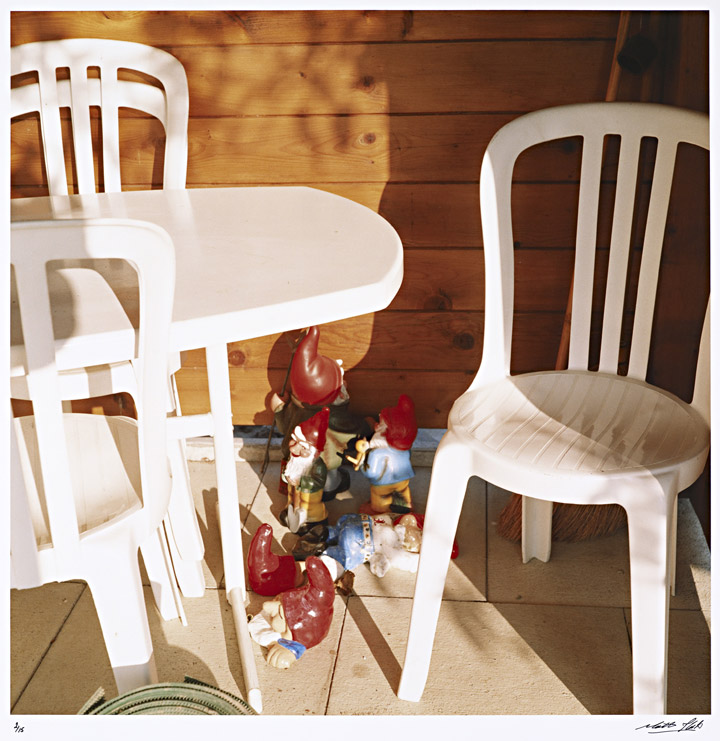
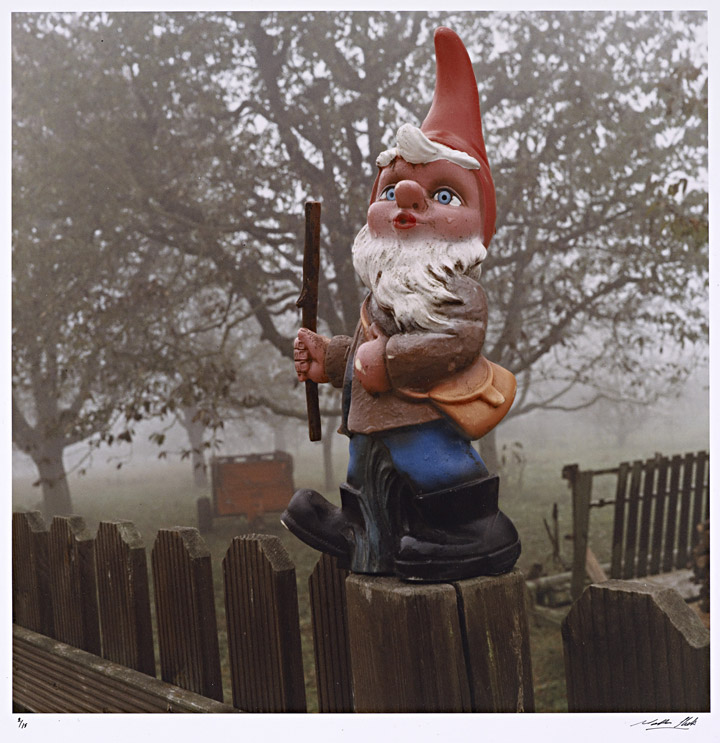
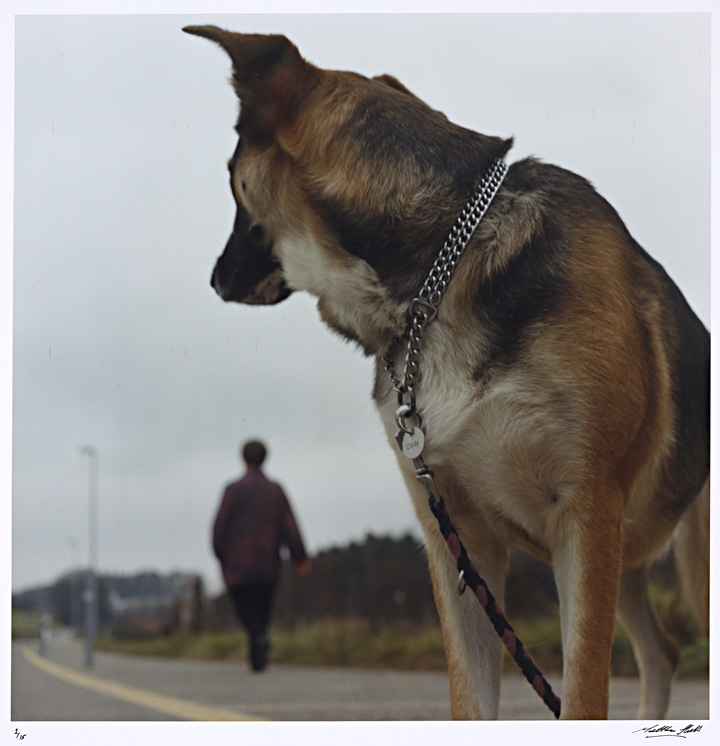
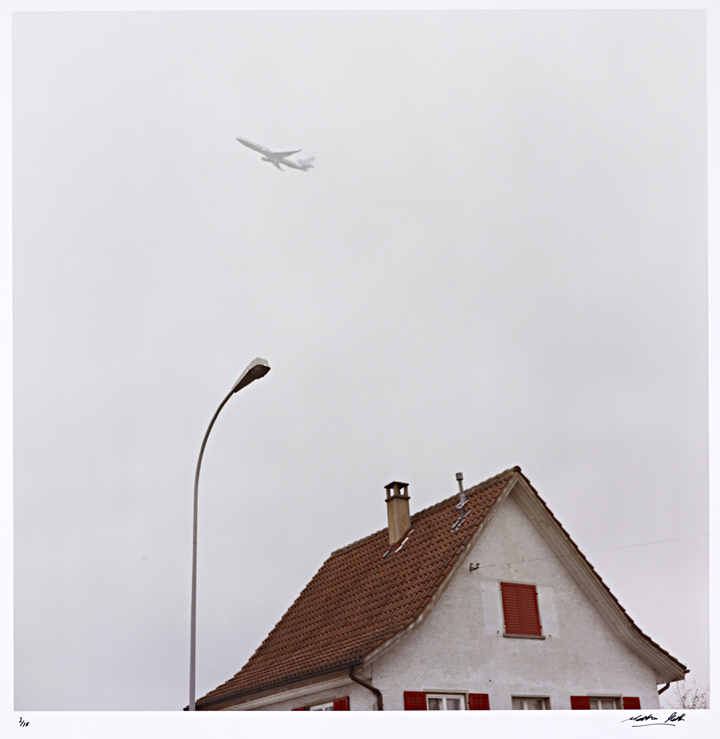
Matthew Sleeth‘s street photographs could be taken almost anywhere in the world (if it were not for a building with German writing on it). His snapshot aesthetic of caught moments, blinded people and dissected bodies in the observed landscape are evinced (to show in a clear manner; to prove beyond any reasonable doubt; to manifest; to make evident; to bring to light; to evidence – yes to bring to light, to evidence as photography does!) in mundane, dull, almost lifeless prints – ‘heavy’ photographs with a lack of shadow detail combined with a shallow depth of field. His remains, the people walking down the street and their shadow, are odd but as as The Age art critic Robert Nelson succinctly notes in his review of this exhibition, “To become art, the odd cannot remain merely quaint but has to signify an existential anomaly by implication.”1
If we look at the seminal photographs from the book The Americans by Robert Frank we see in their dislocated view of America a foreigners view of the country the artist was travelling across – a subjective view of America that reveals as much about the state of mind of the artist as the country he was exposing. No such exposition happens in the works of Matthew Sleeth.
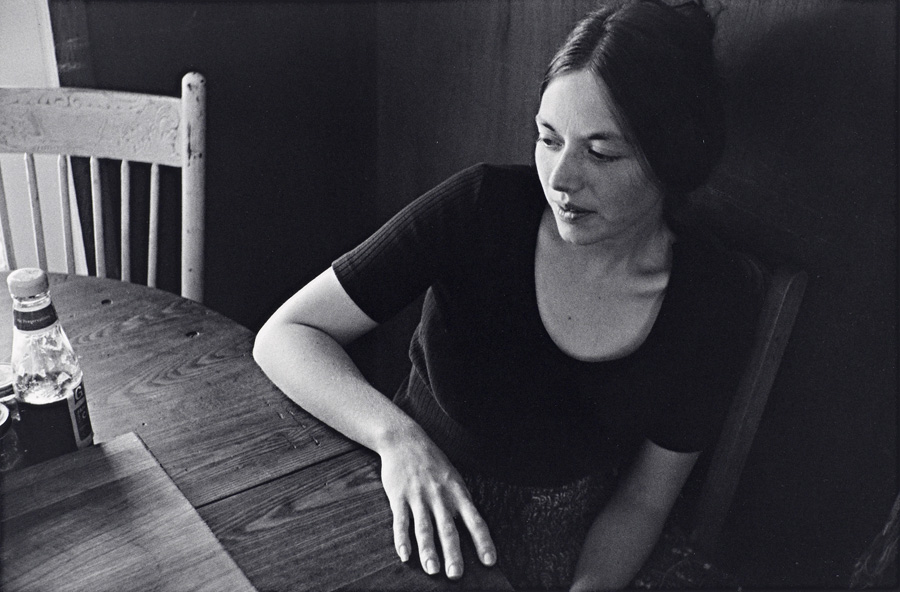
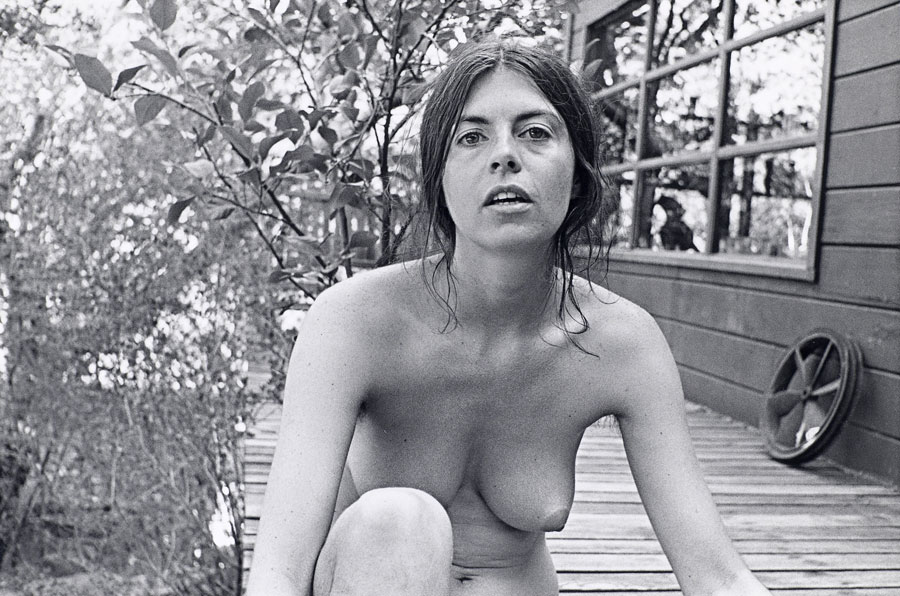
Christine Godden‘s photographs of family and friends have little to do with travel photography and I struggle to understand their inclusion in this exhibition. Though they are reasonable enough photographs in their own right – small black and white photographs of small intimacies (at the beach, in the garden, at the kitchen table, on the phone, on the porch, on the float, etc…) Godden’s anthropomorphist bodies have nothing to do with a vision of a new land as she had been living in San Francisco, New York and Rochester for six years over the period that these photographs were taken. Enough said.
The highlight of the exhibition is the work of Max Pam.
I remember going the National Gallery of Victoria in the late 1980s to view this series of work in the collection – and what a revelation they were then and remain so today. The square formatted, dark sepia toned silver gelatin prints of the people and landscapes of Tibet are both monumental and personal at one and the same time. You are drawn into their intimacies: the punctum of a boys feet; the gathering of families; camels running before a windstorm; human beings as specks in a vast landscape.
“If the world is unfair or beyond our understanding, sublime places suggest it is not surprising things should be thus. We are the playthings of the forces that laid out the oceans and chiselled the mountains. Sublime places acknowledge limitations that we might otherwise encounter with anxiety or anger in the ordinary flow of events. It is not just nature that defies us. Human life is as overwhelming, but it is the vast spaces of nature that perhaps provide us with the finest, the most respectful reminder of all that exceeds us. If we spend time with them, they may help us to accept more graciously the great unfathomable events that molest our lives and will inevitably return us to dust.”2
The meditation on place and space that the artist has undertaken gives true insight into the connection of man and earth, coming closest to Alain de Botton’s understanding of the significance of sublime places. Through a vision of a distant land the photographs transport us in an emotional journey that furthers our understanding of the fragility of life both of the planet and of ourselves.
While the National Gallery of Victoria holds some excellent photography exhibitions (such as Andreas Gursky and Rennie Ellis for example) this was a missed opportunity. The interesting concept of the exhibition required a more rigorous investigation instead of such a cursory analysis (which can be evidenced by the catalogue ‘essay’: one page the size of a quarter of an A4 piece of paper that glosses over the whole history of travel photography in a few blithe sentences).
Inspiration could have easily been found in Alain de Botton’s excellent book The Art of Travel. Here we find chapters titled “On Anticipation”, “On Travelling Places”, “On the Exotic”, “On Curiosity”, “On the Country and the City” and “On the Sublime” to name but a few, with places and art work to illustrate the journey: what more is needed to excite the mind!
Take Charles Baudelaire for example. He travelled outside his native France only once and never ventured abroad again. Baudelaire still dreamt of going to Lisbon, or Java or to the Netherlands but “the destination was not really the point. The true desire was to get away, to go, as he concluded, ‘Anywhere! Anywhere! So long as it is out of the world!'”3
Heavens, we don’t even have to leave home to create travel photography that is out of the world! Our far-sighted vision (like that of photographer Gregory Crewdson) can create psychological narratives of imaginative journeys played out for the camera.
Perhaps what was needed was a longer gestation period, further research into the theoretical nuances of travel photography (one a little death, a remembrance; both a dislocation in the non-linearity of time and space), a gathering of photographs from collections around Australia to better evidence the conceptual basis for the exhibition and a greater understanding of the irregular possibilities of travel photography – so that the work and words could truly reflect the title of the exhibition Long Distance Vision.
Dr Marcus Bunyan
1/ Nelson, Robert. “In blurred focus: le freak c’est chic,” in The Age newspaper. Friday, October 23rd 2009, p. 18
2/ de Botton, Alain. The Art of Travel. London: Penguin, 2002, p. 178-179
3/ Ibid., p. 34
Many thankx to the National Gallery of Victoria for allowing me to publish the photographs in the posting. Please click on the photographs for a larger version of the image.
“The National Gallery of Victoria will celebrate the work of Christine Godden, Max Pam and Matthew Sleeth in a new exhibition, Long Distance Vision: Three Australian Photographers opening 28 August.
Long Distance Vision will include over 60 photographs from the NGV Collection exploring the concept of the ‘tourist gaze’ and its relationship with the three artists.
Susan van Wyk, Curator Photography, NGV said the exhibition provides a fascinating insight into the unusual perspective brought by the three photographers to their varied world travel destinations.
“There’s a sense in the works in the exhibition that the photographers are not from the places they choose to photograph, and that each is a visitor delighting in the scenes they encounter.
“What is notable about the photographs in Long Distance Vision is that rather than focussing on the well known scenes that each artist encountered, they have turned their attention to the ‘little things’, the details of the everyday,” said Ms van Wyk.
From the nineteenth century, photography has been a means by which people could discover the world, initially through personal collection and albums, and later via postcards, magazines, books and the internet.
Dr Gerard Vaughan, Director, NGV said that both contemporary photographers and tourists use the camera as a means to explore and capture the world.
“Through their photographs, the three artists featured in Long Distance Vision show us highly individual ways of seeing the world. This exhibition will surprise and delight visitors as our attention is drawn to not only what is different but what remains the same as we travel the world,” said Dr Vaughan.
Born in Melbourne in 1949, Max Pam began his career in various commercial photography studios in the 1960s. After responding to a university notice for assistance to drive a Volkswagen from Calcutta to London in 1969, Pam got his first taste of being a traveller. The body of Pam’s work in this exhibition is from the series The Himalayas, which was photographed over a number of early visits to India.
Christine Godden also travelled the popular overland route between Europe and India in the early 1970s, returning to Sydney in 1978. In 1972, after a period of travelling, Godden found her home in the US where she remained for six years. Godden’s photographs in this exhibition were taken between 1972 and 1974 during her stay in the US.
Born in Melbourne in 1972, Matthew Sleeth is another seasoned traveller. During the late 1990s, Sleeth settled in Opfikon, an outer suburb of Zurich, Switzerland. The series of photographs in Long Distance Vision were taken during this time, showing Sleeth’s interest not only in street photography, but also in the narrative possibilities in everyday scenes. Dotted with garishly coloured playhouses, naive sculptures and whimsical arrangements of garden gnomes Sleeth’s photographs go beyond the ‘picture-perfect’ scenes of typical tourist photography.
Long Distance Vision: Three Australian Photographers is on display at The Ian Potter Centre: NGV Australia, Federation Square from 28 August 2009 to 21 February 2010.”
Text from the National Gallery of Victoria press release
“The dark desires that these works contain possess an aesthetic beauty that swallows us up so that we, too, become ‘Barbarians All’.” Dr Marcus Bunyan
Exhibition dates: 30th September – 24th October, 2009
Curator: Karen Woodbury
eX de Medici (Australia, b. 1959) Tooth and claw 2009 Pen, ink and mica on archival paper 114 x 521cm
Is it sinful to say that an Armalite rifle can be voluptuously seductive? Not in the hands of artist eX de Medici!
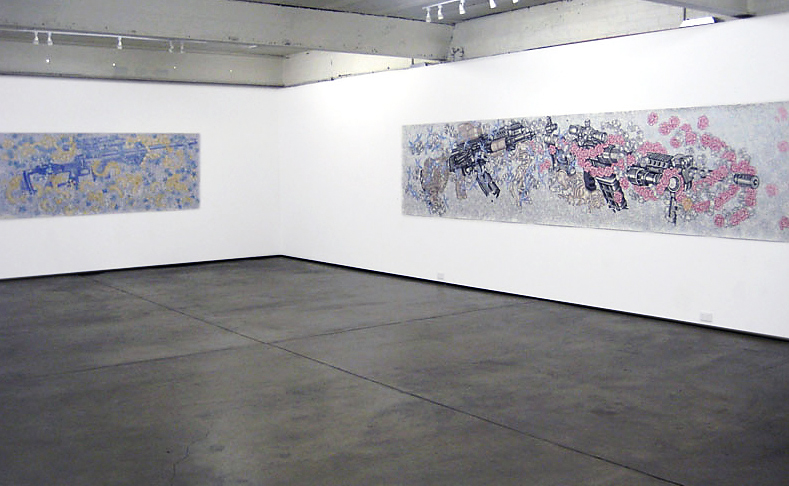
Taking a variety of contemporary military high-powered weapons (Armalite AR30 Tactical .308 Sniper, Modified AK 47, Blackwater AR15, Patriot Ordinance P45 .223 for example) eX de Medici’s armaments have a steely presence softened and consumed by multitudinous garlands of traditional tattoo ‘flash’ iconography (flowers, skulls, bows, stars, Chinese dragons, waves and swallows repeated in Escher-like patterns) and contorted skeletons. Using individual colour palettes for each of the three large pen, ink and mica on paper works in the exhibition, eX subverts the masculine symbology of gun culture and decomposes it within an ornamentation of deathly desire – new compositions in the dance of death: ‘U hurt me Baby, U Fkd me up gd, the hole tht u made (cross) me Ded …’
In other less skilled artist’s hands the subject matter could become cliched and trite but here de Medici balances the disparate elements in her compositions and brings the subject matter alive – sinuously jumping off the paper, entwining the viewer in their delicious ironies, all of us sweetly complicit in the terror war (send more meat, send more meat!), fighting tooth and nail to keep urban realities at arm’s length.
The dark desires that these works contain possess an aesthetic beauty that swallows us up so that we, too, become ‘Barbarians All’. Highly recommended!
Dr Marcus Bunyan
Many thankx to Karen Woodbury Gallery for allowing me to publish the art work in the posting. Please click on some of the photographs for a larger version of the image.
eX de Medici (Australia, b. 1959) Tooth and claw (detail) 2009 Pen, ink and mica on archival paper 114 x 521cm
eX de Medici (Australia, b. 1959) Tooth and claw (details) 2009 Pen, ink and mica on archival paper 114 x 521cm
Installation view of Sweet Complicity by eX de Medici at Karen Woodbury Gallery, Melbourne showing at left, Send more meat (2009) and at right, Tooth and claw (2009) Photo: Marcus Bunyan
eX de Medici (Australia, b. 1959) Send more meat 2009 Pen, ink and mica on archival paper
eX de Medici (Australia, b. 1959) Send more meat (detail) 2009 Pen, ink and mica on archival paper
Sweet complicity is eX de Medici’s first and much anticipated exhibition at Karen Woodbury Gallery. The exhibition will comprise of three monumental pen, ink and mica works on archival paper. These works examine recurring themes in her practice such as power, war, death and violence via a decorative feminine veneer and aesthetic.
The recurrent use of symbolism in the form of weapons, skulls and garlands in her work re-appear with the addition of Chinese imagery (Imperial golden dragons, China’s five-pointed star, and the use of chrysanthemums). These potent works display a latent interest in scientific illustration and allude to de Medici’s characteristic stylised tattoo motifs that stems from her work as a tattooist. The almost obsessive repetition of pattern and immense detailing display eX’s dedication to her practice through the strong mental and physical commitment required to complete such awe-inspiring artworks that seduce the viewer.
There is an unmistaken polemic tone in de Medici’s practice that cannot be ignored. Different cultures, identities, actions and consequences are represented and centred on objects of warfare, allowing for disguised and layered political and moral statements.
de Medici lives and produces much of her work in the nation’s capital Canberra. Streams of influences inform the work; Canberra’s political and physical agendas, research resourced from various national institutions such as the CSIRO Entomological and Taxonomy Division, the National Library of Australia and the Australian War Memorial. She has recently returned from the Solomon Islands where she was chosen as an official war artist.
Text from the Karen Woodbury Gallery website [Online] Cited 05/10/2009. No longer available online. Used under fair use conditions for the purposes of education and research
The defining theme in eX de Medici’s paintings is a consistent interrogation of power. The notion of ‘the personal’ doesn’t interest the artist. Instead she investigates authority and dissent through paintings of guns, surveillance devices and gas masks.
eX de Medici (Australia, b. 1959) American Sex/Funky Beat Machine 2009 Pen, ink and mica on archival paper Diptych, 114 x 249cm
eX de Medici (Australia, b. 1959) American Sex/Funky Beat Machine (detail) 2009 Pen, ink and mica on archival paper Diptych, 114 x 249cm
Exhibition dates: 29th September – 10th October, 2009
Curator: Amy Barclay
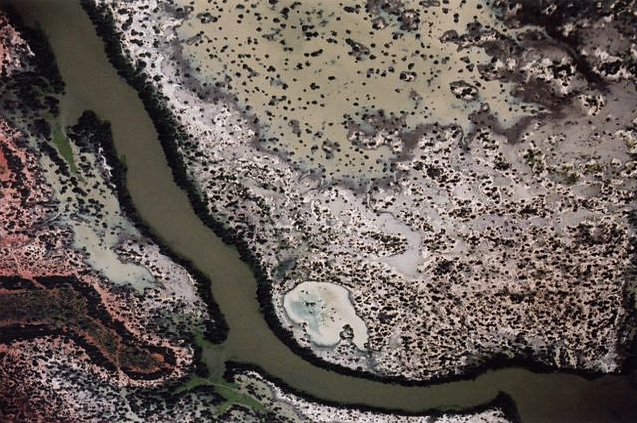
Kim Lawler (Australian) Between Lines #4 Aerial Photograph, Great Sandy Desert, Western Australia 2009
I finally made it to Kim Lawler’s exhibition Between Lines at fortyfive downstairs, Flinders Lane, Melbourne and, in many ways, the trip was well worth it. Lawler presents 12 prints from her eponymous series, aerial photographs taken over Western Australia.
Eschewing the essentially topographic state promoted in the “New Topographics: Photographs of a Man-Altered Landscape” of 1975 that have influenced so many photographers in recent decades (including the hyper-real photographs of the West Australian landscape by Edward Burtynsky where there is an emotional distance between the photograph and the viewer), Lawler instead mines the depths of abstraction in landscape photography.
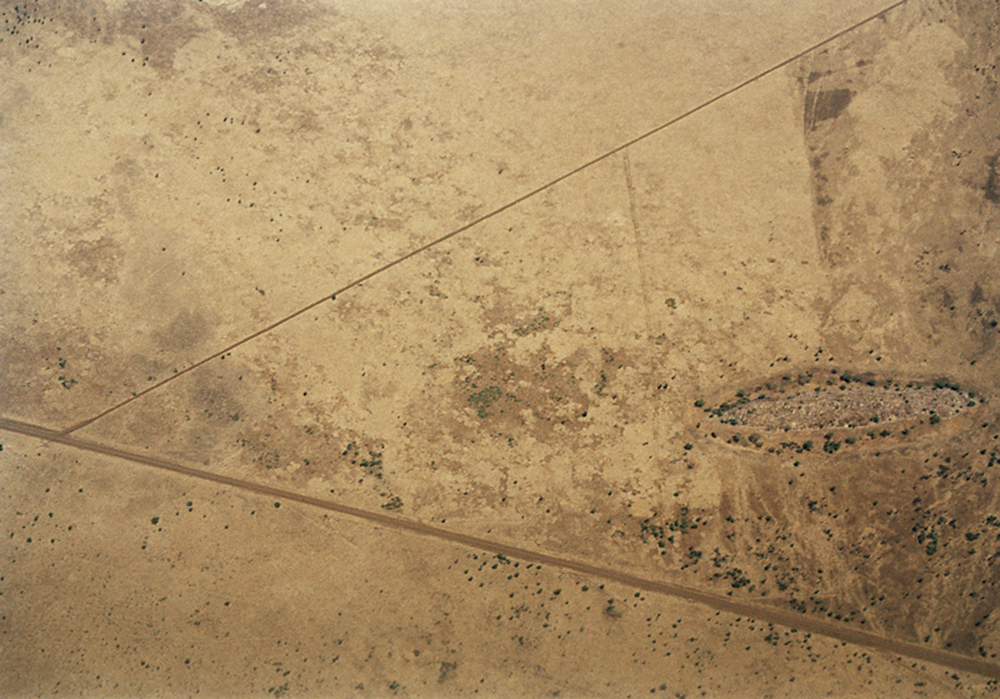
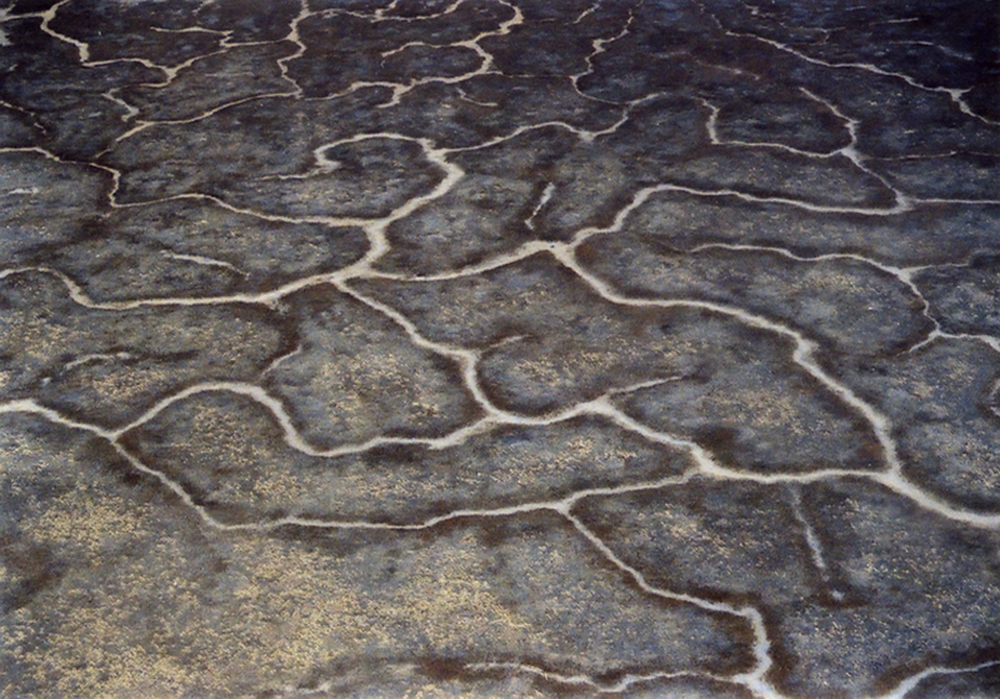
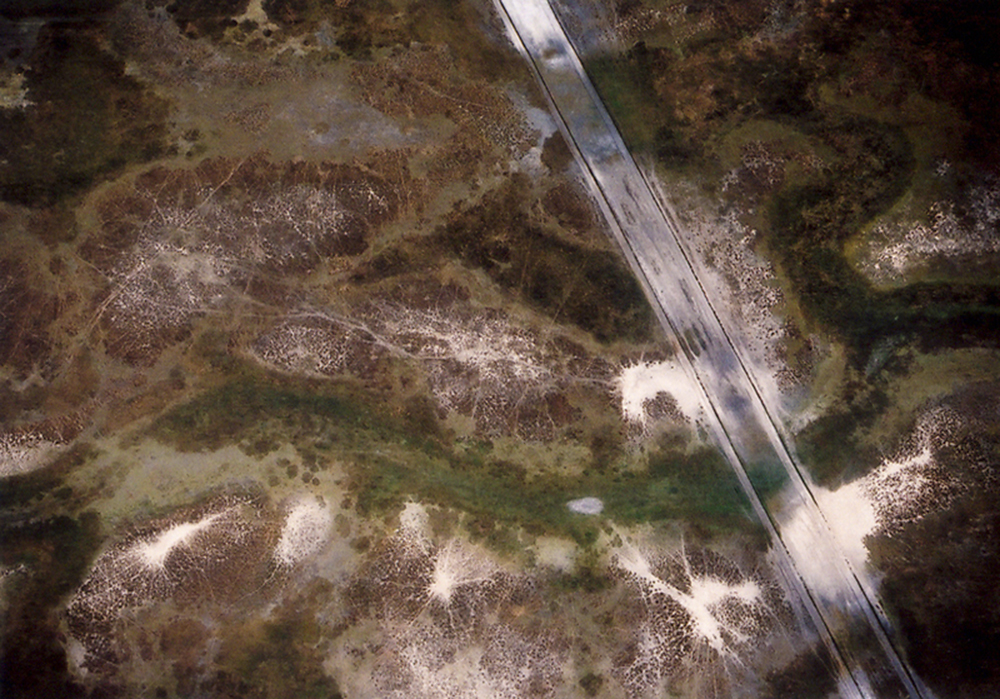
These are visceral photographs – in #4 the river and surrounds almost become vascular and cellular; in #13 the synapses and electrons infiltrate the highway reminding me of bomb craters from a Second World War landscape. In #7 the shrubs, unlike the precision of the New Topographics, become feckless dots, the landing strip a scar on the body; in #12 the toxic unsutured wound bleeds across the surface of the skin, white scar tissue surrounding it.
In these atypical mappings Lawler employs a taxonomy of disorder. The photographs are very soft in focus, soft in printing, big in the grain of the film and there is very little depth of field employed – in other words there is really nothing in focus at all, nothing that the eye and the mind can fix on. These are interstitial spaces (i.e. gaps between spaces full of structure or matter) and the title Between Lines is entirely appropriate for the work. The photographs contain beautiful textures, colours, surfaces.
This is their strength but also their weakness.
The eye and the mind longs for something to hold onto, perhaps just a small fraction of the image to be in focus, so that the disorder plays off the order (for one cannot exist without the other!). Mutation only exists if their is something to mutate against.
The other two small problems I had with the work were a matter of semantics and others may disagree – personally I found the size of the prints neither here nor there and they could have done with being about 2-3 inches larger and the white frames were too heavy. That is a funny thing to say about contemporary white frames, that they are too heavy for the work, but this is entirely possible: the moulding was too thick and the depth of the box frames to deep for my liking, detracting from the print itself and making the works darker than they needed to be.
Overall then an excellent exhibition that offers a positive variation on the cliched narrative of aerial photography of the Australian outback, one that questions the munificence of human habitation of the body and of the earth.
Dr Marcus Bunyan
Many thankx to fortyfive downstairs for allowing me to publish the photographs in the posting. Please click on the photographs for a larger version of the image.
Kim Lawler (Australian) Between Lines #7 (Landing Strip) Aerial Photograph, Great Sandy Desert, Western Australia 2009
Kim Lawler (Australian) Between Lines #8 (Jones Soak, position approximate) Aerial Photograph, Great Sandy Desert, Western Australia 2009
“Beyond romance or nostalgia, Lawler’s lucid visual studies reveal the aesthetic beauty of the stories being written and rewritten onto this responsive and at times fragile environment.”
~ Amy Barclay, curator
Between Lines comprises a series of aerial photographs taken in the Kimberley, far north Western Australia. This remote area is embedded with stories of Indigenous and non-Indigenous inhabitants, transitory visitors and scarred by multinational companies resource development. The artist, Kim Lawler, is concerned with markings, both natural and constructed, that tell stories of places, transitions and interruptions that occur within the landscape.
Between Lines is informed by Lawler’s experience of living in these regions and local perspectives on the displacement of people and their consequential relationship to the land that has taken place. It is also informed by the opposing qualities of abandon and connection that occur as the stories within these landscapes continue to unfold.
Competing demands for natural resources, and the resulting impact upon transitional landscapes, resonate with the stories of many generations of people that continue to flow through or inhabit each region. Attuned to the markings on these landscapes, it is these residual narratives ‘Between Lines’ seeks to record.
The imagery seen in Between Lines extends from Lawler’s previous artwork that interrogated additional Kimberley locations including: the remote Buccaneer Archipelago; the isolated far northern reaches of the Kimberley Coastline; Cockatoo Island iron ore mine and resort and; inland regions such as Warmun Aboriginal Community on the periphery of the Great Sandy Desert.
“Lawler’s eye is arrested by markings, natural and constructed, that trace and recount places, transitions and interruptions; the signifiers of change in a landscape millions of years old.”
Amy Barclay, curator
Text from the fortyfive downstairs website
Kim Lawler (Australian) Between Lines #12 Joseph Bonaparte Gulf, Northern Kimberley, Western Australia 2009
Kim Lawler (Australian) Between Lines #13 Great Northern Highway, Kimberley, Western Australia 2009
Kim Lawler (Australian) Between Lines #16 Cockatoo Island Cyanide Settling Pool, Yampi Sound, Western Australia 2009
fortyfive downstairs 45, Flinders Lane Melbourne 3000
Exhibition dates: 22nd September – 17th October, 2009
Kirra Jamison (Australian) Livin’ on a prayer 2009 Gouache, pen and vinyl on paper 160 x 114cm
Hit, Hit, Hit with a Miss
Although all the work in this exhibition is dated 2009 this exhibition can fairly easily be divided into what seems to be two separate bodies of work: the excellent gouache, pen and vinyl works of paper and the ‘other’ less successful large paintings of owls and raccoons and the smaller paintings of hanging flowers and tree branches on dark purple ground.
The latter large and small paintings fail to hit the spot with the exception of Belong to me (2009, below) which has visual and conceptual links to the works on paper, the twin bodies dissolving into a kaleidoscopic dream-like effervescence of life.
The paintings of the owl (Last star, 2009 below), raccoons (Can you see my aura 2009, below) together with another fairytale painting With a roof of flint and a floor of chalk (2009) fail to communicate a shared vision being disparate items that conceptually don’t seem to hang well together. They lack a certain spark, that revelatory presence and appear flat both physically and metaphorically.
On the flip side of the equation are works that are physically complex, conceptually robust and simply beautiful in their execution: no wonder so many of them have sold already! Using basic graphic patterns repeated and inverted (Jamison has an interest in graphics fostered through textile design), Jamison constructs fantasy worlds, fairytales on paper.
In Livin’ on a prayer (2009, above) we have a splendid Carnival of the Animals as monkeys and creatures inhabit a boat sprouting flowers riding upon a sea made of flowers. In Willow weep 2 (2009, above) the Tree of Life is inhabited by creatures and a human figure (see halfway up on the right-hand side). In Future’s lovecraft (2009, below) incredible creatures again inhabit the imagined biospheric carnivalesque worlds. As Russian theorist Mikhail Bakhtin notes,
“The carnival offers the chance to have a new outlook on the world, to realise the relative nature of all that exists, and to enter a completely new order of things.”1
Here the new order of things is a thing of beauty to behold; the works draw you in with their colour and detail, their presence.
I can’t wait to see what possibilities unfold next for the artist from this starting point for this is the very beginning of the path, a scratching of the surface of what is possible with this technique and themes. It is almost like an emotional texture, the breathe of cool air on your lungs in the early morning mist.
I await developments with interest!
Dr Marcus Bunyan
1/ Bakhtin, Mikhail. Rabelais and his World (trans. Hélène Iswolsky). Bloomington: Indiana University Press, 1984, p. 34.
Many thankx to Sophie Gannon Gallery for allowing me to publish the art work in the posting. Please click on the photographs for a larger version of the image.
Kirra Jamison (Australian) Willow weep 2 2009 Gouache and vinyl on paper 160 x 114cm
Kirra Jamison (Australian) Future’s lovecraft 2009 Gouache and vinyl on paper 160 x 114cm
Installation view of Slow down, you move too fast by Kirra Jamison at Sophie Gannon Gallery, Richmond Photo: Marcus Bunyan
Kirra Jamison (Australian) Belong to me (after Delaunay) 2009 Acrylic, gouache and pen on canvas 220 x 183cm
Kirra Jamison (Australian) Last Star 2009 Acrylic, gouache, pen and ink on canvas 185 x 153cm
Kirra Jamison (Australian) Can you see my aura? 2009
Sophie Gannon Gallery 2, Albert Street, Richmond, Melbourne Phone: +61 3 9421 0857
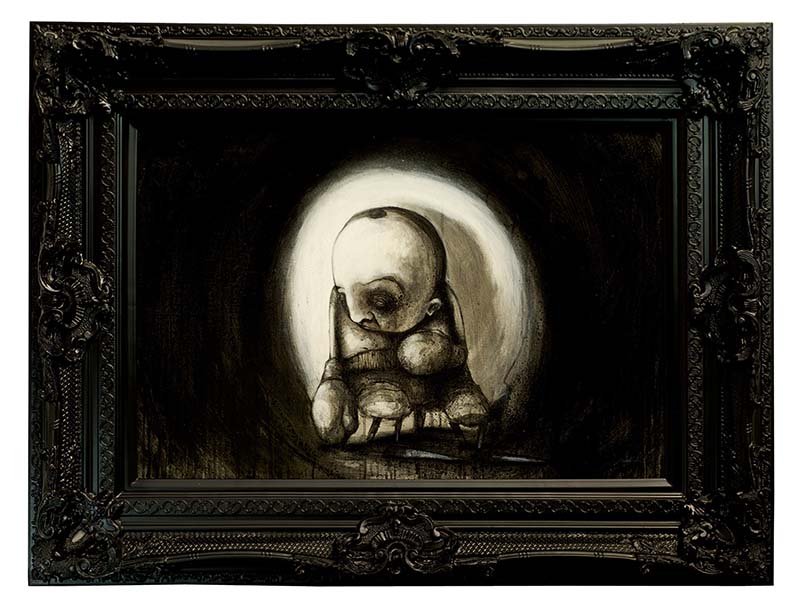
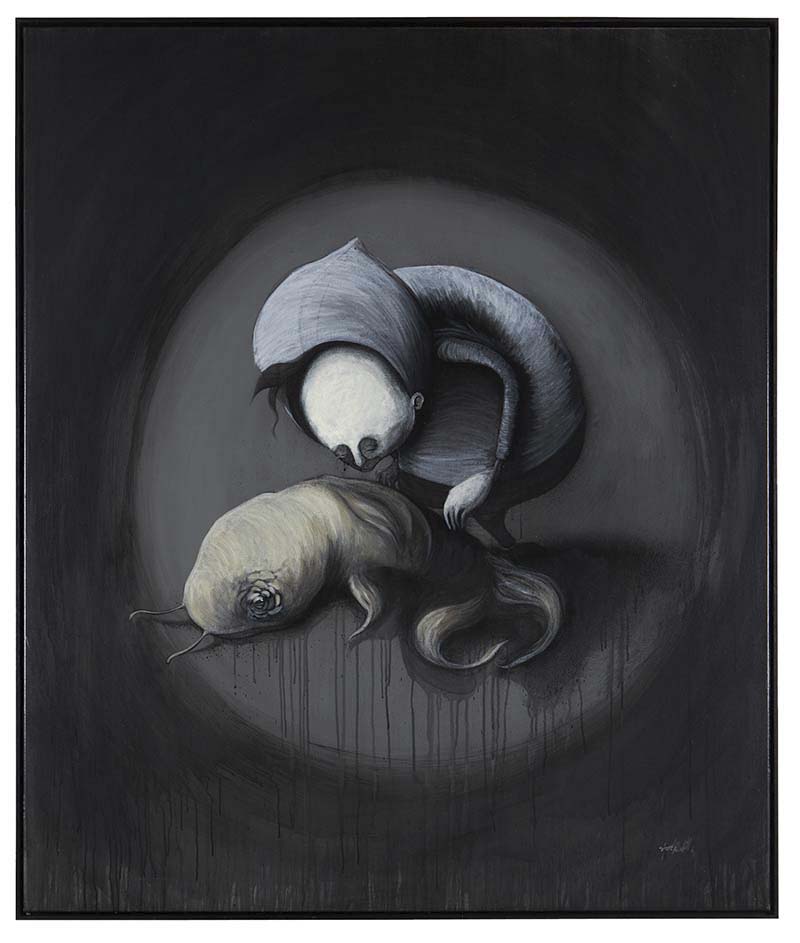
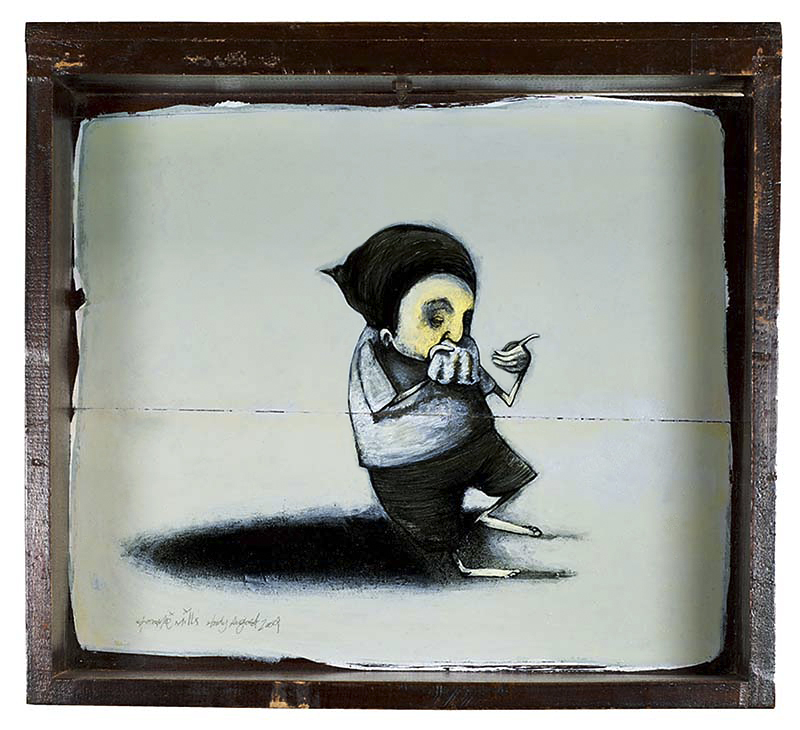
Stormie Mills (Australian, b. 1969) Some days all my shadows are behind me 2009 Acrylic, spray paint and dirt on canvas 1370 mm x 1620 mm
This is a hit and miss show by Stormie Mills at Helen Gory Galerie in Prahran, Melbourne.
Some pieces (mainly the smaller paintings) work incredibly well whilst others (mainly the larger paintings such as There is an unkroken continuity and Here I stand) fail to inspire, laden as they are with much dourness and lacking a lightness of touch.
Mills’ uses a palette of greys, blacks and whites to create layered, dripping contextless backgrounds against which his characters tell their prophetic stories. His laconic figures offer a knowing stoicism, surviving everything the world throws at them.
The best work made me chuckle at their delicious ironies: I feel how the character is in Some days all my shadows are behind me (2009, above). Not yet ready to quit (2009, below) portrays a boxer slumped on his stool surrounded in a halo of white paint. The heavy remarkably wax-like black carved frame reminds me of Victorian mourning frames and works well with the sentiment proposed by the painting: again I feel a direct response. Elsewhere the use of these heavy black frames less suit the works, even overpowering the delicacy of some of the paintings (for example in Fabrique de Pain and Summer Solitude (both 2009)).
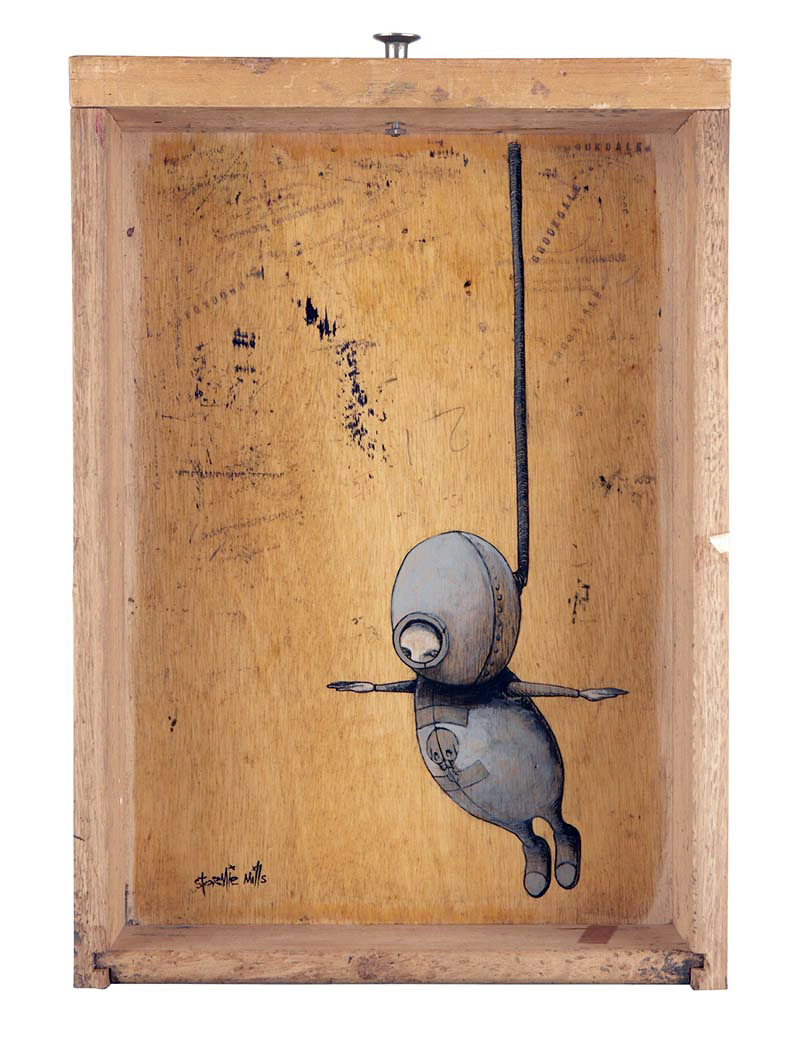
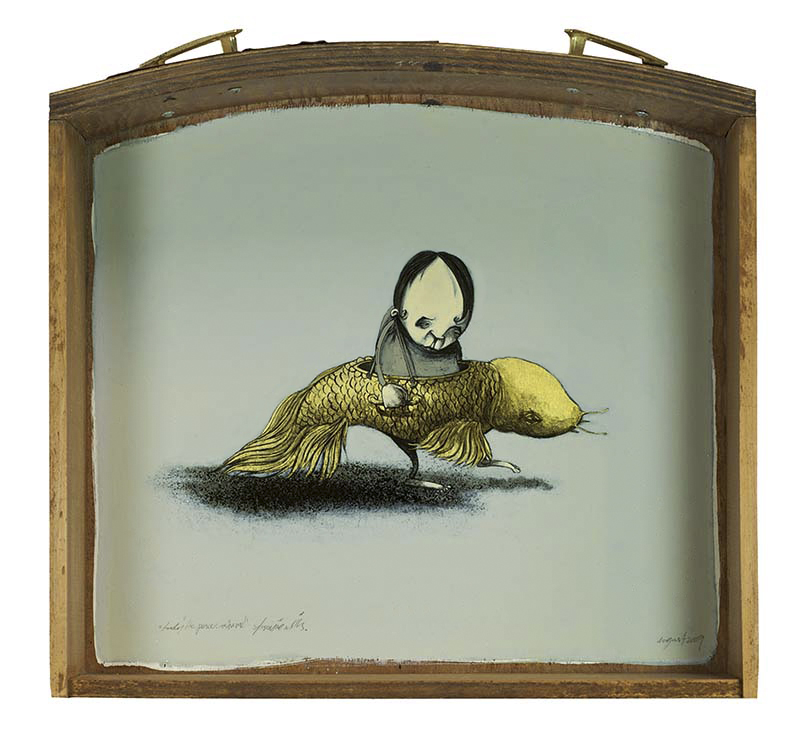
The best grouping in the exhibition are eight works painted on the bottom of old drawers, complete with handles and hung together (three of which are pictured below). This cohesion of concept, painting and intensities seems to bring all the ideas together in a satisfying whole, the characters trapped by the four walls of the drawers, insulated in their contextless worlds.
I adored 5 fathoms for the simplicity of it’s design and execution, the use of the box reminding me of the work of Joseph Cornell and the drawing Banksy at one and the same time. Here in this work there is a generosity of spirit which some of the other work lacks, a balance between dark and light, empathy and hope.
Overall some interesting work that had me thinking and feeling but ultimately failed to convince with their melancholic melange.
Dr Marcus Bunyan
Many thankx to Helen Gory Galerie for allowing me to publish the art work in the posting. Please click on the photographs for a larger version of the image.
Stormie Mills (Australian, b. 1969) Not yet ready to quit 2009 Acrylic, spray paint and dirt on canvas 610 mm x 920 mm
Stormie Mills (Australian, b. 1969) Come on mate, Get up 2009 Acrylic, spray paint and dirt on canvas 1630 mm x 1370 mm
Stormie Mills (Australian, b. 1969) 5 fathoms 2009 Mixed media on found object 400 mm x 280 mm x 100 mm
Stormie Mills (Australian, b. 1969) The pesca costume 2009 Mixed media on found object 450 mm x 480 mm x 130 mm
Stormie Mills (Australian, b. 1969) Wiping the smile from his face 2009 Mixed media on found object 360 mm x 390 mm x 100 mm
Exhibition dates: 2nd September – 26th September, 2009
Curator: Karen Woodbury
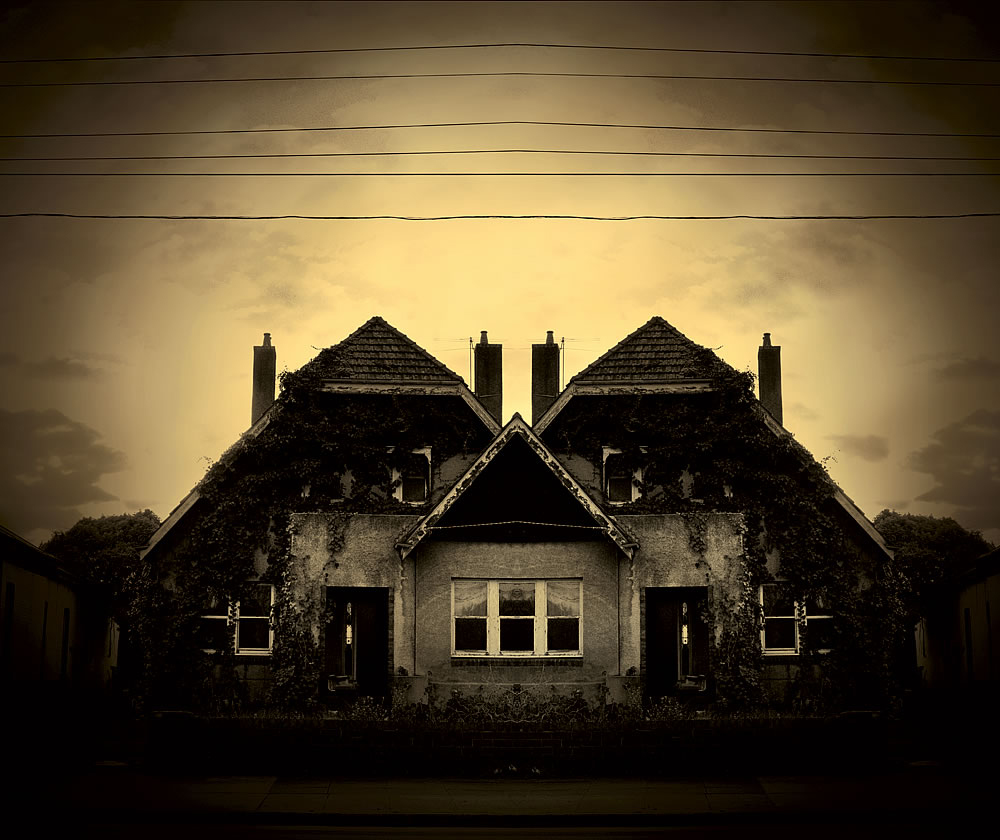
Jane Burton (Australian, b. 1966) Ivy #1 2009 Pigment print 89 x 75cm
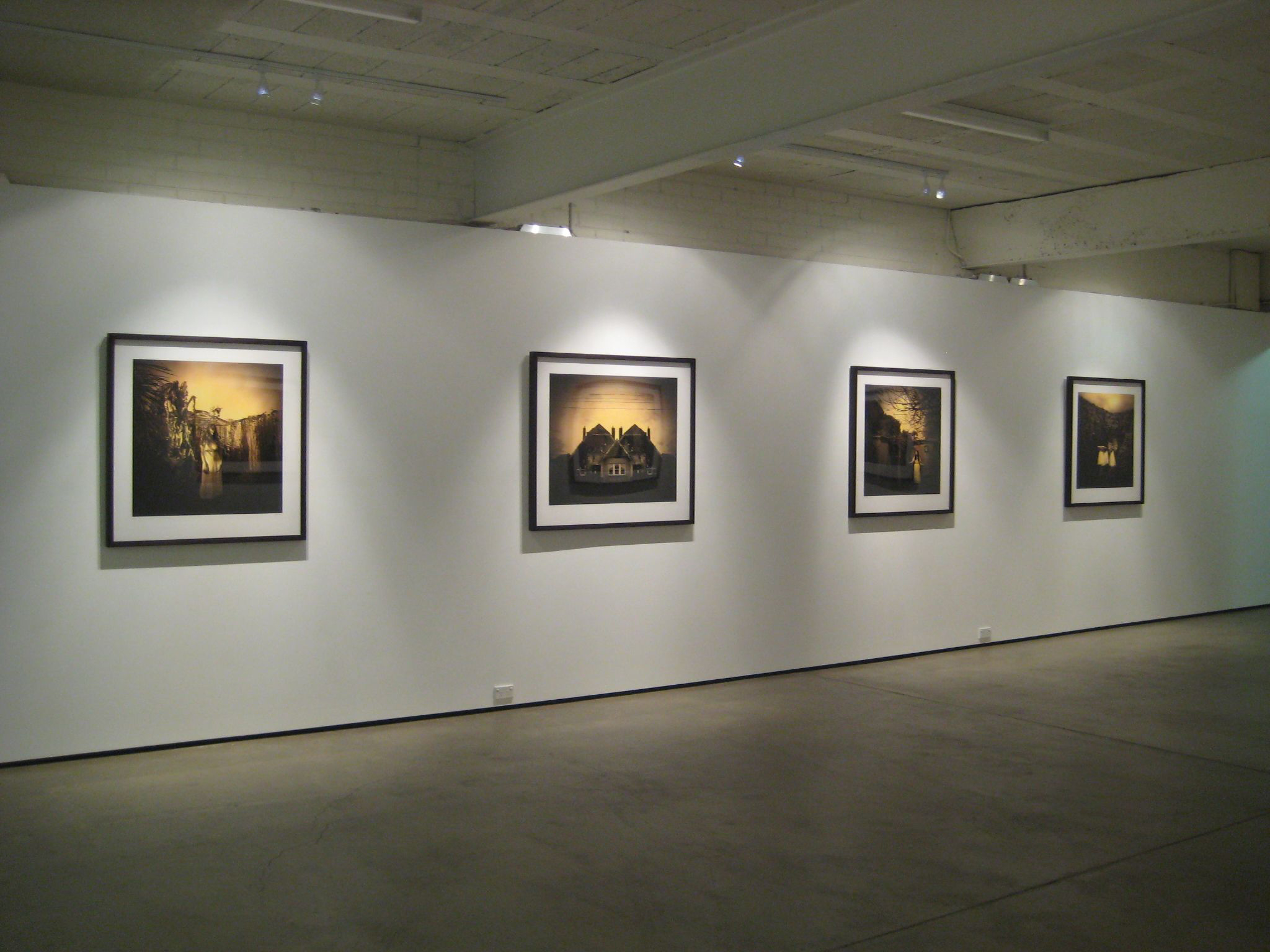
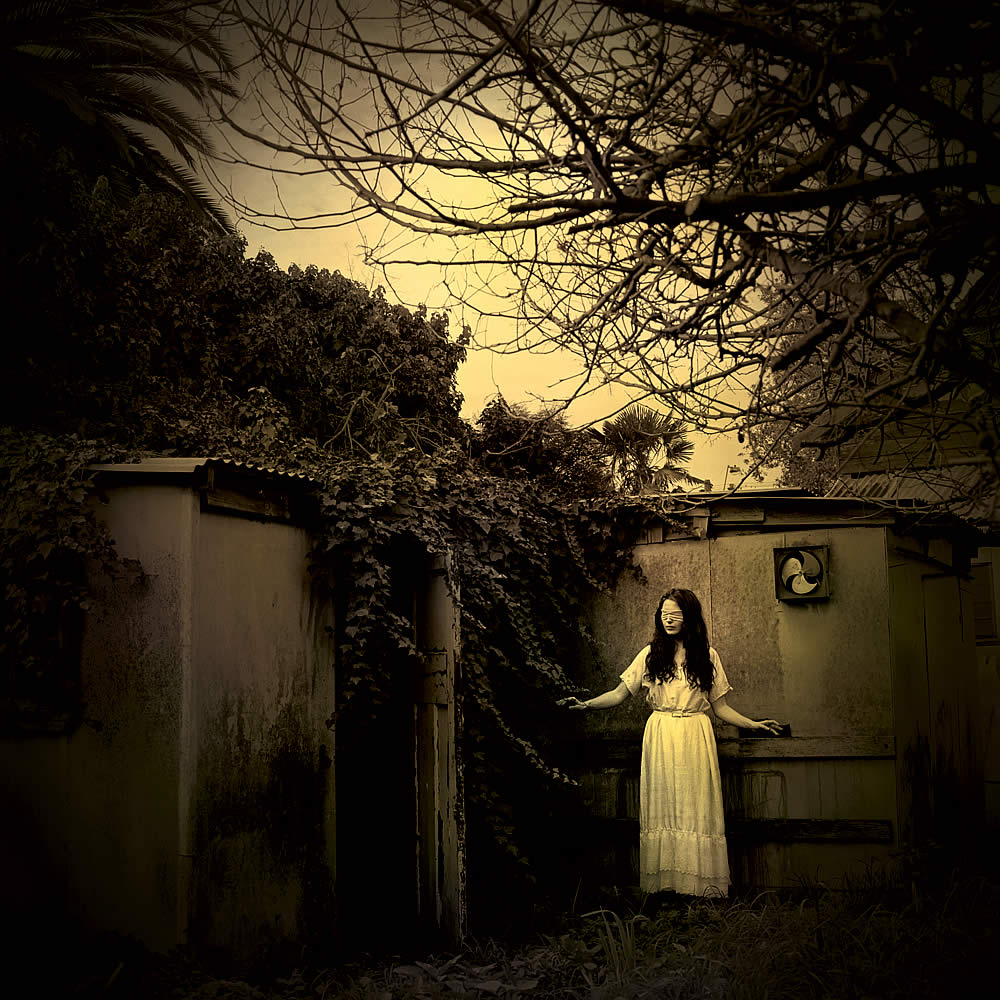
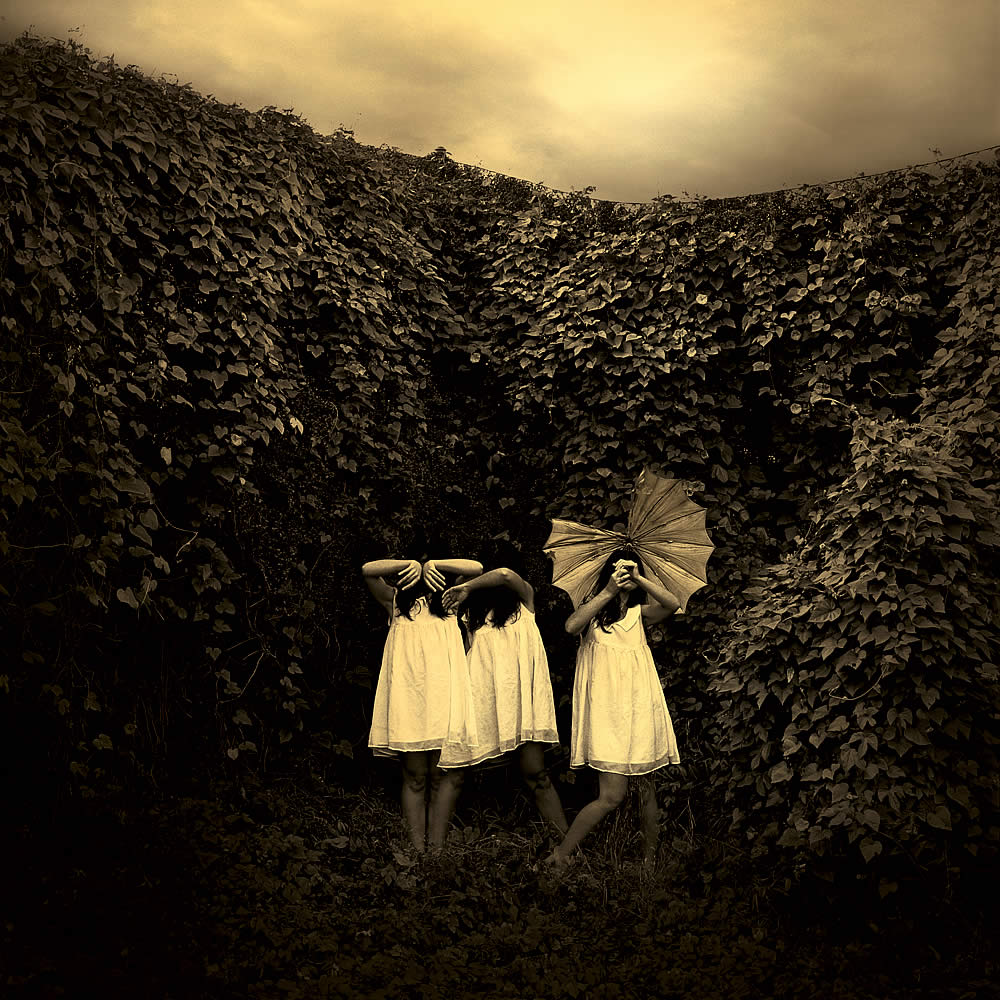
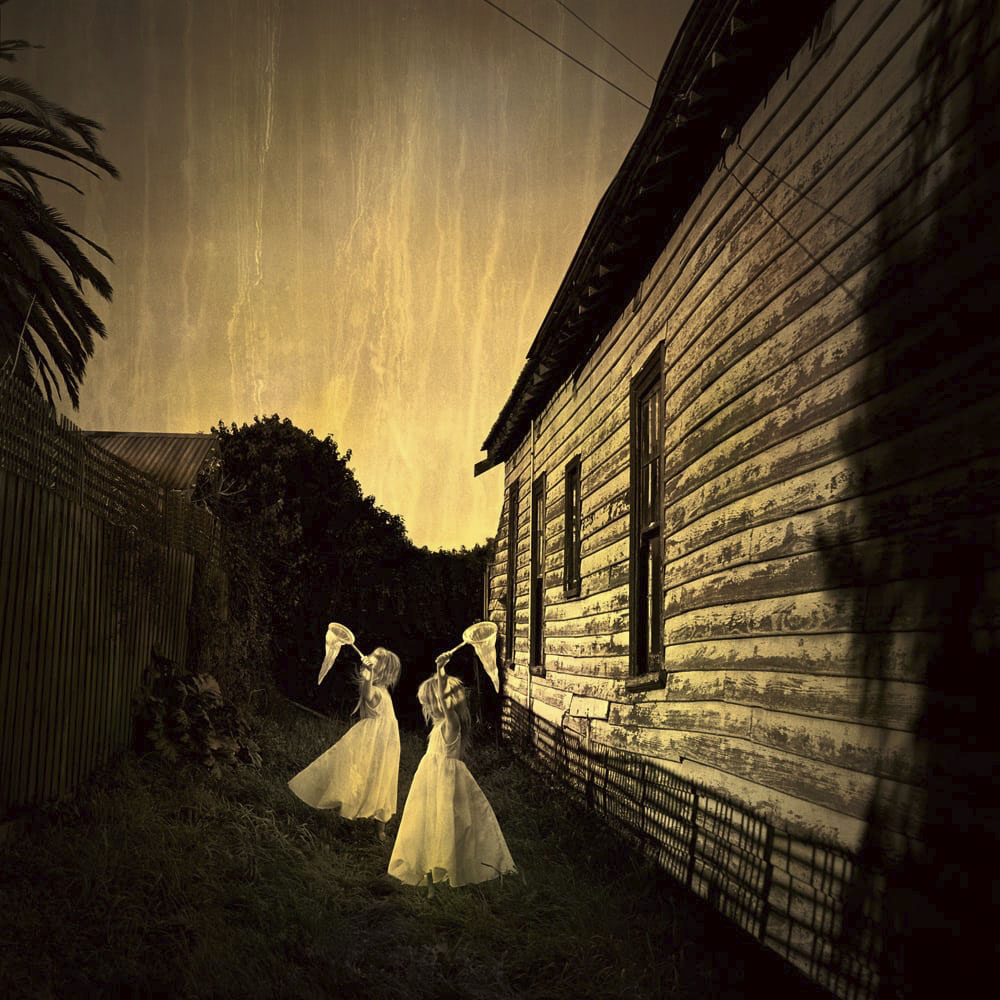
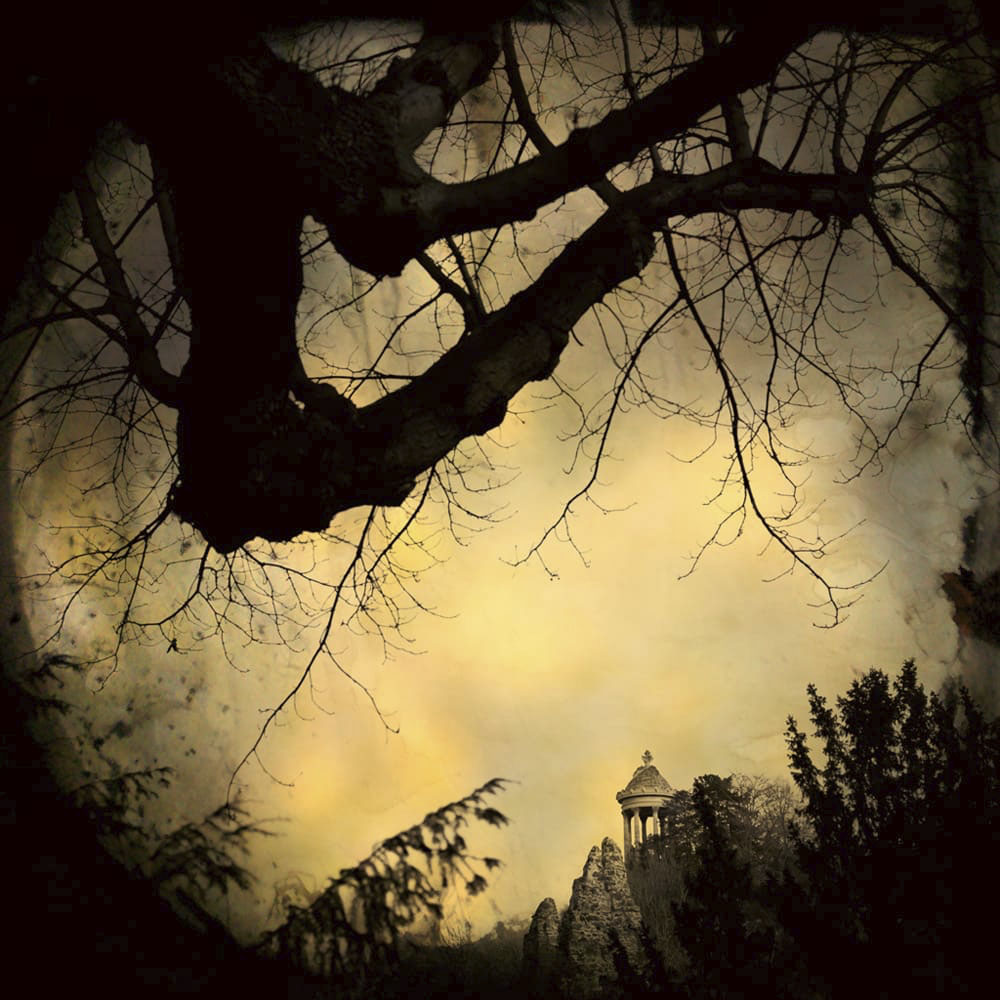
This is another outstanding body of photographic work on display in Melbourne. Featuring 10 large and 2 small sepia toned, vignetted pigment prints Burton’s work creates dark enchanted worlds of faceless female figures placed in the built environment that balance (meta)physical light and shade creating ambiguous narratives of innocence tinged with a darker edge.
The eponymous photograph Ivy #1 (above) is the seminal image of the series: a dark brooding house, hunched down positioned low in the photographic space, covered in ivy with black windows and dark eves has an ominous almost impenetrable presence and sets the tone for the rest of the work.
There are wonderful references to the history of photography if one cares to look (not simply generic references to Victorian daguerreotypes, postcards and family photographs). Ivy #2 (below) is a powerful photograph where the female figure is blindfolded, unable to see the encroaching tumescence of vegetation that surrounds and is about to engulf her. The placement of the hands is exquisite – unsure, reaching out, doubting her surroundings – with the 3-bladed fan hovering behind ready to devour the unwary. This photograph has resonances of the magical photographs of the garden by the Czech photographer Josef Sudek.
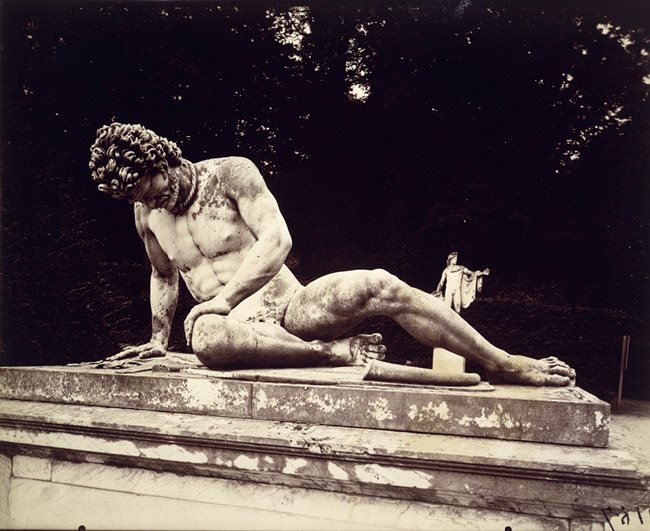
Ivy #3 (below) has echoes of the work of the American photographer Ralph Eugene Meatyard and his placement of masked people within built environments. In Burton’s photograph the broken umbrella becomes like insect wings, the faceless whiteness of the three-legged and three-armed creature cocooned among the overhanging predatory ivy, the luminescent sky offering the possibility of redemption. Other photographs such as Ivy #6 (below) and Ivy #7 with their wonderful colours, depth of field, heavy shadows and elegiac romantic feel have references to Eugene Atget and his photographs of the parks of Versailles (see photograph below).
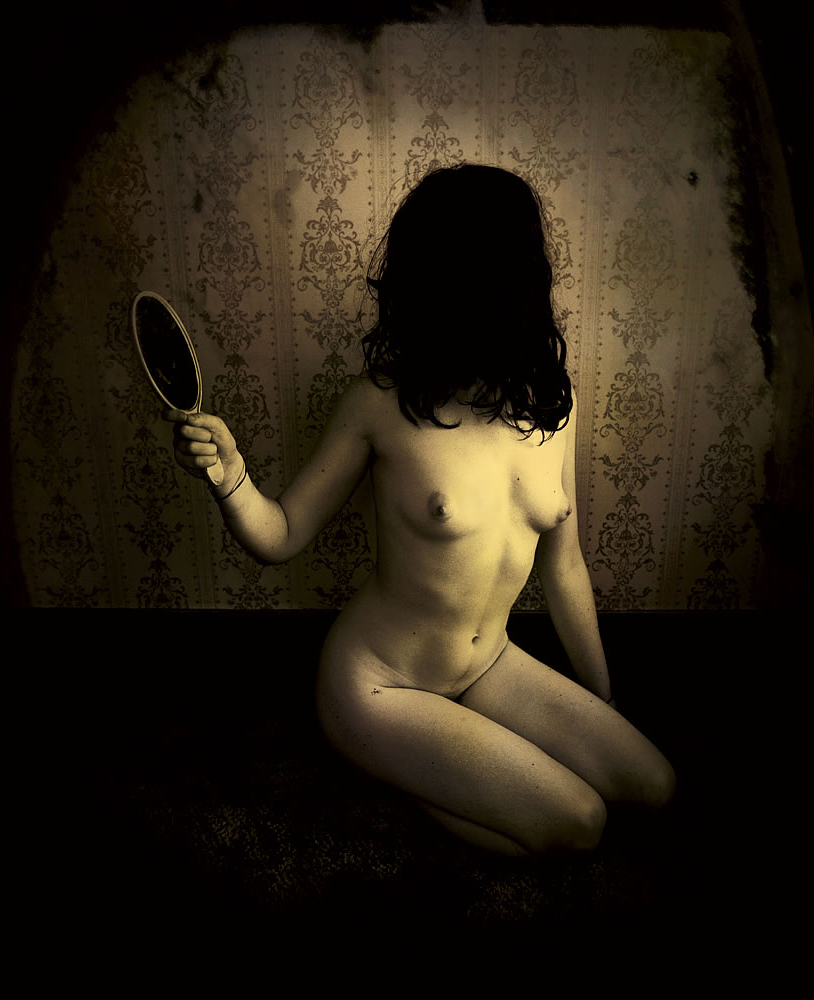
Still further references to the history of photography can be found in the photographs Ivy #9 and Ivy #10 (below). In Ivy #9 the intersection of the two female bodies through double exposure forms a slippage in (photographic) reality and the disappearance of original identity in the layering of the photographs and into the empty non-reflection of the mirror. This non-reflection is confirmed in Ivy #10 where the faceless nude woman holds a mirror with no reflection. These photographs remind me of the photographs of New Orleans prostitutes in the early years of the 20th century by the photographer Bellocq with their masked faces and the ornamentation of the wallpaper behind the figures (see below).
I feel that in these photographs with their facelessness and the non-reflection of the mirror investigate notions of ‘Theoria’ – a Greek emphasis on the vision or contemplation of God where theoria is the lifting up of the individual out of time and space and created being and through contemplative prayer into the presence of God.1 In fact the whole series of photographs can be understood through this conceptualisation – not just remembrances of past time, not a blind contemplation on existence but a lifting up out of time and space into the an’other’ dark but enlightening presence.
The greatest wonder of this series is that the photographs magically reveal themselves again and again over time. Despite (or because of) the references to other artists, the beauty of Burton’s work is that she has made it her own. The photographs have her signature, her voice as an artist and it is an informed voice; this just makes the resonances, the vibrations of energy within the work all the more potent and absorbing. I loved them.
Dr Marcus Bunyan
Many thankx to Karen Woodbury Gallery for allowing me to publish the photographs in the posting. Please click on the photographs for a larger version of the image.
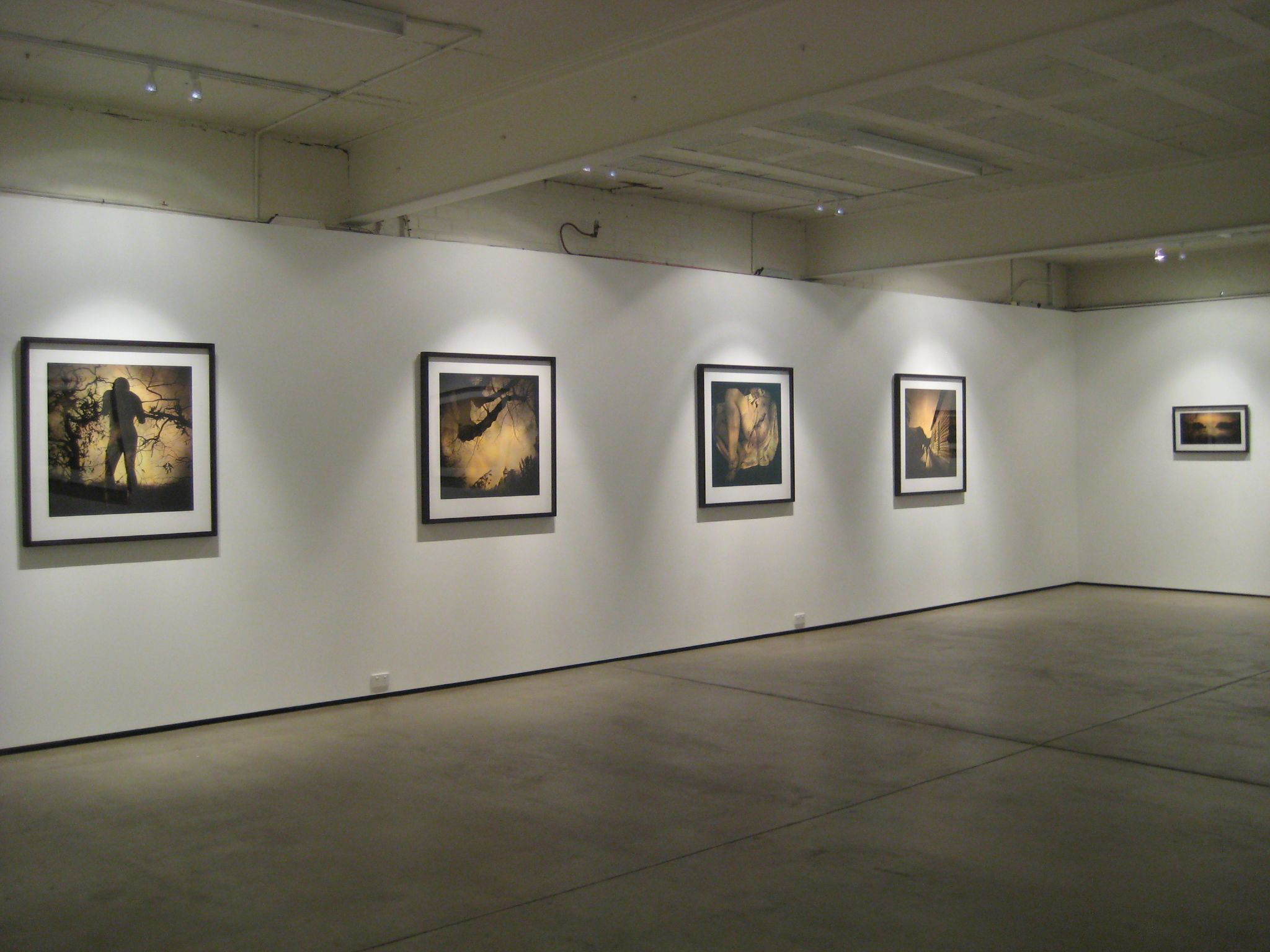
Installation views of Ivy by Jane Burton at Karen Woodbury Gallery, Melbourne Photos: Marcus Bunyan
Jane Burton (Australian, b. 1966) Ivy #2 2009 Pigment print 75 x 75cm
Jane Burton (Australian, b. 1966) Ivy #3 2009 Pigment print 75 x 75cm
Jane Burton (Australian, b. 1966) Ivy #5 2009 Pigment print 75 x 75cm
Jane Burton (Australian, b. 1966) Ivy #7 2009 Pigment print 75 x 75cm
Jane Burton’s exhibition, Ivy comprises a series of photographs captured in black and white. The final prints are rendered with a sepia, peach-champagne tone, with many displaying a mottled hand-coloured effect in faded pastels of pink and green. These works hope to suggest an era past, perhaps Victorian. The imagery is evocative of old picture postcards from Europe and old photographs from the pages of family albums.
Central to the series is an image of a house covered with ivy. Depicted as dark and malevolent, the house is ‘haunted’ by the traces and stains of family history, habitation, and the buried secrets of all that occurred within.
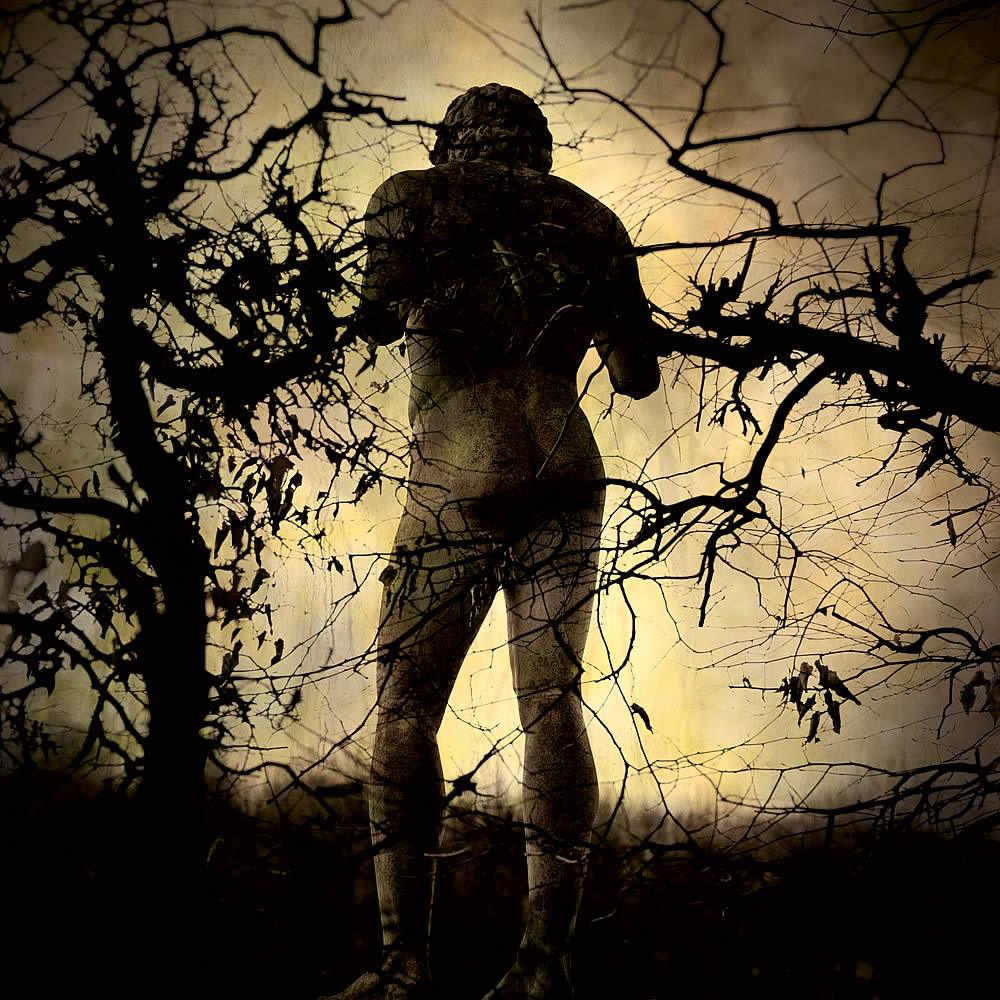
Anonymous female figures are seen in garden settings where the foliage is rampant and encroaching and the shadows deep. There is an air of enchantment perceived with unspecified darker edge. The figures are innocent and playful. The viewer is asked to question if the and girls aware of the camera capturing their activity? Are the poses staged or caught spontaneously. In another photograph, a dilapidated male statue stands broken and armless, the texture of stone worn, and bruised with dark lichen and moss.
In the interior photographs, several nudes are depicted in the style of 19th century French daguerreotype photographs. These vignetted images display women against wall-papered backdrops with theatrical props reminiscent of earlier works by Burton such as the series ‘The other side’ (2003). Posed suggestively for the camera and the viewer’s gaze, the subjects themselves are faceless, their own gaze and features hidden behind dark hair. The surface and texture of these particular works suggests the patina of decay and the damage and wear of time.
Text from the Karen Woodbury Gallery website [Online] Cited 20/09/2009. No longer available online. Used under fair use conditions for the purposes of education and research
E. J. Bellocq (American, 1873-1949) Untitled [prostitute of Storyville, New Orleans] 1912
Jane Burton (Australian, b. 1966) Ivy #10 2009 Pigment print
Eugene Atget (French, 1857-1927) Versailles, France 1923 Albumen print
Jane Burton (Australian, b. 1966) Ivy #6 2009 Pigment print 75 x 75cm
Exhibition dates: 7th August – 27th September, 2009
Curator: the artist
Clare Rae (Australian, b. 1981) Untitled 2009 From the series Climbing the Walls and Other Actions Pigment print on Museo Crane Silver Rag 50 x 50cm
“To withdraw into one’s corner is undoubtedly a meager expression. But despite its meagerness, it has numerous images, some, perhaps, of great antiquity, images that are psychologically primitive. At times, the simpler the image, the vaster the dreams.”
Gaston Bachelard.1
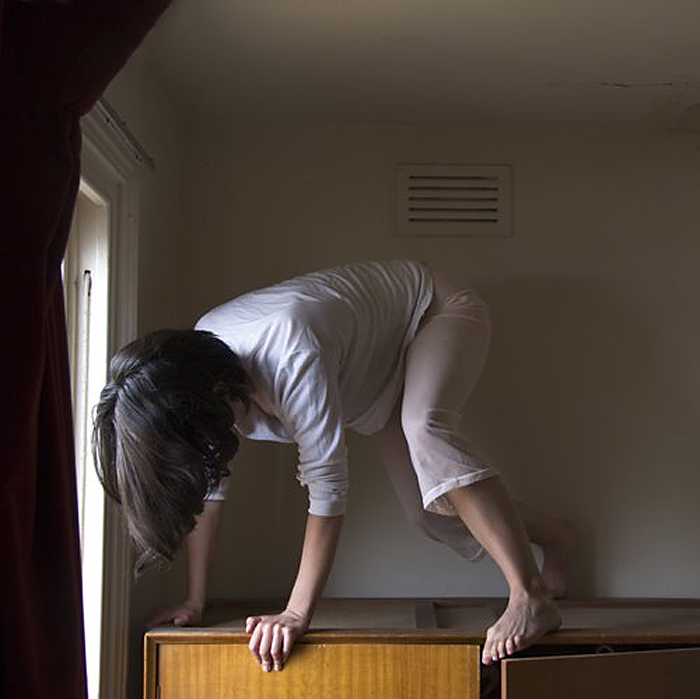
Usually I am not a great fan of ‘faceless’ photography as I call it but this series of work, Climbing the Walls and Other Actions (2009) by the artist Clare Rae is even better than the series by Tracey Moffatt in the previous review.
Exploring activities of the female body in closed domestic spaces these psychologically intense photographs push the physical boundaries of play through the navigation of space. As a child has little awareness about the inherent dangers of a seemingly benign environment so Rae’s self-portraits turn the lens on her conceptualisation of the inner child at play and the activating of the body in and through space. As the artist herself says, “the way children negotiate their surroundings and respond with an unharnessed spatial awareness, which I find really interesting when applied to the adult body.”2
Continuing the themes from the last review, that of spaces of intimacy and reverberation, these photographs offer us fragmentary dialectics that subvert the unity of the archetype, the unity of the body in space. Here the (in)action of the photographic freeze balances the tenuous positions of the body: a re-balancing of both interior and exterior space.
As Noel Arnaud writes, “Je suis l’espace ou je suis” (I am the space where I am). Further, Bachelard notes “… by changing space, by leaving the space of one’s usual sensibilities, one enters into communication with a space that is psychically innovating.”3
In these photographs action is opposed with stillness, danger opposed with suspension; the boundaries of space, both of the body and the environment, the interior and the exterior, memory and dream, are changed.
Space seems to open up and grow with these actions to become poetic space – and the simplicity of the images aids and abets the vastness of our dreams. This change of concrete space does not change our place, but our nature. Here the mapping of self in space, our existence, our exist-stance (to have being in a specified place whether material or spiritual), is challenged in the most beautiful way by these walls and actions, by these creatures, ambiguities, photographs.
Henri Lefebvre insightfully observes, “… each living body is space and has space: it produces itself in space and it also produces that space.”4
I am the (sublime) space where I am, that surrounds me with countless presences.
Dr Marcus Bunyan
1/ Bachelard, Gaston. The Poetics of Space. Boston: Beacon Press, 1969, p. 137
2/ Email from the artist 7th September, 2009
3/ Bachelard, Gaston. The Poetics of Space. Boston: Beacon Press, 1969, p. 206
4/ Lefebvre, Henri. The Production of Space. Oxford: Basil Blackwell, 1974, p. 170
All images by Clare Rae from the series Climbing the Walls and Other Actions 2009. Many thankx to Clare for allowing me to publish them.
Clare Rae (Australian, b. 1981) Untitled 2009 From the series Climbing the Walls and Other Actions Pigment print on Museo Crane Silver Rag 50 x 50cm
Clare Rae (Australian, b. 1981) Untitled 2009 From the series Climbing the Walls and Other Actions Pigment print on Museo Crane Silver Rag 50 x 50cm
Clare Rae (Australian, b. 1981) Untitled 2009 From the series Climbing the Walls and Other Actions Pigment print on Museo Crane Silver Rag 50 x 50cm
Climbing the Walls and Other Actions is primarily concerned with visually representing my experience of femininity, whilst also exploring aspects of representation that relate to feminism. The project considers the relationship between the body and space by including formal elements within each frame such as windows and corners. Through a sequence of precarious poses I explore my relationship with femininity, an approach born of frustration. I use the body to promote ideas of discomfort and awkwardness, resisting the passivity inherent in traditional representations of femininity. The images attempt to de-stabilise the figure, drawing tension from the potential dangers the body faces in these positions. Whilst the actions taking place are not in themselves particularly dangerous, the work demonstrates a gentle testing of physical boundaries and limitations via a child-like exploration of the physical environment.
Text from the Centre for Contemporary Photography website [Online] Cited 15/09/2009. No longer available online. Used under fair use conditions for the purposes of education and research
Clare Rae (Australian, b. 1981) Untitled 2009 From the series Climbing the Walls and Other Actions Pigment print on Museo Crane Silver Rag 50 x 50cm
Clare Rae (Australian, b. 1981) Untitled 2009 From the series Climbing the Walls and Other Actions Pigment print on Museo Crane Silver Rag 50 x 50cm
Centre for Contemporary Photography Level 2, Perry St Building Collingwood Yards, Collingwood Victoria 3066
Exhibition dates: 7th August – 27th September, 2009
Curator: the artist
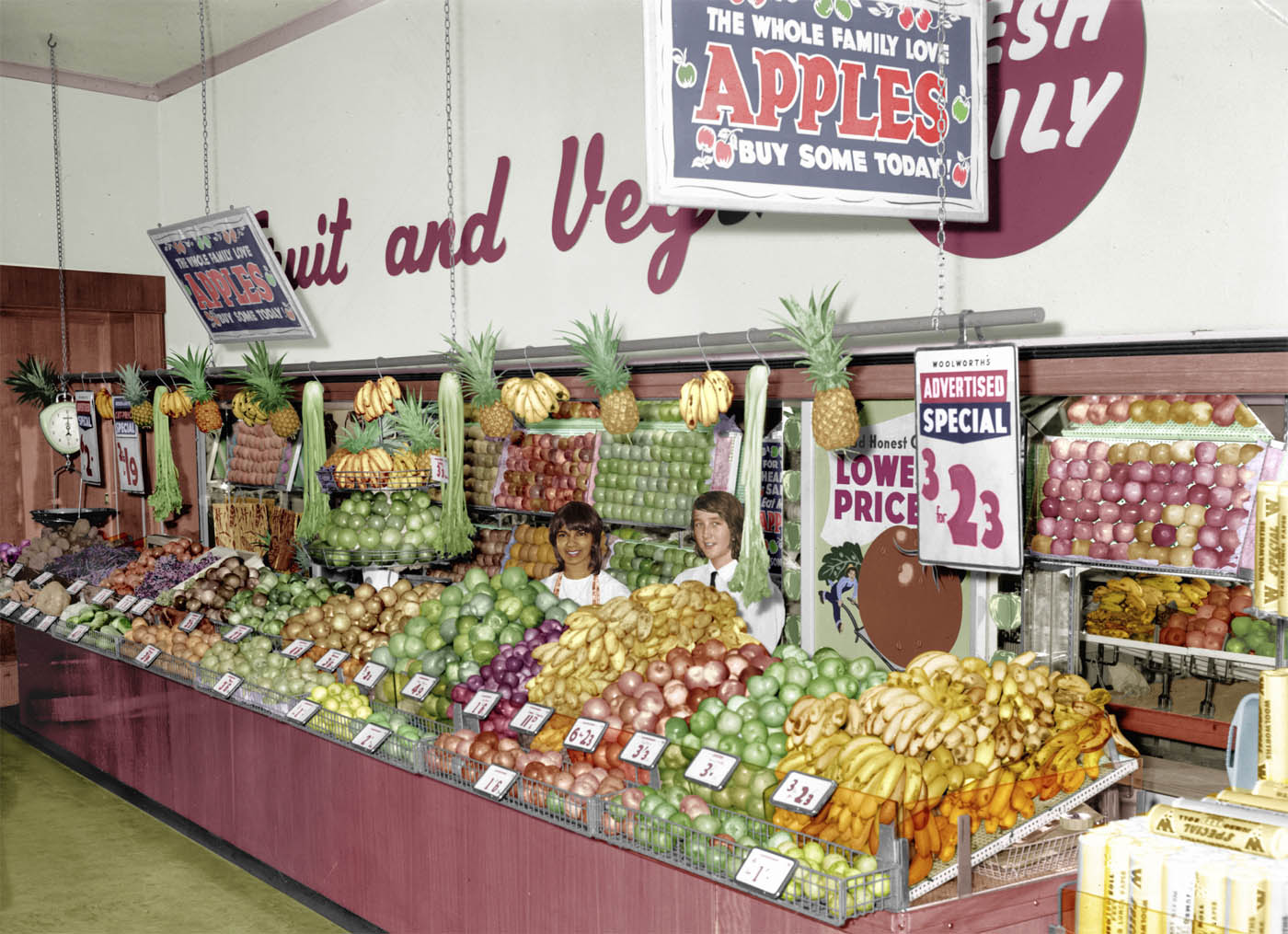
Tracey Moffat (Australian, b. 1960) First Jobs, Fruit Market 1975 Archival pigments on rice paper with gel medium 71 x 91.5cm
There are some wonderful bodies of photographic work on show around Melbourne at the moment and this is one of them.
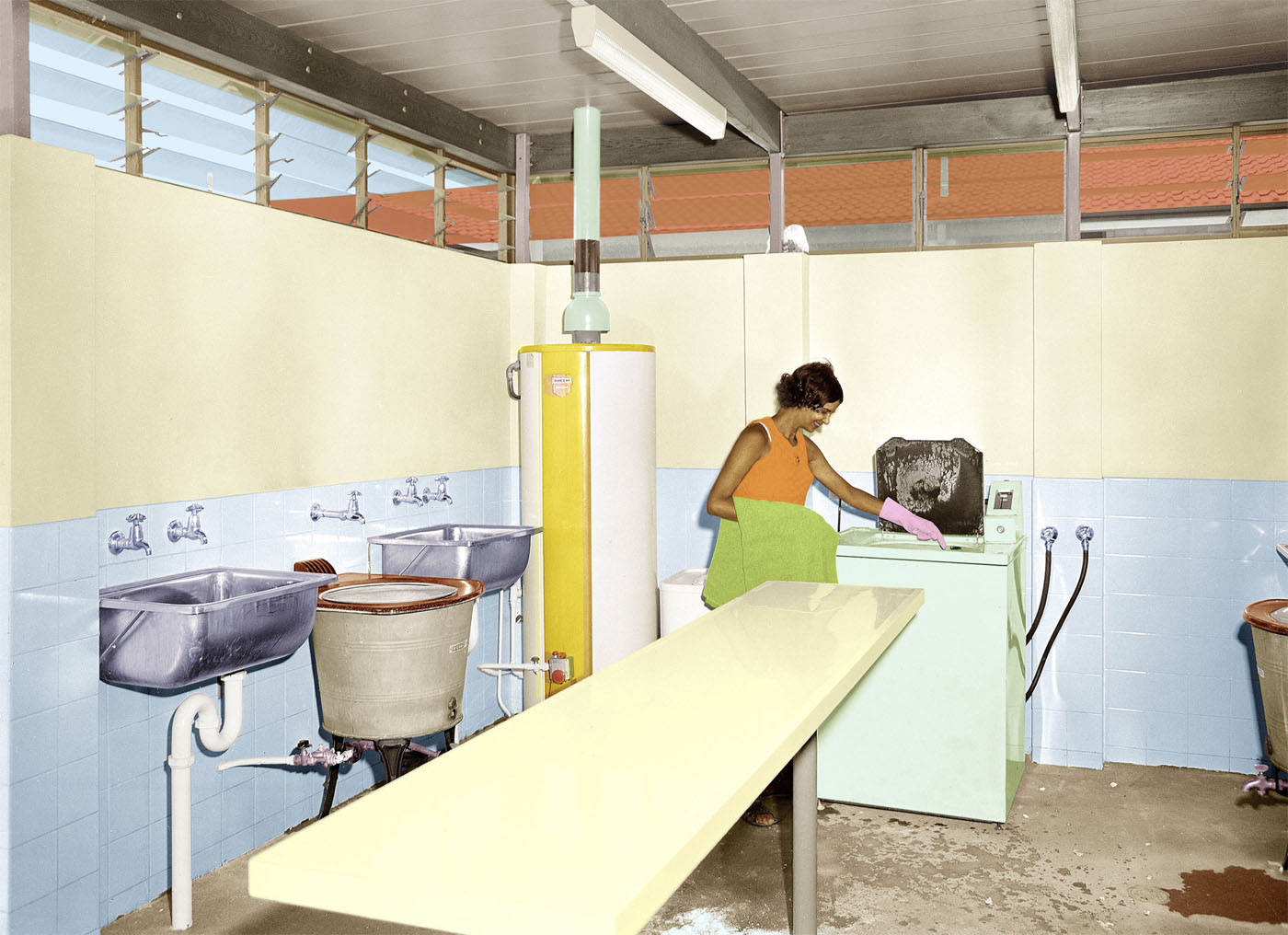
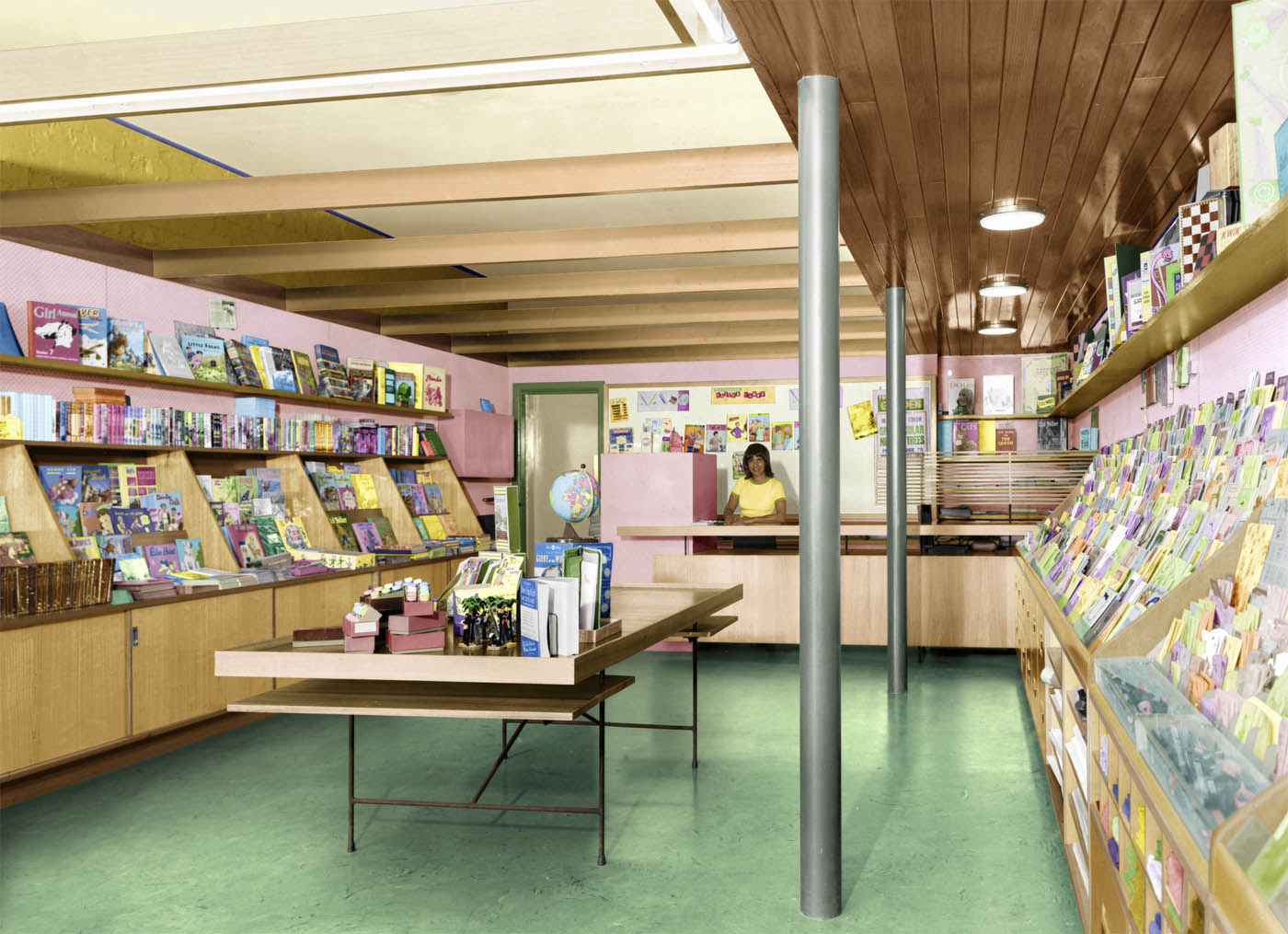
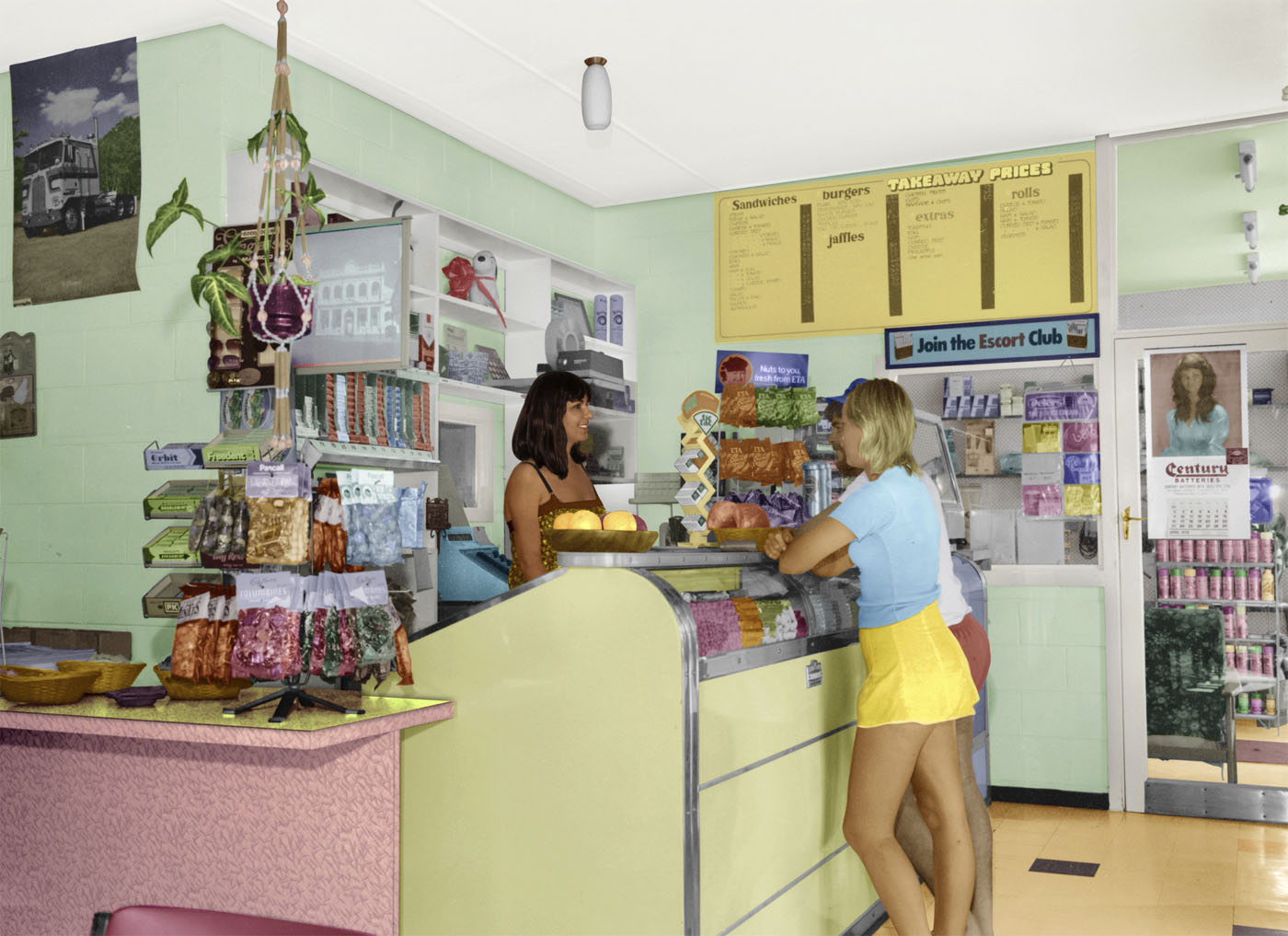
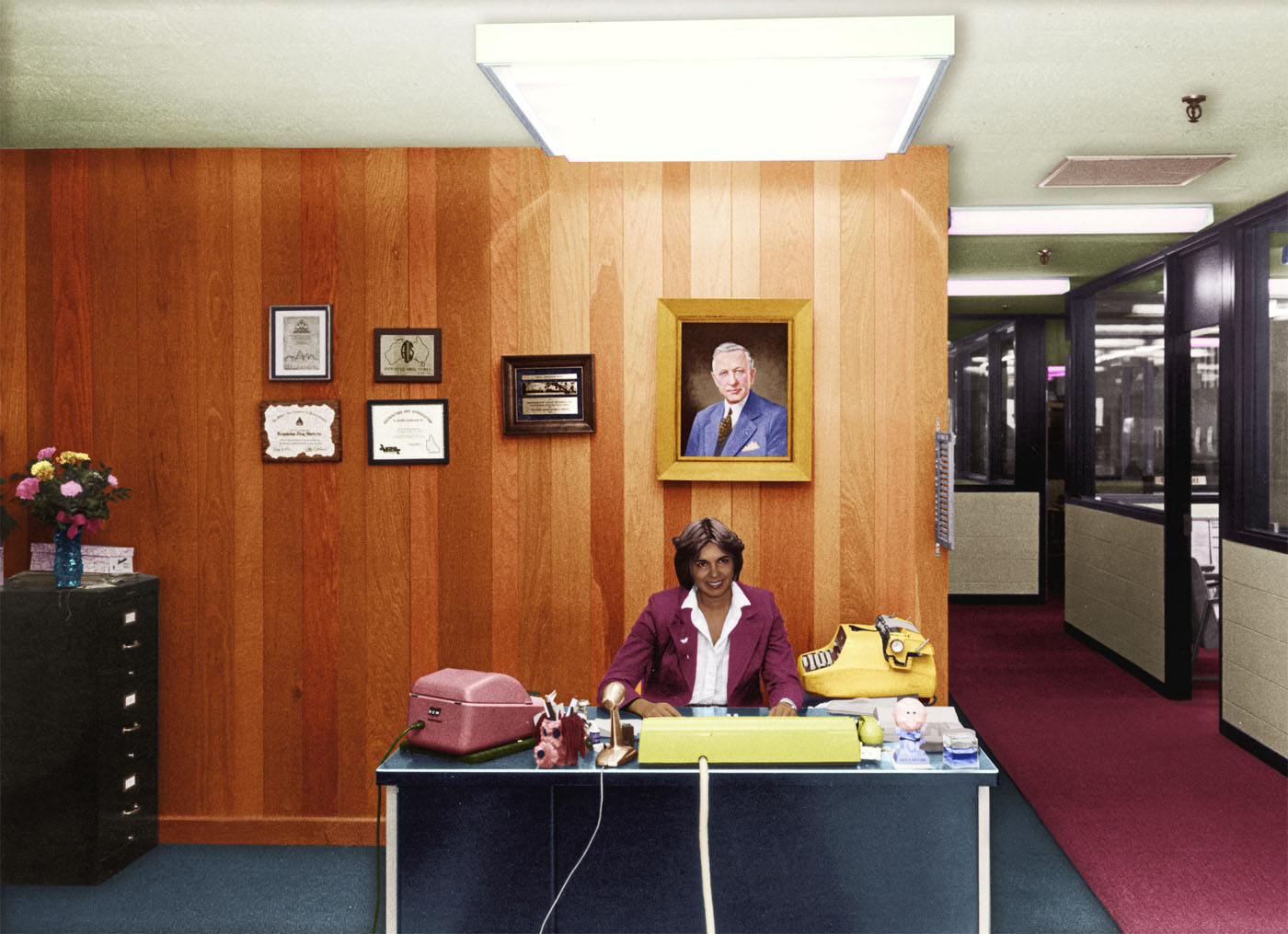
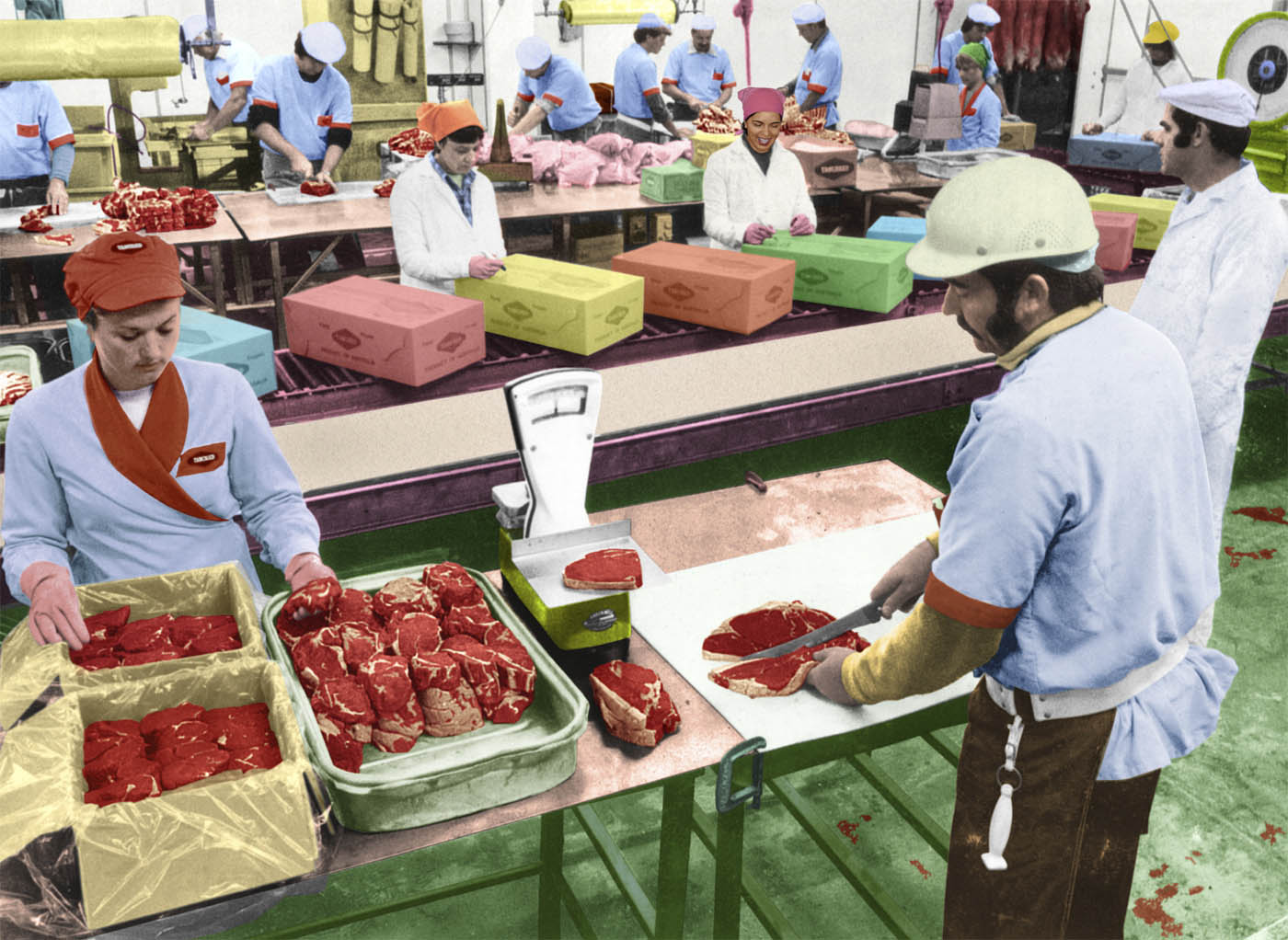
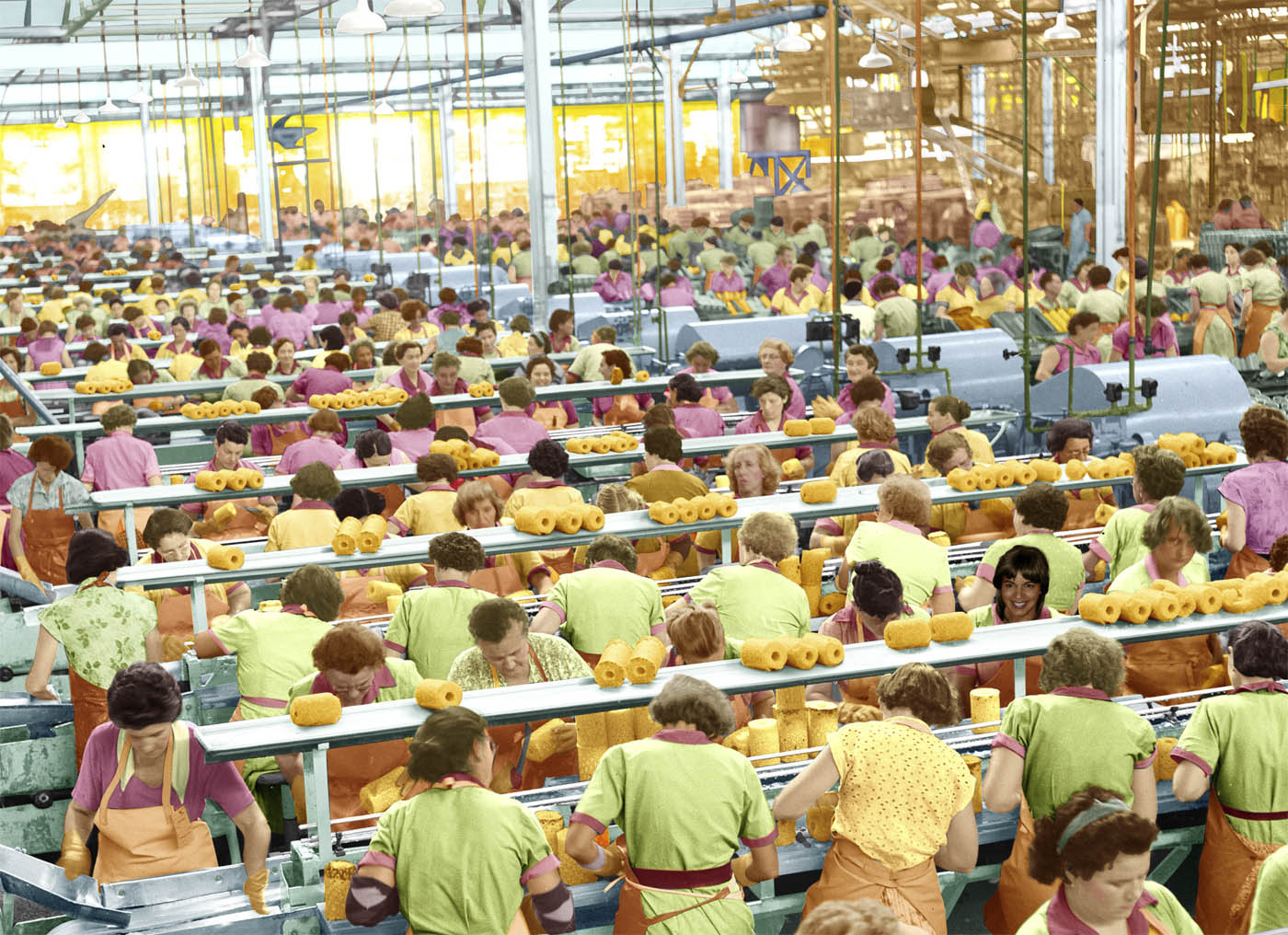
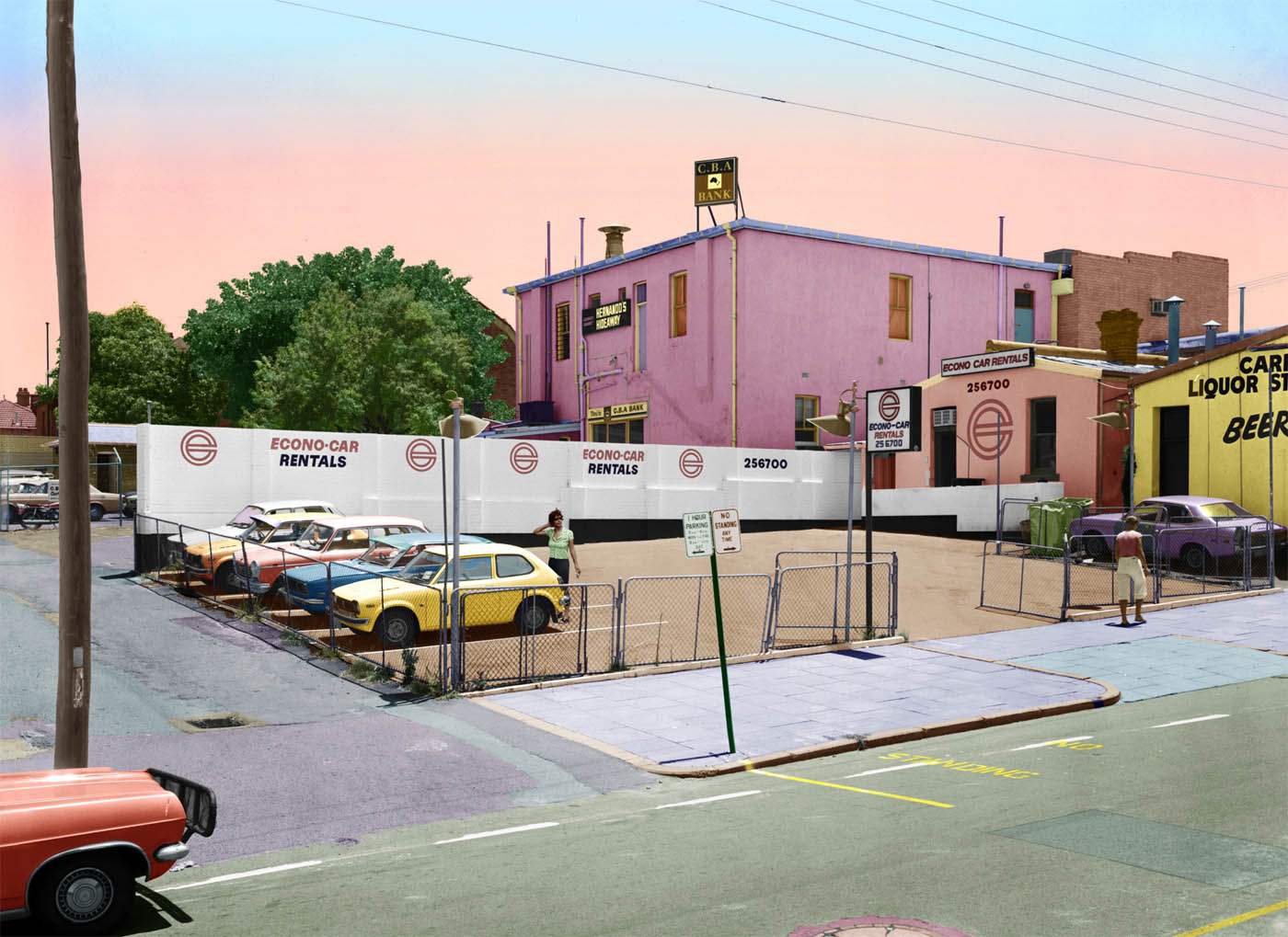
Featuring twelve archival pigment-on-rice paper with gel medium prints, Tracey Moffatt’s series First Jobs (2008) is a knockout. Images of the artist are inserted into found photographs which are then “hand coloured” (like old postcards) in Photoshop.
Moffatt’s series conceptualises the early jobs that she had to do to survive – investigating the banality of the jobs, the value of friendships that were formed coupled with an implicit understanding of the dictum ‘work is life’.
Moffatt’s images hark back to the White Australia policy of the 1950s and the home and living books of that period. With their hyper-real colours, strange coloured skies, green washing machines and purple tarmac Moffatt amps up the voltage of these images and subverts their idealisation.
Here is the re-presentation of the physical and spatial isolation of the figure (store clerk / housekeeper) or the sublimation of the usually female figure into the amorphous mass of the whole (meat packing / pineapple cannery) in quintessentially Australian environments. Here also is comment on the nature of a patriarchal society – the smiling receptionist sitting under the portrait of her male boss, awaiting his command.
The spaces of these photographs seem to (literally) consume the artist and her remembrance of these jobs. Despite her smiling face in each of the images we implicitly understand the banality of the jobs for we have done them ourselves. We know these spaces intimately: the spaces inhabit us as much as we inhabit them. As the viewer we experience the being of these images, their reverberation, where the two kinds of space – the space of intimacy and the world space – blend.1
The only sour note of the series comes not in the work itself but in the accompanying artist statement (see below).
In this churlish expose of the ‘woe is me, I’m a full time artist and isn’t it so difficult to be a full time artist’ variety, Moffatt complains about the miserable voices in her head and about having to get up off the couch because she is the only person able to make the work and the money.
Oh to be so lucky to actually make a living as a full-time artist and have the time and space to be creative seven days a week!
Would I have her situation anytime soon? Ha, um, yes.
Dr Marcus Bunyan
1/ Bachelard, Gaston. The Poetics of Space. Boston: Beacon Press, 1969, p. 203.
Many thankx to the Centre for Contemporary Photography for allowing me to publish the photographs in the posting.
Tracey Moffat (Australian, b. 1960) First Jobs, Housekeeper 1975 Archival pigments on rice paper with gel medium 71 x 91.5cm
Tracey Moffat (Australian, b. 1960) First Jobs, Store Clerk 1975 Archival pigments on rice paper with gel medium 71 x 91.5cm
Tracey Moffat (Australian, b. 1960) First Jobs, Corner Store 1977 Archival pigments on rice paper with gel medium 71 x 91.5cm
Tracey Moffat (Australian, b. 1960) First Jobs, Receptionist 1977 Archival pigments on rice paper with gel medium 71 x 91.5cm
Tracey Moffat (Australian, b. 1960) First Jobs, Meat Packing 1978 Archival pigments on rice paper with gel medium 71 x 91.5cm
Over the years my friends and I joke about our dreadful past jobs. Jobs we worked as teenagers and young students. Awful jobs that we would rather forget about such as cleaning out the local cinema after a screening of The Exorcist in 1974.
When I was a kid I always had jobs and I always made my own money whether it was receiving a dollar for pulling up the weeds in the yard or baby sitting for neighbours or working at the local green grocers. The thing about making a bit of your own cash was that you could buy your own clothes and not have to wear the clothes that your mother picked out.
In 1978 at seventeen I worked in factories peeling pineapples. I also packed meat and shelled prawns. Such back breaking labour was exhausting but the money was good. After one year I saved enough money to travel to Europe and backpacked around for nine months. Then in 1980 I went to art school in Brisbane but continued part-time work as a waitress to pay for art materials.
After art school I was desperate for money to pay the rent and I worked many jobs. Some were: scrubbing floors in a women’s refuge, washing dishes in a canteen and parking cars in a car park beneath a restaurant called Dirty Dicks (I had no driver’s licence, but the patrons were always drunk and didn’t care.)
I am resentful and appalled at the work I had to do to survive. I hold a grudge towards rich kids who never had to slave like I did. Secretly though I’m proud of myself. When I think of those early years I realise that I was learning to be tough and work whether I liked it or not. I put my head down and was forced to be productive. I was learning how to get on with other people and learning to handle a boss. These days I do nothing but make art and have exhibitions. Being an artist feels like being on a permanent but jittery holiday in comparison to those early working days. Now I sleep in until 9.30am and press the ‘ignore’ button on my phone if I don’t feel like talking to anyone. But, as Bette Davis put it, it is ‘The Lonely Life’. You have come up with the ideas and make them happen. No-one else is going to do it for you.
But I remember the good things about the factory floor. Walking into work everyday and saying hi to people you knew, there was a camaraderie. The work was mindless but it didn’t mean that your mind couldn’t go places. Then there was knock-off time. The bell would ring and you would be out the door with a wad of cash in your hand and not a care in the world.
In being a full-time artist there never is any knock-off time. There’s always a nagging, miserable voice of ideas in your head and you MUST get up off the sofa and produce work. The bell never rings and you never know where your next buck is coming from. Your mind is constantly wound up. You’re never really physically tired not like when you had a real honest job. But would I go back to working in a factory just to get good a night’s sleep? Ha, um, no.”
Tracey Moffatt, New York 2008
Press release from Roslyn Oxley9 Gallery [Online] Cited 23/04/2019. Used under fair use conditions for the purposes of education and research
Tracey Moffat (Australian, b. 1960) First Jobs, Pineapple Cannery 1978 Archival pigments on rice paper with gel medium 71 x 91.5cm
Tracey Moffat (Australian, b. 1960) First Jobs, Parking Cars 1981 Archival pigments on rice paper with gel medium 71 x 91.5cm
Tracey Moffat (Australian, b. 1960) First Jobs, Canteen 1984 Archival pigments on rice paper with gel medium 71 x 91.5cm
Centre for Contemporary Photography Level 2, Perry St Building Collingwood Yards, Collingwood Victoria 3066
Exhibition dates: 19th August – 5th September, 2009
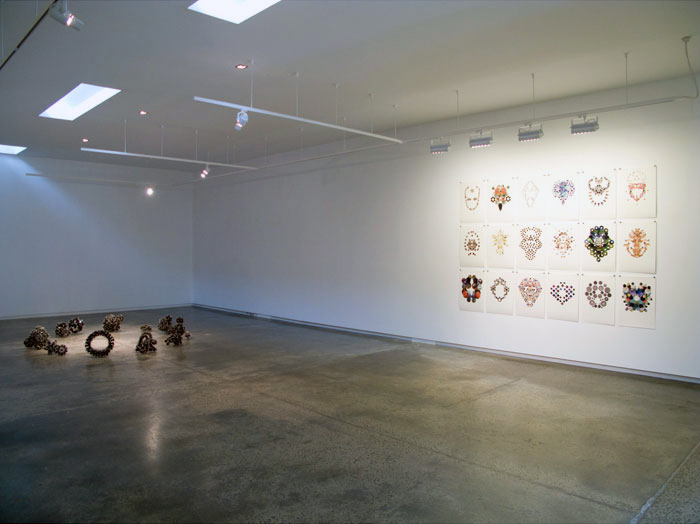
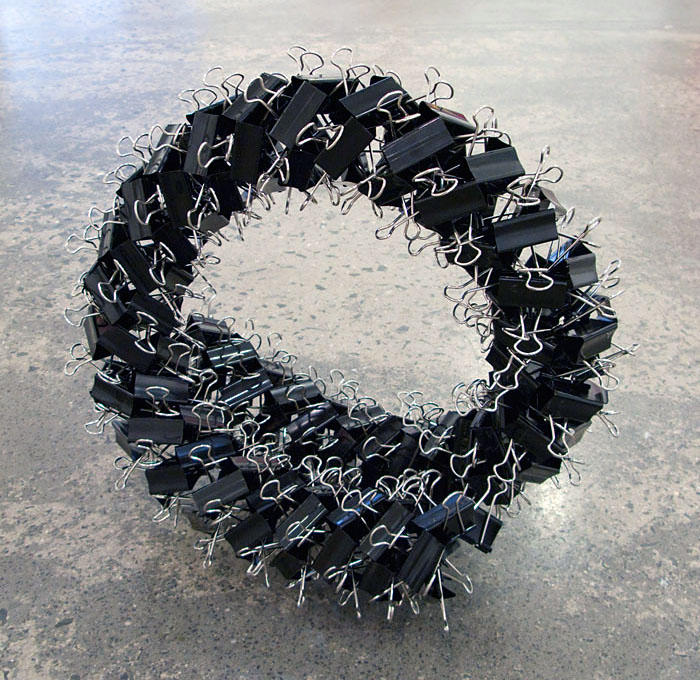
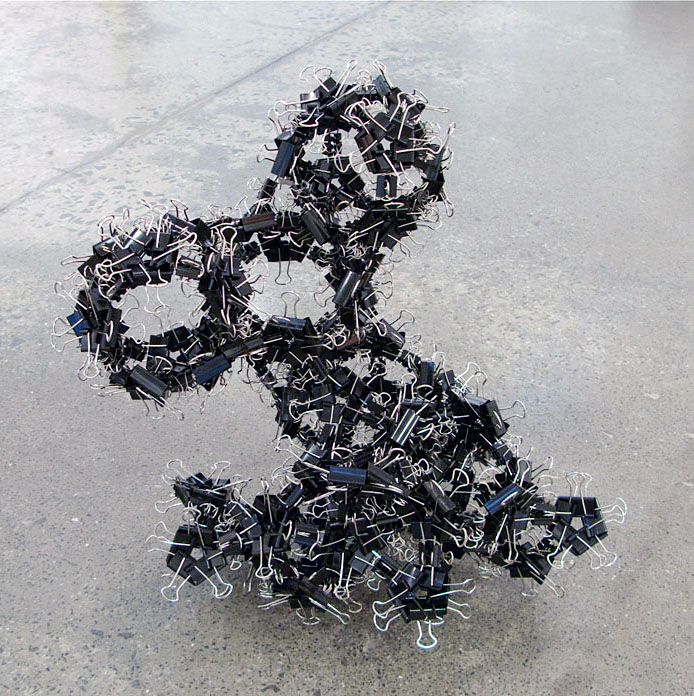
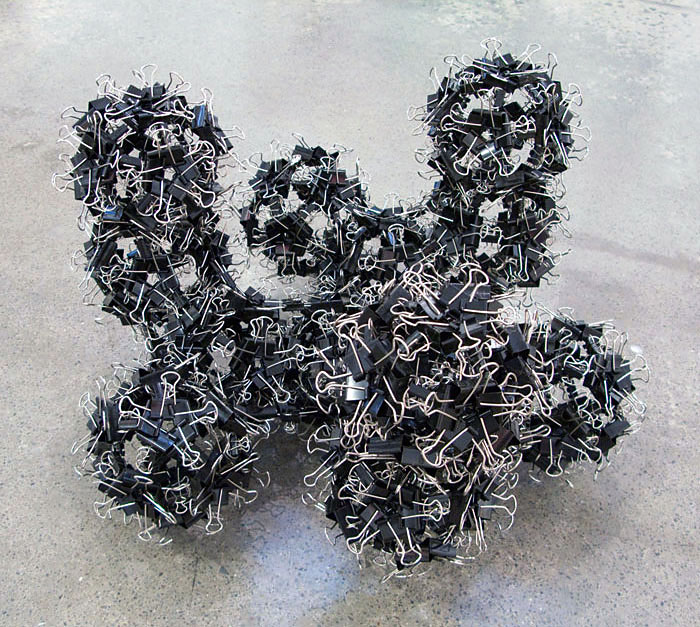
Carl Scrase (Australian, b. 1983) Fractal Alchemy installation view 2009
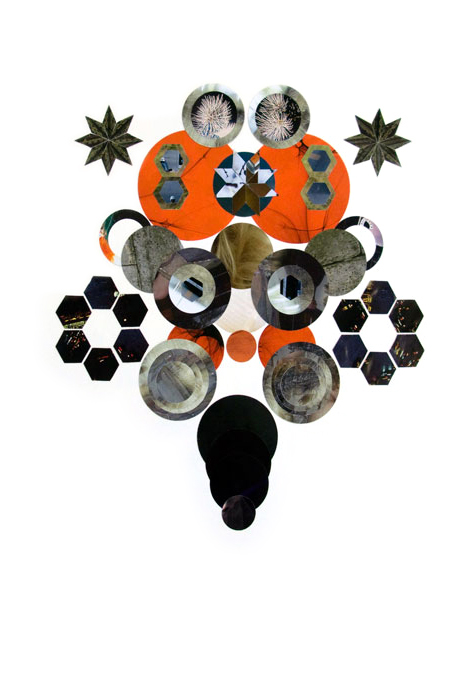
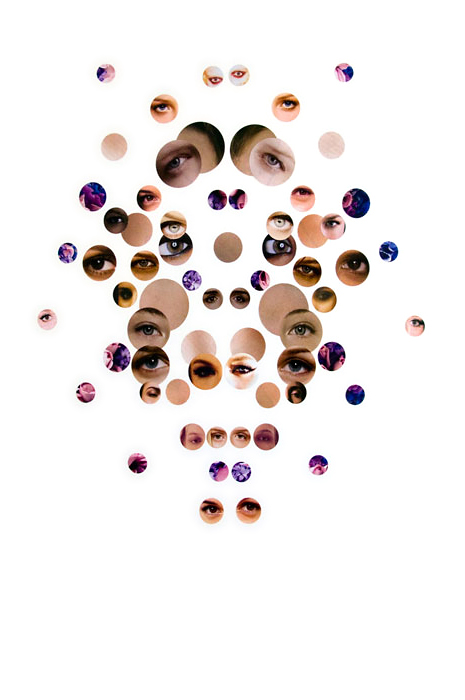
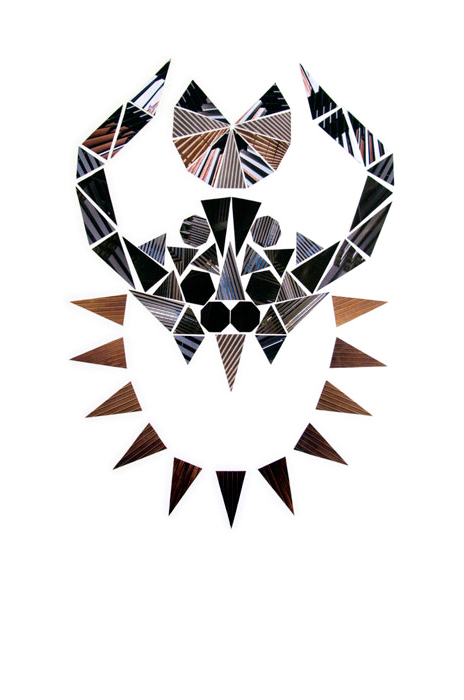
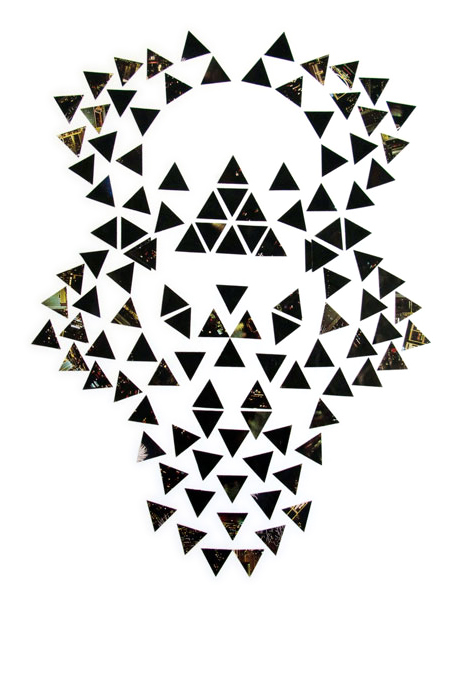
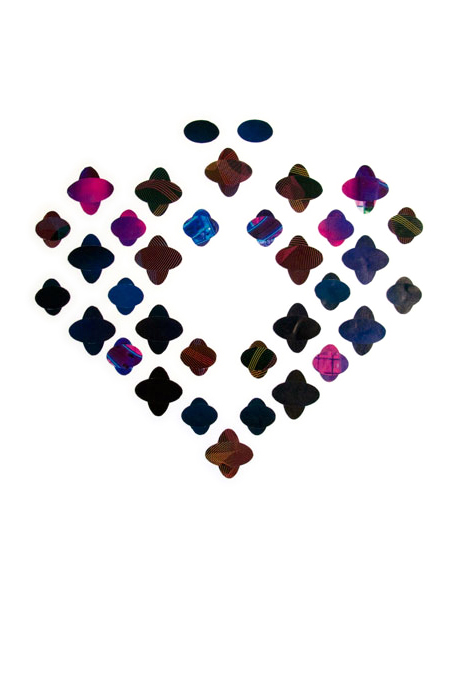
This is a slight exhibition of collages and constructions by Carl Scrase at John Buckley Gallery, Melbourne. Ironically, given the nature of the catalogue essay by Tai Snaith (see below) that waxes lyrical about the mystery and magic of symmetry, synchronicity and spirit, this exhibition lacks the depth of purpose needed to address spiritual elements that are the very basis of human existence.
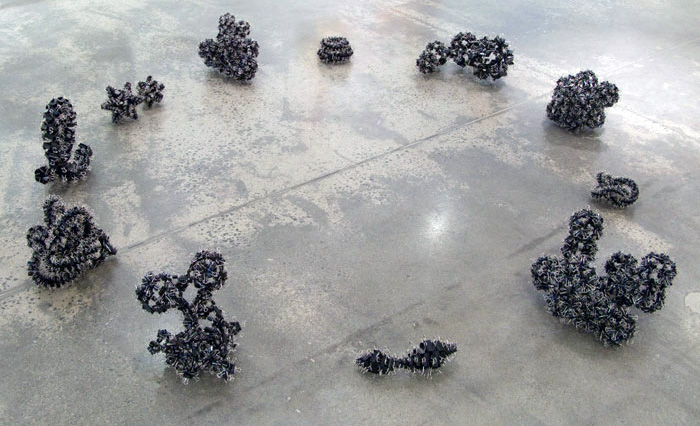
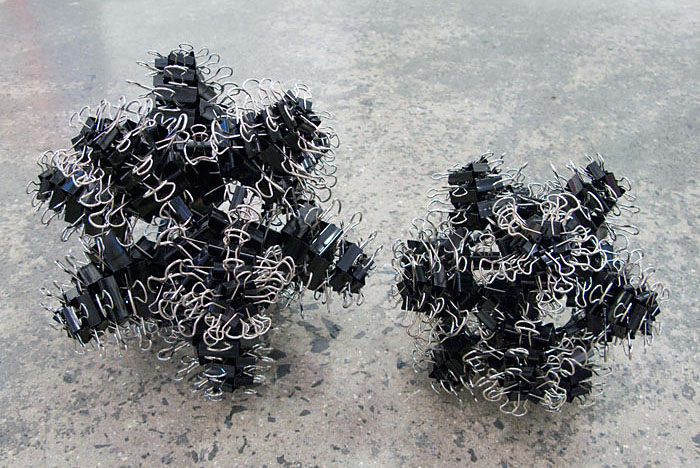
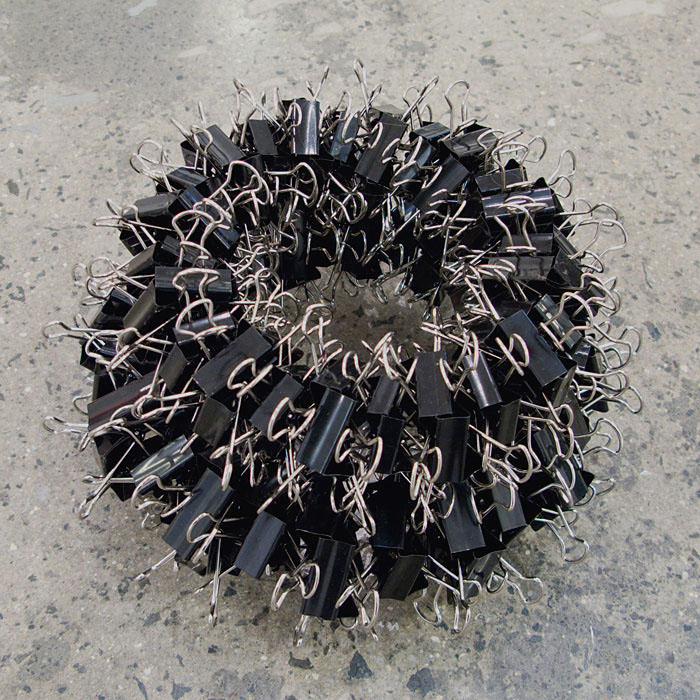
The biomorphic forms that go to make up the work Fractal Alchemy (2009) fair better in this regard, the various size bull dog clips offering non-representational patterns that resemble living organisms and genetic structures in shape and appearance. At their best these elemental shapes start to transcend form and function to become something else: an instinctive and intuitive connection to the inherent fold in the universe, like the embedded pattern, the DNA template in a blank piece of paper before the folding of the origami model. Unfortunately the wonder of this piece is short-lived. Unlike the ever magical repetition of fractal geometry with its inherent iteration of forms that constantly a/maze, here the shapes are not stretched far enough, the exposition not grounded in broken or fractured forms that invite alchemical awareness in the viewer.
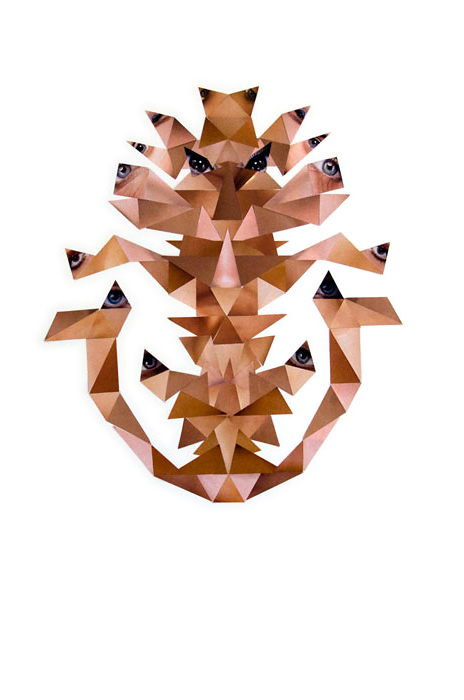
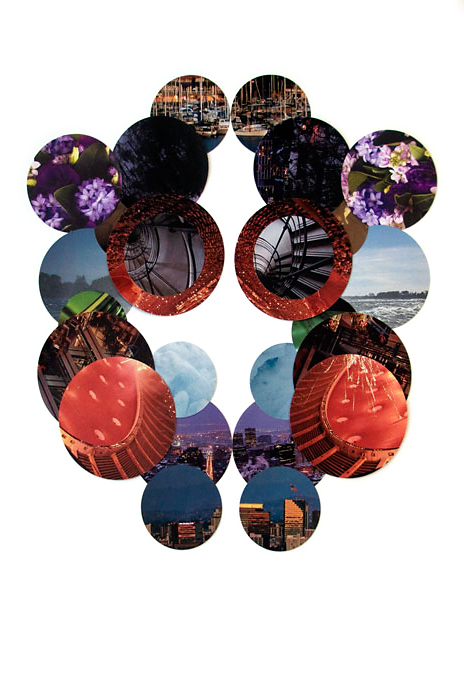
The collages are less successful in this mystery project. Made from cut-up images from magazines these symmetrical constructions lack spiritual presence. Like the aspired to symmetrical beauty of a human face it is, paradoxically, the irregularities of the human face that are their most attractive feature – our individuality. In the photographic stereoscopes of Victorian landscapes it is the difference between the left and right image that adds three-dimensional depth in the eye of the viewer, that transports them to other places, other worlds. In the collages of Picasso it is the irregularities that also transport the viewer into a hypertextural, hypertextual world of wonder. Scrase’s collages on the other hand, are flat, rigidly symmetrical life-less things that belie their stated aim – to be kaleidoscopic spirit guides in search of a pattern for inner peace. Although some of their forms are attractive their is no wonder, no my-story to be gleaned here.
Overall the work lacks the gravitas and sense of fun in and through the act of creation that the concepts require: to see things clearly and to ground this visualisation in objects that transcend ‘now’ and extend spirit into the eternal. These constructions do not stand as ‘equivalents’ for other states of consciousness, of being-in-the-world, nor do they offer a re-velatio where they open up ‘poetic spaces’ in which the alienation and opposition of inside and outside, of objectivity and subjectivity are seen to be disconnected. The Japanese ‘ma’, the interval which gives substance to the whole, is missing.
To express deep inner emotions and connection to spirit requires utmost focus on their expression-in-the-world, a releasement from ego and a layering of materials and form that transport the object and viewer into an’other’ plane of existence. Unfortunately this work falls short of this state of no-desire.
Dr Marcus Bunyan
Many thankx to John Buckley Gallery for allowing me to publish the photographs in the posting.
Carl Scrase (Australian, b. 1983) Fractal Alchemy installation view 2009
Carl Scrase (Australian, b. 1983) Fractal Alchemy (detail) 2009
Carl Scrase (Australian, b. 1983) Fractal Alchemy (detail) 2009
Carl Scrase (Australian, b. 1983) Fractal Alchemy (detail) 2009
Carl Scrase (Australian, b. 1983) Fractal Alchemy (detail) 2009
Carl Scrase (Australian, b. 1983) Fractal Alchemy (detail) 2009
Carl Scrase is a perfect example of an artist marking the turn of a tide. At this distinct ebb of the ravenous, rampant seas of consumption and production we’ve been surfing for the past couple of hundred years and with the onset of the new flow, towards the riptide of Mayan prophesies of fast approaching 2012, Carl is on it, or should I say in it. And he’s splashing around.
This new generation of creative humans (to which Carl belongs) are not really concerned with how much money, time or status something is worth, or what kind of flashy object the human next to them owns. They seem to be more interested in what kind of wisdom can be procured, how many friends can be found and how a thing can be recycled or was born from something else. It is all about a search for the spirit, the feeling. Moreover, what it means. We are getting sick of the bland smog of consumerism, the stench of blatant big business and seem to be looking for escape pointers, for enlightenment, for answers and for CHANGE.
Carl’s work suggests his role as an artist is almost akin to a kind of medium slash alchemist – a self-proclaimed, new-age, anonymous shaman of sorts. Big boots to fill indeed, but don’t worry, its not like Carl is about to declare himself a Secret Chief and start welcoming in the new Golden Dawn or reading your tarot at openings. Nor is he concerned with the alchemical properties and behaviour of inorganic compounds or scientific explanations or measurements of the planets. His interest lies in noticing the sparkling mist of questions surrounding these things. The mystery and magic of how these marvels, such as symmetry and synchronicity occur in nature and how we can possibly learn from them and experience them in our day-to-day lives.
A true spiritualist in an atheist age, Carl uses his work as a kind of cipher for sorting his beliefs via a material creative process. His collages begin with found images from magazines, chosen relatively arbitrarily. His sculptures begin in a similar fashion with found objects, usually of the mundane or mass produced variety. It may be that they are all parts of images of human faces or just a complete add for a pair of Crocs or a hundred boxes of bull dog clips. Starting with the colour and then cutting the shape, or with the objects and then finding their natural function- almost as if listening to an instinctive, visual Ouija board somewhere in his subconscious. Carl then arranges the pieces through play. Similar to the way that you need to relax your eyes to receive the effects of a Magic Eye picture (remember them?), Carl relaxes his mind in order to let his collages find their final composition. This allows a kind of subconscious code to come forward, thus acting as both a reflection of his thoughts but also a kind of guide or suggestion for other’s thoughts, and perhaps something deeper that we don’t understand just yet.
I remember as a child I found an empty plastic tubular casing of a biro pen whilst walking along the beach one day. It had been washed and scratched by the ocean and gave the pale blue, semi-translucent plastic a soft almost sparkly effect. I picked it up and instinctively looked through the tiny tunnel at the sun. The way the sunlight refracted through the plastic before reaching my retina made me think of a magical kaleidoscope and I immediately classified it as having ‘special powers’, granting it prime position in my pocket for months. It became a type of personal talisman or spirit guide.
Traditionally, in animist belief systems (such as Shinto and certain parts of Hinduism) sprits need either an object or a medium (ie, thunder, lightening, wind, animals, plants, etc) to be experienced or seen by humans. They need something else to exist in order to communicate with us. Carl’s images and objects seem to suggest or demonstrate this kind of medium as well as subtly questioning the message. In the same way that a child finds wonder in the changing symmetry of a Kaleidoscope before they even understand the science of the mirror involved, there is a wonder in these images and objects as soon as we encounter them. A wonder in creation, in ritual, in synchronicity and light. A wonder in life.
For Carl, the practice of Alchemy (and in this instance one might just as comfortably read Alchemy as Art) is ‘not the search for some magic potion’ but rather the ‘awareness that all life is eternal and the inner peace that comes from that realisation’. Just as we recognise similar patterns within nature, like the spiral formation of a shell or the layering of petals on a flower or the direction of the hair growing on a man’s scalp, we can notice these patterns on a spiritual and philosophical plane also. It doesn’t take a genius to recognise a similar search for meaning and self-realisation being revisited amongst some of the most interesting artists of our time, but let’s just hope that the search continues to prove that the process of making art itself is both the question and the answer.
Tai Snaith 2009
Text from the John Buckley website [Online] Cited 20/08/2009. No longer available online. Used under fair use conditions for the purposes of education and research
Carl Scrase (Australian, b. 1983) Spiritguide 090501 2009
Carl Scrase (Australian, b. 1983) Spiritguide 090624 2009
Carl Scrase (Australian, b. 1983) Spiritguide 090504 2009
Carl Scrase (Australian, b. 1983) Spiritguide 090509 2009
Carl Scrase (Australian, b. 1983) Spiritguide 090520 2009
Carl Scrase (Australian, b. 1983) Spiritguide 090601 2009
Carl Scrase (Australian, b. 1983) Spiritguide 090617 2009























You must be logged in to post a comment.