Exhibition dates:28th November – 20th December, 2008
Daniel Crooks (New Zealand, b. 1973) Intersection No.2 (vertical plane) 2008
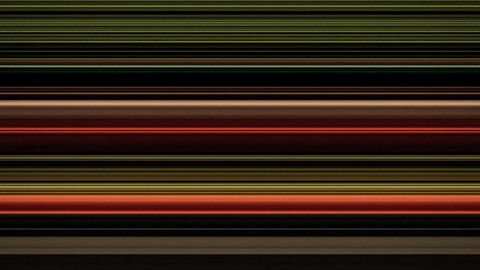
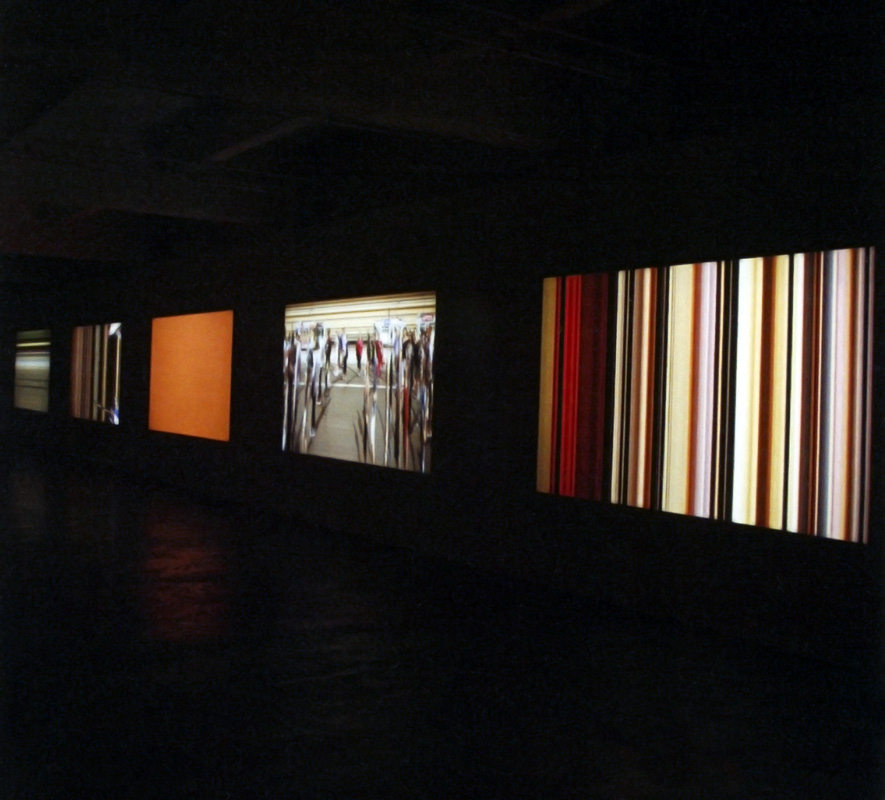
This was a magical exhibition – beautiful, insightful and mesmerising in equal parts. Five large video screens were presented in the long space of the Anna Schwartz gallery in Melbourne. The outer two videos feature striated horizontal and vertical bands of pulsating colours, fluxing up and down and from side to side, seemingly rushing past like tarmac outside a moving car. These videos add balance at each end of the installation.
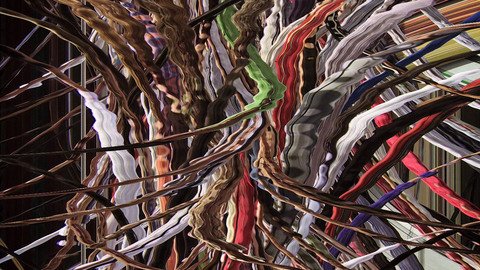
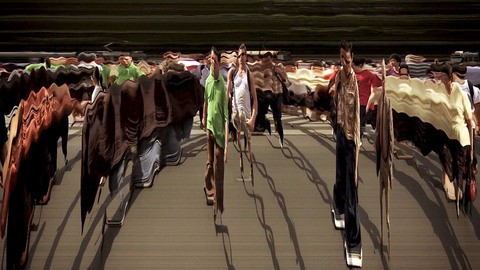
The inner videos on either side of the central panel are the most figurative of the work: the video on the left-hand side reminded me of a Jackson Pollock drip painting come alive, ribbons of paint in time and space morphing backwards, finally coalescing into figures and their shadows walking across tarmac; the video on the right-hand side shows people moving across a pedestrian intersection like an animated slow motion photograph flowing anamorphically across the screen, their shadows distorted on the ground as trams pass behind them. Up close the surface of the projected video breaks down into grided squares of light, hypnotic in their blooming, shape-shifting colours.
The central panel is the key to the whole work. Intensities of colour flash and fade in time with atmospheric ambient music (by J. David Franz and Byron Scullin) that works effectively with the whole installation. Beeps of the pedestrian crossing intersection intersperse the ambient music adding an almost sonar like pinging to the atmospheric soundtrack; after-images appear and glow as the colours fade, transcending the solidity of the ever-changing single pixel of colour taken through the block of video time. The pyrotechnics of the other screens are balanced by the colours/intensities/music of this central panel.
The installation reminds me of a folded out five-panel religious altarpiece form of the 15th century. The figures, shadows and lines of the outer videos surround the pulsing heart of the central panel that, for me, took on an almost transcendent spirituality (especially when you understand the transcendence of time and space that is being achieved and how that relates to your own path in life). If you stand very still against the far wall of the gallery and look at all five videos at the same time the central panel achieves the ‘Intersection’ that Daniel Crooks is imagining.
Subtle, profound and intelligent the viewer is invited to spend time, no, to transcend time in the company of this work and that is a major achievement: to reveal certain truths about our existence in these moments of time, to inhabit the space between breath – no time, no space.
Dr Marcus Bunyan
Daniel Crooks (New Zealand, b. 1973) Intersection No.5 (horizontal volume) 2008
“The subjects of Daniel Crook’s oeuvre; the recurrence of city transport systems, lifts in high-rise buildings alongside images of the sea, invoke an idea of the world made as much of time as space and that indeed we ourselves are also made of time …
Daniel Crooks works, literally, from inside the medium, deconstructing its time-space matrix to reveal the inner truth about the subjects of video: they are purely temporal.
The five works comprising Intersection are all sourced from the same ‘volume’ of video footage. Each video is a formal variation that navigates an alternative path through the same light field, pushing its own ‘picture plane’ through the space along opposing axes.
The two most figurative videos navigate the entire volume of footage – each swapping time for the vertical or the horizontal. The second, more abstracted videos are reduced to horizontal and vertical ‘planes’. The centre work – a single pixel of information that tunnels through time – is the intersection between opposing axes, almost like the fulcrum or nodal point, and in turn acts as a pivot for the installation.”
Catalogue notes from Daniel Crooks exhibition Intersection at Anna Schwartz Gallery, Melbourne.
Daniel Crooks (New Zealand, b. 1973) Intersection No.4 (vertical volume) 2008
Daniel Crooks works predominantly in video, photography and sculpture. He is best known for his digital video and photographic works that capture and alter time and motion. Crooks manipulates digital imagery and footage as though it were a physical material. He breaks time down, frame by frame. The resulting works expand our sense of temporality by manipulating digital ‘time slices’ that are normally imperceptible to the human eye.
Intersection installation view at Anna Schwartz Gallery, Melbourne Photo: Marcus Bunyan
Addendum 2019
Daniel Crooks Static No. 12 (extract) 2012 HD Video Courtesy Daniel Crooks & Anna Schwartz Gallery
Artistic Responses by Daniel Crooks | Symposium: Wider Vantages Are Needed Now, Times 18 2013
Daniel Crooks, New Zealand-born and Melbourne-based, is one of the foremost innovators in the quickly evolving fields of video and digital art.
Daniel Crooks: Phantom Ride 2016
Daniel Crooks’ Phantom Ride alludes to cinema history to create a seamless journey through a composite reality. By manipulating digital footage as though it were a physical material, the artist has constructed a collaged landscape that takes us through multiple worlds and shifts our perception of space and time.
Anna Schwartz Gallery 185 Flinders Lane Melbourne, Victoria 3000
Exhibition dates: 15th November – 23rd December, 2008
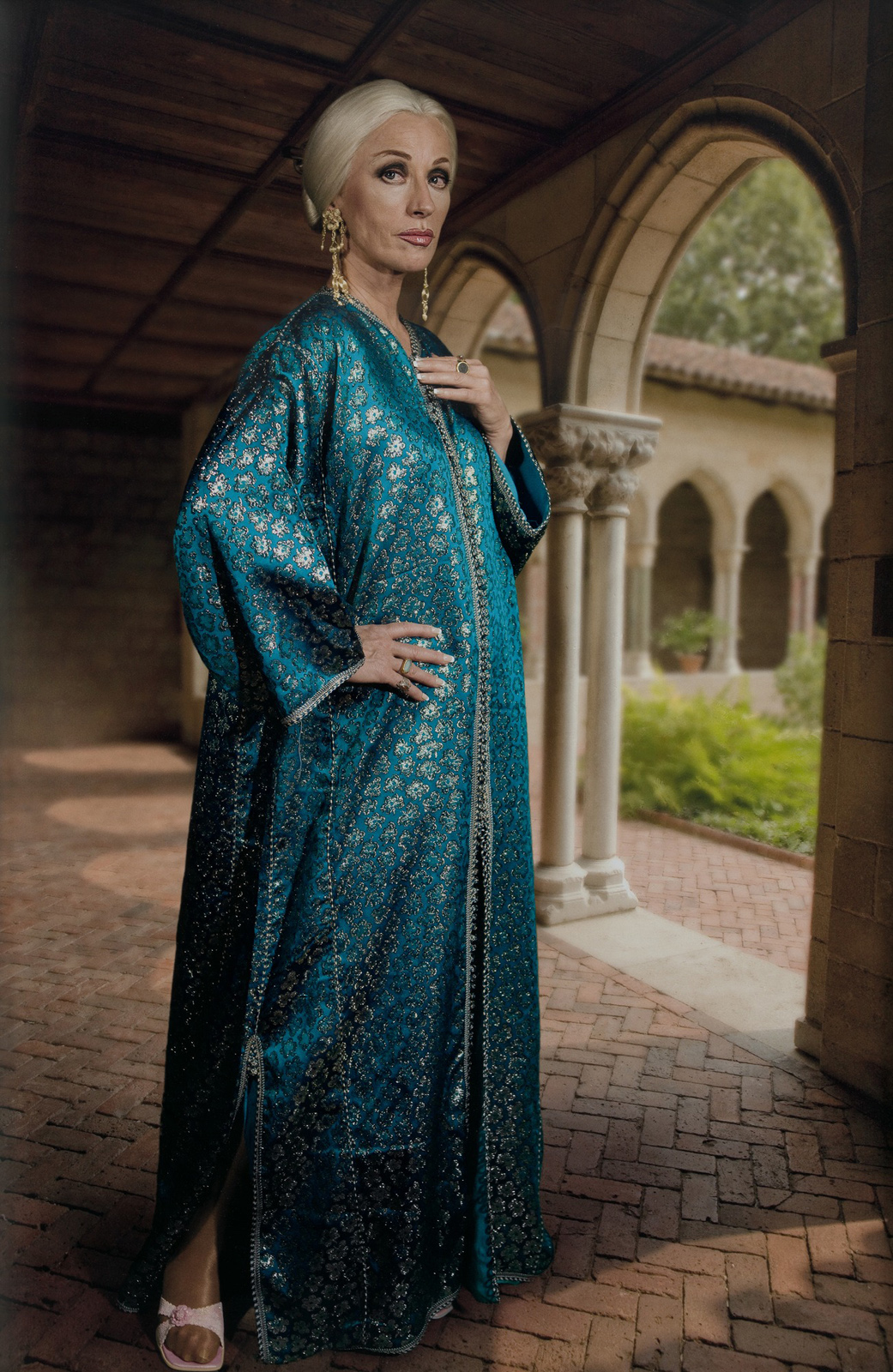
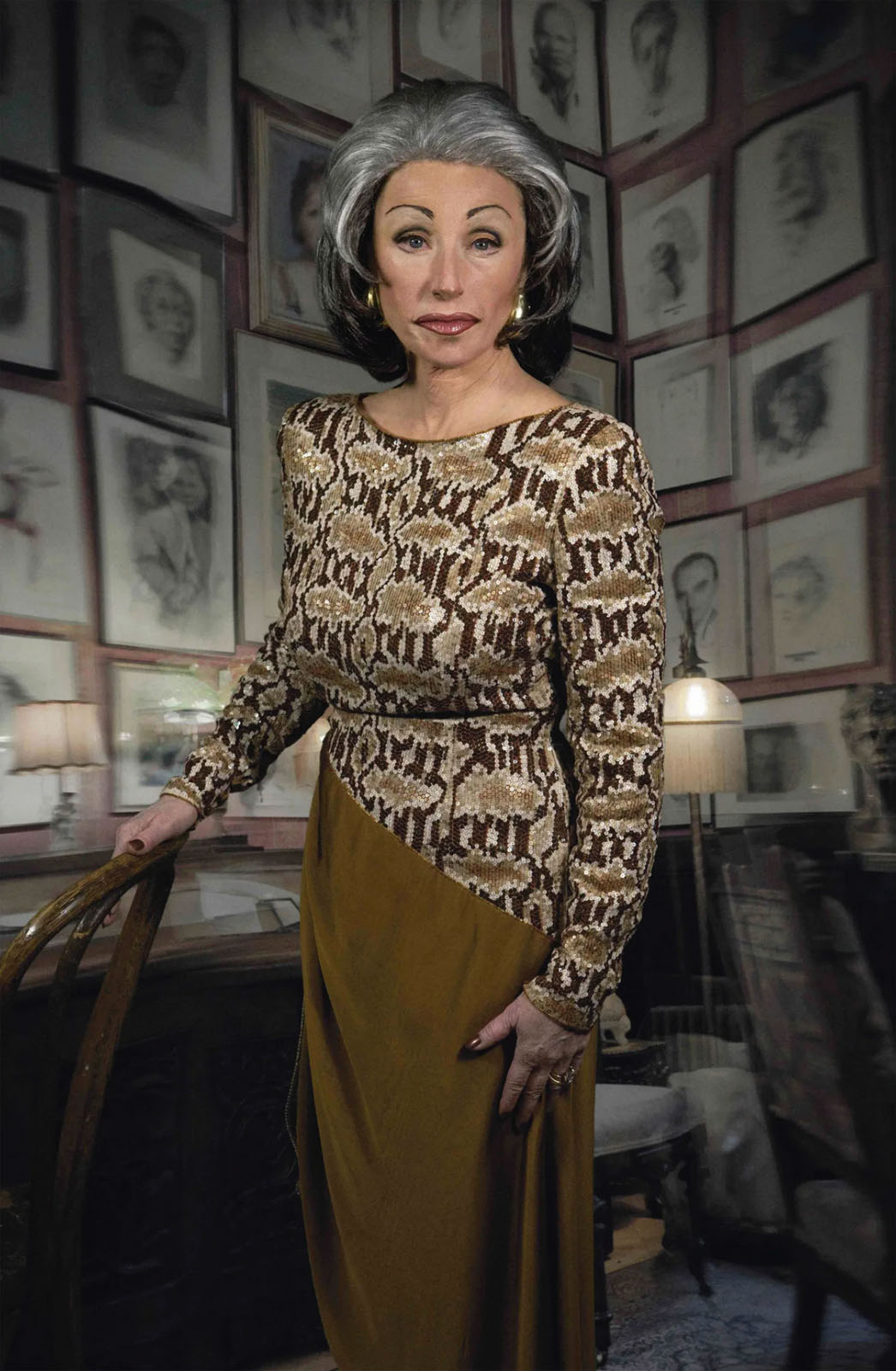
Cindy Sherman (American, b. 1954) Untitled #466 2008 Chromogenic print 254.3 x 174.6cm
The artist Cindy Sherman is a multifaceted evocation of human identity standing in glorious and subversive Technicolor before the blank canvas of her imagination. Poststructuralist in her physical appearance (there being no one Cindy Sherman, perhaps no Sherman at all) and post-photographic in her placement in constructed environments, Sherman challenges the ritualised notions of the performative act – and destabilises perceived notions of self, status, image and place.
The viewer is left with a sense of displacement when looking at these tableaux. The absence / presence of the artist leads the viewer to the binary opposite of rational / emotional – knowing these personae and places are constructions, distortions of a perceived reality yet emotionally attached to every wrinkle, every fold of the body at once repulsive yet seductive.
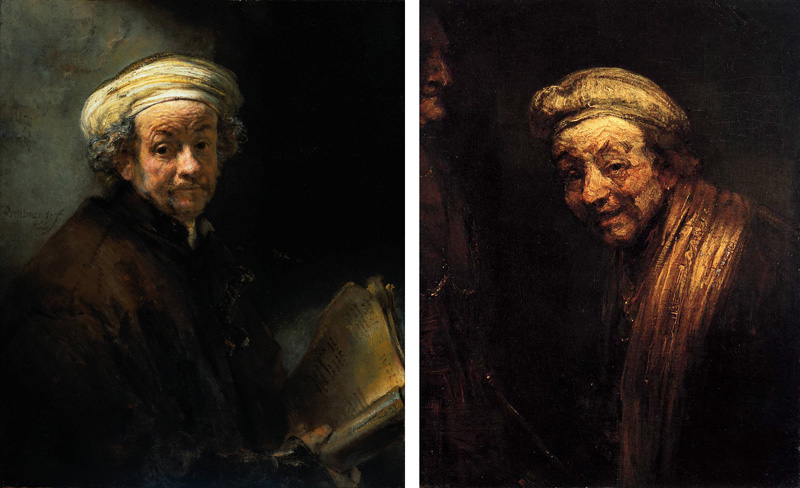
They are masterworks in the manner of Rembrandt’s self portraits – deeply personal images that he painted over many years that examined the many identities of his psyche – yet somehow different. Sherman investigates the same territories of the mind and body but with no true author, no authoritative meaning and no one subject at their beating heart. Her goal is subversive.
As Roy Boyne has observed, “The movement from the self as arcanum to the citational self, has, effectively, been welcomed, particularly in the work of Judith Butler, but also in the archetypal sociology of Pierre Bourdieu. There is a powerful logic behind this approbation. When self-identity is no longer seen as, even minimally, a fixed essence, this does not mean that the forces of identity formation can therefore be easily resisted, but it does mean that the necessity for incessant repetition of identity formation by the forces of a disciplinary society creates major opportunities for subversion and appropriation. In the repeated semi-permanences of the citational self, there is more than a little scope for counter-performances marked, for example, by irony and contempt.”1
Counter performances are what Sherman achieves magnificently. She challenges a regularised and constrained repetition of norms and as she becomes her camera (“her extraordinary relationship with her camera”) she subverts its masculine disembodied gaze, the camera’s power to produce normative, powerful bodies.2 As the viewer slips ‘in the frame’ of the photograph they take on a mental process of elision much as Sherman has done when making the images – deviating from the moral rules that are impressed from without3 by living and breathing through every fold, every fingernail, every sequin of their constructed being.
Dr Marcus Bunyan
1/ Boyne, Roy. “Citation and Subjectivity: Towards a Return of the Embodied Will,” in Featherstone, Mike (ed.,). Body Modification. London: Sage, 2000, p. 212
2/ “To the extent that the camera figures tacitly as an instrument of transubstantiation, it assumes the place of the phallus, as that which controls the field of signification. The camera thus trades on the masculine privilege of the disembodied gaze, the gaze that has the power to produce bodies, but which itself has no body.” Butler, Judith. Bodies That Matter. New York: Routledge, 1993, p. 136
3/ “Universal human nature is not a very human thing. By acquiring it, the person becomes a kind of construct, built up not from inner psychic propensities but from moral rules that are impressed upon him from without.” Goffman, Erving. Interaction Ritual: Essays on Face-to-Face Behaviour. London: Allen Lane, The Penguin Press, 1972, pp. 44-45
Many thankx to Metro Pictures Gallery for allowing me to publish the photographs in the posting. Please click on the photographs for a larger version of the image.
Rembrandt van Rijn (Dutch, 1606-1669) Self-portrait as the apostle Paul (left) 1661 Self-portrait as Zeuxis laughing (right) 1662
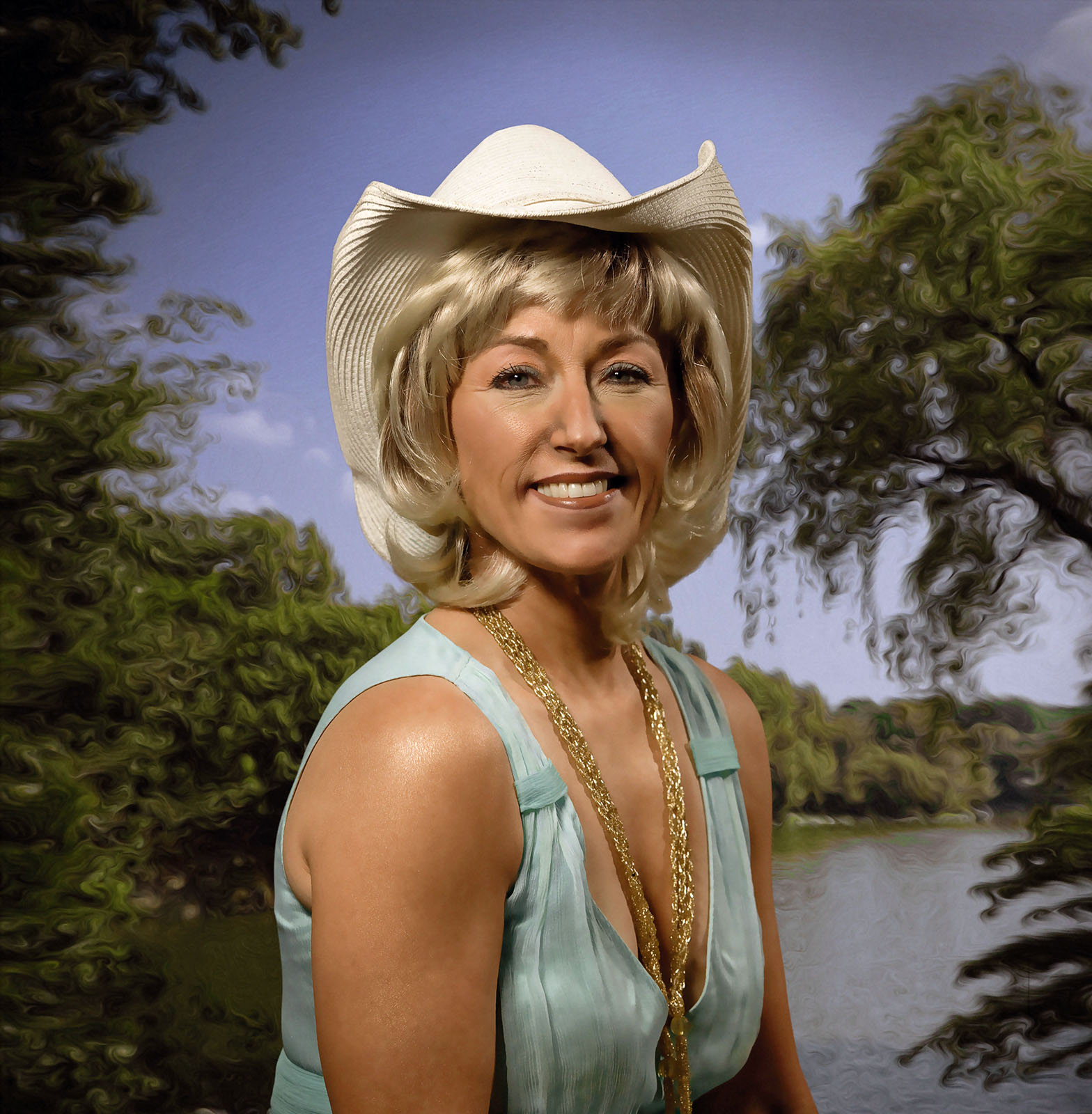
Cindy Sherman (American, b. 1954) Untitled #464 2008 Chromogenic print 214.3 x 152.4cm
For her first exhibition of new work since 2004, Cindy Sherman will show a series of colour photographs that continues her investigation into distorted ideas of beauty, self-image and ageing. Typical of Sherman, these works are at once alarming and amusing, distasteful and poignant.
Working as her own model for more than 30 years, Sherman has developed an extraordinary relationship with her camera. A remarkable performer, subtle distortions of her face and body are captured on camera and leave the artist unrecognisable to the audience. Her ability to drastically manipulate her age or weight, or coax the most delicate expressions from her face, is uncanny. Each image is overloaded with detail, every nuance caught by the artist’s eye. No prosthetic nose or breast, fake fingernail, sequin, wrinkle or bulge goes unnoticed by Sherman.
Sherman shoots alone in her studio acting as author, director, actor, make-up artist, hairstylist and wardrobe mistress. Each character is shot in front of a “green screen” then digitally inserted onto backgrounds shot separately. Adding to the complexity, Sherman leaves details slightly askew at each point in the process, undermining the narrative and forcing the viewer to confront the staged aspect of the work.
Press release at Metro Pictures Gallery
Installation view of Cindy Sherman exhibition at Metro Pictures Gallery, New York, 2008
Cindy Sherman (American, b. 1954) Untitled 2008 Chromogenic print 148.6 x 146.7cm
Cindy Sherman (American, b. 1954) Untitled 2008 Chromogenic print 177.8 x 161.3cm
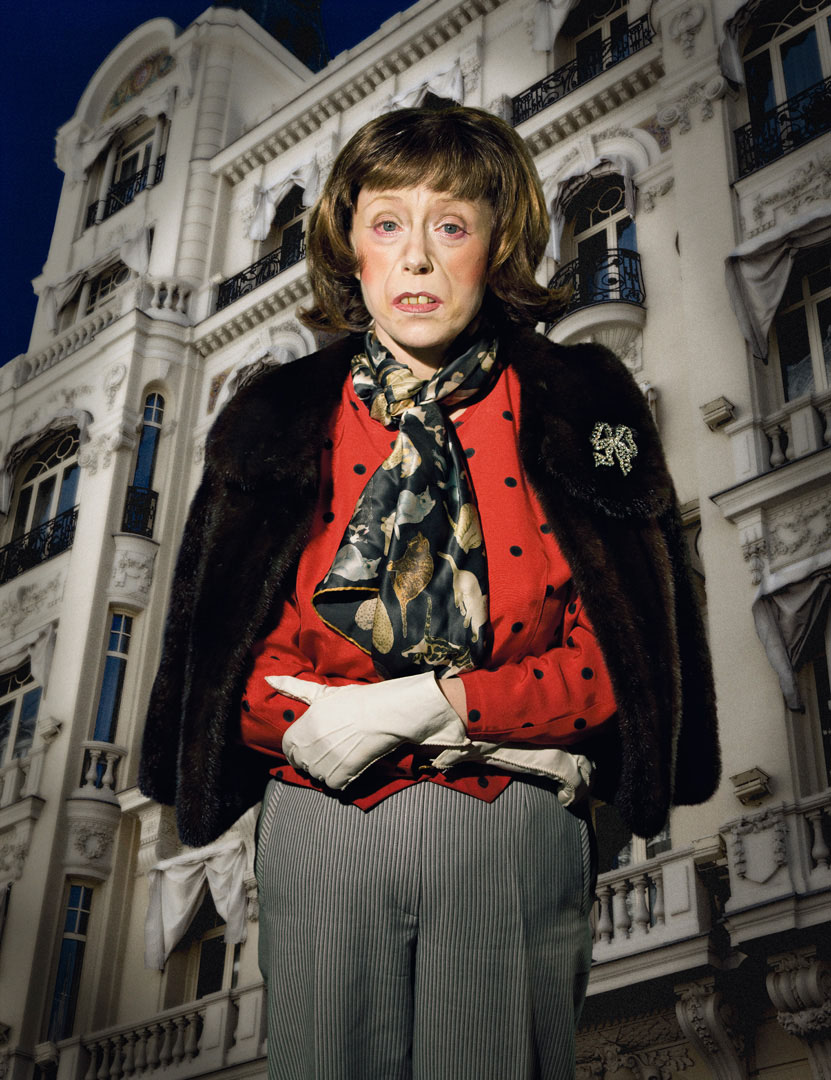
Cindy Sherman (American, b. 1954) Untitled #468 2008 Chromogenic colour print 191.8 x 151.1cm
The society portraits made in 2008 portray older women in opulent settings wearing expensive clothes, their faces stretched and enhanced unnaturally, showing signs of cosmetic surgery. These markers point to cultural standards of beauty and wealth, and here signal the failed aspiration to sustained youth. Printed large, presented in decorative and often gilded frames, and depicting figures in formal poses, these works are reminiscent of Sherman’s history portraits and classical portraiture in general. In this way, they remind the viewer that representation is not a new phenomenon, and the cultural implications in all images are tied to long and complex histories. In Untitled #468 the figure stands stoically with arms crossed and mouth slightly agape, wearing a fur, silk scarf, and white gloves, which the artist found at thrift shops. In the background, an ornate building mirrors the elaborate dress of the woman.
The perspective of the building does not align with that of the figure, blatantly breaking the illusion of reality and recalling Sherman’s 1980 series of rear-screen projections. This clear and deliberate artificiality indicates that images, characters, and even our own selves are constructed, not fixed.
Anonymous text. “Untitled #468,” on The Broad website Nd [Online] Cited 09/06/2022. Used under fair use conditions for the purposes of education and research
Cindy Sherman (American, b. 1954) Untitled 2008 Chromogenic print 244.5 x 165.7cm
Heide Museum of Modern Art has brought together nearly 100 pieces of work by the Australian artist Les Kossatz in an eclectic survey show, appropriately titled The Art of Existence. Featuring sculpture, painting and mixed media from the 1960s to the present the exhibition is appropriately titled because Kossatz’s work addresses certain archetypal themes that affect human existence:
“His life-long fascination with the natural world and desire to understand both its human and animal inhabitants; exploration of the systems of knowledge and codes of behaviour that structure individual and communal life; and his critical and playful reflections on contemporary behaviour and the mysteries of existence.”1
Strong symbolic paintings are the focus of the work in the 1960s, paintings that address the shocking brutality of war and its aftermath, when soldiers return home. To the observation that these are of the ‘pop-style’ school of painting suggested by the Heide website I feel these works are also influenced by the collage of Cubism, the boxes of Joseph Cornell and the dismembered bodies of Francis Bacon. They engage with the symbolism of war and remembrance: memory, myth, and the banality of heroism and sacrifice.
The key work in this series is the painting Diggers throne (1966). This is a powerful disturbing image, effervescent and unnerving at the same time. It features a disembodied arm on the hand of a throne, surrounded by a wonderful kaleidoscopic assemblage of pictorial planes, artefacts and memories – an English flag, the flag of St George, a crown, medals and the words RSL. The arm reminds me of the Francis Bacon painting Study after Velázquez’s Portrait of Pope Innocent X (1953) as it rests, roughly drawn in pencil on the arm of the throne, drawing the eye back up into nothingness.
The Diggers throne painting also features these prophetic words:
“throne slow to rot and twisted the memory becomes sacred. Bloody was the truth And this a chair.”
All other work in this period seems to flow through this painting – the other large paintings, the small canvases featuring individual medals and the less successful hanging banners. But it is to this work we return again and again as a viewer, trying to decipher and reconcile our inner conflicts about the painting.
As we move into the 1970s the work changes focus and direction. There emerges a concern with the desecration of the Australian landscape investigated in a series of large paintings and sculptures. In Packaged landscape 1 (1976) a steel suitcase with leather straps, slightly ajar, fulminates with artificial gum leaves trying to escape the strictures of the trap. In Caged landscape (1972) nature is again trapped behind steel wire, weighed in the balance on a set of miniature scales. The paintings feature trees that are surrounded by concrete and the rabbit becomes a powerful symbol for Kossatz – a suffering beast, strung up on fences, a plague in a pitted landscape of chopped down trees, erosion and empty holes.
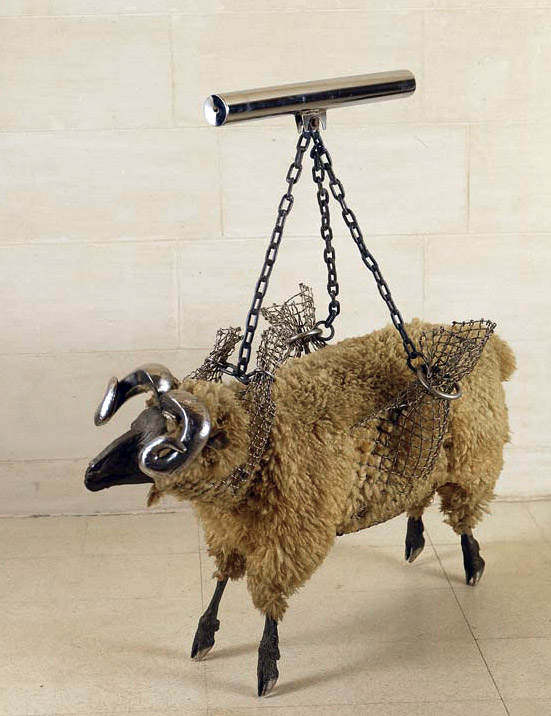
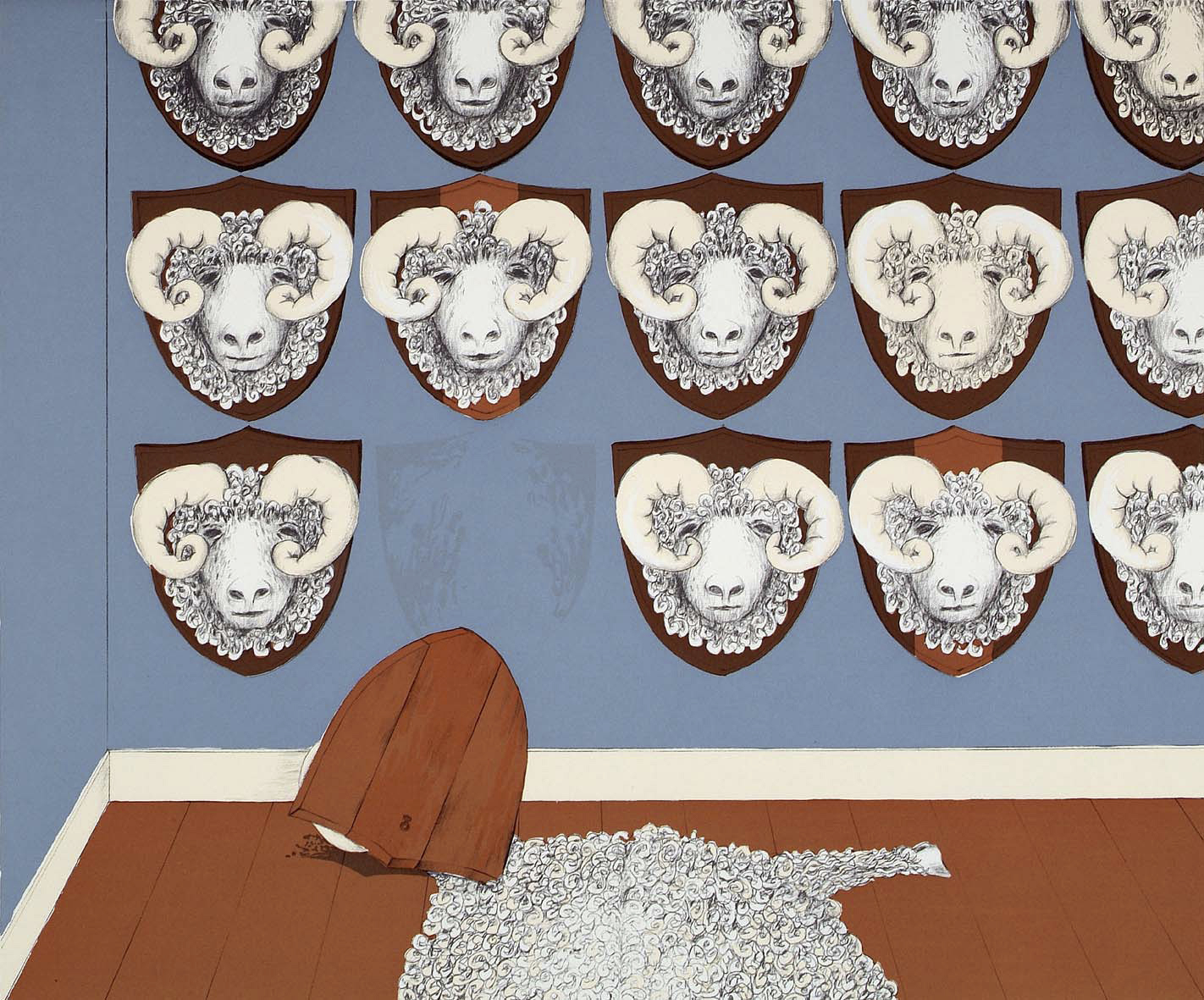
Into this vernacular emerges the key symbol of the artist’s oeuvre – the sheep. In 1972 Kossatz began a series of sculptures of sheep, “initially inspired by the experience of nursing an injured ram.” For Kossatz “the sheep represent the hardship of pioneer existence, the grazing industries prosperity, environmental concerns and the sheep act as narrative devices, potent metaphors for human behaviour.”2
The first sheep presented ‘in show’ is Ram in Sling (1973, below). In this sculpture a metal bar is suspended in mid-air and from this bar heavy wire mesh drops to support the fleecy stomach and neck of the ram almost seeming to strangle it in the process, it’s metal feet just touching the ground. Again the scales of justice seem to weigh nature in the balance.
The themes life and death, order and chaos are further developed in the work Hard slide (1980, below) where a sheep emerges mid-air from a trapdoor, two more tumble down a wooden slide end over end and another disappears into the ground through a wooden trapdoor opening. Sacrifice seems to be a consistent theme with both the earlier paintings and the metallised sheep:
“The completed life cycle, down the trapdoor, down the chute, after sacrifice by shearing.” ~ Daniel Thomas 1994
Further sculptures of sheep, both small maquettes and large sculptures follow in the next room of the exhibition. This is the artist is full flow, featuring the inventive taking of 2D things into the round, investigating the key themes of his work: the contrast between nature and artifice, or humanity.
The small maquettes of sheep feature races, gantries, sluices, pens, trapdoors and paddocks. Sheep tumble in a cataclysmic maelstrom, falling with flailing legs into the darkness of the holding pen below. These are my favourite works – small, intimate, detailed, dark bronzes of serious intensity – the sheep becoming a theatre of the absurd, suspended, weighed and balancing in the performance of ritualised acts, a cacophony of flesh at once both intricate and unsettling. Their skins lay flayed and lifeless disappearing into the ‘unearth’ of the slated wooden floor of the shearing shed. The sheep “can be viewed metaphorically as a commentary of the existential situation of the individual and collective behaviour.”3 As Kossatz himself has noted, “It is hard to bring a piece of landscape inside and give it a living animated form. The sheep somehow gives me this quality of landscape.”
But we must also remember that this strictly a white man’s view of the Australian landscape. Nowhere does this work comment on the disenfranchisement of the native people’s of this land – the destruction of native habitats that the sheep brought about, the starvation that they caused to Aboriginal people just as they bought riches to the pastoralists and the country that mined the land with this amorphous mass of flesh.
Recent work in the exhibition returns to the earlier social themes of memory, war, remembrance, religion, shrines, atomic clouds and temples but it is the work of the late 1970s-1980s that is the most cogent. As Kossatz ponders the nature of existence on this planet he does not see a definitive answer but emphasises the journey we take, not the arrival. Here is something that we should all ponder, giving time to the nature of our personal journey in this life, on this earth.
Here also is an exhibition worthy our time and attention as part of that journey. Go visit!
Dr Marcus Bunyan
Word count: 1,074
1/ From the Heide website 2/ From wall notes to the exhibition 3/ From wall notes to the exhibition
Many thankx to Heide Museum of Modern Art for allowing me to publish the photographs in the posting. Please click on the photographs for a larger version of the image.
Postscript 2018
The late Les Kossatz (1943-2011) was a well known Melbourne-based artist and academic whose work is represented in many regional and state galleries and the National Gallery of Australia. He studied art at the Melbourne Teachers’ College and the RMIT, and went on to teach at the RMIT and Monash University. Kossatz’s first significant commission was for the stained glass windows at the Monash University Chapel in Melbourne. Later commissions included works for the Australian War Memorial, the High Court, the Ian Potter Foundation at the National Gallery of Victoria and the Darling Harbour Authority, Sydney. His sculpture, Ainslie’s Sheep, commissioned by Arts ACT in 2000, is a popular national capital landmark in the centre of Civic. A major retrospective of Kossatz’s work was held in 2009 at the Heide Park and Art Gallery, Melbourne.
Text from the High Court of Australia website [Online] Cited 10/12/2018. No longer available online
Francis Bacon (British born Ireland, 1909-1992) Study after Velázquez’s Portrait of Pope Innocent X 1953 Oil on canvas
The art of existence is the first exhibition to review Les Kossatz’s contribution to Australian art in a career that spans the 1960s to today. Kossatz’s consistently experimental approach to media and techniques is revealed in works that display a lifelong fascination with humanity and the interaction of man and nature. His paintings, sculptures and works on paper stimulate a questioning and exploration of such concerns, which form the basis of this artist’s practice.
Les Kossatz’s early works of the 1960s draw on his training and ability to work across a diversity of media, including painting, drawing, printmaking and glass. Early paintings and etchings on the theme of the emptiness of memorials to the Australian ‘digger’ or soldiers were succeeded by images and objects offering impressions of the world around the artist – the rural domain and interior life of St Andrews in Victoria where Kossatz lived and worked. Such works demonstrated his determination to pursue a figurative practice at a time when abstract art had been imported to Australia and was considered the avant garde.
Remaining a staunchly independent artist, at the start of the 1970s Kossatz painted images of rabbits and sheep from St Andrews. In addition, the practice of working in three dimensions was to become more significant. Kossatz continued to develop familiar themes in the creation of installations and cast objects. Although he has produced drawings and prints across his career, working with sculpture has, since the early 1970s, been his primary mode of art-making. Large scale cast and assembled objects show Kossatz pursuing related themes of caged and packaged landscapes, shrines to the harvest and the still life.
The art of existence surveys Kossatz’s monumental life-sized sheep sculptures, which he began making in 1972 from casts of animal parts, and for which he is best known. These include Hard slide (1980), his prize-winning commission in the collection of the National Gallery of Victoria. Kossatz has won numerous commissions for outdoor sculptures that employ the sheep as literal and metaphorical beings. Kossatz’s work across three decades reveals a number of ongoing engagements, such as his observations of human behaviour and at times its similar manifestation in animals; the beliefs that sustain individuals and communities (such as religion, music and politics); and the forms of the landscape and our understanding of these relationships.
Introduction to the exhibition written by Zara Stanhope, Guest Curator, Heide Museum of Modern Art, 2008
Les Kossatz (Australian, 1943-2011) Hard slide 1980 Sheepskins, aluminium, Douglas-fir (Pseudotsuga sp.), leather, steel 372.0 x 100.0 x 304.0cm (installation)
Les Kossatz (Australian, 1943-2011) Guggenheim spiral 1983
Heide Museum of Modern Art 7 Templestowe Road Bulleen Victoria 3105 Australia Phone: +61 3 9850 1500
Opening hours: (Heide II and Heide III) Tuesday to Sunday and public holidays, 10am – 5pm
“The photographs tell detached but psychologically emotional stories about what human beings are doing to the world in which they live.” Dr Marcus Bunyan
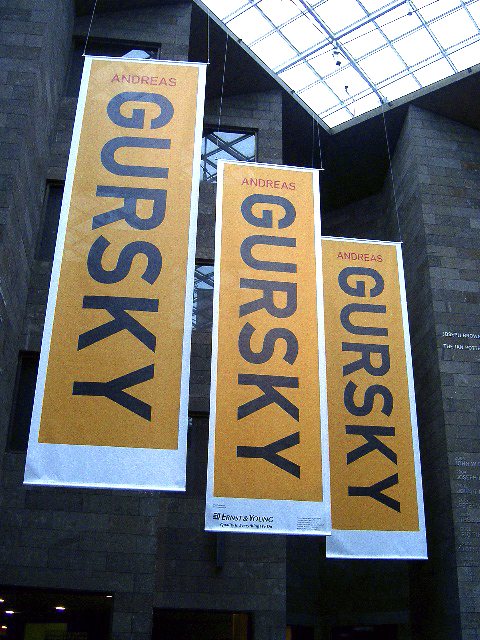
Andreas Gursky banner at NGV International exhibition, Melbourne
A large but plain crowd assembled for the opening of the first exhibition by world renowned German photographer Andreas Gursky at the National Gallery of Victoria in St Kilda Road, Melbourne. After some lively conversation with friends and following the opening speeches we wandered into a large clean gallery space with minimal design elements. The use of space within the gallery allowed the work to speak for itself. It is a minimal hang and the exhibition works all the better for this.
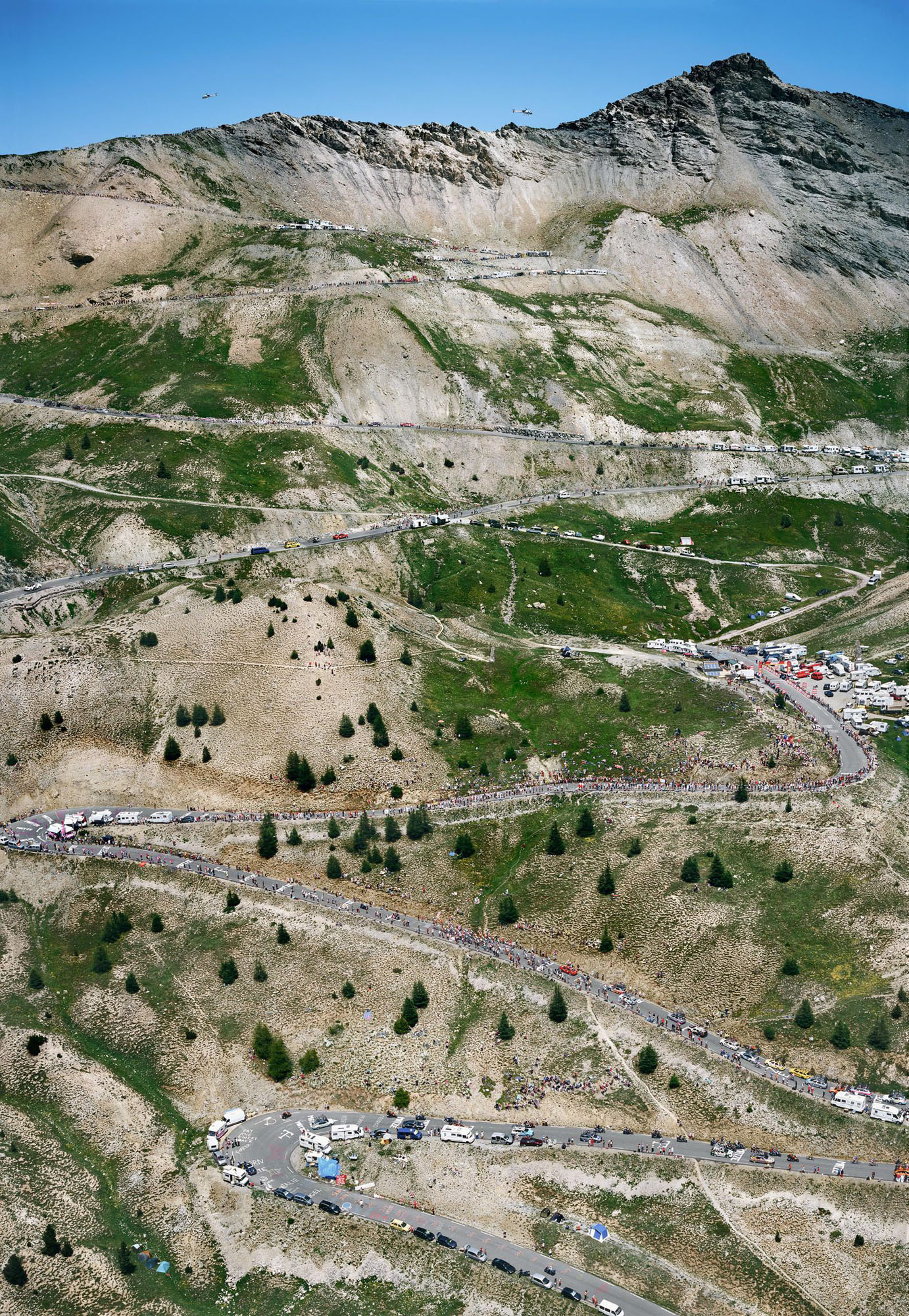
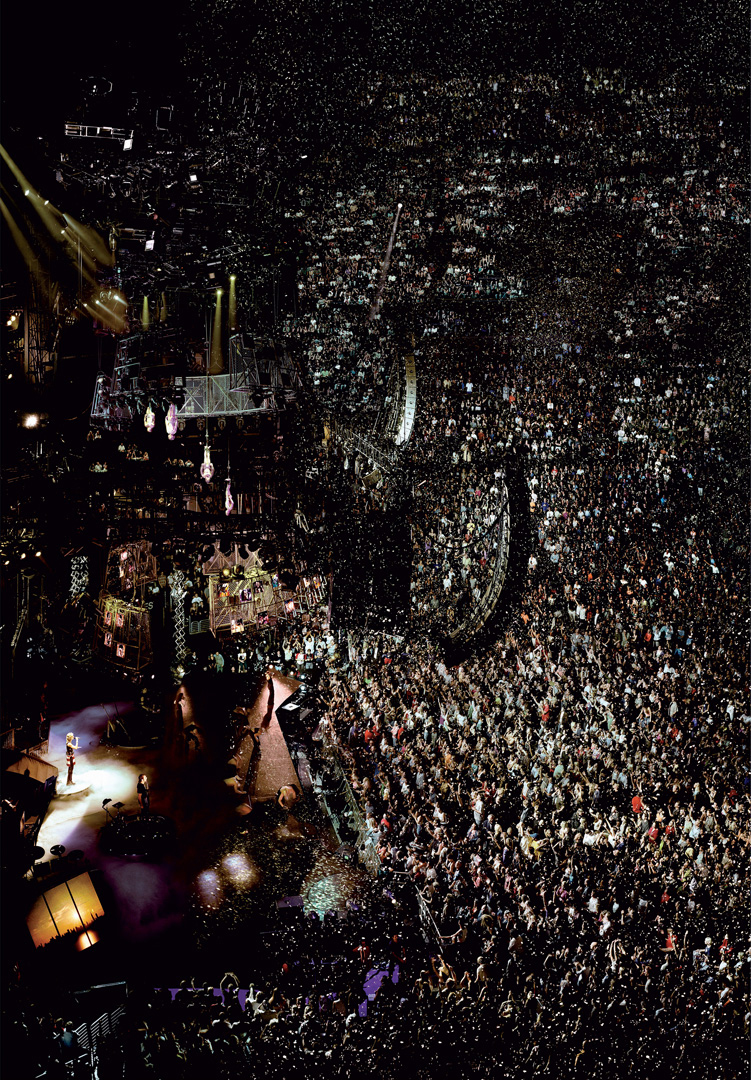
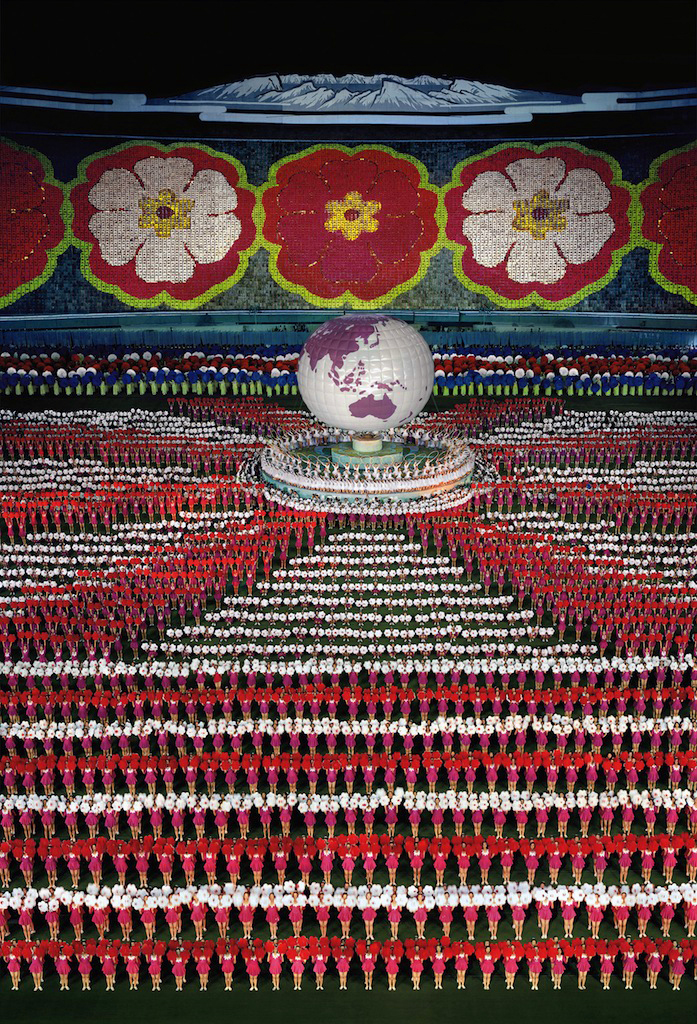
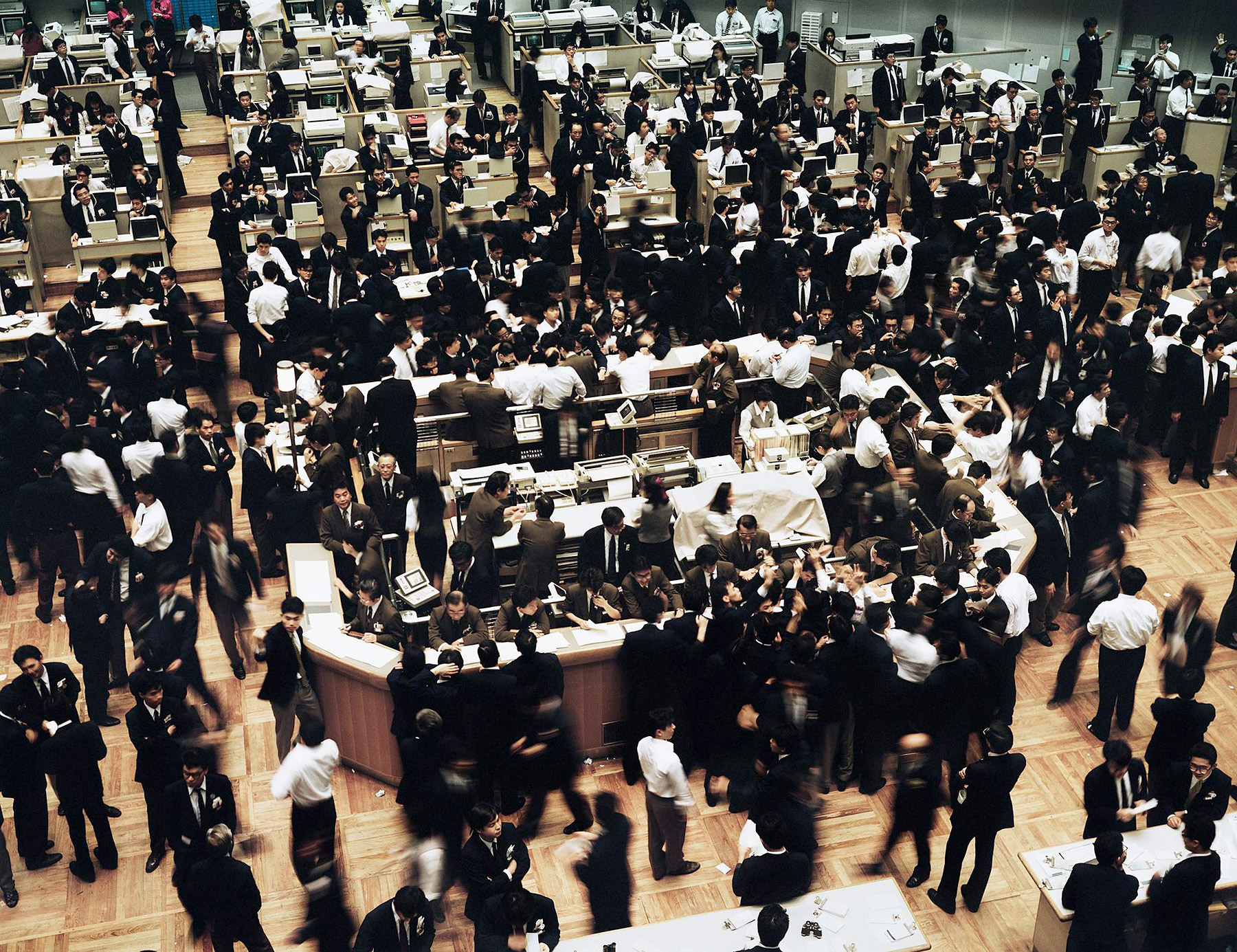
As for the work itself 21 large photographs are presented ranging from landscapes to buildings, race tracks to formula 1 pits, Madonna concerts to the Tour de France.
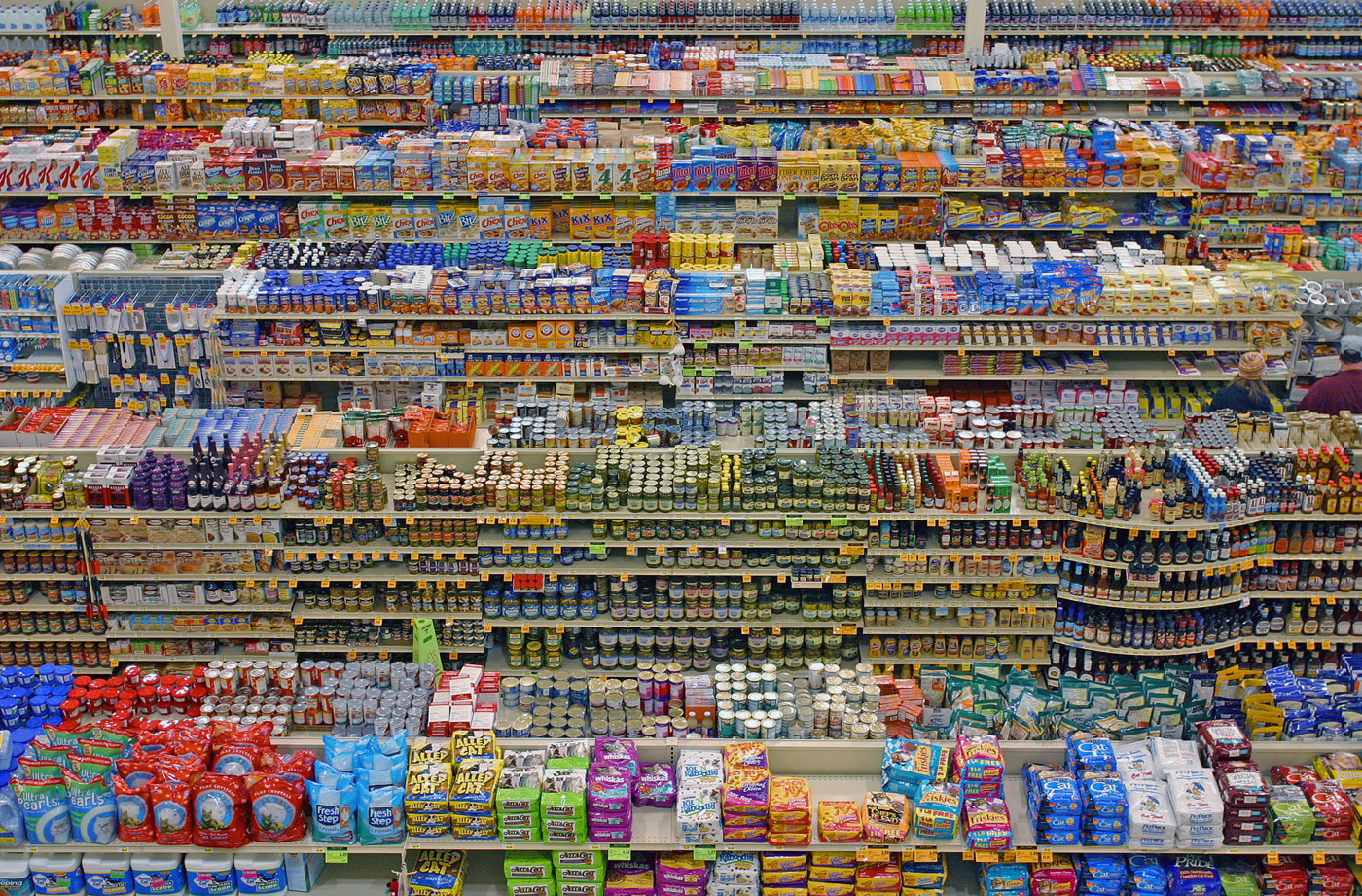
Most work successfully in building a hyperreal vision of the world. We are not sure what is ‘real’ or hyperreal, what is a straight photograph or what has been digitally manipulated and woven together. The colour and sharpness of the images is often intensified: in reproductions of the famous photograph of the 99c supermarket in America the colours seem flat but ‘in the flesh’ the colours are almost fluoro in their saturation and brightness.
Having said that the photographs are nearly always unemotional – as though seen from above in the third person, they observe with detachment. The intrigue for the viewer is in the detail, in working out what is going on, but these are not passionate photographs on the surface. It is beneath the surface that the photographs have their psychological effect: the best of the images work on the subconscious of the viewer.
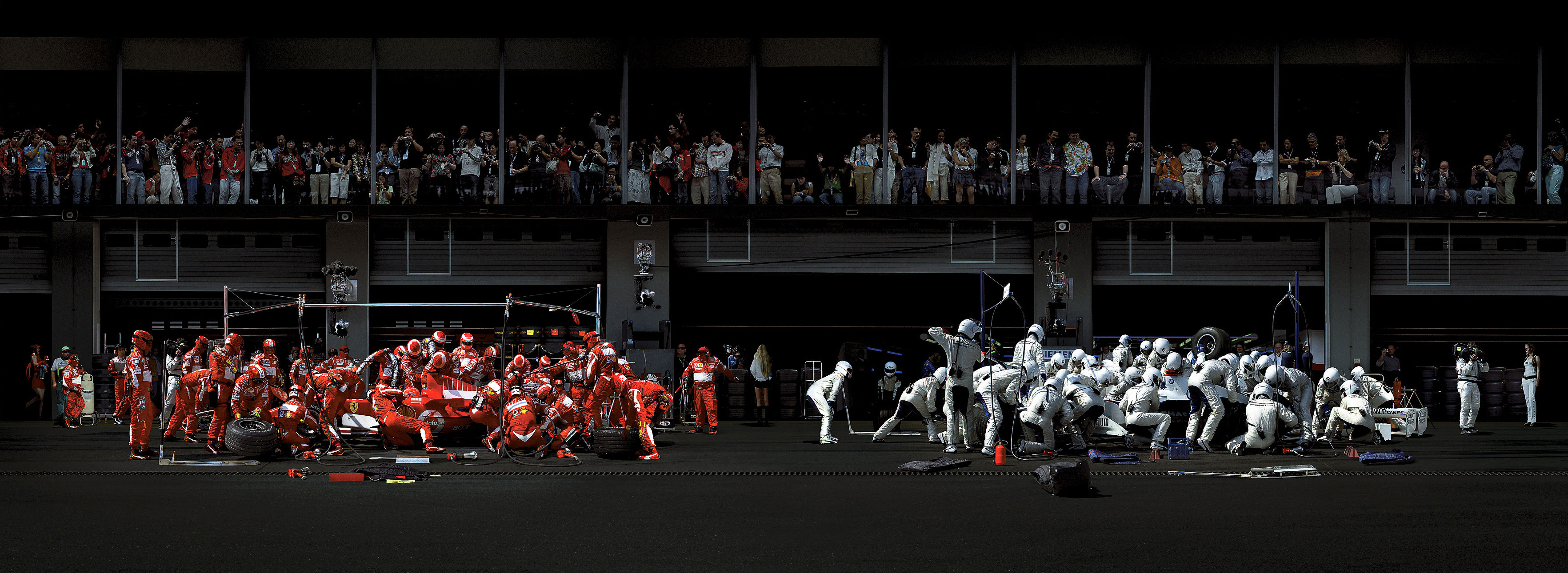
Like a fantastical dance the three very wide images of the Formula 1 pits feature pit crews practicing tyre changes, frozen in a choreographed ballet; people in the galleries above stare down; pit lane girls seem to have been inserted digitally into the images, standing at side or behind the pit crews in a seemingly surreal comment on these worlds. These are theatrical tableaux vivant, splashed with teams colours. Fantastic photographs.
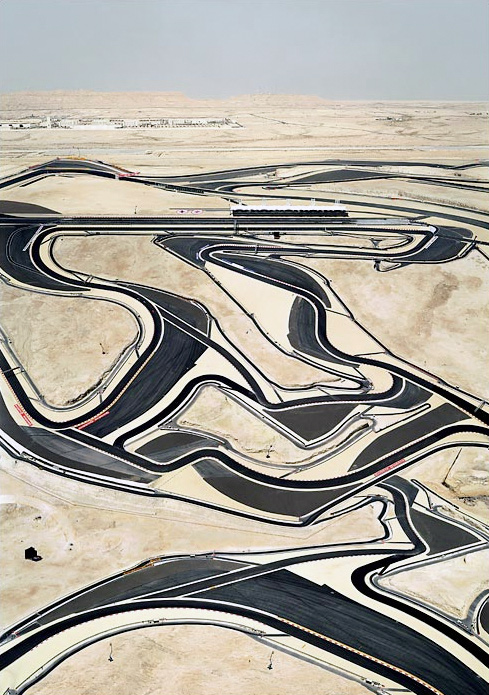
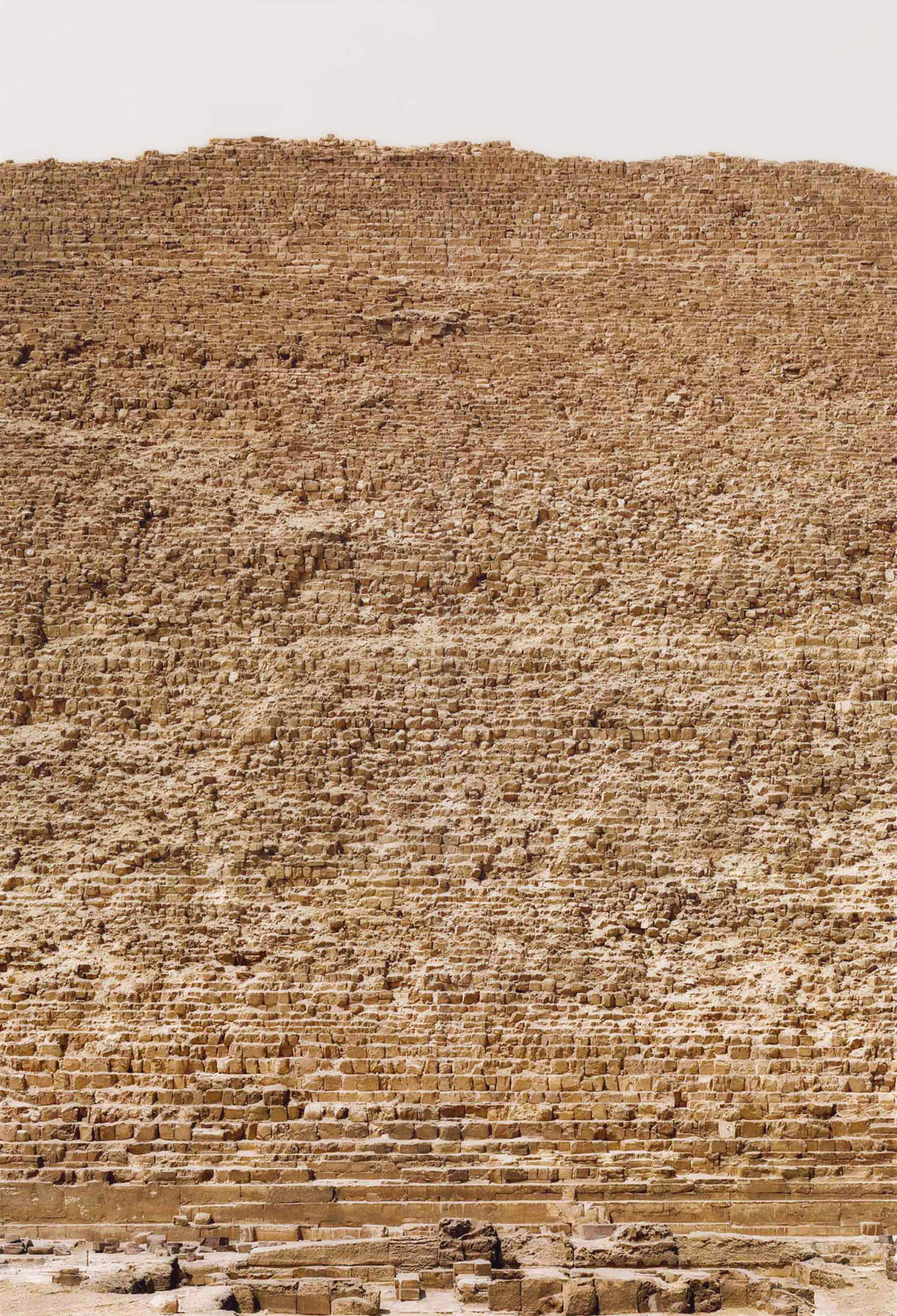
In some of the images, such as the Madonna concert or the photograph of the Bahrain Formula 1 racetrack, space seems to have folded in on itself and the viewer is unsure of the structure of the image and of their vantage point in looking at them. Space also collapses in the photograph of the pyramid of Cheops (2006, below), where the depth of field from foreground to background of the image is negligible. Less successful are images of a Jackson Pollock painting and a green grass bank with running river (Rhein II 1996, below), intensified beyond belief so that the river seems almost to be made of liquid silver.
The photographs tell detached but psychologically emotional stories about what human beings are doing to the world in which they live. These images are a commentary on the state of this relationship – images of repetition, pattern, construction, use, abuse and fantasy woven into hyperreal visions of an unnatural world.
A wonderful exhibition in many aspects, well worth a visit to see one of the world’s best photographers at work.
Dr Marcus Bunyan
Many thankx to the National Gallery of Victoria for inviting me to the opening and for allowing me to publish the photographs in the posting. Please click on the photographs for a larger version of the image.
For the first time in Australia, an exhibition by German contemporary photographer Andreas Gursky opened at the National Gallery of Victoria. From the Haus der Kunst in Munich, Andreas Gursky presents 21 major works for which the artist is internationally acclaimed. The photographs range from 1989 to 2007 and include seminal works such as Tokyo Stock Exchange and the diptych 99 cent store. Andreas Gursky is recognised as one of the world’s leading contemporary artists. On view through 22 February, 2009.
Well known for his large-scale (generally measuring an astounding four to five metres) and extraordinarily detailed photographs of contemporary life, Gursky continues the lineage of ‘new objectivity’ in German photography which was brought to contemporary attention by Bernd and Hilla Becher.
In the 1990s, Gursky became inspired by the various manifestations of global capitalism. His interest was piqued looking at a newspaper photograph of the crowded floor of the Tokyo Stock Exchange and he began to photograph its flurry of suited traders, somehow moving according to some inbuilt order.
Dr Gerard Vaughan, Director, NGV said the Andreas Gursky exhibition represented a significant coup for Melbourne: “The National Gallery of Victoria is the only Australian venue for this extraordinary show – the first major exhibition of Gursky’s work ever to be seen in this country. Generously organised by the Haus der Kunst Museum in Munich we are extremely fortunate to have had the works in this show selected for us by Andreas Gursky himself.”
Andreas Gursky was born in 1955 and grew up in Düsseldorf, Germany. In the early 1980s, he studied at the Kunstakademie Düsseldorf, Germany’s State Art Academy. Whilst there he was heavily influenced by his teachers Bernd and Hilla Becher, who were well known for their methodical black and white photographs of industrial machinery.
In 1984 Gursky began to move away from the Becher style, choosing instead to work in colour. Since then he has travelled across the world to cities such as Tokyo, Cairo, Hong Kong, Stockholm, Singapore and Los Angeles photographing factories, hotels and office buildings – places he considered to be symbols of contemporary culture. His world-view photographs during this period are considered amongst the most original achievements in contemporary photography.
Gursky has been the subject of numerous international exhibitions including the Internationale Foto-Triennale in Esslingen, Germany in 1989 and 1995, the Venice Biennale in 1990, and the Biennale of Sydney in 1996 and 2000. In 2001, Gursky was the subject of an exhibition at the Museum of Modern Art in New York.
Press release from the National Gallery of Victoria website
“These sculptures are both poetic palimpsests and heterotopic objects of otherness that are neither here nor there.” Dr Marcus Bunyan
Exhibition dates: 22nd October – 15th November, 2008
Robbie Rowlands (Australian, b. 1968) Scored 2008 Goal post, steel 160cm x 130cm x 50cm Photograph: Christian Capurro
“The philosopher Martin Heidegger argued that objects are often invisible to us gathered up as they are within a context of functionality and use. It is only when things break down that we become aware of them, seeing them with fresh eyes. In many ways Heidegger’s observation could form the basis of an approach to Robbie Rowlands’ work. Rowlands takes objects that are often forgotten, invisible or transparent to us, objects that exist on the verge of disappearance, and stages a kind of ‘breakdown’, inviting us to rediscover the object, poised somewhere between what it was and what it might become.”
Simon Cooper. Catalogue essay
Sitting in pools of light in the elegant modern space of Place Gallery in Richmond, six theatrically lit sculptures are presented by artist Robbie Rowlands.
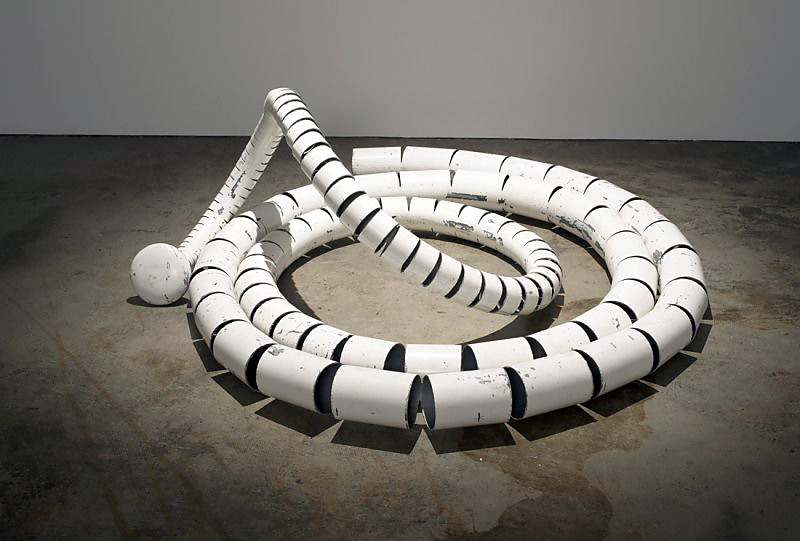
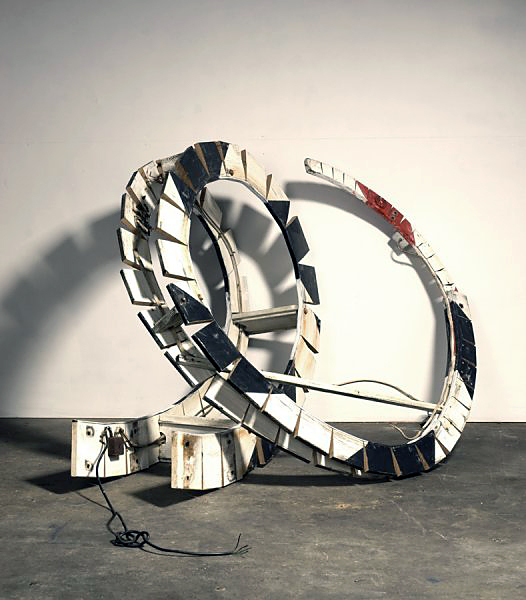
Made of everyday objects (a boom gate, desk, chair, single bed, electricity pole, desk and footy goalpost) they have been de/constructed by the artist and reformed into curved objects. With ironic titles such as Down for the felled electricity pole and Collapse for the dismembered chair Rowland’s work hovers between one fixed state and an’other’ transformative state of being.
While the catalogue essay by Simon Cooper suggests that all of these objects are abandoned or nearly forgotten sharing a context of quasi-obsolescence, this is not the case. These were objects of purpose and form, the acts of ritualised production of a consumer society that contained signs that symbolised their status.
In his creativity Rowland has used these technologies of production, which permit us to produce, transform or manipulate things to create new sensual forms of life.
Some of the sculptures such as Boom (the boom gate; 2008, below) and Scored (the goal post; 2008, above) remind me of creatures emerging from the recesses of the unconscious, curling and rearing up like monsters from the deep. One of the most beautiful forms is the constructed white chair where the function of the object has collapsed into the essence of the form, like the surreal spatiality of a poetic Miro.
As Gaston Bachelard reminds use in The Poetics of Space, “The grace of a curve is an invitation to remain. We cannot break away from it without hoping to return. For the beloved curve has nest-like powers; it incites us to possession, it is a curved corner, inhabited geometry.”1
Cooper suggests that the curved forms that Rowland creates were “already there in the original object, even as it was sat on, written on, or passed by on the way to work.” He rightly notes that the process used contains a certain violence, but that we remember and reconstruct the old form even as we respond to the new construction. For these sculptures are a construction not, I believe, inherent in the original form.
This can be seen in the sculpture Boom (2008, below) for example, where Rowland has used additional pieces of metal to hold the curve of the boom gate in place. Without this skilfully added, hidden sub-structure the transformative shape would collapse onto the floor. Rowland inhabits and possesses his new geometry with as much technology as the original but not in such an obvious form.
The work would have been stronger if only four pieces were presented in the gallery space – the sculptures needed more room to breathe (understanding the dictum that less is more). The sculptures themselves also needed greater thematic cohesiveness perhaps using the colour white as the unifying theme.
At their best these sculptures are both poetic palimpsests and heterotopic objects of otherness that are neither here nor there. They are sensual and beautiful gestures that deserve your attention.
Dr Marcus Bunyan
1/ Bachelard, Gaston. The Poetics of Space. Boston: Beacon, 1969 [originally 1958] p. 146
Robbie Rowlands (Australian, b. 1968) Boom 2008 Rail boom gate, wooden 160cm x 160cm x 130cm Photograph: Wren
Place Gallery 120 Collins Street Melbourne VIC 3000 Phone: (03) 9527 6378
Exhibition dates: 29th October – 22nd November, 2008
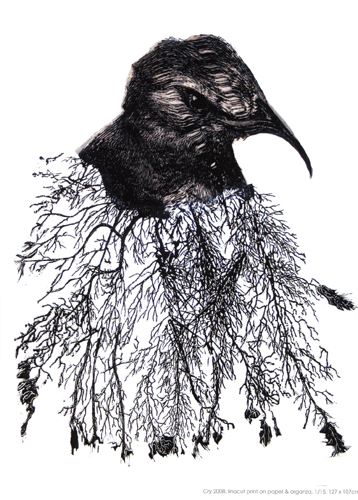
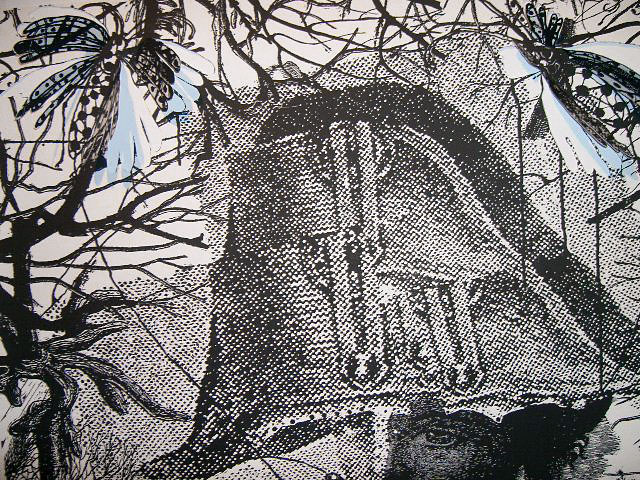
Heather Shimmen (Australian, b. 1957) Cry 2008 Linocut print on paper and organza
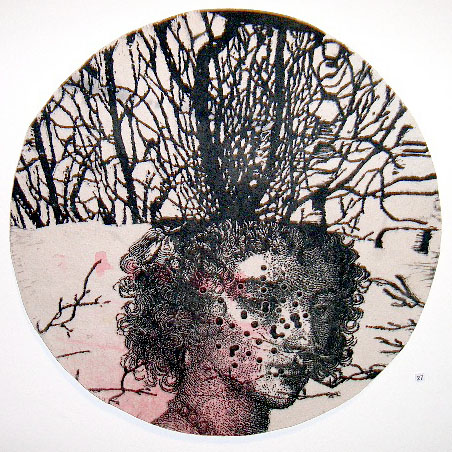
“(Somewhere) betwixt nature and civilisation, past and future, fact and fantasy. Shimmen guides the viewer on a magical history of the landmarks and turning points which connect these extremes … Pictures of skewed, stretched and distorted women are abundant. There are moody pieces where Victorian women look uncomfortable in the Australian bush. In fact their discomfort is palpable as they begin to morph into the local shrubbery, their beauty spots being replaced with twigs … These images wear the marks and piercings of the subverted.”
Pamela Irving. Catalogue essay
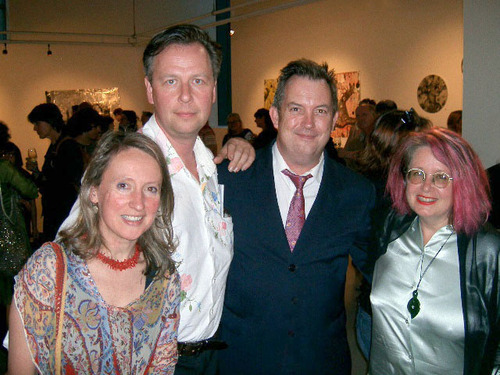
Arriving late from the Rennie Ellis opening there was a lively crowd in attendance at the opening of Betwixt by printmaker Heather Shimmen at Gallery 101, Collins Street. The exhibition had been opened by the well-known sculptor William Eicholtz. Also in attendance were artists Louise Rippert whose exhibition Trace at Deakin University Art Gallery had opened the previous night and Carolyn Lewens who I studied photography with at RMIT University in the early 1990s and who is now completing her PhD.
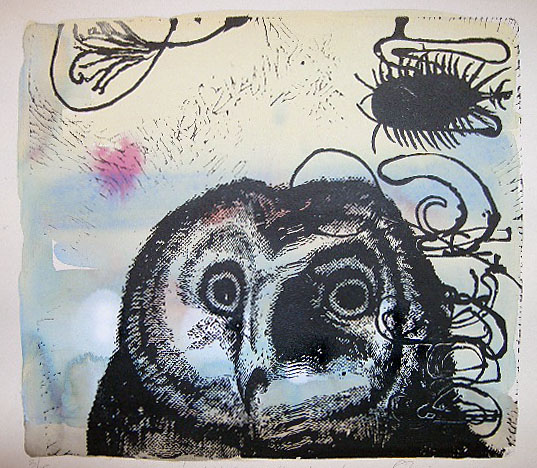
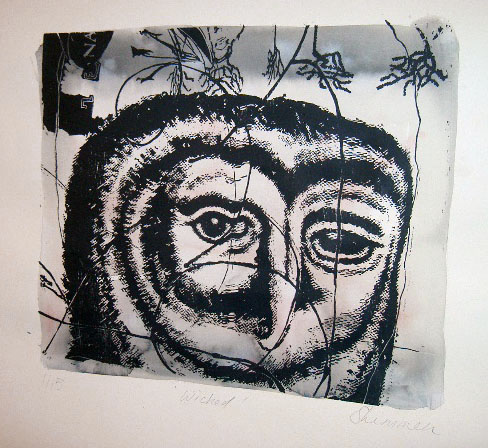
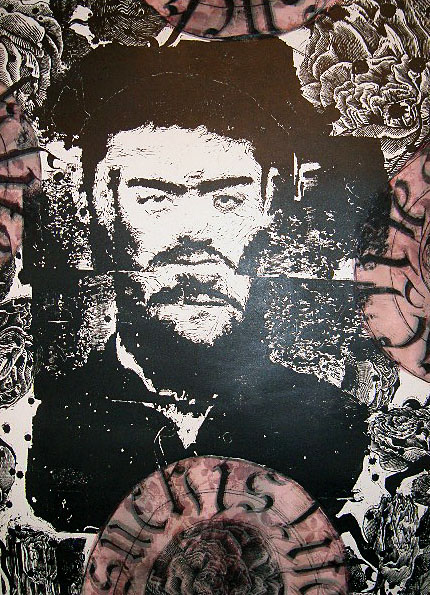
The work is feminine but also muscular and visceral, expanding past the edges of the paper. Images are composed in fractured spaces, Ned Kelly surrounded by emblazoned Life Savers, Australian creatures no longer lovable and pliable but dark and threatening. These elements are balanced with the use of delicate printed organza feathers for example.
The work challenges conventional iconic wisdoms about Australian culture, morphing traditional stereotypes: no longer is it the Australia child lost in the bush (see Kim Torney’s Babes in the Bush) but the bush invading and subverting adults, animals and the city.
This is a body of work that is both conceptually and technically well resolved, displayed to advantage in the gallery space. Well worth a visit.
Dr Marcus Bunyan
Left to right: Artist Louise Rippert, sculptor William Eicholtz, architect Vaughn Barker and artist Heather Shimmen Photo: Marcus Bunyan
Heather Shimmen (Australian, b. 1957) Lost I 2008 Linocut print on circle of felt, unique state
More artwork from the opening of Heather Shimmen’s exhibition Betwixt at 101 Gallery, Melbourne
Heather Shimmen (Australian, b. 1957) Wicked 2008 linocut on paper and ink
Heather Shimmen (Australian, b. 1957) Such Is Life 2008 Linocut print on paper and organza
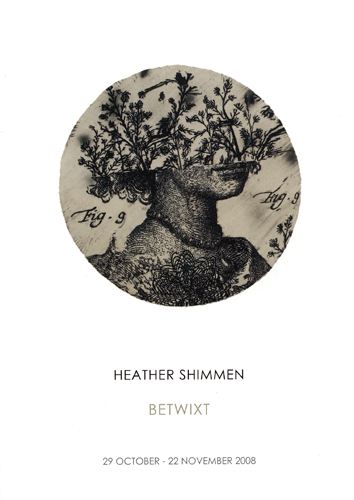
Heather Shimmen (Australian, b. 1957) Catalogue front cover with the work Lost II 2008 Linocut print on circle of felt, unique state
Curator: Frances Lindsay, Deputy Director of the National Gallery of Victoria
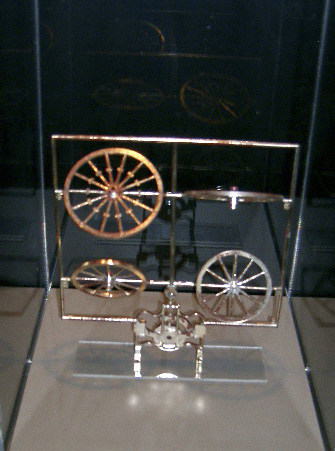
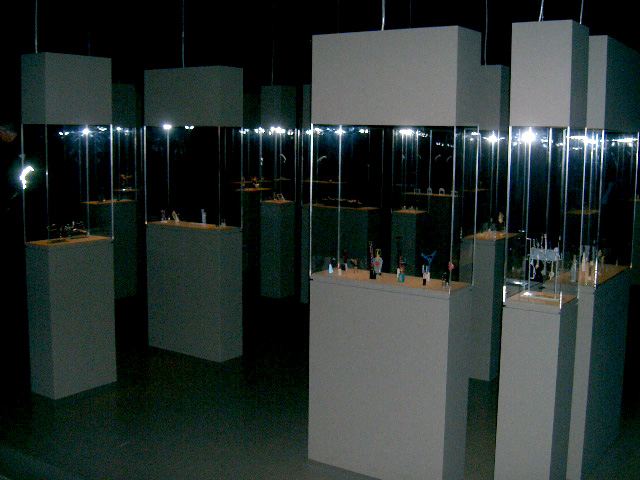
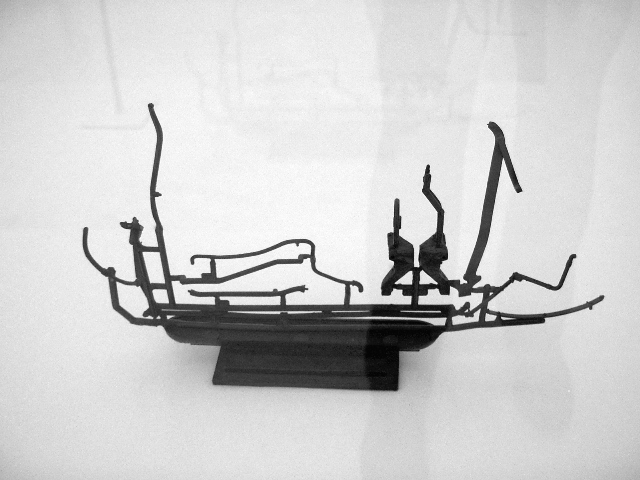
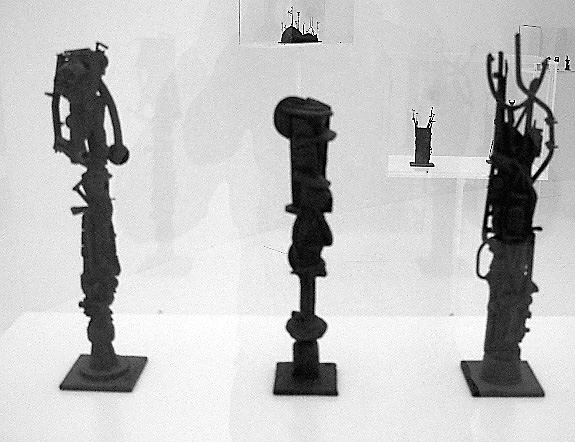
Klippel/Klippel: Opus 2008 exhibition sculpture and installation from the first space Photos: Marcus Bunyan
A magical exhibition of the work of the Australian sculptor Robert Klippel (1920-2001) is presented together with a soundscape to accompany the works by his son Andrew Klippel.
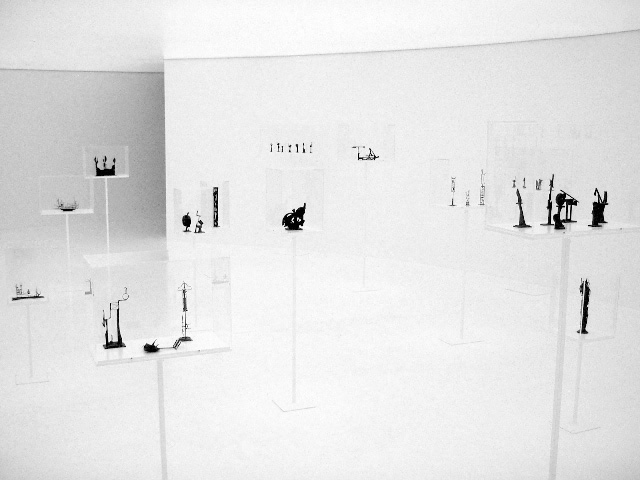
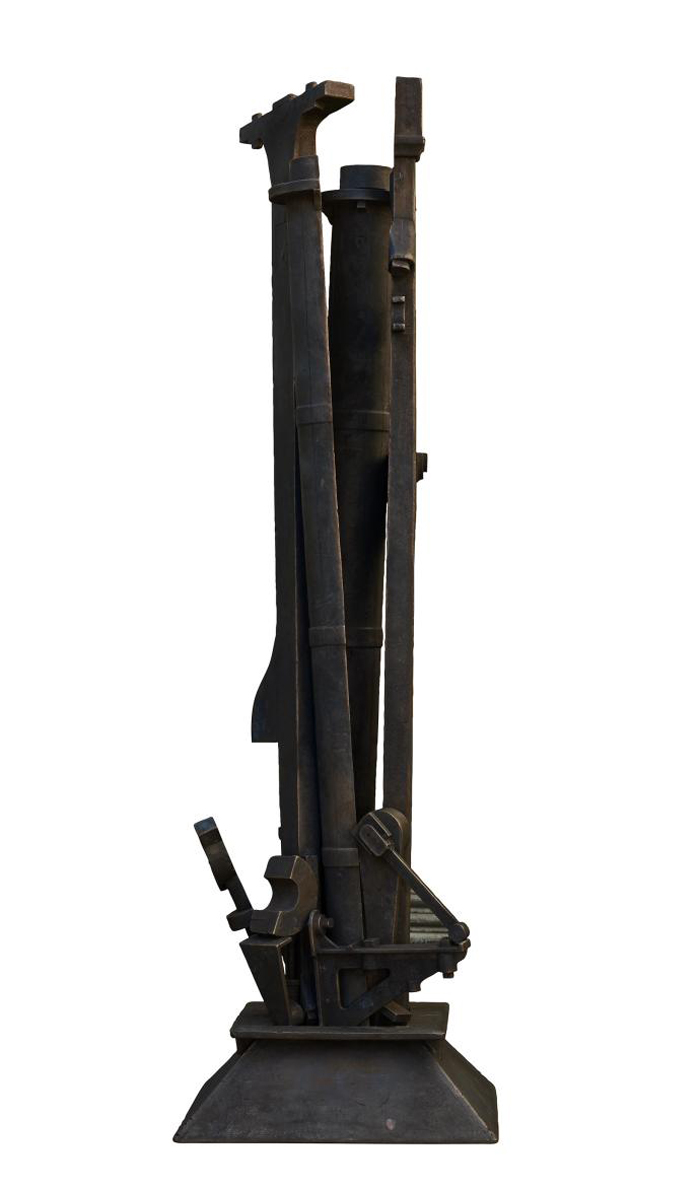
The exhibition offers two distinct rooms of light/white and shade/dark which both contain small assemblages and bronze sculpture made in the 1980s-1990s. The show finishes with the singular monumental bronze work No. 709.
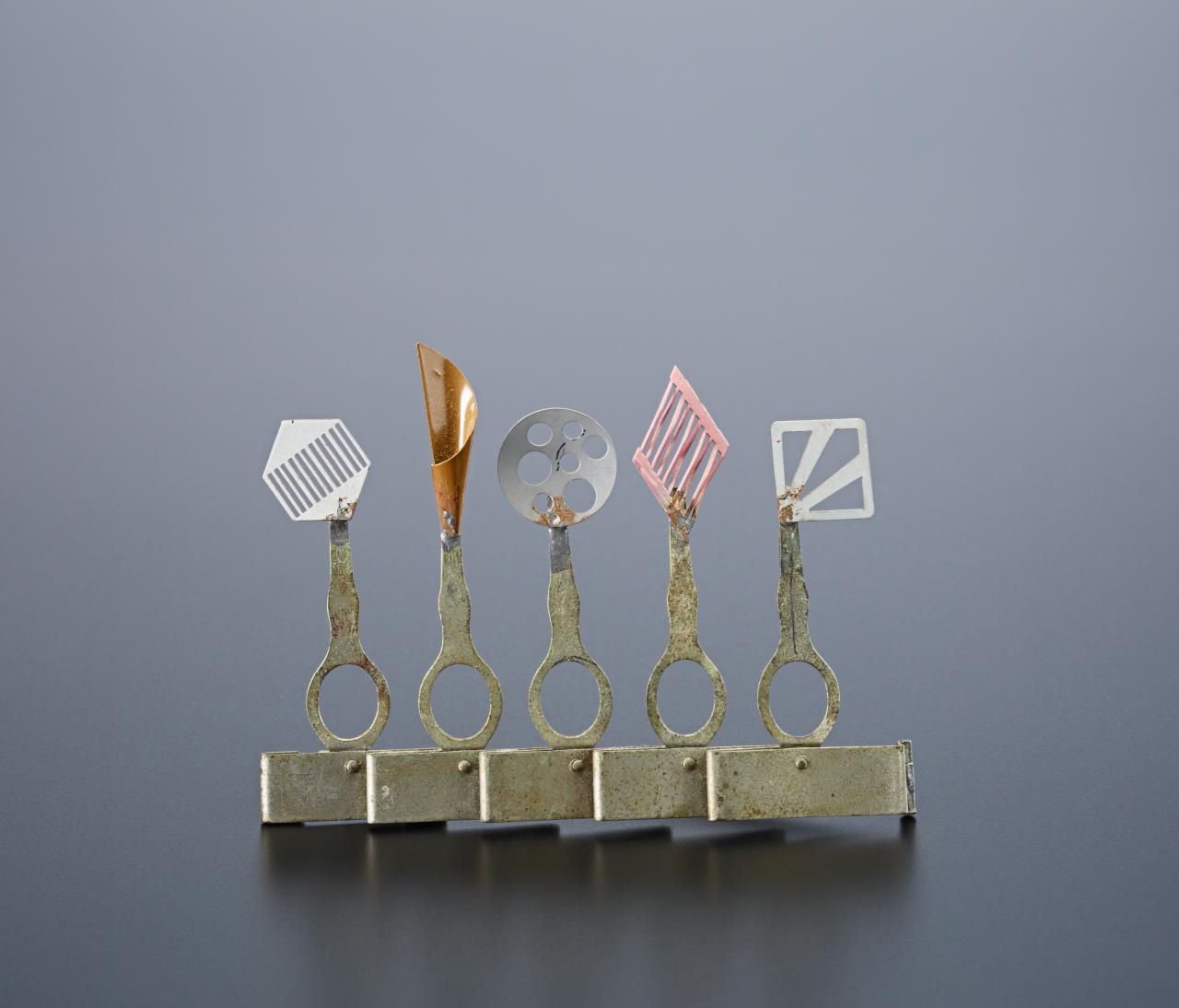
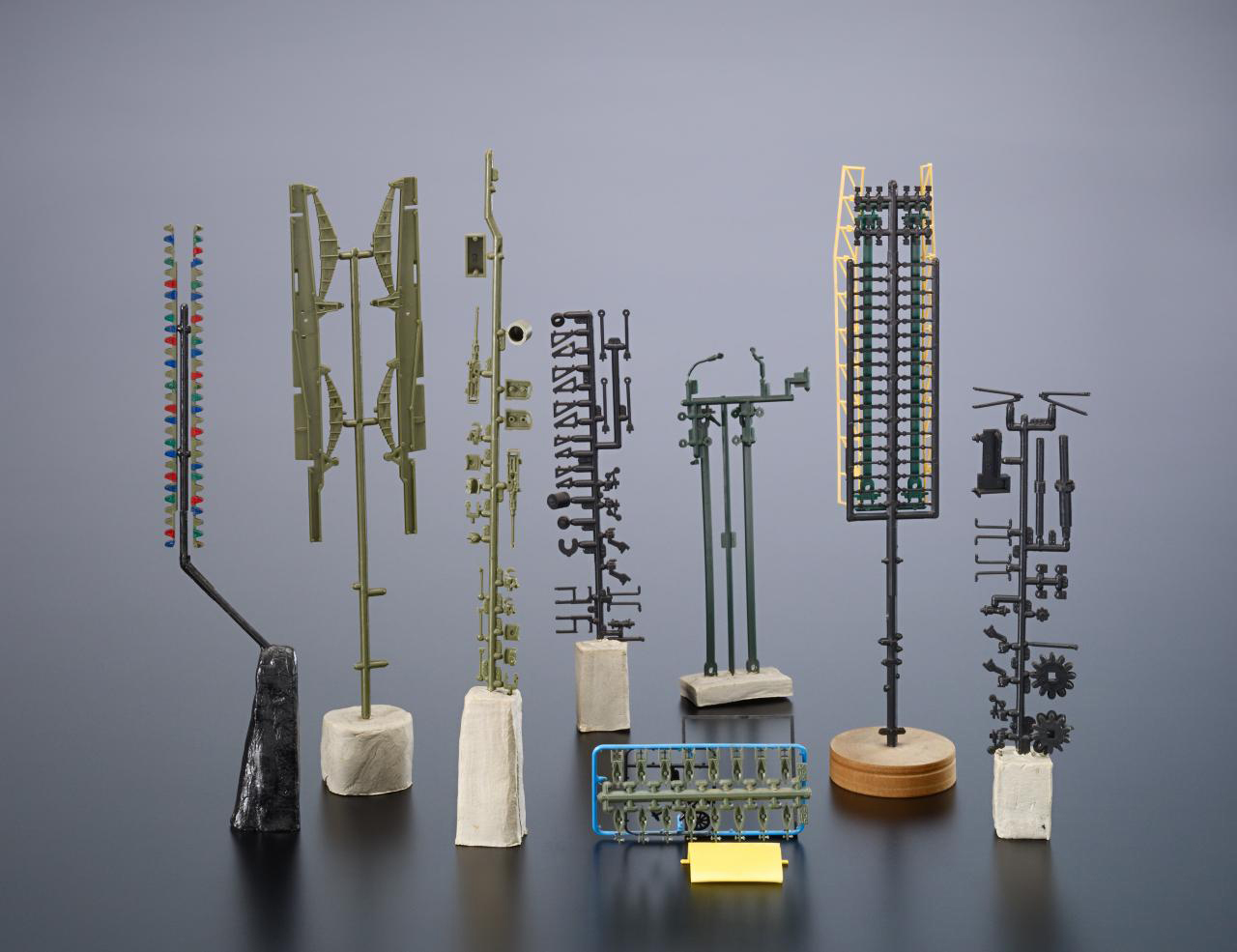
In the first space lit glass cases hover in darkness, containing delicate constructions of found objects, beautifully crafted. Made of plastic and metal, some parts taken from modelling kits, the sculptures morph and weave a delicate narrative, a powerful artistic vision. Mostly totemic in nature they transport the viewer with wonder and delight, the artists vision fully realised: no unnecessary flourishes, no wasted energy on forms that are redundant.
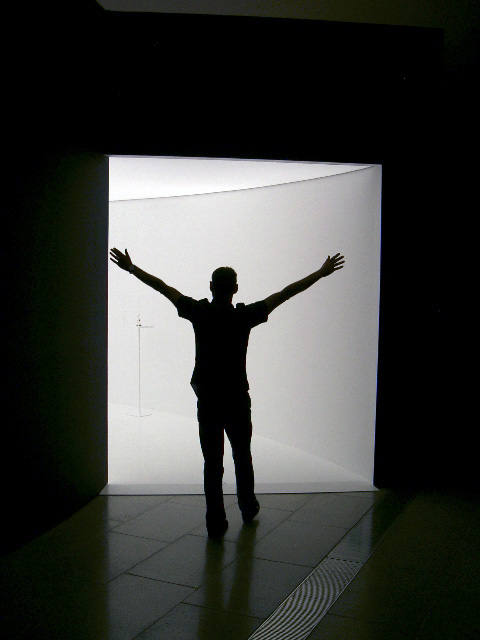
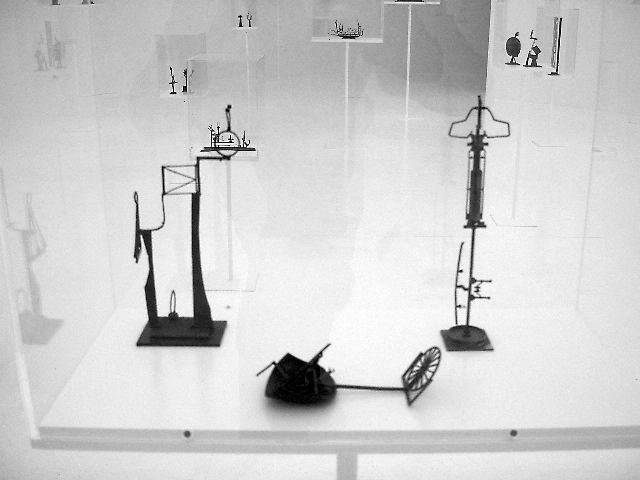
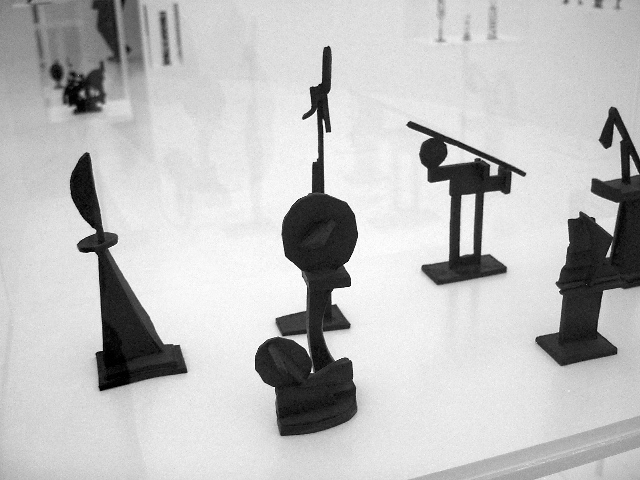
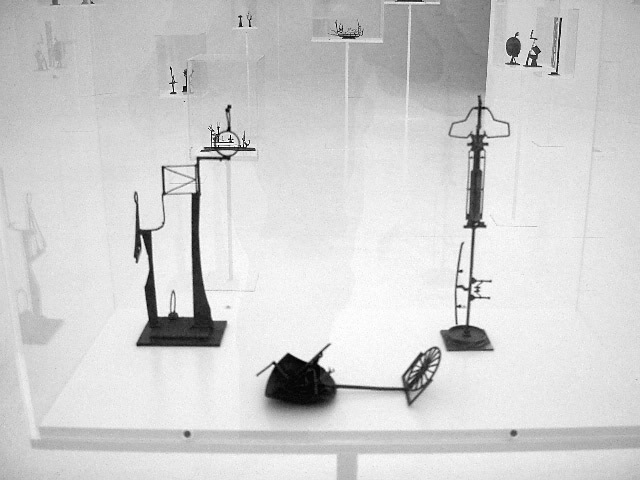
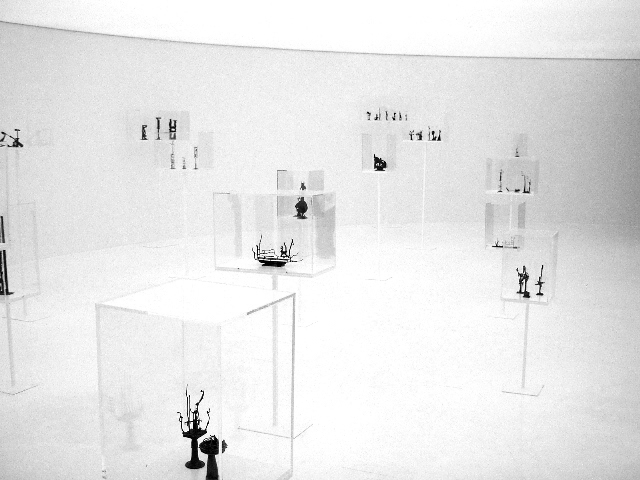
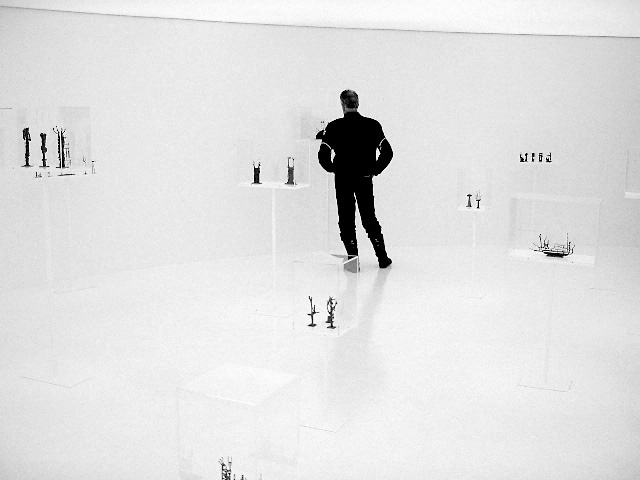
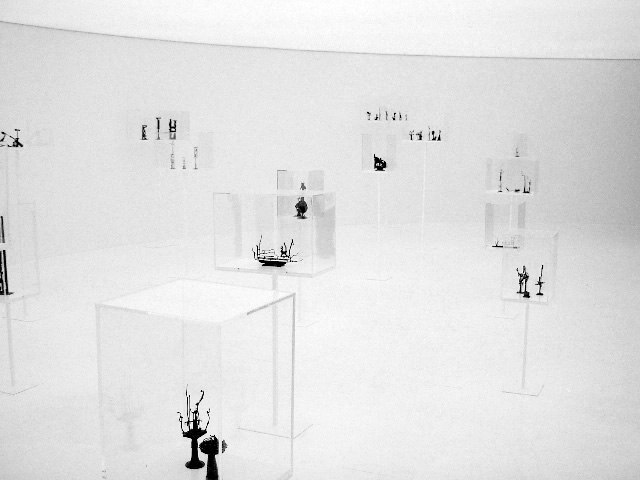
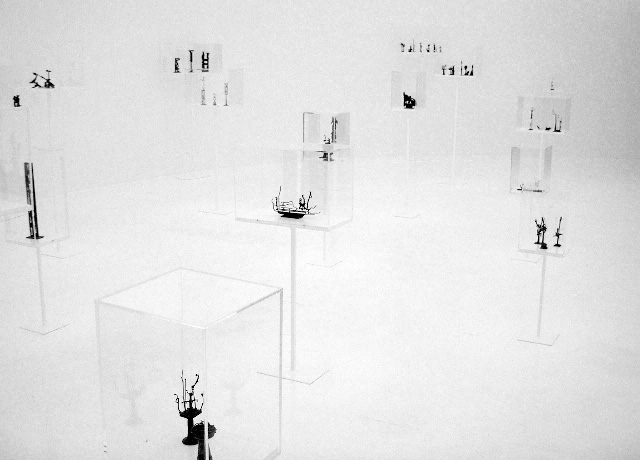
Wandering from the first darkened space we face a curved wall of black with a bright white opening, almost like the mouth of a Nautilus shell. Upon entering we are enveloped in white – walls, floor, stretched acrylic ceiling and stands upon which glass cases sit all being pure white. It is like stepping into the spacecraft from Stanley Kubrick’s 2001: A Space Odyssey – quite disorientating but transformational. In the cases sit small very dark bronze sculptures contrasting with the white. Again mostly totemic in nature the sculptures have great power and presence. Some portray small cities on top of hills. Others intricate machine and figure like constructions. All of the cases are mounted at different eye levels, unlike the first room.
When looking across the gallery space, the boxes and sculpture within create a diorama, almost a tableaux vivant, where you can move the focus of your gaze from foreground to mid to background, all suspended in white. If you can be in this space alone with the work and wander around soaking in the vision of this artist so much the better.
The contrast and parallels between the two rooms is striking. Here is an artist at the height of his powers commanding his materials and his vision in two distinct bodies of work: one delicate, found, plastic the other solid, dark and essential, both dealing with the essence of human creativity and being, leaving the viewer with a sensory experience long remembered.
Klippel/Klippel: Opus 2008 exhibition entrance to the second space
Robert Klippel is regarded as Australia’s most important sculptor of the post-war 20th century period. Known for his abstract assemblages created from found objects he is a distinguished figure in the history of Australian art. Andrew Klippel, Robert’s son, is a composer and musician who has achieved international recognition as a solo musician, songwriter and influential music producer.
Klippel/Klippel: Opus 2008 is a unique and compelling sensory experience which presents a group of Robert Klippel’s small-scale sculptures that were produced during the 1980s and 1990s – some of these have never been publicly displayed. It also includes the monumental bronze work No. 709. Andrew has arranged for this work, which Robert was preparing to cast at the time of his death, to be executed for the National Gallery of Victoria and included in the exhibition. And, in an important artistic response, Andrew Klippel has created a soundscape – a meditation on his father’s work.
Klippel/Klippel: Opus 2008 is an extraordinary and immersive exhibition that celebrates the creative process.
Edward S Curtis (American, 1868-1952) Nuhlihahla-Qagyuhl Nd
Following my thoughts on the series The First Australians on SBS we have this wonderful coffee table book of photographs: Edward S. Curtis: Visions of the First Americans with images taken from his seminal 20 volume work The North American Indian.
Curtis worked on the project from 1906 to 1927 hauling his large format glass plate camera across the United States much as Eugene Atget did at roughly the same time in Paris, taking photographs of the old city and its hotels, shops, parks and gardens. Atget died in 1927 with his art recognised by few whilst Curtis lived on into the 1950s, dying in obscurity and poverty after the fame of his groundbreaking work had disappeared.
Atget’s photographs of people half seen through shop doors and windows, like shadows of the night. Curtis’s photographs of masked Yeibichei dancers wearing elaborate attire. Both photographed a vanishing world capturing it for prosperity on fragile glass plates. Both brought to their projects a unique vision and a belief in what they were doing.
Curtis thought he was photographing the dying races of the American Indians. Atget knew he was photographing the collapsing spaces of old Paris. Both use the space of the photograph to signify their intentions: an understanding of their subject matter, an empathy with a disappearing way of life, a need to record their vision of this world – and an intensity of insight into that condition.
No other photograph has the space and timelessness of an Atget. No other image evokes the presence of the plains that Curtis summoned.
His masked dancers remind me of the last photographs of the great American photographer Diane Arbus in their candour and beauty, posthumously called Untitled. Finally Arbus had found a subject matter that she could return to over and over again. As did Atget and Curtis.
As Doon Arbus has commented,
“These images – created out of the courage to see things as they are, the grace to permit them simply to be, and a deceptive simplicity that permits itself neither fancy nor artifice … The photographs appear to be documents of a world we’ve never seen or imagined before – one with its own rituals and icons, its own games and fashions and codes of conduct – which, for all its strangeness, is at the same time hauntingly familiar and, in the end, no more or less unfathomable than our own.”1
Dr Marcus Bunyan
1/ Arbus, Doon. “Afterword,” in Diane Arbus: Untitled. London: Thames and Hudson, 1995.
Fred Kruger (Australian, 1831-1888) William and Annie Barak with their son, David, at Coranderrk Aboriginal Station c. 1875
A wonderful, long-overdue documentary series on SBS television about the history of ‘Terra Nullius’, the white occupation of lands through the persecution, massacre and genocide enacted upon the Aboriginal population.
Although some of the ‘academic’ comment lacks balance this can hardly be blamed.
As an Englishman who is now an Australian I feel deep shame over the actions of my predecessors and empathy towards those whose civilisation was uprooted. And so it continues …
In episode 3 the nobleness of the Aboriginal leader William Barak broke my heart:
“And may the Lord bless you sir, and give you good knowledge.”
he wrote to his persecutors.
After his son had died After the promises had been broken.
There is a moment in Greek tragedy when the hero realises all he knows is untrue: peripateum.
Barak must have had such a moment and he returned to his people and his cultural roots, in the last years of his life painting his memories: alive, wonderful, moving.
Vale
Dr Marcus Bunyan
Johannes Heyer (Australian, 1872-1945) William Barak at work on the drawing ‘Ceremony’ at Coranderrk 1902











You must be logged in to post a comment.