Curator: Lauren Hinkson, Associate Curator of Collections at the Guggenheim Museum in New York
Organised by The Solomon R. Guggenheim Foundation, New York
Josef Albers (American born Germany, 1888-1976) Study for Homage to the Square, Closing 1964 Acrylic on Masonite Solomon R. Guggenheim Museum, New York, Gift, The Josef Albers Foundation, Inc., 1996
It is fascinating to see “the influence and connectivity between the work of Josef Albers and the abstracted geometric vocabulary of pre-Columbian art, architecture and material culture” … and the press release might add, between Albers, architecture and the flattened, geometric vocabulary of his photographs.
The lesser-known photographs and collages are “a visual conversation Albers created in response to his frequent visits to Mexico to view archaeological sites as early as the 1930s, illustrating the nuanced relationship between the geometry and design elements of pre-Columbian monuments and the artist’s iconic abstract canvases and works on paper.”
But these photographic collages stand as works of art in their own right, for they are music not just notation. Just look at the elegance and tension between the lower images in Mitla (1956, below). You don’t group photographs together like this so that they sing, so that the ‘ice-fire’ as Minor White would say (that space between each image that acts as tension between two or more images), enacts powerful attractors of light, form and energy (or spirit, if you like) … without knowing what you are doing, without feeling the presence of what you are photographing.
While artists have used photographs as “models” for other forms of art for years (for example Atget’s “documents for artists”), and we acknowledge that purpose, these images stand on their own two feet as visually nuanced, cerebral and finished works of art.
Dr Marcus Bunyan
Many thankx to the Heard Museum for allowing me to publish the photographs in the posting. Please click on the photographs for a larger version of the image.
Josef Albers (American born Germany, 1888-1976) Study for Sanctuary 1941-1942 Ink on paper The Josef and Anni Albers Foundation, Bethany, Connecticut, 1976
Josef Albers (American born Germany, 1888-1976) Ballcourt at Monte Alban, Mexico c. 1936-1937 Gelatin silver print The Josef and Anni Albers Foundation, Bethany, Connecticut, 1976
Josef Albers (American born Germany, 1888-1976) Tenayuca I 1942 Oil on Masonite The Josef and Anni Albers Foundation, Bethany, Connecticut, 1976
Josef Albers (American born Germany, 1888-1976) The Pyramid of the Magician, Uxmal 1950 Gelatin silver print Solomon R. Guggenheim Museum, New York, Gift, The Josef Albers Foundation, Inc., 1996
Josef Albers (American born Germany, 1888-1976) Governor’s Palace, Uxmal 1952 Gelatin silver print Solomon R. Guggenheim Museum, New York, Gift, The Josef Albers Foundation, Inc., 1996
Josef Albers (American born Germany, 1888-1976) Luminous Day 1947-1952 Oil on Masonite The Josef and Anni Albers Foundation, Bethany, Connecticut, 1976
Josef Albers (American born Germany, 1888-1976) Platform of the Eagles, Chichen Itza 1952 Gelatin silver print The Josef and Anni Albers Foundation, Bethany, Connecticut, 1976
The Heard Museum is presenting Josef Albers in Mexico. The exhibition demonstrates the influence and connectivity between the work of Josef Albers (German, 1888-1976) and the abstracted geometric vocabulary of pre-Columbian art, architecture and material culture. The Heard Museum is the third and final stop of the exhibition which opened in New York in 2017 then traveled to the Peggy Guggenheim Collection in Venice in 2018.
Josef Albers in Mexico is organised by the Solomon R. Guggenheim Foundation, and curated by Lauren Hinkson, Associate Curator of Collections at the Guggenheim Museum in New York. Drawing from the collections of the Solomon R. Guggenheim Museum and the Josef and Anni Albers Foundation, Josef Albers in Mexico presents an opportunity to learn about a little-known aspect of the artist’s practice and the influences he absorbed in his travels.
“Through his close attention to ancient architecture, Josef Albers developed new modes of seeing the modern world,” says Lauren Hinkson. “This exhibition of his celebrated paintings, along with lesser-known photographs and collages, reveals the complex and often surprising roles of place, time, and spirituality in Albers’s body of work.”
Included in the exhibition are rarely seen early paintings by Albers, including Homage to the Square and Variant / Adobe series, works on paper, and a rich selection of photographs and photocollages, many of which have never before been on view. The photographic works reveal a visual conversation Albers created in response to his frequent visits to Mexico to view archaeological sites as early as the 1930s, illustrating the nuanced relationship between the geometry and design elements of pre-Columbian monuments and the artist’s iconic abstract canvases and works on paper. Accompanying the artworks are a series of letters, personal photographs, studies and other ephemera.
Josef Albers was born in Bottrop, Germany in 1888 and was a fixture at the pioneering school of art, architecture, and design, the Bauhaus, until its forced closure by the Nazis. Albers and his wife, Anni Albers (1899-1994), an accomplished artist and textile designer, relocated to the United States in 1933, where he first accepted a position as head of the department of art at Black Mountain College outside of Asheville, North Carolina, a position he held until 1949. He then went on to be the head of the design department at Yale University in New Haven, Connecticut. Josef and Anni Albers traveled often to Latin America with particular interest in Mexico – visiting the country more than a dozen times from the 1930s to the 1960s. Albers’ fascination with the visual culture of Mexico left an indelible mark on his own artistic production and methodology, with sites like Teotihuacán, Chichén Itza, Monte Albán, and Mitla resonating within his paintings and stimulating new experiments in his photography.
The Heard also produced a series of public programs co-curated by the Heard Museum’s Fine Arts Curator, Erin Joyce. Topics include explorations of colour theory with some of todays’ leading artists, designers, and architects; the influence of Indigenous art and aesthetics on broader visual art, the role it has on informing artistic production and investigations into formalism and politics. Josef Albers in Mexico runs through Monday, May 27, 2019 at the Heard Museum.
Press release from the Heard Museum website [Online] Cited 25/02/2019
Josef Albers (American born Germany, 1888-1976) Mitla 1956 Gelatin silver prints and postcards, mounted to paperboard The Josef and Anni Albers Foundation, Bethany, Connecticut, 1976
Josef Albers (American born Germany, 1888-1976) Mitla (detail) 1956 Gelatin silver prints and postcards, mounted to paperboard The Josef and Anni Albers Foundation, Bethany, Connecticut, 1976
Anni Albers (American born Germany, 1899-1994) Josef Albers, Mitla 1935-1939 The Josef and Anni Albers Foundation, Bethany, Connecticut, 1976
Heard Museum 2301 N. Central Avenue Phoenix, Arizona 85004
There’s something consistently awesome about Mexican photography that is so grounded, so essential, and yet at the same time so spiritual.
One of my favourite photographic artists of all time is Manuel Alvarez Bravo, he of the lyrical narrative, the sensual body, the assassinated worker. Iturbide seems to be cut from the same cloth – she was his assistant for two years; he her teacher about photography and life – and his influence is telling in Iturbide’s imaginative and sometimes incongruous images, such as the skull in Mexico… I want to get to know you! (1975, below) or Our Lady of the Iguanas, Juchitán, Mexico (1979, below).
Life, death, violence, sacrifice, beauty, identity and place, mixed with daubs of Surrealism, are constant themes of Mexican photography and this symbology can be seen in Iturbide’s unusual urban geometries and her eye for the unexpected. She is a visionary ethnographer who paints in black and white a story of magical literary realism… seeing through her camera something different than she sees with her eyes directly. She sees, and then feels, a different world.
Octavio Paz, the great Mexican poet, writing about the great Mexican photographer Manuel Alvarez Bravo, said that, “Reality exists, but it is more real in black and white.” And so here. Iturbide feels that black and white is more real than colour – and that reality is in black and white. It is in this tonal space that Graciela Iturbide’s Mexico pictures a place of beauty and contradiction, a place of transformations and interstitial spaces (intermediate, indeterminate spaces), an amalgamation of Indigenous and Spanish traditions. “I always shoot what surprises me,” she says. “My eyes see them, and my heart shoots them.”
Gracia Graciela, oh Graceful Beauty, for your gift to us.
Dr Marcus Bunyan
Many thankx to the Museum of Fine Arts Boston for allowing me to publish the photographs in the posting. Please click on the photographs for a larger version of the image.
“Photography is also like life, right? … I think in my case, taking photos as therapy has a lot to do with death with everything I do, with Frida Kahlo, because I like to photograph things in therapy, things that are healing, which is powerful, right?”
Pedro Meyer (Spanish, b. 1935) Manuel Álvarez Bravo and Graciela Iturbide, Coyoacán (Mexico) 1983 Gelatin silver print
When I went to study at the university he was teaching at the university as well and I attended one of his courses; that’s how I got to know him. Then, after a couple of weeks I became his assistant. At that time he was not that famous in Mexico, he was very famous in Europe and the United States. He was known in Mexico but he was not really a big star. So, what I really need to make clear is that he was not just a teacher of photography; he was a teacher about life for me. Because he taught me about everything, he talked about literature, cinematography… so he was more of a teacher of life… he never said this picture is good or this picture is bad, he would never say that flat out. Instead, he would always say something to guide you in the right direction. Yet he would never say, “This is good or this is bad”.
With Álvarez I went to certain little towns but I was only his assistant for two years. After that I made the decision to cut the umbilical cord and make my own way.
Extract from Munem Wasif. “An Interview with Graciela Iturbide,” on the Chobi Mela website, November 24, 2014 [Online] Cited 06/04/2019
The photographs of Graciela Iturbide not only bear witness to Mexican society but express an intense personal and poetic lyricism about her native country. One of the most influential photographers active in Latin America today, Iturbide captures everyday life and its cultures, rituals, and religions, while also raising questions about paradoxes and social injustice in Mexican society. Her photographs tell a visual story of Mexico since the late 1970s – a country in constant transition, defined by the coexistence of the historical and modern as a result of the culture’s rich amalgamation of cultures. For Iturbide, photography is a way of life and a way of seeing and understanding Mexico and its beauty, challenges, and contradictions.
This is the first major East Coast presentation of Iturbide’s work, featuring approximately 125 photographs that span her five-decade-long career. Organised into nine sections, the exhibition opens with early photographs, followed by three series focused on three of Mexico’s many indigenous cultures: Juchitán captures the essential role of women in Zapotec culture; Los que viven en la arena (Those Who Live in the Sand) concentrates on the Seri people living in the Sonoran Desert; and La Mixteca documents elaborate goat-slaughtering rituals in Oaxaca, serving as critical commentary on the exploitation of workers. Thematic groupings highlight Iturbide’s explorations of various aspects of Mexican culture, including fiestas, death and mortality, and birds and their symbolism. Her more recent work is presented in two series related to Mexico’s cultural and artistic heritage, featuring plants – mainly cacti – in “intensive care” at the Oaxaca Ethnobotanical Gardens, as well as El baño de Frida (Frida’s Bathroom), depicting personal belongings in Frida Kahlo’s bathroom at the Casa Azul that had been locked away for 50 years after the artist’s death.
Iturbide’s powerful and provocative photographs are anti-picturesque, anti-folkloric. Her work embodies her empathetic approach to photography and her deep connection with her subjects, asking questions through its capacity for imaginary associations. Drawn primarily from Iturbide’s own collection, “Graciela Iturbide’s Mexico” also includes the Museum’s recent acquisition of 37 works by the artist, as well as loans from museums and private collections throughout the US and Mexico. The exhibition is accompanied by an illustrated catalogue produced by MFA Publications.
Text from the Museum of Fine Arts, Boston website [Online] Cited 05/04/2019
Nearly 140 Images in Graciela Iturbide’s Mexico Portray Photographer’s Native Country through Her Eyes
Throughout a five-decade-long career, photographer Graciela Iturbide (born 1942) has focused on capturing and understanding the beauty, rituals, challenges and contradictions of her native Mexico. Graciela Iturbide’s Mexico is the first major East Coast presentation of the artist’s work, featuring nearly 140 photographs that tell the visual story of her country since the late 1970s. Going beyond documentary photography, Iturbide’s work reveals Mexico’s complexities through her personal explorations. Focused on the tensions between urban and rural life, human presence and nature, and indigenous and Spanish cultures, her photographs have contributed to Mexico’s visual identity while calling attention to the rich syncretism, diversity and inequalities of Mexican society. The exhibition is drawn primarily from Iturbide’s own collection and also highlights a recent acquisition of her photographs, the first major group of works by the artist to enter the Museum’s collection – 35 purchased by the MFA and two donated by Iturbide. Loans from museums and private collections throughout the U.S., Mexico and France are also included. On view from January 19 through May 12, 2019 in the Henry and Lois Foster Gallery, the exhibition features interpretation in English and Spanish, as well as a documentary video of the artist, produced by the Museum and shot at Iturbide’s studio in Mexico City. Graciela Iturbide’s Mexico is accompanied by an illustrated catalogue produced by MFA Publications, which features more than 100 striking tritone reproductions of evocative photographs alongside essays that invite readers to share in Iturbide’s personal artistic journey. This beautiful volume with a three-piece cloth and printed binding with foil stamping teases out key ideas and visual relationships across different moments in the photographer’s storied career. The exhibition is supported by the Leigh and Stephen Braude Fund for Latin American Art, The Bruce and Laura Monrad Fund for Exhibitions, and the Diane Krane Family and Jonathan and Gina Krane Family Fund. Generous support for the publication was provided by the Andrew W. Mellon Publications Fund.
“I am thrilled to present Graciela’s groundbreaking images to our global audiences, and it has been a pleasure and honour to work closely with her in preparation for this exhibition,” said Kristen Gresh, Estrellita and Yousuf Karsh Curator of Photographs. “Her work has successfully and beautifully brought to the forefront the many untold stories of Mexican culture and history – from the eyes of an insider.”
The exhibition is organised thematically into nine sections and opens with early photographs. One of her first works, Zihuatanejo, México (1969, Collection of Les and Sandy Nanberg), is a pensive portrait of a young girl that marks the beginning of Iturbide’s forays into photographing the diverse peoples of Mexico. Shot during the same year, Mexico City (1969, Collection of Daniel Greenberg and Susan Steinhauser) portrays a sex worker in what appears to be a cantina or pulquería. In fact, the subject is a figure in a wax museum. The photograph’s graphic background – a mural of a large skull painted on a wall – alludes to both Mexico’s long history of muralism and the country’s fascination with death. Works such as Little Bull / Torito (1982, Collection of Galeria Lopez Quiroga) and Juchitán (1975, MFA) reveal Iturbide’s attraction to unusual urban geometries and her eye for the unexpected. Together, these early images attest to the photographer’s keen observation of Mexican contemporary culture in the 1970s and early 1980s.
The next three sections of the exhibition focus on Iturbide’s deep commitment to photographing different populations throughout Mexico. One of her early projects was to document the way of life of the Seri Indians, a formerly nomadic group of fisherfolk living in the Sonoran Desert in northwestern Mexico. In 1978, Iturbide and anthropologist Luis Barjau immersed themselves within the community, staying for a month and a half on their first trip and another month on the second. The result of their collaboration was the 1981 book Los que viven en la arena ( Those Who Live in the Sand) and a selection of additional photographs that Iturbide printed and exhibited years later. The exhibition features two prints of one of Iturbide’s most well-known works, Angel Woman / Mujer ángel (1979, Collection of Elizabeth and Michael Marcus and Collection of Galeria Lopez Quiroga ), an ethereal image that captures a woman in traditional dress carrying a boom box as she heads down to the empty desert plain. The photograph exemplifies a theme running through the series: the impact of capitalism on the Seri people’s otherwise minimalist culture. This early project confirmed Iturbide’s interests in working thematically, raising her awareness of Mexico’s diversity and building close relationships with her subjects.
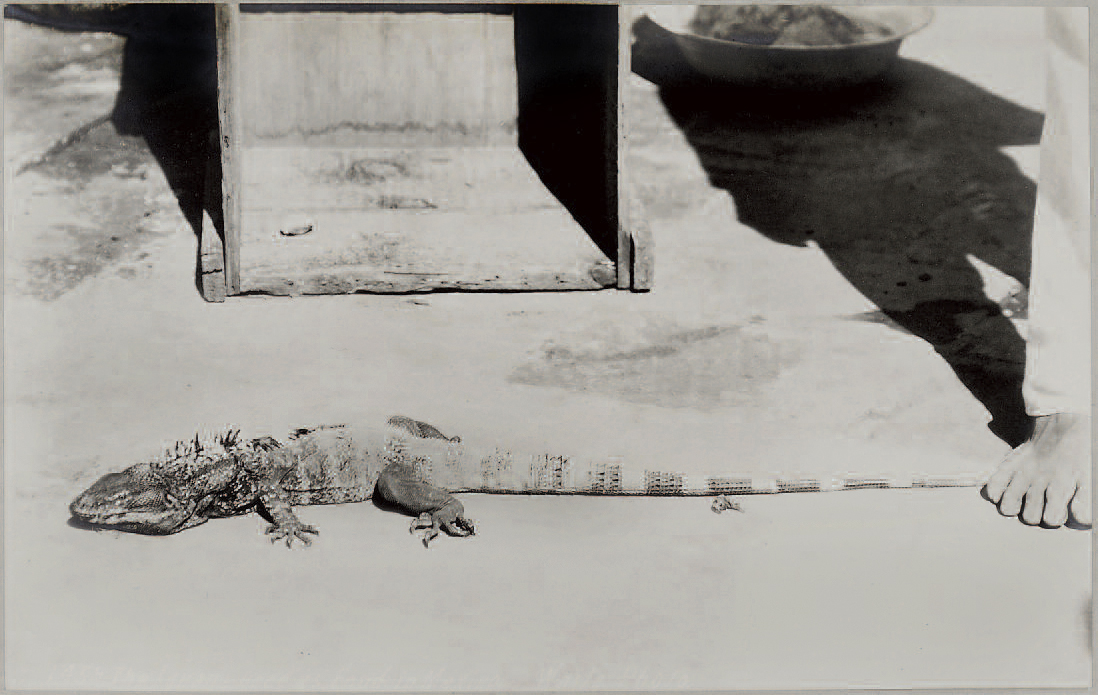
Over the course of a decade beginning in 1979, Iturbide traveled regularly to Juchitán, a city in southern Oaxaca. Juchitán is home to the Zapotec culture, in which women are known for their economic, political and sexual independence. Iturbide’s iconic photograph Our Lady of the Iguanas / Nuestra Señora de las Iguanas (1979, Brooklyn Museum) portrays a woman, Zobeida Diaz, wearing a wreath of iguanas on her head as she makes her way to sell them at the market. The iguana has historical importance in Zapotec society, both as a gastronomic delicacy and as an animal believed to have healing properties. Our Lady of the Iguanas, reproduced today on everything from municipal offices to highway signs and murals, has become a symbol for the community of Juchitán and for Zapotec womanhood. Original contact sheets displayed alongside the photograph show a cinematic sequence of Diaz interacting with Iturbide as she poses for the camera. She appears to be overtaken by laughter at certain points – an indication of the artist’s empathetic way of connecting with her subjects. Yellow grease-pencil marks also reveal Iturbide’s working method and creative process, highlighting the image she had chosen to print and how she envisioned cropping it. In her final selection, the iguanas themselves appear to be posing for the camera – an idea that corresponds to Iturbide’s search for the unexpected and the symbolic.
In addition to highlighting the importance of women in Juchitán, Iturbide also captured the society’s openness to muxes – men who dress as women, sometimes referred to as a Zapotec third gender. Her photographs of a muxe named Magnolia – Magnolia with Mirror / Magnolia con espejo (1986, J. Paul Getty Museum) and Magnolia with Sombrero / Magnolia con sombrero (1986, MFA) – demonstrate her ability to connect intimately with the community. Immersing herself in Zapotec culture, Iturbide also recorded the enduring legacy of native traditions – from an annual two-day festival and pilgrimage celebrating an alligator deity to el rapto, a premarital ritual practiced by those in lower and middle classes. Her strong and poetic images of Juchitán not only gained her international recognition, but also became a point of departure for a new vision of Juchitec society that has since been integrated into Mexico’s identity.
Following the Juchitán section are Iturbide’s photographs of the annual goat-slaughtering ritual in the Oaxacan region of La Mixteca, in south-central Mexico. The tradition dates back to colonial times, when Spanish landowners contracted Mixtec workers to butcher animals for sale, and carries on today. Tens of thousands of goats are killed during the month-long festival, which involves ritualistic aspects such as saving a lone animal every year as an act of repentance before the slaughter. Iturbide’s photographs from this series also highlight the exploitation of workers in one of Mexico’s poorest regions, who have created a ritual out of their harsh working conditions as a way of coping with the violence and pain. This experience had a tremendous impact on Iturbide, marking a personal turning point. Her wrenching experience in La Mixteca became the last time she spent extended amounts of time with an indigenous community.
The next three sections focus on themes that recur throughout Iturbide’s oeuvre: fiestas, death and birds. Since the mid-1970s, Iturbide has traveled throughout the country, including Chalma, Oaxaca and Tlaxcala, to observe and record a variety of fiestas – lavish and visually stimulating celebrations, which often include elaborate costumes or disguises. Death is another dominant element of Mexican culture, and Iturbide’s photographs related to the subject reflect both a personal experience and larger cultural manifestations. Her works range from depictions of signs of mortality in everyday life, as seen in the early photograph Mexico… I want to get to know you! / México… Quiero Conocerte! (1975, MFA), to representations of surreal-like funerary rituals and celebrations like the annual Día de los Muertos (Day of the Dead). Iturbide’s fascination with birds is intimately linked to her own emotional journey toward overcoming a personal loss. Her photographs of the subject – ranging from spectacular and sublime skies full of birds to close-up portraits of birds in trees and even self-portraits with birds – show her interest in the rites and cycles of the natural world, while also evoking the spiritual world.
In 1998, Iturbide was invited by Francisco Toledo to photograph the newly opened Ethnobotanical Garden of Oaxaca. By design, the garden tells the story of the relationship between the people of Oaxaca and their native plants, which are arranged by ecological and cultural themes. The next section of the exhibition presents these photographs, particularly of cacti undergoing therapeutic treatment. The images, published in her 2004 book Naturata, reflect the caretaking aspect of the garden. A startling view of the tops of several columnar cacti in Botanical Garden / Jardín Botánico (1998-1999) shows them with bundles of newspaper padding and wooden boards as splints, all bound around the plants with rope. In another photograph, Botanical Garden / Jardín Botánico (2002) a thorny treelike plant receives an intravenous treatment as two bags of a cream-coloured liquid drip into lines connected to its limbs.
The final section features the most recent series in the exhibition, El baño de Frida (Frida’s Bathroom), which will be on view from February 27, 2019 through June 16, 2019 in the Museum’s Art of the Americas Wing, alongside another MFA exhibition, Frida Kahlo and Arte Popular. In 2005, Iturbide was commissioned to photograph personal belongings in Frida Kahlo’s bathroom at the Casa Azul, which had been locked away for 50 years following the artist’s death. Iturbide’s stark images provide an emotional narrative about the intimate space within the “Blue House,” where Kahlo was born and died, and the mystery of the objects. Iturbide’s photographs focus primarily on objects related to Kahlo’s pain – from a box of Demerol, an opioid pain medication, to a prosthetic leg. In one photograph, a hospital gown – stained by blood or paint – hangs ominously against the tiled wall, serving as a reminder of Kahlo’s many operations. In another, a self-portrait that depicts Iturbide’s bare feet in Kahlo’s bathtub, the photographer puts herself in the artist’s place and evokes one of Kahlo’s famous paintings, What the Water Gave Me (1938). Iturbide’s images reveal a side of Kahlo that is dramatically different from the colourful magical realist portrayed by her clothes and paintings. In photographing Kahlo’s private space, Iturbide grapples not only with the cultural and symbolic legacy of the painter, but with her own legacy as well. The series reveals a silent dialogue between the two women, two artists of Mexico, who have seen their art as a form of therapy and escape from everyday life.
About Graciela Iturbide
Iturbide was born in 1942 in Mexico City. In 1969, at the age of 27, she enrolled at the film school Centro de Estudios Cinematográficos at the Universidad Nacional Autónoma de México to become a film director. However, she was soon drawn to the art of still photography as practiced by the Mexican modernist master Manuel Álvarez Bravo, who was teaching at the University. From 1970 to 1971 she worked as Bravo’s assistant, accompanying him on various photographic journeys throughout Mexico. In the early half of the 1970s, Iturbide traveled widely across Latin America – in particular to Cuba and Panama. In 1978, she was commissioned by the Ethnographic Archive of the National Indigenous Institute of Mexico to photograph Mexico’s indigenous population. Iturbide decided to document and record the way of life of the Seri people along the country’s border with Arizona. In 1979, she was invited by the artist Francisco Toledo to photograph the Juchitán people who form part of the Zapotec culture native to Oaxaca in southern Mexico. This series resulted in the publication of her book Juchitán de las Mujeres in 1989. Between 1980 and 2000, Iturbide was invited to work in Cuba, Germany, India, Madagascar, Hungary, France and the U.S., producing a number of important projects. She has enjoyed solo exhibitions at the Centre Pompidou (1982), San Francisco Museum of Modern Art (1990), J. Paul Getty Museum (2007), MAPFRE Foudation, Madrid (2009), Photography Museum Winterthur (2009) and Barbican Art Gallery (2012), among others. Iturbide is the recipient of the W. Eugene Smith Memorial Foundation Award (1987); the Grand Prize Mois de la Photo, Paris (1988); a Guggenheim Fellowship for the project Fiesta y Muerte (1988); the Hugo Erfurth Award, Leverkusen, Germany (1989); the International Grand Prize, Hokkaido, Japan (1990); the Rencontres Internationales de la Photographie Award, Arles (1991); the Hasselblad Award (2008); the National Prize of Sciences and Arts in Mexico City (2008); an Honorary Degree in photography from Columbia College Chicago (2008); and an Honorary Doctorate of Arts from the San Francisco Art Institute (2009).
Press release from the Museum of Fine Arts, Boston website [Online] Cited 05/04/2019
“For her, the camera is an instrument of sharing, making visible what, to many, is invisible,” Ms. Gresh said. Ms. Iturbide’s photos, she added, provide “a poetic vision of contemporary culture informed by a sense of life’s surprises and mysteries.”
“The dark ballast of Iturbide’s photography is a deep knowledge of predation: how humans prey on animals; how multinational corporations subsume developing economies; how modern industry exploits a largely indigenous underclass; how artists wrangle life from their subjects in the name of creation. In one haunting early photograph, a young Cuna woman walks through an open field in Panama, Pepsi-Cola’s logo embroidered on her shirt. The pernicious creep of capitalism, yes, but also its corollary: a vivid reminder that indigenous people, often relegated to an imagined antiquity, are full participants in contemporary life. …
In 1979, the painter Francisco Toledo invited Iturbide to visit his native Juchitán, in southeastern Oaxaca, a town known for its fierce independence and long-standing leftist sympathies. She returned frequently over the next decade, chronicling the public and private life of its largely Zapotec population. As a perpetual guest, Iturbide became a master of the threshold, of doorways and frames, storefront windows and cemeteries, masks and carnival, of the moments preceding and following transformation. …
Contact sheets enclosed in glass vitrines accompany select images, often annotated with grease pencil. According to Iturbide, there are – pace Cartier-Bresson – two “decisive moments” in photography: “One, when you take the photo; and two, when you discover it in the contact sheet, because you often think you took one photo, and another comes out.” In the sheet for Magnolia with Mirror (1986, above), a livewire thread of intimacy is palpable in the sense of giddy experimentation between artist and subject. In the proofs for Our Lady of the Iguanas, Zobeida Díaz shakes the hand of a passerby, adjusts her crown of iguanas, suppresses laughter. The sheets underscore the contingency and providence of any image’s origins, how a slightly upturned lip or shifted frame catapults one into the pantheon while another slips into obscurity.”
Extract from Christopher Alessandrini. “Graciela Iturbide, Visionary Ethnographer,” on The New York Review of Books website [Online] Cited 06/04/2019
Iturbide studied photography at universities in Mexico, where she met her mentor, the teacher, cinematographer, and photographer Manuel Álvarez Bravo. Inspired by Bravo, she developed her particular interest in the daily life of Mexico’s indigenous cultures. Iturbide has photographed things and people found in Mexico City, in her native Juchitán, in Oaxaca, and on the Mexico-U.S. border. Her camera lens often traces Mexico’s rich life of religion and rituals. Torito represents an assemblage of a bicycle frame and a cow’s skull and horn, found in Mexico City, and shows the photographer’s exploration of the relationship between the individual and the broader culture.
Museum of Fine Arts, Boston Avenue of the Arts 465 Huntington Avenue Boston, Massachusetts
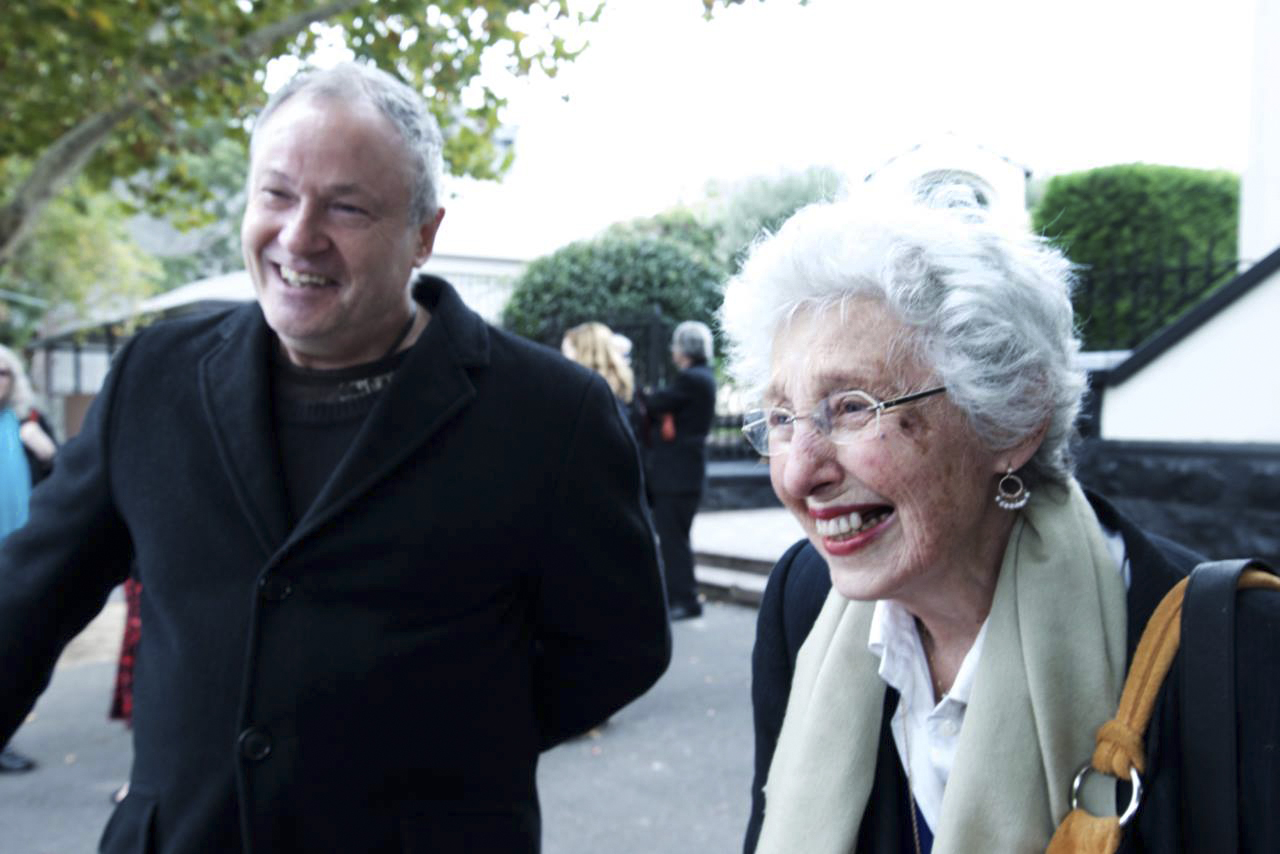
Where: Monash Gallery of Art, Wheelers Hill When: Monday 20th May 2019, 6-9pm
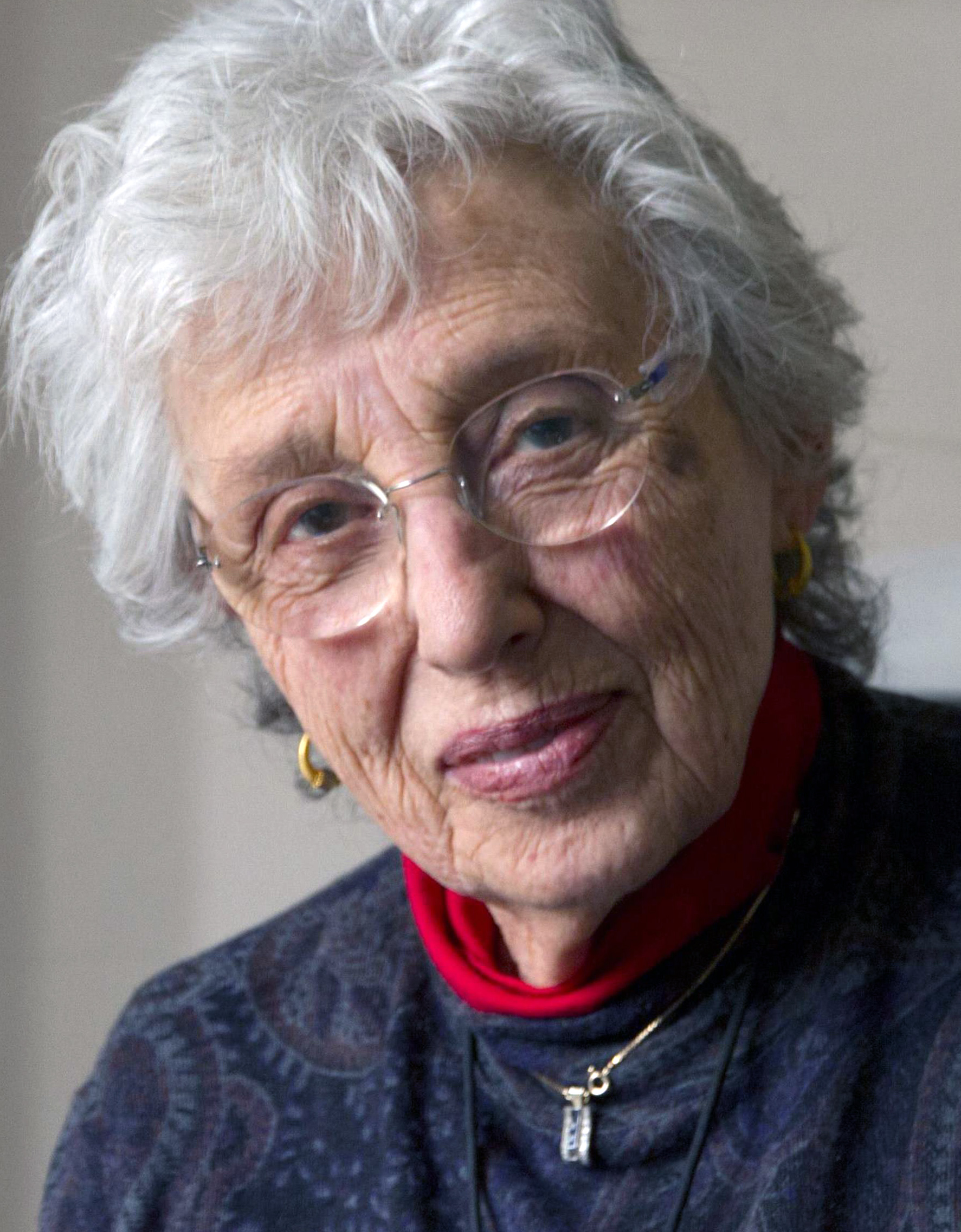
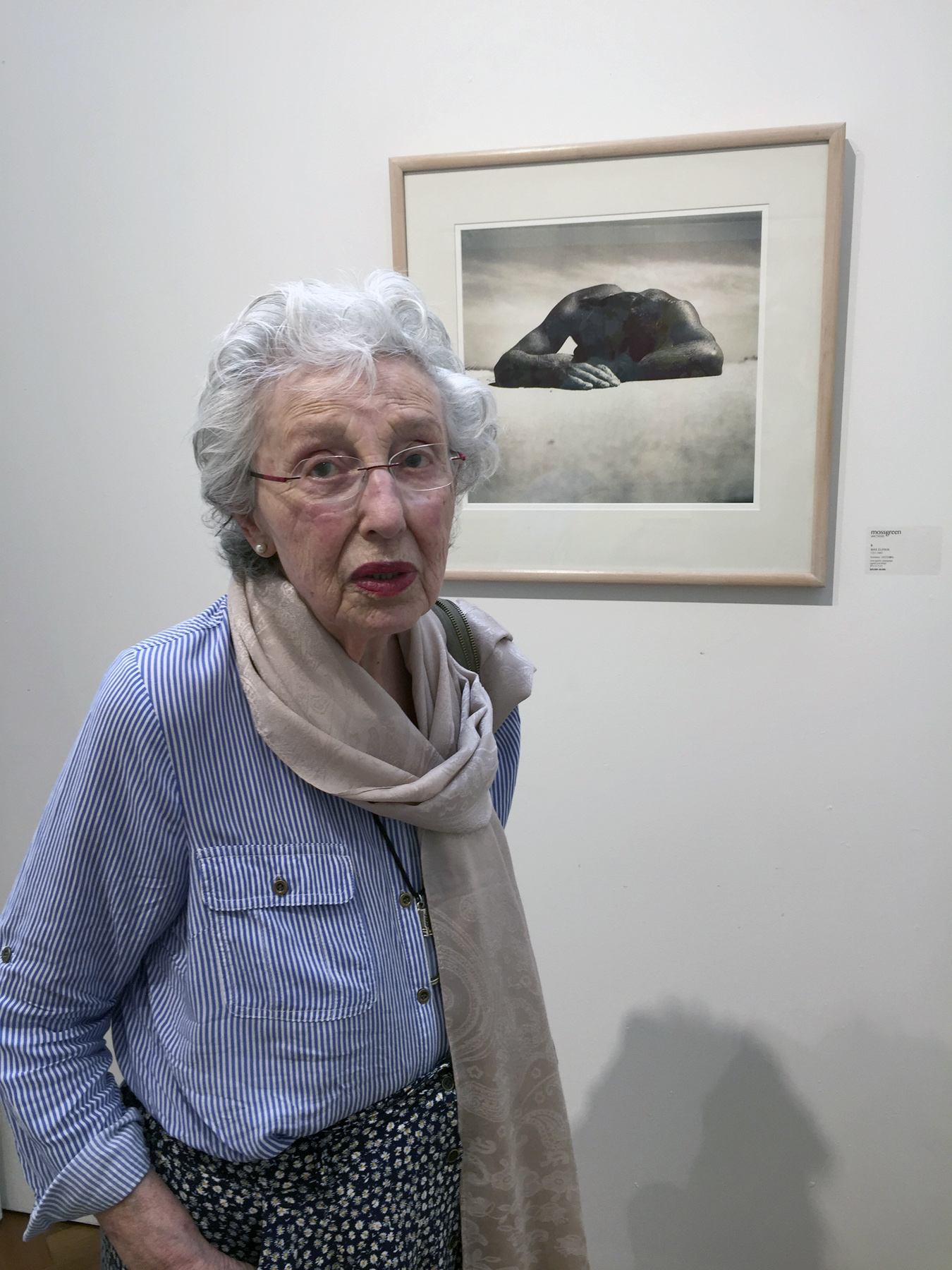
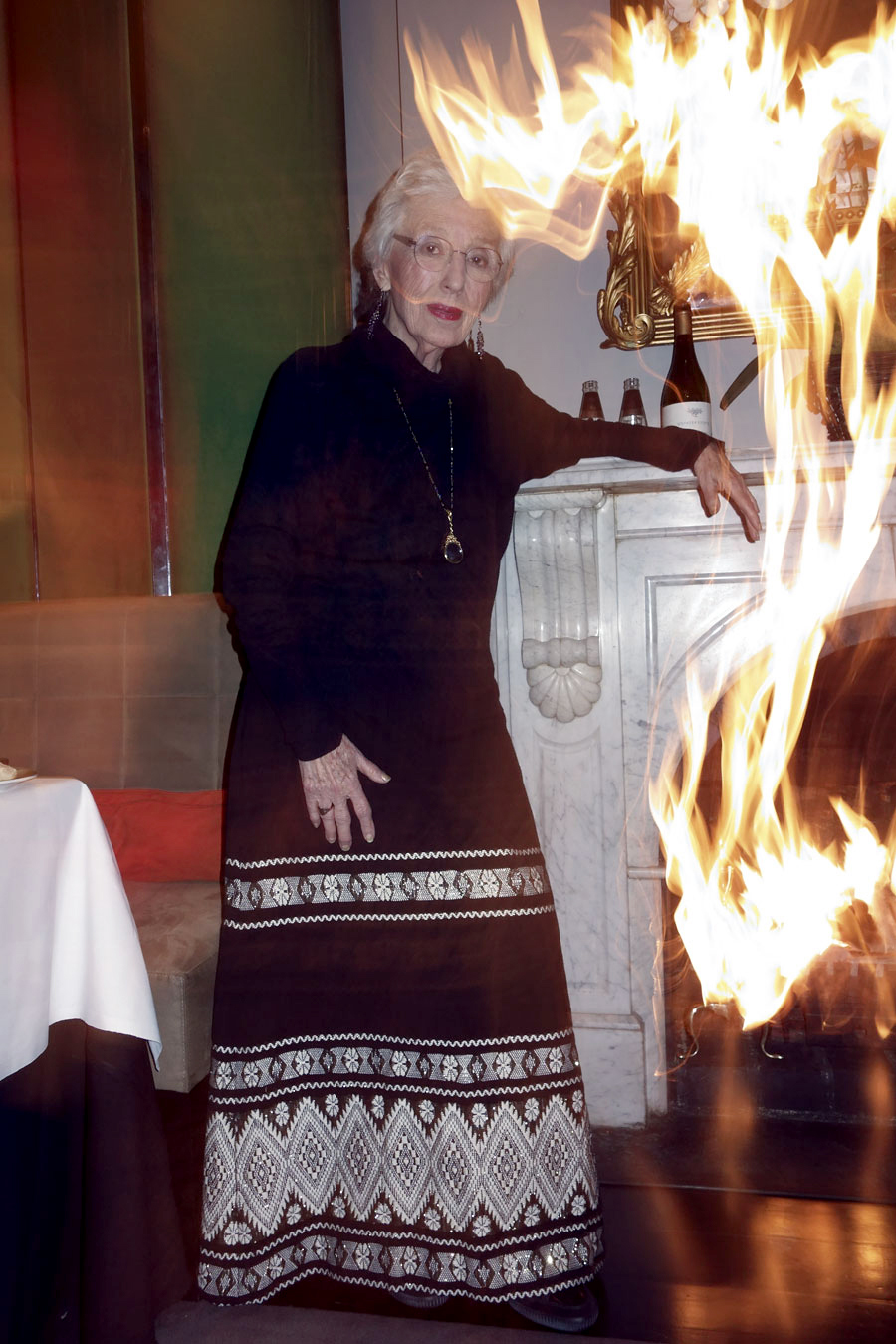
Joyce Evans photographer celebration… I hope many of you can attend.
A celebration of Joyce and her contribution to art, photography, women’s status, mentorship and philanthropy. At least 30 of her prints will be displayed. Celebrants will talk and recall in their own words experiences with Joyce and her passions. The event will be recorded and made available for non-attendees. Snacks and drinks will be available.
A truly remarkable human being.
Marcus
If we can find out what we are… that is the artist. This goes to the core element of your being, and the core element of your enquiry remains the same.
If the core part of your life is the search for the truth then that becomes a core part of your identity for the rest of your life. It becomes embedded in your soul.
Joyce Evans
Michael Silver (Australian) Joyce Evans Nd
Monash Gallery of Art 860 Ferntree Gully Road, Wheelers Hill Victoria 3150 Australia Phone: + 61 3 8544 0500
Curators: Wim van Sinderen with the assistance of Hanneke Mantel (both of Gemeentemuseum Den Haag and The Hague Museum of Photography)
Erwin Olaf (Netherlands, 1959-2023) Squares, Joy 1985 Gelatin silver print
As a storyteller, Erwin Olaf is a contemporary photographer whose work addresses most current concerns of the world – discrimination, gender, sexuality, taboo, climate change, reality, equality, power, racism, freedom of expression and democracy – through staged studio and outdoor photographs of incredible technical and visual skill.
The key to his work is the twist that he gives his cinematic, perfect worlds – the hidden crack in the facade, the unhinging of the link between reality and representation. These not so perfect worlds are often inspired by stories of the past, whether those stories may be present in the works of Vermeer, the still lives of the Dutch painters of the 16th and 17th century, Caravaggio, the Olympic Games of 1936, Norman Rockwell paintings, film noir, or clothes of the 1950s and 1960s.
The stillness and silence of the photographs subjects let the viewer examine the details of the mise en scène… the perfectly placed Coke bottle and apple, the shredded American flag in Palm Springs, The Kite (2018); the bandaged knee, the dripping ice cream in Rain, The Ice Cream Parlour (2004); and also admire the beautiful textures and lighting of the finished “product”, for Olaf’s aesthetic riffs on subverting theatrical performances and magazine fashion shoots.
Olaf let’s the viewer’s eye move without restraint across the terrain of the photographs, letting them soak up the atmosphere of his hyperreal tableau vivant. Both seductive and disturbing, his photographs challenge us to interrogate our own story – who are we, what do we really believe in, and what can we do to change prejudice and bigotry in a hostile world.
Dr Marcus Bunyan
Many thankx to the Gemeentemuseum den Haag for allowing me to publish the photographs in the posting. Please click on the photographs for a larger version of the image.
“What I want to show most of all is a perfect world with a crack in it. I want to make the picture seductive enough to draw people into the narrative, and then deal the blow.”
Erwin Olaf
“In 1982, I saw an exhibition of Robert Mapplethorpe in Amsterdam that blew me off the socks. I just had a Hasselblad, I was inspired by his craftsmanship and the beautiful prints, and I thought: this is what I want too. In the series ‘Squares’ (1983-1993) you clearly see his influence. I started asking people that I knew from the nightlife if they wanted to pose for me in my studio, which I had decorated in a squat of a friend. For example, the boy with the champagne bottle worked in the wardrobe of my favourite disco.”
Erwin Olaf (excerpt from the book ‘Erwin Olaf – I am’)
“My earliest work reflects my life in that time. I was a moth – I really loved the nightlife. In the late seventies, the early eighties was a hedonistic period: Disco and the beginning of the punk, the sexual revolution. I loved watching people play with gender, the theatrical of the nightlife, all the roles they could take.”
Erwin Olaf
“The camera offered me a possibility to enter a world that was not mine. I was able to hide behind the camera, but also be part of what I saw. As a photographer, you can look at people. You’re observing. I wanted to focus my gaze on groups that were outside the ‘normal’ society. One of my first photography assignments for school had as a theme ‘what’s normal?’. I still ask myself that.”
Erwin Olaf (excerpt from the book ‘Erwin Olaf – I am’)
Gemeentemuseum Den Haag and The Hague Museum of Photography are to honour one of the Netherlands’ most famous photographers, Erwin Olaf (b. 1959), with a double exhibition. Olaf, whose recent portraits of the royal family drew widespread admiration, will turn sixty this year – a good moment to stage a major retrospective. The Hague Museum of Photography will focus on Olaf’s love of his craft and his transition from analogue photojournalist to digital image-maker and storyteller. Olaf will himself bring together some twenty photographs by famous photographers of the past who have been a vital source of inspiration to him. Gemeente Museum Den Haag will show non-commissioned work by Olaf from 2000 to his most recent series, including the work he produced in Shanghai and his most recent series Palm Springs, on display for the first time. Olaf will be showing his photography in the form of installations, in combination with film, sound and sculpture.
Erwin Olaf – Palm Springs: behind the scenes
Erwin Olaf (Netherlands, 1959-2023) First Aids Benefit Club Flora Palace Amsterdam, I 1983 Gelatin silver print
Erwin Olaf (Netherlands, 1959-2023) First Aids Benefit Club Flora Palace Amsterdam, II 1983 Gelatin silver print
Erwin Olaf (Netherlands, 1959-2023) Squares, Pearls 1986 Gelatin silver print
“Chessmen was inspired by a chance meeting with my former photography teacher at the School for Journalism. A few years after I graduated there, I met him on the street. When I showed him my work in my studio, he said, “Say, would you like to publish a book?” He had recently taken over a publishing house for a pittance. The only problem was that I didn’t have enough work for a book. “Oh,” he said, “you only need sixty-four pages. And if you leave a page white next to each photo, you will need thirty-two photos. “At home I thought about it while listening to the radio – a chess program was just going on. At one point the presenter said: “This is an attacking game with thirty-two pieces. A war game. “I knew immediately: I’m going to make chess pieces. Those few words on the radio were all I needed; I had a clear picture in mind. Earlier I had been thinking about how I could do something with the theme of power. Power is something weird. Why do people abuse their power? Or why do you want it? Why do some people allow others to exercise power over them? From those questions came the idea of a power game and the people who play it. “
Erwin Olaf (excerpt from the book Erwin Olaf – I Am)
“The Blacks series is largely inspired by Janet Jackson’s album Rhythm Nation 1814. In one song, she sings: “In complete darkness we are all the same / It is only our knowledge and wisdom that separates us / Don’t let your eyes deceive you.” A few years earlier I had been hitchhiking to Paris and southern France, together with a friend with an Indonesian background. I was admitted without problems in all kinds of clubs, but they refused him at the door. At that time I became much more aware of the fact that the amount of pigment in your skin can have serious consequences. So when I heard Janet Jackson sing, I thought: this is my theme. I can create a group of people where everyone is equal.”
Erwin Olaf (excerpt from the book Erwin Olaf – I Am)
Journalistic training
Erwin Olaf was studying journalism in Utrecht in the 1980s when, having noticed that he was unhappy, one of his lecturers pressed a camera into his hands. ‘I loved the thing right from the word go,’ says Olaf, ‘the weight, the cool metal in my hand. It felt so natural. And when I took my first photographs, I knew I had found my calling.’ Olaf began taking journalistic photographs of theatre performances, worked for progressive magazines and volunteered for COC Nederland (which represents LGBTI interests). In his early work Olaf often depicted the human body quite graphically, breaching the restrictions on sexuality, the body and gender. He describes himself at that time as an angry adolescent, though his taboo-breaking work was highly significant in terms of visual freedom in the Netherlands.
Early work at The Hague Museum of Photography
The exhibition at The Hague Museum of Photography will start with his early work. Chessmen (1987-1988) was one of Olaf’s first non-commissioned series, which came about when he was given the opportunity to produce a photobook. He had to fill 32 pages and he wanted to focus on the theme of power. He had heard an item on the radio about chess, a game of war consisting of 32 pieces. Olaf portrayed the game in a series of provocative images, featuring visible genitals, small half-naked people with kinky attributes, and extremely fat women in bondage outfits. The series did not go unnoticed. He received criticism for it, but also the Young European Photographers Prize.
Skill
Another early series shows the engagement that has remained important throughout Olaf’s career. Blacks (1990) is based on a song by Janet Jackson with the line, ‘In complete darkness we are all the same. It is only our knowledge and wisdom that separates us’. The series reflects Olaf’s battle for equality, and also his technical skill. In these baroque portraits, literally everything is black as coal, yet Olaf managed to give the images a rich tonality, both with his camera and in the developing process. A self-taught photographer, he has shown himself to be a master, not only of old-fashioned darkroom processes, but also of new techniques that have emerged in rapid succession since the digital revolution. He did pioneering work with Photoshop in the famous series Royal Blood (2000). Thanks to this new technique, he is even better able to experiment to his heart’s delight in his staged photography.
Sources of inspiration
Besides his own work, at The Hague Museum of Photography Erwin Olaf will be bringing together some twenty photographs by photographers who are his most important sources of inspiration, ranging from a vintage still life with roses by the late nineteenth-century photographer Bernard Eilers to self-portraits by Robert Mapplethorpe and Rineke Dijkstra. The work of these photographers inspired him, made him look in a different way at his own artistic practice, or pushed his photography in a new direction. By showing these pictures alongside his early work, which is imbued with his love of his craft, Olaf will give visitors to the Museum of Photography an idea of what has shaped him as a photographer.
Gemeentemuseum Den Haag
The exhibition at the Gemeentemuseum will begin, even before the entrance to the galleries, with the life-sized installation Keyhole (2012). The exterior has two long walls with panelling above which framed photographs hang, as in a classic interior. But visitors can watch two films through the keyhole in the doors on either side of the installation. It will be immediately apparent that the Gemeentemuseum is highlighting a new development in the work of Erwin Olaf. Here, he is going one step further, presenting his photography in exciting combinations of film, sound and sculpture.
Social engagement
Erwin Olaf’s work has always been highly personal and socially engaged. The clearest influence on the development of his work has been the events surrounding 9/11. Since then, the bombastic, baroque staging of his previous work has made way for more vulnerability and serenity. This has produced images that are very popular with the public: highly stylised film scenes staged perfectly down to the smallest detail, often bathed in light as if they were paintings, with an uncomfortable underlying message. As in the series Rain (2004), which appears to capture the moment between action and reaction after a shocking event. The series Grief (2007), shot in a 1960s setting, is about the first moment of response, the first tear.
Recent events are also reflected in Olaf’s work. He made the Tamed & Anger self-portraits (2015) in response to the Charlie Hebdo attack. In other works he addresses issues like the position of the individual in a globalising world, the exclusion and stereotyping of certain groups of people, and taboos associated with gender and nudity. The exhibition at the Gemeentemuseum will thus afford a glimpse inside Olaf’s turbulent and sometimes dark mind. A visit to the exhibition will be like wandering through his head.
Palm Springs: final part of a triptych
Erwin Olaf’s most recent series, Palm Springs (2018), will premiere at the exhibition in the Gemeentemuseum. It is part of a triptych about cities undergoing change, the other two parts being Berlin (2012) and Shanghai (2017). The Berlin series was produced in a period when dark clouds were gathering above Europe. It highlights Olaf’s concerns about freedom of expression and democracy, and the transfer of power from an older to a new generation. Shanghai is a hypermodern metropolis in China with a population of 24 million. The series made in this city explores what happens to the individual in an environment like this. In Palm Springs, Olaf again focuses on topical issues. One of the key themes is climate change, though at the same time the images also recall the America of the 1960s. In a beautiful series of portraits, landscapes – this was the first time Olaf had photographed landscapes – still lifes and filmic scenes he refers to issues like teenage pregnancy, discrimination, religious abuses and polarisation. The series tells the story of people withdrawing into gated communities as reality invades their paradise.
Photographs of royal family
A very special addition to the double exhibition will be Erwin Olaf’s photographs of the Dutch royal family. As part of the exhibition at the Gemeentemuseum he will bring together many of the photographs that the Government Information Service commissioned him to take of the royal family. He also took the picture that the family used as a Christmas greeting last December. ‘I’m proud of the royal family,’ says Olaf, ‘because they are a binding factor in a democracy that is sometimes very divided. I’m happy to be able to contribute to that.’
Successful artist
The double exhibition will show how Erwin Olaf has developed from angry provocateur to one of the Netherland’s most famous and popular photographers. His work now features in the collections and exhibitions of museums the world over, including China, Russia, The United States of America and Brazil. In 2008 The Hague Museum of Photography showed his Rain, Hope, Grief and Fall series. In 2011 he won the prestigious Johannes Vermeer Prize, and in 2018 the Rijksmuseum purchased almost 500 photographs and videos by Erwin Olaf.
Biggest retrospective to date
Together, the exhibitions at the Gemeentemuseum and the Museum of Photography will constitute the biggest retrospective of Olaf’s work ever staged, spanning the period from the early 1980s to his most recent work. In the words of Erwin Olaf: celebrating 40 years of visual freedom.
The double exhibition has been curated by Wim van Sinderen with the assistance of Hanneke Mantel (both of Gemeentemuseum Den Haag and The Hague Museum of Photography), and has come about in close collaboration with Erwin Olaf and his studio.
Press release from the Gemeentemuseum Den Haag website [Online] Cited 04/05/2019
“I made the Royal Blood series to celebrate Photoshop as the new craft. I wanted to make something that was clearly fiction and would be impossible without Photoshop. A theme that was in the air at the time was that violence was suddenly identified with glamor. I never understood why criminals, even murderers, have fans. People worship them! And every cinema is chock full of people watching violence every week. I wanted to expose the attraction of blood, violence and celebrity – that live fast, that young ideal. Now I could no longer do this type of work. The emotion behind it has disappeared – I have already told that story. But it remains an important part of my legacy.”
Erwin Olaf (excerpt from the book Erwin Olaf – I am)
Please click on the photographs for a larger version of the image.
Unknown photographer (American) Photograph Depicting an Exhumed Coffin c. 1870s-1890s Albumen print
“Iron coffins are fascinating artefacts of a time when friction between technology and tradition created a spiritual crisis in the early days of the United States… Iron coffins were created to mitigate some of the negative effects of long-distance steam transportation on a traditionally sedentary society. The benefits of steam travel are many and obvious; however, there were also downsides that began to seep into the most personal corners of American life. One unintended consequence was that steam travel enabled unprecedented numbers of people to head out, die and be buried by strangers far from home. This was considered one of the most regrettable circumstances that could befall a family during this profoundly spiritual period. A distant death denied families and loved ones participation in funeral rituals and the privilege of assisting in the commencement of the greatest spiritual journey one could make. On a societal level, the absence of a funeral disrupted a central pattern of American life and weakened the bonds of local communities. This unfortunate situation befell the family of Almond Dunbar Fisk; however, Fisk, a Manhattan stove designer had the skills and vision to remedy an important part of this tragedy, and in the process helped redefine death’s place within American life.
The catalyst for the coffins was the death of Fisk’s brother, William, in the spring of 1844 in Oxford, Mississippi. Before refrigeration or embalming, there was no practical way to return William’s body to the Fisk family plot in upstate New York for a proper Christian burial. Their father, a minister, was particularly upset by this fact, so Fisk, well versed in the principles of airtight stoves and boilers, redirected his mastery of cast iron to create an airtight coffin capable of naturally preserving a body that could be safely and sanitarily transported long distance or stored for long periods even in the hottest weather. In addition to their airtight design, preservation was achieved by making the coffins as form-fitting to the body as possible, minimising the air inside and depriving the microbes of sufficient oxygen to survive and decompose the body. He received a patent for his ‘metallic burial case’ on November 14, 1848. Partnering with his father-in-law, he formed the company Fisk & Raymond and set up shop at 401 Broadway – just in time for the California Gold Rush. His coffins were first adopted by the nation’s political elite, who had the means and desire to avoid spending eternity buried in Washington DC. The cast iron caskets caught the public’s eye in 1849 when beloved former first lady Dolley Madison was laid out in one in a large public funeral ceremony. Soon, many other politicians and presidents followed suit, making the coffins an item of status and prestige in the eyes of the growing middle class. Rocketed to fame by such high-profile funerals, Fisk’s days of glory were – alas – brief. He died the following year at age 32 at his home in Queens and his body was shipped back upstate for burial in the family plot. His brother-in-law, William Mead Raymond, took over the family business and oversaw the creation of several new coffin models until his retirement in the 1870s. While the iron coffin industry didn’t survive past the 19th century, Fisk’s invention was the beginning of a trend away from wood coffins and can be credited as the progenitor of the metal caskets used today.”
Unknown photographer (American) Photograph Depicting an Exhumed Coffin c. 1870s-1890s Albumen print
Coffin Example, Canton Historical Museum
The Coffins
The coffins were created by Almond Dunbar Fisk in 1848 in Queens, NY and marketed as Fisk Metallic Burial Cases.
Fisk’s iron coffins – modern marvels of their day – were specifically designed to naturally preserve their occupants. The coffins were developed in response to some of the inadvertent challenges that had resulted from the introduction of steam transportation in the preceding decades.
In a time before embalming or refrigeration, these coffins provided a sanitary means to transport the dead long distances in any season or preserve a body long enough for kin to travel to a distant funeral. In addition, they also provide a way to quarantine a body suspected of dying of a contagious disease (such as cholera which was first delivered from Europe via steamship in 1832).
Costing up to twenty-five dollars or more, the coffins were as expensive as they were practical. Fashioned after an Egyptian sarcophagus, these ‘mummiform’ coffins, first attracted the attention of the political elite beginning with the funeral of First Lady Dolley Madison and followed by the likes of Henry Clay, Daniel Webster and President Zachary Taylor, to name a few. However, their style and practicality also attracted those outside of Washington DC, and they became a mark of status for the upper and middle classes during the early years of consumer culture and the nascent funeral industry. The gold rush, and western expansion in general, also helped expand the market beyond the elite urban deceased.
part of the CLIMARTE Festival: ART+CLIMATE=CHANGE 2019
Peter Dombrovskis (Australian born Germany, 1945-1996) Morning mist, Rock Island Bend, Franklin River, Franklin-Gordon Wild Rivers National Park, Tasmania 1980 Courtesy of the National Library of Australia and the Estate of Peter Dombrovskis
A little too perfect
A few ideas that struck me at this exhibition.
1/ The large format 4 x 5″ colour transparencies must be near absolute perfect exposures…. everything is there in the exposure. It’s as though the transparency is the finished print. Everything that Dombrovskis wanted to capture, he did. He was a perfectionist.
His previsualisation of the scene was exceptional. He knew what he wanted to capture, he was so focused on it. The beauty is there, but how do you make it sing? Only in a few images was I swept off my feet.
2/ His use of ‘near far’ is noticeable, taken from Ansel Adams most likely. In photographs like Morning light on Little Horn (1995), Cushion plants, Mount Anne (1984) and Mount Geryon from the Labyrinth (1986) your eye is led from the detailed foreground to the magnificent vista beyond.
3/ In photographs such as Lichen on dead eucalypt, Lake Dixon (1979) and Rock platform, Tarkine Wilderness (1995) the subject seems to dissolve into Abstract Expressionist compositions.
4/ The wall colours of the exhibition utterly failed the work, especially with the line colour change running through the image.
5/ I never really felt the “sublime” nature of the Tasmanian wilderness in these photographs. I wanted to be transported to the place that was pictured but it never happened.
6/ I suspect this has to do with a/ the perfection of the transparency b/ the size at which these contemporary photographs were printed, and c/ the almost scientific, analytical nature of the contemporary printing.
I had no sense or feeling for place or “atmosphere” that emanates from a truly great photograph. These large prints were wholly disappointing in that regard. They were nearly all printed at the same size, too big, with the same monotonous clarity of composition and balancing of print, one to the other. Almost a clinical printing with too much colour saturation with no room for chaos or vibration of energy.
When printing, I was taught to rack the enlarger up and down to find when the print becomes like a jewel. This is a felt response to the negative, and an image can have several positions or print sizes when this may occur. To print the bulk of these digital images at the same size goes against this very intuitive response to the work.
There are so many moves that can be justified by an objective argument when making a fine art print – but which still don’t add up when you view the whole. Oh! to see five vintage prints in this exhibition, to see how Dombrovsksi would have printed them himself.
I really wanted to like these photographs but when you try and force something, it ain’t ever going to happen.
‘When you go out there, you don’t get away from it all. You get back to it all. You come home to what’s important. You come home to yourself.’
Peter Dombrovskis
‘… we moved in a glittering, sun-splashed world where living assumed a clarity and intensity unknown in ordinary city-bound existence. Our bodies became attuned to rock and rapid, our senses easily absorbed the roar of white-water, the silent greens of the rainforest. My steadily growing skill at negotiating obstacles bolstered my self-confidence and eased the shyness of adolescence.’
Peter Dombrovskis in Jane Cadzow, ‘A lasting image’, Sydney Morning Herald, Good Weekend magazine, 22 March 1997
‘An ethic of the land is needed because the remaining wilderness, that which makes this island truly unique, is threatened by commercial exploitation that will destroy its value to future generations. Machines are already shattering the silence of ages, invading the last forests and damming and drowning the wild rivers and gorges.’
‘We must try to retain as much as possible of what still remains of the unique, rare and beautiful. Is there any reason why … the ideal of beauty could not become an accepted goal of national policy? Is there any reason why Tasmania should not be more beautiful on the day we leave it than on the day we came? … if we can accept the role of steward and depart from the role of conqueror; if we can accept the view that man and nature are inseparable parts of the unified whole, then Tasmania can be a shining beacon in a dull, uniform and largely artificial world.’
Olegas Truchanas in Max Angus, ‘The world of Olegas Truchanas’ (Olegas Truchanas Publication Committee, Hobart 1975)
The photograph [at the top of the posting], Morning mist, Rock Island Bend, Franklin River, Tasmania (1979), is one of the most celebrated landscape photographs in Australian history. Commissioned by Bob Brown (later to become leader of the Greens Party), this image became synonymous with the successful campaign of the 1980s to prevent the damming of the Franklin River for hydro-electric development. It appeared on posters with the memorable yellow, triangular slogan ‘NO DAMS’ and showed Australians what would be lost under the waters of a dam should the hydroelectric scheme go ahead. Using his camera as a tool, Dombrovskis shared with society the riches that they would forgo if the environment was not protected.
The photograph below, Mount Geryon from the Labyrinth Cradle, Mountain-Lake St Clair National Park, Tasmania (1986) is an image that Bob Brown had in his office at a similarly large scale to provide an immediate and memorable talking point with visitors.
Many Australians encountered these images for the first time in prosaic settings: in a newspaper campaign advertisement, a diary used at work, a calendar on the side of the fridge, or a poster in a waiting room. Most of us will never visit the places he photographed, but into our ordinary everyday lives his images bring something of the beauty and the power of the wild places of Tasmania. Seldom in the history of photography has there been such a clear example of visual culture having such a political sway.
Exhibition label
Installation views of the opening of the exhibition Dombrovskis: journeys into the wild at Monash Gallery of Art, Wheelers Hill Photos: Marcus Bunyan
Peter Dombrovskis (Australian born Germany, 1945-1996) Mount Geryon from the Labyrinth, Du Cane Range, Tasmania 1986 Courtesy of the National Library of Australia and the Estate of Peter Dombrovskis
Installation view of the exhibition Dombrovskis: journeys into the wild at Monash Gallery of Art, Wheelers Hill Photo: Marcus Bunyan
Installation view of the exhibition Dombrovskis: journeys into the wild at Monash Gallery of Art, Wheelers Hill showing at left, Coastline north of the Pieman River, Tarkine wilderness, Tasmania (1992); at centre Kelp detail, Macquarie Island, Tasmania (1984); and at right Drying kelp at Sandy Bay, Macquarie Island, Tasmania (1984) Photo: Marcus Bunyan
Installation view of the exhibition Dombrovskis: journeys into the wild at Monash Gallery of Art, Wheelers Hill showing at left, Kelp detail, Macquarie Island, Tasmania (1984); and at right Drying kelp at Sandy Bay, Macquarie Island, Tasmania (1984) Photo: Marcus Bunyan
Peter Dombrovskis (Australian born Germany, 1945-1996) Drying kelp at Sandy Bay, Macquarie Island, Tasmania 1984 Courtesy of the National Library of Australia and the Estate of Peter Dombrovskis
Installation view of the exhibition Dombrovskis: journeys into the wild at Monash Gallery of Art, Wheelers Hill showing at left, ‘Macrocystis’ and ‘Hormosira’ seaweed, Tasmania (1987); and at right Giant kelp, Hasselborough Bay, Macquarie Island, Tasmania (1984) Photo: Marcus Bunyan
Installation views of the exhibition Dombrovskis: journeys into the wild at Monash Gallery of Art, Wheelers Hill Photos: Marcus Bunyan
Installation view of the exhibition Dombrovskis: journeys into the wild at Monash Gallery of Art, Wheelers Hill showing at left, Douglas Gorge, Douglas-Apsley National Park, Tasmania (1989); and at right, Waterfall Valley, Cradle Mountain-Lake St Clair National Park, Tasmania (1990) Photo: Marcus Bunyan
Installation detail of Peter Dombrovskis’ photograph Waterfall Valley, Cradle Mountain-Lake St Clair National Park, Tasmania (1990) Photo: Marcus Bunyan
Installation view of the exhibition Dombrovskis: journeys into the wild at Monash Gallery of Art, Wheelers Hill showing at left, Lichen on dead eucalypt, Lake Dixon, Tasmania (1979); and at right, Rock platform, Tarkine Wilderness, Tasmania (1995) Photo: Marcus Bunyan
Installation detail of Peter Dombrovskis’ photograph Lichen on dead eucalypt, Lake Dixon, Tasmania (1979) Photo: Marcus Bunyan
Installation detail of Peter Dombrovskis’ photograph Rock platform, Tarkine Wilderness, Tasmania (1995) Photo: Marcus Bunyan
Peter Dombrovskis (1945-1996) was one of the world’s foremost wilderness photographers. His powerful, reflective and deeply personal images of the unique Tasmanian wilderness had a lasting impact, changing the way Australians think about their environment by making remote nature accessible through images.
Dombrovskis: journeys into the wild draws together a vast sweep of nearly 80 images, shown for the first time in Victoria. The exhibition was initially developed by the National Library of Australia from their comprehensive collection of Dombrovskis’s work.
Through their use in environmental campaigns, Dombrovskis’s images have become shorthand for environmental concerns in Australia. Particularly memorable was the image Morning Mist, Rock Island Bend that Bob Brown (later to become Leader of the Greens Party) used in the ‘No Dams’ campaign to save the Franklin River.
Seldom in the history of photography has there been as clear an example of visual culture bearing such political sway and prompting such passion in communities.
‘Dombrovskis’s ability to capture the sublime beauty of the Tasmanian wilderness led to his work becoming synonymous with the Tasmanian Wilderness conservation movement. Dombrovskis once commented “photography is, quite simply, a means of communicating my concern for the beauty of the Earth.” His work was his voice and it powerfully evoked his passion for the environment which inspired the nation to work for its protection. MGA is thrilled to have an opportunity to showcase Dombrovskis’s practice to Victorian audiences, and to inspire a new generation to embrace his unique vision and celebrate his legacy.’ ~ Anouska Phizacklea, MGA Director
This exhibition was initially developed by the National Library of Australia, Canberra. In 2007, the Library acquired over 3000 colour transparencies that make up the Dombrovskis archive. The photographs on display here, which are also part of the Library’s Pictures Collection, were printed by Les Walkling on Canson Platine Fibre Rag paper by an Epson SureColor P20070.
Monash Gallery of Art and the National Library of Australia would like to acknowledge Peter’s widow, Liz Dombrovskis, and thank her for her guidance and support for this project.
Press release from the Monash Gallery of Art website [Online] Cited 13/03/2019
Installation view of the exhibition Dombrovskis: journeys into the wild at Monash Gallery of Art, Wheelers Hill showing at left, Cushion plant mosaic, Tasmania (1980); at middle, Macquarie Island cabbage at Finch Creek, Macquarie Island, Tasmania (1984); and at right, Web and dew, Waterfall Valley, Tasmania (1985) Photo: Marcus Bunyan
Installation view of the exhibition Dombrovskis: journeys into the wild at Monash Gallery of Art, Wheelers Hill showing Myrtle tree in rainforest at Mount Anne, Southwest National Park, Tasmania (1984) Photo: Marcus Bunyan
Peter Dombrovskis (Australian born Germany, 1945-1996) Myrtle tree in rainforest at Mount Anne, Southwest National Park, Tasmania 1984 Courtesy of the National Library of Australia and the Estate of Peter Dombrovskis
Installation view of the exhibition Dombrovskis: journeys into the wild at Monash Gallery of Art, Wheelers Hill showing at left, Icicles near Big Bend, Mount Wellington, Tasmania (1992); at middle, Ice patterns on the Labyrinth, Cradle Mountain-Lake St. Clair National Park, Tasmania (1986); and at right, Ice patterns, Lake Elysia, Du Cane Range, Cradle Mountain-Lake St. Clair National Park, Tasmania (1987) Photo: Marcus Bunyan
Installation views of the exhibition Dombrovskis: journeys into the wild at Monash Gallery of Art, Wheelers Hill showing Morning light on Little Horn, Cradle Mountain-Lake St Clair National Park, Tasmania (1995) Photo: Marcus Bunyan
Peter Dombrovskis (Australian born Germany, 1945-1996) Morning light on Little Horn, Cradle Mountain-Lake St Clair National Park, Tasmania 1995 Courtesy of the National Library of Australia and the Estate of Peter Dombrovskis
Installation view of the exhibition Dombrovskis: journeys into the wild at Monash Gallery of Art, Wheelers Hill showing at left, Snow gum on the Labyrinth, Du Cane Range, Tasmania (1988); and at right Shore lichen on granite, east Freycinet, Freycinet National Park, Tasmania (1989) Photo: Marcus Bunyan
Installation detail of Peter Dombrovskis’ photograph Shore lichen on granite, east Freycinet, Freycinet National Park, Tasmania (1989) Photo: Marcus Bunyan
Installation view of the exhibition Dombrovskis: journeys into the wild at Monash Gallery of Art, Wheelers Hill showing Ancient ‘Nothofagus gunnil’, Cradle Mountain, Cradle Mountain-Lake St. Clair National Park, Tasmania (1986) Photo: Marcus Bunyan
Installation view of the exhibition Dombrovskis: journeys into the wild at Monash Gallery of Art, Wheelers Hill with, at right, Polished quartzite above Irenabyss, Franklin River, Franklin-Gordon Wild Rivers National Park, Tasmania (1979) Photo: Marcus Bunyan
Installation detail of Peter Dombrovskis’ photograph Polished quartzite above Irenabyss, Franklin River, Franklin-Gordon Wild Rivers National Park, Tasmania (1979) Photo: Marcus Bunyan
Installation view of the exhibition Dombrovskis: journeys into the wild at Monash Gallery of Art, Wheelers Hill Photo: Marcus Bunyan
Peter Dombrovskis (Australian born Germany, 1945-1996) Pencil pine at Pool of Siloam, Walls of Jerusalem National Park, Tasmania 1982 Courtesy of the National Library of Australia and the Estate of Peter Dombrovskis
Installation view of the exhibition Dombrovskis: journeys into the wild at Monash Gallery of Art, Wheelers Hill showing, at middle left, The rocking stone, south Mount Wellington, Tasmania (1995); and at right, Dolerite tors on Mount Wellington plateau, Hobart, Tasmania (1990) Photo: Marcus Bunyan
Installation view of the exhibition Dombrovskis: journeys into the wild at Monash Gallery of Art, Wheelers Hill showing, at left, The rocking stone, south Mount Wellington, Tasmania (1995); and at right, Dolerite tors on Mount Wellington plateau, Hobart, Tasmania (1990) Photo: Marcus Bunyan
Installation view of the exhibition Dombrovskis: journeys into the wild at Monash Gallery of Art, Wheelers Hill showing Dolerite tors on Mount Wellington plateau, Hobart, Tasmania (1990) Photo: Marcus Bunyan
Peter Dombrovskis (Australian born Germany, 1945-1996) The rocking stone, south Mount Wellington, Tasmania 1995 Courtesy of the National Library of Australia and the Estate of Peter Dombrovskis
Peter Dombrovskis (Australian born Germany, 1945-1996) Dolerite tors on Mount Wellington plateau, Hobart, Tasmania 1990 Courtesy of the National Library of Australia and the Estate of Peter Dombrovskis
Installation view of the exhibition Dombrovskis: journeys into the wild at Monash Gallery of Art, Wheelers Hill showing, at left, Painted cliffs, Maria Island National Park, Tasmania (1991); and at right, Painted cliffs, Maria Island, Tasmania (1991) Photo: Marcus Bunyan
Installation view of the exhibition Dombrovskis: journeys into the wild at Monash Gallery of Art, Wheelers Hill with, at left, Beach detail with shells, Louisa Bay, Southwest National Park, Tasmania (1993); at middle, Abalone shell at New Habour, southwest Tasmania (1988); and at right, Native pigface, Tarkine Wilderness, Tasmania (1995) Photos: Marcus Bunyan
Installation view of the exhibition Dombrovskis: journeys into the wild at Monash Gallery of Art, Wheelers Hill showing Rock and rapid below Pine Camp, Franklin River, Tasmania (1979) Photo: Marcus Bunyan
Peter Dombrovskis (Australian born Germany, 1945-1996) Rock and rapid below Pine Camp, Franklin River, Tasmania 1979 Courtesy of the National Library of Australia and the Estate of Peter Dombrovskis
Installation views of the exhibition Dombrovskis: journeys into the wild at Monash Gallery of Art, Wheelers Hill Photos: Marcus Bunyan
Installation view of the exhibition Dombrovskis: journeys into the wild at Monash Gallery of Art, Wheelers Hill showing at left, Snow on pencil pine, Cradle Mountain-Lake St. Clair National Park, Tasmania (1990); and at right, Fruiting lichen and ice, the Labyrinth, Du Cane Range, Cradle Mountain-Lake St. Clair National Park, Tasmania (1987) Photos: Marcus Bunyan
Installation view of the exhibition Dombrovskis: journeys into the wild at Monash Gallery of Art, Wheelers Hill showing at left, Cradle Mountain from Hounslow Heath, Cradle Mountain-Lake St. Clair National Park, Tasmania (1982); at middle, Snow-encrusted shrubbery, Central Highlands, Tasmania (1990); and at right, Icicles on fire-killed snow gums, south of Mount Wellington, Tasmania (1990) Photos: Marcus Bunyan
Installation view of the exhibition Dombrovskis: journeys into the wild at Monash Gallery of Art, Wheelers Hill showing Dunes and granite near Interview River, Tarkine Wilderness, Tasmania (1990) Photo: Marcus Bunyan
Peter Dombrovskis
Peter Herbert Dombrovskis was born in a World War II refugee camp in Wiesbaden, Germany, in 1945 to Latvian parents. His father, Karl, went missing at the end of the war and in 1950 his mother, Adele, moved the pair of them to Hobart, Tasmania; as far from the war-torn Europe and the war as imaginable. Adele was a keen naturalist and encouraged Peter’s photography, buying him a 35mm Zeiss camera to experiment with when he was just six.
In the early 1970s, Dombrovskis established a working pattern of making five or six two-week journeys into the wilds of Tasmania each year. His first calendar was produced in 1972, his first diary in 1976 and his first book The quiet land in 1977. He set up his own publication company, West Wind Press, in 1977. His second wife Liz, continued to run West Wind Press, producing calendars, books and diaries, until 2009. In 1996, while hiking and photographing near Mount Hayes in south-west Tasmania’s Western Arthur Range, Dombrovskis suffered a heart attack and died. He was 51 years old.
The sublime
The photographs of Dombrovskis carry on a rich tradition of depicting the wild places of Tasmania as Romantic landscapes. Romanticism was a cultural movement in the late-eighteenth and early-nineteenth centuries that emphasised the senses, emotion and spontaneity at the expense of order, rationality and intellect. Particularly influential was the Romantic idea of the sublime. Unlike the picturesque landscape, which was attractive and charming but tame and unthreatening, the sublime landscape dramatises nature’s overwhelming power and grandeur. It shows the natural world untouched and uncompromised by human intervention, provoking feelings of awe, even fear, and reminding the viewer that wilderness is a valuable resource to respect, not exploit. Dombrovskis’s images demonstrate nature’s powerful splendour but they also have a quiet, reflective quality that draws the viewer into an intimate conversation with the natural world. This is, perhaps, achieved through his habit of including the unexpected and sensitive details within a landscape, as well as the marvellous and dramatic vistas. Dombrovskis was passionate about the vast and rugged beauty of his adopted home, but also curious about nature, seeing it as both mysterious and welcoming.
Influences
The photographer most often connected with Dombrovskis is Olegas Truchanas. The two men shared backgrounds as refugees from war-torn Central Europe. Together the two would explore Tasmania, marvelling at and photographing the beauty of their natural surroundings. They were adventurers and photographers in equal measures and both died in pursuit of these passions. It was Truchanas who introduced Peter to the political nature of landscape photography. In the 1960s, he would stage slide-shows in the Hobart City Hall, pairing his images with classical music and speaking about society’s responsibility for the natural planet. Many of Truchanas’s slides were lost in a bushfire that took his home in 1967, and it was in 1972, when he was out rebuilding his archive of images of the south-west that he drowned in the Gordon River. It was Peter who found Truchanas’s body in the water after days of searching.
“I like to think I’m carrying on where Olegas left off, in my own way, finishing the work that he started.”
Dombrovskis’s photographic style was also influenced by the great American landscape photographers:
“I enjoy Ansel Adams for his finely controlled and logical composition; Edward Weston for his intense identification with subject matter; Brett Weston for his strikingly graphic structural forms; Paul Caponigro for images that intimate the mysterious and the unknowable; and Eliot Porter for compositional subtlety and delicate colour harmony.”
Legacy
Dombrovskis’s contribution to the environmental movement is profound but his technical ability and artistry as a photographer are equally celebrated. In February 2003, he was inducted into the International Photography Hall of Fame in Oklahoma City, an honour afforded to only 76 other innovators in the art form’s history. He is the only Australian to be honoured in this way and sits alongside those who influenced him, such as Ansel Adams and Edward and Brett Weston and Eliot Porter. Dombrovskis’s work has been acquired by several of Australia’s major cultural institutions and is part of the collections of the National Library of Australia, National Gallery of Australia, National Gallery of Victoria, Tasmanian Museum and Art Gallery and Monash Gallery of Art.
Equipment
Dombrovskis’s preferred camera was the Linhof Master Technika. Requiring 4 x 5 inch film, almost 16 times larger than that used in a standard 35mm camera, the Linhof was heavy and cumbersome, forcing Dombrovskis to take more care and time in setting up his shots and making each of these images the result of physical and mental endurance, as well as involved decision-making.
“… because sheet film is expensive and loading it is slow and tedious, I seldom take more than one exposure of each subject. This occasionally leads to bitter regret when I misjudge exposure after spending, perhaps, an hour on a single image.”
Smaller 35mm or contemporary digital cameras would have allowed Dombrovskis ease of use and immediacy, but this would have come at the expense of the extraordinary detail he could achieve with his Linhof. When walking for a week in the wilderness, Dombrovskis carried the required supplies, as well as the camera and around 50 sheets of film; a heavy pack in rugged terrain.
Tasmania
“I took photographs for the simple pleasure of recording objects and places that were important to me, and because the discipline of photography increased my awareness of Tasmania’s beauty and made me appreciate more clearly the value of its wilderness.”
The work of Dombrovskis helped to change perceptions of the Tasmanian wilderness. In 1982 the area that he photographed was inscribed on the UNESCO World Heritage List as part of the Tasmanian Wilderness World Heritage Area. His photograph Morning Mist, Rock Island Bend, Franklin River, Tasmania (1979), which is located at the beginning of this exhibition, was integral to the successful campaign to prevent the Tasmanian Hydro Electric Commission damming the Gordon and Franklin rivers.
Dombrovskis’s photographs showed Australians what would be lost under the waters of a dam should the hydroelectric scheme go ahead, and many credit this image as helping to sway the Federal election in favour of Bob Hawke’s Australian Labor Party, which promised to save the Franklin River. It is rare and noteworthy that a photograph might carry such social and political sway.
Exhibition label text
Installation view of the exhibition Dombrovskis: journeys into the wild at Monash Gallery of Art, Wheelers Hill showing, at right, Rock lichen (Crustose lichen), Lake Rodway, Cradle Mountain-Lake St Clair National Park, Tasmania (1981) Photo: Marcus Bunyan
Peter Dombrovskis (Australian born Germany, 1945-1996) Rock lichen (Crustose lichen), Lake Rodway, Cradle Mountain-Lake St Clair National Park, Tasmania 1981 Courtesy of the National Library of Australia and the Estate of Peter Dombrovskis
Installation view of the exhibition Dombrovskis: journeys into the wild at Monash Gallery of Art, Wheelers Hill showing at left, Bark of snow gum, Cradle Mountain-Lake St. Clair National Park, Tasmania (1987); and right, Red phase of deciduous beech, ‘Nothofagus gunnii’, Cradle Mountain-Lake St. Clair National Park, Tasmania (1988) Photo: Marcus Bunyan
Peter Dombrovskis (Australian born Germany, 1945-1996) Red phase of deciduous beech, ‘Nothofagus gunnii’, Cradle Mountain-Lake St. Clair National Park, Tasmania 1988 Courtesy of the National Library of Australia and the Estate of Peter Dombrovskis
Installation views of the exhibition Dombrovskis: journeys into the wild at Monash Gallery of Art, Wheelers Hill Photo: Marcus Bunyan
Peter Dombrovskis (Australian born Germany, 1945-1996) Frost on snow berry (Gaultheria hispida) leaves, Milles Track, Mount Wellington, Tasmania, June 1990 1990 Courtesy of the National Library of Australia and the Estate of Peter Dombrovskis
Installation views of the exhibition Dombrovskis: journeys into the wild at Monash Gallery of Art, Wheelers Hill Photo: Marcus Bunyan
Installation view of the exhibition Dombrovskis: journeys into the wild at Monash Gallery of Art, Wheelers Hill showing at left, Limestone pinnacles on Mount Api, Sarawak, Borneo (1985); and at right, Reflections in mist, Walls of Jerusalem National Park, Tasmania (1994) Photo: Marcus Bunyan
Installation view of the exhibition Dombrovskis: journeys into the wild at Monash Gallery of Art, Wheelers Hill showing Limestone pinnacles on Mount Api, Sarawak, Borneo (1985) Photo: Marcus Bunyan
Peter Dombrovskis (Australian born Germany, 1945-1996) Limestone pinnacles on Mount Api, Sarawak, Borneo 1985 Courtesy of the National Library of Australia and the Estate of Peter Dombrovskis
Installation view of the exhibition Dombrovskis: journeys into the wild at Monash Gallery of Art, Wheelers Hill showing at left, Reflection pool, Walls of Jerusalem National Park,Tasmania (1990); and at right, Morning mist in myrtle forest, Cradle Mountain-Lake St Clair National Park, Tasmania (1981) Photo: Marcus Bunyan
Peter Dombrovskis (Australian born Germany, 1945-1996) Lake Oberon, Western Arthur Range, Southwest National Park, Tasmania 1988 Courtesy of the National Library of Australia and the Estate of Peter Dombrovskis
Installation view of the exhibition Dombrovskis: journeys into the wild at Monash Gallery of Art, Wheelers Hill showing at left, Lake Oberon, Western Arthur Range, southwest Tasmania (1988); and at right, Richea scoparia in bloom below Halls Buttress, Walls of Jerusalem National Park, Tasmania (1992) Photo: Marcus Bunyan
Peter Dombrovskis (Australian born Germany, 1945-1996) Richea scoparia in bloom below Halls Buttress, Walls of Jerusalem National Park, Tasmania 1992 Courtesy of the National Library of Australia and the Estate of Peter Dombrovskis
Peter Dombrovskis (Australian born Germany, 1945-1996) Cushion plants, Mount Anne, Southwest National Park, Tasmania 1984 Courtesy of the National Library of Australia and the Estate of Peter Dombrovskis
Monash Gallery of Art 860 Ferntree Gully Road, Wheelers Hill Victoria 3150 Australia Phone: + 61 3 8544 0500
There are some beautiful photographs in this posting, mainly by British photographers evidencing the colonial gaze.
This is how the British saw their subjects “Under Indian Skies” not how the Indians would have seen themselves. The only Indian photographer in this posting is Lala Deen Dayal (Indian, 1844-1905). His photograph The Char Minar, Hyderabad (1880s, below) is a much more fluid, street photography representation of Indian life (long time exposure, blurred figures) than the other grandiose representations of Indian palaces and architecture.
The portraits are also instructive, aping as they do the classical aspirations of contemporary European carte de visite and cabinet cards. Even though the photograph Portrait of a young Indian woman by an unknown photographer (1870s, below) portrays her in Indian dress, she is accompanied to the left by a reproduction of a classical Greek statue. Of course, the aspersion is that while she may be beautiful and different, the Orient is always reliant on Europe and Greece as the birthplace of civilisation, for its existence.
I have included extra information about locations and photographers were possible.
Dr Marcus Bunyan
Many thankx to The David Collection for allowing me to publish the photographs in the posting. Please click on the photograph for a larger version of the image.
The invention of photography in 1839 revolutionised the way in which the world was documented and interpreted, not only in Europe, but also in Asia. As early as the beginning of the 1850s, the British authorities in India launched an impressive photographic survey of architecture. Enthusiastic amateur photographers soon followed suit with atmospheric images of life in the period, including that of maharajas, snake charmers, and elephants bathing in the Ganges.
Through a selection of pictures from a private British collection, this photo exhibition focuses on some of the challenges and subjects that preoccupied the earliest European and Indian photographers. It also displays the distinctive beauty of vintage photos created with difficult to handle apparatuses, big glass negatives, long exposure times, and complex chemical processes.
The exhibition consists of over 80 photographs and photo albums from around 1850 to the beginning of the 20th century. The catalogue was written by the British photo historian John Falconer, who for many years was responsible for the photograph collections in the British Library’s Indian and Oriental departments. The catalogue costs DKK 200 and can be purchased in the museum shop, which also sells the lovely exhibition poster for DKK 40.
Text from The David Collection website [Online] Cited 24/03/2019
Sir Donald Horne Macfarlane (July 1830 – 2 June 1904) was a Scottish merchant who entered politics and became a Member of Parliament (MP), firstly as a Home Rule League MP in Ireland and then as Liberal and Crofters Party MP in Scotland. Macfarlane was born in Scotland, the youngest son of Allan Macfarlane, J.P., of Caithness and his wife Margaret Horne. He became an East Indies merchant as a tea trader and indigo plantation owner. While in India he was a passionate amateur photographer. He experimented freely and produced semi-abstract images
View of one of the Chattar Manzil [Umbrella Palaces] showing the King’s boat called The Royal Boat of Oude on the Gomti River, Lucknow, India.
The Chattar Manzil (Urdu: چھتر منزل, Hindi: छतर मंज़िल), or Umbrella Palace is a building in Lucknow in Uttar Pradesh which served as a palace for the rulers of Awadh and their wives. It was constructed by order of NawabGhazi Uddin Haider and completed after his death by his successor, Nawab Nasir Uddin Haider.
The Chattar Manzil stand on the banks of the River Gomti. The Chattar Manzil consisted of a Bari (larger) Chattar Manzil and Chhoti (smaller) Chattar Manzil, however only the larger one still exists. These two buildings were examples of the Indo-European-Nawabi architectural style, even though the Bari Chattar Manzil has been altered over the years. The palaces were named after the chattris (umbrella-shaped domes) on the octagonal pavilions, which crown the buildings. The imposing building has large underground rooms and a dome surmounted by a gilt umbrella.
Felice Beato (1832 – 29 January 1909), also known as Felix Beato, was an Italian-British photographer. He was one of the first people to take photographs in East Asia and one of the first war photographers. He is noted for his genre works, portraits, and views and panoramas of the architecture and landscapes of Asia and the Mediterranean region. Beato’s travels gave him the opportunity to create images of countries, people, and events that were unfamiliar and remote to most people in Europe and North America. His work provides images of such events as the Indian Rebellion of 1857 and the Second Opium War, and represents the first substantial body of photojournalism. He influenced other photographers, and his influence in Japan, where he taught and worked with numerous other photographers and artists, was particularly deep and lasting. …
In February 1858 Beato arrived in Calcutta and began travelling throughout Northern India to document the aftermath of the Indian Rebellion of 1857. During this time he produced possibly the first-ever photographic images of corpses. It is believed that for at least one of his photographs taken at the palace of Sikandar Bagh in Lucknow he had the skeletal remains of Indian rebels disinterred or rearranged to heighten the photograph’s dramatic impact17. He was also in the cities of Delhi, Cawnpore, Meerut, Benares, Amritsar, Agra, Simla, and Lahore. Beato was joined in July 1858 by his brother Antonio, who later left India, probably for health reasons, in December 1859. Antonio ended up in Egypt in 1860, setting up a photographic studio in Thebes in 1862.
Interior of the Secundra Bagh after the Slaughter of 2,000 Rebels by the 93rd Highlanders and 4th Punjab Regiment. First Attack of Sir Colin Campbell in November 1857, Lucknow. Albumen silver print, by Felice Beato, 1858. Located on the outskirts of Lucknow, it was the scene of intense fighting in November, 1857. Following the action, the British dead were buried in a deep trench but the Indian corpses were left to rot. Later, the city had to be evacuated and was not recaptured until March 1858 and it was shortly afterwards that Beato probably took this photograph. As one contemporary commentator described it: “A few of their [rebel] bones and skulls are to be seen in front of the picture, but when I saw them every one was being regularly buried, so I presume the dogs dug them up.” A British officer, Sir George Campbell, noted in his memoirs Beato’s presence in Lucknow and stated that he probably had the bones uncovered to be photographed. However, William Howard Russell of The Times recorded seeing many skeletons still lying around in April 1858. Photographic views of Lucknow taken after the Indian Mutiny, Albumen silver print 26.2 x 29.8 cm. The image was taken by Felice Beato, a Corfiote by birth, who visited India during the period of the Indian Mutiny or First War of Indian Independence; possibly on a commissioned by the War Office in London he made documentary photographs showing the damage to the buildings in Lucknow following the two sieges. It is known that he was in Lucknow in March and April of 1858 within a few weeks of the capture of that city by British forces under Sir Colin Campbell. His equipment was a large box camera using 10″ x 12″ plates which needed a long exposure, and he made over 60 photographs of places in the city connected with the military events. Beato also visited Delhi, Cawnpore and other ‘Mutiny’ sites where he took photographs.
View of the front facade of the Alai Darwaza gatehouse at the Qutb complex in Delhi. The building is almost entirely covered with intricately carved geometric and floral patterns, which also adorn the pierced latticework screens that cover the arched windows flanking the archway over the entrance.
This photograph shows a gateway into the extended Quwwat-ul-Islam mosque. Known as the Alai Darwaza, it was built in 1311 by the Afgan ruler Alauddin Khalji. He had grand plans to extend the original mosque. Most of them were abandoned after his death in 1315, but this gateway is the most notable addition he made. It is 17.2 metres square.
The mosque and gateway are made out of rubble. It is the first of many Indian Islamic monuments to use a combination of white marble and red sandstone for the façade. Its distinctive features are the use of symmetry and the finely carved calligraphic and arabesque decoration on the southern façade of the gateway. This is also the first monument in which a true arch, using the radiating voussoirs shown here, is fully integrated into the design. The design is influenced by the architectural traditions of the empire of the Saljugs from western Asia.
The British photographer Samuel Bourne lived and worked in India between 1862 and 1869. During this time he toured the Himalayas and travelled through the subcontinent, photographing its landscape, architecture and historical sites. He set up a studio in Simla with Charles Shepherd and sold his prints sold to an eager public both in India and Britain.
The Qutb complex are monuments and buildings from the Delhi Sultanate at Mehrauli in Delhi in India. The Qutub Minar in the complex, named after Qutbuddin Bakhtiar Kaki, was built by Qutb-ud-din Aibak, who later became the first Sultan of Delhi of the Mamluk dynasty. The Minar was added upon by his successor Iltutmish (a.k.a. Altamash), and much later by Firoz Shah Tughlaq, a Sultan of Delhi from the Tughlaq dynasty in 1368 AD. The Qubbat-ul-Islam Mosque (Dome of Islam), later corrupted into Quwwat-ul Islam, stands next to the Qutb Minar.
Many subsequent rulers, including the Tughlaqs, Alauddin Khalji and the British added structures to the complex. Apart from the Qutb Minar and the Quwwat ul-Islam Mosque, other structures in the complex include the Alai Gate, the Alai Minar, the Iron pillar, the ruins of several earlier Jain temples, and the tombs of Iltutmish, Alauddin Khalji and Imam Zamin.
Akbar’s tomb is the tomb of the Mughal emperor, Akbar and an important Mughal architectural masterpiece. It was built in 1604-1613 and is situated in 119 acres of grounds in Sikandra, a sub of Agra, Uttar Pradesh, India.
The first photographs from India
The David Collection’s new special exhibition provides a hitherto unknown first-hand impression of 19th-century India, primarily – but not exclusively – seen with the eyes of western photographers. Through original vintage photographs, the viewer is taken back to photography’s birth and earliest childhood and up to around 1900.
Photography had made a breakthrough in British-dominated India in the early 1850s. With its magnificent architecture, exotic landscapes, and many different peoples and cultures, India offered fantastic motifs: splendid Islamic palaces, mosques, and sepulchral monuments. Princes, maharajas, ministers, and warriors in all their glory. But also an abundance of life among the common people, with everyone from stonemasons to snake charmers as well as elephants bathing in the Ganges.
Motifs of a completely different type that can be seen in the exhibition are those of the shattered palaces and dead warriors that spoke admonishingly of the rebellion against British rule in 1857-1858. The rebellion broke out after Muslim and Hindu soldiers had been forced by the British to use cartridges supposedly greased with fat from pigs and cows. These are some of history’s earliest war photographs, which in Europe served as the basis for newspaper illustrations.
The photographs were often taken under difficult working conditions. The heavy photo equipment had to be transported to distant regions along impassible roads, and its chemicals dried out in the tropical heat. The exposure time could be very long, and processing the negatives and the positives was often arduous.
Experiments were made with the new media by both visiting and local photo pioneers. The exhibition bears witness to the exchanges and competition between amateurs and the professional photographers whose studios popped up in innumerable places in India in the years up to 1900. The photographs also show how the new medium developed in the tension field between documentation and creative art form.
The over 80 works in the exhibition comprise photographs and photo albums, all of which were lent by the same private collection. The exhibition catalogue was written by the British photo historian John Falconer, who for many years was responsible for the photograph collections in the British Library’s Indian and Oriental departments. The author is one of the world’s leading specialists in this field and his catalogue provides a detailed and lively account of the photographers’ India in the 19th century and their photographic techniques.
Book
Under Indian Skies is the book behind the forthcoming exhibition of the same name, which opens at The David Collection on 23 November 2018. The book – and the exhibition – offer a previously unknown, first-hand impression of 19th-century India, as seen through the eyes of primarily Western photographers. At the beginning of the 1850s photography made its breakthrough in colonial India. With its impressive architecture, exotic landscapes and many different ethnic groups and cultures, the country offered fantastic motifs. The Indian architecture with its magnificent Islamic palaces and mausolea. Princes, maharajas, ministers and soldiers in all of their splendour. But also ordinary people and daily life: stone-cutters and woodcarvers, carpenters and dyers, daily life with the elephants that bathe in the Ganges, cotton harvesters and gardeners, acrobats, snake charmers, dancers, musicians and religious processions.
In the book we are led all the way back to the conception and early years of photography, just before 1850, and right up until around 1900, when the medium was long established. What is more, the book includes what may well be the first examples of war photography – the ruins and corpses left behind after a large, bloody uprising in the end of the 1850s, triggered when the British forced local Hindu and Muslim troops to use cartridges greased with the fat of cows and pigs.
The photographers travelling to India to undertake ‘reportage’ photography were akin to explorers and their journeys were difficult expeditions, during which with great effort – and an army of helpers – they surveyed the remotest regions. The photographs of the first decades were composed in much the same way as paintings from the same period. The technical challenges were immense and exposure times, for instance, were extremely long, so everything had to be planned to the smallest detail.
Under Indian Skies presents a riveting, kaleidoscopic picture of an India that for the most part has disappeared today. Some monuments are still standing and one might still see similar scenes there, but the present infrastructure and political circumstances are completely different to that time.
In addition to the presentation of eighty-three selected photographs, the book contains two essays, on the history of photography in India and early photographic processes respectively.
About the Author
John Falconer is a British historian of photography, who for many years was responsible for the photography collection at the British Library’s Indian and Oriental departments. He has written many books on early Indian photography and is one of the world’s leading specialists in this area.
Press release from The David Collection website [Online] Cited 24/03/2019
Installation view of the exhibition Under Indian Skies – 19th-Century Photographs from a Private Collection at The David Collection, Copenhagen, Denmark
Although Robert Tytler and his wife Harriet only took up photography after the Uprising of 1857-58, they managed to produce over 500 photographs of the sites of conflict in less than six months. Their use of very large paper negatives such as this, with the associated technical difficulties, was an ambitious choice for photographers new to the medium. The production of negatives of this size needed extremely large and unwieldy cameras, with consequently long exposures: a note on the back of this negative states that it required an exposure of twenty-five minutes. This decision probably owed much to the tuition the Tytlers received from the established photographer John Murray, who used a similar-sized camera and whose processing procedures they also adopted. This view (laterally reversed in the negative), is taken from outside the Taj Mahal complex from a position in front of the west gate (Fatehpuri Darwaza), looking north along the outer western wall towards the tomb of Fatehpuri Begum in the distance.
Text from the book Under Indian Skies
Harriet Christina Tytler (née Earle; 3 October 1828 – 24 November 1907) was a British artist, writer, and a pioneer photographer. With her husband Robert Christopher Tytler, she created over 300 photographs. She is well known for the documentation of monuments and Siege of Delhi from mughals. …
Photography and artwork
Harriet’s photographic work is mixed with those of her husband. Some pictures bear the “S.C.T.” which have been identified as standing for her son Stanley. Many of her photographs are included in the collection of the National Gallery of Canada and the Harrison D. Horblit Collection of Early Photography. Although never having painted before she began work on a large canvas of 6×18 feet, to depict from memory the palace of the Emperor of Delhi as a cyclorama. She completed this work in 1872, following the death of Robert.Harriet kept a diary and her memoirs were published in 1986 as An Englishwoman in India. Her son Stanley grew up in Australia and became an artist of repute. He moved to British Columbia where he was a founding member of the B.C. Society of Fine Arts in 1909.
Lala Deen Dayal was trained as an engineer but took up photography around 1864. He entered government service in 1866, founded the firm “Lala Deen Dayal & Sons” in 1868, and was commissioned to photograph temples and palaces of India. In 1886, Dayal retired from government service and became a professional photographer, moving to Hyderabad, India to work for the Nizam of Hyderabad, who conferred the honorary title of “raja” upon him.
Text from the J. Paul Getty Museum website
The Charminar (“Four Minarets”), constructed in 1591, is a monument and mosque located in Hyderabad, Telangana, India. The landmark has become a global icon of Hyderabad, listed among the most recognised structures of India. Charminar has been a historical place with Mosque on the top floor for over 400 years and also known for its surrounding markets. It is one of the tourist attractions in Hyderabad. It is where many famous festivals are celebrated, such as Eid-ul-adha and Eid-ul-fitr.
Meadows Taylor (British, 1808-76) and James Fergusson (British, 1808-1886) Architecture at Beejapoor, London 1866 Album
Architecture at Beejapoor, an ancient Mahometan capital in the Bombay Presidency / photographed from drawings by Capt. P.D. Hart … ; with an historical and descriptive memoir by Captain Meadows Taylor ; and … notes by James Fergusson. 1866.
Meadows Taylor (British, 1808-76) and James Fergusson (British, 1808-1886) “Malik-I-Mydan” – “The Master of the Plain.” Architecture at Beejapoor, London (detail) 1866 Album
This gun was brought back from Ahmadnagar in the 17th century as a trophy of war and is thought to be the largest medieval cannon in the world.
The title of Sirdar (or Sardar), from the Persian for a commander, could apply to a wide variety of senior positions, either military or administrative. The precise role of this figure in the Maharajah of Gwalior’s administration has not been established: the term was also often used by the British in a more general sense in the nineteenth century to denote a nobleman.
This delicately hand-coloured image depicts a Rajput ruler wearing an elaborate eighteenth-century armour known as Chahelta Hazah (Coat of a Thousand Nails). The inscription (in a Rajasthani form of Hindi, written in Devanagari script) identifies the sitter as Maharaj Shri Savan (or Sovan) Singhji. While the photographer is not named, it states that ‘Shivlal the painter coloured it’ and supplies a date of late September 1866.
Bikaner is a city in the north Indian state of Rajasthan, east of the border with Pakistan. It’s surrounded by the Thar Desert. The city is known for the 16th-century Junagarh Fort, a huge complex of ornate buildings and halls. Within the fort, the Prachina Museum displays traditional textiles and royal portraits. Nearby, the Karni Mata Temple is home to many rats considered sacred by Hindu devotees.
Exhibition dates: 12th October, 2018 – 23rd April, 2019
Curators: Curated by Tracey Bashkoff, Director of Collections and Senior Curator, with the assistance of David Horowitz, Curatorial Assistant, and organised with the cooperation of the Hilma af Klint Foundation, Stockholm.
Installation view of the exhibition Hilma af Klint: Paintings for the Future, Solomon R. Guggenheim Museum, New York, October 12, 2018 – April 23, 2019 Photo: David Heald
What can one say…
Magical, mystical, enchanted; chakra, mandala, golden ratio; music, spirit, energy.
Af Klint imagined displaying these works in a spiral temple, but the building never came to fruition. Now they are displayed in the spiral of the Solomon R. Guggenheim Museum, New York. I think she would have been very pleased.
She stipulated that her paintings not be shown for 20 years following her death, convinced the world was not ready for them. She was probably correct in that assumption. But now, now we are ravished by her creativity and prescience.
If she only knew how much she is now loved and adored. An enigmatic star that burns so very bright in the cosmos.
For Joyce Evans.
Dr Marcus Bunyan
Many thankx to the Solomon R. Guggenheim Museum for allowing me to publish the photographs in the posting. Please click on the photographs for a larger version of the image.
The exhibition Hilma af Klint: Paintings for the Future has attracted more than 600,000 visitors since its opening, making it the most-visited show in the history of the Solomon R. Guggenheim Museum. The survey of Hilma af Klint’s work is the first major solo exhibition in the United States devoted to the Swedish artist.
“For me, the 2018-19 art season will always belong to the Swedish painter Hilma af Klint (1862-1944). I say this simply as a measure of the psychic and historical shift caused by the Guggenheim Museum’s extraordinary full-dress retrospective of her nearly 40-year career.”
Installation views of the exhibition Hilma af Klint: Paintings for the Future, Solomon R. Guggenheim Museum, New York, October 12, 2018 – April 23, 2019 Photos: David Heald
From October 12, 2018, to April 23, 2019, the Solomon R. Guggenheim Museum presents the first major solo exhibition in the United States of the Swedish artist Hilma af Klint (1862-1944). When af Klint began creating radically abstract paintings in 1906, they were like little that had been seen before: bold, colourful, and untethered from recognisable references to the physical world. It was several years before Vasily Kandinsky, Kazimir Malevich, Piet Mondrian, and others would take similar strides to free their own artwork of representational content. Yet af Klint rarely exhibited her remarkably forward-looking paintings and, convinced the world was not ready for them, stipulated that they not be shown for 20 years following her death. Ultimately, her work was not exhibited until 1986, and it is only over the past three decades that her paintings and works on paper have received serious attention.
Hilma af Klint: Paintings for the Future offers an opportunity to experience af Klint’s artistic achievements in the Guggenheim’s rotunda more than a century after she began her daring work. Curated by Tracey Bashkoff, Director of Collections and Senior Curator, with the assistance of David Horowitz, Curatorial Assistant, and organised with the cooperation of the Hilma af Klint Foundation, Stockholm, the exhibition features more than 170 of af Klint’s artworks and focus on the artist’s breakthrough years, 1906-20. It is during this period that she began to produce nonobjective and stunningly imaginative paintings, creating a singular body of work that invites a reevaluation of modernism and its development.
Hilma af Klint was born in Stockholm in 1862 and went on to study painting at the city’s Royal Academy of Fine Arts, graduating with honours in 1887. She soon established herself as a respected painter in Stockholm, exhibiting deftly rendered figurative paintings and serving briefly as secretary of the Society for Swedish Women Artists. During these years, she also became deeply engaged with spiritualism, Rosicrucianism, and Theosophy. These forms of spirituality, which were also of keen interest to other artists, including Kandinsky, František Kupka, Malevich, and Mondrian, were widely popular across Europe and the United States, as people sought to reconcile long-held religious beliefs with scientific advances and a new awareness of the global plurality of religions.
Af Klint developed her new approach to art making together with her spiritual practice, outside of Stockholm’s male-dominated art world. She had begun to regularly hold séances with four other women by 1896. During a meeting in 1906, one of the spirits that the group often channeled asked af Klint to create a cycle of paintings. Af Klint immediately accepted. She worked on the project between 1906 and 1915, completing 193 paintings and works on paper collectively called The Paintings for the Temple. These works, which included her first forays into non-objectivity, were a radical break from the more staid paintings she produced as part of her public practice. Stylistically, they are strikingly diverse, utilising biomorphic and geometric forms, expansive and intimate scales, and maximalist and reductivist approaches to composition and colour. She imagined installing them in a spiral temple, but the building never came to fruition. Af Klint described the final group of The Paintings for the Temple, called the Altarpieces, as “the summary of the series so far.” Recent research suggests this group of paintings was exhibited in 1928 at the World Conference of Spiritual Science and Its Practical Applications in London – the only known public display of The Paintings for the Temple during the artist’s lifetime. After she completed The Paintings for the Temple, af Klint continued to test the limits of her new abstract vocabulary. In these years, she experimented with form, theme, and seriality, creating some of her most incisive works.
Exhibition catalogue
Hilma af Klint: Paintings for the Future is accompanied by an illustrated catalogue representing her groundbreaking painting series while expanding recent scholarship to present the fullest picture yet of her life and art. Edited by Tracey Bashkoff, the volume includes contributions by Tessel M. Bauduin, Daniel Birnbaum, Briony Fer, Vivien Greene, Ylva Hillström, David Max Horowitz, Andrea Kollnitz, Helen Molesworth, and Julia Voss. Essays explore the social, intellectual, and artistic context of af Klint’s 1906 break with figuration and her subsequent development, placing her in the context of Swedish modernism and folk art traditions, contemporary scientific discoveries, and spiritualist and occult movements. A roundtable discussion among contemporary artists, scholars, and curators considers af Klint’s sources and relevance to art in the 21st century. The volume also delves into her unrealised plans for a spiral-shaped temple in which to display her art – a wish that finds a fortuitous answer in the Guggenheim Museum’s rotunda, the site of the exhibition.
Press release from the Solomon R. Guggenheim Museum website [Online] Cited 11/03/2019
Where Do We Come From / What Are We / Where Are We Going
I went to see one of my best friends for the last time in hospital today.
Joyce Evans has been like a surrogate mother to me for the last eight years. She has been wise counsel, friend, support, teacher, reconciler, adventurer and philosopher to this sometimes lost man. We had many adventures to exhibitions and openings, to our favourite restaurant Caffe e Cucina to have dinner, or going to see “Our Julia”, an exhibition of her favourite photographer Julia Margaret Cameron at the Art Gallery of New South Wales in Sydney. It is so sad in this life that we have to loose the wisdom of age only for the mistakes of past generations to be repeated over and over again.
Both Joyce and I do not believe in traditional, dogmatic religion. Both of us cannot stand the hypocrisy, baloney and proselytising that religion undertakes in the name of an “imaginary friend.” Religion is a crutch for the dogmatic who then impose their beliefs, and discrimination, on others.
But we both believe in spirit, that ineffable quality of experience where you obtain communion with the energy of the cosmos. A feeling, an emotional energy of connection to body, spirit and soul. Something noumenal, something that we have knowledge of, but that we can’t completely describe.
Strip away the baggage of religion from these photographs and you are left with a man being tortured and his spirit suffering. I wonder what this man was like when he was a baby? Who did he talk to growing up, what did he say, who did he meet. What was his essential journey to get to this place? Imagine Pontius Pilate not washing his hands of him, but sitting down with him and having a philosophical discussion on the nature of existence and being.
I felt immense love and sadness, hope and sorrow when I saw Joyce for the last time on this earth. I wished her a good journey and told her that I would see her soon.
I will miss her strength, intelligence, and beautiful spirit. But above all I will miss her love.
Dr Marcus Bunyan
These photographs are used under fair use conditions for the purpose of education and research. Please click on the photographs for a larger version of the image.
If we can find out what we are… that is the artist.
And then, this goes to the core element of your being:
If the core part of your life is the search for the truth then that becomes a core part of your identity for the rest of your life,
and the core element of your enquiry remains the same.
It becomes embedded in your soul.
Joyce Evans
Father forgive them they know not what they do
Today thou shalt be with me in Paradise
Woman behold thy son: Son thy mother
My God my God why hast thou forsaken me
I thirst
Into thy hands I commend my spirit
It is finished
From 1895 to 1898 Day undertook a project that was without precedent: an extended series – some 250 negatives – showing scenes of the life of Christ, from the Annunciation to the Resurrection, in which he played the title role. In 1890 Day had traveled to Oberammergau to see the famous once-a-decade Passion Plays and may well have seen a similar multimedia presentation that toured the East Coast, including Boston, later in the 1890s. For his own production, Day starved himself, let his beard grow long, and imported cloth and a cross from Syria. Just prior to the reenacted Crucifixion, he made this series of close-up self-portraits – the most powerful images in his entire series – which represent Christ’s seven last words:
FATHER FORGIVE THEM; THEY KNOW NOT WHAT THEY DO.
TODAY THOU SHALT BE WITH ME IN PARADISE.
WOMAN, BEHOLD THY SON; SON, THY MOTHER
MY GOD, MY GOD, WHY HAST THOU FORSAKEN ME?
I THIRST.
INTO THY HANDS I COMMEND MY SPIRIT.
IT IS FINISHED.
For many people, Day’s self-portraits as Christ were – and remain – unsettling, as one tries to reconcile their fact and fiction. Day defended the use of photography for sacred subjects as a matter of artistic freedom, and Steichen wrote, “Few paintings contain as much that is spiritual and sacred in them as do the ‘Seven Words’ of Mr. Day. … If we knew not its origin or its medium how different would be the appreciation of some of us, and if we cannot place our range of vision above this prejudice the fault lies wholly with us. If there are limitations to any of the arts, they are technical; but of the motif to be chosen the limitations are dependent on the man – if he is a master he will give us great art and ever exalt himself.”
Widely considered one of the masterpieces of photographic history, the monumental self portrait depicts Day as Christ in a series of seven platinum prints set in a frame designed by the artist. The work is a high point of Pictorialism – the turn-of-the-century movement advocating the artistic merit of photography. With few prints ever made by the artist and a tragic fire destroying his studio, Day’s photographs are tremendously rare. The Museum also acquired the crown of thorns worn by Day in The Seven Last Words and three important portraits of Day taken by photographers Edward Steichen, James Craig Annan and Clarence H. White. They were kept by the artist as part of his personal archive.
“The Seven Last Words is one of the most significant images in the history of photography, a work that reverberates with iconic importance and one that influenced subsequent artists significantly,” said Anne E. Havinga, Estrellita and Yousuf Karsh Senior Curator of Photographs at the MFA.
Born into an affluent family in Norwood, F. Holland Day was a turn-of-the-century Bostonian with an ultra-refined aesthetic sensibility and a multitude of interests, particularly in art and literature. He was a member of the “Boston Bohemians,” a circle of friends with whom he shared a love for the Arts and Crafts movement, sophisticated wit and Symbolist literature and art. He was also an admirer of old master painting and classical sculpture, and collected Japanese decorative arts and drawings. His interests led him into a career as a fine book publisher and photographer.
Day became interested in photography in the mid 1880s, joining the Pictorialist crusade to prove that photography could be a fine art, and within a decade he had become one of the most important figures in the international movement. While Day championed the same goals promoted by fellow photographers, he also defended religious imagery and the male nude – subjects that had previously been the domain of painting and sculpture. The seriousness of Day’s approach to artistic photography and his heightened sense of symbolism, enhanced by the subtle, low-keyed tonalities of his prints, were an inspiration to other photographers of the time.
In 1898, Day began exploring religious themes in his photographs. His “Sacred Studies,” as he called them, were widely acclaimed for their high-art aspirations – as seen in their relation to old master religious painting – and their unquestionable daring. The Seven Last Words was one of Day’s most expressive and best-known pieces and continues to be admired by many contemporary artists, especially those who explore identity, role play and staged photography in their work. Each of the seven photographs in the work, set in a frame designed by the artist, represents one of the last phrases spoken by Christ:
Father forgive them they know not what they do. Today thou shalt be with me in Paradise. Woman behold thy son: Son thy mother. My God my God why hast thou forsaken me. I thirst. Into thy hands I commend my spirit. It is finished.
Only two other versions of the work exist today: one is in the Metropolitan Museum of Art (without the artist-designed frame) and a third is owned by a private collector (with an altered frame). The MFA’s version is in tremendous condition and is in its original, un-altered frame.
You must be logged in to post a comment.