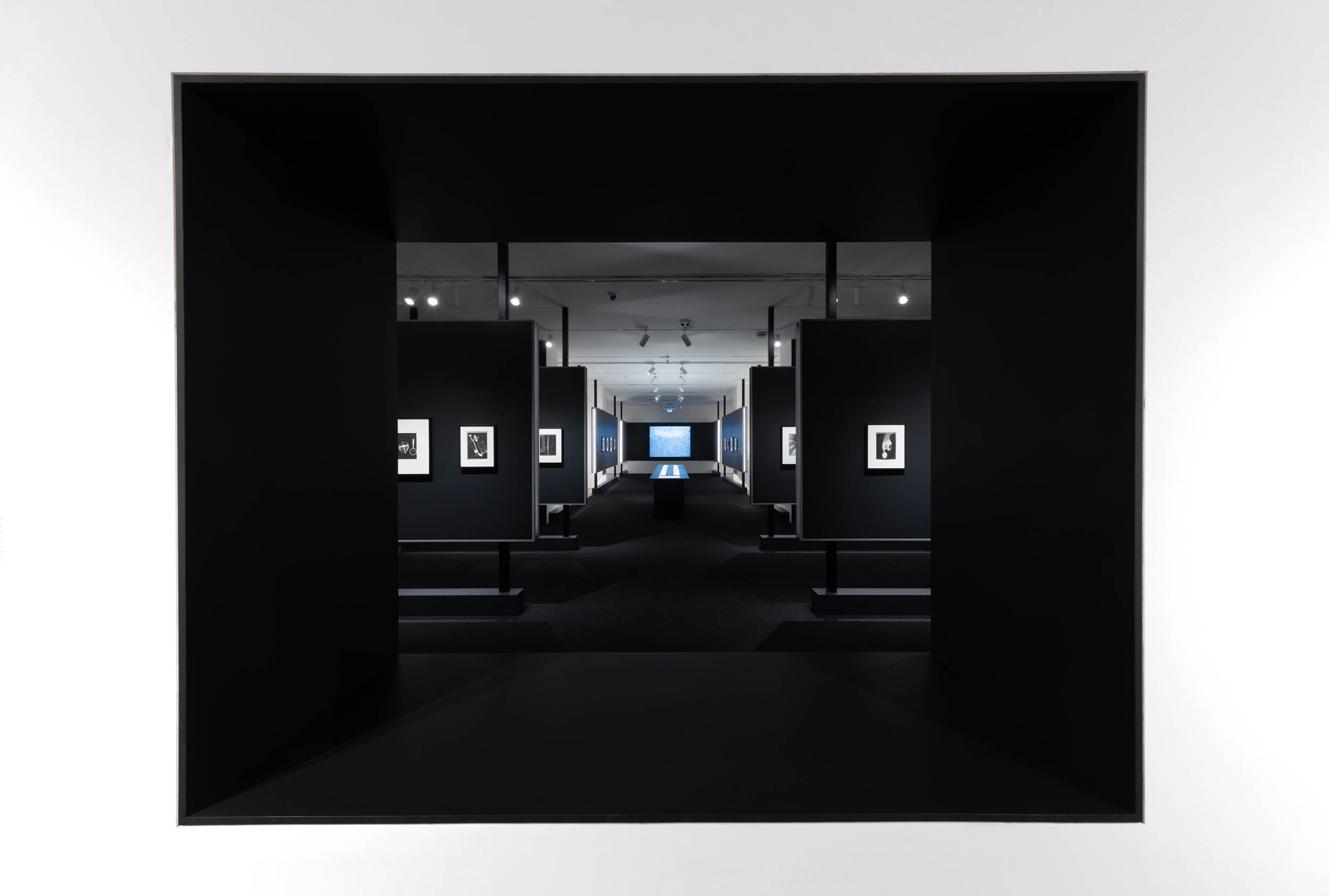
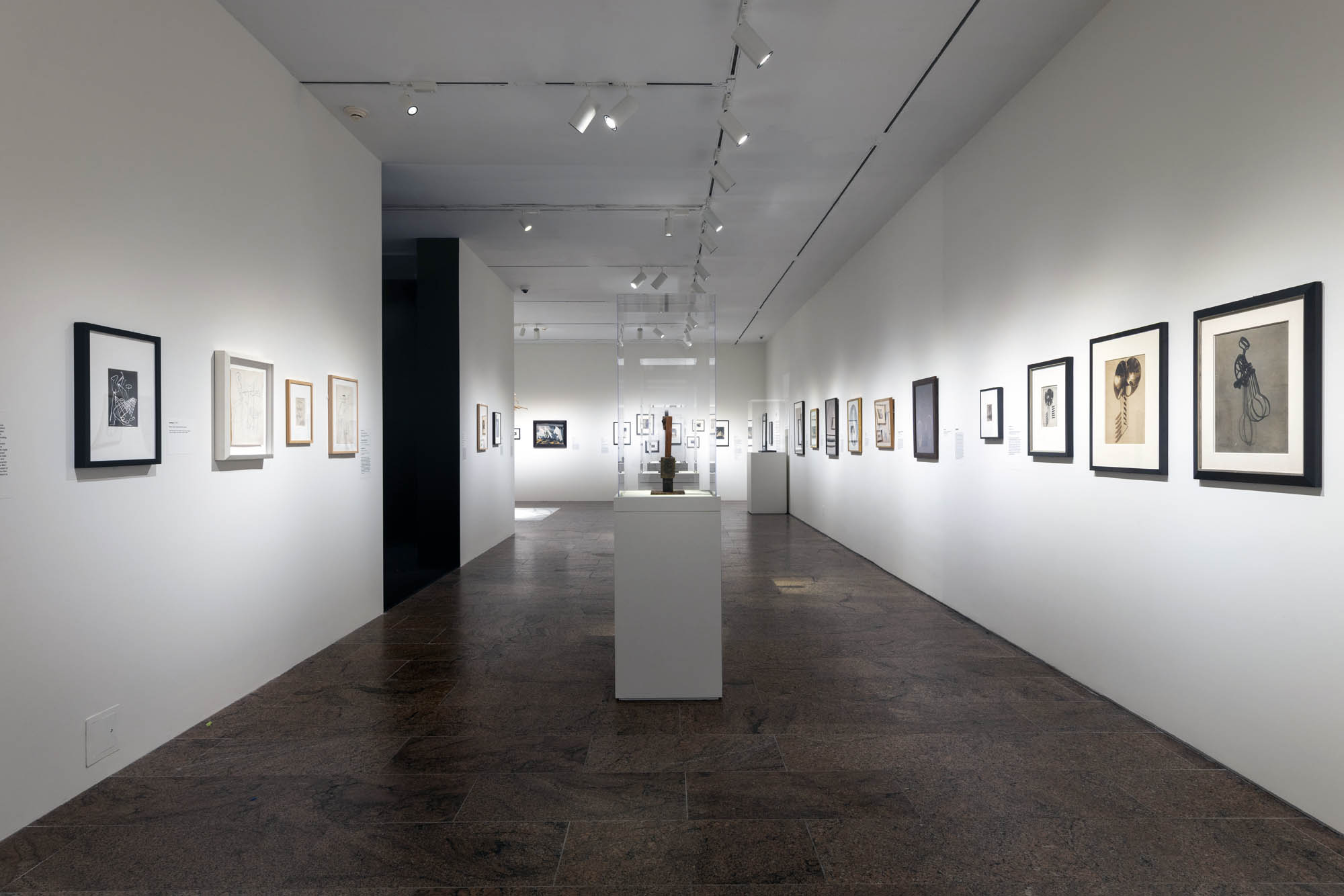
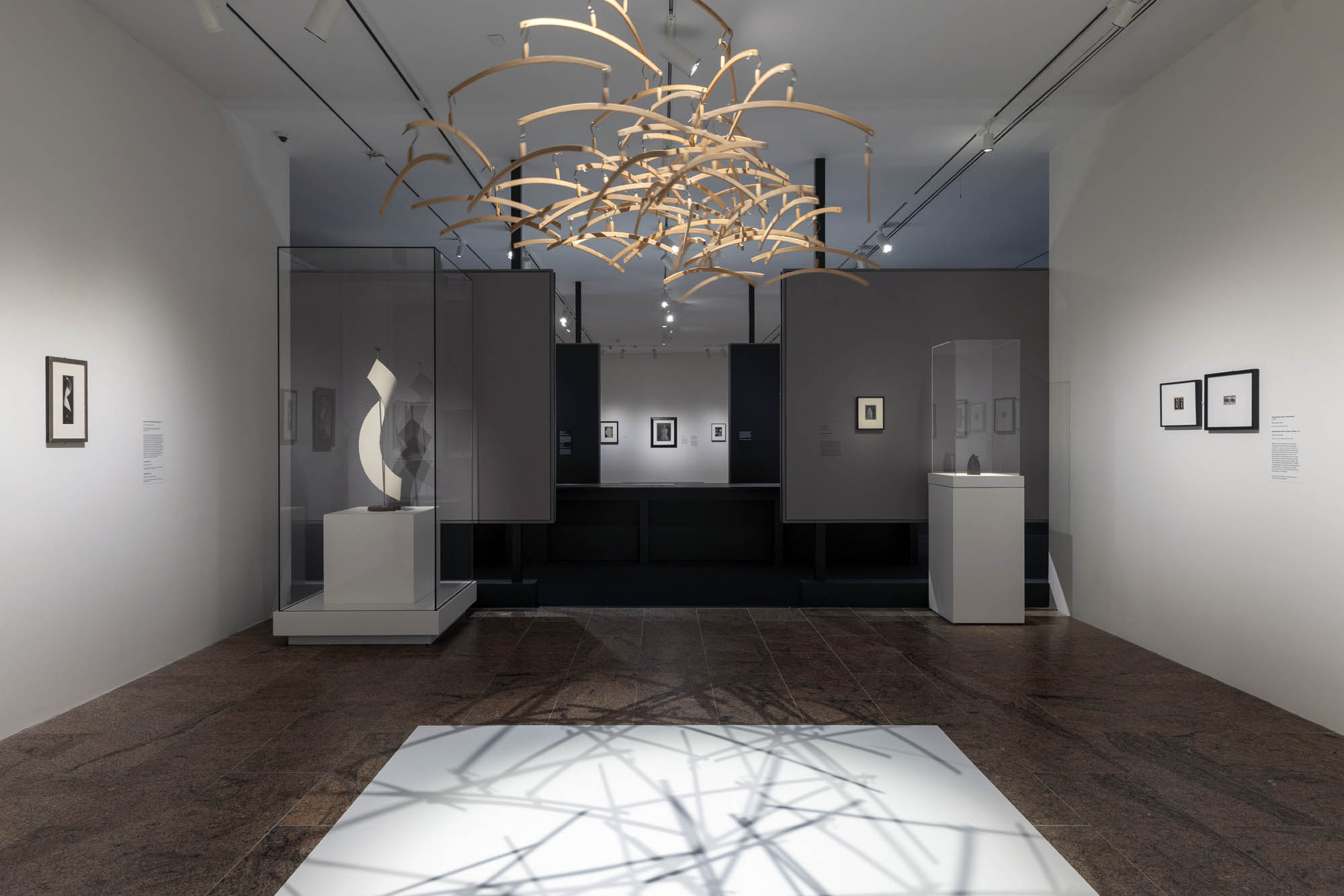
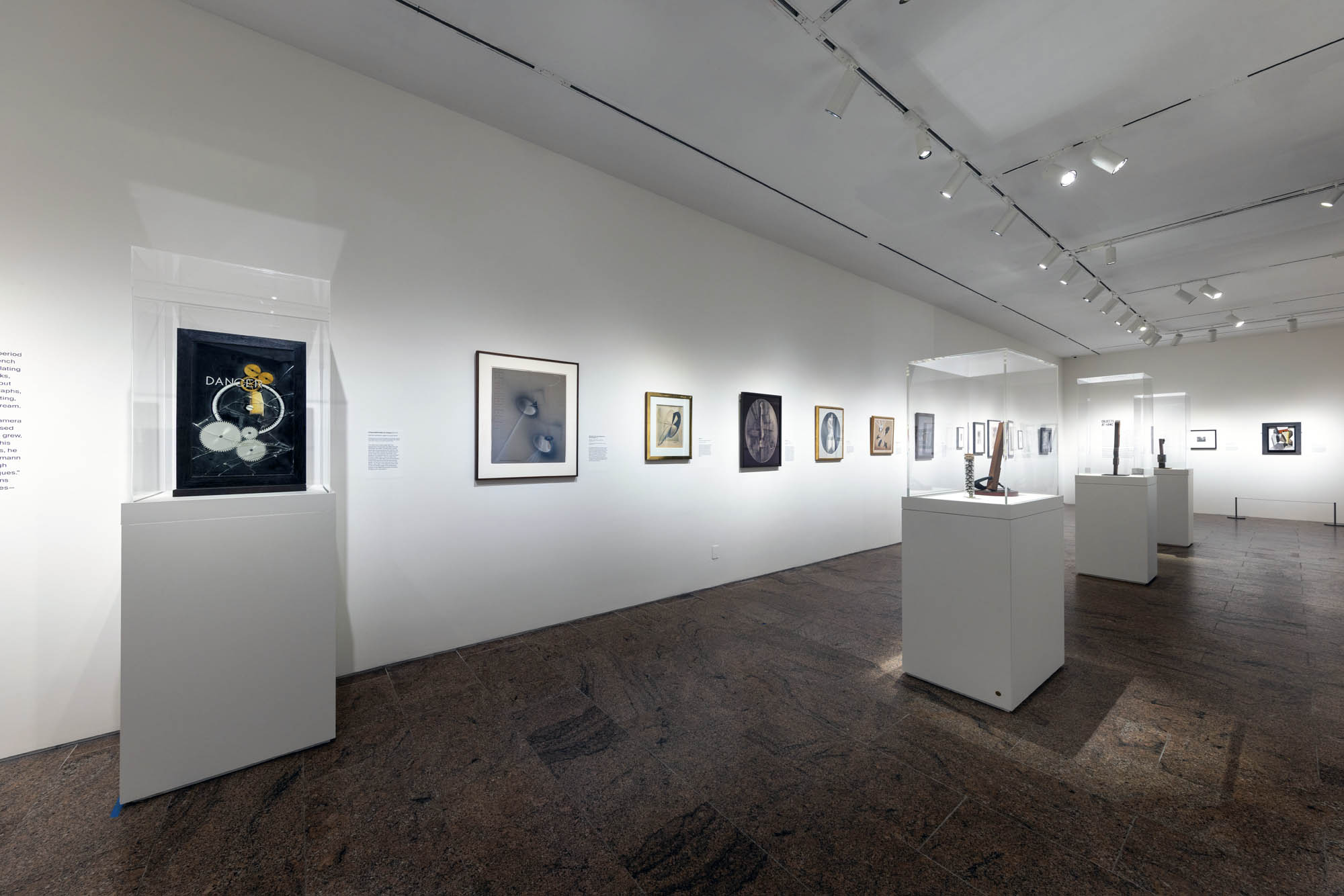
Exhibition: ‘Hidden Connections’ at the Van Abbemuseum, Eindhoven, Holland

Exhibition dates: 27th April, 2025 – 1st June, 2026

Curators: Reggie Baay and Bibi de Vrie


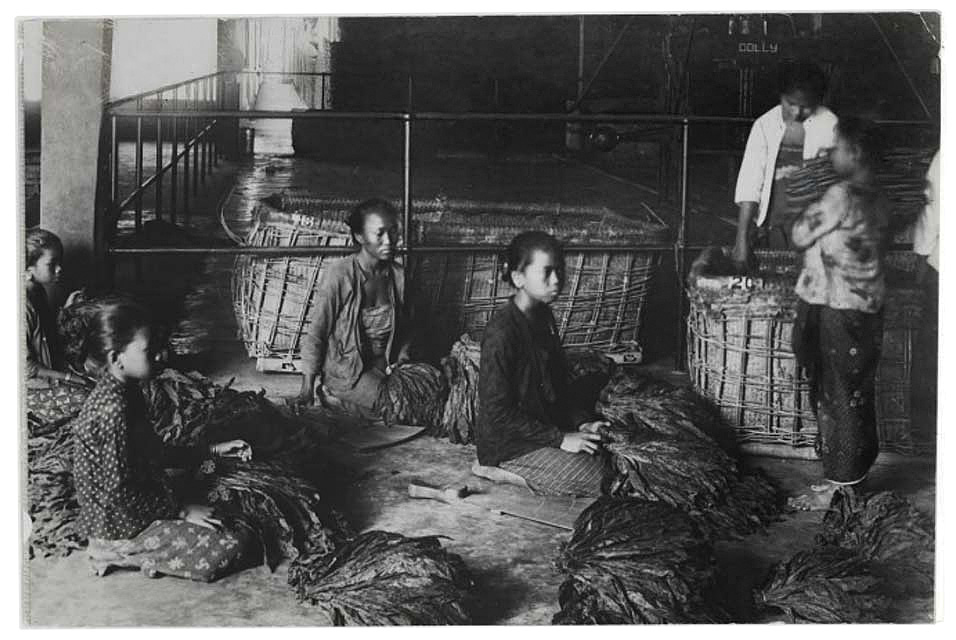
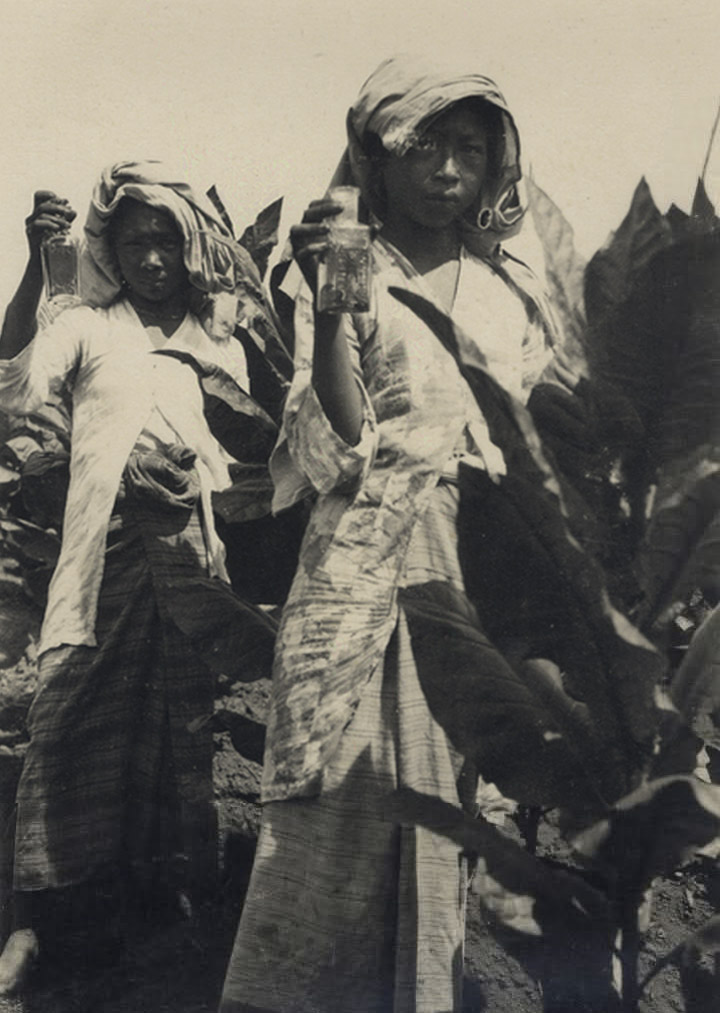
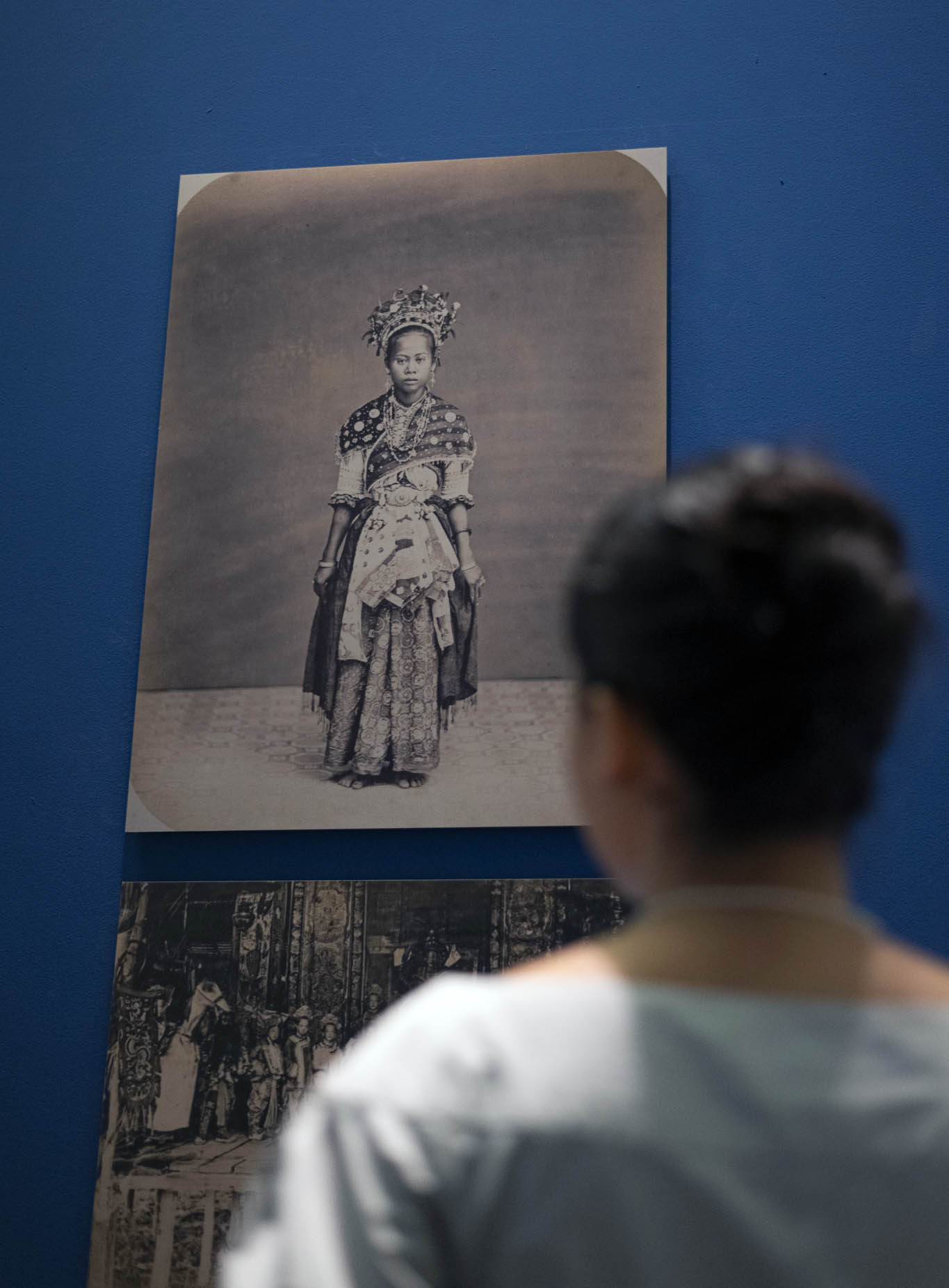
Unknown photographer. 'Women sort tobacco leaves by length in a shed at the Tegalsirondo (also Tegalgondo) enterprise near Oengaran south of Semarang' c. 1910 from the exhibition 'Hidden Connections' at the Van Abbemuseum, Eindhoven, Holland, April 2024 - June 2026


Unknown photographer
Women sort tobacco leaves by length in a shed at the Tegalsirondo (also Tegalgondo) enterprise near Oengaran south of Semarang
c. 1910
University Libraries Le


Hidden histories

Exposed (in photographs, in texts)

The effects of colonialism are immediate (slavery, subjugation, exploitation, prison, murder) and pernicious, ongoing in so many obvious, subtle and insidious ways.

“… we must be ever vigilant in understanding the networks of power, dispossession and enslavement that patriarchal societies use to marginalise the poor, the weak, the different for their gain.”1

Dr Marcus Bunyan

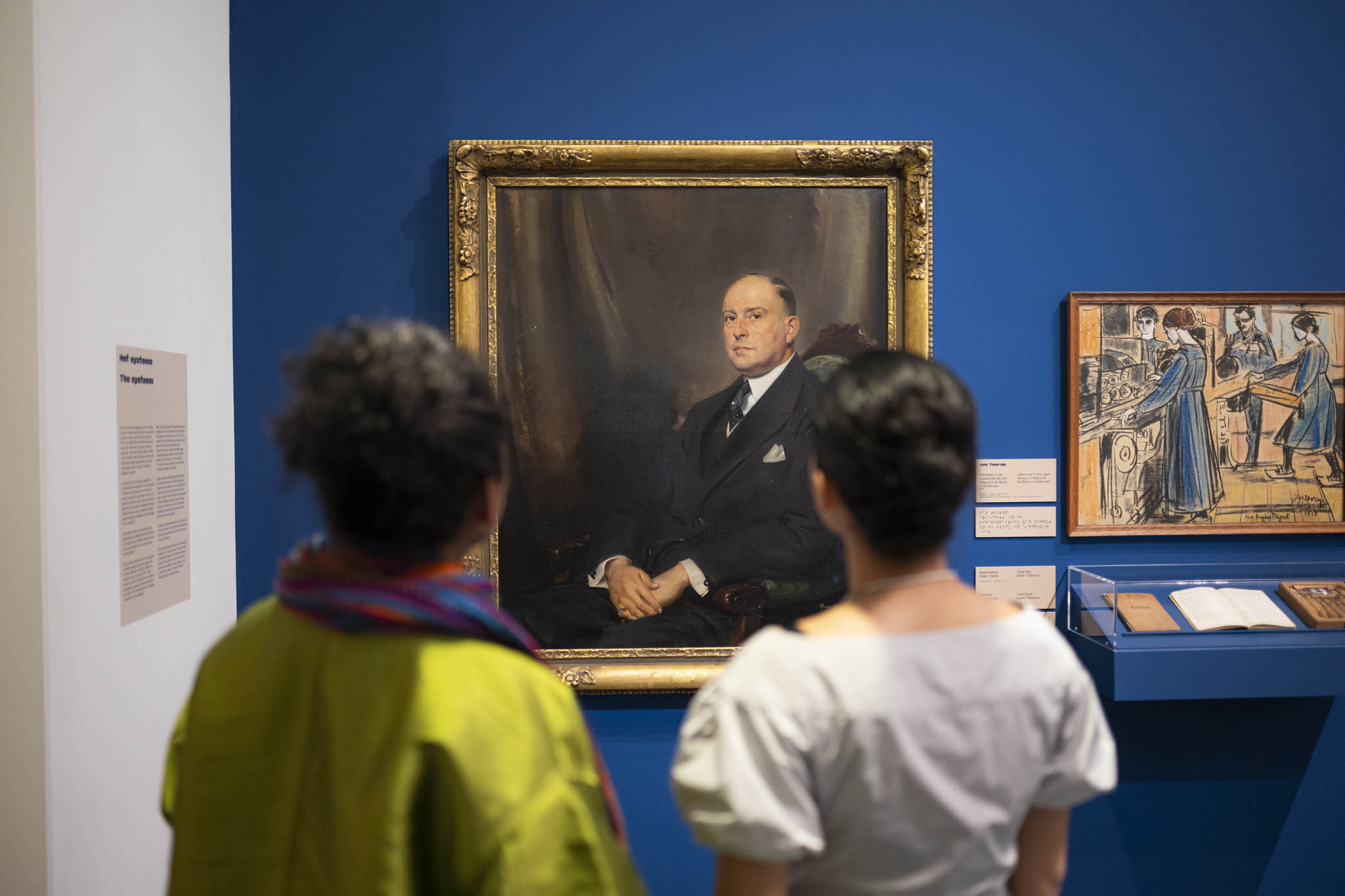
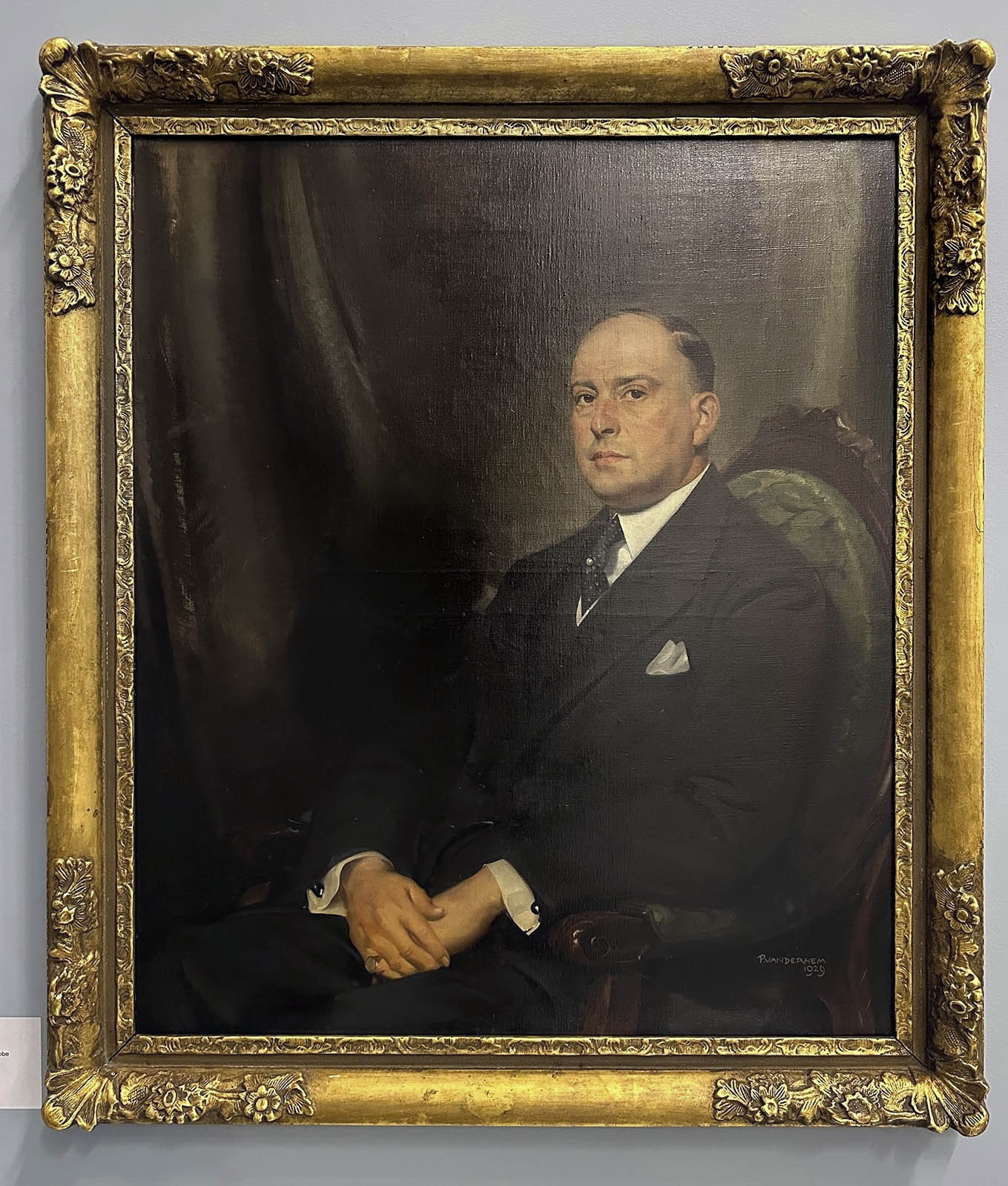
PS. I so dislike Piet van der Hem’s painting of Henri Van Abbe – the self importance of the man, dressed to the nine, staring out at the viewer in all his entitlement, hands clasped over his masculine power even as it radiates through every pore of the painting – the epitome of white hegemonic power. And the museum is named after him …


Sejarah Tersembunyi

Terungkap (dalam foto, dalam teks)

Dampak kolonialisme bersifat langsung (perbudakan, penaklukan, eksploitasi, penjara, pembunuhan) dan merusak, berkelanjutan dalam begitu banyak cara yang nyata, halus, dan licik.

“… kita harus selalu waspada dalam memahami jaringan kekuasaan, perampasan, dan perbudakan yang digunakan masyarakat patriarki untuk meminggirkan kaum miskin, yang lemah, yang berbeda demi keuntungan mereka.”1

Dr. Marcus Bunyan

PS. Saya sangat tidak menyukai lukisan Henri Van Abbe karya Piet van der Hem – sosok pria yang sangat penting, berpakaian rapi, menatap penonton dengan segala keistimewaannya, tangan tergenggam di atas kekuatan maskulinnya, bahkan saat kekuatan itu terpancar melalui setiap pori lukisan – lambang kekuatan hegemoni kulit putih. Dan museum ini dinamai menurut namanya …


1/ Marcus Bunyan. “Hermann Kummler (1863-1949) (compiler) ‘Ethnographic portraits of Indigenous women of Pernambuco and Bahia’ 1861-1862,” on Art Blart, 1st August, 2018


Many thankx to the Van Abbemuseum for allowing me to publish the photographs in the posting. Please click on the photographs for a larger version of the image.


“The horrific history of contract labour in Deli in Sumatra, which forced people to work for western entrepreneurs, seems to have been covered up. Stories of resistance were often not written down but passed on orally instead. This deliberate oppression and denial of the plantation workers and their experiences is still palpable to this very day.”

“Sejarah mengerikan buruh kontrak di Deli, Sumatra, yang memaksa orang bekerja untuk pengusaha Barat, tampaknya telah ditutup-tutupi. Kisah-kisah perlawanan seringkali tidak tertulis, melainkan diwariskan secara lisan. Penindasan dan penyangkalan yang disengaja terhadap para pekerja perkebunan dan pengalaman mereka masih terasa hingga saat ini.”


Press release from the Van Abbemuseum


Unknown photographer. 'Workers on a plantation in Deli (now Medan)' c. 1900 from the exhibition 'Hidden Connections' at the Van Abbemuseum, Eindhoven, Holland, April 2024 - June 2026


Unknown photographer
Workers on a plantation in Deli (now Medan)
c. 1900
Photo: Stafhell-Kleingrothe


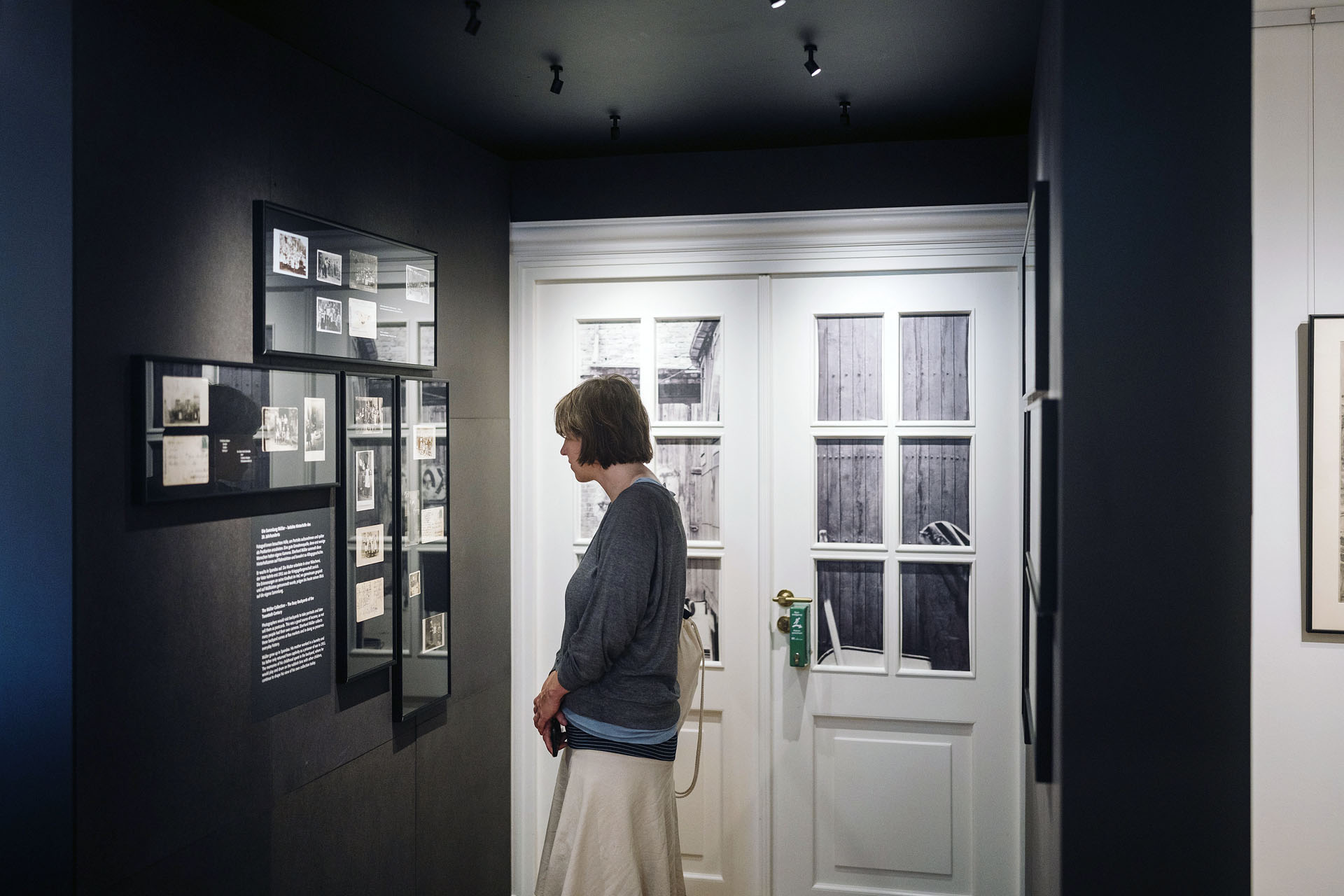
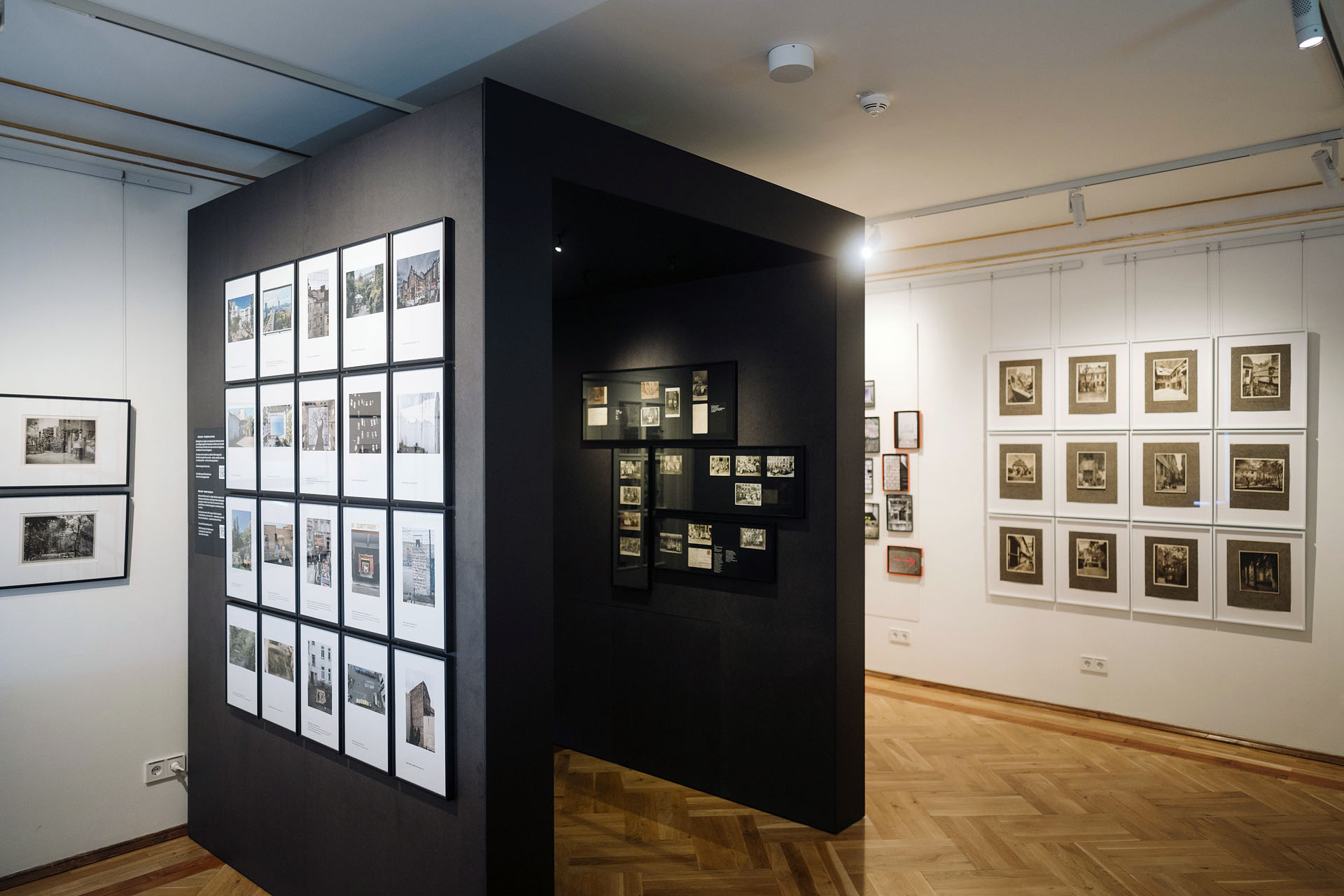
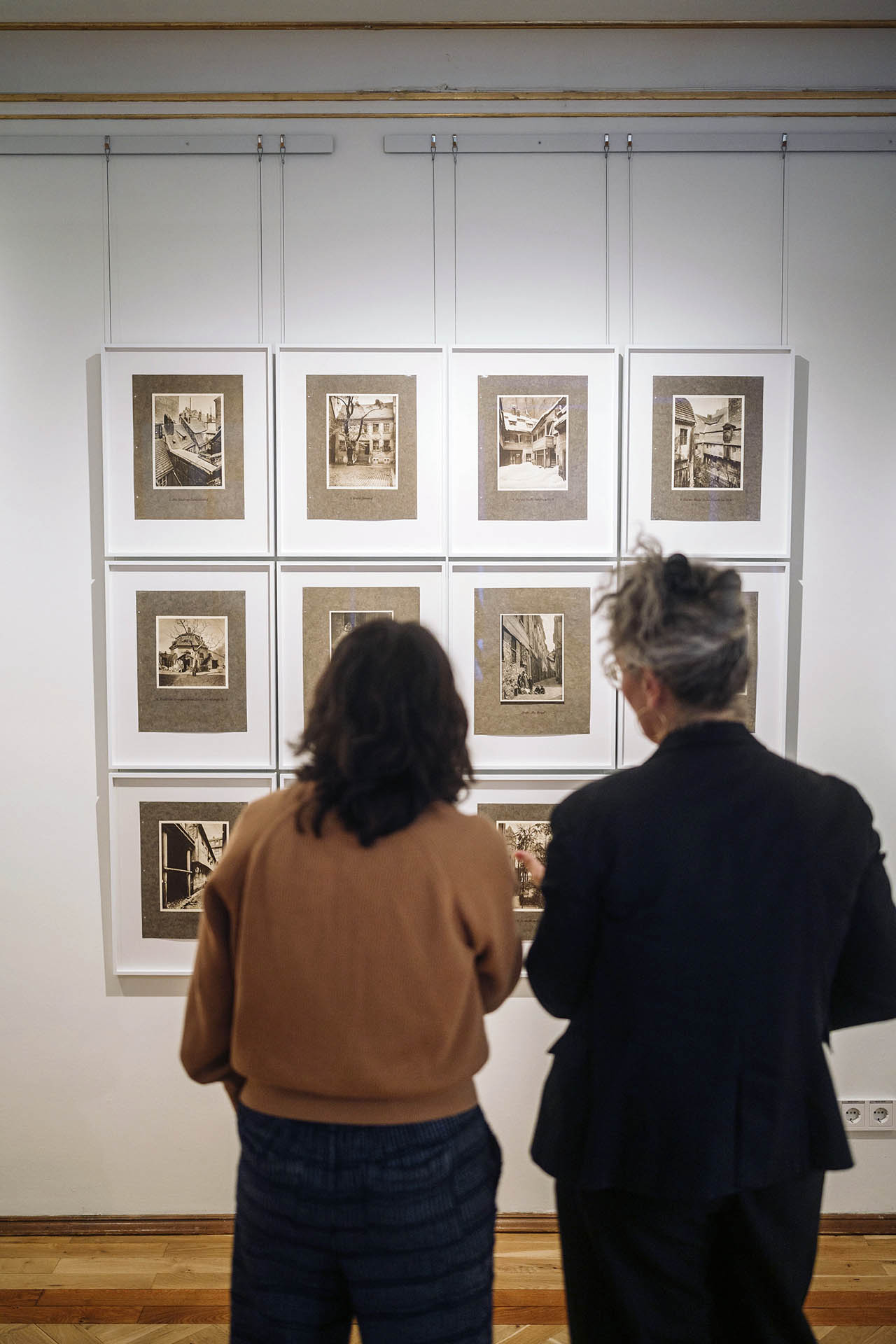
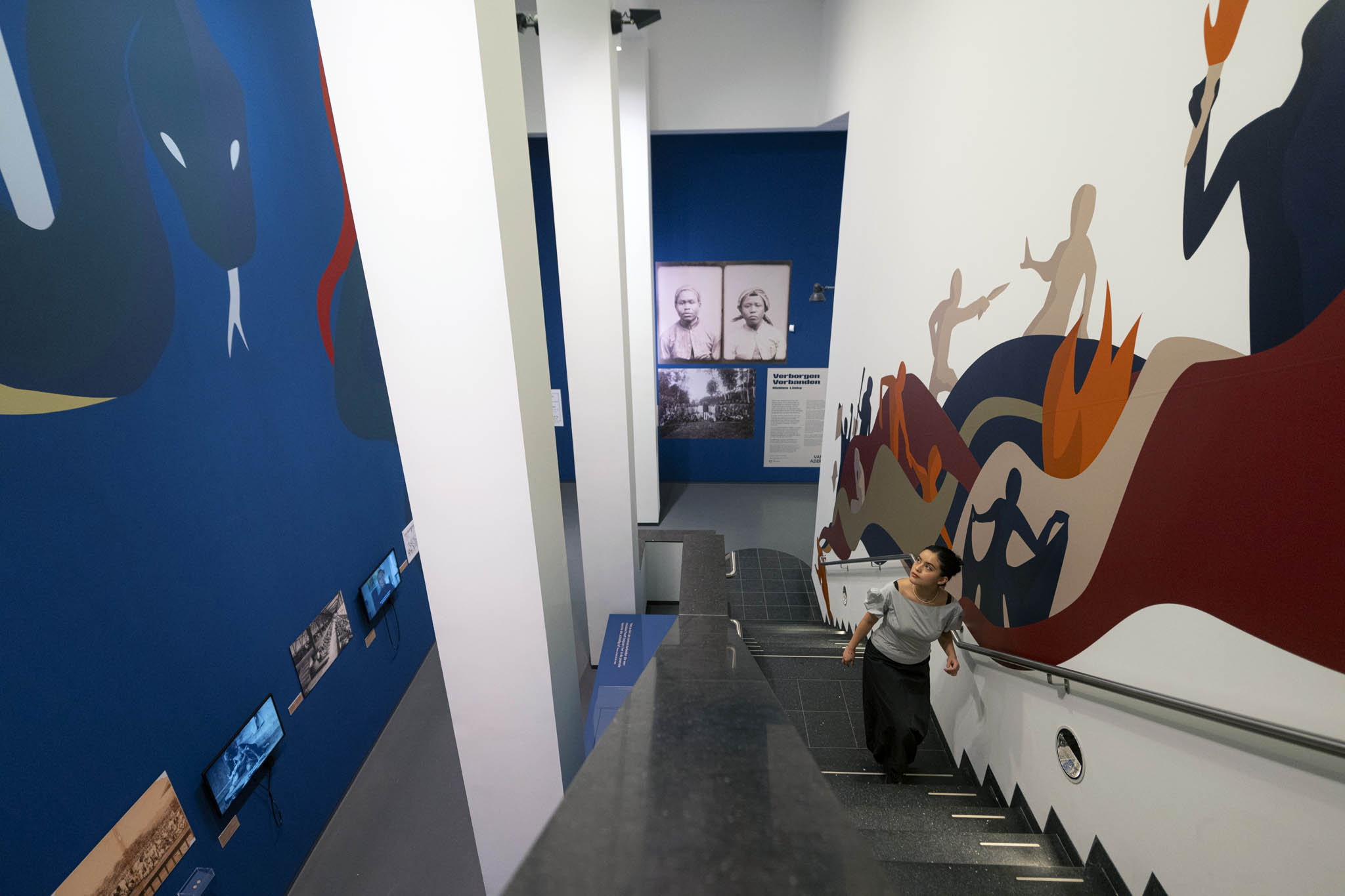
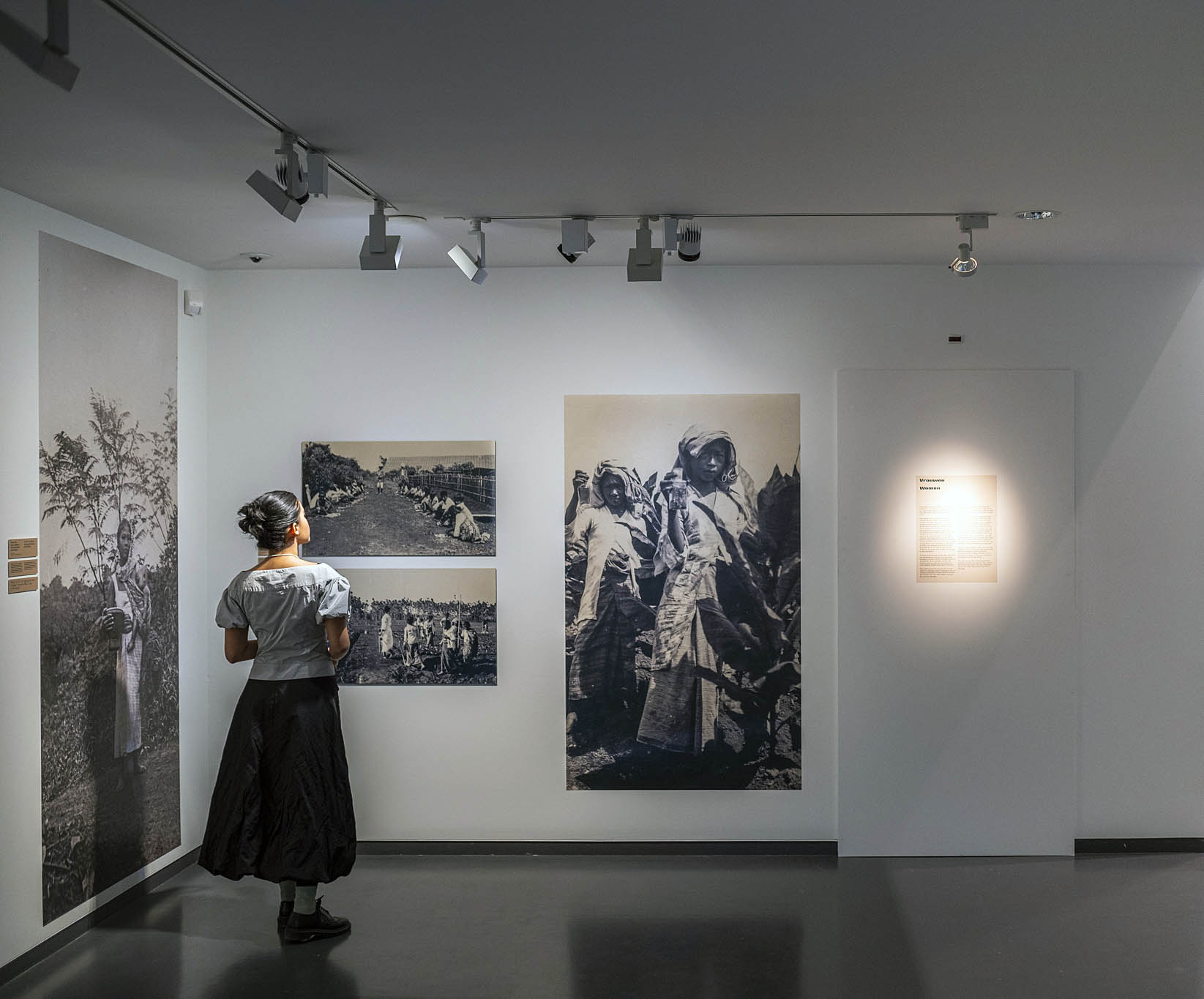
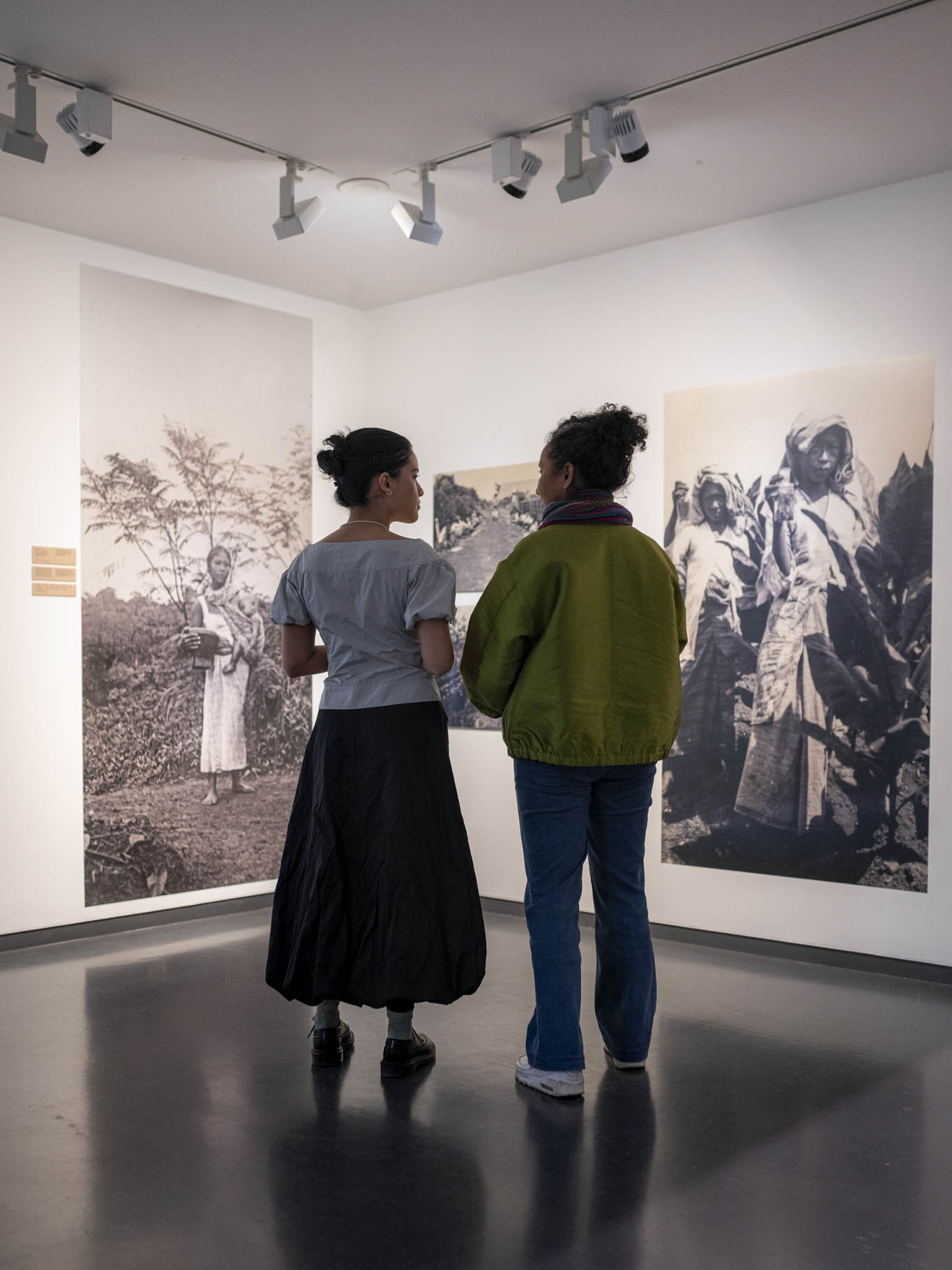
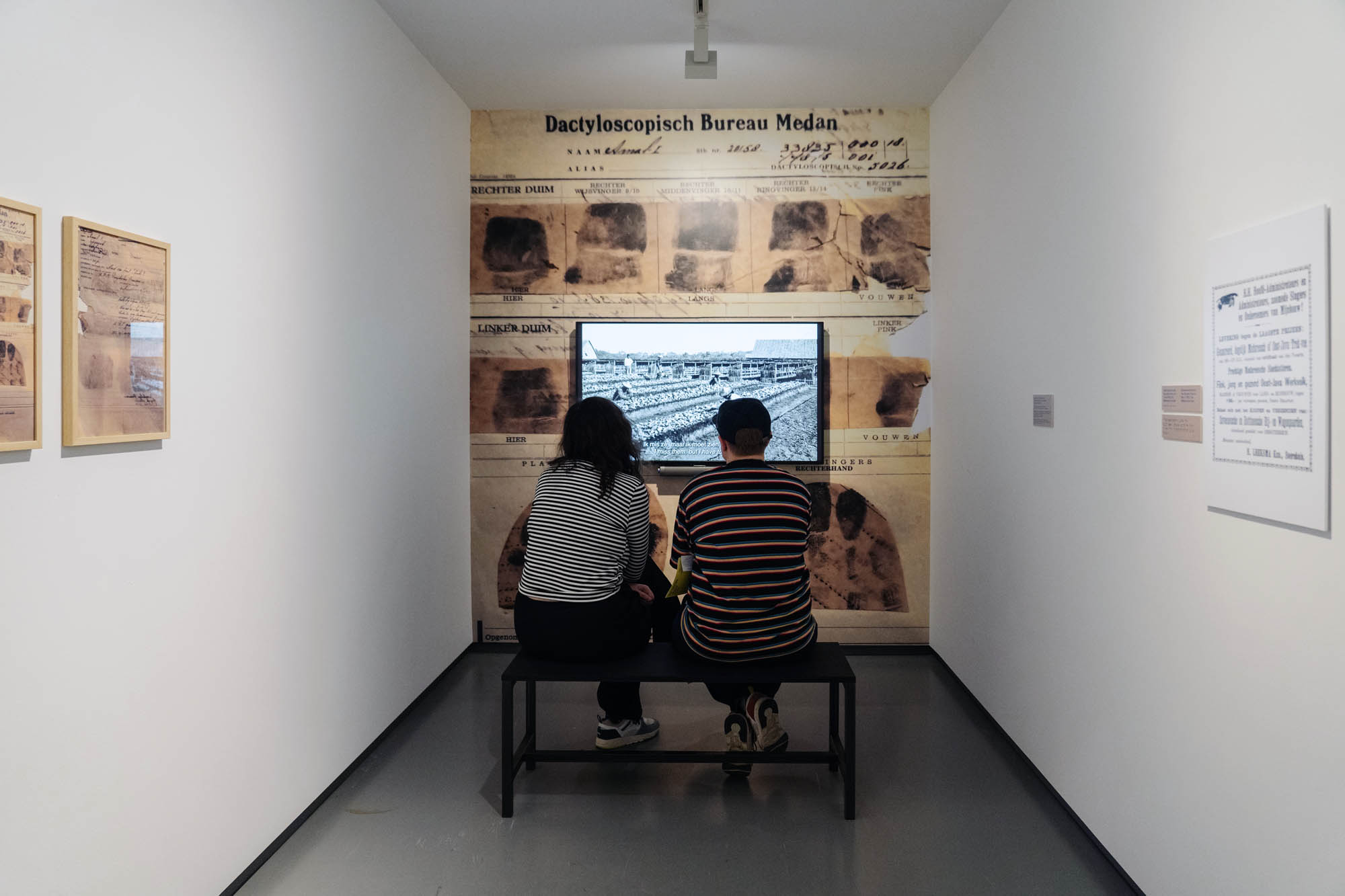
Installation view of the exhibition 'Hidden Connections' at the Van Abbemuseum, Eindhoven, Holland


Installation views of the exhibition Hidden Connections at the Van Abbemuseum, Eindhoven, Holland


Piet van der Hem (Dutch, 1885-1961) 'Henri Van Abbe' 1929


Piet van der Hem (Dutch, 1885-1961)
Henri Van Abbe
1929
Oil on canvas


Why do we know so little about what happened on the plantations in the former Dutch East Indies? The horrific history of contract labour in Deli in Sumatra, which forced people to work for western entrepreneurs, seems to have been covered up. Stories of resistance were often not written down but passed on orally instead. This deliberate oppression and denial of the plantation workers and their experiences is still palpable to this very day. In its multiĀ­-year Hidden Connections research project, the Van Abbemuseum discovers the role it played in the Netherlands’ colonial past. The museum is presenting its research results in an exhibition and podcast and on a heritage platform.

Founder Henri van Abbe

The Van Abbemuseum was named after Henri van Abbe (1880­-1940), the founder of the Karel 1 ­cigar factories, once the second biggest employer in Eindhoven and the surrounding area. The tobacco for Karel 1 cigars was sourced largely from plantations in the Dutch East Indies. Even though Van Abbe was not based in the Dutch East Indies, the tobacco he bought from Deli, on the island of Sumatra, had a big impact on the region and its inhabitants. In 1933, Van Abbe founded a museum for contemporary art, funded partly with money he had made from tobacco. Besides a building, Van Abbe donated 26 paintings from his personal collection, including works by Isaac Israëls, Carel Willink and Jan Sluijters.

Ongoing research

Over the last 10 years, the Van Abbemuseum has become increasingly aware of its roots in the tobacco industry. The donation of the Van Abbe family archive to the museum in 2018 was the starting point for ongoing research into its past. The initial results have been presented in the museum since autumn 2021. This presentation has been expanded to include new work inspired by this research. Why have events on the plantations in Sumatra been kept hidden? And why don’t we know anything about the different forms of resistance to it? Author and historian Reggie Baay has searched Dutch archives for forgotten stories about this period. At the same time, artists and researchers Ferial Affif and Dwihandono Ahmad spoke to descendants of contract workers on the plantations in Deli. Isabelle Britto also did research to find out how much Henri van Abbe could have known about the conditions there.

Hidden stories of resistance

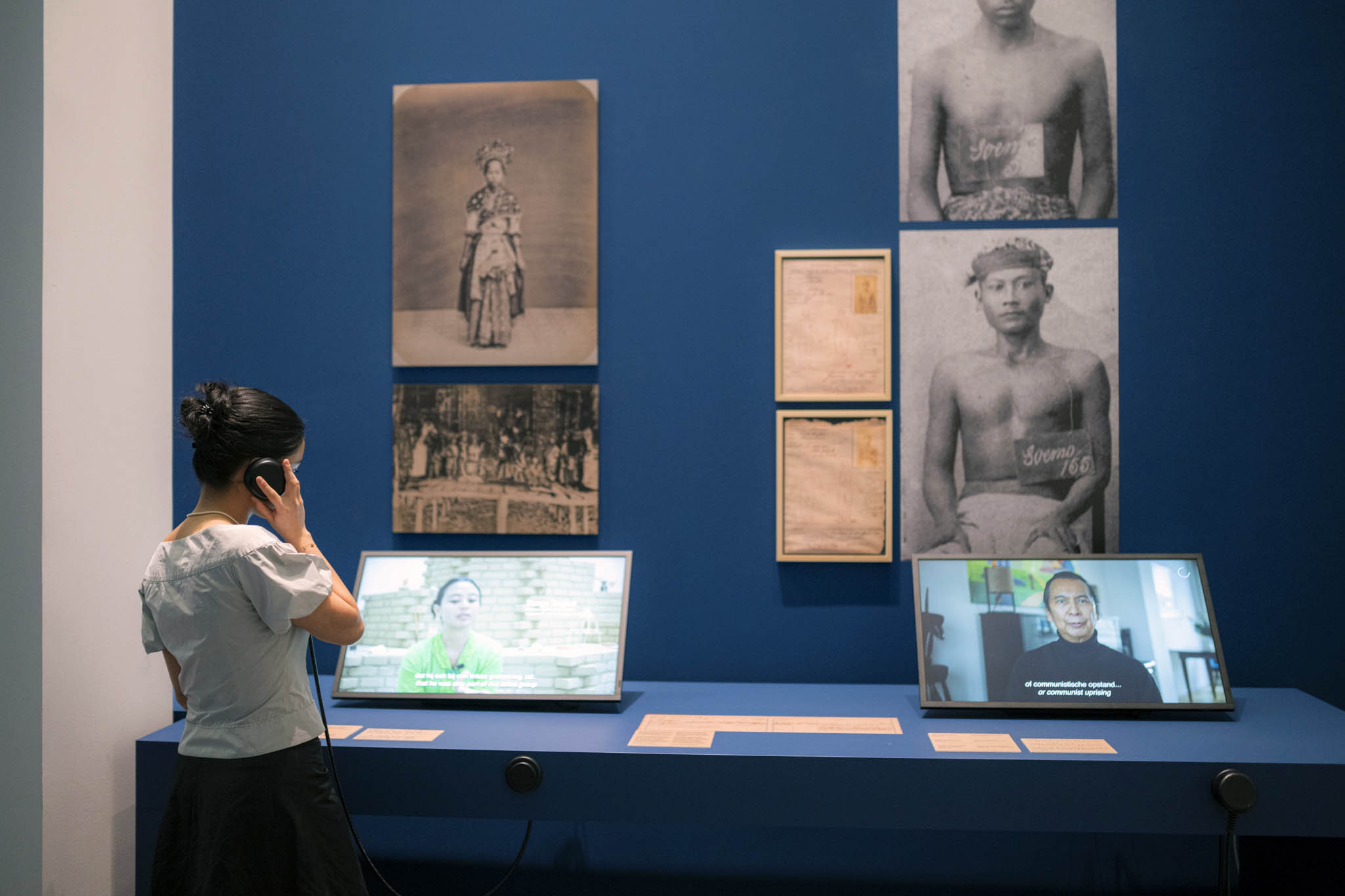
Curators Reggie Baay and Bibi de Vries present the results of the research above in the exhibition Hidden Connections. Archive material, audio and video interviews and illustrations in the exhibition all focus on the perspective of the plantation workers in Deli and their working and living conditions. Graphic designer Gayle TjongĀ­ KimĀ­Sang took inspiration for her huge wall drawings from the inventive ways contract workers chose to express their anger, sadness and warnings. Plantation owners were not always aware of resistance, but if contract workers were caught, they were thrown into prison, abused or even murdered. One form of resistance was the story ‘De Slang van Sumatra’ (which translates as ‘the snake of Sumatra’). This parable warned workers about a manĀ­eating snake on the neighbouring island. After eating its prey, it excreted gold for the Dutch. Another example of resistance was improvisation during theatre and wayang performances. Workers used this opportunity to criticise the western enterprises and sometimes tell (satirical) stories about the plantation owners.

Addition to the Delinking and Relinking collection presentation

The exhibition Hidden Connections is located in the basement of the collection building at the Van Abbemuseum. The longĀ­term Delinking and Relinking collection presentation (2021Ā­-2026) can currently be seen on the three floors above; it allows visitors to experience art by smelling, hearing, feeling and seeing it. Hidden Connections, as the literal and figurative foundation for the multiĀ­-sensory Delinking and Relinking collection presentation, enlighten visitors on the origins of this longĀ­standing display and offer a new perspective on the circumstances in which it was created. This new chapter provides a more complete historiography that includes the contemporary significance of the museum’s colonial past.

Collective memory

The Van Abbemuseum places great importance on the permanent preservation and communication of the stories from its Hidden Connections research. They are part of our cultural heritage and must be findable by and accessible to everyone. With this in mind, the museum is working with Erfgoed Brabant, the province’s knowledge and expertise centre, and is integrating its ongoing research into the platform Koloniale Historie Brabant (a platform on Brabant’s colonial history). The museum also launched a podcast with Reggie Baay and Aldus’ producties. In it, Baay explores why it is we know so little about this colonial past via a search in which he attempts to uncover his own Indonesian family history.

Press release from the Van Abbemuseum


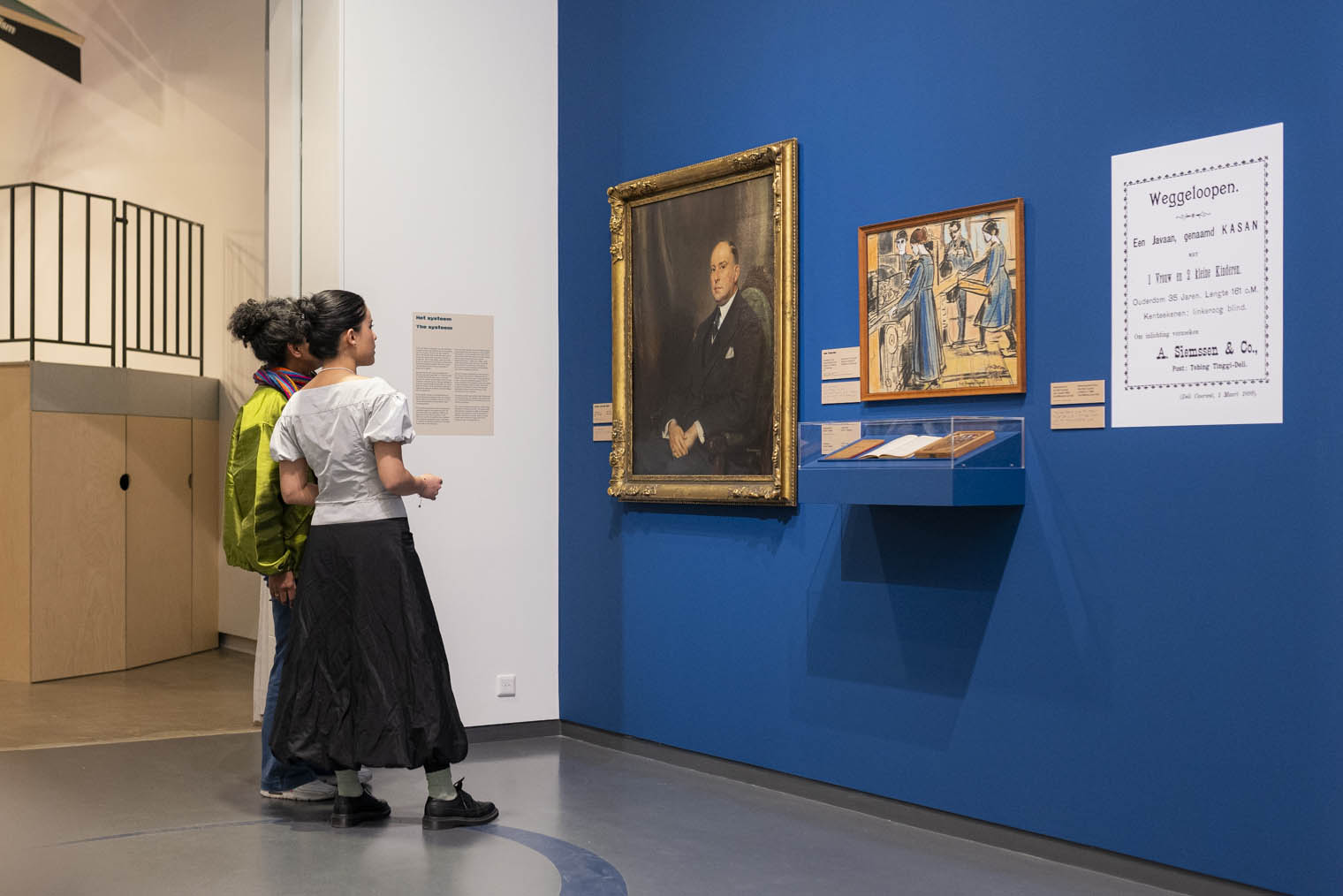
Installation view of the exhibition 'Hidden Connections' at the Van Abbemuseum, Eindhoven, Holland


Installation views of the exhibition Hidden Connections at the Van Abbemuseum, Eindhoven, Holland


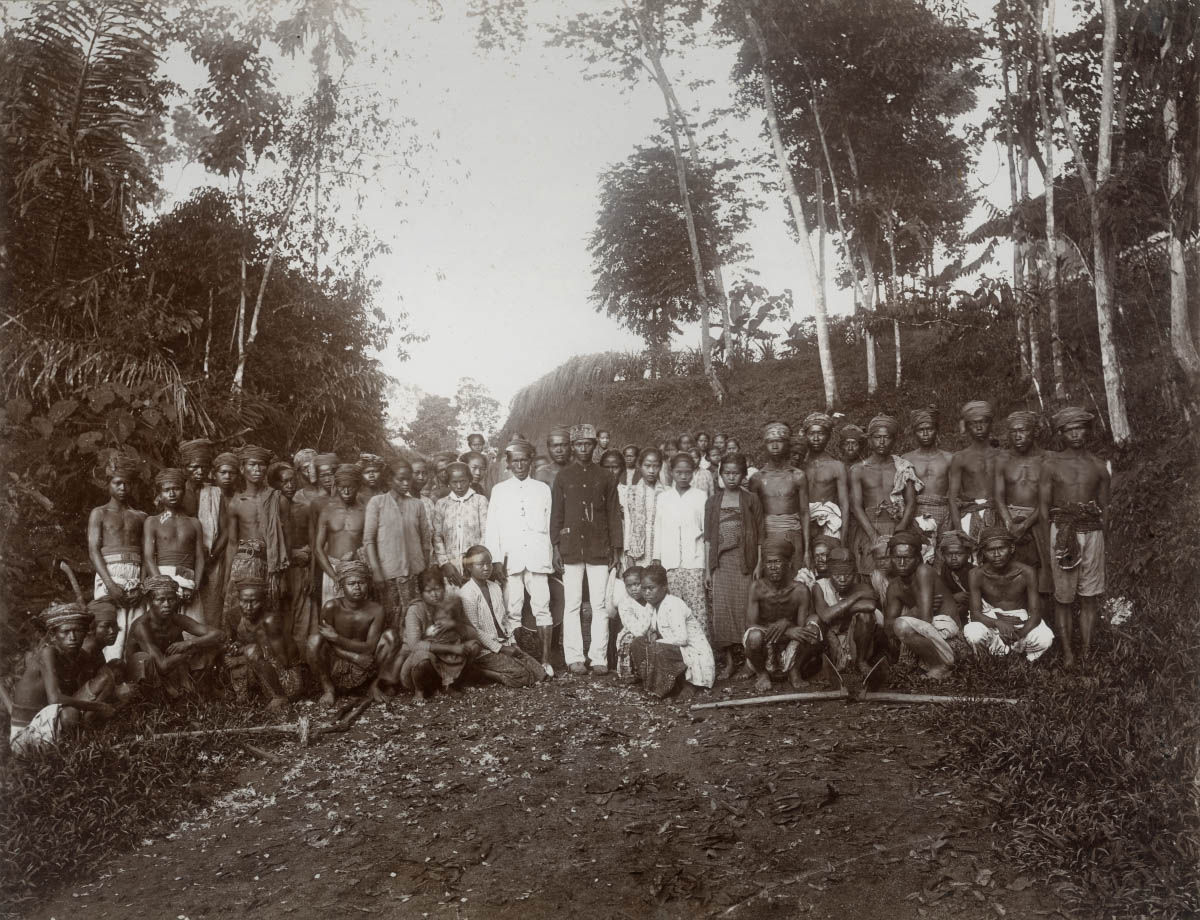
Unknown photographer. 'Coolies on a tobacco plantation of the Deli Maatschappij in Deli Shelfmark KITLV Deli Serdang' 1920-1922 from the exhibition 'Hidden Connections' at the Van Abbemuseum, Eindhoven, Holland, April 2024 - June 2026


Unknown photographer
Coolies on a tobacco plantation of the Deli Maatschappij in Deli Shelfmark KITLV Deli Serdang
1920-1922


Installation view of the exhibition 'Hidden Connections' at the Van Abbemuseum, Eindhoven, Holland. Photo: Almicheal Fraay
Installation view of the exhibition 'Hidden Connections' at the Van Abbemuseum, Eindhoven, Holland


Installation views of the exhibition Hidden Connections at the Van Abbemuseum, Eindhoven, Holland


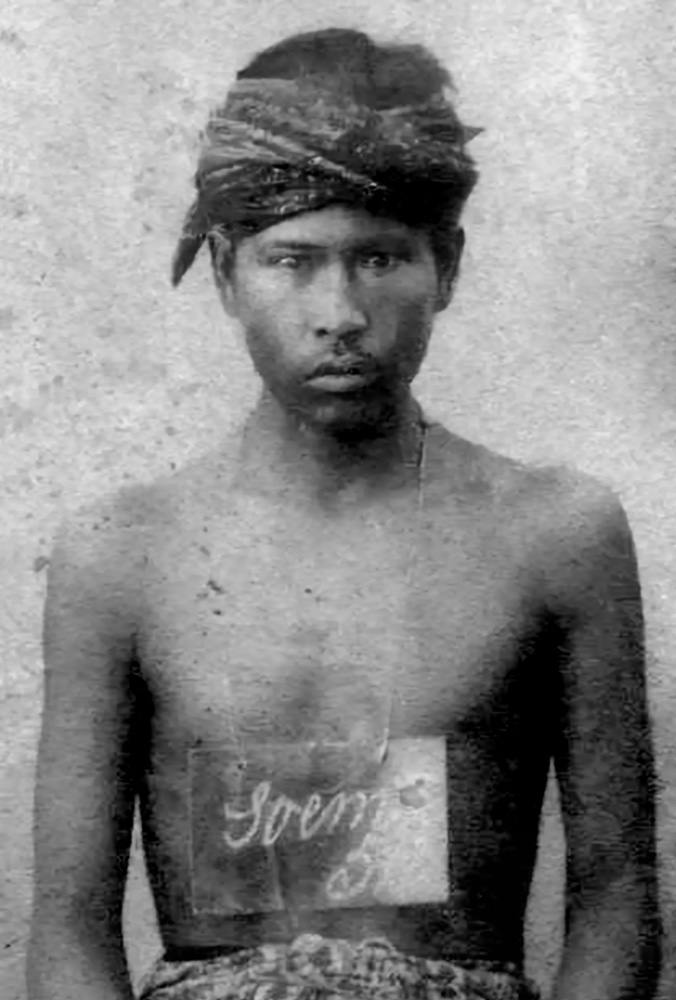
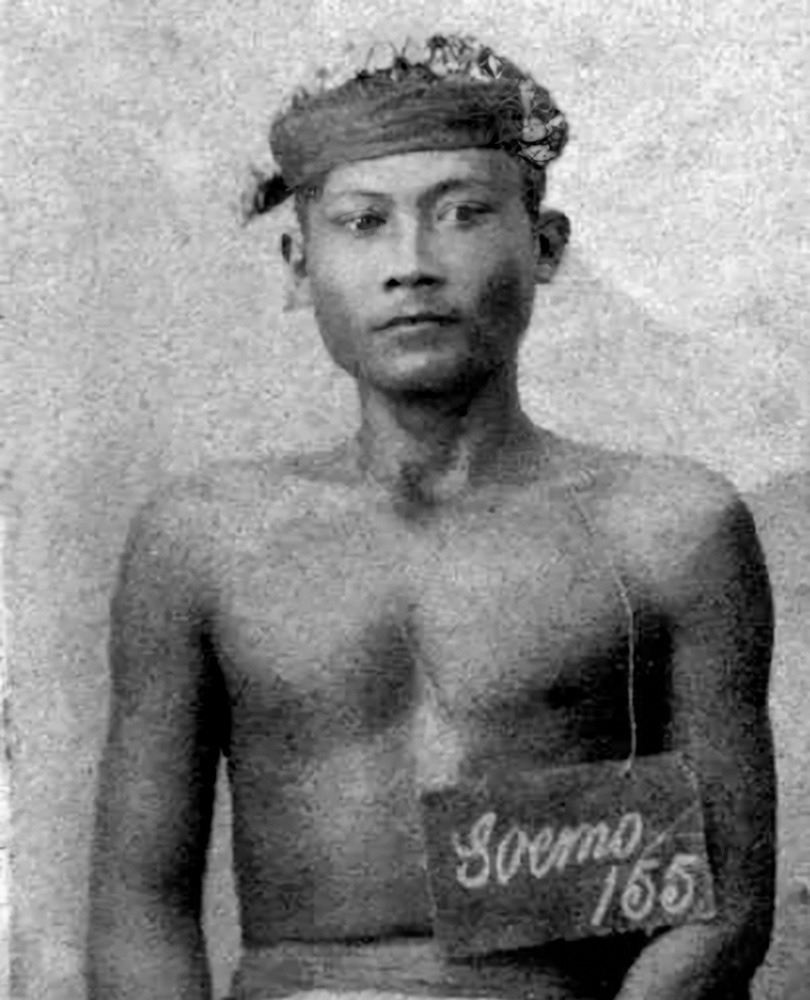
'Identification card Soemo' 1907


Identification card Soemo
1907
Loan from the National Archives of Suriname


Identification card Soemo
1908
Loan from the National Archives of Suriname


Johan Braakensiek (Dutch, 1848-1940) "The coolie ordinances" in
'De [Groene] Amsterdammer', Date 23 November 1902


Johan Braakensiek (Dutch, 1848-1940)
“The coolie ordinances”
De [Groene] Amsterdammer, Date 23 November 1902


The Coolie Ordinances

From Koi. (To former Minister Cramer): What do you think about that?
Cremer: Yes, we Deli Men [Deli on the island of Sumatra] … prefer to keep quiet about that.

Advertisement from Deli-Courant and the Sumatrapost:

“Emigration, sales and commission office. Telegram address: Esas, Surabaya. Supply: Strong, young, and healthy workers, including Madurese, Javanese, and Sudanese, as well as Chinese, for agricultural and mining companies. Risk of desertion on board at our expense. – We have had the most success with our coolie projects and are willing to send copies of satisfaction reports for review. Also supply: Chinese and Javanese artisans. We undertake to fulfil all possible orders, including for beautiful Madura and Balinese slaughter and draught cattle, at competitive prices.”


Dari Koi. (Kepada mantan Menteri Cramer): Apa pendapat Anda tentang itu?
Cremer: Ya, kami, Deli Men [Deli di Pulau Sumatra] … lebih suka diam tentang itu.

Iklan dari Deli-Courant dan Sumatrapost:

“Kantor emigrasi, penjualan, dan komisi. Alamat Telegram: Esas, Surabaya. Pasokan: Pekerja yang kuat, muda, dan sehat, termasuk orang Madura, Jawa, dan Sudan, serta Tionghoa, untuk perusahaan pertanian dan pertambangan. Risiko desersi di kapal ditanggung oleh kami. – Kami telah meraih kesuksesan terbesar dengan proyek kuli kami dan bersedia mengirimkan salinan laporan kepuasan untuk ditinjau. Juga pasokan: pengrajin Tionghoa dan Jawa. Kami berkomitmen untuk memenuhi semua pesanan yang memungkinkan, termasuk sapi potong dan sapi penarik Madura dan Bali yang indah, dengan harga yang kompetitif.”


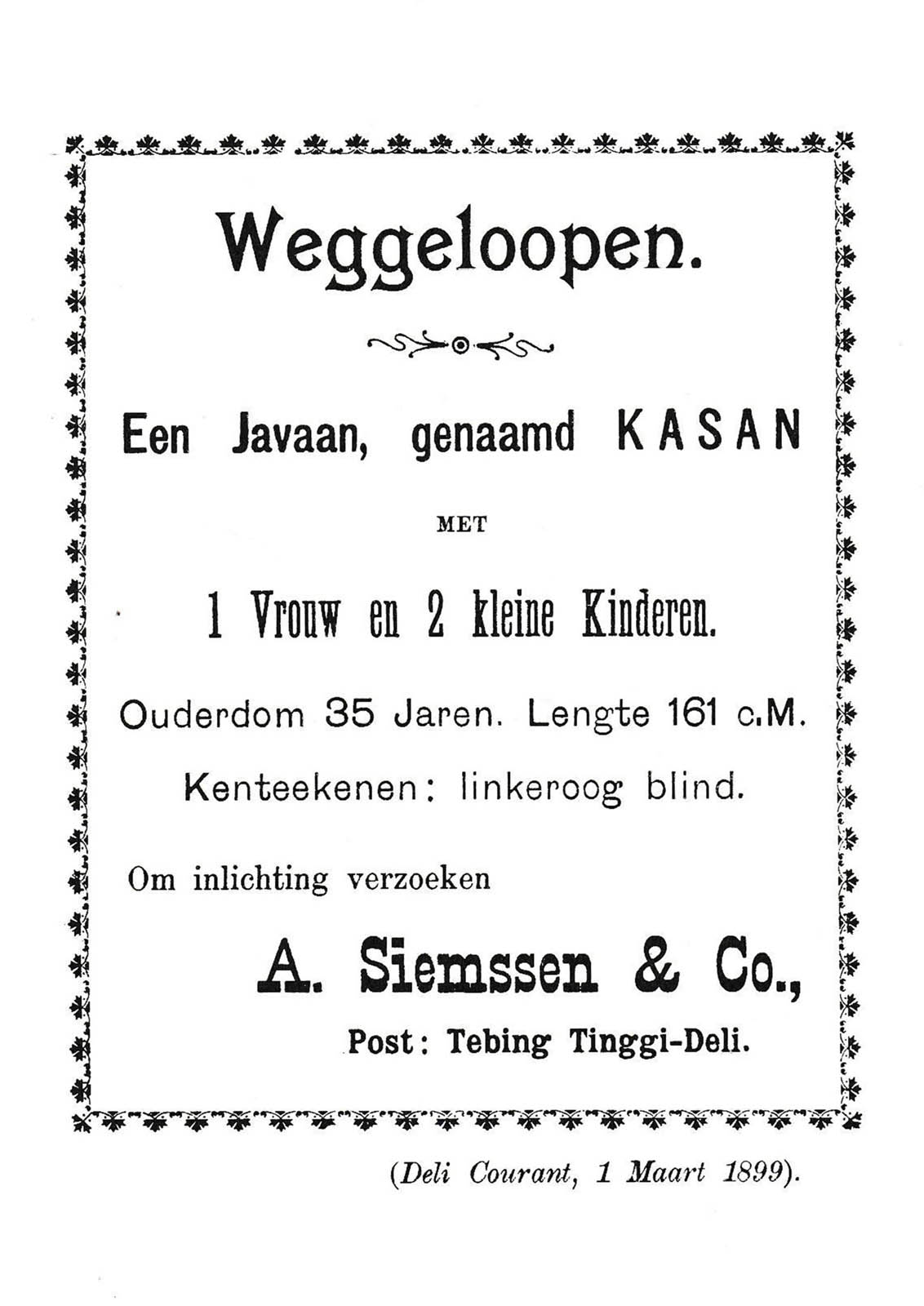
Unknown maker. 'Advertisement from the Deli Courant of March 1, 1899'


Unknown maker
Advertisement from the Deli Courant of March 1, 1899
from De Millionenen uit Deli (Private collection), 1902


“Runaway
A Javanese, named Kasan
with
1 wife and 2 small children
Age 35 years, height 161 cm
Signs: left eye blind
Request information
A. Siemssen & Co.,
Post: Tebing Tinggi-Deli”

“Pelarian
Seorang Jawa, bernama Kasan
dengan
1 istri dan 2 anak kecil
Usia 35 tahun, tinggi badan 161 cm
Tanda-tanda: buta mata kiri
Minta informasi
A. Siemssen & Co.,
Pos: Tebing Tinggi-Deli”


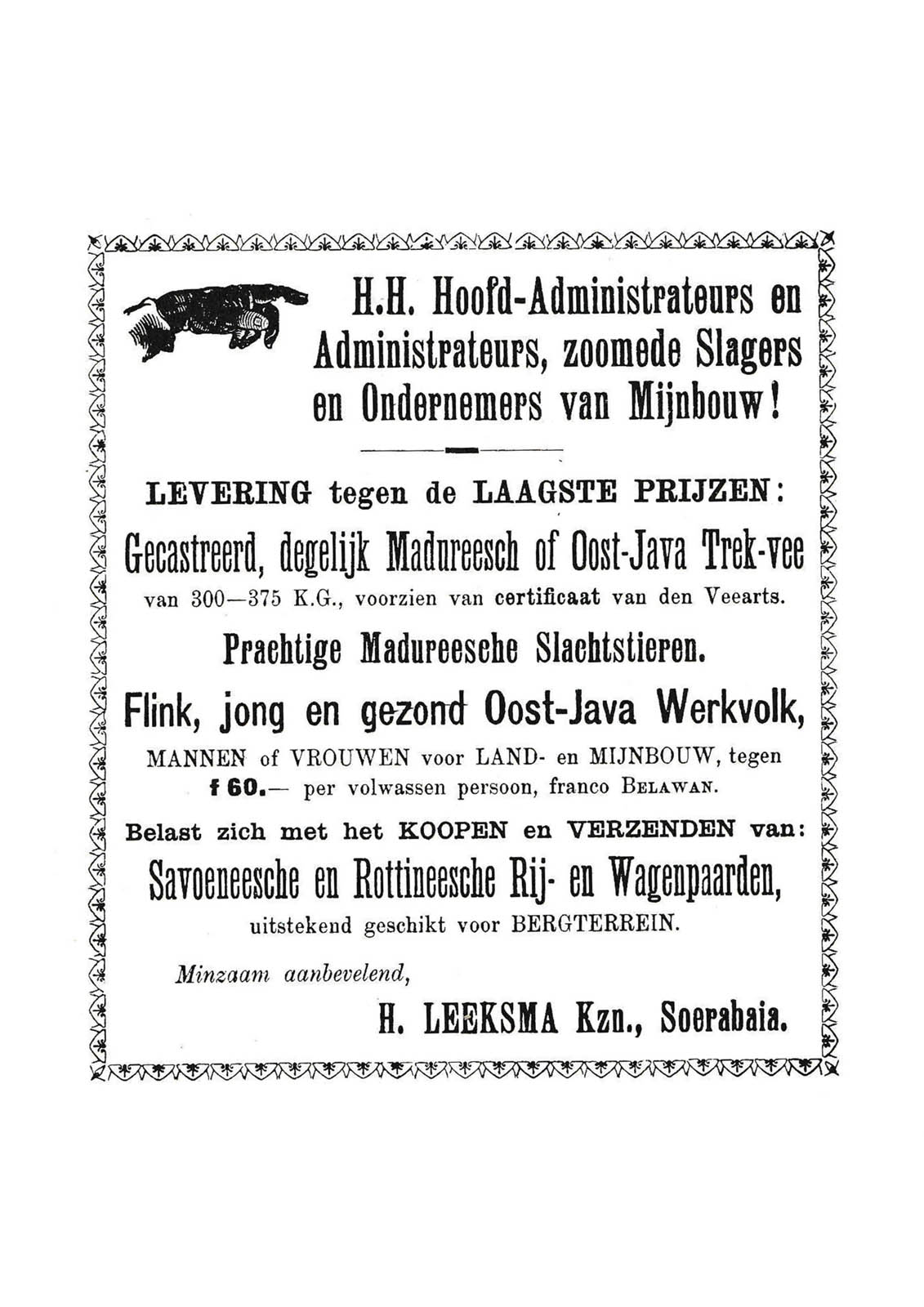
Unknown maker. 'Advertisement from the Sumatra-Post of May 7, 1902'


Unknown maker
Advertisement from the Sumatra-Post of May 7, 1902
from De Millionenen uit Deli(Private collection), 1902


H.H. Chief-Administrators and Administrators, also Butchers and Mining Entrepreneurs!
Delivery at the lowest prices:
Castrated, solid Madurese or East Java draught cattle
From 300-375 kg, with veterinary certificate
Beautiful Madurese slaughter bulls
Strong, young, and healthy East Java work force,
Men or women for agriculture and mining, for
60 guilders per adult, free of charge Belawan.
In charge of purchasing and selling:
Savonian and Rottinean riding and carriage horses,
Excellently suited for mountain terrain.
Highly recommended,
H. Leeksma Kzn., Surabaya.”

Yang Mulia Kepala Administrator dan Administrator, juga Tukang Jagal dan Pengusaha Pertambangan!
Pengiriman dengan harga terendah:
Sapi penarik Madura atau Jawa Timur yang dikebiri dan sehat
Berat 300-375 kg, dengan sertifikat dokter hewan
Sapi potong Madura yang cantik
Tenaga kerja Jawa Timur yang kuat, muda, dan sehat,
Pria atau wanita untuk pertanian dan pertambangan, dengan harga
60 gulden per orang dewasa, gratis untuk Belawan.
Bertanggung jawab atas pembelian dan penjualan:
Kuda tunggang dan kereta Savonian dan Rottinean,
Sangat cocok untuk medan pegunungan.
Sangat direkomendasikan,
H. Leeksma Kzn., Surabaya.”


Van Abbemuseum
Stratumsedijk 2 Eindhoven
+31 40 238 10 00

Opening hours:
Tuesday – Sunday from 11am – 5pm

Van Abbemuseum website

LIKE ART BLART ON FACEBOOK

Back to top

Exhibition: ‘Photography’s New Vision: Experiments in Seeing’ at the High Museum of Art, Atlanta

Exhibition dates: 13th June, 2025 – 4th January, 2026

Curator: Maria L. Kelly, High Museum of Art assistant curator of photography


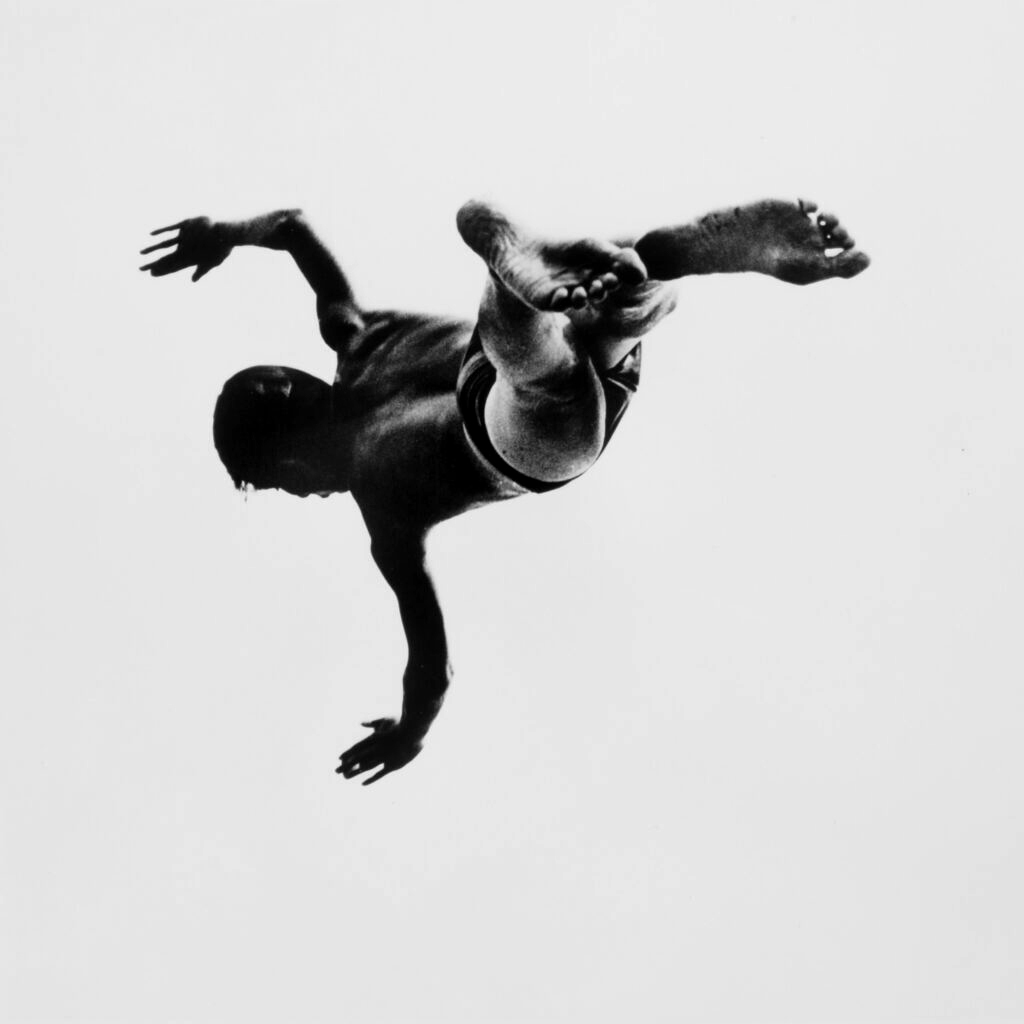
Aaron Siskind (American, 1903-1991) 'Pleasures and Terrors of Levitation #37' 1953


Aaron Siskind (American, 1903-1991)
Pleasures and Terrors of Levitation #37
1953
Gelatin silver print
High Museum of Art, Atlanta, gift of Adair and Joe B. Massey in honour of Gus Kayafas


Aaron Siskind was recognised for the ways he rendered his surroundings into often stark shapes and forms, which reflected his fascination with contemporary trends in abstract art. He was an influential teacher at Chicago’s Institute of Design, which was founded by LĆ”szló Moholy-Nagy as the New Bauhaus. This image of a person flying or falling comes from a series Siskind made of the contorted bodies of divers plunging into Lake Michigan. He masterfully created its disorienting effect through tight focus on the floating figure without contextual elements.

Text from the High Museum of Art website


While contemporarily AI-powered technologies are revolutionising the way we interact with and consume media, enabling us to “to process and analyse vast amounts of data quickly, making it easier to find and access the information we need” in the 1920s and 1930s there was also a revolution in the way artists (and their use of the camera) viewed and felt the world – one not based on information, image quality or duplicity in the veracity of the image but one based on the word, perspective – be that point of view, context, close ups, surreality, fragmentation, scale, concept, construction, colour, aesthetics, identity, gender, or radical experimentation.

In this departure from traditional photographic methods, “New Vision photographers foregrounded experimental techniques, including photograms, photomontages and compositions that favoured extreme angles and unusual viewpoints, and these extended to movements such as surrealism and constructivism.” (Press release)

To me, this New Vision is about experiencing different perspectives – experiencing, sensing, feeling and seeing the world in a new light. After the disasters and machine-ations, the destruction of a conservative way of life before the First World War, here was a way to grasp hold of (and picture) the speed of a new world order, the dreams of physiological analysis, the diversity of new identities, and the fluidity of rapidly evolving technological and social cultures.

While today this (r)evolution continues at an ever expanding pace with the consumption of huge amounts of information and images, I believe it may be advantageous to rest for a while on certain experiences and images … so that we let the daggers drop from our eyes, to ‘not make images’ in our minds eye but just to be present in the viewing of a photograph, so that we appreciate and understand every aspect of the great life spirit of this wondrous earth.

Then and now, new vision.

Dr Marcus Bunyan


Many thankx to the High Museum of Art for allowing me to publish the photographs in the posting. Please click on the photographs for a larger version of the image.


The New Vision movement of the 1920s and 1930s offered a revolutionary approach to seeing the world. It represented a rebellion against traditional photographic methods and an embrace of avant-garde experimentation and innovative techniques. LĆ”szló Moholy-Nagy, an artist and influential teacher at the Bauhaus in Germany, named this period of expansion the “New Vision.” Today, the term encompasses photographic developments that took place between the two World Wars in Europe, America, and beyond. New Vision photographers foregrounded inventive techniques, including photograms, photomontages, and light studies, and made photographs that favoured extreme angles and unusual viewpoints. These approaches – which also extended to more defined movements like Surrealism – spoke to a desire to find and see different perspectives in the wake of World War I.

Uniting more than one hundred works from the High’s photography collection, the exhibition traces the movement’s impact, from its origins in the 1920s to today, and demonstrates its long-standing effect on subsequent generations.

Text from the High Museum of Art website

Photography’s New Vision: Experiments in Seeing

Named by the influential German artist and teacher LĆ”szló Moholy-Nagy, the “New Vision” comprised an expansive variety of photographic exploration that took place in Europe, America, and beyond in the 1920s and 1930s. The movement was characterised by its departure from traditional photographic methods. New Vision photographers foregrounded experimental techniques, including photograms, photomontages, and light studies, and made photographs that favoured extreme angles and unusual viewpoints.

This exhibition, uniting more than one hundred works from the High’s robust photography collection, will trace the impact of the New Vision movement from its origins in the 1920s to today. Photographs from that era by Ilse Bing, Alexander Rodchenko, Imogen Cunningham, and Moholy-Nagy will be complemented by a multitude of works by modern and contemporary artists such as Barbara Kasten, Jerry Uelsmann, Hiroshi Sugimoto, and Abelardo Morell to demonstrate the long-standing impact of the movement on subsequent generations.

Text from the High Museum of Art website


Installation view of the exhibition 'Photography's New Vision: Experiments in Seeing' at the High Museum of Art, Atlanta, June 2025 - January 2026


Installation views of the exhibition Photography’s New Vision: Experiments in Seeing at the High Museum of Art, Atlanta, June 2025 – January 2026
Photos: Mike Jensen


The High Museum of Art presents “Photography’s New Vision: Experiments in Seeing” (June 13, 2025 – Jan. 4, 2026), an exhibition uniting more than 100 works from the High’s robust photography collection to trace the impact of the New Vision movement from its origins in the 1920s to today. Works include century-old photographs exemplifying themes from the movement and modern and contemporary images that emphasise the relevance of current artistic and social practices as a response to the technological and cultural changes that occurred in the early 20th century.

“This exhibition provides an opportunity to illuminate photographers’ creativity and innovative practices, all inspired by the progression of the medium in the 1920s and 30s,” said High Museum of Art Director Rand Suffolk. “Many of the works are rarely on view, so it will be an exciting experience for visitors to see them and learn about photographers’ abilities as they reflect reality while experimenting with technique and perspective.” Named by the influential German artist and teacher LĆ”szló Moholy-Nagy, the “New Vision” comprised an expansive variety of photographic exploration that took place in Europe, America and beyond in the 1920s and 1930s. The movement was characterised by its departure from traditional photographic methods. New Vision photographers foregrounded experimental techniques, including photograms, photomontages and compositions that favoured extreme angles and unusual viewpoints, and these extended to movements such as surrealism and constructivism.

“Experiments in Seeing” features nearly 100 photographers. It also demonstrates how the New Vision movement revolutionised the medium of photography in the early 20th century in response to the great societal, economic and technological shifts spurred by the upheaval of the two World Wars. Photographs from that era by Ilse Bing, Alexander Rodchenko, Imogen Cunningham and Moholy-Nagy have been complemented by a multitude of photographs by modern and contemporary artists such as Barbara Kasten, Jerry Uelsmann, Hiroshi Sugimoto and Abelardo Morell to demonstrate the long-standing impact of the movement on subsequent generations.

The first section of the exhibition delves into experimental techniques that foreground the light-sensitive aspects of photography, followed by works created through in-camera manipulations or additions to the surfaces of the prints. Subsequent sections explore inventive methods of capturing unexpected views of the world articulated with radical angles or detailed close-ups. Other works showcase surreal approaches to subjects such as humanlike forms and bodies, the use of mirrors and doubling, and everyday scenes heightened by uncanny moments or distorted through the interplay of light, shadow and water.

“Not only does the early 20th century and its art movements continue to be influential, but that time also echoes our current moment – one that feels similarly consequential and innovative with the development of new emerging technologies and methods of communicating,” said Maria L. Kelly, the High’s assistant curator of photography. “The movements and happenings of a century ago are akin to those of today and those shown in the exhibition. There remains a desire for alternative ways to see and approach the world through art, and particularly through photography.”

“Photography’s New Vision: Experiments in Seeing” is on view in the Lucinda W. Bunnen Galleries for Photography located on the Lower Level of the High’s Wieland Pavilion.

Press release from the High Museum of Art


“Light was considered the medium that permits photography. But for me it became the main subject: the protagonist of my photography.”


Ilse Bing, c. 1920s


Light Experimentation

After the trauma of World War I, many artists felt compelled to reconsider conventional art making methods to better reflect and engage with the world. Some photographers turned their attention to the essential element of photography: light. Through innovative visual investigations, cameraless photographs were produced, viewes of the world altered, and scientific discoveries made.

Experimentations with illumination and light-sensitive paper in the darkroom gave rise to photograms, enabling artists to pursue abstraction and to wield light as a sculptural element. The process of solarisation – reversing tones in a print using a flash of light during developing – provided an unconventional view of a subject. Early attempts to capture traces of light on film led to scientific innovations such as using strove lights to freeze movement, depicting magnetic fields, and tracing electrical currents on light sensitive paper.

These processes aim to reveal the invisible, with the elements of change as a constant companion. While artists can insert some control over the elements, the process ultimately shapes the final image. Many artworks in this section exist as unique prints, challenging the assumption of the reproducibility of photography, and emphasising the singularity of the creative moment.

Wall text from the exhibition


Francis BruguiĆØre (American, 1879-1945) 'The Light That Never Was on Land or Sea' c. 1925


Francis BruguiĆØre (American, 1879-1945)
The Light That Never Was on Land or Sea
c. 1925
Gelatin silver print
High Museum of Art, Atlanta, purchase with funds from Georgia-Pacific Corporation


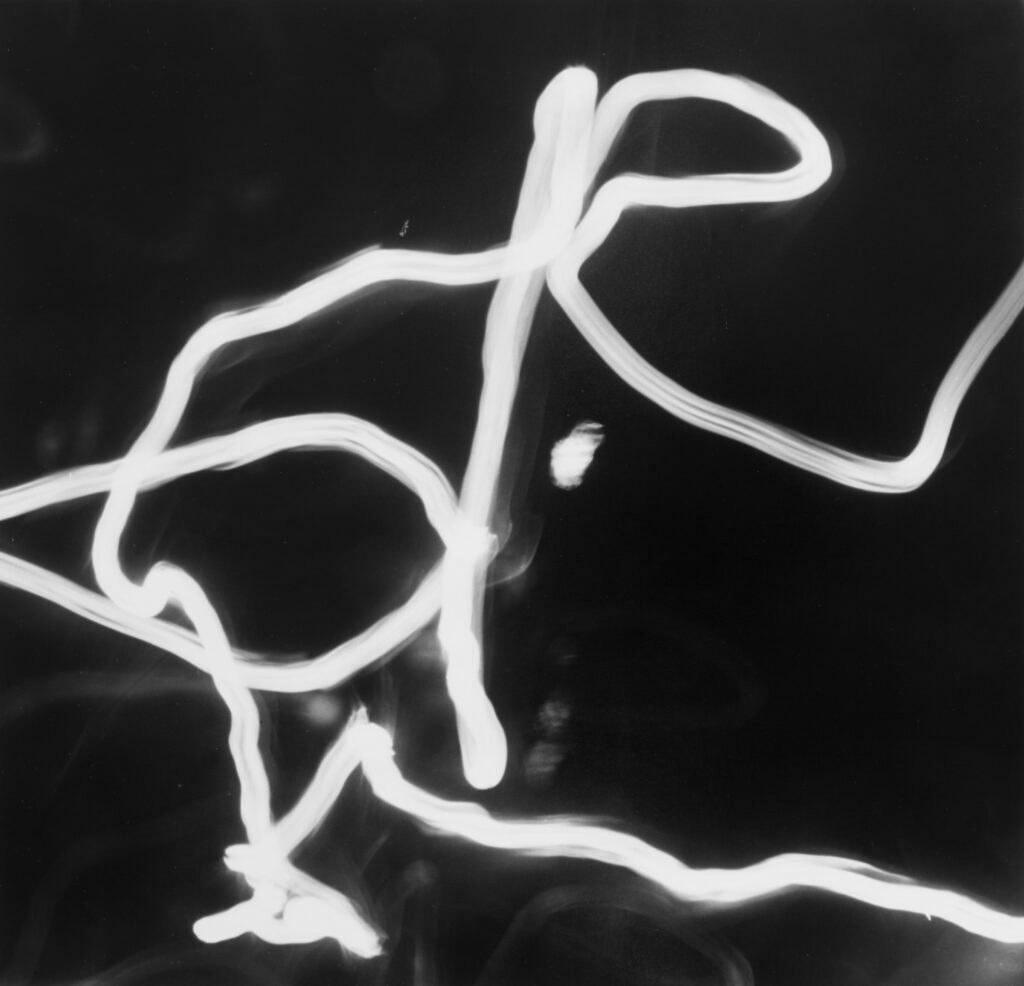
Nathan Lerner (American, 1913-1977) 'Light Drawing #8 (Smoke)' 1938-1939


Nathan Lerner (American, 1913-1977)
Light Drawing #8 (Smoke)
1938-1939
Gelatin silver print
High Museum of Art, Atlanta, gift of Hilary Leff and Elliot Groffman


Ilse Bing (American born Germany, 1899-1998) 'Untitled [Seated Woman with Necklace, Solarized]' 1943


Ilse Bing (American born Germany, 1899-1998)
Untitled [Seated Woman with Necklace, Solarized]
1943
Gelatin silver print
High Museum of Art, Atlanta, gift of the Estate of Ilse Bing Wolff


Harry Callahan (American, 1912-1999) 'Camera Movement on Flashlight, Chicago' c. 1949


Harry Callahan (American, 1912-1999)
Camera Movement on Flashlight, Chicago
c. 1949
Gelatin silver print
High Museum of Art, Atlanta, purchase with funds from the H. B. and Doris Massey Charitable Trust, Dr. Robert L. and Lucinda W. Bunnen, Collections Council Acquisition Fund, Jackson Fine Art, Powell, Goldstein, Frazer and Murphy, Jane and Clay Jackson, Beverly and John Baker, Roni and Sid Funk, Gloria and Paul Sternberg, and Jeffery L. Wigbels
Ā© 2018 The Estate of Harry Callahan


Abelardo Morell (American born Cuba, b. 1948) 'Still Life with Wine Glass: Photogram on 20" x 24" Film' 2006


Abelardo Morell (American born Cuba, b. 1948)
Still Life with Wine Glass: Photogram on 20″ x 24″ Film
2006
Gelatin silver print
High Museum of Art, Atlanta, purchase with funds from the Friends of Photography
Ā© Abelardo Morell


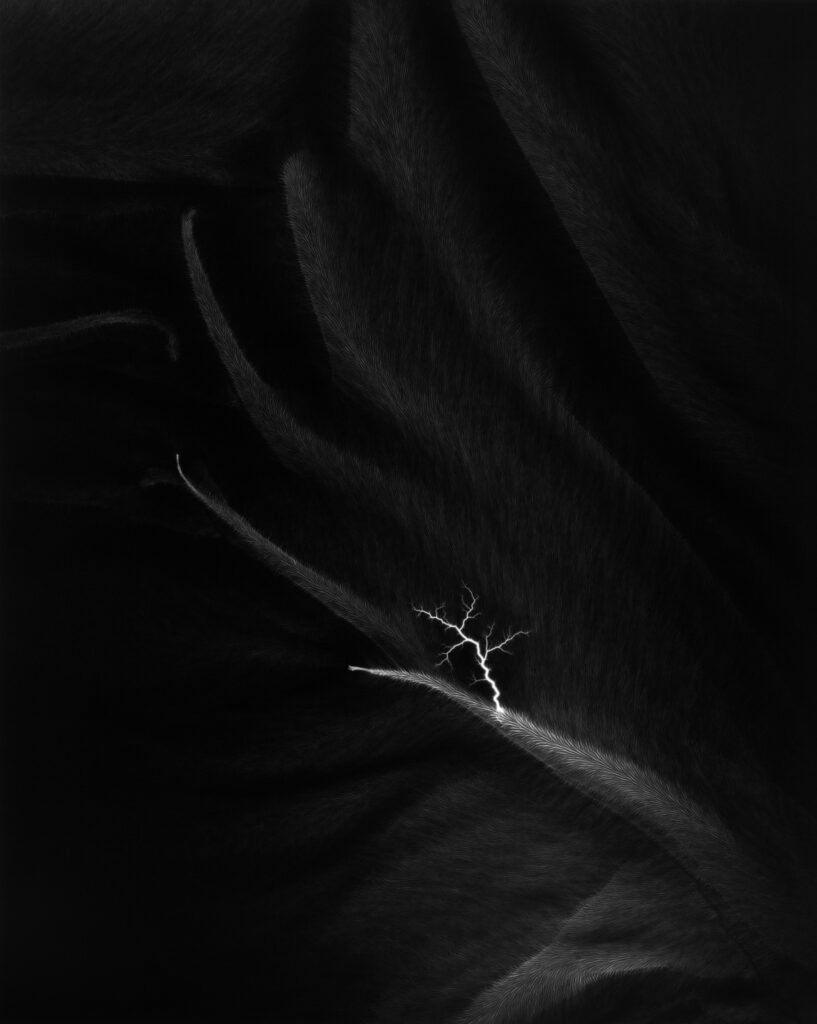
Hiroshi Sugimoto (Japanese, b. 1948) 'Lightning Fields 182' 2009


Hiroshi Sugimoto (Japanese, b. 1948)
Lightning Fields 182
2009
Gelatin silver print
High Museum of Art, Atlanta, purchase through funds provided by patrons of Collectors Evening 2012
Ā© Hiroshi Sugimoto


Inspired by William Henry Fox Talbot, an inventor of photography who was fascinated with electromagnetic conduction, Hiroshi Sugimoto began applying charges of electricity directly to unexposed photographic film. After months of honing his technique in the darkroom, he managed to achieve remarkable results with a handheld wand charged by a generator. His Lightning Fields photographs are made without a camera or lens. Here, the abstract visual trace of an electric charge measuring over 400,000 volts sweeps across the composition, reading like the textures of a human hand, the upward tentacles of a fern, or the stark branches of a tree.

Text from the High Museum of Art website


Hans-Christian Schink (German, b. 1961) '2/26/2010, 7:54 am – 8:54 am, S36° 49.622' E 175° 47.340'' 2010


Hans-Christian Schink (German, b. 1961)
2/26/2010, 7:54 am – 8:54 am, S36° 49.622′ E 175° 47.340′
2010
From the series 1h
Ā© Hans-Christian Schink


Abelardo Morell (American born Cuba, b. 1948) 'Camera Obscura: View of Philadelphia from Loews Hotel Room #3013 with Upside Down Bed, April 14th, 2014' 2014


Abelardo Morell (American born Cuba, b. 1948)
Camera Obscura: View of Philadelphia from Loews Hotel Room #3013 with Upside Down Bed, April 14th, 2014
2014
Pigmented inkjet print
High Museum of Art Atlanta, gift of Dr. Roger Hartl
Ā© Abelardo Morell


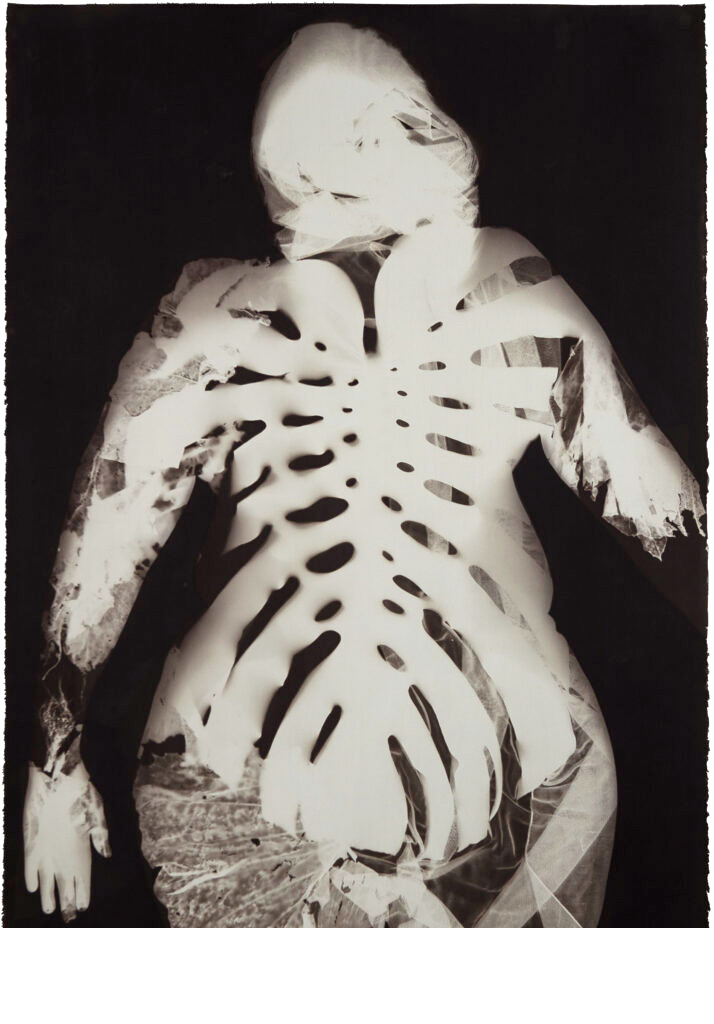
V. Elizabeth Turk (American, b. 1945) 'Calaeno' 2018


V. Elizabeth Turk (American, b. 1945)
Calaeno
2018
Van Dyke print
High Museum of Art, Atlanta, purchase with funds from Lucinda W. Bunnen for the Bunnen Collection
Ā© Elizabeth Turk


V. Elizabeth Turk is an Atlanta-based photographer whose work explores the connections between the human body and the natural world. To make this print, Turk used an analog process from the 1800s that involves coating a large sheet of paper with light-sensitive chemicals. She then arranged her model on top of the sheet and exposed it to light, creating a ghostly silhouette, before repeating the exposure with plants. The resulting photogram is a unique image in which botanical forms intersect with the body, alluding to bones, veins, and skin and suggesting a visceral bond between humans and the environment. 

Text from the High Museum of Art website


“The limits of photography are incalculable; everything is so recent that even the mere act of searching may lead to creative results. […] The illiterate of the future will be the person ignorant of the use of the camera as well as of the pen.”


LÔszló Moholy-Nagy 1928


Radical Viewpoints

From photography’s inception in 1839, camera technology involved cumbersome equipment and time-consuming development processes until the advent of lightweight cameras in the 1920s. Photographers were then able to work more nimbly, transforming photography into a medium capable of capturing fleeting moments, unusual viewpoints, and multiple perspectives. The exploration of unexpected angles became a hallmark of New Vision photography. Sharp diagonals, extreme vantage points, and shortened perspectives opened novel pathways of perceiving otherwise commonplace environments.

Alexander Rodchenko, a pioneer in this method, championed the camera’s ability to reveal, stating, “in order to teach man to see from all viewpoints, it is necessary to photograph […] from completely unexpected viewpoints and in unexpected positions […] We don’t see what we are looking at. We don’t see marvellous perspectives.” This approach aimed to provide a fuller impression of subjects, prompting viewers to seek and appreciate what might otherwise be overlooked.

Though these early photographs may not appear groundbreaking today, their makers’ carefully considered methods transferred how photography is used. This is evident in photographers’ creative interpretations of their surroundings over the past century.

Wall text from the exhibition


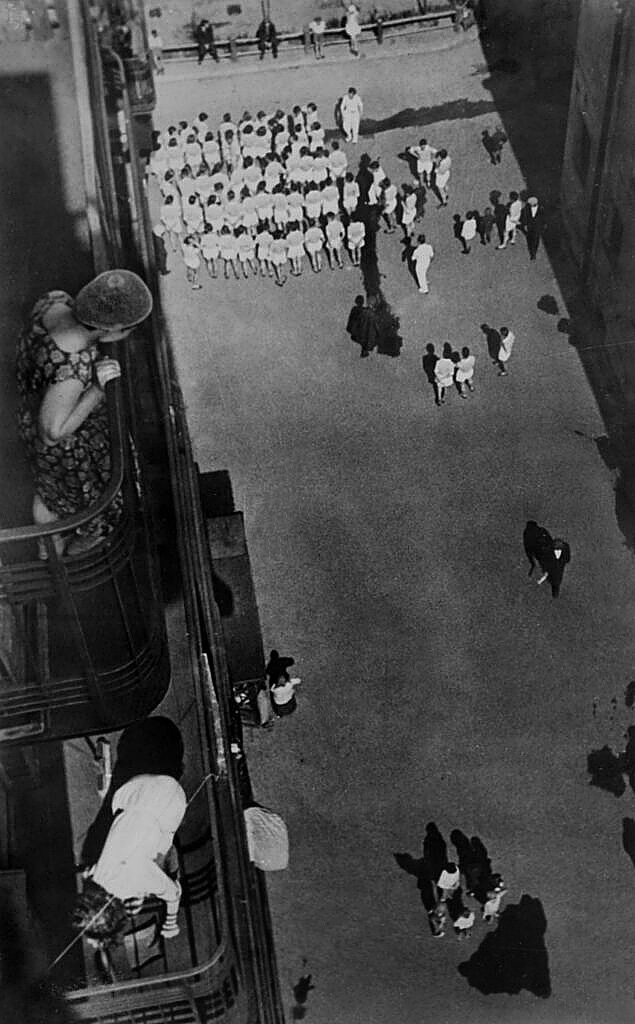
Alexander Rodchenko (Russian, 1891-1956) 'Sbor na demonstratsia' (Gathering for a Demonstration) 1928


Alexander Rodchenko (Russian, 1891-1956)
Sbor na demonstratsia (Gathering for a Demonstration)
1928
Gelatin silver print
High Museum of Art, Atlanta, gift of Joseph and Yolandra Alexander, Moscow/VAGA at Artists Rights Society (ARS), New York
Ā© Estate of Alexander Rodchenko/RAO, Moscow/VAGA at Artists Rights Society (ARS), New York


Alexander Rodchenko was a key figure in the movements of New Vision and Constructivism – abstract and functional art that reflected an industrial society. Advocating “to achieve a revolution in our visual thought,” he explored various methods, such as photographing from unexpected angles, to capture dynamic views and expose new realities. With a new, lightweight 35 mm camera, he often photographed from his apartment balcony to create dramatic scenes of the street below. The perspective in this photograph flattens the building’s stories into one visual field, giving the image a theatrical quality as an onlooker peers over the railing.

Text from the High Museum of Art website


Walker Evans (American, 1903-1975) 'The Bridge' 1929


Walker Evans (American, 1903-1975)
The Bridge
1929
Gelatin silver print
High Museum of Art, Atlanta, gift of Arnold H. Crane
Ā© Walker Evans Archive, The Metropolitan Museum of Art


A central figure among twentieth-century American photographers, Walker Evans created works in his early career that sample from the New Vision aesthetic, which he may have encountered while abroad in Paris in 1926. His photographs of New York City, made after he returned to the United States, feature dramatically angled or cropped scenes of architecture and city life. Evans made numerous photographic studies of the Brooklyn Bridge from both below and on the bridge, portraying it less as a recognisable landmark and more as a hulking expanse whose form fills each tight frame.

Text from the High Museum of Art website


LÔszló Moholy-Nagy (Hungarian 1895-1946) 'Stage Set for Madame Butterfly' 1931


LÔszló Moholy-Nagy (Hungarian 1895-1946)
Stage Set for Madame Butterfly
1931
Gelatin silver print
High Museum of Art, Atlanta, purchase with funds from Georgia-Pacific Corporation


Moholy-Nagy, a leader of the New Vision, had an expansive artistic practice that included painting, photography, sculpture, film, and more. As a teacher at the Bauhaus, which connected art and industry, he believed in technology’s potential to advance art and society. In 1929, he became set designer at the Kroll Opera House and created avant-garde sets with translucent and perforated materials, often making light itself a sculptural element. Lucia Moholy, a photographer, writer, teacher, and Moholy-Nagy’s first wife, was commissioned as Kroll’s stage photographer. In this image, which either artist may have made, the sharp angle shot from above complicates the set of Madame Butterfly, emphasising intersecting, moving elements and heightening areas of light and shadow.

Text from the High Museum of Art website


Lucas Foglia (American, b. 1983) 'Esme Swimming, Parkroyal on Pickering, Singapore' 2014


Lucas Foglia (American, b. 1983)
Esme Swimming, Parkroyal on Pickering, Singapore
2014
Pigmented inkjet print
High Museum of Art, Atlanta, gift of Irene Zhou
Ā© Lucas Foglia


Close Ups

Similar to the practice of using unusual angles to offer unexpected perspectives, some photographers began capturing highly detailed, close-up views of objects. This approach affords a study of texture, pattern, and structure that may otherwise go unnoticed by the human eye. By eliminating surroundings that could offer a narrative, the physicality of the object becomes the primary focus, allowing it to transcend beyond its everyday existence.

Practitioners of straight photography in the United States and the concurrent New Objectivity movement in Germany shared a core desire to unearth a balance of the familiar and the foreign within intricate images of forms. While Imogen Cunningham and Edward Weston perfected carefully composed studies of plants and other natural matter, Albert Renger-Patzsch, Alexander Rodchenko, and Ralph Steiner explored scientific and industrial objects. Such images celebrated the technological advancements of the time and revealed how mechanical structures often mimic those found in nature, suggesting a shared framework, and a shared beauty, between humanmade and natural. The emphasis on detail and abstraction invites viewers to reconsider their perceptions of both the ordinary and the extraordinary in the world around them.

Wall text from the exhibition


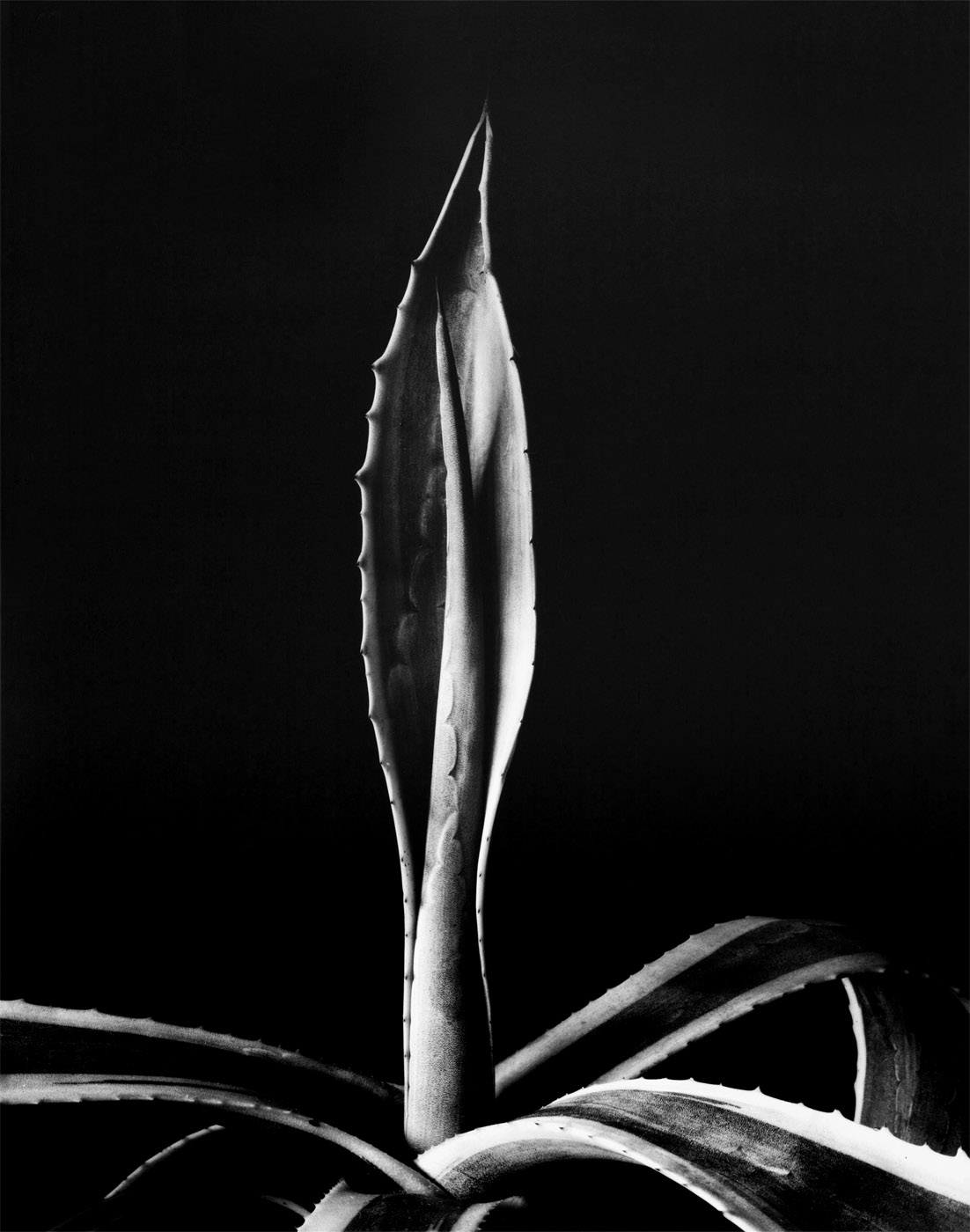
Imogen Cunningham (American, 1883-1976) 'Agave Americanus' 1929


Imogen Cunningham (American, 1883-1976)
Agave Americanus
1929
Gelatin silver print
High Museum of Art, Atlanta
Ā© The Imogen Cunningham Trust


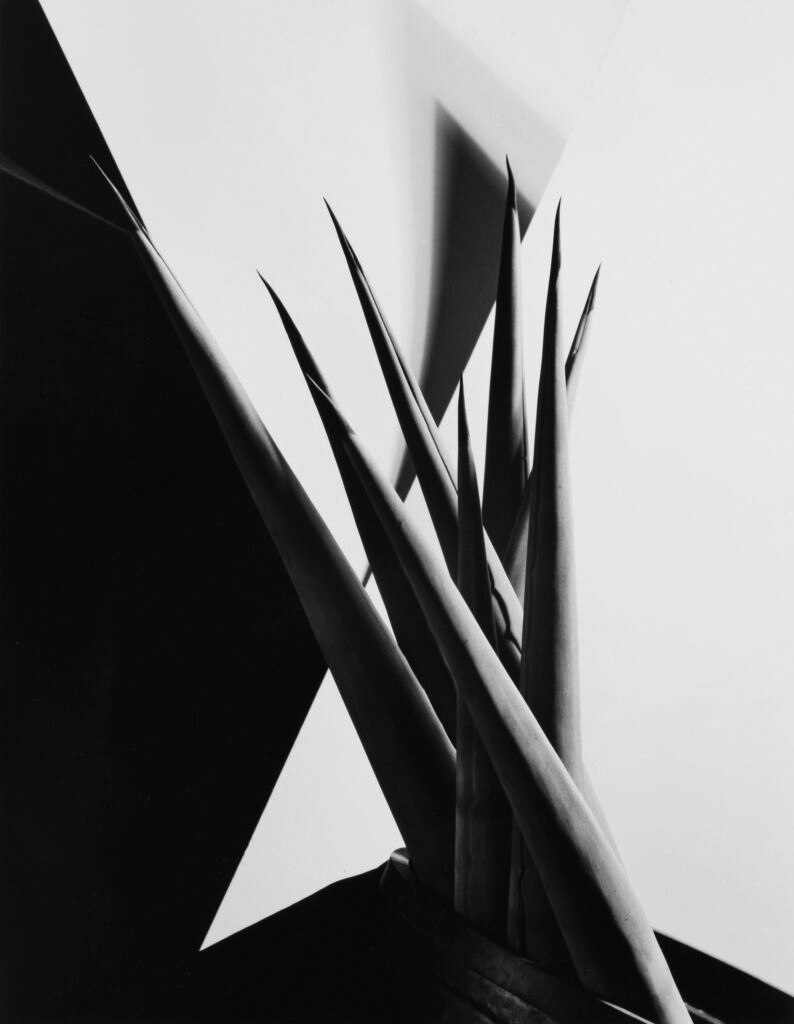
Imogen Cunningham (American, 1883-1976)
'Agave Design I' c. 1920


Imogen Cunningham (American, 1883-1976)
Agave Design I
c. 1920
Gelatin silver print
High Museum of Art, Atlanta, purchase with funds from Georgia-Pacific Corporation
Ā© The Imogen Cunningham Trust


Edward Weston (American 1886-1958) 'Palma Cuernavaca II' 1925


Edward Weston (American 1886-1958)
Palma Cuernavaca II
1925
Palladium print
High Museum of Art, Atlanta, gift of Lucinda W. Bunnen for the Bunnen Collection to mark the retirement of Gudmund Vigtel
Ā© Center for Creative Photography, Arizona Board of Regents


Ralph Steiner (American, 1899-1986) 'Electrical Switches' 1929


Ralph Steiner (American, 1899-1986)
Electrical Switches
1929
Gelatin silver print
8 x 10 5/16 inches
Purchase with funds from Georgia-Pacific Corporation


Harry Callahan (American, 1912-1999) 'Weed Against Sky, Detroit' 1948


Harry Callahan (American, 1912-1999)
Weed Against Sky, Detroit
1948
Gelatin silver print
High Museum of Art, Atlanta, gift of the Callahan and Hollinger Families
Ā© 2018 The Estate of Harry Callahan


Eugenia de Olazabal (Mexican, b. 1936) 'Espinas' c. 1985


Eugenia de Olazabal (Mexican, b. 1936)
Espinas
c. 1985
Gelatin silver print
High Museum of Art, Atlanta, gift of the artist


“Surrealism lies at the heart of the photographic enterprise: in the very creation of a duplicate world, of a reality in the second degree, narrower but more dramatic than the one perceived by natural vision.”


Susan Sontag, 1973


Surreality

Surrealism emerged as an artistic movement in reaction to the horrors of World War I. The often disconcerting imagery and literature of the movement reflected a world that felt disorienting and chaotic and captured how the very foundations of reason and humanity were tested and questioned through the realities of war. In his Surrealist Manifesto (1924), French writer Andre Breton advocates for a rejection of rational ways of approaching the world in four of dreams and imagination as pathways to new creative expressions.

Photography played an important role in the Surrealist movement. Artists valued how the medium could capture spontaneous moments that reveal the unexpected, be manipulated to stage scenes, or be altered with darkroom processes. They harness photography in a multitude of ways to create dreamlike and unconscious associations with reality. In these galleries, artists explore uncanny moments and create links to the human psyche by focusing on humanlike forms and fragmented body parts, mirrored and doubled views, and the impact of light and shadows in space.

Wall text from the exhibition


EugĆØne Atget (French, 1857-1927) 'Men's Fashions (Avenue des Gobelins)' 1925, printed 1956


EugĆØne Atget (French, 1857-1927)
Men’s Fashions (Avenue des Gobelins)
1925, printed 1956
Gelatin silver print
Purchase


EugĆØne Atget was the great chronicler of Paris at the turn of the century. His vast photographic archive captures a city on the precipice of modernisation. Though his photographs of empty city streets were documentary in nature, the Surrealists admired their dreamlike quality and claimed Atget as one of their own despite his protestations. They believed any photograph could shed its original context and intent when viewed with a surrealist sensibility. Atget’s photograph of mannequins peering out of a shop window appealed to the movement by embodying the uncanny valley, where the human likeness of a nonhuman entity evokes both affinity and discomfort in viewers.

Text from the High Museum of Art website


Florence Henri (Swiss born United States, 1893-1982) 'Composition' 1932, printed 1972


Florence Henri (Swiss born United States, 1893-1982)
Composition
1932, printed 1972
Gelatin silver print
High Museum of Art, Atlanta, gift of Dr. Joe B. Massey in honor of Maria L. Kelly


Florence Henri is well known for her manipulations of light and form that create complex, surrealist scenes. She used angled mirrors to frame, obscure, and replicate portions of scenes to dissolve a sense of perspective and space, as seen in this still life comprising mirrors, pears, and an image of the sea. After only one semester studying under LÔszló Moholy-Nagy at the Bauhaus in 1927, Henri shifted her focus from painting to photography and began using various experimental techniques such as photomontage, multiple exposures, photograms, and negative printing.

Text from the High Museum of Art website


Barbara Kasten (American, b. 1936) 'Construct NYC' 1984


Barbara Kasten (American, b. 1936)
Construct NYC
1984
Dye destruction print
High Museum of Art, Atlanta, gift of Lucinda W. Bunnen for the Bunnen Collection
Ā© Barbara Kasten


Barbara Kasten’s art is as much about the process of setting up innovative still life scenes as it is about the photographs she makes of them. Her Constructs series focuses on large-scale complex assemblages that she builds in her studio using a wide variety of materials, including painted wood, plaster, mirrors, screens, and fibers. Her work is not digitally altered; instead, she complicates the scene using mirrors and light, much in the tradition of Florence Henri, whose photograph is also on view in the exhibition.

Text from the High Museum of Art website


Manipulations

This final section features photographers from the New Vision period to the present day who experiment with physically manipulating photographs. Through approaches such as double exposure, photomontage, surface alteration, and multilayering, they challenge and expand our perceptions of reality. The artworks in this section prioritise the creative process through labour, intention, intervention, and theatricality.

Double exposures is the process of photographing multiple images with the same negative within the camera, resulting in layered images that often provide a frenetic, multifaceted view of a scene. In contrast to the in-camera process of double exposure, photomontage combines separate images in the darkroom to produce a final photograph that emphasises the image’s artifice and absurdity. Physically disrupting the surface of photographs with alterations such as adding unnatural colour, drawing connections, stitching into prints, or inscribing texts augments the visual experience and offers emotional and narrative depth. Finally, whether through ancient visual techniques like the camera obscure or new technologies like digital screens, these artists create enigmatic scenes by layering and physically transforming subject, composition, and image.

Wall text from the exhibition


Barbara Morgan (American, 1900-1992) 'Protest' 1940


Barbara Morgan (American, 1900-1992)
Protest
1940
Gelatin silver print
High Museum of Art, Atlanta, purchase


Charles Swedlund (American, b. 1935) '31 St. Beach' c. 1955


Charles Swedlund (American, b. 1935)
31 St. Beach
c. 1955
Gelatin silver print
High Museum of Art, Atlanta, gift of Steven Nordman
Ā© Charles Swedlund


Jerry Uelsmann (American, 1934-2022) 'Untitled' 1964


Jerry Uelsmann (American, 1934-2022)
Untitled
1964
Gelatin silver print
High Museum of Art, Atlanta, purchase with funds from a friend of the Museum


Lucinda Bunnen (American, 1930-2022) 'Untitled' 1974


Lucinda Bunnen (American, 1930-2022)
Untitled
1974
Gelatin silver print
High Museum of Art, Atlanta, purchase with funds from the Lawrence and Alfred Fox Foundation for the Ralph K. Uhry Collection
Ā© Lucinda Bunnen


Duane Michals (American, b. 1932)
'Untitled' 1989 From the 'Indomitable Spirit Portfolio'


Duane Michals (American, b. 1932)
Untitled
1989
From the Indomitable Spirit Portfolio
Gelatin silver print
High Museum of Art, Atlanta


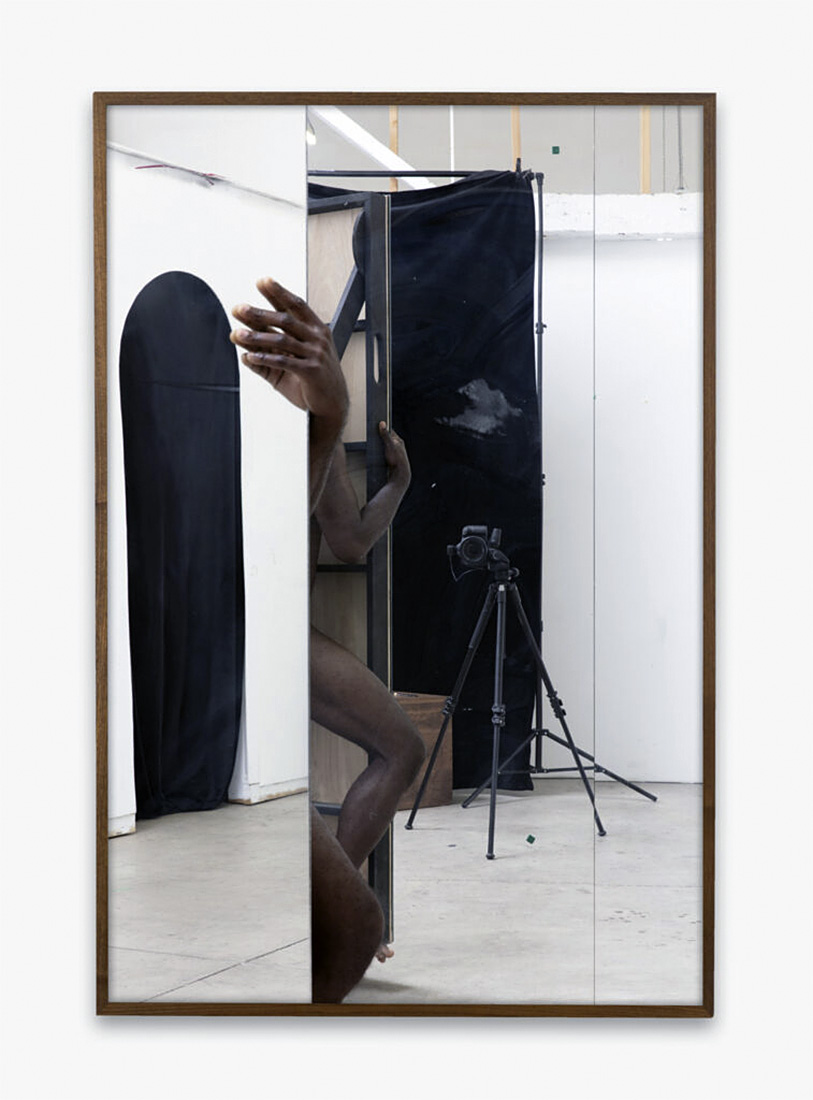
Paul Mpagi Sepuya (American, b. 1982) 'Studio (0X5A8180)' 2021


Paul Mpagi Sepuya (American, b. 1982)
Studio (0X5A8180)
2021
Archival pigment print
High Museum of Art, Atlanta, purchase with funds from the Donald and Marilyn Keough Family Foundation
Ā© Paul Mpagi Sepuya


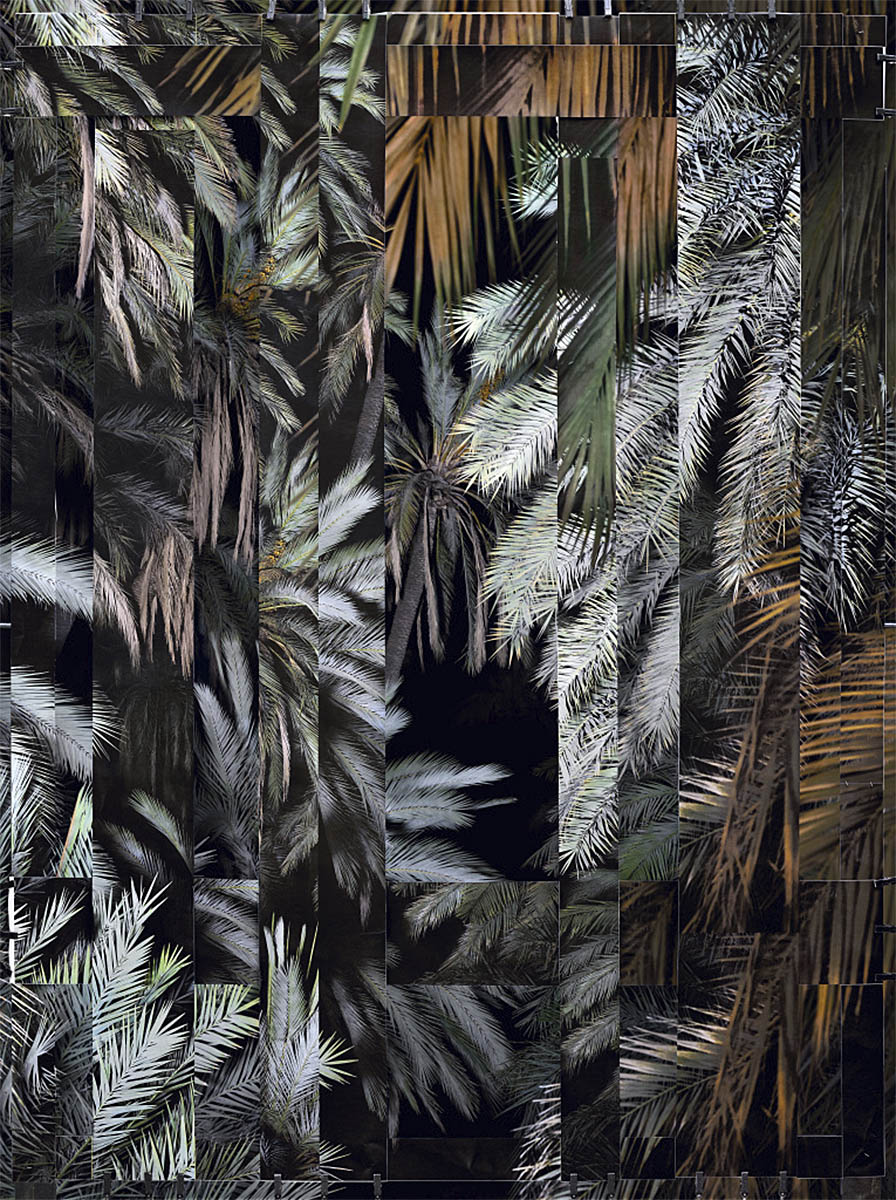
NoƩmie Goudal (French, b. 1984) 'Phoenix V' 2021


NoƩmie Goudal (French, b. 1984)
Phoenix V
2021
Dye coupler print
High Museum of Art, Atlanta, purchase through funds provided by patrons of Collectors Evening 2023


NoĆ©mie Goudal visualises “deep time” (geological history of the planet) and paleoclimatology (study of past climates) to challenge our perception of the world. Referring to the ancient continental split two billion years ago that formed South America and Africa, this image features the Phoenix atlantica, a palm tree that grows on both sides of the Atlantic. Goudal arranged strips of photographic prints of the palms made on one continent in front of the physical palms on the other and rephotographed the scene. The resulting image interweaves the two continents, creating a glitchy, kaleidoscopic view meant to unsettle our sense of stability and the constancy of the planet.

Text from the High Museum of Art website


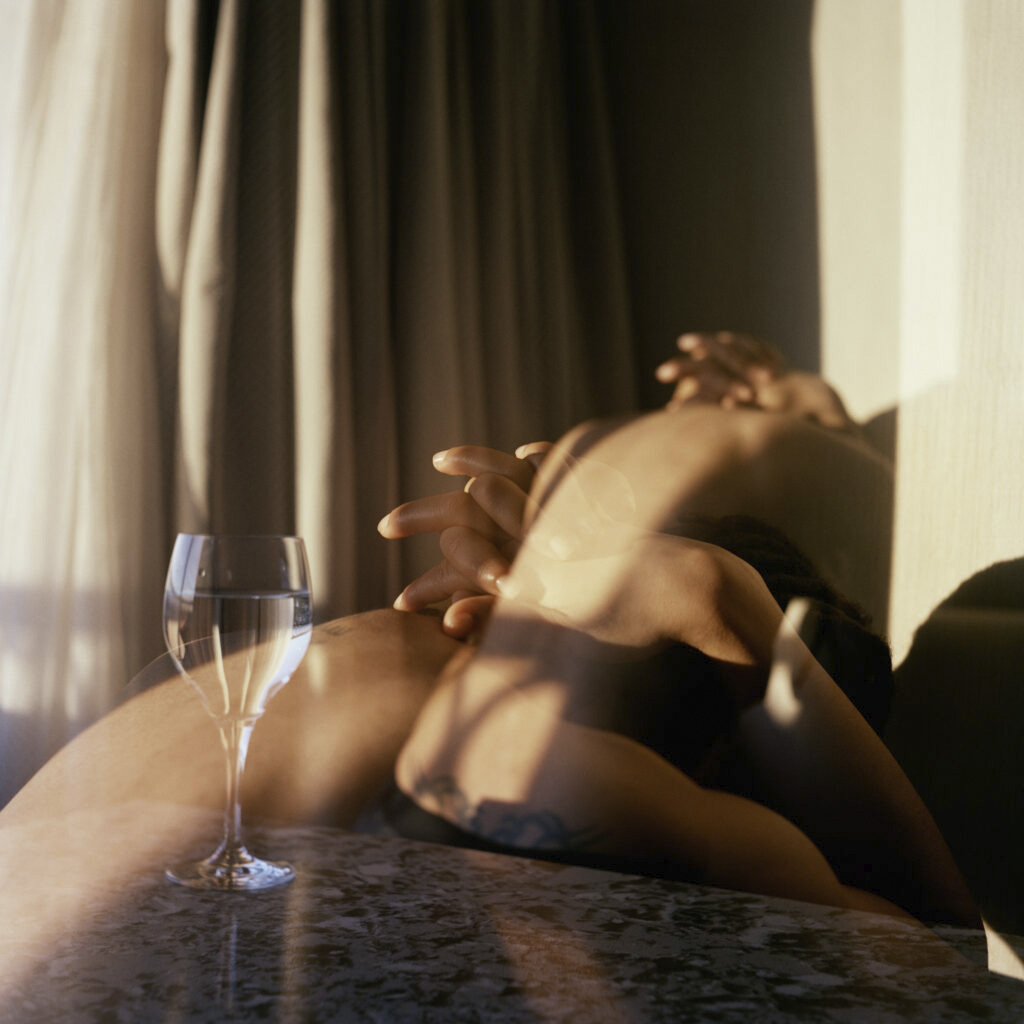
Naima Green (American, b. 1992) 'It Lingers Sweetly' 2022


Naima Green (American, b. 1992)
It Lingers Sweetly
2022
Pigmented inkjet print
High Museum of Art, Atlanta, purchase with funds from the LGBTQIA+ Photography Centennial Initiative


Naima Green’s practice centres connection and collaboration to cast a tender lens on her own queer community of colour. Her lyrical portraits take shape in intimate domestic spaces and airy outdoor environments that embody havens for the people in those spaces. Through double exposure and serial photographs, she provides what she calls “multiple entry points” into a moment in time, translating movements and emotions into a single image. She explains her interest in double exposure “as a means of capturing things that can’t be held in just one way … ,” allowing her to “play with loosening the narrative and letting go of some control.”

Text from the High Museum of Art website


The High Museum of Art
1280 Peachtree St NE
Atlanta, GA
30309

Opening hours:
Tuesday – Saturday 10am – 5pm
Sunday 12 – 5pm
Monday closed

The High Museum of Art website

LIKE ART BLART ON FACEBOOK

Back to top

Exhibition: ‘Paul Outerbridge: Photographs’ at Fahey/Klein Gallery, Los Angeles

Exhibition dates: 25th September – 8th November, 2025


Paul Outerbridge Jr. (American, 1896-1959) 'Girl with Fan' c. 1936


Paul Outerbridge Jr. (American, 1896-1959)
Girl with Fan
c. 1936
Vintage color carbo photograph
17 x 13 inches
Ā© Paul Outerbridge; courtesy of Fahey/Klein Gallery, Los Angeles


I think I was born in the wrong era!

My favourite era in the history of photography is the period between the wars.

The avant-garde photographers of the period were so inventive, challenging the act of looking through modern photographs featuring radical perspective, fragmentation, scale, concept, construction, colour, aesthetics, identity, gender, fashion, performance, photogram, photo collage, to name just a few.

Favourites include Germaine Krull (European, 1897-1985) and her magnificent book MƉTAL (1928) with its dissection of the Eiffel Tower; Florence Henri (Swiss born United States, 1893-1982) and her experimental compositions featuring mirrors and reflections; Claude CahunĀ (French, 1894-1954) andĀ Marcel MooreĀ (French, 1892-1972) and their subversion of gender norms; August Sander (German, 1876-1964) and his archetypal photographs from “People of the 20th Century”; Alexander Rodchenko (Russian, 1891-1956) and his revolutionary photographs; Walker Evans (American, 1903-1975) revealing photographs of New York subway passengers; Jakob Tuggener’s (Swiss, 1904-1988) alchemical photographs picturing the world or work and industry; Helmar Lerski‘sĀ (Swiss, 1871-1956) metamorphosis of the human face; and Margaret Bourke-White‘sĀ (American, 1906-1971) modern industrial America to name, again, just a few.

There are so many fantastic photographers from this period, pushing the boundaries of what was possible in photography without loosing sight of the stories they wanted to tell, and the immediacy and presence of the photograph.

Paul Outerbridge Jr. is another from the period, a much under appreciated artist in the vanguard of experimental photography, “a bold innovator, transforming ordinary objects, such as milk bottles, collars, eggs, into fractured Cubist constructions of light and form…

Throughout his career, Outerbridge pursued abstraction as both a visual language and an artistic philosophy. His still lifes, nudes, and commercial commissions all demonstrate his preoccupation with fractured planes, geometric tension, and the transformation of the commonplace into the extraordinary.” (Press release)

That’s what I like about this man’s photographs: their bold but radical simplicity, clear visualisation of the pictorial statement, and formal abstracted beauty.

His photographs are, and will remain, a joy to be/hold.

Dr Marcus Bunyan


Many thankx to the Fahey/Klein Gallery for allowing me to publish the photographs in the posting. Please click on the photographs for a larger version of the image.


Paul Outerbridge Jr. (American, 1896-1959) 'Ide Collar' 1922


Paul Outerbridge Jr. (American, 1896-1959)
Ide Collar
1922
Platinum photograph
4 1/2 x 3 1/2 inches
Ā© Paul Outerbridge; courtesy of Fahey/Klein Gallery, Los Angeles


Paul Outerbridge Jr. (American, 1896-1959) 'Wine Glass on Checker Board' 1922


Paul Outerbridge Jr. (American, 1896-1959)
Wine Glass on Checker Board
1922
Vintage platinum photograph
4 1/8 x 3 3/16 inches
Ā© Paul Outerbridge; courtesy of Fahey/Klein Gallery, Los Angeles


Paul Outerbridge Jr. (American, 1896-1959) 'Jello Mould in Dish' 1923


Paul Outerbridge Jr. (American, 1896-1959)
Jello Mould in Dish
1923
Vintage platinum photograph
5 x 4 3/4 inches
Ā© Paul Outerbridge; courtesy of Fahey/Klein Gallery, Los Angeles


Paul Outerbridge Jr. (American, 1896-1959) 'Men's Scarfs' 1924


Paul Outerbridge Jr. (American, 1896-1959)
Men’s Scarfs
1924
Vintage platinum photograph
4 5/8 x 3 7/8 inches
Ā© Paul Outerbridge; courtesy of Fahey/Klein Gallery, Los Angeles


Paul Outerbridge Jr. (American, 1896-1959) 'Woman in Bed (under satin sheets)' c. 1933


Paul Outerbridge Jr. (American, 1896-1959)
Woman in Bed (under satin sheets)
c. 1933
Vintage silver gelatin photograph
15 3/8 x 13 9/16 inches
Ā© Paul Outerbridge; courtesy of Fahey/Klein Gallery, Los Angeles


Fahey/Klein Gallery is pleased to present Paul Outerbridge: Photographs, a landmark exhibition celebrating the visionary work of Paul Outerbridge (1896-1958), one of the most resourceful and provocative photographers of the twentieth century. This exhibition brings together a rare selection of Carbo prints, silver gelatin photographs, and platinum prints, tracing the evolution of a modernist whose daring vision helped redefine the possibilities of photography through Cubist experimentation and radical abstraction.

Outerbridge emerged in the 1920s as a bold innovator, transforming ordinary objects, such as milk bottles, collars, eggs, into fractured Cubist constructions of light and form. His platinum and silver gelatin prints reduced subjects to intersecting planes and geometric rhythms, revealing a structural beauty aligned with the avant-garde movements of his time. These works positioned him among artists and contemporaries such as Marcel Duchamp, Man Ray, and Edward Steichen, and demonstrate his embrace of Cubism’s challenge: to fracture reality and reassemble it as pure abstraction.

In the 1930s, Outerbridge turned to the technically demanding Carbo process, creating some of the most vibrant and enduring color photographs of the era. Here too, abstraction was his guiding principle. Color became a tool not just for description, but for reimagining form, flattening, faceting, and animating planes into startling compositions that rival the abstract canvases of Picasso and Kandinsky. His photographs were hailed as both artistic and technical sensations. As Outerbridge observed:

“One very important difference between monochromatic and color photography is this: in black and white you suggest; in color you state.”

Outerbridge’s practice blurred the boundaries between fine art and commercial photography. His Ide Collar (1922), published in Vanity Fair, was more than an advertisement. It was celebrated as both functional and formally radical. A chessboard of fractured black-and-white squares disrupted by the crisp curve of a collar. Duchamp himself hung the photograph in his Paris studio, recognising its affinity with the readymade and its radical modernist edge.

Throughout his career, Outerbridge pursued abstraction as both a visual language and an artistic philosophy. His still lifes, nudes, and commercial commissions all demonstrate his preoccupation with fractured planes, geometric tension, and the transformation of the commonplace into the extraordinary.

Paul Outerbridge’s work appeared in Vanity FairHarper’s BazaarHouse Beautiful, and McCall’s, and in exhibitions worldwide. After relocating to Southern California in 1943, he continued to write about and practice photography until his death in 1958. Today, his technical virtuosity, daring subject matter, and relentless pursuit of beauty secure his place as a pioneer who expanded the medium’s expressive range.

Text from the Fahey/Klein Gallery website


Paul Outerbridge Jr. (American, 1896-1959) 'Girl in Bathing Suit' 1936


Paul Outerbridge Jr. (American, 1896-1959)
Girl in Bathing Suit
1936
Color carbo photograph
13 1/16 x 9 15/16 inches
Ā© Paul Outerbridge; courtesy of Fahey/Klein Gallery, Los Angeles


Paul Outerbridge Jr. (American, 1896-1959) 'Window with Plants' 1937


Paul Outerbridge Jr. (American, 1896-1959)
Window with Plants
1937
Color carbo photograph
14 x 11 9/16 inches
Ā© Paul Outerbridge; courtesy of Fahey/Klein Gallery, Los Angeles


Paul Outerbridge Jr. (American, 1896-1959) 'Political Thinking' 1938


Paul Outerbridge Jr. (American, 1896-1959)
Political Thinking
1938
Color carbo photograph
15 7/16 x 12 11/16 inches
Ā© Paul Outerbridge; courtesy of Fahey/Klein Gallery, Los Angeles


Paul Outerbridge Jr. (American, 1896-1959) 'Nude with Mask and Hat' c. 1936


Paul Outerbridge Jr. (American, 1896-1959)
Nude with Mask and Hat
c. 1936
Color carbo photograph
17 1/2 x 11 3/4 inches
Ā© Paul Outerbridge; courtesy of Fahey/Klein Gallery, Los Angeles


Fahey/Klein Gallery
148 North La Brea Avenue,
Los Ɓngeles, CA 90036

Opening hours

Fahey/Klein Gallery website

LIKE ART BLACK ON FACEBOOK

Back to top

Online exhibition: ‘Gary Krueger (re)Discoveries’ from Joseph Bellows Gallery, La Jolla, California

October 2025


Gary Krueger (American, b. 1945) 'Los Angeles' c. 1970s from the online exhibition 'Gary Krueger (re)Discoveries' from Joseph Bellows Gallery, La Jolla, California, Sept 2025


Gary Krueger (American, b. 1945)
Los Angeles
c. 1970s
Vintage gelatin silver print
5 x 7 inches, 8 x 10 inch sheet


There’s a scene in one of my favourite movies, 1971’s American romantic black comedy-drama Harold and Maude directed by Hal Ashby, in which the glorious Ruth Gordon (in her best ever role) saves a tree from dying in the city by loading into the back of a ute, driving it at full speed through toll gates and out to the country to plant it in the forest, pursued by a motorcycle cop.

The joyful absurdity of her actions is mirrored in the terrific juxtapositions in life that are Gary Krueger’s considered photographs: for example, a “future tree” a circle with words in a lump of concrete surrounded by a constellation of fossil fuel oil stains.

As I said in a previous posting on the artist’s work, “Krueger’s street photography inverts the normal meaning of bathos… in that a silly or very ordinary subject suddenly changes to a beautiful or important one. There is black humour aplenty in these photographs as they picture the happenstance anachronisms of a major American city.”

An encouragement to think beyond the obvious!

More from the wonderful Gary Krueger can be found on the Art Blart posting Gary Krueger’s City of Angels, 1971-1980.

Dr Marcus Bunyan


Many thankx to the Joseph Bellows Gallery for allowing me to publish the photographs in the posting. Please click on the photographs for a larger version of the image.


Maude saves a Tree from the film Harold and Maude (1971) with Ruth Gordon and Bud Cort, directed by Hal Ashby


Gary Krueger (American, b. 1945) 'Los Angeles' c. 1970s from the online exhibition 'Gary Krueger (re)Discoveries' from Joseph Bellows Gallery, La Jolla, California, Sept 2025


Gary Krueger (American, b. 1945)
Los Angeles
c. 1970s
Vintage gelatin silver print
5 x 7 inches, 8 x 10 inch sheet


Gary Krueger (American, b. 1945) 'Los Angeles' c. 1970s


Gary Krueger (American, b. 1945)
Los Angeles
c. 1970s
Vintage gelatin silver print
5 x 7 inches, 8 x 10 inch sheet


Gary Krueger (American, b. 1945) 'Los Angeles' c. 1970s


Gary Krueger (American, b. 1945)
Los Angeles
c. 1970s
Vintage gelatin silver print
5 x 7 inches, 8 x 10 inch sheet


Gary Krueger (American, b. 1945) 'Los Angeles' c. 1970s


Gary Krueger (American, b. 1945)
Los Angeles
c. 1970s
Vintage gelatin silver print
5 x 7 inches, 8 x 10 inch sheet


Gary Krueger (American, b. 1945) 'Los Angeles' c. 1970s


Gary Krueger (American, b. 1945)
Los Angeles
c. 1970s
Vintage gelatin silver print
5 x 7 inches, 8 x 10 inch sheet


Gary Krueger (American, b. 1945) 'Los Angeles' c. 1970s


Gary Krueger (American, b. 1945)
Los Angeles
c. 1970s
Vintage gelatin silver print
5 x 7 inches, 8 x 10 inch sheet


Gary Krueger (re)Discoveries presents a new collection of photographs from the artist’s archive. These vintage photographs display a sometimes frenetic and often bizarre and fragmented world. Taken mostly in Los Angeles, California in the mid to late 1970s, Krueger’s curiosity and instincts helped him to create a remarkable body of street photography, one that he describes as “split-second juxtapositions in life.”

After graduating High School in 1963, Gary Krueger (1945 – ) drove his 1954 Ford west from Cleveland, Ohio, to study graphic design and photography at the Chouinard Art Institute in Los Angeles from 1964 to 1967. Later Cal Arts, Chouinard was a professional art school founded in 1921 by Nelbert Murphy Chouinard. In 1961, Walt and Roy Disney guided the merger of Chouinard and the Los Angeles Conservatory of Music to establish the California Institute of the Arts. Notable alumni include Ed Ruscha, Larry Bell, Robert Irwin, Joe Goode, and Allen Ruppersberg, with whom Krueger collaborated on Ruppersberg’s narrative photo works, including 23 Pieces (1969) and 24 Pieces (1970). Upon graduation from Chouinard, Krueger was hired by WED, Disney’s “Imagineering” Division. to photograph the Park and its events. He eventually left WED to pursue a successful career as a commercial and editorial photographer.

“Gary Krueger’s plain ol’ photographs (unless I’m missing a point) – small, tough, and sharp – are good, granite reportage. Baldessari’s “Fables” and Krueger’s no-nonsense photos cut like a hot ripsaw through the cool, marshmallow quality of both exhibitions.” – Peter Plagens, from a 1973 ARTFORUM review of the exhibition, Southern California: Attitudes 1972, at the Pasadena Art Museum.

Gary Krueger’s work is represented in The Minneapolis Institute of Art, Museum of Fine Arts, Houston, Center for Creative Photography, Tucson, AZ, the Los Angeles County Museum of Art, and the Santa Barbara Museum of Art. His work has recently been feature in The Guardian, Creative Review, Huck and The Eye of Photography.

Press release from Joseph Bellows Gallery


Gary Krueger (American, b. 1945) 'Los Angeles' c. 1970s


 Gary Krueger (American, b. 1945)
Los Angeles
c. 1970s
Vintage gelatin silver print
5 x 7 inches, 8 x 10 inch sheet


Gary Krueger (American, b. 1945) 'Los Angeles' c. 1970s


Gary Krueger (American, b. 1945)
Los Angeles
c. 1970s
Vintage gelatin silver print
5 x 7 inches, 8 x 10 inch sheet


Gary Krueger (American, b. 1945) 'Los Angeles' c. 1970s


Gary Krueger (American, b. 1945)
Los Angeles
c. 1970s
Vintage gelatin silver print
5 x 7 inches, 8 x 10 inch sheet


Gary Krueger (American, b. 1945) 'Los Angeles' c. 1970s


Gary Krueger (American, b. 1945)
Los Angeles
c. 1970s
Vintage gelatin silver print
5 x 7 inches, 8 x 10 inch sheet


Gary Krueger (American, b. 1945) 'Los Angeles' c. 1970s


Gary Krueger (American, b. 1945)
Los Angeles
c. 1970s
Vintage gelatin silver print
5 x 7 inches, 8 x 10 inch sheet


Gary Krueger (American, b. 1945) 'Los Angeles' c. 1970s


Gary Krueger (American, b. 1945)
Los Angeles
c. 1970s
Vintage gelatin silver print
5 x 7 inches, 8 x 10 inch sheet


Gary Krueger (American, b. 1945) 'Los Angeles' c. 1970s


Gary Krueger (American, b. 1945)
Los Angeles
c. 1970s
Vintage gelatin silver print
5 x 7 inches, 8 x 10 inch sheet


Gary Krueger (American, b. 1945) 'Los Angeles' c. 1970s


Gary Krueger (American, b. 1945)
Los Angeles
c. 1970s
Vintage gelatin silver print
5 x 7 inches, 8 x 10 inch sheet


Gary Krueger (American, b. 1945) 'Los Angeles' c. 1970s


Gary Krueger (American, b. 1945)
Los Angeles
c. 1970s
Vintage gelatin silver print
5 x 7 inches, 8 x 10 inch sheet


Gary Krueger (American, b. 1945) 'Los Angeles' c. 1970s


Gary Krueger (American, b. 1945)
Los Angeles
c. 1970s
Vintage gelatin silver print
5 x 7 inches, 8 x 10 inch sheet


Gary Krueger (American, b. 1945) 'Los Angeles' c. 1970s


Gary Krueger (American, b. 1945)
Los Angeles
c. 1970s
Vintage gelatin silver print
5 x 7 inches, 8 x 10 inch sheet


Joseph Bellows Gallery
7661 Girrard Avenue
La Jolla, California
Phone: 858 456 5620

Opening hours:
Tuesday – Saturday 11am – 5pm and by appointment

Joseph Bellows Gallery website

LIKE ART BLART ON FACEBOOK

Back to top

Exhibition: ‘Richard Avedon ‘In the American West’ 1979-1984′ at the Fondation Henri Cartier-Bresson, Paris

Exhibition dates: 30th April – 12th October, 2025

Curator: ClƩment ChƩroux, Director, Fondation Henri Cartier-Bresson


Richard Avedon (American, 1923-2004) 'Sandra Bennett, twelve year old, Rocky Ford, Colorado, August 23, 1980' 1980


Richard Avedon (American, 1923-2004)
Sandra Bennett, twelve year old, Rocky Ford, Colorado, August 23, 1980
1980
Gelatin silver print
Ā© The Richard Avedon Foundation


Myths of the American West

This is a magnificent exhibition of the 103 photographs that form American photographer Richard Avedon’s series and subsequent book of the same name, In The American West 1984.

“Avedon spent the next six years, from 1979 to 1984, traveling to 189 towns in 17 states – Arizona, California, Colorado, Idaho, Iowa, Kansas, Montana, Nebraska, Nevada, New Mexico, North Dakota, Oklahoma, Oregon, South Dakota, Texas, Utah, and Wyoming – and even up into Canada. He conducted 752 sittings, exposing 17,000 sheets of film through his large-format view camera.”1

“For five years, Avedon photographed miners, drovers, showmen, vendors, and vagabonds, alone or in small groups, in front of his view camera against a white background that enhanced their features, postures, and expressions. He thus created a striking portrait of this region and its residents, a departure from traditional representations and glorifications of the myth of the American West.”2

Using relatively small reference prints (40 x 50cm) not originally intended for exhibition made by the photographer at the time to produce the prints for his book, the hanging of this exhibition “on the line”, “follows the book, from the first to the last image… The blank pages are represented on the wall by a gap equivalent to the width of a frame, like a half-space. We have thus reproduced the rhythm of someone leafing through the book. We can see through this that Richard Avedon and Marvin Israel (1924-1984), artistic director, have constructed the rhythm of these images in a very precise manner”3, one which follows “the dynamics of the photograph on the page, and the inter-relationships, scaling and sequencing of groups of photographs.”


Breaking with the code of social documentary photography, Avedon brings to this project all his undoubted skill as a New York fashion photographer, reassigned to the artistic sphere: clarity of purpose, simplicity of representation, aesthetic beauty, clinical detail and contextless backgrounds.

While there is a long history of the use of plain backgrounds in portrait photography dating back to the infancy of the medium, Avedon was one of the first to employ such a technique in contemporary (I’d like to say postmodern) photo-portraits, where the subject is disassociated from their location, job, culture and is posed by the director of the theatrical show.

Over the five years of the project, Avedon worked closely with his subjects, often advertising for people to be photographed, street-casting his sitters, paying them for their time and providing prints of the resultant photographs. He or one of his assistants “took a Polaroid photograph of each of the models intended to pose. ClĆ©ment ChĆ©roux (curator of the exhibition) notes that, “Comparing these polaroids with Avedon’s portraits shows his ability to transcend the appearance of his models.”4

During the photographic sessions Avedon shot not from behind his camera but to the side, like the director of a play in rehearsal, front of stage. “He had a strong connection with his subjects, mimicking their position, and asking them to respond to a very small gesture by showing himself moving in one direction or another, and I think a lot of the work is in this relationship that he was establishing with the subject. Photographic literature usually focuses on the framing, the composition, but for me, this kind of interaction he was able to develop with the subject is where the work is, where he’s transforming the people that he met into a Richard Avedon photograph.”5

“A conductor of his own composition, Richard Avedon was able to weave an unparalleled fusional relationship with his models, while implacably directing them through his gaze, gestures or voice.”6

Thus, through his imagination, his direction and his creative experience Avedon conjured a subjective view of the American West every bit as much as myth as those cowboys in John Wayne movies, a kind of counter-mythology undercutting the eulogising of the American West, but a staged, fabricated, youthful, desolate, mysterious mythology none the less – a series which captures the ethos of the era (global recession, disease, dis/ease) counter to the one hoped for, “representing a sad, unsmiling America, which does not correspond to the one dreamed of.”7

Think that damned foreigner Robert Frank and his book The Americans, pointing the bone at the belly of the United States of America, holding a mirror up to their reflection8 and they certainly not liking what they saw. Indeed Avedon, while American and respectful of his subjects, could be seen as an interloper from New York exposing through his photographs the underbelly of this vast country colonised through divine providence and Manifest Destiny.

Avedon, while undercutting the myth of the American West through his storytelling, doesn’t seek to document, exploit or misrepresent his subjects, but to subjectively present them as on a theatrical set devoid of scenery – where their very appearance becomes scene / seen. As he himself said, “My concern is… the human predicament; only what I consider the human predicament may simply be my own.”

“Richard Avedon showed his own America, those we do not see, those we pass by without pausing, those who do the work, those who make America work.”9


Neither the series nor the exhibition are without fault, however.

While I believe that Avedon’s exceptional magnum opus In The American West has become one of the truly iconic photographic portrait series of the 20th century it can also be seen as problematic, not in the photographic sense, but in the sense that the photographs did not reflect the diverse reality of the West’s population. While the series may be Avedon’s subjective mythologising of the American West some people, myself included, find the lack of representation of Black Americans, Asian Americans and other ethnicities that have been integral to the development of the American West a point of contention. Are they not those that also do the work, those who also make America work, as much as those Avedon chose to photograph? Indeed there is a “significant demographic blind spot” in the whole series…

The other blind spot is the inability of commentators such as myself to publish some of the preparatory Polaroids that Avedon and his assistants took before posing his subjects. I asked the Fondation Henri Cartier-Bresson for some of the Polaroids to illustrate this posting and they said that none were available. Since the exhibition promotes the presence of these unpublished documents and the curator ClĆ©ment ChĆ©roux notes their importance for their ability to compare them with Avedon’s finished portraits, showing “his ability to transcend the appearance of his models,” they become vital to understanding Avedon’s creative process … and it would have been great to see the visualisation of his subjects from beginning to end.

Examples of these Polaroids are rare online but some can be seen in the article “Before And After: Polaroids then Magic from Richard Avedon, In the American West,” on the Flashbak website June 9, 2025.

Finally, in the juxtaposition of Polaroid and finished portrait we can begin to perceive the magical transformation and artistry and humanism of the man, Avedon, as he visualises his ode to the American West, composing his subjects so that they engage with the viewer directly from the photographic frame – the dynamics of the photographs creating iconic images of memorable characters, collectively constructing the rhythm of these images (from dark to light, from sublime to industrial) into an unforgettable sequence of photographs.

Bravo Richard Avedon!

Dr Marcus Bunyan

Word count: 1,254


1/ Text from the Amon Carter Museum of American Art website [Online] Cited 10/10/2025

2/ Text from the YouTube website translated from the French by Google Translate [Online] Cited 23/09/2025

3/ Nathalie Dassa. “Richard Avedon: The Living Forces of the American West,” on the Blind Magazine website, May 12, 2025 [Online] Cited 22/09/2025

4/ Karen Strike. “Before And After: Polaroids then Magic from Richard Avedon, In the American West,” on the Flashbak website June 9, 2025 [Online] Cited 10/10/2025

5/ ClĆ©ment ChĆ©roux quoted in Christina Cacouris. “Richard Avedon’s Rugged American West Comes to Paris,” on the Aperture website, June 26, 2025 [Online] Cited 23/09/2025

6/ Justine Grosset. “Richard Avedon, In the American West,” on the Phototrend website May 5, 2025 [Online] Cited 10/10/2025

7/ Nathalie Dassa, op.cit.,

8/ Holding a mirror up to their reflection, i.e. to hold something up to scrutiny, to reveal an unpleasant truth, or to show something for what it truly is, often with the intent of providing insight or understanding.

9/ Nathalie Dassa, op.cit.,


Many thankx to the Fondation Henri Cartier-Bresson for allowing me to publish the photographs in the posting. Please click on the photographs for a larger version of the image.


“I don’t think the West in these portraits is any more accurate than John Wayne’s West.”


Richard Avedon at the exhibition opening in 1985


“Avedon’s most compelling photographs are about performance – his performance as well as his subjects’ – and depend on the engagement of their personalities. For this reason it is difficult to separate the photographer from the man. Indeed it is partly owing to the ineluctable presence of Avedon’s own psychology that his portraits transcend the mainstream of cultural history.”


Anonymous. “Body of Evidence,” on the Frieze website, 06 March 1994 [Online] Cited 23/09/2025


“Listen carefully to the stories of others and they may tell us something of ourselves. The story of any person exists first in the mind of its teller, perpetually renewing itself as, like smoke in wind, it is constantly shaped and reshaped in the flux of daily life. Narratives constructed from various facts, memories and rumours are added to, subtracted from, come together and fall apart in a continuous reassembling of experience and imagination. The human mind is a place where fact meets fiction, where reality and fantasy mingle easily and endlessly with fabrication, half-truths and invention. As they say, looking at something is no guarantee you will actually see it.”


Glenn Busch from A Man Holds A Fish 2024


Richard Avedon – In the American West

To mark the 40th anniversary of Richard Avedon’s iconic work, In The American West, the Fondation Henri Cartier-Bresson presents, from April 30 to October 12, 2025, in collaboration with the Richard Avedon Foundation, an exceptional exhibition entirely dedicated to this iconic series.

Between 1979 and 1984, at the request of the Amon Carter Museum of American Art in Fort Worth, Texas, Richard Avedon traveled the American West and photographed more than 1,000 of its inhabitants. For five years, Avedon photographed miners, drovers, showmen, vendors, and vagabonds, alone or in small groups, in front of his view camera against a white background that enhanced their features, postures, and expressions.

He thus created a striking portrait of this region and its residents, a departure from traditional representations and glorifications of the myth of the American West. The sheer power of the 103 works that make up the final series and the book of the same name make In The American West a pivotal moment in Avedon’s work and a major milestone in the history of photographic portraiture.

The exhibition presented at the Fondation Henri Cartier-Bresson from April 30 to October 12, 2025, displays for the very first time in Europe all the images that appear in the original work, accompanied by previously unpublished documents.

Text from the YouTube website translated from the French by Google Translate [Online] Cited 23/09/2025


Richard Avedon photographing for 'In The American West'


Richard Avedon photographing for In The American West


“We have some testimonies about the way that Avedon was working, and we know that he was not behind his camera, he was standing next to it. He had a strong connection with his subjects, mimicking their position, and asking them to respond to a very small gesture by showing himself moving in one direction or another, and I think a lot of the work is in this relationship that he was establishing with the subject. Photographic literature usually focuses on the framing, the composition, but for me, this kind of interaction he was able to develop with the subject is where the work is, where he’s transforming the people that he met into a Richard Avedon photograph.”

ClĆ©ment ChĆ©roux quoted in Christina Cacouris. “Richard Avedon’s Rugged American West Comes to Paris,” on the Aperture website, June 26, 2025 [Online] Cited 23/09/2025


Installation view of the exhibition Richard Avedon 'In the American West' at the Fondation Henri Cartier-Bresson, Paris, April - October 2025


Installation view of the exhibition Richard Avedon ‘In the American West‘ at the Fondation Henri Cartier-Bresson, Paris, April – October 2025


“The hanging follows the book, from the first to the last image,” explains ClĆ©ment ChĆ©roux. “The blank pages are represented on the wall by a gap equivalent to the width of a frame, like a half-space. We have thus reproduced the rhythm of someone leafing through the book. We can see through this that Richard Avedon and Marvin Israel (1924-1984), artistic director, have constructed the rhythm of these images in a very precise manner.”

Nathalie Dassa. “Richard Avedon: The Living Forces of the American West,” on the Blind Magazine website, May 12, 2025 [Online] Cited 22/09/2025


“Here, the works are displayed throughout the building in classic fashion – in a single line – and in unusually small formats (40 Ɨ 50 centimetres). “These are the reference prints, made by the photographer at the time, to produce the prints for his book and the enlargements shown in his exhibitions,” explained ClĆ©ment ChĆ©roux, the foundation’s director. These prints were not intended for exhibition, but nonetheless their remarkable quality allows the public āˆ’ for the first time in Europe āˆ’ to discover this exceptional work in its entirety.”

Claire Guillot. “Richard Avedon’s photographs of the American West at Paris’s Fondation Henri Cartier-Bresson,” on the Le Monde website, August 13, 2025 [Online] Cited 23/09/2025


Installation view of the exhibition Richard Avedon 'In the American West' at the Fondation Henri Cartier-Bresson, Paris, April - October 2025


Installation views of the exhibition Richard Avedon ‘In the American West‘ at the Fondation Henri Cartier-Bresson, Paris, April – October 2025


To mark the 40th anniversary of Richard Avedon’s iconic work In the American West, the Fondation Henri Cartier-Bresson, in collaboration with the Richard Avedon Foundation, presents an exclusive exhibition focused on this emblematic series. 

Between 1979 and 1984, commissioned by the Amon Carter Museum of American Art in Fort Worth, Texas, Richard Avedon traveled across the American West to photograph over 1,000 of its inhabitants. For five years, Avedon photographed miners, herdsmen, showmen, salesmen and transient people, amongst others with rich histories, alone or in small groups, before his camera, against a white background that enhanced their features, postures and expressions, for a striking portrait of the territory and its residents, in stark contrast to traditional depictions and glorifications of the legend of the American West. The force of the 103 works that compose the book makes In the American West a pivotal event in Avedon’s career, and a milestone in the history of photographic portraits. 

For the first time in Europe, the exhibition at the Fondation Henri Cartier-Bresson presents the whole series of images included in the original publication, while also showcasing the stages of its production and reception. The exhibition includes a full selection of engravers prints, which served as reference materials for both the exhibition and the 1985 book, as well as previously unpublished documents, such as preparatory Polaroids, test prints annotated by the photographer, and correspondence between the artist and his models. 

To mark this anniversary, Abrams, the book’s original publisher, is reissuing the long out-of-print book.

Richard Avedon short biography

Richard Avedon was born to parents of Russian Jewish heritage in New York City. As a boy, he learned photography, joining the YMHA Camera Club at the age of twelve. Avedon joined the armed forces in 1942 during World War II, serving as Photographer’s Mate Second Class in the Merchant Marine. Making identification portraits of the crewmen with his Rolleiflex twin lens camera – a gift from his father – Avedon advanced his technical knowledge of the medium and began to develop a dynamic style. After two years of service he left the Merchant Marine to work as a photographer, making fashion images and studying with art director Alexey Brodovitch at the Design Laboratory of the New School for Social Research. 

In 1945, Avedon set up his own studio and worked as a freelance photographer for various magazines. He quickly became the preeminent photographer used by Harper’s Bazaar.

From the beginning, Avedon made portraits for editorial publication as well: in the pages of Harper’s Bazaar, in Theater Arts, and in Life and Look magazines. From the outset, he was fascinated by photography’s capacity for suggesting the personality and evoking the life of his subjects. Only rarely did he idealize people; instead, he presented the face as a kind of landscape, with total clarity. 

Avedon continued to make portraiture and fashion photography for magazine publications throughout his career. After parting ways with Harper’s Bazaar in 1965, he began a long-term relationship with Vogue that continued through 1988. In later years, he established formidable creative partnerships with the French publication Egoiste, and with The New Yorker. In the pages of these periodicals, Avedon reinvigorated his formalist style, investing his imagery with dynamism and theatricality. In addition, he supported his studio by making innovative advertising work for print and broadcast – defining the look of brands like Calvin Klein, Versace, and Revlon. 

As his reputation grew and his signature aesthetic evolved, Avedon remained dedicated to extended portraiture projects as a means for exploring cultural, political, and personal concerns. In 1963-1964, he examined the civil rights movement in the American South. During the Vietnam War, he photographed students, countercultural artists and activists, and victims of the war, both in the United States and in Vietnam. In 1976, on a commission for Rolling Stone magazine, he produced The Family, a composite portrait of the American power elite at the time of the country’s Bicentennial election. 

In 1985, Avedon created his magnum opus – In the American West. He portrayed members of the working class: butchers, coal miners, convicts, and waitresses, all photographed with precisionist detail, using the large format camera and plain white backdrop characteristic of his mature style. Despite their apparent minimalism and objectivism, however, Avedon emphasised that these portraits were not to be regarded as simple records of people; rather, he said, “the moment an emotion or a fact is transformed into a photograph it is no longer a fact but an opinion.”

Publication

Richard Avedon’s acclaimed work In the American West was first published in 1985 by American publishing house Abrams. For its 40th anniversary, Abrams is republishing the work in its original format.

Text from the Fondation Henri Cartier-Bresson


Richard Avedon (American, 1923-2004)
'Roger Tims, Jim Duncan, Leonard Markley, Don Belak, coal miners, Reliance, Wyoming, August 29, 1979' 1979


Richard Avedon (American, 1923-2004)
Roger Tims, Jim Duncan, Leonard Markley, Don Belak, coal miners, Reliance, Wyoming, August 29, 1979
1979
Gelatin silver print
Ā© The Richard Avedon Foundation


“This was the beginning of his emblematic project “In the American West” that took him across 17 US states, where he photographed nearly 1,000 people from 1979 to 1984 and revealed a poor, hardworking America, far removed from the clichĆ©s and the myth of the glorious American West. He carried out this series with neither sociological intent nor a concern for objectivity. “This is a fictional West,” he said. “I don’t think the West of these portraits is any more conclusive than the West of John Wayne.””

Claire Guillot. “Richard Avedon’s photographs of the American West at Paris’s Fondation Henri Cartier-Bresson,” on the Le Monde website, August 13, 2025 [Online] Cited 23/09/2025


Richard Avedon (American, 1923-2004) 'Ronald Fischer, beekeeper, Davis, California, May 9, 1981' 1981


Richard Avedon (American, 1923-2004)
Ronald Fischer, beekeeper, Davis, California, May 9, 1981
1981
Gelatin silver print
Ā© The Richard Avedon Foundation


“He needed to create disjunctions,” says ClĆ©ment ChĆ©roux. “The beekeeper remains a great image of the 20th century. After placing an ad, he chose this man suffering from alopecia, who no longer had any hair, no eyebrows. He took him to an entomologist who covered him with queen pheromones to attract bees. Through this staging, he wanted to make the audience understand that nothing is more complex than simplicity.”

Nathalie Dassa. “Richard Avedon: The Living Forces of the American West,” on the Blind Magazine website, May 12, 2025 [Online] Cited 22/09/2025


“The subjective part of the project is clear. And most of the photographs were from encounters where he photographed people he met as they were. He also stated very clearly that a few photographs were set up, and the photograph of the Bee Man is a good example of that. He first published an advertisement in the American Bee Journal to find the type of person he was interested in – we have the advertisement in the exhibition, we found the original magazine where it was published. So, he looked for that person and made some drawings in preparation for the shoot. He clearly had a dream of a specific image that he wanted to realize. And he made clear that he wanted to have this photograph to show the subjective part of the project, that it was not exclusively a documentary project. I think the Bee Man shows us that there isn’t truth on one side and fiction on the other. It’s much more complex.” …

“Just before the Bee Man, we have the coal miners, these very strong dark images and then suddenly you have the white body of Ronald Fisher with all these little bees. We wanted to respect this in the exhibition, the sense that it was not just a collection of twentieth-century photographs of Americans, but it was a group of images, a full sentence.”

ClĆ©ment ChĆ©roux quoted in Christina Cacouris. “Richard Avedon’s Rugged American West Comes to Paris,” on the Aperture website, June 26, 2025 [Online] Cited 23/09/2025


Richard Avedon (American, 1923-2004) 'David Beason, shipping clerk, Denver, Colorado, July 25, 1981' 1981


Richard Avedon (American, 1923-2004)
David Beason, shipping clerk, Denver, Colorado, July 25, 1981
1981
Gelatin silver print
Ā© The Richard Avedon Foundation


“The year after [Glenn Busch’s] Working Men was published came fashion photographer Richard Avedon‘s In the American West (New York: Abrams, 1985), the consistent theme of which, as Richard Bolton in Afterimage argues,  sees “human experience as manifested in [no]thing but style,” a quality, less sombre, but equally arch, exoticising and stereotyping that is found also in the Small Trades studio series of 1950-51 by Irving Penn.”

James McArdle. “October 8: Prosopography,” on the On This Date In Photography website 08/10/2025 [Online] Cited 08/10/2025


Richard Avedon (American, 1923-2004)
'Jesse Kleinsasser, pig man, Hutterite Colony, Harlowton, Montana, June 23, 1983' 1983


Richard Avedon (American, 1923-2004)
Jesse Kleinsasser, pig man, Hutterite Colony, Harlowton, Montana, June 23, 1983
1983
Gelatin silver print
Ā© The Richard Avedon Foundation


Richard Avedon (American, 1923-2004)
'Ruby Mercer, publicist, Frontier Days, Cheyenne, Wyoming, July 31, 1982' 1982


Richard Avedon (American, 1923-2004)
Ruby Mercer, publicist, Frontier Days, Cheyenne, Wyoming, July 31, 1982
1982
Gelatin silver print
Ā© The Richard Avedon Foundation


“Avedon was aware of the subjectivity of what he presents. He was also very familiar with art history and pictorial references, such as those of Rembrandt. He made carcasses of sheep and cattle appear like hallucinations among the workers. His photography is therefore no more objective than that of John Wayne’s westerns. And that is what he had been criticised for: representing a sad, unsmiling America, which does not correspond to the one dreamed of. These are the people that Walker Evans and the traveling photographers sought out during the conquest of the West. He demonstrated this paradox. And this is the term Roland Barthes uses for him: the paradox of all great art. Richard Avedon showed his own America, those we do not see, those we pass by without pausing, those who do the work, those who make America work.”

Nathalie Dassa. “Richard Avedon: The Living Forces of the American West,” on the Blind Magazine website, May 12, 2025 [Online] Cited 22/09/2025


Richard Avedon (American, 1923-2004)
'Petra Alvarado, factory worker, on her birthday, El Paso, Texas, April 22, 1982' 1982


Richard Avedon (American, 1923-2004)
Petra Alvarado, factory worker, on her birthday, El Paso, Texas, April 22, 1982
1982
Gelatin silver print
Ā© The Richard Avedon Foundation


Richard Avedon (American, 1923-2004)
'Boyd Fortin, thirteen year old rattlesnake skinner, Sweetwater, Texas, March 10, 1979' 1979


Richard Avedon (American, 1923-2004)
Boyd Fortin, thirteen year old rattlesnake skinner, Sweetwater, Texas, March 10, 1979 
1979
Gelatin silver print
Ā© The Richard Avedon Foundation


Avedon took this portrait in 1979 in Texas during the annual snake hunt in the small town of Sweetwater.


The portraits from In the American West may not be romantic images – no pomp and circumstance – but they are dignified. Coal miners, cotton farmers, and cowboys stand tall and proud. Avedon worked quickly, street-casting his subjects alongside his assistant Laura Wilson, setting up white paper backdrops and shooting instinctively. Post-production was another matter entirely: ChĆ©roux’s exhibition showcases the meticulous care that went into each print, with Avedon’s instructions for dodging and burning scrawled across pictures.

Christina Cacouris. “Richard Avedon’s Rugged American West Comes to Paris,” on the Aperture website, June 26, 2025 [Online] Cited 23/09/2025


Richard Avedon (American, 1923-2004) 'Richard Garber, drifter, Interstate 15, Provo, Utah, August 20, 1980' 1980


Richard Avedon (American, 1923-2004)
Richard Garber, drifter, Interstate 15, Provo, Utah, August 20, 1980
1980
Gelatin silver print
Ā© The Richard Avedon Foundation


Richard Avedon (American, 1923-2004) 'Blue Cloud Wright, slaughterhouse worker, Omaha, Nebraska, August 10, 1979' 1979


Richard Avedon (American, 1923-2004)
Blue Cloud Wright, slaughterhouse worker, Omaha, Nebraska, August 10, 1979
1979
Gelatin silver print
Ā© The Richard Avedon Foundation


Cover of Richard Avedon's book 'In The American West'


Cover of Richard Avedon’s book In The American West


Fondation Henri Cartier-Bresson
79 rue des Archives
75003 Paris

Opening hours:
Tuesday – Sunday
11am – 7pm
Closed on Mondays

Fondation Henri Cartier-Bresson website

LIKE ART BLART ON FACEBOOK

Back to top

Exhibition: ‘Street Photography. Lee Friedlander, Joseph RodrĆ­guez, Garry Winogrand’ at Museum Ludwig, Cologne, Germany

Exhibition dates: 3rd May – 12th October, 2025

Curator: Barbara Engelbach


Lee FriedlanderĀ (American, b. 1934) 'New York City' 1966


Lee Friedlander (American, b. 1934)
New York City
1966
Gelatin silver paper, print after 1966
22 x 32.9cm
Museum Ludwig, Kƶln
Ā© Lee Friedlander, courtesy Fraenkel Gallery, San Francisco and Luhring Augustine, New York and Luhring Augustine, New York
Repro: Historisches Archiv mit Rheinischem Bildarchiv


I know and greatly admire the presence and directness of legendary American photographer Lee Friedlander’s photographs containing fractured planes within the image construction.

I know and appreciate (if not admire) the immediacy and in your face obstinacy (shoot at all costs!) of American photographer Garry Winogrand’s photographs.

What I didn’t know was the excellent 1980s social documentary and humanist work of the American photographer Joseph RodrĆ­guez – for me, the unexpected hero of this exhibition.

RodrĆ­guez’s moody, high contrast photographs of humanity and street scenes pictured from behind the wheel of his taxi in New York proffer an intuitive, empathetic and subjective view of the city and its people at a time of great economic and social upheaval.

“The photographs in theĀ TaxiĀ series are a significant document of the 1980s in New York, a period marked by economic and social upheaval and the AIDS crisis. On his journeys crisscrossing the city, RodrĆ­guez does not depict despair,
but rather shows people maintaining their dignity in the face of difficult and uncertain times.” (Text from Museum Ludwig)

Uncertain times, uncertain angles and perspectives, uncertain light give rise to a powerful body of work made certain by the talent of an impressive photographer. Glorious work.

Dr Marcus Bunyan


Many thankx to Museum Ludwig for allowing me to publish the photographs in the posting. Please click on the photographs for a larger version of the image.


Lee Friedlander (American, b. 1934)
'New York City' 1962


Lee Friedlander (American, b. 1934)
New York City
1962
Gelatin silver paper, print after 1962
22 x 32.9cm
Museum Ludwig, Kƶln
Ā© Lee Friedlander, courtesy Fraenkel Gallery, San Francisco and Luhring Augustine, New York
Repro: Historisches Archiv mit Rheinischem Bildarchiv


Lee Friedlander (American, b. 1934) 'New York City' 1963


Lee Friedlander (American, b. 1934)
New York City
1963
Gelatin silver paper, print after 1963
22 x 32.9cm
Museum Ludwig, Kƶln
Ā© Lee Friedlander, courtesy Fraenkel Gallery, San Francisco and Luhring Augustine, New York and Luhring Augustine, New York
Repro: Historisches Archiv mit Rheinischem Bildarchiv


Lee Friedlander

(*1934 in Aberdeen, Washington, lives and works in New York City, New York)

Lee Friedlander began photographing at the age of fourteen and studied under Edward Kaminski at the Art Center School in Los Angeles until 1955. In 1956, he moved to New York, where he met Diane Arbus, Robert Frank, and Garry Winogrand. As early as the end of the 1950s, he made his first photographic forays into the streets of New York. His often humorous photographs reveal the complexity of American society, which he documented in thoughtful compositions.

In 1962, Friedlander photographed a parade in which American President John F. Kennedy also participated. His interest, however, was not in the event itself, but in the fleeting moments on the sidelines. One of the photographs taken that day shows a waiter and a boy attentively gazing out the window of a cafĆ©. Upon closer inspection, it becomes clear that the crowd behind them is actually a reflection of the audience gathered outside for the parade. Due to the reflection, the cafĆ©’s advertising signs also appear to be on the same plane as the signs on the opposite side of the street. Such interweaving of perspectives through reflections, as well as picture-in-picture constructions and unusual cropping, characterize Friedlander’s work of the 1960s. By focusing his camera on the often unnoticed details of daily life, capturing them with precise focus and exposure, he found a new way to depict contemporary America. His own presence, as a reflection or a shadow, in many of these images draws attention to the process of photography itself.

Friedlander does not create complete series. Each shot stands on its own as a “sharp and crudely amusing, bitterly comic observation” (Walker Evans). He initially used a Leica 35mm, whose wide angle he valued. In the early 1990s, he discovered the depth of field of the Hasselblad camera, which he also used to photograph the suburban towns of San Angelo, Texas. His subjects remained the same, only he continually reinvented them. In the 1990s, Friedlander created his photographs of flower stems trapped in glass containers and surrounded by a veil of condensation, transforming a sober detail of everyday life into a contemporary memento mori – a reminder of transience. The self-portraits, which unvarnishedly depict his ageing body, date from the same period.

Text from Museum Ludwig translated by Google Translate


Lee Friedlander (American, b. 1934) 'New York City' 1965


Lee Friedlander (American, b. 1934)
New York City
1965
Gelatin silver paper, print after 1965
22 x 32.9cm
Museum Ludwig, Kƶln
Ā© Lee Friedlander, courtesy Fraenkel Gallery, San Francisco and Luhring Augustine, New York and Luhring Augustine, New York
Repro: Historisches Archiv mit Rheinischem Bildarchiv


Lee Friedlander (American, b. 1934)
'Philadelphia, PA' 1965


Lee Friedlander (American, b. 1934)
Philadelphia, PA
1965
Gelatin silver paper, print after 1965
20.5 x 30.6cm
Museum Ludwig, Kƶln
Ā© Lee Friedlander, courtesy Fraenkel Gallery, San Francisco and Luhring Augustine, New York
Repro: Historisches Archiv mit Rheinischem Bildarchiv


Lee Friedlander (American, b. 1934)
'Mount Rushmore' 1969


Lee Friedlander (American, b. 1934)
Mount Rushmore
1969
Gelatin silver paper, print after 1969
22 x 32.9cm
Museum Ludwig, Kƶln
Ā© Lee Friedlander, courtesy Fraenkel Gallery, San Francisco and Luhring Augustine, New York and Luhring Augustine, New York
Repro: Historisches Archiv mit Rheinischem Bildarchiv


 The street life of cities has always been a fascinating subject for photographers, who have approached it in a variety of ways, from candid images documenting urban unrest to portraits that shine a spotlight on individuals. Since the nineteenth century, cities and photography have been directly linked through the idea of modernity. With the introduction of compact cameras such as the Leica, street photography developed into its own genre in the mid-twentieth century. Small-format cameras gave photographers greater flexibility and enabled them to respond quickly while remaining discrete. They explored public space without obtruding and, in contrast to staged photography, captured candid and spontaneous moments that had previously been considered unworthy photographic subjects. Influenced by Henri Cartier-Bresson’s concept of the “decisive moment,” these photographers sought to capture the fleeting instant when light, composition, and subject aligned to convey the significance of an event.

This exhibition in the Photography Rooms at the Museum Ludwig is dedicated to three protagonists from two generations of street photography: Garry Winogrand (b. 1928 in New York, d. 1984), Lee Friedlander (b. 1934 in Aberdeen, Washington, based in New York), and Joseph RodrĆ­guez (b. 1951 in Brooklyn, based in New York). Despite all three photographers sharing the same subject matter, each one pursues a singular approach that produces distinct results. Iconic photographs from the 1960s to the 1980s are displayed alongside lesser-known examples from each photographer’s oeuvre. All of the works on display were included in donations made by the Bartenbach Family in 2015 and Volker Heinen in 2018, or have been acquired by the Museum Ludwig since 2001.

The landmark exhibition New Documents at the Museum of Modern Art in New York in 1967 helped launch the careers of Winogrand and Friedlander. Their striking photographs broke with visual conventions, such as a level horizon line or a centred main subject. Winogrand frequently tilted his viewfinder, producing skewed horizon lines that offer a new view of reality and make his images appear spontaneous, as does his purposeful use of blurriness, overexposure, underexposure, and backlighting. Friedlander, in turn, created compositions in which the viewer’s gaze is hindered by obstructions, such as shadows, signs, architectural elements, and streetlights, or is disoriented by reflections.

Winogrand and Friedlander, who are represented in the exhibition with twenty images each, both use photography in a self-reflective way that brings the formal aspects of photography to the fore. This encourages an analytical gaze, producing an emotional distance between the viewer and the subject, which often results in ambivalent images where the intention of the photographer remains unclear. Winogrand and Friedlander each developed their own distinct style, embracing originality and authorship by merging documentary photography and personal expression. While they attempted to distance themselves from photojournalism and social documentary photography, eschewing event-based, narrative-focused, and emotionally charged imagery, Rodriguez’s work deliberately engages with these genres. He aspires to give visibility to marginalised people by communicating with his subjects and attempting to tell their stories. Many of his photographs are accompanied by short commentaries that provide information about the context in which each image was created. RodrĆ­guez’s pictures employ unusual perspectives and surprising compositions, and his use of reflections emphasises the subjectivity of the photographer’s empathic gaze beyond the momentariness of the shot. The exhibition features around twenty photographs from his Taxi series.

This is the first exhibition in the new Photography Rooms at the Museum Ludwig, centrally located on the second floor.

Text / press release from the Museum Ludwig website


Installation view of the exhibition 'Street Photography. Lee Friedlander, Joseph RodrĆ­guez, Garry Winogrand' at Museum Ludwig, Cologne, May - October, 2025


Installation views of the exhibition Street Photography. Lee Friedlander, Joseph RodrĆ­guez, Garry Winogrand at Museum Ludwig, Cologne, May – October, 2025
Photo: Historisches Archiv mit Rheinischem Bildarchiv/Vincent Quack


Garry Winogrand (American, 1928-1984) 'Coney Island, New York' 1952


Garry Winogrand (American, 1928-1984)
Coney Island, New York
1952
Gelatin silver paper, print after 1973
21.7 x 32.6cm
Ā© The Estate of Garry Winogrand/Courtesy Fraenkel Gallery, San Francisco
Repro: Historisches Archiv mit Rheinischem Bildarchiv


Garry Winogrand (American, 1928-1984) 'Utah' 1964


Garry Winogrand (American, 1928-1984)
Utah
1964
Gelatin silver paper, print after 1978
23 x 34cm
Ā© The Estate of Garry Winogrand/Courtesy Fraenkel Gallery, San Francisco
Repro: Historisches Archiv mit Rheinischem Bildarchiv


Garry Winogrand

(*1928 in New York City, New York, d. 1984)

For many years, Garry Winogrand found his subjects right on his doorstep, on the streets of his birthplace and longtime home, New York. Whether they depict individuals or groups of people, his photographs are characterised by a special dynamism, which is also the result of the unusual perspectives of his shots. Often chaotic, sometimes surreal, the images tell stories from everyday life in the big city, but also from mass events such as sporting events or political demonstrations.

Winogrand distanced himself from both the social documentary photography popular in the 1930s and 1940s and from photojournalism, with which he himself earned his living for a long time. He was concerned with shifting the perspective from the object of the photograph to the camera: “I photograph to find out what things look like when photographed.” In his photographs, Winogrand found a formal equivalent for the diverging social forces of the 1960s. He captured passersby on the streets and public squares with a wide-angle lens in such a way that the horizons tilted and a clear center of gravity was missing. His photographs of women in public often deviated from this principle. He dedicated the book Women are Beautiful to this motif, which he returned to repeatedly throughout his career, in 1975. In another project, beginning in 1969, he focused on the media world in order to – as he put it – “study the events produced in the news.” With a distanced perspective, Winogrand captured press conferences, demonstrations, open-air festivals, and the hustle and bustle of the art world – the spectacles and pseudo-events of a society in transition.

Text from Museum Ludwig translated by Google Translate


Garry Winogrand (American, 1928-1984)
'New York City' 1969


Garry Winogrand (American, 1928-1984)
New York City
1969
Gelatin silver paper, print after 1978
22.9 x 34.2cm
Ā© The Estate of Garry Winogrand/Courtesy Fraenkel Gallery, San Francisco
Repro: Historisches Archiv mit Rheinischem Bildarchiv


Garry Winogrand (American, 1928-1984) 'Circle Line Statue of Liberty Ferry, New York' 1971


Garry Winogrand (American, 1928-1984)
Circle Line Statue of Liberty Ferry, New York
1971
Gelatin silver paper, print after 1973
21.7 x 32.4cm
Ā© The Estate of Garry Winogrand/Courtesy Fraenkel Gallery, San Francisco
Repro: Historisches Archiv mit Rheinischem Bildarchiv


Garry Winogrand (American, 1928-1984) 'Untitled', from: 'Women are Beautiful' 1970


Garry Winogrand (American, 1928-1984)
Untitled, from: Women are Beautiful
1970
Gelatin silver paper, print after 1981
21.7 x 32.4cm
Ā© The Estate of Garry Winogrand/Courtesy Fraenkel Gallery, San Francisco
Repro: Historisches Archiv mit Rheinischem Bildarchiv


Garry Winogrand (American, 1928-1984) 'Untitled', from: 'Women are Beautiful' 1973


Garry Winogrand (American, 1928-1984)
Untitled, from: Women are Beautiful
1973
Gelatin silver paper, print after 1973
21.7 x 32.4cm
Ā© The Estate of Garry Winogrand/Courtesy Fraenkel Gallery, San Francisco
Repro: Historisches Archiv mit Rheinischem Bildarchiv


Joseph RodrĆ­guez (American, b. 1952) 'East Village, New York' 1984


Joseph RodrĆ­guez (American, b. 1952)
East Village, New York
1984
Gelatin silver paper, print after 1988
25.3 x 37.4cm
Ā© Joseph RodrĆ­guez, Courtesy Galerie Bene Taschen
Repro: Historisches Archiv mit Rheinischem Bildarchiv


“When I drove a cab, my taxi cab was a rolling psychology office. Everybody had something to say. Sometimes it’s just light conversation like the weather or kids. Baseball. But then you get all kinds of incredible stories. I was learning the foundations of humanism in my cab.”


Joseph RodrĆ­guez


“To drive a cab back then, you either had to have a death wish or come to the job with a biography that inured you to the danger or graced you with such intuitive empathy/curiosity that to see and hear and sometimes engage with the cavalcade of humanity sliding in and out of your backseat trumped the nightly game of Russian roulette.”


Richard Price penned these poignant words that open photographer Joseph RodrĆ­guez’s book, Taxi: Journey Through My Windows 1977-1987 


Joseph RodrĆ­guez

(*1951 in Brooklyn, New York City, New York, lives and works there)

Joseph RodrĆ­guez was a teenager when street photography was celebrated in New York with exhibitions such as New Documents at the Museum of Modern Art, which also brought Friedlander and Winogrand to the fore. RodrĆ­guez studied graphic design and photography at the School of Visual Arts in New York and the New York City Technical College. In 1985, he graduated with a degree in photojournalism and documentary photography from the International Center for Photography in New York. During his studies, he worked as a taxi driver, photographing his passengers and street scenes from behind the wheel. The exhibited works are from the Taxi series. They document, on the one hand, RodrĆ­guez’s work as a taxi driver, who has to try to secure well-paid long-distance rides to earn a living and cover the costs of his hired taxi. During his twelve-hour shifts, RodrĆ­guez captures city life in the various neighborhoods at different times of day, from nightlife to the busy hours of the day. His shots of passersby in the rearview mirror, of a sunrise, or of someone urinating in public who believes they are unobserved, testify to the fleeting nature of the moment. RodrĆ­guez also engages directly with his passengers. His portraits convey the openness and respect with which he treats them. RodrĆ­guez sees himself in the tradition of social documentary photography. He advocates the goal of giving visibility to those who are overlooked. He often adds short comments to his images that shed light on what is being photographed. He also uses unusual perspectives, surprising crops, and reflections. However, these emphasize the subjectivity of his empathetic gaze beyond the momentary nature of the moment.

The photographs in the Taxi series are a significant document of the 1980s in New York, a period marked by economic and social upheaval and the AIDS crisis. On his journeys crisscrossing the city, RodrĆ­guez does not depict despair,
but rather shows people maintaining their dignity in the face of difficult and uncertain times.

Text from Museum Ludwig translated by Google Translate


Joseph RodrĆ­guez (American, b. 1952) '220 West Houston Street, New York' 1984


Joseph RodrĆ­guez (American, b. 1952)
220 West Houston Street, New York
1984
Gelatin silver paper, print after 1988
25.3 x 37.2cm
Ā© Joseph RodrĆ­guez, Courtesy Galerie Bene Taschen
Repro: Historisches Archiv mit Rheinischem Bildarchiv


Joseph RodrĆ­guez (American, b. 1952) 'I picked him up at a club and I took him to Brooklyn. He was a happy camper, New York' 1984


Joseph RodrĆ­guez (American, b. 1952)
I picked him up at a club and I took him to Brooklyn. He was a happy camper, New York
1984
Gelatin silver paper, print after 1988
24.8 x 36.8cm
Ā© Joseph RodrĆ­guez, Courtesy Galerie Bene Taschen
Repro: Historisches Archiv mit Rheinischem Bildarchiv


Joseph RodrĆ­guez (American, b. 1952) 'At the Garage, my cab broke down, New York' 1984


Joseph RodrĆ­guez (American, b. 1952)
At the Garage, my cab broke down, New York
1984
Gelatin silver paper, print after 1988
25.3 x 37.5cm
Ā© Joseph RodrĆ­guez, Courtesy Galerie Bene Taschen
Repro: Historisches Archiv mit Rheinischem Bildarchiv


Joseph RodrĆ­guez (American, b. 1952) 'Meatpacking District, I picked him up from one of the clubs. He was a drag performer and I was taking him home to Brooklyn, New York' 1984


Joseph RodrĆ­guez (American, b. 1952)
Meatpacking District, I picked him up from one of the clubs. He was a drag performer and I was taking him home to Brooklyn, New York
1984
Gelatin silver paper, print after 1988
24.8 x 36.6cm
Ā© Joseph Rodriguez, Courtesy Galerie Bene Taschen
Repro: Historisches Archiv mit Rheinischem Bildarchiv


Joseph RodrĆ­guez (American, b. 1952) 'Greenwich Village, The Anvil, New Jersey' 1984


Joseph RodrĆ­guez (American, b. 1952)
Greenwich Village, The Anvil, New Jersey
1984
Gelatin silver paper, print after 1988
25.0 x 36.8cm
Ā© Joseph RodrĆ­guez, Courtesy Galerie Bene Taschen
Repro: Historisches Archiv mit Rheinischem Bildarchiv


“14th Street & West Side Highway. That’s the back of the Anvil. These guys would come outside to take a leak. And of course they’re having a conversation, so who knows what happened after that.” ~ Joseph RodrĆ­guez

The Anvil was a gay BDSM after-hours sex club located at 500 West 14th Street, Manhattan, New York City, that operated from 1974 to 1985.


Joseph RodrĆ­guez (American, b. 1952) 'Pulaski Skyway, New Jersey' 1984


Joseph RodrĆ­guez (American, b. 1952)
Pulaski Skyway, New Jersey
1984
Gelatin silver paper, print after 1988
24.8 x 36.8cm
Ā© Joseph RodrĆ­guez, Courtesy Galerie Bene Taschen
Repro: Historisches Archiv mit Rheinischem Bildarchiv


Museum Ludwig
Heinrich-Bƶll-Platz, 50667 Kƶln, Germany

Opening hours:
TuesĀ­Ā­day through SunĀ­Ā­day: 10am – 6pm

Museum Ludwig website

LIKE ART BLART ON FACEBOOK

Back to top

Online exhibition: ‘Stephen Salmieri: Coney Island’ from Joseph Bellows Gallery, La Jolla, California

September 2025


Stephen Salmieri (American, b. 1945) 'Coney Island' 1968


Stephen Salmieri (American, b. 1945)
Coney Island
1968
Vintage gelatin silver print


I love these photographs!

What’s not to like… generously sympathetic photographs that exhibit no pretension, containing interesting backgrounds and wonderful characters. The incongruity of a muscle man in leopard skin bathers in a snowy landscape at Coney Island … no worries!

“In the images, storefront booths, midway games, carnival architecture, and the shoreline provide the backdrop to Salmieri’s descriptive and engaging portraits.”

I particularly like the wonderful photograph of the large gentleman with tattoos in a white singlet sitting at a table surrounded by a halo of light bulbs. I also like how Salmieri gives some of his portraits context by including background information in his photographs.

The artist joins a rite of passage for many American photographers in taking photographs at Coney Island – that is, to capture the magic and mystique of this theatrical, carnivalesque place – one full of history, ceremony, community, tradition, fun, drama, people, sun and sand.1

Luminaries to have photographed there include Diane Arbus, Robert Frank, Weegee, Garry Winogrand, Bruce Davidson, Lisette Model, Walker Evans, Leon Levinstein, Arlene Gottfried, Harold Feinstein and Edward J. Kelty to name just a few.

Stephen Salmieri’s charismatic photographs are strong enough to join this pantheon of stars and the “vaunted tradition” of picturing Coney Island.

Dr Marcus Bunyan


1/ Bakhtin’s idea of the carnivalesque and the carnival paradigm accords to certain patterns of play where “the social hierarchies of everyday life… are profaned and overturned by normally suppressed voices and energies.”

“The carnival offers the chance to have a new outlook on the world, to realise the relative nature of all that exists, and to enter a completely new order of things.”

Bakhtin, Mikhail. Rabelais and his World (trans. Hélène Iswolsky). Bloomington: Indiana University Press, 1984, p. 34.


Many thankx to the Joseph Bellows Gallery for allowing me to publish the photographs in the posting. Please click on the photographs for a larger version of the image.

For more information on the history and photography of Coney Island please see the exhibition posting Coney Island: Visions of an American Dreamland, 1861-2008 and Forever Coney: Photographs from the Brooklyn Museum Collection at the Brooklyn Museum, NewĀ York, November 2015 – March 2016


“These spare and emotional first images of a forgotten community, now lost in time, allowed me to forge a vision at a pivotal moment in my young life.”


Stephen Salmieri


Stephen Salmieri (American, b. 1945) 'Coney Island' 1968


Stephen Salmieri (American, b. 1945)
Coney Island
1968
Vintage gelatin silver print


Stephen Salmieri (American, b. 1945) 'Coney Island' 1971


Stephen Salmieri (American, b. 1945)
Coney Island
1971
Vintage gelatin silver print


Stephen Salmieri (American, b. 1945) 'Coney Island' 1968


Stephen Salmieri (American, b. 1945)
Coney Island
1968
Vintage gelatin silver print


Stephen Salmieri (American, b. 1945) 'Coney Island' 1969


Stephen Salmieri (American, b. 1945)
Coney Island
1969
Vintage gelatin silver print


Stephen Salmieri (American, b. 1945) 'Coney Island' 1969


Stephen Salmieri (American, b. 1945)
Coney Island
1969
Vintage gelatin silver print


Stephen Salmieri (American, b. 1945) 'Coney Island' 1969


Stephen Salmieri (American, b. 1945)
Coney Island
1969
Vintage gelatin silver print


Stephen Salmieri (American, b. 1945) 'Coney Island' 1969


Stephen Salmieri (American, b. 1945)
Coney Island
1969
Vintage gelatin silver print


Stephen Salmieri (American, b. 1945) 'Coney Island' 1969


Stephen Salmieri (American, b. 1945)
Coney Island
1969
Vintage gelatin silver print


Stephen Salmieri (American, b. 1945) 'Coney Island' 1969


Stephen Salmieri (American, b. 1945)
Coney Island
1969
Vintage gelatin silver print


Stephen Salmieri (American, b. 1945) 'Coney Island' 1969


Stephen Salmieri (American, b. 1945)
Coney Island
1969
Vintage gelatin silver print


Joseph Bellows Gallery is pleased to present an online exhibition of Stephen Salmieri’s photographs of Coney Island. Made between 1967 and 1972 with an array of cameras and black and white film, these images portray a cast of beachgoers and amusement park locals within the surrounding environment of one of America’s earliest and most illustrious seashore amusement parks.

The exhibition showcases Salmieri’s finely crafted vintage black and white prints. In the images, storefront booths, midway games, carnival architecture, and the shoreline provide the backdrop to Salmieri’s descriptive and engaging portraits. In a published statement on the photographs, the artist explains his process and motivation:

“The world of Coney Island has changed dramatically since I made these photographs. It was my first self-assigned project at twenty years of age, having just graduated from the School of Visual Arts. In choosing my subject I gravitated naturally to the familiar destination of my adolescent bike adventures.

I made the hour ride to Coney Island with all my cameras in tow all year round. I carried a 4 x 5 field camera, a 6 x 6 cm and a 35 mm format, and lots of Tri-X film.

In 1969, CAMERA magazine approached me at my first exhibition at the Underground Gallery. In my naivety, I did not realise that Coney Island was also the choice territory for such luminaries as Robert Frank, Lisette Model, Leon Levinstein, and Weegee. It wasn’t until the magazine published these photographs as part of their seminal Coney Island issue in 1971 that I realised I had become part of a vaunted tradition.

These spare and emotional first images of a forgotten community, now lost in time, allowed me to forge a vision at a pivotal moment in my young life.”


Salmieri’s photographs from this body of work were also featured in the exhibition Forever Coney: Photographs from the Brooklyn Museum Collection.

Salmieri’s work is included in the collections of the Museum of Modern Art, New York, Brooklyn Museum, New York, Smithsonian Institute, Washington D.C., Cooper-Hewitt National Design Museum, New York, Flint Institute, Michigan, the Museum of the City of New York, the Nelson-Atkins Museum, and the J. Paul Getty Museum. Publications include “American Grilles” (1978, Hartcourt-Brace) and “Cadillac: An American Icon” (1985, Rizzoli).

Text from the Joseph Bellows Gallery website


Stephen Salmieri (American, b. 1945) 'Coney Island' 1970


Stephen Salmieri (American, b. 1945)
Coney Island
1970
Vintage gelatin silver print


Stephen Salmieri (American, b. 1945) 'Coney Island' 1971


Stephen Salmieri (American, b. 1945)
Coney Island
1971
Vintage gelatin silver print


Stephen Salmieri (American, b. 1945) 'Coney Island' 1971


Stephen Salmieri (American, b. 1945)
Coney Island
1971
Vintage gelatin silver print


Stephen Salmieri (American, b. 1945) 'Coney Island' 1972


Stephen Salmieri (American, b. 1945)
Coney Island
1972
Vintage gelatin silver print


Stephen Salmieri (American, b. 1945) 'Coney Island' 1967-1972


Stephen Salmieri (American, b. 1945)
Coney Island
1967-1972
Vintage gelatin silver print


Robert Frank (American, 1924-2019) 'Coney Island' 4th of July, 1958


Robert Frank (American, 1924-2019)
Coney Island
4th of July, 1958
Gelatin silver print


Edward J. KeltyĀ (American, 1888-1967) 'Harlem Black Birds, Coney Island' 1930


Edward J. Kelty (American, 1888-1967)
Harlem Black Birds, Coney Island
1930


Walker Evans (American, 1903-1975)
'Couple at Coney Island, New York'
1928


Walker Evans (American, 1903-1975)
Couple at Coney Island, New York
1928
Gelatin silver print


Weegee (American, 1899-1968) 'Afternoon Crowd at Coney Island, Brooklyn' 1940


Weegee (Arthur Fellig) (American born Ukraine, 1899-1968)
Afternoon Crowd at Coney Island
July 21st 1940


Garry Winogrand (American, 1928-1984) 'Coney Island, New York City, N.Y.' 1952


Garry Winogrand (American, 1928-1984)
Coney Island, New York City, N.Y.
1952
Gelatin silver print


Leon Levinstein (American, 1910-1988) 'Coney Island' 1955


Leon Levinstein (American, 1910-1988)
Coney Island
1955
Gelatin silver print


Diane Arbus (American, 1923-1971) 'Man in hat, trunks, socks and shoes, Coney Island, N.Y. 1960' 1960


Diane Arbus (American, 1923-1971)
Man in hat, trunks, socks and shoes, Coney Island, N.Y. 1960
1960
Gelatin silver print


Bruce Davidson (American, b. 1933)
'Two Youths, Coney Island' 1958
From the series 'Brooklyn Gang'


Bruce Davidson (American, b. 1933)
Two Youths, Coney Island
1958
From the series Brooklyn Gang


Joseph Bellows Gallery
7661 Girrard Avenue
La Jolla, California
Phone: 858 456 5620

Opening hours:
Tuesday – Saturday 11am – 5pm and by appointment

Joseph Bellows Gallery website

LIKE ART BLART ON FACEBOOK

Back to top

Exhibition: Anna Malagrida. ‘Opacitas: Veiling Transparency’ at Museu TĆ pies, Barcelona

Exhibition dates: 13th March – 28th September, 2025

 Curator: Patricia Sorroche, Head of Exhibitions at the Museu TĆ pies


Anna Malagrida (Spanish, b. 1970) 'Rue de Charenton' 2008-2009


Anna Malagrida (Spanish, b. 1970)
Rue de Charenton
2008-2009
Photographic print on Dibond


Contradicting the hobgoblin of little minds

I love the conceptualisation of these photographs: interstitial spaces of the city, liminal spaces that ‘stand between’ one place and another.1

I love the abstract nature of these photographs, abstract paintings of the city which occlude symbols and signs, capture traces and gestures, where nothing is fixed and everything is fluid, up for interpretation through the imagination.

Unfortunately, the digital online reproductions make the spaces seem very flat and one-dimensional, in a liminal and spiritual sense.

I would have loved to have stood in the gallery to breathe in the presences of the photographs, their energy and spirit. Would they have held me? Is there enough for me to hang my hat on? Would they have reverberated in my soul. I don’t know. I can’t feel them through the digital reproductions.

I think of sitting in front of Monet’s massive curved paintings of Water Lillies at the MusĆ©e de l’Orangerie in Paris and being surrounded by these beautiful, shifting, elemental / alchemical abstract works of art. And being spell bound.

How would I feel surrounded by these representations, surfaces, depths of the city, these whitewashed absences (with all the connotations of race, power, money, and coverups that the name implies) that proffer different ways of seeing the world, places of the visible and the invisible.

“Her work forces us to confront our social and political condition of being, but from a poetic, liminal space, where contradiction is a symbol of the dualities of the human condition in the postmodern world.”2

Contradiction is NEVER a symbol for that would mean contradiction becomes a conventional representation of an object, function, or process. And the human condition in the postmodern world is far more than a duality … it is an intertextual multiplicity of points of view and nexus (the nexus between industry and political power, the nexus between business and government, the nexus between public space and private space, etc…)

“Do I contradict myself? Very well then I contradict myself, (I am large, I contain multitudes.)”

~ Walt Whitman from Leaves of Grass

Dr Marcus Bunyan


1/ A liminal space isĀ a transitional place or state, like a hallway or adolescence, that is “in-between” two distinct stages or locations, creating a sense of unease or disorientation.Ā The word comes from the Latin for “threshold,” and these spaces, often devoid of people and eerily familiar yet subtly wrong, can evoke feelings of nostalgia, anxiety, and the potential for creativity or personal growth during periods of uncertainty.

AI summary from Google

2/ Patricia Sorroche. Anna Malagrida. (Trans)gazes of the sensible. Curatorial statement, 2025


Many thankx to Colin Vickery for alerting me to this exhibition. Many thankx to Museu TĆ pies for allowing me to publish the photographs in the posting. Please click on the photographs for a larger version of the image.


“I’m interested in the intuited spaces on the other side, what isn’t in the image, but is imagined. What lies beyond, outside the frame, is the place that activates the imagination, inventing a story or imagining a space. The things we intuit, which are on the other side, belong to the story or to the space itself. Through the metaphor of the window, I’m trying to create a space of in-betweenness and uncertainty.”


Anna Malagrida in Ɓlvaro de la Rica, “Las fronteras transparentes. A propósito de las fotos de Anna Malagrida,” published in Revisiones, No. 7, 2011, p. 129.


Opacitas: Veiling Transparency takes us on a journey through the work of Anna Malagrida (Barcelona, 1970) and presents a project that explores photography, video and installation. Her gaze focuses on the liminal spaces that unite and separate, bringing opposites into conversation.

Malagrida mainly situates us in the city and in a few constructed natural spaces. Through a play of perspectives, from the interior to the exterior and vice versa, her photographs and video installations become windows that reveal and conceal the tensions that run through society. Her polysemic gaze escapes a univocal interpretation of images in order to inhabit certain entropic spaces that she invites us to discover through her work.

Malagrida’s images capture the remnants and the infralight traces, indexes, signs that refer to previous moments, social tensions or simple anonymous gestures. The visual ambiguity in her work is revealed through the texture of her images, which evoke pictorial references and dissolve the limits between appearance and reality. Images of closed shop windows painted with characteristic whitewash, an opaque veil that prevents us from looking inside and transforms these spaces into abstract surfaces, resembling large pictorial canvases. Poetic actions operate in her works with a multiplicity of meanings: the painter’s gesture is also that of the working body, and the city and the landscape are revealed from within. Said gestures are erased, cleansed or simply fixed by the passage of time, cyclical and mutable.

Her work, which transcends photography and painting, immerses the viewer in a visual experience with multiple meanings and invites them to look at the city and natural surroundings from a new perspective, one that reveals the vestiges of a landscape affected by social and economic change. Her practice is a space for reflecting on vulnerability, resistance and the possibility of reconstruction, both of the individual and the environment they inhabit.

Text from the Museu TĆ pies website


Installation view of the exhibition Anna Malagrida. 'Opacitas: Veiling Transparency' at Museu TĆ pies, Barcelona


Installation views of the exhibition Anna Malagrida. Opacitas: Veiling Transparency at Museu TĆ pies, Barcelona, March – September, 2025


Installation view of the exhibition Anna Malagrida. 'Opacitas: Veiling Transparency' at Museu TĆ pies, Barcelona showing 'La laveur du carreau' 2010 (video still)


Installation view of the exhibition Anna Malagrida. Opacitas: Veiling Transparency at Museu TĆ pies, Barcelona, March – September, 2025 showing La laveur du carreau 2010 (video still)


The Museu TĆ pies presents Anna Malagrida’s exhibition Opacitas. Veiling Transparency. Curated by Patricia Sorroche, Head of Exhibitions at the Museu TĆ pies, the exhibition offers a survey of the artist’s work through photography, video and installation.

This exhibition provides an opportunity to see, for the first time in Barcelona, the work of this artist, who was born in the city, but has spent most of her career in France.

Anna Malagrida’s project responds to the Museu TĆ pies’ current aim of enabling discourses that institutions have left out and that have not found a space for representation in our most immediate reality.

Anna Malagrida (Barcelona, 1970) works with photography to navigate between that which is public and private, based on a play of perspectives and visions that shuns the realistic image to draw us into a game of collective imaginaries. The idea of the city and its significance as a social agent are present in her photographs, which function as archaeological vestiges of the social crises of contemporary city life.

The exhibition Opacitas. Veiling Transparency, curated by Patricia Sorroche, Head of Exhibitions at the Museu TĆ pies, offers a survey of Anna Malagrida’s work through projects that explore photography, video and installation. Focusing on the liminal spaces that unite and separate, her gaze brings opposites into conversation.

Malagrida mainly situates us in the city and in a few constructed natural spaces. Through a play of perspectives, from the interior to the exterior and vice versa, her photographs and video installations become windows that reveal and conceal the tensions that run through society. Her gaze escapes a univocal interpretation of images, in order to inhabit certain spaces that she invites us to discover through her work.

Her images capture remnants and traces, signs that refer to previous moments, social tensions or simple anonymous gestures. The visual ambiguity in her work is revealed through the texture of her photographs and videos, which evoke pictorial references and dissolve the limits between appearance and reality. This can be seen, for example, in the images of closed shop windows painted with characteristic whitewash, an opaque veil that prevents us from looking inside and transforms these spaces into abstract surfaces, resembling large pictorial canvases. Poetic actions operate in her works with a multiplicity of meanings: the painter’s gesture is also that of the working body, and the city and the landscape are revealed from within. These gestures are erased, cleaned or simply fixed by the passage of time, cyclical and mutable.

Malagrida’s work, which transcends photography and painting, immerses the spectator in a visual experience with multiple meanings and invites us to look at the city and natural surroundings from a new perspective, one that reveals the vestiges of a landscape affected by social and economic change. Her practice is a space for reflecting on vulnerability, resistance and the possibility of reconstruction, both of the individual and the environment they inhabit.

The exhibition Opacitas. Veiling Transparency allows visitors to explore and delve into Anna Malagrida’s career through a selection of her works. The itinerary of the exhibition begins with the piece Vitrines (Shop Windows, 2008-2009), in which the artist photographs the windows of shops on the streets of Paris that had to close down due to the economic crisis and concealed their interiors by coating their windows with whitewash. The exercise of gazing through shop windows is also present in Le laveur du carreau (The Window Cleaner, 2010), an audiovisual piece that allows us to observe how a worker lathers and cleans the windows, in a visual play between opacity and transparency that also situates us in the intermediate zones.

In Danza de mujer (Woman Dance, 2017), filmed in the Jordanian desert, ‘Malagrida puts into question, through the movement of the veil, certain social policies in relation to specific groups, and how narrow perspectives promote ways of seeing the world that exclude a large part of it,’ in the words of the exhibition’s curator, Patricia Sorroche. Finally, Point de vue (2006), produced in the architectural complex that housed the Club Med tourist resort inaugurated in 1962 in the protected natural area of Cap de Creus, presents the traces of the economic systems that defied sustainability.

Sorroche concludes that ‘operating through opposites, through the decategorisation of traditional forms of representation and the overlapping of different languages, makes Anna Malagrida’s work move between textures, between the places of the visible and the invisible, to immerse us in a dialogue of opposites’. And she continues: ‘Her work multiplies our gazes, our ways of seeing the world, making it more porous, while at the same time enabling other ways of understanding, transmuting and transcending it. Her work forces us to confront our social and political condition of being, but from a poetic, liminal place, where contradiction is a symbol of the dualities of the human condition in a post-modern world. A space where we can come together to understand each other in possible societies of the common, based on a collective and communal view.’

The project Anna Malagrida. Opacitas. Veiling Transparency is completed with an exhibition booklet featuring texts by the curator and by art critic Marta Gili, as well as an interview with the artist. Malagrida and Gili will take part in the inaugural conversation of the exhibition, on 13 March at 6 pm, in an event that forms part of the project’s public programme, along with the talk by Morena Hanbury. Over the next few months, the Museu TĆ pies’ Education Department will be offering a programme of tours and activities for all audiences.

Press release from Museu TĆ pies


Anna Malagrida (Spanish, b. 1970) 'Rue Laffitte I' 2008-2009


Anna Malagrida (Spanish, b. 1970)
Rue Laffitte I
2008-2009
Photographic print on Dibond


Anna Malagrida (Spanish, b. 1970) 'Rue Laffitte II' 2008-2009


Anna Malagrida (Spanish, b. 1970)
Rue Laffitte II
2008-2009
Photographic print on Dibond


Anna Malagrida (Spanish, b. 1970) 'Vitrines. Boulevard SƩbastopol. Aparadors. Boulevard SƩbastopol' 2009


Anna Malagrida (Spanish, b. 1970)
Vitrines. Boulevard SƩbastopol. Aparadors. Boulevard SƩbastopol
2008-2009
Photographic print on Dibond


Curatorial statement

Anna Malagrida. (Trans)gazes of the sensible

Patricia Sorroche

“Photography is, above all, a way of looking, it is not the same look. It is a way of seeing that has become conscious of itself, that has become reflexive.”

~ Susan Sontag, On Photography, 1977


What happens when we place ourselves in that intermediate space where the visible and the invisible intertwine? Anna Malagrida invites us to explore this question by delving into the dichotomy of opposites in her work, and by directing our gaze toward the space in-between, where our way of looking is amplified, expanded and transformed, blurring the boundaries between the perceptible and the imperceptible. Revisiting some of Malagrida’s works opens a path, a transmutation of our bodies and our drives as we move around her pieces. Like palimpsests, her works hold layers of memory for us to rewrite. Time, memory and narrative intertwine to confront us with a new perspective from which to observe the world.

Opacitas. Veiling Transparency takes as its starting point an apriorism where the poetic gesture reveals the political gesture. When Jacques RanciĆØre speaks of the ‘distribution of the sensible’, what he offers us is the possibility of the gesture to modify and transform what is seen, felt or said within a society from a poetic space. Along the same lines, Martha Rosler maintains that poetry and art are spaces of resistance, as well as political and social reconfiguration. Based on this axiom, we can understand Malagrida’s photographs and works as a space where the poetic and the political intersect in a subtlety of visual nuances, allowing us to recodify ways of inhabiting space and time.

The journey begins with a hypallage, where the city is transformed into a text that is written and rewritten as we move forward. An accumulation of memories and desires, where each street, each wall, seems to tell a story waiting to be read. In the series Vitrines (Shop Windows, 2008-09), the city is highlighted as a place of tension, wherein Malagrida works on ‘the epidermal space of the city’.1 The financial crisis that devastated the economies of a global north during the early twenty-first century led to the bankruptcy of many businesses. The artist photographed and immortalised the shop windows of Parisian businesses forced to close as a consequence of the economic collapse. To conceal the view, the windows were painted or whitewashed, veiling the interior, creating absences. The photographs of these places, now hidden from view, place the postmodern subject in a liminal space, where the gaze is para-actional: we cannot see, but we can reinterpret the void. Here, the painted and erased surfaces invite us to draw upon the unconscious in order to activate these new visual paraphrases. Walking through those streets highlights the fragilities of being, the contemporary narratives marked by the strong tensions of a system alien to our daily lives.

An enormous pile of rubble in the middle of the gallery prevents the body from moving freely through the space. A ruin activated to challenge us directly, to make us reflect and think about our condition. It questions what remains as a memory of a past that projects us into the future; and it questions a present, as Andreas Huyssen recounted.2 In this way, the ruin takes on a double dimension: both of a past with its scars and wounds, and of a future that is being built, which rises and walks, opening up as a space that enables a society continually emerging and re-emerging.

Continuing with the idea of opposites and dualities, our path takes us to the next space, more intimate, more enclosed, darker. As if we were entering a camera obscura or a lens shutter, the viewer is immersed in darkness; but this is a darkness that reveals a transparency, opening windows and walls to the outside, and placing us in the active condition of looking out. 

Danza de mujer (Woman Dance, 2007) invites us to enter into an experience where the body is exposed in its fragile condition, ‘reincorporating a sensitive look at that dialectical movement that, in part, the photographic device itself already deploys without imposing a reification of the world’.3 From a subtle artefact transporting us to a refuge in the Jordanian desert, a veil is swayed by the breeze entering through a small window. This simple poetic action condenses part of the characteristic axioms of Malagrida’s works. The darkness of the refuge, with the light filtering from the desert outside, the black veil fluttering synchronously and asynchronously. These opposites operate with determination, reminding us that what prevents us from looking transparently limits our ways of interpreting and thinking about the world. 

The piece was made at a time of tension, when in France the veil was banned in all public places, and thus, Arab women were rendered invisible and blurred in a system that did not recognise the singularities of certain communities. Through the dance of the veil, Malagrida questions and puts into crisis the politics of the social in relation to certain specific groups, and how these narrow visions propose ways of seeing the world while excluding an important part of it.

From the symbolic and the poetic, Malagrida’s work opens up to the post-human condition of being, understood as a relational and concentric existence with its environment and communities. To understand this relational condition, Ɖdouard Glissant referred to the poetics of relation, where the idea of time is cyclical, and societies can only be conceived in a structure of continuous relationships.

Another work encountered by the viewer is Le laveur de carreau (The Window Cleaner, 2010), where Malagrida draws a ‘parallel between the gesture of a sublimated painter and that of a worker carrying out an entrusted task’.4 Here, the idea permeating the artist’s work is established: the gesture becomes the subject of the action, the idea of genius as addressed by Walter Benjamin is made evident. The cleaner is a metaphor for the painter, who becomes blurred in his condition as a worker, in his social condition of being. In this video work, we find ourselves looking from inside a shop, while a worker lathers the window and then proceeds to remove the remains of water and soap with a squeegee. From the passive condition of the onlooker, we attend to the action happening before our eyes. In this way, we witness the moment of creation and also of destruction. The soapy water our cleaner spreads over the glass surface is a metonymy of the act of painting; a fleeting work, which disappearing shortly after, returns to the transparency of glass. As in previous works, Malagrida again operates from opposites, from the concepts of opacity and transparency. Just for an instant, she places us in an intermediate place, just as Marcel Broodthaers did in some of his most renowned films (for instance, in Abb. 1. Projection d’un film du MusĆ©e d’Art Moderne, 1971), where the camera was placed at the midpoint between the inside and the outside, in his case the gallery, but aiming at the same idea, at the place where art is conceived as a process in constant movement, a flow transcending the static to become transmutable.

Both the Vitrines series and Le laveur de carreau can be read as trompe l’oeil references to large Informalist canvases. As both John Berger and Antoni TĆ pies remarked, art should allow us to discover the unknown, to enter into places where the tangible, the visible, cannot go. Art is the place of transformation, a place where the unknown emerges in its multiple and polysemic condition.

Although there is no set itinerary for the viewer to follow, the last of the pieces in this exhibition is Point de vue (2006), where new agents appear in dialogue with those we have encountered before. This installation was made in Cap de Creus, in the north of Catalonia, in a protected natural area, close to the border with France. Thanks to the Law of Natural Heritage and Biodiversity, after a few decades the tourist complex built here by Club Med was forced to close. Malagrida installed her camera inside this architectural complex, which remained standing as a vestige and trace of economic systems that try to evade certain norms and sustainability policies. In so doing, Malagrida returns us to the intermediate and intersectional space, since we encounter the traces people have left on the windows, full of dust and sand; scratched phrases proclaiming their condition as the poetics of social archaeology. The dust becomes a ‘residue’5 containing the possibility of the new, of what is to come, and of the passage of time.

The piece is also an allusion, a synecdoche where perspective plays a leading role. Composed of three large photographs, the piece reveals a landscape behind the dust, a perspective revealing our form of representation, whose signs are linked to society’s power and knowledge structures. A theory influenced by Erwin Panofsky,6 who studied Renaissance perspective as a structure for representing time, place and society at a certain moment in history: something which structures the worldview. In this way, perspective becomes a space for representing socio-political systems, while in the Renaissance it adopted a homogeneous, infinite and ordered character, in contrast to the medieval or Romanesque vision where space was hierarchical. The classical and orthodox perspective proposed by this work invites us to think about how the forms of representation are ways of making the world visible and reproducing it. This idea points to the manner in which the telling of history is based on a structure, on a certain perspective that determines what is to be highlighted and ignores other events or facts running counter to historical hegemonies. It is also interesting to notice how the different layers are discovered to the viewer: first the dust, then the inscriptions and finally the landscape. And how, returning to the notion of distance and horizon, by way of passing through the glass we are led to reimagine the possibilities of the outside.

In conclusion, operating from opposites, from the decategorisation of traditional forms of representation and the overlapping of different languages, makes Malagrida’s work move between textures, between places of the visible and the invisible, to immerse us in a dialogue of opposites. This dialogical premise with which we enter her works does not seek to block our view or interpretation, but rather opens up the multiplicity of discourse, of the image. Her work leads us to multiply our views, our ways of seeing the world, to make it more porous, while enabling other ways of understanding it, of transmuting it and traversing it. Her work forces us to confront our social and political condition of being, but from a poetic, liminal space, where contradiction is a symbol of the dualities of the human condition in the postmodern world. A place where we can meet and understand each other in possible societies of the common, from a collective and community-based place.


Footnotes

1/ Muriel Barthou, “Entretien Ć  Anna Malagrida,” in L’invisible photographique ; pour une histoire de la photographie, Paris: La lettre volĆ©e, 2019.

2/ Andreas Huyssen, Present Pasts: Urban Palimpsests and the Politics of the Memory. Stanford: Stanford University Press, 2003.

3/ Marta Dahó, “Espacio de la continuidad. Lugares de la intersección. Algunas notas en torno a los trabajos de Anna Malagrida,” in (In)visibilidad (ex. cat.). La CoruƱa: Museo de Arte ContemporĆ”neo Gas Natural Fenosa, 2016. 

4/ Ɖtienne Hat, “Entretien. Anna Malagrida,” in Anna Malagrida, Vitrines, Paris: Ɖditions Filigranes, 2025; Paris barricadĆ©, Paris: Ɖditions Filigranes, 2025; and Los muros hablan, Paris: Ɖditions Filigranes, 2025. (Author’s translation.)

5/ Nicolas Bourriaud, EstƩtica relacional. Buenos Aires: Adriana Hidalgo, 2006.

6/ Erwin Panofsky, La perspectiva como forma simbólica. Barcelona: Tusquets, 1999 (1927). 


Anna Malagrida (Spanish, b. 1970) 'Rue Bleue' 2008-2009


Anna Malagrida (Spanish, b. 1970)
Rue Bleue
2008-2009
Photographic print on Dibond


Anna Malagrida (Spanish, b. 1970) 'Rue Lecourbe I' 2008-2009


Anna Malagrida (Spanish, b. 1970)
Rue Lecourbe I
2008-2009
Photographic print on Dibond


Anna Malagrida (Spanish, b. 1970) 'Rue RibouttƩ' 2008-2009


Anna Malagrida (Spanish, b. 1970)
Rue RibouttƩ
2008-2009
Photographic print on Dibond


Anna Malagrida (Spanish, b. 1970) 'Rue de Châteaudun' 2008-2009


Anna Malagrida (Spanish, b. 1970)
Rue de Châteaudun
2008-2009
Photographic print on Dibond


Museu TĆ pies
Carrer d’Aragó 255
08007 Barcelona, Catalonia (Spain)
Phone: +34 934 870 315

Opening hours:
Tuesday – Saturday 10.00am – 7.00pm
Sunday 10.00am – 3.00pm

Museu TĆ pies website

LIKE ART BLART ON FACEBOOK

Back to top

Exhibition: ‘Elliott Erwitt. Icons’ at Palazzo Bonaparte, Rome, Italy

Exhibition dates: 28th June – 21st September, 2025

Curator: Biba Giacchetti


Elliott Erwitt (American born France, 1928-2023) 'England, Birmingham, 1991' 1991


Elliott Erwitt (American born France, 1928-2023)
England, Birmingham, 1991
1991
40 x 50cm
Ā© Elliott Erwitt
Private Collection


Small intimacies

My apologies that I haven’t been writing that much in recent postings, but I am still recovering from my hip replacement operation and the pain is still ongoing over 6 weeks after the operation. I’m a little exhausted to put it mildly…

With this sumptuous exhibition of photographs by Elliott Erwitt – in a beautiful palazzo with painted ceilings and classical sculptures with the walls painted a glorious colour of green – you get what is says on the tin: Erwitt’s iconic and humanist photographs of dogs, children and celebrities, “visual double-takes and finely tuned one-liners.”

That is all the media images consisted of, his famous photographs.

I know that the exhibition, and the artist’s reputation, rests on his “icons” but I just wish we could see past these to his other photographs, photographs of everyday people, captured in the midst of their ordinary lives; photographs that contain a little more gravitas, a little more depth of poignancy / spirit / energy, revealing small intimacies not readily seen and acknowledged.

That Erwitt is capable of such images can be see in photographs such as Italy, Venice, Gallerie dell’Accademia, 1965 (below), USA, New York City, 1969 (below) and that most gut wrenching, heart breaking of images, USA, Arlington, Virginia, Jacqueline Kennedy at John F. Kennedy’s funeral, November 25, 1963 (below) – where Erwitt reveals the grief of loss and finally touches the marrow of what it is to be human.

Dr Marcus Bunyan


Many thankx of the Palazzo Bonaparte for allowing me to publish the photographs and video in the posting. Please click on the photographs for a larger version of the image.


Elliott Erwitt. Icons at Palazzo Bonaparte, Rome, Italy

Installation walk through of the exhibition “Elliott Erwitt. Icons,” dedicated to the late master of visual irony and empathy, Elliott Erwitt. This major show offers an intimate look into the universe of one of contemporary photography’s most significant figures, whose work transformed everyday life into profound visual poetry.


Installation view of the exhibition 'Elliott Erwitt. Icons' at Palazzo Bonaparte, Rome, Italy
Installation view of the exhibition 'Elliott Erwitt. Icons' at Palazzo Bonaparte, Rome, Italy showing Erwitt's photograph 'France, Paris, 1989'


Installation views of the exhibition Elliott Erwitt. Icons at Palazzo Bonaparte, Rome, Italy showing in the bottom image, the Erwitt’s photograph France, Paris, 1989


Installation view of the exhibition 'Elliott Erwitt. Icons' at Palazzo Bonaparte, Rome, Italy showing at right Erwitt's photograph 'USA, New York City, 1953'


Installation view of the exhibition Elliott Erwitt. Icons at Palazzo Bonaparte, Rome, Italy showing at right Erwitt’s photograph USA, New York City, 1953


Installation view of the exhibition 'Elliott Erwitt. Icons' at Palazzo Bonaparte, Rome, Italy


Installation view of the exhibition Elliott Erwitt. Icons at Palazzo Bonaparte, Rome, Italy showing at left, USA, Santa Monica, California, 1956 (below); at second left, USA, New York City, 1955 (below); at third left, USA, Louisiana, Shreveport, 1962; and at right, USSR, Bratsk, Siberia, 1967 (below)


Elliott Erwitt (American born France, 1928-2023) 'USA, Santa Monica, California, 1956' 1956


Elliott Erwitt (American born France, 1928-2023)
USA, Santa Monica, California, 1956
1956
Gelatin silver print
Private Collection
Ā© Elliott Erwitt


Elliott Erwitt (American born France, 1928-2023) 'USA, New York City, 1955' 1955


Elliott Erwitt (American born France, 1928-2023)
USA, New York City, 1955
1955
Gelatin silver print
50 x 60cm
Private Collection
Ā© Elliott Erwitt


Elliott Erwitt (American born France, 1928-2023) 'USSR, Bratsk, Siberia, 1967' 1967


Elliott Erwitt (American born France, 1928-2023)
USSR, Bratsk, Siberia, 1967
1967
Gelatin silver print
Private Collection
Ā© Elliott Erwitt


Starting June 28th, 2025, Palazzo Bonaparte will open its doors to an extraordinary exhibition, “Elliott Erwitt. Icons,” dedicated to the late master of visual irony and empathy, Elliott Erwitt. This major show offers an intimate look into the universe of one of contemporary photography’s most significant figures, whose work transformed everyday life into profound visual poetry.

With over 80 celebrated photographs, “Elliott Erwitt. Icons” invites visitors to experience Erwitt’s distinctive style – irreverent, poetic, and deeply human. He possessed a remarkable ability to capture the lightness of the joy of living, becoming the most insightful and moving chronicler of the human comedy. His lens made us smile, reflect, and feel, turning fleeting moments into unforgettable images.

A Glimpse into Erwitt’s Vision

Erwitt, who passed away in November 2023 at the age of 95, was a master at transforming the ordinary into the extraordinary. His “Icons” are not just photographs; they are symbols of his unique perspective and our shared collective memory. As he once put it, “In the saddest and most wintry moments of life… suddenly the sight of something wonderful can change the aspect of things, your state of mind. The type of photography I like, the one where the instant is caught, is very similar to this break in the clouds. In a flash, a wonderful photo seems to come out of nowhere.”

This exhibition, curated by Biba Giacchetti, a leading international Erwitt expert, along with technical assistance from Gabriele Accornero, offers a comprehensive yet concise overview of his genius. From his anthropomorphic dogs to powerful world leaders, from iconic movie stars like Marilyn Monroe to intimate family moments, Erwitt’s gaze was both incisive and empathetic. He captured not only the irony of daily life but also its underlying complexity.

Beyond the Famous Faces

While the exhibition features renowned portraits of figures such as Che Guevara, Jack Kerouac, Marlene Dietrich, Fidel Castro, and Sophia Loren, it also highlights historical moments like the Nixon-Khrushchev dispute, Kennedy’s funeral, and the Frazier-Ali fight. Yet, Erwitt’s democratic approach to his medium shines through in his focus on everyday people, captured in the midst of their ordinary lives.

A significant portion of Erwitt’s work showcased his love for dogs, whose free-spirited nature he admired. Many photographs are taken from a dog’s-eye view, often revealing only the feet or legs of their owners. Erwitt ingeniously employed playful tactics, like sounding a horn or mimicking a bark, to elicit natural reactions from the animals, resulting in humorous and endearing compositions.

An Unmissable Summer Event

The “Elliott Erwitt. Icons” exhibition, running until September 21st, 2025, marks the opening of Palazzo Bonaparte’s summer exhibition season. Following the success of the recent Edvard Munch retrospective, this show pays homage to a globally beloved master of photography. Visitors will have the unique opportunity to journey through Erwitt’s surreal, romantic, and playful vision of the world, always capable of grasping the essence of things.

Press release from Palazzo Bonaparte


Installation view of the exhibition 'Elliott Erwitt. Icons' at Palazzo Bonaparte, Rome, Italy
Installation view of the exhibition 'Elliott Erwitt. Icons' at Palazzo Bonaparte, Rome, Italy showing from left to right, 'taly, Venice, Gallerie dell'Accademia, 1965'; 'France, Versailles, 1975'; and 'Spain, Madrid, 1995'


Installation views of the exhibition Elliott Erwitt. Icons at Palazzo Bonaparte, Rome, Italy showing in the bottom image from left to right, Italy, Venice, Gallerie dell’Accademia, 1965; France, Versailles, 1975; and Spain, Madrid, 1995 (below)


Elliott Erwitt (American born France, 1928-2023) 'Italy, Venice, Gallerie dell'Accademia, 1965' 1965


Elliott Erwitt (American born France, 1928-2023)
Italy, Venice, Gallerie dell’Accademia, 1965
1965
Gelatin silver print
Private Collection
Ā© Elliott Erwitt


Elliott Erwitt (American born France, 1928-2023) 'Spain, Madrid, 1995' 1995


Elliott Erwitt (American born France, 1928-2023)
Spain, Madrid, 1995
1995
Gelatin silver print
Private Collection
Ā© Elliott Erwitt


Installation view of the exhibition 'Elliott Erwitt. Icons' at Palazzo Bonaparte, Rome, Italy


Installation view of the exhibition Elliott Erwitt. Icons at Palazzo Bonaparte, Rome, Italy showing at left, Erwitt’s photograph USA, New York City, 1969 (below)


“A 1969 scene in Amagansett, New York – a sober, soot-stained Victorian office block with a single storefront whose sign (“Tony’s of Worth Street”) is written in cheerful white paint – somehow combines the austerity of Atget with the irreverent glee of Weegee.”

Andrew Dickson. “Elliott Erwitt’s Visual One-liners,” on The New Yorker website October 14, 2016 [Online] Cited 02/09/2025


Elliott Erwitt (American born France, 1928-2023) 'USA, New York City, 1969' 1969


Elliott Erwitt (American born France, 1928-2023)
USA, New York City, 1969
1969
Gelatin silver print
Private Collection
Ā© Elliott Erwitt


From June 28 to September 21, 2025, Palazzo Bonaparte welcomes the most ironic and disarming gaze in twentieth-century photography: Elliott Erwitt. An exhibition that is much more than an exhibition: it is an invitation to observe the world with lightness, empathy, and wonder.

An unmissable event, which recounts – through over 80 iconic shots – the long and brilliant career of an artist capable of capturing the soul of the twentieth century and transforming ordinary moments into unforgettable images, with a profoundly human yet always surprising gaze.

On display in Rome are icons of an era, of a way of looking at the world with lightness and intelligence. “Icons” because each of Erwitt’s shots has become a symbol of his poetics and of our collective memory.

Erwitt is more than just a photographer: he is the poet of human comedy, the unerring witness to life’s small and large absurdities, which he recounts with disarming irony, subtle poetry, and timeless grace. His images – famous, unforgettable, often dazzling – manage to be simultaneously light and profound, intimate and universal. They are shots that make you smile, reflect, and move you.

Elliott Erwitt was – and is – a key figure in the visual culture of our time. His images, books, reportages, illustrations, and advertising campaigns have spanned the decades, appearing in international publications and influencing generations of photographers and artists. This exhibition is a journey through his work and an invitation to look at the world with new eyes: with lightness, empathy, and wonder.

A member since 1953 of the historic Magnum agency – founded by Henri Cartier-Bresson and Robert Capa, among others – Erwitt has chronicled the last sixty years of history and contemporary civilisation with journalistic flair, capturing the most dramatic yet humorous aspects of the life that has passed before his lens.

“In life’s saddest, wintry moments, when a cloud has enveloped you for weeks, suddenly the sight of something wonderful can change the face of things, your state of mind. The kind of photography I like, the one that captures the moment, is very similar to this break in the clouds. In a flash, a wonderful photo seems to come out of nowhere.”

With these words, Erwitt sums up the spirit and poetics with which he filters reality, representing it with his mastery, capturing its sometimes playful, sometimes irreverent, or almost surreal aspects, which make him an undisputed master of the human comedy.

Curated by Biba Giacchetti, one of Erwitt’s leading international experts, with technical assistance from Gabriele Accornero, Elliott Erwitt. Icons is a snapshot of history and customs, a concise and comprehensive journey through his genius and his perspective on the world, from his anthropomorphic dogs to the world’s powerful figures, from the great movie stars – Marilyn Monroe above all – to his children. But it is also a tribute to the man who, with a gentle and disenchanted gaze, was able to portray the world for what it is: tragicomic, tender, absurd, unique.

The exhibition features famous portraits of Marilyn Monroe, Che Guevara, Kerouac, Marlene Dietrich, Fidel Castro, Sophia Loren, Arnold Schwarzenegger, and photographs that have made history, such as the Nixon-Khrushchev quarrel, Kennedy’s funeral, and the great fight between Frazier and Ali. Other iconic photographs, beloved by the public for their romantic power, such as the California Kiss, include more intimate and private ones, such as the snapshot of his newborn firstborn, observed by her mother on the bed.

Above all, Erwitt casts an incisive yet empathetic gaze, revealing not only the irony of everyday life, but also its complexity.

With the same attitude, Erwitt reserves his attention for any other subject, pushing the democratic quality that is typical of his medium to the extreme. His imagery is populated predominantly by ordinary people, men and women, captured in the midst of the normality of their lives.

From portraits of famous people to more ironic and sometimes irreverent images, we move on to some self-portraits where Erwitt no longer leaves anything to chance or intuition, but constructs a self-other, where eccentricity for its own sake is metaphor and pure surreal fun.

Special attention is paid to dogs, whose irreverent, free-spirited attitude Erwitt appreciated, unfettered by the common rules that condition humans, is what Erwitt appreciated.

Many of his shots are “from the dog’s point of view,” allowing only the shoes or parts of their owners’ legs to appear in his compositions. Erwitt wanted these photographs to be comical, and for this reason he employed ingenious strategies, such as blowing a trumpet or emitting a kind of bark, to elicit the most natural reaction from the animals.

The exhibition – on view until September 21st – marks the opening of Palazzo Bonaparte’s summer exhibition season, following the recent resounding success of the Edvard Munch retrospective and paying tribute to one of the world’s most beloved masters of photography. Visitors will have the opportunity to retrace his vision of the world: surreal, romantic, playful, always capable of capturing the essence of things.

The exhibition, “Elliott Erwitt. Icons,” is produced and organised by Arthemisia, in collaboration with Orion57 and Bridgeconsultingpro. The exhibition’s main partner is the Fondazione Terzo Pilastro – Internazionale with Fondazione Cultura e Arte and Poema.

The exhibition’s special partner is Ricola, mobility partner Frecciarossa Treno Ufficiale, and technical sponsor Ferrari Trento.

Text translated from the Italian by Google Translate from the Palazzo Bonaparte website


Installation view of the exhibition 'Elliott Erwitt. Icons' at Palazzo Bonaparte, Rome, Italy


Installation view of the exhibition Elliott Erwitt. Icons at Palazzo Bonaparte, Rome, Italy showing at right, Erwitt’s photograph USA, Pittsburgh, 1950 (below)


Elliott Erwitt (American born France, 1928-2023) 'Pittsburgh, USA' 1950


Elliott Erwitt (American born France, 1928-2023)
USA, Pittsburgh, 1950
1950
Gelatin silver print
Private Collection
Ā© Elliott Erwitt


Installation view of the exhibition 'Elliott Erwitt. Icons' at Palazzo Bonaparte, Rome, Italy showing at right, Erwitt's photograph 'France, Honfleur, 1968'


Installation view of the exhibition Elliott Erwitt. Icons at Palazzo Bonaparte, Rome, Italy showing at right, Erwitt’s photograph France, Honfleur, 1968


Installation view of the exhibition 'Elliott Erwitt. Icons' at Palazzo Bonaparte, Rome, Italy showing from left to right, 'France, Honfleur, 1968'; 'USA, New York City, 1977'; and 'USA, New York City, 1955'


Installation view of the exhibition Elliott Erwitt. Icons at Palazzo Bonaparte, Rome, Italy showing from left to right, France, Honfleur, 1968; USA, New York City, 1977; and USA, New York City, 1955


Installation view of the exhibition 'Elliott Erwitt. Icons' at Palazzo Bonaparte, Rome, Italy


Installation view of the exhibition Elliott Erwitt. Icons at Palazzo Bonaparte, Rome, Italy showing Erwitt’s photograph Ireland, Ballycotton, 1991


Installation view of the exhibition 'Elliott Erwitt. Icons' at Palazzo Bonaparte, Rome, Italy showing Erwitt's photograph 'USA, New York City, Marilyn Monroe (with hand), 1956'


Installation view of the exhibition Elliott Erwitt. Icons at Palazzo Bonaparte, Rome, Italy showing Erwitt’s photograph USA, New York City, Marilyn Monroe (with hand), 1956


Installation view of the exhibition 'Elliott Erwitt. Icons' at Palazzo Bonaparte, Rome, Italy showing at left, 'USA, New York City, 1953'; and at right, 'USA, NewYork, 1956'


Installation view of the exhibition Elliott Erwitt. Icons at Palazzo Bonaparte, Rome, Italy showing at left, USA, New York City, 1953; and at right, USA, NewYork, 1956 (below)


Elliott Erwitt (American born France, 1928-2023) 'USA, NewYork, 1956' 1956


Elliott Erwitt (American born France, 1928-2023)
USA, NewYork, 1956
1956
Gelatin silver print
40 x 50cm
Ā© Elliott Erwitt
Private Collection


Installation view of the exhibition 'Elliott Erwitt. Icons' at Palazzo Bonaparte, Rome, Italy


Installation view of the exhibition Elliott Erwitt. Icons at Palazzo Bonaparte, Rome, Italy showing at left, USA, Los Angeles, 1960; and at right, USA, Arlington, Virginia, Jacqueline Kennedy at John F. Kennedy’s funeral, November 25, 1963 (below)

Note: wrong title and date underneath the photograph on the right-hand side


Elliott Erwitt (American born France, 1928-2023) 'USA, Arlington, Virginia, Jacqueline Kennedy at John F. Kennedy's funeral, November 25, 1963' 1963


Elliott Erwitt (American born France, 1928-2023)
USA, Arlington, Virginia, Jacqueline Kennedy at John F. Kennedy’s funeral, November 25, 1963
1963
Gelatin silver print
Ā© Elliott Erwitt
Private Collection


Elliott Erwitt was not just a photographer, but an unparalleled visual storyteller, capable of transforming the moment into history, the everyday into art, irony into poetry. His images evoke in the viewer emotions that move on different registers, from emotion to laughter, to the most spontaneous amusing. Having passed away in November 2023 at the age of 95, he left us an immense legacy: an archive of photographs that span eras, cultures, and feelings with a universal language, inviting us to look at the world with greater indulgence and wonder, always standing by our side in that profound lightness that he himself defined as “The Art of Observation.”

His lens captured iconic moments in history: the tense confrontation between Nixon and Khrushchev, Kennedy’s funeral, the legendary fight between Frazier and Ali. He portrayed legends of our imagination – Marilyn Monroe, Che Guevara, Marlene Dietrich – but he also captured moments of extraordinary intimacy and summarised universal feelings in a single shot: a stolen kiss in the rearview mirror, the gaze of a mother on her newborn baby, a dog lost in thought. Images that transcend time to become iconic.

What makes Erwitt unique is his ability to intertwine emotion and intelligence, making us laugh and moved, surprising us with his irony and his ability to grasp the profound meaning of existence. He has captured the absurd and the surreal with a sharp and light-hearted gaze, always finding in every scene a spark capable of making it memorable.

His anthropomorphic dogs, the protagonists of entire photographic series, are not just amusing images: they are mirrors of the human condition, ironic and melancholic at the same time, sometimes proud and surprising. His children, portrayed with the most authentic spontaneity, convey the wonder of discovery and freedom, still intact, expressing already defined personalities, still unconstrained. His self-portraits, where he pokes fun at himself, remind us that art – like life – should never take itself too seriously.

Elliott Erwitt was all of this: a master of photography, an interpreter of the human comedy, an artist who left an indelible mark on the history of the image. This exhibition is our homage to his vision of the world: a journey through irony, tenderness, depth, and lightness, just as his art has always been able to convey.

Welcome to the world of this great artist. My master.

Biba Giacchetti
Exhibition curator

Text translated from the Italian by Google Translate


Installation view of the exhibition 'Elliott Erwitt. Icons' at Palazzo Bonaparte, Rome, Italy showing Erwitt's photograph 'USA, New York City, 1971' (Muhammad Ali vs Joe Frazier)


Installation view of the exhibition Elliott Erwitt. Icons at Palazzo Bonaparte, Rome, Italy showing Erwitt’s photograph USA, New York City, 1971 (Muhammad Ali vs Joe Frazier)


Installation view of the exhibition 'Elliott Erwitt. Icons' at Palazzo Bonaparte, Rome, Italy showing at left, 'USA, Los Angeles, 1960'; and at second left, 'USA, Arlington, Virginia, Jacqueline Kennedy at John F. Kennedy's funeral, November 25, 1963'; at third right, 'USSR, Moscow, 1959'; and at second right, 'Cuba, Havana, 1964'


Installation view of the exhibition Elliott Erwitt. Icons at Palazzo Bonaparte, Rome, Italy showing at left, USA, Los Angeles, 1960; and at second left, USA, Arlington, Virginia, Jacqueline Kennedy at John F. Kennedy’s funeral, November 25, 1963; at third right, USSR, Moscow, 1959 (below); and at second right, Cuba, Havana, 1964 (below)


Installation view of the exhibition 'Elliott Erwitt. Icons' at Palazzo Bonaparte, Rome, Italy showing Erwitt's photograph 'USSR, Moscow, 1959'


Installation view of the exhibition Elliott Erwitt. Icons at Palazzo Bonaparte, Rome, Italy showing Erwitt’s photograph USSR, Moscow, 1959 (below)


Elliott Erwitt (American born France, 1928-2023) 'USSR, Moscow, 1959' (Nikita Khruschchev and Richard Nixon) 1959


Elliott Erwitt (American born France, 1928-2023)
USSR, Moscow, 1959 (Nikita Khruschchev and Richard Nixon)
1959
Gelatin silver print
40 x 50cm
Private Collection
Ā© Elliott Erwitt


Installation view of the exhibition 'Elliott Erwitt. Icons' at Palazzo Bonaparte, Rome, Italy showing Erwitt's photograph 'Cuba, Havana, 1964


Installation view of the exhibition Elliott Erwitt. Icons at Palazzo Bonaparte, Rome, Italy showing Erwitt’s photograph Cuba, Havana, 1964 (Che Guevara)


Installation view of the exhibition 'Elliott Erwitt. Icons' at Palazzo Bonaparte, Rome, Italy showing at left, 'England, Birmingham, 1991' (top); at third right, 'USA, New York City, 1946'; at second right, 'France, Paris, 1989'; and at right, 'USA, New York City, 2000'


Installation view of the exhibition Elliott Erwitt. Icons at Palazzo Bonaparte, Rome, Italy showing at left, England, Birmingham, 1991 (top); at third right, USA, New York City, 1946 (below); at second right, France, Paris, 1989 (below); and at right, USA, New York City, 2000 (below)


Elliott Erwitt (American born France, 1928-2023) 'USA, New York City, 1946' 1946


Elliott Erwitt (American born France, 1928-2023)
USA, New York City, 1946
1946
Gelatin silver print
40 x 50cm
Private Collection
Ā© Elliott Erwitt


Elliott Erwitt (American born France, 1928-2023) 'France, Paris, 1989' 1989


Elliott Erwitt (American born France, 1928-2023)
France, Paris, 1989
1989
Gelatin silver print
50 x 60cm
Private Collection
Ā© Elliott Erwitt


Elliott Erwitt (American born France, 1928-2023) 'USA, New York City, 2000' 2000


Elliott Erwitt (American born France, 1928-2023)
USA, New York City, 2000
2000
Gelatin silver print
50 x 60cm
Private Collection
Ā© Elliott Erwitt


Installation view of the exhibition 'Elliott Erwitt. Icons' at Palazzo Bonaparte, Rome, Italy showing Erwitt's photograph 'USA, New York City, 1974'


Installation view of the exhibition Elliott Erwitt. Icons at Palazzo Bonaparte, Rome, Italy showing Erwitt’s photograph USA, New York City, 1974 (below)


Elliott Erwitt (American born France, 1928-2023) 'USA, New York City, 1974' 1974


Elliott Erwitt (American born France, 1928-2023)
USA, New York City, 1974
1974
Gelatin silver print
50 x 60cm
Private Collection
Ā© Elliott Erwitt


Installation view of the exhibition 'Elliott Erwitt. Icons' at Palazzo Bonaparte, Rome, Italy


Installation view of the exhibition Elliott Erwitt. Icons at Palazzo Bonaparte, Rome, Italy showing Erwitt’s photograph USA, New York City, 1955 (below)


Elliott Erwitt (American born France, 1928-2023) 'USA, New York City, 1955' 1955


Elliott Erwitt (American born France, 1928-2023)
USA, New York City, 1955
1955
Gelatin silver print
Private Collection
Ā© Elliott Erwitt


Palazzo Bonaparte
Piazza Venezia 5, Roma

Palazzo Bonaparte website

Palazzo Bonaparte exhibitions website

LIKE ART BLART ON FACEBOOK

Back to top

Exhibition: ‘The Underground Camera’ at Foam, Amsterdam

Exhibition dates: 2nd May – 1st September, 2025

Co-curators: HripsimƩ Visser, former curator at Stedelijk Museum, Foam curator Claartje van Dijk, and exhibition designer Jeroen de Vries, in collaboration with NIOD Institute


Marius Meijboom (Dutch, 1911-1998) 'Hunger Winter' February 1945


Marius Meijboom (Dutch, 1911-1998)
Hunger Winter
February 1945
Marius Meijboom / Niod


Iconic photo of Henkie Holvast from the Jordaan, 9 years old


Resist!

The photograph of Henkie Holvast (February 1945, above) is an example of the famine the Nazis inflicted on the general population of the Netherlands during the last year of the Second World War.

I’ll leave you to make the correlation between these historical events and what is happening in Gaza today … and to understand the hypocrisy and evil of contemporary acts.

Like the photojournalists that are being targeted and killed for reporting the truth of the situation in Gaza, so these photographers would have been killed by the Nazis for photographing the occupation of the Netherlands if they had been caught.

“Verzet! Verzet!” (Resist! Resist!)

Dr Marcus Bunyan


Many thankx to Foam, Amsterdam for allowing me to publish the photographs in the posting. Please click on the photographs for a larger version of the image.


“The exhibition The Underground Camera captures the hunger and hardship in Amsterdam during the final year of World War II, but also sheds light on the untold stories behind the images, offering fresh perspectives.”


De Volkskrant


Cas Oorthuys (Dutch, 1908-1975) 'Resistance slogans on a bomb shelter at Kwakersplein, Amsterdam' 1944-1945 from the exhibition 'The Underground Camera' at Foam, Amsterdam, May - Sept, 2025


Cas Oorthuys (Dutch, 1908-1975)
Resistance slogans on a bomb shelter at Kwakersplein, Amsterdam
1944-1945
Ā© Cas Oorthuys / Netherlands Photo Museum


“Verzet! Verzet!” (Resist! Resist!) is spray painted boldly on a public wall, confronting the public in Cas Oorthuys’s Verzetsleuzen op een schuilbunker Kwakersplein (Resistance slogans on a bunker at Kwakersplein), taken in Amsterdam between 1944-1945. In many ways this image serves as a visual manifesto for The Underground Camera, the new exhibition at Foam Amsterdam, articulating the collective’s commitment to resistance, subversion, and the political potential of the photographic image.

The Underground Camera, a group of Amsterdam based photographers, made the life-threatening and courageous decision to photograph the Nazi occupation of Holland, specifically the famine of 1944-45 in Amsterdam as a result of the Nazis blocking food transport. The photographers, recruited by members of the Dutch resistance, were tasked with making the unseen visible. The intention was to inform the Dutch government working in exile in London to advocate for food drops on their behalf while also documenting the conditions of the occupation, creating evidence in the event the Nazis would be held accountable. A general ban on photography was implemented in 1944 by the occupation, so The Underground Camera followed through with illegal acts carried out discreetly, often hiding the cameras under their garments.

Not only was participating in illegal acts under the Nazi occupation dangerous, but being associated with the resistance otten carried dire consequences. By highlighting the potential fatality of the mission, its dangerous conditions, and the equipment that was difficult to obtain at the time and often poor quality, Foam’s exhibit allows the audience to witness a quiet rebellion. A rebellion that is often overlooked not only in the history of photography, but in history as a whole.

With this exhibit, the courageous and inspiring group finally gets their time of recognition.

The Underground Camera, initially known as the more unassuming ‘Nederland Archief’ (Netherlands Archive), significantly contributed to the retelling of history regarding Germany’s occupation during the war, viewing the camera as both a witness and a weapon. The idea of the camera as a weapon is underscored by many academic discourses surrounding documentary war photography. A camera has the potential to become a tool of war whose target is completely dependent on the intention of the one shooting, but in this case of the camera has actively deconstructed propaganda while also holding the occupiers accountable.

There are many unknowns when it comes to this group. Who were the participating photographers, were any were caught, how were they organised, how did they operate, etc. This exhibition is giving them deserved institutional and academic recognition and advocates for their story to be told. The Underground Camera is an incredible show not only because it offers rare glimpses into the realities of war, but because the photographs are a product of courageous resilience.

Georgina Laube. “Apr 24: The Underground Camera | Foam,” on the Musee magazine website, April 2th, 2025 [Online] Cited 09/05/2025


Cas Oorthuys (Dutch, 1908-1975) 'A man collects materials from a demolished building, Zwanenburgstraat' 1944 from the exhibition 'The Underground Camera' at Foam, Amsterdam, May - Sept, 2025


Cas Oorthuys (Dutch, 1908-1975)
A man collects materials from a demolished building, Zwanenburgstraat
1944
Ā© Cas Oorthuys/Nederlands Fotomuseum


Cas Oorthuys (Dutch, 1908-1975) 'Two women returning from a hunger march' Early 1945


Cas Oorthuys (Dutch, 1908-1975)
Two women returning from a hunger march
Early 1945
Courtesy of Foam
Ā© Cas Oorthuys / Nederlands Fotomuseum


Foam presents The Underground Camera, an exhibition that features work from Dutch photographers who captured the consequences of the German occupation during the 1944-45 ‘famine winter’ in Amsterdam.

The exhibition The Underground Camera is inspired by the celebrations of Amsterdam’s 750th anniversary and 80 years of liberation.

With their photographs, The Underground Camera group made a significant contribution to the image of the Second World War. The photographers were recruited by members of the resistance, with the aim of informing the Dutch government in London. They worked independently and under the dangerous conditions of an occupied city, with hard-to-obtain, often poor-quality equipment. The exhibition provides an impressive picture of the consequences of hunger and cold in the dismantled Amsterdam at the end of the war.

The group of photographers included Cas Oorthuys, Emmy Andriesse, Charles Breijer, Kryn Taconis, and Ad Windig, among others.

Text from the Foam website


Charles Breijer (Dutch, 1914-2011) 'Closure of the Jewish Quarter near the Waag, Nieuwmarkt, Amsterdam' 1941


Charles Breijer (Dutch, 1914-2011)
Closure of the Jewish Quarter near the Waag, Nieuwmarkt, Amsterdam
1941
Ā© Charles Breijer / Netherlands Photo Museum


Charles Breijer (Dutch, 1914-2011) 'Charles Breijer photographs a German-requisitioned building near Vondelpark from his bicycle bag. He inadvertently captures his own shadow' Spring 1945


Charles Breijer (Dutch, 1914-2011)
Charles Breijer photographs a German-requisitioned building near Vondelpark from his bicycle bag. He inadvertently captures his own shadow
Spring 1945
Charles Breijer / Netherlands Photo Museum (NFM)


German guard post in front of the Kriegsmarine building at Emmaplein in Amsterdam. Visible in the foreground is the shadow of photographer Charles Breijer, operating his Rolleiflex camera from his pannier.


Charles Breijer (Dutch, 1914-2011) 'Andrea Domburg distracts bystanders while Margreet Meijboom-Van Konijnenburg takes the photo from her bag' Nd


Charles Breijer (Dutch, 1914-2011)
Andrea Domburg distracts bystanders while Margreet Meijboom-Van Konijnenburg takes the photo from her bag
Nd
Charles Breijer / Netherlands Photo Museum


Charles Breijer (Dutch, 1914-2011) 'Margreet Meijboom-van Konijnenbrug (right) demonstrates photographing from a shopping bag. Andrea Domburg, in a nurse's uniform, accompanies her to keep an eye on the surroundings' Nd


Charles Breijer (Dutch, 1914-2011)
Margreet Meijboom-van Konijnenbrug (right) demonstrates photographing from a shopping bag. Andrea Domburg, in a nurse’s uniform, accompanies her to keep an eye on the surroundings
Nd
Charles Breijer / Netherlands Photo Museum


Charles Breijer (Dutch, 1914-2011) 'Joop Kuijt, a refugee, crawls into a hiding place at Oranje Nassaulaan 15, Amsterdam' 1945


Charles Breijer (Dutch, 1914-2011)
Joop Kuijt, a refugee, crawls into a hiding place at Oranje Nassaulaan 15, Amsterdam
1945
Ā© Charles Breijer/Netherlands Photo Museum


Charles Breijer (Dutch, 1914-2011) 'Shortly after the liberation, Cas Oorthuys demonstrates how he took illegal photographs during the occupation' 1945


Charles Breijer (Dutch, 1914-2011)
Shortly after the liberation, Cas Oorthuys demonstrates how he took illegal photographs during the occupation
1945
Ā© Charles Breijer / Nederlands Fotomuseum


In honour of Amsterdam’s 750th jubilee and the 80th remembrance of the Netherlands’ liberation, Foam presents The Underground Camera (De Ondergedoken Camera). The exhibition showcases images captured by the group of photographers who came to be known by the same name. They photographed the harsh realities of Amsterdam during the ‘Hunger Winter’ of 1944-1945, offering a rare glimpse into the courageous missions of the resistance group and their role in documenting the Nazi occupation. The exhibition features work by renowned Dutch photographers such as Cas Oorthuys, Charles Breijer and Emmy Andriesse.

The resistance group was led by Fritz Kahlenberg and Tonny van Renterghem. In November 1944, when the German administration banned public photography, they – alongside a network of fourteen photographers – worked in secrecy to document the occupation and the resistance. Their efforts, carried out at great personal risk, preserved a crucial visual record of this era. Kahlenberg, a German Jewish filmmaker who had migrated to Amsterdam in 1933, was involved in the forgery of identity cards for the resistance. Van Renterghem had a military background and was also actively involved in resistance work. Although he was not a photographer himself, he played a crucial role in the coordination between The Underground Camera and other resistance groups. The images taken by the photographers of The Underground Camera were intended to be smuggled to London to convince the Dutch government in exile of the need for Allied food droppings in the Netherlands. Today, the photos provide a realistic perspective of daily life in Amsterdam during the last months of the German occupation.

The historical material of the group was stored in various Dutch collections in the form of negatives, original photo prints, albums and picture books. The exhibition sheds light on topics such as the Hunger Winter, the resistance, the illegal press, instances of sabotage, the transport of weapons and the liberation by the Allied Forces.

The Underground Camera is the result of a close collaboration with the NIOD Institute for War, Holocaust and Genocide Studies. A publication by the same name, written by NIOD-researchers RenƩ Kok and Erik Somers, will be released in March 2025. The exhibition has been co-curated by HripsimƩ Visser, former curator of photography at Stedelijk Museum Amsterdam, in collaboration with exhibition designer Jeroen de Vries.

The Mayor of Amsterdam, Femke Halsema, will open the exhibition at Foam.

The exhibition The Underground Camera is part of a research trajectory within Foam’s artistic programme, launched in early 2024 under the title The Camera as a Weapon, which included a pop-up exhibition of the same name and a symposium. In a time marked by conflict, Foam poses the question: what can photography do? Through this research line – which also includes the exhibition Sakir Khader – Yawm al-Firak – the museum responds to current events by presenting artistic practices in which the camera is used as a weapon.
In light of the national observance of Remembrance Day on 4 May and the national celebration of Liberation Day on 5 May, het Amsterdams 4 en 5 mei comitƩ, in collaboration with Foam en NIOD, will also present an exhibition. This public exhibition will be shown from 29th of April until the 6th of May on the Museumplein.

About The Underground Camera

Kahlenberg and Van Renterghem, the driving forces behind the operation, instructed a group of photographers from their main location at the Michelangelostraat 36 in Amsterdam South from where they oversaw their resistance activities. Many of the The Underground Camera photographers would later become internationally renowned. They concealed their cameras in handbags and jackets in order for them to take the pictures unnoticed. Many used Rolleiflex cameras which had a viewfinder on top, making it easier to take pictures from hip height. Given the danger of being involved in organised resistance, the photographers did not know who else was part of the collective and worked under neutral names such as ‘Netherlands Archive’ (‘Nederlands Archief’) and ‘Central Imagery Archive’ (‘Centraal Beeldarchief’). Just a few weeks after the liberation, in early June 1945, a selection of work was showcased in the exhibition The Underground Camera located in the studio of the photographer Marius Meijboom at the Keizersgracht in Amsterdam. The exhibition brought national recognition for The Underground Camera’s work, leading the group to officially adopt this name. Now, 80 years later, their legacy returns in a new exhibition along the same canal.

UNESCO included The Underground Camera in its Dutch Memory of the World Register, making it the first photographic legacy ever to receive this prestigious distinction.

The Underground Camera consisted of Tonny van Renterghem (1919-2009), Fritz Kahlenberg (1916-1996), Emmy Andriesse (1914-1953), Carel Blazer (1911-1980), Charles Breijer (1914-2011), Cornelis Holtzapffel (1916-1984), Ingeborg Kahlenberg-Wallheimer (1920-1996), Boris Kowadlo (1912-1959), Frits Lemaire (1921-2005), Marius Meijboom (1911-1998), Margreet Meijboom-van Konijnenburg (1910-onbekend), Cas Oorthuys (1908-1975), Hans Sibbelee (1915-2003), Ben Steenkamp (1917-1967), Ad Windig (1912-1996) and Krijn Taconis (1918-1979). Taconis was the first Dutch person to become a member of renowned international photography collective Magnum.

Press release from Foam


Margaretha van Konijnenburg (1910 - d.) 'Bicycle raid on the Weteringplantsoen in Amsterdam' Autumn 1944


Margaretha van Konijnenburg (1910 – d.)
Bicycle raid on the Weteringplantsoen in Amsterdam
Autumn 1944


Photographed from a shopping bag


Marius Meijboom (Dutch, 1911-1998) 'Hungry' Nd


Marius Meijboom (Dutch, 1911-1998)
Hungry
Nd
Ā© Marius Meijboom, NIOD


Hans Sibbelee (Dutch, 1915-2003) 'Children on Sarphatistraat remove the impregnated wooden blocks from between the tram rails, for the stove' March 1945


Hans Sibbelee (Dutch, 1915-2003)
Children on Sarphatistraat remove the impregnated wooden blocks from between the tram rails, for the stove
March 1945


The photographer took the photo from under his jacket


Krijn Taconis (Dutch, 1918-1979) 'Police officers guarding food supplies in the Amsterdam harbour to prevent looting will receive an extra meal' Nd


Krijn Taconis (Dutch, 1918-1979)
Police officers guarding food supplies in the Amsterdam harbour to prevent looting will receive an extra meal
Nd
Krijn Taconis / Niod


Emmy Andriesse (Dutch, 1914-1953) 'On the way to the soup kitchen' Nd


Emmy Andriesse (Dutch, 1914-1953)
On the way to the soup kitchen
Nd
BBWO2 / Leiden University Library


Emmy Andriesse (Dutch, 1914-1953) 'A man and a woman find some coal remains at the Weesperpoort station in Amsterdam' Spring 1945


Emmy Andriesse (Dutch, 1914-1953)
A man and a woman find some coal remains at the Weesperpoort station in Amsterdam
Spring 1945


Emmy Andriesse (Dutch, 1914-1953) 'A boy eats a meal from a soup kitchen' Nd


Emmy Andriesse (Dutch, 1914-1953)
A boy eats a meal from a soup kitchen
Nd


H.R. Kettner (Dutch, 1916 - d.) 'The distribution of groceries became increasingly difficult, resulting in long lines in front of, among other places, the Wijnbergh & Co. store on Middenweg' Nd


H.R. Kettner (Dutch, 1916 – d.)
The distribution of groceries became increasingly difficult, resulting in long lines in front of, among other places, the Wijnbergh & Co. store on Middenweg
Nd


Other photographs by The Underground Camera photographers


Emmy Andriesse (Dutch, 1914-1953) 'Amsterdam tijdens de hongerwinter' (Amsterdam during the hunger winter) [1944-1945] book published 1947


Emmy Andriesse (Dutch, 1914-1953)
Amsterdam tijdens de hongerwinter (Amsterdam during the hunger winter) [1944-1945]
Published 1947
Bound volume
Closed:
29.21 x 22.86cm (11 1/2 x 9 in.)
Open: 29.21 x 44.45cm (11 1/2 x 17 1/2 in.)
National Gallery of Art Library, David K.E. Bruce Fund


Emmy Andriesse (Dutch, 1914-1953)

Emmy Eugenie Andriesse (Dutch, 1914-1953) was a Dutch photographer best known for her work with the Underground Camera group (De Ondergedoken Camera [nl]) during World War II. …

War years and the ‘Underground Camera’

In June 1941 Andriesse married graphic designer and visual artist Dick Elffers (a gentile with whom she had two sons, one who died young), but as a Jew during the Nazi occupation Andriesse was no longer able to publish and she was forced into hiding. At the end of 1944, with the assistance of the anthropologist Arie de Froe [nl] she forged an identity card and re-engaged in everyday life, joining a group of photographers, including Cas Oorthuys and Charles Breijer, working clandestinely as De Ondergedoken Camera. The photos that Andriesse made under very difficult conditions of famine in Amsterdam, include Boy with pan, The Gravedigger and Kattenburg Children are documents of hunger, poverty and misery during the occupation in the “winter of hunger” of 1944-1945.

Post-war

After the war, she became a fashion photographer and was an associate and mentor of Ed van der Elsken. She participated in the group show Photo ’48 and in 1952, together with Carel Blazer [nl], Eva Besnyƶ and Cas Oorthuys, the exhibition Photographie, both in Amsterdam’s Stedelijk Museum. Edward Steichen chose her 1947 portrait of a staid and elderly Dutch couple for the section ‘we two form a multitude’ in the Museum of Modern Art world-touring The Family of Man that was seen by an audience of 9 million. More recently (October 2006 – January 2007) she was included in a display of Twentieth Century European photography at the Barbican Art Gallery, London.

Andriesse’s last commission, the book The World of Van Gogh – published posthumously in 1953 – was not yet complete when she became ill and after a long battle with cancer, died at the age of 39.

Text from the Wikipedia website


Emmy Andriesse (Dutch, 1914-1953) 'Amsterdam tijdens de hongerwinter' (Amsterdam during the hunger winter) [1944-1945] book published 1947 (detail)


Emmy Andriesse (Dutch, 1914-1953)
Amsterdam tijdens de hongerwinter (Amsterdam during the hunger winter) (detail)
1947
Bound volume
Closed:
29.21 x 22.86cm (11 1/2 x 9 in.)
Open: 29.21 x 44.45cm (11 1/2 x 17 1/2 in.)
National Gallery of Art Library, David K.E. Bruce Fund


Steeds grauwer werd het beeld de steden. Schoeisel en kleding raakten totaal versleten.

The image of the cities became increasingly grey. Footwear and clothing became totally worn out.


Emmy Andriesse (Dutch, 1914-1953) 'Amsterdam tijdens de hongerwinter' (Amsterdam during the hunger winter) [1944-1945] book published 1947 (detail)


Emmy Andriesse (Dutch, 1914-1953)
Amsterdam tijdens de hongerwinter (Amsterdam during the hunger winter) (detail)
1947
Bound volume
Closed:
29.21 x 22.86cm (11 1/2 x 9 in.)
Open: 29.21 x 44.45cm (11 1/2 x 17 1/2 in.)
National Gallery of Art Library, David K.E. Bruce Fund


De etalages waren leeg of toonden alleen vervangingsmiddelen.

The shop windows were empty or only showed substitutes.


Foam
Keizersgracht 609
1017 DS Amsterdam
The Netherlands
Phone: 31 (0)20 5516500

Opening hours:
Monday – Wednesday 10am – 6pm
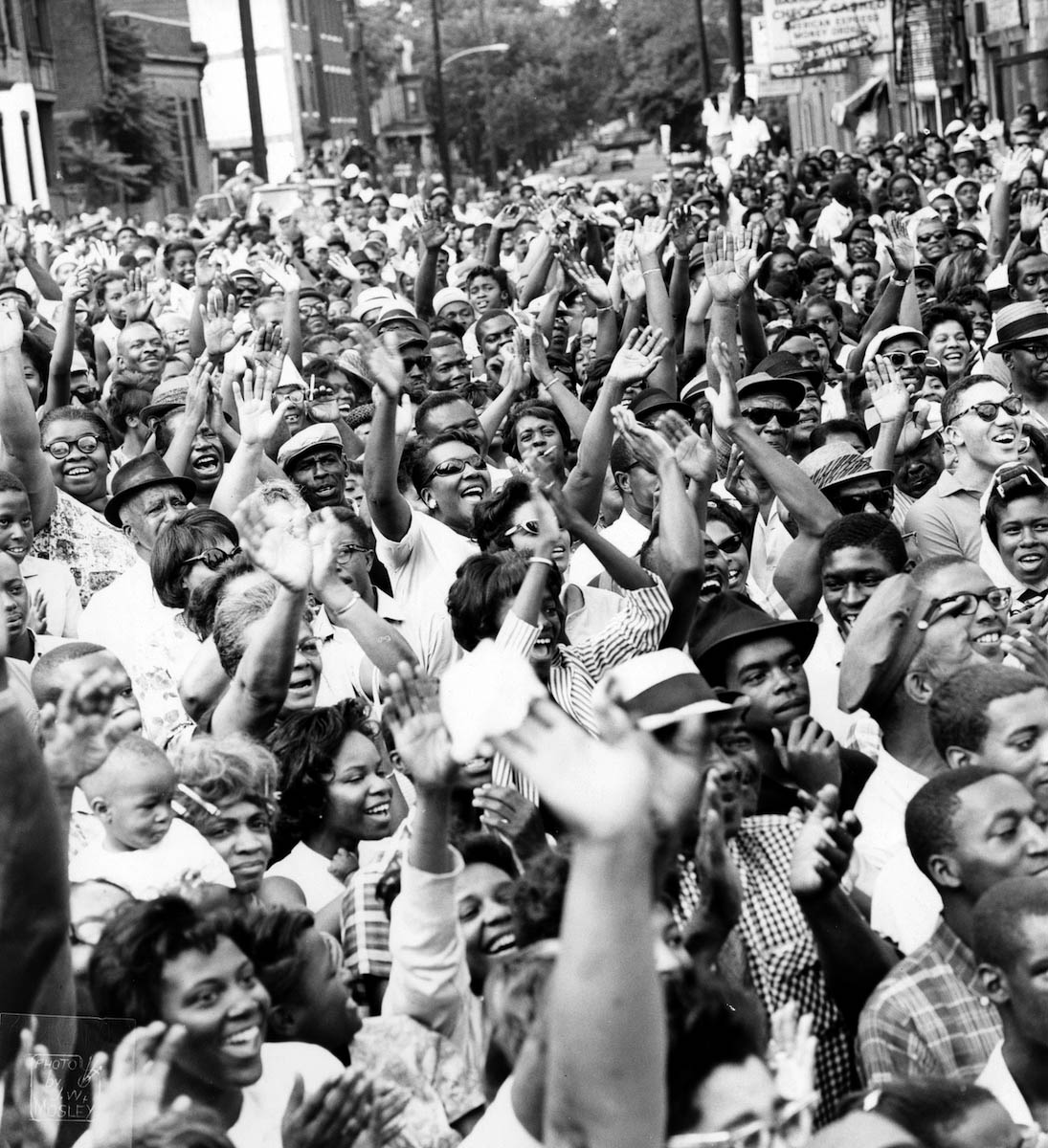
Thursday – Friday 10am – 9pm
Sat – Sun 10am – 6pm

Foam website

LIKE ART BLART ON FACEBOOK

Back to top