Considering the nature of Blumenfeld’s political collages such as Grauenfresse / Hitler, Holland, 1933 and Minotaur / Dictator I would say that the artist was very, very lucky to escape to America in 1941.
Let us remember all those that were not so fortunate…
Dr Marcus Bunyan
Many thankx to Jeu de Paume for allowing me to publish the photographs in the posting. Please click on the photographs for a larger version of the image.
“In 1940 Blumenfeld was interned as a German Jew in France, first in Montbard, then in Loriol, Le Vernet, and Catus. He made a daring escape with his family in 1941, returning via Casablanca to New York, where he subsequently lived and worked until his death.” (press release)
“After Blumenfeld returned to France, during World War II, Blumenfeld and his family spent time in Vézelay with Le Corbusier and Romain Rolland. He was incarcerated at Camp Vernet and other concentration camps. His daughter Lisette (who had just turned 18) was incarcerated at the Gurs internment camp. Luckily Blumenfeld was bunked next to the husband of the woman Lisette was bunked next to. Through postcards and letters the Blumenfeld family of five managed to reunite. In 1941 they obtained a visa and escaped to North Africa and then New York.”
Text from the Wikipedia website
Erwin Blumenfeld (American-German, 1897-1969) Minotaur / Dictator [Minotaure / Dictateur] The Minotaur or The Dictator Paris, c. 1937 Vintage gelatin silver print Collection Yvette Blumenfeld Georges Deeton / Art+Commerce, New York, Gallery Kicken Berlin, Berlin
The Vichy Policy on Jewish Deportation
Paul Webster
Jewish Statute
Despite autonomy from German policies, Pétain brought in legislation setting up a Jewish Statute in October 1940. By then about 150,000 Jews had crossed what was known as the Demarcation Line to seek protection from Vichy in the south – only to find they were subjected to fierce discrimination along lines practised by the Germans in the north.
Jews were eventually banned from the professions, show business, teaching, the civil service and journalism. After an intense propaganda campaign, Jewish businesses were ‘aryanised’ by Vichy’s Commission for Jewish Affairs and their property was confiscated. More than 40,000 refugee Jews were held in concentration camps under French control, and 3,000 died of poor treatment during the winters of 1940 and 1941. The writer Arthur Koestler, who was held at Le Vernet near the Spanish frontier, said conditions were worse than in the notorious German camp, Dachau.
During 1941 anti-Semitic legislation, applicable in both zones, was tightened. French police carried out the first mass arrests in Paris in May 1941 when 3,747 men were interned. Two more sweeps took place before the first deportation train provided by French state railways left for Germany under French guard on 12 March 1942. On 16 July 1942, French police arrested 12,884 Jews, including 4,501 children and 5,802 women, in Paris during what became known as La Grande Rafle (‘the big round-up’). Most were temporarily interned in a sports stadium, in conditions witnessed by a Paris lawyer, Georges Wellers.
‘All those wretched people lived five horrifying days in the enormous interior filled with deafening noise … among the screams and cries of people who had gone mad, or the injured who tried to kill themselves’, he recalled. Within days, detainees were being sent to Germany in cattle-wagons, and some became the first Jews to die in the gas chambers at Auschwitz.
Vichy crimes
Many historians consider that an even worse crime was committed in Vichy-controlled southern France, where the Germans had no say. In August 1942, gendarmes were sent to hunt down foreign refugees. Families were seized in their houses or captured after manhunts across the countryside. About 11,000 Jews were transported to Drancy in the Paris suburbs, the main transit centre for Auschwitz. Children as young as three were separated from their mothers – gendarmes used batons and hoses – before being sent to Germany under French guard, after weeks of maltreatment.
During 1942, officials sent 41,951 Jews to Germany, although the deportations came to a temporary halt when some religious leaders warned Vichy against possible public reaction. Afterwards, arrests were carried out more discreetly. In 1943 and 1944, the regime deported 31,899 people – the last train left in August 1944, as Allied troops entered Paris. Out of the total of 75,721 deportees, contained in a register drawn up by a Jewish organisation, fewer than 2,000 survived.
Revolt and aftermath
The number of dead would have been far higher if the Italian fascist leader, Benito Mussolini, had not ordered troops in France to defy German-French plans for mass round ups in Italian-occupied south-eastern France. Thousands were smuggled into Italy after Italian generals said that ‘no country can ask Italy, cradle of Christianity and law, to be associated with these (Nazi) acts’. After the Italian surrender in September 1943, arrests in the area restarted, but by then French public opinion had changed. Escape lines to Switzerland and Spain had been set up, and thousands of families risked death to shelter Jews. Since the war, Israel has given medals to 2,000 French people, including several priests, in recognition of this, and of the fact that about 250,000 Jews survived in France.
Post-war indifference to anti-Semitic persecution pushed the issue into the background until Serge Klarsfield, a Jewish lawyer whose Romanian father died in Germany, reawakened the national conscience. He tracked down the German chief of the Secret Service in Lyon, Klaus Barbie, who was hiding in Bolivia but was subsequently jailed for life in 1987. His case threw light on Vichy’s complicity in the Holocaust. Klarsfeld’s efforts were frustrated by the Socialist president of France at this time, Francois Mitterrand, who had been an official at Vichy and was decorated by Pétain. It was not until 1992 that one of Barbie’s French aides, Paul Touvier, who had been a minor figure in wartime France, was jailed for life for his crimes.
Facing facts
French courts, responding to Mitterrand’s warnings that trials would cause civil unrest, blocked other prosecutions, including that of the Vichy police chief, René Bousquet, who organised the Paris and Vichy zone mass arrests. He was assassinated by a lone gunman in June 1993. It was not until Mitterrand retired in 1995 that France began to face up to its responsibility in the persecution of Jews. When the new right-wing president, Jacques Chirac, came to power, he immediately condemned Vichy as a criminal regime and two years later the Catholic Church publicly asked for forgiveness for its failure to protect the Jews.
But the most significant step forward was the trial in 1997 of Maurice Papon, 89, for crimes concerning the deportation of Jews from Bordeaux. He had served as a cabinet minister after the war, before losing a 16-year legal battle to avoid trial. He was released from jail because of poor health, but his ten-year prison sentence has been interpreted as official recognition of French complicity in the Holocaust, although there are still those who continue to defend his actions.
Since the trial, France has opened up hidden archives and offered compensation to survivors – and ensured that schools, where history manuals used not to mention France’s part in the deportations, now have compulsory lessons on Vichy persecution. While anti-Semitism is still a social problem in France, there is no official discrimination, and today’s 600,000-strong Jewish community is represented at every level of the establishment, including in the Catholic Church, where the Archbishop of Paris is Cardinal Jean-Marie Lustiger.
Extract from Paul Webster. “The Vichy Policy on Jewish Deportation,” on the BBC History website, 17/02/2011 [Online] Cited 23/01/2021. Used under fair use conditions for the purposes of education and research
Erwin Blumenfeld’s life and work impressively document the socio-political context of artistic development between the two World Wars, while highlighting the individual consequences of emigration. The exhibition devoted to Erwin Blumenfeld’s multi-layered œuvre brings together over 300 works and documents from the late 1910s to the 1960s, and encompasses the various media explored by the artist throughout his career: drawings, photographs, montages and collages.
This exhibition traces his visual creativity and encompasses the early drawings, the collages and montages, which mostly stem from the early 1920s, the beginnings of his portrait art in Holland, the first black and white fashion photographs of the Paris period, the masterful colour photography created in New York and the urban photos taken toward the end of his life.
The retrospective also showcases his drawings, many of which have never been shown before, as well as his early collages and photomontages, shedding fascinating light on the evolution of his photographic oeuvre and revealing the full extent of his creative genius. The now classic motifs of his experimental black-and-white photographs can be seen alongside his numerous self-portraits and portraits of famous and little-known people, as well as his fashion and advertising work.
In the first years of his career, he worked only in black and white, but as soon as it became technically possible he enthusiastically used colour. He transferred his experiences with black-and-white photography to colour; applying them to the field of fashion, he developed a particularly original repertoire of forms. The female body became Erwin Blumenfeld’s principal subject. In his initial portrait work, then the nudes he produced while living in Paris and, later on, his fashion photography, he sought to bring out the unknown, hidden nature of his subjects; the object of his quest was not realism, but the mystery of reality
Blumenfeld’s work was showcased most recently in France in a 1981 show at the Centre Pompidou, which focused on his fashion photography, in 1998 at the Maison Européenne de la Photographie, as well as more recently in the exhibition Blumenfeld Studio, Colour, New York, 1941-1960 (Chalon-sur-Saône, Essen, London).
Press release from the Jeu de Paume website
“Bringing together over three hundred works and documents dating from the late 1910s to the 1960s, this exhibition, the first in France to showcase the multilayered aspects of Erwin Blumenfeld’s oeuvre, encompasses the various media explored by the artist throughout his career: drawing, photography, montage, and collage.
The life and work of Erwin Blumenfeld (Berlin, 1897 – Rome, 1969) provides an impressive record of the socio-political context of artistic development between the two World Wars, while highlighting the individual consequences of emigration. Erwin Blumenfeld, a German Jew, only spent a few years in his country of birth. It was only in 1919, when he was in self-imposed exile in the Netherlands, that Blumenfeld began to take a deeper interest in photography, particularly the photographic process and above all the artistic possibilities offered by darkroom experiments. For a short while, he ran an Amsterdam-based portrait studio that doubled as an exhibition space, before moving to Paris in 1936, where the art dealer Walter Feilchenfeldt helped him rent a studio in the rue Delambre. That same year, his photographs were exhibited at the Galerie Billiet, while the following year saw his first beauty cover, for Votre Beauté magazine. In 1938 he received a visit from leading fashion photographer Cecil Beaton, who helped him to obtain a contract with the French Vogue. Blumenfeld travelled to New York, returning in 1939, shortly before the outbreak of war, to become Harper’s Bazaar‘s fashion correspondent in Paris.
In 1940 he was interned as a German Jew in France, first in Montbard, then in Loriol, Le Vernet, and Catus. He made a daring escape with his family in 1941, returning via Casablanca to New York, where he subsequently lived and worked until his death. It was in New York that Blumenfeld’s astonishing career as a much sought after, highly paid fashion photographer really took off, first of all in the studio he shared with Martin Munkácsi, then from 1943 in his own premises. The contract he signed with the publishers Condé Nast in 1944 marked the beginning of ten years of remarkable photography and cover shots for various magazines in the company’s stable. Following on from his experimental black-and-white shots of the 1930s, he began playing with colour. The present exhibition includes, besides photographs, both magazine work and early experimental films made for the Dayton department store in Minneapolis, his leading advertising customer.
Not until 1960 did Blumenfeld return to Berlin for a visit. He devoted the following years to finishing his autobiography, begun in the 1950s. The work was completed in 1969 with the help of his assistant Marina Schinz, but was only published in 1975, initially in French translation, then in the original German in 1976. His book My One Hundred Best Photos was also released posthumously, in 1979.
Drawings, Montages, and Collages
Between 1916 and 1933 Erwin Blumenfeld produced a fairly limited number of drawings and montages. As a young man he was very interested in literature, writing poems and short stories. And as early as 1915 he mentioned that he was interested in writing an autobiography. Almost all of his montages and collages include drawings and snippets of language. He plays with written and printed words and typography, juxtaposing names, concepts, and places to create ironic commentaries and provocative titles. His collages typically combine drawing, language, and cut-outs of original or printed photographs. He also often used letter stationery to form a background, leaving bare spaces. In 1918 Blumenfeld made the acquaintance of the Dadaist George Grosz; two years later he and Paul Citroen wrote to Francis Picabia in the name of the Hollandse Dadacentrale, but neither was present at the First International Dada Fair in Berlin in 1920. That same year, Blumenfeld began using the pseudonyms Erwin Bloomfeld and Jan Bloomfield, as documented in his Dadaist publications and in some of his collages. The drawings in the present exhibition, most of which have never been shown in public, were produced in Berlin and the Netherlands. Only a handful of them are dated. They are quick sketches from life or from imagination, rough cartoons and acid caricatures, in pencil, ink, watercolour, or coloured pencil – whatever was to hand. Blumenfeld was clearly fascinated by the quality and immediacy of drawing as a medium, and, as these works reveal, it certainly stimulated his playful side.
Self-Portraits
Blumenfeld took his first photographs as a schoolboy, using himself as one of his first subjects. The earliest date from the 1910s, but he continued taking self-portraits to the end of his life. The young man with the dreamy gaze turned into the louche bohemian with a cigarette, then the carefully staged photographer experimenting with his camera. His self-portraits are not the product of excessive vanity, but rather playful experiments, with and without masks, models, and other grotesque objects such as a calf’s head, all used to create witty images.
Portraits
Blumenfeld’s first steps in professional photography were in portraiture. He started “learning by doing” in the early 1920s in Amsterdam, where he had opened the ladies handbag store Fox Leather Company. This is where he took portraits of customers, using a darkroom in the back of the store. Comparison of the contact sheets from the time with the blow-ups taken from them clearly shows, right from the outset, the importance in Blumenfeld’s work of the finishing in the lab. The final images display extremely tight framing, high levels of contrast, and lighting that creates dramatic, even devilish, effects. When he arrived in Paris in 1936 his first photographs were portraits, featuring among others Henri Matisse and Georges Rouault. Although he quickly entered the Paris fashion scene, he retained a strong interest in portraiture throughout the remainder of his life.
Nudes
Blumenfeld’s earliest, highly narrative nudes date from his time in the Netherlands, but the subject only became a passion during his Paris years from 1936 on, when he discovered the work of French avant-garde photographers. His admiration for them is particularly evident in his nude photographs, as is the influence of Man Ray’s work. The bodies of the women in these images were surfaces onto which he projected his artistic imagination. He cut them up, solarised them, and transformed them into abstract imagery through the play of light and shadow. The faces of his nudes from the 1930s are only rarely visible, the women remaining somewhat mysterious entities. The nudes Blumenfeld produced in the 1950s after he had settled in New York tended to be more concrete, illustrative works.
Architecture
The black-and-white architectural photographs that Erwin Blumenfeld took in the 1930s feature buildings and urban spaces from various experimental and abstract perspectives. The Eiffel Tower, for instance, is captured in sharp reliefs of light and shade, while the photographs of Rouen Cathedral are intended to draw the viewer’s visual attention to the building’s specific forms. Blumenfeld expresses his artistic vision and his knowledge of Gothic architecture by focusing on the abstraction of details. During the 1950s and 1960s Blumenfeld used a 35mm camera for cityscapes. The exhibition showcases three of these colour slide projects for the first time. They feature New York, Paris, and Berlin – three places that made a mark on his art and also shaped his career.
The Dictator
In 1933, according to his autobiography, Blumenfeld reacted to Hitler’s rise to power in Germany with a photomontage. This outstanding piece of work, probably his most famous photograph, symbolises and anticipates the dictator’s dehumanisation. Following on from the political themes in some of his early collages, he here combined different negatives – a skull and a portrait of Hitler – to make a single print. In one of these montages he included a swastika, while in a different portrait “bleeding eyes” were added later on the surface. Later on, in Paris, he photographed a calf’s head, using this subject to compose different images. One in which he placed the animal’s head on a woman’s torso was titled The Minotaure or The Dictator. This image, which does not refer to a specific figure, is obviously intended to be allegorical. In 1941 Blumenfeld was able to escape from the Nazis with his family to New York.
Fashion
Blumenfeld’s move to Paris in 1936 marked the beginning of his career as a fashion photographer, although he had already had contacts with magazines in Paris while living in Amsterdam. The work that appeared in French publications in the late 1930s raised Blumenfeld’s profile as a modernist photographer and brought him to the attention of the famous British photographer Cecil Beaton, who visited him in his studio in 1938 and helped him sign his first contract with the French edition of Vogue. When Blumenfeld made his first trip to New York following his sensational set of fashion photographs on the Eiffel Tower, he came home with a new contract as Paris fashion correspondent for Harper’s Bazaar. He was only able to file his reports for a year before he was interned in various prison camps across France. In 1941 he was able to escape from German-occupied France to New York with his family. In the first half of the 1950s, he drew on his experiments in black-and-white photography to develop an exceptionally original artistic repertoire, reflected in his use of colour and his fashion work.
Ute Eskildsen Curator of the exhibition Translated from German by Susan Pickford
Erwin Blumenfeld (American-German, 1897-1969) Three Graces (1947), New York 1947
Leslie Petersen appears here in a triple variation inspired by Botticelli’s Primavera. The photograph, was intended to show off a gown by Cadwallader. The final image is made of two shots. The two on the right are similar but with different degrees of sharpness. The pose on the left is different.
Audrey Hepburn is wearing a hat designed by Blumenfeld and made by Mister Fred, one of New York’s most talented milliners. Blumenfeld here uses a system of mirrors showing the front and back of the hat and allowing infinite repetition of the motif.
A model, a red cross: fashion and current affairs superimposed. The background to this humanitarian appeal is the liberation of the concentration camps and the aid brought to prisoners of war. Blumenfeld reinterprets these humanitarian signs just as he blurs those of fashion.
Curator: Ingo Taubhorn, with additional cabinet exhibition curation by Dr. Sabine Schnakenberg
PLEASE NOTE: THIS POSTING CONTAINS ART WORK OF FEMALE NUDITY – IF YOU DO NOT LIKE PLEASE DO NOT LOOK, FAIR WARNING HAS BEEN GIVEN
Many thankx to House of Photography at Deichtorhallen Hamburg for allowing me to publish the photographs in the posting. Please click on the photographs for a larger version of the image.
House of Photography at Deichtorhallen Hamburg announces an exhibition of the legendary photographer Guy Bourdin (1928-1991), on view from November 1, 2013 – January 26, 2014. This most comprehensive exhibition to date is both an overview of the essential components of Guy Bourdin’s oeuvre and an introduction to unveiling works from his personal archives which have never been seen before. This is the first time that both his works as a painter and his notes on films are being shown at an exhibition. B&W shots dating from the 1950s are also included, showing portraits of artists and views of the city of Paris as well as Polaroids, sketches and texts. The exhibition examines Guy Bourdin’s oeuvre, but moreover, it provides insight into the complex working processes of the photographer’s mind and aims to establish his status as a visionaire image maker.
Guy Bourdin’s career spanned more than forty years during which time he worked for the world’s leading fashion houses and magazines. With the eye of a painter, Guy Bourdin created images that contained fascinating stories, compositions, both in B&W and in colours. He was among the 1st to create images with narratives, telling stories and shows that the image is more important than the product which is displayed. Using fashion photography as his medium, he sent out his message, one that was difficult to decode, exploring the realms between the absurd and the sublime. Famed for his suggestive narratives and surreal aesthetics, he radically broke conventions of commercial photography with a relentless perfectionism and sharp humour.
During the 1950s, Guy Bourdin launched his career with fashion assignments for Vogue Paris working in B&W. It’s nearly unknown, that half of the oeuvre of Guy Bourdin is black-and-white and as amazingly powerful as his colour works. He developed colour photography to its maximum effect, creating dramatic accents with intense colour saturation and textures in his compositions. Guy Bourdin used the format of the double spread magazine page in the most inventive way. He tailored his compositions to the constraints of the printed page both conceptually and graphically, and the mirror motif so central in his work finds its formal counterpart in the doubleness of the magazine spread. Layout and design become powerful metaphors for the photographic medium, engaging the eye and with it, the mind. While on the one hand employing formal elements of composition, Guy Bourdin, on the other hand, sought to transcend the reality of the photographic medium with surreal twists to the apparent subject of his images and his unconventional manipulation of the picture plane. Given total creative freedom and with uncompromising artistic ethic, Guy Bourdin captured the imagination of a whole generation at the late 1970s, recognised as the highest note in his career.
Guy Bourdin was an image maker, a perfectionist. He knew how to grab the attention of the viewer and left nothing to chance. He created impeccable sets, or when not shooting in his studio rue des Ecouffes in le Marais, in undistinguished bedrooms, on the beach, in nature, or in urban landscapes. The unusual dramas that unfold in these seemingly everyday scenes and ordinary encounters pique our subconscious and invite our imagination. Moreover, he developed a technic using hyper real colours, meticulous compositions of cropped elements such as low skies with high grounds and the interplay of light and shadows as well as the unique make-up of the models.
“Guy Bourdin irreverently swept away all the standards of beauty, conventional morals and product portrayals in one fell swoop. Around the female body he constructed visual disruptions, the outrageous, the hair-raising, the indiscreet, the ugly, the doomed, the fragmentary and the absent, torsos and death – all the tension and the entire gamut of what lies beyond the aesthetic and the moral,” explains the exhibition’s curator Ingo Taubhorn. Bourdin investigates in minute detail the variables of fashion photography, from brash posing to subtle performances and from complex settings to novel and disturbing notions of images.
Guy Bourdin’s imagery not only changed the course of fashion photography but influenced a host of contemporary artists, photographers and filmmakers. It is without question, that Guy Bourdin’s work for Vogue and his highly acclaimed print advertising for Charles Jourdan in the 1970s are now being seen in the appropriate context of contemporary art.
Press release from House of Photography at Deichtorhallen Hamburg
Curators: Bennett Simpson, MOCA curator and Richard Hawkins, guest co-curator
PLEASE NOTE: THIS POSTING CONTAINS ART WORK OF MALE NUDITY AND EROTIC IMAGES OF GAY MALE SEX – IF YOU DO NOT LIKE PLEASE DO NOT LOOK, FAIR WARNING HAS BEEN GIVEN
Bob Mizer (American, 1922-1992) Physique Pictorial Volume 16 Number 4, February 1968 1968 Publication Printed with permission of Bob Mizer Foundation, Inc .
What a fantastic pairing in this exhibition and in their relationship in real life. We must remember that Tom of Finland (pseudonym of Touko Valio Laaksonen) was a ground-breaking artist, one of the very first to picture masculine gay men, “robbing straight homophobic culture of its most virile and masculine archetypes (bikers, hoodlums, lumberjacks, cops, cowboys and sailors) and recasting them – through deft skill and fantastic imagination – as unapologetic, self-aware and boastfully proud enthusiasts of gay sex.”
Laaksonen would have just been in his twenties when he started drawing men in the early 1940s, inspired by the soldiers and uniforms he saw around him from the Second World War. With no outward gay culture in Finland, let alone in America until the late 1960s, just imagine being an artist producing this kind of erotic imagery at that time. To then go on to be the seminal figure in the creation of gay leather culture… what an impact this artist had on gay and popular culture. Of course, as tastes were liberalised in the era of free love, Stonewall and after, the muscles of his hunks became bigger, the size of their endowments larger and the actions portrayed became more open and transparent (as can be seen from Untitled (From Beach Boy 2 story), 1971, below).
During my PhD research I visited the One Institute/International Gay and Lesbian Archives Collection, University of Southern California, Los Angeles, to investigate the cross-over between physique magazines and early gay pornography magazines of the 1960s to early 1970s.1 I was interested to see whether the muscular mesomorphic bodies of the physique magazines crossed straight over into the first gay pornography magazines. To my surprise, the answer was that they did not.
After the American Supreme Court ruled on obscenity laws in the late 1960s, the first gay pornography magazines started appearing. The earliest gay porn magazine in the One Institute / IGLA collection, Action Line.No.1. San Francisco: Mark Vaughn Associates. 1969, features mostly smooth but natural bodies, not as built as in physique magazines, with nude young men with full erections lying next too each other touching. There is no sex, no sucking or fucking. Only a year later, in 1970, the story is different. In Album 1501: A Study of Sexual Activity Between Males.Los Angeles: Greyhuff Publishing, 1970 their is sexual intercourse pictured between men in an openly available publication for the first time.
Bodies in this magazine are smooth, young toned men, much as in the early photographs of George Platt Lynes (such as those of Charles ‘Tex’ Smutney, Charles ‘Buddy’ Stanley, and Bradbury Ball). They are also similar to the bodies in the photographs that Lynes submitted to the Zurich published homosexual magazine Der Kries after he found out that he had cancer, during the last years of his life (under the pseudonym Roberto Rolf late 1940s – early 1950s). The participants in Album 1501 perform sex on each other in a lounge room lit by strong lights (shadows on walls). The black and white photographs, well shot, feature in a magazine that is about 5″ wide and 10″ high, well laid out and printed. The magazine is a thin volume and features just the two models in one sex scene of them undressing each other and then having sex. One man wears a Pepsi-Cola T-shirt at first and he also has tattoos one of which says ‘Cheri’. The photographs almost have a private feel to them.
In their introduction the publishers disclaim any agreement with the content of the magazine and are only publishing it for the freedom of everybody to study the material in the privacy of their own homes. In other words male to male sex is a natural phenomenon and the publication is educational. This was a common ploy in early nudist and pornographic publications (along with classical themes) that was used to justify the content – to claim that the material was for private educational purposes only:
Introduction
“Publishers of material dealing frankly with sexual activity have suffered greatly in the past because of society’s anxiety over the existence and propagation of such material. But the real issue is why should such material dealing with sexual activity be any less valid or acceptable than material dealing with other facets of human behaviour? …
This book was produced so that all interested adults may have an opportunity to acquire it for their own private interests in matters relating to sex … Our publication of this book is not to be construed that we agree with, condone or encourage any of the behaviour depicted herein. However, sexual activity between males is a fact of life and interested adults should not be denied an opportunity to study this, or any other, facet of human behaviour.”
The Publishers
It is interesting to note the progression from physique magazines and models in posing pouches in 1966-1968 (such as the photographs of Bob Mizer featured in this posting), then to full erection and stories of anal penetration in Action Line in 1969, to full on photographs of gay sex in this magazine in 1970. Bodies are all smooth, quite solid, toned natural physiques, not as ‘built’ as in earlier physique magazines, but still featuring younger smooth men and not older heavier set men. It was not until the development of the clone, leatherman and magazines such as Colt from Colt Studios that Tom of Finland’s muscular mesomorphic leatherman took hold in the popular gay imagination.
Even in the mid 1970’s companies such as Colt Studios, which has built a reputation for photographing hunky, very well built masculine men, used classical themes in their photography of muscular young men. Most of the early Colt magazines have photographs of naked young men that are accompanied by photographs and illustrations based on classical themes. In their early magazines quite a large proportion of the bodies were hirsute or had moustaches as was popular with the ‘clone’ image at the time. Later Colt models of the early 1980’s tend towards the buff, tanned, stereotypical muscular mesomorph in even greater numbers. Sometimes sexual acts are portrayed in Colt magazines but mainly they are not. It is the “look” of the body and the face that the viewers desiring gaze is directed towards – not the sexual act itself.
Photographers such as Bob Mizer from Athletic Model Guild produced more openly homoerotic images. In his work from the 1970’s full erections are not prevalent but semi-erect penises do feature, as do revealing “moon” shots from the rear focusing on the arsehole as a site for male libidinal desires. A less closeted, more open expression of homosexual desire can be seen in the photographs of the male body in the 1970’s.
Dr Marcus Bunyan
1/ During my research at The One Institute in Los Angeles I investigated the type of body images that appeared in the transitional phase from physique magazines of the mid-late 1960s into the early gay pornography magazines of 1969-1970 in America which occurred after the Supreme Court ruling on obscenity. I wanted to find whether there had been a crossover, a continuation of the muscular mesomorphic body image that was a favourite of the physique photographers into the early pornography magazines. From the evidence of the images in the magazines I would have to say that there was a limited crossover of the bigger muscular bodies but most bodies that appeared in the early gay porn mags were of the youthful, smooth, muscular ephebe-type body image.
Most of the men featured in the early gay pornography magazines and films have bodies that appear to be quite ‘natural’ in their form. Models are mostly young, smooth, quite solid with toned physiques, not as ‘built’ as in the earlier physique magazines but still well put together. Examining the magazines at the One Institute I found that the bodies of older muscular / hairy men were not well represented. Perhaps this was due to the unavailability of the bigger and older bodybuilders to participate in such activity? In the male bodies of the c. late-1970s Super 8 mm pornography films we can observe the desirable image of the smooth youthful ephebe being presented for our erotic pleasure.
Bunyan, Marcus. “Gay Male Pornography,” in the ‘In-Press’ chapter in Marcus Bunyan. Pressing the Flesh: Sex, Body Image and the Gay Male. RMIT University, Melbourne, 2001.
Many thankx to The Museum Of Contemporary Art (MOCA) for allowing me to publish the art work in the posting. Please click on the photographs for a larger version of the image.
Bob Mizer (American, 1922-1992) Physique Pictorial Volume 11 Number 4, May 1962 1962 Publication Printed with permission of Bob Mizer Foundation, Inc .
Bob Mizer (American, 1922-1992) Physique Pictorial Volume 7 Number 1, 1957 1957 Publication Printed with permission of Bob Mizer Foundation, Inc .
Bob Mizer (American, 1922-1992) Physique Pictorial Volume 10 Number 4, April 1961 1961 Publication Printed with permission of Bob Mizer Foundation, Inc .
Bob Mizer (American, 1922-1992) Jim Horn, Los Angeles c. 1966 Vintage large-format black and white negative Silver gelatin print 8 x 10 inches Printed with permission of Bob Mizer Foundation, Inc .
Bob Mizer (American, 1922-1992) Untitled [Barry Maurer, Hand on Gun], Los Angeles c. 1961 Vintage large-format black and white negative Silver gelatin print 8 x 10 inches Printed with permission of Bob Mizer Foundation, Inc .
Bob Mizer (American, 1922-1992) Untitled [Larry Lamb, with Tumbleweed], Los Angeles c. 1959 Vintage large-format black and white negative Silver gelatin print 8 x 10 inches Printed with permission of Bob Mizer Foundation, Inc .
Bob Mizer (American, 1922-1992) Untitled [Ray Hornsby, Motorcycle], Los Angeles c. 1957 Vintage large-format black and white negative Silver gelatin print 8 x 10 inches Printed with permission of Bob Mizer Foundation, Inc .
“To my mind, there is no clearer representation of Mizer’s almost manic attempts to condense the joyful, celebratory chaos of his daily photo shoots down to their most selectively stupendous moments than his catalogue boards.”
~ artist and exhibition co-curator Richard Hawkins
The Museum of Contemporary Art, Los Angeles (MOCA), is proud to present Bob Mizer and Tom of the Finland, the first American museum exhibition devoted to the art of Bob Mizer (1922-1992) and Touko Laaksonen, aka “Tom of Finland” (1920-1991), two of the most significant figures of twentieth century erotic art and forefathers of an emergent post-war gay culture. The exhibition features a selection of Tom of Finland’s masterful drawings and collages, alongside Mizer’s rarely seen photo-collage “catalogue boards” and films, as well as a comprehensive collection of his groundbreaking magazine Physique Pictorial, where drawings by Tom were first published in 1957. Organised by MOCA Curator Bennett Simpson and guest co-curator Richard Hawkins, the exhibition is presented with the full collaboration of the Bob Mizer Foundation, El Cerrito, and the Tom of Finland Foundation, Los Angeles.
Tom of Finland is the creator of some of the most iconic and readily recognisable imagery of post-war gay culture. He produced thousands of images beginning in the 1940s, robbing straight homophobic culture of its most virile and masculine archetypes (bikers, hoodlums, lumberjacks, cops, cowboys and sailors) and recasting them – through deft skill and fantastic imagination – as unapologetic, self-aware and boastfully proud enthusiasts of gay sex. His most innovative achievement though, worked out in fastidious renderings of gear, props, settings and power relations inherent therein, was to create the depictions that would eventually become the foundation of an emerging gay leather culture. Tom imagined the leather scene by drawing it; real men were inspired by it … and suited themselves up.
Bob Mizer began photographing as early as 1942 but, unlike many of his contemporaries in the subculture of illicit physique nudes, Mizer took the Hollywood star-system approach and founded the Athletic Model Guild in 1945, a film and photo studio specialising in handsome natural-bodied (as opposed to exclusively musclebound, the norm of the day) boy-next-door talent. In his myriad satirical prison dramas, sci-fi flix, domesticated bachelor scenarios and elegantly captivating studio sessions, Mizer photographed and filmed over 10,000 models at a rough estimate of 60 photos a day, seven days a week for almost 50 years. Mizer always presented a fresh-faced and free, unashamed and gregarious, totally natural and light-hearted approach to male nudity and intimate physical contact between men. For these groundbreaking perspectives in eroticised representation alone, Mizer ranks with Alfred Kinsey at the forefront of the sexual revolution.
Though Laaksonen did not move to Los Angeles until the 1970s, he had long known of Mizer and the photographer’s work through Physique Pictorial, the house publication and sales tool for Athletic Model Guild. It was to this magazine that the artist first sent his drawings and it was Mizer, finding the artworks remarkable and seeking to promote them on the magazine’s cover, but finding the artist’s Finnish name too difficult for his clientele, who is responsible for the now famous “Tom of Finland” pseudonym.
By the time the gay liberation movement swept through the United States in the late 1960s, both Tom of Finland and Bob Mizer were already well-known and widely celebrated as veritable pioneers of gay art. Decades before Stonewall and the raid on the Black Cat these evocative and lusty representations of masculine desire and joyful, eager sex between men proliferated and were disseminated worldwide at a time when the closet was still very much the norm – there was no such thing as a gay community. If these artists were not ahead of their time, they might just have foreseen and even invented a time.
Spanning five decades, the exhibition seeks a wider appreciation for Tom of Finland and Bob Mizer’s work, considering their aesthetic influence on generations of artists, both gay and straight, among them, Kenneth Anger, Rainer Werner Fassbinder, David Hockney, G.B. Jones, Mike Kelley, Robert Mapplethorpe, Henrik Olesen, Jack Pierson, John Waters, and Andy Warhol. The exhibition also acknowledges the profound cultural and social impact both artists have made, especially in providing open, powerful imagery for a community of desires at a time when it was still very much criminal. Presenting the broader historical context and key aspects of their shared interests and working relationship, as well as more in-depth solo rooms dedicated to each artist, the exhibition establishes the art historical importance of the staggering work of these legendary figures.
In addition to approximately 75 finished and preparatory drawings by Tom of Finland spanning 1947-1991, the exhibition includes a selection of Tom’s never before exhibited scrapbook collages, and examples of his serialised graphic novels, including the legendary leatherman Kake, as well as a selection of Mizer’s “catalogue boards,” AMG films, and a complete set of Physique Pictorial magazine. An accompanying publication includes texts by the exhibition co-curators and a selection of images.
Press release from the MOCA website
Bob Mizer (American, 1922-1992) Untitled [Ray Hornsby, with Skull Staff], Los Angeles c. 1957 Vintage large-format black and white negative Silver gelatin print 8 x 10 inches Printed with permission of Bob Mizer Foundation, Inc .
Bob Mizer (American, 1922-1992) Untitled [Ernie Rabb, Pointed Pistol], Los Angeles c. 1957 Vintage large-format black and white negative Silver gelatin print 8 x 10 inches Printed with permission of Bob Mizer Foundation, Inc .
Bob Mizer (American, 1922-1992) Untitled [Larry Lamb, Profile with Chains], Los Angeles c. 1959 Vintage large-format black and white negative Silver gelatin print 8 x 10 inches Printed with permission of Bob Mizer Foundation, Inc .
Bob Mizer (American, 1922-1992) Untitled [Dennis Schreffer, Wand Balance], Los Angeles c. 1957 Vintage large-format black and white negative Silver gelatin print 8 x 10 inches Printed with permission of Bob Mizer Foundation, Inc .
Bob Mizer (American, 1922-1992) Untitled [Dennis Schreffer with Portrait], Los Angeles c. 1957 Vintage large-format black and white negative Silver gelatin print 8 x 10 inches Printed with permission of Bob Mizer Foundation, Inc .
Bob Mizer (American, 1922-1992) Athletic Model Guild Catalog Board, David Elliott. [Double-sided; This side Page 1 of SW series] c. 1965 Photographs mounted to matboard and mixed media Printed with permission of Bob Mizer Foundation, Inc . The Museum of Contemporary Art, Los Angeles Proposed purchase with funds provided by the Photography Committee The Bob Mizer Foundation & INVISIBLE-EXPORTS, New York
Bob Mizer (American, 1922-1992) Athletic Model Guild Catalog Board, David Elliott. [Double-sided; This side Page 2 of SW series] c. 1965 Photographs mounted to matboard and mixed media Printed with permission of Bob Mizer Foundation, Inc . The Museum of Contemporary Art, Los Angeles Proposed purchase with funds provided by the Photography Committee The Bob Mizer Foundation & INVISIBLE-EXPORTS, New York
Bob Mizer (American, 1922-1992) Athletic Model Guild Catalog Board, Ernie Rabb. [Double-sided; This side Page 57 of XT series] c. 1957 Photographs mounted to matboard and mixed media Printed with permission of Bob Mizer Foundation, Inc . The Museum of Contemporary Art, Los Angeles Proposed purchase with funds provided by the Photography Committee The Bob Mizer Foundation & INVISIBLE-EXPORTS, New York
Bob Mizer (American, 1922-1992) Athletic Model Guild Catalog Board, Ernie Rabb. [Double-sided; This side Page 58 of XT series] c. 1957 Photographs mounted to matboard and mixed media Printed with permission of Bob Mizer Foundation, Inc . The Museum of Contemporary Art, Los Angeles Proposed purchase with funds provided by the Photography Committee The Bob Mizer Foundation & INVISIBLE-EXPORTS, New York
Curators: Sarah Greenough, Senior Curator and head of the department of photographs, and Nancy Anderson, head of the department of American and British paintings
William Earle Williams (American, b. 1950) Folly Beach, South Carolina, 1999 1999 Gelatin silver print Image: 19.05 x 19.05cm (7 1/2 x 7 1/2 in.) National Gallery of Art, Washington, Mary and Dan Solomon Fund
This photograph is part of William Earle Williams’ series Unsung Heroes: African American Soldiers in the Civil War, depicting locations where black troops served, fought, and died.
“A man’s face as a rule says more, and more interesting things, than his mouth, for it is a compendium of everything his mouth will ever say, in that it is the monogram of all this man’s thoughts and aspirations.”
Arthur Schopenhauer
Now this is portrait photography, and all done with relatively long exposures. By god did they know how to take a photograph that has some presence, some frame of mind that evidences a distinct point of view. I had the best fun assembling this posting, even though it took me many hours to do so. The details are exquisite – the hands clasped on the lap, the hands holding the pipe and, best of all, the arched hand with the fingers gently touching the patterned fabric – such as you don’t observe today. The research to find out as much as I could about these people was both fascinating and tragic: “Abraham Brown accidentally killed himself while cleaning his gun on July 11, 1863.”
It is interesting to see the images without an over-mat so that you can observe the backdrop and props in the photographers studio, captured on the whole plate. The narrative external to the matted image, outside the frame. But this view of the image gives a spurious reading of the structure and tension points of the photograph. Any photographer worth his salt previsualises the image and these photographers would have been no different. They would have known their studio, their backdrops and props, and would have known which over-mat they were going to place the finished image in (chosen by themselves or the client). Look at any of the images I have over-matted in white and see how the images come alive in terms of their tension points and structure. How the body takes on a more central feature of the image. How props such as the American flag in Private Abraham F. Brown (1863, below) form a balancing triangle to the figure using the flag, the chair and the trunk as anchor points. This is how these images were intended to be seen and it is this form that gives them the most presence and power.
While it is intriguing to see what lies beyond the over-mat this continuum should not be the centre of our attention for it is the histories, subjectivities and struggles of these brave men that should be front and centre, just as they appear within this cartouche of their life.
Dr Marcus Bunyan
PS. I have just noticed that the Ambrotype by an unknown photographer Unidentified Private, Company I, 54th Massachusetts Regiment (1863, below) and the Albumen print by an unknown photographer Private James Matthew Townsend (1863, below) are taken in the same studio – notice the table and fabric and the curtain at right hand side. They were probably taken at the same sitting when both men were present. One obviously chose an Ambrotype and the other an Albumen print, probably because of cost?
Many thankx to the National Gallery of Art, Washington for allowing me to publish the photographs in the posting. Please click on the photographs for a larger version of the image.
Unknown photographer Unidentified Private, Company I, 54th Massachusetts Regiment (details) 1863 Ambrotype Overall: 11.2 x 8.6cm (4 7/16 x 3 3/8 in.) Image: 8.7 x 6.4cm (3 7/16 x 2 1/2 in.) The Gilder Lehrman Institute of American History
Unknown photographer Private Abraham F. Brown 1863 Tintype Mat: 17.8 x 12.7cm (7 x 5 in.) Image: 8 x 7cm (3 1/8 x 2 3/4 in.) Courtesy of the Massachusetts Historical Society
This photograph depicts Private Abraham F. Brown, a member of Company E, part of the 54th Massachusetts Volunteer Infantry Regiment, the first black regiment raised in the North during the Civil War.
Unknown photographer Private Abraham F. Brown(with over-mat) 1863 Tintype
Portrait as it would have originally been mated. The outline of the original mat can be seen in the image above.
Unknown photographer Private Abraham F. Brown (inverted with over-mat to show background extraneous to portrait) 1863 Tintype
Obscured image without overmat in order to show the original painted backdrop behind the figure in isolation.
Unknown photographer Private Abraham F. Brown (detail) 1863 Tintype
Obscured image without overmat in order to show the original painted backdrop behind the figure in isolation – detail of writing on wheel
Unknown photographer Private Abraham F. Brown 1863 Tintype Mat: 17.8 x 12.7cm (7 x 5 in.) Image: 8 x 6.5cm (3 1/8 x 2 9/16 in.) Courtesy of the Massachusetts Historical Society
Abraham F. Brown (American, b. c. 1833-1863)
Private Abraham F. Brown probably had his portrait made shortly after the 54th arrived in SC in June 1863. A sailor born in Toronto, Canada, Abraham Brown accidentally killed himself while cleaning his gun on July 11, 1863, on James Island, northwest of Fort Wagner.
During the Civil War, he served as a Private in Company E of the 54th Massachusetts Volunteer Infantry of the Union Army, the first regiment in the United States made up entirely of enlisted men of color. He was about 30 years old, single and working as a seaman when he enlisted on 4 April 1863 from Toronto, New York [sic]. He was killed on 11 July 1863 “accidentally by himself” on James Island in South Carolina one week before the Second Battle of Fort Wagner.
Unknown photographer Private Abraham F. Brown (with over-mat) 1863 Tintype
Portrait as it would have originally been mated. The outline of the original mat can be seen in the image above.
Unknown photographer Private Richard Gomar c. 1880 Tintype Mat: 17.8 x 12.7cm (7 x 5 in.) Image: 8.5 x 6cm (3 3/8 x 2 3/8 in.) Courtesy of the Massachusetts Historical Society
Richard Gomar (aka Gomes) (American, 1846-1895)
Richard Gomar enlisted in Company H on 17 April 1863 at the age of seventeen and was mustered in on 13 May. He was a labourer from Battle Creek, Michigan. He was mustered out after the regiment’s return to Boston on 20 August 1865. He received a state bounty of $50, and his last known address was Cedar Rapids, Iowa.
Portrayed here in a half-length study, Gomar is in civilian clothes and on his waistcoat is wearing a membership badge of the Grand Army of the Republic, the Union veterans’ organisation. This version of the badge was adopted in 1880. According to regulation, Gomar wears the badge on the left breast of his waistcoat, but the tintype process has reversed the image.
Richard Gomar (aka Gomes) was born on August 12, 1846 in Battle Creek Michigan to Joseph Gomar and Hannah Teabelt. He was working as a laborer before traveling to Boston to enlist on April 17, 1863, and was mustered in as a Private in Company H, 54th Massachusetts Infantry on May 13, 1863, receiving a state bounty of $50. The regiment fought famously at Fort Wagner on James Island, South Carolina where they suffered over 300 casualties, but they also fought bravely in the Battles of Olustee, Florida, Honey Hill, South Carolina, and Boykin’s Mills, South Carolina, as well as many other skirmishes in Florida and South Carolina. Private Gomar was sick at Morris Island, South Carolina from January to March 1865. He mustered out with his company on August 20, 1865 at Mount Pleasant, South Carolina.
Gomar enlisted in Troop K, 10th U.S. Cavalry, one of the original “Buffalo Soldier” regiments on August 14, 1867, at Fort Riley, Kansas serving through his discharge on August 14, 1872. The regiment transferred HQ to Fort Gibson, Indian Territory (present day Oklahoma), fighting during the Indian Wars, including against Black Kettle’s band of Cheyenne, and the Comanches out of Camp Wichita.
Following his service in the 10th U.S. Cavalry, he moved to Cedar Rapids, Iowa where he worked as a janitor, married Amelia Kelly in 1886 and they adopted a son. Richard Gomar passed away on July 28, 1895 in Cedar Rapids, Iowa.
David Lay. “Richard Gomar,” on the Stories of the United States Colored Troops Facebook page December 18, 2023 [Online] Cited 24/03/2026. Used under fair use conditions for the purposes of education and research
H. C. Foster (?) Private John Gooseberry, musician 1864 Tintype Mat: 17.8 x 12.7cm (7 x 5 in.) Image: 10 x 6.8cm (3 15/16 x 2 2/3 in.) Plate: 10.7 x 8.1cm (4 3/16 x 3 3/16 in.) Courtesy of the Massachusetts Historical Society
John Gooseberry (American, c. 1838-1876)
One of the twenty-one Black recruits from Canada, twenty-five-pear-old Goosberry, a sailor of St. Catharines, Ontario, was mustered into Company E on July 16, 1863, just two days before the fateful assault on Fort Wagner. He was mustered out of service on August 20, 1865, at the disbanding of the regiment. Born in New Orleans, he survived the war but died destitute at about age 38.
Goosberry appears in this full-length photograph wearing his uniform as a company musician, holding a fife and standing before a plain backdrop. The buttons and buckle of the uniform have been hand coloured, and there is an impression remaining on the tintype from an earlier oval frame.
H. C. Foster (?) Private John Gooseberry, musician (detail) 1864 Tintype
H. C. Foster (?) Private Alexander H. Johnson, musician 1864 Tintype Mat: 17.8 x 12.7cm (7 x 5 in.) Image: 8 x 6.5cm (3 1/8 x 2 9/16 in.) Courtesy of the Massachusetts Historical Society
Johnson served as a musician in Co. C. of the 54th Massachusetts Volunteer Infantry Regiment. Colonel Shaw referred to Private Alexander Johnson, a 16-year-old recruit from New Bedford, Massachusetts, as the “original drummer boy.” He was with Shaw when the colonel died at Fort Wagner and carried important messages to other officers during the battle.
Alexander H. Johnson enlisted at the age of 16 as a drummer boy in the 54th Massachusetts Infantry. He was the first black musician to enlist during the Civil War, and is depicted as the drummer leading the column of troops on the memorial honouring Colonel Shaw and the 54th Massachusetts in front of the Massachusetts state house in Boston. Alex was adopted by William Henry Johnson, the second black lawyer in the United States and close associate of Frederick Douglass. Johnson’s original surname was Howard and his mother was a Perry. His grandfather was Peter Perry, a native Hawaiian whaler who married an Indian woman.
After the war, Alex Johnson was a member of both the Grand Army of the Republic General George H. Ward Post #10 and of the Sons of Union Veterans of the Civil War in Worcester, Massachusetts. He is frequently mentioned in the book We All Got History by Nick Salvatore. Alexander Johnson died 19 March 1930, at the age of 82, just a few weeks after the 67th anniversary of his enlistment in the 54th.
H. C. Foster (?) Private Alexander H. Johnson, musician(detail) 1864 Tintype
Alexander H. Johnson (American, 1846-1930)
Of all the pictures of 54th Regiment soldiers that we exhibited, the tintype of Private Alexander Howard Johnson, who played the drum, was one of the most haunting. He looks so young, vulnerable, and hesitant. Only 17 years old when he enlisted in 1863, he was, like many other drummers, younger than the regulation minimum age of 18. But the army, desperate for recruits, turned a blind eye.
Although today we tend to think of drummers in their ceremonial role, leading troops in parade, in fact they served a critical function in battle. During the deafening noise and chaos, when it was often impossible to hear an officer’s commands, the drummers issued orders through different drumbeats – one sequence for advance, another for attack, and still others to signal retreat and imminent danger. They also helped carry wounded soldiers to field hospitals and aided medical personnel in amputations and other procedures.
Despite his youth, Private Johnson was probably well prepared to assume such an important and dangerous job. Born Alexander Howard in New Bedford, Massachusetts, he was, for unknown reasons, separated from his parents before the age of five and adopted by William Henry Johnson, a local, influential Black man. Before he enlisted, Alexander was a seaman, another perilous profession that required physical strength along with the ability to work well with others and quickly assess rapidly changing situations. This experience served Private Johnson well. Colonel Shaw singled him out in his letters as “the original drummer boy,” and he was with the colonel when he died in the Battle of Fort Wagner. Private Johnson went on to participate in several other battles, including Major General William Tecumseh Sherman’s infamous March to the Sea.
Unlike many of his comrades, Private Johnson survived the Civil War and returned home to New Bedford. A few years later he moved to Worcester, Massachusetts, where he married Mary Johnson in 1870. They had 17 children, but sadly only five survived into adulthood – a troubling indication of the poor healthcare afforded to African Americans. In 1907 Private Johnson was honored by a local newspaper that proclaimed him one of the best drummers in Massachusetts and noted that there was “hardly a drummer who marches the streets of Worcester who has not received instruction from him.” When Johnson died in 1930, another newspaper noted that he had been an active member of the Grand Army of the Republic, a fraternal order of Union army veterans and one of the first advocacy groups to support voting rights for Black veterans. The obituary also referenced his nickname. While African Americans had not been allowed to be officers during the Civil War, Johnson had always worn a military cap, prompting his neighbours to call him Major.
In 1904 Private Johnson, along with other members of the Grand Army of the Republic, visited the bronze version of The Shaw 54th Regiment Memorial installed across from the State House in Boston, Massachusetts. All agreed that the drummer in the memorial strongly resembled Private Johnson, even though he had never posed for Saint-Gaudens.
They also recognised, as so many others have before and since, that the figure of the drummer – the first in line, the smallest in stature, and the youngest in age – was a compelling symbol of the bravery of even the most vulnerable in the fight for freedom. If not in fact, then in spirit, The Shaw 54th Regiment Memorial is a commanding monument to the heroism of Private Alexander Howard Johnson and all the soldiers of the 54th Massachusetts Volunteer Infantry.
Sarah Greenough. “Remembering Private Alexander Howard Johnson,” on the National Gallery of Art website, November 9, 2021 [Online] Cited 24/03/2026. Used under fair use conditions for the purposes of education and research
Unknown photographer Private William J. Netson, musician c. 1863-1864 Tintype Mat: 17.8 x 12.7cm (7 x 5 in.) Image: 8.5 x 6.5cm (3 3/8 x 2 9/16 in.) Courtesy of the Massachusetts Historical Society
William J. Netson (American, b. c. 1836 – 1912)
Netson served as a Musician, in Co. E, of the 54th Massachuetts Volunteer Infantry Regiment.
Born about 1836, Netson enlisted in the 54th Massachusetts on April 4, 1863. He served in Company E as a musician. While helping a wounded soldier at the Battle of Olustee, horses pulling an artillery caisson knocked him over. Netson sustained an injury to his left eye and back that bothered him for the rest of his life. He died in 1912 in Connecticut.
William Netson was born at sea about 1836. His father was born in the West Indies.
During the Civil War, he was a private in the all Black 54th Massachusetts Volunteer Infantry, Company K. Enlisted on 4 April 1863 from Niagara, New York. He was 27 years old, single and working as a labourer when he enlisted. Mustered out 20 August 1865 and settled in Norwich, Connecticut.
Unknown photographer Private William J. Netson, musician (with over-mat) c. 1863-1864 Tintype
Portrait as it would have originally been mated. The outline of the original mat can be seen in the image above.
Unknown photographer Private Charles A. Smith c. 1880 Tintype Overall: 8.7 x 6.2cm (3 7/16 x 2 7/16 in.) Image: 8.7 x 6cm (3 7/16 x 2 3/8 in.) Courtesy of the Massachusetts Historical Society
Charles A. Smith (American, b. c. 1844 – d. unknown)
Smith served as a Private in Co. C. of the 54th Massachuetts Volunteer Infantry Regiment.
During the Civil War, he served as a Private in Company C of the 54th Massachusetts Volunteer Infantry of the Union Army, the second regiment in the United States made up entirely of enlisted men of color. He was about 19 years old, single and working as a laborer when he enlisted. Mustered out 20 August 1865 with his regiment.
Company C participated in the Second Battle of Fort Wagner on 18 July 1863, the Battle of Olustee on 20 February 1864, and picketed at the Coosawhatchie crossroads during the Battle of Honey Hill.
Unknown photographer Sergeant Henry F. Steward 1863 Ambrotype Mat: 17.8 x 12.7cm (7 x 5 in.) Image: 10.5 x 8cm (4 1/8 x 3 1/8 in.) Courtesy of the Massachusetts Historical Society
A twenty-three year old farmer from Adrian, Michigan, Henry Steward enlisted on 4 April 1863 and was mustered in on April 23. As a non-commissioned officer, as were all Black officers, Steward was actively engaged in the recruiting of soldiers for the regiment. He died of disease at the regimental hospital on Morris Island, South Carolina, on 27 September 1863, and his estate was paid a $50 state bounty. Standing at attention with his sword drawn in this full-length study, Steward is posed in front of a plain backdrop, but a portable column has been wheeled in to add detail on the left. Hand-coloured trousers and buttons highlight the uniform in this Ambrotype of Sergeant Steward.
Beginning in March 1863, African American recruits streamed into Camp Meigs on the outskirts of Boston, eager to enlist in the 54th. By May, the regiment numbered more than 1,000 soldiers. Most were freemen working as farmers or labourers; some were runaway slaves. Many of the new enlistees, proud of their professions and uniforms, had photographs of themselves taken. Their pictures recall Frederick Douglass’ 1863 speech before an audience of potential recruits: “Once let the black man get upon his person the brass letters, U.S.; let him get an eagle on his button and a musket on his shoulder and bullets in his pocket, and there is no power on the earth or under the earth which can deny that he has earned the right of citizenship in the United States.”
Henry F. Steward, shown here, actively recruited for the 54th in Michigan. He had been promoted to sergeant soon after he arrived at Camp Meigs and probably had this portrait made shortly after he received his rifle and uniform. Proud of his new career, Stewart paid an extra fee to have the photographer tint his cap, sword, breastplate, and pants with paint to highlight their importance. Steward survived the Battle of Fort Wagner but died just over two months later, most likely of dysentery.
Unknown photographer Sergeant Henry F. Steward (with over-mat) 1863 Ambrotype
Portrait as it would have originally been mated. The outline of the original mat can be seen in the image above.
Continuing its year-long celebration of African American history, art, music, and culture, the National Gallery of Art announces a major exhibition honouring one of the first regiments of African Americans formed during the Civil War. Tell It with Pride: The 54th Massachusetts Regiment and Augustus Saint-Gaudens’ Shaw Memorial will be on view in the American galleries on the West Building’s Main Floor from September 15, 2013, through January 20, 2014. The 54th Massachusetts fought in the Battle of Fort Wagner, South Carolina, on July 18, 1863, an event that has been documented and retold in many forms, including the popular movie Glory, released in 1989.
“Then, as today, the soldiers of the 54th Massachusetts Regiment captured the imagination: they were common men propelled by deep moral principles, willing to sacrifice everything for a nation that had taken much from them but now promised liberty,” said Earl A. Powell III, director, National Gallery of Art. “This exhibition celebrates the brave members of the 54th, Augustus Saint-Gaudens’ Shaw Memorial commemorating their heroism, and the works of art they and the monument continue to inspire.”
The magisterial Shaw Memorial (1900) by Augustus Saint-Gaudens (1848-1907), on long-term loan to the Gallery from the U.S. Department of the Interior, the National Park Service, and the Saint-Gaudens National Historic Site, is considered by many to be one of the finest examples of 19th-century American sculpture. This monument commemorates the July 18, 1863, storming of Fort Wagner by Colonel Robert Gould Shaw and the 54th Massachusetts, a troop of African American soldiers led by white officers that was formed immediately after President Abraham Lincoln signed the Emancipation Proclamation. Although one-third of the regiment was killed or wounded in the assault, including Shaw himself, the fierce battle was considered by many to be a turning point in the war: it proved that African Americans could be exemplary soldiers, with a bravery and dedication to country that equaled the nation’s most celebrated heroes.
Part of the exhibition’s title, “Tell It with Pride,” is taken from an anonymous letter written to the Shaw family announcing the death of Robert Gould Shaw. The letter is included in the exhibition and the catalogue accompanying the show.
When Saint-Gaudens created the figures in the memorial, he based his depiction of Shaw on photographs of the colonel, but he hired African American models, not members of the 54th Massachusetts, to pose for the other soldiers. This exhibition seeks to make real the anonymous African American soldiers of the 54th, giving them names and faces where possible. The first section of the exhibition shows vintage photographic portraits of the soldiers, the people who recruited them – including the noted abolitionists Frederick Douglass, Wendell Phillips, Charles Lenox Remond, and Sojourner Truth – and the women who nursed, taught, and guided them, such as Clara Barton, Charlotte Forten, and Harriet Tubman. In addition, the exhibition presents a copy of the Emancipation Proclamation, a recruiting poster, a letter written by a soldier, Corporal James Henry Gooding, to President Lincoln arguing for equal pay, and the Medal of Honor awarded to the first African American to earn this distinction, Sergeant William H. Carney, as well as other documents related to both the 54th Massachusetts and the Battle of Fort Wagner. Together, these works of art and documents detail critical events in American history and highlight both the sacrifices and the valour of the individual soldiers.
The second half of the exhibition looks at the continuing legacy of the 54th Massachusetts, the Battle of Fort Wagner, and the Shaw Memorial. By presenting some of the plaster heads Saint-Gaudens made in preparation for his work on the Shaw Memorial, the exhibition discusses its development from 1883, when Saint Gaudens’ concept began to take shape, through the installation of the bronze monument on Boston Common in 1897, to the artist’s final re-working in the late 1890s of the original plaster now on view at the National Gallery of Art. The exhibition concludes by showing how the Shaw Memorial remains a deeply compelling work that continues to inspire artists as diverse as Lewis Hine, Richard Benson, Carrie Mae Weems, and William Earle Williams, who have reflected on these people, the event, and the monument itself in their own art.”
For over a century, the 54th Massachusetts, its famous battle at Fort Wagner, and the Shaw Memorial have remained compelling subjects for artists. Poets such as Paul Laurence Dunbar and Robert Lowell praised the bravery of these soldiers, as did composer Charles Ives. Artists as diverse as Lewis Hine, Richard Benson, Carrie Mae Weems, and William Earle Williams have highlighted the importance of the 54th as a symbol of racial pride, personal sacrifice, and national resilience. These artists’ works illuminate the enduring legacy of the 54th Massachusetts in the American imagination and serve as a reminder, as Ralph Ellison wrote in an introduction to Invisible Man, “that war could, with art, be transformed into something deeper and more meaningful than its surface violence.
Press release from the National Gallery of Art website
Unknown photographer Private Charles H. Arnum 1864 Tintype Mat: 17.8 x 12.7cm (7 x 5 in.) Image: 10 x 6.5cm (3 15/16 x 2 9/16 in.) Courtesy of the Massachusetts Historical Society
Charles H. Arum (American, b. c. 1843 – 1943)
Listed as a teamster and a resident of Springfield, Massachusetts, the twenty-one year old Arnum enlisted at Littleton and was mustered in as a private into Company E on November 4, 1863. He served with the regiment until it was disbanded on August 20, 1865. He received $325 as a state bounty, and his last known address was North Adams, Massachusetts.
This full-length study of Arnum shows him in uniform with his hand resting upon the American flag, which is draped over a table in the foreground. Behind him is a painted backdrop representing a seashore military camp.
Unknown photographer Second Lieutenant Ezekiel G. Tomlinson, Captain Luis F. Emilio, and Second Lieutenant Daniel Spear October 12, 1863 Tintype Overall: 8.6 x 6.5cm (3 3/8 x 2 9/16 in.) Image: 8.3 x 6.2cm (3 1/4 x 2 7/16 in.) Library of Congress, Prints and Photographs Division
Ezekiel G. Tomlinson (American, 1841-1885)
Born to John and Catherine Tomlinson within the Quaker faith, Ezekiel, along with his 9 siblings grew up without a Father, as John died about 1850. To assist support of his family, he enlisted as a Seaman in the Port of Philadelphia at the age of 18. Ezekiel volunteered early during the Civil War and enlisted as First Sergeant and then Sergeant Major, 29th Penn Infantry July 9, 1861. This was followed by being mustered in to the 54th Massachusetts Infantry as a 2nd Lieutenant on 15 September 1863. He was quickly recommended for promotion to 1st Lieutenant by the Governor of Massachusetts, taking effect 6 January 1864. During the Florida campaign, he was injured and resigned (disability) May 3, 1864.
During the Civil War, he served as a white commissioned officer – Second Lieutenant – in the 54th Massachusetts Volunteer Infantry of the Union Army, the second regiment in the United States made up entirely of enlisted men of color. He was about 23 years old, single and working as a sailmaker when he enlisted as a Second Lieutenant on 19 July 1863 from Boston, Massachusetts. He did not muster, however, until 13 March 1864. Resigned 12 June 1865.
Prior to his service with the 54th, he also served in Company H of the 24th Massachusetts in 1861 and again briefly at the beginning of 1864.
John Adams Whipple (American, 1822-1891) Colonel Robert Gould Shaw 1863 Albumen print Image: 8.4 x 5.8cm (3 5/16 x 2 5/16 in.) Boston Athenaeum
Death at the Battle of Fort Wagner
The 54th Regiment was sent to Charleston, South Carolina to take part in the operations against the Confederates stationed there. On July 18, 1863, along with two brigades of white troops, the 54th assaulted Confederate Battery Wagner. As the unit hesitated in the face of fierce Confederate fire, Shaw led his men into battle by shouting, “Forward, Fifty-Fourth, forward!” He mounted a parapet and urged his men forward, but was shot through the heart and died almost instantly. According to the Colors Sergeant of the 54th, he was shot and killed while trying to lead the unit forward and fell on the outside of the fort.
The victorious Confederates buried him in a mass grave with many of his men, an act they intended as an insult. Following the battle, commanding Confederate General Johnson Hagood returned the bodies of the other Union officers who had died, but left Shaw’s where it was. Hagood informed a captured Union surgeon that “had he been in command of white troops, I should have given him an honourable burial; as it is, I shall bury him in the common trench with the niggers that fell with him.” Although the gesture was intended as an insult, it came to be seen as an honour by Shaw’s friends and family that he was buried with his soldiers.
Efforts were made to recover Shaw’s body (which had been stripped and robbed prior to burial), but his father publicly proclaimed that he was proud to know that his son was interred with his troops, befitting his role as a soldier and a crusader for emancipation. In a letter to the regimental surgeon, Lincoln Stone, Frank Shaw wrote:
“We would not have his body removed from where it lies surrounded by his brave and devoted soldiers… We can imagine no holier place than that in which he lies, among his brave and devoted followers, nor wish for him better company – what a body-guard he has!”
Annie Haggerty Shaw, a widow at the age of 28, never remarried. She lived with her family in New York, Lenox and abroad, a revered figure and in later years an invalid. She died in 1907 and is buried at the cemetery of Church-on-the Hill in Lenox.
John Adams Whipple (September 10, 1822 – April 10, 1891) was an American inventor and early photographer. He was the first in the United States to manufacture the chemicals used for daguerreotypes; he pioneered astronomical and night photography; he was a prize-winner for his extraordinary early photographs of the moon; and he was the first to produce images of stars other than the sun (the star Vega and the Mizar-Alcor stellar sextuple system), which was thought to be a double star until 2009.
Unknown photographer Captain Luis F. Emilio c. 1863-1865 Tintype Overall: 12.7 x 7.62cm (5 x 3 in.) Image: 6.6 x 5.33cm (2 5/8 x 2 1/8 in.) Pamplin Historical Park and The National Museum of the Civil War Soldier
Luis F. Emilio (American, 1844-1918)
Luis F. Emilio (December 22, 1844 – September 16, 1918) was a Captain in the 54th Massachusetts Volunteer Infantry, an American Civil War Union regiment. Emilio was born on December 22, 1844 in Salem, Massachusetts, the son of a Spanish immigrant who made his living as a music instructor. Although the minimum age for service in the Union army was 18, in 1861 – at age 16 – Emilio gave his age as 18 and enlisted in Company F of the 23rd Massachusetts Volunteer Infantry. He was noticeably brave and steadfast, and by September, 1862 he had been promoted to the rank of Sergeant.
Emilio was among the group of original officers of the 54th selected by Massachusetts War Governor John Albion Andrew. He mustered in as a 2nd Lieutenant on March 30, 1863. Two weeks later, he was promoted to 1st Lieutenant, and on May 27, he was made Captain of Company E. Captain Emilio emerged from the ferocious assault on Fort Wagner on July 18, 1863 as the regiment’s acting commander, since all of the other ranking officers had been killed or wounded. He fought with the 54th for over three years of dangerous combat, mustering out of the Union army on March 29, 1865, still not yet 21 years old.
Following the war, he went into the real estate business, first in San Francisco, and later in New York. After assisting two old comrades documenting the history of the 23rd Massachusetts regiment in the mid-1880s, he began work on his own documentation of the 54th, publishing the first edition of Brave Black Regiment in 1891, and the revised edition in 1894. He died in New York on September 16, 1918 after a long illness, and was buried in the Harmony Grove Cemetery in Salem, Massachusetts.
Unknown photographer Unidentified Private, Company I, 54th Massachusetts Regiment 1863 Ambrotype Overall: 11.2 x 8.6cm (4 7/16 x 3 3/8 in.) Image: 8.7 x 6.4cm (3 7/16 x 2 1/2 in.) The Gilder Lehrman Institute of American History
Major J. W. Appleton (American, 1832–1913) Diary of Major J. W. Appleton open to tintype of Private Samuel J. Benton c. 1865-1885 Handwritten journal with clippings, drawings, and photographic prints Page size: 35.56 x 20.96 cm (14 x 8 1/4 in.) Image: 6.5 x 5.2cm (2 9/16 x 2 1/16 in.) West Virginia University Libraries, West Virginia and Regional History Collection
John W.M. Appleton (1832–1913) was a prominent Union officer in the American Civil War, best known as a captain (later Major) in the 54th Massachusetts Infantry, the first African American regiment recruited in the North. He led Company A in key combat actions across South Carolina, Georgia, and Florida.
Samuel J. Benton (b. c. 1845 – d. unknown) was a private in Company A of the 54th Massachusetts Volunteer Infantry of the Union Army, the first regiment in the United States made up entirely of enlisted men of color. He was about 18 years old, single and working as a waiter when he enlisted on 11 March 1863 in New York, New York. On 30 April 1863, during a private quarrel, he shot and killed Corporal William Wilson. He was tried and sentenced to imprisonment or hanging commuted to ten years imprisonment and served time until December 1865 when he was pardoned by order of the War Department. Discharged 4 December 1865 from Boston, Massachusetts.
On March 11, 1863, eighteen-year-old Samuel J. Benton enlisted in the 54th Massachusetts Infantry Regiment. Benton was from Charlton, New York, a small farming community in Saratoga County. The 54th Massachusetts began recruiting in Boston in mid-February, however more soldiers were needed and recruiters turned their attention to states throughout the Northeast and Midwest and even into Canada to locate enough eligible black men to fill the regiment. At the time of his enlistment, Benton was working as a waiter in New York City, and was recruited by Lieutenant John W.M. Appleton. (For his efforts, Appleton was promoted and given command of Company A of the 54th Massachusetts.)
About a month later, William Wilson, a twenty-nine-year-old laborer, also enlisted in the 54th Massachusetts in Indianapolis, Indiana. Wilson joined Benton as a private in Company “A” of the regiment, and was soon promoted to corporal. Together they went off to war after the regiment was fully recruited on May 14, 1863. After a period of intense training under Colonel Robert G. Shaw, the 54th Massachusetts experienced its first heavy combat in July 1863 at Battery Wagner, at the tip of Morris Island, South Carolina. As members of Company “A”, Private Benton, Corporal Wilson, and Captain Appleton were in the thick of the fighting, which cost Colonel Shaw his life, and resulted in 281 casualties for the regiment.
Captain Appleton, who was wounded twice in the fighting at Battery Wagner, was promoted and sent to recuperate in a hospital in Boston. (He eventually resigned his commission in November 1864 due his wounds.) Benton and Wilson survived the battle unscathed, and continued to campaign in Florida and South Carolina with the 54th Massachusetts until April 1865. Their last campaign, commanded by General Edward E. Potter, consisted of raid through South Carolina’s Low Country, from their base in Georgetown towards Camden. The 54th Massachusetts was tasked with destroying railroads and capturing the “vast amount of rolling stock” that had been trapped during Sherman’s March to the Sea. Sherman’s instructions were blunt, “[The] food supplies in that section should be exhausted [and] those cars and locomotives should be destroyed if to do it costs you 500 men.”
Potter’s Raid began on April 5, 1865, and continued until April 21st, when news of a general cease fire was received. Potter’s Raid consisted of some of the last engagements of the Civil War, including a battle at Boykin’s Mill on April 18th. The 54th Massachusetts lost two men killed and 13 wounded in the fighting, including Private James P. Johnson, a twenty-one-year-old from Owego, New York, and Company “A” commander Lieutenant Edward L. Stevens, who was the last Union officer killed in action during the war. (Stevens had replaced Lieutenant Frederick Rogers as Company “A” commander, who was wounded earlier in the raid. Stevens was killed by a fourteen-year-old Confederate Home Guardsman.) Upon their return to Georgetown, on March 25th, Potter reported that his men had marched over 300 miles, destroyed 16 locomotives and 245 rail cars, burned 51,000 bales of cotton, and liberated approximately 5,000 slaves. The war for the 54th Massachusetts, was over.
A few days after their return, the troops in Georgetown began to depart for other posts. Unfortunately, the end of the war did not mean the end of the killing. On March 30th, in what was described officially as a “private quarrel,” Private Benton shot and killed Corporal Wilson. Benton was court-martialed and sentenced to be hanged. (There is no record of where Wilson was buried.) Shortly afterwards, Benton’s sentence was commuted to ten years imprisonment. In August 1865, Benton and eight other civilian inmates of the Charleston Jail escaped. However, he was swiftly recaptured and sent to Fort Delaware, on Pea Patch Island in the Delaware River, in September 1865. Benton also had friends at the Convent of Our Lady of Mercy in Charleston, as Mother Superior Teresa Barry and Sister Xavier Dunn wrote a letter on October 16, 1865, asking for a “pardon of Samuel J. Benton, colored, 54th Massachusetts Volunteers, imprisoned in Fort Delaware for the crime of murder.”
Edward Townsend, the acting Adjutant General of the U.S. Army replied to the letter from the Sisters of Our Lady of Mercy, assuring him that the “release of Benton” had been ordered “by letter from this office.” However, what Townsend didn’t reveal was that on December 4th, the War Department had directed the “release and discharge without pay” of all the convicts at Fort Delaware. (The War Department wanted to close Fort Delaware to save money.) As a result, Benton was returned to Boston and officially discharged by the State of Massachusetts in January 1866. The last known information about Benton is from the 1870 Census, where Benton is listed as a boat porter in Ward 10 of New Orleans, Louisiana.
Anonymous text from the This Week in the Civil War Facebook page, March 12, 2025 [Oline] Cited 24/03/2026. Used under fair use conditions for the purposes of education and research
Unknown photographer Sergeant Major John Wilson June 3, 1864 Albumen print Image: 9.1 x 5.8cm (3 9/16 x 2 5/16 in.) West Virginia University Libraries, West Virginia and Regional History Collection
John Wilson, a painter from Cincinnati, Ohio, had this portrait made a month after he was promoted to sergeant major in May 1864. One of only five African American non-commissioned officers in the regiment at the time, Wilson proudly displayed his stripes and cap with its horn and the number “54.”
Unknown photographer Private James Matthew Townsend 1863 Albumen print Image: 8.6 x 5.8cm (3 3/8 x 2 5/16 in.) Collection of Greg French
Abraham Bogardus (American, 1822-1902) Major Martin Robison Delany c. 1865 Albumen print Image: 8.6 x 5.3cm (3 3/8 x 2 1/16 in.) Courtesy of the National Park Service, Gettysburg National Military Park
Martin Robison Delany (May 6, 1812 – January 24, 1885) was an African-American abolitionist, journalist, physician, and writer, arguably the first proponent of American black nationalism. He was one of the first three blacks admitted to Harvard Medical School. Trained as an assistant and a physician, he treated patients during the cholera epidemics of 1833 and 1854 in Pittsburgh, when many doctors and residents fled the city. Active in recruiting blacks for the United States Colored Troops, he was commissioned as a major, the first African-American field officer in the United States Army during the American Civil War.
Abraham Bogardus (November 29, 1822 – March 22, 1908) was an American Daguerreotypist and photographer who made some 200,000 daguerreotypes during his career.
Unknown photographer Captain Norwood P. Hallowell c. 1862-1863 Albumen print Overall: 10.16 x 6.35cm (4 x 2 1/2 in.) Image: 8.8 x 5.9cm (3 7/16 x 2 5/16 in.) Pamplin Historical Park and The National Museum of the Civil War Soldier Courtesy of Pamplin Historical Park & The National Museum of the Civil War Soldier
Norwood Penrose “Pen” Hallowell (April 13, 1839 – April 11, 1914) was an officer in the Union Army during the American Civil War. One of three brothers to serve with distinction during the war, he and his brother Edward Needles Hallowell both became commanders of the first all-black regiments. He is also remembered for his close friendship with and influence upon future Supreme Court justice Oliver Wendell Holmes, Jr., who was his classmate at Harvard and his comrade during the war.
Hallowell’s fervent abolitionism led him to volunteer for service in the Civil War, and he inspired Holmes to do the same. He was commissioned a first lieutenant on July 10, 1861, joining the 20th Massachusetts Volunteer Infantry with his brother, Edward, and Holmes. Hallowell fought in the Battle of Ball’s Bluff on October 21, 1861, in which he distinguished himself by leading a line of skirmishers to hold off Confederate forces. Hallowell then swam across the Potomac River, constructed a makeshift raft, and made several trips to the Virginia bank to rescue trapped Union soldiers before his raft fell apart. Hallowell was promoted to captain on November 26, 1861. He was wounded in the Battle of Glendale on June 30, 1862, and suffered more severe wounds in the Battle of Antietam on September 17. His left arm was shattered by a bullet but later saved by a surgeon; Holmes was shot in the neck. Both took refuge in a farmhouse (a historic site now known as the Royer-Nicodemus House and Farm) and were eventually evacuated.
On April 17, 1863, he was promoted to lieutenant colonel, as second-in-command (after Colonel Robert Gould Shaw) of the 54th Massachusetts, one of the first all-black regiments in the U.S. On May 30, he accepted Governor John A. Andrew’s personal request that he be made colonel in command of the 55th Massachusetts, another all-black regiment. He and his regiment were stationed at Charleston Harbor and participated in the siege and eventual taking of Fort Wagner; Hallowell was one of the first to enter the fort after its abandonment. Hallowell faced continuing disability due to his wounds, and was discharged on November 2, 1863.
J. E. Farwell and Co. To Colored Men. 54th Regiment! Massachusetts Volunteers, of African Descent 1863 Ink on paper Overall: 109.9 x 75.2cm (43 1/4 x 29 5/8 in.) Courtesy of the Massachusetts Historical Society
The Massachusetts 54th Regiment was the first military unit consisting of black soldiers to be raised in the North during the Civil War. Prior to 1863, no concerted effort was made to recruit black troops as Union soldiers. At the beginning of the war, black men offered to serve as soldiers for the Union cause, however these offers were rejected by the military establishment and the country as a whole. A few makeshift regiments were raised – including the First South Carolina Regiment with whom the 54th Regiment would serve at Fort Wagner – however most were raised in the South and consisted primarily of escaped and abandoned slaves. (Footnote 1) The passage of the Emancipation Proclamation in December of 1862 provided the impetus for the use of free black men as soldiers and, at a time when state governors were responsible for the raising of regiments for federal service, Massachusetts was the first to respond with the formation of the 54th Regiment. (Footnote 2)
Soon after Governor John A. Andrew was allowed to begin recruiting black men for his newly formed 54th Regiment, Andrew realised the financial costs involved in such an undertaking and set out to raise money. He appointed George L. Stearns as the leader of the recruiting process, and also appointed the so-called “Black Committee” of prominent and influential citizens. The committee and those providing encouragement included Frederick Douglass, Amos A. Lawrence, William Lloyd Garrison, and Wendell Phillips, and $5000 was quickly raised for the cause. Newly appointed officers in the regiment also played an active part in the recruiting process. (Footnote 3)
An advertisement was placed in the Boston Journal for February 16, 1863 addressed “To Colored Men” recruiting “Good men of African descent.” It, like the recruiting posters, offered a “$100 bounty at the expiration of the term of service, pay $13 per month, and State aid for families”; it was signed by Lieutenant William J. Appleton of the 54th. (Footnote 4) Twenty-five men enlisted quickly, however the arrival of men at the recruiting stations and at Camp Meigs, Readville, soon slowed down. Stearns soon became aware that Massachusetts did not have enough eligible black men to fill a regiment and recruiters were sent to states throughout the North and South, and into Canada.
Pennsylvania proved to he a fertile source for recruits, with a major part of Company B coming from Philadelphia, despite recent race riots there. New Bedford and Springfield, Massachusetts, blacks made up the majority of Company C, while approximately seventy men recruited from western Massachusetts and Connecticut formed much of Company D. (Footnote 5) Stearns’s line of recruiting stations from Buffalo to St. Louis produced volunteers from New York, Illinois, Indiana, Ohio, Pennsylvania, and Canada. Few of the men were former slaves; most were freemen working as seamen, farmers, labourers, or carpenters. By May 1863, the regiment was full with 1000 enlisted men and a full complement of white officers. The remaining recruits became the nucleus of the 55th Massachusetts Regiment, commanded by Norwood P. Hallowell, who, for a short time, had served as second-in-command to Robert Gould Shaw of the 54th. (Footnote 6)
The question of pay to the volunteers became an important issue, even before the regiment’s departure from Boston on May 18. When Governor Andrew first proposed the idea to Edwin M. Stanton, Secretary of War, Andrew was assured that the men would be paid, clothed, and treated in the same way as white troops. As the recruiting posters and newspaper advertisements stated, this included a state bounty and a monthly pay of $13. In July of 1863, an order was issued in Washington fixing the compensation of black soldiers at the labourers’ rate of $10 per month. This amount was offered on several occasions to the men of the 54th, but was continually refused. Governor Andrew and the Massachusetts legislature, feeling responsible for the $3 discrepancy in pay promised to the troops, passed an act in November of 1863 providing the difference from state funds. The men refused to accept this resolution, however, demanding that they receive full soldier pay from the federal government. It was not until September of 1864 that the men of the 54th received any compensation for their valiant efforts, finally receiving their full pay since the time of enlistment, totalling $170,000. (Footnote 7) Each soldier was paid a $50 bounty before leaving Camp Meigs and this is the extent of the bounty that many received. By a later law, $325 was paid to some men, however most families received no State aid. (Footnote 8)
Although the Massachusetts 54th Regiment was the first to enlist black men as soldiers in the North, it was only the beginning for blacks as Union soldiers. By the end of the war, a total of 167 units, including other state regiments and the United States Colored Troops, were raised, totalling 186,097 men of African descent recruited into federal service. (Footnote 9)
Text from the project “Witness to America’s Past” on the Massachusetts Historical Society Collections Online website [Online] Cited 15/01/2014. No longer available online. Used under fair use conditions for the purposes of education and research
Footnotes
1/ Burchard, Peter. One Gallant Rush: Robert Gould Shaw and His Brave Black Regiment. New York: St. Martin’s Press, 1965, p. xi.
2/ Hargrove, Hondon B. Black Union Soldiers in the Civil War. Jefferson, N.C.: McFarland, 1988, p. xi.
3/ Ibid., pp. 77-78.
4/ Emilio, Luis F. History of the fifty-fourth Regiment of Massachusetts Volunteer Infantry, 1863-1865. 2nd ed. Boston Boston Book Co., 1894, pp. 8-9.
5/ Ibid., pp. 9-10.
6/ Burchard, Peter. One Gallant Rush: Robert Gould Shaw and His Brave Black Regiment. New York: St. Martin’s Press, 1965, pp. 83-90.
7/ Massachusetts Soldiers, Sailors, and Marines in the Civil War.. 8 vols. Norwood, Mass.: Printed at The Norwood Press, 4:657.
8/ Emilio, Luis F. History of the fifty-fourth Regiment of Massachusetts Volunteer Infantry, 1863-1865. 2d ed. Boston Boston Book Co., pp. 327-328.
9/ Hargrove, Hondon B. Black Union Soldiers in the Civil War. Jefferson, N.C.: McFarland, 1988, p. 2.
Augustus Saint-Gaudens (American, 1848-1907) Shaw Memorial 1900 Patinated plaster Overall (without armature or pedestal): 368.9 x 524.5 x 86.4cm (145 1/4 x 206 1/2 x 34 in.) Overall (with armature & pedestal): 419.1 x 524.5 x 109.2cm (165 x 206 1/2 x 43 in.) U.S. Department of the Interior, National Park Service, Saint-Gaudens National Historic Site, Cornish, New Hampshire, on long-term loan to the National Gallery of Art
Even before the war’s end in April 1865, the courage and sacrifice that the 54th Massachusetts demonstrated at Fort Wagner inspired artists to commemorate their bravery. Two artists working in Boston, Edward Bannister and Edmonia Lewis, were among the first to pay homage to the 54th in works they contributed to a fair that benefited African American soldiers. Yet it was not until the late 19th century that Augustus Saint-Gaudens’ Shaw Memorial solidified the 54th as an icon of the Civil War in the American consciousness.
Commissioned by a group of private citizens, Saint-Gaudens first conceived the memorial as a single equestrian statue of Colonel Shaw, following a long tradition of military monuments. Shaw’s family, however, uncomfortable with the portrayal of their 25-year-old son in a fashion typically reserved for generals, urged Saint-Gaudens to rework his design. The sculptor revised his sketch to honour both the regiment’s famed hero and the soldiers he commanded – a revolutionary conception at the time. Saint-Gaudens worked on his memorial for 14 years, producing a plaster and a bronze version.
When the bronze was dedicated on Boston Common on Memorial Day 1897, Booker T. Washington declared that the monument stood “for effort, not victory complete.” After inaugurating the Boston memorial, Saint-Gaudens continued to modify the plaster, reworking the horse, the faces of the soldiers, and the appearance of the angel above them. The success of his final plaster earned the artist the grand prize for sculpture when it was shown at the 1900 Universal Exposition in Paris. It was installed at the National Gallery of Art in 1997, on long-term loan from the U.S. Department of the Interior, the National Park Service, and the Saint-Gaudens National Historic Site in Cornish, New Hampshire.
In 1973 Richard Benson and Lincoln Kirstein published Lay This Laurel, a book with photographs by Benson, an essay by Kirstein, and poems and writings by Emily Dickinson, Frederick Douglass, and Walt Whitman, among others. It was intended to focus renewed attention on the bronze version of the Shaw Memorial on Boston Common, which had fallen into disrepair.
Carrie Mae Weems (American, b. 1953) Restless After the Longest Winter You Marched & Marched & Marched From the series, From Here I Saw What Happened and I Cried 1995-1996 Chromogenic colour print with etched text on glass Overall: 67.31 x 57.79cm (26 1/2 x 22 3/4 in.) Courtesy of the artist and Jack Shainman Gallery, New York
In this piece Carrie Mae Weems appropriated and altered one of Richard Benson’s photographs of the Shaw Memorial. Printed with a blood red filter, it is placed beneath glass etched with words that allude to African Americans’ quest for freedom and equal rights as well as their long struggle to attain them.
National Gallery of Art National Mall between 3rd and 7th Streets Constitution Avenue NW, Washington
Co-curators: April M. Watson and Jane L. Aspinwall, Associate Curators of Photography at the Nelson-Atkins Museum of Art
Rachel Herman (American) Hannah and Tim 2007 Inkjet print (printed 2012) Gift of the Hall Family Foundation
Facile, Facies, Facticity
“The structure of presentation – point-of-view and frame – is intimately implicated in the reproduction of ideology(the ‘frame of mind’ of our ‘points-of-view’). More than any other textual system, the photograph presents itself as ‘an offer you can’t refuse’.”
Victor Burgin 1
“Facies simultaneously signifies the singular air of a face, the particularity of its aspect, as well as the genre or species under which this aspect should be subsumed. The facies would thus be a face fixed to a synthetic combination of the universal and the singular: the visage fixed to the regime of representation, in a Helgian sense.
Why the face? – Because in the face the corporeal surface makes visible something of the movements of the soul, ideally. This also holds for the Cartesian science of the expression of the passions, and perhaps also explains why, from the outset, psychiatric photography took the form of an art of the portrait.”
Georges Didi-Huberman 2
How shallow contemporary portrait photography has become when compared to the sensual portraits of Julia Margaret Cameron, the grittiness of Gordon Parks or the in your face style of Diane Arbus. I think the word facile (from Latin facilis ‘easy’, from facers ‘do, make’) with its link to the etymologically similar word ‘face’ (Old Latin facies) is a good way to describe most of the photographs in this posting. These simplistic, nihilistic portraits, with their contextless backgrounds and head on frontally (also the name of an insipid Australian portrait photography prize), are all too common in contemporary portraiture. People with dead pan expressions stare at the camera, stare off camera. The photographs offer little insight and small engagement for the viewer. If these photographs are representative of the current ‘frame of mind’ of our ‘points-of-view’ vis a vis the construction of identity then the human race is in deep shit indeed. As we accept an offer that we can’t refuse – the reflexivity of selfies, an idealised or passive image of ourselves reflected back through the camera lens º we uncritically accept the mirror image, substituting passive receptivity for active (critical) reading. We no longer define and engage critically with something we might call ‘photographic discourse’:
“A discourse can be defined as an arena of information exchange, that is, as a system of relations between parties engaged in communicative activity. In a very important sense the notion of discourse is a notion of limits. That is, the overall discourse relation could be regarded as a limiting function, one that establishes a bounded arena of shared expectations as to meaning. It is this limiting function that determines the very possibility of meaning. To raise the issue of limits, of the closure affected from within any given discourse situation, is to situate oneself outside, in a fundamentally metacritical relation, to the criticism sanctioned by the logic of the discourse…
A discourse, then, can be defined in rather formal terms as the set of relations governing the rhetoric of related utterances. The discourse is, in the most general sense, the context of the utterance, the conditions that constrain and support its meaning, that determine its semantic target.”3
These photographs have few conditions that support their meaning. The context of their utterances is constrained by their own efficacy and passivity. Paul Virilio, speaking of contemporary images, describes them as ‘viral’. He suggests that they communicate by contamination, by infection. In our ‘media’ or ‘information’ society we now have a ‘pure seeing’; a seeing without knowing.4 A seeing without knowing… quite appropriate for these faceless images, images that contaminate how we observe humans living in the world. Of course, one can be involved in logical criticism of the discourse from within but that still gives the discourse power. By situating yourself outside the conditions that constrain the discourse, you can criticise from a different perspective, “seeing something new” as an active, temporal protension of seeing. “Such is the fundamental instability of the pleasure of seeing, of Schaulust, between memory and threat.”5 We may glance, instead of staring (as the subject of these portraits blankly stare back) – the glance becoming a blow of the eye, the acting-out of seeing.6
Here is a possible way forward for contemporary photographic portraiture: a description of the states of the body and the air of the face through a subtle and constant art of the recovering of surfaces, an inquiry that always seeks depth – conceptual depth – in the filmy fabric or stratum of the cameras imaging of the constructed subject. In other words an inquiry into the source, the etiology and logic of the subjects own being – through the glance, not the passive gaze. Even as the object of knowledge is photographically detained for observation, fixed to objectivity, that knowledge can slip away from itself into what Georges Didi-Huberman calls the paradox of photographic resemblance.7
“Thus photography is ultimately an uncertain technique (see Barthes. Camera Lucida. p. 18), changeable and ill-famed, too. Photography stages bodies: changeability. And at one moment or another, subtly, it belies them (invents them), submitting them instead to figurative extortion. As figuration, photography always poses the enigma of the “recumbence of the intelligible body,” even as it lends itself to some understanding of this enigma, and even as this understanding is suffocated…
And when one comes to pose oneself, before a photograph, paradoxical questions: whom does this photographed face resemble? Exactly whose face is being photographed? In the end, doesn’t a photograph resemble just anyone? Well, one cannot, for all that, simply push resemblance aside like a poorly posed problem. Rather, one points a finger at Resembling as an unstable, vain, and phantasmatic temporal motion. One interrogates the drama of imaginary evidence.
For “to resemble,” or Resembling, is the name for a major concern about time in the visible. This is precisely what exposes all photographic evidence to anxiety, and beyond it, to staging, compromises, twisted meanings, and simulacra. And this is how photography circumvents itself – in its own sacrilege. It blasphemes it own evidence because evidence is diabolical. It ruins evidence, from a theater.”8
Only through slippage may we stumble upon the uncertainty of the soul in the uncertainty of the photographic technique. Only through the facticity of the face, the “thrownness” – Heidegger’s Geworfen, which denotes the arbitrary or inscrutable nature of Dasein, being there or presence, that connects the past with the present, just as photographs do – of the individual rendered in the lines of the human face can we engage with the intractable conditions of human existence. Not a bland resemblance-filled anxiety (the hair covering the face, the face in suburban ephemera, the compressed face pressed up against the condensation-filled window), but an unstable signification that has been passionately re(as)sembled in the anxiety of photographic evidence. Only then can contemporary portrait photography make visible something of the movements of the soul, ideally.
“Into this world we’re thrown /
Like a dog without a bone”
(Jim Morrison, Riders on the Storm, 1971)
Dr Marcus Bunyan
Endnotes
1/ Burgin, Victor (ed.,). Thinking Photography. Basingstoke: Macmillan, 1982, p. 146
2/ Didi-Huberman, Georges. Invention of Hysteria: Charcot and the Photographic Iconography of the Salpetriere (trans. Alisa Hartz). Cambridge, Mass.: MIT Press, 2003, p. 49
3/ Burgin, pp. 84-85
4/ Virilio, Paul. “The Work of Art in the Electronic Age,” in Block No. 14, Autumn, 1988, pp. 4-7 quoted in McGrath, Roberta. “Medical Police,” in Ten.8 No. 14, 1984 quoted in Watney, Simon and Gupta, Sunil. “The Rhetoric of AIDS,” in Boffin, Tessa and Gupta, Sunil (eds.,). Ecstatic Antibodies: Resisting the AIDS Mythology. London: Rivers Osram Press, 1990, p. 143
5/ Didi-Huberman, op. cit., pp. 27-28
6/ Ibid., “Coup d’oeil, signifying “glance,” literally means the “blow of an eye.” Here as elsewhere, Didi-Huberman draws on the notion of the glance as a blow. He also works with the various meanings of trait, including trait, line, draught, and shaft of an arrow” – Translator
7/ Didi-Huberman, op. cit., p. 59
8/ Didi-Huberman, op. cit.,p. 65
Many thankx to The Nelson-Atkins Museum of Art for allowing me to publish the photographs in the posting. Please click on the photographs for a larger version of the image.
Anna Shteynshleyger (Russian, b. 1977) City of Destiny (Covered) 2007 Inkjet print Gift of the Hall Family Foundation
Lise Sarfati (French, b. 1958) Emily, 2860 Sunset Blvd. 2012 Chromogenic print Gift of the Hall Family Foundation
Alec Soth (American, b. 1969) Mother and daughter, St. Paul, Minnesota, 1999 1999
LaToya Ruby Frazier (American, b. 1982) Momme 2008 Gelatin silver print Gift of the Hall Family Foundation
This exhibition will explore the breadth and global diversity of contemporary photographic portraiture since 2000, highlighting recent acquisitions to the museum’s permanent collection.
About Face will include works by twenty-nine artists from the United States, England, Canada, France, Germany, Russia, Japan, Iran and South Africa. Though each of these photographers approaches portrait-making differently, certain thematic threads resonate throughout the show, including questions of racial, cultural, ethnic, class and gender identity; the relationship between individuals and typologies; the way photographic processes themselves inform meaning; the relevance of historical precedents to contemporary practice; and the impact of media stereotypes on self-presentation. Considered collectively, the works in About Face offer a provocative and engaging forum for considering the question: how do we define portraiture today?
The project will present two distinct, simultaneous exhibitions: About Face, our in-gallery exhibition at the Nelson-Atkins, and Making Pictures of People, a digital exhibition presented online for web-based audiences worldwide. Visitors will be able to access the Flak Photo exhibition via touch screens in the gallery and on mobile devices outside the museum. The goal of our collaboration is twofold: to celebrate the complementary experiences of engaging with photographs as objects and as images, and to connect museum visitors in Kansas City with an international community deeply engaged in thinking about portraiture and contemporary photographic practice.
“Contemporary photographers approach portraiture from multiple perspectives, and this show reflects that diversity,” said April M. Watson, who co-curated this exhibition with Jane L. Aspinwall (both are Associate Curators of Photography). “Some portraits emphasise the construction of identity through race, gender and class, while others question the relationship between individuality and typology, or the impact of the media on self-presentation. At the core is the relationship between the photographer and his or her subject, and how that interaction translates in the final portrait.” Adds Aspinwall: “Some of these photographers use antiquated processes such as the daguerreotype and tintype to make portraits of contemporary subjects. These historical resonances add an interesting dimension to the show.
Press release from the Nelson-Atkins Museum of Art website
Richard Learoyd (English, b. 1966) Erika 2007 Ilfachrome print Gift of the Hall Family Foundation in honour of the 75th anniversary of The Nelson-Atkins Museum of Art
Jocelyn Lee (American born Italy, b. 1962) Untitled (Julia and Greenery) 2005 Chromogenic print Gift of the Hall Family Foundation
Jim Goldberg (American, b. 1953) Prized Possession, Democratic Republic of Congo 2008 Gelatin silver print Gift of the Hall Family Foundation
Vanessa Winship (British, b. 1960) Hakkari 8 2007-2008 Inkjet print (printed 2008) Gift of the Hall Family Foundation
Pieter Hugo (South African, b. 1976) Annebelle Schreuders (1) 2012 Inkjet print Gift of the Hall Family Foundation
Sage Sohier (American, b. 1954) 12-Year Old Boy with His Father 2009 Inkjet print Gift of the Hall Family Foundation
Michael Wolf (American, b. 1954) Tokyo Compression #18 2010 Inkjet print Gift of the Hall Family Foundation
Tomoko Sawada (Japanese, b. 1977) Recruit/BLACK 2006 Chromogenic print Purchase: acquired through the generosity of the Photography Society
The Nelson-Atkins Museum of Art 4525 Oak Street Kansas City, MO 64111
PLEASE NOTE: THIS POSTING CONTAINS ART PHOTOGRAPHS OF FEMALE NUDITY – IF YOU DO NOT LIKE PLEASE DO NOT LOOK, FAIR WARNING HAS BEEN GIVEN
Philip-Lorca diCorcia (American, b. 1951) Norfolk 1979 Fujicolor Crystal Archive print 16 x 20 inches (40.6 x 50.8cm) Courtesy the artist and David Zwirner, New York/London
This is (our) reality.
Many thankx to the De Pont museum of contemporary art for allowing me to publish the photographs in the posting. Please click on the photographs for a larger version of the image.
Philip-Lorca diCorcia (American, b. 1951) Eddie Anderson, 21 years old, Houston, Texas, $ 20 1990-1992 Fujicolor Crystal Archive print 30 x 40 inches (76.2 x 101.6cm) Courtesy the artist and David Zwirner, New York/London
Philip-Lorca diCorcia (American, b. 1951) New York 1993 Ektacolor print 30 x 40 inches (76.2 x 101.6cm) Courtesy the artist and David Zwirner, New York/London
Philip-Lorca diCorcia (American, b. 1951) Hong Kong 1996 Ektacolor print 25 x 37 1/2 inches (63.50 x 95.25cm) Courtesy the artist, and David Zwirner, New York/London
Starting October 5, 2013 De Pont museum of contemporary art is hosting the first European survey of the oeuvre of US photographer Philip-Lorca diCorcia. Born in 1951, diCorcia is one of the most important and influential contemporary photographers. His images oscillate between everyday elements and arrangements that are staged down to the smallest detail. In his works, seemingly realistic images that are taken with an ostensibly documentary eye are undermined by their highly elaborate orchestration. This exhibition is organised in collaboration with Schirn Kunsthalle Frankfurt.
One of the primary issues that diCorcia addresses is the question of whether it is possible to depict reality, and this is what links his photographs, most of which he creates as series. For Hustlers (1990-1992), for example, he took pictures of male prostitutes in meticulously staged settings, while in what is probably his most famous series, Heads (2000-2001), he captured an instant in the everyday lives of unsuspecting passers‐by. Alongside the series Streetwork (1993-1999), Lucky 13 (2004) and A Storybook Life (1975-1999), the exhibition at the Schirn, which was organised in close collaboration with the artist, will also present works from his new and ongoing East of Eden (2008-) project for the first time.
In addition, the work Thousand (2007) will also be on show in Tilburg. This installation consisting of 1,000 Polaroid’s, which are considered one complete work, offers a distinctive vantage point into the artist’s sensibility and visual preoccupations. Seen alongside Polaroid’s from some of diCorcia’s most recognised bodies of work and distinctive series – Hustlers, Streetwork, Heads, Lucky Thirteen – are intimate scenes with friends, family members, and lovers; self portraits; double-exposures; test shots from commercial and fashion shoots; the ordinary places of everyday life, such as airport lounges, street corners, bedrooms; and still life portraits of common objects, including clocks and lamps.
For the Hustlers series (1990-1992), diCorcia shot photographs of male prostitutes along Santa Monica Boulevard in Hollywood. The artist carefully staged the protagonists’ positions as well as the setting and the accompanying lighting. The titles of the respective photographs make reference to the name, age, and birthplace of the men as well as the amount of money diCorcia paid them for posing and which they typically receive for their sexual services. Staged in Tinseltown, the Hollywood district of Los Angeles, the hustlers become the touching performers of their own lost dreams.
The streets of New York, Tokyo, Paris, London, Mexico City, or Los Angeles are the setting for diCorcia’s Streetwork series. Produced between 1993 and 1999, passers-by walk into the artist’s photo trap on their way home, to work, to the gym, or to the grocery store, unsuspectingly passing through diCorcia’s arranged photoflash system. The photographer releases the shutter at a certain moment, “freezing” it in time. DiCorcia has time stand still in the hustle and bustle of big-city life and shifts individuals and groups of people into the centre of events. In much the same way as in Hustlers, what counts here is not the documentary character of the work; instead, diCorcia poses the question: What is reality?
The artist heightens this focus on the individual in his subsequent series, Heads (2000-2001), for which he selected seventeen heads out of a total of some three thousand photographs. The viewer’s gaze is directed toward the face of the passer-by, who is moved into the centre of the image by means of the lighting and the pictorial detail. The rest remains in shadowy darkness. The individuals – a young woman, a tourist, a man wearing a suit and tie – seem strangely isolated, almost lonely, their gazes otherworldly. DiCorcia turns the inside outward and for a brief moment elevates the individual above the crowd. The artist produces a profound intimacy.
With Streetwork and Heads, diCorcia treads a very individual path of street photography, which in America looks back at a long tradition established by artists such as Walker Evans, Robert Frank, or Diane Arbus. He reinvents the seemingly chance moment and transfers it into the present.
The painterly quality of diCorcia’s photographs, which is produced by means of dramatic lighting, becomes particularly evident in the series Lucky 13 (2004). The artist captures the athletic, naked bodies of pole dancers in the midst of a falling motion. The women achieve a sculptural plasticity by means of the strong lighting and the almost black background, and seem to have been chiselled in stone. Although the title of the series, an American colloquialism used to ward off a losing streak, makes reference to the seamy milieu of strip joints, the artist is not seeking to create a milieu study or celebrate voyeurism. Instead, the performers become metaphors for impermanence, luck, or the moment they begin to fall, suggesting the notion of “fallen angels.”
DiCorcia also includes a religious element in his most recent works, the series East of Eden, a work in progress that is being published for the first time in the catalogue accompanying the exhibition. Besides the biblical inspiration, which the title underscores, a literary connection can furthermore be made to the eponymous novel by John Steinbeck, which relates the story of Cain and Abel in the form of an American family saga set between the period of the Civil War and World War I. In his choice of motifs, diCorcia makes use of iconographic visual worlds: an apple tree in all its tantalising glory, a blind married couple sitting at the dining table, a landscape photograph that leads us into endless expanses.
DiCorcia deals intensely with the motif of the figure in his oeuvre. His compact compositions are marked by a non-dialogue between people and their environment or between individual protagonists. The motifs captured in compositional variations in most of the series feature painterly qualities. Subtly arranged and falling back on a complex orchestration of the lighting, the visual worlds created by the American manifest social realities in an almost poetic way. The emotionally and narratively charged works are complex nexuses of iconographic allusions to and depictions of contemporary American society.
Press release from the De Pont website
Philip-Lorca diCorcia (American, b. 1951) Head #10 2001 Fujicolor Crystal Archive print 48 x 60 inches (121.9 x 152.4cm) Courtesy the artist and David Zwirner, New York/London
Philip-Lorca diCorcia (American, b. 1951) Head #11 2001 Fujicolor Crystal Archive print 48 x 60 inches (121.9 x 152.4cm) Collection De Pont museum of contemporary art, Courtesy the artist and David Zwirner, New York/London
Philip-Lorca diCorcia (American, b. 1951) Lola 2004 Fujicolor Crystal Archive print 64 1/2 x 44 1/2 inches (163.8 x 113cm) Courtesy the artist and David Zwirner, New York/London
Philip-Lorca diCorcia (American, b. 1951) Juliet Ms. Muse 2004 Fujicolor Crystal Archive print 64 1/2 x 44 1/2 inches (163.8 x 113cm) Courtesy the artist and David Zwirner, New York/London
Philip-Lorca diCorcia (American, b. 1951) The Hamptons 2008 Inkjet print 40 x 60 inches (101.6 x 152.4cm) Courtesy the artist and David Zwirner, New York/London
Philip-Lorca diCorcia (American, b. 1951) Sylmar, California 2008 Inkjet print 56 x71 inches (142.2 x 180.3cm) Collection De Pont museum of contemporary art, Courtesy the artist and David Zwirner, New York/London
De Pont museum of contemporary art Wilhelminapark 1 5041 EA Tilburg
Curators: Professor Eduardo Cadava (Department of English) and Professor Gabriela Nouzeilles (Department of Spanish and Portuguese Languages and Cultures) at Princeton University
H. Delie and E. Bechard (French, active 1870s) Brazilian Emperor D. Pedro II, Empress D. Thereza Christina, and the Emperor’s Retinue next to the Pyramids, Cairo, Egypt 1871 Albumen print 19.8 x 26.3cm D. Thereza Christina Maria Collection, Archive of the National Library Foundation, Brazil
“The work of memory collapses time.”
Walter Benjamin
Another eclectic posting this time featuring Brazilian, Mexican, Spanish and Argentine work. There are some cracking images from the likes of Marc Ferrez, Graciela Iturbide and Joan Colom. “The Itinerant Languages of Photography begins with a simple axiom: that photography can never remain in a single place or time.” A good starting point because photographs always transcend time and space, conflating past, present and future into a movable, memorable point of departure: “the movement of photographs, as disembodied images and as physical artefacts, across time and space as well as across the boundaries of media and genres, including visual art, literature, and cinema.”
Many thankx to The Princeton University Art Museum for allowing me to publish the photographs in the posting. Please click on the photographs for a larger version of the image.
Revert Henrique Klumb (c. 1830s – c. 1886, born in Germany, active in Brazil) Petrópolis’s Mountain Range (Night View), Petrópolis, Rio de Janeiro c. 1870 Albumen print 24 x 30cm Gilberto Ferrez Collection, Instituto Moreira Salles Archive, Brazil
Marc Ferrez (Brazilian, 1843-1923) Soil Preparation for the Construction of the Railroad Tracks, Paranaguá-Curitiba Railroad, Paraná c. 1882, printed later Gelatin silver print 23 x 29cm Gilberto Ferrez Collection, Instituto Moreira Salles Archive, Brazil
This exhibition will examine the movement of photographs, as disembodied images and as physical artefacts, across time and space as well as across the boundaries of media and genres, including visual art, literature, and cinema. The culmination of a three-year interdisciplinary project sponsored by the Princeton Council for International Teaching and Research, the exhibition traces historical continuities from the 19th century to the present by juxtaposing materials from archival collections in Spain, Argentina, Brazil, and Mexico and works by modern and contemporary photographers from museum and private collections including Joan Fontcuberta, Marc Ferrez, Rosâgela Renno and Joan Colom. A fully illustrated catalogue accompanies the exhibition.
The Itinerant Languages of Photography begins with a simple axiom: that photography can never remain in a single place or time. Like postcards, photographs are moving signs that carry any number of open secrets. They travel from one forum to another – from the family album to the museum, from books into digitised forms – and with each recontextualisation they redefine themselves and take on different and expanding meanings.
The project began in the fall of 2010 as an experimental three-year interdisciplinary program, sponsored by the Princeton Council for International Teaching and Research. Its aim was to initiate and develop new forms of international collaboration, across widely varied fields of expertise, that could bring together scholars, curators, photographers, and artists from Latin America, Europe, the United States, and potentially other areas of the world, all of whom are involved in international circuits of image production. Following on symposia held in Barcelona, Rio de Janeiro, Buenos Aires, and Mexico City, the project culminates in the exhibition now on view and the catalogue that accompanies it. Through more than ninety works from public and private collections in Argentina, Brazil, Mexico, Spain, and the United States, The Itinerant Languages of Photography explores the movement of photographs across different borders, offering a diverse and dynamic history of photography that draws new attention to the work of both well-known masters and emerging artists.
Taking our point of departure from Latin American and Catalonian archives, we sought to study the various means whereby photographs not only “speak” but also move across historical periods, national borders, and different media. In the context of an explosion of “world photography,” Latin America has been at the forefront of the development of new aesthetic paradigms in modern and contemporary photography. Across the Atlantic, Barcelona gave us access to Catalonian photographers with a long history of exchanges with Latin America and Europe. These different “sites” have helped us call attention to significant but often neglected histories of photography beyond the dominant European and American canon and, in particular, to the transnational dimension of image production at a time when photography is at the centre of debates on the role of representation, authorship, and communication in global contemporary art and culture.
The digital revolution has created an explosion in the production, circulation, and reception of photographic images. Despite the many ominous predictions of photography’s imminent and irreversible disappearance, we all have become homines photographici – obsessive archivists taking and storing hundreds and thousands of images, exchanging photographs with other equally frenzied, spontaneous archivists around the globe. From this perspective, the ubiquity and mass circulation of images that describe the present are the latest manifestation of an itinerant condition that has characterised photography from its beginnings. The first image the viewer sees on entering the galleries is Joan Fontcuberta’s Googlegram: Niépce, based on the earliest-known photograph, Joseph Nicéphore Niépce’s View from the Window at Le Gras (c. 1826). By processing the results of a Google image search for the words photo and foto through photomosaic software, Fontcuberta recreated Niépce’s photograph as a composite of ten thousand images from all over the world, what he calls “archive noise.” A meditation on the circulation and itinerancy of images, Fontcuberta’s Googlegram points to the potential for transformation inscribed within every photograph – from the very “first” photograph to all those produced today, made possible by innumerable and ever-changing technologies. Bringing together the past, present, and future of photography, the image sets the stage for the questions raised by the rest of the exhibition.
The first section, “Itinerant Photographs,” offers a glimpse into the global history of early photography by examining the circulation of images in Brazil in the second half of the nineteenth century. The works in this section, many of which have never been exhibited in the United States, are drawn from two important Brazilian collections: the Thereza Christina Maria Collection at the National Library of Brazil, which consists of more than twenty-one thousand images assembled by the Brazilian emperor Pedro II (1925-1891), and the Instituto Moreira Salles’s holdings of early Brazilian photographs. Included are works by the itinerant inventor and photographer Marc Ferrez, whose Brazilian landscapes circulated as postcards and helped define modern Brazil both inside and outside of the country.
The second section, “Itinerant Revolutions,” presents archival materials from Mexico’s Sistema Nacional de Fototecas and representative works by renowned international and Mexican modernist photographers. The notion of itinerancy appears here in two interrelated forms: first, in relation to the explosion of photographic desire ignited by the Mexican Revolution (1910-1920), which produced a massive movement of images across the country and abroad; and, second, in relation to the development of a photographic revolution based on dialogues and exchanges between local photographers, such as Manuel and Lola Alvarez Bravo and their heirs, and an international artistic and political avant-garde of peripatetic photographers represented by Tina Modotti, Henri Cartier-Bresson, and Paul Strand.
The third section, “Itinerant Subjects,” reflects on the different ways in which photography approaches moving subjects. It draws materials from the Fundación Foto Colectania in Barcelona and for the first time introduces to the American public the work of the street photographer Joan Colom and features surrealistic cinematic photo-essays by the Mexican photojournalist Nacho López. Photographs by Eduardo Gil, Graciela Iturbide, Elsa Medina, Susan Meiselas, and Pedro Meyer depict various forms of political itinerancy and migration, and others stage the relation between walking and photographic modes of seeing, suggesting that ambulatory subjects represent the movement of photography itself.
“Itinerant Archives,” the last section of the exhibition, explores the ways in which photographs and photographic archives are duplicated and revitalised through quotation and recontextualisation within a selection of works drawn mostly from Argentine and Brazilian experimental photographers. While artists such as Toni Catany and RES use quotation as a means of paying tribute to classic photography and literature, Rosângela Rennó, Esteban Pastorino Díaz, and Bruno Dubner offer conceptual meditations on the photographic condition by resurrecting older photographic technologies and processes, such as the analog camera, gum printing, and the photogram. Citation can also mobilise a recycled photograph’s dormant political meanings, as when, in 2004, Susan Meiselas returned to the sites where she had photographed events of the Nicaraguan revolution twenty-five years earlier and installed mural-size reproductions of her pictures.
Whether as project, symposia, exhibition, or catalogue, The Itinerant Languages of Photography seeks to explore, embody, and enact photography’s essential itinerancy, which defines a medium that, as the German media theorist Walter Benjamin so often told us, has no other fixity than its own incessant transformation, its endless movement across space and time.
Text from the Princeton University Art Museum website
Joan Fontcuberta (Spanish, b. 1955) Googlegram: Niépce 2005 Inkjet print from a digital file, exhibition copy 120 x 160cm Courtesy of the artist
Introduction
Photography – as a set of technologies, a series of languages, and an ever-expanding archive – resists being fixed in a single place or time. Like postcards, photographs are moving signs that travel from one context to another. They move from the intimacy of the family album into museums and galleries; they travel in print and in digital form. And as they circulate, they redefine themselves in each new context. This exhibition examines photography’s capacity to be exchanged, appropriated, and moved across different kinds of borders in a transnational, intermedial flow that has characterised the medium since its beginnings in the nineteenth century and that occurs now with unprecedented speed. The works on view come from Latin American and Spanish Catalonian photographic archives, which, touched as they are by regional histories and cultural and ethnic heterogeneity, tell the history of photography from a richly different perspective, offering a counterpoint to canonical accounts. They also suggest the future of the medium, with Latin American photography at the forefront of new aesthetic possibilities.
The exhibition is divided into four permeable sections, each invoking different aspects of photography’s capacity to converse across political, cultural, and temporal boundaries: Itinerant Photographs, Itinerant Revolutions, Itinerant Subjects, and Itinerant Archives. Each section takes as its point of departure, respectively, Brazilian, Mexican, Spanish, and Argentine work but also opens up to other archives in order to evoke photography’s itinerancy as one moves from one gallery to another. The varied ways in which the camera travels and speaks suggest that the only thing fixed about photography is its incessant transformation, its endless movement across space and time.
Itinerant Photographs
“To collect photographs is to collect the world.”
Susan Sontag
Taking and acquiring photographs have long been ways of archiving the world. The works in this section are drawn from two superb Brazilian collections: the Thereza Christina Maria Collection at the National Library of Brazil, assembled by the Brazilian emperor Dom Pedro II (1825-1891), and the Instituto Moreira Salles’s holdings of early Brazilian photographs. These collections offer a glimpse into the transnational history of early photography, as some of the photographs arrived in Rio de Janeiro from Europe, Africa, and North America. Many of them documented scientific advances and the process of modernisation. At the same time the circulation of images of Brazil – its landscape and developing cities – solidified modern perceptions of the country. Even as the photographs on view here capture a nation in images, they also confirm that these Brazilian collections were never just Brazilian but were instead created by the movement of photographs across national and cultural borders.
Itinerant Revolutions
The Mexican Revolution sparked a transformation of artistic forms and cultural practices. Renowned Mexican photographers and foreign art photographers who travelled to Mexico – including Lola and Manuel Alvarez Bravo, Henri Cartier-Bresson, Tina Modotti, and Paul Strand – came together to challenge and transform the medium’s realist conventions. Rejecting the picturesque approach to portraying Mexico and its peoples adopted by traditional photography, they turned the medium into a site of experimentation. Their politically engaged modernist aesthetic – characterised by a strong interest in the popular classes, a taste for the surreal, and an effort to transform the photographic medium itself – persists today in the work of contemporary photographers such as Graciela Iturbide and Pablo Ortiz Monasterio.
Itinerant Subjects
“The image passes us by. We have to follow its movement as far as possible, but we must also accept that we can never entirely possess it.”
Georges Didi-Huberman
No art has captured such a large number of people as photography. But as the camera wanders, so do its subjects, whether streetwalkers, pedestrians, migrants, or illegal border crossers. This section includes works by some of the most powerful street photographers in Spain and Latin America – including the Catalonian expressionist Joan Colom and the Mexican photographers Elsa Medina and Pablo Ortiz Monasterio, who use the lens as a political instrument to register everyday life and the impact of urban modernisation. They employ a variety of strategies to capture moving subjects, from abstract composition and repetition to the creation of narrative series. Suggesting a relation between walking (or dancing) and photographic modes of seeing, between human movement and the camera’s agility, ambulatory subjects represent the movement of photography itself.
Itinerant Archives
“Eppur si muove (And yet it moves).”
Galileo Galilei
Photographs move not only when they are physically relocated but also when they reference another work or are themselves cited. Some of the works on view quote photography or literature to pay tribute to classic works; others reframe older photographs whose original meanings are vanishing; and still others exploit earlier photographic technologies such as the analog camera or the photogram. Citation can also mobilise a recycled photograph’s dormant political meanings, as when, in 2004, Susan Meiselas returned to the sites where she had photographed events of the Nicaraguan revolution twenty-five years earlier and installed mural-size reproductions of her pictures. The works in this section meditate on the nature of the photographic archive in general and on the relation between different stages in photography’s history. In doing so, they suggest that through different kinds of citation the photographic archive is constantly revived, unsettled, and undermined.
Press release from the Princeton University Art Museum
Marc Ferrez (Brazilian, 1843-1923) Araucárias, Paraná c. 1884 (printed later) Gelatin silver print 29 x 39cm Gilberto Ferrez Collection, Instituto Moreira Salles Archive, Brazil
Marc Ferrez (Brazilian, 1843-1923) Entrance to Guanabara Bay c. 1885 Albumen print, 18 x 35 cm Gilberto Ferrez Collection, Instituto Moreira Salles Archive, Brazil
Unknown photographer Rurales under Carlos Rincón Gallardo’s Command Boarding Their Horses on Their Way to Aguascalientes May 18, 1914 Inkjet print from a digital file, exhibition copy 14.6 x 20.3cm Fondo Casasola, SINAFO-Fototeca Nacional del INAH
Mexican politician General Carlos Rincón Gallardo served as Minister of Agriculture in the Huerta regime and chief of the Rurales Corps in the Mexican Revolution.
Large sombreros and extravagant clothing evoke images of charros or mariachis, but these men are rurales , the Mexican police force established by President Benito Juárez in 1861. … After having been tasked with stopping banditry in the countryside during the Juárez administration, and after helping to oust the Mexican Emperor Maximillian during the French Intervention, Díaz’s modernisation program transformed the rurales into a professional auxiliary military force. The rurales soon earned international fame, being likened to the Texas Rangers, for their success in imposing order over some of Mexico’s most unruly localities. Defeated after having served alongside those troops loyal to Diaz during the Mexican Revolution in 1910, the rurales were officially disbanded by the revolutionaries in 1914.
Anonymous. “From Porfiriato to Mexican Revolution,” on the Reflections on Modernity, Memory, and Identity in 19th-Century Latin America, University of Texas at Austin website Nd [Online] Cited 28/06/2024. Used under fair use conditions for the purposes of education and research
The Mexican Revolution (Spanish: Revolución Mexicana) was an extended sequence of armed regional conflicts in Mexico from 20 November 1910 to 1 December 1920. It has been called “the defining event of modern Mexican history” and resulted in the destruction of the Federal Army, its replacement by a revolutionary army, and the transformation of Mexican culture and government. The northern Constitutionalist faction prevailed on the battlefield and drafted the present-day Constitution of Mexico, which aimed to create a strong central government. Revolutionary generals held power from 1920 to 1940. The revolutionary conflict was primarily a civil war, but foreign powers, having important economic and strategic interests in Mexico, figured in the outcome of Mexico’s power struggles; the U.S. involvement was particularly high. The conflict led to the deaths of around one million people, mostly noncombatants.
Hugo Brehme (?) (German, 1882-1954, active in Mexico) Emiliano Zapata with Rifle, Sash, and Saber, Cuernavaca June 1911 Inkjet print from a digital file, exhibition copy 25.4 x 17.8cm Fondo Casasola, SINAFO-Fototeca Nacional del INAH
Emiliano Zapata, posing in Cuernavaca in 1911, with a rifle and sword, and a ceremonial sash across his chest.
Emiliano Zapata Salazar (August 8, 1879 – April 10, 1919) was a Mexican revolutionary. He was a leading figure in the Mexican Revolution of 1910–1920, the main leader of the people’s revolution in the Mexican state of Morelos, and the inspiration of the agrarian movement called Zapatismo. …
In the aftermath of the revolutionaries’ victory over Huerta, they attempted to sort out power relations in the Convention of Aguascalientes (October to November 1914). Zapata and Villa broke with Carranza, and Mexico descended into a civil war among the winners. Dismayed with the alliance with Villa, Zapata focused his energies on rebuilding society in Morelos (which he now controlled), instituting the land reforms of the Plan de Ayala. As Carranza consolidated his power and defeated Villa in 1915, Zapata initiated guerrilla warfare against the Carrancistas, who in turn invaded Morelos, employing once again scorched-earth tactics to oust the Zapatista rebels. Zapata re-took Morelos in 1917 and held most of the state against Carranza’s troops until he was killed in an ambush in April 1919. After his death, Zapatista generals aligned with Obregón against Carranza and helped drive Carranza from power. In 1920, Zapatistas obtained important positions in the government of Morelos after Carranza’s fall, instituting many of the land reforms envisioned by Zapata.
Manuel Alvarez Bravo (Mexican, 1902-2002) Obrero en huelga, asesinado (Striking worker, assassinated) (portfolio #13) 1934 Gelatin silver print 18.8 x 24.5cm Princeton University Art Museum, Gift of Mr. and Mrs. Gerald Levine
Pablo Ortiz Monasterio (Mexican, b. 1952) D.F. 1987 Gelatin silver print 30.5 x 45.7cm Princeton University Art Museum, Museum purchase, David L. Meginnity, Class of 1958, Fund
Graciela Iturbide (Mexican, b. 1942) Cementerio (Cemetery), Juchitán, Oaxaca 1988 Gelatin silver print 32.2 x 22cm Princeton University Art Museum, Gift of Douglas C. James, Class of 1962
Eduardo Gil (Argentinian, b. 1948) Siluetas y canas (Silhouettes and cops) September 21-22, 1983 From the series El siluetazo (The silhouette action), Buenos Aires, 1982-83 Gelatin silver print 31 x 50cm Princeton University Art Museum, Museum purchase, Philip F. Maritz, Class of 1983, Photography Acquisitions Fund
Graciela Iturbide (Mexican, b. 1942) Mujer ángel, Desierto de Sonora, México (Angel woman, Sonora Desert, Mexico) 1979 (printed later) Gelatin silver print 24.8 x 33cm Private Collection
Elsa Medina (Mexican, b. 1952) El migrante (The migrant), Cañon Zapata, Tijuana, Baja California, México 1987 (printed 2011) Gelatin silver print 21.2 x 32cm Princeton University Art Museum, Museum purchase, David L. Meginnity, Class of 1958, Fund
Susan Meiselas (American, b. 1948) Soldiers Searching Bus Passengers along the Northern Highway, El Salvador 1980 (printed 2013) Gelatin silver print 20 x 30cm Courtesy of the artist
Joan Colom (Spanish, 1921-2017) Fiesta Mayor 1960 Gelatin silver print 40 x 30cm Collection Foto Colectania Foundation, Barcelona
Joan Colom (Spanish, 1921-2017) Gente de la calle (People on the street) 1958-1964 Gelatin silver print 24 x 18.5cm Collection Foto Colectania Foundation, Barcelona
Marcelo Brodsky (Argentinian, b. 1954) La camiseta (The undershirt) 1979 (printed 2012) LAMBDA digital photographic print 62 x 53.5cm Princeton University Art Museum, Museum purchase, Fowler McCormick, Class of 1921, Fund
Detention photograph from ESMA.
As part of a national strategy to destroy armed and nonviolent opposition to the military regime, the Officers’ Quarters building at ESMA (Escuela Superior de Mecánica de la Armada) was used for holding captive opponents who had been abducted in Buenos Aires and interrogating, torturing and eventually killing them.
The last photo taken of a teenage desaparecido.
Desaparecido is a Spanish word that means disappeared. It may refer to: A person who is abducted by a state or political organisation, followed by a refusal to acknowledge the person’s fate and whereabouts.
The shoulders look young, crisscrossed by the straps of the shirt. (The different times in the photograph overlap, continue). The defenselessness and beauty of youth appear, at the same time, through the bits of cloth following the beating. The face is a slightly dislocated, but still complete. The photograph expands on and adds information. It contains small details that are as irrelevant as they are real. It allows you to glimpse the dark passageways that lead to the wall against which it was taken, the sounds of chains being dragged as you walk, the shackles… (another photograph shows the marks left on a young woman’s wrists, someone else’s sister, by the ropes with which she was bound).
The slight comfort provided by the undershirt dresses the body in its pain, marking it. It is not a naked body. It recalls the loincloth of another who was tortured, on the cross. And the scarves – pieces of white cloth; scraps, worn on different parts of the body.
They tell me that he worked out in his cell, in a space similar in size to a pen for raising pigs – as Víctor Basterra and I both described it – with walls barely a meter high. A rectangular place, small, about the size of a compact mattress, with barely any headroom. They did everything possible to talk there. A foam mattress and some blankets, with no cover or sheets. The bare minimum, what you provide a slave, the very basics to survive and not freeze to death, because the sessions must continue.
I always liked undershirts. I sleep in one, which is more of a t-shirt. This one is different, it is the classic style: the kind you would see in the neighborhood, worn by the butcher drinking mate. The upper half – one assumes – is quite dirty, with a clinging odor, and its folds, its shadows and highlights in the photograph, clinging to the body of my brother, still alive.
Marcelo Brodsky. “The Undershirt (1979),” on the Hemisphere Institute website. Translated by David William Foster and Marcial Godoy-Anativia. Nd [Online] Cited 27/06/2024. Used under fair use conditions for the purposes of education and research
Susan Meiselas (American, b. 1948) Still from Reframing History 2004 (printed 2013) Chromogenic print 60.5 x 76.2cm Courtesy of the artist
In July 2004, for the 25th anniversary of the overthrow of Somoza, Susan returned to Nicaragua with nineteen mural-sized images of her photographs from 1978-1979, collaborating with the Institute of History of the UCA (University of Central America) and local communities to create sites for collective memory. The project, “Reframing History,” placed murals on public walls and in open spaces in the towns, at the sites where the photographs were originally made.
Text from the Susan Meiselas website
Rosângela Rennó (Born 1962, Belo Horizonte, Brazil; lives and works in Rio de Janeiro) A Última Foto / The Last Photo: Eduardo Brandão Holga 120 2006 Framed colour photograph and Holga 120S camera (diptych) Print: 78 x 78 x 9.5cm Camera: 14.8 x 21.9 x 10cm Collection of Jorge G. Mora
Princeton University Art Museum 11 Hulfish Street Princeton, NJ 08544
Curator: Russell Lord, Freeman Family Curator of Photographs at NOMA
Edward Burtynsky (Canadian, b. 1955) Xiaolangdi Dam #1, Yellow River, Henan Province, China 2011
“Now with the assistance of the web and being able to look at things in a bit more depth before I go there, I can actually predetermine my pictures…”
Edward Burtynsky
Predetermined weather music
The geometric images such as Navajo Reservation / Suburb (2011), Pivot Irrigation #11 (2011) and Pivot Irrigation / Suburb (2011) are of more interest here, with their juxtaposition of irrigation/habitation/nature.
I especially like the Andreas Gursky-esque patterning of Benidorm #2 (2010) … but I’m really over the abstract pattern of rivers, rice terraces and greenhouses covering the plane of view, mainly because so many photographers have done it and all in the same way.
You only have to type in ‘Australian aerial landscape photographer’ into Google Images to see what I mean. Australia even has its own version in the West Australian photographer Richard Woldendorp. Bet you can’t tell the difference between the two photographers in a blind taste test!
These images are a bit like elevator music (also known as Muzak, piped music, weather music or lift music). Quite a nice analogy, weather music, as these photographs are generic, middle of the road easy listening abstraction, beauty, and formality – images with a simple melody that constantly loop back to the beginning, commonly played through speakers (in this case the institutions that laud such repetitive work).
While Burtynsky’s work seeks to explore the relationship between art and environment, “focusing on all the facets of people’s relationship with water, including ritual and leisure,” he offers evidence without argument. And there is the crux of the problem. When an artist promulgates an objective point of view without comment, they run the risk of saying very little with the work for they have nothing to say themselves.
There is nothing passionate, weak, decadent and impure here. Perhaps the artist needs to change the angle of attack for me to sit up and take notice. Otherwise the motion of the train has a somewhat soporific effect.
Dr Marcus Bunyan
Many thankx to The New Orleans Museum of Art and the Contemporary Arts Center for allowing me to publish the photographs in the posting. Please click on the photographs for a larger version of the image.
NOMA CAC
NOMA CAC is an ongoing exhibition and programming partnership between two of the most significant cultural institutions of New Orleans: the New Orleans Museum of Art and the Contemporary Arts Center. Edward Burtynsky: Water is the second initiative of this unique collaboration, which will draw on the strengths of both institutions to provide thought-provoking exhibitions and programming for a cross section of the community. The exhibition is presented in the second floor Lupin Foundation Gallery of the Contemporary Arts Center (CAC).
Where I Stand: A Behind the Scenes Look at Edward Burtynsky’s Photographic Essay, Water
Edward Burtynsky (Canadian, b. 1955) Cerro Prieto Geothermal Power Station, Baja, Mexico 2012
Edward Burtynsky (Canadian, b. 1955) Marine Aquaculture #1, Luoyuan Bay, Fujian Province, China 2012
Edward Burtynsky (Canadian, b. 1955) Rice Terraces #2, Western Yunnan Province, China 2012
Edward Burtynsky (Canadian, b. 1955) Verona Walk, Naples, Florida, USA 2012
Edward Burtynsky (Canadian, b. 1955) Thjorsá River #1, Iceland 2012
Edward Burtynsky (Canadian, b. 1955) Stepwell #4, Sagar Kund Baori, Bundi, Rajasthan, India 2010
NOMA CACis proud to present Edward Burtynsky: Water, the world premiere of the latest body of work by internationally renowned photographer Edward Burtynsky, opening Saturday, October 5 in the second floor Lupin Foundation Gallery of the Contemporary Arts Center (CAC). This second initiative of the ongoing NOMA CAC programming partnershipincludes over 50 large-scale colour photographs that form a global portrait of humanity’s relationship to water. Burtynsky’s images address several facets of the world’s vital resource, exploring the source, collection, control, displacement, and depletion of water. The exhibitionopens on October 5, 2013 and runs through January 19, 2014.
Edward Burtynsky (born 1955, St. Catharines, Ontario, Canada) has long been recognised for his ability to combine vast and serious subject matter with a rigorous, formal approach to picture making. The results are images that are part abstraction, part architecture, and part raw data. In producing Water, Burtynsky has worked across the globe – from the Gulf of Mexico to the shores of the Ganges – weaving together an ambitious representation of water’s increasingly fragmented lifecycle.
“The CAC is thrilled to be able to premiere an exhibition of this scale and quality through our partnership with NOMA,” said Neil Barclay, Executive Director of the Contemporary Arts Center. “Burtynsky’s work has long served as a commentary on the relationship between art and environment, and I believe the subject of these works will be of keen interest to anyone who has experienced life in New Orleans over the past decade.”
“Five years in the making, Water is at once Burtynsky’s most detailed and expansive project to date, with images of the 2010 Gulf oil spill, step wells in India, dam construction in China, aquaculture, farming, and pivot irrigation systems,” said Susan M. Taylor, Director of the New Orleans Museum of Art. In addition Water includes some of the first pure landscapes that Burtynsky has made since the early 1980s. These archaic, almost primordial looking images of British Columbia place the structures of water control in a historical context – tracing the story of water from the ancient to the modern, and back again.
While the story of water is certainly an ecological one, Burtynsky is more interested in presenting the facts on the ground than in declaring society’s motives good or bad. In focusing on all the facets of people’s relationship with water, including ritual and leisure, Burtynsky offers evidence without an argument. “Burtynsky’s work functions as an open ended question about humanity’s past, present, and future,” said Russell Lord, Freeman Family Curator of Photographs at the New Orleans Museum of Art. “The big question is: do these pictures represent the achievement of humanity or one of its greatest faults, or both? Each visitor might find a different answer in this exhibition, depending upon what they bring to it.”
The exhibition, organised by Russell Lord, is accompanied by a catalogue published by Steidl with over 100 colour plates from Burtynsky’s water series. It includes essays by Lord and Wade Davis, renowned anthropologist and Explorer-in-Residence at the National Geographic Society.
Press release from NOMA CAC
Edward Burtynsky (Canadian, b. 1955) Navajo Reservation / Suburb, Phoenix, Arizona, USA 2011
Edward Burtynsky (Canadian, b. 1955) Pivot Irrigation #11, High Plains, Texas Panhandle, USA 2011
Edward Burtynsky (Canadian, b. 1955) Pivot Irrigation / Suburb, South of Yuma, Arizona, USA 2011
Edward Burtynsky (Canadian, b. 1955) Benidorm #2, Spain 2010
Edward Burtynsky (Canadian, b. 1955) Dryland Farming #2, Monegros County, Aragon, Spain 2010
Edward Burtynsky (Canadian, b. 1955) Dryland Farming #24, Monegros County, Aragon, Spain 2010
Edward Burtynsky (Canadian, b. 1955) Greenhouses, Almira Peninsula, Spain 2010
Contemporary Arts Center 900 Camp Street New Orleans, LA 70130-3908
Curator: Brian Piper, Freeman Family Curator of Photographs, Prints, and Drawings at NOMA
André Kertész (American born Hungary, 1894-1985) Leger’s Studio 1926-1927 Gelatin silver print Image: 3 1/8 x 4 1/4in. (8 x 10.8cm) The New Orleans Museum of Art Museum purchase, Women’s Volunteer Committee Fund
There are some rare and beautiful photographs in this posting. I have never seen the Kertész (Leger’s Studio 1926-1927) with its wonderful structure and tonality nor the unusual Mapplethorpe (Staircase, 1140 Royal 1982). I particularly like the Bellocq (Bedroom Mantel, Storyville c. 1911-1913) with its complex medley of shapes and images.
Dr Marcus Bunyan
Many thankx to The New Orleans Museum of Art for allowing me to publish the photographs in the posting. Please click on the photographs for a larger version of the image.
Lee Friedlander (American, b. 1934) Untitled (Self-Portrait Reflected in Window, New Orleans) c. 1965 Gelatin silver print Image: 7 x 10 3/4 in. (17.6 x 27.2cm) Mount: 11 x 14 in. (27.9 x 35.5cm) The New Orleans Museum of Art Museum purchase through the National Endowment for the Arts Grant
Robert Frank (American, 1924-2019) Canal Street, New Orleans 1955 Gelatin silver print Image: 11 x 13 4/5 in. (28 x 35.2cm) The New Orleans Museum of Art Museum purchase through the National Endowment for the Arts and Museum Purchase Funds
Henri Cartier-Bresson (French, 1908-2004) Louisiana 1947, printed c. 1975 Gelatin silver print Image: 9 5/8 x 14 3/16 in. (24.4 x 36cm) Paper: 12 x 16 in. (30.3 x 40.4cm) The New Orleans Museum of Art Museum purchase, General Acquisition Fund
Theodore Lilienthal (American, 1829-1894) Charles Hotel, New Orleans c. 1867 Albumen print Image: 10 3/4 x 13 13/16 in. (27.2 x 35.1cm) Mount: 17 x 22 1/4 in. (43.3 x 56.6cm) The New Orleans Museum of Art Museum Purchase
Featuring masterworks by photographers Edward Weston, William Henry Fox Talbot, André Kertész, Robert Mapplethorpe, and many more, the New Orleans Museum of Art’s upcoming exhibition, Photography at NOMA, explores the Museum’s rich permanent photography collection through a selection of some of its finest works from the early 1840s to the 1980s.
The first comprehensive presentation of works from NOMA’s collection since the 1970s, the exhibition includes over 130 of the most important photographs in the Museum’s collection and presents rare and unusual examples from throughout photography’s history. On view November 10, 2013 through January 19, 2014, the exhibition highlights the tremendous depth and breadth of the Museum’s collection and includes photographs made as works of art as well as advertising images, social documents, and more. The photographers featured in the exhibition range from some of the most recognisable names in the field, including Henri Cartier-Bresson, Robert Frank, and Lewis Hine, to unknown photographers – reflecting the vast spectrum of photographic activity since the medium’s inception in the 19th century.
“NOMA began collecting photographs seriously in the early 1970s when photography was not commonly found in American art museum collections. Today our holdings include nearly 10,000 works, representing a broad range of creative energy and achievement,” said Susan Taylor, NOMA’s Director. “Our collection has strong roots in New Orleans history. Our city has long been an epicentre for the work of established and emerging photographers and we are delighted to share this aspect of New Orleans history with our audiences.”
“Since its origins, photography has infiltrated every aspect of modern life, from art to war, and religion to politics and many of these applications are represented in NOMA’s extensive collection,” said Russell Lord, Freeman Family Curator of Photographs. “Despite the collection’s long history, it remains one of the best kept secrets in this country. Photography at NOMA is an opportunity to re-examine and bring to the fore the diverse range of works found in the collection.”
Since the 1970s, NOMA has built an extensive collection of photographs that represents a wide range of achievement in that medium from the 1840s to the present. Today the collection comprises nearly 10,000 works with images by some of the most significant photographic artists including Berenice Abbott, Ansel Adams, Diane Arbus, Ilse Bing, and Edward Steichen, among many others. The collection includes examples that reflect photography’s international scope, from an 1843 view from his hotel window in Paris by William Henry Fox Talbot to a view of Mount Fuji by Kusakabi Kimbei, but it is also strong in photographs made in and around New Orleans by regional and national photographers such as E. J. Bellocq, Walker Evans, Clarence John Laughlin, and Robert Polidori.
Photography at NOMA features works by Berenice Abbott, Ansel Adams, Diane Arbus, Henri Cartier-Bresson, Walker Evans, Robert Frank, Robert Mapplethorpe, William Henry Fox Talbot, and Edward Weston, among many others.
Press release from the NOMA website
Felix Moissenet (American, b. circa 1814) Freeman c. 1855 Sixth plate daguerreotype Image: 3 1/4 x 2 3/4 in. (8 x 6.8cm) Case (open): 3 5/8 x 6 3/8 in. (9.2 x 16.1cm) The New Orleans Museum of Art Museum purchase
Thomas Augustine Malone (British, 1823-1867) Demonstration of the Talbotype December 11, 1848 Calotype (Talbotype) negative 7 3/8 x 9 2/16 in. (18.8 x 23.3cm) The New Orleans Museum of Art Museum purchase
Robert Mapplethorpe (American, 1946-1989) Staircase, 1140 Royal 1982 Gelatin silver print Image: 15 1/5 x 15 1/5 in. (38.5 x 38.5cm) Paper: 20 x 16 in. (50.6 x 40.4cm) The New Orleans Museum of Art Promised gift from H. Russell Albright, MD
William Henry Fox Talbot (British, 1800-1877) View of the Paris Boulevards from the First Floor of the Hôtel de Louvais, Rue de la Paix 1843 Salted paper print from a paper negative Image: 6 3/8 x 6 3/4 in. (16.2 x 17.1cm) Paper: 7 1/2x 9 in. (19 x 23cm) The New Orleans Museum of Art Museum purchase, 1977 Acquisition Fund Drive
Morton Schamberg (American, 1881-1918) Cityscape 1916 Gelatin silver print Image: 9 1/2 x 7 1/2 in. (24 x 19cm) Mount: 15 3/4 x 13 in. (40 x 33cm) The New Orleans Museum of Art Museum purchase, Women’s Volunteer Committee Fund
Clarence John Laughlin (American, 1905-1985) A Mangled Staircase (No. 2) 1949 Gelatin silver print Image: 13 1/2 x 10 13/16 in. (34.2 x 27.5cm) Mount: 17 x 14 in. (43 x 35.5cm) The New Orleans Museum of Art Bequest of Clarence John Laughlin
E. J. Bellocq (American, 1873-1949) Bedroom Mantel, Storyville c. 1911-1913 Glass negative Plate: 10 x 8 in. (25.2 20.2cm) Museum purchase
Lewis Hine (American, 1874-1940) [Mechanic and Steam Pump] c. 1930 Gelatin silver print Image: 9 1/2 x 7 in. (24.3 x 17.6cm) Paper: 10 x 8 in. (25.2 x 20.3cm) The New Orleans Museum of Art Museum Purchase
The New Orleans Museum of Art One Collins Diboll Circle, City Park New Orleans, LA 70124 Phone: (504) 658-4100
Curator: Kristen Gresh, Estrellita and Yousuf Karsh Assistant Curator of Photographs at the MFA
Gohar Dashti (Iranian, b. 1980) Untitled #5 2008
I love that this archive gives a presence to disparate voices.
This is an important exhibition, one that challenges “Western notions about the ‘Orient,’ examines the complexities of identity, and redefines documentary as a genre.” The work of 12 women artists from Iran and the Arab World challenge stereotypes and provides insight into political and social issues. “The images – ranging from fine art to photojournalism – refute the conception that Arab and Iranian women are “oppressed and powerless,” instead reinforcing that some of the most significant photographic work in the region today is being done by women.”
Dr Marcus Bunyan
Many thankx to The Museum of Fine Arts, Boston for allowing me to publish the photographs in the posting. Please click on the photographs for a larger version of the image.
Gohar Dashti (Iranian, b. 1980) Untitled #2 2008
Tanya Habjouqa (Jordanian, b. 1975) Untitled 2009 From the Women of Gaza series
Tanya Habjouqa (Jordanian, b. 1975) Untitled 2009 From the Women of Gaza series
Rania Matar (Lebanese/Palestinian/American, b. 1964) Stephanie, Beirut, Lebanon 2010
Rania Matar (Lebanese/Palestinian/American, b. 1964) Alia, Beirut, Lebanon 2010
Rula Halawani (Palestinian, b. 1964) Untitled XIII 2002
Lalla Essaydi (Moroccan, b. 1956) Bullets Revisited #3 2012
Power and passion will be on display at the Museum of Fine Arts, Boston (MFA) in an exhibition of works by 12 women photographers from Iran and the Arab World. The first of its kind in North America, the exhibition features approximately 100 photographs and two videos, created almost entirely within the last decade, that challenge stereotypes and provide insight into political and social issues. The images – ranging from fine art to photojournalism – refute the conception that Arab and Iranian women are “oppressed and powerless,” instead reinforcing that some of the most significant photographic work in the region today is being done by women. On view from August 27, 2013 – January 12, 2014, She Who Tells a Story: Women Photographers from Iran and the Arab World highlights the rich artistic expression of pioneering photographers Jananne Al-Ani, Boushra Almutawakel, Gohar Dashti, Rana El Nemr, Lalla Essaydi, Shadi Ghadirian, Tanya Habjouqa, Rula Halawani, Nermine Hammam, Rania Matar, Shirin Neshat, and Newsha Tavakolian. Accompanying the exhibition is a new publication, She Who Tells a Story (MFA Publications, September 2013), authored by exhibition curator Kristen Gresh, the MFA’s Estrellita and Yousuf Karsh Assistant Curator of Photographs. This exhibition is generously supported by the Robert Mapplethorpe Foundation. Additional support from the Barbara Jane Anderson Fund.
“She Who Tells a Story brings together recent photographs from 12 groundbreaking artists,” said Malcolm Rogers, Ann and Graham Gund Director of the MFA. “Their works tell stories that evoke a range of emotion, challenge our perception, and present the Middle East with a fresh perspective.”
In Arabic, the word rawiya means “she who tells a story.” These photographs are a collection of stories about contemporary life in Iran and the Arab World. The exhibition will explore themes of “Deconstructing Orientalism,” “Constructing Identities,” and “New Documentary,” revealing the individuality of each artist’s work, while allowing glimpses into the region’s social and political landscapes. The MFA has acquired 18 of the works on view in the Henry and Lois Foster Gallery in the Linde Family Wing for Contemporary Art. Acquisitions made in 2013 include Roja (Patriots) from the series Book of Kings (2012) by Shirin Neshat; the complete series of nine photographs in Mother, Daughter, Doll (2010) by Boushra Almutawakel; three prints from the series Women of Gaza(2009) by Tanya Habjouqa; two photos from the series The Metro (2003) by Rana El Nemr; two prints from the series Qajar (1998) by Shadi Ghadirian; and Untitled #2 from Today’s Life and War (2008) by Gohar Dashti.
“Reflecting on the power of politics and the legacy of war, the photographs in this exhibition challenge Western notions about the ‘Orient,’ examine the complexities of identity, and redefine documentary as a genre,” said curator Kristen Gresh, who was first exposed to this work while living abroad for 15 years, teaching history of photography in Paris and Cairo.
Historically, Orientalism refers to depictions by European or American artists of the East, including Middle Eastern, North African, and Eastern cultures – often presenting the “Orient” as culturally inferior. The history of photography in the area has largely consisted of images created by outsiders, ranging from pyramids and sacred biblical sites to staged harem scenes and belly dancers. Coupled with myths and traditional tales like the “Persian” Queen Sheherazade and the “Arabian” Thousand and One Nights, misconceptions continue to persist to this day. These stereotypes are shattered with Shirin Neshat’s groundbreaking series Women of Allah (1993-1997). The series grew out of a visit she made to her native Iran 15 years after the Iranian Revolution (1979). On view are four portraits from the series – Untitled (1996), Speechless (1996), I Am Its Secret (1993) and Identified (1995) – each of which incorporate elements of the veil (or hijab), gun, text and gaze and break down Orientalist myths, showing women empowered in the face of opposition. Among the earliest photographs in the exhibition, they are overlaid with Persian script from contemporary Iranian women writers and evoke the role that women played in the Iranian Revolution. The series marked a turning point in the recent history of representation and debates about the veil, inspiring exploration by other photographers.
In addition to Neshat, others have had an impact on the history of visual representation and the perception of Orientalist stereotypes. In the diptych Untitled I & II (1996) Iraqi-born Jananne Al-Ani uses the women in her family (and herself) to show a progression in veiling, from unveiled to fully veiled, and back again. The installation of the large-format prints have the effect of trapping the viewer between the women’s unblinking stares, using the power of the lens to address myths about the oppression of Muslim women. Moroccan-born Lalla Essaydi, a former painter and alumnus of the School of the Museum of Fine Arts, Boston (SMFA), uses iconography from 19th-century Orientalist paintings as inspiration to explore and question her own cultural identity. In the triptych Bullets Revisited #3 (2012), the most expansive work in the exhibition at 5 1/2 x 12 1/2 feet, and Converging Territories #29 (2004), she uses calligraphy (a typically male art form) to suggest the complexity of gender roles within Islamic culture. In Bullets Revisited #3, silver and golden bullet casings evoke symbolic violence, referencing her fear about growing restrictions on women in a new, post-revolutionary era that followed demonstrations and protests in the Arab world that began in 2010.
Like Neshat’s and Al-Ani’s work from the 1990s, the iconic series Qajar (1998) by Iranian artist Shadi Ghadirian was a point of departure for many photographers of the time. Ghadirian, who currently lives in Tehran, took pictures that illustrated issues of identity and being female in Iran. The nine prints on view from the Qajar series juxtapose young women in traditional dress with then-forbidden objects, such as boom boxes, musical instruments, and makeup, suggesting tension between tradition and modernity, restriction and freedom, public and private. Also included in the exhibition is another, later Ghadirian series that presents juxtapositions – Nil, Nil (2008), which brings to the forefront the experience of women at home during war, invoking untold tales of loss and waiting. The series includes images of bullets protruding from a handbag; a grenade in a bowl of fruit; and a military helmet hanging on the wall next to a headscarf, bringing to mind the complexities of male and female public personas and private desires.
Ghadirian’s early staged portraits laid the foundation for later photographers to address the subject of identity, including Boushra Almutawakel, a native of Yemen. Her series Mother, Daughter, Doll (2010) uses the veil to challenge social trends and the rise of religious extremism, which calls for women – and even young girls – to cover their bodies in public. The staged portraits do not denounce the hijab, but protest the extremist notions of covering bodies and the trend toward black. The nine prints on display show smiles from mother and daughter fade as their colorful clothing disappears from one picture to the next. The series ends with an image of an empty pedestal draped in black fabric as mother, daughter and doll are completely eliminated – a statement about erasing the individual through dress. Almutawakel offers a sensitive perspective on the public and private lives of young women, as does Lebanese-born Rania Matar in her series A Girl and Her Room (2009, 2010). These six portraits of young women from the Middle East capture girls in their bedrooms, surrounded by their belongings. Despite a diversity of settings and sitters, the series reflects the universally-shared experiences of coming of age and the complexities of being a young woman.
Identity is further investigated in the work of photojournalist Newsha Tavakolian, who currently lives in Tehran and whose recent photos of the Iranian elections appeared in publications from The New York Times to Time magazine. After experiencing difficulty photographing in public in 2009, she turned to fine art photography to address social issues. The exhibition presents six portraits, six imaginary CD covers, and a six-screen video from her series Listen (2010), all portraying professional singers who, as women, are forbidden by Islamic tenets to perform in public or to record CDs in their native country of Iran. Tavakolian’s singers do not appear with microphones, although each is clearly caught mid-song. Her passion for these women’s stories inspired her to create the imaginary CD covers that represent the character of each performer. The accompanying video shows the women emotionally mouthing unheard words, suggesting the idea of imposed silence. Metaphors of music, voice and expression, are also found in other works on display, such as in the Qajar series, and in Mystified (1997) by Neshat.
Tavakolian represents a generation of post-revolutionary Iranian photographers, while Neshat represents a generation of artists born before the revolution but who have left the country. Neshat left her native country in 1974 to study art in the United States before the upheaval in 1979, and she continues to draw on her cultural heritage. Eight images from her series Book of Kings (2012) will be on view in the exhibition. This recent series, translating its title from the 1,000-year-old Persian epic Shahnameh, marked a return to black-and-white photography and is composed of portraits of groups of individuals that Neshat calls the Masses, the Patriots, and the Villains. The figures in this series stand for the thousands that participated in protests, particularly the Iranian Green Movement (2009) and the Arab Spring (2011). The Masses are represented by headshots of Arab and Iranian men and women whose faces are overlaid with calligraphy – except for the eyes and mouth. The pictures are meant to be shown side by side to simulate power of the people. Just as she did in Women of Allah, Neshat pursues paradoxes of past and present and power and submission; Book of Kings also demonstrates her development and evolution as an artist.
In addition to addressing social and political issues, She Who Tells a Story also presents a new kind of documentary – artistic imagination brought to real-life experiences. Themes of war, occupation, protest, and revolt, as well as concerns about photography as a medium, all find a place in this new genre. Just as Ghadirian’s Nil, Nil recounted stories of war, Iranian Gohar Dashti’s work also tackles the subject. Both photographers grew up during the Iran-Iraq war (1980-1988). Dashti’s Today’s Life and War (2008) is a series of theatrical, staged photographs in which a couple pursues ordinary activities in a fictionalised battlefield. In Untitled #5, they sit as newlyweds in the shell of an abandoned car and in Untitled #7, on the ground at a makeshift traditional table celebrating the Persian New Year, Nowruz. The remaining four prints show the couple performing daily routines but interrupted by symbols of war – a tank, missile head, wall of sandbags. Dashti’s images are metaphors for the experience of war and recall her own memories of childhood living near the Iran-Iraq border.
Alternatives to Dashti’s staged documentaries can be found in the works of Egyptian Rana El Nemr and Jordanian Tanya Habjouqa, both of whom directly capture people in urban settings. In The Metro (2003), El Nemr inconspicuously shoots passengers in the car designated for women, seated or standing, deep in thought. The images convey how anonymous daily life can be, and how people interact with one another in public spaces. Habjouqa’s Women of Gaza (2009) records the experience of women in Gaza, who, like all residents of the occupied territory, live with limited freedom. Taken over a span of two months, the images celebrate modest pleasures, including a picnic on the beach, a boat ride, and an aerobics class. Habjouqa gently portrays the bright side of her subjects’ lives. Women of Gaza is one example of photojournalism on display.
Another area of exploration for Middle Eastern photographers is the medium itself. Al-Ani, Rula Halawani, and Nermine Hammam push the boundaries of photography in new ways. Al-Ani’s works Aerial I and Shadow Sites II, a single channel video, depict the Jordanian landscape from an airplane. The nearly nine-minute video, made exclusively from photographs that dissolve one into another, combine nature, flight, and technology. Halawani, a native of Palestine who currently resides in East Jerusalem, addresses the experience of destruction and displacement. In Negative Incursions (2002), a series of pictures of the 2002 Israeli invasion of the West Bank, she photographs scenes of war and then enlarges and prints them in their negative form. This technique obscures the specifics of time and place, increasing the dramatic intensity and resulting in powerful images of tanks in action, grieving mothers and families in the rubble of the aftermath. Streaks of light among the ruins are a metaphor for the plight of the Palestinian people, while thick black borders imitate the shape of a television screen to convey Halawani’s criticism of media coverage.
Hammam’s Cairo Year One (2011-2012), addressing the 18-day uprising in Egypt (January 2011) and its aftermath, also experiments with uses of photography. It consists of 13 prints in two parts: Upekkha (reference to Buddhist concept of equanimity) and Unfolding (reference to folding Japanese screens). In Upekkha, Hammam imbeds photographs of soldiers in Tahrir Square within peaceful landscape scenes from postcards from her personal collection, showing the vulnerability of the young men. In contrast, the second part of the series, Unfolding, was created after the uprising was over, when it was difficult for her to photograph. In the two prints, she combines reproductions of 17th and 18th Japanese screens with photos of police brutality.
Press release from The Museum of Fine Arts, Boston website
Nermine Hammam (Egyptian, b. 1967) Dreamland I 2011
Nermine Hammam (Egyptian, b. 1967) The Break 2011
Rana El Nemr (Egyptian, b. 1974) Metro #7 2003
Newsha Tavakolian (Iranian, b. 1981) Don’t Forget This Is Not You (for Sahar Lotfi) 2010
Newsha Tavakolian (Iranian, b. 1981) I Am Eve (for Mahsa Vahdat) 2010
Boushra Almutawakel (Yemeni, b. 1969) Mother, Daughter, Doll series 2010
Shadi Ghadirian (Iranian, b. 1974) Nil, Nil #4 2008
Shadi Ghadirian (Iranian, b. 1974) Untitled 1998 From Qajar series
Shirin Neshat (Iranian, b. 1957) Roja 2012
Shirin Neshat (Iranian, b. 1957) Speechless 1996
Museum of Fine Arts, Boston Avenue of the Arts 465 Huntington Avenue Boston, Massachusetts


![Erwin Blumenfeld (American-German, 1897-1969) 'Minotaur / Dictator' [Minotaure / Dictateur] The Minotaur or The Dictator Paris, c. 1937 from the exhibition 'Erwin Blumenfeld (1897-1969) Photographs, drawings and photomontages' at Jeu de Paume, Paris, October 2013 - January 2014](https://artblart.com/wp-content/uploads/2014/01/eblumenfeld14-web.jpg "Erwin Blumenfeld (American-German, 1897-1969) 'Minotaur / Dictator' [Minotaure / Dictateur] The Minotaur or The Dictator Paris, c. 1937 from the exhibition 'Erwin Blumenfeld (1897-1969) Photographs, drawings and photomontages' at Jeu de Paume, Paris, October 2013 - January 2014")
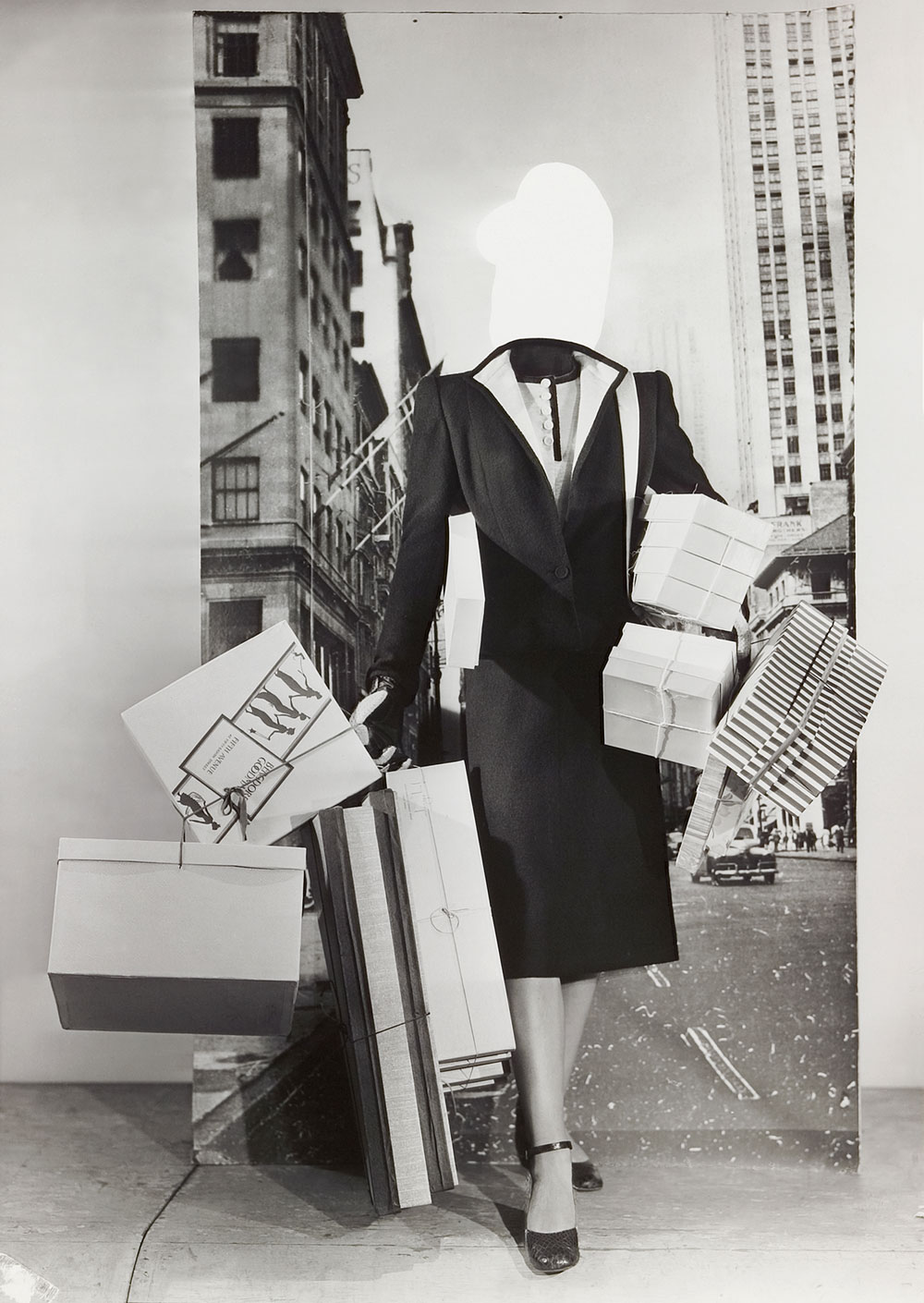
![Erwin Blumenfeld (American-German, 1897-1969) 'Marguerite von Sivers sur le toit du studio 9, rue Delambre' [Marguerite von Sivers on the roof of Blumenfeld’s studio at 9, rue Delambre] Paris, 1937](https://artblart.com/wp-content/uploads/2014/01/eblumenfeld10-web.jpg "Erwin Blumenfeld (American-German, 1897-1969) 'Marguerite von Sivers sur le toit du studio 9, rue Delambre' [Marguerite von Sivers on the roof of Blumenfeld’s studio at 9, rue Delambre] Paris, 1937")
![Erwin Blumenfeld (American-German, 1897-1969) 'Untitled [Natalia Pasco]' 1942](https://artblart.com/wp-content/uploads/2014/01/eblumenfeld12-web.jpg "Erwin Blumenfeld (American-German, 1897-1969) 'Untitled [Natalia Pasco]' 1942")
![Erwin Blumenfeld (American-German, 1897-1969) 'Voile mouillé' [Wet veil] Paris, 1937](https://artblart.com/wp-content/uploads/2014/01/eblumenfeld09-web.jpg "Erwin Blumenfeld (American-German, 1897-1969) 'Voile mouillé' [Wet veil] Paris, 1937")

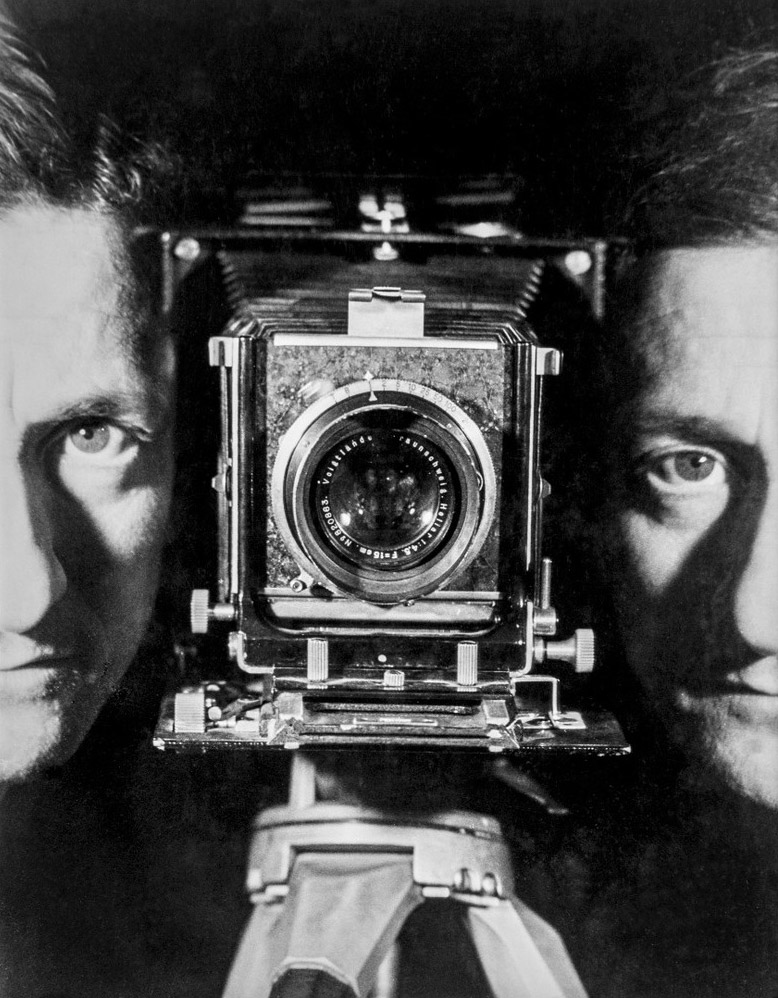


![Erwin Blumenfeld (American-German, 1897-1969) 'In hoc signo vinces [in this sign you will conquer]' 1967](https://artblart.com/wp-content/uploads/2014/01/in-hoc-signo-vinces-in-this-sign-you-will-conquer-1967-web.jpg "Erwin Blumenfeld (American-German, 1897-1969) 'In hoc signo vinces [in this sign you will conquer]' 1967")

![Erwin Blumenfeld (American-German, 1897-1969) 'Untitled [Homme agenouillé avec tour]' [Kneeling man with tower] 1920](https://artblart.com/wp-content/uploads/2014/01/eblumenfeld02-web.jpg "Erwin Blumenfeld (American-German, 1897-1969) 'Untitled [Homme agenouillé avec tour]' [Kneeling man with tower] 1920")
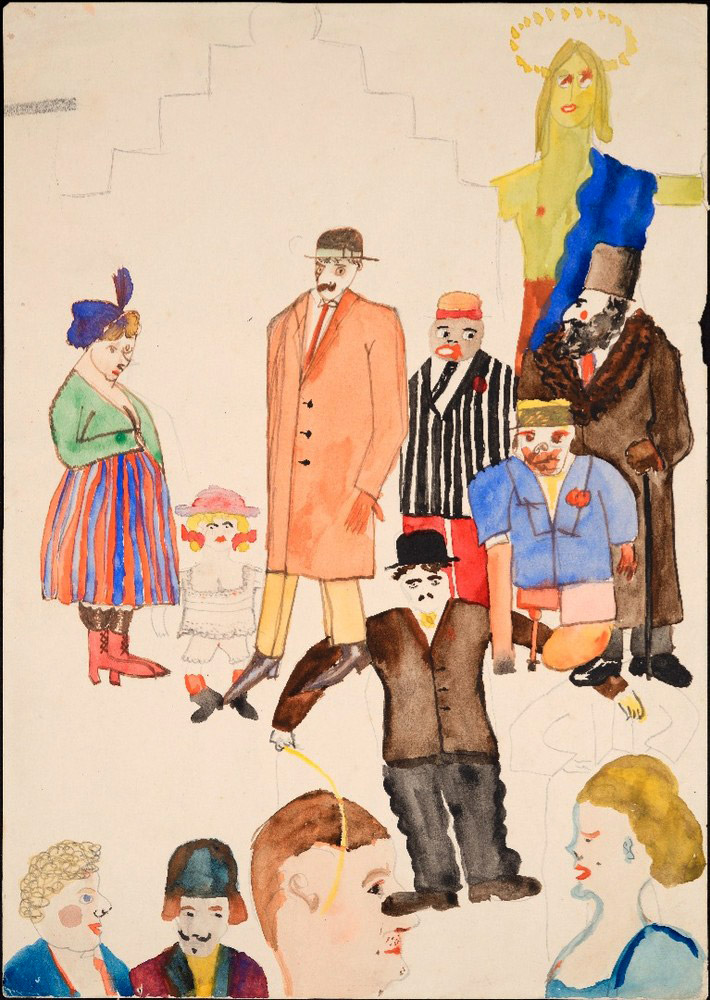
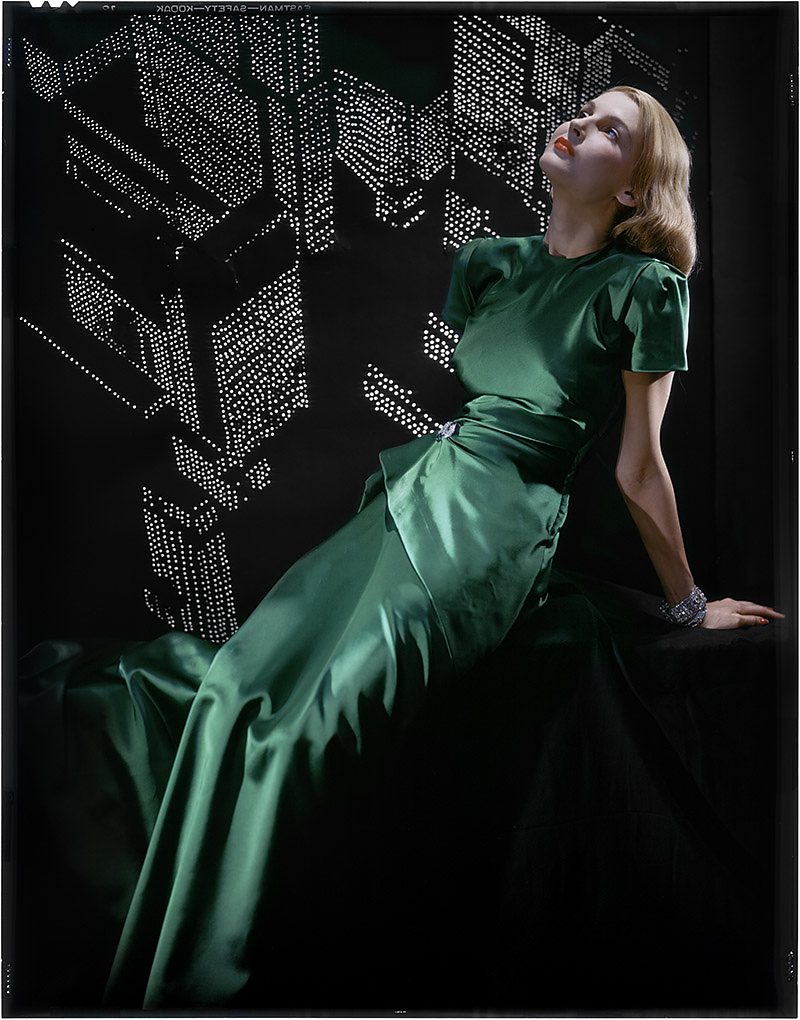
![Erwin Blumenfeld (American-German, 1897-1969) 'Do your part for the Red Cross' [Soutenez la Croix-Rouge] 1945](https://artblart.com/wp-content/uploads/2014/01/blumenfeld_1-web.jpg "Erwin Blumenfeld (American-German, 1897-1969) 'Do your part for the Red Cross' [Soutenez la Croix-Rouge] 1945")
![Erwin Blumenfeld (American-German, 1897-1969) Variant of the photograph published in Life Magazine entitled "The Picasso Girl" [The young woman of Picasso] (model: Lisette) c. 1941-1942](https://artblart.com/wp-content/uploads/2014/01/eblumenfeld15-web1.jpg "Erwin Blumenfeld (American-German, 1897-1969) Variant of the photograph published in Life Magazine entitled \"The Picasso Girl\" [The young woman of Picasso] (model: Lisette) c. 1941-1942")


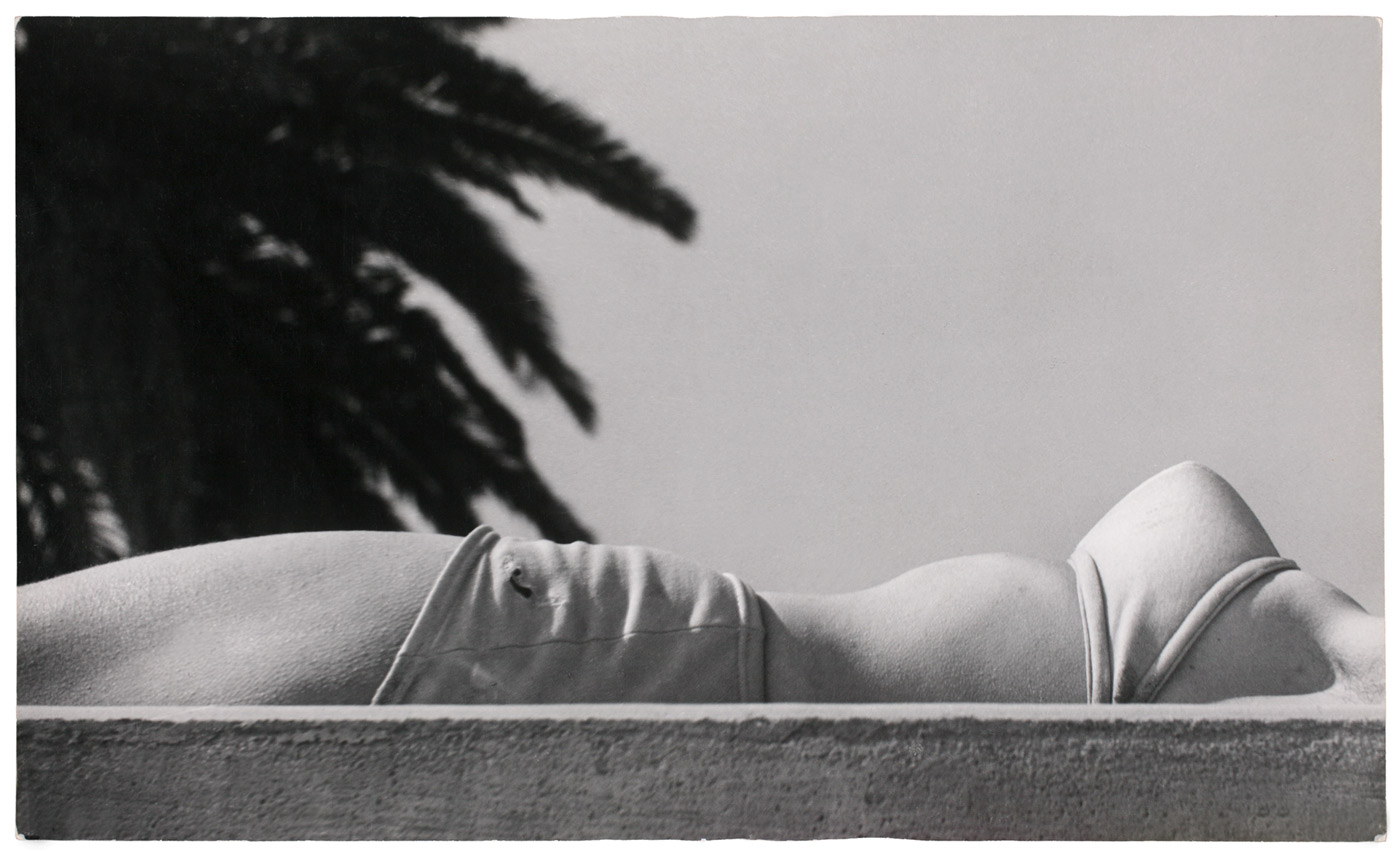


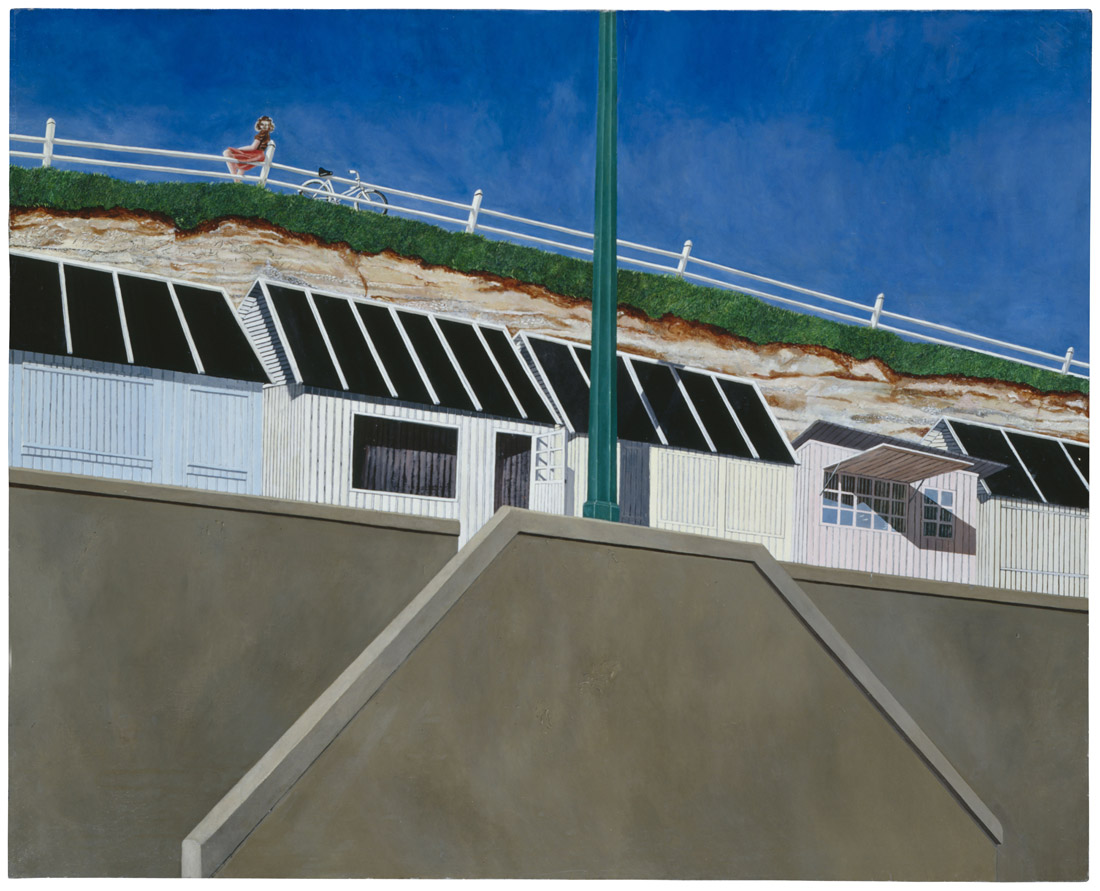
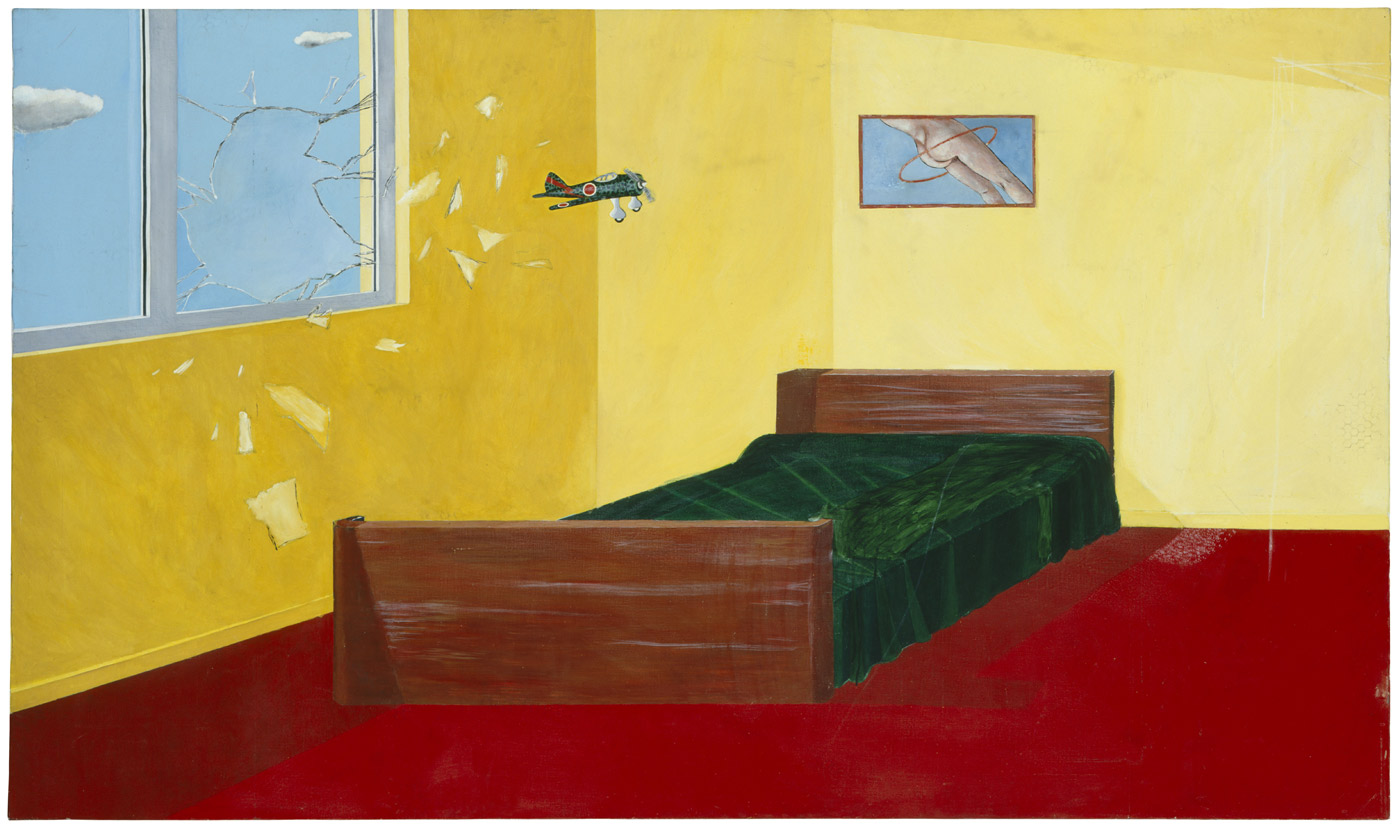


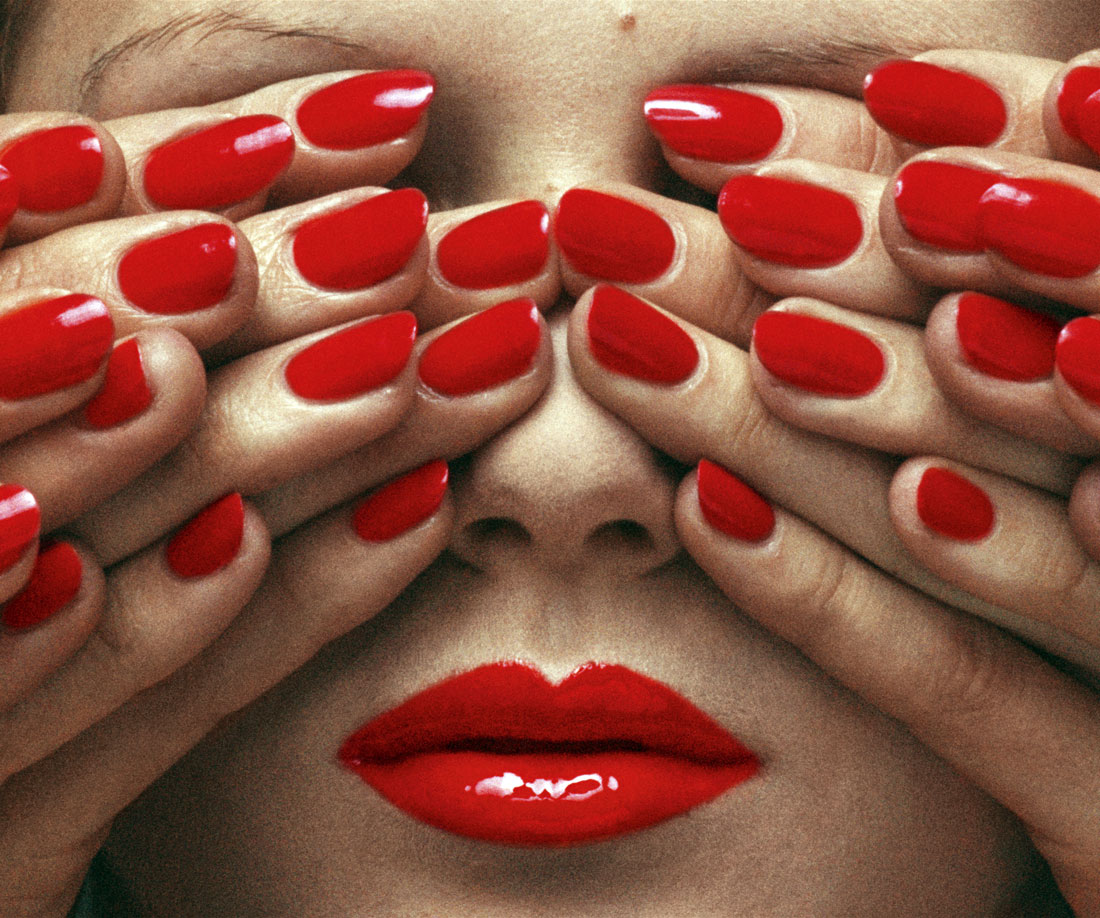


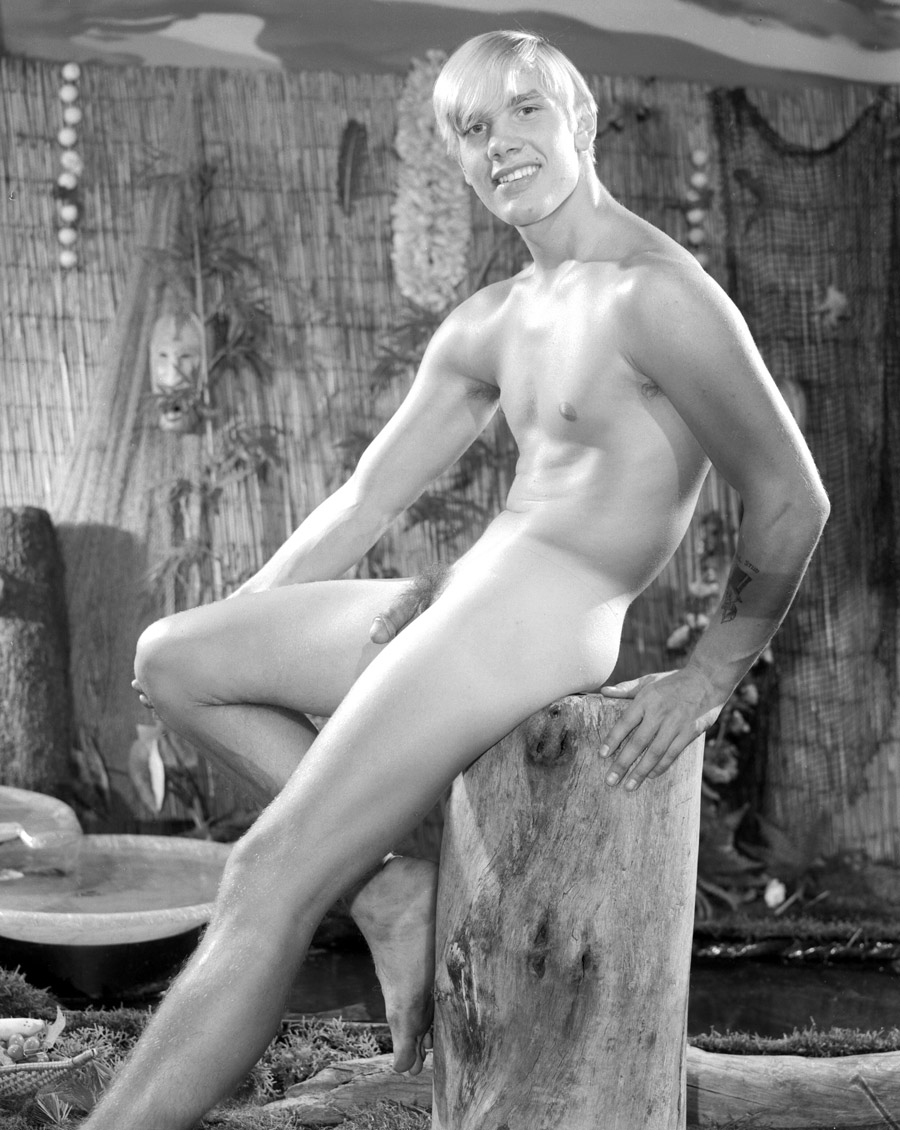
![Bob Mizer (American, 1922-1992) 'Untitled [Barry Maurer, Hand on Gun], Los Angeles' c. 1961](https://artblart.com/wp-content/uploads/2013/12/bob_mizer6-web.jpg "Bob Mizer (American, 1922-1992) 'Untitled [Barry Maurer, Hand on Gun], Los Angeles' c. 1961")
![Bob Mizer (American, 1922-1992) 'Untitled [Larry Lamb, with Tumbleweed], Los Angeles' c. 1959](https://artblart.com/wp-content/uploads/2013/12/bob_mizer8-web.jpg "Bob Mizer (American, 1922-1992) 'Untitled [Larry Lamb, with Tumbleweed], Los Angeles' c. 1959")


![Bob Mizer (American, 1922-1992) 'Untitled [Ray Hornsby, Motorcycle], Los Angeles' c. 1957](https://artblart.com/wp-content/uploads/2013/12/bob_mizer9-web.jpg "Bob Mizer (American, 1922-1992) 'Untitled [Ray Hornsby, Motorcycle], Los Angeles' c. 1957")
![Bob Mizer (American, 1922-1992) 'Untitled [Ray Hornsby, with Skull Staff], Los Angeles' c. 1957](https://artblart.com/wp-content/uploads/2013/12/bob_mizer10-web.jpg "Bob Mizer (American, 1922-1992) 'Untitled [Ray Hornsby, with Skull Staff], Los Angeles' c. 1957")
![Bob Mizer (American, 1922-1992) 'Untitled [Ernie Rabb, Pointed Pistol], Los Angeles' c. 1957](https://artblart.com/wp-content/uploads/2013/12/bob_mizer11-web.jpg "Bob Mizer (American, 1922-1992) 'Untitled [Ernie Rabb, Pointed Pistol], Los Angeles' c. 1957")
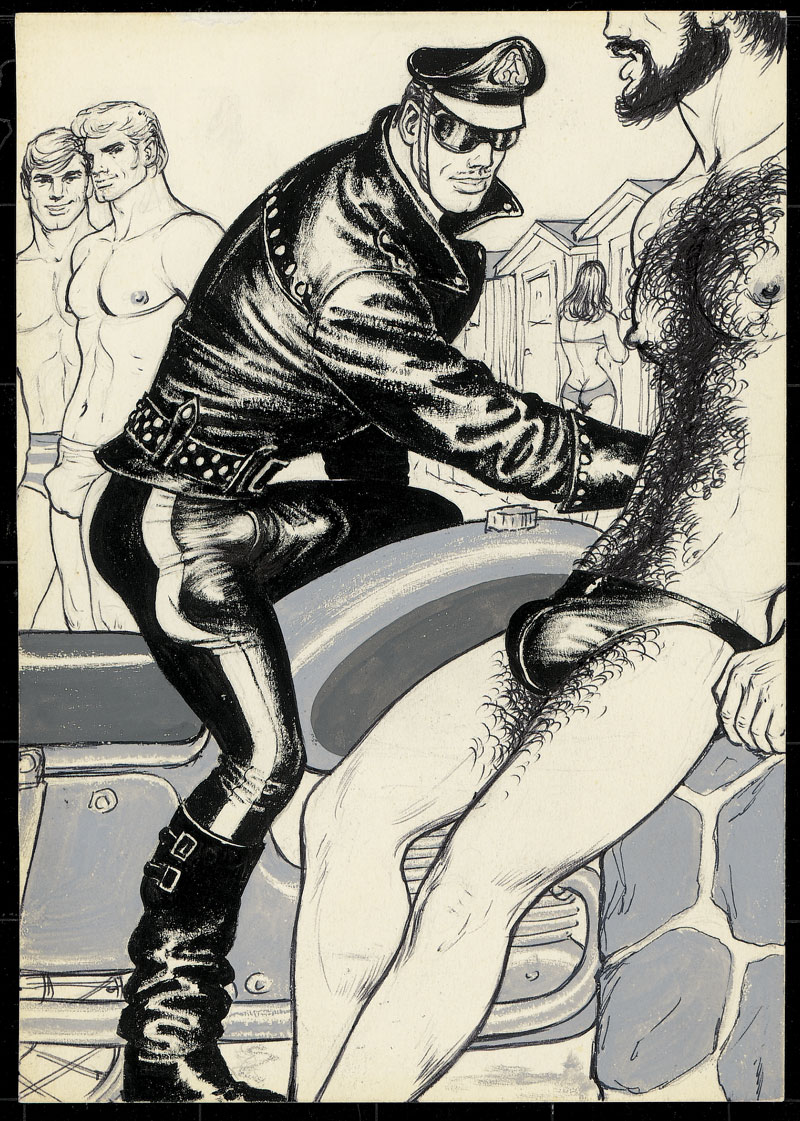

![Bob Mizer (American, 1922-1992) 'Untitled [Larry Lamb, Profile with Chains], Los Angeles' c. 1959](https://artblart.com/wp-content/uploads/2013/12/bob_mizer13-web.jpg "Bob Mizer (American, 1922-1992) 'Untitled [Larry Lamb, Profile with Chains], Los Angeles' c. 1959")
![Bob Mizer (American, 1922-1992) 'Untitled [Dennis Schreffer, Wand Balance], Los Angeles' c. 1957](https://artblart.com/wp-content/uploads/2013/12/bob_mizer14-web.jpg "Bob Mizer (American, 1922-1992) 'Untitled [Dennis Schreffer, Wand Balance], Los Angeles' c. 1957")
![Bob Mizer (American, 1922-1992) 'Untitled [Dennis Schreffer with Portrait], Los Angeles' c. 1957](https://artblart.com/wp-content/uploads/2013/12/bob_mizer15-web.jpg "Bob Mizer (American, 1922-1992) 'Untitled [Dennis Schreffer with Portrait], Los Angeles' c. 1957")


![Bob Mizer (American, 1922-1992) 'Athletic Model Guild Catalog Board, David Elliott. [Double-sided; This side Page 1 of SW series]' c. 1965](https://artblart.com/wp-content/uploads/2013/12/bob_mizer16-web.jpg "Bob Mizer (American, 1922-1992) 'Athletic Model Guild Catalog Board, David Elliott. [Double-sided; This side Page 1 of SW series]' c. 1965")
![Bob Mizer (American, 1922-1992) 'Athletic Model Guild Catalog Board, David Elliott. [Double-sided; This side Page 2 of SW series]' c. 1965](https://artblart.com/wp-content/uploads/2013/12/bob_mizer17-web.jpg "Bob Mizer (American, 1922-1992) 'Athletic Model Guild Catalog Board, David Elliott. [Double-sided; This side Page 2 of SW series]' c. 1965")
![Bob Mizer (American, 1922-1992) 'Athletic Model Guild Catalog Board, Ernie Rabb. [Double-sided; This side Page 57 of XT series]' c. 1957](https://artblart.com/wp-content/uploads/2013/12/bob_mizer18-web.jpg "Bob Mizer (American, 1922-1992) 'Athletic Model Guild Catalog Board, Ernie Rabb. [Double-sided; This side Page 57 of XT series]' c. 1957")
![Bob Mizer (American, 1922-1992) 'Athletic Model Guild Catalog Board, Ernie Rabb. [Double-sided; This side Page 58 of XT series]' c. 1957](https://artblart.com/wp-content/uploads/2013/12/bob_mizer19-web.jpg "Bob Mizer (American, 1922-1992) 'Athletic Model Guild Catalog Board, Ernie Rabb. [Double-sided; This side Page 58 of XT series]' c. 1957")

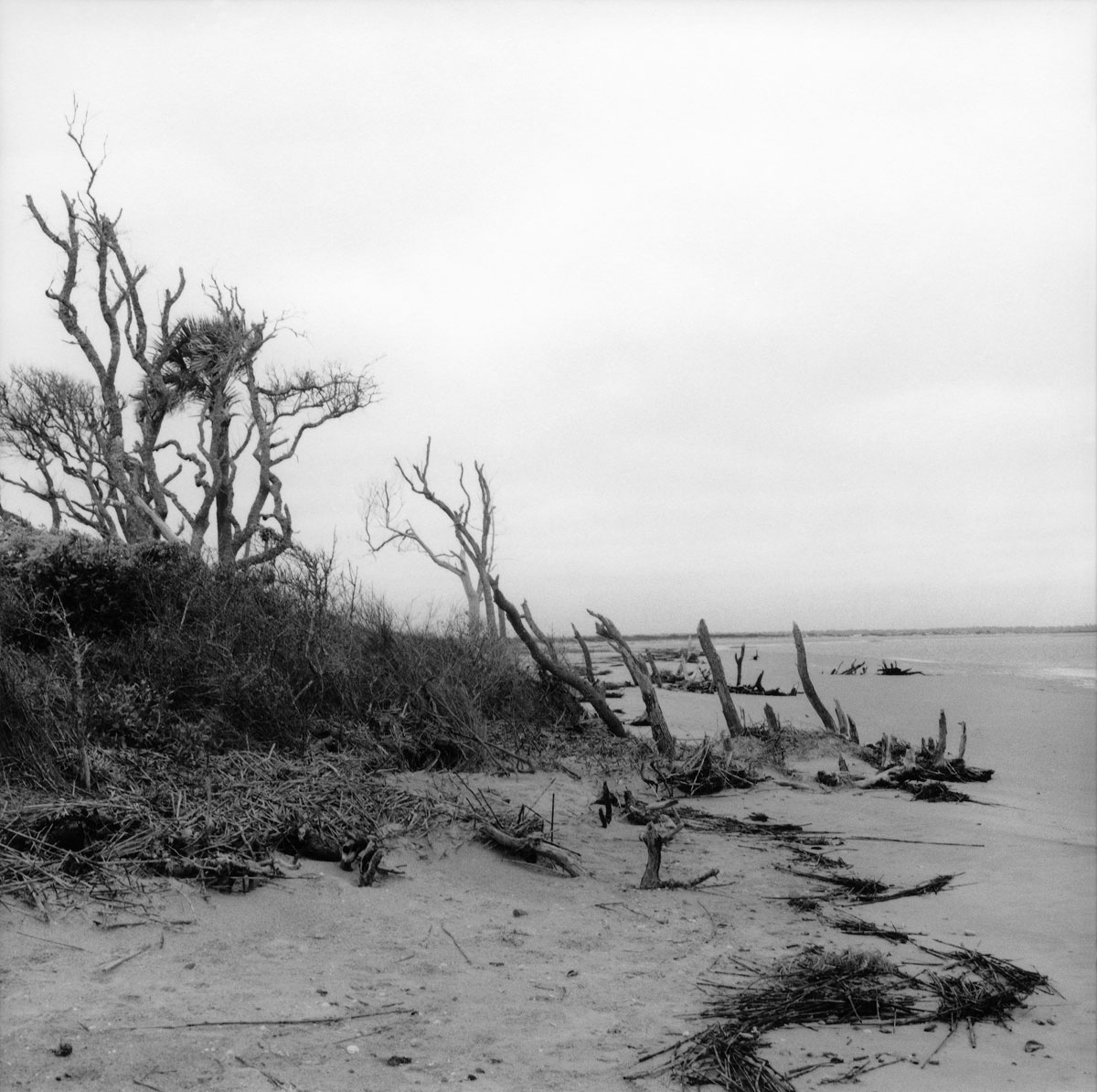


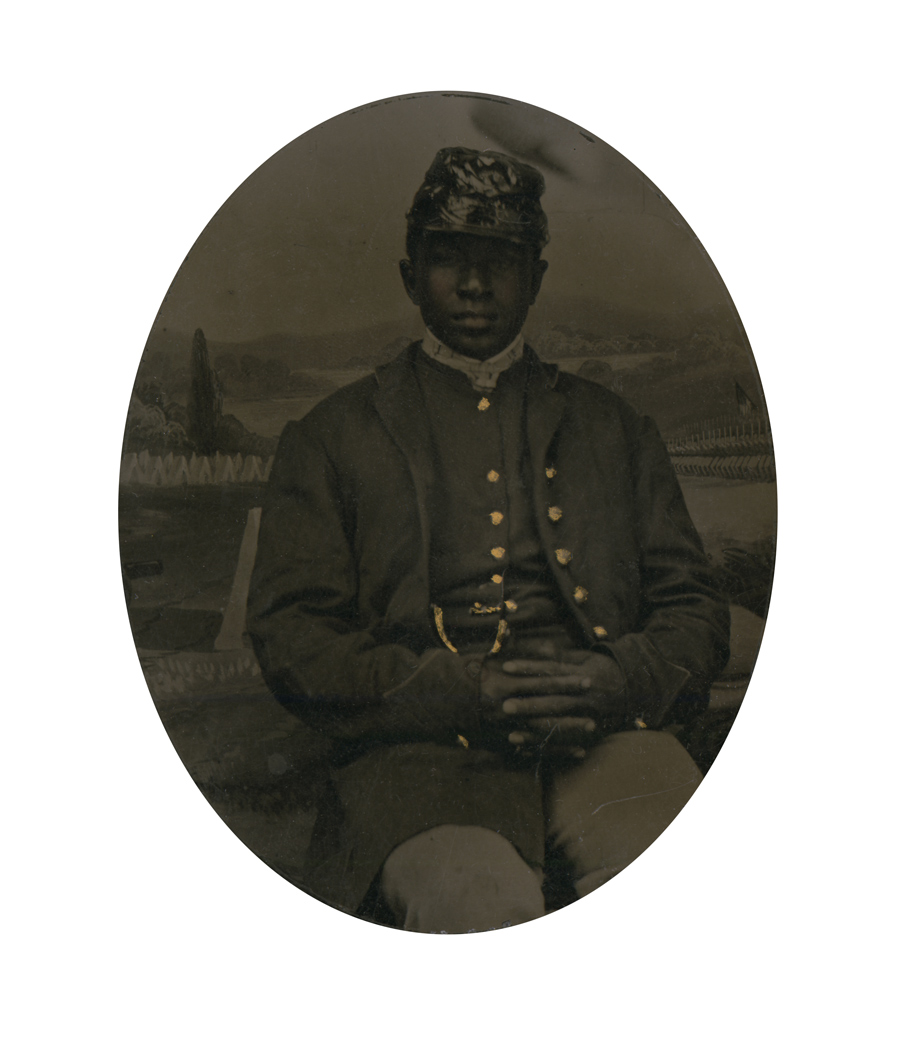

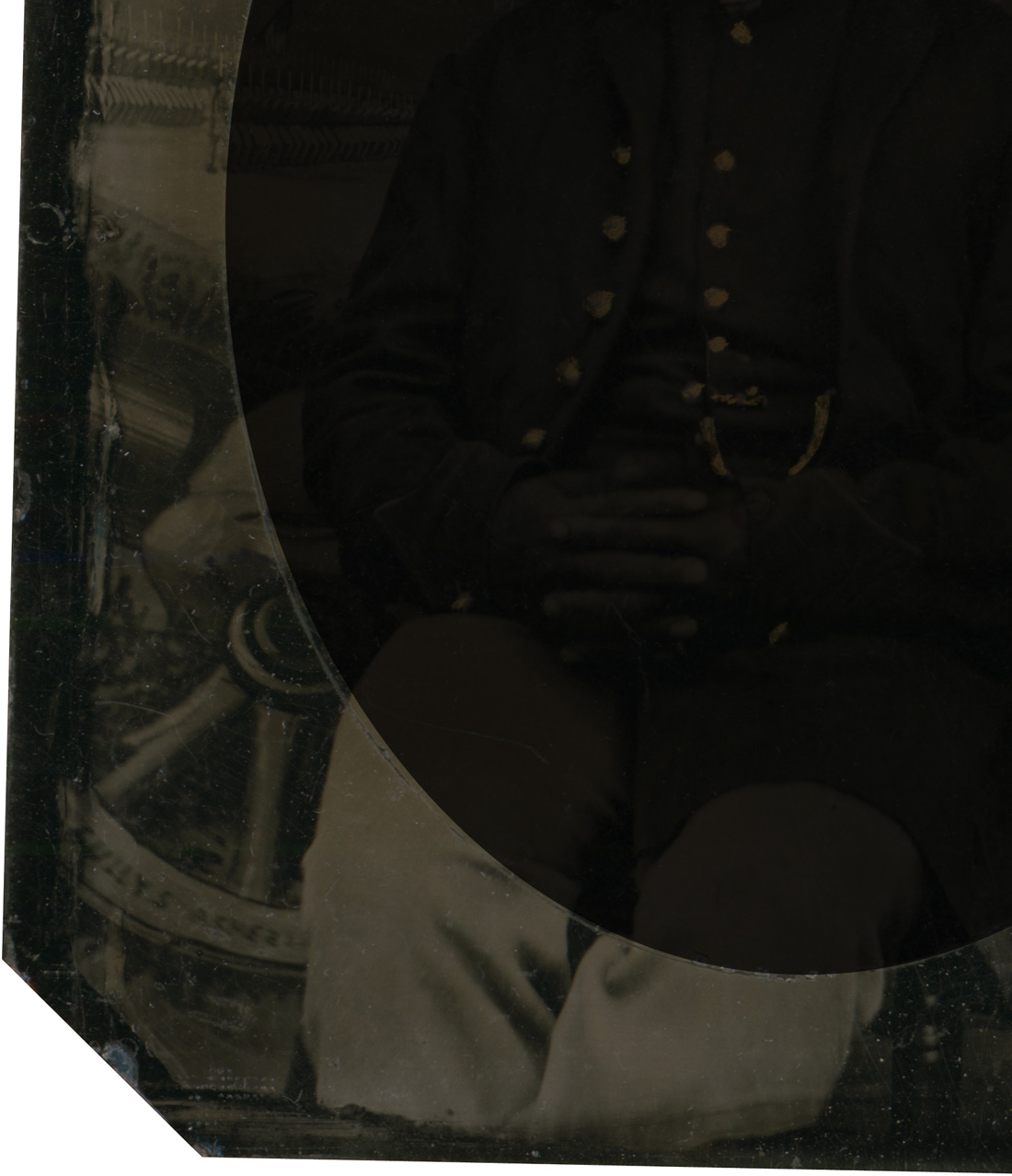


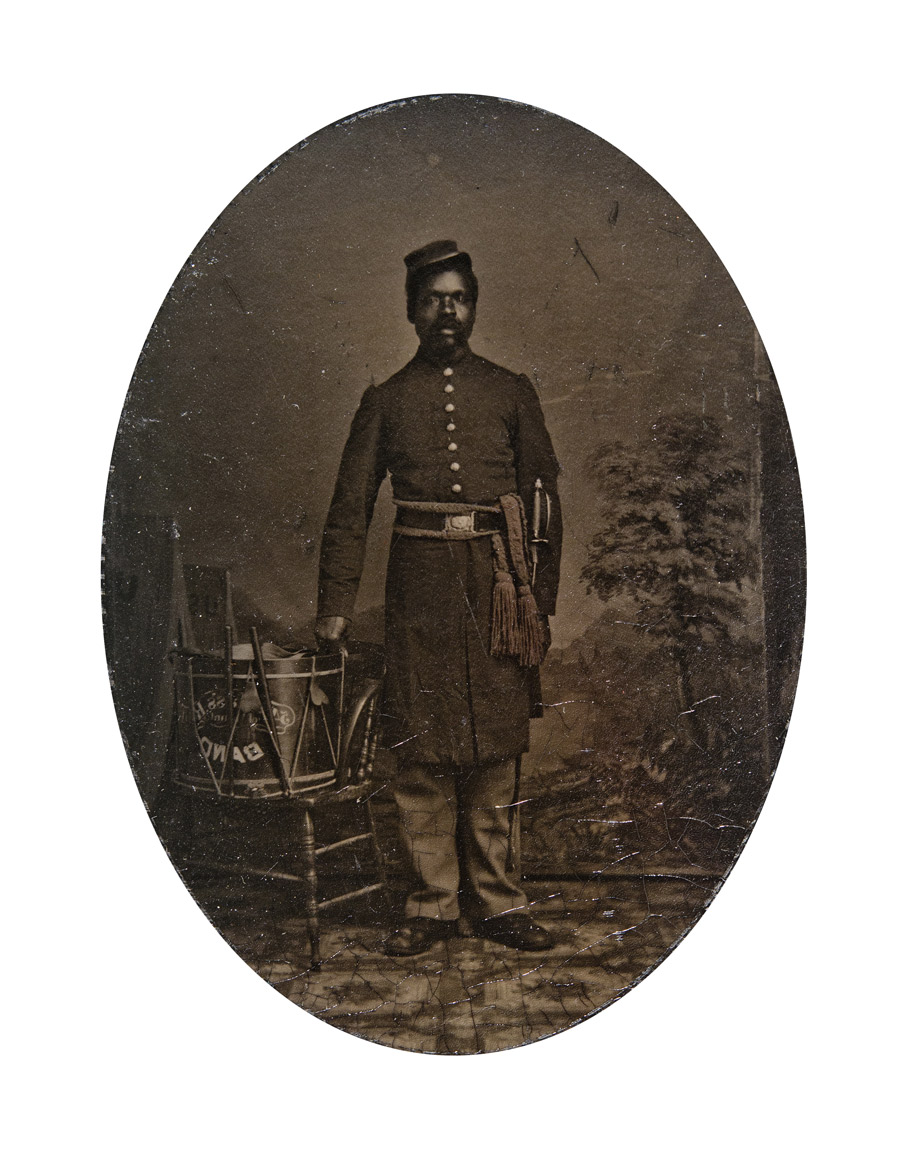


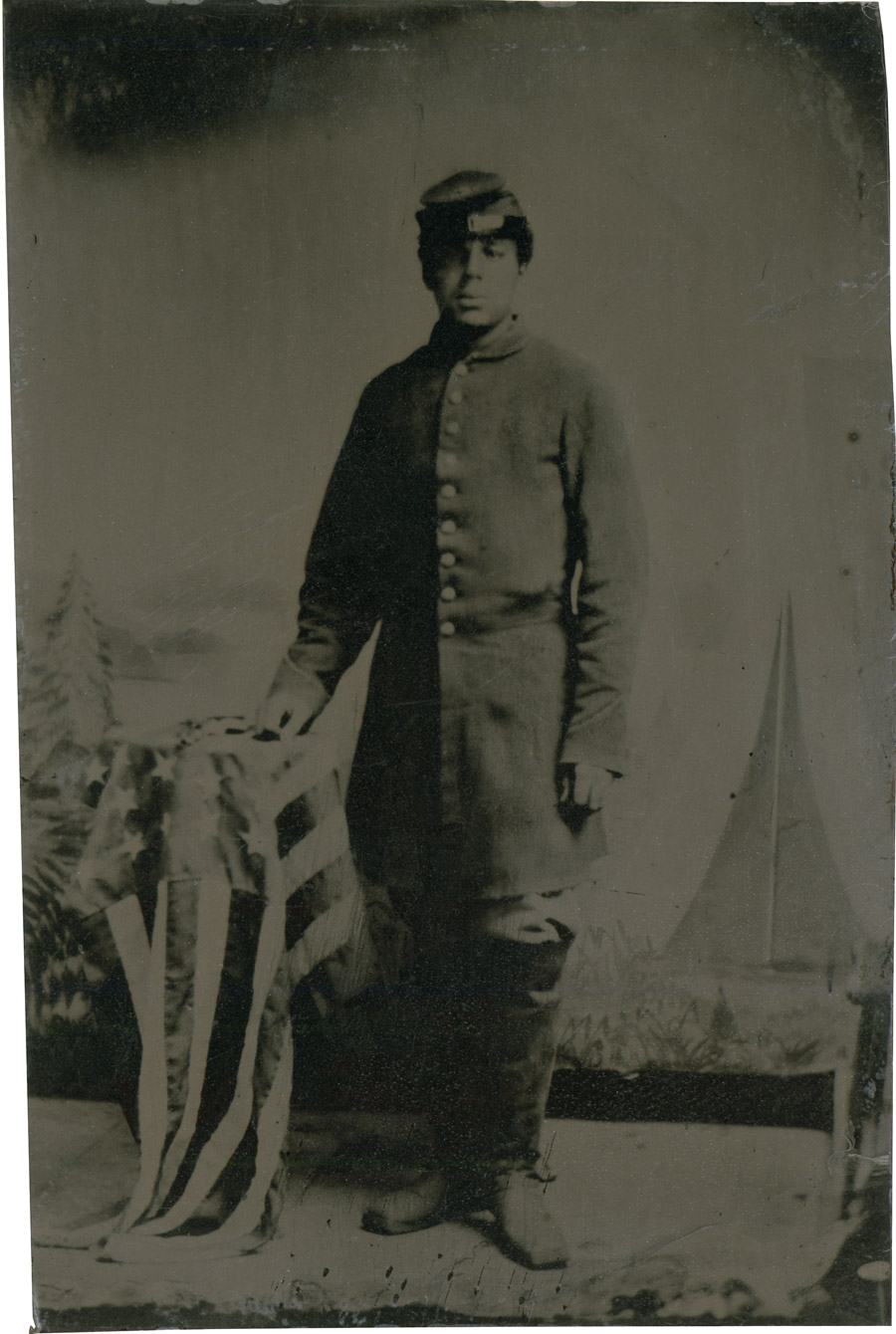


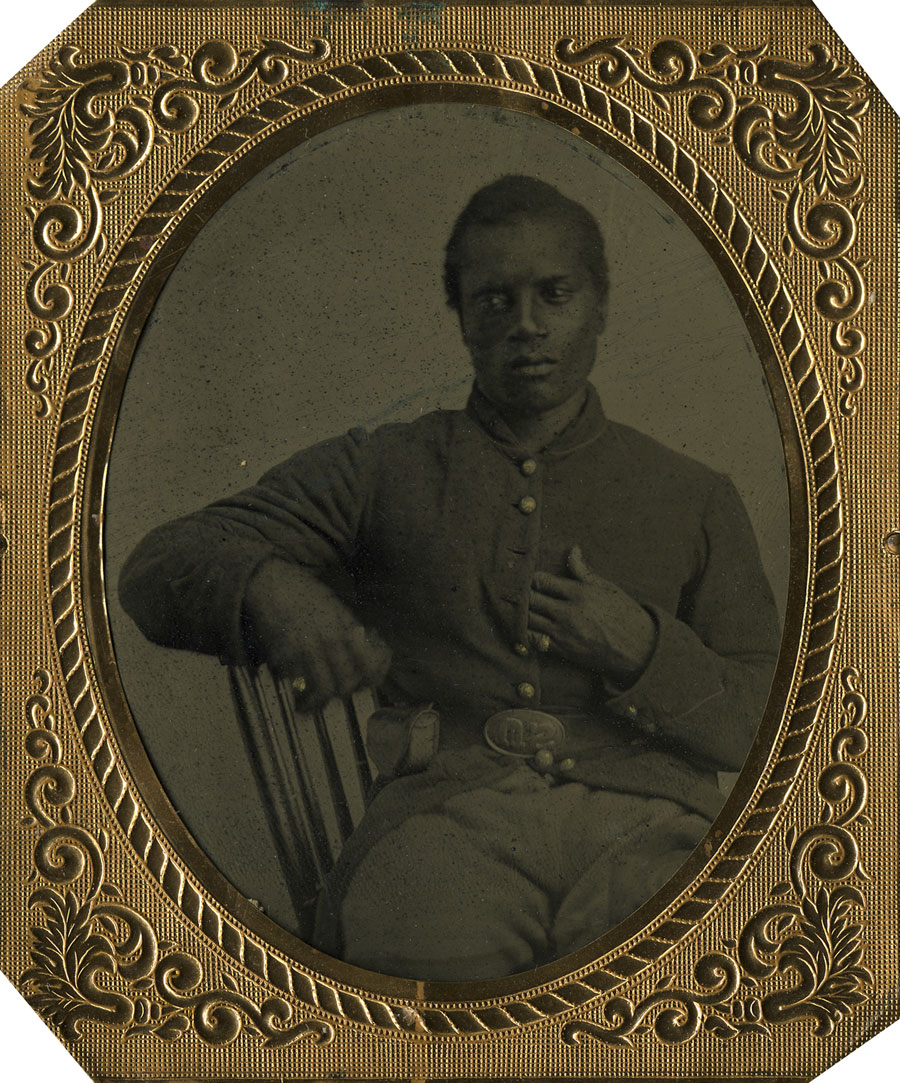


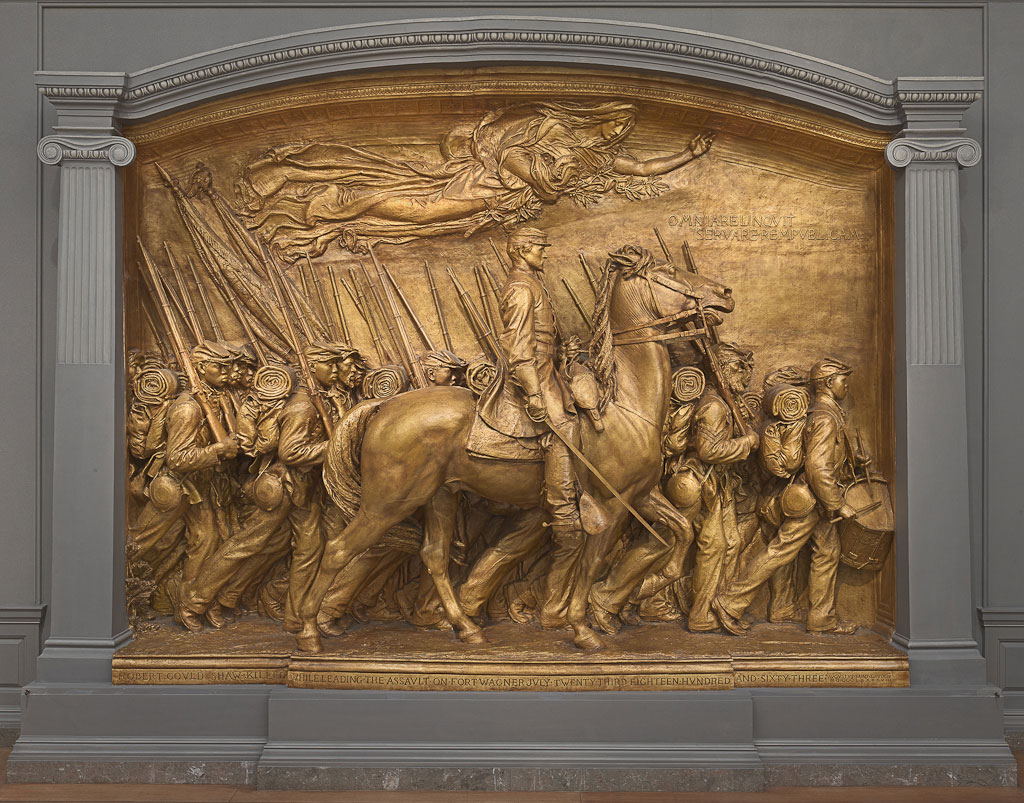


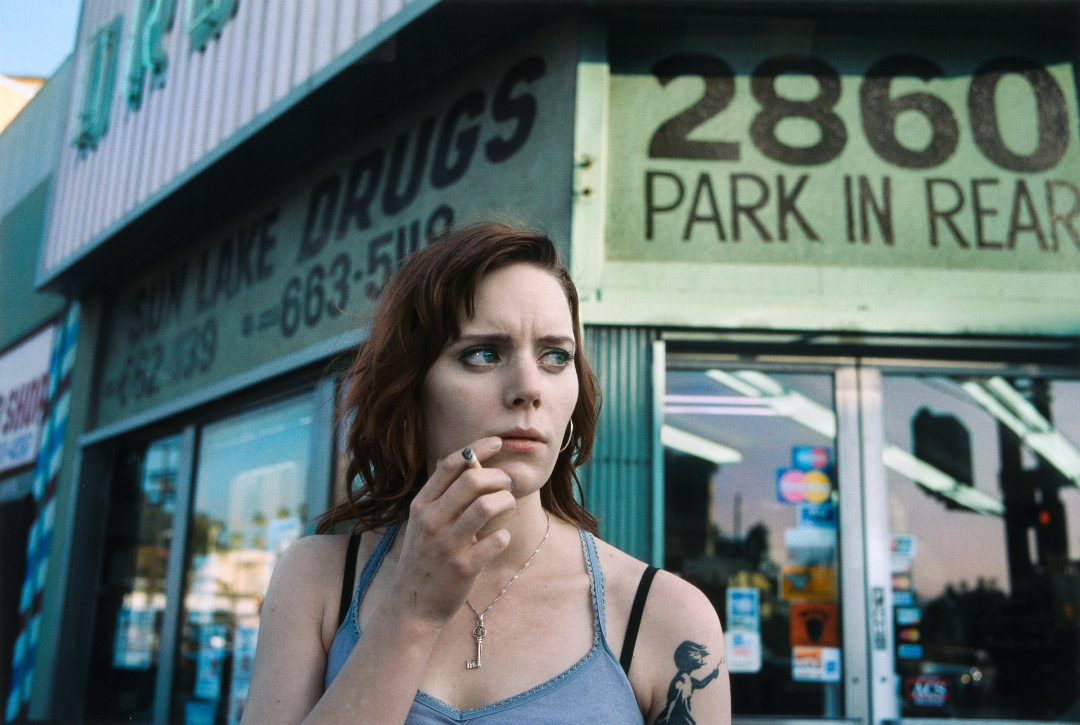


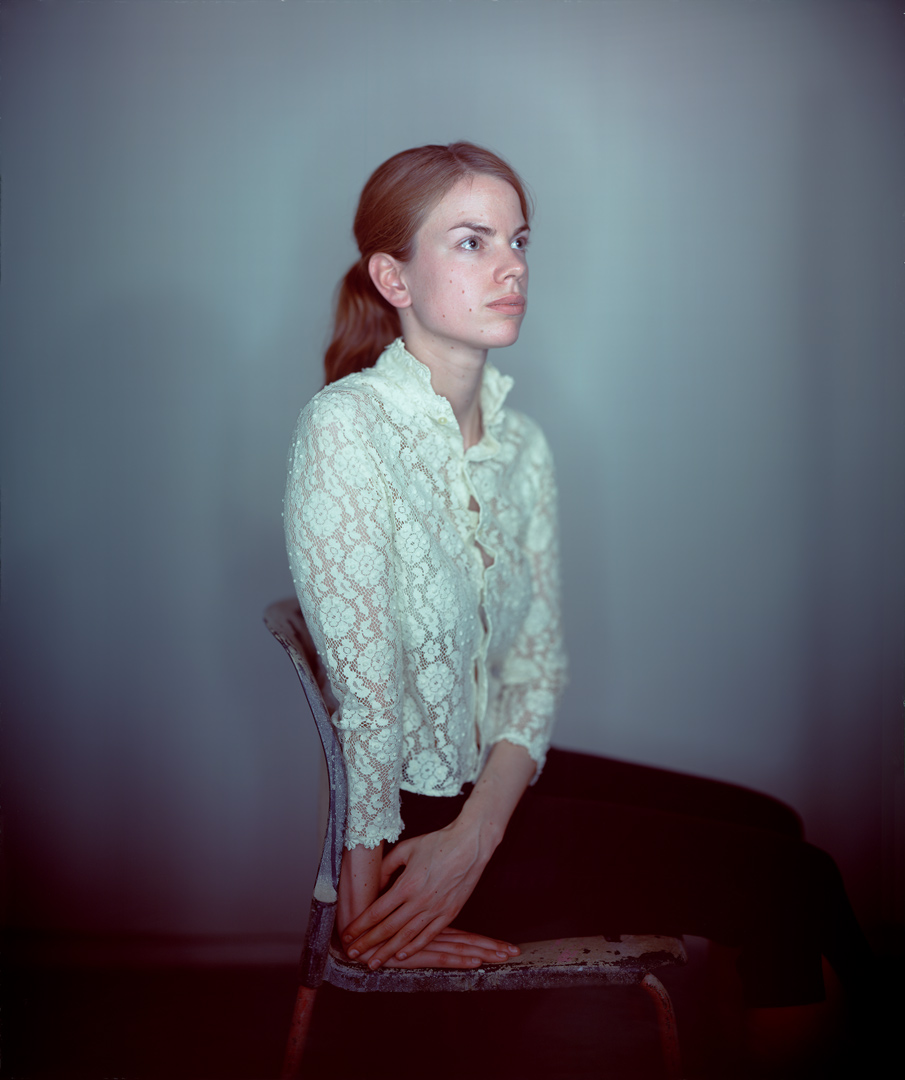

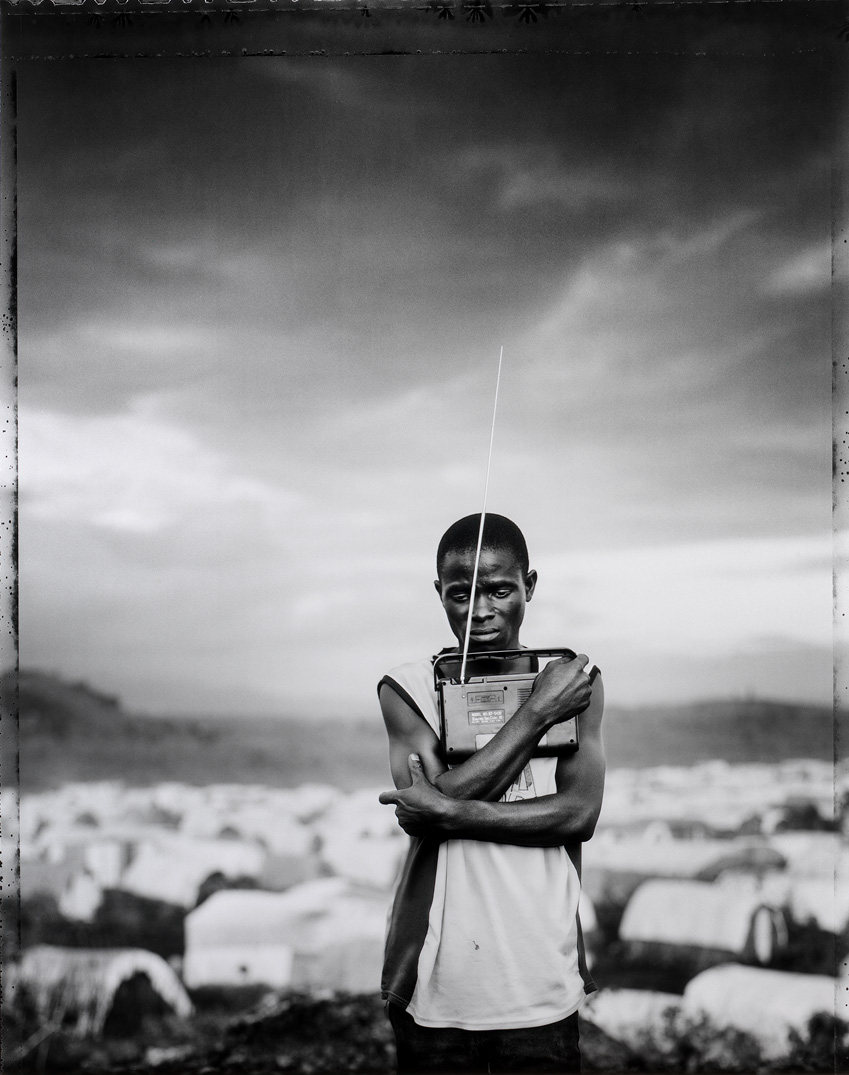







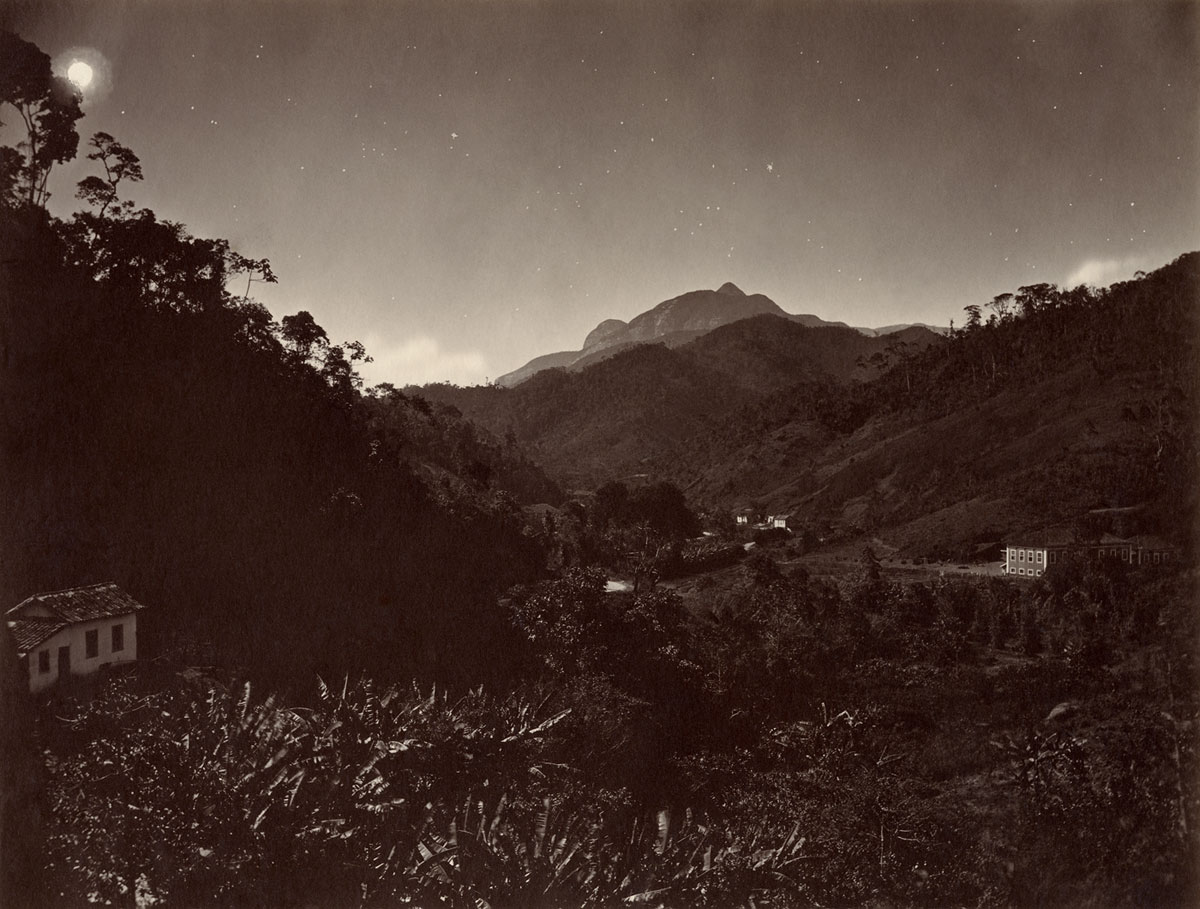
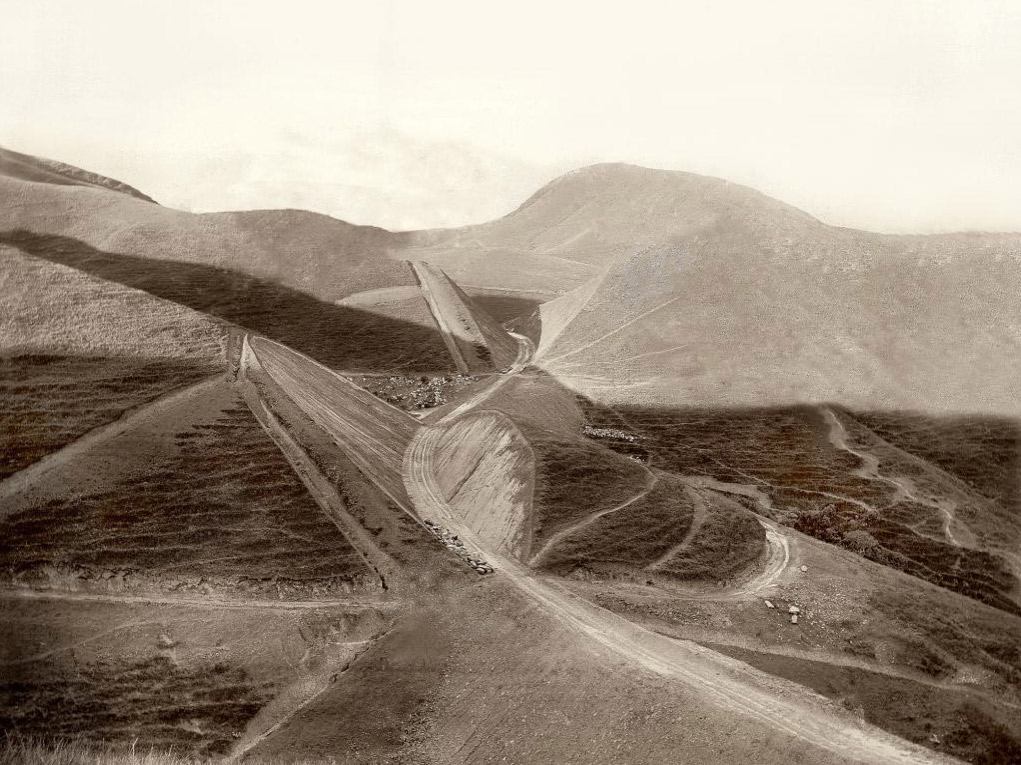

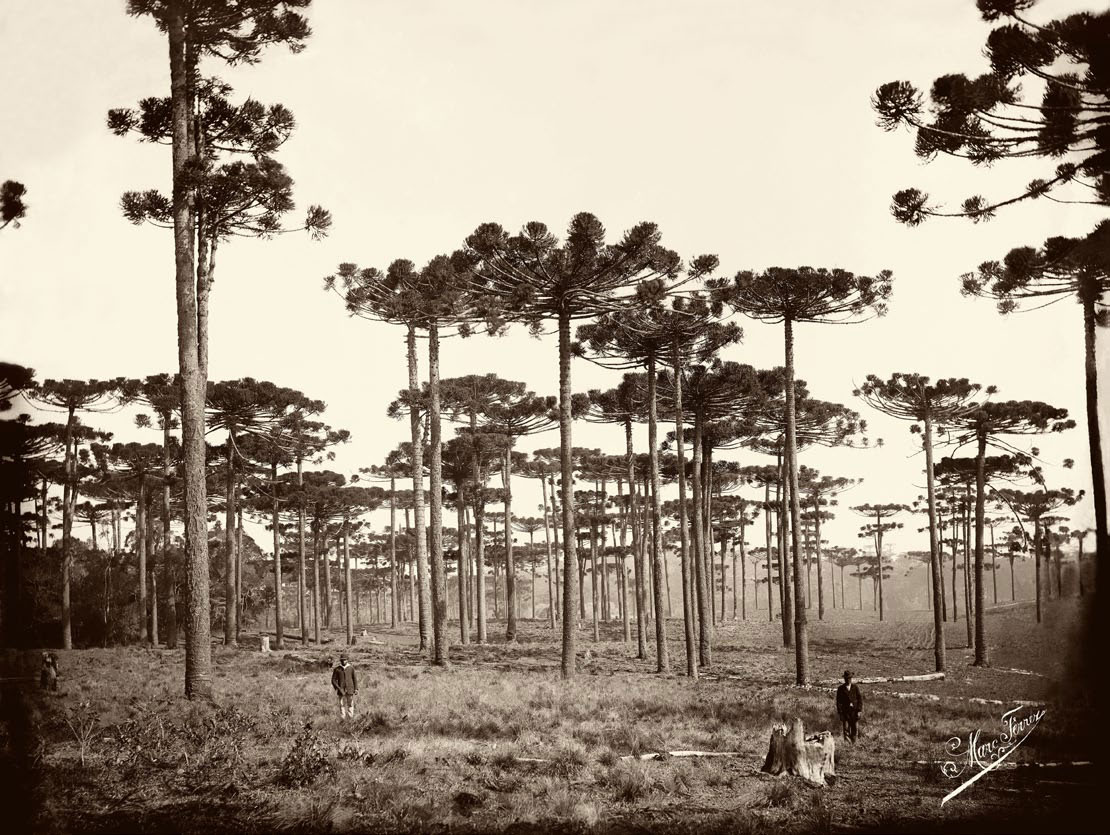


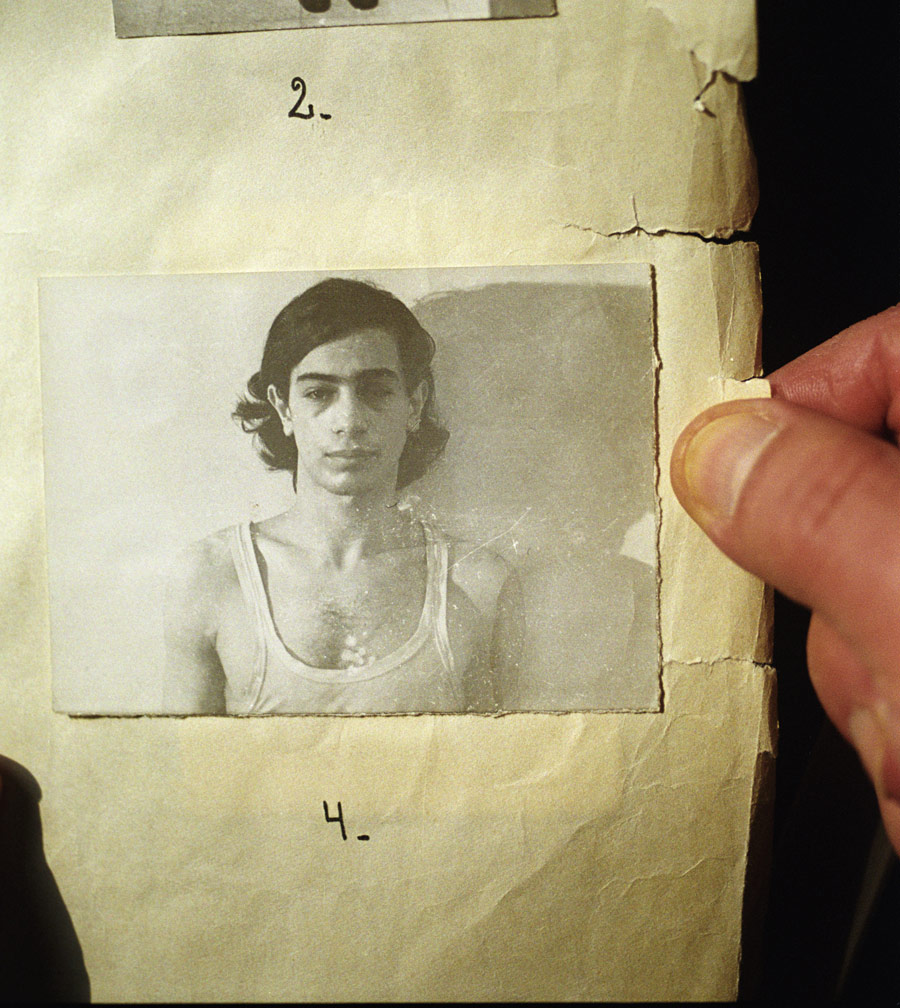







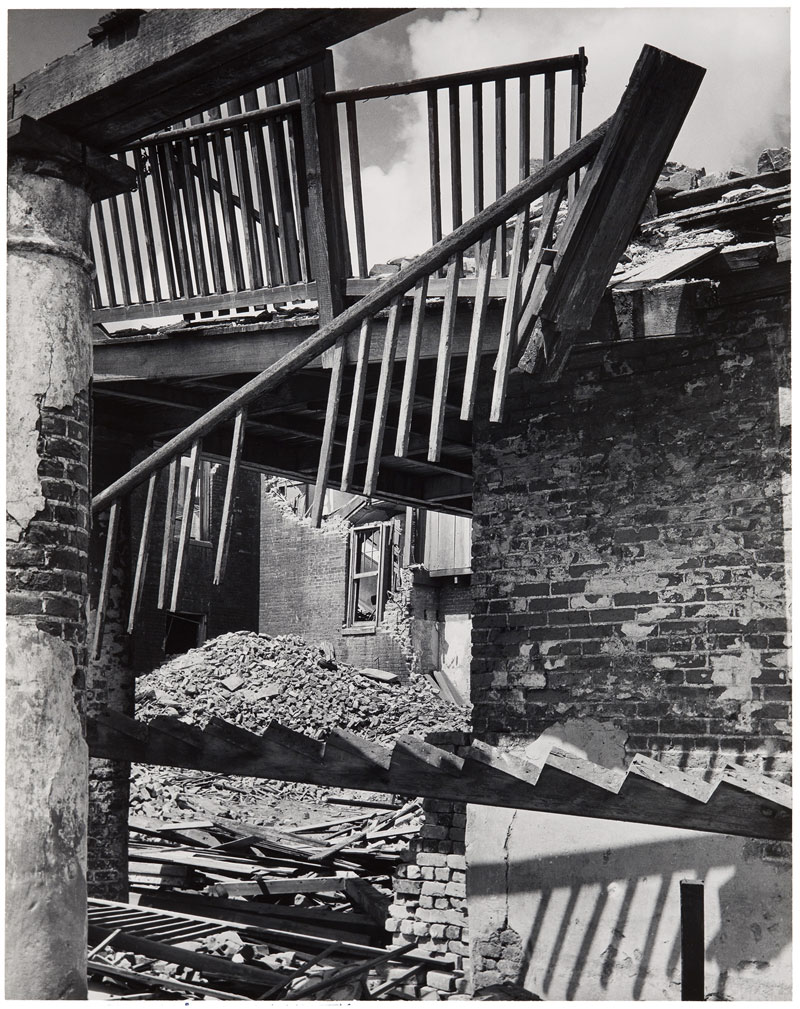

![Lewis Hine (American, 1874-1940) '[Mechanic and Steam Pump]' c. 1930](https://artblart.com/wp-content/uploads/2013/12/79-84-hine-web.jpg "Lewis Hine (American, 1874-1940) '[Mechanic and Steam Pump]' c. 1930")
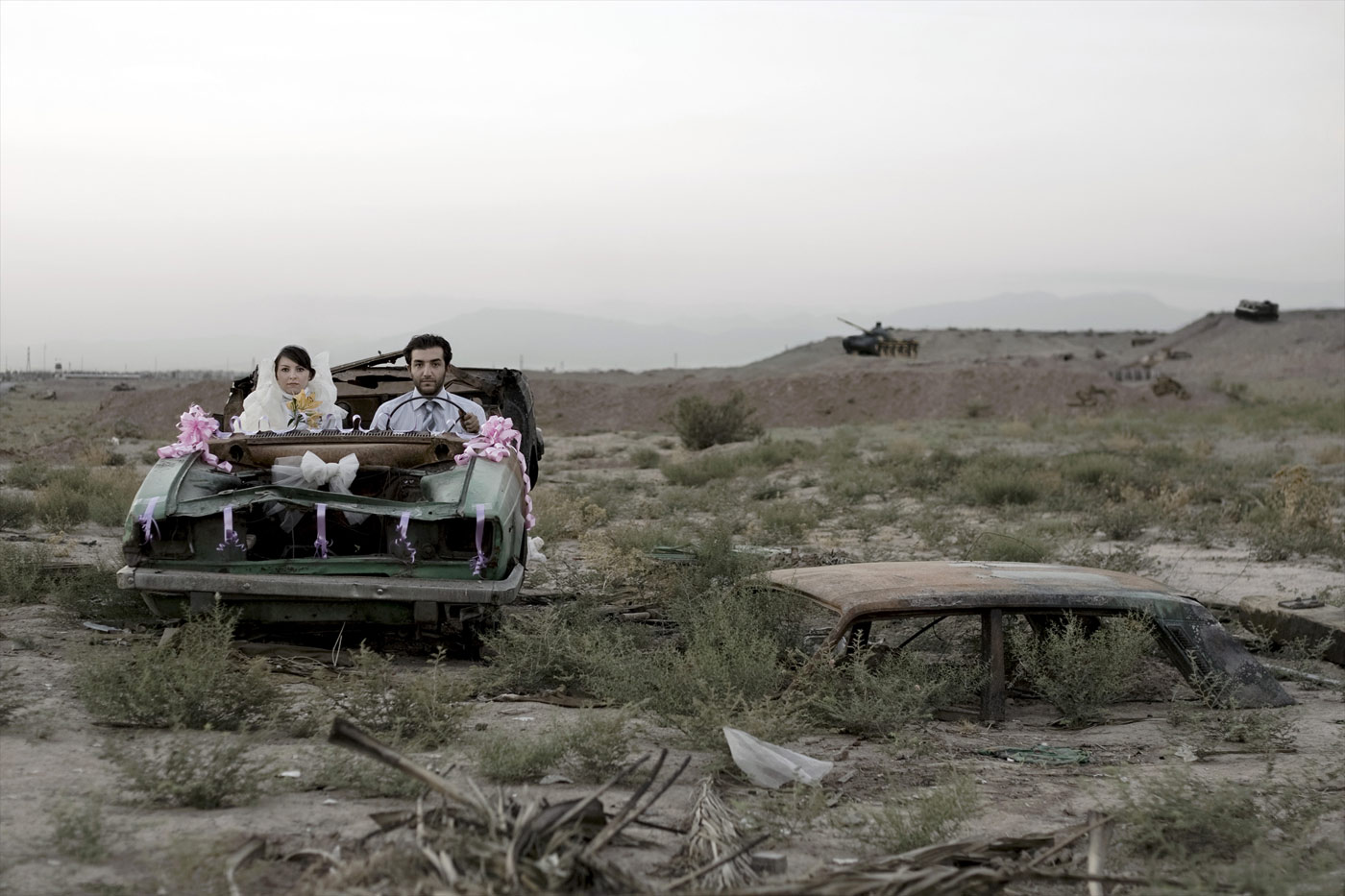

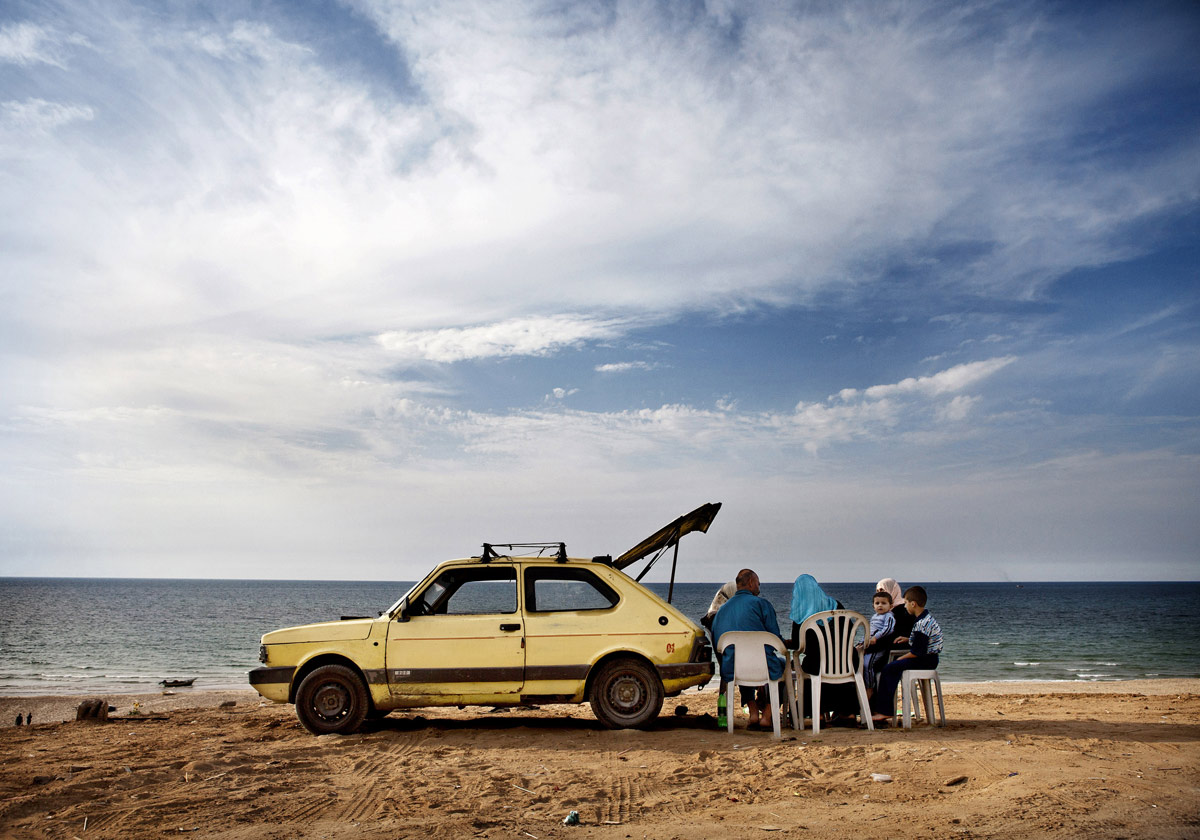
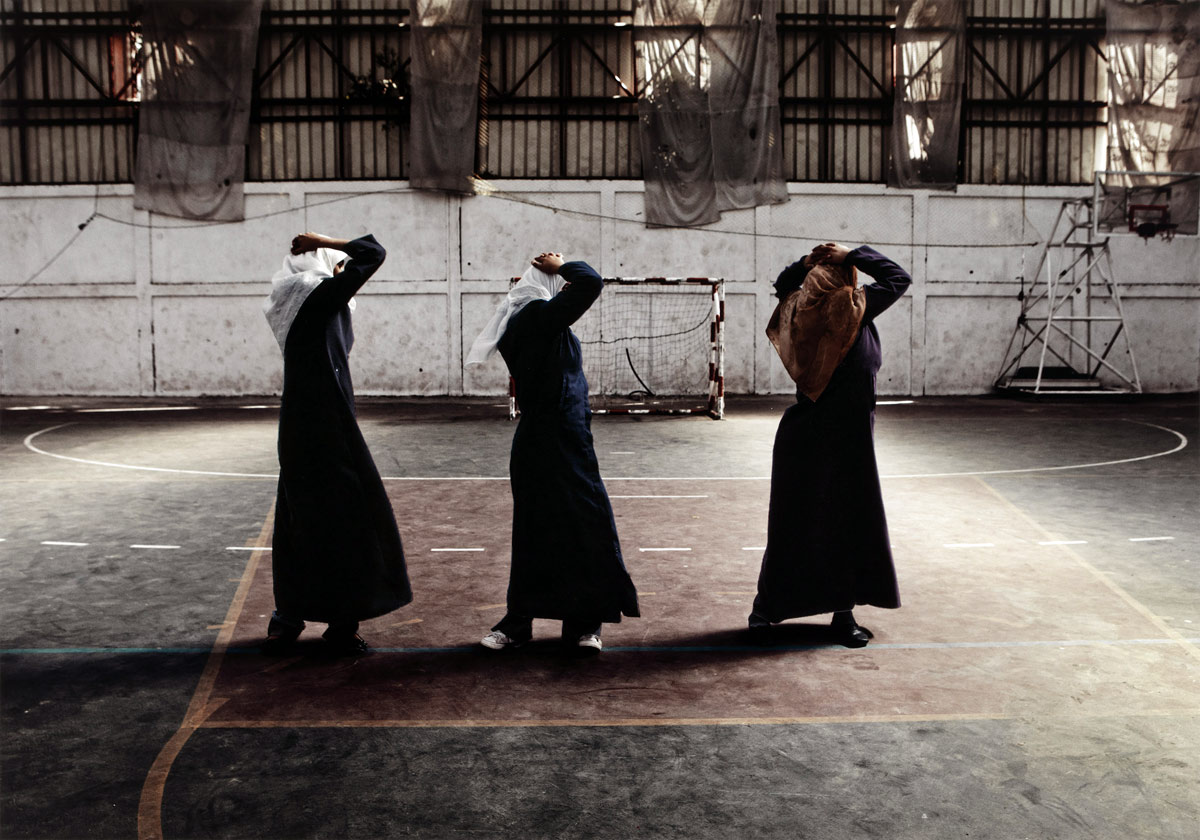






 Art Blart _ art and cultural memory archive
You must be logged in to post a comment.