Review: ‘Jane Brown / Australian Gothic’ at Edmund Pearce Gallery, Melbourne

Exhibition dates: 25th April – 12th May 2012


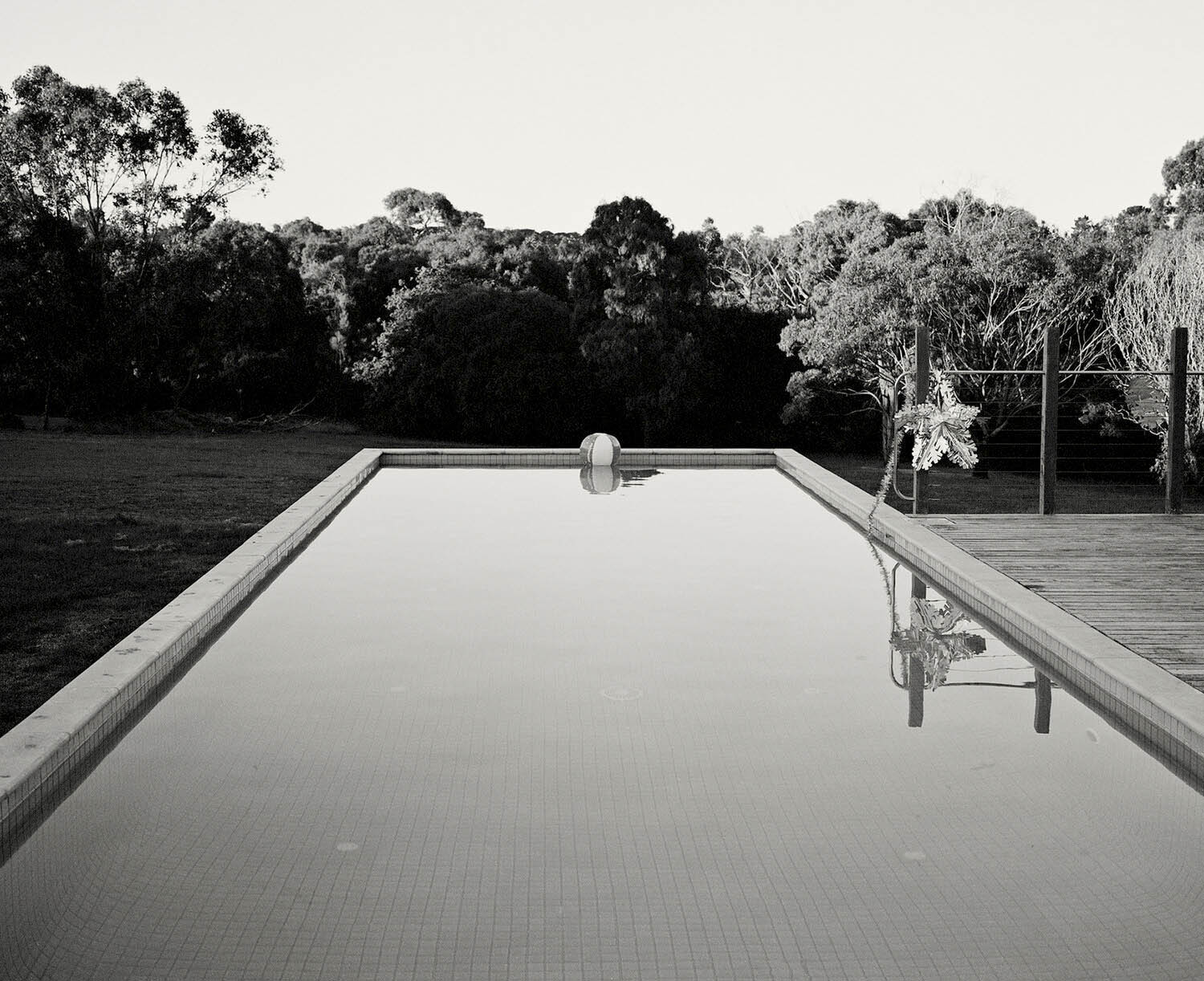
Jane Brown (Kuwait, Australia, b. 1967) 'Big Trout, New South Wales' 2010


Jane Brown (Kuwait, Australia, b. 1967)
Big Trout, New South Wales
2010
Museo silver rag print
59 x 46cm


As you should know by now, this blog tries to promote the work of less well known artists and subject matter. So instead of concentrating on the wonderful aerial bushfire photographs of the well-known artist John Gollings (showing in the same gallery in different spaces with the work of Michael Norton) I have decided to do a posting on the exhibition Australian Gothic by Jane Brown.

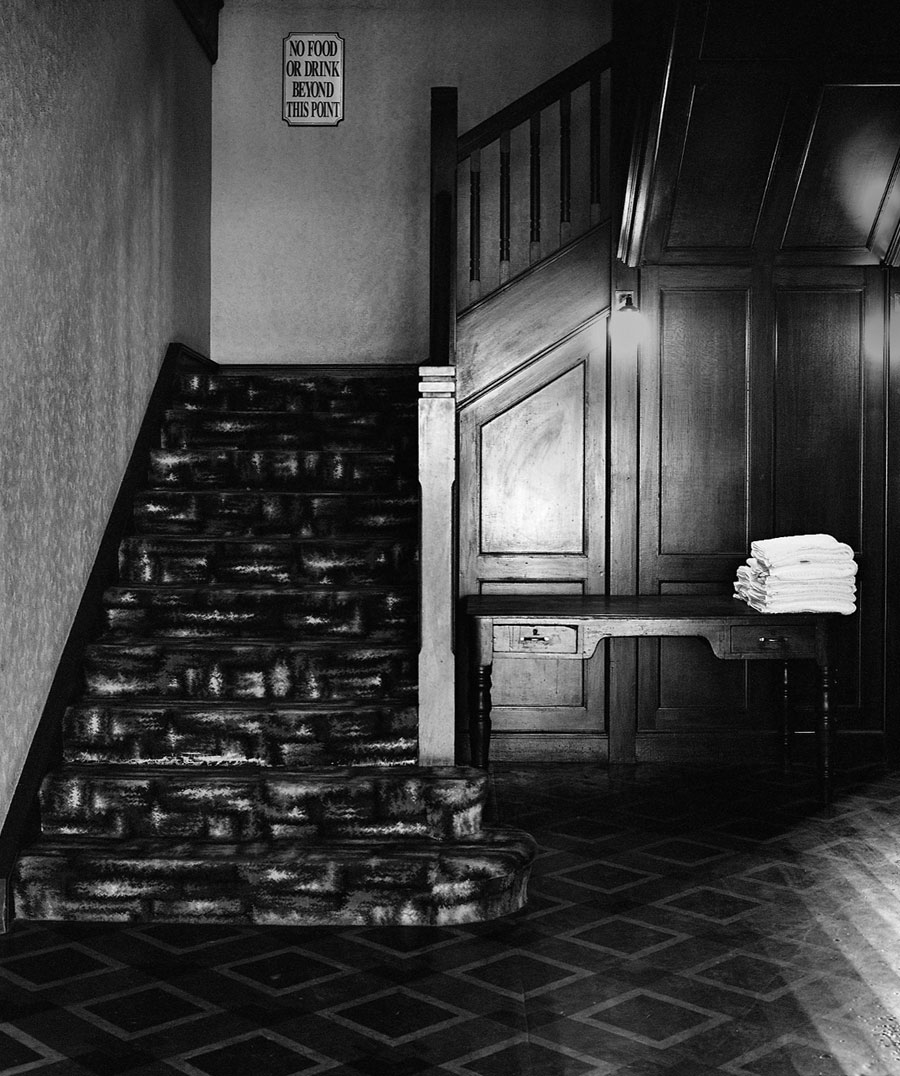
This is a good exhibition of small, darkly hewn, traditionally printed silver gelatin photographs, beautifully hung in the small gallery at Edmund Pearce and lit in the requisite, ambient manner. There are some outstanding photographs in the exhibition. The strongest works are the surrealist tinged, film noir-ish mise-en-scènes, the ones that emphasise the metaphorical darkness of the elements gathered upon the stage. Photographs such as Big TroutThe Female Factory, Adelong, New South Wales and Captain’s Flat Hotel, New South Wales really invoke a feeling of unhomely (or unheimlich), where nature is out of kilter. These images unsettle our idea of Oztraliana, our perceived sense of Self and our place in the world. They disrupt normal transmission; they transmutate the seen environment, transforming appearance, nature and form. Less successful in this quest are the bushfire landscapes. I feel these add little to the narrative thread of the exhibition and could have easily been left out in a judicious cull of the photographs. This would have made the overarching story line stronger still.

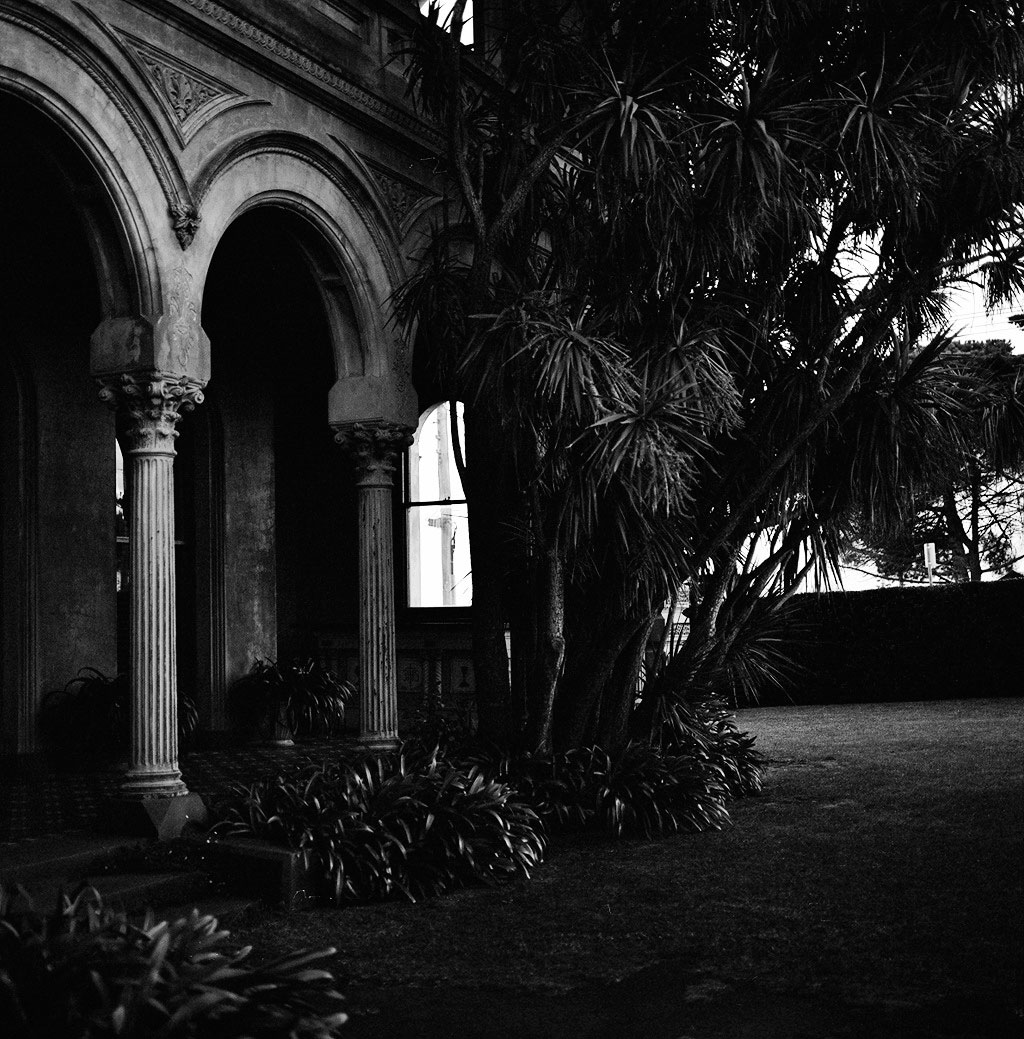
One of the best photographs in the exhibition is Lathamstowe (2011, below). This dark, brooding, intense photograph is a beautifully realised visualisation, one that balances scale, tone, light, form and darkness to create a haunting image that stays with you a long time after you have seen it. This one images says it all: the artist has talent. More please!

Dr Marcus Bunyan


Many thankx to Edmund Pearce Gallery for allowing me to publish the photographs in the posting. Please click on the photographs for a larger version of the image.


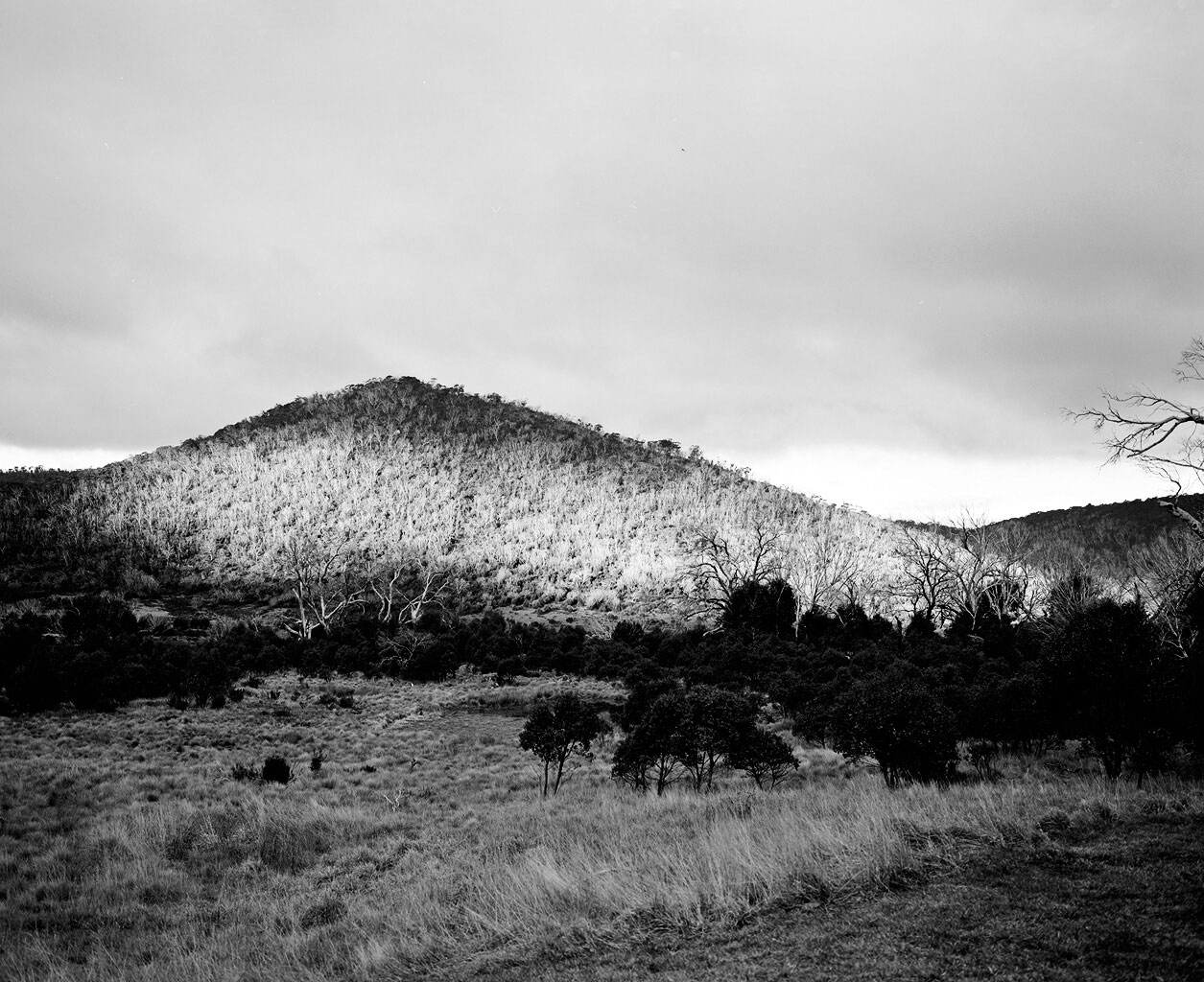
Jane Brown (Kuwait, Australia, b. 1967) 'Bushfire Landscape I' 2011


Jane Brown (Kuwait, Australia, b. 1967)
Bushfire Landscape I
2011
Fibre based, silver gelatin print
16.5 x 20.5cm


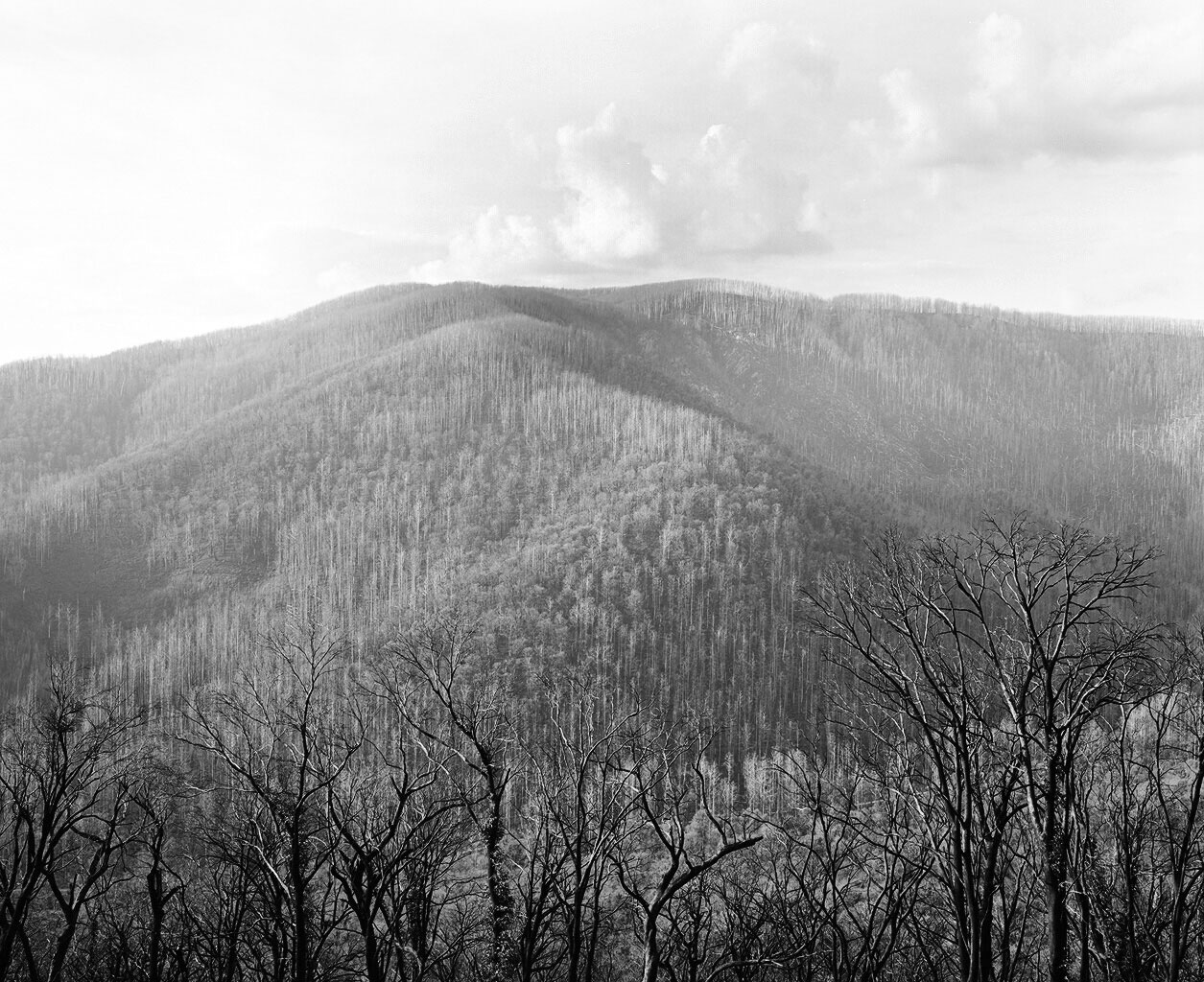
Jane Brown (Kuwait, Australia, b. 1967) 'Bushfire Landscape II, Lake Mountain, Victoria' 2010


Jane Brown (Kuwait, Australia, b. 1967)
Bushfire Landscape II, Lake Mountain, Victoria
2010
Fibre based, silver gelatin print
16.5 x 19.5cm


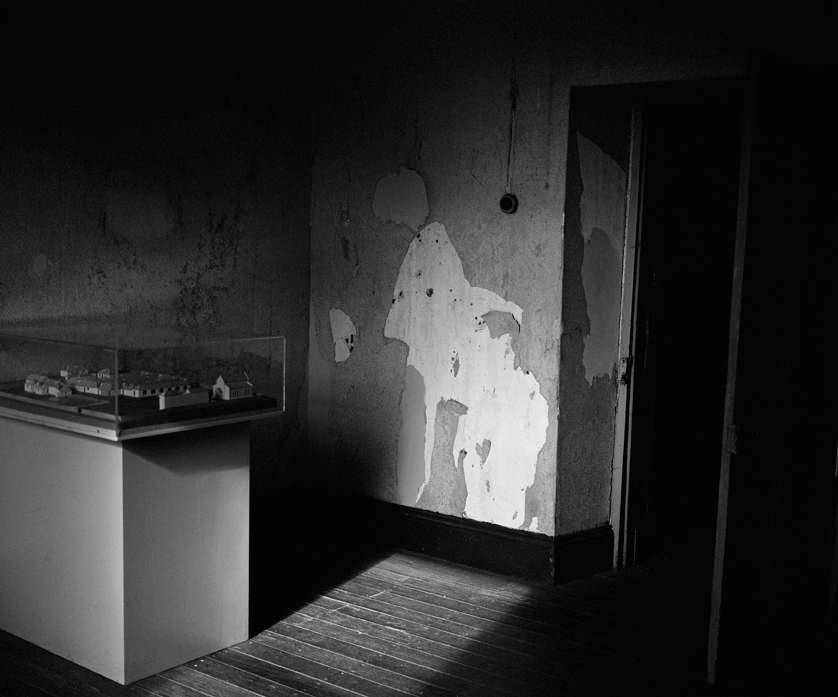
Jane Brown (Kuwait, Australia, b. 1967) 'The Female Factory (convict women’s prison), Ross, Tasmania' 2009


Jane Brown (Kuwait, Australia, b. 1967)
The Female Factory (convict women’s prison), Ross, Tasmania
2009
Fibre based, silver gelatin print
15.8 x 19.5cm


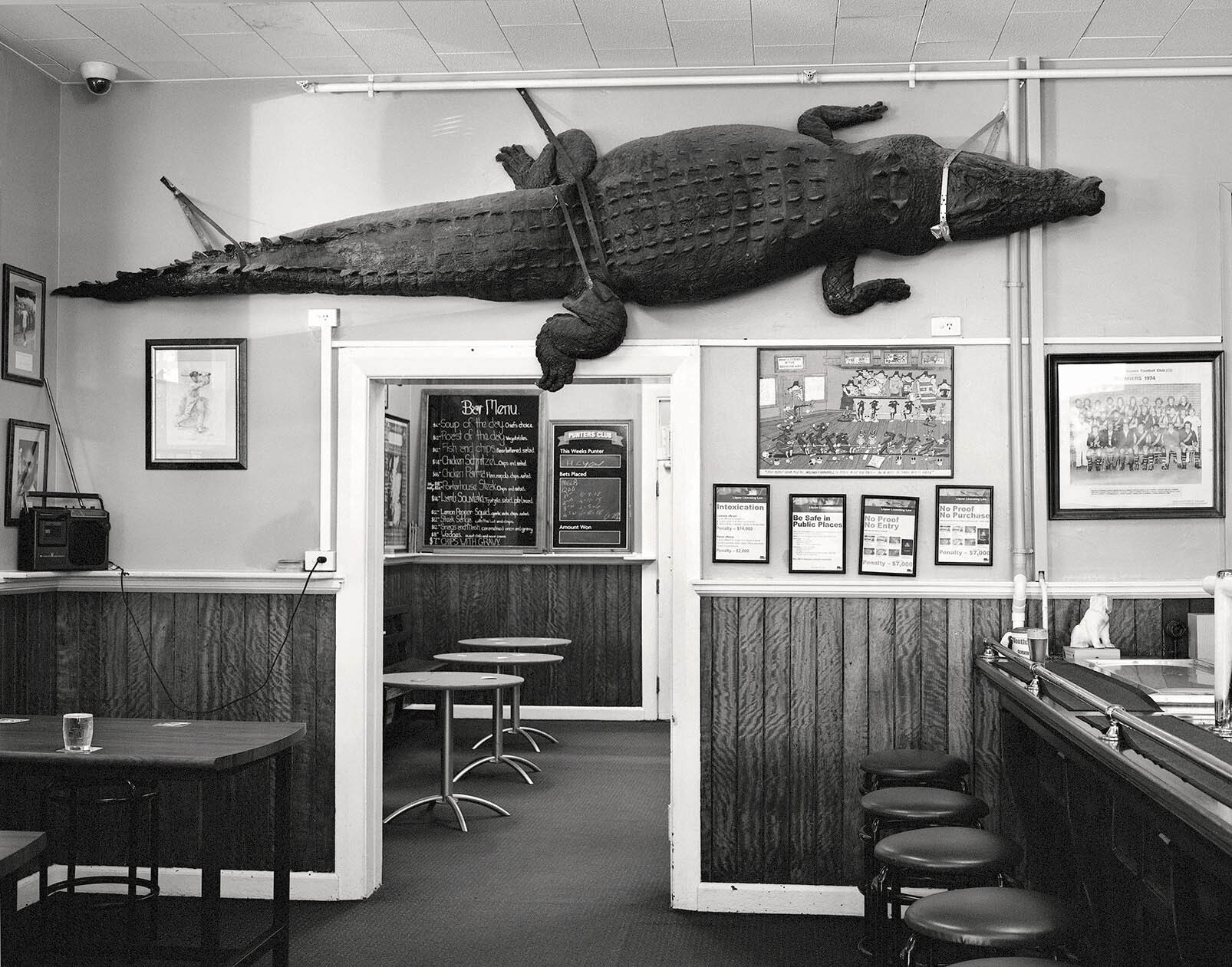
Jane Brown (Kuwait, Australia, b. 1967) 'Front Bar, Wonthaggi Hotel, Victoria' 2012


Jane Brown (Kuwait, Australia, b. 1967)
Front Bar, Wonthaggi Hotel, Victoria
2012
Fibre based, selenium toned, gelatin silver print


Jane Brown (Kuwait, Australia, b. 1967) 'Bush Christmas, Victoria' 2011


Jane Brown (Kuwait, Australia, b. 1967)
Bush Christmas, Victoria
2011
Fibre based, selenium toned, gelatin silver print


Jane Brown (Kuwait, Australia, b. 1967) 'Lathamstowe' 2011


Jane Brown (Kuwait, Australia, b. 1967)
Lathamstowe
2011
Fibre based, silver gelatin print
16.5 x 16.5cm


“I find it interesting how monochrome is used to differentiate the living and the dead, the past and the present. It has an ability to transcend the constraints of time, memory and death. I examine this a lot in my work – landscapes seem to have vestiges or traces of past life and memorials become otherworldly.”


Jane Brown. ‘Weekend Australian Review’, August 2011


“The antipodes was seen as a world of reversals, the dark subconscious of Britain. It was for all intents and purposes Gothic par excellence.”


Gary Turcotte. “Australian Gothic,” in Marie Mulvey-Roberts (ed.). The Handbook to Gothic Literature. 1998


Comprising photographs taken in rural New South Wales, the ACT, Victoria and Tasmania, this exhibition takes its cue from the gothic imaginings of colonial Australia. We see images of a convict past, the bush Christmas, unforgiving landscapes and melancholic hotels. It carries echoes of the cinema of Wake in Fright (1971) and the Cars that Ate Paris (1974)Rendering visible the themes of the melancholic and the uncanny, Australian Gothic manifests itself in rural isolation – where the homely becomes unhomely (or unheimlich) and where nature is out of kilter.


Jane Brown (Kuwait, Australia, b. 1967) 'Adelong, New South Wales' 2011


Jane Brown (Kuwait, Australia, b. 1967)
Adelong, New South Wales
2011
Fibre based, silver gelatin print
16.5 x 20.5cm


Jane Brown (Kuwait, Australia, b. 1967) 'Tumbarumba, New South Wales' 2012


Jane Brown (Kuwait, Australia, b. 1967)
Tumbarumba, New South Wales
2012
Fibre based, silver gelatin print
16.5 x 19.5cm


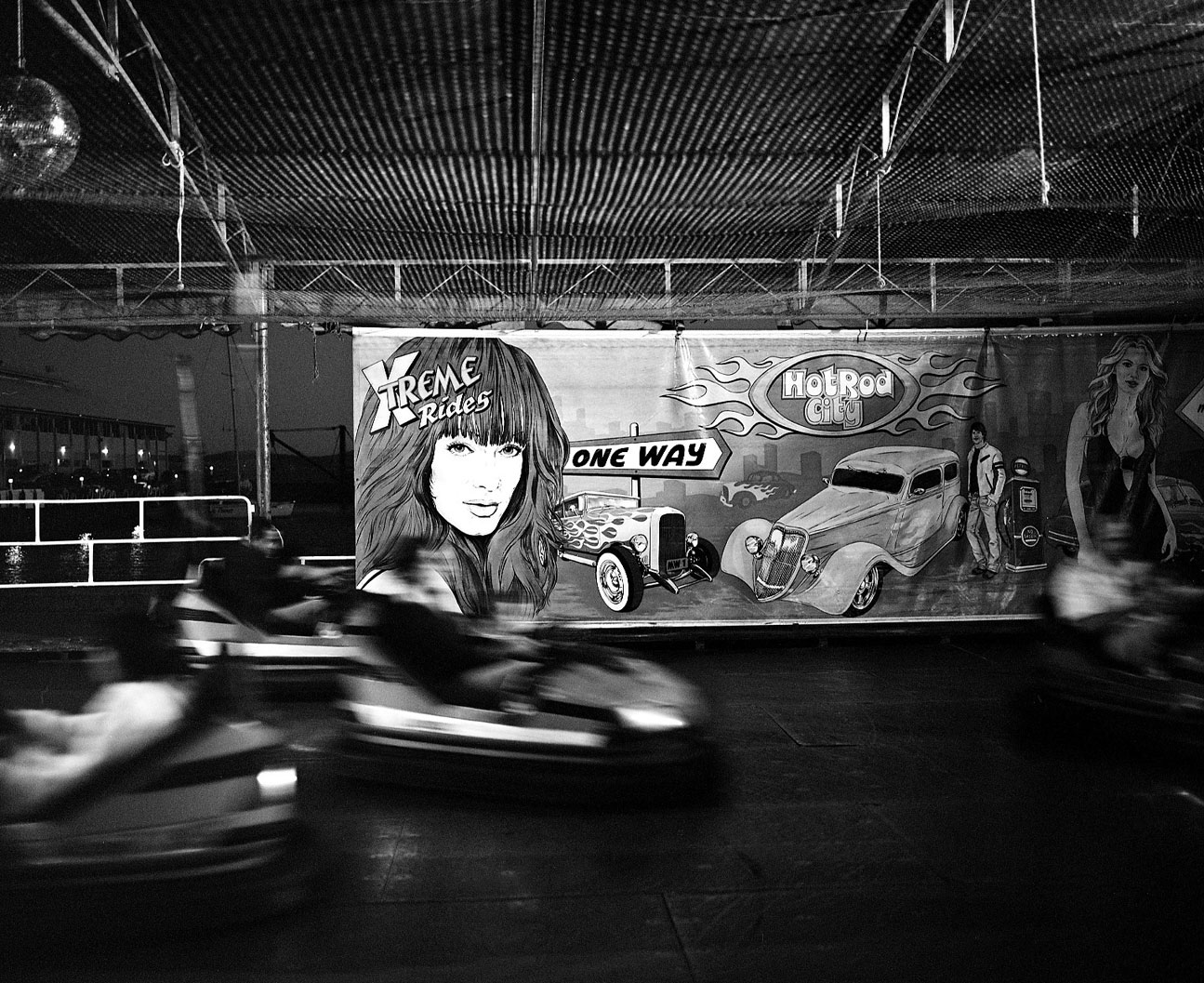
Jane Brown (Kuwait, Australia, b. 1967) 'One Way, Hobart, Tasmania' 2009


Jane Brown (Kuwait, Australia, b. 1967)
One Way, Hobart, Tasmania
2009
Fibre based, silver gelatin print
16.5 x 19.5cm


Jane Brown (Kuwait, Australia, b. 1967) 'Unheimlich, French Island, Victoria' 2010


Jane Brown (Kuwait, Australia, b. 1967)
Unheimlich, French Island, Victoria
2010
Fibre based, silver gelatin print
19 x 16cm


Jane Brown (Kuwait, Australia, b. 1967) 'Captain’s Flat Hotel, New South Wales' 2012


Jane Brown (Kuwait, Australia, b. 1967)
Captain’s Flat Hotel, New South Wales
2012
Fibre based, silver gelatin print
21.5 x 17.5cm


Edmund Pearce Gallery

This gallery has now closed.

LIKE ART BLART ON FACEBOOK

Back to top

Exhibition: ‘In Focus: Los Angeles, 1945-1980’ at the J. Paul Getty Museum, Los Angeles

Exhibition dates: 20th December 2011 – 6th May 2012


Anthony Friedkin (American, b. 1949) 'Clockwork Malibu' 1978


Anthony Friedkin (American, b. 1949)
Clockwork Malibu
1978
Gelatin silver print
11 15/16 x 18 5/16 in
The J. Paul Getty Museum, Los Angeles
Gift of Sue and Albert Dorskind
© Anthony Friedkin


While Anthony Friedkin has documented subjects as diverse as the marginalised gay community of San Francisco, convicts at Folsom Prison, and brothels in New York, it is the Southern California coastline that has remained a recurrent theme throughout his forty-five-year career. The Los Angeles native took up photography about the same time he learned to surf. His images of waves deftly communicate the primordial power and elusive mysteries that he ascribes to the ocean. This photograph of surfer Rick Dano on an early morning drive up the coast conveys a mood of quiet, anticipatory harmony.

Text from Pacific Standard Time at the Getty


I have never particularly liked Los Angeles as a city. There seems to be something unappealing about the place, some energy lurking just beneath the surface that you can’t quite put your finger on. Maybe it is the comparison with the vivacious San Francisco just up the coast, the awful public transport or, more spookily, the lack of people on the street. People never walk anywhere in LA, it’s a car town. When I did walk on the street I felt vulnerable and surveyed with suspicion by people in cars, like a rabbit caught in the headlights.

These photographs confirm this feeling. Unlike the visual acoustics of the architectural photographs of Julius Shulman (photographs that mythologised this urban metropolis and then exported that idealised presence and Californian mid-century design to the rest of the world) these photographs have an unbelievably desolatory nature to them. They seem to be joyless and sorrowful, devoid of warmth, comfort, or hope – as though the human and the city were separated, as if we are separated from a loved one.

The row after row of tinderbox houses, the ubiquitous cars, the sense of emptiness, hopelessness and menace (see Gary Winogrand Los Angeles 1964, below – if looks could kill this would be it, the bandaged broken nose just perfect for the photograph) all paint a picture of despair. Even the supposedly quiet, anticipatory harmony of the photograph of surfer Rick Dano by Anthony Friedkin (1978, below top) is, to me, full of unresolved tension. The mist in the background hanging over the rocks, blocking out the view, the filthy hands and the bandaged little finger of the right hand, the downcast eyes, the impossibly long cigarette handing from his lips and most importantly the empty distance between the figure and the safety of the automobile. The tension in that distance and the downcast eyes says nothing to me of harmony but of isolation, sadness and regret.

Los Angeles is not my favourite city but it is a fascinating place none the less, as these photographs do attest.

Dr Marcus Bunyan


Many thankx to the J. Paul Getty Museum for allowing me to publish the photographs in the posting. Please click on the photographs for a larger version of the image.


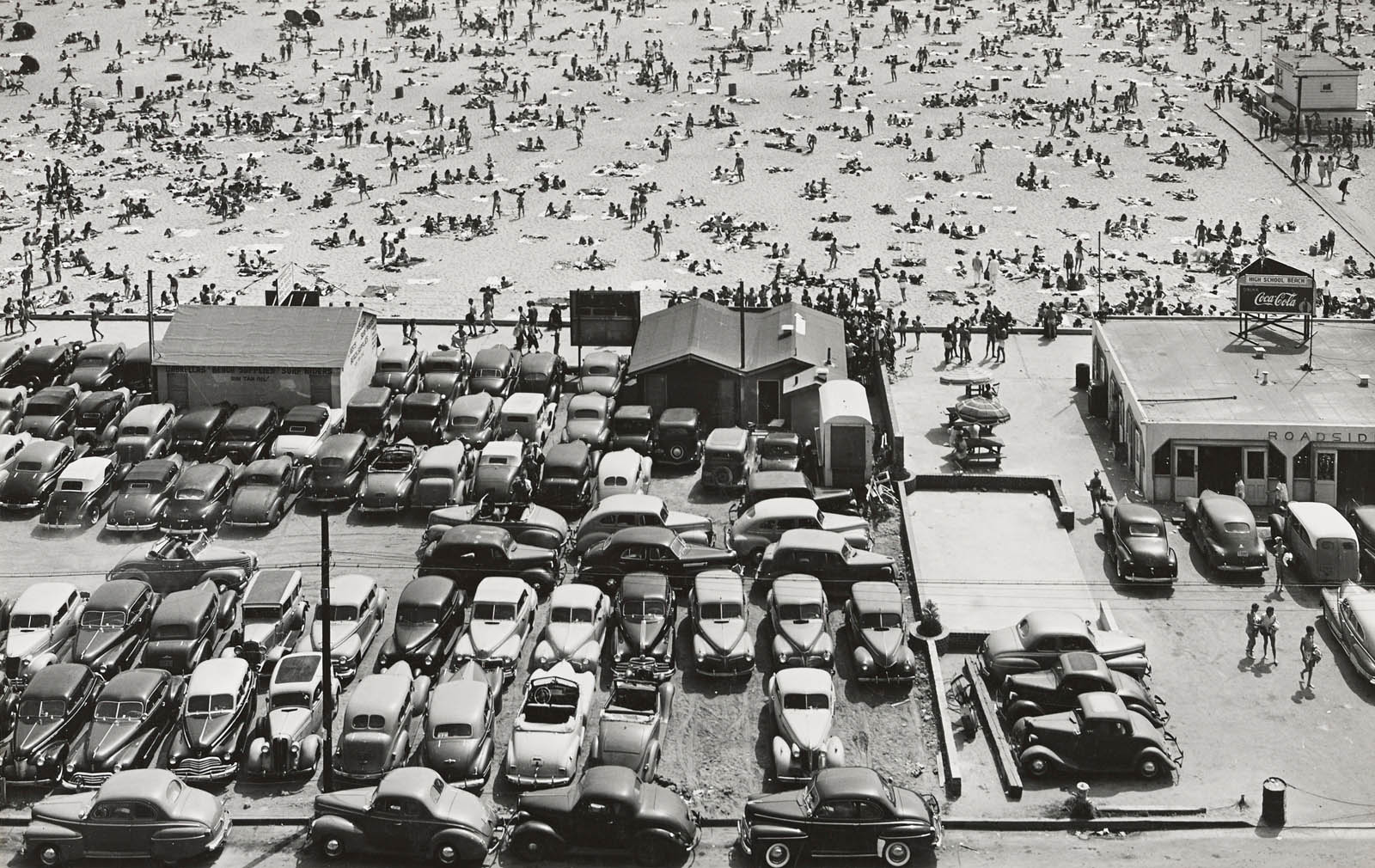
Max Yavno (American, 1911-1985) 'High School Beach' 1945


Max Yavno (American, 1911-1985)
High School Beach
1945
Gelatin silver print
22.1 x 34.4cm
The J. Paul Getty Museum, Los Angeles
Gift of Marjorie and Leonard Vernon
© 1988 Centre for Creative Photography, The University of Arizona Foundation


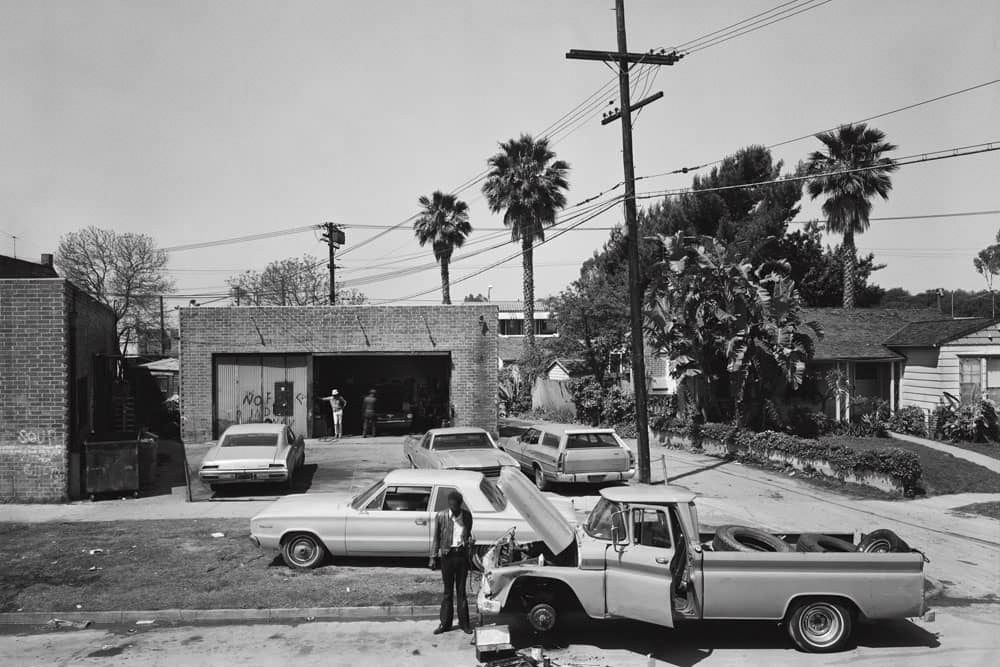
Anthony Hernandez (American, b. 1947) 'Automotive Landscapes #5, Los Angeles' 1978


Anthony Hernandez (American, b. 1947)
Automotive Landscapes #5: Los Angeles
1978
Gelatin silver print
11 3/4 x 17 1/8 in
The J. Paul Getty Museum, Los Angeles
Purchased in part with funds provided by the Photographs Council of the J. Paul Getty Museum
© Anthony Hernandez


Hernandez started photographing what he refers to as “automotive landscapes” in 1977, using a 35mm camera until he realised that a large-format camera loaded with 5 x 7-inch negative film would provide the detail he desired. Taken from a slightly elevated vantage point, Hernandez’s image of an immobilised truck and its lone mechanic in front of a repair shop presents a sobering view of Los Angeles’s car-dominant culture.

Text from Pacific Standard Time at the Getty


Gary Winogrand (American, 1928-1984) 'Los Angeles' 1964


Gary Winogrand (American, 1928-1984)
Los Angeles
1964
Gelatin silver print
9 x 13 7/16 in
The J. Paul Getty Museum, Los Angeles
© 1984 The Estate of Gary Winogrand


This image of a couple seated in a parked convertible in front of a nightclub on Sunset Boulevard simultaneously captures the glamour and seediness associated with Hollywood. Evoking a 1940s or ’50s film noir crime drama, a seeming tough guy and femme fatale continue their heated conversation, apparently oblivious to the traffic around them – and to the photographer observing them. A native of New York City, Winogrand studied painting at Columbia University and photography at the New School for Social Research before doing freelance commercial work. He photographed incessantly, using a 35mm camera to create wide-angled or tilted shots that are densely composed and layered with meaning. More than 2,500 rolls of film remained undeveloped at the time of his death in 1984.

Text from Pacific Standard Time at the Getty


As part of the region-wide Pacific Standard Time: Art in L.A., 1945-1980 initiative, The J. Paul Getty Museum presents In Focus: Los Angeles, 1945-1980, an exhibition of photographs from the permanent collection made by artists whose time in Los Angeles inspired them to create memorable images of the city, on view at the Getty Center from December 20, 2011 – May 6, 2012.

This exhibition features both iconic and relatively unknown work by artists whose careers are defined by their association with Los Angeles, who may have lived in the city for a few influential years, or who might have visited only briefly,” said Virginia Heckert, curator, Department of Photographs, the J. Paul Getty Museum, and curator of the exhibition.

The photographs are loosely grouped around the themes of experimentation, street photography, architectural depictions, and the film and entertainment industry. Works featured in the exhibition are from artists such as Jo Ann Callis, Robert Cumming, Joe Deal, Judy Fiskin, Anthony Friedkin, Robert Heinecken, Anthony Hernandez, Man Ray, Edmund Teske, William Wegman, Garry Winogrand, and Max Yavno. Two of the works in the exhibition by Anthony Hernandez and Henry Wessel Jr. were acquired with funds from the Getty Museum Photographs Council. Drawn from the Museum’s permanent collection, including several recent acquisitions inspired by the Pacific Standard Time initiative, the exhibition offers visitors the opportunity to familiarise themselves with a broad range of approaches to the city of Los Angeles as a subject and to the photographic medium itself.

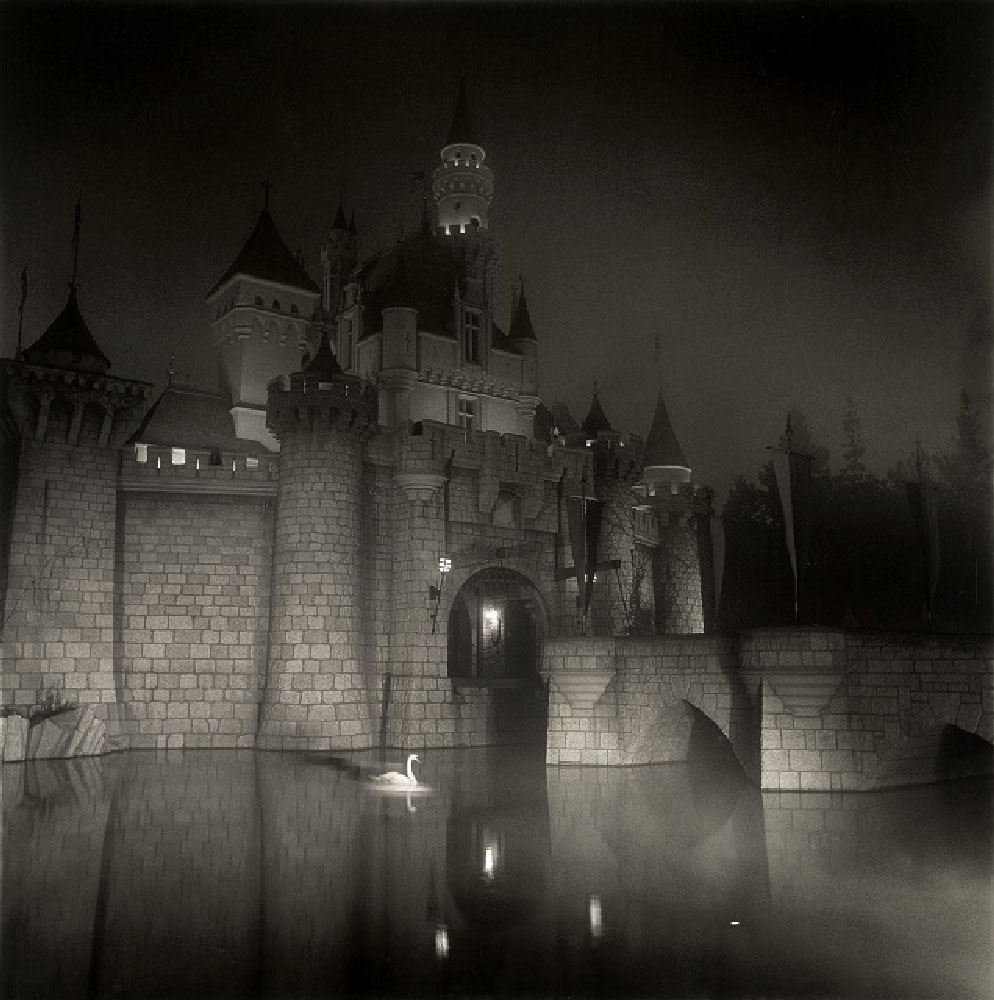
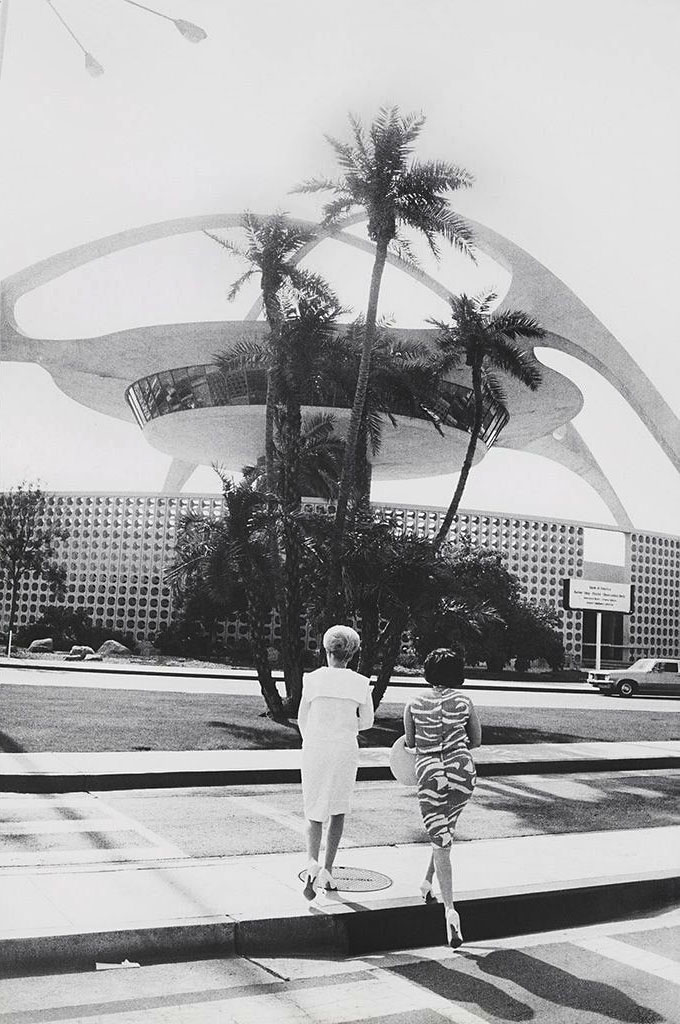
One of the most well-known works in the exhibition is Garry Winogrand’s photograph of two women walking towards the landmark theme building designed by Charles Luckman and William Pereira that has come to symbolise both Los Angeles International Airport and mid-century modern architecture in popular culture. Though a quintessential New Yorker, Winogrand made some of his most memorable photographs in Los Angeles, where he chose to settle in the final years of his life. Also included in the exhibition is Diane Arbus’ dreamily lit photograph of Sleeping Beauty Castle at Disneyland park in Anaheim. Although technically not located in either the city or the county of Los Angeles, Disneyland – and Arbus’ photograph – continues to capture the notion of entertainment and fantasy that has come to be so intrinsically associated with the city.

Other photographers in the In Focus: Los Angeles exhibition who produced the majority of their most creative work in the city include Edmund Teske, with his experimentation in the darkroom and his complex double solarisation process; Robert Heinecken, with images that are equally complex but often incorporate existing printed materials, such as negatives; Anthony Hernandez, whose portraits of Angelenos on the street emphasise the isolation of the individual in an urban environment; and Anthony Friedkin, who combines his passions for surfing and the Southland beaches in his photographs. The inclusion of three photographs from Judy Fiskin’s earliest photographic series, Stucco (1973-1976), provided the impetus for a monographic presentation of the artist’s complete photographic work by Getty Publications. Entitled Some Aesthetic Decisions: The Photographs of Judy Fiskin and featuring an introductory essay by curator Virginia Heckert, the book will be published concurrently with this exhibition.

Press release from the J. Paul Getty Museum website


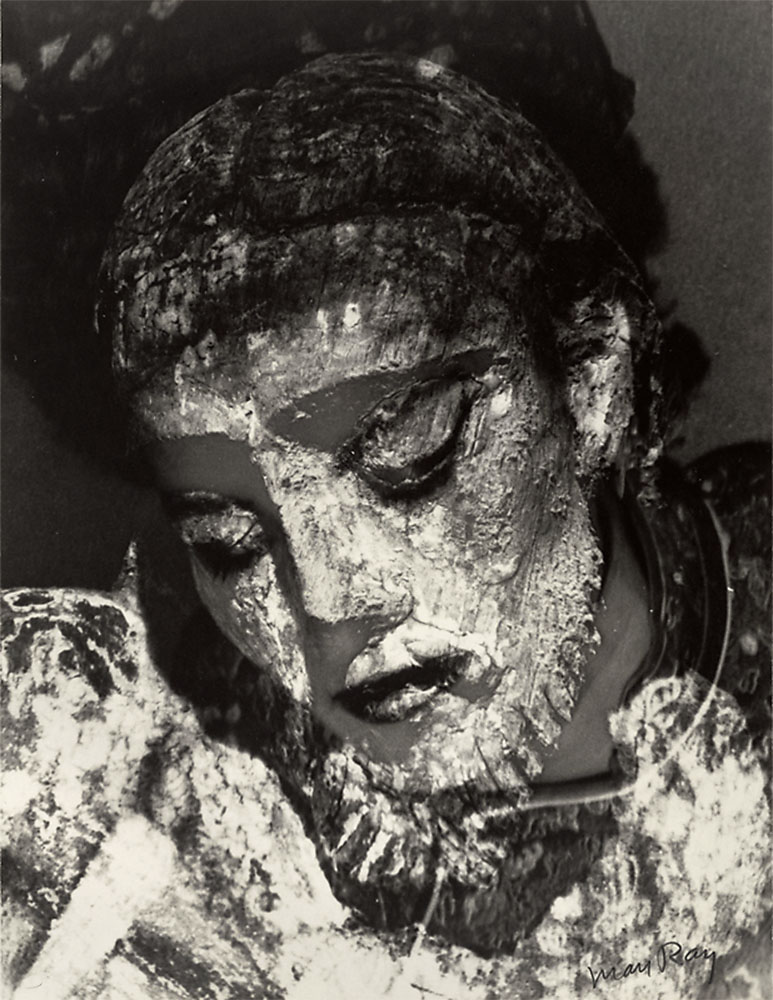
Man Ray (Emmanuel Radnitsky)(American, 1890-1976) 'Juliet with Mud Mask' 1945


Man Ray (Emmanuel Radnitsky)(American, 1890-1976)
Juliet with Mud Mask
1945
Gelatin silver print
35.6 x 27.1cm
The J. Paul Getty Museum, Los Angeles
© Man Ray Trust


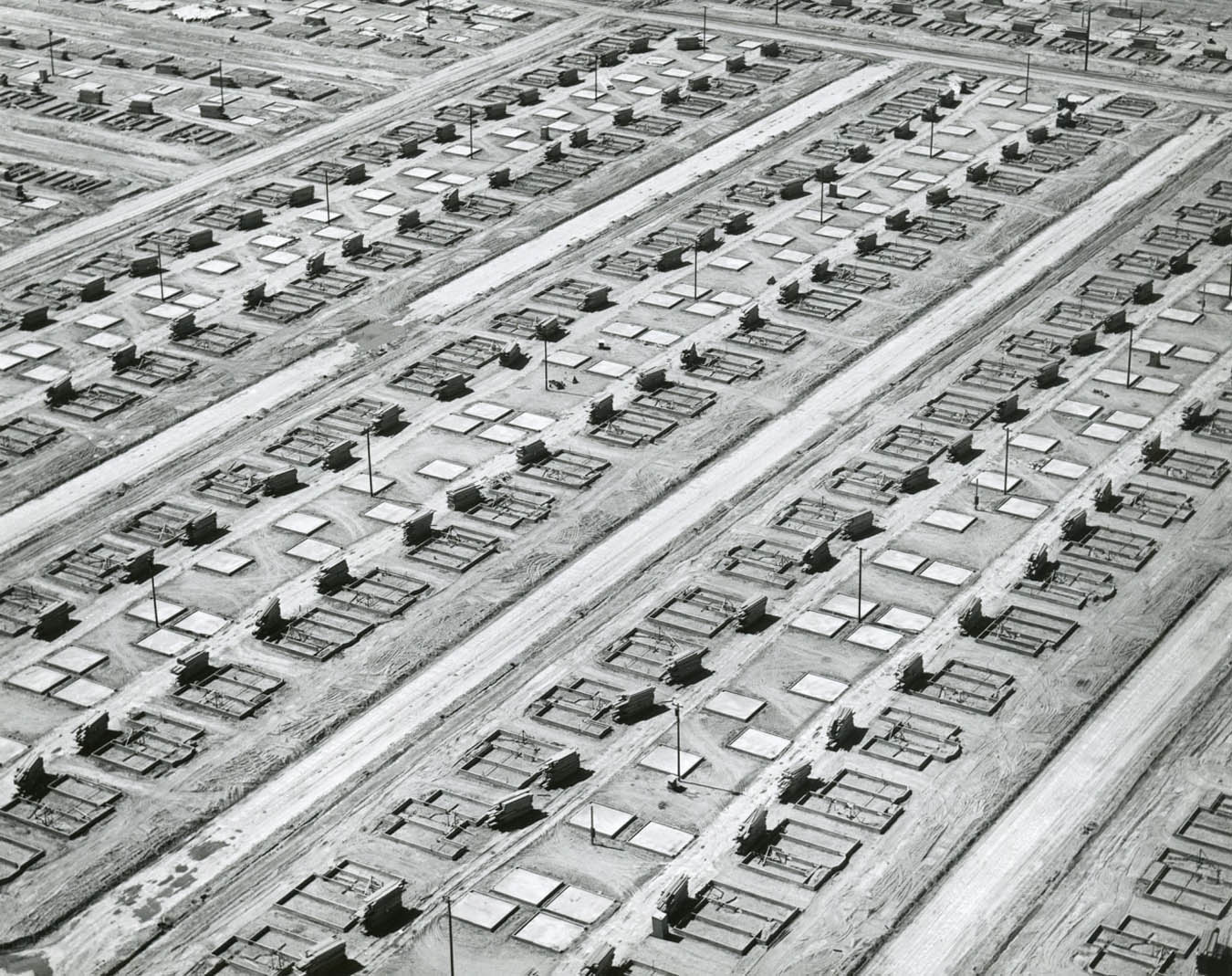
William Garnett (American, 1916-2006) 'Foundations and Slabs, Lakewood, California' 1950


William Garnett (American, 1916-2006)
Foundations and Slabs, Lakewood, California
1950
Gelatin silver print
18.9 x 23.8cm
The J. Paul Getty Museum, Los Angeles
© Estate of William A. Garnett


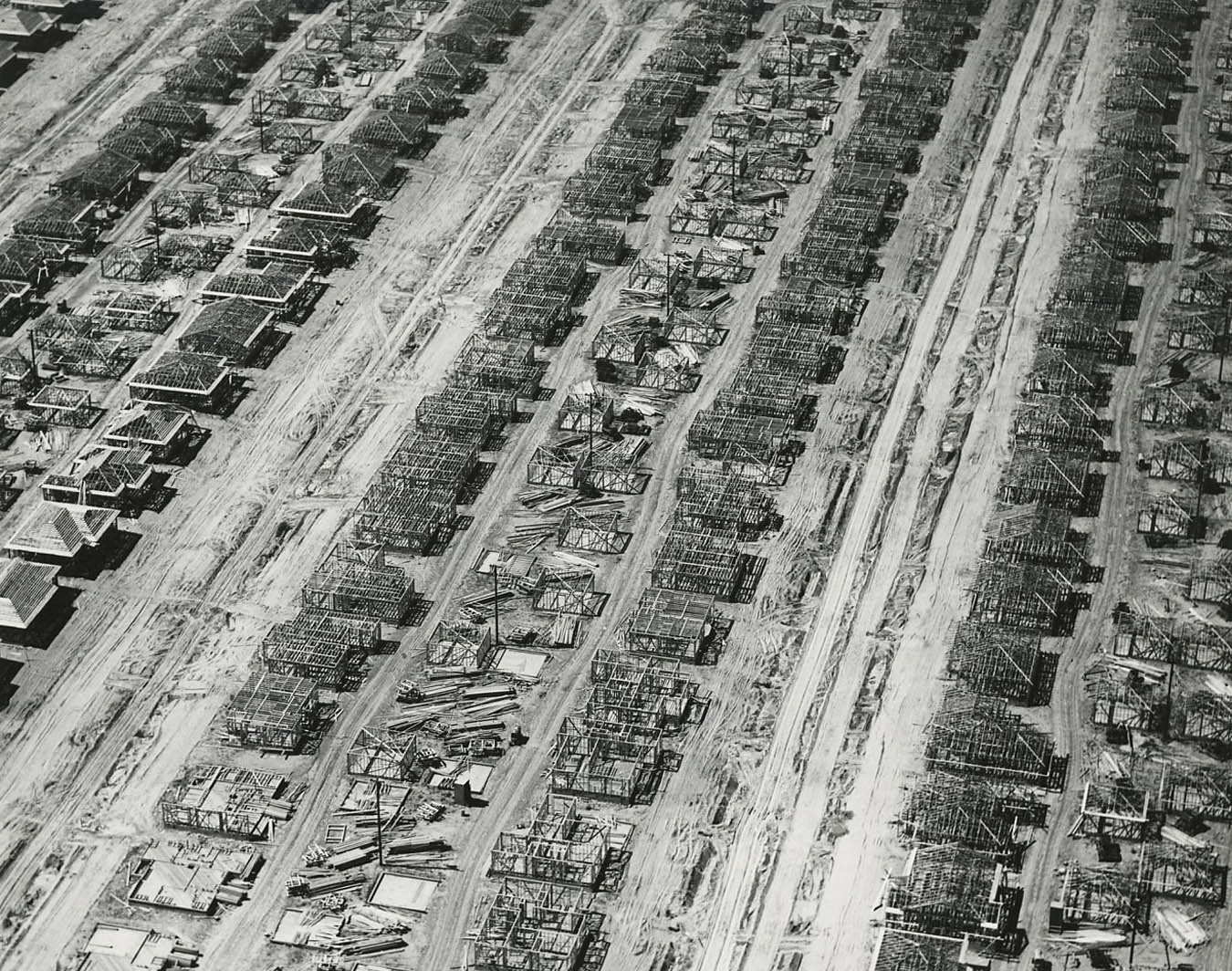
William Garnett (American, 1916-2006) 'Framing, Lakewood, California' 1950


William Garnett (American, 1916-2006)
Framing, Lakewood, California
1950
Gelatin silver print
18.4 x 24.1cm
The J. Paul Getty Museum, Los Angeles
© Estate of William A. Garnett


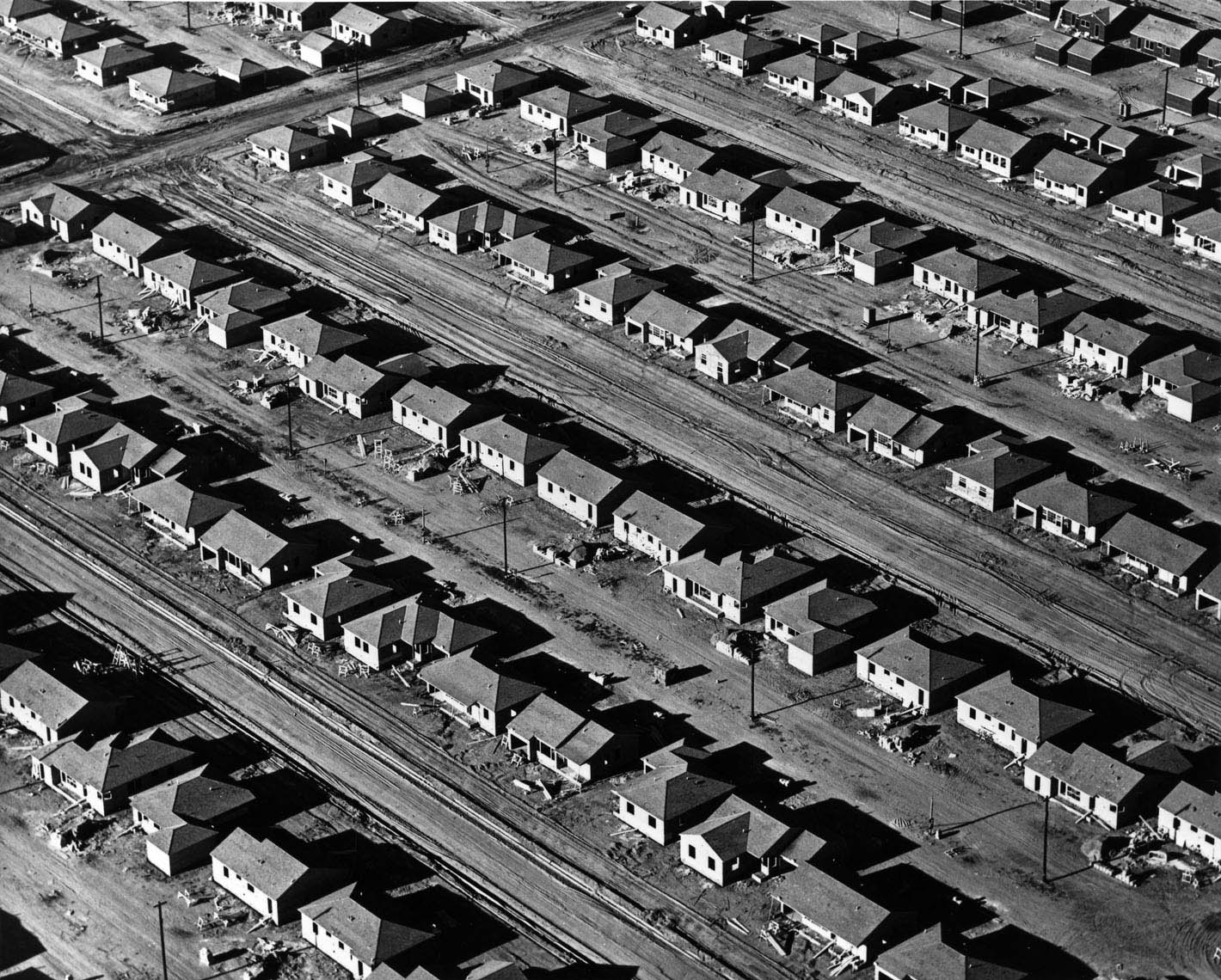
William Garnett (American, 1916-2006) 'Plaster and Roofing, Lakewood, California' 1950


William Garnett (American, 1916-2006)
Plaster and Roofing, Lakewood, California
1950
Gelatin silver print
18.4 x 24.1cm
The J. Paul Getty Museum, Los Angeles
© Estate of William A. Garnett


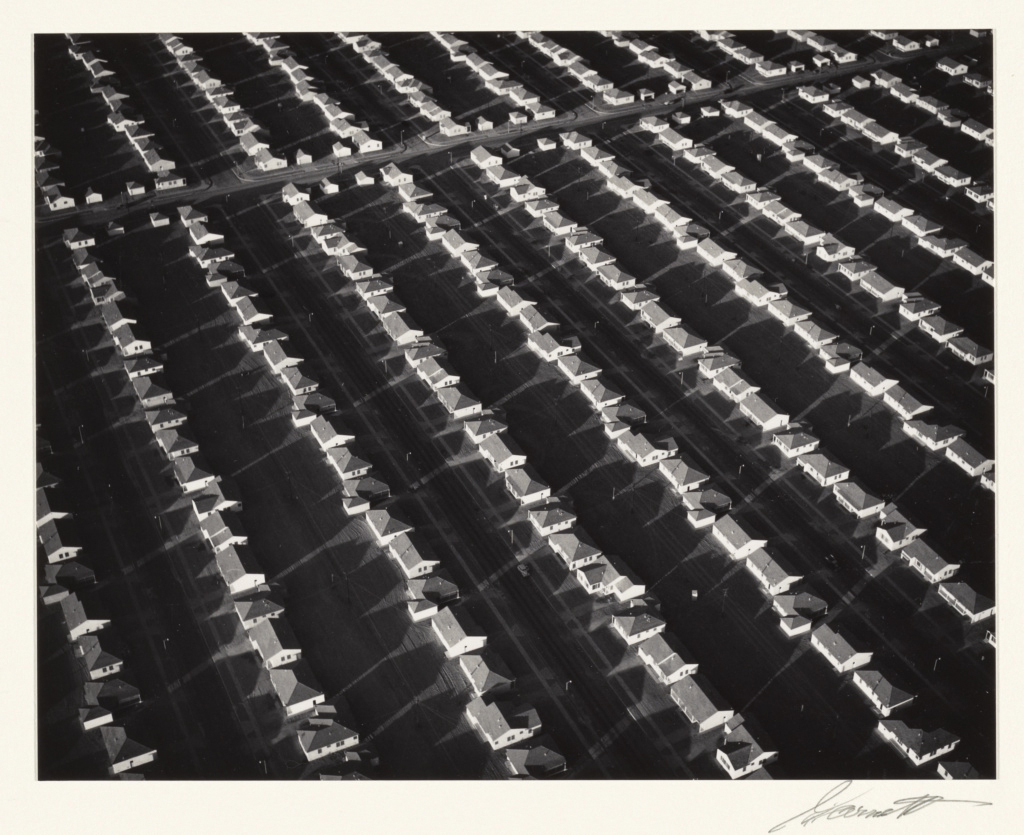
William A. Garnett (American, 1916-2006) 'Finished Housing, Lakewood, California' 1950


William A. Garnett (American, 1916-2006)
Finished Housing, Lakewood, California
1950
Gelatin silver print
7 3/8 x 9 7/16 in
The J. Paul Getty Museum, Los Angeles
© Estate of William A. Garnett


The reduced scale and regular spacing of shapes lend a toy-like quality to Garnett’s suite of prints depicting construction phases of tract housing in the Los Angeles County suburb of Lakewood. The deep shadows, overall patterning, and dramatic diagonals that slice through each composition introduce a sophisticated sense of design and abstraction. After studying photography at Art Center College of Design and military service during World War II, William Garnett learned to fly so that he could photograph his subjects from his Cessna 170-B airplane. Although he was hired by developers to document the construction of 17,500 affordable single-family residences in Lakewood, the majority of his aerial photographs depict the beauty of America’s landscape.

Text from Pacific Standard Time at the Getty


Diane Arbus (American, 1923-1971) 'A Castle in Disneyland' Negative, 1962; print, 1973


Diane Arbus (American, 1923-1971)
A Castle in Disneyland
Negative, 1962; print, 1973
Gelatin silver print
24 x 24cm
The J. Paul Getty Museum, Los Angeles
© Estate of Diane Arbus


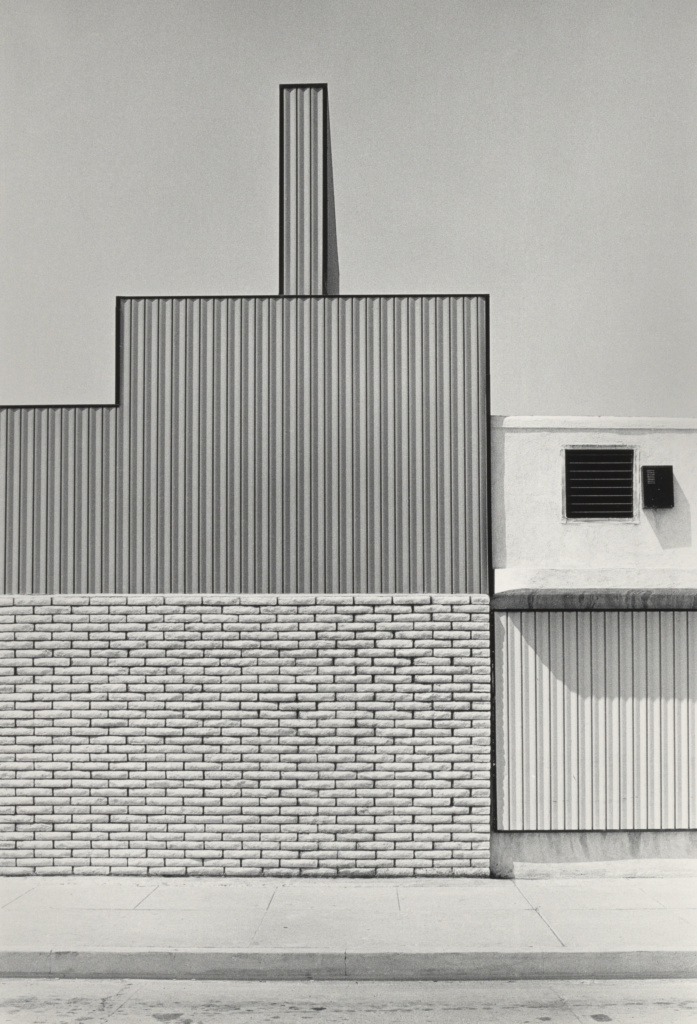
Grant Mudford (Australian, b. 1944) 'Los Angeles (US 257/10a)' negative, 1976; print, 1980


Grant Mudford (Australian, b. 1944)
Los Angeles (US 257/10a)
Negative, 1976; print, 1980
Gelatin silver print
19 1/4 x 13 1/8 in
© Grant Mudford


After working for ten years as a commercial photographer, Sydney native Grant Mudford received funding from the Australia Council for the Arts, enabling him to travel throughout the United States to pursue personal work. Mudford’s love of architecture – particularly the vernacular, often anonymous structures of urban America – is evident in the photographs he produced. His head-on depictions of the façades of simple commercial buildings are enlivened by signage, the play of light and shade, the placement of doors and windows, or, as in this image, the rich variety of textures.

Text from Pacific Standard Time at the Getty


Joe Deal (American, 1947-2010) 'Backyard, Diamond Bar, California' 1980


Joe Deal (American, 1947-2010)
Backyard, Diamond Bar, California
1980
Gelatin silver print
11 3/16 x 11 1/4 in
The J. Paul Getty Museum, Los Angeles
© Joe Deal


Joe Deal rose to prominence in the mid-1970s when work he made as a graduate student at the University of New Mexico was included in the exhibition New Topographics: Photographs of a Man-Altered Landscape (1975). From 1976 to 1989, he taught photography at the University of California, Riverside, where he was instrumental in establishing a photography program and developing the university-affiliated California Museum of Photography. His photographs of Diamond Bar feature backyards of this primarily residential suburb located at the junction of the Pomona and Orange freeways in eastern Los Angeles County. Deal’s implementation of a slightly elevated perspective that eliminates the horizon line and provides a view into neighbouring yards effectively conveys the close quarters of life in a master-planned community.

Text from Pacific Standard Time at the Getty


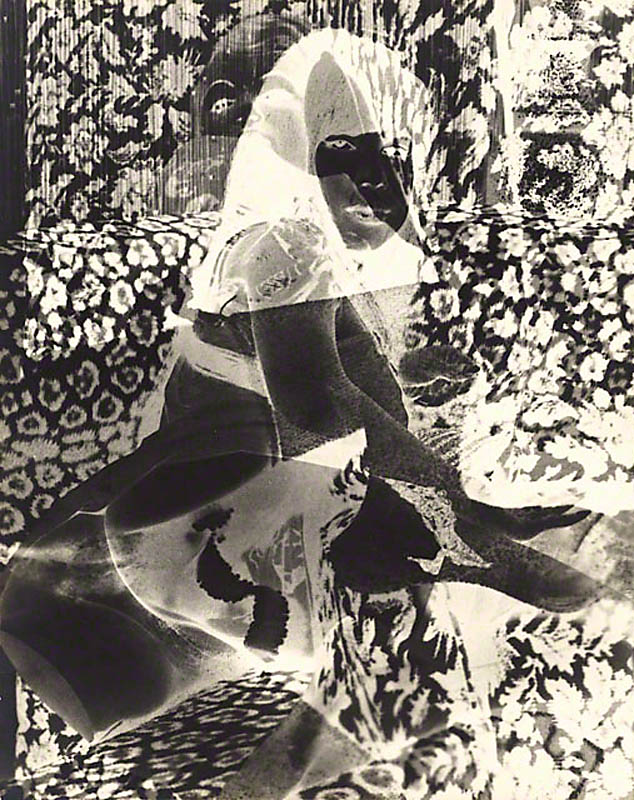
Robert Heineken (American, 1931-2006) 'Untitled (Studies #7)' 1970


Robert Heineken (American, 1931-2006)
Untitled (Studies #7)
1970
Gelatin silver print
9 15/16 x 7 15/16 in.
The J. Paul Getty Museum, Los Angeles
© The Estate of Robert Heineken


Garry Winogrand (American, 1928-1984) 'Los Angeles International Airport' 1964


Garry Winogrand (American, 1928-1984)
Los Angeles International Airport
1964
Gelatin silver print
The J. Paul Getty Museum, Los Angeles
© 1984 The Estate of Garry Winogrand


“It is immediately apparent that no city has ever been produced by such an extraordinary mixture of geography, climate, economics, demography, mechanics and culture; nor is it likely that an even remotely similar mixture will ever occur again.” ~ Reyner Banham, Los Angeles: The Architecture of Four Ecologies, 1971

This exhibition features photographs – made between 1945 and 1980 – from the Museum’s collection that represent diverse responses to the city of Los Angeles as a subject and to photography as a medium for documentary and creative expression. It is loosely grouped around the themes of experimental photography, vernacular architecture, car culture, and fantasy and the film industry.

Both iconic and relatively unknown works are included. One of the best known is Garry Winogrand’s image of two women walking towards the Theme Building at L.A. International Airport (see image above). Though a quintessential New Yorker, Winogrand settled in Los Angeles near the end of his life.

Experimental Photography

With its reclining figure set against a patterned background, Robert Heineken’s image recalls the odalisques of French painter Henri Matisse (see image above). To Heineken, however, traditional subjects and techniques were of little interest. He created this camera-less photograph by using a page torn from a magazine as the negative. This allowed light to pass through and merge depictions on both sides of the page into a single image with reversed tones.

In 1963, Heineken founded the photography program at the University of California, Los Angeles. He forged new directions in photography, utilising strategies of manipulation and appropriation to address themes of consumer culture and sexual politics.

Vernacular Architecture

Judy Fiskin’s propensity to backlight her subjects makes it difficult to read the details in the modest examples of vernacular architecture found in Westside neighbourhoods of Los Angeles that she photographed for her Stucco series. Viewers may be inclined to squint against the harsh light of Southern California that Fiskin makes so palpable. Nevertheless, the small scale of her images, contained by the black edges of the negative, encourages close viewing.

After completing graduate studies in art history at UCLA, Fiskin joined the faculty of the California Institute of Arts in 1977.

Car Culture

A native of Los Angeles, following two years of study at East Los Angeles College and two years of service in the U.S. Army, Anthony Hernandez took up photography in earnest around 1970.

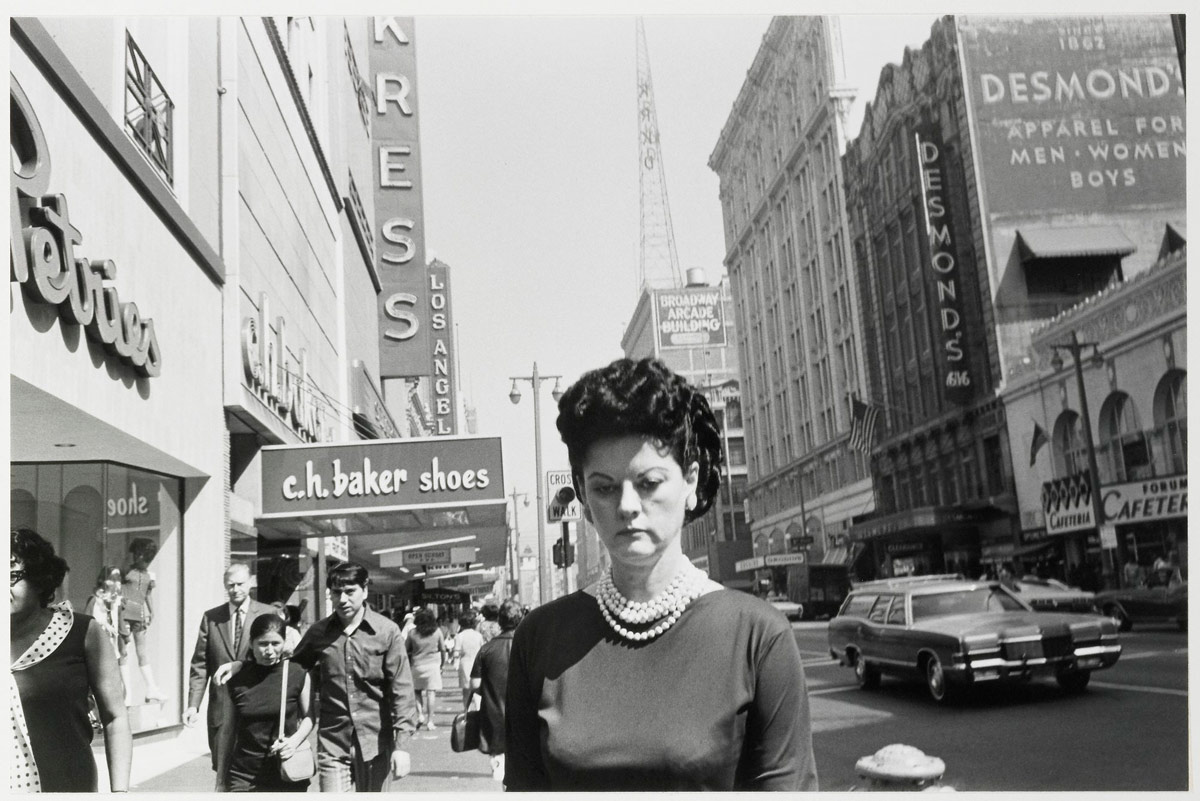
For this image, Hernandez preset his 35mm camera so that objects within a specific range would be in focus. Then, while walking the streets of downtown Los Angeles, he swung the camera to his eye for a fraction of a second to capture fellow pedestrians as well as the ambient mood of a city more typically experienced from the driver’s seat (see image below).

Fantasy and the Film Industry

Los Angeles native Anthony Friedkin took up photography about the same time he learned to surf, and was already an accomplished photographer by age 16. He then studied at Art Center College of Design and the University of California, Los Angeles.

Friedkin began working as a still photographer for motion pictures in 1975. His depiction of row after row of film cans might be viewed as a historical document of a medium that has been replaced by new technology (see image below).

Anonymous. “In Focus: Los Angeles, 1945-1980,” on the J. Paul Getty Museum website Nd [Online] Cited 18/10/2024


Anthony Hernandez (American, b. 1947) 'Los Angeles #3' 1971


Anthony Hernandez (American, b. 1947)
Los Angeles #3
1971
Gelatin silver print
7 3/4 x 11 13/16 in
The J. Paul Getty Museum, Los Angeles
Purchased in part with funds provided by the Photographs Council
© Anthony Hernandez


Following two years of study at East Los Angeles College and two years of service in the U.S. Army, Anthony Hernandez took up photography in earnest around 1970. For this image, he preset his 35mm camera so that objects within a specific range would be in focus. Then, while walking the streets of downtown Los Angeles, he swung the camera to his eye for a fraction of a second to capture fellow pedestrians as well as the ambient mood of a city more typically experienced from the driver’s seat. A native of Los Angeles, Hernandez has continued to photograph the city, addressing issues of community, shelter, and survival in his work.

Text from Pacific Standard Time at the Getty


Anthony Friedkin (American, b. 1949) 'Film Can Library, Universal Studios' 1978


Anthony Friedkin (American, b. 1949)
Film Can Library, Universal Studios
1978
Gelatin silver print
12 x 17 11/16 in
The J. Paul Getty Museum, Los Angeles
Gift of Sue and Albert Dorskind
© Anthony Friedkin


Anthony Friedkin began taking photographs at a young age and had already published his work by the time he was 16. He nonetheless found it important to study photography seriously and did so at Art Center College of Design and the University of California, Los Angeles. Employment as a still photographer for motion pictures beginning in 1975 undoubtedly prepared him to create a portfolio of images of Universal Studios a few years later. His depiction of row after row of film cans might be viewed as a historical document of a medium that has been replaced by new technology. Friedkin’s continued commitment to shooting black-and-white film that he develops and prints in his own darkroom has become increasingly rare.

Text from Pacific Standard Time at the Getty


Darryl J. Curran (American, b. 1935) 'Cocktails with Heinecken' about 1974


Darryl J. Curran (American, b. 1935)
Cocktails with Heinecken
about 1974
Gelatin silver print
9 1/4 x 14 in
The J. Paul Getty Museum, Los Angeles
Gift of Darryl J. Curran
© Darryl J. Curran


After completing his undergraduate degree in design at the University of California, Los Angeles, Darryl Curran entered the school’s newly established photography program, studying with Robert Heinecken, who is positioned toward the center of this image in a black turtleneck. The repeated printing of two frames is typical of Curran’s approach to the photographic medium and the ease with which he employs techniques and strategies derived from his background in printmaking and design. Another form of “mirroring” occurs in the placement of a Heineken beer bottle opposite Heinecken the artist. Curran founded the Department of Photography at California State University, Fullerton, where he taught from 1967 to 2001.

Text from Pacific Standard Time at the Getty


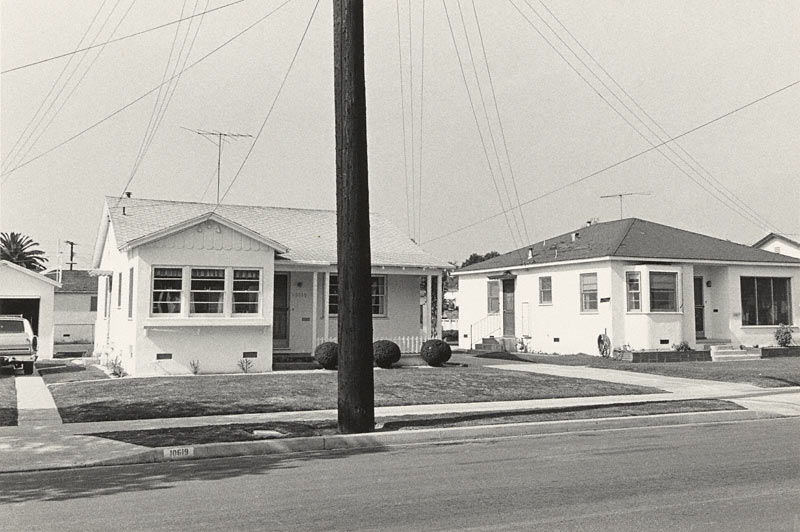
Henry Wessel Jr. (American, 1942-2018) 'Los Angeles' 1971


Henry Wessel Jr. (American, 1942-2018)
Los Angeles
1971
Gelatin silver on Dupont Veragam paper print
7 15/16 x 11 7/8 in
The J. Paul Getty Museum, Los Angeles
Purchased with funds provided by the Photographs Council of the J. Paul Getty Museum
© Henry Wessel


Henry Wessel began taking photographs while majoring in psychology at Pennsylvania State University in the mid-1960s. Travel throughout the United States in subsequent years led him to direct his gaze increasingly to details of human interaction with the natural and man-made environment. Wessel’s move to the West Coast in the early 1970s inspired him to incorporate light and climate into his work. His inclusion in the seminal exhibition New Topographics: Photographs of a Man-Altered Landscape, organised in 1975 by the George Eastman House in Rochester, New York, solidified his reputation as a keen observer of the American topography. In this image, electrical and telephone lines tether a row of modest residences to a single utility pole.

Text from Pacific Standard Time at the Getty


The J. Paul Getty Museum
1200 Getty Center Drive
Los Angeles, California 90049

Opening hours:
Daily 10am – 5pm

The J. Paul Getty Museum website

LIKE ART BLART ON FACEBOOK

Back to top

Marcus Bunyan black and white archive: objects, cars and places, 1991-1992

April 2012


Marcus Bunyan (Australian, b. 1958) 'Bench and two faces' 1991


Marcus Bunyan (Australian, b. 1958)
Two faces
1991
Gelatin silver print


I am scanning my negatives made during the years 1991-1997 to preserve them in the form of an online archive as a process of active memory, so that the images are not lost forever. These photographs were images of my life and imagination at the time of their making, the ideas I was thinking about and the people and things that surrounded me.

All images © Marcus Bunyan. Please click the photographs for a larger version of the image; remember these are just straight scans of the negatives !

Photographs are available from this series for purchase. As a guide, a vintage 8″ x 10″ silver gelatin print costs $700 plus tracked and insured shipping. For more information please see my Store web page.


Marcus Bunyan (Australian, b. 1958) 'Bench and two faces' 1991 'Fred and Andrew smoking a joint in Paris' 1992


Marcus Bunyan (Australian, b. 1958)
Fred and Andrew smoking a joint in Paris
1992
Gelatin silver print


Marcus Bunyan (Australian, b. 1958) 'Bench and two faces' 1991 'Unknown landscape' 1991-2


Marcus Bunyan (Australian, b. 1958)
Unknown landscape
1991-1992
Gelatin silver print


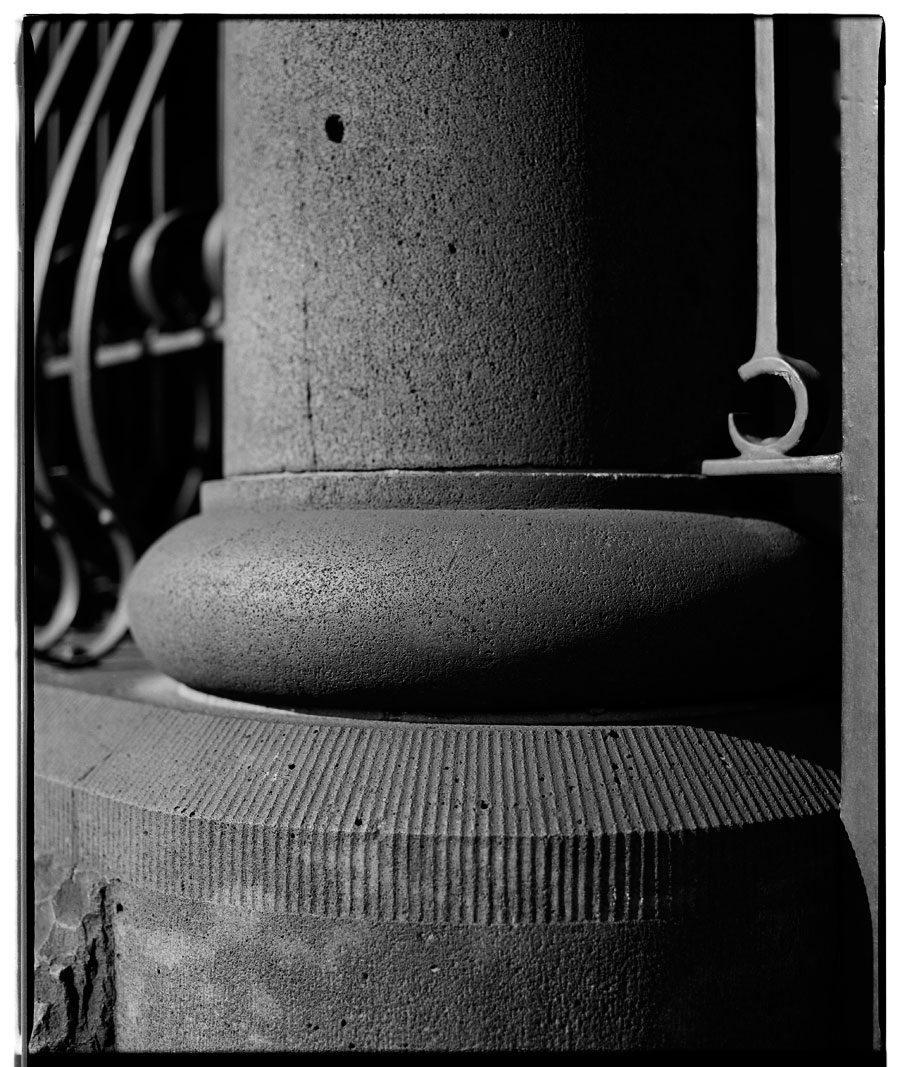
Marcus Bunyan (Australian, b. 1958) 'Bench and two faces' 1991 'Base' 1991


Marcus Bunyan (Australian, b. 1958)
Base
1991
Gelatin silver print


Marcus Bunyan (Australian, b. 1958) 'Shower room, Punt Road, South Yarra' 1991


Marcus Bunyan (Australian, b. 1958)
Shower room, Punt Road, South Yarra
1991
Gelatin silver print


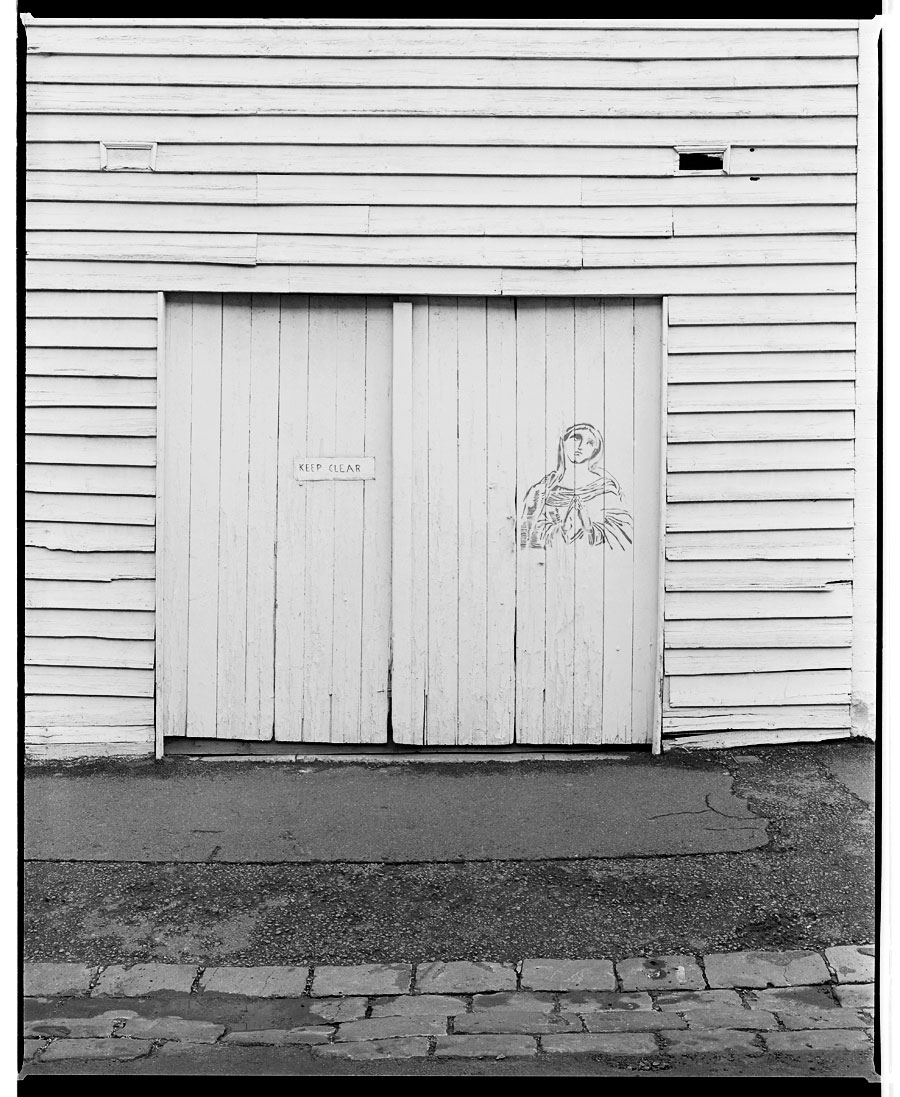
Marcus Bunyan (Australian, b. 1958) 'Keep Clear, Virgin Girl' 1992


Marcus Bunyan (Australian, b. 1958)
Keep Clear, Virgin Girl
1992
Gelatin silver print


Marcus Bunyan (Australian, b. 1958) 'Two torsos' 1991


Marcus Bunyan (Australian, b. 1958)
Two torsos
1991
Gelatin silver print


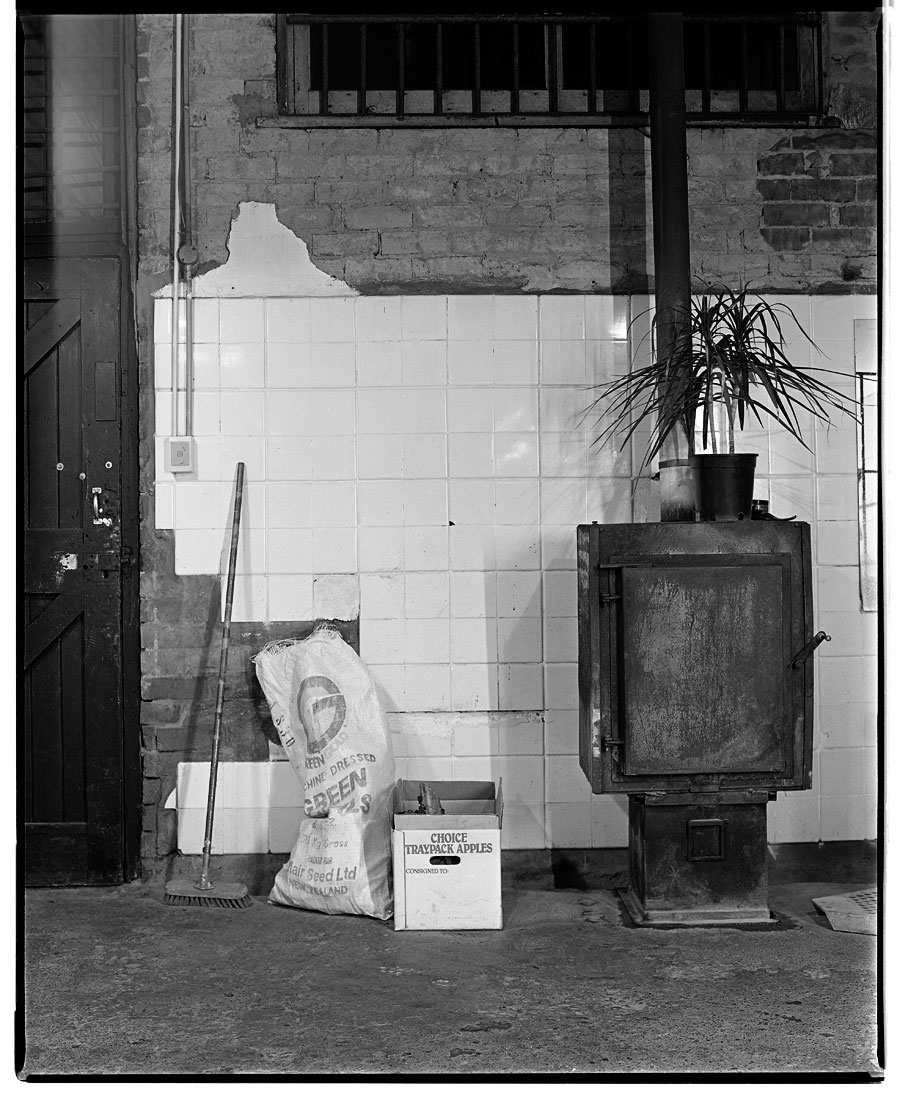
Marcus Bunyan (Australian, b. 1958) 'Standing stove, plant and broom' 1991


Marcus Bunyan (Australian, b. 1958)
Standing stove, plant and broom
1991
Gelatin silver print


Marcus Bunyan (Australian, b. 1958) 'Suspended kitchen' 1991


Marcus Bunyan (Australian, b. 1958)
Suspended kitchen
1991
Gelatin silver print


Marcus Bunyan (Australian, b. 1958) 'Bring me the head of John the Baptist / Man with Big Ears' 1992


Marcus Bunyan (Australian, b. 1958)
Bring me the head of John the Baptist / Man with Big Ears
1992
Gelatin silver print


Marcus Bunyan (Australian, b. 1958) 'The Windmills of Don Q' 1992


Marcus Bunyan (Australian, b. 1958)
The Windmills of Don Q
1992
Gelatin silver print


Marcus Bunyan (Australian, b. 1958) 'Where the stars are (after Manuel Alvarez Bravo)' 1991


Marcus Bunyan (Australian, b. 1958)
Where the stars are (after Manuel Alvarez Bravo)
1991
Gelatin silver print


Marcus Bunyan (Australian, b. 1958) 'Fred and Andrew, Sherbrooke Forest' 1992


Marcus Bunyan (Australian, b. 1958)
Fred and Andrew, Sherbrooke Forest
1992
Gelatin silver print


Marcus Bunyan (Australian, b. 1958) 'Jeff standing on his Chrysler, Studley Park, Melbourne, Victoria, 1992' 1992


Marcus Bunyan (Australian, b. 1958)
Jeff standing on his Chrysler, Studley Park, Melbourne, Victoria, 1992
1991-1992
Gelatin silver print


Marcus Bunyan black and white archive 1991-1997

LIKE ART BLART ON FACEBOOK

Back to top

Exhibition: ‘Polixeni Papapetrou: The Dreamkeepers’ at Stills Gallery, Sydney

Exhibition dates: 28th March – 5th May 2012


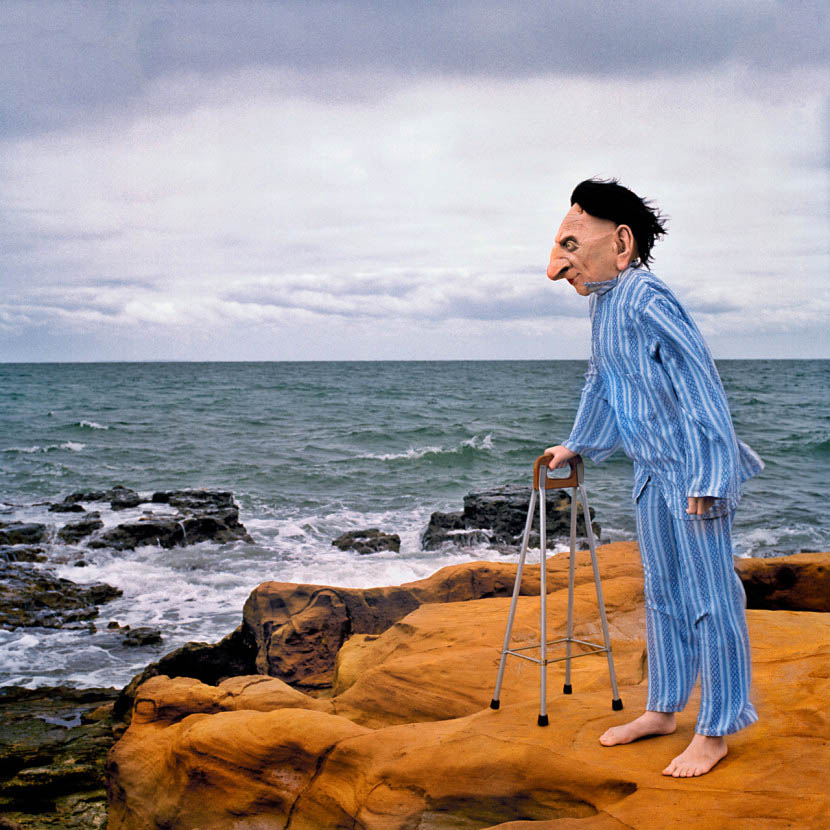
Polixeni Papapetrou (Australian, 1960-2018) 'The Wanderer No. 3' 2012


Polixeni Papapetrou (Australian, 1960-2018)
The Wanderer No. 3
2012
From The Dreamkeepers
Pigment print
105 x 105cm


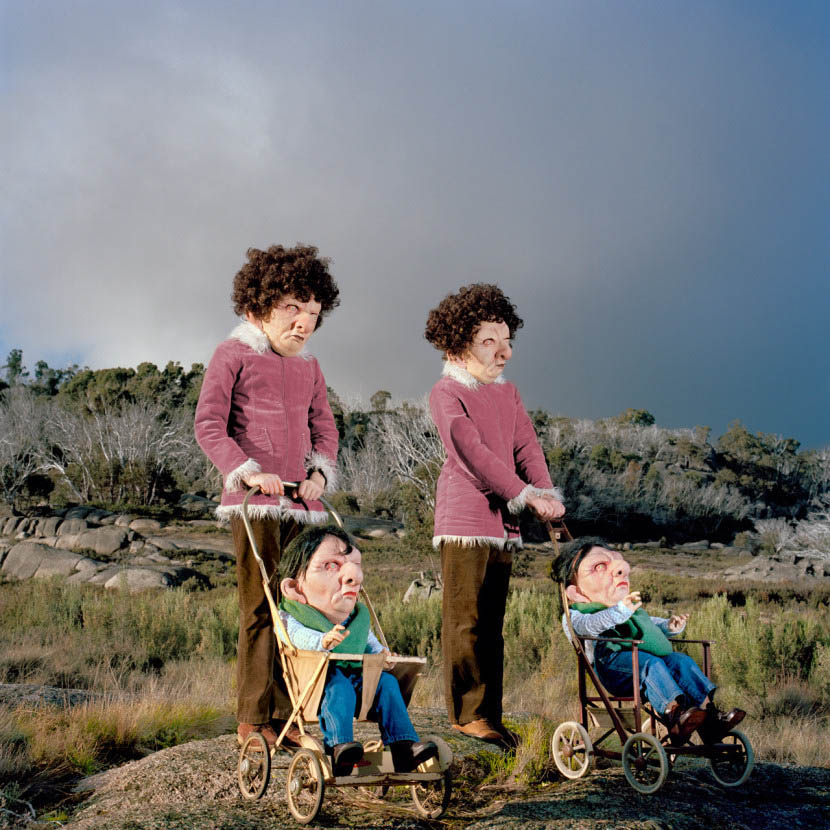
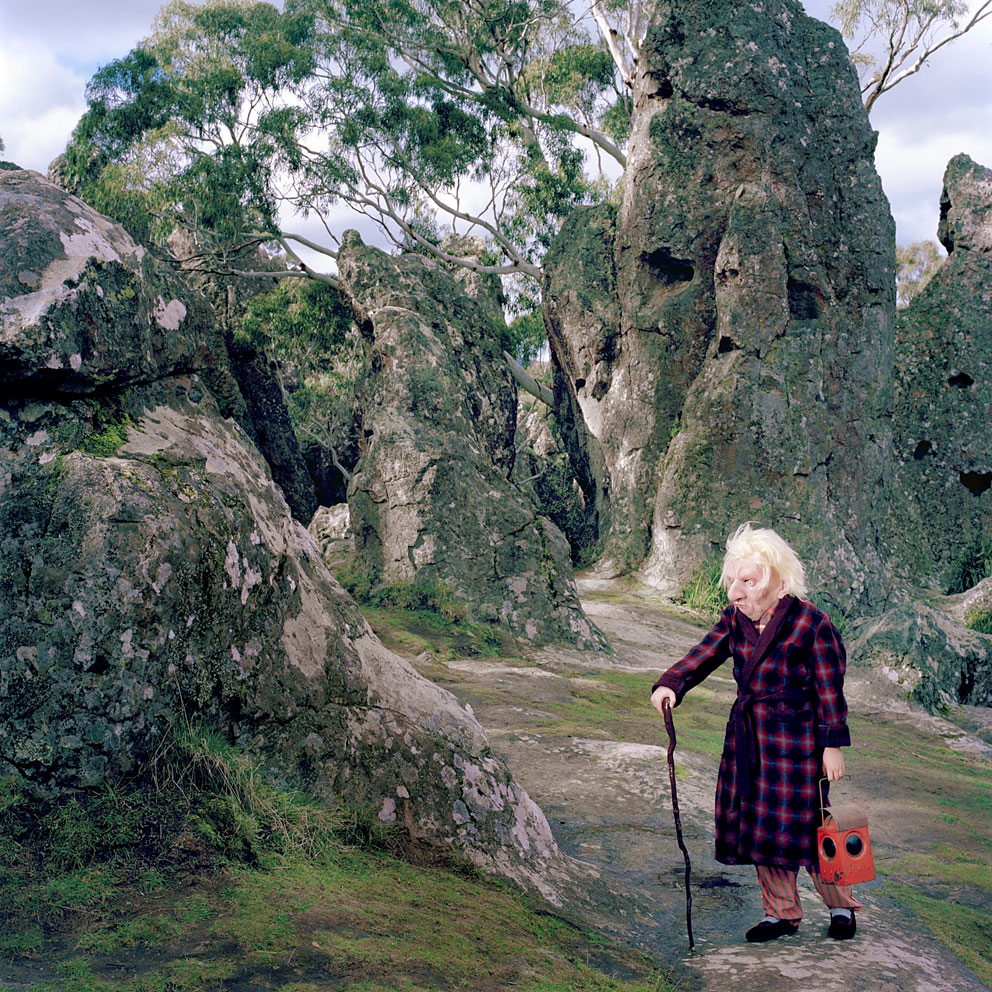
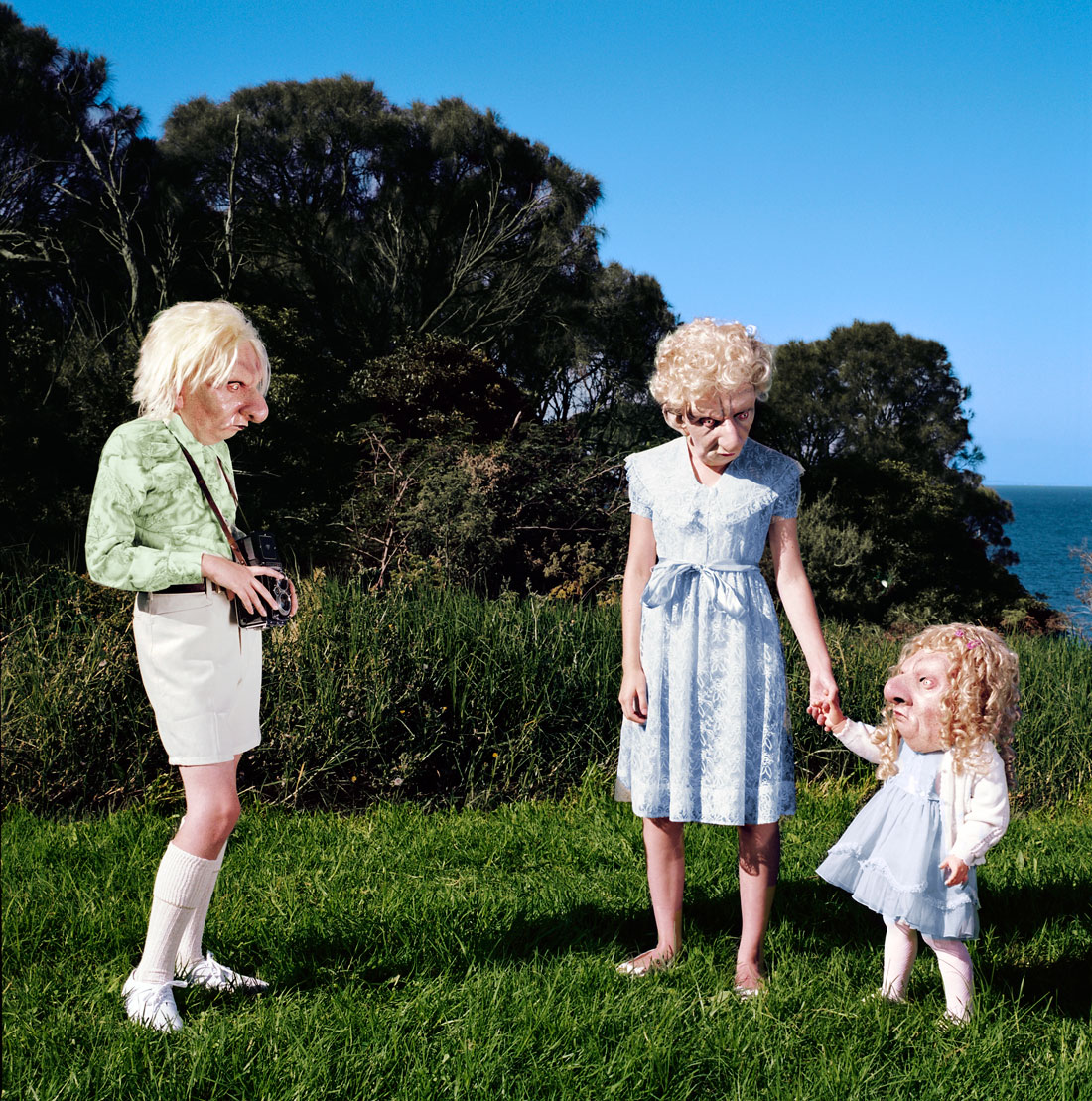
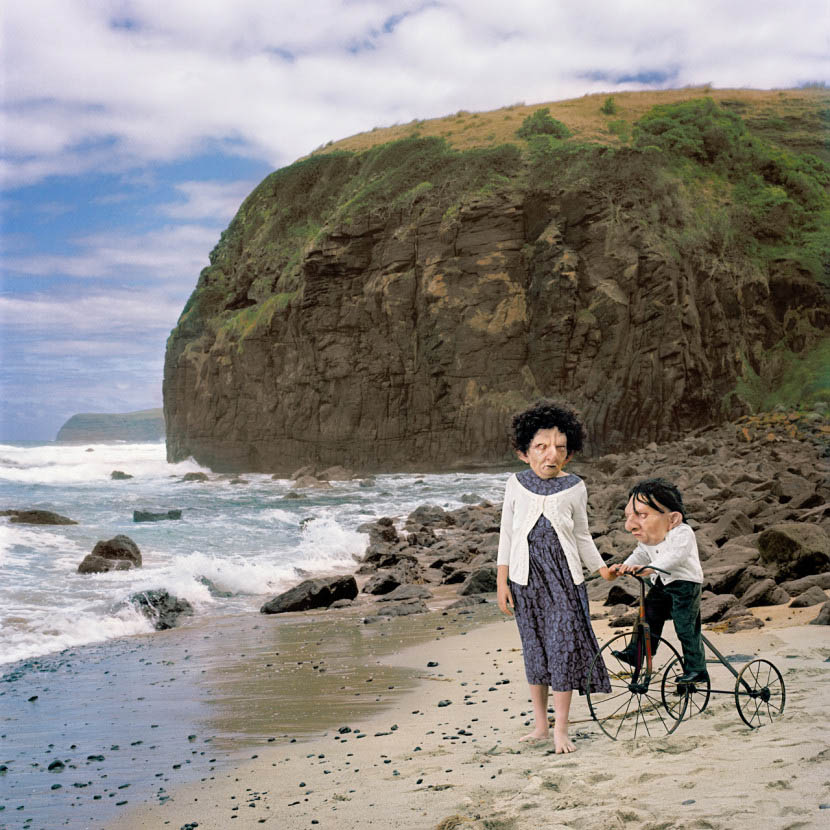
I absolutely love these. The colours, the spaces, the ambiguous vistas, the fantastical archetypes, the fables. What springs to mind, with the use of masks to disguise youth positioned within the decorous landscape, is the notion of “passing”. Passing on (as in dying), passing through (as in travelling), in passing (as in an aside) and just “passing” (passing yourself off as someone or something else) to hide your true character or feelings. Gay men did this in the 1950s and 60s all the better to fit into society, for if it was found that you were homosexual you could loose your job, your apartment and even your life. Of course, there is also the passing of time, the longing for misspent youth in these masked ephebes and adolescent women. Age shall not weary them…

Wandering, dreaming, remembering, keeping, collecting, counting. These neophytes on the path of life, both old/wise, young/hidden pass through (into?) our dreams. Papapetrou creates visions that elude the senses, visions that slip between dreaming and waking, between conscious and subconscious realms. As John Berger and Jean Mohr have observed,

“Cameras are boxes for transporting appearances. Are the appearances which a camera transports a construction, a man-made cultural artefact, or are they, like a footprint in the sand, a trace naturally left by something that has passed? The photographer choses the events he photographs. This choice can be thought of as a cultural construction. The space for this construction is, as it were, cleared by his rejection of what he did not choose to photograph.”1

As an artist Papapetrou has the intelligence to leave this nature/nurture question open in her photographs. Her skill as an artist is in choosing the right things to photograph. This enables her creatures to pass through liminal spaces, the space of our consciousness. Through this process a trace will always be left with us, for this is a strong body of work, well realised, in passing.

Dr Marcus Bunyan


1/ Berger, John and Mohr, Jean. Another Way of Telling. New York: Pantheon Books, 1982, pp. 92-93.


Many thankx to Stills Gallery for allowing me to publish the photographs in the posting. Please click on the photographs for a larger version of the image.


Polixeni Papapetrou (Australian, 1960-2018) 'The Wave Counter' 2011


Polixeni Papapetrou (Australian, 1960-2018)
The Wave Counter
2011
From The Dreamkeepers
Pigment print
105 x 105cm


Polixeni Papapetrou (Australian, 1960-2018) 'The Mystical Mothers' 2011


Polixeni Papapetrou (Australian, 1960-2018)
The Mystical Mothers
2011
From The Dreamkeepers
Pigment print
105 x 105cm


Polixeni Papapetrou (Australian, 1960-2018) 'The Lantern Keeper' 2012


Polixeni Papapetrou (Australian, 1960-2018)
The Lantern Keeper
2012
From The Dreamkeepers
Pigment print
105 x 105cm


“These transitional places in one’s life are often the most creative, and as we grapple for answers and clarity what is often realized is ambiguity and confusion that reigns supreme. Like fairy stories, Papapetrou uses absurdity to make symbolic sense of world she struggles to understand.”


Susan Bright. Between Worlds catalogue 2009


In Polixeni Papapetrou’s work there is identification with the world of children that is rare and remarkable. She sees children themselves as ‘between worlds’, between infancy and adulthood. Yet she does more than identify, creating fantastical worlds that only adults can truly understand and relate to.

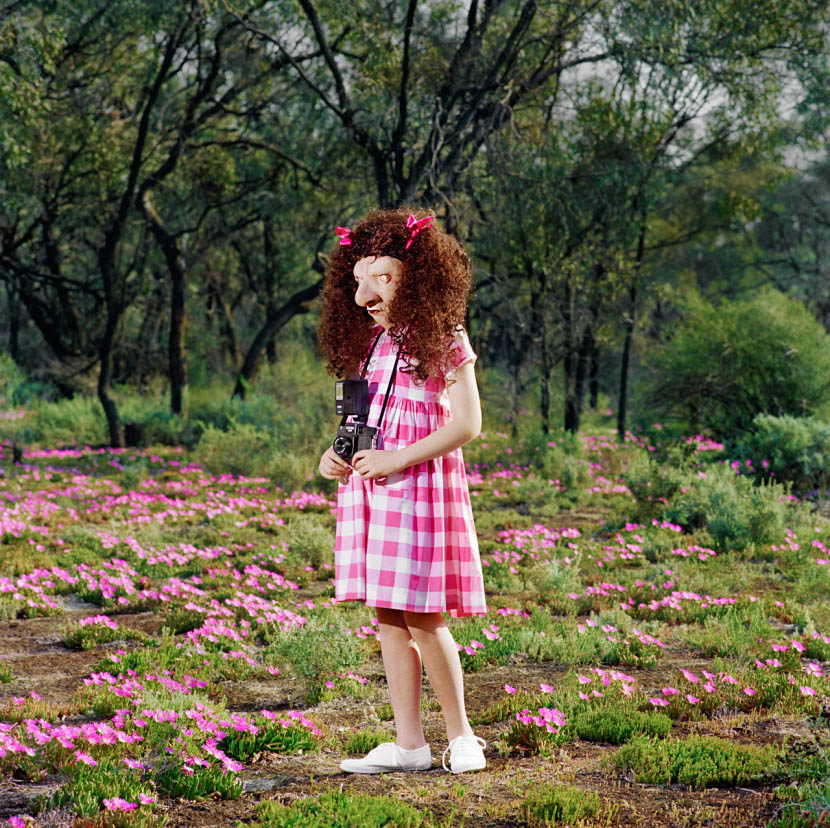
A man in blue striped pyjamas stands on a rock by the sea, leaning into the wind. His body seems young yet he supports himself with a walking frame. His face is old, oversized, a little grotesque. He is The Wavecounter. Like the other characters in Polixeni Papapetrou’s series The Dreamkeepers, he is lithe in body yet gnarly of physiognomy, both young and old. Gazing out in contemplation these dream keepers look with anticipation to the future, or is it with nostalgia to the past? The timeless backdrops of shoreline or hilltop reflect this ambiguity, echoing through landscape the collapsing of thresholds and blurring of boundaries.

Papapetrou’s art practice has involved collaboration with her children and their friends for over 10 years. As they have grown and transformed so too have the roles they perform and spaces they inhabit. It is the awkward evolution of adolescence that informs the in-between space of The Dreamkeepers. To parallel the cripplingly self-conscious yet powerfully self-realising period of our lives, Papapetrou engages part reality, part fantasy from which a space of unreality emerges, the space of archetype. Here the anonymity afforded by masks separates her adolescent actors from who they really are, and allows them to stand in for us all. In this way, Papapetrou asks us to consider how masks, whether symbolic or literal, not only conceal identity, but also expand and transform it.

The aged masks do so in The Dreamkeepers by confounding adolescence, as the characters exude a quiet lack of self-consciousness, despite their disturbing appearance. They arouse a gentle pathos, reminding us of our own shapeshifting, of time playing out on our bodies and minds. The abstract meeting of these two ages may indicate the latent wisdom and self-acceptance that only realises with maturity, or the cyclical nature of our life spans that inevitably brings us back to the vulnerability of youth. In either case the work is a powerful testament to the surrendering of childhood.

Also on exhibition is a small selection of works from Papapetrou’s current work in progress. Using ghillie suits, she transforms her actors into animate objects – rocks with life and seaweed with attitude.

Press release from the Stills Gallery website


Polixeni Papapetrou (Australian, 1960-2018) 'The Holiday Makers' 2011


Polixeni Papapetrou (Australian, 1960-2018)
The Holiday Makers
2011
From The Dreamkeepers
Pigment print
105 x 105cm


Polixeni Papapetrou (Australian, 1960-2018) 'The Mender' 2011


Polixeni Papapetrou (Australian, 1960-2018)
The Mender
2011
From The Dreamkeepers
Pigment print
105 x 105cm


Polixeni Papapetrou (Australian, 1960-2018) 'The Joy Pedlars' 2011


Polixeni Papapetrou (Australian, 1960-2018)
The Joy Pedlars
2011
From The Dreamkeepers
Pigment print
105 x 105cm


Polixeni Papapetrou (Australian, 1960-2018) 'The Shell Collectors' 2012


Polixeni Papapetrou (Australian, 1960-2018)
The Shell Collectors
2012
From The Dreamkeepers
Pigment print
105 x 105cm


Polixeni Papapetrou (Australian, 1960-2018) 'The Lighthouse Keepers' 2011


Polixeni Papapetrou (Australian, 1960-2018)
The Lighthouse Keepers
2011
From The Dreamkeepers
Pigment print
105 x 105cm


Polixeni Papapetrou (Australian, 1960-2018) 'The Photographer' 2011


Polixeni Papapetrou (Australian, 1960-2018)
The Photographer
2011
From The Dreamkeepers
Pigment print
105 x 105cm


Stills Gallery

This gallery has now closed.
Stills Gallery website

LIKE ART BLART ON FACEBOOK

Back to top

Exhibition: ‘Unexpected Pleasures: The Art and Design of Contemporary Jewellery’ at the National Gallery of Victoria, Melbourne

Exhibition dates: 20th April – 26th August 2012


Installation photograph of the exhibition 'Unexpected Pleasures' at the National Gallery of Victoria


Installation photograph of the exhibition Unexpected Pleasures at the National Gallery of Victoria
Photo: Dr Marcus Bunyan


An elegant, refined exhibition of contemporary jewellery at the National Gallery of Victoria’s newly redeveloped Contemporary Exhibitions space. The most striking and beautiful pieces are the neck ornaments, although I am a very much over some relatively unstructured jewellery made out of found objects. It really has been done to death. Trying to take photographs of jewellery in cases with reflections and extraneous light is very difficult but I hope my photographs below give you an idea of the design, installation and some specific pieces in the exhibition.

Dr Marcus Bunyan


Many thankx to the NGV for inviting me to the media preview and for allowing me to take photographs of the exhibition. Please click on the photographs for a larger version of the image. All photographs not otherwise labelled © Marcus Bunyan and the National Gallery of Victoria.


Installation photograph of the exhibition 'Unexpected Pleasures' at the National Gallery of Victoria


Installation photograph of the exhibition Unexpected Pleasures at the National Gallery of Victoria
Photo: Dr Marcus Bunyan


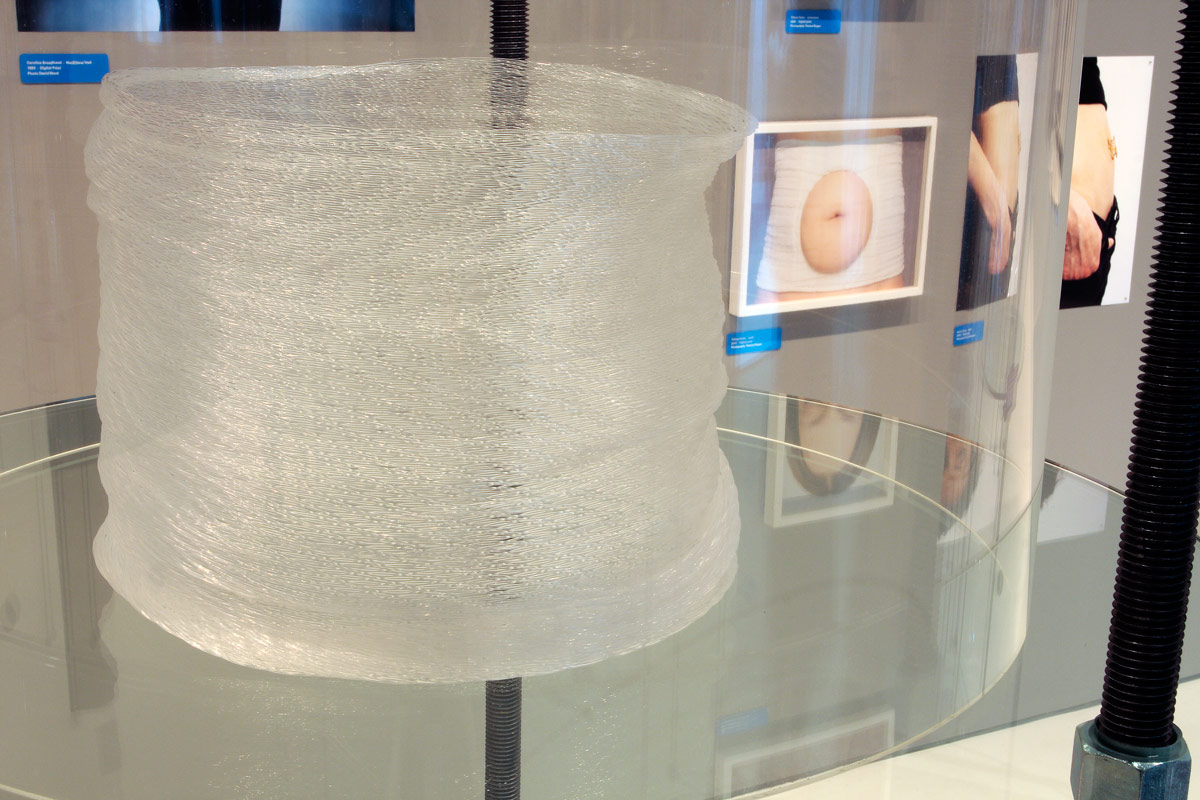
Caroline Broadhead (British, b. 1950) 'Necklace/Veil' 1983 (installation view)


Caroline Broadhead (British, b. 1950)
Necklace/Veil (installation view)
1983
Nylon
Photo: Dr Marcus Bunyan


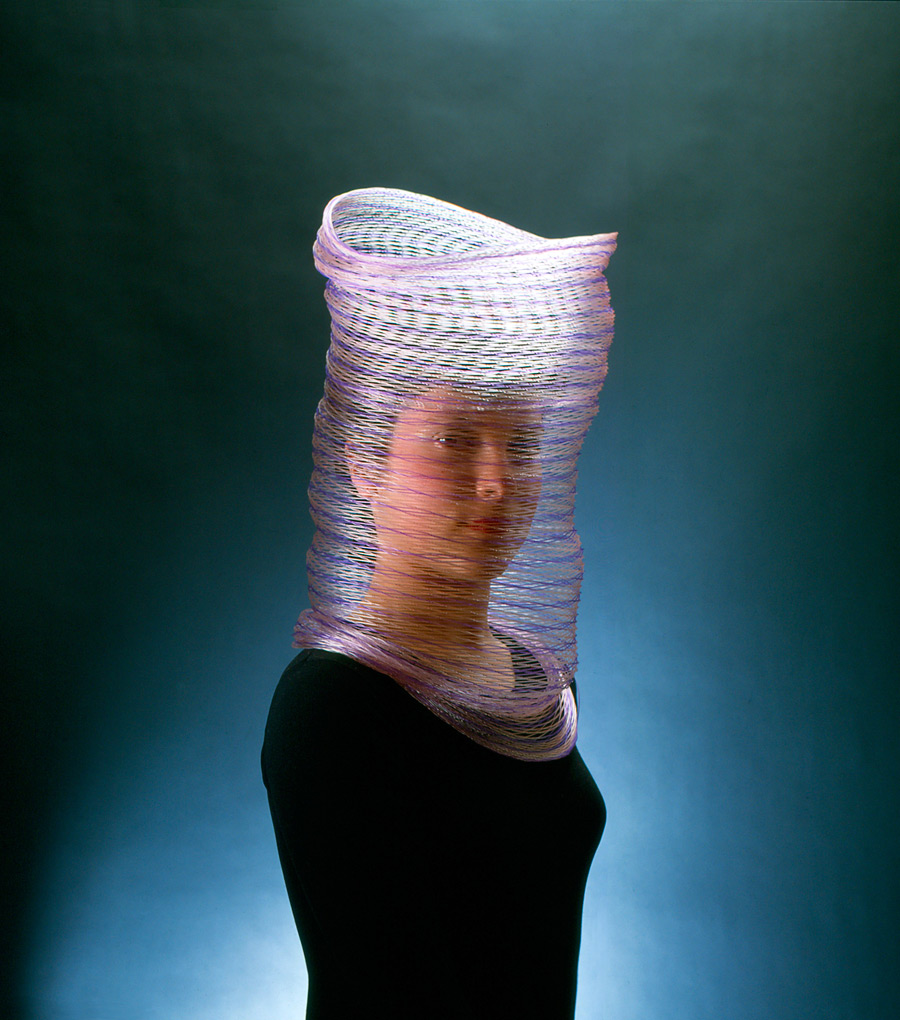
Caroline Broadhead (British, b. 1950) 'Veil, necklace' 1983


Caroline Broadhead (British, b. 1950)
Veil, necklace
1983
Nylon
60 x 30 x 30cm
Collection of the artist
© Caroline Broadhead
Photo: David Ward


Susanne Klemm (Swiss, b. 1965) 'Frozen' 2007 (installation view)


Susanne Klemm (Swiss, b. 1965)
Frozen (installation view)
2007
Polyolefin
Courtesy of Anna Schwartz Gallery
Photo: Dr Marcus Bunyan


Lisa Walker (New Zealand, b. 1967) 'Necklace' 2009 (installation view)


Lisa Walker (New Zealand, b. 1967)
Necklace (installation view)
2009
Plastic, thread
Photo: Dr Marcus Bunyan


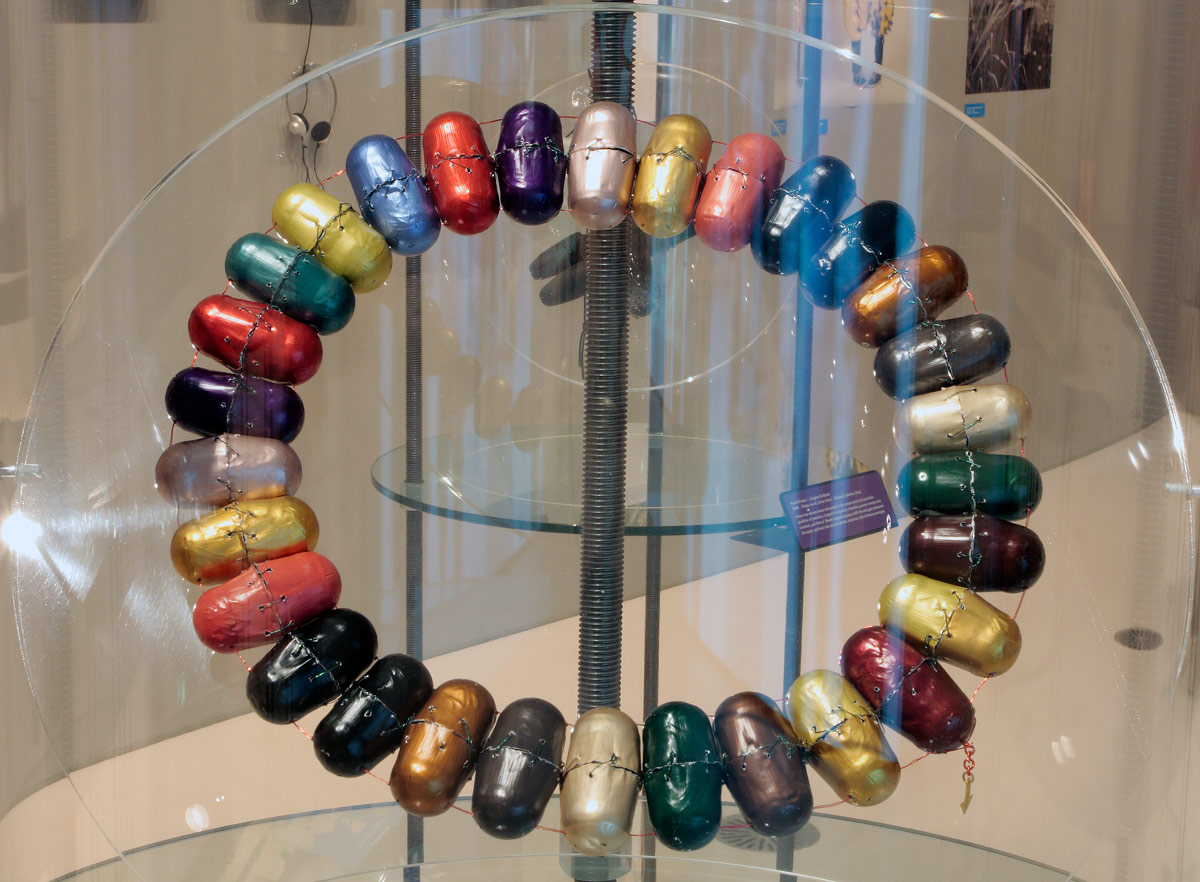
Beverley Price. 'Nespresso Collier' 2012 (installation view)


Beverley Price
Nespresso Collier (installation view)
2012
Anodised aluminium, plastic coated wire, fine gold
Photo: Dr Marcus Bunyan


Gijs Bakker (Dutch, b. 1942) 'Shoulder piece' 1967 (installation view)


Gijs Bakker (Dutch, b. 1942)
Shoulder piece (installation view)
1967
Anodised aluminium
Photo: Dr Marcus Bunyan


Unexpected Pleasures: The Art and Design of Contemporary Jewellery displays over 200 works by important Australian and international contemporary jewellers who have pushed conceptual and material boundaries within their practices. This Design Museum, London exhibition is curated by Guest Curator and Melbourne jeweller Susan Cohn, and is complemented by a selection of NGV Collection works and private loans.

Unexpected Pleasures looks at what we mean by jewellery from a number of different perspectives. Taking as its starting point the radical experiments of the Contemporary Jewellery Movement that challenged a conventional understanding of the language of personal adornment, and looking instead at the essential meanings of jewellery, the exhibition brings together important work from around the world, and looks at it from the point of view of the wearer as well as the maker. Contemporary Jewellery in this sense is at the intersection of art and design.

Dr Gerard Vaughan, Director, NGV said: “This is a remarkable and exciting exhibition, brilliantly installed in the Gallery’s newly redeveloped Contemporary Exhibitions space at NGV International.”

The exhibition explores the essential meanings of jewellery, bypassing traditional perceptions and instead tracing the radical experiments of contemporary jewellers who have challenged the conventions of jewellery design. The exhibition is curated through a number of themes: Worn Out – celebrating the experience of wearing jewellery; Linking Links – looking at the ways in which ‘meaning’ and narratives are invested and expressed through sub-themes such as Social Expressions and Creative Systems, and; A Fine Line – offering insight into the origins of contemporary jewellery today, highlighting key instigators of the Contemporary Jewellery Movement that started in the late 1970s.

Each theme within the exhibition provides an outline of current thinking and offers a unique view on how people use and interact with objects, through which design and production processes come to light. Photography in this context becomes a vital instrument for expressing the ‘wearability’ and the performative aspects of jewellery, and a selection of photographic works are also included in the exhibition.

New techniques and experimentation continue to question the relevance of preciousness, highlighting the shifting values from material worth to the personal associations that jewellery holds. The exhibition celebrates jewellery from the point of view of both the maker and the wearer. It considers the pleasures of wearing jewellery and the many meanings associated with jewellery which are at times unpredictable and, in turn, unexpected.

Press release from the NGV website


Otto Künzli (German, b. 1948) 'Wallpaper brooches' 1982 (installation view)


Otto Künzli (German, b. 1948)
Wallpaper brooches (installation view)
1982
Wallpaper, synthetic polymer core, steel
Photo: Dr Marcus Bunyan


Kiko Gianocca (Swiss, b. 1974) 'Who am I? rings' 2008-2011


Kiko Gianocca (Swiss, b. 1974)
Who am I? rings
2008-2011
Gold, silver, polyurethane
Various sizes
Collection of the artist
© Esther Knobel
Photo: Jeremy Dillon


Paul Derrez (Dutch, b. 1950) 'Pleated Collar' 1982 (installation view)


Paul Derrez (Dutch, b. 1950)
Pleated Collar (installation view)
1982
Plastic, steel
Collection of Paul Derrez
Photo: Dr Marcus Bunyan


Doug Bucci (American) 'Trans-Hematopoietic neckpiece' 2010


Doug Bucci (American)
Trans-Hematopoietic neckpiece
2010
3-D printed acrylic resin as one interlinked piece
45.7 x 45.7 x 5.1cm
Collection of the artist
© Doug Bucci
Photo: Rebecca Annand


David Bielander (Swiss, b. 1968) 'Scampi' 2007


David Bielander (Swiss, b. 1968)
Scampi
2007
Silver (copper anodised), elastic
10.0 cm (diam)
Collection of the artist
© David Bielander
Photo: Simon Bielander


Blanche Tilden (Australian, b. 1968) 'Speed, neckpiece' 2000


Blanche Tilden (Australian, b. 1968)
Speed, neckpiece
2000
Borosilicate glass, titanium, anodised aluminium
1.2 x 24cm
Collection of the artist
© Blanche Tilden
Photo: Marcus Scholz


Karl Fritsch (New Zealand born Germany, 1963) 'Screw ring' 2010


Karl Fritsch (New Zealand born Germany, 1963)
Screw ring
2010
Silver, nails, screws
6 x 4 x 4cm
Collection of the artist
© Karl Fritsch
Photo: Karl Fritsch


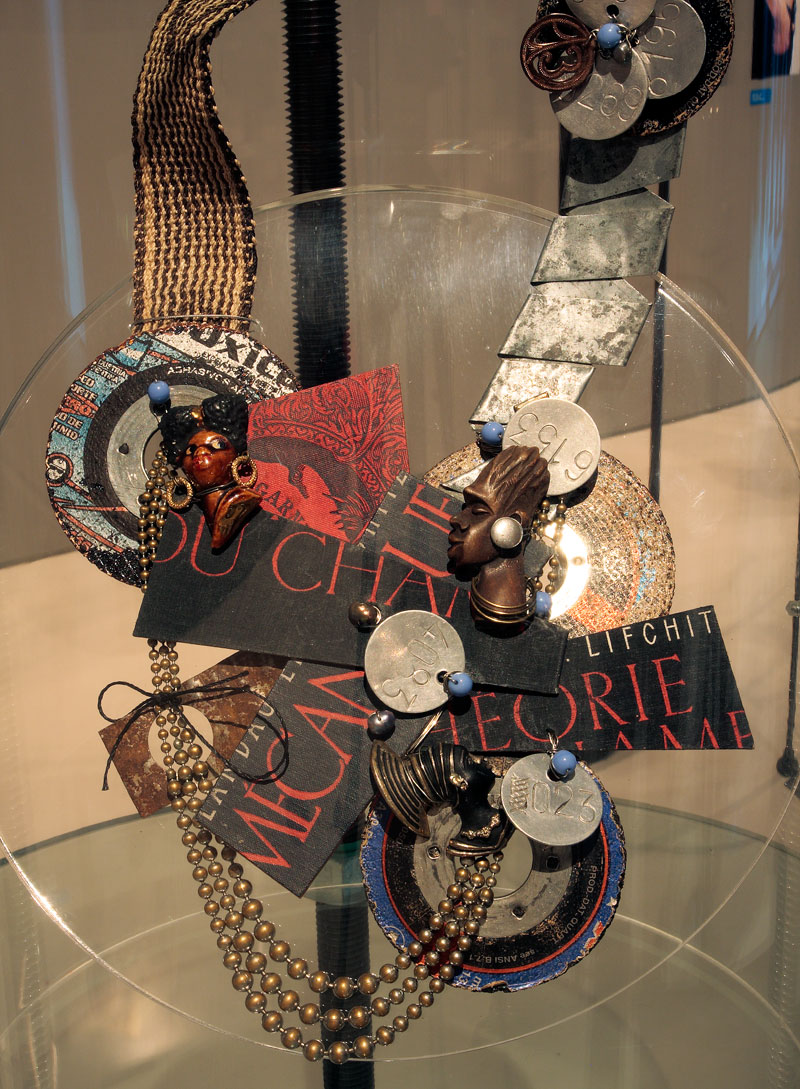
Tota Reciclados. 'Theorie du champ mechanique' 2010


Tota Reciclados
Theorie du champ mechanique (installation view)
2010
Found objects, book cover, mixed media
Photo: Dr Marcus Bunyan


NGV International
180 St Kilda Road

Opening hours
Daily 10am – 5pm

National Gallery of Victoria website

LIKE ART BLART ON FACEBOOK

Back to top

Review: ‘Tourist #5: Disappearing Project 1-41’ by Nicola Loder at Helen Gory Galerie, Prahran, Melbourne

Exhibition dates: 14th March – 7th April 2012


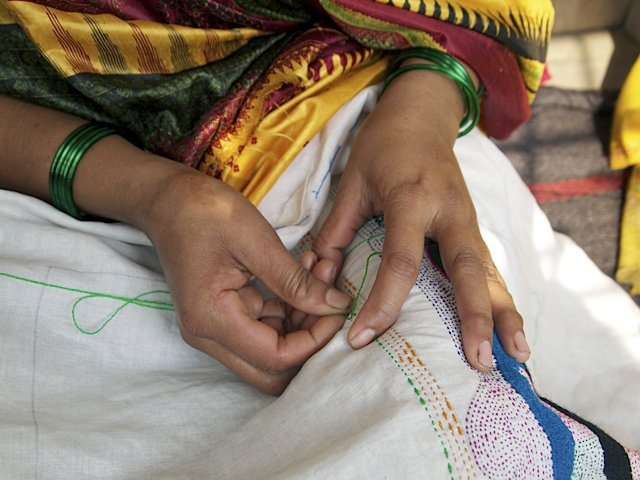
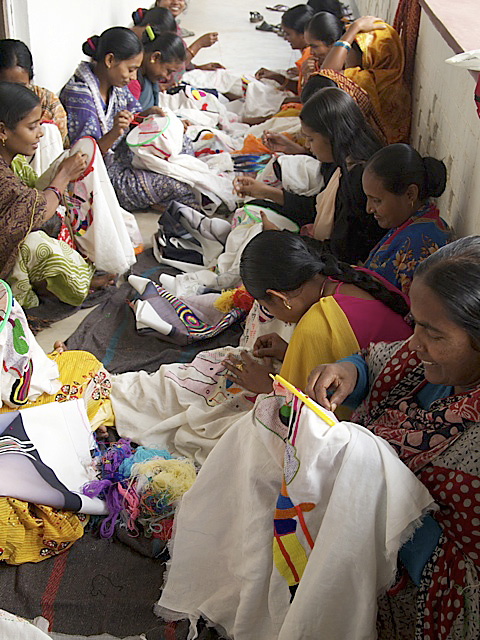
West Bengali woman embroidering the 'Disappearances'


West Bengali woman embroidering the Disappearances


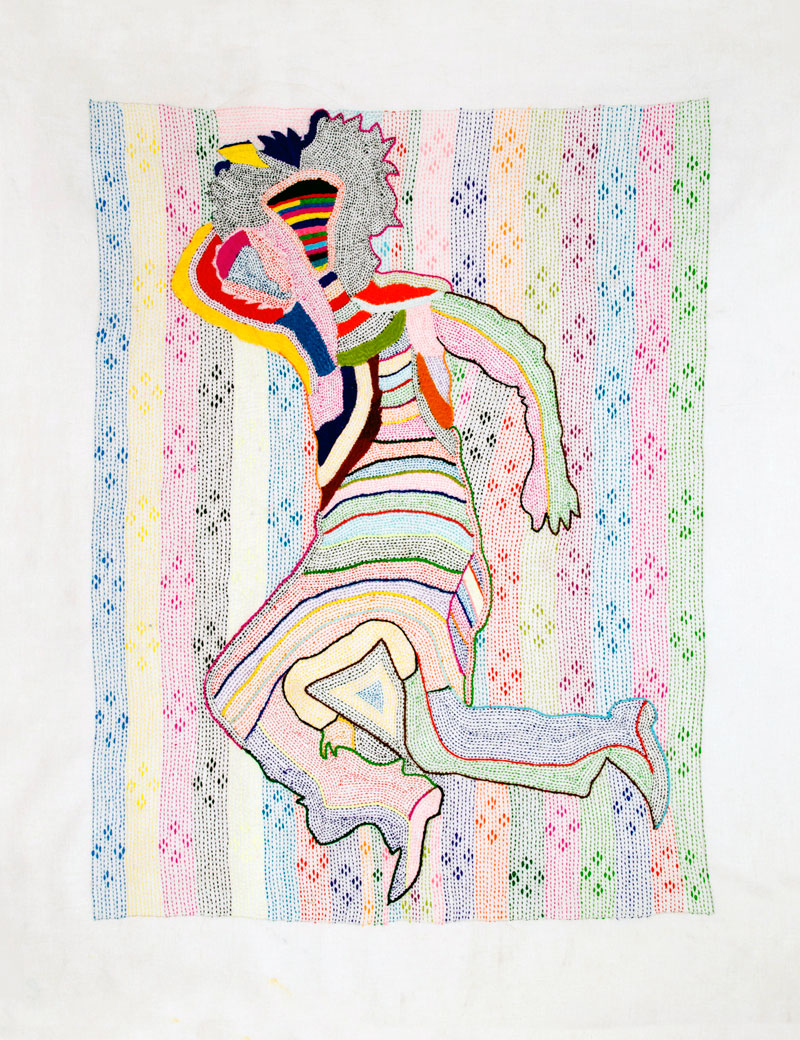
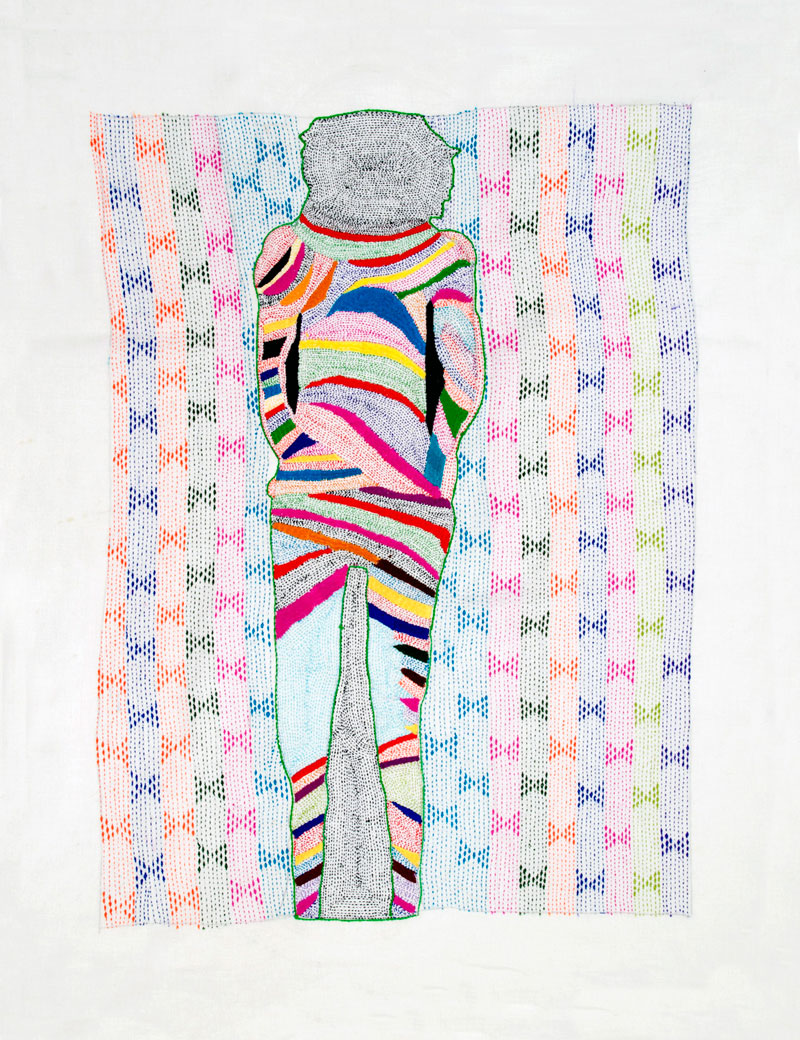
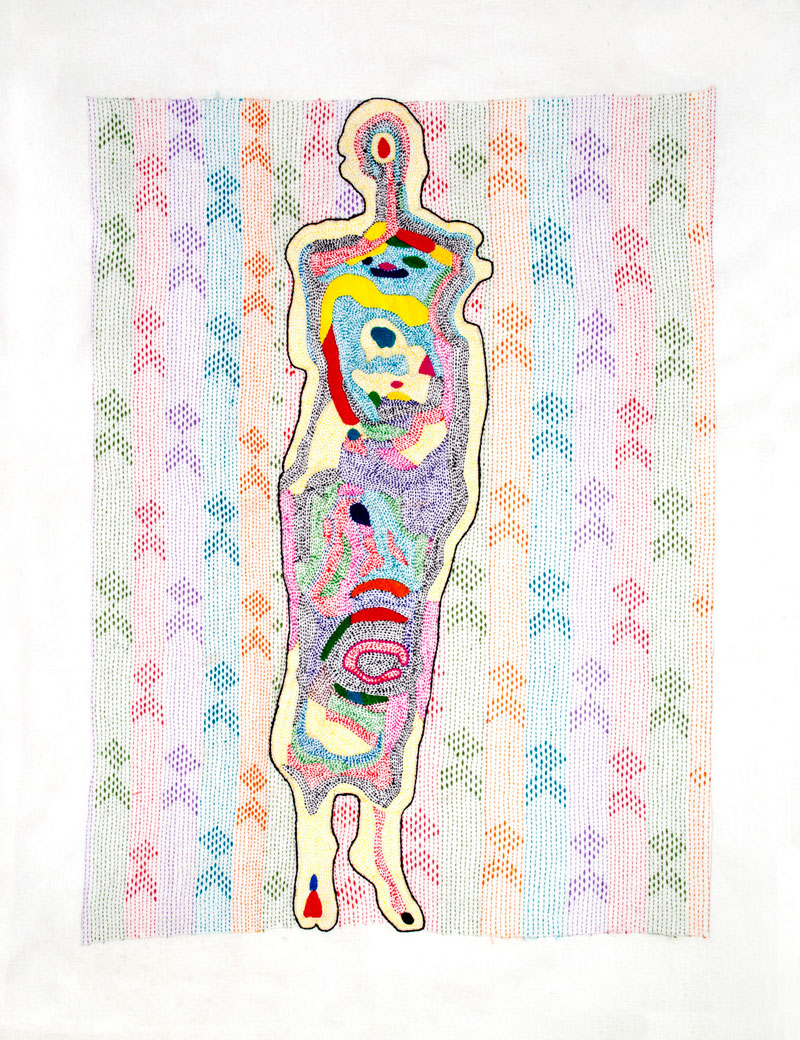
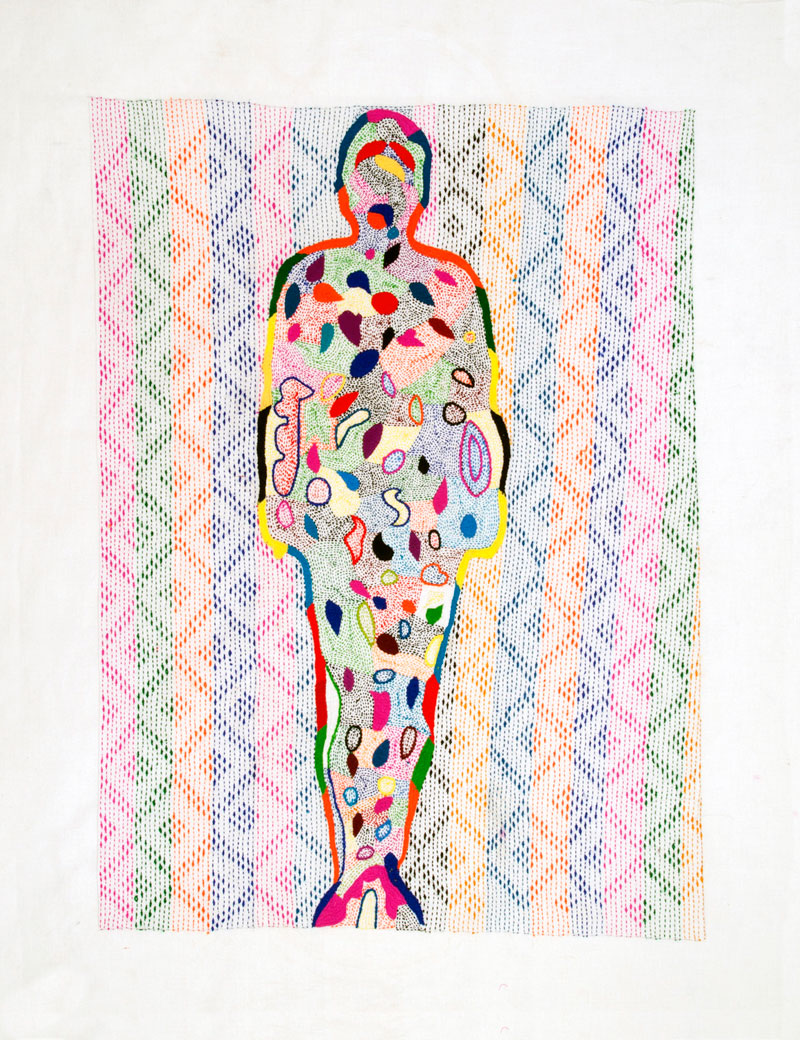
I have always loved the work of Nicola Loder ever since I saw her solo exhibition Child 1-175: A Nostalgia for the Present at Stop 22 Gallery in St Kilda in 1996. This exhibition is no exception. Loder is the consummate professional, her work is as imaginative and intriguing as ever and there has been a consistent thematic development of ideas within her work over a long period of time. These ideas relate to the nature of seeing and being seen, the mapping of identity and the process of its (dis)appearance.

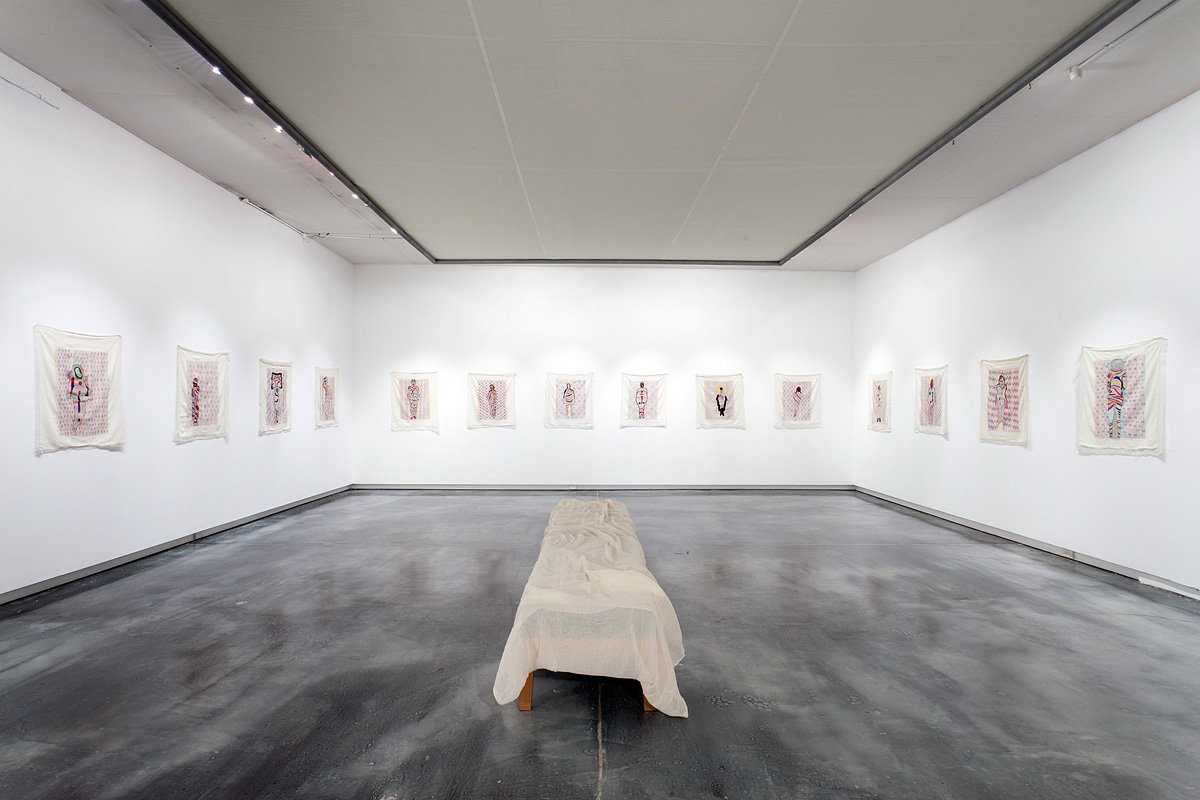
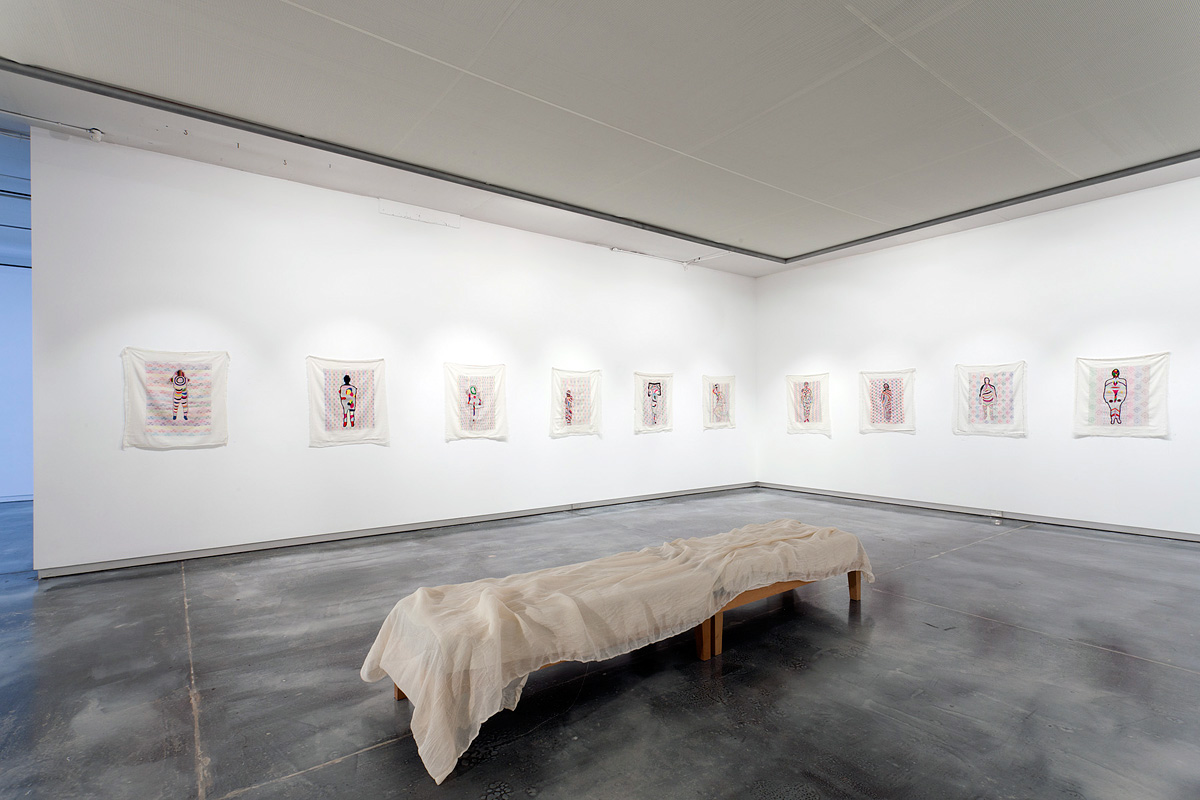
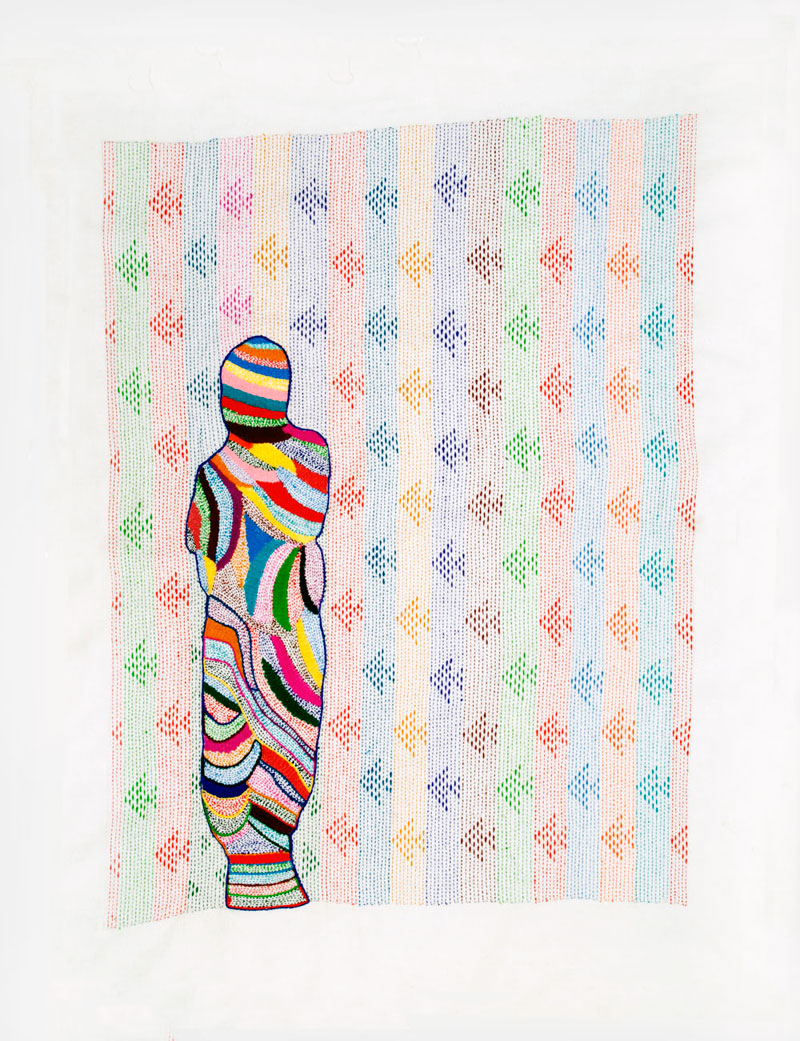
This latest iteration of her ongoing series Tourist (described in detail, below, in the erudite essay by Stuart Koop) again involves de/reconstructions of identity through slippages, elisions, deletions, disappearances and transformations. In Tourist #5: Disappearing Project 1-41 the shroud-like effigies that result from Loder’s project, a reference reinforced by the muslin cloth lying over the bench in the gallery space (see the installation photographs below), are a repeated re-presentation of a lost or missing identity: the disappearance of the person in their own minds; photography’s “capture” of the original person; Loder’s deletion of this identity (I was there) to be substituted by Photoshop’s geometric algorithms; the West Bengali women’s reinterpretation of this disappearance; and the reappearance of a new energy in the colourful, embroidered reinterpretations. I have very much a feeling of a spiritual energy in this last embodiment – think of the link between death and the spirit (as in the Shroud of Turin).

The images have multiple narratives and are already textualised but Loder disrupts this marking, the continual reiteration of norms by weaving a lack of fixity into her objects. In her reconceptualisations of space and matter Loder redefines the significations of the body in the fold of inscription, through a process of materialisation. But this materialisation, like the image seared into the fabric of the Shroud of Turin, still somehow eludes us. This is what makes this work so tantalising…

This interweaving of texts culminates in the body inscribed on another plane existing in, as Loder herself describes it, a “de-constructed non-space somewhere between image, imagination, identity, language and being,” which, as Stuart Koop observes, “is… not a removal or deletion but a reconfiguration beyond verisimilitude, beyond our appearance to others and ourselves.” This is the navigation through a virtual space that Sherry Turkle posits in the quotation at the top of the posting, where the self is decentred and identity is fluid and multiple.

Loder’s exquisitely sensuous description of disappearance allows us to see the phenomenal word afresh. I look forward with a sense of anticipation to the next voyage of discovery the artist will take me on.

Dr Marcus Bunyan


Many thankx to Nicola Loder, Stuart Koop and Helen Gorie Galerie for allowing me to publish the text and photographs in the posting. Please click on the photographs for a larger version of the image.


Fredric Jameson wrote that in the postmodern world, the subject is not alienated but fragmented. He explained that the notion of alienation presumes a centralized, unitary self who could become lost to himself or herself. But if, as a postmodernist sees it, the self is decentred and multiple, the concept of alienation breaks down. All that is left is an anxiety of identity… In simulation, identity can be fluid and multiple, a signifier no longer points to a thing that is signified, and understanding is less likely to proceed through analysis than by navigation through virtual space.


Sherry Turkle. Life on The Screen: Identity in the Age of the Internet. New York: Simon and Schuster, 1995, p. 49.


'Tourist #5: Disappearing Project 1-41' by Nicola Loder, installation photograph at Helen Gorie Galerie

'Tourist #5: Disappearing Project 1-41' by Nicola Loder, installation photograph at Helen Gorie Galerie


Tourist #5: Disappearing Project 1-41 by Nicola Loder, installation photograph at Helen Gorie Galerie
Photos: Marcus Bunyan


Photographer Nicola Loder explores the way in which people see.

The purpose of photography is largely to make things visible. Inspired in part by her experiences teaching blind children photography, Loder reverses photography’s function using it instead to capture objects and experiences that aren’t visible. She embraces Photoshop but counters its typical role of improving clarity and focus, rather using it to collapse images into layers of pattern and colour.

Tourist #5: disappearing project 1-40 is a multi-faceted project that teases out notions of seeing and being seen and the role of creator as truth teller. Loder sent out a flyer inviting people who had disappeared to send her a full-length image of themselves with a written description of what happened when they disappeared. The stories and images she received range from out of body near death experiences to the mundane act of sleeping, each shedding light on what people identify as disappearing. Loder then manipulated the submitted images into highly colourful digital patterns, resonant of her earlier photographic work. She took the reworked images to India where they were embroidered onto muslin by local women in West Bengal. The result is beautiful hand-embroidered works that reflect the women’s personal interpretations of the images and incorporate their rich history, cultural patterns and iconography.

“The obliterated, atomised, reconfigured portraits ‘rematerialise’ as tapestries executed by women from a small rural village, at the margins of Indian society, who – but for NGOs dedicated to overcome disadvantage, in this case Street Survivors empowering rural women through skills development – are largely invisible to their communities, to politicians, as well as their castes.

Of course, Loder has paid these women, a means of recognising and honouring their work, a means of bringing them into view, at the margins of economy, welfare and community. Indeed, she has taken their portraits and documented them at work, and it’s a startling contrast. Our middle-class stories, anxieties and interests ending up in the careful hands of these women in colourful saris, sitting and working together, our (largely) passing concerns darned into the muslin cloth in their laps, our own saturated photographic hues indistinguishable from the bright chaos of folded cloth and pleated skirts, with their nimble fingers tracing our desires and cares in bright lurid threads.” (Stuart Koops, 2012)

For Loder India is a central tenet of the project given its multiple associations with disappearing, from the focus on meditation to the burning of bodies at the Ghats in Varanasi, the final act of disappearing. On a personal level Loder lived in Calcutta as a child and views her experience of leaving India as another act of disappearing: both her Indian Ayah (Moti) and India physically disappeared from her life. Involving the women from her Ayah’s village is Loder’s reflection on and tribute to those experiences of disappearing.

Press release from Helen Gorie Galerie website


Nicola Loder (Australian, b. 1964) 'Tourist #5: Disappearing Project 1-41 (no 11)' 2012 Polyester thread, muslin 86 x 69cm


Nicola Loder (Australian, b. 1964)
Tourist #5: Disappearing Project 1-41 (no 11)
2012
Polyester thread, muslin
86 x 69cm


Nicola Loder (Australian, b. 1964) 'Tourist #5: Disappearing Project 1-41 (no 16)' 2012 Polyester thread, muslin 86 x 69cm


Nicola Loder (Australian, b. 1964)
Tourist #5: Disappearing Project 1-41 (no 16)
2012
Polyester thread, muslin
86 x 69cm


Catalogue Essay by Stuart Koops

Nicola Loder has facilitated childrens’ photography projects before, on several occasions working with marginalised groups, including kids from low socio-economic and non-English speaking schools and kids from the Royal Victorian Institute for the Blind. Indeed she chose these groups with purpose, to consider the role of photography in highlighting certain communities most often occluded on the basis of an incapacity – making the invisible visible, making those who cannot see visible to us, giving those without the means of expression a language we can understand – in many ways, reversing the polarity of familiar concepts, disrupting our conventional understanding.

In teaching blind kids especially, Nicola told me she felt like she was disappearing. Not surprising, I guess, when you try to describe the camera, the lens, optics, focus, framing, composition. When your identity or your role as a photographer dissipates along with the explanatory power of these foundation terms and concepts. And practical demonstrations must at first seem frustratingly pointless.

That profound experience seems to have led Loder to use photography in reverse, as the means to decompose images; to utilise Photo­shop’s algorithms, not to augment or highlight certain attributes in her portraits she ultimately took of these kids, but return images to an undifferentiated field of static, the digital correlate to the original photochemical chaos, the entropy of raw silver halides, which the ‘irrefutable sun’ miraculously sorts into resemblance. In short, to unphotograph the kids somehow, commensurate with their disability and her own disappearance in the workshops.

But it’s not just Loder who has had the experience of disappearing. It’s a profound sensation shared by many and for different reasons, and Loder has collected different accounts of the experience which illustrate the further registers in which one may ‘disappear’; from spiritual attainment in transcending physical reality to out of body transcendental near-death experiences, from relief at escaping a difficult situation, to feelings of terror as a child abandoned, or worse, abducted, from the social isolation and alienation of teenagers and adults, to a freedom or liberation from social constraint and physical containment, wanting to leave behind an unhappy circumstance or just wanting to be magically, wonderfully invisible.

Practically speaking, there’s considerable interest in – and information on – how to disappear, especially in America. In 2008 artist Seth Price published How to Disappear from America, excerpted text from found sectarian tracts, paranoid rants and helpful DIY tips to assist anyone wishing to get off the grid without a trace (burn your credit cards, dump your car, hide your tracks, grow your own, etc) including great suggestions about where to go (motorcycle hangouts, punk rocks groups, new age dance studios, soup kitchens, churches, and homeless shelters).

But Loder’s more interested in the personal, individual experience of disappearing. She asked for photo-portraits to accompany people’s descriptions of disappearing, from which she has seemingly excised each subject, using Photoshop as she did before with the blind kids, leaving a whorl of digital effect in the vacant space within their outline, set in high relief against a lounge-room, or a yard, or other family members. Yet on closer inspection this is perhaps a matter of transformation, since ‘disappearing’ may be very different from ‘deletion’.

In Photoshop we are each just so much chroma, luma and shape. A touch of the magic wand and we are separated from the rest of our lives, ‘lassooed’, a godly power to designate liberated from special-effects cinema by the Knoll brothers in 1988 and given to every geek with a Mac II. Since when it’s just too easy to be deleted; two clicks and we’re in the trash.

But in Loder’s work our data is recast, colour intensified, details blurred, outlines softened, curves modified, screens overlaid and so it seems Photoshop’s myriad algorithms – set against their intended technical imperative to optimise appearances – might provide a metaphor for our disappearing, which is indeed not a removal or deletion but a reconfiguration beyond verisimilitude, beyond our appearance to others and ourselves. And while we might lose visual coherence as an image, we are inscribed upon another plane altogether, one at odds with photographic realism, and which Loder describes as a “de-constructed non-space somewhere between image, imagination, identity, language and being.” Like the shimmering dissipation of Kirk on the teleporter’s deck in Star Trek, these subjects are transported to another realm, different orders of reality merging into a new volatile blend. Perhaps it’s a higher plane too where all souls mingle and coalesce as either zeros or ones, a digital afterlife in which everything is equivalent and a new digital equanimity prevails.

Stuart Koops 2012


Nicola Loder (Australian, b. 1964) 'Tourist #5: Disappearing Project 1-41 (no 8)' 2012 Polyester thread, muslin 86 x 69cm


Nicola Loder (Australian, b. 1964)
Tourist #5: Disappearing Project 1-41 (no 8)
2012
Polyester thread, muslin
86 x 69cm


Nicola Loder (Australian, b. 1964) 'Tourist #5: Disappearing Project 1-41 (no 17)' 2012 Polyester thread, muslin 86 x 69cm


Nicola Loder (Australian, b. 1964)
Tourist #5: Disappearing Project 1-41 (no 17)
2012
Polyester thread, muslin
86 x 69cm


Nicola Loder (Australian, b. 1964) 'Tourist #5: Disappearing Project 1-41 (no 18)' 2012 Polyester thread, muslin 86 x 69cm


Nicola Loder (Australian, b. 1964)
Tourist #5: Disappearing Project 1-41 (no 18)
2012
Polyester thread, muslin
86 x 69cm


West Bengali women embroidering the 'Disappearances'


West Bengali women embroidering the Disappearances


Helen Gory Galerie

This gallery is now closed.
Nicola Loder website

LIKE ART BLART ON FACEBOOK

Back to top

Exhibition: ‘Hijacked III: Contemporary Photography from Australia and the UK’ at Perth Institute of Contemporary Art (PICA)

Exhibition dates:  18th February – 8th April 2012


Hijacked III Interview with writer Anthony Luvera


The photographs in this posting highlight the conceptual diversity in contemporary art practice and emphasise the talent of the practitioners working today. Just an observation: how serious are the portraits – it’s as if no’body’ is allowed to laugh or smile anymore. Perhaps this is a reflection of the times in which we live, full of malaise, anxiety and little wonder. Fear of being replaced, fear of discrimination, fear of growing up, fear of dying. Or dressed up in a women’s dress and pink hat, having the “courage” or ignorance (the opposite of fear?) to look like a stunned mullet with a blank expression on the face (deadpan photography that I really can’t stand). Or, perhaps, simple effacement: defiance as body becomes mannequin, body hidden behind a mask or completely cloaked from view. These grand photographs have the intensity, perhaps not a lightness of being.

Dr Marcus Bunyan


Many thankx to PICA for allowing me to publish the photographs in the posting. Please click on the photographs for a larger version of the image.


Trish Morrissey (Irish, b. 1967) 'Hayley Coles, June 17th, 2006' 2006


Trish Morrissey (Irish, b. 1967)
Hayley Coles, June 17th, 2006
2006
Courtesy of the artist and Elaine Levy Project, commissioned by Impressions Gallery

Review of Trish Morrissey on Art Blart


Front deals with the notion of borders, boundaries and the edge; using the family group and the beach setting as metaphors. For this work, the artist travelled to beaches in the UK and around Melbourne. There, she approached families and groups of friends who had made temporary encampments, or marked out territories and asked if she could be part of their family temporarily. Morrissey took over the role or position of a woman within that group – usually the mother figure. The artist asked to take the place of the mother figure, and to borrow her clothes. The mother figure then took over the artist’s role and photographed her family using a 4 x 5 camera (which Morrissey had already carefully set up) under the artist’s instruction. While Morrissey, a stranger on the beach, nestled in with the mother figure’s loved ones.

These highly performative photographs are shaped by chance encounters with strangers, and by what happens when physical and psychological boundaries are crossed. Ideas around the mythological creature the ‘shape shifter’ and the cuckoo are evoked. Each piece within the series is titled by the name of the woman who the artist replaced within the group.
Text from the PICA website


Bindi Cole (Australian, b. 1975) 'Ajay' 2009


Bindi Cole (Australian, b. 1975)
Ajay
2009
From the series Sistagirls
Courtesy of Nellie Castan Gallery

Review of Sistagirls on Art Blart


The term ‘Sistagirl’ is used to describe a transgender person in Tiwi Island culture. Traditionally, the term was ‘Yimpininni’. The very existence of the word provides some indication of the inclusive attitudes historically extended towards Aboriginal sexual minorities. Colonisation not only wiped out many Indigenous people, it also had an impact on Aboriginal culture and understanding of sexual and gender expression.

As many traditions were lost, this term became a thing of the past. Yimpininni were once held in high regard as the nurturers within the family unit and tribe much like the Faafafine from Samoa. As the usage of the term vanished, tribes’ attitudes toward queer Indigenous people began to resemble that of the western world and the religious right. Even today many Sistagirls are excluded from their own tribes and suffer at the hands of others.

Text from the PICA website


Maciej Dakowicz (Polish, b. 1976) 'Pink Hat, 23:42. Cardiff' 2006


Maciej Dakowicz (Polish, b. 1976)
Pink Hat, 23:42. Cardiff
2006
Courtesy of the artist and Third Floor Gallery


St Mary Street is one of the main streets in central Cardiff, the capital city of Wales; a city as any other in the UK. Unassuming during the day, on weekend nights it becomes the main scene of the city night life, fuelled by alcohol and emotions. Some of Cardiff’s most popular clubs and pubs are located there or in its vicinity. The very popular Chippy Lane, with its numerous chip and kebab shops, is just a stone’s throw away. Sooner or later most party-goers end up in that area, whether looking for another drink, some food or in search of another dance floor.

Everything takes place in this public arena – from drinking, fighting, kissing to crying and sleeping. Supermen chat up Playboy Bunnies, somebody lies on the pavement taking a nap, the hungry ones finish their portions of chips and the policemen stop another argument before it turns into a fight. Nobody seems to worry about tomorrow, what matters is here and now, punctuated by another week at work, until the next weekend rolls around again.

Text from the PICA website


Laura Pannack (British, b. 1985) 'Shay' 2010


Laura Pannack (British, b. 1985)
Shay
2010
Courtesy of the artist
Represented by Lisa Pritchard Agency


What’s so special about this picture are the details. The tattoo – not just what it says but the way it mimics the Nike Swoosh on her shirt – and the cigarette, that although it is not in focus, one imagines has a large line of ash on it, as if time has stopped. This is echoed in the expression on her face, deep intensity and focused on something ahead although the car is obviously stationary. From a distance one could be mistaken that this is an American photograph from the 70s but on closer inspection – the piercing, the Nike Swoosh, the car door handles – one realises that this is contemporary and British. And yet of course that stare is timeless.
Harry Hardie on the Foto8 website [Online] Cited 22/03/2012 no longer available online


Adam Broomberg and Oliver Chanarin. 'Culture3/Sheet72/Frame3' 2011


Adam Broomberg and Oliver Chanarin
Culture3/Sheet72/Frame3
2011
Courtesy of the artists & Paradise Row, London


HIJACKED III interview with PICA curator Leigh Robb


… Artists are notorious for their ability to hijack; meaning to stop and hold up, to seize control by use of force in order to divert or appropriate, a deliberate attempt to action a change of direction.

Hijacked III: Contemporary Photography from Australia the UK draws on the success and unique energy of Hijacked I (Australia and USA) and Hijacked II (Australia and Germany), to once again bring together two geographically distant but historically connected communities through a range of diverse photographic practices.

This exhibition will be simultaneously presented across two sites: PICA in Perth, Western Australia and QUAD Gallery in Derby, United Kingdom, and has been timed to coincide with the launch of the luscious, full colour and 420 page Hijacked III compendium, published by Big City Press. Utilising portraiture, digital collage, archival images, documentary snap shots, internet grabs and refined photographic tableaux, the 24 artists and over 120 works in this exhibition explore themes as diverse as curious weekend leisure pursuits, gender politics and displaced Indigenous culture.

Artists: Tony Albert, Warwick Baker, Broomberg & Chanarin, Natasha Caruana, Bindi Cole, Maciej Dakowicz, Christopher Day, Melinda Gibson, Toni Greaves, Petrina Hicks, Alin Huma, Seba Kurtis, David Manley, Tracey Moffatt, Trish Morrissey, Laura Pannack, Sarah Pickering, Zhao Renhui, Simon Roberts, Helen Sear, Justin Spiers, Luke Stephenson, Christian Thompson, Tereza Zelenkova, Michael Ziebarth.

Press release from PICA website


Sarah Pickering (British, b. 1972) 'Land mine' 2005


Sarah Pickering (British, b. 1972)
Land mine
2005
Courtesy of the artist and Meessen De Clercq, Brussels


The Explosion pictures document the literal theatre of war – the detailed level of artifice used to prepare men and women for combat on the front lines. They also reveal the minutiae of packaging war as entertainment. The beauty of the pictures lies in their perverse seductiveness, and this attraction underscores the distance most of us have from real combat.

Pickering’s Explosion images, by distilling an aspect of the war that is a fiction, question the reliability of seemingly objective historical accounts, such as news reports and photographs that influence how war is communicated and remembered. By extension they question how we come to know what we know about it. We learn about war from a variety of sources, from history books, first-hand accounts, news media, and movies, all of which can get confused and merged in our minds as memory.
The dual purpose of the explosives – training and re-enacting – forms a fitting parallel to how we cope with trauma, a process of both anticipation and reconciliation.”

Sarah Pickering website


Simon Roberts (British, b. 1974) 'We English No. 56' 2007


Simon Roberts (British, b. 1974)
We English No. 56
2007

More Simon Roberts We English on Art Blart


Simon Roberts travelled across England in a motorhome between 2007 and 2008 for this portfolio of large-format tableaux photographs of the English at leisure. We English builds on his first major body of work, Motherland (2005), with the same themes of identity, memory and belonging resonating throughout. Photographing ordinary people engaged in diverse pastimes, Roberts aims to show a populace with a profound attachment to its local environment and homeland. He explores the notion that nationhood – that what it means to be English – is to be found on the surface of contemporary life, encapsulated by banal pastimes and everyday leisure activities. The resulting images are an intentionally lyrical rendering of a pastoral England, where Roberts finds beauty in the mundane and in the exploration of the relationship between people and place, and of our connections to the landscapes around us.
Text from the Simon Roberts website


Tony Albert (Australian, b. 1981) 'No Place' 2009


Tony Albert (Australian, b. 1981)
No Place
2009
Courtesy of the artist


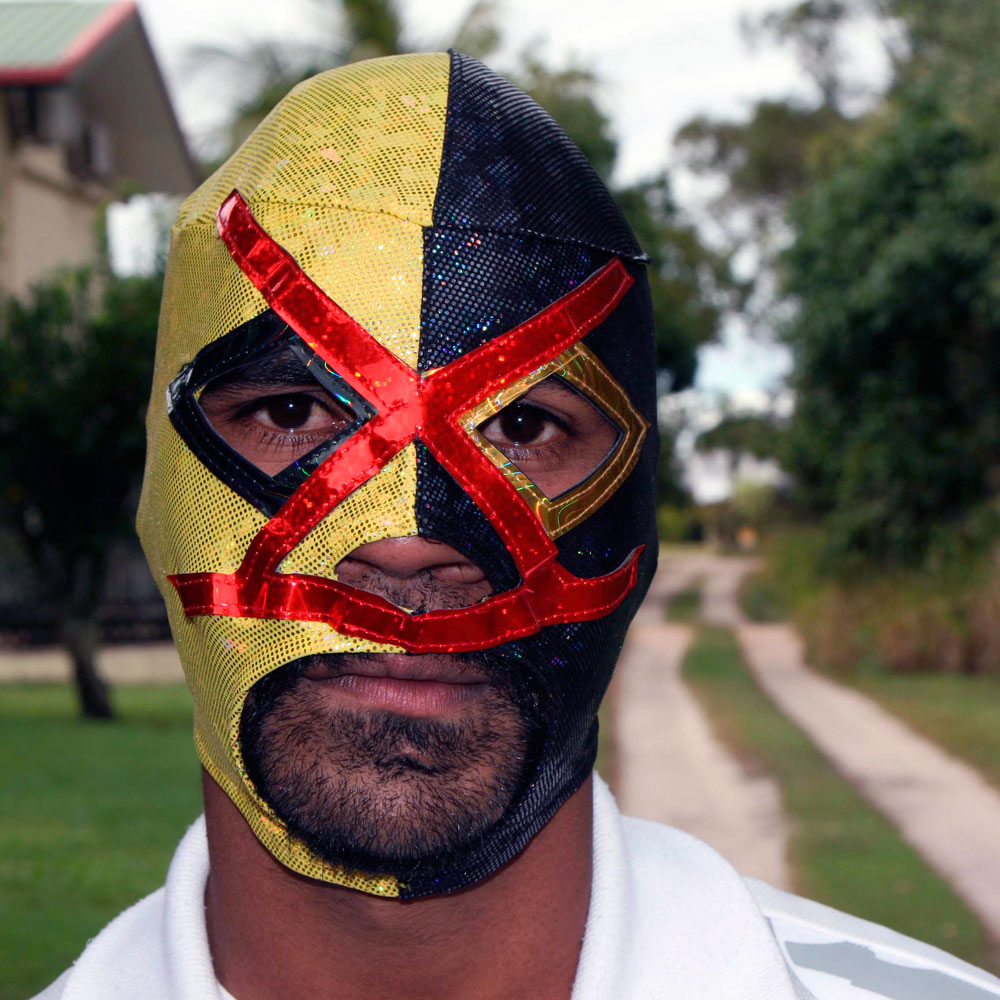
Tony Albert is a Girramay rainforest man from the Cardwell area… The No Place series references The Wizard of Oz ‘there’s no place like home’. For No Place Tony returns to his tropical paradise home with a group of Lucho Libre wrestling masks from Mexico. His family adorn these masks and again become warriors protecting their paradise. These seemingly playful masks share much with Aboriginal and particularly rainforest culture. Body and shield designs from this area represent animal gods or spirit beings. The use of these masks brings a prescient new layer of armour for a new generation of warrior.

The colour scheme of solid blocks of red, black and yellow also speak to traditional rainforest aesthetics. There are strong elements of the sublime and the fantastical within these works. Viewing Aboriginal people in iconic north Queensland locations masked in Mexican wrestling paraphernalia carries more than a hint of the surreal and absurd.

Anon. “Tony Albert and No Place,” on the Big Art website, 2010 [Online] Cited 22/03/2012 no longer available online


Christian Thompson (Australian / Bidjara, b. 1978) 'Untitled #7 from the King Billy Series' 2010


Christian Thompson (Australian / Bidjara, b. 1978)
Untitled #7 from the King Billy series
2010
Courtesy of the artist and Gallery Gabrielle Pizzi


King Billy, is an ode to his great great grandfather, King Billy of Bonnie Doon Lorne. The initial inspiration was a photograph of King Billy, standing alone wearing his ‘name plate’. Despite its colonial overtones, for Thompson, this image of the senior tribesman exudes wisdom and kindness and reminds him of his father. In much of Thompson’s work his processes are intuitive, he delves into a rich dream world and draws out fabulous images. He manifests his own mythological world. In this series his figures are clad in fabrics patterned with Indigenous motifs, mainly cheap hoodies in lurid colours; a modern / ancient skin for a magic youth culture. He has made a triptych, three views of a pink hooded figure spewing cascading pearl stands from the face; opulent, decadent, excessive and sensual.

Another image shows a crowned figure swathed in fabrics bearing the markings of various clans, perhaps indicating the domain of this regal form. In the hands a (poisoned?) chalice – the sawn off plastic bottle a warning about petrol sniffing? His self-portrait as psychedelic godhead/Carnaby Street dandy / flower child is spectacular and arresting. He is wearing a tailored suit, patterned with more Indigenous motifs and he cradles a bouquet. His skin is green and his eyes are purple flowers. What can this otherworldly creature tell us?

Thompson seems to emphasise a theme of disparity in this work; the ‘hoodie’ with the cascading pearls, the crown with the plastic bottle, the opulence with the desperate. These works are both beautiful and confronting.

Text from the PICA website


HIJACKED III interview with Christian Thompson


Petrina Hicks (Australian, b. 1972) 'Emily the Strange' 2011


Petrina Hicks (Australian, b. 1972)
Emily the Strange
2011
Courtesy of the artist and Stills Gallery


Petrina Hicks’ Beautiful Creatures appeals to our senses. Immediately alluring, the large-scale, hyper-real photographs, are all rendered so clearly and with such control they are reminiscent of advertisements. But with a series of little ruptures, within images and between them, Hicks disrupts our usually beguiled response to such artistry. For her, photography’s capability to both create and corrupt the process of seduction and consumption is of endless interest.

Hicks loads her images with history and associations but denies us a clear message. Along with the ambiguity, there is a visceral quality in these new works; her depiction of flesh, hair and veins stops the viewer short of being lulled into consumption. Hicks engages a playful yet confronting approach to confound our expectations. A cat, naked without fur, in the image Sphynx, contrasts a beautiful blonde with a face full of it in Comfort. In Emily the Strange the hairless creature reappears with a young girl whose piercing green eyes, skin-pink dress, and latent defiance, make her eerily akin to her pet. Alluded to, in the title of the exhibition, this duality is present in much of the work. Her subjects are not simply beautiful or simply creatures.

Text from the PICA website


HIJACKED III interview with photographer Petrina Hicks


Tereza Zelenkova (Czech, b. 1985) 'Cadaver' 2011


Tereza Zelenkova (Czech, b. 1985)
Cadaver
2011
Courtesy of the artist


Luke Stephenson (British, b. 1983) 'Diamond Sparrow #1' 2009


Luke Stephenson (British, b. 1983)
Diamond Sparrow #1
2009
Courtesy of the artist


Stephenson finds birds and the world surrounding them wonderfully fascinating. The birds he has photographed all belong to avid bird breeders who on the whole have been keeping birds their whole lives. It’s a hobby people generally don’t come into contact with, unless you are active within it. The artist does not keep birds but finds them beautiful in all their variations and colours, so has set out capture these birds in a way that would show them at their best.

There are many criteria to breeding a prize-winning bird, from shape and form to its pattern, and this is something Stephenson has tried to convey whilst also attempting to show some of their personalities. He set out to photograph every breed of bird within the ‘hobby’ of keeping birds but soon realised there were thousands of variations, so decided to keep this as an ongoing project; realising instalments every couple of years which people can collect and, hopefully one day, the dictionary will be complete.

Luke Stephenson website


Perth Institute of Contemporary Art (PICA)
Perth Cultural Centre
James Street Northbridge
Phone: + 61 (0) 8 9228 6300

Opening hours:
Tuesday – Sunday 10am – 5pm
Closed Mondays

PICA website

LIKE ART BLART ON FACEBOOK

Back to top

Review: The work of Robyn Hosking, ‘AT_SALON’ at Anita Traverso Gallery, Richmond

Exhibition dates: 6th March – 24th March 2012


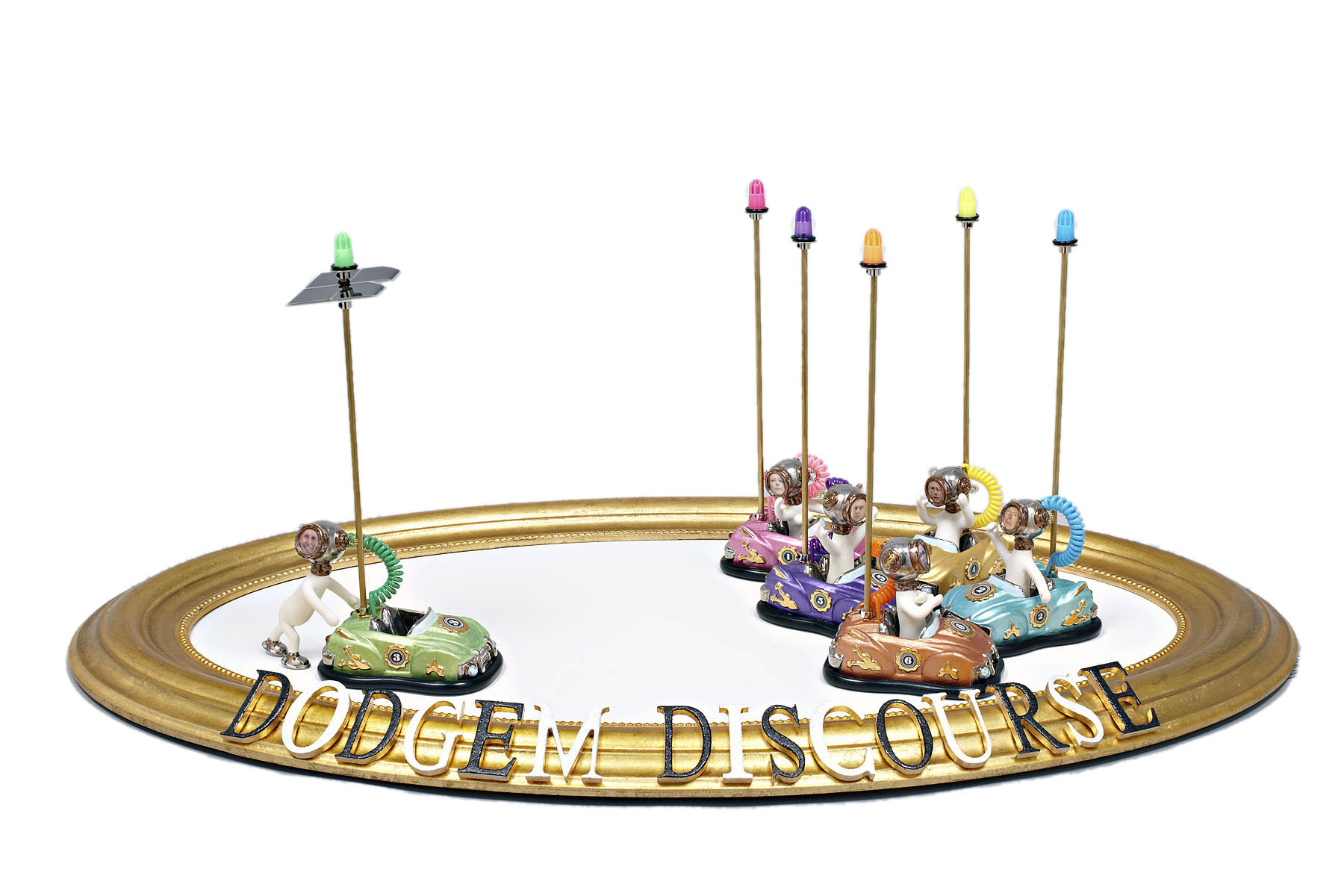
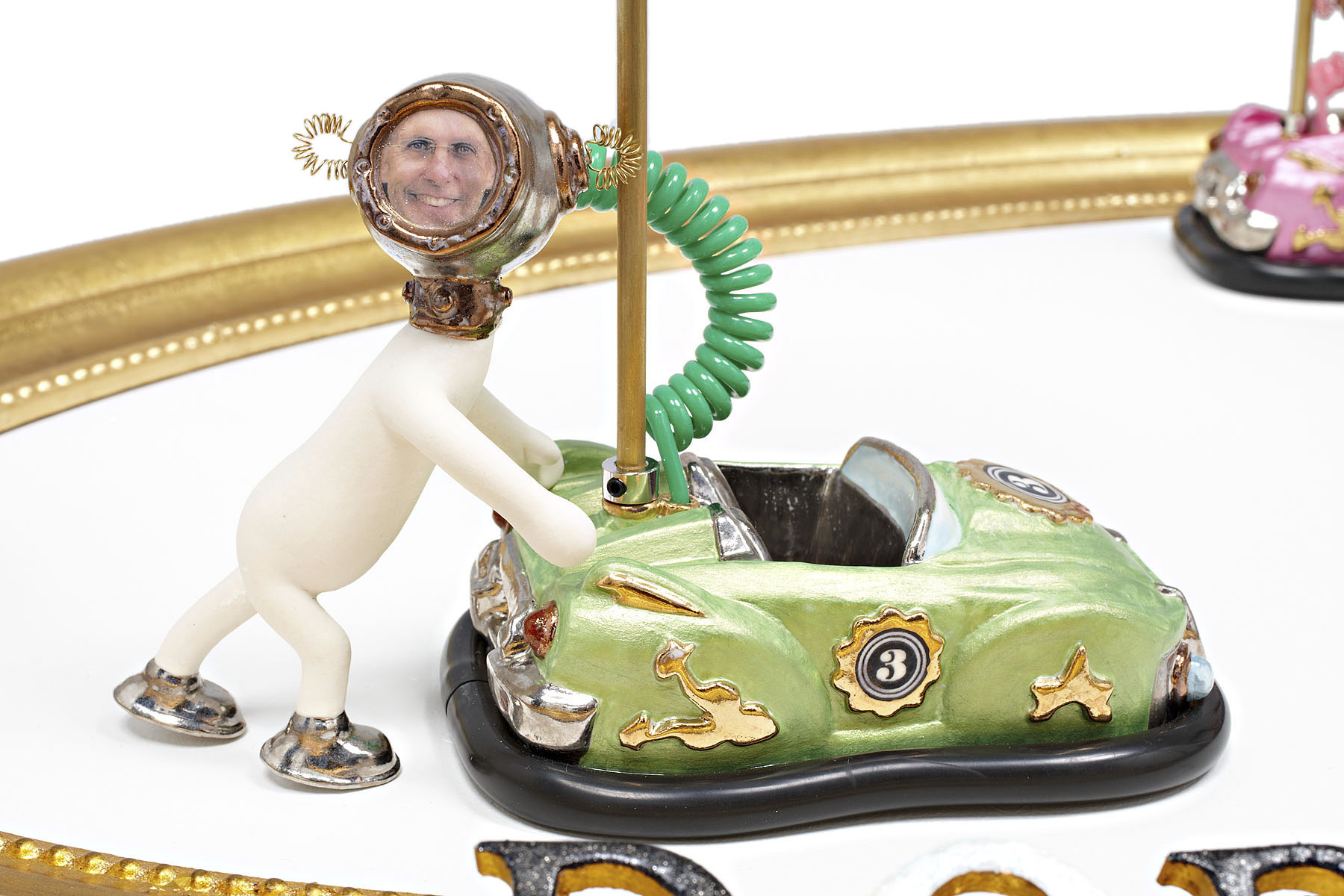
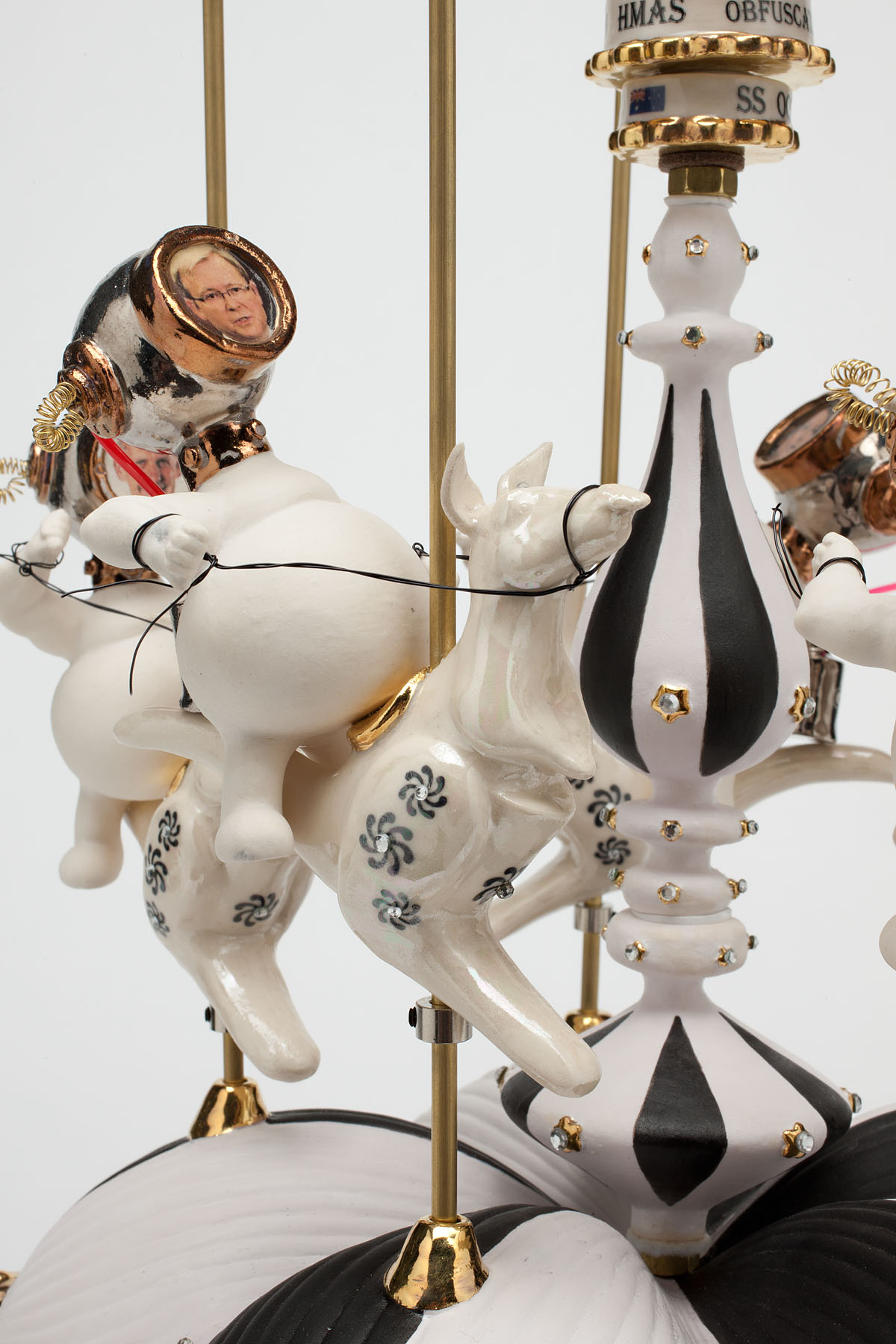
Robyn Hosking (Australian, b. 1948) 'Dodgem Discourse' 2011


Robyn Hosking (Australian, b. 1948)
Dodgem Discourse
2011
Mixed media


Although not the first to promote the concept, Anita Traverso Gallery must be congratulated for exhibiting nine unrepresented emerging and mid-career artists in the AT_SALON exhibition program. This inaugural exhibition features hand-picked artists practicing over a variety of media including ceramics, textiles, drawing, painting and photography allowing them to exhibit in a professional gallery environment which bridges the gap between artist-run spaces and full gallery representation.

Out of the nine artists it was the hilarious work of Robyn Hosking that was the standout for me. While guffaw inducing one couldn’t help but be entranced by these waggish, chimerical creations and wonder at their technical brilliance. Every detail, every nuance is meticulously observed and the sculptures are beautifully made (mostly using glazed ceramics). Every observation on contemporary politics, war and beauty regimes is concisely conceptualised and executed with panache and humour. For example, in the work Dodgem Discourse (2011) Senator Bob Brown, leader of the Australian Greens, is the only diver figure not to be in his dodgem car while everyone else is bashing into each other, having got out to push his car because the solar power has failed. What you cannot see in the photograph is that the lights atop the dodgem poles flash on and off on every other car except his! While Julia Gillard’s car is emblazoned with the number 1 on its side, another gem is that the number plates say “Question Time” referring to question time in Parliament, but also a double entendre as the viewer questions the supposed wisdom of our elected officials.

HMAS Ineptitude (2011) assiduously comments on the white elephant that is the North South pipeline while the slowly revolving HMAS Obfuscation (2011) – how I love that word: the hiding of intended meaning in communication, making communication confusing, wilfully ambiguous – spins the SPIN, spelt out on the wing-like form at the top of the sculpture, on the machinations of our politicians who are mounted on rearing ceramic kangaroos with the large, gold lettered word PARLIAMENT on the base. Profound, amusing and beautifully made.

My favourite has to be The Wing Walker (2011) as an irate Julia Gillard tries to get rid of Kevin Rudd once and for all, even poking him with a stick to push him off the edge of the biplane. Balanced on a slowly revolving turntable with the world at its centre, this political merry-go round is panacea for the soul for people sick of politicians. This is brilliant political satire. The planes are all ends up and even when Julia thinks she has got rid of Kevin there he is, hanging on for dear life from the undercarriage of one of the planes. Priceless…

Reminding me of the fantasy creatures of Tom Moore, these whimsical manifestations deal with serious, life changing and challenging issues with purpose, feeling and a wicked sense of humour. I really enjoyed this art (and joy is the correct word) because it takes real world issues, melds fantasy and pointed observation and reflects it back, as the artist observes, in a funfair’s distorted mirror. Magic!

Dr Marcus Bunyan


Many thankx to Anita for allowing me to publish the photographs in the posting. Please click on the photographs for a larger version of the image.


Robyn Hosking (Australian, b. 1948) 'Dodgem Discourse' 2011 (detail)


Robyn Hosking (Australian, b. 1948)
Dodgem Discourse (detail)
2011
Mixed media


Robyn Hosking (Australian, b. 1948) 'The Wing Walker' 2011

Robyn Hosking (Australian, b. 1948) 'The Wing Walker' 2011


Robyn Hosking (Australian, b. 1948)
The Wing Walker
2011
Mixed media


Robyn Hosking (Australian, b. 1948) 'The Wing Walker' 2011 (detail)

Robyn Hosking (Australian, b. 1948) 'The Wing Walker' 2011 (detail)


Robyn Hosking (Australian, b. 1948)
The Wing Walker (detail)
2011
Mixed media


Robyn Hosking Artist Statement

My work launches a humorous, freewheeling attack on our desensitisation to the white noise and emptiness surrounding us. Looking like a hybrid between art, machine and toy, my sculptures maintain a circus-like sense of amusement and curiosity for the viewer, all the while sending up societal norms and politics.

I like to celebrate the lavishly eccentric design of past eras and the sense of possibility it embodied. As hackneyed as it sounds, a Brave New World is upon us, stranger perhaps than our imaginations can conceive of. While my work casts a disparaging eye at the use of technology for inane and selfish reasons – from Botox to weaponry – it retains a playful, humorous edge. I am not interested in producing depressingly macabre images. Every work becomes a caricature or parody, as though the world is being viewed in a funfair’s distorted mirror.


Robyn Hosking (Australian, b. 1948) 'HMAS Ineptitude' 2011

Robyn Hosking (Australian, b. 1948) 'HMAS Ineptitude' 2011


Robyn Hosking (Australian, b. 1948)
HMAS Ineptitude
2011
Mixed media


Robyn Hosking (Australian, b. 1948) 'HMAS Ineptitude' 2011 (detail)

Robyn Hosking (Australian, b. 1948) 'HMAS Ineptitude' 2011 (detail)


Robyn Hosking (Australian, b. 1948)
HMAS Ineptitude (detail)
2011
Mixed media


Robyn Hosking (Australian, b. 1948) 'HMAS Obfuscation' 2011


Robyn Hosking (Australian, b. 1948)
HMAS Obfuscation
2011
Mixed media


Robyn Hosking (Australian, b. 1948) 'HMAS Obfuscation' 2011 (detail)

Robyn Hosking (Australian, b. 1948) 'HMAS Obfuscation' 2011 (detail)


Robyn Hosking (Australian, b. 1948)
HMAS Obfuscation (detail)
2011
Mixed media


Anita Traverso Gallery

Anita Traverso Gallery website

LIKE ART BLART ON FACEBOOK

Back to top

Opening: ‘Traverse’ by Kim Percy at Stockroom, Kyneton

Exhibition dates: 10th March – 8th April 2012


Installation of 'Traverse' by Kim Percy at Stockroom, Kyneton


Installation of Traverse by Kim Percy at Stockroom, Kyneton
Installation photograph by Marcus Bunyan
© Kim Percy and Marcus Bunyan


Many thanx to Jason, Magali and Kent for inviting me to the gallery, and Kim for asking me to open the exhibition – it was fun!

I have known Kim since the early 1990s when we both did our Bachelor of Arts in photography at RMIT University so it was wonderful to have opened her show yesterday. Reprinted below is the speech I gave at the opening with its musings on the (in)visibility of asylum seekers arriving by boat in Australia. I hope you enjoy reading the text. Marcus.


Opening speech by Dr Marcus Bunyan, 10th March 2012

Out of Sight, Out of Mind __________________

“What I am about to say, my musings if you like, are inspired by Kim’s wonderful installation. The work before you is the basis of my inquiry. The issues involved are difficult and not to be dealt with lightly but I hope you will follow my drift, my traverse if you like.

I would like to take you on a journey – physical, metaphorical and maybe even philosophical. I want to ask questions of the world, questions about the journey we all take as human beings. These questions are prompted by my personal response to two elements of Kim’s work – water and the journey, specifically the image of asylum seekers arriving here in Australia. Imagine being an asylum seeker making that journey.

Imagine living in an (in)between space, living in a refugee camp over there. Marc Augé coined the phrase “non-place” to refer to places of transience that do not hold enough significance to be regarded as “places.”1 These camps are such places. Put yourself in that predicament, seeking a better life, seeking to escape persecution, war (of which we as a nation are often part), prejudice and death, deliberately placing yourself and your family in a fragile boat, like a seed pod floating upon the waters, taking the dangerous journey to reach Australia. Imagine the emotional and intellectual turmoil that must surround such a decision, the decision to place your life in the hands of the ocean. Important decisions affecting the entire course of one’s life are rarely made without some form of mental distress.

Nurtured in water, some baptised in it, water is the life-blood of the world and the asylum seeker must trust to its benevolence. Marc Augé “argues that we are in transit through non-place for more and more of our time, as if between immense parentheses.”2 This is the journey that the asylum seeker takes over water, a journey through an interstitial space that has no beginning and no end caught between a set of parentheses [insert life here / or not].

Now let us move our line of sight. What about a visual parentheses?


Asylum seekers are almost invisible from Australia living over there. They are over the horizon, out of sight and out of mind. When they journey across the sea – an open ended journey passing through a liminal space, a forgotten space – they suddenly appear as if by magic washed up on the shore, unseen despite surveillance planes, ships and other forms of tracking and reconnaissance. Think, for example, of the sudden and surprising arrival of the boat SIEV-221 when it was washed onto the rocks of Christmas Island in December 2010. The invisible made visible caught in a non-place.

This (in)visibility can be evidenced in other ways. The specks of humanity waving from the deck of the Tampa, the asylum seekers being escorted from arriving boats, seen for a few brief seconds on the evening news and then disappearing from view, almost like being sucked into the depths of the sea. Here and not here; here and there. Halfway between nothingness and being: they walk between one state and another, forward and backward, backward and forward.


Displacement
Diaspora
Disruption


The spectacle of the asylum seekers is despectacularised by and for the viewer. We remove ourselves from the emotion of these people, the presence of these images. They become ordinary as if seen from far away – glimpsed every so often as though viewing the world of another. They become Other.

The movement of the ship, the movement of the sky, the movement of vision is a constant decentering through a push / pull with something else – some other order of the world. Their journey into the unknown is a journey to submit to the ordering of another: the socially constructed system of classification: “refugee,” “asylum seeker.” The axis of visibility3 that operates in relation to subject, object, and space is not interrogated as to the representations that are constructed. This is what I am interested in here. These vital, alive human beings come from one taxonomic system (of ordered death, persecution, injustice), become visible from a brief instance, and are then fed into another taxonomic system of order – that of the detention centre.

Taking the metaphor of the horizon line further, I would argue that detention centres are like an inverted Panopticon. The Panopticon “is a type of institutional building, a prison, designed by English philosopher and social theorist Jeremy Bentham in the late eighteenth century. The concept of the design is to allow an observer to observe all inmates of an institution without them being able to tell whether or not they are being watched.”4 The guard sits in a central tower and can observe and inspect all prisoners on the outer 360 degree circle, while the prisoners cannot see the guard and can only presume he is there (an omnipresent God) and hence they behave.

Let us invert this concept.

Now the asylum seekers sit in the tower looking outwards, seeing the promised land but unable to touch it and the guards (prison officers, government, the Australian people) are all around but most are blind. They look inwards but cannot see / they look outwards and most go about their daily business. The perimeter fence of the detention centre becomes the horizon line of the sea. As in Kim’s red lined horizons, over the horizon is out of sight, out of mind _________________


What Kim’s eloquent, minimal, brooding installation does is hold our attention and ask certain questions of us as human beings. If photography is a mode of visually addressing a certain order in the world – be it horror, war, peace, human tragedy, public, private – and then destabilising it, then Kim destabilises the binary sea / sky through fragmentation and isolation. She redlines our experience and asks us to inhabit the non-space, the non-place of the gallery, allowing us to hover between boat and image, between sea and sky, between seeing and feeling. Through her work she asks us to become more aware. She asks us to see things more clearly. Above all she asks us to have faith in the compassion of human beings.

The asylum seekers have faith: faith to get into a fragile boat to venture upon the sea in search of a better life. If we had more faith in ourselves then we would have less need to rely on the images of the past, a white colonial past.

I will finish with a quote from Jeff Brown.

“Sometimes we have to surrender to the not knowing. At other times, it is helpful to adventure outward and explore new possibilities. Like swashbucklers of the spirit, we bravely seek out any experience that might inform our path. When we are afraid of something, we live it fully and see what floats to the surface in the doing. We participate in our own revealing. We have faith in the shaping of what we cannot see.”5


The seekers surrender to the not knowing and have faith in the shaping of what they cannot see. These risk takers are the strong ones that are going to make a difference in a new society by the very fact of their strength and determination to survive and live in a free society, for the very fact of the risks undertaken. This exhibition informs their path as it informs our path. Be aware of the doing, be bold and forthright in the being. Enjoy.

Thank you

Dr Marcus Bunyan


Footnotes

1/ Augé, Marc (trans. John Howe). Non-Places: Introduction to an Anthropology of Supermodernity. London: Verso, 1995

2/ Ibid.,

3/ Hooper-Grenhill, Eilean. Museums and the Shaping of Knowledge. London: Routledge, 2000, p. 7

4/ Anon. “Panopticon,” on Wikipedia [Online] Cited 09/03/2012

5/ Brown, Jeff. Soulshaping. Berkeley, CA: North Atlantic Books, 2009, np quoted on Stroud, Jeff. The reluctant blogger website. [Online] Cited 09/03/2012


Installation of 'Traverse' by Kim Percy at Stockroom, Kyneton

Installation of 'Traverse' by Kim Percy at Stockroom, Kyneton


Installation of Traverse by Kim Percy at Stockroom, Kyneton
Installation photographs by Marcus Bunyan © Kim Percy and Marcus Bunyan


Kim Percy (Australian) 'Pale Sea' 2012


Kim Percy (Australian)
Pale Sea
2012
Digital photograph


Kim Percy (Australian) 'Where' 2012


Kim Percy (Australian)
Where
2012
Digital photograph


Kim Percy (Australian) 'Rough Water' 2012


Kim Percy (Australian)
Rough Water
2012
Digital photograph


Kim Percy (Australian) 'Traverse' 2012


Kim Percy (Australian)
Traverse
2012
Digital photograph


Kim Percy (Australian) 'Red Horizon No.1' 2012


Kim Percy (Australian)
Red Horizon No.1
2012
Digital photograph


Kim Percy (Australian) 'Red Horizon No.2' 2012


Kim Percy (Australian)
Red Horizon No.2
2012
Digital photograph


Stockroom
98 Piper street, Kyneton
Phone: 03 5422 3215

Opening hours:
Thursday – Saturday 10am – 5pm
Sunday 11am – 3pm
Closed Monday and Tuesday
Wednesday by appointment

Stockroom website

LIKE ART BLART ON FACEBOOK

Back to top

Review: ‘Looking at Looking’ at the National Gallery of Victoria, Melbourne

Exhibition dates: 30th September 2011 – 4th March 2012


Bill Henson (Australian, b. 1955) 'Untitled 1980/82' 1980-1982


Bill Henson (Australian, b. 1955)
Untitled 1980/82
1980-1982
From the Untitled 1980/82 series 1980-1982
Gelatin silver photograph
43.0 x 38.8cm
National Gallery of Victoria, Melbourne
Anonymous gift, 1993
© Courtesy of the artist and Roslyn Oxley9 Gallery, Sydney


“The paradox is the more we seek to fix our vision of the world and to control it the less sure we are as to who we are and what our place is in the world.”


Marcus Bunyan 2011


This is a delightful, intimate exhibition at the National Gallery of Victoria that examines how looking through a camera directs and structures the way we see the world. The exhibition mines the same ground as one of my top exhibitions from last year, In camera and in public that was presented at the Centre for Contemporary Photography, Fitzroy.

Numerous artists use photography to examine the ways in which gender, race and sexuality have been ‘looked at’ in visual culture, including the politics of looking in relation to Indigenous cultures and identities. In I split your gaze (1997) by Brook Andrew, the artist has split the face of an Aboriginal man down the middle, and reassembled the face ear to ear. No longer can we look on the man as a whole because our gaze is split. Andrew is said to have “reclaimed” the image from colonial scientific, anthropological documentation but this presupposes some holistic whole existed a priori to white intervention. The split photograph does alter perception but to what extent it promotes a different reading, a postcolonial gaze that is understood as such by the viewer, is debatable.

Chi Peng poses more interesting gender reversals and masquerades. In Consubstantiality (2004, below) misaligned pairs of people, of androgynous face and hard to distinguish gender, are “reflected” in a pseudo mirror. Consubstantiality references the Christian principle describing the intertwined relationship of the Trinity (God the Father, the Son, and the Holy Spirit) as being of one essence, one being.

“Chi Peng uses digital technologies to manipulate photographic surfaces and often uses his own body and identity as a homosexual man living in China as a means of creating new ways of looking at himself and at the construction of identity… With powdered faces and bodies, the naked ‘reflections’ press the palms of their hands together across a pane of glass. At first glance, it is as though the photographer is intruding on a private scene, a moment of self-scrutiny in a mirror. However the hands do not quite align and the gazes diverge…”1

This self-reflexivity and its relation to the Lacan’s mirror stage in the development of male and female identity – in which the mirror can be looked at and looks back in return – lends these ethereal images real beauty and presence as they explore the psychology of identity and gender reversal.

“Photographers Ashley Gilbertson and John Imming, and collaborative artists Lyndell Brown and Charles Green have all used cameras to document war, and their works off three distinct views.The common link appears to be an engagement with ideas of the observer and the observed and questioning who is looking at whom, and why?”2 Attempting an apolitical view of the war in Iraq, Gilbertson was embedded with different US military outfits on numerous visits to the country between 2002-2008, reliant on them for his safety. Many of his “objective” photographs deal with representations of surveillance and covert looking from ‘within the ranks’. But not from within enemy ranks. The very fact of his embedding, his lying down within a disciplinary system of control and power, to shoot from one point of view, politicises his gaze.

Brown and Green’s painterly photograph features a tightly choreographed scene, “a market within a military camp in which traders were invited to sell their wares. The scene is indicative, however, of the ‘strained atmosphere’ prevalent when different cultures interact in military situations – seemingly harmonious but concealing the ‘control that was exerted in the selection of traders’.”3 This traditional tableau vivant sees the traders become actors on a stage, their gaze directed towards the female officer at the centre of the group holding a piece of clothing which is blocked from our view. We the viewer are excluded from the circle of gazes; we become other, looking at the looking of the traders. Their gaze and our gaze are at cross-purpose; we wish to become a player on the stage but are denied access and can only observe the spectacle from a distance. Excluded, the viewer feels disempowered, the photographic mise en scène leaving me unmoved.

John Imming’s photographs use found images from the Vietnam war, the first war in which photographers had unrestricted access and were given absolute freedom to record what they saw. Vietnam was a stage for intense exploration, photographers bombarding the public with images of extreme violence. Imming rephotographs images from the television screen using a Leica camera, abstracting them into darkly hued creatures, the borders miming the shape of early television screens. “The images become abstracted and our gaze is ‘reduced’ into blurred shapes of contrasting tones … His photographs force us to slow down the memories of the somewhat ephemeral television imagery and look deeply at what is being portrayed, and how.”4 These photographs fail in that task for they are very surface photographs. The photographs do not have the structure to support such a vision nor the support of beauty to prick the consciousness of the gaze. They are ugly images because war is ugly and abstracting them in order to ask the viewer to look deeply and have an incredible insight into the condition ‘war’ and how it is portrayed simply did not work for me.


The two standout works in the exhibition are Thomas Struth’s luminous photograph Pergamon Museum IV, Berlin (2001, below) and Bill Henson’s seminal (perhaps even ubiquitous) series Untitled 1980/82 (1980-1982, see above) – these photographs seem to be everywhere at the moment, perhaps a change is as good as a rest!

Struth’s magnificent large colour photograph is an investigation into the theatre of seeing. In the photograph Struth directs his cast and choreographs the visitors, the arrangement of the spectators re-assembling the open-ended narrative of the 2nd century Telephos frieze behind. “Similarities between the poses of the audience members and the poses of the carve relief figures gradually emerge, suggesting an unconscious dialogue between the viewers and the objects they regard. The result of Struth’s directorial mode of working is the creation of a type of theatre based on intersecting viewpoints, raising questions about the gaze of the spectator and the process of looking at works of art and each other.”5

Beholders observe beholders and the subjects of vision become historical, according to art historian Wold-Dieter Heilmeyer. Here I observe that:

~ The suffused light that falls from the skylight leaves no shadow.

~ A man who casts no shadow has no soul.

~ The shadow according to Jung is the seat of creativity. In this photograph there is no depth of field, the sculptures and the figures feel like they are almost on one plane.

~ None of the viewers looks at the camera, they avoid its probing gaze, passively becoming the feminine aspect – like the central raised figure, robbed of head and arms, being gazed upon from all sides. We, the viewer, are looking at the spectacle of the viewers looking at the frieze. Looking at looking the observer becomes the observed (surveillance camera where are you?)

~ Consider the freeze frame of the models as they posed for the sculptor all those years ago; the freeze frame of the sculptures themselves; the freeze frame of the spectators posing for the camera; the freeze frame of the photograph itself; and then consider the freeze frame of time and space as we stand before the photograph looking at it. Then notice the women in the photograph videotaping the scene, another excoriating layer that tears at the fabric of time and looking, that causes lacrimation for our absent soul. What a photograph!


The Henson photographs are presented in a wonderfully musical installation, mimicking the movement of the crowds portrayed. I republish below my comments on this series from the review of the In camera and in public exhibition.

“A selection of photographs from the Crowd Series (1980-1982) by Bill Henson. Snapped in secret these black and white journalistic surveillance photographs (‘taken’ in an around Flinders Street railway station in Melbourne) have a brooding intensity and melancholic beauty. Henson uses a flattened perspective that is opposed to the principles of linear perspective in these photographs. Known as The Art of Describing6 and much used in Dutch still life painting of the 17th century to give equal weight to objects within the image plane, here Henson uses the technique to emphasise the mass and jostle of the crowd with their “waiting, solemn and compliant” people.

“When exhibiting the full series, Henson arranges the works into small groupings that create an overall effect of aberrant movement and fragmentation. From within these bustling clusters of images, individual faces emerge like spectres of humanity that will once again dissolve into the crowd … all apparently adrift in the flow of urban life. The people in these images have an anonymity that allows them to represent universal human experiences of alienation, mortality and fatigue.”7

Henson states, “The great beauty in the subject comes, for me, from the haunted space, that unbridgeable gap – which separates the profound intimacy and solitude of our interior world from the ‘other’… The business of how a child’s small hand appearing between two adults at a street crossing can suggest both a vulnerability, great tenderness, and yet also contain within it all of the power that beauty commands, is endlessly fascinating to me.”8 His observation is astute but for me it is the un/awareness of the people in these photographs that are their beauty, their insertion into the crowd but their isolation from the crowd and from themselves. As Maggie Finch observes, it is “that feeling of being both alone and private in a crowd, thus free but also exposed.”9

In the sociologist Erving Goffman’s terms the photographs can be seen as examples of what he calls “civil inattention”10 which is a carefully monitored demonstration of what might be called polite estrangement, the “facework” as we glance at people in the crowd, holding the gaze of the other only briefly, then looking ahead as each passes the other.

“Civil inattention is the most basic type of facework commitment involved in encounters with strangers in circumstances of modernity. It involves not just the use of the face itself, but the subtle employment of bodily posture and positioning which gives off the message “you may trust me to be without hostile intent” – in the street, public buildings, trains or buses, or at ceremonial gatherings, parties, or other assemblies. Civil inattention is TRUST as ‘background noise’ – not as a random collection of sounds, but as carefully restrained and controlled social rhythms. It is characteristic of what Goffman calls “unfocused interaction.””11

This is what I believe Henson’s photographs are about. Not so much the tenderness of the child’s hand but a fear of engagement with the ‘other’. As such they can be seen as image precursors to the absence/presence of contemporary communication and music technologies. How many times do people talk on their mobile phone or listen to iPods in crowds, on trams and trains, physically present but absenting themselves from interaction with other people. Here but not here; here and there. The body is immersed in absent presence, present and not present, conscious and not conscious, aware and yet not aware of the narratives of a ‘recipro/city failure’. A failure to engage with the light of place, the time of exposure and an attentiveness to the city.

As Susan Stewart insightfully observes,

“To walk in the city is to experience the disjuncture of partial vision/partial consciousness … The walkers of the city travel at different speeds, their steps like handwriting of a personal mobility. In the milling of the crowd is the choking of class relations, the interruption of speed, and the machine.”12

Dr Marcus Bunyan


Footnotes

1/ Finch, Maggie. Looking at Looking: The Photographic Gaze. Catalogue. Melbourne: National Gallery of Victoria, 2011, p. 10

2/ Ibid., p. 16

3/ Ibid., p. 21

4/ Ibid., p. 24

5/ Ibid., p. 7

6/ See Alpers, Svetlana. The Art of Describing: Dutch Art in the Seventeenth Century. University Of Chicago Press, 1984

7/ AnonBILL HENSON: early work from the MGA collection. Education Resource. A Monash Gallery of Art Travelling Exhibition [Online] Cited 14/10/2011. No longer available online

8/ Henson, Bill quoted in the exhibition catalogue. First published as a pdf for the exhibition In camera and in public Curated by Naomi Cass. Centre for Contemporary Photography, 16 September – 23 October 2011

9/ Stephens, Andrew. “Who’s watching you?” in The Saturday Age. 23rd September 2011 [Online] Cited 14/10/2011

10/ See  Goffman, E. Behaviour in Public Places. New York: Free Press, 1963

11/ Giddens, Anthony. The Consequences of Modernity. Cambridge: Polity Press, 1991, pp. 82-83

12/ Stewart, Susan. On Longing: Narratives of the Miniature, the Gigantic, the Souvenir, the Collection. Durham: Duke University Press, 1993, p. 2. Prologue


Many thankx to the National Gallery of Victoria for allowing me to publish the photographs in the posting. Please click on the photographs for a larger version of the image.


Bill Henson (Australian, b. 1955) 'Untitled 1980/82' 1980-1982


Bill Henson (Australian, b. 1955)
Untitled 1980/82
1980-1982
From the Untitled 1980/82 series 1980-1982
Gelatin silver photograph
43.0 x 38.8cm
National Gallery of Victoria, Melbourne
Anonymous gift, 1993
© Courtesy of the artist and Roslyn Oxley9 Gallery, Sydney


Bill Henson (Australian, b. 1955) 'Untitled 1980/82' 1980-1982


Bill Henson (Australian, b. 1955)
Untitled 1980/82
1980-1982
From the Untitled 1980/82 series 1980-1982
Gelatin silver photograph
29.2 x 47cm
National Gallery of Victoria, Melbourne
Anonymous gift, 1993
© Courtesy of the artist and Roslyn Oxley9 Gallery, Sydney


On 30 September the National Gallery of Victoria will present Looking at Looking: The Photographic Gaze, a unique exhibition exploring how photography can construct particular ways of looking. Looking at Looking will feature works by 10 Australian and international photographers including 20 photographs from Bill Henson’s Untitled 1980-82 series.

Drawn entirely from the NGV Collection, this exhibition will bring together a fascinating selection of photographs inviting the viewer to consider the diverse nature of the photographic gaze and explore the complex relationships between the subject, the photographer and the audience. The displayed photographs will include observations of people in crowds, surveillance images from war zones and photographs that explore different ways of looking at gender, race and identity.

Maggie Finch, Assistant Curator, Photography, NGV said: “The act of photographing people involves a process of observation and scrutiny. At times, photographers remain detached and anonymous while at other times they are complicit, directing their subjects and encouraging specific actions.”

Frances Lindsay, Deputy Director, NGV, said: “In the NGV’s 150th year this exhibition allows visitors to explore the dynamic relationship between the observer and the observed. This is a rare opportunity to view these photographs in a truly unique context.”

Looking at Looking will consider the anonymous photographer, one who is able to look without being looked at in return and consequently see more than otherwise possible. This idea is explored in Bill Henson’s series Untitled 1980-82, where the artist photographed people on city streets. Hung in a dense display, these photographs provide a psychological study of the nature of people when in a crowd.

Looking at Looking will feature works by Brook Andrew, Chi Peng, Anne Ferran, Ashley Gilbertson, Charles Green and Lyndell Brown, Bill Henson, John Immig, Thomas Struth and David Thomas.

Press release from the National Gallery of Victoria


Thomas Struth (German, b. 1954) 'Pergamon Museum IV, Berlin' 2001


Thomas Struth (German, b. 1954)
Pergamon Museum IV, Berlin
2001
Type C photograph
144.1 x 219.9cm
National Gallery of Victoria, Melbourne
Purchased with the assistance of The Bowness Family Fund for Contemporary Photography, 2008
© 2011 Thomas Struth


David Thomas (born Northern Ireland 1951, arrived Australia 1958) 'Amid history 2 (Large version)' 2006


David Thomas (born Northern Ireland 1951, arrived Australia 1958)
Amid history 2 (Large version)
2006
Enamel paint on type C photograph on aluminium and plastic
100 x 145cm
National Gallery of Victoria, Melbourne
Purchased, Victorian Foundation for Living Australian Artists, 2007 © the artist


Ashley Gilbertson (Australian, b. 1978) 'A member of the Mahdi Army RPG team' 2004 from the 'Whiskey Tango Foxtrot' series 2004


Ashley Gilbertson (Australian, b. 1978)
A member of the Mahdi Army RPG team
2004
From the Whiskey Tango Foxtrot series 2004
Digital type C print
66.5 x 99.8cm
National Gallery of Victoria, Melbourne
Purchased, Victorian Foundation for Living Australian Artists, 2009
© Ashley Gilbertson / VII Network


John Immig (Dutch/Australian, 1935-2018) 'No title (T.V. images)' 1975-1976


John Immig (Dutch/Australian, 1935-2018)
No title (T.V. images)
1975-1976
From the Vietnam series 1975-1976
Gelatin silver photograph
20.2 x 25.3cm
National Gallery of Victoria, Melbourne
Purchased with the assistance of the Visual Arts Board, 1977
© John Immig


Chi Peng (Chinese, b. 1981) 'Consubstantiality' 2004


Chi Peng (Chinese, b. 1981)
Consubstantiality
2004
Type C photograph
87.5 x 116.7cm
National Gallery of Victoria, Melbourne
Purchased with the assistance of the NGV Foundation, 2004
© Chi Peng, courtesy of Red Gate Gallery, Beijing


Brook Andrew (Australian, b. 1970) 'I Split Your Gaze' 1997


Brook Andrew (Australian, b. 1970)
I Split Your Gaze
1997
Gelatin silver print
122.6 × 114cm (image and sheet)
National Gallery of Victoria, Melbourne
Purchased with funds from the Victorian Foundation for Living Australian Artists, 2005
© Brook Andrew/Copyright Agency, 2023


Charles Green (Australian, b. 1953) and Lyndell Brown (Australian, b. 1961) 'Afghan traders with soldiers, market, Taran Kowt Base Uruzgan Province, Afghanistan' 2007 printed 2009


Charles Green (Australian, b. 1953)
Lyndell Brown (Australian, b. 1961)
Afghan traders with soldiers, market, Taran Kowt Base Uruzgan Province, Afghanistan
2007 printed 2009
From The approaching storm series 2009
Inkjet print
155.0 x 107.5cm
National Gallery of Victoria, Melbourne
Purchased, Victorian Foundation for Living Australian Artists, 2009
© Courtesy of the Artists and Arc One Gallery, Melbourne


NGV International
180 St Kilda Road

Opening hours
Daily 10am – 5pm

National Gallery of Victoria website

LIKE ART BLART ON FACEBOOK

Back to top