Darron Davies (Australian) Voyager 2016 From the series The Travellers Pigment print
I opened this exhibition for Darron Davies at the Centre for Theology and Ministry, Melbourne. I can’t remember exactly what I said but it went something like this…
When artists find themselves on a path to new ways of seeing the world, to new forms of enlightenment, then that is a magical and energising place to be. And so it is with this new body of work by Darron Davies. A path of many patterns and possibilities.
I spoke of synaesthesia – the production of a sense impression relating to one sense or part of the body by stimulation of another sense or part of the body. Here, colour and form produce music. As in Messiaen’s music, rather than being a decorative element Davies shows that colour can be a structural, a fundamental element which is the material of the music itself. Little vibrations of energy (in the universe), are caught in time and space and brought forth into consciousness through colour.
I extemporised on the question – is the [origami] model immanent in the paper, or is the paper a blank slate to be written on by the creator? – by asking, are these images already in Davies’ mind before he creates them as a kind of subconscious previsualisation, before he looks through the camera lens, before he relies on the serendipity and happenstance to capture what emerges out of the ether. Does the artist’s consciousness bring forth what he needs to see as an artist so that he can recognise it as such, forms that are already buried in the structure of the cosmos itself.
Perhaps this recognition does allow the artist (and subsequently the viewer) to go on a journey, to travel into other realms of being, of existence, to probe the boundaries of what is possible and what is probable. This work is about just that – being in the world and transcending it, and recognising that we can exist between the phenomenal and the noumenal. As has been said of Joseph Cornell’s boxes, “They partake of both dream and reality, and of something else that doesn’t have a name. They tempt the viewer in two opposite directions. One is to look and admire… and the other is to make up stories about what one sees… Neither (way) by itself is sufficient. It’s the mingling of the two that makes up the third image.”1
The Thirdspace – in which “everything comes together… subjectivity and objectivity, the abstract and the concrete, the real and the imagined, the knowable and the unimaginable, the repetitive and the differential, structure and agency, mind and body, consciousness and the unconscious, the disciplined and the transdisciplinary, everyday life and unending history”2 – allows that none of these couples, such as the phenomenal and the noumenal, can be divided by an either-or attitude. “This… does not mean differences are denied, instead, it most of all means the inevitable reciprocity of any pair of definitions. In such a case both leave a mark on the other. It is a question of both-and – how each of the pair influences the other.”3 In the case of Davies’ work, this reciprocity allows the images to possess a multivalent narrative, which is neither here nor there. It allows the work to be accessible to different interpretations, meanings, and values: a new door or path opens up on the basis of very diverse needs and objectives. For the artist the possibilities are endless.
Dr Marcus Bunyan
Footnotes
1/ Simic, Charles. “First, there are,” in Dime Store Alchemy. New York: The Ecco Press, 1992, p. 60 quoted in Heaney, Seamus. The Redress of Poetry. Faber and Faber, London, 1995, p. 181.
2/ Soja, Edward W. Thirdspace. Malden (Mass.): Blackwell, 1996, p. 57 quoted in “Edward Soja” on the Wikipedia website [Online] Cited 01/05/2016.
3/ Hannula, Mika. “Third space – a merry-go-round of opportunity,” on the Kiasma Magazine website No 12 Vol 4, 2001 [Online] Cited 01/05/2016. No longer available online
Many thankx to Darron Davies for allowing me to publish the photographs in the posting. Please click on the photographs for a larger version of the image.
Darron Davies (Australian) Horizon 2016 From the series The Travellers Pigment print
Darron Davies (Australian) Unbridle 2016 From the series The Travellers Pigment print
Darron Davies (Australian) Emanation 2016 From the series The Travellers Pigment print
Darron Davies (Australian) The Break 2016 From the series The Travellers Pigment print
The Travellers is a series exploring light, in particular its abstractions as it passes through glass. Utilising a framework that supports glass sheets, a light, filters, and all manner of glass ranging from old ash trays to vases, I use a macro lens to focus on patterns created by the interaction of light. The prismatic effects are extraordinary. The narrow depth of field allows patterns to be further discovered within the glass.
Based on the experiments of photographers such as Wynn Bullock – his much under-recognised light abstraction work from 1959 to 1965 utilising similar experimentation – this project uses a digital camera to create fascinating landscapes. These landscapes in their variety of forms, at times volcanic, primordial, celestial, or atomic, are a metaphor for the ancient and current travellers – perhaps the subatomic world – that shape and have shaped our world.
Apart from slightly adjusting the blowing out of light caused by the delicate uneveneness of light within the macro image none of these images are highly photoshopped. What is captured is pretty much true to what is seen through the lens – an extraordinary world at play within light and colour fields. I have a heard the story that the experimental filmmaker Stan Brakhage once changed a film about the interior of a house to a pure focus of patterns that he found in ashtrays lying on a table. Fantastic! See the film The Text of Light. This is an interesting tradition embracing the likes of Brakhage, Bullock , Len Lye and the Cantrills.
At the discussion session after the premiere of his film The Text of Light at the Carnegie Institute, Pittsburgh in 1974, he (Brakhage) paraphrased the later English ‘Light Philosopher’ Robert Grosseteste: “all that sense can comprehend, is Light: because it partakes of that which it is. To comprehend dark, or a shape, it must withdraw from its own nature – it must withdraw or turn against its own electrical illuminating nature in order to comprehend a shape”.
Courtesy Cantrill’s Filmnotes, 21/22, (April 1975) photography. (Arthur was my lecturer at Melb State College in the early 80s and he and Corinne live now in Castlemaine, where I live, so have discussed these ideas on many occasions, as well as assisted them with their screenings).
Extract from the artist’s statement
Darron Davies (Australian) Horizon 2016 From the series The Travellers Pigment print
Darron Davies (Australian) Embodiment 2016 From the series The Travellers Pigment print
Darron Davies (Australian) Guise 2016 From the series The Travellers Pigment print
Darron Davies (Australian) Frame 2016 From the series The Travellers Pigment print
Darron Davies (Australian) The Self Returning 2016 From the series The Travellers Pigment print
Darron Davies (Australian) Advent 2016 From the series The Travellers Pigment print
Darron Davies (Australian) The Mainspring 2016 From the series The Travellers Pigment print
Darron Davies (Australian) Designer 2016 From the series The Travellers Pigment print
The Centre for Theology and Ministry 29 College Crescent, Parkville, Melbourne, Victoria Phone: (03) 9340 8800
Gallery hours: Monday to Friday 9am – 5pm (not weekends)
Unknown photographer (Australian) Port Arthur, Tasmania 1891 Albumen photograph 34.5 x 22.2cm
In memory of all those that lost their lives 20 years ago today at Port Arthur, Tasmania.
This albumen photograph of Port Arthur, Tasmania was taken in 1891 by an unknown photographer. I have scanned and lightly cleaned the image. The photograph is one that is possibly not known before of this place.
Looking down on St. David’s Anglican Church with Mason Cove in the distance, with rowing boats in the river and sailing boats hidden at left behind the trees.
In front of the church a man and boy pose for the camera, the man with his hands on his hips head topped with pork pie hat, the boy wearing an oversized hat, possibly a boater, with his hands hanging limply by his side.
To the left, washing hangs on the line to dry with, behind, weeping willows and an ornamental, circular stone fountain in the middle of a sparse garden paddock.
To the right is Settlement Road with The Commandant’s Garden in the distance.
A memory of a different time and place.
Dr Marcus Bunyan
Many thankx to Nick Henderson for allowing me to scan this wonderful image.
Caution: Art Blart advises that the subject of this posting may include images and names of deceased people that may cause distress to Aboriginal and Torres Strait Islander peoples.
William Bardwell (Australian, active 1858-1895) Untitled (Alfred William Howitt, William Barak and unidentified man) Melbourne, 1866-1870(?) Albumen photograph Cabinet card
This cabinet card (above) was offered for sale recently and went for a large sum of money. I have never seen this photograph before and, although I have searched for it on the National Library of Australia Trove website and online, I cannot find it anywhere. But I thought I recognised the figure in the middle of the photograph. Some research ensued…
Firstly, according to Alan Davis’ seminal 1985 book The mechanical eye in Australia: photography 1841-1900 William Bardwell, photographer, operated from 21 Collins Street East, Melbourne between 1880-88. But Bardwell was at 21 Collins Street from at least 1877, and may well have been there earlier, as he was listed as insolvent there in 1879 before reopening his business. It could have been the case that Bardwell took the photograph in the early 1870s and that he only issued it as a cabinet photograph after he recovered from bankruptcy.
Secondly – and I might be mistaken – I thought I recognised the distinctive countenance and piercing stare of that inspirational Indigenous leader, William Barak (c. 1824 – 15 August 1903) in the centre of the image. We can see he is wearing a roughly hewn jacket with waistcoat, stripped shirt and zigzag patterned necktie. His presence dominates the photograph – central, frontal, tallest and flanked by two sitting people, all placed idyllically against a lush backdrop of trees and an Arcadian stone fence. “Those who knew Barak described him unanimously as wise and dignified, with penetrating eyes and firm principles.”
If it is Barak, dating the photograph is something of a conundrum since Bardwell was known to be at 21 Collins Street officially from 1877 onwards but he could have taken this photograph much earlier. If we compare this cabinet card to other images of Barak from 1866 and 1875 and 1876 (see below), Barak’s hair and beard colour, with tinges or grey in the 1866 image and our cabinet card – compared to the grey bearded man in the 1875 images – leads us to the supposition that this image was taken between approximately 1866-1870(?). Florence Ada Fuller’s oil painting of Barak dated 1885 (LaTrobe Picture Collection, below) also shows his hair as being slightly grizzled but his beard as being fully white. What also supports the dating of the cabinet card to the mid-late 1860s is a comparison of the hair and beard of the other person we definitely know is in the photograph, that of Alfred William Howitt. If you compare Batchelder & O’Neill’s portrait of Alfred William Howitt (below) with the cabinet card, we can see that the hair and beard in both are very similar. Barak did travel to Gippsland in 1882 and 1884 to meet up with Howitt, so it is possible they knew each other much earlier.
My initial identification that the Indigenous Australian in the cabinet card was Barak was made on a comparison of the shape of the beard; the strong flared nose; the fact that the beard comes down over his cheek bones in both the 1866 and cabinet card images; the furrowed shape of the brow which to me is very distinctive; and those penetrating eyes. Admittedly the hair is slightly different and we also cannot see the scar on the right hand cheek of Barak which is present in the 1866 image, because of the size of the enlargement of the cabinet card. But I still stand by my recognition of Barak until we can prove substantially otherwise.
At the time this photograph was taken, Barak would have been anywhere between 42-46 years old, depending on the exact year it was taken.
Ahead in Barak’s life would be leadership, creativity … and heartache. From 1874 onwards, Barak would have been the sole ngurungaeta (clan-head) of the Wurundjeri-balluk clan of Woi wurrung,2 and would lead his people living on the Coranderrk Station, near Healesville. But there were unsettling times ahead. In 1866, sixty people were evicted from the station and the station lost half its land in 1893. So much for the Aboriginal Protection Board, what a misnomer the title of that organisation turned out to be. As Barak famously said, “Me no leave it, Yarra, my country. There’s no mountains for me on the Murray.”
All of this was happening when Barak was going through the most tremendous personal hardship as well. In 1882, his son David (see photograph by Fred Kruger below) fell ill from tuberculosis and arrangements were made to admit him to hospital in Melbourne. These were thwarted by Captain Page, secretary of the Aboriginal Protection Board, and Barak had to carry his sick child all the way from Coranderrk to Melbourne and the home of his supporter Anne Bon. David was admitted to hospital but died soon after, with his father not even allowed to be by his bedside. After David’s death there is a heavy sadness noticeable in Barak’s eyes (see the book First Australians by Rachel Perkins, Marcia Langton, p. 104).
I have much admiration for this man, for the hardships he personally endured and which his people went through, and continue to go through to this day.
And thirdly, the pith helmet was the give away to the identity of the person sitting at left in the photograph: Alfred William Howitt (1830-1908), explorer, natural scientist and pioneer authority on Aboriginal culture and social organisation. As an explorer, Howitt led the relief exhibition (June 1861) to rescue Robert O’Hara Burke, William Wills, John King and Charley Gray, to find only King alive and bring him back to Melbourne. He then returned a second time to Cooper’s Creek to repatriate the bodies of Burke and Wills (December 1861).
In 1863 he began a distinguished career of thirty-eight years as a public official, twenty-six of them as magistrate. In 1889 he became acting secretary of mines and water supply and in 1895 commissioner of audit and a member of the Public Service Board. But his real passion was as an anthropologist, his work stretching through fours phases between 1861-1907 (see the full biography for details).
“On his expedition to the Barcoo Howitt had met members of the Yantruwanta, Dieri and other tribes while they were uninfluenced by Europeans. He learned, though inexpertly, something of their ecology, languages, beliefs and customs. The experience confirmed in him a dissociation between the Aboriginals as an object of scientific interest and as a challenge to social policy. Family letters show that he went to central Australia sharing the racial and social prejudices of the day. His attitudes softened later but nothing in his writings suggests that he ever agreed with the condemnation of Europeans for their treatment of native peoples expressed in his father’s polemical Colonization and Christianity (1838). Even in official roles – he was for a time a local guardian of Aboriginals in Gippsland and in 1877 sat on the royal commission which inquired into their whole situation – his attitude appears always to have been that of the dispassionate scientist. His view of their problems did not extend beyond charitable paternalism and segregated training in institutions. His dealings with Aboriginals were cordial and appreciative if somewhat calculated, and he had no difficulty in finding long-serving helpers among them in all his inquiries. But he saw them as a people doomed to extinction by an extraordinary primitivity, and this quality aroused his scientific interest…
“More appreciative eyes … now recognise that Howitt greatly widened the base, improved the methods and deepened the insights of a nascent science. He wrote in a careful, informed way on a wealth of empirical topics – boomerangs, canoes, name-giving, cannibalism, migrations, wizardry, songs, message-sticks, sign-language – but most valuably on the kinship structures and intergroup relations of social life.”2
This is a fascinating cabinet card for its cultural implications… and for what it leaves unsaid of the attitudes and history of the men pictured in this bucolic scene. William Barak was a man, a leader and an elder who kept the flame of his people and his culture alive. Who after all of his travails, turned to creativity and painting to record his culture for future generations. Culture and creativity in any language is a powerful healing force in what is an ongoing story of injustice and persecution. I would have very much liked to have meet this wise man.
Dr Marcus Bunyan
1/ Box 1053/2 (b/c), ‘Notes by Howitt on the Kulin nation from information provided by William Barak’ c. 1882 quoted in Ian D. Clark. “The A.W. How Papers,” in La Trobe Journal No 43, Autumn 1989, p. 30 on the La Trobe Journal website [Online] Cited 06/10/2021.
2/ W. E. H. Stanner. “Howitt, Alfred William (1830-1908),” on the Australian Dictionary of Biography website Volume 4, (MUP), 1972 [Online] Cited 09/04/2016.
Carl Walter (Australian, 1831-1907) William Barak – age 42 – Yarra Yarra Tribe 1866 Albumen silver photograph Approx. 10.0 x 6.7cm State Library of Victoria
Carl Walter (c. 1831 – 7 October 1907), also known as Charles Walter, was a German-born botanist and photographer who worked in Australia. Walter was born in Mecklenburg, Germany in about 1831 and arrived in Victoria in the 1850s.
Walter set up a photographic studio in Melbourne, promoting himself as a “Country Photographic Artist” or “Landscape Photographic Artist”. For a twenty-year period starting from about 1862, he would periodically travel to eastern and alpine regions of Victoria with camera equipment and camping gear in a backpack.
In 1866 Walter took 106 photographs of Aboriginal people at Coranderrk east of Melbourne, which were exhibited at the Intercolonial Exhibition of Australasia in Melbourne in 1866-67.
Fred Kruger (Australian born Germany, 1831-1888) William and Annie Barak with their son, David, at Coranderrk Aboriginal Station c. 1875
Fred Kruger (Australian born Germany, 1831–1888) William and Annie Barak with their son David at Coranderrk Aboriginal Station c. 1875 Yarra Ranges Regional Museum, 9499
Fred Kruger (Australian born Germany, 1831-1888)
Fred Kruger (born Johan Friedrich Carl Kruger, 18 April 1831 – 15 February 1888) was a German-born photographer noted for his early photography of landscape and indigenous peoples in Victoria, Australia. …
In 1866, Kruger first registered his photography business at 133 Cardigan Street, Carlton, Melbourne, before moving it in August 1867 to High Street, Prahran, Melbourne, continuing there until 1871, then relocating in Preston to High Street and again to Regent Street in that suburb.
During this period, Kruger was achieving international recognition for his landscape photography, including the award of medals from both the 1872 Vienna Exhibition and the 1876 Philadelphia Centennial Exhibition. He became the first photographer to take group photos of the first Aboriginal cricket team in 1866, which became one of his most recognised images, and was subsequently commissioned in 1877 by the Aboriginal Protection Board to create a collection of work including portraits of the Aboriginal residents of the Coranderrk reserve, an Aboriginal reserve run by the colonial government of Victoria, which was made public in 1883. Kruger won more awards; a gold medal for the best collection of landscape views and another, for the best panoramic view of Geelong, at the Geelong Industrial and Juvenile Exhibition in 1879.
In March 1879 Kruger was photographing groups of Geelong residents, ensuring each person could easily be identified in his detailed views, as he did when photographing the Corio Bay rowing crew in November 1879. …
Kruger then settled in Geelong permanently, and his photography studio is registered on 29 December 1887 at Skene Street, in the Geelong suburb of Newtown. He created a collection in 1880 of twelve views of the streets and buildings of Geelong, winning him an award at the Melbourne International Exhibition (1880). The government of Victoria engaged him to photograph the Yan Yean Waterworks for the Colonial and Indian Exhibition in London. Kruger gained commissions from house owners to photograph their homes, most famous of which was from Lady Loch, the wife of the Governor.
Kruger made three visits to the Queenscliff region in 1881, 1882 and 1885, capturing views to include the buildings of the settlement and its marine setting. On 15 February 1888, Kruger died of peritonitis (inflammation of the membranes of abdominal wall and organs). Large holdings of his work have been showcased at the National Gallery of Victoria.
Unknown photographer William Barak 1876 National Archives of Australia, A1200, L22062
Florence Ada Fuller (Australian born South Africa, 1867-1946) Barak – last chief of the Yarra Yarra tribe of Aborigines 1885 Oil on board State Library of Victoria LaTrobe Picture Collection
William Barak (Australian, c. 1824-1903) and Coranderrk
William Barak (or Beruk), was the last traditional ngurungaeta (elder) of the Wurundjeri-willam clan, first inhabitants of present-day Melbourne, Australia. He became an influential spokesman for Aboriginal social justice and an important informant on Wurundjeri cultural lore.
Barak was born in the early 1820s at Brushy Creek near present-day Croydon, in the country of the Wurundjeri people… Barak attended the government’s Yarra Mission School from 1837 to 1839. When he joined the Native Mounted Police in 1844, he was given the name of William Barak. He was Police Trooper No.19. In early 1863, Barak moved to Coranderrk Station, near Healesville, Victoria with about thirty others… Upon the death of Simon Wonga in 1875, Barak became the Ngurungaeta of the clan. He worked tirelessly for his people and was a successful negotiator on their behalf. He was a highly respected man and leader, with standing amongst the Indigenous people and the European settlers.
Coranderrk Station
Coranderrk Station ran successfully for many years as an Aboriginal enterprise, selling wheat, hops and crafts on the burgeoning Melbourne market. Produce from the farm won first prize at the Melbourne International Exhibition in 1881; and other awards in previous years, such as 1872. By 1874, the Aboriginal Protection Board (APB) was looking for ways to undermine Coranderrk by moving people away due to their successful farming practices. Neighbouring farmers also wanted the mission closed as the land was now deemed ‘too valuable’ for Aboriginal people to occupy. Photographer Fred Kruger was commissioned to document the site and its inhabitants.
Coranderrk Petition
In the 1870s and ’80s, Coranderrk residents sent deputations to the Victorian colonial government protesting their lack of rights and the threatened closure of the reserve. A Royal Commission in 1877 and a Parliamentary Inquiry in 1881 on the Aboriginal ‘problem’ led to the Aborigines Protection Act 1886, which required ‘half-castes under the age of 35’ to leave the reserve.
Activist William Barak and others sent a petition on behalf of the Aboriginal people of Coranderrk to the Victorian Government in 1886, which reads: “Could we get our freedom to go away Shearing and Harvesting and to come home when we wish and also to go for the good of our Health when we need it … We should be free like the White Population there is only few Blacks now rem[a]ining in Victoria, we are all dying away now and we Blacks of Aboriginal Blood, wish to have now freedom for all our life time … Why does the Board seek in these latter days more stronger authority over us Aborigines than it has yet been?”
As a result of the Aborigines Protection Act of 1886, around 60 residents were ejected from Coranderrk on the eve of the 1890s Depression. Their forced departure crippled Coranderrk as an enterprise, with only around 15 able-bodied men left to work the hitherto successful hop gardens. Almost half the land was reclaimed by government in 1893, and by 1924 orders came for its closure as an Aboriginal Station, despite protests from Wurundjeri returned servicemen who had fought in World War I.
Barak is now best remembered for his artworks, which show both traditional Indigenous life and encounters with Europeans. Most of Barak’s drawings were completed at Coranderrk during the 1880s and 1890s. They are now highly prized and exhibited in leading public galleries in Australia. His work is on permanent display in the National Gallery of Victoria Ian Potter Centre at Federation Square, Melbourne.”
Fred Kruger (Australian born Germany, 1831-1888) David Barak at Coranderrk Aboriginal Station c.1876 Museum Victoria
“This small, carte de visite sized photograph says more to me than most of the other photographs in the exhibition put together. It is almost as though the photographer had a personal attachment and connection to the subject. This poignant (in light of following events) dark, brown-hued photograph shows the son of elder and leader William Barak about the age of 9 years old in 1876. In 1882, David fell ill from tuberculosis and arrangements were made to admit him to hospital in Melbourne. These were thwarted by Captain Page, secretary of the Aboriginal Protection Board, and Barak had to carry his sick child all the way from Coranderrk to Melbourne and the home of his supporter Anne Bon. David was admitted to hospital but died soon after, with his father not even allowed to be by his bedside. After David’s death there is a heavy sadness noticeable in Barak’s eyes (see the book First Australians by Rachel Perkins, Marcia Langton, p. 104).
Unlike other photographs of family groups taken at Coranderrk, Kruger places David front on to the camera in the lower 2/3 rds of the picture plane on his own, framed by the symmetry of the steps and door behind. David glasps his hands in a tight embrace in front of him (nervously?), his bare feet touching the earth, his earth. The only true highlight in the photograph is a white neckerchief tied around his throat. There is an almost halo-like radiance around his head, probably caused by holding back (dodging) during the printing process. Small, timid but strong, in too short trousers and darker jacket, this one image – of a child, a human being, standing on the earth that was his earth before invasion – has more intimacy than any other image Kruger ever took, even as he tried to engender a sense of intimacy with the environment.”
Fred Kruger (born Germany 1831, arrived Australia 1860, died 1888) Aboriginal cricketers at Coranderrk c.1877 albumen silver photograph 13.3 x 18.6cm National Gallery of Victoria, Melbourne Gift of Mrs Beryl M. Curl, 1979
Unknown photographer [A group of Aboriginal men at Coranderrk Station, Healesville] Nd [perhaps c. 1895-1900 looking at the age of Barak] Silver gelatin photograph 15.6 x 20.1cm Collection of the State Library of Victoria
Studio portrait of sixteen Aboriginal men, five standing, five seated on chairs, the rest on the ground, all except two full face, wearing European dress. Barak back row 2nd left. Information provided by Aunty Joy Murphy, Wurundjeri Senior Elder confirming that Barak is correctly identified. Preferred title supplied by the Aboriginal Liaison Officer, Museum of Victoria.
Talma & Co. (1893-1932) 119 Swanston St. Melbourne Barak, Chief of the Yarra Yarra Tribe [Barak drawing a corroboree] c. 1895-98 Gelatin silver photograph 13.3 x 8.5cm., on mount 22.7 x 16.5cm Inscribed in ink on mount l.l.: From Mrs. A. Bon, / “Wappan”. Collection of the State Library of Victoria
Barak working on a drawing attached to the wall of a vertical slab hut. There is a wooden picket fence at the right hand side.
Barak (Yarra Yarra chief, 1824-1903) Aboriginal ceremony c. 1880 – c. 1890 Brown ochre and charcoal on cardboard 73.2 x 55.5cm Collection of the State Library of Victoria
William Barak (Yarra Yarra chief, 1824-1903) Aboriginal ceremony, with wallaby and emu c. 1880 – c. 1890 Brown ochre and charcoal on cardboard 73.0 x 56.0cm Collection of the State Library of Victoria
Alfred William Howitt (Australian born England, 1830-1908)
Alfred William Howitt (1830-1908), explorer, natural scientist and pioneer authority on Aboriginal culture and social organisation, was born on 17 April 1830 at Nottingham, England, the oldest surviving son of William Howitt and his wife Mary, née Botham. He was educated in England, Heidelberg and University College School, London. In 1852, under the press of family needs, he went with his father and brother Charlton to Melbourne where they had been preceded in 1840 by William’s youngest brother Godfrey. A reunion was one purpose of the visit but William and his sons also intended to try their fortunes on the new goldfields. They did so with modest success at intervals in the next two years. The experience turned the course of Alfred’s life. He learned to live with confidence in the bush, and its natural phenomena, so strange and as yet so little studied, stimulated his mind to their scientific study. In 1854 his father and brother returned to England but Howitt elected to remain, thoroughly at home in the Australian scene.
Young and handsome, of short and wiry build and notably calm and self-possessed, he fulfilled his mother’s prophecy that ‘someday Alfred will be a backwoodsman’. For a time he farmed his uncle’s land at Caulfield but, unattracted by the life, turned again to the bush and as a drover on the route from the Murray to Melbourne made the passing acquaintance of Lorimer Fison. An experienced bushman and ardent naturalist, Howitt was sent in 1859 by a Melbourne syndicate to examine the pastoral potential of the Lake Eyre region on which Peter Warburton had reported rosily. He led a party with skill and speed from Adelaide through the Flinders Ranges into the Davenport Range country but found it desolated by drought and returned to warn his sponsors. His ability as a bushman and resourceful leader came to public notice when, after briefly managing a sheep station at Hamilton and prospecting in Gippsland, he took a government party through unexplored alpine country to gold strikes on the Crooked, Dargo and Wentworth Rivers. He was an obvious choice as leader when in 1861 the exploration committee of the Royal Society of Victoria decided to send an expedition to relieve or, as the worst fears sensed, to rescue Robert O’Hara Burke, William Wills, John King and Charley Gray. Howitt’s discharge of this assignment was exemplary. Without blunder or loss he twice led large parties on the long journey to Cooper’s Creek. He soon found King, the only survivor, and took him to a public welcome in Melbourne but avoided the limelight for himself. Then, at request, he returned to bring the remains of Burke and Wills to the capital for interment. On the second expedition he had explored a large tract of the Barcoo country.
For his services Howitt was appointed police magistrate and warden of the Omeo goldfields, and in 1863 began a distinguished career of thirty-eight years as a public official, twenty-six of them as magistrate. In 1889 he became acting secretary of mines and water supply and in 1895 commissioner of audit and a member of the Public Service Board. He retired in January 1902 on a pension but served on the royal commission which in 1903 examined sites for the seat of government of the Commonwealth, and was chairman of the royal commission on the Victorian coal industry in 1905-06.
Such a career would have sufficed an ordinary man but Howitt attained greater things within it. Physical and intellectual fatigue seemed unknown to him. ‘What are they?’ he asked drily at 75 when Fison inquired if he never felt the infirmities of old age. In his long magistracy he travelled enormous distances annually (in one year, it was said, 7000 miles [11,265 km]) on horseback throughout Victoria. He read while in the saddle and studied the natural scene with such assiduous care that from 1873 onward he began to contribute to official reports, scientific journals and learned societies papers of primary value on the Gippsland rocks. He pioneered the use in Australia of thin-section petrology and chemical analysis of rocks. His fundamental contribution was his discovery and exploration of the Upper Devonian series north of Bairnsdale. He also made important studies of the Lower Devonian volcanics in East Gippsland and compiled magnificent geological maps of the area. In botany his Eucalypts of Gippsland (1889) became a standard authority and he collected hundreds of varieties of ferns, grasses, acacias and flowering plants. But his greatest eminence came from his work in anthropology, which was his main interest and relaxation after 1872…
Read the full biography by W. E. H. Stanner. “Howitt, Alfred William (1830-1908),” on the Australian Dictionary of Biography website Volume 4, (MUP), 1972 [Online] Cited 09/04/2016.
Alfred Howitt, the leader of the party to rescue Burke and Wills, circa 1861, from William Strutt album illustrating the Burke and Wills exploring expedition crossing the continent of Australia from Cooper’s Creek to Carpentaria, June 1861, DL PXX 3
Batchelder & O’Neill Alfred William Howitt c. 1863 Albumen silver carte-de-visite 9.0 x 5.2cm Collection of the State Library of Victoria
Howitt full length in the photographers’ studio, leaning on a button-backed chair, wearing a three-piece winter suit, with a watch-chain and holding a pair of gloves in his right hand.
Batchelder & O’Neill Alfred William Howitt Nd Albumen silver carte-de-visite on mount 10.7 x 6.5cm approx. Collection of the State Library of Victoria
Exhibition dates: 4th December, 2015 – 10th April, 2016
Curators: Dr. Shaune Lakin, Senior Curator of Photography at NGA with collaborator Anne O’Hehir, Curator of Photography at NGA
Man Ray (United States of America 1890 – France 1976) No title (Woman with closed eyes) c. 1928 Gelatin silver photograph Not signed, not dated. Stamp, verso, l.r., “Man Ray / 81 bis. Rue / Campagne Premiere / Paris / XIV”. Image: 8.9 x 12.8cm National Gallery of Australia, Canberra, purchased 1984
Despite a focus on the camera’s relationship to the beauty and pure form of the modern world – “the attraction and charm of the surface” – these photographs are more than just being skin deep. In their very straightforwardness the photographs propose a “rigorous sensitivity to form revealed patterns of beauty and order in the natural and man-made alike.” But more than the portrayal of something we would not see if it were not for the eye of the photographer, the lens of the camera, the speed of the film, the sensitivity of the paper, the design of the architect, the genetics of nature … is the mystery of life itself.
Modernist structures and mass-produced objects can never beat a good mystery. Just look at Man Ray’s Woman with closed eyes (c. 1928, above) or the look in the eyes of Robert Frank’s son, Pablo. You can never pin that down.
While form may be beauty, mystery will always be beautiful.
Dr Marcus Bunyan
Please click on the photographs to view a larger version of the image.
Walker Evans (United States of America, 1903-1975) Graveyard and steel mill, Bethlehem, Pennsylvania 1935 Gelatin silver photograph Image: 19.1 h x 24.0cm Sheet: 20.2 x 25.2cm National Gallery of Australia, Canberra, purchased 1980
“The world is beautiful is an exhibition of photographs taken over the last 100 years from the National Gallery of Australia’s magnificent photography collection, including work by Diane Arbus, Henri Cartier-Bresson, Max Dupain, Bill Henson, Robert Mapplethorpe, Man Ray, Cindy Sherman and many more.
It draws its title from one of the twentieth-century’s great photographic moments, the publication of Albert Renger-Patzsch’s book The world is beautiful in 1928. Renger-Patzsch’s approach embodied his belief that ‘one should surely proceed from the essence of the object and attempt to represent it with photographic means alone’.
Inspired by this confidence in the medium, the exhibition looks at the way the camera interacts with things in the world. One of photography’s fundamental attributes is its capacity to adopt a range of relationships with its subject, based on the camera’s physical proximity to it. Indeed, one of the most basic decisions that a photographer makes is simply where he or she places the camera. The pictures in this exhibition literally take you on a photographic trip, from interior worlds and microscopic detail to the cosmic: from near to far away.
Together, these photographs capture some of the delight photographers take in turning their cameras on the world and re-imaging it, making it beautiful through the power of their vision and their capacity to help us see the world in new ways.”
Text from the National Gallery of Australia website
Near
Close up, the world can be surprising. There is an undeniable intensity and focus that comes with getting up close to people and objects. It is rude to stare, but photography has no such scruples.
Pioneers of the medium attempted to photograph organic forms through a microscope, making once-hidden worlds accessible. The pleasure photographers take in getting up close to their subject has followed the medium’s progress. This was especially the case during the twentieth century, when advances in photographic technology and profound shifts in our relationship to space brought about by events such as war often turned our attention away from the outside world.
For many photographers, the camera’s capacity to subject people and objects to close scrutiny has provided a way of paring back vision to its essence, to view the world unencumbered by emotion and sentiment. For others, getting up close is not just about physical proximity; it is also about psychological and emotional states that are otherwise difficult to represent. Experiences such as intimacy, love and emotional connection, as well as disquiet, anxiety and hostility, can all be suggested through the use of the close-up. Photographers have also used it literally to turn inwards, escaping into the imagination to create dreamworlds. The camera-eye really can see what the human eye cannot.
Text from the National Gallery of Australia website
Albert Renger-Patzsch (German, 1897-1966) Mantelpavian [Hamadryas Baboon] c. 1925 Gelatin silver photograph 23.8 x 16.8cm National Gallery of Australia, Canberra
“In photography one should surely proceed from the essence of the object and attempt to represent it with photographic terms alone.”
~ Albert Renger-Patzsch
Renger-Patzsch’s primary interest was in the object as a document, removed from its usual context and unencumbered with sentiment. Die Welt ist schön [The world is beautiful], published in Munich in 1928, is one of the great photographic books in the history of photography and its influence across the world was profound. It is an astounding study of the world, celebrating beauty wherever the photographer found it – in modernist structures and mass-produced objects or in plants and animals. The connection and continuity of industry to the natural world is conveyed by emphasising underlying structural and formal similarities. The Gallery has a major holding of works by Renger-Patzsch, including a copy of Die Welt ist schön and 121 vintage prints, most of which were reproduced in the book.
Renger-Patzsch was always firmly committed to the principle of the photograph as a document or record of an object. While the title for his most famous contribution to photography came from his publisher, he wanted his now-iconic 1928 book Die Welt ist schön (The world is beautiful) to be titled simply Die Dinge (Things). In 1937 he wrote that the images in his book, ‘consciously portray the attraction and charm of the surface’. Indeed, the power of these pictures resides in their straightforwardness.
“German photographer Albert Renger-Patzsch was a pioneering figure in the New Objectivity movement, which sought to engage with the world as clearly and precisely as possible.
Rejecting the sentimentality and idealism of a previous generation, Neue Sachlichkeit (New Objectivity) emerged as a tendency in German art, architecture and literature in the 1920s. Applying this attitude to the field of photography, Renger-Patzsch espoused the camera’s ability to produce a faithful recording of the world. ‘There must be an increase in the joy one takes in an object, and the photographer should be fully conscious of the splendid fidelity of reproduction made possible by his technique’, he wrote.
This selection reflects the range of subjects that Renger-Patzsch returned to throughout his career. It includes his early wildlife and botanical studies, images of traditional craftsmen, formal studies of mechanical equipment, commercial still lifes, and landscape and architectural studies. His images of the Ruhr region, where he moved in 1928, document the industrialisation of the area in almost encyclopaedic detail. All of his work demonstrates his sustained interest in the camera’s relationship to the beauty and complexity of the modern world.
In 1928 Renger-Patzsch published The World is Beautiful, a collection of one hundred photographs whose rigorous sensitivity to form revealed patterns of beauty and order in the natural and man-made alike. Embodying a new, distinctly modern way of looking at the world, the book established Renger-Patzsch as one of the most influential photographers of the twentieth century.”
Text by Emma Lewis on the Tate website [Online] Cited 01/04/2016. No longer available online
Edward Weston (American, 1886-1958) No title (Guadalupe, Mexico, 1924): from “Edward Weston fiftieth anniversary portfolio 1902-1952” 1924 Gelatin silver photograph 20.7 x 17.8cm National Gallery of Australia, Canberra, purchased 1981
In 1923 Weston travelled from San Francisco to Mexico City with his son, Chandler and his model and lover, Tina Modotti. The photographs he made there represented a startling, revolutionary breakthrough. Everything got stripped down to its essence, with objects isolated against neutral backgrounds. For these heroic head shots, he moved out of the studio, photographing in direct sunlight, from below and with a hand-held camera. They are monumental but still full of life: Weston was excited by the idea of capturing momentary expressions, in people he found ‘intense and dramatic’.
Robert Frank (Swiss-American, 1924-2019) Pablo 1959 Gelatin silver photograph Image: 20.8 x 31.0cm Sheet: 27.0 x 35.4cm National Gallery of Australia, Canberra, purchased 1980
Frank set out on a two-year road trip across the States in 1955. The images he made of race and class divisions, poverty, alienated youth and loneliness expose America’s dark soul. Others, such as this haunting image of his son, Pablo, were more personal. A selection appeared in The Americans, published in Paris in 1958 and in the States the following year. Many saw it as a bitter indictment of the American Dream, others saw an evocative, melancholic vision of humanity that is deeply moving. As Jack Kerouac commented in his introduction to the American edition, Frank ‘sucked a sad, sweet, poem out of America’
“I try to reveal something about people, because they are so separate, so isolated, maybe it’s a way of bringing people together I don’t want to exploit people. I care about them.”
~ Carol Jerrems, 1977
Carol Jerrems became prominent in the 1970s as part of a new wave of young photographers. Influenced by the counter-culture values of the 1960s, they used art to comment on social issues and engender social change. Jerrems photographed associates, actors and musicians, always collaborating with her subjects, thereby declaring her presence as the photographer. Vale Street raises interesting questions about what is artifice and what is real in photography. She deliberately set up this image, employing her aspiring actress friend and two young men from her art classes at Heidelberg Technical School. Vale Street has achieved an iconic status in Australian photography; the depiction of a confident young woman taking on the world is an unforgettable one. It is an intimate group portrait that is at once bold and vulnerable. In 1975 it was thought to be an affirmation of free love and sexual licence. The image also appears to be about liberation from society’s norms and taboos – ‘we are all three bare-chested, we have tattoos and so what?’
The implication that this scene is perfectly natural is reinforced by locating the figures in a landscape. The young woman is strong and unafraid of the judgement of the viewer. The necklace around her neck is an ankh – a symbol of the new spiritualty of the Age of Aquarius and a re-affirmation of the ancient powers of women.
Paul Outerbridge (United States of America, 1896-1958; Paris 1925-1928, Berlin and London 1928) Nude lying on a love seat c. 1936 Carbro colour photograph 30.2 x 41cm National Gallery of Australia, Canberra, purchased 1980
Like the Australian-born Anton Bruehl, Paul Outerbridge studied at the Clarence White School of Photography in New York. White was keen to see photography establish itself as a practical art that could be used in the service of the rapidly expanding picture magazine industry. Within a year of enrolling in the school, Outerbridge’s work was appearing in Vogue and Vanity Fair. During his lifetime, Outerbridge was known for his commercial work, particularly his elegant, stylish still-life compositions which show the influence of earlier studies in painting. He was also admired for the excellence of his pioneering colour work, which was achieved by means of a complicated tri-colour carbro process.
Much of Outerbridge’s fame now rests on work that he made following more private obsessions. His fetishistic nude photographs of women are influenced primarily by eighteenth-century French painters such as Ingres. Although the depiction of nudes was a genre pursued from the inception of photography, Outerbridge’s interest in breaking down taboos resulted in this material, if known at all, being passed over or vilified in his lifetime. Outerbridge sought to express what he described as an ‘inner craving for perfection and beauty’ through these often mysterious, languid and richly toned images.
Cindy Sherman (American, b. 1954) Untitled #92 1981 Type C colour photograph 61.5 x 123.4cm National Gallery of Australia, Canberra, purchased 1983
This is one of 12 Centerfolds made by Sherman in 1981. The Centerfolds present Sherman posing in a range of situations, each suggesting heightened emotional states and violent narratives; these associations are augmented by the uncomfortably tight framing and the panoramic format used by Sherman across the series. Initially commissioned for the art magazine Artforum, the Centerfolds were never published because they were deemed, with their apparently voyeuristic points of view, to reaffirm misogynist views of women.
William Eggleston (American, b. 1939) Greenwood, Mississippi 1973, printed 1979 Dye transfer colour photograph Image: 29.5 x 45.4cm Sheet: 40.2 x 50.8cm National Gallery of Australia, Canberra, purchased 1980
With its intense red, Eggleston’s picture of the spare room in a friend’s home is one of the most iconic of all colour photographs. Often called The red room, this photograph was intended to be shocking: Eggleston described the effect of the colour as like ‘red blood that is wet on the wall’. But the radicalness of the picture is not just in its juicy (and impossible to reproduce) redness; it is also found in the strange view it provides of a domestic interior, one that Eggleston has described as a ‘fly’s eye view’.
Imogen Cunningham (American, 1883-1976) Magnolia Blossom 1925 Gelatin silver photograph Image: 17.1 x 34.6cm Mount: 38.2 x 50.7cm National Gallery of Australia, Canberra, purchased 1978
During the 1920s, raising three young sons, Cunningham began to focus on her immediate surroundings. This restricted environment encouraged Cunningham to develop a new way of working, as she began to place her camera closer to the subject: to zebras on a trip to the zoo, to snakes brought to her by her sons, and perhaps most famously to the magnolia blossoms and calla lilies she grew in her garden. Observing what she termed the ‘paradox of expansion via reduction’, the intensity and focus attendant to this way of seeing flooded her work with sensuality and reductive power.
Olive Cotton (Australian, 1911-2003) Skeleton leaf 1964 Gelatin silver photograph Image: 50.4 x 40.8cm Sheet: 57.8 x 47.6cm National Gallery of Australia, Canberra, purchased 1987
This leaf skeleton – a leaf that has had its pulp removed with heat and soda – was probably photographed in front of a window in Cotton’s home near Cowra, NSW. Since the 1930s Cotton had been drawn to the close study of nature, and many of her best photographs feature close-ups of flowers, tufts of grass and foliage. This photograph is notable because it was taken in the studio, and reflects the austerity and simplicity that pervaded Cotton’s work in the decades after the Second World War.
Lee Friedlander (American, b. 1934) Nashville, 1963 1963 Gelatin silver photograph Image: 28.2 x 18.7cm Sheet: 35.3 x 27.8cm National Gallery of Australia, Canberra, purchased 1981
Middle distance
The further away we move from a subject, the more it and its story open up to us. While the close-up or compressed view tends to be very frontal (the camera presses up against the subject), the defining characteristic of much mid-century photography was its highly mobile relationship to space: its extraordinary capacity to survey and to organise the world.
The space between the camera and its subject can suggest impartiality and detachment. Documentary photographers and photojournalists, for example, open their cameras up to their subjects, as if to ‘let them speak’. But the depiction of the space between the camera and its subject, and the way that it is rendered through the camera’s depth of field, can also reflect decision making on the part of the photographer. By adjusting the camera’s settings, and thus choosing to render part of the subject in focus, the photographer can direct our focus and attention to certain parts of an image. In this way, photographers put forward an argument based on their world view. Photography can change the way we think about the world.
Text from the National Gallery of Australia website
Ilse Bing (Germany 1899 – United States of America 1998; France 1930-1941 United States from 1941) Eiffel Tower, Paris 1931 Gelatin silver photograph Signed and dated recto, l.r., pen and ink “Ilse Bing/ 1931” Image: 22.3 x 28.2cm National Gallery of Australia, Canberra, purchased 1989
Bing took up photography in 1928 and quickly developed a reputation as a photojournalist and photographer of modernist architecture. Inspired by an exhibition of modern photography and the work of Paris-based photographer Florence Henri, Bing moved to Paris 1930 and quickly became associated with the city’s photographic avant-garde. Bing worked exclusively with the fledgling Leica 35mm-format camera; her interest in the pictorial possibilities of the hand-held Leica can clearly be seen in this striking view of the Eiffel Tower.
Winogrand had a tremendous capacity to photograph people in public spaces completely unawares. This image records a group of visitors to the 1964 World’s Fair; it focuses on three young women – Ann Amy Shea, whispering into the ear of Janet Stanley, while their friend Karen Marcato Kiaer naps on Stanley’s bosom. The figures fill the space between the picture’s fore- and middle-grounds, to the extent of allowing the viewer to examine people’s expressions and interactions in close detail. This in turn allows us to encroach on the personal space of people we don’t know.
Diane Arbus (American, 1923-1971) Child with toy hand grenade, in Central Park, New York City 1962 Gelatin silver photograph Image: 20 x 17.2cm Sheet: 32.8 x 27.6cm National Gallery of Australia, Canberra, purchased 1980
During workshops with Lisette Model, Arbus was encouraged to develop a direct, uncompromising approach to her subjects. She did this using the square configuration of a medium-format camera which Arbus most usually printed full frame with no cropping. Model also convinced Arbus, who had been interested in myth and ritual, that the more specific her approach to her subjects, the more universal the message. In many ways this image of a boy caught hamming it up in Central Park, with his contorted body and grimacing face, captures and prefigures many of the anxieties of America during the sixties, a country caught in an unwinnable war in Vietnam and undergoing seismic social change.
Henri Cartier-Bresson (French, 1908-2004) Rue Mouffetard, Paris 1954, printed c. 1980 Gelatin silver photograph Image: 35.9 x 24.2cm Sheet: 39.4 x 29.6cm National Gallery of Australia, Canberra, purchased 1982
Helen Levitt (United States of America, 1913 – 2009) New York 1972 Dye transfer colour photograph Image: 23.9 x 36.2cm Sheet: 35.6 x 42.9cm National Gallery of Australia, Canberra, purchased 1984
“The streets of the poor quarters of the great cities are, above all, a theatre and a battleground.”
~ Helen Levitt
Inspired by seeing work by Walker Evans and Henri Cartier-Bresson in 1935, Levitt took to the streets. Children became her most enduring subject. Like Evans, Levitt was famously shy and self-effacing, seeking to shoot unobserved by fitting a prism finder on her Leica. Her approach eschews the sensational; instead she is interested in capturing small, idiosyncratic actions in the everyday. Her images were often shot through with a gentle, lyrical humour though a dark strangeness also surfaces at times.
Helen Levitt (American, 1913-2009) New York 1972 Dye transfer colour photograph Image: 23.4 x 35.6cm Sheet: 35.4 x 42.9cm National Gallery of Australia, Canberra, purchased 1984
Ernst Haas (Austria 1921 – United States of America 1986; United States from 1951) Albuquerque, New Mexico 1969 Dye transfer colour photograph Image: 44.9 x 67.8cm Sheet: 52.3 x 75.7cm National Gallery of Australia, Canberra, purchased 2000
For Haas, colour photography represented the end of the grey and bitter war years and he started seriously working in the medium after moving to America in 1951. Work on his photoessay, Land of Enchantment and film stills assignments for The Misfits, The Bible and Little Big Man took Haas to the Southwest. The desert landscape of Albuquerque, located on Route 66, had been totally transformed by progress since the 1920s. Photographing the street after rain, Haas has signified that evolution by way of his distinctive ability to translate the world into shimmering energy.
Photography has a long-standing interest in faraway places. In 1840, right in photography’s infancy, astronomical photography was launched when the first photograph of the moon was made. As photographic imaging technology has improved, so has the medium’s capacity to make faraway places accessible to us.
Photography can bring foreign places and people closer to home, or collect together images of places and structures that are located in different places. It can also attempt to give a picture to experiences that are otherwise difficult to grasp or represent, such as complex weather events or transcendental phenomena.
Against the odds, there are photographers who make images that are about what cannot be seen. Faraway is often used as a metaphor for thinking about the ineffable and the inexplicable. Science and spirit go hand-in-hand. ‘The most beautiful thing we can experience is the mysterious’, Albert Einstein believed. Photographers can take us to new worlds.
Text from the National Gallery of Australia website
Ansel Adams (San Francisco, California, United States of America 1902 – Carmel, California, United States of America 1984) Moonrise, Hernandez, New Mexico 1941 Ansel Adams Museum Set Gelatin silver photograph Image: 38.6 x 49cm Mount: 55.6 x 71cm National Gallery of Australia, Canberra, purchased 1980
Adams became the most famous landscape photographer in the world on the back of his images of America’s West. While mass tourism was invading these wilderness areas, Adams’s photographs show only untouched natural splendour. His landscapes are remarkable for their deep, clear space, distinguishable by an uncanny stillness and clarity. The story of Moonrise is legendary: driving through the Chama River Valley toward Española, Adams just managed by a few seconds to catch this fleeting moment before the dying sunlight stopped illuminating the crosses in the graveyard. Through hours of darkroom manipulation and wizardry, Adams created an image of almost mystical unworldliness.
Tracey Moffatt (Australian, b. 1960) Up in the sky [Up in the sky – a set of 25 photolithographs] 1997 No. 8 in a series of 25 Photolithograph Image: 61.0 x 76.0cm Sheet: 72.0 x 102.0cm KODAK (Australasia) PTY LTD Fund 1997 National Gallery of Australia, Canberra
Up in the sky is unusual in Moffatt’s oeuvre for being shot out of doors on location. Her photomedia practice is informed by an upbringing watching television, fascinated by film and pop culture. This series takes many of its visual cues from Pier Paolo Pasolini’s Accattone of 1961 as well as the Mad Max series – the references, twisted and re-imagined, are like half-forgotten memories. She addresses race and violence, presenting a loose narrative set against the backdrop of an outback town. The sense of unease is palpable: Moffatt here is a masterful manipulator of mood.
Laurence Aberhart (Aotearoa New Zealand, b. 1949) Taranaki, from Oeo Road, under moonlight, 27-28 September 1999 1999 Gelatin silver photograph 19.4 x 24.3cm Gift of Peter Fay 2005 National Gallery of Australia, Canberra
For four decades, Aberhart has photographed the Taranaki region of New Zealand’s North Island, including its settled landscape and its most distinctive feature, the sacred TeMounga (Mount) Taranaki. Using an 8 x 10-inch view camera, Aberhart has over time built up an important archive documenting the social geography and landscape of the Taranaki. Aberhart describes the conical mountain as a ‘great physical and spiritual entity’ and sees his photographs of it as a counterbalance to the countless images of the mountain that circulate on tea towels and postcards.
Curator: Laura Webster, Curator of Art at the Australian War Memorial (AWM)
Installation view of the exhibition Ben Quilty: After Afghanistan at the Castlemaine Art Gallery showing from left to right, Trooper M, after Afghanistan (2012); and Trooper M, after Afghanistan, no. 2 (2012) Photo: Marcus Bunyan
This is the most profound exhibition that I have seen so far this year. Simply put, the exhibition is magnificent … a must see for any human being with an ounce of understanding and compassion in their body.
While I am vehemently anti-war, and believe that we should have never have been in Afghanistan in the first place, these sensual and skeletal paintings represent the danger that these soldiers exposed themselves to in the line of duty. The sensuousness and vulnerability of their solitary, contorted poses – poses which they themselves chose to for Quilty to paint – reflect an actual event, such as taking cover to engage insurgents. That these naked poses then turn out to have a quiet eroticism embedded in them confirms the link between eroticism, death and sensuality as proposed by Georges Bataille. The three forms of eroticism (physical, emotional, religious) try to substitute continuity (life) for discontinuity (death). In these paintings the soldiers lay bare their inner self. They bring forth experiences that have been buried – their dissociation from the reality of what occurred, the experiences they have repressed, the post-traumatic stress – brought to the surface and examined in these paintings through the re-presentation of suppressed emotions, through a form of emotional eroticism, a primordial rising of eroticism, death and sensuality. An affirming act of life over death.
As an artist, Quilty intimately understands this process. I think a strong element of this exhbition is the feeling that there is something missing, that the range of concerns is lacking something. I suspect this is deliberate. Something is being withheld. And what is being withheld in the paintings is, I believe, narrative.
While there is an overarching text narrative – soldiers painted “after Afghanistan” – and individual paintings have titles such as Sergeant P, Troy Park, Trooper M and Trooper Daniel Westcott, these paintings could almost be of any human being who has been a soldier. Other than the specific triptych of Air Commodore John Oddie (and even then the portraits remind me of the ambiguity of Francis Bacon’s Study after Velázquez’s Portrait of Pope Innocent X, 1953), these paintings could be of any soldier. As Gerhard Ricther observes, “You can only express in words what words are capable of expressing, what language can communicate. Painting has nothing to do with that.” After Richter, you might say that “there is no plan”, there is only feeling in the work of Ben Quilty, embodied through his brush. Here, I see links to the work of that great British painter, Francis Bacon.
“Bacon was deeply suspicious of narrative. For him, narrative seems to be the natural enemy of vision; it blinds… Bacon seems to propose an opposition between narrative as a product that can be endlessly reproduced, as re-presentation – the ‘boredom’ is inspired by the deja vu of repetition – and narrative as process, as sensation. Conveying a story implies that a pre-existing story, fictional or not, is transferred to an addressee. Narrative is then reduced to a kind of transferable message. Opposed to this ‘conveying of story’, ‘telling a story’ focuses on the activity or process of narrative. This process is not repeatable; it cannot be iterative because it takes place, it happens, whenever ‘story’ happens… Bacon’s hostility toward narrative is directed against narrative as product, as re-presentation, not against narrative as process. (Bacon) does not paint characters, but figures. Figures, unlike characters, do not imply a relationship between an object outside the painting and the figure in the painting that supposedly illustrates that object. The figure is, and refers only to itself.”1
The figure is, and refers only to itself, and it is up to the viewer to actively interpret this telling of the story each time they view one of Quilty’s paintings. There is no transferable message.
Further, much like Bacon’s triptychs, Quilty’s paintings depict isolated figures or figural events on the panels. The figures are isolated in their space and their is never any clear interaction between the figures. “Bacon explains the use of the triptych as follows: ‘It helps to avoid storytelling if the figures are painted on three different canvases’ … The figures never fully become characters, while the figural events are never explained by being embedded in a sequence of events. The figures interact neither with each other nor with their environment. Although Bacon’s paintings display many signs which traditionally signify narrativity, by the same token any attempt to postulate narratives based on the paintings is countered.”2
In these paintings, Quilty does not turn away from the evidence of the soldiers before him who express through their bodies that life is violent. He does not attempt to save the viewer from such unpleasantries. As Bacon comments, “The feelings of desperation and unhappiness are more useful to an artist than the feeling of contentment, because desperation and unhappiness stretch your whole sensibility.” Quilty stretches his sensibility as an artist and as a human being by getting down and dirty with his subject matter, both physically and emotionally. In fact, I would say Quilty becomes his subject, so close does the artist get to the object of his attention (after all, this is also Quilty’s experience of Afghanistan, as much as it is the soldiers who he is painting. The artist is always present in the work). The closer you get to one of his paintings, the more the detail vanishes and the more the paint becomes like blood and guts. The artist presses up against his subject which dissolves into abstraction. A bravura tour de force of painting that it so confident in its intent… [that there are] huge stretches of bare white canvas as flesh, with these striking gestures for throat and nipple executed without fear in one stroke of the brush. The black hole appearing out of the side of the soldiers head reminds me of Carl Jung’s ambivalent feelings toward his unconscious shadow; and at one end of the gallery you have a black hole (Trooper Luke Korman, Tarin Kot, 2012, below) and at the other a white hole (Trooper Luke Korman, 2012, below), such are the energies of yin yang that flow through the lighter of the gallery spaces.
Using what the photographer Imogen Cunningham termed the ‘paradox of expansion via reduction’ – closing in on subject (either physically and/or mentally), the intensity and focus attendant to a clear way of seeing – allows Quilty’s work to be flooded with sensuality and reductive power. The horror of the body, of how fragile we are (Damien Hirst) is expressed through the visceral paint. The viewer’s mind tells the story, creates the horror, the closer you get to the work. As I said earlier, there is no transferable message, no actual interpretation but universal triggers that impinge on the viewer’s mind.
Quilty plays with the flow of time and space, memory and war by disassociating himself from traditional narrative. As the quotation below from Peter Handke’s novel Across eloquently expresses it, it is a sense of “being-empty” (Zen), an empty form that is also full at the same time. Every object in Quilty’s opus moves into place and we pass over, quietly, into a place we have never been before, through paintings that picture the unknowable. Something we have never seen or felt before.
In painting, I don’t think there are many artists that could have achieved what Quilty has with this body of work.
“With the light of that moment, silence fell. The warming emptiness that I need so badly spread. My forehead no longer needed a supporting hand. It wasn’t exactly a warmth, but a radiance; it welled up rather than spread; not an emptiness, but a being-empty; not so much my being-empty as an empty form. And the empty form meant: story. But it also meant that nothing happened. When the story began, my trail was lost. Blurred. This emptiness was no mystery; but what made it effective remained a mystery. It was as tyrannical as it was appeasing; and its peace meant: I must not speak. Under its implosion, everything (every object) moved into place. “Emptiness!” The word was equivalent to the invocation of the Muse at the beginning of an epic. It provoked not a shudder but lightness and joy, and presented itself as a law: As it is now, so shall it be. In terms of image, it was a shallow river crossing.”
Peter Handke. Across. Ralph Manheim (translator). Farrar, Straus and Giroux, 2000, p. 5.
“I do not want to avoid telling a story, but I want very, very much to do the thing that Valery said – to give the sensation without the boredom of its conveyance. And the moment the story enters, the boredom comes upon you.”
Francis Bacon
Installation view of the exhibition Ben Quilty: After Afghanistan at the Castlemaine Art Gallery showing from left to right, Sergeant P, after Afghanistan (2012); Trooper Daniel Westcott, after Afghanistan (2012); and Troy Park, after Afghanistan (2012) Photo: Marcus Bunyan
Sergeant P, a Special Operations Task Group soldier, is a survivor of a Black Hawk helicopter crash that claimed the lives of three Australians. Some of the soldiers depicted in the other portraits witnessed the crash and were first on the scene to provide assistance. The memory of this experience, and the friends who did not make it, will stay with these men for a long time.
Ben Quilty (Australian, b. 1951) Trooper Daniel Westcott, after Afghanistan (installation view) 2012 Oil on linen Collection of the artist Photo: Marcus Bunyan
Ben Quilty (Australian, b. 1951) Troy Park, after Afghanistan (installation view) 2012 Oil on linen Collection of the artist Photo: Marcus Bunyan
Installation views of the exhibition Ben Quilty: After Afghanistan at the Castlemaine Art Gallery showing from left to right in the bottom three images, Troy Park, after Afghanistan, no. 2 (2012); Trooper M, after Afghanistan (2012); and Trooper M, after Afghanistan, no. 2 (2012) Photos: Marcus Bunyan
Ben Quilty (Australian, b. 1951) Troy Park, after Afghanistan, no. 2 (installation view) 2012 Oil on linen Collection of the artist Photo: Marcus Bunyan
Quilty asked the soldiers to suggest a post that encapsulated some of the emotions that surrounded their experience in Afghanistan. Often the pose is quite contorted, as it reflects an actual event, such as taking cover to engage insurgents.
Ben Quilty (Australian, b. 1951) Trooper M, after Afghanistan (installation view) 2012 Oil on linen Collection of the artist Photo: Marcus Bunyan
“You can’t really stop out there. You have to keep doing your job and keep moving forward … There is no time, until you get home, to stop and think about it.”
Trooper M
Ben Quilty (Australian, b. 1951) Trooper M, after Afghanistan, no. 2 (installation view detail) 2012 Oil on linen Collection of the artist Photo: Marcus Bunyan
“Sitting for Ben is therapeutic; it does get a lot of stuff off your chest. And actually seeing your portrait on canvas, I think for me it’s definitely a chapter that I can close and leave there.”
Trooper M
Ben Quilty (Australian, b. 1951) Bushmaster (installation view) 2012 Aerosol and oil on linen Donated by Ben Quilty through the Australian Government’s Cultural Gifts Program in 2013 Photo: Marcus Bunyan
Portraiture for Quilty can also take a vehicle as its subject. This destroyed Bushmaster reflects the soldiers’ identity and is a vestige of their physical experience. They risk their lives while carrying out their duties in these versatile military vehicles.
“I met a young man who’d been in the back of a Bushmaster that had blown up. The Bushmaster is the big armoured four-wheel-drive vehicle that’s saving a lot of Australian lives, but even so the explosion caused every single you man inside that vehicle to suffer from concussion and one of them was blown out of the gun turret and landed in front of the vehicle among possibly more hidden explosive devices.”
Ben Quilty
Ben Quilty (Australian, b. 1951) Captain S, after Afghanistan (installation view) 2012 Oil on linen Acquired under the official art scheme 2012 Photo: Marcus Bunyan
“I think when Ben paints, he’s not looking for what’s on the outside … He’s more after what they’re feeling o what they’ve been through … He’s looking at the inner instead of just the outer.”
Captain S
Ben Quilty (Australian, b. 1951) Lance Corporal M, after Afghanistan (installation view) 2012 Oil on linen Collection of the artist Photo: Marcus Bunyan
Ben Quilty (Australian, b. 1951) Lance Corporal M, after Afghanistan (installation view detail) 2012 Oil on linen Collection of the artist Photo: Marcus Bunyan
The naked portraits have a sensuousness and vulnerability in their solitary, contorted poses. The rough surface signifies the uniform and body armour that have been stripped away in front of us, and them. We and they recognise what they have endured and achieved.
“I wanted [this soldier] to be naked, showing not only his physical strength but also the frailty of human skin and the darkness of the emotional weight of the war.”
Ben Quilty
Installation view of drawings from the exhibition Ben Quilty: After Afghanistan at the Castlemaine Art Gallery including, at bottom left, Captain M II, Tarin Kot (October 2011, below) and third from left top, Waiting, Tarin Kot (October 2011, below) Photo: Marcus Bunyan
“This very wild place”
Sitting and talking with the Australian soldiers in Afghanistan, Quilty became intrigued by their experiences. He came to feel responsible for telling the stories of these young men and women.
“I started doing drawings of the soldiers, and hearing their stories about their experiences of being in this very wild place. I realised that I needed to just sit with them … making portraits of these guys in Tarin Kot or wherever I was … getting them to sit still and talk to me about their experience. Those little drawings are a reminder to me of the time that I spent with those people. I hoped that there’d be some remnant of that experience that I could then draw out … to put into the paintings when I returned to Australia.”
Ben Quilty
The trust that Quilty developed with these soldiers in Afghanistan was strong enough to continue at home in Quilty’s studio, where he invited some to sit for larger portraits.
(top row, first three from left)
Ben Quilty (Australian, b. 1951) Private C, Tarin Kot October 2011 Drawn at Tarin Kot, Uruzgan province, Afghanistan Coloured felt tip pen on paper Acquired under the official art scheme 2012
Ben Quilty (Australian, b. 1951) Trooper M, Special Forces, Tarin Kot October 2011 Drawn at Tarin Kot, Uruzgan province, Afghanistan Coloured felt tip pen, pencil and ink wash on paper Collection of the artist
Ben Quilty (Australian, b. 1951) Captain Kate Porter 27 October 2011 Drawn at Tarin Kot, Uruzgan province, Afghanistan Coloured pencil and ink wash on paper Acquired under the official art scheme 2012
(bottom row, first three from left)
Ben Quilty (Australian, b. 1951) Sergeant M II, Tarin Kot October 2011 Drawn at Tarin Kot, Uruzgan province, Afghanistan Pencil and ink wash on paper Collection of the artist
Ben Quilty (Australian, b. 1951) Chinook pilot, Kandahar Airfield October 2011 Drawn at Kandahar Airfield, Kandahar province, Afghanistan Pencil and ink wash on paper Collection of the artist
Ben Quilty (Australian, b. 1951) Brigadier General Noorullah, Afghan National Army, Tarin Kot 22 October 2011 Drawn at Tarin Kot, Uruzgan province, Afghanistan Coloured felt tip pen on paper Acquired under the official art scheme 2012
Photo: Marcus Bunyan
While in Tarin Kot, Quilty attended a marching out parade of 400 Afghan National Army (ANA) soldiers who had completed training under the Australian Mentoring Task Fore. There he met a senior ANA commander, Brigadier General Noorullah. Just days later, three Australian soldiers were killed at a similar training parade being held at Forward Operating Base Sorkh Bed (aka Pacemaker). Quilty learnt of the incident the day after he left Afghanistan, giving him an even greater sense of the dangers that the soldiers he met face daily.
Ben Quilty (Australian, b. 1951) Captain Kate Porter (installation view) 27 October 2011 Drawn at Tarin Kot, Uruzgan province, Afghanistan Coloured pencil and ink wash on paper Acquired under the official art scheme 2012 Photo: Marcus Bunyan
Quilty wanted to meet a cross-section of people serving in Afghanistan – soldiers driving Bushmasters, Chinook pilots, Special Forces soldiers, and both men and women of all ranks – to try to understand who makes up the Australian Defence Force. He met Captain Kate Porter at Tarin Kot. There he spoke to her about her experiences as female in the very masculine community of the Special Operations Task Group, as well as her general experience as a soldier in Afghanistan.
Ben Quilty (Australian, b. 1951) Trooper M, Special Forces, Tarin Kot (installation view) October 2011 Drawn at Tarin Kot, Uruzgan province, Afghanistan Coloured felt tip pen, pencil and ink wash on paper Collection of the artist Photo: Marcus Bunyan
Ben Quilty (Australian, b. 1951) Waiting, Tarin Kot (installation view) October 2011 Drawn at Tarin Kot, Uruzgan province, Afghanistan Coloured felt tip pen on paper Acquired under the official art scheme 2012 Photo: Marcus Bunyan
Ben Quilty (Australian, b. 1951) Captain M II, Tarin Kot (installation view) October 2011 Drawn at Tarin Kot, Uruzgan province, Afghanistan Pencil and ink wash on paper Collection of the artist Photo: Marcus Bunyan
“Ben Quilty: After Afghanistan is an extraordinary Australian War Memorial Touring Exhibition by one of the nation’s most incisive artists, and is of great relevance to all Australians. The exhibition officially opens at Castlemaine Art Gallery on Friday 15 January 2016.
The exhibition itself was the result of the Archibald Prize-winning artist’s three-week tour across Afghanistan in October 2011. Engaged as an Official War Artist, his purpose was to record and interpret the experiences of Australians deployed as part of Operation Slipper in Kabul, Kandahar, and Tarin Kot in Afghanistan and at Al Minhad Airbase in the United Arab Emirates. In fulfilling his brief, Quilty spoke with many Australian servicemen and women, gaining an insight into their experiences whilst serving in the region, and ultimately leaving with an overwhelming need to tell their stories.
Quilty recently spoke on ANZAC Day 2015 and paid tribute not only to those who did not return from Afghanistan and their grieving families, but also to “the young men and women who live amongst us who have paid so dearly and will quietly wear the thick cloak of trauma for many years to come, after Afghanistan.”
The exhibition is a must see as Quilty is arguably one of Australia’s greatest living painters, and this exhibition, with its intense and emotional subject matter is particularly important to Castlemaine, a town with a history of young men and women serving their country far from home. The exhibition has been very well received across the country with over 70,000 visitors attending the works when on display most recently in Darwin. Dr Brendan Nelson, Director of the Australian War Memorial believes Quilty should be considered one of Australia’s great official war artists.
“Ben Quilty’s works follows a truly great tradition at the Australian War Memorial of appointing artists to record and interpret the Australian experience of war.”
“Ben brought to this task all his brilliance, sensitivity and compassion. The works he produced will leave Australians a legacy which informs them not only about the impact of war on our country, but even more importantly, about the effects on the men and women he has depicted,” said Dr Nelson.
Dr Jan Savage, President of the Castlemaine Art Gallery and Historical Museum Committee of Management said the exhibition, “was significant in understanding the impact of war on serving members of the Australian armed forces and I encourage visitors to attend this most important exhibition.”
Ben Quilty: After Afghanistan is on display at Castlemaine Art Gallery from 15 January until 15 April 2016.
An Australian War Memorial Touring Exhibition, proudly sponsored by Thales.”
Text from the Castlemaine Art Gallery and Historical Museum website
Ben Quilty (Australian, b. 1951) Tarin Kot, Hilux (installation view) 2012 Oil on linen Collection of the artist Photo: Marcus Bunyan
Ben Quilty (Australian, b. 1951) Kandahar (installation view) 2012 Oil on linen Acquired under the official art scheme 2012 Photo: Marcus Bunyan
Ben Quilty (Australian, b. 1951) Kandahar (installation view detail) 2012 Oil on linen Acquired under the official art scheme 2012 Photo: Marcus Bunyan
Kandahar Airfield is a multinational vase with approximately 35,000 people from the International Security Assistance Fore, aid organisations, and a pool of local civilian staff. Weapons are carried at all times by both military and civilian personnel, creating a tense atmosphere with a violent undercurrent. Quilty described Kandahar as being a cross between the worlds of Mad Max: Beyond Thunderdome and Catch 22, a surreal, dusty, and violent place. “For the first week in Kandahar, I basically felt like I was dodging rockets. The first night we landed there, two or three rockets landed inside the compound.”
This painting was Quilty’s first visceral response on his return from Afghanistan and i sums up his emotions, particularly his personal experience of Kandahar and being a part of the maelstrom of war.
Installation view of the exhibition Ben Quilty: After Afghanistan at the Castlemaine Art Gallery showing at centre, Tarin Kot, Hilux (2012); and at right, Kandahar (2012) Photo: Marcus Bunyan
Installation views of the exhibition Ben Quilty: After Afghanistan at the Castlemaine Art Gallery showing at left in the bottom image, Air Commodore John Oddie, after Afghanistan, no. 3 (2012, below) Photos: Marcus Bunyan
Returning from war
“You can’t take the experiences out of your head. You can’t take the damages out of your head.”
John Oddie
On his return to Australia, Ben Quilty contacted Air Commodore John Oddie (Ret’d), whom he had met during his Afghanistan deployment, to invite him to sit for a portrait in his studio. From February to October 2011, Oddie had been the Deputy Commander of Australian forces in the Middle east, a position of immense responsibility.
Quilty eventually produced three portraits over five months. These works reveal a man returning from war and its burden of responsibility, exhausted emotionally and mentally, and his progress towards a more positive view of life and of himself as a survivor.
Ben Quilty (Australian, b. 1951) Air Commodore John Oddie, after Afghanistan, no. 3 (installation view) 2012 Oil on linen Collection of the artist Photo: Marcus Bunyan
Ben Quilty (Australian, b. 1951) Air Commodore John Oddie, after Afghanistan, no. 3 (installation view detail) 2012 Oil on linen Collection of the artist Photo: Marcus Bunyan
“I don’t necessarily see beauty, I see insight in what Ben does. That’s reflected in the way he paints … I think his later portraits, done after he’s got to know us better, are different from the raw emotion of the first ones.”
John Oddie
Ben Quilty (Australian, b. 1951) Air Commodore John Oddie, after Afghanistan, no. 1 (installation view) 2012 Oil on linen Collection of the artist Photo: Marcus Bunyan
“With through a lack of insight or through an unwillingness … I wasn’t always admitting the truth to myself about my life. Ben really took that out and put it on a table in front of me like a three-course dinner and said, well, how about that? And you know, I sort of thought well, I’m not going to come to this restaurant again in a hurry!”
John Oddie
Ben Quilty (Australian, b. 1951) Air Commodore John Oddie, after Afghanistan, no. 2 (installation view) 2012 Oil on linen Collection of the artist Photo: Marcus Bunyan
“He’s got this one little gash of paint and it brings out this wry smile that I didn’t even know I had … When I stood back and had a look, I was just stunned at the honesty of the painting – until then I hadn’t really been fully honest with myself about what I was feeling.”
John Oddie
Introductory titles and text for the exhibition Ben Quilty: After Afghanistan at the Castlemaine Art Gallery Photos: Marcus Bunyan
Installation view of the exhibition Ben Quilty: After Afghanistan at the Castlemaine Art Gallery showing the work Trooper Daniel Spain, Tarin Kot (2012, below) Photo: Marcus Bunyan
Ben Quilty (Australian, b. 1951) Trooper Daniel Spain, Tarin Kot (installation view) 2012 Oil on linen diptych Collection of the artist Photo: Marcus Bunyan
In some of the works, Quilty has used dramatic symbols to represent the emotional weight and the sense of emptiness he felt some soldiers brought home with them after Afghanistan. The black hole motif also reflects his own feelings of anxiety and uncertainty during his time there.
“I had such extreme feelings about the smell, sound, emotions of being in Afghanistan … I wanted to convey this.”
Ben Quilty (Australian, b. 1951) Trooper Luke Korman (installation view) 2012 Aerosol and oil on linen Acquired under the official art scheme 2012 Photo: Marcus Bunyan
Installation view of the exhibition Ben Quilty: After Afghanistan at the Castlemaine Art Gallery showing on the far wall, Trooper Luke Korman, Tarin Kot (2012, left) and SOTG, after Afghanistan (2011, right) Photo: Marcus Bunyan
Ben Quilty (Australian, b. 1951) Trooper Luke Korman, Tarin Kot (installation view) 2012 Aerosol and oil on linen diptych Collection of the artist Photo: Marcus Bunyan
Ben Quilty (Australian, b. 1951) SOTG, after Afghanistan (installation view) 2011 Oil on linen diptych Acquired under the official art scheme 2012 Photo: Marcus Bunyan
As part of his initial idea for the war artist commission, Quilty photographed soldiers of the Special Operations Task Group in Afghanistan in the same pose. He asked each of them to face the sun with their eyes closed, then open them and stare into the blinding light. At that instant Quilty would take the photograph. “To me, this symbolises what they’re facing, something immense, overwhelming.”
Back in Australia, Quilty attempted to work from these photographs, and created a handful of portraits. He was dissatisfied with the results. Determined to re-establish a personal connection with his subjects, he invited some of them to sit for portraits in his studio.
Castlemaine Art Gallery and Historical Museum 14 Lyttleton Street (PO Box 248) Castlemaine, Vic 3450 Australia Phone: (03) 5472 2292 Email:info@castlemainegallery.com
This is another solid thematic group exhibition at the Mornington Peninsula Regional Art Gallery (curator Wendy Garden), following on from their recent success, Storm in a teacup.
The exhibition is not as successful as Storm in a teacup, mainly because most of the works are based on the monolithic, monosyllabic representation of beach culture, and its figuration, during the early decades of the twentieth century (White Australia policy, Australian stereotypes of the interwar period) and the re-staging of these ideas in the contemporary art presented through a diachronic (through/time), performative discourse.
There is so much re-staging in this exhibition I was left to wonder whether there was any original art work being produced that does not quote sources of history, memory, identity, representation and art from past generations. Daniel Boyd re-stages Captain Cook’s landing at Botany Bay with said hero as a pirate. Stephen Bowers replicates the Minton willow pattern motif and early paintings of kangaroos. Leanne Tobin re-stages Bungaree’s disrobing on the beach during his journey with Matthew Flinders. Diane Jones re-stages Max Dupain’s Sunbaker replacing the anonymous prostrate man with her head looking into the camera, or Dupain’s Form at Bondi with her head turned towards the camera. Worst offender is Anne Zahalka who re-states Dupain’s Sunbaker (again!) as a red-headed white women on the beach; or re-presents Charles Meere’s Australian beach pattern (1940, below) not once but twice – the first time in The bathers (1989) broadening the racial background of people to depict multicultural Australia in the 1980s, the second time in The new bathers (2013) broadening the mix even further. Most successful of these re-stagings is Michael Cook’s series of photographs Undiscovered in which the artist subverts deeply ingrained understandings of settlement, that of terra nullius, by depicting Captain Cook as black and positioning him in high-key, grey photographs of impressive beauty and power, surveying the land he has ‘discovered’ while perched upon an invisibly balanced ladder.
But with all of the works that quote from the past there is a sense that, even as the artists are critiquing the culture, they are also buying into the system of patriarchy, racism and control that they seek to comment on. They do not subvert the situation, merely (and locally) extrapolate from it. The idealised, iconic representation of early 20th century Australia culture in the paintings from the 1920-30s and the photographs from the 1940s-70s – specimens of perfect physical beauty – are simply shifted to a new demographic – that of iconic, individual figures in the same poses as the 1940s but of a different ethnicity. The colour of the figure and the clothing might have changed, but the underlying structure remains the same. And if you disturb one of the foundation elements, such as the base figure in one of George Caddy’s balancing beachobatics photographs, the whole rotten edifice of a racism free, multicultural Australia will come tumbling down, just as it did during the Cronulla Riot.
What I would have liked to have seen in this exhibition was a greater breadth of subject matter. Where are the homeless people living near the beach, the sex (for example, as portrayed in Tracey Moffat’s voyeuristic home video Heavenwhich shows footage of male surfers changing out of their wetsuits in car parks – “shot by Moffatt and a number of other women as if they were making a birdwatching documentary” – which challenges the masculinity of Australian surf culture and the ability of women to stare at men, instead of the other way around), death (drownings on beaches, the heartbreak of loss), and debauchery (the fluxus of Schoolies, that Neo-Dada performance of noise and movement), the abstract nature of Pictorialist photographs of the beach, not to mention erosion and environmental loss due to global warming. The works presented seem to have a too narrowly defined conceptual base, and a present narrative constructed on a coterie of earlier works representing what it is to be Australian at the beach. The contemporary narrative does not address the fluidity of the landscape in present time (in works such as Narelle Autio’s series Watercolours or The place in between).
The dark underside of the beach, its abstract fluidity, its constant movement is least well represented in this exhibition. Although I felt engaged as a viewer the constant re-quoting and rehashing of familiar forms left me a little bored. I wanted more inventiveness, more insight into the conditions and phenomena of beach culture in contemporary Australia. An interesting exhibition but an opportunity missed.
“The landing of Captain Cook in Botany Bay, 1770 by E. Phillips Fox is such an iconic and important image relating to the birth of Australia. Shifting the proposed view of Fox’s painting to something that was an indigenous person’s perspective allowed for me to challenge the subjective history that has been created.”
Daniel Boyd, 2008
In this painting Daniel Boyd parodies E. Phillips Fox’s celebrated painting which was commissioned in 1902 by the Trustees of the National Gallery of Victoria to commemorate federation. No longer an image valorising colonial achievement, Boyd recasts the scene as one of theft and invasion. Captain Cook is depicted as a pirate to contest his heroic status in Australia’s foundation narratives. Smoke in the distance is evidence of human occupation and is a direct retort to the declaration that Australia was ‘terra nullius’ – land belonging to no-one, which was used to justify British possession.
In these works Bowers combines the willow pattern motif, a ready-made metaphor of hybridity, with an image of a kangaroo as envisioned by George Stubbs in 1772. The willow pattern as an English invention, created by Thomas Minton in 1790. It is an imaginative geography and, like the first known European painting of a kangaroo, considers other lands as strange, exotic places. In this work the imagery of colonial occupation is visualised as a fusion of cultures underpinned by half-truths, fantasy and desire.
Installation views of Leanne Tobin’s Clothes don’t always maketh the man (2012)
Bungaree (c. 1755-1830) was a Garigal man who circumnavigated the continent of Australia with Matthew Flinders on the H.M.S. Investigator between 1802-1803. Unlike Bennelong, who attempted to assimilate with British ways and Pemulwuy, who resisted, Bungaree made the decision to navigate a relationship with the British while still maintaining his cultural traditions. He played an important role as an envoy on Flinder’s voyages, negotiating with the different Aboriginal groups they encountered. A skilled mediator, Bungaree was adept at living between both worlds. When coming ashore he would shed his white man’s clothes so that he could conduct protocol relevant to the local elders. In this respect the beach became a zone of transformation and exchange.
Michael Cook (Australian, b. 1968) Undiscovered 4 2010 inkjet print on Hahnemuhle paper 124.0 x 100.0cm Australian National Maritime Museum
A selection of works from a series of ten photographs in which Michael Cook contests the idea of ‘discovery’ that underpins narratives of the British settlement of Australia… Cook depicts the historic Cook as an Aboriginal man replete in his British naval officers attire. His ship, the famed Endeavour, is anchored in the sea behind him. By mimicking the moment of first discovery Cook subverts deeply ingrained understandings of settlement and asks us to consider what type of national Australia would be if the British had acknowledged Aboriginal people’s prior ownership.
Max Dupain (Australian, 1911-1992) At Newport 1952, Sydney Silver gelatin photograph
George Caddy (Australian, 1914-1983) Chest strength and breathing exercise, 20 February 1937 1937 Digital print on paper Paul Caddy collection Courtesy of Paul Caddy
Like Max Dupain, who was three years his senior, Caddy was interested in the new modernist approach to photography. During 1936 he read magazines such as Popular Photography from New York and US Camera rather than Australasian Photo-Review which continued to champion soft-focus pictorialism. This photograph was taken the same year as Dupain’s famous Sunbather photograph. The framing and angle is similar reflecting their common interest in sharp focus, unusual vantage points and cold composition.
George Caddy (Australian, 1914-1983) Freshwater Surf Life Saving Club reel team march past, 3 April 1938 1938 Digital print Collection of the Mitchell Library, State Library of New South Wales Purchased from Paul Caddy, 2008
This photograph was taken only months after an infamous rescue at Bondi. On 6 February 1938 a sand bar collapsed sweeping two hundred people out to sea. 80 lifesavers rescued all but 5 people in a day subsequently described as Black Sunday. By 1938 the Surf Life Saving Association, which incorporated clubs from around Australia, had rescued 39,149 lives in its 30 year history. In 1938 alone there were 3,442 rescues. Up until the events of Black Sunday no one had drowned while lifesavers were on duty at Australian beaches. In comparison 2,000 people drowned in England each year.1
1/ Alan Davies, Bondi Jitterbug: George Caddy and his amera, Sydney: State Library of New South Wales, p. 13.
Zahalka restates Charles Meere’s painting in order to subvert the narrow stereotype of the Australian ideal… In this work Zahalka broadens the racial background of people depicted to create a more representative image of multicultural Australia in the 1980s
A now iconic representation of early 20th century Australia culture… The scene is dominated by a mass of suntanned bodies: muscular, square-jawed white Australians – specimens of perfect physical beauty – enjoying the strenuous physical activities of the beach. A glorification of the strong, healthy, racially pure Australian ideal of the 1930s, it is eerily reminiscent of Nazi German Aryan propaganda between the wars.
Notably, the figures themselves all appear anonymous and disconnected, with indistinct facial features that show no acknowledgement of their fellow beach-goers. Their identities are overwhelmed by Meere’s obsession with arrangement. Rather than reflect real life, the figures are placed to create an idealised work of perfect balance. It is fascinating to consider that this iconic representation of Australian beach culture actually came from the imagination of an Englishman, who had only lived in Australia since the mid-1930s and who, according to his apprentice, ‘never went to the beach’ and ‘made up most of the figures’.1
1/ Freda Robertshaw quoted in Linda Slutzkin, Charles Meere 1890-1961. Sydney: S. H. Ervin Gallery, 1987, p. 6.
When bans on daylight bathing were lifted in 1902, the beach became a prime leisure destination. The beach became not only as a public space of recreation but also as a place where the Australian identity was developing, for many epitomising the liberties of Australia’s society. On the beach brings together 76 outstanding and iconic paintings, photographs and installations to consider the defining relationship we have to the shore.
Works by artists including Vernon Ah Kee, Arthur Boyd, Gordon Bennett, Daniel Boyd, Max Dupain, Charles Meere, Tracey Moffatt, David Moore, Sidney Nolan, Polixeni Papapetrou, John Perceval, Scott Redford, Jeffrey Smart, Albert Tucker, Guan Wei and Anne Zahalka, as well as outstanding recently discovered works by George Caddy (see above). A champion jitterbug dancer, Caddy’s photographs of ‘beachobatics’ were kept undisturbed in a shoebox for 60 years until they were ‘discovered’ by his son after his death. They capture the exuberance and optimism of Australian society between the wars.
The beach first became a prime leisure destination in the early decades of the twentieth century. Up to Federation many artists had looked to the bush to galvanise a fledging nationalism, but during the interwar years this shifted and increasingly the beach became the site of Australian identity. Already by 1908 one Melbourne newspaper commented upon the ‘vast throng of holidaymakers all along the coast.’ In the years following the First World War, against a backdrop of a growing interest in physical fitness, the beach was seen as a place for creating ‘a fine healthy race of men.’ Understandings of the beach as an Australian way of life emerged during this period and increasingly the Australian type was associated with bronzed athletic bodies on the beach.
On the beach looks at artists’ responses to the stereotype of the interwar period and juxtaposes modernist works with contemporary artists’ responses to include a more culturally diverse mix of people. Other artists in the exhibition challenge understandings of the beach as a benign space and consider the history of violence that is latent.
Press release from the Mornington Peninsula Regional Art Gallery
Rennie Ellis (Australian, 1940-2003) Union Jack, Lorne c. 1968 Silver gelatin selenium toned fibre-based print Rennie Ellis Photographic Archive
Rennie Ellis (Australian, 1940-2003) Four Sunbathers, Lorne c. 1968 Type C photograph (ed. AP) Rennie Ellis Photographic Archive
Rennie Ellis (Australian, 1940-2003) Bondi, New South Wales 1997
“On the beach we chuck away our clothes, our status and our inhibitions and engage in rituals of sun worship and baptism. It’s a retreat to our primal needs.”
Rennie Ellis
Installation views of Vernon Ah Kee’s cantchant 2007-09
Vernon Ah Kee’s response to the events at Cronulla (the Cronulla Riot) us a powerful retort to the racists and their mantra ‘we grew here, you flew here’ chanted on the beach during the riots. Ah Kee takes issue pointing out the hypocrisy in their statement.
“We grew here, you flew here is an insincere statement and they were chanting it over and over again. It’s a way to exercise racism. I’m like ‘WE’ grew here, say what you want, but we’re the fellas that grew here.”
The surfboards are printed with Yidinji shield designs and the portraits are members of the artists family. The work was exhibited in the Australian Pavilion at the 2009 Venice Biennale.
This is one of a number of paintings and drawings made in response to Blackman’s observations of life on Melbourne’s beaches. Blackman moved from Sydney to Melbourne in 1945 to be part of Melbourne’s burgeoning art scene, making friends with John Perceval, Joy Hester and John and Sunday Reed amongst others.
During this period Blackman regularly took the tram to St Kilda beach to swim and paint. Although he enjoyed spending time on the beach, there is a sinister overtone to this painting of a prostrate figure lying on the sand. A bleak, grey palette articulates the pallid lifeless flesh amplifying a sense of death. The hollow slits that substitute for eyes further accentuate the corpse-like appearance. It is a stark contrast to many paintings of the era that emphasise physical vitality and wellbeing. Rather the sense of isolation and heavy treatment of shadows and water creates a painting that is psychologically disturbing. This painting can be seen as a response to his wife, Barbara’s developing blindness. It has been noted that as the ‘darkness grew in her life, his pictures got darker.’1 Blackman stated many years later ‘I was trying to paint pictures which were unseeable.’2
1/ Barry Humphries quoted in Peter Wilmoth. “An artist in wonderland,” in The Age, 21 May 2006 2/ Charles Blackman interviewed by James Gleeson, 28 April 1979
Nancy Kilgour (Australian, 1904-1954) Figures on Manly Beach c. 1930 Oil on canvas 76 x 117cm Manly Art Gallery and Museum, Sydney Purchase with the assistance of the NSW Ministry for the Arts, 1986
Nancy Kilgour’s artificial arrangement of figures is believed to have been painted in the 1930s before Charles Meere painted his highly contrived composition Australian Beach Pattern, 1940. The staged poses create a tableau of Australians enjoying the freedoms of life on the beach. What is interesting about Kilgour’s painting is that a number of people are depicted fully clothed. so the emphasis is not so much on toned physiques but rather the pleasures of relaxing on the beach. The painting is also unusual because, whereas most beach scenes are cast in brilliant sunshine, the figures in the foreground in this painting are rendered in shadow suggesting the presence of the towering Norfolk Island Pine trees which form a crescent along the Manly foreshore.
Norma Bull (Australian, 1906-1980) Bathing Beach c. 1950s-60s Oil on aluminium 30.5 x 40cm Collection of the Warrnambool Art Gallery, Victoria
Norma Bull began her career at the National Gallery School in 1929, Receiving acclaim for her portraits she won the Sir John Longstaff Scholarship in 1937 and travelled to London where she worked as a war artist during the Second World War. After nine years in Europe, Bull returned to Australia and spent the next year following Wirth’s Circus, painting acrobats, clowns and scenes from circus life. She settled in the Melbourne suburb of Surrey Hills and spent her summer holidays at Anglesea which provided the opportunity to paint seascapes and beach scenes.
George Lambert, Australia’s official war artist, travelled to Gallipoli where he created detailed studies of large battle scenes. He also painted a number of smaller, more intimate works which were execute rapidly on the spot such as this scene of men bathing in the sea. Lambert’s focus is the musculature of their bodies. They are depicted as exemplars of heroic Australian masculinity. Historian C.E.W. Bean reflected in the 1920s that it was through the events on Anzac Cove on 25th April 1915 ‘that the consciousness of Australian nationhood was born.’1 In this respect the painting can be seen to have baptismal overtures.
1/ C.E.W. Bean, Official history of Australia in the War of 1914-1918 Volume 2, Sydney: Angus and Robertson, 1934, p. 346.
Anne Zahalka (Australian, b. 1957) The girls #2, Cronulla Beach 2007 From the series Scenes from the Shire 2007 Type C photograph 73.3 x 89.2cm Mornington Peninsula Regional Art Gallery Gift of the artist, 2012
John Hopkins (Australian, b. 1943) The crowd 1970 Synthetic polymer paint on canvas 172.7 x 245.2cm Mornington Peninsula Regional Art Gallery Gift of the artist, 1974
Polixeni Papaetrou (Australian, 1960-2018) Ocean Man 2013 From the series The Ghillies 2012-13 National Gallery of Victoria, Melbourne Purchased NGV Foundation, 2013
The ghillie suit is a form of camouflage originally used by hunters and the military. Recently popularised in the video game, Call of duty, the ghillie suit is worn by Papapetrou’s son, Solomon, who poses on the beach at Queenscliff. Appearing neither man nor nature, his indistinct form speaks of transformation and becoming – of prison and absence. By depicting the figure as some sort of monster emerging from the depths of the ocean, Papapetrou creates an image that draws upon Jungian understanding of the sea as a symbol of the collective unconscious – both a source of life and return.
Mornington Peninsula Regional Art Gallery Civic Reserve, Dunns Road, Mornington
Artists: Danica Chappell, Peta Clancy, Eliza Hutchison, Megan Jenkinson, Justine Khamara, Paul Knight, Derek Kreckler, Luke Parker, Emidio Puglielli, David Rosetzky, Jo Scicluna, Martin Smith, Vivian Cooper Smith, James Tylor and Joshua Yeldham
This is a solid if slightly dour exhibition at the Monash Gallery of Art which examines the phenomena of the deconstruction of the physicality of the photograph. It “features the work of contemporary artists who disrupt the seamless uniformity of screen-based photography by cutting, pinning, folding and puncturing photographic prints. These are photographs that need to be engaged with in physical space, rather than contemplated on a screen; this is an exhibition about making rather than taking photographs.”
Therein lies the rub. If you start such an exercise (the physical deformation of the surface of the print), without caring about the quality of the base image, then you are automatically starting from a bad position. It’s like printing a black and white print from an underexposed negative. Further, much as many of these works are interesting conceptual exercises, most of them lead to emotional dead ends.
A friend of mine, Ian Lobb, has a good analogy: imagine standing on a bridge with a fast running stream flowing underneath, and dropping a pebble off the bridge. And then another, and another. Unless they cluster around each other to form an ongoing enquiry by a group of people – such as Australian women’s hand-coloured photography of the 1970s – INTO ONE IDEA (in the 1970s it was feminism and the urban environment), then they will be washed away. And this is the feeling I get from this exhibition: every idea possible is up for grabs (in an earnest kind of way), but nothing sticks memorably in the mind. That is the world in which we live today.
To my mind the best work in the exhibition is the simplest and most eloquent. Out of Joshua Yeldham’s trio of images, it is Owl of tranquillity (2015, below) which is the standout. The base image is beautiful and the careful incision work just adds to the magical resonance of the image. A truly knockout piece that would be a joy in any collection. The other two works suffer from the base image being taken on a mobile phone… the quality of the image is just not there to start with, and to then print and work the image at such great scale (see installation images below) means both images tend to loose cohesiveness. You can get away with it once, but not three times.
I also very much liked the concept and execution of the installation by Jo Scicluna (below). The photographs were well printed, the alterations intellectually and visually challenging, the framing and construction of the installation effective with the use of wood and shadow, and the whole had a wonderful resonance in the corner of the gallery. Plus you got a free poster of the work to take away with you!
In the early years of the 21st century many cultural commentators were excited by the prospect of photography becoming a truly global art form. With cameras, computers and printers all communicating seamlessly through digital networks, and with the internet providing a worldwide platform for sharing photographs, it looked like the photographic medium might transcend the specificities of both place and materials.
While global digital networks have clearly impacted photography generally, the work of many art photographers has taken a different turn. Instead of embracing the seamless space of digital production, or the expanded horizon of online galleries, artists working with photography have found a range of ways to ground their practices in the material world.
Cutting edge: 21st-century photography features the work of contemporary artists who disrupt the seamless uniformity of screen-based photography by cutting, pinning, folding and puncturing photographic prints. These are photographs that need to be engaged with in physical space, rather than contemplated on a screen; this is an exhibition about making rather than taking photographs.”
Danica Chappell‘s practice belongs to a long artistic tradition of visual abstraction, which rejects representation in favour of sensual and experimental processes. While this tradition is dominated by painters, Chappell employs the light-sensitive chemistry of traditional photography to generate her images. Even though Chappell’s practice can be described as ‘photographic’, she doesn’t use a camera to produce her work. This helps turn photography into something abstract, rather than representational, but it also allows Chappell to distance herself from the ‘instamatic moment’ and foreground an extended process of creative intuition with colour and form. The work being exhibited here, Light shadow (5 days + 5 hrs in 8 parts + test strips), was created in a colour darkroom over several hours. Approaching this as a type of unseeable performance, Chappell arranged and rearranged scraps of paper and other off-cuts on the light sensitive paper while exposing it to light for different periods of time. Chappell’s final installation of this work incorporates test strips, which have been placed at intervals over the print. The test strips, which were integral in the making of the work, interrupt the fl ow of the underlying print, adding an extra layer of abstraction and temporality.
David Rosetzky (Australian, b. 1970) Hamish 2004 Chromogenic prints Courtesy of the artist and Sutton Gallery (Melbourne) Monash Gallery of Art, City of Monash Collection acquired 2005
David Rosetzky‘s practice encompasses a range of media, including video and photography, and typically explores themes of identity and interpersonal relationships. Throughout his career, Rosetzky has created photographic series and has periodically returned to work on photographic cut-out and collaged portraits. To produce these images, Rosetzky creates cool studio portraits of young models, referencing the style of photography found in advertising and fashion magazines. He then layers as many as three photographic portraits on top of each other before hand cutting sections to reveal parts of the underlying prints (above). Through these works Rosetzky represents his subjects as being multi-layered and highlights the idea that identity is fragile, changeable and often concealed. The crumpled paper, represented in his more recent portraits (below), suggests that surfaces are dynamic thresholds rather than superficial masks. Used in a photographic context, the crumpled paper can also be seen as a reference to photography’s power to transform and elaborate a person’s social identity.
David Rosetzky (Australian, b. 1970) Pieces #2 2015 Chromogenic prints Courtesy of the artist and Sutton Gallery (Melbourne) Collection of Ten Cubed Collection of the artist
Megan Jenkinson began working with lenticular printing technologies in 2007. Lenticular printing combines multiple still images to give the impression of movement and three-dimensionality. The work on display here is from Jenkinson’s Transfigurations series, which employs a handmade form of lenticular photography to evoke the transience of the natural world. This large-scale image of water foliage is composed of two separate photographs that have been digitally spliced together and printed on a single sheet of paper. The artist has then hand-folded the photograph to create a concertinaed surface that can only be seen in its complete form when viewed from multiple angles. As a consequence, viewers need to physically interact with the photographic object, walking from side-to-side in order to experience the artwork. This form of photography disrupts traditional expectations of two-dimensional photography and introduces a tactile aspect to digital production.
In a world where photographs are often viewed on screens, Justine Khamara is interested in the physicality of the photographic surface and how this affects the meaning of an image. Her works begin as two-dimensional photographic portraits, which she then sculpts into three-dimensional forms that protrude from walls or stand alone in exhibition spaces. To create these works, Khamara cuts her photographic prints, either by hand or using a laser cutter. She then manipulates the intricately shredded surfaces by hand to give them a sculptural form. This involves an array of different techniques, such as adhering part of the photograph to a backing board and allowing the filleted paper to hang loosely from the top. In other instances she pulls and weaves the segmented photograph to create more purposeful geometric shapes. By working in this way, Khamara invests the photographic still with a sense of movement and playful elaboration, which effaces the mechanical nature of photographic reproduction.
Justine Khamara (born Australia 1971) Orbital spin trick #2 2013 UV print on plywood 50.0 x 50.0 x 50.0cm Reproduction courtesy of the artist and ARC ONE Gallery (Melbourne) Collection of the artist
Luke Parker works across a range of media, his practice is largely concerned with giving a sense of metaphysical weight to everyday events and chance encounters. The works on display here are made up of Parker’s own photographs combined with found images that he has collected over the past 20 years. To create these works, Parker categorised seemingly disparate images according to formal patterns and poetic associations. He then arranged the images onto a unifying background and used a needle and thread to stitch them into a type of artistic circuit board. Parker created this series as a way of making sense of his own image archive as well as the proliferation of images encountered in everyday life.
In a world where images are increasingly set adrift from specific economies of meaning, to circulate freely through digital networks, Parker’s works function as conceptual nets that encourage viewers to think about photographs rather than just watch them pass by.
Martin Smith‘s practice revolves around the integration of photography and text. Using photographs that have been recovered from family albums or personal archives, Smith incorporates texts into the visual fi eld of the image. The texts, which have no obvious relationship with the content of the photographs, recall personal memories or lyrics from popular songs. To incorporate the texts, Smith hand-cuts letters out of the photographic prints, often leaving the letters scattered beneath the image. The disconnect between the text and the image is a deliberate attempt to combine two discrete methods of storytelling – image and text – while also emphasising the way memories of an event are usually different from the original experience. By cutting letters out of the photograph, Smith complicates the viewer’s ability to believe in either the text or the image, and opens up a space that encourages new interpretations.
Paul Knight‘s style of his photographs is influenced by his background in commercial photography; they are technically proficient and almost illustrative in their documentary clarity. These cool formal qualities, however, are unsettled by the subject matter, which is often about private desires and passions. Knight’s 2010-11 untitled series of folded photographs document couples embracing in bed. The series reflects Knight’s broader interest in photographing moments of candour and intimacy between lovers, which remains a preoccupation of his practice. In this series, however, Knight has folded the photographic prints to frustrate any expectation we might have about a photograph’s capacity to show or reveal its subject. Instead of offering a crude, voyeuristic perspective, the intimacy documented in these images is obscured and concealed in the folds of the print.
Emidio Puglielli‘s work focuses on the relationship between the photograph as a material object and the photograph as an image. He is particularly interested in old photographs and their continued resonance in contemporary society. Puglielli finds and collects vernacular photography to use as the starting point for his works. He then highlights the materiality of the photographs by drawing attention to their surface and structure. To do this he employs strategies such as rubbing off the emulsion or piercing the surface with map pins. Puglielli is interested in the way such interventions alter the meaning of a photograph and offer new readings of images.
By damaging the smooth surface of the print, he is able to disrupt the illusion of the photographic image, but his interventions also embellish the photographs in sympathetic ways. This is particularly evident in Snow disruption, where the pins appear as snowflakes, and Shadow disruption where pins become eyeballs in the shadow of the unknown photographer. Puglielli’s works therefore seek to question the nature of photography and the way in which photographs are viewed and reinterpreted.
Vivian Cooper Smith‘s artistic practice revolves around photography. Timeless (2013) explores identity and conceptions of self while also reflecting on the nature of photography. To create this work, Smith photographed film noir classics directly from an old television screen. He then printed the images and hand-cut them to fit pieces of irregularly shaped plywood. Smith created this work during a period of personal turmoil and felt that the film noir genre of the post-war period resonated with his own desire to remake himself after a relationship breakdown. As is common to his practice, Smith has interfered with the photograph’s smooth, seamless surface, in this case by dissecting it and creating a three dimensional sculpture. By focussing on the materiality of the photograph, Smith aims to highlight its artificial or constructed nature.
Derek Kreckler originally trained as a sculptor and established himself as a performance and sound artist during the 1990s, he has more recently concentrated on producing photographic and installation work. Kreckler’s Holey series consists of beach scenes and seascapes that have been punctured with circular apertures. The excised sections of the images have been transformed into spherical objects that sit in front of the two photographs, as if the photographs have spawned offspring from their holey orifices. This sculptural configuration challenges the notion that photography offers a straightforward document of time and place. Instead, the photograph has been turned into a type of puzzle that the viewer is encouraged to investigate and solve. To further deepen the viewing experience, Holey 1 is a diptych. The two photographs show the same location; the right side captured a short time after the left side. A number of the subjects in the photographs, beach goers on a summer’s day, are displaced by time. Some have remained static, some seem to have meandered between beach and sand, whilst others have disappeared from the scene altogether.
Jo Scicluna works with a range of media, including photography, video, sculpture and installation, often combining these art forms to bring photography into the space of lived experience. Dissatisfied with the way photography, as a documentary device, is almost always tied to past events, Scicluna encourages viewers to engage with the presence of photographic objects. By cutting into the smooth surface of a photographic print, she disrupts the notion that a photograph is a window into the past. She also elaborates conceptual relationships between different photographic objects in her installations. In doing this, Scicluna activates the space between the photographic print, the sculptural form and the phenomenology of a gallery space. For Scicluna, the experience of being in-between things is related to her personal experience of migration and geographic rupture. Scicluna is not interested in using photography to create documents of specific times and places but uses the medium in a conceptual way to evoke sensations that are not as easy to represent in a literal sense.
Joshua Yeldham uses a range of media, his practice is focused on exploring the landscape and elaborating spiritual and symbolic narratives around his engagement with the natural world. He captures photographic images on a smart phone before blowing them up and printing them on cotton paper. He then uses tools to physically carve into the paper, disrupting the smooth surface of the photographic image and adding a personal, handmade effect. It is as if the artist is tattooing his own map or story into the skin of the image. The intricate carving creates a textured pattern of lightness over his otherwise dark and mysterious photographs. The technique allows Yeldham to explore history and mythology in the landscape and imbue his works with elements of both the real and the imagined. It also allows him to reference the passing of time as well as the weather and destruction that the natural environment endures on a daily basis.
This is a disappointing first solo exhibition in Victoria by internationally renowned Australian photojournalist Trent Parke, the main body of the exhibition made up of his “internationally celebrated series, consisting of anonymous portraits taken on the streets of Adelaide.” (Wall text from the exhibition)
Seriously, who writes this stuff?
Sure, Parke is Australia’s only member of the Magnum photo agency but I have been commenting on photography for many years now, and have never heard of this series before, neither locally and definitely not internationally.
From the ironic title, The camera is god, critiquing the all seeing eye of the camera, to the work itself – a large grid of black and white digital prints from film negatives, the images taken when Parke, “fixed his camera on a tripod and set it to take multiple shots (up to 30 shots in eight-second bursts) when the pedestrian lights changed.” Parke then extracted, “individual portraits from these photographs of street traffic, Parke allowed motion-blur and film grain to obscure the identity of his subjects” – the series feels like a university photography course exercise into the study of motion. While the installation works better from a distance, the gridded layout forming a holistic whole of ambiguous individuals, the closer you get the more the integrity of the images naturally falls apart with golf ball sized grain. Unfortunately, not all the grain is from the film negative. Some of it is digital noise, and the combination of film grain and digital pixellation does not sit well with the images. If you are going to shoot analogue film, why then destroy its characteristics by printing digitally, and introducing an entirely different element into the equation?
Photographs of anonymous people in the city have a long presence in the history of photography. They disavow what is known as the ‘civil contract of photography’1 that is, a relation between formally equal parties (the photographer and the sitter), whose equality lies in their shared participation in the act of being photographed, in what Ariella Azoulay terms, the community of ‘the governed’.2 As Daniel Palmer and Jessica Whyte note, “Photography is one of the ways in which we are able to establish a distance from power and observe its actions from a position that is not already marked as one of subjection.”3 In other words, the photographer can photograph from a position of freedom and not of surveillance and control (by state power). Of course, this does not negate the power of the photographer to choose what to photograph, who to make subjective to their whim and control… with or without permission (to photograph).
Early examples in this genre are works by Paul Strand taken between 1915-1917, close-up portraits of anonymous urban subjects. Next we have portraits of anonymous New York subway commuters taken by Walker Evans with a hidden camera between 1938-41 (see below). Other photographers include Harry Callahan and his Chicago series of 1950 and, in Australia, Bill Henson’s Untitled 1980/82 series of crowds, taken with a telephoto lens to flatten the pictorial plane.
Commenting on the work of Walker Evans, the author Max Kozloff observes in his highly recommended book, The Theatre of the Face: Portrait Photography Since 1900,
“From around 1938 to 1941 this ‘penitent spy and apologetic voyeur’, as he later styled himself, photographed passengers with a hidden camera, a cable release trailing down his coat sleeve to his itchy hand. This had been a devious, unsavoury thing to do, and he knew it; but the result was spectacular in its disclosure of the miscellaneous, anonymous, quotidian texture of metropolitan life, solemn or comic by turns. It was made up of figures whose collective presence he retroactively implied by experimentally sequencing his pictures, cropped and in grids. Evans did not see what his camera saw, and his subjects were oblivious to his design.”4
Sound familiar? sequencing his pictures, cropped and in grids…
The key here is an annunciation, a spiritual exposition, of the quotidian texture of metropolitan life through the photography of anonymous human beings. Human beings who have not given their permission to be photographed but who are captured anyway in the passions of life, the angst of existence, in a slightly devious way. Let’s get this straight: this series is not about the camera being god, it is about the photographer actively choosing to press the shutter release of the camera, the photographer choosing what to crop out of the image, about the photographer choosing what to print and how to arrange and sequence the work. It is about the photographer as (an absent) god … for he neither looks through the lens of the camera, nor is there at the exhibition. But he is an omnipresent, omni-prescient force, forever surveilling the field of view, dominating the subject and presenting his choice. The photograph is framed by the photographer’s (absent, but controlling) eye. It is about his ego, not the cameras, as to what is represented. Commenting on his own work, Walker Evans observes,
“A distinct point, though, is made in the lifting of these objects from their original settings. The point is that this lifting, is, in the raw, exactly what the photographer is doing with his machine, the camera, anyway, always. The photographer, the artist, “takes” a picture: symbolically he lifts an object or a combination of objects, and in so doing he makes a claim for that object or that composition, and a claim for his act of seeing in the first place. The claim is that he has rendered his object in some way transcendent, and that in each instance his vision has penetrating validity”5
Further, as Annete Kuhn notes, the eye of the camera is neutral, it sees the world as it is:
“Photographs are coded, but usually so as to appear uncoded. The truth / authenticity potential of photography is tied in with the idea that seeing is believing. Photography draws on an ideology of the visible as evidence. The eye of the camera is neutral, it sees the world as it is: we look at a photograph and see a slice of the world. To complete the circuit of recording, visibility and truth set up by the photograph, there has to be someone looking at it …”6 (My italics)
Caroline Blinder suggests that,
“… transcendental ethos is aligned with the camera’s ability to capture the real and the spiritual, the native and the universal simultaneously. Hence, Evans’s images of vernacular America, of regional architecture, objects, signs, and people become representative of a “moment of seeing” in which a secular vision of America is given sacred implications.
“The idea of reinserting a sacred purpose into the photographic project became part of the era’s [1930-40s] attempts to codify photography as a medium with far-reaching metaphoric, aesthetic, and cultural ramifications. In this context, the combination of a self-effacing aspect with a moment of total vision – “I am nothing; I see all” – in itself suggests a constant oscillation between positions behind and in front of a metaphorical camera; positions which, incidentally, also mimic and reflect the role of the critic vis-à-vis the subject of photography.”7
There is no penetrating validity to be seen here, for the series seems to have been codified (in absentia) as a form of post-human conceptualisation, undermining the 1930s attempt to codify the medium with a spiritual dimension. Unlike the photographs of Walker Evans, or Bill Henson, where I am fascinated with the object of the photographers attention (what were they thinking, where were they going, what was their life about?), in this case the object of the artist’s attention – “the transience of street life and the photographer’s own experience of being adrift in the world of light and movement” – does not carry me along for the journey, has not become existential, transcendent. It is not the ghost in the machine of the camera (its ability to capture things that humans cannot see) that is present, but the ghost in the machine of the human that becomes apparent in these images… that of an unresolved idea, a floating bit of code.
Personally, I found the rendered object not worth a second glance. The images did not, and will not, reveal themselves to you over weeks and years. Of much more interest was the single, whole image from which the detail is taken. If I had been surrounded by the light and energy of works such as the only complete image shown (see below) – say 15 of them in a darkened room – then I would have been excited, surprised, challenged and enlightened. Go with he source!
These images remain a promise unfulfilled. They could have been so much more “than the closed-off beings of our own mediations, of our own mirrors, our machines.”8
Dr Marcus Bunyan
Footnotes
1/ Azoulay, Ariella (2008), The Civil Contract of Photography (trans. Rela Mazali and Ruvik Danieli), New York: Zone Books.
2/ Palmer, Daniel and Whyte, Jessica. “‘No Credible Photographic Interest’: Photography restrictions and surveillance in a time of terror,” in Philosophy of Photography Volume 1 Number 2, Intellect Limited 2010, p. 178.
3/ Ibid., p. 179.
4/ Kozloff, Max. The Theatre of the Face: Portrait Photography Since 1900. London: Phaidon Press, 2007, p. 149.
5/ Walker Evans quoted in Thompson, J. L. (ed.,). Walker Evans at Work. London: Thames and Hudson, 1984, p. 229 in Caroline Blinder. “”The Transparent Eyeball”: On Emerson and Walker Evans,” in Mosaic : a Journal for the Interdisciplinary Study of Literature. Winnipeg: Dec 2004. Vol. 37, Iss. 4; pg. 149, 15 pgs.
6/ Kuhn, Annette. The Power of the Image: Essays on Representation and Sexuality. London: Routledge and Kegan Paul, 1985, pp. 27-28.
7/ Blinder, Caroline. “”The Transparent Eyeball”: On Emerson and Walker Evans,” in Mosaic : a Journal for the Interdisciplinary Study of Literature. Winnipeg: Dec 2004. Vol. 37, Iss. 4; pg. 149, 15 pgs.
“Walker Evans once wrote a friend: “Stare. It is the way to educate your eye, and more. Stare, pry, listen, eavesdrop. Die knowing something. You are not here long.” Evans’ insistence on staring as the main road to learning included making pictures of subway riders with a hidden camera, but he felt so guilty about being an unobserved observer that he withheld publication for years. This compunction still dogs many photographers but seldom stops them.”
Goldberg, Vicki. “Voyeurism, Exposed,” on the Artnet website [Online] Cited 06/02/2016
MGA provides Victorians with their first opportunity to see a significant exhibition of work by Trent Parke, the internationally renowned Australian photojournalist. Over the past two decades Parke has brought his highly poetic sensibility to traditional documentary photography. Alongside a range of Parke’s work recently purchased for the MGA collection this exhibition features his 2013 series, The camera is god (street portrait series), which puts a metaphysical spin on street photography.
During the late 1990s Trent Parke turned away from his career as a press photographer to concentrate on using the visual language of documentary photography to explore personal interests. Continuing to work in the manner of a photojournalist – venturing into the world with a 35mm film camera hanging from his neck – Parke’s artistic practice is a type of existential journey.
Trent Parke: the camera is god is the first solo exhibition of Parke’s work in Victoria, and provides an opportunity to appreciate the trajectory of his practice over the last 15 years.
At the heart of this exhibition is Parke’s The camera is god (street portrait series) of 2014. This internationally celebrated series consists of anonymous portraits, taken on the streets of Adelaide. To capture these images Parke fixed his camera on a tripod and set it to take multiple shots (up to 30 shots in eight-second bursts) when the pedestrian lights changed. Extracting individual portraits from these photographs of street traffic, Parke allowed motion-blur and film grain to obscure the identity of his subjects. As such, this series is not really about individuals, but about the transience of street life and the photographer’s own experience of being adrift in the world of light and movement.
Wall text from the exhibition
Walker Evans (American, 1903-1975) Subway Passenger, New York 1938 Silver gelatin photograph
Walker Evans (American, 1903-1975) Subway Passenger, New York 1938 Silver gelatin photograph
Walker Evans (American, 1903-1975) Subway Passenger, New York 1938 Silver gelatin photograph
Walker Evans (American, 1903-1975) Subway Passenger, New York 1938 Silver gelatin photograph
Walker Evans (American, 1903-1975) Subway Passenger, New York 1938 Silver gelatin photograph
Walker Evans (American, 1903-1975) Subway Passenger, New York 1938 Silver gelatin photograph
Harry Callahan (American, 1912-1999) Chicago 1950 Gelatin silver print 8 1/16 x 12 15/16 in. (20.48 x 32.86cm)
Harry Callahan (American, 1912-1999) Chicago 1950 Gelatin silver print 8 3/8 x 12 3/8 in. (21.27 x 31.43cm)
Harry Callahan (American, 1912-1999) Chicago 1950 Gelatin silver print 8 3/8 x 12 1/2 in. (21.27 x 31.75cm)
Harry Callahan (American, 1912-1999) Chicago 1950 Gelatin silver print 7 7/8 x 12 3/4 in. (20 x 32.39cm)
Bill Henson (Australian, b. 1955) Untitled 1980/82 Gelatin silver chlorobromide print From a series of 220 57.5 × 53.4cm Courtesy the artist and Roslyn Oxley9 Gallery, Sydney
Bill Henson (Australian, b. 1955) Untitled 1980/82 Gelatin silver chlorobromide print From a series of 220 57.5 × 53.4cm Courtesy the artist and Roslyn Oxley9 Gallery, Sydney
Marcus Bunyan (Australian, b. 1958) Lake District, England 1994 Silver gelatin print
I finally got around to scanning some more of my black and white archive, this time from a trip to England in 1994. Beautiful, poignant and funny (people wearing their solidarity with people living with HIV/AIDS, with ribbons on their crotch), these images make me laugh and reflect at the same time. To all those that we have lost, we remember them.
Dr MarcusBunyan
I am scanning my negatives made during the years 1991-1997 to preserve them in the form of an online archive as a process of active memory, so that the images are not lost forever. These photographs were images of my life and imagination at the time of their making, the ideas I was thinking about and the people and things that surrounded me.
Photographs are available from this series for purchase. As a guide, a vintage 8″ x 10″ silver gelatin print costs $700 plus tracked and insured shipping. For more information please see my store web page.
Marcus Bunyan (Australian, b. 1958) Lake District, England 1994 Silver gelatin print
Marcus Bunyan (Australian, b. 1958) Lake District, England 1994 Silver gelatin print
Marcus Bunyan (Australian, b. 1958) Manchester Mardi Gras 1994 Silver gelatin print
Marcus Bunyan (Australian, b. 1958) Manchester Mardi Gras 1994 Silver gelatin print
Marcus Bunyan (Australian, b. 1958) Untitled 1994 Silver gelatin print
Marcus Bunyan (Australian, b. 1958) Lake District, England 1994 Silver gelatin print
Marcus Bunyan (Australian, b. 1958) Lake District, England 1994 Silver gelatin print
Marcus Bunyan (Australian, b. 1958) Untitled 1994 Silver gelatin print
Marcus Bunyan (Australian, b. 1958) Manchester Mardi Gras 1994 Silver gelatin print
Marcus Bunyan (Australian, b. 1958) Manchester Mardi Gras 1994 Silver gelatin print
Marcus Bunyan (Australian, b. 1958) Manchester Mardi Gras 1994 Silver gelatin print
Marcus Bunyan (Australian, b. 1958) Manchester Mardi Gras 1994 Silver gelatin print
Marcus Bunyan (Australian, b. 1958) Untitled 1994 Silver gelatin print
Marcus Bunyan (Australian, b. 1958) Manchester Mardi Gras 1994 Silver gelatin print
Marcus Bunyan (Australian, b. 1958) Untitled 1994 Silver gelatin print
Marcus Bunyan (Australian, b. 1958) Manchester Mardi Gras 1994 Silver gelatin print
Marcus Bunyan (Australian, b. 1958) Untitled 1994 Silver gelatin print
Marcus Bunyan (Australian, b. 1958) Lake District, England 1994 Silver gelatin print
Marcus Bunyan (Australian, b. 1958) Manchester Mardi Gras 1994 Silver gelatin print
Exhibition dates: 25th September – 22nd November, 2015
Judges: The 2015 William and Winifred Bowness Photography Prize was judged by MGA Senior Curator Stephen Zagala, renowned artist Bill Henson, and Bendigo Art Gallery Director Karen Quinlan
Installation photograph of the William and Winifred Bowness Photography Prize 2015 at the Monash Gallery of Art Photo: Marcus Bunyan
Reality, passing
In terms of the professional quality of work, the pristine printing and framing, and the “less is more” nature of the hang, this is the best William and Winifred Bowness Photography Prize I have seen at the Monash Gallery of Art. The surprise about the nature of this year’s finalists is the surfeit of landscape work and the weakness of the portrait photographs. Key words when looking at the landscape work are: the sublime, internal terrain, elision, fear, darkness, constructed landscapes, aesthetic hyper reality, unreachable worlds, presence and absence, layering, pigment prints.
There is a heavy sense of un/reality about all of the landscape work, as though there is no such thing as the unmediated, straight landscape photograph any more. Reality passes (passing itself off for something else), and the viewer is left to tease out what is constructed (or not), how many layers (both mental and physical) are involved, and what the possible outcomes might be. In this post-landscape photography even straight digital photographs or analogue photographs of the landscape take on this desiccated view complete with surface flatness and “air” of unreality.
For example, look at Murray Fredericks’ North Stradbroke (2014), Silvi Glattauer’s Altiplano 1 (2015) Anne Algar’s Eruption (2015) and numerous others throughout the exhibition. These places exist in real life yet feel so un/real in these photographs – through scale, through colour, through surface – that you are left wondering what’s it all about. There is certainly no link to traditional notions of the sublime and little connection to the elemental (as in the object as itself). As I have said before about contemporary photography, these photographs are all about the photographers ideas and desires, not about the world itself. The photographs are flat are rather uninteresting with no depth of feeling or ambiguity of meaning. I found it hard to get excited about any of the landscape photographs.
And when photographers do use traditional techniques, such as black and white printing, silver gelatin prints or the analogue / digital combo, the results are similarly underwhelming. It is as if the aesthetic of the digital realm, this aesthetic hyper reality, has taken over how people use analogue photography as well. Robert Ashton’s Opening (2015) (analogue/digital), David Bibby’s Untitled #1 (2014) (black and white digital) and Virginia Cummins’ Gone tender, river’s edge (2015) (silver gelatin print) all evidence this cut-up, layering, obscure non-seeing where the magic of the traditional print has been lost.
Another surprise to me was that the two works that I found most successful in the exhibition were two of the most heavily conceptual. These images were both beautiful and intellectually stimulating. Brook Andrew’s Possessed II (2015) left me wondering about the original slides, marvelling at the technique used to create the image and wanting to see the rest of the series and interrogate further the artist’s background and “the tradition of the psychological in depiction and stories of the Australian alien landscape.” There was ambiguity and feeling here!
The work that I thought should have won was Peta Clancy’s She carries it all like a map on her skin (2014-2015). I have always liked Clancy’s work for there is so much sensitivity to subject matter embedded in her work. Clancy probes the boundaries of the photograph and the skin through punctures made using a fine silver needle to create a lace-like effect or ‘internalised landscape’ which is visible from both the emulsion and non-emulsion sides of the print. She then re-photographs the photograph and punctures the print again, the print becoming a palimpsest of punctures, of wounds, of the journey of life (with the needles link to woman’s work and the lips relation to desire). The installation of the work then emphasises the physicality of the print, Clancy “activating the materiality of the photographic medium by exploring photographs in terms of what the image content depicts as well as three-dimensional objects that exist in space and time.” Such a wonderfully tactile, sensual and conceptual work of negative / positive, presence / absence that kept drawing me back to hidden worlds.
As for the winner, Joseph McGlennon’s Florilegium #1 (2014), according to gallery staff some people love it and some people don’t. I am of the latter camp. The photograph is beautiful and “pretty” in a superficial, constructed way but flat like a piece of Florence Broadhurst wallpaper in another. Basically it’s an illustrated plate from a 19th century colour plate book made out of multiple negatives and digitally rendered. These images are taken in the exotic locations of Madagascar, Tahiti and Singapore and one could apply the critique of “Orientalism” to this piece of work… the proposal of lush landscapes and unreachable worlds as ‘Other’ – the imitation or depiction of aspects in Middle Eastern, South Asian, African and East Asian landscapes and cultures evidenced by a patronising Western attitude towards them. Further, photographs such as Valerie Sparks’ Le vol 1 (2014) imagine this exotic ‘Other’ by pasting taxidermy birds into “hybrid” (in other words, artist made) environments, while work such as Carolyn Young’s Reference grassy woodland: spring (Bookham) (2014) topographically map a uniform, constructed, imagined terrain of becoming that will never exist.
Most of the landscape work could be associated with a de-territorialization and re-territorialization of meaning across locations and through technologies (Deleuze, Gilles and Guattari, Felix. A Thousand Plateaus: Capitalism and Schizophrenia. Minneapolis and London: University of Minneapolis Press, 1987), where moments of connectivity and the assemblages that form them, “are the processes by which various configurations of linked components function in an intersection with each other, a process that can be both productive and disruptive. Any such process involves a territorialization; there is a double movement where something accumulates meanings (re-territorialization), but does so co-extensively with a de-territorialization where the same thing is disinvested of meanings.”1 Unfortunately in this exhibition, the intensification of these processes around a particular site through a multiplicity of intersections in these landscape photographs, are mostly dead ends. They lead nowhere of much interest and they fail to speak to me, which is what I want art to do.
What I have picked up from all this viewing is another couple of insights. It’s a sad state of affairs to see “Collection of the artist” on most of these works. Hardly a single one is in a collection. It’s difficult to be a contemporary photographic artist in Australia. You will make no money at it, even if you are represented by commercial gallery for, unlike America, there are simply not the collectors in Australia for the art of contemporary photography. Even as I critique the work, I admire the artist’s for producing it, for I know the cost, courage and dedication needed to keep making work that hardly ever gets purchased.
And secondly, all of these “pigment” prints. A pigment is a colouring matter or substance which when suspended in a liquid vehicle becomes a paint, ink, etc. or whose presence in the tissues or cells of animals or plants colours them. In other words, it is an additive which has no real body of its own. No wonder all of these pigment prints look so flat and have the feeling of a lack of depth. Show me a Stephen Shore original photograph and I will show you more presence than all of these digital prints put together.
Dr Marcus Bunyan
Word count: 1,220
1/ Wood, Aylish. “Fresh Kill: Information technologies as sites of resistance,” in Munt, Sally (ed.,). Technospaces: Inside the New Media. London: Continuum, 2001, p. 166.
Installation photographs of the William and Winifred Bowness Photography Prize 2015 at the Monash Gallery of Art Photos: Marcus Bunyan
Peta Clancy (Australian, b. 1970) She carries it all like a map on her skin 2014-2015 From the series Punctures Chromgenic prints 55 x 80cm (each) Reproduction courtesy of the artist
The series Punctures which explores skin, mortality and ageing expands on my long-term preoccupation with probing the boundaries of the photograph and the skin. Comprised of images of a woman’s lips punctured with a fine silver needle to create a lace-like effect or ‘internalised landscape’ and visible from both the emulsion and non-emulsion sides of the print. I am interested in activating the materiality of the photographic medium by exploring photographs in terms of what the image content depicts as well as three-dimensional objects that exist in space and time.
Installation photographs of Peta Clancy’s She carries it all like a map on her skin (2014-2015) Photos: Marcus Bunyan
In 2006 the MGA Foundation established the William and Winifred Bowness Photography Prize to promote excellence in contemporary Australian photography. The annual $25,000 non-acquisitive William and Winifred Bowness Photography Prize is an initiative of the MGA Foundation.
MGA Senior Curator, Stephen Zagala was joined by two of Australia’s most notable art world figures, Bill Henson and Karen Quinlan, to select the finalists for this year. The prize is open to any Australian photographer, whether amateur or professional, and all genres of photography are eligible, provided that the work has been produced in the last 12 months. Each year a panel of three judges considers hundreds of entries and curates an exhibition of finalists, before settling on a single winner.
The panel selected the shortlist of 47 works to be exhibited, and will convene again when the exhibition has been installed to choose a winner, which will be announced on Thursday 1 October. Bill Henson said of the selection process: ‘In the end, it really just comes down to how compelling I find a work to be. Matters of subject, issue or agenda have to find a form which is their equal for without that we’re left with something that simply holds no interest for us.’
Finalists: Anne Algar, Brook Andrew, Robert Ashton, Svetlana Bailey, Del Kathryn Barton, Clare Bedford, David Bibby, Devika Bilimoria, Frederico Câmara, Peter Campbell, Danica Chappell, Che Chorley, Peta Clancy, Virginia Cummins, Rebecca Dagnall, Cherine Fahd, David Flanagan, Murray Fredericks, Silvi Glattauer, Wayne Grivell, Molly Harris, Kern Hendricks, Lyndal Irons, Mark Kimber, Courtney Krawec, Michael Krzanich, Cathy Laudenbach, Jon Lewis, David Manley, AHC McDonald, Joseph McGlennon, Rod McNicol, Bill Moseley, Ward Roberts, Daniel Shipp, Valerie Sparks, Rodney Stewart, Rebekah Stuart, Ian Tippett, Justine Varga, John Watson, Kim Westcott, Peter Whyte, Amanda Williams, Rudi Williams, Melissa Williams-Brown and Carolyn Young.
On Thursday 1 October Joseph McGlennon was announced as the $25,000 winner of the William and Winifred Bowness Photography Prize. Colour Factory Honourable Mentions were awarded to Peter Campbell, Daniel Shipp and Valerie Sparks.
Text from the MGA website
Brook Andrew (Australian, b. 1970) Possessed II 2015 Gelatin silver print 137 x 127cm Reproduction courtesy of the artist, Tolarno Galleries (Melbourne) and Galerie Nathalie Obadia (Paris and Brussels)
Possessed is a black-and-white photographic series inspired by a rare collection of late 19th-century glass lantern slides depicting images of landscapes from Tasmania and Victoria. Recreated in a trompe l’oeil visual effect – some aspects of this work are akin to Rorschach imagery practice and reference the tradition of the psychological in depiction and stories of the Australian alien landscape.
Robert Ashton (Australian, b. 1950) Opening 2015 Pigment ink-jet print 60 x 95cm Reproduction courtesy of the artist
I have lived close to the scrubby coastal bush for many years and watched it continually transform through fire, drought and habitation. This landscape can be an unsettling place and I am continually drawn to it, trying to describe the beauty and menace. For these images I have used a 4 x 5 field camera to facilitate a slower and more concise way of working. Looking for the place where the literal meets the abstract. Taking only a couple of exposures, committing to the moment. Embracing the limitations of the medium and letting the result be defined by the practice. As a diptych the images form a complimentary pair. Each distinct but instructing the other, to make a series of fractured dioramas.
David Bibby (Australian, b. 1970) Untitled #1 2014 From the series Darkness Pigment ink-jet print 50 x 75cm Reproduction courtesy of the artist
Fear of dark places gave our ancient ancestors an evolutionary advantage, by priming brains and bodies for a fight-or-flight response when faced with the threat of danger or the unknown. These primal fears also had a strong influence on our cultures. Our fear of darkness and of forests, as dark places that conceal the unknown, has placed them at the centre of many of our myths, legends and folktales.
Despite, or perhaps because of our fear we seem to have an attraction to the darkness and there is something intrinsically beautiful in many dark images. Maybe the darkness has become a refuge in the modern world for those things we can’t control, including mystery and imagination.
Virginia Cummins Gone tender, river’s edge 2015 From the series Spirit work Gelatin silver print 70 x 70cm reproduction courtesy of the artist
This image was shot in remote South Gippsland, where I grew up. It’s part of the Spirit work series, exploring the positive power of nature and how our immersion in this world can move and change us. This work calls on the old-world landscape tradition of Romanticism and the quest for ‘the sublime’. To acknowledge the strength and transformative qualities of nature seems vital right now, in light of society’s blinkered approach to environmental concerns and our preoccupation with communication through technology.
This series was shot with obscure film cameras from the 1950s and 1960s. I enjoy the meditative qualities of traditional photographic practices and the potential for a bit of magic in these revelations.
Rebecca Dagnall (Australian, b. 1972) Pioneer pool 2015 From the series In the presence of absence – states of being in the Australian landscape Pigment ink-jet print 100 x 150cm Reproduction courtesy of the artist
There is certain darkness in the Australian imaginary of the landscape that is tangled in a history that holds both a presence and an absence, a knowledge and yet a denial of past colonial deeds. It is as though this history haunts the landscape, like a ‘ghost’ with unfinished business. My current work is an exploration of how the Australian Gothic informs our response to the Australian landscape. The images respond to myths and stories about the landscape that focus on an understanding of the things that we cannot see.
Svetlana Bailey (German born Russia, b. 1984) Utah 2015 From the series All dreams come true Pigment ink-jet print 114 x 91cm Reproduction courtesy of the artist
I work with images or artefacts that I find, such as on walls, billboards or shop window displays. They present an alternative reality, and I photograph them with their surroundings, and flatten these two spaces into one. Often the images I find are a montage, creating a reality that never truly existed. I collect them into a personal global album of images created by strangers in response to a common dream. Perhaps their makers considered place and interpreted its environment and beliefs, or were trying to shape our perception of reality. I wonder if these images exist for us or against us, if they beautify our life or mislead us, and if believing in their deception adds to our satisfaction.
Frederico Cãmara (Brazilian, b. 1971) Sydney Sealife Aquarium, Sydney, Australia 2014 From the series Views of Paradise Pigment ink-jet print 150 x 120cm Reproduction courtesy of the artist
Views of Paradise is a research project that aims to create a world atlas of the artificial environments of zoos and aquariums, as an investigation on the relations between the zoo and the concepts of paradise, utopia, dystopia and heterotopia. This project signals the possibility of a meaningful existence for the empty zoo, either as image or an actual site, by shifting the viewer’s gaze from the animal to humans, as principal agents in the destruction of the environment, and our failed attempt at its re-creation.
Currently, the focus of this project is Oceania (Australia, New Zealand, Papua New Guinea and New Caledonia), where it will identify the characteristics that are related to this region’s natural and cultural environments.
Murray Fredericks (Australian, b. 1970) North Stradbroke 2014 From the series Origins Pigment ink-jet print 90 x 250cm Reproduction courtesy of the artist, ARC One (Melbourne) and Annandale Galleries (Sydney)
This work is drawn from my current series Origins. In Origins fire has become the central subject, specifically with regards to fire’s place in the social and cultural imagination of Australia. ‘North Stradbroke’ records the scene of a wildfire sparked by lightning, causing holidaymakers to flee their bush campsites under a thunderstorm as it moves up the coast.
Silvi Glattauer (Australian born Argentina, b. 1977) Altiplano 1 2015 From the series Altiplano Pigment ink-jet print 100 x 140cm Reproduction courtesy of the artist
A personal narrative of identity that pendulates between Australia and South America. I am drawn to these elusive Altiplanic landscapes as abstract topographical storyboards that read like textural braille. The aesthetic hyper reality that is often associated with classical landscape photography is replaced here with a ‘visual text’.
Anne Algar Eruption 2015 From the series Night sky Pigment ink-jet print 60.0 x 90.0cm Reproduction courtesy of the artist
This image reflects my interest in low light landscape and night sky photography. We have scientific knowledge and understanding of the night sky but there is also an emotional element, whereby our human experience of it has no bearing on its material make up. For example many Indigenous Australians refer to the Milky Way as the ’emu’.
For me, there is a certain wonder, excitement and sometimes trepidation when photographing at night. What intrigues me is how objects, vistas and other things, only dimly visible to the human eye in darkness, can be captured in infinite detail by the camera, due to its greater light sensitivity and colour spectrum. It truly does open up another world.
Rebekah Stuart Dreaming in reverse 2 2014 From the series Pictures of elision Pigment ink-jet print 102 x 140cm Reproduction courtesy of the artist
I am a contemporary visual artist who explores an alternative aesthetic to the traditional and romantic landscape. Constructing fragments of nature via digital media I create landscapes that do not exist in reality. The images evolve in a similar fashion to painting, over long duration. I build and refine details for a new whole to emerge, disorientating the observer’s position in a subtle way to reflect on their own internal terrain. The landscapes are a reflection of the horizons carried within – an intimate sublime for a time when wilderness is perhaps uninhabitable.
Valerie Sparks (Australian, b. 1960) Le vol 1 2014 From the series Le vol Pigment ink-jet print 140 x 229cm Reproduction courtesy of the artist and THIS IS NO FANTASY + dianne tanzer gallery (Melbourne)
I am interested in hybrid environments as a reflection of migration as an ongoing natural and cultural occurrence. The birds in this work were photographed at the Vienna and La Rochelle Natural History Museums. These extraordinary collections include birds collected on Cook’s voyages to the Pacific, as well as many collected from South East Asia, Indonesia, Brazil and other South and Central American locations as far back as the mid 1700s. The French term le vol translates as flight, flying, theft or burglary. For the birds in this work, life and flight have been stolen and yet reanimated by the taxidermist. Whereas collecting practices have changed dramatically, the work raises questions about early collecting practices as acts of theft.
Carolyn Young Reference grassy woodland: spring (Bookham) 2014 From the series Grassy woodlands Pigment ink-jet print 70 x 84.9cm Reproduction courtesy of the artist and Weswal Gallery (Tamworth)
For a number of years I have been documenting grassy woodlands in NSW and Victoria. Once common, these ecosystems have been reduced to small pockets amongst farmed land, along roadsides, across reserves and in tucked away cemeteries. Responding to ecologists and landholders, I return to the same sites and shoot seasonally. Represented in my photographs are intact (reference) grassy woodlands, and woodlands that have been altered by agriculture. The repetitive still life structure across my photographs highlights the change in plant diversity as land management changes. The images urge viewers to reflect on the past, present and future of these woodlands.
Joseph McGlennon (Australian born Scotland, b. 1957) Florilegium #1 2014 From the series Florilegium Pigment ink-jet print 127 x 100cm Reproduction courtesy of the artist and Michael Reid (Sydney)
A Latin term reconfigured in the Middle Ages; florilegium (to gather flowers), had its early language roots in the gathering together of scholarly church writings, into the one tome. In the 16th and 17th centuries, Botanical Gardens emerged across Europe, privately hoarding exotic world flowers and animals, signalling the rise of the illustrated colour plate book. The growing desire to corral and record the world’s flora and fauna, alongside the growing confidence in science, all fused to produce a notion of the florilegium as a luxurious record of the rare; of important beauties to be viewed in the one vista.
Photographed in Madagascar, Tahiti and Singapore, in ‘Florilegium #1’, I have captured each bird, flower, vine and butterfly and created a florolegium landscape straight from the Age of Enlightenment. There is an enchanting clash of empirical scientific observation coupled with a deep romantically lush and diffused spotlight of compassion for something wild, observed for a brilliant moment before vanishing into the fog of time. This lush landscape dwells in a most complex, beautiful and sadly unreachable world.
$25,000 winner
Monash Gallery of Art 860 Ferntree Gully Road, Wheelers Hill Victoria 3150 Australia Phone: + 61 3 8544 0500

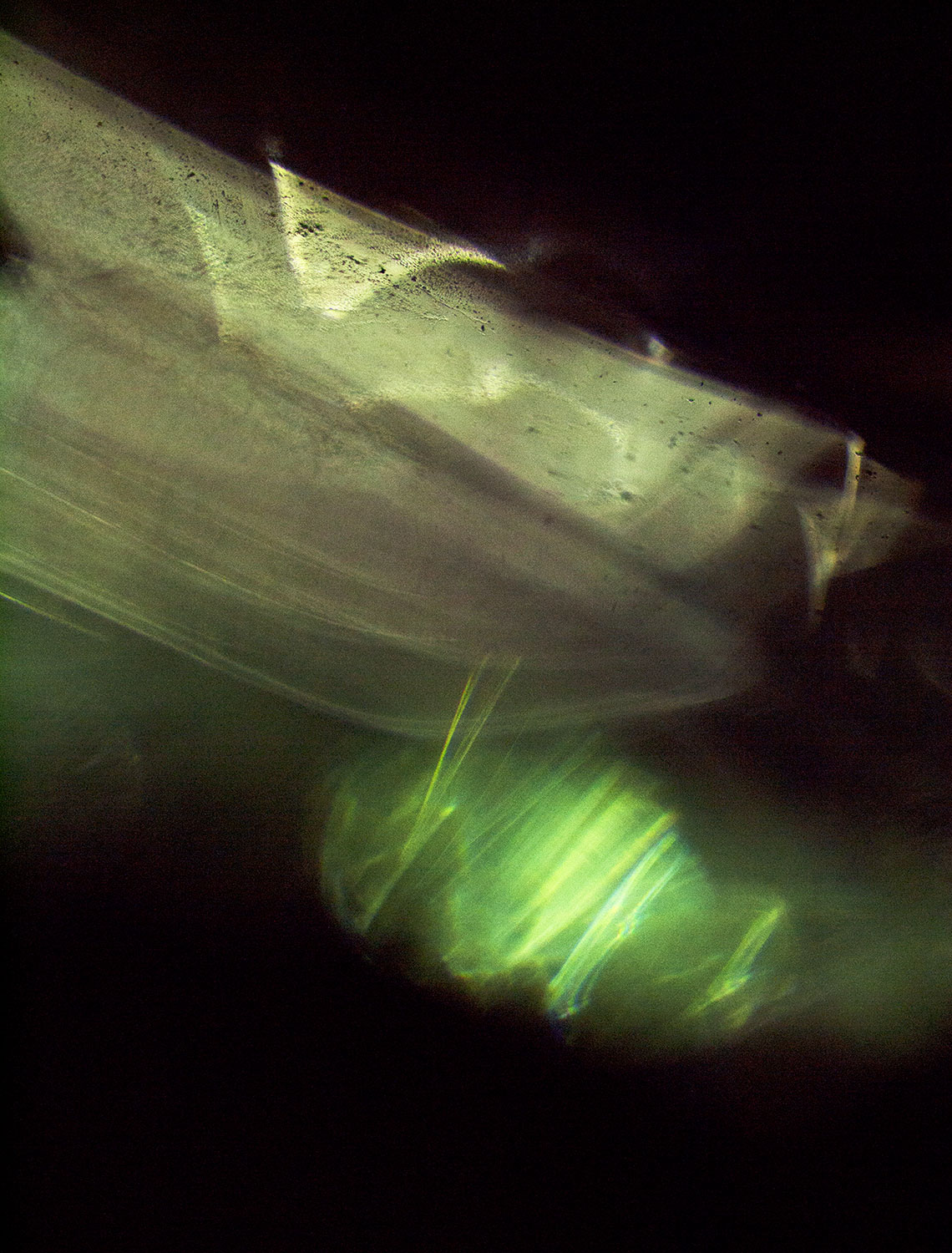


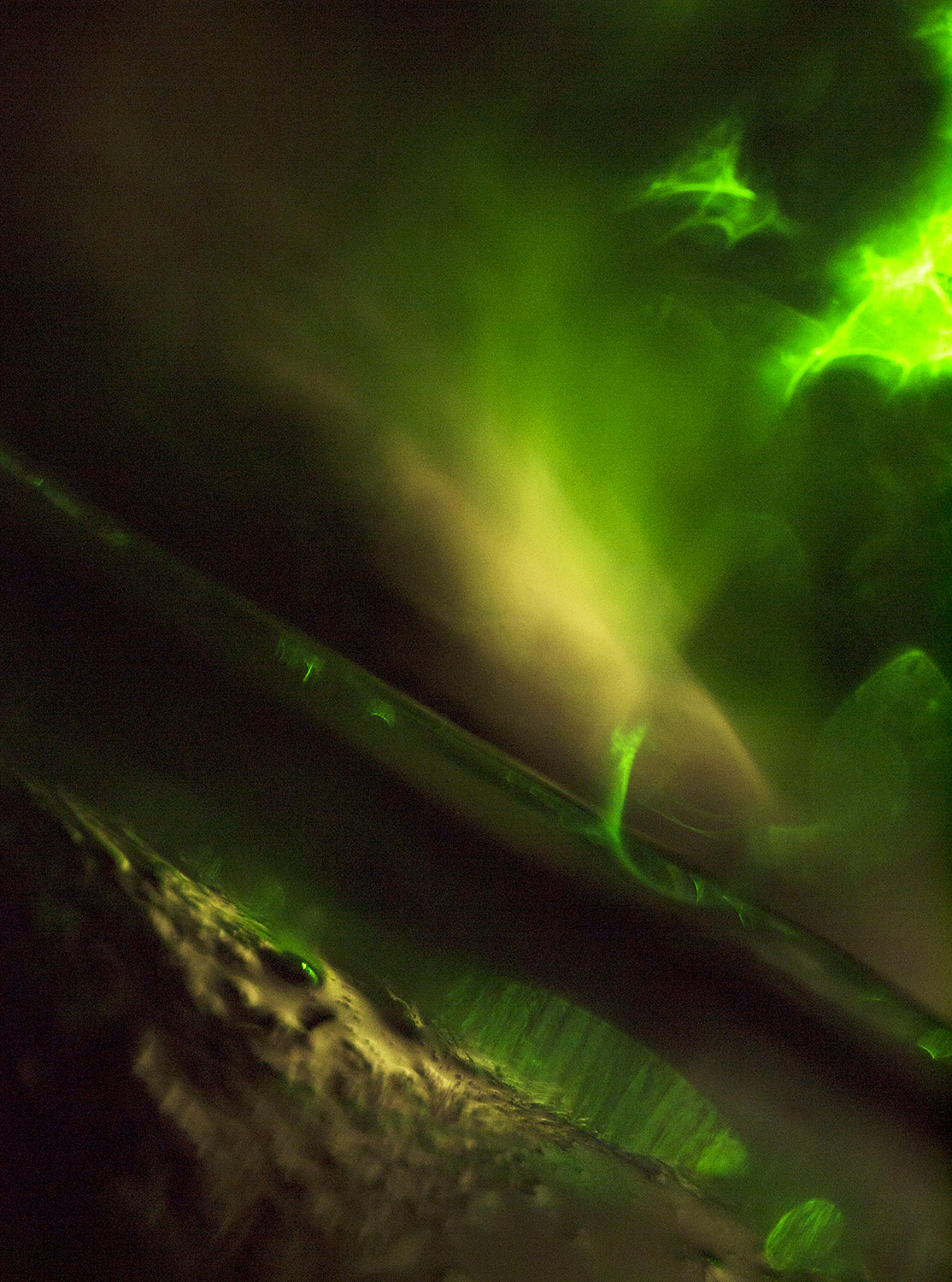

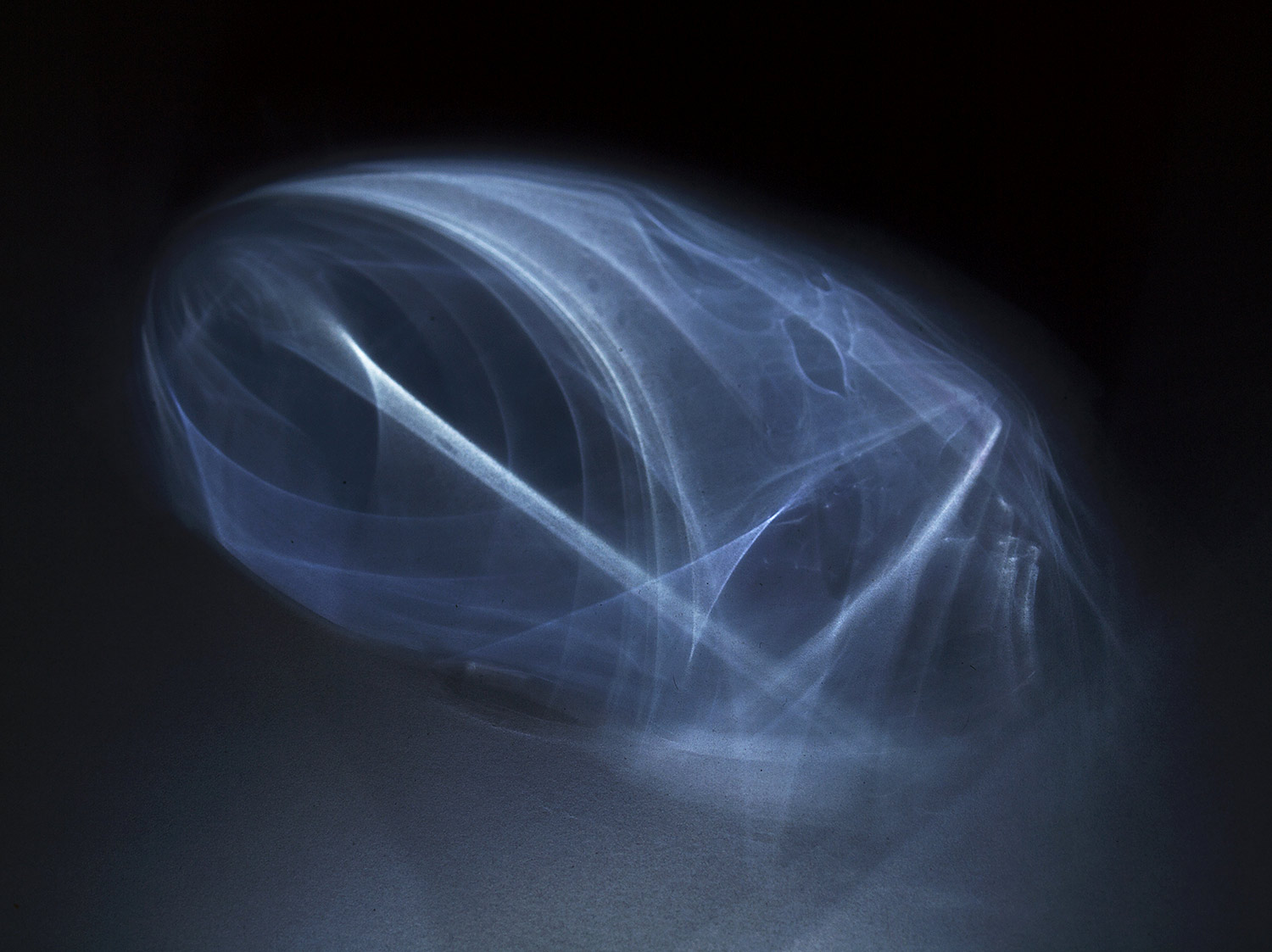

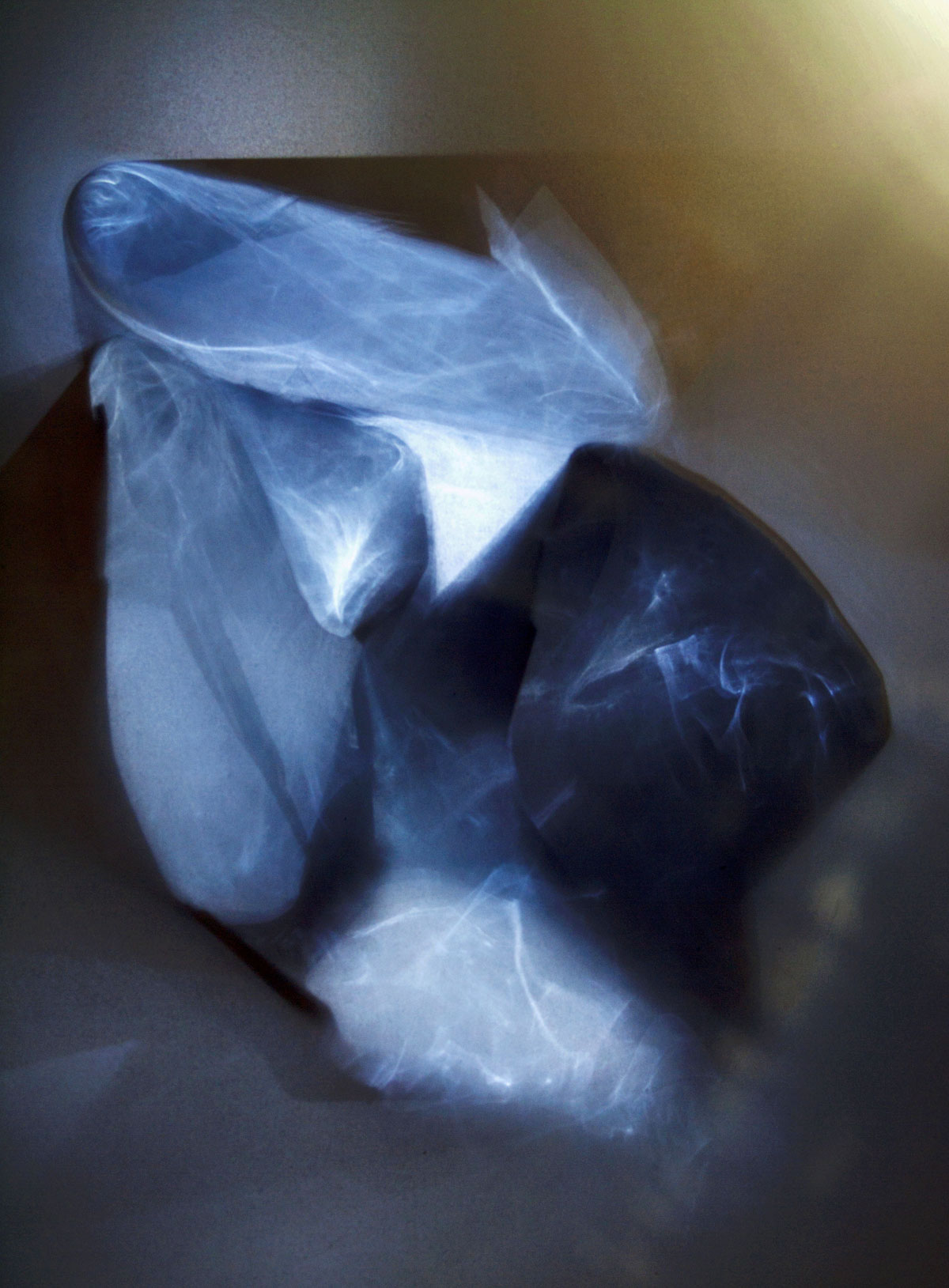


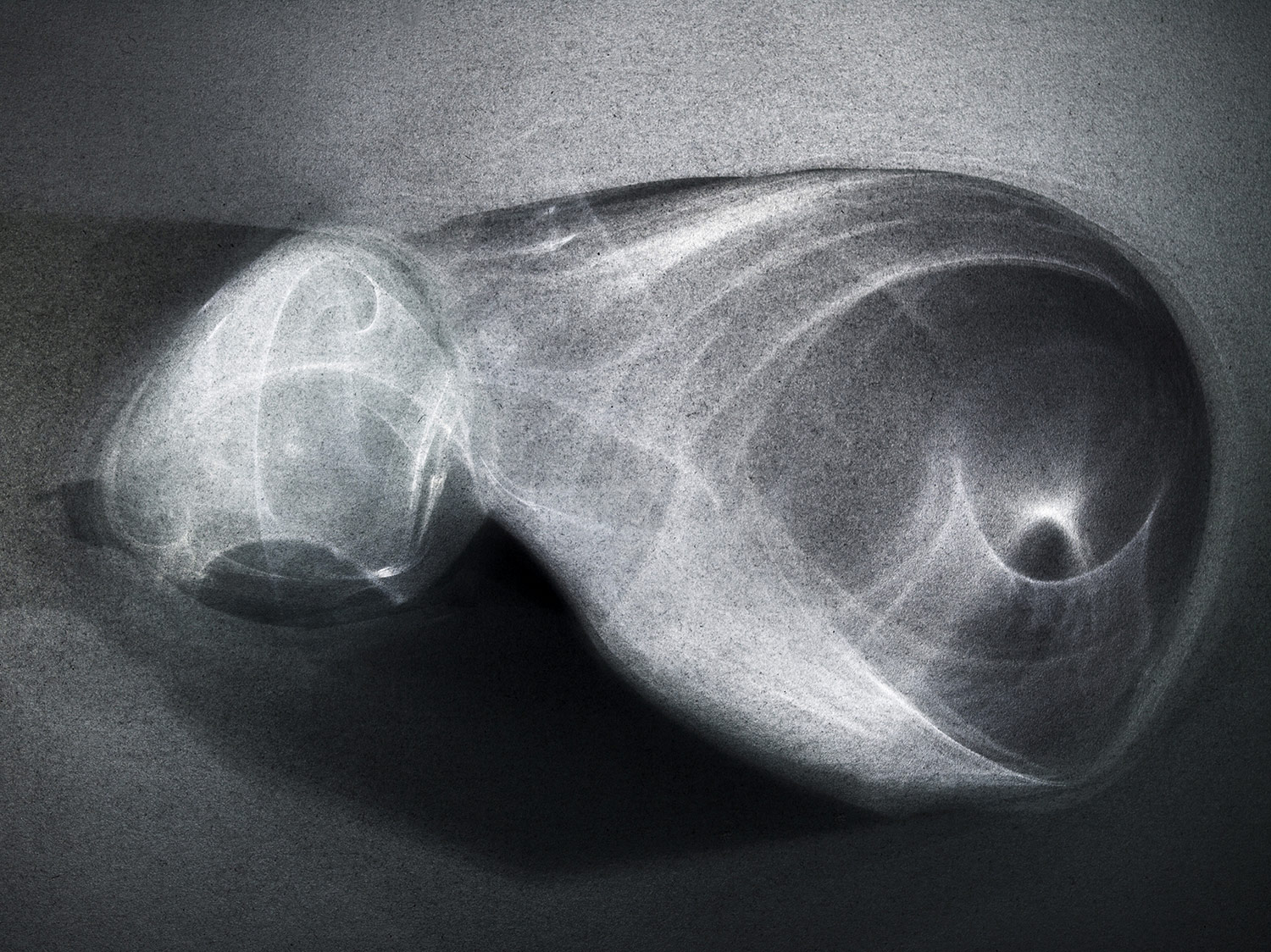
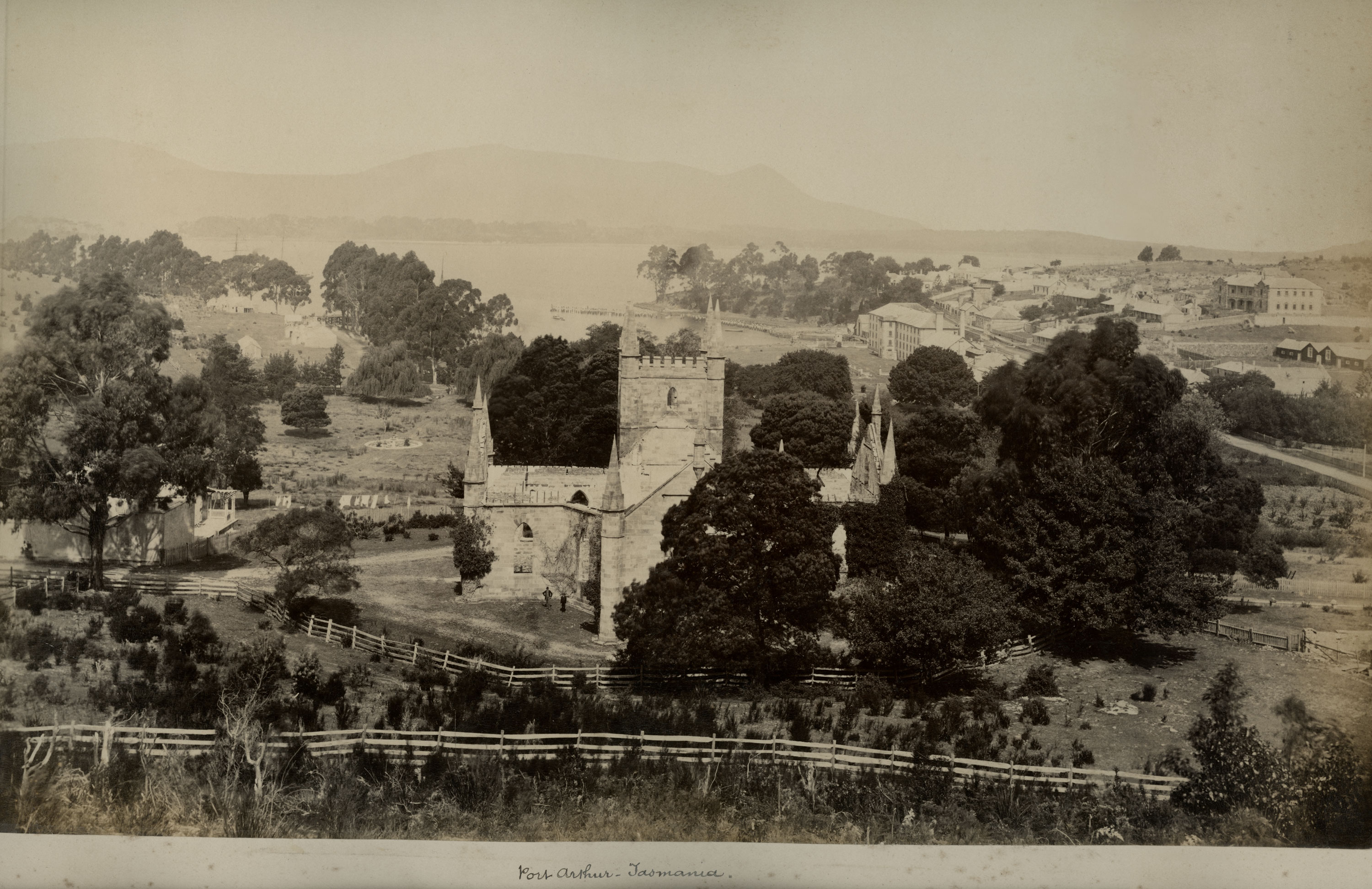

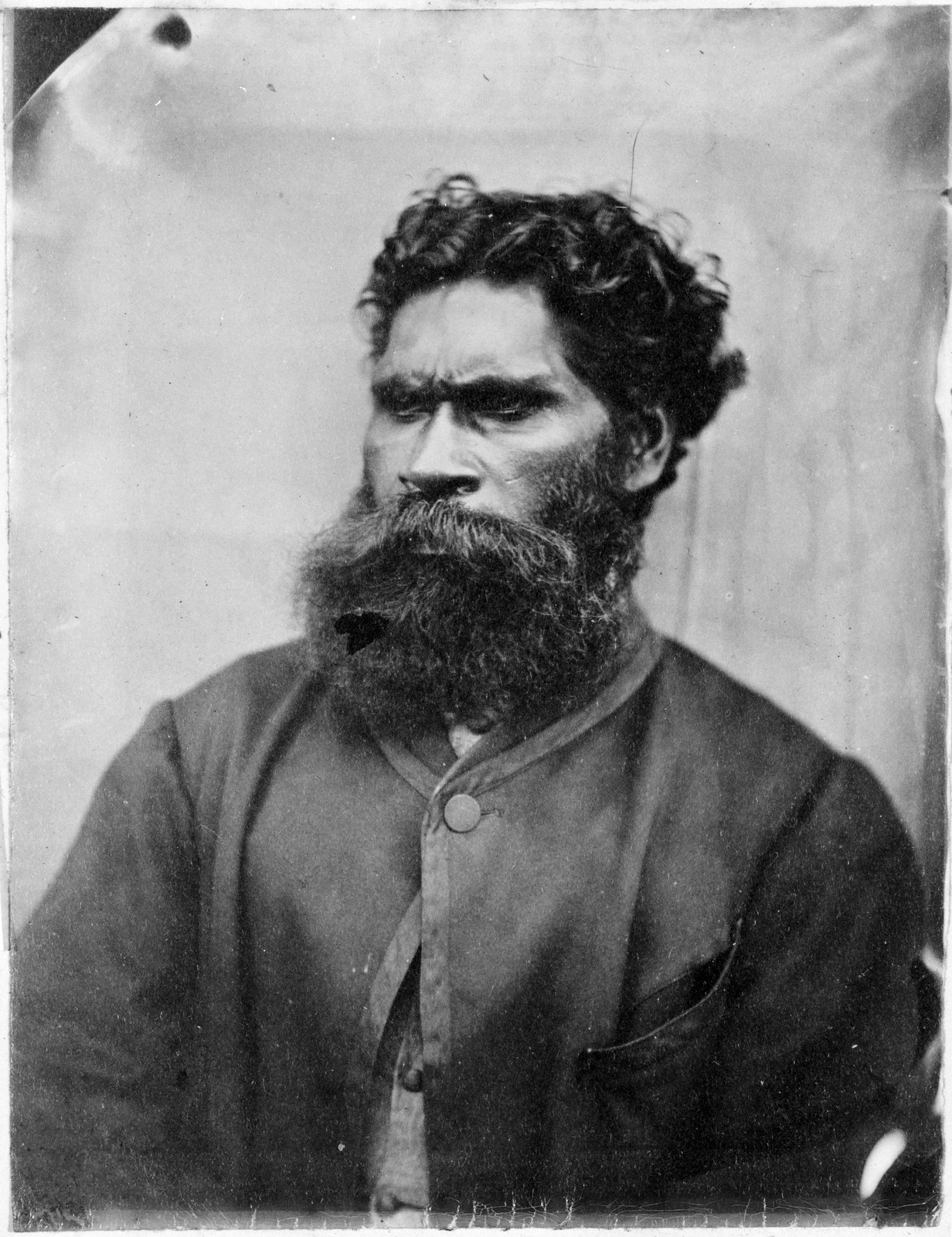


![Unknown photographer. '[A group of Aboriginal men at Coranderrk Station, Healesville]' Nd](https://artblart.com/wp-content/uploads/2016/04/sixteen-aboriginal-men.jpg "Unknown photographer. '[A group of Aboriginal men at Coranderrk Station, Healesville]' Nd")
![Talma & Co. (1893-1932) 119 Swanston St. Melbourne 'Barak, Chief of the Yarra Yarra Tribe. [Barak drawing a corroboree]' c. 1895-1898](https://artblart.com/wp-content/uploads/2016/04/william-barak-a.jpg "Talma & Co. (1893-1932) 119 Swanston St. Melbourne 'Barak, Chief of the Yarra Yarra Tribe. [Barak drawing a corroboree]' c. 1895-1898")


![Albert Renger-Patzsch (German, 1897-1966) 'Mantelpavian [Hamadryas Baboon]' c. 1925 from the exhibition 'The world is beautiful: photographs from the collection' at the National Gallery of Australia, Canberra, Dec 2015 - April 2016](https://artblart.com/wp-content/uploads/2016/03/albert-renger-patzsch-baboon-web.jpg "Albert Renger-Patzsch (German, 1897-1966) 'Mantelpavian [Hamadryas Baboon]' c. 1925 from the exhibition 'The world is beautiful: photographs from the collection' at the National Gallery of Australia, Canberra, Dec 2015 - April 2016")


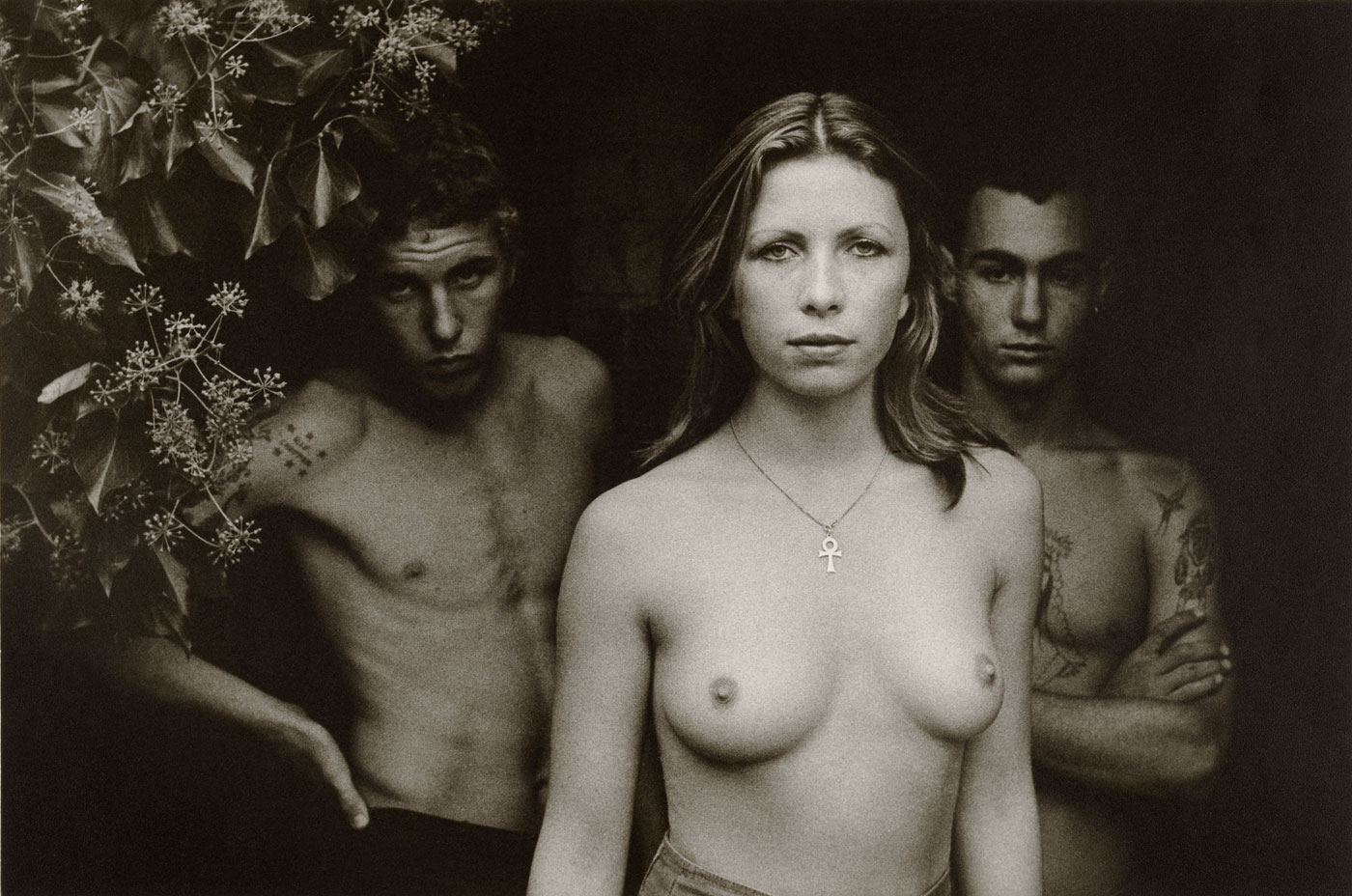


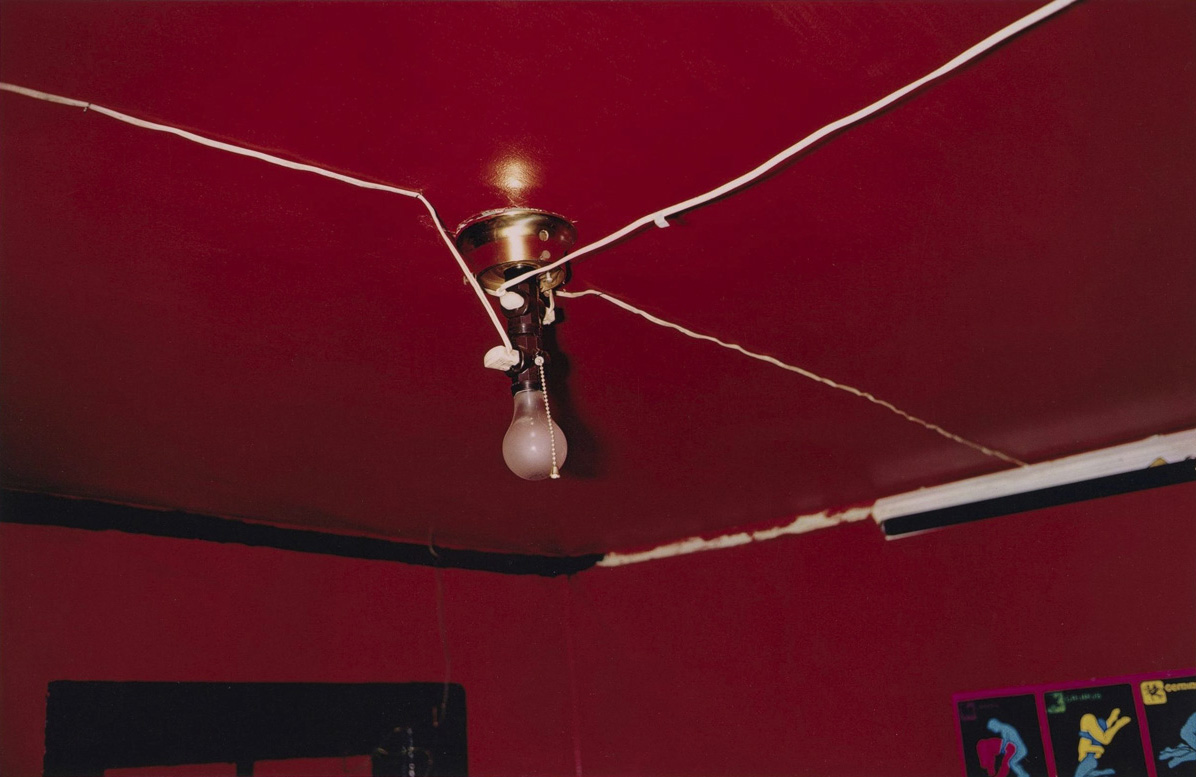


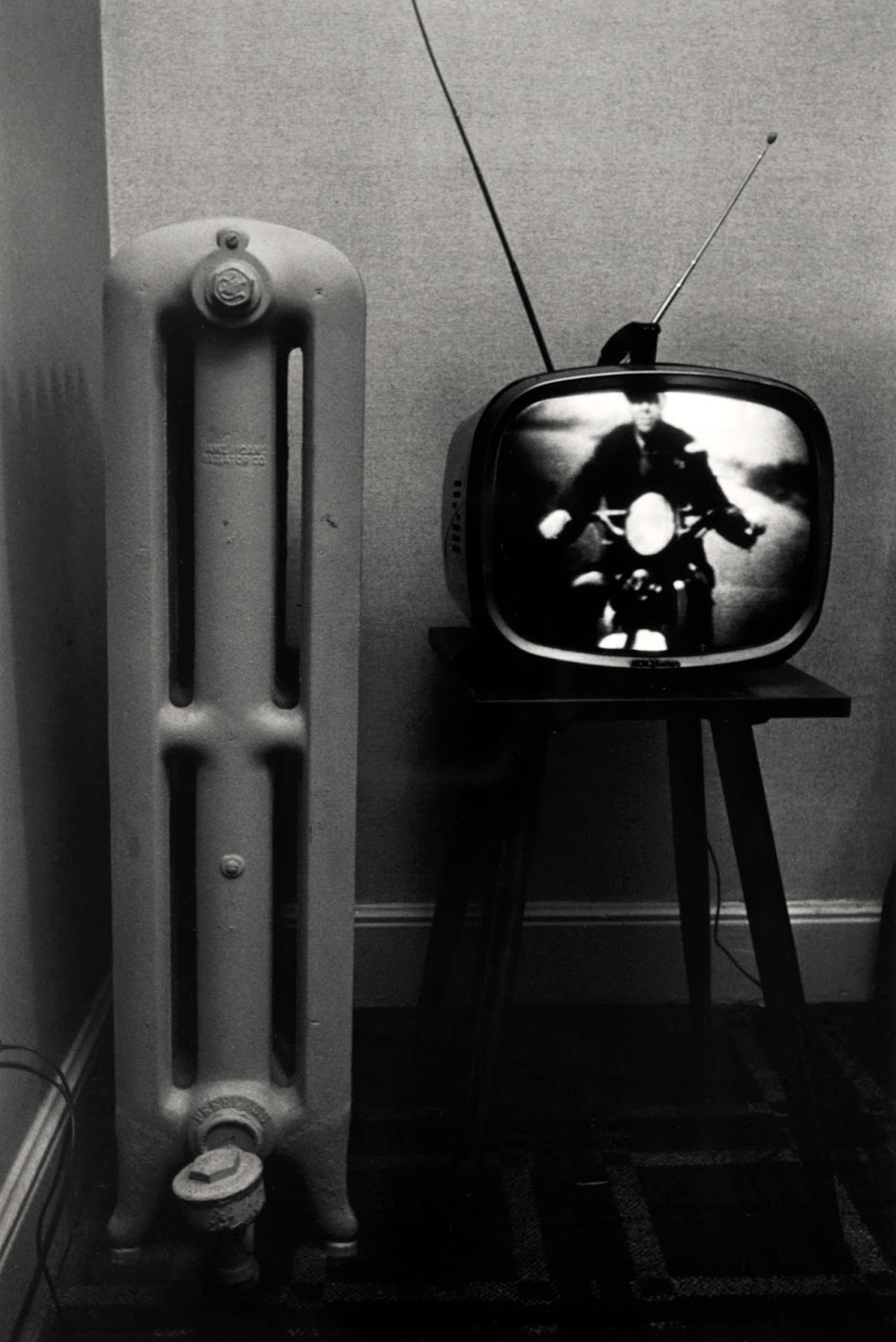
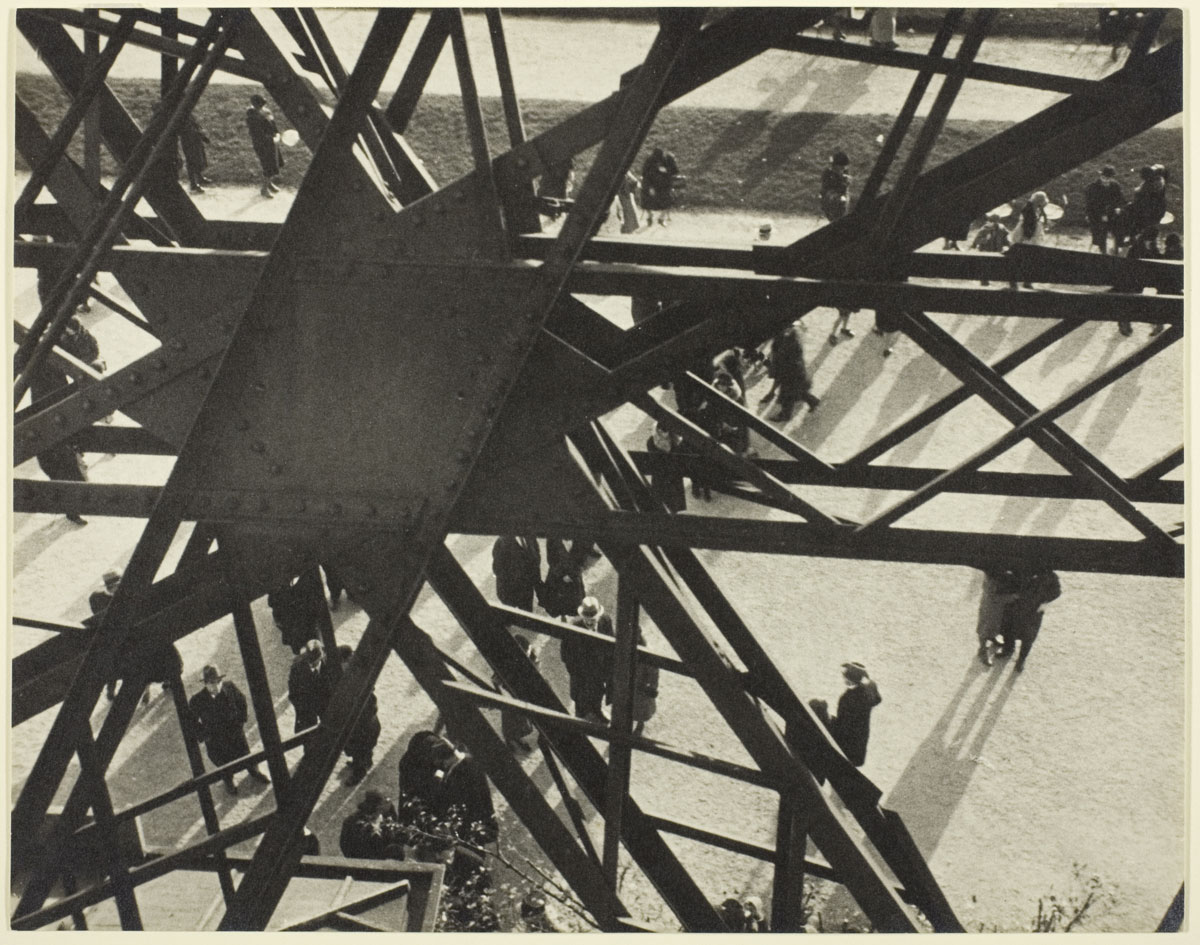


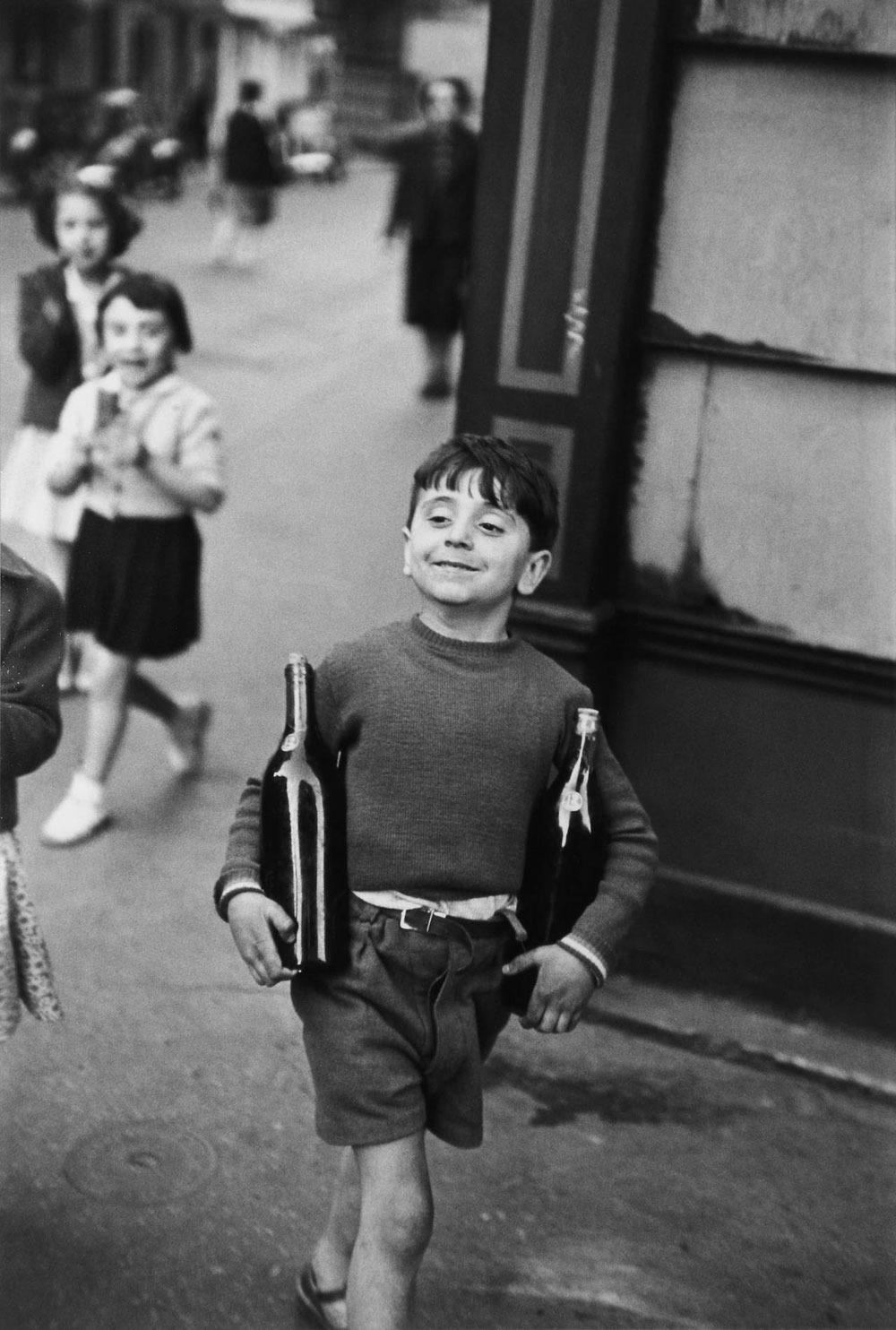
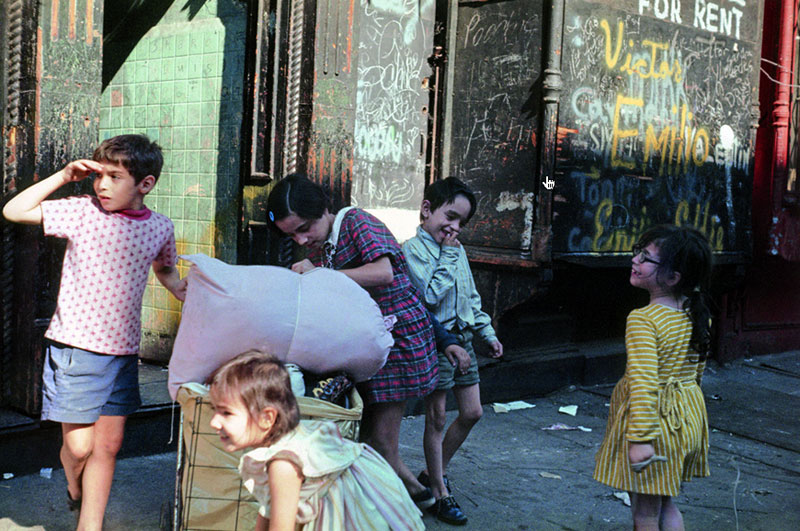

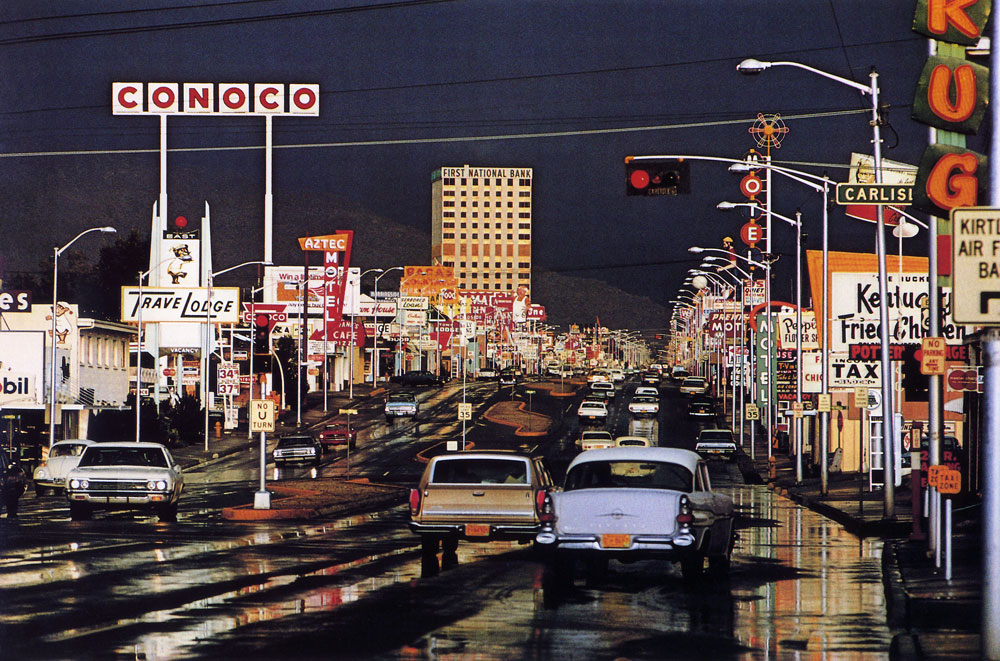


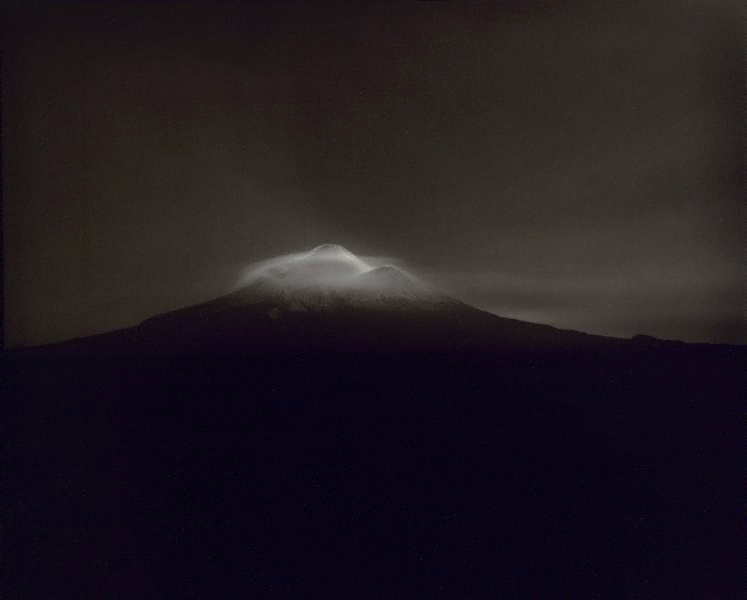


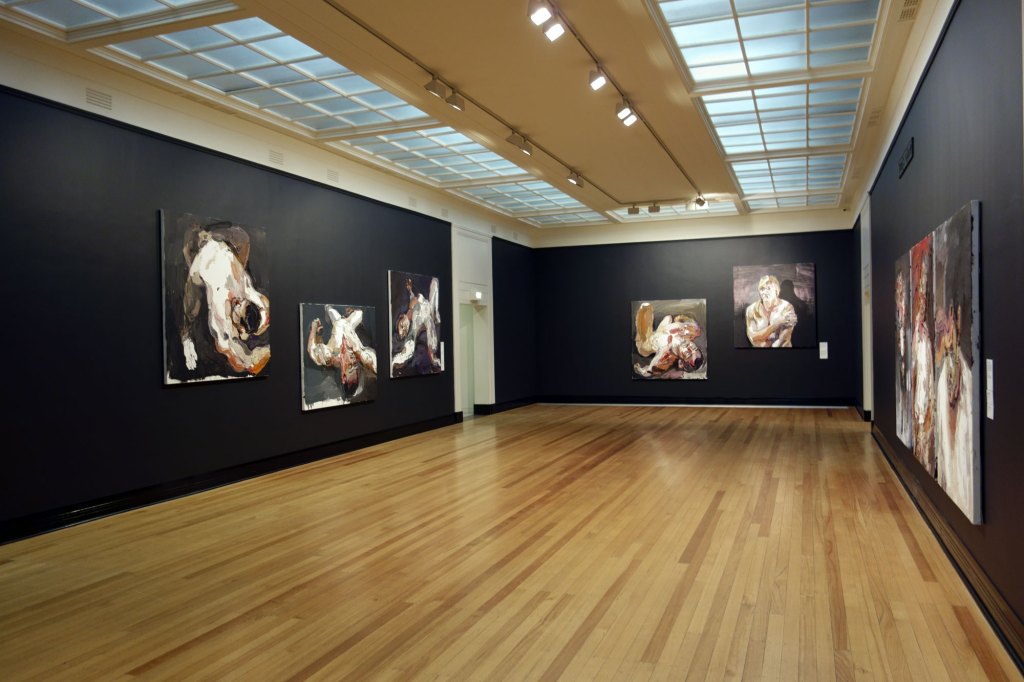
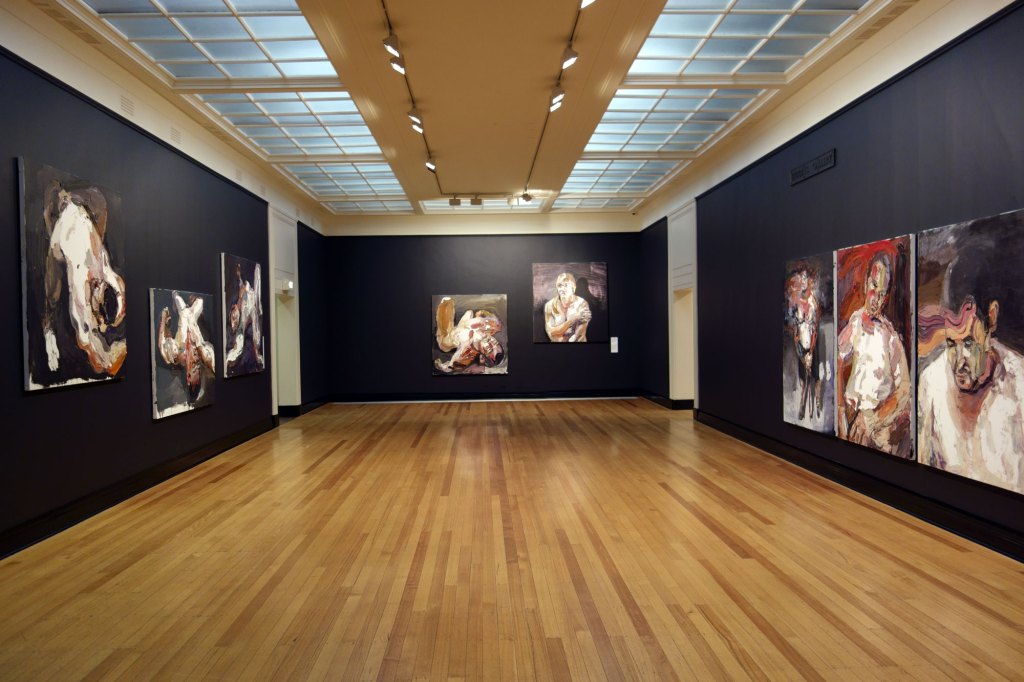
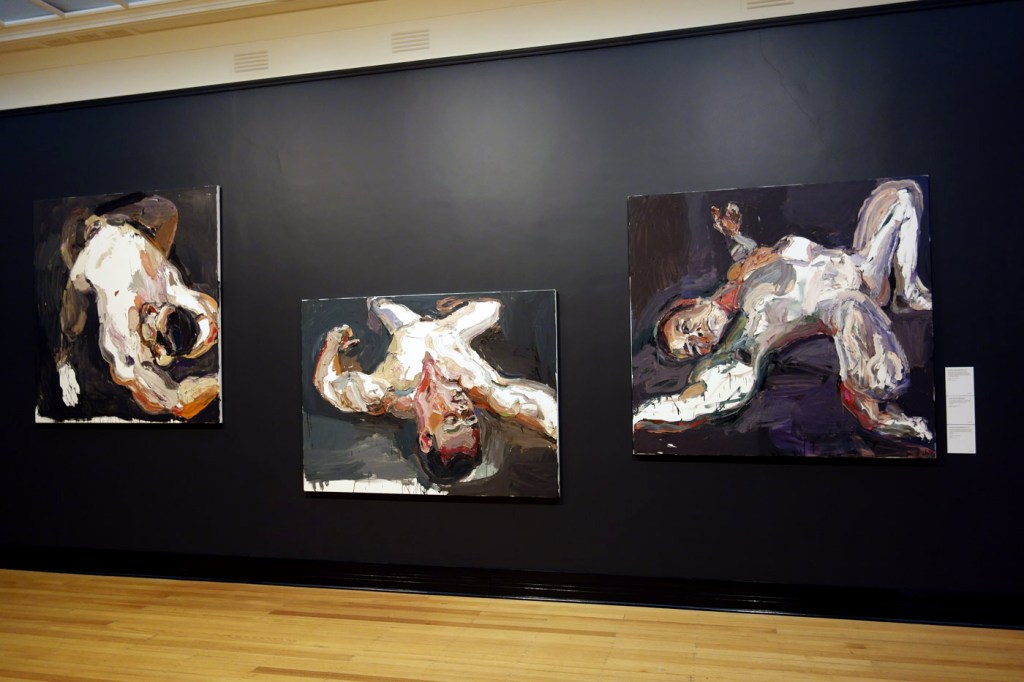
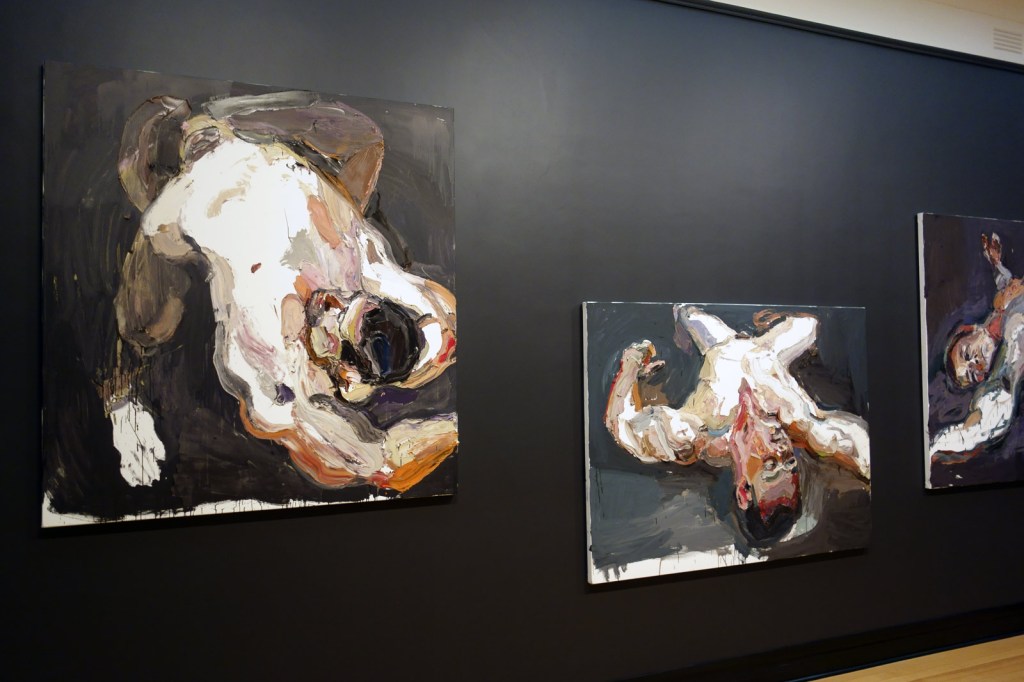
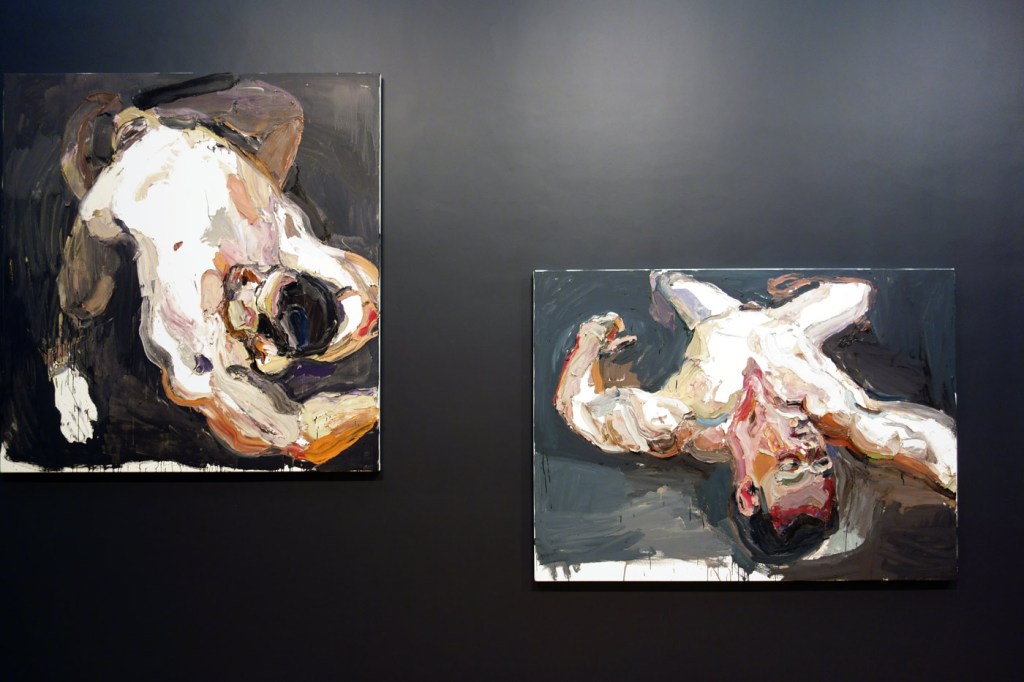
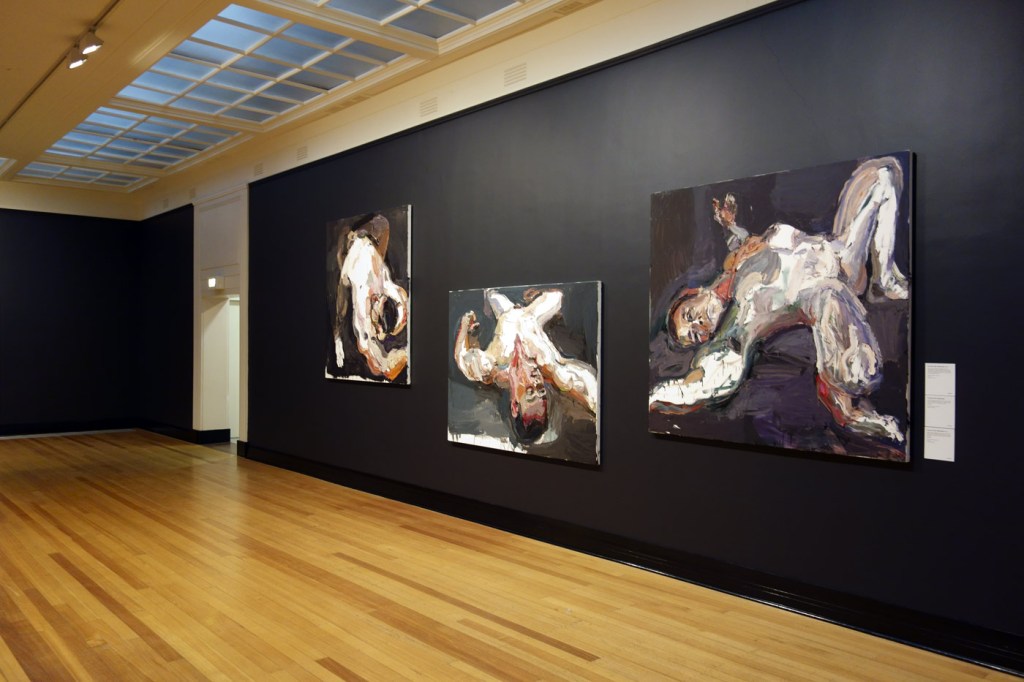
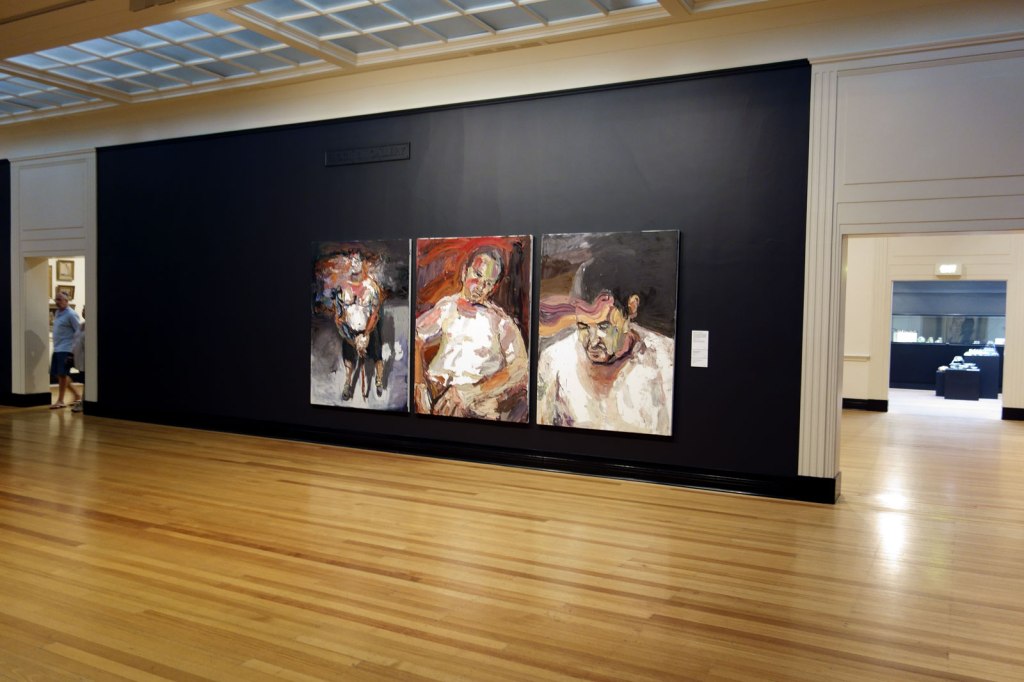
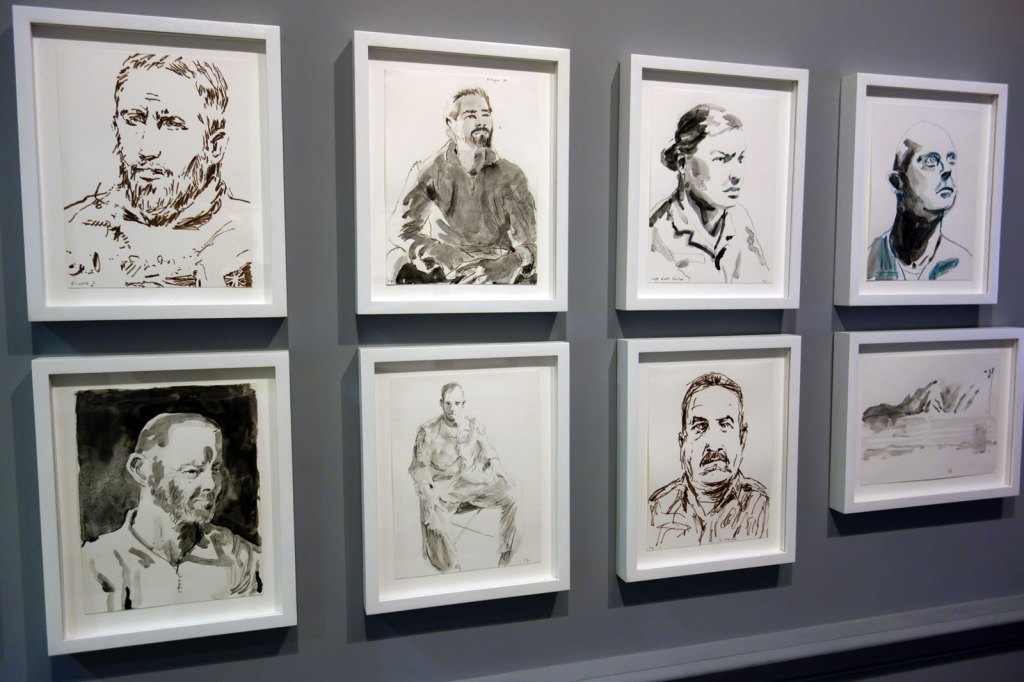
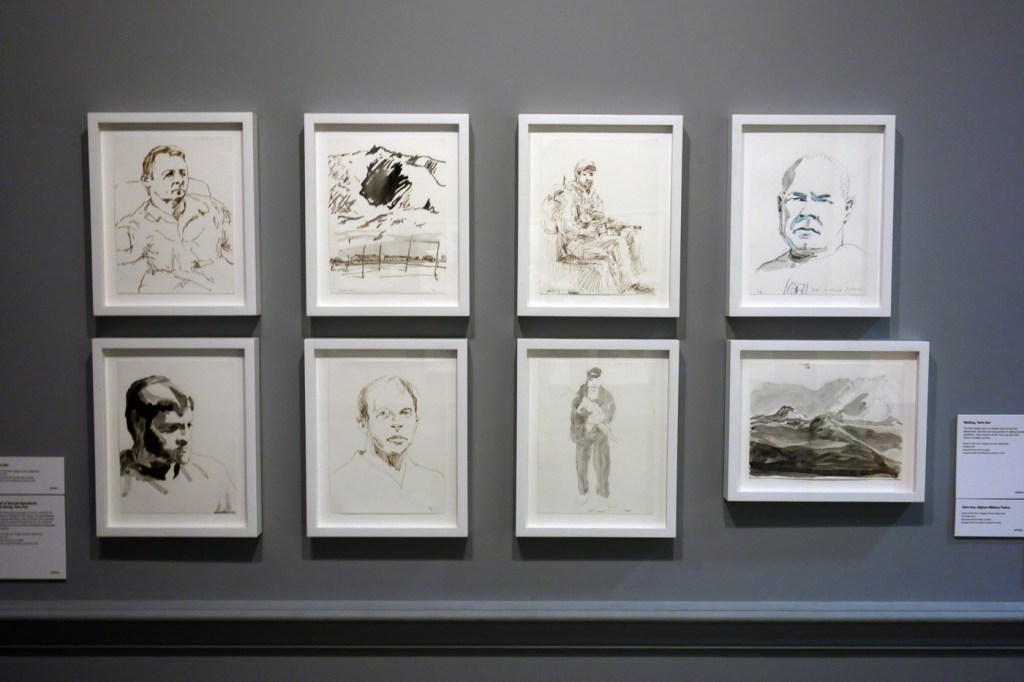
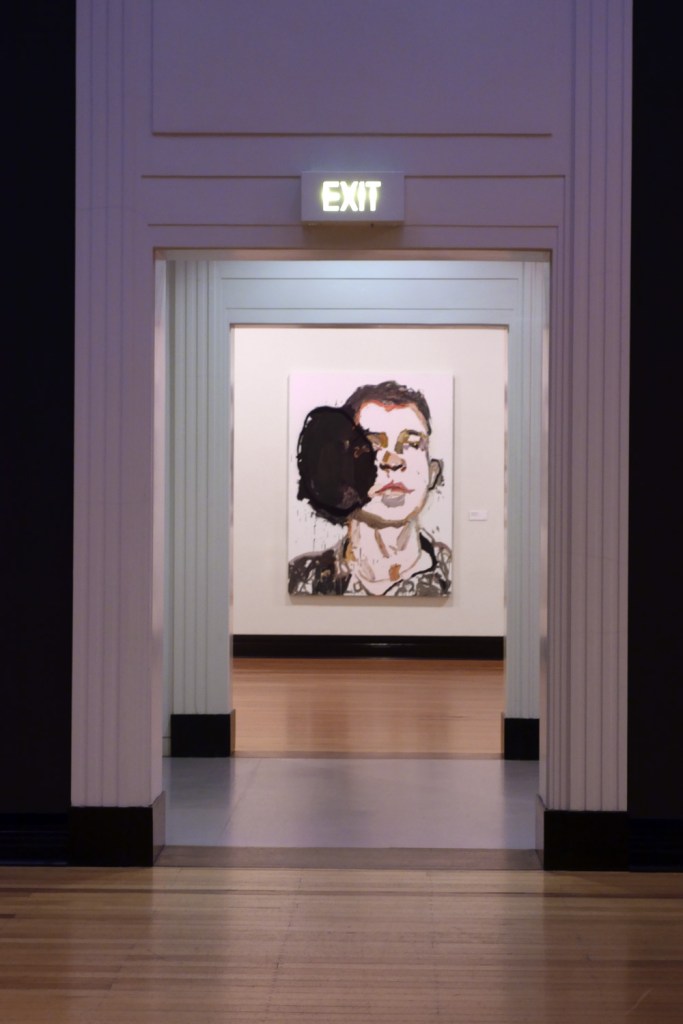

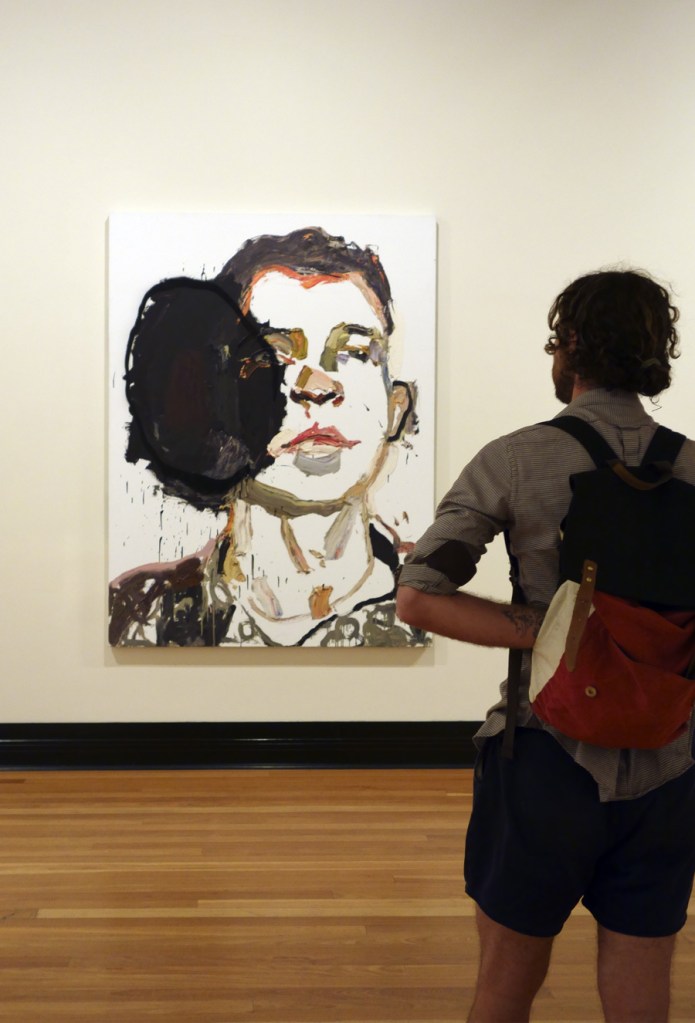
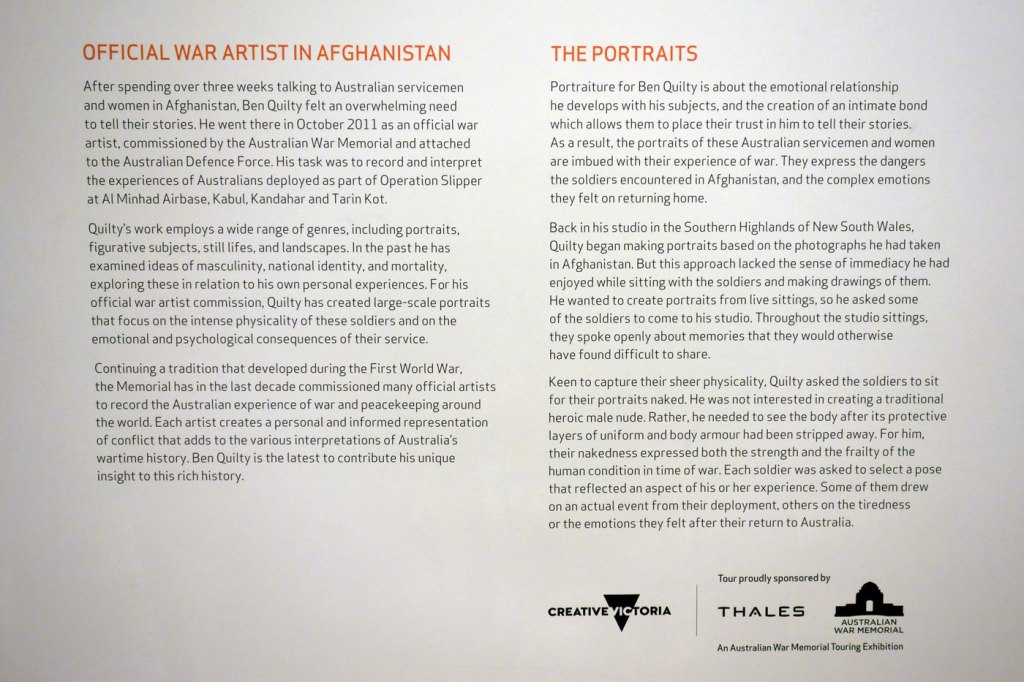
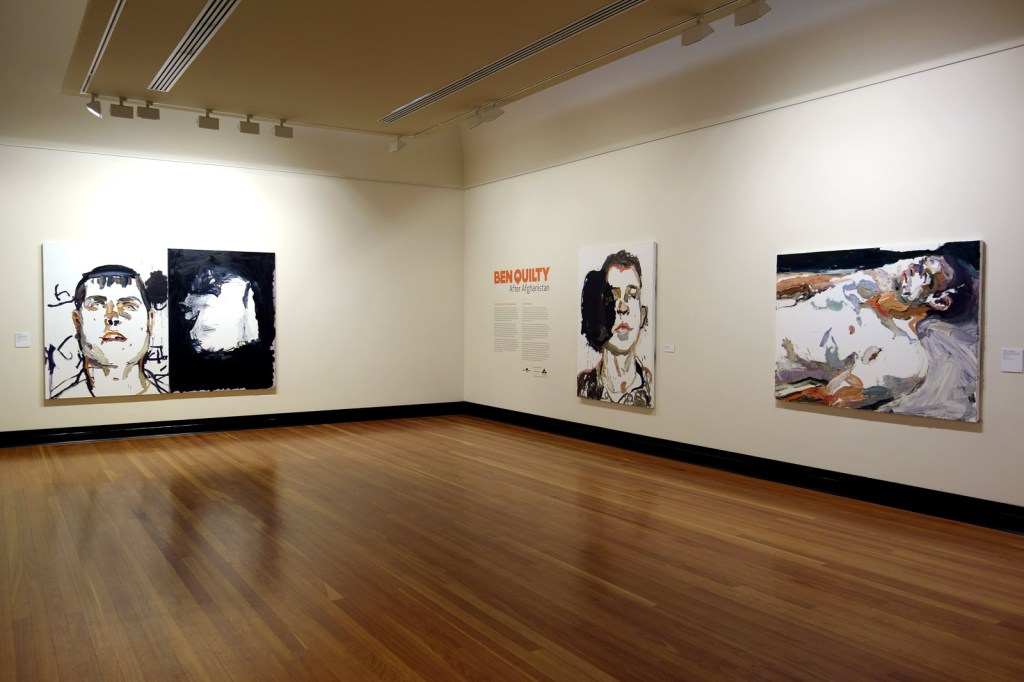
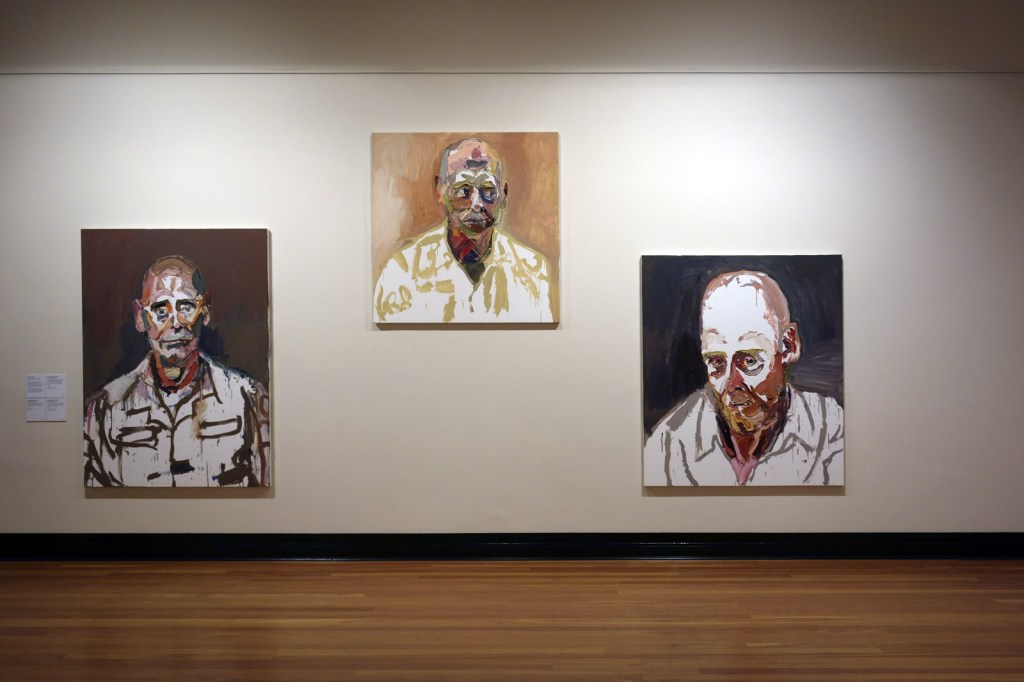


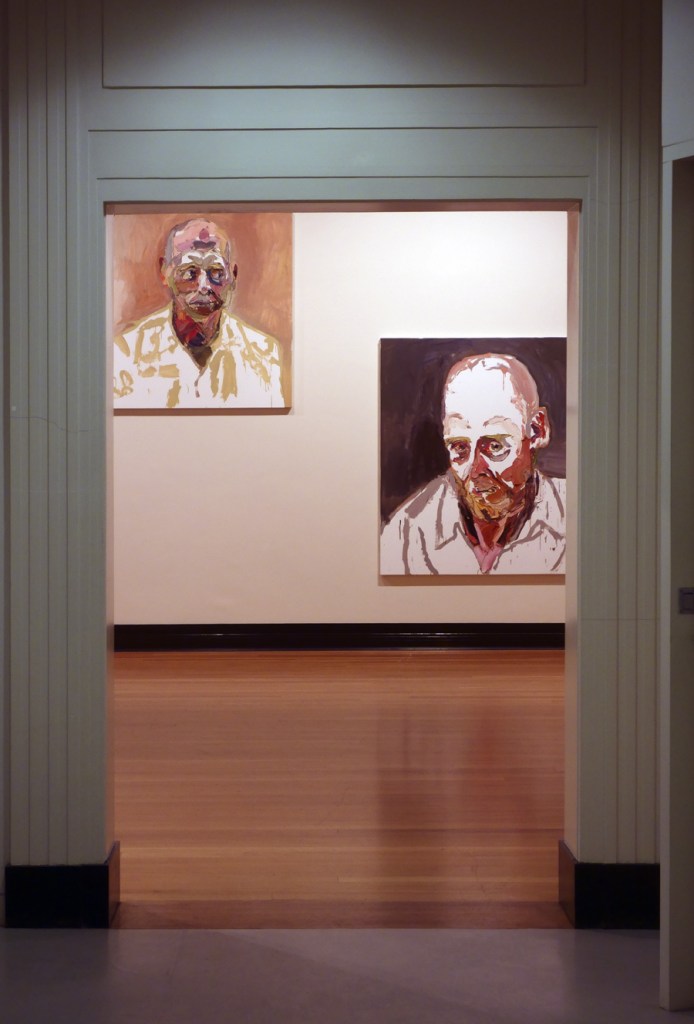
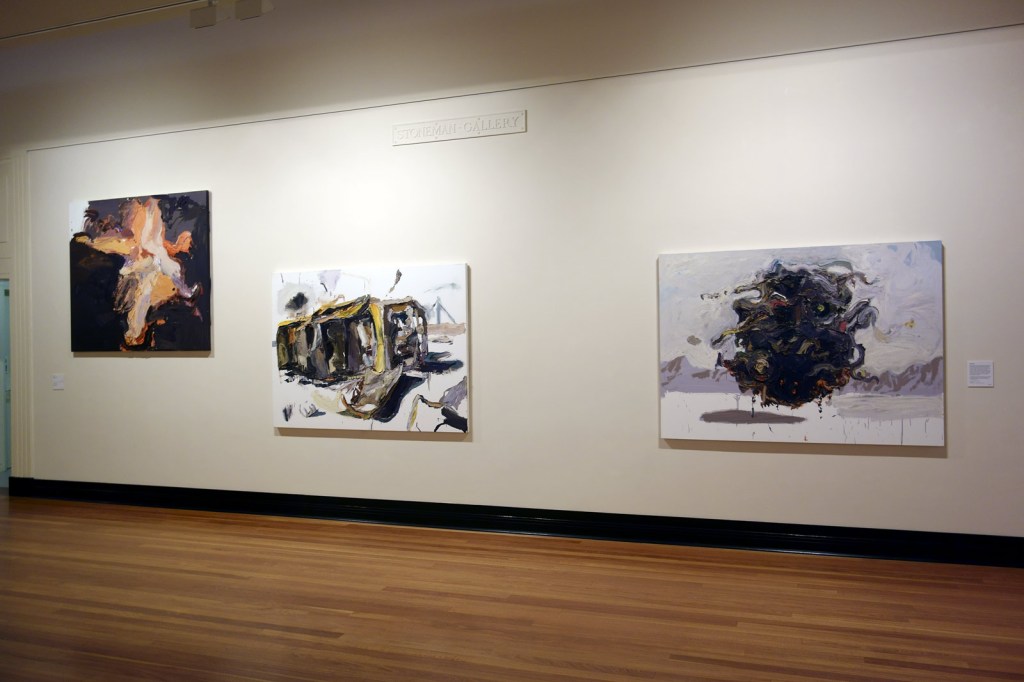
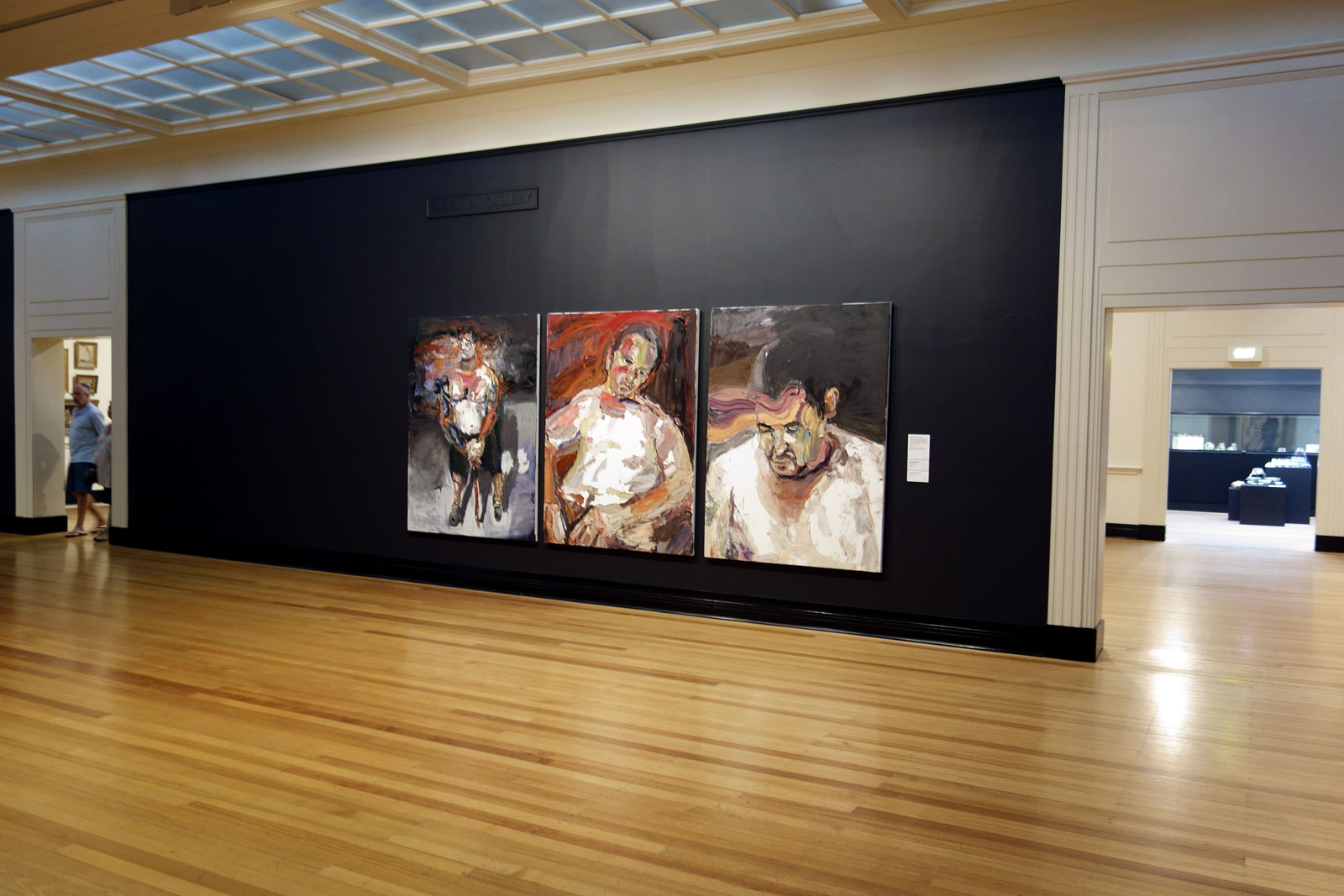
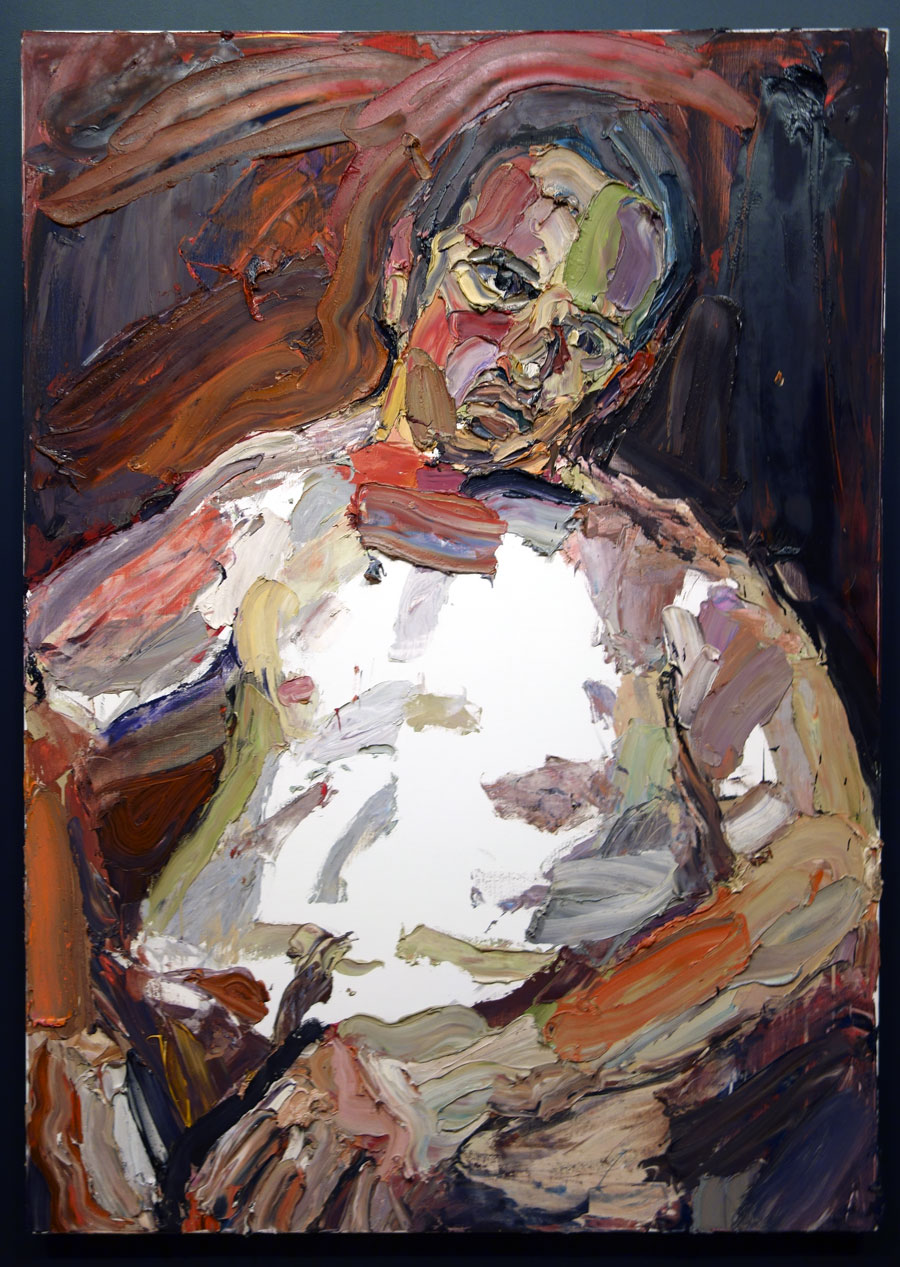
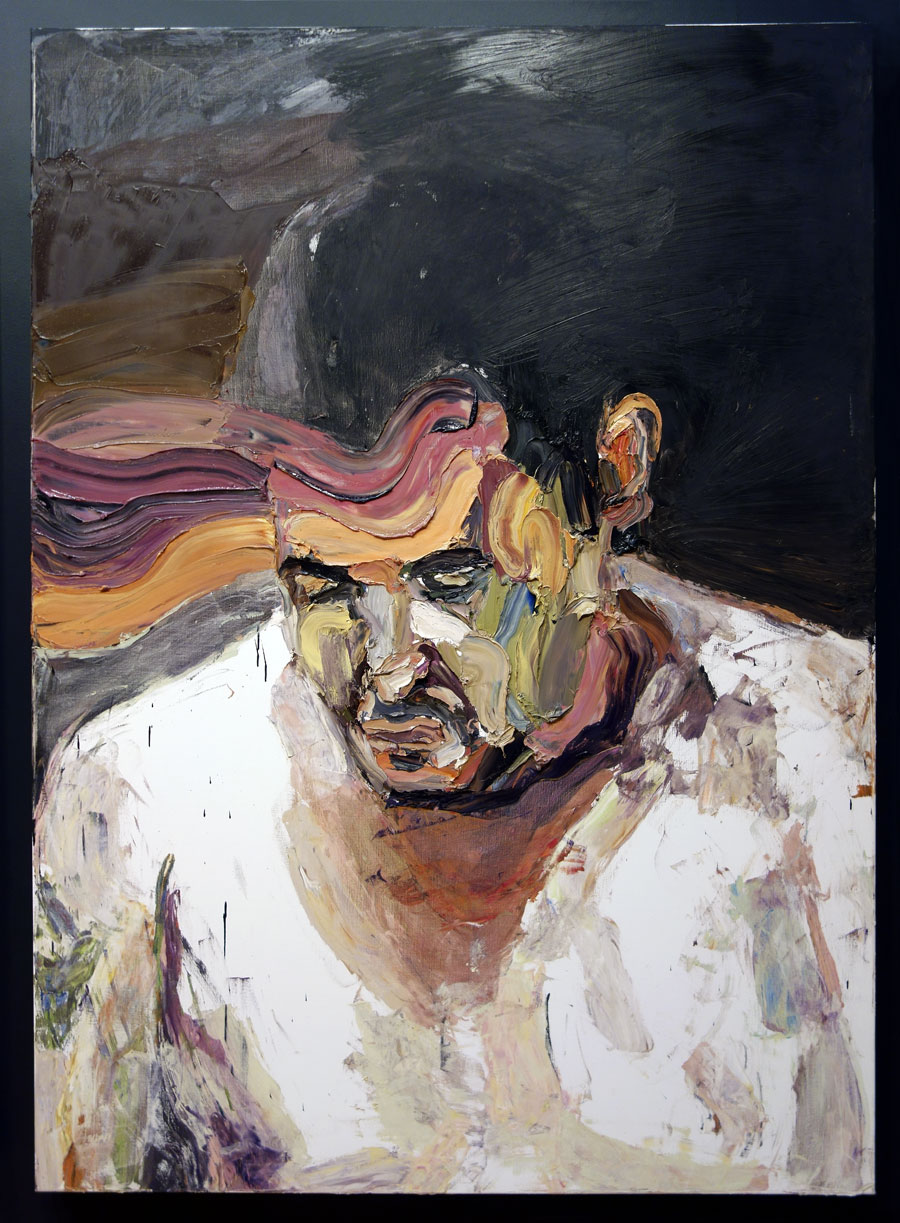


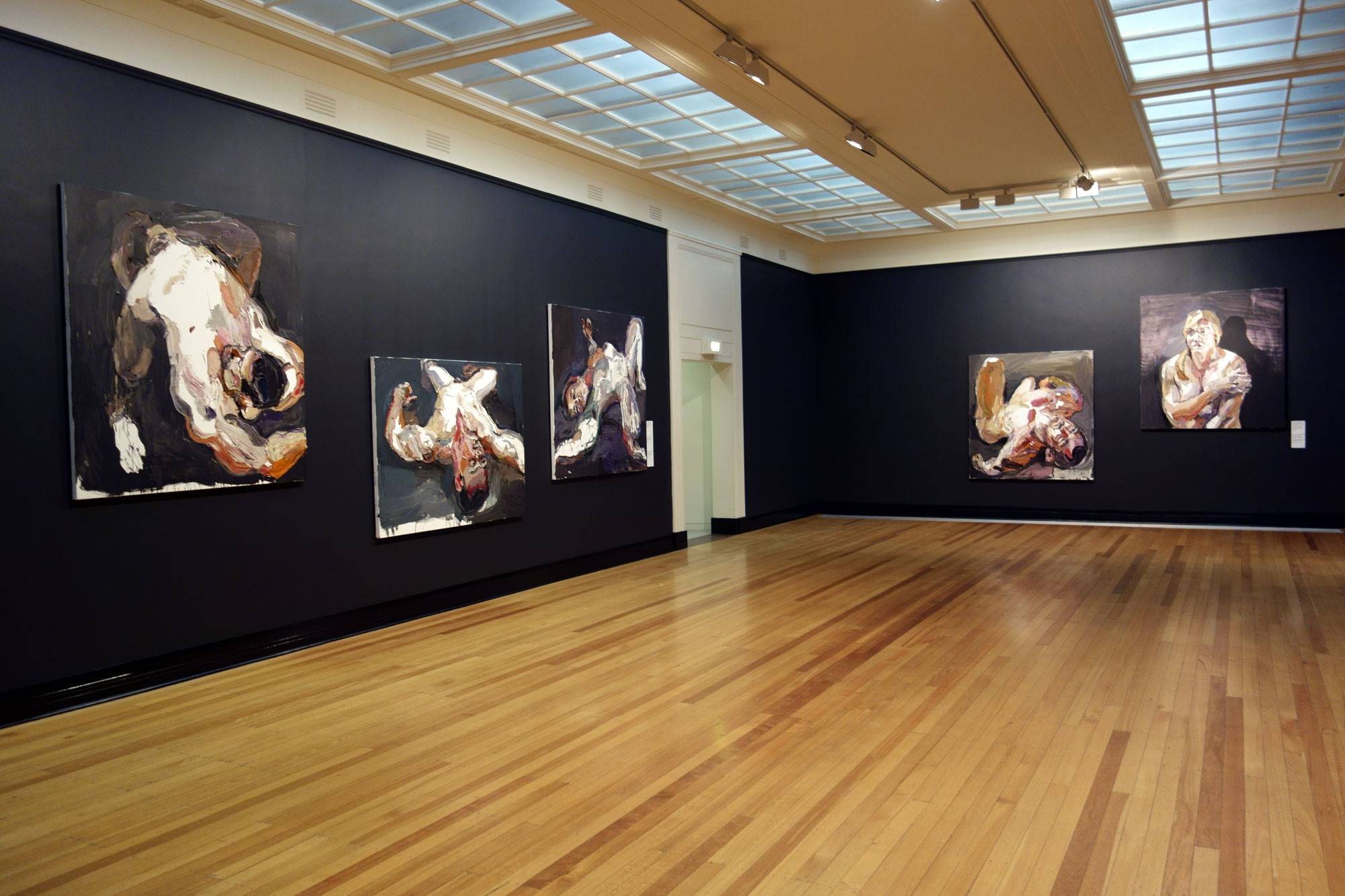


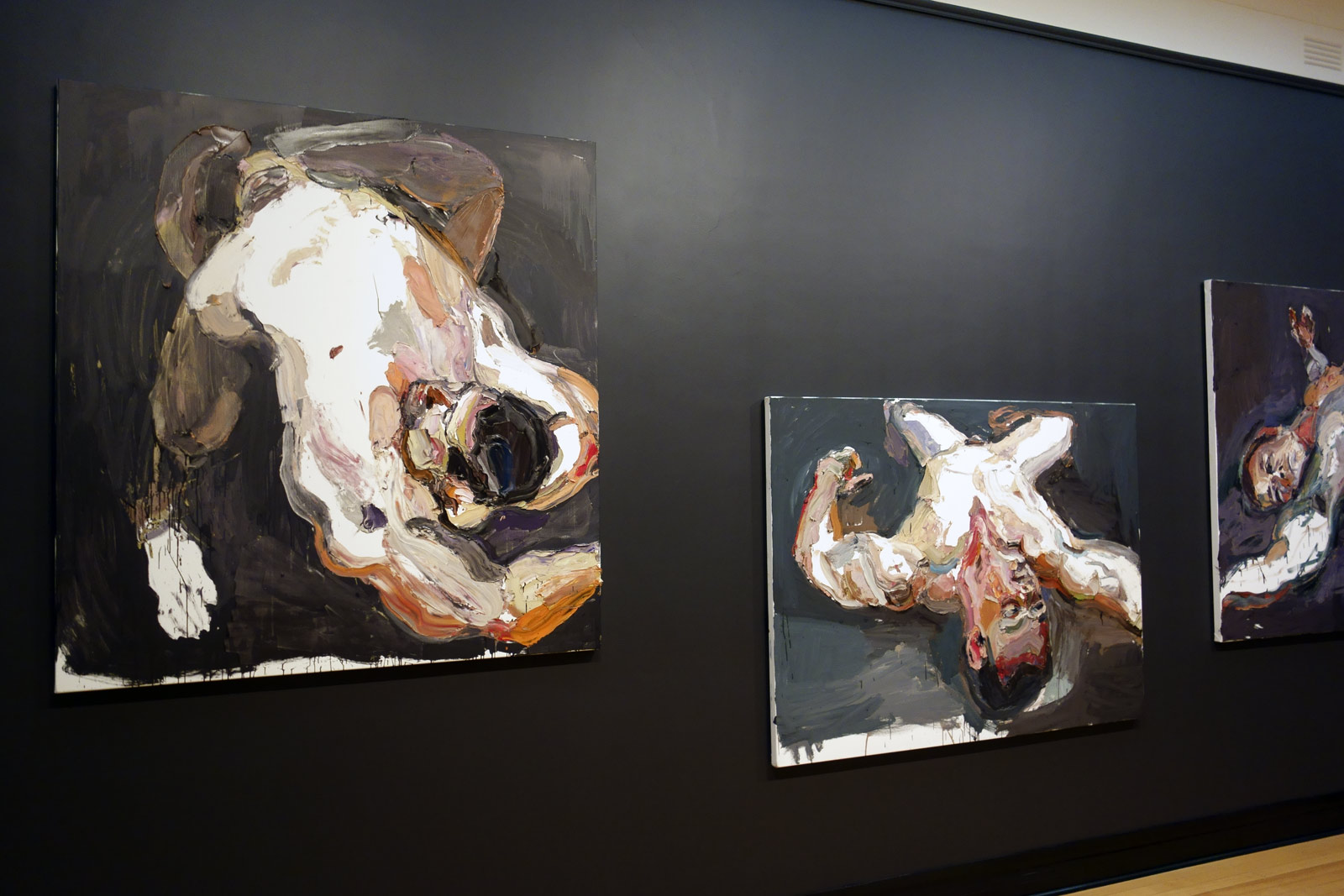
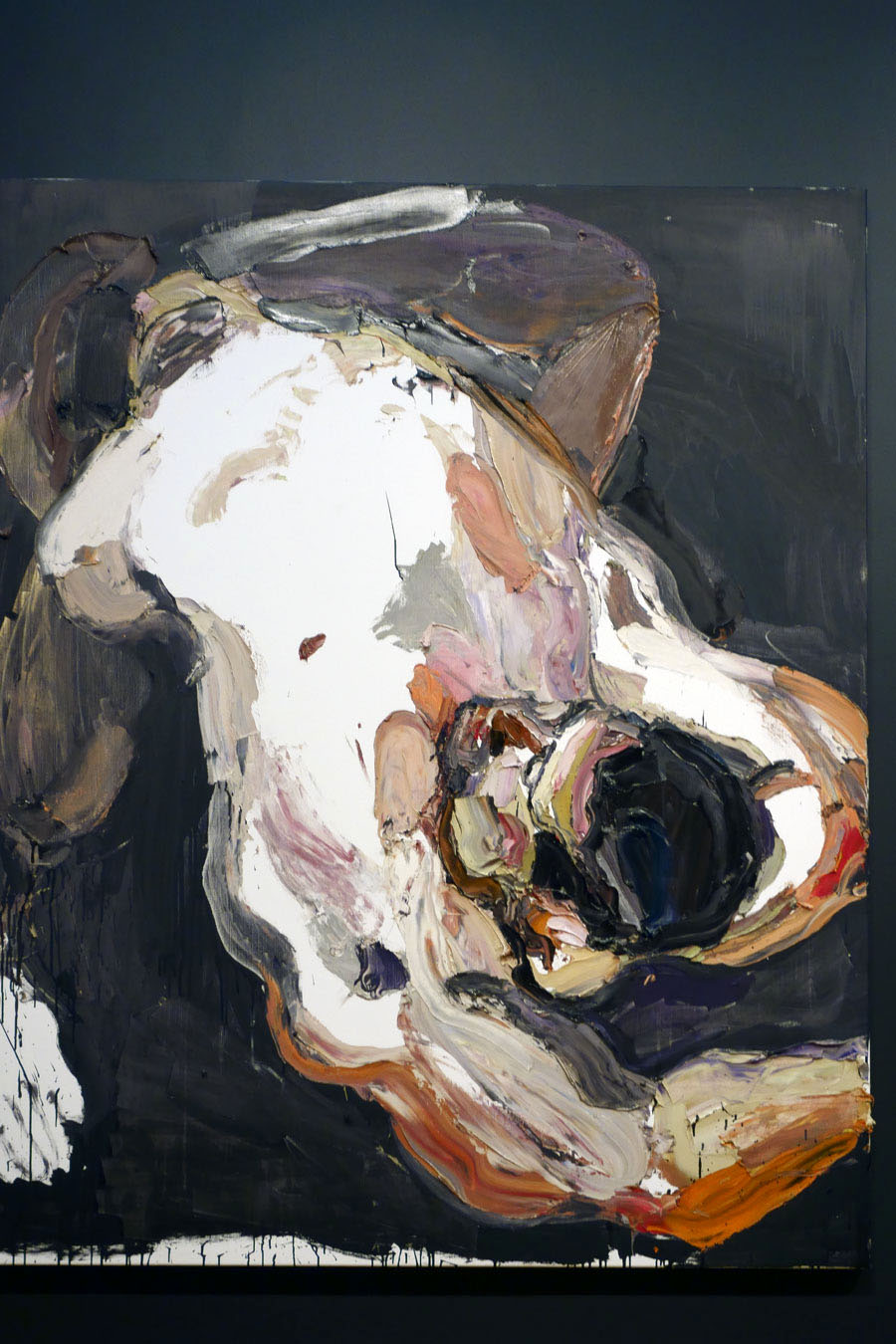


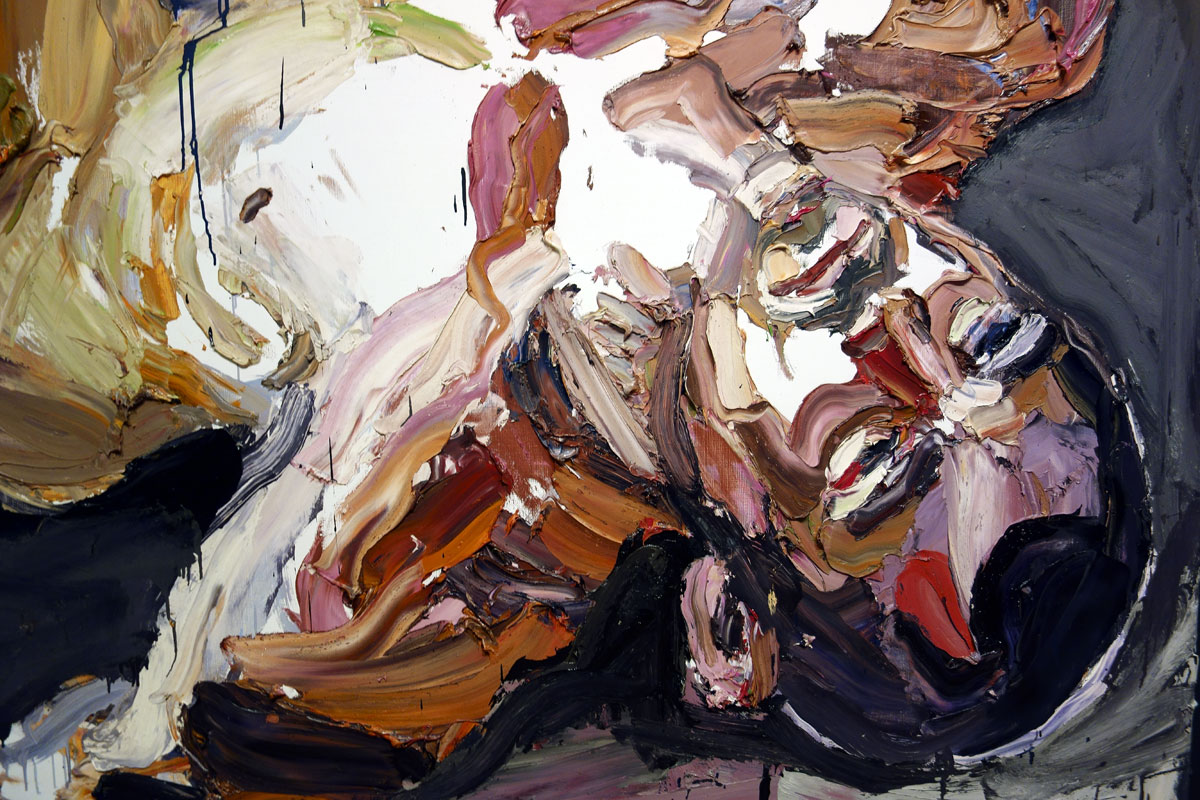
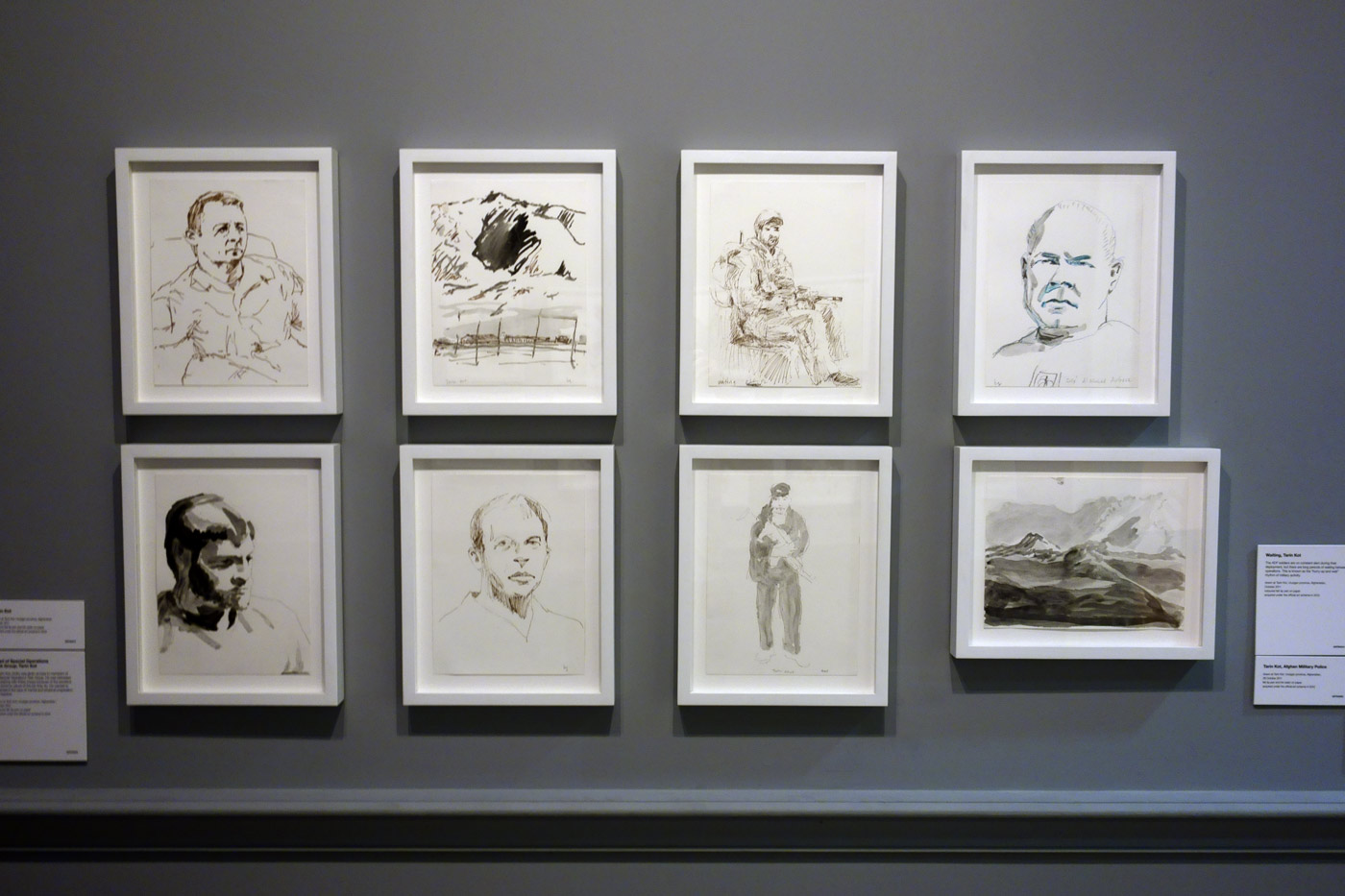

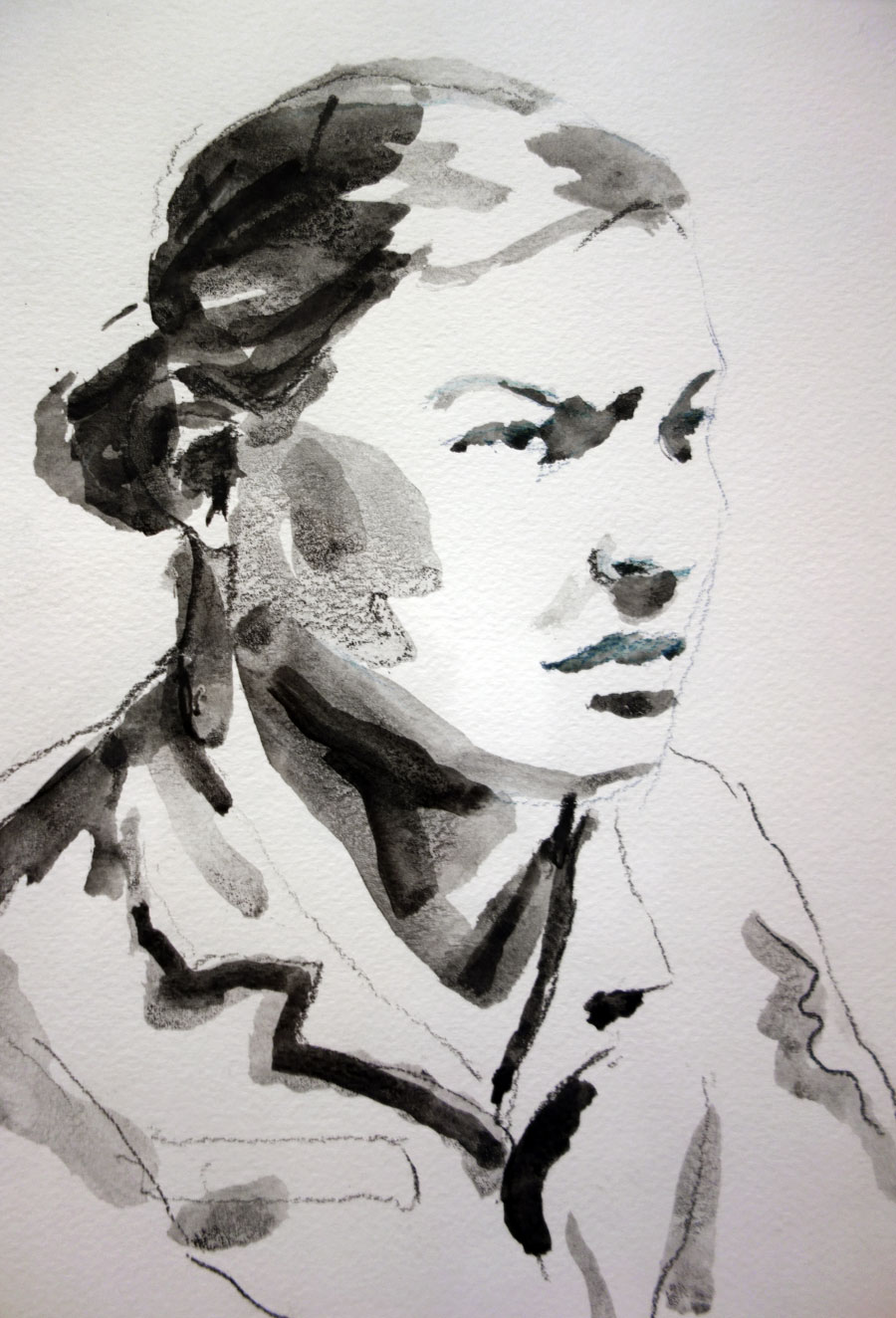
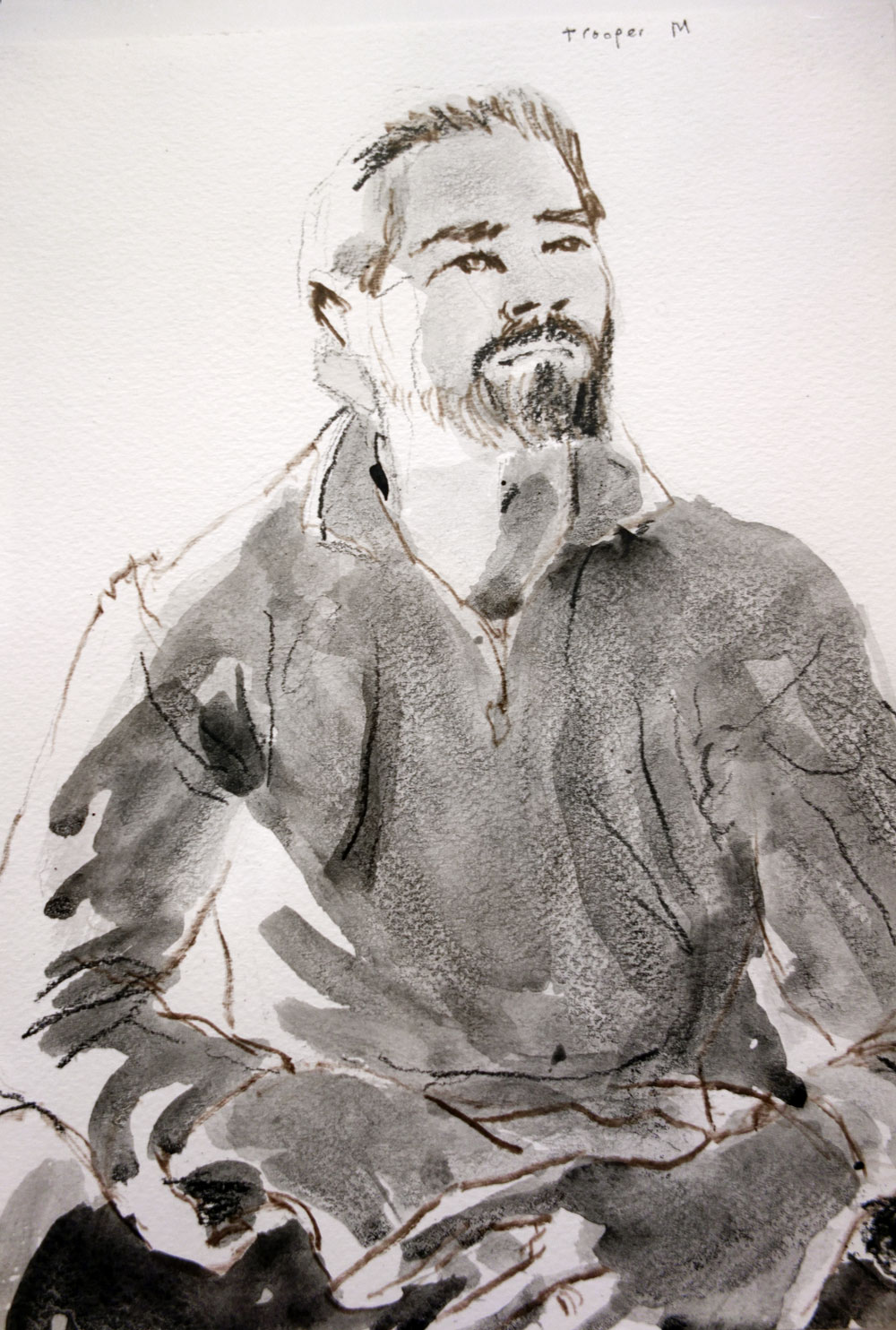
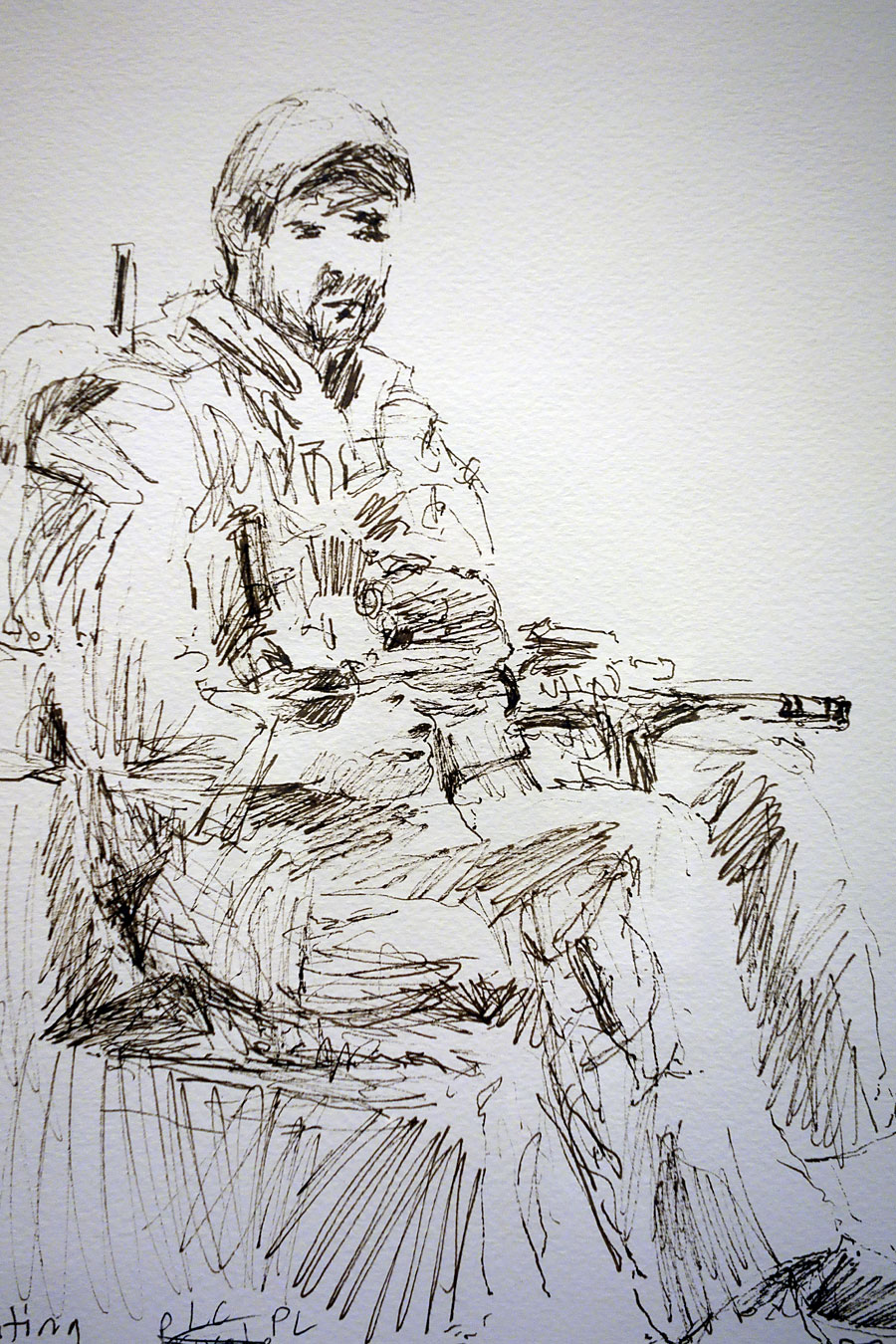
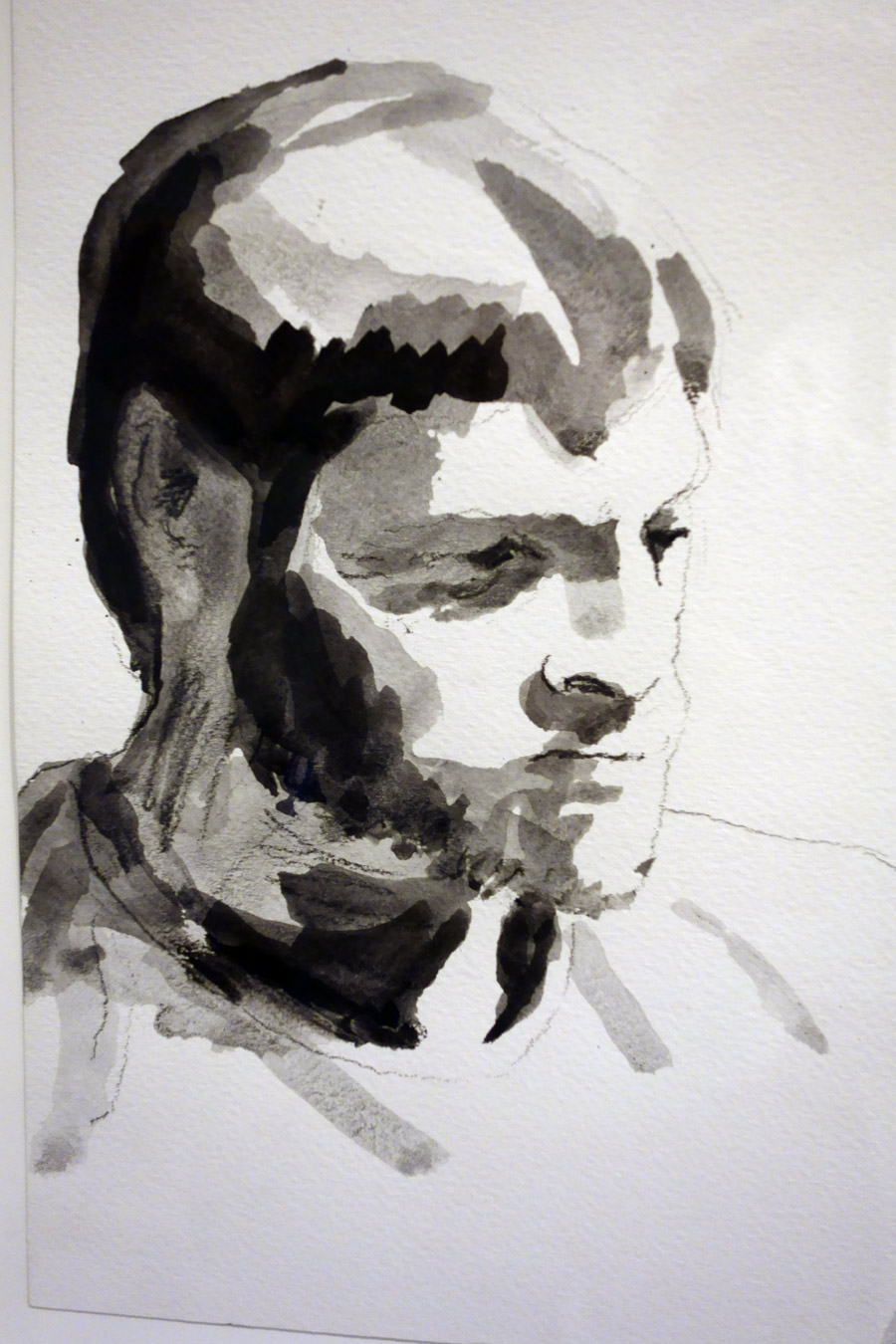
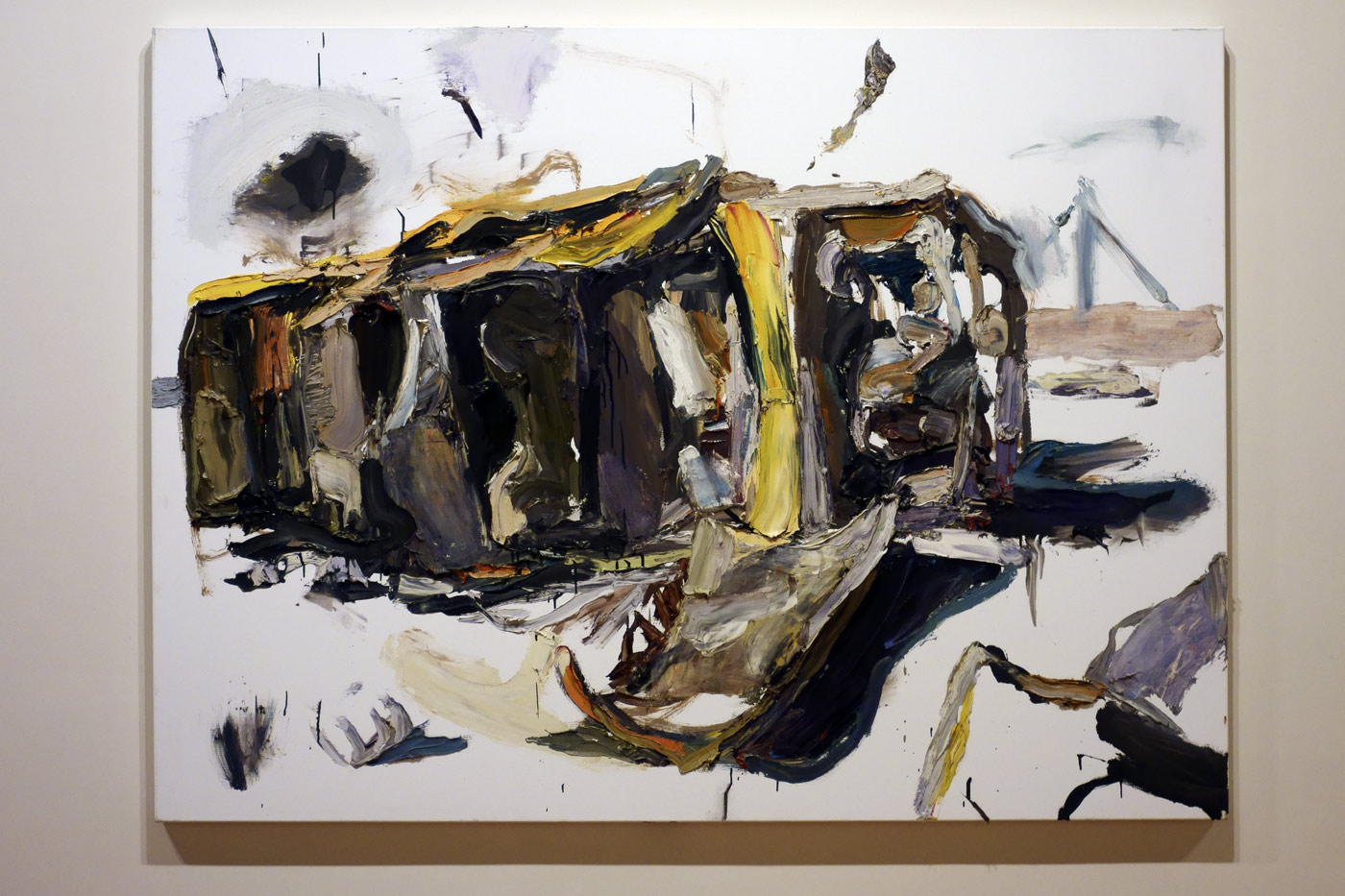
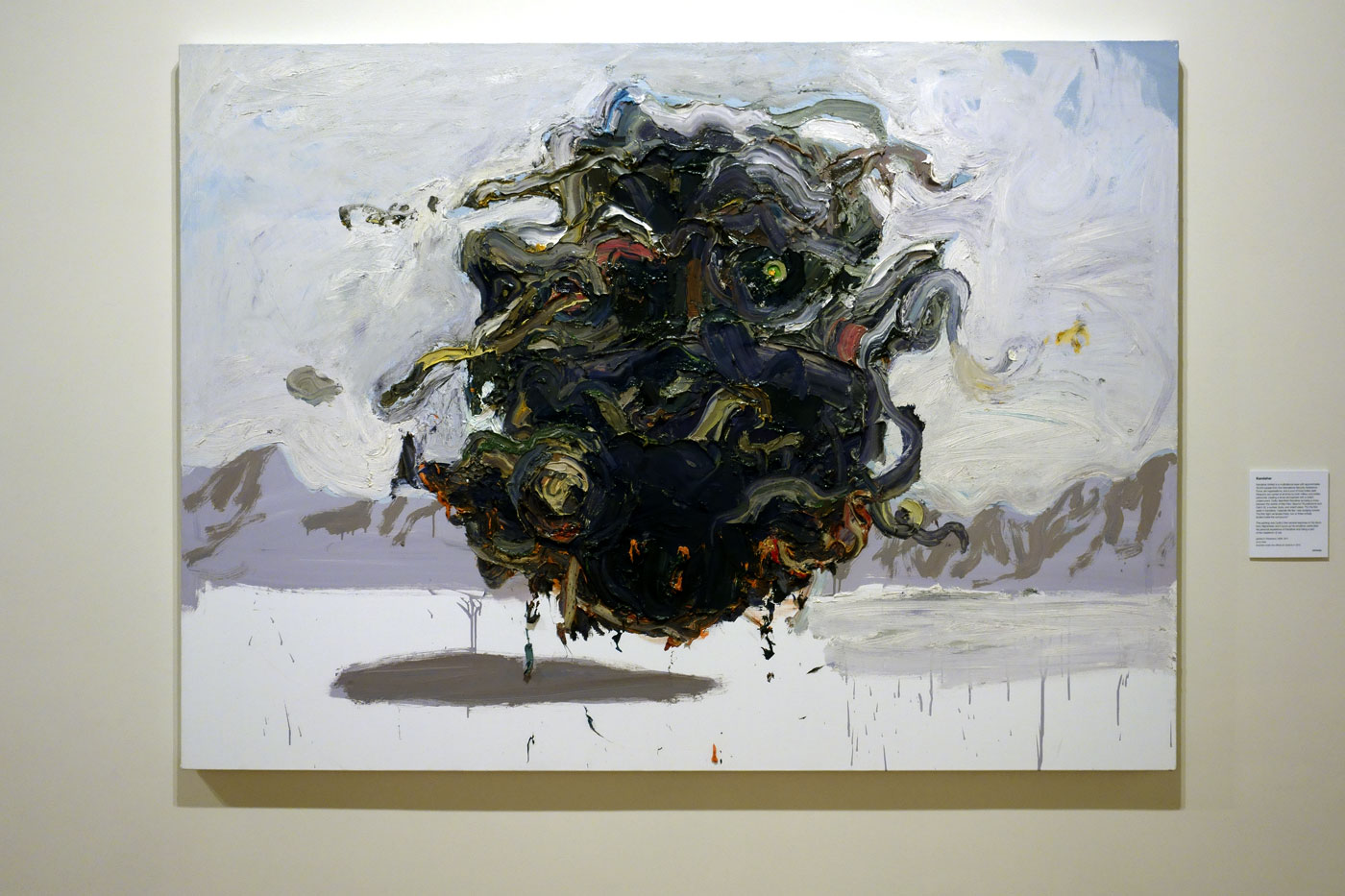


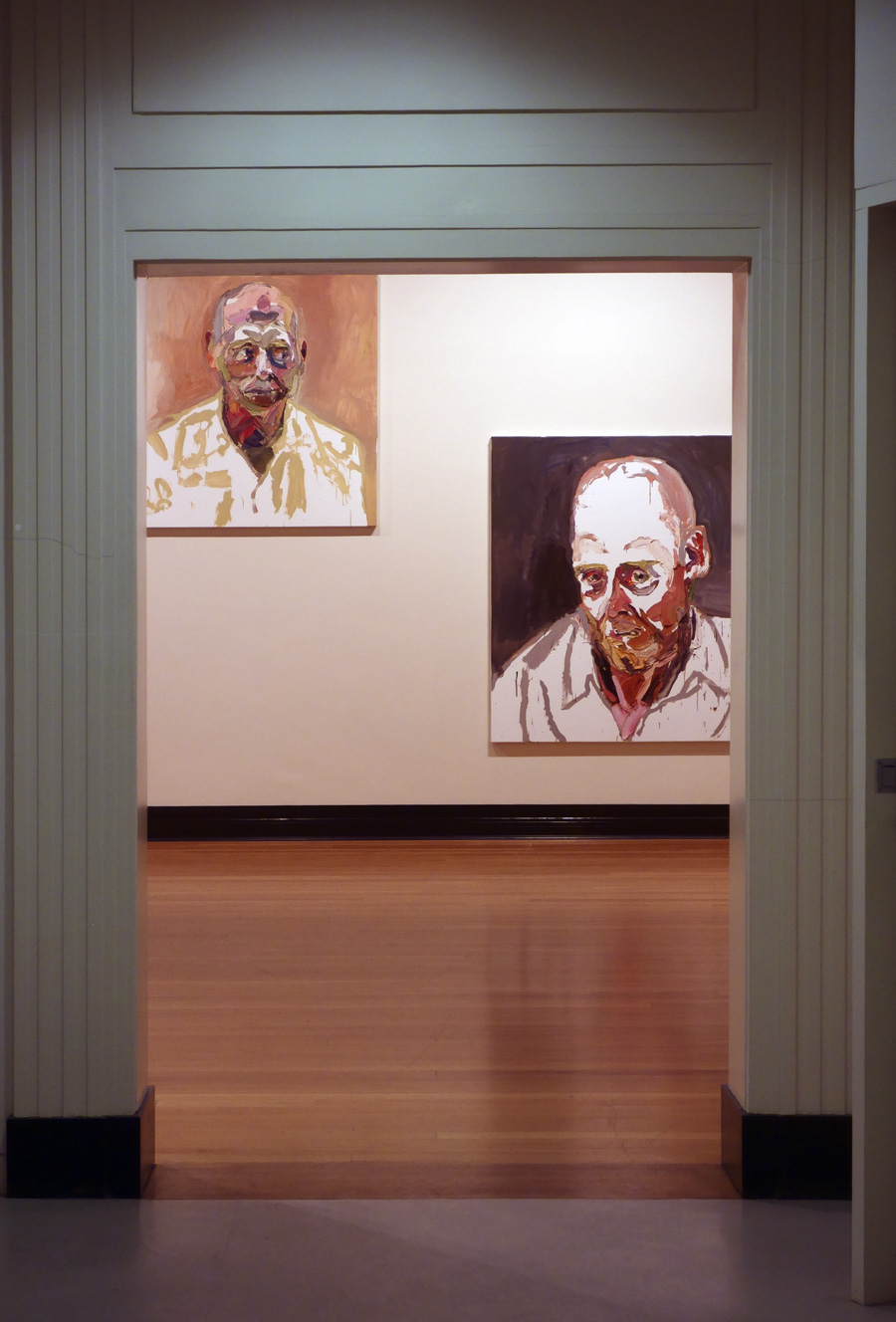


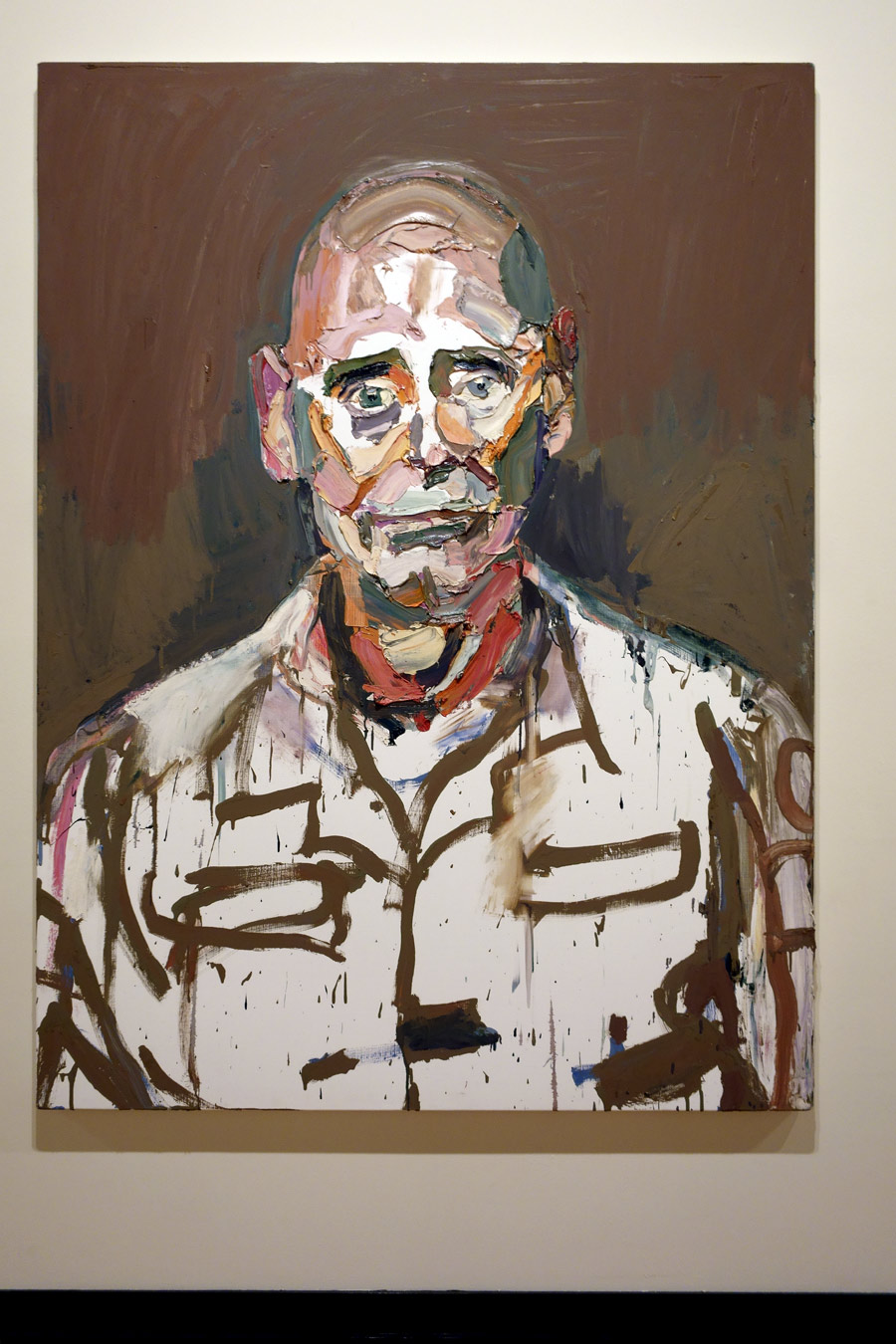


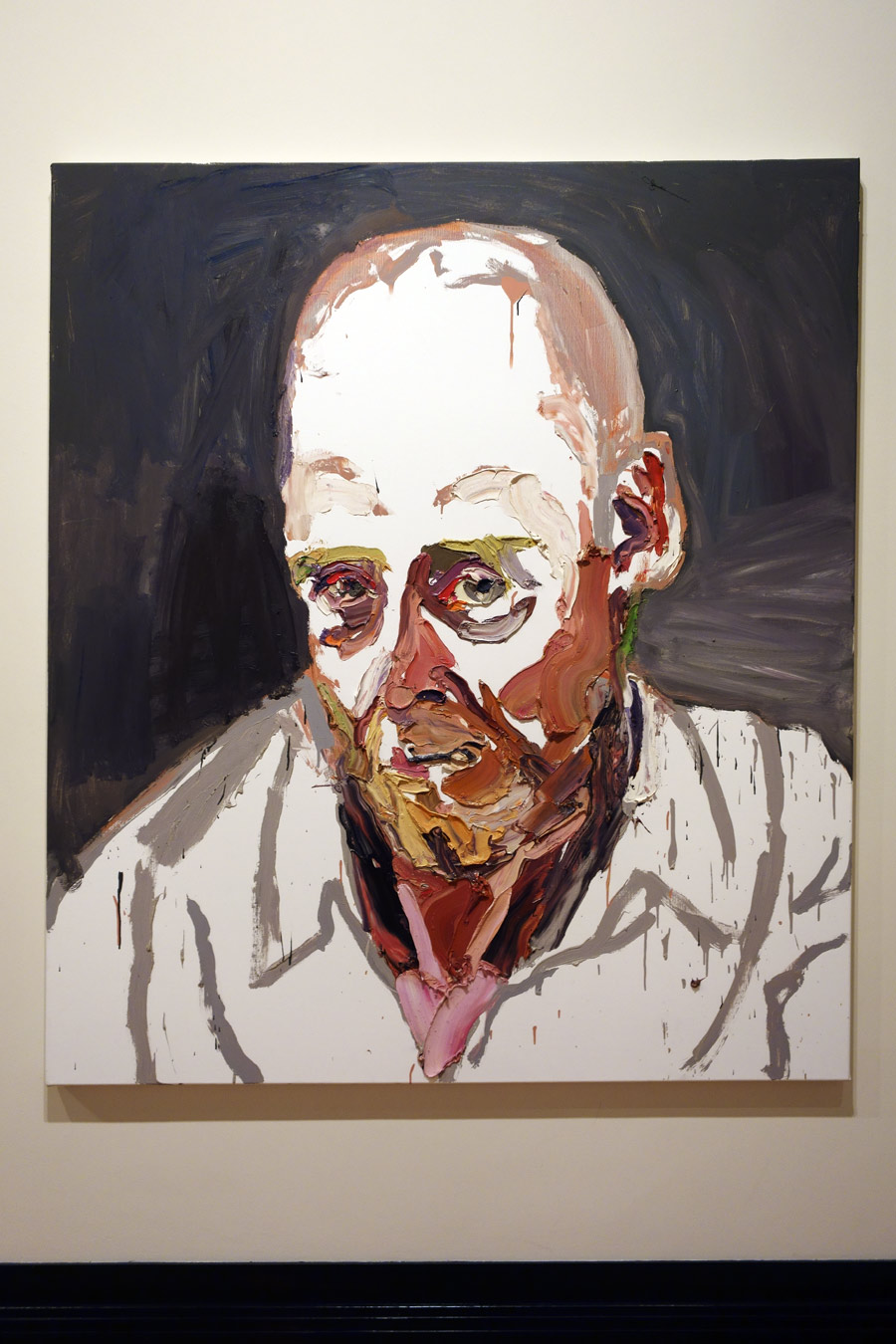

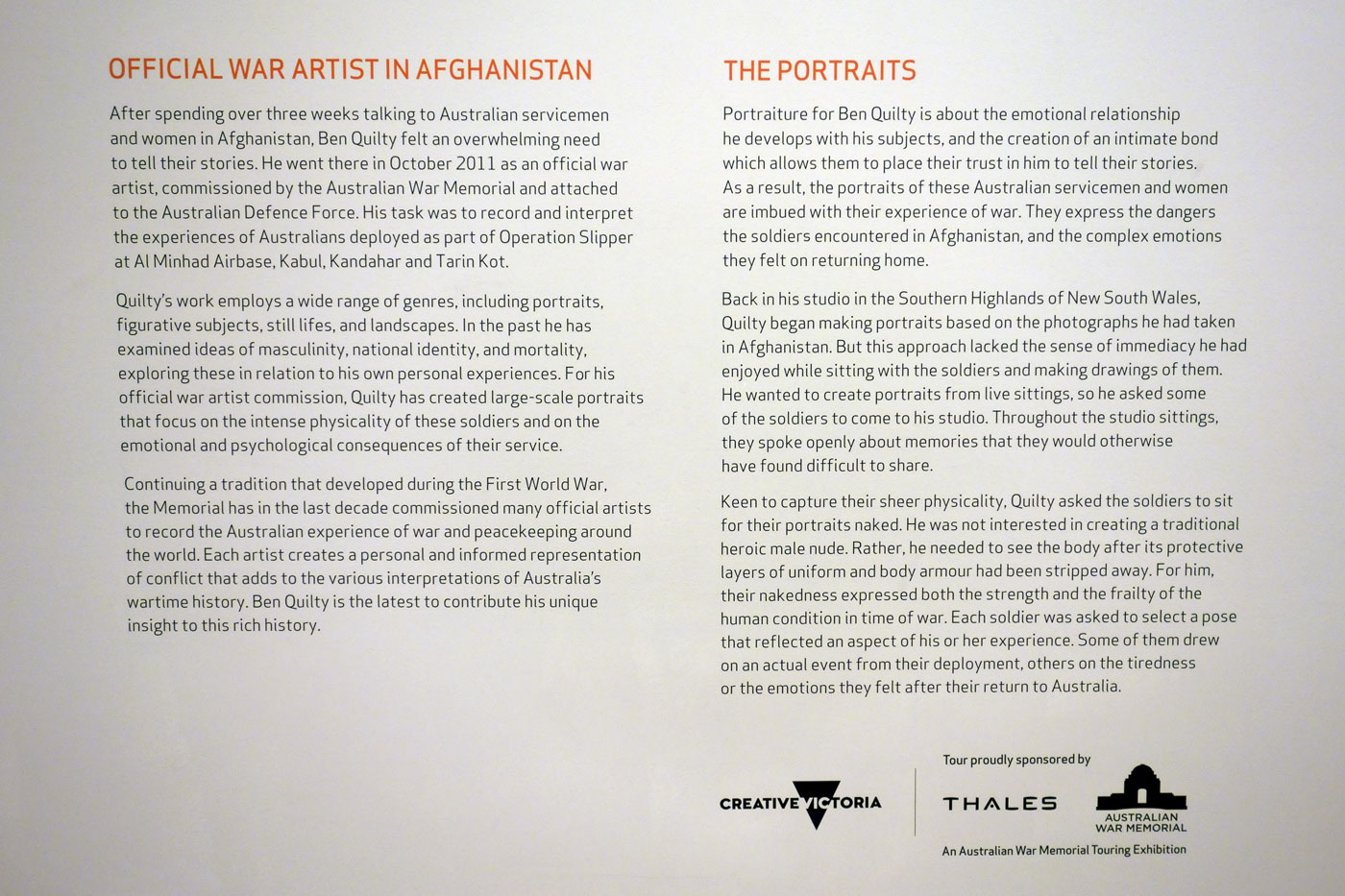
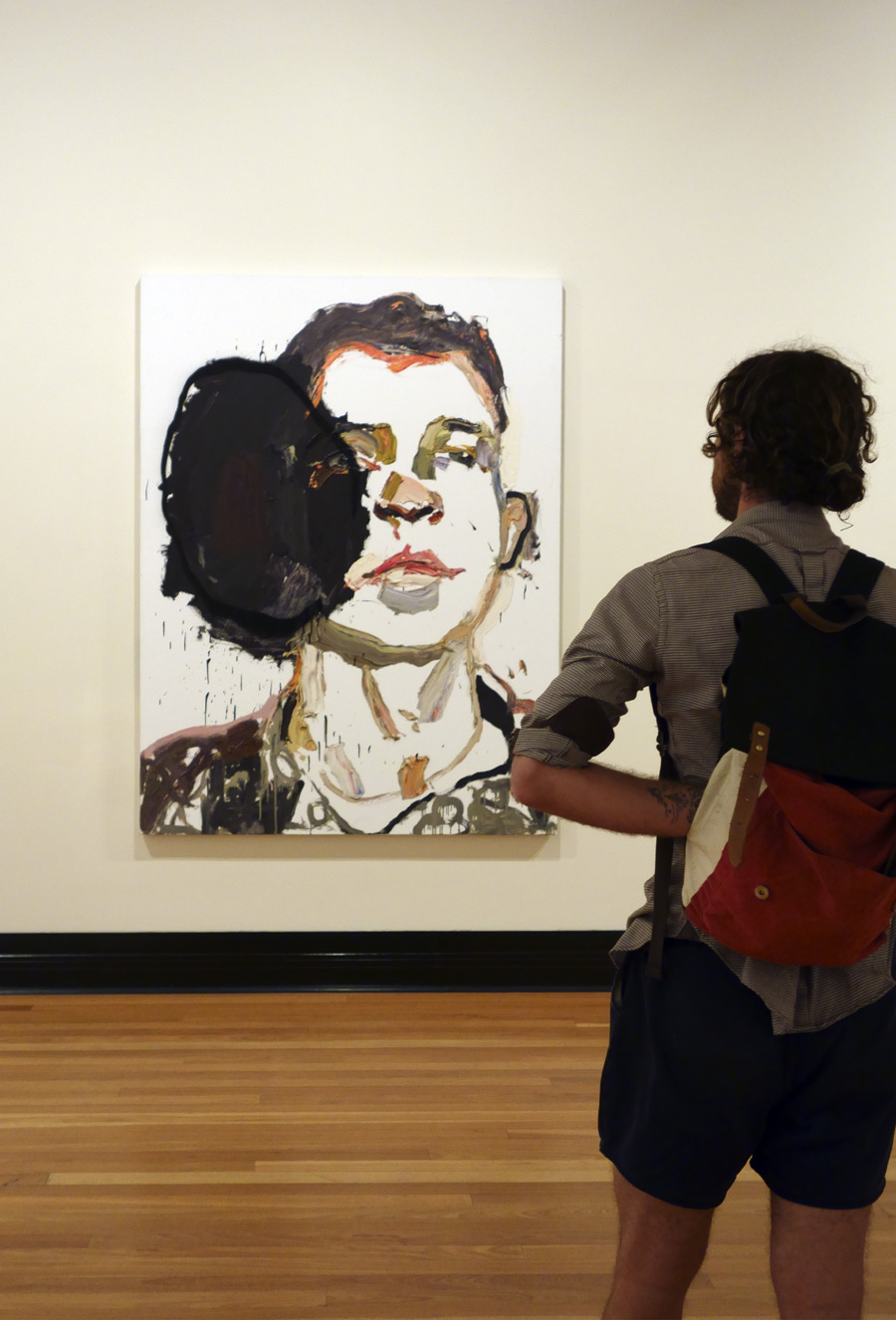
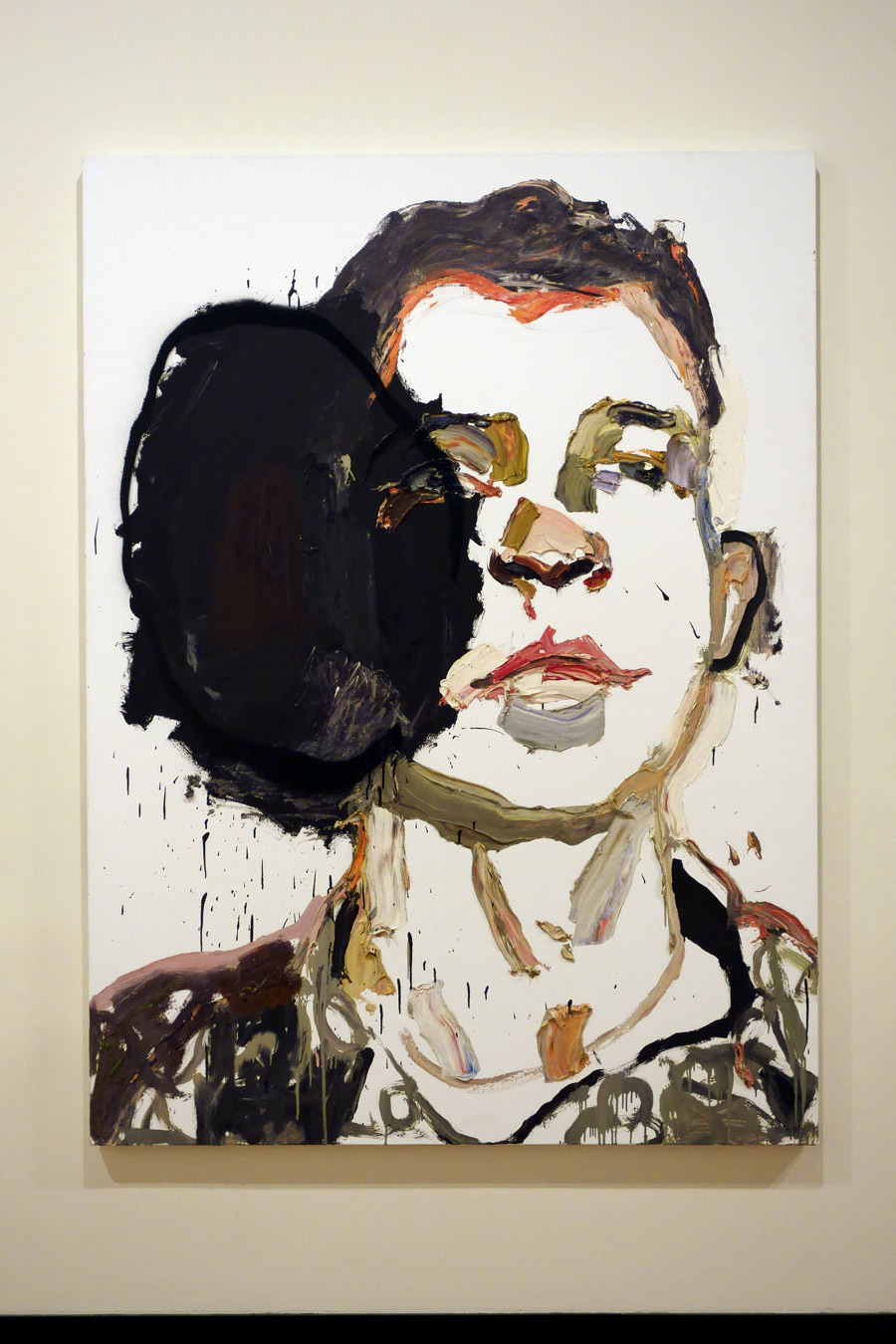


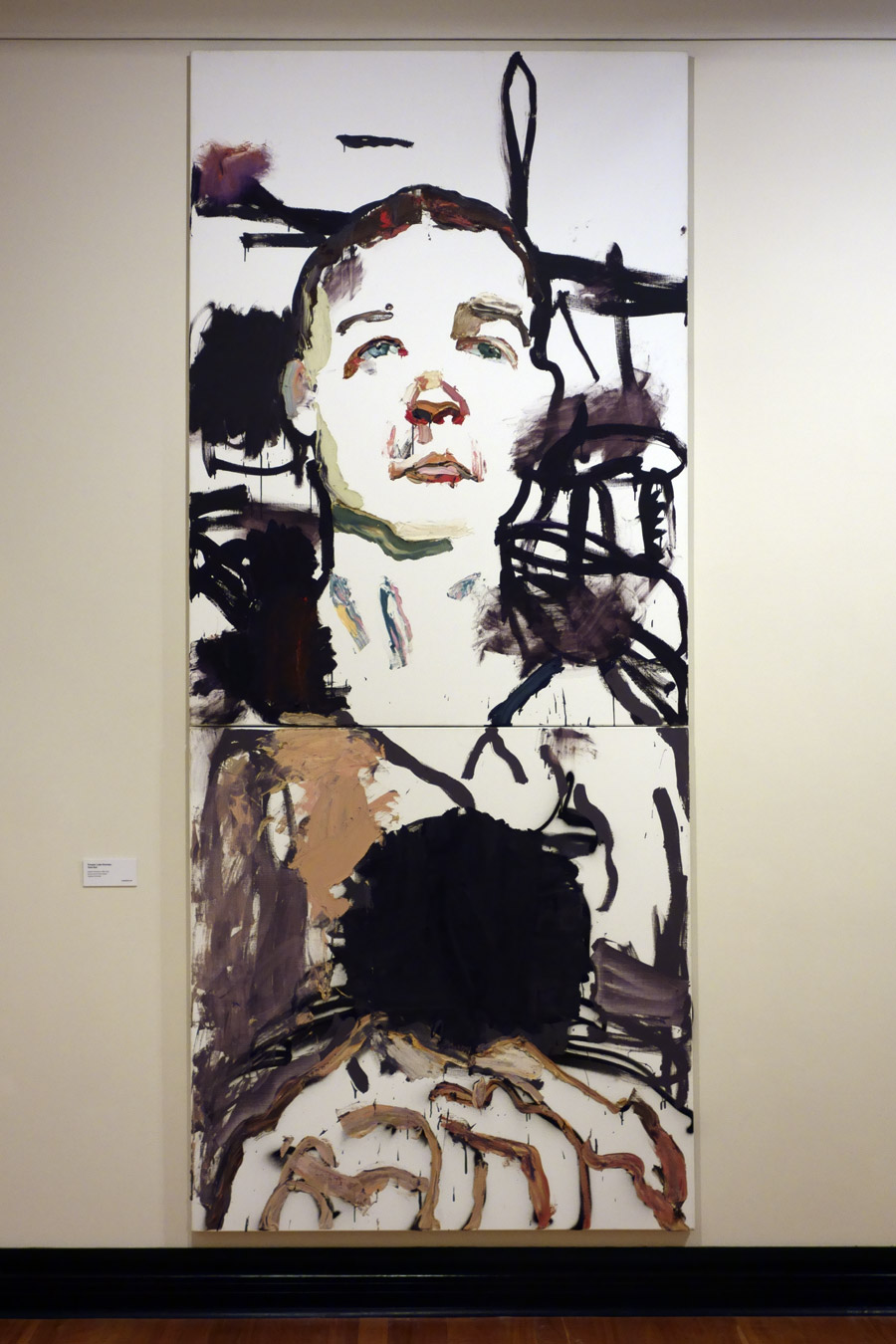
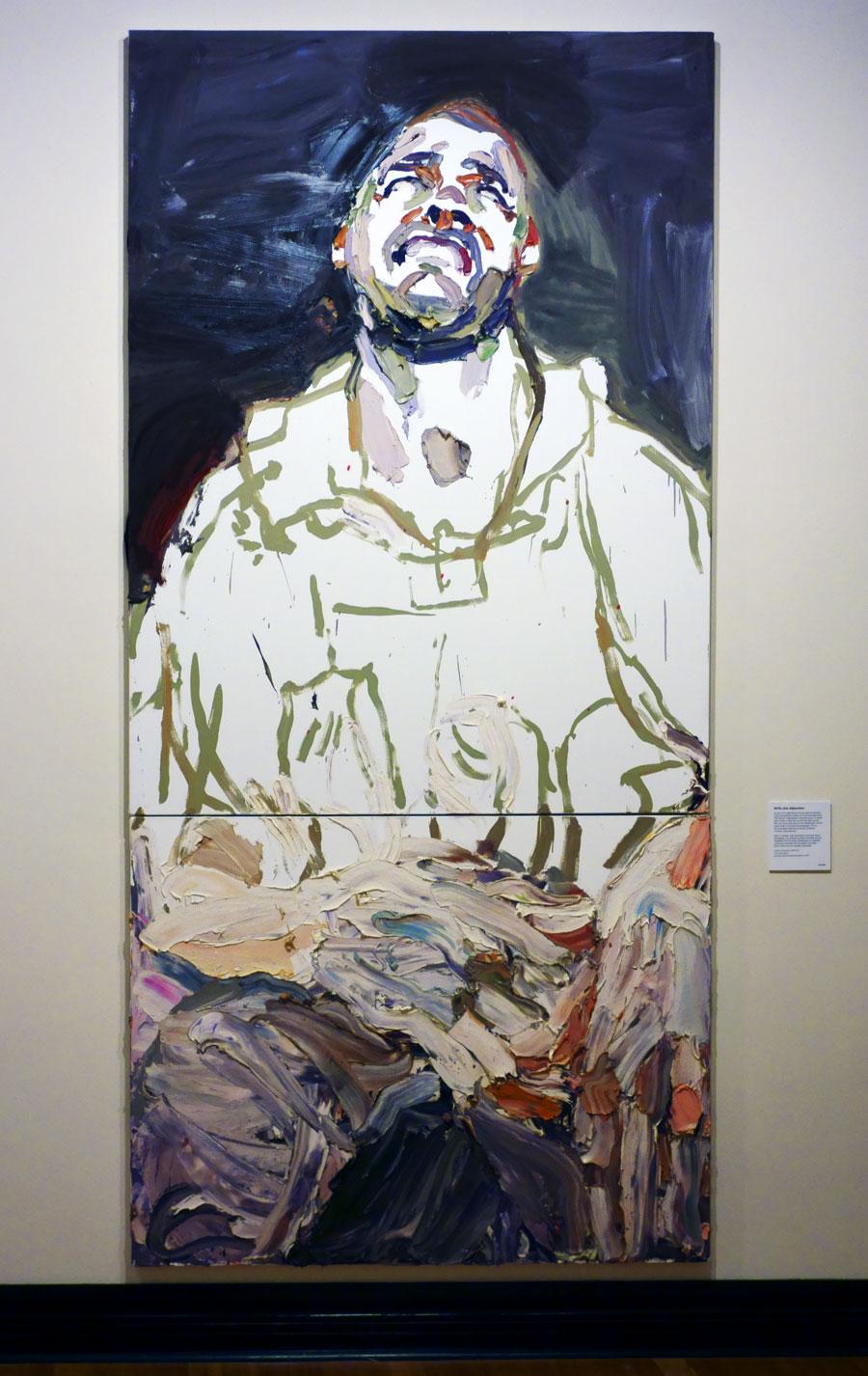


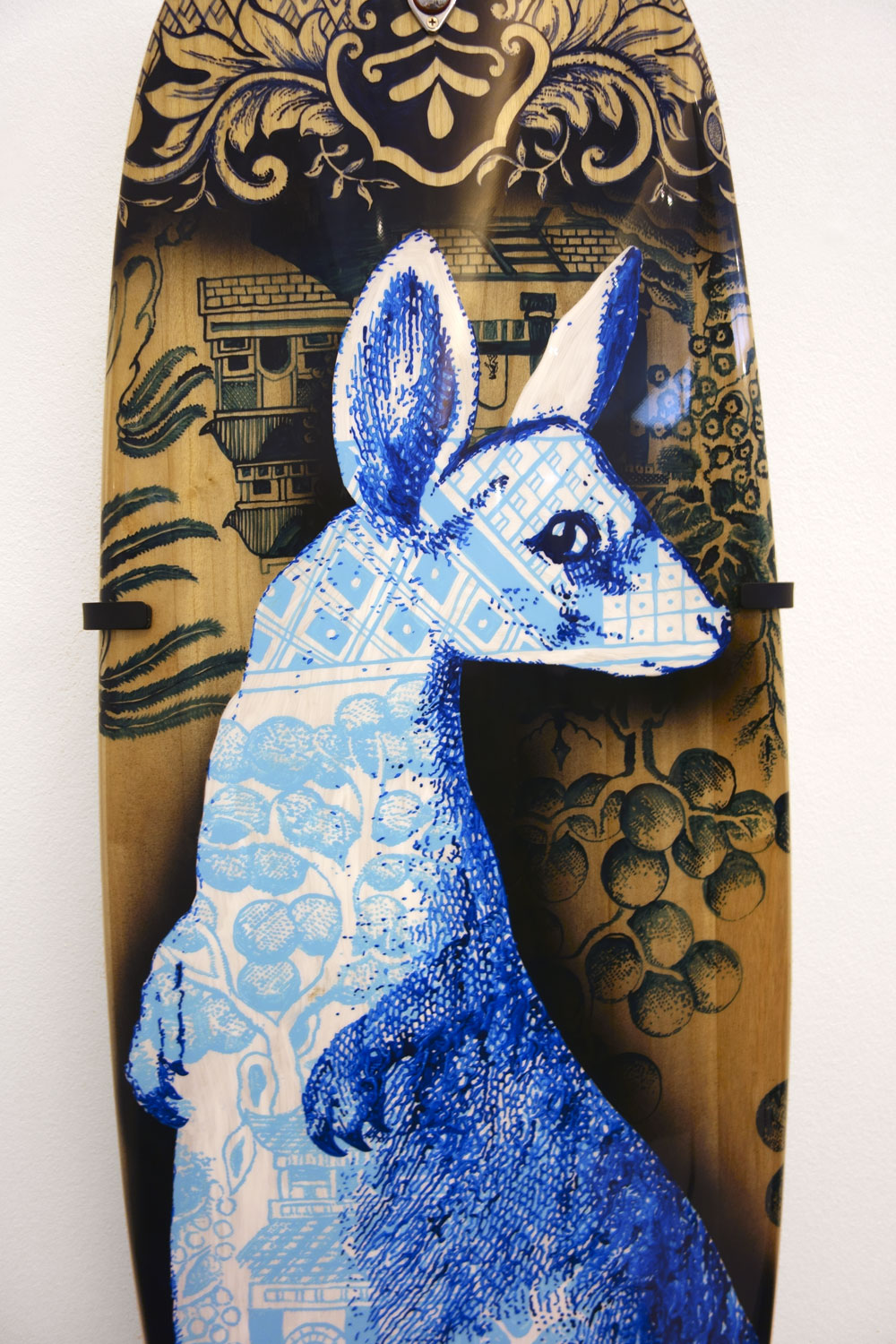
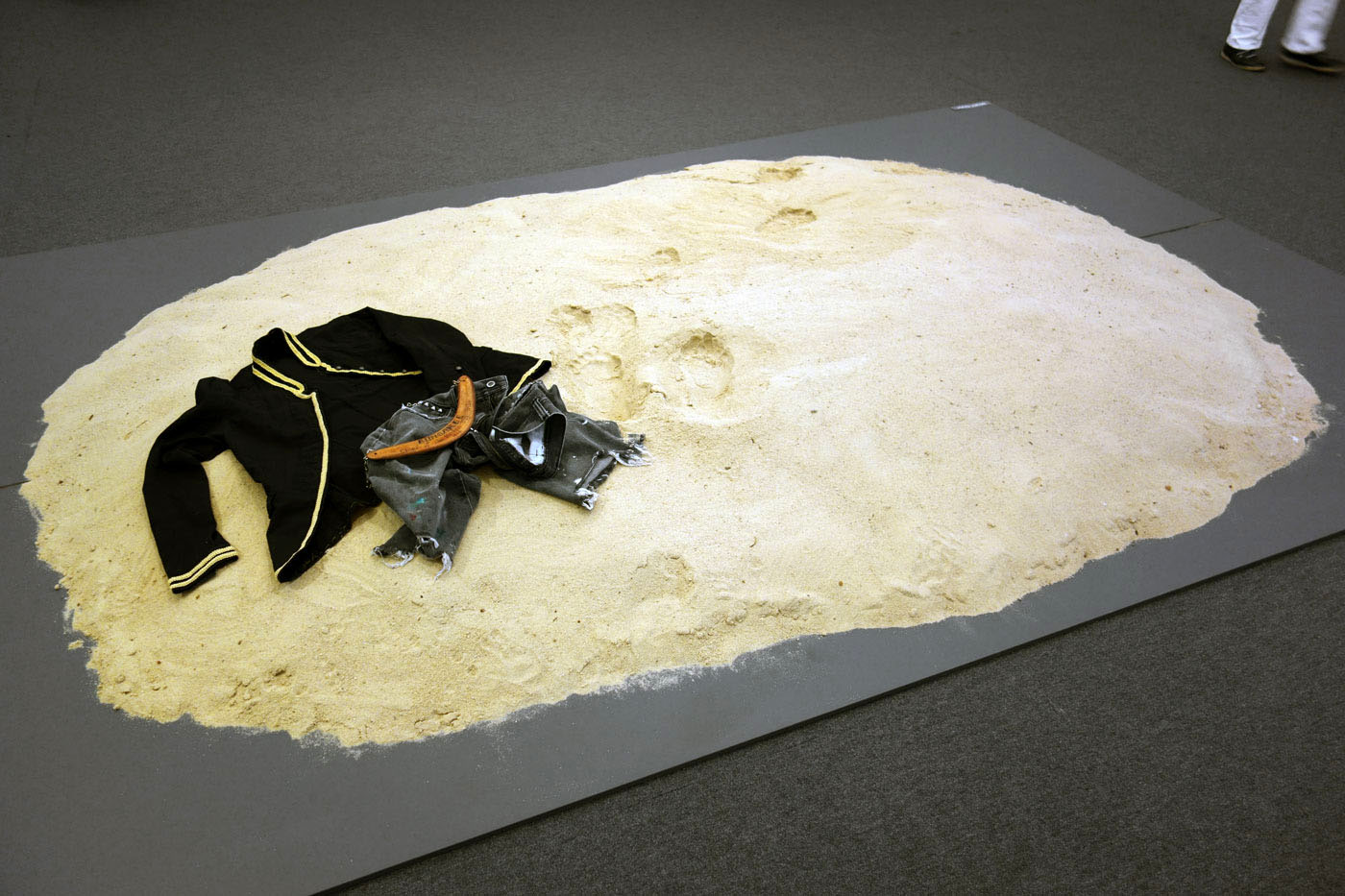
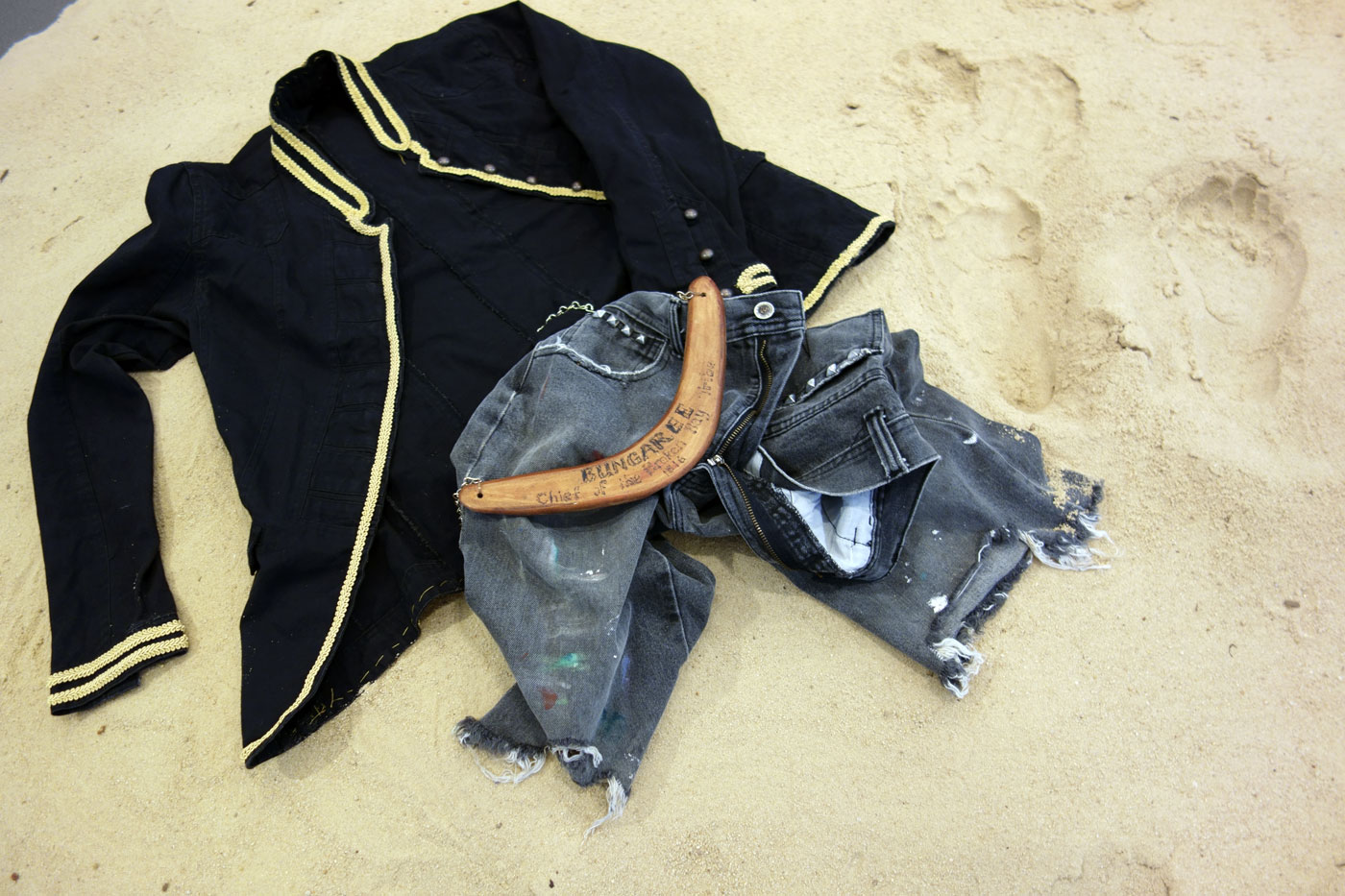
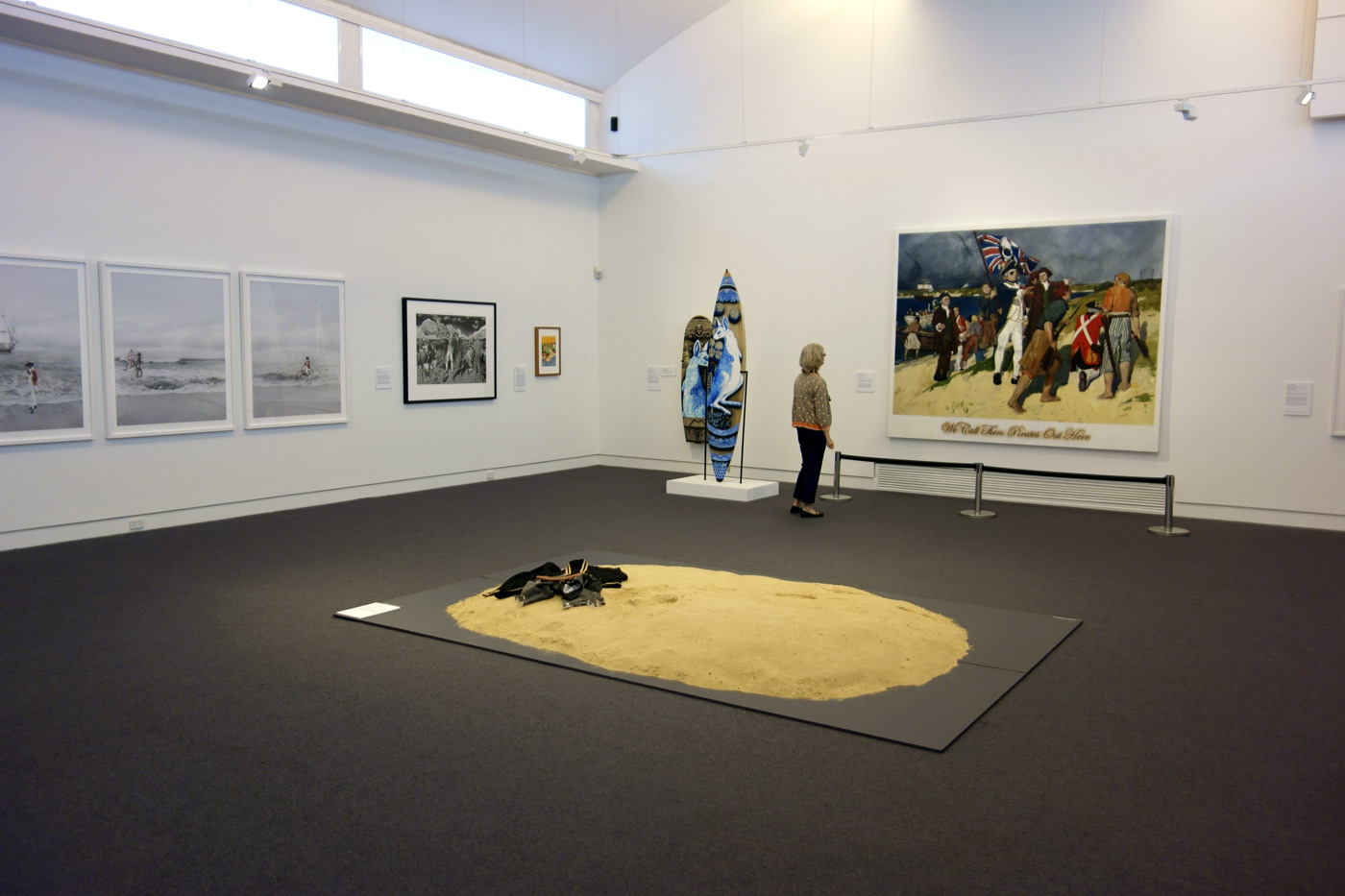
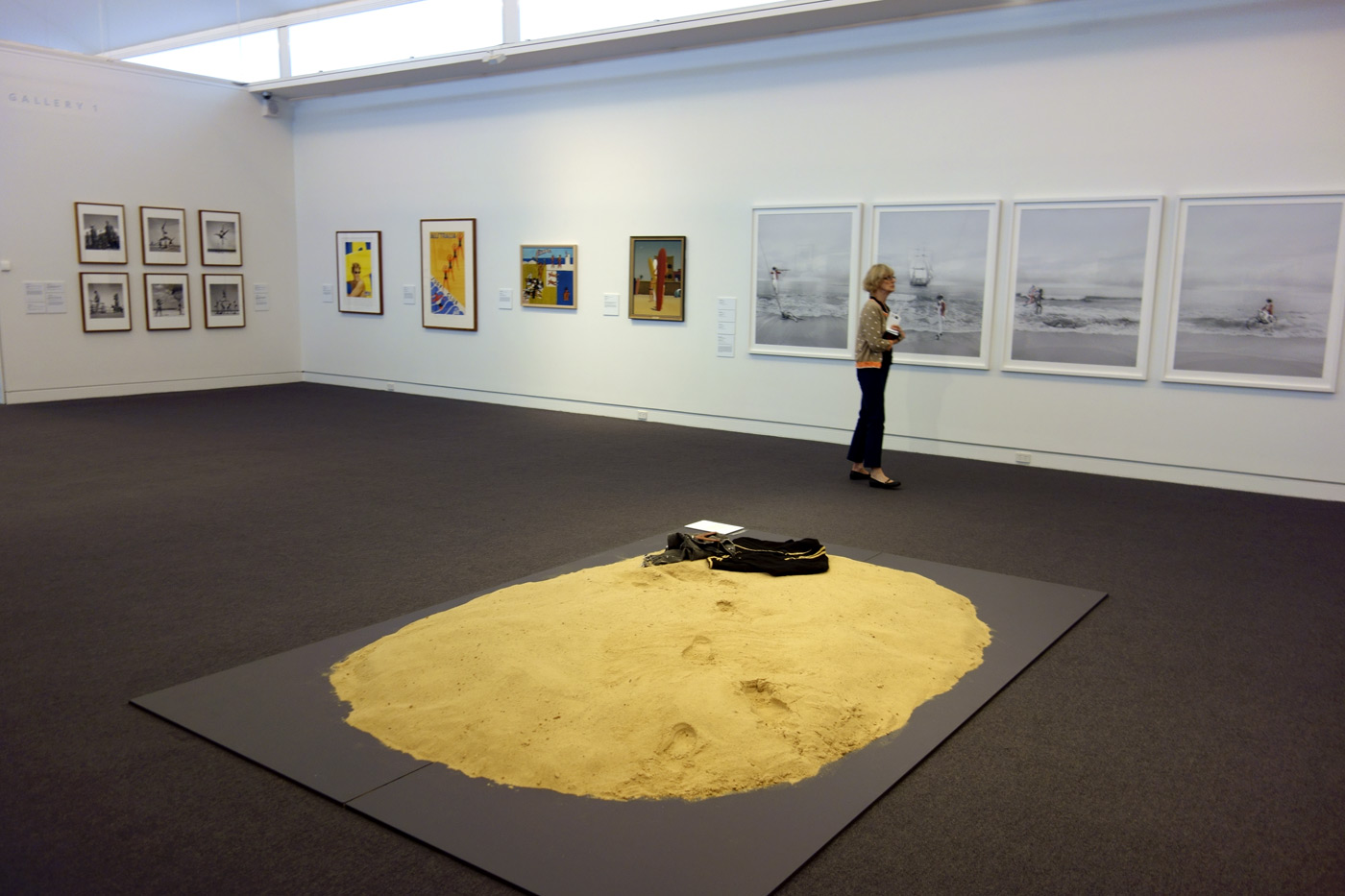
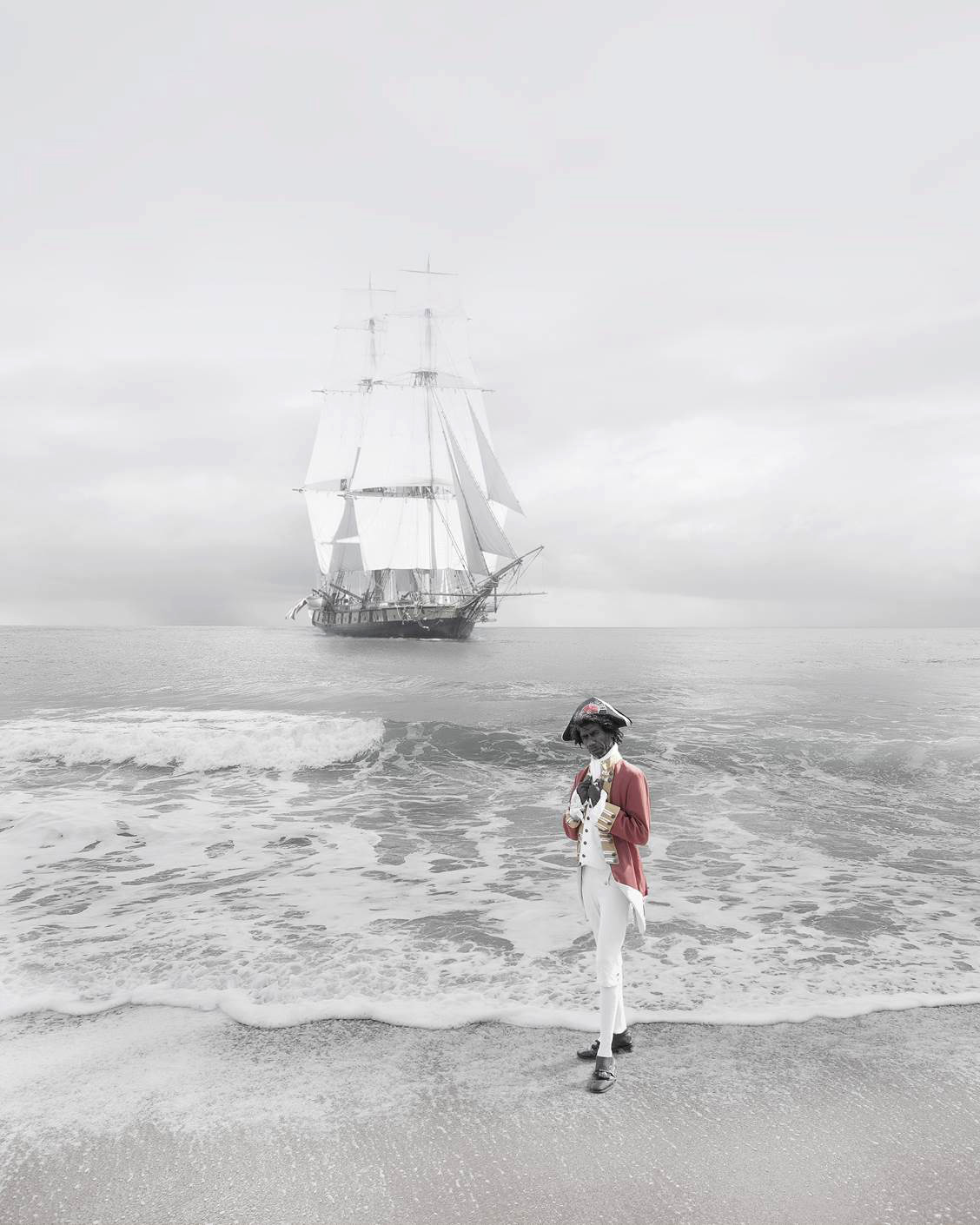
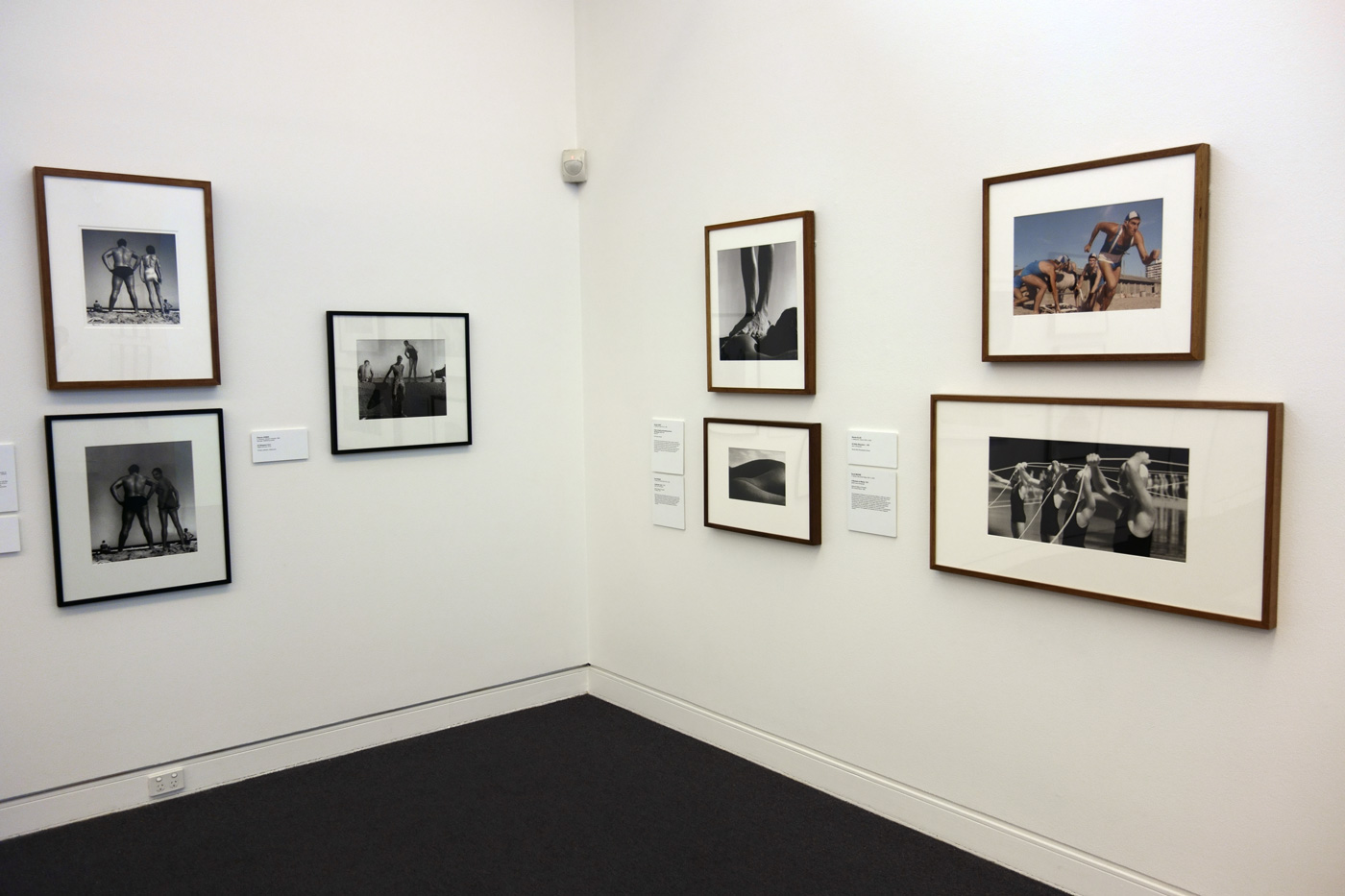

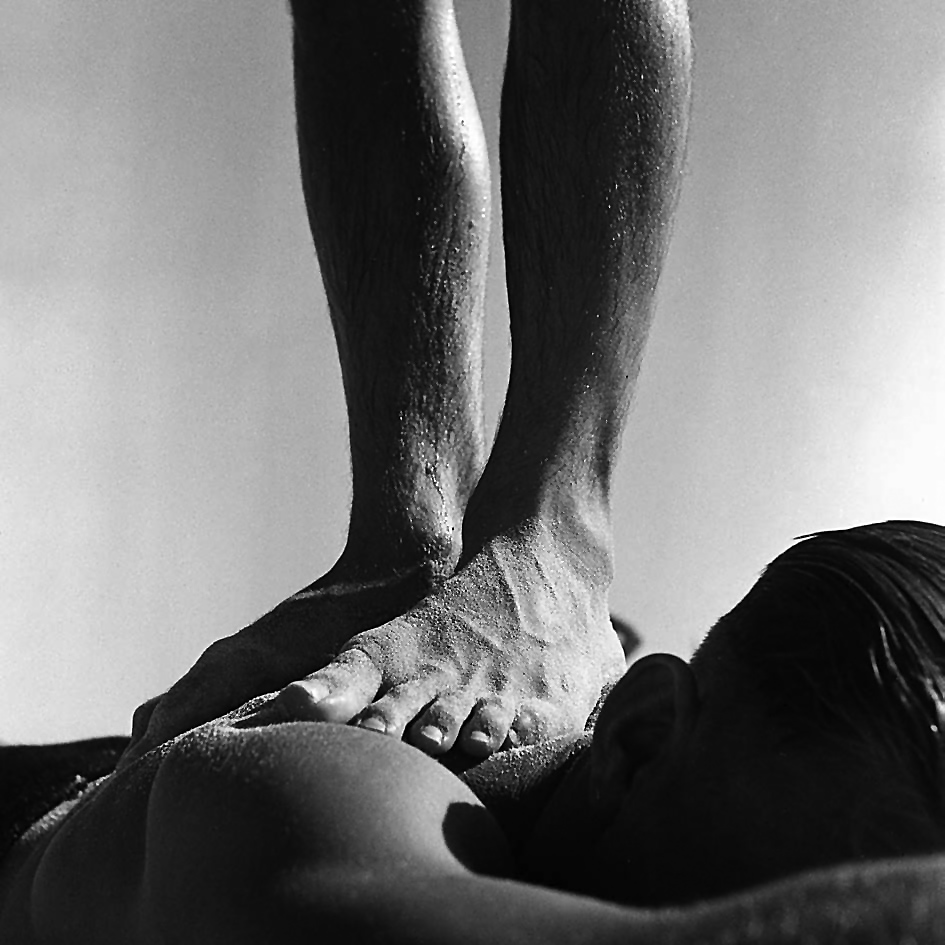
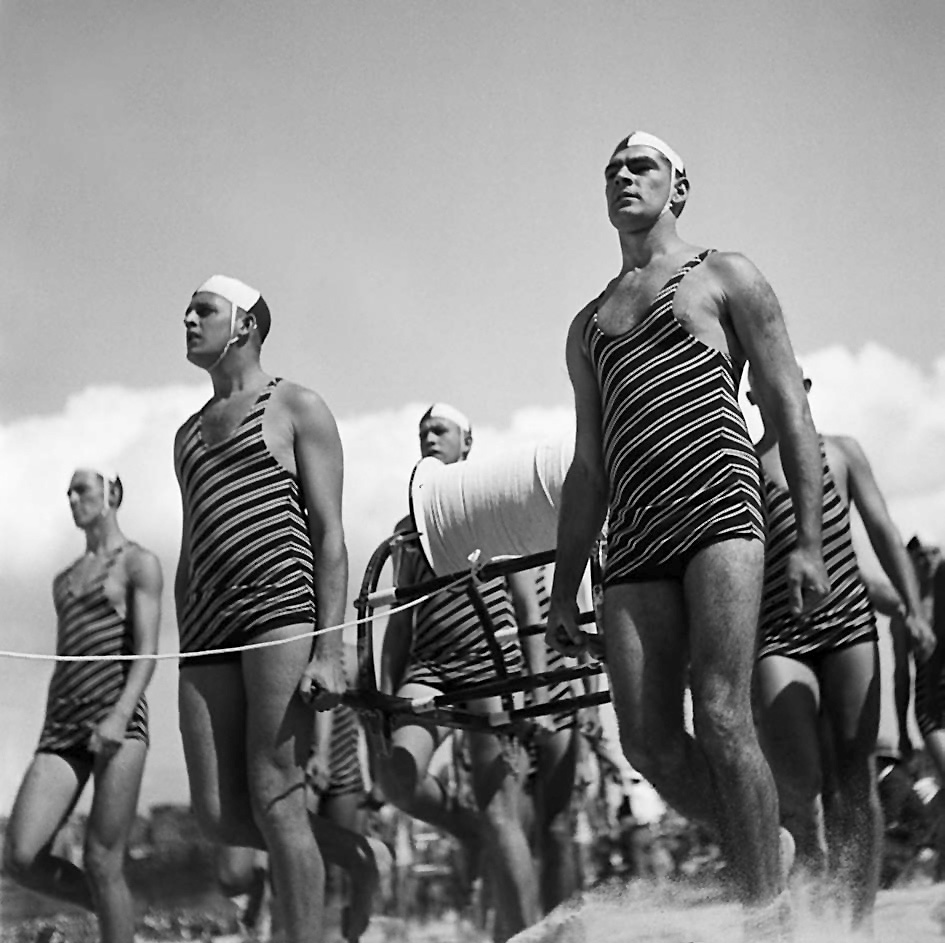
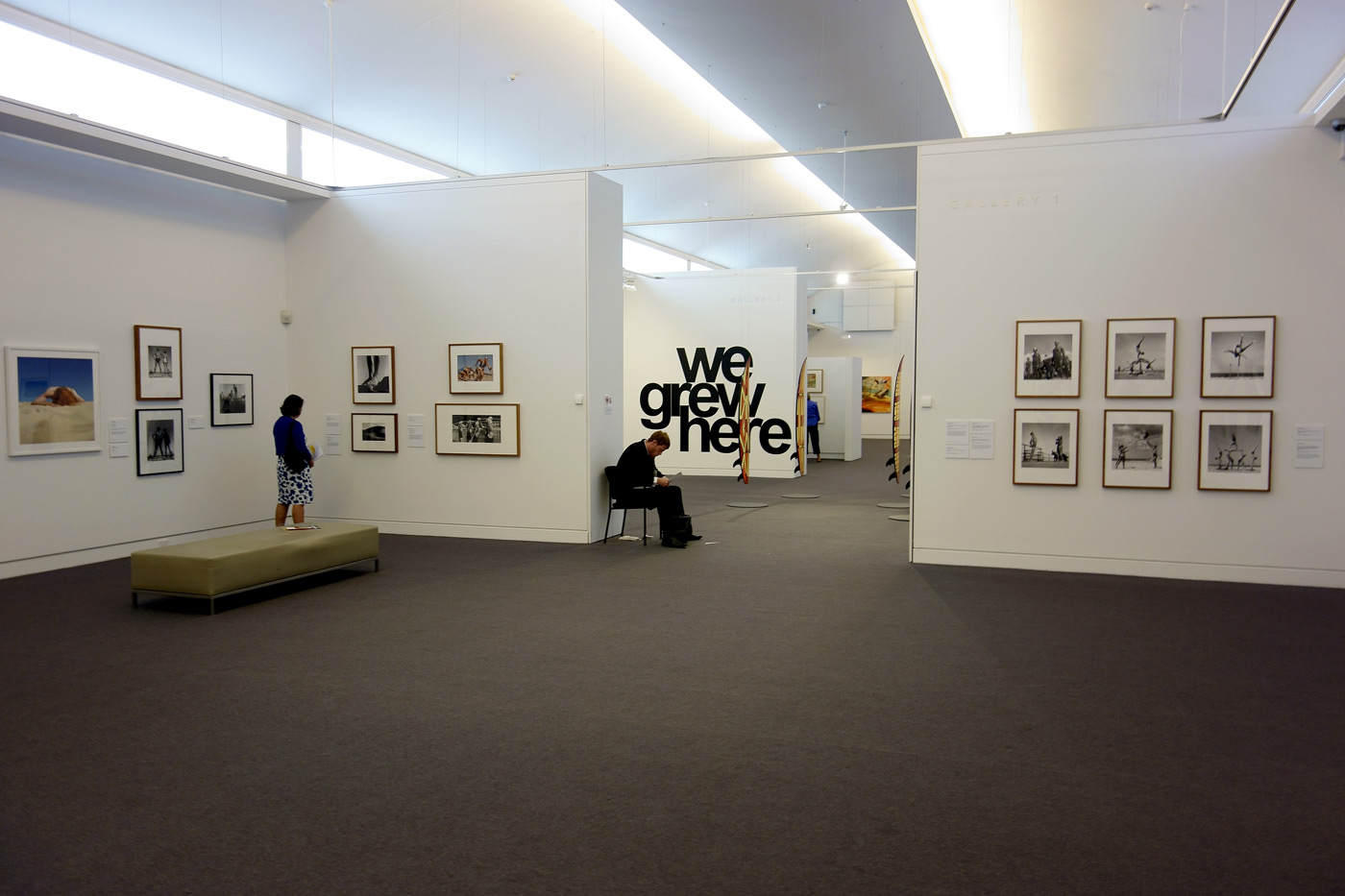

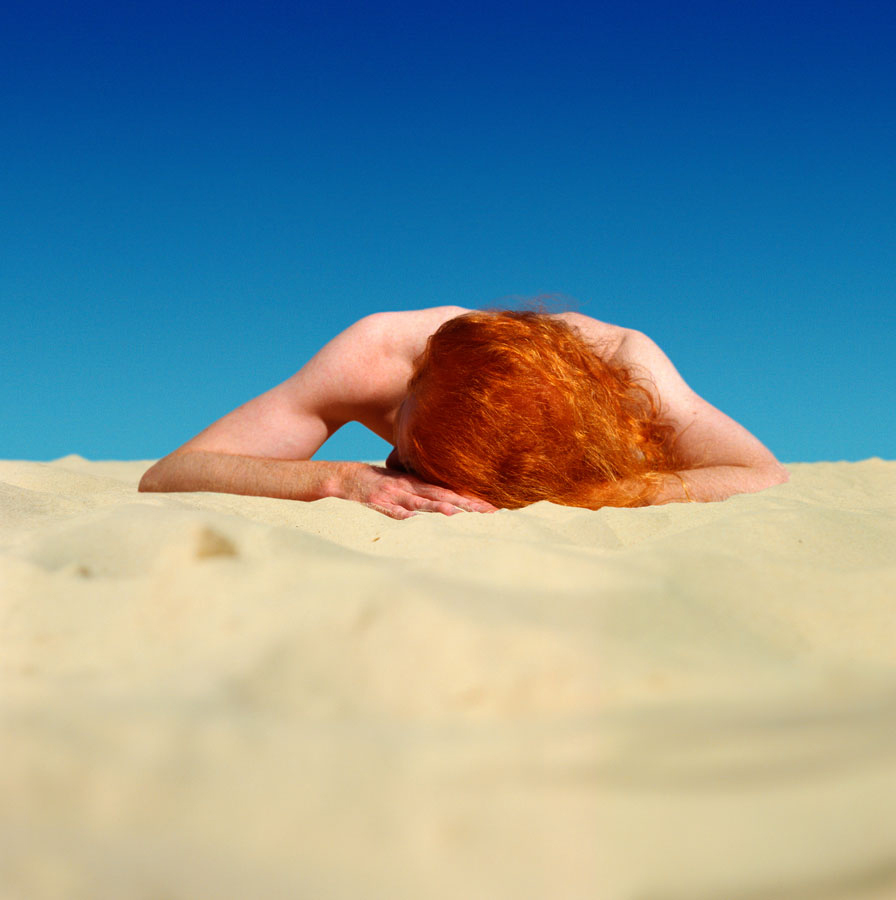












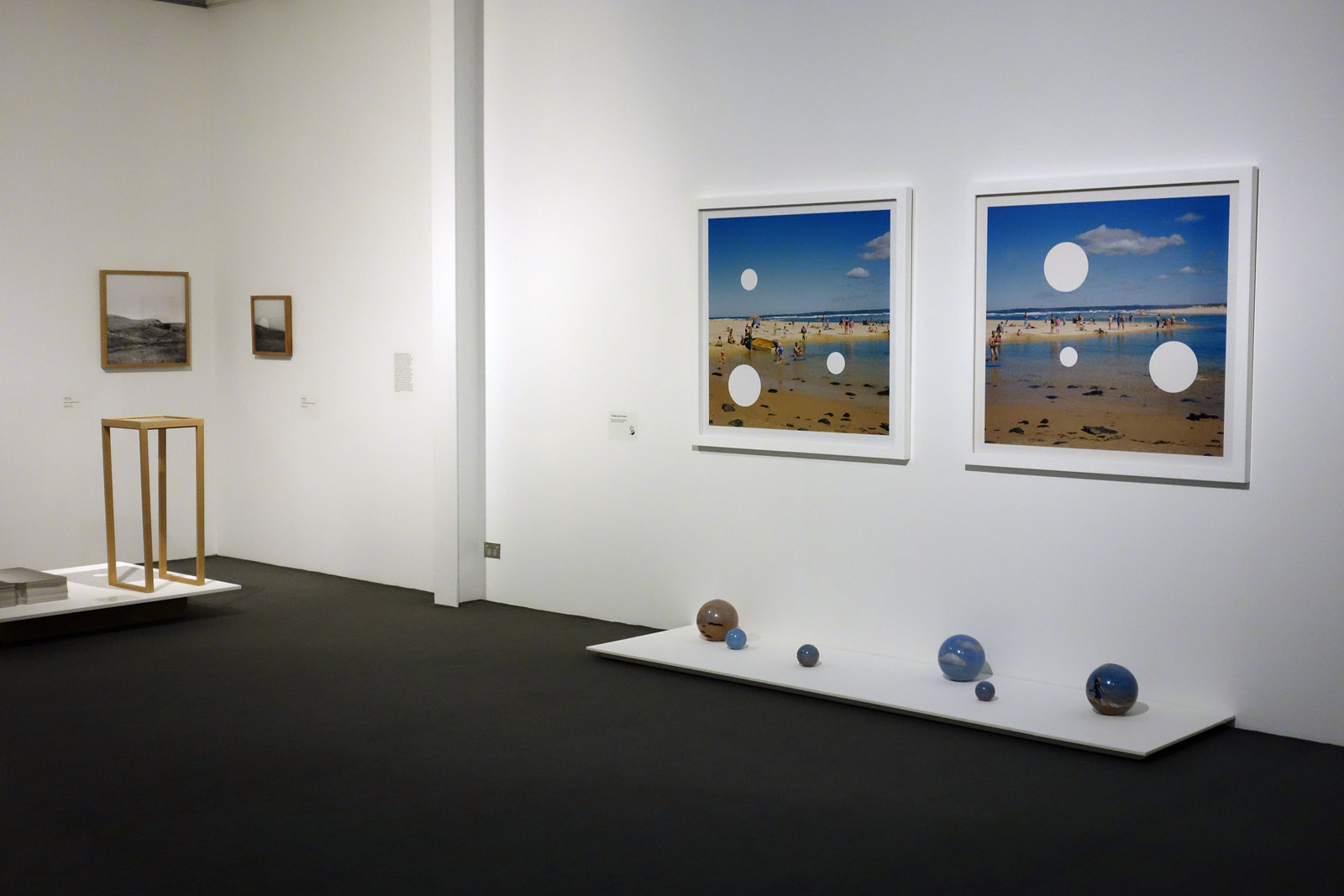
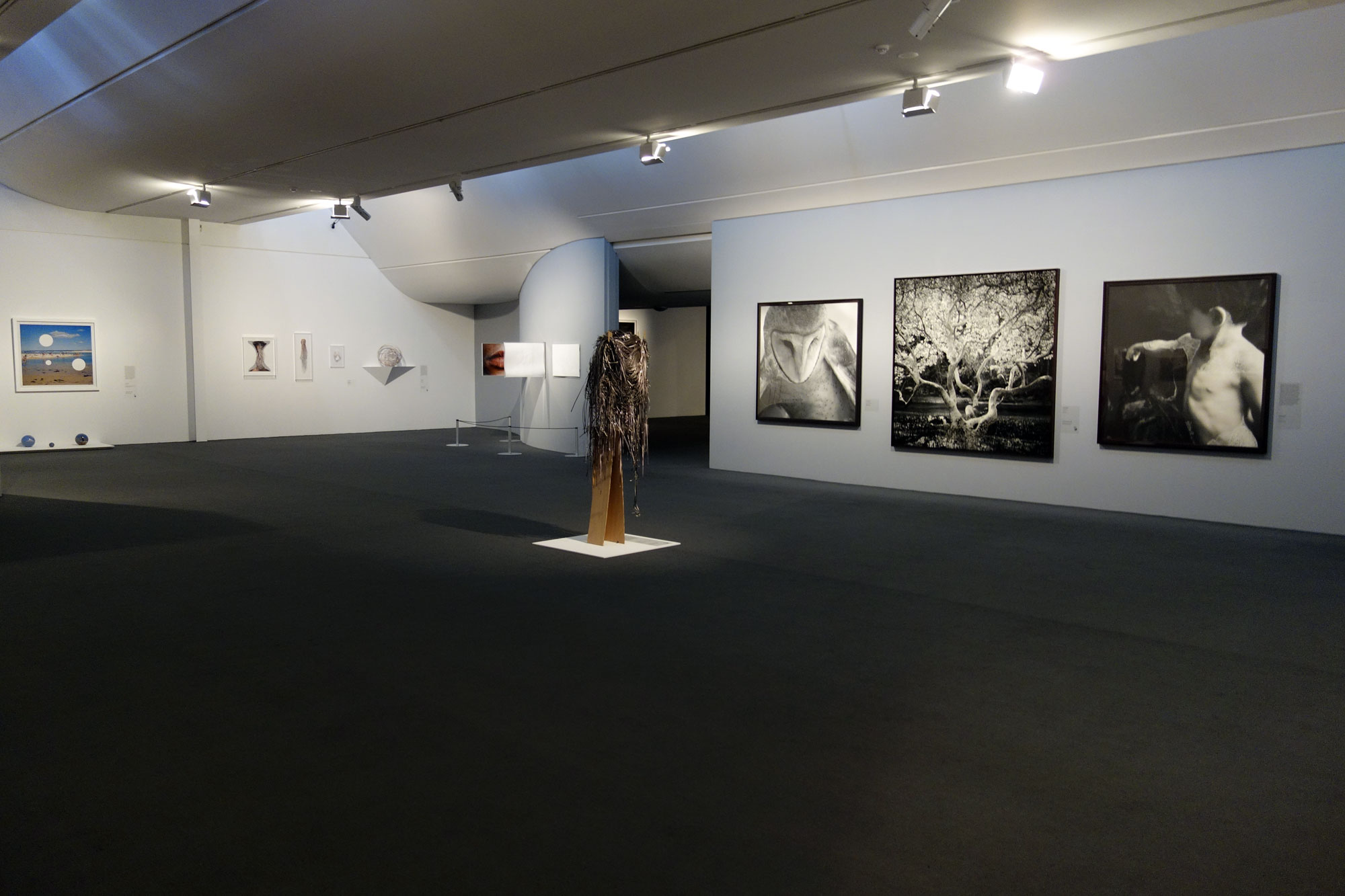


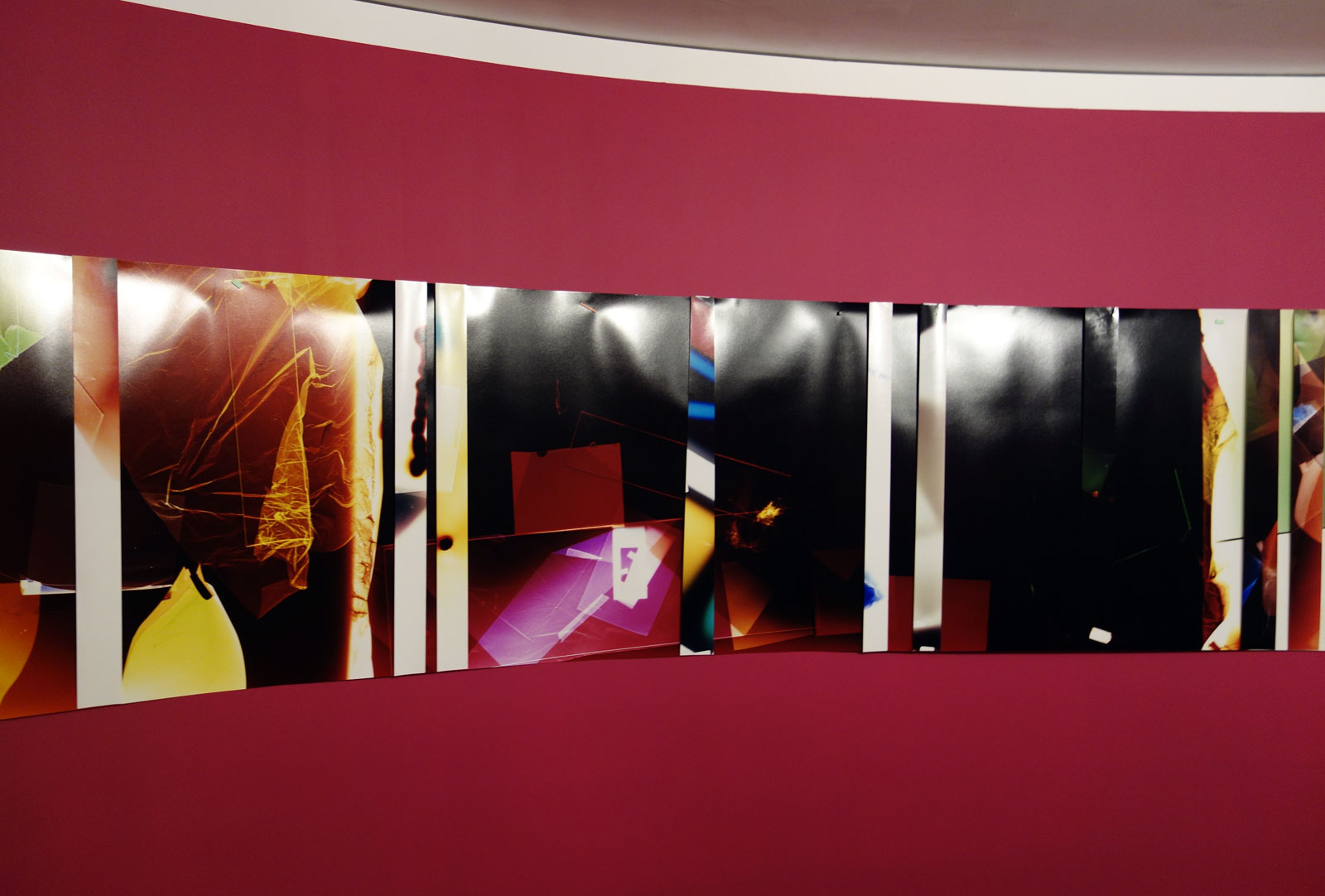


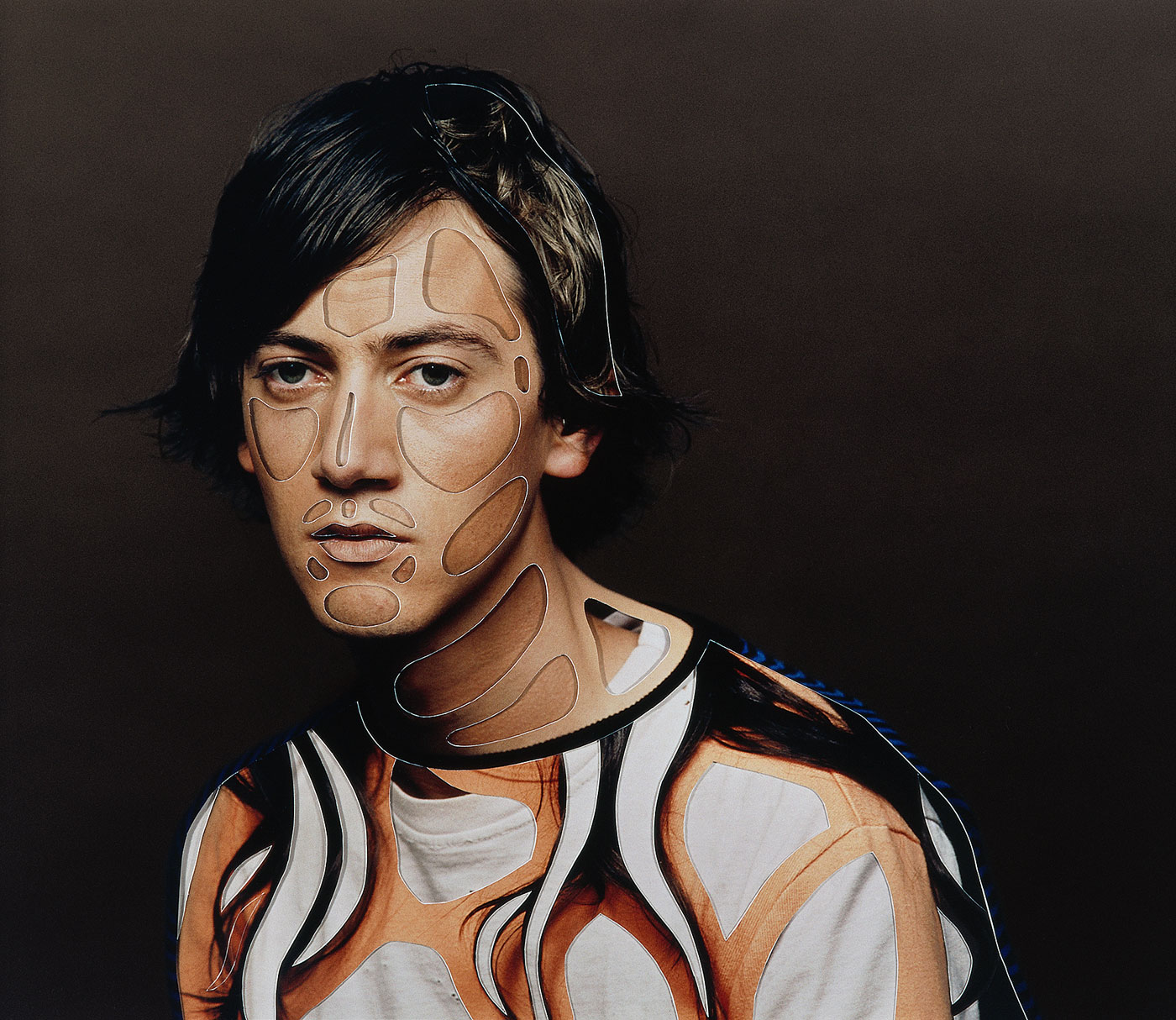








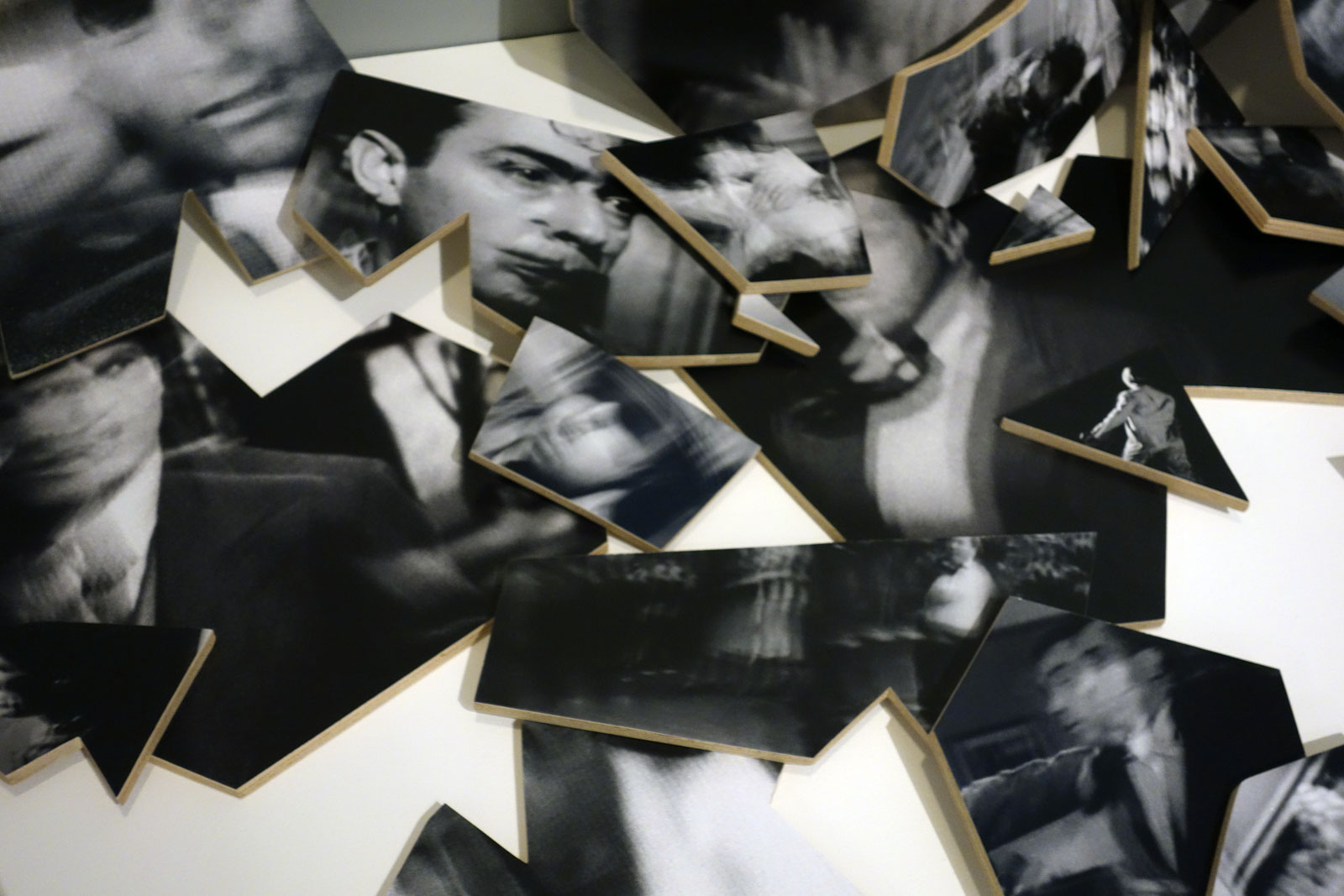

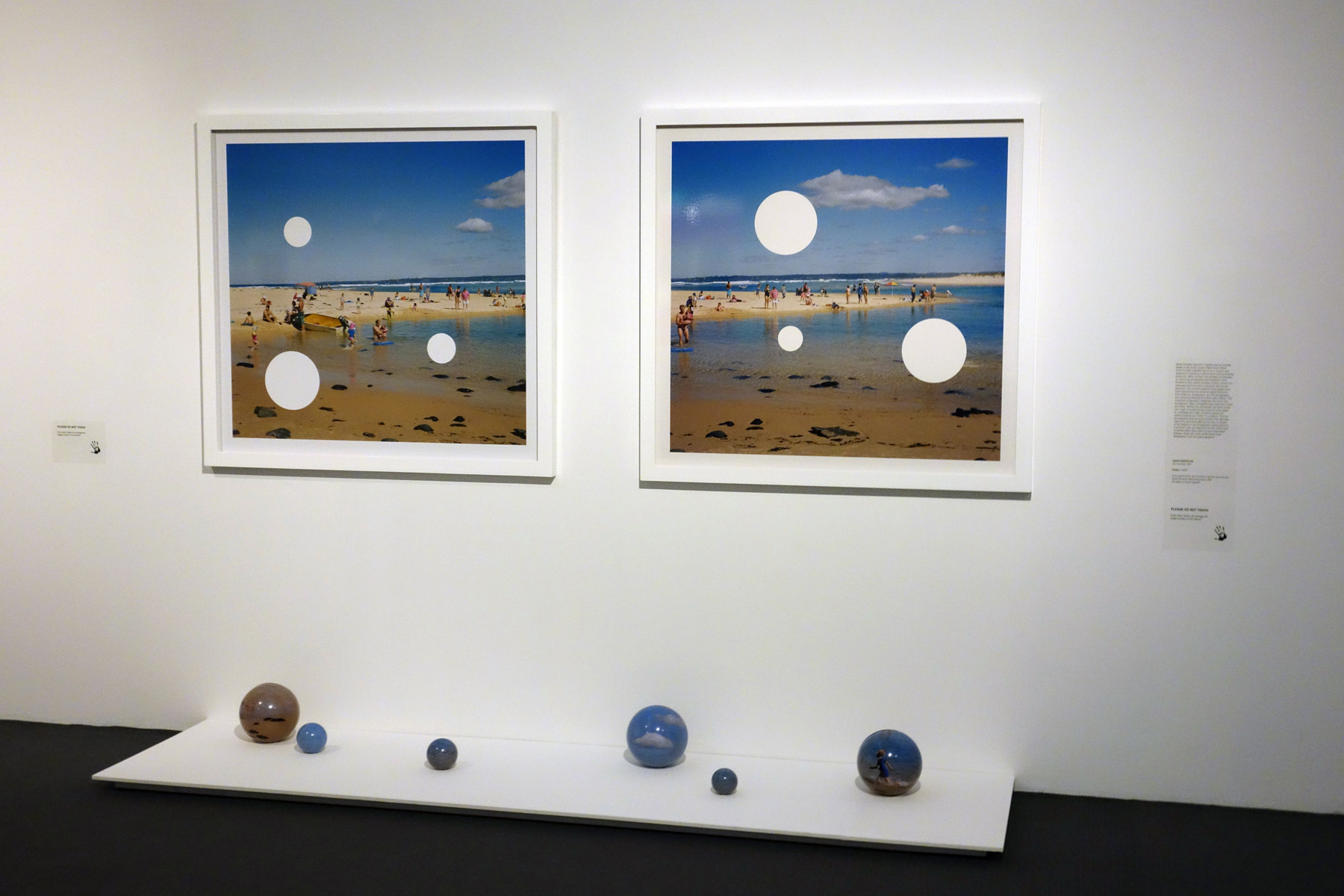



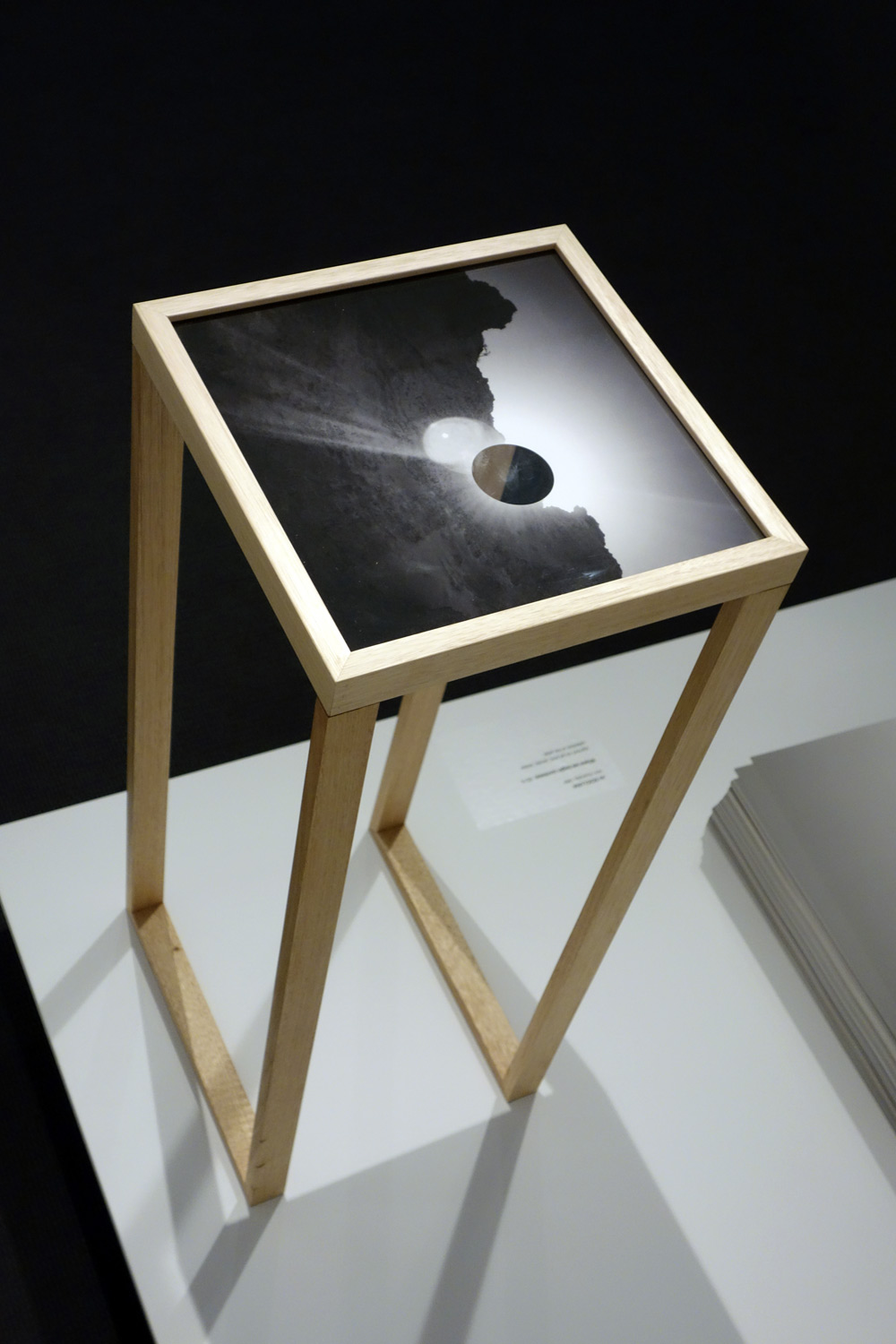
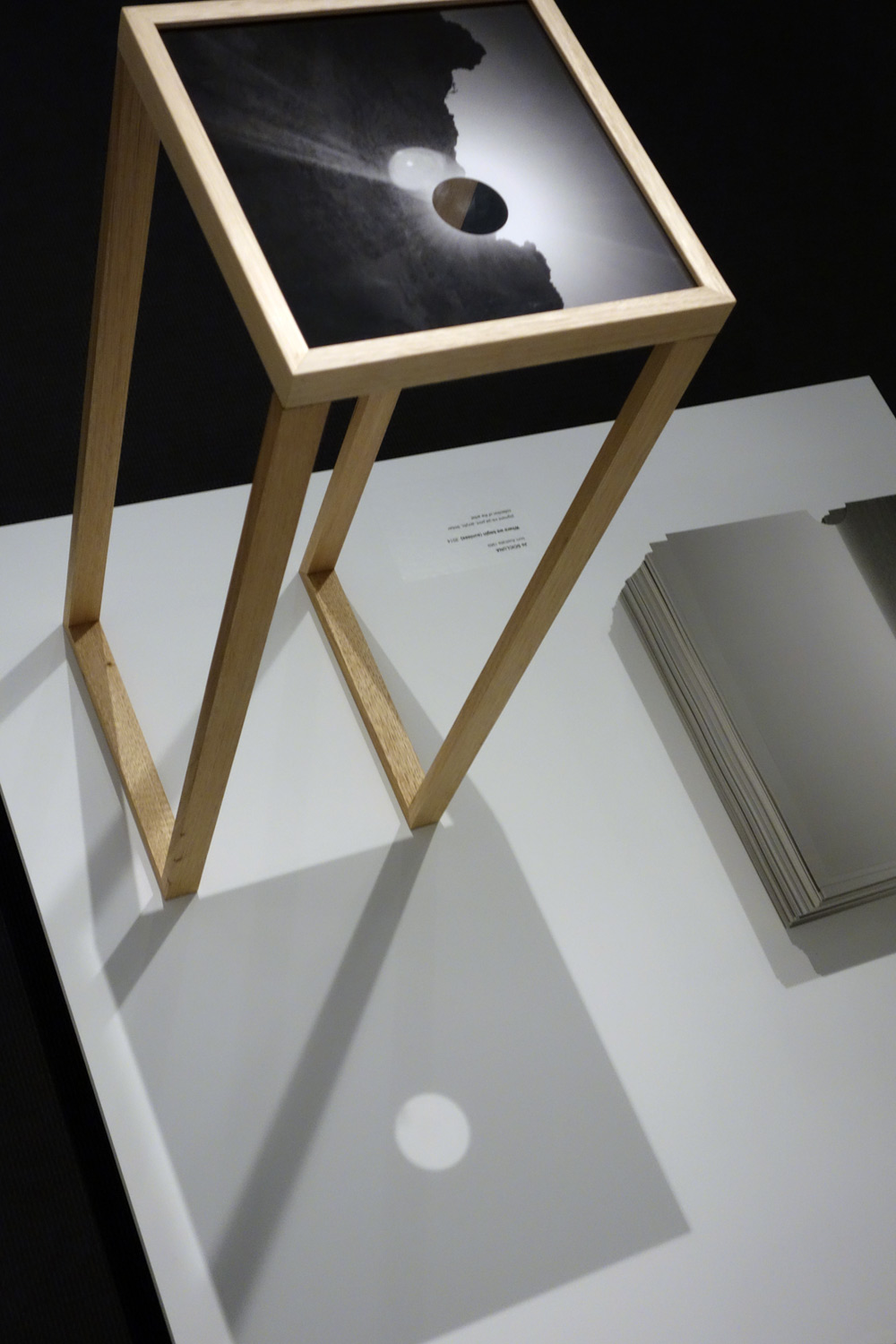


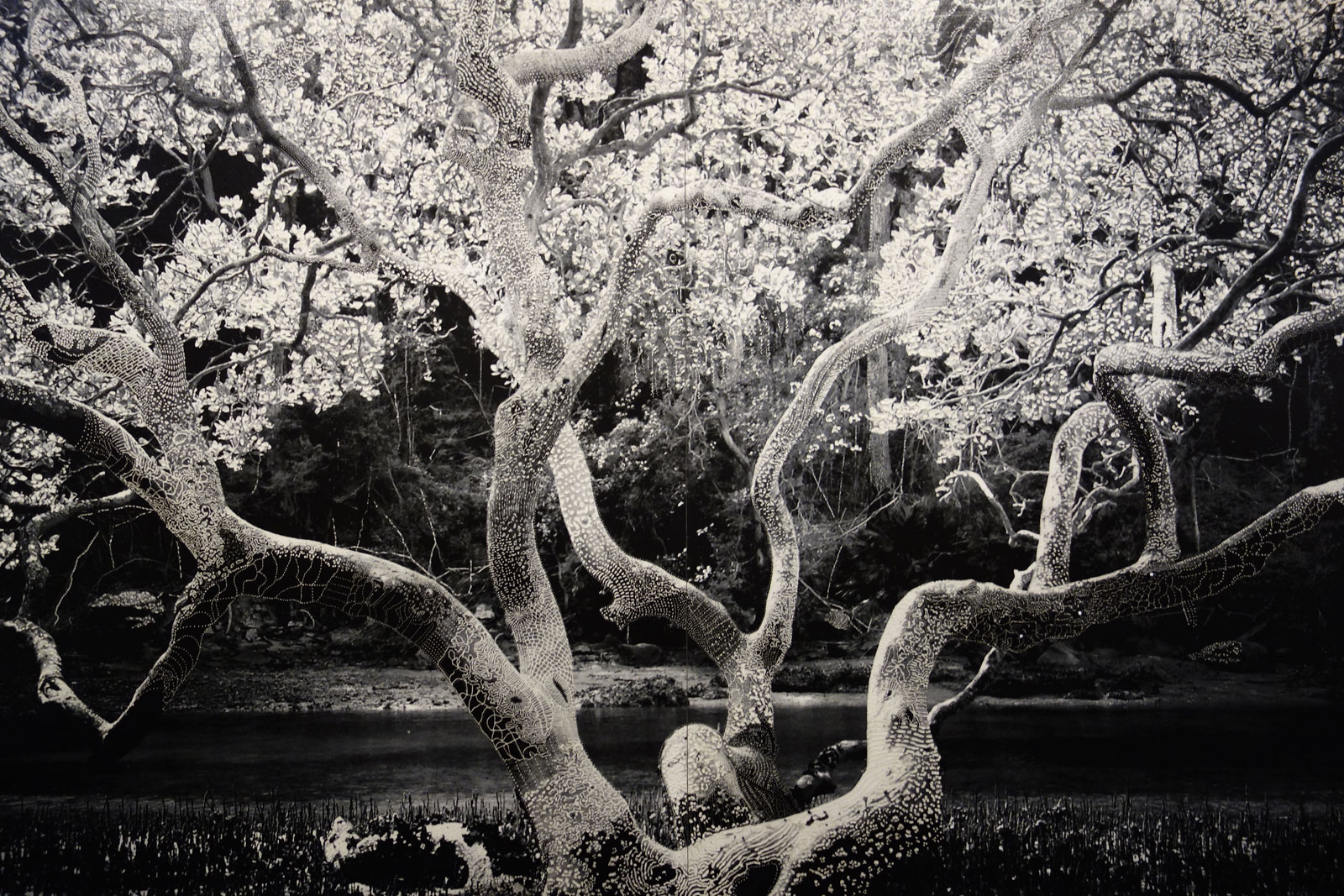
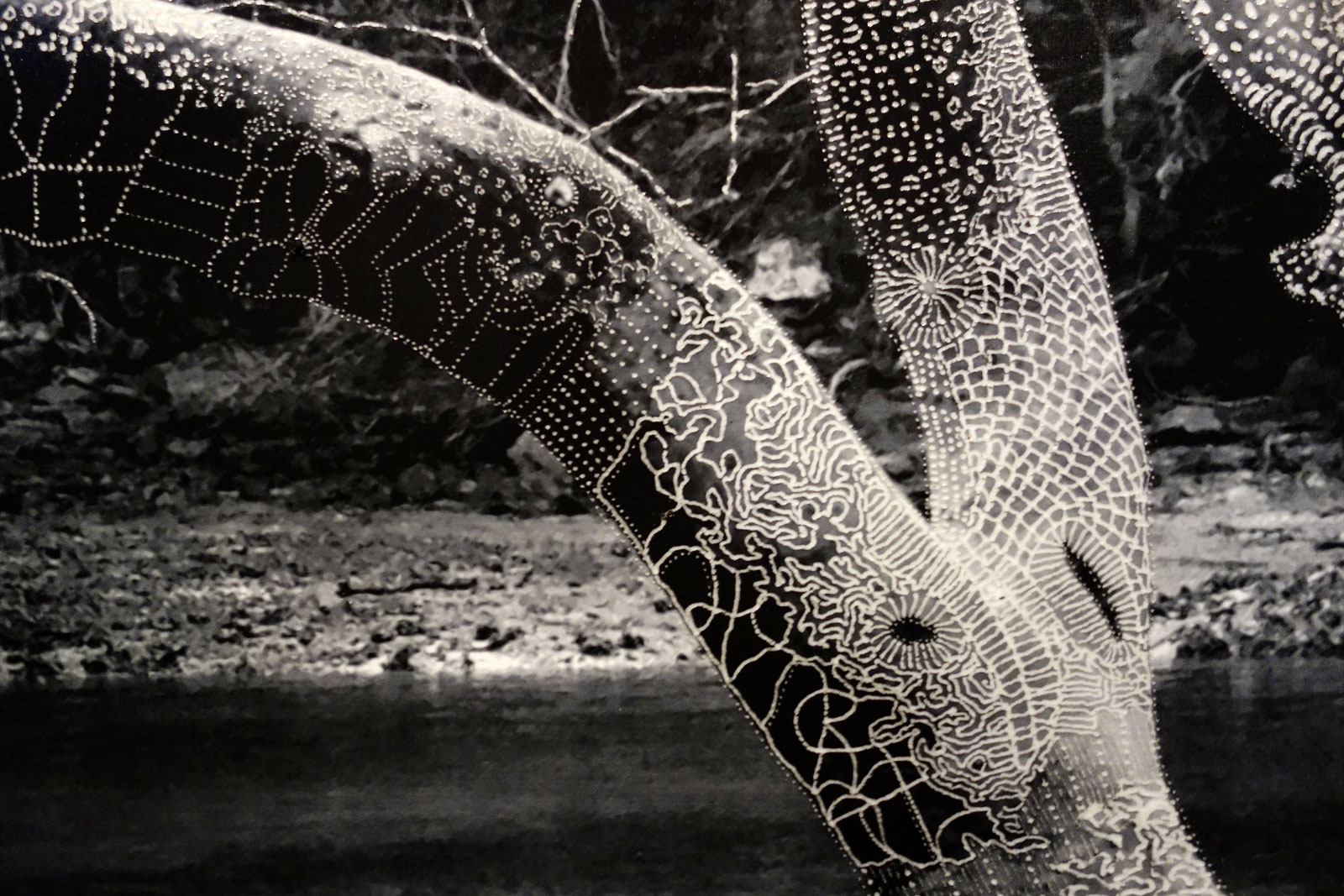







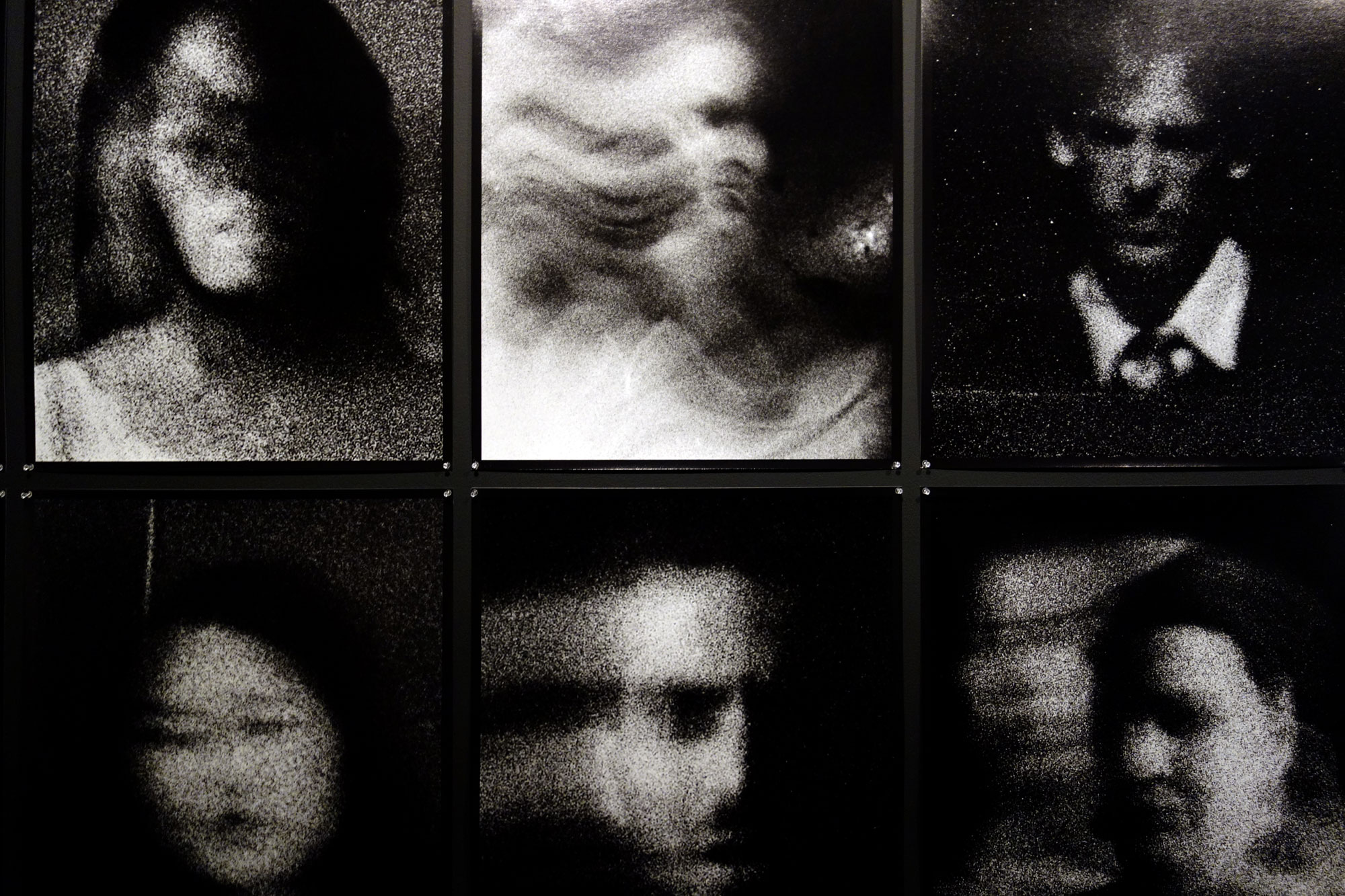


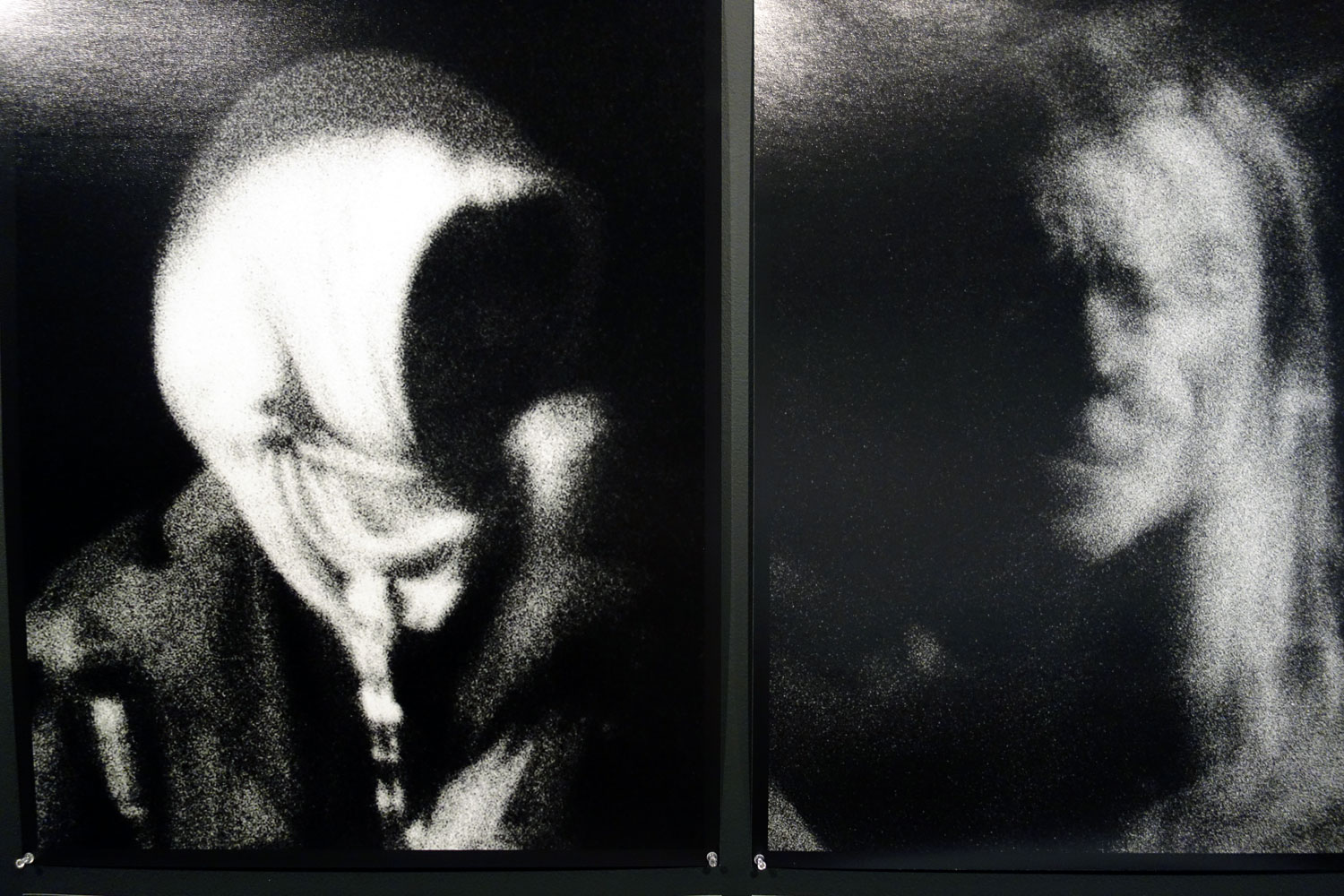


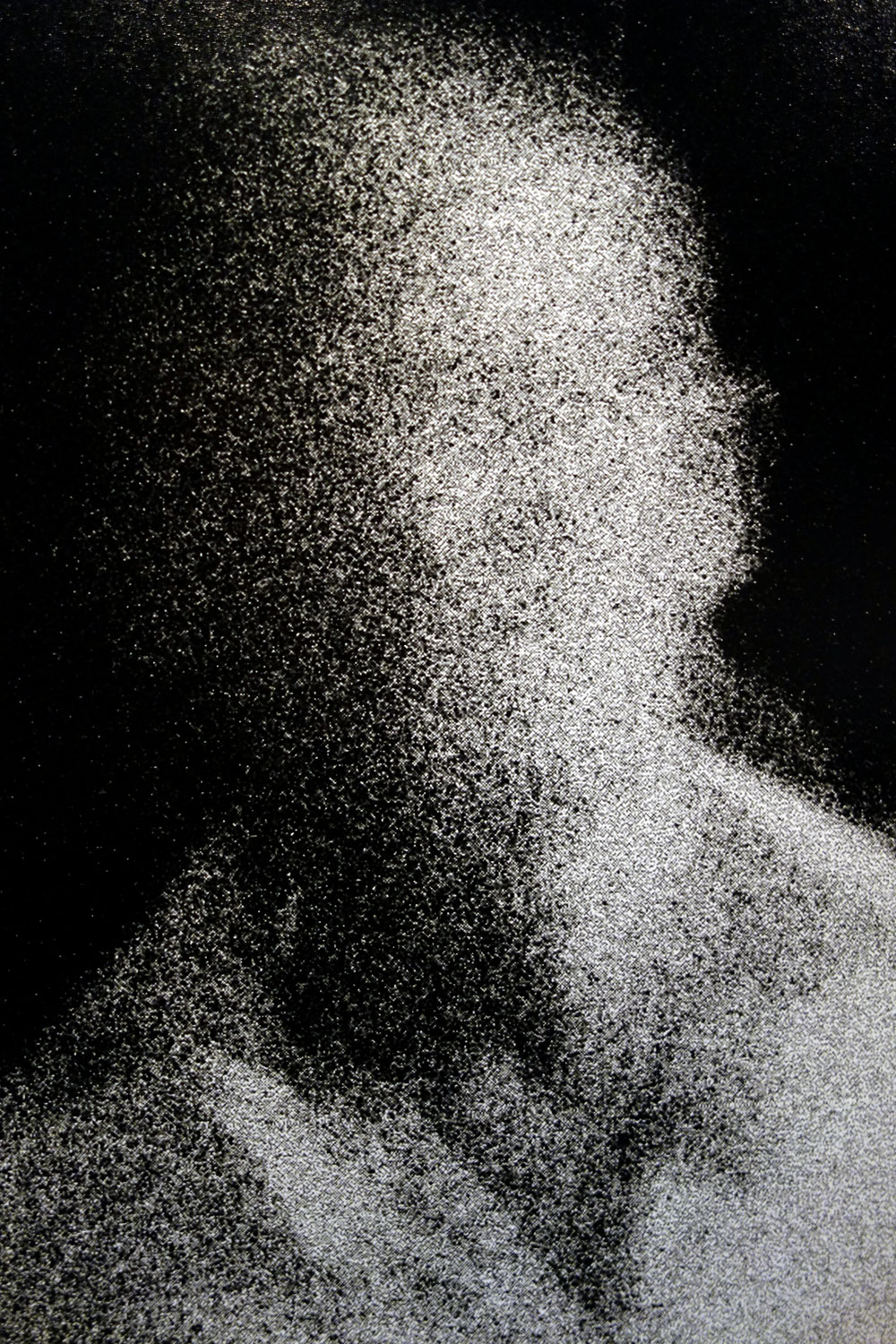

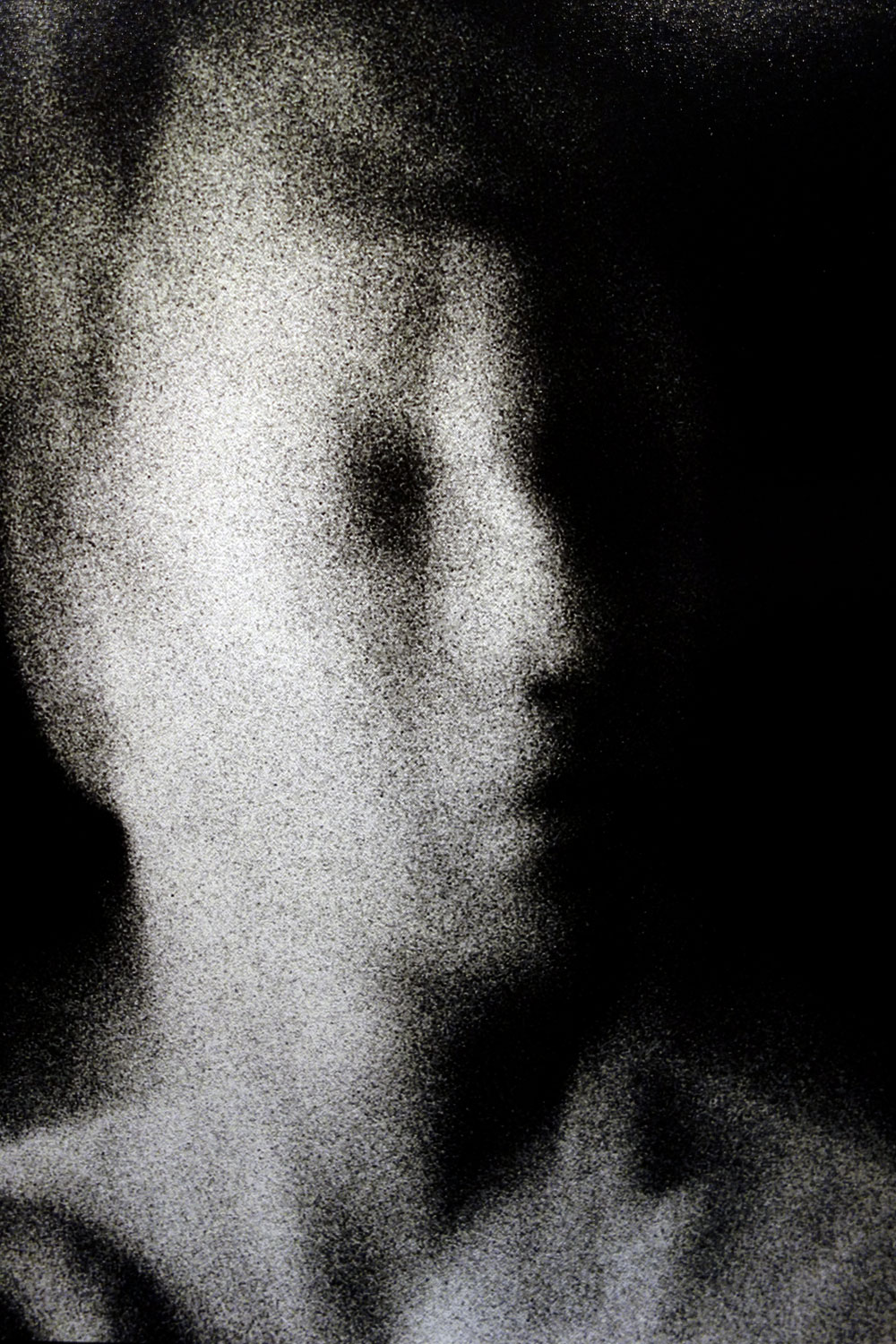






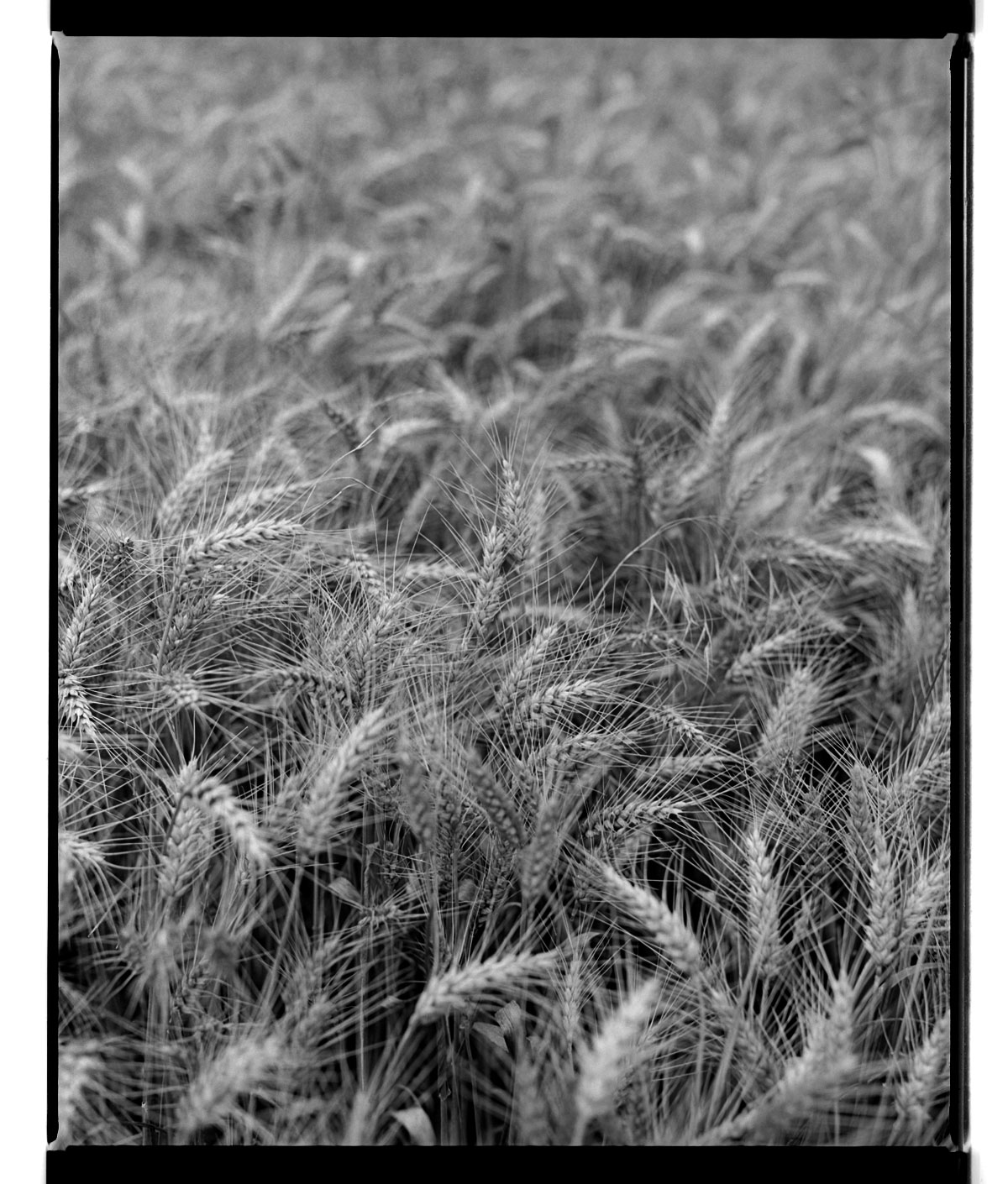

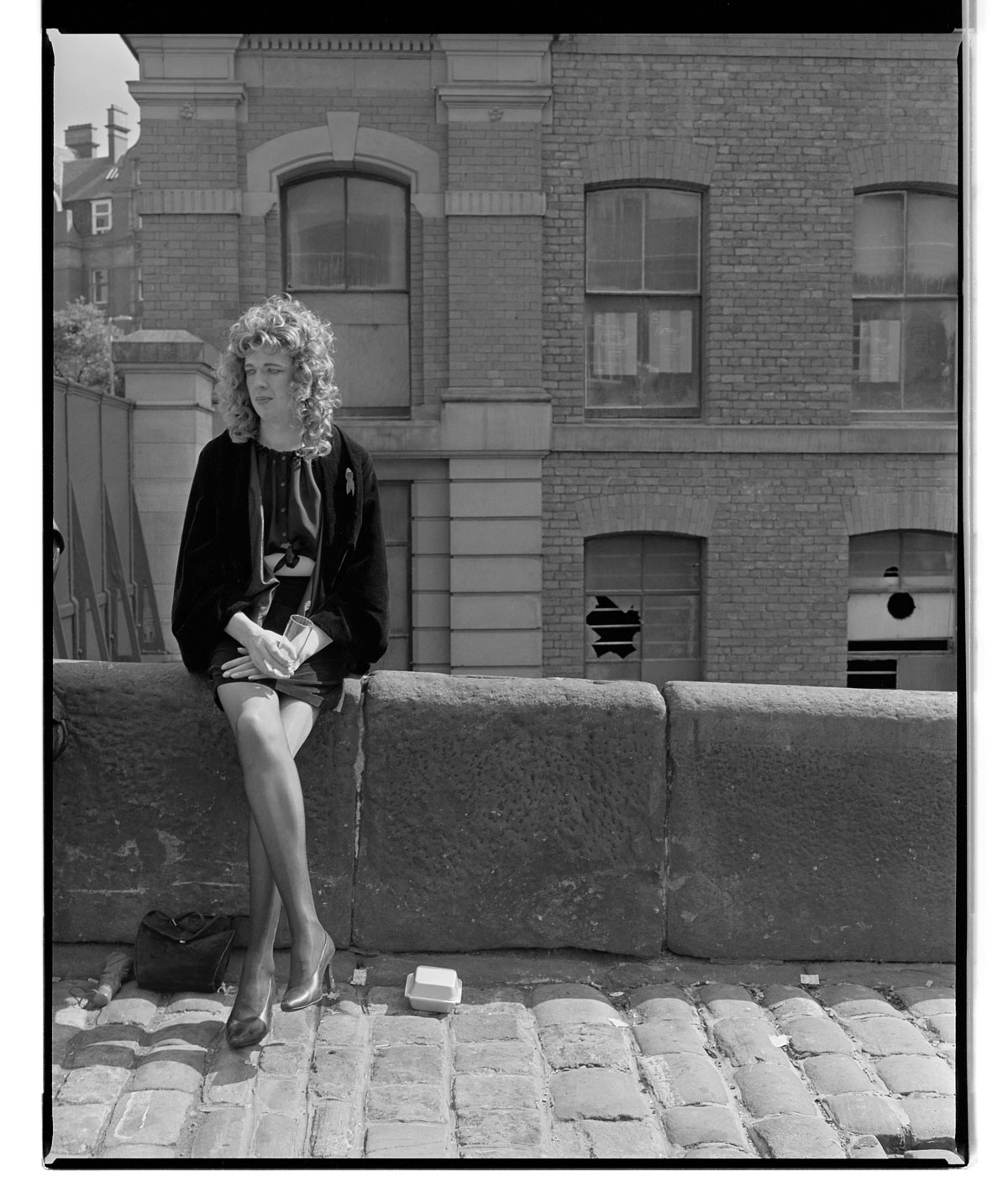


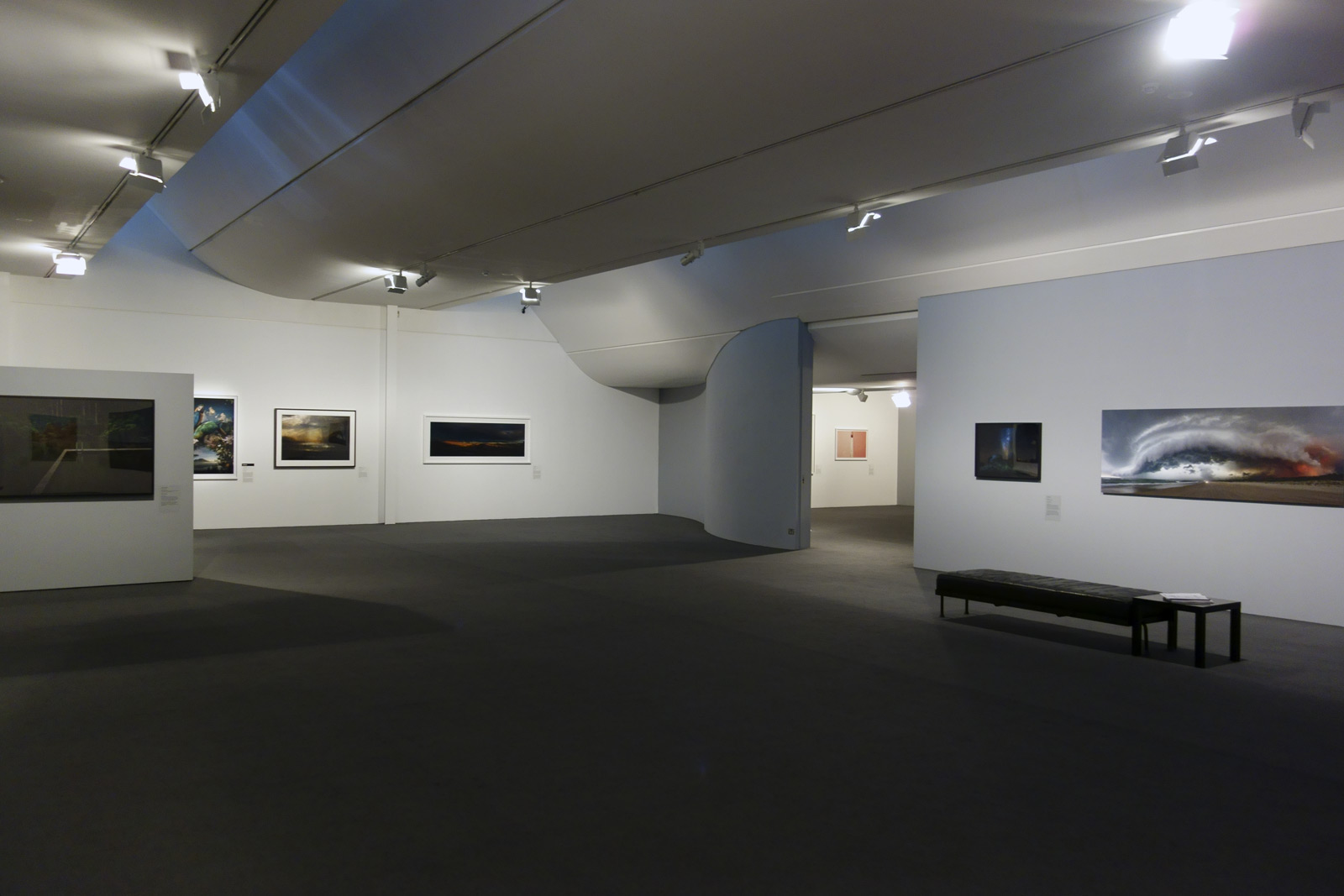
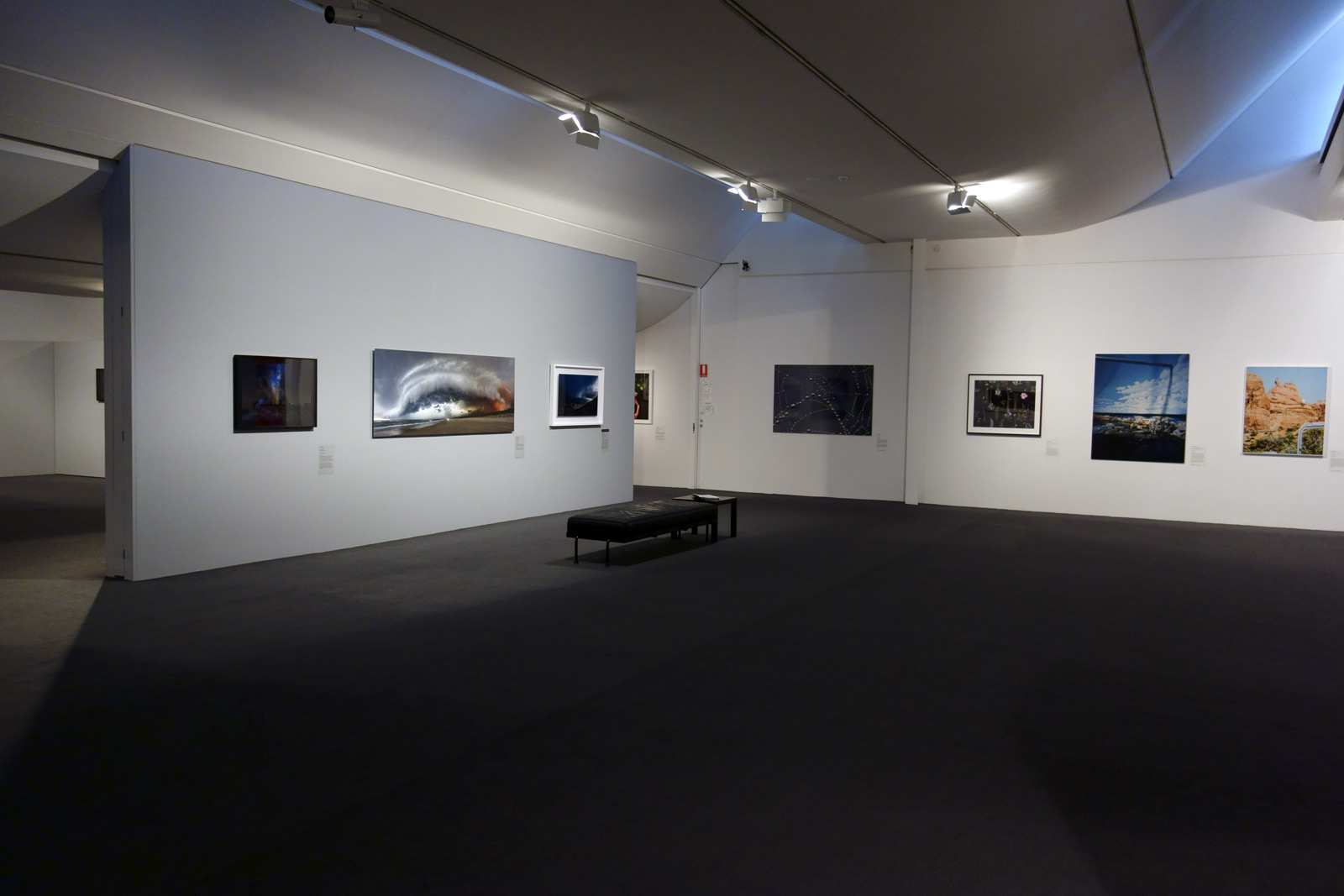

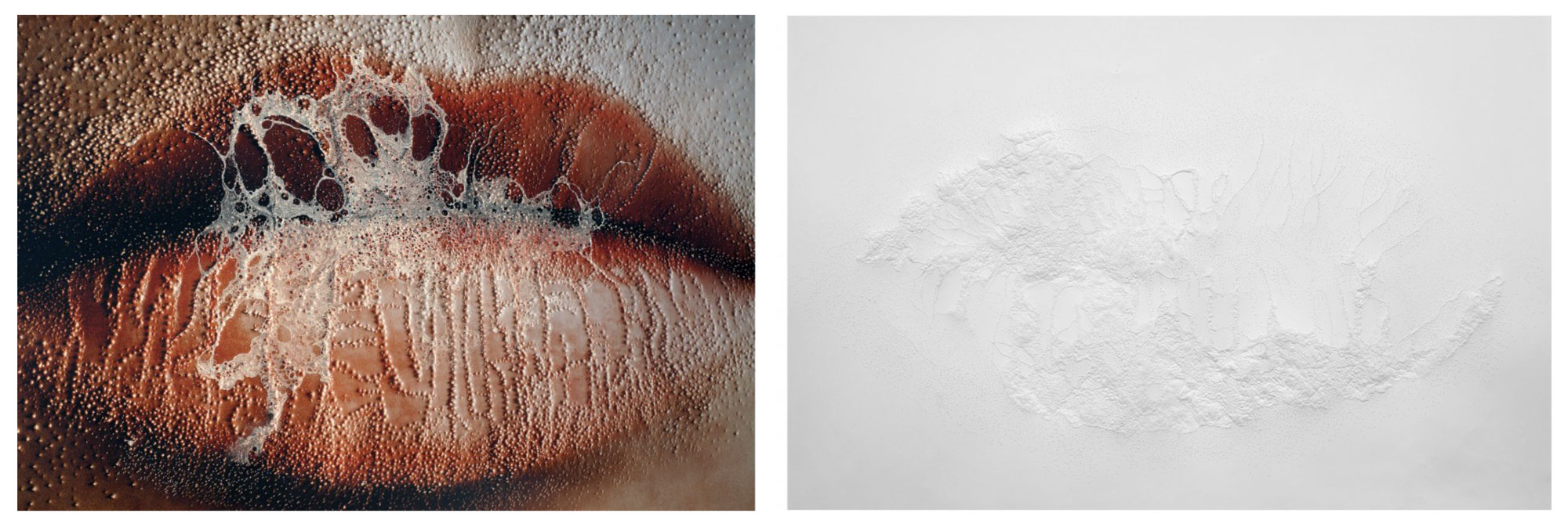


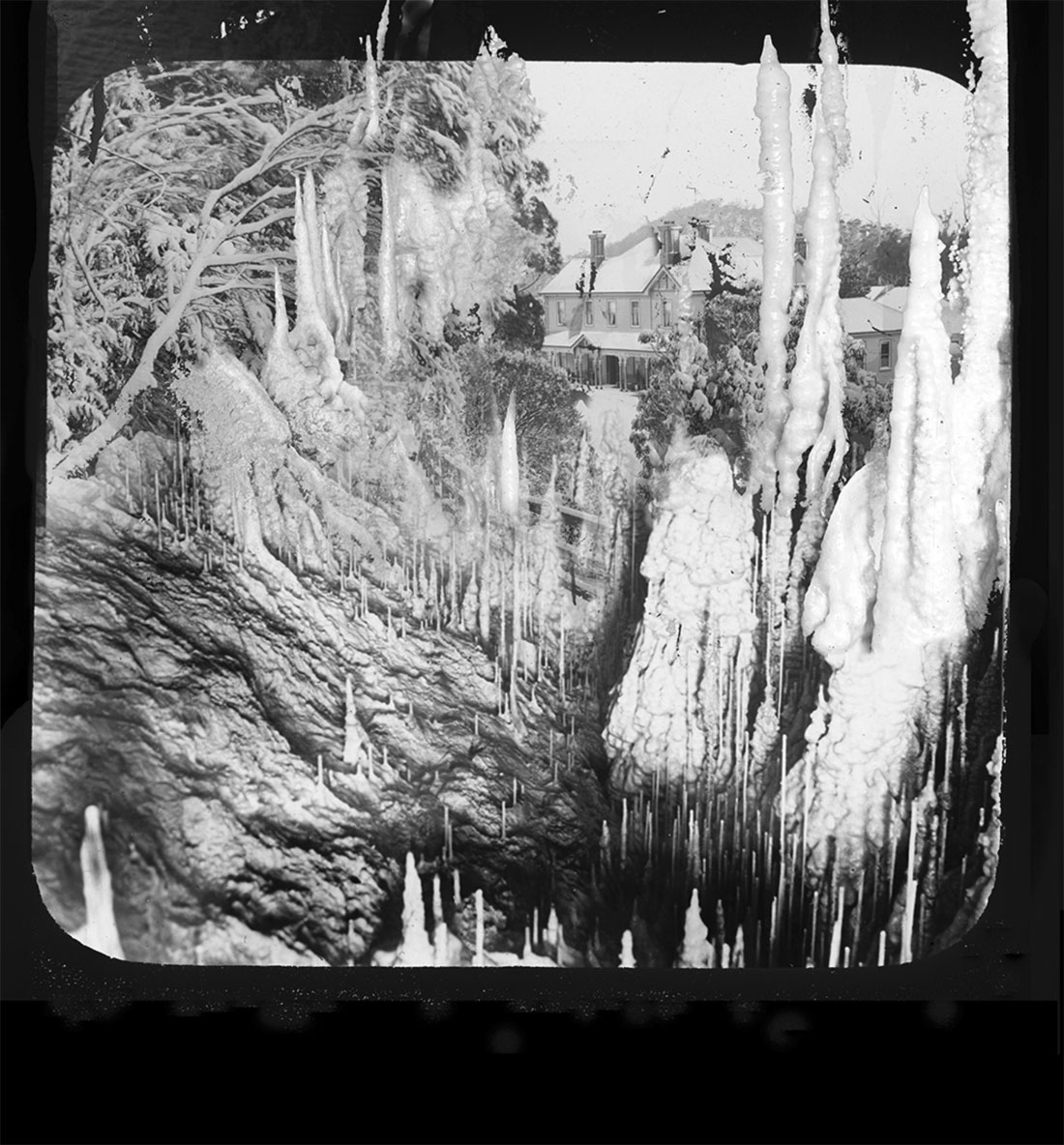


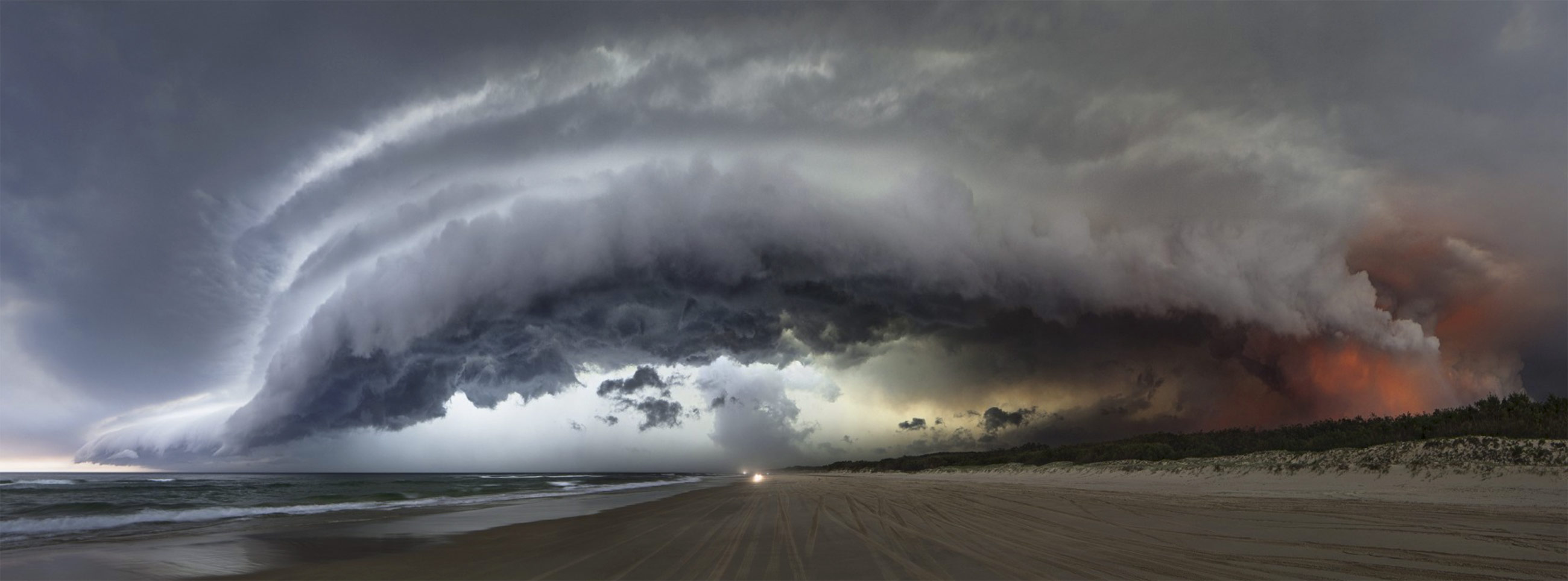

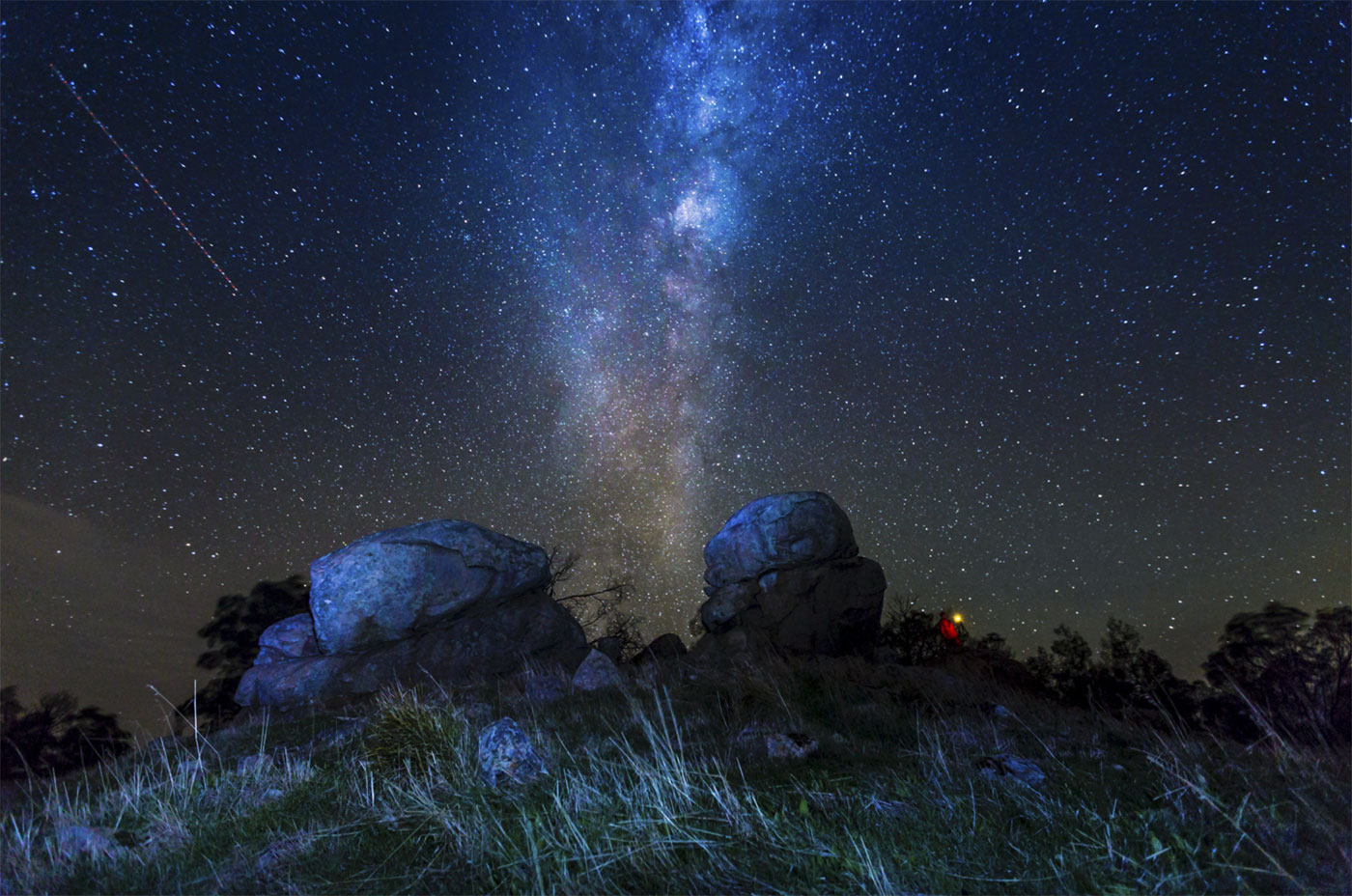


 Art Blart _ art and cultural memory archive
You must be logged in to post a comment.