Exhibition: ‘Ruth Orkin: Bike Trip, USA, 1939’ at the Fondation Henri Cartier-Bresson, Paris

Exhibition dates: 19th September, 2023 – 14th January, 2024

Curator: Clément Chéroux, director, Fondation HCB


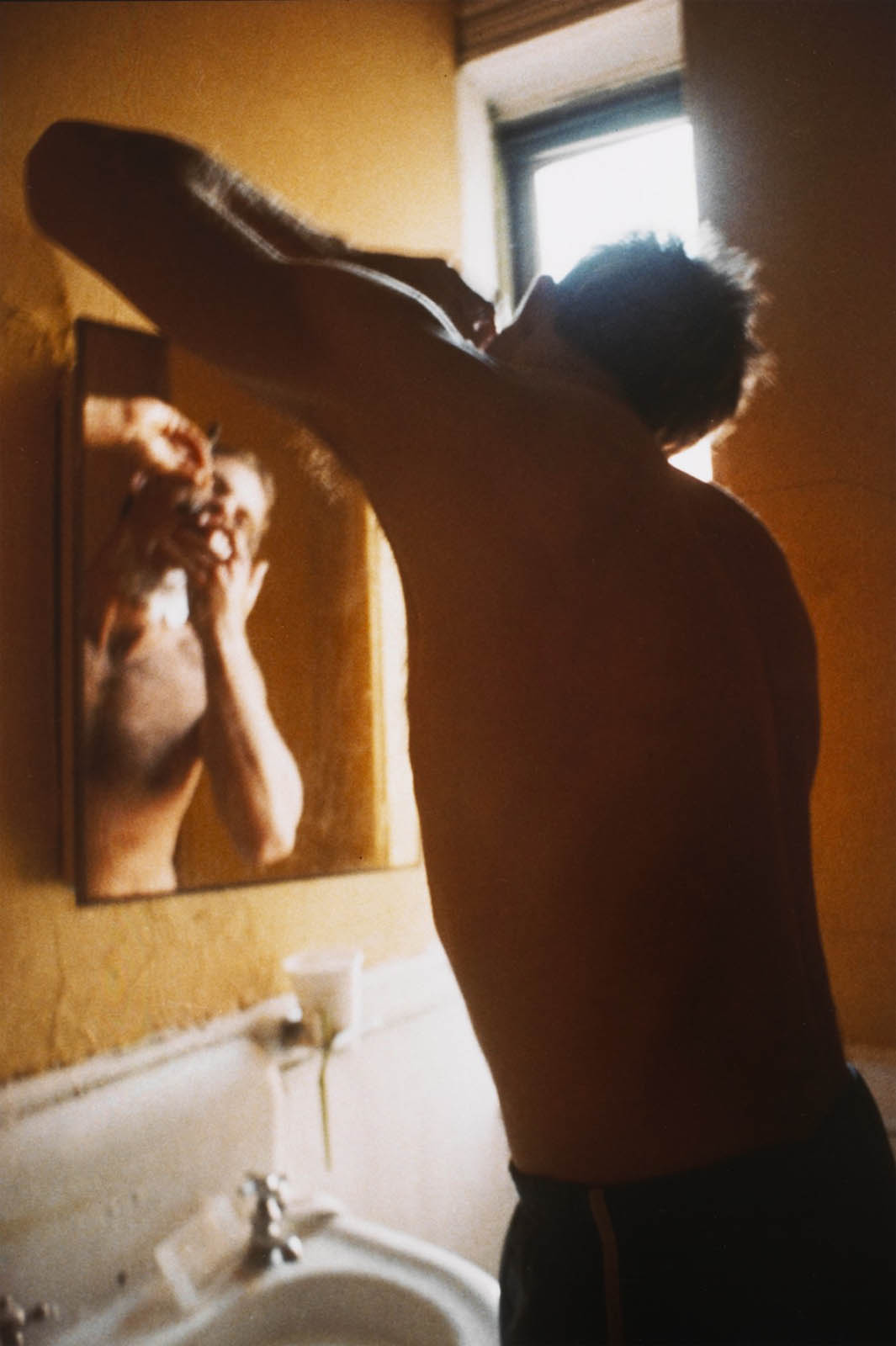
Ruth Orkin (American, 1921-1985) 'My shadow down the hill' San Francisco, 1938 from the exhibition 'Ruth Orkin: Bike Trip, USA, 1939' at the Fondation Henri Cartier-Bresson, Paris, Sept 2023 - Jan 2024


Ruth Orkin (American, 1921-1985)
My shadow down the hill
San Francisco, 1938
© 2023 Ruth Orkin Photo Archive


Wishing all readers of Art Blart a Happy New Year … but first, a glorious posting to finish the year 2023!

What a joy it is to see a young seventeen-year-old artist spreading their wings and taking such accomplished photographs. “Her photographs of street scenes, of buildings cut by subtle lighting effects, her poetic and touching images” are remarkable for their pictorial construction – framing, understanding and use of light and shadow, perspective – and how they tell the story in a single, beautiful image.

Of particular interest is

1/ How Orkin uses the bicycle and its shadow to frame subject matter, showing an implicit understanding of modernist photography. Images such as Thru the wheels of Commerce, Frisco dockyards on the photo album page San Francisco 1939 (below) are almost Duchampian in their conceptualisation. The artist’s use of near / far, high / low and the reverse of that perspective is exceptional.
2/ How Orkin constructs the pages of the photo album, neatly gridded in either horizontal or vertical photographs (never mixed). Through collective images and text this girded visualisation formalises the journey in her mind, illuminating what a transformative experience it must have been – a rite of passage between youth and adulthood (I have no details on when or why the photo album was constructed). What adventures she must have had, shooting-the-streets at 6am in the morning before going to an Italian grocery store for breakfast!

Further, in the photo album page San Francisco 1939 No’s 33-39 (below) we can observe in the young artist an understanding of how to sequence photographs in their ebb and flow: the bicycle framing the vanishing point in 33 leads to its inversion in Orkin’s shadow in 34; this shadow is echoed in the positive in the sculpture of Voleenteer Firemen (complete with misspelling) in 35 which then leads into the thrusting Italian Church of 36 … but here it is the hanging vegetation which is of import, for the vertical drapery is then inverted in the perspective of the ground shadow in 37 Weeping willows; the opening of the light in that image is echoed in the vista between the bicycle frame in 38 Bay from Cort Tower, this negative space then itself inverted in the self-portrait in 39.

3/ How the addition of text can provide a different interpretation to the images for the viewer. The media images were shorn of the text from the photo album pages (being cropped without text) – lack of con/text which to my eyes denudes them of Orkin’s interpretation and feelings about her images.

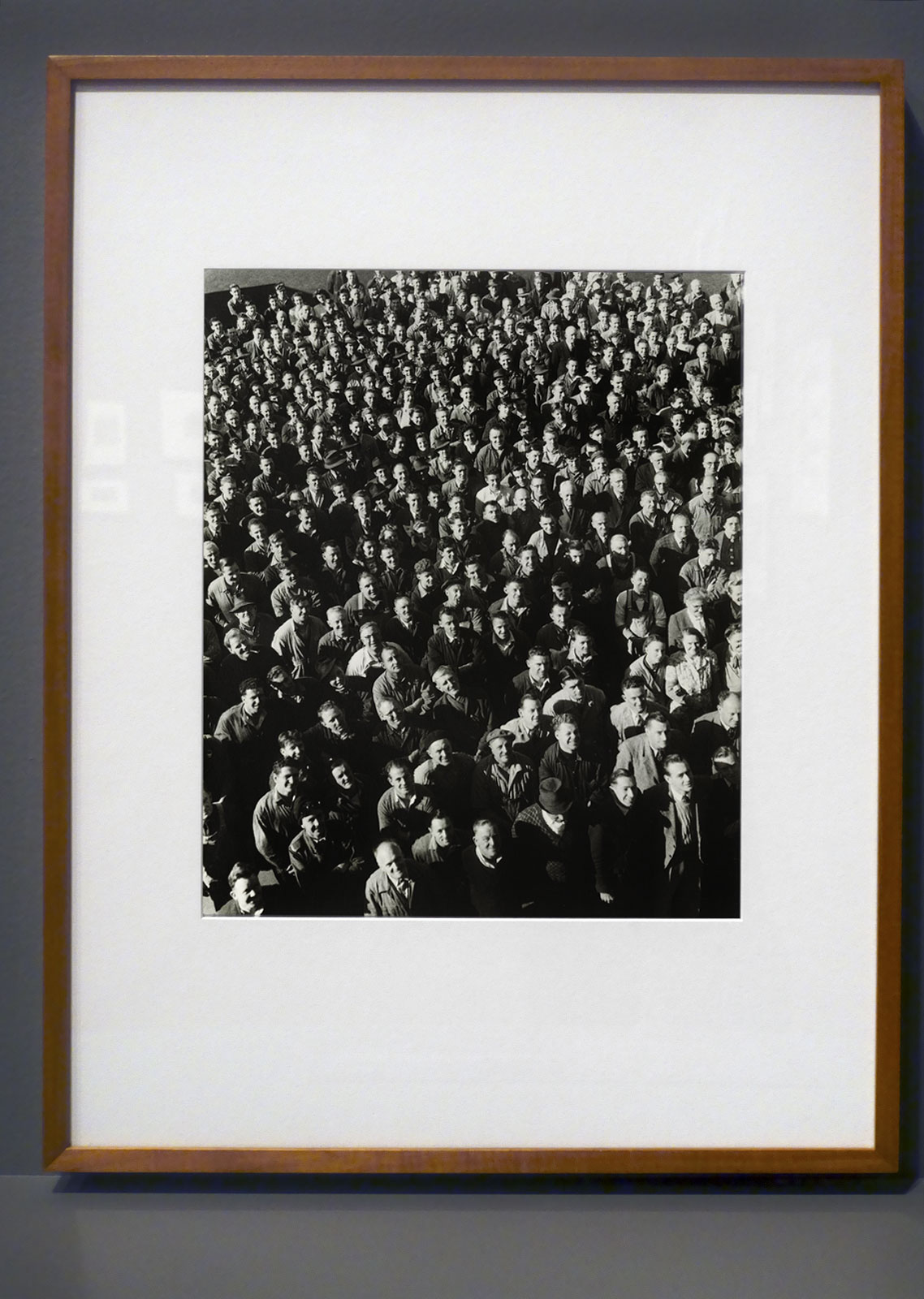
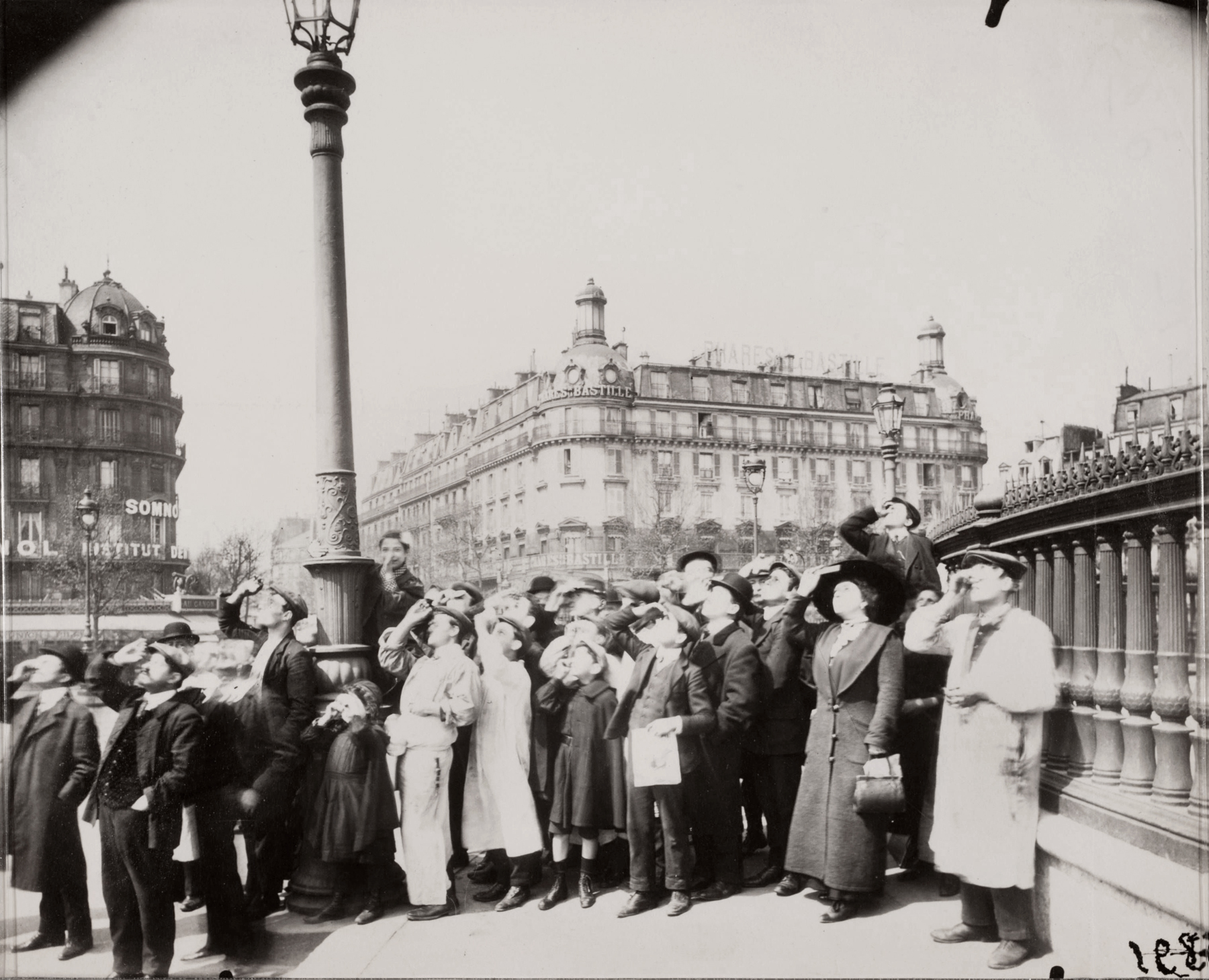
For example, the photograph captioned in the press images These people are standing in the middle of Washington St & reading the blackboard wall bulletins, on a newspaper office, Boston, 1939 (below) – reminiscent of Atget’s photograph Pendant l’éclipse (During the eclipse) 1912 (below) – is actually inscribed, These people are standing in the middle of Washington St & reading the blackboard wall bulletins, on a newspaper office. Sept 1.

Some may wonder why the deletion of “Sept 1” is so important… until you realise that Sept 1, 1939 was the day that Hitler’s Nazi Germany invaded Poland leading to the official start of World War 2 (although war had been raging in Manchuria between China and Japan since 1931). Without that word and number all we have in that photograph is a varied group of people looking up at news bulletins. But with their addition, and Orkin knew this only too well, the photograph assimilates the significance of world events into its very being … and then reflects back to the viewer an understanding of how those events will subsequently affect every person in that photograph. If that word and number is not there (as in the press images title) we would have never known the import of the moment that Orkin captured.


Finally, I would acknowledge the precocious talent of Ruth Orkin and her perspicacious (from Latin perspicax, perspicac– ‘seeing clearly’) nature. On this road trip she was young  and full of joys of taking photographs, perceptive and aware of the world around her. For me the photographs are more than sketches that map out the beginnings of her photographic style – they are her style, fully formed and eloquent in their subtle, formal beauty. What an accomplishment for any artist no matter their age.

Dr Marcus Bunyan


Many thankx to the Fondation Henri Cartier-Bresson for allowing me to publish the photographs in the posting. Please click on the photographs for a larger version of the image.


L’exposition Ruth Orkin – Bike Trip, USA, 1939

Curator: Clément Chéroux


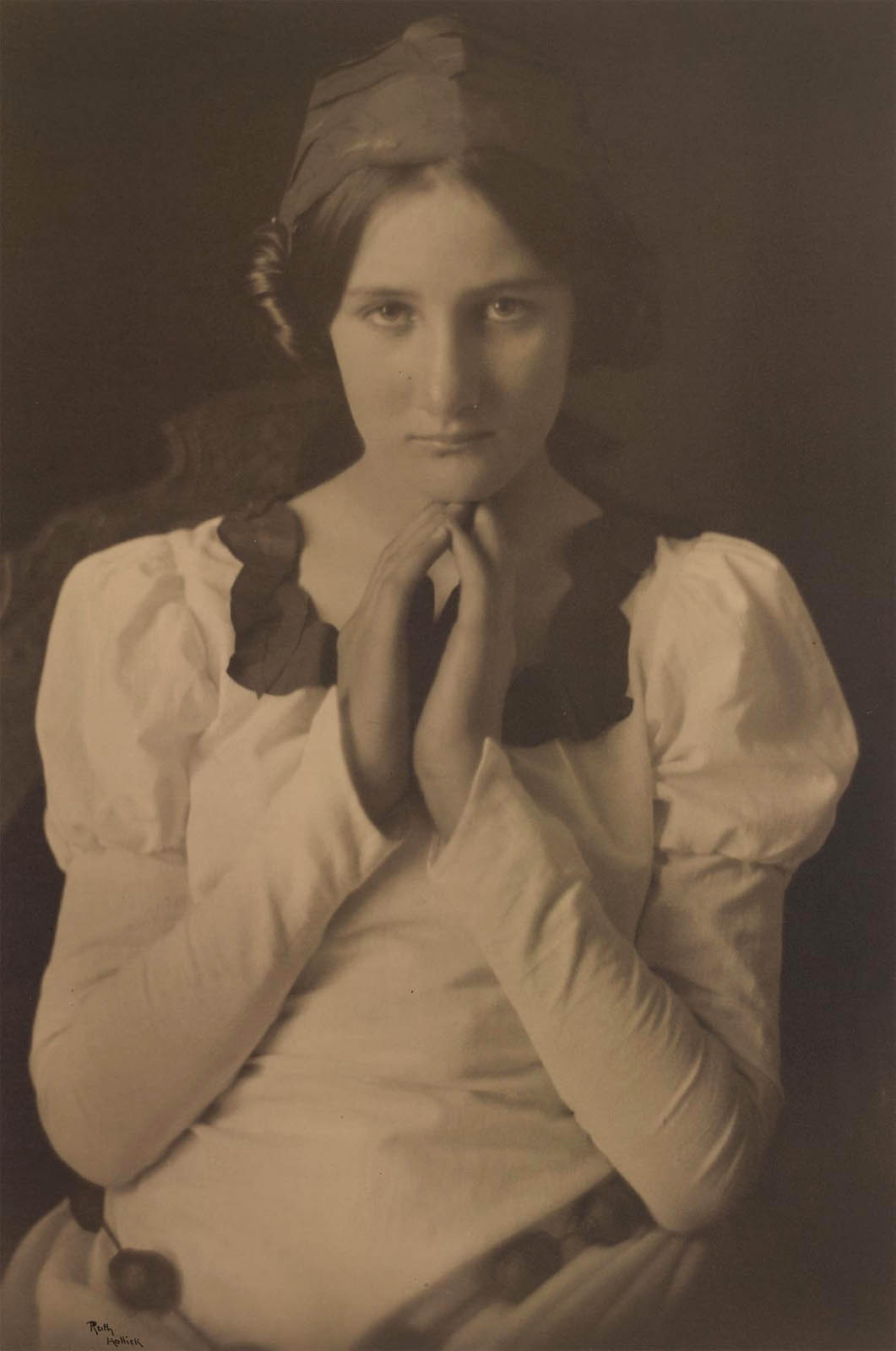
In 1939, at the age of 17, Ruth Orkin crossed the United States alone with her bike, her camera and only $25 in her pocket. This “bike trip” across the United States took her from Los Angeles to New York, where she planned to visit the World’s Fair. Her journey and her audacity, exceptional for the time, aroused the curiosity of the local press, which devoted numerous reports to her while she was there. It was during this epic bicycle trip that Ruth Orkin sketched out the beginnings of her photographic style. Her photographs of street scenes, of buildings cut by subtle lighting effects, her poetic and touching images, in which she doesn’t hesitate to stage her metal steed, will be shown for the first time in France at an exhibition at the Henri Cartier-Bresson Foundation. In 1951, having become a professional photographer (after working as a courier for MGM studios), Ruth Orkin produced her most famous image, American Girl in Italy, showing a woman travelling alone, under the gaze of the men who surround her and occupy public space, as a nod to her personal experience.

Text from the Fondation Henri Cartier-Bresson website


Ruth Orkin (American, 1921-1985) 'My shadow down the hill' San Francisco, 1938 from the exhibition 'Ruth Orkin: Bike Trip, USA, 1939' at the Fondation Henri Cartier-Bresson, Paris, Sept 2023 - Jan 2024


Ruth Orkin (American, 1921-1985)
My shadow down the hill
San Francisco, 1938
© 2023 Ruth Orkin Photo Archive


Ruth Orkin (American, 1921-1985) 'Bay from Coit Tower, Treasure Island at left' San Francisco, 1938 from the exhibition 'Ruth Orkin: Bike Trip, USA, 1939' at the Fondation Henri Cartier-Bresson, Paris, Sept 2023 - Jan 2024


Ruth Orkin (American, 1921-1985)
Bay from Coit Tower, Treasure Island at left
San Francisco, 1938
© 2023 Ruth Orkin Photo Archive


Ruth Orkin (American, 1921-1985) 'Bay from Coit Tower, Treasure Island at left' San Francisco, 1938 from the exhibition 'Ruth Orkin: Bike Trip, USA, 1939' at the Fondation Henri Cartier-Bresson, Paris, Sept 2023 - Jan 2024


Ruth Orkin (American, 1921-1985)
Bay from Coit Tower, Treasure Island at left
San Francisco, 1938
© 2023 Ruth Orkin Photo Archive


Ruth Orkin (American, 1921-1985) 'San Francisco 1939' 1939 from the exhibition 'Ruth Orkin: Bike Trip, USA, 1939' at the Fondation Henri Cartier-Bresson, Paris, Sept 2023 - Jan 2024


Ruth Orkin (American, 1921-1985)
San Francisco 1939
1939
From the series Ruth Orkin: Bike Trip, USA, 1939
© 2023 Ruth Orkin Photo Archive


Eugène Atget (French, 1857-1927) 'Pendant l'éclipse' 1912


Eugène Atget (French, 1857-1927)
Pendant l’éclipse (During the eclipse)
1912
Albumen print


Although the moon is not visible in this photograph by Eugène Atget, its presence and appeal are implied. The crowd gathered in Paris’s Place de la Bastille on April 17, 1912, was observing a solar eclipse through viewing apparatuses. Atget, rather than recording the astronomical event itself, turned his attention to its spectators. Though Atget made more than 8,500 pictures of Paris and its environs in a career that spanned over thirty years – most documenting the built environment – this photograph is an unusual example that focuses on a crowd of people.

Text from the MoMA website


Ruth Orkin (American, 1921-1985) 'These people are standing in the middle of Washington St & reading the blackboard wall bulletins, on a newspaper office' Boston, 1939 from the exhibition 'Ruth Orkin: Bike Trip, USA, 1939' at the Fondation Henri Cartier-Bresson, Paris, Sept 2023 - Jan 2024


Ruth Orkin (American, 1921-1985)
These people are standing in the middle of Washington St & reading the blackboard wall bulletins, on a newspaper office
Boston, 1939
© 2023 Ruth Orkin Photo Archive


Ruth Orkin (American, 1921-1985) 'These people are standing in the middle of Washington St & reading the blackboard wall bulletins, on a newspaper office. Sept 1.' Boston, 1939


Ruth Orkin (American, 1921-1985)
These people are standing in the middle of Washington St & reading the blackboard wall bulletins, on a newspaper office. Sept 1.
Boston, 1939
From the series Ruth Orkin: Bike Trip, USA, 1939
© 2023 Ruth Orkin Photo Archive


Ruth Orkin (American, 1921-1985) 'Chicago 1939' 1939


Ruth Orkin (American, 1921-1985)
Chicago 1939
1939
From the series Ruth Orkin: Bike Trip, USA, 1939
© 2023 Ruth Orkin Photo Archive


Ruth Orkin (American, 1921-1985)'U.S. Continent and Chicago 1939' 1939


Ruth Orkin (American, 1921-1985)
U.S. Continent and Chicago 1939
1939
From the series Ruth Orkin: Bike Trip, USA, 1939
© 2023 Ruth Orkin Photo Archive


Exhibition

For the first time in France, the Fondation Henri Cartier-Bresson presents a solo exhibition on American photographer Ruth Orkin (1921-1985), internationally known for her photograph American Girl in Italy (1951), an iconic image of a women travelling alone. While still a teenager, Orkin undertook a pioneering journey across the United States from West to East.

In 1939, at 17 and still living with her parents in Los Angeles, Ruth Orkin decided to cross the United States solo, from the Pacific to the Atlantic. She travelled less by bicycle than with a bicycle, crossing long distances by car, train, and bus, using her bicycle to explore big cities: Chicago, Philadelphia, Washington, New York, Boston and San Francisco.

Over a four-month period, she took 350 photographs: urban scenes, numerous self-portraits and striking compositions framed by her bicycle. In each city she visited, local newspapers covered her story, interviewing and photographing her. With the unexpected publicity, she was invited everywhere, given tickets to shows, and even received a new two-wheeler.

Orkin’s stated aim upon departure was to visit the New York World’s Fair, but the transcontinental adventure proved far more decisive. It was a defining moment in her personal and artistic development, confirming the old adage: it’s not the destination, it’s the journey.

The exhibition brings together around forty photographs and archival documents, including Ruth Orkin’s manuscript on this adventure.


Biography

Born in Boston in 1921, Ruth Orkin grew up in Hollywood. At the age of 10, she received her first camera and began photographing her friends and teachers at school. In 1938, at 17 years old, she took a monumental bicycle trip across the United States from Los Angeles to New York City to see the 1939 World’s Fair, and she photographed along the way.

In 1943, the photographer moved to New York where worked for all the major magazines, including LIFE, which sent her to Israel in 1951. She then went to Italy, where she met Jinx Allen, an art student and fellow American, who became the subject of American Girl in Italy. The photograph was part of a series titled When You Travel Alone, about what they encountered as women traveling alone in Europe after the war.

On her return to New York, Orkin married the photographer and filmmaker Morris Engel. Together they produced two feature films, including Little Fugitive, which was nominated at the Oscar in 1953. From their New York apartment overlooking Central Park, Orkin photographed numerous events (marathons, parades, concerts) and the beauty of the changing seasons. Ruth Orkin passed away in 1985.

Text from the Fondation Henri Cartier-Bresson website


Ruth Orkin (American, 1921-1985) 'Conn & the Sound. Nearly lost my camera taking these because of wind' New England, 1939


Ruth Orkin (American, 1921-1985)
Conn & the Sound. Nearly lost my camera taking these because of wind
New England, 1939
© 2023 Ruth Orkin Photo Archive


Ruth Orkin (American, 1921-1985) 'Conn & the Sound. Nearly lost my camera taking these because of wind' New England, 1939


Ruth Orkin (American, 1921-1985)
Conn & the Sound. Nearly lost my camera taking these because of wind
New England, 1939
From the series Ruth Orkin: Bike Trip, USA, 1939
© 2023 Ruth Orkin Photo Archive


Long Island Sound is a marine sound and tidal estuary of the Atlantic Ocean. It lies predominantly between the U.S. state of Connecticut to the north and Long Island in New York to the south. From west to east, the sound stretches 110 mi (180 km) from the East River in New York City, along the North Shore of Long Island, to Block Island Sound. A mix of freshwater from tributaries, and saltwater from the Atlantic Ocean, Long Island Sound is 21 mi (34 km) at its widest point and varies in depth from 65 to 230 feet (20 to 70 m).

Text from the Wikipedia website


Ruth Orkin (American, 1921-1985) 'Washington 1939' 1939


Ruth Orkin (American, 1921-1985)
Washington 1939
1939
From the series Ruth Orkin: Bike Trip, USA, 1939
© 2023 Ruth Orkin Photo Archive


Ruth Orkin (American, 1921-1985) 'Washington Monument as seen from the Lincoln Memorial & reflected in the Mall' Washington D.C., 1939


Ruth Orkin (American, 1921-1985)
Washington Monument as seen from the Lincoln Memorial & reflected in the Mall
Washington D.C., 1939
© 2023 Ruth Orkin Photo Archive


Ruth Orkin (American, 1921-1985) 'Washington Monument as seen from the Lincoln Memorial & reflected in the Mall' Washington D.C., 1939


Ruth Orkin (American, 1921-1985)
Washington Monument as seen from the Lincoln Memorial & reflected in the Mall
Washington D.C., 1939
From the series Ruth Orkin: Bike Trip, USA, 1939
© 2023 Ruth Orkin Photo Archive


Ruth Orkin (American, 1921-1985) '"Through the Wheels of Justice" The Supreme Court across from Capitol Hill' Washington D.C., 1939


Ruth Orkin (American, 1921-1985)
“Through the Wheels of Justice” The Supreme Court across from Capitol Hill
Washington D.C., 1939
© 2023 Ruth Orkin Photo Archive


Ruth Orkin (American, 1921-1985) '"Through the Wheels of Justice" The Supreme Court across from Capitol Hill' Washington D.C., 1939


Ruth Orkin (American, 1921-1985)
“Through the Wheels of Justice” The Supreme Court across from Capitol Hill
Washington D.C., 1939
From the series Ruth Orkin: Bike Trip, USA, 1939
© 2023 Ruth Orkin Photo Archive


Ruth Orkin (American, 1921-1985) '"EI" running over a slum street. Municipal building in background' New York, 1939


Ruth Orkin (American, 1921-1985)
“EI” running over a slum street. Municipal building in background
New York, 1939
© 2023 Ruth Orkin Photo Archive


Ruth Orkin (American, 1921-1985) '"EI" running over a slum street. Municipal building in background' New York, 1939


Ruth Orkin (American, 1921-1985)
“EI” running over a slum street. Municipal building in background
New York, 1939
From the series Ruth Orkin: Bike Trip, USA, 1939
© 2023 Ruth Orkin Photo Archive


Ruth Orkin (American, 1921-1985) 'Sunset over lower Manhattan' New York, 1939


Ruth Orkin (American, 1921-1985)
Sunset over lower Manhattan
New York, 1939
© 2023 Ruth Orkin Photo Archive


Ruth Orkin (American, 1921-1985) 'Sunset over lower Manhattan' New York, 1939


Ruth Orkin (American, 1921-1985)
Sunset over lower Manhattan
New York, 1939
From the series Ruth Orkin: Bike Trip, USA, 1939
© 2023 Ruth Orkin Photo Archive


Ruth Orkin (American, 1921-1985) '17-Year-Old Girl Pedals Bicycle From Los Angeles to Boston, newspaper clipping from Boston' August 1939


Ruth Orkin (American, 1921-1985)
17-Year-Old Girl Pedals Bicycle From Los Angeles to Boston, newspaper clipping from Boston
August 1939
© 2023 Ruth Orkin Photo Archive


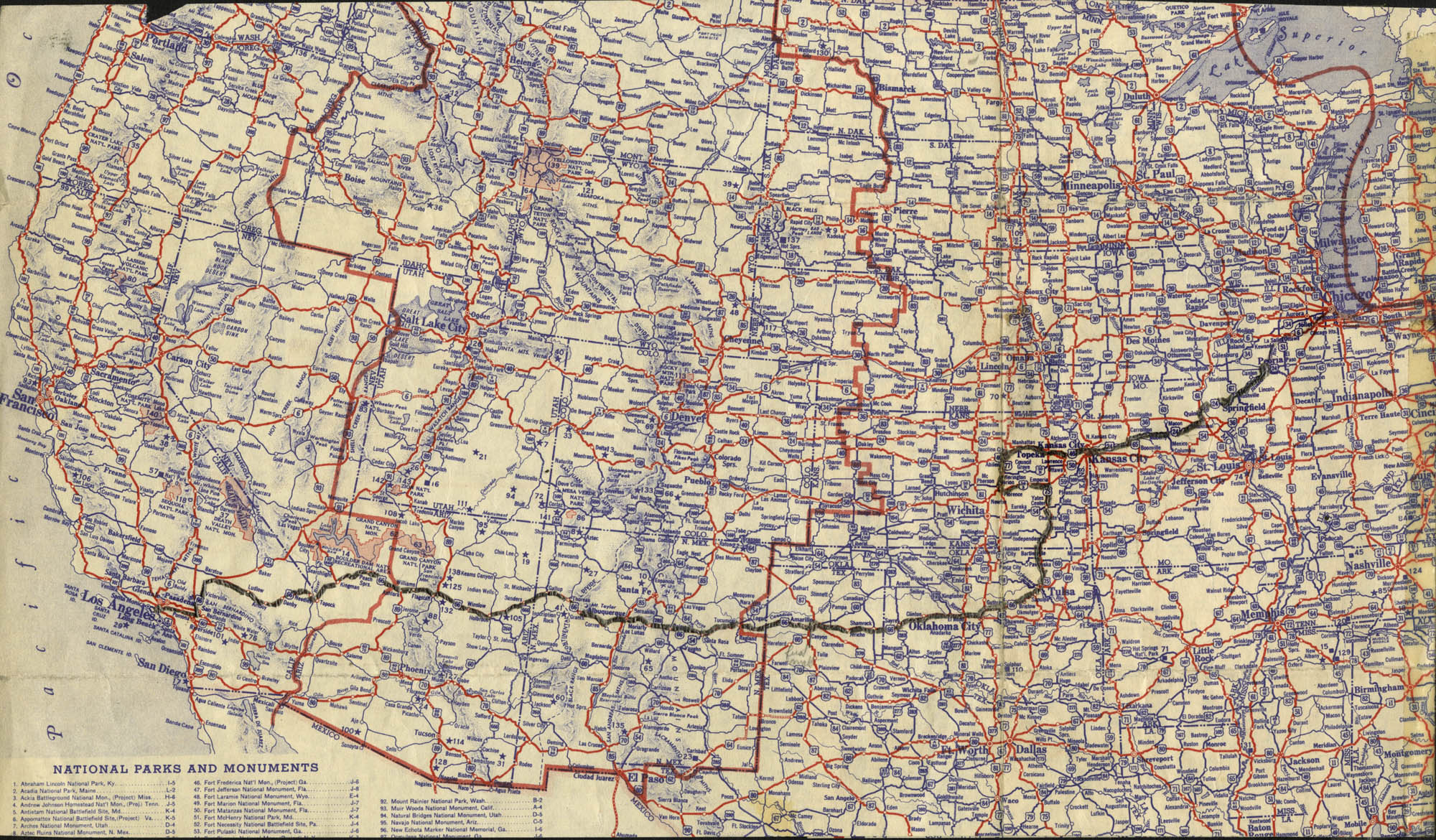
Map describing the route taken by car 1939


Map describing the route taken by car
1939
© 2023 Ruth Orkin Photo Archive


Ruth Orkin (American, 1921-1985) 'An American Girl in Italy' Florence, 1951


Ruth Orkin (American, 1921-1985)
An American Girl in Italy
Florence, 1951
© 1952, 1980 Ruth Orkin Photo Archive


Fondation Henri Cartier-Bresson
79 rue des Archives
75003 Paris

Opening hours:
Tuesday – Sunday 11am – 7pm
Closed on Mondays

Fondation Henri Cartier-Bresson website

LIKE ART BLART ON FACEBOOK

Back to top

Vale Larry Fink (American, 1941-2023)

December 2023


Larry Fink (American, 1941-2023) 'John Sabatine and Molly' 1980 from Vale Larry Fink (American, 1941-2023)


Larry Fink (American, 1941-2023)
John Sabatine and Molly
1980
Gelatin silver print


“To try to see more and better is not a matter of whim or curiosity or self-indulgence. To see or to perish is the very condition laid upon everything that makes up the universe, by reason of the mysterious gift of existence.”


Teilhard de Chardin, “Seeing” 1947


Being human

Another master photographer has died. We are losing so many important visionaries who were born pre-Second World War, during the war and post-war period.

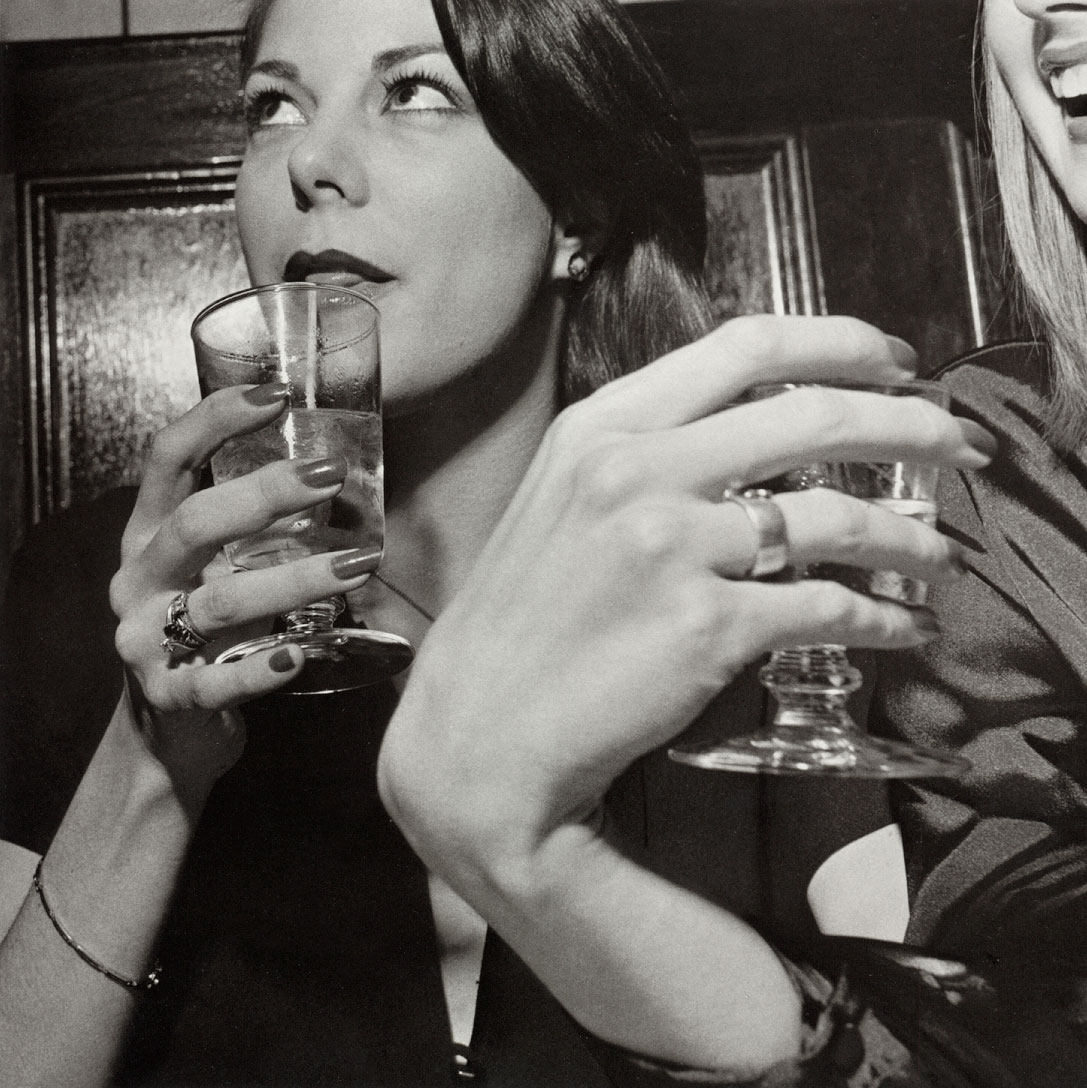
While I have sequenced this posting to highlight the dichotomy in Fink’s exploration of social class in America, that is, between the haves and the have-nots, between the hedonistic party people of Studio 54, the urban New Yorkers of “high society” and rural, working-class Pennsylvanians1 – as ever in life, Fink’s work is much more complex and nuanced than that.

Fink acknowledged that the photographs in his series “Social Graces” of New York “high society” at play were hard of heart. “I used to judge people out of the hardness of my heart. So, I went into these very voluptuous and elegant bourgeois circumstances, and I would judge these people as if they were the enemy.” That does not make these photographs any less valuable as a record of that brief moment of encounter between photographer and subject. For he observed, “The moment that we have is the only moment we will ever have, insofar as it is fleeting. Every breath counts. So does every moment and perception.”

Thus, in any of his photographs you have to admire his skill at capturing that fleeting moment: marvel at the flying pigtail in Studio 54 (1977, below) and feel the immediacy of hand gesture in Pat Sabatine’s 8th Birthday Party (1977, below) or the contemptuous look on the woman’s face in Pat Sabatine’s 11th Birthday Party (1980, below) to understand that.

In later life Fink – an empathetic human with an inquiring mind who obviously worked on his inner growth, who had acquired knowledge and a little wisdom – was aware how he had wronged himself and others during the taking of the photographs for “Social Graces”.

“When age had given me entry into life’s harder organic experiences – my back, my heart, my prostate, my hip – I started to look at my own face in the mirror and see the results of pain. I would see that many of the judgments I had made in the early days, based on an ideal sense of a physical equilibrium, were absolutely and horrendously bigoted. I was not at all sensitive to either the inner or external trappings of what it means to just be alive and all its various, vulnerable complexities.”2

With every breath he understood that when he took photographs he was attempting to touch the eternal, an expression of admiration and gratitude at being alive.

“I am involved with the idea of reaching deeply into the pulsing matter of what it means to be alive and being vulnerable and seeing if I can cast an emotional legacy about being human.”

The emotional legacy of his photographs attests to his enduring spirit.

Dr Marcus Bunyan


1/ “He paired the tales of these two worlds – the chilly anomie of the haute monde and the lively, messy domesticity of the Sabatines – in a collection of photographs he called “Social Graces,” which was first shown in an exhibition at the Metropolitan Museum of Art in 1979 and then published in a book of the same title in 1984, now considered a collector’s item.”

Penelope Green. “Larry Fink, Whose Photographs Were ‘Political, Not Polemical,’ Dies at 82,” on The New York Times website Nov. 30, 2023 [Online] Cited 02/12/2023

2/ Larry Fink quoted in Adriana Teresa. “A Moment With Larry Fink,” on The New York Times website Jan. 6, 2011 [Online] Cited 02/12/2023


Please click on the photographs for a larger version of the image.


“The goal, I suspect, through harmonies and edges and everything that we have in our command, is to take a dumb two-dimensional picture and make it something that a viewer enters and doesn’t want to leave.”


Larry Fink


“It’s about empathy. But the necessary methodology is conventionally in-your-face. Not like other practitioners, who are in your face for the sake of being in your face, I am in your face because I want to be your face. I like to say that if I was not a photographer, I would be in jail. I want to touch everything. My life is profoundly physical. Photography for me is the transformation of desire. …

I don’t like to hurt people. I go after something and I start pointing the camera at somebody, looking for those hard, edgy things I know I am going to find. My pictures will be out of bounds in terms of the convention of how this person wants to be represented. It gives me pause. I don’t feel I have the right to do that. But I do it nevertheless. After all, a picture is not a murder. It is simply a moment which suggests so many things. …

I was severely analytical when I was young, like when I was doing “Social Graces.” I was a good-looking kid. My mother was very vain, competitive and judgmental, and I took on the same characteristics as a younger person. I used to judge people out of the hardness of my heart. So, I went into these very voluptuous and elegant bourgeois circumstances, and I would judge these people as if they were the enemy. I believed the work to be analytical, in a political fashion.

When age had given me entry into life’s harder organic experiences – my back, my heart, my prostate, my hip – I started to look at my own face in the mirror and see the results of pain. I would see that many of the judgments I had made in the early days, based on an ideal sense of a physical equilibrium, were absolutely and horrendously bigoted. I was not at all sensitive to either the inner or external trappings of what it means to just be alive and all its various, vulnerable complexities. …

The moment that we have is the only moment we will ever have, insofar as it is fleeting. Every breath counts. So does every moment and perception. It’s a way to be alive. I am involved with the idea of reaching deeply into the pulsing matter of what it means to be alive and being vulnerable and seeing if I can cast an emotional legacy about being human.”


Larry Fink quoted in Adriana Teresa. “A Moment With Larry Fink,” on The New York Times website Jan. 6, 2011 [Online] Cited 02/12/2023


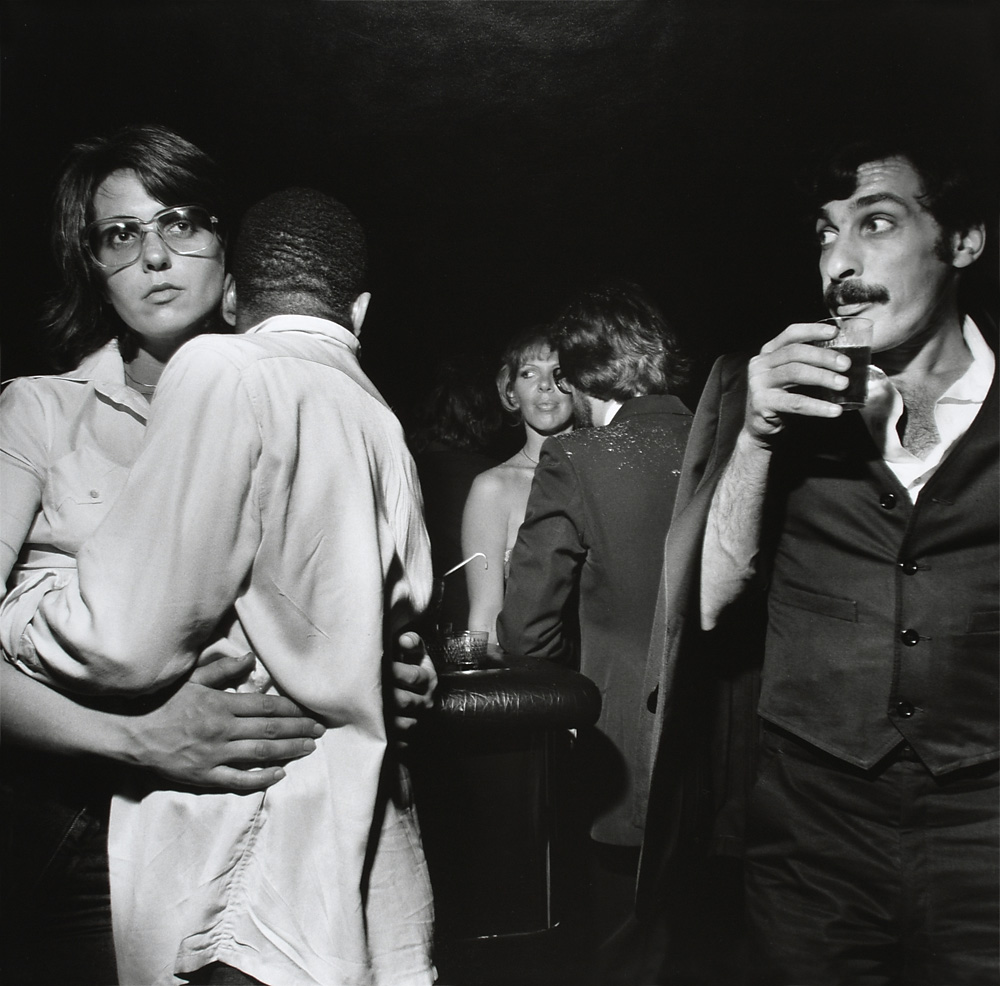
Larry Fink. 'Studio 54, New York City, May 1977' 1977 from Vale Larry Fink (American, 1941-2023)


Larry Fink (American, 1941-2023)
Studio 54
1977
Gelatin silver print


Larry Fink was born in Brooklyn in 1941. In the 1960s, he studied with noted photographer Lisette Model. This photograph from Studio 54, made in 1977 in the hedonistic heyday of the disco era, is a well know image from Fink’s series “Social Graces,” which explored social class in America by comparing two different worlds: that of urban New Yorkers of “high society” and that of rural, working-class Pennsylvanians through social events like birthday parties. Fink has described his approach to his subject in a straightforward, non-judgmental manner, “The one thing I was trained in being was non-hierarchical. I don’t have an internal class system. Who you are is who is in front of me and who I am in the same, and that’s how we have to relate to each other.”


Larry Fink (American, 1941-2023) Pat Sabatine's 8th Birthday Party' 1977 from Vale Larry Fink (American, 1941-2023)


Larry Fink (American, 1941-2023)
Pat Sabatine’s 8th Birthday Party
1977
Gelatin silver print


Larry Fink (American, 1941-2023) 'Russian Ball, New York City' 1976


Larry Fink (American, 1941-2023)
Russian Ball, New York City
1976
Gelatin silver print


Larry Fink (American, 1941-2023) 'Pat Sabatine's 11th Birthday Party' 1980


Larry Fink (American, 1941-2023)
Pat Sabatine’s 11th Birthday Party
1980
Gelatin silver print


Larry Fink (American, 1941-2023) 'Benefit, MoMA, New York' 1977


Larry Fink (American, 1941-2023)
Benefit, MoMA, New York
1977
Gelatin silver print


Larry Fink, a kinetic photographer whose intimate black-and-white on-the-fly portraits of rural Pennsylvanians, Manhattan society figures, Hollywood royalty, boxers, musicians, fashion models and many others were both social commentary on class and privilege and an exuberant document of the human condition, died on Saturday at his home in Martins Creek, Pa. He was 82. …

… in the early 1970s he turned to overt social commentary, infiltrating the society benefits, debutante parties and watering holes of Manhattan’s privileged tribes and their hangers-on. He was fueled, he once wrote, both by curiosity and by his own rage at the privileged class – “its abuses, voluptuous folds, and unfulfilled lives.”

A few years later, he and his wife at the time, the painter Joan Snyder, moved to a farm in Pennsylvania, where he began photographing his rural neighbors, a charismatic family called the Sabatines who embraced him as one of their own. He went on to capture years’ worth of the family’s baptisms, birthdays and graduations.

He paired the tales of these two worlds — the chilly anomie of the haute monde and the lively, messy domesticity of the Sabatines – in a collection of photographs he called “Social Graces,” which was first shown in an exhibition at the Metropolitan Museum of Art in 1979 and then published in a book of the same title in 1984, now considered a collector’s item.

“Social Graces” placed Mr. Fink firmly in the photographic canon. It drew comparisons to the street photos of Weegee and Diane Arbus and even to the paintings of Caravaggio. (Mr. Fink was a master of shadow and light.) When the pictures were shown in 2001 at the Yancey Richardson gallery in Manhattan’s Chelsea section, Ken Johnson, writing in The New York Times, described them as “wonderfully absorbing, funny, skewed, ethereally glowing documents of human situations.”

Penelope Green. “Larry Fink, Whose Photographs Were ‘Political, Not Polemical,’ Dies at 82,” on The New York Times website Nov. 30, 2023 [Online] Cited 02/12/2023


Larry Fink (American, 1941-2023) 'Skating Rink' 1980


Larry Fink (American, 1941-2023)
Skating Rink
1980
Gelatin silver print


Larry Fink (American, 1941-2023) 'Studio 54, New York City' May 1977


Larry Fink (American, 1941-2023)
Studio 54, New York City
May 1977
Gelatin silver print


Larry Fink (American, 1941-2023) 'Oslin's Graduation Party' 1977


Larry Fink (American, 1941-2023)
Oslin’s Graduation Party
1977
Gelatin silver print


Larry Fink (American, 1941-2023) 'N.Y.C. Club Cornich', from the portfolio '82 Photographs 1974 to 1982' 1977; printed 1983


Larry Fink (American, 1941-2023)
N.Y.C. Club Cornich
1977, printed 1983
From the portfolio 82 Photographs 1974 to 1982
Gelatin silver print


Larry Fink (American, 1941-2023) 'Melzer Family Picnic, Eastport, Long Island, New York' June 2002


Larry Fink (American, 1941-2023)
Melzer Family Picnic, Eastport, Long Island, New York
June 2002
Gelatin silver print


Larry Fink (b. 1941) 'Peter Beard's, East Hampton', from the portfolio '82 Photographs 1974 to 1982' 1982; printed 1983


Larry Fink (American, 1941-2023)
Peter Beard’s, East Hampton
1982, printed 1983
From the portfolio 82 Photographs 1974 to 1982
Gelatin silver print


Larry Fink (American, 1941-2023) 'Jean Sabatine and Molly' 1983


Larry Fink (American, 1941-2023)
Jean Sabatine and Molly
1983
Gelatin silver print


Larry Fink (American, 1941-2023) 'Benefit, Corcoran Museum, Washington DC' 1975


Larry Fink (American, 1941-2023)
Benefit, Corcoran Museum, Washington DC
1975
Gelatin silver print


LIKE ART BLART ON FACEBOOK

Back to top

Vale Elliott Erwitt (1928-2023)

December 2023


Elliott Erwitt (American born France, 1928-2023) 'New York City' 1955 from Vale Elliott Erwitt (1928-2023)


Elliott Erwitt (American born France, 1928-2023)
New York City
1955
Gelatin silver print


The essence of what happens

Elliott Erwitt’s “art of observation” is a gift of the eye and the mind, where the artist must be truly aware of the world around them in order to capture the mosaic of reality.

Look at the photograph Jackie Kennedy, Arlington, Virginia (1963, below). Observe the split second that particular look of despair was present on Jackie’s face. And there was Erwitt fully aware, in the moment, with his gift of the eye and the mind – and he knew, he absolutely knew that was the moment to take the photograph.

As with much of his work it is the subtle cadences within the image that create their emotional power and magic: sadness, happiness, whimsy, comedy, anger, loneliness, joy – all captured through the reality of the visual language of the image, fully acknowledged in the heart and the mind of the viewer when they imbibe (absorb the ideas) of their spirit.

Dr Marcus Bunyan

Please click on the photographs for a larger version of the image.


“The work I care about is terribly simple … I observe, I try to entertain, but above all I want pictures that are emotion.”


Elliott Erwitt. Personal Exposures. W. W. Norton & Company, 1988


“You either see, or you don’t see.”

“You can take a picture of the most wonderful situation and it’s lifeless, nothing comes through… Then you can take a picture of nothing, of someone scratching his nose, and it turns out to be a great picture.”

“The whole point of taking pictures is so that you don’t have to explain things with words. To me, photography is an art of observation. It’s about finding something interesting in an ordinary place… I’ve found it has little to do with the things you see and everything to do with the way you see them.”

“All the technique in the world doesn’t compensate for the inability to notice.”


Elliott Erwitt


Elliott Erwitt (American born France, 1928-2023) 'Pasadena, California, USA' Nd from Vale Elliott Erwitt (1928-2023)


Elliott Erwitt (American born France, 1928-2023)
Pasadena, California, USA
Nd
Gelatin silver print


Elliott Erwitt (American born France, 1928-2023) 'USA. California. Berkeley' 1956 from Vale Elliott Erwitt (1928-2023)


Elliott Erwitt (American born France, 1928-2023)
USA. California. Berkeley
1956
Gelatin silver print


Photographers with a comic outlook on life seldom win the acclaim granted to exalters of nature or chroniclers of war and squalor. Elliott Erwitt, who died at 95 on Wednesday at his home in Manhattan, was an exception.

For more than six decades he used his camera to tell visual jokes, finding material wherever he strolled. His sharp eye for silly, sometimes telling conjunctions – a dog lying on its back in a cemetery, a glowing Coca-Cola machine amid a public display of missiles in Alabama, a mangy potted plant in a tacky Miami Beach ballroom – earned him constant assignments as well as the affection of a public that shared his sweet, Chaplin-esque sense of the absurd.

Richard B. Woodward. “Elliott Erwitt, Whose Photos Are Famous, and Often Funny, Dies at 95,” on The New York Times website Nov. 30, 2023 [Online] Cited 03/12/2023


Elliott Erwitt (American born France, 1928-2023) 'USA. New York, New York' 1953 from Vale Elliott Erwitt (1928-2023)


Elliott Erwitt (American born France, 1928-2023)
USA. New York, New York
1953
Gelatin silver print


Elliott Erwitt (American born France, 1928-2023) 'Felix, Gladys and Rover (New York, USA)' New York City, 1974


Elliott Erwitt (American born France, 1928-2023)
Felix, Gladys and Rover (New York, USA)
New York City, 1974
Gelatin silver print


Elliott Erwitt (American born France, 1928-2023) 'Moscow, USSR' 1959


Elliott Erwitt (American born France, 1928-2023)
Moscow, USSR
1959
Gelatin silver print


Elliott Erwitt (American born France, 1928-2023) 'Jackie Kennedy, Arlington, Virginia' 1963. © Elliott Erwitt/MAGNUM PHOTOS


Elliott Erwitt (American born France, 1928-2023)
Jackie Kennedy, Arlington, Virginia
1963
Gelatin silver print


Elliott Erwitt (American born France, 1928-2023) 'Wilmington, North Carolina' 1950


Elliott Erwitt (American born France, 1928-2023)
Wilmington, North Carolina
1950
Gelatin silver print


Elliott Erwitt (American born France, 1928-2023) 'Paris, France' 1989


Elliott Erwitt (American born France, 1928-2023)
Paris, France
1989
Gelatin silver print


Elliott Erwitt (American born France, 1928-2023) 'USA. New York City' 1988


Elliott Erwitt (American born France, 1928-2023)
USA. New York City
1988
Gelatin silver print


Elliott Erwitt (American born France, 1928-2023) 'Pittsburgh, USA' 1950


Elliott Erwitt (American born France, 1928-2023)
Pittsburgh, USA
1950
Gelatin silver print


Elliott Erwitt (American born France, 1928-2023) 'Brazil. Buzios' 1990


Elliott Erwitt (American born France, 1928-2023)
Brazil. Buzios
1990
Gelatin silver print


Elliott Erwitt (American born France, 1928-2023) 'Guanajuato, Mexico' 1957


Elliott Erwitt (American born France, 1928-2023)
Guanajuato, Mexico
1957
Gelatin silver print


Elliott Erwitt (American born France, 1928-2023) 'France, Paris, Lucienne Van Kan' 1952


Elliott Erwitt (American born France, 1928-2023)
France, Paris, Lucienne Van Kan
1952
Gelatin silver print


Elliott Erwitt (American born France, 1928-2023) 'Fort Dix, USA' 1951


Elliott Erwitt (American born France, 1928-2023)
Fort Dix, USA
1951
Gelatin silver print


Elliott Erwitt (American born France, 1928-2023) 'Bakersfield, USA' 1983


Elliott Erwitt (American born France, 1928-2023)
Bakersfield, USA
1983
Gelatin silver print


Elliott Erwitt (American born France, 1928-2023) 'Bal, Paris, France' 1967


Elliott Erwitt (American born France, 1928-2023)
Bal, Paris, France
1967
Gelatin silver print


Elliott Erwitt (American born France, 1928-2023) 'Spain, Valencia' 1952


Elliott Erwitt (American born France, 1928-2023)
Spain, Valencia
1952
Gelatin silver print


Elliott Erwitt (American born France, 1928-2023) 'Huntsville, Alabama' 1974


Elliott Erwitt (American born France, 1928-2023)
Huntsville, Alabama
1974
Gelatin silver print


LIKE ART BLART ON FACEBOOK

Back to top

Festival and exhibitions: ‘What Makes Us Human? Image in the Age of A.I.’ at the PhotoVogue Festival, BASE Milano, Milan

Exhibition dates: 16th – 19th November, 2023


Kriss Munsya (Belgium born Democratic Republic of Congo) 'Dark Paradise' 2022


Kriss Munsya (Belgium born Democratic Republic of Congo)
Dark Paradise
2022
From the series Genetic Bomb
©
Kriss Munsya


It’s all in a label…

Some quotations on beauty which you may find illuminating:


“Beauty changes quickly, much as the landscape constantly changes with the position of the sun.”


Auguste Rodin


“It is certainly not true that there is in the mind of many any universal standard of beauty with respect to the human body.”


Charles Darwin, “The Origin of Species by Means of Natural Selection. The Descent of Man and Selection in Relation to Sex,” in Great Books of the Western World: 49, Darwin, Encyclopedia Britannica, Chicago, 1952 quoted in Elaine Hatfield and Susan Sprecher, Mirror, Mirror: The Importance of Looks in Everyday Life, State University of New York Press, Albany, 1986, p. 4.


“Beauty is not instantly and instinctively recognisable: we must be trained from childhood to make those discriminations. Nor can we assume an objective and quantifiable standard of beauty against which everyone could be judged with equal fairness …”

“Beauty becomes, like money, externalised, a possession, one that, like money, can be lost. But it is different from money, for it must be lost, sooner of later.”


Robin Lakoff and Raquel Scherr, Face Value: The Politics of Beauty, Routledge and Kegan Paul, Boston, 1984, p. 30, p. 34.


“‘Photogeneity’ is the camera’s contribution to the language of beauty. Suddenly, beauty begins to be judged in new terms… Photographic reproduction helped to make beauty big business… The success of photographically reproduced beauty depended primarily on its popular consumption. Beauty became a collective experience. And consumerism and the camera became bedfellows.

Magazines and movies felt the immediate benefits of photographic reproduction. Audiences were captivated by what they saw… Suddenly, places, objects, people, situations that had once seemed inaccessible became familiar. But at the core remained a paradox which would with time become troublesome. Photographic reproduction seemed to make things familiar, yet they remained remote. It promised intimacy, yet kept the images themselves untouchable, impersonal. In short, it offered the impossible under the guise of the possible. And so it was with beauty which, now turned professional found these media as its new arena, the place where it could best advertise itself.”


Robin Lakoff and Raquel Scherr, Face Value: The Politics of Beauty, Routledge and Kegan Paul, Boston, 1984, pp. 74-75.


“It is not so much that we have to develop a ‘new style’ of beauty … We have to transcend, in the first place, dependence on ‘style’: for as long as we worry about the current fashion in beauty, not only must we worry about ourselves as individuals and how well we fare, individual to individual; but we also become dependent upon the whims of tastemakers beyond our acquaintance, forces we cannot see or touch, and that help to create our confusion…”


Robin Lakoff and Raquel Scherr, Face Value: The Politics of Beauty, Routledge and Kegan Paul, Boston, 1984, p. 283.


“Ideal beauty is ideal because it does not exist; the action lies in the gap between desire and gratification… The beauty myth moves for men as a mirage; its power lies in its ever-receding nature. When the gap is closed, the lover embraces his own disillusion. The myth actually undermines sexual attraction. Attraction is a dialogue… that depends on the unique qualities, memories, patterns of desire, of the two people involved; “beauty” is generic. Attraction is about a sexual fit: two people imagining how they will work together.

“Beauty” is only a visual, more real on film or in stone than in three living dimensions. The visual is the sense monopolised by the advertisers, who can manipulate it much better than mere human beings. But with other senses, advertising is at a disadvantage: Humans can smell, taste, touch, and sound far better than in an advertisement. So humans, in order to become dependable, sexually insecure consumers, had to be trained away from these other, more sensual senses. One needs distance, even in the bedroom, to get a really good look … “Beauty” leaves out smell, physical response, sounds, rhythm, chemistry, texture, fit, in favour of a portrait on the pillow.

The shape and weight and texture and feel of bodies is crucial to pleasure but the appealing body will not be identical… The world of attraction grows blander and colder as everyone, first women and soon men, begin to look alike. People loose one another as more masks are assumed.”


Wolf, Naomi. The Beauty Myth. London: Vintage, 1991, pp. 176-177.


Dr Marcus Bunyan


Many thankx to PhotoVogue Festival for allowing me to publish the photographs in the posting. Please click on the photographs for a larger version of the image.


Enrique Leyva (Mexican, b. 1996) 'Madre e hijo' (Mother and son) Nd


Enrique Leyva (Mexican, b. 1996)
Madre e hijo (Mother and son)
Nd
© Enrique Leyva


The PhotoVogue Festival, the first conscious fashion photography festival that focuses on the common ground between ethics and aesthetics, returns for its eighth edition. From November 16 to 19, 2023, BASE Milano will host a series of exhibitions and a three-day symposium examining the profound impact of artificial intelligence (A.I.) on human existence and the creation of images, complemented by satellite events at the city’s finest galleries. Embracing the digital era, the festival also offers online portfolio reviews and panel discussions on the PhotoVogue platform and it will give the opportunity to students from CondéFuture – a program led by Condé Nast community talent that targets high school students from underrepresented communities – to showcase some of their photography and video pieces. Last year’s edition was a great success: about 10 thousand people visited the exhibitions and attended the talks.

At the core of the new edition will be a three-day symposium, featuring a distinguished lineup of experts and thought leaders at the forefront of the A.I. revolution. This symposium aims to comprehensively address all aspects of AI around the creation of images, delving into the legal implications, copyright issues, biases, and the potential threat to the documentary value of photography. Moreover, discussions will extend to exploring how governments should act, gaining insights from big tech’s perspectives, and examining practices in place to mitigate potential threats.

Beyond the technicalities, the symposium will also embark on profound philosophical inquiries about what makes us human. It will explore the marvels of creativity that arise when art is liberated from the constraints of the real. This intellectually enriching journey promises to unveil the complexities and possibilities that AI presents to the world of visual representation, prompting us to reflect on the future of human creativity and expression.

PhotoVogue Festival is a project directed by Alessia Glaviano (Head of Global PhotoVogue) and co-curated by Francesca Marani (Senior Photo Editor, Vogue Italia) Chiara Bardelli Nonino (Editor, Writer and Curator), Daniel Rodríguez Gordillo (Content Operations & Strategy Manager, Condé Nast) and Caterina De Biasio (Visual Editor, PhotoVogue)

Since its inception, the PhotoVogue Festival has been dedicated to exploring ethically and aesthetically crucial themes, ranging from the female gaze to inclusivity and masculinity. Building on last year’s exploration of how the ubiquity of images influences our understanding of experiences and reactions to events, the upcoming PhotoVogue Festival in Milan will take a deep dive into the profound impact of artificial intelligence (A.I.) on human existence and the creation of images.

“Our intention is to address the ethical, aesthetic, and political implications raised by this revolutionary technology. Together, we will explore A.I.’s potential for reshaping our understanding of creativity, human existence, and the very essence of how we communicate and convey our visions to the world” ~ Alessia Glaviano, Head of Global PhotoVogue and Director of PhotoVogue Festival


Exhibitions

What Is Beauty

Throughout its past Open Calls, PhotoVogue festival has celebrated the female gaze, searched for the next great fashion image makers, highlighted diversity behind and in front of the camera, explored masculinity, reframed history, and consistently challenged stereotypes, clichés, and homogeneous representations. Continuing its journey dedicated to shaping a more just and inclusive society through visual literacy, PhotoVogue invited artists from around the world to submit work that challenges the traditional notions of beauty.

As cultural shifts unfold across the globe, so must the very idea of beauty evolve. We break free from the constraints of gender, perfection, and homogeneity, recognising that beauty cannot be confined to pass-fail tests based on antiquated norms. Instead, it becomes a boundless and ever-evolving concept, liberated from the tired stereotypes that once dominated our cultural landscape. Never before has artistic expression been more diversified, and representation more far-reaching.

The exhibition on display at BASE features work by 40 artists from 24 countries, selected by a jury comprising Condé Nast staff from across the globe and experts from the international visual community.

Artists featured: Amy Woodward | Ana María Arévalo Gosen | Andras Ladocsi | Avijit Halder | Avion Pearce | Bettina Pittaluga | Chiron Duong | Clara Belleville | Claudia Revidat | Enrique Leyva | Francesca Bergamini | Gabo Caruso | Hayley Lohn | Imraan Christian | Irina Werning | Jaimy Gail | Jara García Azor and Lucía Lomas | Jean-Claude Moschetti | Jess T. Dugan | Jude Lartey | Julia Cybularz | Kate Biel | Katerina Tsakiri | Kriss Munsya | Kristina Rozhkova | Leslie Fratkin | Luisa Dörr | Lumi Tuomi | Marina Adam | Mauricio Holc | Omar Khaleel | Ruiqi Zhang | Sarfo Emmanuel Annor | Silvana Trevale | Tara Laure Claire | Togo Yeye | Yao Yuan | Yongbin Park | Zahui Yvann | Ziyu Wang


Togo Yeye. 'Simélan (Fish from the water)' 2023


Togo Yeye
Simélan (Fish from the water)
2023
© Togo Yeye


Togo Yeye is a conceptual publication by two friends – London-based photographer and Nataal art director Delali Ayivi and Lomé-based fashion activist Malaika Nabillah. Created for Ayivi’s graduate project at London College of Fashion, she and Nabillah set out to champion Togo’s young fashion creatives, contribute to debates around defining an authentic contemporary identity for the country and dream of its fantastic future.


Amy Woodward (Australian) 'Eb, 25 weeks pregnant, post mastectomy' Nd


Amy Woodward (Australian)
Eb, 25 weeks pregnant, post mastectomy
Nd
© Amy Woodward


Eb proudly shows her post-mastectomy flat closure. She chooses not to wear a prosthesis in everyday life because she feels no less of a woman without breasts. She is proud to model this for her 16-year-old daughter. Eb was told that she and her husband would not be able to conceive without IVF, but much to their surprise, she became pregnant in 2021 with her son, Arlo.


Chiron Duong (Vietnamese, b. 1996) 'If I were a mangrove tree, I will rebirth on the sweet land' Nd


Chiron Duong (Vietnamese, b. 1996)
If I were a mangrove tree, I will rebirth on the sweet land
Nd
© Chiron Duong


Mauricio Holc (Argentinian) "Alex" from the project 'Ser Libre' (Be Free) Nd


Mauricio Holc (Argentinian)
“Alex” from the project Ser Libre (Be Free)
Nd
© Mauricio Holc


Kate Biel (American) 'Jessica and a Dollhouse' 2021


Kate Biel (American)
Jessica and a Dollhouse
2021
© Kate Biel


Luisa Dörr (Brazilian, b. 1988) 'Brenda and Lucia' Nd


Luisa Dörr (Brazilian, b. 1988)
Brenda and Lucia
Nd
© Luisa Dörr


Joselin Brenda Mamani tinta (27) and Lucia Rosmeri tinta Quispe (46) from the series Imilla.

Brenda and her mother are considered Pollera women from a different ethny called Aymara from La Paz. Brenda started skateboarding 6 years ago and felt that this activity could give her direction, something to learn that would stimulate her to drop her fears and get out of her comfort zone. She says – “It makes me feel capable because I can break my own limits and I can dare to do things that I have never thought about, and like this I can get over my daily fear.

For her skateboarding in Pollera outfits means a challenge by itself because it is very hard to skateboard wearing a voluminous skirt but she knows that perseverance and practice will help and she has been improving her skills. For her this activity represents her roots, the place she comes from and who she is.


Silvana Trevale (Venezuelan) 'Las Reinas' (The Queens) Nd


Silvana Trevale (Venezuelan)
Las Reinas (The Queens)
Nd
© Silvana Trevale


Josly, Abril and Elie portray today’s Miss Venezuela beauty pageants on a road in the city of Caracas.


Sarfo Emmanuel Annor (Ghana) 'Serenity' Nd


Sarfo Emmanuel Annor (Ghana)
Serenity
Nd
© Sarfo Emmanuel Annor


The Ghanaian artist explores beauty, fashion and daily life in the African country. He focuses on the dynamic youth and their role in shaping the continent’s future. Through his energetic portraits, Annor challenges conventional beauty standards and emphasises the connections that unite the nation beyond ethnicity and religion. His art captures the essence of Africa’s cultural awakening and showcases the beauty that arises from Ghana’s unique cultural heritage.


Yongbin Park (Korean) 'When was your first kiss?' Nd


Yongbin Park (Korean)
When was your first kiss?
Nd
From the series Girls
© Yongbin Park


Avion Pearce (American, b. 1990) 'Capri and Astro' Nd


Avion Pearce (American, b. 1990)
Capri and Astro
Nd
From the series In the Hours between Dawn
© Avion Pearce


Leslie Fratkin (American, b. 1960) 'Woman Wearing Big White Wig, New York' Nd


Leslie Fratkin (American, b. 1960)
Woman Wearing Big White Wig, New York
Nd
© Leslie Fratkin


‘I encountered this woman, who had the most mesmerising eyes I’d ever seen and a massive, tousled white wig. I asked if I could take her photograph. She hesitated, but eventually, in a barely audible voice, granted permission. I snapped a few shots, noticing a man parked nearby in a car, exuding irritation. After a couple of minutes, he walked up to the camera and declared: “Enough.” Instantly, she averted her gaze. She entered the man’s car and they swiftly departed. I doubt she comprehends the extent of her own beauty’

Leslie Fratkin


Jess T Dugan (American, b. 1986) 'Self-portrait (reaching)' Nd


Jess T Dugan (American, b. 1986)
Self-portrait (reaching)
Nd
© Jess T Dugan


What Is Beauty / A.I.

Featuring 13 artists whose A.I.-generated image submissions earned widespread acclaim from the jury, this exhibition delves into the festival’s overarching theme, “What Makes Us Human? Image in the Age of A.I.” While distinct from traditional photography, these artworks highlight the profound intersection of technology and human creativity, inviting profound contemplation of the boundless possibilities of A.I. in reshaping the artistic landscape and its impact on human expression in the digital era.

Artists featured: Alina Gross | Andrea Baioni | Angelo Formato | Dmytro Levdanski | Guido Castagnoli | Java Jones | Lala Serrano | Lars Nagler | Noah De Costa | Rozemarlin Borkent | Salome Gomis Trezise | Sander Coers | Xinxu Chen


Alina Gross (Ukrainian, b. 1980) 'Femme Orchid' (Orchid Woman) Nd


Alina Gross (Ukrainian, b. 1980)
Femme Orchid (Orchid Woman)
Nd
(Image generated by AI)
© Alina Gross


Rozemarlin Borkent (Dutch, b. 1987) "Ada and Amara" from the project 'I am that I am' Nd


Rozemarlin Borkent (Dutch, b. 1987)
“Ada and Amara” from the project ‘I am that I am’
 Nd
(Image generated by AI)
© Rozemarlin Borkent


Xinxu Chen (Chinese, b. 1992) "Heterochromia" from the project 'What is beauty?' Nd


Xinxu Chen (Chinese, b. 1992)
“Heterochromia” from the project ‘What is beauty?’
Nd
(Image generated by AI)
© Xinxu Chen


Uncanny Atlas: Image In The Age Of A.I.

Curated by Chiara Bardelli Nonino

Photography has long been the lingua franca of our transitional epoch: an era where daily life is exponentially shifting into a virtual dimension, where relationships are consumed online, being beautiful means being photogenic, the proliferation of fake news render any collective discourse precarious and what we once called nature is reduced, at best, to content. The radical ambiguity of the photographic medium, which on the one hand promises adherence to the subject and on the other allows artifice and manipulation, seemed the perfect language to narrate a fluid world in which we moved like tightrope walkers, balancing between the digital and the real.

This exhibition aims to be a principle of cartography of this new world. And it does so through an investigation of how A.I. is changing, along with image production, our idea of photography, and inevitably also that of reality. Above all, the exhibition is an invitation to confrontation, at the intersection of many possible readings of a still largely empty map, where around the small known world there are still large, obscure areas, yet to be explored.

The artists: Alex Huanfa Cheng | Alexey Chernikov | Ali Cha’aban | Alkan Avcıoğlu | Carlijn Jacobs | Chanhee Hong | Charlie Engman | Exhibit A-i | Filippo Venturi | Jonas Bendiksen | Laurie Simmons | Maria Mavropoulou | Michael Christopher Brown | Minne Atairu | Philipp Klak | Prateek Arora | Roope Rainisto | Synchrodogs | Vogue Covers


Ali Cha'aban (Kuwait-based born Lebanon) 'Beirut Dystopia' Nd


Ali Cha’aban (Kuwait-based born Lebanon)
Beirut Dystopia
Nd
(Image generated by AI)
© Ali Cha’aban


Charlie Engman (American, b. 1987) 'Dolphin Lady' Nd


Charlie Engman (American, b. 1987)
Dolphin Lady
Nd
(Image generated by AI)
© Charlie Engman


Prateek Arora (Indian, b. 1990) 'Every family has its demons' Nd


Prateek Arora (Indian, b. 1990)
Every family has its demons
Nd
(Image generated by AI)
© Prateek Arora


Michael Christopher Brown (American, b. 1978) "#266 Stranded" from the project '90 Miles' Nd


Michael Christopher Brown (American, b. 1978)
“#266 Stranded” from the project ’90 Miles’
Nd
(Image generated by AI)
© Michael Christopher Brown


Laurie Simmons (American, b. 1949) 'Red Room/Telephone' 2023


Laurie Simmons (American, b. 1949)
Red Room/Telephone
2023
(Image generated by AI)
© Laurie Simmons


Roope Rainisto (Finnish) 'Cow Master' Nd


Roope Rainisto (Finnish)
Cow Master
Nd
(Image generated by AI)
© Roope Rainisto


BASE Milano
Via Bergognone, 34, 20144
Milano MI, Italy

Opening hours:
November 16: 3 – 9pm
November 17-19: 11am – 9pm

PhotoVogue Festival website

LIKE ART BLART ON FACEBOOK

Back to top

Exhibition: ‘Fashioning Self: The Photography of Everyday Expression’ at the Phoenix Art Museum

Exhibition dates: 8th March – 12th November 2023

Curator: Rebecca A. Senf, chief curator at CCP and curator of Fashioning Self


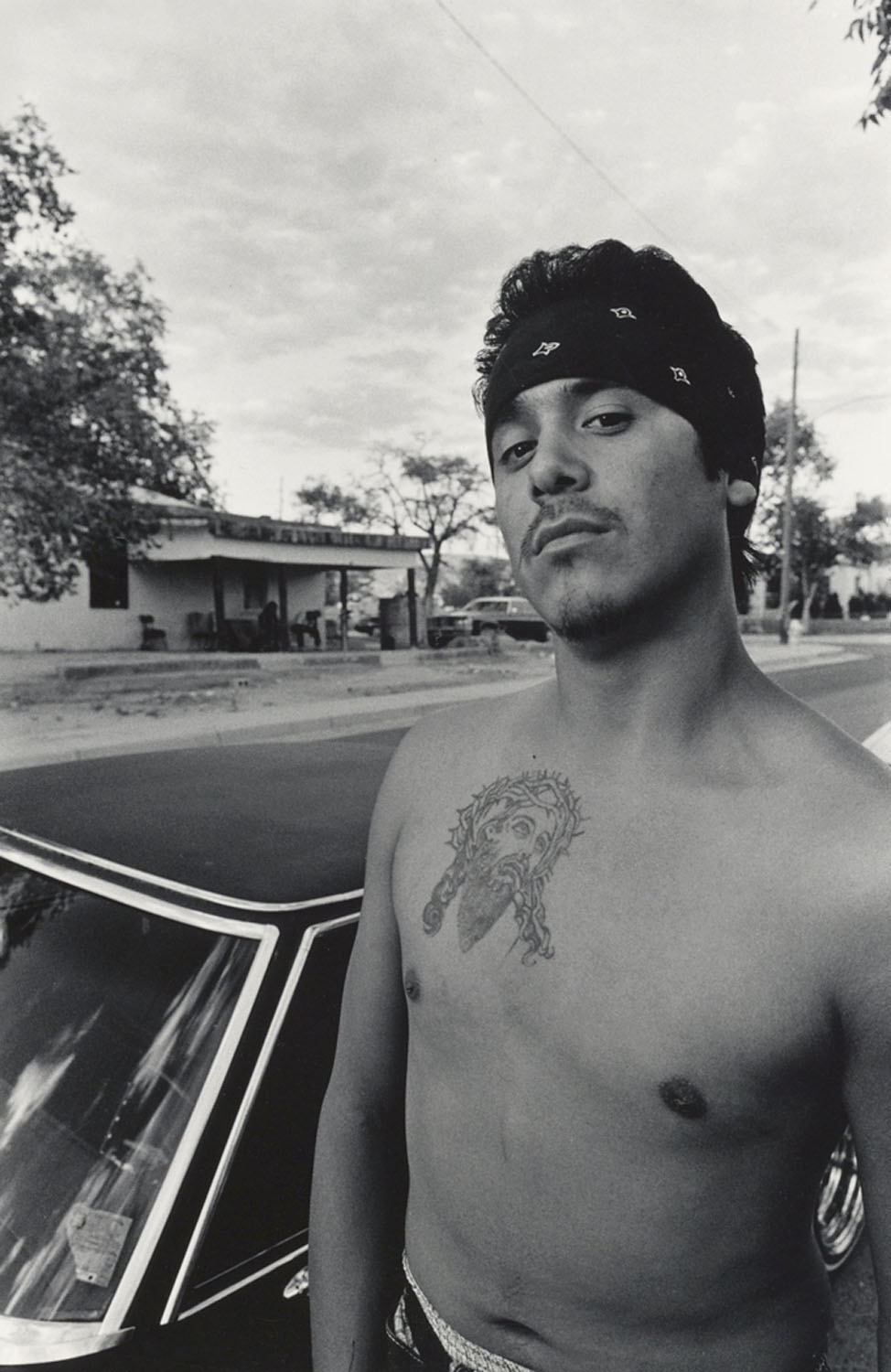
Roger Minick (American, b. 1944) 'Young Woman in Black with Pendant, Estrada Courts, Boyle Heights, East Los Angeles, 1978' 1978 from the exhibition 'Fashioning Self: The Photography of Everyday Expression' at the Phoenix Art Museum, March - Nov 2023


Roger Minick (American, b. 1944)
Young Woman in Black with Pendant, Estrada Courts, Boyle Heights, East Los Angeles, 1978
1978
Gelatin silver print
Center for Creative Photography, University of Arizona
Gift of the Mexican American Legal Defense and Educational Fund
© Roger Minick 1978


Freedom of the self

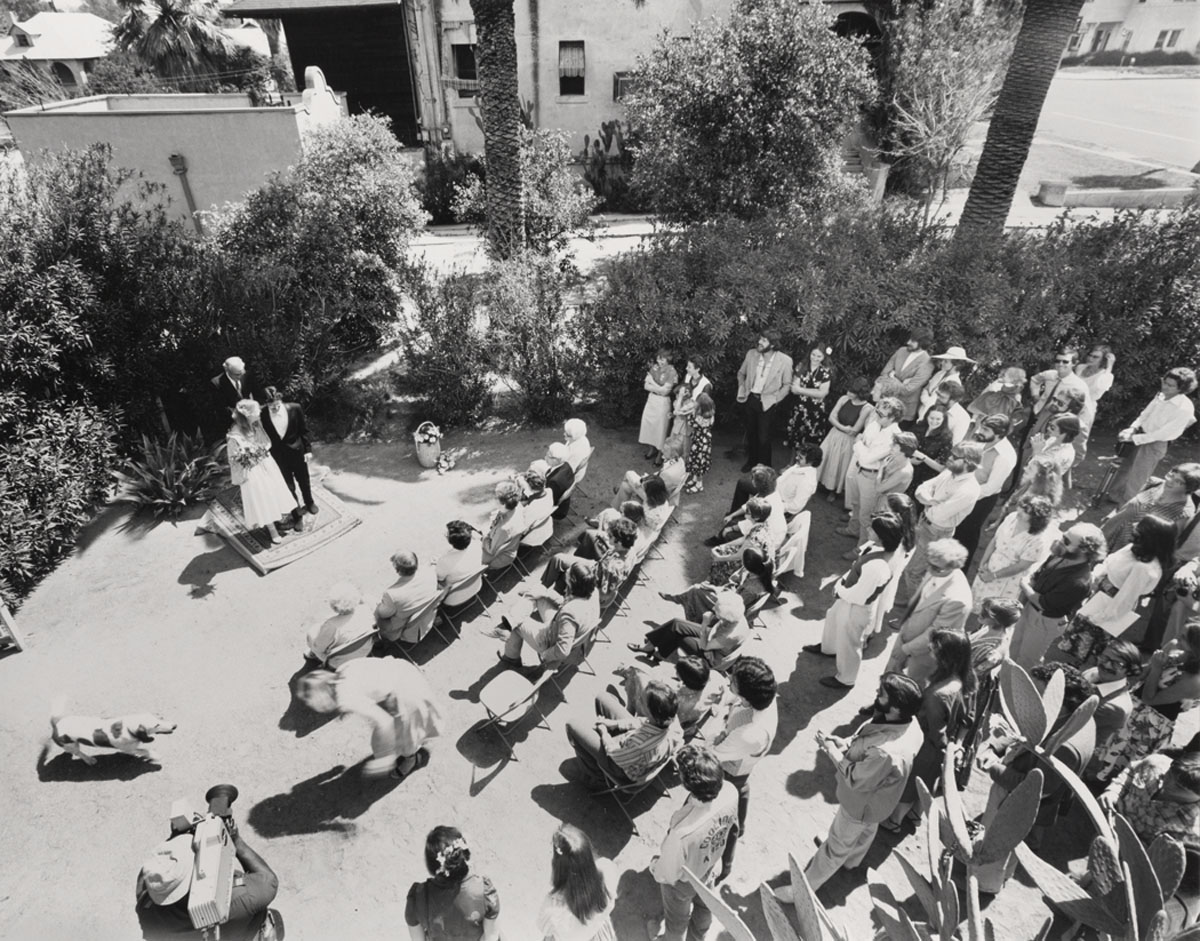
This is a strange group of photographs with which to investigate the “long-intertwined relationship between fashion as a tool for self-expression and photography’s role in chronicling it,” for while the many historical portrait photographs depict a link between fashion and photography of the self (through the need to fit into a regimented cultural norm), many of the vernacular images are not about fashion, are a kind of non-fashion, where the people who “pose” for the photographs are just wearing whatever they are in at the time… thereby undermining the premise of the exhibition, that the performance of self becomes a visual language through the picturing of fashion.

Indeed, despite the assertion that historical genres such as street photography “inform contemporary evolutions, such as selfies and carefully crafted social-media platforms”, most selfies taken today through the ubiquity of the phone camera are not carefully crafted, are the very antithesis of the old purpose of a portrait: that is, to picture how we choose to dress, adorn, and re/present ourselves at a particular moment in time.

In today’s contemporary age self is more about the style and context of the individual (as pictured in a photograph) rather than about the fashion (the latest style; the manner of doing something) of the individual or the collective.

Today, style is casual, informal, ephemeral, temporary… which leads us to pose the questions, are historical photographs evidence of a self-expression of more substance, compared to the rapid self, the throw away self, the narcissistic self of today? Are selfies today just a shallow expression of self or are they intended to be more, can they be more?

Today, there is less a consciousness of fashionability than there is the ability to enact the self without resort to fashion. As Yves Saint Laurent once said, “Fashion fades, style is eternal.”

While visual representations of identity continue to shape our understandings of self and each other “with intimate details that alert viewers to who we are, as filtered through the photographic medium” this is no longer achieved through the definition of self as “fashionable” (as defined on a hierarchical scale of who is fashionable and who isn’t, who is beautiful and who isn’t) – rather, it is through the equivalence of a nonhierarchical expression of self where everything becomes valuable, every selfie and portrait of equal awareness and importance in a collective and individual consciousness of self.

The very non-fashion of contemporary self expression is a non-performance, an anti-ritual if you like (which destroys the ritual of production of consumable fashion), which negates fashion as defining the self, much as photography of the self does not define who we are but is only a very small facet of a multi-layered identity.

All of which makes the premise of this exhibition (that the performance of self becomes a visual language through the picturing of fashion) and the first part of its title – Fashioning Self – highly problematic.

Dr Marcus Bunyan

PS. Many thankx to my friend and artist Elizabeth Gertsakis for her help in providing thoughts and inspiration for this text.


Many thankx to the Phoenix Art Museum for allowing me to publish the photographs in the posting. Please click on the photographs for a larger version of the image.


Louis Carlos Bernal (American, 1941-1993) 'Albert and Lynn Morales, Silver City, New Mexico' 1978 from the exhibition 'Fashioning Self: The Photography of Everyday Expression' at the Phoenix Art Museum, March - Nov 2023


Louis Carlos Bernal (American, 1941-1993)
Albert and Lynn Morales, Silver City, New Mexico
1978
Chromogenic print. Center for Creative Photography, University of Arizona
Gift of the Mexican American Legal Defense and Educational Fund
© Lisa Bernal Brethour and Katrina Berna


Louis Carlos Bernal (1941-1993) was born in Douglas, Arizona, and grew up in Phoenix. After completing his M.F.A. at Arizona State University in 1972, he joined the faculty of Pima Community College in Tucson, where he remained for the duration of his career, developing and heading its photography program. In 1979, Bernal, along with four other photographers – Morrie Camhi, Abigail Heyman, Roger Minick, and Neal Slavin – received funding from the Mexican American Legal Defense and Educational Fund to photograph Chicano culture in the Southwest for an exhibition and a book project entitled ESPEJO: Reflections of the Mexican American. The commission brought him closer to his ethnic roots and fueled a passionate direction for his work that gained him international recognition for championing regional diversity while symbolizing his exploration of identity as a Mexican American.

Following a tradition of Latin American documentary street photography, Bernal photographed in the barrio – a young girl and her grandfather in a corner barber shop, a girl taking her quinceañera, or locals posing in front of colourful wall murals – images that captured the unique character of Chicano life. He wrote, “My images speak of the religious and family ties I have experienced as a Chicano. I have concerned myself with the mysticism of the Southwest and the strength of the spiritual and cultural values of the barrio.”

Bernal also centered on the family and the home, believing these two elements combined to form the most significant structure within the Mexican-American community. As he wandered streets from Texas to Los Angeles, and met people who were soon drawn to charismatic personality, he was often invited into their homes. He asked permission to photograph them surrounded by their treasured possessions, their family portraits and mementos, and their shrines decorated with saints, candles, and flowers. His subjects appear at ease and confident in front of his camera, a product of Bernal’s deep respect for them. Bernal’s interest in what people chose to surround themselves with led him to photograph the interiors of homes without people. These sensitive portraits of both prized and everyday items in living rooms, bedrooms and gardens were perhaps his most significant innovation.

Bernal’s interest in strong compositional design and technical expertise are evident in both his skilfully printed black-and-white images and his colour work that luminously captures the bright pinks, blues, and greens of interior painted adobe walls, window curtains, and religious icons. He felt a particular urgency to document the streets, people, homes, and artefacts in historic neighbourhoods, as many were undergoing rapid changes or being bulldozed to make way for urban renewal. In recording the Mexican- American experience of Southwest towns and barrios, Bernal created a visual document that preserves the specific iconography and reveals many aspects of this distinct culture.

The Louis Carlos Bernal Collection contains 98 fine prints, both black-and-white and colour, and research materials that include project records, correspondence, clippings, writings and publications.

Anonymous. “Louis Carlos Bernal,” on the Centre for Creative Photography website Nd [Online] Cited 28/09/2023


Kozo Miyoshi (Japanese, b. 1947) 'Tucson, Arizona' 1992 from the exhibition 'Fashioning Self: The Photography of Everyday Expression' at the Phoenix Art Museum, March - Nov 2023


Kozo Miyoshi (Japanese, b. 1947)
Tucson, Arizona
1992
Gelatin silver print
Center for Creative Photography, University of Arizona
Gift of the artist, DEP’T CO.,LTD., Tokyo, Nippon Polaroid, Tsudani Oil Co. Ltd.
© Kozo Miyosh


Kozo Miyoshi was born in Chiba, Japan in 1947. He graduated from the Department of Photography at Nihon University College of Art in 1971. He began his photographic career in the 1970s and started shooting an 8 × 10-inch large format camera in 1981. In 2009 he upgraded to an ultra large format 16 × 20-inch camera which he continues to use on his travels. Miyoshi’s photographs have received international acclaim for their unique and sincere approach to his fleeting subjects.


Dennis Feldman (American, b. 1946) 'Man with Reflective Glasses' 1969-1972


Dennis Feldman (American, b. 1946)
Man with Reflective Glasses
1969-1972
Center for Creative Photography, University of Arizona
Gift of the artist
© Dennis Feldman


Dennis Feldman (American, b. 1946) 'White Girl 1970' 1970


Dennis Feldman (American, b. 1946)
White Girl 1970
1970
Gelatin silver print
Center for Creative Photography, University of Arizona
Gift of the artist
© Dennis Feldman


From the seedy streets of Los Angeles to empty living rooms and apartments across the United States, the photographs of Dennis Feldman (b. 1946) explore the ways popular entertainment seeps into American consciousness. Pictures from his most acclaimed series, Hollywood Boulevard, 1969-1972, invite subjects from social parade of Los Angeles’s famed sidewalk to animate their self-styled identities. His American Images series, published in 1977, pursues other disclosures, revealing tensions that have come to define the underside of the American dream. In some pictures, people relish the escape and freedom symbolised by cars and movieland, while others seem to search for more elusive horizons. Like Walker Evans, Robert Frank, and Frederick Sommer – pioneering photographers whom he considers mentors – Feldman carefully crafts compositions that do not judge their subjects. Instead, they pry apart the world of appearances to reflect on fantasy and desire as they intertwine with paths of everyday life.

Anonymous. “Dennis Feldman: Photographs,” on the BAMPFA website 2019 [Online] Cited 28/09/2023


Garry Winogrand (American, 1928-1984) 'Untitled [Liberace with his mother]' New York, 1954


Garry Winogrand (American, 1928-1984)
Untitled [Liberace with his mother]
New York, 1954
Gelatin silver print
Center for Creative Photography, University of Arizona
Garry Winogrand Archive
Gift of the artist
© The Estate of Garry Winogrand, courtesy Fraenkel Gallery, San Francisco


Fashioning Self: The Photography of Everyday Expression examines the role of photography in shaping, sharing, and shifting identity.

About the exhibition

Whether for a selfie or formal portrait, we all craft our appearance and identity for a public audience. We consider cultural and social norms, the emotions we wish to express or hide away, where we’re going and with whom, and the purpose of the photograph when choosing how we dress, adorn, and present ourselves. The resulting images serve as a window into a particular moment of our life, with intimate details that alert viewers to who we are, as filtered through the photographic medium.

Organised by Phoenix Art Museum and the Center for Creative Photography (CCP), Fashioning Self: The Photography of Everyday Expression features 54 works of street, documentary, and self-portrait photography from 1912 to 2015 that explore this long-intertwined relationship between fashion as a tool for self-expression and photography’s role in chronicling it. Iconic views by Dennis Feldman, Laura Volkerding, Linda Rich, John Simmons, David Hume Kennerly, Teenie Harris, and more illuminate the dialogue that occurs between photographer and subject – the give-and-take between self-performance and art making.

Alongside these works drawn from CCP’s outstanding collection, Fashioning Self also features a rotating display of social media images reflecting community members and individuals from across the United States. Throughout the duration of the exhibition, the Museum and CCP will invite visitors, Arizona residents, and our collective social media followings to take their own selfies and portraits in the galleries or in their environments and share them via the hashtag #FashioningSelf for display in Norton Gallery. By placing these contemporary, real-time images in conversation with works by renowned photographers of the Americas, the exhibition interrogates what it means to be an artist or maker in a world where cameras are commonplace and everyone curates a feed.

Text from the Phoenix Art Museum website


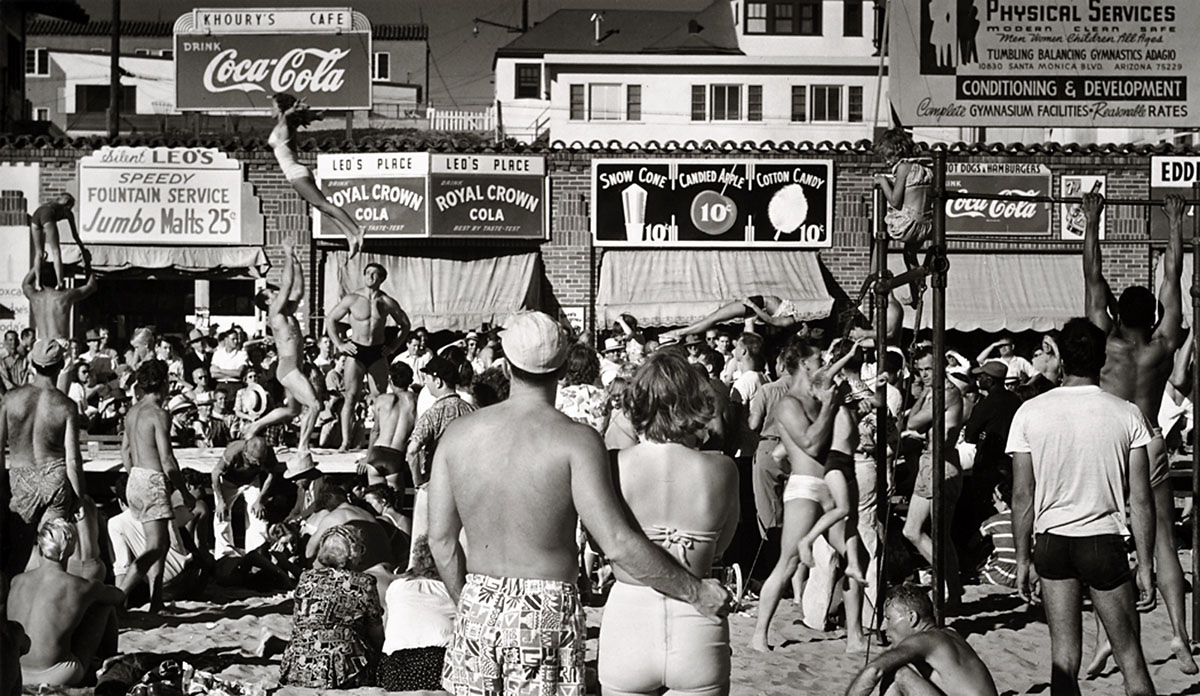
Max Yavno (American, 1911-1985) 'Muscle Beach, Los Angeles' 1949


Max Yavno (American, 1911-1985)
Muscle Beach, Los Angeles
1949
Gelatin silver print
Center for Creative Photography, University of Arizona
Purchase
© Center for Creative Photography, The University of Arizona Foundation


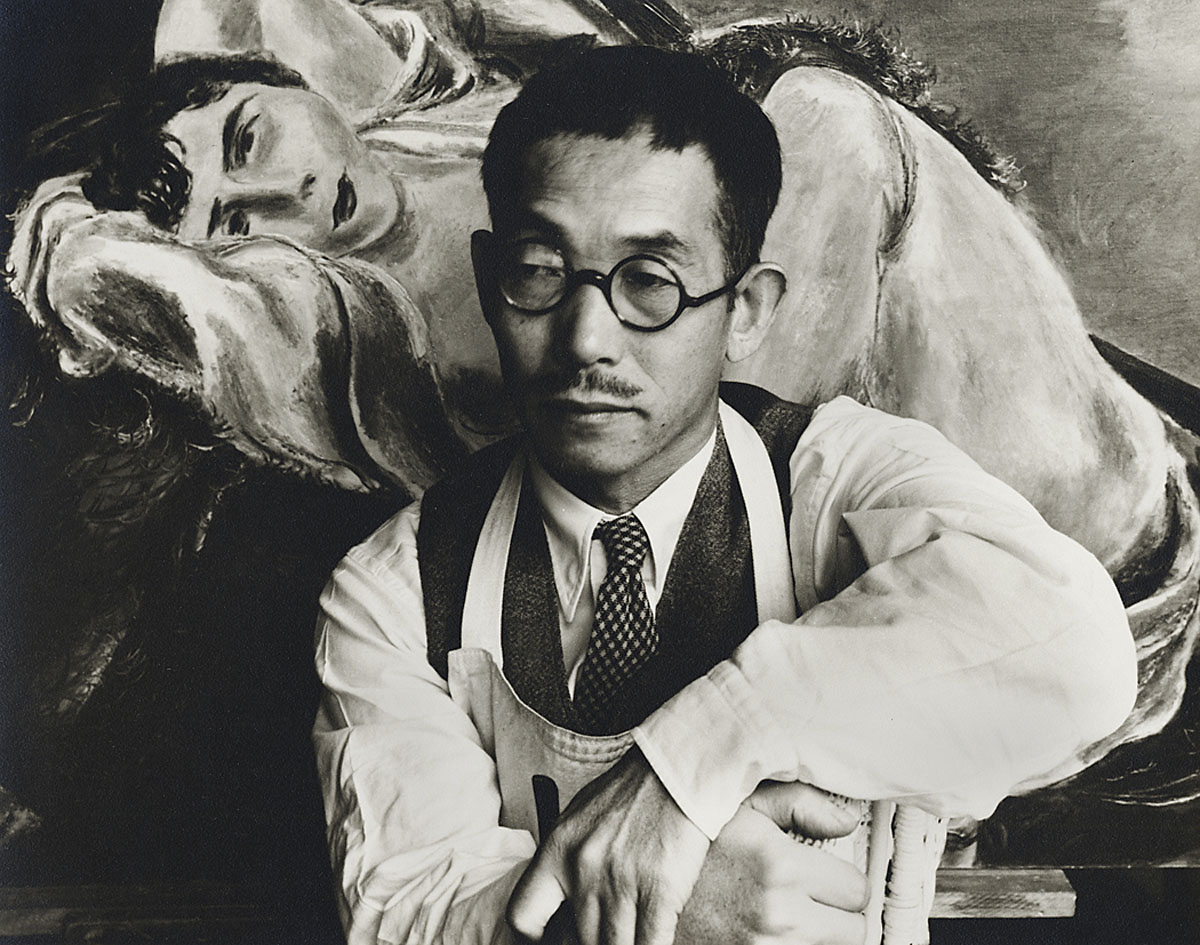
Max Yavno (American, 1911-1985) 'Kuniyoshi Portrait' c. 1941


Max Yavno (American, 1911-1985)
Kuniyoshi Portrait
c. 1941
Gelatin silver
Center for Creative Photography, University of Arizona
Max Yavno Archive
© Center for Creative Photography, The University of Arizona Foundation


Yasuo Kuniyoshi (国吉 康雄, Kuniyoshi Yasuo, September 1, 1889 – May 14, 1953) was an eminent 20th-century Japanese-American painter, photographer and printmaker.


Max Yavno (American, 1911-1985) 'Untitled [Opening Night at the San Francisco Opera]' 1947


Max Yavno (American, 1911-1985)
Untitled [Opening Night at the San Francisco Opera]
1947
Gelatin silver print
Center for Creative Photography, University of Arizona
Max Yavno Archive
© Center for Creative Photography, The University of Arizona Foundation


Social documentary photographer Max Yavno (1911-1985) identified the odd charm that constitutes the identity of a place and people. Born in New York, Yavno was a social worker from 1932-1936; this background clearly informed his photographic career. His humanistic sensibility is revealed in his work, which includes street photographs made in New York, San Francisco, and Los Angeles. Yavno is best known for his depictions of these great American cities and the cultural and social detail of their inhabitants, many of which distinctively reflect their era.

In 1936, Yavno began photographing New York street life for the Works Progress Administration’s Federal Theater Project. As his interest in photography burgeoned, Yavno joined the Photo League and served as its President in the late 1930s. Through this organisation he met Aaron Siskind who became his roommate and lifelong friend. During World War II, Yavno served in the United States Army Air Force as a film and photography instructor. Following the war, he relocated to San Francisco and continued teaching. There, Yavno began a freelance career with clients including Vogue and Harper’s Bazaar. During this time Yavno achieved success both as a fine art and a commercial photographer.

Yavno was included in “Seventeen American Photographers,” a 1947 exhibition at the Los Angeles County Museum of Art. This placed him alongside established photographers Berenice Abbott, Ansel Adams, Man Ray, and Edward Weston. Following this pivotal exhibition, Yavno published The San Francisco Book in 1948 and The Los Angeles Book in 1950, both of which chronicled the urban landscape and its population. By 1952, Edward Steichen had purchased Yavno’s prints for The Museum of Modern Art, New York. With recommendations by Edward Weston and Steichen, he was awarded a Guggenheim Fellowship in 1953. From 1954-75, Yavno owned and operated a thriving commercial photography studio in Los Angeles.

In 1975, the sixty four year old photographer closed his studio to allow for more personal pursuits. Yavno continued to photograph California, but also worked in Mexico, Morocco, Israel, and Egypt, securing funds for the later trips from the National Endowment for the Arts. The Photography of Max Yavno was published by University of California press in 1981, to accompany a retrospective at Los Angeles Municipal Art Gallery. Yavno continued to make and exhibit photographic works until his death in 1985.

The Max Yavno Archive contains papers, records of commercial assignments, correspondence, information regarding the Photo League, memorabilia, photographic materials and over 800 fine photographs.

Anonymous. “Max Yavno,” on the Centre for Creative Photography website Nd [Online] Cited 28/09/2023


Max Yavno (American, 1911-1985) 'Air Force Pilot' 1975-1980


Max Yavno (American, 1911-1985)
Air Force Pilot
1975-1980
Gelatin silver print
Center for Creative Photography, University of Arizona
Max Yavno Archive
© Center for Creative Photography, The University of Arizona Foundation


Elliott Erwitt (American born France, b. 1928) 'Pennsylvania Dutch & Adidas, Santa Cruz, U.S.A.' 1975


Elliott Erwitt (American born France, b. 1928)
Pennsylvania Dutch & Adidas, Santa Cruz, U.S.A.
1975
Gelatin silver print
Center for Creative Photography, University of Arizona
Gift of Al Cohen
© Elliott Erwitt


Marion Post Wolcott (American, 1910-1990) 'Jitterbugging in a night club. Memphis, Tennessee, 1939' 1939-11


Marion Post Wolcott (American, 1910-1990)
Jitterbugging in a night club. Memphis, Tennessee, 1939
1939-11
Gelatin silver print
Center for Creative Photography, University of Arizona
Gift of John H. Wolcott
© Courtesy of Linda Wolcott Moore for the Estate of Marion Post Wolcott


Marion Post Wolcott (American, 1910-1990) 'Spectators at the Paddock Fence, Warrenton, West Virginia' 1941


Marion Post Wolcott (American, 1910-1990)
Spectators at the Paddock Fence, Warrenton, West Virginia
1941
Gelatin silver print
Center for Creative Photography, University of Arizona
Gift of Robin Moore
© Courtesy of Linda Wolcott Moore for the Estate of Marion Post Wolcott


Marion Post Wolcott (American, 1910-1990) 'Board of Directors of the Two Rivers Non-stock Cooperative at a Demonstration of Farmall "M" Tractor, Waterloo, Nebraska' 1941


Marion Post Wolcott (American, 1910-1990)
Board of Directors of the Two Rivers Non-stock Cooperative at a Demonstration of Farmall “M” Tractor, Waterloo, Nebraska
1941
Gelatin silver print
Center for Creative Photography, University of Arizona
Gift of Robin Lee Moore
© Courtesy of Linda Wolcott Moore for the Estate of Marion Post Wolcott


Marion Post Wolcott was born in Montclair, New Jersey, and educated at the New School for Social Research, New York University, and at the University of Vienna. Upon graduation in 1932, she returned to New York to pursue a career in photography and attended workshops with Ralph Steiner. By 1936, she was a freelance photographer for Life, Fortune, and other magazines. She became a staff photographer for the Philadelphia Evening Bulletin in 1937 and remained there until Paul Strand recommended her to Roy Stryker at the Farm Security Administration, where she worked from 1938 to 1942. Wolcott suspended her photographic career thereafter in order to raise her family, but continued to photograph periodically as she traveled and taught, in Iran, Pakistan, Egypt, and New Mexico. In 1968 she returned to freelance photography in California and concentrated on colour work, which she had been producing in the early 1940s. Wolcott’s photographs have been included in group and solo exhibitions at the Museum of Modern Art in 1962, ICP, and elsewhere. Among other honours she has received are the Dorothea Lange Award, and the 1991 Society of Photographic Education’s Lifetime Achievement Award. The several books on her life and career include Paul Henrickson’s Looking for the Light: The Hidden Life of Marion Post Wolcott (1992).

Wolcott’s documentary photographs for the FSA are notable for their variation in subject matter. Because she joined the organisation late in its existence, Stryker often gave her assignments intended to complete projects already begun by others. Wolcott’s photographs show wealthy and middle-class subjects in addition to the poor people and migrant workers who appeared in most FSA photographs. Her body of work provides a view into another side of the 1930s in America, among that small percentage of people who could afford to escape the damaging effects of the Depression.

Lisa Hostetler

Handy et al. Reflections in a Glass Eye: Works from the International Center of Photography Collection, New York: Bulfinch Press in association with the International Center of Photography, 1999, p. 232 “Marion Post Wolcott,” on the International Center of Photography website Nd [Online] Cited 28/09/2023


Francis J. Bruguière (American, 1879-1945) 'Self-portrait with Friend' c. 1912


Francis J. Bruguière (American, 1879-1945)
Self-portrait with Friend
c. 1912
Gelatin silver print
Center for Creative Photography, University of Arizona
Gift of James Enyeart


This spring, Phoenix Art Museum (PhxArt) presents Fashioning Self: The Photography of Everyday Expression, a new major photography exhibition organised by PhxArt and the Center for Creative Photography (CCP) in Tucson. It will be on view from March 8 through November 12 in the Doris and John Norton Gallery for the Center for Creative Photography at Phoenix Art Museum.

Spanning the 1910s through the present, Fashioning Self explores the long-intertwined relationship between self-expression, fashion, and the photographic medium, with more than 50 works by Dennis Feldman, Laura Volkerding, Louis Carlos Bernal, Tseng Kwong Chi, David Hume Kennerly, Helen Levitt, Teenie Harris and others drawn from the CCP collection. These fine-art photographs are displayed alongside a social-media feed of community photos and selfies to spark reflection on the dynamic between photographer and subject, particularly as new technologies, self-styling, and the photographic medium continue to shape visual culture and personal and collective identities around the globe.

“Since the mid-1800s, photographers have captured our world and the captivating cast of characters who inhabit it, documenting all the varied and nuanced presentations of style and expression,” said the Sybil Harrington Director and CEO of Phoenix Art Museum, Jeremy Mikolajczak. “Fashioning Self: The Photography of Everyday Expression sparks fascinating conversations around historical photography genres, including street photography, and how they inform contemporary evolutions, such as selfies and carefully crafted social-media platforms, while also exploring the give-and-take between self-performance and art making.”

Fashioning Self showcases 54 works of street, documentary and self-portrait photography that present slices of everyday public life in the United States from 1912 through 2015. Featured works include those by Garry Winogrand, Marion Post Wolcott, Kozo Miyoshi, Laura Volkerding, Tseng Kwong Chi, Joan Liftin and Rosalind Solomon.

The exhibition’s fine-art images are complemented by a rotating display of social-media photos reflecting community members and individuals from across the United States. Throughout the duration of the exhibition, the museum and CCP will invite visitors, Arizona residents and the institutions’ collective social-media followings to snap their own selfies and portraits in the galleries or other environments and share them via the hashtag #FashioningSelf for display in Norton Gallery. By placing these contemporary, real-time images in conversation with works by renowned photographers of the Americas, the exhibition interrogates what it means to be an artist or maker when cameras are commonplace and everyone curates a feed.

“I am excited for visitors to contribute their own photos to Fashioning Self and engage with works from CCP’s collection in a fun and unique way,” said Rebecca A. Senf, chief curator at CCP and curator of Fashioning Self. “By participating in the gallery’s regularly updated social-media feed, they will be included in a century-long history of photographers who have fashioned, captured and distributed visual representations of identity, while considering how technology, digital platforms, and the ubiquity of the camera continue to shape our understandings of self and each other.”

Press release from the Phoenix Art Museum


Laura Volkerding (American, 1939-1996) 'Mrs. Mary Hatchett, Chicago' 1979


Laura Volkerding (American, 1939-1996)
Mrs. Mary Hatchett, Chicago
1979
Gelatin silver print
Center for Creative Photography, University of Arizona
Laura Volkerding Archive
© Center for Creative Photography, The University of Arizona Foundation


Educator and photographer Laura Volkerding (1939-1996) began her artistic career making prints and drawings, and discovered her passion for photography in 1972, at age thirty-three. Volkerding studied fine arts at the University of Louisville and the Institute of Design at the Illinois Institute of Technology where she received a Master’s degree in graphic design. She taught at University of Chicago from 1970 to 1980, and then served as a senior lecturer in photography at Stanford University until her death in 1996.

Citing photographs by Walker Evans and Art Sinsabaugh, as well as Chicago’s modernist architecture as visual influences, Volkerding’s early photographic work depicts quirky vernacular architecture, campgrounds and suggestive landscapes. In the late 1970s, Laura Volkerding, Nicholas Nixon, Stephen Shore, Frank Gohlke, and Lewis Baltz were among twenty-four photographers chosen to participate in an intensive project entitled Court House that documented historic court house architecture across America. Published in 1979, the monograph Court House: A Photographic Document exhibits a diverse and inclusive examination of America’s architectural heritage. In 1980, Volkerding moved to California and embarked on a project documenting the development of the San Francisco and San Pablo Bay waterfronts creating panoramic images by joining continuous frames of 5 x 7 inch negatives into a more expansive view.

Volkerding experimented with multiple photographic formats before settling, in 1984, on the rich clarity of prints produced with a Deardorff 8 x 10 inch view camera. This same year, Volkerding discovered the subject that would drive her work for over a decade: Les Compagnons du Devoir, a French sculpture apprentice community founded in medieval times. Their history of sculptural practice and reverence for craftsmanship resonated for Volkerding. She was attracted to the figurative and architectural forms that populated their work space. Volkerding photographed classrooms and apprentice projects, foundries and workshops, and cathedral restoration projects. The images suggest the presence of the craftsmen, but are devoid of the actual artisans, thus alluding to the longer craft tradition rather than the contemporary individuals. In addition to making many photographs of Les Compagnons in France, Volkerding photographed other sculpture workshops in Quebec, Tunisia, Spain, Greece, Italy, and the United States. This body of work was exhibited at Stanford in 1986; in 1988 she was awarded her second Guggenheim fellowship. The Center for Creative Photography published a related monograph, Solomon’s Temple: the European Building-Crafts Legacy, shortly before Volkerding’s death.

The Laura Volkerding Endowment and the naming of the Laura Volkerding Reading Room at the Center for Creative Photography serve to perpetuate her important role in photography. The Laura Volkerding Archive contains photographic work prints, negatives, personal papers, and a substantial collection of multi-colour intaglio prints and one-colour lithographs, as well as 968 fine prints.

Anonymous. “Laura Volkerding,” on the Centre for Creative Photography Nd [Online] Cited 28/09/2023


Laura Volkerding (American, 1939-1996) 'Easter, Chicago' 1979


Laura Volkerding (American, 1939-1996)
Easter, Chicago
1979
Gelatin silver print
Center for Creative Photography, University of Arizona
Laura Volkerding Archive
© Center for Creative Photography, The University of Arizona Foundation


“Our choices about clothing, makeup, hairstyles and accessories are a component of the way we communicate who we are, what we value, and what is important to us,” says Rebecca A. Senf, Chief Curator at the Center for Creative Photography …

“These prints are not just evidence of the photographer’s process; they are also evidence of the self presentation process of the people who appear in the pictures,” says Senf. “When you have your portrait made, there’s a process that goes behind thinking about what you’ll wear, how you’ll do your hair and what kind of sense of yourself are you trying to convey through the picture.”

Featuring works by Helen Levitt, Tseng Wong Chi, Charles “Teenie” Harris and Dennis Feldman, among others, Fashioning Self considers both the formal and informal ways in which people employ visual signifiers to transit their identities to the world. Whether donning ball gowns and fur wraps, cowboy hats and boots, bandana and chest tattoos, or unironic trucker hats, each subject conveys an intuitive sense of ease and authenticity that comes from being true to who they are.

Senf brings this integrity to the curation of the show, offering a broad array of images sparkling with individual expressions of character and poise that can resonate with the widest possible audience. “One of the most exciting things about photography is that it’s functioning as a visual language and people are using it to communicate ideas,” she says.

Miss Rosen. “Symbiotic relationship between art and identity,” on the Huck website Monday 14 August 2023 [Online] Cited 28/09/2023


John Gutmann (American born Germany, 1905-1998) 'Helene Mayer, Two Time Olympic Fencing Champion' 1935


John Gutmann (American born Germany, 1905-1998)
Helene Mayer, Two Time Olympic Fencing Champion
1935
Gelatin silver print
Center for Creative Photography, University of Arizona
John Gutmann Archive
© Center for Creative Photography, Arizona Board of Regents


John Gutmann received his bachelor’s degree from the State Academy of Arts and Crafts in Breslau, Germany (now Wroclaw, Poland) and studied with master painter Otto Mueller, one of the founding members of the New Realist movement in Germany. Gutmann moved to Berlin in 1927 where he earned his master’s degree at the State Institute for Higher Education. The arts were flourishing in Berlin, and the city’s vibrant social scene provided inspiration for subject matter and aesthetic. Gutmann’s paintings were done in the vein of well-known German painter Otto Dix, who represented Berlin nightlife as both dizzily exciting and darkly isolating. In 1933, due to the rise of the Nazi regime, Gutmann was no longer able to exhibit his paintings or teach and began to experiment with photography as a means of supporting himself. He bought a Rolleiflex camera, shot three rolls of film, and immediately secured a contract with a German agency, Presse-Foto, to photograph in America and send pictures back for German publications. That same year he arrived in San Francisco and started to document America from the detached eye of an anthropologist. By 1936 he had secured a teaching position at San Francisco State College, where a decade later he founded its creative photography program, one of the first in the country. By the end of the thirties, Gutmann switched agencies to Pix, Inc., a New York-based agency, which promoted his work for publication in magazines such as Time, The Saturday Evening Post, Life, and Look. During World War II, he studied at the Signal Corps Motion Picture School in Queens and made still and motion pictures for the United States Army Signal Corps. He focused much of his work during this time on China, Burma, and India. Gutmann retired from teaching in 1973 and began to print and edit his earlier work for exhibition and publication. The San Francisco Museum of Modern Art held a two-man exhibition in 1976 of John Gutmann and Walker Evan’s work focusing on images of the Great Depression and the American culture that emerged from it. Two years later he was awarded a Guggenheim fellowship. In 1984 his first publication titled The Restless Decade was published by Harry N. Abrams, showcasing his work from the 1930s. Beginning in 1989 a major retrospective, Beyond the Document, traveled from San Francisco Museum of Modern Art to the Museum of Modern Art in New York and then to the Los Angeles County Museum of Art. Gutmann died on June 12, 1998 in San Francisco.

Gutmann brings a strong modernist sensibility to his black-and-white documentary photographs. Using a Rolleiflex camera and shooting from the waist, he combines unusual angles, close cropping, and careful – almost classical – framing to create works that are as poetic as they are impactful. Like Walker Evans, he finds beauty in ordinary and everyday subjects such as advertisements, street scenes, and automobiles–subjects he would return to throughout his career. His straight-style depictions of Depression-era America often include an element of humour, capturing quiet moments of human drama, charged with anxiety, but also hope.

Anonymous. “John Gutmann,” on the International Center of Photography website Nd [Online] Cited 28/09/2023


Joan Liftin (American, 1933-2023) 'Drive-in Owners, North Carolina' 1987


Joan Liftin (American, 1933-2023)
Drive-in Owners, North Carolina
1987
Chromogenic print
Center for Creative Photography, University of Arizona
Gift of Helen Levitt
© Joan Liftin


Joan Liftin (American, 1933-2023) 'Marseille' 2008


Joan Liftin (American, 1933-2023)
Marseille
2008
Gelatin silver print
Center for Creative Photography, University of Arizona
Gift of Andrea Stern
© Joan Liftin


Joan Liftin (American, 1933-2023) '70-40, Clairsville, Ohio' 1978


Joan Liftin (American, 1933-2023)
70-40, Clairsville, Ohio
1978
Dye coupler print
Center for Creative Photography, University of Arizona
Gift of artist
© Joan Liftin


Milton Rogovin (American, 1909-2011) 'Untitled' 1973


Milton Rogovin (American, 1909-2011)
Untitled
1973
Gelatin silver print
Center for Creative Photography, University of Arizona
Gift of Dr. and Mrs. John Knaus
© The Rogovin Collection


Milton Rogovin (American, 1909-2011) 'Untitled' 1985


Milton Rogovin (American, 1909-2011)
Untitled
1985
Gelatin silver print
Center for Creative Photography, University of Arizona
Gift of Dr. and Mrs. John Knaus
© The Rogovin Collection


Milton Rogovin (American, 1909-2011) 'Untitled' 1992


Milton Rogovin (American, 1909-2011)
Untitled
1992
Gelatin silver print
Center for Creative Photography, University of Arizona
Gift of Dr. and Mrs. John Knaus
© The Rogovin Collection


Milton Rogovin (American, 1909-2011) 'Untitled' 1963


Milton Rogovin (American, 1909-2011)
Untitled
1963
Gelatin silver print
Center for Creative Photography, University of Arizona
Gift of Dr. J. Patrick Kennedy
© The Rogovin Collection


Rollie McKenna (American, 1918-2003) 'David Jackson and James Merrill, Stonington, Connecticut' 1961


Rollie McKenna (American, 1918-2003)
David Jackson and James Merrill, Stonington, Connecticut
1961
Gelatin silver print
Center for Creative Photography, University of Arizona
Rosalie Thorne McKenna Archive
© Rosalie Thorne McKenna Foundation


David Noyes Jackson (September 16, 1922 – July 13, 2001) was the life partner of poet James Merrill (1926-1995).

A writer and artist, Jackson is remembered today primarily for his literary collaboration with Merrill. The two men met in May 1953 in New York City, after a performance of Merrill’s play, “The Bait.” They shared homes in Stonington, Connecticut, Key West, Florida, and Athens, Greece. “It was, I often thought, the happiest marriage I knew,” wrote Alison Lurie, who got to know both men in the 1950s and thought enough of the relationship to write a memoir about it more than forty years later, Familiar Spirits (2001).

Over the course of decades conducting séances with a Ouija board, Merrill and Jackson took down supernatural transcriptions and messages from otherworldly entities. Merrill’s and Jackson’s ouija transcriptions were first published in verse form in The Book of Ephraim (printed for the first time in Divine Comedies, 1976, which was awarded the Pulitzer Prize in 1977).

Jackson collaborated with James Merrill on much of his most significant poetic output. The Book of Ephraim (1976), Mirabell: Books of Number (1978), and Scripts for the Pageant (1980) were all written with Jackson’s assistance. Together, they constitute the epic trilogy The Changing Light at Sandover, a 560-page apocalyptic poem published in its entirety in 1982.

He and James Merrill are buried side by side at Evergreen Cemetery, Stonington. Jackson’s former wife and Merrill’s friend, Doris Sewell Jackson is buried behind them.

Text from the Wikipedia website


Rollie McKenna (American, 1918-2003) 'Georgia O'Keeffe with René d'Harnoncourt, Director of MoMA, at the Georges Seurat Opening, NYC' 1958


Rollie McKenna (American, 1918-2003)
Georgia O’Keeffe with René d’Harnoncourt, Director of MoMA, at the Georges Seurat Opening, NYC
1958
Gelatin silver print
Center for Creative Photography, University of Arizona
Rosalie Thorne McKenna Archive
© Rosalie Thorne McKenna Foundation


Rosalie Thorne “Rollie” McKenna (November 15, 1918 – June 14, 2003) was an American photographer. Writers photographed by McKenna include Sylvia Plath, Robert Frost, Dylan Thomas, and Truman Capote. McKenna had a long-term friendship with John Malcolm Brinnin, who helped her come in contact with many of the people she photographed. In addition to portraiture, McKenna also had an interest in architecture, particularly the architecture of Stonington, Connecticut.


John Yang (American, 1933-2009) 'Untitled' 1948


John Yang (American, 1933-2009)
Untitled
1948
Gelatin silver print
Center for Creative Photography, University of Arizona
John Yang Archive
© Naomi Yang


John Yang (1933-2009) was an American architect and photographer. Born in China, he settled in the United States with his family in 1939. His interest in photography began as a child and was later developed when he was a student at The Putney School in Vermont where he was classmates with other future photographers such as Tim Asch. In the summer of 1951, he studied with Minor White at The California School of the Fine Arts. He graduated from Harvard College majoring in Philosophy, and in 1957 he earned a MA in Architecture from the University of Pennsylvania studying under Louis Kahn. Before becoming a photographer full-time, Yang worked as an architect and continued in that practice until 1978.

Yang photographed the architecture and streets of New York as well as the surrounding landscape and gardens. Using traditional equipment and alternative darkroom techniques, he produced exquisite large format contact prints, often toned rich magentas: 11″ x 14″, 8″ x 10″, 5″ x 7″ and 10″ x 78″ panoramas. All work was printed by Yang himself.


Larry Fink (American, 1941-2023) 'Ronis Wedding II, Easton Pennslyvania' January 1989


Larry Fink (American, 1941-2023)
Ronis Wedding II, Easton Pennslyvania
January 1989
Gelatin silver print
Center for Creative Photography, University of Arizona
Purchase
© Larry Fink


Larry Fink (American, 1941-2023) 'Melzer Family Picnic, Eastport, Long Island, New York' June 2002


Larry Fink (American, 1941-2023)
Melzer Family Picnic, Eastport, Long Island, New York
June 2002
Gelatin silver print
Center for Creative Photography, University of Arizona
Purchase
© Larry Fink


Harold Jones (American, b. 1940) 'John and Sandy's Wedding' 1980


Harold Jones (American, b. 1940)
John and Sandy’s Wedding
1980
Gelatin silver print
Center for Creative Photography, University of Arizona
Gift of Harold Jones
© Harold Jones


Harold Jones (born 1940) has contributed to photography as an artist, educator, curator and arts administrator. Born in Morristown, New Jersey in 1940, he graduated from the Maryland Institute with a BFA in Painting and Photography, and from the University of New Mexico with an MFA in Art History and Photography. After graduation Jones worked as an assistant curator at the George Eastman House and in 1971 became the first director of LIGHT Gallery in New York City, the first gallery to exclusively represent contemporary photographers, such as Harry Callahan, Aaron Siskind, and Frederick Sommer. In 1975 Jones became the founding director of the Center for Creative Photography and then went on to start the photography program at the University of Arizona where he taught for the next 30 years. Presently he is professor emeritus and volunteer coordinator of the Voices of Photography oral history project at the Center. Jones continues to be a constant student and practitioner of photography.

Harold Jones’s photography is difficult to categorise, and there are no generalisations that satisfactorily describe his varied body of work. His original training in painting and photography led to a practice that Jones referred to as “photodrawings” – gelatin silver prints worked with a variety of hand-coloured surfaces. Over the years, Jones used ink, food colouring, and oil paints as well as a variety of chemical toners to produce effects that range from subtle to direct. The resulting images are unique and cannot be duplicated. Initially he was ambivalent about altering the surfaces of his prints, feeling that it was an impure practice, but ultimately concluded that creating the photograph was the first phase of drawing, and surface treatments and colouring constituted the second phase. Jones’ approach has varied even within his unaltered prints. He has worked with both multiple and long-duration exposures to capture motion. Jones’s subjects are everyday objects arranged in compositions that require viewing and re-viewing. The photographer has described his delight in the process in which a person moves beyond a superficial reading of his work for closer inspection. His images reinforce the idea that a world continues beyond the picture plane; that one is seeing a fragment of a larger whole. Although he often photographs mundane objects, such as a water tower or laundry hanging, his unusual vantage points or unexpected cropping, produce a range of effects from humour to mystery.

The Harold Jones Archive contains over 150 prints, including a number of unique photodrawings, correspondence, biographical materials, teaching and exhibition files, records of the Society for Photographic Education, publications and clippings, and ephemera covering his career. Correspondents include Robert Heinecken, Jim Alinder, Robert Fichter, Beaumont Newhall, Jerry Uelsmann, and many others. An archive highlight is: University: A Photographic Inquiry, 1984-85: a 2-volume maquette from a project titled Universe City, containing 44 gelatin silver prints and 3 colour prints. Jones’s career can also be studied at the Center for Creative Photography through the LIGHT Gallery archive.

Anonymous. “Harold Jones,” on the International Center of Photography website Nd [Online] Cited 28/09/2023


John Simmons (American, b. 1950) 'The Cotillion' 2015


John Simmons (American, b. 1950)
The Cotillion
2015
Inkjet print
Center for Creative Photography, University of Arizona
Gift of the artist
© John Simmons


Miguel A. Gandert (American, b. 1956) 'Juanito with Jesus Tattoo, Albuerquerque, NM' 1986


Miguel A. Gandert (American, b. 1956)
Juanito with Jesus Tattoo, Albuerquerque, NM
1986
Gelatin silver print
Center for Creative Photography, University of Arizona
Gift of Alan Manley
© Miguel Gandert


David Hume Kennerly (American, b. 1947) 'President Barack Obama And First Lady Michelle Obama Attend The Inaugural Balls' 2009


David Hume Kennerly (American, b. 1947)
President Barack Obama And First Lady Michelle Obama Attend The Inaugural Balls
2009
Chromogenic print
Center for Creative Photography, University of Arizona
David Hume Kennerly Archive
© Center for Creative Photography, Arizona Board of Regents


David Hume Kennerly (born March 9, 1947) is an American photographer. He won the 1972 Pulitzer Prize for Feature Photography for his portfolio of photographs of the Vietnam War, Cambodia, East Pakistani refugees near Calcutta, and the Ali-Frazier fight in Madison Square Garden. He has photographed every American president since Lyndon B Johnson. He is the first presidential scholar at the University of Arizona.

Text from the Wikipedia website


Rosalind Solomon (American, b. 1930) 'On the Ranch, Wyoming, USA' 1977


Rosalind Solomon (American, b. 1930)
On the Ranch, Wyoming, USA
1977
Gelatin silver print
Center for Creative Photography, University of Arizona
Rosalind Solomon Archive
© Rosalind Solomon, all rights reserved


The photographer Rosalind Fox Solomon turned her camera on Washington, D.C., between 1977 and 1979. With access to spaces ranging from artist studios to the White House, Solomon made probing portraits, such as this one of First Lady Rosalynn Carter aboard Air Force 2. During her years as first lady, Carter (born in Plains, Georgia, in 1927) expanded the role of the presidential spouse, regularly attending cabinet meetings and representing her husband, Jimmy Carter, in an official capacity at home and abroad.

Carter continues to devote her life to public service. For more than four decades, she has championed the needs of people with mental illness while also advocating on behalf of numerous other causes, including the Equal Rights Amendment, early childhood immunisation, the Cambodian refugee crisis, and homelessness. In 1982, she and her husband co-founded the Carter Center to promote peace and human rights worldwide. They jointly received the Presidential Medal of Freedom in 1999.

Text from the Smithsonian National Portrait Gallery website


Rosalind Solomon (American, b. 1930) 'First Lady Rosalyn Carter, Airforce 2 en route Orlando, USA' 1978


Rosalind Solomon (American, b. 1930)
First Lady Rosalyn Carter, Airforce 2 en route Orlando, USA
1978
Gelatin silver print
Center for Creative Photography, University of Arizona
Rosalind Solomon Archive
© Rosalind Solomon, all rights reserved


Phoenix Art Museum
McDowell Road & Central Avenue
1625 N. Central Avenue
Phoenix, AZ 85004

Opening hours:
Monday and Tuesday Museum closed
Wednesday: 10am – 7pm
Thursday – Sunday: 10am – 5pm

Phoenix Art Museum website

LIKE ART BLART ON FACEBOOK

Back to top

Exhibition: ‘Peter Hujar: Performance and Portraiture’ at the Art Institute of Chicago

Exhibition dates: 13th May – 9th October 2023

Curators: Grace Deveney, David C. and Sarajean Ruttenberg Associate Curator, Photography and Media


Peter Hujar (American, 1934-1987) 'Nude Self-Portrait Series #5' 1967 from the exhibition 'Peter Hujar: Performance and Portraiture' at the Art Institute of Chicago, May - Oct 2023


Peter Hujar (American, 1934-1987)
Nude Self-Portrait Series #5
1967
Pigmented ink print
© The Peter Hujar Archive / Artists Rights Society (ARS), NY


What can I say … more from that ecstatic photographer Peter Hujar. One of my top ten photographers of all time.

I can’t get enough of his uncomplicated, fleeting photographs of people who have the bravery to be themselves. Photographs that haunt my memory.

A big thank you to Nick Henderson for allowing me to use the photographs that he took of the exhibition in the posting.

Dr Marcus Bunyan


Many thankx to the Art Institute of Chicago for allowing me to publish some of the photographs in the posting. Please click on the photographs for a larger version of the image. All installation images courtesy of and with thankx to Nick Henderson.


Installation view of the exhibition 'Peter Hujar: Performance and Portraiture' at the Art Institute of Chicago


Installation view of the exhibition Peter Hujar: Performance and Portraiture at the Art Institute of Chicago showing Hujar’s Nude Self-Portrait Series #5 (1967, above)
Photo: Nick Henderson


While photography has long been associated with documentation and memory, Peter Hujar (American, 1934-1987) sought to produce images that construct a new reality through subtle exchanges between himself and his subjects. He created direct yet enigmatic portraits of people and animals, pictures of performers, and sexually charged male nudes. These were influenced by various dimensions of his experience, including a childhood spent on his grandparents’ farm, a lifelong interest in dance and theatre, and his identity as a gay man.

In the early 1970s Hujar lived in a loft in downtown Manhattan, amid numerous performers, choreographers, and playwrights who were exploring new approaches to representation. Operating in modes ranging from experimental dance to drag, they challenged the distinction between art and everyday life. Hujar created portraits of many members of these creative communities, and his work embodies the same sense of experimentation that his subjects pursued in their live and performance.

Hujar sought not to document a person or moment but instead to create a reality that exists only within the photograph. This exhibition connects these new realities with the worlds their subjects were making through performance. In keeping with the spirit of collaboration and exchange that typified the downtown New York scene, this exhibition also includes artwork by some of those in his circle.

Wall text from the exhibition


Installation view of the exhibition 'Peter Hujar: Performance and Portraiture' at the Art Institute of Chicago


Installation view of the exhibition Peter Hujar: Performance and Portraiture at the Art Institute of Chicago showing Hujar’s Nude Self-Portrait Series #5 (1967, above)
Photo: Nick Henderson


Installation view of the exhibition 'Peter Hujar: Performance and Portraiture' at the Art Institute of Chicago


Installation view of the exhibition Peter Hujar: Performance and Portraiture at the Art Institute of Chicago showing at left, Gary in Contortion (2) (1979, below), and at second right Gary Indiana Veiled (1981, below)
Photo: Nick Henderson


Peter Hujar (American, 1934-1987) 'Gary in Contortion (2)' 1979 from the exhibition 'Peter Hujar: Performance and Portraiture' at the Art Institute of Chicago, May - Oct 2023


Peter Hujar (American, 1934-1987)
Gary in Contortion (2)
1979
Gelatin silver print
Courtesy of the Peter Hujar Archive and Pace Gallery
© The Peter Hujar Archive / Artists Rights Society (ARS), NY


Peter Hujar (American, 1934-1987) 'Gary Indiana Veiled' 1981 from the exhibition 'Peter Hujar: Performance and Portraiture' at the Art Institute of Chicago, May - Oct 2023


Peter Hujar (American, 1934-1987)
Gary Indiana Veiled
1981
Gelatin silver print
Courtesy of the Peter Hujar Archive and Pace Gallery
© The Peter Hujar Archive / Artists Rights Society (ARS), NY


Installation view of the exhibition 'Peter Hujar: Performance and Portraiture' at the Art Institute of Chicago


Installation view of the exhibition Peter Hujar: Performance and Portraiture at the Art Institute of Chicago showing at fifth from left, Hujar’s John Flowers Backstage at the Palm Casino Revue (1974, below); and at right, Hujar’s Larry Ree Backstage (1974, below) with ‘Experimental and Camp Performance’ exhibition text to the extreme right
Photo: Nick Henderson


'Experimental and Camp Performance' exhibition text


Wall text from the exhibition
Photo: Nick Henderson


Peter Hujar (American, 1934-1987) 'John Flowers Backstage at the Palm Casino Revue' 1974


Peter Hujar (American, 1934-1987)
John Flowers Backstage at the Palm Casino Revue
1974
Courtesy of the Peter Hujar Archive and Pace Gallery
© The Peter Hujar Archive / Artists Rights Society (ARS), NY


Peter Hujar (American, 1934-1987) 'Larry Ree Backstage' 1974 (installation view)


Peter Hujar (American, 1934-1987)
Larry Ree Backstage (installation view)
1974
Collection of Randall Kroszner and David Nelson
© The Peter Hujar Archive / Artists Rights Society (ARS), NY
Photo: Nick Henderson


Peter Hujar (American, 1934-1987) 'Larry Ree Backstage' 1974


Peter Hujar (American, 1934-1987)
Larry Ree Backstage
1974
Collection of Randall Kroszner and David Nelson
© The Peter Hujar Archive / Artists Rights Society (ARS), NY


Peter Hujar (American, 1934-1987) 'Palermo Catacombs #6 (Girl with Gloves)' 1963


Peter Hujar (American, 1934-1987)
Palermo Catacombs #6 (Girl with Gloves)
1963
Gelatin silver print
Image: 37.4 × 37.5cm (14 3/4 × 14 13/16 in.)
Paper: 50.5 × 40.5cm (19 15/16 × 16 in.)
Ruttenberg Curatorial Endowment and Photography and Media Purchase funds
© The Peter Hujar Archive / Artists Rights Society (ARS), NY


Wall text from the exhibition 'Peter Hujar: Performance and Portraiture' at the Art Institute of Chicago


Wall text from the exhibition
Photo: Nick Henderson


While photography has long been associated with documentation and memory, Peter Hujar (American, 1934-1987) sought to produce images that construct a new reality through subtle exchanges between himself and his subjects.

He created direct yet enigmatic portraits of people and animals, pictures of performers, and sexually charged male nudes in close dialogue with the performance and movement study scene emerging in New York’s East Village in the 1970s. His subject matter was influenced by various dimensions of his experience, including a childhood spent on his grandparents’ farm, a lifelong interest in dance and theatre, and his identity as a gay man.

In the early 1970s, Hujar was living in a loft in lower Manhattan as, nearby, Robert Wilson founded the Byrd Hoffman School of Byrds, a performance group dedicated to exploring new approaches to theatre and choreography. Byrd Hoffman is just one of the groups Hujar would go on to photograph extensively, along with the Ridiculous Theatrical Company, an absurdist project founded by Charles Ludlam, and The Cockettes, a psychedelic theatre troupe based in San Francisco. Hujar photographed performances by these companies but often paid more attention to capturing the actors and dancers backstage, in moments of transition – as they put on their costumes and make-up, preparing to embody the characters they would play.

This exhibition connects both the experimentation Hujar and his subjects pursued and the new realities they each created – whether through photographs or performance. The presentation includes over 60 works by Hujar, and in keeping with the spirit of collaboration and exchange that typified the downtown New York scene, also includes artwork by some of the artists and performers in his circle, including works by Greer Lankton, Sheryl Sutton, and David Wojnarowicz.

Text from the Art Institute of Chicago website


Peter Hujar (American, 1934-1987) Nude Self-Portrait Series #1 1967 (installation view)


Peter Hujar (American, 1934-1987)
Nude Self-Portrait Series #1 (installation view)
1967
Pigmented ink print
© The Peter Hujar Archive / Artists Rights Society (ARS), NY
Photo: Nick Henderson


Wall text from the exhibition 'Peter Hujar: Performance and Portraiture' at the Art Institute of Chicago


Wall text from the exhibition
Photo: Nick Henderson


Peter Hujar (American, 1934-1987) 'Nude Self-Portrait Series #3' 1967


Peter Hujar (American, 1934-1987)
Nude Self-Portrait Series #3
1967
Pigmented ink print
© The Peter Hujar Archive / Artists Rights Society (ARS), NY


Peter Hujar (American, 1934-1987) 'Iggy Pop Lying Down' 1969


Peter Hujar (American, 1934-1987)
Iggy Pop Lying Down
1969
Gelatin silver print
Courtesy of the Peter Hujar Archive and Pace Gallery
© The Peter Hujar Archive / Artists Rights Society (ARS), NY


Peter Hujar (American, 1934-1987) 'Orgasmic Man' 1969 (installation view)


Peter Hujar (American, 1934-1987)
Orgasmic Man (installation view)
1969
Gelatin silver print
© The Peter Hujar Archive / Artists Rights Society (ARS), NY
Photo: Nick Henderson


Wall text from the exhibition 'Peter Hujar: Performance and Portraiture' at the Art Institute of Chicago 'Orgasmic man'


Wall text from the exhibition
Photo: Nick Henderson


Peter Hujar. 'Orgasmic Man' 1969


Peter Hujar (American, 1934-1987)
Orgasmic Man
1969
Gelatin silver print
© The Peter Hujar Archive / Artists Rights Society (ARS), NY


Peter Hujar (American, 1934-1987) 'Orgasmic Man (I)' 1969


Peter Hujar (American, 1934-1987)
Orgasmic Man (I)
1969
Gelatin silver print
© The Peter Hujar Archive / Artists Rights Society (ARS), NY


Peter Hujar (American, 1934-1987) 'Orgasmic Man (I)' 1969 (installation view)


Peter Hujar (American, 1934-1987)
Orgasmic Man (I) (installation view)
1969
Gelatin silver print
© The Peter Hujar Archive / Artists Rights Society (ARS), NY
Photo: Nick Henderson


'Transitions' wall text from the exhibition 'Peter Hujar: Performance and Portraiture' at the Art Institute of Chicago


Wall text from the exhibition
Photo: Nick Henderson


Peter Hujar (American, 1934-1987) 'Candy Darling on Her Deathbed' 1973 (installation view)


Peter Hujar (American, 1934-1987)
Candy Darling on Her Deathbed (installation view)
1973
© The Peter Hujar Archive / Artists Rights Society (ARS), NY
Photo: Nick Henderson


'Candy Darling on Her Deathbed' wall text from the exhibition 'Peter Hujar: Performance and Portraiture' at the Art Institute of Chicago


Wall text from the exhibition
Photo: Nick Henderson


Peter Hujar. 'Candy Darling on Her Deathbed' 1973


Peter Hujar (American, 1934-1987)
Candy Darling on Her Deathbed
1973
Courtesy of the Peter Hujar Archive and Pace Gallery
© The Peter Hujar Archive / Artists Rights Society (ARS), NY


Peter Hujar (American, 1934-1987) 'Sheryl Sutton' 1977


Peter Hujar (American, 1934-1987)
Sheryl Sutton
1977
The Art Institute of Chicago, Ruttenberg Curatorial Endowment Fund
© The Peter Hujar Archive / Artists Rights Society (ARS), NY


Peter Hujar (American, 1934-1987) 'Arthur Rimbaud in New York' 1978-1979 (installation view)


Peter Hujar (American, 1934-1987)
Arthur Rimbaud in New York (installation view)
1978-1979
Gelatin silver print
© The Peter Hujar Archive / Artists Rights Society (ARS), NY
Photo: Nick Henderson


Peter Hujar (American, 1934-1987) 'Arthur Rimbaud in New York' 1978-1979


Peter Hujar (American, 1934-1987)
Arthur Rimbaud in New York
1978-1979
Gelatin silver print
© The Peter Hujar Archive / Artists Rights Society (ARS), NY


Peter Hujar (American, 1934-1987) 'David Brintzenhofe Applying Makeup' 1982 (installation view)


Peter Hujar (American, 1934-1987)
David Brintzenhofe Applying Makeup (installation view)
1982
Gelatin silver print
© The Peter Hujar Archive / Artists Rights Society (ARS), NY
Photo: Nick Henderson


Peter Hujar (American, 1934-1987) 'David Brintzenhofe Applying Makeup' 1982


Peter Hujar (American, 1934-1987)
David Brintzenhofe Applying Makeup
1982
Gelatin silver print
© The Peter Hujar Archive / Artists Rights Society (ARS), NY


Peter Hujar (American, 1934-1987) 'Canal Street Piers: Luis Frangella Painting' 1983 (installation view)


Peter Hujar (American, 1934-1987)
Canal Street Piers: Luis Frangella Painting (installation view)
1983
Gelatin silver print
© The Peter Hujar Archive / Artists Rights Society (ARS), NY
Photo: Nick Henderson


'Canal Street Piers: Luis Frangella Painting' wall text from the exhibition 'Peter Hujar: Performance and Portraiture' at the Art Institute of Chicago


Wall text from the exhibition
Photo: Nick Henderson


Peter Hujar (American, 1934-1987) 'Greer Lankton's Legs' 1983 (installation view)


Peter Hujar (American, 1934-1987)
Greer Lankton’s Legs (installation view)
1983
Gelatin silver print
The Art Institute of Chicago, purchased with funds provided by Pamela Phillips Weston
© The Peter Hujar Archive / Artists Rights Society (ARS), NY
Photo: Nick Henderson


'Greet Lankton and the Body Transformed' wall text from the exhibition


Wall text from the exhibition
Photo: Nick Henderson


Peter Hujar (American, 1934-1987) 'Greer Lankton's Legs' 1983


Peter Hujar (American, 1934-1987)
Greer Lankton’s Legs
1983
Gelatin silver print
The Art Institute of Chicago, purchased with funds provided by Pamela Phillips Weston
© The Peter Hujar Archive / Artists Rights Society (ARS), NY


Hujar’s representation of artist Greer Lankton’s legs evokes tropes of feminine glamor and imagery such as fashion photographs and pin-ups, while also recalling the fragmentation of the body Lankton effected in her sculptures.


Peter Hujar (American, 1934-1987) 'Dean Savard Reclining' 1984


Peter Hujar (American, 1934-1987)
Dean Savard Reclining
1984
Courtesy of the Peter Hujar Archive and Pace Gallery
© The Peter Hujar Archive / Artists Rights Society (ARS), NY


Peter Hujar (American, 1934-1987) 'Merce Cunningham and John Cage' 1986 (installation view)


Peter Hujar (American, 1934-1987)
Merce Cunningham and John Cage (installation view)
1986
Gelatin silver print
© The Peter Hujar Archive / Artists Rights Society (ARS), NY
Photo: Nick Henderson


Wall text from the exhibition 'David Wojnarowicz and countercultural cityscapes'


Wall text from the exhibition
Photo: Nick Henderson


Peter Hujar (American, 1934-1987) David Wojnarowicz Reclining (II) 1981 (installation view)


Peter Hujar (American, 1934-1987)
David Wojnarowicz Reclining (II) (installation view)
1981
Pigmented ink print
Collection of Randall Kroszner and David Nelson
© The Peter Hujar Archive / Artists Rights Society (ARS), NY
Photo: Nick Henderson


Peter Hujar (American, 1934-1987) 'David Wojnarowicz Reclining (II)' 1981


Peter Hujar (American, 1934-1987)
David Wojnarowicz Reclining (II)
1981
Pigmented ink print
Collection of Randall Kroszner and David Nelson
© The Peter Hujar Archive / Artists Rights Society (ARS), NY


The Art Institute of Chicago
111 South Michigan Avenue
Chicago, Illinois 60603-6404
Phone: (312) 443-3600

Opening hours:
Thursday – Monday 11am – 5pm
Closed Tuesday and Wednesday
The museum is closed Thanksgiving, Christmas, and New Year’s days

The Art Institute of Chicago website

LIKE ART BLART ON FACEBOOK

Back to top

Exhibition: ‘Berenice Abbott’s New York Album, 1929’ at the Metropolitan Museum of Art, New York

Exhibition dates: 2nd March – 4th September 2023


Walker Evans (American, 1903-1975) [Berenice Abbott] 1929-1930 from the exhibition 'Berenice Abbott's New York Album, 1929' at the Metropolitan Museum of Art, New York, March - Sept 2023


Walker Evans (American, 1903-1975)
[Berenice Abbott]
1929-1930
Gelatin silver print
16.9 x 11.8cm (6 5/8 x 4 5/8 in.)
Metropolitan Museum of Art
Purchase, The Horace W. Goldsmith Foundation Gift, through Joyce and Robert Menschel, 1997
© Walker Evans Archive, The Metropolitan Museum of Art


Abbott appraises the camera with cool assurance in this portrait, made just after her return from Paris to New York. Her gamine-short hair and bare face affect a chic nonchalance that intrigued Evans. Describing her to a friend after their first meeting, he wrote: “You would like Berenice Abbott, with her hair brushed forward and her woozy eyes.” Her work likewise impressed the young photographer, then finding his footing in the field. Evans’s picture betrays admiration for his new acquaintance, whose burgeoning career offered a model for his own.


American visionary

What a wonderful photographer Berenice Abbott developed into and what a debt of gratitude we owe her for saving the archive of French photographer Eugène Atget whose photographs initially influenced her urban(e) style.

“Abbott felt the changing city [New York] needed an equivalent to the French photographer Eugène Atget (1857-1927), who had documented Paris during a critical period of transition in the late 19th and early 20th centuries with what Abbott called “the shock of realism unadorned.””

It is interesting to analyse Abbott’s New York photographs in relation to Atget. In photographs such as the grouping on Album Page 9: Fulton Street Fish Market and Lower East Side, Manhattan (1929, below) there is an almost symbiotic relationship between Atget’s photographs of street Petits Métiers (trades and professions) and those of Abbott. “The subjects were not sensational, but nevertheless shocking in their very familiarity,” she said of seeing Atget’s photographs in Man Ray’s studio in 1926. Similarly, we can recognise in Abbott’s grouping in Album Page: City Hall Park and Brooklyn Bridge Vicinity, Manhattan (1929, below) and Pingpank Barbershop, 413 Bleecker Street, Manhattan (1938, below) an affinity with Atget’s photographs of architectural details of door handles and the front of shops.

A step away from Atget’s aesthetic are Abbott’s photographs such as Brooklyn Bridge, With Pier 21, Pennsylvania R.R. (1937, below), West Street (1936, below) and Henry Street from Market, Looking West, Manhattan (1935, below) where the foreground of each photograph mimics Atget’s photographs of Old Paris whilst the soaring background of skyscrapers and bridges is all modernist New York, the near / far of the picture plane becoming old / new. Abbott chronicled “the changing aspect of the world’s great metropolis. … Its hurrying tempo, its congested streets, the past jostling the present.”

Still further away from Atget’s aesthetic are Abbott’s photographs grouped in Album Page 1: Financial District, Broadway and Wall Street Vicinity, Manhattan (1929, below) where the artist uses with the chiaroscuro (the treatment of light and shade) within the canyons of skyscraper New York – and modernist almost constructivist photographs such as Canyon, Broadway and Exchange Place (1936, below) and Manhattan Bridge, Looking Up (1936, below) where the artist plays with pictorial perspective by pointing her camera skywards.

Finally, there are Abbott’s photographs that bear no relation to those of Atget, where Abbott as an artist has stepped out of the older artist’s shadow and developed her own artistic signature. Those wonderfully abstract and enigmatic photographs at lower left and right in Album Page 5: Pier 17, South Street Seaport, Manhattan push the boundaries of 1930s photographic language. In other glorious photographs such as The El at Columbus and Broadway (1929, below) and The El, 2nd and 3rd Avenue Lines, Bowery and Division Street, Manhattan (1936, below) Abbott captured the random disorder of urban activity with a focused intensity of vision that produces magical images… and by that I mean, images that transport you into other spaces, other states of being. Her dadaist poet Tristan Tzara put it this way: “We leave with those leaving arrive with those arriving / leave with those arriving arrive when the others leave.”

Dr Marcus Bunyan


Many thankx to the Metropolitan Museum of Art for allowing me to publish the photographs in the posting. Please click on the photographs for a larger version of the image.


In January 1929, after eight years in Europe, the American photographer Berenice Abbott (1898-1991) boarded an ocean liner to New York City for what was meant to be a short visit. Upon arrival, she found the city transformed and ripe with photographic potential. “When I saw New York again, and stood in the dirty slush, I felt that here was the thing I had been wanting to do all my life,” she recalled. With a handheld camera, Abbott traversed the city, photographing its skyscrapers, bridges, elevated trains, and neighbourhood street life. She pasted these “tiny photographic notes” into a standard black-page album, arranging them by subject and locale.

Consisting of 266 small black-and-white prints arranged on thirty-two pages, Abbott’s New York album marks a key turning point in her career – from her portrait work in Paris to the urban documentation that culminated in her federally funded project, Changing New York (1935-1939). Berenice Abbott’s New York Album, 1929 presents a selection of unbound pages from this unique album, shedding new light on the creative process of one of the great photographic artists of the twentieth century. For context, the exhibition also features views of Paris by Eugène Atget (French, 1857-1927), whose extensive photographic archive Abbott purchased and publicised; views of New York City by her contemporaries Walker Evans, Paul Grotz, and Margaret Bourke-White; and photographs from Changing New York. The exhibition is made possible by The Robert Mapplethorpe Foundation, Inc.

Text from the Metropolitan Museum of Art website


MAP


This map charts some of the locations across Manhattan that Berenice Abbott photographed in her New York Album (1929). As the album bears almost no notations, identifying the exact sites depicted in the photographs had to be done through visual recognition of streets, buildings, and other urban landmarks.

Some of the iconic places Abbott photographed, such as the main branch of the New York Public Library and Trinity Church on Wall Street, haven’t changed much since 1929. Others, such as the city’s four elevated train lines and Harlem’s famed Lafayette Theater, have vanished completely. Several sites have gone through multiple transformations within the past century. The National Winter Garden Theater on Houston Street and Second Avenue opened in 1912 as a cinema and vaudeville theatre. By the time Abbott photographed it in 1929, it had been converted to a burlesque house; today, it’s a Whole Foods. The map is an invitation to explore Abbott’s photographs beyond the confines of the Museum’s galleries, and, like the artist herself, to cherish New York as a vibrant metropolis that is, and always has been, defined by change.

For their invaluable help with the historical research, The Met is grateful to the Jones Family Research Collective: former Manhattan Borough Historian Celedonia “Cal” Jones; his daughter, Diane Jones Randall; and his son, Kenneth Jones. Explore Abbott’s 1929 images of New York here with images of each album page.


Berenice Abbott (American, 1898-1991) 'Eugène Atget' 1927


Berenice Abbott (American, 1898-1991)
Eugène Atget
1927
Gelatin silver print
4 3/8 × 3 5/16 in. (11.1 × 8.4cm)
Metropolitan Museum of Art
Gift of Maria Morris Hambourg, in honour of John Szarkowski, 2020
© Berenice Abbott / Commerce Graphics Ltd. Inc.


Born in Ohio, Berenice Abbott moved to Paris and in 1923 became Man Ray’s darkroom assistant. In 1927 she made this photograph of Atget, the renowned documentarian of the streets of Paris and an unwitting hero of the surrealists; when she returned to his apartment to deliver a print of her portrait, Abbott learned of the elderly artist’s death. The unfortunate circumstance put in motion a process that led to Abbott’s purchase of Atget’s archive of five thousand photographs and one thousand negatives, the first (1930) monograph on Atget (edited by Abbott), and the collection’s eventual acquisition by MoMA in 1968.

In the spring of 1927, Abbott invited Atget to sit for a portrait in her Paris studio. She made only three exposures that day: a standing pose, a frontal view, and this profile view. Unfortunately, Atget never saw the photographs. When Abbott arrived at his apartment a few months later to deliver the proofs, she found that the elderly photographer had died suddenly. This portrait was used as the frontispiece in the first book devoted to his work, Atget, Photographe de Paris (1930), displayed in the case nearby.


Berenice Abbott (American, 1898-1991) 'James Joyce' 1926 from the exhibition 'Berenice Abbott's New York Album, 1929' at the Metropolitan Museum of Art, New York, March - Sept 2023


Berenice Abbott (American, 1898-1991)
James Joyce
1926
Gelatin silver print
23.3 x 17.4cm (9 3/16 x 6 7/8in.)
Metropolitan Museum of Art
Gilman Collection, Purchase, Ann Tenenbaum and Thomas H. Lee Gift, 2005
© Berenice Abbott / Commerce Graphics Ltd. Inc.


Berenice Abbott opened a photographic portrait studio in Paris in 1926 after having worked for three years as an assistant to Man Ray, whom she had met in New York. Although her Paris portraits are indebted stylistically to Man Ray’s, she brought to them a sympathetic eye that was very much her own. Her portraits of women are notable for their empathic understanding of her subjects, but she reached a depth of expression in her photographs of James Joyce (1882-1941). Abbott photographed Joyce on two occasions, the first in 1926 at his home, the second in 1928 at her studio, as was her more customary practice. In spite of Abbott’s annotation on the back of the print, this portrait belongs to the earlier session, when Joyce was photographed both with and without the patch over his eye, worn because of his sadly degenerating sight. For this particular exposure Joyce removed the patch and held it, with his glasses, in his right hand; his forehead still bears the diagonal impression of the ribbon. This intimate portrait, with its softly diffused lighting, suggests the complex, introverted character of Joyce’s imagination. It is with good reason that Abbott’s are considered the definitive portraits of the author of “Ulysses” and “Finnegan’s Wake.”


Berenice Abbott (American, 1898-1991) 'Djuna Barnes' 1925 from the exhibition 'Berenice Abbott's New York Album, 1929' at the Metropolitan Museum of Art, New York, March - Sept 2023


Berenice Abbott (American, 1898-1991)
Djuna Barnes
1925
Gelatin silver print
22.6 x 17.1cm (8 7/8 x 6 3/4 in.)
Purchase, Joyce and Robert Menschel Gift, 1987


Abbott lived with the American writer Djuna Barnes when she moved from Ohio to Greenwich Village in 1918, and the two women remained friends, and occasional romantic rivals, throughout their lives. In this portrait, made in Man Ray’s Paris studio, Barnes is elegantly attired and addresses the camera with a smouldering gaze above a slight smile. A decade later, Barnes would publish Nightwood (1936), a classic of lesbian fiction inspired by her tormented affair with the American artist Thelma Wood (1901-1970), who also had a brief relationship with Abbott.


Berenice Abbott (American, 1898-1991) 'Buddy Gilmore, Paris' 1926-1927 from the exhibition 'Berenice Abbott's New York Album, 1929' at the Metropolitan Museum of Art, New York, March - Sept 2023


Berenice Abbott (American, 1898-1991)
Buddy Gilmore, Paris
1926-1927
Gelatin silver print
23.1 x 17.2cm (9 1/8 x 6 3/4 in.)
Purchase
Gift of the Polaroid Corporation and matching funds from the National Endowment for the Arts, 1981


Gilmore was an American jazz drummer known for his acrobatic dexterity and energetic solos. After seeing him perform at Zelli’s, a nightclub in Paris, Abbott invited him to her studio to pose for this action portrait with his drum set. “I was simply crazy about his playing,” she recalled.


Berenice Abbott (American, 1898-1991) 'Fifth Avenue, Nos. 4, 6, 8, Manhattan' March 20, 1936 from the exhibition 'Berenice Abbott's New York Album, 1929' at the Metropolitan Museum of Art, New York, March - Sept 2023


Berenice Abbott (American, 1898-1991)
Fifth Avenue, Nos. 4, 6, 8
1936
Gelatin silver print
19.2 x 24.4cm (7 9/16 x 9 5/8 in.)
Metropolitan Museum of Art
Ford Motor Company Collection, Gift of Ford Motor Company and John C. Waddell, 1987
© Berenice Abbott / Commerce Graphics Ltd. Inc.


In 1929, after eight years in Paris, Abbott returned to America, bringing with her an immense collection of photographs by Eugène Atget and the ideas of European modernist photographers. Her first pictures of New York show the modernist influence in the sharply angled viewpoints and tendency toward abstraction. By the mid-1930s, however, Atget emerged as the stronger influence, as Abbott’s style became more straightforward and documentary.

In 1935 Abbott embarked on a series documenting New York funded by the Federal Art Project, and during the next four years she made hundreds of images of the city’s monuments and architecture. Ninety-seven of these, including “Fifth Avenue, Nos. 4, 6, 8,” were published in “Changing New York” (1939). The caption for this picture informs us that “No. 8 was once the home of the art collection which formed a part of the original Metropolitan Museum of Art.” It was built in 1856 for John Taylor Johnston, president of the Central Railroad of New Jersey. A leading collector of American art, Johnston was a founder of The Met and was elected its first president in 1870.

The New York Album

Abbott sailed for New York in January 1929, hoping to find an American publisher for a proposed book of Atget’s photographs and to promote her own portrait work. She brought with her a new handheld Curt Bentzin camera, thinking she might make some views of the city to sell to publishers in Europe. Inspired by the towering skyscrapers that had reshaped the American metropolis in the 1920s, Abbott pointed her camera up, down, and at skewed angles, creating dynamic compositions with sharp contrasts of light and shadow. She wandered all over Manhattan, photographing storefronts in Harlem, construction sites in midtown, and street vendors and tenement buildings in Chinatown and on the Lower East Side. She paid special attention to the city’s transportation infrastructure: bridges, elevated train lines, railroad terminals, ships docked on the waterfront.

Without access to a darkroom, Abbott had her negatives processed and printed at local drug stores and commercial labs. She pasted the little prints onto the pages of a standard photo album, creating a kind of sketchbook of subjects and themes. When The Met acquired it between 1978 and 1984, the album had already been disbound. Abbott reconstructed the sequence of the first eleven pages displayed here for a publication in 2013; the order of the remaining pages is unknown.

Changing New York

Abbott’s New York album laid the groundwork for her ambitious documentary project Changing New York (1935-1939). Comprising more than 300 negatives and a wealth of research, the project was funded by the Federal Art Project of the Works Progress Administration, a government program dedicated to supporting unemployed artists during the Great Depression. Aided by a team of researchers, field assistants, and darkroom technicians, Abbott chronicled “the changing aspect of the world’s great metropolis. … Its hurrying tempo, its congested streets, the past jostling the present.” She returned to many of the locations she visited in 1929, but the new photographs, made with a large-format view camera like the one Atget used, are more straightforward and less influenced by the jazzy, sharp-angled style of European modernism. The project culminated in a book, published in 1939, featuring ninety-seven photographs with captions by Abbott’s companion, the art critic Elizabeth McCausland. The photographs were widely exhibited and complete sets of the final images were distributed to high schools, libraries, and other public institutions throughout the New York area.


Berenice Abbott (American, 1898-1991) [Album Page 1: Financial District, Broadway and Wall Street Vicinity, Manhattan] 1929


Berenice Abbott (American, 1898-1991)
[Album Page 1: Financial District, Broadway and Wall Street Vicinity, Manhattan]
1929
Gelatin silver prints
Images: approx. 2 1/4 × 3 1/4 in. (5.7 × 8.2cm), and the reverse
Album Page: 10 × 13 in. (25.4 × 33cm), irregular
Metropolitan Museum of Art
© Berenice Abbott / Commerce Graphics Ltd. Inc.
Gift of Emanuel Gerard, 1984


Berenice Abbott (American, 1898-1991) [Album Page 1: Financial District, Broadway and Wall Street Vicinity, Manhattan] 1929 (detail)


Berenice Abbott (American, 1898-1991)
[Album Page 1: Financial District, Broadway and Wall Street Vicinity, Manhattan] (detail)
1929
Gelatin silver prints
Images: approx. 2 1/4 × 3 1/4 in. (5.7 × 8.2cm), and the reverse
Album Page: 10 × 13 in. (25.4 × 33cm), irregular
Metropolitan Museum of Art
© Berenice Abbott / Commerce Graphics Ltd. Inc.
Gift of Emanuel Gerard, 1984


Berenice Abbott (American, 1898-1991) 'Page from New York Album' 1929-1930 (detail)

Berenice Abbott (American, 1898-1991) 'Page from New York Album' 1929-1930 (detail)

Berenice Abbott (American, 1898-1991) 'Page from New York Album' 1929-1930 (detail)

Berenice Abbott (American, 1898-1991) 'Page from New York Album' 1929-1930 (detail)

Berenice Abbott (American, 1898-1991) 'Page from New York Album' 1929-1930 (detail)


Berenice Abbott (American, 1898-1991)
[Album Page 1: Financial District, Broadway and Wall Street Vicinity, Manhattan] (details)
1929
Gelatin silver prints
Images: approx. 2 1/4 × 3 1/4 in. (5.7 × 8.2cm), and the reverse
Album Page: 10 × 13 in. (25.4 × 33cm), irregular
Metropolitan Museum of Art
© Berenice Abbott / Commerce Graphics Ltd. Inc.
Gift of Emanuel Gerard, 1984


If you were an American artist or writer in the 1920s, Paris was where you wanted to be. Springfield, Ohio-born photographer Berenice Abbott (1898-1991) arrived there in 1921 by way of New York, and by early 1929 she had managed to establish herself in the French capital’s flourishing interwar avant-garde scene – first working as an assistant to Man Ray and later taking her own celebrated portraits of luminaries such as James Joyce and Djuna Barnes. She even changed the spelling of her name from “Bernice” to the more Gallic “Berenice.”

Yet somehow this magnet for culturally minded expatriates lost its hold on Abbott the moment she set foot in Lower Manhattan – on a messy January day, no less – at the beginning of what was supposed to be a short trip back to the United States. She had lived in New York once, just eight years before, but in her absence the city had been scaled up: new skyscrapers were rising, the population was exploding, and every block, it seemed, was abuzz with commerce and construction. (The market crash of October 1929 was still many months away). Suddenly, Paris was passe. “When I saw New York again, and stood in the dirty slush,” she later recalled, “I felt that here was the thing I had been wanting to do all my life.”

“Berenice Abbott’s New York Album, 1929,” a small but inspiring show at the Metropolitan Museum, channels the exhilaration Abbott felt upon arriving in the city. The exhibition’s focus is a disbound scrapbook with seven to nine photographs per page, all taken over the course of that year, as Abbott paced the streets (and piers, bridges and train platforms) with a hand-held camera and a compulsion to capture New York’s unruly, cutthroat modernity.

With its 32 pages of small contact prints processed at drugstores and commercial labs (or as Abbott called them, “tiny photographic notes”), the album can be seen as a rough draft of her well-known Works Progress Administration project of the 1930s, “Changing New York.” (Several examples from this later series are in the Met show, including a disconcertingly ethereal view of Seventh Avenue taken from the top of a 46-story building in the garment district.) But Abbott’s “New York Album” is a fascinating artwork in its own right, an adrenalized and ambitious alignment of artist and subject.

Abbott felt the changing city needed an equivalent to the French photographer Eugène Atget (1857-1927), who had documented Paris during a critical period of transition in the late 19th and early 20th centuries with what Abbott called “the shock of realism unadorned.” She had come to New York as part of an impassioned effort to promote Atget’s oeuvre, one that included purchasing the photographer’s archive after his death and making her own prints from his glass-plate negatives; in the “New York Album” she goes further, becoming, in effect, his heir.

The Met’s exhibition incorporates several Atget photographs from the museum’s collection, including one that Abbott was known to admire; it shows an early automobile garage in the Fifth Arrondissement, with a Renault parked in a cobblestoned courtyard. A similar appreciation for the collision of the newfangled with the outmoded can be seen throughout Abbott’s “New York Album,” in shots of skyscrapers looming over rows of tenements and, in one more subtle and almost surreal case, an overhead view of an equine statue photographed from the Ninth Avenue El.

Although the album is not strictly organized by location, it has a distinct cartography. Abbott gravitated to certain neighborhoods that, for her, showed the face of the new city emerging. Many of them were in lower Manhattan; multiple pages are devoted to the Lower East Side, where she was drawn to storefronts and their simultaneously poetic and transactional signage, and the Financial District, where she often pointed her camera skyward to exaggerate the intimidating height of new corporate towers.

Unlike peers such as Walker Evans, she did not take much of an interest in the human subject – or, at least, in individuals. To her, the city was a human construction and humanity was implicit in every part of it. “You’re photographing people when you’re photographing a city,” she explained in a documentary film about her life. “You don’t have to have a person in it.”

As Abbott’s biographer has noted, she was influenced by the French literary movement of Unanimism, which emphasized collective consciousness and expression. You can sense this especially in her shots of the city’s elevated train system, which revel in the formal modernism of all that interlaced steel and cast iron without losing sight of its function of moving millions of people.

As an extension of the exhibition, the Met has created a helpful digital map that identifies some of the subjects in Abbott’s album and updates them with present-day photographs (a collaboration between the Met curator of photography who organized the exhibition, Mia Fineman, and the Jones Family Research Collective, led by the Manhattan borough historian emeritus, Celedonia Jones, until his death last April). It reveals, for example, that the site of a burlesque theater on Houston Street photographed by Abbott is now a Whole Foods.

Visitors to the exhibition can spend a lot of time testing their own knowledge of the city’s geography, but the pleasures of the show have more to do with the drive and dynamism behind the pictures. “Berenice Abbott’s New York Album, 1929” takes us back to an invigorating moment in the history of the metropolis, captured on the fly by an emergent modern artist.

During her upbringing in Ohio, Abbott had planned to be a journalist – she attended Ohio State University’s School of Journalism before turning to art – and it’s clear from her photography that she never lost that instinct for wanting to be where the story was. In those early months of 1929 she recognized that New York was the big story; looking at her “New York Album” gives us hope that it could be again.

Karen Rosenberg. “Berenice Abbott Captured Manhattan in the Throes of Heady Change,” on the New York Times website August 16, 2023 [Online] Cited 21/08/2023


Unanimism

Unanimism (French: Unanimisme) is a movement in French literature begun by Jules Romains in the early 1900s, with his first book, La vie unanime, published in 1904. It can be dated to a sudden conception Romains had in October 1903 of a ‘communal spirit’ or joint ‘psychic life’ in groups of people. It is based on ideas of collective consciousness and collective emotion, and on crowd behaviour, where members of a group do or think something simultaneously. Unanimism is about an artistic merger with these group phenomena, which transcend the consciousness of the individual. Harry Bergholz writes that “grossly generalising, one might describe its aim as the art of the psychology of human groups”. Because of this collective emphasis, common themes of unanimist writing include politics and friendship.

Text from the Wikipedia website


Berenice Abbott (American, 1898-1991) [Album Page: Madison Square Park, Third Avenue and Ninth Avenue Elevated Train Lines, Manhattan] 1929


Berenice Abbott (American, 1898-1991)
[Album Page: Madison Square Park, Third Avenue and Ninth Avenue Elevated Train Lines, Manhattan]
1929
Gelatin silver prints
Images: 5.3 x 7.8cm (2 1/16 x 3 1/16 in.)
Sheet: 6.4 x 8.7cm (2 1/2 x 3 7/16 in.)
Album Page: 25.4 x 30.3cm (10 x 11 15/16in.)
Metropolitan Museum of Art
© Berenice Abbott / Commerce Graphics Ltd. Inc.
Gift of Emanuel Gerard, 1978


In 1921 Ohio-native Abbott left New York to study in Paris. Returning to the city in 1929, she found it transformed and ripe with photographic potential. Following the model of the French photographer Eugène Atget, whose street views of Paris she admired, Abbott ventured around New York photographing seemingly incidental, but often profound, scenes that captured the city’s changing character. This page of small-scale photographs is one example of many of similar album pages in the Metropolitan’s collection. Assembled by Abbott, the album from which they derive comprised a kind of photographer’s sketchbook for subjects and themes.


Berenice Abbott (American, 1898-1991) [Album Page: City Hall Park and Brooklyn Bridge Vicinity, Manhattan] 1929


Berenice Abbott (American, 1898-1991)
[Album Page: City Hall Park and Brooklyn Bridge Vicinity, Manhattan]
1929
Gelatin silver print
Album Page: 25.4 x 33.2 cm (10 x 13 1/16 in.), irregular
Metropolitan Museum of Art
© Berenice Abbott / Commerce Graphics Ltd. Inc.
Gift of Emanuel Gerard, 1981


Berenice Abbott (American, 1898-1991) [Album Page 5: Pier 17, South Street Seaport, Manhattan] 1929


Berenice Abbott (American, 1898-1991)
[Album Page 5: Pier 17, South Street Seaport, Manhattan]
1929
Gelatin silver prints
Images: approx. 5.6 x 8.2cm (2 1/4 x 3 1/4 in.), and the reverse
Album Page: 25.3 x 30.5cm (9 15/16 x 12 in.), irregular
Metropolitan Museum of Art
© Berenice Abbott / Commerce Graphics Ltd. Inc.
Gift of Emanuel Gerard, 1982


Berenice Abbott (American, 1898-1991) [Album Page 9: Fulton Street Fish Market and Lower East Side, Manhattan] 1929


Berenice Abbott (American, 1898-1991)
[Album Page 9: Fulton Street Fish Market and Lower East Side, Manhattan]
1929
Gelatin silver print
Images: approx. 5.6 x 8.2cm (2 1/4 x 3 1/4 in.), and the reverse
Album Page: 25.3 x 30.5 cm (9 15/16 x 12 in.), irregular
Metropolitan Museum of Art
© Berenice Abbott / Commerce Graphics Ltd. Inc.
Gift of Emanuel Gerard, 1981


Berenice Abbott (American, 1898-1991) [Sumner Healy Antique Shop, 942 3rd Avenue near 57th Street, Manhattan] 1930s, printed 1936


Berenice Abbott (American, 1898-1991)
[Sumner Healy Antique Shop, 942 3rd Avenue near 57th Street, Manhattan]
1930s, printed 1936
Gelatin silver print
8 1/8 × 9 15/16 in. (20.6 × 25.2cm)
Metropolitan Museum of Art
Gift of Phyllis D. Massar, 1971
© Berenice Abbott / Commerce Graphics Ltd. Inc.


In 1935 Abbott embarked on a series of photographs documenting New York City. Funded by the Federal Art Project, during the next four years she made hundreds of images of the city’s monuments and architecture, including this one of Sumner Healey’s shop. Attracted to the “extraordinary montage of antiques” – anchored by a ten-foot-tall figurehead of Mars from an eighteenth-century battleship – Abbott also captured the owner’s cat, seemingly trapped on either side by the decorative dogs flanking the store’s entrance. Healey died soon after Abbott made this photograph, and the shop closed two years later.


Berenice Abbott (American, 1898-1991) 'Pingpank Barbershop, 413 Bleecker Street, Manhattan' 1938


Berenice Abbott (American, 1898-1991)
Pingpank Barbershop, 413 Bleecker Street, Manhattan
1938
Gelatin silver print
24.5 × 19.7cm (9 5/8 × 7 3/4 in.)
Twentieth Century Photography Fund, 2013


With its subtle interplay of reflection and interior, this slightly oblique view of a barbershop window reveals the influence of Atget’s photographs of Parisian storefronts. When Abbott made this image, August Pingpank was eighty-seven and was said to be the oldest barber in New York City. He lamented to Federal Art Project researchers that he would soon have to retire due to the invention of the safety razor: “It’s different now with men shaving themselves every morning at home.”


Berenice Abbott’s New York Album, 1929 presents selections from a unique unbound album of photographs of New York City created by American photographer Berenice Abbott (1898-1991), shedding light on the creative process of one of the great artists of the 20th century. Consisting of 266 small black-and-white prints arranged on 32 pages, the album is a kind of photographic sketchbook that offers a rare glimpse of an artist’s mind at work. In addition to some 25 framed album pages, the exhibition features photographs from The Met collection of Paris streets by Eugène Atget, whose archive Abbott purchased and promoted; views of New York by her contemporaries Walker Evans and Margaret Bourke-White; and selections from Abbott’s grand documentary project, Changing New York (1935-1939).

“Berenice Abbott’s groundbreaking work in photography continues to inspire and captivate audiences today, nearly a century after she first began documenting the world around her,” said Max Hollein, Marina Kellen French Director of The Met. “Abbott’s insightful and powerful images provide a window into the New York of the past, while also reminding us of the city’s enduring vitality and resilience.”

Born in Ohio, Abbott moved to New York City in 1918 and to Paris in 1921. She learned photography as a darkroom assistant in Man Ray’s studio and soon established herself as a prominent portraitist of the Parisian avant-garde. Through Man Ray, Abbott met the ageing French photographer Eugène Atget, whose documentation of Paris and its environs struck her as a model of modern photographic art. Following Atget’s sudden death in 1927, she purchased his archive of some 8,000 prints and 1,500 glass negatives and set about promoting his work through exhibitions and publications.

In January 1929, after eight years in Europe, Abbott boarded an ocean liner to New York City for what was intended to be a short visit. Upon arrival, she found the city transformed and ripe with photographic potential. “When I saw New York again, and stood in the dirty slush, I felt that here was the thing I had been wanting to do all my life,” she recalled. Inspired by Atget, Abbott traversed the city with a handheld camera, photographing its skyscrapers, storefronts, bridges, elevated trains, and neighbourhood street life. She pasted these “notes” into a standard black-page album, arranging them by subject and locale. As the immediate precursor to her 1930s WPA project, Changing New York, Abbott’s New York album marks a key moment of transition in her career: from Europe to America and from studio portraiture to urban documentation. The exhibition will be accompanied by an online feature that identifies, for the first time, the locations of many of the photographs in the album.

Berenice Abbott’s New York Album, 1929 is organised by Mia Fineman, Curator in the Department of Photographs, with assistance from Virginia McBride, Research Assistant in the Department of Photographs, both at The Met.

Press release from the Metropolitan Museum of Art


Berenice Abbott (American, 1898-1991) 'The El at Columbus and Broadway' 1929


Berenice Abbott (American, 1898-1991)
The El at Columbus and Broadway
1929
15.0 x 20.3cm (5 15/16 x 8 in.)
Metropolitan Museum of Art
Ford Motor Company Collection, Gift of Ford Motor Company and John C. Waddell, 1987
© Berenice Abbott / Commerce Graphics Ltd. Inc.


Following her eight years of expatriate life in Paris, Abbott saw New York with European eyes. In this view, made shortly after her return, she captured the random disorder of urban activity as handily as her friend the dadaist poet Tristan Tzara, who put it this way: “We leave with those leaving arrive with those arriving / leave with those arriving arrive when the others leave.”


Berenice Abbott (American, 1898-1991) [The El, 2nd and 3rd Avenue Lines, Bowery and Division Street, Manhattan] 1936


Berenice Abbott (American, 1898-1991)
[The El, 2nd and 3rd Avenue Lines, Bowery and Division Street, Manhattan]
1936
Gelatin silver print
Image: 9 11/16 × 7 5/8 in. (24.6 × 19.3cm)
Sheet: 9 7/8 × 7 15/16 in. (25.1 × 20.1cm)
Metropolitan Museum of Art
© Berenice Abbott / Commerce Graphics Ltd. Inc.
Gift of Phyllis D. Massar, 1971


Manhattan’s elevated (El) train lines fascinated Abbott when she first photographed the city in 1929. Seven years later, she used her large-format camera to capture this shadowed vista beneath the El in Chinatown. “I was right in the middle of the street on a little island,” she recalled. “This was one of the occasions when it was downright dangerous to document New York, with traffic whizzing by on both sides, but it was very important to get in exactly the right position to make the photograph work.”


Berenice Abbott (American, 1898-1991) [Manhattan Bridge] 1936


Berenice Abbott (American, 1898-1991)
[Manhattan Bridge]
1936
Gelatin silver print
Metropolitan Museum of Art
Gift of Phyllis D. Massar, 1971
© Berenice Abbott / Commerce Graphics Ltd. Inc.


The Brooklyn Bridge was New York’s first and most famous, but Abbott favoured the all-steel Manhattan Bridge, completed in 1909. She made this photograph on the southern pedestrian walkway; the vibrations of the suspension bridge required a fast shutter speed to avoid blur. “I seem to veer toward waterfronts,” she later said. “As Melville wrote in Moby Dick, the heart of a port city is around its waterfront, and by nature I seem to head right there. Perhaps I should have been a sailor – boats and bridges have always fascinated me.”


Berenice Abbott (American, 1898-1991) [Seventh Avenue Looking South from Thirty-fifth Street, New York] 1935


Berenice Abbott (American, 1898-1991)
[Seventh Avenue Looking South from Thirty-fifth Street, New York]
1935
Gelatin silver print
Metropolitan Museum of Art
Gift of Phyllis D. Massar, 1971
© Berenice Abbott / Commerce Graphics Ltd. Inc.


Abbott made this overhead view of skyscrapers in the garment district from atop the forty-six-story Nelson Tower on Seventh Avenue. The roof of the original Pennsylvania Station, demolished in 1962, can be seen in the lower right corner.


Berenice Abbott (American, 1898-1991) 'Canyon, Broadway and Exchange Place' 1936


Berenice Abbott (American, 1898-1991)
Canyon, Broadway and Exchange Place
1936
Gelatin silver print
23.8 x 19.3cm (9 3/8 x 7 5/8 in.)
Metropolitan Museum of Art
Gift of Joyce and Robert Menschel, 1991
© Berenice Abbott / Commerce Graphics Ltd. Inc.


Berenice Abbott (American, 1898-1991) 'Manhattan Bridge, Looking Up' 1936


Berenice Abbott (American, 1898-1991)
Manhattan Bridge, Looking Up
1936
Gelatin silver print
24.5 x 19.4cm (9 5/8 x 7 5/8 in.)
Metropolitan Museum of Art
Gift of Phyllis D. Massar, 1971
© Berenice Abbott / Commerce Graphics Ltd. Inc.


Berenice Abbott (American, 1898-1991) 'Brooklyn Bridge, With Pier 21, Pennsylvania R.R.' 1937


Berenice Abbott (American, 1898-1991)
Brooklyn Bridge, With Pier 21, Pennsylvania R.R.
1937
Gelatin silver print
19.4 x 24.4cm (7 5/8 x 9 5/8 in.)
Metropolitan Museum of Art
Gift of Joyce and Robert Menschel, 1991
© Berenice Abbott / Commerce Graphics Ltd. Inc.


Berenice Abbott (American, 1898-1991) 'West Street' 1936


Berenice Abbott (American, 1898-1991)
West Street
1936
Gelatin silver print
19.1 x 24cm (7 1/2 x 9 7/16 in. )
Metropolitan Museum of Art
Gift of Jane and Mark Ciabattari, 2000
© Berenice Abbott / Commerce Graphics Ltd. Inc.


Berenice Abbott (American, 1898-1991) 'Henry Street from Market, Looking West, Manhattan' 1935


Berenice Abbott (American, 1898-1991)
Henry Street from Market, Looking West, Manhattan
1935
Gelatin silver print
19.2 x 24.2cm (7 9/16 x 9 1/2 in.)
Metropolitan Museum of Art
Gift of Joyce F. Menschel, 2012
© Berenice Abbott / Commerce Graphics Ltd. Inc.


Berenice Abbott (American, 1898-1991) 'Automat, 977 Eighth Avenue, Manhattan' 1936


Berenice Abbott (American, 1898-1991)
Automat, 977 Eighth Avenue, Manhattan
1936
Gelatin silver print
Image: 19.4 x 24.6cm (7 5/8 x 9 11/16 in.)
Sheet: 22 x 25.3cm (8 11/16 x 9 15/16 in.)
Metropolitan Museum of Art
Gift of Joyce F. Menschel, 2011
© Berenice Abbott / Commerce Graphics Ltd. Inc.


During the Depression, Horn & Hardart’s chain of “waiterless restaurants” served as many as eight hundred thousand freshly prepared meals a day to customers in New York and Philadelphia. With its clean lines, polished chrome details, and mechanical efficiency, the Automat struck Abbott as “an extremely American artefact.” New York’s first Automat opened in Times Square in 1912, but Abbott chose to document the branch at Columbus Circle, popular as a nighttime gathering spot for musicians and cabaret patrons.


Eugène Atget (French, 1857-1927)


Eugène Atget (French, 1857-1927) Printer: Berenice Abbott (American, 1898-1991) 'Street Musicians' 1898-1999, printed 1956


Eugène Atget (French, 1857-1927)
Printer: Berenice Abbott (American, 1898-1991)
Street Musicians
1898-1999, printed 1956
Title page from the portfolio 20 Photographs by Eugène Atget (1856-1927), 1956
Published by Berenice Abbott, New York Gelatin silver print from glass negatives David Hunter McAlpin Fund, 1956


In 1956 Abbott produced a portfolio of twenty new prints from Atget’s glass-plate negatives and offered it by subscription to museums, libraries, and private collectors. This photograph of an organ grinder and exuberant female singer belongs to a series of photographs devoted to the rapidly vanishing street trades, or petits métiers, of Paris.


Eugène Atget (French, 1857-1927) [Atget's Work Room with Contact Printing Frames] c. 1910


Eugène Atget (French, 1857-1927)
[Atget’s Work Room with Contact Printing Frames]
c. 1910
Albumen silver print from glass negative
20.9 x 17.3cm (8 1/4 x 6 13/16 in.)
Metropolitan Museum of Art
Purchase, The Horace W. Goldsmith Foundation Gift, through Joyce and Robert Menschel, 1990


This straightforward study by Atget of his own work room offers a rare glimpse of the inner sanctum of an auteur éditeur, as he described his profession. On the table are the wooden frames the photographer used to contact print his glass negatives; at right are several bins of negatives stacked vertically; below the table are his chemical trays; on the shelves above are stacks of paper albums – a shelf label reads escaliers et grilles (staircases and grills). Atget used these homemade albums to organise his vast picture collection from which he sold views of old Paris to clients.


Eugène Atget (French, 1857-1927) '15, rue Maître-Albert' 1912


Eugène Atget (French, 1857-1927)
15, rue Maître-Albert
1912
Gelatin silver print from glass negative
23.2 x 17.6 cm (9 1/8 x 6 15/16 in.)
Metropolitan Museum of Art
Rogers Fund, 1991
Creative Commons CC0 1.0


Eloquent testimony to Atget’s keen regard for the expressions of common folk, this photograph was part of a self-assigned survey of storefronts and commercial signs. Atget ennobled the little grocery with its modest façade and rudimentary display (covered for lunch hour against the midday heat) and framed it simply, thus withdrawing it from the predictable realm of the picturesque.


Eugène Atget (French, 1857-1927) 'Courtyard, 7 Rue de Valence, 5th arr.' June 1922


Eugène Atget (French, 1857-1927)
Courtyard, 7 Rue de Valence, 5th arr.
1922
Gelatin silver print from glass negative
Image: 17.2 x 22.7cm (6 3/4 x 8 15/16 in.)
Mount: 36.7 x 28.7cm (14 7/16 x 11 5/16 in.)
Metropolitan Museum of Art
Gilman Collection, Purchase, Ann Tenenbaum and Thomas H. Lee Gift, 2005


Atget found his vocation in photography in 1897, at the age of forty, after having been a merchant seaman, an itinerant actor, and a painter. He became obsessed with making what he termed “documents” of Paris and its environs, and with compiling a visual compendium of the architecture, landscape, and artefacts that distinguish French culture and its history. By the end of his life, Atget had amassed an archive of over 8,000 negatives that he had organised into such categories as Parisian Interiors, Petits Métiers (trades and professions), and Vehicles in Paris.

The subject of this photograph is an early automobile garage occupying a timeworn courtyard near the intersection of rue Mouffetard and rue Monge in the fifth arrondissement. Although Atget’s interest was primarily in the texture of old Paris – not the city’s new promenades and modern monuments – he did make a few studies of automobiles, signs of modern times, beginning in 1922. Beside a pair of motorcycles rests an early-model Renault touring car, probably dating from 1908. It, too, may be a relic: its four-cylinder engine lies beside it.


Eugène Atget (French, 1857-1927) Printer: Berenice Abbott (American, 1898-1991) 'Fête du Trône' 1925, printed c. 1929


Eugène Atget (French, 1857-1927)
Printer: Berenice Abbott (American, 1898-1991)
Fête du Trône
1925, printed c. 1929
Matte gelatin silver print from glass negative
23.4 x 17cm (9 3/16 x 6 11/16 in.)
Metropolitan Museum of Art
Purchase, The Horace W. Goldsmith Foundation Gift, through Joyce and Robert Menschel, 1999


Abbott made new contact prints from Atget’s glass-plate negatives, experimenting with various photographic papers and processes to try to approximate the clarity and detail of Atget’s own prints. Sometime early in 1930, Walker Evans visited Abbott’s studio in New York’s Hotel des Artistes, where she stored her vast Atget archive. Deeply affected by the French photographer’s work, Evans left that day with four of Abbott’s Atget prints: this one, Boutique, Marché aux Halles (displayed to the right), and two others. Although Atget’s work was never exhibited during his lifetime, his soulful documentation of Paris had a profound impact on both Abbott and Evans, and contributed to the emergence of a documentary style in twentieth-century American art photography.

Learning from Atget

When Abbott met Eugène Atget in 1926, he had been photographing Paris for thirty years. Working with a large wooden-view camera, Atget made what he modestly called “documents” of the city, compiling a vast visual archive of Parisian streets, courtyards, gardens, shop windows, architectural details, apartment interiors, and tradespeople. Atget’s studio was on the same street in Montparnasse as that of Man Ray, who purchased several dozen of his photographs, publishing four of them in the journal La Révolution surréaliste. Abbott was instantly captivated by Atget’s photographs when she encountered them in Man Ray’s studio. “Their impact was immediate and tremendous,” she recalled. “There was a sudden flash of recognition – the shock of realism unadorned. The subjects were not sensational, but nevertheless shocking in their very familiarity.” In 1927 Abbott persuaded Atget to sit for a portrait in her own studio on the rue du Bac. Months later, following his sudden death at age seventy, she purchased his archive of some 8,000 prints and 1,500 glass negatives and set about promoting his work through exhibitions, publications, and sales of the prints, a selection of which are on display here. When she moved to New York in 1929, Abbott brought the archive with her, and eventually sold it to the Museum of Modern Art in 1968.


Eugène Atget (French, 1857-1927) Printer: Berenice Abbott (American, 1898-1991) 'Boutique, Marché aux Halles, Paris' 1925, printed c. 1929


Eugène Atget (French, 1857-1927)
Printer: Berenice Abbott (American, 1898-1991)
Boutique, Marché aux Halles, Paris
1925, printed c. 1929
Matte gelatin silver print from glass negative
23.1 x 17cm (9 1/8 x 6 11/16 in. )
Metropolitan Museum of Art
Purchase, The Horace W. Goldsmith Foundation Gift, through Joyce and Robert Menschel, 1999
Creative Commons CC0 1.0


Eugène Atget (French, 1857-1927) 'Rue Laplace and Rue Valette, Paris' 1926


Eugène Atget (French, 1857-1927)
Rue Laplace and Rue Valette, Paris
1926
Gelatin silver print from glass negative
Image: 22 x 17.6cm (8 11/16 x 6 15/16 in.)
Metropolitan Museum of Art
The Elisha Whittelsey Collection, The Elisha Whittelsey Fund, by exchange, 1970
Creative Commons CC0 1.0


Eugène Atget (French, 1857–1927) 'Avenue des Gobelins' 1927


Eugène Atget (French, 1857-1927)
Avenue des Gobelins
1927
Gelatin silver print from glass negative
36.8 x 28.6cm (14 1/2 x 11 1/4 in.)
Metropolitan Museum of Art
Purchase, Rogers Fund, and Joyce and Robert Menschel and Harriette and Noel Levine Gifts, 1994


In this headless mannequin, clothed in a simple white uniform, Atget recognised a modern version of the commedia dell’arte clown Gilles, depicted by the eighteenth-century painter Jean Antoine Watteau, for example. It was for the type of transforming vision seen in this picture, which is among the very last in Atget’s lifelong exploration of Paris, that the artist’s work was so enthusiastically embraced by the Surrealists.


The Metropolitan Museum of Art
1000 Fifth Avenue at 82nd Street
New York, New York 10028-0198
Phone: 212-535-7710

Opening hours:
Thursday – Tuesday 10am – 5pm
Closed Wednesday

The Metropolitan Museum of Art website

LIKE ART BLART ON FACEBOOK

Back to top

Exhibition: ‘Conditions of Living: Home and Homelessness in London’s East End’ at Four Corners, London

Exhibition dates: 30th June – 2nd September 2023

Photographers: the exhibition features work by Katalin Arkell, Peter Arkell, Cyril Arapoff, Chris Bethell, A.R. Coster, Firmin, John Galt, David Granick, Bert Hardy, Brian Harris, Hawkins, Nick Hedges, David Hoffman, Tom Learmonth, Steve Lewis, Jack London, Marketa Luskacova, Anthony Luvera, MacGregor, Monty Meth, Douglas Miller, Moyra Peralta, Ray Rising, Reg Sayers, Andrew Scott, Alex Slotzkin, Norah Smyth, Humphrey Spender, Andrew Testa, Paul Trevor, Edith Tudor-Hart, as well as several unknown photographers.


Jack London Collection (American, 1876-1916) 'People of the Abyss' 1902


Jack London Collection (American, 1876-1916)
People of the Abyss
1902
© Huntington Library, San Marino, California


1902: a policeman disturbs a rough-sleeping youth in Whitechapel, one of many photographs by the American author Jack London that illustrated his book The People of the Abyss.


Another insightful, socially-minded (ie. actively interested in social welfare or the well-being of society as a whole) exhibition from Four Corners who champion creative expression, education and empowerment and build upon almost 50 years of radical, socially-engaged approaches to photography and film.

“This timely exhibition draws shocking comparisons with today’s housing precarity, high rents and homelessness. From Victorian slums and the first model estates, to the mass postwar council house construction and the subsequent demolition of many tower blocks, it ends with post-Thatcherite gentrification and its impact on affordable housing.” (Press release)

I have included bibliographic information on the artists in the posting where possible.

Dr Marcus Bunyan

PS. For more information on slum photography and urban poverty please see the essay by Sadie Levy Gale. “Exposed,” on the AEON website 21 August 2023 [Online] Cited 31/08/2023


Many thankx to Four Corners for allowing me to publish the photographs in the posting. Please click on the photographs for a larger version of the image.


Jack London (American, 1876-1916) 'Homeless people in Itchy Park, Spitalfields' 1902


Jack London (American, 1876-1916)
Homeless people in Itchy Park, Spitalfields
1902
From People of the Abyss

NOTE: Photograph not in the exhibition


Images of housing, homelessness and resistance in London’s East End

Our summer exhibition explores how photographers have represented conditions of housing and homelessness for over a century. From workhouses to slums, damp council flats to Thatcherite gentrification, images reveal the systemic poverty that East Londoners have endured and how the medium of photography has been used to campaign for change. We are delighted to feature new artwork by Anthony Luvera, which addresses economic segregation in Tower Hamlets’ housing developments, a phenomenon known as ‘poor doors’. Created with a forum of local residents, this examines the rise of market-driven ‘affordable’ housing and the state of social housing today.

This exhibition is supported using public funding by the National Lottery through Arts Council England and the National Lottery Heritage Fund. We particularly thank Getty Images Hulton Archive and Tower Hamlets Local History Library and Archives for their generous contributions which made this exhibition possible. We are grateful for the kind support of Report Digital.

Text from the Four Corners website


Jack London (American, 1876-1916) 'View in Hoxton' 1902


Jack London (American, 1876-1916)
View in Hoxton
1902
From People of the Abyss

NOTE: Photograph not in the exhibition


Jack London (American, 1876-1916) 'Homeless women in Spitalfields Garden' 1902


Jack London (American, 1876-1916)
Homeless women in Spitalfields Garden
1902
From People of the Abyss

NOTE: Photograph not in the exhibition


Not many people know that the famous American author Jack London was also a skilled documentary photographer and photojournalist. He took thousands of pictures over the years from the slums of London’s East End to the islands of the South Pacific.

In 1902 Jack London visited his namesake city London where he took pictures of its people and their everyday life. In the book “The People of the Abyss”, London describes this first-hand account by living in the East End (including the Whitechapel District) for several months, sometimes staying in workhouses or sleeping on the streets. The conditions he experienced and wrote about were the same as those endured by an estimated 500,000 of the contemporary London poor.

Even before, Jack London had talked about a book on the London slums with George Brett, one of his publishers. Thus, the writer knew what he was ought to expect ‘down there’: “He meant to expose the underside of imperialism, the degradation of the workers…”. The “evolutionary Socialist” wanted to find “the Black Hole of capitalism”.

With this preconceived vision in his mind, he disguised himself as an American sailor who had lost his ship and went into the East End taking pictures and experiencing their life. To be more precise, he wandered about Whitechapel, Hoxton, Spitalfields, Bethnal Green, and Wapping to the East India Docks. Jack London disguised as one of the working-class poor and pretended to be one of them, which made it easier for him to get to know the conditions of their everyday life. …

In his 1903 “The People of the Abyss”, the American gives this description of the poor Londoners: “the air he breathes, and from which he never escapes, is sufficient to weaken him mentally and physically, so that he becomes unable to compete with the fresh virile life from the country hastening on to London Town… It is incontrovertible that the children grow up into rotten adults, without virility or stamina, a weak-kneed, narrow-chested, listless breed, that crumples up and goes down in the brute struggle for life with the invading hordes from the country.”

Anonymous. “London’s East End life through the lens of Jack London, 1902,” on the Rare Historical Photos website Nd [Online] Cited 04/08/2023


Jack London (American, 1876-1916) 'Whitechapel on a bank holiday' 1902


Jack London (American, 1876-1916)
Whitechapel on a bank holiday
1902
From People of the Abyss

NOTE: Photograph not in the exhibition


Jack London (American, 1876-1916) 'Frying Pan alley, Spitalfields' 1902


Jack London (American, 1876-1916)
Frying Pan alley, Spitalfields 
1902
From People of the Abyss

NOTE: Photograph not in the exhibition


Norah Smyth (British, 1874-1963) 'A Street in Bow' 1914


Norah Smyth (British, 1874-1963)
A Street in Bow
1914
© Paul Isolani-Smyth


1914: residents of a street in Bow, photographed by the activist and suffragette Norah Smyth. A street in Bow in 1914 where the East London Federation of the Suffragettes (ELFS) took care of children during the first world war. Smyth documented children in Bow through a series of intimate street photographs.


Norah Smyth

Smyth, a suffragette, socialist and pioneering female photographer was a founding member of the East London Federation of Suffragettes (ELFS) and right-hand woman to Sylvia Pankhurst, who set up the federation in 1914.

Her years of activism included a spell as a prominent member of the Communist Workers’ Party (CWP) during the 1920’s. Her active participation in the international socialist movement came to an end with the dissolution of the CWP. After twelve years in the East End of London, it was time to move on. Smyth decided to join brother Maxwell in Florence, where she took up a post at the British Institute.

Jane McChrystal. “The adventures of Norah Smyth: her life as a suffragette, philanthropist and artist,” on the Roman Road LDN website 22 March 2023 [Online] Cited 04/08/2023


Anonymous photographer. 'Shadwell Family' 1920


Anonymous photographer
Shadwell Family
1920
© Topical Press Agency, Hulton Archive, Getty Images


1920: a poverty-stricken family make a meal from a loaf of bread in Shadwell, traditionally an area of slum housing where the population lived in closely packed tenements.


Exhibition reveals East End’s history of poor housing and homelessness

Opening at Four Corners Gallery this month, Conditions of Living: Home and Homelessness in London’s East End takes a visual journey from workhouses to slums, damp tower blocks to homeless shelters, exploring how photographers have represented these conditions for over a century. It sheds light on little-known histories: the tenants’ rent strikes of the 1930s, post-war squatting, and ‘bonfire corner’, a meeting place for homeless people at Spitalfields Market for more than twenty years.

This timely exhibition draws shocking comparisons with today’s housing precarity, high rents and homelessness. From Victorian slums and the first model estates, to the mass postwar council house construction and the subsequent demolition of many tower blocks, it ends with post-Thatcherite gentrification and its impact on affordable housing.

The exhibition features new work by the artist Anthony Luvera, which addresses the rise of economic segregation in recent housing developments across Tower Hamlets, a phenomenon commonly known as ‘poor doors’. Also titled Conditions of Living, this socially  engaged artwork by Luvera is built upon extensive research into the social, political, and economic contexts behind the rise of market-driven ‘affordable’ housing provision and the state of social housing today, and is created in collaboration with a community forum of local residents who live in the buildings themselves. This new work builds upon Luvera’s twenty-year career dedicated to working collaboratively with people who have experienced homelessness, and addressing issues of housing precarity and housing justice.

Anthony Luvera says: ‘London is one of the world’s last major cities still to ban the practice of allowing property developers to build ‘poor doors’, despite proclamations by successive governments and mayors about stopping the appalling practice. My work with people experiencing homelessness began twenty years ago in Spitalfields. To be back in Tower Hamlets creating this new work about economic segregation in housing developments and the broken social housing system feels urgent, especially at a time when the costs of living crisis has sunk its claws into the lives of ordinary working people.’

Carla Mitchell, Artistic Director at Four Corners says: ‘this is a highly relevant exhibition, given the extortionate London rents which create forms of social cleansing for long established local communities. We were inspired by Four Corners’ own building, which was a Salvation Army working men’s hostel.’

Four Corners

We are a cultural centre for film and photography, based in East London for fifty years. Our exhibitions explore unknown social histories that might not otherwise be told.

Tower Hamlets Local History Library and Archives

THLHLA holds outstanding resources for the study of the history of London’s East End. Run by the London Borough of Tower Hamlets, collections cover the areas of Bethnal Green, Poplar and Stepney. Explore the changing landscape and lived experiences of individuals and communities in Tower Hamlets through original documents, images and reference books.

Press release from Four Corners


Edith Tudor-Hart (British born Austria, 1908-1973) 'Stepney family' 1932


Edith Tudor-Hart (British born Austria, 1908-1973)
Stepney family
1932
© The Estate of W. Suschitzky


1932: portrait of an impoverished family in Stepney. Edith Tudor-Hart was one of the most significant documentary photographers of the period. Closely affiliated with the Communist party, she recorded the conditions of the working class.


Edith Tudor-Hart

Edith Tudor-Hart, née Suschitzky, was one of the most significant documentary photographers working in Britain in the 1930s and 1940s. Born in Vienna, she grew up in radical Jewish circles. Edith married Alex Tudor-Hart, a British doctor, and the pair moved to England. There she worked as a documentary photographer, closely associated with the Communist Party, compiling a remarkable archive of images of working people in London and later, the south of Wales. Although still active in the 1950s, the difficulties of finding work as a woman photographer led eventually to Tudor-Hart abandoning photography altogether.


Bert Hardy (British, 1913-1995) 'Bombed East End' 1940


Bert Hardy (British, 1913-1995)
Bombed East End
1940
© Bert Hardy, Picture Post, Getty Images


1940: a couple carry their salvaged belongings after bomb damage to their home, photographed by photojournalist Bert Hardy, best known for his work for Picture Post


Bert Hardy

If one photographer sums up the spirit and sheer brilliance of the seminal British newsweekly Picture Post, it is Bert Hardy (1913-1995). Alongside Bill Brandt and Don McCullin, former Victoria & Albert curator Mark Haworth-Booth regarded Hardy as one of the three greatest British photojournalists from the genre’s Golden Age. Indeed, Hardy stands alongside Cartier-Bresson, Robert Capa and Werner Bischoff as the giants of 20th-century photography.

London born and entirely self-taught, Hardy was one of the UK’s first professionals to embrace the 35mm Leica in favour of a traditional large-format press camera. The smaller camera and faster film suited his instinctual shooting style and allowed him to consistently create something unique even in high-pressure situations. His confidence and courage enabled him to produce some of the most memorable images of the Blitz and postwar England and Europe. An inspiration to a generation of photojournalists, Hardy was often greeted as warmly by his subjects as he was by his peers – so much so one dubbed him the ‘professional Cockney’.

Anonymous. “Bert Hardy,” on the Getty Images Gallery website Nd [Online] Cited 04/08/2023


Monty Meth (British, 1926-2021) 'New Houses' 1951


Monty Meth (British, 1926-2021)
New Houses
1951
© Monty Meth, Topical Press Agency, Hulton Archive, Getty Images


1951: workers stand on the ruins of Trinity church in Poplar, which was destroyed during the Blitz, and overlook new housing built in the wake of slum clearances.


Monty Meth

Monty was born above a barber’s shop in Bethnal Green, east London, the youngest of three sons of Millie Epstein, a domestic servant, and Max Meth, a Czech Jewish immigrant who found intermittent work as a bread roundsman and tailor.

Educated at the local Mansford St Central school, Monty learned photography at the Cambridge and Bethnal Green boys’ club, which he credited with rescuing him from teenage pilfering, and at 14 went to work as a messenger for the Fleet Street picture agency Photopress, then on to the Topical Press agency. He returned after second world war service in the Navy to become a prize-winning photographer and photojournalist.

Martin Adeney. “Monty Meth obituary,” on The Guardian website Sun 28 Mar 2021 [Online] Cited 03/08/2023


David Granick (British, 1912-1980) 'Stifford Estate' 1961


David Granick (British, 1912-1980)
Stifford Estate
1961
Retouched by Chris Dorley-Brown
© Tower Hamlets Local History Library and Archives


1961: the now demolished Stifford Estate in Tower Hamlets, built in the late 1950s to replace slum housing, and comprised of three 17-storey tower blocks. Photographed by lifelong Stepney resident David Granick, who recorded the East End pre-gentrification.


David Granick

David Granick (1912-1980) was a photographer who lived in the East End his whole life. His colour slides laid untouched until 2017 when a local photographer, Chris Dorley-Brown, examined them at Tower Hamlets Local History Library & Archives. These images capture the post-war streets of Stepney, Whitechapel, Spitalfields and beyond in the warm hues of Kodachrome film at a time when black and white photography was the norm.

David Granick was born in 1912 and lived his whole life in Stepney. A Jew, a keen photographer and a long-serving member of the East London History Society, he gave lectures on various local history themes illustrated with colour slides taken by himself or his fellow members of the Stepney Camera Club. Bequeathed to Tower Hamlets Local History Library & Archives after his death in 1980, where they have been preserved ever since, these photographs show the East End on the cusp of social change.


The London East End In Colour 1960-1980 David Granick 2019 Hoxton Mini Press


David Granick (British, 1912-1980) 'Spitalfields Market' 1973


David Granick (British, 1912-1980)
Spitalfields Market
1973
Photo restoration by Chris Dorley-Brown
© Tower Hamlets Local History Library and Archives


David Hoffman (British, b. 1946) 'Houses Stand Empty' 1973


David Hoffman (British, b. 1946)
Houses Stand Empty
1973
© David Hoffman


Photojournalist David Hoffman has spent more than 40 years photographing the happenings on the streets of London, with a particular focus on his East End hometown, and with his lens predominantly focused on those less fortunate than most.

His subjects have included the homeless, the addicted, and the enraged, and spanned slums, shelters, and the streets, in good spirits and bad.

‘Really, my work is about oppression,’ he explains, ‘It’s not about class, but how people’s lives are constrained and shaped by society. And that’s most visible at the bottom of society. You and I are constrained, too, but in far less, and far less damaging, ways.’ Besides, he adds, ‘No one’s going to get a feature published on how the middle class is having a tough time.’

What defines his work, Hoffman says, is that ‘I’m always looking for extremes.’

Hoffman’s first photographic training came from a course at the University of York, where, with Chris Steele-Perkins, he set up a Student Union-sponsored darkroom. Steele-Perkins went on to work for Magnum Photos and become their president. In contrast, after two years Hoffman ‘slung the course in at the same time that they slung me’.

He moved back to London in 1969, to the East End in 1970, and worked ‘rubbish jobs’ to support his photography.

‘I did van driving and jobs like that. I would work to save up money, and then take time off to do photography (until my money ran out).’ A polytechnic course helped: ‘It was a poor course and taught me nothing but I had three years being supported on grants so I could really put some effort into my photography’, and squatting ‘meant that I didn’t have to spend my time working to raise the rent and could build my photography into a survivable income.’

Amy Freeborn. “David Hoffman: chaos, riots, slums and the East End,” on the Roman Road LDN website 27 November 2014 [Online] Cited 04/08/2023


Marketa Luskacova (Czech, b. 1944) 'Homeless men, Spitalfields' 1975


Marketa Luskacova (Czech, b. 1944)
Homeless men, Spitalfields
1975
© Markéta Luskačová


1975: homeless men in Spitalfields, photographed by the Czech documentarist Markéta Luskačová.


Marketa Luskacova

Marketa Luskacova’s work is marked by her own lived experiences. Themes like cultural identity and social behaviour are at the core of her candid photographs. Born in Prague in 1944 during the communist regime, Luskacova graduated from Charles University with a degree in Sociology in 1967 and studied Photography at FAMU (1967-1969). Around this time, she began to take photographs as a means to document local traditions in some of the poorest communities of Slovakia.

She moved to London in 1975, where she continued her career as a photographer. She began to document her surroundings, producing captivating portraits of everyday life in some of the least privileged areas of the city. She felt particularly drawn towards the cultural atmosphere of Brick Lane and Spitalfields street markets, where she used to buy her own groceries.

‘I was poor and I needed to do my shopping there as it was the cheapest place to buy things. I could identify with the people in Brick Lane because they were immigrants and they were in need of cheap goods. Once I had done my shopping, I would leave my bag with a stall holder while I took my photographs.’

In her series London Street Markets, Luskacova documents daily life in the city, capturing powerful and emphatic portraits of its people and their traditions and offering a glimpse into the diverse cultural fabric of London East End’s society in the seventies.

‘I don’t go to Brick Lane regularly anymore, sometimes six months pass between one visit and another … I photographed what I saw there and what I thought it was good to record, be it a face or a smile, an animal or a shoe. I believe in the evidential quality of photography, and I know that unless things are done in a visually interesting way they are not remembered.’

Anonymous. “Artist Profile: Marketa Luskacova,” on the Arts Council Collection website Nd [Online] Cited 04/08/2023


Tom Tom Learmonth (British, b. 1955) 'Usher Rd Bow, Tower Hamlets' 1976, Usher Rd Bow, Tower Hamlets, 1976 © Tom Learmonth


Tom Learmonth (British, b. 1955)
Usher Rd Bow, Tower Hamlets
1976
© Tom Learmonth


1976: children play on rubble on waste ground on Usher Road, Tower Hamlets.


Tom Learmonth

Born in Liverpool but brought up in England, Wales, India and Australia, he studied on the first BA degree in photographic arts in the UK, at the Polytechnic of Central London. “There I developed a social and political view of what photography could and should do,” he says. “My work concentrated on the community in the East End of London. After graduating I worked in community photography projects in the East End and freelanced as a photojournalist in the wide sense of the word; I wrote as well as photographed.”


Tom Learmonth (British, b. 1955) 'Mrs Baldwin, Mansford Street Estate, Bethnal Green' 1978


Tom Learmonth (British, b. 1955)
Mrs Baldwin, Mansford Street Estate, Bethnal Green
1978
© Tom Learmonth


1978: Mrs Baldwin on the balcony of her flat on the Mansford Street Estate, Bethnal Green. The estate of more than 700 homes was built over 20 years from 1957.


Andrew Testa (English, b. 1965) 'Bailiffs move along rooftops towards protesters as they evict Claremont Road on the route of the M11 motorway' 1994


Andrew Testa (English, b. 1965)
Bailiffs move along rooftops towards protesters as they evict Claremont Road on the route of the M11 motorway
1994
© Andrew Testa


1994: bailiffs move along rooftops towards protesters as they evict occupants of Claremont Road on the route of the M11 motorway, prior to the demolition of the houses.


Anthony Luvera (Australian, b. 1974) 'Assisted Self-Portrait of Ruben Torosyan' 2004


Anthony Luvera (Australian, b. 1974)
Assisted Self-Portrait of Ruben Torosyan
2004
© Anthony Luvera


2004: assisted self-portrait of Ruben Torosyan by Anthony Luvera. Luvera started the project in 2001, helping homeless people to document their lives and experiences.


Anthony Luvera

Anthony Luvera (born 1974) is an Australian artist, writer and educator, living in London. He is a socially engaged artist who works with photography on collaborative projects, which have included working with those who have experienced homelessness and LGBT+ people. Luvera is an Associate Professor of Photography at Coventry University… Luvera has worked extensively with people who have experienced homelessness. Many of these projects use his “assisted self-portrait” methodology, where the subject of the photograph, assisted by Luvera, makes and selects the pictures.

Text from the Wikipedia website


Photographs and Assisted Self-Portraits

Photographs

I had never wanted to photograph homeless people before. I’d read the (de)constructive writings by photo critics on ‘others’, poverty and representation. I knew about the complexities of the find-a-bum school of photography trounced by Martha Rosler. So in December 2001, when it was put to me by a friend to get involved as a photographer at Crisis Open Christmas, the annual event for homeless people in London, the invitation threw me. “I’d much prefer to see what the people I met would photograph.”

Over the following months, the conversation with my friend about photography and homelessness bounced louder in the back of my head. I became extremely interested in how homeless people have been represented and in questions about the process of representation itself. To what degree could the apparently fixed proximities between photographer, subject and camera be dismantled and reconfigured? How could a ‘subject’ become actively involved in the creation of a representation? What use, if any, would all this serve in the meanings offered in the final presentation?

I sourced 1,000 cameras and processing vouchers, and spent every day and many late nights at the following Crisis Open Christmas…

Between 25 and 40 people dropped in to each following weekly session. Around a big communal table, we gathered to look at the photos, to show and tell the stories held in the images, and to drink endless cups of tea. The sessions were high-energy, swarming with vibrant personalities. The youngest participant was 19 and the oldest was nearing 90. Different people got involved for different reasons. Some wanted to make snapshots of their special times, favourite places, friends and family. While others had ideas about art and concepts to explore with photography. I explained how to use the cameras and listened to each participant’s ambitions, encouraging everyone to simply go and do it. I never brought along photography books or showed my own photographs, nor did I tell any of the participants how or what to photograph. When looking at the photographs I asked each participant to pull out their favourites, or the images that best represented what they wanted to show. With permission I took scans of these photographs and held the negatives in a file. Release forms and licenses were provided, written especially for the project by specialist intellectual property copyright lawyers. Permission was not always given, which was always completely respected.

I never asked why anybody was homeless. Though over time stories came out with the photographs. In the four years the sessions have taken place I have worked with over 250 people. Every person I’ve met has a very different and particular story to tell. Some are entirely abject, while others are remarkable for their ordinariness. All are compelling in their own way. And while there may be commonalities between the experiences of particular individuals, not one situation of any participant could be seen as being broadly representative of the cause or experience of homelessness.

Ruben Torosyan

Ruben Torosyan left Georgia in the late 1980’s when the country was still under harsh Soviet rule. Not issued a birth certificate and unable to get a passport, Ruben was determined to get to the capitalist West to create a better life for himself. He spent over five years traveling across Europe attempting to obtain political asylum in over 15 different countries. In every place he was unsuccessful, largely for the same bureaucratic reasons, boiling down to the incredible fact that Ruben has absolutely no official way of proving who he is or where he comes from. In Spain Ruben smuggled himself on to a shipping freight container. Squished in with bottles and bags for his excrement, and packets of biscuits to eat, he travelled for 35 nights in complete darkness to get to New York. After failing to get legal rights to remain there, and escaping detainment, he struggled on the streets of Brooklyn in conditions worse than back home in Georgia. After two years, determined not to go back to Georgia, Ruben did the same shipping container trip to Ireland to get to London, where shortly after we met.

Ruben came to the sessions with a very clear idea about what he wanted to use the cameras to photograph in making his contribution to the archive; the discrepancy between what he expected London to be and what, in his experience, it actually was. Ruben’s depictions of dirty, litter strewn streets (serendipitously replete with the newspaper headline, “I Feel Used”), a naked man with mental health issues running down the road, people begging and a poor woman walking by without shoes, are for him, depictions of the filthy, hostile, brutal and ugly place that is London. Where there is “no mercy and the food is rubbish”.

Anthony Luvera. “Photographs and Assisted Self-Portraits,” in Source, Issue 47 2006 published on the Anthony Luvera website [Online] Cited 03/08/2023 (with permission of the author)


Four Corners
121 Roman Road, Bethnal Green,
London E2 0QN
Nearest tube: Bethnal Green, Central Line

Opening hours:
Tuesday to Saturday 11am – 6pm
Thursday 11am – 8pm (July and on 31 Aug)

Four Corners website

LIKE ART BLART ON FACEBOOK

Back to top

Exhibition: ‘Louis Stettner’ at Fundación MAPFRE Recoletos Room (Madrid)

Exhibition dates: 1st June – 27th August 2023

Curator: Sally Martin Katz


Louis Stettner (American, 1922-2016) 'Boulevard de Clichy, Paris' [Boulevard de Clichy, París] 1951 from the exhibition 'Louis Stettner' at Fundación MAPFRE Recoletos Room (Madrid), June - August, 2023


Louis Stettner (American, 1922-2016)
Boulevard de Clichy, Paris [Boulevard de Clichy, París]
1951
Gelatin silver image
29.7 × 44.8cm
Courtesy Louis Stettner Archive, Paris
© Louis Stettner Estate


The (in)significant moment

Some thoughts by others on the work of Louis Stettner gleaned from curating this posting:

1/ The elegance of absolute solitude.

2/ The greatest beauty is often found in the quiet moments, in a face, a composition, a living detail.

3/ Stettner preferred to picture solitary individuals, picking them out from their social settings with his camera’s framing and timing.

4/ Stettner called his photography humanist realism.

5/ Spontaneous, of the moment, impassioned and to be thought about later

6/ Gestural skill, compositional skill, fragmented bodies, isolated.

7/ To photograph workers was an act of resistance and also homage.

8/ “His visual sensibility was so varied, so protean that it overlapped with just about every other photographer of his era who worked as he did, in the mode of lyric observation of daily life.  One could make an exhibition pairing his pictures with similar works by a wide range of great figures, among them Roy DeCarava, Willy Ronis, Louis Draper, Aaron Siskind, Walker Evans, Lisette Model, Morris Engel, Edouard Boubat, Shawn Walker, Jerome Liebling, André Kertész, W. Eugene Smith, Dorothea Lange, Beuford Smith, Robert Frank, Robert Doisneau, Sid Grossman, Henri Cartier-Bresson, Brassaï, Bill Brandt, Izis, Louis Faurer, William Klein, Weegee, and Ruth Orkin. There is something of Stettner’s work in theirs, and theirs in his.  My list is long, but it could be much longer. If we were to draw a Venn diagram of the styles of the great observational photographers of the last century, we would find Stettner at the point where they all intersect.”

David Company. “To Value What is in Front of Us. The Photography of Louis Stettner,” on the David Company website Nd [Online] Cited 18/08/2023


The question is, how can we do this underrated artist’s work “justice”. Justice means giving each person what he or she deserves or, in more traditional terms, giving each person his or her due. And by justice in Stettner’s case I mean, how can we value and cherish his photographs then, now and in the future… without them being seen as derivative of others but valued in and of themselves.

In this regard I believe David Campany has hit the nail on the head in his article “To Value What is in Front of Us. The Photography of Louis Stettner” which I heartily recommend you read. He observes, “Humanist realism is not a style, and not even a world view or a disposition. It is more like a reminder to value what is in front of us; to hold it, to appreciate it, to think about it, and to come back to it.”

To value what is in front of us.

Much as I asked you in the last posting about Jewish photographers in the ghettos during the Second World War to look at their photographs with an open and clear mind, to pay attention to the details, to unlearn the familiar and look afresh at the connections and tensions within and between images… then here again we must not become imbued to the familiarity of Stettner’s images because they look like a Robert Frank or a Walker Evans, but we must fully appreciate the value of what is in front of us.

While Stettner was more interested in the significant moment (rather than the decisive moment), focusing on individuals, individual / details (but then we know nothing of subject’s life other than this, perhaps significant, perhaps insignificant, moment) it is the photographers clear seeing – his awareness of the serendipity of that moment – that makes these photographs of value to him and to us. Look at those faces, look at those spaces! What do they reveal to us over time?

Stettner knew the value of what a creative photographer could achieve when taking a photograph : “The photographer gives us a record of what happened at the instant of exposure, but the creative photographer unveils for us what we did not see or could not understand.” The photographs become a revelation of what is normally hidden from view.

For me what is revealed in these photographs is the ever changing nature of the human condition over which we are charged to exercise stewardship. They make me aware of fleeting, flickering time, they make me aware of individual lives and hard work sucked in the great maul of industry, and they make me aware that we are not doing a very good job of our guardianship nor are we being a good custodian to our legacy.

Of the best photographs that he took, Louis Stettner said: “When things work out, it’s like a miracle.”

We need that miracle now for things to work out for the human race.

Dr Marcus Bunyan


Many thankx to the Fundación MAPFRE for allowing me to publish the photographs in the posting. Please click on the photographs for a larger version of the image.


With a career spanning almost eighty years, the work of Louis Stettner (New York, 1922 – Paris, 2016) incorporates, in a very personal style, the tradition of American street photography and French humanist photography. He trained at the Photo League School in New York before moving to Paris in 1947, where he developed a close relationship with Brassaï, who became his friend and mentor.

Also very directly influenced by the poetry of Walt Whitman and the social concerns of Marxism, his photographs of New York and Paris reflect the celebration of life and exaltation of the modern city so characteristic of the author of Leaves of Grass, while his images of workers in the performance of their trades propose an explicit dignification of the proletariat. With more than 180 works, this exhibition is one of the largest organised to date in Spain, offering a comprehensive thematic exploration of his extensive career.

Text from the Fundación MAPFRE website


“A photograph should always have the last word. Surrounded by silence, it should by it presence dominate all those who look at it. Even the photographer should keep quiet. The picture taken, their work done.”


Louis Stettner. “The Case for the Indestructible Image,” in British Photography, 1952


“An image is capable of being like life at its very best – moving us deeply without our knowing fully why.”

“In the midst of noise, dirt, smoke and the risk of accidents, they seemed to me very sensitive people, of innate humanity and with a wonderful ability of organisation and perception of immediate reality. They always made me feel welcome and comfortable […] my stay in the factories was one of the most meaningful experiences of my life…”

“I work on intuition … If something strikes me as significant, I don’t censor what’s around me. I don’t come with any ideas to impose on reality; I let reality speak to me.”

“Time is the best proof of how valuable a photograph is, or how profound the content is … The fact these photographs get more exciting with time is a good sign.”

“The photographer must recognise order and sense in the turmoil of people and places and the thousand and one things which surround them. What he selects as important depends on his own personality and his attitude to life.”

“The photographer gives us a record of what happened at the instant of exposure, but the creative photographer unveils for us what we did not see or could not understand.”


Louis Stettner


“Stettner has always been fully conscious that the role of the photographer is not to turn away from all reference to reality, but on the contrary to express a profound experience with it.”


Brassaï, in his introduction to Early Joys, Photographs from 1947-1972, 1987


Louis Stettner: el fotógrafo desconocido más conocido del mundo

Te presentamos la mayor retrospectiva que se ha realizado hasta la fecha del fotógrafo estadounidense Louis Stettner (1922-2016). Con una visión general como hilo conductor, su obra abarca multitud de temas, desde entornos urbanos casi vacíos hasta bulliciosas escenas del metro de Nueva York, la rutina de trabajadores y obreros o los paisajes montañosos del macizo francés de los Alpilles.


Louis Stettner (American, 1922-2016) 'Aubervilliers, France' [Aubervilliers, Francia] 1947 from the exhibition 'Louis Stettner' at Fundación MAPFRE Recoletos Room (Madrid), June - August, 2023


Louis Stettner (American, 1922-2016)
Aubervilliers, France [Aubervilliers, Francia]
1947
Gelatin silver image
29.3 × 23cm
Courtesy Louis Stettner Archive, Paris
© Louis Stettner Estate


Louis Stettner was born in Brooklyn, New York in 1922 of immigrant Austrian parents. His photographic career spanned 70 years, and started at the age of thirteen with the gift of a box camera from his father and the discovery of an article by American photographer Paul Outerbridge Jr., describing the great potential of photography for interpreting the world. Throughout his teenage years, Stettner immersed himself in photography by frequenting the gallery of Alfred Stieglitz and the print room of the Metropolitan Museum of Art where he methodically worked his way through the complete history of American photography by studying original prints and back issues of the photographic journal Camera Work. After having enlisted in the army (1940-1941) and serving as a combat photographer with the US Infantry in the Pacific (1942-1945) during the Second World War, Stettner left his homeland in 1947 on a three-week trip to Paris which extended into five years. Here Stettner became an active and valued member of the local post-war photography scene, photographing the city constantly. During this time he worked as a freelance photographer for various magazines in Europe and the US and studied Photography and Cinema at the Institut des Hautes Études Cinématographiques (IDHEC) (1947-1949). In 1952 Stettner returned to the US, where he found a night job at a security company, roaming the streets by day with his camera. To supplement his income, he photographed for magazines and advertising agencies.

Anonymous text. “Louis Stettner,” on the Fifty One Gallery website Nd [Online] Cited 30/07/2023


Louis Stettner (American, 1922-2016) 'Concentric Circles, Construction Site, New York' [Círculos concéntricos, obra, Nueva York] 1952 from the exhibition 'Louis Stettner' at Fundación MAPFRE Recoletos Room (Madrid), June - August, 2023


Louis Stettner (American, 1922-2016)
Concentric Circles, Construction Site, New York [Círculos concéntricos, obra, Nueva York]
1952
Gelatin silver image
23 × 34.5 cm
Courtesy Louis Stettner Archive, Paris
© Louis Stettner Estate


Louis Stettner (American, 1922-2016) 'Manhole, Times Square, New York' [Tapa de alcantarilla, Times Square, Nueva York] 1954 from the exhibition 'Louis Stettner' at Fundación MAPFRE Recoletos Room (Madrid), June - August, 2023


Louis Stettner (American, 1922-2016)
Manhole, Times Square, New York [Tapa de alcantarilla, Times Square, Nueva York]
1954
Gelatin silver image
46.3 × 32.3cm
Courtesy Louis Stettner Archive, Paris
© Louis Stettner Estate


Louis Stettner (American, 1922-2016) 'Brooklyn Promenade, Brooklyn, New York' [Brooklyn Promenade, Brooklyn, Nueva York] 1954


Louis Stettner (American, 1922-2016)
Brooklyn Promenade, Brooklyn, New York [Brooklyn Promenade, Brooklyn, Nueva York]
1954
Gelatin silver image
29.8 × 44.8 cm
Courtesy Louis Stettner Archive, Paris
© Louis Stettner Estate


Louis Stettner (American, 1922-2016) 'Nancy Listening to Jazz, Greenwich Village, New York' [Nancy escuchando jazz, Greenwich Village, Nueva York] 1958


Louis Stettner (American, 1922-2016)
Nancy Listening to Jazz, Greenwich Village, New York [Nancy escuchando jazz, Greenwich Village, Nueva York]
1958
Gelatin silver image
28.6 × 20.8cm
Courtesy Louis Stettner Archive, Paris
© Louis Stettner Estate


This exhibition is the largest retrospective to date on American photographer Louis Stettner (1922-2016), whose work has not been given the recognition it undoubtedly deserves. Organised chronologically, it showcases more than one hundred and ninety photographs spanning his entire career, including some previously unpublished images and some of his hitherto almost unknown colour work.

His experience as a photographer in World War II profoundly conditioned his understanding of life, so present in all his photography: a firm belief in the human being. Also influenced by his literary and philosophical readings (Plato, Karl Marx and Walt Whitman, fundamentally) and by his relationship, through the Photo League, with photographers such as Sid Grossman and Weegee, who conveyed to him the importance of photography as an instrument of social change, Stettner’s work offers us, in short, a vibrant celebration of life, of man’s courage to embrace the adversities and blessings of existence to the fullest.

With this overarching vision as a common thread, Stettner’s work encompasses a multitude of subjects, from almost empty urban environments to bustling scenes of the New York subway, the routines of workers and labourers, and the mountainous landscapes of the French Alpilles massif in his later years. Throughout his career he returned frequently to many of them, especially those connected to his social commitment and his concern for the underprivileged.

Text from the Fundación MAPFRE website


The Project

Louis Stettner (New York, 1922 – Paris, 2016) trained at the Photo League school in New York where he studied with Sid Grossman and coincided with Weegee, who became a close friend. In Paris he met Brassaï, who became his mentor. Despite being fully immersed in the debate on historic photography for much of the 20th century, Stettner’s work never received the recognition it deserved, possibly because he was not associated with a particular style. The exhibition now presented by Fundación MAPFRE, comprising more than 190 photographs which span the artist’s entire career, aims to remedy that forgotten status and introduce Stettner to the general public, while also celebrating the work of a photographer whose images captured the poetry of everyday life.

Summary

1/ Living between New York and Paris but without ever attaching himself to one city to the detriment of the other, Stettner remained rooted in these two worlds at a time when most photographers were only affiliated with one of them. In this sense, his work involves elements of both the aesthetic of New York street photography and the lyrical humanism of the French tradition.

2/ Stettner’s work encompasses a wide range of different themes, from almost deserted urban views to bustling scenes of the New York subway, the routine of office workers’ lives, labourers engaged in their daily activities, and the mountainous landscapes of the Alpilles, France in his final period.

3/ Stettner drew on numerous sources of inspiration for his work, both artistic and literary (essentially Plato, Karl Marx and Walt Whitman). Combined with his interest in philosophy and in the social and political issues of his day which he undoubtedly reflected in his work, this makes him a remarkable and unique artist.

Biographical note

Louis Stettner (New York, 1922 – Paris, 2016) was given his first camera at the age of thirteen. Shortly after that he began to make regular visits to the Metropolitan Museum of Art where he became acquainted with the magazine Camera Work. That publication introduced him to the work of photographers such as Alfred Stieglitz, Clarence H. White and Paul Strand, who made a profound impression on him. He soon began to move in Stieglitz’s circle and it was through the Photo League that he encountered the work of Weegee, Sid Grossman, Edward Weston and Lewis Hine.

Aged eighteen, Stettner joined the army as a war photographer in the Pacific, then returned to New York where he continued working with the Photo League. In 1947 he went to Paris where he lived for the next five years, organising the first retrospective of French photography in New York, held at the Photo League Gallery in 1948. During that project he met Brassaï whom he came to consider his master and with whom he established a long-lasting friendship.

In the 1950s Stettner returned to New York where he started to work with various magazines including Life, Time, Fortune and Paris-Match, as well as to write on photography, which became a regular practice from this date onwards. In the late 1960s he started teaching at Brooklyn College, part of Long Island University. Stettner’s life-long political commitment led him to take part in anti-Vietnam War protests and he spent five weeks taking photographs in the Soviet Union at a time when this was uncommon.

Stettner gave up teaching and writing in the early 1980s and focused on a reassessment of his own work. In 1990 he returned to France where he took up painting and sculpture. In 2001 he was made a Knight of the Order of Arts and Letters by the French government and during this period embarked on one of his series in colour, entitled “Manhattan Pastoral”, which he created during his summers in New York. This was also the period of a project with a large-format camera undertaken in the Alpilles mountain range in Provence (France). Stettner died in Paris on 13 October 2016 after the closure of his exhibition Ici ailleurs at the Centre Pompidou.

KEY THEMES

The Photo League

The Photo League (1936-1951) was a New York photographers’ collective which had its origins in the German association known as the Workers Camera League. It met regularly to discuss the connections between photography and politics – without ever adopting a programmatic stance although it was technically Left wing – and to promote photography as a tool of social critique. It was in this context that Stettner met photographers such as Sid Grossman and Weegee and at the age of just twenty-two he accepted a position as the association’s youngest teacher.

A photographer-writer

The 1950s and 1960s were characterised by a certain mistrust of photographers who wrote, possibly because they appeared to be located in a position mid-way between the two disciplines. Stettner always engaged in literary activity as well as photography, writing not just about himself but also about many of his artist friends and colleagues and not only those whose work he admired. His texts were to some degree comparable to his photographs: abrupt, spontaneous and impetuous. In the 1970s he wrote a monthly column in the magazine Camera 35 published by the Photo League, initially with the title “Speaking Out” and subsequently “A Humanist View”. Although he was a prolific writer it was not until the late date of 1979 that he published one of his photographic series in the book Sur le tas, depicting men and women at work.

Walt Whitman

One of the key figures for Stettner’s work was Walt Whitman, with whom he shared the belief that it was possible to find the beauty of the world in everyday, commonplace things. Leaves of Grass almost became his Bible and he carried a copy with him at all times. In his own words: “Whitman’s faith in his fellow human beings, his grasp of the entire life cycle and death, and his cosmic vision has been contagious to me. […] celebrates men and women and is not afraid, which is perhaps one of the reasons why I have never stopped photographing in the streets, wherever human beings are.”

Workers and labourers

Stettner’s social commitment and his concern for the underprivileged led him to regularly photograph workers and labourers with the aim of showing them as authentic, dignified individuals regardless of the precarious nature of their working conditions. In his own words: “I found them amidst a grinding noise, dirt, fumes and danger of accidents, to be very sensitive, innately human with a wonderful grasp of organisation and immediate reality. They have always made me feel welcome and at ease … my time in the factories was one of the most meaningful experiences in my life.” Stettner’s workers often appear strong and proud, frequently absorbed in their thoughts and dominating the image in which they appear. They transcend the context of their activities and reveal themselves as autonomous individuals who refuse to be bowed by the harshness of their daily activities.

The exhibition

The exhibition presented by Fundación MAPFRE is the most extensive retrospective to date on the American photographer Louis Stettner (1922-2016) and is also the first on his work to be organised in Spain. Structured chronologically, it features more than 180 photographs which span the artist’s entire career, among them previously unseen images as well as part of his output in colour, which is little known at the present time.

Stettner’s experience as a photographer in World War II had a marked influence on his vision of life, which is so present in his photographic oeuvre, namely his unshakable faith in humanity. He was also influenced by his reading of literary and philosophical texts (essentially Plato, Karl Marx and Walt Whitman) and by his relationship via the Photo League with photographers such as Sid Grossman and Weegee, from whom he assimilated the importance of photography as a tool for social change. In its totality Stettner’s output represents a vibrant celebration of life, the courage of individuals when facing adversity, and the blessings of our existence.

With this vision as its guiding thread, Stettner’s photographic corpus encompasses a wide variety of themes, from almost deserted urban views to bustling scenes of the New York subway, the routine of workers’ lives, labourers engaged in their daily activities, and the mountainous landscapes of the Alpilles, France, in his final period. Over the course of his career the artist frequently returned to these subjects, particularly those associated with his social commitment and his concern for the underprivileged.


Louis Stettner (American, 1922-2016) 'Woman Holding Newspaper, New York' [Mujer sujetando un periódico, Nueva York] 1946


Louis Stettner (American, 1922-2016)
Woman Holding Newspaper, New York [Mujer sujetando un periódico, Nueva York]
1946
Gelatin silver image
34.2 × 34.6cm
Courtesy Louis Stettner Archive, Paris
© Louis Stettner Estate


Early New York, 1936-1946, and Post-War Paris , 1947-1952

New York Beginnings / The Subway Series / Post-War Paris: The Empty City

Louis Stettner started to take photographs as a teenager. His earliest images include people chatting or customers in New York cafés. In 1946, following the end of World War II, he produced a series on the city’s subway which in which he photographed men and women engaged in their daily routine, going to work or returning home. Using a Rolleiflex camera, Stettner pretended to be adjusting it when he was in fact taking shots.

In July 1947 he moved to Paris with the aim of taking a course on film for a few weeks but he in fact remained for some years. His work of this period is defined by images often taken in the early hours of the morning, showing an empty city attempting to move on from the recent Nazi occupation. These photographs, taken with a large-format camera, convey a melancholy that is remote from the bustling Paris seen in the work of other photographers of the time such as Robert Doisneau. During this period Stettner met Brassaï, becoming a close friend, and was impressed by the work of Henri Cartier-Bresson. He wrote about both photographers in the magazine Camera 35 in his monthly column in which he expressed his ideas on the principal social, political and artistic ideas of the day while also using it to establish links between the European and American cultural scenes.

Brassaï on Stettner:

“Sterner has always been fully conscious that the role of the photographer is not to turn away from all reference to reality, but on the contrary to express a profound experience with it. He sees the photographer not only aware of the richness and beauty of the world but also responding to the diverse aspects of the society in which we live … No matter how passionately Louis may become involved with what is most immediate and commonplace around us, he does not allow himself to be seduced by the picturesque. Settler’s stimulant, his reestablished theme, is our natural environment, which he reveals with the utmost accuracy and the simplicity of great art. As for the people, they often move up centre stage to the social milieu around them … Often, there is pathos, sometimes anger and social comment; always they are made bigger rather smaller than life. This empathy for the most positive aspects in people pervades all his work … Perhaps the touchstone to all his photography is this magic amalgam of humanism and deep-rooted realism.”

Brassaï, introduction to Louis Sterner, Early Joys: Photographs from 1847-1972, New York, Janet Iffland, 1987.


Louis Stettner (American, 1922-2016) 'Subway, New York' 1946


Louis Stettner (American, 1922-2016)
Subway, New York
1946
Gelatin silver image
34.2 × 34.6cm
Courtesy Louis Stettner Archive, Paris
© Louis Stettner Estate


Louis Stettner (American, 1922-2016) 'Subway, New York' 1946


Louis Stettner (American, 1922-2016)
Subway, New York
1946
Gelatin silver image
34.2 × 34.6cm
Courtesy Louis Stettner Archive, Paris
© Louis Stettner Estate


Louis Stettner (American, 1922-2016) 'Subway, New York' 1946


Louis Stettner (American, 1922-2016)
Subway, New York
1946
Gelatin silver image
34.2 × 34.6cm
Courtesy Louis Stettner Archive, Paris
© Louis Stettner Estate


Louis Stettner (American, 1922-2016) 'Train Station Near Málaga, Spain' [Estación de tren cerca de Málaga, España] 1951


Louis Stettner (American, 1922-2016)
Train Station Near Málaga, Spain [Estación de tren cerca de Málaga, España]
1951
Gelatin silver image
30.4 × 20cm
Courtesy Louis Stettner Archive, Paris
© Louis Stettner Estate


Louis Stettner (American, 1922-2016) 'Rue d'Alésia, Paris' 1949


Louis Stettner (American, 1922-2016)
Rue d’Alésia, Paris
1949
Gelatin silver image
Courtesy Louis Stettner Archive, Paris
© Louis Stettner Estate


Louis Stettner (American, 1922-2016) 'Paris' 1949


Louis Stettner (American, 1922-2016)
Paris
1949
Gelatin silver image
Courtesy Louis Stettner Archive, Paris
© Louis Stettner Estate


On land or Sea: Spain, Europe, and the USA, 1949-1969

Pepe and Tony: Spanish Fishermen / Beaches and Country

Together with urban photography, Stettner was often attracted to natural locations and their inhabitants. In his travels around Europe he portrayed families relaxing on the beach, children playing in city squares and local people walking along the sunny streets of Malaga and Torremolinos. In 1956 he accompanied two Ibizan fishermen, Pepe and Tony, on their working days. These images use framings that fragment the men’s bodies, emphasising the sensation of proximity between the photographer and his subjects on the small boat. The men are summarised by a single gesture or action, giving rise to a celebration of strength and vitality. In Stettner’s photographs of activities of this type the emphasis is always on human dignity, heightened by the truncation of the framing, as is also the case with his images of agricultural labourers and city dwellers. The artist’s interest in workers and his desire to present them as authentic individuals characterises his photography and arises from his experience of observing people at work, regardless of the precarious nature of their working conditions.


Louis Stettner (American, 1922-2016) 'Tony, "Pepe and Tony, Spanish Fishermen", Ibiza, Spain' [Tony, "Pepe y Tony, pescadores españoles", Ibiza, España] 1956


Louis Stettner (American, 1922-2016)
Tony, “Pepe and Tony, Spanish Fishermen”, Ibiza, Spain [Tony, “Pepe y Tony, pescadores españoles”, Ibiza, España]
1956
Gelatin silver image
23.5 × 15.5cm
Courtesy Louis Stettner Archive, Paris
© Louis Stettner Estate


Louis Stettner (American, 1922-2016) 'Commuters, Evening Train, Penn Station, New York' [Volviendo del trabajo en el tren de la tarde, Penn Station, Nueva York] 1958


Louis Stettner (American, 1922-2016)
Commuters, Evening Train, Penn Station, New York [Volviendo del trabajo en el tren de la tarde, Penn Station, Nueva York]
1958
Gelatin silver image
44.5 × 29.8cm
Courtesy Louis Stettner Archive, Paris
© Louis Stettner Estate


Post-War New York, 1952-1969

Penn Station / City Streets / Nancy, the Beat Generation

In the 1950s Stettner returned to New York from Paris and took photographs of the city and other parts of New York State. In his series on Penn Station (1958) he portrayed passengers on trains but on this occasion from outside the carriages, in contrast to his series on the subway of 1946 when he was located inside. He captured private, tranquil moments of solitary self-absorption amidst the public spaces of the station and the train carriages. These images reveal Stettner’s ability to focus on individuals and convey their personality and emotions. As he himself wrote, he placed great emphasis on “showing what can’t easily be seen, capturing what’s most important, enriching our perception of life.” This may explain his interest in portraying individuals engaged in different activities but alone within the urban environment: a man leaning against a lamppost who seems to be looking straight into the lens, a young girl running along the pavement, or a solitary man walking in the shadowy dusk. In order to create his series “Nancy, the Beat generation” Stettner followed a beatnik called Nancy in Greenwich Village for five days, a subject who represented a new force of energy that implied a complete cultural shift in New York of the late 1950s.

“A city is a real city when it’s for the people that live and work there … When it becomes built for tourists, it loses its soul.”

~ Louis Stettner


Louis Stettner (American, 1922-2016) 'Coming to America' 1951


Louis Stettner (American, 1922-2016)
Coming to America
1951
Gelatin silver image
Courtesy Louis Stettner Archive, Paris
© Louis Stettner Estate


Louis Stettner (American, 1922-2016) 'Christmas Eve' 1950-1951


Louis Stettner (American, 1922-2016)
Christmas Eve
1950-1951
Gelatin silver image
Courtesy Louis Stettner Archive, Paris
© Louis Stettner Estate


Louis Stettner (American, 1922-2016) 'Little Girl Running, Lower East Side' 1952


Louis Stettner (American, 1922-2016)
Little Girl Running, Lower East Side
1952
Gelatin silver image
Courtesy Louis Stettner Archive, Paris
© Louis Stettner Estate


Louis Stettner (American, 1922-2016) 'Odd Man Out, Penn Station, New York' (El bit raro, Penn Station, Nueva York) 1958


Louis Stettner (American, 1922-2016)
Odd Man Out, Penn Station, New York (El bit raro, Penn Station, Nueva York)
1958
Gelatin silver image
Courtesy Louis Stettner Archive, Paris
© Louis Stettner Estate


Louis Stettner (American, 1922-2016) 'Odd Man In, Penn Station, New York' (El intruso, Penn Station, Nueva New York) 1958


Louis Stettner (American, 1922-2016)
Odd Man In, Penn Station, New York (El intruso, Penn Station, Nueva New York)
1958
Gelatin silver image
Courtesy Louis Stettner Archive, Paris
© Louis Stettner Estate


Louis Stettner (American, 1922-2016) 'Woman with White Glove, Penn Station, New York' [Mujer con guante blanco, Penn Station, Nueva York] 1958


Louis Stettner (American, 1922-2016)
Woman with White Glove, Penn Station, New York [Mujer con guante blanco, Penn Station, Nueva York]
1958
Gelatin silver image
24.8 × 23.2cm
Courtesy Louis Stettner Archive, Paris
© Louis Stettner Estate


Louis Stettner (American, 1922-2016) 'Legs-Up, Penn Station, New York' (Piernas arriba, Penn Station, Nueva New York) 1958


Louis Stettner (American, 1922-2016)
Legs-Up, Penn Station, New York (Piernas arriba, Penn Station, Nueva New York)
1958
Gelatin silver image
Courtesy Louis Stettner Archive, Paris
© Louis Stettner Estate


Louis Stettner (American, 1922-2016) 'Malaga, Spain' 1963


Louis Stettner (American, 1922-2016)
Malaga, Spain
1963
Gelatin silver image
Courtesy Louis Stettner Archive, Paris
© Louis Stettner Estate


Louis Stettner (American, 1922-2016) 'Dutch Farmers, Holland' 1962


Louis Stettner (American, 1922-2016)
Dutch Farmers, Holland
1962
From the series Workers
Gelatin silver image
Courtesy Louis Stettner Archive, Paris
© Louis Stettner Estate


Louis Stettner (American, 1922-2016) 'Aluminum Foundry, Soviet Union' [Fundición de aluminio, Unión Soviética] 1975


Louis Stettner (American, 1922-2016)
Aluminum Foundry, Soviet Union [Fundición de aluminio, Unión Soviética]
1975
Gelatin silver image
33.8 × 22.5cm
Courtesy Louis Stettner Archive, Paris
© Louis Stettner Estate


The 1970s

Workers / Demonstrations / Spirit of the City

Marxist by political inclination and committed to the working class from a young age, in the 1970s Stettner’s political activism became more intense. He opposed the Vietnam War and supported the Black Panther movement. During those years he visited various factories around the world (the USA, France, the UK and the Soviet Union) to photograph workers. These are images in which once again he celebrates humanity and dignifies individuals who normally pass unnoticed. Stettner’s aim was not, however, to glorify them, nor did he focus on the machinery alongside them. He used his camera in a manner that extracts each individual in order to remove them from their industrial context, as he did in his photographs of anti-war demonstrations, although always making clear the context in which each individual moves.

Stettner was profoundly attracted to the beauty of the urban landscape and the life force of its inhabitants. This is evident in his photographs of ordinary people: couples chatting while they wait for the subway train, women sunbathing on a type of terrace while cars go past underneath them, or a mother and her son on the bus going somewhere.

Sterner was lifelong Marxist, dedicated to the cause of the proletariat and consistent in his opposition to capitalism. The 1970s saw his activism intensify: he was a supporter of the Black Panther movement, committed to racial and economic justice, and vehemently objected to the war in Vietnam. From 1971 to 1979 he wrote a monthly column in Camera 35 titled “Speaking Out,” offering his personal vision and critique of contemporary photography. Throughout the 1970s he toured factories in the United States, France, England, and the Soviet Union, photographing workers at work. Stettner avowed a “lifetime commitment” to the topic of work, producing images inextricably linked to his political engagement. His photographs do not aim to elicit pity or portray the plight of workers, nor do the attempt to glorify them. Instead, he uses his camera to depict workers in a dignified way, perhaps as they themselves would like to be seen. He celebrates their strength, individuality, and humanity. In particular, his use of tight framing extracts the workers from their industrial environment to focus on the human rather than the machine, while retaining sufficient information to provide context for his images. Likewise, his photographs of protestors and ordinary citizens of the 1970s contain a similar thread of humanism, capturing a range of raw emotions that reflect their strength and separations. For Sterner, the common people were a consistent focus of his photographic art, and he saw within them an almost heroic beauty.

Stettner on his photographs of workers:

“I was in a garment factory in New Jersey, quietly but stubbornly taking photographs of a seamstress at her machine. She was buxom, red-haired woman who had first been suspicious, then reassured, as I explained to her that I was working on a book of photographs about workers. She was working so fast, she was hardly able to look up as I spoke. Finally she was flattered and pleased by my picture-taking, and mumbled herself, “it’s about time.” Then in a tone of voice I shall never forget, full of bitterness and haunting torment of the years, she stopped her machine, stared into a dark shadowy corner of the workshop and almost shouted, “Nobody knows we’re alive!”

For the last two years I have been photographing in factories and construction sites, a study of workers at work. The subject is so immense that I did not intend to cover all aspects of the lives of the workers. Their social life and struggles are for a later project. I wanted to show not only the dignity and importance of workers and their work, but also to deal with the joys and anguish attached to productive labor. I hope that whatever I may have accomplished is seen as testimony to the fact that workers are very much alive.”

Louis Sterner, “Workers; From a Portfolio by Louis Sterner,” in World Magazine, November 23, 1974.


Louis Stettner (American, 1922-2016) 'Bingo Factory, Long Island City' 1972-1974


Louis Stettner (American, 1922-2016)
Bingo Factory, Long Island City
1972-1974
Gelatin silver image
Courtesy Louis Stettner Archive, Paris
© Louis Stettner Estate


Louis Stettner (American, 1922-2016) 'Garment Worker, New Jersey' Nd


Louis Stettner (American, 1922-2016)
Garment Worker, New Jersey
Nd
Gelatin silver image
Courtesy Louis Stettner Archive, Paris
© Louis Stettner Estate


Louis Stettner (American, 1922-2016) 'Attaching Fender, Chrysler Automobile Assembly Plant, Delaware' 1972-1974


Louis Stettner (American, 1922-2016)
Attaching Fender, Chrysler Automobile Assembly Plant, Delaware
1972-1974
Gelatin silver image
Courtesy Louis Stettner Archive, Paris
© Louis Stettner Estate


Louis Stettner (American, 1922-2016) 'Worker, Bingo Factory, Long Island City' 1972-1974


Louis Stettner (American, 1922-2016)
Worker, Bingo Factory, Long Island City
1972-1974
Gelatin silver image
Courtesy Louis Stettner Archive, Paris
© Louis Stettner Estate


Louis Stettner (American, 1922-2016) 'Furniture Worker, Long Island City' 1972-1974


Louis Stettner (American, 1922-2016)
Furniture Worker, Long Island City
1972-1974
Gelatin silver image
Courtesy Louis Stettner Archive, Paris
© Louis Stettner Estate


Louis Stettner (American, 1922-2016) 'Assembly Line Worker, Long Island City, New York' [Trabajadora en cadena de montaje, Nueva York] 1972-1974


Louis Stettner (American, 1922-2016)
Assembly Line Worker, Long Island City, New York [Trabajadora en cadena de montaje, Nueva York]
1972-1974
Gelatin silver image
31.2 × 21.1cm
Courtesy Louis Stettner Archive, Paris
© Louis Stettner Estate


“In 1974, I started going into factories to photograph workers. I was moved to do this series because people spend most of their time at work, but very few artists follow them there. I also wanted to contribute to the great American tradition of photographing labor done before me by Jacob Reiss and Lewis Hine. I also felt very strongly about working people. They produce everything around us: clothing, food, shelter, yet they were at the bottom of the ladder. Politically they had little power. Economically, they were underpaid if not exploited. It seemed as if there was very little social justice as far as workers were concerned…Yes, my Workers series is my paean of praise, a long heroic poem in homage to working and salaried people everywhere. It was as if I wanted the lyricism of Michelangelo’s Sistine Chapel brought down to earth, finding it in the everyday factory.”

Louis Stettner quoted on the Louis Stettner Estate website Nd [Online] Cited 01/08/2023


Louis Stettner (American, 1922-2016) 'Demonstrators on March in Support of United Farm Workers, New York' [Manifestantes en una marcha de apoyo a la Unión de Campesinos, Nueva York] 1975-1976


Louis Stettner (American, 1922-2016)
Demonstrators on March in Support of United Farm Workers, New York [Manifestantes en una marcha de apoyo a la Unión de Campesinos, Nueva York]
1975-1976
Gelatin silver image
33.1 × 22.2cm
Courtesy Louis Stettner Archive, Paris
© Louis Stettner Estate


Louis Stettner (American, 1922-2016) 'Self-Portrait, Santiago, Chile' [Autorretrato, Santiago de Chile] 2000-2001


Louis Stettner (American, 1922-2016)
Self-Portrait, Santiago, Chile [Autorretrato, Santiago de Chile]
2000-2001
Gelatin silver image
33.7 × 33.5cm
Cortesía Archivo Louis Stettner, París
© Louis Stettner Estate


From the 1980s to New Millennium

Bowery Series Portraits / Reflections of the City

Among the unique characteristics of Stettner as a photographer is the influence of literature on him and his work, particularly Walt Whitman’s Leaves of Grass which he first read aged twelve. He shared Whitman’s humanism and the belief that it is possible to find beauty in the everyday and the commonplace. As he himself acknowledged, “I started to read him when I was twelve or thirteen, and have continued to read him all my life, carrying his Leaves of Grass with me in my camera bag when photographing in the streets.” Despite living in Paris for much of his life Stettner was devoted to his native New York and regularly returned there. One the areas that most appealed to him was the Bowery, which he would walk around and where he started to photograph homeless people in the 1980s. Many of the images from this period and those he took in the 1990s in both Paris and New York are characterised in terms of composition by reflections, shadows and off-centre framings, while at the same time the artist aimed to celebrate city life in all its aspects. Stettner’s work can be seen in both poetic and photographic terms; an ode to humanity that reflects his profound empathy and generosity of spirit.

Stettner was attracted in particular to New York City’s disappearing Bowery neighbourhood, where he befriended and photographed the individuals who made up its homeless population. He saw in their faces our contemporary society “waiting to be deciphered” and a “map of humanity” to lead us forward into the future. Many of his photographs from this period are characterised compositionally by reflections, shadows, and off-kilter framing, as he sought to celebrate city life in all its aspects. Sterner embraced Whitman’s faith in his fellow human beings and his belief that “all truths wait in all things,” a conviction that drew him constantly to the streets in search of the fundamental humanity of common people. Stettner’s Whitmanesque view of the world and his profound respect and admiration for its people unifies his diverse body of work and lies at the heart of his artistic vision. His entire oeuvre can be understood in poetic as well as photographic terms, an ode to humanity that reflects his deep empathy and generosity of spirit.

New York Colour: The 2000s

While continuing to work in black and white, in the 1990s Stettner began to experiment with colour photography, both in New York and Paris, moving to the latter city permanently and living there until his death. His use of colour captures the sensory overload of the scenes while the sensation of chaos is evoked through the frequent use of an off-centre composition. In many respects Stettner returned to the same compositional strategies that he had employed in previous series. He photographed workers and ordinary people while his solitary figures particularly evoke the loneliness and alienation of city life.

Les Alpilles, France, 2013-2016

One of Stettner’s final projects centred again on a natural setting. In order to create this work, between 2013 and 2016 he made thirteen trips to the Alpilles in Provence (France) with a large-format camera. For the artist it was a “magical place” and a uniquely photogenic one due to its combination of light and shadow. As he himself said, there is “no other place where nature expresses its imagination better”. In relation to all the other natural settings that he photographed, it was only with the images of the Alpilles that Stettner achieved what he termed the “humanisation of the landscape”. In an exemplary manner these images convey the strength of the trees, twisted and contorted to resist the wind, and the intimate space of the forest’s interior. Aged ninety and no longer able to walk around the city with his camera, Stettner travelled to these mountains with his family during the summer and captured the natural world in all its beauty and splendour, qualities that reflect his state of mind and philosophical reflections at the end of his life.

The catalogue

The catalogue that accompanies the exhibition includes reproductions of all the works on display. It also features texts by the curator, Sally Martin Katz, curator of photography at the SFMOMA, by the writer, curator and university academic David Campany, and by the university professors and writers Karl Orend and James Iffland. Finally, the publication includes a selection of articles by Louis Stettner himself which were published in the American magazine Camera 35.

Text from the Fundación MAPFRE website


Photographs, particularly those of the kind made by Louis Stettner, show what they cannot explain. The world’s appearance – captured and organised as a picture– is preserved, factual yet poetic and elusive. Faces encountered by chance on the subway. Hats on heads thinking thoughts we shall never know, and which the photographer could not have known either. A street corner with memory longer than ours, and much more obscure. In a window display from 1951, a black cat looking mysterious and quite contemporary, as black cats in photographs always seem to do. Café tables, awaiting or recovering from coffees and conversations. A worker’s arm, taut and purposeful. Newspapers brimming with old urgencies. Figures standing, walking or running between the life before and the life after. A ray of light. A crashing wave. We can marvel at Stettner’s spontaneous and empathetic artistry, making pictures out of the almost nothing of everyday life, turning non-moments into something momentous. But photographs have a way of covering their tracks, of cutting themselves free from the life stories from which they came, but which we will never really know: the stories of those people and things photographed, and the photographer’s own story too. Story, or narrative, is what is sacrificed in the making of a still photograph. It is not a loss. What we gain is our own occasion to respond, to fill in the missing pieces for ourselves, or to enjoy what is missing. …

It is clear that across the decades, Stettner preferred to picture solitary individuals, picking them out from their social settings with his camera framing and timing. When there are two or more figures, each seems to be somewhat alone. Even protesters striking against working conditions are isolated by Stettner from the collective crowd. Not always, but often. It is not uncommon for photographers to choose subjects and to photograph them in ways that mirror or express their own internal sense of themselves and their place in the world. Indeed, it is very difficult to avoid this. Stettner was certainly no doctrinaire Marxist, and neither was he some bourgeois flâneur of the urban scene, but there is a tension in his work between the two, as there is for most left-leaning photographers. What is politically committed photography? There are no clear-cut answers, and the question is made more sensitive because the kinds of people that are attracted to becoming photographers are often empathetic outsiders, loners, even social misfits resistant to putting their camera and observation at the service of collective action. For them, the camera is both a passport to the world and a psychological shield from it. The lens and viewfinder are portals of connection but also protecting screens.

Extract from David Campany, “To Value What is in Front of Us. The Photography of Louis Sterner.” Essay commissioned for the catalogue of the retrospective exhibition Louis Stettner, Fundación MAPFRE, Spain, 2023. In Spanish and Catalan. This English version from the David Campany website [Online] Cited 01/08/2023


Louis Stettner (American, 1922-2016) 'Women from Texas, Fifth Avenue, New York' [Mujeres de Texas, Fifth Avenue, Nueva York] 1975


Louis Stettner (American, 1922-2016)
Women from Texas, Fifth Avenue, New York [Mujeres de Texas, Fifth Avenue, Nueva York]
1975
Gelatin silver image
45.1 × 30.6cm
Cortesía Archivo Louis Stettner, París
© Louis Stettner Estate


Louis Stettner (American, 1922-2016) 'Man out of the Shadow, New York' (Hombre fur de la sombra, Nueva York) 1980-1981


Louis Stettner (American, 1922-2016)
Man out of the Shadow, New York (Hombre fur de la sombra, Nueva York)
1980-1981
Gelatin silver image
Cortesía Archivo Louis Stettner, París
© Louis Stettner Estate


Louis Stettner (American, 1922-2016) 'Jardin du Luxembourg, Paris' [Jardin du Luxembourg, París] 1997


Louis Stettner (American, 1922-2016)
Jardin du Luxembourg, Paris [Jardin du Luxembourg, París]
1997
Gelatin silver image
25.2 × 25.2cm
Cortesía Archivo Louis Stettner, París
© Louis Stettner Estate


Louis Stettner (American, 1922-2016) 'Self-portrait' Nd


Louis Stettner (American, 1922-2016)
Self-portrait
Nd
Gelatin silver image
Cortesía Archivo Louis Stettner, París
© Louis Stettner Estate


Fundación MAPFRE – Instituto de Cultura
Paseo de Recoletos, 23
28004 Madrid, Spain
Phone: +34 915 81 61 00

Opening hours:
Mondays (except holidays): 2pm – 8pm
Tuesday to Saturday: 11am – 8pm
Sunday and holidays: 11am – 7pm

Fundación MAPFRE website

LIKE ART BLART ON FACEBOOK

Back to top

Exhibition: ‘Under Cover: J.C. Leyendecker and American Masculinity’ at the New-York Historical Society

Exhibition dates: 5th May – 13th August, 2023

Curator: Donald Albrecht


J.C. Leyendecker (American, 1874-1951) 'Ivory Soap It Floats' 1900 from the exhibition 'Under Cover: J.C. Leyendecker and American Masculinity' at the New-York Historical Society, May - August 2023


J.C. Leyendecker (American, 1874-1951)
Ivory Soap It Floats
Painting for Ivory soap advertisement, 1900
Gouache on board
Private collection
Image courtesy of the National Museum of American Illustration, Newport, RI


Featured in mainstream national magazines, ads for Ivory soap often depicted scenes of conventional domesticity. Some, however, were erotic, like this one by Leyendecker featuring a man in a floor-length robe, whose crotch is suggestively rendered.


The Eye of the Beholder

“Leyendecker’s subjects exemplify an elite white masculinity that was hardly representative of the diversity of the United States in his time, or since” observes Sonya Abrego. The artist’s subjects are white, cultured, privileged, “upholding racial, social and nationalist hierarchies”.

But how representations were and are understood depends on the eye of the beholder. At the time that Lyendecker was painting and illustrating commercial magazines his flirtatious subliminal erotic messages would have been all too decipherable to a knowing gay male readership – even as these very illustrations “passed” the scrutiny of heterosexual normativity. For gay men “passing” allowed them to hide their real identity and to fit into society without discrimination and fear of loosing their job, their home and/or going to jail.1 Leyendecker’s works both hide and transgress the taboo when they pass inspection.

For the initiated, Leyendecker’s paintings and illustrations were at the very heart of the subversion of hegemonic masculinity – “a practice that legitimises men’s dominant position in society and justifies the subordination of the common male population and women, and other marginalised ways of being a man.”2 Witness the man holding the “stiff rod” of the golf club in Men with Golf Clubs (c. 1909, below); the knowing looks of the two men in Men and Woman, Arrow Shirts with Golf Clubs and Collie (1910, below); the camp hands on hip languid pose of the man on the Cover of Saturday Evening Post (June 29, 1907, below) and the butcher, hand of hip, frontal crotch shot with Janet Jackson garment malfunction / nipple exposure that is Cover of Collier’s (June 24, 1916, below). The fact that some of the paintings such as Record Time, Cool Summer Comfort (c. 1920, below) feature Leyendecker’s lover of 48 years Charles A. Beach, only adds to the surreptitious nature of the paintings societal relationship. Much as the gay movie star Rock Hudson had to keep his private and public lives separate in order to “pass”, so Leyendecker kept his gay relationship a secret from the public.

While the exhibition would like us to address Leyendecker’s work within a broader context (according to curator Donald Albrecht talking about the artist in “gender terms, racial terms, sexual terms,” treating him in an intersectional way) – that is, through “the interconnected nature of social categorisations such as race, class, and gender as they apply to a given individual or group, regarded as creating overlapping and interdependent systems of discrimination or disadvantage”3 – this is only, and can only ever be, a post-post-posterior inflection on the rump of his work, a point of view wholly constructed in the present (the word and concept becoming popular after 1989 when the term ‘intersectionality’, which has its roots in Black feminist activism, and was originally coined by American critical legal race scholar Kimberlé Williams Crenshaw). Attitudes may have changed over the years and in some parts of the world, but to believe that heterosexual Black, white or Asian men would have understood the intersectional relationships in Leyendecker’s work back in the day is contemporary fairy floss. While it would be nice to think of Leyendecker’s work in all it’s supposed intersectional glory this was not how the work was seen by the general public (and white men in particular) when it was produced and published.

Today the eye of the beholder can still be just as blinded and prejudiced… for the dominant stereotype of the body, that of the white male, constantly reinforces its value in a capitalist consumer society. Body processes are drawn into social relations through fashion, sport, body culture, etc and, “As soon as we are articulated as a male or female body, a raced, classed, or sexed body in the context of the larger culture, a subject position construed hierarchically is not far behind, due in part to that means of articulation, our language. We take up a position according to a dialectic of presence and lack in terms of our relative proximity (still generally connected to our biological bodies) to the monied white male as signifier.”4

What we can do in this case is to inform the ‘conditions of understanding’ of the beholder: in other words, by making the viewer informed of the processes of production we can undermine the “ability of dominant groupings to define their bodies and lifestyles as superior, worthy of reward, and as, metaphorically and literally, the embodiment of class.”5 While the self is a social construction it is still all to easy for the dominant hegemonic group within a culture or society to identify and impose a valuable body – for example, that of the muscular mesomorph or the body of the athlete (or super jock). What we must encourage are processes in society “which will make it extremely difficult for any one group to impose as hegemonic, as worthy of respect and deference across society, a single classificatory scheme of ‘valuable bodies’.”6

A difficult task but I believe a worthy one.

Dr Marcus Bunyan


Footnotes

1/ “Passing is the ability of a person to be regarded as a member of an identity group or category, such as racial identity, ethnicity, caste, social class, sexual orientation, gender, religion, age and/or disability status, that is often different from their own. Passing may be used to increase social acceptance in order to cope with stigma by removing stigma from the presented self and could result in other social benefits as well. Thus, passing may serve as a form of self-preservation or self-protection in instances where expressing one’s true or prior identity may be dangerous.”

Passing (sociology) on the Wikipedia website

2/ Hegemonic masculinity on the Wikipedia website

3/ Definition of intersectionality by Oxford Languages on the Google website

4/ Leslie Heywood. Dedication To Hunger: The Anorexic Aesthetic in Modern Culture. Los Angeles: University of California Press, 1996, p. 12.

5/ Chris Schilling. The Body and Social Theory. London: Sage Publications, 1993, p. 140.

6/ Ibid., p. 143.

Many thankx to the New-York Historical Society for allowing me to publish the photographs in the posting. Please click on the art work for a larger version of the image.


“An effeminate man … expresses his abdication of power. For a man to behave effeminately is an expression of the paradox. With each flap of the wrist he slides deeper into the underclass and, in so doing, betrays the birthright of men to mythic power. Such gestures are violations of masculinity, insults to the meaning of manhood. This is why they are met with such contempt by so many, including many gay men who long for the power of patriarchy.”


Brian Pronger. The Arena of Masculinity: Sports, Homosexuality, and the Meaning of Sex. New York: St. Martin’s Press, 1990, p. 221.


“The Arrow collar man – handsome, well-groomed, and always dapper in crisp shirts with starched white collars – was a pop culture icon. He was so dashing that women who weren’t quite familiar with the idea of a brand personification yet, wrote to Arrow’s parent company hoping they could meet him. He shares a lot in common with the Gibson Girl of the same era: an elegant, youthful ideal of American beauty. But unlike Charles Dana Gibson’s illustrated feminine creation, which he insisted was an amalgam of modern American women of his time, The Arrow Collar Man was originally modelled after a specific person, Charles Beach, who happened to also be Leyendecker’s partner. The two lived together for close to fifty years, and he helped manage the illustrator’s career, a relationship that would have likely disappointed the Arrow man’s female fans. …

Leyendecker’s subjects exemplify an elite white masculinity that was hardly representative of the diversity of the United States in his time, or since. It was working in line with nationalist standards of rugged masculinity espoused from the top by figures like Teddy Roosevelt that permeated the culture at large…


Sonya Abrego. “Going Undercover with Leyendecker at the New York Historical Society,” on the Observer website 06/14/23 [Online] Cited 20/07/2023


Installation view of the exhibition 'Under Cover: J.C. Leyendecker and American Masculinity' at the New-York Historical Society showing at left, 'Thanksgiving: 1628-1928 (Pilgrim and Football Player)' (1928); and at right, 'Ivory Soap It Floats' (1900)


Installation view of the exhibition Under Cover: J.C. Leyendecker and American Masculinity at the New-York Historical Society showing at left, Thanksgiving: 1628-1928 (Pilgrim and Football Player) (1928, below); and at right, Ivory Soap It Floats (1900, above)
Photo: Glenn Castellano, New-York Historical Society


A new exhibition at the New-York Historical Society examines the work and influence of J.C. Leyendecker (1874-1951), a preeminent illustrator and commercial artist who helped shape American visual culture in the first three decades of the 20th century through captivating advertisement campaigns including the legendary “Arrow Collar Man” and countless covers for the Saturday Evening Post. As a gay artist whose illustrations for a mainstream audience often had unspoken homoerotic undertones, his work is especially revealing for what it says about the cultural attitudes towards homosexuality of the period. Under Cover: J. C. Leyendecker and American Masculinity is organised by New-York Historical from the collection of the National Museum of American Illustration, Newport, RI.

Born in 1874 in Montabaur, Germany, Leyendecker immigrated to Chicago in 1882 with his parents and three siblings. Showing an early artistic talent, Leyendecker and his youngest brother, F. X., studied at the Art Institute of Chicago before moving to Paris where they developed their distinctive styles. Upon returning to the United States, the brothers entered a publishing renaissance and soon found themselves at its center, New York City. In 1914, they moved into a 14-room house in New Rochelle, New York, along with Charles Beach, for 48 years.


J.C. Leyendecker (American, 1874-1951) 'Men with Golf Clubs' 1909 from the exhibition 'Under Cover: J.C. Leyendecker and American Masculinity' at the New-York Historical Society, May - August 2023


J.C. Leyendecker (American, 1874-1951)
Men with Golf Clubs
Painting for Arrow Collar advertisement, c. 1909
Oil on canvas
National Museum of American Illustration, Newport, RI


In Leyendecker’s illustrations, interactions between men often took place in homosocial spaces such as all-male dormitories, clubs, haberdasheries, and gymnasiums. In this example, the men’s informal dress and posture plus the heraldic marks of Harvard and Yale in the window suggest an elite college clubhouse and seem to target the ad to college men.


J.C. Leyendecker (American, 1874-1951) 'Men and Woman, Arrow Shirts with Golf Clubs and Collie' 1910 from the exhibition 'Under Cover: J.C. Leyendecker and American Masculinity' at the New-York Historical Society, May - August 2023


J.C. Leyendecker (American, 1874-1951)
Men and Woman, Arrow Shirts with Golf Clubs and Collie
Painting for Arrow Collar advertisement, 1910
Oil on board
National Museum of American Illustration, Newport, RI


Leyendecker developed campaigns for Arrow collars depicting handsome, idealised men wearing shirts and detachable collars manufactured by Cluett Peabody & Co. These ads often depicted fashionable men in stylish settings engaged in activities such as boating, golfing, or reading in men’s clubs. Even when women are present, the men depicted seem indifferent to them, often sharing sexually charged glances with each other instead.


J.C. Leyendecker (American, 1874-1951) 'Couple in Boat' 1912 from the exhibition 'Under Cover: J.C. Leyendecker and American Masculinity' at the New-York Historical Society, May - August 2023


J.C. Leyendecker (American, 1874-1951)
Couple in Boat
Painting for Arrow Collar advertisement, 1912
Oil on canvas
National Museum of American Illustration, Newport, RI


The exhibition locates Leyendecker’s work within the evolution of commercial illustration, when advertisers sought to sell products by emotion and feeling, not only by factual representation of a product’s utilitarian characteristics. These commercial trends can be seen in Leyendecker’s advertising illustrations for Arrow collars.


A new exhibition examines the work and influence of J.C. Leyendecker (1874-1951), a preeminent illustrator and commercial artist who helped shape American visual culture in the first three decades of the 20th century through captivating advertising campaigns including the legendary “Arrow Collar Man” and countless covers for the Saturday Evening Post. As a gay artist whose illustrations for a mainstream audience often had unspoken homoerotic undertones, his work is especially revealing for what it says about the cultural attitudes towards homosexuality of the period.

The exhibition showcases 19 of the artist’s original oil paintings and a wealth of related ephemera, and features both Leyendecker’s editorial work, such as magazine covers, as well as commercial illustrations that appeared in the pages of popular publications, on roadside billboards, in store windows, and on mass transit. Laying the groundwork of Leyendecker’s implied gay narratives, these ads starred fashionable men in stylish settings engaged in activities such as boating, golfing, or reading in men’s clubs.

Under Cover delves into the early politics of sexual identity and gender while simultaneously examining how Leyendecker helped establish a nationalistic ideal of elite and athletic white male beauty. To address this aspect of his work, the exhibition juxtaposes some of Leyendecker’s paintings with artefacts that offer counter-narratives to his works’ exclusionary nature, including depictions of fashionable African American men during the Harlem Renaissance, as well as a selection of contemporaneous advertisements with homoerotic connotations and a digital show of images depicting gay culture in New York during Leyendecker’s time.

Under Cover is organised by New-York Historical from the collection of the National Museum of American Illustration, Newport, RI. The show is guest-curated by Donald Albrecht, and coordinated at New-York Historical by Rebecca Klassen, curator of material culture.

Text from the New-York Historical Society website


J.C. Leyendecker (American, 1874-1951) 'In the Yale Boathouse' 1905


J.C. Leyendecker (American, 1874-1951)
In the Yale Boathouse
1905
Oil on canvas
National Museum of American Illustration, Newport, RI


This painting was one of seven by Leyendecker that illustrated Ralph D. Paine’s “A Victory Unforeseen,” published in the July 1905 issue of Scribner’s Magazine. The short story centres on a Yale-Harvard boat race, and in this image, the hero cools himself off by pouring a pail of water over his sweating shoulders.


Installation view of the exhibition 'Under Cover: J.C. Leyendecker and American Masculinity' at the New-York Historical Society showing at third right, 'Man and Woman Dancing' (1923); at second right, 'Couple in Boat' (1912); and at right, 'Thanksgiving: 1628-1928 (Pilgrim and Football Player)' (1928)


Installation view of the exhibition Under Cover: J.C. Leyendecker and American Masculinity at the New-York Historical Society showing at third right, Man and Woman Dancing (1923, below); at second right, Couple in Boat (1912, above); and at right, Thanksgiving: 1628-1928 (Pilgrim and Football Player) (1928, below)
Photo: Glenn Castellano, New-York Historical Society


Installation view of the exhibition 'Under Cover: J.C. Leyendecker and American Masculinity' at the New-York Historical Society showing at left centre, 'Record Time, Cool Summer Comfort' (c. 1920); at centre, 'In the Yale Boathouse' (1905); and at right, 'Thanksgiving: 1628-1928 (Pilgrim and Football Player)' (1928)


Installation view of the exhibition Under Cover: J.C. Leyendecker and American Masculinity at the New-York Historical Society showing at left centre, Record Time, Cool Summer Comfort (c. 1920, below); at centre, In the Yale Boathouse (1905, above); and at right, Thanksgiving: 1628-1928 (Pilgrim and Football Player) (1928, below)
Photo: Glenn Castellano, New-York Historical Society


“A Superb Example of the Common Man”

As a gay artist, Leyedecker demonstrated a marked flare for portraying the male body either semi-nude or wearing body-revealing clothing. As a specialist in images of men, Leyedecker painted a whole range of male types from the mass market – from feminised men, like those in interwoven sock ads who pose languidly while they look at and caress their stockings; to elegant men of leisure like the Arrow Collar Man; to masculine icons such as the sailor, lifeguard, and athlete. Some of these types were consistent with the era’s theories linking race, gender, and bodily appearance. (Leyedecker’s attitudes toward these issues is unknown). His athletes embodied the tenets of muscular Christianity, and influential philosophy whose proponents believed in manly athleticism as a means toward a patriotic and moral good. President Theodore Roosevelt, who advocated the movement’s principles, noted that Leyendecker’s illustrations depicted “a superb example of the common man.”

Wall text from the exhibition


Installation view of the exhibition 'Under Cover: J.C. Leyendecker and American Masculinity' at the New-York Historical Society

Installation view of the exhibition 'Under Cover: J.C. Leyendecker and American Masculinity' at the New-York Historical Society showing at left in the bottom image, 'Cover of Saturday Evening Post' (June 29, 1907) and 'Cover of Collier's' (June 24, 1916); at second right, 'In the Yale Boathouse' (1905); and at right, 'Thanksgiving: 1628-1928 (Pilgrim and Football Player)' (1928)


Installation views of the exhibition Under Cover: J.C. Leyendecker and American Masculinity at the New-York Historical Society showing at left in the bottom image, Cover of Saturday Evening Post (June 29, 1907, below) and Cover of Collier’s (June 24, 1916, below); at second right, In the Yale Boathouse (1905, above); and at right, Thanksgiving: 1628-1928 (Pilgrim and Football Player) (1928, below)
Photo: Glenn Castellano, New-York Historical Society


J.C. Leyendecker (American, 1874-1951) 'Men reading' 1914


J.C. Leyendecker (American, 1874-1951)
Men reading
Arrow Collar advertisement 1914
Oil on canvas
National Museum of American Illustration, Newport, RI


Installation view of the exhibition 'Under Cover: J.C. Leyendecker and American Masculinity' at the New-York Historical Society showing at left top, 'Men Reading' (1914) and at left bottom, 'Men with Golf Clubs' (c. 1909)


Installation view of the exhibition Under Cover: J.C. Leyendecker and American Masculinity at the New-York Historical Society showing at left top, Men Reading (1914, above) and at left bottom, Men with Golf Clubs (c. 1909, above)
Photo: Glenn Castellano, New-York Historical Society


Homo-sociability

Many of Leyendecker’s paintings portray male behaviour as well as their social and physical interactions. In his illustrations, there interactions often take place in all-male queer spaces such as dormitories, clubs, haberdasheries and gyms. Leyendecker had access to these spaces, and as a gay man he might have been attuned to their potential for same-sex desire and connection. Often, when women are present in his work, the men seem indifferent to them, sometimes sharing sexually charged glances with each other instead.

Since Leyendecker operated within the collaborative nature of the modern advertising profession, he did not have control over what happened to his images after the created them. His work was often subject to revisions at the hands of art directors and others. These changes, whether intentional or not, sometimes had the effect of fortifying or mitigating the images implications of same-sex attraction.

Wall text from the exhibition


Installation view of the exhibition 'Under Cover: J.C. Leyendecker and American Masculinity' at the New-York Historical Society showing at left top, 'Men Reading' (1914) and at left bottom, 'Men with Golf Clubs' (c. 1909); at centre, 'The Donchester – the Cluett Dress Shirt' (1911); and at right, 'In the Stands 2' (1913)


Installation view of the exhibition Under Cover: J.C. Leyendecker and American Masculinity at the New-York Historical Society showing at left top, Men Reading (1914, above) and at left bottom, Men with Golf Clubs (c. 1909, above); at centre, The Donchester – the Cluett Dress Shirt (1911, below); and at right, In the Stands 2 (1913, below)
Photo: Glenn Castellano, New-York Historical Society


J.C. Leyendecker (American, 1874-1951) 'The Donchester – the Cluett Dress Shirt' 1912


J.C. Leyendecker (American, 1874-1951)
The Donchester – the Cluett Dress Shirt
Arrow shirt advertisement, 1911
Oil on canvas
National Museum of American Illustration, Newport, RI


J.C. Leyendecker (American, 1874-1951) 'In the Stands' 2


J.C. Leyendecker (American, 1874-1951)
In the Stands 2
Arrow shirt advertisement, 1913
Oil on canvas
National Museum of American Illustration, Newport, RI


Installation view of the exhibition 'Under Cover: J.C. Leyendecker and American Masculinity' at the New-York Historical Society at left, 'The Donchester – the Cluett Dress Shirt' (1911); and at right, In the 'Stands 2' (1913)

Installation view of the exhibition 'Under Cover: J.C. Leyendecker and American Masculinity' at the New-York Historical Society at left, 'The Donchester – the Cluett Dress Shirt' (1911); and at right, In the 'Stands 2' (1913)


Installation views of the exhibition Under Cover: J.C. Leyendecker and American Masculinity at the New-York Historical Society at left, The Donchester – the Cluett Dress Shirt (1911, above); and at right, In the Stands 2 (1913, above)
Photo: Glenn Castellano, New-York Historical Society


Masculinity and Style

Leyendecker skilfully painted fashionable white men interaction with one another. His 1911 ad for Dorchester dress shirts depicts two men in evening clothes leaning slightly toward each other, possibly to share an intimate story. The whit man-about-town ideal in Leyendecker’s work was only one of many examples of masculinity that circulated in this period. Another kind was advanced by leaders of the Harlem Renaissance, a flourishing of African American art and literature. They understood the power of visual representation and self-presentation to denigrate or uplift their race, especially in the eyes of white audiences. Black Harlem Renaissance writers and artists and their allies forged an elite cultural vanguard. They produced illustrated books, drawings, and photographs that conveyed nuanced and realistic images of Black masculinity through elegant dress and deportment. Queer Black men participated in and were represented by these efforts.

Wall text from the exhibition


Installation view of the exhibition 'Under Cover: J.C. Leyendecker and American Masculinity' at the New-York Historical Society showing at second left, 'In the Stands 2' (1913); at centre, 'Portrait of an American Sailor, Charles Beach' (1918); at third right, 'Man and Woman with Spanish Shawl' (1926); and at right, 'Couple in Boat' (1912)


Installation view of the exhibition Under Cover: J.C. Leyendecker and American Masculinity at the New-York Historical Society showing at second left, In the Stands 2 (1913, above); at centre, Portrait of an American Sailor, Charles Beach (1918, below); at third right, Man and Woman with Spanish Shawl (1926); and at right, Couple in Boat (1912, above)
Photo: Glenn Castellano, New-York Historical Society


J.C. Leyendecker (American, 1874-1951) 'Portrait of an American Sailor, Charles Beach' 1918


J.C. Leyendecker (American, 1874-1951)
Portrait of an American Sailor, Charles Beach
1918
Oil on canvas
National Museum of American Illustration, Newport, RI


Installation view of the exhibition 'Under Cover: J.C. Leyendecker and American Masculinity' at the New-York Historical Society

Installation view of the exhibition 'Under Cover: J.C. Leyendecker and American Masculinity' at the New-York Historical Society showing at centre, 'Portrait of an American Sailor, Charles Beach' (1918); at second right, 'The S.S. Leviathan' (1918); and at right, 'Man and Woman with Spanish Shawl' (1926)


Installation view of the exhibition Under Cover: J.C. Leyendecker and American Masculinity at the New-York Historical Society showing at centre, Portrait of an American Sailor, Charles Beach (1918, below); at second right, The S.S. Leviathan (1918, below); and at right, Man and Woman with Spanish Shawl (1926)
Photo: Glenn Castellano, New-York Historical Society


J.C. Leyendecker (American, 1874-1951) 'The S.S. Leviathan' 1918


J.C. Leyendecker (American, 1874-1951)
The S.S. Leviathan
House of Kuppenheimer advertisement, 1918
Oil on canvas
National Museum of American Illustration, Newport, RI


New-York Historical Society Exhibition Explores the Work of J.C. Leyendecker, a Pivotal Gay Artist and Illustrator Who Helped Shape American Visual Culture.

This spring, a new exhibition at the New-York Historical Society examines the work and influence of J.C. Leyendecker (1874-1951), a preeminent illustrator and commercial artist who helped shape American visual culture in the first three decades of the 20th century through captivating advertising campaigns including the legendary “Arrow Collar Man” and countless covers for the Saturday Evening Post. As a gay artist whose illustrations for a mainstream audience often had unspoken homoerotic undertones, his work is especially revealing for what it says about the cultural attitudes towards homosexuality of the period. Under Cover: J. C. Leyendecker and American Masculinity, on view May 5 – August 13, 2023, is organised by New-York Historical from the collection of the National Museum of American Illustration, Newport, RI.

Under Cover: J.C. Leyendecker and American Masculinity deepens our understanding of the struggle for full civil rights as Americans of the LGBTQ+ community,” said Dr. Louise Mirrer, president and CEO of New-York Historical. “The exhibition is part of New-York Historical’s ongoing commitment to tell stories of Americans whose lived experience, though important and consequential to our history, is so often absent from textbooks in schools and colleges. New-York Historical’s collaboration with the American LGBTQ+ Museum, which will be housed in our institution’s new wing, will further enable meaningful conversations about LGBTQ+ history and its rightful place within the American narrative.”

“J.C. Leyendecker was an amazingly talented artist whose illustrations have come to embody the look and feel of the first half of the century while simultaneously demonstrating how fluidity in gender expression and gay representation were actually quite common at the time, contrary to current assertions that they are unique to our own moment,” said Donald Albrecht, guest curator. “Not only did his work exemplify the zeitgeist, but it depicts a deeply nuanced view of sexuality and advertising that broadens our understanding of American culture.”

Under Cover: J.C. Leyendecker and American Masculinity showcases 19 of the artist’s original oil paintings and a wealth of related ephemera, and features both Leyendecker’s editorial work, such as magazine covers, as well as commercial illustrations that appeared in the pages of popular publications, on roadside billboards, in store windows, and on mass transit. His aesthetic influence extended to Norman Rockwell, his colleague and eventual successor as the Post’s premier illustrator. The exhibition is organised into two primary sections: one exploring Leyendecker’s depictions of the male body, either semi-nude or clad in body-revealing garments, and a second focusing on his images of male intimacies, often of men sharing sexually charged looks. The model for many of his illustrations was Charles Beach, his lover and eventual business manager.

Under Cover delves into the early politics of sexual identity and gender while simultaneously examining how Leyendecker helped establish a nationalistic ideal of elite and athletic white male beauty. To address this aspect of his work, the exhibition juxtaposes some of Leyendecker’s paintings with artefacts that offer counter-narratives to his works’ exclusionary nature, including depictions of fashionable African American men during the Harlem Renaissance. Also providing crucial context: a selection of contemporaneous advertisements with homoerotic connotations and a digital show of images depicting gay culture in New York during Leyendecker’s time, including plays about lesbians and men in drag that appeared on Broadway, effeminate male nightclub performers, and gay artists who wrote poems and created drawings about same-sex desire.

The exhibition locates Leyendecker’s work within the evolution of commercial illustration, when advertisers sought to sell products by emotion and feeling and not only by factual representation of a product’s utilitarian characteristics. These commercial trends can be seen in Leyendecker’s work creating advertising illustrations for companies such as Gillette razors, Ivory soap, House of Kuppenheimer menswear, and Interwoven socks. He also developed campaigns for Arrow collars depicting handsome, idealised men wearing shirts and detachable collars manufactured by Cluett, Peabody & Co. Laying the groundwork of Leyendecker’s implied gay narratives, these ads starred fashionable men in stylish settings engaged in activities such as boating, golfing, or reading in men’s clubs. In his work, Leyendecker created drawings depicting multiple kinds of masculinity for the mass market, from feminized men like the languidly posed males in Interwoven ads who look at and caress their sheer stockings to elegant men of leisure like the Arrow Collar Man to manly men like muscular sailors, lifeguards, and athletes.

Leyendecker’s suggestive images aligned with his era’s sexual mores. Starting in the latter decades of the 19th century, small but dense subcultures that defied sexual and gender conventions became increasingly visible in cities like New York. Members of these subcultures often identified themselves with specific styles of dress, mannerisms, and language. As a gay Manhattanite immersed in the city’s sophisticated visual culture industries, Leyendecker was most likely cognisant of these gay identity markers, sometimes depicting them in his illustrations.

Under Cover is organised by New-York Historical from the collection of the National Museum of American Illustration, Newport, RI. The show is guest-curated by Donald Albrecht, and coordinated at New-York Historical by Rebecca Klassen, curator of material culture. Drawing on three decades of scholarship, the exhibition is aided by a committee of advisors: Dr. Elspeth Brown, Professor of History at the University of Toronto; Dr. Monica L. Miller, Professor of English and Africana Studies, Barnard College; and Dr. Michael Murphy, Associate Professor of Gender and Sexuality Studies at the University of Illinois Springfield.

Press release from the New-York Historical Society


J.C. Leyendecker (American, 1874-1951) 'Cover of Saturday Evening Post' June 29, 1907


J.C. Leyendecker (American, 1874-1951)
Cover of Saturday Evening Post
June 29, 1907
National Museum of American Illustration, Newport, RI


Leyendecker’s Ivy League athletes embodied the ideals of muscular Christianity, a philosophy whose proponents believed in athleticism as a means toward a patriotic and moral good. President Theodore Roosevelt, who advocated the movement’s principles, noted that Leyendecker’s illustrations depicted “a superb example of the common man.”


J.C. Leyendecker (American, 1874-1951) 'Cover of Collier's' June 24, 1916


J.C. Leyendecker (American, 1874-1951)
Cover of Collier’s
June 24, 1916
National Museum of American Illustration, Newport, RI


As a gay male artist, Leyendecker demonstrated a marked flair for depicting the male body either semi-nude or wearing body-revealing clothing. In this cover, Leyendecker partially exposes the athlete’s left nipple.


J.C. Leyendecker (American, 1874-1951) 'Cover of Collier's' November 10, 1917


J.C. Leyendecker (American, 1874-1951)
Cover of Collier’s
November 10, 1917
National Museum of American Illustration, Newport, RI


During World War I, Leyendecker adapted his flair for depicting men to produce images of sailors and soldiers endowed with a healthy, heroic, and muscular masculinity.


Robert Minor (American, 1884-1952) '"Army Medical Examiner: 'At last a perfect soldier!'"'


Robert Minor (American, 1884-1952)
“Army Medical Examiner: ‘At last a perfect soldier!'”
The Masses, July 1916
Reproduction
The Tamiment Library and Robert F. Wagner Labor Archives, New York University Libraries


Home-front depictions of World War I were not always as positive as those created by Leyendecker. Chronicling the war’s dehumanising and deathly toll, this illustration from the leftist magazine The Masses rendered the male body with biting satire.


Installation view of the exhibition 'Under Cover: J.C. Leyendecker and American Masculinity' at the New-York Historical Society showing 'Record Time, Cool Summer Comfort' (c. 1920)


Installation view of the exhibition Under Cover: J.C. Leyendecker and American Masculinity at the New-York Historical Society showing Record Time, Cool Summer Comfort (c. 1920, below)
Photo: Glenn Castellano, New-York Historical Society


By using the same model (Charles Beach) for each figure in this painting, Leyendecker implied that the muscled swimmer and eel-attired collegian were the same person. Reinforcing this idea, the catalog copy assets that the company makes American clothes perfectly fitted to the athletic American man’s body.

Men’s clothing manufacturer B. Kuppenheimer was founded in Chicago in 1876 by Bernard Kuppenheimer, a German Jewish immigrant, along with his son Jonas Kuppenheimer and Samuel Nathan. It was one of many American men’s clothiers with German Jewish founders and/or owners. Subjected to anti-Semitic satire in print media, manufacturers like Kuppenheimer were anxious to project a brand identity though advertising that embraced white, Christian ideals like the college man in the Leyendecker illustration.

Wall text from the exhibition


J.C. Leyendecker (American, 1874-1951) 'Record Time, Cool Summer Comfort' c. 1920


J.C. Leyendecker (American, 1874-1951)
Record Time, Cool Summer Comfort
Painting for Kuppenheimer advertisement, c. 1920
Oil on canvas
National Museum of American Illustration, Newport, RI


By pairing a muscled swimmer with a well-tailored collegian, both modelled by Charles A. Beach, this advertisement illustrated Kuppenheimer’s claim in the ad for “truly American clothes” designed “for the American figure” and expressing “the American personality.” Men’s clothing manufacturer B. Kuppenheimer was founded in Chicago in 1876 by Bernard Kuppenheimer, a German Jewish immigrant, along with his son Jonas and Samuel Nathan.


J.C. Leyendecker (American, 1874-1951) 'Man and Woman Dancing' 1923


J.C. Leyendecker (American, 1874-1951)
Man and Woman Dancing
Painting for Arrow Collar advertisement, 1923
Oil on canvas
National Museum of American Illustration, Newport, RI


This illustration features models Phyllis Frederic and Brian Donlevy, who launched his acting career in the early 1920s while posing for Leyendecker. Donlevy went on to perform in Broadway plays and silent films, eventually taking on major roles in Hollywood movies.


Carl Van Vechten (American, 1880-1964) 'Richard Bruce Nugent (1906-1987)' 1936


Carl Van Vechten (American, 1880-1964)
Richard Bruce Nugent (1906-1987)
1936
Reproduction
Carl Van Vechten Papers Relating to African American Arts and Letters, James Weldon Johnson Collection in the Yale Collection of American Literature, Beinecke Rare Book and Manuscript Library
© Van Vechten Trust


Paralleling Leyendecker’s idealised depictions of white men and often stereotypical images of Black ones, members of the Harlem Renaissance produced illustrated books, drawings, and photographs that conveyed positive images of Black masculinity through elegant dress and deportment. Taken by Carl Van Vechten, a gay white critic, novelist, and Renaissance promoter, this photograph of author and artist Richard Bruce Nugent signalled its subject’s gayness by including a bust of Antinous, the male lover of the Roman emperor Hadrian.


J.C. Leyendecker (American, 1874-1951) 'Thanksgiving: 1628-1928 (Pilgrim and Football Player)' 1928


J.C. Leyendecker (American, 1874-1951)
Thanksgiving: 1628-1928 (Pilgrim and Football Player)
Painting for cover of Saturday Evening Post, November 24, 1928
Oil on canvas
Private collection
Image courtesy of the National Museum of American Illustration, Newport, RI


Juxtaposing a modern muscular football player with a Pilgrim, Leyendecker’s painting for the 1928 Thanksgiving cover of the Saturday Evening Post positions the popular sport not only as a Thanksgiving pastime, but also as a cultural marker of American-ness. By the time the Post published this cover, football had been emerging for decades as an emblem of masculinity.


Installation view of the exhibition 'Under Cover: J.C. Leyendecker and American Masculinity' at the New-York Historical Society showing at right, Leyendecker's 'Easter – Man in the Mirror Painting' for cover of 'Saturday Evening Post', April 11, 1936 (below)


Installation view of the exhibition Under Cover: J.C. Leyendecker and American Masculinity at the New-York Historical Society showing at right, Leyendecker’s Easter – Man in the Mirror Painting for cover of Saturday Evening Post, April 11, 1936 (below)
Photo: Glenn Castellano, New-York Historical Society


J.C. Leyendecker (American, 1874-1951) 'Easter – Man in the Mirror' 1936


J.C. Leyendecker (American, 1874-1951)
Easter – Man in the Mirror
Painting for cover of Saturday Evening Post, April 11, 1936
Oil on canvas
National Museum of American Illustration, Newport, RI


In his work, Leyendecker created drawings depicting multiple kinds of masculinity for the mass market, from preening, dandified men like this artwork’s subject to elegant men of leisure like the Arrow Collar Man to manly men like muscular sailors, lifeguards, and athletes. Timed to Easter, this cover illustration was also one of many instances of the artist creating Post illustrations themed to the seasons and holidays.


New-York Historical Society
170 Central Park West
at Richard Gilder Way (77th Street)
New York, NY 10024
Phone: (212) 873-3400

Opening hours:
Monday CLOSED
Tuesday – Thursday 11am – 5pm
Friday 11am – 8pm
Saturday – Sunday 11am – 5pm

New-York Historical Society website

LIKE ART BLART ON FACEBOOK

Back to top