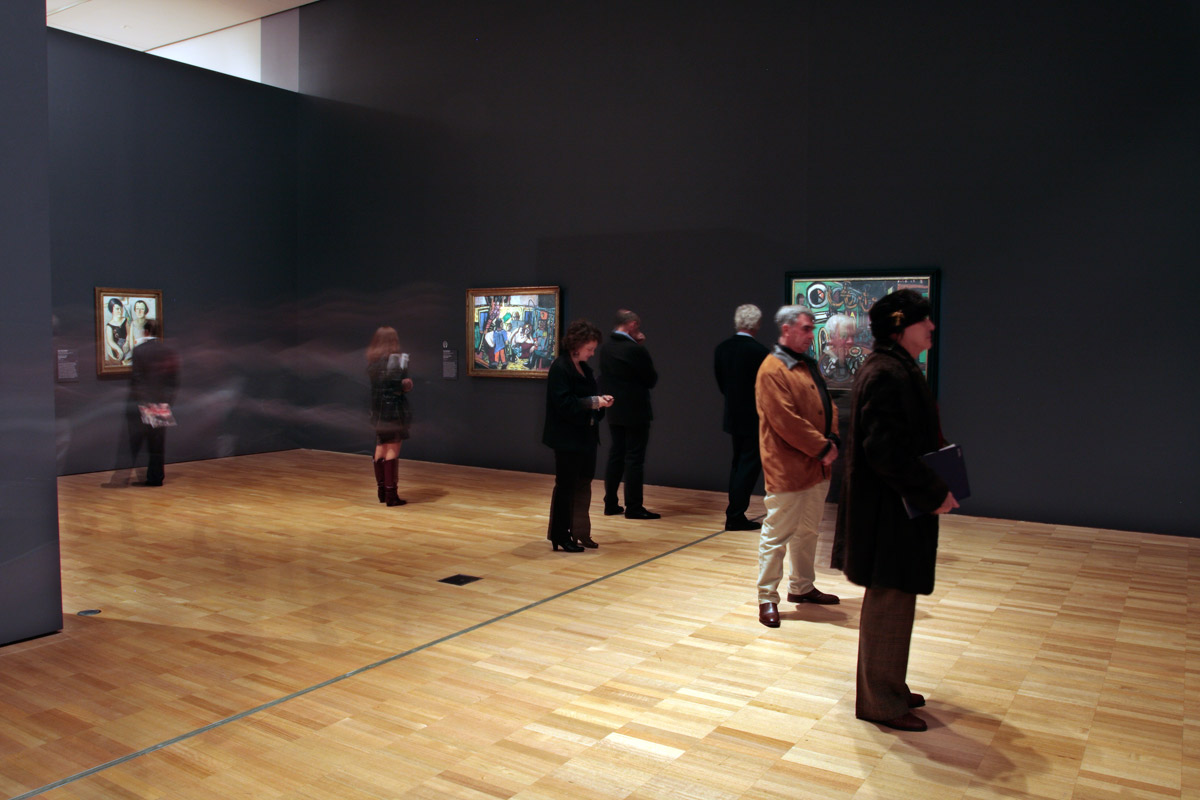
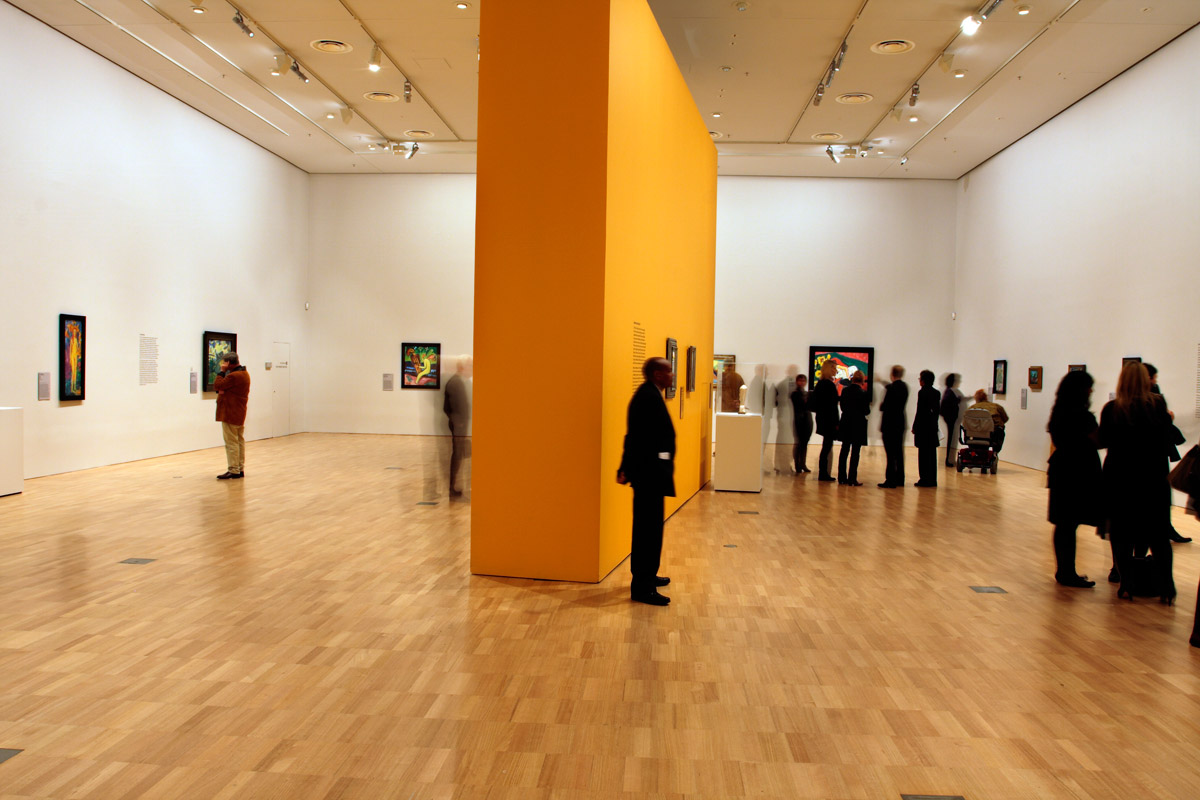
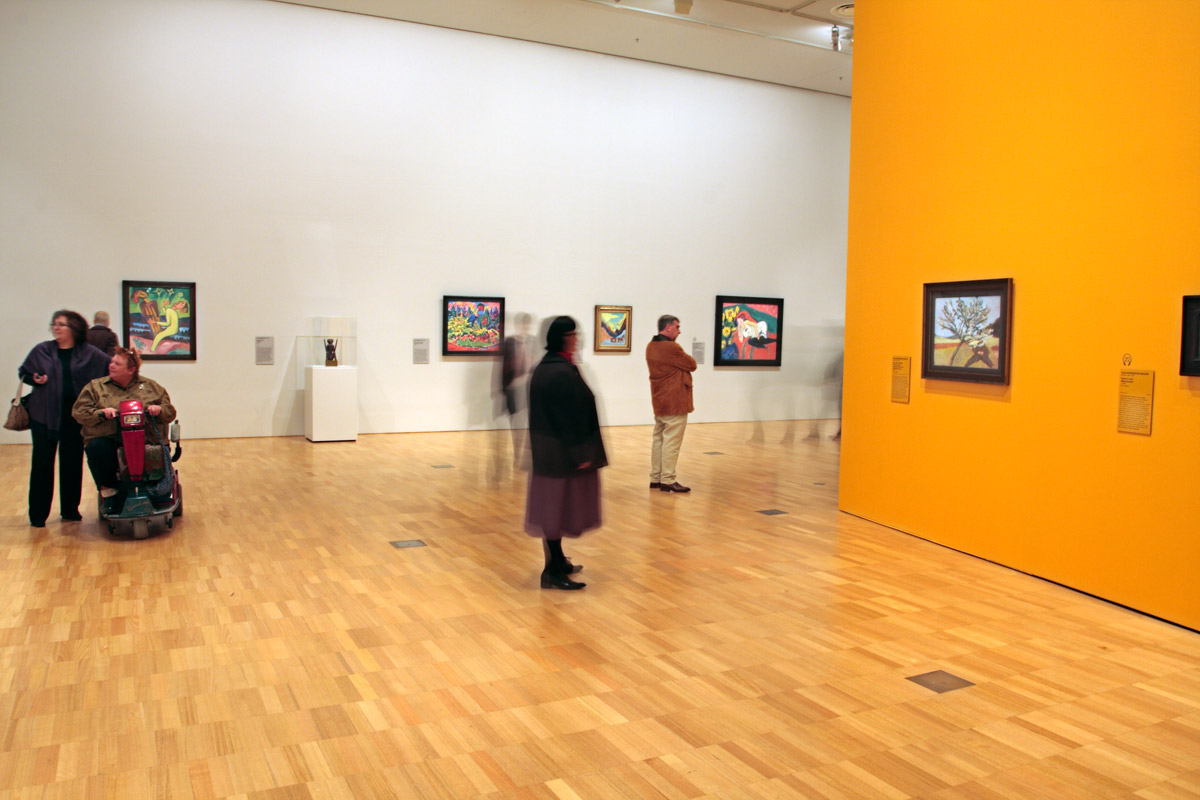
Exhibition: ‘William Eggleston: Democratic Camera, Photographs and Video, 1961-2008’ at The Art Institute of Chicago

Exhibition dates: 27th February – 23rd May, 2010


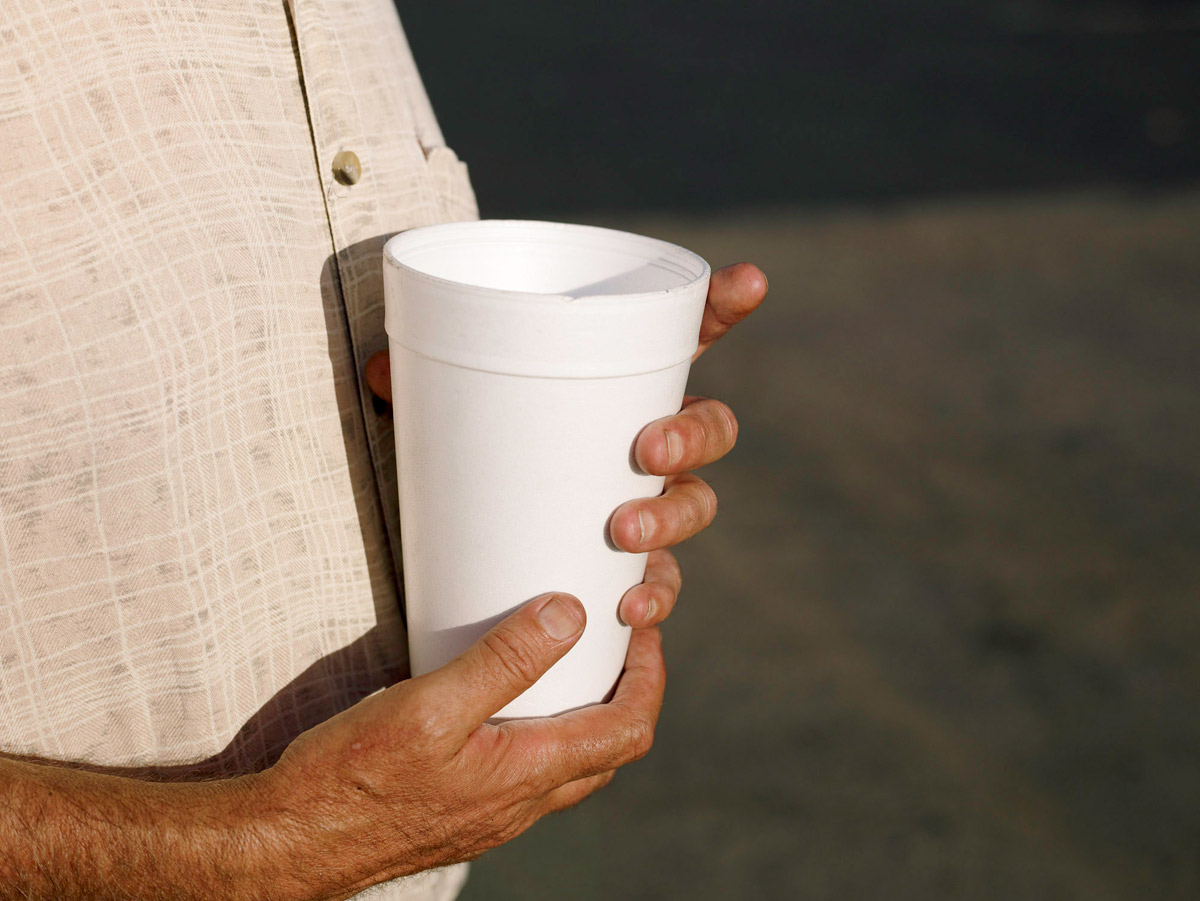
William Eggleston (American, b. 1939) 'Untitled (Memphis, Tennessee)' 1971 from the exhibition 'William Eggleston: Democratic Camera, Photographs and Video, 1961-2008' at The Art Institute of Chicago, February - May, 2010


William Eggleston (American, b. 1939)
Untitled (Memphis, Tennessee)
1971
from 14 Pictures, 1974
Dye transfer print
15 7/8 x 19 15/16 in (40.3 x 50.6cm)
Collection of Adam Bartos
© Eggleston Artistic Trust, courtesy Cheim & Read, New York


THE classic William Eggleston, the one and only. Feel the heat of sun on body. Look at the construction of the image plane, all angles and fractures. The slight movement of the woman’s hand as she sits on a cracked yellow wall. The distance between her body and the metal pole with wrapped chain and padlock, that ice/fire tension as Minor White would say. Man with gun vs melancholy monochromatic self portrait, the reverie of the lone thinker. Colour and light as emotional sounding board, “colour as a means of discovery and expression, and as a way to highlight aspects of life hidden in plain sight.” This is what Eggleston points his democratic camera at – life hidden in plain sight, revealed in all its intricacies, in all its mundanity and glory.

Dr Marcus Bunyan


Many thankx to Chai Lee and the Art Institute of Chicago for allowing to me reproduce the photographs in this posting. Please click on the photographs for a larger version of the image.


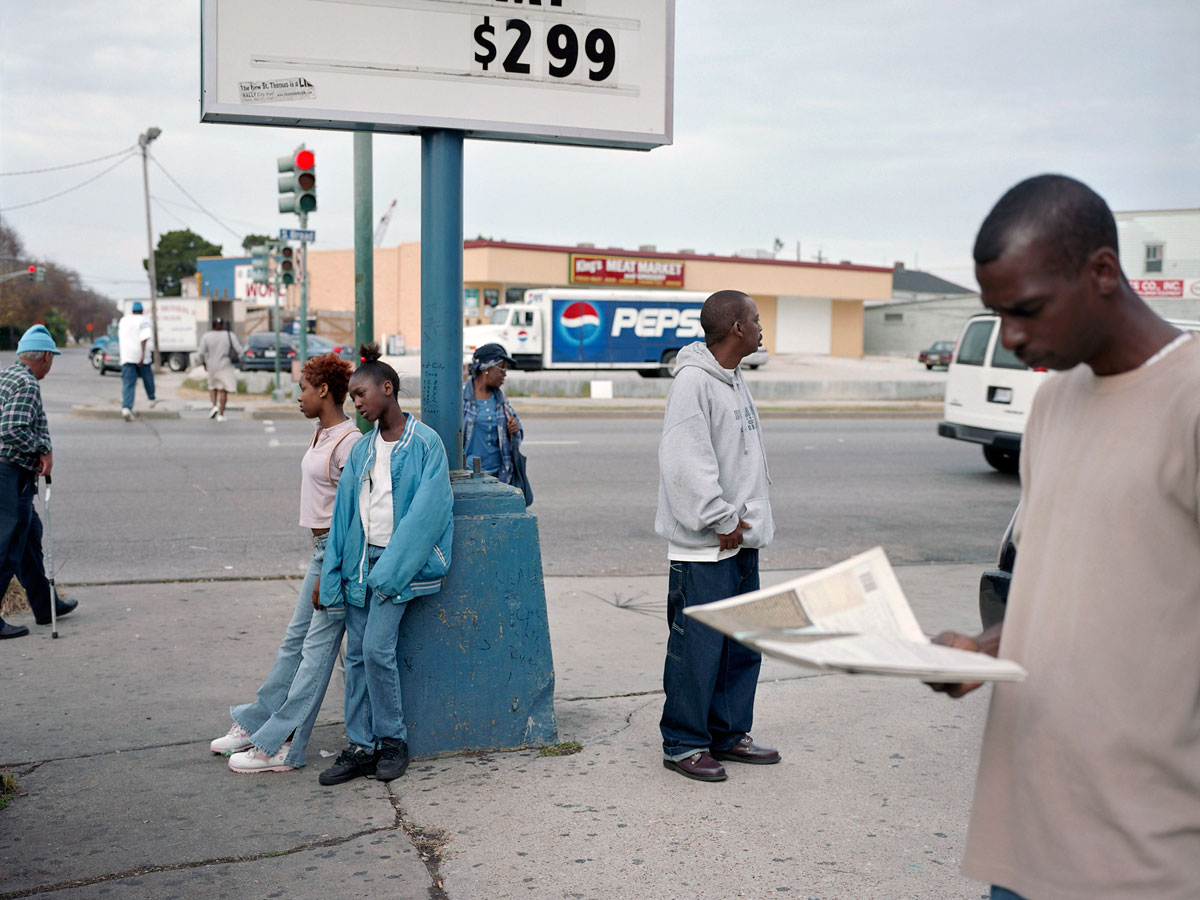
William Eggleston (American, b. 1939) 'Untitled' 1970 from the exhibition 'William Eggleston: Democratic Camera, Photographs and Video, 1961-2008' at The Art Institute of Chicago, February - May, 2010


William Eggleston (American, b. 1939)
Untitled
1970
from Los Alamos, 1965-1974 (published 2003)
Dye transfer print
16 x 20 in (40.6 x 50.8cm)
Whitney Museum of American Art, New York
Purchased with funds from the Photography Committee
© Eggleston Artistic Trust, courtesy Cheim & Read, New York


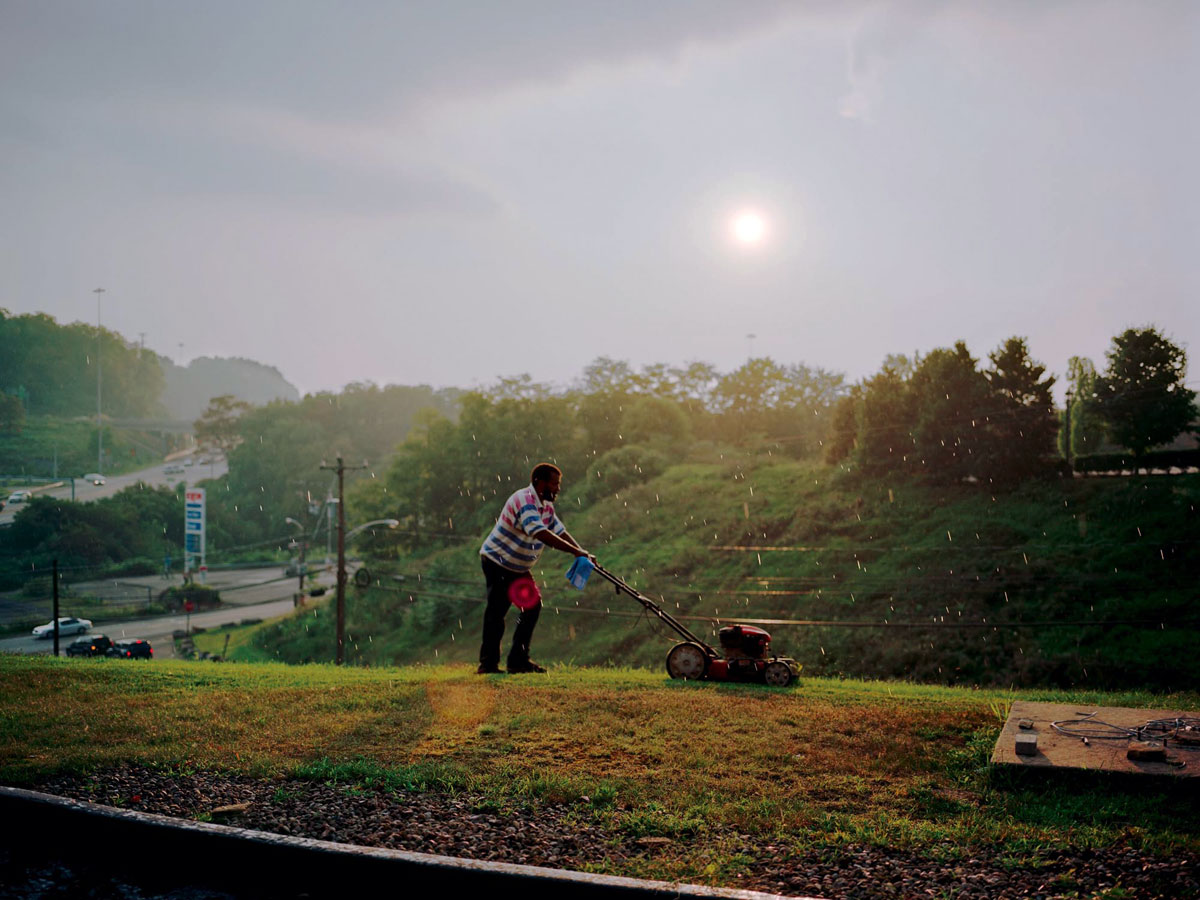
William Eggleston (American, b. 1939) 'Untitled' 1975 from the exhibition 'William Eggleston: Democratic Camera, Photographs and Video, 1961-2008' at The Art Institute of Chicago, February - May, 2010


William Eggleston (American, b. 1939)
Untitled
1975
Dye transfer print
16 x 20 in (40.6 x 50.8cm)
Cheim & Read, New York
© Eggleston Artistic Trust, courtesy Cheim & Read, New York


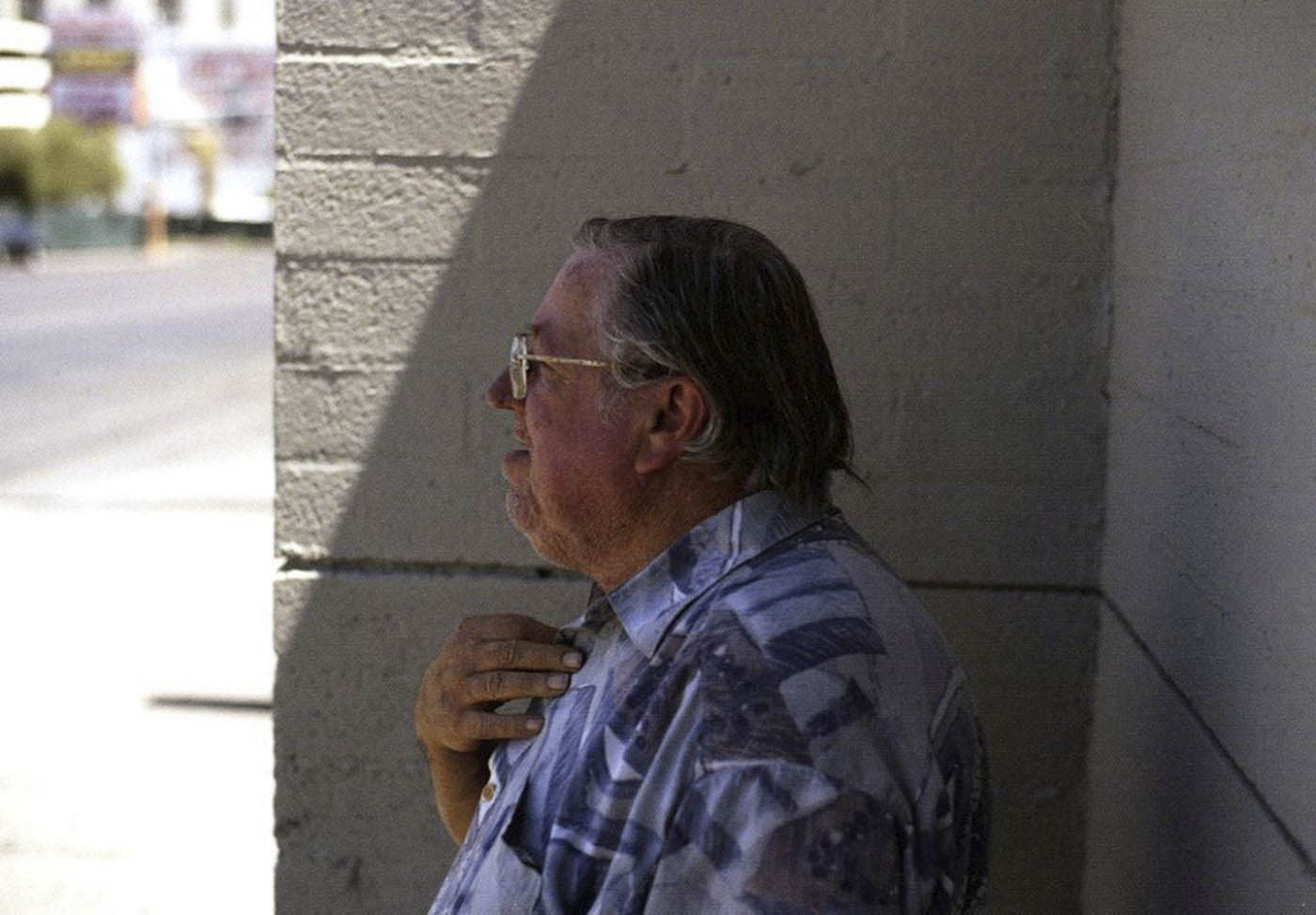
William Eggleston (American, b. 1939) 'Untitled' c. 1971-1973 from the exhibition 'William Eggleston: Democratic Camera, Photographs and Video, 1961-2008' at The Art Institute of Chicago, February - May, 2010


William Eggleston (American, b. 1939)
Untitled
c. 1971-1973
from Troubled Waters, 1980
Dye transfer print
15 7/8 x 19 15/16 in (40.3 x 50.6cm)
Collection Marcia Dunn and Jonathan Sobel
© Eggleston Artistic Trust, courtesy Cheim & Read, New York


William Eggleston (American, b. 1939) 'Untitled' Nd from the exhibition 'William Eggleston: Democratic Camera, Photographs and Video, 1961-2008' at The Art Institute of Chicago, February - May, 2010


William Eggleston (American, b. 1939)
Untitled
Nd
from Los Alamos, 1965-1974 (published 2003)
Dye transfer print
12 x 17 3/4 inches (30.5 x 45.1cm)
Private collection
© Eggleston Artistic Trust, courtesy of Cheim & Read, New York


William Eggleston (American, b. 1939) 'Untitled' Nd from the exhibition 'William Eggleston: Democratic Camera, Photographs and Video, 1961-2008' at The Art Institute of Chicago, February - May, 2010


William Eggleston (American, b. 1939)
Untitled
Nd
from Los Alamos, 1965-1974 (published 2003)
Dye transfer print
12 x 17 3/4 in (30.5 x 45.1cm)
Private collection
© Eggleston Artistic Trust, courtesy Cheim & Read, New York


The unconventional beauty and artistry of works by photographer William Eggleston will be showcased in a major exhibition opening at the Art Institute of Chicago this winter. William Eggleston: Democratic Camera, Photographs and Video, 1961-2008 – on view from February 27 through May 23, 2010, in the Modern Wing’s Abbott Galleries (G182, G184) and Carolyn S. and Matthew Bucksbaum Gallery (G188) – is the most comprehensive retrospective to date of the Memphis-based contemporary photographer. The exhibition brings together more than 150 extraordinary images of familiar, everyday subjects with lesser-known, early black-and-white prints and provocative video recordings, all produced over a five-decade period.

Born in 1939 in Memphis, Tennessee, and raised on his family’s cotton plantation in Mississippi, William Eggleston held a casual interest in photography until 1959, when he came across photo books by Henri Cartier-Bresson and Walker Evans. Among his earliest pictures, made during stints at universities in Tennessee and Mississippi, were black-and-white scenes found in his native South, as well as portraits of friends and family members.

By the 1960s and early 1970s he had begun experimenting with colour film, and he eventually produced rich, vivid prints through the dye transfer process – prints that are created through the alignment of three separate matrices (cyan, magenta, and yellow) generated from three separate negatives (red, green, and blue filters). The resulting prints are known for the vividness and permanence of their colours. Hence, Eggleston is often credited for single-handedly ushering in the era of colour art photography.

Eager to show his work to a broader audience, Eggleston traveled to New York with a suitcase of slides and prints to meet with Museum of Modern Art (MoMA) curator John Szarkowski. This visit eventually yielded a controversial but revolutionary exhibition in 1976 – MoMA’s first solo show to feature colour photographs – and a classic accompanying book, William Eggleston’s Guide. At this point in his career, Eggleston had already distinguished himself by treating colour as a means of discovery and expression, and as a way to highlight aspects of life hidden in plain sight.

William Eggleston: Democratic Camera, Photographs and Video, 1961-2008 demonstrates Eggleston’s “democratic” approach to his photographic subjects in both colour and black-and-white. Everything that happens in front of the camera is worthy of becoming a picture for the artist – no matter how seemingly circumstantial or trivial. Eggleston finds his motifs in everyday life, resulting in telling portrayals of American culture. His iconic images such as Elvis’s Graceland, a supermarket clerk corralling grocery carts in the afternoon sunlight, and a freezer stuffed with food proves that the photographer points his “democratic camera” at everything. Eggleston’s quiet, thoughtful pictures have profoundly impacted subsequent generations of photographers, filmmakers, and scholars.

The exhibition also includes Eggleston’s cult video work, Stranded in Canton. In the 1960s, Eggleston used film to document Fred McDowell, a well-known Delta blues musician, but ultimately abandoned the film project. Eggleston later acquired a video camera and began using video to shoot in bars and in people’s homes; sometimes he shot monologues friends delivered for his video camera, most often at night. The result, Stranded in Canton, recently restored and re-edited, is a portrait of a woozy subculture that adds dimension and texture to the world of Eggleston’s colour photographs.

Internationally acclaimed, Eggleston has spent the past four decades photographing around the world, responding intuitively to fleeting configurations of cultural signs and specific expressions of local colour. By not censoring, rarely editing, and always photographing even the seemingly banal, Eggleston convinces us completely of the idea of the democratic camera.

Press release from the Art Institute of Chicago website [Online] Cited 15/05/2010 no longer available online


William Eggleston (American, b. 1939) 'Untitled' Nd


William Eggleston (American, b. 1939)
Untitled
Nd
from Los Alamos, 1965-1974 (published 2003)
Dye transfer print
17 3/4 x 12 in. (45.1 x 30.5cm)
Private collection.
© Eggleston Artistic Trust, courtesy Cheim & Read, New York


William Eggleston (American, b. 1939) 'Untitled (Memphis Tennessee)' 1965


William Eggleston (American, b. 1939)
Untitled (Memphis Tennessee)
1965
from Los Alamos, 1965-1974 (published 2003)
Dye transfer print
17 ¾ x 12 inches (45.1 x 30.5cm)
Private collection.
© Eggleston Artistic Trust, courtesy of Cheim & Read, New York


William Eggleston (American, b. 1939) 'Memphis' c. 1969-1971


William Eggleston (American, b. 1939)
Memphis
c. 1969-1971
from William Eggleston’s Guide, 1976
Dye transfer print
24 x 20 in (61 x 50.8cm)
Collection of John Cheim
© Eggleston Artistic Trust, courtesy Cheim & Read, New York


William Eggleston (American, b. 1939) 'Morton, Mississippi' c. 1969-1970


William Eggleston (American, b. 1939)
Morton, Mississippi
c. 1969-1970
from William Eggleston’s Guide 1976
Dye transfer print
13 3/8 x 8 11/16 in (34 x 22cm)
Cheim & Read, New York
© Eggleston Artistic Trust, courtesy Cheim & Read, New York


William Eggleston (American, b. 1939) 'Huntsville, Alabama' 1971


William Eggleston (American, b. 1939)
Huntsville, Alabama
1971
from William Eggleston’s Guide 1976
Dye transfer print
20 x 15 7/8 in (50.8 x 40.3cm)
University of Mississippi Museum and Historic Houses, Oxford
© Eggleston Artistic Trust, courtesy Cheim & Read, New York


William Eggleston (American, b. 1939) 'Untitled' Nd from 'Los Alamos, 1965-1974'


William Eggleston (American, b. 1939)
Untitled
Nd
from Los Alamos, 1965-1974 (published 2003)
Dye transfer print
17 3/4 x 12 in (45.1 x 30.5cm)
Private collection
© Eggleston Artistic Trust, courtesy Cheim & Read, New York


William Eggleston (American, b. 1939) 'En Route to New Orleans' 1971-1974


William Eggleston (American, b. 1939)
En Route to New Orleans
1971-1974
from Los Alamos, 1965-1974 (published 2003)
Dye transfer print
17 3/4 x 12 in. (45.1 x 30.5cm)
Private collection
© Eggleston Artistic Trust, courtesy Cheim & Read, New York


Art Institute of Chicago
111 South Michigan Avenue
Chicago, Illinois 60603-6404
Phone: (312) 443-3600

Opening hours:
Friday – Monday 11am – 5pm
Thursday 11am – 8pm
Closed Tuesday and Wednesday

The Art Institute of Chicago website

LIKE ART BLART ON FACEBOOK

Back to top

Monash Gallery of Art Bowness Photography Prize Call For Entries! Closes 30th June 2010

May 2010


Paul Ogier (Australia born New Zealand, b. 1974) 'Saint Stephen' 2009


Paul Ogier (Australia born New Zealand, b. 1974)
Saint Stephen
2009
Courtesy of the artist


Mark Hislop from the Monash Gallery of Art (MGA) has asked me to post details of the William and Winifred Bowness Photography Prize 2010. More than happy too. To see the standard take a look at the 2009 Finalists online. Details on how to enter are posted below. Have a go, get your entries in, you never know who will win!

Many thankx to the MGA for allowing me to publish the photographs in the posting. Please click on the photographs for a large version of the image.


Simon Terrill (Australian, b. 1969) 'Bank of England 9AM' 2009


Simon Terrill (Australian, b. 1969)
Bank of England 9AM
2009
Courtesy of the artist


The Monash Gallery of Art Foundation is pleased to announce the CALL FOR ENTRIES for the William and Winifred Bowness Photography Prize 2010.

The MGA Foundation will once again showcase the work of Australia’s best photographers in Australia’s most coveted photography award. Photographers from all over Australia are encouraged to submit entries to this year’s Bowness Photography Prize. Each year, finalists are drawn from the breadth of Australian photographic practice: editorial, commercial, street and fine art.

In recognition of the support shown the prize by Australian photographers, prize money for this year’s award has increased substantially. Last year, a record 459 photographers submitted entries in anticipation of the $20,000 non-acquisitive first prize. In 2010, photographers will be competing for $25,000 first prize and $1,000 People’s Choice Award.

The winner of the 2010 Bowness Photography Prize and Honourable Mentions will be announced on Thursday night 23 SEP 2010 during a cocktail party held at MGA. Winners and finalists will enjoy unprecedented visibility for their work. All finalists will be published on MGA’s flickr page and included in a substantial catalogue. The winner will receive the $25,000 first prize. And in recognition of the strength of the prize and MGA’s commitment to promoting the best of contemporary Australian photography, Honourable Mentions will have the opportunity to stage an exhibition at MGA.

This year’s entries will be judged by Gael Newton, Senior Curator of Photographs, National Gallery of Australia, Max Pam, Australian photographer, and Shaune Lakin, Director of MGA.

About the BOWNESS Photography Prize

Established in 2006 to promote excellence in photography, the annual non-acquisitive William and Winifred Bowness Photography Prize is an initiative of the MGA Foundation. The Bowness Photography Prize has quickly become Australia’s most coveted photography prize. It is also one of the country’s most open prizes for photography. In the past, finalists have included established and emerging photographers, art and commercial photographers. All film-based and digital work from amateurs and professionals is accepted. There are no thematic restrictions.

The 2009 Bowness Prize recipient was Paul Knight. Since winning the Prize, Knight has received an Australia Council for the Arts Skills and Development Grant and is currently presenting new work at the prestigious international artfair Art Cologne.


Jane Burton (Australian, b. 1966) 'Ivy # 3' 2009


Jane Burton (Australian, b. 1966)
Ivy # 3
2009
Courtesy of the artist and Karen Woodbury Gallery, Melbourne


Owen Leong (Australian, b. 1979) 'Justin' 2009


Owen Leong (Australian, b. 1979)
Justin
2009
Courtesy of the artist and Anna Pappas Gallery, Melbourne


Paul Knight (Australian, b. 1976) '14 months # 01' 2008


Paul Knight (Australian, b. 1976)
14 months # 01
2008
Courtesy of the artist and Neon Parc, Melbourne
Winner of the William and Winifred Bowness Photography Prize 2009


Monash Gallery of Art
860 Ferntree Gully Road
Wheelers Hill Victoria 3150
Phone: +61 3 8544 0503

Monash Gallery of Art website

LIKE ART BLART ON FACEBOOK

Back to top

Exhibition: ‘The Platinum Process: Photographs from the Nineteenth to the Twenty-First Century’ at Philadelphia Museum of Art

Exhibition dates: 27th February – 23rd May, 2010


Frederick H. Evans (British, 1853-1943) 'Kelmscott Manor: Attics' 1896 from the exhibition 'The Platinum Process: Photographs from the Nineteenth to the Twenty-First Century' at Philadelphia Museum of Art, February - May, 2010


Frederick H. Evans (British, 1853-1943)
Kelmscott Manor: Attics
1896
Platinum print
Image and sheet: 6 1/16 × 7 7/8 inches (15.4 × 20cm)
Philadelphia Museum of Art
Gift of the artist, 1932


Attics often serve as metaphors for the space where memories reside. Here Frederick Evans captures the warm glow, the simple, rough-hewn timbers, and the striking geometry of the attic at Kelmscott Manor, the beloved summer retreat of designer William Morris (British, 1834-1896).

Morris, the leader of the Arts and Crafts movement – which valued Britain’s craft tradition and rejected its industrial revolution – drew inspiration from the architecture and workmanship of Kelmscott, designed and constructed in the 1500s. In 1896 Morris invited Evans to photograph the home, which he felt embodied the memory of Britain’s aesthetic past.

Text from the Philadelphia Museum of Art website


Platinum prints always have such luminosity. A Sea of Steps by Fredrick H. Evans (1903, below) is a knockout. I remember some beautiful platinum prints many years ago (1989) up in Sydney at the Museum of Contemporary Art in the touring exhibition Robert Mapplethorpe: The Perfect Moment that were an absolute knockout as well. Pity he didn’t print them himself but they were still superlative!

Dr Marcus Bunyan


Many thankx to Shen Shellenberger and the Philadelphia Museum of Art for allowing me to publish the last five images in the posting. Please click on the photographs for a larger version of the image.


Frederick H. Evans (British, 1853-1943) 'Kelmscott Manor' 1896 from the exhibition 'The Platinum Process: Photographs from the Nineteenth to the Twenty-First Century' at Philadelphia Museum of Art, February - May, 2010


Frederick H. Evans (British, 1853-1943)
Kelmscott Manor
1896
Platinum print
Image and sheet: 7 3/8 × 4 1/4 inches (18.7 × 10.8cm)
Philadelphia Museum of Art
Purchased with funds contributed by Dorothy Norman and with the Director’s Discretionary Fund, 1968


Frederick H. Evans (British, 1853-1943) 'Angers: Prefecture, Sculptured Arches of 11th-12th Century' c. 1906-1907 from the exhibition 'The Platinum Process: Photographs from the Nineteenth to the Twenty-First Century' at Philadelphia Museum of Art, February - May, 2010


Frederick H. Evans (British, 1853-1943)
Angers: Prefecture, Sculptured Arches of 11th-12th Century
c. 1906-1907
Platinum print
Image and sheet: 9 11/16 × 7 7/8 inches (24.6 × 20 cm)
Philadelphia Museum of Art
Purchased with funds contributed by Dorothy Norman and with the Director’s Discretionary Fund, 1968


Frederick H. Evans (British, 1853-1943) 'Southwell Cathedral, Chapter House Capital' 1898


Frederick H. Evans (British, 1853-1943)
Southwell Cathedral, Chapter House Capital
1898
Platinum print
Philadelphia Museum of Art


Frederick H. Evans (British, 1853-1943) 'View across the nave to the transept at York Minster' 1901


Frederick H. Evans (British, 1853-1943)
View across the nave to the transept at York Minster
1901
Platinum print
Philadelphia Museum of Art


Frederick H. Evans (British, 1853-1943) 'Durham Cathedral: West End Nave' 1912


Frederick H. Evans (British, 1853-1943)
Durham Cathedral: West End Nave
1912
Platinum print
Image and sheet: 9 1/2 × 4 13/16 inches (24.1 × 12.3cm)
Philadelphia Museum of Art
Purchased with funds contributed by Dorothy Norman, 1973


Frederick H. Evans (British, 1853-1943) 'Ancient crypt cellars in Provins' 1910


Frederick H. Evans (British, 1853-1943)
Ancient crypt cellars in Provins
1910
Platinum print
Philadelphia Museum of Art


Frederick H. Evans (British, 1853-1943) 'Westminster Abbey: North Transept: East Side' 1911


Frederick H. Evans (British, 1853-1943)
Westminster Abbey: North Transept: East Side
1911
Platinum print
Image and sheet: 9 7/16 × 6 inches (23.9 × 15.3cm)
Philadelphia Museum of Art
Purchased with the Lola Downin Peck Fund, 1969


Frederick H. Evans (British, 1853-1943) 'Westminster Abbey: Staircase in Confessor's Chapel' 1911


Frederick H. Evans (British, 1853-1943)
Westminster Abbey: Staircase in Confessor’s Chapel
1911
Platinum print
Image and sheet: 9 1/2 × 6 1/8 inches (24.2 × 15.6cm)
Philadelphia Museum of Art
Purchased with the Lola Downin Peck Fund, 1969


Frederick H. Evans (British, 1853-1943) 'Westminster Abbey: From the South Transept' 1911


Frederick H. Evans (British, 1853-1943)
Westminster Abbey: From the South Transept
1911
Platinum print
Image and sheet: 9 1/2 × 7 7/16 inches (24.2 × 18.9cm)
Philadelphia Museum of Art
Purchased with the Lola Downin Peck Fund, 1969


Frederick H. Evans (British, 1853-1943) 'Westminster Abbey: East Ambulatory' 1911


Frederick H. Evans (British, 1853-1943)
Westminster Abbey: East Ambulatory
1911
Platinum print
Image and sheet: 9 5/16 × 6 11/16 inches (23.7 × 17cm)
Purchased with the Lola Downin Peck Fund, 1969


Frederick H. Evans (British, 1853-1943) 'Westminster Abbey: 12th-Century Mosaic Floor at the Sanctuary' 1911


Frederick H. Evans (British, 1853-1943)
Westminster Abbey: 12th-Century Mosaic Floor at the Sanctuary
1911
Platinum print
Image and sheet: 7 5/16 × 8 7/8 inches (18.6 × 22.6 cm)
Philadelphia Museum of Art
Purchased with the Lola Downin Peck Fund, 1969


Although Evans indicated that this mosaic floor was created in the twelfth century, the surface surrounding the High Altar of Westminster Abbey was in fact laid in 1268. King Henry III (1207-1272) commissioned the mosaic from Roman craftsmen who specialised in the opus sectile, or “cut work” technique, commonly called “Cosmati” after a well-known Italian family of mosaic artists. Materials used here include blue, red, and turquoise glass as well as yellow limestone, purple porphyry, green serpentine, and onyx. Evans’s unusual composition privileges the floor, drawing attention to the intricate and abstract design of squares, rectangles, and roundels.

Text from the Philadelphia Museum of Art website


Frederick H. Evans (British, 1853-1943) 'Westminster Abbey: East End, North Ambulatory' 1911


Frederick H. Evans (British, 1853-1943)
Westminster Abbey: East End, North Ambulatory
1911
Platinum print
Image and sheet: 9 3/8 × 7 1/2 inches (23.8 × 19.1cm)
Philadelphia Museum of Art
Purchased with the Lola Downin Peck Fund, 1969


Frederick H. Evans (British, 1853-1943) 'Westminster Abbey: Apse from Choir' 1911


Frederick H. Evans (British, 1853-1943)
Westminster Abbey: Apse from Choir
1911
Platinum print
Image and sheet: 9 7/16 × 7 1/2 inches (23.9 × 19.1cm)
Philadelphia Museum of Art
Purchased with the Lola Downin Peck Fund, 1969


Country Life magazine commissioned Evans to photograph the interior of London’s Westminster Abbey in 1911, while the church was closed to worshipers in preparation for the coronation of King George V (1865-1936) and Queen Mary (1867-1953). Although the construction and removal of temporary facilities relating to the coronation regularly disrupted Evans’s work, the more than fifty photographs in the resulting portfolio reveal only the timeless beauty and grandeur of the Gothic structure that has hosted thirty-eight royal coronations since the year 1066.

Text from the Philadelphia Museum of Art website


Frederick H. Evans (British, 1853-1943) 'Westminster Abbey: Henry VII Chapel, Detail of Henry VII Tomb' 1911


Frederick H. Evans (British, 1853-1943)
Westminster Abbey: Henry VII Chapel, Detail of Henry VII Tomb
1911
Platinum print
Image and sheet: 8 1/16 × 7 3/16 inches (20.4 × 18.2cm)
Philadelphia Museum of Art
Purchased with the Lola Downin Peck Fund, 1969


Frederick H. Evans (British, 1853-1943) 'Westminster Abbey: Tomb of Edward III, Mary and William' 1911


Frederick H. Evans (British, 1853-1943)
Westminster Abbey: Tomb of Edward III, Mary and William
1911
Platinum print
Image and sheet: 8 11/16 × 6 5/8 inches (22.1 × 16.9cm)
Philadelphia Museum of Art
Purchased with the Lola Downin Peck Fund, 1969


Frederick H. Evans (British, 1853-1943) 'York Minster - In Sure and Certain Hope' 1903


Frederick H. Evans (British, 1853-1943)
York Minster – In Sure and Certain Hope
1903
Platinum print
Philadelphia Museum of Art


Frederick H. Evans (British, 1853-1943) 'A Sea of Steps - Stairs to Chapter House - Wells Cathedral' 1903


Frederick H. Evans (British, 1853-1943)
A Sea of Steps – Stairs to Chapter House – Wells Cathedral
1903
Platinum print
Philadelphia Museum of Art


Frederick H. Evans (British, 1853-1943) 'Wells Cathedral: North Transept' c. 1903


Frederick H. Evans (British, 1853-1943)
Wells Cathedral: North Transept
c. 1903
Platinum print
Image and sheet: 7 1/4 × 5 7/16 inches (18.4 × 13.8cm)
Purchased with funds contributed by Dorothy Norman, 1973


Frederick H. Evans (British, 1853-1943) 'Ely Cathedral: Octagon into Nave Aisle' c. 1899


Frederick H. Evans (British, 1853-1943)
Ely Cathedral: Octagon into Nave Aisle
c. 1899
Platinum print
Image and sheet: 7 15/16 × 6 1/8 inches (20.2 × 15.6cm)
Philadelphia Museum of Art
Purchased with funds contributed by Dorothy Norman, 1973


Frederick H. Evans (British, 1853-1943) 'Fr: Sec: Spine of Echinus x. 40' c. 1887


Frederick H. Evans (British, 1853-1943)
Fr: Sec: Spine of Echinus x. 40
c. 1887
Platinum print
Image and sheet: 4 3/4 × 4 5/8 inches (12 × 11.8cm)
Philadelphia Museum of Art
Purchased with funds contributed by Dorothy Norman, 1973


Unlike many beginning photographers of the nineteenth century who experimented with straightforward portrait or landscape compositions, Evans’s earliest trials with photography involved minute organic matter and required the use of a microscope. His complicated “photo-microgram” process allowed him to capture the intricate structures of objects including a water beetle’s eye, tiny sea shells, and this section of a sea urchin’s spine. Although classified as scientific rather than artistic imagery by the Photographic Society of Great Britain, this photo-microgram demonstrates Evans’s ability to delineate the magnificence of organic patterns and presage his photographs that depict the structural beauty of cathedrals.

Text from the Philadelphia Museum of Art website


Frederick H. Evans (British, 1853-1943) 'Berberis: Plant Study' c. 1908


Frederick H. Evans (British, 1853-1943)
Berberis: Plant Study
c. 1908
Platinum print
Image and sheet: 9 3/8 × 7 1/16 inches (23.8 × 17.9cm)
Philadelphia Museum of Art
Purchased with funds contributed by Dorothy Norman and with the Director’s Discretionary Fund, 1968


Frederick H. Evans (British, 1853-1943) 'Redlands Woods' c. 1908


Frederick H. Evans (British, 1853-1943)
Redlands Woods
c. 1908
Platinum print
Image and sheet: 6 × 4 3/16 inches (15.3 × 10.6cm)
Philadelphia Museum of Art
Purchased with funds contributed by Dorothy Norman and with the Director’s Discretionary Fund, 1968


Frederick H. Evans (British, 1853-1943) 'An English Glacier: Near Summit of Scafell' c. 1905


Frederick H. Evans (British, 1853-1943)
An English Glacier: Near Summit of Scafell
c. 1905
Platinum print
Image and sheet: 9 3/4 × 6 1/2 inches (24.8 × 16.5 cm)
Philadelphia Museum of Art
Purchased with funds contributed by Dorothy Norman and with the Director’s Discretionary Fund, 1968


Exhibition Highlights the Exceptional Beauty of the Platinum Process in Photography

A cornerstone of photographic practice during the late nineteenth and early twentieth centuries, the platinum print is revered by photographers and viewers alike as one of the most beautiful forms of photography, with subtle and lustrous shades that range from the deepest blacks to the most delicate whites. The Philadelphia Museum of Art will present an exhibition of more than 50 works from the late 19th century to the present, showcasing outstanding prints largely drawn from the Museum’s collection of photographs. The Platinum Process: Photographs from the Nineteenth to the Twenty-First Century, on view February 27 – May 23 in the Julien Levy Gallery at the Museum’s Perelman Building, will include images by early masters of the process including Frederick H. Evans (British, 1853-1943) and Alfred Stieglitz (American, 1864-1946), as well as works by skilled contemporary practitioners such as Lois Conner (American, born 1951) and Andrea Modica (American, born 1960), who continue to engage in this historic and painstaking process in an era noted for electronic imaging.

“The exhibition offers an opportunity to share this exceptionally beautiful form of photography with our visitors, some of whom may be seeing it for the first time,” Curator of Photographs Peter Barberie said, adding “the Museum is fortunate to have a particularly strong and varied collection of work by some of the truly great practitioners of this process.”

Unlike standard silver printing, in which particles are suspended in gelatin, platinum is brushed directly onto the paper, allowing artists to create a matte image with an exceptionally wide tonal range. Introduced in 1873, the process was enthusiastically embraced by the group of photographers known as the Pictorialists, who believed that fine art photography should emulate the aesthetic values of painting. The group included Evans, whose beautifully rendered images of Britain’s Westminster Abbey, York Minster Abbey and Ely Cathedral are included in the exhibition, and Stieglitz (American, 1876-1946), who is represented in the show by a portrait of his wife, the artist Georgia O’Keeffe (American, 1887-1986), as well as a landscape that foreshadows his Equivalents series.

While encompassing works spanning many dates and styles, The Platinum Process highlights one of the Museum’s treasures, the 1915 masterpiece “Wall Street” by Paul Strand (1890-1976, see above), whose work was at the forefront of the modernist aesthetic developing in New York during the early 20th century. Strand used the subtlety of the platinum print in this work to emphasise abstract patterns in the long shadows cast by figures that walk before a succession of monumental windows.

Reserves of platinum were appropriated for military use during World War I, and its high cost led manufacturers to cease production of commercial platinum paper by the 1930s. As photographers became more engaged in social concerns, documentation and realism, the process fell into disuse. It was not until the early 1960s when Irving Penn, then a successful photographer for Vogue magazine, began to experiment with the long-forgotten technique and took the first steps toward its revival. A meticulous craftsman, Penn was delighted by the luminous prints and lavish tonal range he could achieve using platinum and began to make new photographs with this process in the 1970s. Penn and many of the other contemporary artists on view including Thomas Shillea and Jennette Williams followed Strand’s example, using platinum not for idealised pictures, but to capture nuances of modern experience.

Press release from The Philadelphia Museum of Art website [Online] Cited 25/07/2019. No longer available online


Robert S. Redfield (American, 1849-1923) 'Heloise Redfield at Mount Washington' 1889


Robert S. Redfield (American, 1849-1923)
Heloise Redfield at Mount Washington
1889
Platinum print
Image and sheet: 6 5/16 × 8 1/4 inches (16 × 21cm)
Philadelphia Museum of Art
Gift of Alfred G. Redfield, 1985


F. Holland Day (American, 1864-1933) 'Untitled' 1905


F. Holland Day (American, 1864-1933)
Untitled
1905
Platinum prints mounted to paper
Image and sheet (overall): 10 1/16 × 7 1/2 inches (25.6 × 19.1cm)
Philadelphia Museum of Art
From the Collection of Dorothy Norman, 1970


Katharine Steward Stanbery (American, 1870-1928) 'Untitled (Two Girls Playing Jacks)' 1907


Katharine Steward Stanbery (American, 1870-1928)
Untitled (Two Girls Playing Jacks)
1907
Platinum print
Image and sheet: 8 15/16 x 4 11/16 inches (22.7 x 11.9cm)
Philadelphia Museum of Art
125th Anniversary Acquisition. Purchased with the Lola Downin Peck Fund, the Alice Newton Osborn Fund, and with funds contributed by The Judith Rothschild Foundation, 2002


Paul Strand (American, 1890-1976) 'City Hall Park, New York' 1915


Paul Strand (American, 1890-1976)
City Hall Park, New York

1915
Platinum print
Sheet: 13 7/8 x 7 3/4 inches (35.2 x 19.7cm)
Philadelphia Museum of Art
Gift of the artist, 1972


Paul Strand (American, 1890-1976) 'Washington Heights, New York' 1915


Paul Strand (American, 1890-1976)
Washington Heights, New York
1915 (negative); 1915 (print)
Platinum print
Image and sheet: 9 3/8 x 11 7/8 inches (23.8 x 30.2cm)
Philadelphia Museum of Art
The Paul Strand Retrospective Collection, 1915-1975, gift of the estate of Paul Strand, 1980


Paul Strand (American, 1890-1976) 'Wall Street, New York' 1915


Paul Strand (American, 1890-1976)
Wall Street
1915 (negative); 1915 (print)
Platinum print
Image: 9 3/4 × 12 11/16 inches (24.8 × 32.2cm)
Philadelphia Museum of Art
The Paul Strand Retrospective Collection, 1915-1975, gift of the estate of Paul Strand, 1980


Paul Strand (American, 1890-1976) 'Man in a Derby, New York' 1916


Paul Strand (American, 1890-1976)
Man in a Derby, New York
1916
Platinum print
Image: 12 13/16 x 9 15/16 inches (32.5 x 25.2cm)
Mat: 22 11/16 x 19 7/16 inches (57.6 x 49.4cm)
Philadelphia Museum of Art
The Paul Strand Retrospective Collection, 1915-1975, gift of the estate of Paul Strand, 1980


Paul Strand (American, 1890-1976) 'The Italian, New York' 1916


Paul Strand (American, 1890-1976)
The Italian, New York
1916 (negative); 1916 (print)
Platinum print
Image and sheet: 13 × 9 5/16 inches (33 × 23.7cm)
Philadelphia Museum of Art
The Paul Strand Retrospective Collection, 1915-1975, gift of the estate of Paul Strand, 1980


Paul Strand (American, 1890-1976) 'Rebecca, New York' 1922 (negative); 1922 (print)


Paul Strand (American, 1890-1976)
Rebecca, New York
1922 (negative); 1922 (print)
Palladium print
Image: 9 3/4 x 7 13/16 inches (24.8 x 19.8cm)
Philadelphia Museum of Art
The Paul Strand Collection, purchased with funds contributed by Mr. and Mrs. Robert A. Hauslohner (by exchange), 1985


Alvin Langdon Coburn (British, born United States, 1882-1966) 'George Seeley' c. 1902-1903


Alvin Langdon Coburn (British, born United States, 1882-1966)
George Seeley
c. 1902-1903
Platinum print
Image and sheet: 11 x 8 9/16 inches (27.9 x 21.7cm)
Philadelphia Museum of Art
Purchased with the Lola Downin Peck Fund, the Alice Newton Osborn Fund, and with funds contributed by The Judith Rothschild Foundation in honour of the 125th Anniversary of the Museum, 2002


Gertrude Käsebier (American, 1852-1934) 'The Two Families' c. 1910


Gertrude Käsebier (American, 1852-1934)
The Two Families
c. 1910
Platinum print
Image and sheet: 5 3/8 × 11 5/16 inches (13.6 × 28.8cm)
Philadelphia Museum of Art
Gift of William Innes Homer, 1986


Käsebier’s family members and close friends served as her earliest photographic subjects, and familial themes remained paramount in the images she produced throughout her career. This photograph of Käsebier’s two daughters and their families, taken in Woburn, Massachusetts, is a dynamic portrait of a multigenerational gathering. Curiously, Käsebier manipulated this print to emphasise the act of photography. In the original scene, the young boy and seated woman at right look downward at a wire-mesh food cover resting on a plate. These objects have been removed from this print, replaced by the considerably more fascinating camera.

Text from the Philadelphia Museum of Art website


Gertrude Käsebier (American, 1852-1934) 'Mrs. F. H. Evans' c. 1900


Gertrude Käsebier (American, 1852-1934)
Mrs. F. H. Evans
c. 1900
Platinum print
Image and sheet: 7 1/2 × 5 1/4 inches (19.1 × 13.4 cm)
Philadelphia Museum of Art
Purchased with funds contributed by Dorothy Norman, 1973


In 1889, at the age of thirty-seven, Käsebier enrolled at Brooklyn’s Pratt Institute to study portrait painting. Although the art school did not teach photography, Käsebier began using a camera at home to document her growing children, eventually favoring photography over other mediums. She established a commercial portrait studio in New York City in 1897, working to “bring out in each photograph the essential personality that is variously called temperament, soul, humanity.” This portrait features Ada Emily Longhurst, wife of photographer Frederick H. Evans, whom Käsebier befriended while on a trip to England in 1901.

Text from the Philadelphia Museum of Art website


Philadelphia Museum of Art
26th Street and the Benjamin Franklin Parkway
Philadelphia, PA 19130

Opening hours:
Thursday – Monday 10am – 5pm
Closed Tuesdays and Wednesdays

The Philadelphia Museum of Art website

LIKE ART BLART ON FACEBOOK

Back to top

Review: ‘Safety Zone’ by John Young at Anna Schwartz Gallery, Melbourne

Exhibition dates: 15th April – 22nd May 2010


John Young (Australian born Hong Kong, b. 1956) 'Flower Market (Nanjing 1936) #2' 2010 from the exhibition 'Safety Zone' by John Young at Anna Schwartz Gallery, Melbourne, April - May, 2010


John Young (Australian born Hong Kong, b. 1956)
Flower Market (Nanjing 1936) #2
2010
Digital print and oil on Belgian linen
240 x 331cm
image courtesy of the artist and Anna Schwartz Gallery


What can one say about work that is so confronting, poignant and beautiful – except to say that it is almost unbearable to look at this work without being emotionally charged, to wonder at the vicissitudes of human life, of events beyond one’s control.

Simply, this is the best exhibition that I have seen in Melbourne so far this year.

The exhibition tells the story of the massacre of 300,000 people in the city of Nanjing in Jiangsu, China by Japanese troops in December, 1937 in what was to become known as the Nanjing Massacre. It also tells the story of a group of foreigners led by German businessman John Rabe and American missionary Minnie Vautrin who set up a “safety zone” to protect the lives of at least 250,000 Chinese citizens. The work is conceptually and aesthetically well resolved, the layering within the work creating a holistic narrative that engulfs and enfolds the viewer – holding them in the shock of brutality, the poignancy of poetry and the (non)sublimation of the human spirit to the will of others.

On the left wall of the gallery are three large mixed-media paintings of screen printed photographs of the Nanjing Flower Market taken the year before the massacre (see three images directly below). The printing of the press photographs at such a scale (a la Marco Fusinato) emphasises the dot structure of the photograph, the intensity of a newspaper reality ‘blown up’ to a huge scale. Unfortunately, you cannot see this deconstruction of the image very well in the examples below (clicking on the lower two images to get a larger version will give you a better idea), but believe me it most effective in creating a spatio-temporal distance between the viewer and the image. The dissolution of the image into dots is surmounted by painted cherry blossoms, bleached corals and piles of logs that overlay the photographic text. The reason-ances are sublime. The mind tries to process the distance between the death of the people and the photograph, the knowledge of what is about to happen to them, and the sensuality of the buds and flowers: new life!

To my friend and I the coral in the last painting reminded us both of the emanations of psychic phenomena at a seance, a series of radiations originating in the godhead.

On the right wall of the gallery is a grid of three rows of twenty images that make up the work Safety Zone (2010, see bottom image). Made up of chalk drawings on black paper (a la Rudolf Steiner), writings by the Europeans including Vautrin and Rabe, statistics, gruesome photographs of the massacre and observations by the artist, this is in part both a confronting and benevolent work.

Archival photographs are printed digitally (the dot structure working to less affect here); some vertical photographs are shown horizontally. Text written in chalk is erased with a sweep of the hand. Thoughts of the Buddha, the infinity symbol linked to the Buddha’s Ray and the Buddha’s Heart are a physical presence. Two blue chalk lines intersect and cross over, so poignant and sublime amongst the destruction that surrounds. Golf clubs, beer bottles, bayonets.


‘THERE IS NOTHING LEFT’ 13.12.37 (Robert Wilson)

‘HOME SICKNESS’

‘Simulacrum > Heart’

A simply drawn coffin shape on black ground

‘I began to roam around the city preventing further atrocities myself’

‘They will not do so, if it is in my power to prevent it’ (Minnie Vautrin)

UNSPEAKABLE ACTS OF EVIL … BECOMING BANAL


At both ends of the gallery is the last element in this play of hope, mutability and madness. Two large oil-on-linen paintings, titled The Crippled Tree #1 & #2 (see images below) “provide another register to the memory of the event. According to Young, the battered and split logs, painted in the negative, resonate and recollect the violence done to the victims of the massacre.” Unfortunately the two small images below cannot really give you an idea of the metaphorical power of these paintings. Like twisted and broken bodies larger than life size they become the glue that holds the other elements of the exhibition together. Without them there would be no transition from one side of the gallery, one element of the work to another. In their solarisation they emote an energy that flows down the length of the gallery = is this possible? Yes it is!

You feel the cracking of their branches, the amputation of their limbs but their spirit, their efflorescence (which, most appropriately considering the use of the Flower Market photographs, means “to flower out” in French) shines on. Such is the nature of the human spirit. Take the time and see this work. It is well worth the journey.

Dr Marcus Bunyan


Many thankx to the artist, Serena Bentley and Anna Schwartz Gallery for allowing me to reproduce the images in the posting. Please click on the photographs for a larger version of the image.


John Young (Australian born Hong Kong, b. 1956) 'Flower Market (Nanjing 1936) #3' 2010 from the exhibition 'Safety Zone' by John Young at Anna Schwartz Gallery, Melbourne, April - May, 2010


John Young (Australian born Hong Kong, b. 1956)
Flower Market (Nanjing 1936) #3
2010
Digital print and oil on Belgian linen
240 x 331cm
image courtesy of the artist and Anna Schwartz Gallery


John Young (Australian born Hong Kong, b. 1956) 'Flower Market (Nanjing 1936) #1' 2010 from the exhibition 'Safety Zone' by John Young at Anna Schwartz Gallery, Melbourne, April - May, 2010


John Young (Australian born Hong Kong, b. 1956)
Flower Market (Nanjing 1936) #1
2010
digital print and oil on Belgian linen
240 x 331cm
image courtesy of the artist and Anna Schwartz Gallery


Safety Zone, John Young’s latest project presents a series of intricate paintings that reassemble historical reminiscences of human survival by linking experimental contemporary art with investigative visual reports, in historical photographs and documents.

This body of work draws attention to incidents across the city of Nanjing in Jiangsu, China, just moments before the onset of the Nanjing Massacre, which followed the capture of the city by Japanese Imperial Forces on 13 December 1937. In the six weeks following the invasion, a quarter of a million Chinese citizens were killed in what the American historian Iris Chang described as the ‘forgotten holocaust of World War II’.

Through Chang’s book, The Rape of Nanking, the world was introduced to the personal memoirs of foreigners living in Nanjing who had been working on creating a ‘safety zone’ that would protect 250,000 Chinese citizens from the invading Japanese troops. Two of the twenty-one foreigners who stayed in the city to help set up the Nanjing Safety Zone were the American missionary Minnie Vautrin and the German businessman John Rabe. Their experiences have been noted by Young, who travelled to Nanjing, Berlin and Heidelberg, conducting first hand interviews and research for this compelling multi-layered project which exemplifies the transformative function of art.

The installation Safety Zone consists of three series of works which reference acts of resistance by individuals to protect fellow human beings against these atrocities that were underpinned by autocratic regimes and nationalist ideologies.

In the Flower Market (Nanjing 1936) series, carefully painted spring flowers and bleached corals are superimposed over historical photographs taken in Nanjing a year prior to the massacre. The meticulously rendered impressions of logs in The Crippled Tree #1 & #2 provide another register to the memory of the event. According to Young, the battered and split logs, painted in the negative, resonate and recollect the violence done to the victims of the massacre.

The carefully assembled bank of 60 chalk drawings and digital prints that make up the centerpiece of Safety Zone provides an intricate understanding of the humanity that lies beneath this tragic event through the revelation of extraordinary acts of self-sacrifice.

Dr Thomas J. Berghuis
Department of Art History and Film, The University of Sydney

Text from the Anna Schwartz Gallery website


John Young (Australian born Hong Kong, b. 1956) 'The Crippled Tree #1' 2010


John Young (Australian born Hong Kong, b. 1956)
The Crippled Tree #1
2010
Oil on linen
274 x 183cm
image courtesy of the artist and Anna Schwartz Gallery


John Young (Australian born Hong Kong, b. 1956) 'The Crippled Tree #2' 2010


John Young (Australian born Hong Kong, b. 1956)
The Crippled Tree #2
2010
Oil on linen
274 x 183cm
image courtesy of the artist and Anna Schwartz Gallery


John Young (Australian born Hong Kong, b. 1956) 'Safety Zone' 2010 (installation view)


John Young (Australian born Hong Kong, b. 1956)
Safety Zone (installation view)
2010
60 works, digital prints on photographic paper and chalk on blackboard-painted archival cotton paper
Image courtesy of the artist and Anna Schwartz Gallery


Anna Schwartz Gallery
185 Flinders Lane
Melbourne, Victoria 3000

Opening hours:
Tuesday – Friday 12 – 5pm
Saturday 1 – 5pm

Anna Schwartz Gallery website

LIKE ART BLART ON FACEBOOK

Back to top

Exhibition: ‘Playing with Pictures: The Art of Victorian Photocollage’ at The Metropolitan Museum of Art, New York

Exhibition dates: 2nd February – 9th May, 2010


Many thankx to the Metropolitan Museum of Art for allowing me to publish the images in this posting. Please click on the photographs for more information about the images from the Metropolitan Museum of Art.

Dr Marcus Bunyan


Kate Edith Gough (English, 1856-1948) 'Untitled page from the Gough Album' late 1870s from the exhibition 'Playing with Pictures: The Art of Victorian Photocollage' at The Metropolitan Museum of Art, New York, February - May, 2010


Kate Edith Gough (English, 1856-1948)
Untitled page from the Gough Album
Late 1870s
Collage of watercolour and albumen silver prints
14 5/8 x 11 5/8 in. (37 x 29.5cm)
V&A Images / Victoria and Albert Museum, London


Kate Gough was one of fourteen children born to the wealthy businessman Thomas Rolls Hoare and his wife, Emma. Although the Hoares possessed neither title nor land, their vast accumulated fortune allowed them to emulate the aristocratic lifestyle, renting a Sussex estate and dividing their time between the country and the city, where they enjoyed a variety of cultural amusements. Kate read widely, from Charles Dickens to Punch magazine, while also learning such feminine accomplishments as sketching and china painting. In 1878 she met Hugh Gough, a lieutenant in the Royal Navy. The couple married in January 1879 and lived the peripatetic life that Lieutenant Gough’s service and their lack of children enabled. Gough probably assembled her album during her courtship and early years of marriage.

A remarkable number of images found in photocollage albums combine humans and animals in fantastical ways; the temptation to cut out a photographed head and place it atop a painted animal seems to have been irresistible. This composition of ducks bearing ladies’ faces – one of them Kate herself, or her identical twin sister, Grace – may have been inspired by Charles Darwin’s new theories of evolution or by political cartoons from magazines such as Punch. On other pages of the Gough Album as well, an irreverent humor, disorienting scale shifts, mischievous visual puns, and whimsical fantasies reveal a sophisticated mind and very accomplished hand.

Text from The Metropolitan Museum of Art website


Frances Elizabeth, Viscountess Jocelyn (English, 1820-1880) 'Diamond Shape with Nine Studio Portraits of the Palmerston Family and a Painted Cherry Blossom Surround from the 'Jocelyn Album'' 1860s from the exhibition 'Playing with Pictures: The Art of Victorian Photocollage' at The Metropolitan Museum of Art, New York, February - May, 2010


Frances Elizabeth, Viscountess Jocelyn (English, 1820-1880)
Diamond Shape with Nine Studio Portraits of the Palmerston Family and a Painted Cherry Blossom Surround from the Jocelyn Album
1860s
Collage of watercolour and albumen silver prints
11 x 9 1/8 in. (28 x 23.2cm)
National Gallery of Australia, Canberra


The daughter of the exceedingly wealthy Peter Clovering-Cowper, Earl Cowper, and the legendary society hostess Emily Lamb, Countess Cowper, Viscountess Jocelyn was born into a life of privilege and social connections. When her mother remarried after her father died, Frances (known as Fanny) became the stepdaughter of Henry Temple, Viscount Palmerston, who would become the prime minister in 1855. Fanny also garnered the favor of Queen Victoria, serving as a bridesmaid at her wedding to Prince Albert and later as a Lady of the Bedchamber. In 1841 she wed Robert, Viscount Jocelyn, and bore six children over the next decade. Her husband died in 1854, and she lost each of her children to illness before her own death in 1880.

Unlike the other album makers in this exhibition, Jocelyn practiced amateur photography, using the wet-collodion process, a cumbersome technique that required time, money, education, and skill. A separate section of this album, entitled The Bygone Hours of the Viscountess Jocelyn, features nine photographs that she made of herself and her children in the garden of their estate. Most of the pages in the album, however, are photocollages employing amateur photographs and commercial cartes de visite in highly skilled watercolour designs that honour her aristocratic lifestyle, depicting family and friends, the estates they owned or visited, the jewellery and finery they wore, and the various pastimes they enjoyed.

Text from The Metropolitan Museum of Art website

The Johnstone Album represents the appropriation by the commercial printing press of an activity that was originally aristocratic and handmade. Here the grids are commercially printed and the collage maker need only paste within the shapes, offering the opportunity for those with less leisure time to create similar family albums.


Maria Harriet Elizabeth Cator (English, d. 1881) 'Untitled page from the 'Cator' Album' late 1860s/70s from the exhibition 'Playing with Pictures: The Art of Victorian Photocollage' at The Metropolitan Museum of Art, New York, February - May, 2010


Maria Harriet Elizabeth Cator (English, d. 1881)
Untitled page from the Cator Album
Late 1860s/1870s
Collage of watercolour and albumen silver prints
10 7/8 x 8 1/2 in. (27.7 x 21.7cm)
Hans P. Kraus, Jr., New York


Maria Harriet Elizabeth Cator, the likely maker of this album, filled its pages in the 1860s and 1870s with scenes of her childhood home, portraits of family members, and commemorative collages memorializing her father, who died in 1864, and a young niece who died as a child in 1866. Family mottoes and photographs of country seats belonging to relatives appear throughout the album, suggesting that it was intended more for family than for society. Set among all this seriousness, this image of a playful jester carelessly strewing photographs on the ground is surprising. Instead of serving as mementos of a loved one or records of an ancestral home, the jester’s photographs are stripped of symbolic meaning and used in the service of a lighthearted composition.

Text from The Metropolitan Museum of Art website


Viscount Jocelyn (Great Britain, 1820-1880) attributed to. 'Circular design containing five male studio portraits and two ships' c. 1860 from the exhibition 'Playing with Pictures: The Art of Victorian Photocollage' at The Metropolitan Museum of Art, New York, February - May, 2010


Viscount Jocelyn (Great Britain, 1820-1880) attributed to
Circular design containing five male studio portraits and two ships
c. 1860
Leaf 3 from an Untitled Album
Collage (albumen silver photographs, water colour, pencil)
Printed image
28.0 h x 23.2 w cm
Purchased 1985
National Gallery of Canberra


Eva Macdonald (English, 1846/50-?) "What Are Trumps?," from the 'Westmorland Album' 1869 Collage of watercolour and albumen prints The J. Paul Getty Museum, Los Angeles


Eva Macdonald (English, 1846/1850-?)
“What Are Trumps?,” from the Westmorland Album
1869
Collage of watercolour and albumen prints
The J. Paul Getty Museum, Los Angeles


A common leisure pastime in Victorian high society, card playing provided opportunities for socializing and flirting. Compositions involving cards are commonly found in photocollage albums, as if to emphasise the playfulness of the process of making such images. In many of these collages, photographic portraits replace the heads of kings and queens, elevating the subjects in rank and giving new meaning to the term “face cards.”

Text from The Metropolitan Museum of Art website


Elizabeth Pleydell-Bouverie (English, died 1889) and Jane Pleydell-Bouverie (English, died 1903) or Ellen Pleydell-Bouverie (English, 1849-?) and Janet Pleydell-Bouverie (English, 1850-1906) Untitled page from the 'Bouverie Album' 1872/77


Elizabeth Pleydell-Bouverie (English, d. 1889) and Jane Pleydell-Bouverie (English, d. 1903) or Ellen Pleydell-Bouverie (English, 1849-?) and Janet Pleydell-Bouverie (English, 1850-1906)
Untitled page from the Bouverie Album
1872/1877
Collage of watercolour and albumen prints
Courtesy of George Eastman House, International Museum of Photography and Film


Popular children’s tales by the Brothers Grimm, Hans Christian Anderson, and Lewis Carroll became fertile material for photocollages, including this one, which appears to relate the story of Thumbelina. Although the identity of the maker of this collection remains a mystery, the initials E.P.B. and J.P.B and the name Bouverie on various pieces suggest that it belonged to the Pleydell-Bouverie family.

Text from The Metropolitan Museum of Art website


In the 1860s and 1870s, long before the embrace of collage techniques by avant-garde artists of the early 20th century, aristocratic Victorian women were experimenting with photocollage. Playing with Pictures: The Art of Victorian Photocollage, on view at The Metropolitan Museum of Art February 2 – May 9, 2010, is the first exhibition to comprehensively examine this little-known phenomenon. Whimsical and fantastical Victorian photocollages, created using a combination of watercolour drawings and cut-and-pasted photographs, reveal the educated minds as well as accomplished hands of their makers. With subjects as varied as new theories of evolution, the changing role of photography, and the strict conventions of aristocratic society, the photocollages frequently debunked stuffy Victorian clichés with surreal, subversive, and funny images. Featuring 48 works from public and private collections – including many that have rarely or never been exhibited before – Playing with Pictures will provide a fascinating window into the creative possibilities of photography in the 19th century.

“In other recent exhibitions at the Metropolitan, we’ve shown masterpieces of 19th-century British photography by the period’s most prominent professionals and serious amateurs (almost always men), whose works were often displayed at the annual salons of the photographic societies and sold by printsellers throughout England and Europe,” commented Malcolm Daniel, Curator in Charge of the Department of Photographs. “What is so exciting about this exhibition is that we see a different type of artist – almost exclusively aristocratic women – using photography in highly imaginative ways, and creating pictures meant for private pleasure rather than public consumption. It is an aspect of photography’s history that has rarely been seen or written about.”

In England in the 1850s and 1860s, photography became remarkably popular and accessible as people posed for studio portraits and exchanged these pictures on a vast scale. The craze for cartes de visite – photographic portraits the size of a visiting card – led to the widespread hobby of collecting small photographs of family, friends, acquaintances, and celebrities in scrapbooks. Rather than simply gathering such portraits in the standard albums manufactured to hold cartes de visite, the amateur women artists who made the photocollages displayed in Playing with Pictures cut up these photographic portraits and placed them in elaborate watercolour designs in their personal albums.

With sharp wit and dramatic shifts of scale akin to those Alice experienced in Wonderland, Victorian photocollages stand the rather serious conventions of early photography on their heads. Often, the combination of photographs with painted settings inspired dreamlike and even bizarre results: placing human heads on animal bodies; situating people in imaginary landscapes; and morphing faces into common household objects and fashionable accessories. Such albums advertised the artistic accomplishments of the aristocratic women who made them, while also serving as a form of parlour entertainment and an opportunity for conversation and flirtation with the opposite sex.

Playing with Pictures showcases the best Victorian photocollage albums and loose pages of the 1860s and 1870s, on loan from collections across the United States, Europe, and Australia, including the Princess Alexandra Album lent by Her Majesty Queen Elizabeth II. Thirty-four photocollage album pages will be shown in frames on the wall and 11 separate albums will be displayed in cases, open to a single page. These works will be accompanied by “virtual albums” on computer monitors that allow visitors to see the full contents of the albums displayed nearby. As an introduction, the exhibition also includes two carte-de-visite albums of the period and a rare uncut sheet of carte-de-visite portraits from 1859.

Playing with Pictures: The Art of Victorian Photocollage is curated by Elizabeth Siegel, Associate Curator of Photography at The Art Institute of Chicago. The exhibition is organised at the Metropolitan Museum by Malcolm Daniel.

Press release from the Metropolitan Museum of Art website [Online] Cited 05/06/2010


Women’s Work: Albums and Their Makers

Ann Bermingham, professor, Department of the History of Art and Architecture, University of California, Santa Barbara

Sixty years before the embrace of collage techniques by avant-garde artists of the early twentieth century, aristocratic Victorian women were already experimenting with photocollage. The compositions they made with photographs and watercolours are whimsical and fantastical, combining human heads and animal bodies, placing people into imaginary landscapes, and morphing faces into common household objects. Such images, often made for albums, reveal the educated minds as well as the accomplished hands of their makers. With sharp wit and dramatic shifts of scale akin to those Alice experienced in Wonderland, these images stand the rather serious conventions of early photography on their heads. The exhibition features forty-eight works from the 1860s and 1870s, from public and private collections.

Text from the YouTube website


Society Cut-ups: Victorians and the Art of Photocollage

Elizabeth Siegel, Associate Curator of Photography, The Art Institute of Chicago

Sixty years before the embrace of collage techniques by avant-garde artists of the early twentieth century, aristocratic Victorian women were already experimenting with photocollage. The compositions they made with photographs and watercolors are whimsical and fantastical, combining human heads and animal bodies, placing people into imaginary landscapes, and morphing faces into common household objects. Such images, often made for albums, reveal the educated minds as well as the accomplished hands of their makers. With sharp wit and dramatic shifts of scale akin to those Alice experienced in Wonderland, these images stand the rather serious conventions of early photography on their heads. The exhibition features forty-eight works from the 1860s and 1870s, from public and private collections.

Text from the YouTube website


Marie-Blanche-Hennelle Fournier (French, 1831-1906) Untitled page from the 'Madame B Album' 1870s


Marie-Blanche-Hennelle Fournier (French, 1831-1906)
Untitled page from the Madame B Album
1870s
Collage of watercolour, ink, and albumen silver prints
11 1/2 x 16 1/2 in. (29.2 x 41.9cm)
The Art Institute of Chicago, Mary and Leigh Block Endowment


Marie-Blanche-Hennelle Fournier probably made the album from which this page was taken. Known as Blanche, she was the second wife of the career diplomat Hugues-Marie-Henri Fournier, who was posted in Stockholm and then in Rome during the years the album was made. Among the clues to the maker’s identity are the large painted B that graces the opening page, the many diplomats and Swedish figures and sites that fill the album, and the frequent depictions of the Fourniers and their daughter, Pauline (born 1855).

Because photocollage albums were almost exclusively made by upper-class English women, this album, with its French maker, is a rare exception. Fournier, however, likely was exposed to English diplomats in the international circles in which she traveled, and she may have been inspired to create her own album after seeing other examples or learning of the practice from her English acquaintances. As the second wife of a diplomat, Fournier may have used her album to help establish herself and her family within a specific social set or to demonstrate her role as a new wife. The album may also have functioned as a sort of travelogue, depicting places she visited or was stationed with her husband. The painted elements reveal that the maker of the album was knowledgeable about the artistic styles of various cultures and skilled in botanical and zoological drawing. Together, the photographs and watercolors often combine to create daring and fantastic compositions, transcending the simple recording of friends, family, and sites.

In the accomplished depiction of a peacock butterfly seen here, the “eye” spots on the wings have been replaced with portraits. Such a composition allowed Fournier to exhibit her artistic talents and her knowledge of natural history.

Text from The Metropolitan Museum of Art website


Georgina Berkeley (English, 1831-1919) Untitled page from the 'Berkeley Album' 1867/71


Georgina Berkeley (English, 1831-1919)
Untitled page from the Berkeley Album
1867/71
Collage of watercolour and albumen silver prints
10 x 12 5/8 in. (25.5 x 32cm)
Musée d’Orsay, Paris
Photo credit: Réunion des Musées Nationaux / Art Resource, NY


Despite her lack of title or inheritance, Georgina Berkeley maintained the sophisticated lifestyle that her ancestry provided. Her collages reveal her fascination with London’s urban pastimes as well as her cutting social commentary.

Text from The Metropolitan Museum of Art website


Georgina Berkeley (English, 1831-1919) Untitled page from the 'Berkeley Album' 1867/71


Georgina Berkeley (English, 1831-1919)
Untitled page from the Berkeley Album
1867/71
Collage of watercolour and albumen silver prints
10 x 12 5/8 in. (25.5 x 32cm)
Musée d’Orsay, Paris
Photo credit: Réunion des Musées Nationaux / Art Resource, NY


As the great-granddaughter of the 4th Earl of Berkeley, Georgina Louisa Berkeley occupied the lower echelon of aristocratic society. Despite her lack of title or inheritance, she maintained the sophisticated lifestyle that her ancestry provided. Georgina and her older sister, Alice, participated in the country-house party circuit, enjoying the hospitality of their many landed and titled relatives. Their home in London’s prestigious Belgravia district also offered them access to the city’s cultural amenities. At age forty-six, Berkeley married a man seven years her junior, Sydney Kerr Buller Atherley, the grandson of the 5th Marquess of Lothian. Sadly, Atherley died just ten months after the wedding. Rather than move back to the home of her father and sister, Georgina upheld her independence, keeping her own household and traveling with or visiting her relatives until her death in 1919.

Berkeley began to assemble the album from which this page is drawn about a decade before her marriage, when she was in her mid-thirties. In her designs, Berkeley constructed a vision of modern life far removed from the secluded domesticity of women that was idealised by middle-class Victorian culture. Many of the pages convey a fascination with London’s cosmopolitan pastimes, depicting bustling streets, theatrical entertainments, and various modes of travel. Berkeley’s photocollages reveal how this particularly modern medium enabled upper-class album makers to represent themselves as independent, urban women.

Text from The Metropolitan Museum of Art website


Mary Georgiana Caroline, Lady Filmer (English, 1838-1903) Untitled loose page from the 'Filmer Album' mid-1860s


Mary Georgiana Caroline, Lady Filmer (English, 1838-1903)
Untitled loose page from the Filmer Album
mid-1860s
Collage of watercolour and albumen silver prints
8 3/4 x 11 1/4 in. (22.2 x 28.6cm)
Paul F. Walter


Constance Sackville-West (English, 1846-1929) or Amy Augusta Frederica Annabella Cochrane Baillie (English, 1853-1913) Untitled page from the 'Sackville-West Album' 1867/73


Constance Sackville-West (English, 1846-1929) or Amy Augusta Frederica Annabella Cochrane Baillie (English, 1853-1913)
Untitled page from the Sackville-West Album
1867/73
Collage of watercolour and albumen silver prints
9 5/8 x 11 13/16 in. (24.5 x 30cm)
Courtesy of George Eastman House, International Museum of Photography and Film


This album’s scenes of country-house life and London cosmopolitanism provide tongue-in-cheek commentary regarding the aristocratic society in which the Cochrane-Baille sisters grew up. The album contains a variety of styles suggesting more than one artist. Constance Sackville-West or Amy Augusta Frederica Annabella Cochrane-Baillie.

Text from The Metropolitan Museum of Art website


Metropolitan Museum of Art
1000 Fifth Avenue at 82nd Street
New York, New York 10028-0198
Information: 212-535-7710

Opening hours:
Sunday – Tuesday and Thursday: 10am – 5pm
Friday and Saturday: 10am – 9pm
Closed Wednesday

Metropolitan Museum of Art website

LIKE ART BLART ON FACEBOOK

Back to top

Review: ‘To hold and be held’ by Kiko Gianocca at Gallery Funaki, Melbourne

Exhibition dates: 20th April – 15th May 2010


Kiko Gianocca (Swiss, b. 1974) 'Untitled (touch wood)' multiples 2009 (installation view) from the exhibition 'To hold and be held' by Kiko Gianocca at Gallery Funaki, Melbourne, April - May, 2010


Kiko Gianocca (Swiss, b. 1974)
Untitled (touch wood) multiples (installation view)
2009
Burnt wood, resin
Photo: Marcus Bunyan


A beautiful exhibition of objects by Swiss/Italian artist Kiko Gianocca at Gallery Funaki, Melbourne, one full of delicate resonances and remembrances.

Obelisk pendants in blackened and silvered wood, Neolithic standing stones, totemic, silent;
The hole through the object akin to ‘seeing’ through time.
Exposed wood on base (touch wood) as grounding.

The standing stone installation an altar piece, a dark reliquary (see image above)


Glass vessels with internal funnels filled with the gold detritus of disassembled objects, found pendants:
Horse, Anchor, Four leaf clover, Swan, Hammer & sickle (see images below)

The distance between the bail – the finding that attaches the pendant to the necklace – and the remainder/reminder of the vessel itself. What a distance!

As Sally Mann would articulate, ‘What remains’1 …

Lives previous to this incarnation; jewels embedded in dust.
The captured potency of displaced objects.
Personal and yet anonymous at one and the same time.


Brooches of gloss and matt black resin plates. A plastic black, almost Rembrandt-esque.

On the reverse images exposed like a photographic plate, found images solidified in resin.

The front: the depths of the universe, navigating the dazzling darkness
The back: memories, forgotten, then remade, worn like a secret against the beating chest. Only the wearer knows!

Here is a territorialization, “a double movement, where something accumulates meanings (re-territorialization), but does so co-extensively with a de-territorialization where the same thing is disinvested of meanings.”2

As Kiki Gianocca asks, “I am not sure if I grasp the memories that sometimes come to mind.
I start to think they hold me instead of me holding them.”

 
Time is the distance between objects. No objects.
Space is the distance between events. No events.

Dr Marcus Bunyan


1/ “Mann’s fifth book, What Remains, published in 2003, is based on the show of the same name at the Corcoran Museum in Washington, DC and is in five parts. The first section contains photographs of the remains of Eva, her greyhound, after decomposition. The second part has the photographs of dead and decomposing bodies at a federal Forensic Anthropology Facility (known as the ‘body farm’). The third part details the site on her property where an armed escaped convict was killed. The fourth part is a study of the grounds of Antietam (the site of the bloodiest single day battle in American history during the Civil War. The last part is a study of close-ups of the faces of her children. Thus, this study of mortality, decay and death ends with hope and love.”
Sally Mann. Wikipedia [Online] Cited 02/05/2010

2/ “For them (Deleuze and Guattari), assemblages are the processes by which various configurations of linked components function in an intersection with each other, a process that can be both productive and disruptive. Any such process involves a territorialization; there is a double movement where something accumulates meanings (re-territorialization), but does so co-extensively with a de-territorialization where the same thing is disinvested of meanings. The organization of a territory is characterized by such a double movement … An assemblage is an extension of this process, and can be thought of as constituted by an intensification of these processes around a particular site through a multiplicity of intersections of such territorializations.”
Wood, Aylish. “Fresh Kill: Information technologies as sites of resistance ” in Munt, Sally (ed.,). Technospaces: Inside the New Media. London: Continuum, 2001, p. 166.


    Many thankx to Katie and Gallery Funaki for allowing me to take the photographs in the gallery and post them online. Please click on the photographs for a larger version of the image. All photographs © Marcus Bunyan except The waterfall.


    “I own a stone that a friend passed to me, and a shackle that Michael gave me.

    I found a curious object in Lisbon at the fleamarket, I paid one euro for it and I still don’t know what it is.

    Yesterday I had a look again at the picture you shot. I am not sure if I grasp the memories that sometimes come to mind.

    I start to think they hold me instead of me holding them.”


    Kiko Gianocca, April 2010


    Installation view of the exhibition 'To hold and be held' by Kiko Gianocca at Gallery Funaki, Melbourne showing 'Untitled (touch wood)' multiples (installation view)

    Installation view of the exhibition 'To hold and be held' by Kiko Gianocca at Gallery Funaki, Melbourne showing 'Untitled (touch wood)' multiples (installation view)


    Kiko Gianocca (Swiss, b. 1974)
    Untitled (touch wood) multiples (installation views)
    2009
    Wood, silver
    Photos: Marcus Bunyan


    Kiko Gianocca (Swiss, b. 1974)
'Horse, Anchor, Four leaf clover and Swan' (left to right) 2009 (installation view)


    Kiko Gianocca (Swiss, b. 1974)
    Horse, Anchor, Four leaf clover and Swan (left to right) (installation view)
    2009
    18k gold, glass
    Photo: Marcus Bunyan


    Kiko Gianocca. 'Horse' 2009 (installation view)


    Kiko Gianocca (Swiss, b. 1974)
    Horse (installation view)
    2009
    18k gold, glass
    Photo: Marcus Bunyan


    Kiko Gianocca (Swiss, b. 1974) 'Anchor' 2009 (installation view) from the exhibition 'To hold and be held' by Kiko Gianocca at Gallery Funaki, Melbourne, April - May, 2010


    Kiko Gianocca (Swiss, b. 1974)
    Anchor (installation view)
    2009
    18k gold, glass
    Photo: Marcus Bunyan


    Kiko Gianocca (Swiss, b. 1974) 'Swan' 2009 (installation view)


    Kiko Gianocca (Swiss, b. 1974)
    Swan (installation view)
    2009
    18k gold, glass
    Photo: Marcus Bunyan


    Installation view of the exhibition 'To hold and be held' by Kiko Gianocca at Gallery Funaki, Melbourne with 'Untitled (touch wood)' burnt wood multiples in distance


    Installation view of exhibition with Untitled (touch wood) burnt wood multiples in distance
    Photo: Marcus Bunyan


    Kiko Gianocca (Swiss, b. 1974) 'Man & dog' 2009 (installation view)


    Kiko Gianocca (Swiss, b. 1974)
    Man & dog (installation view)
    2009
    Found image, resin, silver
    Photo: Marcus Bunyan


    Kiko Gianocca (Swiss, b. 1974) 'The waterfall' 2009 from the exhibition 'To hold and be held' by Kiko Gianocca at Gallery Funaki, Melbourne, April - May, 2010


    Kiko Gianocca (Swiss, b. 1974)
    The waterfall
    2009
    Found image, resin, silver


    Kiko Gianocca (Swiss, b. 1974) 'The dog' 2009 (installation view)


    Kiko Gianocca (Swiss, b. 1974)
    The dog (installation view)
    2009
    Found image, resin, silver
    Photo: Marcus Bunyan


    Kiko Gianocca (Swiss, b. 1974) 'The kiss' (reverse) 2009 (installation view)


    Kiko Gianocca (Swiss, b. 1974)
    The kiss (reverse) (installation view)
    2009
    Found image, resin, silver
    Photo: Marcus Bunyan


    Kiko Gianocca (Swiss, b. 1974) 'The way up' (reverse) 2009 (installation view)


    Kiko Gianocca (Swiss, b. 1974)
    The way up (reverse) (installation view)
    2009
    Found image, resin, silver
    Photo: Marcus Bunyan


    Kiko Gianocca (Swiss, b. 1974) 'The beast' (reverse) 2009 (installation view)


    Kiko Gianocca (Swiss, b. 1974)
    The beast (reverse) (installation view)
    2009
    Found image, resin, silver
    Photo: Marcus Bunyan


    Gallery Funaki
    Sackville House
    Apartment 33
    27 Flinders Lane
    Melbourne 3000
    Australia

    Opening hours:
    Wednesday – Friday 12 – 5pm
    Saturday on occasion (check our socials) or by appointment

    Gallery Funaki website

    LIKE ART BLART ON FACEBOOK

    Back to top

    Artist: Edith Meisl-Bernhard

    April 2010


    Edith Meisl-Bernhard. 'Untitled' 1965(?)


    Edith Meisl-Bernhard
    Untitled
    1965(?)
    Oil on canvas


    I bought this luminous painting from Camberwell Market many years ago.

    Tucked into the back of the canvas was the photostat review of an exhibition by Edith Meisl-Bernhard at the Katz Gallery in Tel Aviv in 1965, from which this painting presumably comes. It is the only thing that I can find out about the artist but what a life it seems: art training in Budapest and at the Rome Academy of Art; set design at the National Theatre and State Opera houses in Arad and Timisoara, Rumania; set design and costumes at the Israel Opera, Tel Aviv; and exhibiting artist. I have always treasured this painting – for the light, the colours and the atmosphere the artist creates within the picture frame. If anyone knows more about the artist could you please contact me. Thank you.

    Dr Marcus Bunyan


    Please click on the images for a larger version.


    “Starting from stage decors, she produces a variety of landscapes with warmth and sensibility. Preserving a personal touch in colouring and in light and shade distribution, she succeeds in rendering in her works local colour and atmosphere, whether in Paris or Jerusalem, in mountainous Galileo or coastal Acre.”


    Edith Meisl-Bernhard. 'Untitled' 1965(?) (detail)


    Edith Meisl-Bernhard
    Untitled (detail)
    1965(?)
    Oil on canvas


    Edith Meisl-Bernhard exhibition at the Katz Gallery, November 1965

    Edith Meisl-Bernhard exhibition at the Katz Gallery, November 1965


    Edith Meisl-Bernhard exhibition at the Katz Gallery


    Edith Meisl-Bernhard. 'Untitled' 1965(?) (detail)


    Edith Meisl-Bernhard
    Untitled (detail)
    1965(?)


    Edith Meisl-Bernhard. 'Untitled' 1965(?) (detail)


    Edith Meisl-Bernhard
    Untitled (detail)
    1965(?)


    Edith Meisl-Bernhard. 'Untitled' 1965(?) tonal image


    Thankx to my friend Ian Lobb, here is the luminosity of the painting – without the colour you can easily see the tonal structure!!


    LIKE ART BLART ON FACEBOOK

    Back to top

    Exhibition: ‘Framing the West: The Survey Photographs of Timothy H. O’Sullivan’ at the Smithsonian American Art Museum, Washington, D.C.

    Exhibition dates: 12th February – 9th May, 2010


    Timothy H. O'Sullivan (American, 1840-1882) 'Sand Dunes, Carson Desert, Nevada' 1867 from the exhibition 'Framing the West: The Survey Photographs of Timothy H. O'Sullivan' at the Smithsonian American Art Museum, Washington, D.C., February - May, 2010


    Timothy H. O’Sullivan (American, 1840-1882)
    Sand Dunes, Carson Desert, Nevada
    1867
    Albumen print
    Library of Congress, Prints and Photographs Division

    The photograph shows O’Sullivan’s photographic wagon in which he developed his glass plates.


    O’Sullivan died at the age of forty two but what photographs he left us!
    The human scales the sublime, literally; figures in the descriptive landscape.
    The last photograph is, if you will forgive the colloquialism, a doozy.

    Marcus


    “If the world is unfair or beyond our understanding, sublime places suggest it is not surprising things should be thus. We are the playthings of the forces that laid out the oceans and chiselled the mountains. Sublime places acknowledge limitations that we might otherwise encounter with anxiety or anger in the ordinary flow of events. It is not just nature that defies us. Human life is as overwhelming, but it is the vast spaces of nature that perhaps provide us with the finest, the most respectful reminder of all that exceeds us. If we spend time with them, they may help us to accept more graciously the great unfathomable events that molest our lives and will inevitably return us to dust.”

    Alain de Botton. The Art of Travel. London: Penguin, 2002, pp. 178-179.


    Many thankx to Laura Baptiste and the Smithsonian American Art Museum for allowing me to publish the photographs in the posting. Please click on the photographs for a larger version of the image.


    Timothy H. O'Sullivan (American, 1840-1882) 'Lake in Conejos Cañon, Colorado' 1874 from the exhibition 'Framing the West: The Survey Photographs of Timothy H. O'Sullivan' at the Smithsonian American Art Museum, Washington, D.C., February - May, 2010


    Timothy H. O’Sullivan (American, 1840-1882)
    Lake in Conejos Cañon, Colorado
    1874
    Albumen print
    Library of Congress, Prints and Photographs Division


    Timothy H. O'Sullivan (American, 1840-1882) 'Black Cañon, Colorado River, From Camp 8, Looking Above' 1871 from the exhibition 'Framing the West: The Survey Photographs of Timothy H. O'Sullivan' at the Smithsonian American Art Museum, Washington, D.C., February - May, 2010


    Timothy H. O’Sullivan (American, 1840-1882)
    Black Cañon, Colorado River, From Camp 8, Looking Above
    1871
    Albumen print
    Library of Congress, Prints and Photographs Division


    Timothy H. O'Sullivan (American, 1840-1882) 'Buttes near Green River City, Wyoming' 1872


    Timothy H. O’Sullivan (American, 1840-1882)
    Buttes near Green River City, Wyoming
    1872
    Albumen print
    Library of Congress, Prints and Photographs Division


    Timothy H. O'Sullivan (American, 1840-1882) 'Cañon de Chelle, Walls of the Grand Canon about 1200 feet in height' 1873


    Timothy H. O’Sullivan (American, 1840-1882)
    Cañon de Chelle, Walls of the Grand Canon about 1200 feet in height
    1873
    Albumen print
    Smithsonian American Art Museum, Museum purchase from the Charles Isaacs Collection made possible in part by the Luisita L. and Franz H. Denghausen Endowment


    Framing the West: The Survey Photographs of Timothy H. O’Sullivan is the first major exhibition devoted to this remarkable photographer in three decades. The exhibition is on view at the Smithsonian American Art Museum in Washington, D.C., from Feb. 12 through May 9. The museum is the only venue for the exhibition.

    Marcus


    “Framing the West” – a collaboration between the Smithsonian American Art Museum and the Library of Congress – offers a critical reevaluation of O’Sullivan’s images and the conditions under which they were made, as well as an examination of their continued importance in the photographic canon. It features more than 120 photographs and stereo cards by O’Sullivan, including a notable group of King Survey photographs from the Library of Congress that have rarely been on public display since 1876. The installation also includes images and observations by six contemporary landscape photographers that comment on the continuing influence of O’Sullivan’s photographs. Toby Jurovics, curator of photography, is the exhibition curator.

    “Timothy H. O’Sullivan is widely recognised as an influential figure in the development of photography in America, so I am delighted that we have partnered with our colleagues at the Library of Congress to present this new assessment of his work and to expose a new generation to his forceful images,” said Elizabeth Broun, The Margaret and Terry Stent Director of the Smithsonian American Art Museum.

    “In the years following the Civil War, the West was fertile ground for American photographers, but Timothy H. O’Sullivan has always stood apart in his powerful and direct engagement with the landscape,” said Jurovics. “Almost a century and a half after their making, his photographs still speak with an unparalleled presence and immediacy.”

    O’Sullivan was part of a group of critically acclaimed 19th-century photographers – including A.J. Russell, J.K. Hillers and William Bell – who went west in the 1860s and 1870s. O’Sullivan was a photographer for two of the most ambitious geographical surveys of the 19th century. He accompanied geologist Clarence King on the Geologic and Geographic Survey of the Fortieth Parallel and Lt. George M. Wheeler on the Geographical and Geological Surveys West of the 100th Meridian. During his seven seasons (1867-1874) traversing the mountain and desert regions of the Western United States, he created one of the most influential visual accounts of the American interior.

    His assignments with the King and Wheeler surveys gave O’Sullivan the freedom to record the Western landscape with a visual and emotional complexity that was without precedent. His photographs illustrated geologic theories and provided information useful to those settling in the West, but they also were a personal record of his encounter with a landscape that was challenging and inspiring.

    Of all his colleagues, O’Sullivan has maintained the strongest influence on contemporary practice. The formal directness and lack of picturesque elements in his work appealed to a later generation of photographers who, beginning in the 1970s, turned away from a romanticised view of nature to once again embrace a clear, unsentimental approach to the landscape. Observations about his images by Thomas Joshua Cooper, Eric Paddock, Edward Ranney, Mark Ruwedel, Martin Stupich and Terry Toedtemeier appear in the exhibition and the catalog.

    O’Sullivan (1840-1882) was born in Ireland. He emigrated to the United States with his family at the age of two, eventually settling in Staten Island, N.Y. Biographical details about O’Sullivan are spare, yet he is thought to have had his earliest photographic training in the New York studio of portrait photographer Mathew Brady. He is believed to have accompanied Alexander Gardner to Washington, D.C., to assist in opening a branch of the Brady studio in 1858, and when Gardner opened his own studio in Washington in 1863, O’Sullivan followed. O’Sullivan first gained recognition for images made during the Civil War, particularly those from the Battle of Gettysburg, and 41 of his images were published in Gardner’s Photographic Sketch Book of the War. O’Sullivan’s experience photographing in the field helped earn him the position as photographer for King’s survey. After his survey work, he held brief assignments in Washington with the U.S. Geological Survey and the U.S. Treasury. O’Sullivan died of tuberculosis on Staten Island at the age of 42.

    Press release from the Smithsonian American Art Museum website [Online] Cited 25/04/2010 no longer available online


    Timothy H. O'Sullivan (American, 1840-1882) 'Green River Cañon, Colorado' 1872


    Timothy H. O’Sullivan (American, 1840-1882)
    Green River Cañon, Colorado
    1872
    Albumen print
    Library of Congress, Prints and Photographs Division


    Timothy H. O'Sullivan (American, 1840-1882) 'Horse Shoe Cañon, Green River, Wyoming' 1872


    Timothy H. O’Sullivan (American, 1840-1882)
    Horse Shoe Cañon, Green River, Wyoming
    1872
    Albumen print
    Library of Congress, Prints and Photographs Division


    Timothy H. O'Sullivan (American, 1840-1882) 'Summit of Wahsatch Range, Utah (Lone Peak)' 1869


    Timothy H. O’Sullivan (American, 1840-1882)
    Summit of Wahsatch Range, Utah (Lone Peak)
    1869
    Albumen print
    Library of Congress, Prints and Photographs Division


    Timothy H. O'Sullivan (American, 1840-1882) 'Shoshone Falls, Snake River, Idaho, View Across Top of Falls' 1874


    Timothy H. O’Sullivan (American, 1840-1882)
    Shoshone Falls, Snake River, Idaho, View Across Top of Falls
    1874
    Albumen print
    Library of Congress, Prints and Photographs Division


    Timothy H. O'Sullivan (American, 1840-1882) 'The Pyramid & Domes, Pyramid Lake, Nevada' 1867


    Timothy H. O’Sullivan (American, 1840-1882)
    The Pyramid & Domes, Pyramid Lake, Nevada
    1867
    Albumen print
    Library of Congress, Prints and Photographs Division


    Smithsonian American Art Museum
    8th and F Streets, N.W.
Washington, D.C. 20004

    Opening hours:
    11.30am – 7.00pm daily

    Smithsonian American Art Museum website

    LIKE ART BLART ON FACEBOOK

    Back to top

    Review: ‘Autumn Masterpieces: Highlights from the Permanent Collection’ at the Centre for Contemporary Photography (CCP), Fitzroy, Melbourne

    Exhibition dates: 19th March – 18th May 2010

    Curator: Mark Feary

    Featuring Museum Highlights: A Gallery Talk by Andrea Fraser (USA) as well as works from the collections of Hany Armanious, Liv Barrett, Polly Borland (UK), Steve Carr (NZ), Lane Cormick, Chantal Faust, Marco Fusinato, Tony Garifalakis, Matthew Griffin, Irene Hanenbergh, Christopher Hanrahan, Hotham Street Ladies, the Kingpins, Paul Knight, Andrew Liversidge, Rob McLeish, Callum Morton, Nat & Ali, Geoff Newton, Martin Parr (UK), Stuart Ringholt, David Rosetzky, Darren Sylvester, Christian Thompson, Lyndal Walker and Caroline Williams.


    Autumn Masterpieces: Highlights from the Permanent Collection


    Curated by Mark Feary, this is a deliciously ironic exhibition that asks the audience to question the social and political construction of the blockbuster exhibitions regularly held by large museums around Australia; to question the role of the curator in assembling such exhibitions; and to question the cultural value of permanent collections of ‘Masterpieces’. Autumn Masterpieces displays work that is anything but permanent and undermines the process whereby museums construct frameworks for social understanding. The work, displayed in a roped off space on plinths of various heights, in cheap frames and at skew-whiff angles, seems ephemeral and transitory all the more to contradict both main tenants of the title of the exhibition: masterpiece and permanence.

    Sitting on plinths that are adorned with plastic gold name plaques emblazoned with the condition of the possibility of the works existence, “From the collection of …” , the untitled works reinforce the conceptual thrust of the exhibition. In one sense the content of the specific images seemed almost irrelevant; in another the collective dialectical argument of the images deconstructs normative interpretations of the masterpiece. ‘Instructions for the Tourist’ and ‘Rules for How to use the playground’ sit next to photographs of dejected clowns; ‘Confusion & Reversals’ sit next to ambiguous photographs of events and actions: people doing ‘normal’ things displayed though Polaroids, newspaper clippings, snapshots, photographs from albums, black and white and colour, framed and in museological glass cases.

    The highlight of the exhibition for me was the guffaw inducing DVD Museum Highlights: A Gallery Talk (1989) by American artist Andrea Fraser. Where Mark Feary found this post-cultural gem is beyond me but I am so glad he did! I stood transfixed as the narrator / curator takes us on a virtual tour of the Philadelphia Museum of Art, along the way pointing out the magnificence and subliminal beauty of the objects in the museum. She stresses the decorum of the institution, it’s tradition in measured, ordered, dignified arrangements that are fine and simple while addressing a water fountain. Oh the deliciousness! She continues with the exultation of the institution, that is to develop an appreciation of values – true / false, better / worse, right / wrong, what is good for you / what is good for society – standards that should be adopted by a discriminating public, while addressing a broom cupboard. The piece subverts an approach “in which visitors’ individual meanings are only validated by the extent to which they concord with the conclusions intended by exhibition-makers or to which they conform to some predetermined and fixed standard truth.”1 And so it goes in an ever so serious, side-splitting soliloquy, critiquing the functions of art, linking the aspirations of humanity with the highest privileges of wealth and leisure. Wonderful!

    Dr Marcus Bunyan


    1/ Hein, George E. Learning in the Museum. London: Routledge, 1998 quoted in Sandell, Richard. “Reframing conversations,” in Museums, Prejudice and the Reframing of Difference. London and New York: Routledge, p. 179.


    Many thanks to Mark Feary and the CCP for allowing me to use the images in the posting. Please click on the last photographs in the posting for a larger version of the image. All installation photographs © Marcus Bunyan


    Installation view of the exhibition 'Autumn Masterpieces: Highlights from the Permanent Collection' at the Centre for Contemporary Photography, Melbourne

    Installation view of the exhibition 'Autumn Masterpieces: Highlights from the Permanent Collection' at the Centre for Contemporary Photography, Melbourne

    Installation view of the exhibition 'Autumn Masterpieces: Highlights from the Permanent Collection' at the Centre for Contemporary Photography, Melbourne

    Installation view of the exhibition 'Autumn Masterpieces: Highlights from the Permanent Collection' at the Centre for Contemporary Photography, Melbourne

    Installation view of the exhibition 'Autumn Masterpieces: Highlights from the Permanent Collection' at the Centre for Contemporary Photography, Melbourne


    Installation views of the exhibition Autumn Masterpieces: Highlights from the Permanent Collection at the Centre for Contemporary Photography, Melbourne
    Photos: Marcus Bunyan


    Courtesy of the collection of Tony Garifalakis from the exhibition 'Autumn Masterpieces: Highlights from the Permanent Collection' at the Centre for Contemporary Photography (CCP), Fitzroy, Melbourne, March - May, 2010


    Courtesy of the collection of Tony Garifalakis


    Courtesy of the collection of Irene Hanenbergh from the exhibition 'Autumn Masterpieces: Highlights from the Permanent Collection' at the Centre for Contemporary Photography (CCP), Fitzroy, Melbourne, March - May, 2010


    Courtesy of the collection of Irene Hanenbergh


    Courtesy of the collection of Hany Armanious from the exhibition 'Autumn Masterpieces: Highlights from the Permanent Collection' at the Centre for Contemporary Photography (CCP), Fitzroy, Melbourne, March - May, 2010

    Courtesy of the collection of Hany Armanious


    Courtesy of the collection of Hany Armanious


    Andrea Fraser. 'Museum Highlights: A Gallery Talk' 1989 from the exhibition 'Autumn Masterpieces: Highlights from the Permanent Collection' at the Centre for Contemporary Photography (CCP), Fitzroy, Melbourne, March - May, 2010


    Andrea Fraser (American, b. 1965)
    Museum Highlights: A Gallery Talk
    1989
    DVD (colour video with sound. 29′)
    Courtesy of the artist and Friedrich Petzel Gallery, New York


    Centre for Contemporary Photography

    No permanent exhibition space at the moment

    Centre for Contemporary Photography website

    LIKE ART BLART ON FACEBOOK

    Back to top

    Exhibition: ‘Desire’ at The Blanton Museum of Art, Austin, Texas

    Exhibition dates: 5th February – 25th April, 2010


    Many thankx to the Blanton Museum of Art for allowing me to reproduce images from the exhibition in the post. Please click on the photographs for a larger version of the image.

    Marcus


    Olaf Breuning (Swiss, b. 1970) 'Brian' 2008 from the exhibition 'Desire' at The Blanton Museum of Art, Austin, Texas, February - April, 2010


    Olaf Breuning (Swiss, b. 1970)
    Brian
    2008
    C-print
    60 x 70 inches
    Courtesy the artist and Metro Pictures, New York


    Glenn Ligon (American, b. 1960) 'Lest We Forget' 1998 from the exhibition 'Desire' at The Blanton Museum of Art, Austin, Texas, February - April, 2010


    Glenn Ligon (American, b. 1960)
    Lest We Forget
    1998
    Series including cast aluminium or bronze plaques, colour photographs of plaques on site
    Courtesy the artist and Luhring Augustine Gallery, New York


    Valeska Soares (Brazilian, b. 1957) 'Duet' 2008 from the exhibition 'Desire' at The Blanton Museum of Art, Austin, Texas, February - April, 2010


    Valeska Soares (Brazilian, b. 1957)
    Duet
    2008
    Hand-carved white marble
    Installation dimensions variable
    Private Collection


    Tracey Emin (English, b. 1963) 'You Should Have Loved Me' 2008


    Tracey Emin (English, b. 1963)
    You Should Have Loved Me
    2008
    Warm white neon
    Courtesy of Lehmann Maupin Gallery, New York


    This February, The Blanton Museum of Art at The University of Texas at Austin investigates the notion of desire in an exhibition of the same name. Curated by Annette DiMeo Carlozzi, Blanton curator of American and contemporary art and director of curatorial affairs, the exhibition features over fifty works from an international group of contemporary artists working in all media, including Glenn Ligon, Marilyn Minter, Petah Coyne, Bill Viola, Tracey Emin, Isaac Julien and many others. The accompanying illustrated catalogue will contain texts by art critics, fiction writers, poets, performing and visual artists, all written in direct response to the works of art in the exhibition.

    Carlozzi states, “”Desire” is a complex human emotion and a driving force in our lives from childhood through old age. We all can recall examples of literature, film, and music that are rife with expressions of physical desire, but how do contemporary visual artists portray it, and all its attendant psychological states – anticipation, arousal, longing, regret, and so on? “Desire” assembles a really broad range of compelling works that together present a surprisingly diverse portrait of the experience.”

    One provocative aspect of the exhibition is not its imagery, per se, but the manner by which many of the works translate intimate experiences into art a public expression. Marilyn Minter’s Crystal Swallow would seem to capture a private moment of visceral response, yet in such detail and exaggerated scale that it becomes a grotesque advertisement for arousal. Glenn Ligon’s series, Lest We Forget, commemorates those flickers of romantic fantasy that sometimes occur while people watching. And Tracey Emin’s You Should Have Loved Me is an accusation from a lover scorned, created with the neon light of public signage as if to broadcast raw feeling to an uncaring world.

    Works by Kalup Linzy, William Villalongo, Olaf Breuning, James Drake, Petah Coyne, Gajin Fugita, Georganne Deen, Adam Pendleton, Peter Saul, Valeska Soares, Danica Phelps, Miguel Angel Rojas, Mads Lynnerup, Rochelle Feinstein, Richard Prince, Laurel Nakadate, Jesse Amado, Isabell Heimerdinger, Alejandro Cesarco, Eve Sussman, Robert Kushner, Luisa Lambri, Chris Doyle, and a dozen others, provide an engaging multi-generational exploration of desire. In addition, an informed selection of works of art from The Blanton’s print collection will add a historic counterpoint to the contemporary works on view.

    Press release from The Blanton Museum of Art website [Online] Cited 17/04/2010


    Will Villalongo (American, b. 1975) 'The Last Days of Eden' 2009


    Will Villalongo (American, b. 1975)
    The Last Days of Eden
    2009
    Cut velour paper
    Courtesy the artist and Susan Inglett Gallery, New York


    William Villalongo (born December 14, 1975 in Hollywood, Florida) is an American artist working in painting, printmaking, sculpture, and installation. Currently based in Brooklyn, New York, Villalongo is also a professor at the Cooper Union School of Art in New York.

    Villalongo typically focuses in his works on the politics of historical erasure, with a particular focus on the artistic reassessment of Western, American, and African Art histories. The artist states that his intention toward these reassessments evolves in part from the West’s histories of “taking African art objects and placing them on the side of the sofa to decorate, although that is not their purpose. We are obsessed with fitting a narrative, a story.”

    His works engage with the black body, examining the influences of socialisation, history, occupation, dress, and speech on it. In many of his portraits, bodies emerge from “a tumult of white negative space cut out of black velour paper,” in ways that evoke leaves, branches, feathers, or slashes.

    Villalongo is also influenced by Pablo Picasso, who incorporated African masks into his primitivist works, and Aaron Douglas who he credits as inspiring him. Villalongo reexamines the power dynamics of history and representation in his own pieces. “It’s problematic and interesting, and I wanted to think about how to use it and tell a story.”

    Text from the Wikipedia website


    Petah Coyne (American, b. 1953) 'Untitled #1103 (Daphne)' 2002-2003


    Petah Coyne (American, b. 1953)
    Untitled #1103 (Daphne)
    2002-2003
    Mixed media
    77 x 83 x 86 inches
    Collection of Julie and John Thornton


    Petah Coyne (born 1953) is an American sculptor and photographer. She is known for her large-scale sculptures composed of unconventional, and often organic, materials, such as clay, silk, wax, and hair.


    Bill Viola (American, 1951-2024) 'Becoming Light' 2005 (still)


    Bill Viola (American, 1951-2024)
    Becoming Light (still)
    2005
    Colour High-Definition video on plasma display mounted on wall
    47.6 in x 28.5 in x 4 in (121 x 72.5 x 10.2cm)
    Performers: John Hay, Sarah Steben
    Photo: Kira Perov
    Courtesy Bill Viola Studio


    Marilyn Minter (American, b. 1948) 'Crystal Swallow' 2006


    Marilyn Minter (American, b. 1948)
    Crystal Swallow
    2006
    Enamel on metal
    Promised gift of Jeanne and Michael Klein, 2007


    Blanton Museum of Art
    MLK at Congress (200 East MLK)
    Austin, Texas 78701

    Opening hours:
    Wednesday – Saturday 10am – 5pm
    Sunday 1 – 5pm
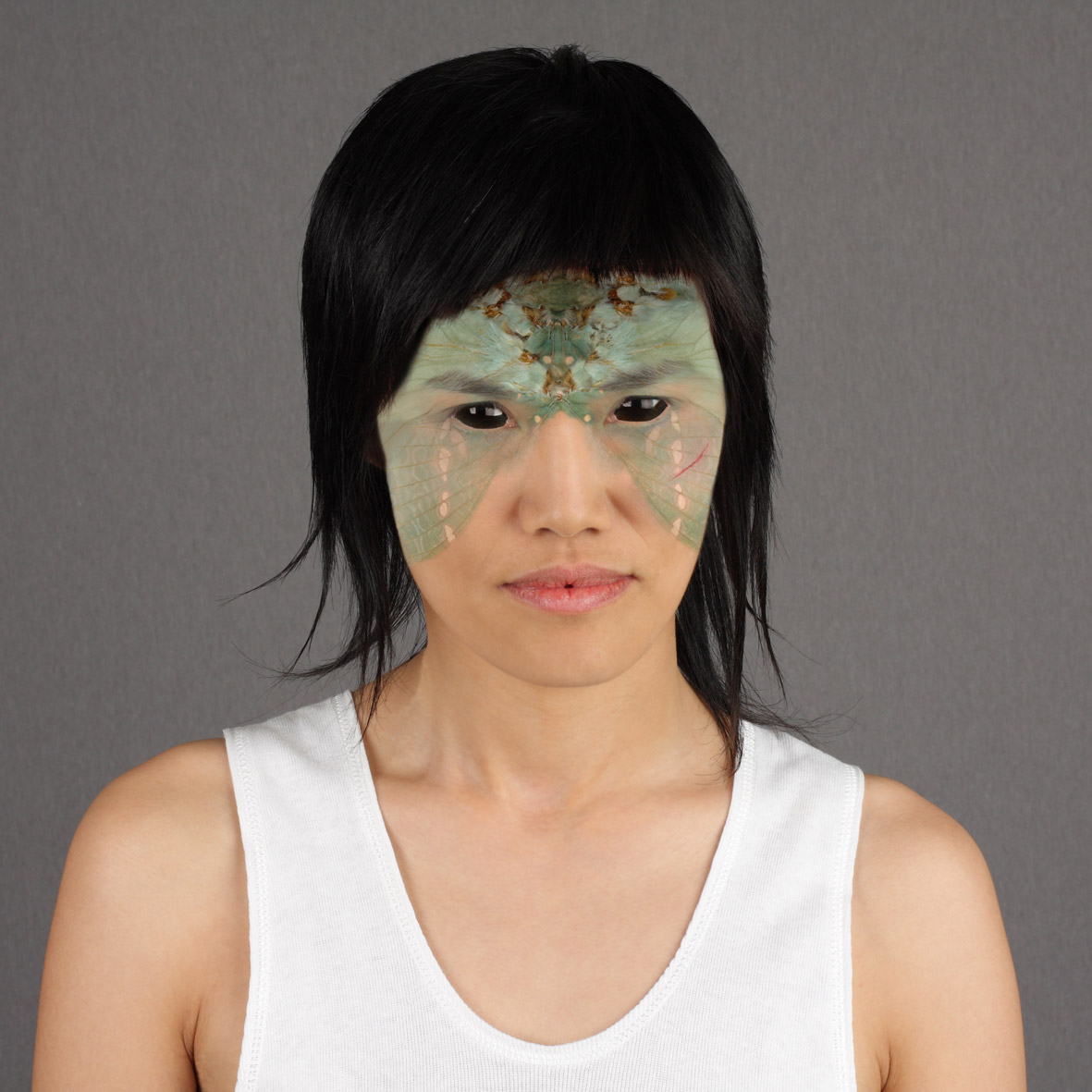
    Closed Mondays and Tuesdays

    The Blanton Museum of Art website

    LIKE ART BLART ON FACEBOOK

    Back to top