Exhibition: ‘Weegee: Society of the Spectacle’ at the International Center of Photography, New York

Exhibition dates: 23rd January – 5th May, 2025

Curator: Clément Chéroux, Director of the Fondation Henri Cartier-Bresson (FHCB), Paris, in collaboration with the Weegee Archive at the International Center of Photography (ICP), New York


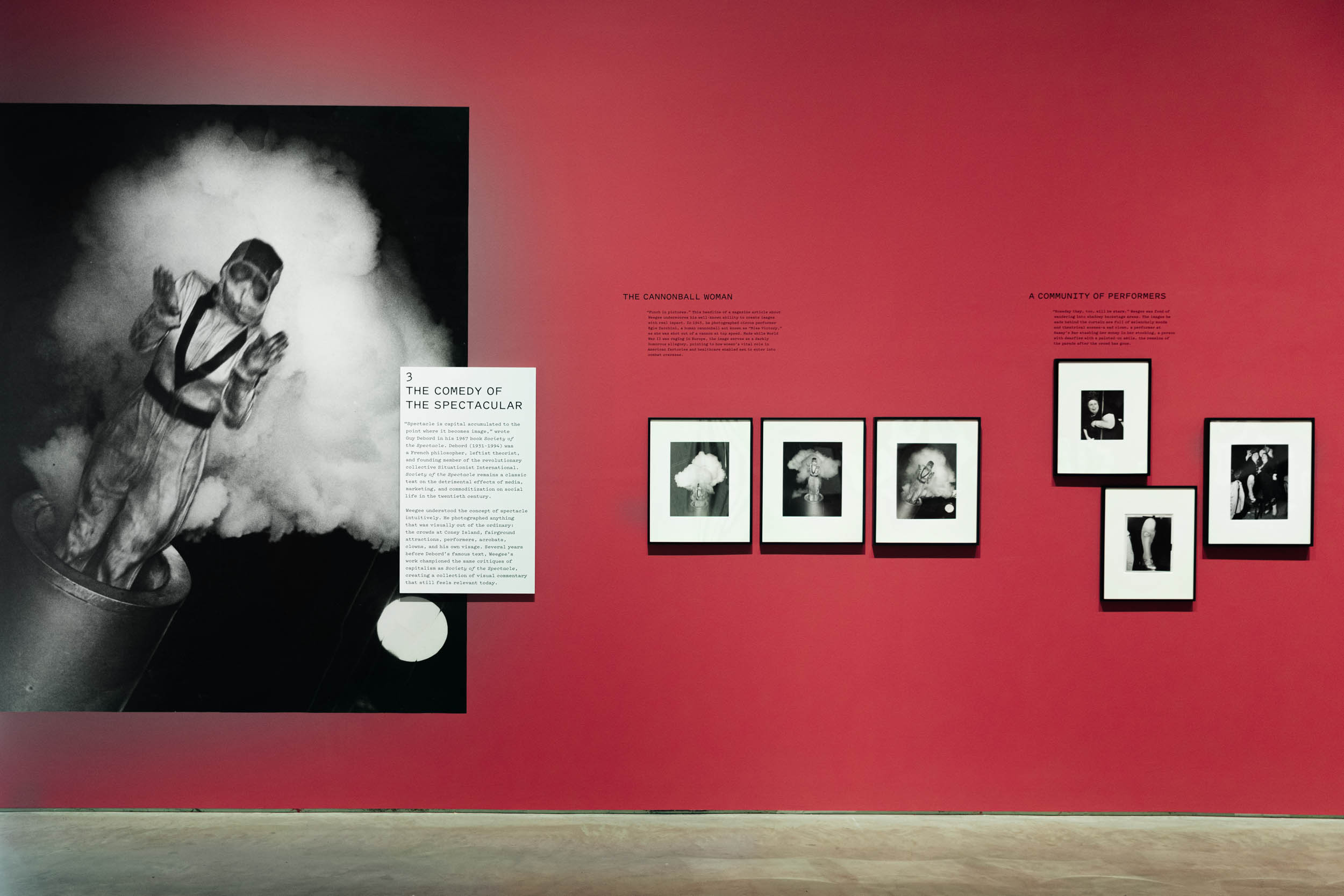
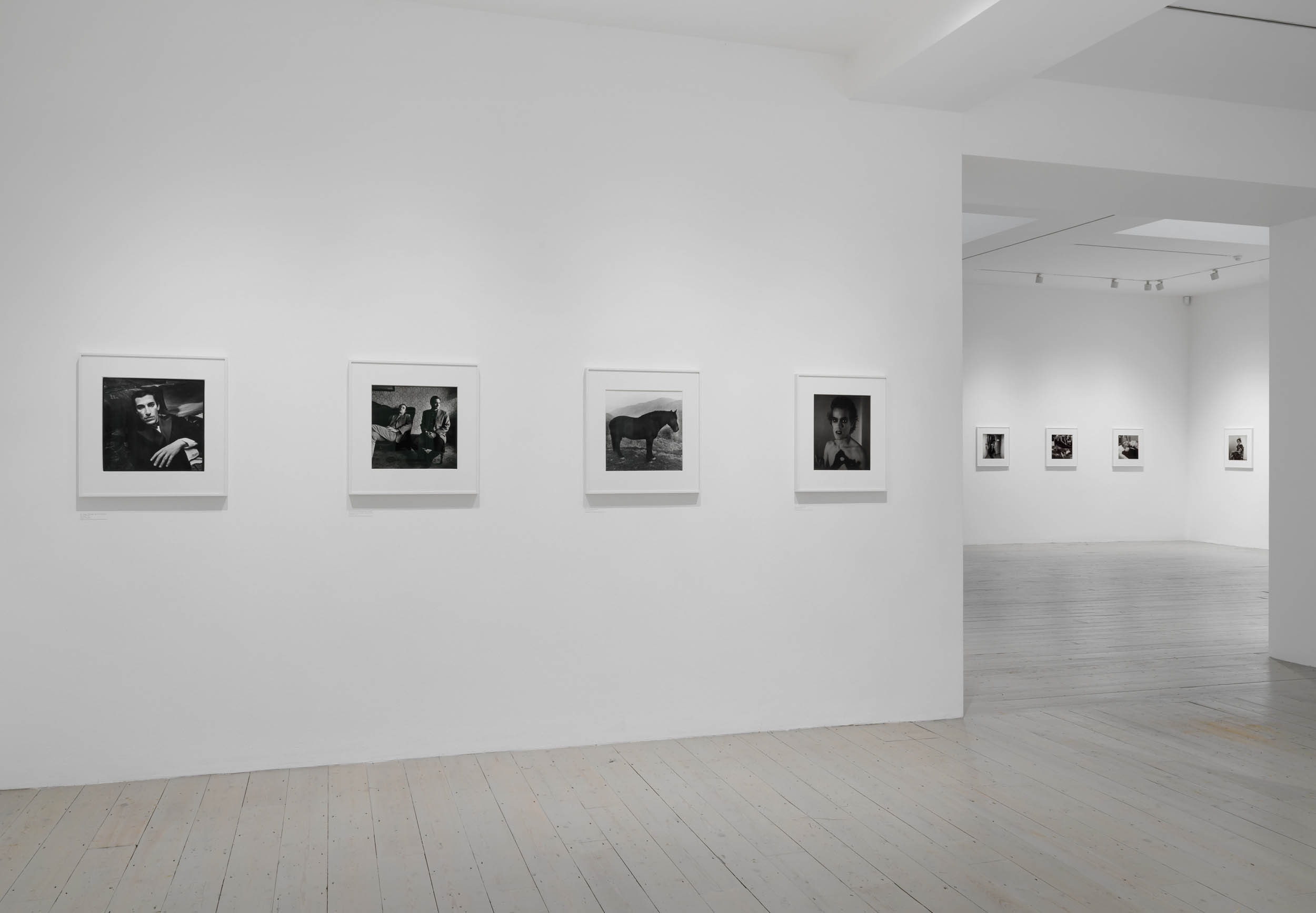
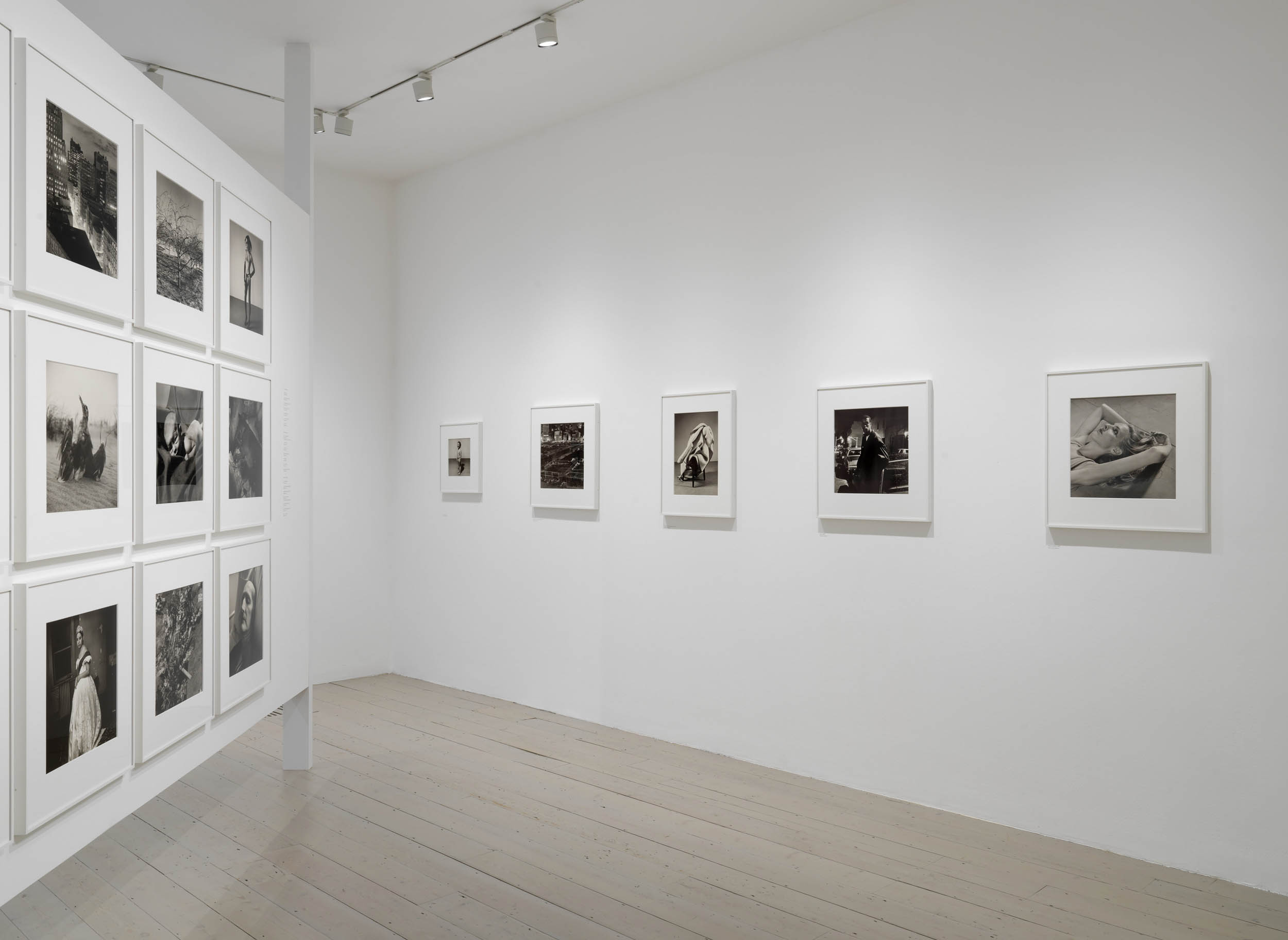
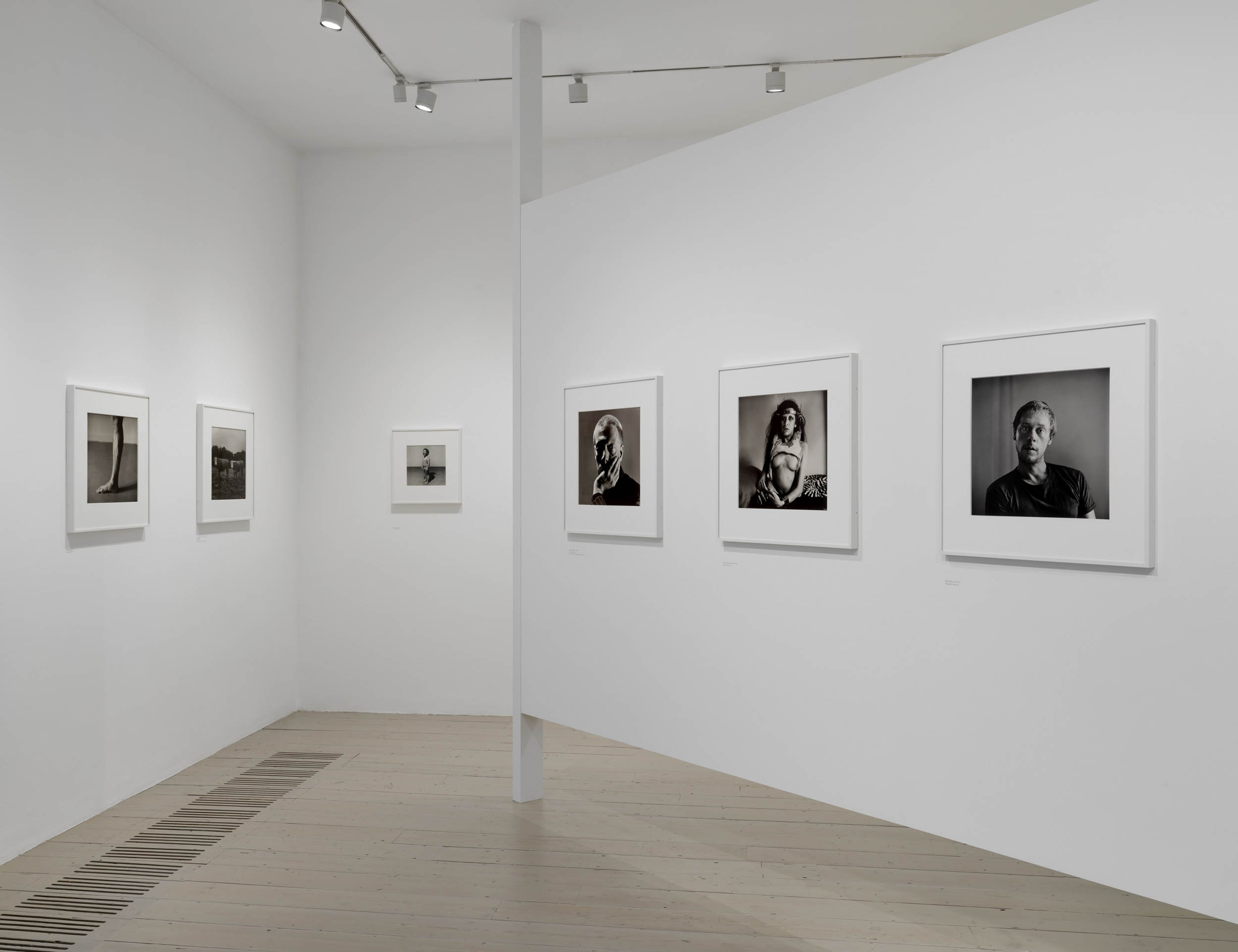
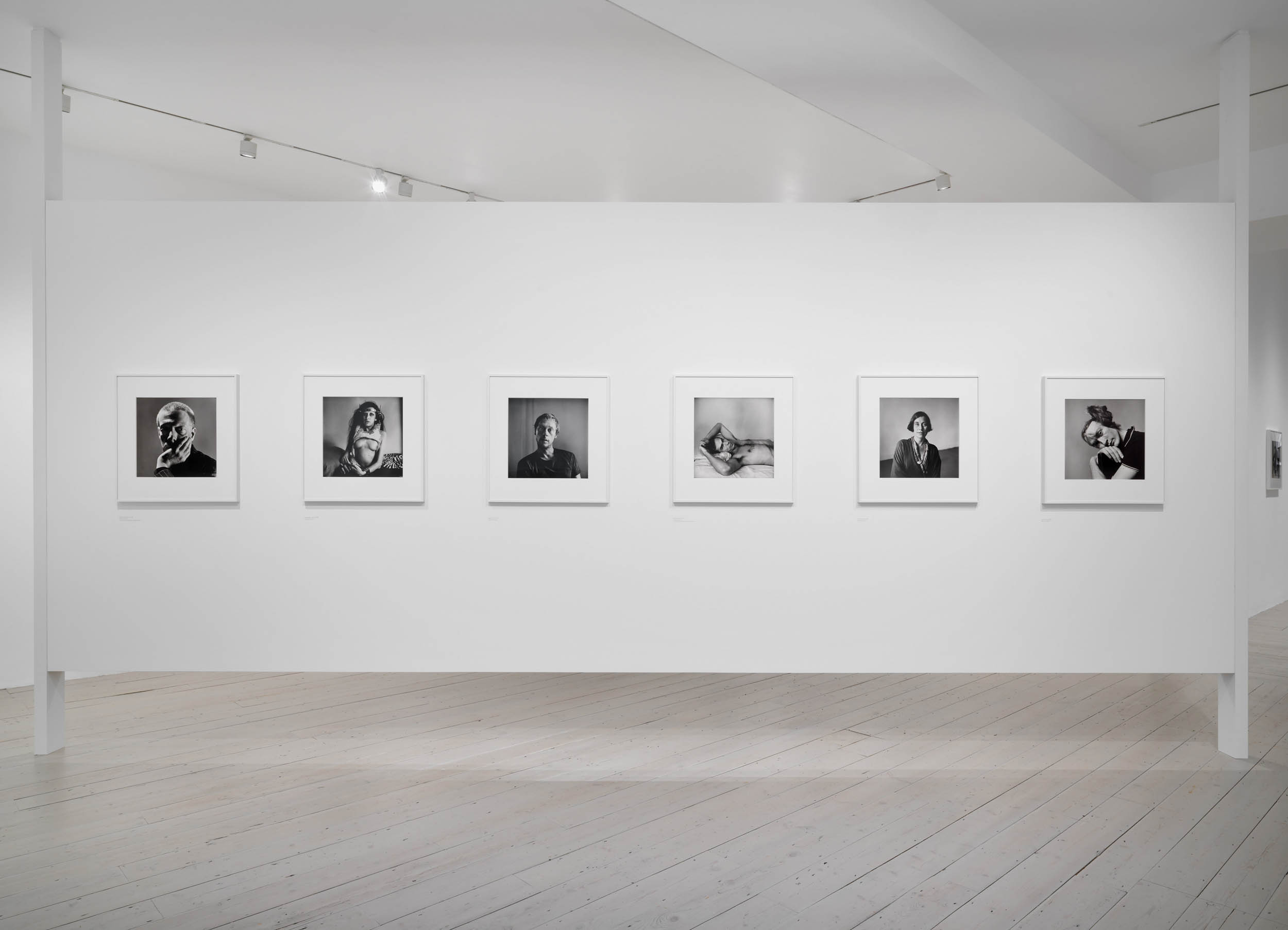
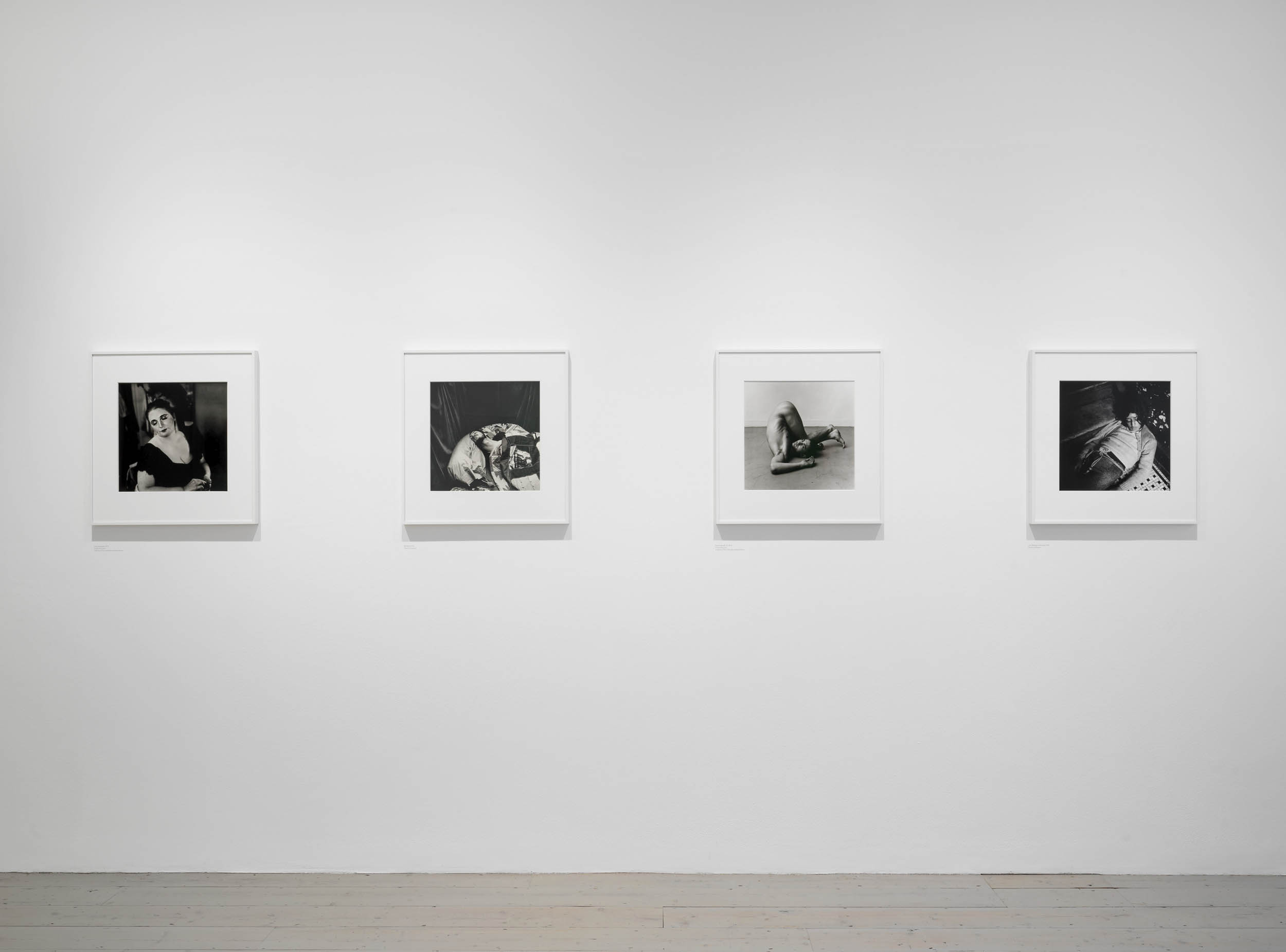
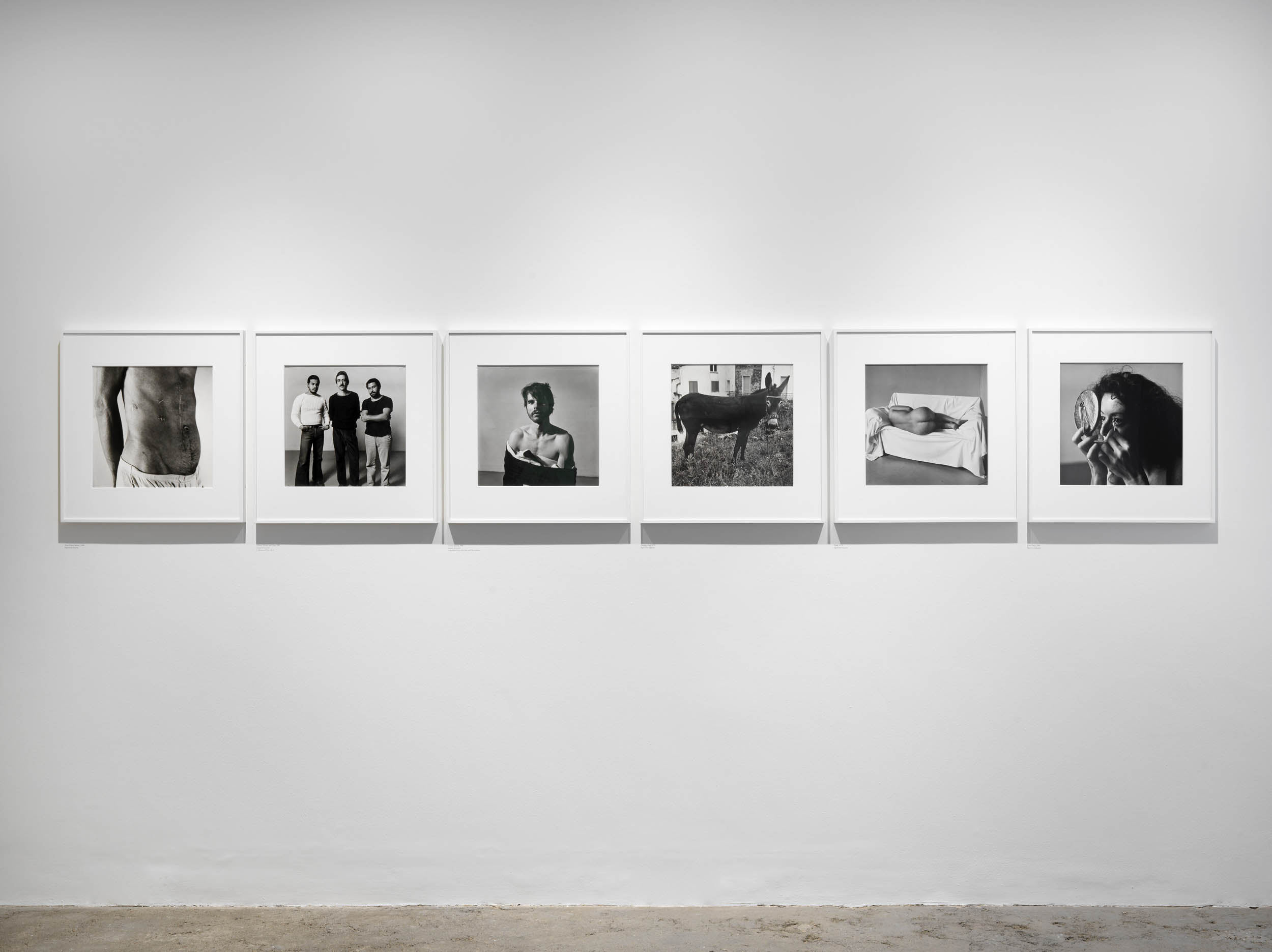
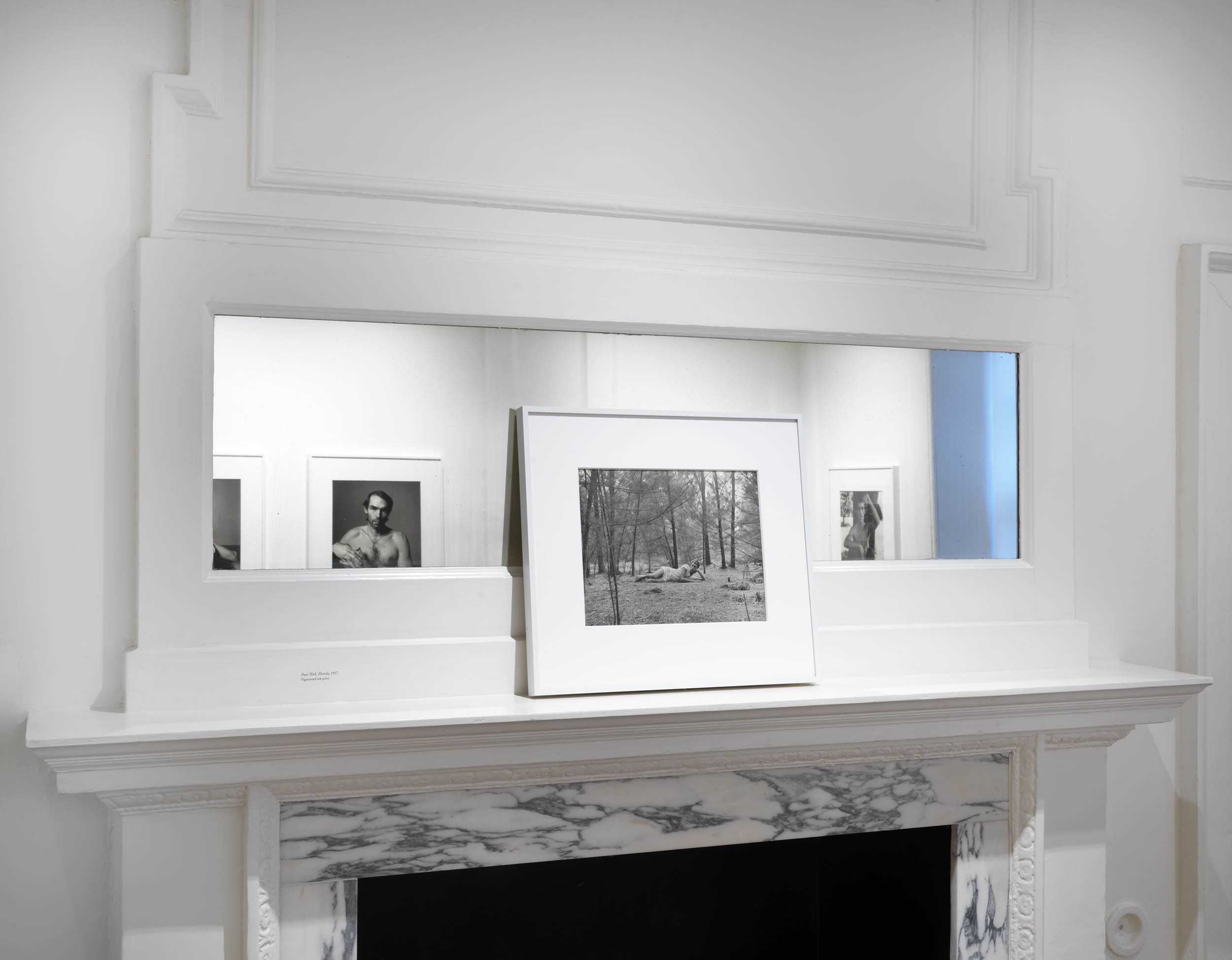
Installation view of the exhibition 'Weegee: Society of the Spectacle' at the International Center of Photography, New York


Installation view of the exhibition Weegee: Society of the Spectacle at the International Center of Photography, New York


I have so many current photography exhibitions that there will be mid-week postings for the next two weeks.

I have posted on this exhibition before when it was presented at the Foundation Henri Cartier-Bresson, Paris, January – May 2024 (“To see ourselves as others see us”) and Fundación MAPFRE, Madrid, September 2024 – January 2025 (“Self Seen”) – with a slightly different title but the same exhibition – but it is always interesting to imbibe the creativity and culture photography of Weegee’s work.

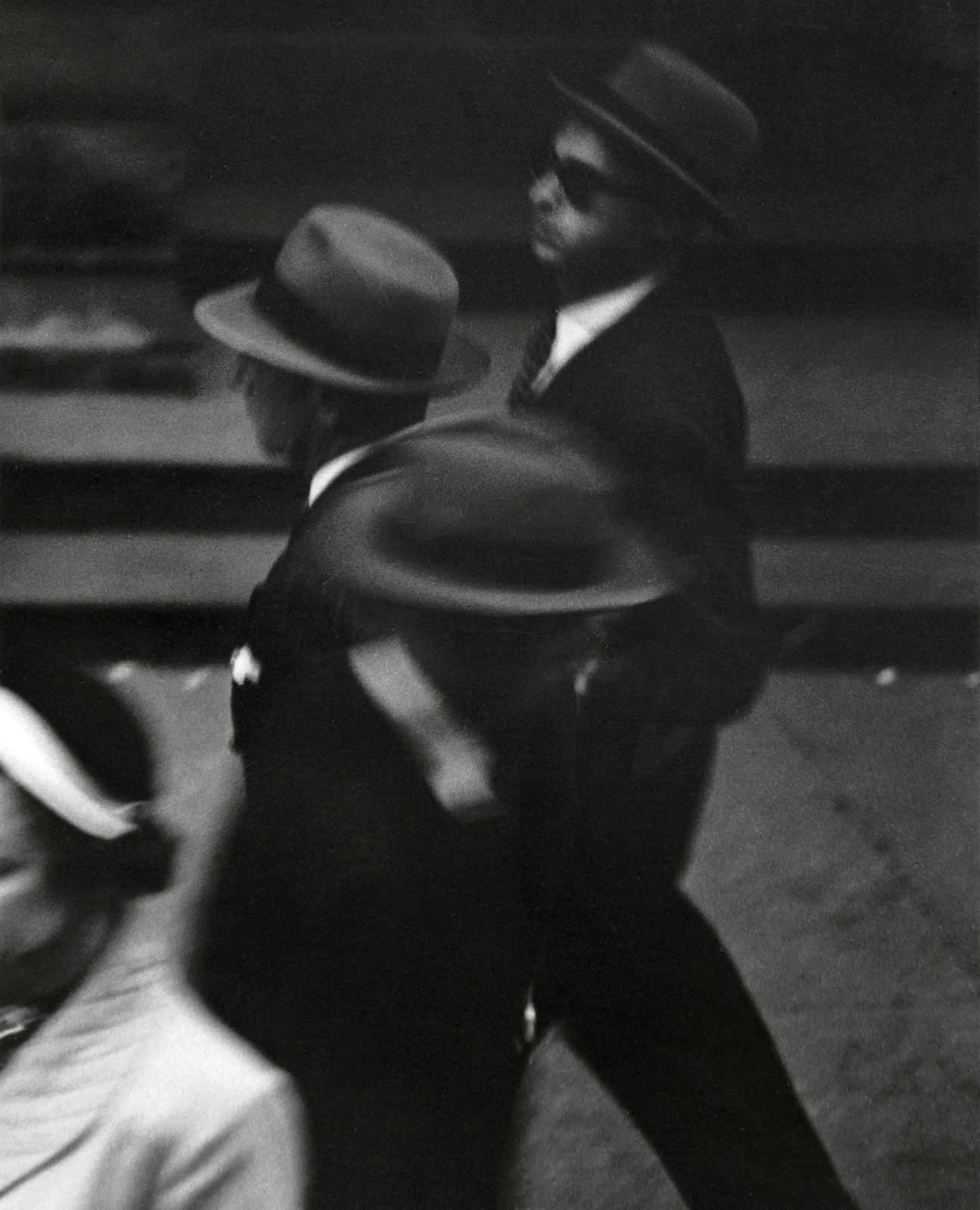
While there are the famous photographs as seen in previous postings, there are also new photographs to examine, one’s that you hardly ever see: for example [Clothing salesman, Easter Sunday, Harlem, New York] (c. 1940, below); [Mrs. Bernice Lythcott and son looking through window shattered by rock-throwing hoodlums, Harlem, New York] (October 18, 1943, below); the infrared photograph [Lovers at the movies, New York] (c. 1943, below); Ladies keep their money in their stockings… (1944, below); and Night… a black velvet curtain has dropped over the white sky… (March 2, 1944, below) – all taken during the Second World War.

Dr Marcus Bunyan


Many thankx to the ICP for allowing me to publish the photographs in the posting. Please click on the photographs for a larger version of the image.


Weegee (Arthur Fellig) (American born Ukraine, 1899-1968) 'On the Spot' December 9, 1939 from the exhibition 'Weegee: Society of the Spectacle' at the International Center of Photography, New York, Jan - May 2025


Weegee (Arthur Fellig) (American born Ukraine, 1899-1968)
On the Spot
December 9, 1939
International Center of Photography
Purchase, with funds provided by Lois and Bruce Zenkel Purchase Fund, 1982
© International Center of Photography/Getty Images


Weegee (Arthur Fellig) (American born Ukraine, 1899-1968) '[Clothing salesman, Easter Sunday, Harlem, New York]' c. 1940 from the exhibition 'Weegee: Society of the Spectacle' at the International Center of Photography, New York, Jan - May 2025


Weegee (Arthur Fellig) (American born Ukraine, 1899-1968)
[Clothing salesman, Easter Sunday, Harlem, New York]
c. 1940
International Center of Photography
Purchase, with funds provided by the Lois and Bruce Zenkel Purchase Fund, 1982
© International Center of Photography/Getty Images


Weegee (Arthur Fellig) (American born Ukraine, 1899-1968) [Afternoon crowd at Coney Island, Brooklyn] July 21st, 1940 from the exhibition 'Weegee: Society of the Spectacle' at the International Center of Photography, New York, Jan - May 2025


Weegee (Arthur Fellig) (American born Ukraine, 1899-1968)
[Afternoon crowd at Coney Island, Brooklyn]
July 21, 1940
International Center of Photography
Bequest of Wilma Wilcox, 1993
© International Center of Photography/Getty Images


Weegee (Arthur Fellig) (American born Ukraine, 1899-1968)
'[Anthony Esposito, booked on suspicion of killing a policeman, New York]' January 16, 1941 from the exhibition 'Weegee: Society of the Spectacle' at the International Center of Photography, New York, Jan - May 2025


Weegee (Arthur Fellig) (American born Ukraine, 1899-1968)
[Anthony Esposito, booked on suspicion of killing a policeman, New York]
January 16, 1941
International Center of Photography
Purchase, with funds provided by the Lois and Bruce Zenkel
Purchase Fund, 1982
© International Center of Photography/Getty Images


The career of photographer Weegee (born Arthur Fellig, 1899-1968) is often divided into two distinct phases, one gritty, the other glamorous. Celebrated for his sensationalist images of crime scenes, fires, car crashes, and the onlookers who witnessed these harrowing events across New York City in the 1930s and ’40s, Weegee also spent time in his career documenting the joyful crowds, premieres, and celebrities of Hollywood. His documentary images on both coasts gave way to experimental portraits late in his life, which were distorted using a kaleidoscope and other tricks from his technical toolbox. Weegee: Society of the Spectacle aims to reconcile these two sides of Weegee through an investigation of his focus, throughout his career, on a critique of 20th century popular culture and its insatiable appetite for spectacle.

Weegee: Society of the Spectacle is curated by Clément Chéroux, Director of the Fondation Henri Cartier-Bresson (FHCB), Paris, in collaboration with the Weegee Archive at the International Center of Photography (ICP), New York. The exhibition opens at ICP after a run at the FHCB and the Fundación MAPFRE, Madrid. The exhibition will be accompanied by the publication Weegee: Society of the Spectacle (Thames & Hudson).

Text from the ICP website
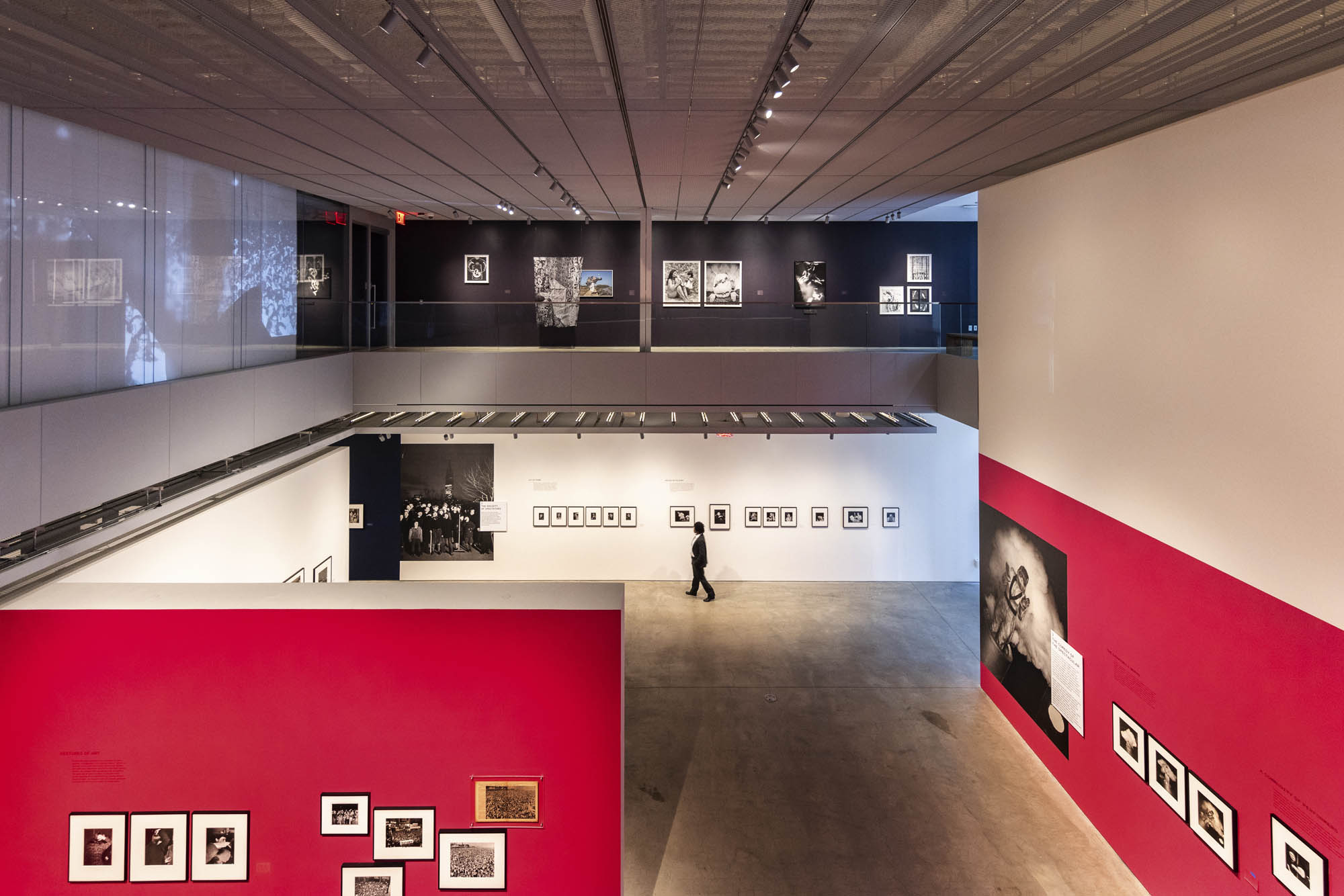
 

Installation view of the exhibition 'Weegee: Society of the Spectacle' at the International Center of Photography, New York


Installation views of the exhibition Weegee: Society of the Spectacle at the International Center of Photography, New York


Weegee (Arthur Fellig) (American born Ukraine, 1899-1968) '[Circus performer Miss Victory (Eglie Zacchini) shot out of a cannon at the speed of 360 feet a second, New York]' June 28, 1943


Weegee (Arthur Fellig) (American born Ukraine, 1899-1968)
[Circus performer Miss Victory (Eglie Zacchini) shot out of a cannon at the speed of 360 feet a second, New York]
June 28, 1943
Gelatin silver print
13 1/2 x 10 3/4 in. (34.3 x 27.3cm)
Gift of Lee C. Sievan, 1984
© International Center of Photography


Weegee (Arthur Fellig) (American born Ukraine, 1899-1968) '[Mrs. Bernice Lythcott and son looking through window shattered by rock-throwing hoodlums, Harlem, New York]' October 18, 1943


Weegee (Arthur Fellig) (American born Ukraine, 1899-1968)
[Mrs. Bernice Lythcott and son looking through window shattered by rock-throwing hoodlums, Harlem, New York]
October 18, 1943
International Center of Photography. Bequest of Wilma Wilcox, 1993
© International Center of Photography/Getty Images


Weegee (Arthur Fellig) (American born Ukraine, 1899-1968) 'Simply adding boiling water' 1943


Weegee (Arthur Fellig) (American born Ukraine, 1899-1968)
Simply Add Boiling Water
December 18, 1943
International Center of Photography
Purchase, with funds provided by Lois and Bruce Zenkel Purchase Fund, 1982
© International Center of Photography/Getty Images


Weegee (Arthur Fellig) (American born Ukraine, 1899-1968) '[Lovers at the movies, New York]' c. 1943


Weegee (Arthur Fellig) (American born Ukraine, 1899-1968)
[Lovers at the movies, New York]
c. 1943
International Center of Photography
Bequest of Wilma Wilcox, 1993
© International Center of Photography/Getty Images


Weegee (American, 1899-1968) 'Ladies keep their money in their stockings...' 1944


Weegee (Arthur Fellig) (American born Ukraine, 1899-1968)
Ladies keep their money in their stockings…
1944
International Center of Photography
© International Center of Photography/Getty Images


Weegee (Arthur Fellig) (American born Ukraine, 1899-1968) 'Night… a black velvet curtain has dropped over the white sky… a few mothers went looking for their kids… found them here… dragged them home for supper… but they are back again… but that's the same Empire State Building in the Background….' March 2, 1944


Weegee (Arthur Fellig) (American born Ukraine, 1899-1968)
Night… a black velvet curtain has dropped over the white sky… a few mothers went looking for their kids… found them here… dragged them home for supper… but they are back again… but that’s the same Empire State Building in the Background….
March 2, 1944
International Center of Photography
Bequest of Wilma Wilcox, 1993
© International Center of Photography/Getty Images


The International Center of Photography (ICP) is pleased to announce Weegee:
Society of the Spectacle,
an exhibition presented in partnership with Fondation
Henri Cartier-Bresson, Paris and curated by Clément Chéroux, Director of the
Fondation Henri Cartier-Bresson.

This exhibition revisits Weegee’s bold, boundary-pushing perspective and
celebrates his pioneering role in documenting spectacle, from crime and tragedy on New York City’s streets to distorted portraits of iconic Hollywood celebrities. The exhibition will be accompanied by a new publication created by the Fondation and Thames & Hudson that explores the impact of Weegee’s art and his critical view of urban spectacle. ICP is excited to present the new English-language edition of this important study of Weegee’s work.

Weegee: Society of the Spectacle marks the sixth major presentation of Weegee’s work at ICP and the first since it relocated to Manhattan’s Lower East Side neighbourhood, the very same one that Weegee transformed into an urban stage in his photographs. The exhibition arrives at a time when his commentary on the blurred lines between reality and performance and news and entertainment feel newly relevant and urgent in the age of smartphones and viral media where every individual has become both a voyeur and a consumer of spectacle.

Drawn largely from ICP’s Weegee collection, itself comprised of his entire studio archive and also the most comprehensive holdings of the photographer’s work in the world, Weegee: Society of the Spectacle is a re-examination of the photographer’s visual commentary on the society of his time, connecting his early career documenting New York City streets to his later work in Hollywood’s
glamorised world of celebrity and working with experimental image distortions. Long regarded as two distinct periods in his career, the works in Weegee: Society of the Spectacle challenge this division by underscoring how Weegee’s exploration of spectacle persisted across different contexts – from crime scenes and fires to red carpet premieres. Weegee’s masterful depiction of the ‘society of spectators’ captures both the unfiltered, everyday urban experience and the glossy allure of fame.

“While he may never have imagined the centrality of images to contemporary life, Weegee’s provocative and prescient perspective on urban life forces us to reflect on how we now exist simultaneously as both consumers and the consumed,” Elisabeth Sherman, Senior Curator and Director of Exhibitions and Collections at ICP, said. “In an age where technology and constant image sharing shape our reality, Weegee’s work challenges us to reconsider the camera’s role not only as a witness but as an active participant in the creation of spectacle.”

Clément Chéroux, Director at Fondation Henri Cartier-Bresson, stated,
“Weegee’s works highlight his ability to capture life’s extremes, from high society to the underworld. Often working at night, Weegee’s images of crime, fire and urban unrest reveal the harsh realities of 1930s and 1940s New York. His later shift to Hollywood did not distance him from this focus on spectacle but rather amplified his satirical approach, as he created playful distortions of celebrities that critiqued the American obsession with fame.”

The exhibition will highlight three recurring themes in Weegee’s work. The
Spectacle of the News
focuses on his nighttime photos of crime scenes, car
accidents and fires, where the onlookers are as important as the events
themselves. The Society of Spectators shows Weegee’s lens turned towards the
people on the fringes of the main action – from high-society parties to street
scenes – emphasising that spectatorship is part of the spectacle. Hollywood
Distortions
highlights Weegee’s later years, which saw him experiment with
techniques that satirised Hollywood stars and the world of celebrity through
exaggerated photo-caricatures, offering a pointed critique of the culture of fame.

The publication accompanying the exhibition, Weegee: Society of the Spectacle,
further explores these themes, presenting essays by leading photography scholars including Clément Chéroux, Isabelle Bonnet, David Campany and Cynthia Young alongside rare archival material that deepens the viewer’s understanding of Weegee’s complex legacy. The book, published by Fondation Henri Cartier-Bresson and Thames & Hudson, will be available for purchase at ICP’s bookstore and through select retailers.

Press release from ICP


Weegee (Arthur Fellig) (American born Ukraine, 1899-1968) '[St. Louis Gag Shot]' c. 1950


Weegee (Arthur Fellig) (American born Ukraine, 1899-1968)
[St. Louis Gag Shot]
c. 1950
International Center of Photography
Bequest of Wilma
Wilcox, 1993
© International Center of Photography/Getty Images


Weegee (Arthur Fellig) (American born Ukraine, 1899-1968) 'Photographers at Premiere' c. 1951


Weegee (Arthur Fellig) (American born Ukraine, 1899-1968)
Photographers at Premiere
c. 1951
International Center of Photography
Bequest of Wilma Wilcox, 1993
© International Center of Photography/Getty Images


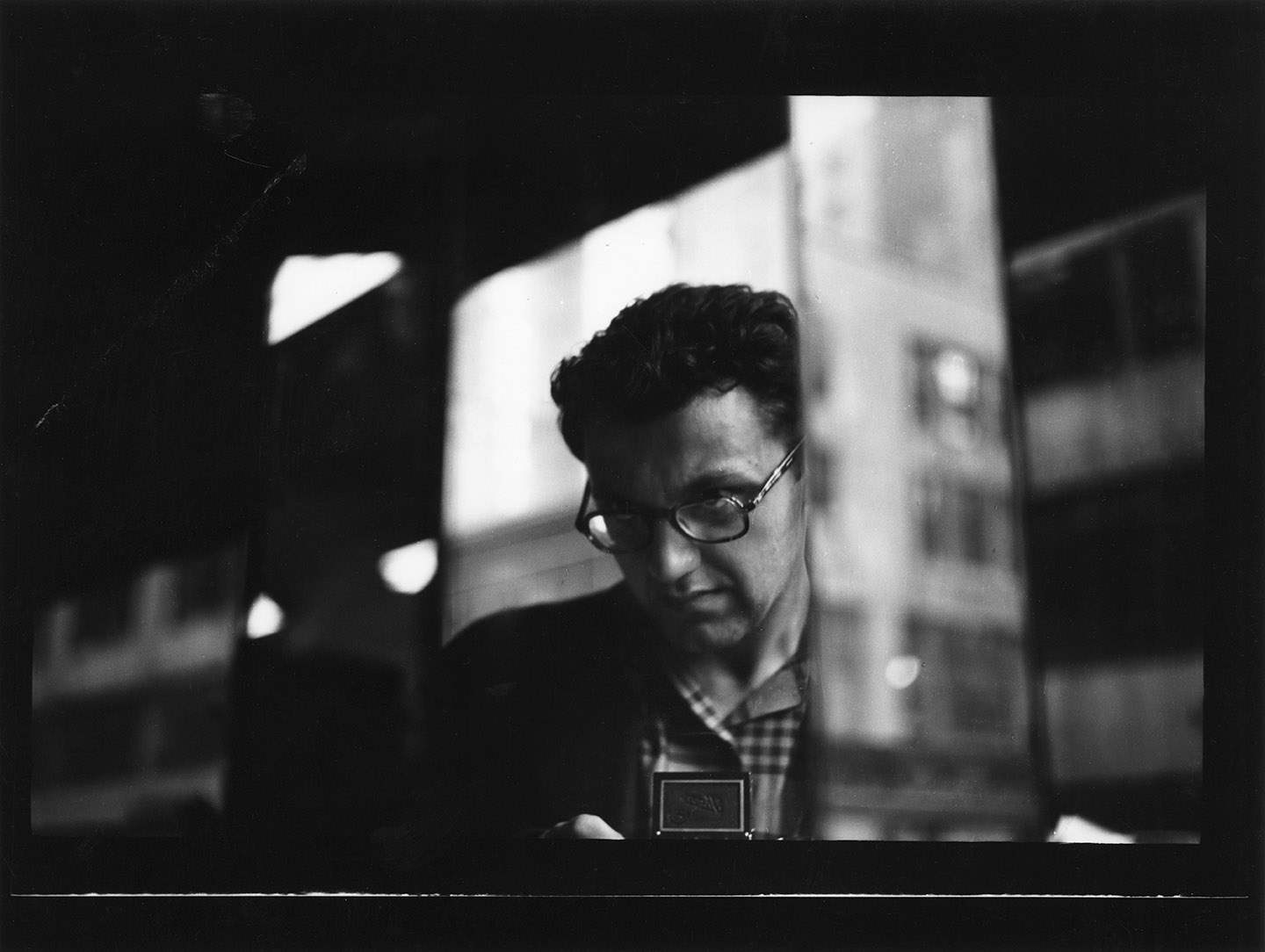
Weegee (Arthur Fellig) (American born Ukraine, 1899-1968) 'Weegee' c. 1958


Weegee (Arthur Fellig) (American born Ukraine, 1899-1968)
Weegee
c. 1958
International Center of Photography
Bequest of Wilma Wilcox, 1993
© International Center of Photography/Getty Images


Weegee (Arthur Fellig) (American born Ukraine, 1899-1968) '[Mona Lisa distortion]' c. 1958


Weegee (Arthur Fellig) (American born Ukraine, 1899-1968)
[Mona Lisa distortion]
c. 1958
International Center of Photography
Bequest of Wilma Wilcox, 1993
© International Center of Photography/Getty Images


Weegee (Arthur Fellig) (American born Ukraine, 1899-1968) 'President John F. Kennedy (distortion)' December 2, 1962


Weegee (Arthur Fellig) (American born Ukraine, 1899-1968)
President John F. Kennedy (distortion)
December 2, 1962
International Center of Photography
Bequest of Wilma Wilcox, 1993
© International Center of Photography/Getty Images


'Weegee: Society of the Spectacle' book cover


Weegee: Society of the Spectacle book cover


International Center of Photography
84 Ludlow Street, New York, NY 10002
between Delancey Street and Broome Street

Opening hours:
Monday 10.30am – 6.30pm
Tuesday CLOSED
Wednesday 10.30am – 6.30pm
Thursday 10.30am – 8pm
Friday 10.30am – 6.30pm
Saturday 10.30am – 6.30pm
Sunday 10.30am – 6.30pm

International Center of Photography website

LIKE ART BLART ON FACEBOOK

Back to top

Exhibition: ‘FOTOGAGA: Max Ernst and Photography. A Visit from the Würth Collection’ at Museum für Fotografie, Staatliche Museen zu Berlin

Exhibition dates: 18th October, 2024 – 27th May, 2025

Curators: Katja Böhlau and Ludger Derenthal, Kunstbibliothek – Staatliche Museen zu Berlin


Max Ernst (German, 1891-1976) 'Frontispiece' 1921 From 'Paul Éluard: Répétitions' from the exhibition 'FOTOGAGA: Max Ernst and Photography. A Visit from the Würth Collection' at Museum für Fotografie, Oct 2024 - May 2025


Max Ernst (German, 1891-1976)
Frontispiece
1921
From Paul Éluard: Répétitions
Print from collage
5.5 x 10.3cm
Sammlung Würth
© VG Bild-Kunst, Bonn 2024


“Although these artists were explicitly not dealing with mundane reality but instead with what lies beneath, behind and in-between, the still relatively new medium of photography was of great importance for many. Last but not least, they also used it to make visible what remains hidden to the naked eye without technical means: the distant, the tiny, the moving.” (Press release)

Expressing the unconscious mind through illogical, dreamlike imagery and ideas, exploring the irrational, challenging notions of reality through a technical instrument – the camera – to create “a rich and multifarious cosmos of idiosyncratic realities that radically transcended traditional aesthetics.”

In the dream of the mind and the camera’s eye. Over and above the real.

Dr Marcus Bunyan


Many thankx to the Museum für Fotografie for allowing me to publish the photographs in the posting. Please click on the photographs for a larger version of the image.


“The invention of modern photomontage in the early twentieth century by Max Ernst with his Dada colleagues Hannah Höch, John Heartfield, George Grosz and Raoul Hausmann established new history in a variety of ways. Expanding modern art with multimedia as well as placing found photographs into art cut from printed magazines, rather than chemical made prints from the darkroom. Redefining final works of art without the paint brush or canvas. Ernst freed imagery into the unconscious by self-made combinations of drawing with torn and pasted photographic fragments, evoking memories and other responses by viewers that continue today.”


Steve Yates, Fulbright scholar, photographic artist, author and curator


Max Ernst (German, 1891-1976)
Die chinesische Nachtigall / Le rossignol chinois / The Chinese Nightingale 1920 from the exhibition 'FOTOGAGA: Max Ernst and Photography. A Visit from the Würth Collection' at Museum für Fotografie, Oct 2024 - May 2025


Max Ernst (German, 1891-1976)
Die chinesische Nachtigall / Le rossignol chinois / The Chinese Nightingale
1920
Collage and ink on paper
15.5 x 9cm
Musée de Grenoble
© VG Bild-Kunst, Bonn 2024


Max Ernst (German, 1891-1976) Lichtrad / la roue de la lumière / The wheel of light 1926 from the exhibition 'FOTOGAGA: Max Ernst and Photography. A Visit from the Würth Collection' at Museum für Fotografie, Oct 2024 - May 2025


Max Ernst (German, 1891-1976)
Lichtrad / la roue de la lumière / The wheel of light
1926
From Histoire Naturelle, sheet 29
Photogravure after frottage
32.5 x 50cm
Sammlung Würth
© VG Bild-Kunst, Bonn 2024


Max Ernst (German, 1891-1976) Max Ernst, Marie-Berthe Aurenche und Jean Aurenche / Max Ernst, Marie-Berthe Aurenche and Jean Aurenche, Photomaton c. 1929


Max Ernst (German, 1891-1976)
Max Ernst, Marie-Berthe Aurenche und Jean Aurenche / Max Ernst, Marie-Berthe Aurenche and Jean Aurenche, Photomaton
c. 1929
Silver gelatin paper
20.9 x 3.7cm
Sammlung Würth
© VG Bild-Kunst, Bonn 2024


Max Ernst (German, 1891-1976) "…unter meinem weißen Gewand, in meinem Taubenhaus, werdet ihr nicht mehr arm sein, ihr tonsurierten Tauben. Ich werde euch zwölf Tonnen Zucker bringen. Aber berührt nicht mein Haar“ / "…sous mon blanc vêtement, dans mon colombodrôme, vous ne serez plus pauvres, pigeons tonsurés. Je vous apporterai douze tonnes de sucre. Mais ne touchez pas à mes cheveux!" / "…you won't be poor anymore, head-shaven pigeons, under my white dress, in my columbarium. I'll bring you a dozen tons of sugar. But don't you touch my hair!" 1930


Max Ernst (German, 1891-1976)
“…unter meinem weißen Gewand, in meinem Taubenhaus, werdet ihr nicht mehr arm sein, ihr tonsurierten Tauben. Ich werde euch zwölf Tonnen Zucker bringen. Aber berührt nicht mein Haar“ / “…sous mon blanc vêtement, dans mon colombodrôme, vous ne serez plus pauvres, pigeons tonsurés. Je vous apporterai douze tonnes de sucre. Mais ne touchez pas à mes cheveux!” / “…you won’t be poor anymore, head-shaven pigeons, under my white dress, in my columbarium. I’ll bring you a dozen tons of sugar. But don’t you touch my hair!”
1930
From Das Karmelienmädchen. Ein Traum / Rêve d’une petite fille qui voulut entrer au Carmel / Dream of a little girl who wanted to enter Carmel
Print from collage
7.7 x 11.3cm
Sammlung Würth
© VG Bild-Kunst, Bonn 2024


Max Ernst (German, 1891-1976) Das Innere der Sicht 3 / A l'intérieur de la vue 3 / Inside View 3 1931/1947


Max Ernst (German, 1891-1976)
Das Innere der Sicht 3 / A l’intérieur de la vue 3 / Inside View 3
1931/1947
From Paul Éluard : A l’intérieur de la vue. 8 Poèmes visibles
Collage
22.3 x 15.5cm
Sammlung Würth
© VG Bild-Kunst, Bonn 2024


Max Ernst (German, 1891–1976) …des vollständig auf sie beschränkten, des vom Rest der Welt isolierten / … d'absolument limité à eux, d'isolant du reste du monde / of the one who is completely confined to them, isolated from the rest of the world 1936


Max Ernst (German, 1891–1976)
…des vollständig auf sie beschränkten, des vom Rest der Welt isolierten / … d’absolument limité à eux, d’isolant du reste du monde / of the one who is completely confined to them, isolated from the rest of the world
1936
From André Breton: Le château étoilé
Photogram after frottage
25 x 20cm
Sammlung Würt
© VG Bild-Kunst, Bonn 2024


Max Ernst (German, 1891-1976) Eine weitere Laune der Venus / Un autre caprice de Venus / Another whim of Venus 1961


Max Ernst (German, 1891-1976)
Eine weitere Laune der Venus / Un autre caprice de Venus / Another whim of Venus
1961
Oil on canvas
27 x 22cm
Sammlung Würth
© VG Bild-Kunst, Bonn 2024


Max Ernst holds a prominent position within Dada and Surrealist Art. His name stands for genre-bending works that combine dream and reality. The exhibition FOTOGAGA: Max Ernst and Photography. A Visit from the Würth Collection is the first to search for points of intersection between his work and photography. Commemorating Surrealism’s centenary, the Museum für Fotografie (Museum of Photography) is showing a representative overview of Max Ernst’s artworks from the Würth Collection. These are complemented by works from the Kunstbibliothek, Kupferstichkabinett, Sammlung Scharf-Gerstenberg and the Staatsbibliothek zu Berlin, and other exceptional loans from museums and private collections in France and Germany.

Max Ernst and Photography – A Special Connection

The art of Max Ernst (1891-1976) was created at a time characterised by a new, creative approach to photography. Snapshots, scientific photographs and images of war machinery inspired him and served as working materials, especially for his collages. Technical and artistic developments in the medium of photography significantly influenced his work. He used photographic reproduction techniques to increase the visual impact of his works: enlargements allowed his small-format collages to hold their own alongside paintings in exhibitions; the production of photo postcards of the collages ensured that the works could be distributed quickly and easily; and the inversion of the tonal values in a photogram enhanced the effect of his frottages.

Max Ernst himself never used a camera for his art, but he liked to pose for the camera, whether for images taken by well-known photographers or made in photo booths. At times serious, at times a little “gaga”, the portraits illustrate not just the artist’s love for playfulness but also an occasionally strategic use of photography to promote his artistic agenda. The title of the exhibition – “FOTOGAGA” – is derived from a group of works by Hans Arp and Max Ernst, which they called “FATAGAGA”: the “FAbrication de TAbleaux GAsométriques Garantis (Fabrication of Guaranteed Gasometric Images)”. One of these photocollages, in which the two artists address their relationship as friends, can be seen in the exhibition.

A Century of Surrealism

Some 270 works will be exhibited, primarily works on paper but also paintings by Max Ernst and photographs, photograms, collages, and illustrated books by his Surrealist contemporaries. Although these artists were explicitly not dealing with mundane reality but instead with what lies beneath, behind and in-between, the still relatively new medium of photography was of great importance for many. Last but not least, they also used it to make visible what remains hidden to the naked eye without technical means: the distant, the tiny, the moving.

Max Ernst’s works are framed within the context of both contemporary and historical references. There are numerous and surprising parallels to photographs by other artists. An avid delight in experimentation and a creative game played with chance characterise the works selected for the exhibition. Their originators reflected on forgotten photographic processes from the 19th century and developed new techniques using light-sensitive materials. Semi-automatic methods, working with found objects, unusual combinations, and the blurring of traces have equally shaped the work of Max Ernst and the photographic oeuvres of many of his contemporaries and other artists that followed. Even a century after André Breton published the first Surrealist Manifesto on 15 October 1924, they have not lost any of their fascination.

A cooperation with tradition

The Staatliche Museen zu Berlin look back on a longstanding cooperation with the Würth Collection. FOTOGAGA: Max Ernst and Photography is the fourth exhibition in a series that began in 2019‒2020 with Anthony Caro: The Last Judgement Sculpture from the Würth Collection at the Gemä-ldegalerie. It was followed in 2021‒2022 by Illustrious Guests: Treasures from the Kunstkammer Würth in the Kunstgewerbemuseum and David Hockney – Landscapes in Dialogue. “The Four Seasons” from the Würth Collection in 2022, also shown at the Gemäldegalerie. The exhibition at the Museum für Fotografie draws on the Würth Collection’s extensive holdings, especially of Max Ernst’s graphic works, which are now being shown in Berlin for the first time.

Press release from the Museum für Fotografie


Max Ernst (German, 1891-1976) 'Above the Clouds Midnight Passes' 1920


Max Ernst (German, 1891-1976)
Above the Clouds Midnight Passes
1920
Photographic enlargement of a collage and ink, facsimile, 2024
73 x 55cm
Kunsthaus Zürich
Public domain


László Moholy-Nagy (Hungarian, 1895-1946) 'The broken marriage' 1925


László Moholy-Nagy (Hungarian, 1895-1946)
The broken marriage
1925
Photomontage
16.5 x 12.2cm
Sammlung Siegert, München
Public domain


Max Ernst (German, 1891-1976) 'The Stall of the Sphinx' 1925


Max Ernst (German, 1891-1976)
The Stall of the Sphinx
1925
Pencil on paper
16.4 x 15.2cm
Sammlung Ulla und Heiner Pietzsch, Berlin


Max Ernst (German, 1891-1976) 'Little Tables around the Earth' (Petites tables autour de la terre) 1926


Max Ernst (German, 1891-1976)
Little Tables around the Earth (Petites tables autour de la terre)
1926
From Natural History (Histoire naturelle)
Collotype of a frottage
50 x 32.5 cm (sheet)
Paris: Éditions Jeanne Bucher
Portfolio with 34 collotypes of frottages
51.7 x 35 x 1cm


Jean Painlevé (French, 1902-1989)
Hummerschere / Pince d'homard, Port-Blanc, Bretagne / Lobster claw, Port-Blanc, Brittany 1929


Jean Painlevé (French, 1902-1989)
Hummerschere / Pince d’homard, Port-Blanc, Bretagne / Lobster claw, Port-Blanc, Brittany
1929
Silver gelatin paper
23 x 16.7cm
Sammlung Dietmar Siegert
© Archives Jean Painlevé/Les Documents cinématographiques, Paris
Repro: Christian Schmieder


Aenne Biermann (German, 1898-1933) 'Cactus' 1929


Aenne Biermann (German, 1898-1933)
Cactus
1929
Silver gelatin paper
12.4 x 17.3cm


“The object, which, in its surroundings, is never seen other than in its most mundane aspect, is given new life when isolated in the lens of the viewfinder. […] It seemed to me that the clarity of a constructed form, when removed from its overly distracting surroundings, could be depicted convincingly through the use of photography.”

~ Aenne Biermann


Max Ernst (German, 1891–1976) 'Quiétude' from 'The Hundred-Headless Woman' 1929


Max Ernst (1891–1976)
Quiétude from The Hundred-Headless Woman
1929
Collage novel with 147 reproductions of collages
Paris: Éditions du Carrefour
25 x 19cm


The Hundred Headless Woman is Ernst’s first collage novel. It features a loosely narrative sequence of uncanny Surrealist collages, made by cutting up and reassembling nineteenth-century illustrations, accompanied by Ernst’s equally strange captions. Ernst’s French title, La Femme 100 têtes, is a double entendre; when read aloud it can be understood as either “the hundred-headed woman” or “the headless woman.” Along with this enigmatic title character, the book marks the introduction of Ernst’s favourite alter ego, Loplop, “the Bird Superior.” Ernst was deeply engaged with illustrated books during the 1930s; in addition to collage novels, he created many etchings and lithographs to complement the poems and stories of Surrealist writers with whom he was closely associated.

Gallery label from Max Ernst: Beyond Painting, September 23, 2017-January 1, 2018 on the MoMA website Nd [online] Cited 31/03/2025


Max Ernst (German, 1891-1976) 'Loplop presents the members of the Surrealist group' 1931


Max Ernst (German, 1891-1976)
Loplop presents the members of the Surrealist group
1931
Reproduction of a collage in Le Surréalisme au service de la revolution, No. 4
27.4 x 19.9cm


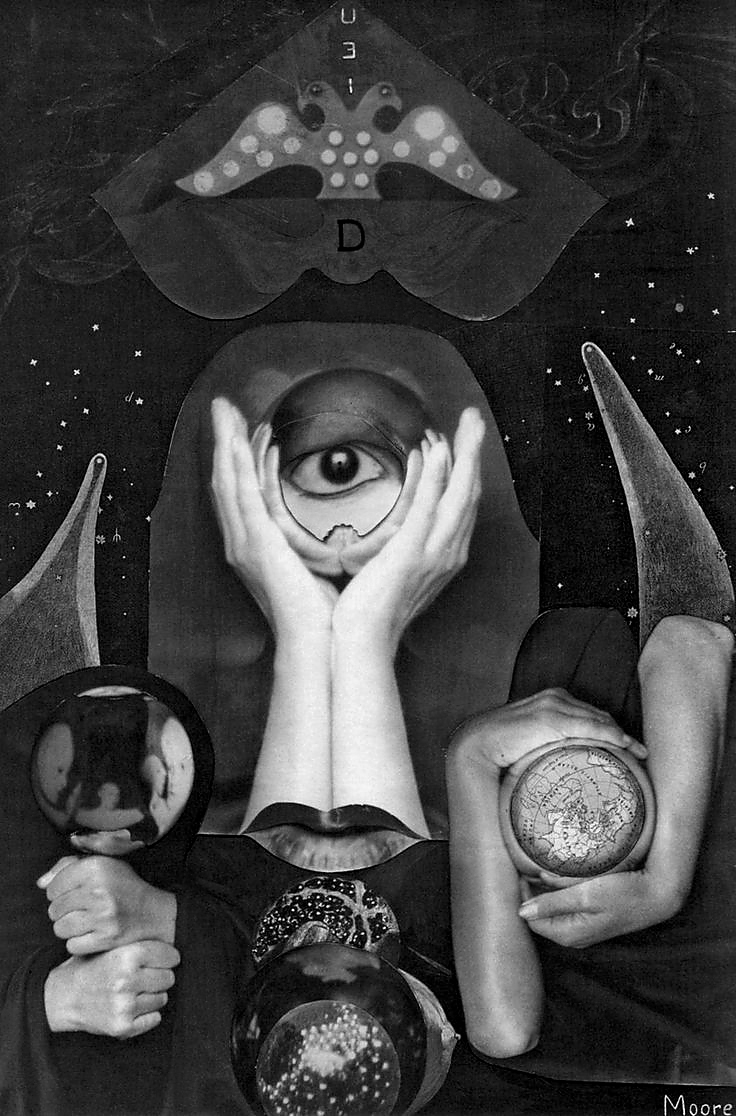
Claude Cahun (French, 1894-1954) / Marcel Moore (French, 1892-1972)
'Aveux non avenus' / Disavowals (frontispiece) 1930 Paris: Éditions du Carrefour


Claude Cahun (French, 1894-1954) / Marcel Moore (French, 1892-1972)
Aveux non avenus / Disavowals (frontispiece)
1930
Paris: Éditions du Carrefour
Book with 11 heliogravures of collages
22 x 17 x 2.8cm
Sammlung Siegert, München


Man Ray (American, 1890-1976) 'Untitled'
1931 from 'Électricité. Dix rayogrammes de Man Ray et un texte de Pierre'


Man Ray (American, 1890-1976)
Untitled
1931
From Électricité. Dix rayogrammes de Man Ray et un texte de Pierre
Bost, Paris: La Compagnie Parisienne de Distribution d’Électricité
Heliogravure after photogram
Collotype
38.8 x 29.3cm
Kunstbibliothek – Staatliche Museen zu Berlin
© Man Ray Trust / VG Bild-Kunst, Bonn 2024
Repro: Dietmar Katz


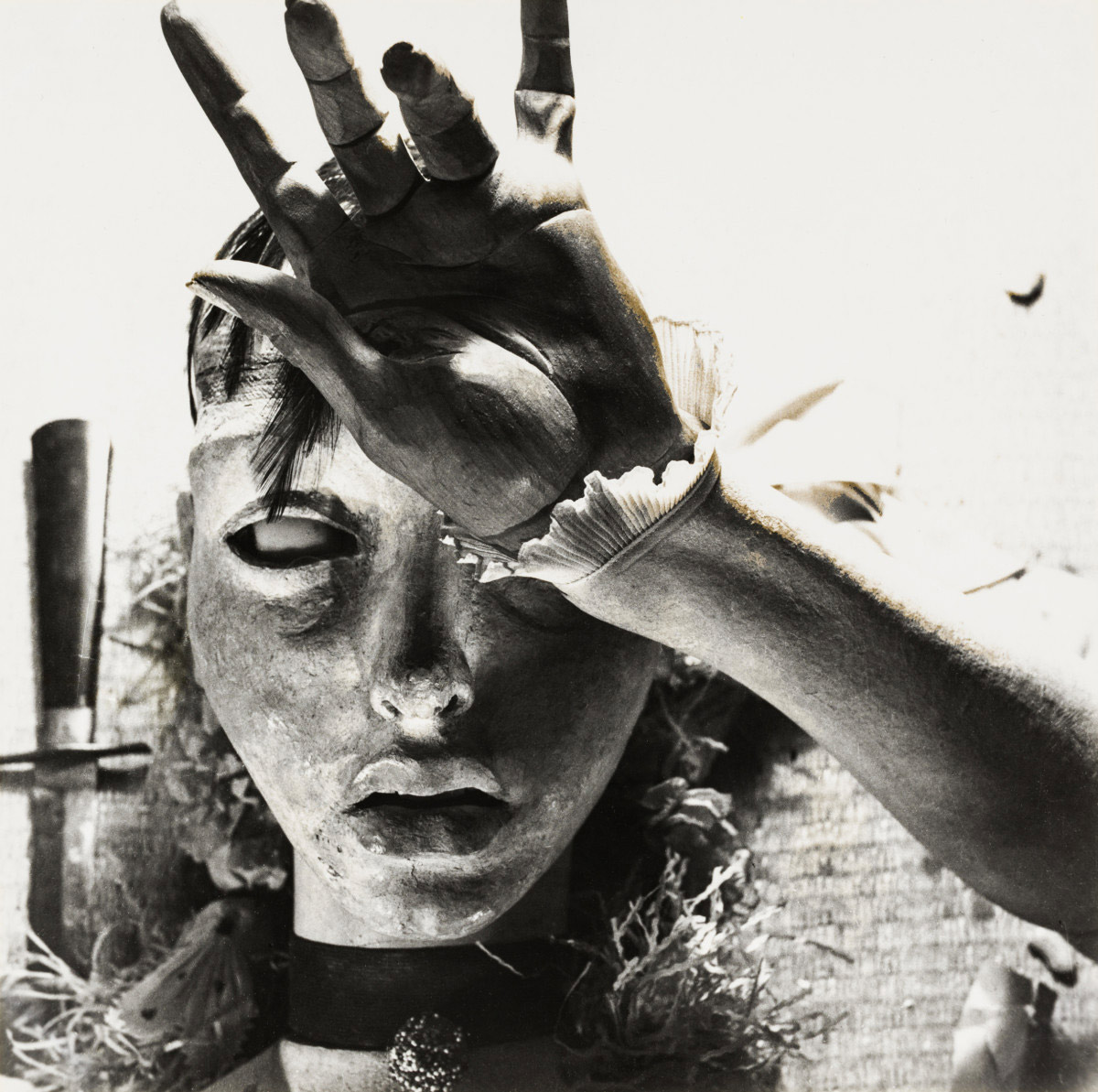
Hans Bellmer (German, 1902-1975) 'The Doll' 1935


Hans Bellmer (German, 1902-1975)
The Doll
1935
Silver gelatin paper
17.5 x 16 cm
Sammlung Siegert, München


Brassaï (British born Germany, 1899-1984) 'Night Moth' 1935


Brassaï (British born Germany, 1899-1984)
Night Moth
1935
Reproduction in Minotaure No. 7
31.6 x 24.8cm
Kunstbibliothek


Joseph Breitenbach (German, 1896-1984) 'Max Ernst, Paris' 1936


Joseph Breitenbach (German, 1896-1984)
Max Ernst, Paris
1936
Silver gelatin paper
35.3 x 27.8cm
Sammlung Würth
© The Josef and Yaye Breitenbach Charitable Foundation


Raoul Ubac (Belgian, 1910-1985) 'The Battle of the Penthesilea II' 1937


Raoul Ubac (Belgian, 1910-1985)
The Battle of the Penthesilea II
1937
Photomontage, silver gelatin paper
18 x 24.2cm
Sammlung Siegert, München


Max Ernst (1891-1976) is one of the most important representatives of Dadaism and Surrealism, two artistic movements that turned traditional norms on their head from the 1920s onwards. His boundary-crossing works combine dream and reality. His art also was created at a time characterized by a new, creative approach to photography. Snapshots, scientific photographs and images of war machinery inspired him and served as working materials, especially for his collages. Although he never used a camera for his art himself, technical and artistic developments in the medium of photography significantly influenced his work. Last but not least, Max Ernst liked to pose for the camera, whether for images taken by well-known photographers or made in photo booths. 

Some 270 works will be exhibited, primarily works on paper but also paintings by Max Ernst and photographs, photograms, collages, and illustrated books by his Surrealist contemporaries. Although these artists were explicitly not dealing with mundane reality but instead with what lies beneath, behind and in-between, the still relatively new medium of photography was of great importance for many. Last but not least, they also used it to make visible what remains hidden to the naked eye without technical means: the distant, the tiny, the moving. 

Max Ernst’s works are framed within the context of both contemporary and historical references. There are numerous and surprising parallels to photographs by other artists. Semi-automatic methods, working with found objects, unusual combinations, and the blurring of traces have equally shaped the work of Max Ernst and the photographic oeuvres of many of his contemporaries and other artists that followed. Even a century after André Breton published the first Surrealist Manifesto on 15 October 1924, they have not lost any of their fascination.

Gazes and Visions 

The Motif of the Eye as a Surrealist Symbol

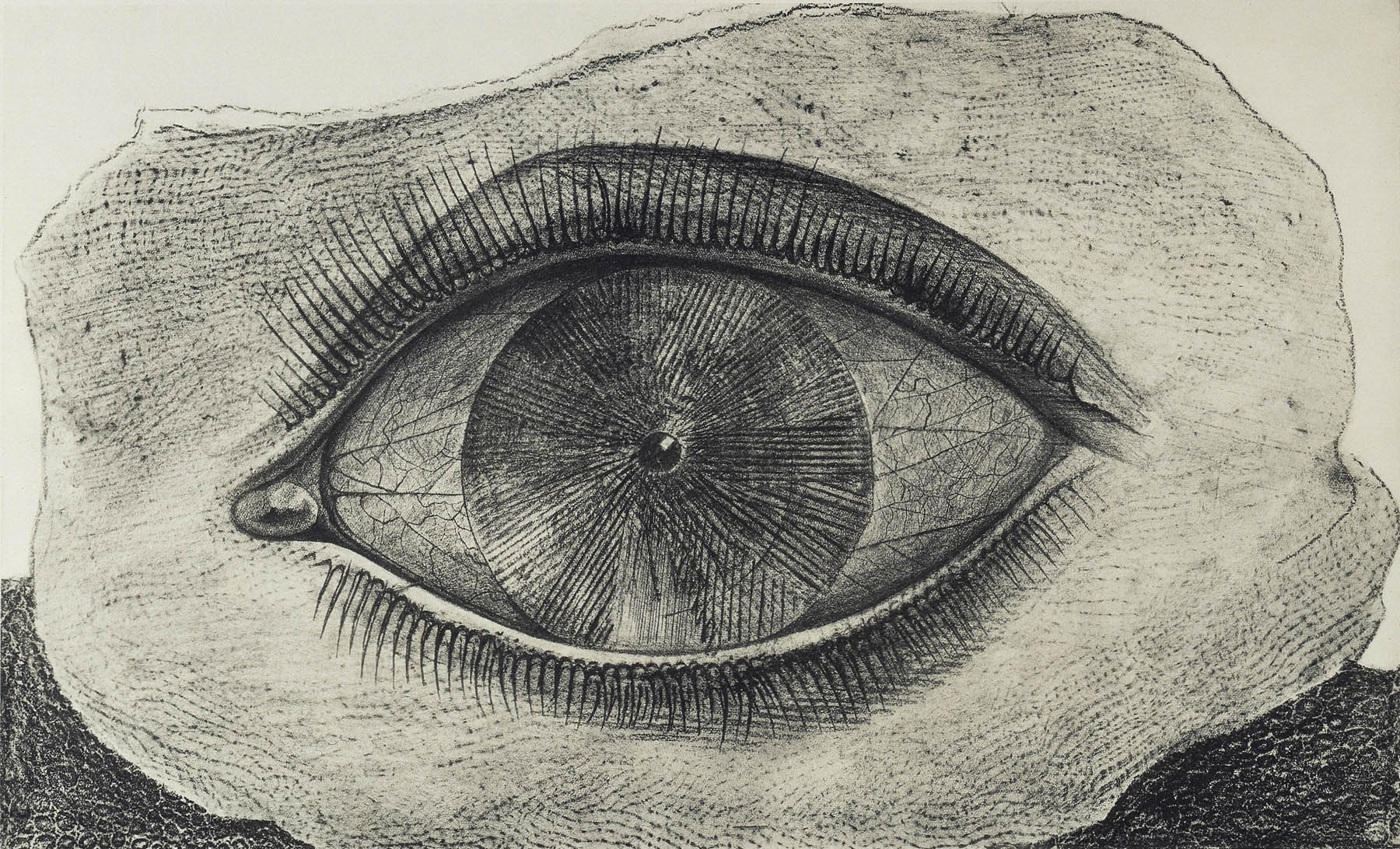
For the Surrealists, free, wild seeing opened up perspectives on an untamed world beyond reality – provided that the eyes were used in the right way or equipped with appropriate devices. Thus the motif of the eye symbolizes the translation of visions into perceptible images. Max Ernst’s frottages show radically enlarged, wide-open eyes hovering over a flat horizon. Visionary seeing can also be assisted by various instruments. In a coloured collage for Les malheurs des immortels, a young man gazes through two pipes, cheeks flushed with excitement: what might he be looking at? 

The focus on inner vision becomes the theme of a 1929 collage, in which the portrait photos of the Surrealists, all shown with eyes closed, are arranged around the reproduction of a nude painting by René Magritte. In so doing, a very masculinely connoted group activity is simulated in which sexual desire makes possible the liberation of thought. A violent variation – a blinding, likewise understood as liberation – appears in the famous eyeball-slicing scene in the prologue of the 1928 film Un chien andalou by Luis Buñuel and Salvador Dalí. 

Flora, fauna, firmament 

Frottage, Nature Printing, and Plant Photography

Plantlike animals, seashell flowers, fishbone forests, crocheted stars – the visual world of Max Ernst is full of fantastic forms. For him, nature served as both inspiration and material. In his frottages, he used wood, leaves and much more for rubbings on paper. This is how the portfolio Histoire naturelle (Natural History) was created in 1926. The frottages were reproduced as collotype prints, photomechanically produced prints using an exposed glass plate as a printing block. 

With Histoire Naturelle, Max Ernst drew on natural history encyclopaedias, but reworked the originals to create his own natural history. In so doing he dissected nature, showed the tiny and the distant, and created planar structures rather than views. This interest in the formal language of nature also resonates in the photography of the New Objectivity from around the same time, which reveal the aesthetic power of natural forms. That also made them interesting to the Surrealist movement. 

In his artist’s book Maximiliana or the Illegal Practice of Astronomy from 1964, Max Ernst devoted himself entirely to celestial phenomena. As in photograms, Ernst used objects here like spirals or gears as stencils to evoke comets and nebulas.

Between Positive and Negative 

Photogram, Cliché Verre, and Other Darkroom Experiments

The play of positive and negative effects is a recurring theme in Max Ernst’s oeuvre. Early works created using fine lines incised on a black ground show motifs that appear fragile and vague. He also used photographic techniques for some of his works and transformed his frottages into negative forms in Man Ray’s studio. In 1931, for example, he created dark photograms as illustrations for René Crevel’s text Mr. Knife, Miss Fork

Max Ernst’s use of manually produced prototypes relates to a technique borrowed from the early days of photography: cliché verre, or glass printing. In this hybrid process, an etching is created on a glass plate coated with paint or ink, which then serves as a negative for the print. The twentieth century witnessed a rediscovery of cliché verre and the further amalgamation of photographic and drawing processes. The growing interest in camera-less photography led to a wide range of experiments using light and unconventional materials in various avant-garde circles.

Invisible Cuts 

(Photo-) Collages, Collage Novels, and Surrealist Photography

For Max Ernst, collage is the fundamental mode of artistic production. It encompasses a colorful variety of methods for combining materials of all kinds, initiating an open-ended artistic process. Max Ernst had already experimented with collages of printed photographs during his Dada years. The combination of the most diverse illustrations and their fusion into a new image by painting and drawing over them all took place within the working process. 

For his wood engraving collages, Max Ernst made use of old-fashioned illustrations from popular scientific magazines of the nineteenth century. Many of these images were also based on photographs; at that time, however, photos could not yet be reproduced and thus had to be rendered as wood engravings. His three collage novels featured visions and hallucinations alongside blasphemy, the critique of bourgeois morals, and the glorification of free love and revolution. 

Photographers of the Surrealist movement from Claude Cahun to Karel Teige, from Georges Hugnet to Emila Medková created with the help of camera and darkroom as well as scissors and glue, a rich and multifarious cosmos of idiosyncratic realities that radically transcended traditional aesthetics. 

Max Ernst in Front of the Camera 

From Studio Portrait to Photo Booth

Max Ernst is one of the most frequently photographed artists of the twentieth century. He posed for the cameras of important photographers such as Berenice Abbott, Arnold Newman, Lee Miller, Irving Penn, and Man Ray. Their portraits demonstrate just how individual the view of a person can be. A whole series of photographs shows the artist at work, with his art, or in the studio. Whether in focused concentration wearing his painter’s smock, in the midst of creative chaos, or in intimate relation to his sculptures – such photographs reinforce or even create the iconic conception of the artist. 

Another group of images shows Max Ernst with female companions such as the artists Leonora Carrington or Dorothea Tanning, which convey the intensity of their relations. As a member of the Surrealists Max Ernst frequently appears in group portraits. These images bear witness to the various stations of the movement – its beginnings in Paris or exile in America – as well as to constellations of fashion and gender. Whether individually or in a group, pensive, playful, joyful or serious, the photographs tell of Max Ernst’s delight in self-representation and in theatrical play.

Text from the Museum für Fotografie


George Platt Lynes (American, 1907-1955) 'Max Ernst, New York' 1941


George Platt Lynes (American, 1907-1955)
Max Ernst, New York
1941
Silver gelatin paper, new print
25.1 x 20.1cm


Josef Breitenbach (German, 1896-1984) 'Max Ernst and the seahorse, New York' 1942


Josef Breitenbach (German, 1896-1984)
Max Ernst and the seahorse, New York
1942
Silver gelatin paper
24 x 19cm


Arnold Newman (American, 1918-2006) 'Max Ernst, New York' 1942


Arnold Newman (American, 1918-2006)
Max Ernst, New York
1942
Silver gelatin paper
24.2 x 18.6cm


Frederick Sommer (American, 1905-1999) 'Max Ernst' 1946


Frederick Sommer (American, 1905-1999)
Max Ernst
1946
Gelatin silver print

A reproduction of this image on postcard for the Max Ernst retrospective: 30 Years of his Work – A Survey, Copley Galleries, Beverly Hills 1949 is included in the exhibition.


John Kasnetzis. 'Dorothea Tanning and Max Ernst with the sculpture Capricorne, Arizona' 1948


John Kasnetzis
Dorothea Tanning and Max Ernst with the sculpture Capricorne, Arizona
1948
Silver gelatin print, later print
23.6 x 18.8cm


In the summer of 1947, Max Ernst, exuberant and inspired by the arrival of water piped to our house (up to then we had hauled it daily from a well 5 miles away), began playing with cement and scrap iron with assists from box tops, eggshells, car springs, milk cartons and other detritus, The result: Capricorn, a monumental sculpture of regal but benign deities that consecrated our “garden” and watched over its inhabitants. Years later, when we had gone, a sculptor friend made molds and sent them to their creator in Huismes, France where he reassembled his Capricorn for casting in bronze. The above photo is a one-shot, spur-of-the-moment caper made after taking a people-less documentary photo.

Dorothea Tanning from Birthday, Santa Monica: The Lapis Press, 1986


Emila Medková (Czech, 1928-1985)
Schwarz / Black 1949


Emila Medková (Czech, 1928-1985)
Schwarz / Black
1949
Silver gelatin paper
17.7 x 23cm
Sammlung Dietmar Siegert
© Eva Kosakova Medkova
Repro: Christian Schmieder


Denise Colomb (French, 1902-2004) 'Max Ernst on the roof terrace on the Quai Saint-Michel in Paris' 1953


Denise Colomb (French, 1902-2004)
Max Ernst on the roof terrace on the Quai Saint-Michel in Paris
1953
Silver gelatin paper, later print
28 x 22cm


Fritz Kempe (German, 1909-1988) 'Max Ernst, Hamburg' 1964


Fritz Kempe (German, 1909-1988)
Max Ernst, Hamburg
1964
Silver gelatin print
12.8 x 17.7cm


Max Ernst (German, 1891-1976) 'Seen at the Neuilly fair' 1971


Max Ernst (German, 1891-1976)
Seen at the Neuilly fair
1971
Colour reproduction of a collage, sheet 3 from the portfolio: Commonplaces. Eleven Poems and Twelve Collages
49 x 34.5cm


Museum für Fotografie
Jebensstraße 2, 10623 Berlin

Opening hours:
Tuesday + Wednesday 11am – 7pm
Thursday 11am – 8pm
Friday – Sunday 11am – 7pm
Museum für Fotografie website

LIKE ART BLART ON FACEBOOK

Back to top

Review: ‘Grant Mudford: Attention to Detail’ at Joseph Bellows Gallery, La Jolla, California

March 2025

Online exhibition


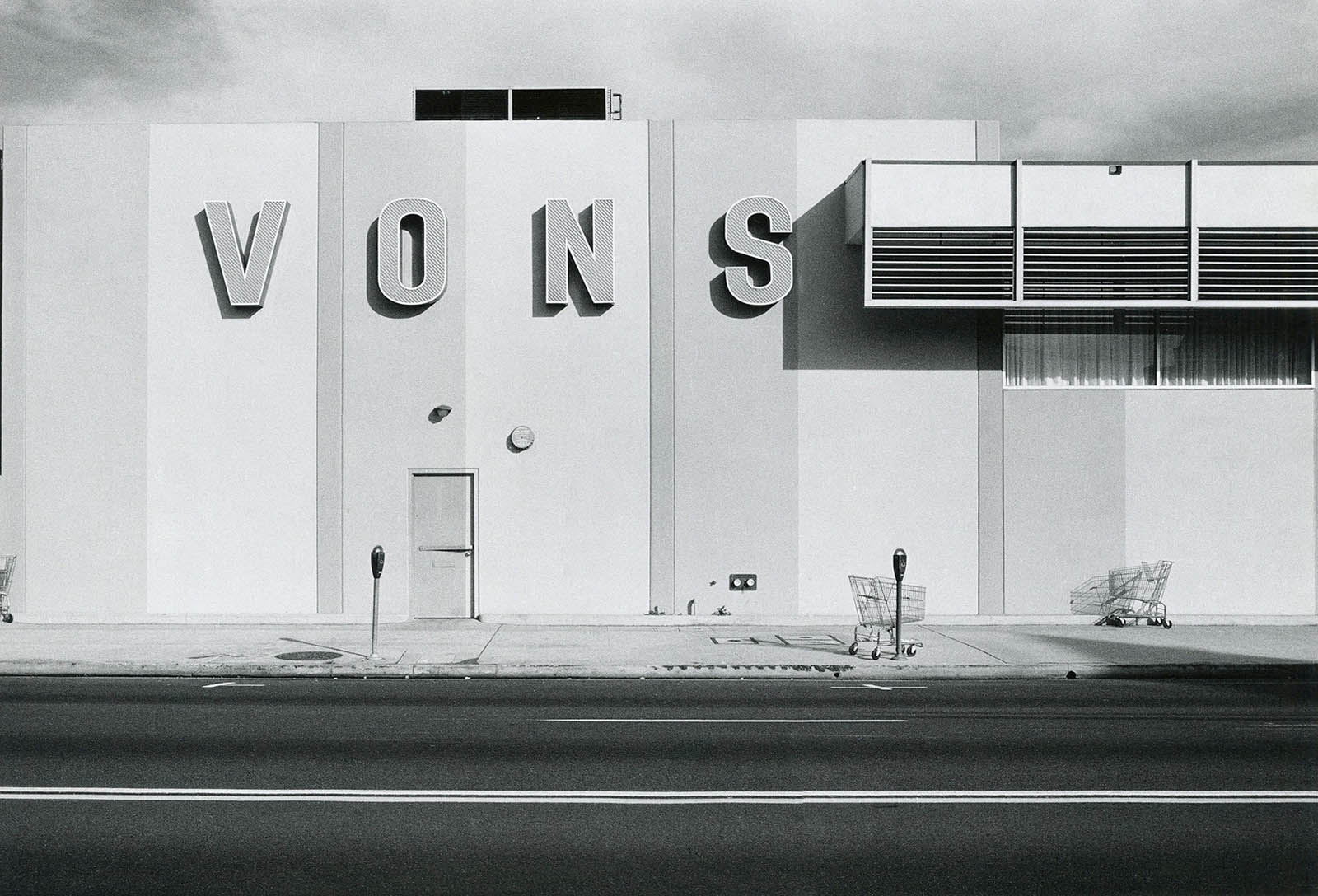
Grant Mudford (Australian, b. 1944)
'El Paso, Texas' 1976


Grant Mudford (Australian, b. 1944)
El Paso, Texas
1976
Vintage gelatin silver print
16 x 20 inches
Joseph Bellows Gallery


Let There Be Light

For so long I have wanted to do a posting on the Australian photographer Grant Mudford (b. 1944) and finally the time is here. Mudford has lived in the United States of America since his final move to the Los Angeles area in mid-1977 but I still think of him as Australian.

Between 1974 – 1977 he undertook an intensive program of travel and work in the United States before his final move. In 1977 he had major exhibitions at the Australian Centre for Photography, Sydney; The Photographers’ Gallery, London; and Light Gallery, New York and is represented in major collections such as The J. Paul Getty Museum, Los Angeles; Los Angeles County Museum of Art, Los Angeles; International Museum of Photography, George Eastman House; and the National Gallery of Australia, Canberra which holds sixty six of his photographs in their collection.

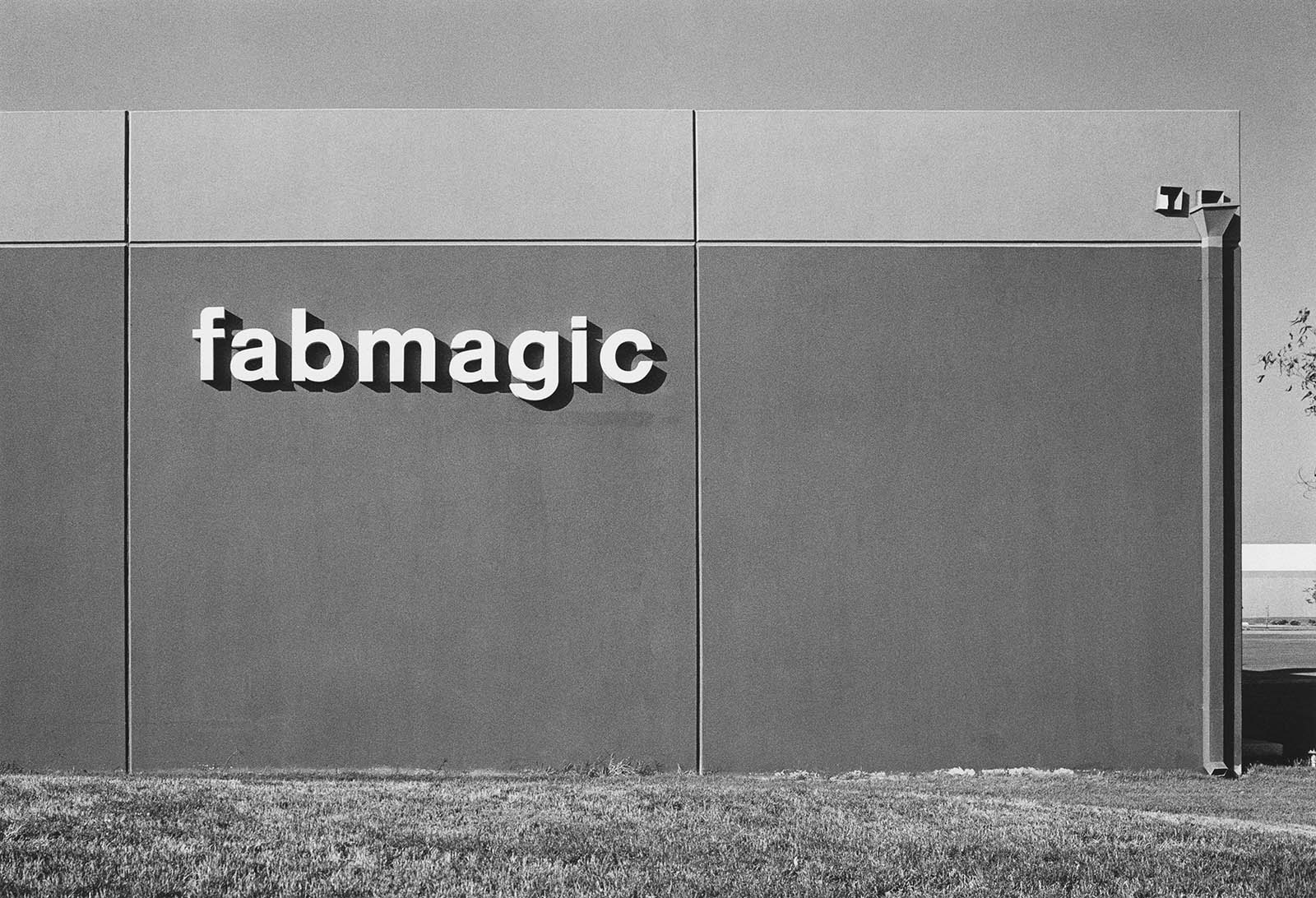
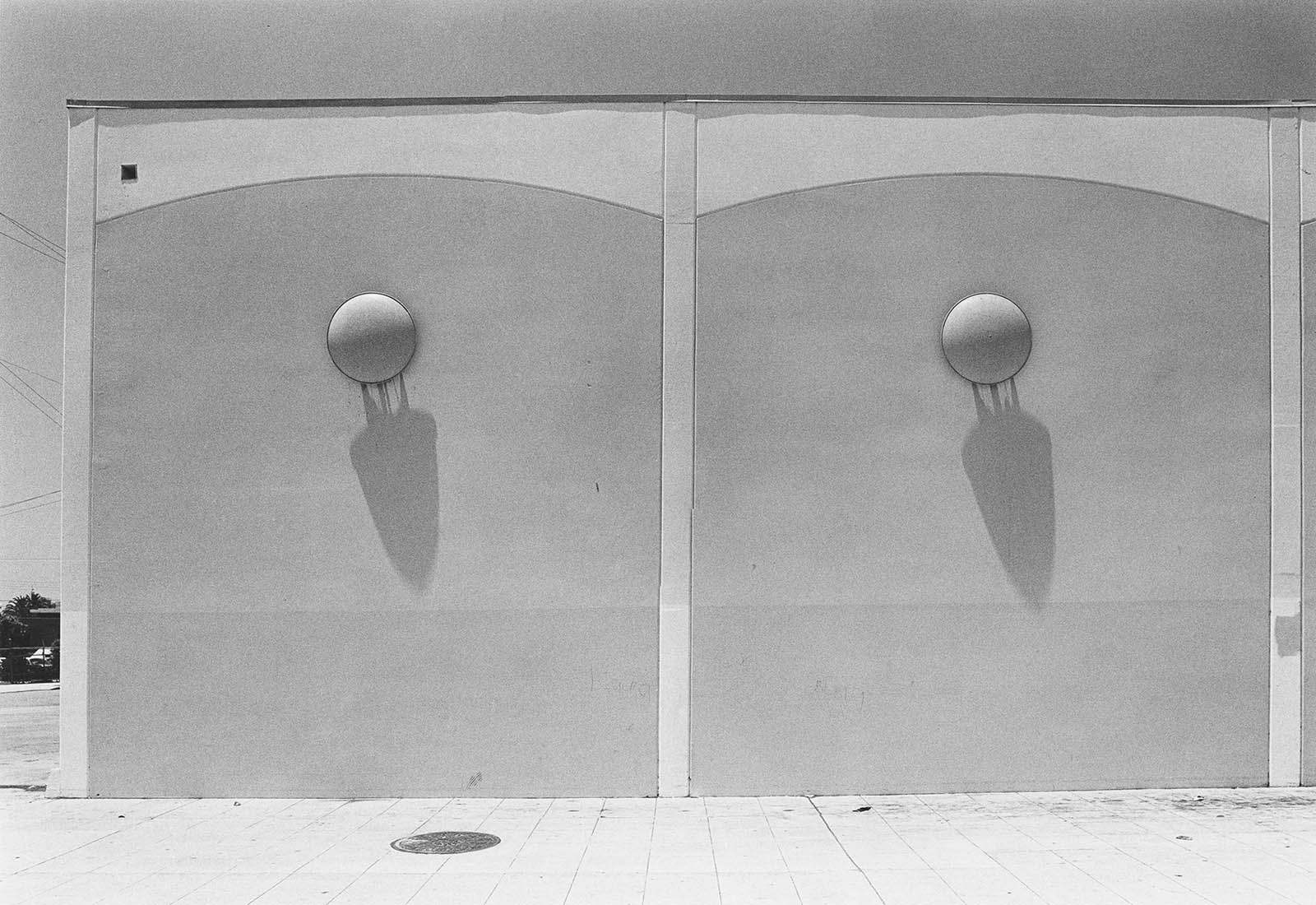
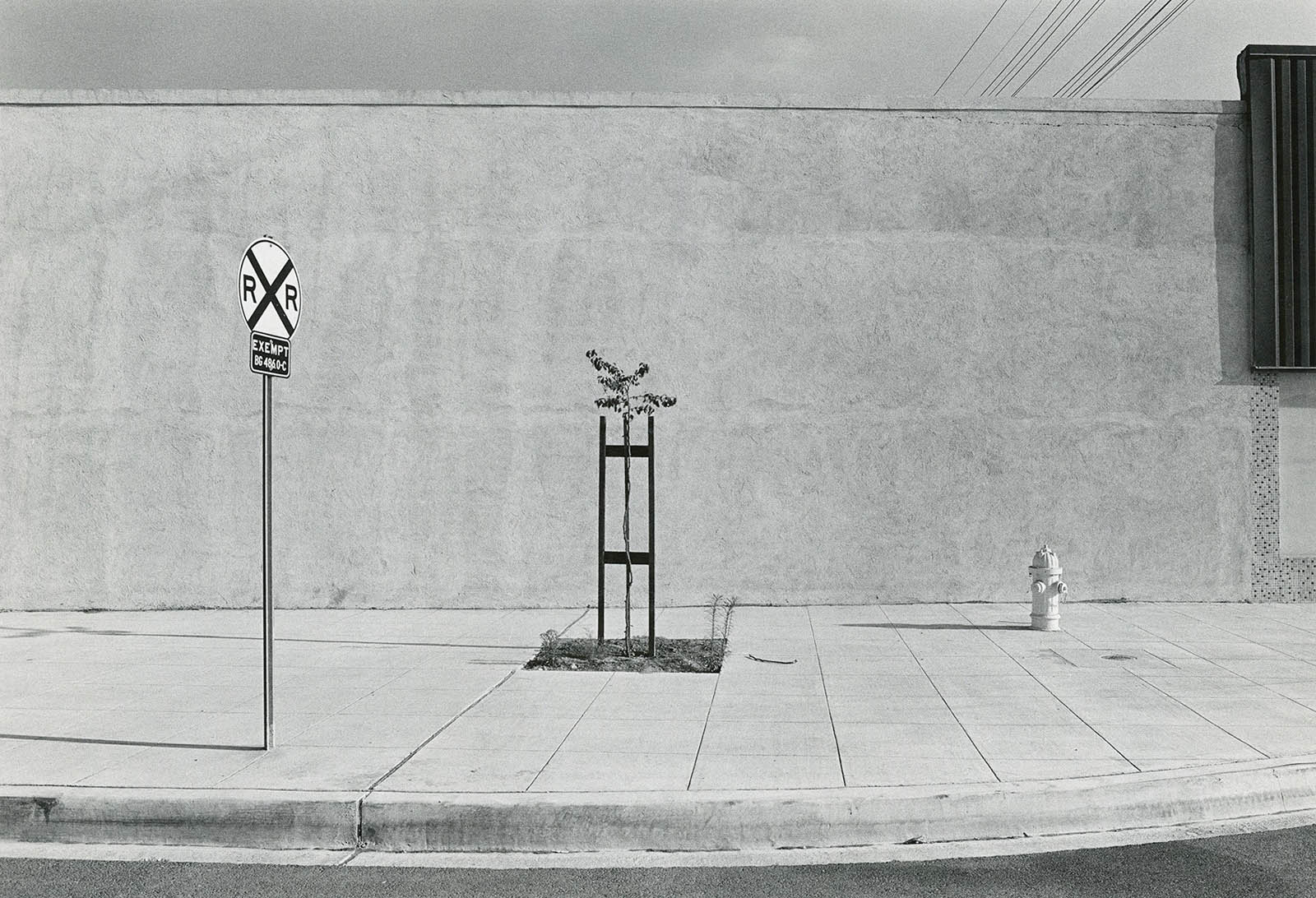
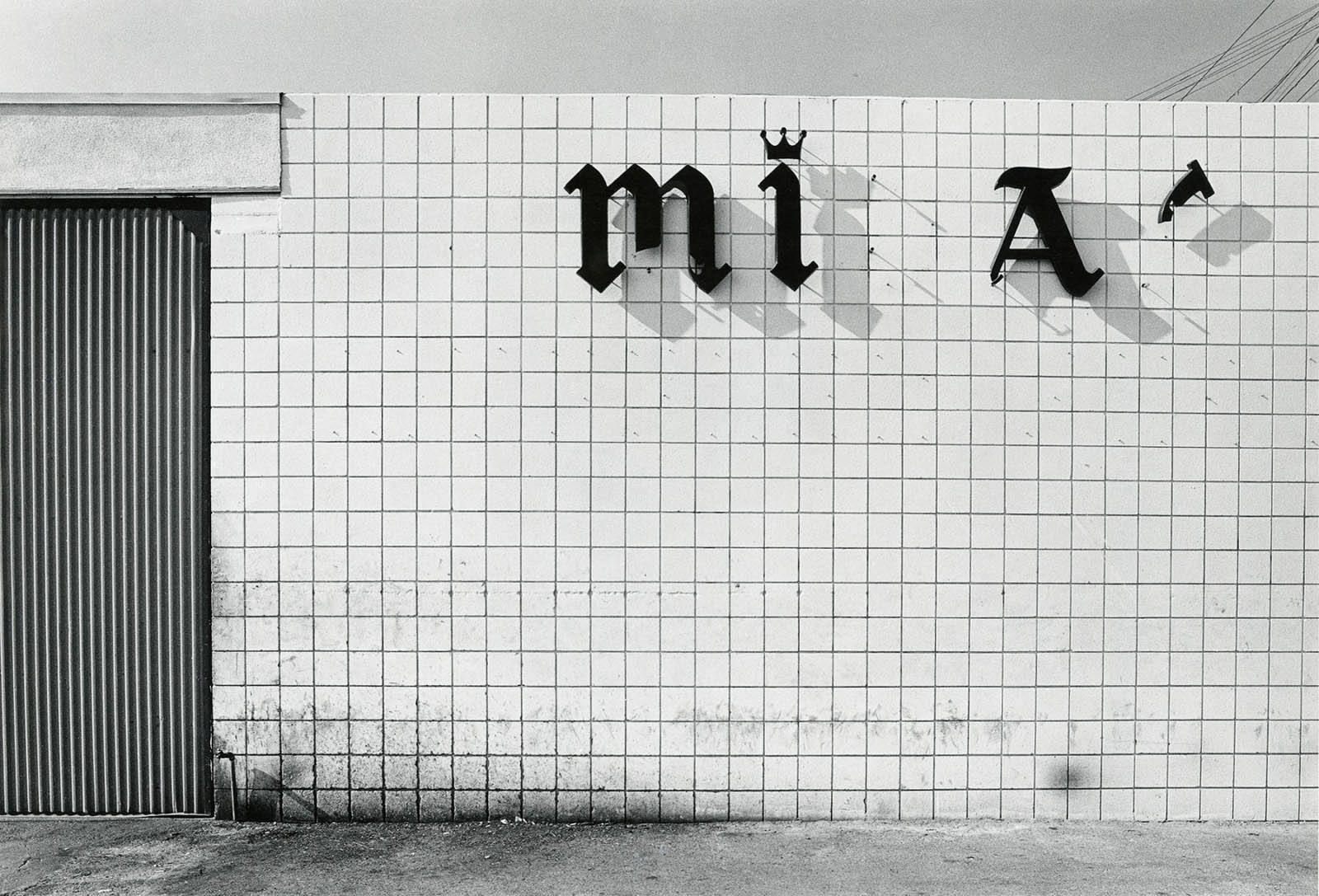
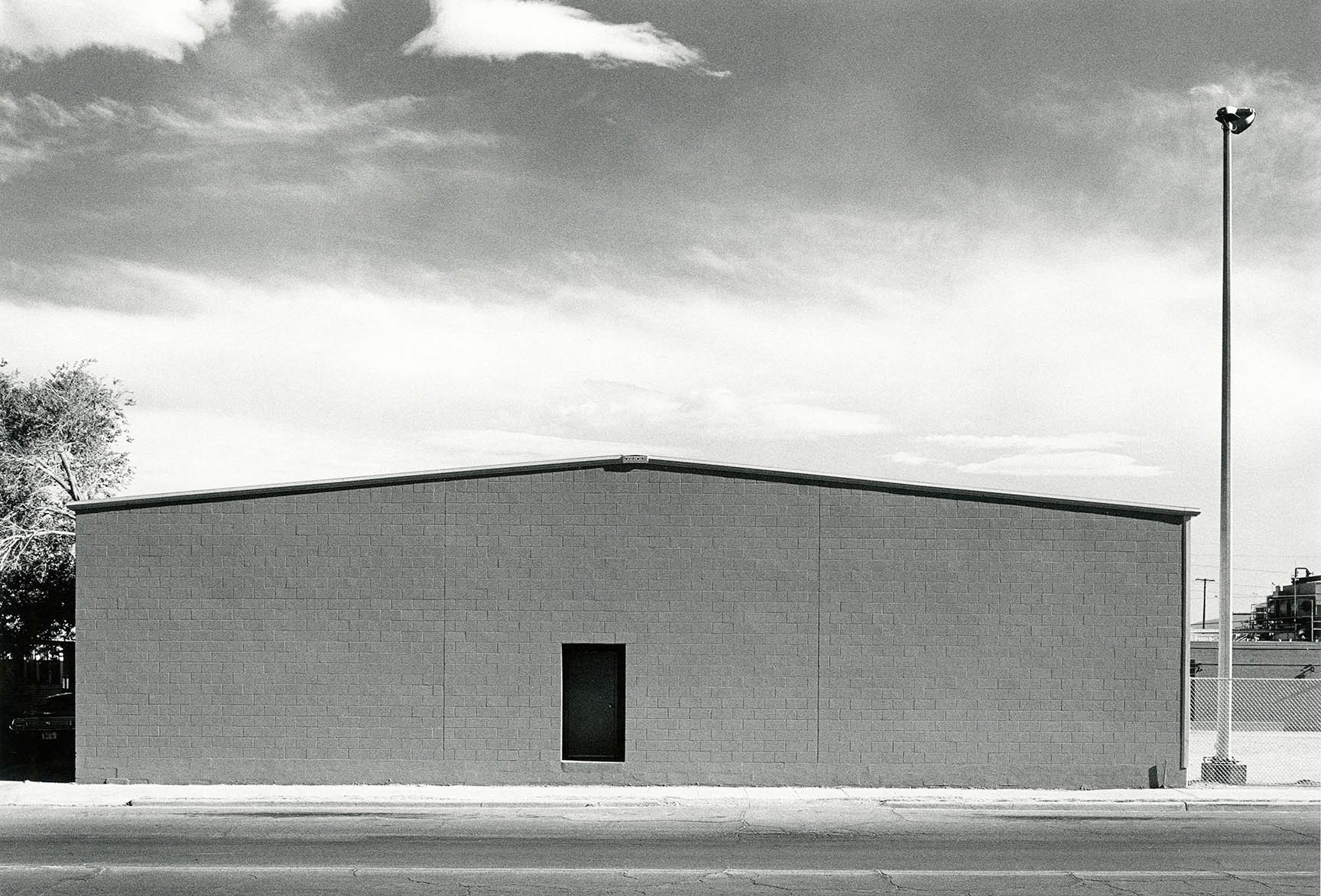
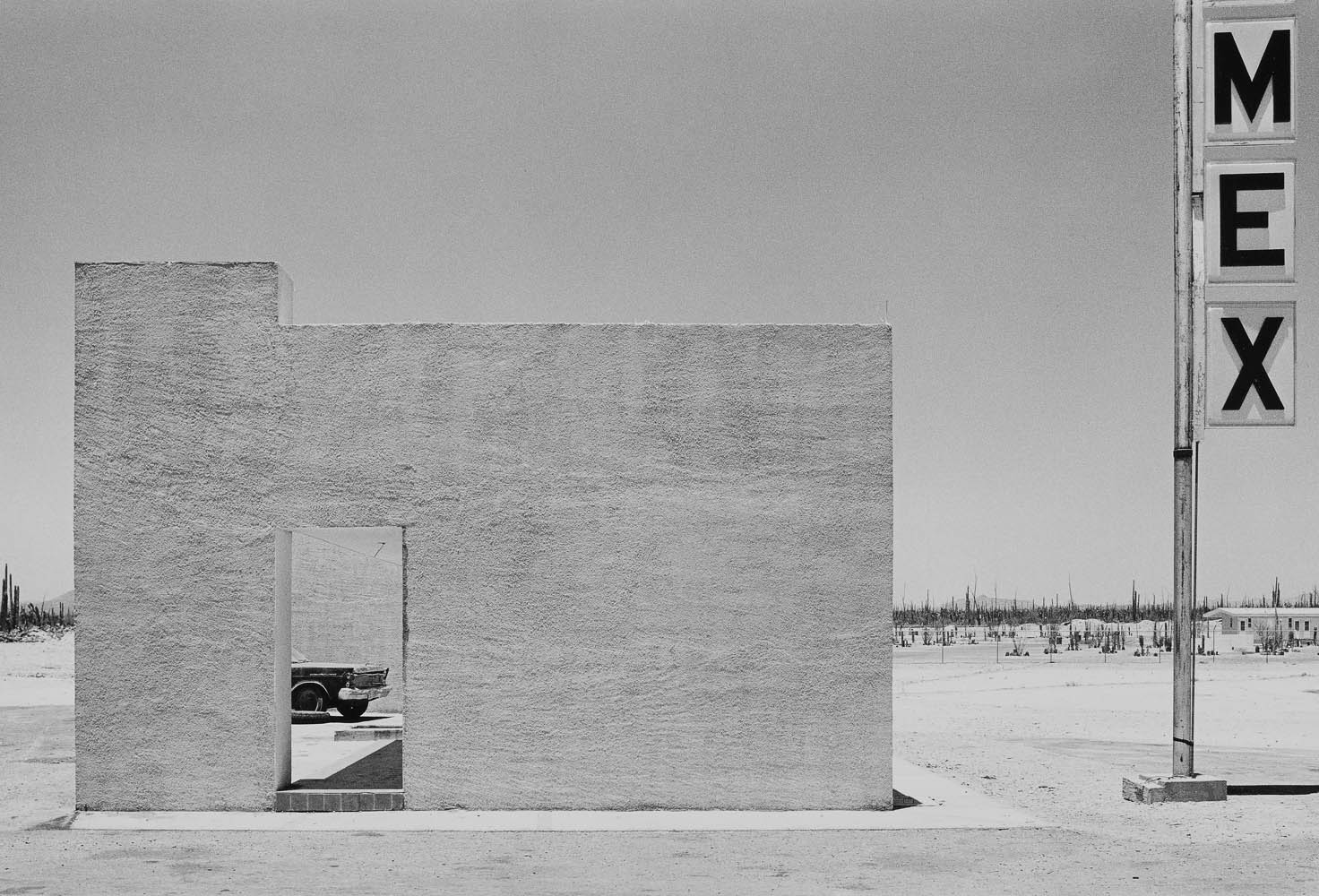
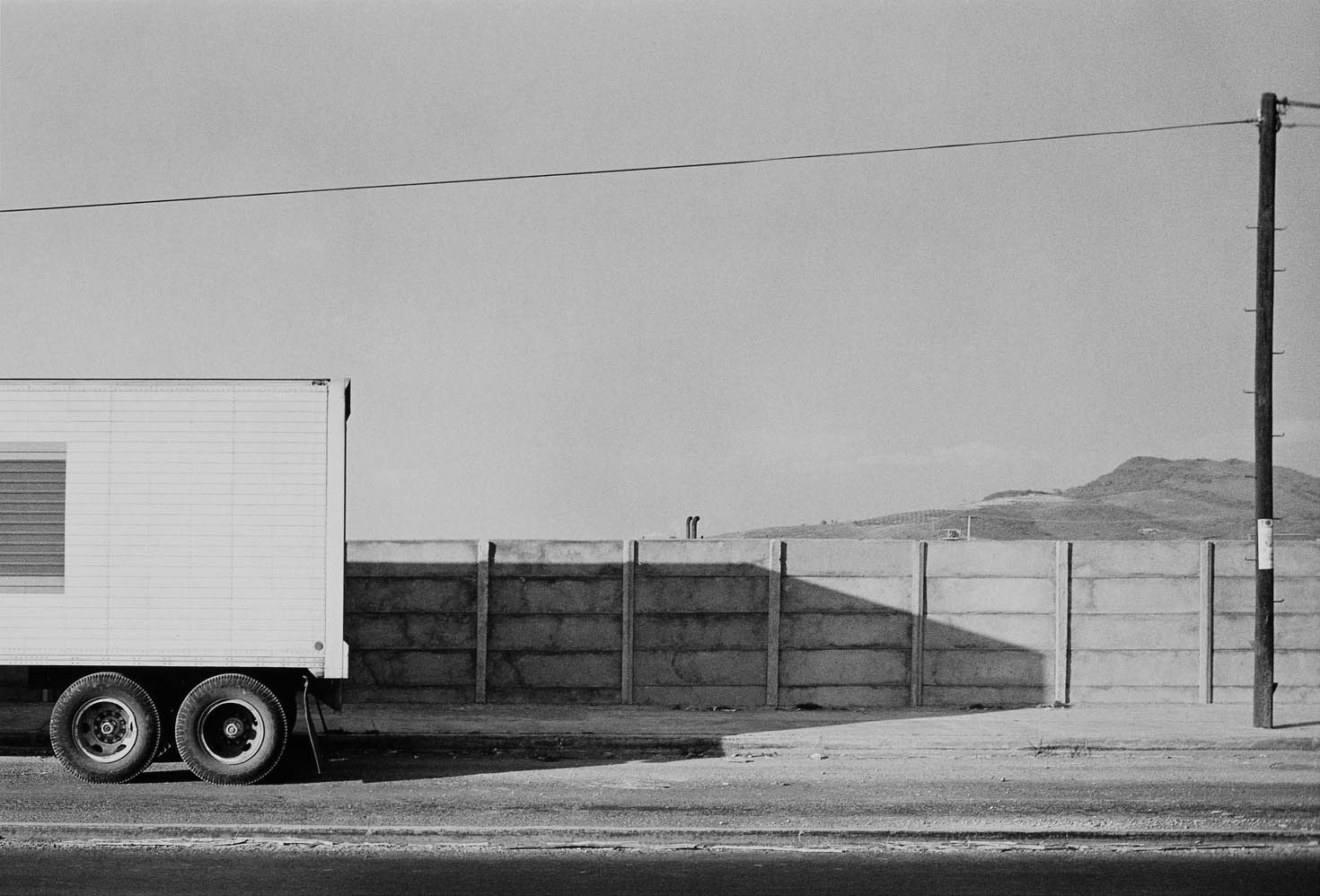
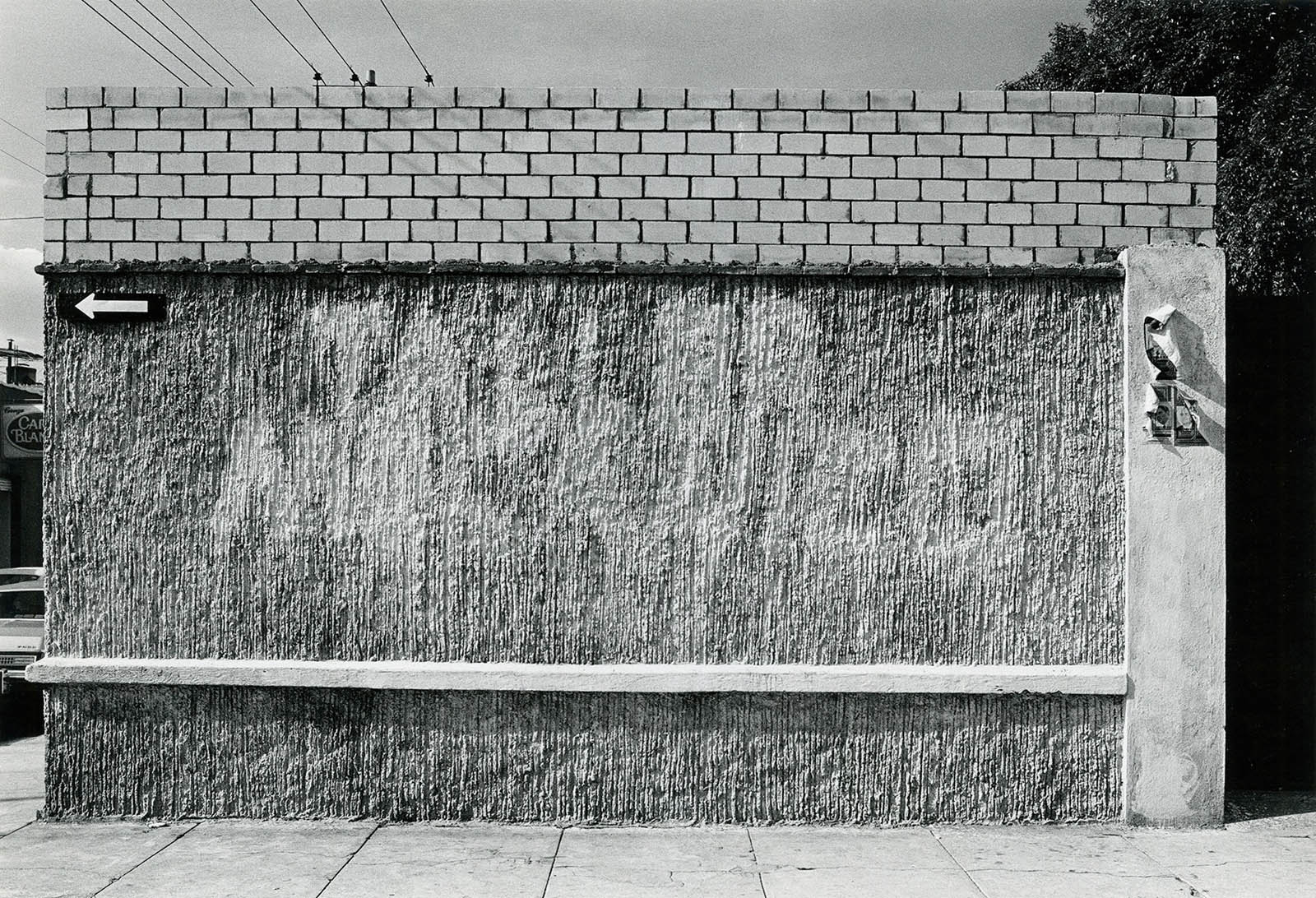
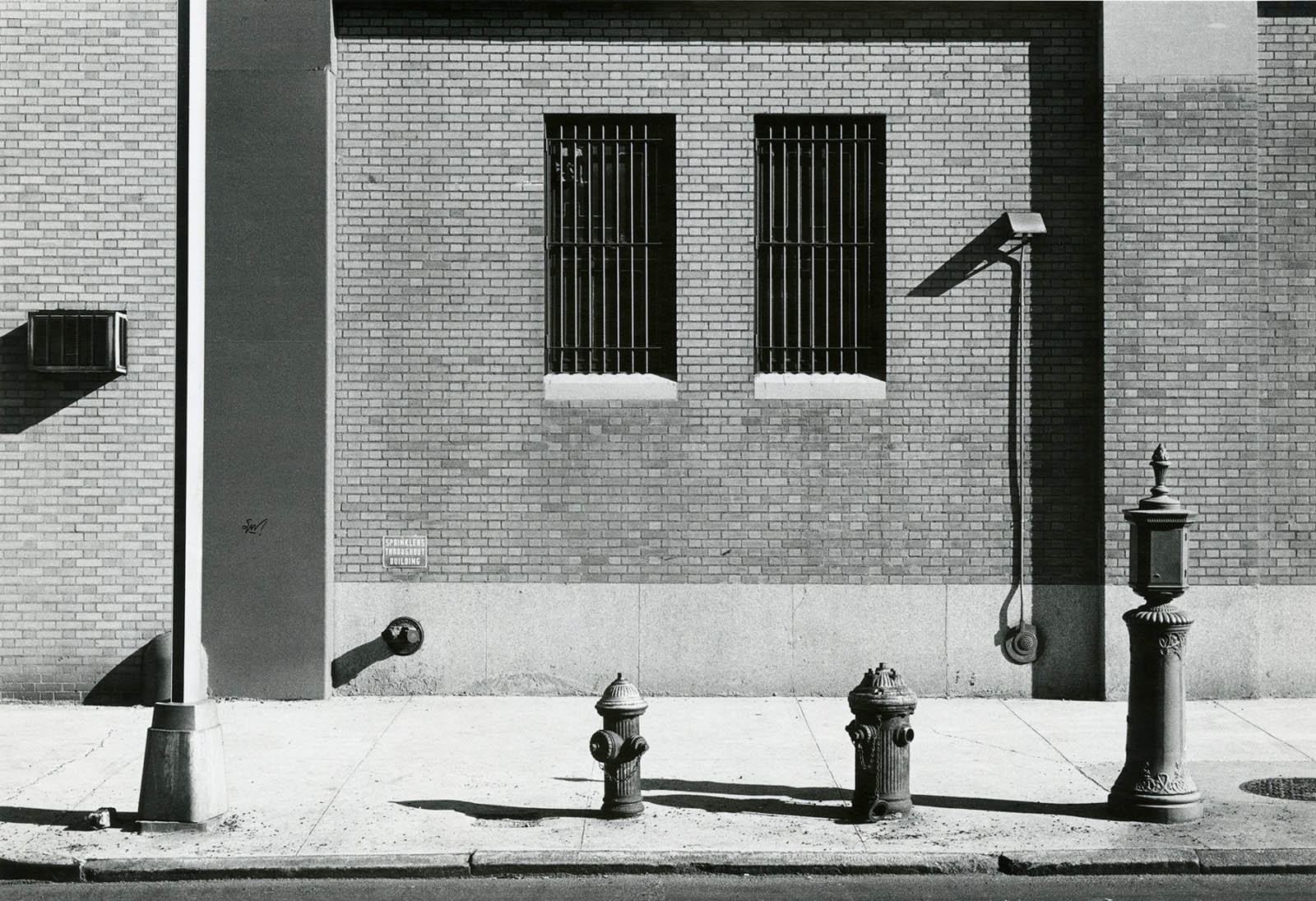
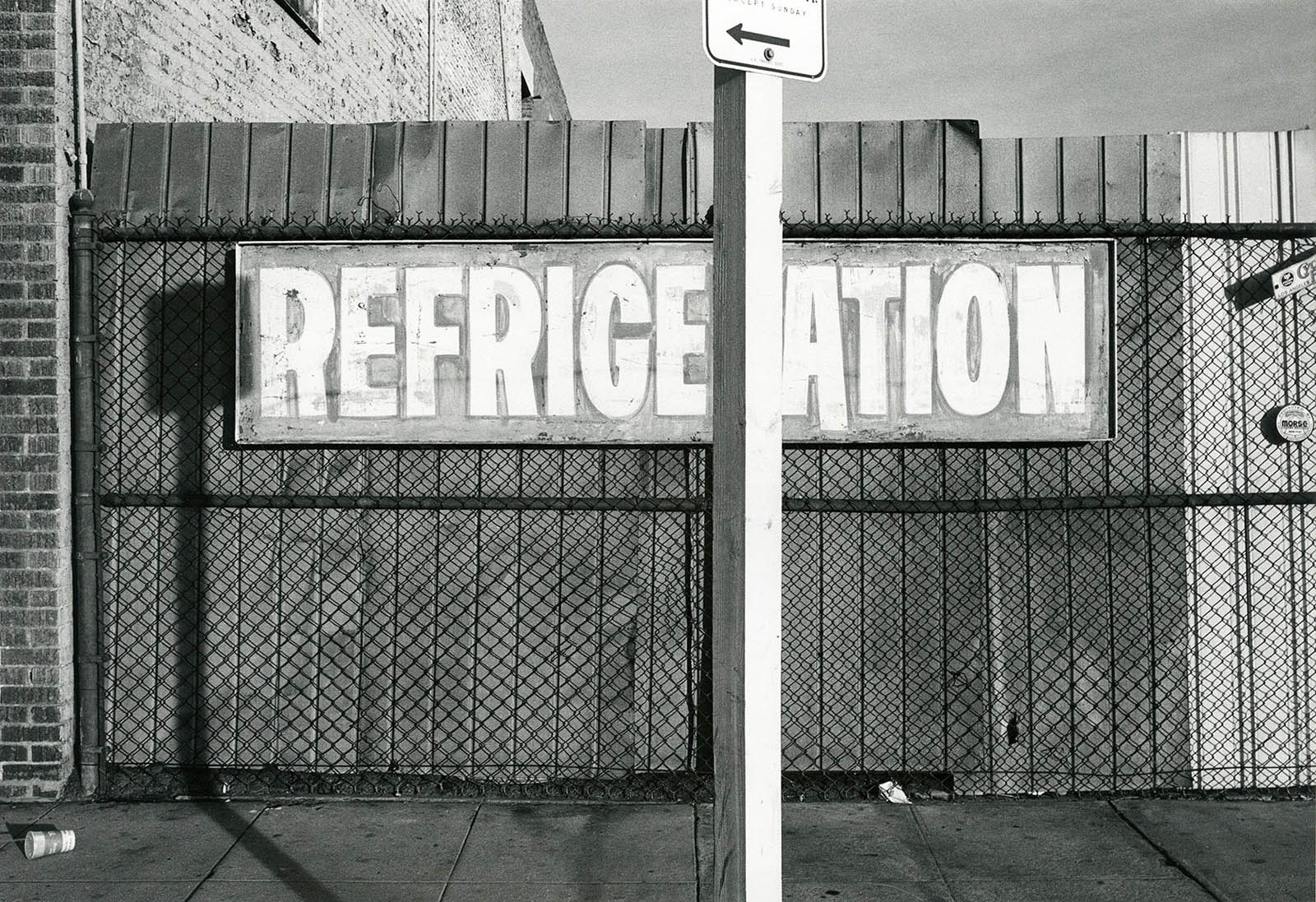
Mudford’s mature style – capturing in beautiful, minimalist black and white photographs the essence and reality of the built landscape envisioned without people, usually working with common, generally uncelebrated subject-matter – emerged at a time that was parallel to that of the groundbreaking exhibition of contemporary landscape photography New Topographics: Photographs of a Man-Altered Landscape held at the George Eastman House’s International Museum of Photography, October 1975 – February 1976.

This important exhibition proposed a new way of looking at the American landscape, a concept that was historically grounded in the Neue Sachlichkeit (New Objectivity) – new order – movement of Germany in the 1920s, developed further and most importantly by the German artists Bernd and Hiller Becher in the late 1960s – early 1970s.

The New Topographics photographers (including the Bechers) “documented built and natural landscapes in America, often capturing the tension between natural scenery and the mundane structures of post-war America: parking lots, suburban homes, crumbling coal mines. The photographs, stark and documentary, are often devoid of human presence. William Jenkins [curator of the New Topographics exhibition] described the images as “neutral” in style, “reduced to an essentially topographic state, conveying substantial amounts of visual information but eschewing entirely the aspects of beauty, emotion, and opinion”.1

As I have argued elsewhere I believe that the photographs of the Bechers and alike are just as much about the beauty of the subject as they are their topographic state.

“Despite protestations to the contrary (appeals to the objectivity of the image, eschewing entirely the aspects of beauty, emotion and opinion; the rigorous frontality of the individual images giving them the simplicity of diagrams, while their density of detail offers encyclopaedic richness) these are subjective images for all their objective desire. The paradox is the more a photographer strives for objectivity, the more ego drops away, the more the work becomes their own: subjective, beautiful, emotive.”2

At least Mudford is honest enough to own up to desiring beauty. “I am deeply interested in the relationship between man-made structures and the landscape,” says Mudford. “Photography allows me to capture that intersection, where design meets nature, light, and texture. I strive to create images that reflect both beauty and complexity.” (Text from the Joseph Bellows website)

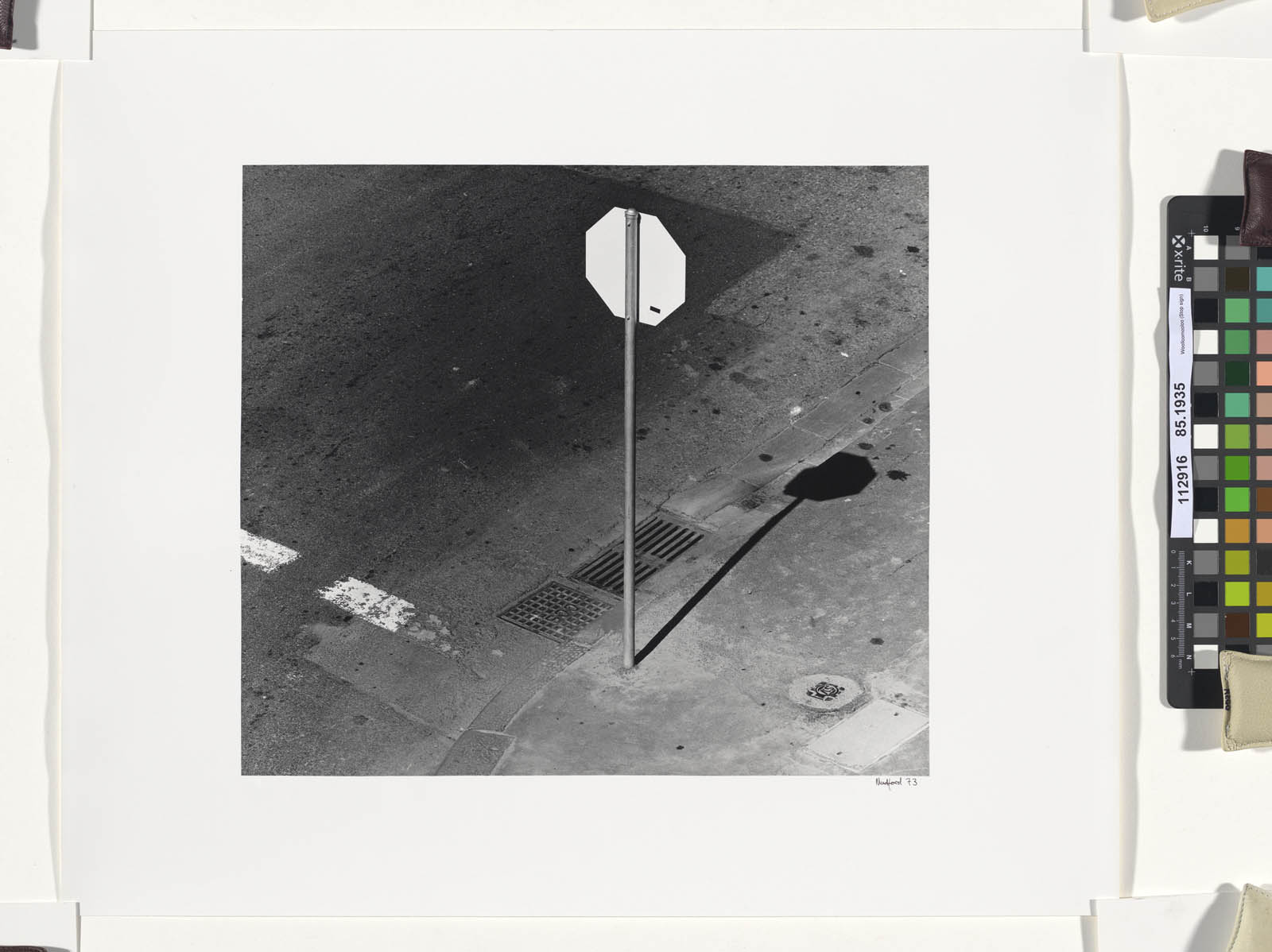
Evidence of the development of his later mature style can be seen in photographs taken in Australia such as Jenolan (1972, below) and Woolloomooloo (Stop sign) (1973, below) which already contain a minimalist, paired back, topographic yet beautiful aesthetic. But it was his move to Los Angeles, and above all the LIGHT and TEXTURE of the new world, that seem to have brought forth the best within this artist.

While, as Foucault observes, texts “are caught up in a system of references to … other texts, other sentences: it is a node within a network …  Its unity is variable and relative”3 – in other words there is a close relationship between the work of Mudford and the New Topographics movement – his work is very much his own.

There is a crispiness, frontality and seeming simplicity to Mudford’s photographs and yet also almost a painterly aspect, that belies the complexity of these well resolved and beautiful images. He captures “the emotional resonance of a moment, whether it be the play of light on a building’s surface or the dynamic contrasts found in nature.” (Text from the Joseph Bellows website) And unlike the huge photographs of Dawoud Bey in an upcoming posting – which seem to me completely at odds with the spirit of the subject being captured – Mudford’s 16 x 20 inches photographs allow the viewer to focus on the images inherent qualities of beauty, nature, light and texture.

Finally, it is beyond me why Grant Mudford has not received greater recognition in the country of his birth. Forget that he has lived for years in the United States of America, Mudford is a magnificent photographer par excellence and his worldwide achievement should be celebrated at a national level. Perhaps it is time that a gallery such as the National Gallery of Australia or the Museum of Australian Photography should put on a major retrospective of this artist’s work… before it is too late!

We are loosing too many great photographers from this era already.

Dr Marcus Bunyan


1/ New Topographics: Photographs of a Man-Altered Landscape was a groundbreaking exhibition of contemporary landscape photography held at the George Eastman House’s International Museum of Photography (Rochester, New York) from October 1975 to February 1976. The show, curated by William Jenkins, had a lasting impact on aesthetic and conceptual approaches to American landscape photography. The New Topographics photographers, including Robert AdamsLewis BaltzBernd and Hilla BecherFrank GohlkeNicholas Nixon, and Stephen Shore, documented built and natural landscapes in America, often capturing the tension between natural scenery and the mundane structures of post-war America: parking lots, suburban homes, crumbling coal mines. The photographs, stark and documentary, are often devoid of human presence. Jenkins described the images as “neutral” in style, “reduced to an essentially topographic state, conveying substantial amounts of visual information but eschewing entirely the aspects of beauty, emotion, and opinion”.

Text from the Wikipedia website

2/ Marcus Bunyan commenting on the exhibition Bernd and Hilla Becher: Mines and Mills – Industrial Landscapes at Fotomuseum Winterthur, Zurich, November 2011 – February 2012

3/ Foucault, Michel. The Order of Things: An Archeology of the Human Sciences.New York: Vintage, 1973 quoted in Thumlert, Kurt. Intervisuality, Visual Culture, and Education. [Online] Cited 10/08/2006. www.forkbeds.com/visual-pedagogy.htm (link no longer active)


Many thankx to Joseph Bellows Gallery for allowing me to publish the photographs in the posting. Please click on the photographs for a larger version of the image.


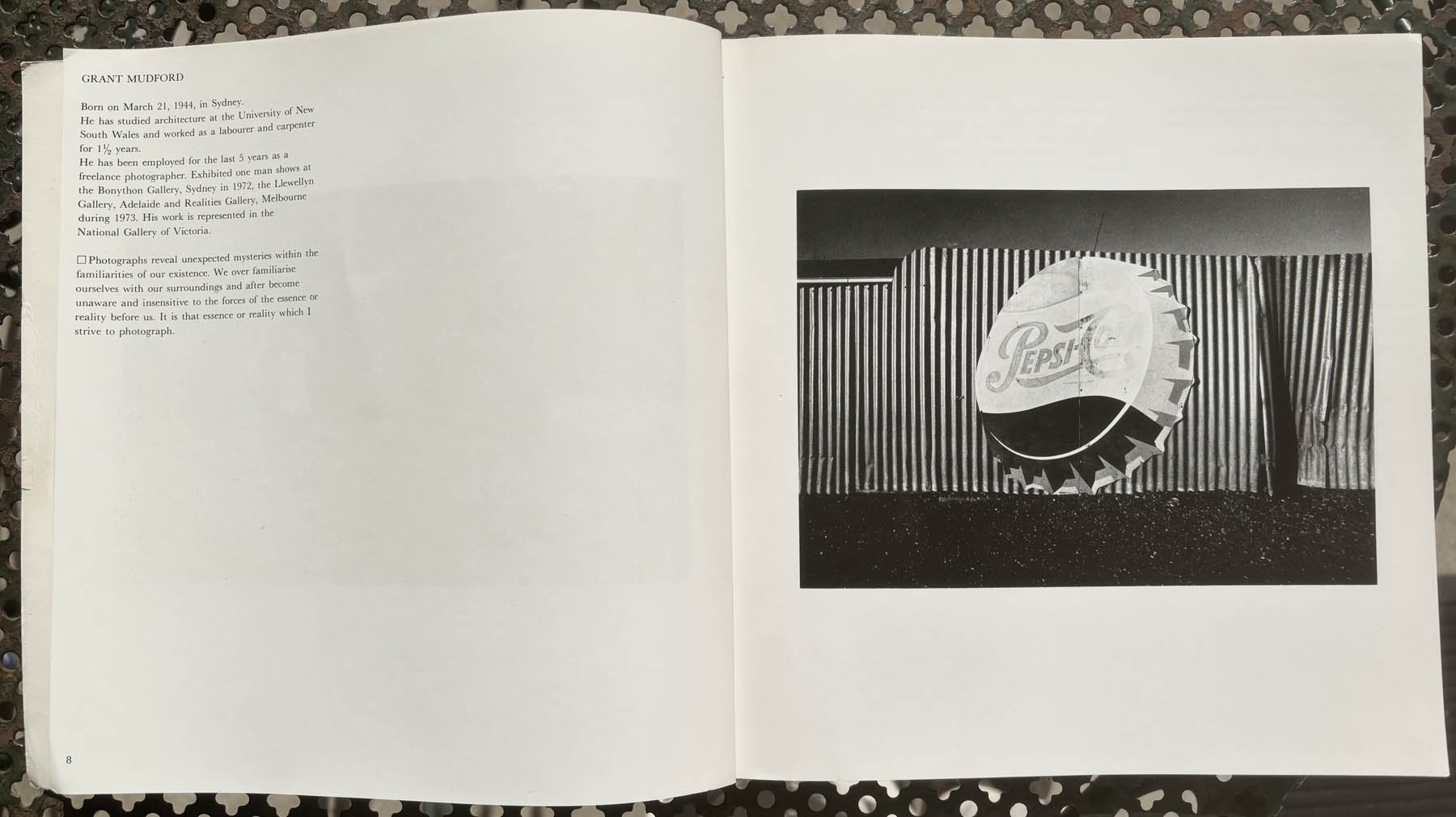
“Photographs reveal unexpected mysteries within the familiarities of our existence. We over familiarise ourselves with our surroundings and after become unaware and insensitive to the forces of the essence or reality before us. It is that essence or reality which I strive to photograph.”


Grant Mudford quoted in Graham Howe (ed.,). New Photography Australia. Paddington, N.S.W.: Australian Centre for Photography, 1974, p. 8


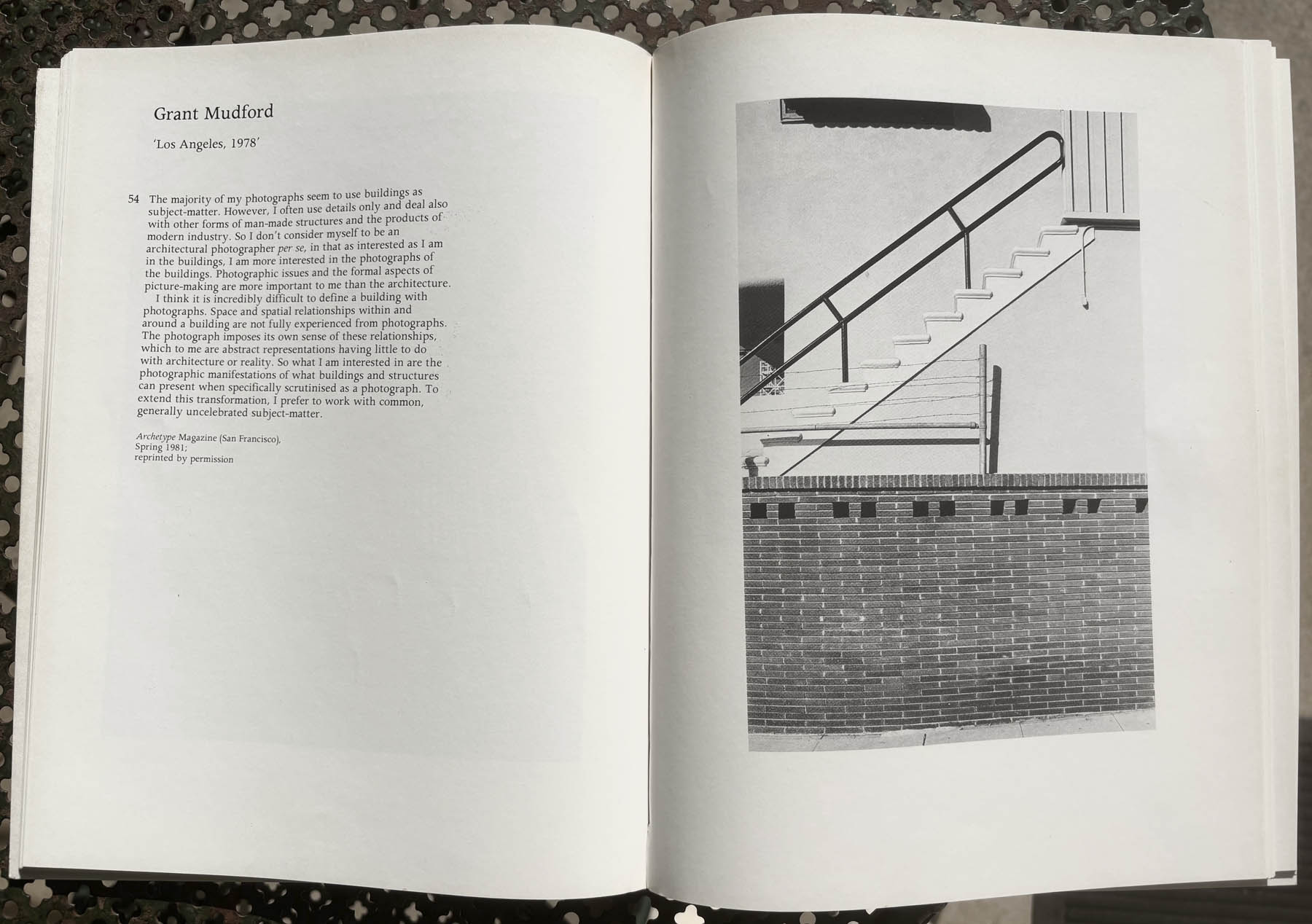
“I think it is incredibly difficult to define a building with photographs. Space and spatial relationships within and around a building are not fully experienced from photographs. The photograph imposes its own sense of these relationships, which to me are abstract representations having little to do with architecture or reality. So what I am interested in are the photographic manifestations of what buildings and structures can present when specifically scrutinised as a photograph. To extend this transformation, I prefer to work with common, generally uncelebrated subject-matter”


Grant Mudford in Archetype Magazine Spring 1981 quoted in Reimund Zunde. Photography: An Approach For Secondary Schools. Education Department of Victoria, Curriculum Services Unite, in association with the Secondary Art/Craft Standing Committee, 1982


Grant Mudford (Australian, b. 1944)
'Jenolan' 1972


Grant Mudford (Australian, b. 1944)
Jenolan
1972
Gelatin silver print
34.5 h x 38.8 w cm
National Gallery of Australia
Gift of the artist, 1985


Grant Mudford (Australian, b. 1944)
'Woolloomooloo (Stop sign)' 1973


Grant Mudford (Australian, b. 1944)
Woolloomooloo (Stop sign)
1973
Gelatin silver print
34.5 h x 38.4 w cm
National Gallery of Australia
Gift of the artist, 1985


Grant Mudford (Australian, b. 1944)
'Houston, Texas' 1975


Grant Mudford (Australian, b. 1944)
Houston, Texas
1975
Gelatin silver print
33.8 h x 49.8 w cm
National Gallery of Australia
Gift of the Phillip Morris Arts Grant 1982


Grant Mudford quoted in Graham Howe (ed.,). 'New Photography Australia'. Paddington, N.S.W.: Australian Centre for Photography, 1974, p. 8


Graham Howe (ed.,). New Photography Australia. Paddington, N.S.W.: Australian Centre for Photography, 1974, p. 8.


Grant Mudford in 'Archetype Magazine' Spring 1981 quoted in Reimund Zunde. 'Photography: An Approach For Secondary Schools'. Education Department of Victoria, Curriculum Services Unite, in association with the Secondary Art/Craft Standing Committee, 1982


Reimund Zunde. Photography: An Approach For Secondary Schools. Education Department of Victoria, Curriculum Services Unite, in association with the Secondary Art/Craft Standing Committee, 1982


Renowned photographer Grant Mudford had made his mark in the art world with a distinctive vision, capturing anonymous structures with a profound sense of space, light, texture and form. With a career spanning several decades, Mudford’s work remains a testament to his unique ability to meld the art of photography with the subtle intricacies of design, nature, and human influence.

Mudford’s photographic style is known for its dramatic compositions and meticulous attention to detail. Whether focusing on the clean lines of modern architecture or the rugged textures of natural landscapes, his work consistently transcends traditional photographic boundaries. His images invite viewers to engage with the built environment and the natural world in new and thought-provoking ways.

His work has been described by Keith Davis in An American Century of Photography as “an appreciation for both the alienations and incongruities of the urban landscape.”

“I am deeply interested in the relationship between man-made structures and the landscape,” says Mudford. “Photography allows me to capture that intersection, where design meets nature, light, and texture. I strive to create images that reflect both beauty and complexity.”

Mudford’s approach to photography is marked by his commitment to capturing the emotional resonance of a moment, whether it be the play of light on a building’s surface or the dynamic contrasts found in nature. His work not only documents his subjects but also engages viewers in a deeper conversation about the spaces they inhabit.

Mudford’s photographs have been exhibited internationally in solo and group exhibitions since the mid 1970’s; beginning this history with a solo show at the notable Light Gallery. His photographs are in numerous private and public collections, including the Los Angeles County Museum of Art, the J. Paul Getty Museum, the Museum of Modern Art, the George Eastman House, the Nelson-Atkins Museum, and the National Museum of American Art. In 2014, Mudford received the Julius Shulman Institute Excellence in Photography Award. His photographs have been featured in publications such as Architectural Digest, The New York Times, and Artforum, solidifying his place as one of the most respected photographers of his generation.

Grant Mudford’s photography is more than just an aesthetic experience; it is an invitation to reconsider how we perceive the world around us. His lens captures what is often overlooked – the powerful simplicity of everyday structures and the quiet majesty of the natural world. Through his work, Mudford encourages viewers to find beauty in both the grand and the subtle, offering a fresh perspective on the environments we encounter.

Text from the Joseph Bellows Gallery website


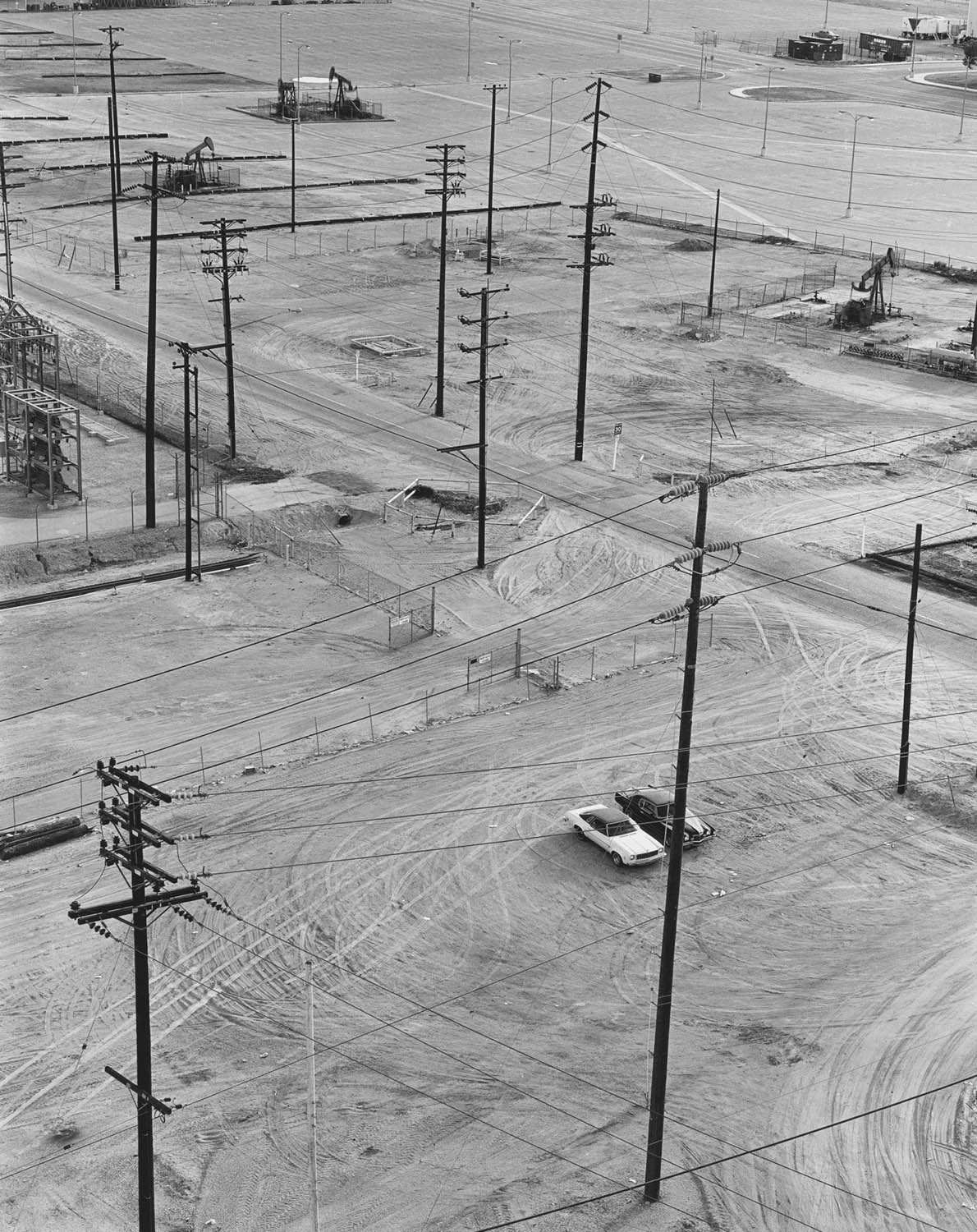
Grant Mudford (Australian, b. 1944)
'Los Angeles, CA' 1977


Grant Mudford (Australian, b. 1944)
Los Angeles, CA
1977
Vintage gelatin silver print
16 x 20 inches


Grant Mudford (Australian, b. 1944)
'Los Angeles, CA' 1976


Grant Mudford (Australian, b. 1944)
Los Angeles, CA
1976
Vintage gelatin silver print
16 x 20 inches


Grant Mudford (Australian, b. 1944)
'Irvine, CA' 1976


Grant Mudford (Australian, b. 1944)
Irvine, CA
1976
Vintage gelatin silver print
16 x 20 inches


Grant Mudford (Australian, b. 1944)
'Los Angeles, CA' 1976


Grant Mudford (Australian, b. 1944)
Los Angeles, CA
1976
Vintage gelatin silver print
16 x 20 inches


Grant Mudford (Australian, b. 1944)
'Los Angeles, CA' 1977


Grant Mudford (Australian, b. 1944)
Los Angeles, CA
1977
Vintage gelatin silver print
16 x 20 inches


Grant Mudford

b. 1944

Grant Mudford (b. 1944) is a Sydney-born, Los Angeles-based photographer renowned for his large-format, abstract depictions of the urban landscape and built environment. Mudford developed an interest in photography as a child, and turned the laundry into a darkroom at the age of ten. For several years in his teens he photographed children on Santa Claus’ lap at Christmas. After studying architecture at the University of NSW for two years from 1964-1964, he chose to focus on photography, opening his own studio. In the 1960s and early 1970s he photographed for a range of advertising, fashion and theatre clients, as well as working as a cinematographer on short films. Mudford held his first solo show at Bonython Gallery in Sydney in 1972 and shortly after received funding from the Australia Council for the Arts, enabling him to travel throughout the USA and Mexico between 1975 and 1977. He then settled in Los Angeles, where he worked for various American and international publications including Harper’s Bazaar, Esquire, Architectural Digest, Vanity Fair, the LA Times and the New York Times. The Museum of Contemporary Art in Los Angeles commissioned him as photographer for the exhibition and book, Louis I. Kahn: In the Realm of Architecture (1991). Mudford’s work is in many American and international collections including the Museum of Modern Art, the J. Paul Getty Museum and Los Angeles County Museum of Art, Art Gallery of NSW and National Gallery of Australia.

Text from the National Portrait Gallery of Australia website


Grant Mudford (Australian, b. 1944)
'Los Angeles, CA' 1977


Grant Mudford (Australian, b. 1944)
Los Angeles, CA
1977
Vintage gelatin silver print
16 x 20 inches


Grant Mudford (Australian, b. 1944)
'El Paso, Texas' 1976


Grant Mudford (Australian, b. 1944)
El Paso, Texas
1976
Vintage gelatin silver print
16 x 20 inches


Grant Mudford (Australian, b. 1944)
'Mexico' 1976


Grant Mudford (Australian, b. 1944)
Mexico
1976
Vintage gelatin silver print
16 x 20 inches


Grant Mudford (Australian, b. 1944)
'Mexico' 1976


Grant Mudford (Australian, b. 1944)
Mexico
1976
Vintage gelatin silver print
16 x 20 inches


Grant Mudford (Australian, b. 1944)
'Mexico' 1976


Grant Mudford (Australian, b. 1944)
Mexico
1976
Vintage gelatin silver print
16 x 20 inches


Grant Mudford (Australian, b. 1944)
'New York' 1978


Grant Mudford (Australian, b. 1944)
New York
1978
Vintage gelatin silver print
16 x 20 inches


Grant Mudford (Australian, b. 1944)
'Los Angeles, CA' 1975


Grant Mudford (Australian, b. 1944)
Los Angeles, CA
1975
Vintage gelatin silver print
16 x 20 inches


Grant Mudford (Australian, b. 1944)
'Oklahoma' 1975


Grant Mudford (Australian, b. 1944)
Oklahoma
1975
vintage gelatin silver print
16 x 20 inches


Grant Mudford (Australian, b. 1944)
'Saltillo, Texas' 1976


Grant Mudford (Australian, b. 1944)
Saltillo, Texas
1976
Vintage gelatin silver print
20 x 16 inches


Grant Mudford (Australian, b. 1944)
'New York' 1976


Grant Mudford (Australian, b. 1944)
New York
1976
Vintage gelatin silver print
20 x 16 inches


Grant Mudford (Australian, b. 1944)
'Los Angeles, CA' 1978


Grant Mudford (Australian, b. 1944)
Los Angeles, CA
1978
Vintage gelatin silver print
20 x 16 inches


Grant Mudford (Australian, b. 1944)
'From Oean Blvd., Long Beach, CA' 1979


Grant Mudford (Australian, b. 1944)
From Oean Blvd., Long Beach, CA
1979
Vintage gelatin silver print
24 x 20 inches


Joseph Bellows Gallery
7661 Girrard Avenue
La Jolla, California
Phone: 858 456 5620

Opening hours:
Tuesday – Saturday 11am – 5pm and by appointment

Joseph Bellows Gallery website

LIKE ART BLART ON FACEBOOK

Back to top

Exhibition: ‘True Colors: Color in Photography from 1849 to 1955’ at Albertina Modern, Vienna

Exhibition dates: 24th January – 21st April, 2025

Curators: Dr. Anna Hanreich and Dr. Astrid Mahler


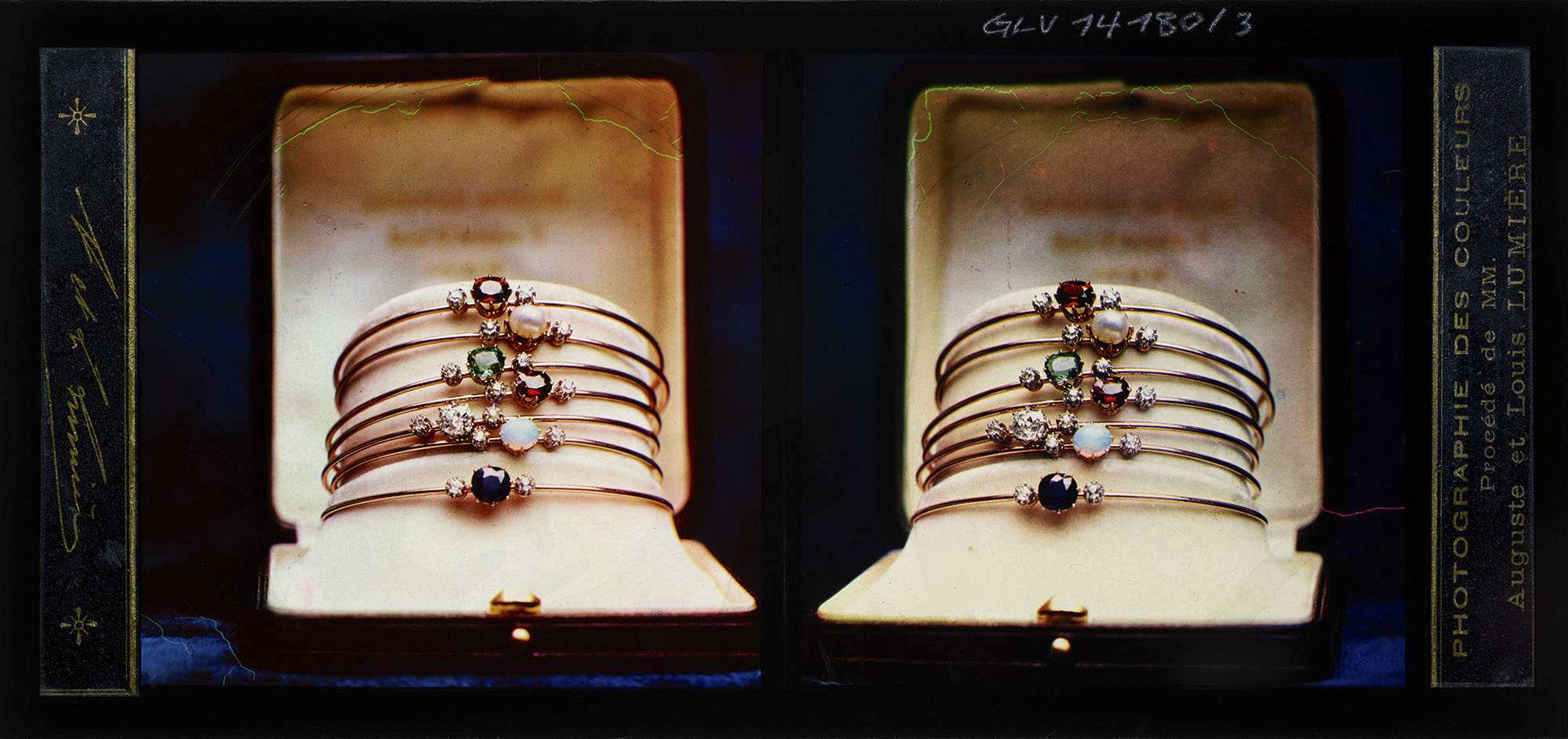
Auguste and Louis Lumière (French, 1862-1954) (French, 1864-1948) 'Bangles' 1893-1900 from the exhibition 'True Colors: Color in Photography from 1849 to 1955' at Albertina Modern, Vienna, January - April, 2025


Auguste and Louis Lumière (French, 1862-1954) (French, 1864-1948)
Bangles
1893-1900
ALL Chroma
8.4 x 17.8cm
The ALBERTINA Museum, Vienna – Permanent loan by Höhere Graphische Bundes-Lehr- und Versuchsanstalt


What a wonderful exhibition.

It’s so exciting to see the history and development of colour photography pre the ubiquitous, American artists William Eggleston and Stephen Shore, much as I like both artists.

I would have liked to have seen some early autochromes from Albert Kahn and The Archives of the Planet; some photographs by Bernard F. Eilers whom I greatly admire; and some early colour photographs by Paul Outerbridge Jr.

In my eyes, that would have made the exhibition even better!

Dr Marcus Bunyan


Many thankx to the Albertina Modern for allowing me to publish the photographs in the posting. Gracious thankx also to Karin Svadlenak-Gomez for allowing me to use her wonderful photographs of the exhibition in the posting, noted below each image. Please click on the photographs for a larger version of the image.


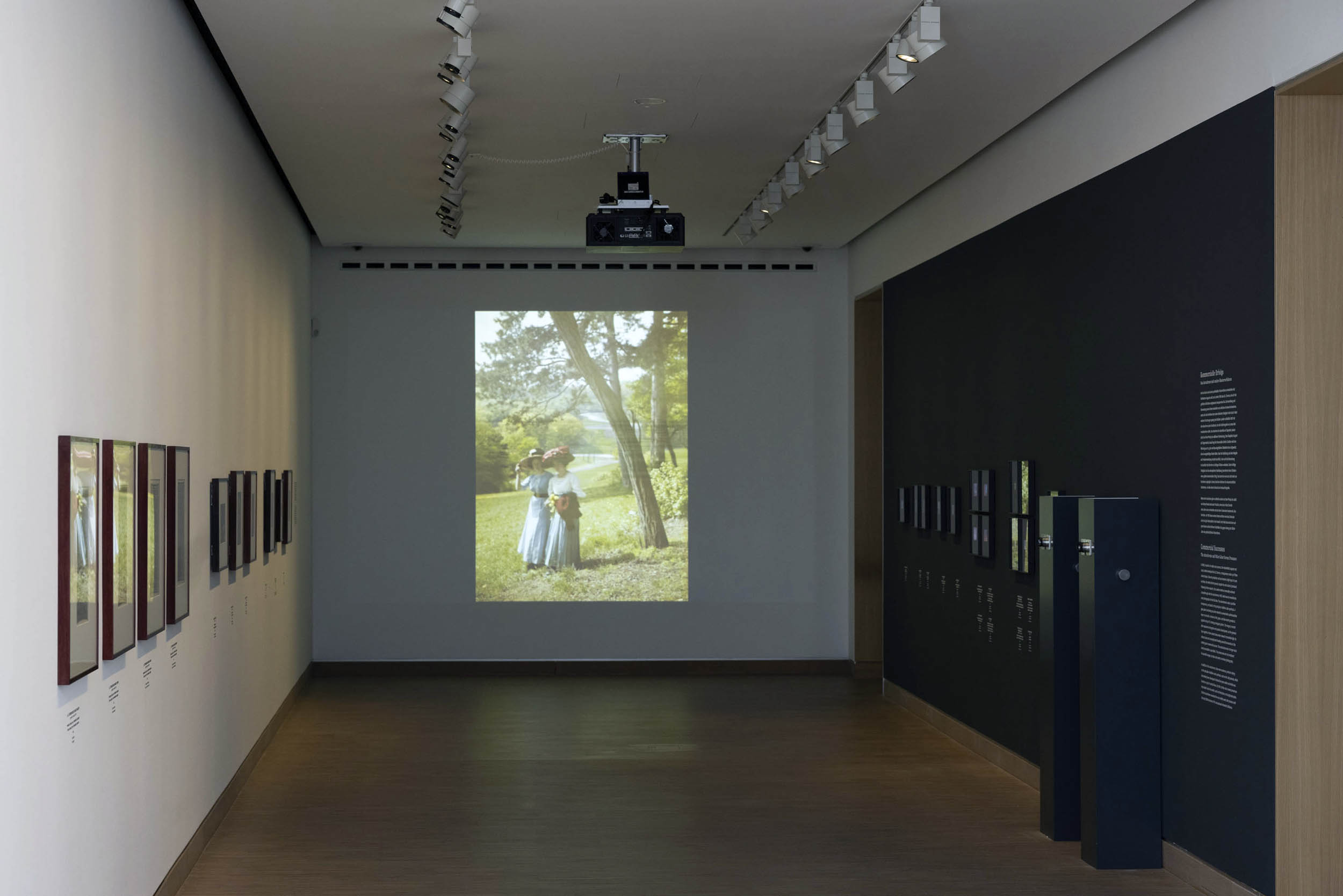
Installation view of the exhibition 'True Colors: Color in Photography from 1849 to 1955' at Albertina Modern, Vienna


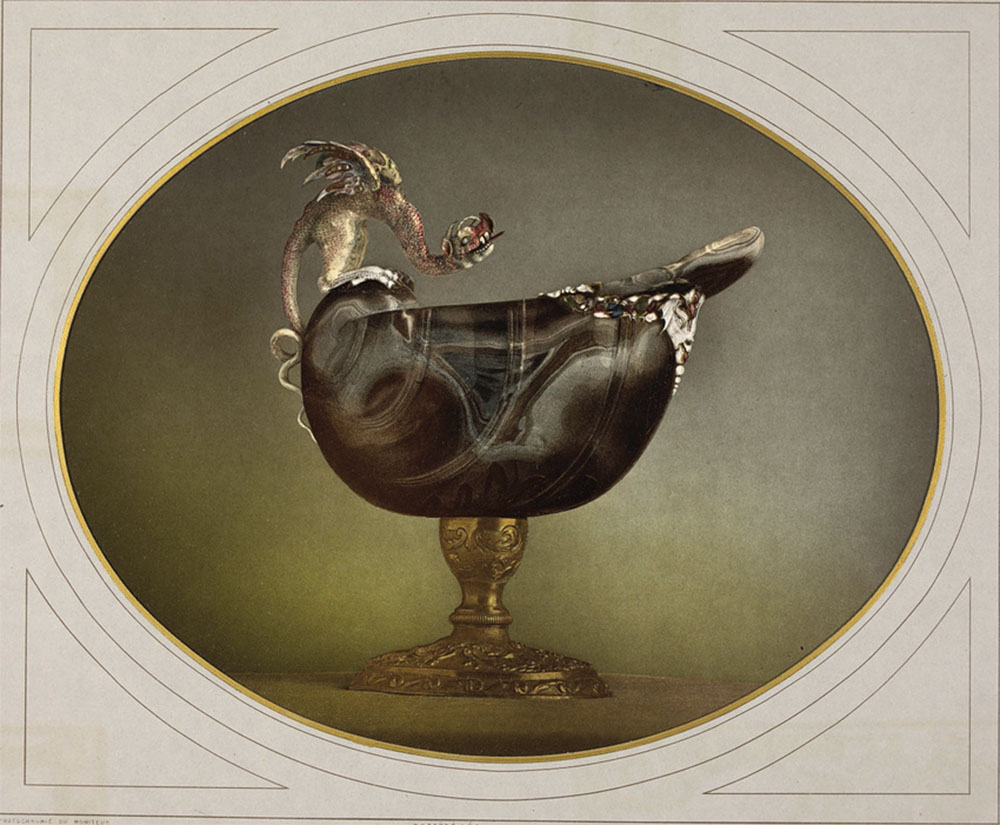
Installation view of the exhibition True Colors: Color in Photography from 1849 to 1955 at Albertina Modern, Vienna showing in the bottom image, Léon Vidal’s photograph Oriental Onyx Saucier, 16th century, from Le Tresor artistique de la France, c. 1876-1878 (below)


Léon Vidal (French, 1833-1906)
'Oriental Onyx Sardonyx Cup (16th century)' 1876 from the exhibition 'True Colors: Color in Photography from 1849 to 1955' at Albertina Modern, Vienna, January - April, 2025


Léon Vidal (French, 1833-1906)
Oriental Onyx Sardonyx Cup (16th century)
1876
Photomechanical proof (photochromy using the Léon Vidal process) mounted on cardboard
H. 20.8 ; L. 26.2 cm.
Don Fondation Kodak-Pathé, 1983


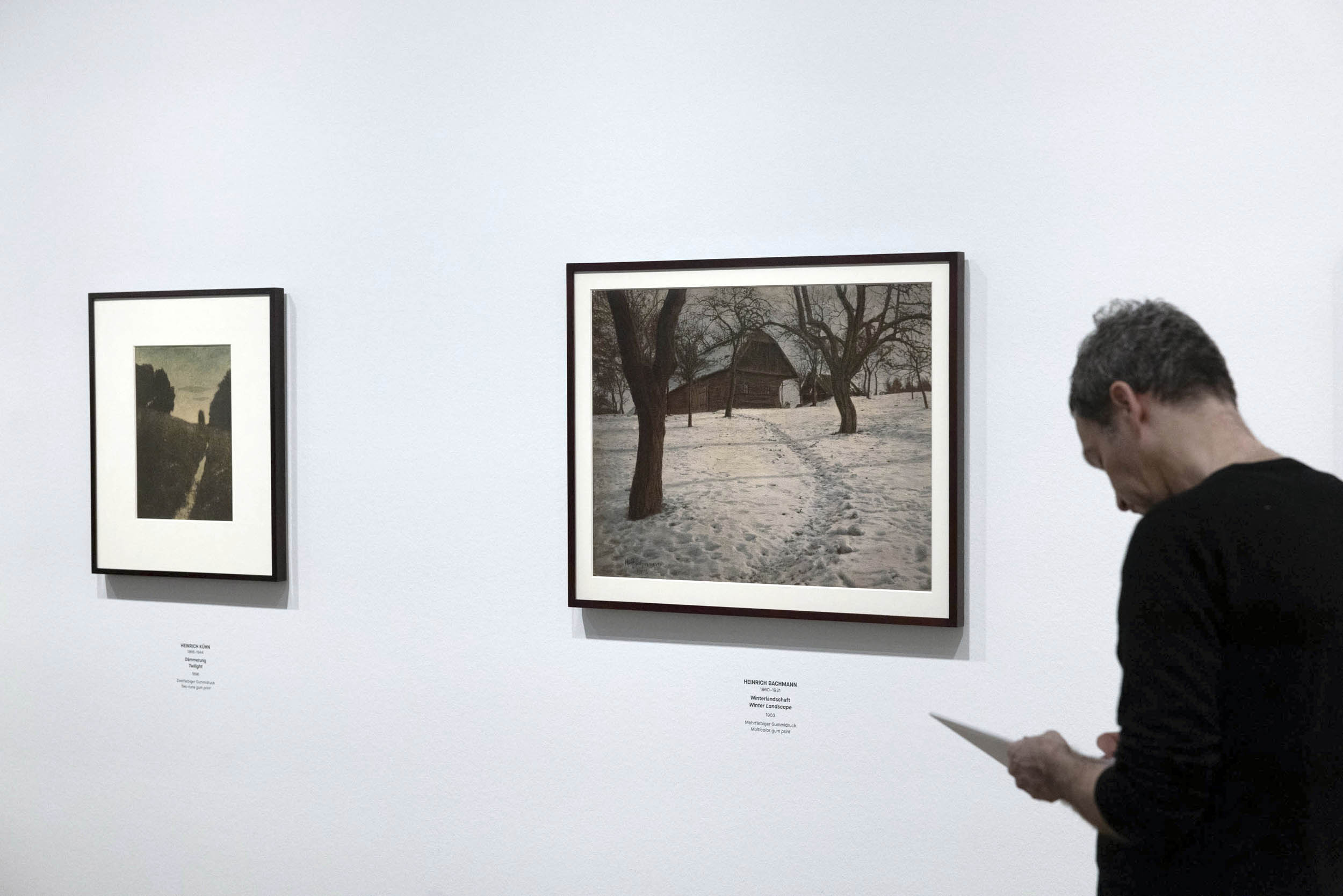
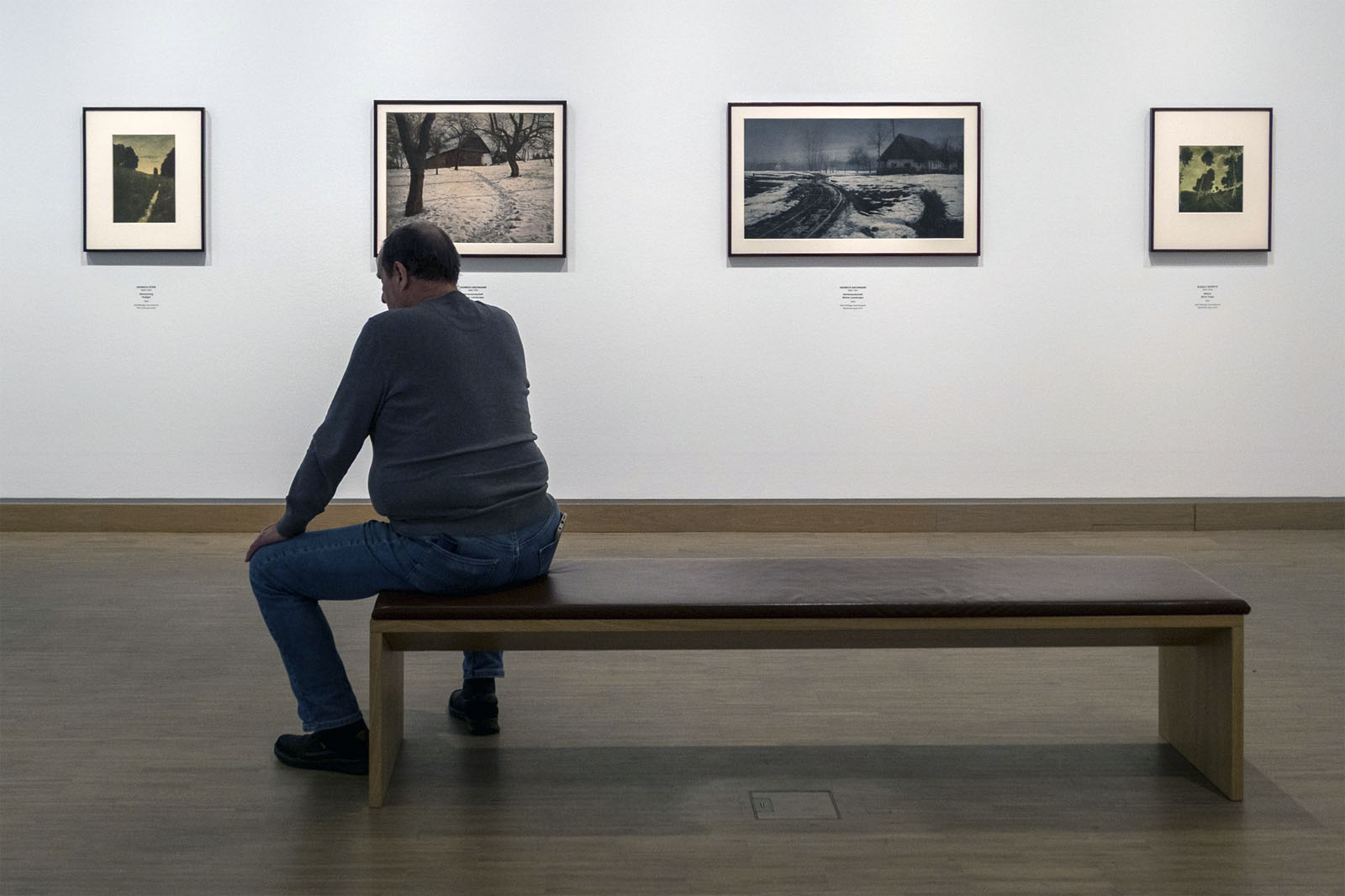
Installation view of the exhibition 'True Colors: Color in Photography from 1849 to 1955' at Albertina Modern, Vienna showing at left, Heinrich Kühn's 'Twilight' 1896 (below); and at right, Heinrich Bachmann's 'Winter Landscape' 1903


Installation view of the exhibition True Colors: Color in Photography from 1849 to 1955 at Albertina Modern, Vienna showing at left, Heinrich Kühn’s Twilight 1896 (below); and at right, Heinrich Bachmann’s Winter Landscape 1903


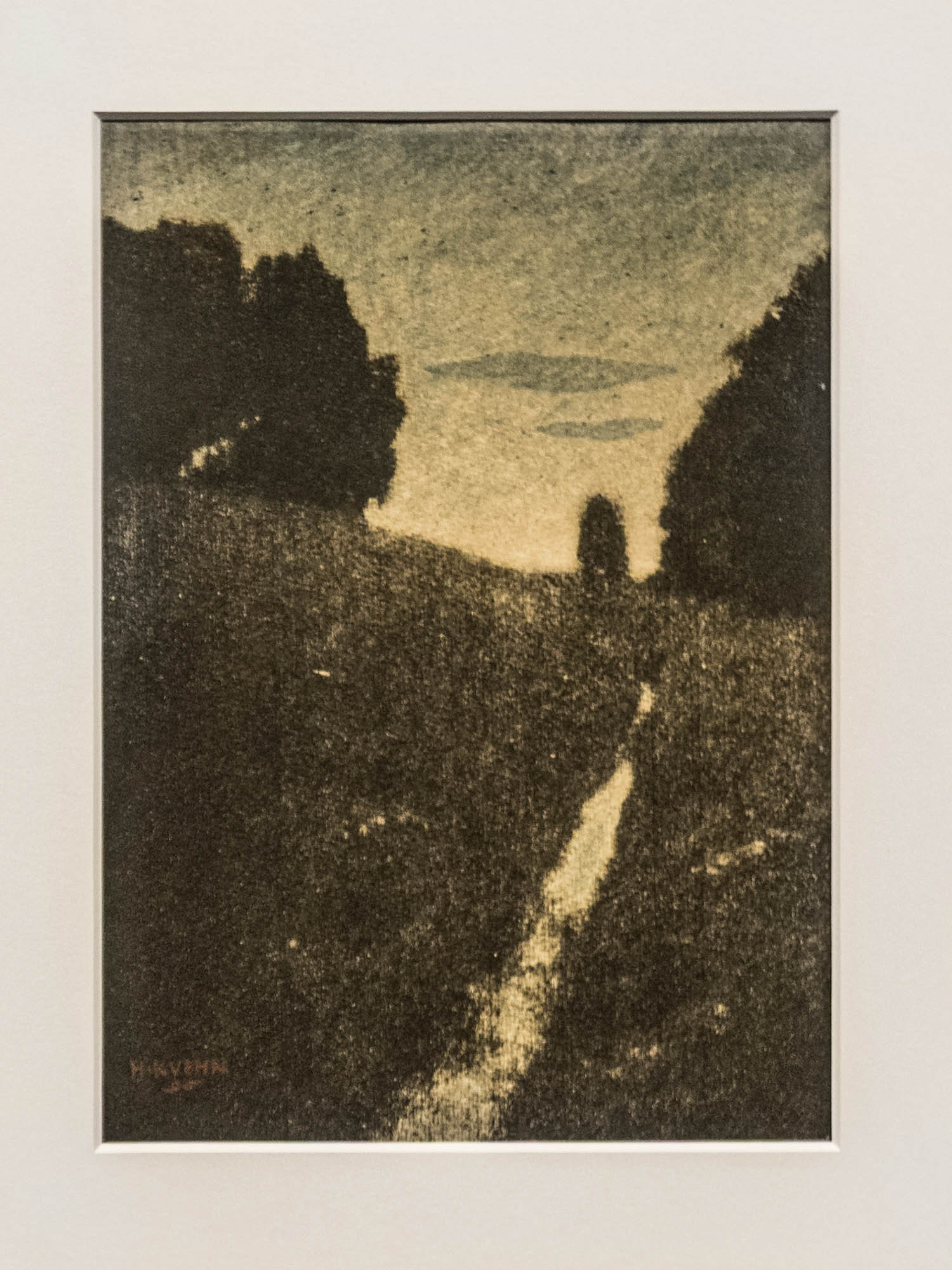
Heinrich Kühn (Austrian-German, 1866-1944) 'Twilight' 1896


Heinrich Kühn (Austrian-German, 1866-1944)
Twilight
1896
Two-tone gum print
Photo: Karin Svadlenak-Gomez


The Pictorialist Aesthetic: Photography as Art

One of my personal highlights from True Colours was the section dedicated to pictorialist photography. Emerging in the late 19th and early 20th centuries, pictorialism sought to elevate photography to the level of fine art, favouring soft focus, painterly compositions, and atmospheric effects. In fact the Albertina modern had a whole exhibition on Pictorialism in 2023, which was a great joy to me.

Heinrich Kühn’s Twilight (1896, above), produced through the autochrome process, was a standout for me, its subtle gradations of light and shadow creating an almost dreamlike serenity. Kühn was also one of the pioneers of the autochrome process, the first commercially successful colour photography method introduced by the Lumière brothers in 1907. Autochromes used a fine layer of dyed potato starch grains to filter light, creating rich and softly textured images. Kühn masterfully employed this process to enhance the painterly, impressionistic quality of his photographs, further bridging the gap between photography and fine art. Seeing these images up close, I was reminded of how photographers of the past fought for their medium to be recognised as more than mere documentation – it was, and remains, an art form in its own right.

Karin Svadlenak-Gomez. “Photography in Full Spectrum,” on the ViennaCultgram website 13th March 2025 [Online] Cited 25/03/2024


Installation view of the exhibition 'True Colors: Color in Photography from 1849 to 1955' at Albertina Modern, Vienna


Installation view of the exhibition True Colors: Color in Photography from 1849 to 1955 at Albertina Modern, Vienna
Photo: Karin Svadlenak-Gomez


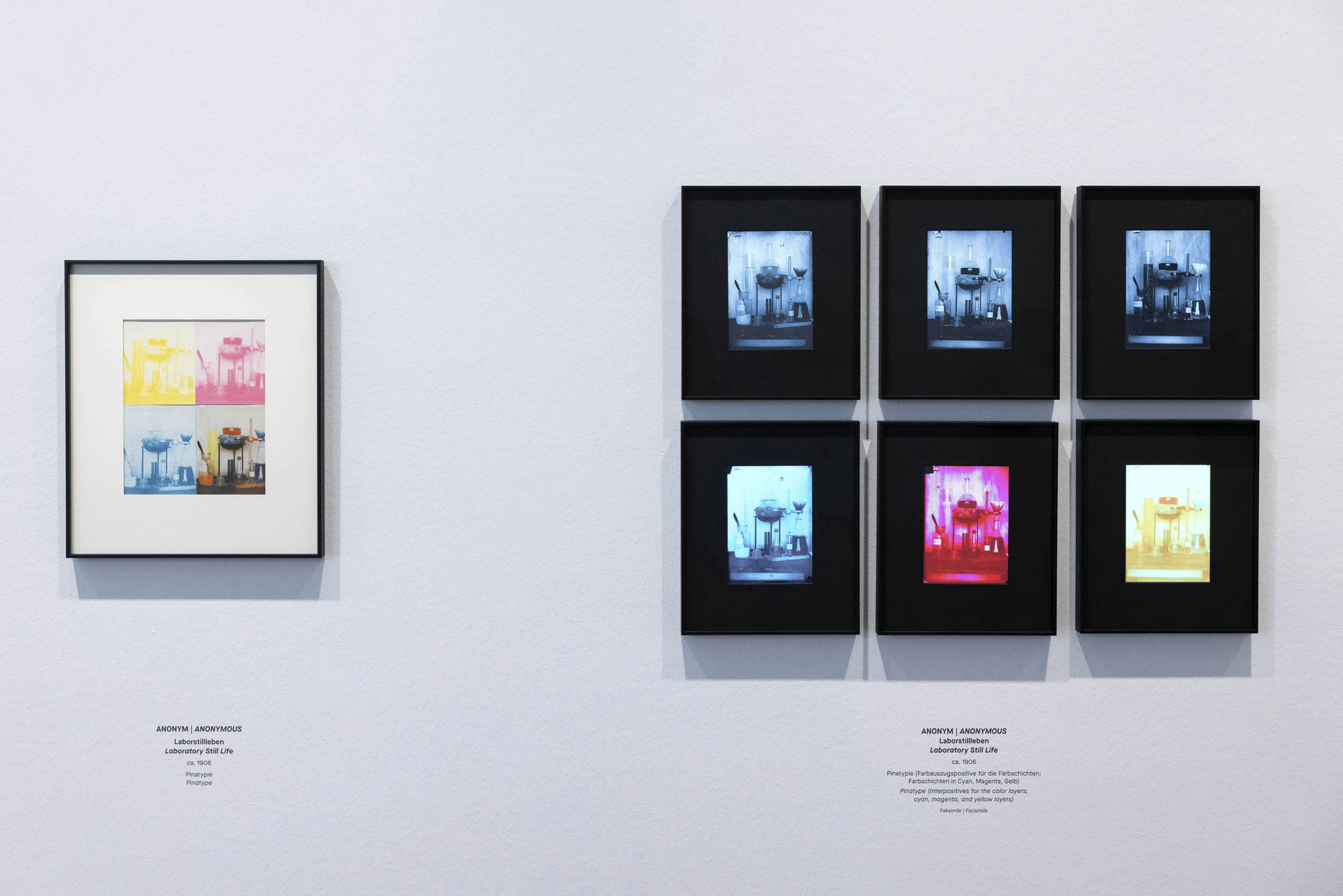
Installation view of the exhibition 'True Colors: Color in Photography from 1849 to 1955' at Albertina Modern, Vienna showing Anonymous. 'Laboratory Still Life' 1906


Installation view of the exhibition True Colors: Color in Photography from 1849 to 1955 at Albertina Modern, Vienna showing Anonymous. Laboratory Still Life 1906


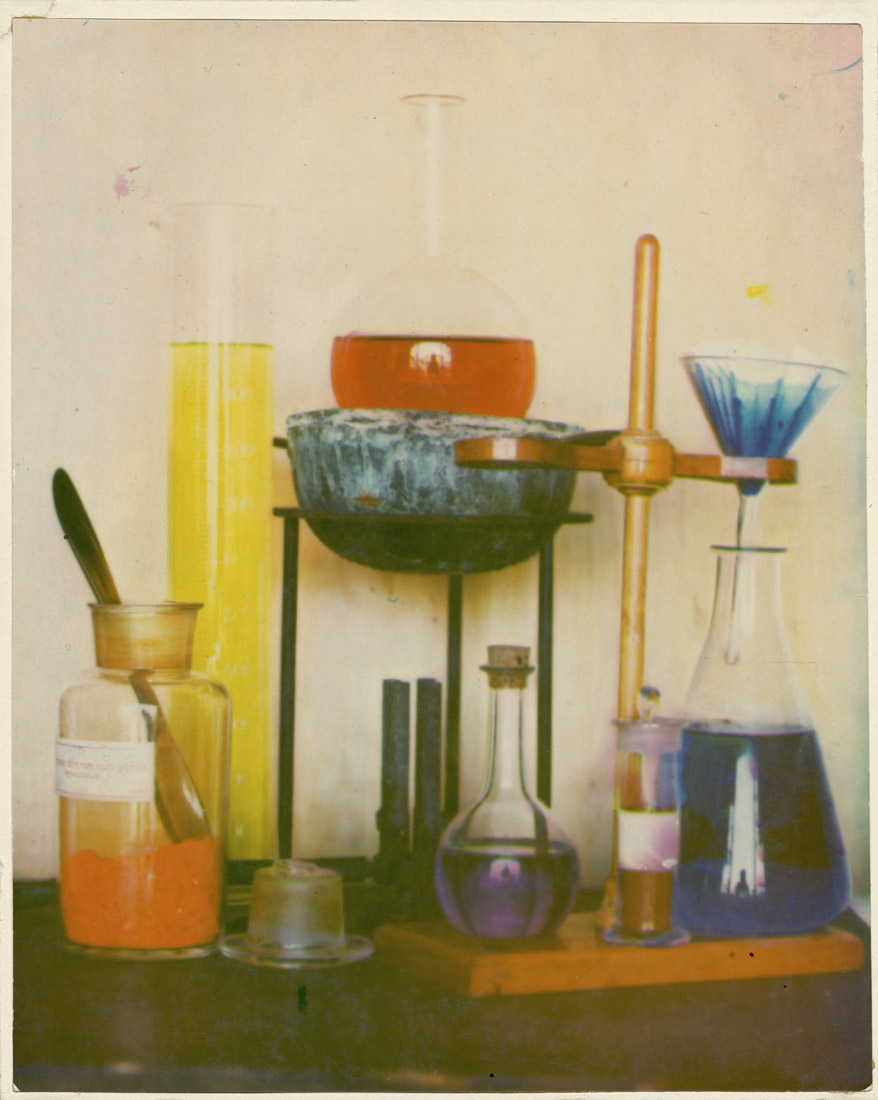
Anonymous photographer.
'Laboratory Still Life Around' 1906 from the exhibition 'True Colors: Color in Photography from 1849 to 1955' at Albertina Modern, Vienna, January - April, 2025

Anonymous photographer
Laboratory Still Life
Around 1906
14.2 x 11.2 cm
Pinatype
The Albertina Museum, Vienna – Permanent Loan by Höhere Graphische Bundes-Lehr- und Versuchsanstalt
© Photo: The Albertina Museum, Vienna


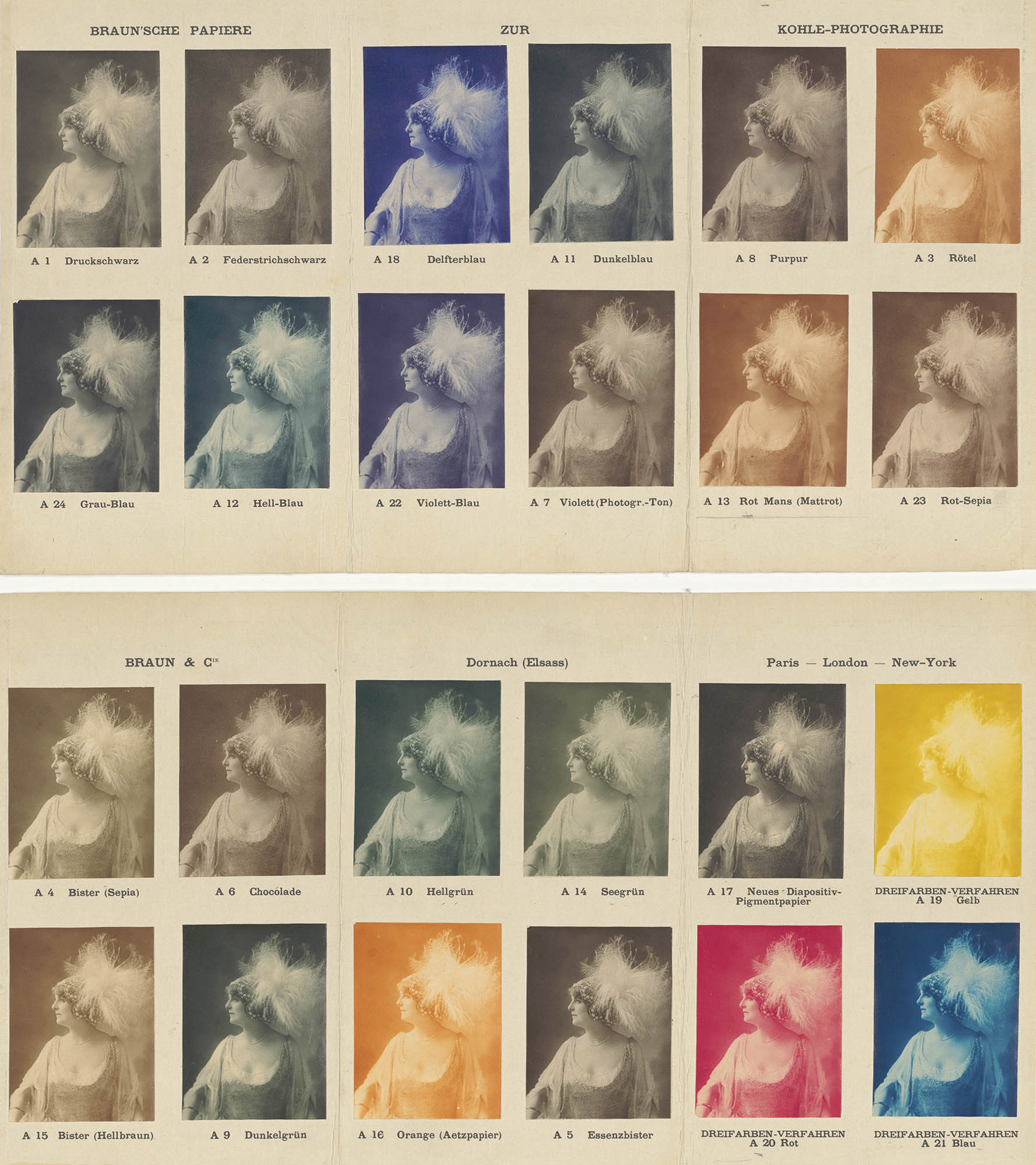
Ad. Braun et Cie. (Jean Adolphe Braun (French, 1812-1877))
'Sample board of various pigment papers from Ad. Braun et Cie.' around 1910


Ad. Braun et Cie. (Jean Adolphe Braun (French, 1812-1877))
Sample board of various pigment papers from Ad. Braun et Cie.
Around 1910
38.2 x 32.5cm
Pigment prints
The Albertina Museum, Vienna – Permanent loan by Höhere Graphische Bundes- Lehr- und Versuchsanstalt
© Photo: The Albertina Museum, Vienna


Ad. Braun et Cie. (Jean Adolphe Braun (French, 1812-1877))
'Sample board of various pigment papers from Ad. Braun et Cie.' around 1910 (detail)
Ad. Braun et Cie. (Jean Adolphe Braun (French, 1812-1877))
'Sample board of various pigment papers from Ad. Braun et Cie.' around 1910 (detail)


Ad. Braun et Cie. (Jean Adolphe Braun (French, 1812-1877))
Sample board of various pigment papers from Ad. Braun et Cie. (details)
Around 1910
38.2 x 32.5cm
Pigment prints
The Albertina Museum, Vienna – Permanent loan by Höhere Graphische Bundes- Lehr- und Versuchsanstalt
© Photo: The Albertina Museum, Vienna


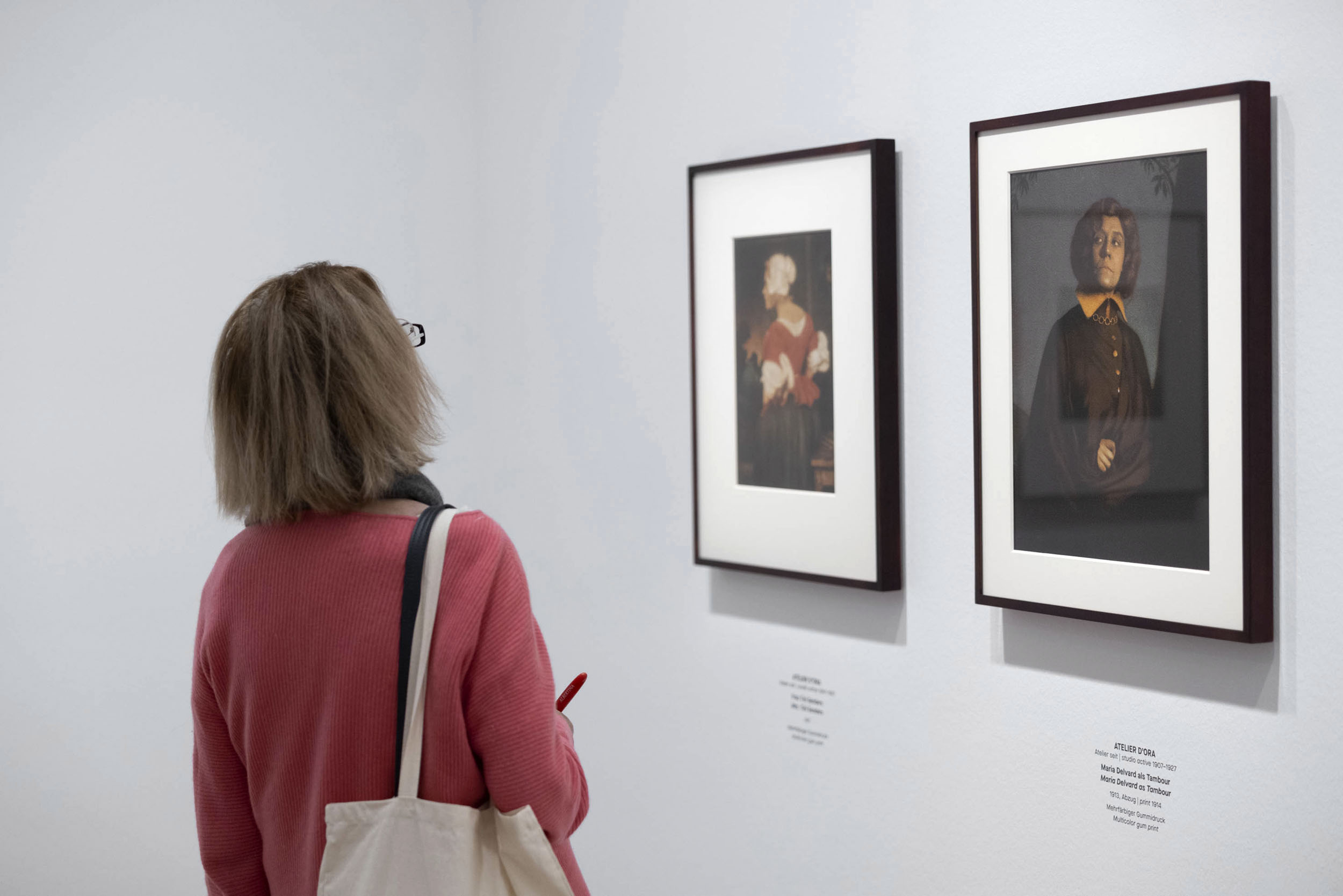
Installation view of the exhibition 'True Colors: Color in Photography from 1849 to 1955' at Albertina Modern, Vienna showing two photographs by Atelier D'Ora with at right, 'Maria Delvard as Tambour' 1913


Installation view of the exhibition True Colors: Color in Photography from 1849 to 1955 at Albertina Modern, Vienna showing two photographs by Atelier D’Ora with at right, Maria Delvard as Tambour 1913


The aesthetics of fine art photography had their greatest impact on studio photograph. In the early twentieth century, such progressive studios as Atelier d’Ora (later called Atelier d’Ora Benda) adopted the reformed portrait style and its elaborate techniques. The bromoil and broccoli transfer processes finally offered an alternative to gum prints, so that works in colour could be produced in a much less complicated and inexpensive way.

Wall text from the exhibition


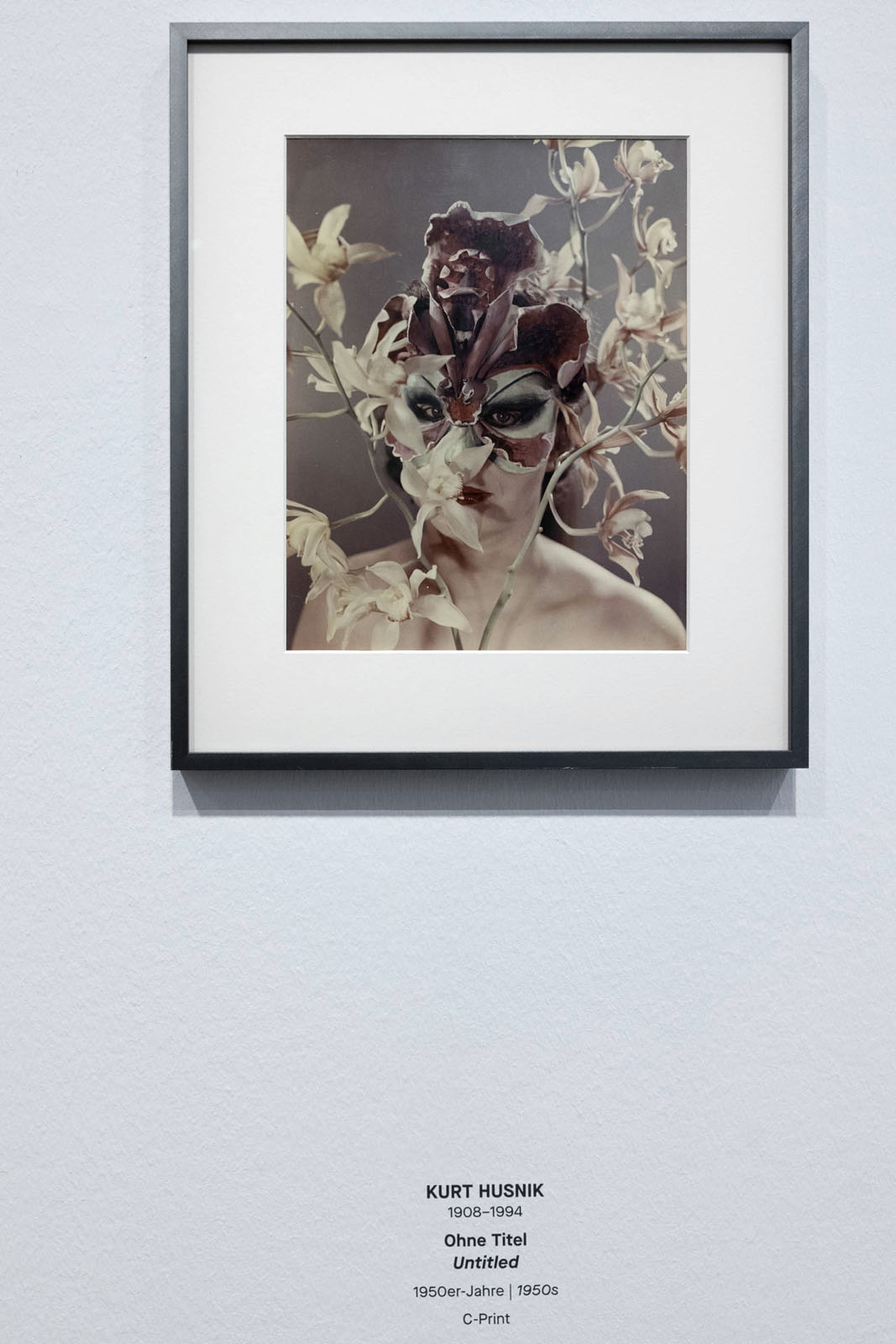
Installation view of the exhibition 'True Colors: Color in Photography from 1849 to 1955' at Albertina Modern, Vienna showing Kurt Husnik's three photographs 'Untitled' 1950s


Installation view of the exhibition True Colors: Color in Photography from 1849 to 1955 at Albertina Modern, Vienna showing Kurt Husnik’s three photographs Untitled 1950s


Installation view of the exhibition 'True Colors: Color in Photography from 1849 to 1955' at Albertina Modern, Vienna


Installation view of the exhibition True Colors: Color in Photography from 1849 to 1955 at Albertina Modern, Vienna showing Kurt Husnik’s Untitled 1950s


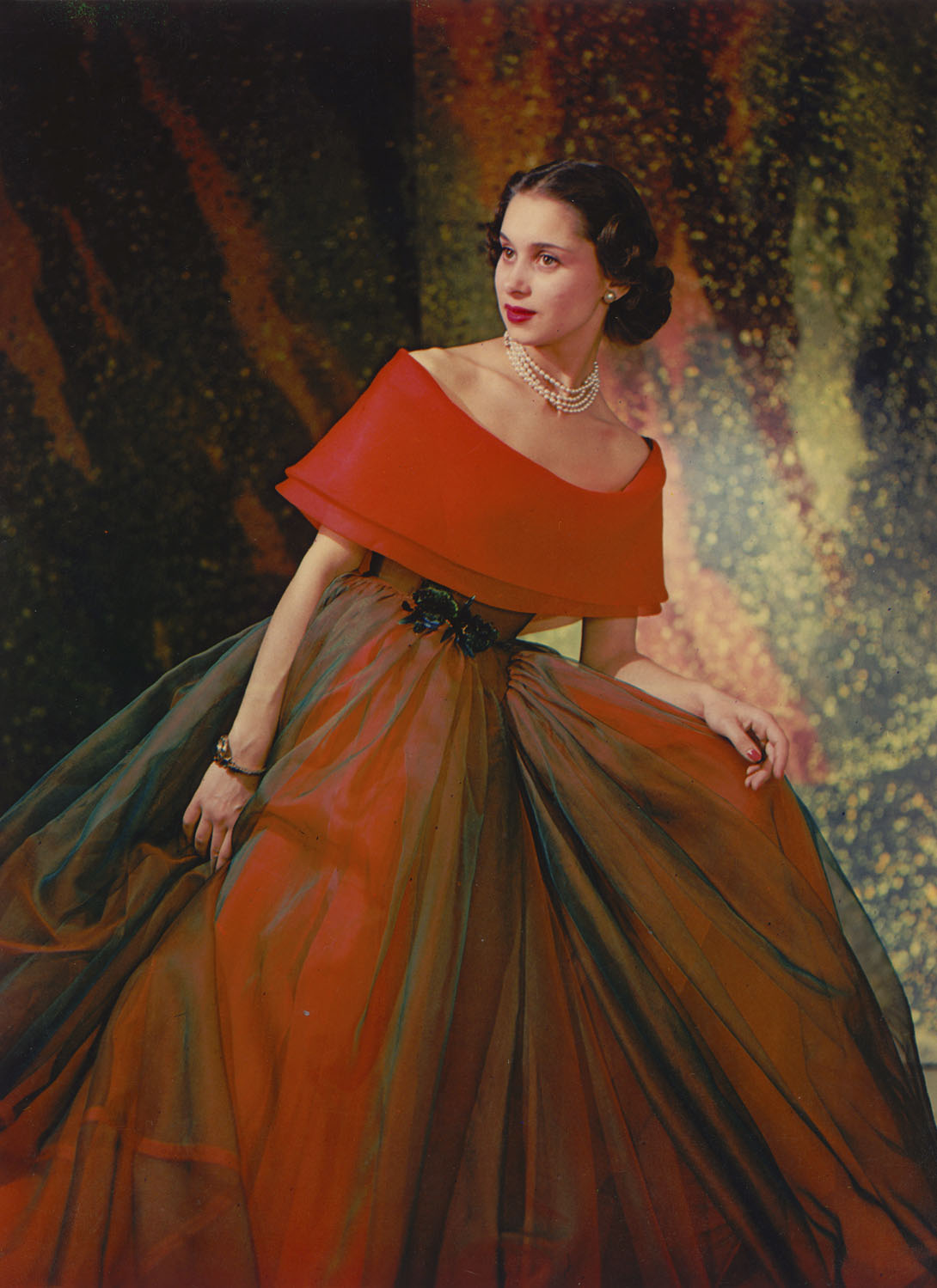
Installation view of the exhibition 'True Colors: Color in Photography from 1849 to 1955' at Albertina Modern, Vienna showing at left, Hans Madensky's 'Fashion Portrait - Student of the Vienna-Hetzendorf School of Fashion' 1952 (below)


Installation view of the exhibition True Colors: Color in Photography from 1849 to 1955 at Albertina Modern, Vienna showing at left, Hans Madensky’s Fashion Portrait – Student of the Vienna-Hetzendorf School of Fashion 1952 (below)


Hans Madensky (Austrian, 1902-1978) 'Fashion Portrait - Student of the Vienna-Hetzendorf School of Fashion' 1952


Hans Madensky (Austrian, 1902-1978)
Fashion portrait – Student from the Vienna Hetzendorf Fashion School
1952
27 x 22.8cm
Kodak Dye Transfer Print
The Albertina Museum, Vienna – Permanent Loan by Höhere Graphische Bundes-Lehr- und Versuchsanstalt
© Photo: The Albertina Museum, Vienna


How did colour get into photography?

The exhibition True Colors – Color in Photography from 1849 to 1955 answers this question with outstanding works from the Albertina Museum’s photo collection.

The desire for colour in photography has dominated the world of photography from the very beginning. True Colors traces the development of colour photography, from the first experimental techniques in the 19th century to generally applicable analog colour photography.

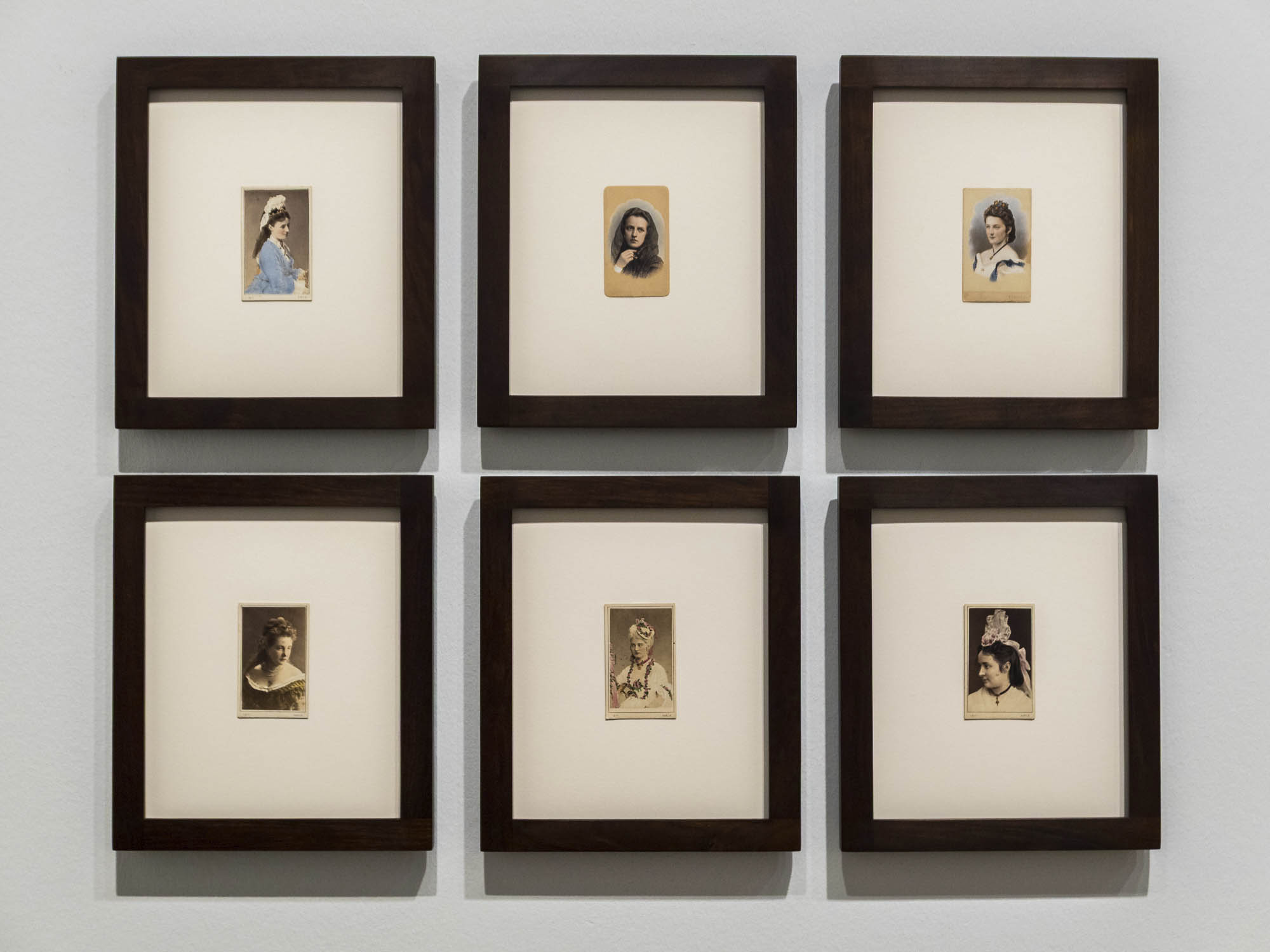
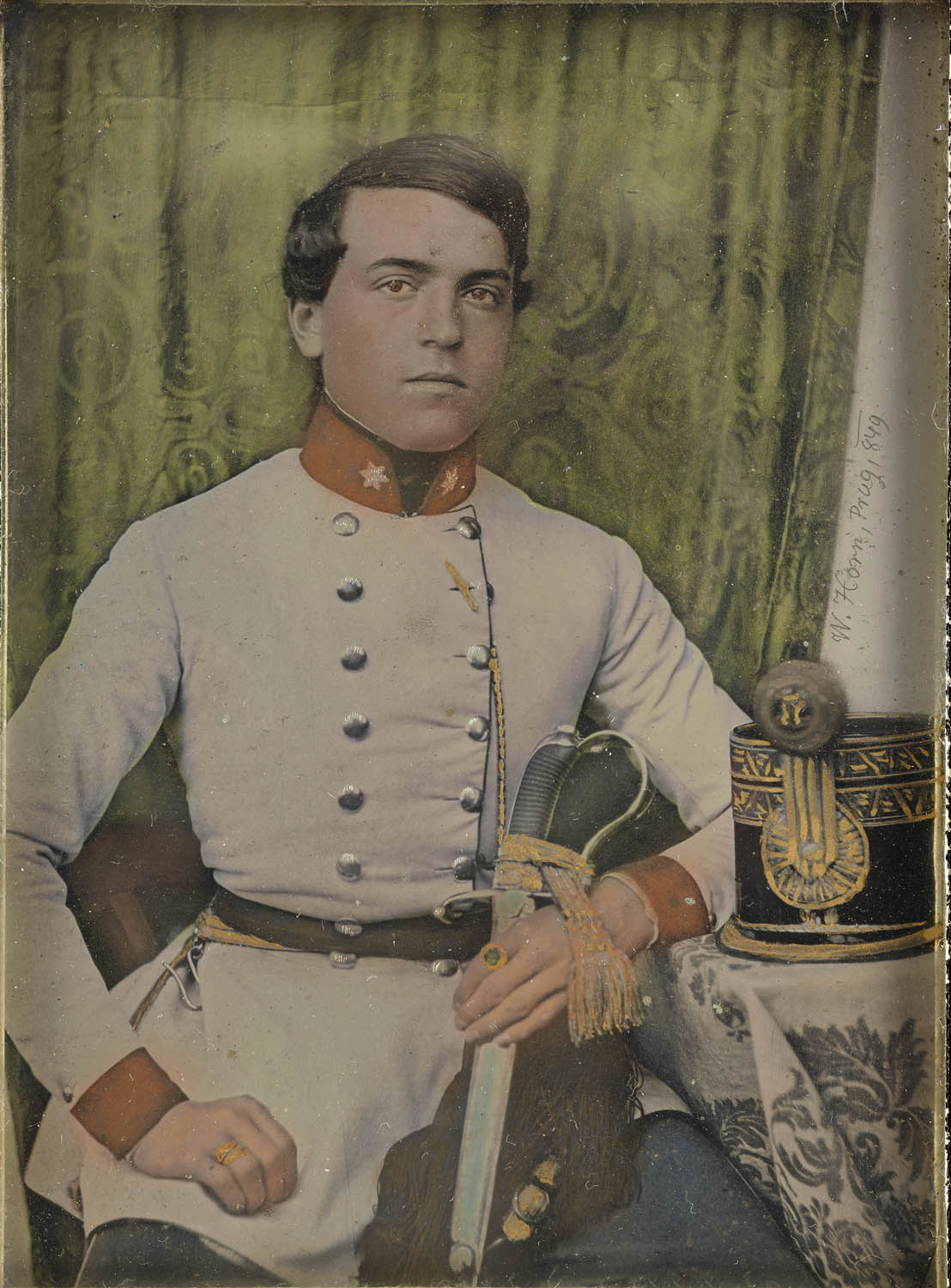
Even in the early days of photography, daguerreotypes and salt paper prints were colored by hand to create colorful images. Monochrome pigment papers, which enjoyed great popularity until the 1890s, also contributed to the broad chromatic diversity of 19th century photographs.

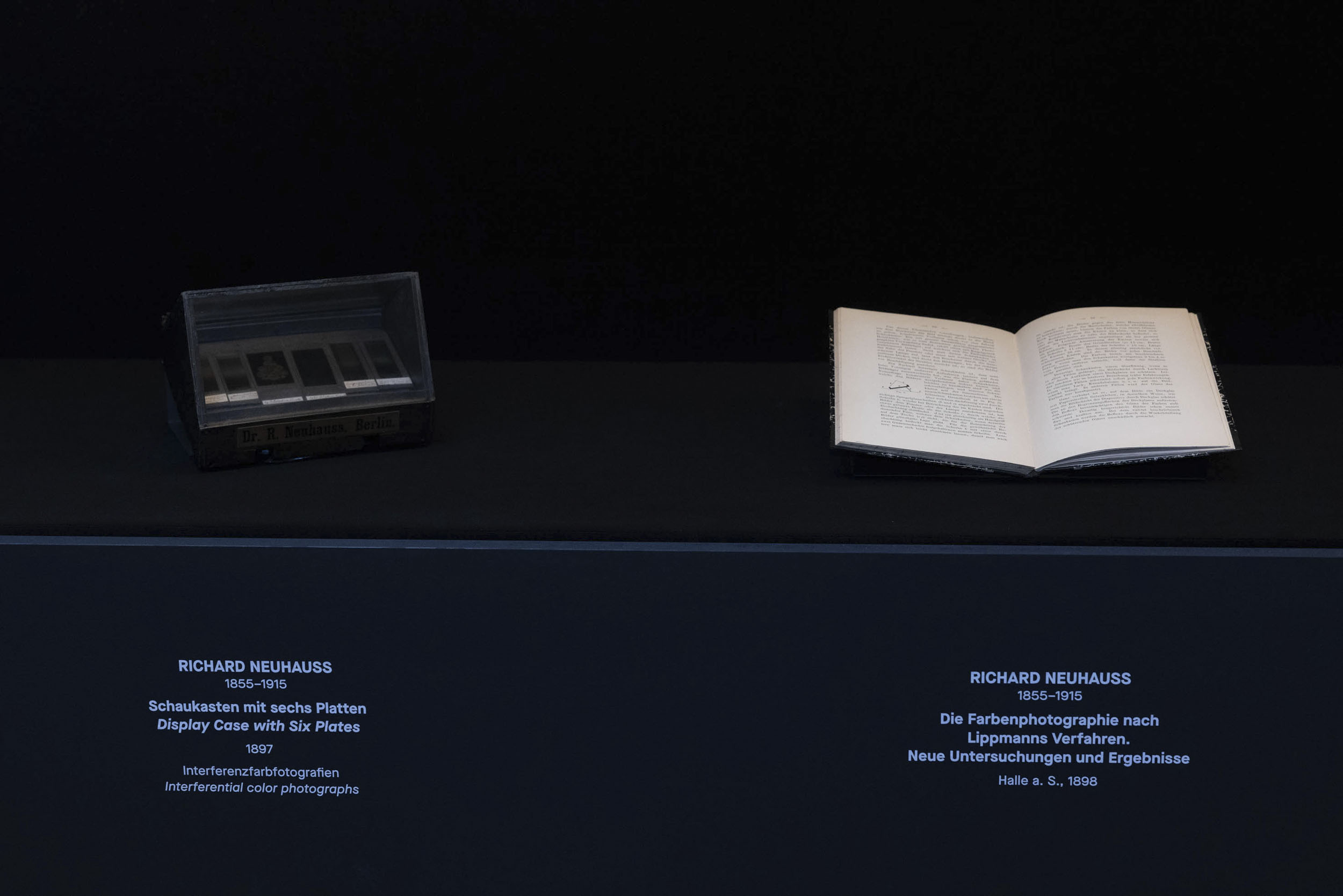
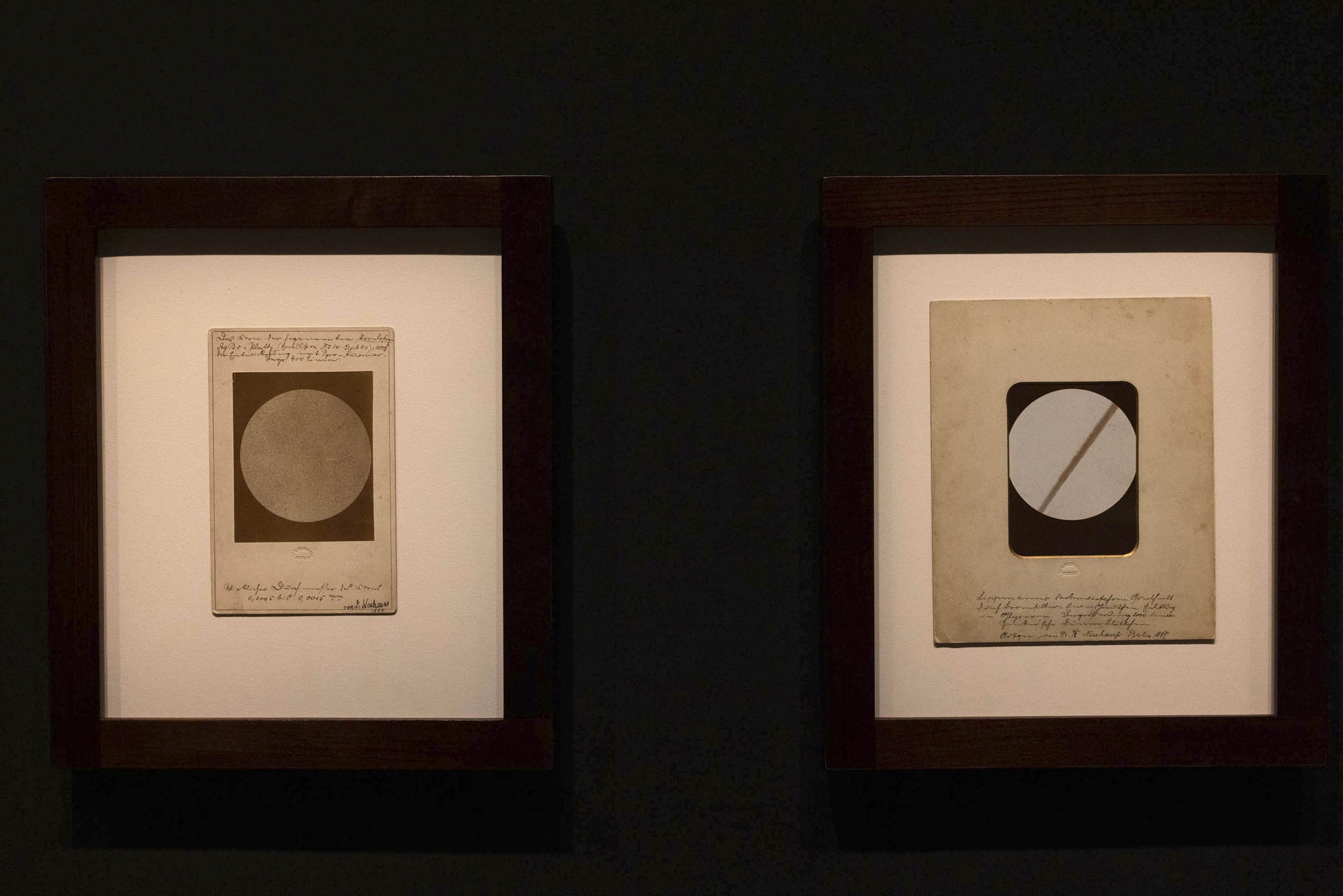
The first successful color process, which was reserved for an exclusive circle, was introduced in 1891. The brilliant images in the so-called interference colour process are based on the physical principle of standing waves, which also allows us to see coloured reflections in soap bubbles. The unique pieces from the Albertina Museum’s Collection represent a unique focal point.

The autochrome process, which was introduced in 1907, brought about a major change in image culture. It was also practicable for amateurs and helped its inventors, the Lumière brothers, to achieve great commercial success. However, it was mainly used as a glass slide for projection. At the same time, around 1900, fine art printing processes were developed that used color pigments to produce multicolored image solutions. They fulfilled the artistic aspirations of the Pictorialists and were commonplace in large photo studios until the 1930s. For a long time, the challenge was to obtain colored prints on paper. This was also achieved at the beginning of the 20th century with the use of various three-color processes, which were assembled in several steps.

Kodak finally achieved the breakthrough to easy-to-use and therefore mass-market colour photography in 1936 with the first 35mm colour slide films. These products revolutionised the use of colour photography in the following decades, which form the conclusion of this Albertina Museum exhibition.

True Colors provides an insight into the rich holdings of the Albertina Museum’s photography collection, the historical part of which is based on the collection of the Höhere Graphische Bundes- Lehr- und Versuchsanstalt (GLV). The exhibition demonstrates the great public interest, the constant development and the various fields of application of historical photography in colour. True Colors also explores the impact of popular colour processes on the visual culture of the early 20th century.

The exhibition is on view from 24 January until 21 April 2025 at the Albertina Modern


Wilhelm Horn (Czech, 1809-1891)
'Portrait of a Young Officer' 1849


Wilhelm Horn (Czech, 1809-1891)
Portrait of a Young Officer
1849
11 x 8.3cm
Daguerreotype, coloured
The Albertina Museum, Vienna – Permanent loan by Höhere Graphische Bundes- Lehr- und Versuchsanstalt
© Photo: The Albertina Museum, Vienna


Installation view of the exhibition 'True Colors: Color in Photography from 1849 to 1955' at Albertina Modern


Installation view of the exhibition True Colors: Color in Photography from 1849 to 1955 at Albertina Modern
Photo: Karin Svadlenak-Gomez


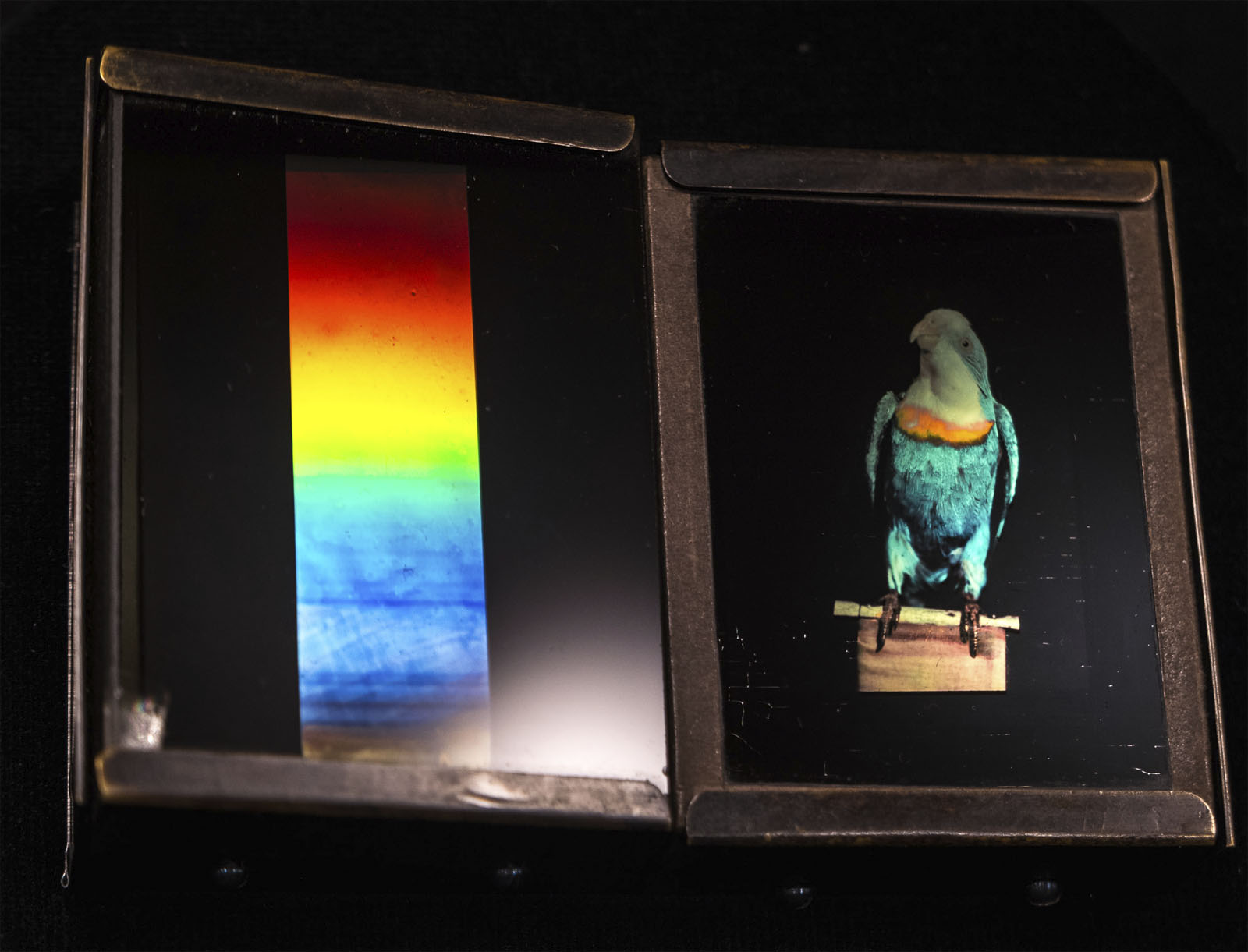
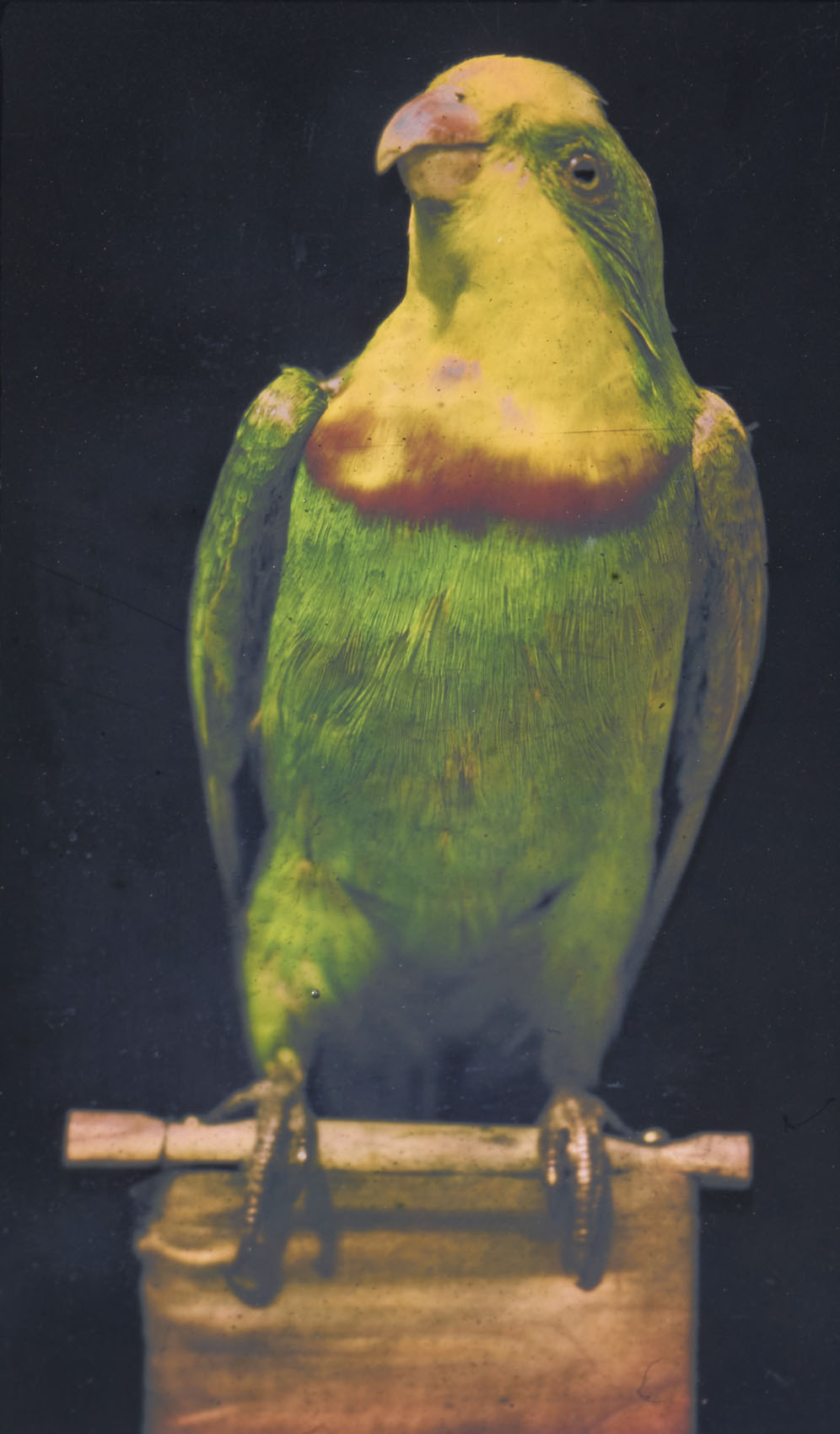
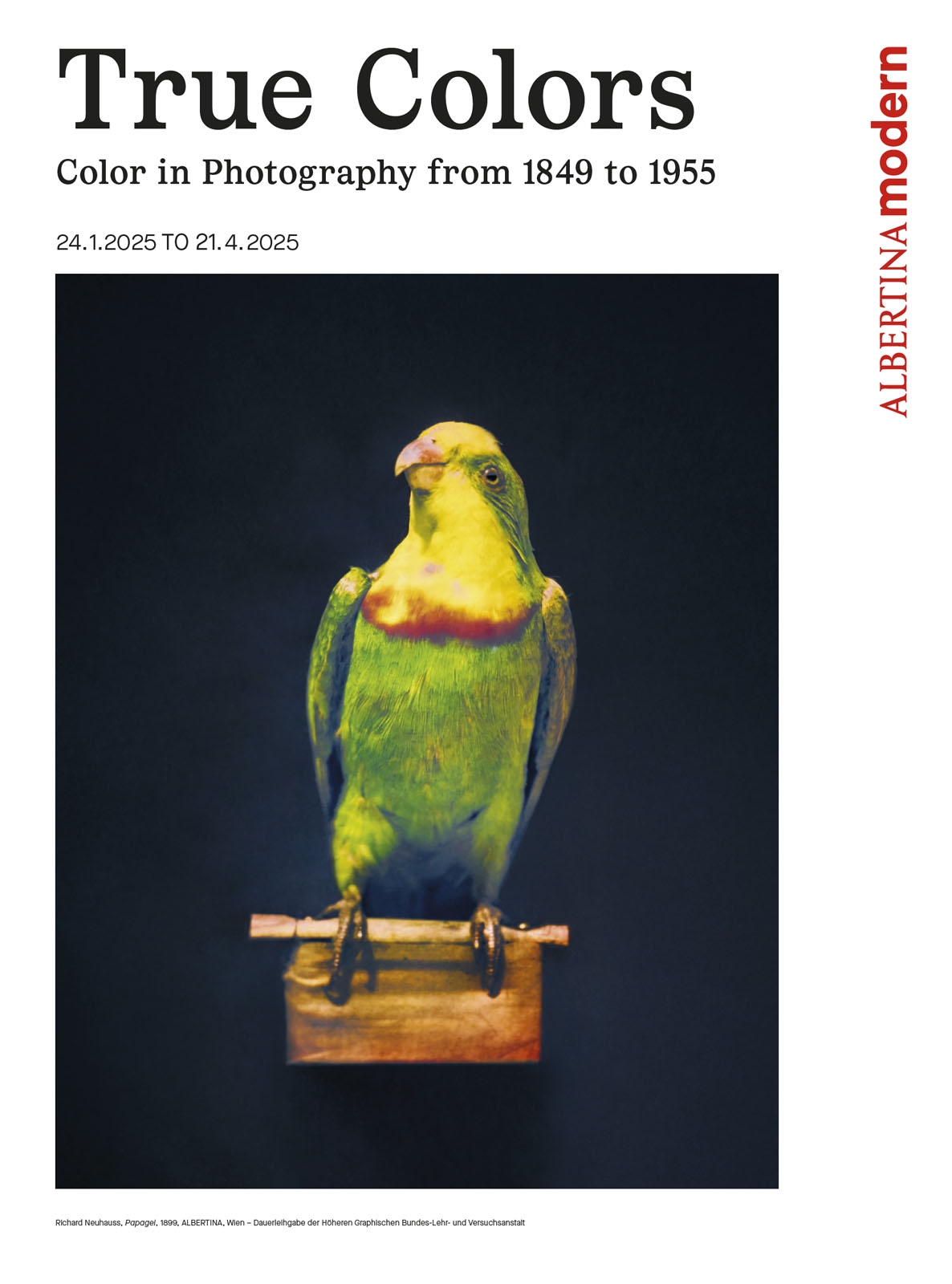
Richard Neuhauss (German, 1855-1915) 'Parrot' 1899


Richard Neuhauss (German, 1855-1915)
Parrot
1899
8.3 x 6.4cm
Colour photography
The Albertina Museum, Vienna – Permanent Loan by Höhere Graphische Bundes-Lehr- und Versuchsanstalt
© Photo: The Albertina Museum, Vienna


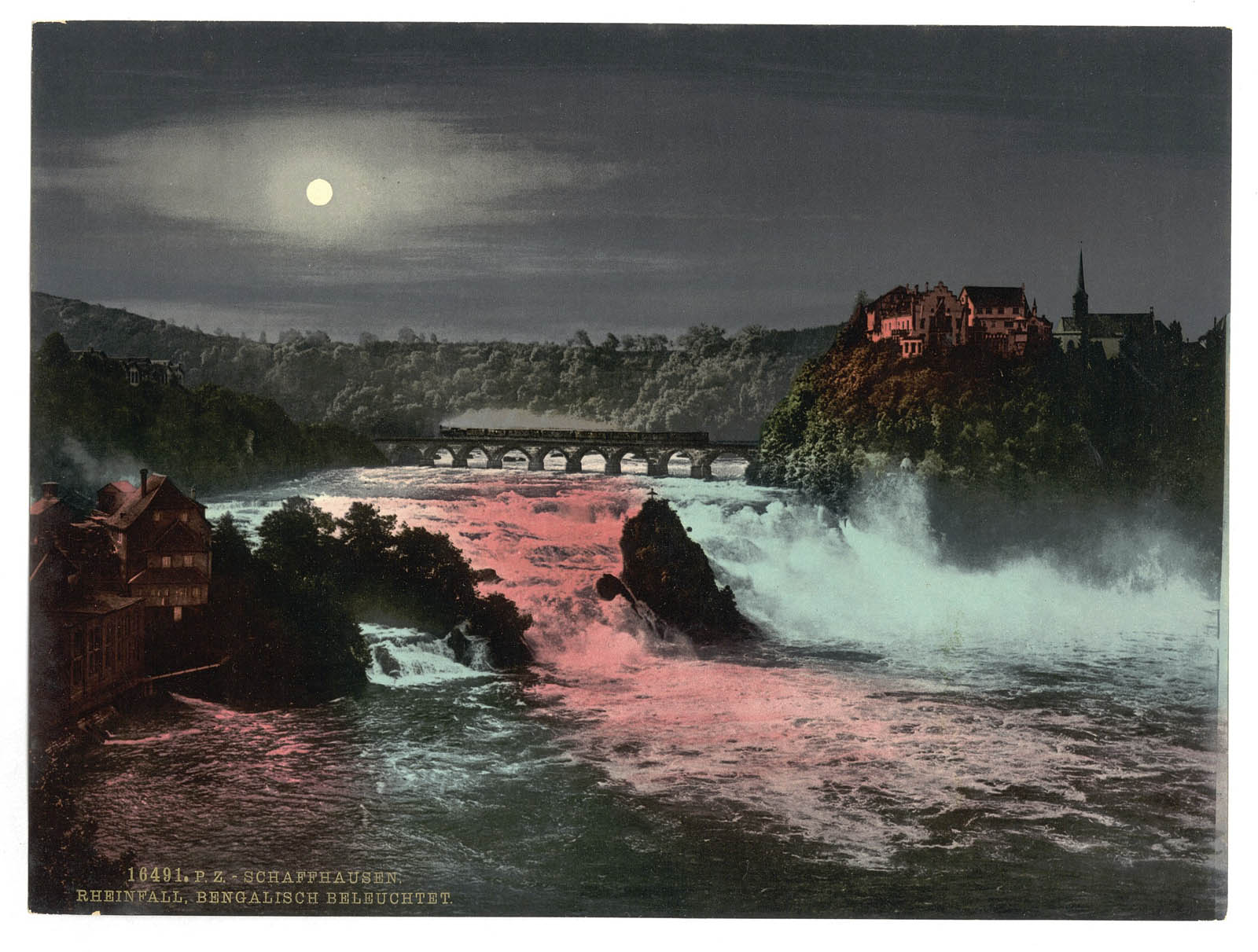
Photochrom Print Collection (photographer) 'The Falls of the Rhine, by Bengal Light, Schaffhausen, Switzerland' between 1890 and 1900


Photochrom Print Collection (photographer)
The Falls of the Rhine, by Bengal Light, Schaffhausen, Switzerland
Between 1890 and 1900
Print no. “16491”.; Forms part of: Views of Switzerland in the Photochrom print collection.; Title from the Detroit Publishing Co., Catalogue J-foreign section, Detroit, Mich.: Detroit Publishing Company, 1905.
Photomechanical print, photochrom, colour


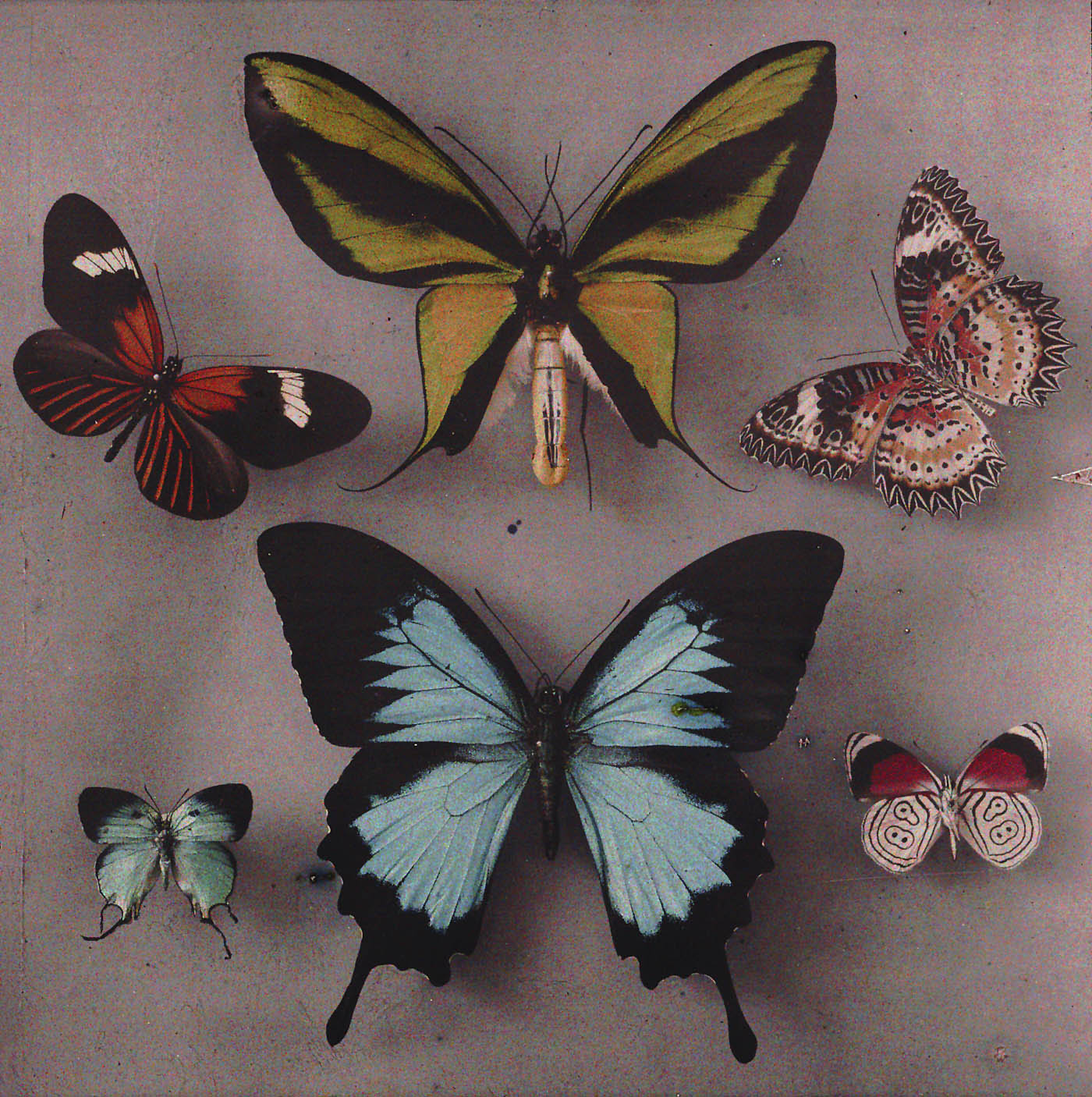
Arthur von Hübl (Austrian, 1853-1932) 'Exotic Butterflies' 1908-1914


Arthur von Hübl (Austrian, 1853-1932)
Exotic Butterflies
1908-1914
6.3 x 6.9cm
Autochrome
The Albertina Museum, Vienna – Permanent Loan by Höhere Bundes-Lehr- und Versuchsanstalt
© Photo: The Albertina Museum, Vienna


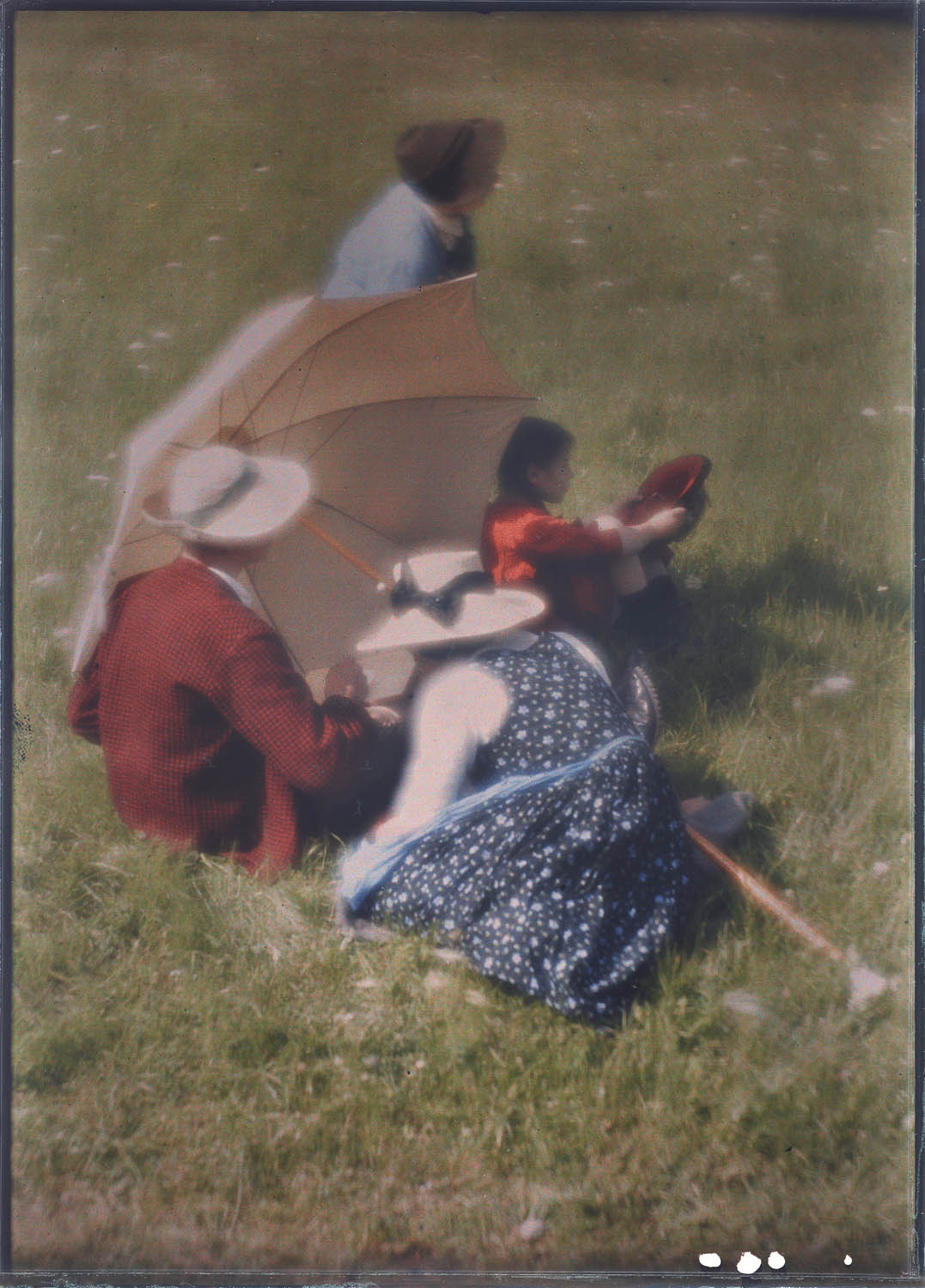
Heinrich Kühn (Austrian-German, 1866-1944) 'The Parasol' 1912


Heinrich Kühn (Austrian-German, 1866-1944)
The Parasol
1912
18 x 13cm
Autochrome
The Albertina Museum, Vienna
© Photo: The Albertina Museum, Vienna


Philippe Pottier (French, 1905-1991)
'Evening Gown by Madame Grès' 1950/1954


Philippe Pottier (French, 1905-1991)
Evening Gown by Madame Grès
1950/1954
22.2 x 16.5cm
Kodak Dye Transfer Print
The Albertina Museum, Vienna – Permanent Loan by Höhere Graphische Bundes-Lehr- und Versuchsanstalt
© Photo: The Albertina Museum, Vienna


Exhibition Texts

Introduction

True Colors: Color in Photography from 1849 to 1955

Today, colour photography is omnipresent, but the knowledge about its complex genesis is not very familiar. This exhibition highlights the multifaceted developments that were initiated starting in the mid-nineteenth century to bring colour into photography. Thanks to the extensive photographic collection of the Imperial-Royal Institution of Graphic Education and Research, the Albertina possesses unique holdings of important examples from this exciting chapter of photographic history.

As early as the middle of the nineteenth century, individual scientists managed to create unique photographs in color, which, however, were not intended for everyday use. Therefore, it was common from the early days to employ colouration or toned photographic papers. In 1891, Gabriel Lippmann achieved a crucial success in direct color photography by formulating the interferential colour process, which produced brilliantly vivid images. The Lumière brothers finally accomplished the first revolution in color photography: in 1907, they brought industrially manufactured autochromes to market. It was now for the first time that photographers and amateurs could access a practicable process for the production of colour glass slides. Thanks to more elaborate three-colour processes and Pictorialist fine art printing, which were developed around the same time, it was also possible to produce photographs in colour on paper.

The desire for colour in photography, which had been evident since it had existed, continued to prevail in the twentieth century. A decisive breakthrough was achieved by the Kodak Company in the mid-1930s, when it produced the first 35 mm photographic color slide film. Starting out from the USA, more practical materials for analog color photography, which had been developed gradually, also established themselves in Europe after World War II. It was now impossible to stop the triumph of modern colour photography.

All objects on display here come from the holdings of the Albertina or are on permanent loan from the collection of the Höhere Graphische Bundes-Lehr- und Versuchsanstalt [Higher Federal Institution of Graphic Education and Research].

Chromatic Diversity

Before it was possible to produce color photographs, photographers made use of a number of methods to bring color into their images. Even in the early days, daguerreotypes and salted paper prints were coloured by hand. While daguerreotypes were usually colored only partially, salted paper prints were sometimes heavily painted over. The so-called pigment papers, which enjoyed great popularity from the 1850s onward, enabled monochrome prints in various colours. Industrial manufacturers offered a wide range of nuances that could be variably used depending on the motif. Another way of lending prints uniform colour effects were toning baths. It was thus variable methods that were employed to produce photographs displaying a rich chromatic diversity.

A vital contribution to photography in colour was the introduction of the so called orthochromatic negative plates. In 1873, Hermann Wilhelm Vogel discovered the sensitisation of the photographic emulsion, so that the plates truthfully rendered the brightness values of blue, orange, yellow, and green. Earlier, the grey values of the blue areas had appeared overly bright, while the other colours had often seemed too dark. With the development of so-called panchromatic negative material it became possible from 1902 on to accurately record the entire visible spectral range according to tonal values. This progress was crucial for colour photography, as an incorrect recording of the tonal values during a shot could result in a distorted colour impression in the final product.

A Solitaire – the Interferential Colour Process

The interferential colour process, with which Gabriel Lippmann went public in Paris in 1891, is considered a first milestone in direct color photography. The method ensured permanently stable, brilliantly vivid colour images. It is based on the interference of light waves caused during exposure by the reflections of incident light rays off a reflective layer of mercury behind the negative. In the photographic emulsion, the finest layers are created alongside the standing waves, in which accumulations of silver are deposited. The spacing between the
layers corresponds to the wavelength of the recorded colour, so that when the image is viewed at the correct angle, the individual parts reflect their original colour. Standing waves are the phenomenon that also causes the colour effects on soap bubbles.

The process, which had its pitfalls, was enthusiastically received by specialists. The Lumière brothers, who as producers of photographic plates were highly interested in colour photography, collaborated with Lippmann to improve emulsions. The Berlin-based scientist Richard Neuhauss also dealt intensively with this method, based on the research conducted by the Viennese photochemist Eduard Valenta. Due to its chromatic purity, the spectrum offered itself as an ideal motif for images. Neuhauss’s plates fascinate us not only because of their luminous colours, but mainly for their wide range of motifs, which was facilitated by the reduction of exposure times.

Photomechanical Color Printing Processes

Since the development of chromolithography in 1837, color reproductions had been increasingly used for luxury volumes. In combination with photography, the printing plates could either be exposed directly, or the photographic images were transferred to the plates by means of transfer printing. This and related procedures led to an increase of elaborately produced publications of scholarly character. For the work Le Trésor artistique de la France, which contained high-quality colour reproductions of art objects held by the Louvre, the French photographer Léon Vidal developed a complex process referred to as photochromie. Photographic prints constituted the base layer onto which he printed several tinted lithographic plates. Through the additional use of metallic colours or papers and a layer of varnish, Vidal achieved three-dimensional effects.

Another important step was the introduction of the collotype process, which, from 1868 onward, allowed printing black-and-white photographs in halftones. Institutions like the Imperial-Royal Austrian Trade Museum in Vienna published such luxurious scholarly publications as the illustrated volume Orientalische Teppiche [Oriental Rugs], which appeared in 1892. For this work, black-and-white collotypes and the chromolithographic plates were partly each executed across the entire surface and partly combined with each other in order to document the knotting technique and the colouration of the objects equally accurately. A colour sample based on the original rug was first painted on the collotype and then transferred by lithography. Up to thirteen individually tinted printing plates were employed in the process. Both publications stand out for the effort to imitate the object character in the coloured reproduction.

Commercial Successes – the Autochrome and Other Color Screen Processes

In 1893, in search of a viable color process, the industrialists Auguste and Louis Lumière developed the ALL Chroma, a transparency made up of three coloured layers. Since its production and use involved a high input of costs and time, the method did not prevail, despite the vivid colors it produced. Following further research, the Lumière brothers eventually achieved a breakthrough with the autochrome in 1907, which was to revolutionise colour photography for the first time. The autochrome is also a positive transparency, yet based on the principle of additive color synthesis. A glass plate functioning as carrier material is covered with a photosensitive layer on one side. A mixture of red, green, and blue starch granules is applied on top of it, forming an irregular pattern. The image is created after exposure and negative and positive development, as the granules fuse together to form coloured areas when viewed in transmitted light. Its vibrant colors and uncomplicated handling earned the inventors of this method great commercial success. The autochrome was no longer exclusively accessible to specialists. The process was not only employed for scientific images, but also and mainly in amateur photography.

In addition to the autochrome, there were numerous products relying on the principle of additive color synthesis, such as the Joly process, which had already been developed in England ten years earlier and which was based on a grid of vertical lines. By 1910, further colour screen processes had made it onto the market, such as Omnicolore or the Agfacolor plate. But the autochrome remained the most widely used colour process until the early 1930s because of its unsurpassed chromatic brilliance.

Colour by “Indirect” Means – Three-Colour Processes

Three-colour photographic printing methods on paper are based on the principle of subtractive colour mixing. The processes, their implementation differing in detail, followed a multistep procedure. At first, three subsequent black-and-white shots were taken behind red, green, and blue filters. The so called colour separation negatives were then inverted into positives. From the three positives, three matrices – in the complementary colours cyan,
magenta, and yellow – were then produced. The colour image was finally composed of these three colours.

For the pinatype, three matrices were transferred onto a sheet of prepared paper. What mattered for an accomplished picture was not only proper colour adjustment, but also an absolutely precise alignment of the images. The still life of various laboratory utensils demonstrates the individual steps leading to a colourful picture. The so-called interpositives provide the basis for the coloured matrices, which, printed one upon the other, provide the final version of the picture. Apart from still lifes, photographers also employed this technique, which was developed to market maturity by Ernst König in 1905, for portraits. In these photographs, they showcased their creative skills in handling colour.

Pictorialist Endeavors – Fine Art Printing Processes

Artistic photography around 1900 was propagated by wealthy amateurs who wished to elevate photography to the level of fine art. Their ambition was to be able to manipulate the photographic print by hand, as the mechanical aspect of photography was criticised as being inartistic. The gum bichromate print, a so-called fine art printing process, allowed them to control the work as much as possible. A mixture of pigments, gum arabic, and photosensitive salts was applied to coarse paper and then exposed. After washing out the unexposed areas, the image became visible. For multicolor works, this process could be repeated as often as desired, each time using a different pigment. This advancement of the gum bichromate printing technique toward multicolour printing was first implemented by members of the Camera Club in Vienna, an association of amateur photographers. The possibility of creating such colourful images that could be used as decorative works of art on the wall and sometimes reach large dimensions, was particularly enthusiastically received in German-speaking countries.

Paths to Modern Colour Photography

The consequential breakthrough to mass-market color photography was achieved in the mid-1930s, when the companies Eastman Kodak (USA) and, shortly thereafter, Agfa (Germany) put so-called modern multilayer films with dye couplers on the market. By 1936, the first 35mm colour slide films and, by 1942, the first colour films and corresponding photographic papers for the negative-positive process were available, the latter of which revolutionised colour photography a second time. Yet the outbreak of World War II initially delayed the spread of these innovations in Europe. But from the 1950s onward, the triumph of modern analog colour photography could not longer be stopped.

However, contemporary high-quality copying and printing processes were still extremely expensive and complicated. The Duxochrome and dye-transfer processes, for example, were valued not only for the brilliance and stability of their colours, but also because they could be manipulated during the production process. But due to the high cost of production, they were mainly used for commercial purposes. Product and fashion photography accommodated the needs of advertising and the press. In Vienna, the photographers Arthur Benda and Hans Madensky were very successful in these fields.

Text from the Albertina Museum


Installation view of the exhibition 'True Colors: Color in Photography from 1849 to 1955' at Albertina Modern
Installation view of the exhibition 'True Colors: Color in Photography from 1849 to 1955' at Albertina Modern, Vienna


Installation views of the exhibition True Colors: Color in Photography from 1849 to 1955 at Albertina Modern
Photos: Karin Svadlenak-Gomez


Ernst König (German, 1869-1924) 'Still-life with flowers' 1905


Ernst König (German, 1869-1924)
Still-life with flowers
1905
Pinatype
Photo: Karin Svadlenak-Gomez


Atelier D'Ora (est. 1907) 'Mrs. Oergan' 1924


Atelier D’Ora (est. 1907)
Mrs. Oergan
1924
Bromoil transfer print
Photo: Karin Svadlenak-Gomez


Installation view of the exhibition 'True Colors: Color in Photography from 1849 to 1955' at Albertina Modern, Vienna showing Kodak Company. 'Photo Magazines for Amateurs' 1957-1959


Installation view of the exhibition True Colors: Color in Photography from 1849 to 1955 at Albertina Modern, Vienna showing Kodak Company. Photo Magazines for Amateurs 1957-1959


Installation view of the exhibition 'True Colors: Color in Photography from 1849 to 1955' at Albertina Modern, Vienna


Installation views of the exhibition True Colors: Color in Photography from 1849 to 1955 at Albertina Modern, Vienna
Photos: Karin Svadlenak-Gomez


'True Colors: Color in Photography from 1849 to 1955' at Albertina Modern poster


True Colors: Color in Photography from 1849 to 1955 at Albertina Modern poster


The Albertina Museum
Albertinaplatz 1
1010 Vienna
Phone: +43 (0)1 534 83 0

Daily 10am – 6pm
Except Wednesday and Friday 10am – 9pm

The Albertina Museum website

LIKE ART BLART ON FACEBOOK

Back to top

Exhibition: ‘Saul Leiter – An Unfinished World’ at Foam, Amsterdam

Exhibition dates: 24th January – 23rd April, 2025


Saul Leiter (American, 1923-2013) 'Jean Pearson' c. 1948 from the exhibition 'Saul Leiter - An Unfinished World' at Foam, Amsterdam, Jan - April 2025


Saul Leiter (American, 1923-2013)
Jean Pearson
c. 1948
From the series In My Room
Gelatin silver print
© Saul Leiter Foundation


Words, words, words, words, words, words, words, words, words, words, words, words, words, words, words, words, words, words, words, words, words, words, words, words, words, words, words, words, words, words.

So many words, so much verbiage about the work of American artist Saul Leiter (1923-2013).

I’d rather not add to that noise.

It is well to reinforce the meaning of an image with text but it is not necessary.

Just be aware …. of the beauty of the image and your feelings towards it.

Lucidly, appreciate the integrity of the image.

Nothing more but certainly nothing less.

Dr Marcus Bunyan

PS. It’s wonderful to see the earlier black and white work, breadcrumb trail of the colour work to come.


Many thankx to Foam for allowing me to publish the photographs in the posting. Please click on the photographs for a larger version of the image.


“Photographs are often treated as important moments, but really they are fragments and souvenirs of an unfinished world.”


Saul Leiter


“I may be old-fashioned. But I believe there is such a thing as a search for beauty – a delight in the nice things in the world. And I don’t think one should have to apologise for it.”


Saul Leiter, In No Great Hurry, 2013


“His photos feel – as Akiko Atake puts it – like “quiet stolen glimpses”; moments plucked from the everyday and preserved in the eye of Leiter’s camera.”


Sophie Mulgrew. “Feb 9 Book Review: Forever Saul Leiter,” on the Musee Magazine website Nd [Online] Cited 18/03/2025


“I’ve always felt a closeness to Japan in Leiter’s work; the photographs in the snow; the women under their umbrellas; the improbable perspectives and revolutionary compositions reminiscent of Japanese woodblocks, ukiyo-e; the presence of the seasons and the verticality of the compositions evoking Japanese scroll paintings, kakajiku; the beauty he found in cracks and broken surfaces, in the unfinished, the worn out, the imperfect – the endurance of the elements and the effects of time. There is a “mono no aware”* beauty to his photographs, in the color work especially – an acute awareness of the beauty of the transient, of the ephemeral, which might explain, in part, their magical and poetic essence.”


Paul Vermare. “Saul Leiter, the New York Nabi,” on the Blind Magazine website, July 3, 2023 [Online] Cited 08/04/2025


“Leiter was destined to become a rabbi like his father, but moved to New York to be a painter, then choosing photography – which appalled his father. Beginning in 1948, Leiter using an Argus C3 camera, then a Leica and a Rolleiflex

In the 2012 documentary, In No Great Hurry, Saul Leiter said: “There are the things that are out in the open, and there are the things that are hidden, and life has more to do, the real world has more to do with what is hidden.” These tender and graceful depictions of “the things that are hidden” – images that Leiter rarely showed – retain their essential mystery, defying interpretation.”


Anonymous. “Saul Leiter’s nude friends and lovers – in pictures,” on The Guardian website 15th August 2018 [Online] Cited 18/03/2025


* mono no aware = a Japanese concept that describes a poignant awareness of the transient nature of existence, a sensitivity to the beauty of things that are fleeting, and a gentle sadness at their passing


Leiter’s love of beauty, Bonnard, Japan, Buddhism, Ukiyo-e prints, Japanese scroll paintings, “ma” (space), kyūdō, haiku.

“The unorthodox and seemingly disproportionate compositions… the emphasis on shapes; the presence of calligraphy; unusual viewpoints and perspectives, everyday subject matter; the ubiquity of women; and a fondness for the ordinary and the ephemeral”

Paul Vermare. “Saul Leiter, the New York Nabi,” on the Blind Magazine website, July 3, 2023 [Online] Cited 08/04/2025


~ Leiter’s complex and impressionistic photographs are as much about evoking an atmosphere as nailing the decisive moment.

~ Leiter was a keen observer as life unfolded before him, somehow finding a way to reliably pluck a sublime split-second out of a mundane moment. ‘I like to take things that are very common and to find something in them,’ he once said.

~ Photographs are often considered important moments, but according to Leiter they are tiny fragments of an unfinished world. Such is his own world: little fragments of images juxtaposed and conjoined, amassing and forming vast, ever-expanding fields.

~ He photographed that which obstructs, hides, encloses, and thus reveals new depths of reality.

~ Everything is a matter of balance, exactitude and humility in the works of this man, who nonetheless accorded great importance to imperfection.

Anonymous. “‘There’s nothing quite like them’: Saul Leiter’s photos and paintings – in pictures,” on The Guardian website Wed 9 Aug 2023 [Online] Cited 08/04/2025


Saul Leiter (American, 1923-2013) 'Exacta' 1948


Saul Leiter (American, 1923-2013)
Exacta
1948
Gelatin silver print
© Saul Leiter Foundation


He photographed that which obstructs, hides, encloses, and thus reveals new depths of reality.


Saul Leiter (American, 1923-2013) 'Selfportrait' 1950s from the exhibition 'Saul Leiter - An Unfinished World' at Foam, Amsterdam, Jan - April 2025


Saul Leiter (American, 1923-2013)
Selfportrait
1950s
Gelatin silver print
© Saul Leiter Foundation


Saul Leiter (American, 1923-2013) 'Ana' 1950s


Saul Leiter (American, 1923-2013)
Ana
1950s
Gelatin silver print
© Saul Leiter Foundation


Saul Leiter (American, 1923-2013) 'Sidewalk' 1954


Saul Leiter (American, 1923-2013)
Sidewalk
1954
Gelatin silver print
© Saul Leiter Foundation


Saul Leiter (American, 1923-2013) 'Hats' c. 1948 from the exhibition 'Saul Leiter - An Unfinished World' at Foam, Amsterdam, Jan - April 2025


Saul Leiter (American, 1923-2013)
Hats
c. 1948
Gelatin silver print
© Saul Leiter Foundation


Installation view of the exhibition 'Saul Leiter - An Unfinished World' at Foam, Amsterdam


Installation view of the exhibition Saul Leiter – An Unfinished World at Foam, Amsterdam


Saul Leiter (American, 1923-2013) 'Untitled' Nd


Saul Leiter (American, 1923-2013)
Untitled
Nd
Gelatin silver print
© Saul Leiter Foundation


Foam is proud to present a major retrospective exhibition of the celebrated American artist Saul Leiter (1923-2013). Leiter is seen as one of the most important photographers of the 1950’s in the United States and a pioneer of colour photography. This exhibition brings together over 200 works, consisting of photography, both black-and-white and colour, as well as his abstract paintings. His eclectic oeuvre reveals a practice using shadow, light, and reflections to craft layered compositions.

About the artist

Saul Leiter (1923-2013) began painting and photographing in his teenage years, gaining an early recognition for his paintings. After moving to New York in 1946, he turned to photography as a profession while continuing to paint. His abstract forms and groundbreaking compositions possess a painterly quality that distinguishes them from the works of other photographers of that era. His work significantly contributed to the emergence of what is now known as the New York School of photography.

In 1957, he began working for major publications like Esquire and Harper’s Bazaar, balancing his commercial success with his personal passion for street photography in his Manhattan neighbourhood. Leiter’s groundbreaking work in colour photography gained widespread acclaim with the release of his first book, Early Colour (2006). By the time of his death in 2013, Leiter had achieved international recognition, with his work featured in numerous museum exhibitions and publications worldwide.

Text from the Foam website


Installation view of the exhibition 'Saul Leiter - An Unfinished World' at Foam, Amsterdam


Installation views of the exhibition Saul Leiter – An Unfinished World at Foam, Amsterdam


Saul Leiter remained dedicated to painting throughout his career, producing many gouaches (opaque watercolours), which were essential to his artistic expression. While most of his works are abstract, with large areas of colour, some feature playful lines that suggest landscapes or figures. His expressive use of colour is distinctive, often favouring muted tones like soft violets, mauves, and faded ochres or yellows. Although Leiter is best known for his photography, his paintings reflect a similarly poetic and intimate vision of the world.⁠

Text from the Foam Facebook page


Installation view of the exhibition 'Saul Leiter - An Unfinished World' at Foam, Amsterdam


Installation view of the exhibition Saul Leiter – An Unfinished World at Foam, Amsterdam showing Leiter’s photograph The Pull (c. 1960, below)


Saul Leiter (American, 1923-2013) 'Pull' c. 1960


Saul Leiter (American, 1923-2013)
Pull
c. 1960
Chromogenic print
© Saul Leiter Foundation


Leiter was a keen observer as life unfolded before him, somehow finding a way to reliably pluck a sublime split-second out of a mundane moment. ‘I like to take things that are very common and to find something in them,’ he once said.


Installation view of the exhibition 'Saul Leiter - An Unfinished World' at Foam, Amsterdam


Installation view of the exhibition Saul Leiter – An Unfinished World at Foam, Amsterdam showing Leiter’s photograph


Saul Leiter (American, 1923-2013) 'Harlem' 1960 from the exhibition 'Saul Leiter - An Unfinished World' at Foam, Amsterdam, Jan - April 2025


Saul Leiter (American, 1923-2013)
Harlem
1960
Chromogenic print
© Saul Leiter Foundation


Foam is proud to present a major retrospective exhibition of the celebrated American artist Saul Leiter (1923-2013). Leiter is seen as one of the most important photographers of the 1950’s in the United States, and a pioneer of colour photography. This exhibition brings together over 200 works, consisting of photography, both black-and-white and colour, as well as his abstract paintings. His eclectic oeuvre reveals a practice using shadow, light, and reflections to craft layered compositions.

For nearly sixty years, Leiter photographed daily, capturing everyday moments of New York City life. With various techniques and mediums, and the use of telephoto lenses, Leiter would enhance the painterly quality of his images and transform seemingly mundane street scenes into visual poetry. New York, a symbol of modernity in the 1950s, became the backdrop for Leiter’s aesthetic discoveries.

By shooting in the rain and snow, and using windows and other reflective surfaces, he created abstract images. A red umbrella, a green traffic light, or the yellow flash of a passing taxi add an unexpected play of colour to his photographs. In the 1940s and 1950s, Leiter was virtually the only non-commercial photographer to work in colour. The use of aged or damaged film allowed him to include surprising compositions with shifts in light and colour. Once lost to obscurity, his work was rediscovered in the mid 2010s for its ground-breaking role in the emergence of colour photography.

By shooting in the rain and snow, and using windows and other reflective surfaces, he created abstract images. A red umbrella, a green traffic light, or the yellow flash of a passing taxi add an unexpected play of colour to his photographs. In the 1940s and 1950s, Leiter was virtually the only non-commercial photographer to work in colour. The use of aged or damaged film allowed him to include surprising compositions with shifts in light and colour. Once lost to obscurity, his work was rediscovered in the mid 2010s for its ground-breaking role in the emergence of colour photography.

Leiter was a self-taught photographer whose strong sense of curiosity made him a lifelong student. He maintained his experimental and spontaneous approach throughout his career, which is evident in both his street photography and fashion work.

Upon his death in 2013, Leiter left behind a remarkable collection of approximately 15,000 black-and-white prints, at least 40,000 colour slides, a similar number of black-and-white negatives and over 4000 paintings, only a handful of which have been seen publicly. The exhibition An Unfinished World offers visitors the chance to admire the endless poetry of Saul Leiter’s artistic practice through his paintings, photography and unique view on the world around him.

Press release from Foam


Saul Leiter (American, 1923-2013) 'Footprints' c. 1950 from the exhibition 'Saul Leiter - An Unfinished World' at Foam, Amsterdam, Jan - April 2025


Saul Leiter (American, 1923-2013)
Footprints
c. 1950
Chromogenic print
© Saul Leiter Foundation


Saul Leiter (American, 1923-2013) 'Untitled' Nd from the exhibition 'Saul Leiter - An Unfinished World' at Foam, Amsterdam, Jan - April 2025


Saul Leiter (American, 1923-2013)
Untitled
Nd
Chromogenic print
© Saul Leiter Foundation


Saul Leiter (American, 1923-2013) 'Untitled' Nd


Saul Leiter (American, 1923-2013)
Untitled
Nd
Chromogenic print
© Saul Leiter Foundation


Saul Leiter (American, 1923-2013) 'Untitled' Nd


Saul Leiter (American, 1923-2013)
Untitled
Nd
Chromogenic print
© Saul Leiter Foundation


Saul Leiter (American, 1923-2013) 'Untitled' Nd


Saul Leiter (American, 1923-2013)
Untitled
Nd
Chromogenic print
© Saul Leiter Foundation


Everything is a matter of balance, exactitude and humility in the works of this man, who nonetheless accorded great importance to imperfection.


Saul Leiter (American, 1923-2013) 'Untitled' Nd


Saul Leiter (American, 1923-2013)
Untitled
Nd
Chromogenic print
© Saul Leiter Foundation


“This ambidextrous painter and photographer recognised no limits. If, in the silence of his studio, his movement inscribed on paper imperceptible little rhythmic abbreviations, like an everyday exercise, his gaze penetrated the tumult of the city, challenging what draws the eye and scrutinising what is not seen.”

“If only we give them just a little more attention, these voices also tell us that the images are fragments containing enigmas, and that they journey through time and endure, intact, despite the darkness that may prevail in the world.”


Anne Morin


Saul Leiter (American, 1923-2013) 'Taxi' 1957


Saul Leiter (American, 1923-2013)
Taxi
1957
Chromogenic print
© Saul Leiter Foundation


Leiter’s complex and impressionistic photographs are as much about evoking an atmosphere as nailing the decisive moment.


Saul Leiter (American, 1923-2013) 'Untitled' Nd


Saul Leiter (American, 1923-2013)
Untitled
Nd
Chromogenic print
© Saul Leiter Foundation


Saul Leiter (American, 1923-2013) 'Red Curtain' 1956


Saul Leiter (American, 1923-2013)
Red Curtain
1956
Chromogenic print
© Saul Leiter Foundation


“For nearly sixty years, Leiter photographed daily, capturing everyday moments of New York City life. With various techniques and mediums, and the use of telephoto lenses, Leiter would enhance the painterly quality of his images and transform seemingly mundane street scenes into visual poetry. New York, a symbol of modernity in the 1950s, became the backdrop for Leiter’s aesthetic discoveries. By shooting in the rain and snow, and using windows and other reflective surfaces, he created abstract images. A red umbrella, a green traffic light, or the yellow flash of a passing taxi add an unexpected play of color to his photographs. In the 1940s and 1950s, Leiter was virtually the only non-commercial photographer to work in color. The use of aged or damaged film allowed him to include surprising compositions with shifts in light and color.”

Dimitris Lempesis. “PHOTO: Saul Leiter – An Unfinished World,” on the Dream Idea Machine website Nd [Online] Cited 15/03/2025


Saul Leiter (American, 1923-2013) 'Lanesville' 1958


Saul Leiter (American, 1923-2013)
Lanesville
1958
Chromogenic print
© Saul Leiter Foundation


Saul Leiter (American, 1923-2013) 'Cap' c. 1960


Saul Leiter (American, 1923-2013)
Cap
c. 1960
Chromogenic print
© Saul Leiter Foundation


Foam
Keizersgracht 609
1017 DS Amsterdam
The Netherlands
Phone: + 31 20 5516500

Opening hours:
Monday – Wednesday 10am – 6pm
Thursday – Friday 10am – 9pm
Sat – Sun 10am – 6pm

Foam website

LIKE ART BLART ON FACEBOOK

Back to top

Vale George Tice (1938-2025)

April 2025


George Tice (American, b. 1938) 'Hudson's Fish Market, Atlantic City, New Jersey' 1973


George Tice (American, 1938-2025)
Hudson’s Fish Market, Atlantic City, New Jersey
1973
Gelatin silver print
Joseph Bellows Gallery


Seeing beyond the moment

In the last posting on the work of Peter Hujar I was speaking of photographers that I have a particular affinity for. Another such artist is the now departed American photographer George Tice (1938-2025) with his large format black and white photographs of the urban landscape, mainly taken around the city of New Jersey where he lived for most of his life.

I have written twice before on the work of this magnificent photographer when he was alive: “An American iconography” on the exhibition George Tice: Urban Landscapes at the Joseph Bellows Gallery, September – October 2016; and text on the exhibition George Tice Lifework: A Tribute, Photographs 1953-2013 at Joseph Bellows Gallery, June – July 2022.

Précising these texts, I would say that Tice’s ongoing epic visual poem is at its strongest in his early period, from 1973-1974.

Tice, like Atget, had an innate ability to place the camera in such as position a to reveal subject matter in a new light. More intuitive, more sensitive to other ways of seeing, these great photographers look at the world from a different point of view. Tice’s recognition of subject matter that mere mortals pass by is translated into beautiful, serene, tonal and dare I say, sensual images, that belie the complexity of their previsualisation. As Sanford Schwartz in The New York Times, on December 3, 1972 noted: “Tice’s pictures… show a remarkable blend of intimacy, affection and clear-sightedness.”

Tice’s consumate control of the construction of the image plane never gets in the way of the elemental, eternal, and magical aspects of the photograph. As he observed, “The great difficulty of what I attempt is seeing beyond the moment; the everydayness of life gets in the way of the eternal.”

It is to his great credit that Tice saw beyond the moment. He felt that magical something when you have a connection to your subject and take a special photograph, revealed in the negative and then the print. He embedded that feeling in photographs that radiate his own signature.

For his are not only photographs of the phenomenal but also the noumenal, that feeling of something ineffable that we cannot put our finger on, something in this world that is close to the ineffable mysteries of the soul – a feeling, an emotional energy of connection to earth, body, spirit and soul – for the photograph has the ability to go beyond the symbolic, to approach the impossible, the real.

Through his photographs Tice reached beyond the everyday. What more does one need to say?

Travel well on your great journey my friend.

Dr Marcus Bunyan


Many thankx to the Joseph Bellows Gallery for allowing me to publish the photographs in the posting. Please click on the photographs for a larger version of the image


George Tice (American, b. 1938) 'Rooftops, 21st and King Street, Paterson, New Jersey' 1969


George Tice (American, 1938-2025)
Rooftops, 21st and King Street, Paterson, New Jersey
1969
Gelatin silver print
Joseph Bellows Gallery


George Tice (American, 1938-2025) 'Route #440 Overpass, Perth Amboy, 1973' 1973


George Tice (American, 1938-2025)
Route #440 Overpass, Perth Amboy, 1973
1973
Gelatin silver print
Joseph Bellows Gallery


George Tice (American, b. 1938) 'Tenement Rooftops, Hoboken, New Jersey' 1974


George Tice (American, 1938-2025)
Tenement Rooftops, Hoboken, New Jersey
1974
Gelatin silver print
Joseph Bellows Gallery


George Tice (American, b. 1938) 'Railroad Bridge, High Bridge, New Jersey' 1974


George Tice (American, 1938-2025)
Railroad Bridge, High Bridge, New Jersey, 1974
1974
Gelatin silver print
Joseph Bellows Gallery


George Tice (American, b. 1938) 'Pulaski Skyway, Jersey City, New Jersey' 1974


George Tice (American, 1938-2025)
Pulaski Skyway, Jersey City, New Jersey, 1974
1974
Gelatin silver print
Joseph Bellows Gallery


George Tice (American, b. 1938) 'Petit's Mobil Station, Cherry Hill, New Jersey' 1974


George Tice (American, 1938-2025)
Petit’s Mobil Station, Cherry Hill, New Jersey
1974
Gelatin silver print
Joseph Bellows Gallery


George Tice (American, b. 1938) 'Industrial Landscape, Kearny, New Jersey' 1973


George Tice (American, 1938-2025)
Industrial Landscape, Kearny, New Jersey
1973
Gelatin silver print
Joseph Bellows Gallery


Alfred Stieglitz (American, 1864-1946) 'The Hand of Man' 1902


Alfred Stieglitz (American, 1864-1946)
The Hand of Man
1902
Photogravure


George Tice (American, b. 1938) 'Drawbridge, Morgan, New Jersey' 1973


George Tice (American, 1938-2025)
Drawbridge, Morgan, New Jersey, 1973
1973
Gelatin silver print
Joseph Bellows Gallery


George Tice (American, b. 1938) 'Houses and Water Towers, Moorestown, New Jersey' 1973


George Tice (American, 1938-2025)
Houses and Water Towers, Moorestown, New Jersey, 1973
1973
Gelatin silver print
Joseph Bellows Gallery


George Tice (American, b. 1938) 'Goldy Pharmacy, Mount Holly, New Jersey' 1974


George Tice (American, 1938-2025)
Goldy Pharmacy, Mount Holly, New Jersey, 1974
1974
Gelatin silver print
Joseph Bellows Gallery


George Tice (American, 1938-2025) 'Steve's Diner, Route 130, North Brunswick, 1974' 1974


George Tice (American, 1938-2025)
Steve’s Diner, Route 130, North Brunswick, 1974
1974
Gelatin silver print
Joseph Bellows Gallery


George Tice (American, b. 1938) 'Lexington Avenue, Passaic, New Jersey' 1973


George Tice (American, 1938-2025)
Lexington Avenue, Passaic, New Jersey, 1973
1973
Gelatin silver print
Joseph Bellows Gallery


George Tice (American, b. 1938) 'Dari O' Lite, Wood Avenue, Linden, New Jersey' 1973


George Tice (American, 1938-2025)
Dari O’ Lite, Wood Avenue, Linden, New Jersey, 1973
1973
Gelatin silver print
Joseph Bellows Gallery


George Tice (American, b. 1938) 'Palace Funhouse, Ashbury Park, New Jersey' 1995


George Tice (American, 1938-2025)
Palace Funhouse, Ashbury Park, New Jersey, 1995
1995
Gelatin silver print
Joseph Bellows Gallery


George Tice (American, 1938-2025) 'Car For Sale, Paterson, New Jersey, 1969' 1969


George Tice (American, 1938-2025)
Car For Sale, Paterson, New Jersey, 1969
1969
Gelatin silver print
Joseph Bellows Gallery


George Tice (American, 1938-2025) 'Jahos Brothers Clothing Store, Trenton, NJ, 1973' 1973


George Tice (American, 1938-2025)
Jahos Brothers Clothing Store, Trenton, NJ, 1973
1973
Gelatin silver print
Joseph Bellows Gallery


George Tice (American, 1938-2025) 'Esso Station and Tenement House, Hoboken, NJ, 1972' 1972


George Tice (American, 1938-2025)
Esso Station and Tenement House, Hoboken, NJ, 1972
1972
Gelatin silver print
Joseph Bellows Gallery


George Tice. 'Minnie's Go-Go, Route 130, Merchantville, 1975' 1975


George Tice (American, 1938-2025)
Minnie’s Go-Go, Route 130, Merchantville, 1975
1975
Gelatin silver print
Joseph Bellows Gallery


George Tice (American, 1938-2025) 'Telephone Booth, 3 am, Railway, NJ, 1974' 1974


George Tice (American, 1938-2025)
Telephone Booth, 3 am, Railway, NJ, 1974
1974
Gelatin silver print
Joseph Bellows Gallery


Joseph Bellows Gallery
7661 Girrard Avenue
La Jolla, California
Phone: 858 456 5620

Opening hours:
Tuesday – Saturday 11am – 5pm and by appointment

Joseph Bellows Gallery website

LIKE ART BLART ON FACEBOOK

Back to top

Exhibition: ‘Peter Hujar – Eyes Open in the Dark’ at Raven Row, London

Exhibition dates: 30th January – 6th April 2025

 Curators: Hujar’s biographer John Douglas Millar, Hujar’s close friend the artist and master printer Gary Schneider, with Raven Row’s director Alex Sainsbury


Peter Hujar (American, 1934-1987) 'Ethyl Eichelberger' 1979 from the exhibition 'Peter Hujar – Eyes Open in the Dark' at Raven Row, London, Jan - April 2025


Peter Hujar (American, 1934-1987)
Ethyl Eichelberger
1979
Gelatin silver print
© 2025 the Peter Hujar Archive / Artists Rights Society (ARS), NY, DACS London, Pace Gallery, NY, Fraenkel Gallery, SF, Maureen Paley, London, and Mai 36 Galerie, Zurich


Ethyl Eichelberger (American, 1945-1990) was an Obie award-winning drag performer, playwright, and actor.


As with humans, there are certain photographers that I am attracted to more than others due to the abundant energy of their images:

Robert Adams (American, b. 1937)

Eugène Atget (French, 1857-1927)

Diane Arbus (American, 1923-1971)

Wynn Bullock (American, 1902-1975)

Manuel Álvarez Bravo (Mexican, 1902-2002)

Claude Cahun (French, 1894-1954)

Julia Margaret Cameron (British born India, 1815-1879)

Chris Killip (British, 1946-2020)

Mario Giacomelli (Italian, 1925-2000)

Josef Koudelka (Czech-French, b. 1938)

Josef Sudek (Czech, 1896-1976)

Minor White (American, 1908-1976)

Francesca Woodman (American, 1958-1981)


And then there is Peter Hujar (American, 1934-1987).

Using contextless backgrounds and simple settings, Hujar’s non-judgmental portraits of friends and lovers rely on the slight twist of the head, the drop of a shadow, the photographer’s look and subjects pose, performance, that curves and bends reality into a presence that is magnetic, magical, eternal.

Hujar’s direct, intimate photographs, suggestive of both love and loss, proffer a mirror to strength and determination / to friendship / to love. His pictures gather, together, a feeling for the freedom of people and places, that essence of being true to yourself (getting to the bone as Harrison Adams puts it). A direct connection between the photographer and subject captured by the camera revealed to the world.

You might have guessed I am in love with his photographs.

Thus, it is a great delight to post on this exhibition at Raven Row in London which looks to be an absolute delight, Hujar’s photographs simply and beautifully presented in the space.

His images reveal themselves over time, expounding his love of life and his intimate and free engagement with the world around him.

That is Hujar’s music, his signature.

Dr Marcus Bunyan


 1/ Harrison Adams. Photography in the First Person: Robert Mapplethorpe, Peter Hujar, Nan Goldin and Sally Mann (Dissertation). Yale University, 2018 quoted on the “Peter Hujar” Wikipedia page Nd [Online] Cited 14/03/2025

Further postings on this incredible artist on Art Blart can be found at

Exhibition: Peter Hujar: Performance and Portraiture at the Art Institute of Chicago, May – October 2023
Exhibition: Peter Hujar: Speed of Life at Jeu de Paume, Paris, October 2019 – January 2020
Exhibition: Peter Hujar: Speed of Life at Fundación MAPFRE, Barcelona, January – April 2017


Many thankx to Raven Row for allowing me to publish the photographs in the posting. Please click on the photographs for a larger version of the image.


One aspect of this intimate quality was Hujar’s ability to connect with his sitters. One of his models was quoted after an unsuccessful session as saying:

“We couldn’t ‘reveal’. As an actor you have to reveal. And Hujar’s big thing was that you had to reveal. I know that now, but I didn’t know it at the time. In other words, blistering, blazing honesty directed towards the lens. No pissing about. No posing. No putting anything on. No camping around. Just flat, real who-you-are…You must strip down all the nonsense until you get to the bone. That’s what Peter wanted and that was his great, great talent and skill.”

Harrison Adams. “Peter Hujar: Shamelessness Without Shame,” in Criticism 63 (4), Wayne State University Press, 2021, p. 319


Installation view of the exhibition 'Peter Hujar – Eyes Open in the Dark' at Raven Row, London showing from left to right - 'Penny', 1981; 'T.C.', 1975 Collection of Gary Schneider and John Erdman; 'David Wojnarowicz', 1981; 'Cookie Mueller', 1981; 'Larry Ree (I)', 1975 Collection of Gary Schneider and John Erdman; 'Georg Osterman (Backstage, Eunuchs of the Forbidden City, Ridiculous Theatrical Company), Westbeth, New York', 1973


Installation view of the exhibition Peter Hujar – Eyes Open in the Dark at Raven Row, London showing from left to right – Penny, 1981; T.C., 1975 Collection of Gary Schneider and John Erdman; David Wojnarowicz, 1981; Cookie Mueller, 1981; Larry Ree (I), 1975 Collection of Gary Schneider and John Erdman; Georg Osterman (Backstage, Eunuchs of the Forbidden City, Ridiculous Theatrical Company), Westbeth, New York, 1973
© 2025 the Peter Hujar Archive / Artists Rights Society (ARS), NY, DACS London, Pace Gallery, NY, Fraenkel Gallery, SF, Maureen Paley, London, and Mai 36 Galerie, Zurich
Photo: Marcus J Leith


This is the first exhibition to take on the full breadth of Peter Hujar’s later photography. Hujar was a central figure in the downtown scene of 1970s and early 80s New York, but at his death in 1987 from AIDS-related pneumonia his work was largely unknown to a broader art world. Now it is widely admired for its austere elegance and emotional charge. Hujar’s principal concern was with forms of portraiture – of his friends and denizens of the downtown scene, whom he encountered on the street, shot in his apartment studio or sought out backstage. He also turned his attention to animals, whom he photographed with particular empathy, as well as to architectural, landscape and street photography.

Eyes Open in the Dark concentrates on his later work, when his emergence from a debilitating depression in 1976 brought about a new expansiveness. The exhibition also reveals the darkening tone of his photography in the early 1980s, as the AIDS crisis devastated his community, and his work entered into dialogue with the younger artist David Wojnarowicz. Peter Hujar – Eyes Open in the Dark is curated by Hujar’s biographer John Douglas Millar, and Hujar’s close friend, the artist and master printer Gary Schneider, with Raven Row’s director Alex Sainsbury. As well as lifetime prints it will include prints of little-known works specially prepared by Gary Schneider, working closely with the artist’s Estate.

 Text from Raven Row


Installation view of the exhibition 'Peter Hujar – Eyes Open in the Dark' at Raven Row, London showing from left to right - 'White Turkey, Pennsylvania', 1985; 'Leroy Street, West Village, New York', 1976; 'Nicolas Abdallah Moufarrege, Paris', 1980; 'John Flowers (Backstage, Palm Casino Revue, New York)', 1974 Collection of Gary Schneider and John Erdman; 'Cow (Barbed Wire), Hyrkin Farm, Westtown, New York', 1978


Installation view of the exhibition Peter Hujar – Eyes Open in the Dark at Raven Row, London showing from left to right – White Turkey, Pennsylvania, 1985 (below); Leroy Street, West Village, New York, 1976; Nicolas Abdallah Moufarrege, Paris, 1980; John Flowers (Backstage, Palm Casino Revue, New York), 1974 (below) Collection of Gary Schneider and John Erdman; Cow (Barbed Wire), Hyrkin Farm, Westtown, New York, 1978
© 2025 the Peter Hujar Archive / Artists Rights Society (ARS), NY, DACS London, Pace Gallery, NY, Fraenkel Gallery, SF, Maureen Paley, London, and Mai 36 Galerie, Zurich
Photo: Marcus J Leith


Peter Hujar (American, 1934-1987) 'White Turkey, Pennsylvania' 1985 from the exhibition 'Peter Hujar – Eyes Open in the Dark' at Raven Row, London, Jan - April 2025


Peter Hujar (American, 1934-1987)
White Turkey, Pennsylvania
1985
Gelatin silver print
© 2025 the Peter Hujar Archive / Artists Rights Society (ARS), NY, DACS London, Pace Gallery, NY, Fraenkel Gallery, SF, Maureen Paley, London, and Mai 36 Galerie, Zurich


Peter Hujar (American, 1934-1987) 'John Flowers Backstage at the Palm Casino Revue' 1974 from the exhibition 'Peter Hujar – Eyes Open in the Dark' at Raven Row, London, Jan - April 2025


Peter Hujar (American, 1934-1987)
John Flowers (Backstage, Palm Casino Revue)
1974
Gelatin silver print
© 2025 the Peter Hujar Archive / Artists Rights Society (ARS), NY, DACS London, Pace Gallery, NY, Fraenkel Gallery, SF, Maureen Paley, London, and Mai 36 Galerie, Zurich


Installation view of the exhibition 'Peter Hujar – Eyes Open in the Dark' at Raven Row, London


Installation view of the exhibition Peter Hujar – Eyes Open in the Dark at Raven Row, London
© 2025 the Peter Hujar Archive / Artists Rights Society (ARS), NY, DACS London, Pace Gallery, NY, Fraenkel Gallery, SF, Maureen Paley, London, and Mai 36 Galerie, Zurich
Photo: Marcus J Leith


Peter Hujar (American, 1934-1987) 'Stephen Varble, Soho, Franklin Street (III)' 1976 from the exhibition 'Peter Hujar – Eyes Open in the Dark' at Raven Row, London, Jan - April 2025


Peter Hujar (American, 1934-1987)
Stephen Varble (III), Soho, New York
1976
Gelatin silver print
© 2025 the Peter Hujar Archive / Artists Rights Society (ARS), NY, DACS London, Pace Gallery, NY, Fraenkel Gallery, SF, Maureen Paley, London, and Mai 36 Galerie, Zurich


Stephen Lloyd Varble (American, 1946-1984) was a notorious American performance artist, playwright, and fashion designer in lower Manhattan during the 1970s. His work challenged mainstream conceptions of gender and exposed the materialism of the established, institutionalised world.


Installation view of the exhibition 'Peter Hujar – Eyes Open in the Dark' at Raven Row, London 'Jose Arango (Backstage, Palm Casino Revue, New York)', 1974 Collection of Gary Schneider and John Erdman; 'John Erdman and Gary Schneider, Monhonk Mountain House, New Paltz, New York', 1984 Collection of Gary Schneider and John Erdman; 'Horse, West Virginia', 1969 Collection of Gary Schneider and John Erdman; 'David Brintzenhofe', 1983 Collection of Gary Schneider and John Erdman


Installation view of the exhibition Peter Hujar – Eyes Open in the Dark at Raven Row, London showing from left to right – Jose Arango (Backstage, Palm Casino Revue, New York), 1974 Collection of Gary Schneider and John Erdman; John Erdman and Gary Schneider, Monhonk Mountain House, New Paltz, New York, 1984 Collection of Gary Schneider and John Erdman; Horse, West Virginia, 1969 Collection of Gary Schneider and John Erdman; David Brintzenhofe, 1983 Collection of Gary Schneider and John Erdman
© 2025 the Peter Hujar Archive / Artists Rights Society (ARS), NY, DACS London, Pace Gallery, NY, Fraenkel Gallery, SF, Maureen Paley, London, and Mai 36 Galerie, Zurich
Photo: Marcus J Leith


Installation view of the exhibition 'Peter Hujar – Eyes Open in the Dark' at Raven Row, London


Installation view of the exhibition Peter Hujar – Eyes Open in the Dark at Raven Row, London
© 2025 the Peter Hujar Archive / Artists Rights Society (ARS), NY, DACS London, Pace Gallery, NY, Fraenkel Gallery, SF, Maureen Paley, London, and Mai 36 Galerie, Zurich
Photo: Marcus J Leith


Installation view of the exhibition 'Peter Hujar – Eyes Open in the Dark' at Raven Row, London showing from left to right - 'Paul Hudson', 1979; 'Butch and Buster, Hyrkin Farm, Westtown, New York', 1978 Collection of Gary Schneider and John Erdman; 'Boy Crying', 1979; 'Ethyl Eichelberger (II)', 1981 Collection of Gary Schneider and John Erdman; 'Sarah Jenkins, NY (II)', 1984; 'Paul Thek (II)', 1975


Installation view of the exhibition Peter Hujar – Eyes Open in the Dark at Raven Row, London showing from left to right – Paul Hudson, 1979; Butch and Buster, Hyrkin Farm, Westtown, New York, 1978 Collection of Gary Schneider and John Erdman; Boy Crying, 1979; Ethyl Eichelberger (II), 1981 Collection of Gary Schneider and John Erdman; Sarah Jenkins, NY (II), 1984; Paul Thek (II), 1975
© 2025 the Peter Hujar Archive / Artists Rights Society (ARS), NY, DACS London, Pace Gallery, NY, Fraenkel Gallery, SF, Maureen Paley, London, and Mai 36 Galerie, Zurich
Photo: Marcus J Leith


Installation view of the exhibition 'Peter Hujar – Eyes Open in the Dark' at Raven Row, London showing from left to right - 'Ethyl Eichelberger (II)', 1981 Collection of Gary Schneider and John Erdman; 'Sarah Jenkins, NY (II)', 1984; 'Paul Thek (II)', 1975; 'Self-Portrait (II)', 1975 Collection of Gary Schneider and John Erdman; 'Ann Wilson (III)', 1975; 'Lavinia Co-op', 1980


Installation view of the exhibition Peter Hujar – Eyes Open in the Dark at Raven Row, London showing from left to right – Ethyl Eichelberger (II), 1981 Collection of Gary Schneider and John Erdman; Sarah Jenkins, NY (II), 1984; Paul Thek (II), 1975; Self-Portrait (II), 1975 Collection of Gary Schneider and John Erdman; Ann Wilson (III), 1975; Lavinia Co-op, 1980
© 2025 the Peter Hujar Archive / Artists Rights Society (ARS), NY, DACS London, Pace Gallery, NY, Fraenkel Gallery, SF, Maureen Paley, London, and Mai 36 Galerie, Zurich
Photo: Marcus J Leith


Installation view of the exhibition 'Peter Hujar – Eyes Open in the Dark' at Raven Row, London showing from left to right - 'Lola Pashalinski', 1974 Collection of Gary Schneider and John Erdman; 'Bill Elliot', 1974; 'Gary Schneider (I)', 1979 Collection of Gary Schneider and John Erdman; 'Girl Sleeping in Doorway', 1976


Installation view of the exhibition Peter Hujar – Eyes Open in the Dark at Raven Row, London showing from left to right – Lola Pashalinski, 1974 Collection of Gary Schneider and John Erdman; Bill Elliot, 1974; Gary Schneider (I), 1979 Collection of Gary Schneider and John Erdman; Girl Sleeping in Doorway, 1976
© 2025 the Peter Hujar Archive / Artists Rights Society (ARS), NY, DACS London, Pace Gallery, NY, Fraenkel Gallery, SF, Maureen Paley, London, and Mai 36 Galerie, Zurich
Photo: Marcus J Leith


Installation view of the exhibition 'Peter Hujar – Eyes Open in the Dark' at Raven Row, London showing from left to right - 'Torso (Pascal Imbert)', 1980; 'Manny, Manny and Vince', 1981 Collection Vince Aletti; 'Keith Cameron', 1981 Collection of Gary Schneider and John Erdman; 'Donkey, Italy', 1978; Nude, 1978; 'Lynn Davis', 1985


Installation view of the exhibition Peter Hujar – Eyes Open in the Dark at Raven Row, London showing from left to right – Torso (Pascal Imbert), 1980; Manny, Manny and Vince, 1981 Collection Vince Aletti; Keith Cameron, 1981 Collection of Gary Schneider and John Erdman; Donkey, Italy, 1978; Nude, 1978; Lynn Davis, 1985
© 2025 the Peter Hujar Archive / Artists Rights Society (ARS), NY, DACS London, Pace Gallery, NY, Fraenkel Gallery, SF, Maureen Paley, London, and Mai 36 Galerie, Zurich
Photo: Marcus J Leith


This is the first exhibition to take on the full breadth of Peter Hujar’s later photography. Hujar was a central figure in the downtown scene of 1970s and early 80s New York, but at his death in 1987 from AIDS-related pneumonia his work was largely unknown to a broader art world. Now it is widely admired for its austere elegance and emotional charge.

Hujar’s principal concern was with forms of portraiture – of his friends and denizens of the downtown scene, whom he encountered on the street, shot in his apartment studio or sought out backstage. He also turned his attention to animals, whom he photographed with particular empathy, as well as to architectural, landscape and street photography. Eyes Open in the Dark concentrates on his later work, when his emergence from a debilitating depression in 1976 brought about a new expansiveness. The exhibition also reveals the darkening tone of his photography in the early 1980s, as the AIDS crisis devastated his community, and his work entered into dialogue with the younger artist David Wojnarowicz.

Peter Hujar – Eyes Open in the Dark is curated by Hujar’s biographer John Douglas Millar, and Hujar’s close friend, the artist and master printer Gary Schneider, with Raven Row’s director Alex Sainsbury. As well as lifetime prints it will include prints of little-known works specially prepared by Gary Schneider, working closely with the artist’s Estate.

The exhibition is free to attend and open Wednesday to Sunday, 11am to 6pm, no booking required. Please note that some images in this exhibition feature explicit sexual content.

Text from the Raven Row website


Peter Hujar (American, 1934-1987) 'Richie Gallo (Backstage, The Life & Times of Joseph Stalin, Brooklyn Academy of Music)' 1973


Peter Hujar (American, 1934-1987)
Richie Gallo (Backstage, The Life & Times of Joseph Stalin,
Brooklyn Academy of Music)

1973
Gelatin silver print
© 2025 the Peter Hujar Archive / Artists Rights Society (ARS), NY, DACS London, Pace Gallery, NY, Fraenkel Gallery, SF, Maureen Paley, London, and Mai 36 Galerie, Zurich


Peter Hujar (American, 1934-1987) 'Person in Veil (Backstage, The Life & Times of Joseph Stalin, Brooklyn Academy of Music)' 1973


Peter Hujar (American, 1934-1987)
Person in Veil (Backstage, The Life & Times of Joseph Stalin, Brooklyn Academy of Music)
1973
Gelatin silver print
© 2025 the Peter Hujar Archive / Artists Rights Society (ARS), NY, DACS London, Pace Gallery, NY, Fraenkel Gallery, SF, Maureen Paley, London, and Mai 36 Galerie, Zurich


Peter Hujar (American, 1934-1987) 'Canal Street Pier, New York (Stairs)' 1983


Peter Hujar (American, 1934-1987)
Canal Street Pier, New York (Stairs)
1983
Gelatin silver print
© 2025 the Peter Hujar Archive / Artists Rights Society (ARS), NY, DACS London, Pace Gallery, NY, Fraenkel Gallery, SF, Maureen Paley, London, and Mai 36 Galerie, Zurich


Installation view of the exhibition 'Peter Hujar – Eyes Open in the Dark' at Raven Row, London


Installation view of the exhibition Peter Hujar – Eyes Open in the Dark at Raven Row, London showing Andy Warhol’s Peter Hujar [ST156], 1964; Peter Hujar [ST157], 1964; Peter Hujar [ST158], 1964; Peter Hujar [ST159], 1964 Collection of The Andy Warhol Museum, Pittsburgh
© 2025 the Peter Hujar Archive / Artists Rights Society (ARS), NY, DACS London, Pace Gallery, NY, Fraenkel Gallery, SF, Maureen Paley, London, and Mai 36 Galerie, Zurich
Photo: Marcus J Leith


Installation view of the exhibition 'Peter Hujar – Eyes Open in the Dark' at Raven Row, London showing from left to right - 'Paul Thek, Oakleyville, Fire Island, New York', 1967; 'Self-Portrait (II)', 1980; 'Self-Portrait (I)', 1980


Installation view of the exhibition Peter Hujar – Eyes Open in the Dark at Raven Row, London showing from left to right – Paul Thek, Oakleyville, Fire Island, New York, 1967; Self-Portrait (II), 1980; Self-Portrait (I), 1980
© 2025 the Peter Hujar Archive / Artists Rights Society (ARS), NY, DACS London, Pace Gallery, NY, Fraenkel Gallery, SF, Maureen Paley, London, and Mai 36 Galerie, Zurich
Photo: Marcus J Leith


Installation view of the exhibition 'Peter Hujar – Eyes Open in the Dark' at Raven Row, London showing at centre, 'Paul Thek, Florida', 1957


Installation view of the exhibition Peter Hujar – Eyes Open in the Dark at Raven Row, London showing at centre, Paul Thek, Florida, 1957
© 2025 the Peter Hujar Archive / Artists Rights Society (ARS), NY, DACS London, Pace Gallery, NY, Fraenkel Gallery, SF, Maureen Paley, London, and Mai 36 Galerie, Zurich
Photo: Marcus J Leith


Installation view of the exhibition 'Peter Hujar – Eyes Open in the Dark' at Raven Row, London showing from left to right - 'Self-Portrait (III)', 1980; 'Self-Portrait', 1958; 'Paul Thek, Oakleyville, Fire Island, New York', 1973


Installation view of the exhibition Peter Hujar – Eyes Open in the Dark at Raven Row, London showing from left to right – Self-Portrait (III), 1980 (below); Self-Portrait, 1958; Paul Thek, Oakleyville, Fire Island, New York, 1973
© 2025 the Peter Hujar Archive / Artists Rights Society (ARS), NY, DACS London, Pace Gallery, NY, Fraenkel Gallery, SF, Maureen Paley, London, and Mai 36 Galerie, Zurich
Photo: Marcus J Leith


Peter Hujar (American, 1934-1987) 'Self-Portrait' 1980


Peter Hujar (American, 1934-1987)
Self-Portrait
1980
Gelatin silver print
© 2025 the Peter Hujar Archive / Artists Rights Society (ARS), NY, DACS London, Pace Gallery, NY, Fraenkel Gallery, SF, Maureen Paley, London, and Mai 36 Galerie, Zurich


Installation view of the exhibition 'Peter Hujar – Eyes Open in the Dark' at Raven Row, London showing from left to right - Peter Hujar's 'David Wojnarowicz', 1985; David Wojnarowicz's photographs of Peter Hujar, 'Untitled', 1987 showing Hujar in his death bed. Collection of Gary Schneider and John Erdman


Installation view of the exhibition Peter Hujar – Eyes Open in the Dark at Raven Row, London showing from left to right – Peter Hujar’s David Wojnarowicz, 1985; David Wojnarowicz’s photographs of Peter Hujar, Untitled, 1987 showing Hujar in his death bed. Collection of Gary Schneider and John Erdman
© 2025 the Peter Hujar Archive / Artists Rights Society (ARS), NY, DACS London, Pace Gallery, NY, Fraenkel Gallery, SF, Maureen Paley, London, and Mai 36 Galerie, Zurich
Photo: Marcus J Leith


Installation view of the exhibition 'Peter Hujar – Eyes Open in the Dark' at Raven Row, London showing from left to right - 'Bruce de Sainte Croix', 1976; 'Bruce de Sainte Croix', 1976; 'Bruce de Sainte Croix', 1976


Installation view of the exhibition Peter Hujar – Eyes Open in the Dark at Raven Row, London showing from left to right – Bruce de Sainte Croix, 1976; Bruce de Sainte Croix, 1976; Bruce de Sainte Croix, 1976
© 2025 the Peter Hujar Archive / Artists Rights Society (ARS), NY, DACS London, Pace Gallery, NY, Fraenkel Gallery, SF, Maureen Paley, London, and Mai 36 Galerie, Zurich
Photo: Marcus J Leith


Installation view of the exhibition 'Peter Hujar – Eyes Open in the Dark' at Raven Row, London showing from left to right - 'Hudson River (III)', 1976; 'East River (II)', 1976; 'Hudson River (IV)', 1976


Installation view of the exhibition Peter Hujar – Eyes Open in the Dark at Raven Row, London showing from left to right – Hudson River (III), 1976; East River (II), 1976; Hudson River (IV), 1976
© 2025 the Peter Hujar Archive / Artists Rights Society (ARS), NY, DACS London, Pace Gallery, NY, Fraenkel Gallery, SF, Maureen Paley, London, and Mai 36 Galerie, Zurich
Photo: Marcus J Leith


Installation view of the exhibition 'Peter Hujar – Eyes Open in the Dark' at Raven Row, London showing from left to right - 'Christopher Street Pier #5, New York', 1976; 'Christopher Street Pier #4, New York', 1976; 'Christopher Street Pier #1, New York', 1976; 'Easter Sunday, St Patrick's Cathedral, New York', 1976


Installation view of the exhibition Peter Hujar – Eyes Open in the Dark at Raven Row, London showing from left to right – Christopher Street Pier #5, New York, 1976; Christopher Street Pier #4, New York, 1976; Christopher Street Pier #1, New York, 1976; Easter Sunday, St Patrick’s Cathedral, New York, 1976
© 2025 the Peter Hujar Archive / Artists Rights Society (ARS), NY, DACS London, Pace Gallery, NY, Fraenkel Gallery, SF, Maureen Paley, London, and Mai 36 Galerie, Zurich
Photo: Marcus J Leith


Installation view of the exhibition 'Peter Hujar – Eyes Open in the Dark' at Raven Row, London showing  David Wojnarowicz's 'Untitled', from ‘Sex Series’, 1989


Installation view of the exhibition Peter Hujar – Eyes Open in the Dark at Raven Row, London showing David Wojnarowicz’s Untitled, from Sex Series (for Marion Scemama), 1989 Courtesy of The Estate of David Wojnarowicz and PPOW, New York
© 2025 the Peter Hujar Archive / Artists Rights Society (ARS), NY, DACS London, Pace Gallery, NY, Fraenkel Gallery, SF, Maureen Paley, London, and Mai 36 Galerie, Zurich
Photo: Marcus J Leith


David Wojnarowicz (American, 1954-1992) 'Untitled' 1989 From 'Sex Series'


David Wojnarowicz (American, 1954-1992)
Untitled
1989
From Sex Series (for Marion Scemama) 1988-1989
Gelatin silver print


One of Wojnarowicz’s most remarkable pieces here is the “Sex Series (for Marion Scemama),” a miracle of technical prowess and visual intensity. Wojnarowicz began it in 1988, a year after the photographer Peter Hujar, his close friend and former lover, died of AIDS. These photomontages combine stock photographs with circular insets salvaged from Hujar’s porn collection [among other insets of, for example, police, medical, money, religion and life], which he’d thrown away after his diagnosis.

Much of Wojnarowicz’s work is about sex in an age of death. During the AIDS crisis, sexual activity, particularly that of gay men, was demonized. Resisting the dogma and censorship of the Right’s conservatism and the Left’s moralism alike, the “Sex Series” vibrates with anxious and desirous energy, a mood amplified by the eerie reversal of the printing process, in which light and dark have been inverted to create a near negative.

Olivia Laing. “Brush Fires in the Social Landscape,” on the Book Forum website April/May 2015 [Online] Cited 14/03/2025


Installation view of the exhibition 'Peter Hujar – Eyes Open in the Dark' at Raven Row, London showing Contact sheets, 18 April, Easter Sunday, 1976


Installation view of the exhibition Peter Hujar – Eyes Open in the Dark at Raven Row, London showing Contact sheets, 18 April, Easter Sunday, 1976
© 2025 the Peter Hujar Archive / Artists Rights Society (ARS), NY, DACS London, Pace Gallery, NY, Fraenkel Gallery, SF, Maureen Paley, London, and Mai 36 Galerie, Zurich
Photo: Marcus J Leith


Raven Row
56 Artillery Lane
London e1 7ls

Opening hours:
Wednesday to Sunday 11am – 6pm

Raven Row website

LIKE ART BLART ON FACEBOOK

Back to top