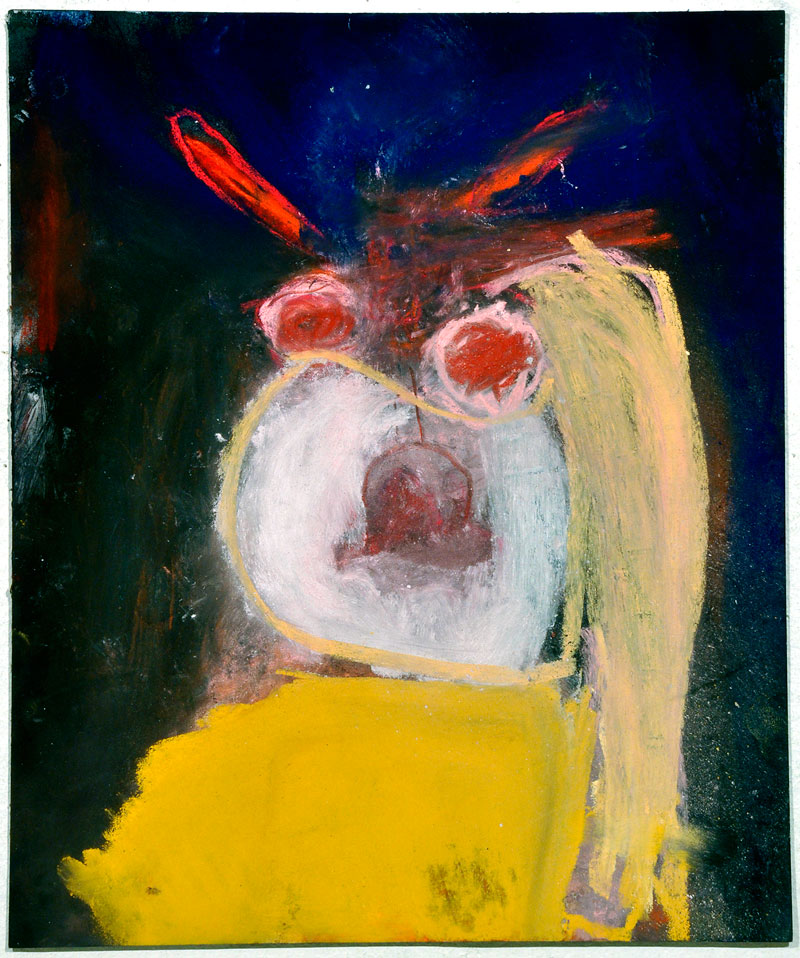
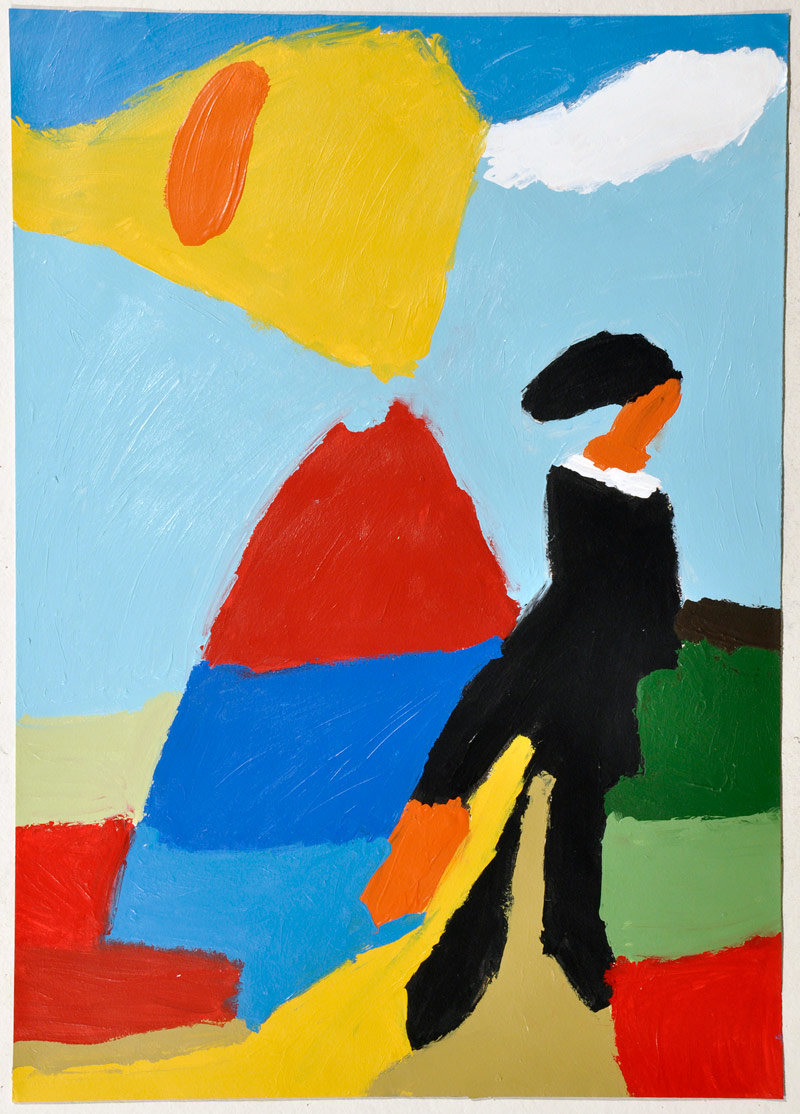
Artwork: Alan Constable camera. Opening night photographs: ‘Movement and Emotion’ at Arts Project Australia, Melbourne

Exhibition dates: 20th October – 26th November 2011


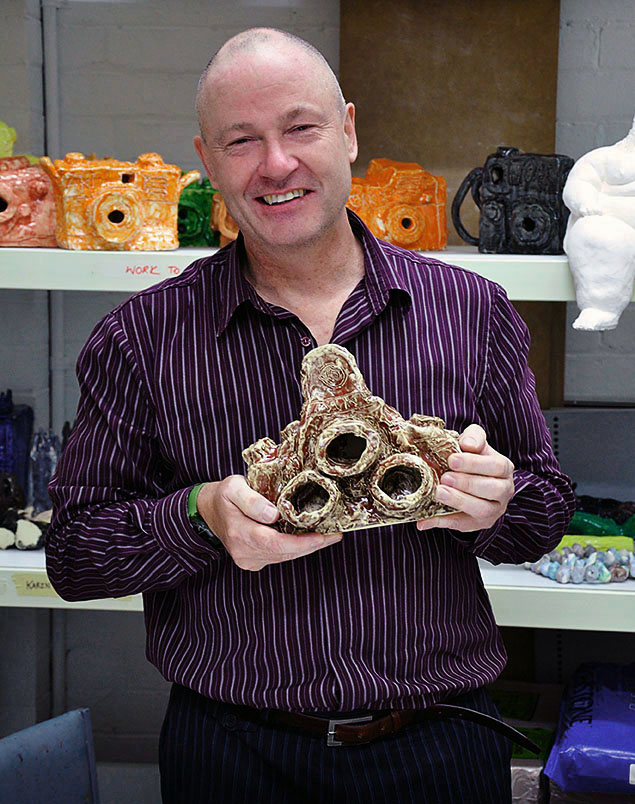
Dr Marcus Bunyan holdling his new Alan Constable camera at the opening of Movement and Emotion 2011. More of Alan's cameras can be seen behind.


Dr Marcus Bunyan holding his new Alan Constable camera at the opening of Movement and Emotion 2011.
More of Alan’s cameras can be seen behind.


I have added a new Alan Constable camera to my collection. Yah!

The one I have chosen is very unusual. The camera has a third eye and a stunning glaze. The exhibition features the work of three Arts Project Australia artists: Alan Constable, Chris O’Brien and Terry Williams. All three artists explore machine aesthetics within their practice.

I really do hope that the National Gallery of Victoria purchases some of these cameras. They are the most unusual and beautiful sculptural pieces I have seen in a long time.

Dr Marcus Bunyan


Many thankx to Art Project Australia for allowing me to publish the photographs in the posting. Please click on the photographs for a larger version of the image. See more images from the Movement and Emotion exhibition.


Alan Constable (Australian, b. 1956) 'Not titled (three lens red camera)' 2011


Alan Constable (Australian, b. 1956)
Not titled (three lens red camera)
2011


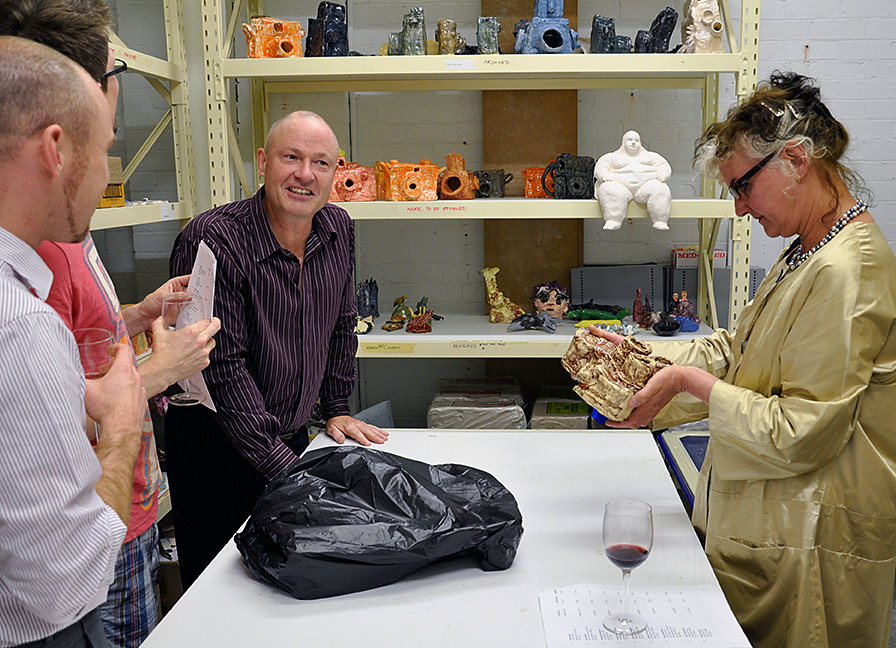
Marcus with jeweller Marianne Cseh at right looking at the Alan Constable camera


Marcus with jeweller Marianne Cseh at right looking at the Alan Constable camera


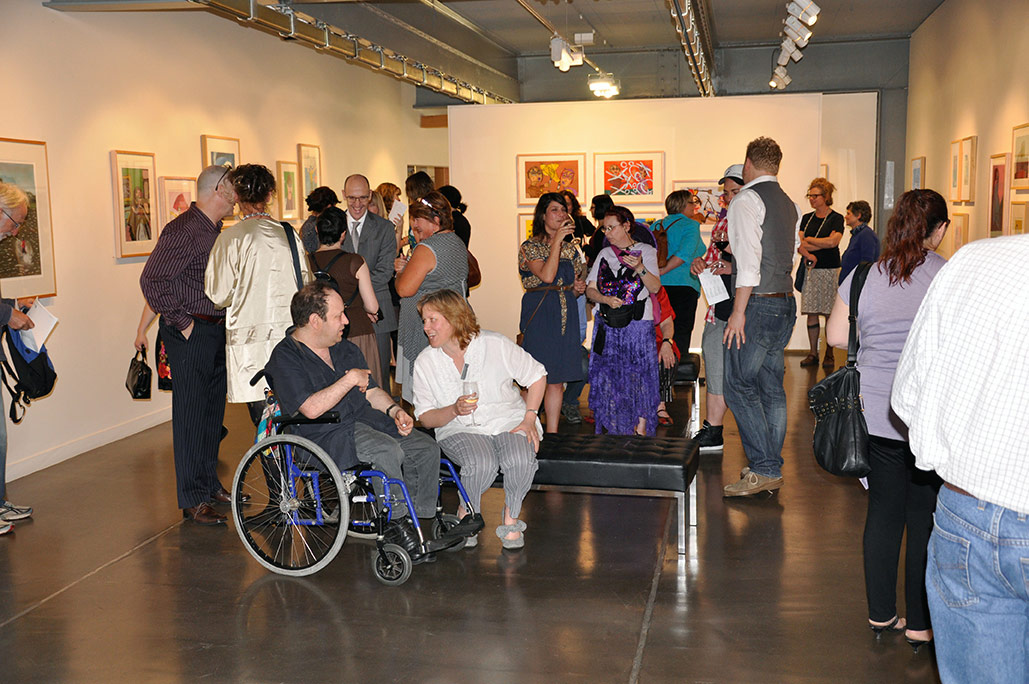
Opening night crowd at 'Movement and Emotion'


Opening night crowd at Movement and Emotion, Arts Project Australia


Opening night, with at left curator Paul Hodges, artist Jodie Noble (seated), myself and at right, Jonah Jones, President of the board of Arts Project Australia


Opening night, with at left curator and artist Paul Hodges, artist Jodie Noble (seated), myself and, at right, Jonah Jones, President of the board of Arts Project Australia


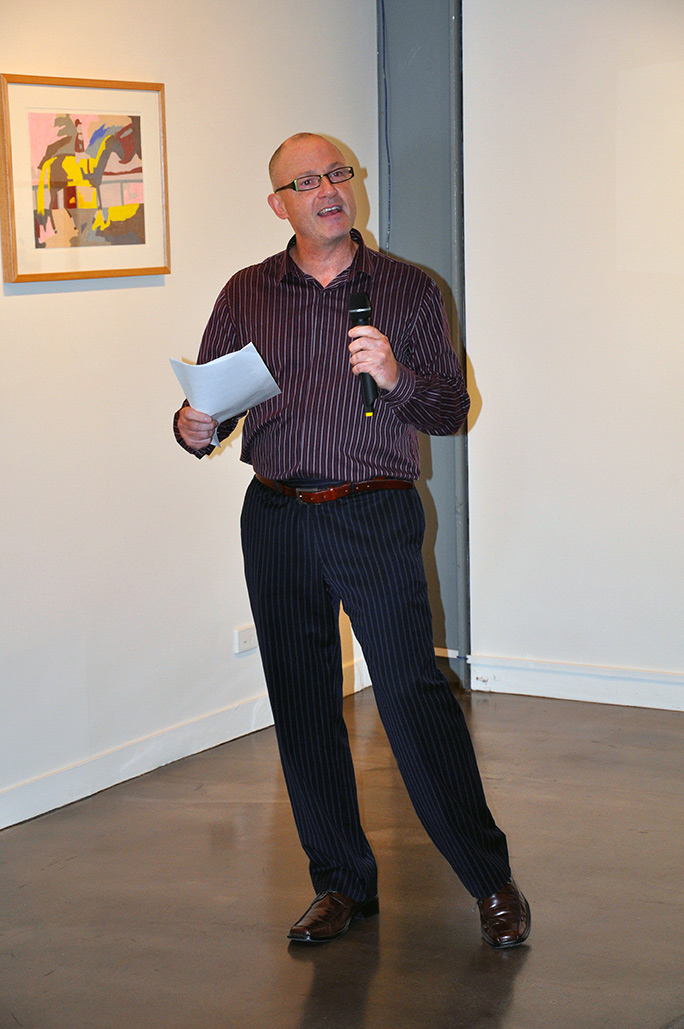
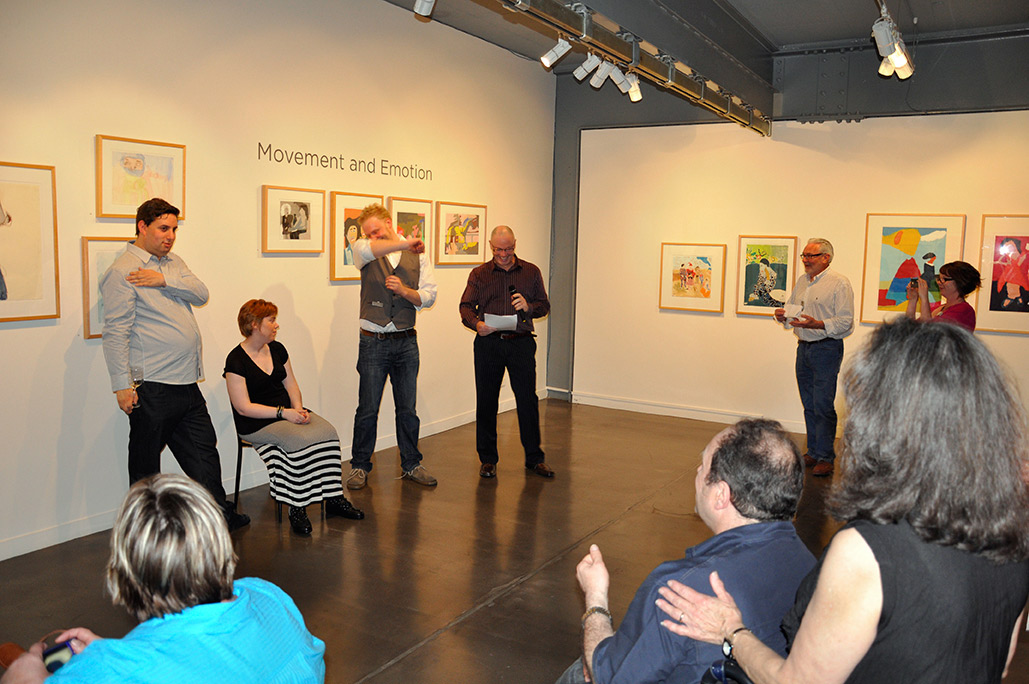
Dr Marcus Bunyan giving the opening night speech at the exhibition 'Movement and Emotion' at Arts Project Australia


Dr Marcus Bunyan giving the opening night speech for the exhibition Movement and Emotion. Read the opening night speech. I was so nervous my jeweller friend Marianne said she could see my hands shaking from where she was standing in the crowd!!


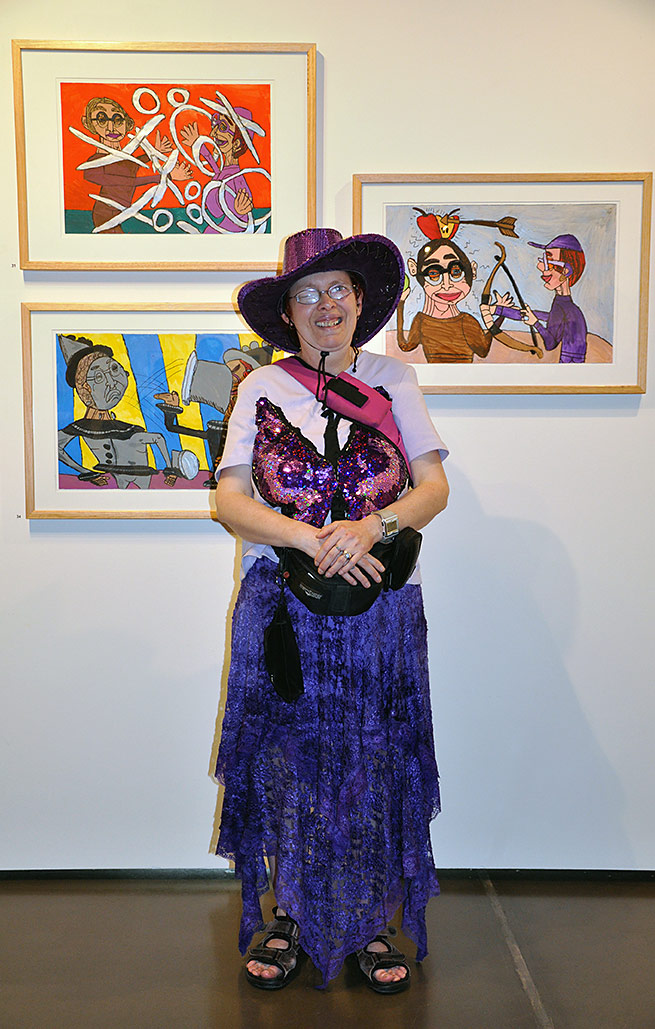
Artist Catherine Staughton standing in front of her work


Artist Catherine Staughton standing in front of her work


Arts Project Australia

Studio
24 High Street
Northcote Victoria 3070
Phone: + 61 3 9482 4484

Gallery
Level 1 Perry Street building
Collingwood Yards
Enter via 35 Johnson Street or 30 Perry Street, Collingwood
Phone: +61 477 211 699

Opening hours:
Wednesday – Friday 11am – 5pm
Saturday & Sunday 12 – 4pm

Arts Project Australia website

LIKE ART BLACK ON FACEBOOK

Back to top

Review: ‘ManStyle’ at the National Gallery of Victoria, Melbourne

Exhibition: 2 venues

NGV International (St Kilda Road) 11 March – 30 October 2011
NGV Australia (Federation Square) 11 March – 27 November 2011


Dr Marcus Bunyan at the opening of Manstyle in front of a two-piece c. 1949 Simpsons of Picadilly, London blue pin-stripped suit and 1940's tie from his collection


Dr Marcus Bunyan at the opening of Manstyle in front of a two-piece Simpsons of Picadilly, London blue pin-stripped suit c. 1949 and Van Heusen 1940’s tie loaned from his collection for the exhibition. Photograph courtesy of the National Gallery of Victoria.


The joy of this exhibition, spread across two NGV locations, is the creativity of local contemporary designers such Gavin Brown, Leigh Bowery, Peter Tully, Michael Glover and Sarah Thorn – a match for anything the international contingent has to offer. Another positive is the wonderful catalogue with its luscious colour plates, insightful essays and interviews with people such as Benny Castles, Luke Sales, Rick Owens and Walter Van Beirendonck.

Less enamouring is the prosaic way that the male attire is displayed – either hermetically sealed behind glass (look, but don’t touch!) or assembled in serried ranks on mannequins that make the clothes look two-dimensional. The display of these historical objects takes all the fun out of their being visually alive garments; it takes all the fun out of men “dressing up.” While acknowledging the conservation issues inherent when displaying such costume the display, the performance, the spectacle of male attire could have been better conveyed to the viewing public. Moving images, placing the work in context both locally and internationally, would have helped.

Continuing with these thoughts, what we wear can be seen as a spectacular, hypertextual construction. This construction comprises the authorship / designer of individual pieces (such as jacket, trousers, shirt) which can be seen as lexias, or nodal points, complimented by the wearer (reader) as author. The wearer appropriates and recasts individual garments, partially constructing the outfit through active choice, through a dissolution of the author-reader binary, through a very public characterisation of form: look at me, look at my style! Fashion can be seen as a “set of interconnecting and competing discourses than can never result in a single articulation,”1 discourses that generate and dissolve meaning. Men now use these discourses to enact the ‘performing self’, as it is known, which places greater emphasis on appearance.

“Within consumer culture … the new conception of self which has emerged, which we shall refer to as the ‘performing self’, places greater emphasis upon appearance, display and the management of impressions.”2

Appearance is critical to an understanding of self-concept. This self-concept consists of:

a/ the actual self (how a person perceives him/herself),
b/ the ideal self (how a person would like to perceive him/herself), and
c/ the social self (how a person presents him/herself to others).3


As Sproles and Burns observe, “Appearance is an extremely important part of the self-concept. Through personal appearance – dress, cosmetics, fashion expressions, body movements – an individual presents personal identity, attitudes, moods, and value or self-worth. In addition, individuals receive positive or negative evaluations from others with regard to appearance. Hence, appearance is one of the most prominent ways to display and reinforce a self-concept.”4

Appearance and the textuality of representation (stressing that representations are presentations entailing the use of codes and conventions of the available cultural forms of presentation),5 are continually being subverted throughout the history of fashion. In postmodernist fashion imitation and integration of an eclectic mixture of styles and periods into a new discourse (or montage, or collage, or bricolage)6 is critical to the constant regeneration of self using appearance as the embodiment of self-concept. Why this exhibition is so crucial is it shows that men are becoming more and more adept at manipulating their aesthetic style, not as something to be afraid of, not as something that they have to conform to, but as an expression of personal freedom. Which makes it all the more disappointing that the display of the male attire is so staid and reserved. The aesthetic display of these garments did not match up to the clothes exuberance.

Small things also irritated. At the opening a great deal was made of the multimedia element where local designers and celebrities talked about male style. In several of these videos, the men being interviewed mentioned how the shoe was always the basis for a good outfit. Fast forward to the exhibition and what do we find – photostated paper cut-outs of shoes on the mannequins instead of the real thing! Apparently the multimedia was shot after the design of the exhibition was finalised. Surely, if several people mention the basis of a good outfit is the shoe, and you promote the videos heavily, then you need to follow through on this concept. It is like putting the cart before the horse.

The fragmentary dis/locating mix and match eclecticism of contemporary male fashion needed more of a run in this exhibition, but as it stands it gives the viewer a solid overview of male attire throughout the centuries.

Dr Marcus Bunyan


Many thankx to the National Gallery of Victoria for allowing me to publish the photographs in the posting. Please click on the photographs for a larger version of the image.


Endnotes

1/ Johnson-Eilola cited in Mason, J.S. From Text To Hypertext [Online] Cited 28th May, 2003. No longer available online

2/ Lasch, C. The Culture of Narcissism. New York: Norton, 1979, quoted in Featherstone, Mike. “The Body in Consumer Culture,” in Featherstone, Mike; Hepworth, Mike and Turner, Bryan (eds.). The Body. London: Sage Publications, 1991, p. 187

3/ Sproles, George and Burns, Leslie Davis. Changing Appearances: Understanding Dress in Contemporary Society. New York: Fairchild Publications, 1994, pp. 208-209

4/ Ibid.,

5/ Dyer, Richard. The Matter of Images: Essays on Representations. London: Routledge, 1993, pp. 2-3

6/ Tseëlon, E. The Masque of Femininity: The Representation of Women in Everyday Life. London: Sage, 1995, pp. 132-133
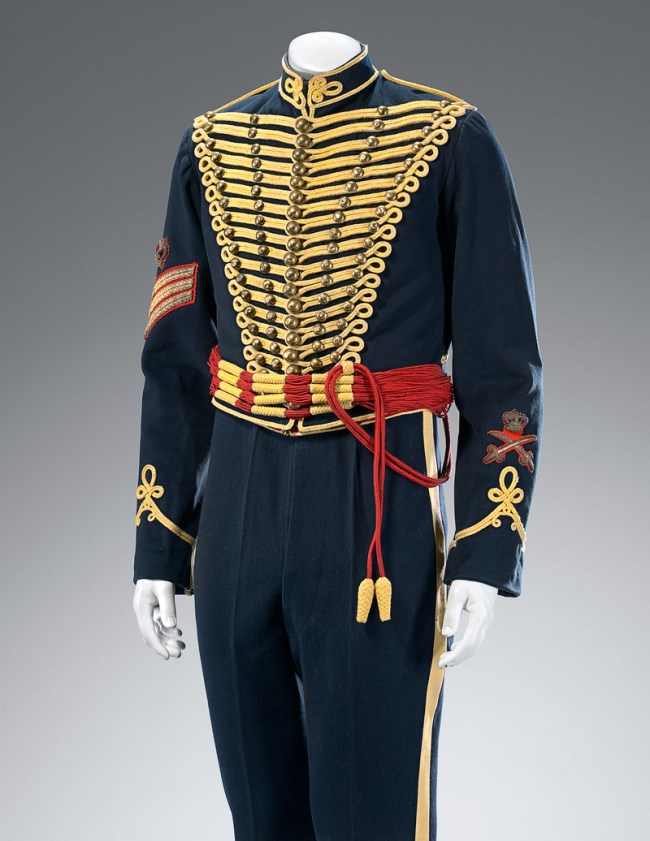


H. Lehmann, Aldershot (tailor) 'Royal Gloucester Hussar's uniform' c. 1900


H. Lehmann, Aldershot (tailor)
active in England c. 1900
Royal Gloucester Hussar’s uniform
c. 1900
Wool, cotton, metal
(a) 51cm (centre back), 64cm (sleeve length) (jacket)
(b) 48cm (centre back), 44cm (width) (waistcoat)
National Gallery of Victoria, Melbourne
Gift of the Stone Family, 1963
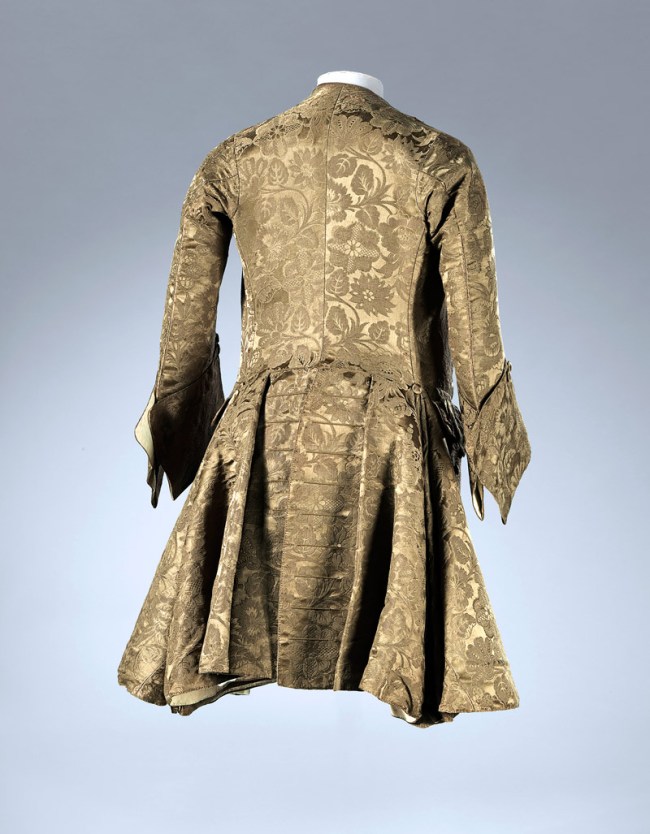
 

England 'Coat' 1740s


England
Coat
1740s
Silk, wood, wool, linen
102cm (centre back), 65cm (sleeve length)
National Gallery of Victoria, Melbourne
Purchased, 1970
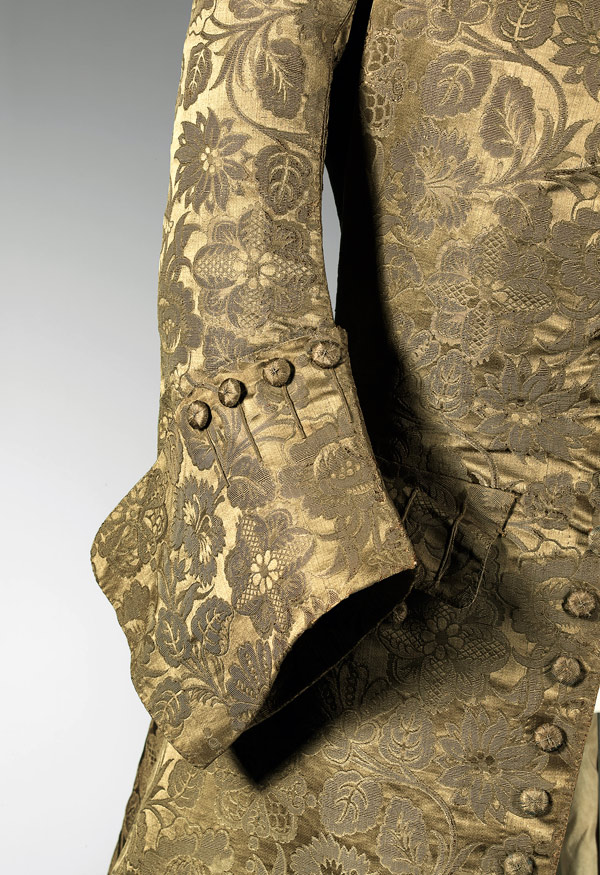
 

England 'Coat' 1740s (detail)


England
Coat (detail)
1740s
Silk, wood, wool, linen
102cm (centre back), 65cm (sleeve length)
National Gallery of Victoria, Melbourne
Purchased, 1970
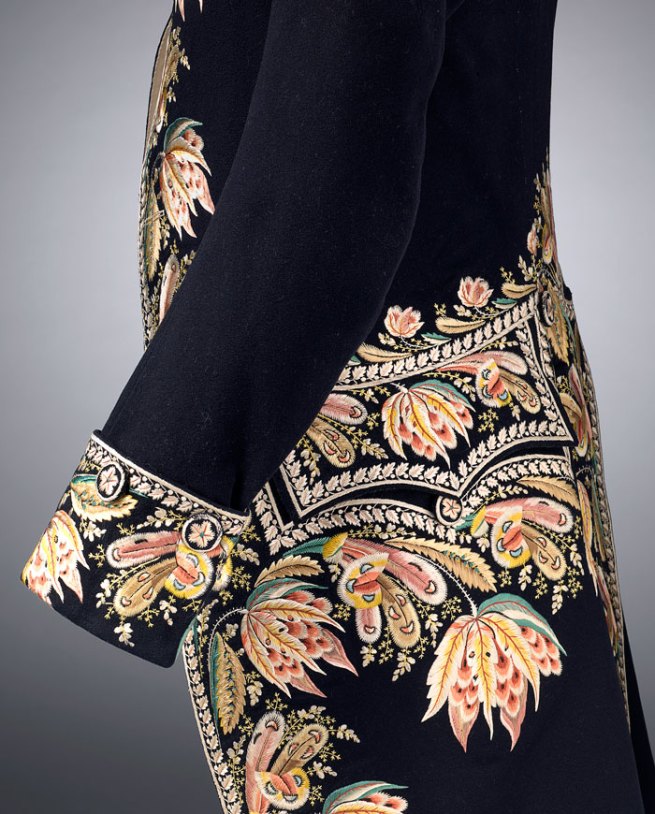
 

France 'Coat' c. 1810


France
Coat
c. 1810
Wool, silk, wood
105.8cm (centre back), 70.5cm (sleeve length)
National Gallery of Victoria, Melbourne
Purchased, 1975
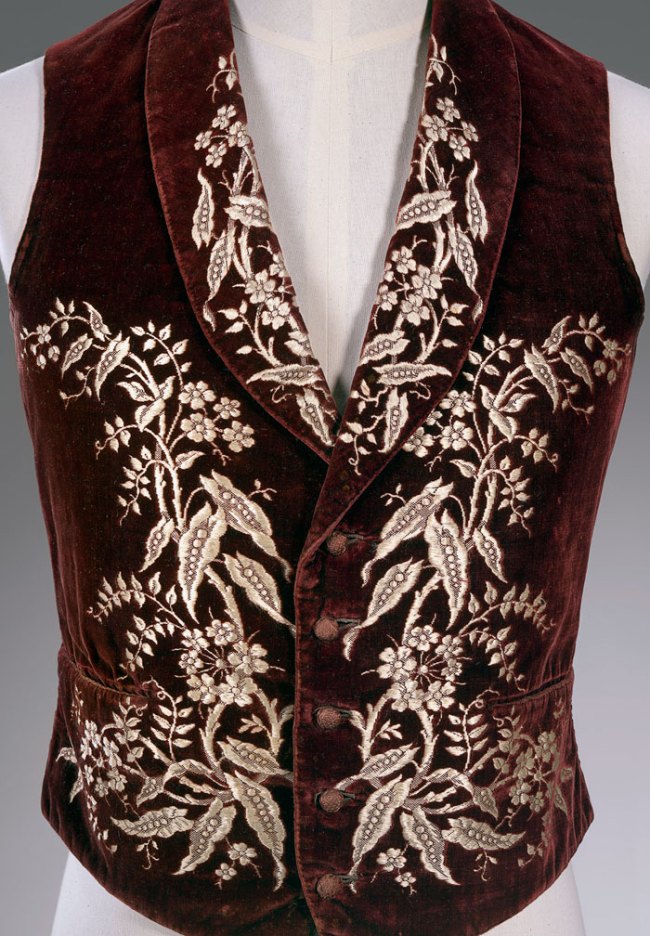
 

England 'Waistcoat' c. 1850


England
Waistcoat
c. 1850
Silk, cotton, leather, metal
65.5cm (centre back), 51.5cm (waist, flat)
National Gallery of Victoria, Melbourne
Gift of Mrs A. Butler, 1954
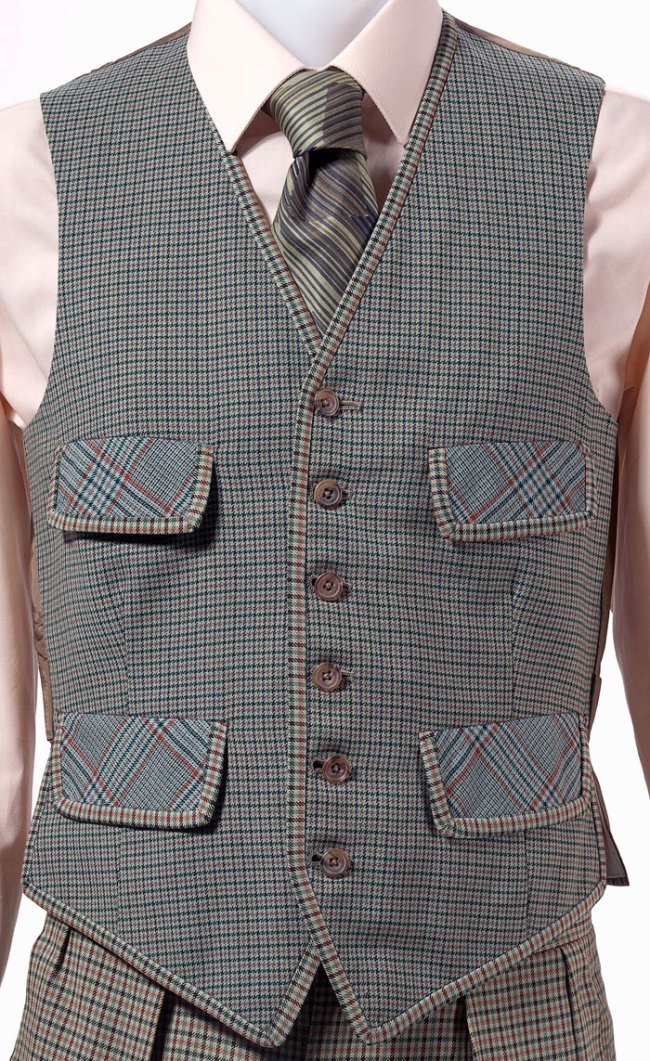
 

Nutters, London (tailor) est. 1968. Tommy Nutter (designer) 'Suit and tie 1971' (detail)


Nutters, London (tailor)
est. 1968
Tommy Nutter (designer)(Wales, b. 1943, lived in England c. 1952- )
Suit and tie 1971 (detail)
Wool, silk, cotton, acetate (lining), metal
(a) 77cm (centre back), 58cm (sleeve length) (jacket)
(b) 52cm (centre back), 40.4cm (waist, flat) (vest)
(c) 103cm (outer leg), 37cm (waist, flat) (trousers)
(d) 142 x 10.5cm (tie)
National Gallery of Victoria, Melbourne
Gift of Roger Evans, 1998


This March, the National Gallery of Victoria will showcase the first exhibition in Australia to focus on men’s fashion from the 18th century to the present day. Drawn largely from the NGV Collection, ManStyle will feature over 80 works including outfits and a selection of paintings exploring influential ideas in menswear over the past three centuries.

Charting a course between flamboyant display and absolute restraint, the exhibition begins in the 18th century with the evolution of the modern suit and concludes with contemporary outfits from today’s menswear designers. ManStyle will explore the elegantly honed lines and details of the dandy in the 19th century, a period which heralded the rise of tailoring with its focus on perfect cut and fit.

This exhibition will include recent works by contemporary designers such as Hedi Slimane for Dior Homme who have drawn upon this legacy of exacting tailoring for a new generation of young men. Roger Leong, Curator, International Fashion and Textiles, NGV said: “Men’s fashion is often seen as bound by tradition when, in fact, it has undergone a number of profound changes that reflect the shifting attitudes to class, sexuality, work and leisure over the past three centuries.

From the beginnings of the modern suit in the 18th century to 20th century sportswear, sub-cultural attire and street wear, men’s fashion has continued to transform in style and function to the present day,” said Mr Leong.

The most dramatic changes to men’s fashion occurred during the 1960s when designers such as Pierre Cardin challenged convention by creating streamlined Space-Age style outfits. Likewise, the ‘peacock revolution’ of this era reintroduced the phenomenon of the decorated man, adorned with colour, pattern and texture. Katie Somerville, Curator, Australian Fashion and Textiles, NGV said the House of Merivale was Australia’s answer to this new, colourful trend.

“Embodying the Carnaby Street look and style of bands like The Beatles, design houses such as Biba and the House of Merivale dressed men in flamboyant, body-hugging suits with wide flared trousers and shirts of contrasting patterns.

During this period, men ‘dressed up’, preened and flaunted their bodies in a new display of ostentatious masculine style.”

By the late 1970s, men’s style had fractured into a heady mix of alternatives. ManStyle features works by Vivienne Westwood and Malcolm McLaren, who defined the punk era with their ripped and distressed clothes plastered with offensive and anarchic slogans and symbols. This exhibition also captures the intense mood of the 1980s; which witnessed an outpouring of creativity across the spectrum of art, music and fashion, unleashing ideas from underground club cultures that reconfigured ideas about men’s sexuality.

“Today, new and traditional modes of dressing are continually merging to challenge our view of masculinity and contemporary style. ManStyle, it seems, offers greater possibilities than ever before,” said Ms Somerville.

Gerard Vaughan, NGV Director said: “By defining these periods in men’s fashion, visitors will be able to discover the contrasting identities men have experimented with over the past three centuries.

Visitors will be mesmerised and surprised by the richness of works in this Australia-first exhibition, showcasing the NGV’s magnificent Collection of this otherwise under-documented genre.”

ManStyle will be on display at the National Gallery of Victoria’s two locations. NGV Australia will look at transformations in the history of tailoring beginning with the notion of the dandy – a gallant man who put a lot of effort into a flawless appearance. The most famous dandy was Beau Brummell (1778-1840) who was always immaculately dressed, seeking to reflect an aristocratic style of life. The display at NGV International will focus on the peacock male, tracing a history of sartorial decoration and display that has its roots in the Renaissance and Tudor eras, and which was spectacularly revived during the 1960s when plain dark suits were discarded in favour of colour, cravats and frilled collars. Ever since then, the peacock phenomenon continues to surface with vivid intensity.

This exhibition will feature works by Vivienne Westwood, Jean Paul Gaultier, Morrissey & Edmiston, Leigh Bowery, Walter Van Beirendonck, Romance Was Born, Bernhard Willhelm, Rick Owens, Pierre Cardin, Biba and many more.

Press release from the National Gallery of Victoria website
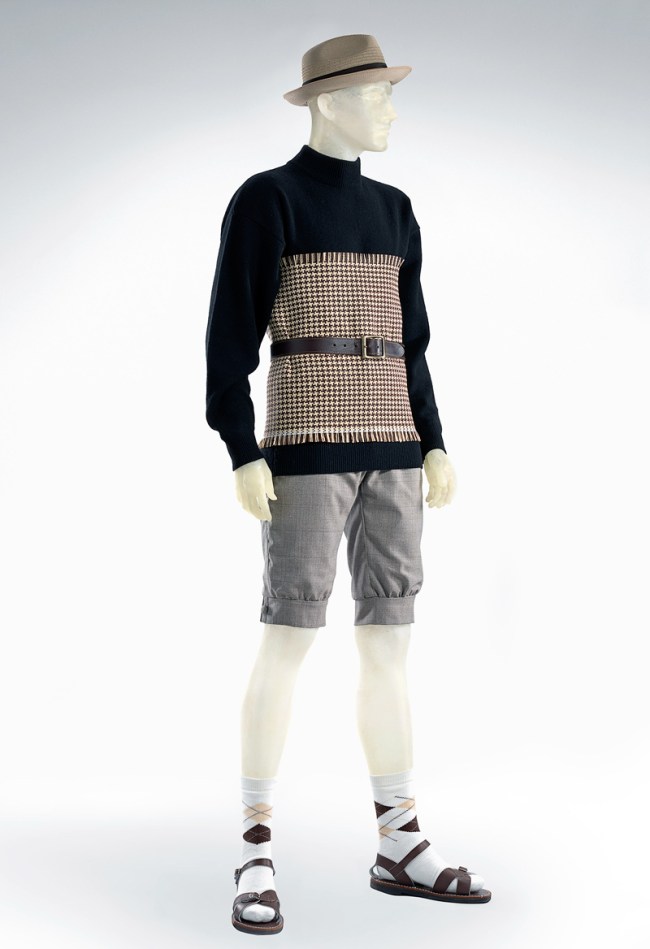
 

WORLD, Auckland (fashion house) 'Percy shops at WORLD' 1999


WORLD, Auckland (fashion house)
est. 1989
Denise L’Estrange-Corbet (designer)(New Zealand, b. 1964)
Percy shops at WORLD
1999
Wool, acetate, raffia, leather, velcro, brass
(a) 68.1cm (centre back), 60cm (sleeve length) (jumper)
(b) 90 x 40cm (corset)
(c) 59.4cm (outer leg), 35.5cm (waist, flat) (knickerbockers)
(d) 120 x 4cm
(e-f) 40 x 11cm (each) (socks)
(g-h) 27 x 15 x 12cm (each) (sandals)
(i) 85cm (outer circumference), 22cm (height), 25.9cm (width) (hat)
National Gallery of Victoria, Melbourne
Purchased, 1999


Plain Jane, Melbourne (fashion house) Gavin Brown (designer) 'Indian snakes and ladders outfit' 1985


Plain Jane, Melbourne (fashion house)
Australia 1984-1987
Gavin Brown (designer)(Australia, b. 1964)
Indian snakes and ladders outfit
1985
Screenprinted cotton, metal, plastic, wood
(a) 109cm (centre back), 61cm (sleeve length) (frock shirt)
(b) 114cm (outer leg), 41cm (waist, flat) (pants)
(c) 52 x 20.5 x 4.5cm (necklace)
National Gallery of Victoria, Melbourne
Purchased NGV Foundation, 2009
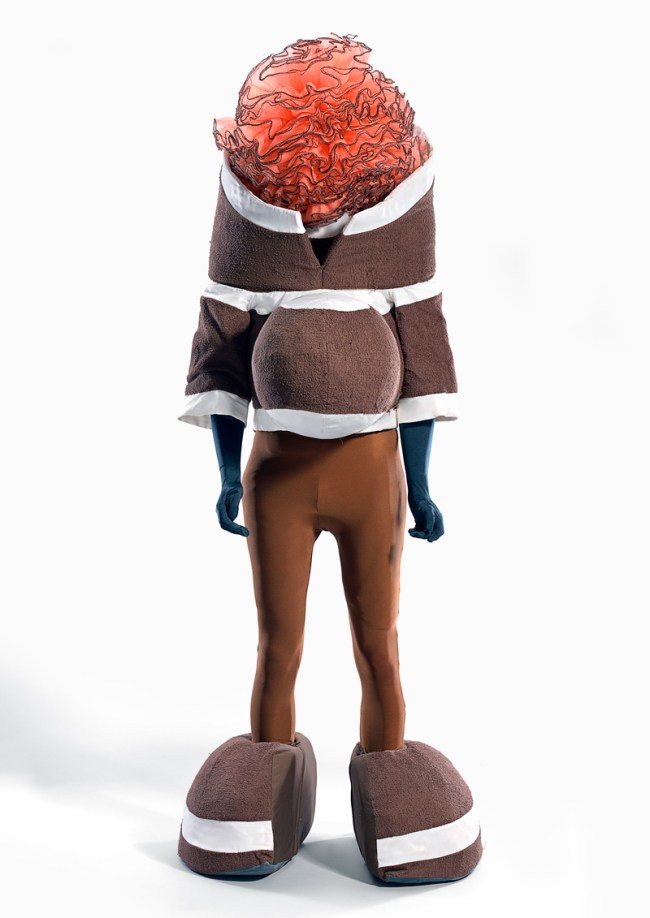
 

Leigh Bowery (Australia 1961-1994, worked in England 1981-1994) 'Pregnant tutu head' 1992


Leigh Bowery (Australia 1961-1994, worked in England 1981-1994)
Pregnant tutu head
1992
Cotton, rayon, polyester, nylon, foam, leather
(a) 87cm (centre back), 25cm (sleeve length) (top)
(b) 130cm (length), 92cm (inner leg) (tights)
(c) 45cm (height), 130cm (outer circumference) (headpiece)
(d-e) 54 x 14cm irreg. (each) (gloves)
(f-g) 35 x 29.5 x 50cm (each) (shoes)
National Gallery of Victoria, Melbourne
Gift of Nicola Bateman Bowery, 1999


Sara Thorn, Melbourne (fashion house) 'Jacket and kilt' 1985


Sara Thorn, Melbourne (fashion house)
1983-1985
Sara Thorn (designer)(Australia, b. 1961)
Bruce Slorach (designer)(Australia, b. 1961)
Jacket and kilt
1985
Screenprinted cotton
(a) 57cm (centre back), 59cm (sleeve length) (jacket)
(b) 73cm (centre back), 43cm (waist, flat) (kilt)
National Gallery of Victoria, Melbourne
Presented by the National Gallery Women’s Association, 1995
© Courtesy of the artists
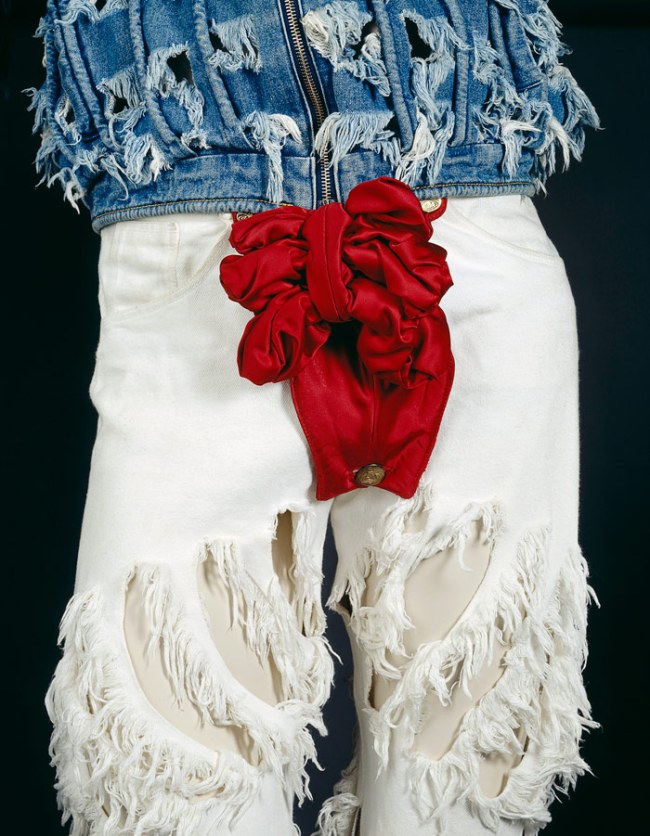
 

Vivienne Westwood, London (fashion house) 'Outfit' (detail) 1991 spring-summer 1991 'Cut and Slash' collection


Vivienne Westwood, London (fashion house)
est. 1985
Vivienne Westwood (designer)(England, b. 1941)
Outfit (detail)
1991
Spring-summer 1991 Cut and Slash collection
Cotton, polyester, metal buttons
(a) 62.5cm (centre back), 55cm (sleeve length) (jacket)
(b) 93.4cm (outer leg), 41.2cm (waist, flat) (jeans)
(c) 27 x 17cm (codpiece)
National Gallery of Victoria, Melbourne
Purchased, 1995
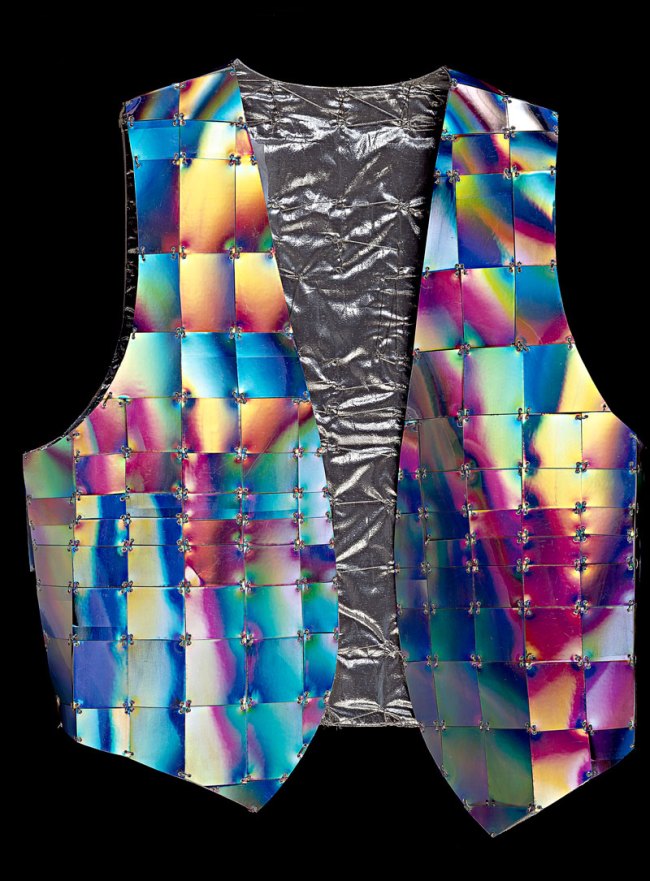
 

Peter Tully (Australia 1947-1992) 'Early flight attendant's vest' 1990


Peter Tully (Australia 1947-1992)
Early flight attendant’s vest
1990
Retrospectra graphic plastic, lamé, metallic thread, cotton
48.5cm (centre back), 48cm (width)
National Gallery of Victoria, Melbourne
Purchased from Admission Funds, 1991
© Courtesy of the artist’s Estate


NGV International
180 St Kilda Road

Opening hours:
Daily 10am – 5pm

The Ian Potter Centre: NGV Australia
Federation Square
Corner of Russell and 
Flinders Streets, Melbourne

Opening hours:
Daily 10am – 5pm

National Gallery of Victoria website

LIKE ART BLART ON FACEBOOK

Back to top

Exhibition: ‘Bare Witness: Photographs by Gordon Parks’ at the Phoenix Art Museum

Exhibition dates: 20th August – 6th November 2011


Many thankx to the Phoenix Art Museum for allowing me to publish the photographs in the posting. Please click on the photographs for a larger version of the image.


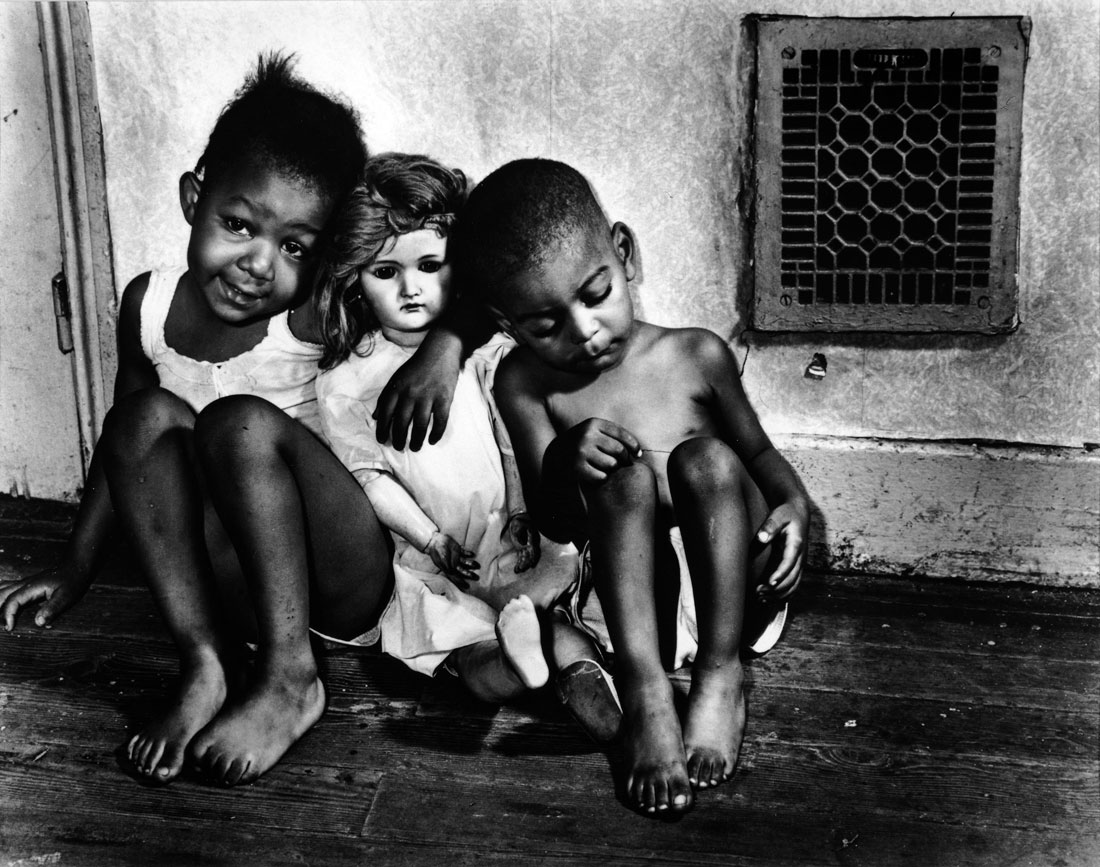
Gordon Parks (American, 1912-2006) 'Children with Doll (Ella Watson’s Grandchildren)' 1942


Gordon Parks (American, 1912-2006)
Children with Doll (Ella Watson’s Grandchildren)
1942
Gelatin silver print
11 x 14 inches
Lent by The Capitol Group Foundation
© 2006 The Gordon Parks Foundation


Gordon Parks (American, 1912-2006) 'Ingrid Bergman at Stromboli' 1949


Gordon Parks (American, 1912-2006)
Ingrid Bergman at Stromboli
1949
Gelatin silver print
16 x 20 inches
Lent by The Capitol Group Foundation
© 2006 The Gordon Parks Foundation


Gordon Parks (American, 1912-2006) 'Black Muslim Rally' New York, 1963


Gordon Parks (American, 1912-2006)
Black Muslim Rally
New York, 1963
Gelatin silver print
16 x 20 inches
Lent by The Capitol Group Foundation
© 2006 The Gordon Parks Foundation


Gordon Parks (American, 1912-2006) 'Alberto Giacometti, Paris' 1951


Gordon Parks (American, 1912-2006)
Alberto Giacometti, Paris
1951
Gelatin silver print
16 x 20 inches
Lent by The Capitol Group Foundation
© 2006 The Gordon Parks Foundation


Gordon Parks spent the majority of his professional career at the crossroads of the glamorous and the ghetto – two extremes the noted photographer knew well.  Perhaps best recognised for his works chronicling the African-American experience, Parks was also an accomplished fashion photographer. Bare Witness: Photographs by Gordon Parks provides a revealing look at the diversity and breadth of Parks’s most potent imagery. Featuring 73 works specifically selected by Parks for the photographic collection of the Los Angeles-based Capital Group, Bare Witness divulges heart wrenching images, iconic moments, celebrities and slices of everyday life.

Born in 1912 in Fort Scott, Kansas, Parks, who died in 2006 at age 93, was an African American photographer who began working professionally in the 1930’s. Parks tackled the harsh truth and dignity of the black urban and rural poor in the United States. He photographed aspects of the Civil Rights movements and individuals associated with the Black Panthers and Black Muslims. For nearly 25 years, from 1948 to 1972, he served as staff photographer for Life magazine. He also established himself as a foremost fashion photographer, providing spreads for respected magazines such as Vogue.

Bare Witness features many of Parks’s most memorable images such as “American Gothic.” Taken during Parks’s brief time with the Farm Security Agency, the photograph depicts a black cleaning woman named Ella Watson standing stiffly in front of an American flag, a mop in one hand and a broom in the other. Also included in the exhibition is a series of photos from Parks’s most famous Life magazine essay about Flavio da Silva, a malnourished and asthmatic boy living in a Rio de Janerio slum. Portraits of Muhammad Ali, Duke Ellington, Alexander Calder, Ingrid Bergman, Langston Hughes and Malcolm X among others will also be on view.

“Whether photographing celebrities or common folk, children or the elderly, Harlem gang leaders or fellow artists, Parks brought his straightforward, sympathetic ear and mind to bear witness to late 20th century civilisation,” commented Hilarie Faberman, the Robert M. and Ruth L. Halperin Curator of Modern and Contemporary Art at Cantor Arts Center and organiser of the exhibition. “His photographs balance the dichotomies of black and white, rich and poor, revealing his strengths and struggles as an artist and a man.”

In addition to his documentary and fashion photography, Parks was a filmmaker, author, musician and publisher. He was the first black artist to produce and direct a major Hollywood film, “The Learning Tree” in 1969, which was based on his early life experiences. He subsequently directed the popular action films “Shaft” and “Shaft’s Big Score.” He was a founder and editorial director of Essence magazine and wrote several autobiographies, novels and poems. In 1988, he received the National Medal of Arts award and throughout his lifetime was the recipient of 40 honorary doctorates from colleges and universities in the United States and England.

“Parks was a renaissance man whose career embodied the American ideal of equality and whose art was deeply personal. This exhibition is an exciting opportunity for Museum visitors to experience the poignant images he made over five decades,” commented Rebecca Senf, Norton Curator of Photography, Phoenix Art Museum.

The exhibition includes an illustrated catalogue with an essay by photography scholar Maren Stange who writes frequently on modern American culture. This exhibition has already enjoyed a five-venue tour, where the photographs were received with great excitement. The exhibition has been revived for a final showing at the Phoenix Art Museum. Bare Witness: Photographs by Gordon Parks was organised by the Iris & B. Gerald Cantor Center for Visual Arts at Stanford University. The exhibition and its accompanying catalogue are made possible by generous support from The Capital Group Foundation, the Cantor Arts Center’s Hohbach Family Fund, and Cantor Arts Center’s Members.

Press release from the Phoenix Museum of Art website


Gordon Parks (American, 1912-2006) 'American Gothic' 1942


Gordon Parks (American, 1912-2006)
American Gothic
1942
Gelatin silver print
24 x 20 inches
Lent by The Capitol Group Foundation
© 2006 The Gordon Parks Foundation


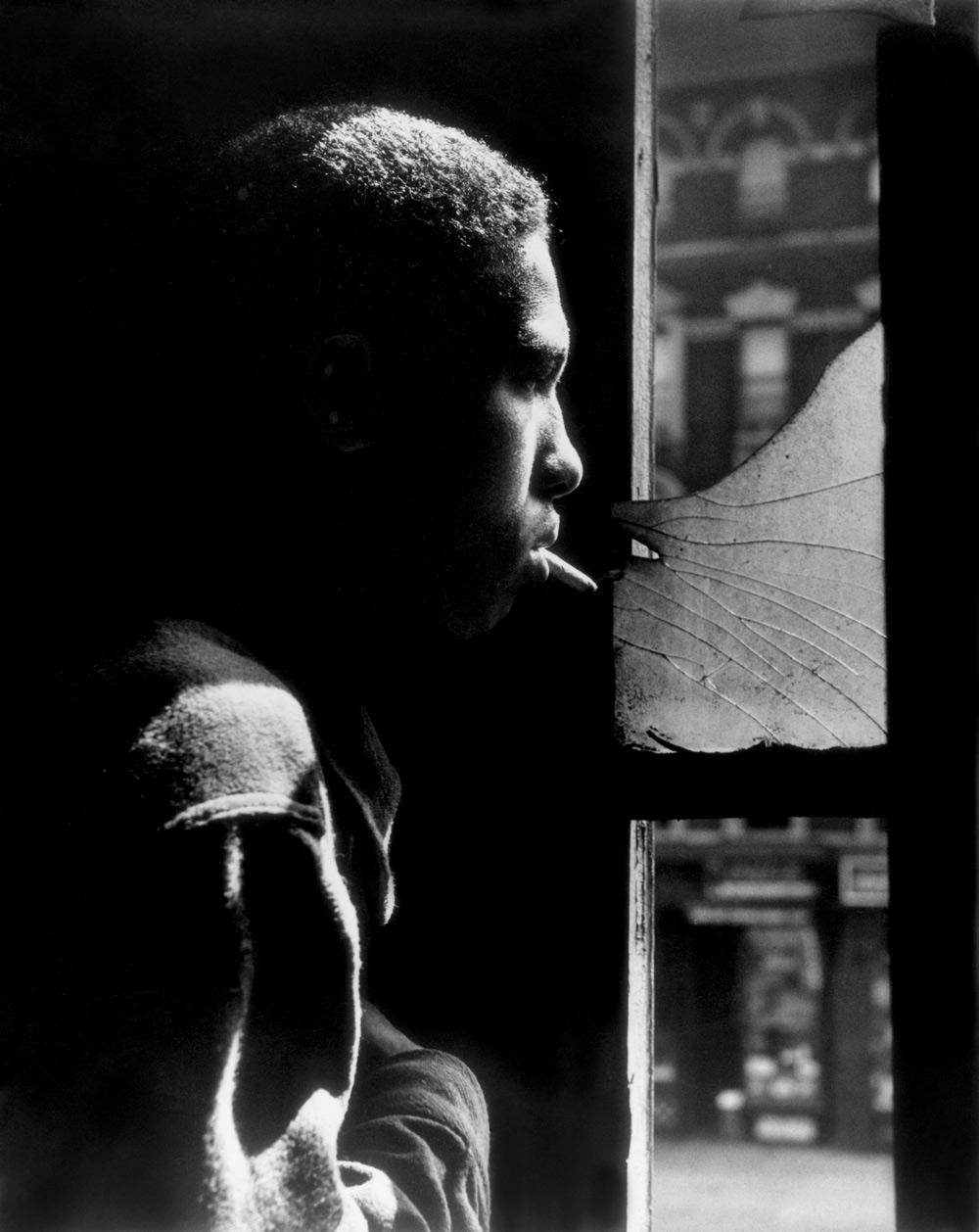
Gordon Parks (American, 1912-2006) 'Red Jackson, Harlem' 1948


Gordon Parks (American, 1912-2006)
Red Jackson, Harlem
1948
Gelatin silver print
Lent by The Capitol Group Foundation
© 2006 The Gordon Parks Foundation


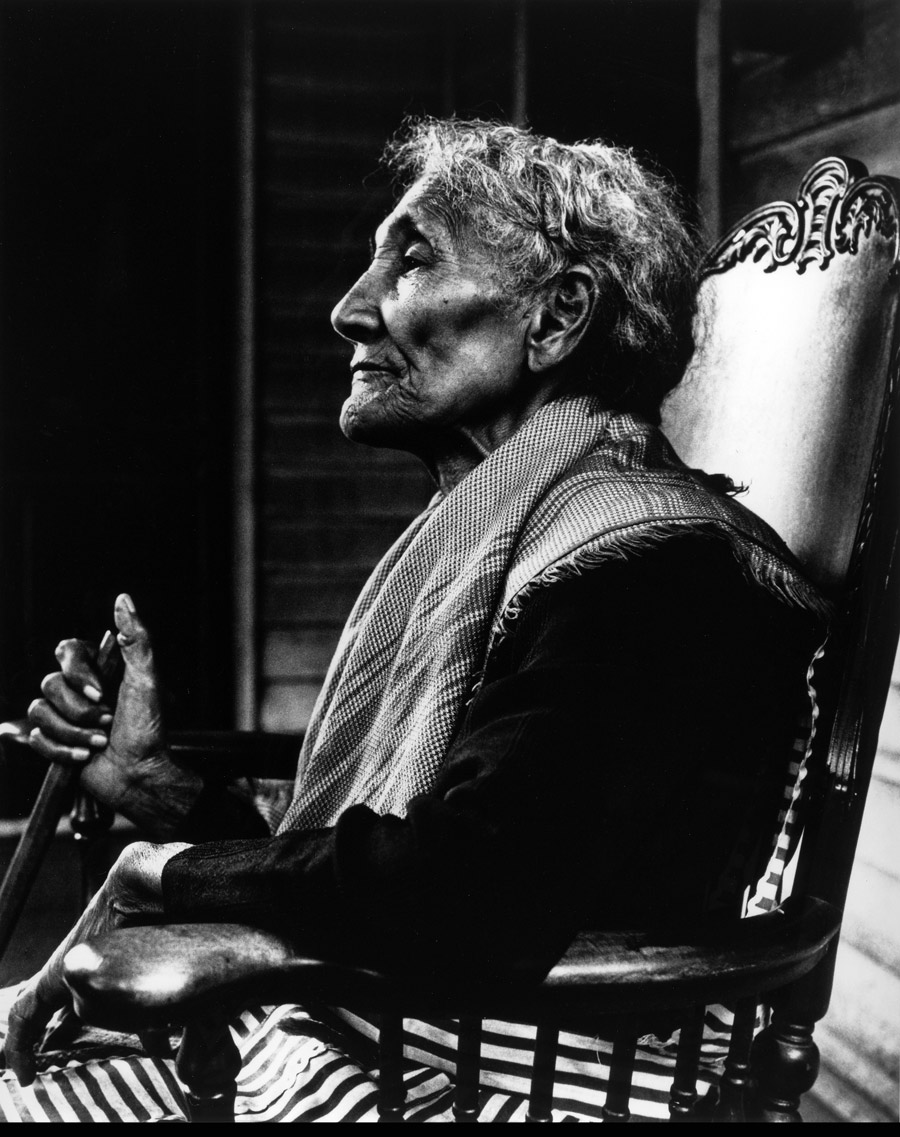
Gordon Parks (American, 1912-2006) 'Mrs. Jefferson, Fort Scott' 1949


Gordon Parks (American, 1912-2006)
Mrs. Jefferson, Fort Scott
1949
Gelatin silver print
20 x 16 inches
Lent by The Capitol Group Foundation
© 2006 The Gordon Parks Foundation


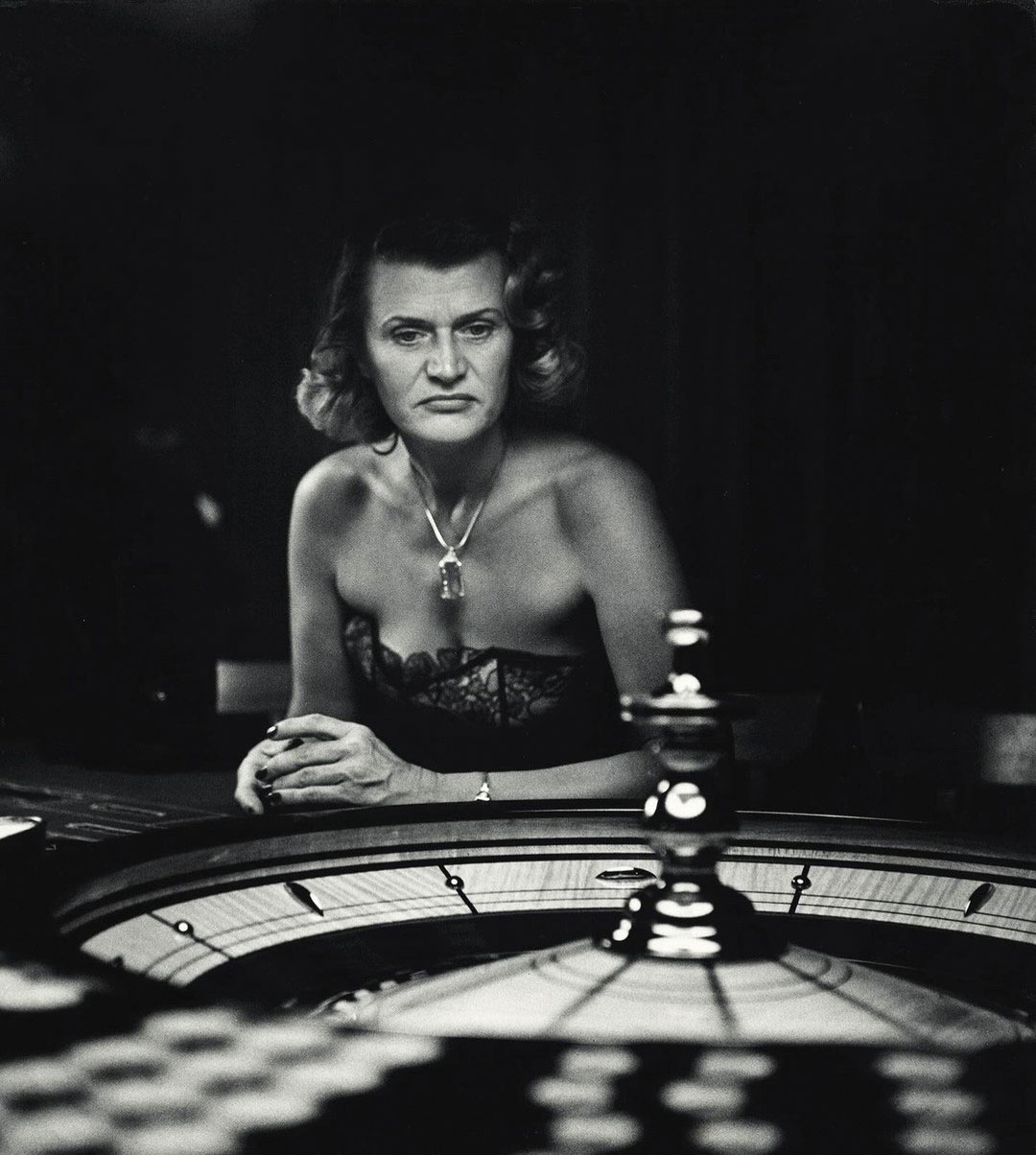
Gordon Parks (American, 1912-2006) 'A Gambling Woman, Caribe Hilton Hotel, San Juan, Puerto Rico' December 1949


Gordon Parks (American, 1912-2006)
A Gambling Woman, Caribe Hilton Hotel, San Juan, Puerto Rico
December 1949
Gelatin silver print
20 x 16 inches
Lent by The Capitol Group Foundation
© 2006 The Gordon Parks Foundation


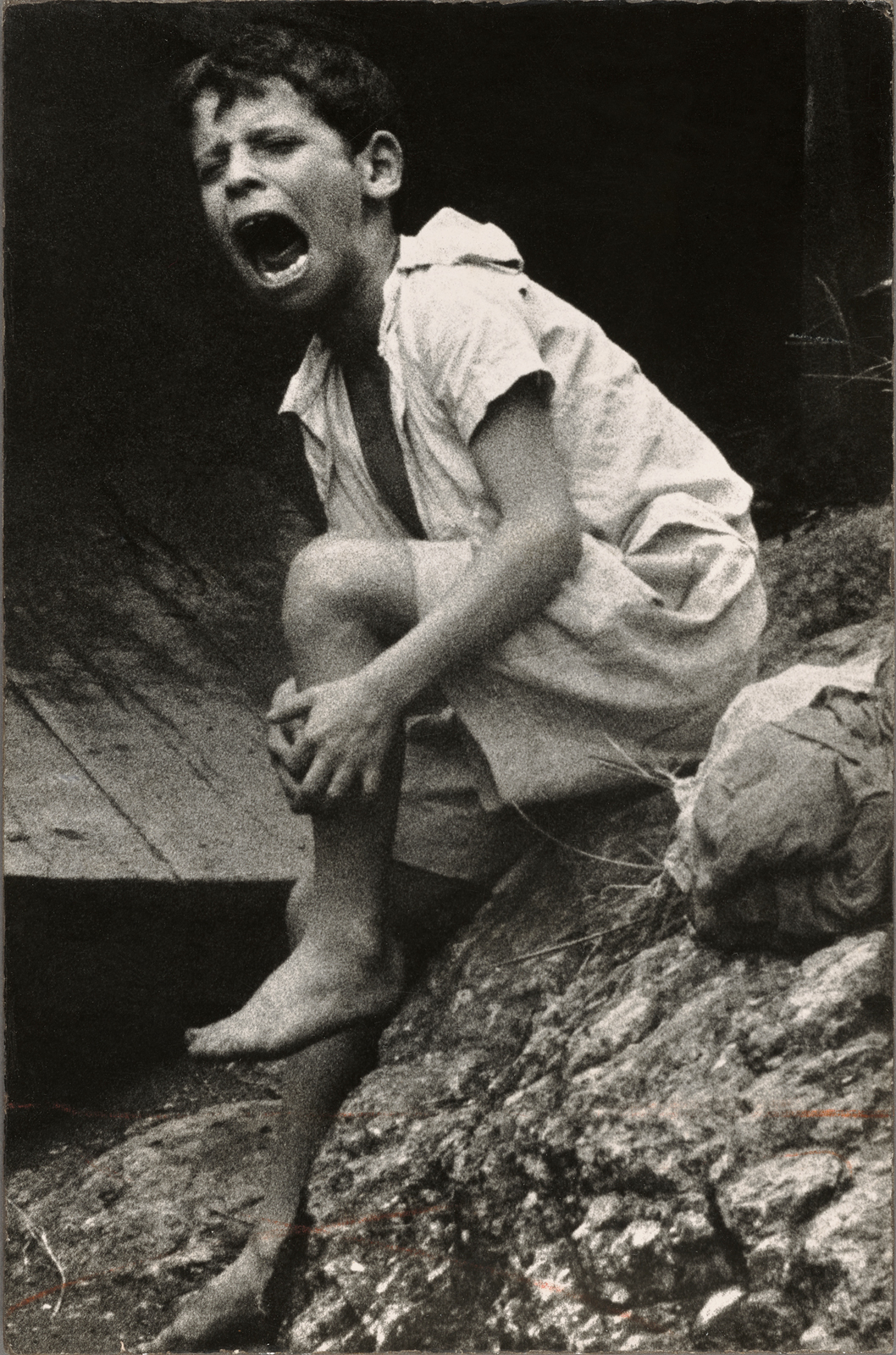
Gordon Parks (American, 1912-2006) 'Mário da Silva, Crying after Being Bitten by Dog, Rio de Janeiro, Brazil' 1961


Gordon Parks (American, 1912-2006)
Mário da Silva, Crying after Being Bitten by Dog, Rio de Janeiro, Brazil
1961
Gelatin silver print
14 x 11 inches
Lent by The Capitol Group Foundation
© 2006 The Gordon Parks Foundation


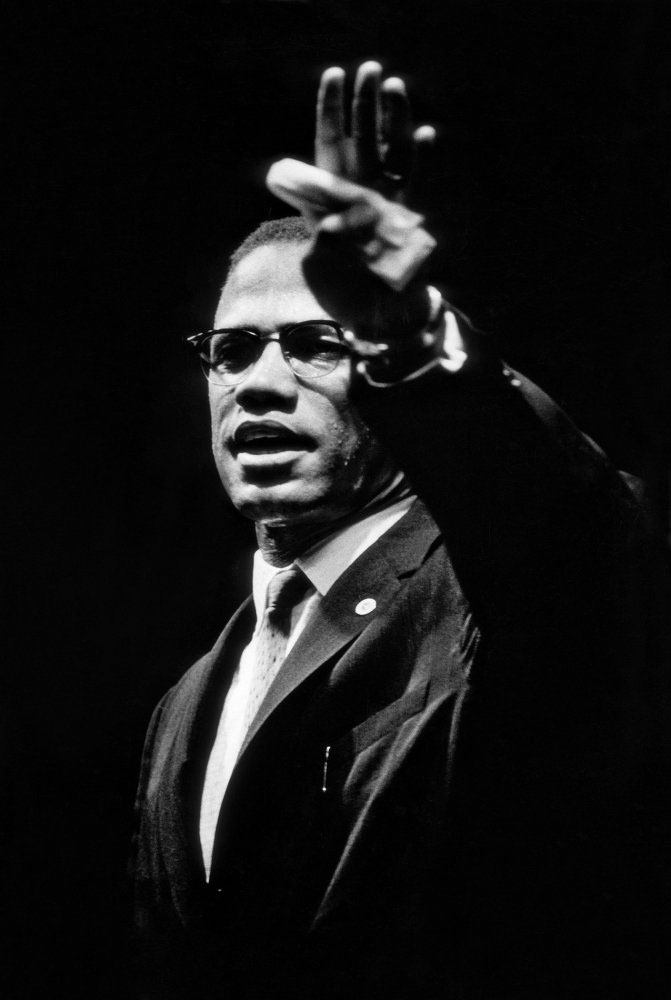
Gordon Parks (American, 1912-2006) 'Malcolm X at Rally, Chicago, Illinois' 1963


Gordon Parks (American, 1912-2006)
Malcolm X at Rally, Chicago, Illinois
1963
From the series Chicago Muslim Story (1963)
Gelatin silver print
Lent by The Capitol Group Foundation
© 2006 The Gordon Parks Foundation


Gordon Parks relocated from Minnesota to Chicago’s South Side in 1940, immersing himself in the local art community while operating a portrait studio out of the South Side Community Art Center. In 1941 he was awarded a Rosenwald Fellowship for a portfolio of photographs he created on the South Side; the award gave him the means to move east to Washington, DC. By 1948 Life magazine hired him as its first African American staff photographer.

In 1963 Parks returned to Chicago on assignment for Life to report on the Nation of Islam, newly headquartered in the city. Parks gained unprecedented access to this radical civil rights movement through his friendship with Malcolm X, who arranged a meeting with Elijah Muhammad, the group’s leader, so that Parks could obtain permission to proceed with the story. Parks spent weeks with the Black Muslim community, documenting a range of its activities – from self-defense training to religious services led by Malcolm X.

Parks’s photo-essay ran in the May 31, 1963, issue of Life, along with an essay by Parks that reflects on his dual status as insider and outsider. The text begins with his return to Chicago after nearly a decade and his memories of “the hopelessness that seeped into the black souls of that jungle.” Parks goes on to describe his current position: “I was a Black Man in White Man’s clothing, sent by the very ‘devils’ [Elijah Muhammad] criticized so much… . I wondered whether or not my achievements in the white world had cost me a certain objectivity.” He concludes, “I sympathize with much of what they say, but I also disagree with much of what they say… . Nevertheless, I acknowledge that the circumstance of common struggle has willed us brothers.”

Text from the Art Institute of Chicago website 


Gordon Parks (American, 1912-2006) 'Muhammad Ali' c. 1970


Gordon Parks (American, 1912-2006)
Muhammad Ali
c. 1970
Gelatin silver print
24 x 20 inches
Lent by The Capitol Group Foundation
© 2006 The Gordon Parks Foundation


Gordon Parks (American, 1912-2006) 'Muhammad Ali' 1970


Gordon Parks (American, 1912-2006)
Muhammad Ali
1970
Cibachrome
20 x 16 inches
Lent by The Capitol Group Foundation
© 2006 The Gordon Parks Foundation


Phoenix Art Museum
McDowell Road & Central Avenue
1625 N. Central Avenue
Phoenix, AZ 85004

Opening hours:
Monday Closed
Tuesday Closed
Wednesday 10am – 9pm
Thursday – Sunday 10am – 5pm

Phoenix Art Museum website

LIKE ART BLART ON FACEBOOK

Back to top
Exhibition: ‘Joel Meyerowitz – Aftermath’ at the Miami Art Museum

Exhibition dates: 19th August – 6th November 2011


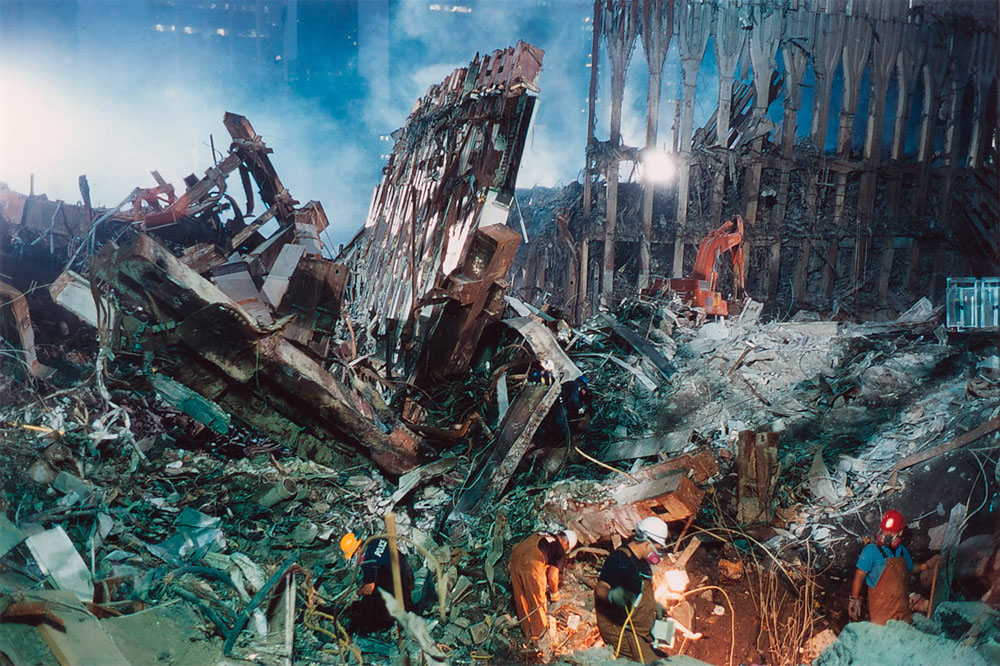
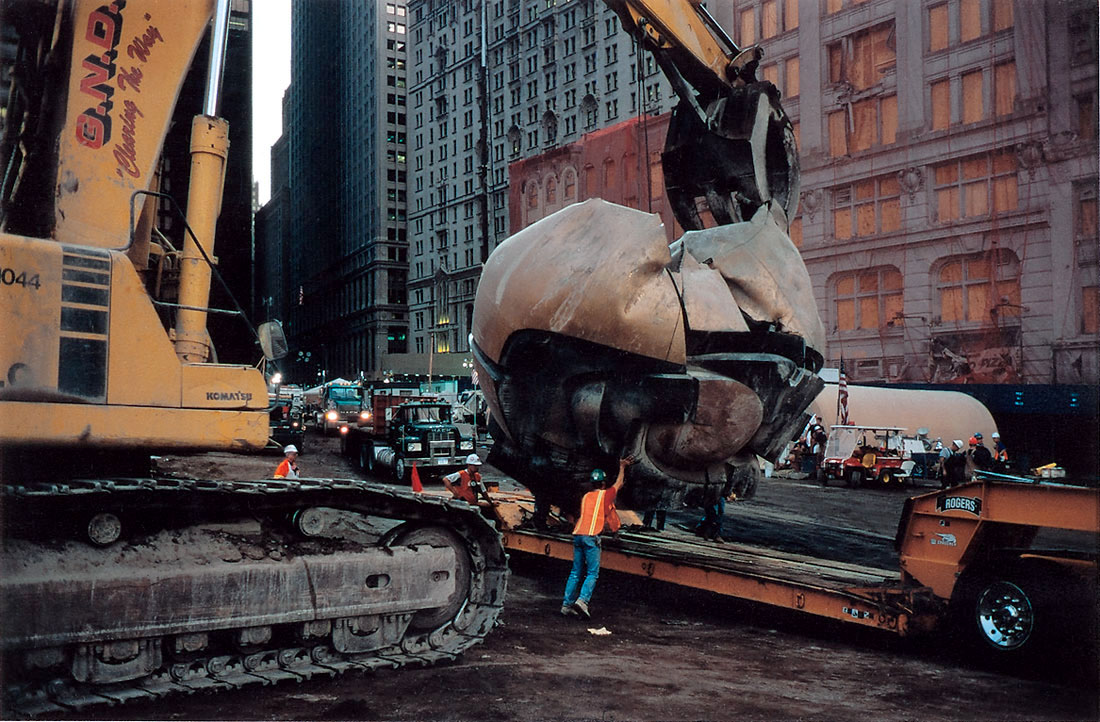
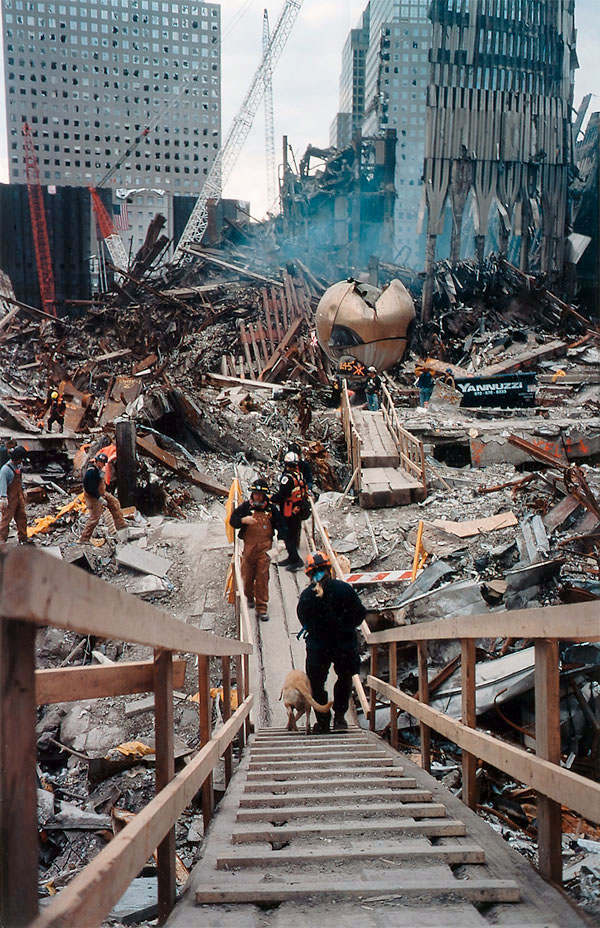
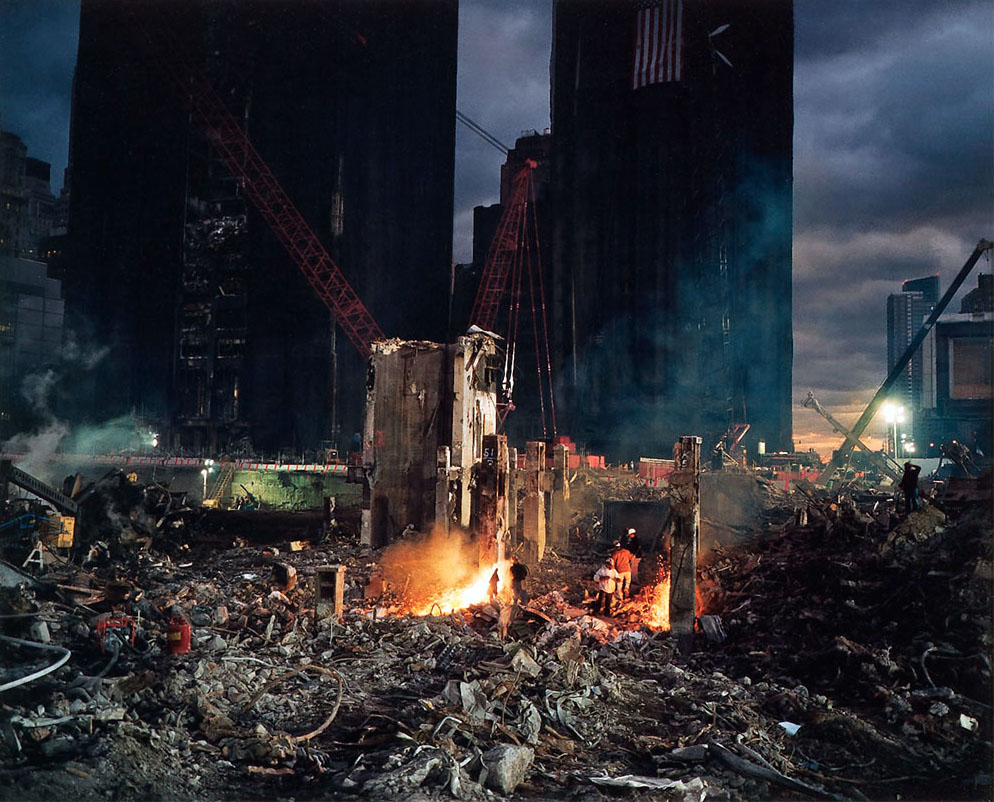
Joel Meyerowitz (American, b. 1938) 'Searchers in Rubble' 2001


Joel Meyerowitz (American, b. 1938)
Searchers in Rubble
2001
Vintage contact print
Collection Miami Art Museum, gift of Steven E. and Phyllis Gross


And do you know what “the world” is to me? Shall I show it to you in my mirror? This world: a monster of energy, without beginning, without end; a firm, iron magnitude of force that does not grow bigger or smaller, that does not expend itself but only transforms itself; as a whole, of unalterable size, a household without expenses or losses, but likewise without increase or income; enclosed by “nothingness” as by a boundary; not something blurry or wasted, not something endlessly extended, but set in a definite space as a definite force, and not a space that might be “empty” here or there, but rather a force throughout, as a play of forces and waves of forces, at the same time one and many, increasing here and at the same time decreasing there …


Frederick Nietzsche, The Will to Power


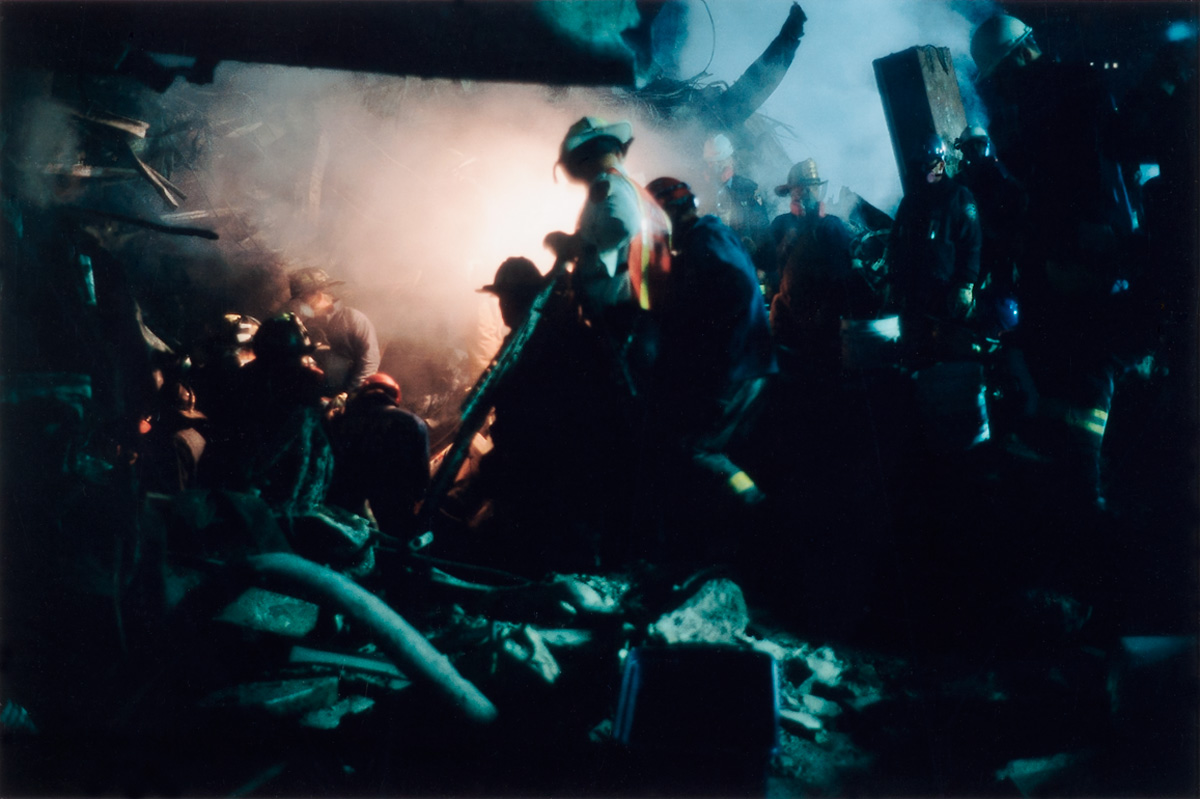
Sadness. And light. Hope. Amidst the inferno. Study the masterpiece Finding More Fireman (below) in the enlarged version and you cannot fail to be moved. It is all there: monumental, intimate, hellish, redemptive – a modern, “disastrous” form of the Rembrandt’s The Night Watch.

Dr Marcus Bunyan


Many thanxk to the Miami Art Museum for allowing me to publish the photographs in the posting. Please click on the photographs for a larger version of the image.


Joel Meyerowitz (American, b. 1938) 'Flower Offering' 2001


Joel Meyerowitz (American, b. 1938)
Flower Offering
2001
Vintage contact print
Collection Miami Art Museum, gift of Steven E. and Phyllis Gross


Joel Meyerowitz (American, b. 1938) 'Pit Looking North' 2002


Joel Meyerowitz (American, b. 1938)
Pit Looking North
2002
Vintage contact print
Collection Miami Art Museum, gift of Steven E. and Phyllis Gross


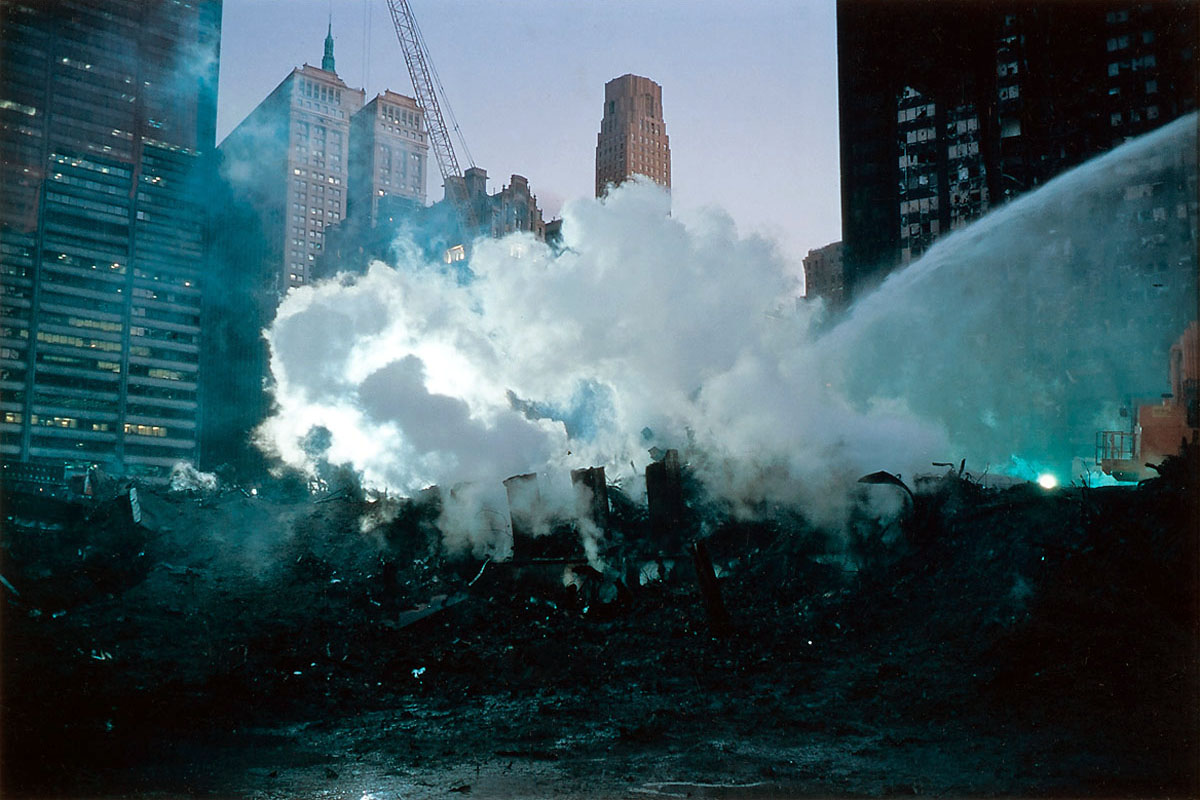
Joel Meyerowitz (American, b. 1938) 'Smoke and Spray' 2001


Joel Meyerowitz (American, b. 1938)
Smoke and Spray
2001
Vintage contact print
Collection Miami Art Museum, gift of Jeffrey Hugh Newman


Joel Meyerowitz (American, b. 1938) 'Moving the Monument' 2001


Joel Meyerowitz (American, b. 1938)
Moving the Monument
2001
Vintage contact print
Collection Miami Art Museum, gift of Jeffrey Hugh Newman


Joel Meyerowitz (American, b. 1938) 'Finding More Fireman' 2001


Joel Meyerowitz (American, b. 1938)
Finding More Fireman
2001
Vintage contact print
Collection Miami Art Museum, gift of Charles S. and Elynne B. Zucker


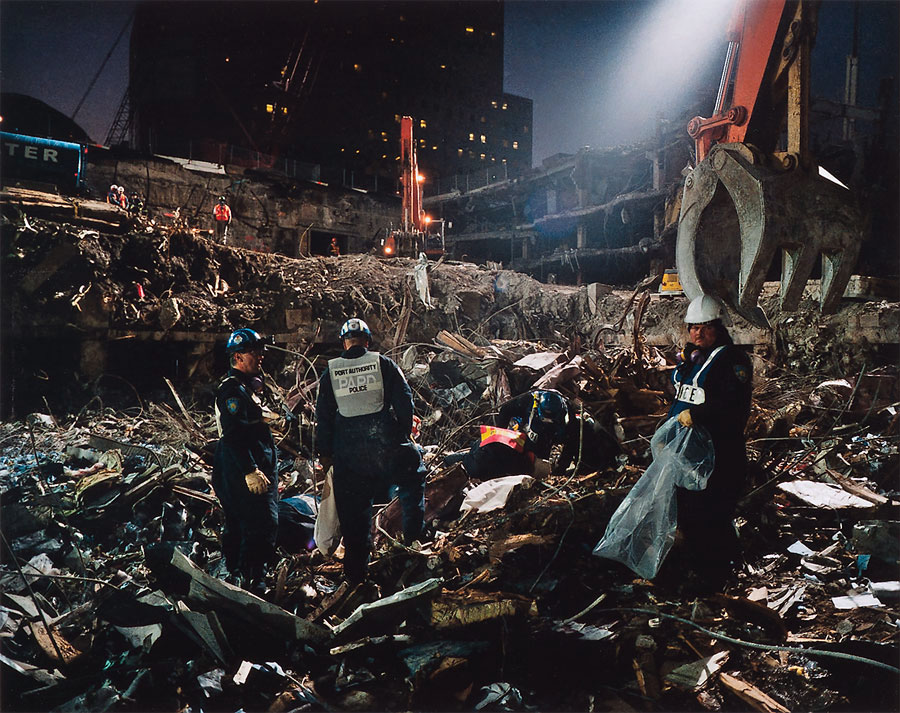
Joel Meyerowitz (American, b. 1938) 'Searchers' 2002


Joel Meyerowitz (American, b. 1938)
Searchers
2002
Vintage contact print
Collection Miami Art Museum, gift of Charles S. and Elynne B. Zucker


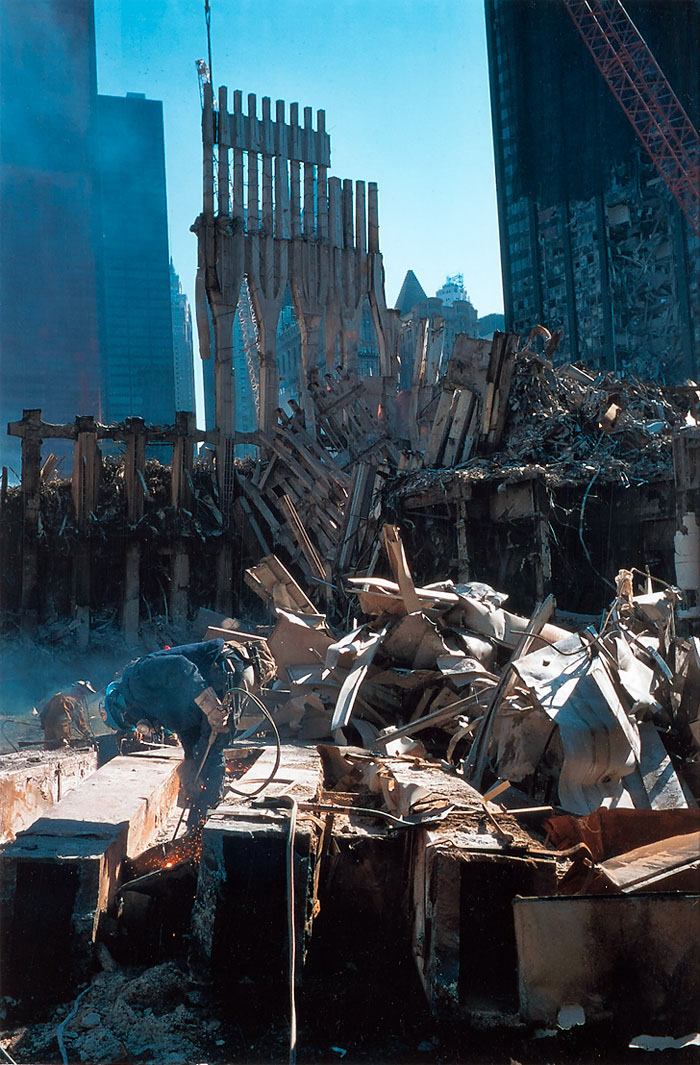
Joel Meyerowitz (American, b. 1938) 'Welders in South Tower' 2001


Joel Meyerowitz (American, b. 1938)
Welders in South Tower
2001
Vintage contact print
Collection Miami Art Museum, gift of Charles S. and Elynne B. Zucker


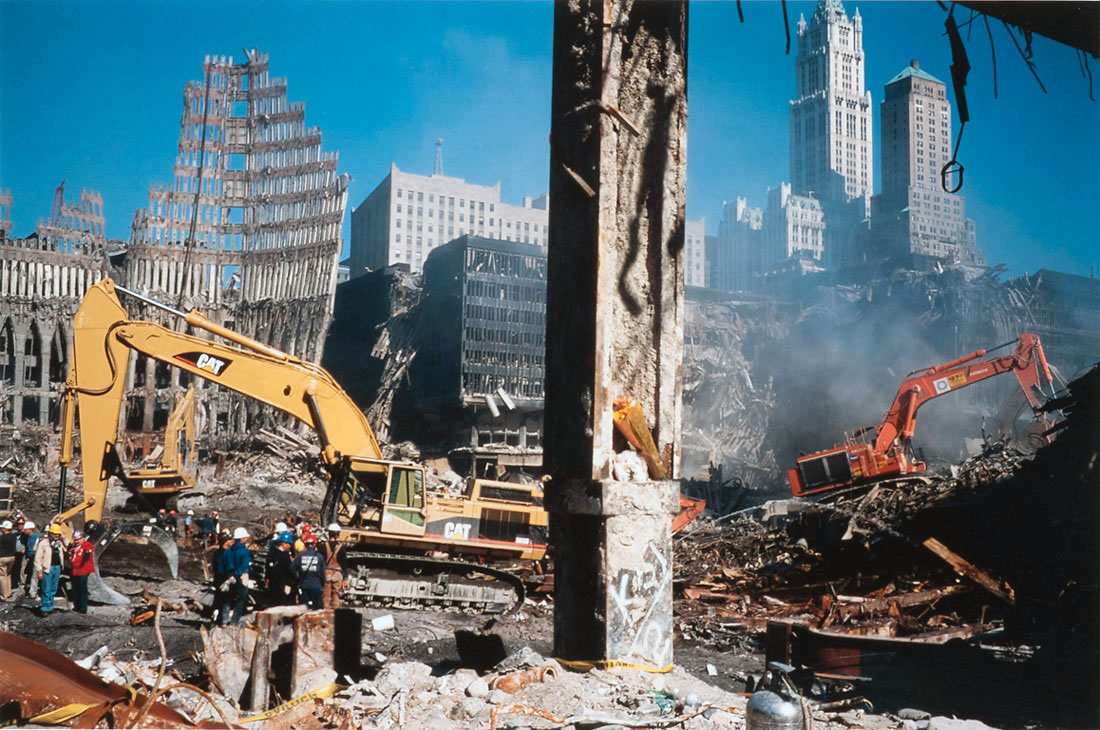
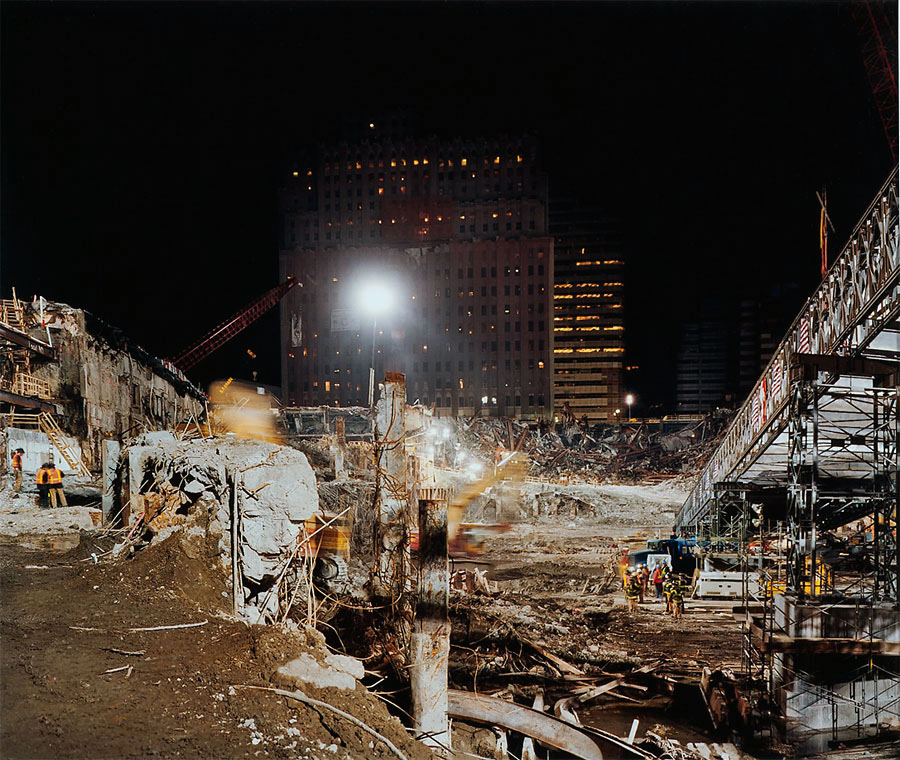
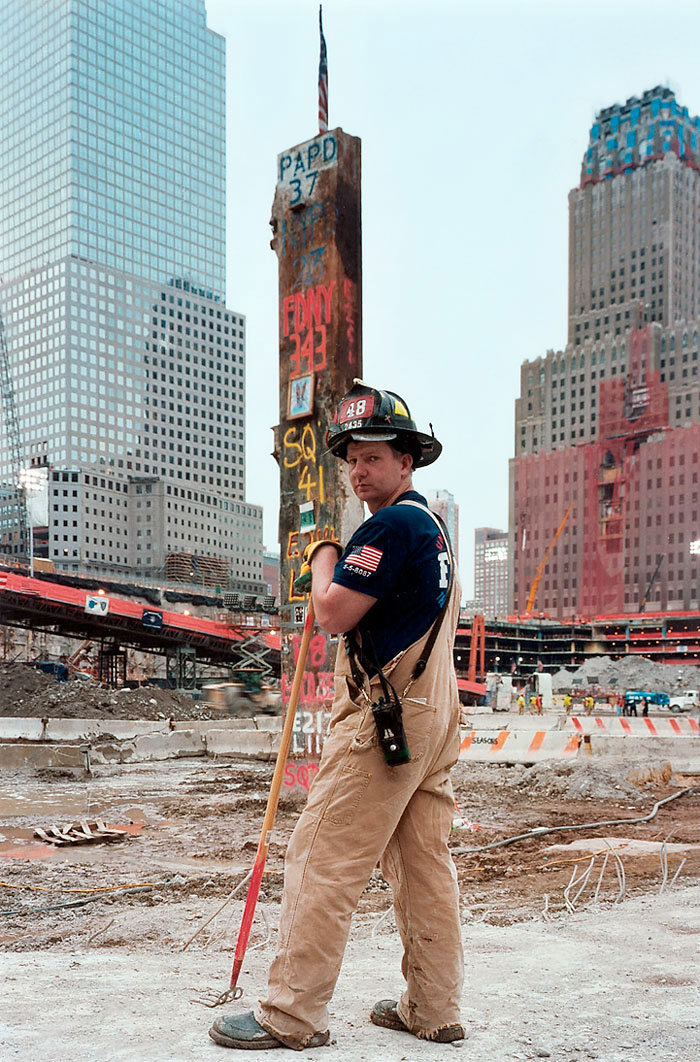
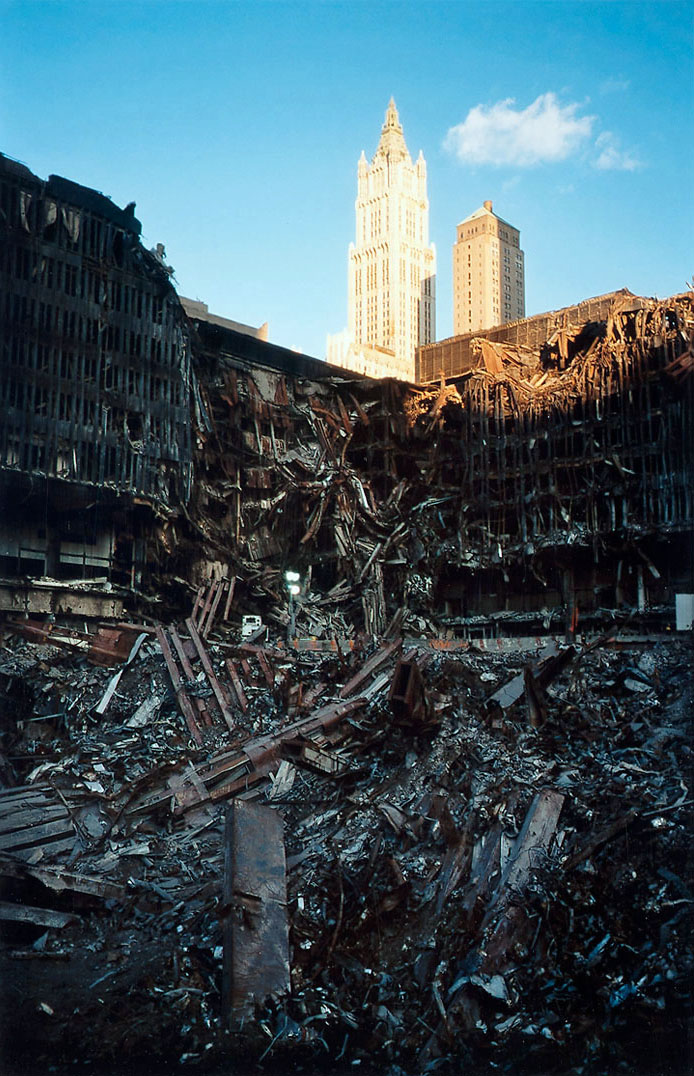
In commemoration of the 10th anniversary of 9/11, Miami Art Museum presents Focus Gallery: Joel Meyerowitz – Aftermath, an exhibition of photographs taken by the only photographer granted right of entry into Ground Zero after the September 11, 2001 attacks on the World Trade Center in New York City. For nine months during the day and night, Meyerowitz photographed “the pile,” as the World Trade Center came to be known, and the over 800 people a day that were working in it. The exhibition consists of 24, recently-donated photographs, presented in the Focus Gallery section of the Museum’s Permanent Collection installation. Admission to Miami Art Museum will be free to all emergency personnel, including police and firefighters, and their guests throughout the exhibition’s run, August 19 – November 6, 2011. A special preview for emergency personnel will be held on Thursday, August 18, 2011, 4-7pm. Author and photography critic Vicki Goldberg will give a lecture entitled “What Remains” on Thursday, September 8, 2011, beginning at 6:30pm.

After September 11, 2001, the Ground Zero site in New York City was classified as a crime scene and only those directly involved in the recovery efforts were allowed inside. The press was prohibited from the site. Influenced by Walker Evans’s and Dorothea Lange’s work for the Farm Security Administration during the Great Depression, Meyerowitz, long recognised as one of the pioneers of colour photography, was convinced that if a photographic record of the unprecedented recovery efforts was not made, “there would be no history.” With the help of sympathetic officials, he managed to become the only photographer granted right of entry into Ground Zero.

“I was making photographs for everyone who didn’t have access to the site,” says Meyerowitz, “I wanted to communicate what it felt like to be in there as well as what it looked like: to show the pile’s incredible intricacy and visceral power. I could provide a window for everyone else who wanted to be there, too, to help, or to grieve, or simply to try to understand what had happened to our city.”

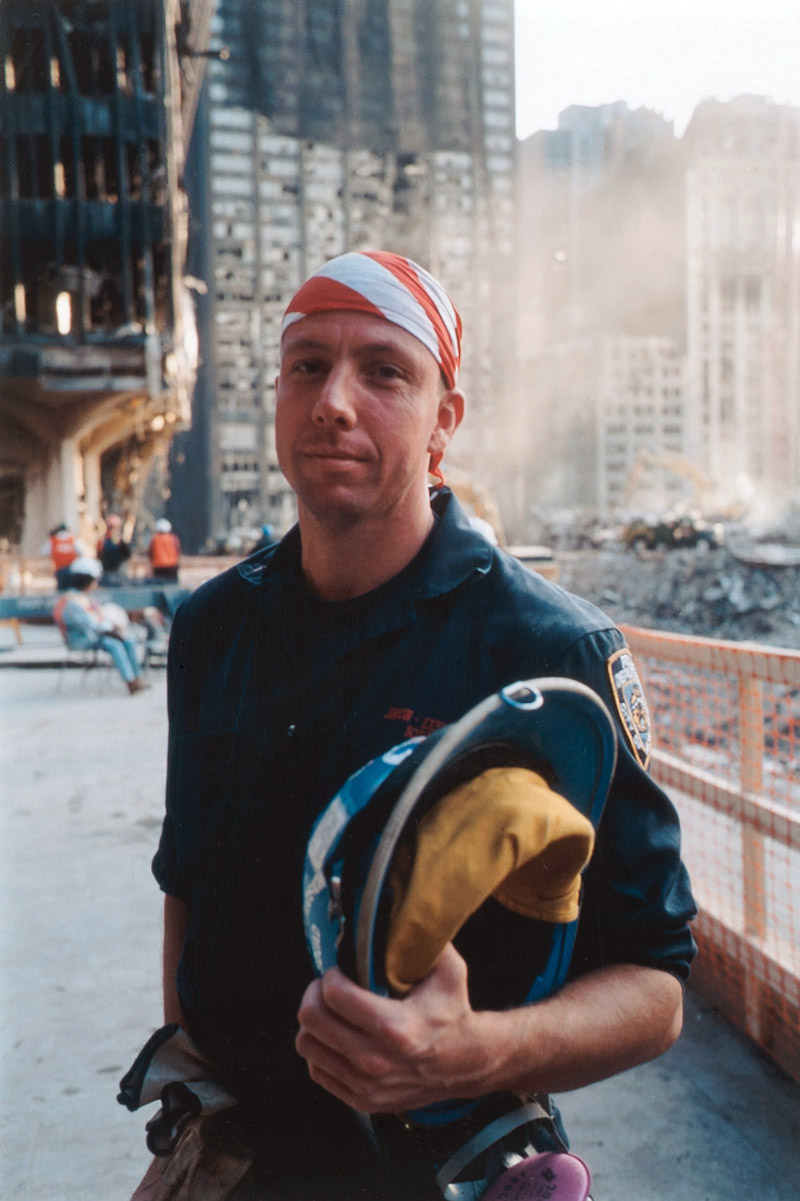
Armed with a large-format wooden camera, Meyerowitz spent nine months photographing the site. In the first few weeks, he was chased off the site repeatedly, but over time, with the help of officials on and off site, the use of forged workers’ passes, and by assuming the “uniform” of hard hat, goggles, respirator, gloves, boots and duct taped pants, Meyerowitz became “woven into the fabric of the site.”

About the experience, Meyerowitz has written, “The nine months I worked at Ground Zero were among the most rewarding of my life. I came in as an outsider, a witness bent on keeping the record, but over time I began to feel a part of the very project I’d been intent on recording… the intense camaraderie I experienced at Ground Zero inspired me, changing both my sense of myself and my sense of responsibility to the world around me. September 11th was a tragedy of almost unfathomable proportions. But living for nine months in the midst of those individuals who faced that tragedy head-on, day after day, and did what they could to set things right, was an immense privilege.”

The photographs in MAM’s collection are from a unique set of contact prints (photographs printed on a 1:1 scale from the negatives) issued by the artist in 2006. As a group, they span the entire nine month period that Meyerowitz was on site, presenting a poignant, condensed view of the clean up effort, including portraits of the workers involved. The set is introduced by a single image of the World Trade Center towers taken by the artist in the 1980s from his apartment window.

The entire set of more than 8,000 photographs taken by Meyerowitz form an archive at the Museum of the City of New York. The Aftermath series was the focus of a 2006 book, Aftermath: World Trade Center Archives published by Phaidon (reissued this year in a special 10th anniversary edition) and an exhibition organised by the US Department of State that traveled worldwide from 2002 to 2005.

Press release from the Miami Art Museum website


Joel Meyerowitz (American, b. 1938) 'Explosion Squad Detective' 2001


Joel Meyerowitz (American, b. 1938)
Explosion Squad Detective
2001
Vintage contact print
Collection Miami Art Museum, gift of Steven E. and Phyllis Gross


Joel Meyerowitz (American, b. 1938) 'Steps Down to Plaza' 2001


Joel Meyerowitz (American, b. 1938)
Steps Down to Plaza
2001
Vintage contact print
Collection Miami Art Museum, gift of Jeffrey Hugh Newman


Joel Meyerowitz (American, b. 1938) 'Fireman at Last Column' 2002


Joel Meyerowitz (American, b. 1938)
Fireman at Last Column
2002
Vintage contact print
Collection Miami Art Museum, gift of Charles S. and Elynne B. Zucker


Joel Meyerowitz (American, b. 1938) 'Building #5 and Woolworth' 2001


Joel Meyerowitz (American, b. 1938)
Building #5 and Woolworth
2001
Vintage contact print
Collection Miami Art Museum, gift of Simon and Bonnie Levin


Joel Meyerowitz (American, b. 1938) 'Welder and Rubble' 2001


Joel Meyerowitz (American, b. 1938)
Welder and Rubble
2001
Vintage contact print
Collection Miami Art Museum, gift of Steven E. and Phyllis Gross


Miami Art Museum
101 W Flagler St., Miami, FL 33130

Opening hours:
Monday 11am – 6pm
Tuesday – Wednesday Closed
Thursday 11am – 9pm
Friday – Sunday 11am – 6pm

Miami Art Museum website

LIKE ART BLART ON FACEBOOK

Back to top

Exhibition: ‘A Perfect Price For Donny’ by Martin Smith at Ryan Renshaw Gallery, Brisbane

Exhibition dates: 12th October – 12th November 2011


Martin Smith (Australian, b. 1971) 'My Father Doesn't Relate Well With Other Men' 2011


Martin Smith (Australian, b. 1971)
My Father Doesn’t Relate Well With Other Men
2011


Martin Smith is one of my favourite photo artists working in Australia at the moment. Smith produces consistently intriguing, stimulating art. Having had a particularly fractious relationship with my own father I appreciate the pathos and humour that Smith achieves in his work. Fantastic!

Marcus


Many thankx to Ryan Renshaw gallery for allowing me to publish the photographs in the posting. Please click on the photographs for a larger version of the image.


Martin Smith (Australian, b. 1971) 'My Father is a Deeply Flawed Human Being' 2011


Martin Smith (Australian, b. 1971)
My Father is a Deeply Flawed Human Being
2011


Martin Smith’s artwork focuses on those small moments that glance into a life. Tending to gather photographs as opposed to taking them, his works offer wry observations rather than grand statements. The loss or absence inherent in photographic images, which are suggestive of another time and place, is echoed in the physical loss of the words cut into the surface of the works. One story is inscribed on another; just like one memory is laid upon another or one version of a story embellishes another. The resulting works are replete with the same ambiguity, melancholy and richness as one’s memory.

‘The storytelling came from when I started looking at my old family photos and thinking about what goes with them,’ Smith explains. ‘You know when you’re looking at family photos, there are particular stories that go with them – that’s that person, that’s the time when your uncle turned up for Christmas, and so on.’

Smith’s stories that are painstakingly hand-cut into the photographic image give a whimsical and highly personal account of his life, like his ill-fated attempt to become an actor with the Sandgate Amateur Theatre Group or the time he worked in the cutlery crew at Australian Airlines, combining the text of these stories with photographs. The scarring of the photographic image with Smith’s scalpel blade ensures a unique artwork, a notion at odds with the reproducible aspects of photography.

Martin’s exhibition stems from his reflection of his experiences as an actor in Roger Fagan’s play A Perfect Price For Donny and questions the legacy of what we ‘leave behind’ for others to read.

‘Tanya was from the past of my amateur theatre days when I was 17 years old and possessed with deluded dreams of being an actor. We were both new members of the Sacred Heart Players and we both landed the leads in the production of A Perfect Price for Donny written by Roger Fagan. Roger was an elderly member of the group and had joined years earlier to gain practical experience so he could finish his play. The Perfect Price for Donny was his first and only play. Roger had worked at the Railways for 32 years and had been writing A Perfect Price for Donny on and off over the 32 years. He had not started another play, he hadn’t written any short stories, prose or even a Haiku. Since he had retired two years ago he was finally able to realise his dream of finishing A Perfect Price for Donny at the age of 68′.

‘The memories are left behind and then reconstituted and turned into other things, it’s a language constantly getting churned up. Memories are things that inform taking the photo,’ Smith says ‘and I’m bringing some of the intrinsic aspects of the photograph with me. Photography captures the classic moments of life, like your first day at school,’ he continues, ‘but it doesn’t capture the other parts of your life that are sometimes way more significant.’

People spend a lot of time in a Martin Smith exhibition reading the works and then laughing or sighing in recognition. The photographs are all of fairly impersonal exteriors, almost crime scenes, not postcards, not picturesque snaps but odd disregarded corners of the world. In some way they are reminiscent of album covers or slightly lame posters but are brought into the present by Smith’s honest and often very funny tales of modern living.

Press release from the Ryan Renshaw Gallery website


Martin Smith (Australian, b. 1971) 'My Father's Talents Will Never Make Me Wealthy' 2011


Martin Smith (Australian, b. 1971)
My Father’s Talents Will Never Make Me Wealthy
2011


Martin Smith (Australian, b. 1971) 'My Father Fails' 2011


Martin Smith (Australian, b. 1971)
My Father Fails
2011


Martin Smith (Australian, b. 1971) 'Revelation #2' 2011


Martin Smith (Australian, b. 1971)
Revelation #2
2011


Ryan Renshaw Gallery

This gallery has now closed.

LIKE ART BLART ON FACEBOOK

Back to top
Archive: Elliott Erwitt’s Archive 
to be Housed at the Harry Ransom Center at The University of Texas at Austin

October 2010


Many thankx to the Harry Ransom Center for allowing me to publish the photographs in the posting. Please click on the photographs for a larger version of the image.


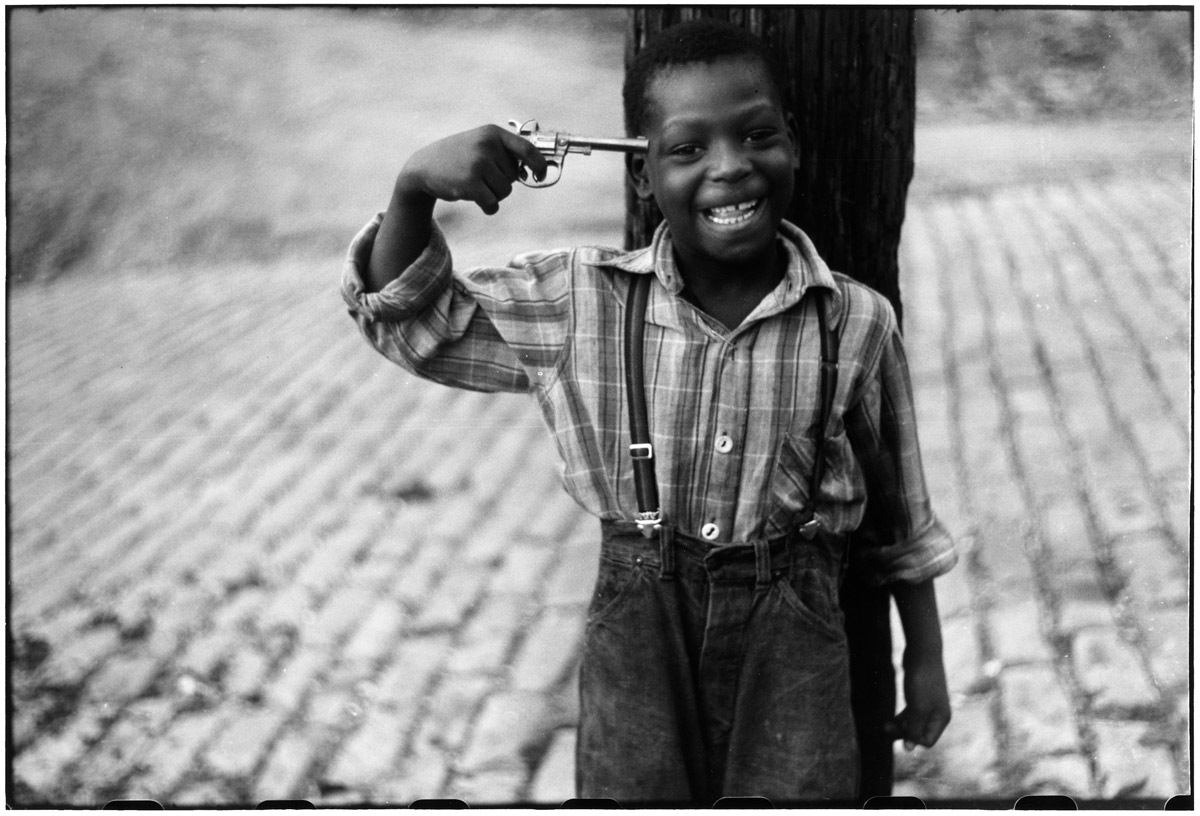
Elliott Erwitt (American, 1928-2023) 'BRAZIL. Buzios' 1990


Elliott Erwitt (American, 1928-2023)
BRAZIL. Buzios. 1990.
Gelatin silver print
© Elliott Erwitt/MAGNUM PHOTOS


Elliott Erwitt (American, 1928-2023) 'USA. Pittsburgh, Pennsylvania' 1950


Elliott Erwitt (American, 1928-2023)
USA. Pittsburgh, Pennsylvania. 1950.
Gelatin silver print
© Elliott Erwitt/MAGNUM PHOTOS


Elliott Erwitt (American, 1928-2023) 'Jackie Kennedy, Arlington, Virginia' 1963


Elliott Erwitt (American, 1928-2023)
Jackie Kennedy, Arlington, Virginia, 1963.
Gelatin silver print
© Elliott Erwitt/MAGNUM PHOTOS


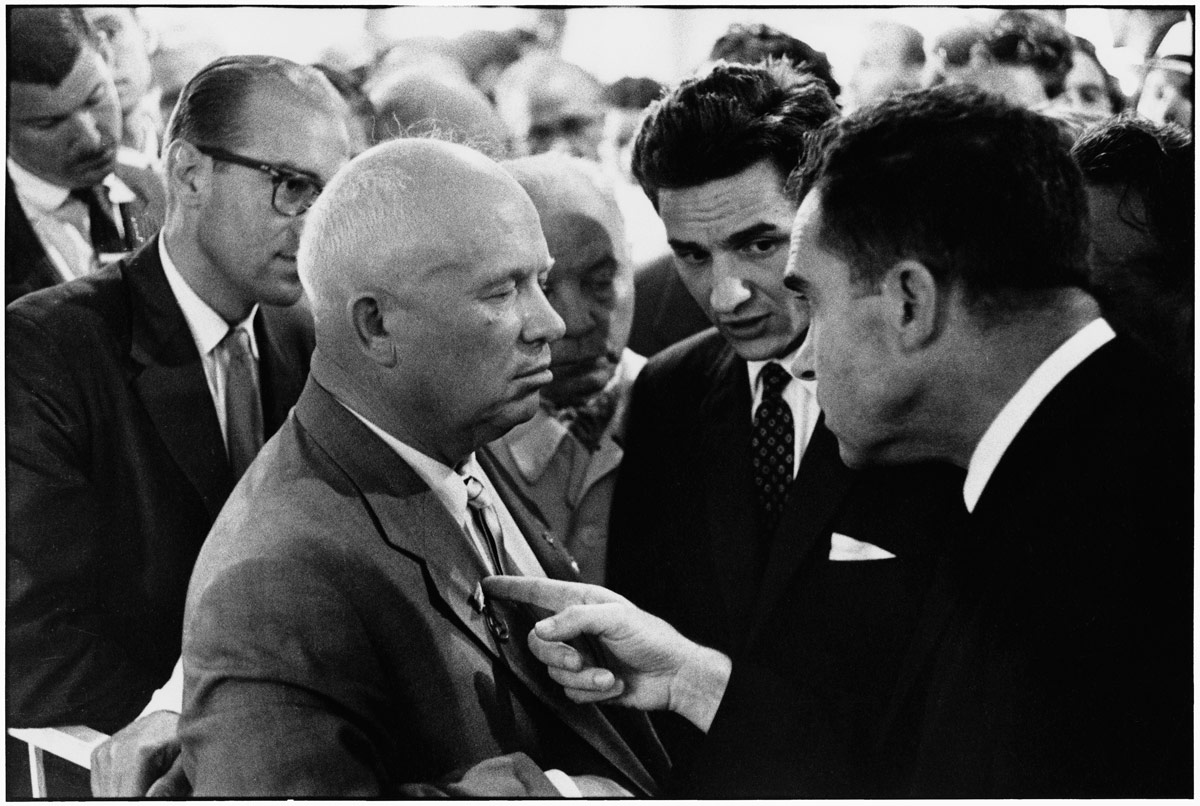
Elliott Erwitt (American, 1928-2023) 'Nikita Khrushchev and Richard Nixon, Moscow' 1959


Elliott Erwitt (American, 1928-2023)
Nikita Khrushchev and Richard Nixon, Moscow, 1959.
Gelatin silver print
© Elliott Erwitt/MAGNUM PHOTOS


The archive of photographer Elliott Erwitt (b. 1928), which includes more than 50,000 signed photographic prints, will be housed at the Harry Ransom Center, a humanities research library and museum at The University of Texas at Austin. Spanning more than six decades of Erwitt’s career, the archive covers not only his work for magazine, industrial and advertising clients but also photographs that have emerged from personal interests. Collectors and philanthropists Caryl and Israel Englander have placed the archive at the Ransom Center for five years, making it accessible to researchers, scholars and students.

Born in Paris to Russian émigré parents, Erwitt spent his formative years in Milan and then immigrated to the United States, living in Los Angeles and ultimately New York. In 1948, Erwitt actively began his career and met photographers Robert Capa, Edward Steichen and Roy Stryker, all who would become mentors. In 1953, Erwitt was invited to join Magnum Photos by Capa, one of the founders of the photographic co-operative. Ten years later, Erwitt became president of the agency for three terms. A member of the Magnum organisation for more than 50 years, Erwitt’s archive will be held alongside the Magnum Photos collection at the Ransom Center. While many of Erwitt’s photographs capture the famous, from Richard Nixon arguing with Nikita Khrushchev in Moscow in 1959 to Jacqueline Kennedy at her husband’s funeral, other subjects include everyday people, places and even dogs, a longtime love of Erwitt’s.

“The work I care about is terribly simple,” said Erwitt in “Personal Exposures” (1988). “I observe, I try to entertain, but above all I want pictures that are emotion. Little else interests me in photography. Today, so much is being done by unemotional people, or at least it looks that way…I mean, work that’s fascinating and fun and clever and technically brilliant. But if it’s not personal, then it misses what interesting photography is about.”

Exhibitions of Erwitt’s work have been featured at institutions ranging from The Museum of Modern Art in New York to The Museum of Modern Art in Paris, and his work is represented in numerous major institutions.

“Whether capturing the everyday or the extraordinary, Erwitt’s work always has a wonderful element of accessibility,” said Ransom Center Director Thomas F. Staley. “Housing the collection here adds a new dimension to that access.”

In addition to providing access to the archive, the Ransom Center will promote interest in the collection through lectures, fellowships and exhibitions.”

Text from the Harry Ransom Center website


Elliott Erwitt (American, 1928-2023) 'USA. New York City' 1988


Elliott Erwitt (American, 1928-2023)
USA. New York City. 1988.
Gelatin silver print
© Elliott Erwitt/MAGNUM PHOTOS


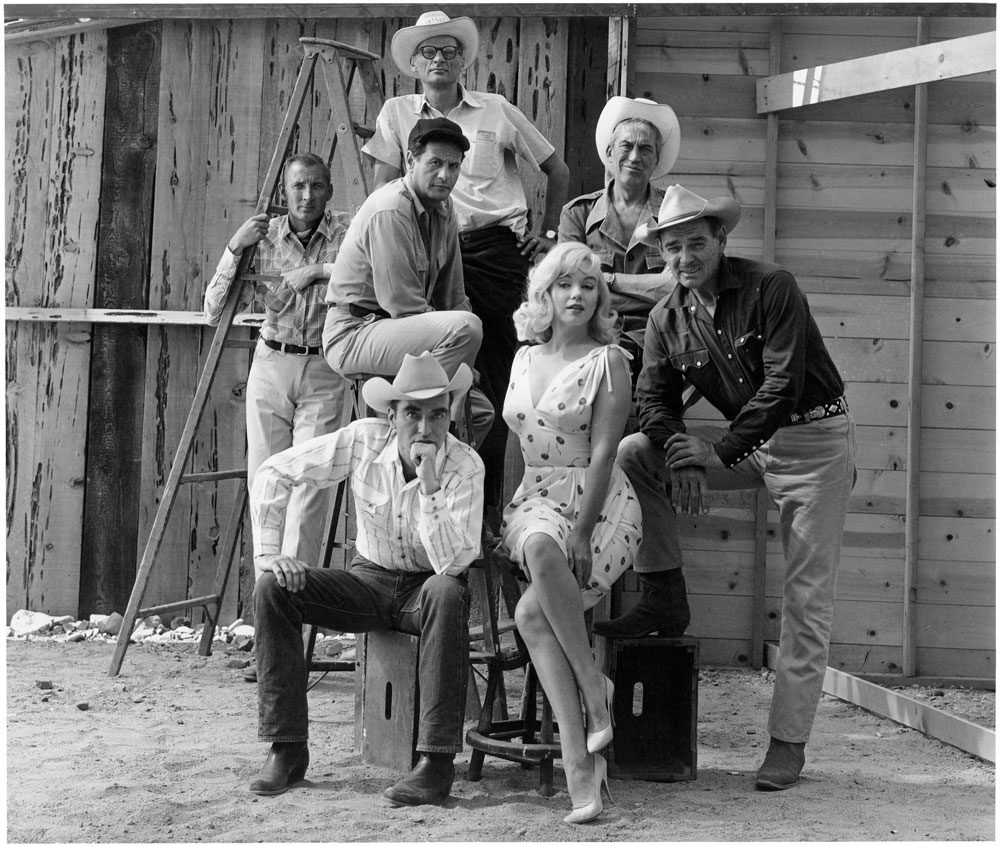
Elliott Erwitt (American, 1928-2023) 'USA. Reno, Nevada' 1960


Elliott Erwitt (American, 1928-2023)
USA. Reno, Nevada. 1960.
(on the set of the film The Misfits with Marilyn Monroe, Montgomery Clift and Clark Gable)
Gelatin silver print
© Elliott Erwitt/MAGNUM PHOTOS.


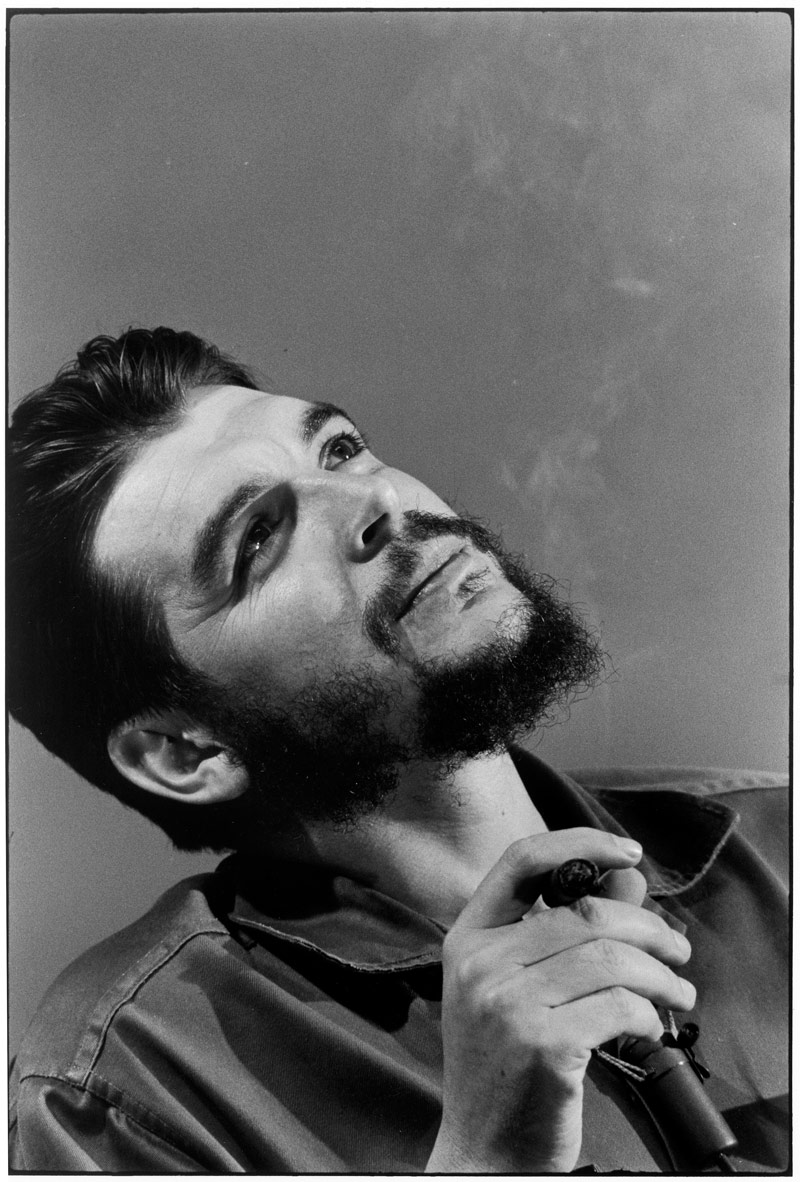
Elliott Erwitt (American, 1928-2023) 'CUBA. Havana' 1964


Elliott Erwitt (American, 1928-2023)
CUBA. Havana. 1964.
(Che Guevara)
Gelatin silver print
© Elliott Erwitt/MAGNUM PHOTOS


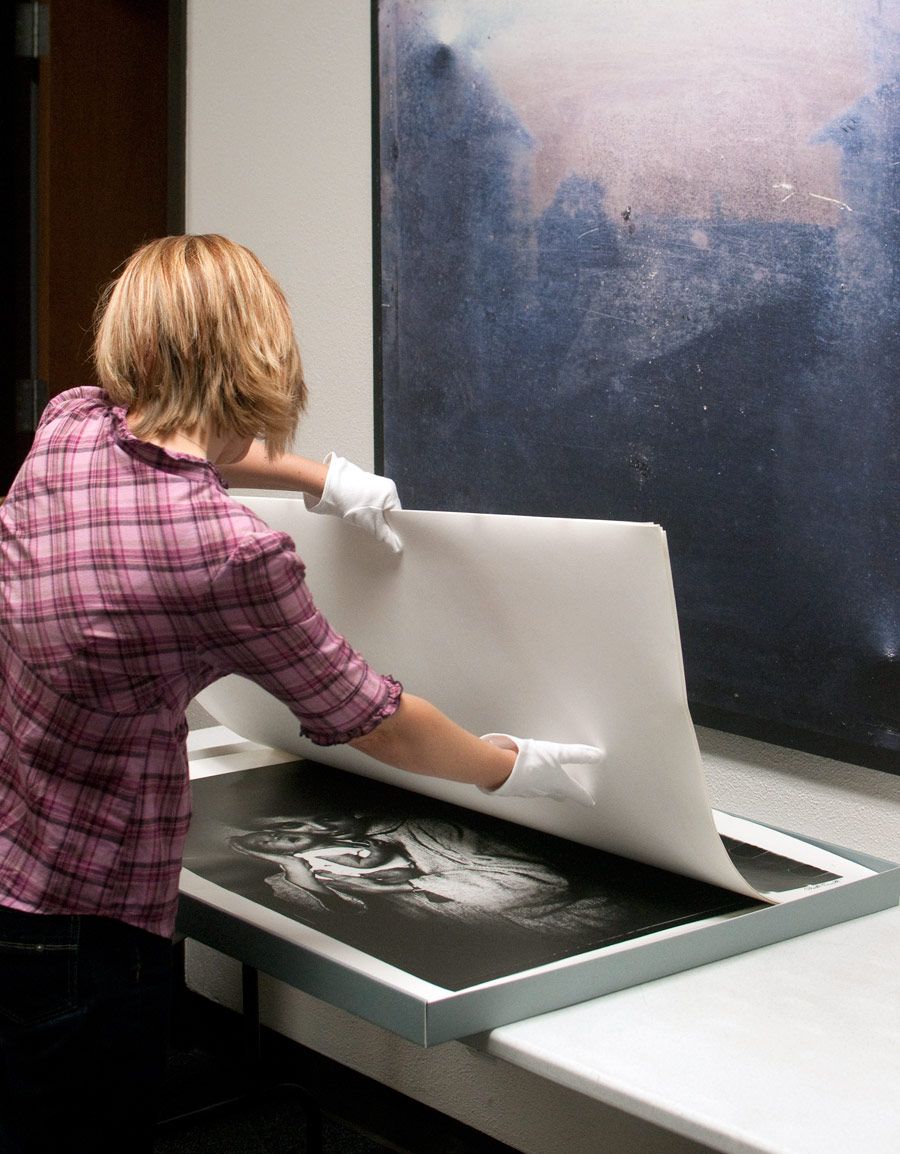
Archivist Amy Armstrong inspects a box from the archive of Magnum photographer Elliott Erwitt.


Archivist Amy Armstrong inspects a box from the archive of Magnum photographer Elliott Erwitt
Image courtesy of Harry Ransom Center
Photo: Pete Smith


The Harry Ransom Center
21st and Guadalupe Streets
Austin, Texas 78712
Phone: 512-471-8944

Exhibition galleries opening hours:
Tuesday – Friday 10am – 5pm
Saturday and Sunday Noon – 5pm
Closed Mondays

Library Reading/Viewing Rooms opening hours:
Monday – Saturday 10am – 4pm
Closed Sundays

Harry Ransom Center website

LIKE ART BLART ON FACEBOOK

Back to top
Sculpture: ‘Everything’ by Fredrick White, 2011

October 2012


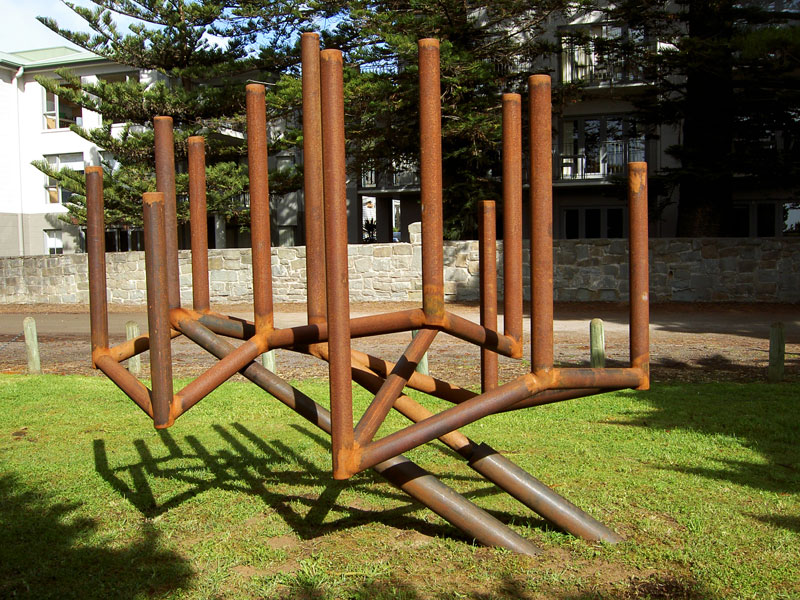
Fredrick White. 'Everything' 2011


Fredrick White (Australian)
Everything
2011
steel
210 x 120 x 250cm


A new sculpture by Fredrick White is appearing in the Lorne Sculpture Prize (now Biennale) which opened on the 16th October and continues until 5th November, 2011. The work continues the artist’s exploration into the matrix of what is seen and not seen, what lies above and below.

Dr Marcus Bunyan


Please click on the photographs for a larger version of the image.


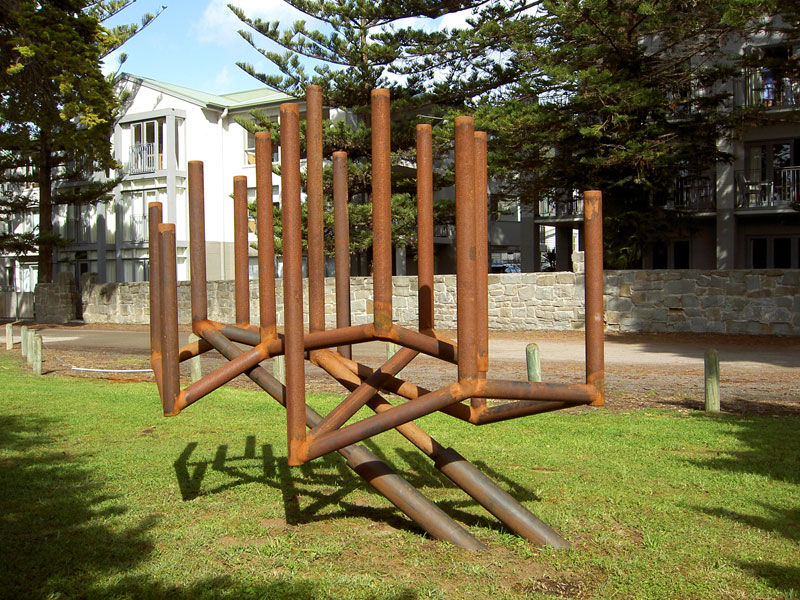
Fredrick White. 'Everything' 2011

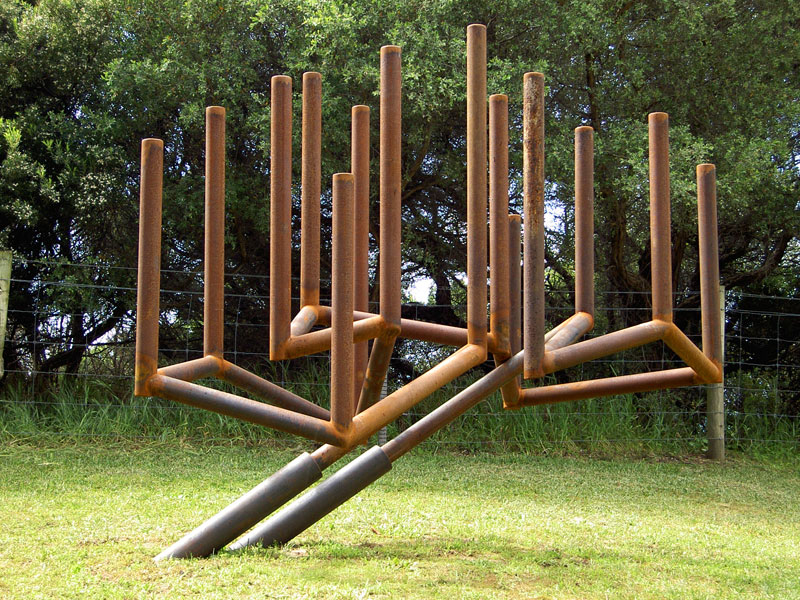
Fredrick White. 'Everything' 2011


Fredrick White (Australian)
Everything
2011
steel
210 x 120 x 250cm


LIKE ART BLART ON FACEBOOK

Back to top
Exhibition: ‘Polly Borland: Smudge’ at Paul Kasmin Gallery, New York

Exhibition dates: 22nd September – 29th October 2011


Many thankx to Paul Kasmin Gallery for allowing me to publish the text and photographs in the posting. Each photograph has been printed in three editions (small: 44 x 38.5cm, edition of 3 plus 3 APs; medium: 76 x 65cm, edition of 6 plus 3 APs; and large-scale prints: 147.5 x 122cm, edition of 3 plus 3 APs).


Polly Borland (Australian, b. 1959) 'Untitled III' 2010


Polly Borland (Australian, b. 1959)
Untitled III
2010
C-print


Polly Borland (Australian, b. 1959) 'Untitled IV' 2010


Polly Borland (Australian, b. 1959)
Untitled IV
2010
C-print


Polly Borland (Australian, b. 1959) 'Untitled XIII' 2010


Polly Borland (Australian, b. 1959)
Untitled XIII
2010
C-print


Polly Borland (Australian, b. 1959) 'Untitled XXXIV' 2010


Polly Borland (Australian, b. 1959)
Untitled XXXIV
2010
C-print


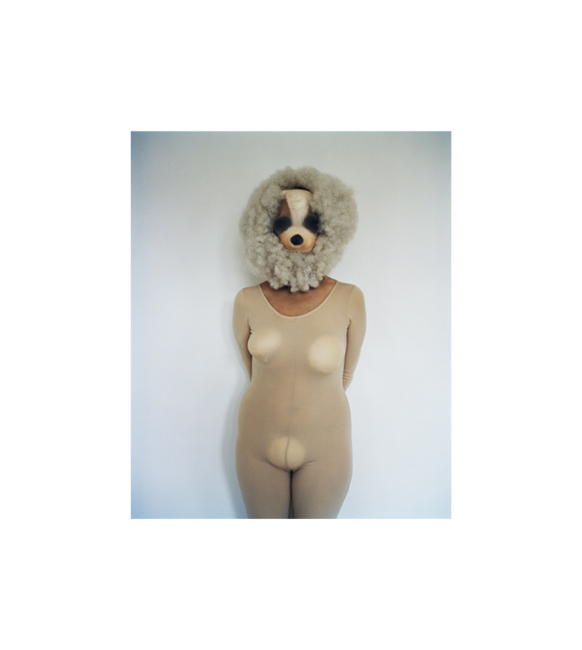
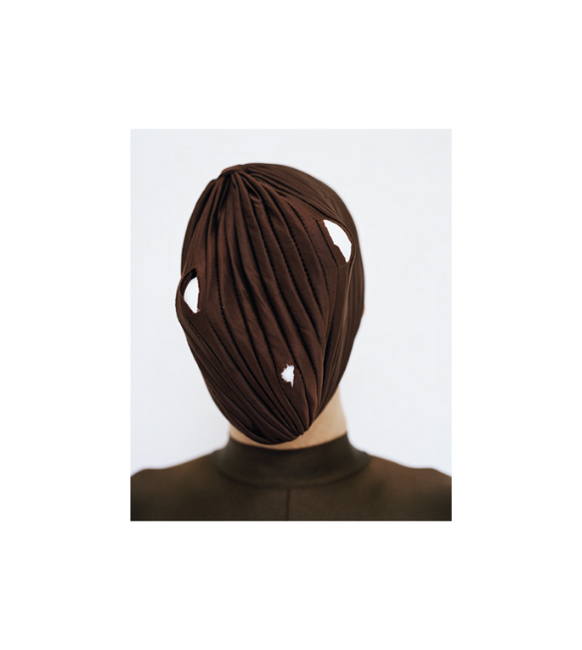
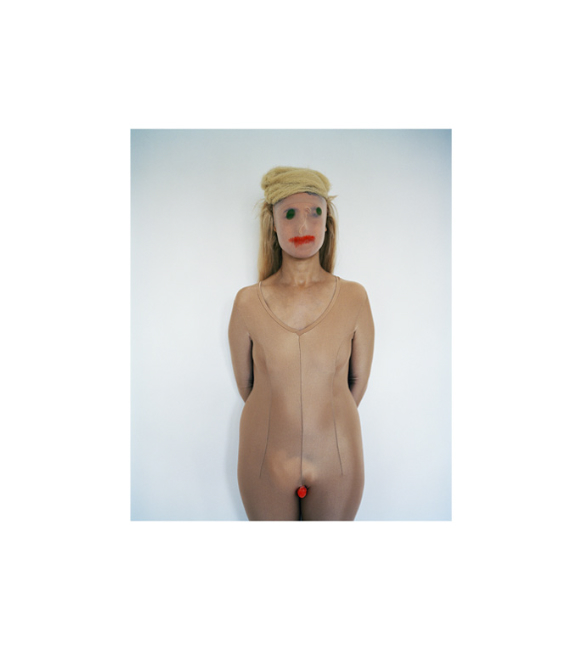
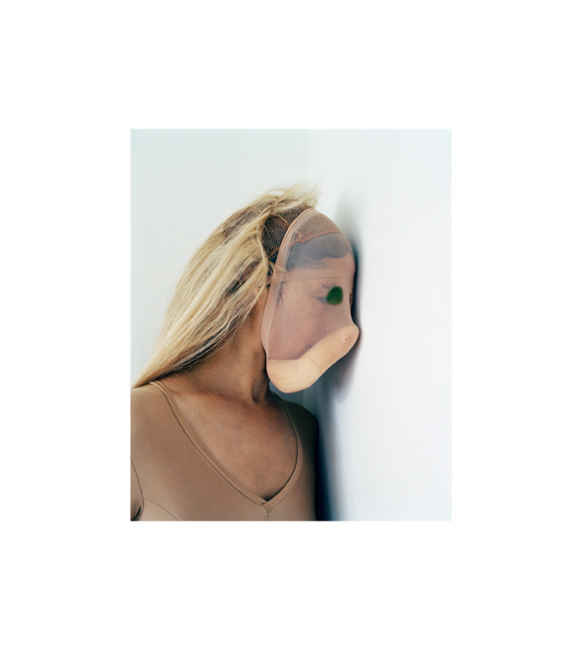
Paul Kasmin Gallery is pleased to present an exhibition of photographs by Polly Borland from her Smudge series, curated by Danny Moynihan. Opening on September 22, 2011 at 511 W. 27th Street, this will be the artist’s first show with the gallery.

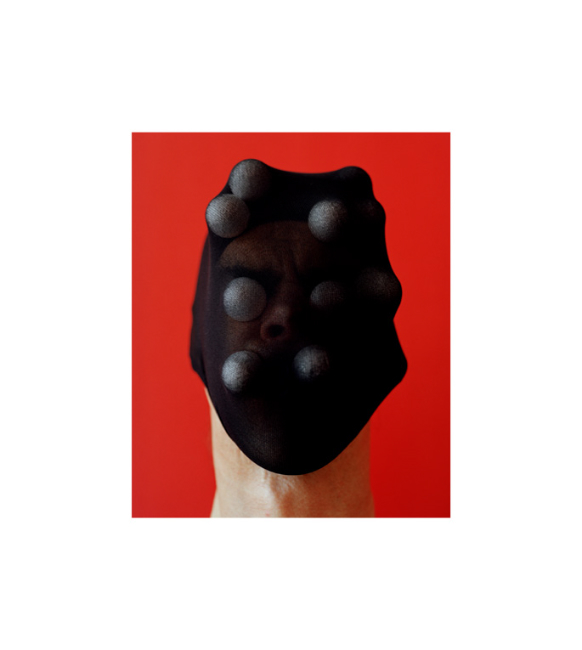
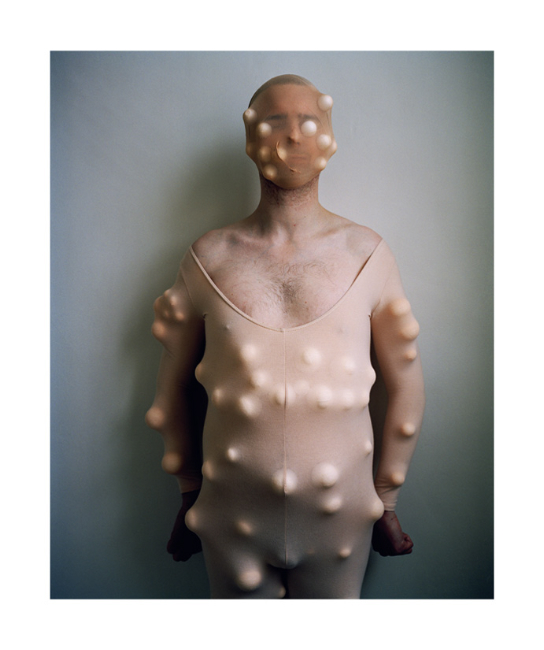
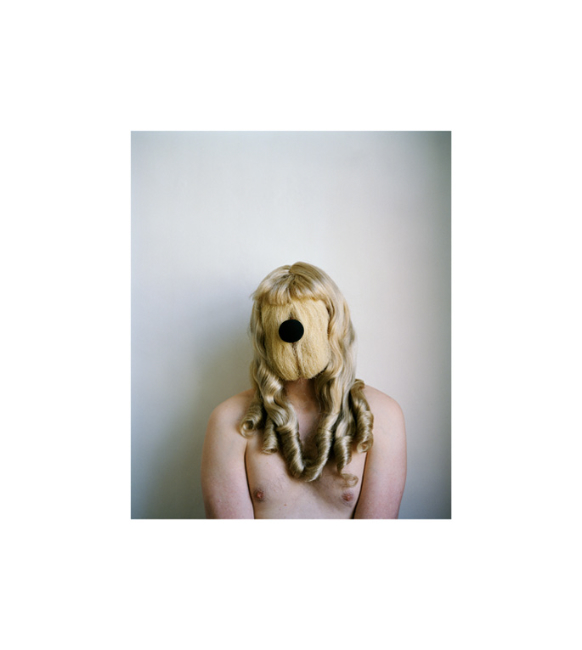
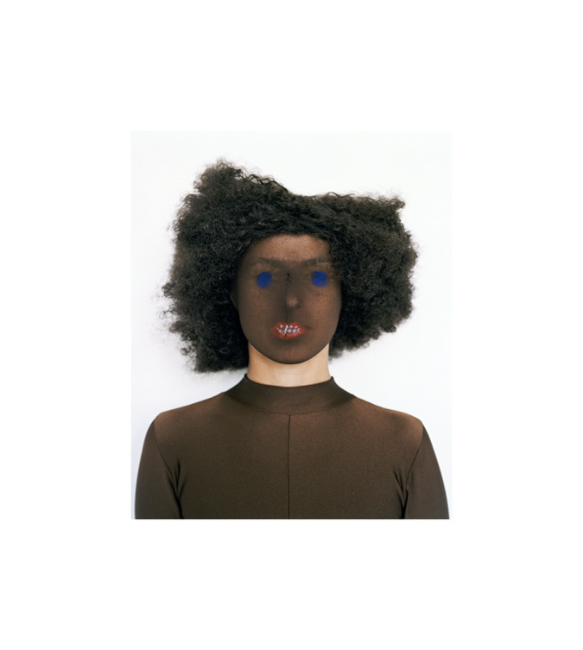
In this body of arresting portraits, Borland dresses and directs her models; manipulating their various costumes, makeup and body positioning to create her own visual language. With faces obscured by wigs, nylon hose and masks, her anonymous subjects are captured in moments of great openness and vulnerability.

Of his experience modelling for Borland, the musician Nick Cave writes, “I am struck by Polly’s deep love for her subjects and the dignity that exists in their dysmorphia. Because her pictures are never voyeuristic, never observational and never merely shocking. Rather, Polly seems to me to be shooting into a distorted mirror and simply bringing back heartbreaking refracted images of herself.”

Borland’s captivating, intimate portraits convey a keen sensitivity to her subjects. “It’s a long time that the camera has been bringing us news about zanies and pariahs, their miseries and their quirks. Showing the banality of the non-normal. Making voyeurs of us all…” writes Susan Sontag in her essay accompanying Borland’s The Babies catalogue, “… But this is particularly gifted, authoritative, intelligent work. Borland’s pictures seem very knowing, compassionate; and too close, too familiar, to suggest common or mere curiosity.”

Borland was born in Melbourne, Australia in 1959, and moved to the United Kingdom in 1989. She has recently relocated to Los Angeles.

Text from the Paul Kasmin Gallery website


Polly Borland (Australian, b. 1959) 'Untitled XXIV' 2010


Polly Borland (Australian, b. 1959)
Untitled XXIV
2010
C-print


Polly Borland (Australian, b. 1959) 'Untitled XL' 2010


Polly Borland (Australian, b. 1959)
Untitled XL
2010
C-print


Polly Borland (Australian, b. 1959) 'Untitled XXVI' 2010


Polly Borland (Australian, b. 1959)
Untitled XXVI
2010
C-print


Polly Borland (Australian, b. 1959) 'Untitled XXXVIII' 2010


Polly Borland (Australian, b. 1959)
Untitled XXXVIII
2010
C-print


Paul Kasmin Gallery
297 Tenth Ave.
New York, NY 10001
509 W. 27th Street
New York, NY 10001
Phone: 212.563.4474

Opening hours:
Monday – Thursday, 10am – 5pm
Friday, 10am – 4pm

Paul Kasmin Gallery website

LIKE ART BLACK ON FACEBOOK

Back to top

Exhibition: ‘Raphaël Dallaporta: Observation’ at Foam, Amsterdam

Exhibition dates: 2nd September – 26th October 2011

Foam Paul Huf Award 2011


Raphaël Dallaporta (French, b. 1980) 'Fragile, Blood 1' 2010


Raphaël Dallaporta (French, b. 1980)
Fragile, Blood 1
2010
© Raphaël Dallaporta


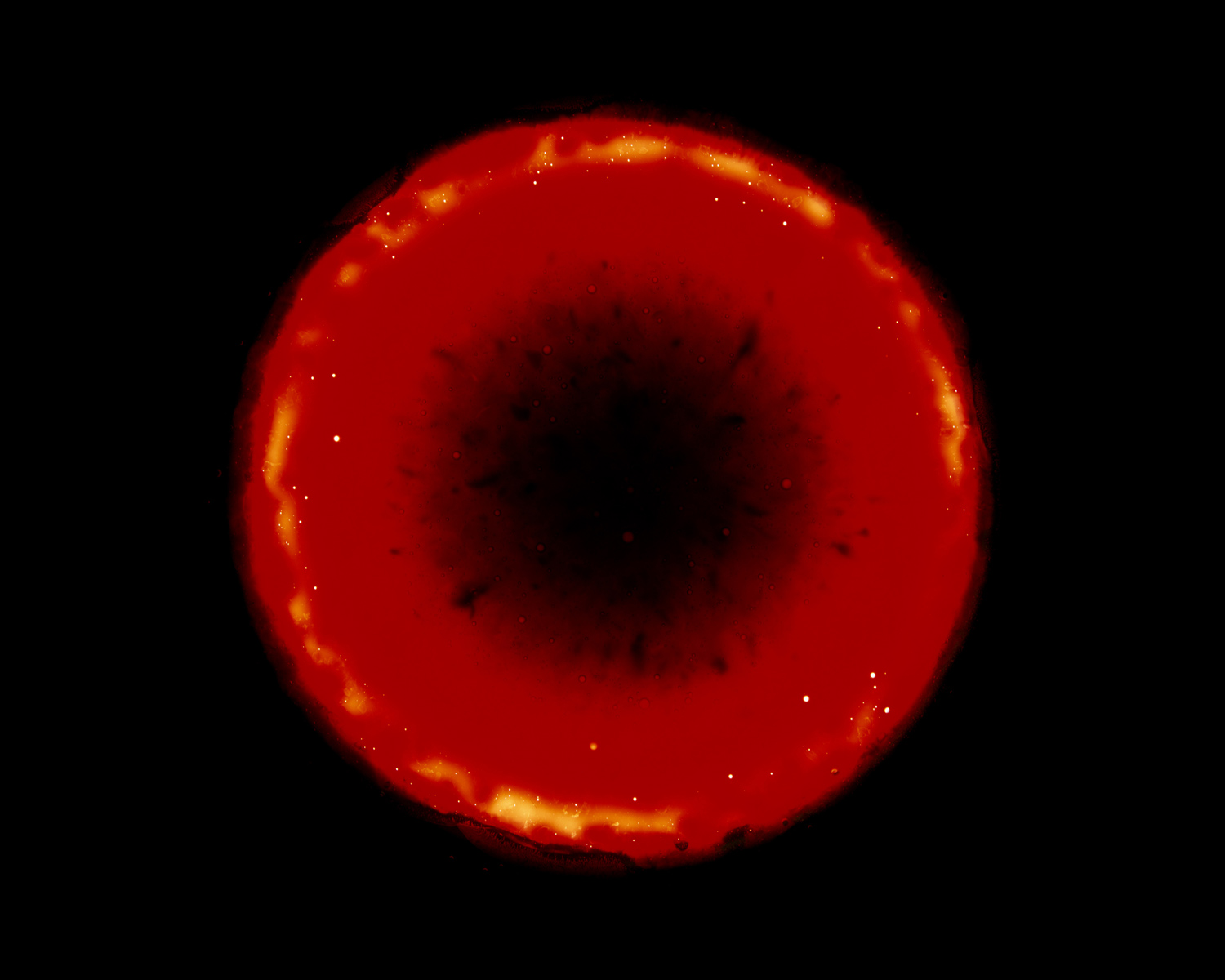
Antipersonnel. The positive pleasure of inflicting cruelty at an ambiguous physical and ethical distance. Use limited only by the imagination of the user. Detonated remotely using a laptop computer. 10 million times. US$3 each.

Dr Marcus Bunyan


Many thankx to Foam for allowing me to publish the photographs in the posting. Please click on the photographs for a larger version of the image.


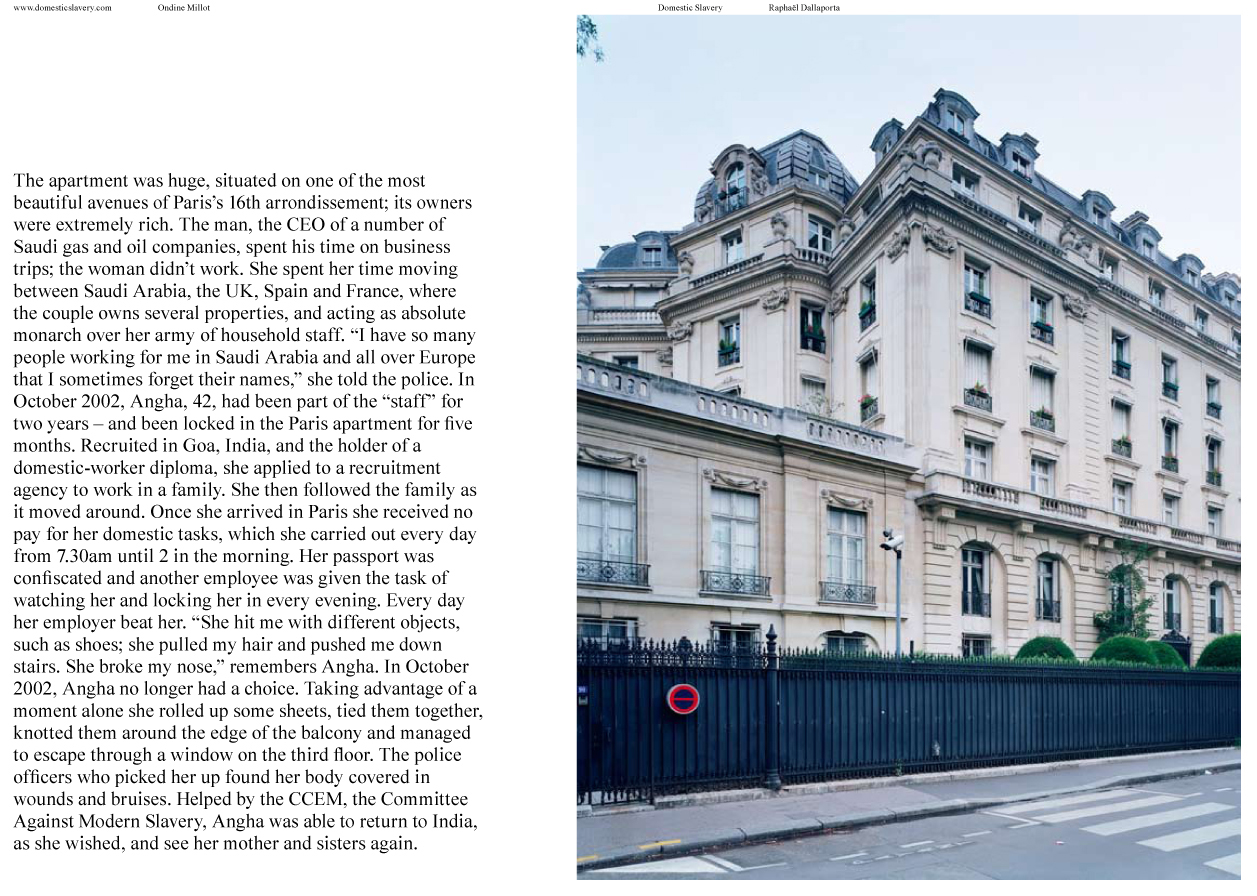
Raphaël Dallaporta (French, b. 1980) 'Domestic Slavery, Angha' 2006


Raphaël Dallaporta (French, b. 1980)
Domestic Slavery, Angha
2006
© Raphaël Dallaporta


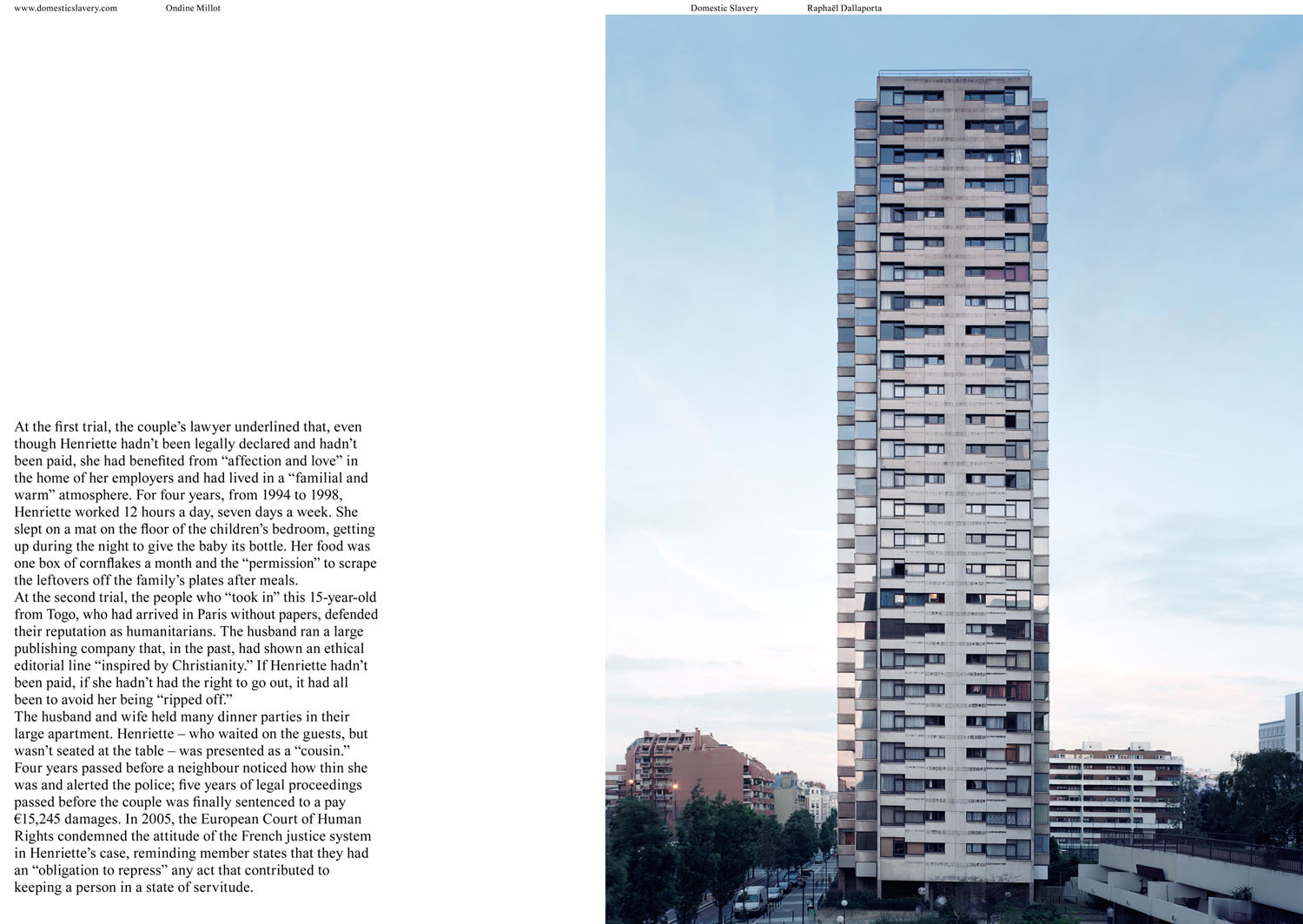
Domestic Slavery, 2006

Cold, distant images of building facades are associated with text. The narratives are written by Ondine Millot to describe the events that took place at the exact address of the buildings in the photographs. The spectator comes to understand that the series deals with an often undocumented consequence of human trafficking: modern slavery.

The images force us to come to terms with the upsetting reality that is hidden behind the ordinary facades. Raphaël Dallaporta denounces unbearable situations where one human being reduces another to the status of thing, and gives it depth through the distance of the photographs and his refusal to sensationalise.

Text from the Musée Nicéphore Niépce website [Online] Cited 29/03/2020


Raphaël Dallaporta (French, b. 1980) 'Domestic Slavery, Henriette' 2006


Raphaël Dallaporta (French, b. 1980)
Domestic Slavery, Henriette
2006
© Raphaël Dallaporta


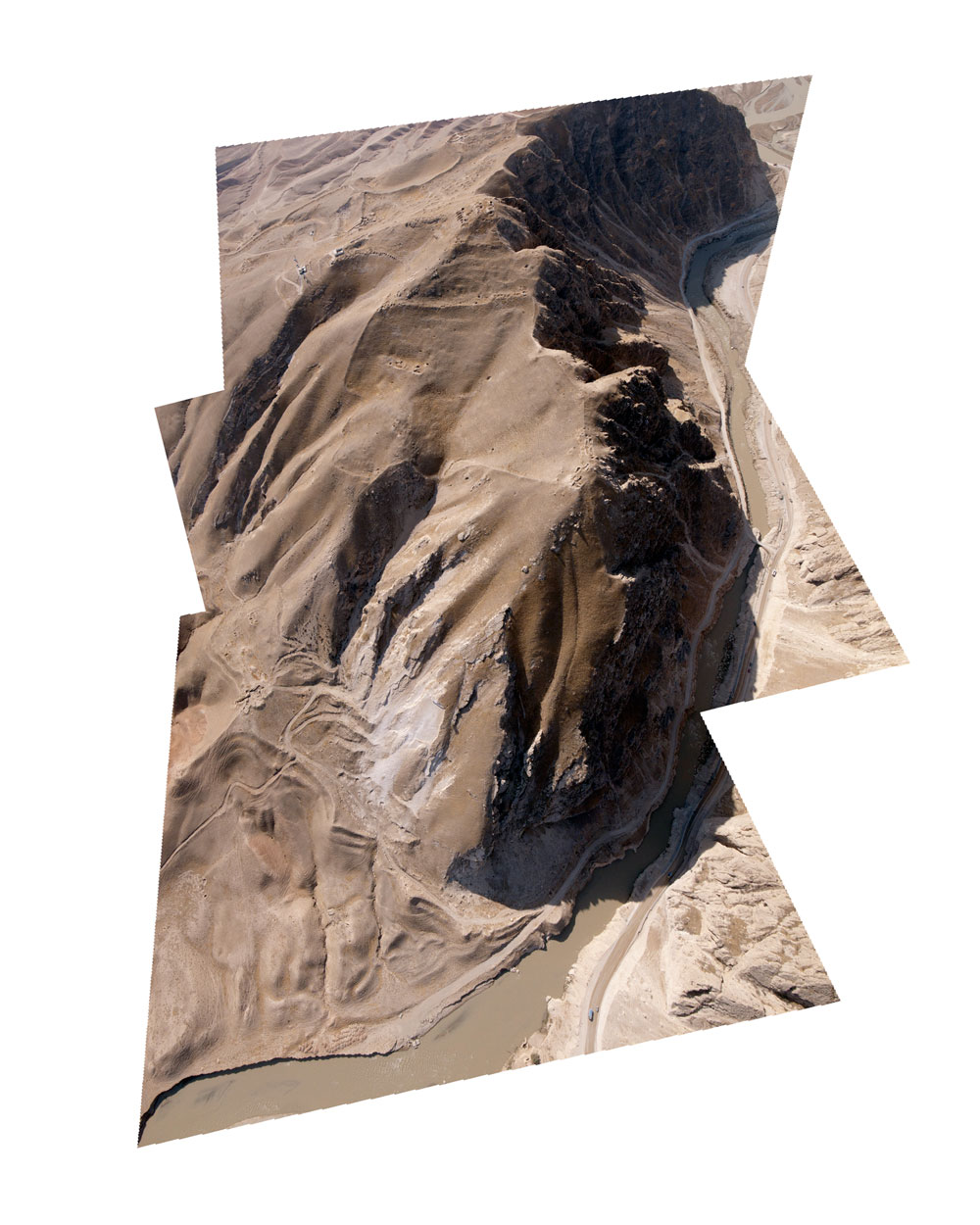
Raphaël Dallaporta (French, b. 1980) 'Ruins (Season 1), The Balkh-AB gorges, Afghanistan' 2011


Raphaël Dallaporta (French, b. 1980)
Ruins (Season 1), The Balkh-AB gorges, Afghanistan
2011
© Raphaël Dallaporta


Ruin, Season 1, 2011

In the autumn of 2010, Raphaël Dallaporta took part in an archaeological mission in the Bactriane region in Afghanistan, scene of Alexander the Great’s mythical conquest. Using a drone he designed himself, he took aerial photographs of endangered or heretofore unknown archaeological sites in a country at war. The remote controlled device was timed to take photos of unrivalled precision every five seconds. The way the images are put together with their voluntarily asymmetrical contours depict these inaccessible monuments and places at their best. The most cutting-edge technology reveals the artist’s themes – destruction, the precariousness of things. It brings to light that which was and is no longer. Is this not the very definition of all photography?

Text from the Musée Nicéphore Niépce website [Online] Cited 29/03/2020


Raphaël Dallaporta (French, b. 1980) 'Fragile, "Four Moods", Black Bile'  2010


Raphaël Dallaporta (French, b. 1980)
Fragile, “Four Moods”, Black Bile 
2010
© Raphaël Dallaporta


Fragile, 2010

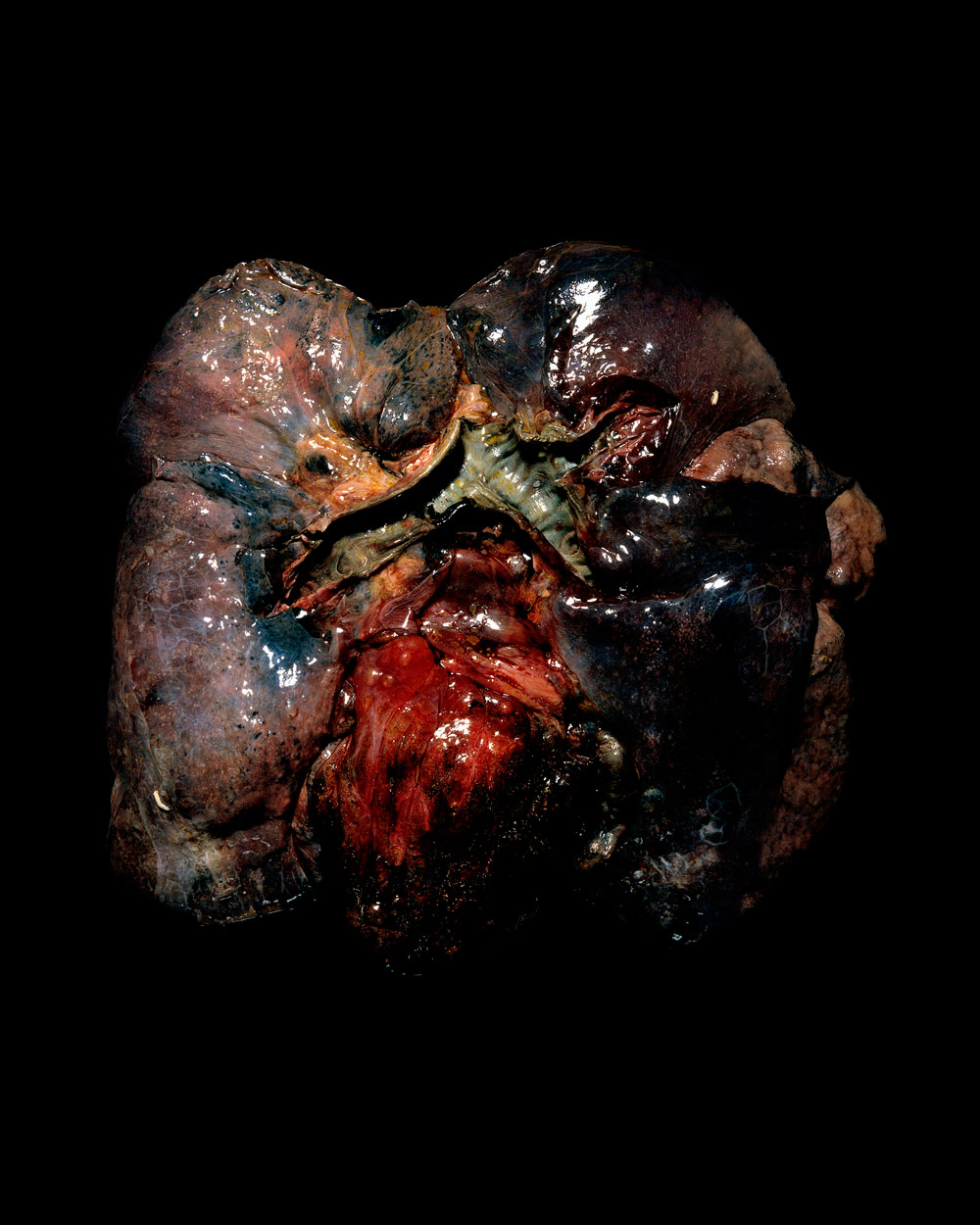
Raphaël Dallaporta photographs organs, like the encyclopaedic colour plates for an anatomy class. The legend, again, explains the origins of these silent images. The organ represented is not the issue; the reason for its presence on the slab is the issue. The apparent neutrality of the shot, according to a strict protocol (frontal shot, on a black background enabling the strong lighting of the “subject”), isolates each fragment of the body as a clue that enables to determine the cause of death. These relics of flesh and bone have a real role to play. But the way they are shot lends them a metaphysical and philosophical dimension that reminds us of life’s ephemeral nature and human vulnerability.

Text from the Musée Nicéphore Niépce website [Online] Cited 29/03/2020


Raphaël Dallaporta (French, b. 1980) 'Fragile, Cardiopulmonary system' 2010


Raphaël Dallaporta (French, b. 1980)
Fragile, Cardiopulmonary system
2010
© Raphaël Dallaporta


Undetermined circumstances

The body of the subject whose presumed identity is …, aged 92, was found in a ditch around 10.05am by a walker whose attention had been attracted by his dog.

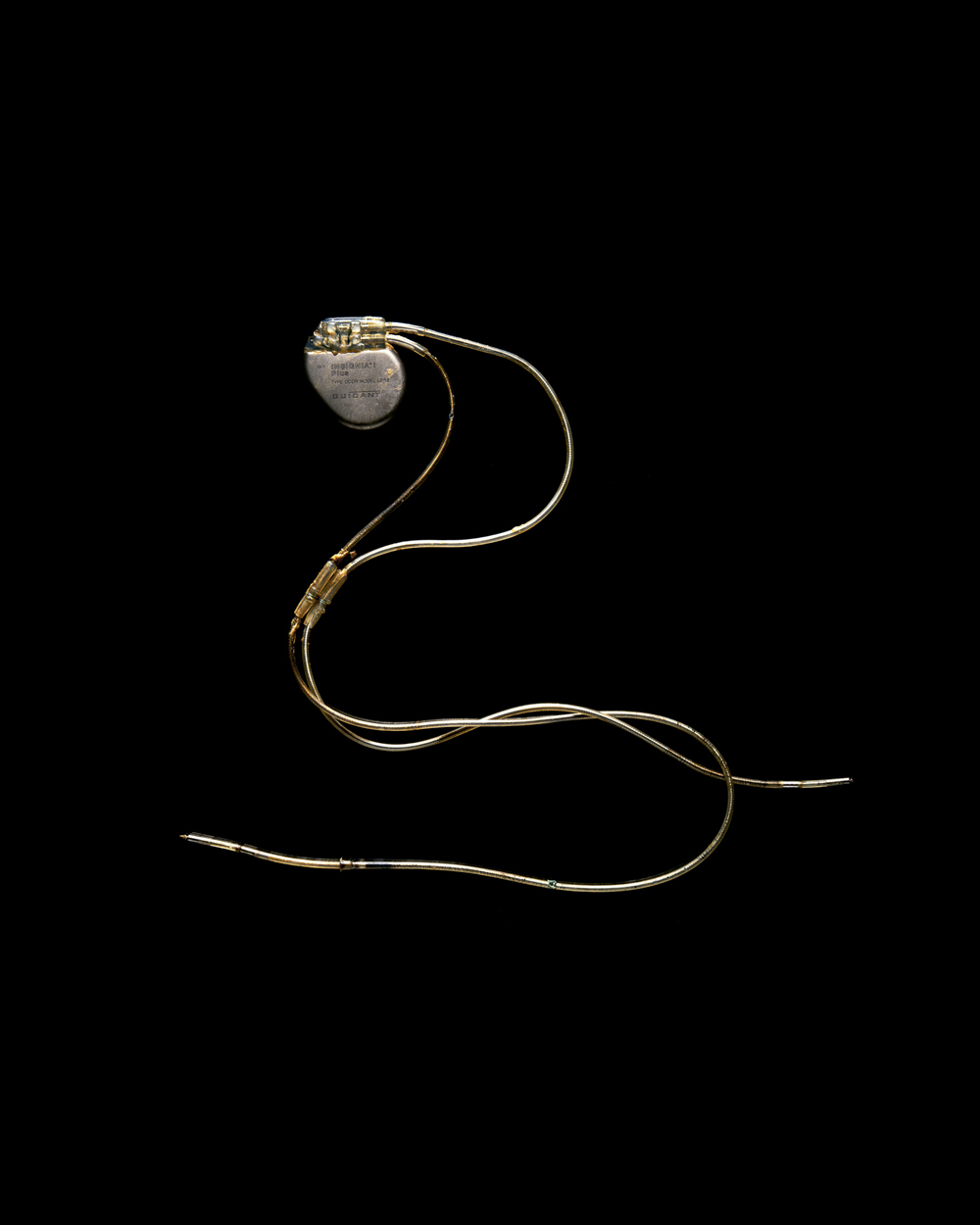
The autopsy that we carried out on the body showed the presence of a state of extremely advanced putrefaction with partial skeletonisation, consistent with a death dating back one month in an outdoor environment; it is not possible to be more precise. There is no immediately detectable cause of death. No lesions suggesting recent detectable violence were observed. As for identification, the deceased is an adult male, wearing a pacemaker and an old surgical scar on the abdominal wall.


Raphaël Dallaporta (French, b. 1980) 'Fragile, Pacemaker' 2010


Raphaël Dallaporta (French, b. 1980)
Fragile, Pacemaker
2010
© Raphaël Dallaporta


French photographer Raphaël Dallaporta (b. 1980) received the Foam Paul Huf Award earlier this year from an international jury. The prize is organised by Foam and is awarded annually to up and coming international photographers below the age of 35. A major aspect of the award is an exhibition. Observation appears at Foam from 2 September to 26 October. Characteristic of the show’s four series is the clinical, perceptive style of photography. Dallaporta’s photos possess an inner tension that stems from the beauty of the object and the serious tone of the subject. The photographer works intensively with specialists in fields relating to his series. Jury chair François Hébel (director of Les Rencontres d’Arles international photography festival) comments on Dallaporta’s work that ‘He combines involvement with a highly analytical approach to social perversities. His uncompromising, conceptual and extremely creative approach mark him as an authentic artist who stands out in the young generation of photographers.’

The landmines in the Antipersonnel series have an exquisite beauty: small, with pleasant colours and an attractive form. Elegantly photographed, simply framed and persuasively presented, their aesthetic quality is what first attracts attention. Until we realise the full purpose of their existence: pure cruelty.

Fragile features frontal and objective shots of organs and limbs taken from corpses. Dallaporta worked with a team of forensic surgeons for this series. While the physicians were looking for causes of death, Dallaporta recorded the body parts they examined and the instruments they used. The power of this work comes from the combination of apparently neutral images and texts relating to human pain.

Dallaporta also worked with experts when making Ruins. He travelled with a team of French archaeologists to Afghanistan. Using a drone – a small remote-controlled helicopter – he took numerous photos of the war-ravaged landscape. In combination, these form a single large aerial picture that also shows traces of ancient civilisations. Past and present come together in this series of almost scientific photos.

In Domestic Slavery, Dallaporta (pictures) and Ondine Millot (text) tackle the tragic reality of this phenomenon: people, many unregistered migrants, held against their will in places where their voice cannot be heard. While their names have been altered, the stories are true. Dallaporta’s clinical, unsentimental pictures of the buildings in which these modern-day slaves are kept testify to the banality of day-to-day inhumanity.

Text from the Foam website


Antipersonnel, 2004

Unknown objects seem to emerge from the darkness. The legend quickly informs us that they are anti-personnel mines. Raphaël Dallaporta deals with the object reproduced to scale and lets us imagine the consequences of its existence. There are no bloody reportage images to illustrate the mutilations caused by these devices. The photographer presents us with contemporary still life that appear inoffensive but that tend to be aestheticised by photographic techniques all the better to erase the actual use of the object.

Text from the Musée Nicéphore Niépce website [Online] Cited 29/03/2020


Raphaël Dallaporta (French, b. 1980) 'Antipersonnel, Blast Mine Type 72B China' 2004


Raphaël Dallaporta (French, b. 1980)
Antipersonnel, Blast Mine Type 72B China
2004
© Raphaël Dallaporta


Type 72 blast mines are said to make up 100 million of China’s 110 million antipersonnel landmine stockpiles (Chinese officials claim this figure is exaggerated). Manufactured by China North Industries Corporation (NORINCO), Type-72s are reportedly priced at US$3 each. The Type-72B includes an anti-handling mechanism that makes it impossible to neutralise – if the mine is moved more than 8º from the horizontal, it will explode, amputating the limb that activated it.


Raphaël Dallaporta (French, b. 1980) 'Antipersonnel, Submunition BLU-­3/B USA' 2004


Raphaël Dallaporta (French, b. 1980)
Antipersonnel, Submunition BLU-­3/B USA
2004
© Raphaël Dallaporta


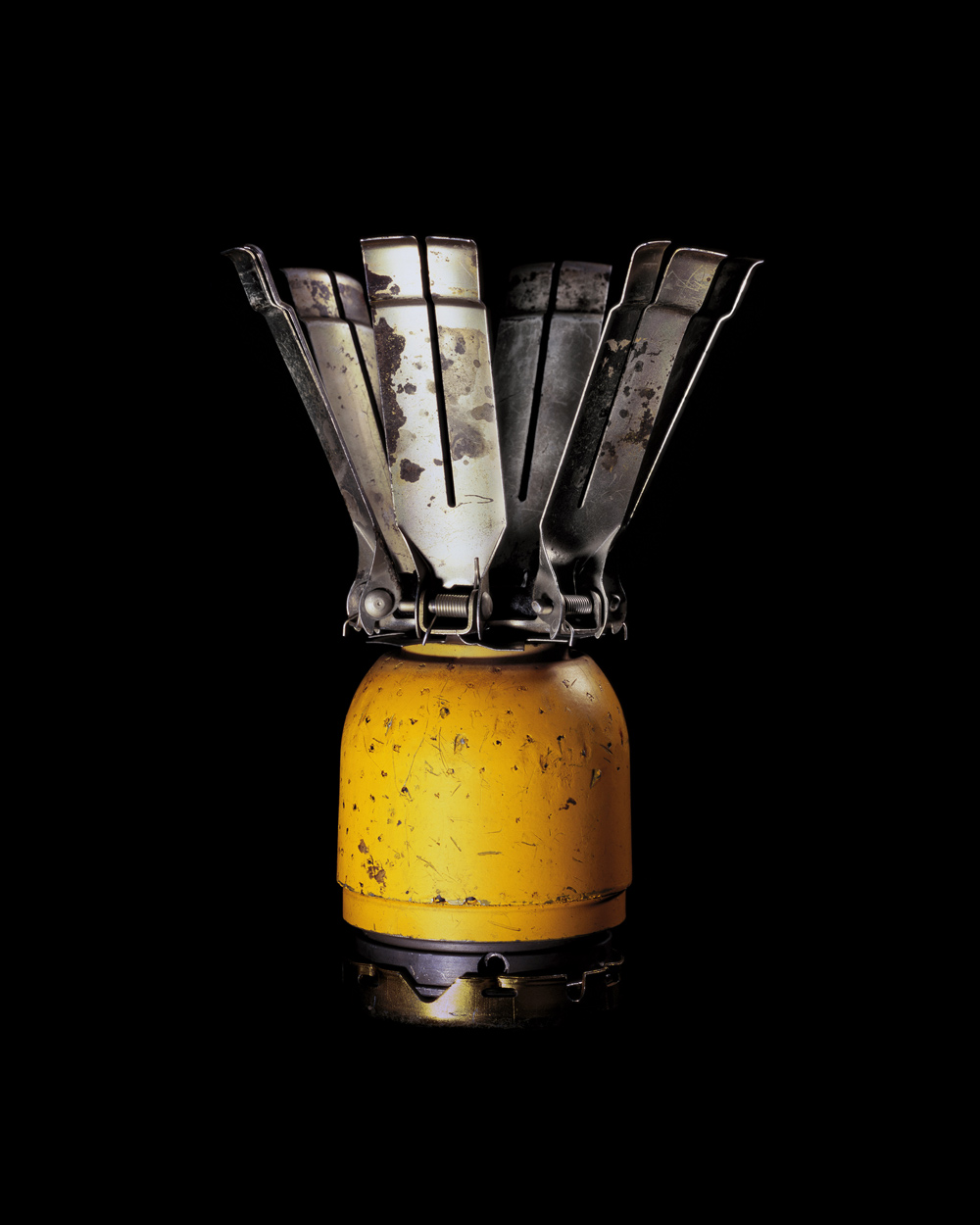
On release from a CBU-2C.A bomb this 785 g submunition – known as the “Pineapple” – is stabilised and slowed in its descent by six fins. Each CBU-2C/A contains 409 BLU-3/Bs, of which nearly 25 percent do not explode on impact. d: 73mm W: 785g


Raphaël Dallaporta (French, b. 1980) 'Antipersonnel, Bounding Fragmentation Mine M-16, USA' 2004


Raphaël Dallaporta (French, b. 1980)
Antipersonnel, Bounding Fragmentation Mine M-16, USA
2004
© Raphaël Dallaporta


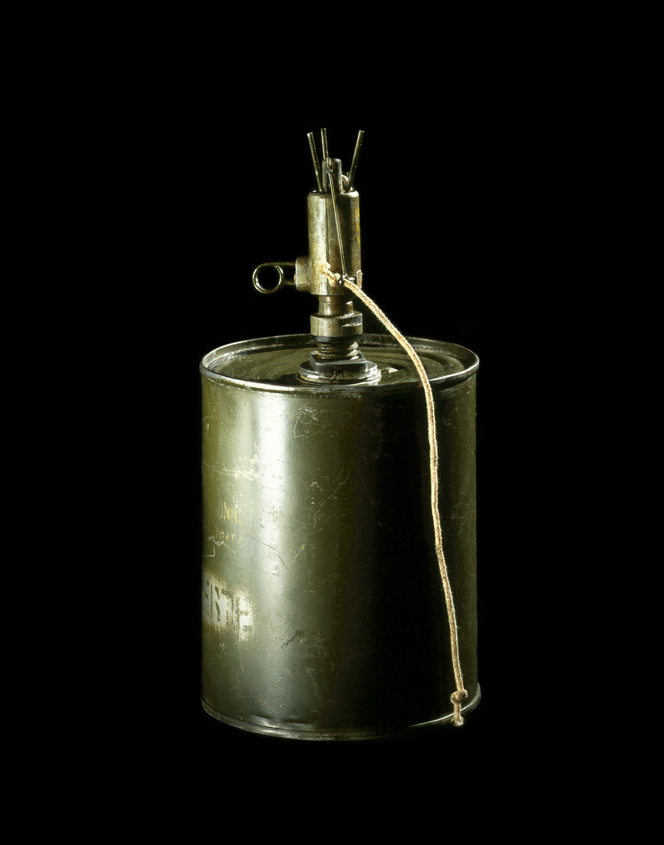
When detonated the M-16 antipersonnel bounding fragmentation mine is shot up approximately 1.5m in the air and explodes within 0.5 seconds, creating a lethal radius of 10m. Nicknamed the “Bouncing Betty,” each mine is supplied with four tripwires (two olive-green, two sand-coloured) and a wrench. In September 2002 (the most recent statistics available) the USA had 465,330 M16s in stock.


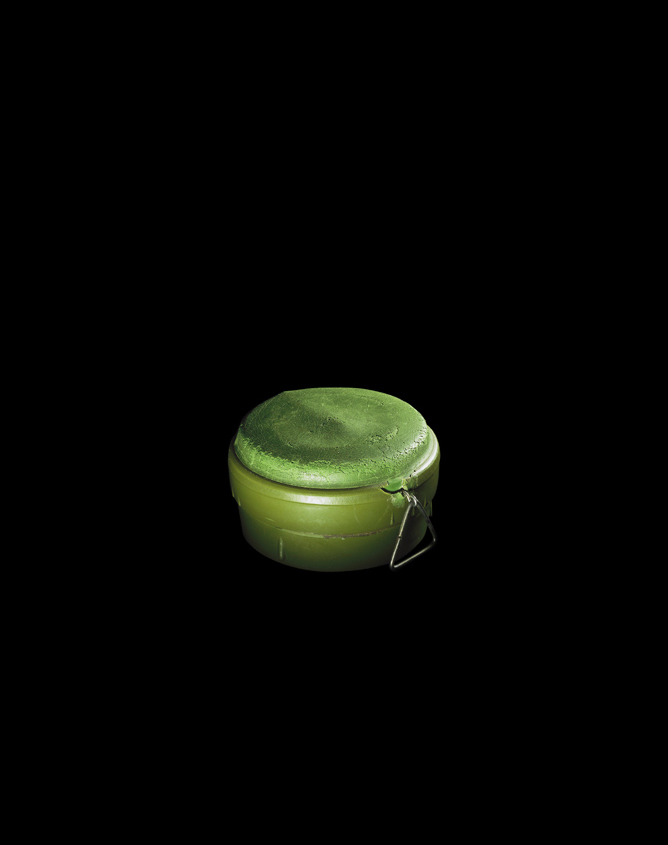
Raphaël Dallaporta (French, b. 1980) 'Antipersonnel, Directional Fragmentation Mine M-18/A1, USA' 2004


Raphaël Dallaporta (French, b. 1980)
Antipersonnel, Directional Fragmentation Mine M-18/A1, USA
2004
© Raphaël Dallaporta


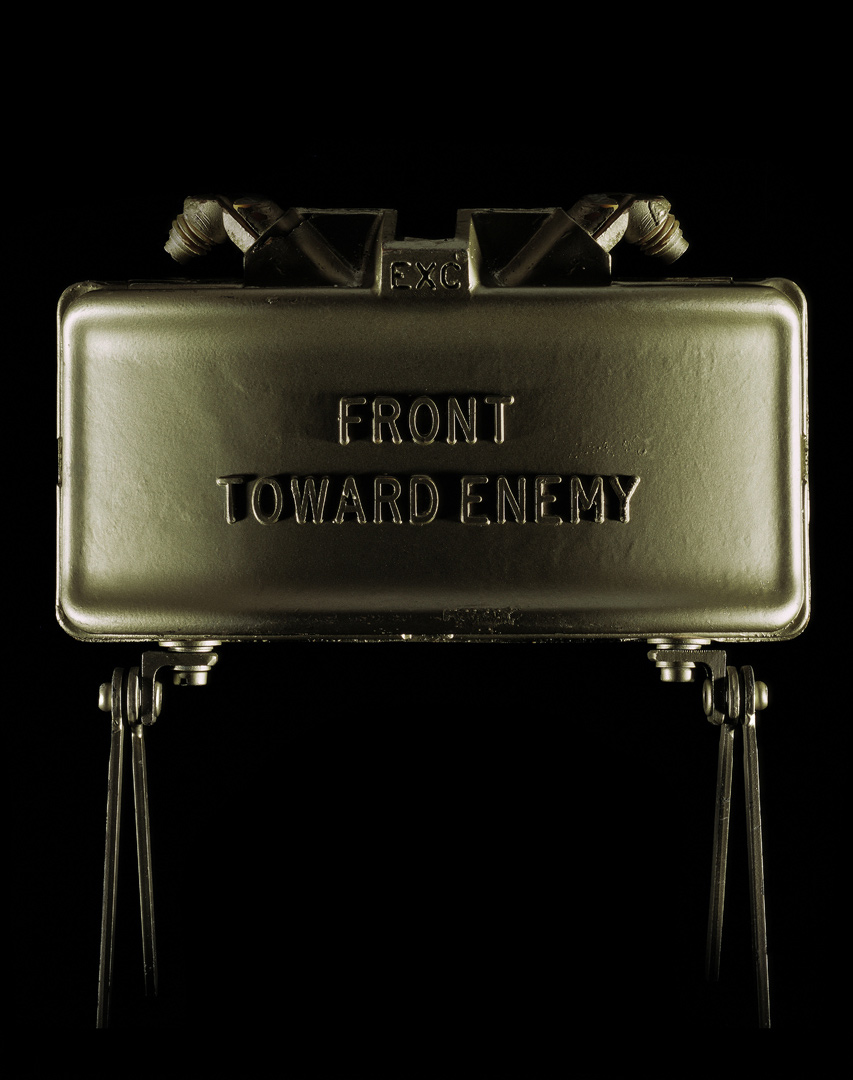
A “Claymore” directional fragmentation mine releases 700 steel balls when detonated by a hand-turned dynamo, a tripwire or, when used with the “Matrix” system, remotely using a laptop computer. (Multiple Claymores can also be linked together using a detonator cord.) A 1996 Department of the Army filed manual states that, “the number of ways in which the Claymore may be employed is limited only by the imagination of the user.” In September 2002 (the most recent available statistics), Claymores made up 403,096 of the 10,404,148 landmines stockpiled by the USA.


Raphaël Dallaporta (French, b. 1980) 'Antipersonnel Bounding Fragmentation Mine, V-69, Italy' 2004


Raphaël Dallaporta (French, b. 1980)
Antipersonnel Bounding Fragmentation Mine, V-69, Italy
2004
© Raphaël Dallaporta


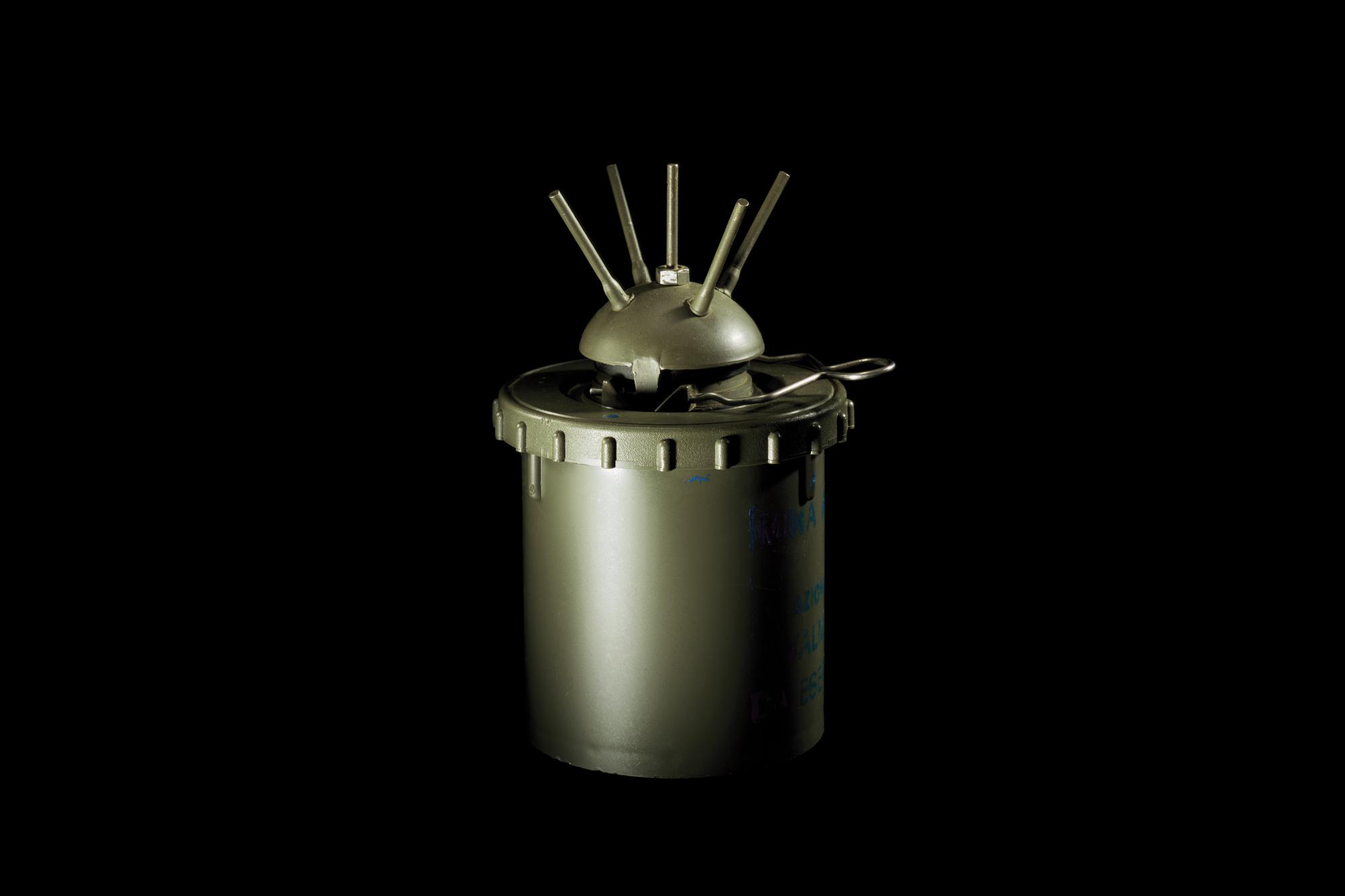
Antipersonnel Bounding Fragmentation Mine, V-69, Italy. The V-69 can be set off by footfall pressure or through a tripwire. When detonated the fuse sets off propellant gases that fire the mine’s inner body 45cm above the ground. This explodes sending out more than 1,000 pieces of chopped steel. Between 1982 and 1985, its manufacturer Valsella sold around 9 million V-69s to Iraq. The mine was given a nickname by Iraqi minelayers: the “Broom”. 120mm, 3.2kg.


Foam
Keizersgracht 609
1017 DS Amsterdam
The Netherlands
Phone: + 31 20 5516500

Opening hours:
Mon – Wed 10am – 6pm
Thu & Fri 10am – 9pm
Sat & Sun 10am – 6pm

Foam website

LIKE ART BLACK ON FACEBOOK

Back to top

Opening: ‘Movement and Emotion’ and ‘Jodie Noble Solo’ exhibitions at Arts Project Australia, Melbourne

Exhibition dates: 20th October – 26th November 2011

Curator of Movement and Emotion: Paul Hodges

Artists: Steven Ajzenberg, Patrick Francis, Brigid Hanrahan, Paul Hodges, Chris Mason, Cameron Noble, Jodie Noble, Lisa Reid, Anthony Romagnano and Cathy Staughton


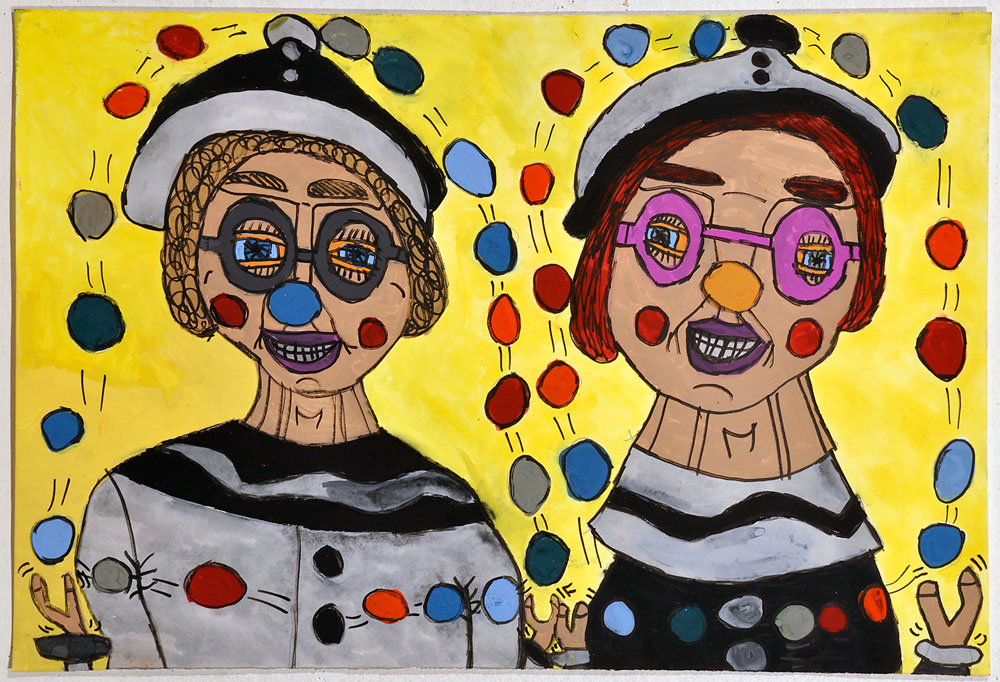
Catherine Staughton (Australian, b. 1968) 'Juggle Ball Hand Jump Roller' 2011
 

Catherine Staughton (Australian, b. 1968)
Juggle Ball Hand Jump Roller
2011
Gouache and felt pen on paper
38 x 56cm


Opening night speech by Dr Marcus Bunyan

Thank you for your welcome to Arts Project Australia on this auspicious occasion, the first ever exhibition to be curated by an Arts Project artist, Paul Hodges. Together with the Jodie Noble solo exhibition in the front gallery I am sure you will agree that the gallery is full of vibrant work. There are some things that may be said about both bodies of work.

I asked Paul what had been the inspiration behind Movement and Emotion. He said that he often goes to the National Gallery of Victoria and looks at the pictures and imagines the artist painting. He wonders how they were feeling and he visualises the pictures coming to life, especially pictures of dancers in which he has a personal interest. He came back to Arts Project and started thinking about the work in the collection and after much thought made the selection you see here tonight. He used his imagination, his feelings and his understanding of the world to curate the exhibition.

Let’s consider the title Movement and Emotion.

Emotion can be defined as an agitation, a strong feeling, a departure from the normal calm state of an organism. The logos of emotion begins in the experience of ‘being moved’ in some manner. Any emotion holds within its structure some potential for movement, whether it be physical or mental. You can be physically still yet be mentally moved, causing you to have emotion. Some emotions occur over a period of seconds (for example, surprise), whereas others can last years (for example, love). In the word ’emotion’ is the very act of movement, namely motion. Hence e/motion is the root of this wonderful feeling that I get from these artworks. Emotion is movement. Emotion is feeling. Emotion is passion.1

And it is this very act that sustains the work in both exhibitions. The work is personal. It speaks from the heart. It is intimate, transcendent and enigmatic. It moves me like little contemporary art ever does. When I first saw the artwork in the space at the back of the gallery, when they were revealed to me I gasped at their simple, eloquent beauty. Whimsical and playful these works possess an element of the carnivalesque,2 a riot of colour and form that exist on the border of art and life. Mingling depictions of high culture and personal narrative the works have no pretence but a visceral immediacy: a direct connection from the artists imagination of the world, through the eyes to the hand and the paper to depict what is in the world. As Susan Sontag observes, “A work of art is a thing in the world, not just a text or commentary on the world…”3

Some of you may be familiar with the American photographer Walker Evans – his famous US Depression era pictures are a thing in the world, as well as text/commentary on the world. He refers to this working method as ‘transcendent documentary’4: a watchful intelligence that recognises a moment of seeing, a movement of emotion – and then describes it. Yes, a quest for ‘the thing itself’ but more than that, the imagination to describe the substance of our existence, the nature of reality. Objects, people and places are transformed from things seen to things that we known. Intimately. Inherently.

In their unique vision it is the artists relation to self, the nature of what they see and feel around them that creates e/motion. They transcend form while ordering it at the same time. It is both the immediate world, simply described, perceived as it stands with the whole of consciousness coupled with the imagination as always there, between our eyes and the world, for it is the imagination that defines our humanity, declares our consciousness. They imagine, they perceive the simple radiance of what is.

That is what these artists do.

Perceive.

What is.


In Movement and Emotion, and in the portraits of Jodie Noble we see what is and imagine what should be. The photographer Elliott Erwitt in his book Personal Exposures (1988) said, “The work I care about is terribly simple … I observe, I try to entertain, but above all I want pictures that are emotion.”5

Those pictures are here, e/motioning, all around us. I enjoy these pictures tremendously. Congratulations to all the artists for the experience that you have given us.

Dr Marcus Bunyan


Footnotes

1/ See Robbins, Brent Dean. Emotion, Movement & Psychological Space: A Sketching Out of the Emotions in terms of Temporality, Spatiality, Embodiment, Being-with, and Language. Duquesne University, 1999 [Online] Cited 08/10/2011

2/ Bakhtin, Mikhail. Rabelais and His World (trans. Helene Iswolsky). Cambridge: MIT Press, 1968, p. 7

3/ Sontag, Susan. “On Style,” in Against Interpretation and Other Essays. New York: Delta Book, 1966, pp. 21-22

4/ Anon. “”A Revolutionary Project” Brings Cuba to the Getty Museum,” on Cuban Art News [Online] 05/10/2011 Cited 08/10/2011. No longer available online

5/ Erwitt, Elliott. Personal Exposures. W. W. Norton & Company, 1988 quoted on Anon. “Photographer Elliott Erwitt’s Archive to be Housed at Harry Ransom Center,” on Harry Ransom Center: The University of Texas website [Online] 22/09/2011. Cited 08/10/2011. No longer available online


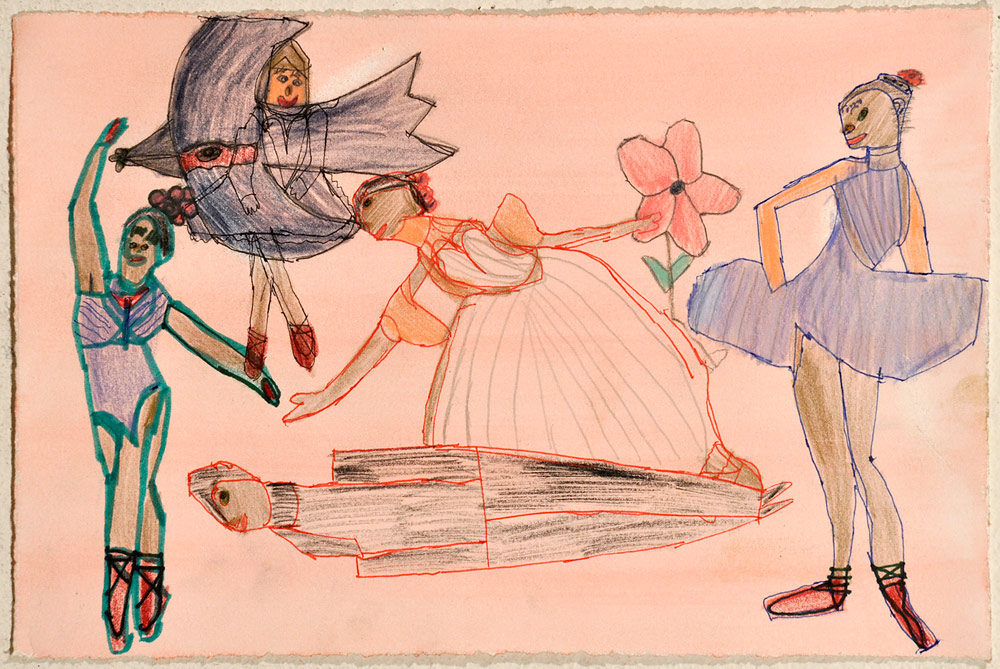
Brigid Hanrahan. 'Not titled (Ballet Dancers)' 2009


Brigid Hanrahan (Australian)
Not titled (Ballet Dancers)
2009
Colour pencil and fineliner on paper
20 x 30cm


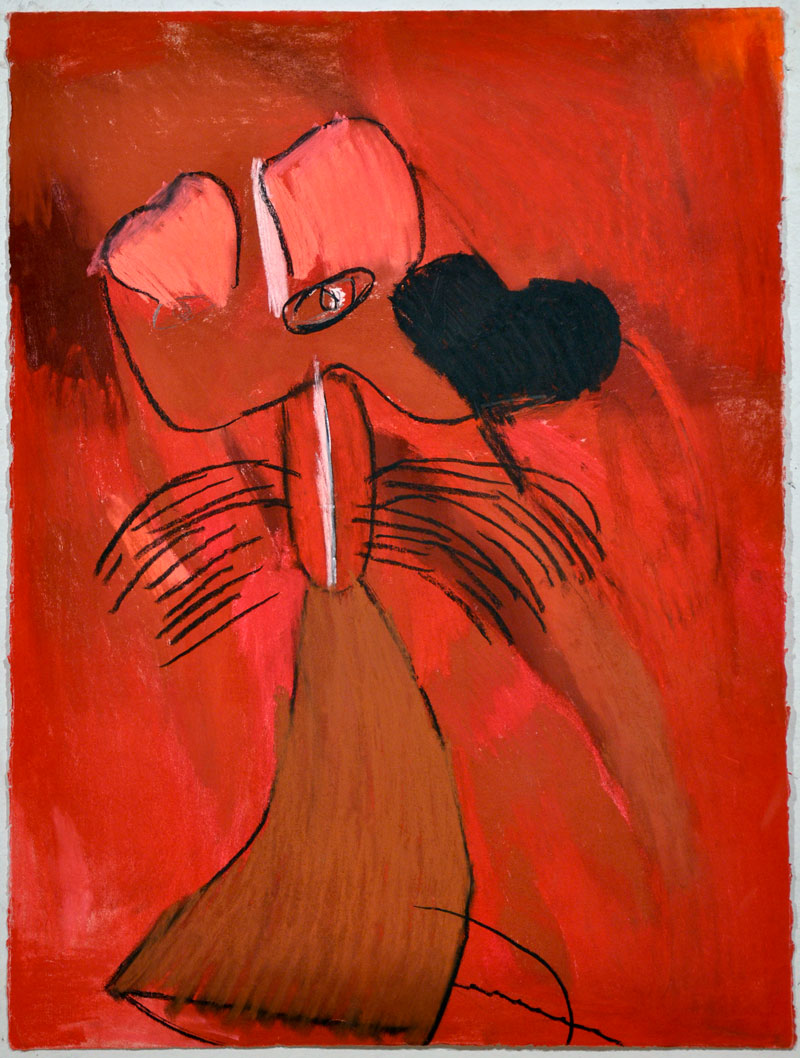
Jodie Noble. 'Not titled (red dog)' 2006


Jodie Noble (Australian)
Not titled (red dog)
2006
Pastel on paper
76 x 57cm


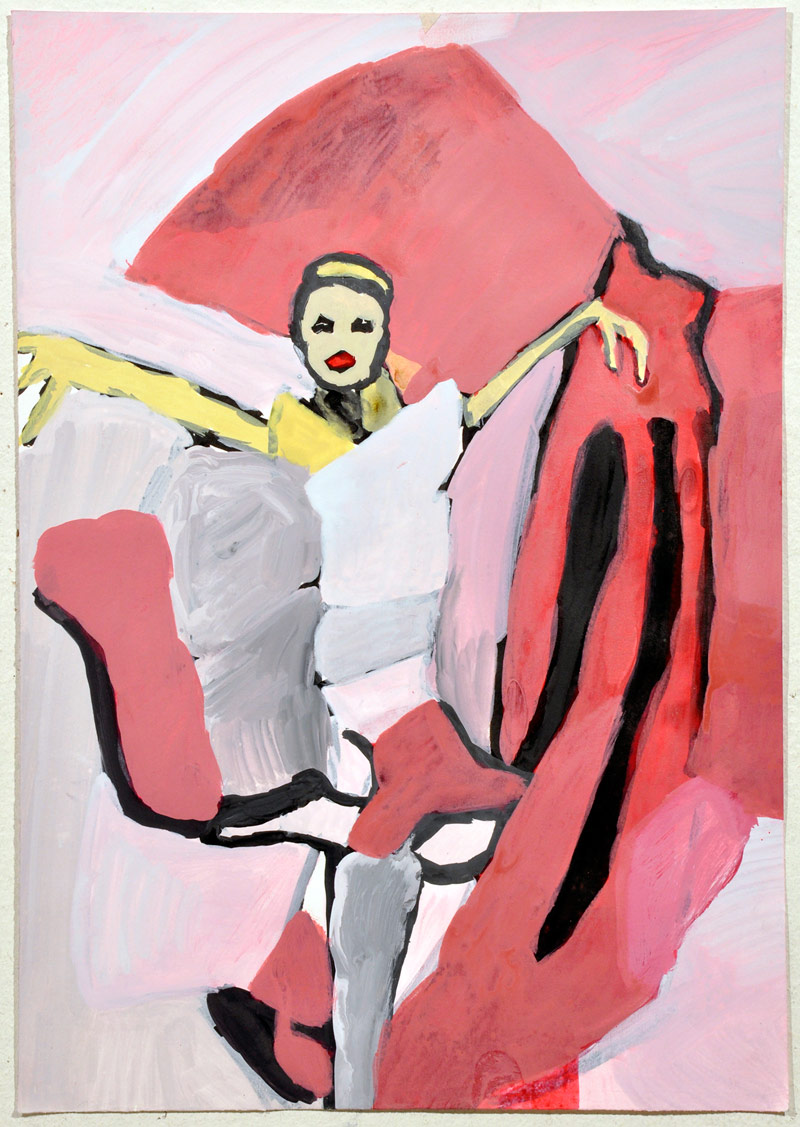
Paul Hodges (Australian, b. 1974) 'Not titled (Pink Dancer)' 2010


Paul Hodges (Australian, b. 1974)
Not titled (Pink Dancer)
2010
Ink on paper
50 x 35cm


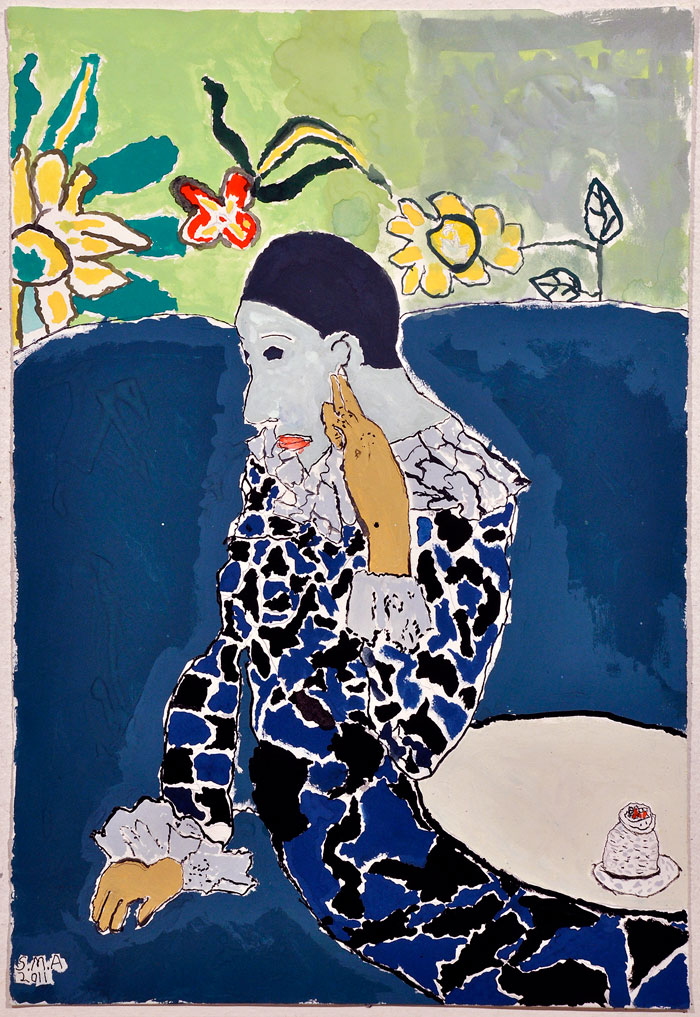
Steven Ajzenberg (Australian, b. 1964) 'Harlequin' 2010


Steven Ajzenberg (Australian, b. 1964)
Harlequin
2010
Gouache on paper
55.5 x 38cm


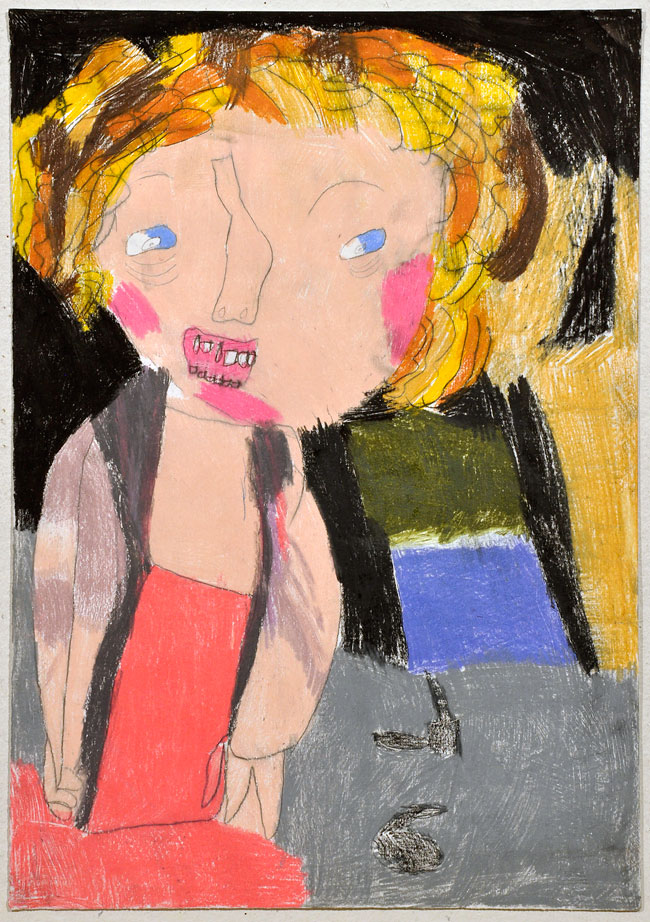
Jodie Noble. 'Not titled (girl wearing pink dress)' 2010


Jodie Noble (Australian)
Not titled (girl wearing pink dress)
2010
Prisma colour pencil on paper
50 x 35cm


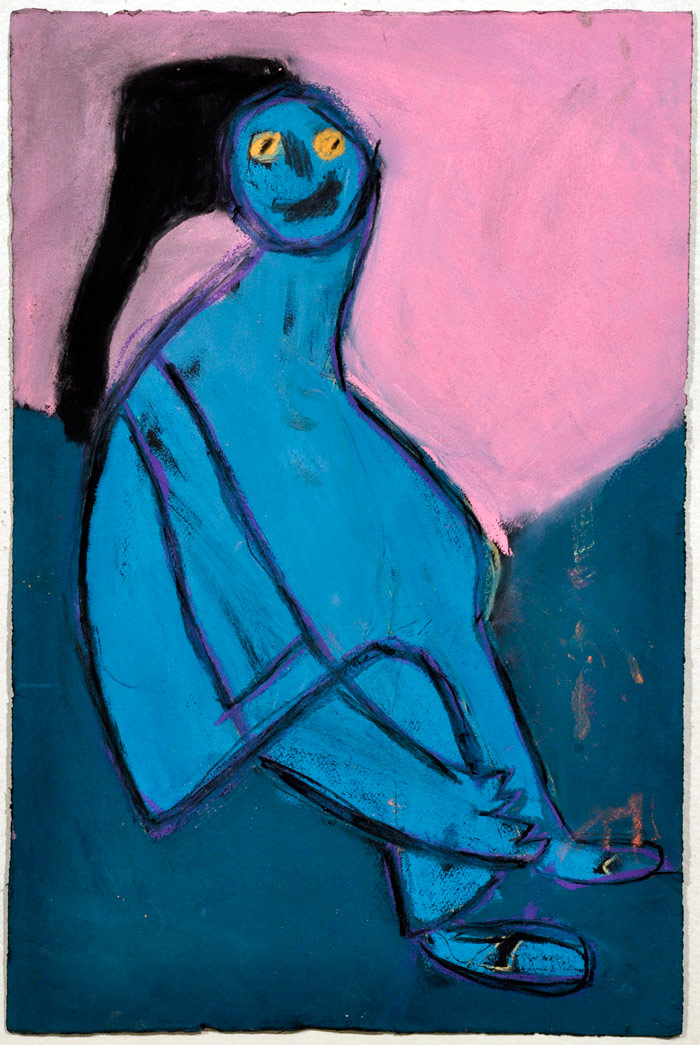
Cameron Noble. 'Not titled (Blue Lady)' 2011


Cameron Noble (Australian)
Not titled (Blue Lady)
2011
Dry pastel on paper
57 x 37.5cm


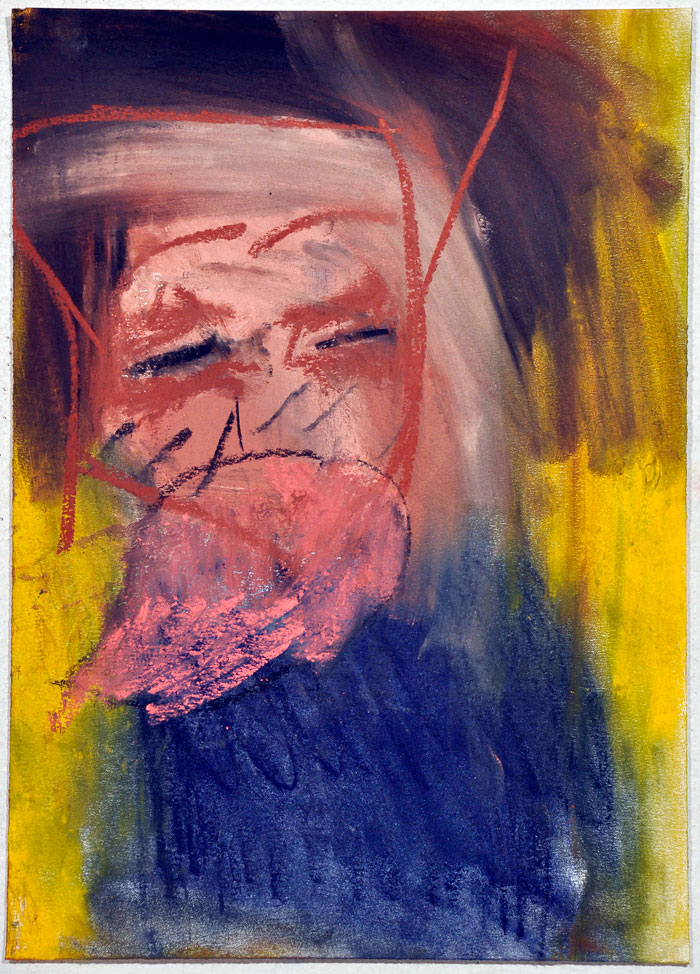
Jodie Noble. 'Geisha Girl' 2011


Jodie Noble (Australian)
Geisha Girl
2011
Dry pastel on paper
35 x 25cm


Movement and Emotion

This exhibition will explore movement in paintings and the emotions of people in everyday life. These works are vibrant, expressive and each work is unique; they jump out at you. Key themes investigated include carnival, dance and portraits. This is the first exhibition Paul Hodges has curated.

“This is a wonderful show presenting movement and emotion in art by ten artists that I have collected from Arts Project Australia’s studio.”

Paul Hodges, 2011

“When I walk past Jodie Noble’s paintings I can almost feel what she is feeling … Jodie is telling us what she is feeling through her paintings.”

Paul Hodges 2010


Jodie Noble Solo

Jodie Noble’s current work is figurative and often incorporates an autobiographical narrative. While occasionally painting from life, her work also references popular culture. In particular, Noble is inspired by contemporary famous figures, from Frida Kahlo and Francisco Goya to Queen Elizabeth II. Noble’s work is descriptive, expressive and infused with a sense of physicality.

In this exhibition, Noble has selected a series of portraits on paper that are autobiographical and of people she knows in her life. This is Jodie’s second solo exhibition.


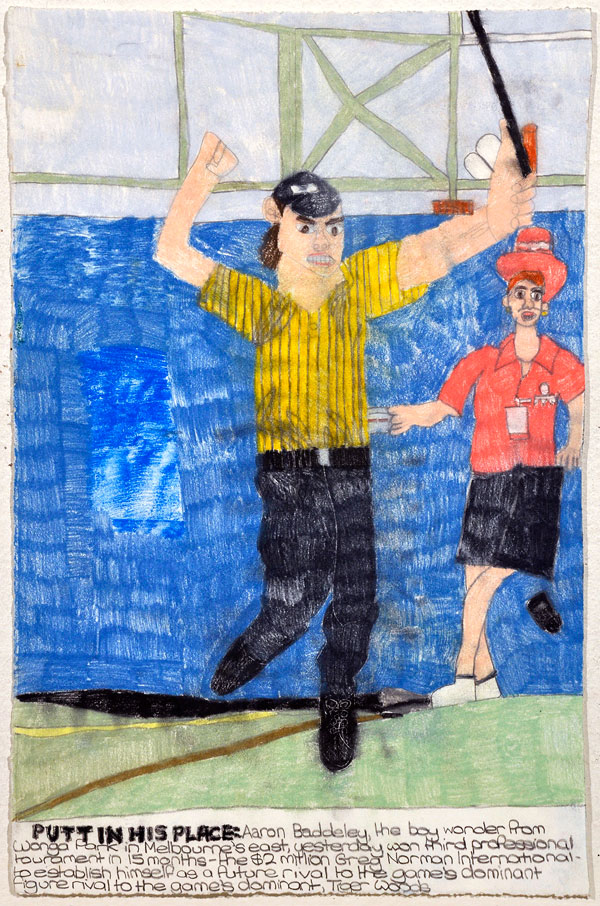
Lisa Reid (Australian, b. 1975) 'Not titled (Adam Baddeley)' 2001


Lisa Reid (Australian, b. 1975)
Not titled (Adam Baddeley)
2001
Pastel and pencil on paper
50 x 33cm


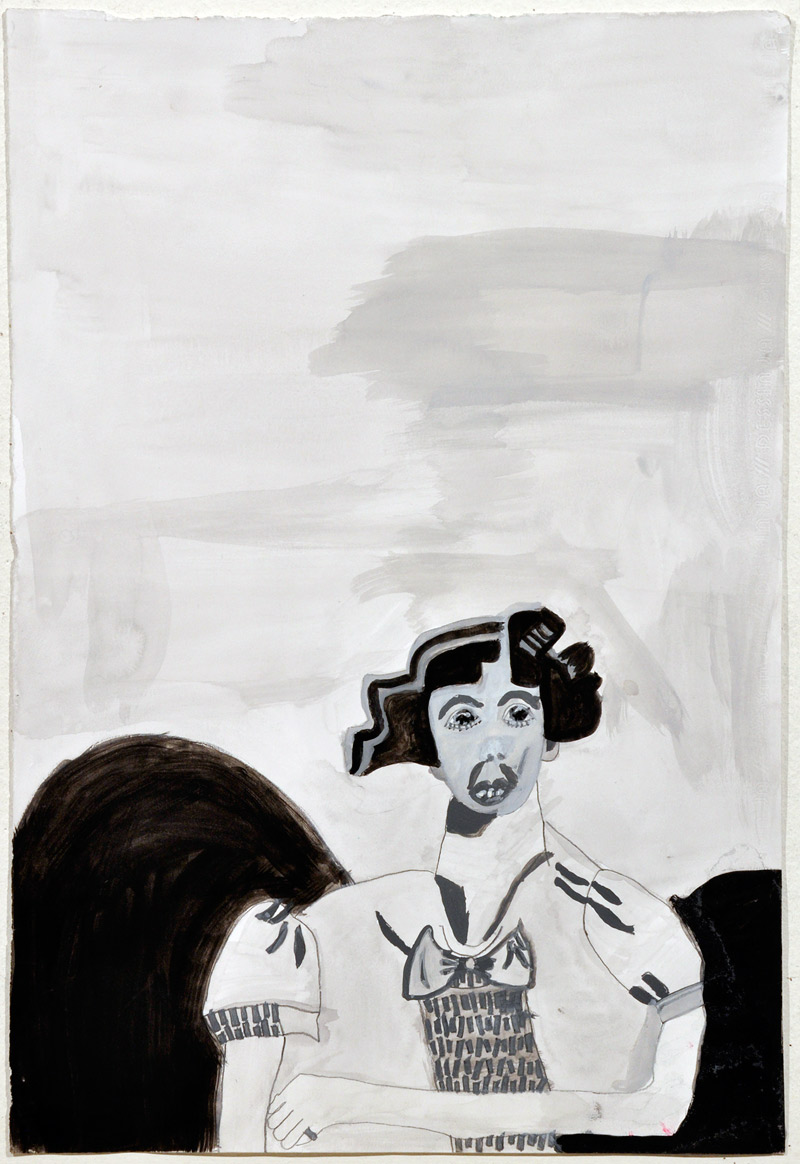
Lisa Reid (Australian, b. 1975) 'Great Aunt Edna' 2003


Lisa Reid (Australian, b. 1975)
Great Aunt Edna
2003
Gouache on paper
55 x 37.5cm


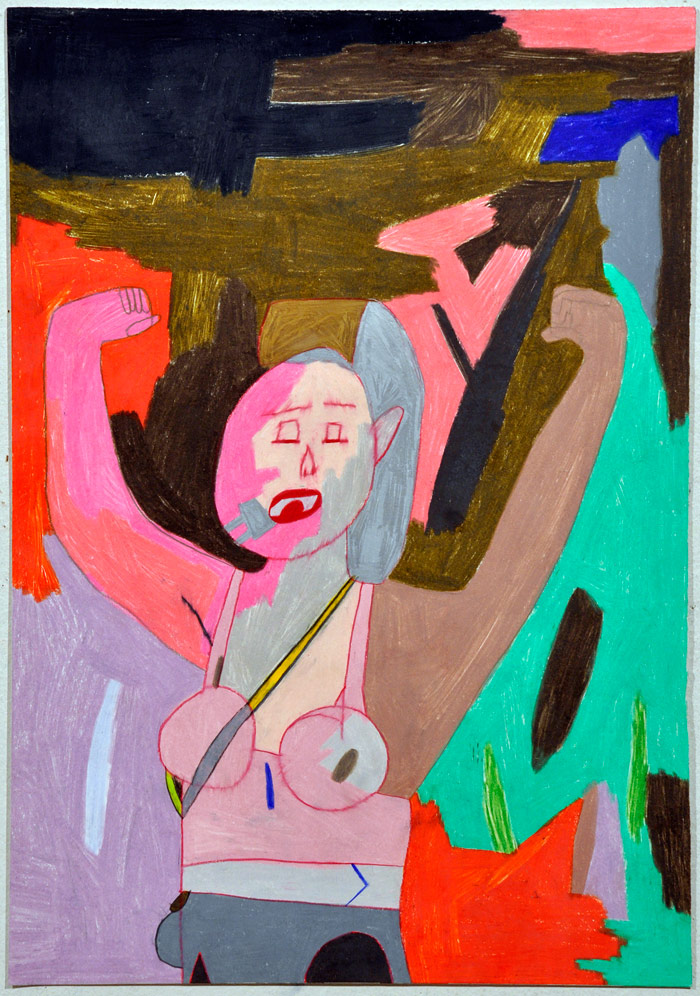
Anthony Romagnano (Australian, b. 1985) 'Madonna' 2010


Anthony Romagnano (Australian, b. 1985)
Madonna
2010
Prisma colour pencil on paper
50 x 35cm


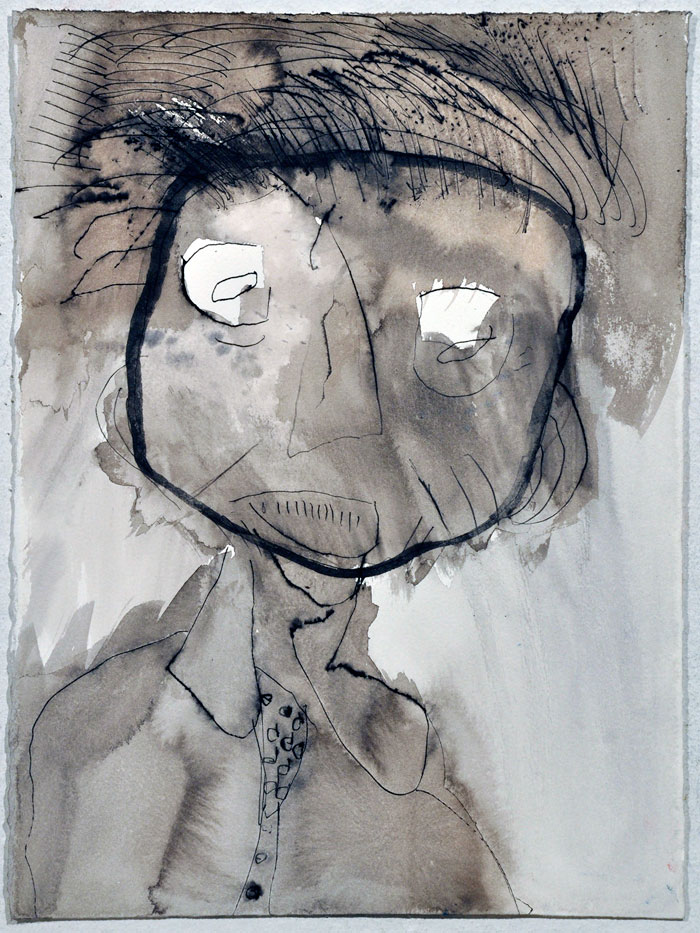
Jodie Noble. 'Not titled' 2010


Jodie Noble (Australian)
Not titled
2010
Ink and fine-liner on paper
38 x 28.5cm


Cameron Noble. 'Not titled' 2011


Cameron Noble (Australian)
Not titled
2011
Dry pastel on paper
38.5 x 32.5cm


Patrick Francis (Australian, b. 1991) 'Not titled' 2011


Patrick Francis (Australian, b. 1991)
Not titled
2011
Acrylic on paper
70 x 50cm


Arts Project Australia
24 High Street
Northcote Victoria 3070
Phone: + 61 3 9482 4484

Gallery location:
Level 1 Perry Street Building,
Collingwood Yards
Enter via 35 Johnson Street
or 30 Perry Street, Collingwood

Opening hours:
Wed – Fri 11am – 5pm
Sat & Sun 12 – 4pm

Arts Project Australia website

LIKE ART BLACK ON FACEBOOK

Back to top