Exhibition: ‘Painting in Photography. Strategies of Appropriation’ at the Städel Museum, Frankfurt

Exhibition dates: 27th June – 23rd September 2012
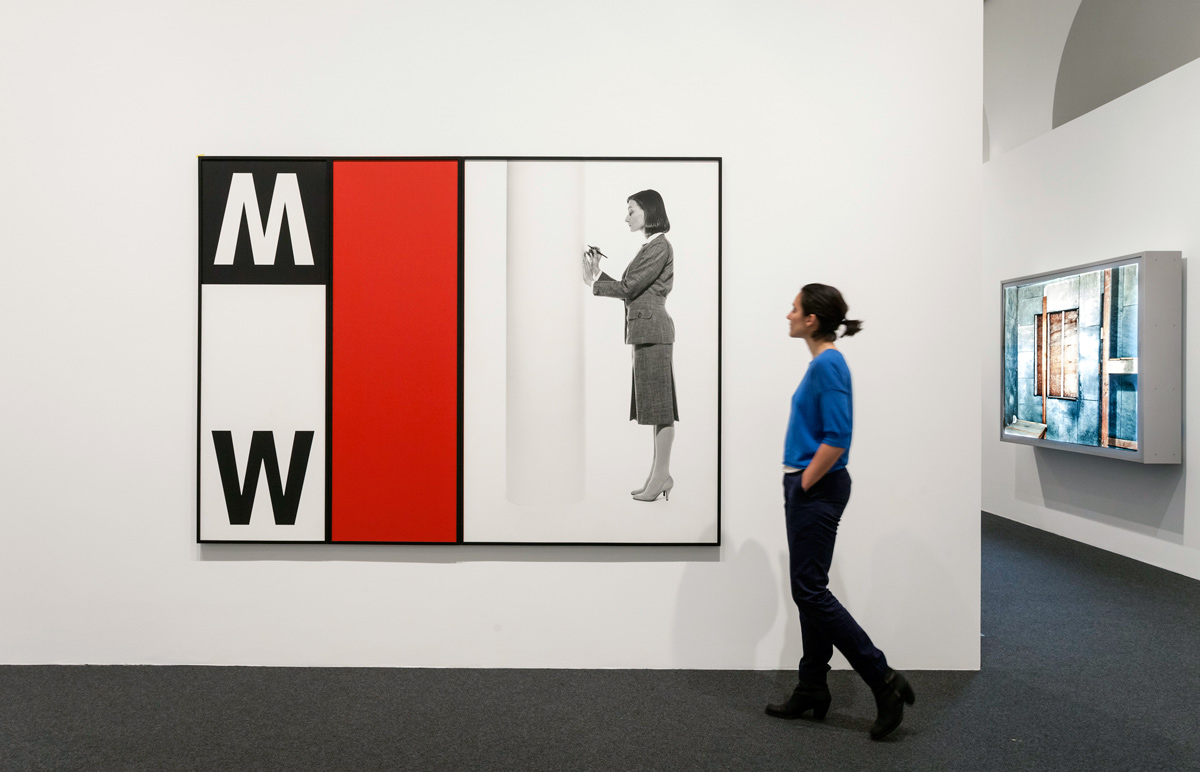
 

Installation view of the exhibition 'Painting in Photography. Strategies of Appropriation' at the Städel Museum, Frankfurt showing Victor Burgin's 'Office at Night (Red)' 1985


Installation view of the exhibition Painting in Photography. Strategies of Appropriation at the Städel Museum, Frankfurt showing Victor Burgin’s Office at Night (Red), 1985 (below)


“To understand the production of art at the end of tradition, which in our lifetime means art at the end of modernism, requires, as the postmodern debate has shown, a careful consideration of the idea of history and the notion of ending. Rather than just thinking ending as the arrival of the finality of a fixed chronological moment, it can also be thought as a slow and indecisive process of internal decomposition that leaves in place numerous deposits of us, in us and with us – all with a considerable and complex afterlife. In this context all figuration is prefigured. This is to say that the design element of the production of a work of art, the compositional, now exists prior to the management of form of, and on, the picture plane. Techniques of assemblage, like montage and collage – which not only juxtaposed different aesthetics but also different historical moments, were the precursors of what is now the general condition of production.”


“Art Byting the Dust” Tony Fry 1990 1


They said that photography would be the death of painting. It never happened. Recently they thought that digital photography would be the death of analogue photography. It hasn’t happened for there are people who care enough about analogue photography to keep it going, no matter what. As the quotation astutely observes, the digital age has changed the conditions of production updating the techniques of montage and collage for the 21st century. Now through assemblage the composition may be prefigured but that does not mean that there are not echoes, traces and deposits of other technologies, other processes that are not evidenced in contemporary photography.

As photography influenced painting when it first appeared and vice versa (photography went through a period known as Pictorialism where where it imitated Impressionist painting), this exhibition highlights the influence of painting on later photography. Whatever process it takes photography has always been about painting with light – through a pinhole, through a microscope, through a camera lens; using light directly onto photographic paper, using the light of the scanner or the computer screen. As Paul Virilio observes, no longer is there a horizon line but the horizon square of the computer screen, still a picture plane that evidences the history of art and life. Vestiges of time and technology are somehow always present not matter what medium an artist chooses. They always have a complex afterlife and afterimage.

Dr Marcus Bunyan

PS. I really don’t think it is a decomposition, more like a re/composition or reanimation.
PPS. Notice how Otto Steinert’s Luminogramm (1952, below), is eerily similar to some of Pierre Soulages paintings.


1/ Fry, Tony. “Art Byting the Dust,” in Hayward, Phillip. Culture, Technology and Creativity in the Late Twentieth Century. London: John Libbey and Company, 1990, pp. 169-170

Many thankx to the Städel Musuem for allowing me to publish the photographs in the posting. Please click on the photographs for a larger version of the image.


Victor Burgin (British, b. 1941) 'Office at Night (Red)' 1985


Victor Burgin (British, b. 1941)
Office at Night (Red)
1985


In a conceptual, analytical visual language, Burgin, who originally started out as a painter, refers to Edward Hopper’s painting “Office at Night” from 1940. It shows a New York office at night, in which the boss and secretary are still at work and alone. Burgin’s picture is part of a series about this depiction of a couple by Hopper (and the special role of the female motif in his work). Burgin’s picture consists of three panels, each of which uses a fictional register: letters (word), color (red is traditionally the color for lust and love) and photographic image (secretary).

Anonymous. “Victor Burgin” in the pdf “WONDERFULLY FEMININE! Interrogations of the feminine,” on the Kunst Stiftung DZ Bank website 2009 [Online] Cited 11/09/2024. Translated from the German by Google Translate
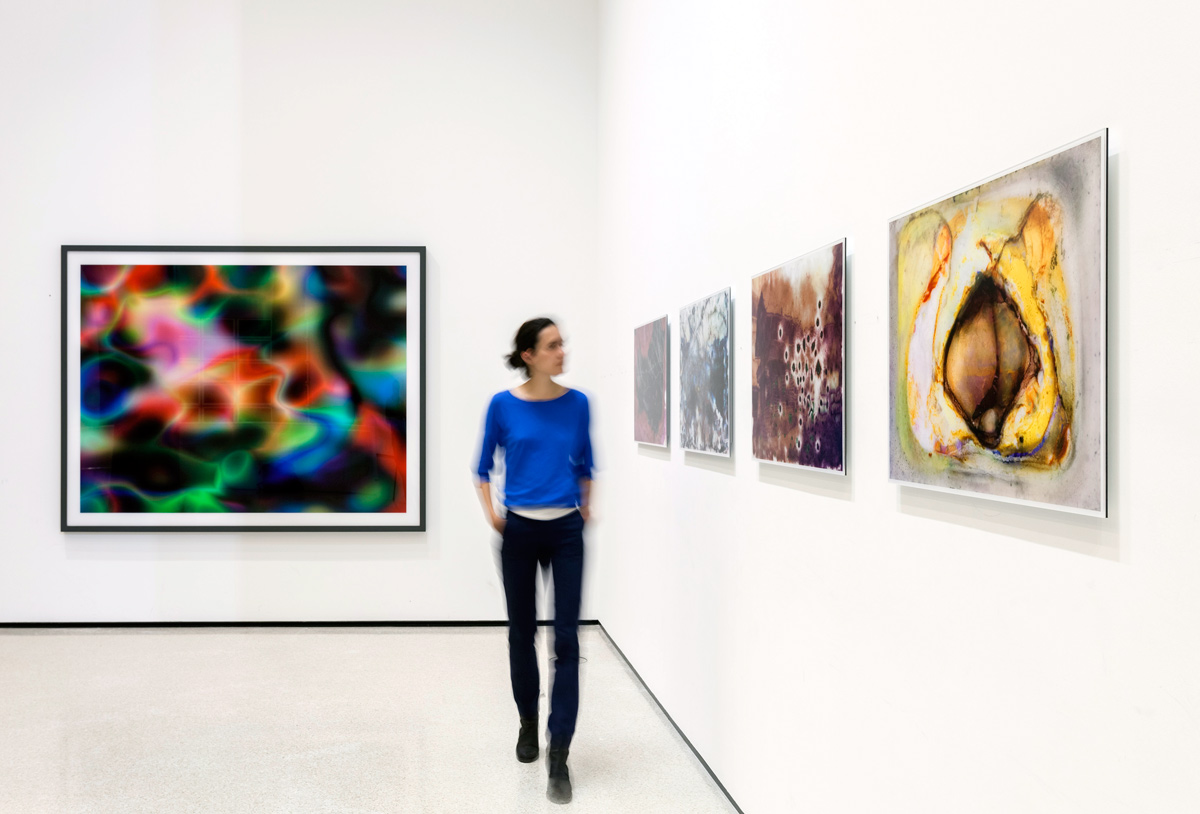
 

Installation view of the exhibition 'Painting in Photography. Strategies of Appropriation' at the Städel Museum, Frankfurt showing at left, Thomas Ruff's 'Substrat 10' (2002)


Installation view of the exhibition Painting in Photography. Strategies of Appropriation at the Städel Museum, Frankfurt showing at left, Thomas Ruff’s Substrat 10 (2002, below)


Thomas Ruff (German, b. 1958) 'Substrat 10' 2002


Thomas Ruff (German, b. 1958)
Substrat 10
2002
C-type print
186 x 238cm
DZ BANK Kunstsammlung
© VG Bild-Kunst, Bonn 2012
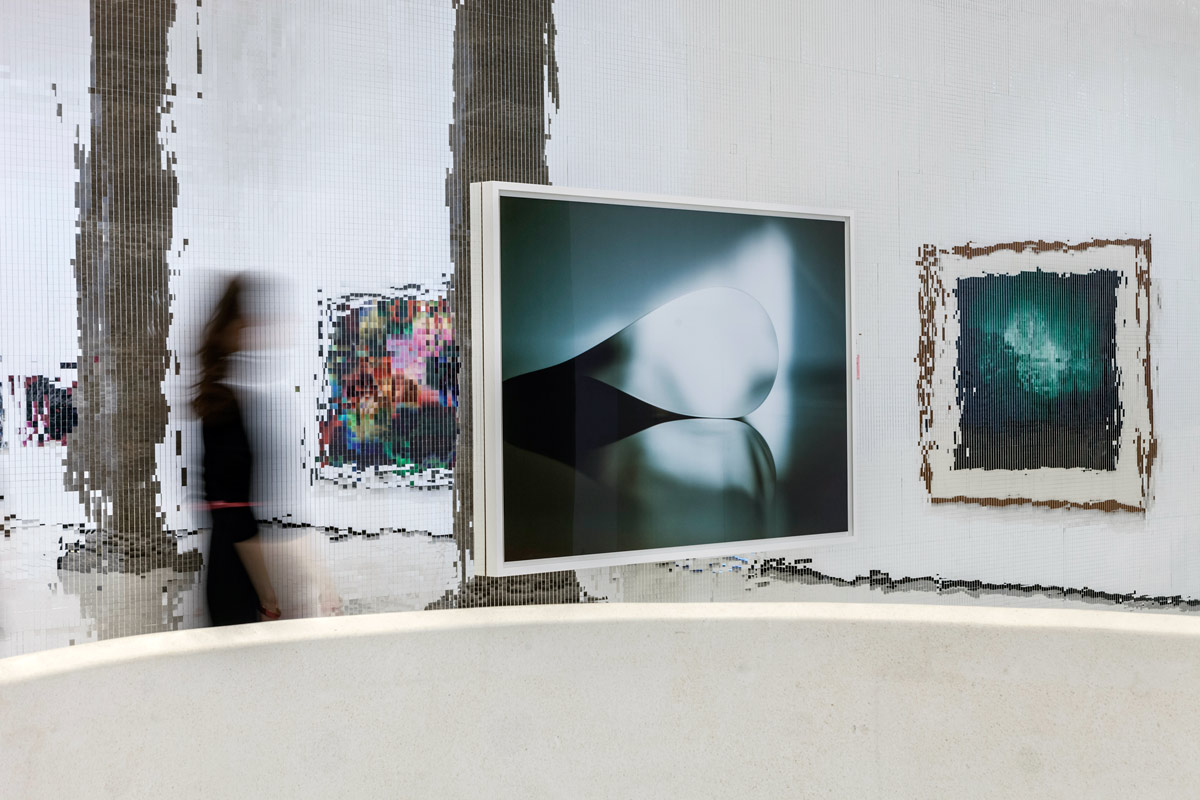
 

Installation view of the exhibition 'Painting in Photography. Strategies of Appropriation' at the Städel Museum, Frankfurt showing at centre, Wolfgang Tillmans 'Paper drop (window)' (2006)


Installation view of the exhibition Painting in Photography. Strategies of Appropriation at the Städel Museum, Frankfurt showing at centre, Wolfgang Tillmans Paper drop (window) (2006, below)


Wolfgang Tillmans (German, b. 1968) 'Paper drop (window)' 2006


Wolfgang Tillmans (German, b. 1968)
paper drop (window)
2006
C-type print in artists frame
145 x 200cm
Property of Städelscher Museums-Verein e.V.
© Courtesy Galerie Buchholz, Köln / Berlin
Städel Museum, Frankfurt am Main
Acquired in 2008 with funds from the Städelkomitee 21. Jahrhundert
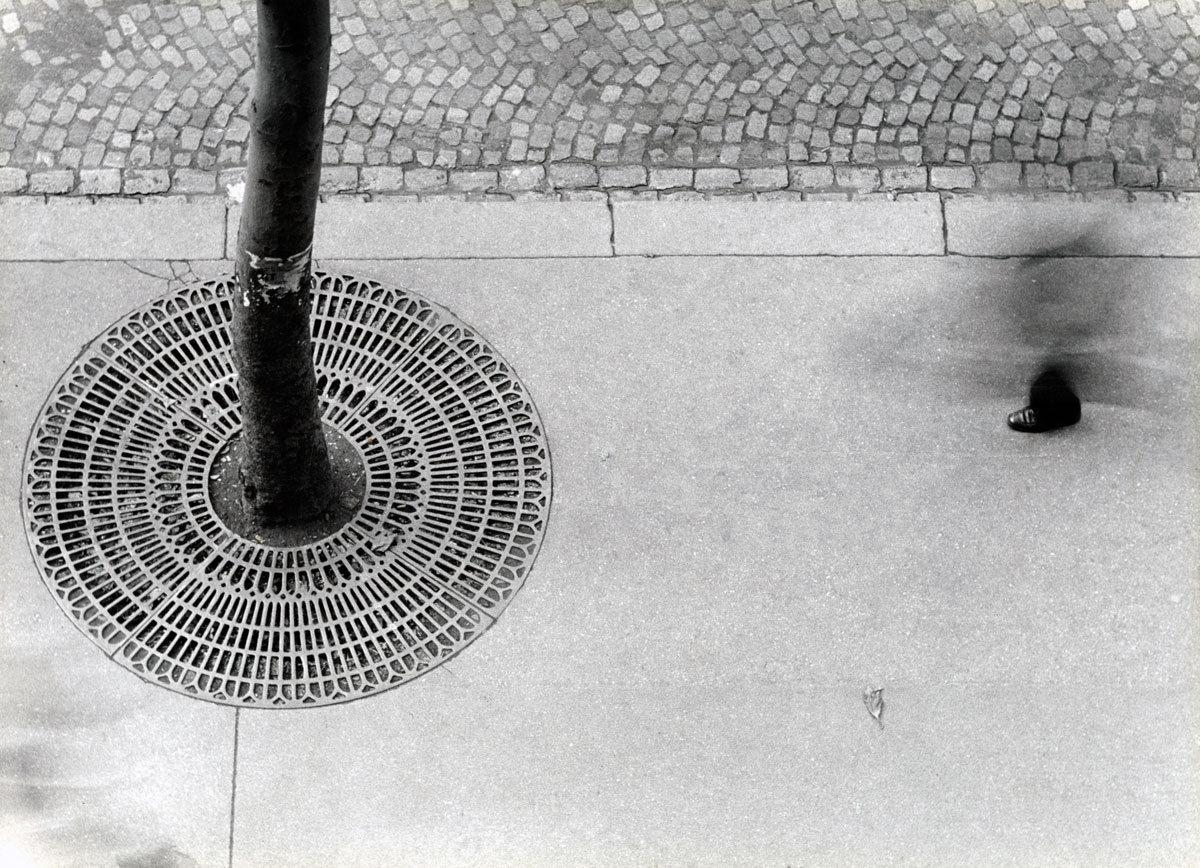
 

Otto Steinert (German, 1915-1978) 'Ein-Fuß-Gänger' 1950


Otto Steinert (German, 1915-1978)
Ein-Fuß-Gänger
1950
Gelatin silver print
28.5 x 39cm
Courtesy Galerie Kicken Berlin
© Nachlass Otto Steinert, Museum Folkwang, Essen
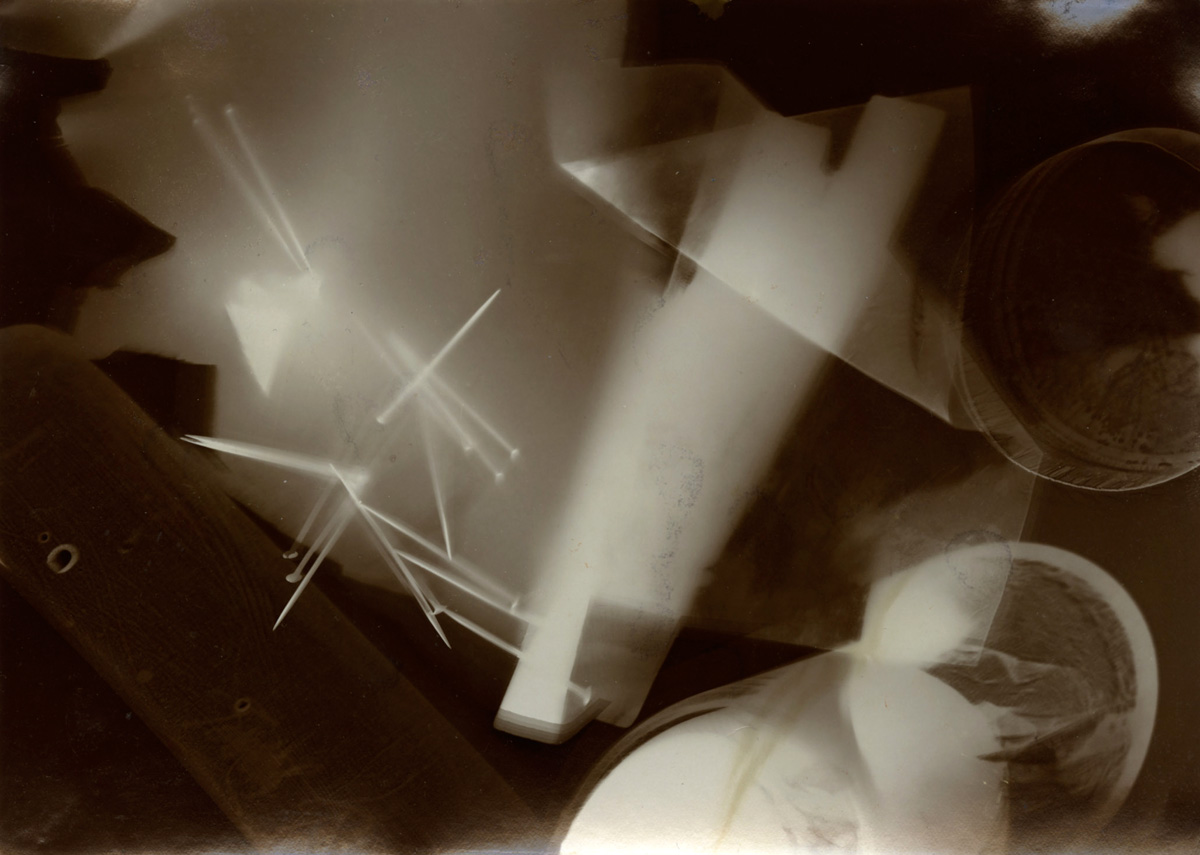
 

Laszlo Moholy-Nagy (Hungarian, 1895-1946) 'Photogram' c. 1923-1925


Laszlo Moholy-Nagy (Hungarian, 1895-1946)
Photogram
c. 1923-1925
Unique photogram, toned printing-out paper
12.6 x 17.6cm
Courtesy Galerie Kicken Berlin
© Hattula Moholy-Nagy / VG Bild-Kunst, Bonn


Robert Rauschenberg (American, 1925-2008) '10-80-C-17 (NYC)' 1980


Robert Rauschenberg (American, 1925-2008)
10-80-C-17 (NYC)
1980
From the series: In + Out of City Limits: New York / Boston
Gelatin silver print on fibre-based paper
58 x 73cm
DZ BANK Kunstsammlung at the Städel Museum
© Estate of Robert Rauschenberg / VG Bild-Kunst, Bonn 2012


Hiroshi Sugimoto (Japanese, b. 1948) 'Sam Eric, Pennsylvania' 1978


Hiroshi Sugimoto (Japanese, b. 1948)
Sam Eric, Pennsylvania
1978
Gelatin silver print
42.5 x 54.5cm
Private collection, Frankfurt
© Hiroshi Sugimoto / Courtesy The Pace Gallery
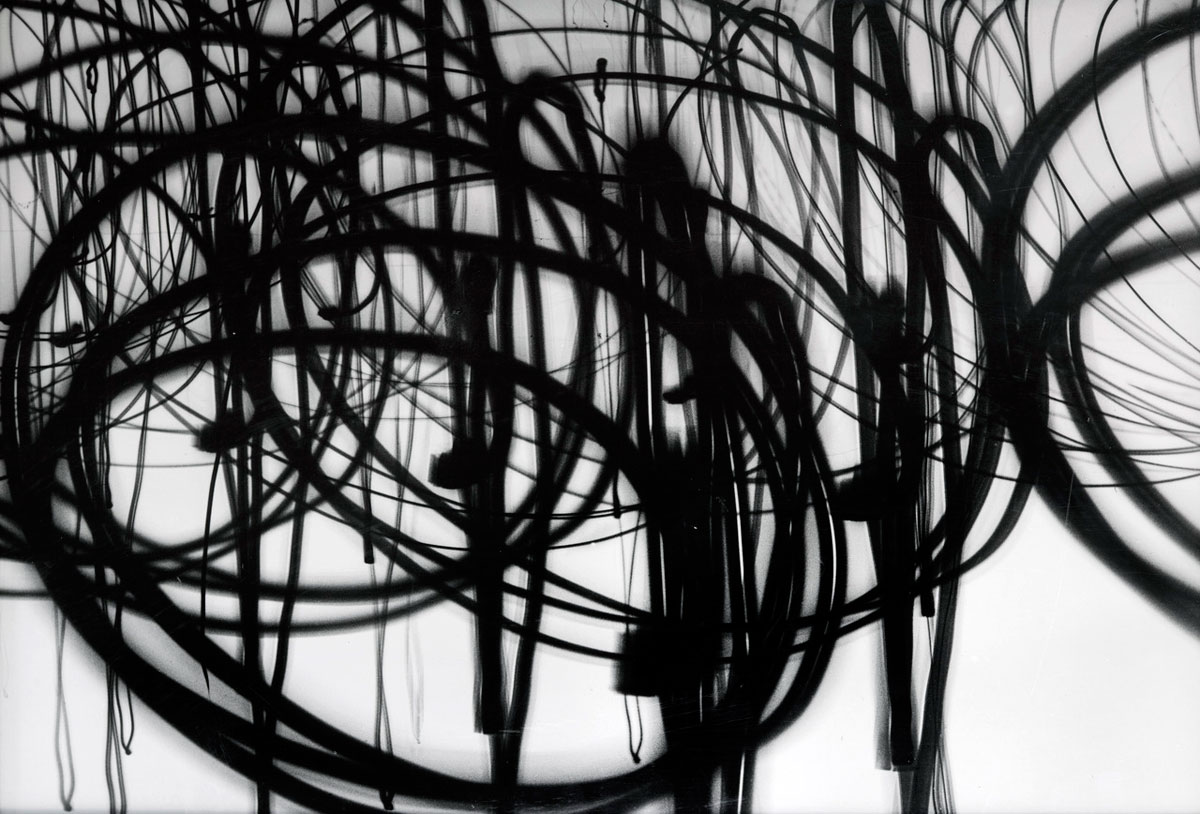
 

Otto Steinert (German, 1915-1978) 'Luminogramm' 1952


Otto Steinert (German, 1915-1978)
Luminogramm
1952, printed c. 1952
Gelatin silver print
41.5 x 60cm
Courtesy Galerie Kicken Berlin
© Nachlass Otto Steinert, Museum Folkwang, Essen


From 27 June to 23 September 2012, the Städel Museum will show the exhibition “Painting in Photography. Strategies of Appropriation.” The comprehensive presentation will highlight the influence of painting on the imagery produced by contemporary photographic art. Based on the museum’s own collection and including important loans from the DZ Bank Kunstsammlung as well as international private collections and galleries, the exhibition at the Städel will centre on about 60 examples, among them major works by László Moholy-Nagy, Hiroshi Sugimoto, Wolfgang Tillmans, Thomas Ruff, Jeff Wall, and Amelie von Wulffen. Whereas the influence of the medium of photography on the “classic genres of art” has already been the subject of analysis in numerous exhibitions and publications, less attention has been paid to the impact of painting on contemporary photography to date. The show at the Städel explores the reflection of painting in the photographic image by pursuing various artistic strategies of appropriation which have one thing in common: they reject the general expectation held about photography that it will document reality in an authentic way.

The key significance of photography within contemporary art and its incorporation into the collection of the Städel Museum offer an occasion to fathom the relationship between painting and photography in an exhibition. While painting dealt with the use of photography in the mass media in the 1960s, today’s photographic art shows itself seriously concerned with the conditions of painting. Again and again, photography reflects, thematises, or represents the traditional pictorial medium, maintaining an ambivalent relationship between appropriation and detachment.

Numerous works presented in the Städel’s exhibition return to the painterly abstractions of the prewar and postwar avant-gardes, translate them into the medium of photography, and thus avoid a reproduction of reality. Early examples for the adaption of techniques of painting in photography are László Moholy-Nagy’s (1895-1946) photograms dating from the 1920s. For his photographs shot without a camera, the Hungarian artist and Bauhaus teacher arranged objects on a sensitised paper; these objects left concrete marks as supposedly abstract forms under the influence of direct sunlight. In Otto Steinert’s (1915-1978) non-representational light drawings or “luminigrams,” the photographer’s movement inscribed itself directly into the sensitised film. The pictures correlate with the gestural painting of Jackson Pollock’s Abstract Expressionism. A product of random operations during the exposure and development of the photographic paper, Wolfgang Tillmans’ (b. 1968) work “Freischwimmer 54” (2004) is equally far from representing the external world. It is the pictures’ fictitious depth, transparency, and dynamics that lend Thomas Ruff’s photographic series “Substrat” its extraordinary painterly quality recalling colour field paintings or Informel works. For his series “Seascapes” the Japanese artist Hiroshi Sugimoto (b. 1948) seems to have “emptied” the motif through a long exposure time: the sublime pictures of the surface of the sea and the sky – which either blur or are set off against each other – seem to transcend time and space.

In addition to the photographs mentioned, the exhibition “Painting in Photography” includes works by artists who directly draw on the history of painting in their choice of motifs. The mise-en-scène piece “Picture for Women” (1979) by the Canadian photo artist Jeff Wall (b. 1946), which relates to Édouard Manet’s famous painting “Un Bar aux Folies-Bergère” from 1882, may be cited as an example for this approach. The camera positioned in the centre of the picture reveals the mirrored scene and turns into the eye of the beholder. The fictitious landscape pictures by Beate Gütschow (b. 1970), which consist of digitally assembled fragments, recall ideal Arcadian sceneries of the seventeenth and eighteenth centuries. The photographs taken by Italian Luigi Ghirri (1943-1992) in the studio of Giorgio Morandi (1890-1964) “copy” Morandi’s still lifes by representing the real objects in the painter’s studio instead of his paintings.

Another appropriative strategy sees the artist actually becoming active as a painter, transforming either the object he has photographed or its photographic representation. Oliver Boberg’s, Richard Hamilton’s, Georges Rousse’s and Amelie von Wulffen’s works rank in this category. For her series “Stadtcollagen” (1998-1999) Amelie von Wulffen (b. 1966) assembled drawing, photography, and painting to arrive at the montage of a new reality. The artist’s recollections merge with imaginary spaces offering the viewer’s fantasy an opportunity for his or her own associations.

The exhibition also encompasses positions of photography for which painting is the object represented in the picture. The most prominent examples in this section come from Sherrie Levine (b. 1947) and Louise Lawler (b. 1947), both representatives of US Appropriation Art. From the late 1970s on, Levine and Lawler have photographically appropriated originals from art history. Levine uses reproductions of paintings from a catalogue published in the 1920s: she photographs them and makes lithographs of her pictures. Lawler photographs works of art in private rooms, museums, and galleries and thus rather elucidates the works’ art world context than the works as such.

Press release from the Städel Museum website
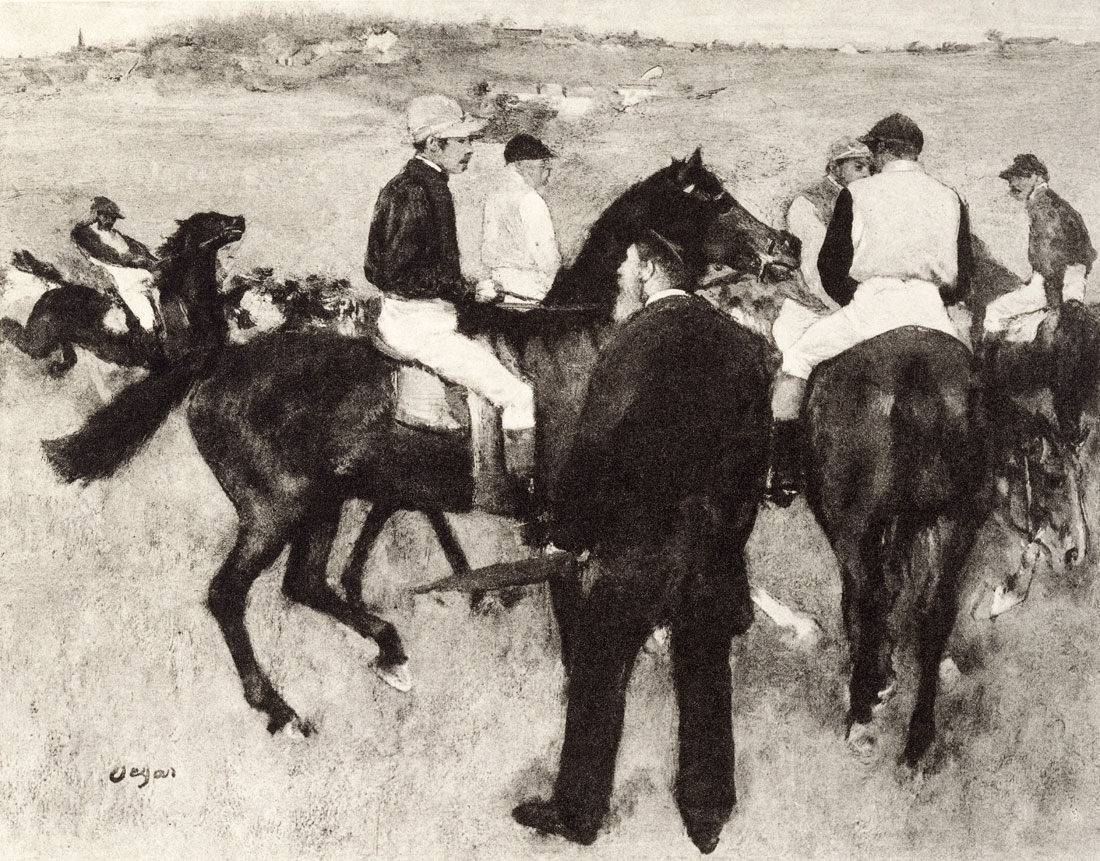
 

Sherrie Levine (American, b. 1947) 'After Edgar Degas' 1987 (detail)


Sherrie Levine (American, b. 1947)
After Edgar Degas (detail)
1987
5 lithographs on hand-made paper
69 x 56cm
DZ BANK Kunstsammlung im Städel Museum, Frankfurt
© Sherrie Levine / Courtesy Jablonka Galerie, Köln


Beate Gütschow (German, b. 1970) 'PN #1' 2000


Beate Gütschow (German, b. 1970)
PN #1
2000
C-Print, mounted on aluminium dibond
Acquired in 2013, property of Städelscher Museums-Verein e.V.
Städel Museum, Frankfurt am Main, Eigentum des Städelschen Museums-Vereins e.V.


… these images do not evoke a sense of the sublime. On closer inspection, not only is the virginity of nature lost forever, but the innocence of perception is also denied. The natural realms presented here are simply too beautiful to be true. The beauty, wildness, and potentially threatening aspects of nature have been skillfully merged into a decorative whole, as they were in landscape painting from the 17th through to the 19th century. Beate Gütschow’s photographic works reproduce traditional patterns of depiction, incorporating landscape elements that recall compositions by Nicolas Poussin (1594-1665), Jacob van Ruisdael (1628-1682), Claude Lorrain (1600-1682), John Constable (1776-1837), and Philipp Otto Runge (1777-1810). The subjects portrayed by these landscape painters were based on an idealised worldview, the construction of which reflected the dominant philosophical ethos of their time. The artists themselves, however, presented this ideal in a manner bordering on the absolute. …

Beate Gütschow photographs landscapes with a medium-format analog camera, then converts the images into digital files. From this archived material she then constructs new landscapes in Photoshop, basing their spatial arrangements and compositional structures on the principles of landscape painting. As part of this subsequent editing process, she adjusts the light and colours in the images, applying lighting techniques from the realm of painting to her photographs. Because Gütschow uses only the retouching tool and other traditional darkroom techniques offered by Photoshop, not its painting tools, the photographic surface is preserved and the joins between the component parts are not immediately visible. These digital tools make it possible to employ a painterly method without the resulting picture being a painting. The viewer is given the impression that this is a completely normal photograph. When, however, an ideal landscape is presented in the form of a photograph, it appears more unnatural than the painted version of the same view. In this way, Gütschow’s work explores concepts of representation, colour, and light – the formal attributes of painting and photography – as well as the distinctions between documentation and staging.

Extract from Gebbers, Anna-Catharina. “Larger than Life,” in Beate Gütschow: ZISLS. Heidelberg, 2016, pp. 8-17. Translated by Jacqueline Todd [Online] Cited 23/08/2022
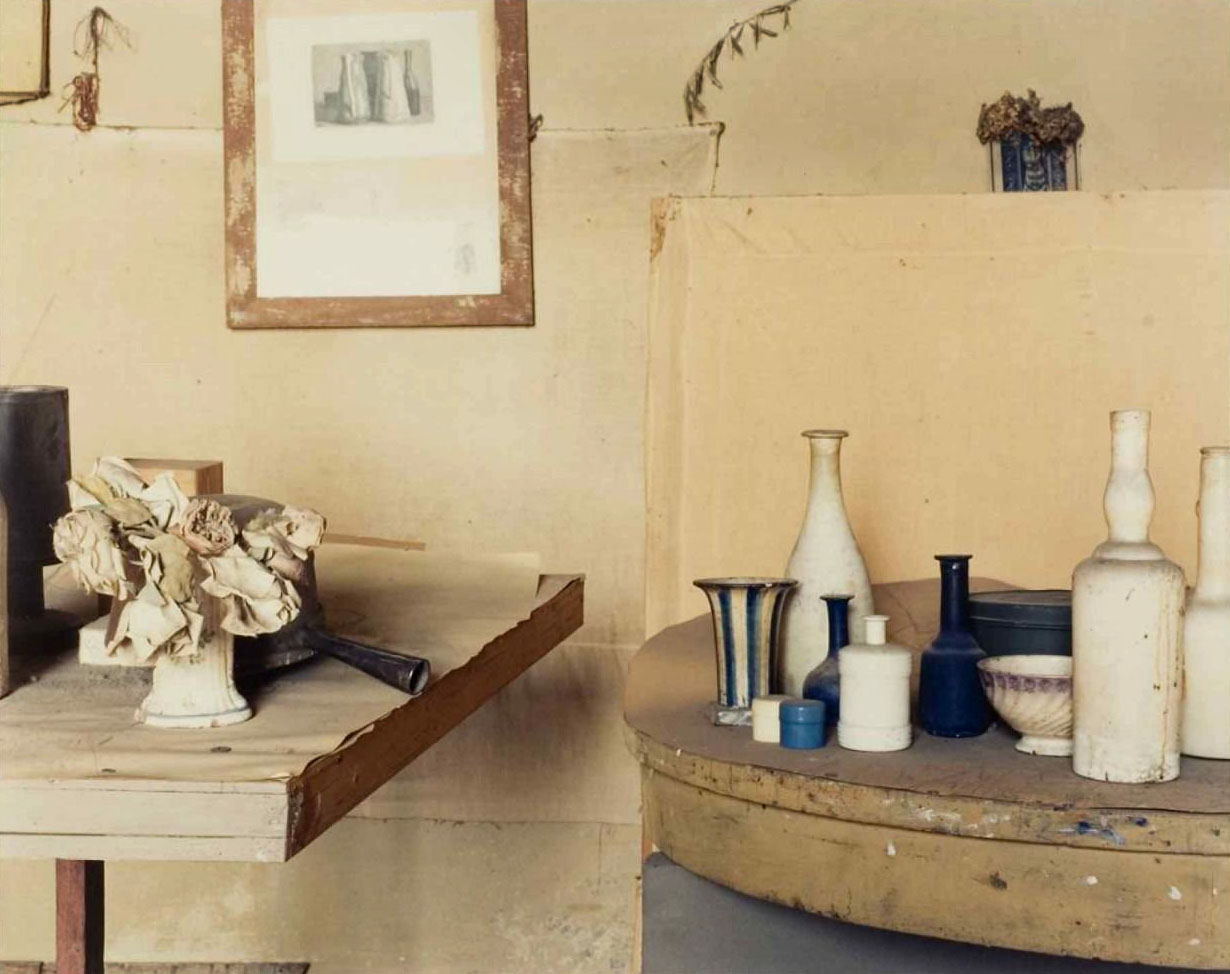
 

Luigi Ghirri (Italian, 1943-1992) 'L'atelier de Giorgio Morandi, Bologne' 1989


Luigi Ghirri (Italian, 1943-1992)
L’atelier de Giorgio Morandi, Bologne
1989


Luigi Ghirri (5 January 1943 – 14 February 1992) was an Italian artist and photographer who gained a far-reaching reputation as a pioneer and master of contemporary photography, with particular reference to its relationship between fiction and reality.


Amelie von Wulffen (German, b. 1966) 'Untitled (City Collages, VIII)' 1998


Amelie von Wulffen (German, b. 1966)
Untitled (City Collages, VIII)
1998
Oil paint, photographs on paper
42 x 59.7cm
Acquired in 2009 with funds from the Städelkomitee 21. Jahrhundert, property of Städelscher Museums-Verein e.V.
Städel Museum, Frankfurt am Main, Eigentum des Städelschen Museums-Vereins e.V.


The starting point for Amelie von Wulffen’s city collages is the urban architecture which she has photographed herself. These photographs are affixed to a surface and then processed pictorially: the artist alienates the perspective, adds abstract patterns and confronts the scene with quirky objects. The painted forms and unreal connections intervene in the relationship to reality of the supposedly objective photograph. The combination of photograph and painting is accompanied by a reflection on the characteristics of the medium concerned. The photographic reproduction of a situation which has been experienced may adequately record the place but not necessarily the memory. With this in mind, the artist sees painting as a suitable medium to equip photography with an authentic means of expression. During the chemical process of photography, real objects are registered on the light-sensitive material, just as the mood of the place and the memory of the artist are translated into the painting process. With regard to form, Wulffen reveals a wealth of references to Constructivism, Surrealism and Dadaism.

Text from the Städel Museum website


Art after 1945: Amelie von Wulffen

In our “Art after 1945” series, artists introduce their artworks in the Städel collection. In this episode Amelie von Wulffen explains her series “Stadtcollagen”.


Jeff Wall (Canadian, b. 1946) 'Picture for Women' 1979


Jeff Wall (Canadian, b. 1946)
Picture for Women
1979
Cibachrome transparency in lightbox
204.5 × 142.5cm (80.5 in × 56.1 in)


Picture for Women is a photographic work by Canadian artist Jeff Wall. Produced in 1979, Picture for Women is a key early work in Wall’s career and exemplifies a number of conceptual, material and visual concerns found in his art throughout the 1980s and 1990s. An influential photographic work, Picture for Women is a response to Édouard Manet’s Un bar aux Folies Bergère and is a key photograph in the shift from small-scale black and white photographs to large-scale colour that took place in the 1980s in art photography and museum exhibitions. …

Picture for Women is a 142.5 by 204.5 cm Cibachrome transparency mounted on a lightbox. Along with The Destroyed Room (1978), Wall considers Picture for Women to be his first success in challenging photographic tradition. According to Tate Modern, this success allows Wall to reference “both popular culture (the illuminated signs of cinema and advertising hoardings) and the sense of scale he admires in classical painting. As three-dimensional objects, the lightboxes take on a sculptural presence, impacting on the viewer’s physical sense of orientation in relationship to the work.”

Text from the Wikipedia website


Louise Lawler (American, b. 1947) 'It Could Be Elvis' 1994


Louise Lawler (American, b. 1947)
It Could Be Elvis
1994
Cibachrome, varnished with shellac
74.5 x 91cm
DZ BANK Kunstsammlung at the Städel Museum
© Courtesy of the artist and Metro Pictures, New York


Oliver Boberg (German, b. 1965) 'Unterführung' [Underpass] 1997


Oliver Boberg (German, b. 1965)
Unterführung [Underpass]
1997
C-type print
75 x 84cm
DZ BANK Kunstsammlung
© Oliver Boberg / Courtesy L.A. Galerie – Lothar Albrecht, Frankfurt
 

Richard Hamilton (English, 1922-2011) 'Eight-Self-Portraits' 1994 (detail)


Richard Hamilton (English, 1922-2011)
Eight-Self-Portraits (detail)
1994
Thermal dye sublimation prints
40 x 35cm
DZ BANK Kunstsammlung
© VG Bild-Kunst, Bonn 2012


Wolfgang Tillmans (German, b. 1968) 'Freischwimmer 54' 2004


Wolfgang Tillmans (German, b. 1968)
Freischwimmer 54
2004
C-type in artists frame
237 x 181 x 6cm
Städel Museum, Frankfurt am Main
© Courtesy Galerie Buchholz, Köln / Berlin
Acquired in 2008 with funds from the Städelkomitee 21. Jahrhundert
Property of Städelscher Museums-Verein e.V.


Städel Museum
Schaumainkai 63
60596 Frankfurt

Opening hours:
Tuesday – Sunday 10am – 6pm
Closed Mondays
Städel Museum website

LIKE ART BLART ON FACEBOOK

Back to top

Exhibition: ‘Another Story. Photography from the Moderna Museet Collection’ at Moderna Museet, Stockholm

Exhibition dates: 1st February, 2011 – 19th February, 2012


Installation view of the exhibition 'Another Story' at Moderna Museet, Stockholm


Installation view of the exhibition Another Story at Moderna Museet, Stockholm
Photo: Albin Dahlström/Moderna Museet


A posting from an exhibition highlighting a collection of over 100,000 photographs – how lucky are they!

Dr Marcus Bunyan


Many thankx to the Moderna Museet for allowing me to publish the photographs in the posting. Please click on the photographs for a larger version of the image.


Annika von Hausswolff (Swedish, b. 1967) 'I Am the Runway of Your Thoughts' 2008


Annika von Hausswolff (Swedish, b. 1967)
I Am the Runway of Your Thoughts
2008
Moderna Museet
© Annika von Hausswolff


In 2011, all the galleries will be successively rehung exclusively with photographic art. The chronology will be the same, but the 20th century will be presented from a partly new perspective. Moderna Museet will take a radical step, with Another Story – Photography from the Moderna Museet Collection. …

There is a growing interest in photography today, as proven by the panoply of exhibitions, fairs and festivals throughout the world. And this is hardly surprising. Nowadays, practically everyone is a photographer, at the very least snapping pictures with the camera built into most mobiles.

Moderna Museet’s collection of photography, ranging from 1840 to the present day, is one of the finest in Europe, featuring many of the most prominent names in photo history and comprising more than 100,000 photographs. The collection provides a historic background to the art of photography, and now we are sharing this with all our visitors. Moreover, several magnificent private donations have recently enriched the collection with works by famous artists practising in the field of photography.

Text from the Moderna Museet website


Another Story: Possessed by the Camera

1970-2010

Another Story: Possessed by the Camera highlighting contemporary photo-based art 1970-2010

From the 1970s, people have challenged the notion that the purpose of art is to show authentic identities. Instead, the camera is used to emphasise the potential of role-play and how identity can be constructed.

The reproduction of reality in the mass media has radically changed the conditions for our lives. The camera became an especially useful artistic tool in exploring the role-play of existence. The veracity of photography was called into question. By manipulating images and presenting them as authentic depictions, artists warned viewers to be critical and on their guard against how images are used in general.

These changes generated a broad range of photographic practices. Traditionally oriented photographers refined their aesthetic methods towards exquisitely artificial images. Robert Mapplethorpe, for instance, revived classical notions of beauty to undermine social prejudices against homosexuality.

Others experimented with digital manipulations and created new realities out of existing worlds. In the 1980s, the artistic use of photography went even further, in veritably philosophical studies of the many levels of meaning in representation. Since the late 1970s, Cindy Sherman has portrayed herself in stereotypical female disguises as a means of exploring the complexity of specific identities.

As a consequence of the dramatic innovations of the digital era, information and entertainment from far and wide are intermingled. Our formerly distinct notions of time and space have become fuzzier.

Annika von Hausswolff’s I Am the Runway of Your Thoughts from 2008 captures the feeling of trying to grasp and control something that is perceived as a vague threat. The concept of identity is no longer only linked to ethnicity, gender and class. Instead, it can be constructed out of surprising mixtures of given conditions and chosen ideals.

Text from the Moderna Museet website


Annika von Hausswolff (Swedish, b. 1967) 'I Am the Runway of Your Thoughts' 2008 (detail)


Annika von Hausswolff (Swedish, b. 1967)
I Am the Runway of Your Thoughts (detail)
2008
Moderna Museet
© Annika von Hausswolff


Andreas Gursky (German, b. 1955) 'Bibliothek' 1999


Andreas Gursky (German, b. 1955)
Bibliothek
1999
Moderna Museet
© Andreas Gursky/BUS 2011


Candida Höfer (German, b. 1944) 'The Louvre in Paris X 2005 - the caryatid hall' 2005


Candida Höfer (German, b. 1944)
The Louvre in Paris X 2005 – the caryatid hall
2005
Moderna Museet
© Candida Höfer/BUS 2011


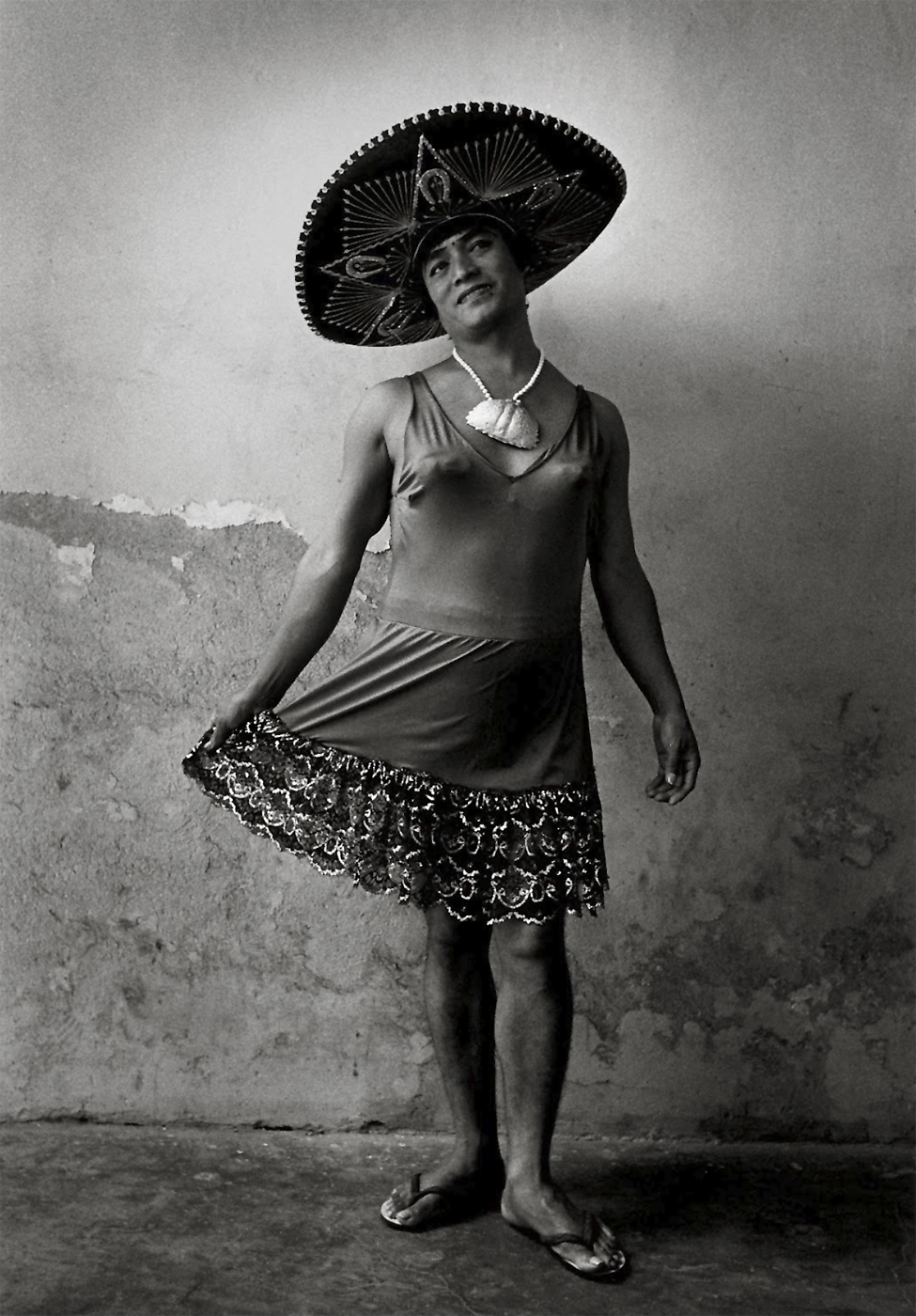
Graciela Iturbide (Mexican, b. 1942) 'Magnolia (2), Juchitán, México' (Magnolia with Sombrero / Magnolia con sombrero) 1986


Graciela Iturbide (Mexican, b. 1942)
Magnolia (2), Juchitán, México (Magnolia with Sombrero / Magnolia con sombrero)
1986
Gelatin silver print
Moderna Museet
© Graciela Iturbide


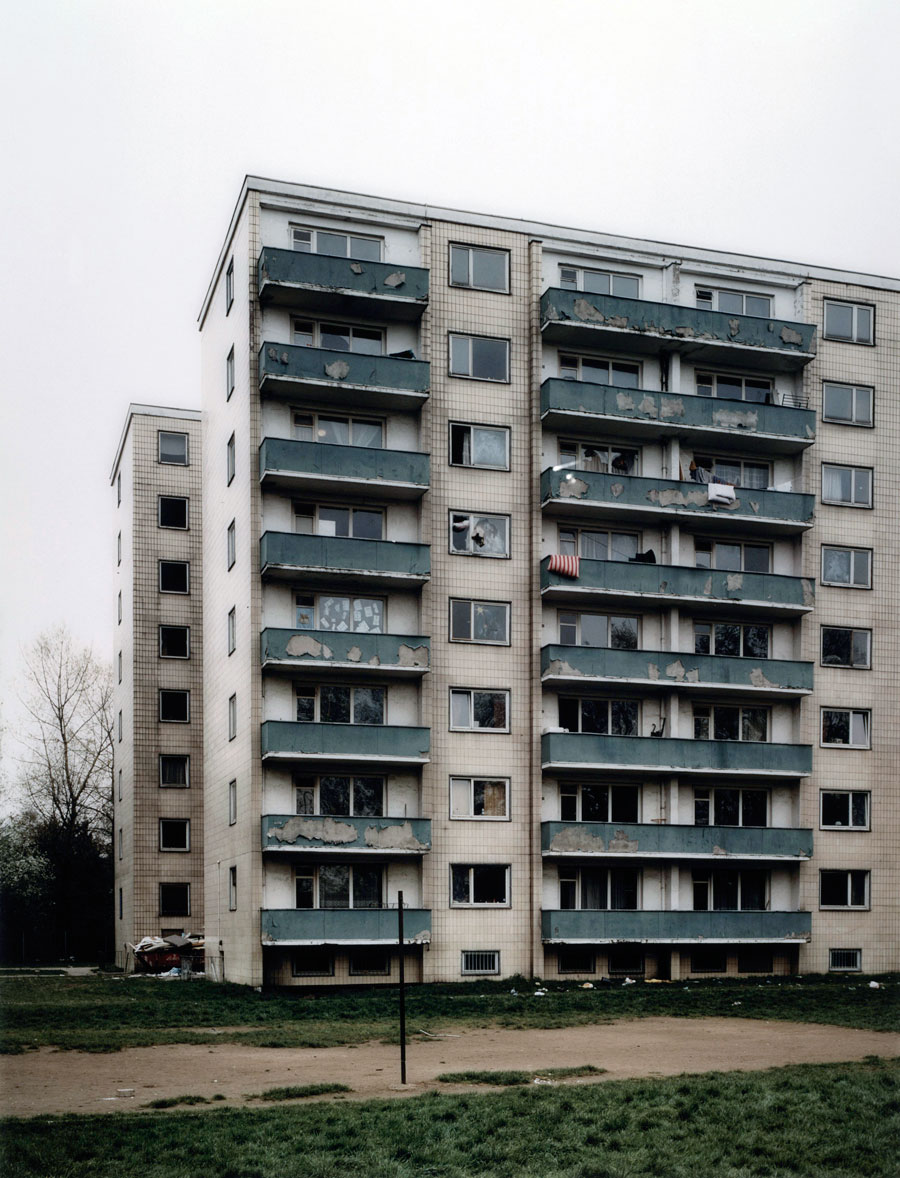
Thomas Ruff (German, b. 1958) 'Häuser Nummer 9' 1989


Thomas Ruff (German, b. 1958)
Häuser Nummer 9
1989
Moderna Museet
© Thomas Ruff/BUS 2011


Cindy Sherman (American, b. 1954) 'Untitled' 2008


Cindy Sherman (American, b. 1954)
Untitled
2008
Moderna Museet
© Courtesy of the Artist and Metro Pictures


In 2011, Moderna Museet’s new directors, Daniel Birnbaum and Ann-Sofi Noring, will launch a new presentation of the collection. Another Story gives a fresh angle on art history, based on works from the Moderna Museet collection. We will start by focusing on photography, which will gradually be given a more prominent position, only to fill the entire exhibition of the permanent collection this autumn.

If you want an art collection to develop and stay alive, it can’t remain static. You need to present it in new ways and look at it from new angles. That may sound obvious, but it is not that common. In 2011, Moderna Museet will take a radical step, with Another Story. Photography from the Moderna Museet Collection. This is possibly the most extreme re-hanging of the collection undertaken in the history of the museum.

There is a growing interest in photography today, as proven by the panoply of exhibitions, fairs and festivals throughout the world. And this is hardly surprising. Nowadays, practically everyone is a photographer, at the very least snapping pictures with the camera built into most mobiles.

Moderna Museet’s collection of photography, ranging from 1840 to the present day, is one of the finest in Europe, featuring many of the most prominent names in photo history and comprising more than 100,000 photographs. The collection provides a historic background to the art of photography, and now we are sharing this with all our visitors. Moreover, several magnificent private donations have recently enriched the collection with works by famous artists practising in the field of photography.

Moderna Museet has one of Europe’s finest collections of photography, ranging from 1840 to the present day. Many of the most famous names in photographic history are represented, and the collection comprises more than 100,000 works. The re-hanging of the permanent collection exhibition will be done in three stages. In February, we will open the first part, Another Story: Possessed by the Camera, which presents contemporary photography-based art. Just before summer, we open Another Story: See the World!, presenting the period 1920-1980. This autumn, finally, we look at the early days of photography. Another Story: Written in Light presents the pioneers of photography from 1840 to the first three decades of the 20th century. In autumn 2011 and for the rest of the year, the entire permanent collection exhibition will consist of photography and photo-based art.

Text from the Moderna Museet website [Online] Cited 22/07/2011 no longer available online


Aleksandr Rodchenko (1891-1956) 'Sjukov-masten, radiomast i Moskva' 1929


Aleksandr Rodchenko (Russian, 1891-1956)
Sjukov-masten, radiomast i Moskva
1929
Gelatin silver print
Moderna Museet
© Aleksandr Rodtjenko


Another Story: See the World!

1920-1980

Another Story: See the World! focuses on the period 1920-1980.

Many documentary photographers are driven by a strong urge to portray events, places and people in their everyday surroundings. For some, it has been a life-long commitment to uncover and reveal social injustices. For others, it has represented a way of sharing experiences and developing documentary photography in a more personal and artistic direction.

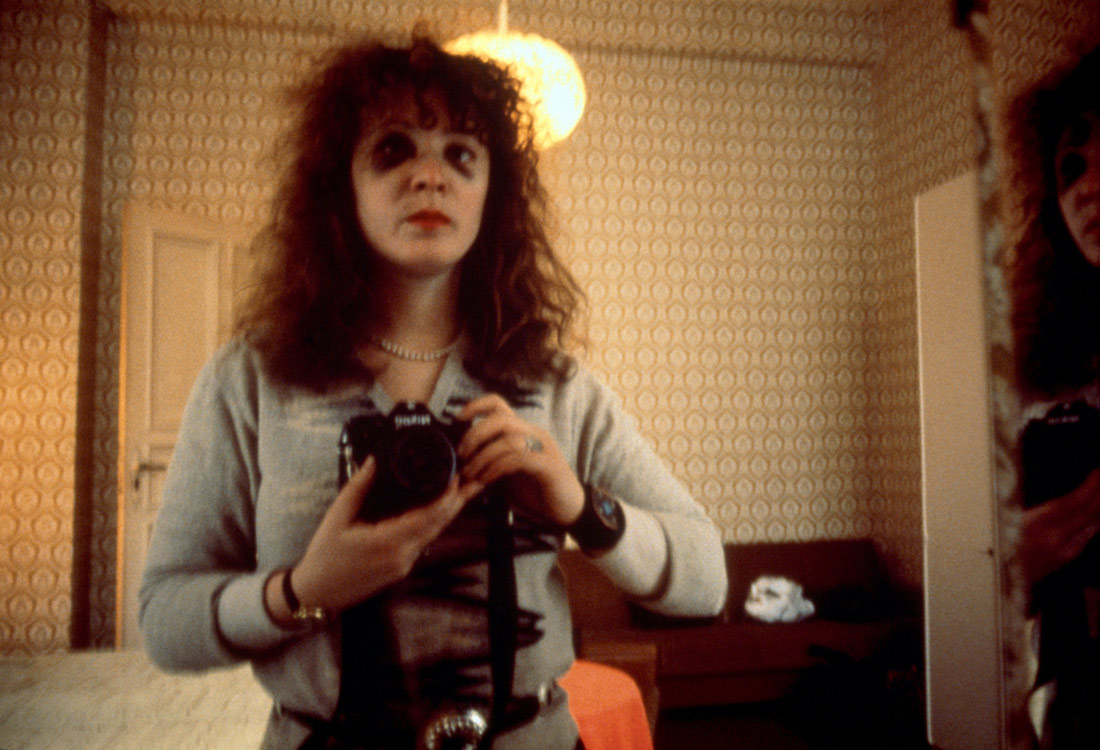
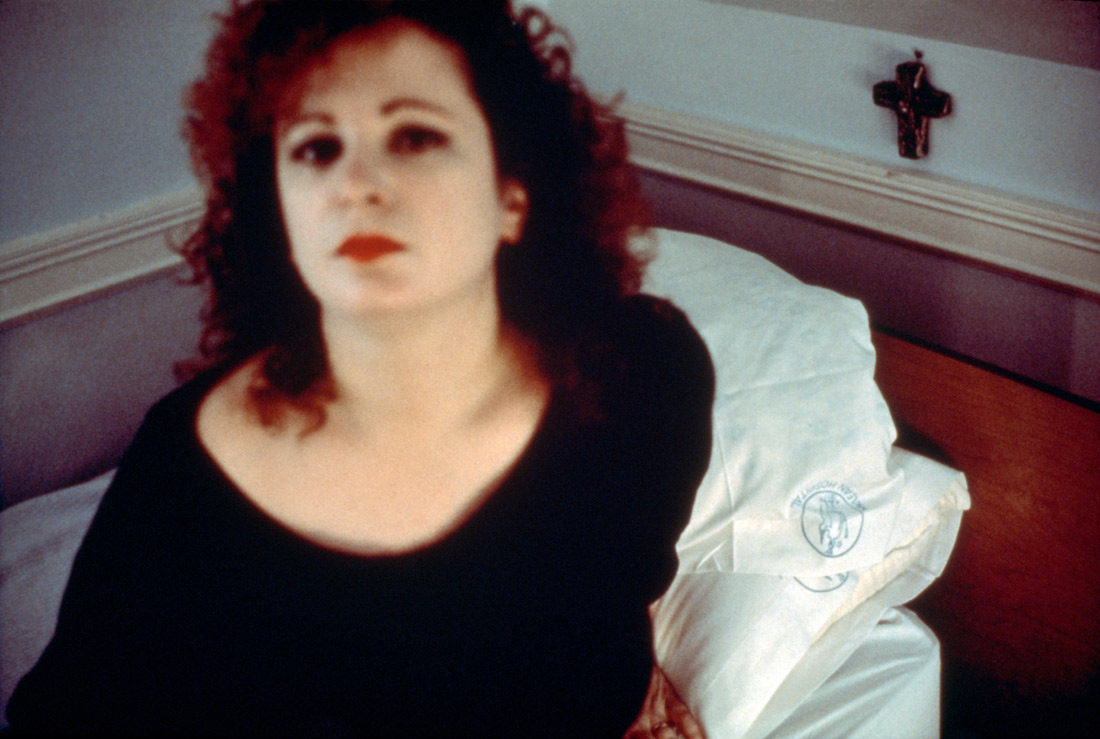
The camera give photographers opportunities to approach vulnerable, sometimes hidden or forgotten, groups and environments. This presentation includes Larry Clark’s intimate and controversial photographs of his drugabusing friends in their hometown, Tulsa. The same theme is found in Nan Goldin’s raw colour portraits.

Amalias Street 5a is on the outskirts of old Riga, a wooden house with 37 inhabitants, documented by the photographer Inta Ruka since 2004. Together with Antanas Sutkus, she is a prominent figure on the Baltic photography scene that commented on and adapted itself to the Soviet Union in the 1980s and 90s, and then documented the changes in the post-Soviet era.

Christer Strömholm and his students also worked in the documentary tradition. Anders Petersen is perhaps the photographer who has most distinctly followed in Strömholm’s footsteps, as in his legendary series from Café Lehmitz in Hamburg (1967-70). Other photographers who have developed individual perspectives in their portrayals of Swedish society are JH Engström, Catharina Gotby and Lars Tunbjörk.

Throughout the history of photography, photographers have ventured for long periods into other people’s worlds and lives. To do that, however, and to earn their living while doing it, many photographers have worked simultaneously on independent projects, and on various commercial assignments. This has led to interesting links and shifts between socially oriented reportage, documentary projects, portrait photography and photographic art.

Text from the Moderna Museet website


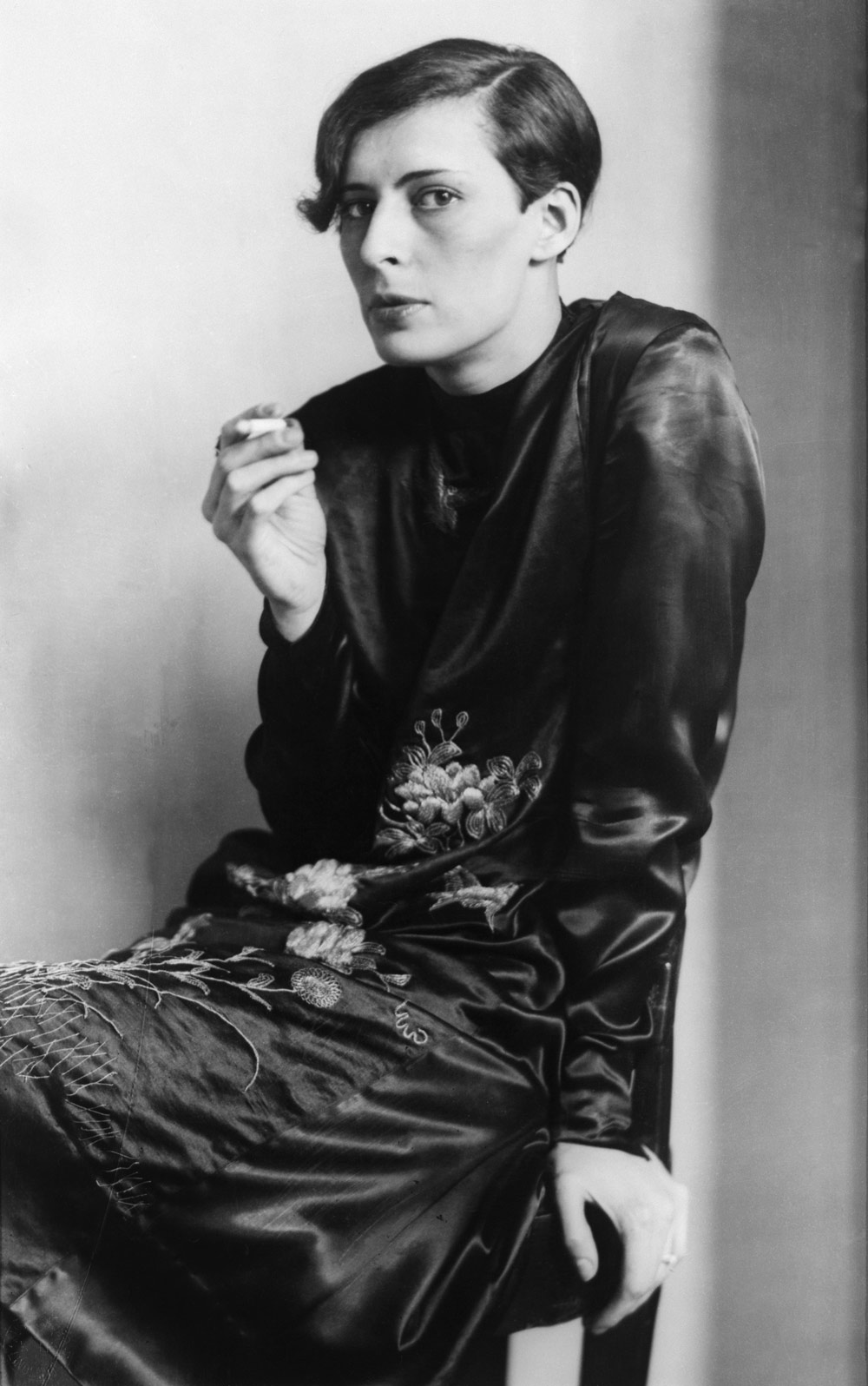
August Sander (German, 1876-1964) 'Die elegante Frau - Sekrutärin beine WDR' 1927 /c. 1975


August Sander (German, 1876-1964)
Die elegante Frau – Sekrutärin beine WDR
1927 / c. 1975
Gelatin silver print
Moderna Museet
© August Sander/BUS 2011


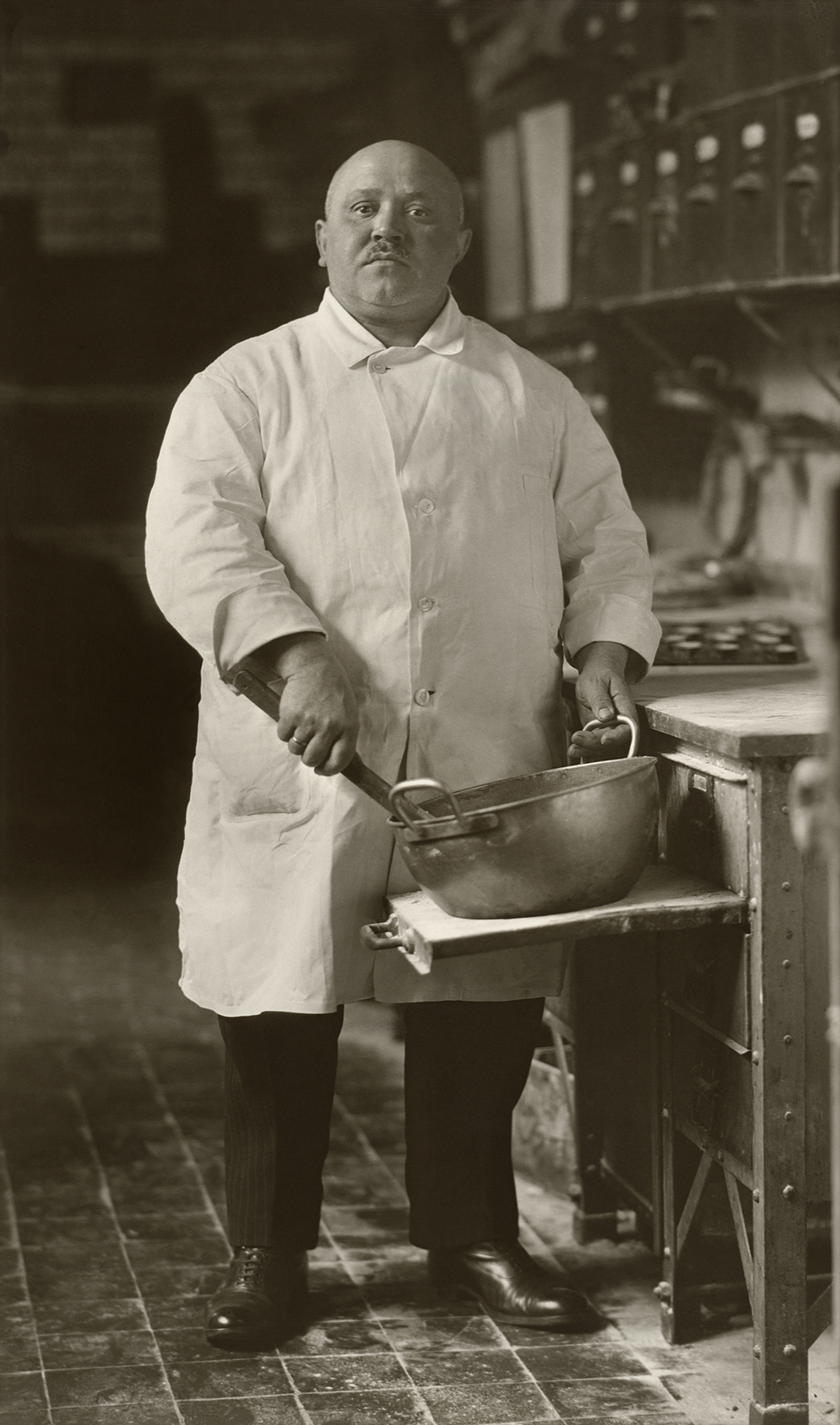
August Sander (German, 1876-1964) 'Konditor' (Pastry Cook) 1928


August Sander (German, 1876-1964)
Konditor (Pastry Cook)
1928
Gelatin silver print
Moderna Museet
© August Sander/BUS 2011


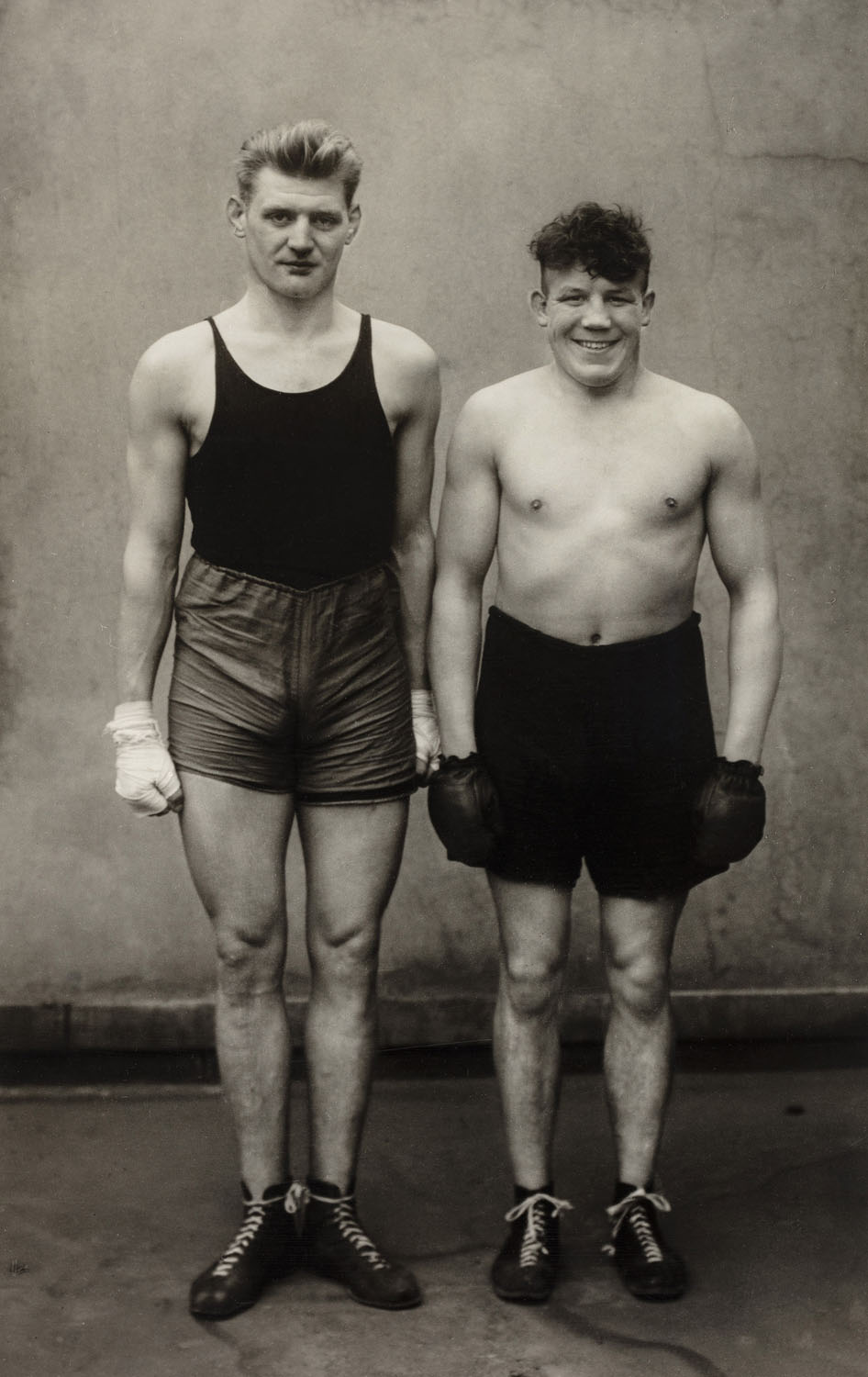
August Sander (German, 1876-1964) 'Boxers. Paul Röderstein and Hein Hesse. Köln' c. 1928


August Sander (German, 1876-1964)
Boxers
1929
Gelatin silver print
Moderna Museet
© August Sander/BUS 2011


Christer Strömholm (Swedish, 1918-2002) 'Barcelona' 1959


Christer Strömholm (Swedish, 1918-2002)
Barcelona
1959
Gelatin silver print
Moderna Museet
© Christer Strömholm/Bildverksamheten Strömholm


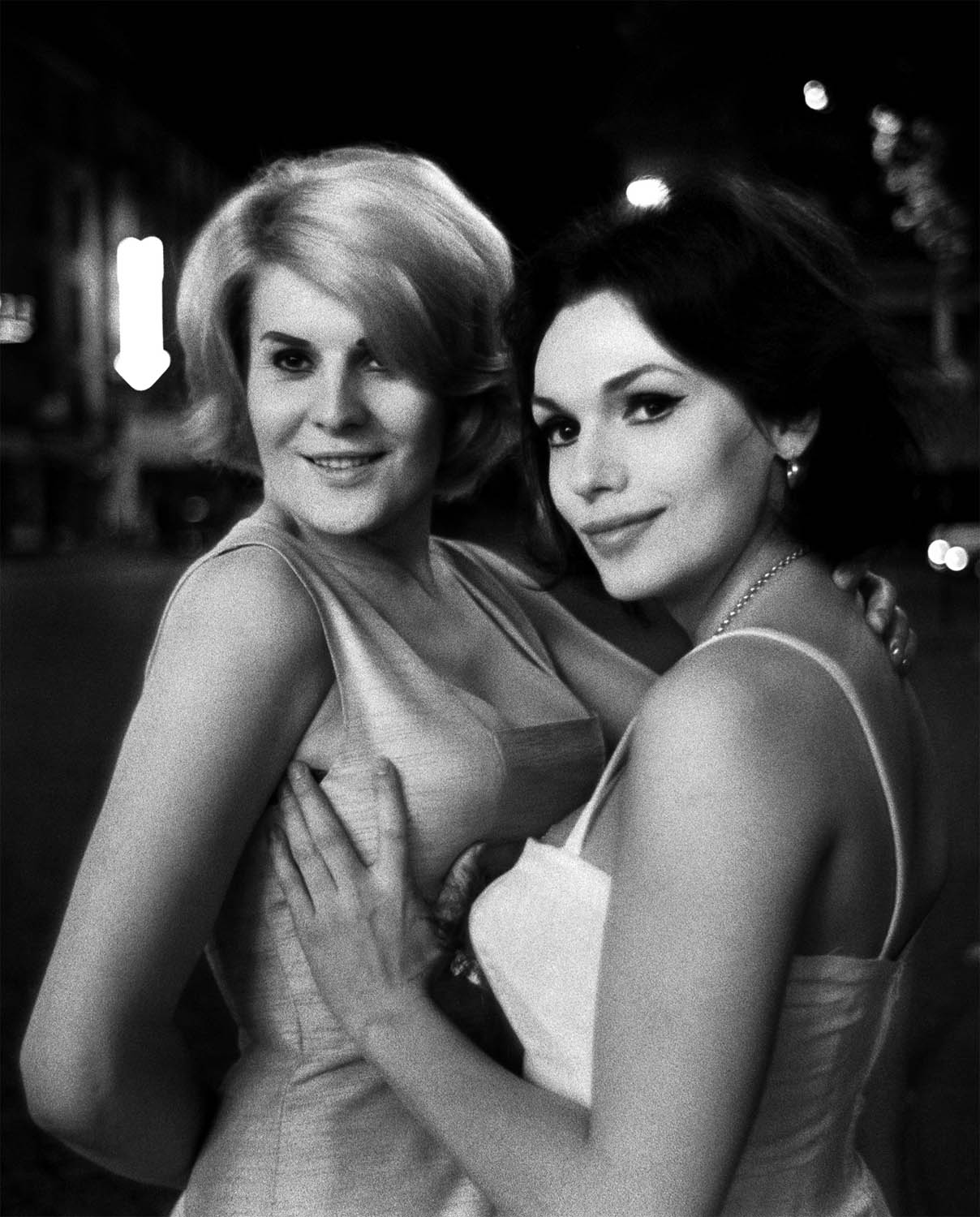
Christer Strömholm (Swedish, 1918-2002) 'Gina and Nana' 1960


Christer Strömholm (Swedish, 1918-2002)
Gina and Nana
1960
Gelatin silver print
Moderna Museet
© Christer Strömholm/Bildverksamheten Strömholm


Christer Strömholm (Swedish, 1918-2002) 'Hiroshima' 1963/1981


Christer Strömholm (Swedish, 1918-2002)
Hiroshima
1963/1981
Gelatin silver print
Moderna Museet
© Christer Strömholm/Bildverksamheten Strömholm


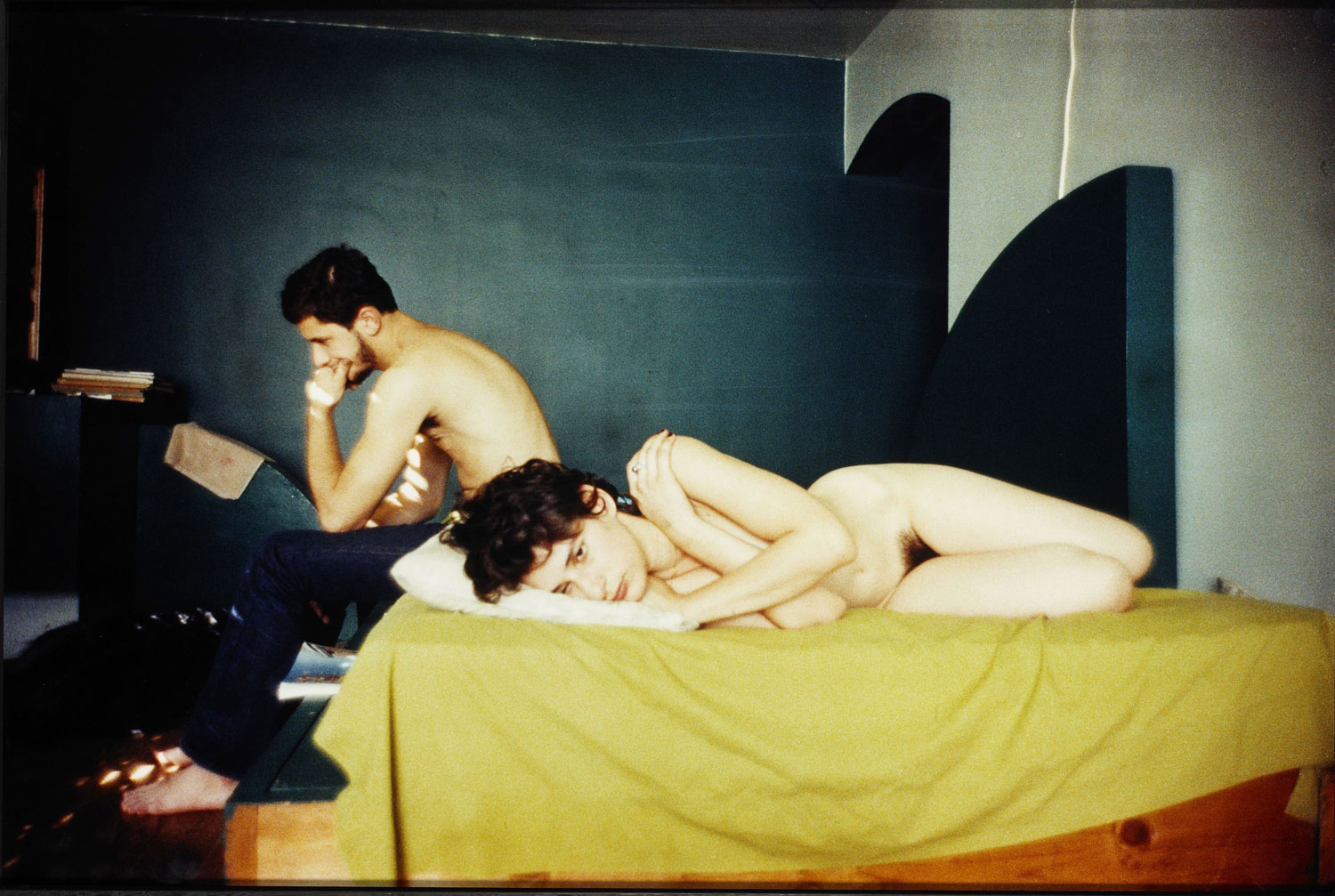
Nan Goldin (American, b. 1953) 'Couple in bed, Chicago' 1977


Nan Goldin (American, b. 1953)
Couple in bed, Chicago
1977
Dye destruction print, Cibachrome
Moderna Museet
© Nan Goldin


Irving Penn (American, 1917-2009) 'Frozen Foods with String Beans, New York, 1977'


Irving Penn (American, 1917-2009)
Frozen Foods with String Beans, New York, 1977
1977
Moderna Museet
© Irving Penn Foundation


Irving Penn (American, 1917-2009) 'Mouth (for L'Oréal), New York, 1986'


Irving Penn (American, 1917-2009)
Mouth (for L’Oréal), New York, 1986
1986
Moderna Museet
© Irving Penn Foundation


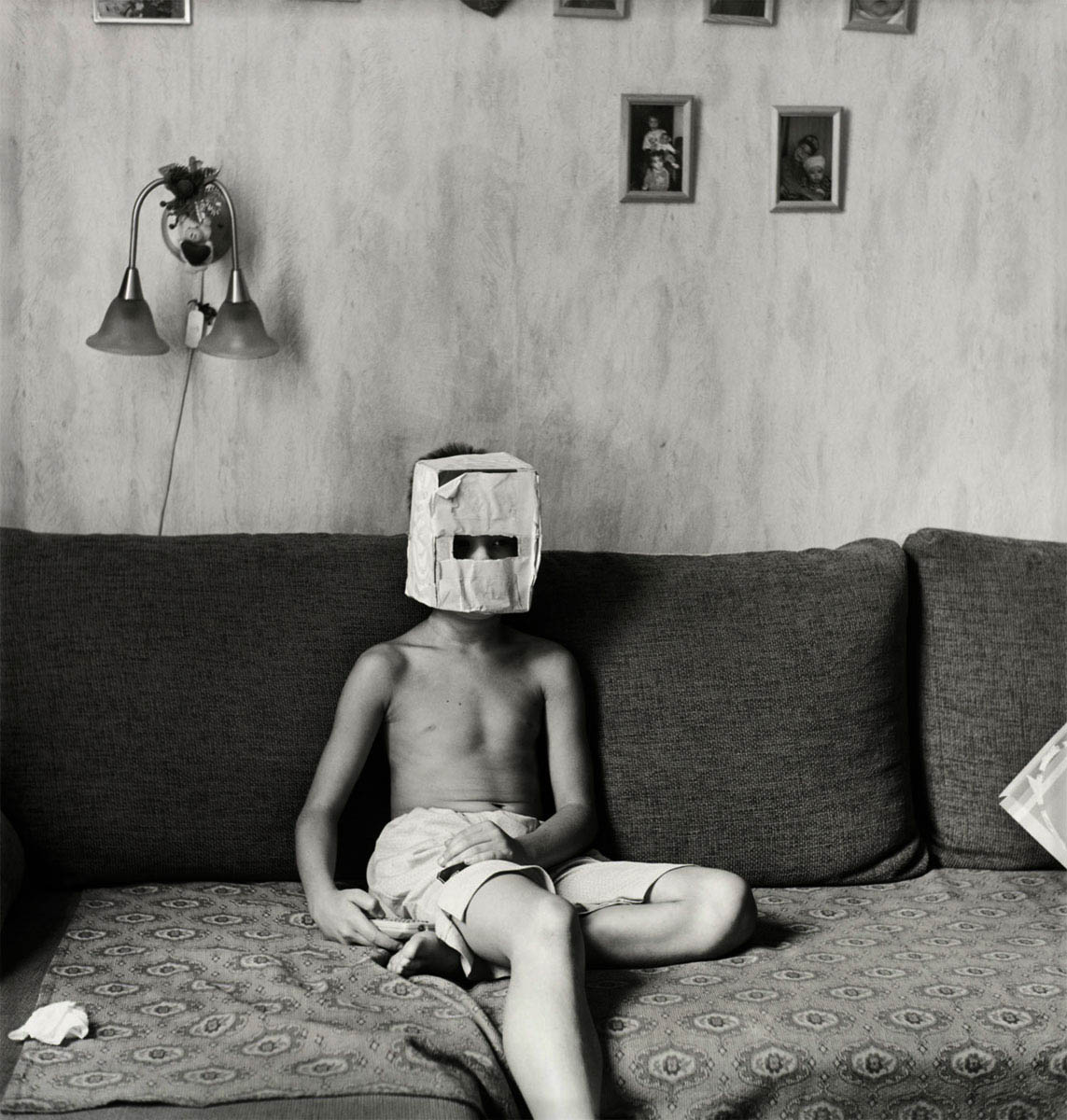
Inta Ruka (Latvia, b. 1958) 'Rihards Stibelis' 2006


Inta Ruka (Latvia, b. 1958)
Rihards Stibelis
2006
From the series Amãlija’s street 5a
Gelatin silver print
Moderna Museet
© Inta Ruka


Julia Margaret Cameron (British born India, 1815-1879) 'The Mountain Nymph, Sweet Liberty' 1866


Julia Margaret Cameron (British born India, 1815-1879)
The Mountain Nymph, Sweet Liberty
1866
Albumen print
Moderna Museet


Another Story: Written in Light

1840-1930

Another Story: Written in Light focuses on the pioneers from 1840 and up to the first three decades of the 20th century

The third part of Another Story. Photography from the Moderna Museet Collection has the subtitle Written in Light. It delineates the infancy of photography, from the moment when the Frenchman Louis Jacques Mandé Daguerre developed the photographic process of the daguerreotype in 1839, to August Sander’s fascinating project People of the Twentieth Century, black-and-white portraits of German citizens from the first half of the 20th century.

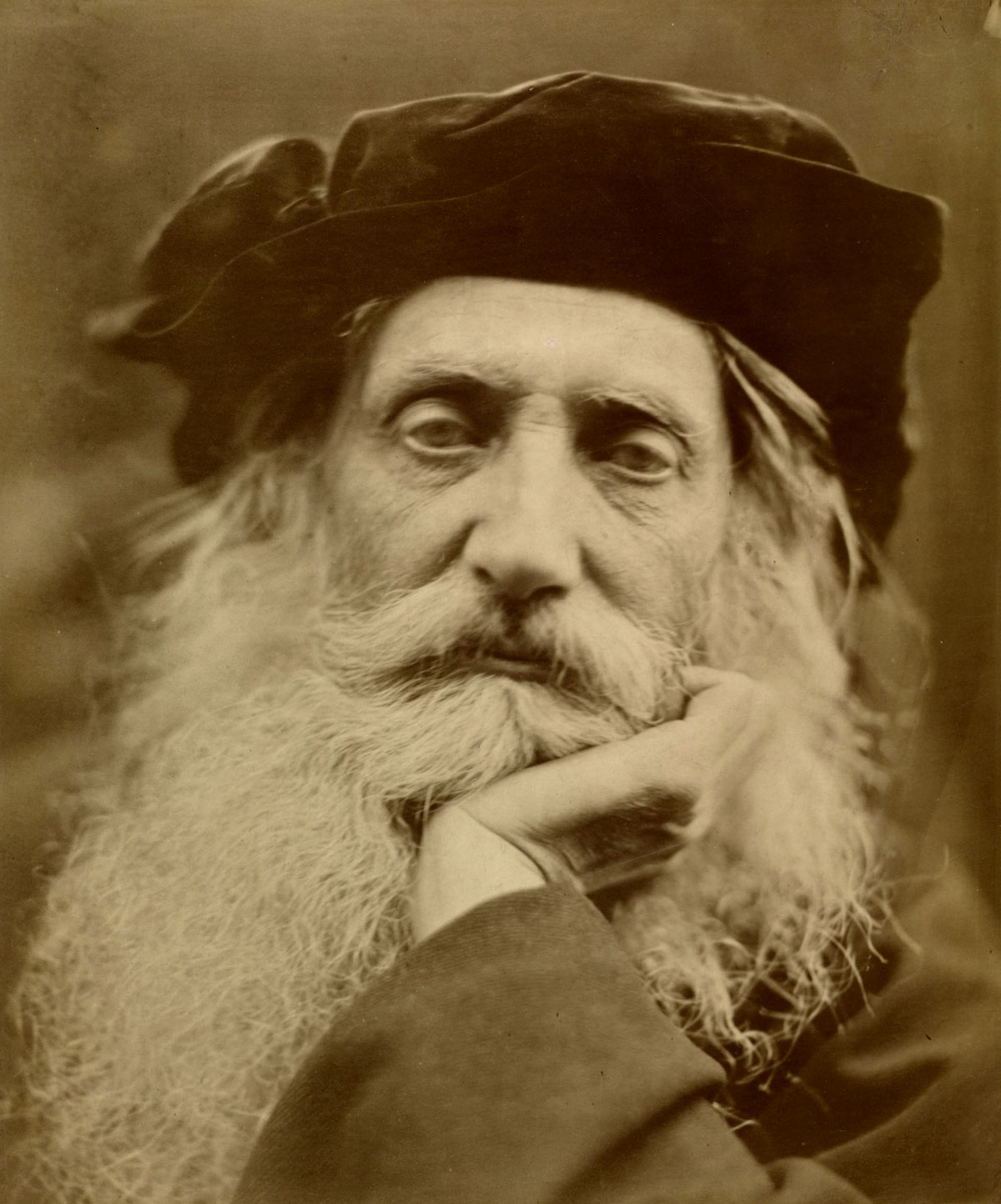
In six rooms we present several pioneering feats of photography, unique works that contribute to Moderna Museet’s exceptional position among photography-collecting institutions. The section includes Julia Margaret Cameron, who portrayed famous Brits in the 1860s, revealing both their inner and outer character.

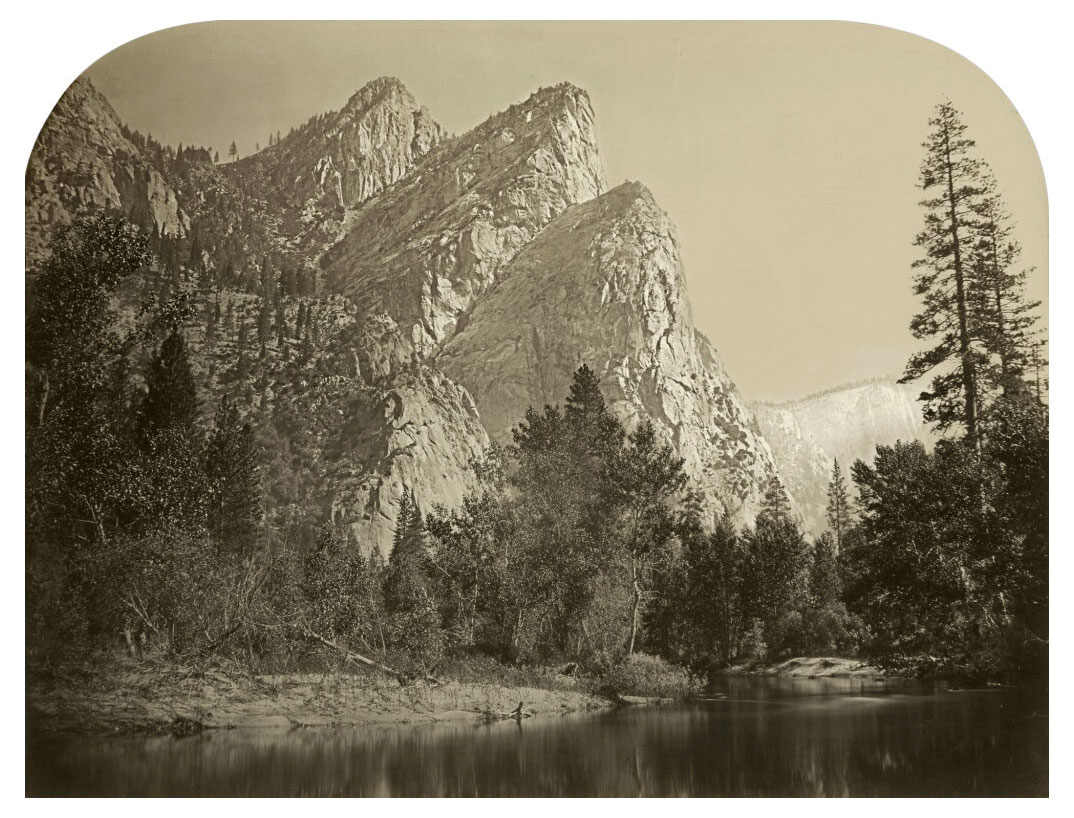
Guillaume Berggren’s photographs from 1880s Constantinople are legendary, as are Carleton E. Watkins’ documentation of the American West a few decades earlier. In addition to portraits, landscapes, nature and architecture were typical subjects for the early photographers. A few examples of present-day photography are interspersed, for instance Tom Hunter’s series in which he explored the urban landscape in the wake of industrialism around the turn of the millennium.

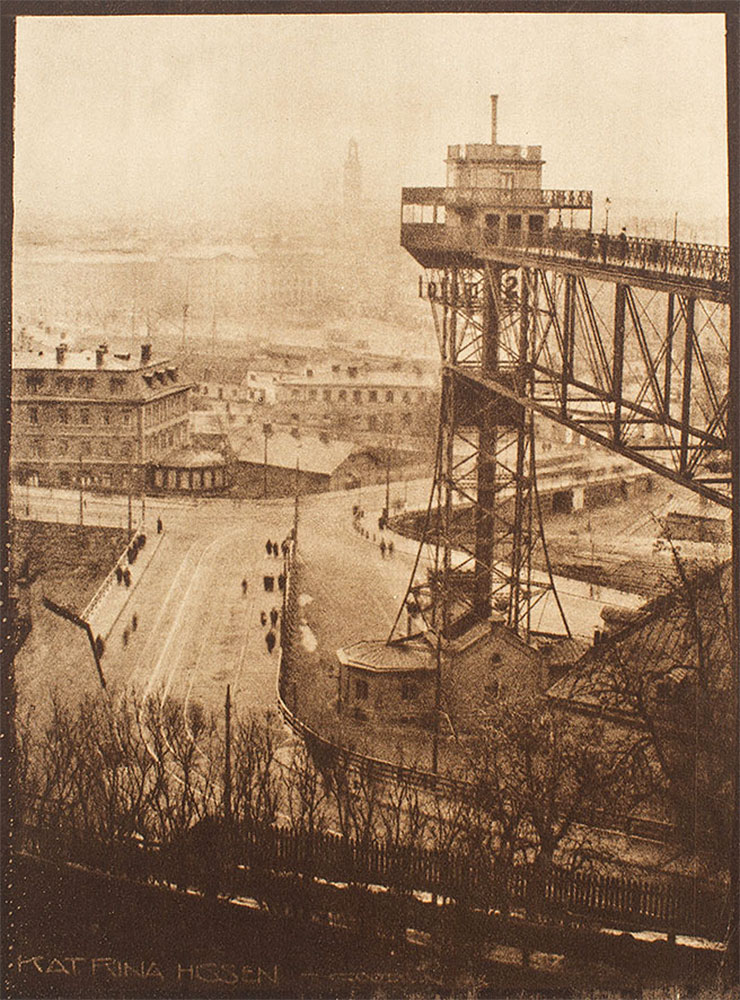
What does pictorialism stand for? In one of the larger rooms, we show photographs from the late 1800s up to the outbreak of the First World War, by photographers who were primarily fascinated by optical and visual issues. A seminal figure in the field of art photography is Henry B. Goodwin, famous for his striking artist portraits, painterly nudes and softly hazy Stockholm views.

Photography literally means “written in light”. The various experiments and remarkable documentations shown here encompass Nils Strindberg’s photographs from a disastrous balloon expedition to the North Pole in 1897. Three decades later, his negatives were developed, and the resulting prints are now in the Moderna Museet collection of photography.

Text from the Moderna Museet website


Carleton Watkins (American, 1829-1916) 'The Three Brothers' 1861


Carleton Watkins (American, 1829-1916)
The Three Brothers
1861
Moderna Museet
Albumen print


Julia Margaret Cameron (British born India, 1815-1879) 'Henry Taylor' October 10, 1867


Julia Margaret Cameron (British born India, 1815-1879)
Henry Taylor
October 10, 1867
Albumen print
Moderna Museet


G Félix T Nadar (France, 1820-1910) and Paul Nadar (France, 1856-1939) 'Sarah Bernhardt in Pierrot, Murder of His Wife' 1883/1938


G Félix T Nadar (France, 1820-1910) and Paul Nadar (France, 1856-1939)
Sarah Bernhardt in Pierrot, Murder of His Wife (Sarah Bernhardt dans Pierrot, assassin de sa femme)
1883/1938
Gelatin silver photograph from wet collodion negative mounted on cardboard
29.8 × 18.1cm
Moderna Museet
Purchase 1965


Nils Strindberg (Swedish, 1872-1897) '14/7 1897. The Eagle Balloon after landing' 1897/1930


Nils Strindberg (Swedish, 1872-1897)
Örnen efter landningen. Ur serien Ingenjör Andrées luftfärd, 14/7 1897
The Eagle after landing. From the series Engineer Andrée’s flight, 14/7 1897 
1897/1930
Moderna Museet
Gelatin silver print


Nils Strindberg (4 September 1872 – October 1897) was a Swedish photographer and scientist. He was one of the three members of S. A. Andrée’s ill-fated Arctic balloon expedition of 1897. …

Strindberg was invited to the Arctic balloon expedition of 1897 to create a photographic aerial record of the arctic. Before perishing on Kvitøya (White Island) with Andrée and Knut Frænkel, Strindberg recorded on film their long-doomed struggle on foot to reach populated areas. When the remains of the expedition were discovered by the Norwegian Bratvaag Expedition in 1930, five exposed rolls of film were found, one of them still in the camera. Docent John Hertzberg of the Royal Institute of Technology in Stockholm managed to save 93 of the theoretically 240 frames. A selection of these photos were published along with the diaries of the expedition as Med Örnen mot Polen (Stockholm: Bonnier (1930); British edition The Andrée diaries (1931); American edition Andrée’s Story (1932). The book credited the three explorers as its authors. In an article from 2004, Tyrone Martinsson published some digitally enhanced versions of Strindberg’s photos of the expedition, while lamenting the lack of care with which the original negatives were stored from 1944.

Text from the Wikipedia website


Henry B. Goodwin (Swedish, 1878-1971) 'Katarina Lift (Katarinahissen), Slussen, Stockholm, Sweden' 1918


Henry B. Goodwin (Swedish, 1878-1971)
Katarina Lift (Katarinahissen), Slussen, Stockholm, Sweden
1918
Moderna Museet
Public domain


Moderna Museet, Stockholm

Moderna Museet is ten minutes away from Kungsträdgården, and twenty minutes from T-Centralen or Gamla Stan. Walk past Grand Hotel and Nationalmuseum on Blasieholmen, opposite the Royal Palace. After crossing the bridge to Skeppsholmen, continue up the hill. The entrance to Moderna Museet and Arkitekturmuseet is on the left-hand side.

Opening hours:
Tuesday – Sunday 10am – 6pm
Closed Mondays

Moderna Museet website

LIKE ART BLART ON FACEBOOK

Back to top

Exhibition: ‘Series of Portraits. A century of photographs’ at Museum für Kunst und Gewerbe, Hamburg

Exhibition dates: 1st April – 17th July 2011


Many thankx to Michaela Hille for her help and to Museum für Kunst und Gewerbe, Hamburg for allowing me to publish the photographs in the posting. Please click on the photographs to view a larger version of the image.


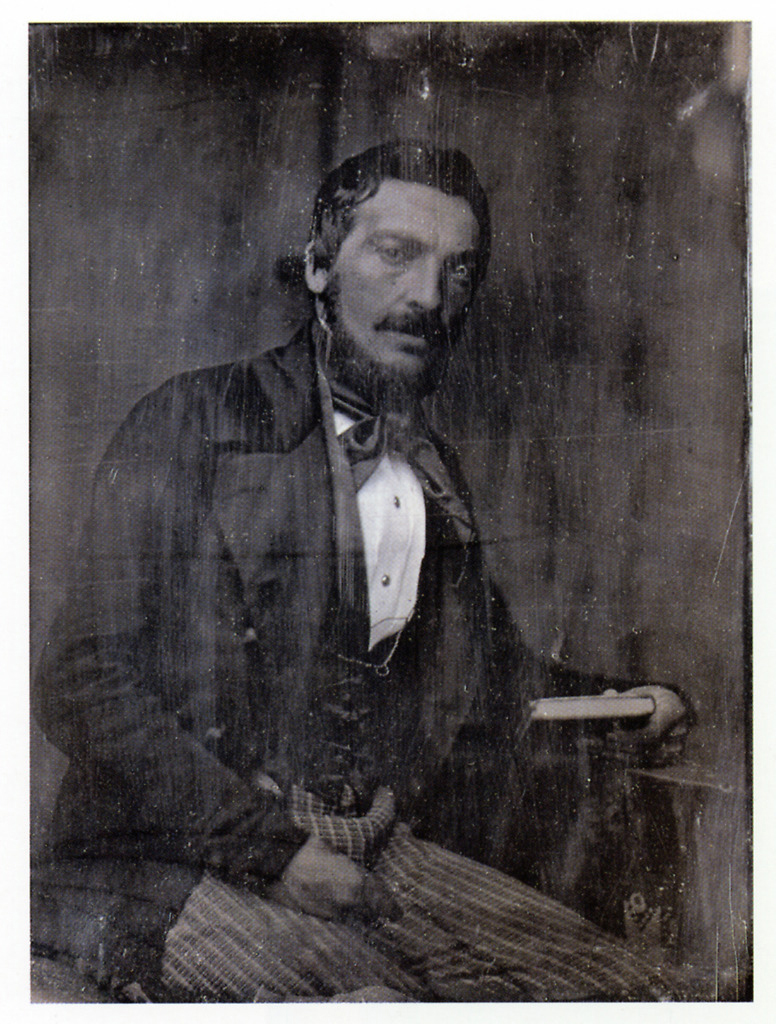
Hermann Biow (German, 1804-1850) 'Heinrich Jakob Venedey' 1848


Hermann Biow (German, 1804-1850)
Heinrich Jakob Venedey
1848
Daguerreotype
20.8 x 15.4cm
Museum für Kunst und Gewerbe, Hamburg


Hermann Biow was an important German daguerreotypist in the early days of photography. Biow became known through his portrait photography during his lifetime. He portrayed politicians, celebrities and wealthy citizens, including Franz Liszt, Alexander von Humboldt and Friedrich Wilhelm IV. He is also known for his parliamentarian portraits of the first German National Assembly in the Paulskirche in Frankfurt in 1848/1849. Today Biow is primarily seen as the founder of German documentary photography.

A daguerreotype of Heinrich Jakob Venedey from 1848 made by Hermann Biow in Frankfurt. Venedey (1805-1871) was a member of the German National Assembly in Frankfurt’s Paulskirche in 1848/1849 as a deputy for Hessen-Homburg. The lawyer belonged to the factions Deutscher Hof and Westendhall of the National Assembly.

Text translated by Google Translate from the German Wikipedia website


Hermann Biow (German, 1804-1850) 'Heinrich Joseph Gerhard Compes' 1848


Hermann Biow (German, 1804-1850)
Heinrich Joseph Gerhard Compes
1848
Daguerreotype
20.4 x 14.8cm
Museum für Kunst und Gewerbe, Hamburg


A daguerreotype of Heinrich Joseph Gerhard Compes (that’s Gerhard Compes) from 1848 by Hermann Biow in Frankfurt. Compes was a member of the German National Assembly in Frankfurt’s Paulskirche in 1848/1849 as a deputy for the 19th province of Rhineland (Siegburg). The Cologne lawyer belonged to the Württemberger Hof faction of the National Assembly.

Text translated by Google Translate from the German Wikipedia website


August Sander (German, 1876-1964) [Farmer, Westerwald (Bauer, Westerwald)] 1910


August Sander (German, 1876-1964)
[Farmer, Westerwald (Bauer, Westerwald)]
1910
Gelatin silver print
© Photograph. Samml./SK Stiftung Kultur – A. Sander Archiv, Köln/VG Bild-Kunst, Bonn 2011
Foto: Jorg Arend/Harald Dubau/Maria Thrun, Museum fur Kunst und Gewerbe Hamburg
Museum fur Kunst und Gewerbe Hamburg


The first section of People of the Twentieth Century is dedicated to the farmer. It begins with a Stammappe, or portfolio of archetypes. Usually three-quarter-length portraits, the photographs depict old farming men, women, and couples seated in their homes or against a natural backdrop. Each is captioned to suggest the fundamental role played by the individual in a balanced society. Sander referred to this farmer as the “earthbound man.” Other archetypes include the “philosopher,” the “fighter or revolutionary,” and the “sage.” All had female counterparts, while couples were labeled as “propriety and harmony.”

Identifying this figure as the “earthbound man,” Sander forged an implicit reference to the soil as a source of livelihood. The farmer’s hands grasp the cane, which keeps him upright and connected to the earth.

Text from the J. Paul Getty Museum website [Online] Cited 04/02/2020


August Sander (German, 1876-1964) 'Jungbauern' (Young Farmers) 1914


August Sander (German, 1876-1964)
Jungbauern, Westerwald, 1914
1914, printed 1962
Gelatin silver print
28.5 x 21.9cm
© Photograph. Samml./SK Stiftung Kultur – A. Sander Archiv, Köln/VG Bild-Kunst, Bonn 2011
Foto: Jorg Arend/Harald Dubau/Maria Thrun, Museum fur Kunst und Gewerbe Hamburg
Museum fur Kunst und Gewerbe Hamburg


August Sander (German, 1876-1964) 'Notar, Köln, 1924' 1924


August Sander (German, 1876-1964)
Notar, Köln, 1924
1924, printed 1962
Gelatin silver print
29.1 x 20.5cm
© Photograph. Samml./SK Stiftung Kultur – A. Sander Archiv, Köln/VG Bild-Kunst, Bonn 2011
Foto: Jorg Arend/Harald Dubau/Maria Thrun, Museum fur Kunst und Gewerbe Hamburg
Museum fur Kunst und Gewerbe Hamburg


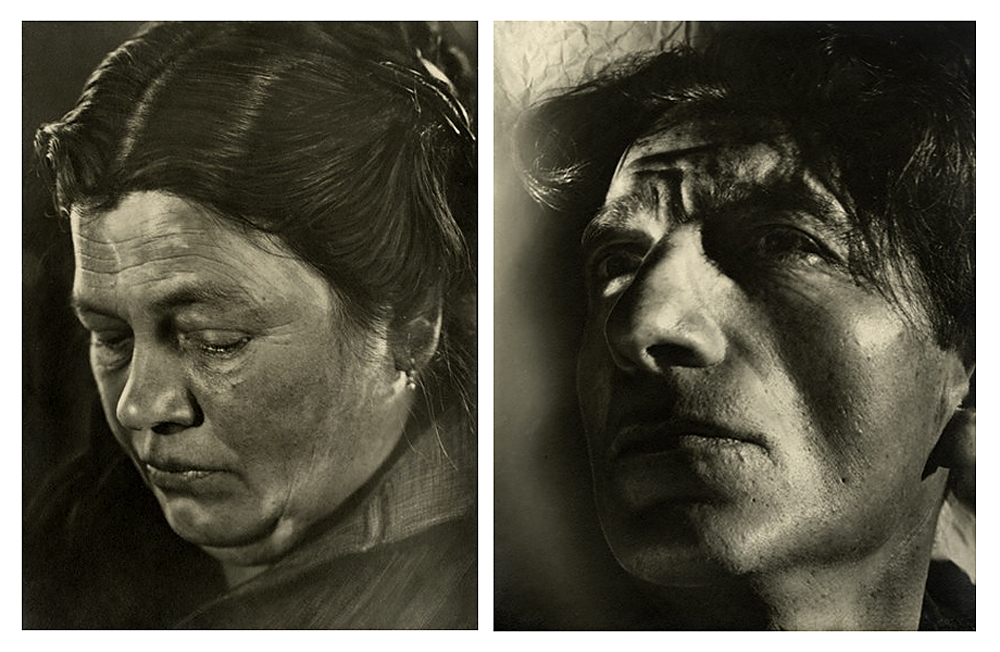
Helmar Lerski (Swiss, 1871-1956) 'Old Working Woman from Germany' (left) and 'Beggar from Saxony' (right) both 1928-1931


Helmar Lerski (Swiss, 1871-1956)
Old Working Woman from Germany (left)
1928-1931
Gelatin silver print

Helmar Lerski (Swiss, 1871-1956)
Beggar from Saxony (right)
1928-1931
Gelatin silver print


The portraits in Lerski’s Everyday Heads show unemployed workers whom the photographer met at a Berlin job centre where he hired them to sit for him. Old Working Woman from Germany 1928-1931 is a close-up shot of a woman’s face, eyes down and mouth shut as though she is quietly contemplating something outside of the picture’s frame (left, above). It is impossible to tell whether this meditative look, a common feature of his portraits, was suggested by Lerski but it is evident that he was in control of nearly every aspect of his pictures. An experienced movie cameraman, he used artificial light reflected by mirrors and screens to give his models an aura and monumentality that people would be familiar with from expressionist feature films. Oblique angles, in line with modernist sensibilities, helped to reinforce the impression of grandeur. He also cropped the images and introduced extra screens so as to eliminate the space around his models heads, and any details from what remained of the background. This also served on occasions to compromise the integrity of the subject’s face though, in other cases, he preferred to blur the contours of the face using strong shadows, as can be seen in Beggar from Saxony 1928-1931 (right, above). The results produced a general notion of everyday people rather than an endorsement of individuality as praised in traditional portraiture. Like Sander and Retzlaff, Lerski only gave the individuals’ professions in the captions, and was keen not to exemplify their class affiliation or social rank. The pictures provide no information about either, focusing instead on the face. In this way Lerski enhanced the common human dignity normally ignored in ‘everyday’ faces, and more especially in those humiliated by unemployment during the post-1929 economic crisis.

Wolfgang Brückle. “Face-Off in Weimar Culture: The Physiognomic Paradigm, Competing Portrait Anthologies, and August Sander’s Face of Our Time,” in Tate Papers No.19 Spring 2013 [Online] Cited 04/20/2020


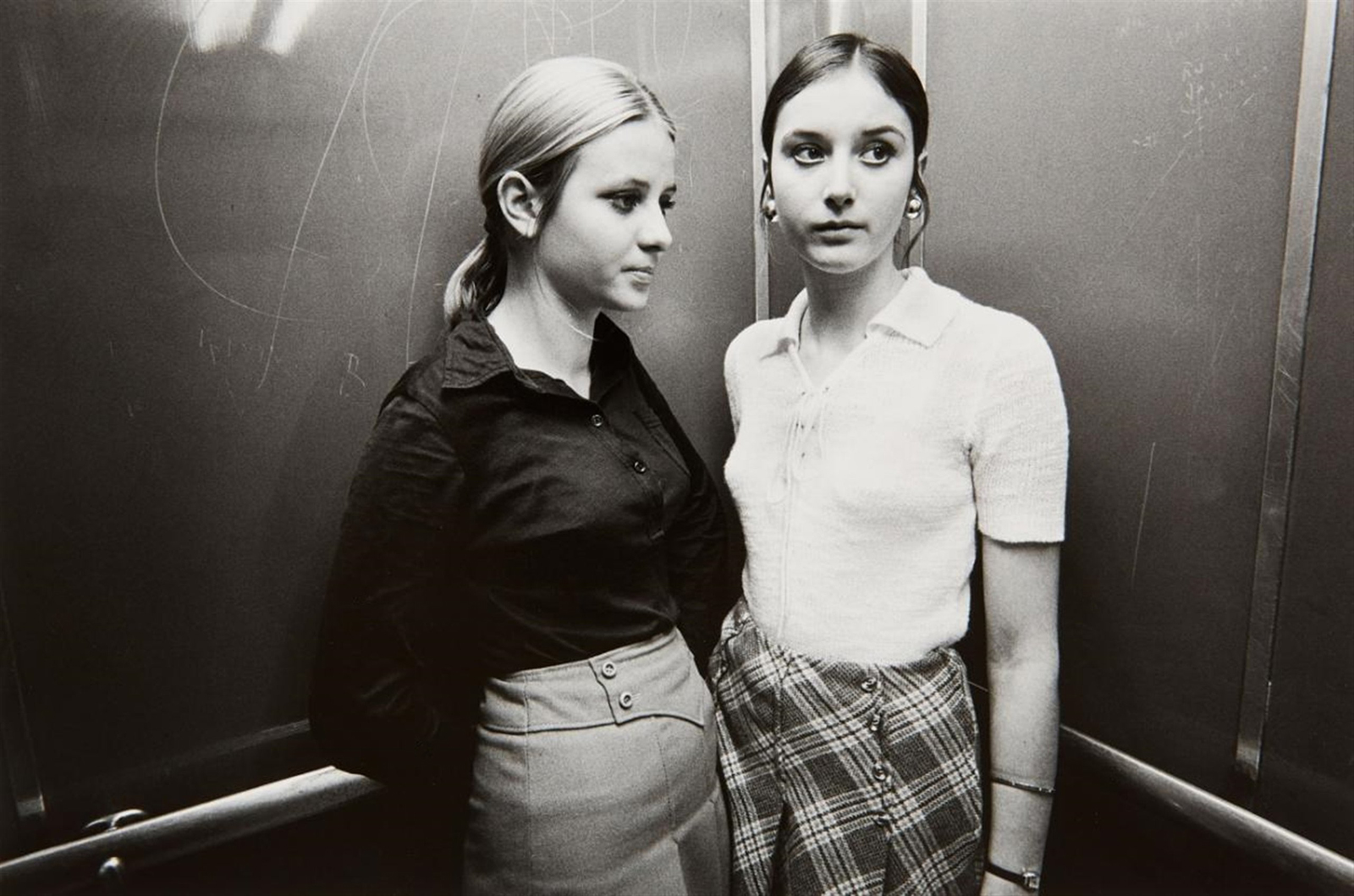
Heinrich Riebesehl (German, 1938-2010) 'Menschen im Fahrstuhl (People in the elevator)' 1969


Heinrich Riebesehl (German, 1938-2010)
Menschen im Fahrstuhl (People in the elevator)
1969
Gelatin silver print


Heinrich Riebesehl (German, 1938-2010) 'Menschen im Fahrstuhl (People in the elevator)' 1969


Heinrich Riebesehl (German, 1938-2010)
Menschen im Fahrstuhl (People in the elevator)
1969
Gelatin silver print


The exhibition comprises 400 exhibits and reflects on important artistic positions in photographic portraiture. During the eventful 20th century portrait photography continually redefines itself, between dissolution of the traditional concept of the subject in the masses and the pursuit of individuality and identity – culturally, socially and in terms of gender. Portraiture is one of the traditional genres in art and was one of the driving forces behind the invention of photography in the 19th century. The image of the human being is subject to constant change, which is also reflected in photography. In postmodern society mass media create ever-changing ideals according to various requirements in tune with a quick succession of trends. Art photography responds to the changes and reflects the development sometimes with spectacular results while it questions the medium of photography itself. The exhibition presents 35 carefully chosen international artists, who through history have opened up a dialogue among themselves; they are referencing each other’s work, and are received and interpreted in ever new contexts. On show are works by Diane Arbus, Hans-Peter Feldmann, Lee Friedlander, Nan Goldin, Roni Horn, Jurgen Klauke, Annie Leibovitz, Helmar Lerski, Irving Penn, Judith Joy Ross, Thomas Ruff, August Sander, Cindy Sherman, Andy Warhol and others. An exhibition in cooperation with the Sammlung Niedersächsische Sparkassenstiftung on the occasion of the 5th Photography Triennial in Hamburg.

“The PORTRAIT-PHOTOGRAPH is a closed field of forces. Four image-repertoires intersect here, oppose and distort each other. In front of the lens, I am at the same time: the one I think I am, the one I want others to think I am, the one the photographer thinks I am, and the one he makes use of to exhibit his art.” (Roland Barthes, Camera Lucida, London, 1984, p. 13). The photographic portrait does indeed combine contrary interests. The relationship between photographer and sitter is crucial. The third factor is the viewer, who is already being considered during the process of photographing. In the knowledge of the particular psychological situation resulting from the presence of a camera, Richard Avedon laconically stated: A photographic portrait is a picture of someone who knows he is being photographed.” The sitters’ reactions to the camera differ, depending on how experienced they are. Fact is: It is not possible to not communicate, as Paul Watzlawick’s research on communication shows. People demean themselves, even if they withdraw or turn away.

The confrontation climaxes in the principle of frontality, which remains valid today although it is constantly being tried and questioned. The project Serial Portraits invites the visitor on a journey through time starting from the beginnings with Hermann Biow’s (1804-1850) daguerreotypes, David Octavius Hill’s (1802-1870) and Robert Adamson’s (1821-1848) talbotypes up to the digital present with Michael Najjar’s (b. 1966) cyborgs, and wondering whether classical portraiture has come to its end.

The beginning includes a model case, where due to the long exposure necessary the models do not live out of the moment but into the moment, as Walter Benjamin said (Little History of Photography, 1931). Thirty-Minute Dialogue by Kyungwoo Chun (b. 1969) from 2000 is examining the synthesis of expression, which is necessitated by the models’ keeping still for so long. An exposure time of half an hour allows the work to penetrate the depths of the pictorial space.

The creativity of the 1920s and the New Vision inspires a “visual vocabulary” appropriate for modernity. Its different forms can be seen in the individual responses of photographers such as August Sander (1876-1964). Being a typical studio photographer, he works on a typology of “man of the 20th century”, beginning with the agricultural type, his Stammappe (engl.: Germinal Portfolio) being a memorial to the latter. Helmar Lerski (1871-1956) takes a different stance; having originally worked in film, he is photographing his Everyday Heads in extreme close-ups. Making use of effective lighting in his studio, he invites unknown sitters from the street and fashions characteristic heads.

Sander’s oeuvre represents a turning point for comparative vision as a genuine principle in series. Considering photography of the 1920s and questioning the photographer’s position as well as the medium itself, author-photography in the 1970s is developing a new idea of documentary. Thomas Ruff (b. 1958) is testing the limits, when he presupposes that photography can merely reflect the surface of things. Bernhard Fuchs is adding a personal touch when he is seeking out the places of his own past. The great portrait photographer Irving Penn is cornering his celebrities in a corner of his studio and allows them to find their place, according to their inclinations and abilities to self-represent.

Diane Arbus (1923-1971) is holding a one-sided dialog, certainly not giving equal weight to the photographer’s interests and that of her models. While the frontality signals the conventionally due deference, the complex composition of her pictures is dominated by the superior gaze directed at the supposedly others, the freaks of bourgeois society. Until now Arbus is misinterpreted as a documentary photographer. It is being ignored that photography inevitably presents a specific view of reality and that the viewer’s position has been carefully constructed within the picture.

Only pictures that have been taken without the awareness of those represented document a found situation at the same time as they present a monologue. Heinrich Riebesehl (1938-2010) chose this method for his series Menschen im Fahrstuhl (engl.: People in an Elevator), which he completed in just one day. In a moment of pause people can reflect and are not forced to react to being observed. In his pictures the photographer respects their individuality without judging social differences.

Examples for comparability as principle in a series can be found early on. Hermann Biow’s (1804-1850) daguerreotypes as unique copies of the members of parliament in the Paulskirche in Frankfurt from 1848/1849 were later reproduced as lithographs and distributed in portfolios. These politicians were the direct successors to the galleries of ancestral portraits in stately homes, whereby the new medium was democratic. Rudolph Duhrkoop’s Hamburgische Männer und Frauen amAnfang des XX. Jahrhunderts (engl.: Men and Women of Hamburg in the Early XXth Century) represent the citizens in this tradition.

Since 1975 Nicholas Nixon (b. 1974) is extending the series The Brown Sisters every year. His study is observing changes, while Hans-Peter Feldmann (b. 1941) is representing a century through 101 average people in his sequence 100 Jahre (engl.: 100 Years). It is fascinating, how the uniqueness of each person even if they remain anonymous is transported in the photographic portrait. Judith Joy Ross’ (b. 1946) series Protesting the U. S. War in Iraq documents a seriousness in the sitters’ faces, the political dimension of which can only be fully grasped with the information on the context. As with every photograph the title or accompanying text is part of the message.

Press release from the Museum für Kunst und Gewerbe, Hamburg website


Andy Warhol (American, 1928-1987) 'Self-Portrait in Drag (Platinum Pageboy Wig)' 1981


Andy Warhol (American, 1928-1987)
Self-Portrait in Drag (Platinum Pageboy Wig)
1981
Foto: Christoph Irrgang, Hamburg
© 2011 The Andy Warhol Foundation for the Visual Arts, Inc./Artists Rights Society (ARS), New York
Hamburger Kunsthalle


Andy Warhol (American, 1928-1987) 'Self-Portrait in Drag' 1981


Andy Warhol (American, 1928-1987)
Self-Portrait in Drag
1981
Foto: Christoph Irrgang, Hamburg
© 2011 The Andy Warhol Foundation for the Visual Arts, Inc./Artists Rights Society (ARS), New York
Hamburger Kunsthalle


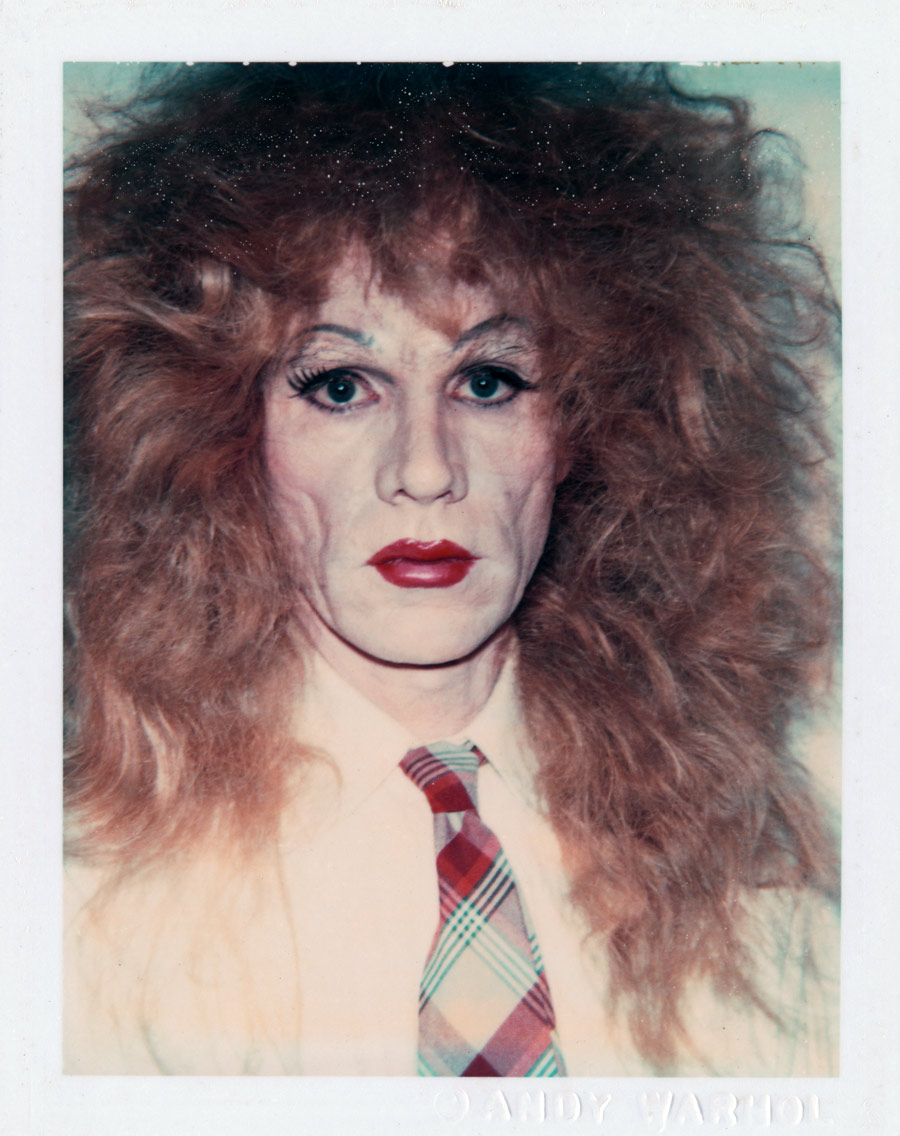
Andy Warhol (American, 1928-1987) 'Self-Portrait in Drag (Long Reddish-Brown Wig and Plaid Tie)' 1981/82


Andy Warhol (American, 1928-1987)
Self-Portrait in Drag (Long Reddish-Brown Wig and Plaid Tie)
1981/1982
Foto: Christoph Irrgang, Hamburg
© 2011 The Andy Warhol Foundation for the Visual Arts, Inc. / Artists Rights Society (ARS), New York
Hamburger Kunsthalle


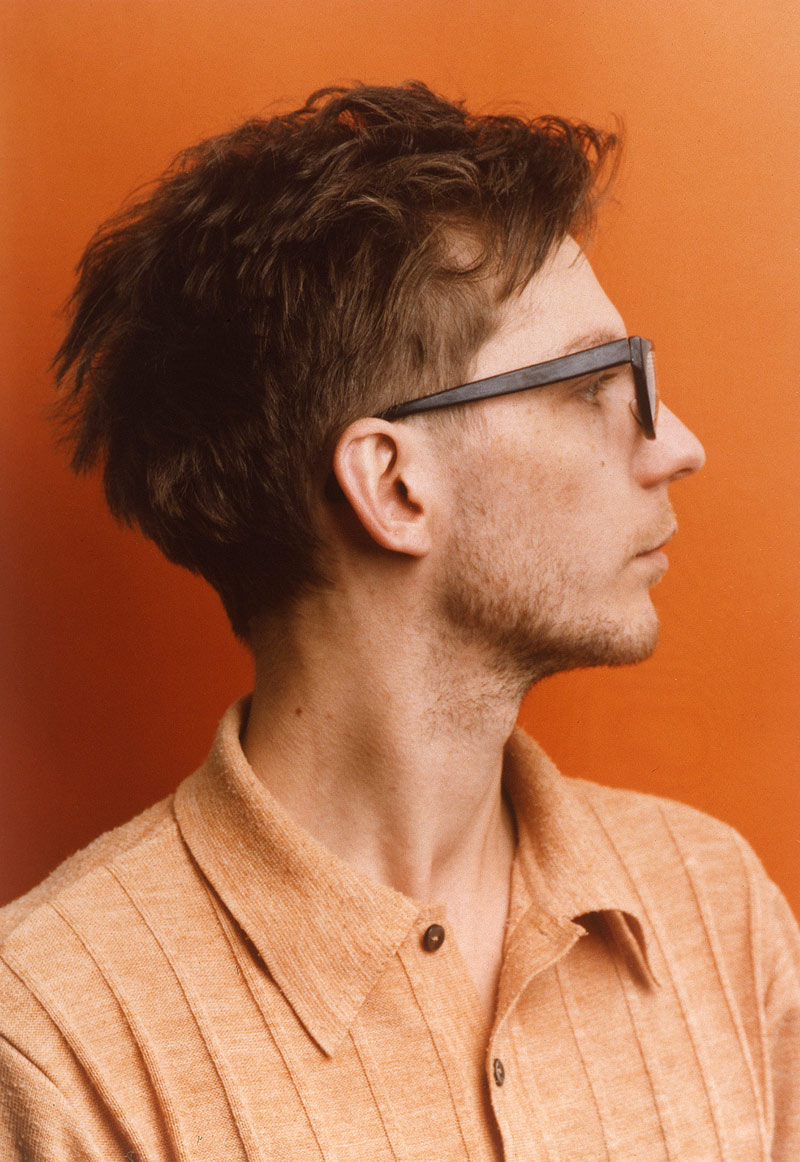
Thomas Ruff (German, b. 1958) 'Portrait (T. Ruff)' 1983


Thomas Ruff (German, b. 1958)
Portrait (T. Ruff)
1983
Colour Print
24 x 18cm
Thomas Ruff/VG Bild-Kunst, Bonn 2011
Niedersachsische Sparkassenstiftung, Hannover


Thomas Ruff (German, b. 1958) 'Portrait (C. Bernhard)' 1985


Thomas Ruff (German, b. 1958)
Portrait (C. Bernhard)
1985
Colour Print
24 x 18cm
© Thomas Ruff/VG Bild-Kunst, Bonn 2011
Niedersachsische Sparkassenstiftung, Hannover


Nan Goldin (American, b. 1953) 'All by Myself' 1993-1996 (detail)


Nan Goldin (American, b. 1953)
All by Myself (detail)
1993-1996
Project installation with 89 colour slides and programmed soundtrack, running time: 5 min. 33 sec
© Nan Goldin/Courtesy Matthew Marks Gallery, New York
Foto: Christoph Irrgang, Hamburg
Hamburger Kunsthalle, Dauerleihgabe F. und W. Stiftung fur zeitgenossische Kunst in der Hamburger Kunsthalle


Nan Goldin (American, b. 1953) 'All by Myself' 1993-1996 (detail)


Nan Goldin (American, b. 1953)
All by Myself (detail)
1993-1996
Project installation with 89 colour slides and programmed soundtrack, running time: 5 min. 33 sec
© Nan Goldin/Courtesy Matthew Marks Gallery, New York
Foto: Christoph Irrgang, Hamburg
Hamburger Kunsthalle, Dauerleihgabe F. und W. Stiftung fur zeitgenossische Kunst in der Hamburger Kunsthalle


Rineke Dijkstra (Dutch, b. 1959) 'Montemor, Portugal, May 1, 1994' 1994


Rineke Dijkstra (Dutch, b. 1959)
Montemor, Portugal, May 1, 1994
1994
C-Print
35.2 x 27.8 cm
© Rineke Dijkstra
Foto/Photo: Jorg Arend/Harald Dubau/Maria Thrun, Museum fur Kunst und Gewerbe Hamburg
Haus der Photographie/Sammlung F. C. Gundlach, Hamburg


Michael Schmidt (German, 1945-2014) From the 81-part series 'Women' 1997-1999


Michael Schmidt (German, 1945-2014)
Aus der 81-teiligen serie Frauen
From the 81-part series Women
1997-1999
Gelatin silver print
44.1 x 29.9cm
© Michael Schmidt
Niedersachsische Sparkassenstiftung, Hannover


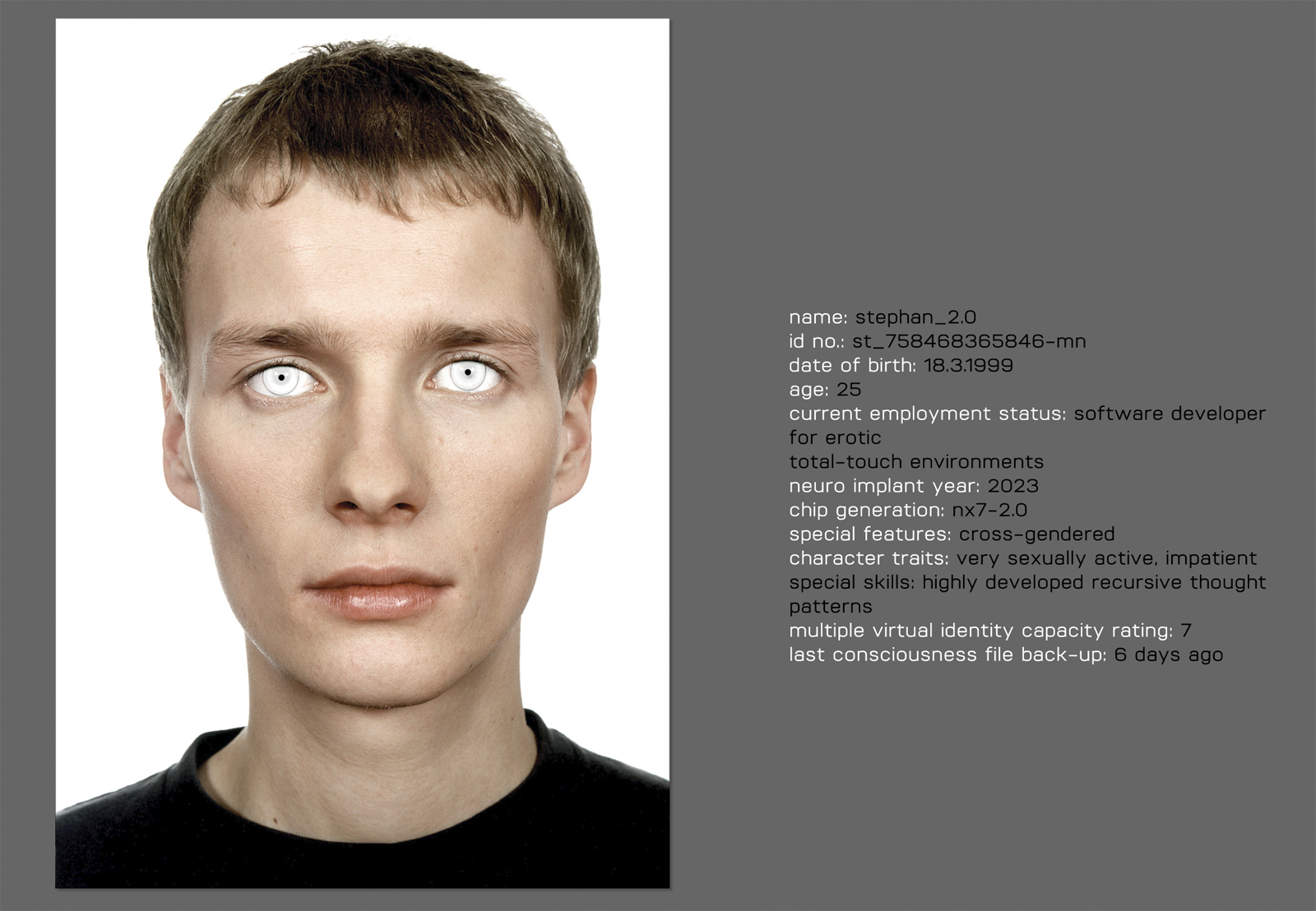
Michael Najjar (German, b. 1966) 'Stephan_2.0' from the 'nexus project part I' 1999


Michael Najjar (German, b. 1966)
Stephan_2.0 from the nexus project part I
1999
Hybrid photography, archival pigment print, aludibond, diasec
140 x 100cm / 56 x 40 in, edition of 6


Nexus Project

The series “nexus project part I” investigates the implications of the future enhancement of the human brain with miniaturised computer chips, infiltrated in the neuronal structures of the human organism.

Such a development will give birth to a new form of life – the cyborg, a hybrid compound of human and machine. A new set of questions are raised concerning issues of difference and identification between biologically correct beings and technically or genetically enhanced humans.

This development brings with it a host of new concerns: What impact will neuro-implants have on human consciousness? How will society cope with this kind of being, and what implications will they have for our social and cultural interaction?

“nexus project part I” consists of eight photographic portraits. These have undergone a digital modification of the iris, which gives the portrait faces an intimidating, almost inhuman look whilst at the same time it exerts a strong direct fascination on the viewer.

The highly charged poles of tensions and cross-tensions between fascination and intimidation also shape the para-meters in which the future development of human being to hybrid organism will take place.

Text from the Michael Najjar website [Online] Cited 04/02/2020


Kyungwoo Chun (Korean, b. 1969) 'Thirty-Minute Dialogue #1' 2000


Kyungwoo Chun (Korean, b. 1969)
Thirty-Minute Dialogue #1
2000
Gelatin silver print
40 x 50cm
© Kyungwoo Chun


Roni Horn (American, b. 1955) 'Portrait of an Image (with Isabelle Huppert)' 2005


Roni Horn (American, b. 1955)
Portrait of an Image (with Isabelle Huppert)
2005
50 Fotografien (Version 1)
Colour Print
38.1 x 31.8cm
© Courtesy the artist and Hauser & Wirth


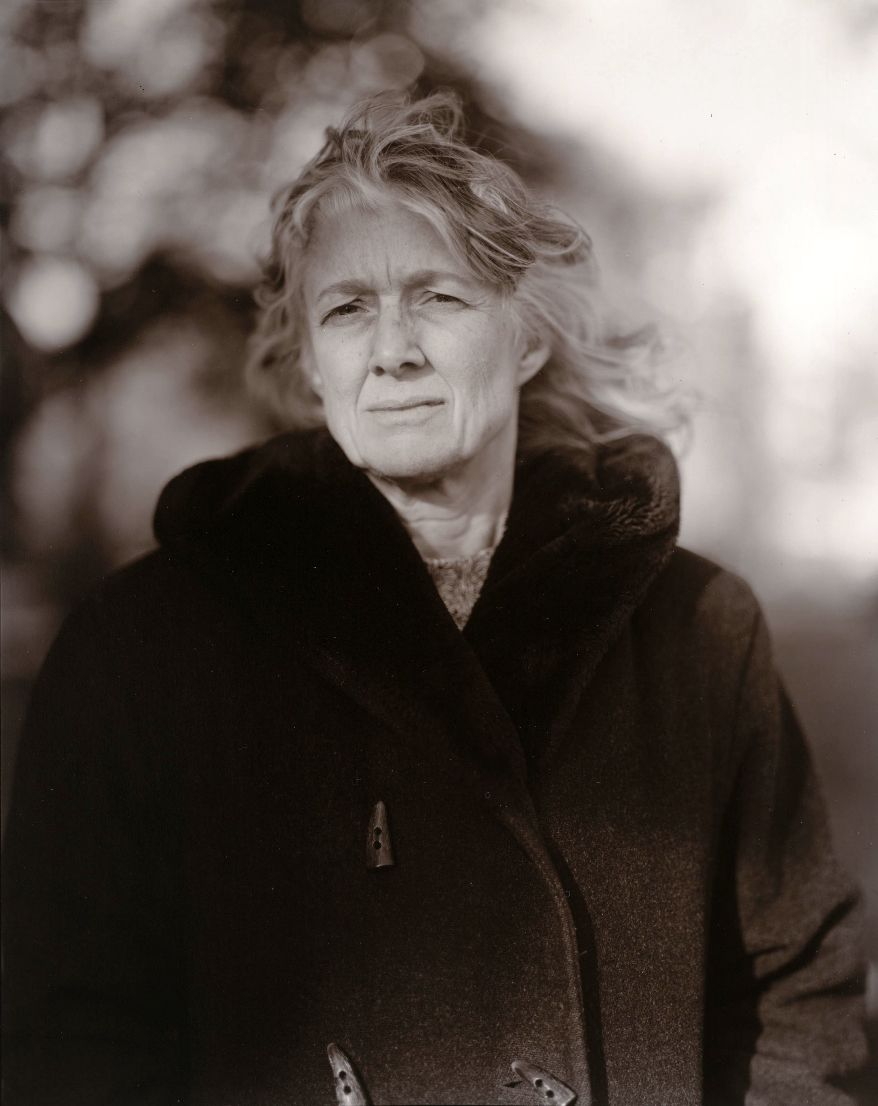
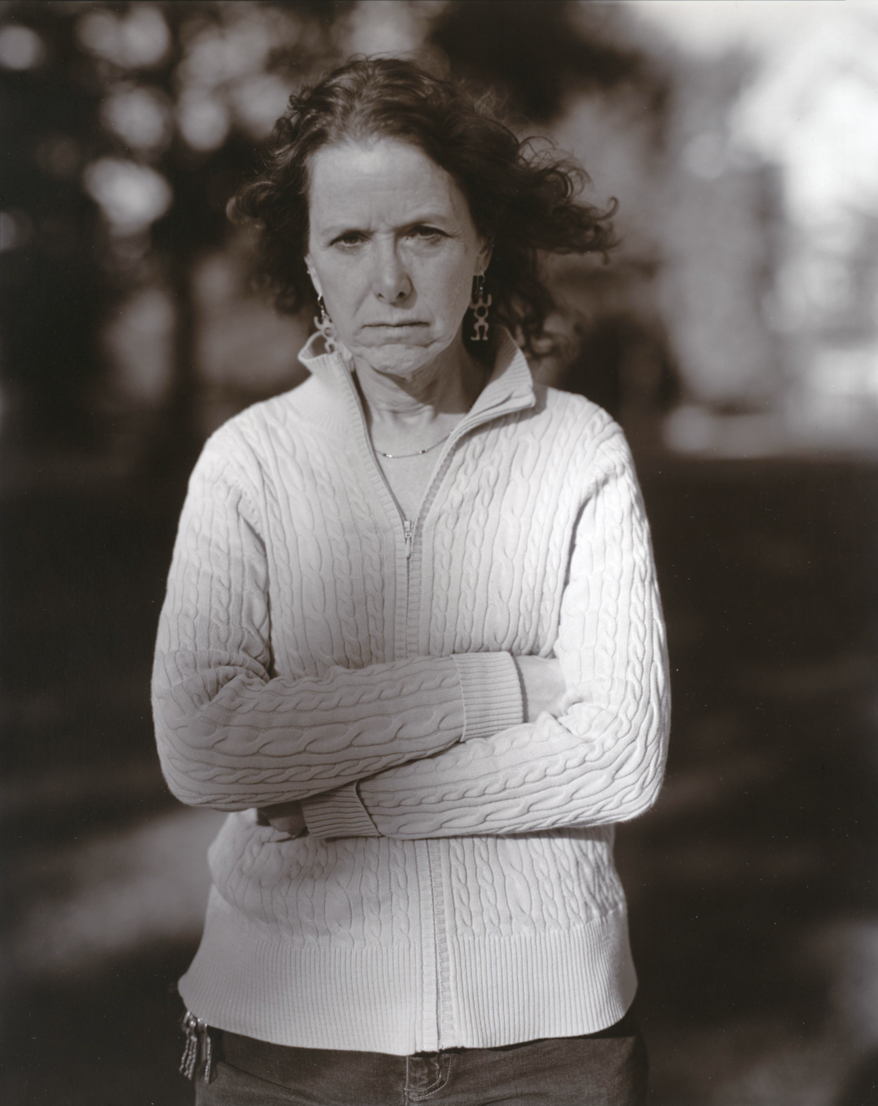
Judith Joy Ross (American, b. 1946) 'Jane C. Keller, Protesting the U.S. War in Iraq, Williamsport, Pennsylvania' from the series 'Protest the War' 2006


Judith Joy Ross (American, b. 1946)
Jane C. Keller, Protesting the U.S. War in Iraq, Williamsport, Pennsylvania, from the series Protest the War
2006
Gelatin silver print


Judith Joy Ross (American, b. 1946) 'Lynn Estomin, Protesting the U.S. War in Iraq, Williamsport, Pennsylvania' from the series 'Protest the War' 2006


Judith Joy Ross (American, b. 1946)
Lynn Estomin, Protesting the U.S. War in Iraq, Williamsport, Pennsylvania, from the series Protest the War
2006
Gelatin silver print


Nicholas Nixon (American, b. 1947) 'The Brown Sisters, East Greenwich, R.I.' 1980


Nicholas Nixon (American, b. 1947)
The Brown Sisters, East Greenwich, R.I.
1980
Gelatin silver print


Nicholas Nixon (American, b. 1947) 'The Brown Sisters, Boston' 2012


Nicholas Nixon (American, b. 1947)
The Brown Sisters, Boston
2012
Gelatin silver print


Museum für Kunst und Gewerbe Hamburg
Steintorplatz, 20099 Hamburg

Opening hours:
Tuesday – Sunday 10am – 6pm
Thursday until 9 pm
Closed Mondays
Museum fur Kunst und Gewerbe Hamburg website

LIKE ART BLART ON FACEBOOK

Back to top

Exhibition: ‘Thomas Ruff. Surfaces, Depths’ at Kunsthalle Wien, Vienna

Exhibition dates: 21st May – 13th September, 2009


Thomas Ruff (German, b. 1958) 'Interieur 2D (Tegernsee)' 1982 from the exhibition 'Thomas Ruff. Surfaces, Depths' at Kunsthalle Wien, Vienna, May - Sept, 2009
 

Thomas Ruff (German, b. 1958)
Interieur 2D (Tegernsee)
1982
Chromogenic print
Courtesy der Künstler / the artist
© VBK, Wien 2009


An exhibition of the work of the renowned photographer Thomas Ruff that concentrates on his new Cassini and Zycles series. His clinical photographs with their catatonic rigidity promote stupor in the viewer. The viewer becomes complicit in a platonic relationship (of forms) with the non-reality presented by the camera, directed by Ruff’s ironic, surgical gaze. Ruff corrupts and disturbs traditional binaries of presence / absence, truth / reality, surfaces / depths to challenge the very basis of seeing, the very basis of photography’s link to indexicality and presence in a contemporary digital world, something that William Eggleston seems to have lost the art of doing (please see the previous post).

As Maurice Blanchot has observed,

“The image has nothing to do with signification, meaning, as implied by the existence of the world, the effort of truth, the law and the brightness of the day. Not only is the image of an object not the meaning of that object and of no help in comprehending it, but it tends to withdraw it from its meaning by maintaining it in the immobility of a resemblance that it has nothing to resemble.”1


There is no single truth; there are only competing narratives and interpretations of a world that cannot be wholly, accurately described.2 In the splitting apart of image and meaning there is a crisis in control: it becomes illusory and is marked by doubt.

In Ruff’s photographs the relationship between image and context, between cause and effect becomes further layered until the very act of seeing is no longer framed or presupposed through relations of distance or perspective.3 Ruff’s photographs become a struggle of and for positionality in the physical, mental and emotional conflicts evidenced in the viewer as we look, askance? with a paradoxical intent? at these unemotional images.

Dr Marcus Bunyan


1/ Blanchot, Maurice. The Gaze of Orpheus. New York: Barrytown, 1981, p. 85

2/ Townsend, Chris. Vile Bodies: Photography and the Crisis of Looking. Munich: Prestel, 1998, p. 10

3/ Burnett, Ron. Cultures of Vision: Images, Media, & the Imaginary. Bloomington: Indiana University Press, 1995, pp. 137-138


Many thankx to Kunsthalle Wien for allowing me to publish the photographs in the posting. Please click on the photographs for a larger version of the image.


Thomas Ruff (German, b. 1958) 'Zycles 3048' 2008 from the exhibition 'Thomas Ruff. Surfaces, Depths' at Kunsthalle Wien, Vienna, May - Sept, 2009


Thomas Ruff (German, b. 1958)
Zycles 3048
2008
Chromogenic print
Courtesy der Künstler / the artist
© VBK Wien, 2009


Thomas Ruff (German, b. 1958) 'Zycles 3045' 2008


Thomas Ruff (German, b. 1958)
Zycles 3045
2008
Chromogenic print
Courtesy der Künstler / the artist
© VBK Wien, 2009


Thomas Ruff (German, b. 1958) 'Cassini 01' 2008


Thomas Ruff (German, b. 1958)
Cassini 01
2008
Chromogenic print
Courtesy der Künstler / the artist and Mai 36 Galerie, Zürich
© Thomas Ruff


Thomas Ruff (German, b. 1958) 'Cassini 06' 2008


Thomas Ruff (German, b. 1958)
Cassini 06
2008
Chromogenic print
Courtesy der Künstler / the artist and Mai 36 Galerie, Zürich
© Thomas Ruff


Thomas Ruff (German, b. 1958) 'Cassini 08' 2008


Thomas Ruff (German, b. 1958)
Cassini 08
2008
Chromogenic print
Courtesy der Künstler / the artist and Mai 36 Galerie, Zürich
© Thomas Ruff


Thomas Ruff (German, b. 1958) 'Cassini 03' 2008


Thomas Ruff (German, b. 1958)
Cassini 03
2008
Chromogenic print
Courtesy der Künstler / the artist and Mai 36 Galerie, Zürich
© Thomas Ruff


Yet Ruff has always treated the medium of photography with skepticism: for him, the photographic surface is a thin foil which tricks the viewer with its illusion of extreme realism and at the same time reveals the fundamental impossibility of experiencing the world in our digital age. Ruff’s images seem emphatically to deny photography’s main attribute – that is, the offer of a reliable record of reality. Instead, through his mute images devoid of all emotion, Ruff presents us with a contemporary subjectivity defined by amnesia.

Text from the Castello di Rivoli website [Online] Cited 24/05/2009. No longer available online


Thomas Ruff (German, b. 1958) 'Portrait (A. Siekmann)' 1987


Thomas Ruff (German, b. 1958)
Portrait (A. Siekmann)
1987
Chromogenic print
210 x 165cm (82 11/16 x 64 15/16 in.)
Courtesy der Künstler / the artist
© VBK, Wien 2009


During the late 1980s Ruff photographed his fellow students at the Düsseldorf Academy of Art, combining the typological mode of his teacher Bernd Becher with the serial progressions and primary structures of Minimalism. The large scale and technical perfection of Ruff’s portraits refer to both the museum and the street – to billboards and heroic painting – while elevating the anonymous sitter to the stature and visibility of a public figure. Instead of presuming to depict the transcendent, individual essence of the sitter, however, Ruff’s portraits deliberately assume the neutrality of the mug shot, physiognomic study, and identity card, and, by extension, the entire brightly lit world of surveillance in which his subjects were raised. The age and milieu of his sitters are crucial to the pictures’ meaning: these young media-savvy people are not threatened by the camera eye but adjust themselves comfortably yet firmly to its probing vision. The results are both seductive and subtly disquieting, like studying a human specimen whose every pore and hair is available for careful study, yet whose thoughts and feelings are always just out of reach.

Text from the Metropolitan Museum of Art website


Thomas Ruff (German, b. 1958) 'Portrait (A. Kachold)' 1987


Thomas Ruff (German, b. 1958)
Portrait (A. Kachold)
1987
Chromogenic print
Courtesy der Künstler / the artist
© VBK, Wien 2009


Thomas Ruff (German, b. 1958) 'Portrait (S. Weirauch)' 1988


Thomas Ruff (German, b. 1958)
Portrait (S. Weirauch)
1988
Chromogenic print
Courtesy der Künstler / the artist
© VBK, Wien 2009


“The reality in front of the camera is reality of the first degree, the representation of the reality in front of the camera is reality of the second degree, and then come any number of possible gradations and distortions.”

“The difference between my predecessors and me is that they believed to have captured reality and I believe to have created a picture. We all lost, bit by bit, the belief in this so-called objective capturing of real reality.”


Thomas Ruff


“To try to see more and better is not a matter of whim or curiosity or self-indulgence. To see or to perish is the very condition laid upon everything that makes up the universe, by reason of the mysterious gift of existence.”


Teilhard de Chardin, “Seeing” 1947


The work of Thomas Ruff, who numbers among today’s most important photographers, focuses our attention on such diverse everyday subjects as people, architecture, the universe, and the Internet. With its extensive solo presentation with a total of about 150 exhibits from 11 groups of works, Kunsthalle Wien offers a first comprehensive survey of the artist’s manifold oeuvre in Austria.

Thomas Ruff studied at the Dusseldorf Academy of Arts, graduating as a student of Bernd and Hilla Becher besides Andreas Gursky, Candida Höfer, Axel Hütte, and Thomas Struth, all of them celebrating an international career these days. The photographer strikes us as a sharp and concentrated observer of his motifs. To him, objectivity is nothing neutral though, but has to be redefined with each new photograph. The series of large-scale portraits which Ruff started working on in 1986 and for which he became known internationally, for example, fascinates us because of the determined detachment with which he captured his models that were mostly acquainted with him. This approach makes for a hyper-precise, chirurgic gaze reproducing everything down to the last detail as equivalent. It also demonstrates the degree of the artist’s interest in the history of photography, how critically he considers its subject, and the skeptical attitude he sometimes adopts toward the medium.

From his stereoscopic views of the urban development myth of Brasilia and his apparently anti-essayistic architectural photographs of buildings by Herzog & de Meuron, which are based on instructions, to his digital processing of images of the planet Saturn available free of charge on the NASA website, the artist explores the concepts of the exemplary, of objectivity, of reality, and of zeitgeist. Based on half of his about twenty thematic groups of works created so far, the exhibition examines the concept pair surface / depth, which seems to be quite simple at first sight, but reveals itself as strongly discursive on closer inspection, and focuses the attention on formal aspects one comes upon again and again in his entire oeuvre.

Right in time for the International Year of Astronomy 2009, Thomas Ruff presents works from his most recent series Cassini – subtly manipulated pictures of Saturn and its moons taken by the Cassini spacecraft. It was the Italian astronomer Galileo Galilei who opened a window to the skies with his telescope 400 years ago. He thus revolutionised man’s image of himself in regard to the universe, but also his understanding of and his way of dealing with the concepts of nearness and distance, surface and depth.

Thomas Ruff. Surfaces, Depths conveys what these concepts, translated into pictures, do to the viewer on a phenomenological level and how they challenge him. The curves of Ruff’s zycles, distorted into the three-dimensional sphere, unfold the sensory experience of roaming virtual depths only reserved to the human eye. Yet, gazing at the represented motifs also elucidates the artist’s contextual objective of providing a critical comment on the various possibilities of the photographic apparatus to depict and manipulate reality.

Press release from the Kunsthalle Wien website [Online] Cited 24/05/2009. No longer available online


Thomas Ruff numbers among today’s most important photographers, his oeuvre encompassing such diverse subject areas as people, architecture, the universe, and the Internet. With its extensive solo exhibition presenting a total of about 150 works, the Kunsthalle Wien offers the first comprehensive survey of the artist’s manifold production in Austria.

Thomas Ruff strikes us as a sharp and concentrated observer rendering his motifs with a hyper-precise, chirurgic gaze. To him, the objective representation of reality is no neutral process, but something questioned with each new photograph. Running through the exhibition like a thread is the apparent pair of opposites of surface and depth and its highly variable manifestations. Next to his series of large-format portraits from the 1980s, for which Ruff received international acclaim, and his architectural photographs of buildings by Herzog & de Meuron, which are based on instructions, the show focuses on his most recent cassini and zycles series. Digitally processing images of the planet Saturn and its moons from the NASA website, the artist explores the notions of the exemplary, of reality, and of zeitgeist. Also depicting the pair of concepts surfaces/depths, the seemingly three-dimensional curves of Ruff’s zycles unfold the sensory experience of roaming virtual depths reserved to the human eye alone.

Text from the Kunsthalle Wien website


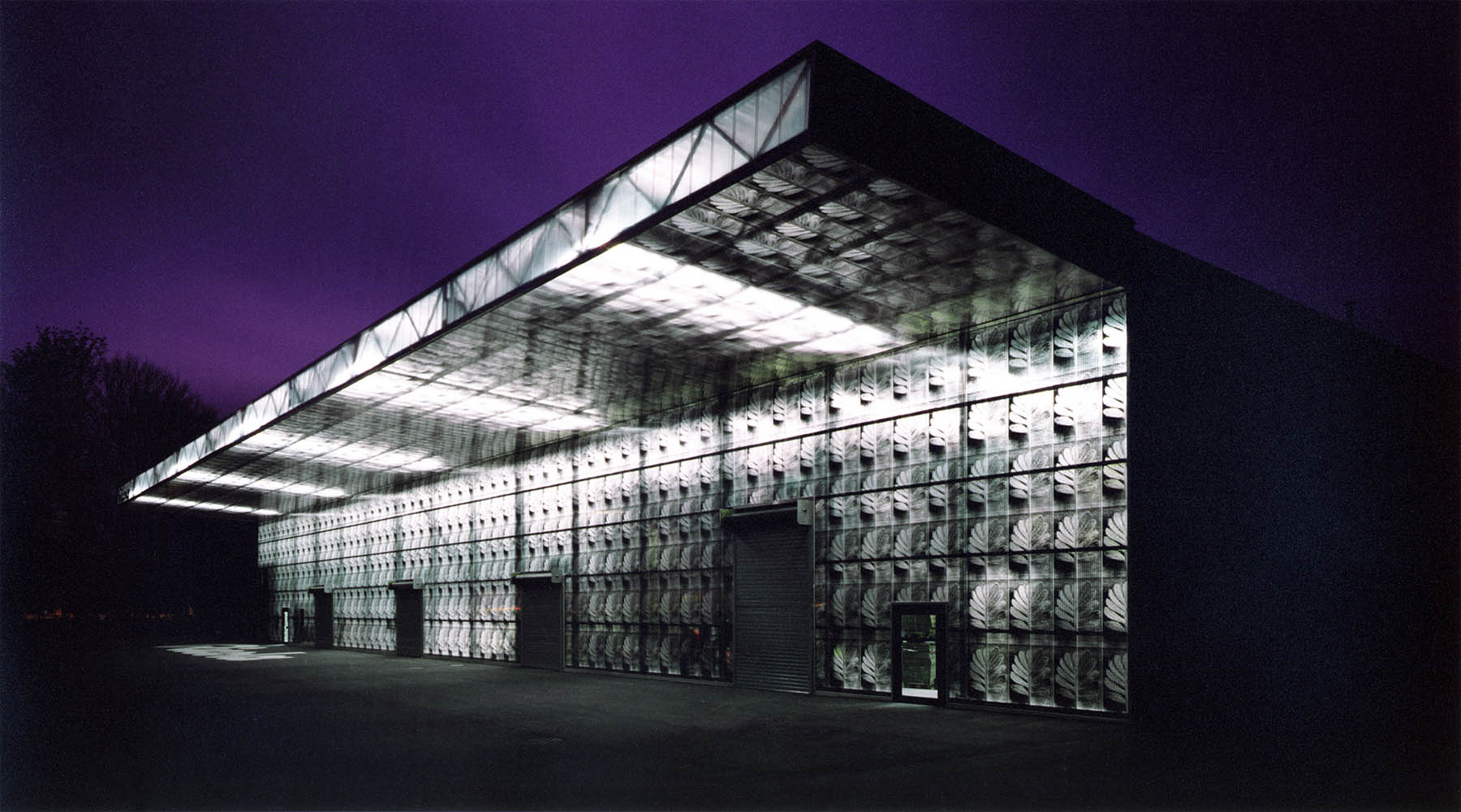
Thomas Ruff (German, b. 1958) 'Herzog & de Meuron, Ricola Mulhouse' 1994


Thomas Ruff (German, b. 1958)
Herzog & de Meuron, Ricola Mulhouse
1994
Chromogenic print
Courtesy der Künstler / the artist
© Thomas Ruff


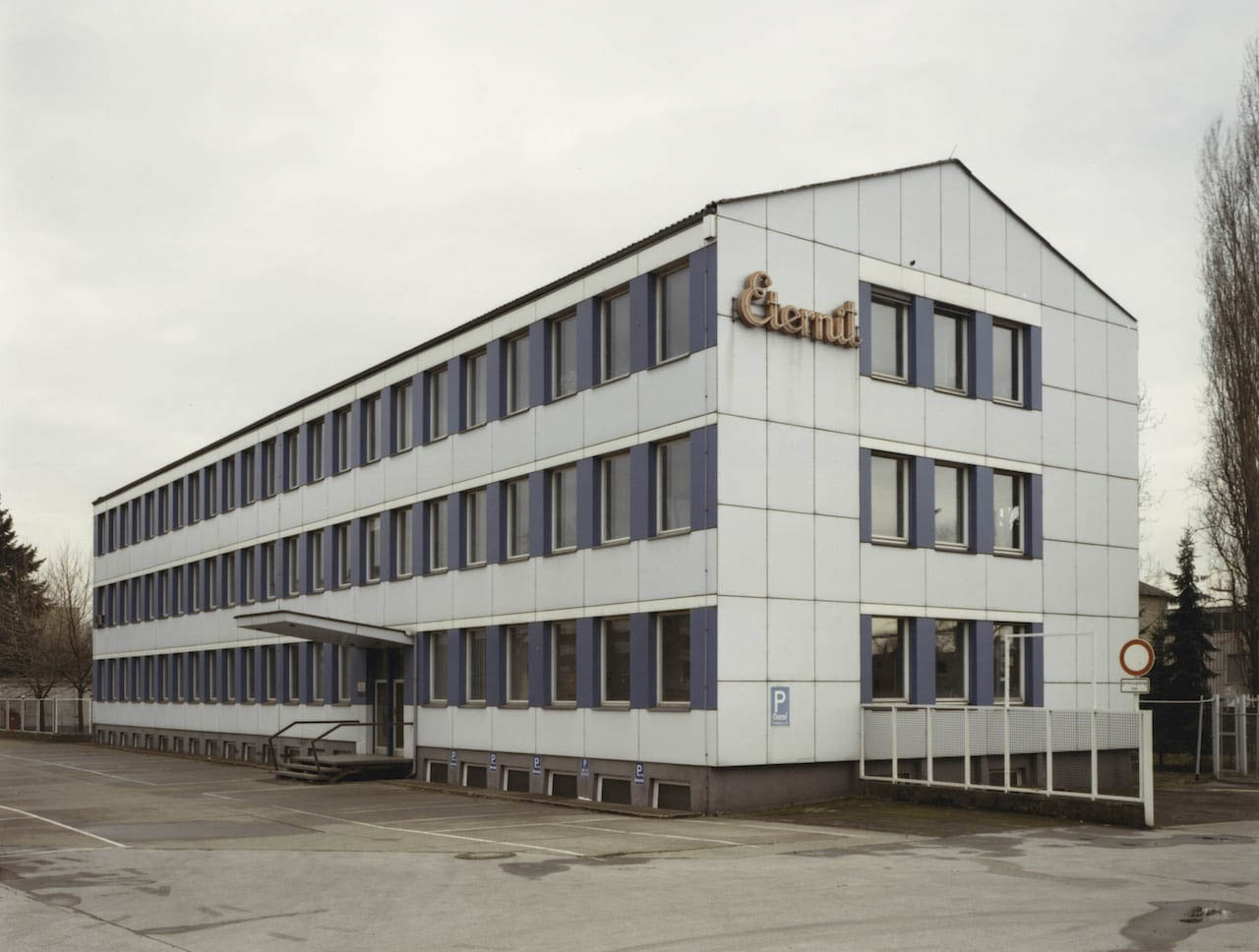
Thomas Ruff (German, b. 1958) 'House Nr. 11 III' 1990


Thomas Ruff (German, b. 1958)
House Nr. 11 III
1990
Chromogenic print
Courtesy der Künstler / the artist
© VBK, Wien 2009


Thomas Ruff first became known through his portraits of houses and factory buildings, as well as the night sky, portrayed in a natural and objective manner. Ruff photographed the buildings either in strict frontality or at right angles to one another, always paying attention to regular sharpness and neutral lighting, and from the same standpoint. With his controversially discussed nudes of erotic, sometimes pornographic scenes from the Internet, which he projected onto unsharp large formats, he expanded the borders of photography in 1999. Since then, his Internet blow-ups with clearly emphasised pixel structures have been regarded as his ‘trademark’. Thomas Ruff started concerning himself with the medium of the image at the very beginning of his artistic career. In addition to self-produced analogue and digital photographs, he worked from the basis of existing pictures. He liked working with unspectacular, historically typical motifs and elaborated the images on the computer, whereby he was particularly interested in the technical side of photography. Often, a new group of works would start with the choice of a specific technique, for example, the night sky pictures from 1992 to 1995 which were made with the help of a camera and a night vision enhancer. Since the night vision enhancer is a visual instrument developed for the Gulf War, this series is a subliminal play on the medial dimension created by this war.

After digitally creating the Substrat series of 2002 abstract, psychedelic colour images from Manga comics, he began his latest zycles series, in which he worked with far more complexly abstract dimensions. These consisted of large-format inkjet prints on canvas that already created a furore at this year’s Art Unlimited in Basel. It is hard to believe that these compositions, which consisted of curved lines and were spread all over the image, originated in mathematics, or more precisely, in antiquated 19th century books on electro-magnetism that portrayed magnetic fields on copperplates. Thomas Ruff was particularly interested in translating these drawings into three-dimensional space. For this he used a 3D computer programme that translated mathematic formulas into complex, three-dimensional linear structures. Ruff recorded different detailed views from these virtually produced linear structures. The weave of lines developed in front of an open space of unspecified depth, sometimes filigree, sometimes accentuated. Their dynamics are reminiscent of the lines of magnetic fields, but also of informal line drawings. Either way, they invite the viewers to play with their own perceptions.

Text by Dominique von Burg; translation: Maureen Oberli-Turner from the Mai 36 Galerie website [Online] Cited 24/05/2009. No longer available online


Thomas Ruff (German, b. 1958) 'Jpeg icbm05' 2007


Thomas Ruff (German, b. 1958)
Jpeg icbm05
2007
Chromogenic print


Kramer has argued that appropriating images helps Ruff draw attention to the materiality of pictures, writing in his introduction to his book that doing so accentuates “the conceptual knowledge gain, since it is not the ‘artistic’ picture, but the structures and characteristics of the medium itself that come into focus.” Ruff, for his part, says appropriating images allows him to investigate contemporary photographic practice, in an era where images are more numerous, and more easily shared, than ever before. He started his nudes in 1999, for example, just as the internet was coming into more widespread usage, bringing online pornography into the mainstream.

“What I always want to do is comment on the state of where photography is right now,” he says. “So if the structure of photography changes from grain to pixel, yes I will make a research on the structure of the image. But if you have the pixel as the smallest element the construction of a picture, you also have [the fact that] if you compress the image you can send it easily out into the world via email. So we have the distribution too. We not only have the structure of the image, there are several issues to pull out. That’s one of the things I want to make obvious or visible.”

Diane Smyth. “From the BJP Archive: Thomas Ruff,” originally published April 2012 on the British Journal of Photography website 27th September, 2017 [Online] Cited 14/07/2025


Thomas Ruff (German, b. 1958) 'Jpeg rl104' 2007


Thomas Ruff (German, b. 1958)
Jpeg rl104
2007
Chromogenic print


Kunsthalle Wien
Museumsplatz 1
A-1070 Vienna

Opening hours:
Tuesday – Sunday 11am – 7pm
Thursdays 11am – 9pm

Mai 36 Galerie, Zurich website

Kunsthalle Wien website

LIKE ART BLART ON FACEBOOK

Back to top

Book: ‘Thomas Ruff: jpegs’ from Aperture Foundation

March 2009


Thomas Ruff (German, b. 1958) 'jpeg sh01' 2005


Thomas Ruff (German, b. 1958)
jpeg sh01
2005
C-print
© Thomas Ruff


I greatly admire this series of work. It takes a very special artist and a very special person to look at the world – and specifically how the world is represented and presented to us in scrappy, low quality jpgs – and recognise a different perspective, an alternate reality that is staring us in the face, that is confronting us every single day. No body but Ruff did.

Great artists are always ahead of their time, always probing beyond, offering up a mirror to an inchoate, uninformed society. Robert Frank did it with The Americans in the 1950s, and the Americans didn’t like what they were being shown by an outsider, a foreigner. Lee Friedlander did it in the 1970s with his segmented images and reflections, his informality and perspicacity. Now Ruff abstracts an already abstracted and distracted world, a world flooded with meaningless images. He makes giant the landscape, war, eruption, disruption and destruction until when we approach too close… the image dissolves before our eyes. Into nothingness. We retreat in confusion.

He is aware, while so many of us are unaware. He is fully conscious and observant of the processes and effects of contemporary digital photography. And yet. And yet, these fractured images approach the sublime in some mysterious way.

Dr Marcus Bunyan


Thomas Ruff (German, b. 1958) 'jpeg ca02' 2004
Screenshot


Thomas Ruff (German, b. 1958)
jpeg ca02
2004
C-print
© Thomas Ruff


“How much visual information is needed for image recognition? A pretty small quantity of data will go a long way for the brain and the computer, both of which take shortcuts for the sake of speedy comprehension. In the Jpegs series, German photographer Thomas Ruff exploits this imprecision in digital technology, locating online jpegs and enlarging them until the pixels emerge in a chessboard pattern of near abstraction. A closer look at these images reveals that, in addition to the degeneration of the image into a digital grid, the colour and brightness generated by the algorithms of the compression also become visible. Many of Ruff’s works in this series focus on idyllic, seemingly untouched landscapes, or conversely, on scenes of war and nature disturbed by human manipulation – subjects ill suited to disruptive pixelation, and therefore perfect for Ruff’s purposes. Taken together, these images constitute an encyclopaedic compendium of contemporary visual culture that also engages the history of landscape painting. A fittingly deluxe and oversize volume, Jpegs is the first monograph dedicated exclusively to this monumental series.”

Text from the Amazon website


Thomas Ruff (German, b. 1958) 'jpeg cdf01' 2004


Thomas Ruff (German, b. 1958)
jpeg cdf01
2004
C-print
69 5/8 x 87 3/4 in. (177 x 223cm)
© Thomas Ruff


Thomas Ruff (German, b. 1958) 'jpeg bb03' 2007


Thomas Ruff (German, b. 1958)
jpeg bb03
2007
C-print
72 7/8 x 98 1/4 in. (185.1 x 249.56cm)
© Thomas Ruff


Thomas Ruff (German, b. 1958) 'jpeg ny02' 2004


Thomas Ruff (German, b. 1958)
jpeg ny02
2004
C-print
© Thomas Ruff


Thomas Ruff is among the most important international photographers to emerge in the last fifteen years, and one of the most enigmatic and prolific of Bernd and Hilla Becher’s former students, a group that includes Andreas Gursky, Thomas Struth, Candida Höfer, and Axel Hutte. In 2007, Ruff completed his monumental and very timely Jpegs series in which he explores the distribution and reception of images in the digital age. Starting with images he culls primarily from the Web, Ruff enlarges them to a gigantic scale, which exaggerates the pixel patterns, until they become sublime geometric displays of colour. A fittingly deluxe and oversized volume, Jpegs (Aperture, June 2009) is the first monograph dedicated exclusively to the publication of Ruff’s remarkable series.

When viewed up close the images in Jpegs look abstract; as you move away they merge into decipherable photographic images. Like Impressionistic paintings, Ruff’s photographs require the viewer’s active participation and shift in perspective in order to make a complete assessment of the image content. The work ranges from idyllic, seemingly untouched landscapes and popular tourist spots, to scenes of war and nature disturbed by human manipulation. Places and global events that have defined the visual media world of recent decades are represented, including the familiar, almost iconic pictures of atomic bomb tests; 9/11; scenes of warfare in Baghdad, Beirut, and Grozny; the killing fields of Cambodia; and the ravaged Asian coasts after the 2004 tsunami, among others. Taken together, these masterworks create an encyclopaedic compendium of contemporary visual culture that also actively engages the history of landscape painting. Jpegs is a testament to the effects of the digital age on the medium of photography.

Text from Artdaily.org website


Thomas Ruff (German, b. 1958) 'jpeg soi01' 2005


Thomas Ruff (German, b. 1958)
jpeg soi01
2005
C-print
© Thomas Ruff


Thomas Ruff (German, b. 1958) 'jpeg msh01' 2004


Thomas Ruff (German, b. 1958)
jpeg msh01
2004
C-print
© Thomas Ruff


Thomas Ruff (German, b. 1958) 'jpeg ny01' 2004


Thomas Ruff (German, b. 1958)
jpeg ny01
2004
C-print
276 × 188cm
© Thomas Ruff


Thomas Ruff (German, b. 1958) 'jpeg td02' 2006


Thomas Ruff (German, b. 1958)
jpeg td02
2006
C-print
261 × 188cm
© Thomas Ruff


Thomas Ruff (German, b. 1958) 'Jpeg rl104' 2007


Thomas Ruff (German, b. 1958)
Jpeg rl104
2007
C-print
© Thomas Ruff


Thomas Ruff (German, b. 1958) 'Jpeg icbm05' 2007


Thomas Ruff (German, b. 1958)
Jpeg icbm05
2007
C-print
© Thomas Ruff


Book available from the Amazon website

LIKE ART BLART ON FACEBOOK

Back to top