Exhibition: ‘Edward Steichen In High Fashion: The Conde Nast Years, 1923 – 1937’ at the International Centre of Photography, New York

Exhibition dates: 16th January – 3rd May, 2009


Edward Steichen (American, 1879-1973) 'Gloria Swanson' 1924 'Edward Steichen In High Fashion: The Conde Nast Years, 1923 - 1937' at the International Centre of Photography, New York, Jan - May, 2009


Edward Steichen (American, 1879-1973)
Gloria Swanson (Vanity Fair, February 1, 1924)
1924
Gelatin silver print
The Sylvio Perlstein Collection Courtesy of Condé Nast Archive, Condé Nast Publications, Inc, New York/ Paul Hawryluk, Dawn Lucas and Rachael Smalley


As part of the International Center of Photography’s 2009 Year of Fashion, the museum will host a retrospective of Edward Steichen’s fashion and celebrity portraiture. Edward Steichen: In High Fashion, The Condé Nast Years, 1923-1937, will be on view at ICP (1133 Avenue of the Americas at 43rd Street) from January 16 through May 3, 2009. It will feature 175 vintage photographs, drawn mainly from the extensive archive of original prints at Condé Nast, along with a selection of important prints from the collection of the George Eastman House Museum. This will be the first exhibition in which the full range of his fashion photography and celebrity portraiture will be shown, including many images that have never been exhibited before. Having previously traveled throughout Europe, the exhibition will be presented on its North American tour in this version only at ICP.

Edward Steichen (1879-1973) was already a famed Pictorialist photographer and painter in the United States and abroad when he was offered the position of chief photographer for Vogue and Vanity Fair by Condé Nast. Upon assuming the job, the forty-four year old artist began one of the most lucrative and controversial careers in photography. To Alfred Stieglitz and his followers, Steichen was seen as damaging the cause of photography as a fine art by agreeing to do commercial editorial work. Nevertheless, Steichen’s years at Condé Nast magazines were extraordinarily prolific and inspired. He began by applying the soft focus style he had helped create to the photography of fashion. But soon he revolutionised the field, banishing the gauzy light of the Pictorialist era and replacing it with the clean, crisp lines of Modernism. In the process he changed the presentation of the fashionable woman from that of a distant, romantic creature to that of a much more direct, appealing, independent figure. At the same time he created lasting portraits of hundreds of leading personalities in movies, theatre, literature, politics, music, and sports, including Gloria Swanson, Gary Cooper, Marlene Dietrich, Joan Crawford, Colette, Winston Churchill, Amelia Earhart, Jack Dempsey, Noel Coward, Greta Garbo, Dorothy Parker, and Cecil B. De Mille.

From the ArtDaily.org website


Many thankx to the International Center of Photography for allowing me to publish the photographs in the posting. Please click on the photographs for a larger version of the image.


Edward Steichen (American, 1879-1973) 'On George Baher's yacht' 1928 Edward Steichen (American, 1879-1973) 'Gloria Swanson' 1924 'Edward Steichen In High Fashion: The Conde Nast Years, 1923 - 1937' at the International Centre of Photography, New York, Jan - May, 2009


Edward Steichen (American, 1879-1973)
On George Baher’s yacht
1928
Gelatin silver print
Courtesy Condé Nast Archive
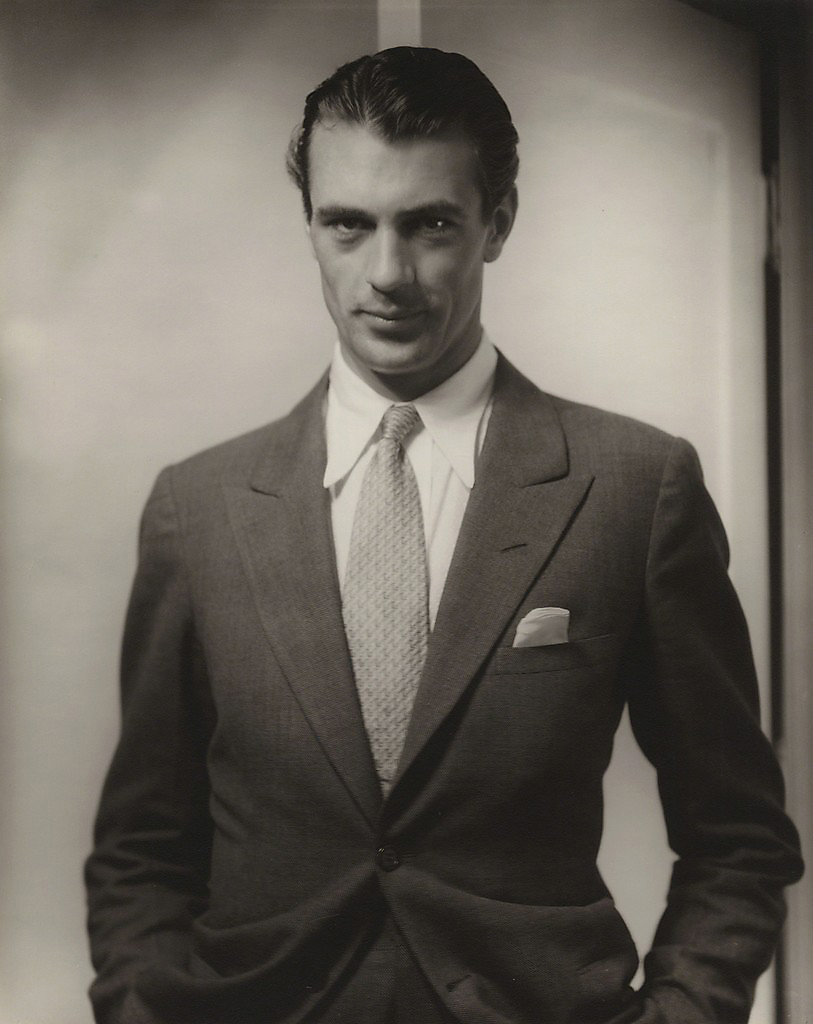
 

Edward Steichen (American, 1879-1973) 'Gary Cooper' 1930


Edward Steichen (American, 1879-1973)
Gary Cooper
1930
Gelatin silver print
Courtesy Condé Nast Archive


Edward Steichen (American, 1879-1973) 'Joan Crawford' 1932


Edward Steichen (American, 1879-1973)
Joan Crawford
1932
Gelatin silver print
© 1932 Condé Nast
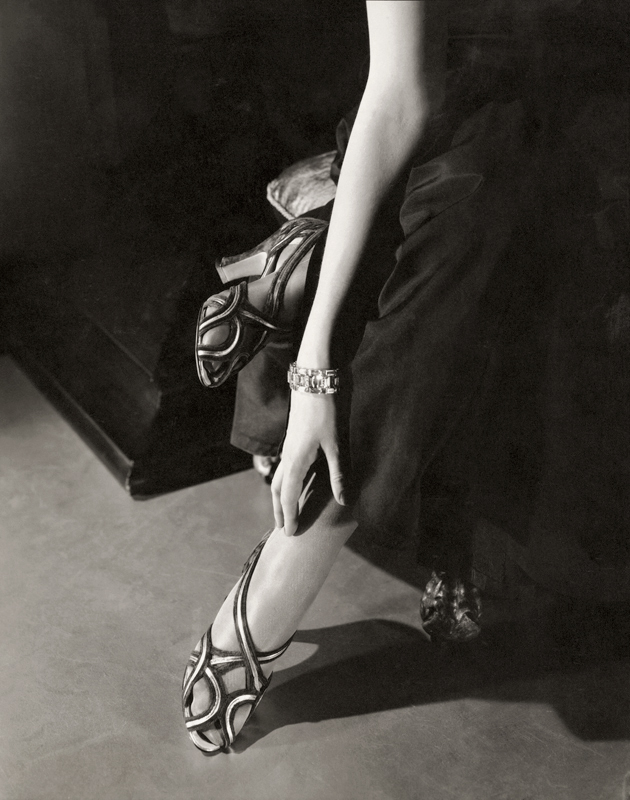
 

Edward Steichen (American, 1879-1973) 'Princess Nathalie Paley wearing sandals by Shoecraft' 1934


Edward Steichen (American, 1879-1973)
Princess Nathalie Paley wearing sandals by Shoecraft
1934
Gelatin silver print
© 1934 Condé Nast


Princess Natalia Pavlovna Paley (Russian: Наталья Павловна Палей; 5 December 1905 – 27 December 1981) was a Russian aristocrat who was a non-dynastic member of the Romanov family. A daughter of Grand Duke Paul Alexandrovich of Russia, she was a first cousin of the last Russian emperor, Nicholas II. After the Russian Revolution, she emigrated first to France and later to the United States. She became a fashion model, socialite, vendeuse, and briefly pursued a career as a film actress.

Text from the Wikipedia website


Edward Steichen (American, 1879-1973) 'Sinclair Lewis' 1932


Edward Steichen (American, 1879-1973)
Sinclair Lewis
1932
Gelatin silver print
© 1932 Condé Nast


Harry Sinclair Lewis (February 7, 1885 – January 10, 1951) was an American novelist, short-story writer, and playwright. In 1930, he became the first author from the United States (and the first from the Americas) to receive the Nobel Prize in Literature, which was awarded “for his vigorous and graphic art of description and his ability to create, with wit and humour, new types of characters.” Lewis wrote six popular novels: Main Street (1920), Babbitt (1922), Arrowsmith (1925), Elmer Gantry (1927), Dodsworth(1929), and It Can’t Happen Here (1935).

Several of his notable works were critical of American capitalism and materialism during the interwar period. Lewis is respected for his strong characterisations of modern working women.

Text from the Wikipedia website


Edward Steichen (American, 1879-1973) 'Patricia Bowman' 1932


Edward Steichen (American, 1879-1973)
Patricia Bowman
1932
Gelatin silver print
© 1932 Condé Nast

Patricia Bowman (December 12, 1908 – March 18, 1999) was an American ballerina, ballroom dancer, musical theatre actress, television personality, and dance teacher.

Dance critic Jack Anderson described her as “the first American ballerina to win critical acclaim and wide popularity as a classical and a musical-theater dancer … Her sparkling stage personality won her many fans.” She was the first prima ballerina of the Radio City Music Hall when it opened in 1932, and is chiefly remembered for her work as a founding member of the American Ballet Theatre with whom she was a principal dancer from 1939 to 1941.

Text from the Wikipedia website


An exhibition of 175 works by Edward Steichen drawn largely from the Condé Nast archives, this is the first presentation to give serious consideration to the full range of Steichen’s fashion images. Organised by the Musée de l’Elysée, Lausanne, and the Foundation for the Exhibition of Photography, Minneapolis, in conjunction with the International Center of Photography, the exhibition will open at ICP after an extensive tour in Europe. Steichen’s approach to fashion photography was formative and over the course of his career he changed public perceptions of the American woman. An architect of American Modernism and a Pictorialist, Steichen exhibited his fashion images alongside his art photographs. Steichen’s crisp, detailed, high-key style revolutionised fashion photography, and his influence is felt in the field to this day – Richard Avedon, Robert Mapplethorpe, and Bruce Weber are among his stylistic successors.

Text from the International Centre of Photography website


Edward Steichen (American, 1879-1973) 'Evening shoes by Vida Moore' 1927


Edward Steichen (American, 1879-1973)
Evening shoes by Vida Moore
1927
Gelatin silver print
© 1927 Condé Nast


Edward Steichen (American, 1879-1973) 'Model posing for Beauty Primer on hand and nail care' 1934


Edward Steichen (American, 1879-1973)
Model posing for Beauty Primer on hand and nail care
1934
Gelatin silver print
© 1934 Condé Nast


Edward Steichen (American, 1879-1973) 'Anna May Wong' 1930


Edward Steichen (American, 1879-1973)
Anna May Wong
1930
Gelatin silver print
© 1930 Condé Nast


Wong Liu Tsong (January 3, 1905 – February 3, 1961), known professionally as Anna May Wong, was an American actress, considered the first Chinese American film star in Hollywood, as well as the first Chinese American actress to gain international recognition. Her varied career spanned silent film, sound film, television, stage, and radio.

Text from the Wikipedia website
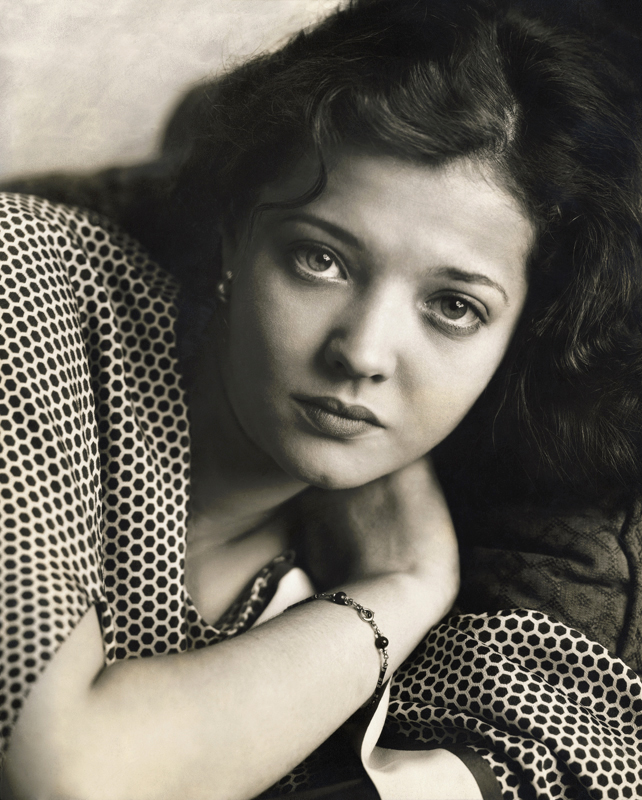
 

Edward Steichen (American, 1879-1973) 'Sylvia Sidney' 1929


Edward Steichen (American, 1879-1973)
Sylvia Sidney
1929
Gelatin silver print
© 1929 Condé Nast


Sylvia Sidney (born Sophia Kosow; August 8, 1910 – July 1, 1999) was an American stage, screen, and film actress whose career spanned 70 years. She rose to prominence in dozens of leading roles in the 1930s. She was nominated for the Academy Award for Best Supporting Actress for her performance in Summer Wishes, Winter Dreams in 1973. She later gained attention for her role as Juno, a case worker in the afterlife, in Tim Burton’s 1988 film Beetlejuice, for which she won a Saturn Award for Best Supporting Actress.

Text from the Wikipedia website


Edward Steichen (American, 1879-1973) 'Pola Negri' 1925


Edward Steichen (American, 1879-1973)
Pola Negri
1925
Gelatin silver print
© 1925 Condé Nast


Pola Negri (/ˈpoʊlə ˈnɛɡri/; born Barbara Apolonia Chałupiec [apɔˈlɔɲa xaˈwupʲɛt͡s]; 3 January 1897 – 1 August 1987) was a Polish stage and film actress and singer. She achieved worldwide fame during the silent and golden eras of Hollywood and European film for her tragedienne and femme fatale roles. She was also acknowledged as a sex symbol of her time.

Text from the Wikipedia website
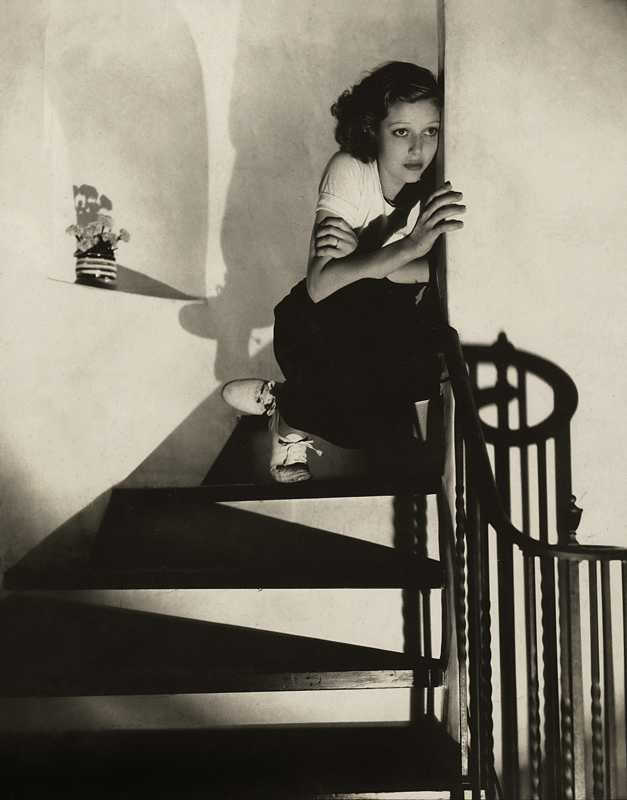
 

Edward Steichen (American, 1879-1973) 'Loretta Young' 1931


Edward Steichen (American, 1879-1973)
Loretta Young
1931
Gelatin silver print
© 1931 Condé Nast


Loretta Young (born Gretchen Michaela Young; January 6, 1913 – August 12, 2000) was an American actress. Starting as a child, she had a long and varied career in film from 1917 to 1989. She received numerous honors including an Academy Award, two Golden Globe Awards, and three Primetime Emmy Awards as well as two stars on the Hollywood Walk of Fame for her work in film and television.

Text from the Wikipedia website


Edward Steichen (American, 1879-1973) 'Mary Heberden' 1935


Edward Steichen (American, 1879-1973)
Mary Heberden
1935
Gelatin silver print
© 1935 Condé Nast


Edward Steichen (American, 1879-1973) 'Mary Heberden' 1935 'Katharine Hepburn wearing a coat by Clare Potter' 1933


Edward Steichen (American, 1879-1973)
Katharine Hepburn wearing a coat by Clare Potter
1933
Gelatin silver print
Courtesy Condé Nast Archive


International Centre of Photography website

LIKE ART BLART ON FACEBOOK

Back to top

Review: ‘Cindy Sherman’ at Metro Pictures Gallery, New York

Exhibition dates: 15th November – 23rd December, 2008


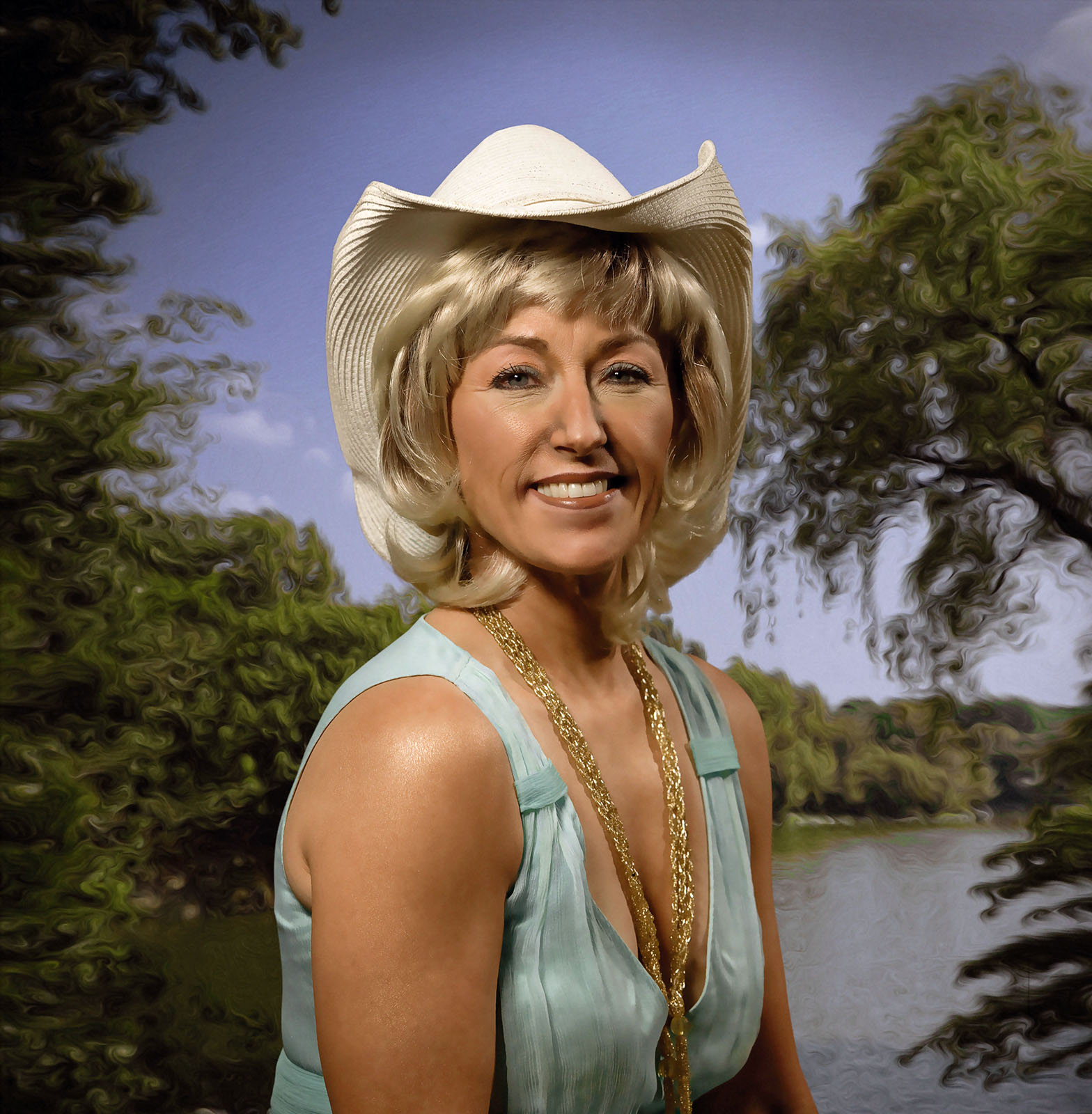
Cindy Sherman (American, b. 1954) 'Untitled #466' 2008 from the exhibition Review: 'Cindy Sherman' at Metro Pictures Gallery, New York, Nov - Dec, 2008


Cindy Sherman (American, b. 1954)
Untitled #466
2008
Chromogenic print
254.3  x 174.6cm


The artist Cindy Sherman is a multifaceted evocation of human identity standing in glorious and subversive Technicolor before the blank canvas of her imagination. Poststructuralist in her physical appearance (there being no one Cindy Sherman, perhaps no Sherman at all) and post-photographic in her placement in constructed environments, Sherman challenges the ritualised notions of the performative act – and destabilises perceived notions of self, status, image and place.

The viewer is left with a sense of displacement when looking at these tableaux. The absence / presence of the artist leads the viewer to the binary opposite of rational / emotional – knowing these personae and places are constructions, distortions of a perceived reality yet emotionally attached to every wrinkle, every fold of the body at once repulsive yet seductive.

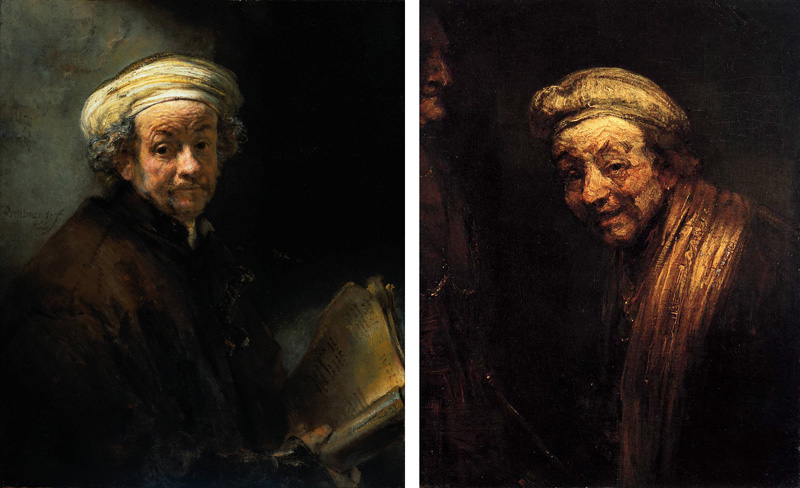
They are masterworks in the manner of Rembrandt’s self portraits – deeply personal images that he painted over many years that examined the many identities of his psyche – yet somehow different. Sherman investigates the same territories of the mind and body but with no true author, no authoritative meaning and no one subject at their beating heart. Her goal is subversive.

As Roy Boyne has observed, “The movement from the self as arcanum to the citational self, has, effectively, been welcomed, particularly in the work of Judith Butler, but also in the archetypal sociology of Pierre Bourdieu. There is a powerful logic behind this approbation. When self-identity is no longer seen as, even minimally, a fixed essence, this does not mean that the forces of identity formation can therefore be easily resisted, but it does mean that the necessity for incessant repetition of identity formation by the forces of a disciplinary society creates major opportunities for subversion and appropriation. In the repeated semi-permanences of the citational self, there is more than a little scope for counter-performances marked, for example, by irony and contempt.”1

Counter performances are what Sherman achieves magnificently. She challenges a regularised and constrained repetition of norms and as she becomes her camera (“her extraordinary relationship with her camera”) she subverts its masculine disembodied gaze, the camera’s power to produce normative, powerful bodies.2 As the viewer slips ‘in the frame’ of the photograph they take on a mental process of elision much as Sherman has done when making the images – deviating from the moral rules that are impressed from without3 by living and breathing through every fold, every fingernail, every sequin of their constructed being.

Dr Marcus Bunyan


1/ Boyne, Roy. “Citation and Subjectivity: Towards a Return of the Embodied Will,” in Featherstone, Mike (ed.,). Body Modification. London: Sage, 2000, p. 212

2/ “To the extent that the camera figures tacitly as an instrument of transubstantiation, it assumes the place of the phallus, as that which controls the field of signification. The camera thus trades on the masculine privilege of the disembodied gaze, the gaze that has the power to produce bodies, but which itself has no body.”
Butler, Judith. Bodies That Matter. New York: Routledge, 1993, p. 136

3/ “Universal human nature is not a very human thing. By acquiring it, the person becomes a kind of construct, built up not from inner psychic propensities but from moral rules that are impressed upon him from without.”
Goffman, Erving. Interaction Ritual: Essays on Face-to-Face Behaviour. London: Allen Lane, The Penguin Press, 1972, pp. 44-45


Many thankx to Metro Pictures Gallery for allowing me to publish the photographs in the posting. Please click on the photographs for a larger version of the image.


    Rembrandt van Rijn (Dutch, 1606-1669) 'Self-portrait as the apostle Paul' (left) 1661 'Self-portrait as Zeuxis laughing' (right) 1662


    Rembrandt van Rijn (Dutch, 1606-1669)
    Self-portrait as the apostle Paul (left)
    1661
    Self-portrait as Zeuxis laughing (right)
    1662


    Cindy Sherman (American, b. 1954) 'Untitled #464' 2008 from the exhibition Review: 'Cindy Sherman' at Metro Pictures Gallery, New York, Nov - Dec, 2008


    Cindy Sherman (American, b. 1954)
    Untitled #464
    2008
    Chromogenic print
    214.3 x 152.4cm


    For her first exhibition of new work since 2004, Cindy Sherman will show a series of colour photographs that continues her investigation into distorted ideas of beauty, self-image and ageing. Typical of Sherman, these works are at once alarming and amusing, distasteful and poignant.

    Working as her own model for more than 30 years, Sherman has developed an extraordinary relationship with her camera. A remarkable performer, subtle distortions of her face and body are captured on camera and leave the artist unrecognisable to the audience. Her ability to drastically manipulate her age or weight, or coax the most delicate expressions from her face, is uncanny. Each image is overloaded with detail, every nuance caught by the artist’s eye. No prosthetic nose or breast, fake fingernail, sequin, wrinkle or bulge goes unnoticed by Sherman.

    Sherman shoots alone in her studio acting as author, director, actor, make-up artist, hairstylist and wardrobe mistress. Each character is shot in front of a “green screen” then digitally inserted onto backgrounds shot separately. Adding to the complexity, Sherman leaves details slightly askew at each point in the process, undermining the narrative and forcing the viewer to confront the staged aspect of the work.

    Press release at Metro Pictures Gallery


    Installation view of 'Cindy Sherman' exhibition at Metro Pictures Gallery, New York, 2008


    Installation view of Cindy Sherman exhibition at Metro Pictures Gallery, New York, 2008


    Cindy Sherman (American, b. 1954) 'Untitled' 2008


    Cindy Sherman (American, b. 1954)
    Untitled
    2008
    Chromogenic print
    148.6 x 146.7cm


    Cindy Sherman (American, b. 1954) 'Untitled' 2008


    Cindy Sherman (American, b. 1954)
    Untitled
    2008
    Chromogenic print
    177.8 x 161.3cm


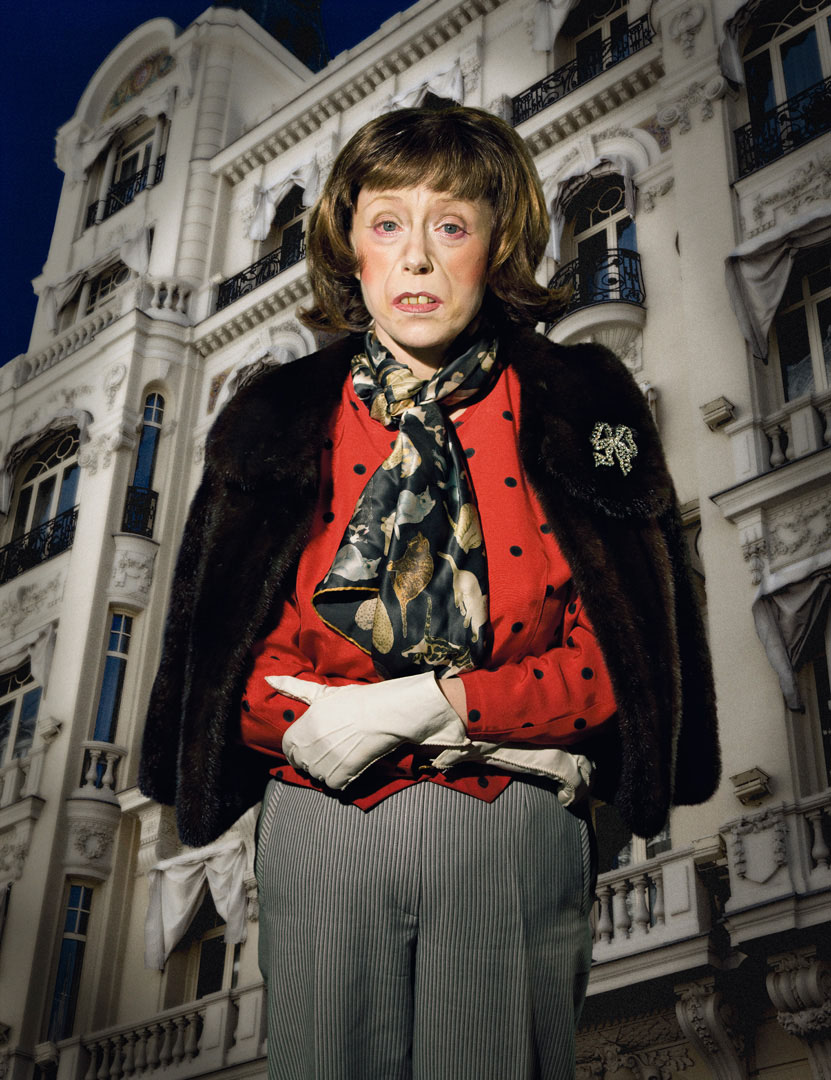
    Cindy Sherman (American, b. 1954) 'Untitled #468' 2008


    Cindy Sherman (American, b. 1954)
    Untitled #468
    2008
    Chromogenic colour print
    191.8 x 151.1cm


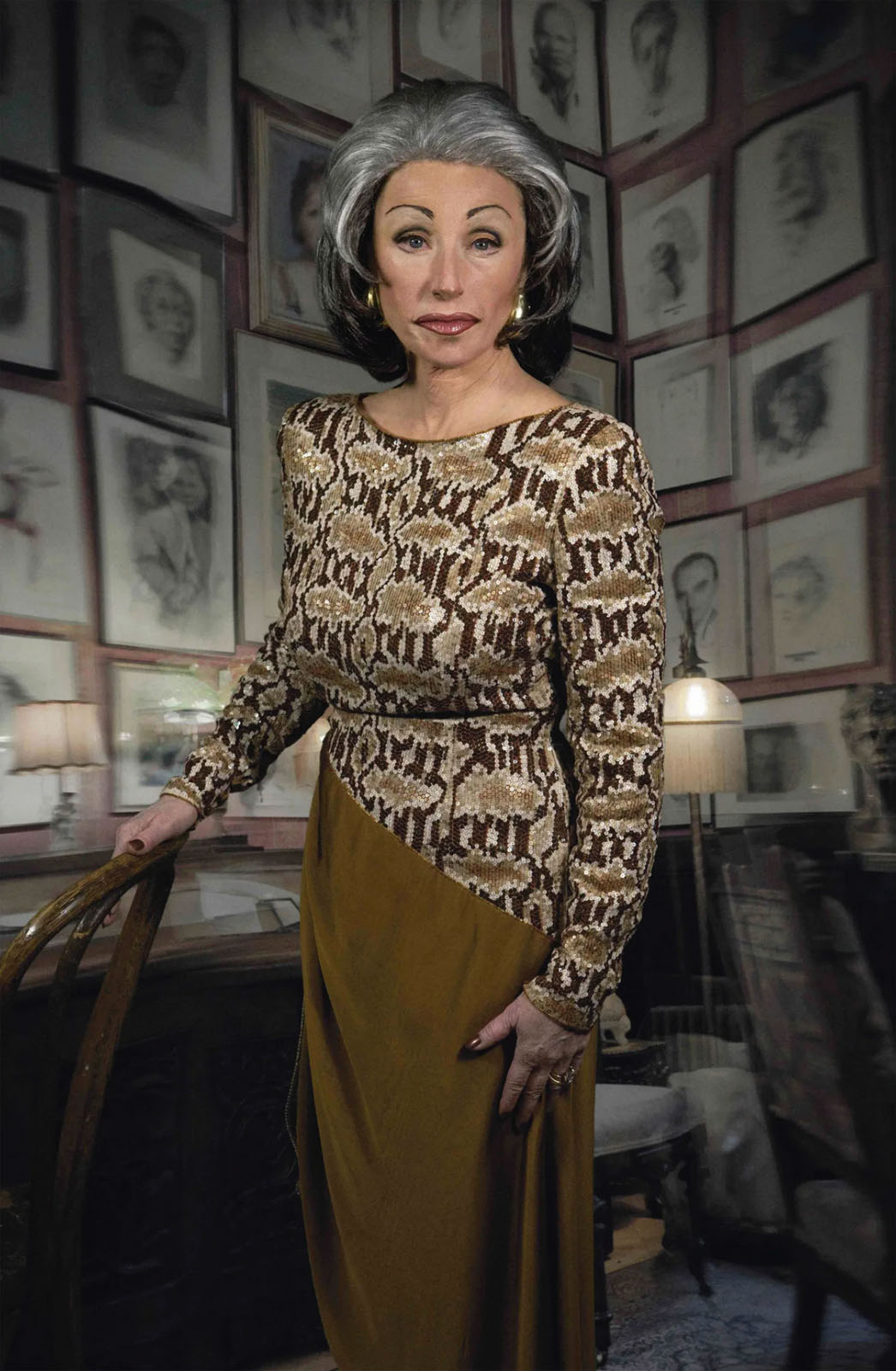
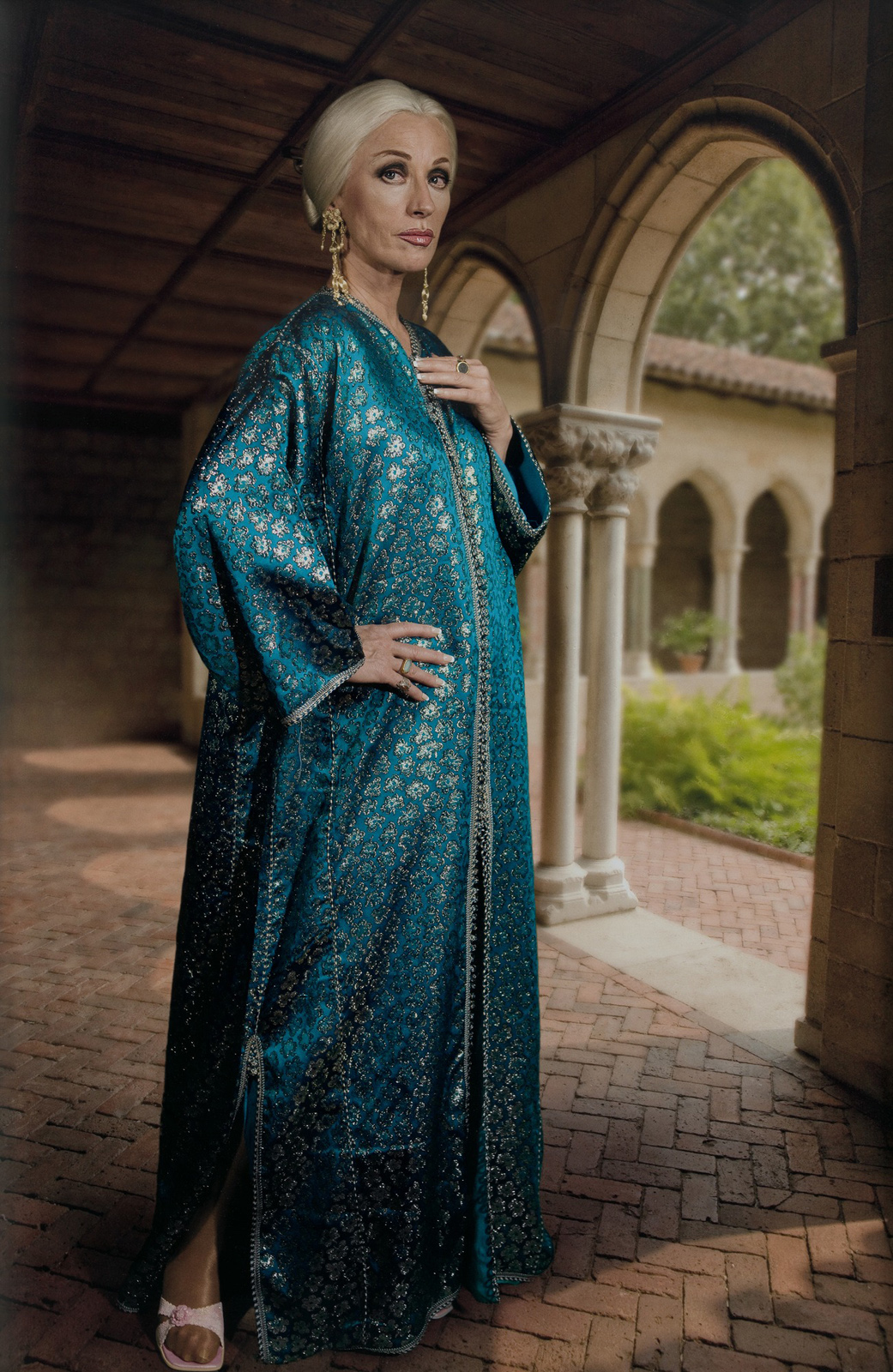
    The society portraits made in 2008 portray older women in opulent settings wearing expensive clothes, their faces stretched and enhanced unnaturally, showing signs of cosmetic surgery. These markers point to cultural standards of beauty and wealth, and here signal the failed aspiration to sustained youth. Printed large, presented in decorative and often gilded frames, and depicting figures in formal poses, these works are reminiscent of Sherman’s history portraits and classical portraiture in general. In this way, they remind the viewer that representation is not a new phenomenon, and the cultural implications in all images are tied to long and complex histories. In Untitled #468 the figure stands stoically with arms crossed and mouth slightly agape, wearing a fur, silk scarf, and white gloves, which the artist found at thrift shops. In the background, an ornate building mirrors the elaborate dress of the woman.

    The perspective of the building does not align with that of the figure, blatantly breaking the illusion of reality and recalling Sherman’s 1980 series of rear-screen projections. This clear and deliberate artificiality indicates that images, characters, and even our own selves are constructed, not fixed.

    Anonymous text. “Untitled #468,” on The Broad website Nd [Online] Cited 09/06/2022


    Cindy Sherman (American, b. 1954) 'Untitled' 2008


    Cindy Sherman (American, b. 1954)
    Untitled
    2008
    Chromogenic print
    244.5 x 165.7cm


    Metro Pictures Gallery

    This gallery has now closed

    Metro Pictures Gallery website

    LIKE ART BLART ON FACEBOOK

    Back to top