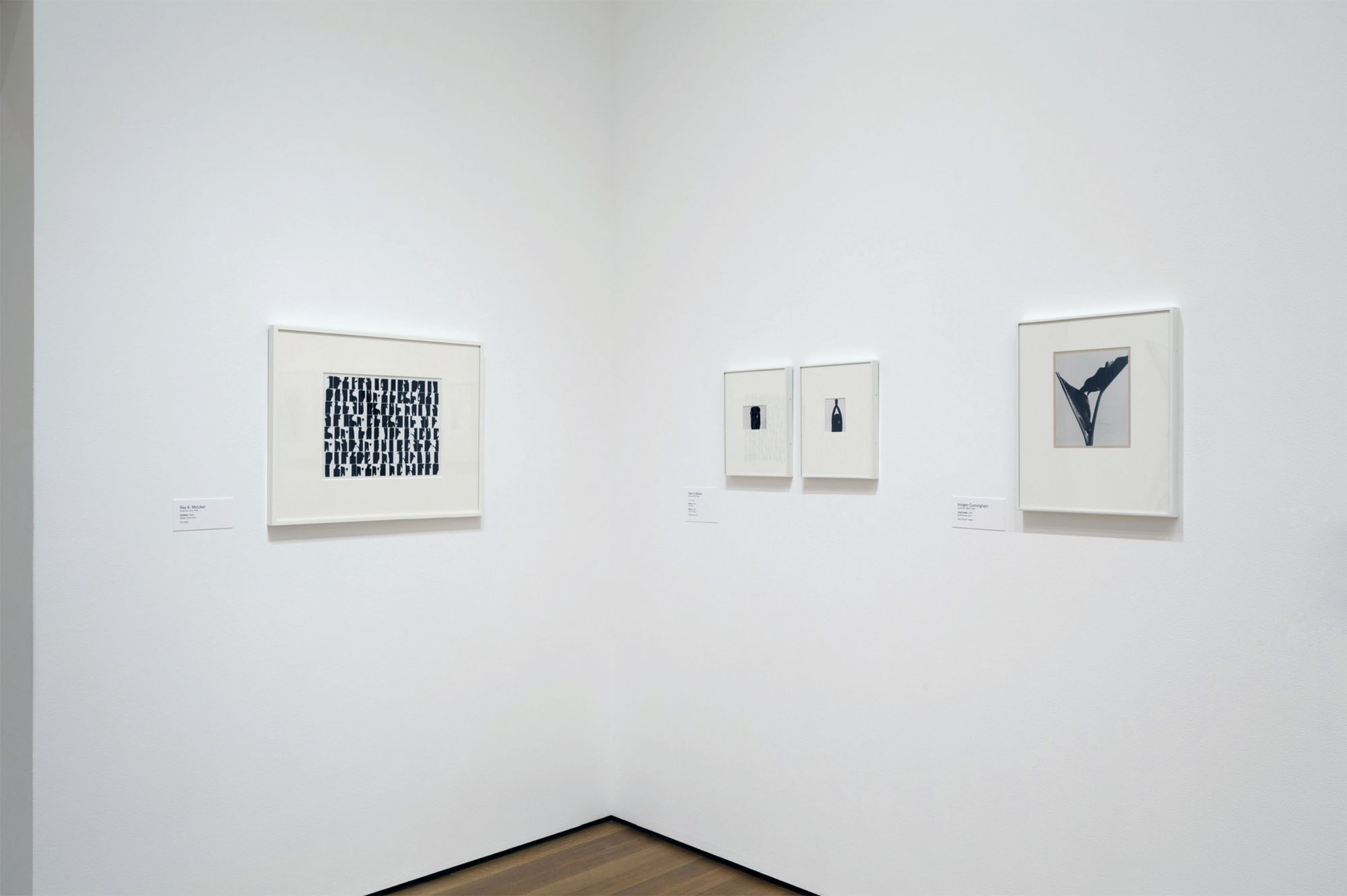
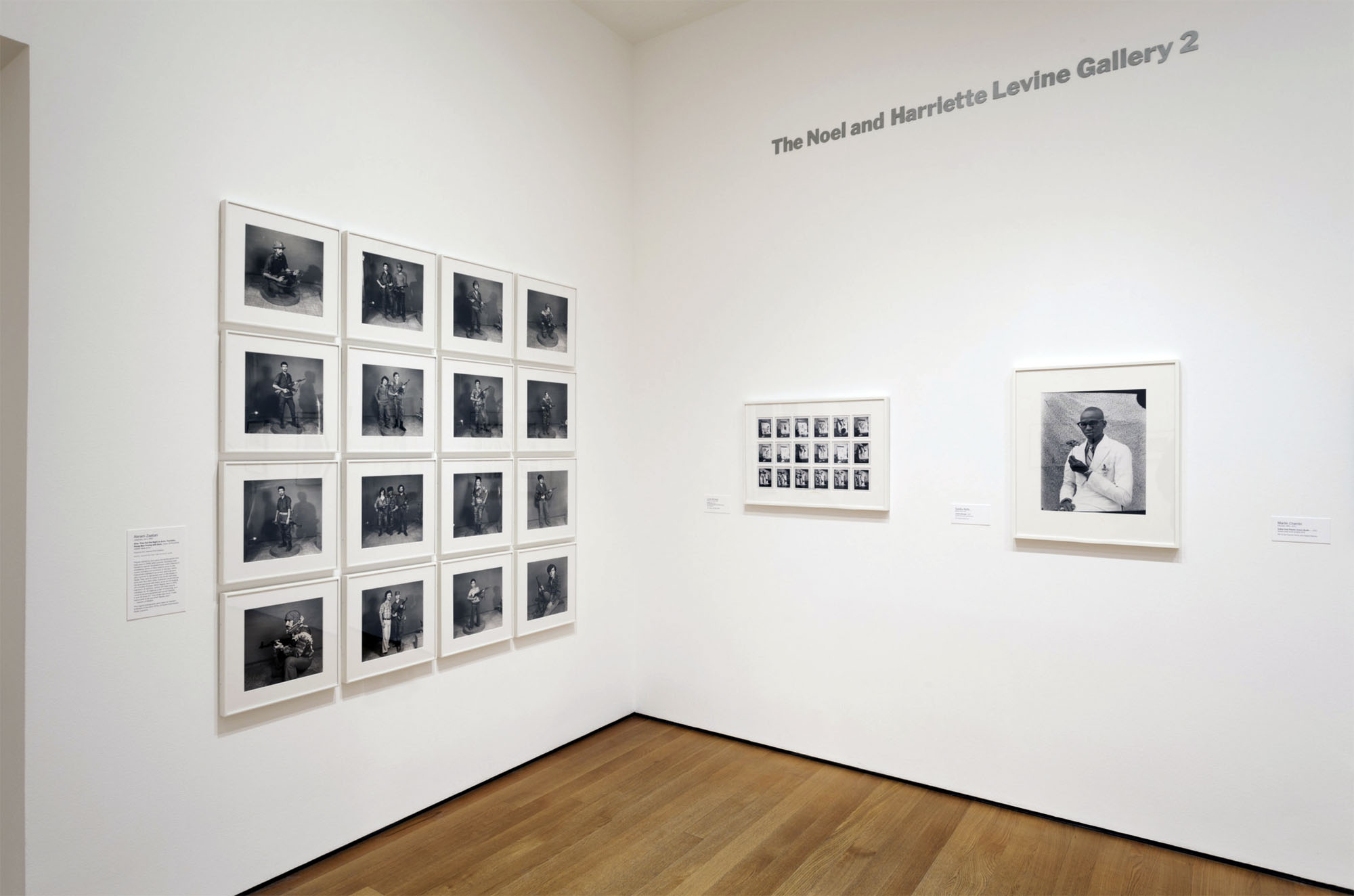
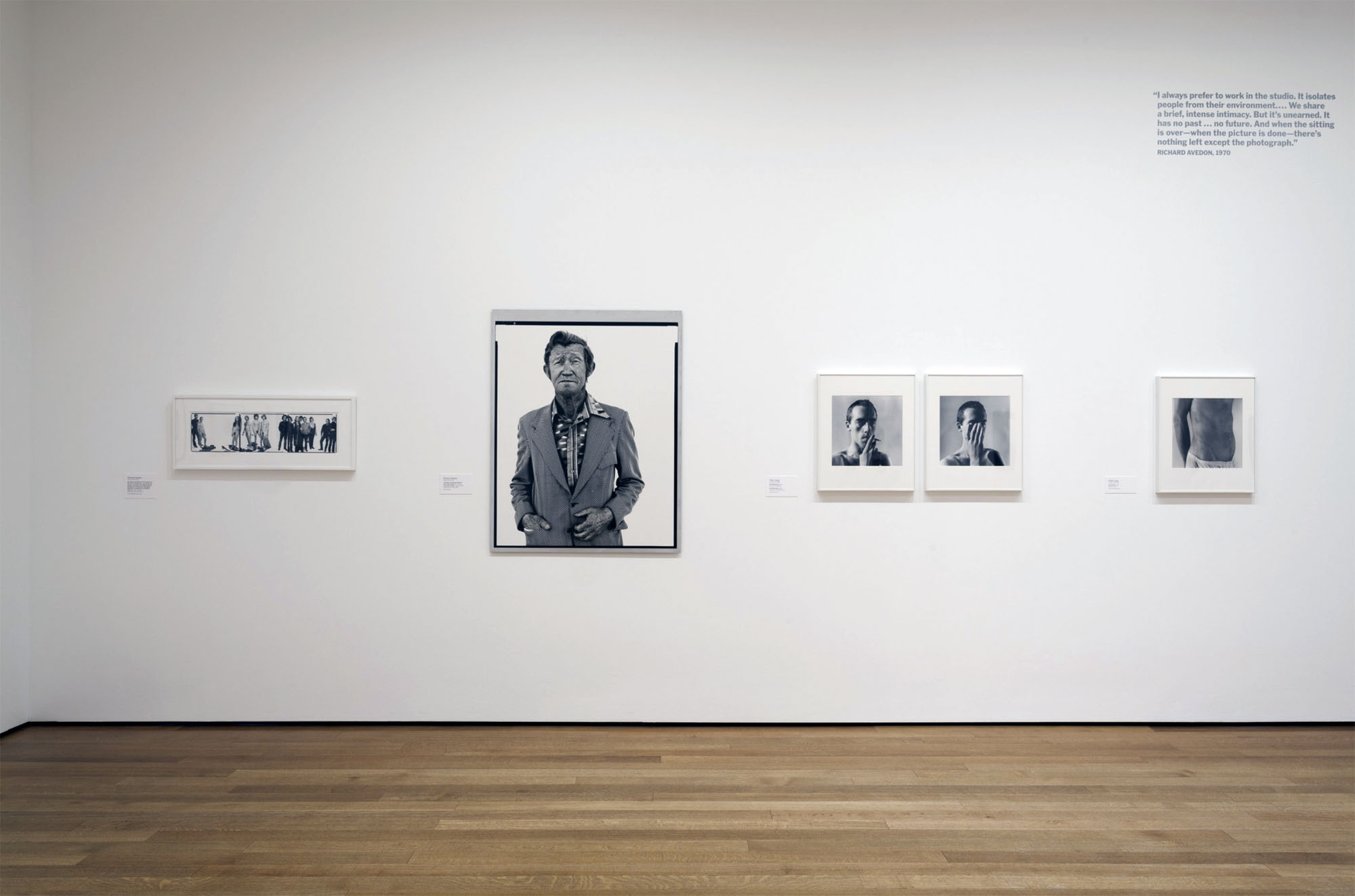
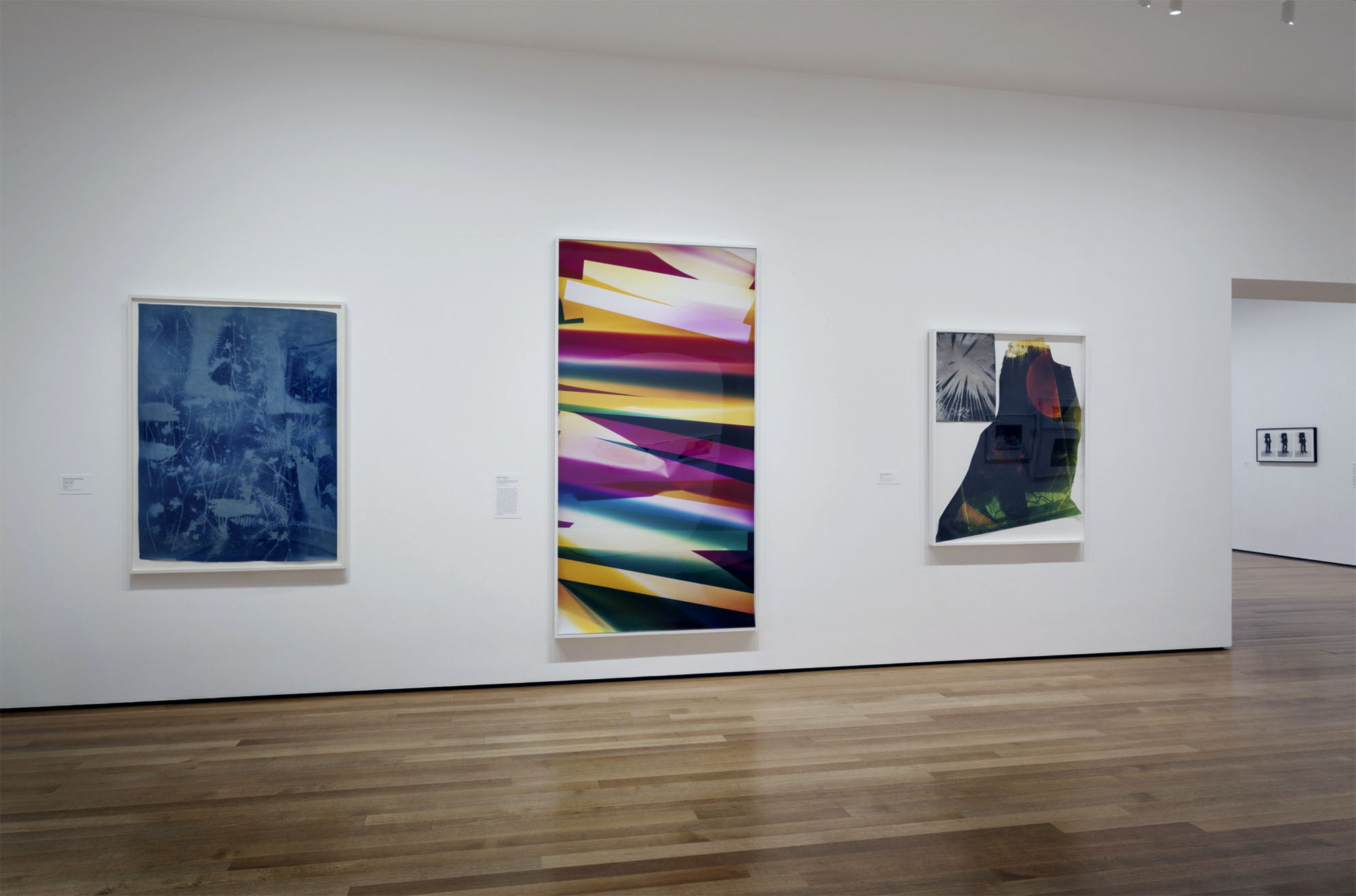
Exhibition: ‘A World of Its Own: Photographic Practices in the Studio’ at the Museum of Modern Art (MoMA), New York Part 1

Exhibition dates: 8th February – 2nd November 2014

The Edward Steichen Photography Galleries, third floor

Curators: Organised by Quentin Bajac, The Joel and Anne Ehrenkranz Chief Curator, with Lucy Gallun, Assistant Curator, Department of Photography
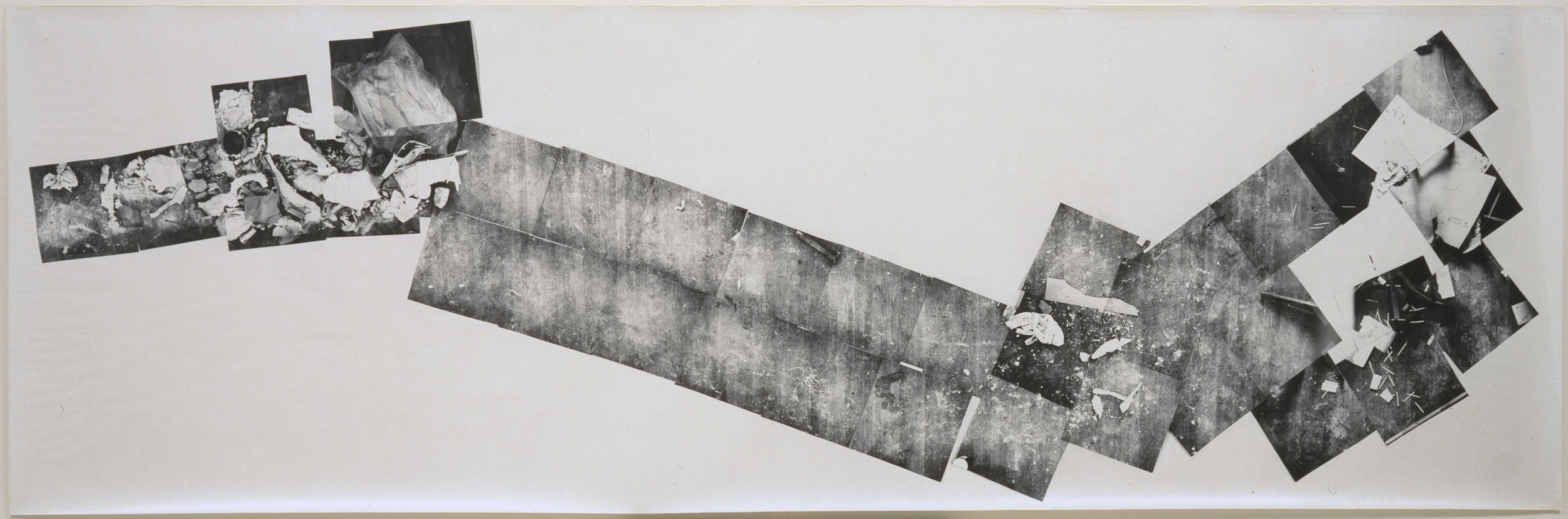
 

Bruce Nauman (American, b. 1941) 'Composite Photo of Two Messes on the Studio Floor' 1967


Bruce Nauman (American, b. 1941)
Composite Photo of Two Messes on the Studio Floor 
1967
Gelatin silver print
40 1/2″ x 10′ 3″ (102.9 x 312.4cm)
Gift of Philip Johnson
Museum of Modern Art Collection


A bumper two part posting on this fascinating, multi-dimensional subject: photographic practices in the studio, which may be a stage, a laboratory, or a playground. The exhibition occupies all MoMA’s six photography galleries, each gallery with its own sub theme, namely, Surveying the Studio, The Studio as Stage, The Studio as Set, A Neutral Space, Virtual Spaces and The Studio, from Laboratory to Playground.

The review of this exhibition “When a Form Is Given Its Room to Play” by Roberta Smith on the New York Times website (6th February 2014) damns with faint praise. The show is a “fabulous yet irritating survey” which “dazzles but often seems slow and repetitive.” Smith then goes on to list the usual suspects: “And so we get professional portraitists, commercial photographers, lovers of still life, darkroom experimenters, artists documenting performances and a few generations of postmodernists, dead and alive, known and not so, exploring the ways and means of the medium. This adds up to plenty to see: around 180 images from the 1850s to the present by some 90 photographers and artists. The usual suspects here range from Julia Margaret Cameron to Thomas Ruff, with Laszlo Moholy-Nagy, Lucas Samaras, John Divola and Barbara Kasten in between.” There are a few less familiar and postmodern artists thrown in for good measure, but all is “dominated by black-and-white images in an age when colour reigns.” The reviewer then rightly notes the paucity of “postmodern photography of the 1980s, much of it made by women, that did a lot to reorient contemporary photo artists to the studio. It is a little startling for an exhibition that includes so many younger artists dealing with the artifice of the photograph (Ms. Belin, for example) to represent the Pictures Generation artists with only Cindy Sherman, James Casebere and (in collaboration with Allan McCollum) Laurie Simmons” before finishing on a positive note (I think!), noting that the curators “had aimed for a satisfying viewing experience, which, these days, is something to be grateful for.”


SOMETHING TO BE GRATEFUL FOR… OH, TO BE SO LUCKY IN AUSTRALIA!

Just to have the opportunity to view an exhibition of this quality, depth and breadth of concept would be an amazing thing. Even a third of the number of photographs (say 60 works) that address this subject at any one of the major institutions around Australia would be fantastic but, of that, there is not a hope in hell.

Think Marcus, think… when was the last major exhibition, I mean LARGE exhibition, at a public institution in Australia that actually addressed specific ISSUES and CONCEPTS in photography (such as this), not just putting on monocular exhibitions about an artists work or exhibitions about a regions photographs? Ah, well… you know, I can’t really remember. Perhaps the American Dreams exhibition at Bendigo Art Gallery, but that was a GENERAL exhibition about 20th century photography with no strong investigative conceptual theme and it was imported from George Eastman House.

Here in Australia, all we can do is look from afar, purchase the catalogue and wonder wistfully what the exhibition actually looks like and what we are missing out on. MoMA sent me just 10 images media images. I have spent hours scouring the Internet for other images to fill the void of knowledge and vision (and then cleaning those sometimes degraded images), so that those of us not privileged enough to be able to visit New York may gain a more comprehensive understanding of what this exhibition, and this multi-faceted dimension of photography, is all about. It’s a pity that our venerable institutions and the photography curators in them seem to have had a paucity of ideas when it comes to expounding interesting critiques of the medium over the last twenty years or so. What a missed opportunity.

Dr Marcus Bunyan


Many thankx to MoMA for allowing me to publish six of the photographs in the posting. The rest of the images were sourced from the Internet. Please click on the photographs for a larger version of the image.
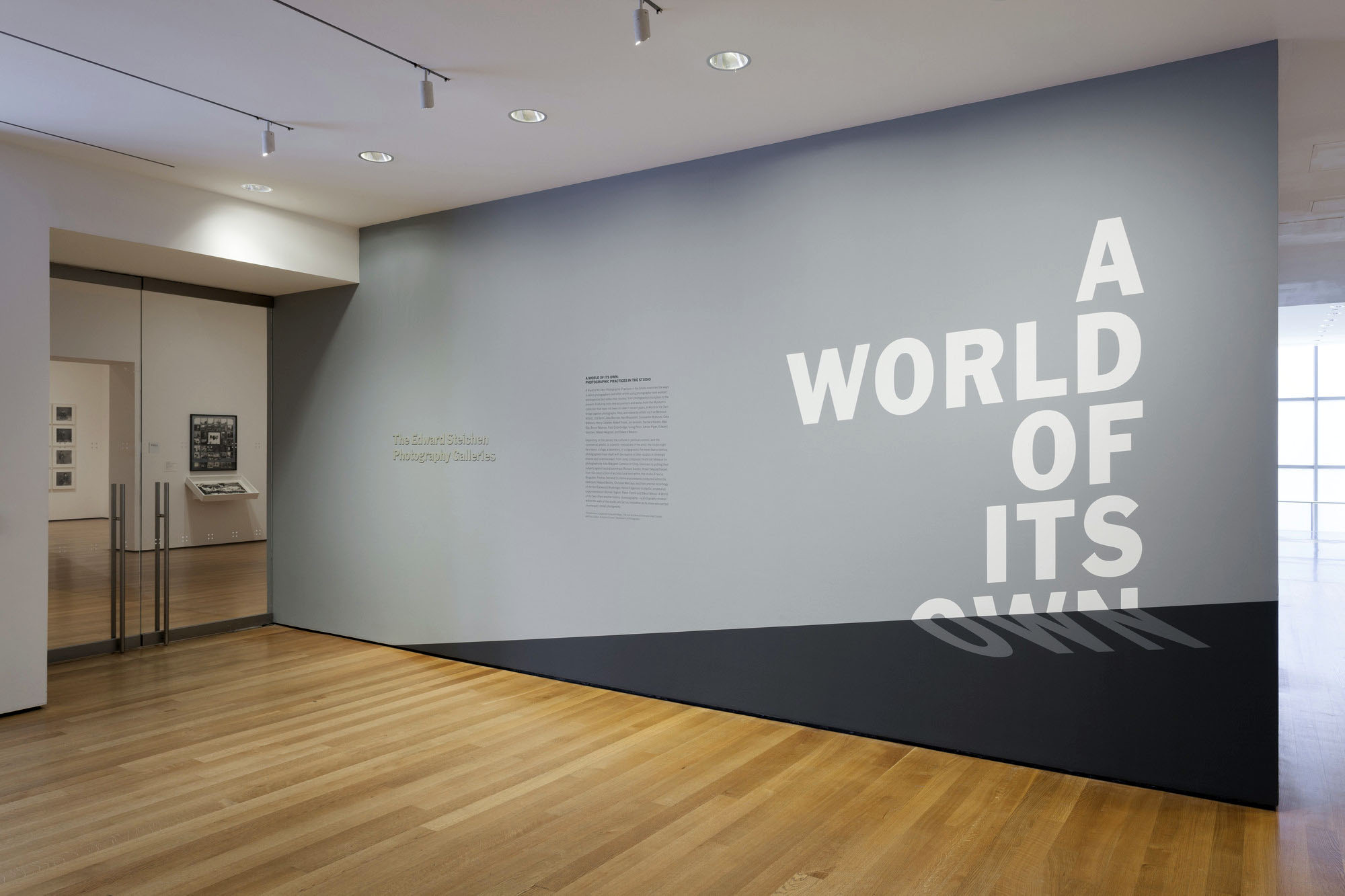


Installation view of the exhibition 'A World of Its Own: Photographic Practices in the Studio' at the Museum of Modern Art (MoMA), New York


Installation view of the exhibition A World of Its Own: Photographic Practices in the Studio at the Museum of Modern Art (MoMA), New York


Surveying the Studio


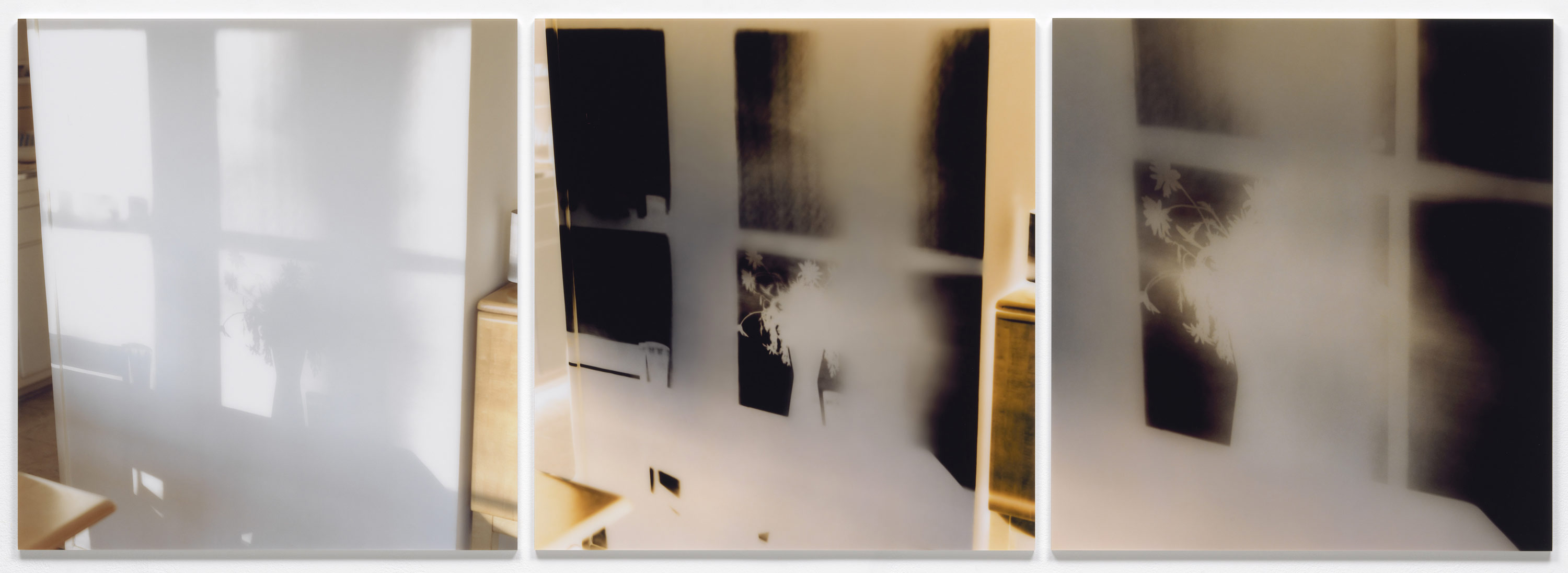
Uta Barth (American, b. 1958) 'Sundial (07.13)' 2007


Uta Barth (American, b. 1958)
Sundial (07.13)
2007
Chromogenic colour prints
each 30 x 28 1/4″ (76.2 x 71.8cm)
The Photography Council Fund
Museum of Modern Art Collection
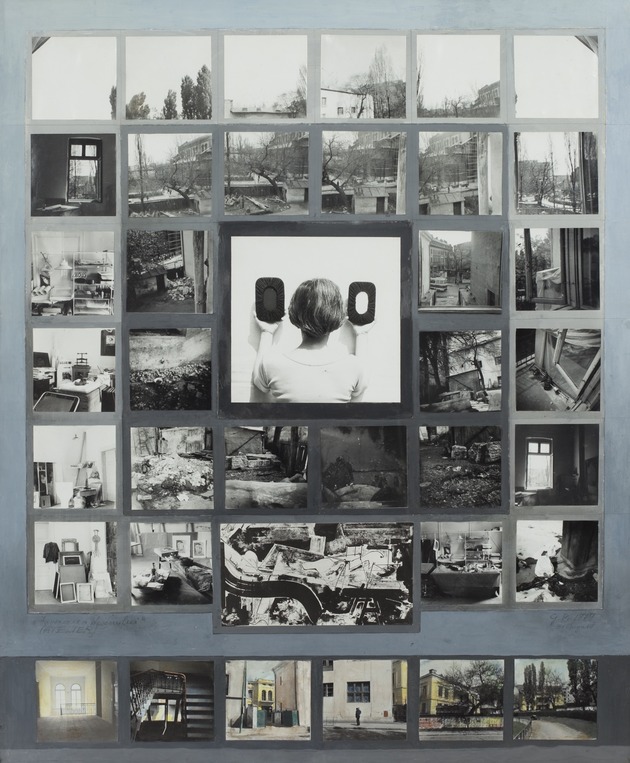
 

Geta Brâtescu (Romanian, 1926-2018) 'The Studio. Invocation of the Drawing' (L'Atelier. Invocarea desenului) 1979


Geta Brâtescu (Romanian, 1926-2018)
The Studio. Invocation of the Drawing (L’Atelier. Invocarea desenului)
1979
Gelatin silver prints with tempera on paper
33 1/16 x 27 9/16″ (84 x 70cm)
Modern Women’s Fund
Museum of Modern Art Collection


Geta Brătescu was a Romanian visual artist with works in drawing, collage, photography, performance, illustration and film. In 2008, Brătescu received an honorary doctorate from the Bucharest National University of Arts for “her outstanding contributions to the development of contemporary Romanian art”. Brătescu was artistic director of literature and art magazine Secolul 21. A major retrospective of her work was held at the National Museum of Art of Romania in December 1999. In 2015 Brătescu’s first UK solo exhibition was held at the Tate Liverpool. In 2017, she was selected to represent Romania at the 57th Venice Biennale.


Man Ray (American, 1890-1976) 'Laboratory of the Future' 1935


Man Ray (American, 1890-1976)
Laboratory of the Future
1935
Gelatin silver print
9 1/16 x 7″ (23.1 x 17.8cm)
Gift of James Johnson Sweeney
Museum of Modern Art Collection
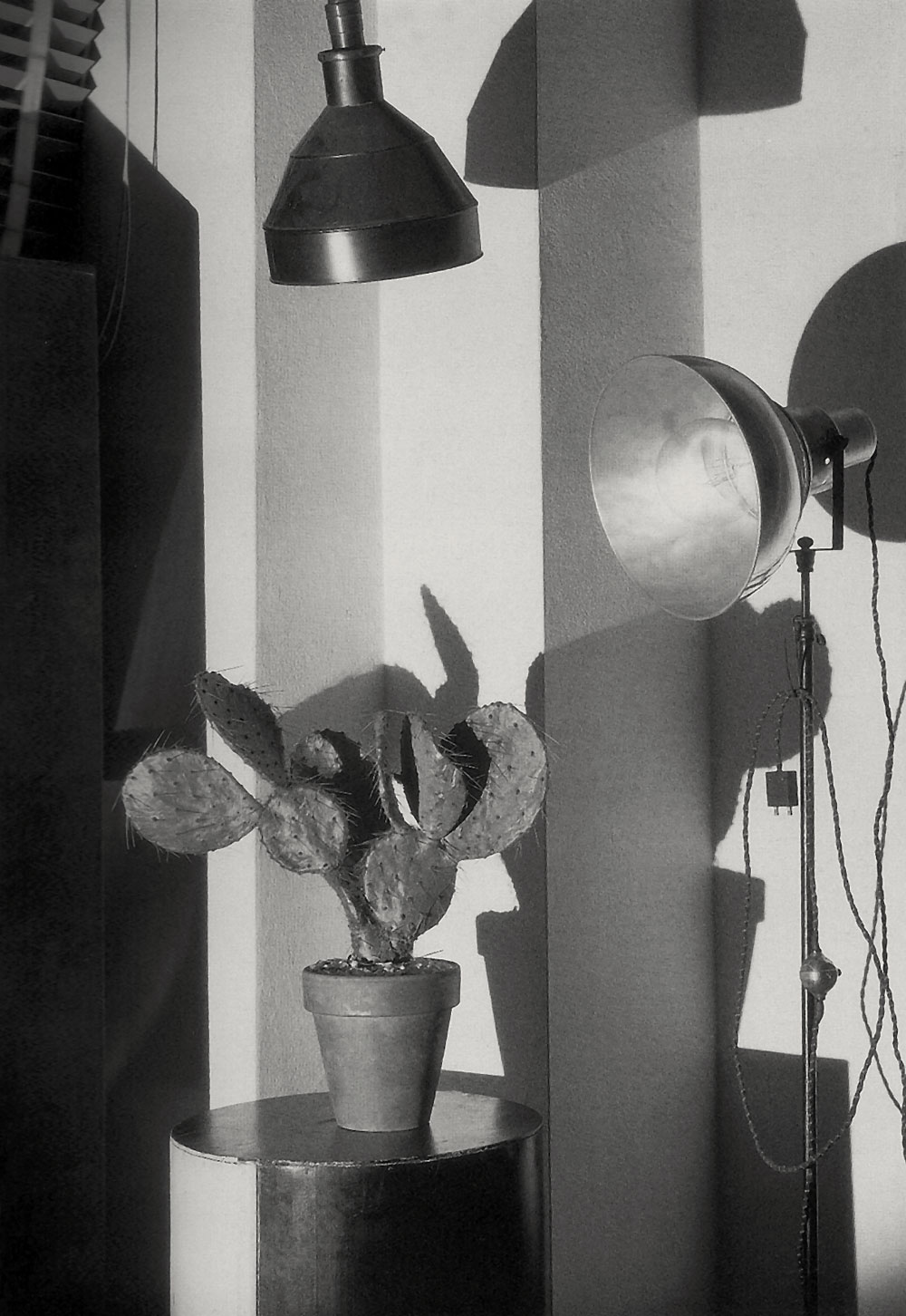
 

Charles Sheeler (American, 1883-1965) 'Cactus and Photographer's Lamp, New York' 1931


Charles Sheeler (American, 1883-1965)
Cactus and Photographer’s Lamp, New York
1931
Gelatin silver print
9 1/2 x 6 5/8″ (23.5 x 16.6cm)
Gift of Samuel M. Kootz
Museum of Modern Art Collection


Bringing together photographs, films, videos, and works in other mediums, A World of Its Own: Photographic Practices in the Studio examines the ways in which photographers and artists using photography have worked and experimented within the four walls of the studio space, from photography’s inception to today. Featuring both new acquisitions and works from the Museum’s collection that have not been on view in recent years, A World of Its Own includes approximately 180 works, by approximately 90 artists, such as Berenice Abbott, Uta Barth, Zeke Berman, Karl Blossfeldt, Constantin Brancusi, Geta Brătescu, Harry Callahan, Robert Frank, Jan Groover, Barbara Kasten, Man Ray, Bruce Nauman, Paul Outerbridge, Irving Penn, Adrian Piper, Edward Steichen, William Wegman, and Edward Weston.

The exhibition considers the various roles played by the photographer’s studio as an autonomous space; depending on the time period, context, and the individual motivations (commercial, artistic, scientific) and sensibilities of the photographer, the studio may be a stage, a laboratory, or a playground. Organised thematically, the display unfolds in multiple chapters. Throughout the 20th century, artists have explored their studio spaces using photography, from the use of composed theatrical tableaux (in photographs by Julia Margaret Cameron or Cindy Sherman) to neutral, blank backdrops (Richard Avedon, Robert Mapplethorpe); from the construction of architectural sets within the studio space (Francis Bruguière, Thomas Demand) to chemical procedures conducted within the darkroom (Walead Beshty, Christian Marclay); and from precise recordings of time and motion (Eadweard Muybridge, Dr. Harold E. Edgerton) to amateurish or playful experimentation (Roman Signer, Peter Fischli / David Weiss). A World of Its Own offers another history of photography, a photography created within the walls of the studio, and yet as groundbreaking and inventive as its seemingly more extroverted counterpart, street photography.”

Text from the MoMA website


The exhibition is divided into 6 themes each with its own gallery space:

1/ Surveying the Studio
2/ The Studio as Stage
3/ The Studio as Set
4/ A Neutral Space
5/ Virtual Spaces
6/ The Studio, from Laboratory to Playground


The Studio as Stage
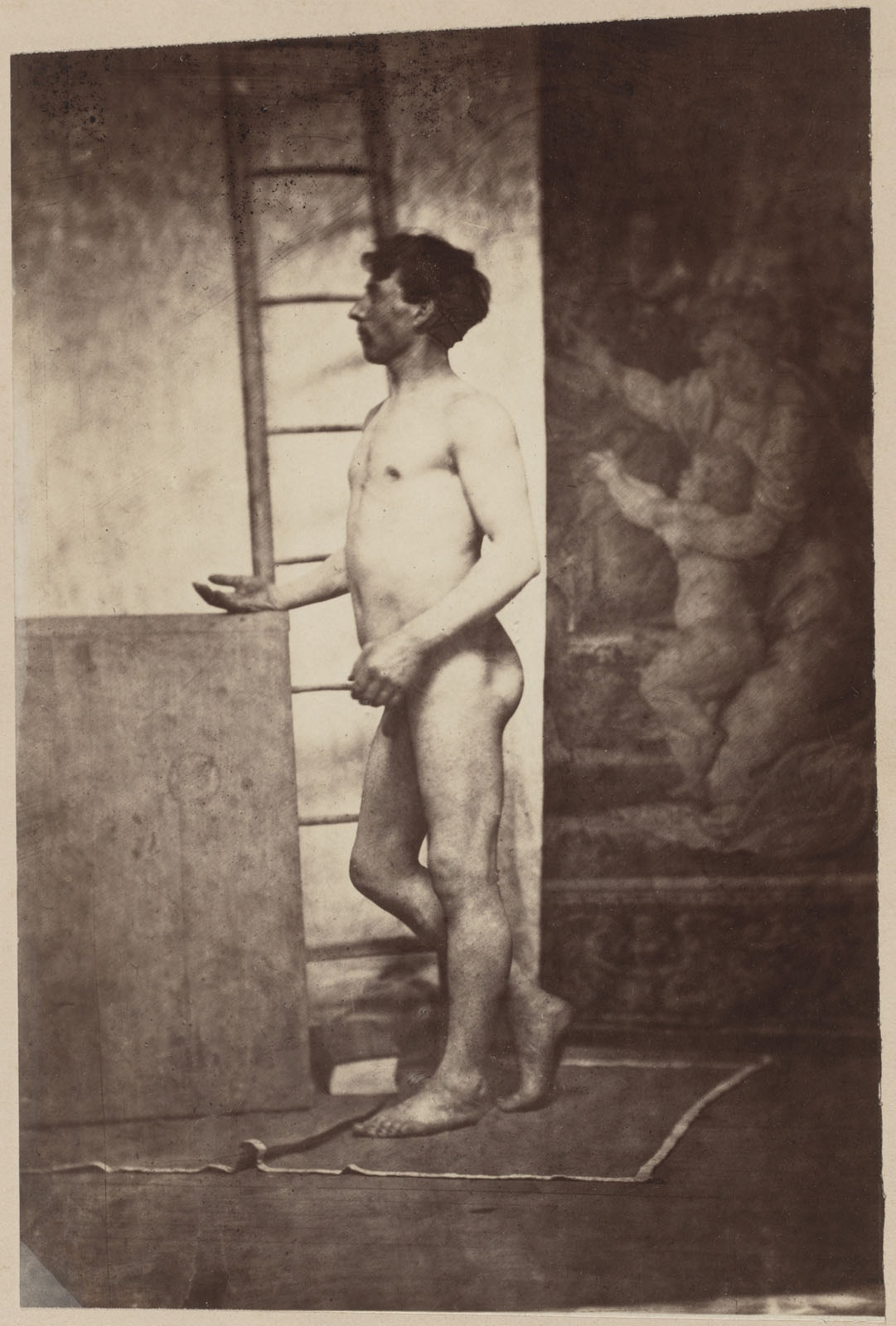
 

Unidentified photographer (French?) 'Untitled' c. 1855


Unidentified photographer (French?)
Untitled
c. 1855
Albumen silver print from a wet-collodion glass negative
9 3/16 × 6 1/8″ (23.4 × 15.5cm)
Gift of Paul F. Walter
Museum of Modern Art Collection


Cecil Beaton (British, 1904-1980) 'Edith Sitwell' 1927


Cecil Beaton (British, 1904-1980)
Edith Sitwell
1927
Gelatin silver print
11 1/2 × 9 5/8″ (29.3 × 24.5 cm)
Gift of Paul F. Walter
Museum of Modern Art Collection
© 2022 Estate of Cecil Beaton
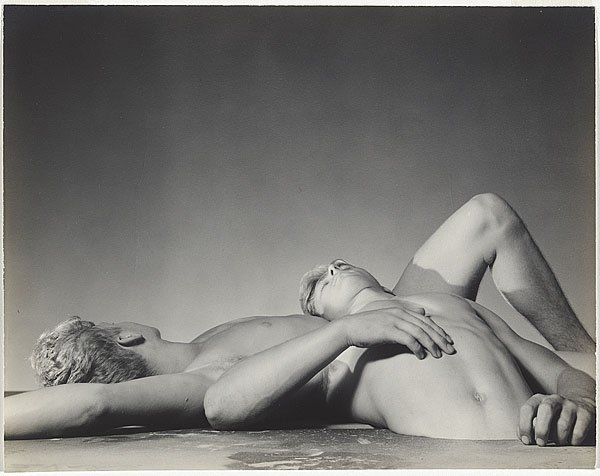
 

George Platt Lynes (American, 1907-1955) 'Untitled' 1941


George Platt Lynes (American, 1907-1955)
Untitled
1941
Gelatin silver print
7 5/8 x 9 5/8″ (19.2 x 24.4cm)
Anonymous gift
Museum of Modern Art Collection


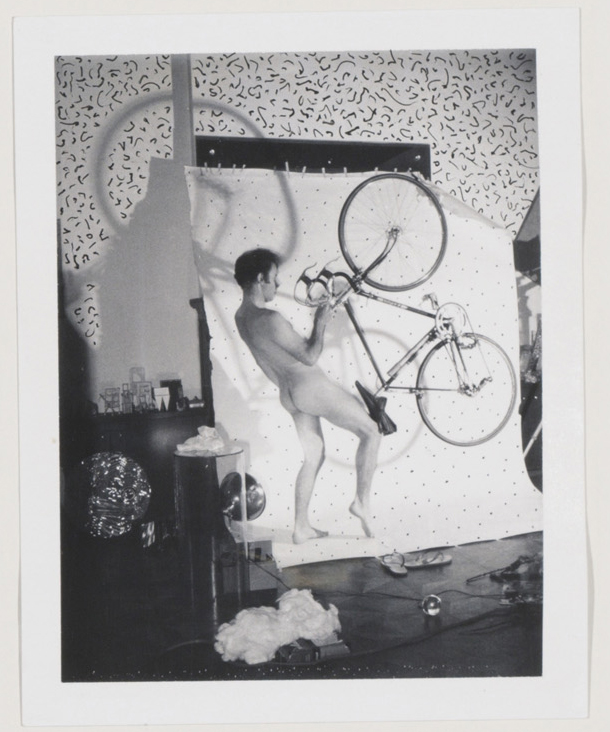
Lucas Samaras (American, 1936-2024) 'Auto Polaroid' 1969-1971


Lucas Samaras (American born Greece, 1936-2024)
Auto Polaroid
1969-1971
Eighteen black-and-white instant prints (Polapan), with hand-applied ink
Each 3 3/4 x 2 15/16″ (9.5 x 7.4cm)
Overall 14 5/8 x 24″ (37.2 x 61cm)
Gift of Robert and Gayle Greenhill
Museum of Modern Art Collection


Working in the digital realm long before it was associated with fine art, Samaras pioneered radical new modes of image making throughout his storied career, pushing and redefining the boundaries of portraiture and self-portraiture over the course of seven decades. Centering on the body and the psyche, Samaras’s autobiographical work across photography, painting, installation, assemblage, drawing, textile, and sculpture often meditates on the malleable, shapeshifting nature of selfhood. “I like remaking myself in photography,” the artist once said. …

In the late 1960s, Samaras began working with a Polaroid 360 camera, creating his iconic Auto Polaroids by altering hundreds of images, mostly self-portraits, with applications of ink by his own hand. In 1973, using a Polaroid SX-70, he took this collagist approach further by manipulating the wet emulsion of the film with a stylus or his fingertip before the chemicals set. The resulting distortions in his Photo-Transformations series took on abstract, otherworldly effects, which he would continue exploring amid the rise of other image making technologies in the following decades.

Anonymous. “Remembering Lucas Samaras,” on the Pace Gallery website Mar 7, 2024 [Online] Cited 06/06/2024
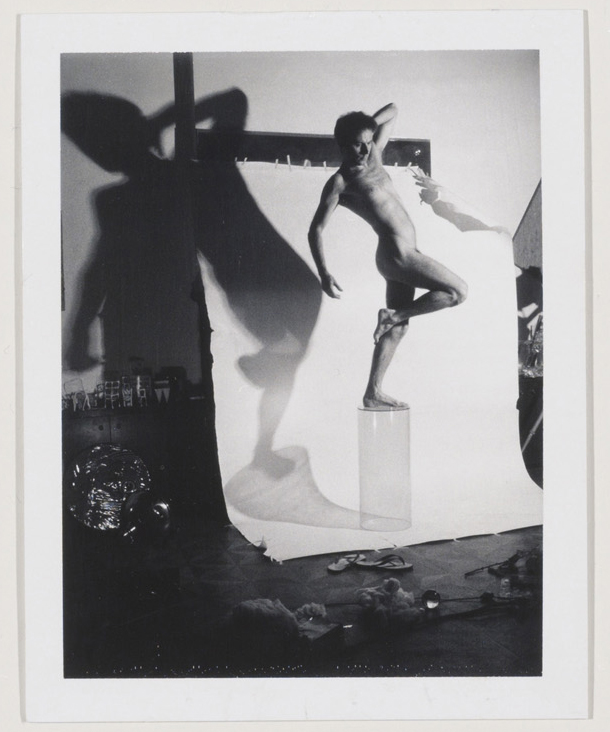
 

Lucas Samaras (American, 1936-2024) 'Auto Polaroid' 1969-1971 (detail)

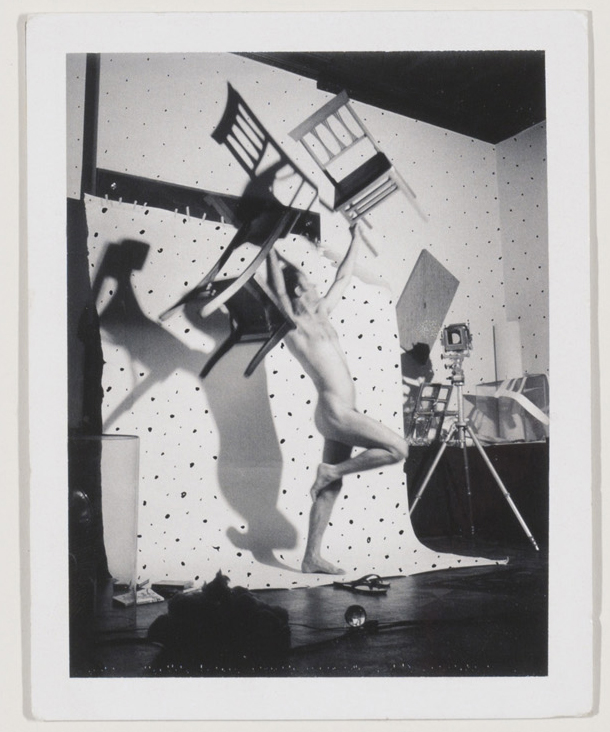
Lucas Samaras (American, 1936-2024) 'Auto Polaroid' 1969-1971 (detail)

Lucas Samaras (American, 1936-2024) 'Auto Polaroid' 1969-1971 (detail)


Lucas Samaras (American, 1936-2024)
Auto Polaroid (details)
1969-1971
Eighteen black-and-white instant prints (Polapan), with hand-applied ink
Each 3 3/4 x 2 15/16″ (9.5 x 7.4cm)
Overall 14 5/8 x 24″ (37.2 x 61cm)
Gift of Robert and Gayle Greenhill
Museum of Modern Art Collection


Julia Margaret Cameron (British, 1815-1879) 'Madonna with Children' 1864


Julia Margaret Cameron (British, 1815-1879)
Madonna with Children
1864
Albumen silver print
10 1/2 x 8 5/8″ (26.7 x 21.9cm)
Gift of Shirley C. Burden
Museum of Modern Art Collection


Julia Margaret Cameron (British, 1815-1879) 'Untitled (Mary Ryan?)' c. 1867


Julia Margaret Cameron (British, 1815-1879)
Untitled (Mary Ryan?)
c. 1867
Albumen silver print
13 3/16 x 11″ (33.5 x 27.9cm)
Gift of Shirley C. Burden
Museum of Modern Art Collection
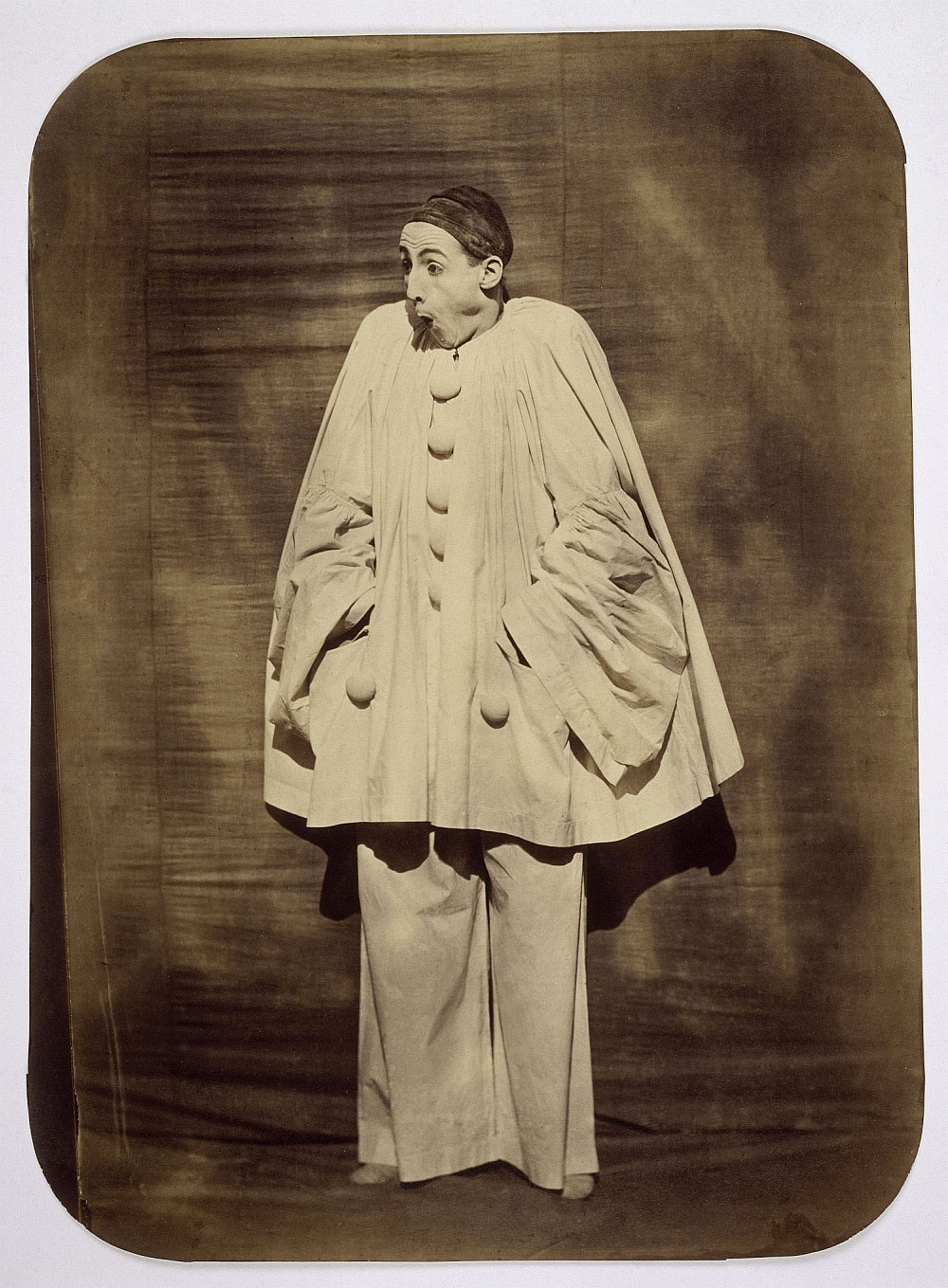
 

Nadar (Gaspard-Félix Tournachon) (French, 1820-1910) Adrien Tournachon (French, 1825-1903) 'Pierrot Surprised' 1854-1855


Nadar (Gaspard-Félix Tournachon) (French, 1820-1910)
Adrien Tournachon (French, 1825-1903)
Pierrot Surprised
1854-1855
Albumen silver print
11 1/4 x 8 3/16″ (28.6 x 20.8cm)
Suzanne Winsberg Collection. Gift of Suzanne Winsberg
Museum of Modern Art Collection
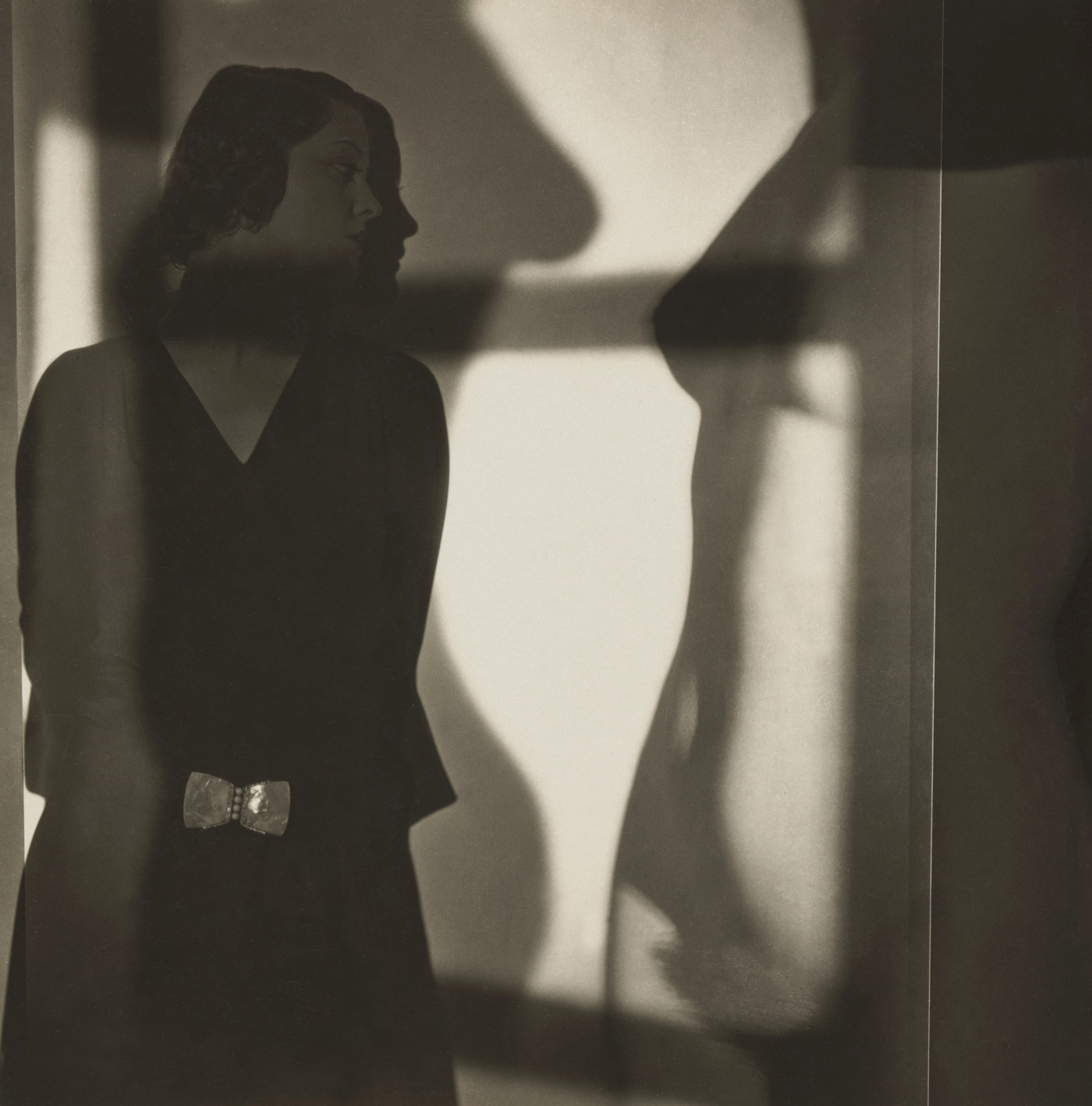
 

Maurice Tabard (French, 1897-1984) 'Untitled' 1929


Maurice Tabard (French, 1897-1984)
Untitled
1929
Gelatin silver print
6 9/16 x 6 1/2″ (16.7 x 16.5cm)
Gift of Robert Shapazian
Museum of Modern Art Collection
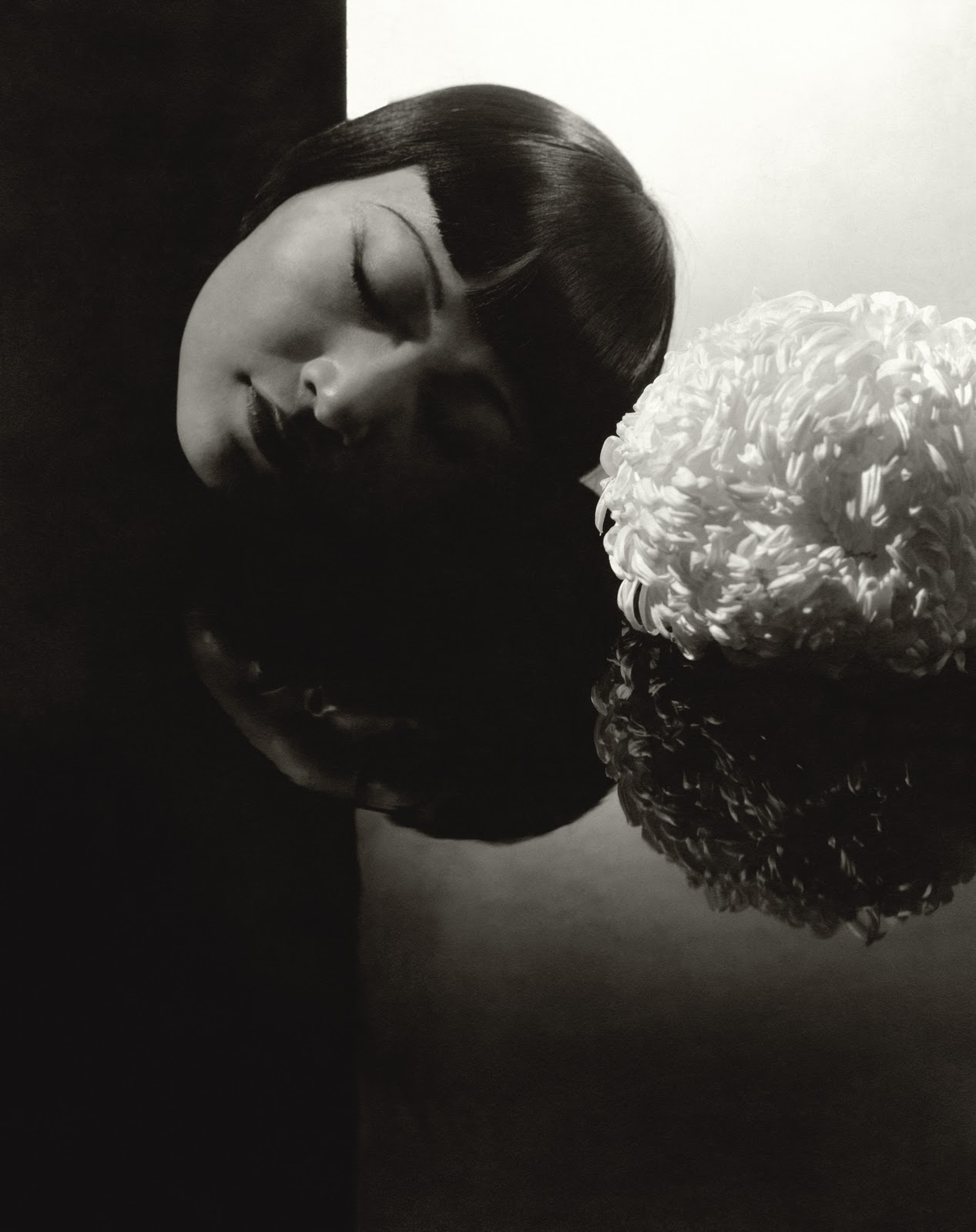
 

Edward Steichen (American born Luxembourg, 1879-1973) 'Anna May Wong' 1930


Edward Steichen (American born Luxembourg, 1879-1973)
Anna May Wong
1930
Gelatin silver print
16 9/16 x 13 7/16″ (42.1 x 34.1cm)
Gift of the artist
Museum of Modern Art Collection


“Taking people away from their natural circumstances and putting them into the studio in front of a camera did not simply isolate them, it transformed them. Sometimes the change was subtle; sometimes it was great enough to be almost shocking. But always there was transformation.”

~ Irving Penn 1974
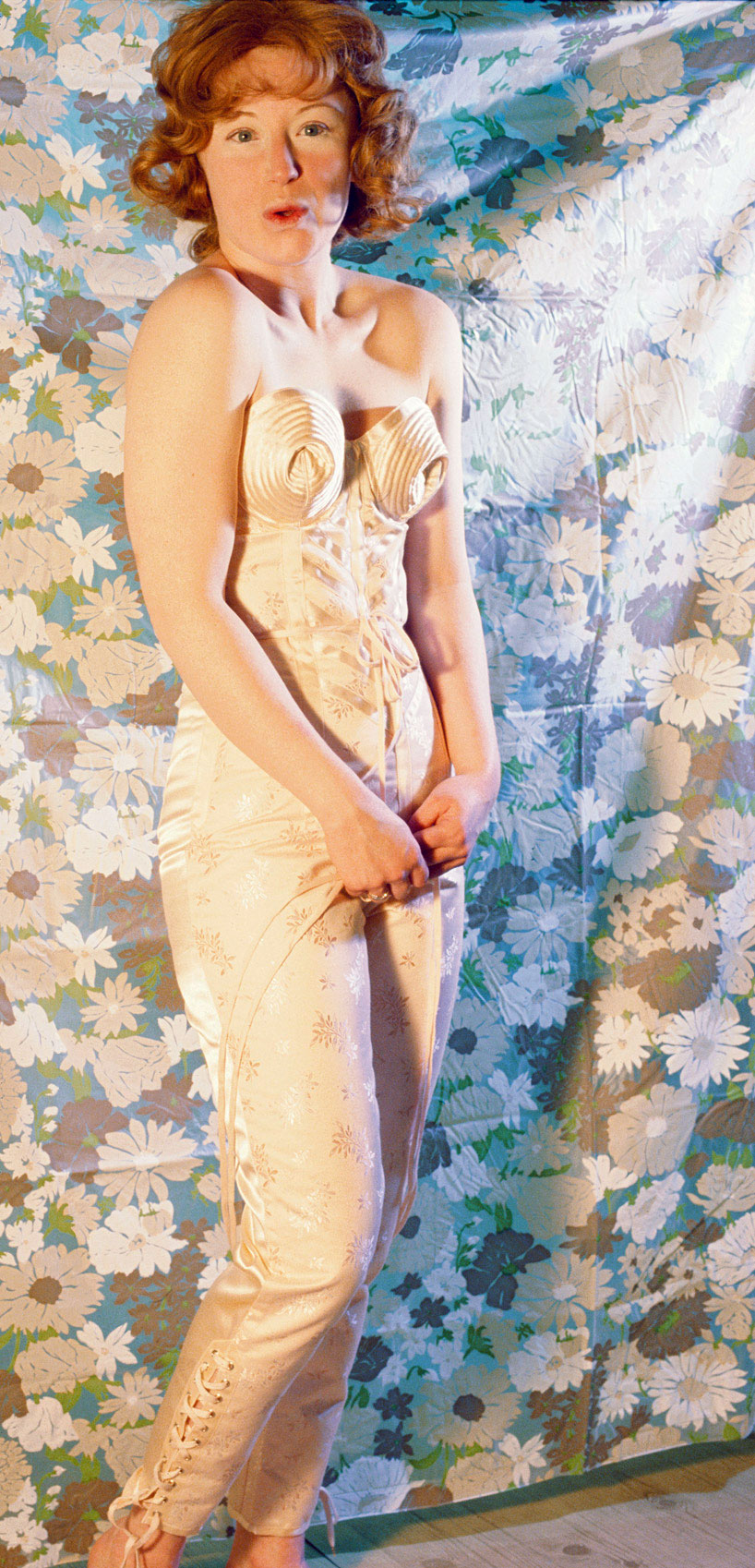
 

Cindy Sherman (American, b. 1954) 'Untitled #131' 1983


Cindy Sherman (American, b. 1954)
Untitled #131
1983
Chromogenic colour print
35 x 16 1/2″ (89 x 41.9cm)
Joel and Anne Ehrenkranz Fund
Museum of Modern Art Collection


The Studio as Set


Barbara Kasten (American, b. 1936) 'Construct I-F' 1979


Barbara Kasten (American, b. 1936)
Construct I-F
1979
Colour instant print (Polaroid Polacolor)
9 1/2 x 7 1/2″ (24.0 x 19.0cm)
Acquired through the generosity of Wendy Larsen
Museum of Modern Art Collection
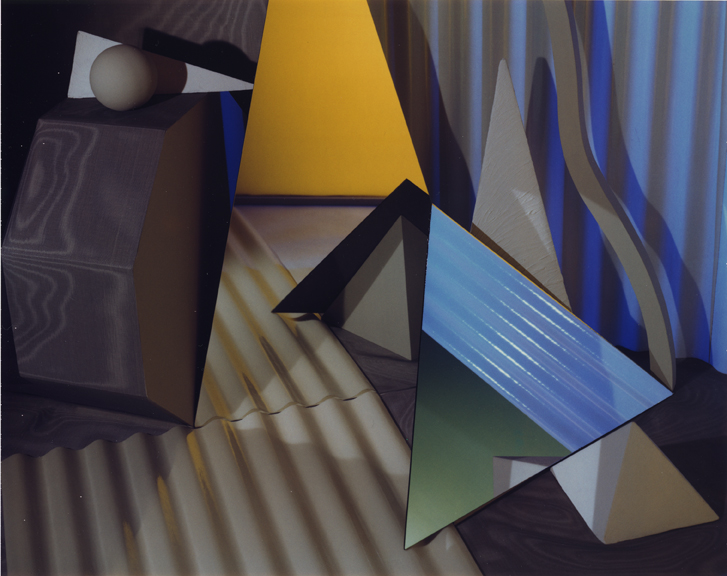
 

Barbara Kasten (American, b. 1936) 'Construct NYC 17' 1984


Barbara Kasten (American, b. 1936)
Construct NYC 17
1984
Silver dye bleach print
29 3/8 x 37 1/16″ (74.7 x 94.1cm)
Gift of Foster Goldstrom
Museum of Modern Art Collection


James Casebere (American, b. 1953) 'Subdivision with Spotlight' 1982


James Casebere (American, b. 1953)
Subdivision with Spotlight
1982
Gelatin silver print
14 13/16 x 18 15/16″ (37.6 x 48.1cm)
Purchase
Museum of Modern Art Collection
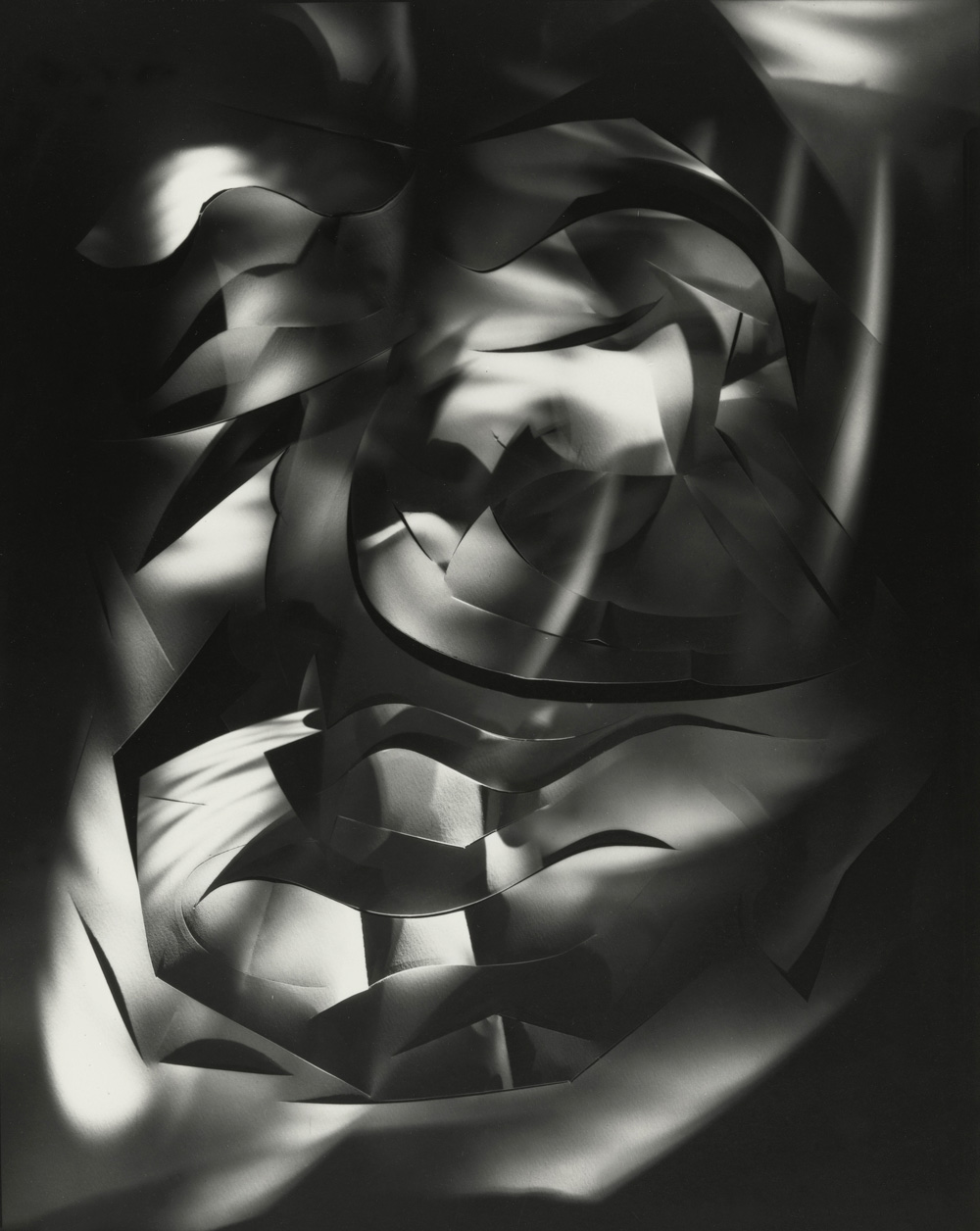
 

Francis Bruguière (American, 1879-1945) 'Light Abstraction' c. 1925


Francis Bruguière (American, 1879-1945)
Light Abstraction
c. 1925
Gelatin silver print
9 15/16 x 7 15/16″ (25.2 x 20.2cm)
Gift of Arnold Newman
Museum of Modern Art Collection


Francis Joseph Bruguière (15 October 1879 – 8 May 1945) was an American photographer.

Francis Bruguière was born in San Francisco, California, to Emile Antoine Bruguière (1849-1900) and Josephine Frederikke (Sather) Bruguière (1845-1915). He was the youngest of four sons born into a wealthy banking family and was privately educated. His brothers were painter and physician Peder Sather Bruguière (1874-1967), Emile Antoine Bruguiere Jr. (1877-1935), and Louis Sather Bruguière (1882-1954), who married wealthy heiress Margaret Post Van Alen. He was also a grandson of banker Peder Sather. His mother died in the 1915 sinking of the British ocean liner SS Arabic by a German submarine.

In 1905, having studied painting in Europe, Bruguière became acquainted with photographer and modern art promoter Alfred Stieglitz (who accepted him as a Fellow of the Photo-secession), and set up a studio in San Francisco, recording in a Pictorialist style images of the city after the earthquake and fire; some of them were reproduced in a book called San Francisco in 1918. He co-curated the photographic exhibition at the 1915 Panama-California Exposition in San Diego, and nine of his photographs were included in The Evanescent City (1916) by George Sterling.

In 1918, following the decline of the family fortune, he moved to New York City where he made his living by photographing for Vanity Fair, Vogue, and Harper’s Bazaar. Soon he was appointed the official photographer of the New York Theatre Guild. In this role he photographed the British stage actress Rosalinde Fuller, who was debuting in What’s in a Name? (1920), and she partnered him for the rest of his life.

Throughout his life, Bruguière experimented with multiple-exposure, solarization (years ahead of Man Ray), original processes, abstracts, photograms, and the response of commercially available film to light of various wavelengths. Until his one-man show at the Art Centre of New York in 1927, he showed this work only to friends. In the mid-1920s, he planned to make a film called The Way, depicting stages in a man’s life, to be played by Sebastian Droste with Rosalinde doing all the female parts. To obtain funding, Bruguière took photographs of projected scenes, but Droste died before filming started; so we are left with only the still pictures.

In 1927 they moved to London, where Bruguière co-created the first British abstract film, Light Rhythms, with Oswell Blakeston. Long thought to have been lost, it has now been recovered. During World War II, he returned to painting.

Text from the Wikipedia website


Jaromír Funke (Czech, 1896-1945) 'Composition' c. 1925


Jaromír Funke (Czech, 1896-1945)
Composition
c. 1925
Gelatin silver print
9 1/4 × 11 9/16″ (23.4 × 29.3cm)
Acquired through the generosity of Blanchette Hooker Rockefeller
Museum of Modern Art Collection
© 2022 Miloslava Rupešová


Jaromír Funke (1 August 1896 – 22 March 1945) was a leading Czech photographer during the 1920s and 1930s.

Funke was recognised for his “photographic games” using mirrors, lights, and insignificant objects, such as plates, bottles, or glasses, to create unique works. In his still life imagery he created abstracts of forms and shadows reminiscent of photograms. His work was regarded as logical, original and expressive in nature. A typical feature of Funke’s work would be the “dynamic diagonal.”

Text from the Wikipedia website
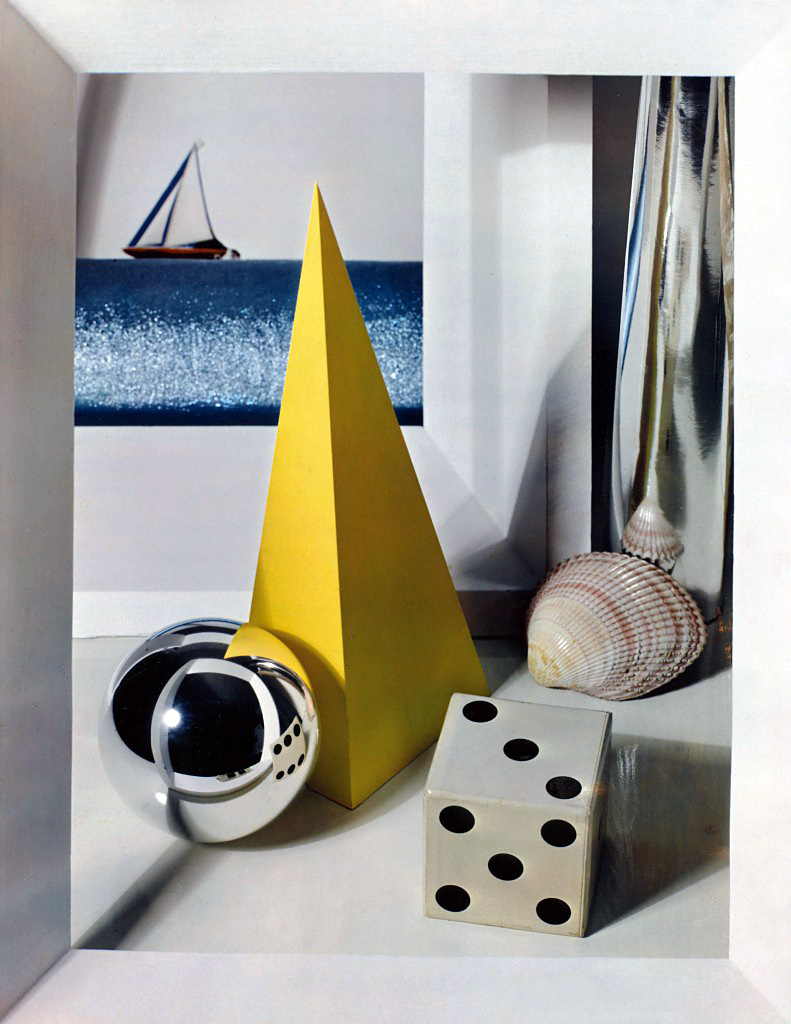
 

Paul Outerbridge (American, 1896-1958) 'Images de Deauville' 1936


Paul Outerbridge (American, 1896-1958)
Images de Deauville
1936
Tri-colour carbro print
15 3/4 x 12 1/4″ (40 x 31.1cm)
Gift of Mrs. Ralph Seward Allen
Museum of Modern Art Collection
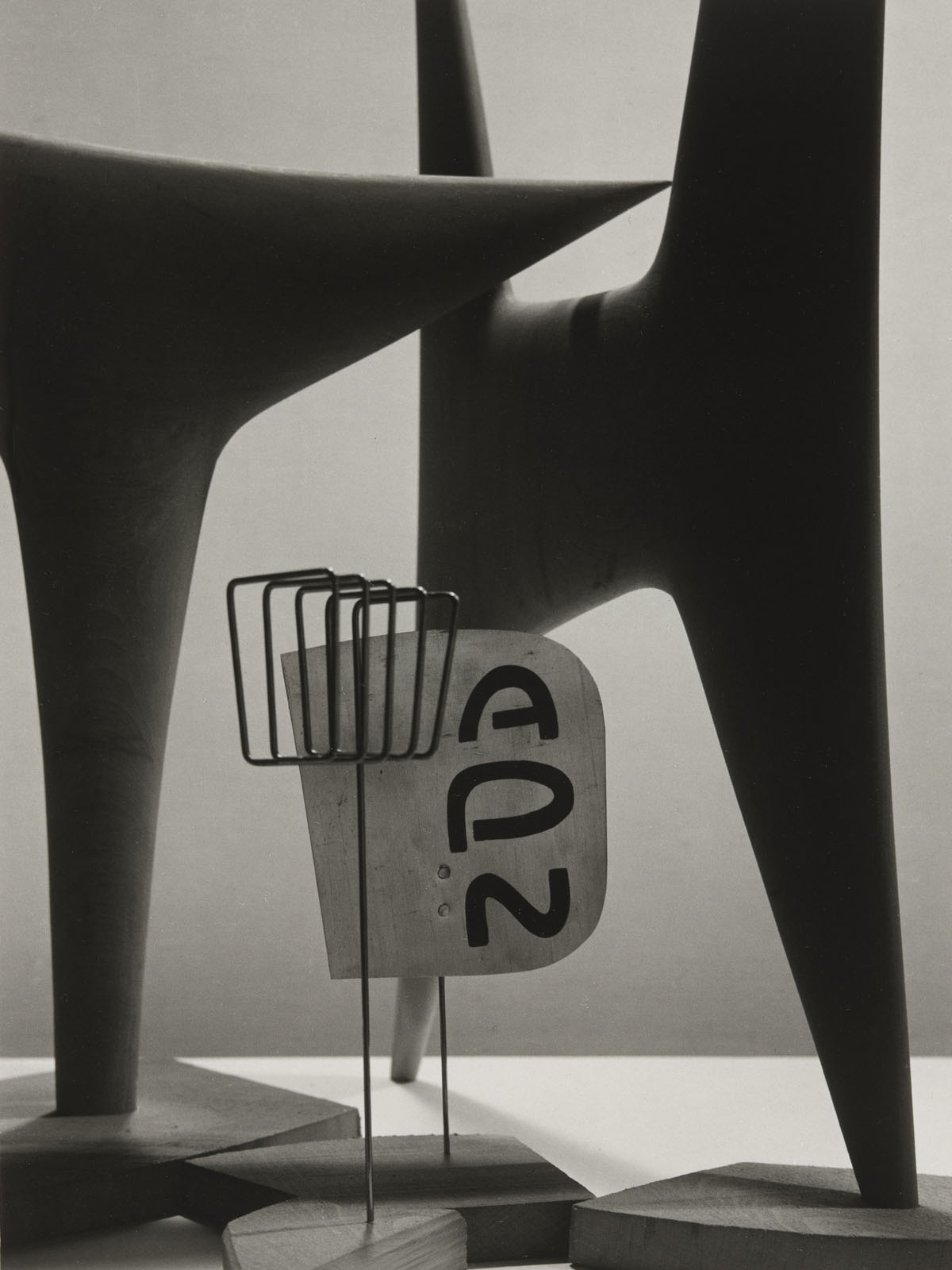
 

Shozo Kitadai, Kiyoji Otsuji. 'Untitled' from the portfolio 'APN (Asahi Picture News)' 1953-1954


Shozo Kitadai, Kiyoji Otsuji
Untitled from the portfolio APN (Asahi Picture News)
1953-1954
Gelatin silver print, printed 2003
7 1/2 × 5 9/16″ (19 × 14.2cm)
Gift of Shigeru Yokota
Museum of Modern Art Collection
© 2022 Seiko Otsuji
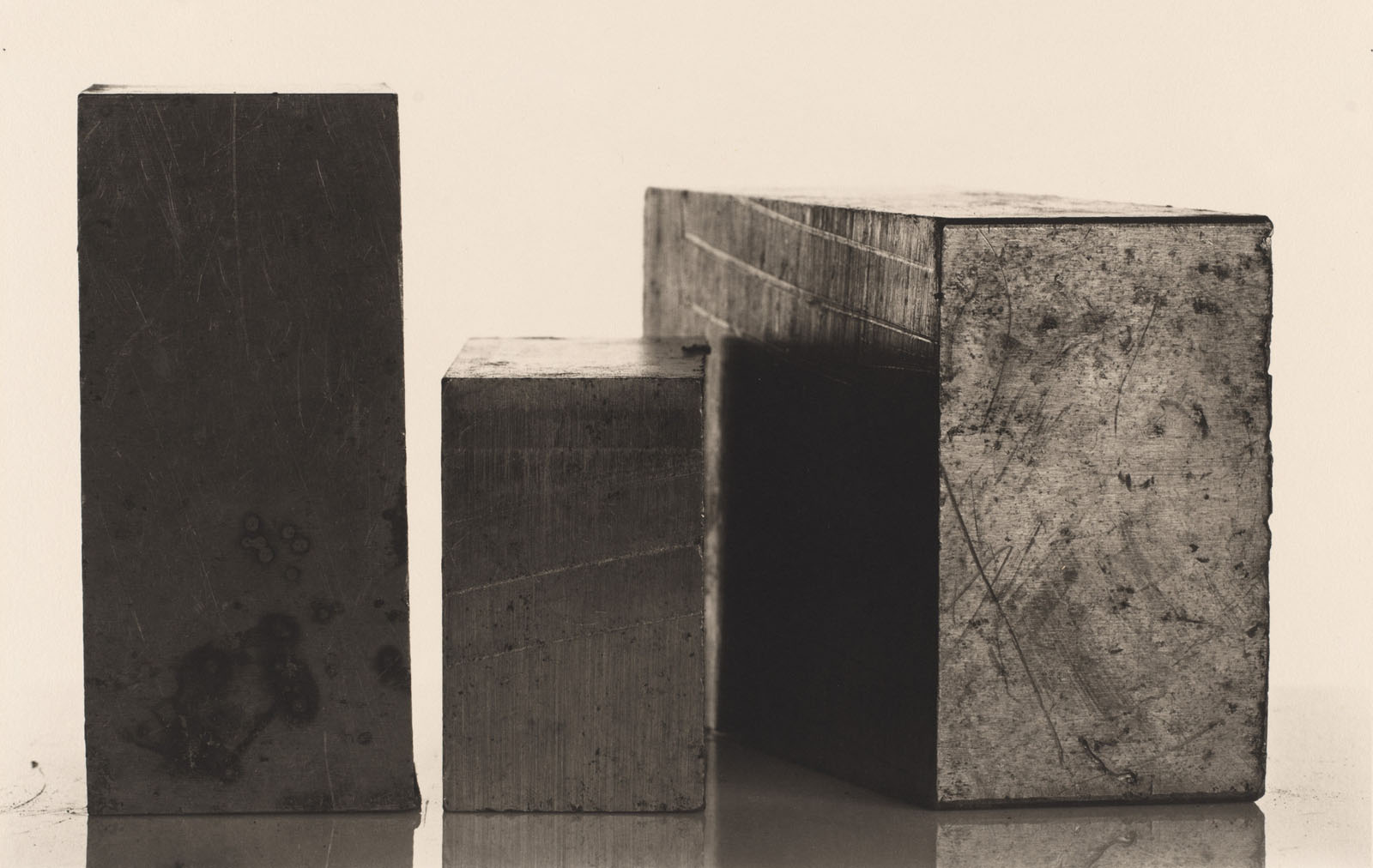
 

Irving Penn (American, 1917-2009) 'Three Steel Blocks, New York' 1980


Irving Penn (American, 1917-2009)
Three Steel Blocks, New York
1980
Platinum/palladium print
13 1/4 × 20 11/16″ (33.6 × 52.5cm)
Acquired through the generosity of Lily Auchincloss
Museum of Modern Art Collection
© The Irving Penn Foundation
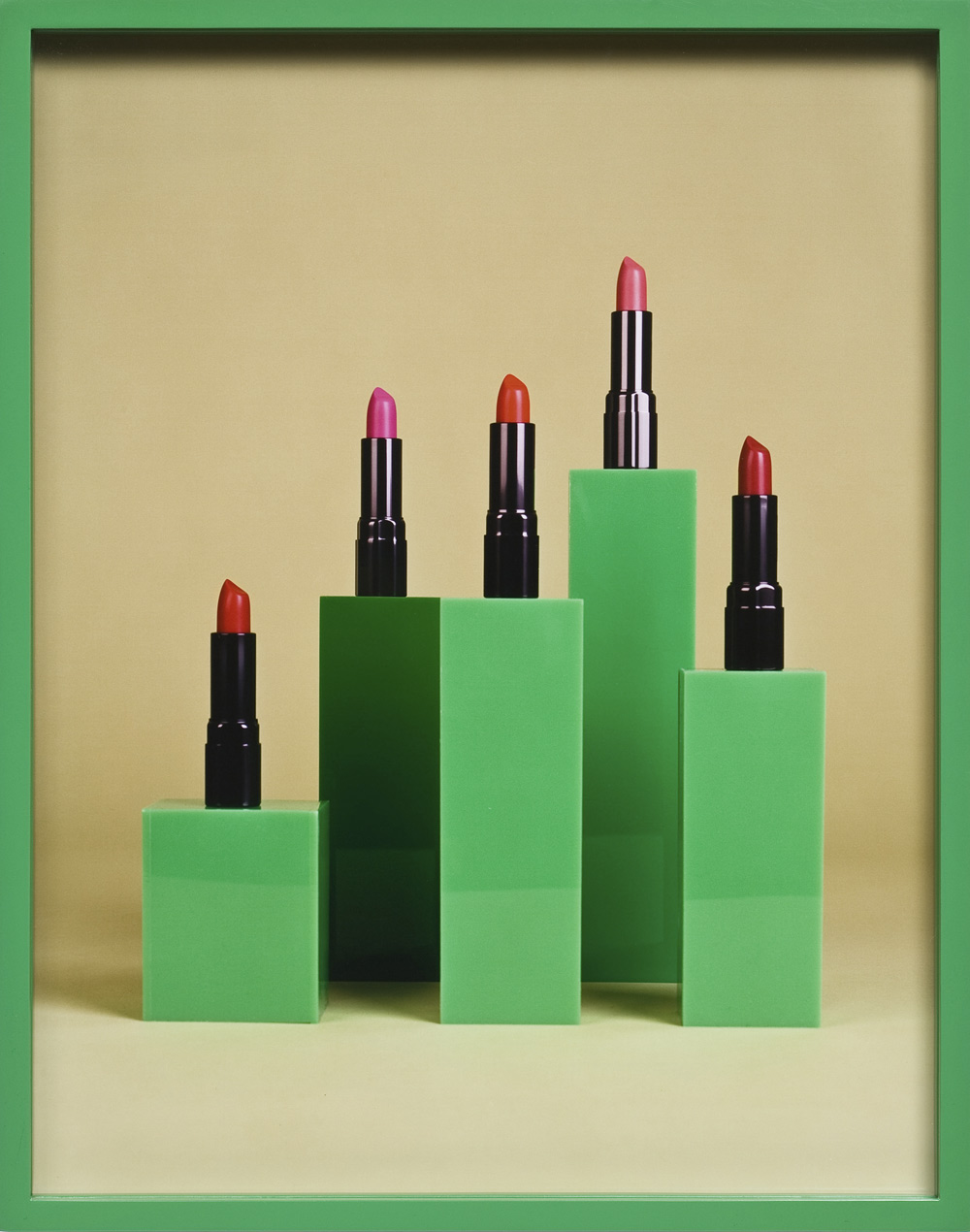
 

Elad Lassry (Israeli, b. 1977) 'Nailpolish' 2009


Elad Lassry (Israeli, b. 1977)
Nailpolish
2009
Chromogenic colour print
14 1/2 x 11 1/2″ (36.8 x 29.2cm)
Fund for the Twenty-First Century
Museum of Modern Art Collection


The Museum of Modern Art
11 West 53 Street
New York, NY 10019
Phone: (212) 708-9400

Opening hours:
10.30am – 5.30pm
Open seven days a week
MoMA website

LIKE ART BLART ON FACEBOOK

Back to top

Exhibition: ‘Andy Warhol: Polaroids / MATRIX 240’ at Berkeley Art Museum and Pacific Film Archive, University of California

Exhibition dates: 27th January – 20th May 2012

PLEASE NOTE: This posting contains nude photographs. If you do not like please do not look!


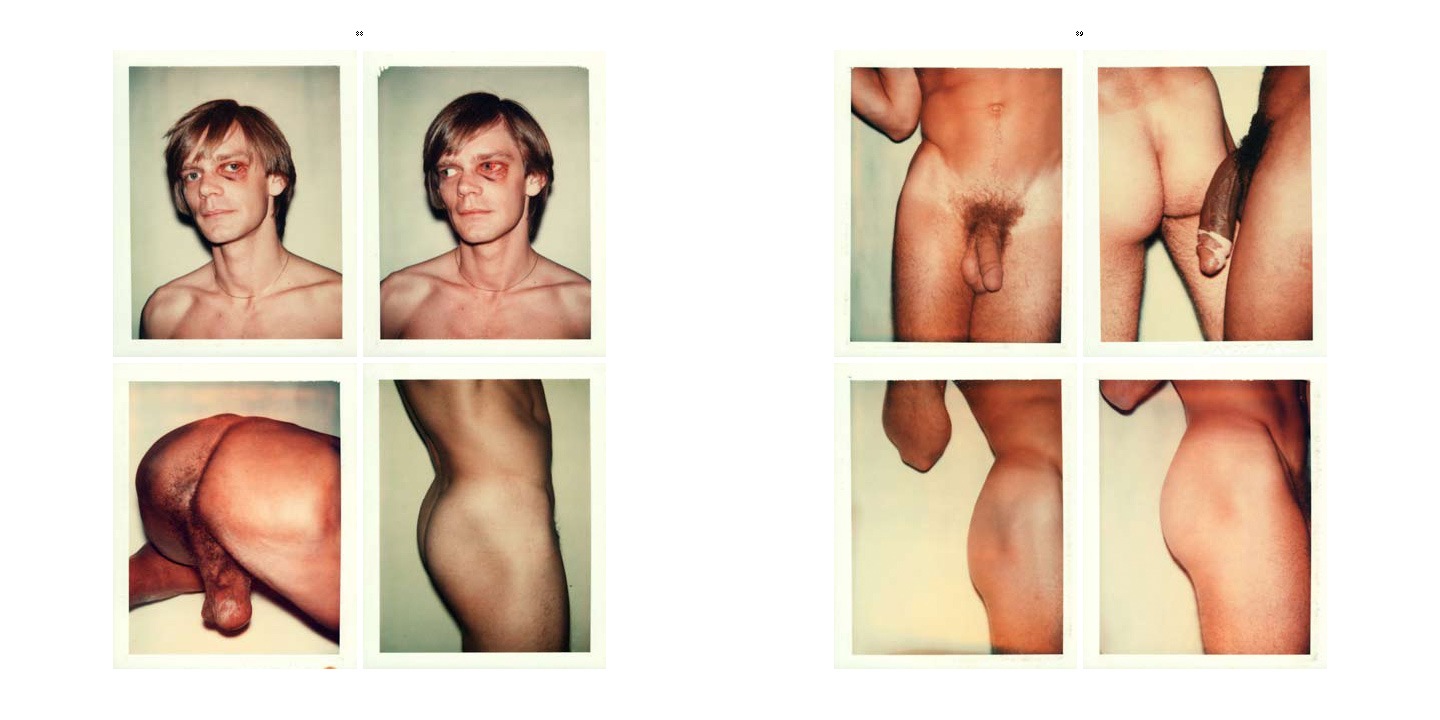
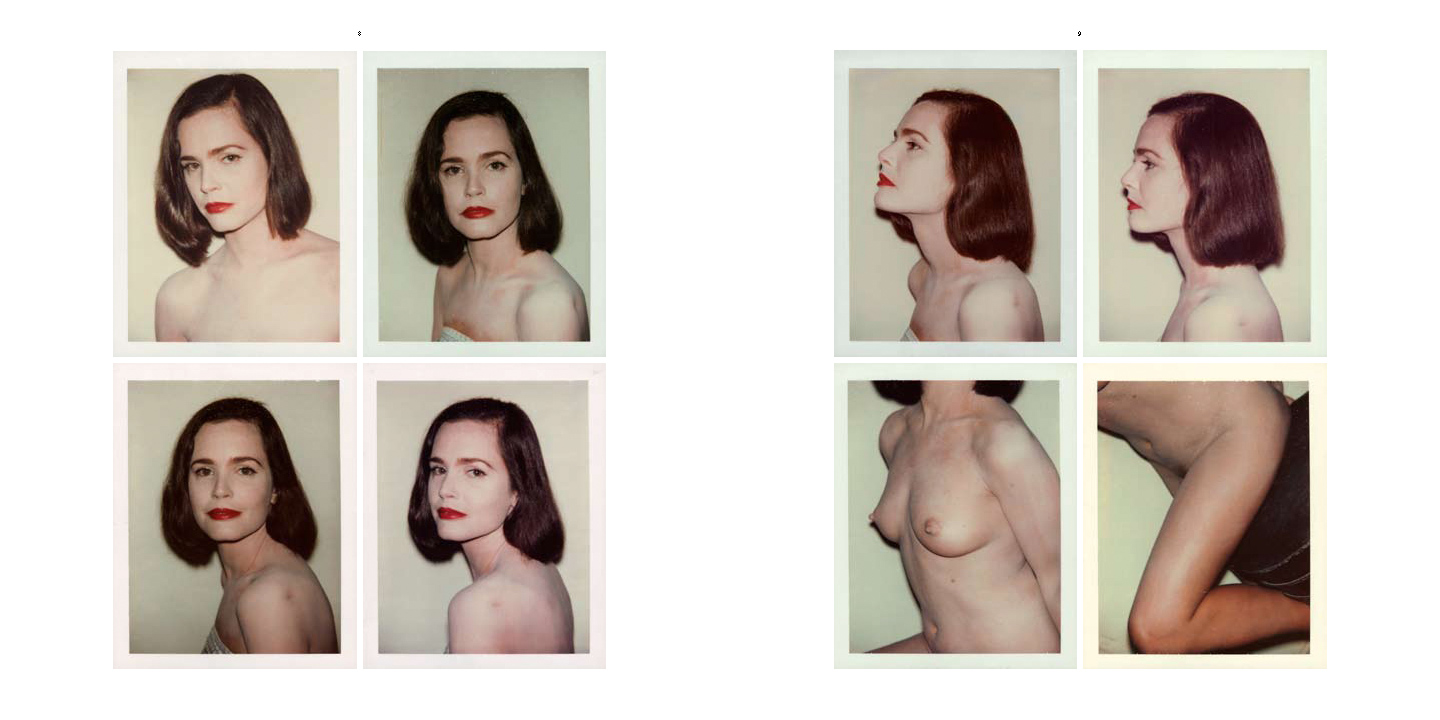
Andy Warhol (American, 1928-1987) 'Untitled' Pages 8 and 9 of The Andy Warhol Photographic Legacy Program, Vol. III


Andy Warhol (American, 1928-1987)
Untitled
Pages 8 and 9 of The Andy Warhol Photographic Legacy Program, Vol. III
of The Andy Warhol Foundation for the Visual Arts Twenty-Year Report, 1987–2007


ONE PERSON has found one of the images below offensive; so just for them please note that his posting has a PENIS and A-RRRRRR-SE rating. For all others, enjoy another spectacular Andy posting!

Marcus


Many thankx to BAM/PFA for allowing me to publish the photographs in the posting. Please click on the photographs for a larger version of the image (especially the two images directly below). View the complete The Andy Warhol Photographic Legacy Program Vol. III as a pdf (3.7Mb pdf)


“I’ve never met a person I couldn’t call a beauty.”


Andy Warhol


Andy Warhol (American, 1928-1987) 'Untitled' Pages 38 and 39 of The Andy Warhol Photographic Legacy Program, Vol. III


Andy Warhol (American, 1928-1987)
Untitled
Pages 38 and 39 of The Andy Warhol Photographic Legacy Program, Vol. III
of The Andy Warhol Foundation for the Visual Arts Twenty-Year Report, 1987–2007


The University of California, Berkeley Art Museum and Pacific Film Archive presents Andy Warhol: Polaroids / MATRIX 240. The exhibition features a selection of Warhol’s Polaroid portraits drawn from an extraordinary gift of The Andy Warhol Foundation for the Visual Arts to the museum. From 1970 to 1987, Warhol, armed with his Polaroid Big Shot camera, captured a wide range of individuals – the royalty, rock stars, executives, artists, patrons of the arts, and athletes who epitomised seventies and eighties high society, but also as many unknown subjects. From January 27 through May 20, 2012, BAM/PFA will feature a group of approximately forty of these photographs, including portraits of Caroline, Princess of Monaco; Diane von Furstenberg; and O.J. Simpson.

Famous for his contributions to Pop Art, Warhol used photography as a central part of his art-making process. Before turning to fine art, Warhol worked in advertising and commercial art, experiences that informed his approach to portraiture. In 1962, he debuted his first silkscreen paintings of celebrities, serialising pictures he pulled from magazines and press photos. In addition to using found images, Warhol eventually incorporated his own photography into his practice. In 1969 he launched inter/View magazine, which featured his photos of celebrities. By the 1970s and 1980s, portrait commissions were a major source of his income, and many of his Polaroids would serve as the basis for these works.

While each of the images in Andy Warhol: Polaroids is unique, the consistency of composition, poses, and plain white backdrop equalises the superstars and lesser-known subjects. To Warhol, they were all beautiful people. But even within this uniform staging, we see the artist finding numerous ways to create memorable, varied, and iconic compositions. Though these photos may be small in size, together the Warhol Polaroids provide a glimpse into the artistic process of one of the twentieth century’s most important artists.

From 1970 to 1987 Andy Warhol took scores of Polaroid and black-and-white photographs, the vast majority of which were never seen by the public. These images often served as the basis for his commissioned portraits, silk-screen paintings, drawings, and prints. In 2007, to commemorate its twentieth anniversary, the Andy Warhol Foundation for the Visual Arts launched the Andy Warhol Photographic Legacy Program. Designed to give a broad public greater access to Warhol’s photographs, the program donated over 28,500 of Warhol’s original Polaroids and gelatin silver prints to more than 180 college and university museums and galleries across the country. Each institution received a curated selection of over one hundred Polaroids and fifty black-and-white prints.

The number of images he took at each session varied as greatly as the figures he photographed. Repetition, a recurring motif in Warhol’s paintings, plays both a conceptual and practical role in his photography. By making several Polaroids, he had more material from which to work. By shooting at length, more about the sitter was exposed. Seen all together, the Polaroids destabilise the iconic status that a Warhol image assumes when displayed singly. On its own, a Polaroid image is fully identified with the artwork that ultimately grew out of it; the face depicted becomes a kind of signifier for larger cultural concepts of beauty, power, and worth.

Text adapted from “Andy Warhol’s Photographic Legacy,” in The Andy Warhol Photographic Legacy Program, Vol. III of The Andy Warhol Foundation for the Visual Arts Twenty-Year Report, 1987-2007 (New York: The Andy Warhol Foundation for the Visual Arts, Inc, 2007), 4-5.

View the complete Vol. III as a pdf (3.7Mb pdf)

Text and press release from the BAM/PFA website


Andy Warhol (American, 1928-1987) 'Billy Squier' 1982


Andy Warhol (American, 1928-1987)
Billy Squier
1982
Polacolor 2
4 1/4 x 3 3/8 in
Gift of the The Andy Warhol Center for the Visual Arts
© The Andy Warhol Center for the Visual Arts


Andy Warhol (American, 1928-1987) 'Daryl Lillie' 11/1978


Andy Warhol (American, 1928-1987)
Daryl Lillie
11/1978
Polacolor 2
4 14 x 3 3/8 in
© The Andy Warhol Center for the Visual Arts


Andy Warhol (American, 1928-1987) 'Heather Watts' after June 1986


Andy Warhol (American, 1928-1987)
Heather Watts
after June 1986
Polacolor ER
4 1/4 x 3 3/8 in
© The Andy Warhol Center for the Visual Arts


From 1970 to 1987 Andy Warhol took thousands of Polaroid pictures, the vast majority of which were never seen by the public. These images often served as the basis for his commissioned portraits, silkscreen paintings, drawings, and prints. Warhol captured a wide range of individuals with his Polaroid Big Shot camera. The royalty, rock stars, industrialists, artists, patrons of the arts, and athletes who epitomised 1970s and 1980s high society, as well as unknown sitters, are represented with a sense of dignity and verve. Warhol was interested in a new definition of “Society” that emerged in this period. In the introduction to the 1979 publication Andy Warhol’s Exposures, the artist wrote:

“Now it doesn’t matter if you came over on the Mayflower, so long as you can get into Studio 54. Anyone rich, powerful, beautiful, or famous can get into Society. If you’re a few of those things you can really get to the top.”1

Warhol’s images not only documented, but participated in, the creation of this new social world, satisfying both the need of his subjects to be seen and the desire of the viewer to gain access to this milieu through the act of looking. Warhol worked in advertising and commercial art before turning to fine art, experiences that informed his approach to portraiture. In 1962, he debuted his first silk-screen paintings of celebrities, serialising pictures appropriated from magazines or press photos of the time. In addition to employing found images, Warhol eventually incorporated photography into his practice and, in 1969, started a magazine (originally called inter/VIEW) that often featured his own photographs of celebrities. By the 1970s and 1980s, portrait commissions became a main source of his income.

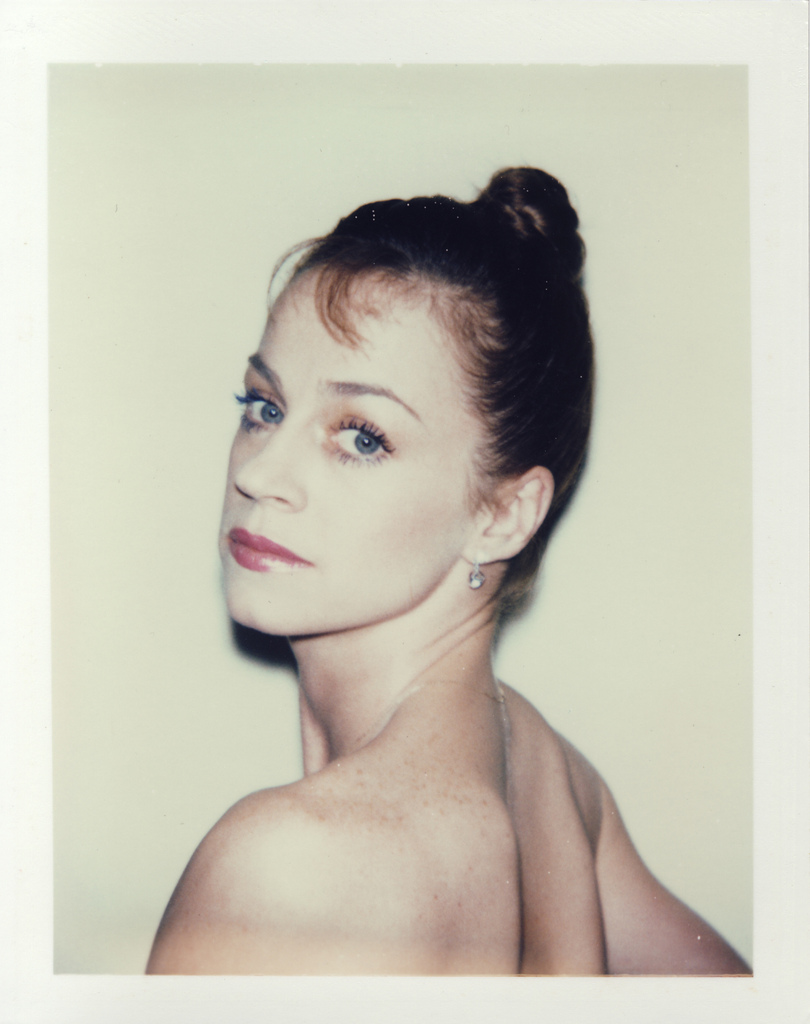
Warhol’s Polaroids are strikingly intimate, an effect achieved in part by his personal relationship with the sitters and in part by formal aspects of the images. The artist often provided a luncheon in advance of the photo session, establishing a bond with his subject and a tone for the shoot. In the resulting Polaroids, the sitter is in direct eye contact with Warhol and the camera. The strong sense of immediacy created by the sitter’s open gaze is enhanced by the tight compositions in which the subject, pressed up close to the picture plane, is isolated from any context. A feeling of vulnerability appears in some of the portraits (as suggested by the bared shoulders of Unidentified woman (blond with bangs), for example), indicating a willingness to be exposed as well as the seductive nature of the artist and the photo shoot itself. The closeness forged between photographer and sitter and captured by the camera offers an illusion of sharing these private moments and of entering into Warhol’s circle of beautiful people and their glamorous lives.

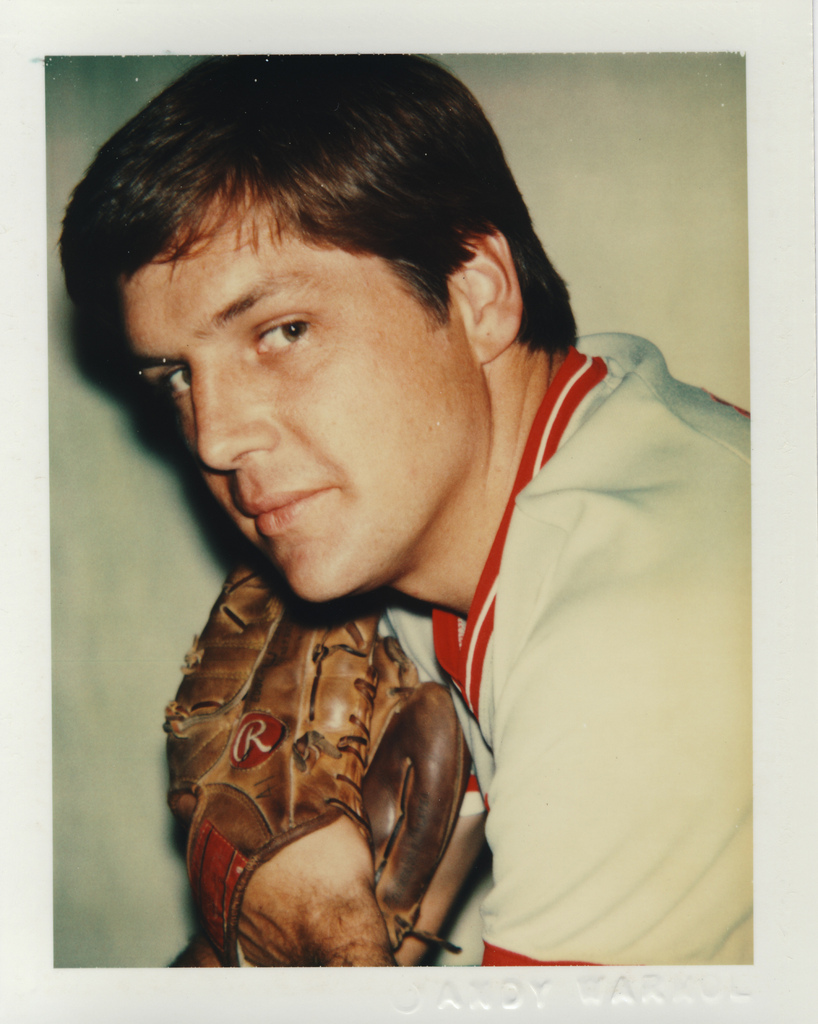
While each image is unique, the consistency of composition, poses, and plain white backdrop equalises the celebrities and the unknown subjects of Warhol’s Polaroids. After all, to Warhol, they were all beautiful people. Polaroids of individuals who are not immediately recognisable pique our curiosity. Who is the enigmatic Frau Buch? Like many of Warhol’s subjects, she is photographed with a prop. The small dog that she hugs may not identify her, but it suggests a dimension of her personality. In other Polaroids, Warhol used props as identifying elements like the attributes in Renaissance portraiture – major-league baseball pitcher Tom Seaver is shown with his mitt and NFL legend O.J. Simpson clutches a football. The teddy bear in the arms of the subject of Unidentified girl (blue t-shirt with teddy bear) represents an aspect childhood that everyone can relate to, although the girl is actually a scion of the new high society: Jade, the daughter of Mick and Bianca Jagger.

Warhol’s Polaroids were designed to be source material for his canvases. He would direct the sitter in a series of poses, which gave the artist ample material from which to create the subsequent silkscreen portraits. Subjects such as fashion designer Diane Von Furstenberg and patron of the arts Daryl Lillie are photographed wearing thick white makeup, black eyeliner, and bright red lipstick that evoke the stage or a high-fashion photo shoot; however, the makeup also served to flatten the images for a smooth effect in the screen-print transfer. The Polaroid Big Shot’s strong flash overexposes many images and increases the contrast, an effect Warhol deployed in the subsequent silkscreens; the flash also seems to catch each sitter – celebrities and unknowns alike – in the sudden glare of a paparazzo’s camera.

Warhol’s Polaroids borrow from paparazzi and high-fashion photography and at the same time elevate an inexpensive, everyday medium to the realm of high art. Warhol embossed his name in capital letters in the lower right-hand border of most of the Polaroids, marking them as a painter would sign a canvas. For Warhol, coming from the world of advertising, this was also a kind of branding. He wrote of Jade Jagger: “She never calls me Andy always Andywarhol, as if it were one word – or a brand name, which I wish it were.”2 Warhol’s portraits confuse the boundaries of advertising and art, high and low, celebrity portraiture and the depiction of everyday people, and even photography and painting. His subjects are perpetually illuminated by the afterimage of a flashbulb, their faces immortalised by Warhol’s style

Fabian Leyva-Barragan, Curatorial Intern
Stephanie Cannizzo, Assistant Curator


1/ Warhol, Andy and Colacello, Bob . Andy Warhol’s Exposures (New York: Andy Warhol Books / Grosset & Dunlop, Inc., 1979), p. 19

2/ Ibid., pp. 28-29


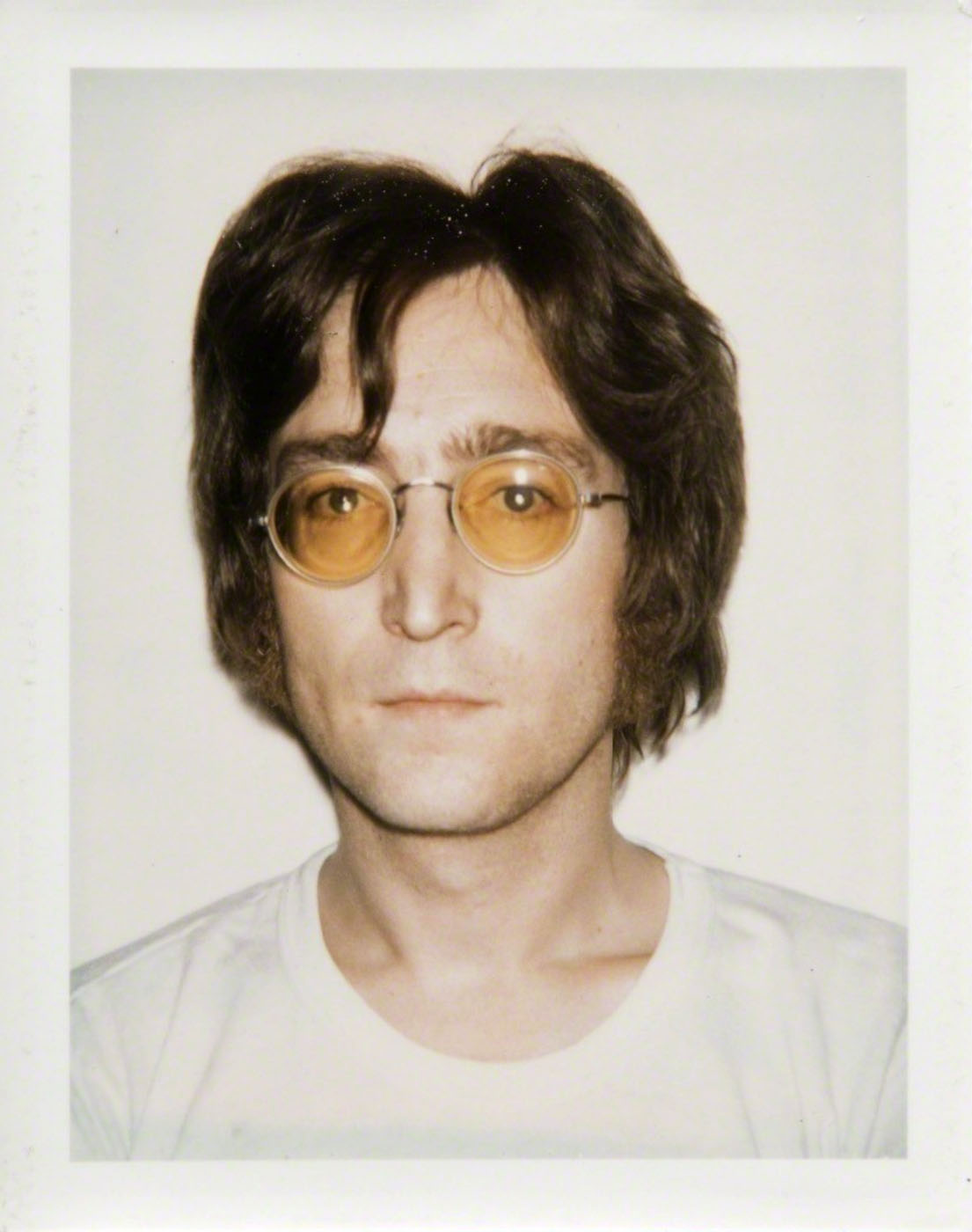
Andy Warhol (American, 1928-1987) 'John Lennon' 1971


Andy Warhol (American, 1928-1987)
John Lennon
1971
Polacolor ER
4 1/4 x 3 3/8 in
Gift of the The Andy Warhol Center for the Visual Arts
© The Andy Warhol Center for the Visual Arts


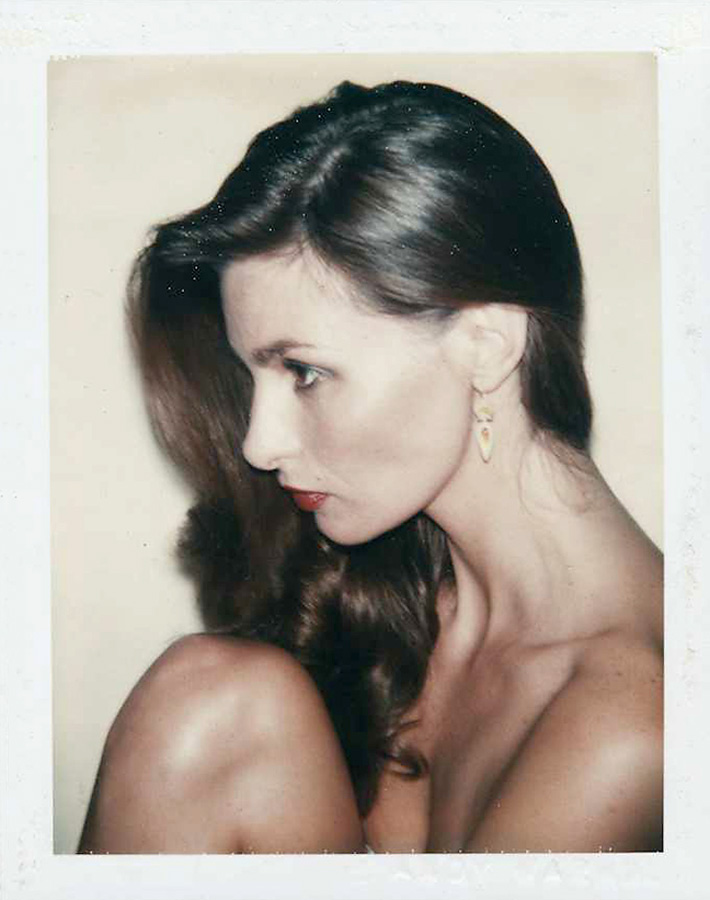
Andy Warhol (American, 1928-1987) 'Apollonia Von Ravenstein' c. 1979


Andy Warhol (American, 1928-1987)
Apollonia Von Ravenstein
c. 1979
Polacolor ER
4 1/4 x 3 3/8 in
Gift of the The Andy Warhol Center for the Visual Arts
© The Andy Warhol Center for the Visual Arts


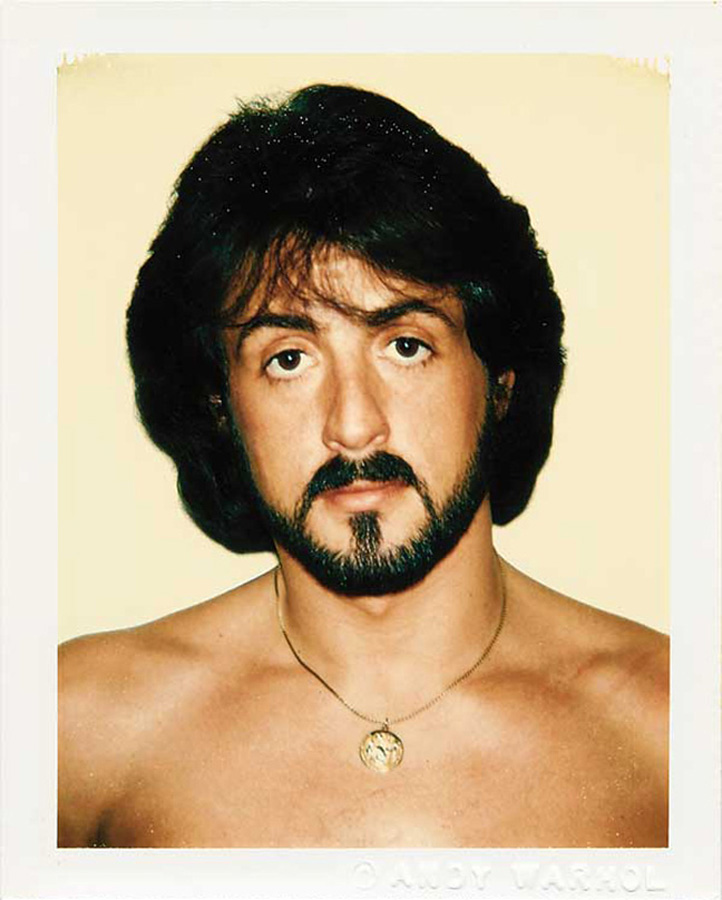
Andy Warhol (American, 1928-1987) 'Sylvester Stallone' 2/1980


Andy Warhol (American, 1928-1987)
Sylvester Stallone
2/1980
Polacolor ER
4 1/4 x 3 3/8 in
Gift of the The Andy Warhol Center for the Visual Arts
© The Andy Warhol Center for the Visual Arts


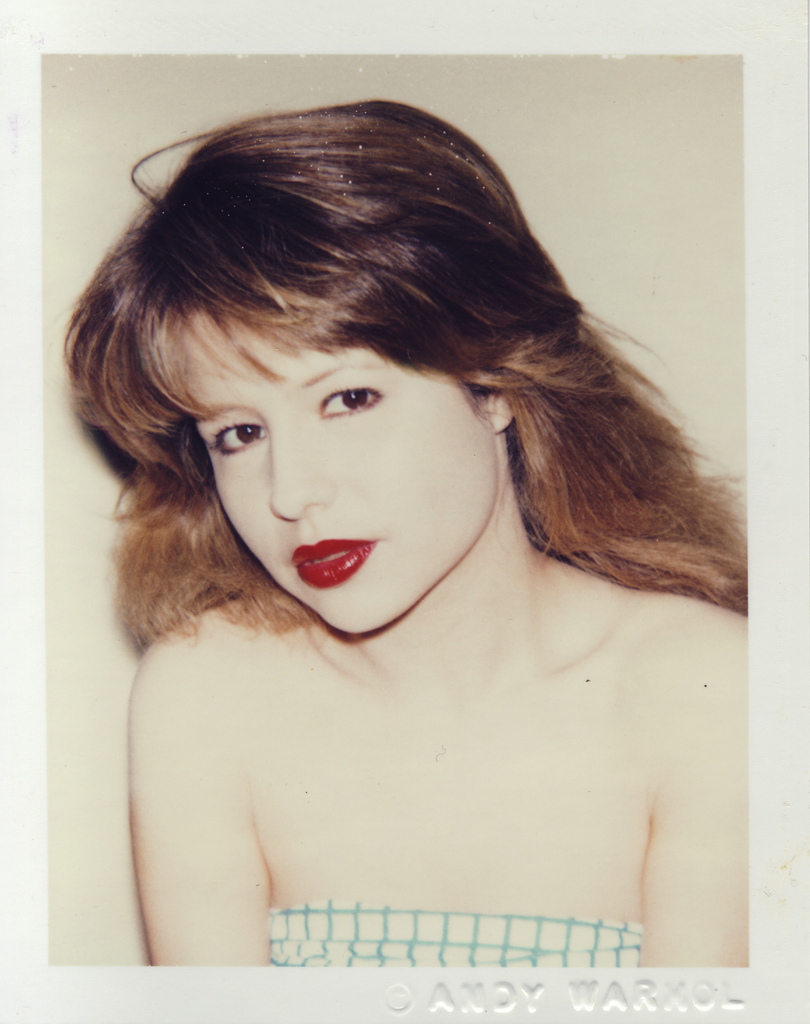
Andy Warhol (American, 1928-1987) 'Pia Zadora' 1983


Andy Warhol (American, 1928-1987)
Pia Zadora
1983
Polacolor ER
4 1/4 x 3 3/8 in
Gift of the The Andy Warhol Center for the Visual Arts
© The Andy Warhol Center for the Visual Arts


Andy Warhol (American, 1928-1987) 'Tom Seaver' 1977


Andy Warhol (American, 1928-1987)
Tom Seaver
1977
Polacolor Type 108
4 14 x 3 3/8 in
Gift of the The Andy Warhol Center for the Visual Arts
© The Andy Warhol Center for the Visual Arts


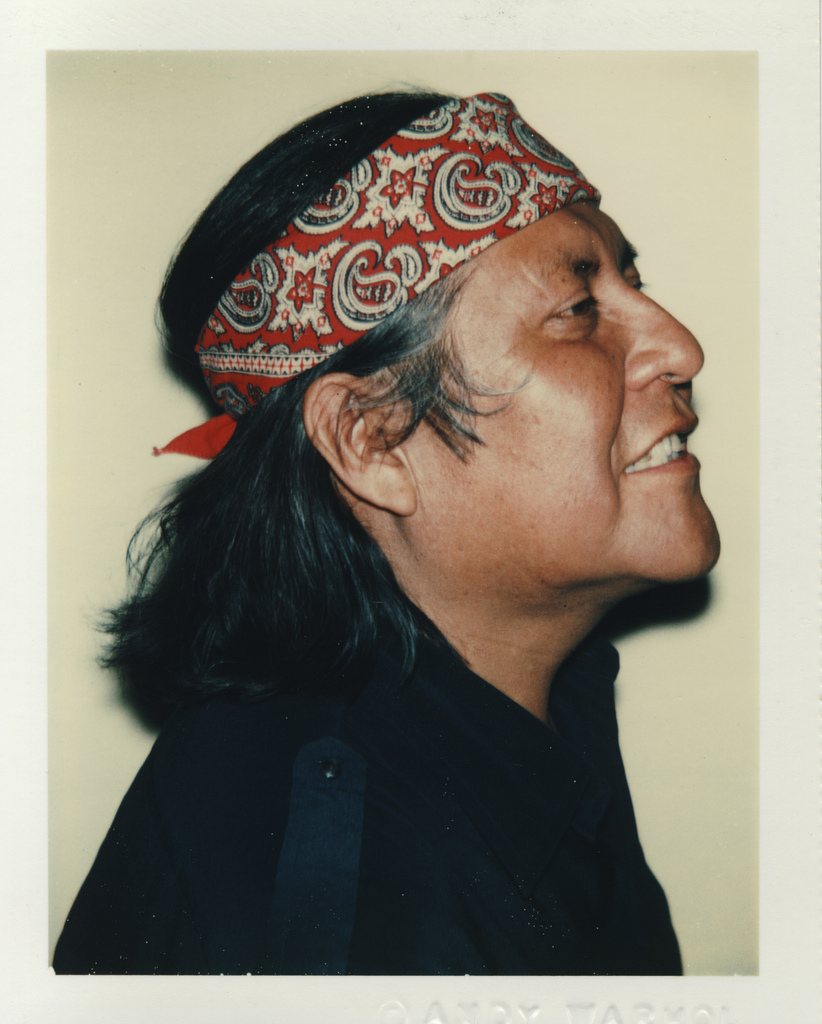
Andy Warhol (American, 1928-1987) 'R.C. Gorman' 1979


Andy Warhol (American, 1928-1987)
R.C. Gorman
1979
Polacolor Type 108
4 1/4 x 3 3/8 in
© The Andy Warhol Center for the Visual Arts


Berkeley Art Museum and Pacific Film Archive

BAMPFA is located at 2155 Center Street
between Oxford Street and Shattuck Avenue, in downtown Berkeley
Phone: (510) 642-0808

Opening hours:
Wednesday – Sunday, 11am – 7pm
Closed Mondays and Tuesdays

Berkeley Art Museum and Pacific Film Archive website

LIKE ART BLART ON FACEBOOK

Back to top

Exhibition: ‘Series of Portraits. A century of photographs’ at Museum für Kunst und Gewerbe, Hamburg

Exhibition dates: 1st April – 17th July 2011


Many thankx to Michaela Hille for her help and to Museum für Kunst und Gewerbe, Hamburg for allowing me to publish the photographs in the posting. Please click on the photographs to view a larger version of the image.


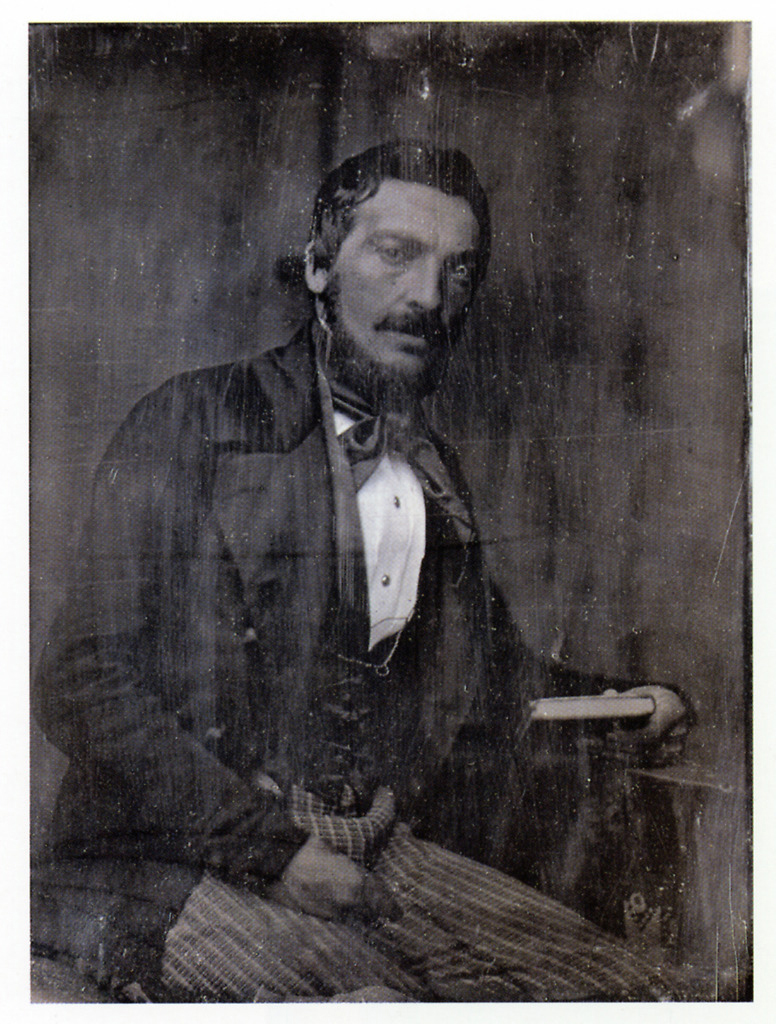
Hermann Biow (German, 1804-1850) 'Heinrich Jakob Venedey' 1848


Hermann Biow (German, 1804-1850)
Heinrich Jakob Venedey
1848
Daguerreotype
20.8 x 15.4cm
Museum für Kunst und Gewerbe, Hamburg


Hermann Biow was an important German daguerreotypist in the early days of photography. Biow became known through his portrait photography during his lifetime. He portrayed politicians, celebrities and wealthy citizens, including Franz Liszt, Alexander von Humboldt and Friedrich Wilhelm IV. He is also known for his parliamentarian portraits of the first German National Assembly in the Paulskirche in Frankfurt in 1848/1849. Today Biow is primarily seen as the founder of German documentary photography.

A daguerreotype of Heinrich Jakob Venedey from 1848 made by Hermann Biow in Frankfurt. Venedey (1805-1871) was a member of the German National Assembly in Frankfurt’s Paulskirche in 1848/1849 as a deputy for Hessen-Homburg. The lawyer belonged to the factions Deutscher Hof and Westendhall of the National Assembly.

Text translated by Google Translate from the German Wikipedia website


Hermann Biow (German, 1804-1850) 'Heinrich Joseph Gerhard Compes' 1848


Hermann Biow (German, 1804-1850)
Heinrich Joseph Gerhard Compes
1848
Daguerreotype
20.4 x 14.8cm
Museum für Kunst und Gewerbe, Hamburg


A daguerreotype of Heinrich Joseph Gerhard Compes (that’s Gerhard Compes) from 1848 by Hermann Biow in Frankfurt. Compes was a member of the German National Assembly in Frankfurt’s Paulskirche in 1848/1849 as a deputy for the 19th province of Rhineland (Siegburg). The Cologne lawyer belonged to the Württemberger Hof faction of the National Assembly.

Text translated by Google Translate from the German Wikipedia website


August Sander (German, 1876-1964) [Farmer, Westerwald (Bauer, Westerwald)] 1910


August Sander (German, 1876-1964)
[Farmer, Westerwald (Bauer, Westerwald)]
1910
Gelatin silver print
© Photograph. Samml./SK Stiftung Kultur – A. Sander Archiv, Köln/VG Bild-Kunst, Bonn 2011
Foto: Jorg Arend/Harald Dubau/Maria Thrun, Museum fur Kunst und Gewerbe Hamburg
Museum fur Kunst und Gewerbe Hamburg


The first section of People of the Twentieth Century is dedicated to the farmer. It begins with a Stammappe, or portfolio of archetypes. Usually three-quarter-length portraits, the photographs depict old farming men, women, and couples seated in their homes or against a natural backdrop. Each is captioned to suggest the fundamental role played by the individual in a balanced society. Sander referred to this farmer as the “earthbound man.” Other archetypes include the “philosopher,” the “fighter or revolutionary,” and the “sage.” All had female counterparts, while couples were labeled as “propriety and harmony.”

Identifying this figure as the “earthbound man,” Sander forged an implicit reference to the soil as a source of livelihood. The farmer’s hands grasp the cane, which keeps him upright and connected to the earth.

Text from the J. Paul Getty Museum website [Online] Cited 04/02/2020


August Sander (German, 1876-1964) 'Jungbauern' (Young Farmers) 1914


August Sander (German, 1876-1964)
Jungbauern, Westerwald, 1914
1914, printed 1962
Gelatin silver print
28.5 x 21.9cm
© Photograph. Samml./SK Stiftung Kultur – A. Sander Archiv, Köln/VG Bild-Kunst, Bonn 2011
Foto: Jorg Arend/Harald Dubau/Maria Thrun, Museum fur Kunst und Gewerbe Hamburg
Museum fur Kunst und Gewerbe Hamburg


August Sander (German, 1876-1964) 'Notar, Köln, 1924' 1924


August Sander (German, 1876-1964)
Notar, Köln, 1924
1924, printed 1962
Gelatin silver print
29.1 x 20.5cm
© Photograph. Samml./SK Stiftung Kultur – A. Sander Archiv, Köln/VG Bild-Kunst, Bonn 2011
Foto: Jorg Arend/Harald Dubau/Maria Thrun, Museum fur Kunst und Gewerbe Hamburg
Museum fur Kunst und Gewerbe Hamburg


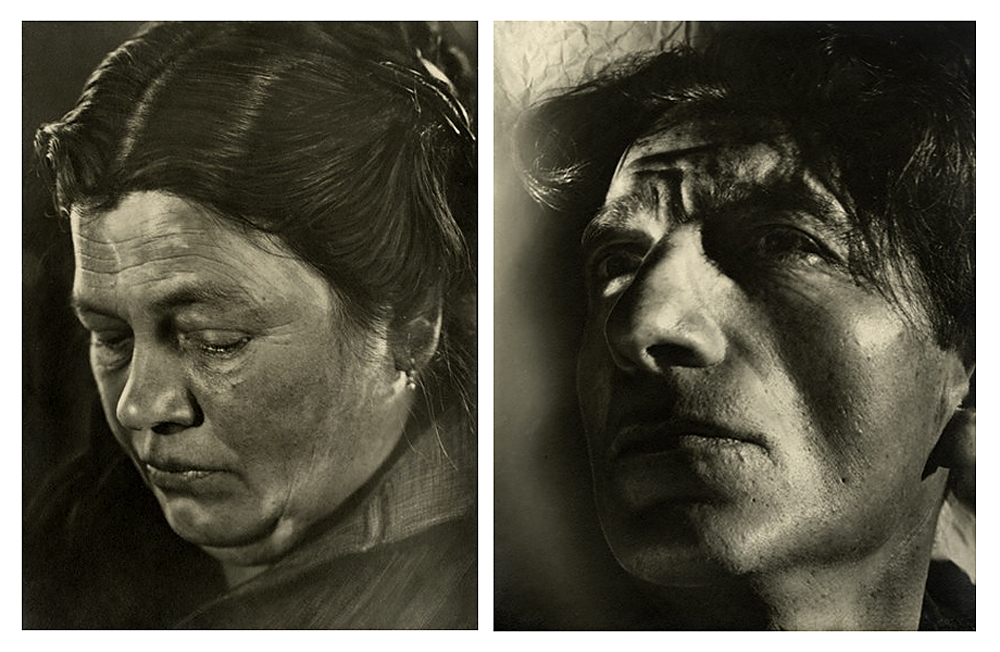
Helmar Lerski (Swiss, 1871-1956) 'Old Working Woman from Germany' (left) and 'Beggar from Saxony' (right) both 1928-1931


Helmar Lerski (Swiss, 1871-1956)
Old Working Woman from Germany (left)
1928-1931
Gelatin silver print

Helmar Lerski (Swiss, 1871-1956)
Beggar from Saxony (right)
1928-1931
Gelatin silver print


The portraits in Lerski’s Everyday Heads show unemployed workers whom the photographer met at a Berlin job centre where he hired them to sit for him. Old Working Woman from Germany 1928-1931 is a close-up shot of a woman’s face, eyes down and mouth shut as though she is quietly contemplating something outside of the picture’s frame (left, above). It is impossible to tell whether this meditative look, a common feature of his portraits, was suggested by Lerski but it is evident that he was in control of nearly every aspect of his pictures. An experienced movie cameraman, he used artificial light reflected by mirrors and screens to give his models an aura and monumentality that people would be familiar with from expressionist feature films. Oblique angles, in line with modernist sensibilities, helped to reinforce the impression of grandeur. He also cropped the images and introduced extra screens so as to eliminate the space around his models heads, and any details from what remained of the background. This also served on occasions to compromise the integrity of the subject’s face though, in other cases, he preferred to blur the contours of the face using strong shadows, as can be seen in Beggar from Saxony 1928-1931 (right, above). The results produced a general notion of everyday people rather than an endorsement of individuality as praised in traditional portraiture. Like Sander and Retzlaff, Lerski only gave the individuals’ professions in the captions, and was keen not to exemplify their class affiliation or social rank. The pictures provide no information about either, focusing instead on the face. In this way Lerski enhanced the common human dignity normally ignored in ‘everyday’ faces, and more especially in those humiliated by unemployment during the post-1929 economic crisis.

Wolfgang Brückle. “Face-Off in Weimar Culture: The Physiognomic Paradigm, Competing Portrait Anthologies, and August Sander’s Face of Our Time,” in Tate Papers No.19 Spring 2013 [Online] Cited 04/20/2020


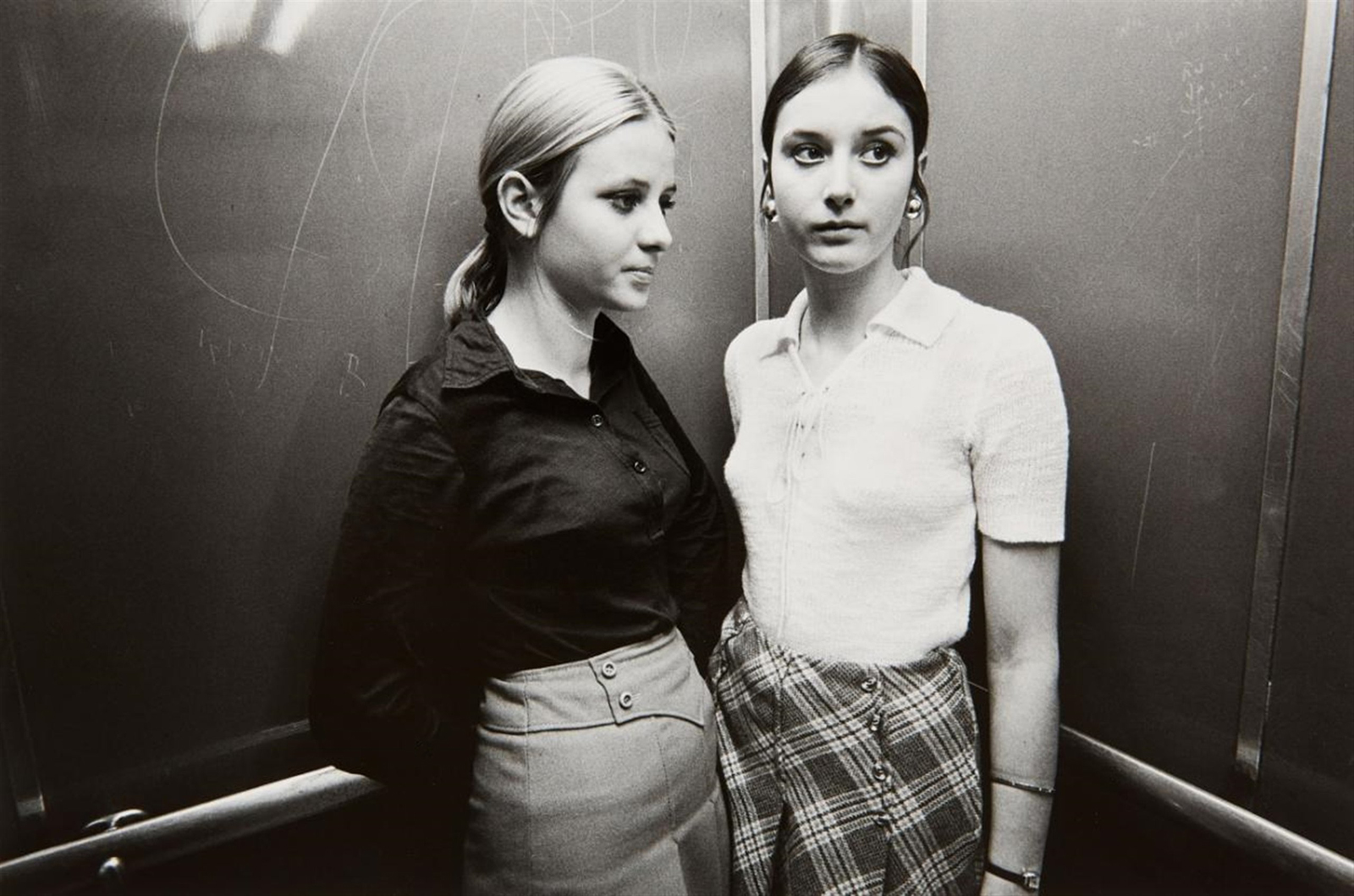
Heinrich Riebesehl (German, 1938-2010) 'Menschen im Fahrstuhl (People in the elevator)' 1969


Heinrich Riebesehl (German, 1938-2010)
Menschen im Fahrstuhl (People in the elevator)
1969
Gelatin silver print


Heinrich Riebesehl (German, 1938-2010) 'Menschen im Fahrstuhl (People in the elevator)' 1969


Heinrich Riebesehl (German, 1938-2010)
Menschen im Fahrstuhl (People in the elevator)
1969
Gelatin silver print


The exhibition comprises 400 exhibits and reflects on important artistic positions in photographic portraiture. During the eventful 20th century portrait photography continually redefines itself, between dissolution of the traditional concept of the subject in the masses and the pursuit of individuality and identity – culturally, socially and in terms of gender. Portraiture is one of the traditional genres in art and was one of the driving forces behind the invention of photography in the 19th century. The image of the human being is subject to constant change, which is also reflected in photography. In postmodern society mass media create ever-changing ideals according to various requirements in tune with a quick succession of trends. Art photography responds to the changes and reflects the development sometimes with spectacular results while it questions the medium of photography itself. The exhibition presents 35 carefully chosen international artists, who through history have opened up a dialogue among themselves; they are referencing each other’s work, and are received and interpreted in ever new contexts. On show are works by Diane Arbus, Hans-Peter Feldmann, Lee Friedlander, Nan Goldin, Roni Horn, Jurgen Klauke, Annie Leibovitz, Helmar Lerski, Irving Penn, Judith Joy Ross, Thomas Ruff, August Sander, Cindy Sherman, Andy Warhol and others. An exhibition in cooperation with the Sammlung Niedersächsische Sparkassenstiftung on the occasion of the 5th Photography Triennial in Hamburg.

“The PORTRAIT-PHOTOGRAPH is a closed field of forces. Four image-repertoires intersect here, oppose and distort each other. In front of the lens, I am at the same time: the one I think I am, the one I want others to think I am, the one the photographer thinks I am, and the one he makes use of to exhibit his art.” (Roland Barthes, Camera Lucida, London, 1984, p. 13). The photographic portrait does indeed combine contrary interests. The relationship between photographer and sitter is crucial. The third factor is the viewer, who is already being considered during the process of photographing. In the knowledge of the particular psychological situation resulting from the presence of a camera, Richard Avedon laconically stated: A photographic portrait is a picture of someone who knows he is being photographed.” The sitters’ reactions to the camera differ, depending on how experienced they are. Fact is: It is not possible to not communicate, as Paul Watzlawick’s research on communication shows. People demean themselves, even if they withdraw or turn away.

The confrontation climaxes in the principle of frontality, which remains valid today although it is constantly being tried and questioned. The project Serial Portraits invites the visitor on a journey through time starting from the beginnings with Hermann Biow’s (1804-1850) daguerreotypes, David Octavius Hill’s (1802-1870) and Robert Adamson’s (1821-1848) talbotypes up to the digital present with Michael Najjar’s (b. 1966) cyborgs, and wondering whether classical portraiture has come to its end.

The beginning includes a model case, where due to the long exposure necessary the models do not live out of the moment but into the moment, as Walter Benjamin said (Little History of Photography, 1931). Thirty-Minute Dialogue by Kyungwoo Chun (b. 1969) from 2000 is examining the synthesis of expression, which is necessitated by the models’ keeping still for so long. An exposure time of half an hour allows the work to penetrate the depths of the pictorial space.

The creativity of the 1920s and the New Vision inspires a “visual vocabulary” appropriate for modernity. Its different forms can be seen in the individual responses of photographers such as August Sander (1876-1964). Being a typical studio photographer, he works on a typology of “man of the 20th century”, beginning with the agricultural type, his Stammappe (engl.: Germinal Portfolio) being a memorial to the latter. Helmar Lerski (1871-1956) takes a different stance; having originally worked in film, he is photographing his Everyday Heads in extreme close-ups. Making use of effective lighting in his studio, he invites unknown sitters from the street and fashions characteristic heads.

Sander’s oeuvre represents a turning point for comparative vision as a genuine principle in series. Considering photography of the 1920s and questioning the photographer’s position as well as the medium itself, author-photography in the 1970s is developing a new idea of documentary. Thomas Ruff (b. 1958) is testing the limits, when he presupposes that photography can merely reflect the surface of things. Bernhard Fuchs is adding a personal touch when he is seeking out the places of his own past. The great portrait photographer Irving Penn is cornering his celebrities in a corner of his studio and allows them to find their place, according to their inclinations and abilities to self-represent.

Diane Arbus (1923-1971) is holding a one-sided dialog, certainly not giving equal weight to the photographer’s interests and that of her models. While the frontality signals the conventionally due deference, the complex composition of her pictures is dominated by the superior gaze directed at the supposedly others, the freaks of bourgeois society. Until now Arbus is misinterpreted as a documentary photographer. It is being ignored that photography inevitably presents a specific view of reality and that the viewer’s position has been carefully constructed within the picture.

Only pictures that have been taken without the awareness of those represented document a found situation at the same time as they present a monologue. Heinrich Riebesehl (1938-2010) chose this method for his series Menschen im Fahrstuhl (engl.: People in an Elevator), which he completed in just one day. In a moment of pause people can reflect and are not forced to react to being observed. In his pictures the photographer respects their individuality without judging social differences.

Examples for comparability as principle in a series can be found early on. Hermann Biow’s (1804-1850) daguerreotypes as unique copies of the members of parliament in the Paulskirche in Frankfurt from 1848/1849 were later reproduced as lithographs and distributed in portfolios. These politicians were the direct successors to the galleries of ancestral portraits in stately homes, whereby the new medium was democratic. Rudolph Duhrkoop’s Hamburgische Männer und Frauen amAnfang des XX. Jahrhunderts (engl.: Men and Women of Hamburg in the Early XXth Century) represent the citizens in this tradition.

Since 1975 Nicholas Nixon (b. 1974) is extending the series The Brown Sisters every year. His study is observing changes, while Hans-Peter Feldmann (b. 1941) is representing a century through 101 average people in his sequence 100 Jahre (engl.: 100 Years). It is fascinating, how the uniqueness of each person even if they remain anonymous is transported in the photographic portrait. Judith Joy Ross’ (b. 1946) series Protesting the U. S. War in Iraq documents a seriousness in the sitters’ faces, the political dimension of which can only be fully grasped with the information on the context. As with every photograph the title or accompanying text is part of the message.

Press release from the Museum für Kunst und Gewerbe, Hamburg website


Andy Warhol (American, 1928-1987) 'Self-Portrait in Drag (Platinum Pageboy Wig)' 1981


Andy Warhol (American, 1928-1987)
Self-Portrait in Drag (Platinum Pageboy Wig)
1981
Foto: Christoph Irrgang, Hamburg
© 2011 The Andy Warhol Foundation for the Visual Arts, Inc./Artists Rights Society (ARS), New York
Hamburger Kunsthalle


Andy Warhol (American, 1928-1987) 'Self-Portrait in Drag' 1981


Andy Warhol (American, 1928-1987)
Self-Portrait in Drag
1981
Foto: Christoph Irrgang, Hamburg
© 2011 The Andy Warhol Foundation for the Visual Arts, Inc./Artists Rights Society (ARS), New York
Hamburger Kunsthalle


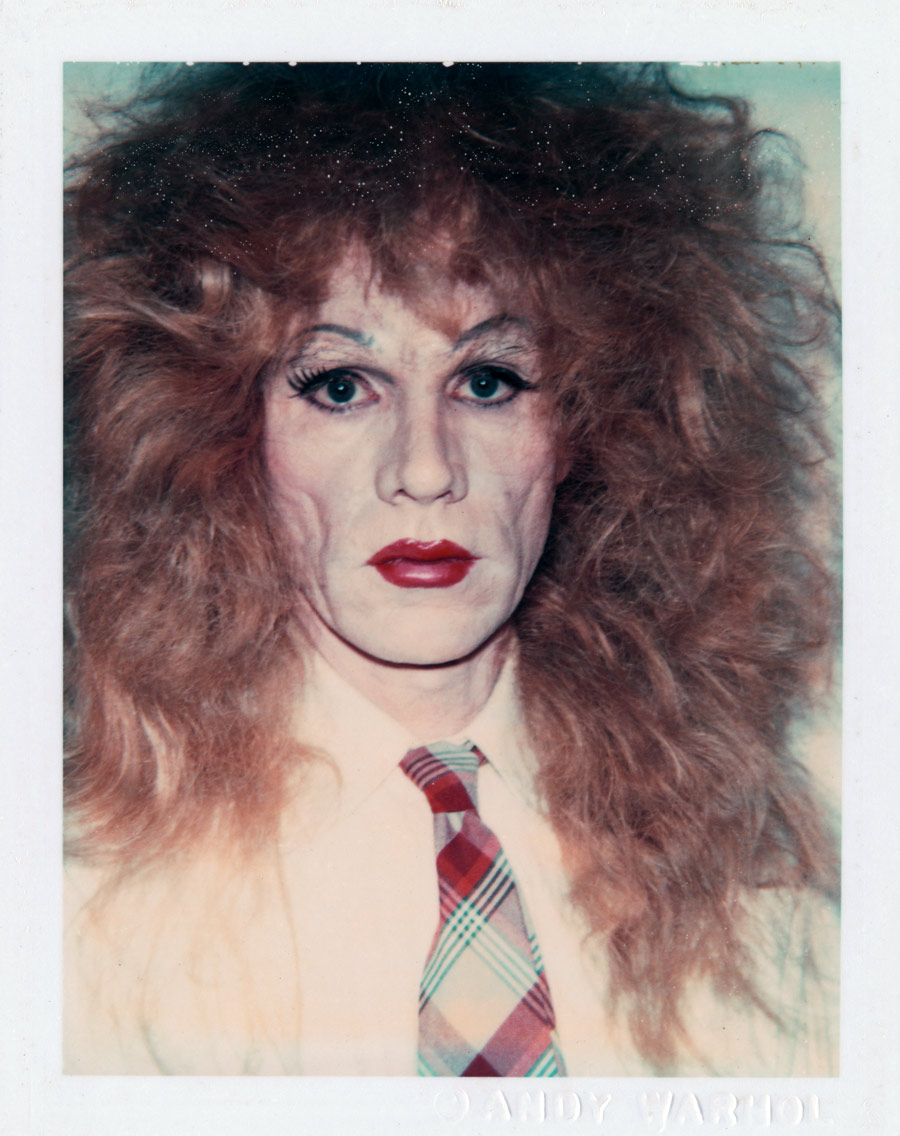
Andy Warhol (American, 1928-1987) 'Self-Portrait in Drag (Long Reddish-Brown Wig and Plaid Tie)' 1981/82


Andy Warhol (American, 1928-1987)
Self-Portrait in Drag (Long Reddish-Brown Wig and Plaid Tie)
1981/1982
Foto: Christoph Irrgang, Hamburg
© 2011 The Andy Warhol Foundation for the Visual Arts, Inc. / Artists Rights Society (ARS), New York
Hamburger Kunsthalle


Thomas Ruff (German, b. 1958) 'Portrait (T. Ruff)' 1983


Thomas Ruff (German, b. 1958)
Portrait (T. Ruff)
1983
Colour Print
24 x 18cm
Thomas Ruff/VG Bild-Kunst, Bonn 2011
Niedersachsische Sparkassenstiftung, Hannover


Thomas Ruff (German, b. 1958) 'Portrait (C. Bernhard)' 1985


Thomas Ruff (German, b. 1958)
Portrait (C. Bernhard)
1985
Colour Print
24 x 18cm
© Thomas Ruff/VG Bild-Kunst, Bonn 2011
Niedersachsische Sparkassenstiftung, Hannover


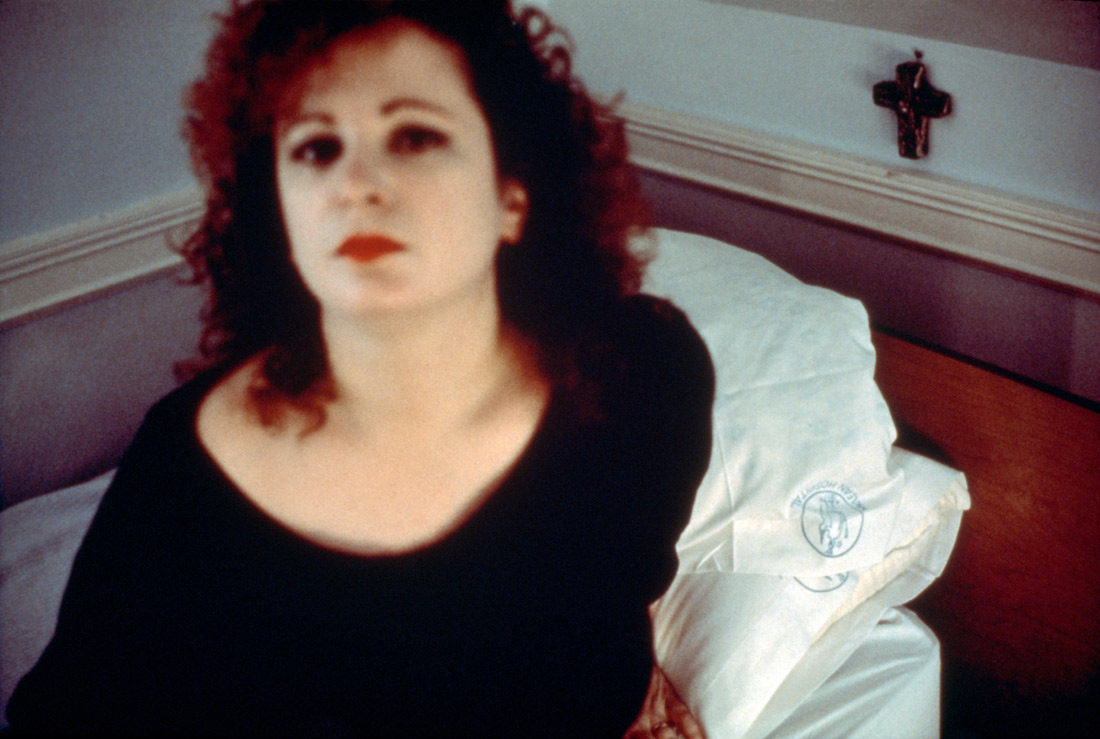
Nan Goldin (American, b. 1953) 'All by Myself' 1993-1996 (detail)


Nan Goldin (American, b. 1953)
All by Myself (detail)
1993-1996
Project installation with 89 colour slides and programmed soundtrack, running time: 5 min. 33 sec
© Nan Goldin/Courtesy Matthew Marks Gallery, New York
Foto: Christoph Irrgang, Hamburg
Hamburger Kunsthalle, Dauerleihgabe F. und W. Stiftung fur zeitgenossische Kunst in der Hamburger Kunsthalle


Nan Goldin (American, b. 1953) 'All by Myself' 1993-1996 (detail)


Nan Goldin (American, b. 1953)
All by Myself (detail)
1993-1996
Project installation with 89 colour slides and programmed soundtrack, running time: 5 min. 33 sec
© Nan Goldin/Courtesy Matthew Marks Gallery, New York
Foto: Christoph Irrgang, Hamburg
Hamburger Kunsthalle, Dauerleihgabe F. und W. Stiftung fur zeitgenossische Kunst in der Hamburger Kunsthalle


Rineke Dijkstra (Dutch, b. 1959) 'Montemor, Portugal, May 1, 1994' 1994


Rineke Dijkstra (Dutch, b. 1959)
Montemor, Portugal, May 1, 1994
1994
C-Print
35.2 x 27.8 cm
© Rineke Dijkstra
Foto/Photo: Jorg Arend/Harald Dubau/Maria Thrun, Museum fur Kunst und Gewerbe Hamburg
Haus der Photographie/Sammlung F. C. Gundlach, Hamburg


Michael Schmidt (German, 1945-2014) From the 81-part series 'Women' 1997-1999


Michael Schmidt (German, 1945-2014)
Aus der 81-teiligen serie Frauen
From the 81-part series Women
1997-1999
Gelatin silver print
44.1 x 29.9cm
© Michael Schmidt
Niedersachsische Sparkassenstiftung, Hannover


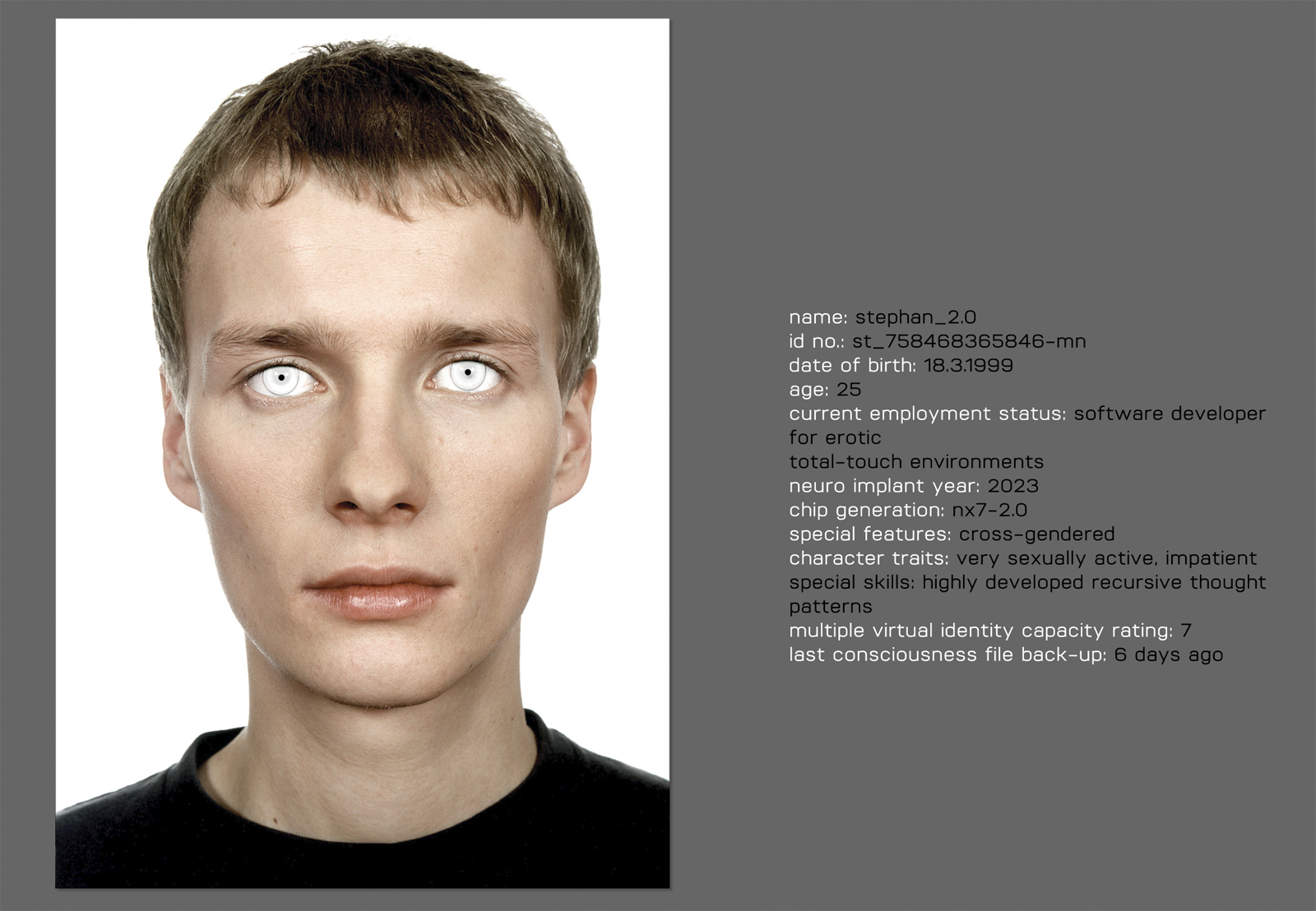
Michael Najjar (German, b. 1966) 'Stephan_2.0' from the 'nexus project part I' 1999


Michael Najjar (German, b. 1966)
Stephan_2.0 from the nexus project part I
1999
Hybrid photography, archival pigment print, aludibond, diasec
140 x 100cm / 56 x 40 in, edition of 6


Nexus Project

The series “nexus project part I” investigates the implications of the future enhancement of the human brain with miniaturised computer chips, infiltrated in the neuronal structures of the human organism.

Such a development will give birth to a new form of life – the cyborg, a hybrid compound of human and machine. A new set of questions are raised concerning issues of difference and identification between biologically correct beings and technically or genetically enhanced humans.

This development brings with it a host of new concerns: What impact will neuro-implants have on human consciousness? How will society cope with this kind of being, and what implications will they have for our social and cultural interaction?

“nexus project part I” consists of eight photographic portraits. These have undergone a digital modification of the iris, which gives the portrait faces an intimidating, almost inhuman look whilst at the same time it exerts a strong direct fascination on the viewer.

The highly charged poles of tensions and cross-tensions between fascination and intimidation also shape the para-meters in which the future development of human being to hybrid organism will take place.

Text from the Michael Najjar website [Online] Cited 04/02/2020


Kyungwoo Chun (Korean, b. 1969) 'Thirty-Minute Dialogue #1' 2000


Kyungwoo Chun (Korean, b. 1969)
Thirty-Minute Dialogue #1
2000
Gelatin silver print
40 x 50cm
© Kyungwoo Chun


Roni Horn (American, b. 1955) 'Portrait of an Image (with Isabelle Huppert)' 2005


Roni Horn (American, b. 1955)
Portrait of an Image (with Isabelle Huppert)
2005
50 Fotografien (Version 1)
Colour Print
38.1 x 31.8cm
© Courtesy the artist and Hauser & Wirth


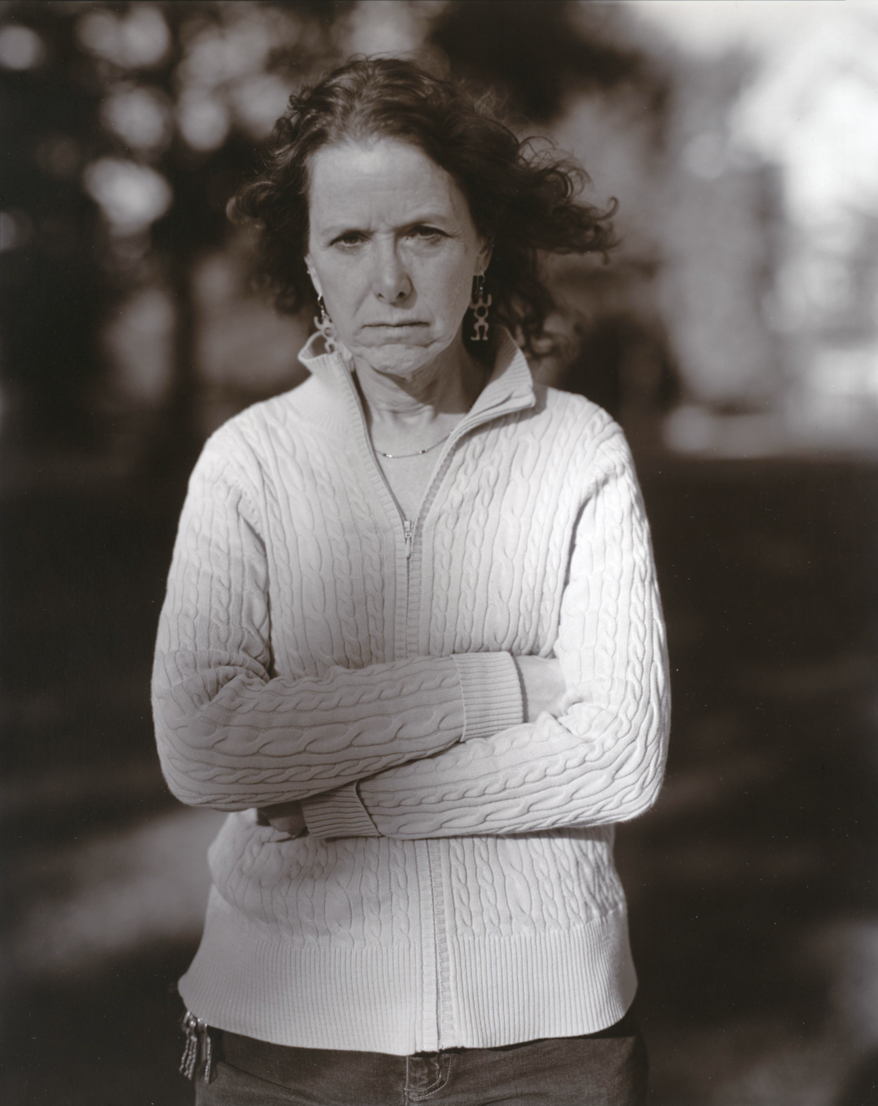
Judith Joy Ross (American, b. 1946) 'Jane C. Keller, Protesting the U.S. War in Iraq, Williamsport, Pennsylvania' from the series 'Protest the War' 2006


Judith Joy Ross (American, b. 1946)
Jane C. Keller, Protesting the U.S. War in Iraq, Williamsport, Pennsylvania, from the series Protest the War
2006
Gelatin silver print


Judith Joy Ross (American, b. 1946) 'Lynn Estomin, Protesting the U.S. War in Iraq, Williamsport, Pennsylvania' from the series 'Protest the War' 2006


Judith Joy Ross (American, b. 1946)
Lynn Estomin, Protesting the U.S. War in Iraq, Williamsport, Pennsylvania, from the series Protest the War
2006
Gelatin silver print


Nicholas Nixon (American, b. 1947) 'The Brown Sisters, East Greenwich, R.I.' 1980


Nicholas Nixon (American, b. 1947)
The Brown Sisters, East Greenwich, R.I.
1980
Gelatin silver print


Nicholas Nixon (American, b. 1947) 'The Brown Sisters, Boston' 2012


Nicholas Nixon (American, b. 1947)
The Brown Sisters, Boston
2012
Gelatin silver print


Museum für Kunst und Gewerbe Hamburg
Steintorplatz, 20099 Hamburg

Opening hours:
Tuesday – Sunday 10am – 6pm
Thursday until 9 pm
Closed Mondays

Museum fur Kunst und Gewerbe Hamburg website

LIKE ART BLART ON FACEBOOK

Back to top

Exhibition: ‘Polaroids and Portraits: A Photographic Legacy of Andy Warhol’ at the Krannert Art Museum, Champaign IL

Exhibition dates: 30th January – 24th May, 2009

Curator: Kathryn Koca


Many thank to the Krannert Art Museum, Champaign IL for allowing me to publish the photographs in the posting. Please click on the photographs for a larger version of the image.


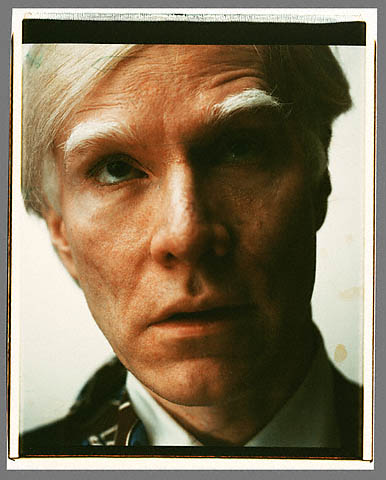
Andy Warhol (American, 1928-1987) 'Self portrait' Polaroid 1979 from the exhibition 'Polaroids and Portraits: A Photographic Legacy of Andy Warhol' at the Krannert Art Museum, Champaign IL, jan - May, 2009


Andy Warhol (American, 1928-1987)
Self portrait
1979
Polaroid


Polaroids and Portraits presents a selection of the 152 photographs that the Krannert Art Museum graciously received from the Andy Warhol Photographic Legacy Program. Established in 2007 to commemorate the Warhol Foundation’s twentieth anniversary, the Legacy Program gifted over 28,500 original photographs to 183 college and university museums and galleries across the country with the hope of enabling wider access to these more seldom seen works. This exhibition displays both Polaroid and silver gelatin portraits of celebrities, socialites, and unknowns, all photographed with varying degrees of wit, humour, and intimacy. These photographs complicate our notion of the artist’s persona as wholly immersed in this world of glamour, presenting Warhol as not only a prolific photographer, but a man grappling with his own identity as a famous artist.

Text from the Krannert Art Museum website


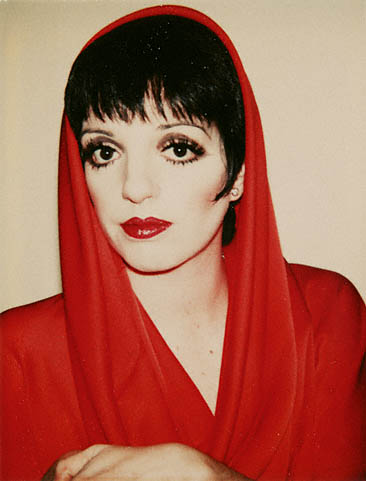
Andy Warhol (American, 1928-1987) 'Liza Minnelli' Polaroid 1977 from the exhibition 'Polaroids and Portraits: A Photographic Legacy of Andy Warhol' at the Krannert Art Museum, Champaign IL, jan - May, 2009


Andy Warhol (American, 1928-1987)
Liza Minnelli
1977
Polaroid


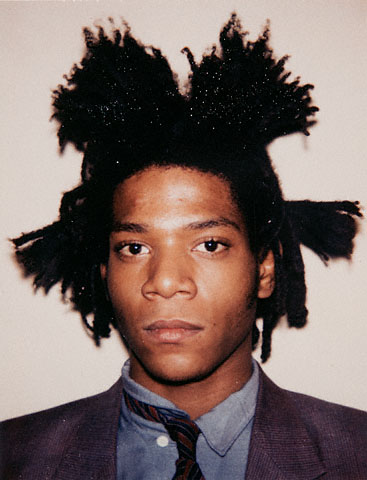
Andy Warhol (American, 1928-1987) 'Jean-Michel Basquiat' Polaroid 1982


Andy Warhol (American, 1928-1987)
Jean-Michel Basquiat
1982
Polaroid


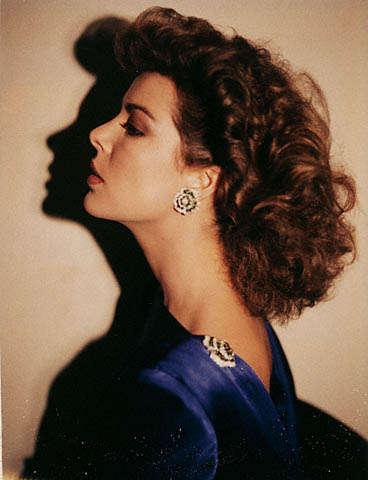
Andy Warhol (American, 1928-1987) 'Princess Caroline of Monaco' Polaroid 1981


Andy Warhol (American, 1928-1987)
Princess Caroline of Monaco
1981
Polaroid


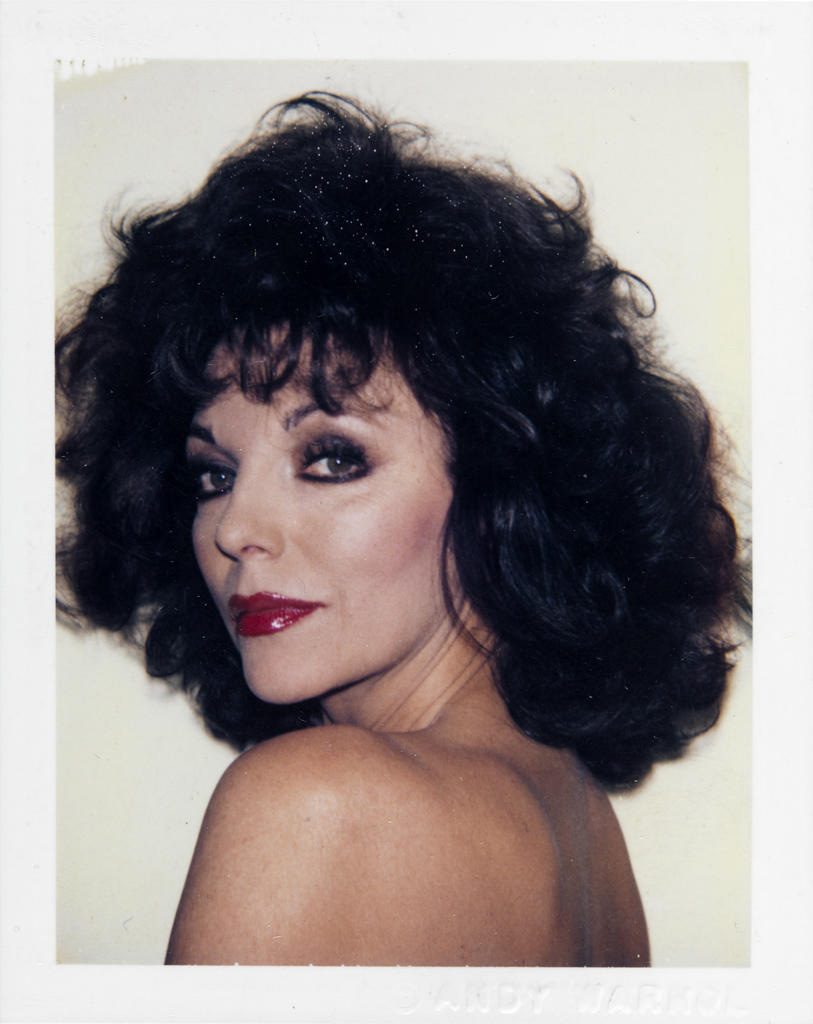
Andy Warhol (American, 1928-1987) 'Joan Collins' 1985


Andy Warhol (American, 1928-1987)
Joan Collins
1985
Polaroid


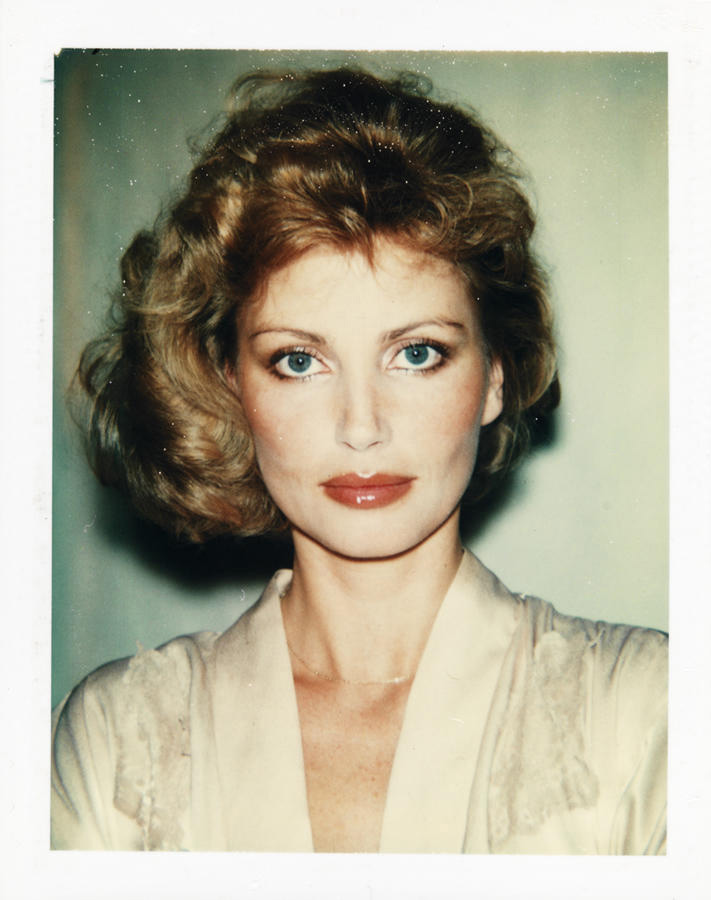
Andy Warhol (American, 1928-1987) 'Evelyn Kuhn' 1978


Andy Warhol (American, 1928-1987)
Evelyn Kuhn
1978
Polaroid


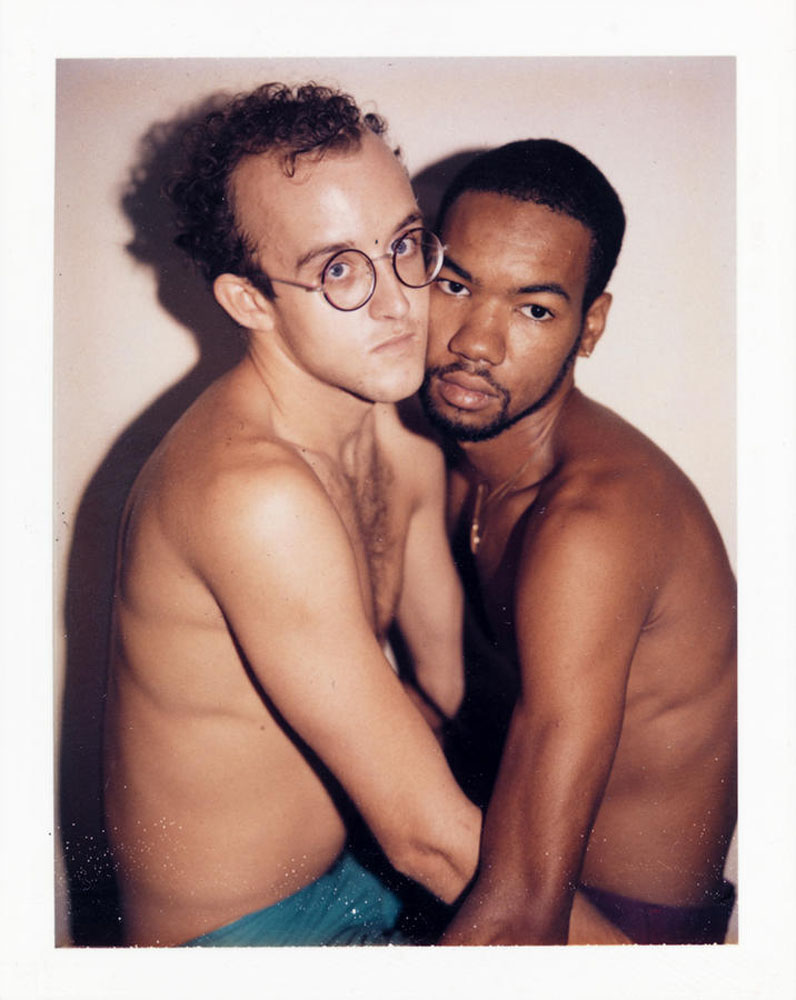
Andy Warhol (American, 1928-1987) 'Keith Haring and Juan Dubose' 1983


Andy Warhol (American, 1928-1987)
Keith Haring and Juan Dubose
1983
Polaroid


Krannert Art Museum
500 East Peabody Drive
Champaign, Illinois 61820
United States
Phone: (217) 244-0516

Opening hours:
Tuesday – Saturday 10am – 4pm
Thursday open until 8pm when classes are in session
Closed Sunday and Monday

The Krannert Museum of Art website

LIKE ART BLART ON FACEBOOK

Back to top