Review: ‘Ingeborg Tyssen: photographs’ at Monash Gallery of Art, Melbourne

Exhibition dates: 23rd November 2012 – 3rd February 2013


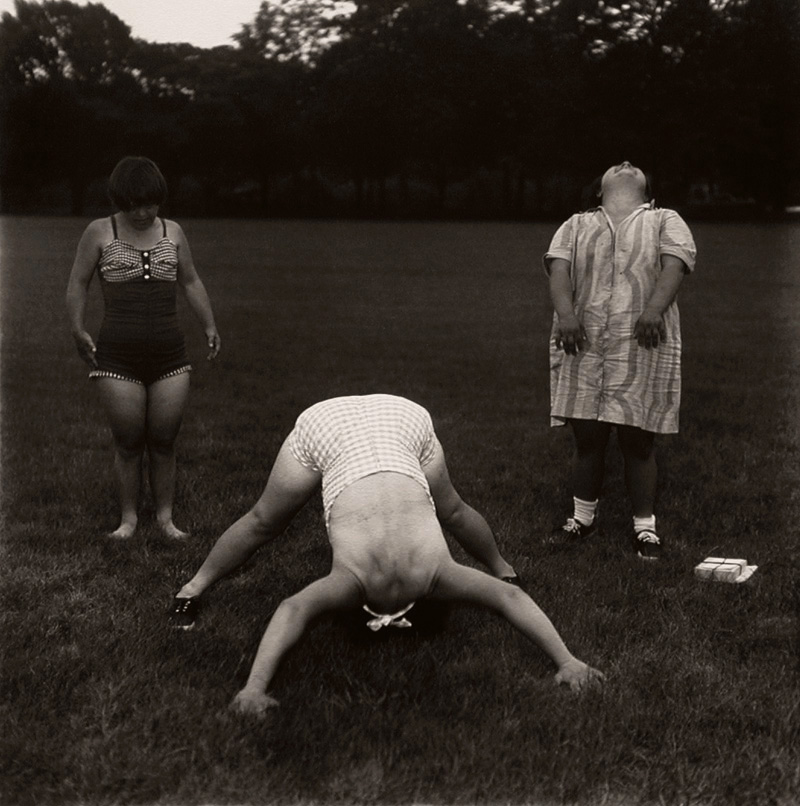
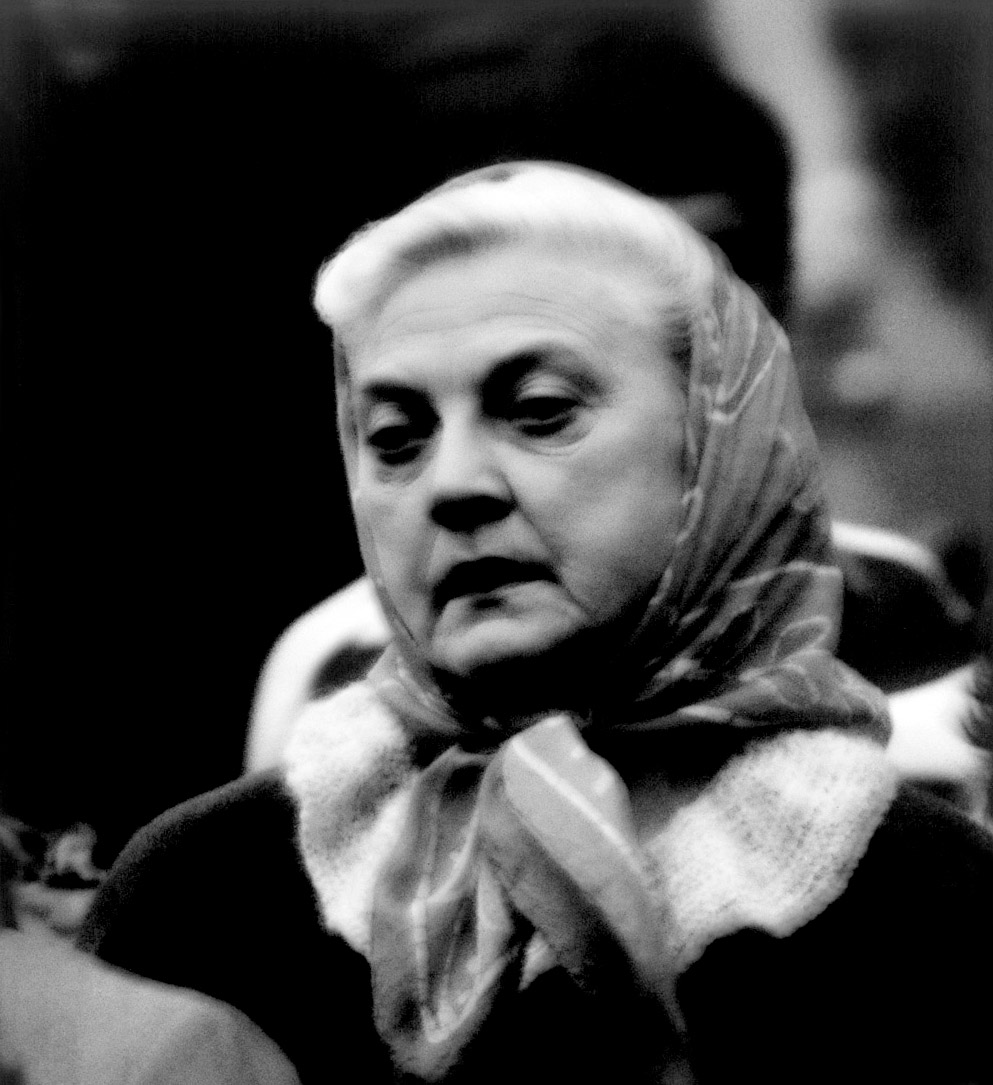
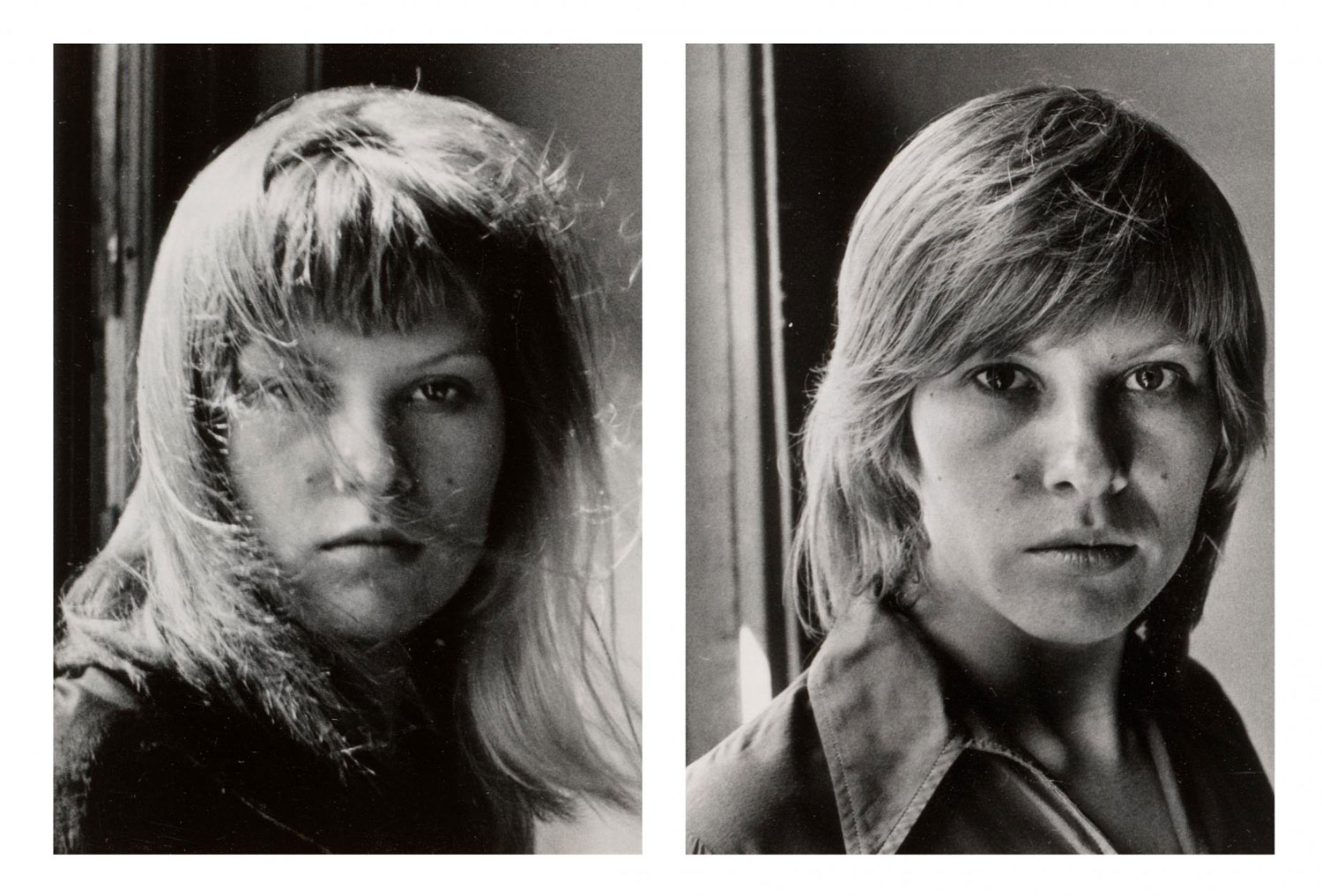
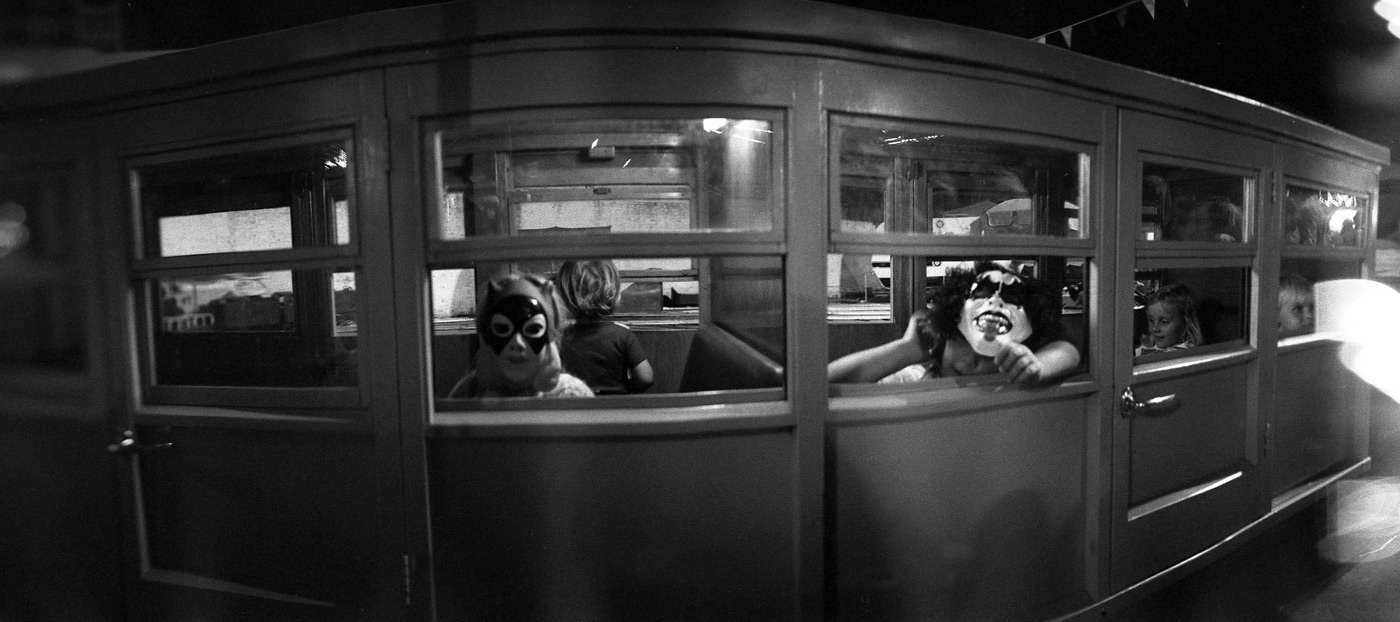
Ingeborg Tyssen (Netherlands, Australia 1945-2002) 'Untitled' from the series 'People' 1977


Ingeborg Tyssen (Netherlands, Australia 1945-2002)
Untitled
1977
From the People series
Gelatin silver print
Image: 20.1 x 25.2cm
Monash Gallery of Art, City of Monash Collection
Donated by Janice Hinderaker through the Australian Government’s Cultural Gifts Program 2003


“Tysenn clearly felt a deep sense of dislocation from her country of birth, its national identity and cultural conventions. It was apparent in her ongoing explorations of the Australian landscape that on her arrival she had met with more than just an initial linguistic barrier, and there were also barriers to understanding the Australian landscape which was so far and different to European forests and Dutch tales and legends about them that she grew up with.”


Essay “Remembering Ingeborg” by Sandra Byron


“Tyssen’s people are not known to her, rather are studies of anonymous people: in action, in the city, at a fairground. The People series – City Light 1977 images reveal a sense of isolation in a crowd. People emerging from the dark shadows of the same station / mall and march into the sunlight. They are expressionless, uncommunicative, isolated, yet display a keen sense of self and appearance. Mostly minding their own business, doing their own thing, they seem undisturbed by the female photographer standing nearby. She must not have been intrusive or demanding, just there with her camera at the ready.”


Fiona McIntosh. “Two women photographers,” on the art out there blog Friday, 18 May 2012 [Online] Cited 08/09/2022
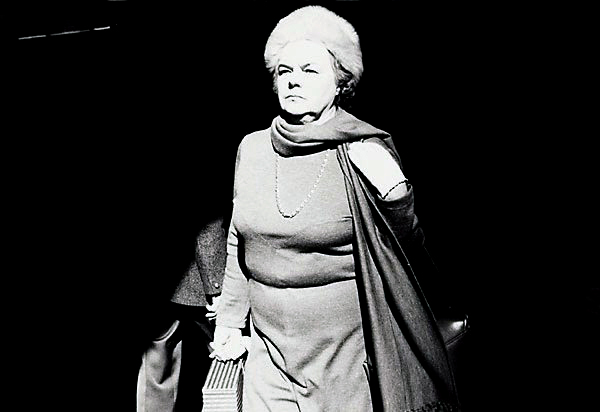


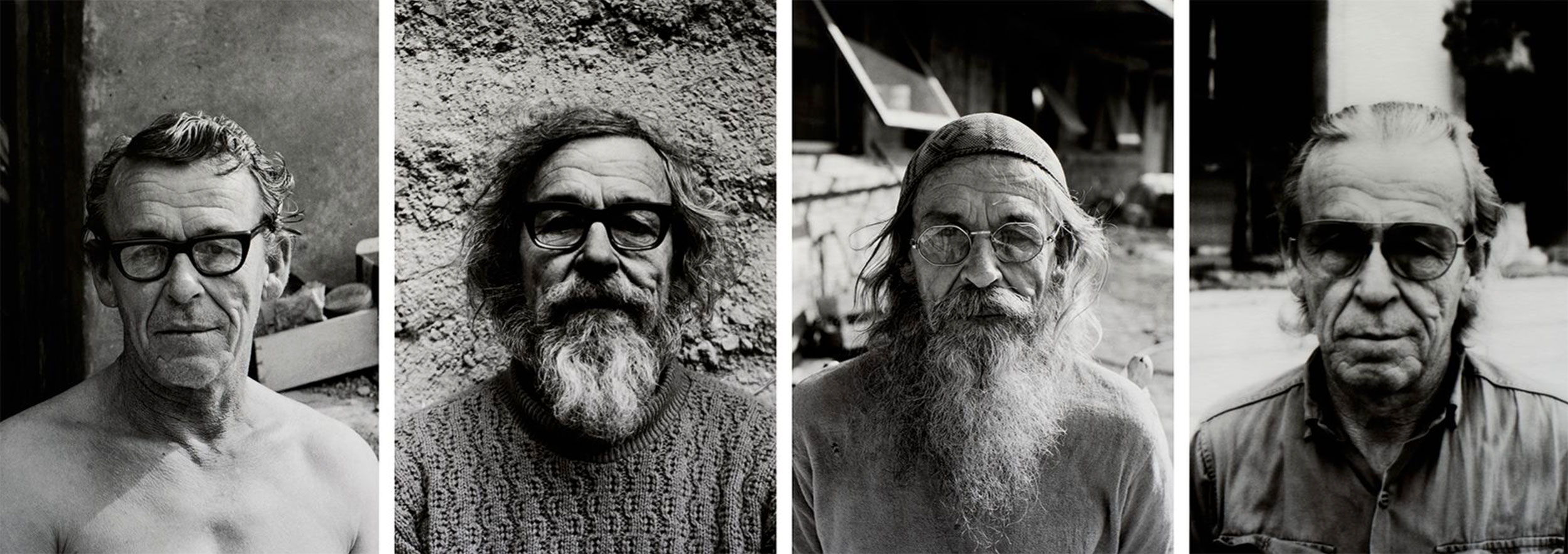
Ingeborg Tyssen (Netherlands, Australia 1945-2002) 'Untitled' from the series 'People' 1977


Ingeborg Tyssen (Netherlands, Australia 1945-2002)
Untitled
1977
From the People series
Gelatin silver print
Image: 20.1 x 25.2cm
Monash Gallery of Art, City of Monash Collection
Donated by Janice Hinderaker through the Australian Government’s Cultural Gifts Program 2003


Ingeborg Tyssen (Netherlands, Australia 1945-2002) 'Untitled' from the series 'People' 1977


Ingeborg Tyssen (Netherlands, Australia 1945-2002)
Untitled
1977
From the People series
Gelatin silver print
Image: 20.1 x 25.2cm
Monash Gallery of Art, City of Monash Collection
Donated by Janice Hinderaker through the Australian Government’s Cultural Gifts Program 2003


Ingeborg Tyssen (Netherlands, Australia 1945-2002) 'Untitled' from the series 'People' 1977


Ingeborg Tyssen (Netherlands, Australia 1945-2002)
Untitled
1977
From the People series
Gelatin silver print
Image: 20.1 x 25.2cm
Monash Gallery of Art, City of Monash Collection
Donated by Janice Hinderaker through the Australian Government’s Cultural Gifts Program 2003


Ingeborg Tyssen (Netherlands, Australia 1945-2002) 'Untitled' from the series 'People' 1977


Ingeborg Tyssen (Netherlands, Australia 1945-2002)
Untitled
1977
From the People series
Gelatin silver print
Image: 20.1 x 25.2cm
Monash Gallery of Art, City of Monash Collection
Donated by Janice Hinderaker through the Australian Government’s Cultural Gifts Program 2003


Ingeborg Tyssen (Netherlands, Australia 1945-2002) 'Untitled' from the series 'People' 1977


Ingeborg Tyssen
Untitled
1977
From the People series
Gelatin silver print
Image: 20.1 x 25.2cm
Monash Gallery of Art, City of Monash Collection
Donated by Janice Hinderaker through the Australian Government’s Cultural Gifts Program 2003
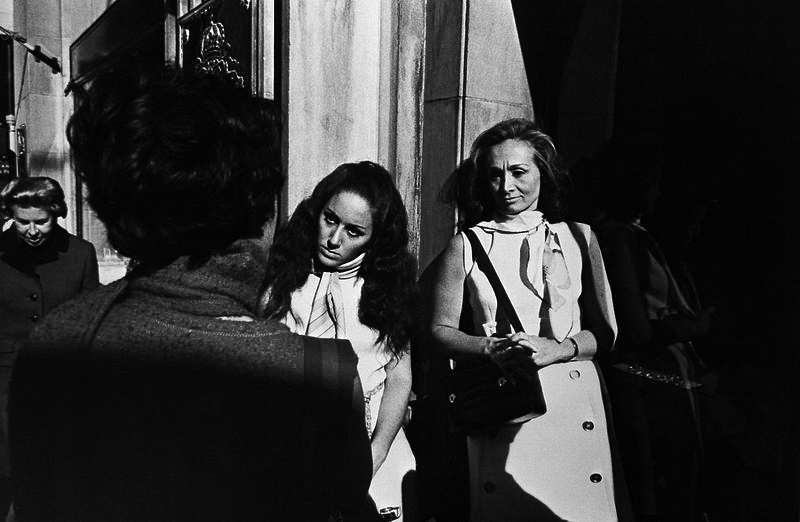
 

Garry Winogrand (American, 1928-1984) 'Untitled' from Women are Beautiful' Nd/1981


Garry Winogrand (American, 1928-1984)
Untitled
Nd (1960s) / published 1981
From the portfolio Women are Beautiful
Silver gelatin print


Harry Callahan (American, 1912-1999) 'Chicago' 1961


Harry Callahan (American, 1912-1999)
Chicago
1961
Gelatin silver print
Overall (image): 40.6 x 27.1cm (16 x 10 11/16 in.)
National Gallery of Art, Washington, Gift of the Callahan Family
© Estate of Harry Callahan, courtesy Pace/MacGill Gallery, New York


“Ingeborg Tyssen was one of the great Australian photographers of her generation.” (Press release)

“Ingeborg Tysenn was one of Australia’s most important post war artists.”
(Essay “Remembering Ingeborg” by Sandra Byron)


This is a disappointing exhibition of the work of Australian photographer Ingeborg Tyssen at Monash Gallery of Art, Melbourne encumbered as it is by the above two statements. On the evidence of the work presented neither statement is true. Whoever is pushing this barrow (and it is a large barrow to push) should really stop and have a damn good look at the work to see whether it is worthy of such claims and what they hope to achieve by promoting such statements. If they really looked objectively they would see that the art just is, and nothing more.

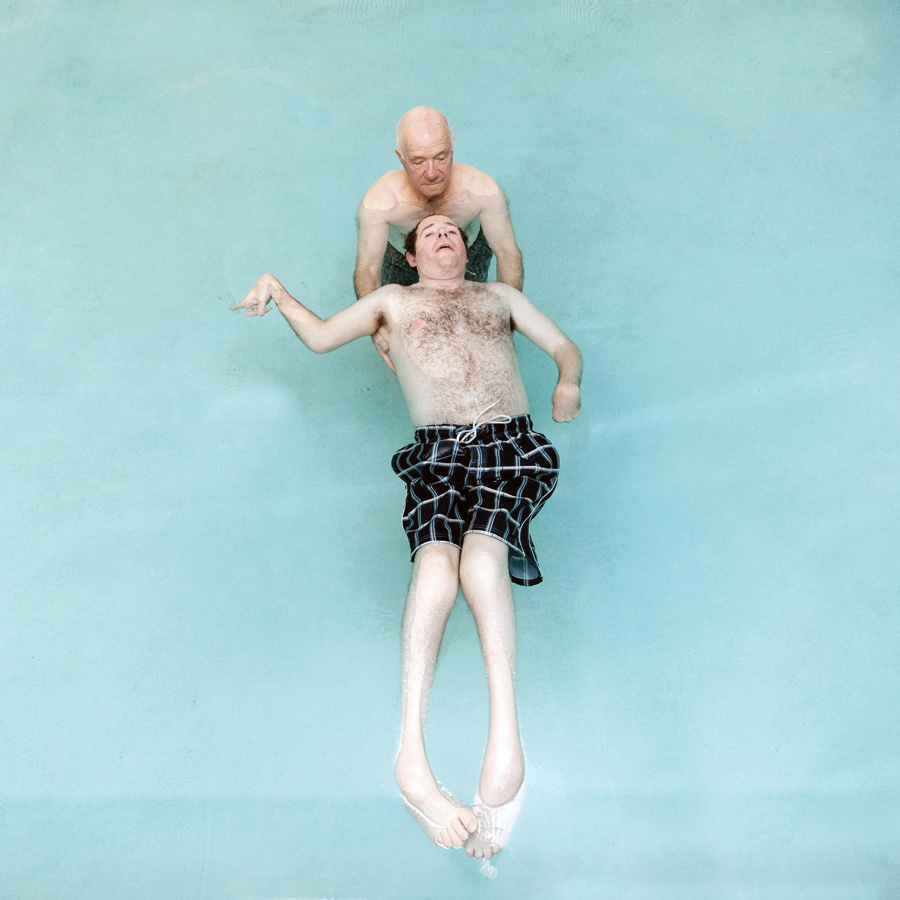
Being a cultural commentator means that you have to form an opinion on the work presented. For me this involves the eye (what the work looks like), the head (undertaking research into the artist) and the heart (how I feel about the work). Then and only then can you make an informed decision on the merits of the work. With Tyssen’s work there were four standout photographs in the exhibition (people in a swimming pool taken in the Modernist style, part of the 1981 Ryde Pool, Sydney series, none of which I can show you in this posting) and the rest of the photographs exist in the world.

Tyssen was born in The Netherlands and arrived here when she was 12 years old. Her photographs show a European and Australian sensibility, a dislocation from but also an attraction toward both her native country and her adopted country Australia. Her photographs can be divided into various styles: early documentary street photography (the People series, 1977), Modernist photography (Ryde Pool, Sydney series, 1981 and From the heart of the forest to the edge of the road series, 1982-1984), New Topographics photography (Billboards and Trees series, 1981-1982) and Romantic photography (The voice of silence series 1991-1992). In this regard, Tyssen never seems to have developed a voice of her own, a signature style that you could say was unique to her own art practice. So many of these photographs are derivative of other photographers who have already invented and mastered that style that nothing seems to belong to Tyssen herself. She seems to have been enamoured of style after style.

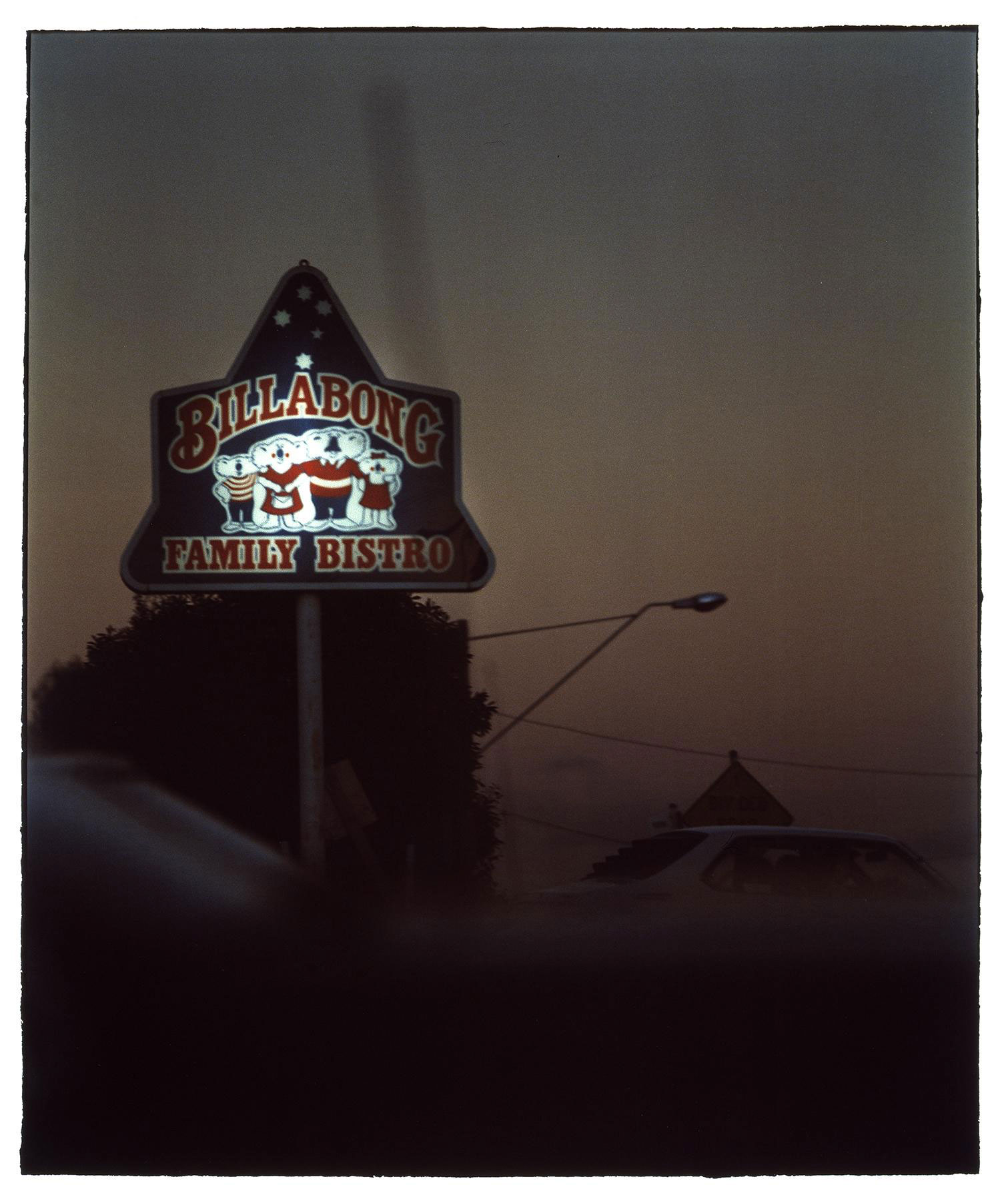
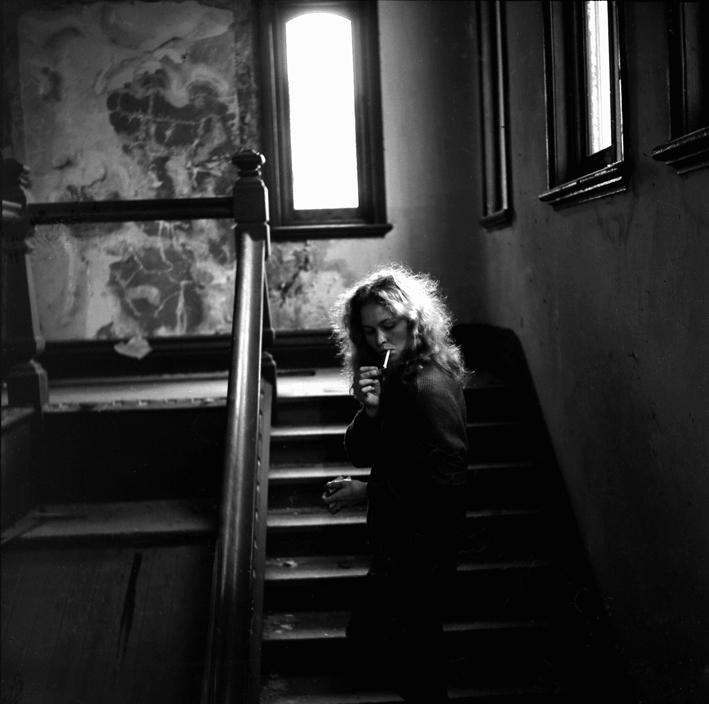
In the high contrast, small scale People series (1977, above) the animals are particularly unapproachable. While exhibiting a sense of Australian light and an intimation of Australia’s white only policy – there is a specific Australian-ness in the people she has chosen and the atmosphere of Whitlam / post Whitlam remaking of the Australian identity; even the lady with the European aura knows she is in Australia, perhaps she even knows she is in the Australian light – these are hard images to engage with emotionally, unlike the psychological works of Harry Callahan and Garry Winogrand. Problematically, the Billboards and Trees series (both 1981-1982, below) are so redolent of American photography (both in physical dis/location and surface remarks) that I felt I had seen it all before. In both these series Australia morphs into America and not in a good way.

In the panoramic series From the heart of the forest to the edge of the road (1982-1984, below) Tyssen comes closest to capturing the intensity of the Australian landscape only to be let down by a) the quality of the prints and b) the fact that the title is a coat hanger, allowing the artist to hang disparate images together that really have no relationship to each other. The prints themselves do little to support the work, being sometimes too pale and insignificant to hold the image, too flat. Playing with the print and its tonal range and surface qualities does little to help an overall vision of the work or help the viewer engage with the content.

In my notes I wrote in capital letters: THEY DON’T ENGAGE ME! In other words, there was little in these photographs that held my attention for any length of time.

Tyssen seems to have known her limitations as well. She just wanted to be a photographer and kept persevering at her art … keep at it, keep going, keep creating. That’s all you can do as an artist. At their best Tyssen’s photographs lie somewhere between Kertesz and Cartier-Bresson without the decisive moment (look at the photograph Taronga Zoo, Sydney, 1974 below and you will understand what I mean). But the deference of some of her images was really brought home to me when, in a small gallery off to the side of the main space, there in all its glory was one of the iconic images of a generation – Vale Street (1975) by Carol Jerrems.

People really do need to stop making grandiose statements about the work of artists and let the viewer just look clearly at the art. That way there is little expectation, the work will be taken on its merits, and everyone may be quietly surprised at the outcome.

Dr Marcus Bunyan


Many thankx to the Monash Gallery of Art for allowing me to publish the photographs in the posting. Please click on the photographs for a larger version of the image. Download the essay by Sandra Byron, “Remembering Ingeborg: A personal appreciation of the life and work of Ingeborg Tyssen” (2.24Mb pdf)
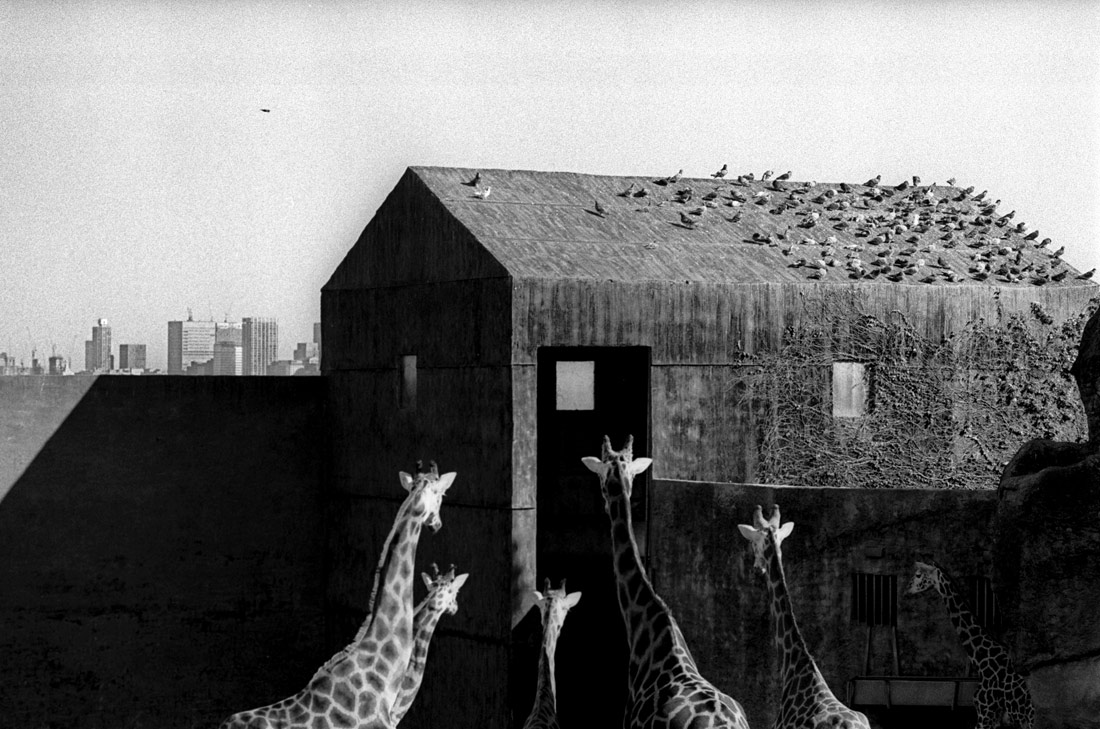


Ingeborg Tyssen (Netherlands, Australia 1945-2002) 'Taronga Zoo, Sydney' 1974


Ingeborg Tyssen (Netherlands, Australia 1945-2002)
Taronga Zoo, Sydney
1974
Gelatin silver print
Collection of the Estate of Ingeborg Tyssen
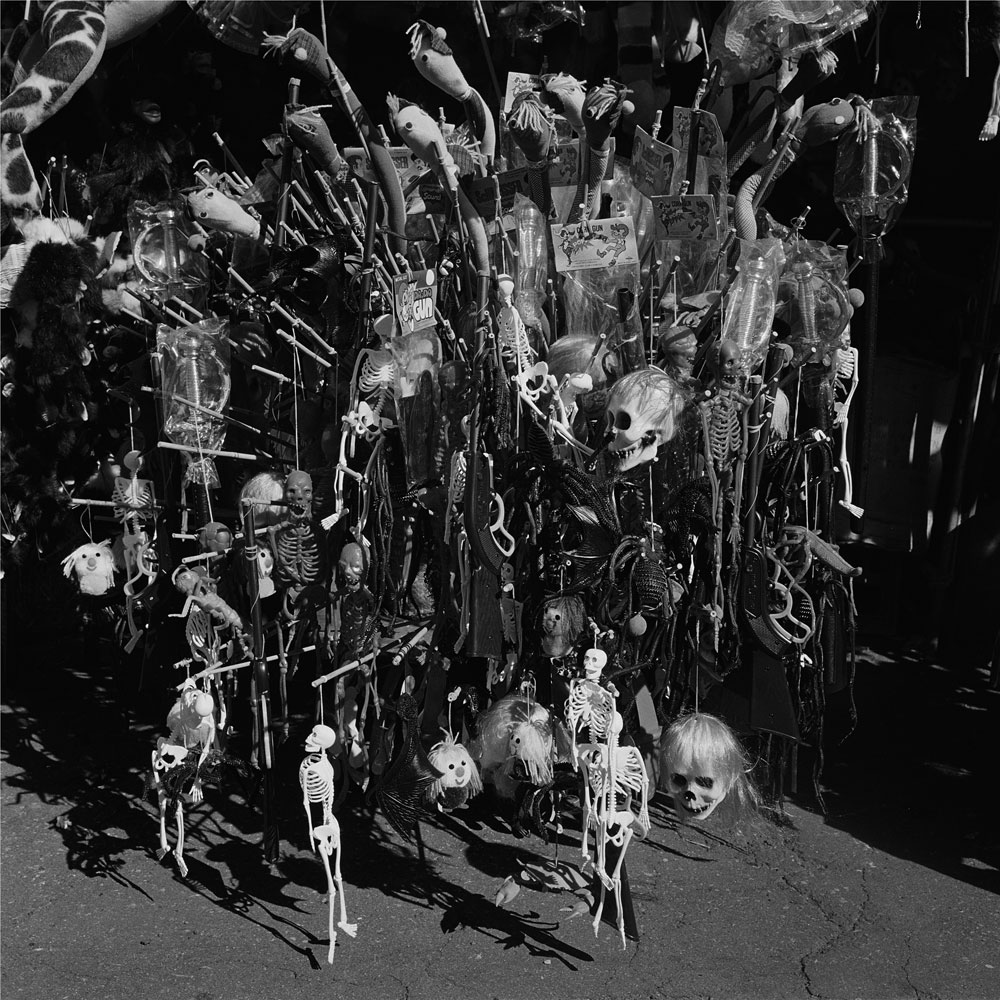
 

Ingeborg Tyssen (Netherlands, Australia 1945-2002) 'Royal Easter Show, Sydney' 1979


Ingeborg Tyssen (Netherlands, Australia 1945-2002)
Royal Easter Show, Sydney
1979
Silver gelatin print
Collection of the Estate of Ingeborg Tyssen


Ingeborg Tyssen (Netherlands, Australia 1945-2002) 'Ryde Pool, Sydney' 1981


Ingeborg Tyssen (Netherlands, Australia 1945-2002)

Untitled
1981
From the series Ryde Pool, Sydney
Ink-jet print
Collection of the Estate of Ingeborg Tyssen
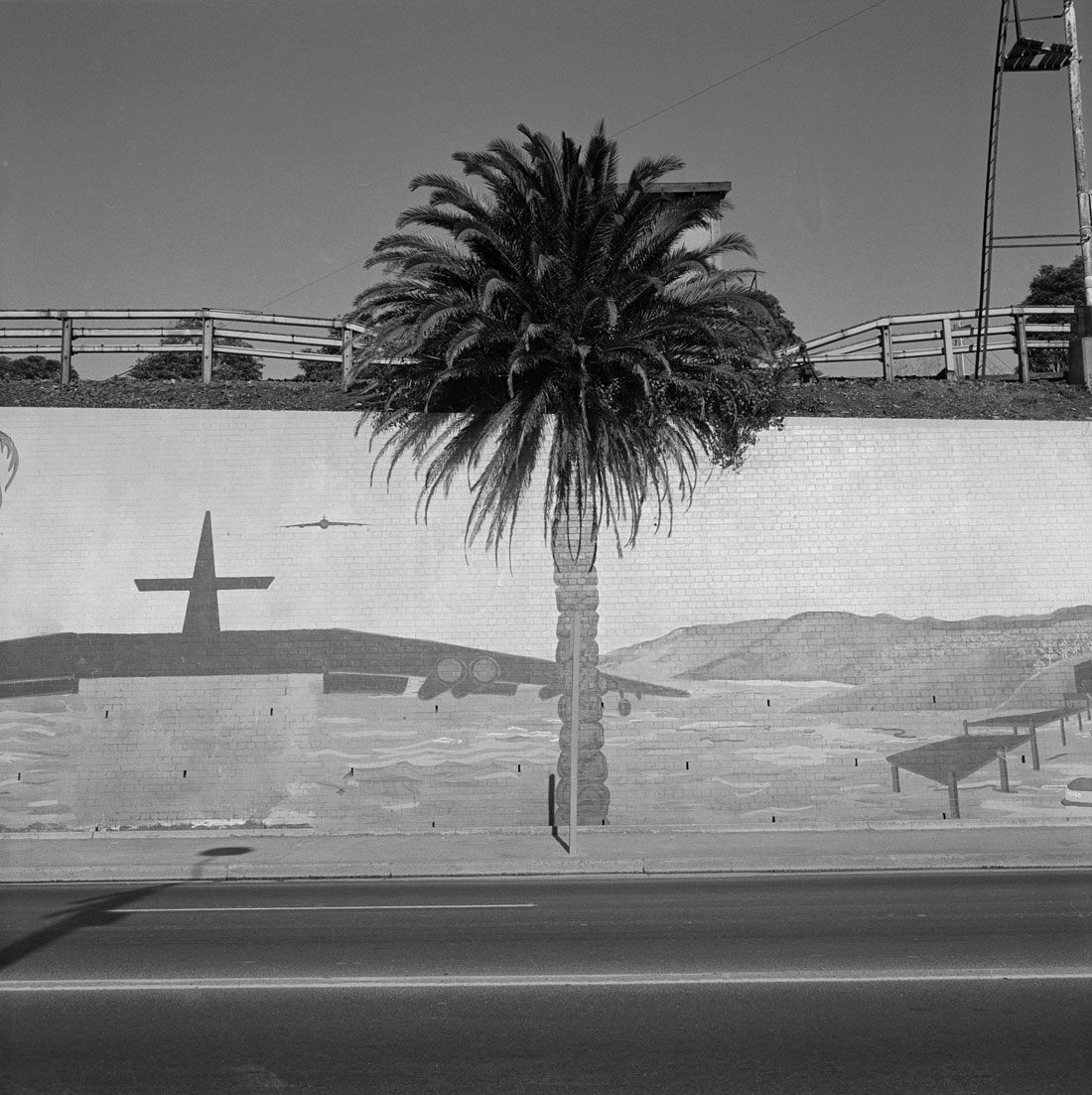
 

Ingeborg Tyssen (Netherlands, Australia 1945-2002) 'Annandale, Sydney' 1981


Ingeborg Tyssen (Netherlands, Australia 1945-2002)
Annandale, Sydney
1981
From the series Trees 1981-82
Silver gelatin print


Ingeborg Tyssen (Netherlands, Australia 1945-2002) 'Pyrmont, Sydney' 1982


Ingeborg Tyssen (Netherlands, Australia 1945-2002)
Pyrmont, Sydney
1982
From the series Billboards 1981-82
Silver gelatin print


Ingeborg Tyssen (1945-2002) was one of the great Australian photographers of her generation. Although generally overlooked by critics during her lifetime in favour of many of her male counterparts, Tyssen left us a remarkable body of work. Ingeborg Tyssen: photographs is the first museum retrospective of her work in Victoria, and the first major exhibition since her memorial show was held at the Art Gallery of NSW in 2002.

This exhibition provides a great opportunity for audiences to view the work of this major figure. Spanning 20 years of creative output from 1974-94, Ingeborg Tyssen: photographs shows Tyssen as a highly original observer of modern life. Her candid photographs of pedestrians in city streets, young kids playing in suburban swimming pools, and images of the Australian and American landscape reveal an artist whose concerns were at the forefront of Australian photographic practice.

MGA Gallery Director Shaune Lakin states, “Tyssen’s story is one of the great stories of Australian photography. Her arrival in Australia at the age of 12 as an immigrant from her native Holland and her struggle with displacement and new language and landscape is one that many Australians are familiar with. Being one of Australia’s first street photographers, she made a significant contribution to the history of Australian photography. Her experience of migration gave Tyssen a rare ability to observe people in their environment. Her earliest photographs, taken in the city streets, fun parks, and suburbs of 1970s were acute depictions of the urban isolation she felt in her new homeland. Her experience and pictures certainly remain relevant to contemporary Australia.”

In 1995 the Art Gallery of New South Wales presented a mid-career survey of her work and she continued to exhibit in commercial galleries and museums in Australia and abroad until she died as a result of a motor accident in 2002. In her obituary, critic Robert McFarlane wrote: “With Tyssen’s death, Australia has lost one of the most talented photographers from the postwar generation… The originality and lack of ego in these images will ensure their enduring place in the history of the medium.”

Tyssen studied photography under John Williams, who became her husband. She was a co-founder of the Photographers Gallery in South Yarra in 1975.

Press release from the Monash Gallery of Art website
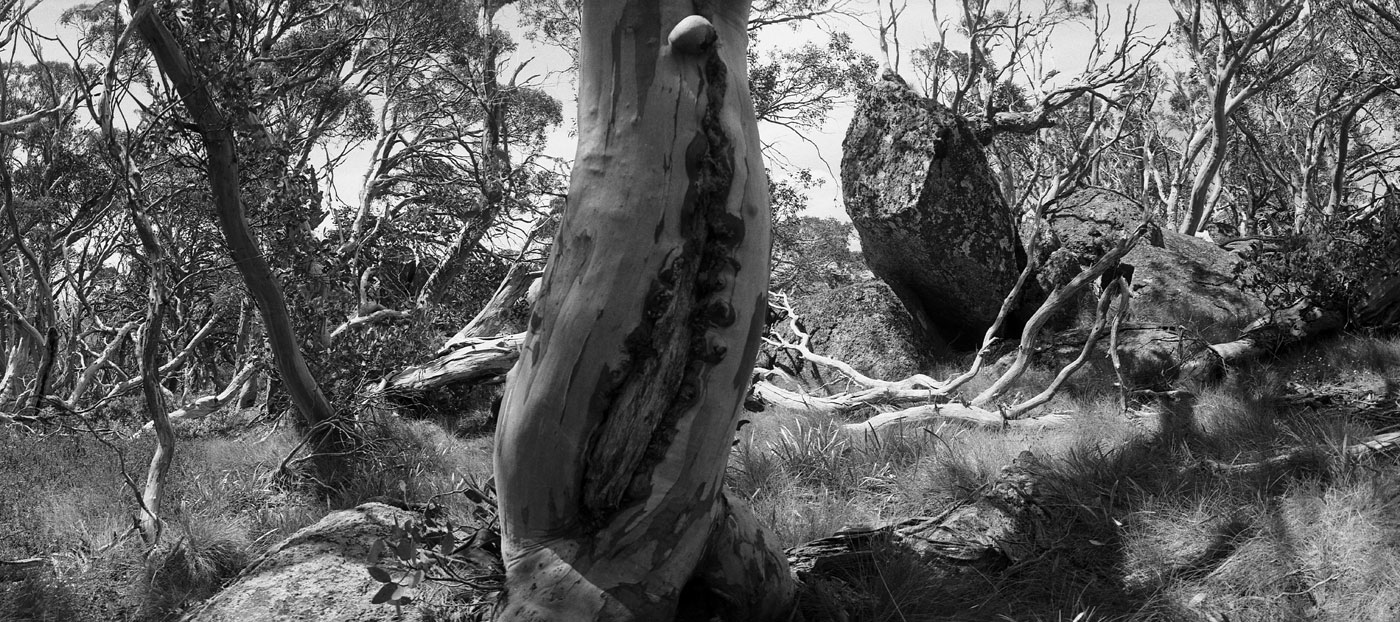
 

Ingeborg Tyssen (Netherlands, Australia 1945-2002) 'Perisher Valley, NSW' from the series 'From the heart of the forest to the edge of the road' series 1984


Ingeborg Tyssen (Netherlands, Australia 1945-2002)
Perisher Valley, NSW
1984
From the series From the heart of the forest to the edge of the road 1982-1984
Silver gelatin print
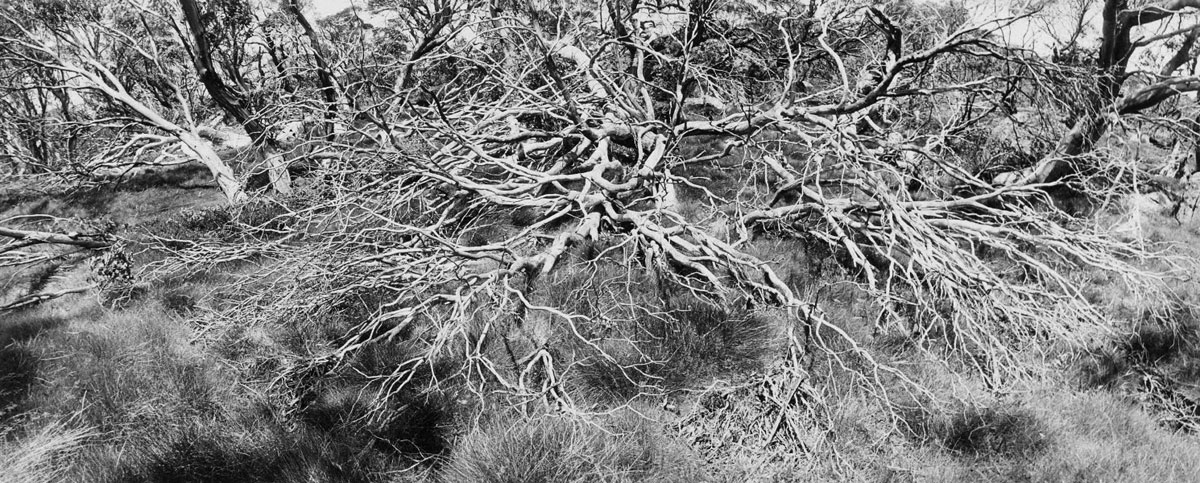
 

Ingeborg Tyssen (Netherlands, Australia 1945-2002) 'Perisher Valley No 6, NSW' 1984


Ingeborg Tyssen (Netherlands, Australia 1945-2002)
Perisher Valley No 6, NSW
1984
From the series From the heart of the forest to the edge of the road 1982-1984
Gelatin silver print
14.5 x 35.7cm
Hallmark Cards Australian Photography Collection Fund 1989
© Ingeborg Tyssen, 1984. Licensed by Viscopy, Sydney
Collection of the Estate of Ingeborg Tyssen
Courtesy John Williams & Sandra Byron Gallery
 

Ingeborg Tyssen (Netherlands, Australia 1945-2002) '
Royal Easter Show, Sydney' 1982


Ingeborg Tyssen (Netherlands, Australia 1945-2002)

Royal Easter Show, Sydney
1982
Gelatin silver print
Collection of the Estate of Ingeborg Tyssen
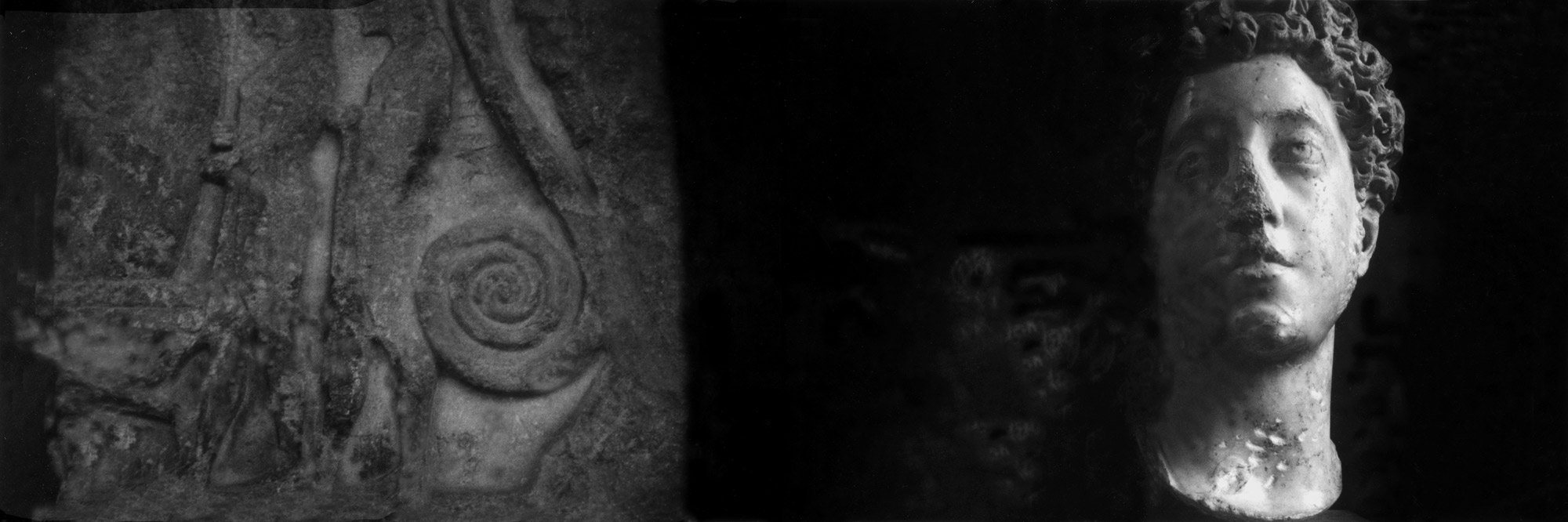
 

Ingeborg Tyssen (Netherlands, Australia 1945-2002) 'Untitled' from 'The voice of silence' series 1991-1992


Ingeborg Tyssen (Netherlands, Australia 1945-2002)
Untitled
1991-1992
From The voice of silence series 1991-92
Gelatin silver print


Monash Gallery of Art
860 Ferntree Gully Road, Wheelers Hill
Victoria 3150 Australia
Phone: + 61 3 8544 0500

Opening hours:
Tue – Fri: 10am – 5pm
Sat – Sun: 10pm – 4pm
Mon/public holidays: closed
Monash Gallery of Art website

LIKE ART BLART ON FACEBOOK

Back to top

Review: ‘Photographic abstractions’ at the Monash Gallery of Art (MGA), Melbourne

Exhibition dates: 3rd August – 30th September 2012

Artists: Andrew Browne, John Cato, Jo Daniell, John Delacour, Peter Elliston, Joyce Evans, Chantel Faust, Susan Fereday, Anthony Figallo, George Gittoes, John Gollings, Graeme Hare, Melinda Harper, Paul Knight, Peter Lambropoulos, Bruno Leti, Anne MacDonald, David Moore, Grant Mudford, Harry Nankin, Ewa Narkiewicz, John Nixon, Rose Nolan, Jozef Stanislaw Ostoja-Kotkowski, Robert Owen, Wes Placek, Susan Purdy, Scott Redford, Jacky Redgate, Wolfgang Sievers, David Stephenson, Mark Strizic and Rick Wood.


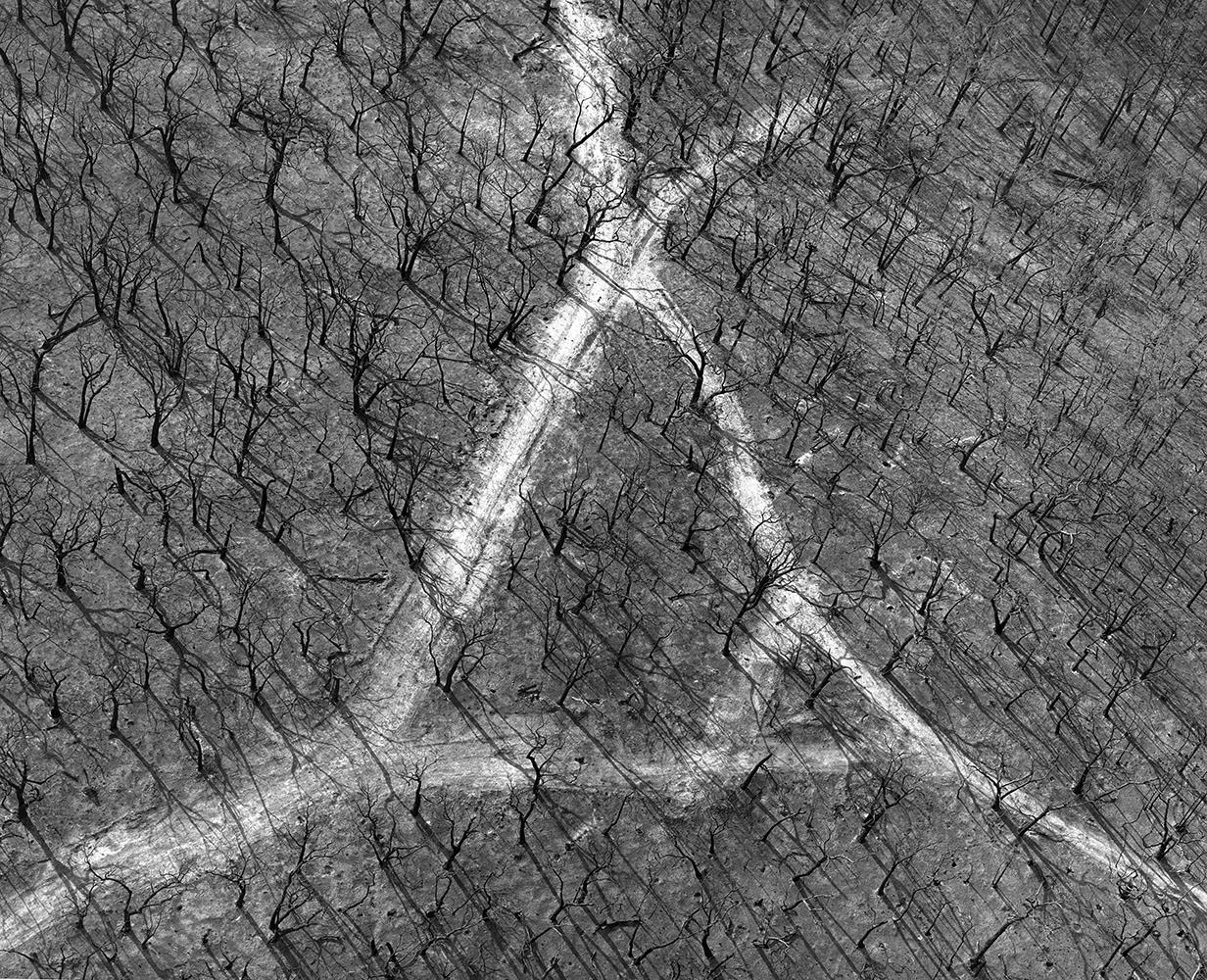
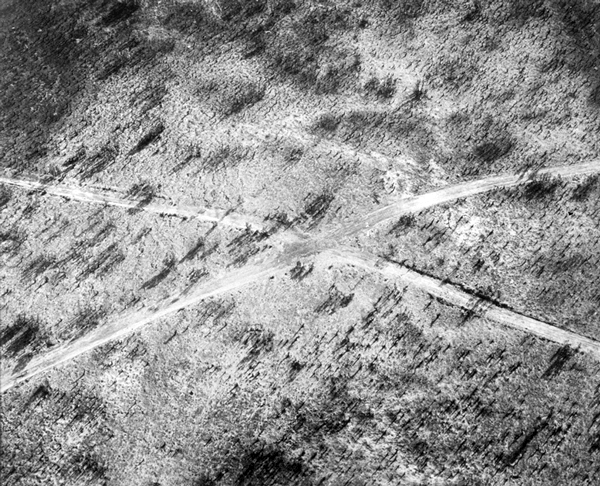
John Gollings (Australia, b. 1944) 'Untitled' 1988 From the series 'Bushfire aerials'


John Gollings (Australia, b. 1944)
Untitled
1988
From the series Bushfire aerials
Gelatin silver print
45.5 x 56.0cm
Monash Gallery of Art, City of Monash Collection
© courtesy of the artist


Dropping the abstract ball

There are some excellent works in this interestingly themed exhibition at the Monash Gallery of Art. Unfortunately the exhibition, the theme and the work are let down by two curatorial decisions. Before I address those issues I will give my insight into some of the work presented:

~ A wonderful print of Sisters of Charity, Washington DC by David Moore (1956) where the starched cornettes of the sisters reminded me of paper doves. The kicker or punctum in this image is the hand of one of the sisters pointing skywards/godwards

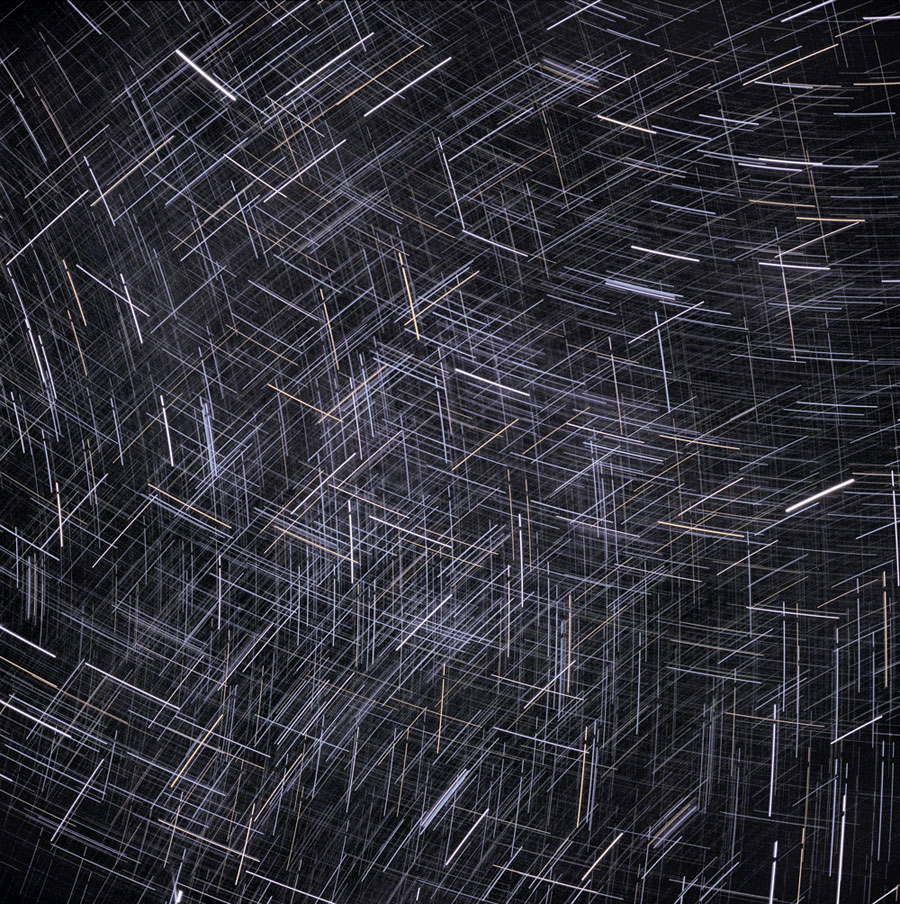
~ Wonderful David Stephenson Star Drawing. I always like photographs from this series. Taken in Central Australia using as many as 72 multiple exposures, Stephenson used a set of rules for each exposure – deciding on the length and amount of exposure and how far he would rotate the camera between each exposure before embarking on the creation of each image. The construction of the image was pre-determined  but because of the movement of the earth and stars over a couple of hours, the result always incorporated an element of chance. Stephenson draws with light that is millions of years old, the source of which may not exist by the time the light falls on Stephenson’s photographic plate (the star might be dead)

~ John Gollings Untitled from the Bushfire series. Beautiful, luminous black and white silver gelatin prints of tracks in bushfire affected areas. These aerial photographs make the surface of the earth seem like the surface of the skin complete with hairs and wrinkles. In process they reference the New Topographics exhibition of 1975, where the mapping of the landscape is etched into the surface of the photographic print, where the pictorial plane records the environment like the marks on an etching plate. “The pictures were stripped of any artistic frills and reduced to an essentially topographic state, conveying substantial amounts of visual information but eschewing entirely the aspects of beauty, emotion and opinion.”

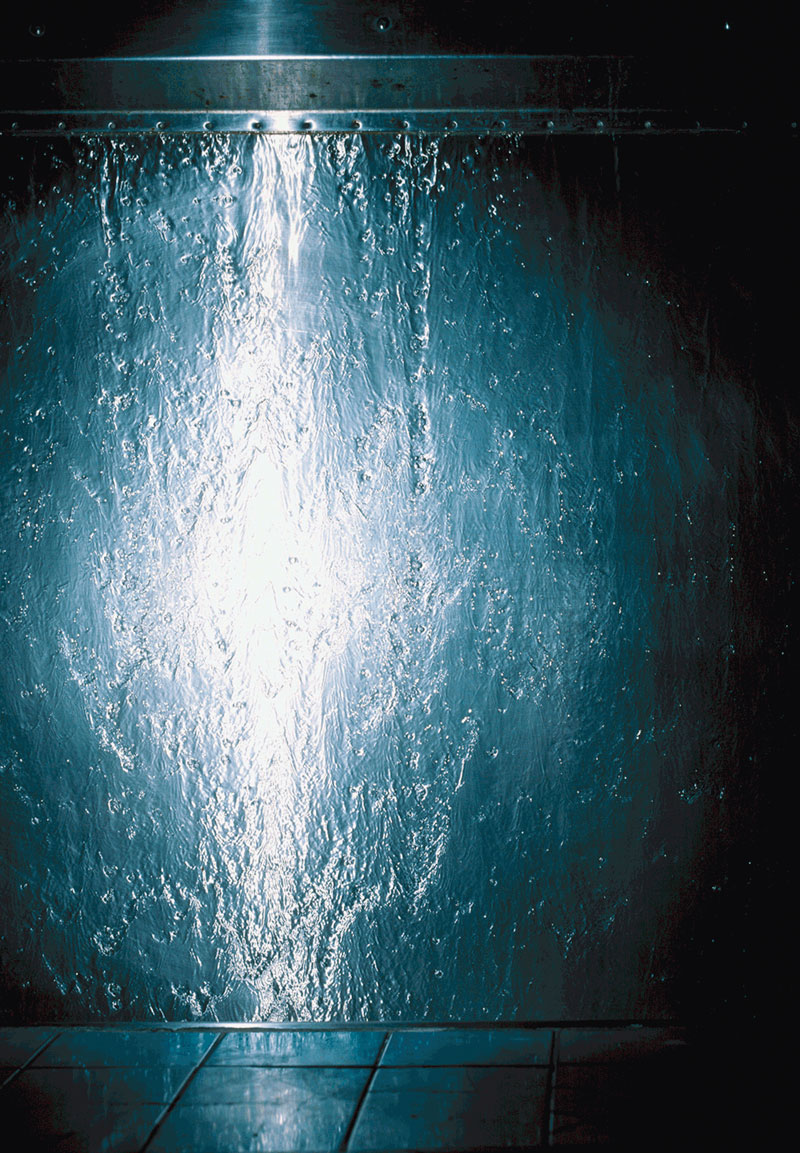
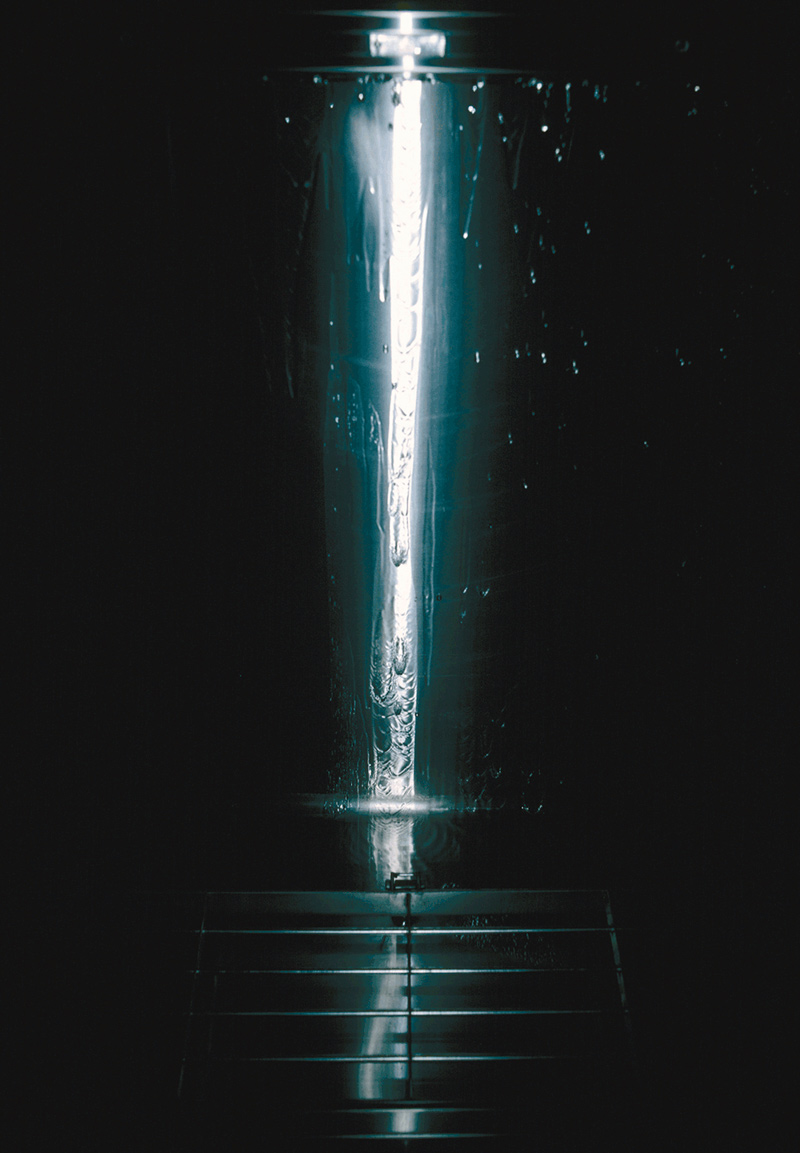
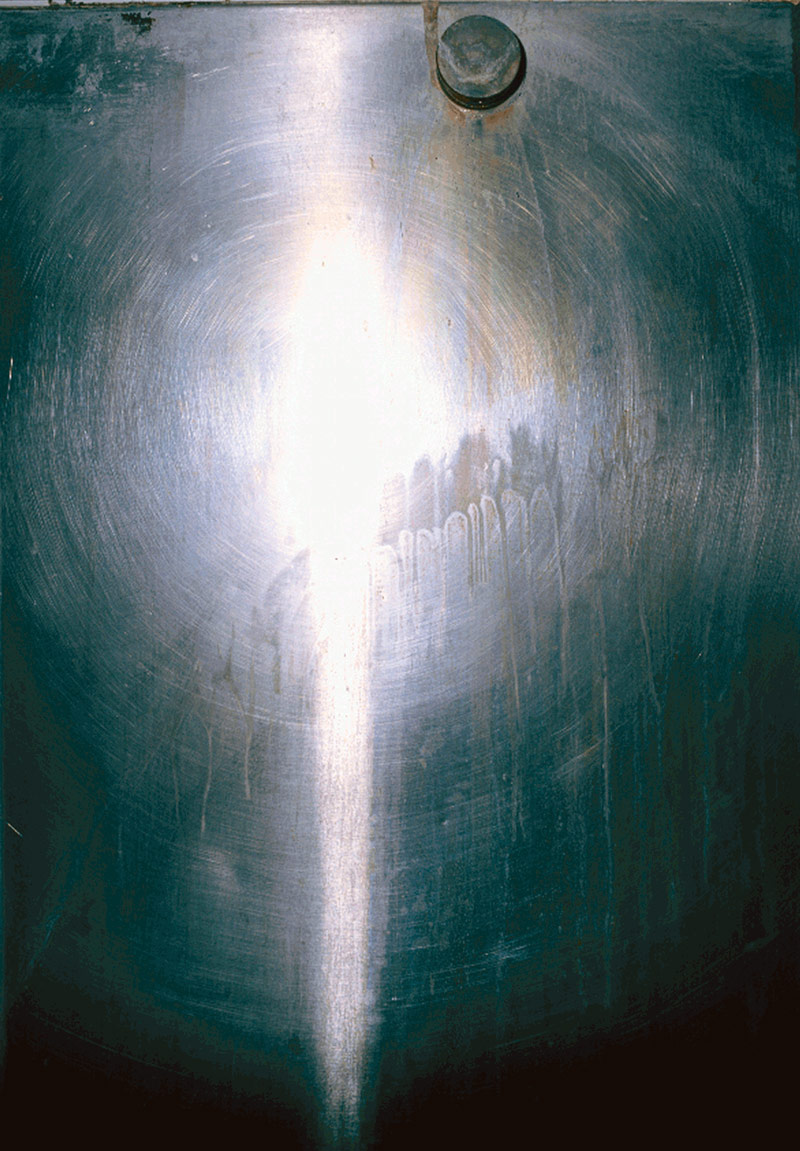
~ The beautiful Scott Redford Urinal photographs where the subject becomes secondary to the abstract visual elements as the flash bounces off the metal surfaces. Tight camera angles and a limited colour palette cause an almost transcendent composition. The swirls and markings and the sword-like quality of the central image (see below) remind me of Excalibur rising from the lake, dripping water.

~ Four photographs by John Cato, one each from Petroglyph 1971-79, Waterway 1971-79, Proteus 1971-79 and Tree – a journey 1971-79. These were incredibly beautiful and moving photographs, abstractions of the natural world. You need to be reminded what an amazing artist John was, one of the very best Australian photographers, his poetic photographs are cosmological in their musicology and composition

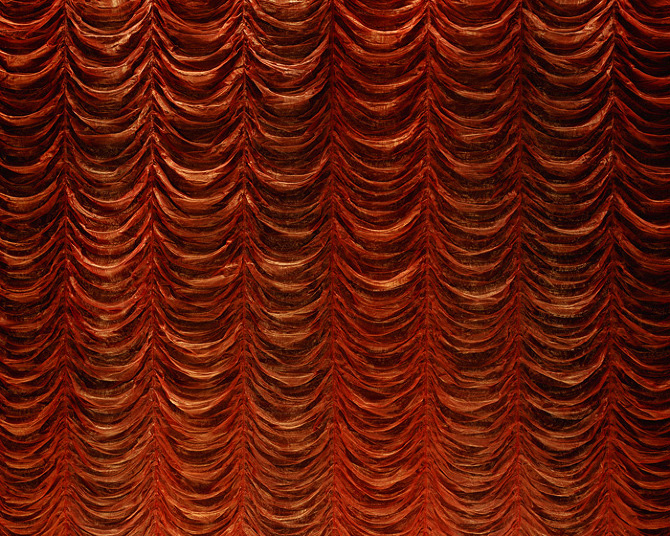
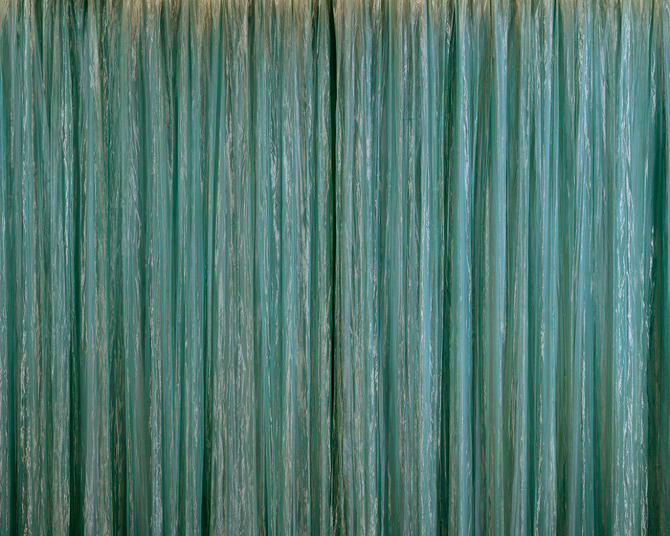
~ Two photographs from Paul Knight’s outstanding Cinema curtain series (below). For me there was a textural, sensory experience here, an intimacy with the subject matter that forced me to focus on the surface of the photograph, the flat plane of the photographic print, itself a highly abstract form. Amazing

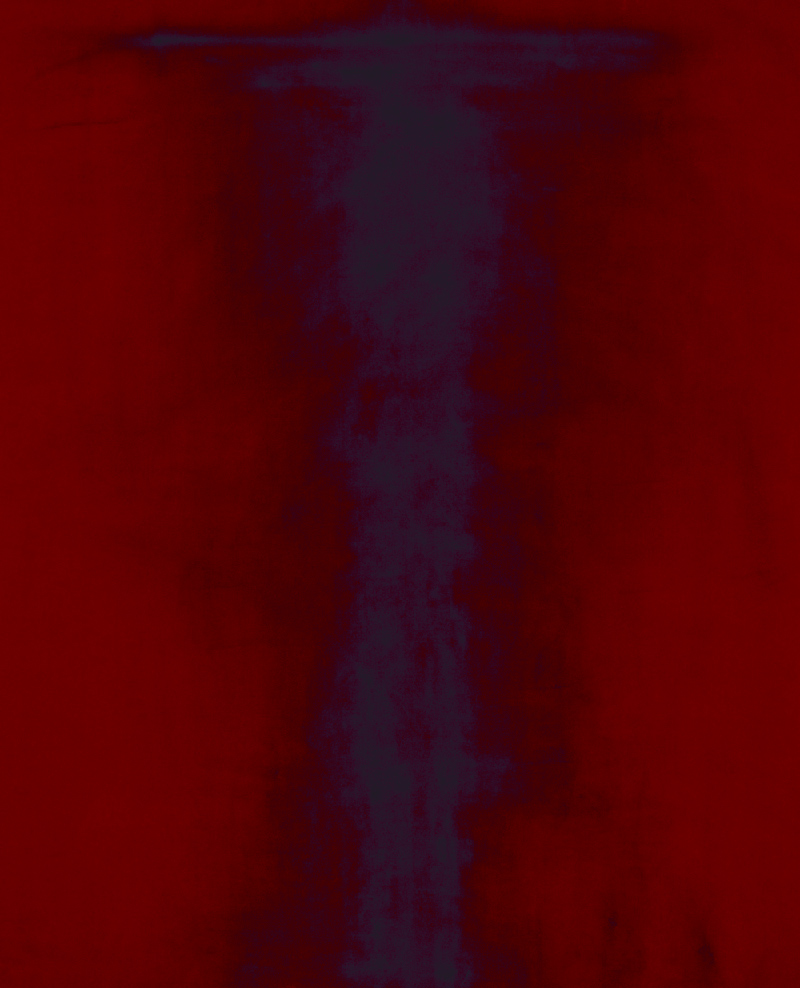
~ My particular favourite in the exhibition were the unknown to me works of the artist Jozef Stanislaw Ostoja-Kotkowski (see the two images directly below). These photographs were the most delightful surprise of the exhibition – landscapes of the mind that had great feeling and focus, felt movement, space, flow of light and energy. This was wonderfully nuanced work that I wanted to see more of


Some excellent work then that was let down by two curatorial decisions. The first was the amount of work in the exhibition by each artist – a couple of prints here, another three small prints there – that really never gave the viewer chance to fully engage with the outcomes that the artist was trying to achieve nor explore the process that the artist was using. I know this was a group exhibition trying to highlight work from the collection but a more useful contribution would have been less artist’s in the exhibition with greater work from each, allowing for a more focused exhibition.

Far more serious, however, was the lack of any text that placed the work in a socio-cultural context. At the beginning of the exhibition there was 5 short paragraphs on a wall as you enter the space with mundane insights such as:

~ Photographic language engages the senses and imagination and challenges the way we “look” at the world
~ Through the use of cropping and obscure angle the familiar is made unfamiliar
~ Colour, shape and form (geometric patterns) are important
~ Some artists’ eliminate the camera altogether through photograms, scanner, collage
~ Use of multiple exposures, distortion, mirroring
~ By drilling down into the substances and processes of photography we can reflect on the very nature of photography itself
~ Exploring geometry and patterns found in nature and the built environment or alluding to more intangible themes such as time, mortality and spirituality


I have précised the five paragraphs but that’s all you get!

The only other information comes from brief wall texts accompanying each artist and these sound bites really don’t give any social and cultural context to the artist, the time they lived in or the social themes that would have influenced the work. For example, who would know from this exhibition that the artist John Cato was one of the first photographers in Australia to create visual tone poems using images of the Australian landscape, one of the first to work in sequences of images and who would go on to be a teacher of great repute, helping other emerging photographic artists at a critical time in the development of Australian art photography. Nobody. Also, I wanted to know more about the “substances” and “processes” of photography in regard to photographic abstraction. There was no serious theoretical enquiry, no educational component offered to the viewer here.

While money might be tight there is really no excuse for this lack of creditable, researched, insightful information. You don’t need a catalogue, all you need is a photo-stated 4-6 page essay to be given to visitors (if they desire to have one, if they want the information). It doesn’t take money it takes will to inform and educate the viewer about this important aspect of Australian photographic history. For a subject so engaging this was most disappointing. In this particular case the curators really did drop the abstract ball.

Dr Marcus Bunyan


Many thankx to the Monash Gallery of Art for allowing me to publish the photographs in the posting. Please click on the photographs for a larger version of the image.


John Gollings (Australia, b. 1944) 'Untitled' 1988 From the series 'Bushfire aerials'


John Gollings (Australia, b. 1944)
Untitled
1988
From the series Bushfire aerials
Gelatin silver print
45.5 x 55.0cm
Monash Gallery of Art, City of Monash Collection
© courtesy of the artist


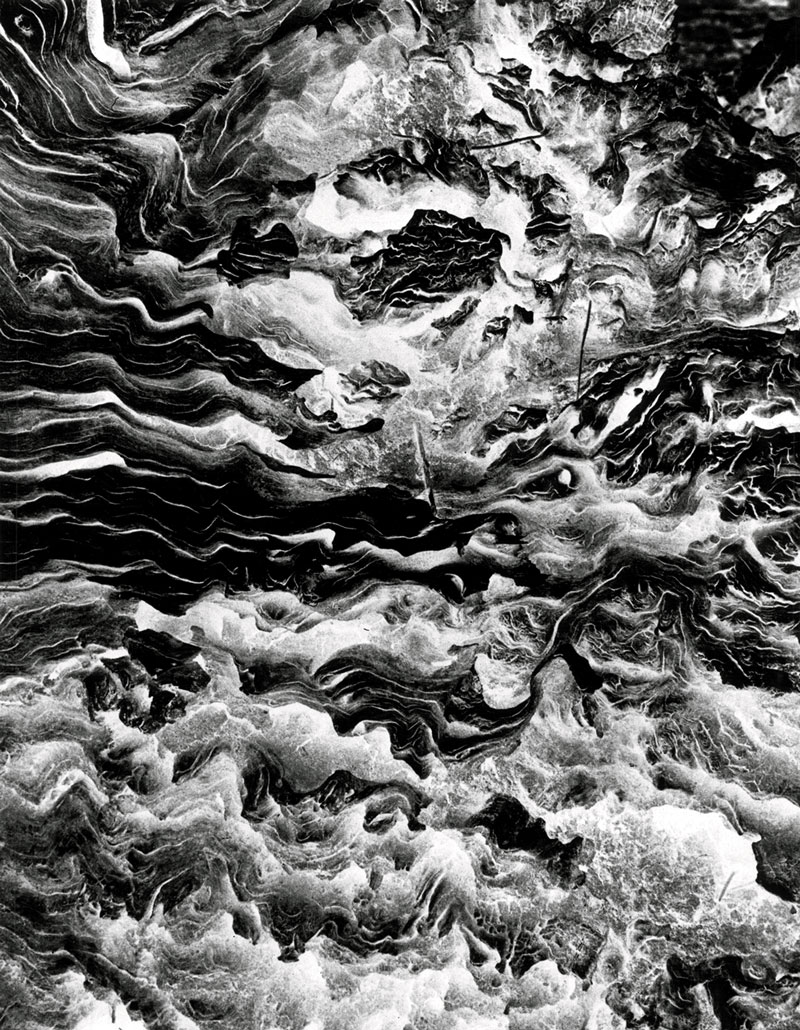
While John Gollings is best known for his work as an architectural photographer, he has produced a number of works that hone in on the Australian landscape. This aerial photograph looks down onto a landscape that has been scorched by bushfire. Viewed from above, without any horizon line to give a sense of scale or orientation to the terrain, this charred topography takes on the appearance of hairy, stubbled skin. Gollings uses this ambiguity to great effect, making the dirt tracks look like wounds that have scarred the surface of the earth, and the effects of smoke and ash look like bruises. In this respect, the use of aerial photography has allowed the images to be read as abstract ciphers of ecological trauma.

Text from the Monash Gallery of Arts website


David Stephenson (born USA 1955 arrived Australia 1982) 'Star drawing 1996/402' 1996 From the series 'Star drawings' 1995-2006


David Stephenson (born USA 1955 arrived Australia 1982)
Star drawing 1996/402
1996
From the series Star drawings 1995-2006
Chromogenic print, printed 2008
55.8 x 55.8cm
Monash Gallery of Art, City of Monash Collection
© courtesy of the artist, John Buckley Gallery Melbourne, Boutwell Draper Gallery, Sydney and Bett Gallery, Hobart


In a career spanning over 40 years, David Stephenson has consistently used photography to transcend visible reality, photographing built and natural environments to explore abstract, intangible themes such as time, mortality and spirituality. Stephenson made these Star drawings in Central Australia, overlaying as many as 72 different exposures to make one work. For each photograph he used a list of predetermined rules. For instance, he would decide on the length and number of exposures and how far he would rotate his camera between each exposure before embarking on the creation of each image. The images, each of which took a couple of hours to produce, were in this sense pre-planned; however, the amount of variables involved such as the movement of the earth and the stars during each shoot, meant the result always incorporated an element of chance. Interested in the idea that photography is essentially drawing with light, Stephenson’s series of experimental abstract patterns is not so much about documenting the night sky as it is about conceptually exploring the nature of light, time and photography itself.

Text from the Monash Gallery of Arts website


Paul Knight (Australia, b. 1976) 'Cinema curtain #3' 2004


Paul Knight (Australia, b. 1976)
Cinema curtain #3
2004
Chromogenic print
43.5 x 55.0cm
Monash Gallery of Art, City of Monash Collection
© courtesy of the artist


The function of the stage curtain in the cinema was to help suspend the illusion of reality in the moving image of the film. The idea being that the plain white screen behind the curtain was never seen without the moving image on it. So the illusion always existed behind the curtain and was simply masked-off from us by it. This is partly why the image was alway projected onto the curtain for a moment before it was opened, to ensure that we never saw the dead white screen. These works use this function of the cinema stage curtain as a way of engaging with the meta-reality offered by the flat-plane of a photographic print. Utilising the lure of aesthetics and pattern to bring the viewer onto the folded membrane of the curtain and onto the essentially flat plane of the print. Both give way to a potential of volume.

Text from the Paul Knight website [Online] Cited 21/09/2012 no longer available online


Paul Knight (Australia, b. 1976) 'Cinema curtain #4' 2004


Paul Knight (Australia, b. 1976)
Cinema curtain #2
2004
Chromogenic print
43.5 x 55.0cm
Monash Gallery of Art, City of Monash Collection
© courtesy of the artist


Jozef Stanislaw Ostoja-Kotkowski (born Poland 1922 arrived Australia 1949 died 1994) 'Australia Square – Sydney' 1971 From the series 'Inscape 871'


Jozef Stanislaw Ostoja-Kotkowski (born Poland 1922 arrived Australia 1949 died 1994)
Australia Square – Sydney
1971
From the series Inscape 871
Gelatin silver print
29.4 x 24.0cm
Monash Gallery of Art, City of Monash Collection
© courtesy of the artist


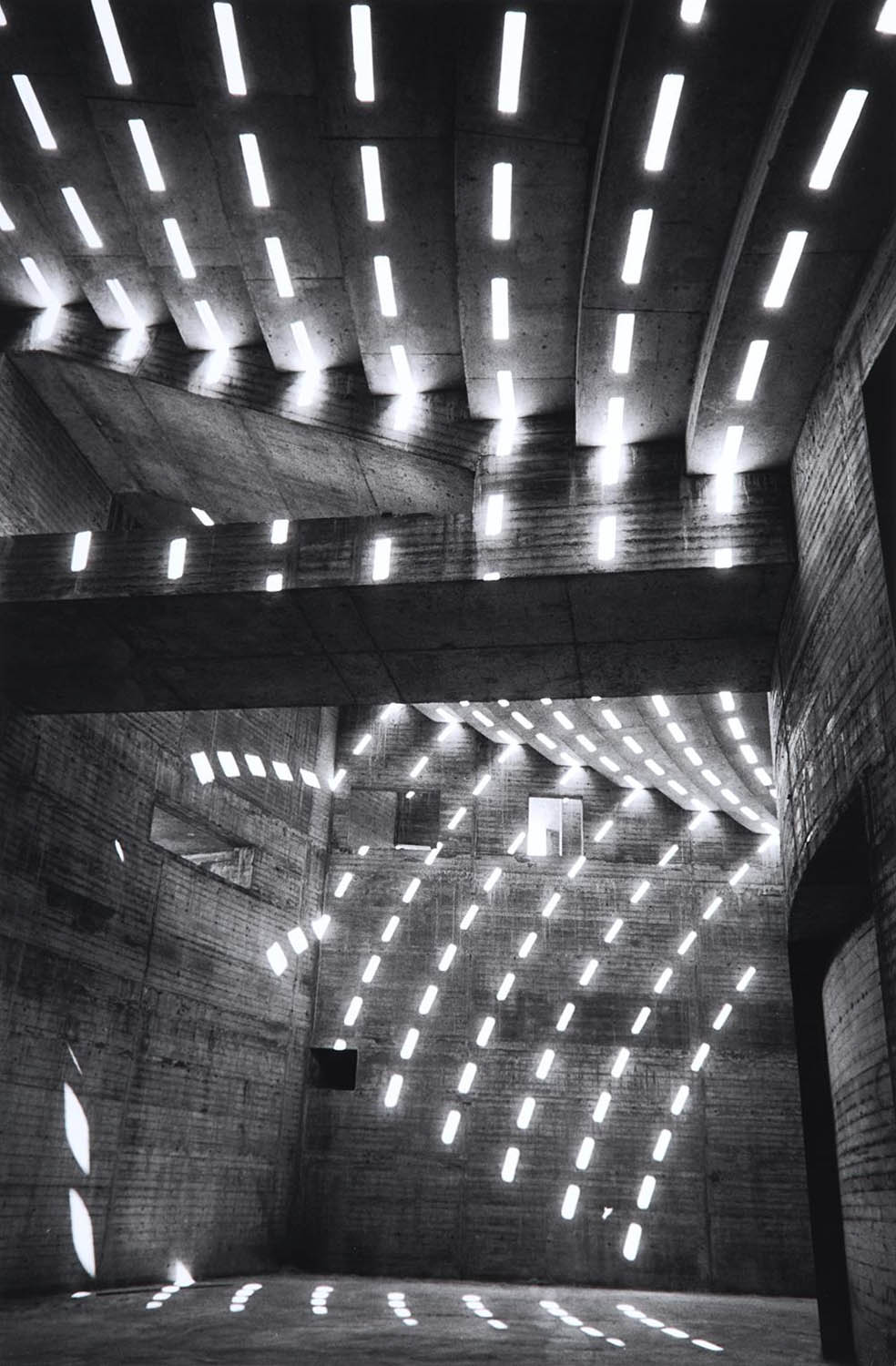
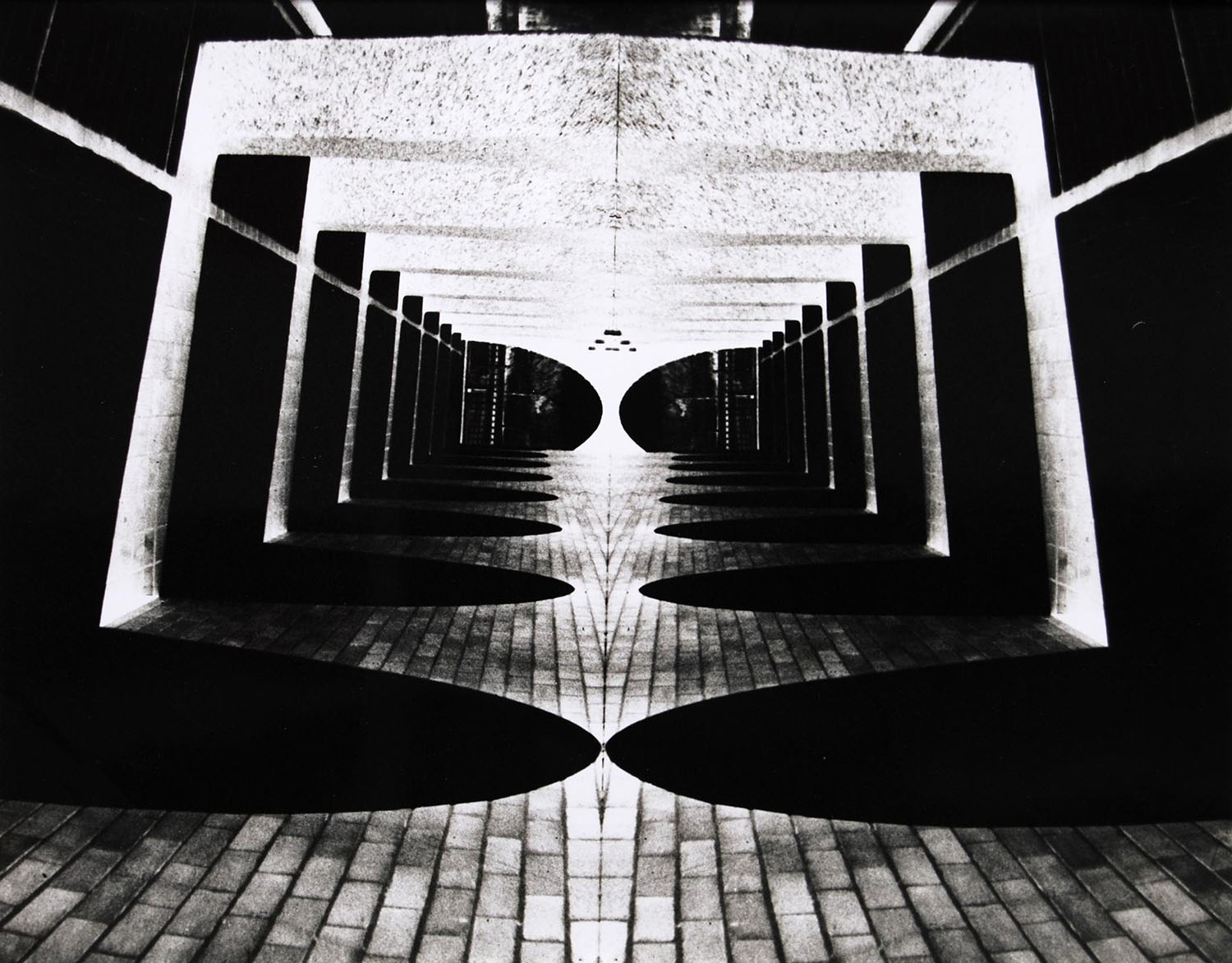
Originally trained as a painter, Jozef Stanislaw Ostoja-Kotkowski was interested in the advancement of art materials and techniques. He worked across a variety of media, including painting, sculpture, photography, electronic sound and light projections. He was also interested in combining different art forms and experimented with blending photography with music and sound.

Ostoja-Kotkowski played a key role in the development of experimental photography as well as electronic art in Australia. While his subjects were taken from the real world, they were photographically distorted and abstracted so that many became unrecognisable. He used this technique to create the series Inscape 871, examples of which are exhibited here. Inscape refers to an inner landscape, or images of the mind, while 871 refers to the month and year the works were completed. This series was included in the National Gallery of Victoria’s exhibition Frontiers (1971), which featured five Australian experimental photographers.

Text from the Monash Gallery of Arts website


Jozef Stanislaw Ostoja-Kotkowski (born Poland 1922 arrived Australia 1949 died 1994) 'Untitled' c. 1971


Jozef Stanislaw Ostoja-Kotkowski (born Poland 1922 arrived Australia 1949 died 1994)
Untitled
c. 1971
Gelatin silver print
29.4 x 24.0cm
Monash Gallery of Art, City of Monash Collection
Donated by Ken Scarlett 2004
© courtesy of the Estate of J S Ostoja-Kotkowski


Anne MacDonald (Australia, b. 1960) 'Cloth (red velvet)' 2004


Anne MacDonald (Australia, b. 1960)
Cloth (red velvet)
2004
Ink-jet print
105 x 70cm
Collection of the artist
© courtesy of the artist and Bett Gallery, Hobart


John Cato (Australian, 1926-2011) 'Tree – a journey' 1971-1979


John Cato (Australian, 1926-2011)
Tree – a journey
1971-1979
From the series Essay I
Gelatin silver print
35.5 x 27.5cm
Monash Gallery of Art, City of Monash Collection
© courtesy of the John Cato Estate


Chantal Faust (Australian, b. 1980) 'Waiting' 2007


Chantal Faust (Australian, b. 1980)
Waiting
2007
From the series Milk
Chromogenic print
80.0 x 58.0cm
Collection of the artist
© courtesy of the artist


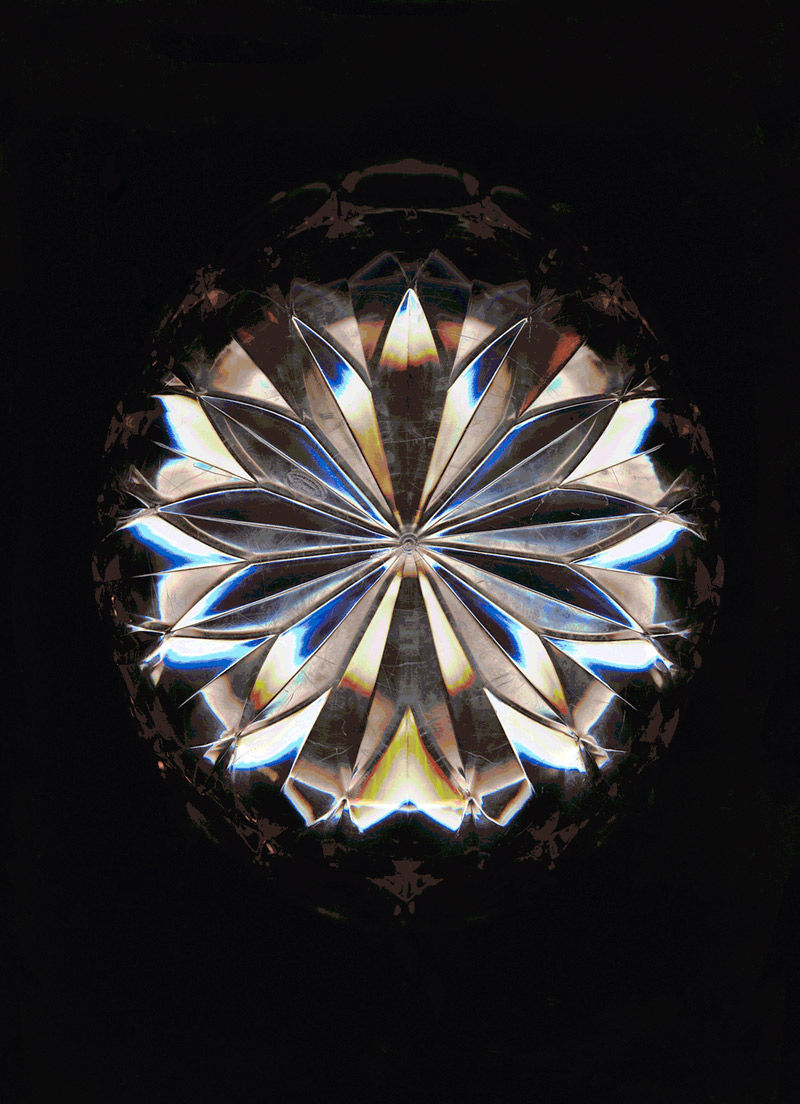
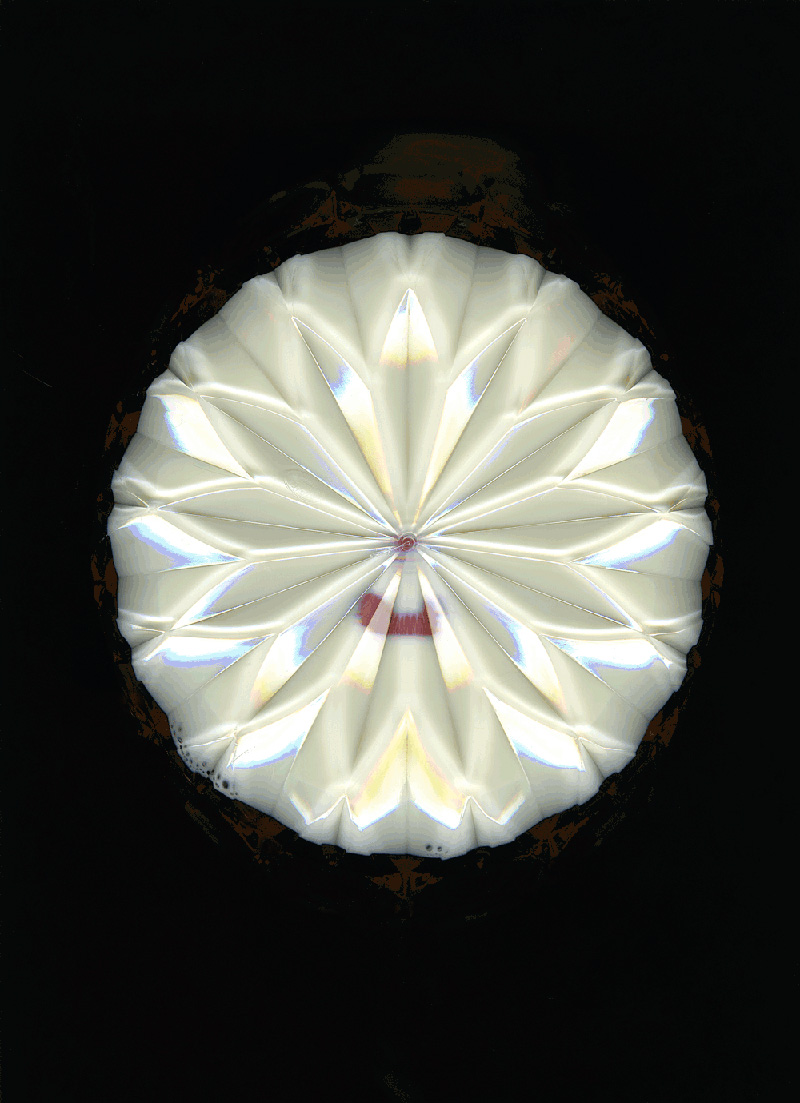
Like much of Chantal Faust’s photographic work, her series Milk was produced using a digital flatbed scanner, a method that allowed her to generate photographs without the use of a camera. The series documents milk being drunk from a bowl and can be linked to the tradition of 1960s and 1970s ‘process art’. During the late 20th century, photography was often employed by artists who wanted to document performance-based art actions and activities. Faust’s ‘action’ of slurping milk from a bowl is a playful extension of this tradition.

Text from the Monash Gallery of Art website


Chantal Faust. 'Lap Milk' 2007


Chantal Faust (Australian, b. 1980)
Lap Milk
2007
From the series Milk
Chromogenic print
80.0 x 58.0cm
Collection of the artist
© courtesy of the artist


Drawing on MGA’s collection of Australian photographs, Photographic abstractions highlights the work of 33 Australian artists who use photography to achieve abstract effects. Ranging from modernist geometric abstraction and the psychedelic experiments and conceptual projects of the 1970s, through to recent explorations of pixelated pictorial space, this exhibition surveys a rich history of abstract Australian art photography. Photography is traditionally recognised for its ability to depict, record and document the world. However, this exhibition sets out to challenge these assumptions. As co-curator of the exhibition and MGA Curator Stephen Zagala states, “The artists in this exhibition are less concerned with documenting the world and more interested in engaging the senses, exciting the imagination and making the ordinary appear extraordinary.”

Some artists have eliminated the camera altogether, preferring the effects that can be achieved with photograms and digital scans. Other artists have experimented with multiple exposures, mirrored images, irregular lenses and the printing of the usually discarded stubs of negatives. Co-curator and MGA Curatorial Assistant Stella Loftus-Hills says, “Photography has always been tied to abstraction. Some of the first photographs ever produced were abstract and subsequent photographers have sought out abstract compositions in their work.”

One highlight of the exhibition is a selection of works by the iconic Australian photographer David Moore, who experimented with abstract photography alongside his more well-known figurative work. In Moore’s Blue collage (1983) the process of cutting bands of colour from existing photographs to create a new composition celebrates the artist’s imagination above and beyond the camera’s ability to capture content.

Artists include Andrew Browne, John Cato, Jo Daniell, John Delacour, Peter Elliston, Joyce Evans, Chantel Faust, Susan Fereday, Anthony Figallo, George Gittoes, John Gollings, Graeme Hare, Melinda Harper, Paul Knight, Peter Lambropoulos, Bruno Leti, Anne MacDonald, David Moore, Grant Mudford, Harry Nankin, Ewa Narkiewicz, John Nixon, Rose Nolan, Jozef Stanislaw Ostoja-Kotkowski, Robert Owen, Wes Placek, Susan Purdy, Scott Redford, Jacky Redgate, Wolfgang Sievers, David Stephenson, Mark Strizic and Rick Wood.

Press release from the MGA website


David Moore (Australian, 1927-2003) 'Sun patterns within the Sydney Opera House' 1962


David Moore (Australian, 1927-2003)
Sun patterns within the Sydney Opera House
1962
Gelatin silver print, printed 2005
37.75 x 25.0cm
Monash Gallery of Art, City of Monash Collection
© courtesy of the Estate of David Moore


David Moore (Australian, 1927-2003) 'Sisters of Charity' 1956


David Moore (Australian, 1927-2003)
Sisters of Charity, Washington DC
1956
Gelatin silver print
30.5 x 19.5cm
Monash Gallery of Art, City of Monash Collection
© courtesy of the Estate of David Moore


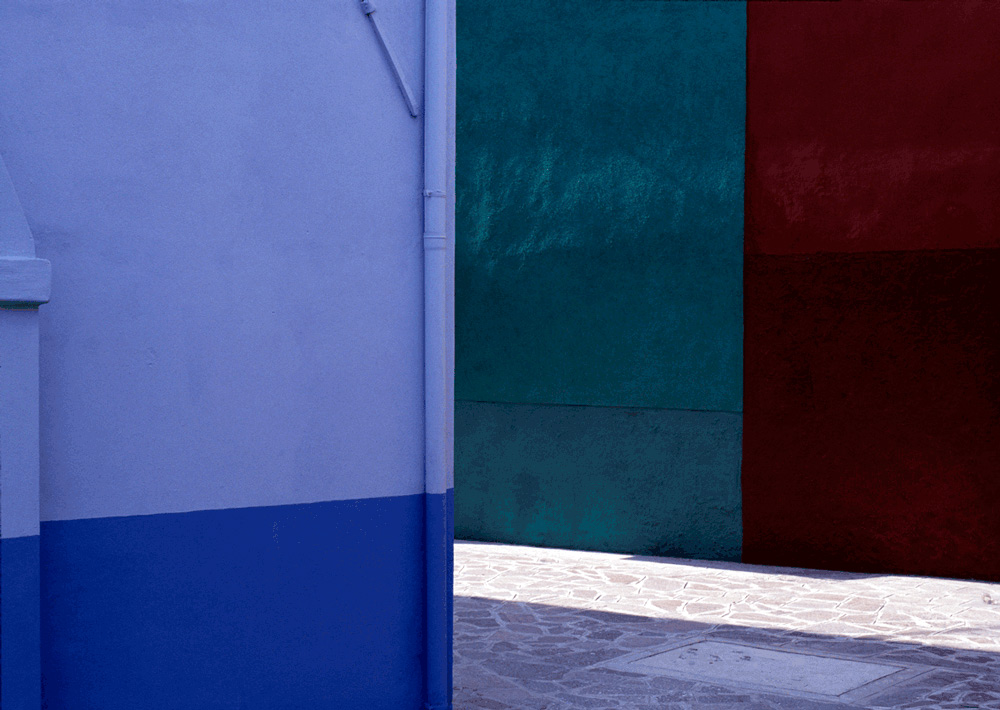
Robert Owen (Australian, b. 1937) 'Street, Burano, Italy' 1978


Robert Owen (Australian, b. 1937)
Street, Burano, Italy
1978
Silver dye bleach print
20 x 25cm
Monash Gallery of Art, City of Monash Collection
© courtesy of the artist and Arc One Gallery, Melbourne


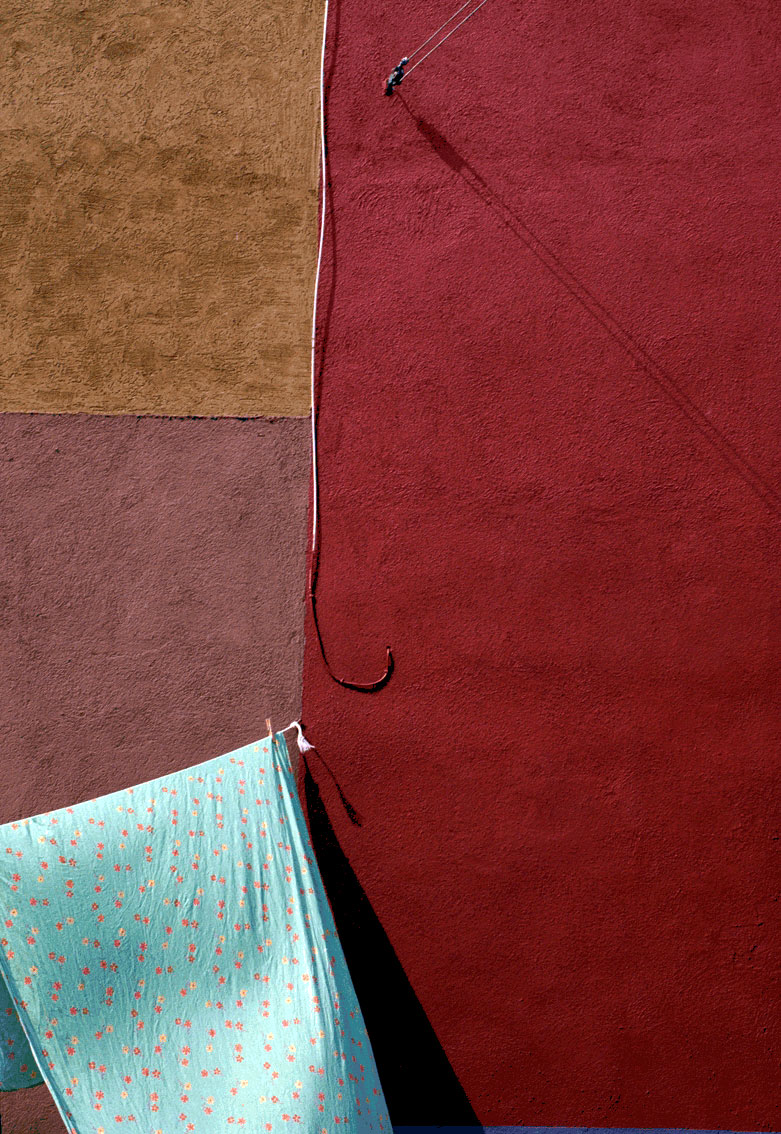
Robert Owen (Australian, b. 1937) 'Green Sheet, Burano, Italy' 1978


Robert Owen (Australian, b. 1937)
Green Sheet, Burano, Italy
1978
Silver dye bleach print
Monash Gallery of Art, City of Monash Collection
© courtesy of the artist and Arc One Gallery, Melbourne


Scott Redford (Australian, b. 1962) 'Urinal (Broadbeach)' 2000-2001


Scott Redford (Australian, b. 1962)
Urinal (Broadbeach)
2000-2001
From the Urinals series 1988-2001
Chromogenic print
Collection of the artist
© courtesy of the artist


Scott Redford (Australian, b. 1962) 'Urinal (Surfer's Paradise)' 2000-2001


Scott Redford (Australian, b. 1962)
Urinal (Surfer’s Paradise)
2000-2001
From the Urinals series 1988-2001
Chromogenic print
Collection of the artist
© courtesy of the artist


Scott Redford (Australian, b. 1962) 'Urinal (Fortitude Valley)' 2000-01


Scott Redford (Australian, b. 1962)
Urinal (Fortitude Valley)
2000-2001
From the Urinals series 1988-2001
Chromogenic print
Collection of the artist
© courtesy of the artist


Redford’s photographs of urinals… dialogue with art historical motifs that precede discourses of minimal art and postmodern understandings of the abject. In representing the site of male urination, they evoke the oxidation paintings of Andy Warhol, who directed young men to piss onto canvases prepared with copper oxide, resulting in compelling abstract imagery… All of that is in Redford’s photographs and at the same time they are completely empty and quiet and contemplative… They are pure sensory experience like rainfall, even transcendent in their purity. They are concerned with beauty, but they are beyond debates about beauty. They are indifferent and in this they are transcendent.

Chapman, Christopher. “Scott Redford’s urinals,” in Redford, Scott et.al. Bricks are Heavy (exhibition catalogue). Brisbane: Institute of Modern Art, pp. 6-7.


Monash Gallery of Art
860 Ferntree Gully Road, Wheelers Hill
Victoria 3150 Australia
Phone: +61 3 8544 0500

Opening hours:
Tuesday – Friday 10am – 5pm
Saturday – Sunday 10am – 4pm
Mon/public holidays: closed
Monash Gallery of Art website

LIKE ART BLART ON FACEBOOK

Back to top

melbourne’s magnificent nine 2011

December 2011


Here’s my pick of the nine best exhibitions in Melbourne (with excursions to Bendigo and Hobart thrown in) that appeared on the Art Blart art and cultural archive in 2011. Enjoy!

Dr Marcus Bunyan


1/ Sidney Nolan: Drought Photographs at Australian Galleries, Melbourne, March 2011

Sidney Nolan (Australian, 1917-1992) 'Untitled (calf carcass in tree)' 1952


Sidney Nolan (Australian, 1917-1992)
Untitled (calf carcass in tree)
1952
archival inkjet print
23.0 cm x 23.0cm


This was a superb exhibition of 61 black and white photographs by Sidney Nolan. The photographs were shot using a medium format camera and are printed in square format from the original 1952 negatives.

The work itself was a joy to behold. The photographs hung together like a symphony, rising and falling, with shape emphasising aspects of form. The images flowed from one to another. The formal composition of the mummified carcasses was exemplary, the resurrected animals (a horse, for example, propped up on a fifth leg) and emaciated corpses like contemporary sculpture. The handling of the tenuous aspects of human existence in this uniquely Australian landscape was also a joy to behold. Through an intimate understanding of how to tension the space between objects within the frame Nolan’s seemingly simple but complex photographs of the landscape are previsualised by the artist in the mind’s eye before he even puts the camera to his face.


2/ Bill Henson at Tolarno Galleries, Melbourne, March – April 2011

This was an exquisite exhibition by one of Australia’s preeminent artists. Like Glenn Gould playing a Bach fugue, Bill Henson is grand master in the performance of narrative, structure, composition, light and atmosphere. The exhibition featured thirteen large colour photographs printed on lustre paper (twelve horizontal and one vertical) – nine figurative of adolescent females, two of crowd scenes in front of Rembrandt paintings in The Hermitage, St. Petersburg (including the stunning photograph that features The return of the prodigal son c. 1662 in the background, see below) and two landscapes taken off the coast of Italy. What a journey this exhibition took you on!

Henson’s photographs have been said by many to be haunting but his images are more haunted than haunting. There is an indescribable element to them (be it the pain of personal suffering, the longing for release, the yearning for lost youth or an understanding of the deprecations of age), a mesmeric quality that is not easily forgotten. The photographs form a kind of afterimage that burns into your consciousness long after the exposure to the original image has ceased. Haunted or haunting they are unforgettable.


Bill Henson (Australian, b. 1955) 'Untitled' 2009/10


Bill Henson (Australian, b. 1955)
Untitled
2009/10
CL SH767 N17B
Archival inkjet pigment print
127 x 180cm
Edition of 5


3/ Networks (cells & silos) at Monash University Museum of Art (MUMA), Caulfield, February – April 2011

This was a vibrant and eclectic exhibition at MUMA, one of the best this year in Melbourne. The curator Geraldine Barlow gathered together some impressive, engaging works that were set off to good effect in the new gallery spaces. I spent a long and happy time wandering around the exhibition and came away visually satiated and intellectually stimulated. The exhibition explored “the connections between artistic representation of networks; patterns and structures found in nature; and the rapidly evolving field of network science, communications and human relations.”


Installation photograph of one of the galleries in the exhibition 'NETWORKS (cells & silos)' at the newly opened Monash University Museum of Art (MUMA)


Installation photograph of one of the galleries in the exhibition NETWORKS (cells & silos) at the newly opened Monash University Museum of Art (MUMA) with Nick Mangan’s Colony (2005) in the foreground


4/ Monika Tichacek, To all my relations at Karen Woodbury Gallery, Richmond, May 2011

This was a stupendous exhibition by Monika Tichacek, at Karen Woodbury Gallery. One of the highlights of the year, this was a definite must see!

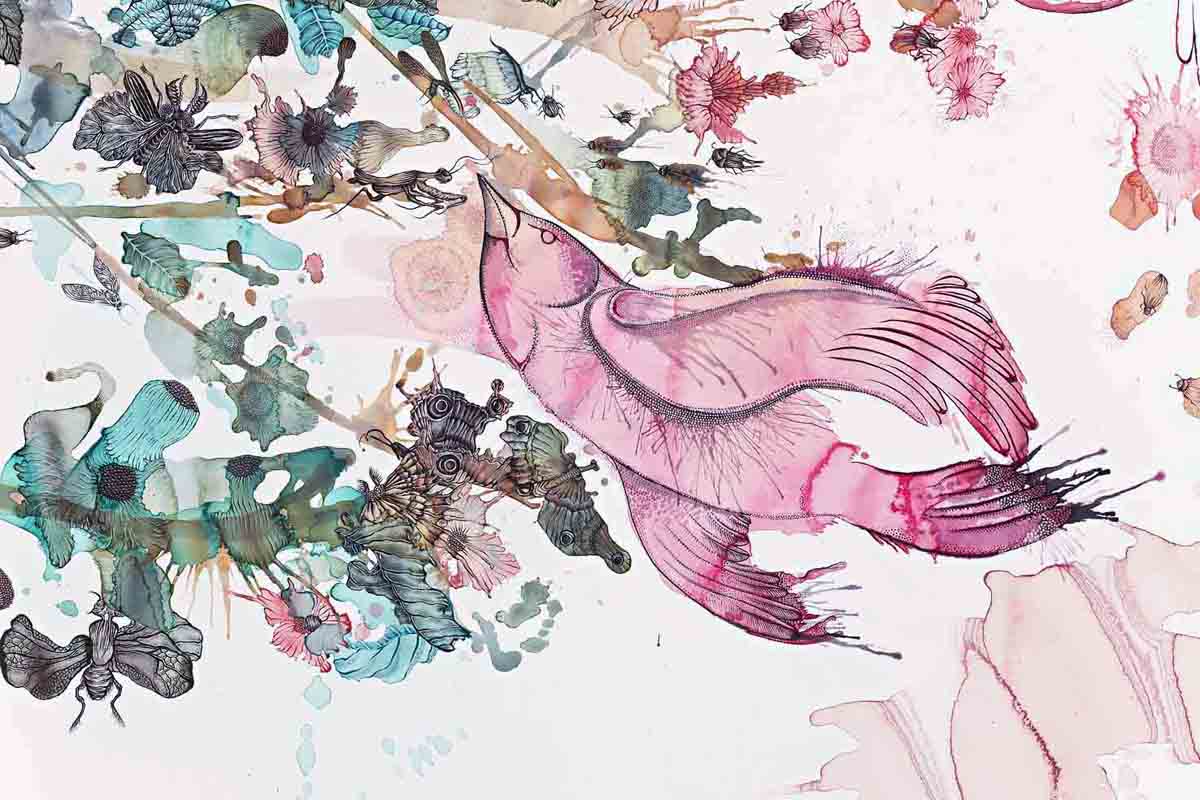
The work was glorious in it’s detail, a sensual and visual delight (make sure you click on the photographs to see the close up of the work!). The riotous, bacchanalian density of the work was balanced by a lyrical intimacy, the work exploring the life cycle and our relationship to the world in gouache, pencil & watercolour. Tichacek’s vibrant pink birds, small bugs, flowers and leaves have absolutely delicious colours. The layered and overlaid compositions show complete control by the artist: mottled, blotted, bark-like wings of butterflies meld into trees in a delicate metamorphosis; insects are blurred becoming one with the structure of flowers in a controlled effusion of life.


Monika Tichacek (Australian born Switzerland, b. 1975) 'To all my relations' 2011 (detail)


Monika Tichacek (Australian born Switzerland, b. 1975)
To all my relations (detail)
2011


5/ American Dreams: 20th century photography from George Eastman House at Bendigo Art Gallery, Victoria, April – July 2011

Diane Arbus (American, 1923-1971) 'Untitled (6)' 1971


Diane Arbus (American, 1923-1971)
Untitled (6)
1971
Gelatin silver print


This was a fabulous survey exhibition of the great artists of 20th century American photography, a rare chance in Australia to see such a large selection of vintage prints from some of the masters of photography. If you had a real interest in the history of photography then you hopefully saw this exhibition, showing as it is just a short hour and a half drive (or train ride) from Melbourne at Bendigo Art Gallery.


6/ Time Machine: Sue Ford at Monash Gallery of Art, Wheelers Hill, Victoria, April – June 2011

Sue Ford (Australian, 1943-2009) 'Self-portrait' 1976


Sue Ford (Australian, 1943-2009)
Self-portrait 1976
1976
From the series Self-portrait with camera (1960-2006)
Selenium toned gelatin silver print, printed 2011
24 x 18cm
courtesy Sue Ford Archive


This beautifully hung exhibition flowed like music, interweaving up and down, the photographs framed in thin, black wood frames. It featured examples of Ford’s black and white fashion and street photography; a selection of work from the famous black and white Time series (being bought for their collection by the Art Gallery of New South Wales); a selection of Photographs of Women – modern prints from the Sue Ford archive that are wonderfully composed photographs with deep blacks that portray strong, independent, vulnerable, joyous women (see last four photographs below); and the most interesting work in the exhibition, the posthumous new series Self-portrait with camera (1960-2006) that evidence, through a 47 part investigation using colour prints from Polaroids, silver gelatin prints printed by the artist, prints made from original negatives and prints from scanned images where there was no negative available, a self-portrait of the artist in the process of ageing.

Whether looking down, looking toward or looking inward these fantastic photographs show a strong, independent women with a vital mind, an élan vital, a critical self-organisation and an understanding of the morphogenesis of things that will engage us for years to come. Essential looking.


7/ The Museum of Old and New Art (MONA), Hobart, August 2011

My analogy: you are standing in the half-dark, your chest open, squeezing the beating heart with blood coursing between your fingers while the other hand is up your backside playing with your prostrate gland. I think ringmeister David Walsh would approve. My best friends analogy: a cross between a car park, night club, sex sauna and art gallery.

Weeks later I am still thinking about the wonderful immersive, sensory experience that is MONA. Peter Timms in an insightful article in Meanjin calls it a post-Google Wunderkammer, or wonder chest. It can be seen as a mirabilia – a non-historic installation designed primarily to delight, surprise and in this case shock. The body, sex, death and mortality are hot topics in the cultural arena and Walsh’s collection covers all bases. The collection and its display are variously hedonistic, voyeuristic, narcissistic, fetishistic pieces of theatre subsumed within the body of the spectacular museum architecture …

Spectatorship and their attendant erotics has MONA as a form of fetishistic cinema. It is as if what Barthes calls “the eroticism of place” were a modern equivalent of the eighteenth century genius loci, the “genius of the place.” The place is spectacular, the private collection writ large as public institution, the symbolic power of the institution masked through its edifice. The art become autonomous, cut free from its cultural associations, transnational, globalised, experienced through kinaesthetic means; the viewer meandering through the galleries, the anti-museum, as an international flaneur. Go. Experience!


Corten Stairwell & Surrounding Artworks February 2011 Museum of Old and New Art – interior


Corten Stairwell & Surrounding Artworks
February 2011
Museum of Old and New Art – interior
Photo credit: MONA/Leigh Carmichael
Image Courtesy of MONA Museum of Old and New Art


8/ John Bodin: Rite of Passage at Anita Traverso Gallery, Richmond, August – September 2011

John Bodin (Australian) 'I Was Far Away From Home' 2009


John Bodin (Australian)
I Was Far Away From Home
2009
Type C print on metallic paper
80 x 110cm


The photographs become the surface of the body, stitched together with lines, markers pointing the way – they are encounters with the things that we see before us but also the things that we carry inside of us. It is the interchange between these two things, how one modulates and informs the other. It is this engagement that holds our attention: the dappled light, ambiguity, unevenness, the winding path that floats and bobs before our eyes looking back at us, as we observe and are observed by the body of these landscapes.

One of the fundamental qualities of the photographs is that they escape our attempts to rationalise them and make them part of our understanding of the world, to quantify our existence in terms of materiality. I have an intimate feeling with regard to these sites of engagement. They are both once familiar and unfamiliar to us; they possess a sense of nowhereness. A sense of groundlessness and groundedness. A collapsing of near and far, looking down, looking along, a collapsing of the constructed world.

Like the road in these photographs there is no self just an infinite time that has no beginning and no end. The time before my birth, the time after my death. We are just in the world, just being somewhere. Life is just a temporary structure on the road from order to disorder. “The road is life,” writes Jack Kerouac in On the Road.


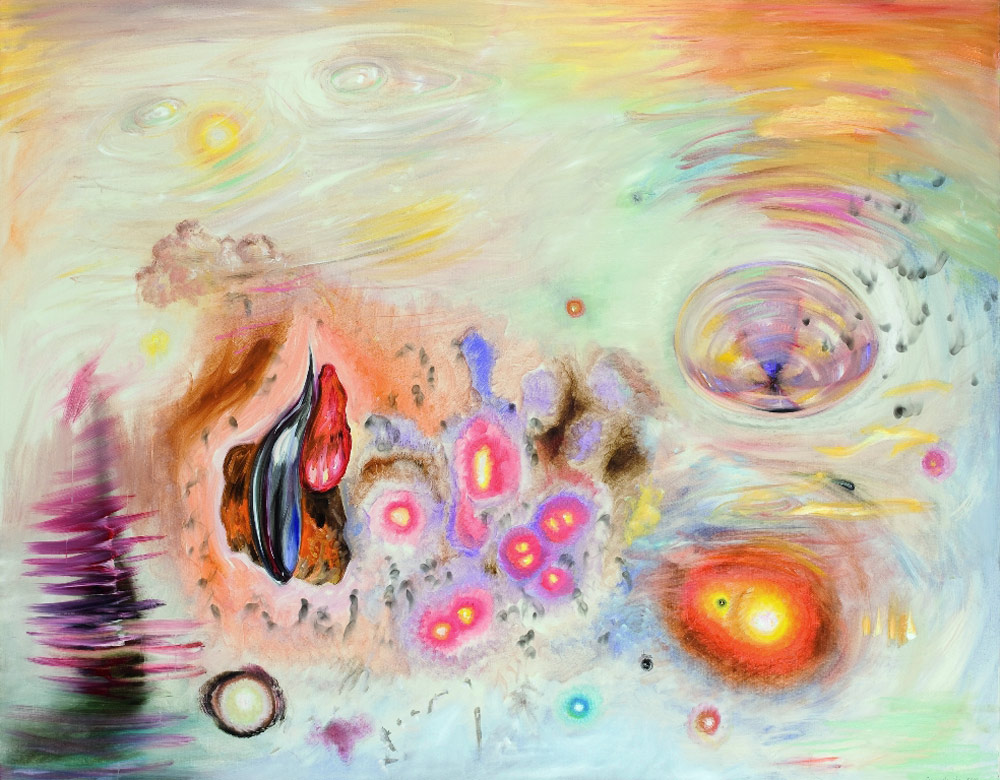
9/ Juan Davila: The Moral Meaning of Wilderness at the Monash University Museum of Art (MUMA), Caulfield, August – October 2011

Simply put, this was one of the best exhibitions I saw in Melbourne this year.

I had a spiritual experience with this work for the paintings promote in the human a state of grace. The non-material, the unconceptualisable, things which are outside all possibility of time and space are made visible. This happens very rarely but when it does you remember, eternally, the time and space of occurrence. I hope you had the same experience.


Juan Davila (Chilean, b. 1946, emigrated Australia 1974) 'Wilderness' 2010


Juan Davila (Chilean, b. 1946, emigrated Australia 1974)
Wilderness
2010
© Juan Davila, Courtesy Kalli Rolfe Contemporary Art


10/ In camera and in public at the Centre for Contemporary Photography, Melbourne, September – October 2011

Kohei Yoshiyuki (Japanese, b. 1946) 'Untitled' 1971


Kohei Yoshiyuki (Japanese, b. 1946)
Untitled
1971
From the series The Park
Gelatin Silver Print
© Kohei Yoshiyuki, Courtesy Yossi Milo Gallery, New York


Curated by Naomi Cass as part of the Melbourne Festival, this was a brilliant exhibition at the Centre for Contemporary Photography, Melbourne. The exhibition explored, “the fraught relationship between the camera and the subject: where the image is stolen, candid or where the unspoken contract between photographer and subject is broken in some way – sometimes to make art, sometimes to do something malevolent.” It examined the promiscuity of gazes in public / private space specifically looking at surveillance, voyeurism, desire, scopophilia, secret photography and self-reflexivity. It investigated the camera and its moral and physical relationship to the unsuspecting subject.


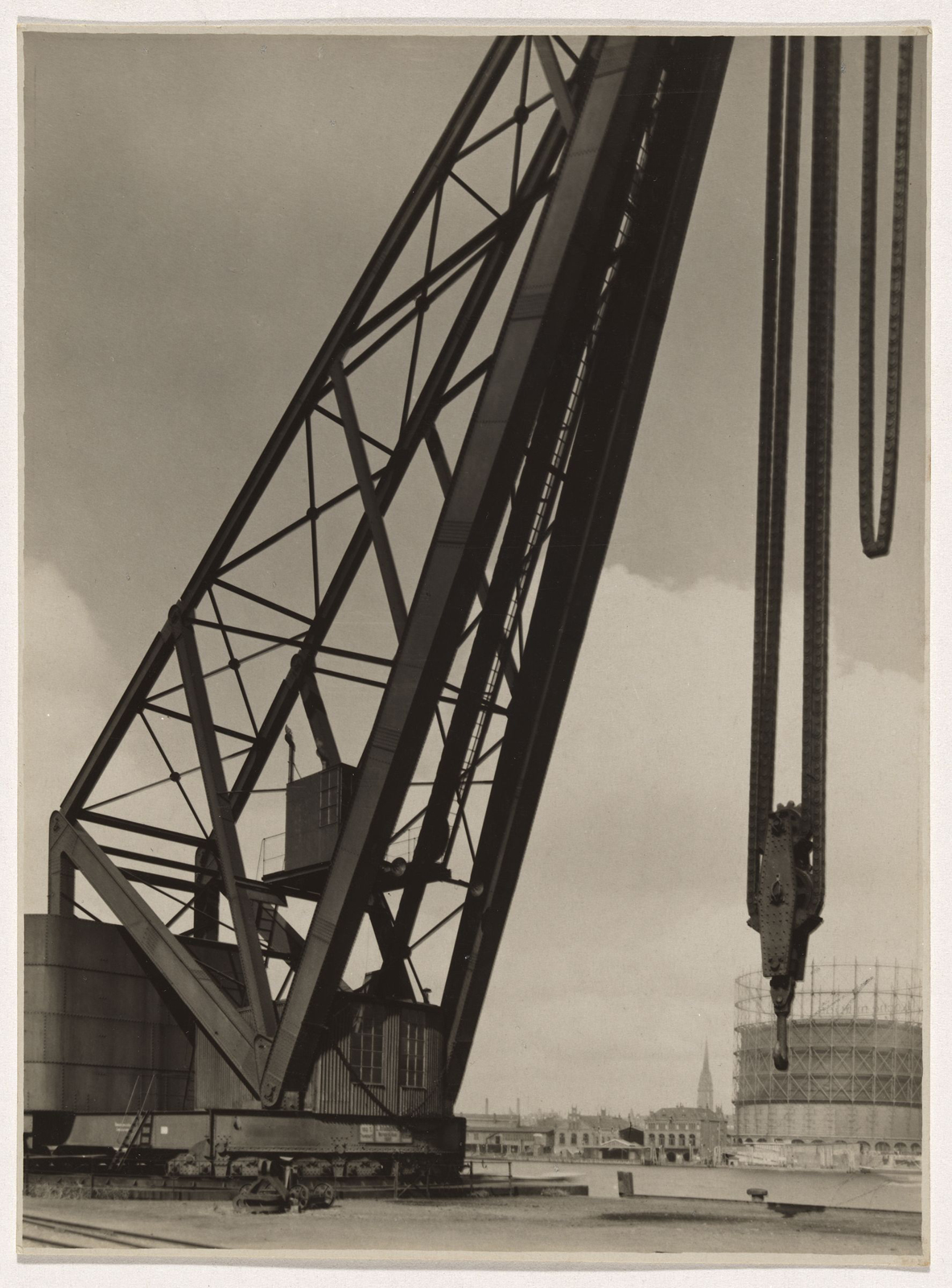
11/ The Mad Square: Modernity in German Art 1910 – 37 at The National Gallery of Victoria, Melbourne, November 2011 – March 2012

This is one of the best exhibitions this year in Melbourne bar none. Edgy and eclectic the work resonates with the viewer in these days of uncertainty: THIS should have been the Winter Masterpieces exhibition!

The title of the exhibition, The mad square (Der tolle Platz) is taken from Felix Nussbaum’s 1931 painting of the same name where “the ‘mad square’ is both a physical place – the city, represented in so many works in the exhibition, and a reference to the state of turbulence and tension that characterises the period.”The exhibition showcases how artists responded to modern life in Germany in the interwar years, years that were full of murder and mayhem, putsch, revolution, rampant inflation, starvation, the Great Depression and the rise of National Socialism. Portrayed is the dystopian, dark side of modernity (where people are the victims of a morally bankrupt society) as opposed to the utopian avant-garde (the prosperous, the wealthy), where new alliances emerge between art and politics, technology and the mass media. Featuring furniture, decorative arts, painting, sculpture, collage and photography in the sections World War 1 and the Revolution, Dada, Bauhaus, Constructivism and the Machine Aesthetic, Metropolis, New Objectivity and Power and Degenerate Art, it is the collages and photographs that are the strongest elements of the exhibition, particularly the photographs. What a joy they are to see.


Albert Renger-Patzsch (American born Hungary, 1895-1946) 'Harbour with crane' c. 1927


Albert Renger-Patzsch (American born Hungary, 1895-1946)
Harbour with crane
c. 1927
Gelatin silver photograph
Printed image 22.7 h x 16.8 w cm
Purchased 1983
National Gallery of Australia, Canberra


LIKE ART BLART ON FACEBOOK

Back to top

Exhibition: ‘Bill Henson: early work from the MGA collection’ at the Anne & Gordon Samstag Museum of Art, Adelaide

Exhibition dates: 14th October – 16th December 2011


Many thankx to the Anne & Gordon Samstag Museum of Art for allowing me to publish the photographs in the posting. Please click on the photographs for a larger version of the image.


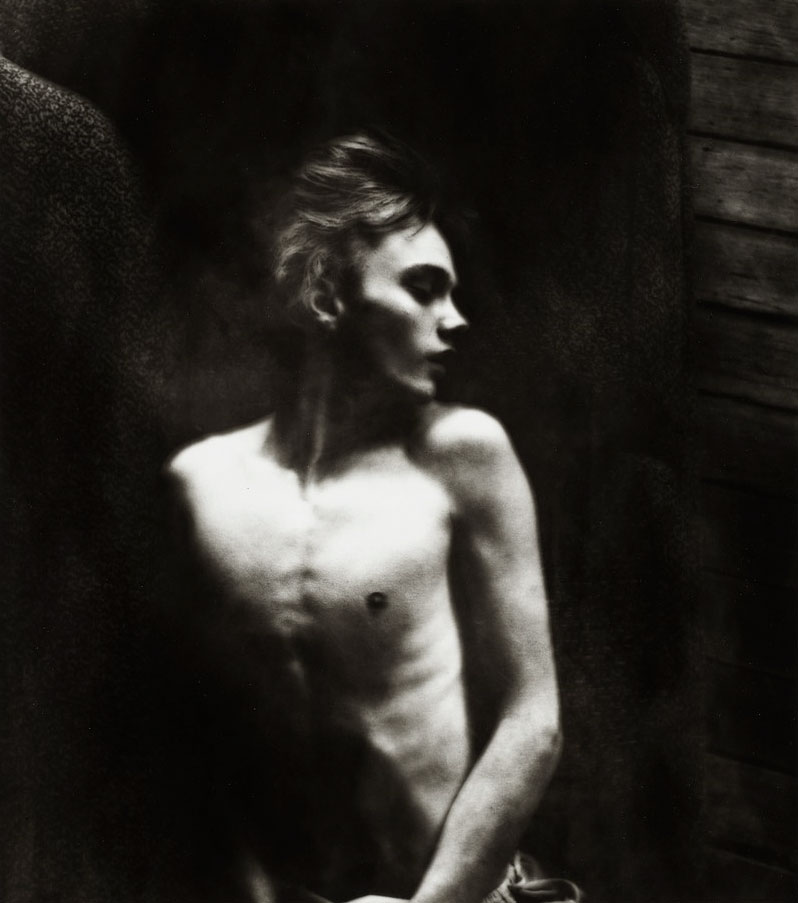
Bill Henson (Australian, b. 1955) 'Untitled 1977/78' 1977-1978


Bill Henson (Australian, b. 1955)
Untitled 1977/78
1977-1978
From the Untitled sequence 1977/78 series 1977-1978
From a series of 16 gelatin silver print
Monash Gallery of Art, City of Monash Collection
Donated by James Mollison AO through the
Australian Government’s Cultural Gifts Program 2008


Untitled 1977 is a series of black-and-white photographs that depict a naked adolescent male seemingly lost in a state of private reverie.

This early series highlights Henson’s interest in states of existence that are
indeterminate or ambiguous, which has remained a central concern of his practice over the years. In this body of work, a slightly androgynous youth seems to float in and out of consciousness. In later work, Henson continues to explore borderline states between night and day, dream and reality, childhood and adulthood.

Henson’s interest in ambiguity is also apparent at a formal level, with his use of lighting. Shadows swallow the figure’s contours and highlights dissolve the details, giving the youth a ghostly quality.

Stephen Zagala and Stella Loftus-Hills. Bill Henson: early work from the MGA collection Education Resource,” on the University of South Australia website 2010 [Online] Cited 18/12/2024


Bill Henson (Australian, b. 1955) 'Untitled 1977/78' 1977-1978


Bill Henson (Australian, b. 1955)
Untitled 1977/78
1977-1978
From the Untitled sequence 1977/78 series 1977-1978
From a series of 16 gelatin silver print
Monash Gallery of Art, City of Monash Collection


Bill Henson (Australian, b. 1955) 'Untitled 1977/78' 1977-1978


Bill Henson (Australian, b. 1955)
Untitled 1977/78
1977-1978
From the Untitled sequence 1977/78 series 1977-1978
From a series of 16 gelatin silver print
Monash Gallery of Art, City of Monash Collection


Bill Henson (Australian, b. 1955) 'Untitled 1977/78' 1977-1978


Bill Henson (Australian, b. 1955)
Untitled 1977/78
1977-1978
From the Untitled sequence 1977/78 series 1977-1978
From a series of 16 gelatin silver print
Monash Gallery of Art, City of Monash Collection


Bill Henson (Australian, b. 1955) 'Untitled 1980/82' 1980-1982


Bill Henson (Australian, b. 1955)
Untitled 1980-82
1980-82
From a series of 220 gelatin silver print
Monash Gallery of Art, City of Monash Collection


These five works come from a series that includes a total of 220 photographs, which are printed at various sizes. When exhibiting the full series, Henson arranges the works into small groupings that create an overall effect of aberrant movement and fragmentation. From within these bustling clusters of images, individual faces emerge like spectres of
humanity that will once again dissolve into the crowd.

Henson shot this series over several years in different cities around the world, capturing images of individuals, crowds and architectural details, all apparently adrift in the flow of urban life. The people in these images have an anonymity that allows them to represent universal human experiences of alienation, mortality and fatigue. The views of buildings, however, are more specific. They were photographed in Dresden and East Berlin in the 1970s, when Henson travelled to Germany specifically for the purpose of
documenting these world-weary structures. Taken together, the images remind us of how tragically fleeting a sense of belonging can be.

Stephen Zagala and Stella Loftus-Hills. Bill Henson: early work from the MGA collection Education Resource,” on the University of South Australia website 2010 [Online] Cited 18/12/2024


Bill Henson (Australian, b. 1955) 'Untitled 1980/82' 1980-1982


Bill Henson (Australian, b. 1955)
Untitled 1980-82
1980-82
From a series of 220 gelatin silver print
Monash Gallery of Art, City of Monash Collection


Bill Henson (Australian, b. 1955) 'Untitled 1980/82' 1980-1982


Bill Henson (Australian, b. 1955)
Untitled 1980-82
1980-82
From a series of 220 gelatin silver print
Monash Gallery of Art, City of Monash Collection


Bill Henson (Australian, b. 1955) 'Untitled 1980/82' 1980-1982


Bill Henson (Australian, b. 1955)
Untitled 1980-82
1980-82
From a series of 220 gelatin silver print
Monash Gallery of Art, City of Monash Collection


Bill Henson: early work from the MGA collection draws on work from the Monash Gallery of Art, City of Monash Collection. MGA holds one of the largest collections of Bill Henson’s photography. With its concentration of work from 1977-92, the collection provides a significant survey of Henson’s early career.

Bill Henson is one of Australia’s best-known artists. Many of us have heard his name. Some of us may also be familiar with his photographs. For many, the experience of Henson’s extraordinary work has probably been through reproduction of it in the media. However, it is important to view Henson’s actual photographs. This offers a much richer visual experience, and a deeper appreciation of his art. Henson printed all of the work in this exhibition in the darkroom by hand, using chemicals and carefully chosen paper stock. The uneven surfaces of the early black-and-white photographs are a result of this wet-printing process, and give the photographs a mysterious, almost alchemic quality. The larger colour photographs display a richness of tone and palette that is an artefact of the artist’s meticulous approach to the printing process. These material properties are not evident in reproductions of Henson’s images.

The other aspect that is lost in reproduction is the physical difficulty of seeing Henson’s pictures clearly. The darkness of Henson’s photographs appeals to the artist’s romantic sensibility. He tends to let shadows obscure visual detail so that enigmas lurk at the threshold of perception. Publishers like to override this quality of Henson’s work by adjusting the contrast and brightness of the images for print. Viewers of this exhibition will find themselves drawn into an inscrutable visual space of shadows and deep, reflective blacks.

Born in 1955, Bill Henson grew up in Glen Waverley, a burgeoning suburb of
Melbourne. From the 1950s to the 1970s the area swelled beyond the termination of the Glen Waverley train line, urged on by the relative affordability, ease and comfort of car travel. Self-serve petrol stations appeared at major intersections, their brightly coloured signage adding their glow to the landscape.

The influence of expanding American suburbia on Australia continued with Glen Waverley becoming home to the first McDonalds restaurant in Victoria (1971). The 1980s saw an expansion of large international chains that offered ‘drive-thru’ services (from fast food to alcohol) favouring prominent roadside locations and large signage to stamp their corporate identities on the landscape.

It is from within this ever changing and expanding landscape, between the end of the train line and country, that Henson’s vision was founded; a place where listless youth claim the vacant lots and preservations between estates as their own private worlds, lost in the evening shadows.

The youth that populate Henson’s images take on a strange, almost hollow look, their eyes becoming dark holes in their ghostly facades. Light and shadow compete to pull their bodies from one plane to the other, Henson seeks to capture this moment, the hovering between child and adult.

These liminal zones, the “intervals in the landscape”1 provided a backdrop for the developing artist. Bill Henson’s early work is undeniably – and perhaps unintentionally – a discussion of the changing landscape of suburbia and in turn the influence of international trends on what it meant to be growing up in Australia at that time. Henson’s early work is significant in Australian photography because of its depiction of this change in both this suburban landscape and the human condition.

1/ Bill Henson as quoted in Dominic Sidhu. “Nocturne: The photographs of Bill Henson (Interview with Bill Henson),” in EGO Magazine, New York, August 29, 2005. No longer available online.

Stephen Zagala and Stella Loftus-Hills. Bill Henson: early work from the MGA collection Education Resource,” on the University of South Australia website 2010 [Online] Cited 18/12/2024


Bill Henson (Australian, b. 1955) 'Untitled 57' 1985-1986


Bill Henson (Australian, b. 1955)
Untitled 57
1985-1986
From the series Untitled 1985-86
Chromogenic print
106 x 86cm
Monash Gallery of Art, City of Monash Collection
Courtesy of the artist and Roslyn Oxley9 Gallery, Sydney


Bill Henson (Australian, b. 1955) 'Untitled 61' 1985-1986


Bill Henson (Australian, b. 1955)
Untitled 61
1985-1986
From the series Untitled 1985-86
Chromogenic print
128 × 100cm
Monash Gallery of Art, City of Monash Collection
Courtesy of the artist and Roslyn Oxley9 Gallery, Sydney


Monash Gallery of Art (MGA) holds one of the largest collections of photographs by Bill Henson. With its concentration on work made between 1977 and 1992, the MGA collection represents a significant survey of Henson’s early career, from which twenty-nine works have been selected for the Bill Henson: early work from the MGA collection exhibition.

Henson has been described as a ‘passionate and visionary explorer’, and has been exhibited extensively nationally and internationally for over three decades, yet this is the first exhibition dedicated to this major artist’s work to be presented in Adelaide.

Passionate discussion about Henson’s work in the Australian media in recent times, has served to illuminate an important debate about the nature of art. But while many of us may be familiar with Henson’s images through reproduction, to view a museum exhibition of the artist’s photographs offers a much deeper appreciation of his art, and is a rare opportunity for audiences to themselves experience his work first hand.

The ‘in conversation’ event is a highlight to accompany a very special exhibition at the Samstag Museum from one of Australia’s most distinguished artists. Bill Henson: early work from the MGA Collection, with selected recent landscapes offers South Australians a unique opportunity to experience the power and beauty of the work of Bill Henson, Australia’s best-known contemporary photographer. This is the first exhibition dedicated to this major artist’s work ever to be presented in Adelaide.

The exhibition features twenty-nine iconic images from many of Henson’s major series from the 1970s through to the early 1990s, all drawn from the Monash Gallery of Art, who hold one of the largest collections of Henson’s work in the country.

For many, the experience of Henson’s extraordinary work has been through its reproduction in the media. However, it is important to view the actual photographs as this offers a much richer visual experience. All of the early work in the exhibition was printed by hand in the darkroom, and consequently the uneven surfaces of the black and white photographs have a mysterious, alchemic quality not present in reproductions of Henson’s images.

Alongside the MGA Collection exhibition, the Samstag Museum is presenting a selection of recent landscape photographs by Henson. These are works of compelling power and continue the artist’s fascination with a diverse range of subject matter. Through them we explore an island of rocky outcrops, monoliths rising dramatically from the ocean and waterfalls captured in a blaze of light.

Text and press release from the Anne and Gordon Samstag Museum of Art website


Bill Henson (Australian, b. 1955) 'Untitled 63' 1985-1986


Bill Henson (Australian, b. 1955)
Untitled 63
1985-1986
From the series Untitled 1985-86
Chromogenic print
106 x 86cm
Monash Gallery of Art, City of Monash Collection acquired 1991
Courtesy of the artist and Roslyn Oxley9 Gallery, Sydney


Bill Henson (Australian, b. 1955) 'Untitled 72' 1985-1986


Bill Henson (Australian, b. 1955)
Untitled 72
1985-1986
From the series Untitled 1985-86
Chromogenic print
106 x 86cm
Monash Gallery of Art, City of Monash Collection acquired 1991
Courtesy of the artist and Roslyn Oxley9 Gallery, Sydney


The series Untitled 1985-86 is constructed of 154 photographs that explore the psychological space of Henson’s youth. Henson grew up in Glen Waverley, in Melbourne’s South-east, and he has often spoken about the importance of maintaining a connection with the suburban environment that shaped his sensibilities. This series includes a range of specific references to the streetscapes of the area, often shot at night or dusk,
with fluorescent lights investing the darkness with a wistful glow.

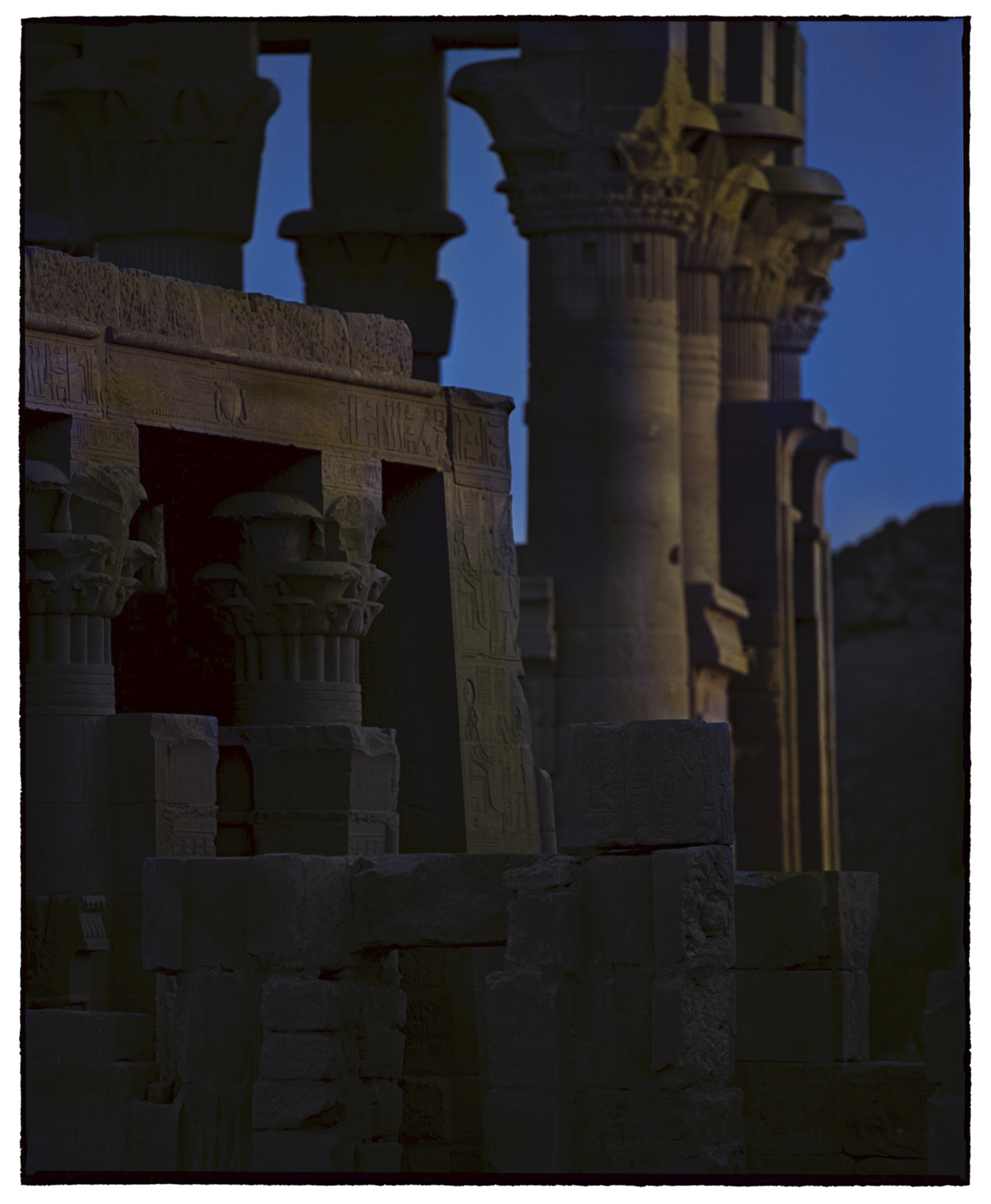
Henson’s emphasis on nocturnal life alludes to his interest in treating real landscape as if it is a dreamscape, an idea that is underscored by the use of sleeping figures in this series. And, by juxtaposing suburbia with photographs of summertime girls and Egyptian temples, Henson takes us into the dreamy imaginings of an adolescent boy living on the outskirts of the city.

Stephen Zagala and Stella Loftus-Hills. Bill Henson: early work from the MGA collection Education Resource,” on the University of South Australia website 2010 [Online] Cited 18/12/2024


Bill Henson (Australian, b. 1955) 'Untitled 73' 1985-1986


Bill Henson (Australian, b. 1955)
Untitled 73
1985-1986
From the series Untitled 1985-86
Chromogenic print
106 x 86cm
Monash Gallery of Art, City of Monash Collection
Donated by the artist 1989
Courtesy of the artist and Roslyn Oxley9 Gallery, Sydney


Bill Henson (Australian, b. 1955) 'Untitled 137' 1985-1986


Bill Henson (Australian, b. 1955)
Untitled 137
1985-1986
From the series Untitled 1985-86
Chromogenic print
106 x 86cm
Monash Gallery of Art, City of Monash Collection
Courtesy of the artist and Roslyn Oxley9 Gallery, Sydney


Bill Henson. 'Untitled' 1990-91


Bill Henson (Australian, b. 1955)
Untitled
1990-1991
From the series Paris Opera Project
Type C photograph
130 × 130cm
Monash Gallery of Art, City of Monash Collection
Courtesy of the artist and Roslyn Oxley9 Gallery, Sydney


In 1990 Bill Henson was commissioned to produce a body of work that responded to the world-renown Opéra de Paris. He decided to focus on the audience, and while at the Opéra photographed the faces of people while they sat enveloped in darkness, their features softly illuminated by the reflected glow of stage lighting. The photographs shot in Paris subsequently became Henson’s source material, as he restaged the portraits in his Melbourne studio to accentuate the mood and atmosphere of an evening at the opera.

When the subsequent series of fifty photographs was first exhibited in Melbourne during 1991, they were hung floor-to-ceiling as if to suggest an auditorium of spectators. With their far-away eyes, gazing off toward something that is not revealed in the photographs, these faces express the sublime sensuality of a musical experience. And the atmospheric cloudscapes that punctuate the series allude to the rich horizons being opened up in the imaginations of the audience.

Stephen Zagala and Stella Loftus-Hills. Bill Henson: early work from the MGA collection Education Resource,” on the University of South Australia website 2010 [Online] Cited 18/12/2024


Bill Henson (Australian, b. 1955) 'Untitled' 1990-1991


Bill Henson (Australian, b. 1955)
Untitled
1990-1991
From the series Paris Opera Project
Type C photograph
130 × 130cm
Monash Gallery of Art, City of Monash Collection
Courtesy of the artist and Roslyn Oxley9 Gallery, Sydney


Bill Henson (Australian, b. 1955) 'Untitled 1-5 B' 1990-1991


Bill Henson (Australian, b. 1955)
Untitled 1-5 B
1990-1991
From the series Paris Opera Project
Type C photograph
130 × 130cm
Monash Gallery of Art, City of Monash Collection
Courtesy of the artist and Roslyn Oxley9 Gallery, Sydney


Bill Henson (Australian, b. 1955) 'Untitled' 1990-1991


Bill Henson (Australian, b. 1955)
Untitled
1990-1991
From the series Paris Opera Project
Type C photograph
130 × 130cm
Monash Gallery of Art, City of Monash Collection
Courtesy of the artist and Roslyn Oxley9 Gallery, Sydney


Anne & Gordon Samstag Museum of Art
Hawke Building, City West campus
University of South Australia
55 North Terrace, Adelaide
Phone: (08) 8302 0870

Opening hours:
Tuesday – Saturday 10am – 5pm

Anne & Gordon Samstag Museum of Art website

LIKE ART BLART ON FACEBOOK

Back to top

Exhibition: ‘2011 Bowness Photography Prize’ at Monash Gallery of Art, Melbourne

Exhibition dates: 15th September 2011 – 16th October 2011

Short-listed artists: Warwick Baker, Kate Bernauer, Magdalena Bors, Chris Budgeon, Elaine Campaner, Michael Corridore, Jagath Dheerasekara, Jackson Eaton, Cherine Fahd, Sean Fennessy, Anne Ferran, Phillip George, Dean Golja, Natalie Grono, David Manley, Olivia Martin-McGuire, Prudence Murphy, Harry Nankin, Catherine Nelson, Matthew Newton, Selina Ou, Max Pam, Polixeni Papapetrou, Geoff Parr, Sonia Payes, Drew Pettifer, Helen Pynor, Jacky Redgate, Simone Rosenbauer, Julie Rrap, Martin Smith, Simon Terrill, Claudia Terstappen, Glenn Walls, Rudi Williams, Alex Wisser, Yiwen Yao.


Elaine Campaner (Australian, b. 1969) 'Australia Day #1 (Ford Falcon XR8)' 2011


Elaine Campaner (Australian, b. 1969)
Australia Day #1 (Ford Falcon XR8)
2011
From the series Citizenship
Pigment ink-jet print
93.3 x 140cm
Courtesy of the artist


Excellent photographs in the Bowness Photography Prize this year. A small selection of the short-listed artists are featured below. The dazzling winner was Light throw (mirrors) #4, 2011 by Jacky Redgate (see below). My particular favourites include David Manley’s sensual Eastern Distributer exhaust stack (2010); Simon Terrill’s textural Rivoli #2 (2010); and Catherine Nelson’s ocular world, Cloverdowns (2010). There are many good photographs. To see more finalists work visit the Bowness Photography Prize Flickr set.

Dr Marcus Bunyan


Simon Terrill (Australian, b. 1969) 'Rivoli #2' 2010


Simon Terrill (Australian, b. 1969)
Rivoli #2
2010
Chromogenic print
120 x 150cm
Courtesy of the artist and Sutton Gallery, Melbourne


Established in 2006 to promote excellence in photography, the annual non-acquisitive William and Winifred Bowness Photography Prize is an initiative of the MGA Foundation. Among Australia’s most important art prizes, the Bowness Photography Prize is the country’s most coveted photography prize. The finalist’s works were selected from approximately 2,000 photographs submitted by 432 entrants. In 2011, photographers competed for the $25,000 first prize.

Text from the MGA website


Alex Wisser (American, b. 1967, arrived Australia 1995) 'Blank canvass 2' 2011


Alex Wisser (American, b. 1967, arrived Australia 1995)
Blank canvass 2
2011
From the series Blank canvass
Pigment ink-jet print
100 x 150cm
Courtesy of the artist


This photograph is from a series called Blank canvass, taken during the course of my work as a real estate photographer for local newspapers. They were taken in houses that have been lived in by a single occupant or family for more than 30 years on the day of their sale by auction. Afterwards, we can only assume that they have been torn down and rebuilt or renovated beyond recognition. Like an anthropologist, I consider these dwellings from a distance, at the moment of their disappearing, wondering at the decisions of taste that are layered decade upon decade to compose or otherwise synthesise the identity of the people who have lived in them.


Jacky Redgate (English b. 1955, arrived Australia 1967) 'Light throw (mirrors) #4' 2011


Jacky Redgate (English b. 1955, arrived Australia 1967)
Light throw (mirrors) #4
2011
From the series Light throw (mirrors) 2009 – 11
Chromogenic print
126 x 158cm
Courtesy of the artist, WILLIAM WRIGHT ARTISTS, Sydney and Arc One Gallery, Melbourne


Sean Fennessey (Australia, b. 1982) 'Father and son' 2010


Sean Fennessey (Australia, b. 1982)
Father and son
2010
From the series Portraits of invisible people
Pigment ink-jet print
95 x 95cm
Courtesy of the artist


David Manley (Australian, b. 1963) 'Eastern Distributer exhaust stack' 2010


David Manley (Australian, b. 1963)
Eastern Distributer exhaust stack
2010
From the series Entropy
Pigment ink-jet print
55 x 55cm
Courtesy of the artist


Olivia Martin-McGuire (Australian, b. 1976) 'Kris and Mier #1' 2011


Olivia Martin-McGuire (Australian, b. 1976)
Kris and Mier #1
2011
From the series Mother
Chromogenic print
85 x 85cm
Courtesy of the artist


Catherine Nelson (Australian, b. 1970) 'Cloverdowns' 2010


Catherine Nelson (Australian, b. 1970)
Cloverdowns
2010
From the series Future memories
Pigment ink-jet print
100 x 100cm
Courtesy of the artist and Gallerysmith, Melbourne


Helen Pynor (Australian, b. 1964) 'Liquid ground 1' 2010


Helen Pynor (Australian, b. 1964)
Liquid ground 1
2010
From the series Liquid ground
Chromogenic print
160 x 110cm
Courtesy of the artist, Dianne Tanzer Gallery + Projects, Melbourne, and Dominik Mersch Gallery, Sydney


Chris Budgeon (Canada b. 1955, arrived Australia 1984) 'Cory' 2011


Chris Budgeon (Canada b. 1955, arrived Australia 1984)
Cory
2011
From the series Are we not men
Pigment ink-jet print
90 x 67.5cm
Courtesy of the artist


Monash Gallery of Art
860 Ferntree Gully Road, Wheelers Hill
Victoria 3150 Australia
Phone: + 61 3 8544 0500

Opening hours:
Tue – Fri: 10am – 5pm
Sat – Sun: 10am – 4pm
Mon/public holidays: closed
Monash Gallery of Art website

LIKE ART BLART ON FACEBOOK

Back to top

Review: ‘Time Machine: Sue Ford’ at Monash Gallery of Art, Wheelers Hill, Victoria

Exhibition dates: 7th April – 19th June 2011


Sue Ford (1943-2009) 'Self-portrait' 1968


Sue Ford (Australian, 1943-2009)
Self-portrait 1968
1968, printed 2011
From the series Self-portrait with camera (1960-2006)
Selenium toned gelatin silver
22.8 x 24 cm
Courtesy Sue Ford Archive


“Choosing to photograph oneself, one’s life and one’s time exemplified the now well-worn slogan ‘the person is political’. Ford’s self-examination across the decades is unflinching and exacting. As Janine Burke wrote in 1980, her ‘psychological history [is] etched in her face for everyone to see’. Burke concluded that Ford’s self-portraits are ‘as honest as one can ever be about oneself’.”


Helen Ennis. Faces are Maps: Sue Ford and Portraiture.1


“The search for the self is a journey into a mental labyrinth that takes random courses and ultimately ends at impasses. The memory fragments recovered along the way cannot provide us with a basis for interpreting the overall meaning of the journey. The meanings that we derive from our memories are only partial truths, and their value is ephemeral. For Foucault, the psyche is not an archive but only a mirror. To search the psyche for the truth about ourselves is a futile task because the psyche can only reflect the images we have conjured up to describe ourselves. Looking into the psyche, therefore, is like looking into the mirror image of a mirror. One sees oneself reflected in an image of infinite regress. Our gaze is led not toward the substance of our beginnings but rather into the meaninglessness of previously discarded images of the self.”


Patrick Hutton. Foucault, Freud,
and the Technologies of the Self.2


This is a solid exhibition of the work of beloved Australian photographer Sue Ford, essential looking for anyone wanting to have an overview of Australian photography.

The beautifully hung exhibition flows like music, interweaving up and down, the photographs framed in thin, black wood frames. It features examples of Ford’s black and white fashion and street photography; a selection of work from the famous black and white Time series (being bought for their collection by the Art Gallery of New South Wales) – small, snapshot size double portraits, the first portraits taken during the 1960’s, the second around 1974, formalist portraits in which the sitter is closely cropped around head and shoulders with the photographer using the camera as objectively as possible, the double portrait used to display changes in identity over time; a selection of Photographs of Women – modern prints from the Sue Ford archive that are wonderfully composed photographs with deep blacks that portray strong, independent, vulnerable, joyous women (see last four photographs below); and the most interesting work in the exhibition, the posthumous new series Self-portrait with camera (1960-2006) that evidence, through a 47 part investigation using colour prints from Polaroids, silver gelatin prints printed by the artist, prints made from original negatives and prints from scanned images where there was no negative available, a self-portrait of the artist in the process of ageing (see the two photographs above and below this review).

One of my favourite photographs in the exhibition was Margaret with Emma, Redcliffs, Queensland, 1971. The black and white photograph features a grandmother with her granddaughter, close to each other, both wearing floral dresses of different pattern, both staring intently out of the image at what is possibly a television with a weatherboard backdrop. A dark form hovers at the upper left of the photograph adding a disturbing note to the image but it is the look on the grandmother’s face – a look of shock, enthralment, blankness with eyes wide, that is matched by the intensity on the granddaughter’s face as she stares intently – that transcends the distance between photograph and viewer, between grandmother and granddaughter across time and space. The process of looking and ageing captured by the ‘time machine’, the camera, in one single image. The viewer understands this photograph for we all experience the evidence of our bodies, our mortality. We relate intimately to how the photograph reanimates in the present this moment from the past, the momenti mori of the photograph, the little death becoming our future death.

This notion is particularly poignant in the series Self-portrait with camera (1960-2006), a work that Sue Ford was actively engaged with before her death. Smaller colour prints from negatives and Polaroids are here interspersed with black and white photographs up to about 8″ x 10″ in size: the series contains 12 chromogenic photographs, 7 silver gelatin photographs, 6 dye fusion photographs and 22 selenium-toned photographs (printed 2011). In dark, contrasty prints the artist has photographed herself looking down into the camera shooting into a mirror, looking directly into the mirror with camera, with the camera on a timer, with the camera in/visible, being shot by other people with the camera pointed directly at her, with the camera perpendicular to the artist shot by someone else, with Ford behind a movie camera, with multiple refractions in mirrors. Sometimes Ford even becomes the camera (as in the 1986 self-portrait below: I am the camera, the camera is me).

Ford becomes the “one who looks” knowingly at herself, sometimes the author of that observation, sometimes oblivious to it (until later when she has collected these images). As Burke and Ennis note, these photographs of self-examination across the decades are as honest as one can ever be about oneself. This a deeply political but also deeply psychoanalytical investigation: not to “take care of yourself” as a form of knowing as in Greco-Roman antiquity but “knowing yourself” as the fundamental principle of understanding yourself: a procedure of objectification and subjection in which the photograph ‘marks’ our status and the passage of time, that makes us who we are – photographs as vital techniques in the constitution of the self as subject.3

The mirror is frequently used in these photographs to portray the self. While it is true that these are strong, intimate, unflinching and exacting images, in the use of the mirror the im(pose)tures of life are singled / doubled / tripled – a reflection of the psyche that lead to discarded images of the self that are of little use in understanding the substance of our beginnings … or the overall interpretation of the journey. What they do offer is cumulative evidence of a deep, personal conviction into the inquiry: who am I?

Rembrandt famously painted, drew and etched himself hundreds of times in the process of ageing; Ford has likewise done the same. If, as Victor Burgin observes, “An identity implies not only a location but a duration, a history,”4 then the nature of photography (including Ford’s self-reflexive project), concerned as it is with space and time, becomes the mirror in a search for identity. Photography as a mirror on the world constantly repeats moments of illumination in a re/vision of eternal recurrence, a performance that is a hybrid site: both a homogenous (the same “I”) and heterogenous (a different “I”) site of self-representation, different every time we look. To that end I would like you to look at the self-portrait from 1976 (below). The artist is completely absent, her silhouette, her dark shadow swallowed whole by the blank photographic plate on the left hand side of the image as though Ford, the camera and an image of infinite regress have become one, eternally engulfed by space-time but open to re/view at any time.

Whether looking down, looking toward or looking inward these fantastic photographs show a strong, independent women with a vital mind, an élan vital, a critical self-organisation and an understanding of the morphogenesis of things that will engage us for years to come. Essential looking.

Dr Marcus Bunyan


1/ Burke, Janine. Self-portrait/self-image 1980-1981. Melbourne: Australian Directors’ Council, 1981. p. 4 quoted in Ennis, Helen. “Faces are Maps: Sue Ford and Portraiture,” in Lakin, Shaune (ed.,). Sue Ford: Self-portrait with camera (1960-2006). Melbourne: Monash Gallery of Art, 2011, np.

2/ Hutton, Patrick. “Foucault, Freud, and the Technologies of the Self,” in Martin, Luther and Gutman, Huck and Hutton, Patrick (eds.,). Technologies of the Self: A Seminar with Michel Foucault. London: Tavistock Publications, 1988, p. 139

3/ Foucault, Michel. Discipline and Punish, quoted in Gutman, Huck. “Rousseau’s Confessions: A Technology of the Self,” in Martin, Luther and Gutman, Huck and Hutton, Patrick (eds.,). Technologies of the Self: A Seminar with Michel Foucault. London: Tavistock Publications, 1988, p. 99

4/ Burgin, Victor. In/Different Spaces: Place and Memory in Visual Culture. Berkeley: University of California Press, 1995, p. 36


Many thankx to Mark Hislop for his help and the Monash Gallery of Art for allowing me to publish the photographs in the posting. Please click on the photographs for a larger version of the image.


Sue Ford (Australian, 1943-2009) 'Self-portrait 1986' 1986


Sue Ford (Australian, 1943-2009)
Self-portrait 1986
1986
From the series Self-portrait with camera (1960-2006)
Gelatin silver print, printed 2011
8.4 x 6.5cm
Courtesy Sue Ford Archive


Sue Ford (Australian, 1943-2009) 'Self-portrait 1976' 1976


Sue Ford (Australian, 1943-2009)
Self-portrait 1976
1976, printed 2011
From the series Self-portrait with camera (1960-2006)
Selenium toned gelatin silver print
24 x 18cm
Courtesy Sue Ford Archive


Sue Ford (1943–2009) 'Self-portrait 1974' 1974


Sue Ford (Australian, 1943-2009)
Self-portrait 1974
1974, printed 2011
From the series Self-portrait with camera (1960-2006)
Selenium toned gelatin silver print
19.9 x 18cm
Courtesy Sue Ford Archive


On 16 April 2011, the first major exhibition of the work of the late Sue Ford for two decades will open at Monash Gallery of Art.

Sue Ford (1943-2010) was one of Australia’s most important photographers and filmmakers. Ford studied photography at RMIT and in 1974 was the first Australian photographer to be given a solo exhibition at the National Gallery of Victoria.

Ford passed away in 2009. Before her death, she was working with Monash Gallery of Art on an exhibition of her work which would feature her final major project Self-portrait with camera (1960-2006). This series of 47 photographs has never been shown before, and presents a compelling self-portrait of an artist. It underscores the central role the camera played in Ford’s life. Self-portrait with camera will be shown alongside a survey of Ford’s black-and-white photographs from the 1960s and 70s and examples of her most iconic work, Time series (1960s-1970s).

The exhibition describes a period when photography was charged with political and personal meaning. As photographic historian and contributor to the publication accompanying the exhibition Helen Ennis states: “Ford’s approach to art making has always been straightforward … She does not cultivate a mysterious artistic persona [since] … her art practice is purposeful; it is the outcome of her view of art as a political activity that is democratic, liberating and relevant to contemporary society.”

As MGA Director and curator of the exhibition Shaune Lakin states: “This exhibition provides a great opportunity for Australian audiences to reassess the work of this important photographer, whose work was always at once political, beautiful and elegiac. In an era when the photograph has become a highly disposable thing, it is important to acknowledge its role as an agent of change and memory.”

Press release from the Monash Gallery of Art


Sue Ford (Australian, 1943-2009)
Helen, 1962; Helen, 1974
1974
From the series Time series
Gelatin silver prints
11.0 x 8.0cm; 11.5 x 8.3cm
Museum of Australian Photography, City of Monash Collection
Acquired with assistance from the Robert Salzer Foundation and the Friends of MGA Inc 2020


Sue Ford (1943-2009) was one of Australia’s most important twentieth-century photographers, and Time series is her most iconic body of work, widely recognised as a key moment in the history of Australian photography. First exhibited at the NGV and Brummels Gallery of Photography in 1974, the series highlights Ford’s interest in the camera’s ability to record the effects of time and history. To create this series, Ford made portraits of her friends and acquaintances during the early to mid-1960s then rephotographed the sitters around a decade later, showing the second portraits beside the first. In some cases Ford later added third and fourth portraits to create Time series II, which she made for exhibition at the 1982 Sydney Biennale. Ford described the camera as a ‘time machine’ and the works in these series bracket periods in the lives of her subjects. With a tender pathos, they evoke the inevitability of time’s passing along with the processes of human ageing and constant change.

Text from the Museum of Australian Photography website 2021


Sue Ford (Australian, 1943-2009) 'Annette 1962; Annette 1974' 1974


Sue Ford (Australian, 1943-2009)
Annette 1962; Annette 1974
1974
From the Time series
Gelatin silver prints
11.1 x 20.1cm
National Gallery of Victoria, Melbourne
Purchased with the assistance of the Visual Arts Board and the KODAK (Australasia) Pty Ltd Fund, 1974


Sue Ford (Australian, 1943-2009) 'Jim, 1964; Jim, 1969; Jim, 1974; Jim, 1979' 1982


Sue Ford (Australian, 1943-2009)
Jim, 1964; Jim, 1969; Jim, 1974; Jim, 1979
1982
From the series Time series
Gelatin silver prints
11.0 x 7.6cm (each)
Museum of Australian Photography, City of Monash Collection
donated by the Sue Ford Archive 2020


Sue Ford (1943-2009) 'Lynne and Carol' 1962


Sue Ford (Australian, 1943-2009)
Lynne and Carol
1962, printed 2011
Selenium toned gelatin silver print
38.0 x 38.0cm
Courtesy Sue Ford Archive


Sue Ford (1943-2009) 'Carol, Little Collins St studio' 1962


Sue Ford (Australian, 1943-2009)
Carol, Little Collins St studio
1962, printed 2011
Selenium toned gelatin silver print
37.9 x 38.1cm
Courtesy Sue Ford Archive


Sue Ford (1943-2009) 'St Kilda' 1963


Sue Ford (Australian, 1943-2009)
St Kilda
1963, printed 2011
Selenium toned gelatin silver print
38.0 x 38.0cm
Courtesy Sue Ford Archive


Sue Ford (1943-2009) 'Untitled [Bliss at Yellow House, King's Cross, Sydney]' c. 1972–1973


Sue Ford (Australian, 1943-2009)
Untitled [Bliss at Yellow House, King’s Cross, Sydney]
c. 1972-3, printed 2011
Selenium toned gelatin silver print
47.9 x 34.2cm
Courtesy Sue Ford Archive


Monash Gallery of Art
860 Ferntree Gully Road, Wheelers Hill
Victoria 3150 Australia
phone: + 61 3 8544 0500

Opening hours:
Tue – Fri 10am – 5pm
Sat – Sun 10pm – 4pm
Mon/public holidays closed

Monash Gallery of Art website

LIKE ART BLART ON FACEBOOK

Back to top

Exhibition: ‘TRACEY MOFFATT: narratives’ at Art Gallery of South Australia, Adelaide

Exhibition dates: 26th February – 20th March 2011

 Curators: Maria Zagala, Associate Curator of Prints, Drawings and Photographs, Art Gallery of South Australia and Stephen Zagala, Curator at Monash Gallery of Art


Tracey Moffatt (Australia, b. 1960) 'Something More (no. 3)' 
from the series of 9 photographs ‘Something More’ 1989


Tracey Moffatt (Australia, b. 1960)
Something More (no. 3)
From the series of 9 photographs Something More
1989
Direct positive colour photograph
98 × 127cm
Courtesy the artist and Roslyn Oxley9 Gallery, Sydney


Many thankx to the Art Gallery of South Australia for allowing me to publish the photographs in the posting. Please click on the photographs for a larger version of the image.


Tracey Moffatt: Narratives is the first major exhibition of this leading contemporary Australian artist to be held in Adelaide. The exhibition is a collaboration between the Monash Gallery of Art in Melbourne and the Art Gallery of South Australia and explores Moffatt’s interest in the history of cinema and the formal language of film and video in her construction of ‘photo-narratives’. It features seven of Moffatt’s multi-part photographic series, including Something More (1989), Scarred for Life I (1994) and II (1999), Up in the Sky (1997), Laudanum (1999), Invocations (2000), and The Adventure Series (2004).

In these series Moffatt uses photographic stills to build non-linear and open-ended stories. The narrative aspect of these series allows her to develop dream-like sequences, in which the real and the imaginary can unfold alongside each other. In this way, Moffatt invests the social reality of issues like race relations and domestic violence with uncertainty and subconscious dimensions. She presents disturbing subject matter in highly staged photographs which use the seductive language of film and popular culture to directly engage her audience.

The exhibition also includes Moffatt’s ground breaking films Nice Coloured Girls (1987), Night Cries (1990), Heaven (1997) and BeDevil (1993), and the critically acclaimed video montages produced with Gary Hillberg, Artist (2000), Revolution (2008) and Other (2009).

Text from the AGSA website


Tracey Moffatt (Australia, b. 1960) 'Something More (no. 5)' from the series of 9 photographs 'Something More' 1989


Tracey Moffatt (Australia, b. 1960)
Something More (no. 5)
From the series of 9 photographs Something More
1989
Direct positive colour photograph
98 × 127cm
Courtesy the artist and Roslyn Oxley9 Gallery, Sydney


Tracey Moffatt (Australian, b. 1960)
'Something More (no. 1)' 1997


Tracey Moffatt (Australian, b. 1960)
Something More (no. 1)
1997
From the series of 9 photographs Something More
1989
Direct positive colour photograph
98 × 127cm
Courtesy the artist and Roslyn Oxley9 Gallery, Sydney


Tracey Moffatt (Australia, b. 1960) 'Job hunt, 1976' 1994


Tracey Moffatt (Australia, b. 1960)
Job hunt, 1976
From the series of 10 prints Scarred for life I
1994
Colour photolithograph on paper
80 x 60cm
Monash Gallery of Art, City of Monash Collection
Courtesy of the artist and Roslyn Oxley9 Gallery, Sydney


Tracey Moffatt (Australia, b. 1960) 'Useless, 1974' 1994


Tracey Moffatt (Australia, b. 1960)
Useless, 1974
From the series of 10 prints Scarred for life I
1994
Colour photolithograph on paper
80 x 60cm
Monash Gallery of Art, City of Monash Collection
Courtesy of the artist and Roslyn Oxley9 Gallery, Sydney


Tracey Moffatt (Australia, b. 1960) 'Up in the sky (no. 1)' 1997


Tracey Moffatt (Australia, b. 1960)
Up in the sky (no. 1)
From the series of 25 prints Up in the sky
1997
colour photolithograph on paper
61 x 76cm
Monash Gallery of Art, City of Monash Collection
Courtesy of the artist and Roslyn Oxley9 Gallery, Sydney


Tracey Moffatt (Australia, b. 1960) 'Up in the sky' 1997


Tracey Moffatt (Australia, b. 1960)
Up in the sky
From the series of 25 prints Up in the sky
1997
colour photolithograph on paper
61 x 76cm
Monash Gallery of Art, City of Monash Collection
Courtesy of the artist and Roslyn Oxley9 Gallery, Sydney


Tracey Moffatt (Australia, b. 1960) 'Laudanum (no. 1)' 1998


Tracey Moffatt (Australia, b. 1960)
Laudanum (no. 1)
From the series of 19 prints Laudanum
1998
Photogravure on paper
76 × 57cm
Courtesy the artist and Roslyn Oxley9 Gallery, Sydney


Tracey Moffatt (Australia, b. 1960) 'Invocations (no. 2)' 2000


Tracey Moffatt (Australia, b. 1960)
Invocations (no. 2)
From the series of 13 prints Invocations
2000
Colour silkscreen on paper
146 x 122cm
Monash Gallery of Art, City of Monash
Collection 
Courtesy of the artist and Roslyn Oxley9 Gallery, Sydney


Tracey Moffatt (Australia, b. 1960) 'Invocations (no. 5)' 2000


Tracey Moffatt (Australia, b. 1960)
Invocations (no. 5)
From the series of 13 prints Invocations
2000
Colour silkscreen on paper
146 x 122cm
Monash Gallery of Art, City of Monash
Collection 
Courtesy of the artist and Roslyn Oxley9 Gallery, Sydney


Tracey Moffatt (Australia, b. 1960) 'Invocations (no. 7)' 2000


Tracey Moffatt (Australia, b. 1960)
Invocations (no. 7)
From the series of 13 prints Invocations
2000
Colour silkscreen on paper
146 x 122cm
Monash Gallery of Art, City of Monash
Collection 
Courtesy of the artist and Roslyn Oxley9 Gallery, Sydney


Tracey Moffatt (Australia, b. 1960) 'Adventure Series (no. 1)' 2004


Tracey Moffatt (Australia, b. 1960)
Adventure Series (no. 1)
from the series of 10 prints Adventure Series
2004
Inkjet print on paper
132 × 114cm
Courtesy the artist and Roslyn Oxley9 Gallery, Sydney


Tracey Moffatt (Australia, b. 1960) 'Adventure Series (no. 2)' 2004


Tracey Moffatt (Australia, b. 1960)
Adventure Series (no. 2)
From the series of 10 prints Adventure Series
2004
Inkjet print on paper
132 × 114cm
Courtesy the artist and Roslyn Oxley9 Gallery, Sydney


Art Gallery of South Australia
North Terrace Adelaide
Public information: 08 8207 7000

Opening hours:
Daily 10am – 5pm (last admissions 4.30pm)

Art Gallery of New South Wales website

LIKE ART BLART ON FACEBOOK

Back to top

Exhibition: ‘Icon & archive: photography & the World Wars’ at the Monash Gallery of Art, Melbourne

Exhibition dates: 16th April – 11th July, 2010


Many thankx to Mark Hislop and the Monash Gallery of Art for allowing me to reproduce the photographs in the posting. Please click on the photos for a larger version of the image.


Photographer unknown. 'Matron Grace Wilson doing a round, Mudros' 1915 from the exhibition 'Icon & archive: photography & the World Wars' at the Monash Gallery of Art, Melbourne, April - July, 2010


Photographer unknown
Matron Grace Wilson doing a round, Mudros
1915
Gelatin silver print
Australian War Memorial


NOTHING could have prepared Grace Wilson for her first day at Turks Head Point on the drought-stricken island of Lemnos, where she was to run a field hospital for injured soldiers being shipped out from Gallipoli, 65km away.

“Things are just too awful for words… we found only a bare piece of ground with wounded men in pain, still in filthy, bloodstained clothes, lying amid stones and thistles,” she wrote in her diary.

Matron Wilson and her 40 nurses had arrived in the island’s Mudros harbour aboard the Dunluce Castle on August 2, 1915, to discover to their dismay there was no sign of the supply ship Ascot, which had been due there a week earlier with the tents, medical equipment, crates of tinned food and other essentials.

In a bizarre display of military pomp, a regimental piper led the women – wearing heavy, ankle-length dresses and petticoats – on a long march in searing summer heat to what would be their home for the most harrowing five months of their lives…”

Read the full article: Daryl Passmore. “Brisbane snubs unsung war heroine Matron Grace Wilson,” on The Sunday Mail (Qld) on The Courier Mail website April 21, 2013 [Online] Cited 15/10/2019


Norman Stuckey (Australian, 1914-1983) 'The Pimple, Shaggy Ridge, New Guinea' 1943 from the exhibition 'Icon & archive: photography & the World Wars' at the Monash Gallery of Art, Melbourne, April - July, 2010


Norman Bradford Stuckey (Australian, 1914-1983)
The Pimple, Shaggy Ridge, New Guinea
1943
Toned silver gelatin print
Australian War Memorial


The Battle of the Shaggy Ridge was part of the Markham and Ramu Valley – Finisterre Range campaign, consisting of a number of actions fought by Australian and Japanese troops in Papua New Guinea in World War II. Following the Allied capture of Lae and Nadzab, the Australian 9th Division had been committed to a quick follow up action on the Huon Peninsula in an effort to cut off the withdrawing Japanese. Once the situation on the Huon Peninsula stabilised in late 1943, the 7th Division had pushed into the Markham and Ramu Valleys towards the Finisterre Range with a view to pushing north towards the coast around Bogadjim, where they would meet up with Allied forces advancing around the coast from the Huon Peninsula, before advancing towards Madang.

A series of minor engagements followed in the foothills of the Finisterre Range before the Australians came up against strong resistance centred around the Kankiryo Saddle and Shaggy Ridge, which consisted of several steep features, dotted with heavily defended rocky outcrops. After a preliminary assault on a forward position dubbed The Pimple in late December 1943, the Australians renewed their assault in mid-January 1944 and over the course of a fortnight eventually captured the Japanese positions on Shaggy Ridge and the Kankiryo Saddle, after launching a brigade-sized attack up three avenues of advance. In the aftermath, the Australians pursued the Japanese to the coast and subsequently took Madang, linking up with US and Australian forces.

Text from the Wikipedia website [Online] Cited 25/10/2019


Barbara Joan Isaacson (Australian, 1923-2017) 'Journalist Iris Dexter standing under the starboard engine of a Douglas C-47 aircraft' February - March 1943 from the exhibition 'Icon & archive: photography & the World Wars' at the Monash Gallery of Art, Melbourne, April - July, 2010


Barbara Joan Isaacson (Australian, 1923-2017)
Journalist Iris Dexter standing under the starboard engine of a Douglas C-47 aircraft
February-March 1943
Gelatin silver print 2008
Image courtesy of the AMW


Joan Barbara Isaacson was born into a dynamic and family. Her mother, Lynka Isaacson (also known as Caroline Isaacson), was the first female journalist to be employed by a metropolitan newspaper in Australia, and was a strong role model for her daughter. After the war Isaacson’s mother and brother set up the Southern Cross publishing business.

Isaacson attended the Melbourne Technical College, where she studied photography. When she was 18 years old she joined the Australian Women’s Army Service (AWAS). Working in the Army Public Relations section, she travelled the east coast taking documentary and recruitment propaganda photographs and meeting press journalists and photographers.

In 1943 Isaacson married Richard L. Beck, a graphic designer and photographer. During the period from 1946-1948 they set up their own photographic business in Melbourne, specialising in child portraiture. Isaacson took over the business c.1950 when her husband went back to working as a graphic designer, and continued to manage the studio until the birth of her third baby. After her departure from the photography business Isaacson was involved in a variety of other ventures and gave up her photography.

Text from the Australian Women’s Register website [Online] Cited 24/10/2019


Max Dupain (Australian, 1911-1992) 'The dozing soldier' 1943


Max Dupain (Australian, 1911-1992)
The dozing soldier (Tired Soldier in Train North Queensland)
1943
Gelatin silver print
Australian War Memorial


Photographs are an inseparable part of our memory of the First and Second World Wars. They help us remember events which many of us have no direct experience.

Monash Gallery of Art’s new special exhibition Icon & archive: photography and the World Wars draws on the Australian War Memorial’s vast photographic collection to consider the relationship of photography and war. This extraordinary exhibition opens to the public on Friday 16 April.

Direct from the Australian War Memorial, Icon & archive demonstrates the powerful role played by photography in the efforts of Australians to make sense of and remember the terrible events of the First and the Second World Wars.

“Visitors to MGA will see many ‘iconic’ photographs that have become lodged in our national memory,” said MGA Director and curator of the exhibition, Dr Shaune Lakin.

Icon & archive also presents previously unseen photographs to showcase the experiences of both service personnel and the families left behind during the wars. These photographs provide contemporary audiences with a remarkable picture of the effects of the World Wars on private, family and social life in Australia. In doing this, the exhibition will help members of our community better understand that experience and its relevance to contemporary Australia,” said Dr Lakin.

Icon & archive will play a significant role in the City of Monash’s Anzac Day commemorations, in this the 95th anniversary of the landing at Gallipoli. Icon & archive includes some of the most historically significant pictures from Gallipoli, as well as other important sites involving Australians during both the First and the Second World Wars.”

Press release from the Monash Gallery of Art website [Online] Cited 09/07/2022. No longer available online


Algemon Darge (Australian, 1878-1941) 'Private George Beamish Swanton with his wife Nellie and their young baby Joan' 1915


Algemon Darge (Australian, 1878-1941)
Private George Beamish Swanton with his wife Nellie and their young baby Joan
1915
Gelatin silver print
Australian War Memorial


Studio portrait of 1159 Private (Pte) George Beamish Swanton, Australian 24th Battalion, of Werribee, Victoria, with his wife Nellie and young baby, Joan Helen. Pte Swanton enlisted on 28 April 1915 and embarked on board HMAT Euripides on 8 May 1915. He died of wounds on 28 July 1916 at Pozieres, France. Pte Swanton had two brothers who were also killed in action; 222 Pte John (Jack) Swanton, 2nd Battalion, enlisted on 27 August 1914 and was killed in action at Gallipoli Peninsula on 2 May 1915; and 2760 Pte Henry Swanton, 29th Battalion, enlisted on 5 March 1916 and was killed in action at Pozieres, France on 2 November 1916.

This is one of a series of photographs taken by the Darge Photographic Company which had the concession to take photographs at the Broadmeadows and Seymour army camps during the First World War. In the 1930’s, the Australian War Memorial purchased the original glass negatives from Algernon Darge, along with the photographers’ notebooks. The notebooks contain brief details, usually a surname or unit name, for each negative. The names are transcribed as they appear in the notebooks.

Text from the Australian War Memorial website [Online] Cited 25/10/2019


Norman Bradford Stuckey (Australian, 1914-1983) 'Engineers exhausted after destroying obstacles, Tarakan' 1945


Norman Bradford Stuckey (Australian, 1914-1983)
Engineers exhausted after destroying obstacles, Tarakan
1945
Gelatin silver print
Australian War Memorial


The Battle of Tarakan was the first stage in the Borneo campaign of 1945. It began with an amphibious landing by Allied forces on 1 May, code-named Operation Oboe One; the Allied ground forces were drawn mainly from the Australian 26th Brigade, but included a small element of Netherlands East Indies personnel. The main objective of the landing was capture of the island’s airfield. While the battle ended with success for the Allied forces over the Japanese defenders, this victory is generally regarded as having not justified its costs. The airfield was so heavily damaged that it ultimately could not be repaired in time to make it operational for other phases of the Allied campaign in Borneo.

Text from the Wikipedia website [Online] Cited 25/10/2019


Asti Studios. 'Studio portrait of an unidentified First World War soldier in Australian service uniform' 1914-1918


Asti Studios
Studio portrait of an unidentified First World War soldier in Australian service uniform, including greatcoat and slouch hat
c. 1914-1918
New South Wales, Sydney
Toned silver gelatin print
Australian War Memorial


Monash Gallery of Art
860 Ferntree Gully Road, Wheelers Hill
Victoria 3150 Australia
Phone: + 61 3 8544 0500

Opening hours:
Tue – Fri: 10am – 5pm
Sat – Sun: 10am – 4pm
Mon/public holidays: closed
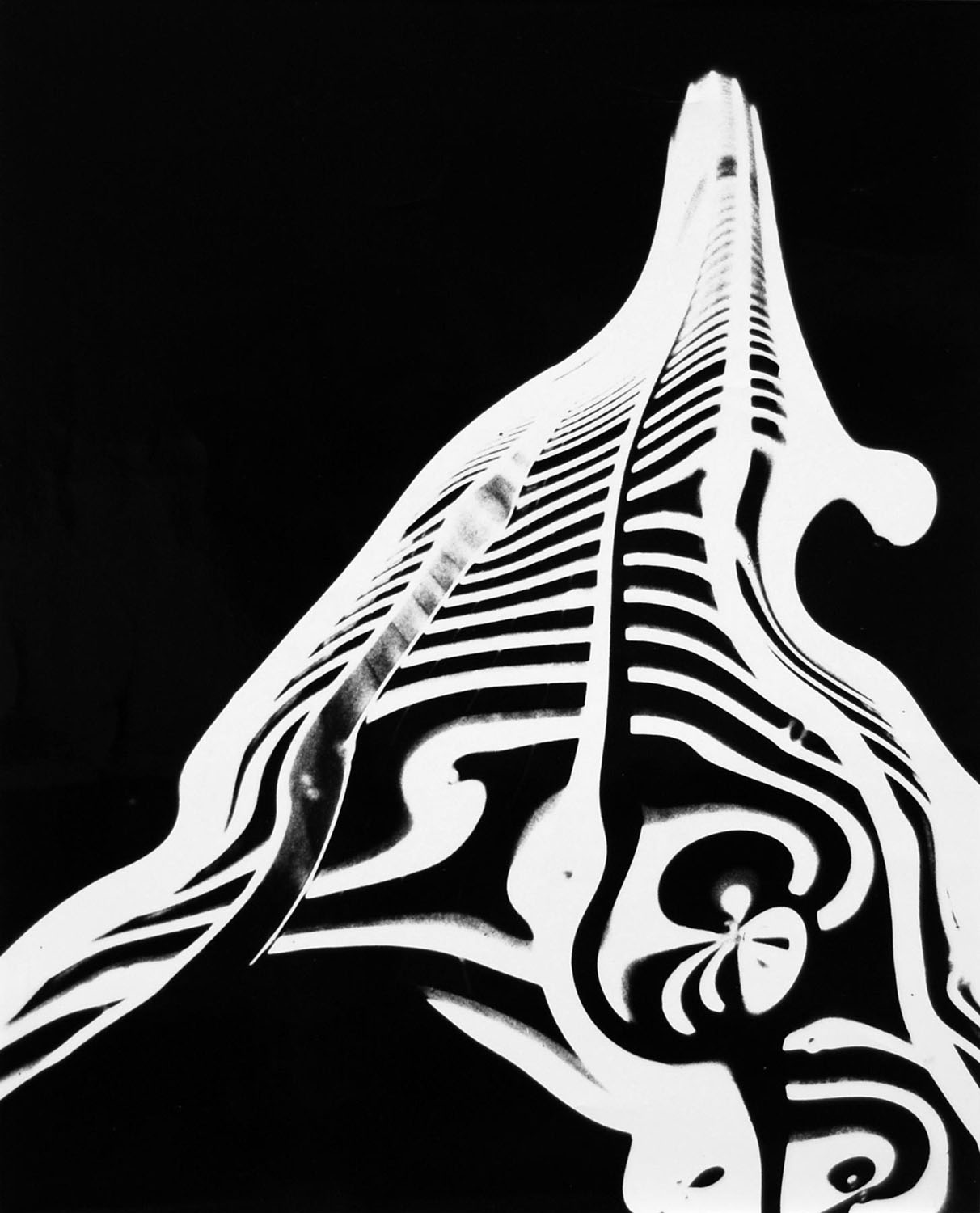
Monash Gallery of Art website

LIKE ART BLART ON FACEBOOK

Back to top

Monash Gallery of Art Bowness Photography Prize Call For Entries! Closes 30th June 2010

May 2010


Paul Ogier (Australia born New Zealand, b. 1974) 'Saint Stephen' 2009


Paul Ogier (Australia born New Zealand, b. 1974)
Saint Stephen
2009
Courtesy of the artist


Mark Hislop from the Monash Gallery of Art (MGA) has asked me to post details of the William and Winifred Bowness Photography Prize 2010. More than happy too. To see the standard take a look at the 2009 Finalists online. Details on how to enter are posted below. Have a go, get your entries in, you never know who will win!

Many thankx to the MGA for allowing me to publish the photographs in the posting. Please click on the photographs for a large version of the image.


Simon Terrill (Australian, b. 1969) 'Bank of England 9AM' 2009


Simon Terrill (Australian, b. 1969)
Bank of England 9AM
2009
Courtesy of the artist


The Monash Gallery of Art Foundation is pleased to announce the CALL FOR ENTRIES for the William and Winifred Bowness Photography Prize 2010.

The MGA Foundation will once again showcase the work of Australia’s best photographers in Australia’s most coveted photography award. Photographers from all over Australia are encouraged to submit entries to this year’s Bowness Photography Prize. Each year, finalists are drawn from the breadth of Australian photographic practice: editorial, commercial, street and fine art.

In recognition of the support shown the prize by Australian photographers, prize money for this year’s award has increased substantially. Last year, a record 459 photographers submitted entries in anticipation of the $20,000 non-acquisitive first prize. In 2010, photographers will be competing for $25,000 first prize and $1,000 People’s Choice Award.

The winner of the 2010 Bowness Photography Prize and Honourable Mentions will be announced on Thursday night 23 SEP 2010 during a cocktail party held at MGA. Winners and finalists will enjoy unprecedented visibility for their work. All finalists will be published on MGA’s flickr page and included in a substantial catalogue. The winner will receive the $25,000 first prize. And in recognition of the strength of the prize and MGA’s commitment to promoting the best of contemporary Australian photography, Honourable Mentions will have the opportunity to stage an exhibition at MGA.

This year’s entries will be judged by Gael Newton, Senior Curator of Photographs, National Gallery of Australia, Max Pam, Australian photographer, and Shaune Lakin, Director of MGA.

About the BOWNESS Photography Prize

Established in 2006 to promote excellence in photography, the annual non-acquisitive William and Winifred Bowness Photography Prize is an initiative of the MGA Foundation. The Bowness Photography Prize has quickly become Australia’s most coveted photography prize. It is also one of the country’s most open prizes for photography. In the past, finalists have included established and emerging photographers, art and commercial photographers. All film-based and digital work from amateurs and professionals is accepted. There are no thematic restrictions.

The 2009 Bowness Prize recipient was Paul Knight. Since winning the Prize, Knight has received an Australia Council for the Arts Skills and Development Grant and is currently presenting new work at the prestigious international artfair Art Cologne.


Jane Burton (Australian, b. 1966) 'Ivy # 3' 2009


Jane Burton (Australian, b. 1966)
Ivy # 3
2009
Courtesy of the artist and Karen Woodbury Gallery, Melbourne


Owen Leong (Australian, b. 1979) 'Justin' 2009


Owen Leong (Australian, b. 1979)
Justin
2009
Courtesy of the artist and Anna Pappas Gallery, Melbourne


Paul Knight (Australian, b. 1976) '14 months # 01' 2008


Paul Knight (Australian, b. 1976)
14 months # 01
2008
Courtesy of the artist and Neon Parc, Melbourne
Winner of the William and Winifred Bowness Photography Prize 2009


Monash Gallery of Art
860 Ferntree Gully Road
Wheelers Hill Victoria 3150
Phone: +61 3 8544 0503

Monash Gallery of Art website

LIKE ART BLART ON FACEBOOK

Back to top

Review: ‘presentation/representation: photography from Germany’ at the Monash Gallery of Art, Wheelers Hill, Melbourne

Exhibition dates: 3rd July – 30th August, 2009

Curator: Thomas Weski

Artists: Laurenz Berges, Albrecht Fuchs, Karin Geiger, Claus Goedicke, Uschi Huber, Matthias Koch, Wiebke Loeper, Nicola Meitzner, Peter Piller, Heidi Specker.

An exhibition of the Institut für Auslandsbeziehungen e. V. (ifa/Institute for Foreign Cultural Relations), Stuttgart, Germany and presented in cooperation with the Goethe-Institut Australien.


Matthias Koch (German, b. 1967) 'Submarine Laboe near Kiel, built 1944' 2006 from the exhibition 'presentation/representation: photography from Germany' at the Monash Gallery of Art, Melbourne, July - August, 2009


Matthias Koch (German, b. 1967)
Submarine Laboe near Kiel, built 1944
2006
© Matthias Koch


I was looking forward to this exhibition and so on a cold and very windy winter’s day I ventured out on the drive to the Monash Gallery of Art in Wheelers Hill expecting to be challenged by a new generation of German photographers. I was to be sorely disappointed. This show, with the exception of excellent work by Andreas Koch and good work by Laurenz Berges, epitomises all that I find woeful about contemporary photography.

There is a lack of life and vigour to the work, no sense of enjoyment in taking photographs of the world. The narratives are shallow and vacuous inducing a deep somnambulism in the viewer that is compounded by the silent, deeply carpeted gallery making the experience one of entering a mausoleum (this is a great space that needs to be a contemporary space!). How many times have I seen photographs of empty spaces that supposedly impart some deep inner meaning? See how a great artist like Tacita Dean achieves the same end to startling effect with her film Darmstädter Werkblock (2007). How many times do I need to see ‘dead pan’ portrait photographs that are again supposed to impart rich psychological meaning? I have seen too many already.

Conceptually the work is barren. Technically the proficiency of some of the work is almost non-existent. If this standard of work was put up for assessment in a university course it would fail miserably. For example in Nicola Meitzner’s work Forward Motion (2006), vertical portraits (of the same person in different poses) and streetscapes of Tokyo are poor quality prints mounted in unattractive silver aluminium frames. They are forgettable. If an artist were to study the work of, say, Manuel Alvarez Bravo, then one might gain some insight into how to photograph the city and the people that live in it in a way that elicits a response from the viewer to the photo-poetry that is placed before them.

Uschi Huber’s photographs of boarded up shop fronts, while a nice conceptual idea, are again lacking in technical proficiency and are nothing we haven’t seen many times before while Peter Piller’s ten print-media type pigment prints of girls at a shooting range with rifles do not bare comment on both a conceptual and technical level. Similarly, Wiebke Loeper’s colour photographs of the city of Wismar – houses, roads, water, oat fields, people peering into shop windows – sent to friends living in Melbourne to show them the desolation and rebuilding of the city are seriously year 12 work.

The two redeeming artists are Laurenz Berges and Andreas Koch.

Berges four large type C colour photographs of an empty house and the surrounds as seen through a window are intimately detailed visions of human absence from the built environment: the huts, piles of wood chips, barren trees, the feathers on the floor of one print, the cigarette butts on the floor of another, the marks on the wall in blue and red add to a sense of abandonment and alienation from the environment – traces of human experience, identity and memory etched into the photographic medium.

As the text on the Institut für Auslandsbeziehungen (IFA) website observes,

“Laurenz Berges is a chronicler of absence. His minimalist photographs point to the earlier use of spaces, only fragments of which are shown, whose inhabitants have put them to other, new uses. Berges depicts the traces of this change in austere images that, due to their reduction, tell their stories indirectly and almost involuntarily. These are stories about the existential significance certain spaces have for our identity, and also about their transitoriness and their loss.”1


The star of the show was the work of Matthias Koch. His five large aqua-mounted type C prints from the series Sites of German History (2006) are both technically and conceptually superb, full of delicious ironies and humour. Using an aerial aesthetic (apparently by climbing the ladder of a fire engine that he owns) Koch looks down on the landscape and through his images formulates new ways of seeing national symbols (even though many of them are not in Germany). His re-presentation of spatial inter-relations and objects embedded in their rural and urban surroundings are both simple yet layered and complex.

Unfortunately I have only two photographs (above and below) to show you of his work. None other was available but the images gives you an idea of his raison d’être. The specimen of U-995, built in Kiel in 1944, is presented as a trapped and mounted animal, preserved for our delectation and inspection with gangways and stairs to view the innards. Little hobby craft lie on a beach behind while people paddle in the shallows, a ship barely seen in the distance out at sea. The fact that this U-boat was once used to destroy such a ship, the irony of the proposition, is not lost on the viewer.

Other images in the series include a photograph of the derelict runway of the Heinkel factory as seen from above, the overgrown concrete slabs cracked and lifting, the edges filled with grass, the distant view dissolving into mist and nothingness. The photograph Harbour, Allied landing near Normandy, 1944 (2006, below) shows an American jeep and half-track of the period on the beach of the Allied landing in Normandy, tyre tracks swirling in the sand while in the distance the concrete block remains of the Mulberry harbour used in 1944 still litter the coastline. How many men, both German and American, died on this beach all those years ago? In another tour de force Atlantic Defence Wall near Cherbourg. Bunker construction built 1940 (2006) concrete bunkers dot the landscape with the beach and sea beyond as people sunbathe on the grass amongst the ruined bunkers, probably oblivious to the context of their surroundings. Koch is a master of the re-presentation of the context of memory, history and place.

Overall this exhibition is a great disappointment. I find it hard to believe that the exhibition has been curated by the same man who curated the recent Andreas Gursky exhibition at the National Gallery of Victoria. The choice of work and the presentation of technically poor prints is not up to standard. I also find it difficult to reconcile some of the reviews I have read of this exhibition with the actual work itself. Thank goodness for the photographs of Matthias Koch for he alone made the journey into outer Melbourne a worthwhile journey into the memory of the soul.

Dr Marcus Bunyan


1/ Anonymous. “Presentation/representation: Laurenz Berges,” on the Institut für Auslandsbeziehungen (IFA) website [Online] Cited 08/08/2009 no longer available online


    Many thankx to Monash Gallery of Art for allowing me to publish the photographs in the posting. Please click on the photographs for a larger version of the image.


    Matthias Koch (German, b. 1967) 'Harbour, Allied landing near Normandy, 1944' 2006 from the exhibition 'presentation/representation: photography from Germany' at the Monash Gallery of Art, Melbourne, July - August, 2009


    Matthias Koch (German, b. 1967)
    Harbour, Allied landing near Normandy, 1944
    2006
    © Matthias Koch


    Laurenz Berges (German, b. 1966) 'Garzweiler' [surface mine] 2003 from the exhibition 'presentation/representation: photography from Germany' at the Monash Gallery of Art, Melbourne, July - August, 2009


    Laurenz Berges (German, b. 1966)
    Garzweiler [surface mine]
    2003
    C print
    130 x 171cm (51.2 x 67.3 in.)
    © Courtesy Galerie Wilma Tolksdorf, Frankfurt/Berlin


    This international touring exhibition was developed by the Institut für Auslandsbeziehungen (ifa) in Germany and is presented in cooperation with the Goethe-Institut Australien.

    MGA is hosting the important international exhibition ‘presentation / representation: photography from Germany’, which brings to Melbourne the work of ten of Germany’s best contemporary photographers.

    presentation/representation is curated by Thomas Weski (curator of Andreas Gursky recently seen at the National Gallery of Victoria), and covers the work of the generation of German photographers that has followed the now-legendary Kunstakademie Düsseldorf generation of Gursky, Thomas Ruff, Thomas Struth and Candida Höfer. For the artists in presentation/representation, including Matthias Koch, Laurenz Berges and Heidi Specker, photography is a medium that has its own language and characteristics, and their work collectively explores the limits of the medium.

    Shaune Lakin, Director of the MGA states “MGA is thrilled to present ‘presentation / representation’ and to bring to the people of Melbourne such an important survey of contemporary German photography. As well as providing a comprehensive survey of German practice, the exhibition will complement the experience of those who saw Weski’s wonderful Gursky exhibition at NGV. We are also delighted to host participating artist Matthias Koch.”

    Koch will be presenting a series of public programs including an artist talk, student tutorial and a field trip exploring the industrial suburban sites close to the gallery. “With his critical interest in landscape, architecture and history, Koch will provide some wonderful insights into our local landscape for participants in these programs,” notes Dr Lakin.

    MGA’s Education and public programs coordinator Stephanie Richter says: “This is a great opportunity for students and Melbourne audiences to meet one of Germany’s most celebrated contemporary photographers and to participate in the busy schedule of talks, tutorials and field trips with Matthias.”

    Press release from Monash Gallery of Art website [Online] Cited 05/08/2019 no longer available online


    Heidi Specker (German, b. 1962) 'D'Elsi - Elsi' 12007


    Heidi Specker (German, b. 1962)
    D’Elsi – Elsi 1
    2007
    Digital Fine Art Print
    Courtesy Fiedler Contemporary, Köln
    Galerie Barbara Thumm, Berlin
    © VG Bild-Kunst, Bonn, Germany, 2007


    Claus Goedicke (German, b. 1966) 'Trip to the Moon' 2006


    Claus Goedicke (German, b. 1966)
    Trip to the Moon
    2006
    Pigment print on wallpaper
    © Claus Goedicke


    Nicola Meitzner (German, b. 1969) 'Forward motion' 2006


    Nicola Meitzner (German, b. 1969)
    Forward motion
    2006
    From the tableau Forward motion
    Pigment print
    © Nicola Meitzner


    Wiebke Loeper (German, b. 1972) 'To the sisters of Carl Möglin' 2005


    Wiebke Loeper (German, b. 1972)
    To the sisters of Carl Möglin
    2005
    From the series To the sisters of Carl Möglin
    © VG Bild-Kunst, Bonn, Germany, 2007


    Uschi Huber (German, b. 1966) 'Fronten' 2006


    Uschi Huber (German, b. 1966)
    Fronten
    2006
    From the series Fronten 2006
    © Uschi Huber


    Albrecht Fuchs (German, b. 1964) 'Daniel Richter, Berlin' 2004


    Albrecht Fuchs (German, b. 1964)
    Daniel Richter, Berlin
    2004
    C print
    © Courtesy Frehking Wiesehöfer, Köln


    Monash Gallery of Art
    860 Ferntree Gully Road
    Wheelers Hill, Victoria 3150

    Opening hours:
    Tuesday – Friday: 10am – 5pm
    Saturday – Sunday: 10pm – 4pm
    Monday and Public Holidays: closed
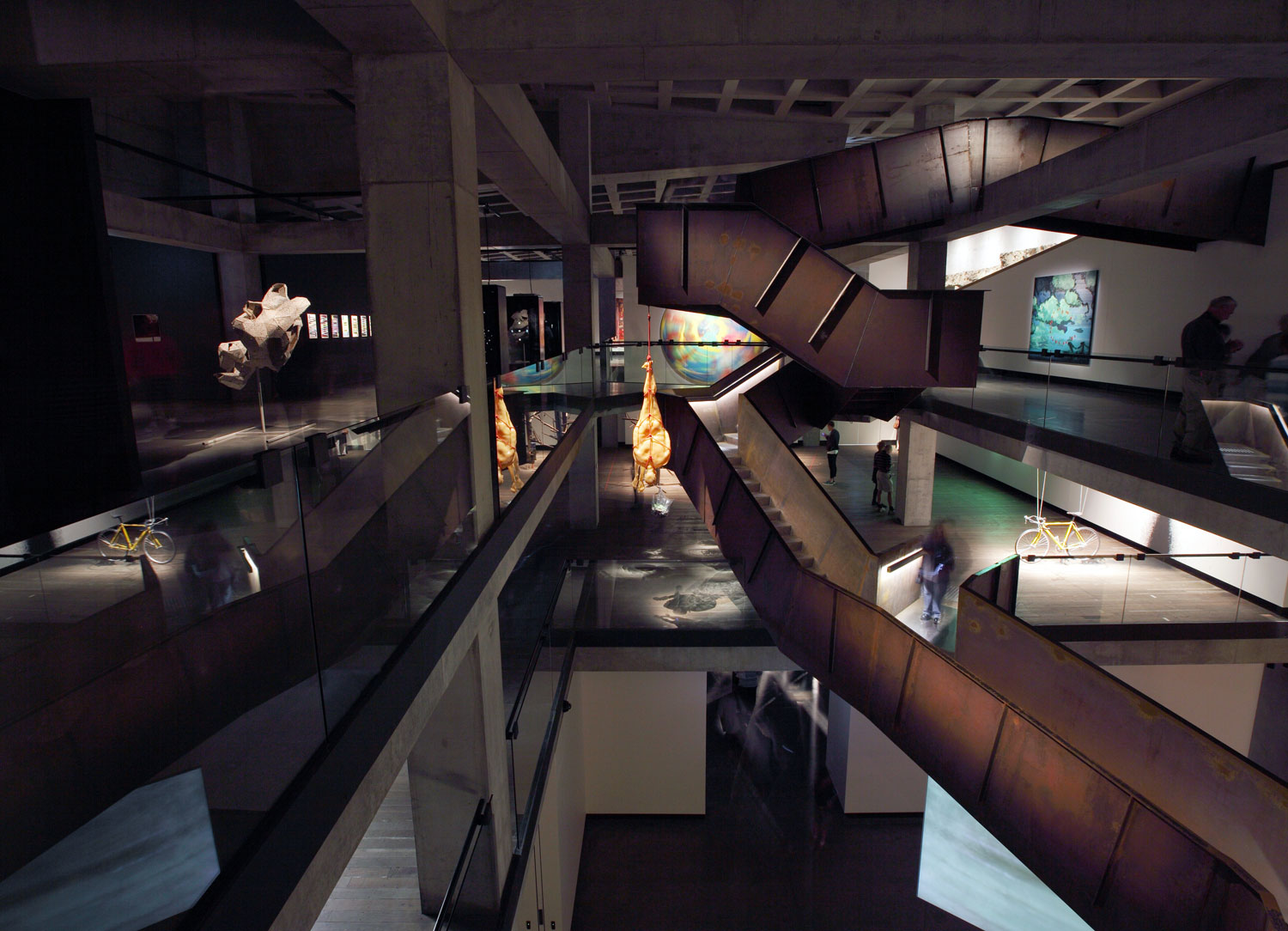
    Monash Gallery of Art website

    LIKE ART BLART ON FACEBOOK

    Back to top