Exhibition: ‘The Lives of Great Photographers’ at The National Media Museum, Bradford

Exhibition dates: 15th April – 4th September 2011


Many thankx to The National Media Museum for allowing me to publish the photographs in the posting. Please click on the photographs for a larger version of the image.


Lady Clementina Hawarden (British, 1822-1865) 'Self Portrait' c. 1864


Lady Clementina Hawarden (British, 1822-1865)
Self Portrait
c. 1864
Albumen print
Courtesy of the National Media Museum/SSPL


Clementina, Lady Hawarden, is a poetic, if elusive, presence among nineteenth-century photographers. As a devoted mother, her life revolved around her eight children. She took up photography in 1857; using her daughters as models, she created a body of work remarkable for its technical brilliance and its original depiction of nascent womanhood.
Lady Hawarden showed her work in the 1863 and 1864 exhibitions of the Photographic Society. With the exception of a few rare examples, her photographs remained in the possession of her family until 1939, when the more than eight hundred images were donated to the Victoria and Albert Museum. Only recently have they been the objects of research, publication, and exhibition.

Text from The Metropolitan Museum of Art website


John Moffat (Scottish, 1819-1894) 'William Henry Fox Talbot with camera and lens' 1864


John Moffat (Scottish, 1819-1894)
William Henry Fox Talbot with camera and lens
1864


Julia Margaret Cameron (British born India, 1815-1879) 'Carlyle like a rough block of Michael Angelo's sculpture' 1867


Julia Margaret Cameron (British born India, 1815-1879)
Carlyle like a rough block of Michael Angelo’s sculpture
1867
Albumen print
Courtesy The Royal Photographic Society Collection at the National Media Museum/SSPL


Henry Herschel Hay Cameron (British born India, 1852-1911) 'Mrs Julia Margaret Cameron' 1870


Henry Herschel Hay Cameron (British born India, 1852-1911)
Mrs Julia Margaret Cameron
1870
Albument print
Courtesy of the National Media Museum/SSPL
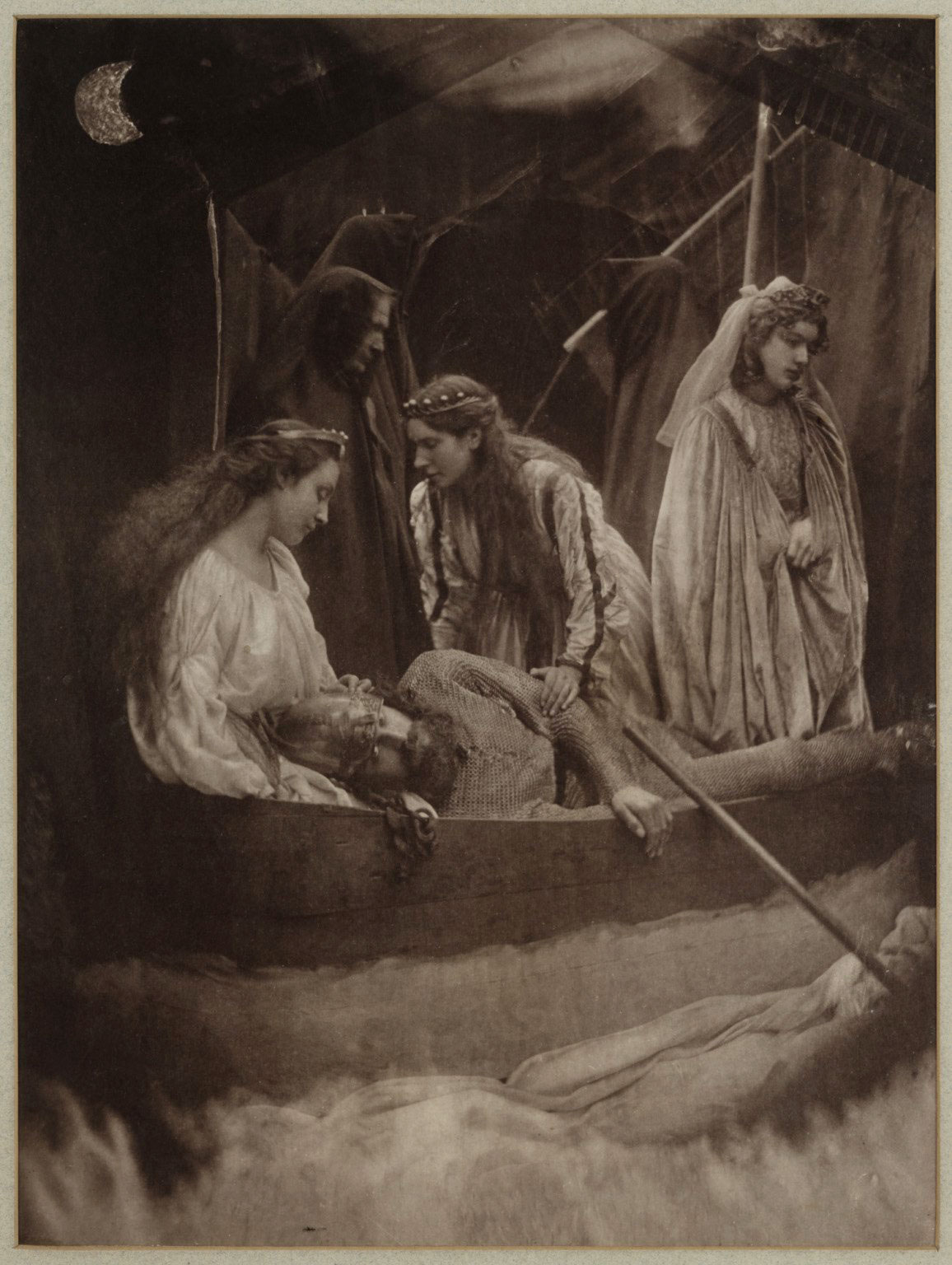
 

Julia Margaret Cameron (British born India, 1815-1879) 'So Like a Shatter'd Column Lay the King' 1875


Julia Margaret Cameron (British born India, 1815-1879)
So Like a Shatter’d Column Lay the King
1875
Albumen print
Courtesy of The Royal Photographic Society Collection at the National Media Museum


Photographers have created some of the most famous and memorable images ever produced, combining science and art since 1839. The Lives of Great Photographers, a free to enter exhibition at the National Media Museum in Bradford, draws on the Museum’s renowned collection to focus on the pioneers behind the camera, exploring the extraordinary stories surrounding some of photography’s most important innovators and artists.

Featuring Henri Cartier-Bresson, Julia Margaret Cameron, Robert Capa, William Henry Fox Talbot, Weegee, Tony Ray-Jones, Fay Godwin and Eadweard Muybridge, the exhibition will display iconic images and artefacts from these and other great names, selected exclusively from the National Collection of Photography.

Exhibition curator Brian Liddy said: “Photography has been with us for more than 170 years, and in that time countless famous photographs have been taken by many famous photographers. Often we may think we know these men and women because we know their work so well, but over time so many photographers’ personal stories have become overshadowed by their most famous pictures. This major exhibition aims to redress the balance.”

The show begins with an investigation into the rivalry between two of the medium’s earliest pioneers. Without Louis Jacques Mandé Daguerre and William Henry Fox Talbot, photography as it known today would not exist. Daguerre, a former theatrical designer, presented the photographic process to France and the world in 1839. Working in parallel and in competition, Talbot, who became an MP for Chippenham, went on to create the first negative from which multiple copy photographs could be produced.

As technology evolved, the breadth and range of photography increased, and the methods by which it could provide a source of income, or artistic expression, became more diverse. Julia Margaret Cameron, although primarily considered an artist, copyrighted her work and attempted to make a living by selling copies. Her personal connections gave her the opportunity to produce some of the first celebrity photographs in existence. Olive Edis employed photography as a serving war artist during the First World War and Edward Steichen’s career was remarkable for its variety as he moved effortlessly from art, to fashion, to advertising.

Photography also proved an ideal medium when it came to documenting world events. Lewis Hine and Dorothea Lange were both driven by their social consciences to record the Great Depression in America. Photojournalism, the cousin of documentary photography, is represented in the exhibition by names such as Henri Cartier-Bresson and Robert Capa, founding members of the world’s first photographic agency, Magnum. Both served in the Second World War and produced images that helped define an era.

One of the most notorious life stories is that of the English photographer Eadweard Muybridge. His pioneering work in chronophotography, whereby movement is captured by a sequence of photographic exposures, famously demonstrated that all four legs of a horse left the ground as it galloped. Until then the motion of a horse’s hooves were too quick for the human eye to determine. Perhaps less well known is the fact that Muybridge murdered his wife’s lover in cold blood but was later acquitted with a verdict of ‘justifiable homicide’.

The exhibition also includes Roger Fenton, Lady Clementina Hawarden, Alfred Stieglitz, André Kertész, and Larry Burrows. Each photographer is represented by their photographic portrait and a selection of their images. None is living, as only those whose lives and work can be evaluated in their entirety have been selected.

Brian Liddy added: “This exhibition shows just how rich the museum’s collections are. The work of some of the best-known photographers in history will be shown alongside the kinds of cameras they would have had to carry and use in the course of their work. We’ve also taken the opportunity to show rarely seen material, such as pages from the notebooks of Tony Ray-Jones detailing what was going through his mind when he was thinking about how to get the pictures he wanted.”

“By recounting the lives of these great photographers, we hope to provide an insight into what led them to produce some of the greatest photographs ever taken.”

Press release from The National Media Museum
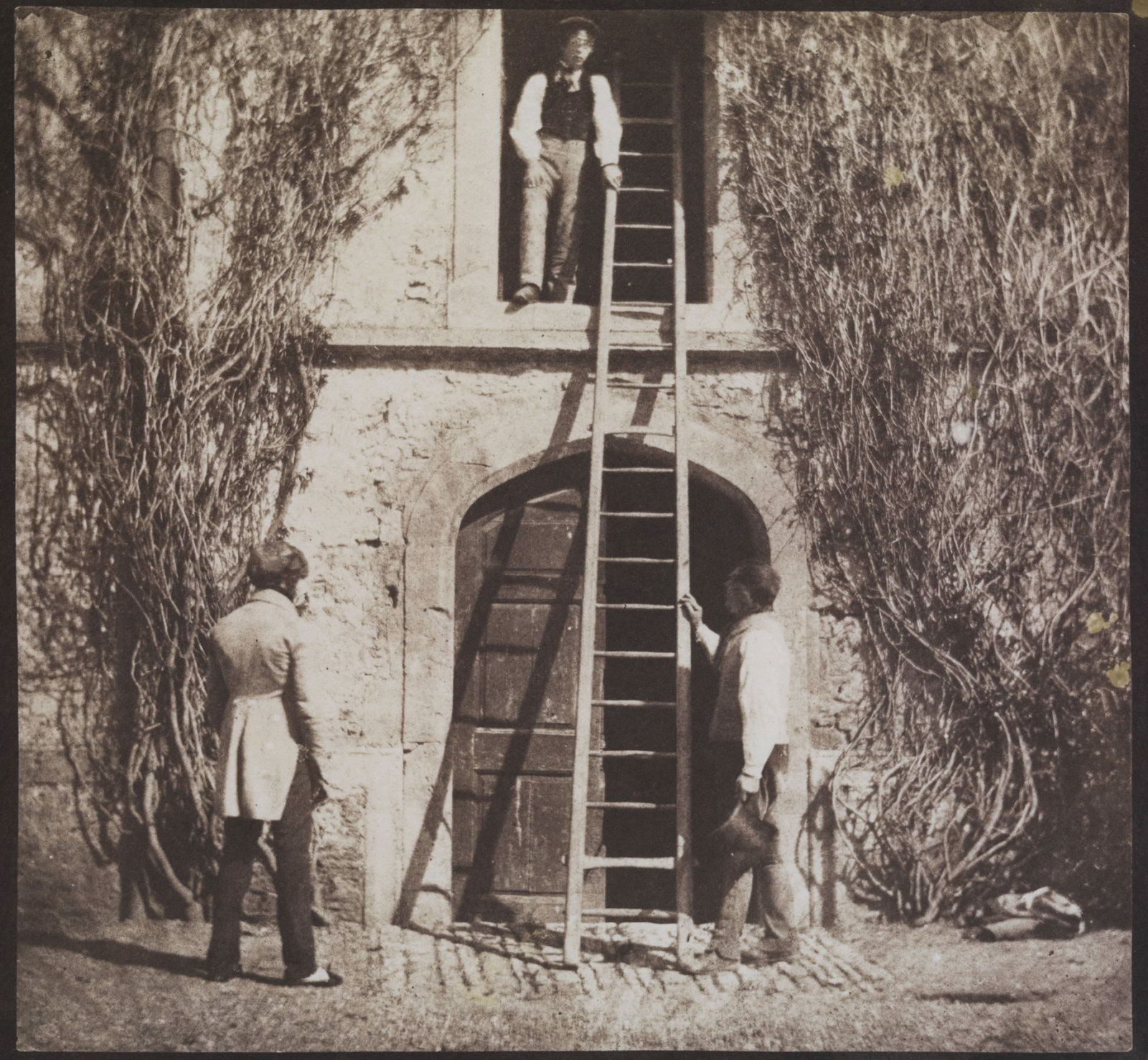
 

Henry Fox Talbot (British, 1800-1877) 'The Ladder' 1844


Henry Fox Talbot (British, 1800-1877)
The Ladder
1844
Salted paper print from paper negative
Courtesy of the National Media Museum/SSPL
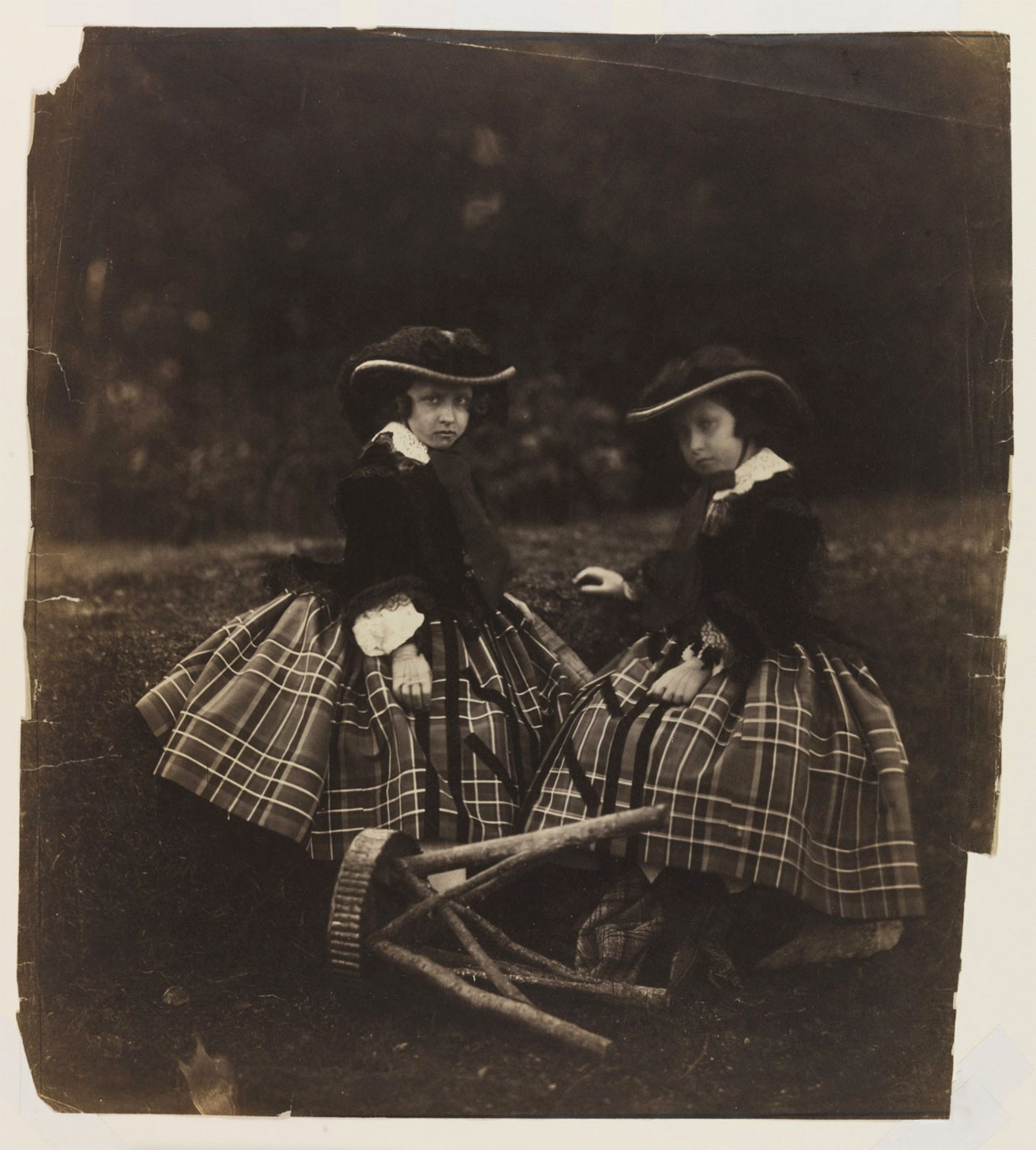
 

Roger Fenton (British, 1819-1869) 'Princesses Helena and Louise' 1856


Roger Fenton (British, 1819-1869)
Princesses Helena and Louise
1856
Albumen print
Courtesy of The Royal Photographic Society Collection at the National Media Museum


Photograph of Princess Helena and Princess Louise, seated outside together wearing identical outfits, including hats. Both look to front. Upturned stool in foreground.

The two princesses look straight at the camera in what is an unusually direct pose. Princess Helena (1846-1923) and Princess Louise (1848-1939) were the fifth and six children of Queen Victoria and Prince Albert. Princess Helena was herself a keen collector of photographs and compiled a number of albums commemorating her many visits to Balmoral

Text adapted from Roger Fenton – Julia Margaret Cameron: Early British photographs from the Royal Collection, London, 2010 on the Royal Collection Trust website


Eadweard Muybridge (English, 1830-1904) Man (Muybridge) throwing discus walking up steps walking Plate 519 Animal Locomotion


Eadweard Muybridge (English, 1830-1904)
Man (Muybridge) throwing discus walking up steps walking
Plate 519 Animal Locomotion
1887
Collotype
Courtesy of the National Media Museum/SSPL


Unknown photographer. 'Eadweard Muybridge' date unknown


Unknown photographer
Eadweard Muybridge
Date unknown
Courtesy of The Royal Photographic Society Collection at the National Media Museum


Alvin Langdon Coburn (American, 1882-1966) 'Alfred Stieglitz' 1905


Alvin Langdon Coburn (American, 1882-1966)
Alfred Stieglitz
1905
Courtesy of the National Media Museum/SSPL


Lewis Hine (American, 1874-1940) 'Albanian woman Ellis Island' 1905


Lewis Hine (American, 1874-1940)
Albanian woman Ellis Island
1905
Gelatin silver print
Courtesy of the National Media Museum/SSPL


At the Ethical Culture School in New York Lewis Hine taught photography to teenagers, encouraging them to observe others. He took his classes to Ellis Island to see arriving immigrants. “At times it looked like a costume ball,” he wrote, “with the multicoloured, many-styled national costumes,” This is one of over 200 photographs that Hine made himself at Ellis Island, representing an Albanian immigrant, wearing her best clothes, cleaned and immaculately pressed. Hine’s empathy with the neglected him led to a job with the National Child Labor Committee. He traveled the country photographing children at work in factories in New England, at coal mines in Pennsylvania, and canneries on the Gulf Coast. Hine’s photographs helped secure child labor laws in this country.

From Touchstones of the Twentieth Century: A History of Photography at the University of Notre Dame (exhibition, 2020-21)


Unknown photographer. 'Lewis Hine photographing children in a slum' c. 1910


Unknown photographer
Lewis Hine photographing children in a slum
c. 1910
Gelatin silver print
Courtesy of the National Media Museum/SSPL


Alvin Langdon Coburn (American, 1882-1966) 'George Davison' 1918


Alvin Langdon Coburn (American, 1882-1966)
George Davison
1918
Gelatin silver print
Courtesy of the National Media Museum/SSPL


George Davison (19 September 1854 – 26 December 1930) was an English photographer, a proponent of impressionistic photography, a co-founder of the Linked Ring Brotherhood of British artists and a managing director of Kodak UK. He was also a millionaire, thanks to an early investment in Eastman Kodak.
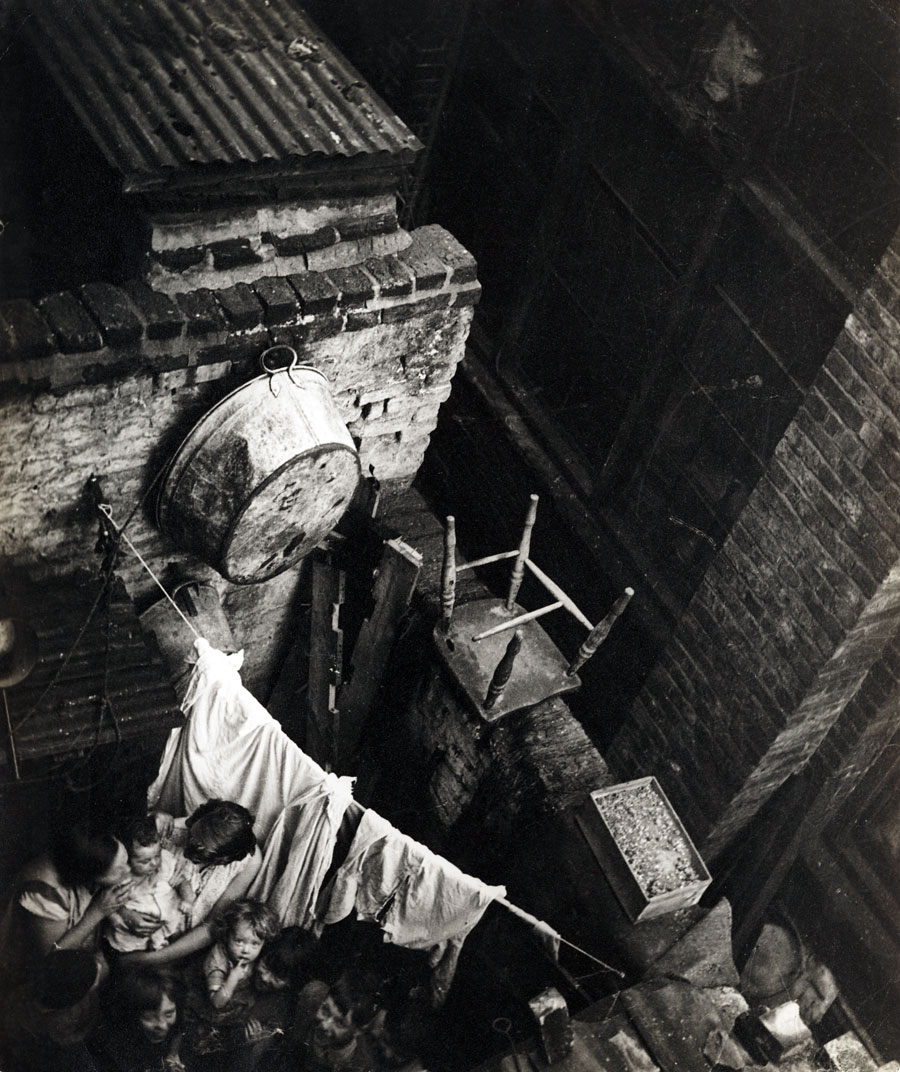
 

Edith Tudor Hart (Austrian-British, 1908-1973) 'Gee Street, Finsbury' 1936


Edith Tudor Hart (Austrian-British, 1908-1973)
Gee Street, Finsbury
1936
Courtesy of the National Media Museum/SSPL
© Wolfgang Suschitzky


This photograph was published alongside Poodle Parlour, London (PGP 279.33B) in the satirical magazine Lilliput in 1939, offering a comparison between the living conditions of the urban poor and the care lavished on pets by their wealthy owners. The juxtaposition made a simple political point and encouraged the viewer to think about the unequal organisation of society. This was a rhetorical technique common in left-wing illustrated journals on the Continent. The Austrian magazine, Der Kuckuck, had published a similar story in 1931 comparing the living conditions of the Berlin poor with the more salubrious accommodation of the city’s dog home.

Text from the National Galleries of Scotland website


Henri Cartier-Bresson (French, 1908-2004) 'Dessau, Germany' 1945


Henri Cartier-Bresson (French, 1908-2004)
Dessau, Germany
1945
Gelatin silver print
Courtesy of the National Media Museum/SSPL
© Henri Cartier-Bresson, Magnum, HCB Fondation


Cartier-Bresson had been a prisoner of war in Germany for nearly three years. He tried to escape two times, and then on the third time was successful. And partly because of that experience he was commissioned by the US Office of War Information to make a film about the return of displaced persons and prisoners of war.

And this incident appears in the film. The cameraman is filming this scene, and Cartier-Bresson, is right next to him making his own pictures. This is at a displaced person’s camp. And the woman in the black dress had been denounced to the Gestapo by the woman she’s about to hit. And here they’re both telling their stories to the man on the right who’s obviously the man in authority.

And what’s typical in this picture of Cartier-Bresson’s best work after the war, is that it’s all boiled down to these three protagonists. The anger of the woman who had been betrayed totally saturates her body, just the way the shame and the guilt of the woman who had done the betraying occupies her body, right down to where she’s got her thumb inside her fist.

Peter Galassi on the Museum of Modern Art website


Richard Sadler (British, 1927-2020) Weegee in Coventry, "Weegee the Famous" 1963


Richard Sadler (British, 1927-2020)
Weegee in Coventry, “Weegee the Famous”
1963
Gelatin silver print
Courtesy of the National Media Museum/SSPL
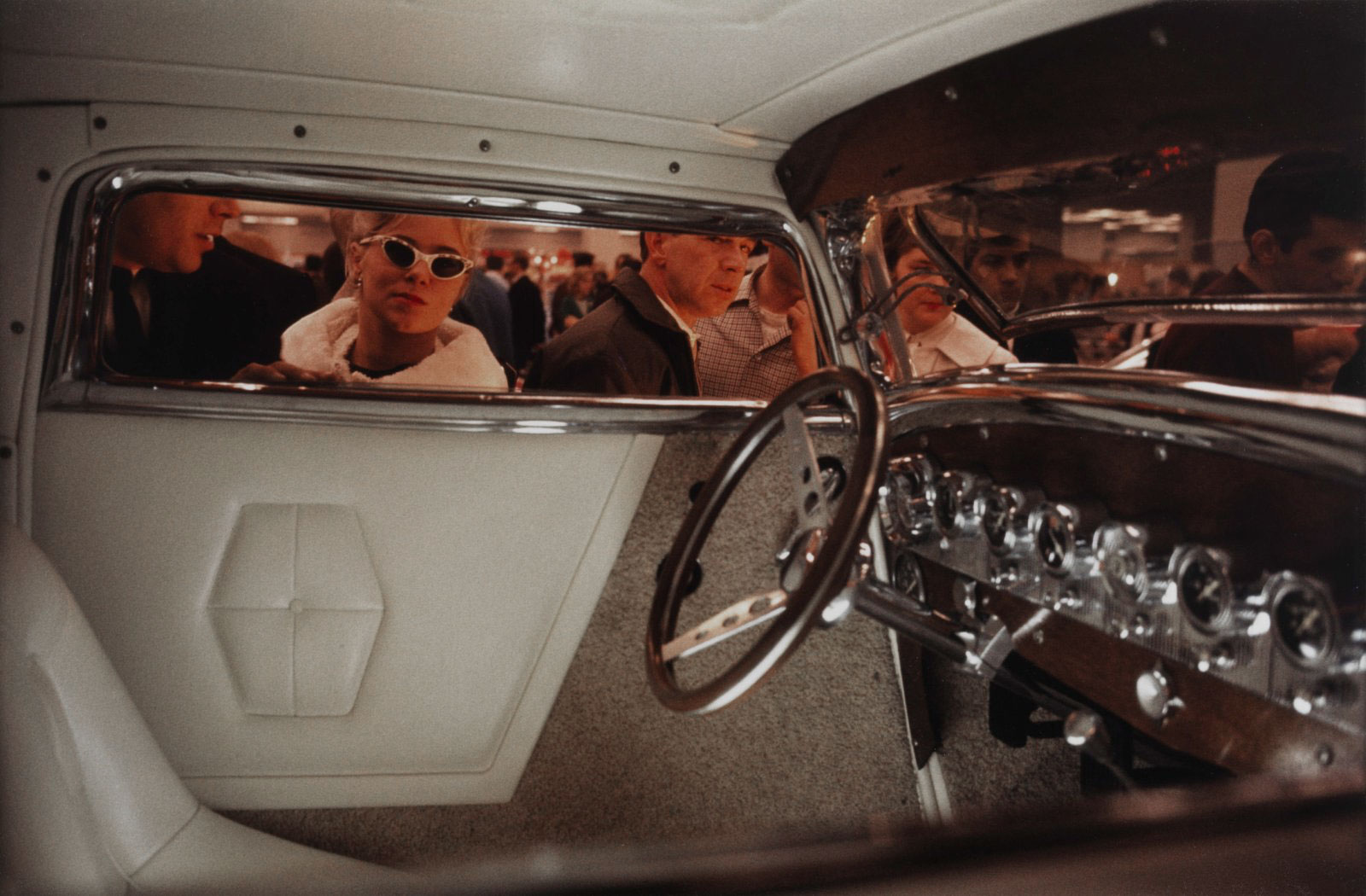
 

Tony Ray-Jones (English, 1941-1972) 'Auto Show, Daytona' 1965


Tony Ray-Jones (English, 1941-1972)
Auto Show, Daytona
1965
Gelatin silver print
Courtesy of the National Media Museum/SSPL


Unknown photographer. 'Portrait of Bill Brandt' c. 1979


Unknown photographer
Portrait of Bill Brandt
c. 1979
Gelatin silver print
Courtesy of the National Media Museum/SSPL


National Media Museum
Bradford,
West Yorkshire,
BD1 1NQ

Opening hours:
Wednesday – Sunday 10.00 – 17.00
National Media Museum website

LIKE ART BLACK ON FACEBOOK

Back to top

Exhibition: ‘Of Life and Loss: The Polish Photographs of Roman Vishniac and Jeffrey Gusky’ at the Detroit Institute of Arts

Exhibition dates: 15th April – 12th July, 2009


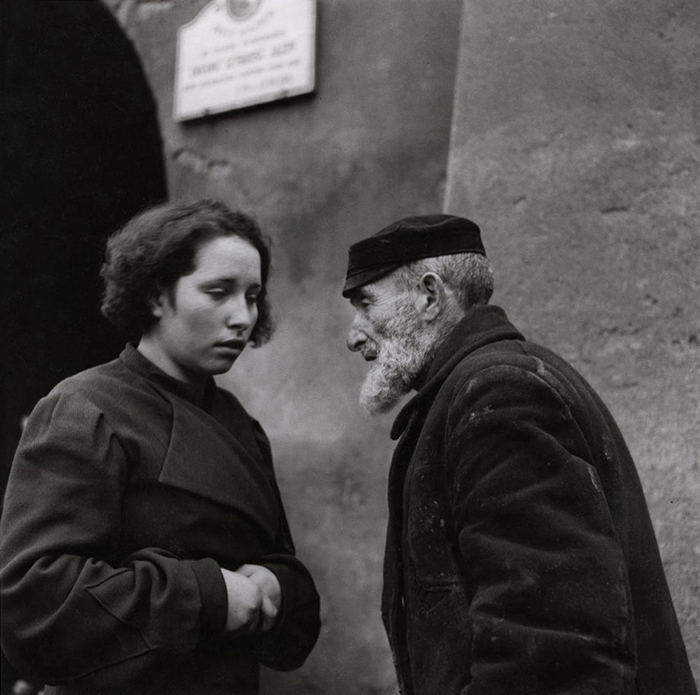
Roman Vishniac (Russian-American, 1897-1990) 'Grandfather and granddaughter, Lublin' 1937 from the exhibition 'Of Life and Loss: The Polish Photographs of Roman Vishniac and Jeffrey Gusky' at the Detroit Institute of Arts, April - July, 2009


Roman Vishniac (Russian-American, 1897-1990)
Grandfather and granddaughter, Lublin
1937
Gelatin silver print
Courtesy of the International Center of Photography
© Mara Vishniac Kohn


“During my journeys, I took over sixteen thousand photographs. All but two thousand were confiscated and, presumably, destroyed – although perhaps they will reappear someday. I hope my photographs enable the reader to envision a time and place that worthy of remembrance.”


Roman Vishniac


Hardly any photographs by Jeffrey Gusky online but he has provided some via email. I will post them asap. Thank you very much Jeff for contacting me. I knew little about the photographer Roman Vishniac but after more research I know much more now. What a photographer!

Just look at the image below to see a masterpiece of classical photography. Look at the space between the figures, the tension almost palpable, the look on the granddaughters face and the wringing of her hands a portent of the despair to come. A good archive of his photographs is on the International Center of Photography website.

Dr Marcus Bunyan


Many thankx to The Detroit Institute of Arts for allowing me to publish the photographs in the posting. Please click on the photographs for a larger version of the image.


Roman Vishniac (Russian-American, 1897-1990) 'Children playing on a street lined with swastika flags' mid-1930s from the exhibition 'Of Life and Loss: The Polish Photographs of Roman Vishniac and Jeffrey Gusky' at the Detroit Institute of Arts, April - July, 2009


Roman Vishniac (Russian-American, 1897-1990)
Children playing on a street lined with swastika flags, probably outskirts of Berlin
mid-1930s
Gelatin silver print
Courtesy of the International Center of Photography
© Mara Vishniac Kohn


Roman Vishniac (Russian-American, 1897-1990) 'Women walking with a baby carriage' 1935


Roman Vishniac (Russian-American, 1897-1990)
Women walking with a baby carriage, Brunnenstrasse, Berlin
1935
Gelatin silver print
Courtesy of the International Center of Photography
© Mara Vishniac Kohn


Roman Vishniac (Russian-American, 1897-1990) 'Three women, Mukacevo' c. 1935-1938


Roman Vishniac (Russian-American, 1897-1990)
Three women, Mukacevo
c. 1935-1938
Gelatin silver print
Courtesy of the International Center of Photography
© Mara Vishniac Kohn


Roman Vishniac (Russian-American, 1897-1990) 'Man purchasing herring, wrapped in newspaper, for a Sabbath meal, Mukacevo' c. 1935-1938


Roman Vishniac (Russian-American, 1897-1990)
Man purchasing herring, wrapped in newspaper, for a Sabbath meal, Mukacevo
c. 1935-1938
Gelatin silver print
Courtesy of the International Center of Photography
© Mara Vishniac Kohn


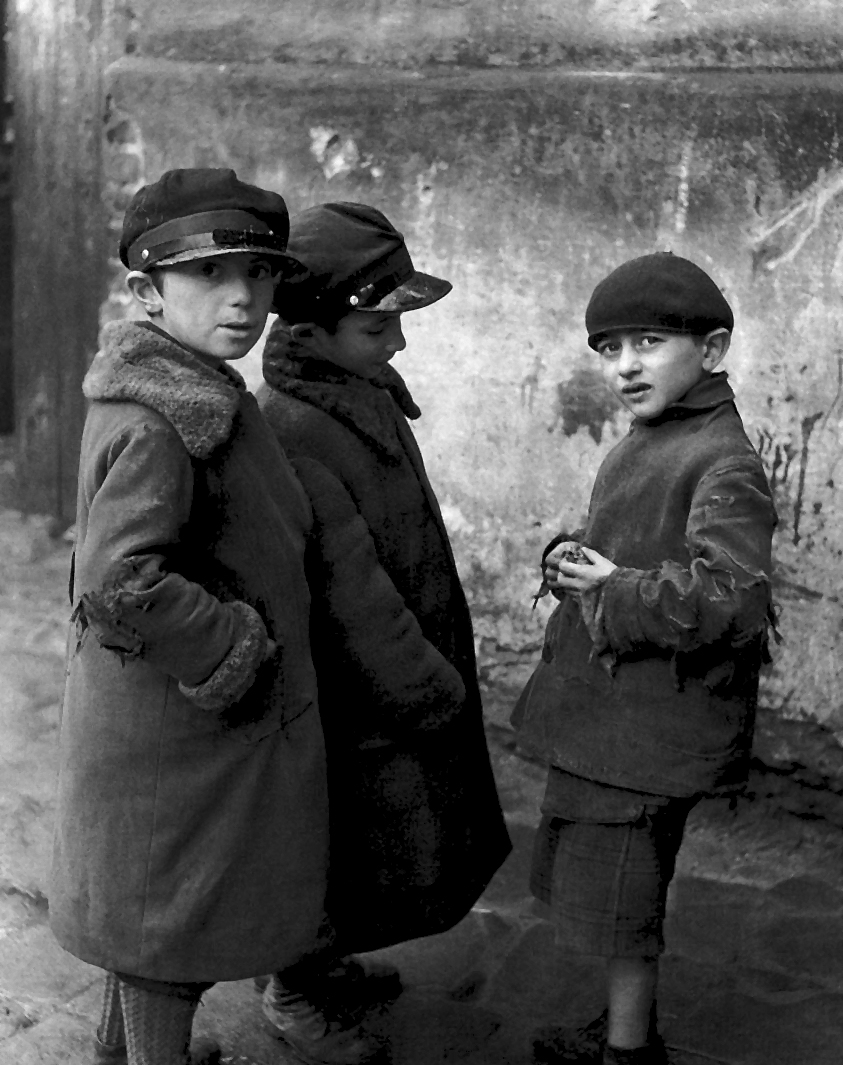
Roman Vishniac (Russian-American, 1897-1990) 'Young Jewish boys suspicious of strangers, Mukachevo' c. 1935-1938


Roman Vishniac (Russian-American, 1897-1990)
Young Jewish boys suspicious of strangers, Mukachevo
c. 1935-1938
Gelatin silver print
Courtesy of the International Center of Photography
© Mara Vishniac Kohn


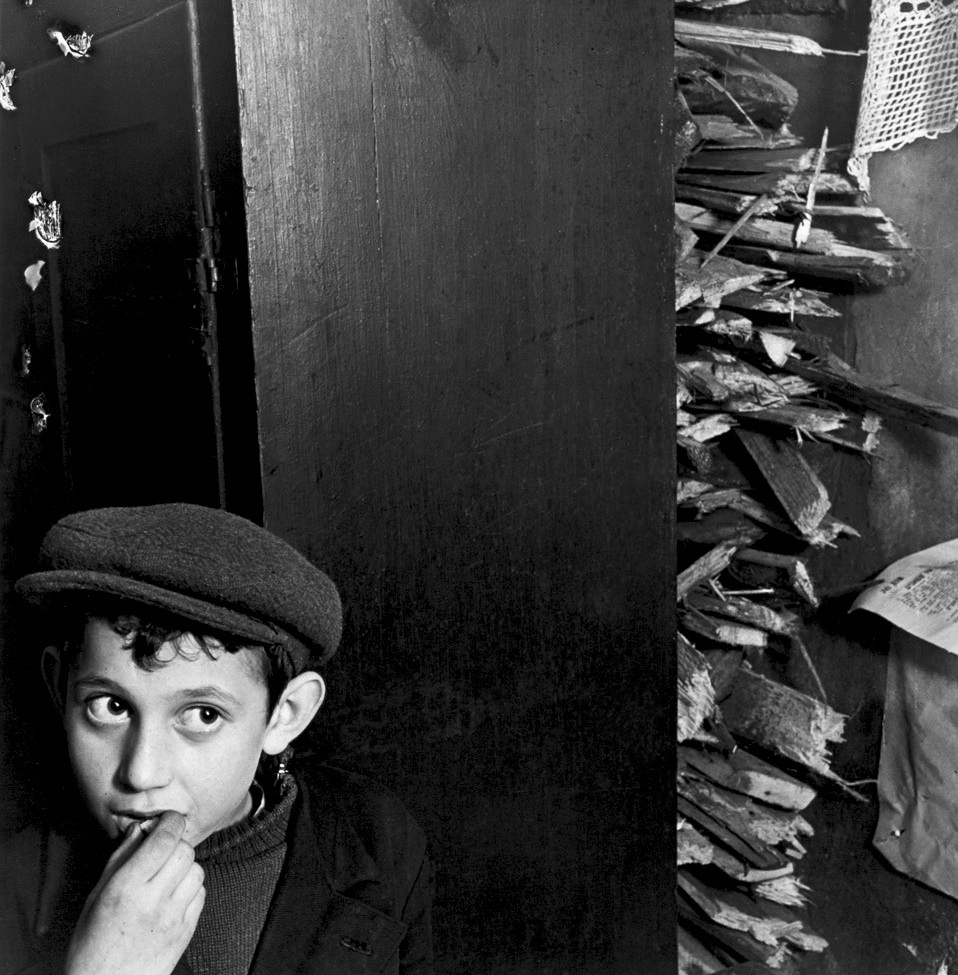
Roman Vishniac (Russian-American, 1897-1990) 'Boy with kindling in a basement dwelling, Krochmalna Street, Warsaw' c. 1935-1938


Roman Vishniac (Russian-American, 1897-1990)
Boy with kindling in a basement dwelling, Krochmalna Street, Warsaw
c. 1935-1938
Gelatin silver print
Courtesy of the International Center of Photography
© Mara Vishniac Kohn


This previously unpublished photograph attests to Vishniac’s bold and innovative use of composition: the slim, vertical register of kindling wood, offset by a corner of Yiddish newspaper on a table and triangle of lace at the window, is balanced by the young boy’s sideways glance peering out from the corner of the frame, reflecting a modern sensibility not usually associated with Vishniac’s work in Eastern Europe.

Text from the International Center of Photography website


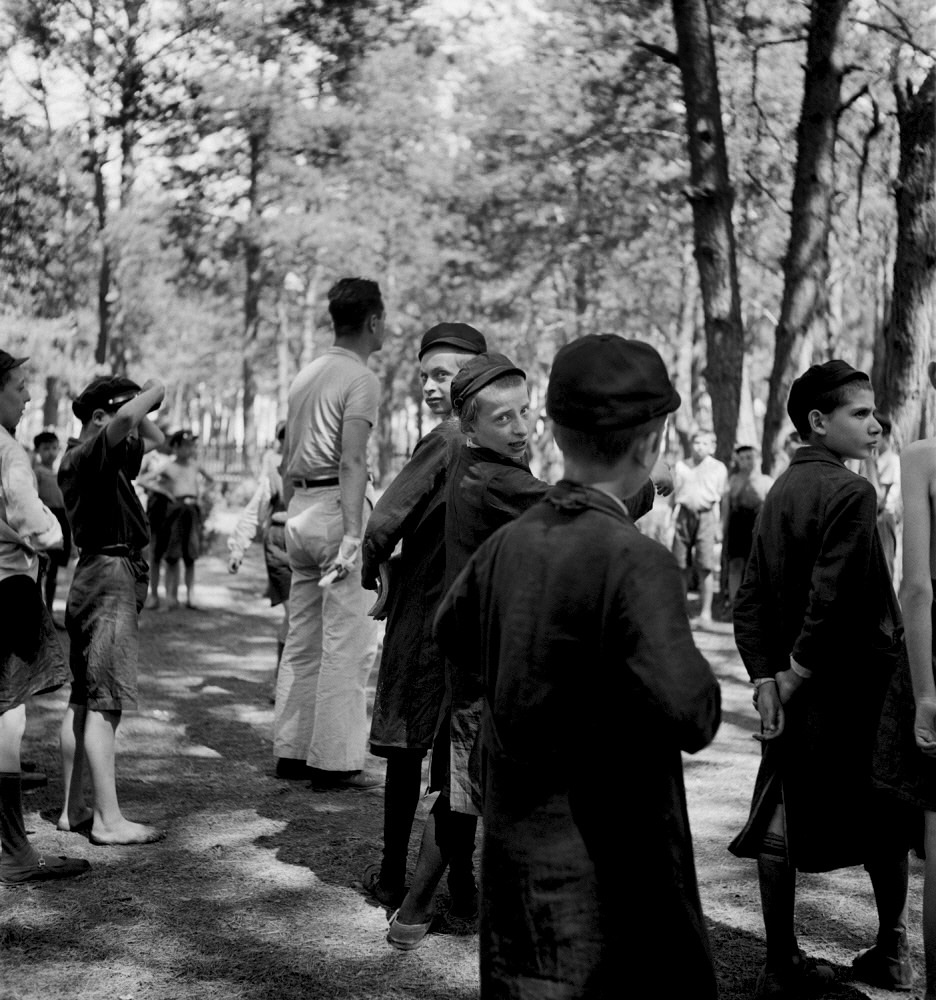
Roman Vishniac (Russian-American, 1897-1990) 'Children playing outdoors and watching a game' c. 1935-1937


Roman Vishniac (Russian-American, 1897-1990)
Children playing outdoors and watching a game, TOZ (Society for Safeguarding the Health of the Jewish Population) summer camp, Otwock, near Warsaw
c. 1935-1937
Gelatin silver print
Courtesy of the International Center of Photography
© Mara Vishniac Kohn


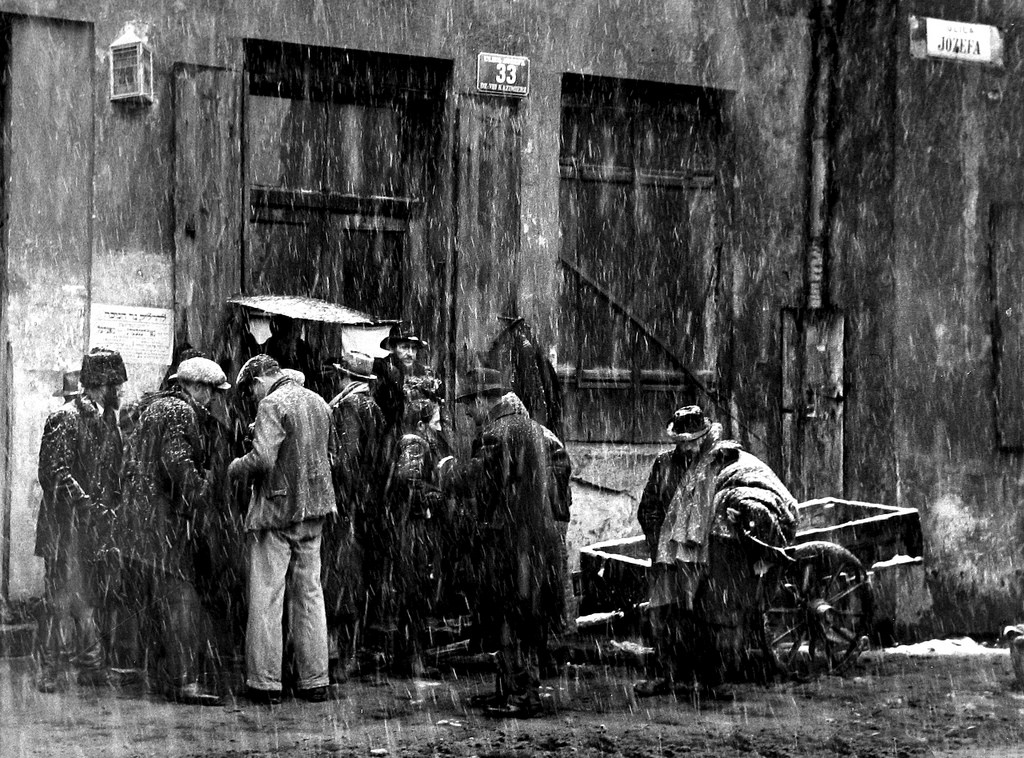
Roman Vishniac (Russian-American, 1897-1990) 'These men are selling old clothes. The notice on the wall reads "Come Celebrate Chanukah," Kazimierz, Krakow' c. 1935-1938


Roman Vishniac (Russian-American, 1897-1990)
These men are selling old clothes. The notice on the wall reads “Come Celebrate Chanukah,” Kazimierz, Krakow
1935-1938
Gelatin silver print
Courtesy of the International Center of Photography
© Mara Vishniac Kohn


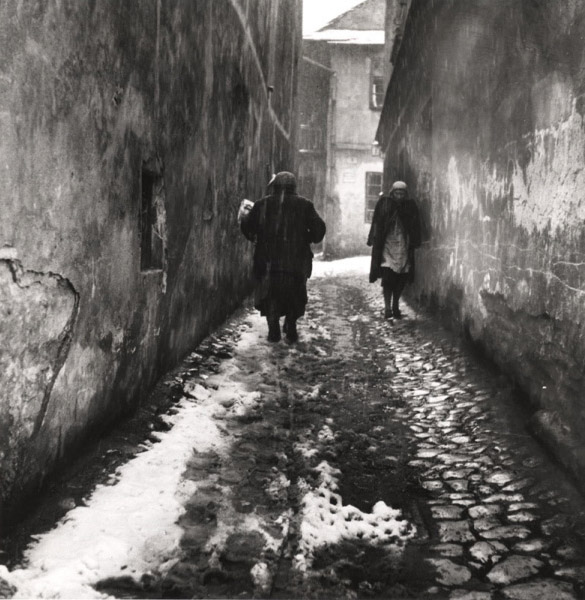
Roman Vishniac (Russian-American, 1897-1990) 'A street of Kazimierz, Krakow' 1935-1938


Roman Vishniac (Russian-American, 1897-1990)
A street of Kazimierz, Krakow
1935-1938
Gelatin silver print
Courtesy of the International Center of Photography
© Mara Vishniac Kohn


Roman Vishniac (Russian-American, 1897-1990) 'Isaac Street, Kazimierz, Krakow' 1935-1938


Roman Vishniac (Russian-American, 1897-1990)
Isaac Street, Kazimierz, Krakow
1935-1938
Gelatin silver print
Courtesy of the International Center of Photography
© Mara Vishniac Kohn


Roman Vishniac (Russian-American, 1897-1990) 'Isaac Street, Kazimierz, Krakow' 1935-1938


Roman Vishniac (Russian-American, 1897-1990)
Isaac Street, Kazimierz, Krakow
1935-1938
Gelatin silver print
Courtesy of the International Center of Photography
© Mara Vishniac Kohn


Roman Vishniac (Russian-American, 1897-1990) 'A street of Kazimierz, Cracow' 1935-1938


Roman Vishniac (Russian-American, 1897-1990)
Street in Kazimierz, Krakow
1935-1938
Gelatin silver print
Courtesy of the International Center of Photography
© Mara Vishniac Kohn


Roman Vishniac (Russian-American, 1897-1990) 'Jewish street vendors, Warsaw, Poland' 1938


Roman Vishniac (Russian-American, 1897-1990)
Jewish street vendors, Warsaw, Poland
1938
Gelatin silver print
Courtesy of the International Center of Photography
© Mara Vishniac Kohn


Examining each photographer separately, Vishniac and Gusky have very distinctive photographic styles. Due to the nature of his project and the ever-escalating semblance of anti-semitism, Vishniac’s photographs are less polished and more emotionally raw in an attempt to tell the stories of people’s individual lives. By contrast, Gusky finds inspiration in the physical places which made up the world of now entirely absent communities of Jews.

While each photographer had an individual style and statement to make, it is both the relationship with and stark difference between the two that provides the greatest emotional poignancy. The exhibition pairs many Vishniac and Gusky photographs, illuminating the individual lives lost, culture destroyed, and environments degraded by decades of neglect in Poland, as Gusky photographed the desecrated cemeteries, crumbling synagogues, and empty streets that served as the backdrop for Vishniac’s scenes of mid-century Jewish life.

There are also several points of convergence in the biographies of Vishniac and Gusky. Like Vishniac, Gusky is of Russian Jewish descent, and both men were compelled to their photographic projects in part by personal reasons springing from their Jewish heritage. The photographers also have professional ties to biological science which embody their work through illustration of the fragility of human life.

Text from the Santa Barbara Museum website [Online] Cited 01/04/2009. No longer available online


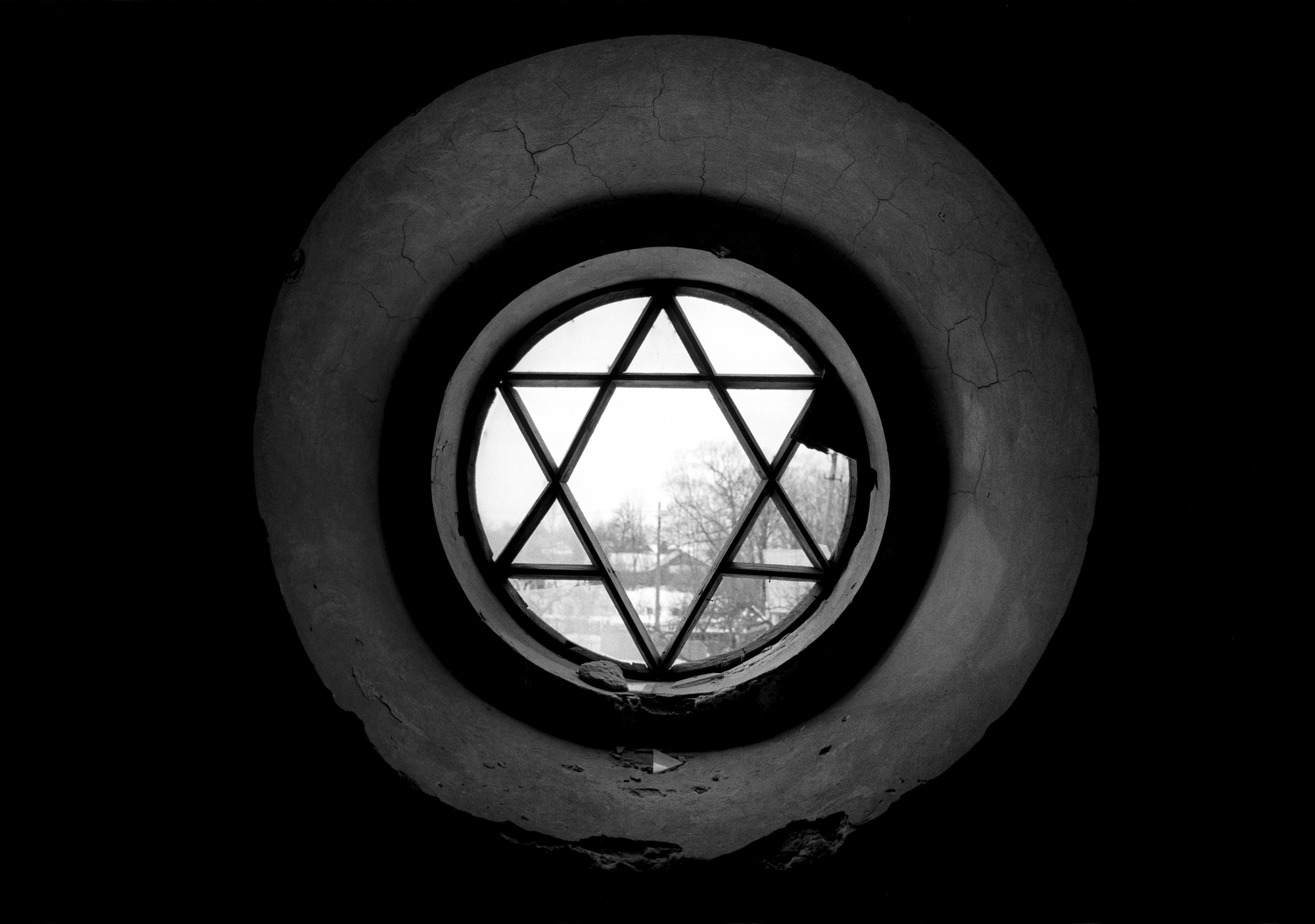
Jeffrey Gusky. 'Broken stained glass window, Wielkie, Oczy' 2001


Jeffrey Gusky (American)
Broken stained glass window, Wielkie, Oczy
2001
Gelatin silver print


This exhibition, organised by the Santa Barbara Museum of Art, includes around 90 black-and-white photographs taken by two photographers: Roman Vishniac, who photographed throughout Poland’s Jewish communities in the mid-1930s, and Jeffrey Gusky who photographed many of the same Polish sites during the 1990s.

In 1935, Russian-born photographer Roman Vishniac was commissioned by the American Joint Distribution Committee (a Paris-based relief agency) to photograph Jewish communities in the cities and villages of Poland as well as other areas of Eastern Europe. He took over 16,000 photographs (around 2,000 have survived) depicting the people, life, homes, schools, and trades of these communities. The photographs, in turn, were to be used to help raise money for humanitarian aid for individuals in areas that were becoming increasingly destitute.

In 1996, Jeffrey Gusky, an amateur photographer and doctor of Russian-Jewish descent set out on a personal journey in search of Jewish identity and culture in Eastern Europe. He made the first of four trips to Poland where he traveled to cities and villages where Jews had lived and worked for centuries. Gusky photographed what remained of Jewish culture in Poland focusing on the ruins of synagogues, cemeteries – many of which were desecrated, and the empty and still streets.

Text from the Detroit Institute of Arts website [Online] Cited 01/04/2009. No longer available online


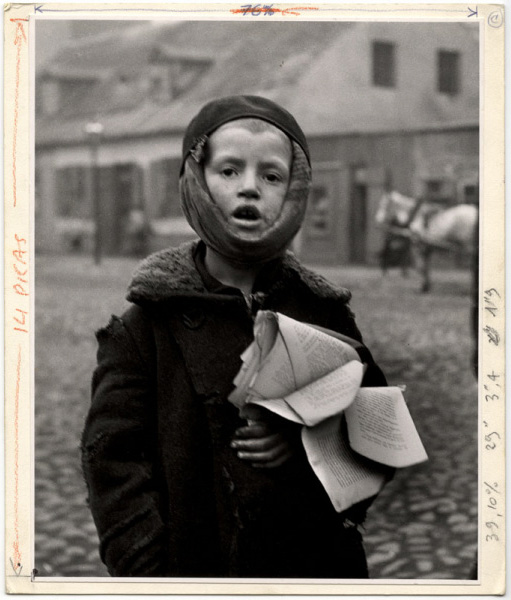
Roman Vishniac (Russian-American, 1897-1990) 'A Boy with a toothache. Next year another child will inherit the tattered schoolbook. Slonim' c. 1935-1938


Roman Vishniac (Russian-American, 1897-1990)
A Boy with a toothache. Next year another child will inherit the tattered schoolbook. Slonim
c. 1935-1938
Gelatin silver print


Roman Vishniac (Russian-American, 1897-1990) 'Nat Gutman's Wife, Warsaw' 1938


Roman Vishniac (Russian-American, 1897-1990)
Nat Gutman’s Wife, Warsaw
1938
Gelatin silver print
Courtesy of the International Center of Photography
© Mara Vishniac Kohn


Poignant, haunting photographs of Poland’s Jewish communities taken in the 1930s by Roman Vishniac, and images of many of the same areas taken in the 1990s by Jeffrey Gusky are the subject of the moving exhibition Of Life and Loss: The Polish Photographs of Roman Vishniac and Jeffrey Gusky. The exhibition, at the Detroit Institute of Arts (DIA) from April 19 to July 12, includes 90 black-and-white photographs and is free with museum admission.

Through their photographs, Vishniac (1897-1990) and Gusky (born 1953), two very different photographers from very different eras, bore witness to the Jewish experience in Poland during the 20th century, preserving memories and documenting life experiences for future generations. Although taken 60 years apart, their images share themes of memory, life, and loss and are evidence of people and places that once were, and what remains in their absence.

Vishniac and Gusky have very distinctive styles. Due to the nature of his project and the escalation of anti-Semitism in 1930s Poland, Vishniac made photographs in the documentary tradition. With great empathy, he recorded the places and lives of individuals exactly as he found them, in their homes and in the streets. Almost 60 years later, Gusky, by contrast, interpreted former Jewish sites throughout Poland with a sensitive eye on the past. His misty and haunting images are devoid of human presence, and show former sites from many Jewish communities that once thrived throughout Poland.

While each photographer had an individual style and statement to make, it is both the relationship with and stark difference between the two that provides the greatest emotional impact. Brought together for the first time, Vishniac’s and Gusky’s photographs illuminate the individual lives lost, culture destroyed, and environments degraded by decades of neglect in Poland, as Gusky photographed the desecrated cemeteries, crumbling synagogues, and empty streets that served as the backdrop for Vishniac’s scenes of vibrant, mid-century Jewish life.

Vishniac was born in Russia, and fled to Berlin with his family in 1920. He worked as a biologist and supplemented his income as a photographer. Eventually he became compelled to use photography to document people and communities throughout Europe. In the 1930s Vishniac was commissioned by the Joint Distribution Committee, a Paris-based relief agency, to photograph Jewish life in Poland, where he took over 16,000 photographs (only 2,000 survived the war) over a three-year period. He photographed vibrant communities filled with people in their homes and schools, at their trades and in their streets, markets and temples. His poignant works are evidence of communities filled with life despite the lack of food, medical care and livelihood that prevailed.

Gusky is a physician in rural Texas who began photographing as a way to explore Jewish identity. Although a Jew of Russian decent, he became interested in the history of Jews in Poland after hearing a radio interview with Ruth Ellen Gruber, an American journalist who documented the ruins of Jewish communities in Eastern Europe. His photographs depict the vacant and somber sites of once-thriving Jewish communities throughout the country. With these images, Gusky reveals a powerful, dramatic message about a lost culture that was once part of Poland’s Jewish past. This initial photographic work has led him to further examine “the void of modern life,” and the threat of genocide that continues to haunt humankind of all ethnicities and cultures in the past and present. This exhibition is organised by the Santa Barbara Museum of Art.

Press release from the Detroit Institute of Arts


Roman Vishniac (Russian-American, 1897-1990) 'Boys and Books' 1935-1938


Roman Vishniac (Russian-American, 1897-1990)
Boys and Books
c. 1935-1938
Gelatin silver print
Courtesy of the International Center of Photography
© Mara Vishniac Kohn


Roman Vishniac (Russian-American, 1897-1990) 'Children at Play, Bratislava' c. 1935-1938


Roman Vishniac (Russian-American, 1897-1990)
Children at Play, Bratislava
c. 1935-1938
Gelatin silver print
Courtesy of the International Center of Photography
© Mara Vishniac Kohn


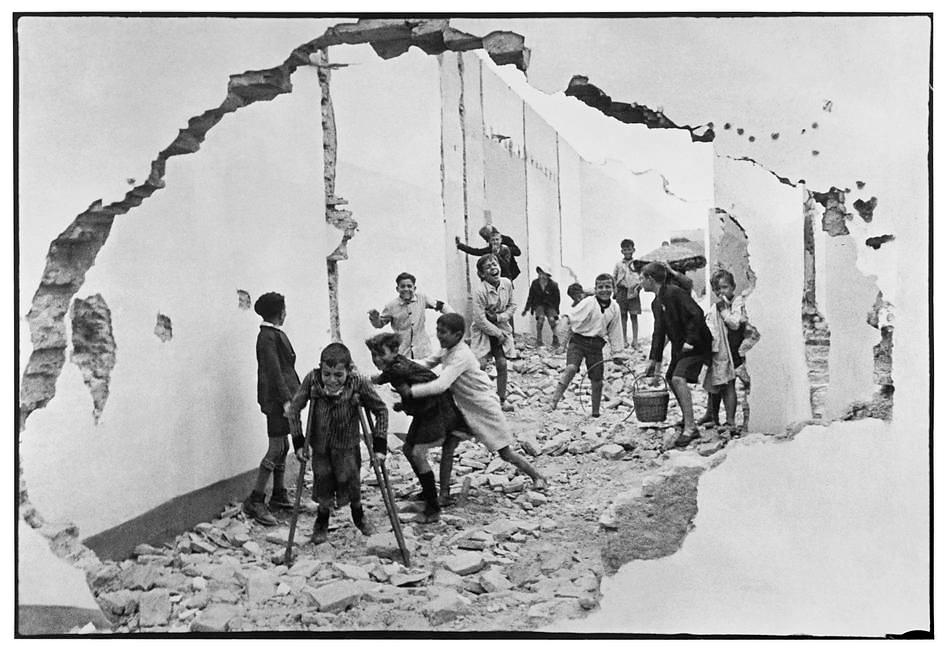
The above photograph reminds me of the Henri Cartier-Bresson photograph below.


Henri Cartier-Bresson (French, 1908-2004) 'Children in Seville' 1933


Henri Cartier-Bresson (French, 1908-2004)
Children in Seville
1933
Gelatin silver print


Roman Vishniac (Russian-American, 1897-1990) 'Children waiting outside the registration office of a transit bureau' 1947


Roman Vishniac (Russian-American, 1897-1990)
Children waiting outside the registration office of a transit bureau, Schlachtensee Displaced Persons camp, Zehlendorf, Berlin
1947
Gelatin silver print
Courtesy of the International Center of Photography
© Mara Vishniac Kohn


Many of the children wear Jewish star pins and necklaces as they wait in the Schlachtensee transit bureau offices and courtyards in the American sector of occupied Berlin. By 1952, more than 136,000 Jewish Displaced Persons (DPs) had immigrated to Israel, and over 80,000 to the United States, aided by the Jewish Joint Distribution Committee (JDC), the United Jewish Appeal (UJA), and other nongovernmental agencies that played an important role in lobbying for and providing economic, educational, and emigration assistance to DPs.

Text from the International Center of Photography website


Roman Vishniac (Russian-American, 1897-1990) 'Holocaust survivors gathering outside a building where matzoh is being made' 1947


Roman Vishniac (Russian-American, 1897-1990)
Holocaust survivors gathering outside a building where matzoh is being made in preparation for the Passover holiday, Hénonville Displaced Persons camp, Picardy, France
1947
Gelatin silver print
Courtesy of the International Center of Photography
© Mara Vishniac Kohn


Housed in a 1722 château outside Paris, the Hénonville Displaced Persons camp was administered by the Jewish Joint Distribution Committee (JDC), the Society for Trades and Agricultural Labor (ORT), and Agudath Israel (the umbrella organisation for Orthodox and ultra-Orthodox Jews), from 1946 to 1952. Hénonville was a homogeneous religious community of Orthodox Jews that included a relocated Lithuanian yeshiva, a home for Jewish orphans, and an Orthodox kibbutz, and was directed by a charismatic leader, Rabbi Solomon Horowitz. Vishniac photographed daily life in the camp, including a series documenting the preparation of matzoh for the Passover holiday.

Text from the International Center of Photography website


Detroit Institute of Arts
5200 Woodward Avenue
Detroit, Michigan 48202
Phone: 313.833.7900

Opening hours:
Tuesday – Thursday 9am – 4pm
Friday 9 9am – 9pm
Saturday – Sunday 1 am – 5pm
Monday Closed

Detroit Institute of the Arts website

LIKE ART BLART ON FACEBOOK

Back to top

Exhibition: ‘Hyper’ by Denis Darzacq at Australian Centre for Photography (ACP), Sydney

Exhibition dates: 13th March – 12th April, 2009


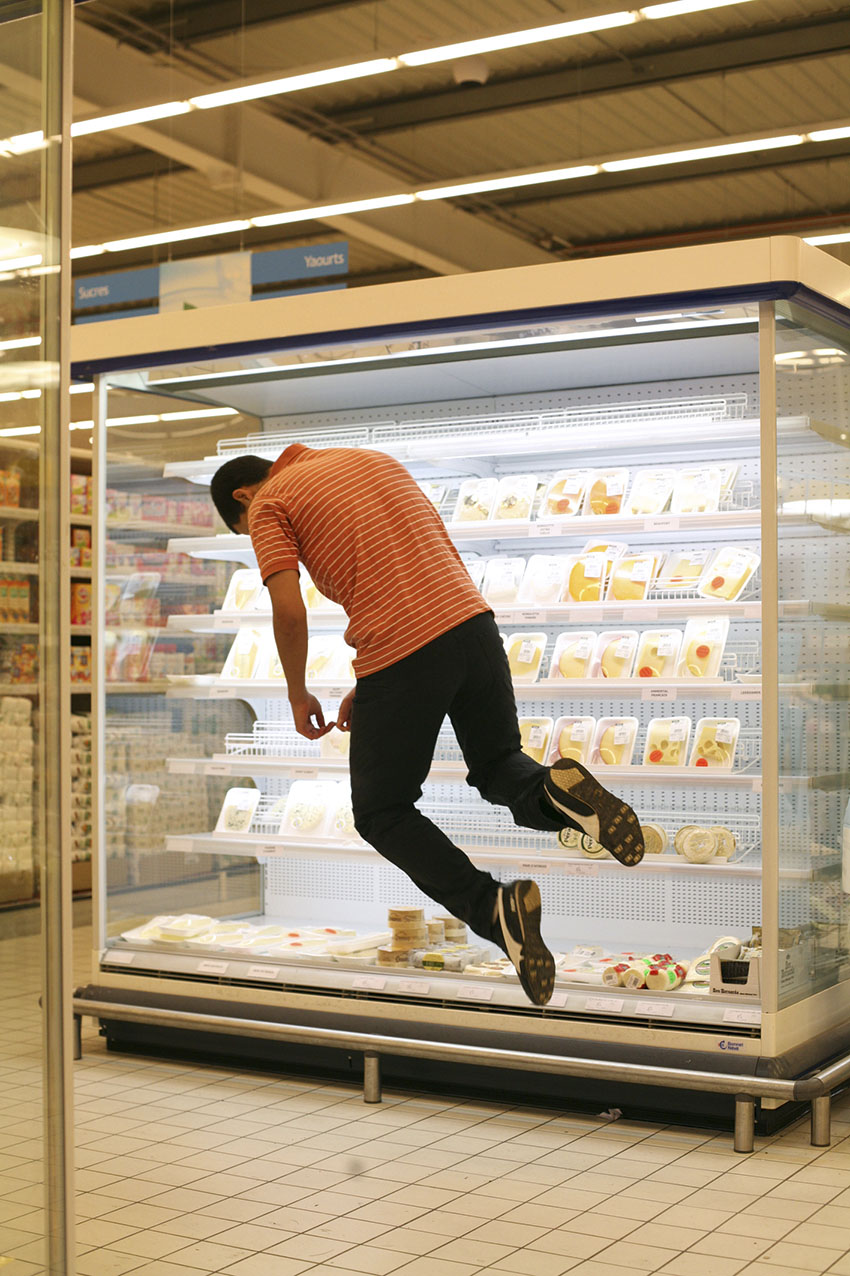
Denis Darzacq (French, b. 1961) 'Hyper #4' 2007 from the exhibition 'Hyper' by Denis Darzacq at Australian Centre for Photography (ACP), Sydney, March - April, 2009


Denis Darzacq (French, b. 1961)
Hyper #4
2007


These images form an interesting body of work: levitating bodies suspended between heaven and earth, neither here nor there, form a hyper-real image grounded in the context of the fluorescent isles of French supermarkets. The mainly anonymous humans look like mannequins in their inertness, frozen at the moment of throwing themselves/being thrown into the consumer environment. After his brilliant series La Chute (The Fall) Darzacq has taken people gathered in a casting call from around the town of Rouen and made their frozen bodies complicit in the mass production of the supermarket and the mass consumption of the image as tableaux vivant: the mise en scène directed by the photographer to limited effect. There is something unsettling about these images but ultimately they are unrewarding, as surface as the environment the bodies are suspended in, and perhaps this is the point.

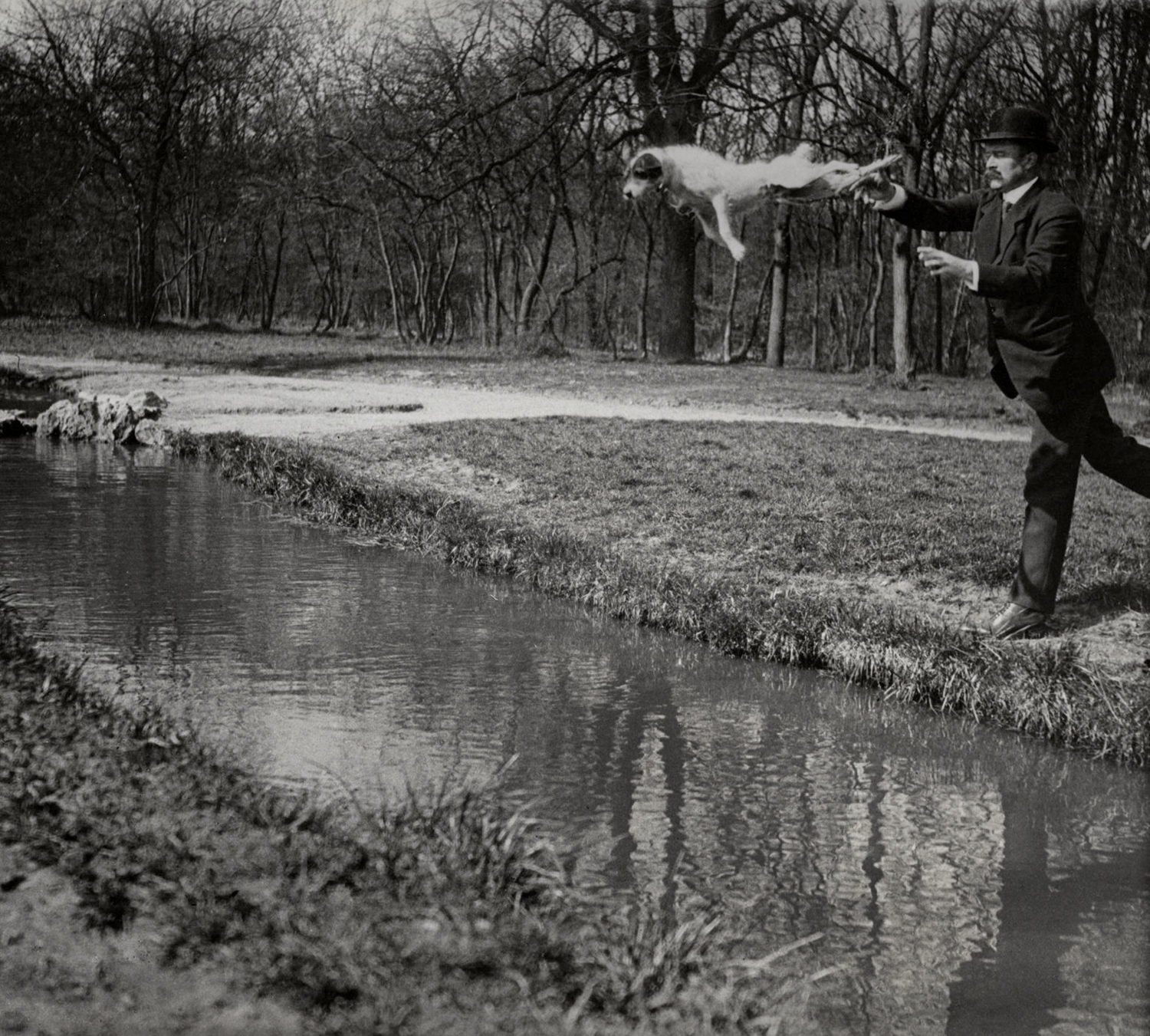
Suspension of bodies is not a new idea in photography. Jacques Henri Lartigue used the freeze frame to good effect long before Henri Cartier-Bresson came up with his ‘decisive moment’: playing with the effect of speed and gravity in an era of Futurism, Lartigue used the arrested movement of instant photography then afforded by smaller cameras and faster film to capture the spirit of liberation in the ‘Belle Epoque’ period before the First World War.

“All the jumping and flying in Lartigue’s photographs, it looks like the whole world at the turn of the century is on springs or something. There’s a kind of spirit of liberation that’s happening at the time and Lartigue matches that up with what stop action photography can do at the time, so you get these really dynamic pictures. And for Lartigue part of the joke, most of the time, is that these people look elegant but they are doing these crazy stunts.”1


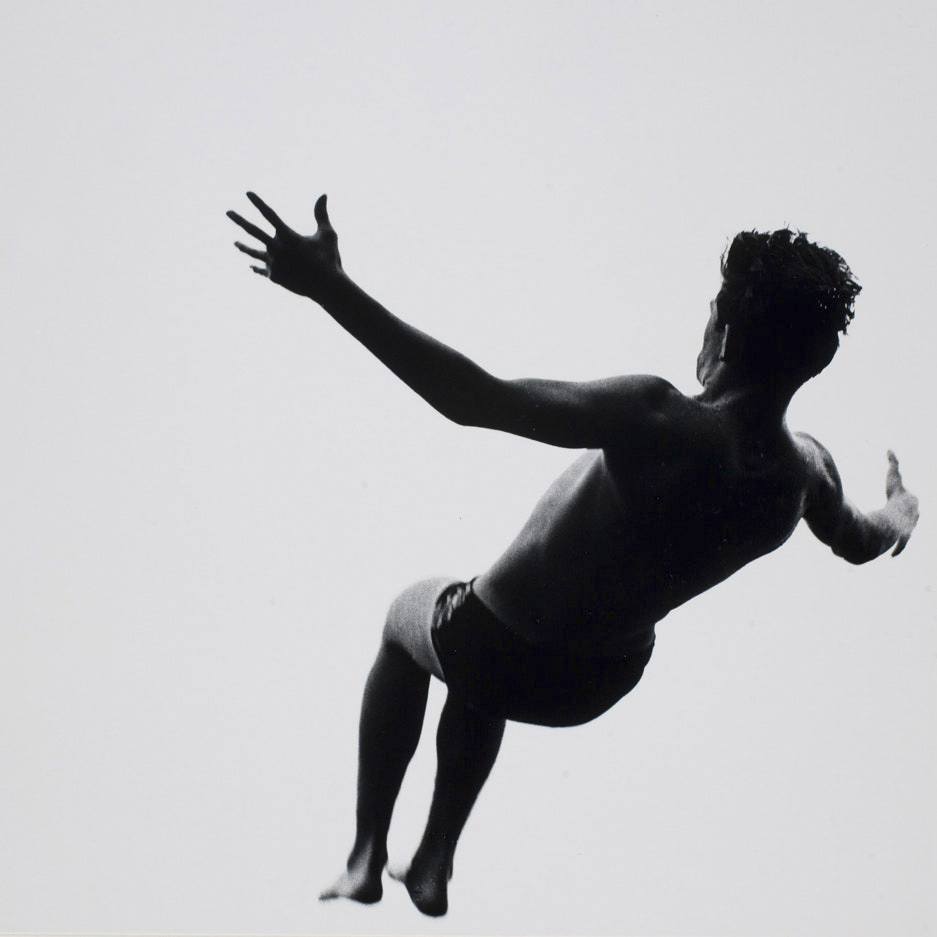
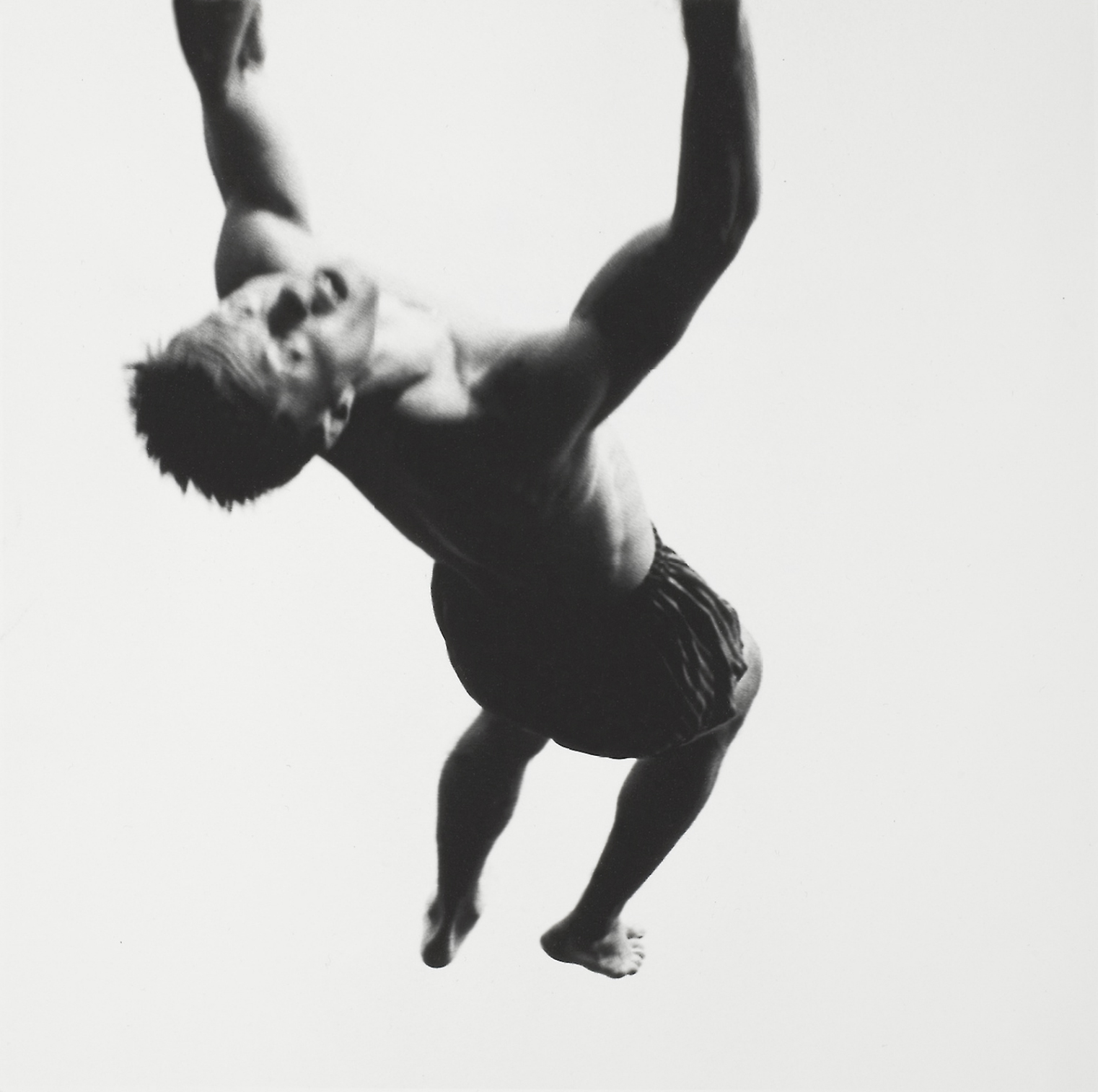
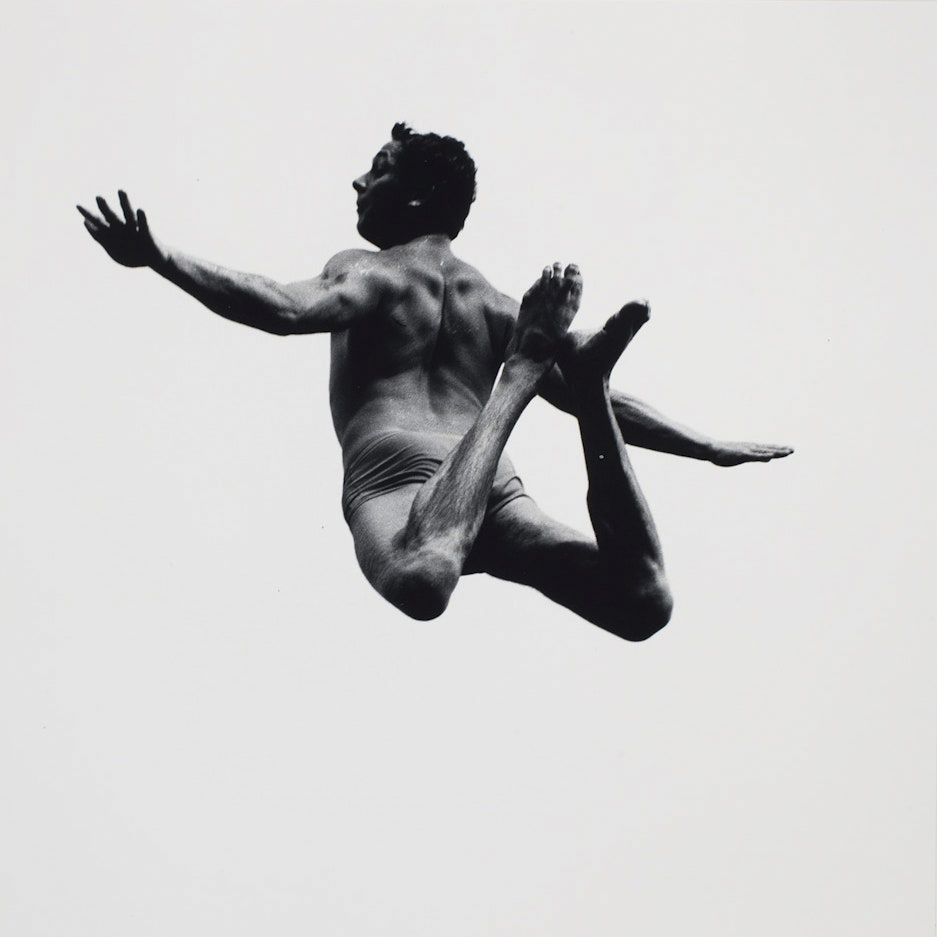
One of the greatest, if not the greatest ever, series of photographs of levitating bodies is that by American photographer Aaron Siskind. Called Pleasures and Terrors of Levitation (sometimes reversed as Terrors and Pleasures of Levitation as on the George Eastman House website) the images feature divers suspended in mid-air with the sky as their blank, background canvas. The images formal construction makes the viewer concentrate on the state of the body, its positioning in the air, and the look on the face of some of the divers caught between joy and fear.

“Highly formal, yet concerned with their subject as well as the idea they communicate, the ‘Pleasures and Terrors of Levitation’ photographs depict the dark shapes of divers suspended mid-leap against a blank white sky. Shot with a hand-held twin-lens reflex camera at the edge of Lake Michigan in Chicago, the balance and conflict suggested by the series’ title is evident in the divers’ sublime contortions.”2


Perhaps because of their air of balance and conflict we can return to these vibrant images again and again and they never loose their freshness, intensity and wonder. The same cannot be said of Denis Darzacq’s Hyper photographs. Slick and surface like the consumer society on which they comment the somnambulistic bodies are more like floating helium balloons, perhaps even tortured souls leaving the earth. Reminiscent of the magicians trick where the girl is suspended and a hoop passed around her body to prove the suspension is real these photographs really are more smoke and mirrors than any comment on the binary between being and having as some commentators (such as Amy Barrett-Lennard, Director Perth Institute of Contemporary Arts) have suggested. There is no spirit of liberation here, no sublime revelation as the seemingly lifeless bodies are trapped between the supermarket shelves, as oblivious to and as anonymous as the products that surround them. The well shot images perhaps possess a sense of fun, if I am being generous, as Darzacq plays with our understanding of reality… but are they more than that or is the Emperor just wearing very thin consumer clothing?

Dr Marcus Bunyan


1/ Kevin Moore (Lartigue biographer) quoted in “Genius of Photography,” on the BBC website [Online] Cited 15/03/2009

2/ Text from the Museum of Contemporary Photography website [Online] Cited 15/03/2009 (no longer available)


Many thankx to the Australian Centre for Photography for allowing me to publish the Darzacq photographs in the posting. Please click on the photographs for a larger version of the image. All other images are used under “fair use” for the purpose of education, research and critical discourse.


    Denis Darzacq (French, b. 1961) 'Hyper #8' 2007 from the exhibition 'Hyper' by Denis Darzacq at Australian Centre for Photography (ACP), Sydney, March - April, 2009


    Denis Darzacq (French, b. 1961)
    Hyper #8
    2007


    “The astonishing photographs that make up Hyper involve no digital manipulation, just close collaboration between young dancers and sportspeople as they jump for the camera to form strange, exaggerated poses and body gestures. Denis Darzacq was drawn to the trashy, consumerist nature of the French Hypermarkets (the equivalent of our supermarkets) and the hyper coloured backgrounds they provided. These supermarkets offered a sharp juxtaposition to the sublime, almost-spiritual bodies that appear to float in their aisles.

    Hyper is the latest series of works by French photographer Denis Darzacq, who continues to explore the place of the individual in society, a theme which has been crucial to his work in the last few years.”

    Text from the ACP website [Online] Cited 15/03/2009. No longer available online


    Jacques Henri Lartigue (French, 1894-1986) 'L'envol de Bichonnade' 1905


    Jacques Henri Lartigue (French, 1894-1986)
    Bichonnade, 40, Rue Cortambert, Paris
    1905
    Gelatin silver print


    Jacques Henri Lartigue (French, 1894-1986) 'Mr Folletete (Plitt) et Tupy, Paris, March 1912' 1912


    Jacques Henri Lartigue (French, 1894-1986)
    Mr Folletete (Plitt) et Tupy, Paris, March 1912
    1912
    Gelatin silver print


    Jacques Henri Lartigue (French, 1894-1986) 'Fuborg' 1929


    Jacques Henri Lartigue (French, 1894-1986)
    Fuborg
    1929
    Gelatin silver print


    Herni Cartier-Bresson (French, 1908-2004) 'Behind Saint Lazare Station, Paris, France' 1932


    Herni Cartier-Bresson (French, 1908-2004)
    Behind Saint Lazare Station, Paris, France
    1932
    Gelatin silver print


    Aaron Siskind (American, 1903-1991) 'Pleasures and Terrors of Levitation #37' 1954


    Aaron Siskind (American, 1903-1991)
    Pleasures and Terrors of Levitation #37
    1956
    Gelatin silver print


    Aaron Siskind (American, 1903-1991) 'Pleasures and Terrors of Levitation #47' 1954


    Aaron Siskind (American, 1903-1991)
    Pleasures and Terrors of Levitation #47
    1954
    Gelatin silver print


    Aaron Siskind (American, 1903-1991) 'Pleasures and Terrors of Levitation #93' 1961


    Aaron Siskind (American, 1903-1991)
    Pleasures and Terrors of Levitation #93
    1961
    Gelatin silver print


    Aaron Siskind (American, 1903-1991) 'Pleasures and Terrors of Levitation #99' 1953


    Aaron Siskind (American, 1903-1991)
    Pleasures and Terrors of Levitation #99
    1956
    Gelatin silver print


    Aaron Siskind (American, 1903-1991) 'Pleasures and Terrors of Levitation #491' 1954


    Aaron Siskind (American, 1903-1991)
    Pleasures and Terrors of Levitation #491
    1956
    Gelatin silver print


    Denis Darzacq (French, b. 1961) 'Hyper #3' 2007


    Denis Darzacq (French, b. 1961)
    Hyper #3
    2007


    Hyper picks up on La Chute while explicitly focusing the artist’s message on the consumerism which hovered in the background of several previous series. In Casques de Thouars Darzacq explored the connecting power and the limits of a consumer product; here the critique is more biting. Hyper opposes bodies in movement and the saturated, standardised space of mass distribution outlets. In this totally commercial setting, the body’s leap expresses the freedom and unhampered choice of its movement. It is a clear challenge to the marketing strategies which seek to control our behaviour. Some of the figures, glowing with an aura, impose glory and give off a sense of spirituality in total contrast with the temples of consumption in which they are found.

    “Hyper 1, 2007-2010,” on the Denis Darzacq website Nd [Online] Cited 13/06/2022


    Denis Darzacq (French, b. 1961) 'Hyper #14' 2007


    Denis Darzacq (French, b. 1961)
    Hyper #14
    2007


    Australian Centre for Photography

    This gallery has now closed

    Denis Darzacq website

    Denis Darzacq Hyper images

    LIKE ART BLART ON FACEBOOK

    Back to top

    Exhibition: ‘Reading the modern photography book: changing perceptions’ at the National Gallery of Art, Washington

    Exhibition dates: 18th January – 26th April, 2009


    Looks a great exhibition for fans of photography books!

    Many thankx to the National Gallery of Art, Washington for allowing me to publish the photographs in the posting. Please click on the photographs for a larger version of the image.


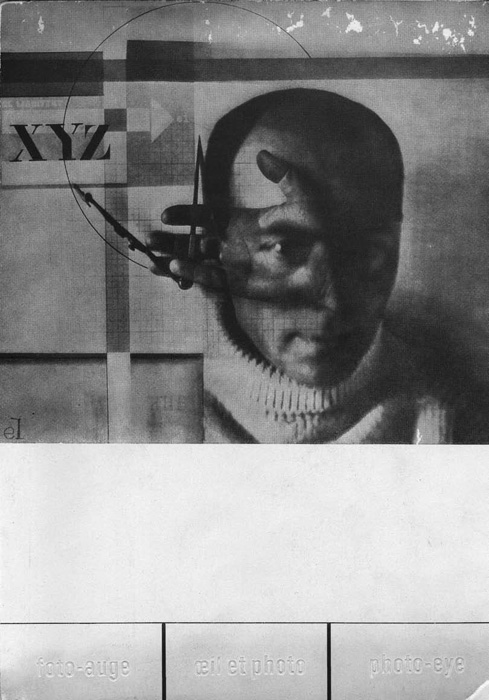
    foto-auge (photo-eye), edited and with an introduction by Franz Roh, cover design by Jan Tschichold (Stuttgart: Akademischer Verlag, Dr. Fritz Wedekind & Co., 1929) from the exhibition 'Reading the modern photography book: changing perceptions' at the National Gallery of Art, Washington, Jan - April, 2009


    foto-auge (photo-eye)
    Edited and with an introduction by Franz Roh, cover design by Jan Tschichold
    (Stuttgart: Akademischer Verlag, Dr. Fritz Wedekind & Co., 1929)


    “Also produced in conjunction with Film und Foto, this book showcases a wide variety of photographic practices as a way of examining the social importance of the medium’s ability to construct visual knowledge.”


    Held in conjunction with Looking In: Robert Frank’s “The Americans,” this exhibition examines a variety of artistic and thematic approaches to the modern photography book, displaying examples that span the period from the late 1920s to the early 1970s. The photography book, more than simply a book containing photographs, is a publication composed by the careful sequencing and editing of photographic material. Often produced by a photographer, they present visual narratives through creative page design that frequently integrates photographs with text and graphic elements.

    This focus exhibition organises 21 books from the Gallery’s library into four themes: “New Visions,” “Documented Realities,” “Postwar Scenes,” and “Conceptual Practices.” It highlights diverse projects from individual photographers such as László Moholy-Nagy, Henri Cartier-Bresson, and Yasuhiro Ishimoto as well as collaborative projects from the Hungarian Work Circle (Munka Kör) and Andy Warhol’s Factory, revealing that the photography book is both a significant conveyer of contemporary experience and a witness to historical events.

    The modern photography book, more than simply a book containing photographs, is a publication composed by the careful sequencing and editing of photographic material. Often produced by a photographer, these books present visual narratives through creative page design that frequently integrates photographs with text and graphic elements. Popular across the political spectrum, photography books have been published both as art objects and as documentary records. Through their organisation they foster a critical examination of the visual world, and as works of historical witness they have helped to construct cultural memories. Photography books have been a primary format for the arrangement and display of photographs, making them a vital but commonly overlooked component of the history of photography. Today they continue to provide an important forum for photographers to convey their work to a wide public audience.

    Photographs have appeared in book format since their inception. For example, William Henry Fox Talbot’s commercially published The Pencil of Nature (1844) was one of the earliest explorations of photography’s narrative capabilities. Like all early photography books, Talbot’s photographs were printed separately from the letterpress text. It was not until the 1880s, with the development of the halftone plate and printing process, that mass-produced newspapers, magazines, and books regularly featured photographs. This invention, which allowed type and photographic images to be mechanically reproduced on the same press, dramatically changed the means by which the general public viewed and had access to photographs. By the 1920s the number of photographically illustrated publications had increased exponentially, and photographs regularly recounted events without explanatory text. As people began to see more and more photographs on a daily basis, they became far more visually literate. Set within this context, the modern mass-produced photography book challenged not only traditional narrative structures but also popular habits of reading and seeing.

    Text from the National Gallery of Art website [Online] Cited 06/03/2009. No longer available online


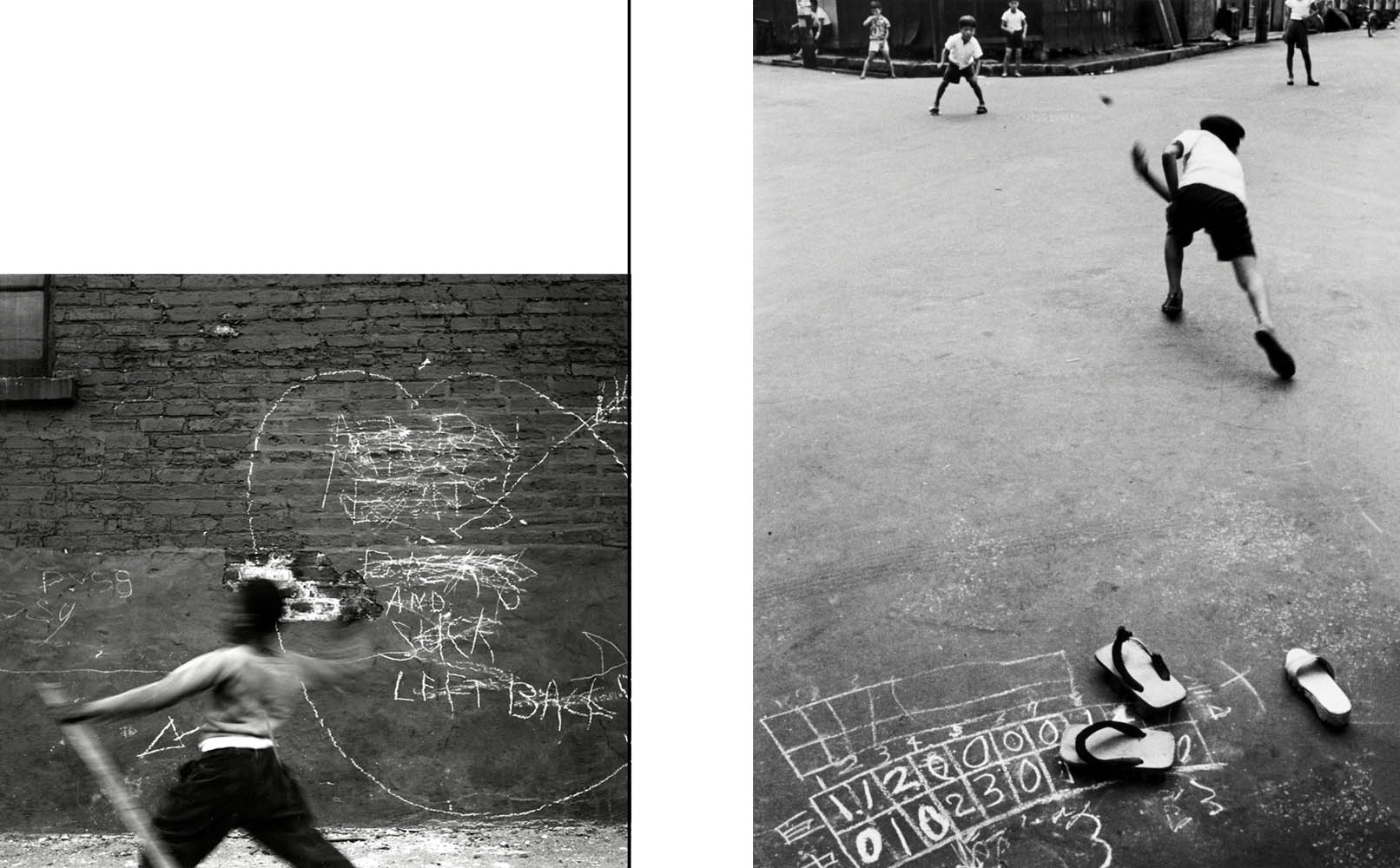
    Yasuhiro Ishimoto (Japanese-American, 1921-2012) 'Aruhi Arutokoro (Someday, Somewhere)' preface by Tsutomu Watanabe, design by Ryuuichi Yamashiro (Tokyo: Geibi Shuppan, 1958) from the exhibition 'Reading the modern photography book: changing perceptions' at the National Gallery of Art, Washington, Jan - April, 2009


    Yasuhiro Ishimoto (Japanese-American, 1921-2012)
    Aruhi Arutokoro (Someday, Somewhere)
    Preface by Tsutomu Watanabe, design by Ryuuichi Yamashiro (Tokyo: Geibi Shuppan, 1958)


    “This engaging publication juxtaposes photographs taken by Ishimoto in Chicago and Tokyo. Born in the United States, Ishimoto spent his childhood in Japan and later returned to the U.S. to attend school at the Institute of Design in Chicago. Finally settling in Tokyo, he influenced a new generation of postwar Japanese photographers interested in producing books.”


    Henri Cartier-Bresson (French, 1908-2004) 'The Decisive Moment' (New York: Simon & Schuster, in collaboration with Éditions Verve, Paris, 1952)


    Henri Cartier-Bresson (French, 1908-2004)
    The Decisive Moment
    (New York: Simon & Schuster, in collaboration with Éditions Verve, Paris, 1952)


    “An important presentation of Cartier-Bresson’s photographs from the 1930s and 1940s, this large-format book helped to popularise his work, in which a distinctive documentary approach transforms ordinary moments into remarkable photographic visions.”


    National Gallery of Art
    National Mall between 3rd and 7th Streets
    Constitution Avenue NW, Washington

    Opening hours:
    Daily 10.00am – 5.00pm

    National Gallery of Art website

    LIKE ART BLART ON FACEBOOK

    Back to top

    Photographic prize: the Magnum Foundation and the Inge Morath Foundation announce the sixth annual Inge Morath Award

    March 2009


    Inge Morath (American born Austria, 1923-2002) From the series about Regensburg Museums 1999


    Inge Morath (American born Austria, 1923-2002)
    From the series about Regensburg Museums
    1999
    Gelatin silver print


    “To take pictures had become a necessity and I did not want to forgo it for anything.”


    Inge Morath


    The Magnum Foundation and the Inge Morath Foundation announce the sixth annual Inge Morath Award. The annual prize of $5,000 is awarded by the Magnum Foundation to a female documentary photographer under the age of 30, to support the completion of a long-term project. One award winner and up to two finalists are selected by a jury composed of Magnum photographers.

    Inge Morath was an Austrian-born photographer who was associated with Magnum Photos for nearly fifty years. After her death in 2002, the Inge Morath Foundation was established to manage Morath’s estate and facilitate the study and appreciation of her contribution to photography.

    Because Morath devoted much of her enthusiasm to encouraging women photographers, her colleagues at Magnum Photos established the Inge Morath Award in her honour. The Award is now given by the Magnum Foundation as part of its mission of supporting new generations of socially-conscious documentary photographers, and is administered by the Magnum Foundation in collaboration with the Inge Morath Foundation.

    Past winners of the Inge Morath Award include: Kathryn Cook (US, ’08) for Memory Denied: Turkey and the Armenian Genocide; Olivia Arthur (UK, ’07) for The Middle Distance; Jessica Dimmock (US, ’06) for The Ninth Floor; Mimi Chakarova (US, ’06) for Sex Trafficking in Eastern Europe; Claudia Guadarrama (MX, ’05) for Before the Limit; and Ami Vitale (US, ’02), for Kashmir.

    Text from The Inge Morath Foundation website [Online] Cited 01/03/2009. No longer available online


    Inge Morath (American born Austria, 1923-2002) 'Visitor in the Metropolitan Museum' 1958


    Inge Morath (American born Austria, 1923-2002)
    Visitor in the Metropolitan Museum
    1958
    Gelatin silver print


    Inge Morath (American born Austria, 1923-2002) 'Window washer' 1958


    Inge Morath (American born Austria, 1923-2002)
    Window washer
    1958
    Gelatin silver print


    “I have photographed since 1952 and worked with Magnum Photos since 1953, first out of Paris, later out of New York. I am usually labeled as a photojournalist, as are all members of Magnum. I am quoting Henri Cartier-Bresson’s explanation for this: He wrote to John Szarkowski in answer to an essay in which Szarkowski stated that Cartier-Bresson labels himself as a photojournalist.

    “May I tell you the reason for this label? As well as the name of its inventor? It was Robert Capa. When I had my first show in the Museum of Modern Art in New York in 1948 he warned me: ‘watch out what label they put on you. If you become known as a surrealist […] then you will be considered precious and confidential. Just go on doing what you want to do anyway but call yourself a photojournalist, which puts you into direct contact with everything that is going on in the world.'”

    It is in this understanding that we have been working as a group and yet everyone following their own way of seeing. The power of photography resides no doubt partly in the tenacity with which it pushes whoever gets seriously involved with it to contribute in an immeasurable number of forms his own vision to enrich the sensibility and perception of the world around him.

    [In the 1950s] the burden of the already photographed was considerably less than now. There was little of the feeling of being a latecomer who has to overwhelm the huge existing body of the photographic oeuvre – which, in photography as in painting and literature, necessarily leads first to the adoption and then rejection of an elected model, until one’s own work is felt to be equal or superior, consequently original.

    Photography is a strange phenomenon. In spite of the use of that technical instrument, the camera, no two photographers, even if they were at the same place at the same time, come back with the same pictures. The personal vision is usually there from the beginning; result of a special chemistry of background and feelings, traditions and their rejection, of sensibility and voyeurism. You trust your eye and you cannot help but bare your soul. One’s vision finds of necessity the form suitable to express it.”

    Inge Morath, Life as a Photographer, 1999

    Text from The Inge Morath Foundation website [Online] Cited 01/03/2009. No longer available online


    Inge Morath (American born Austria, 1923-2002) 'Mrs. Eveleigh Nash, London, 1953' 1953


    Inge Morath (American born Austria, 1923-2002)
    Mrs. Eveleigh Nash, London, 1953
    1953
    Gelatin silver print


    LIKE ART BLART ON FACEBOOK

    Back to top

    Exhibition: ‘The Last Days of W’ by Alec Soth at Gagosian Gallery, New York

    Exhibition dates: 20th January – 7th March, 2009


    Alec Soth (American, b. 1969) 'Civic Fest, Minneapolis, MN (Presidential office)' 2008 from the exhibition 'The Last Days of W' by Alec Soth at Gagosian Gallery, New York, jan - March, 2009


    Alec Soth (American, b. 1969)
    Civic Fest, Minneapolis, MN (Presidential office)
    2008


    Another fantastic group of Americurbana from this wonderful photographer!

    Dr Marcus Bunyan


    Many thankx to Gagosian Gallery for allowing me to publish the photographs in the posting. Please click on the photographs for a larger version of the image.


    “Henri Cartier-Bresson famously said, “The world is going to pieces and people like Adams and Weston are photographing rocks.” But I don’t think the world would have been a better place if these photographers had headed off to a war zone. The question is whether you can be a political photographer while you photograph rocks. My pictures don’t have a specific social commentary but I think they have social and political meaning.”


    Alec Soth on the Gagosian Gallery website 2009


    Alec Soth (American, b. 1969) 'Dynell, Bemidji, MN (Girl in store)' 2007 from the exhibition 'The Last Days of W' by Alec Soth at Gagosian Gallery, New York, jan - March, 2009


    Alec Soth (American, b. 1969)
    Dynell, Bemidji, MN (Girl in store)
    2007


    Alec Soth (American, b. 1969) 'Josh, Joelton, Tennessee' 2004


    Alec Soth (American, b. 1969)
    Josh, Joelton, Tennessee
    2004


    Gagosian Gallery is pleased to present The Last Days of W., colour photographs taken by Alec Soth between 2000 and 2008.

    Although originally conceived without explicit political intent, in retrospect Soth considers this selected body of work, which spans both terms of George W. Bush’s presidency, to represent “a panoramic look at a country exhausted by its catastrophic leadership.” Soth’s earlier series such as Sleeping by the Mississippi, Niagara, and Dog Days, Bogotá – all subjective narratives containing disenfranchised figures and decaying landscapes – laid the conceptual groundwork for The Last Days of W. It provides a wry commentary on the adverse effects of the national administration, perhaps best exemplified by an unwittingly ironic remark that Bush made in 2000: “I think we can agree, the past is over.”

    Following in the humanist tradition established by the great chroniclers of the American experience such as Walker Evans, Robert Frank, and Stephen Shore, Soth captures diverse images of a country disillusioned with, and deceived by, its own identity, from mothers of marines serving in Iraq to teenage mothers in the Louisiana Bayou; from religious propaganda in the American workplace to the mortgage crisis in Stockton, CA. His incisive depiction of contemporary American reality confronts the ideals romanticised in the American Dream with the hastening decline of the American Empire.

    Text from the Gagosian Gallery website 2009


    Alec Soth 'The Last Days of W' installation view at Gagosian Gallery


    The Last Days of W installation view at Gagosian Gallery


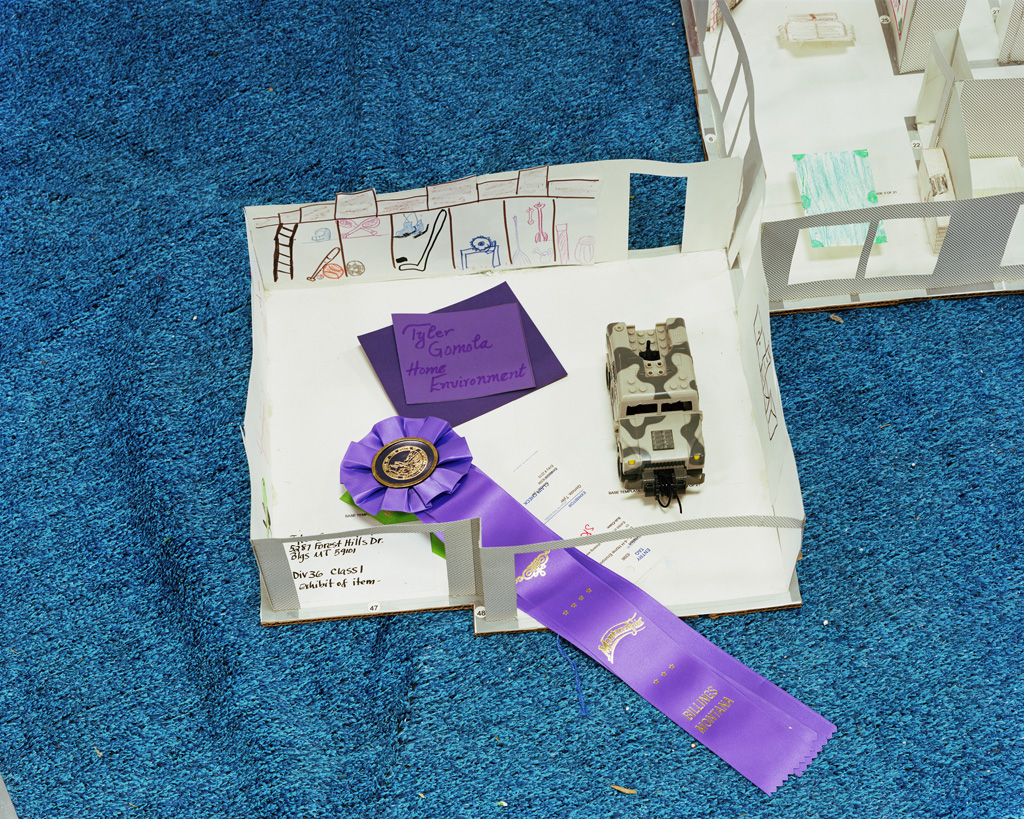
    Alec Soth (American, b. 1969) 'Home Environment, Billings, MT' 2008


    Alec Soth (American, b. 1969)
    Home Environment, Billings, MT
    2008


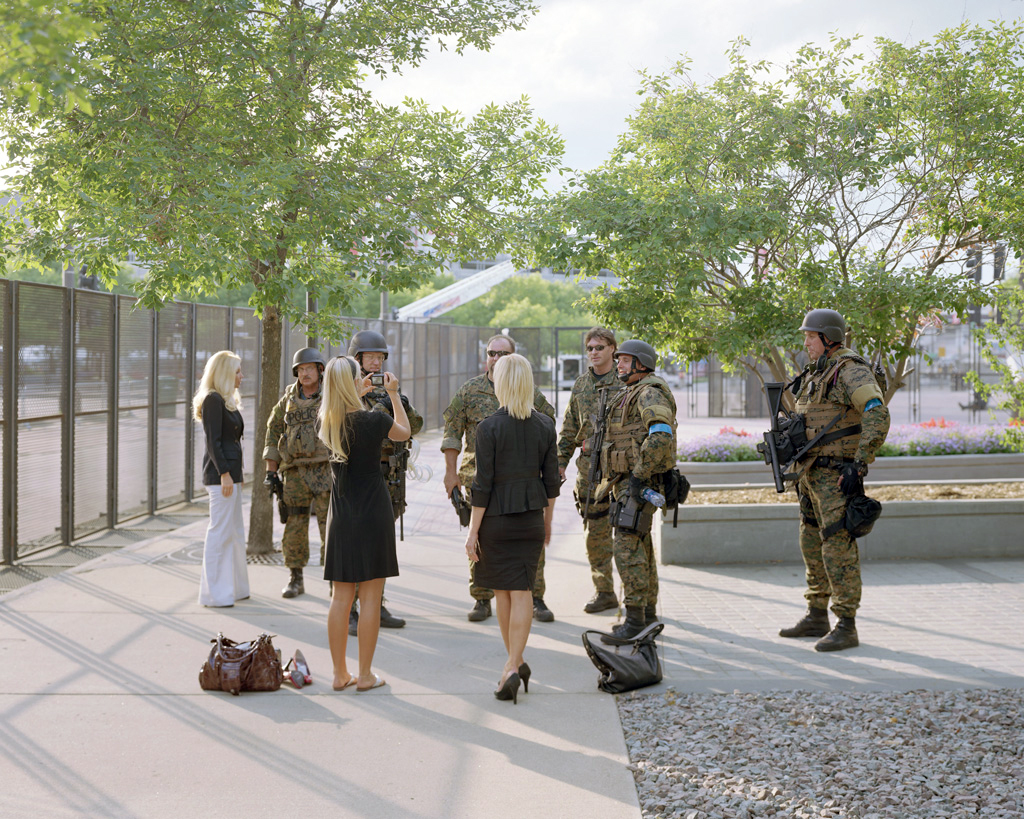
    Alec Soth (American, b. 1969) 'Republican National Convention, Saint Paul, MN' 2008


    Alec Soth (American, b. 1969)
    Republican National Convention, Saint Paul, MN
    2008


    Gagosian Gallery
    980 Madison Avenue
    New York, NY 10075
    Phone: 212.744.2313

    Opening hours:
    Monday – Saturday 10am – 6pm

    Gagosian Gallery website

    LIKE ART BLART ON FACEBOOK

    Back to top

    Exhibition: ‘William Eggleston: Democratic Camera, Photographs and Video, 1961-2008’ at the Whitney Museum of American Art, New York

    Exhibition dates: 7th November, 2008 – 25th January, 2009


    William Eggleston (American, b. 1939) 'Untitled' c. 1971-1973 from the exhibition Exhibition: 'William Eggleston: Democratic Camera, Photographs and Video, 1961-2008' at the Whitney Museum of American Art, New York, Nov 2008 - Jan 2009


    William Eggleston (American, b. 1939)
    Untitled
    c. 1971-1973
    From Troubled Waters 1980
    Dye-transfer print
    © Eggleston Artistic Trust


    One of the most influential photographers of the last half-century, William Eggleston has defined the history of colour photography. This exhibition is the artist’s first retrospective in the United States and includes both his colour and black-and-white photographs as well as Stranded in Canton, the artist’s video work from the early 1970s.

    William Eggleston’s great achievement in photography can be described in a straightforward way: he captures everyday moments and transforms them into indelible images. William Eggleston: Democratic Camera, Photographs and Video, 1961-2008 presents a comprehensive selection from nearly fifty years of image-making.

    Born in 1939 in Sumner, Mississippi, a small town in the Delta region, Eggleston showed an early interest in cameras and audio technology. While studying at various colleges in the South, he purchased his first camera and came across a copy of Henri Cartier-Bresson’s book The Decisive Moment (1952). In the early 1960s, Eggleston married and moved to Memphis, where he has lived ever since. He first worked in black-and-white, but by the end of the decade began photographing primarily in colour. Internationally acclaimed and widely traveled, Eggleston has spent the past four decades photographing all around the world, conveying intuitive responses to fleeting configurations of cultural signs and moods as specific expressions of local colour. Psychologically complex and casually refined, bordering on kitsch and never conventionally beautiful, these photographs speak principally to the expanse of Eggleston’s imagination and have had a pervasive influence on all aspects of visual culture. By not censoring, rarely editing, and always photographing, Eggleston convinces us of the idea of the democratic camera.

    This exhibition was organised by the Whitney Museum of American Art, New York, in association with Haus der Kunst, Munich.

    Text from the Whitney Museum of American Art website


    Many thankx to the Whitney Museum of American Art for allowing me to publish the photographs in the posting. Please click on the photographs for a larger version of the image.


    William Eggleston (American, b. 1939) 'Untitled' 1973 from the exhibition Exhibition: 'William Eggleston: Democratic Camera, Photographs and Video, 1961-2008' at the Whitney Museum of American Art, New York, Nov 2008 - Jan 2009


    William Eggleston (American, b. 1939)
    Untitled
    1973
    Dye-transfer print
    © Eggleston Artistic Trust


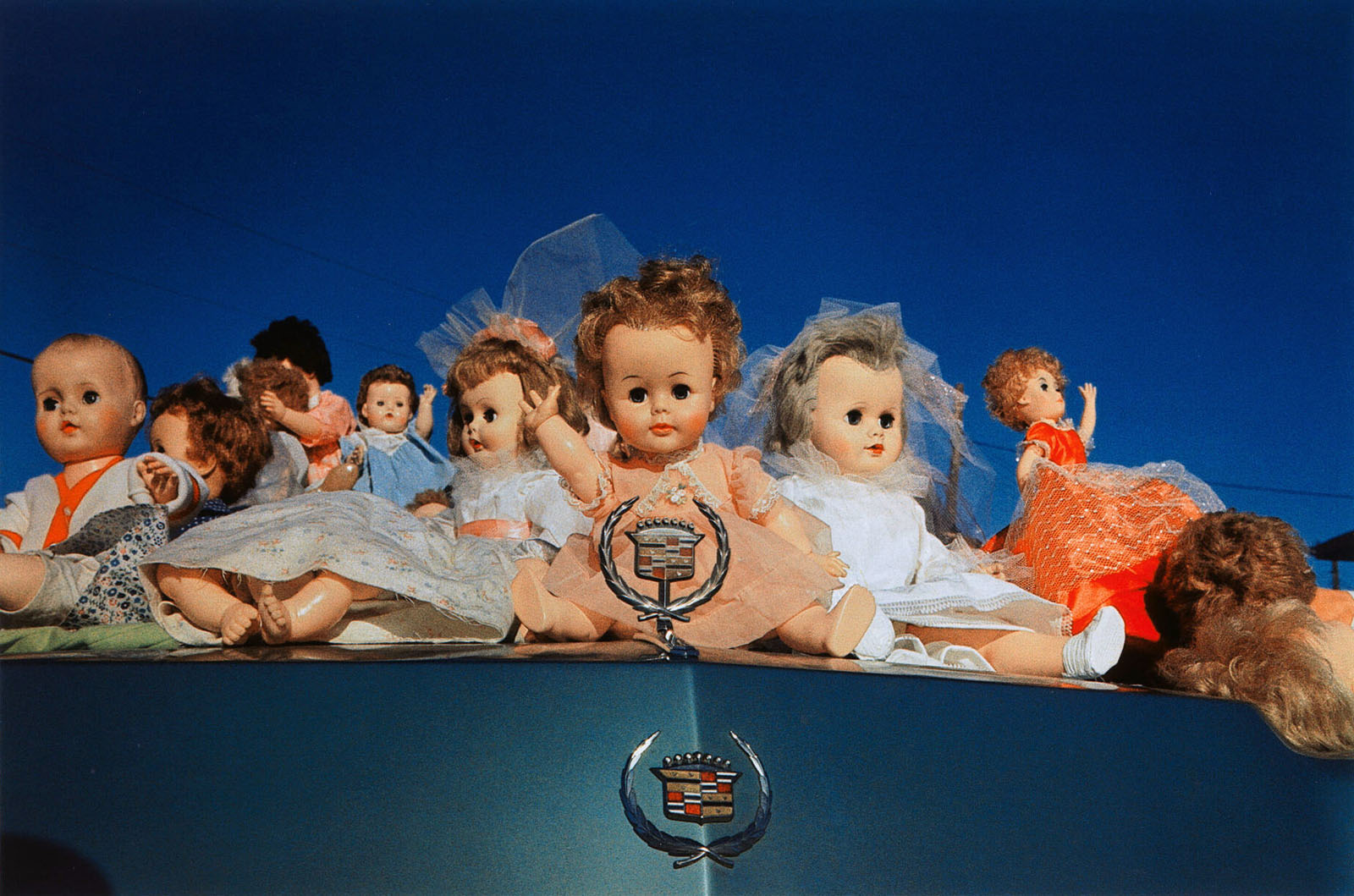
    William Eggleston (American, b. 1939) 'Untitled (Baby Doll Cadillac)' 1973, printed 1996


    William Eggleston (American, b. 1939)
    Untitled (Baby Doll Cadillac)
    1973, printed 1996
    From the Los Alamos portfolio
    Dye transfer print
    11 3/4 × 17 11/16in. (29.8 × 44.9cm)
    Whitney Museum of American Art, New York; purchase, with funds from the Photography Committee
    © Eggleston Artistic Trust, courtesy Cheim & Read, NYC


    William Eggleston (America, born July 27, 1939) 'Memphis' c. 1970


    William Eggleston (America, b. 1939)
    Memphis
    c. 1970
    Dye-transfer print
    © Eggleston Artistic Trust


    William Eggleston video

    “This candid interview with photographer William Eggleston was conducted by film director Michael Almereyda on the occasion of the opening of Eggleston’s retrospective William Eggleston: Democratic Camera, Photographs and Video, 1961-2008 at the Whitney Museum of American Art. A key figure in American photography, Eggleston is credited almost single-handedly with ushering in the era of colour photography. Eggleston discusses his shift from black and white to colour photography in this video as, “it never was a conscious thing. I had wanted to see a lot of things in colour because the world is in colour”. Also included in this video are Eggleston’s remarks about his personal relationships with the subjects of many of his photographs.”


    The Ending of Stranded in Canton

    In 1973, photographer William Eggleston picked up a Sony PortaPak and took to documenting the soul of Memphis and New Orleans. Transvestites, geek men biting off chicken heads, classy blues musicians, and crazed men with guns form the backbone of this documentary look at the “Southern Hipsters” of Louisiana and Mississippi.

    Stranded in Canton

    In 1973, photographer William Eggleston picked up a Sony PortaPak and took to documenting the soul of Memphis and New Orleans.

    “These were the Merry Prankster and “Easy Rider” years, when road trips and craziness were cool, and Mr. Eggleston set out on some hard-drinking picture-taking excursions. He also embarked on repeated shorter expeditions closer to home in the form of epic bar crawls, which resulted in the legendary video “Stranded in Canton.”

    Originally existing as countless hours of unedited film and recently pared down by the filmmaker Robert Gordon to a manageable 76 minutes, it was shot in various places in 1973 and 1974. (The new version is in the retrospective.) Mr. Eggleston would show up with friends at favourite bars, turn on his Sony Portapak, push the camera into people’s faces and encourage them to carry on.

    And they did. Apart from brief shots of his children and documentary-style filming of musicians, the result is like some extreme form of reality television. Your first thought is: Why do people let themselves be seen like this? Do they know what they look like? You wonder if Mr. Eggleston is deliberately shaping some tragicomic Lower Depths drama or just doing his customary shoot-what’s-there thing, the what’s-there in this case being chemical lunacy. For all the film’s fringy charge there’s something truly creepy and deadly going on, as there is in much of Mr. Eggleston’s art. You might label it Southern Gothic; but whatever it is, it surfaces when a lot of his work is brought together.”

    Holland Cotter. “Old South Meets New, in Living Color,” on The New York Times website Nov 6, 2008


    William Eggleston (America, b. 1939) 'Untitled' c. 1976


    William Eggleston (America, b. 1939)
    Untitled
    c. 1976
    From Election Eve
    © Eggleston Artistic Trust
    Courtesy Cheim & Read Gallery


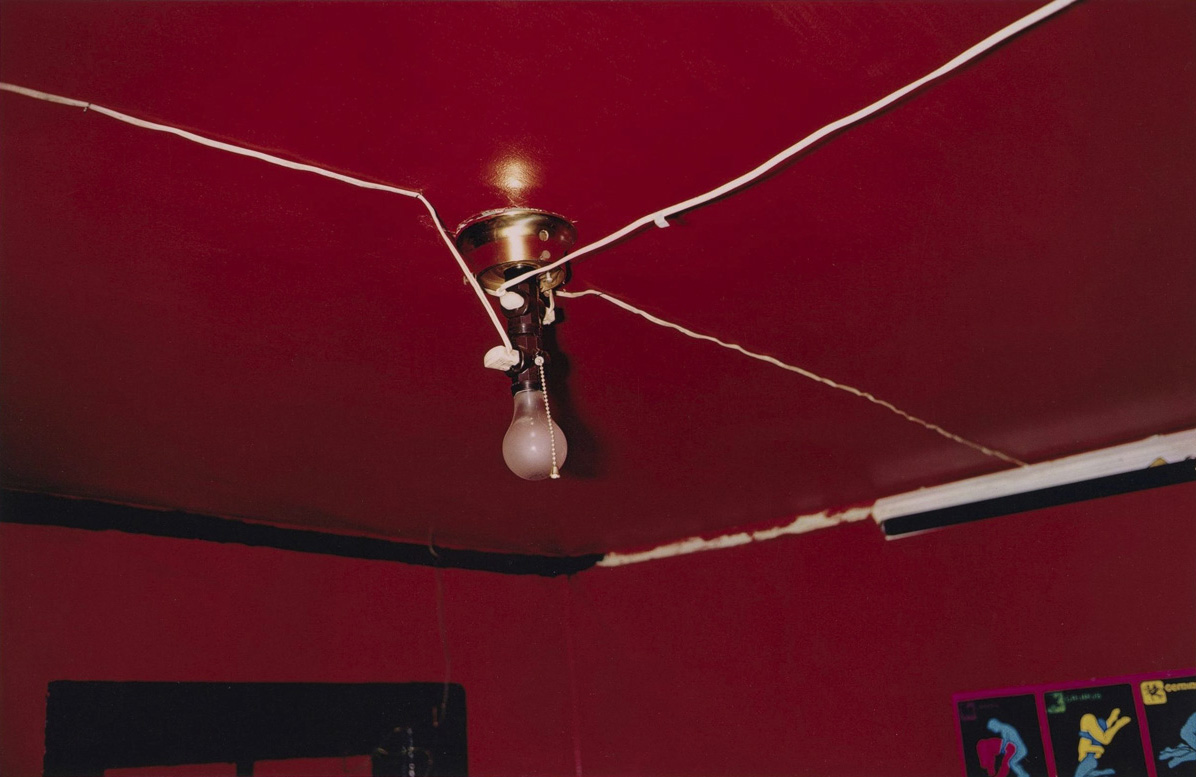
    William Eggleston (American, born 1939) 'Untitled (Greenwood, Mississippi)' 1980


    William Eggleston (American, born 1939)
    Untitled (Greenwood, Mississippi)
    1980
    Dye-transfer print
    29.6 x 45.5cm (11 5/8 x 17 15/16 in.)
    The Metropolitan Museum of Art
    Purchase, Louis V. Bell, Harris Brisbane Dick, Fletcher, and Rogers Funds and Joseph Pulitzer Bequest, and Jennifer and Philip Maritz Gift, 2012
    © Eggleston Artistic Trust


    William Eggleston (American, b. 1939) 'Untitled' Nd


    William Eggleston (American, b. 1939)
    Untitled
    Nd
    Dye-transfer print
    From Los Alamos 1965-1968 and 1972-1974 (published 2003)
    © Eggleston Artistic Trust


    William Eggleston (American, b. 1939) 'Untitled' c. 1975 (Marcia Hare in Memphis Tennessee) c. 1975


    William Eggleston (American, b. 1939)
    Untitled (Marcia Hare in Memphis Tennessee)
    c. 1975
    Dye-transfer print
    © Eggleston Artistic Trust


    William Eggleston (American, b. 1939) 'Huntsville, Alabama' c. 1971


    William Eggleston (American, b. 1939)
    Huntsville, Alabama
    1971
    Dye-transfer print
    © Eggleston Artistic Trust


    William Eggleston (American, b. 1939) 'Untitled (Memphis Tennessee)' 1965


    William Eggleston (American, b. 1939)
    Untitled (Memphis Tennessee)
    1965
    Dye-transfer print
    © Eggleston Artistic Trust


    William Eggleston (American, b. 1939) 'Untitled (Memphis)' c. 1969-1971


    William Eggleston (American, b. 1939)
    Untitled (Memphis)
    c. 1969-1971
    Dye-transfer print
    © Eggleston Artistic Trust
    Courtesy Cheim & Read Gallery


    William Eggleston (American, b. 1939) 'Untitled' 1983


    William Eggleston (American, b. 1939)
    Untitled
    1983
    From a series of photographs taken at Graceland
    Dye-transfer print
    © Eggleston Artistic Trust
    Courtesy Whitney Museum of American Art


    Whitney Museum of American Art
    99 Gansevoort Street
    New York, NY 10014
    Phone: (212) 570-3600

    Opening hours:
    Mon: 10.30am – 6pm
    Tues: Closed
    Wed: 10.30am – 6pm
    Thurs: 10.30am – 6pm
    Fri: 10.30am – 10pm*
    Sat: 11am – 6pm
    Sun: 11am – 6pm

    Whitney Museum of American Art website

    William Eggleston exhibition web page

    LIKE ART BLART ON FACEBOOK

    Back to top