Exhibition: ‘This Is Britain: Photographs from the 1970s and 1980s’ at the National Gallery of Art, Washington

Exhibition dates: 29th January – 11th June 2023

Curator: The exhibition is curated by Kara Felt, assistant curator of art at the Denver Botanic Gardens and a former Andrew W. Mellon Postdoctoral Curatorial Fellow in the department of photographs at the National Gallery of Art, with the organisational assistance of Diane Waggoner, Curator of Photographs, National Gallery of Art.


Gilles Peress (French, b. 1946) 'NORTHERN IRELAND. Belfast. Summer evening' 1989


Gilles Peress (French, b. 1946)
NORTHERN IRELAND. Belfast. Summer evening
1989
Gelatin silver print
Corcoran Collection
Museum Purchase with funds donated by the Marlin Miller, Jr. Family Foundation and by exchange: John Bryant and Patricia Bauman


I lived through these years in Britain.

Strikes, unemployment, high inflation and economic failure
New Right, monetarist ideas and the free market economy
The Troubles
The Winter of Discontent
The queens silver jubilee
Glam Rock, punk and then New Romantics; disco and then HiNRG
Aston Martin, Triumph TR7, two door Capri and MGB GT
Falklands War
Charles and Diana
1984-1985 miners’ strike
Recession
North-South divide
Gay Liberation, women’s liberation
Clause 28
HIV/AIDS
Brixton Riots (September 1985)
Racism and the National Front
Victorian values and moral behaviour vs the permissive society

and Margaret Thatcher

That one name still sends shivers down my spine.

The photographs in this posting capture the grittiness of those years… and the surreality of the lived experience. From my perspective, I worked really hard and partied even harder at clubs such as Scandals, Adams, Bang and Heaven. I spent as much as I earnt and careered around London in my beloved Mini 1275 GT as fast as I could, listening to David Bowie, Barry White and the Love Unlimited Orchestra, Pink Floyd, and the inimitable Grace Jones.

In black and white, Graham Smith’s Bennetts Corner (Giro Corner), the Erimus Club and Commercial Pub, South Bank, Middlesbrough (1982, below) perfectly encapsulates the depressive, dank mood of the country during these years. The meaning of “Giro corner” in the title references a place where people would go, in this case two pubs, to spend their Giro cheque: an unemployment or income support payment by giro cheque, posted fortnightly.

In colour, Martin Parr’s two photographs of New Brighton, Merseyside (1984, below) reference the absurdity of the British at play: leisure time in “new” Brighton on Mersyside in North West England (many miles from the affluent Brighton on the south coast of England) – eating surrounded by rubbish and relaxing on a hard concrete ramp with crying baby, while other artists capture the isolation of individuals, their working class lives and middle class pretensions.

Dr Marcus Bunyan


Many thankx to the National Gallery of Art for allowing me to publish the photographs in the posting. Please click on the photographs for a larger version of the image.


Profound changes in British society in the 1970s and 1980s inspired a revolution in British photography. This Is Britain highlights the socially conscious photographers who captured this moment in time, among them Vanley Burke, Pogus Caesar, Anna Fox, Paul Graham, Sunil Gupta, Chris Killip, Sirkka-Liisa Konttinen, and Martin Parr. The exhibition features some 45 newly acquired prints in the National Gallery of Art’s collection. It brings together works by photographers who explored the national identity as Britain grappled with deindustrialisation, uprisings in inner cities, the Troubles in Northern Ireland, and the controversial policies of Prime Minister Margaret Thatcher. The exhibition also includes Handsworth Songs (1986, below), a 59-minute film on the uprisings that rocked London and Birmingham in 1985. It was produced by the Black Audio Film Collective and directed by John Akomfrah. The exhibition is organised by the National Gallery of Art.

Text from the National Gallery of Art website


Anna Fox (British, b. 1961) 'Advertising Agency, Docklands Enterprise Zone' 1988


Anna Fox (British, b. 1961)
Advertising Agency, Docklands Enterprise Zone
1988
From the series Work Stations
Chromogenic print
Image (visible): 44.5 x 54.8 cm (17 1/2 x 21 9/16 in.)
Framed: 68.5 x 83.8 cm (26 15/16 x 33 in.)
National Gallery of Art, Washington, Alfred H. Moses and Fern M. Schad Fund


Anna Fox (British, b. 1961) 'Conference and Exhibitions Organiser, Euston. Personal Assistant to the Director' 1988, printed later


Anna Fox (British, b. 1961)
Conference and Exhibitions Organiser, Euston. Personal Assistant to the Director
1988, printed later
From the series Work Stations
Chromogenic print
Image (visible): 44.5 x 54.8cm (17 1/2 x 21 9/16 in.)
Framed: 68.5 x 83.8cm (26 15/16 x 33 in.)
National Gallery of Art, Washington, Alfred H. Moses and Fern M. Schad Fund


Anna Fox (British, b. 1961) 'Cafe, the City. Salesperson' 1988 from the series 'Work Stations'


Anna Fox (British, b. 1961)
Cafe, the City. Salesperson
1988
From the series Work Stations
Chromogenic print
Image (visible): 44.5 x 54.8cm (17 1/2 x 21 9/16 in.)
Framed: 68.5 x 83.8cm (26 15/16 x 33 in.)
National Gallery of Art, Washington, Alfred H. Moses and Fern M. Schad Fund


Britain experienced profound changes in the 1970s and 1980s, when it was racked by deindustrialization, urban uprisings, the controversial policies of Prime Minister Margaret Thatcher, and the Troubles in Northern Ireland. Photography became a central form of creative expression during this period, supported and disseminated through new schools, galleries, artists’ collectives, magazines, and government funding.

This Is Britain brings together the work of a generation of photographers who were commenting on the deep unrest of these pivotal decades. Vanley Burke, Pogus Caesar, Anna Fox, Paul Graham, Sunil Gupta, Chris Killip, Sirkka-Liisa Konttinen, Martin Parr, and others pictured communities, traditions, and landscapes affected by Britain’s shifting social and economic realities. Together, they photographed a nation redefining what it meant to be British and, ultimately, modern.

Text from the National Gallery of Art website


Profound changes in British society in the 1970s and 1980s inspired a revolution in British photography. This Is Britain: Photographs from the 1970s and 1980s highlights the work of socially conscious photographers who captured this period of unrest. The exhibition features some 45 newly acquired prints by Vanley Burke, Pogus Caesar, Anna Fox, Paul Graham, Sunil Gupta, Chris Killip, Sirkka-Liisa Konttinen, Martin Parr, and others. It brings together photographers who examined national identity as Britain grappled with deindustrialisation, uprisings in inner cities, the Troubles in Northern Ireland, and the sometimes controversial policies of Prime Minister Margaret Thatcher. On view on the Ground Floor of the National Gallery’s West Building from January 29 through June 11, 2023, the exhibition also features the film Handsworth Songs (1986). The 59-minute film, produced by the Black Audio Film Collective and directed by John Akomfrah, explores uprisings in London and Birmingham in 1985. Reece Auguiste, a member of the Black Audio Film Collective, is the guest curator for an accompanying film program.

Beginning in the 1970s, photography gained its contemporary prominence in Britain, with a rapidly expanding network of galleries, artists’ collectives, schools, and magazines dedicated to promoting the medium. Immigrants and artists of colour, reflecting Britain’s growing multiculturalism, introduced fresh perspectives, as did the many women who entered the field. A generation of young photographers moved from largely black-and-white, documentary styles to more conceptual and often humorous projects in colour in the 1980s. As photographers forged new directions, they pictured a country redefining what it meant to be British and, ultimately, modern.

This Is Britain tells history on an intimate scale, highlighting stories we may have otherwise missed. The addition of these photographs to the National Gallery’s collection allows us to reflect on two decades of artistic innovation and celebrate the talented, diverse group of creators who captured them. We hope that this exhibition inspires visitors, as they contemplate some of the highs and lows experienced by British citizens in the ’70s and ’80s,” said Kaywin Feldman, director of the National Gallery of Art.

Exhibition overview

This Is Britain: Photographs from the 1970s and 1980s focuses on the work of photographers who recorded ways of life that were under threat or disappearing in those tumultuous decades. John Davies’s expansive view of Agecroft Power Station, Salford (1983​) emphasises the displacement of industrial structures. Paul Graham’s​ elegiac series A1: The Great North Road (1982​) examines the shift away from the A1 – a major thoroughfare from London to Edinburgh – to the newer, more direct M1 motorway, resulting in businesses along the former highway to suffer. With their forlorn colours and barren spaces, his pictures challenged the expectation that photography on social themes should be in black and white. Reflecting Britain’s growing immigration and multiculturalism during this period of modernisation, Vanley Burke’s Boy with Flag, Winford in Handsworth Park (1970) pictures a Black youth proudly displaying the Union Jack from his bike.

Many artists in the 1980s continued exploring colour photography, using intense hues inspired by advertising to poke fun at the rise of leisure activities, consumerism, and corporate greed. The series The Last Resort (1983-1986) by Martin Parr, arguably Britain’s most influential living photographer, surveys seaside tourists in New Brighton with acerbic wit. Chris Steele-Perkins​’s decade-long project The Pleasure Principle (1980-1989) captures Margaret Thatcher’s England through surreal images, such as Hypnosis Demonstration, Cambridge University Ball. Six photographs from Anna Fox’s Work Stations (1987-1988​) signal the competition and stress of London office life in the late 1980s. Sunil Gupta strikes a more polemical tone in his series “Pretended” Family Relationships (1988) by responding to Thatcher’s policy prohibiting the promotion of gay and lesbian lifestyles.

The final room presents Handsworth Songs (1986, 59 minutes), a landmark nonfiction film that connects the civil unrest in London and the Handsworth section of Birmingham in 1985 with Britain’s colonial past, weaving contemporary reports and interviews with historical footage and photographs. The film, produced by the Black Audio Film Collective and directed by the acclaimed filmmaker John Akomfrah, features a soundtrack that mixes reggae and post-punk with industrial noises and voiceovers.

Press release from the National Gallery of Art, Washington
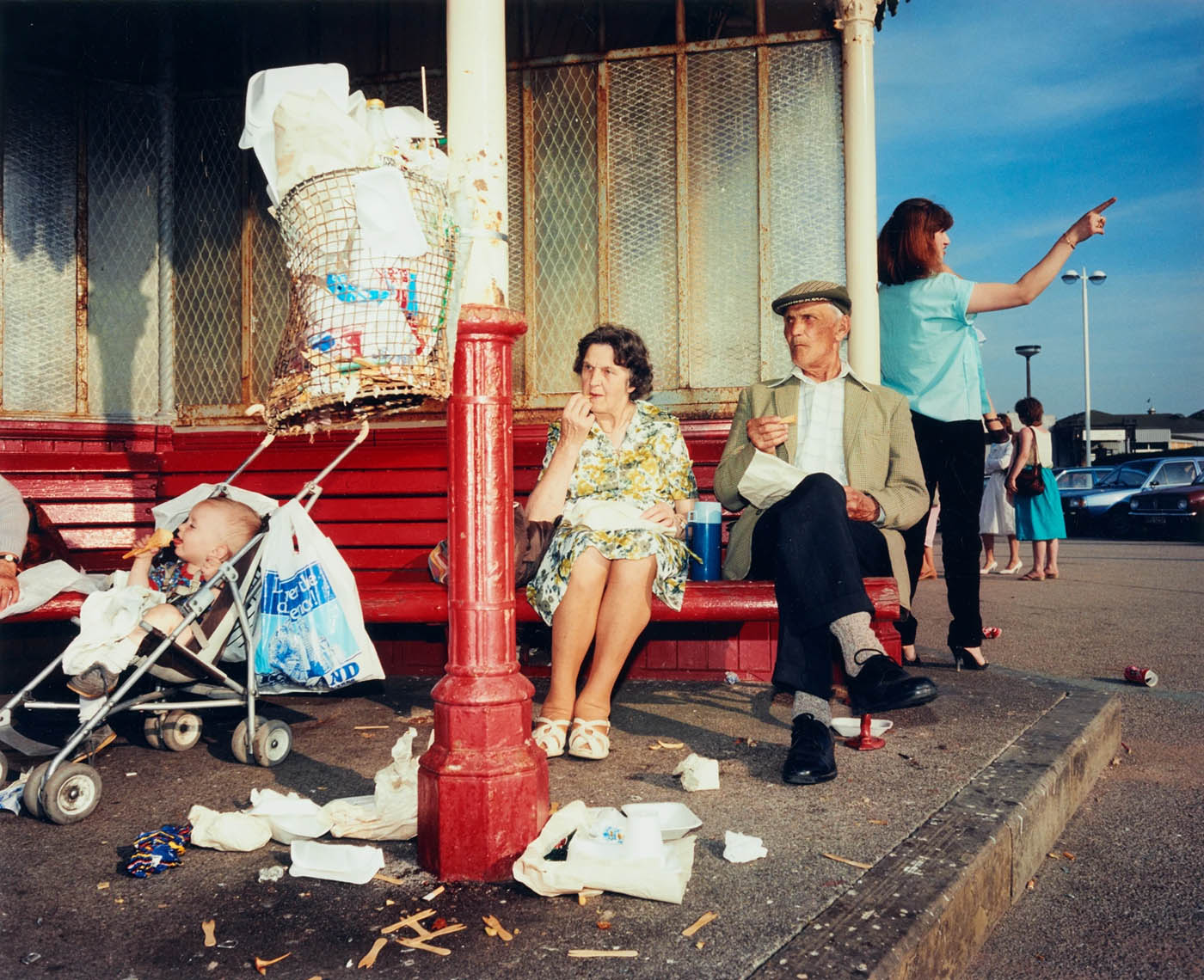
 

Martin Parr (British, 1952-2025) 'New Brighton, Merseyside' 1984 from the series 'The Last Resort'


Martin Parr (British, 1952-2025)
New Brighton, Merseyside
1984
From the series The Last Resort
Chromogenic print
Image: 26.67 x 33.02cm (10 1/2 x 13 in.)
Sheet: 30.48 x 40.64cm (12 x 16 in.)
National Gallery of Art, Washington, Alfred H. Moses and Fern M. Schad Fund
© Martin Parr, Courtesy Rocket Gallery
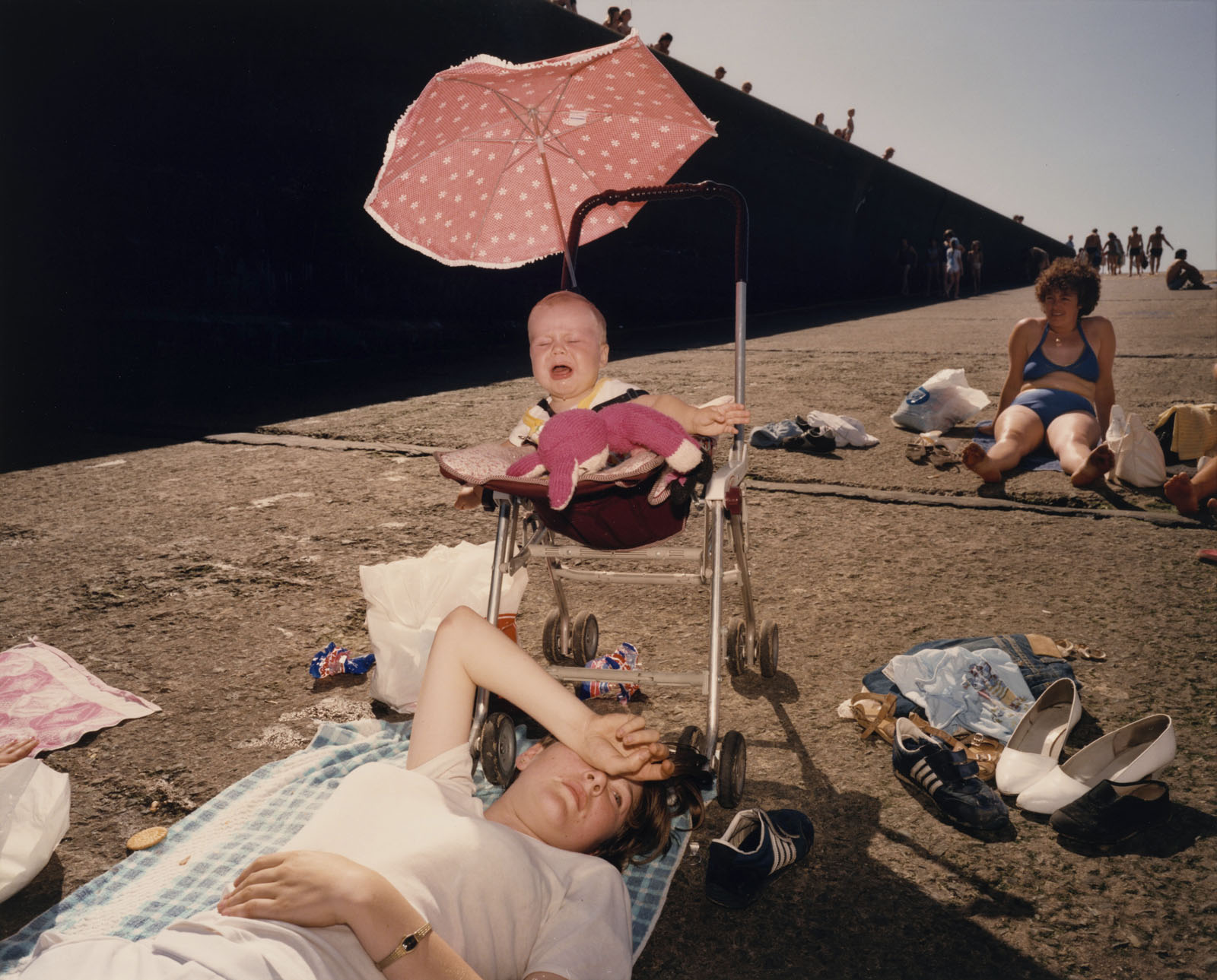
 

Martin Parr (British, 1952-2025) 'New Brighton, Merseyside' 1984 from the series 'The Last Resort'


Martin Parr (British, 1952-2025)
New Brighton, Merseyside
1984
From the series The Last Resort
Chromogenic print
Image: 26.67 × 33.02cm (10 1/2 × 13 in.)
Sheet: 30.48 × 40.64cm (12 × 16 in.)
National Gallery of Art, Washington, Alfred H. Moses and Fern M. Schad Fund
© Martin Parr, Courtesy Rocket Gallery


Punk Rock, record unemployment, urban uprisings, Margaret Thatcher, the Troubles in Northern Ireland: profound changes shook British society and inspired a revolution in photography in the 1970s and 1980s. A generation of young photographers used their cameras to comment on the deep unrest of these pivotal decades. With a keen eye for social critique and a spirit of rebellion, they photographed a country redefining what it meant to be British and, ultimately, modern.

Photography during this period became a central form of creative expression, fuelled by a rapidly expanding network of galleries, museum departments, artists’ collectives, schools, and magazines dedicated to the medium. Immigrants and artists of colour, reflecting the nation’s growing multiculturalism, introduced new perspectives, as did the many women who entered the field.

Moving from largely black-and-white, documentary styles toward more conceptual projects in colour, photographers adopted new strategies to examine national identity. In the face of severe economic dislocation, widespread civil disorder, and Prime Minister Thatcher’s controversial policies, these artists declared: This is Britain.

Documenting the Deindustrial Revolution

The decline of British heavy industry in the 1970s led to labor disputes and high unemployment in the early 1980s. As the country prioritised modern technologies and greater efficiency, photographers recorded the communities, structures, and ways of life that were under threat or disappearing. Graham Smith and Vanley Burke portrayed people they had known for decades, while Chris Killip, Sirkka-Liisa Konttinen, and Gilles Peress undertook long-term projects to create intimate yet often bleak photographs of life on the margins of society. Paul Graham and John Davies explored England’s uneasy embrace of the future by showing the people and places being left behind. While these photographers held no real hope of inspiring change, they shared an earnest concern for who and what was being lost as the nation modernised.

Picturing Absurdity in the Thatcher Years

As the leader of the Conservative Party from 1975 and as prime minister from 1979 to 1990, Margaret Thatcher was a polarising figure in Britain. She oversaw the development of an American-style free market economy, the resurgence of British nationalism, and major cutbacks to public spending (famously declaring that “there is no such thing” as society). During the Thatcher years, photographers Martin Parr and Anna Fox used the brash colours of advertising to poke fun at the rise of leisure activities, consumerism, and corporate greed. Combining text and image, Karen Knorr and Sunil Gupta considered how traditional English institutions sidelined women, people of colour, and gay and lesbian communities. Their works openly satirise long-held traditions and question emerging values in British society.

Wall text from the exhibition


Tony Ray-Jones (English, 1941-1972) 'Butlin's Holiday Camp, Scarborough' 1968


Tony Ray-Jones (English, 1941-1972)
Butlin’s Holiday Camp, Scarborough
1968
Gelatin silver print
Image: 15.8 x 24.8cm (6 1/4 x 9 3/4 in.)
Sheet: 35.8 x 28cm (14 1/8 x 11 in.)
National Gallery of Art, Washington, Alfred H. Moses and Fern M. Schad Fund


Karen Knorr (American born Germany, b. 1954) 'A mood of Highly Coloured Naturalism' 1983 from the series 'Country Life'


Karen Knorr (American born Germany, b. 1954)
A mood of Highly Coloured Naturalism
1983
From the series Country Life
Gelatin silver print mounted on board
Image: 40.2 x 40.9cm (15 13/16 x 16 1/8 in.)
Sheet: 60.7 x 51cm (23 7/8 x 20 1/16 in.)
National Gallery of Art, Washington, Alfred H. Moses and Fern M. Schad Fund


Karen Knorr (American born Germany, b. 1954) 'Newspapers are no longer ironed, Coins no longer boiled So far have Standards Fallen' 1981-1983, printed 2015 from the series 'Gentlemen'


Karen Knorr (American born Germany, b. 1954)
Newspapers are no longer ironed, Coins no longer boiled So far have Standards Fallen
1981-1983, printed 2015
From the series Gentlemen
Gelatin silver print
Image: 40.6 × 40.5cm (16 × 15 15/16 in.)
Sheet: 61.5 × 50.7cm (24 3/16 × 19 15/16 in.)
Mat: 71 × 55.8cm (27 15/16 × 21 15/16 in.)
National Gallery of Art, Washington, Alfred H. Moses and Fern M. Schad Fund


Karen Knorr (American born Germany, b. 1954) 'We owe it to the Free world not to Allow Brutal Forces to succeed. When the Rule of law Breaks down, the World takes a further Step towards Chaos' 1981-1983, printed 2015 from the series 'Gentlemen'


Karen Knorr (American born Germany, b. 1954)
We owe it to the Free world not to Allow Brutal Forces to succeed. When the Rule of law Breaks down, the World takes a further Step towards Chaos
1981-1983, printed 2015
From the series Gentlemen
Gelatin silver print
Image: 40.5 x 40.7cm (15 15/16 x 16 in.)
Sheet: 60.8 x 50.5cm (23 15/16 x 19 7/8 in.)
National Gallery of Art, Washington, Alfred H. Moses and Fern M. Schad Fund
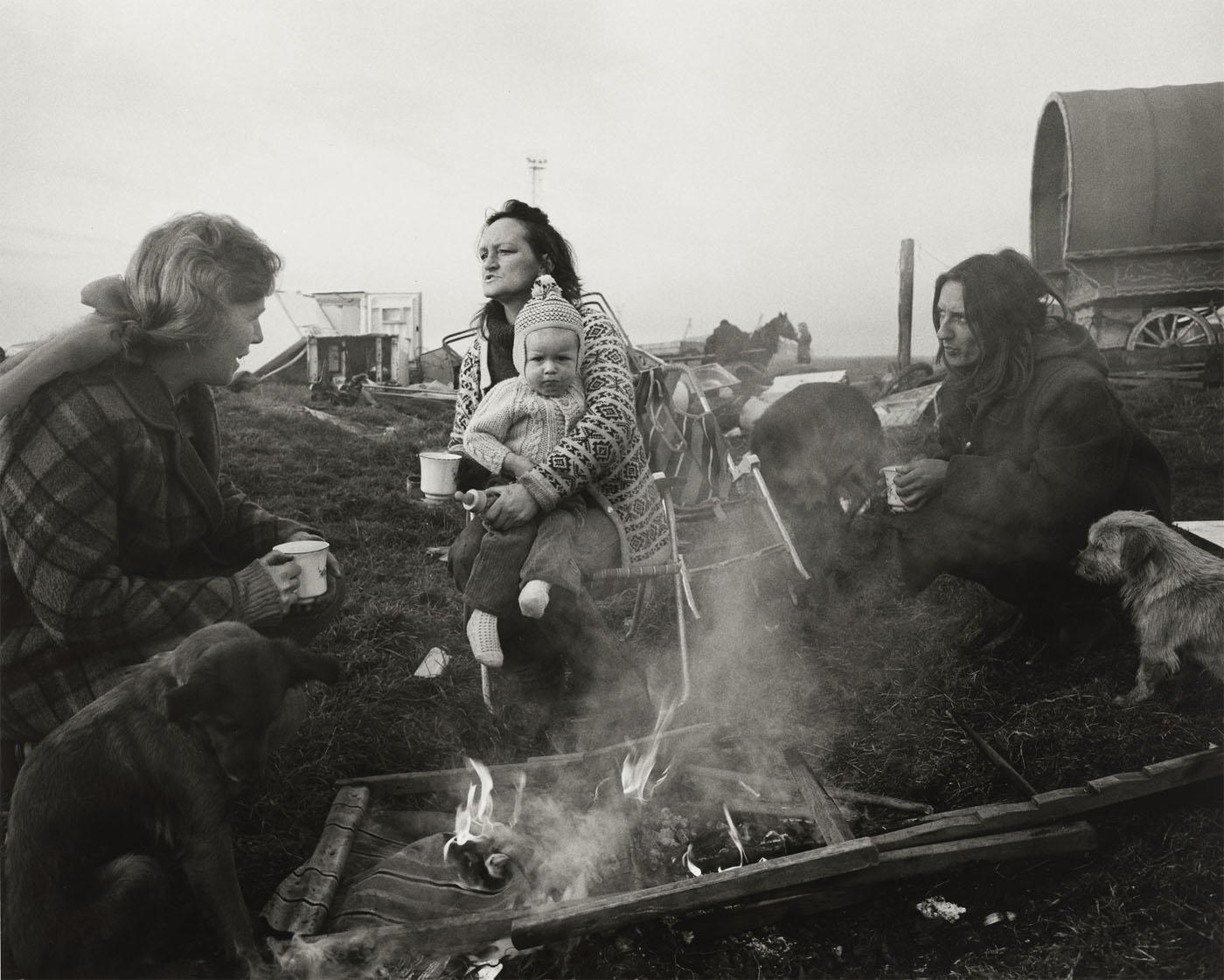
 

Chris Killip (Isle of Man, 1946-2020) 'Margaret, Rosie, and Val, Seacoal Camp, Lynemouth, Northumberland' 1983


Chris Killip (Isle of Man, 1946-2020)
Margaret, Rosie, and Val, Seacoal Camp, Lynemouth, Northumberland
1983
Gelatin silver print
Image: 40.5 x 50.5cm (15 15/16 x 19 7/8 in.)
Sheet: 47.8 x 57.6cm (18 13/16 x 22 11/16 in.)
National Gallery of Art, Washington, Alfred H. Moses and Fern M. Schad Fund


Chris Killip (Isle of Man, 1946-2020) 'Crabs and People, Skinningrove, North Yorkshire, UK' 1981


Chris Killip (Isle of Man, 1946-2020)
Crabs and People, Skinningrove, North Yorkshire, UK
1981
Gelatin silver print
Image: 39.9 × 48.9cm (15 11/16 × 19 1/4 in.)
Sheet: 50.7 × 59.7cm (19 15/16 × 23 1/2 in.)
Mat: 56 × 71.2cm (22 1/16 × 28 1/16 in.)
National Gallery of Art, Washington, Alfred H. Moses and Fern M. Schad Fund
© Chris Killip Photography Trust / Magnum Photos, Courtesy Augusta Edwards Fine Art


Colin Jones (English, 1936-2021) 'The Black House, London' 1973-1976


Colin Jones (English, 1936-2021)
The Black House, London
1973-1976
Gelatin silver print
Image: 33.8 x 49.1cm (13 5/16 x 19 5/16 in.)
Sheet: 41 x 50.8cm (16 1/8 x 20 in.)
National Gallery of Art, Washington, Alfred H. Moses and Fern M. Schad Fund


Vanley Burke (British born Jamaica, b. 1951) 'Young Men on See-Saw, Handsworth Park, Birmingham' 1984, printed 2021


Vanley Burke (British born Jamaica, b. 1951)
Young Men on See-Saw, Handsworth Park, Birmingham
1984, printed 2021
Gelatin silver print
Image: 30.1 x 45.4cm (11 7/8 x 17 7/8 in.)
Sheet: 40.4 x 50.5cm (15 7/8 x 19 7/8 in.)
National Gallery of Art, Washington, Alfred H. Moses and Fern M. Schad Fund


Vanley Burke (British born Jamaica, b. 1951) 'Boy with Flag, Winford in Handsworth Park' 1970, printed 2022


Vanley Burke (British born Jamaica, b. 1951)
Boy with Flag, Winford in Handsworth Park
1970, printed 2022
Gelatin silver print
National Gallery of Art, Washington, Alfred H. Moses and Fern M. Schad Fund


Sirkka-Liisa Konttinen (Finland, b. 1948) 'Young Couple in a Backyard on a Summer's Day' 1975, printed 2012


Sirkka-Liisa Konttinen (Finland, b. 1948)
Young Couple in a Backyard on a Summer’s Day
1975, printed 2012
Gelatin silver print
Image: 36.1 × 39.3cm (14 3/16 × 15 1/2 in.)
Sheet: 40.4 × 50.5cm (15 7/8 × 19 7/8 in.)
National Gallery of Art, Washington, Alfred H. Moses and Fern M. Schad Fund Courtesy L. Parker Stephenson Photographs


John Davies (British, b. 1949) 'Agecroft Power Station, Salford' 1983


John Davies (British, b. 1949)
Agecroft Power Station, Salford
1983
Gelatin silver print
Image: 37.6 × 56.1cm (14 13/16 × 22 1/16 in.)
Sheet: 50.5 × 60.4cm (19 7/8 × 23 3/4 in.)
National Gallery of Art, Washington, Alfred H. Moses and Fern M. Schad Fund Courtesy L. Parker Stephenson Photographs


Graham Smith (British, b. 1947) 'The Queen's Pub, Southbank, Middlesbrough' 1981


Graham Smith (British, b. 1947)
The Queen’s Pub, Southbank, Middlesbrough
1981
Gelatin silver print
Image: 17.8 × 22.8cm (7 × 9 in.)
Sheet: 21.8 × 26.8cm (8 9/16 × 10 9/16 in.)
Mat: 28 × 35.6cm (11 × 14 in.)
National Gallery of Art, Washington, Alfred H. Moses and Fern M. Schad Fund
© Graham Smith, Courtesy Augusta Edwards Fine Art


Graham Smith (British, b. 1947) 'Bennetts Corner (Giro Corner), the Erimus Club and Commercial Pub, South Bank, Middlesbrough' 1982, printed 2008


Graham Smith (British, b. 1947)
Bennetts Corner (Giro Corner), the Erimus Club and Commercial Pub, South Bank, Middlesbrough
1982, printed 2008
Gelatin silver print
Image: 37.4 x 47cm (14 3/4 x 18 1/2 in.)
Sheet: 47.7 x 57.4cm (18 3/4 x 22 5/8 in.)
National Gallery of Art, Washington, Alfred H. Moses and Fern M. Schad Fund
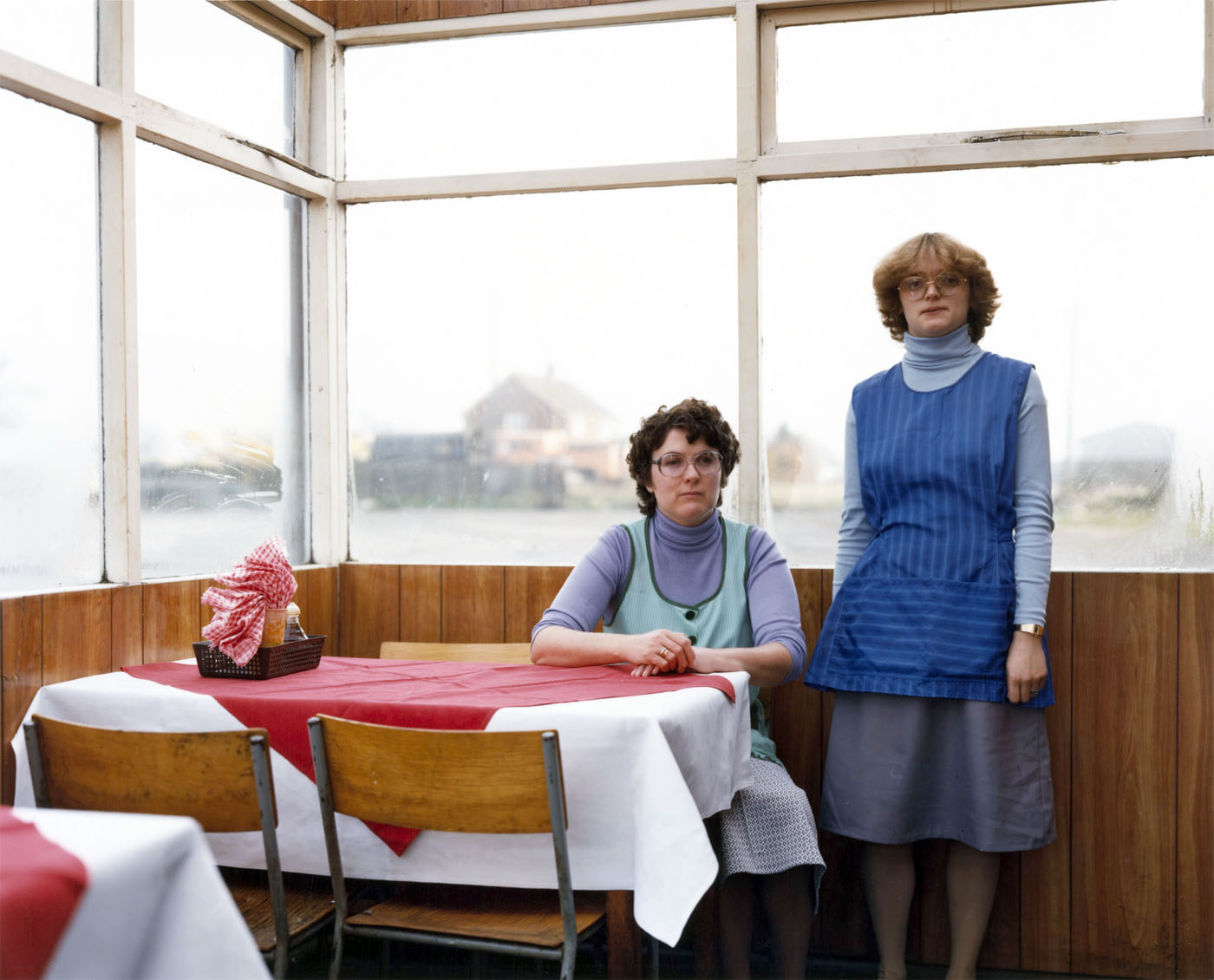
 

Paul Graham (British, b. 1956) 'Café Assistants, Compass Café, Colsterworth, Lincolnshire' November 1982


Paul Graham (British, b. 1956)
Café Assistants, Compass Café, Colsterworth, Lincolnshire
November 1982
Chromogenic print
Image: 19.4 x 24cm (7 5/8 x 9 7/16 in.)
Sheet: 27.4 x 35cm (10 13/16 x 13 3/4 in.)
National Gallery of Art, Washington, Alfred H. Moses and Fern M. Schad Fund


Paul Graham (British, b. 1956) 'Little Chef in Rain, St. Neots, Cambridgeshire' May 1982


Paul Graham (British, b. 1956)
Little Chef in Rain, St. Neots, Cambridgeshire
May 1982
Chromogenic print
Image: 24.2 x 30.6cm (9 1/2 x 12 1/16 in.)
Sheet: 27.9 x 35.7cm (11 x 14 1/16 in.)
Mat: 35.5 x 45.8cm (14 x 18 1/16 in.)
National Gallery of Art, Washington, Alfred H. Moses and Fern M. Schad Fund
© Paul Graham, courtesy Pace Gallery


Tom Wood (Irish, b. 1951) 'Between Chester and Birkenhead' 1989


Tom Wood (Irish, b. 1951)
Between Chester and Birkenhead
1989
Vintage gelatin silver print
Image: 17.2 x 26.1cm (6 3/4 x 10 1/4 in.)
Sheet: 27.9 x 35.2cm (11 x 13 7/8 in.)
National Gallery of Art, Washington, Alfred H. Moses and Fern M. Schad Fund


Tom Wood (Irish, b. 1951) 'Lime Street' 1995


Tom Wood (Irish, b. 1951)
Lime Street
1995, printed 1997
Analogue hand print
Image: 19 x 25.6 cm (7 1/2 x 10 1/16 in.)
Sheet: 19.8 x 27.2cm (7 13/16 x 10 11/16 in.)
National Gallery of Art, Washington, Alfred H. Moses and Fern M. Schad Fund


Sunil Gupta on Community and Activism

Sunil Gupta, photographer, curator, writer, and activist has maintained a visionary approach to photography, producing bodies of work with keen social and political commentary. Gupta’s diasporic experience of multiple cultures informs a practice dedicated to themes of race, migration, and queer identity. His photographic projects – born from a desire to see himself and others like him represented in art history – draw upon his own life as a point of departure.

The Arnold Newman Lecture Series on Photography provides a forum for leading photographers, primarily known for portraits, to discuss contemporary issues in the medium. Arnold Newman (1918-2006) is acknowledged as one of the great masters of the twentieth and twenty-first centuries whose work changed portraiture. The Arnold and Augusta Newman Foundation generously supported this series to make such conversations available to the public.

Text from the YouTube website
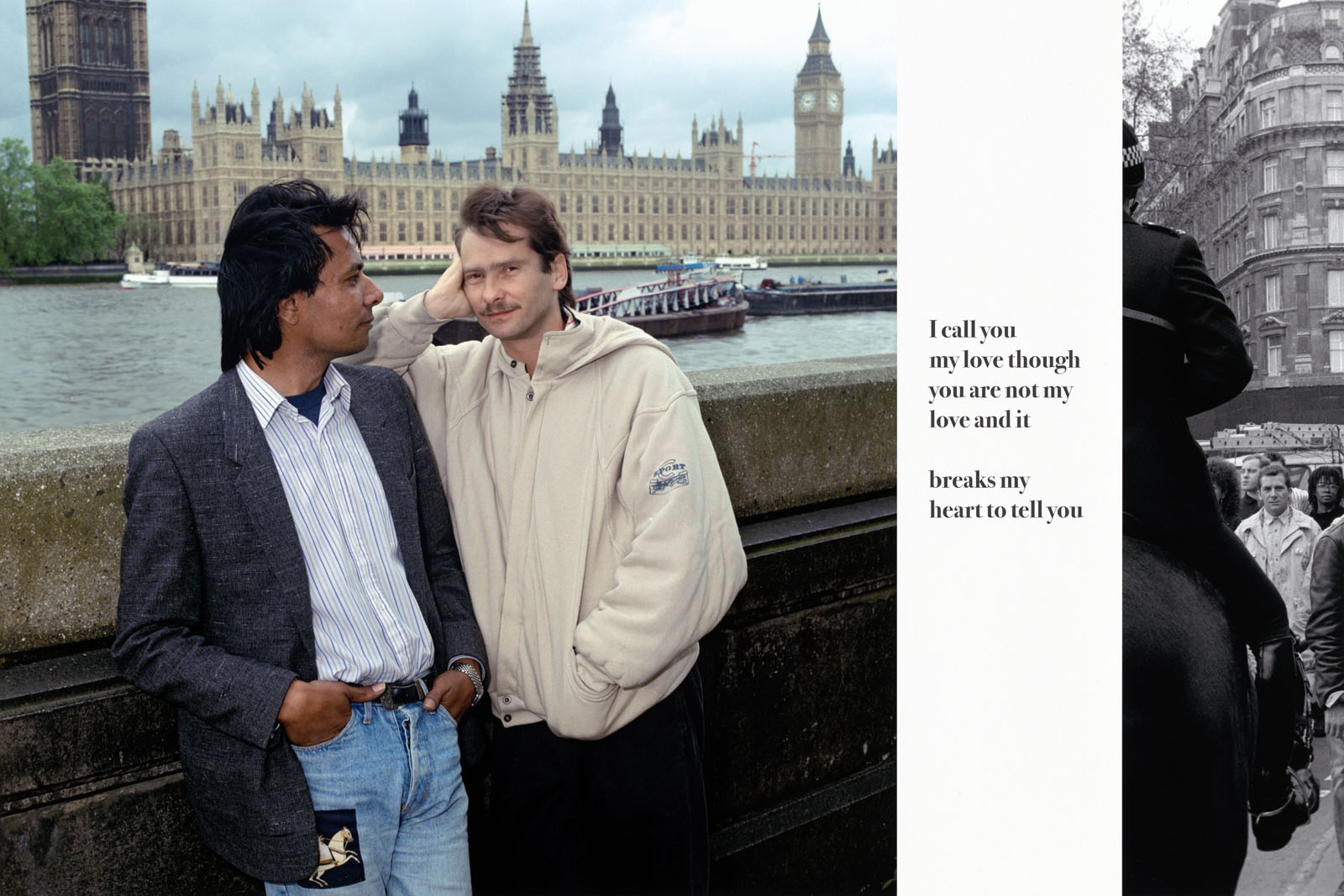
 

Sunil Gupta (Canadian born India, b. 1953) 'Untitled #1' 1988, printed 2020


Sunil Gupta (Canadian born India, b. 1953)
Untitled #1
1988, printed 2020
From the series “Pretended” Family Relationships
Inkjet print
Image: 61 x 91.4cm (24 x 36 in.)
Sheet: 63.5 x 94cm (25 x 37 in.)
National Gallery of Art, Washington, Alfred H. Moses and Fern M. Schad Fund
© Sunil Gupta


Pogus Caesar (British born St. Kitts, b. 1953) 'Handsworth Riots: Birmingham, United Kingdom September' 1985, printed 2022


Pogus Caesar (British born St. Kitts, b. 1953)
Handsworth Riots: Birmingham, United Kingdom
September 1985, printed 2022
Gelatin silver print
Image: 50.8 × 60.96cm (20 × 24 in.)
Sheet: 41.6 × 57.4cm (16 3/8 × 22 5/8 in.)
National Gallery of Art, Washington, Alfred H. Moses and Fern M. Schad Fund
© Pogus Caesar/OOM Gallery Archive, ARS, New York, DACS, London


Handsworth Songs (1986)

A landmark in nonfiction filmmaking, Handsworth Songs was the first film directed by the Ghanaian-born artist John Akomfrah. It was produced by the Black Audio Film Collective (1982-1998), a group of experimental Black artists who examined the diasporic African and Asian experience in Britain. The film weaves archival footage with scenes, interviews, and pictures from contemporary events, including photographs by Vanley Burke, with a haunting soundtrack that mixes reggae and post-punk music with industrial noises and voiceovers. This layered structure connects Britain’s colonial past with unrest in London’s Tottenham and Brixton neighbourhoods and Birmingham’s Handsworth area in 1985. Today, Handsworth Songs reveals the solidarity shared by Britons of African and Asian descent in the face of inequality as it brings historical perspective to civil disturbances in the 1980s.

This film includes depictions of police violence and the use of racial slurs. Viewer discretion is advised.

Wall text from the exhibition


Chris Steele-Perkins (British, b. 1947) 'Hypnosis Demonstration, Cambridge University Ball' 1980-1989


Chris Steele-Perkins (British, b. 1947)
Hypnosis Demonstration, Cambridge University Ball
1980-1989
Silver dye bleach print
Image: 25.4 × 38.1cm (10 × 15 in.)
Sheet: 30.2 × 40.4cm (11 7/8 × 15 7/8 in.)
National Gallery of Art, Washington, Alfred H. Moses and Fern M. Schad Fund


Paul Reas (British, b. 1955) 'Constable County, Flatford Mill, Suffolk' c. 1992


Paul Reas (British, b. 1955)
Constable County, Flatford Mill, Suffolk
c. 1992
From the series Flogging a Dead Horse
Inkjet print image: 41 x 50.5cm (16 1/8 x 19 7/8 in.)
Sheet: 50.5 x 61cm (19 7/8 x 24 in.)
National Gallery of Art, Washington, Alfred H. Moses and Fern M. Schad Fund


National Gallery of Art
National Mall between 3rd and 7th Streets
Constitution Avenue NW, Washington

Opening hours:
Daily 10am – 5pm

National Gallery of Art website

LIKE ART BLART ON FACEBOOK

Back to top

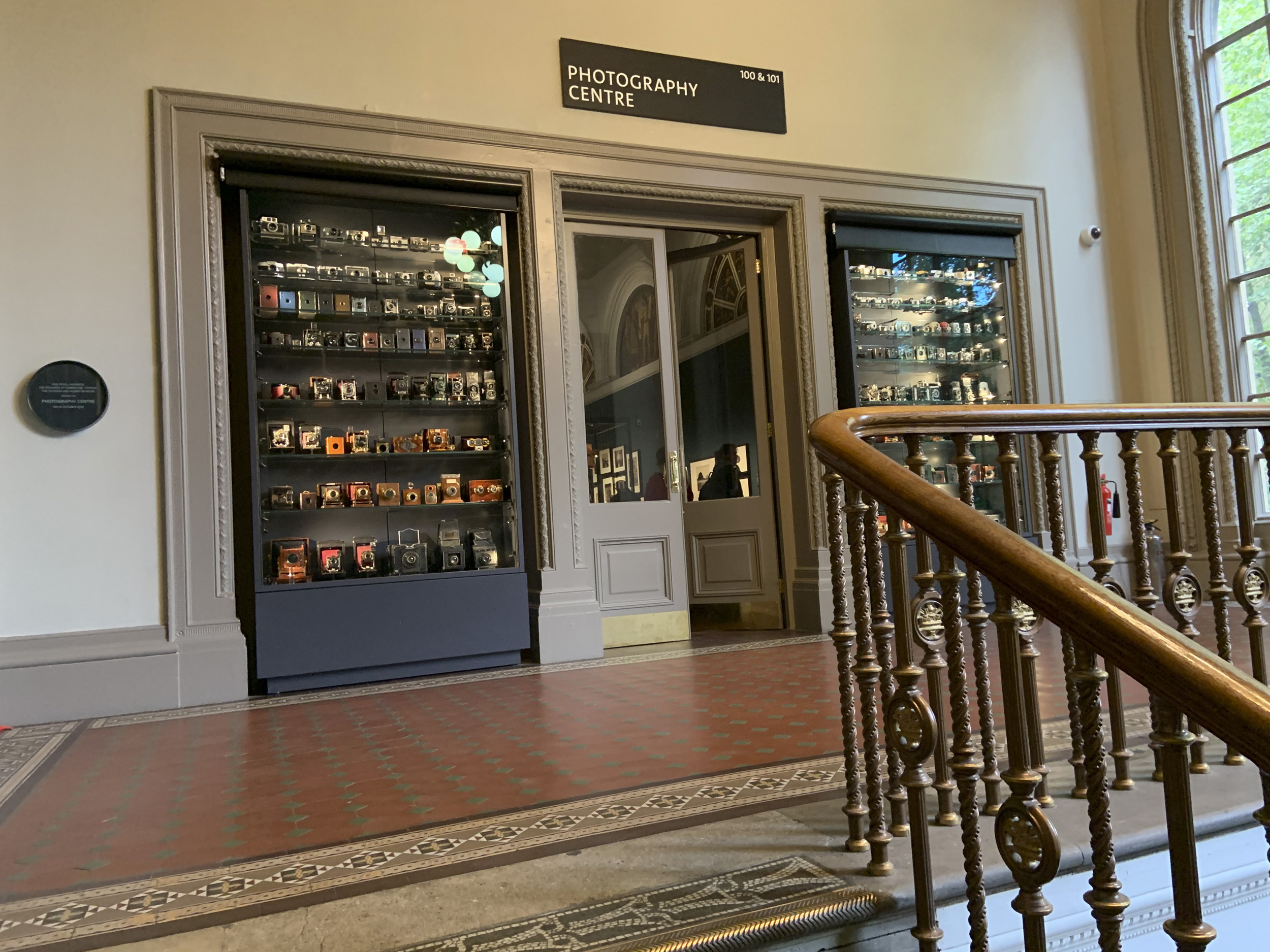
European photographic research tour: V&A Photography Centre, London

Visited October 2019 posted May 2020


Unknown photographer. 'Photograph of Allied War exhibition, Serbian Section, V&A' 1917 (installation view)
 

Unknown photographer
Photograph of Allied War exhibition, Serbian Section, V&A (installation view)
1917
Gelatin silver print
The Royal Photographic Society Collection at the V&A Museum
Photo: Marcus Bunyan


The older I grow, the more exponentially I appreciate and love these early photographs. Imagine having a collection like this!

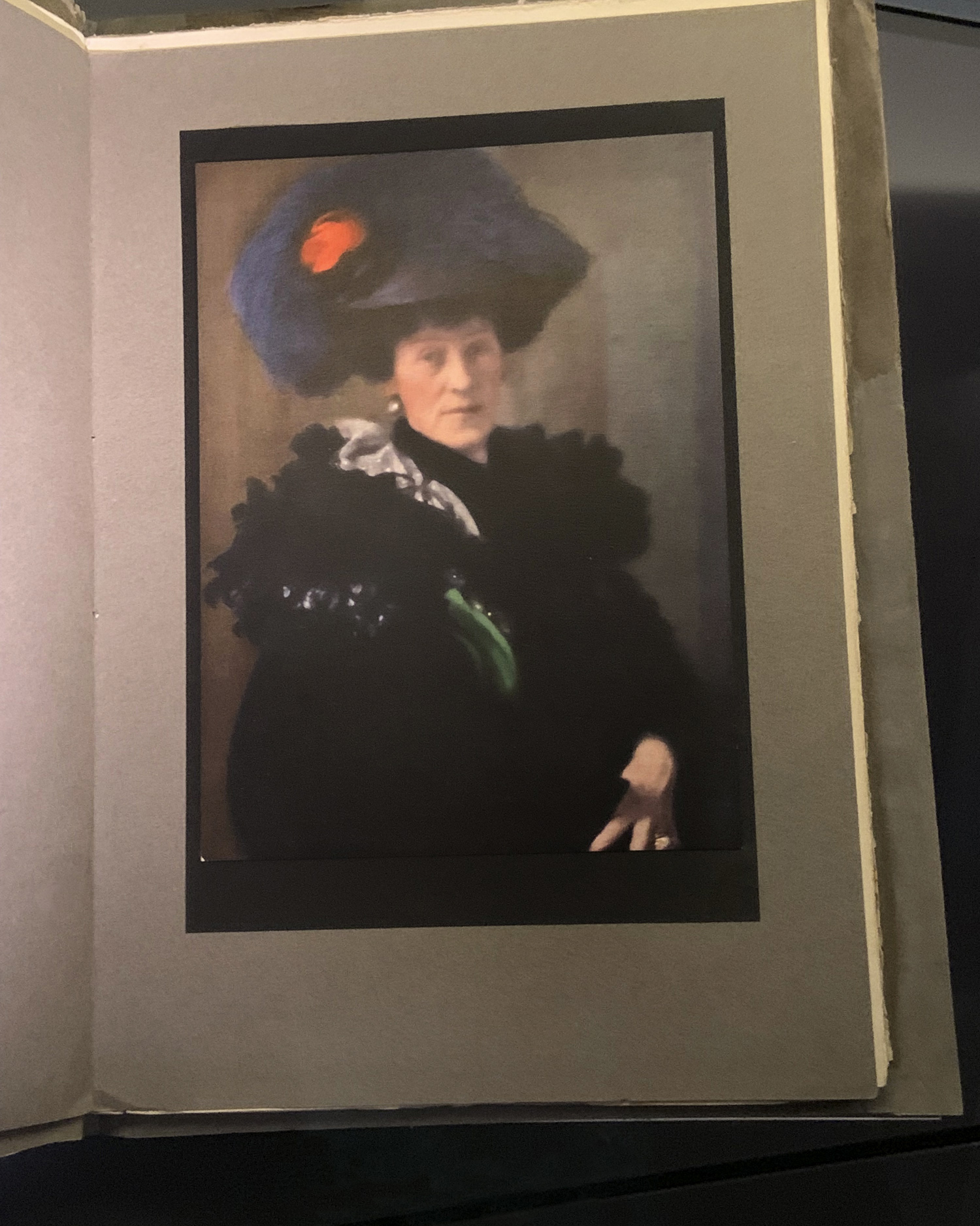
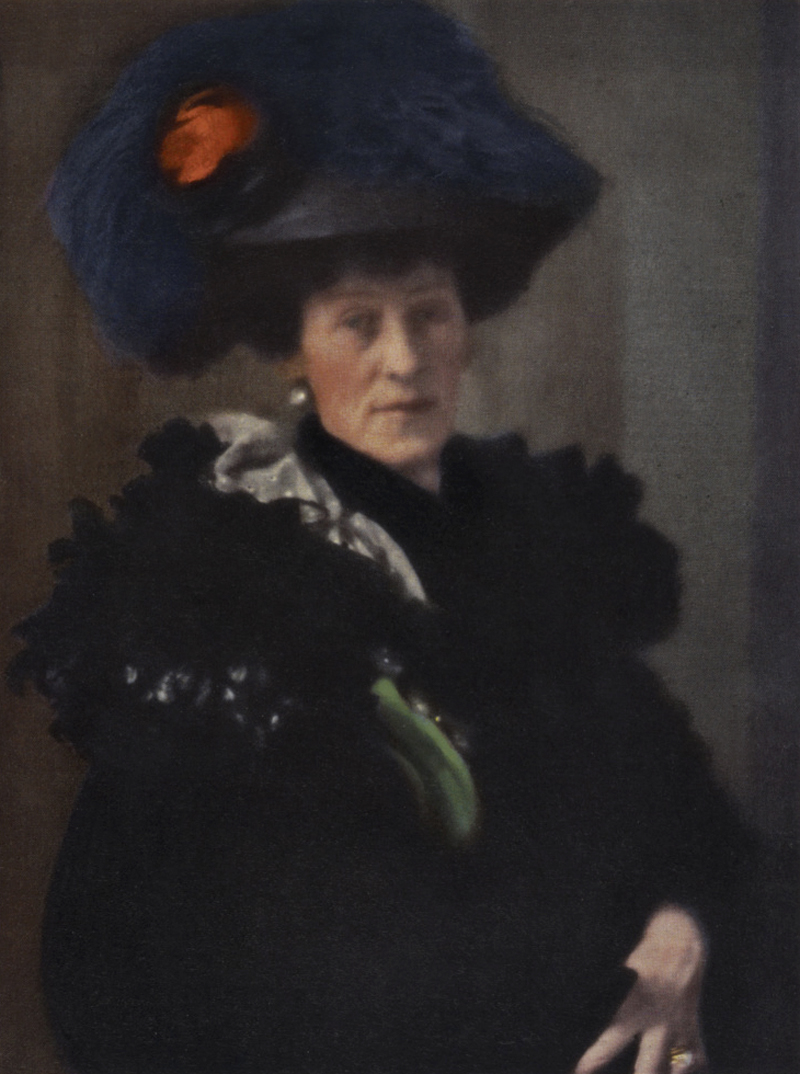
Wonderful to see Edward Steichen’s Portrait – Lady H (1908, below) as I have a copy of Camera Work 22 in my collection.

Dr Marcus Bunyan


All iPhone images © Dr Marcus Bunyan. Please click on the photographs for a larger version of the image.


The V&A has been collecting photographs since 1856, the year the Museum was founded, and it was one of the first museums to present photography exhibitions. Since then the collection has grown to be one of the largest and most important in the world, comprising around 500,000 images. The V&A is now honoured to have added the Royal Photographic Society (RPS) collection to its holdings, which contains around 270,000 photographs, an extensive library, and 6,000 cameras and pieces of equipment associated with leading artists and photographic pioneers.

Take a behind-the-scenes look at our world class photography collection following the transfer of the Royal Photographic Society (RPS) Collection, which has enabled a dramatic reimagining of the way photography is presented at the V&A. The photographs curators introduce a series of five highlights that are on display in the new Photography Centre, which opened on 12th October 2018. The first phase of the centre will more than double the space dedicated to photography at the Museum.

Text from the V&A and YouTube websites


Unknown photographer. 'Photograph of Allied War exhibition, Serbian Section, V&A' 1917


Unknown photographer
Photograph of Allied War exhibition, Serbian Section, V&A (installation view)
1917
Gelatin silver print
The Royal Photographic Society Collection at the V&A Museum
Photo: Marcus Bunyan


The V&A has been collecting and exhibiting photographs since the 1850s. This image shows part o a photographic exhibition held over 100 years ago in the same galleries you are standing in today. The exhibition presented a densely packed display of images depicting the Allied Powers during the First World War.


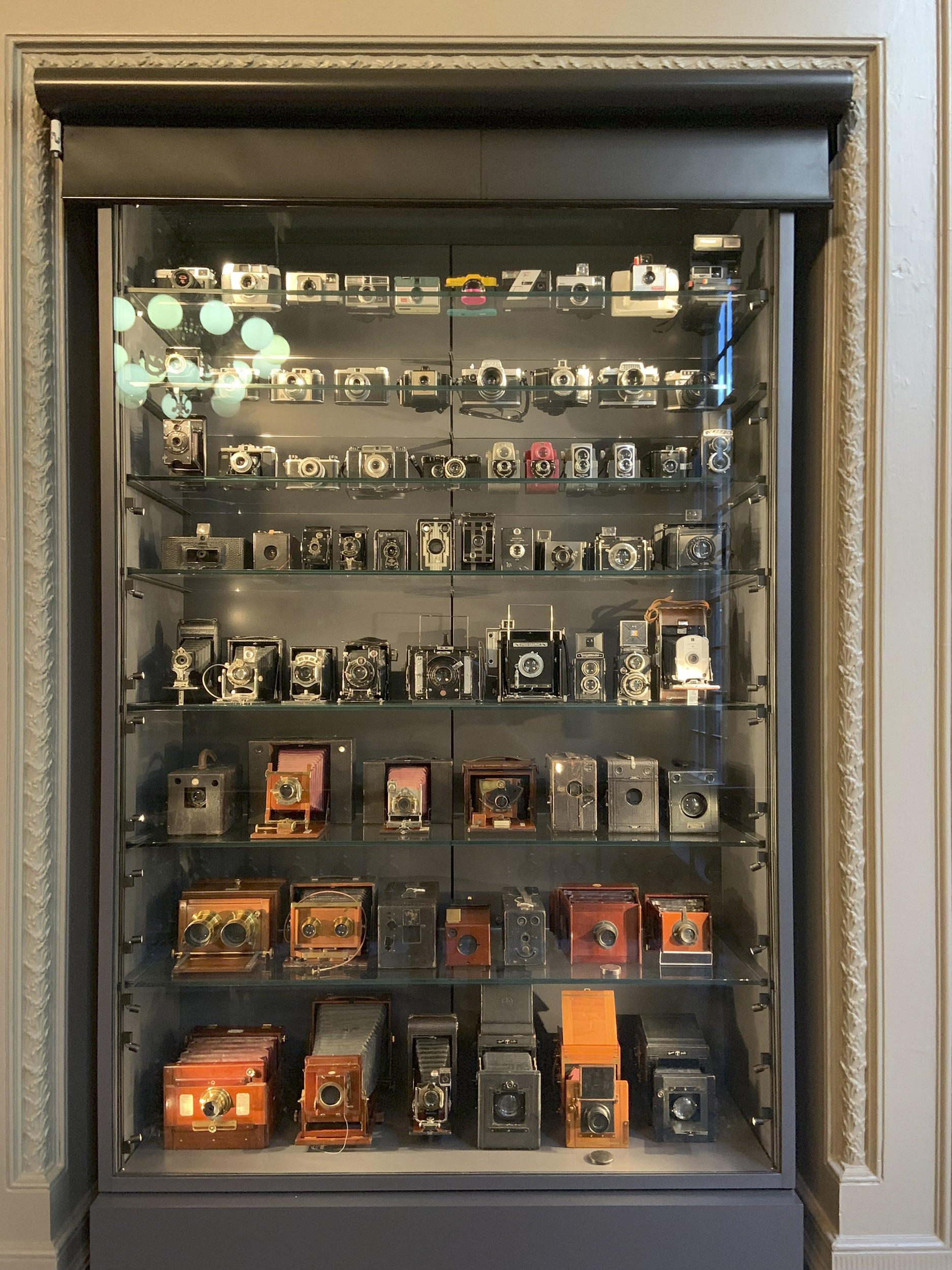
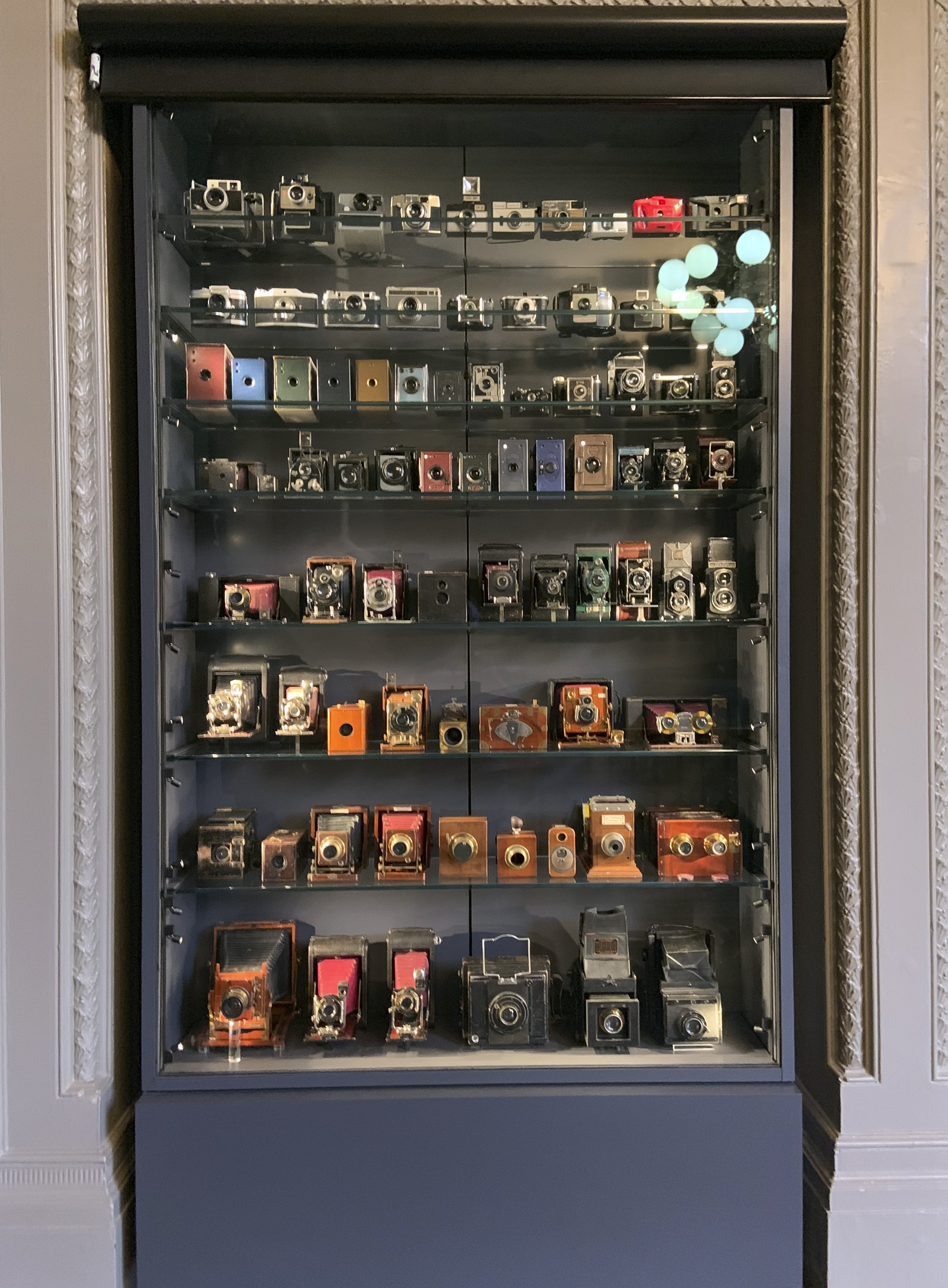
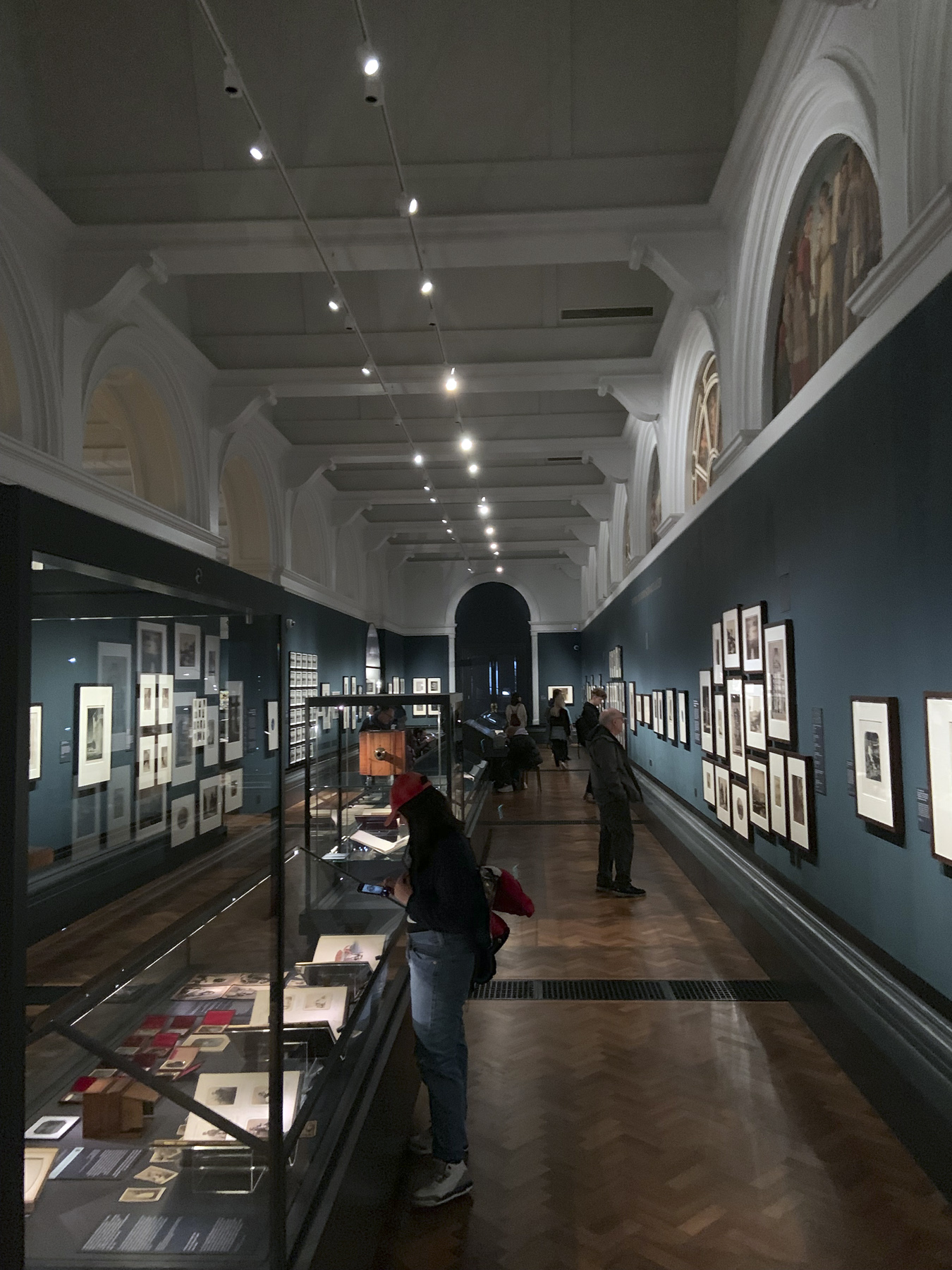
Installation view of the V&A Photography Centre, London

Installation view of the V&A Photography Centre, London

Installation view of the V&A Photography Centre, London

Installation view of the V&A Photography Centre, London

Wall text from the V&A Photography Centre, London

Installation view of the V&A Photography Centre, London


Installation views of the V&A Photography Centre, London
Photos: Marcus Bunyan


Joseph Nicéphore Niépce (French, 1765-1833) 'Christ Carrying his Cross' 1827 (installation view)

Joseph Nicéphore Niépce (French, 1765-1833) 'Christ Carrying his Cross' 1827 (installation view)


Joseph Nicéphore Niépce (French, 1765-1833)
Christ Carrying his Cross (installation views)
1827
Heliograph on pewter plate
The Royal Photographic Society Collection at the V&A Museum
Photos: Marcus Bunyan


The French inventor Niépce made the earliest surviving photographic images, which he called ‘heliographs’ or ‘sun-writing’. Only 16 are thought to still exist. Although Niépce experimented with light-sensitive plates inside a camera, he made most of his images, including this one, by placing engravings of works by other artists directly onto a metal plate. He would probably have had the resulting heliographs coated in ink and printed.


Joseph Nicéphore Niépce (French, 1765-1833) 'Christ Carrying his Cross' 1827 (installation view)


Joseph Nicéphore Niépce (French, 1765-1833)
Christ Carrying his Cross (installation view)
1827
Heliograph on pewter plate
The Royal Photographic Society Collection at the V&A Museum
Photo: Marcus Bunyan


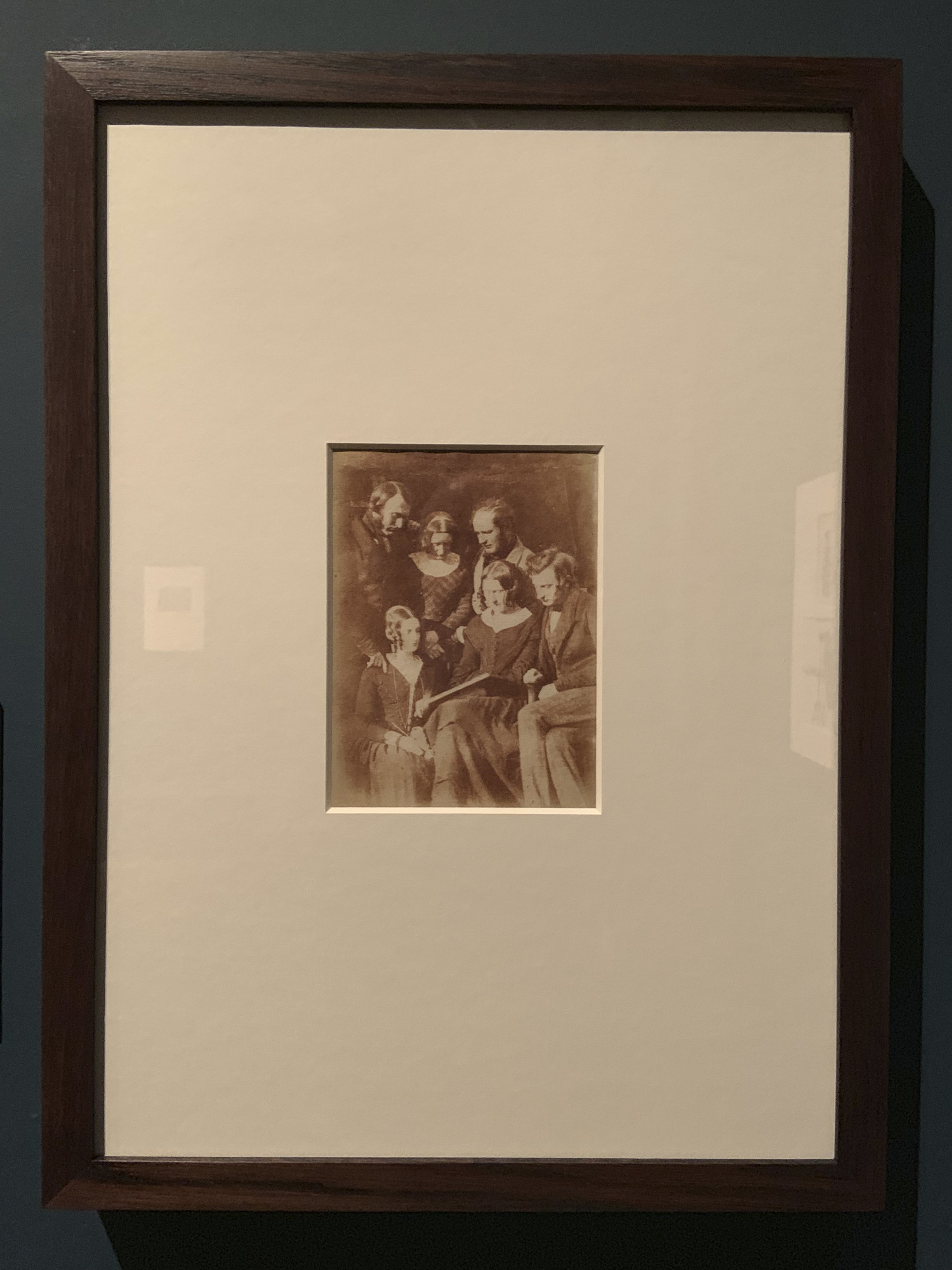
David Octavius Hill (Scottish, 1802-70) and Robert Adamson (Scottish, 1821-48) 'The Adamson Family' 1843-1845 (installation view)


David Octavius Hill (Scottish, 1802-1870) and Robert Adamson (Scottish, 1821-1848)
The Adamson Family (installation view)
1843-1845
Salted paper print
The Royal Photographic Society Collection at the V&A Museum
Photo: Marcus Bunyan


The partnership between Scottish painter Hill and chemist Adamson merged the art and science of photography. The pair initially intended to create preliminary studies for Hill’s paintings, but soon recognised photography’s artistic potential. With Hill’s knowledge of composition and lighting, and Adamson’s considerable sensitivity and dexterity in handling the camera, together they produced some of the most accomplished photographic portraits of their time.


William Henry Fox Talbot (British, 1800-77) 'The Haystack' 1844 from  the V&A Photography Centre, London 2019


William Henry Fox Talbot (British, 1800-1877)
The Haystack
1844
From The Pencil of Nature
Salted paper print
The Royal Photographic Society Collection at the V&A Museum


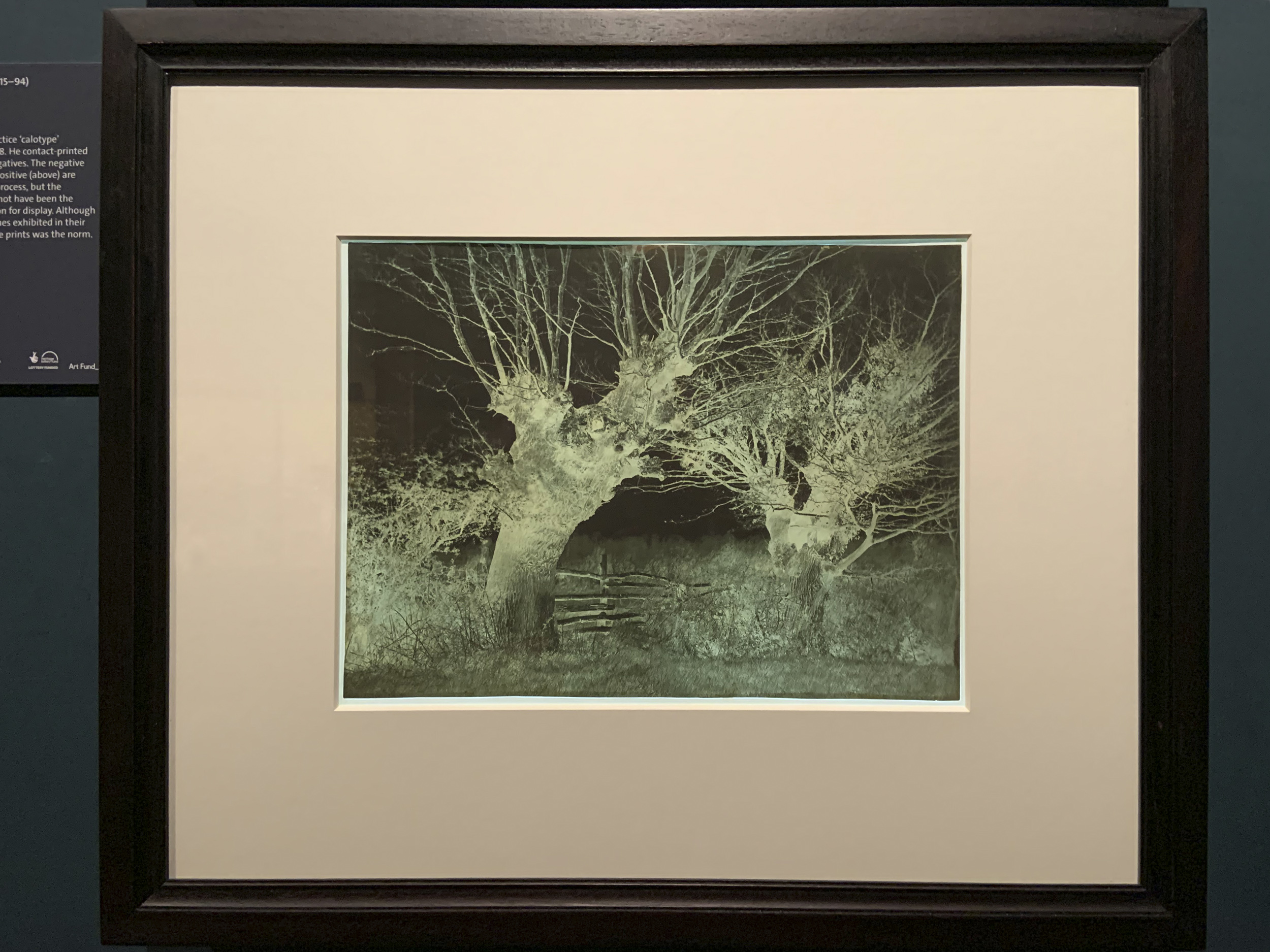
Benjamin Brecknell Turner (British, 1815-94) 'Hedgerow Trees, Clerkenleap' 1852-1854 (installation view)

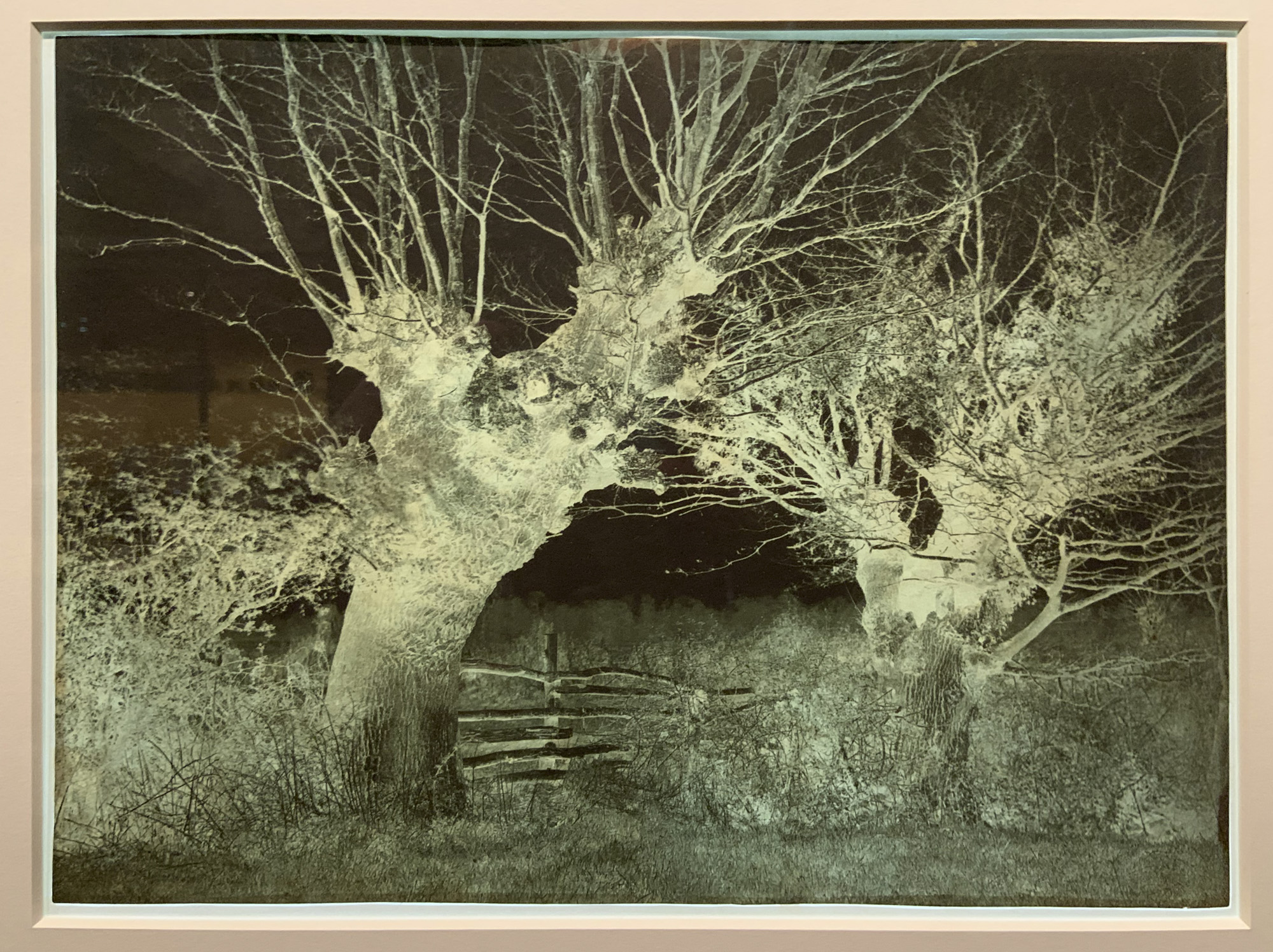
Benjamin Brecknell Turner (British, 1815-94) 'Hedgerow Trees, Clerkenleap' 1852-1854 (installation view)


Benjamin Brecknell Turner (British, 1815-1894)
Hedgerow Trees, Clerkenleap (installation views)
1852-1854
Albumen print; Calotype negative
The Royal Photographic Society Collection at the V&A Museum
Photos: Marcus Bunyan


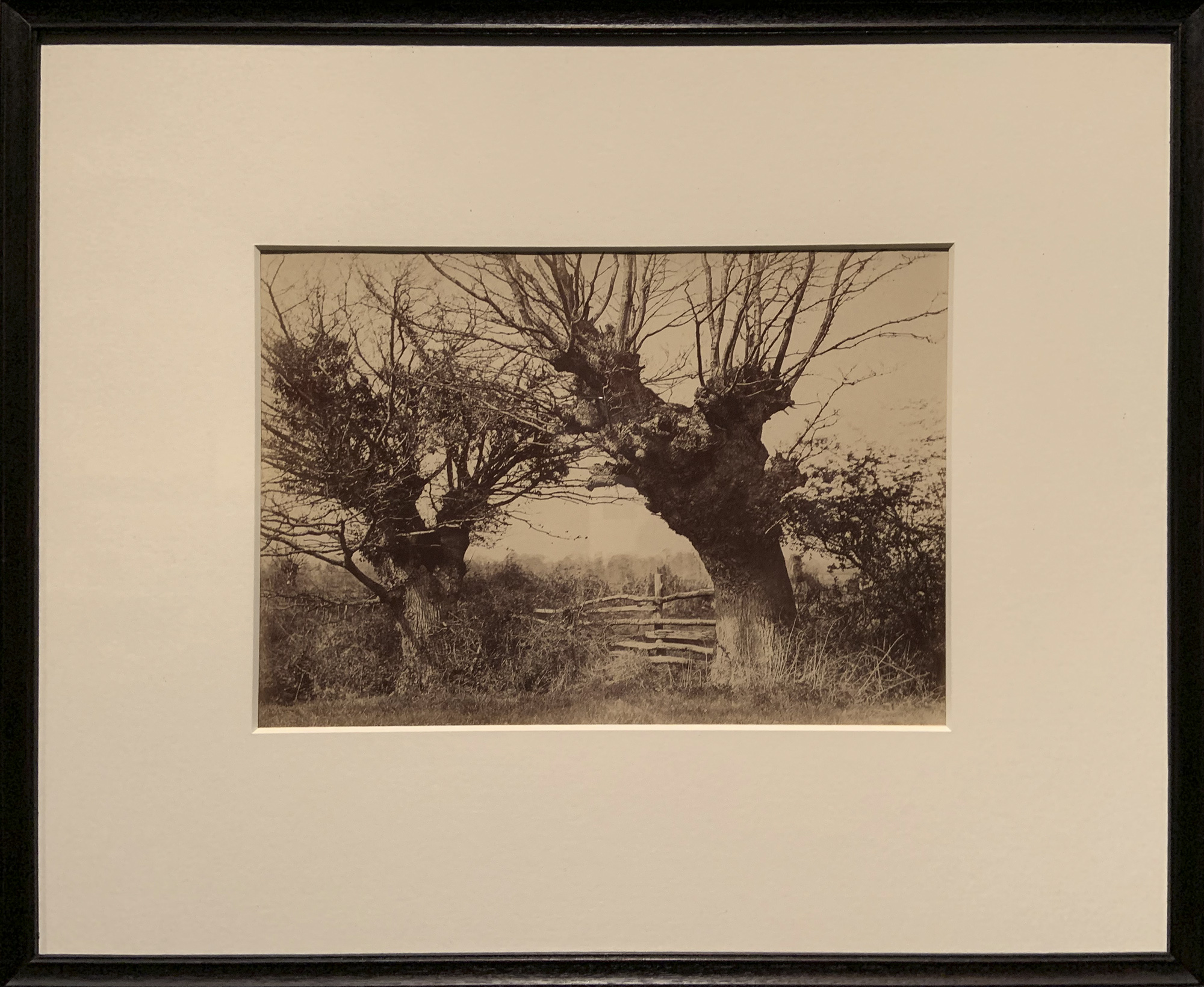
Turner took out a licence to practice ‘calotype’ photography from Talbot in 1848. He contact-printed positive images from paper negatives. The negative (below) and its corresponding positive (above) are reunited here to illustrate this process, but the pairing as you see them would not have been the photographer’s original intention for display. Although unique negatives were sometimes exhibited in their own right, only showing positive prints was the norm.


Benjamin Brecknell Turner (British, 1815-94) 'Hedgerow Trees, Clerkenleap' 1852-1854 (installation view)


Benjamin Brecknell Turner (British, 1815-1894)
Hedgerow Trees, Clerkenleap (installation view)
1852-1854
Albumen print; Calotype negative
The Royal Photographic Society Collection at the V&A Museum
Photo: Marcus Bunyan


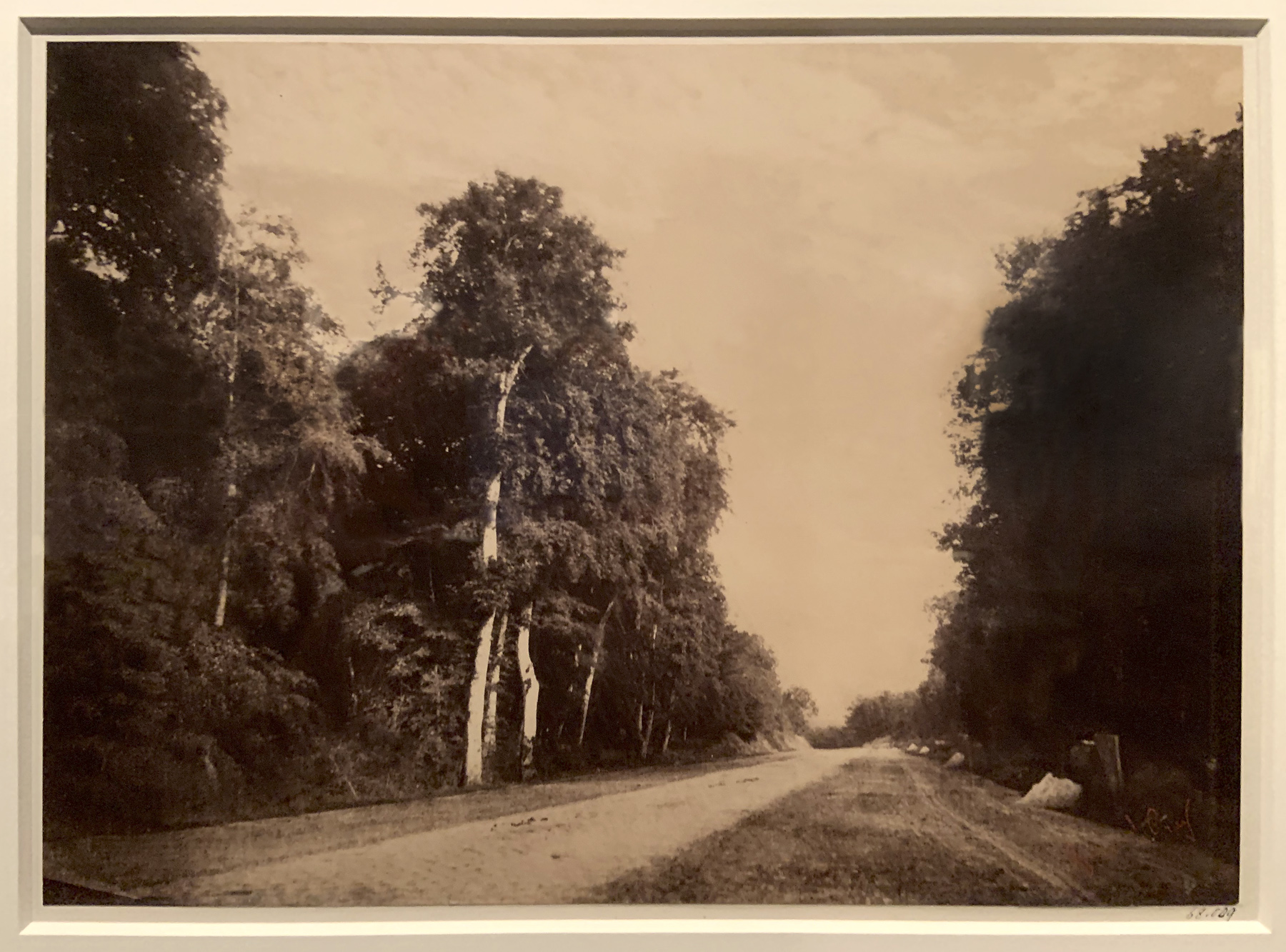
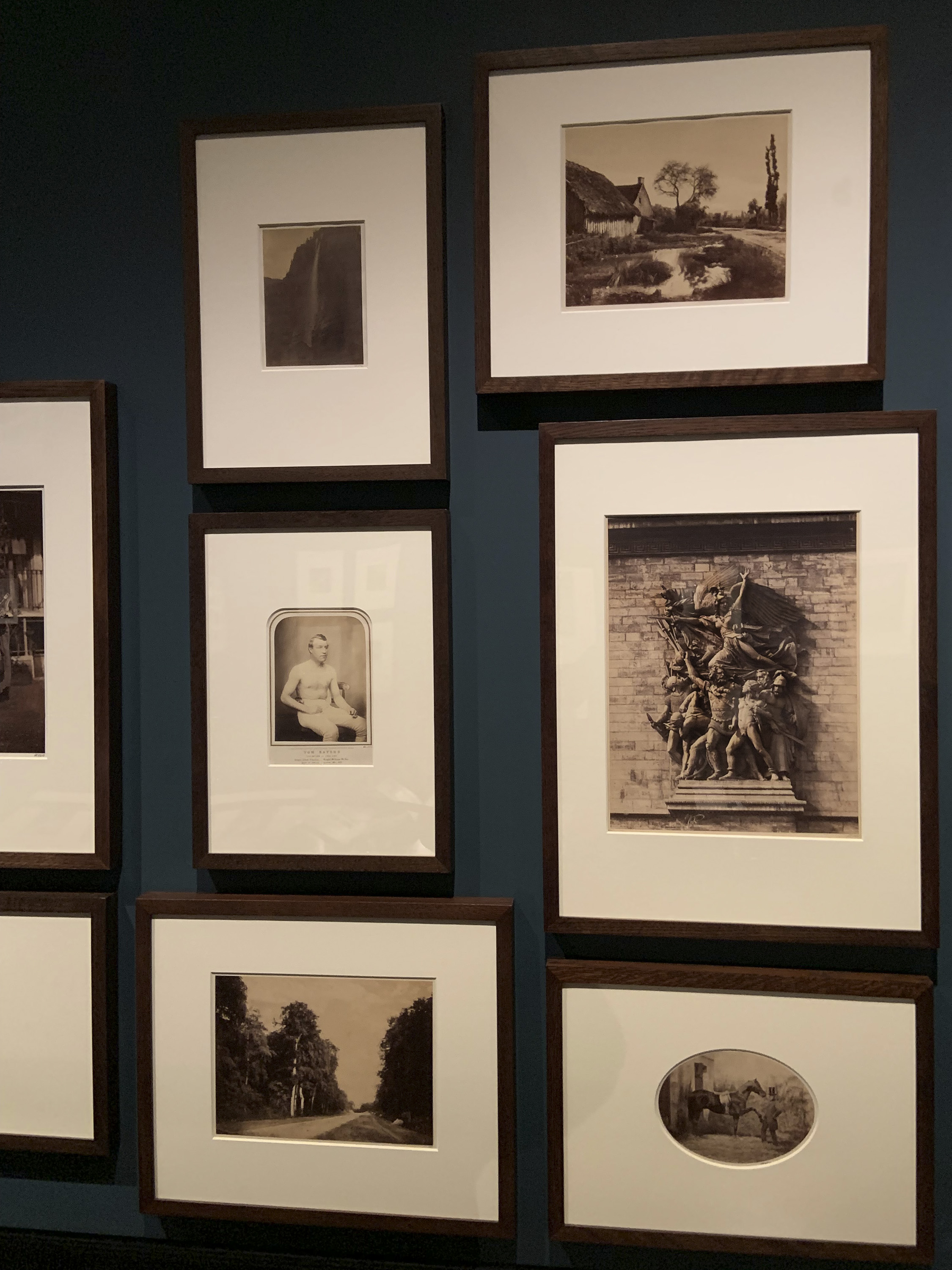
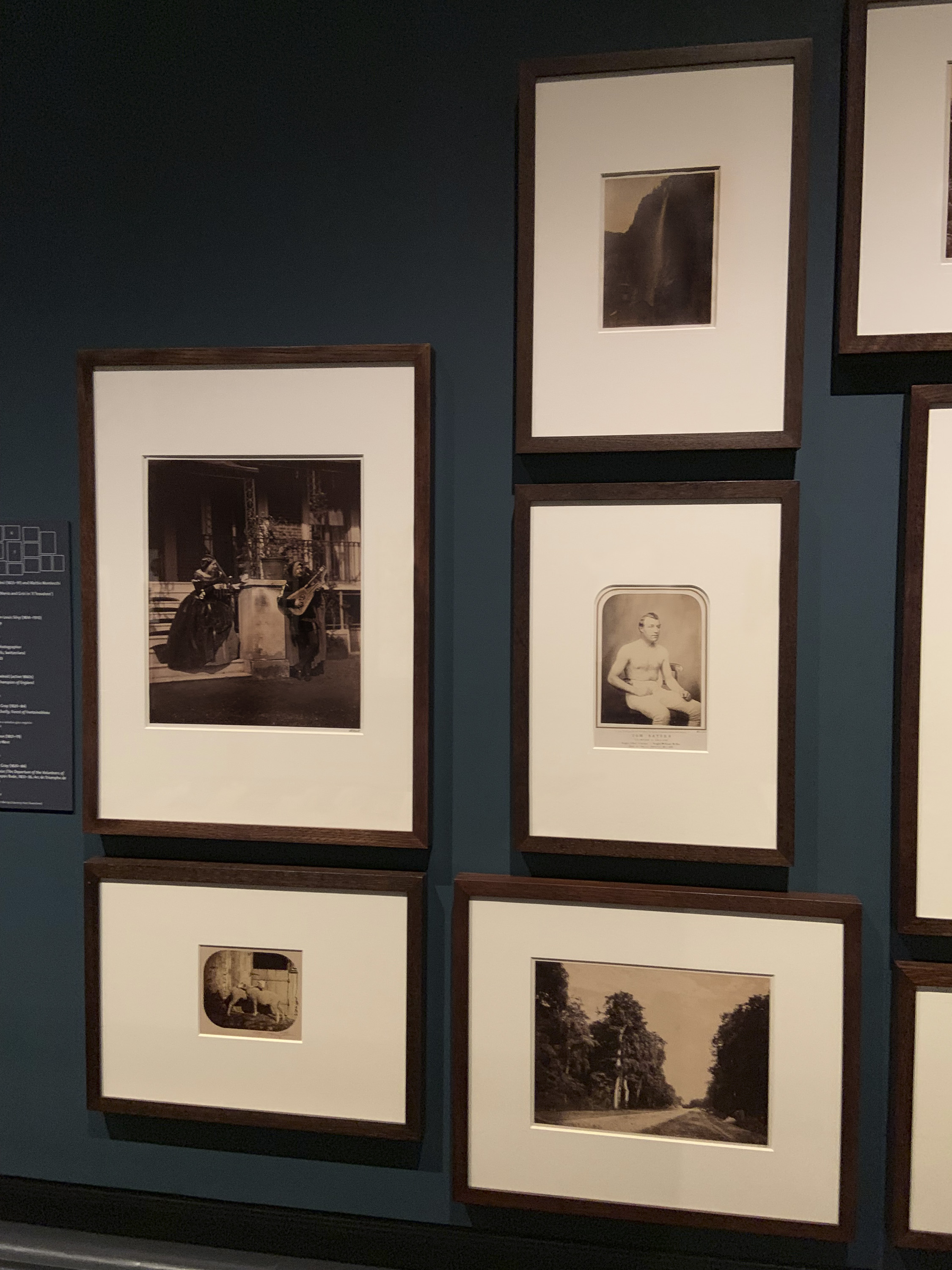
Gustave Le Gray (French, 1820-84) 'The Road to Chailly, Forest of Fontainebleau' 1852 (installation view)


Gustave Le Gray (French, 1820-1884)
The Road to Chailly, Forest of Fontainebleau (installation view)
1852
Albumen print from a collodion glass negative
Bequeathed to the V&A by Chauncey Hare Townshend
Photo: Marcus Bunyan


Installation view of the V&A Photography Centre, London

Installation view of the V&A Photography Centre, London

Wall text from the V&A Photography Centre, London


Installation views of the V&A Photography Centre, London
Photos: Marcus Bunyan


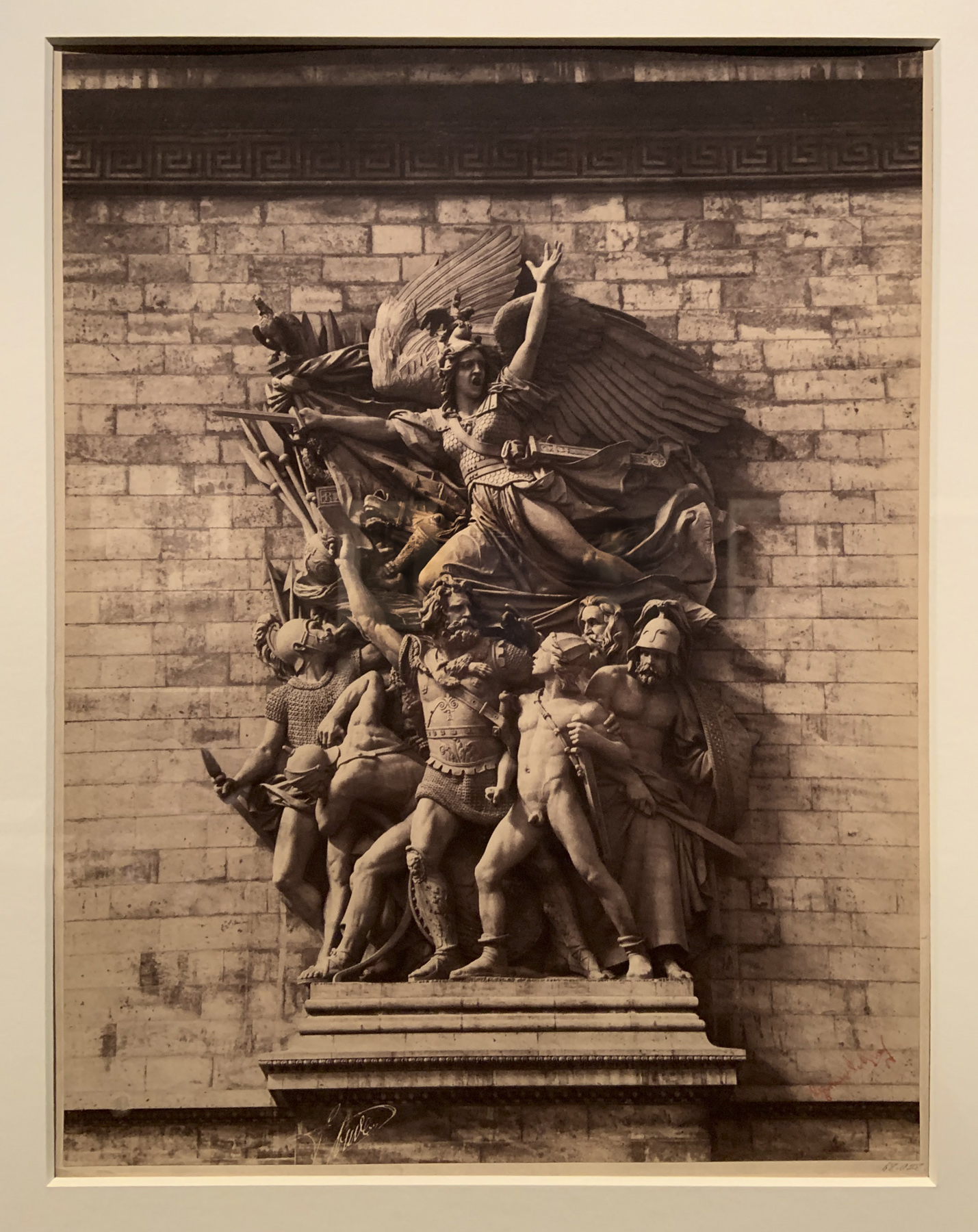
Gustave Le Gray (French, 1820-84) 'The Marseillaise (The Departure of the Volunteers of 1792), by Francois Rude, 1833-35, Arc de Triomphe de l’Etoile, Paris' 1852 (installation view)


Gustave Le Gray (French, 1820-1884)
The Marseillaise (The Departure of the Volunteers of 1792), by Francois Rude, 1833-35, Arc de Triomphe de l’Etoile, Paris (installation view)
1852
Albumen print
Bequeathed to the V&A by Chauncey Hare Townshend
Photo: Marcus Bunyan


Gustave Le Gray (French, 1820-1884) 'The Marseillaise (The Departure of the Volunteers of 1792), by Francois Rude, 1833-1835, Arc de Triomphe de l’Etoile, Paris' 1852 (installation view)


Gustave Le Gray (French, 1820-1884)
The Marseillaise (The Departure of the Volunteers of 1792), by Francois Rude, 1833-35, Arc de Triomphe de l’Etoile, Paris (installation view)
1852
Albumen print
Bequeathed to the V&A by Chauncey Hare Townshend
Photo: Marcus Bunyan


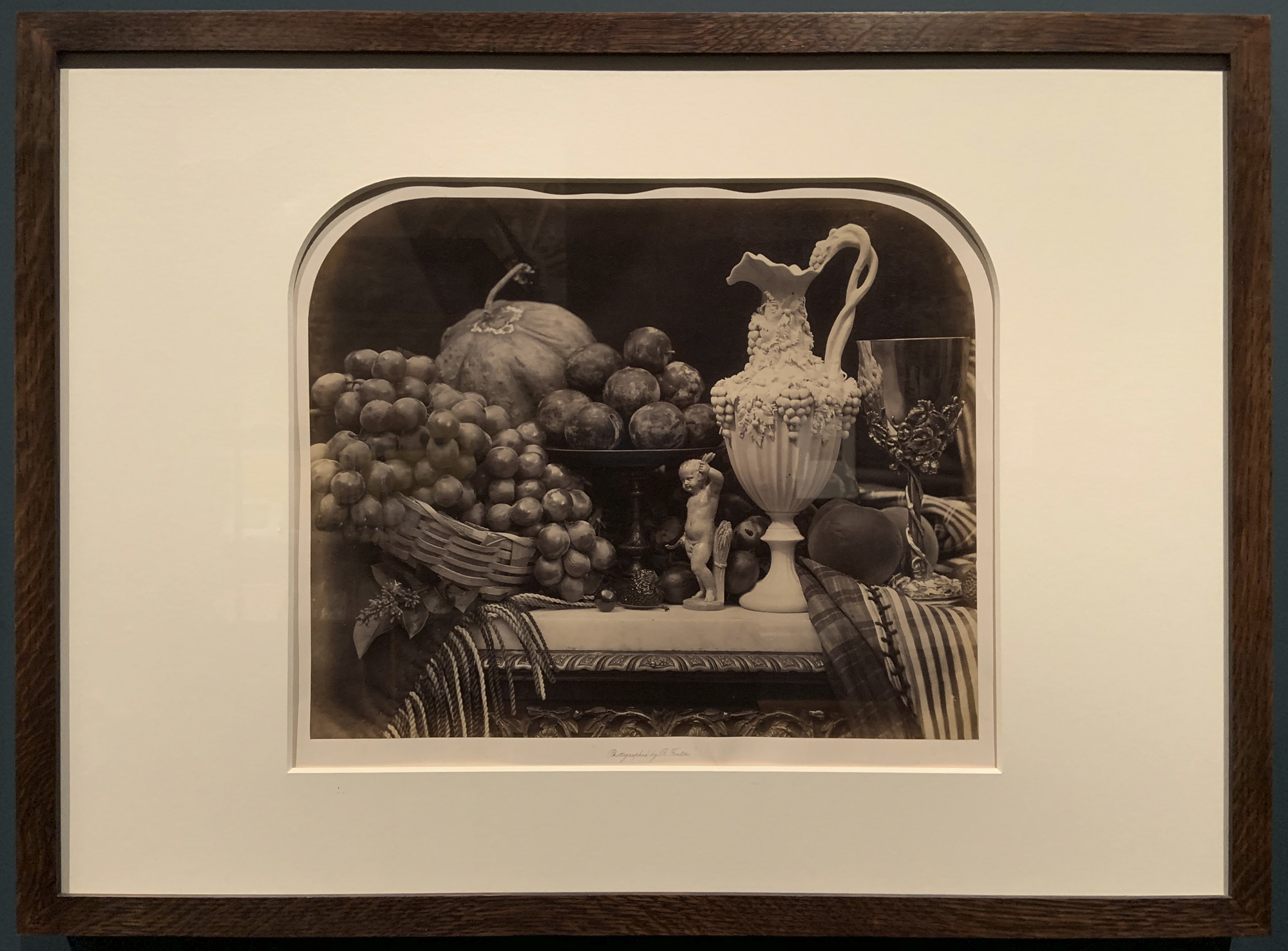
Roger Fenton (British, 1819-1869) 'Parian Vase, Grapes and Silver Cup' 1860 (installation view)


Roger Fenton (British, 1819-1869)
Parian Vase, Grapes and Silver Cup (installation view)
1860
Albumen print
The Royal Photographic Society Collection at the V&A Museum
Photo: Marcus Bunyan


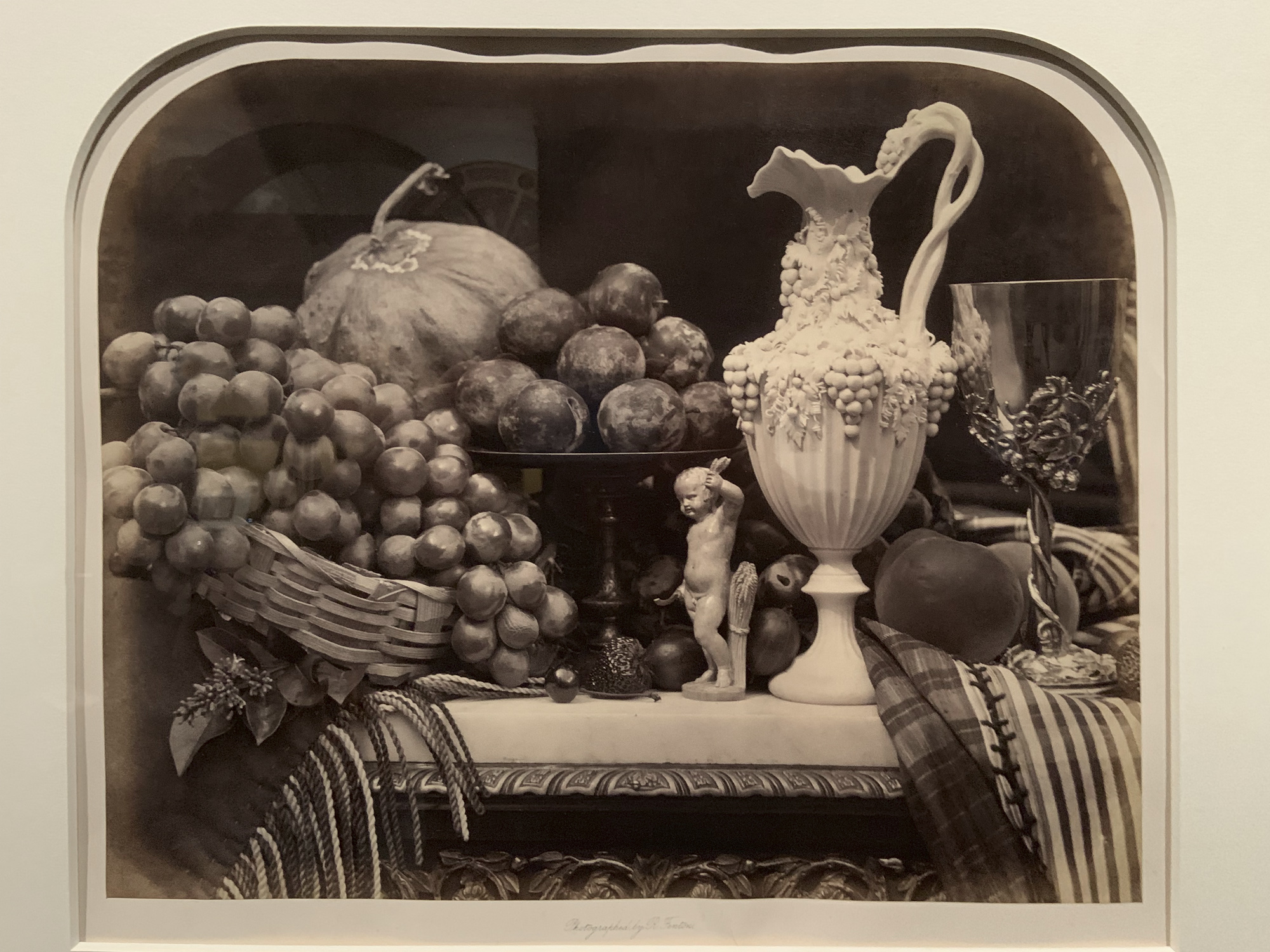
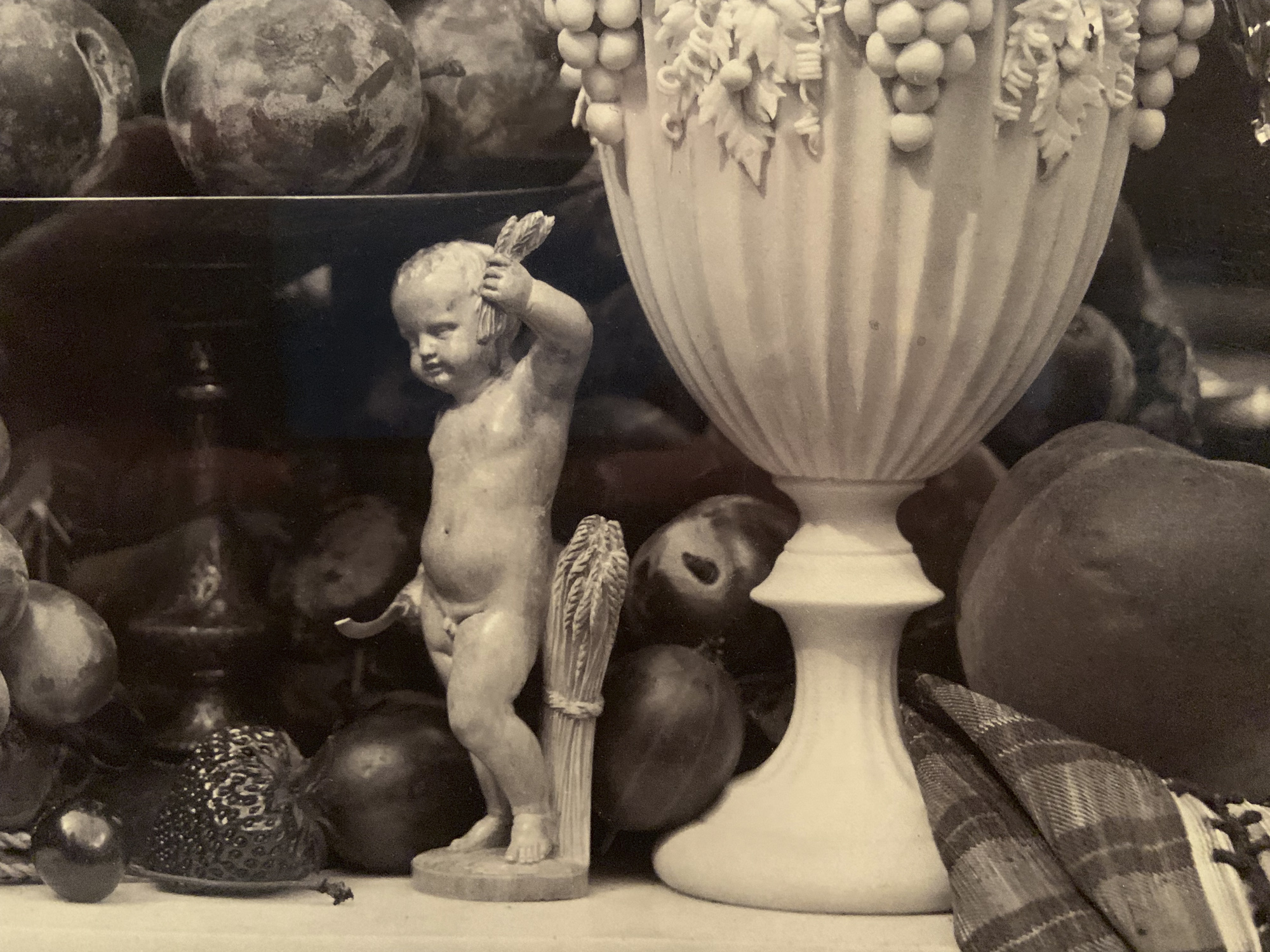
Fenton was one of the most versatile and technically brilliant photographers of the 19th century. He excelled at many subjects, including war photography, portraiture, architecture and landscape. He also made a series of lush still lives. Here, grapes, plums and peaches are rendered in exquisite detail, and the silver cup on the right reflects a camera tripod.


Roger Fenton (British, 1819-1869) 'Parian Vase, Grapes and Silver Cup' 1860 (installation view)


Roger Fenton (British, 1819-1869)
Parian Vase, Grapes and Silver Cup (installation view)
1860
Albumen print
The Royal Photographic Society Collection at the V&A Museum
Photo: Marcus Bunyan


Roger Fenton (British, 1819-1869) 'Parian Vase, Grapes and Silver Cup' 1860 (installation view)


Roger Fenton (British, 1819-1869)
Parian Vase, Grapes and Silver Cup (installation view)
1860
Albumen print
The Royal Photographic Society Collection at the V&A Museum
Photo: Marcus Bunyan


Roger Fenton (British, 1819-1869) 'Parian Vase, Grapes and Silver Cup' 1860 (installation view detail)


Roger Fenton (British, 1819-1869)
Parian Vase, Grapes and Silver Cup (installation view detail)
1860
Albumen print
The Royal Photographic Society Collection at the V&A Museum
Photo: Marcus Bunyan


Roger Fenton (British, 1819-1869) 'Still Life with Fruit and Decanter' 1860 from the V&A Photography Centre, London 2019


Roger Fenton (British, 1819-1869)
Still Life with Fruit and Decanter
1860
Albumen print
The Royal Photographic Society Collection at the V&A Museum


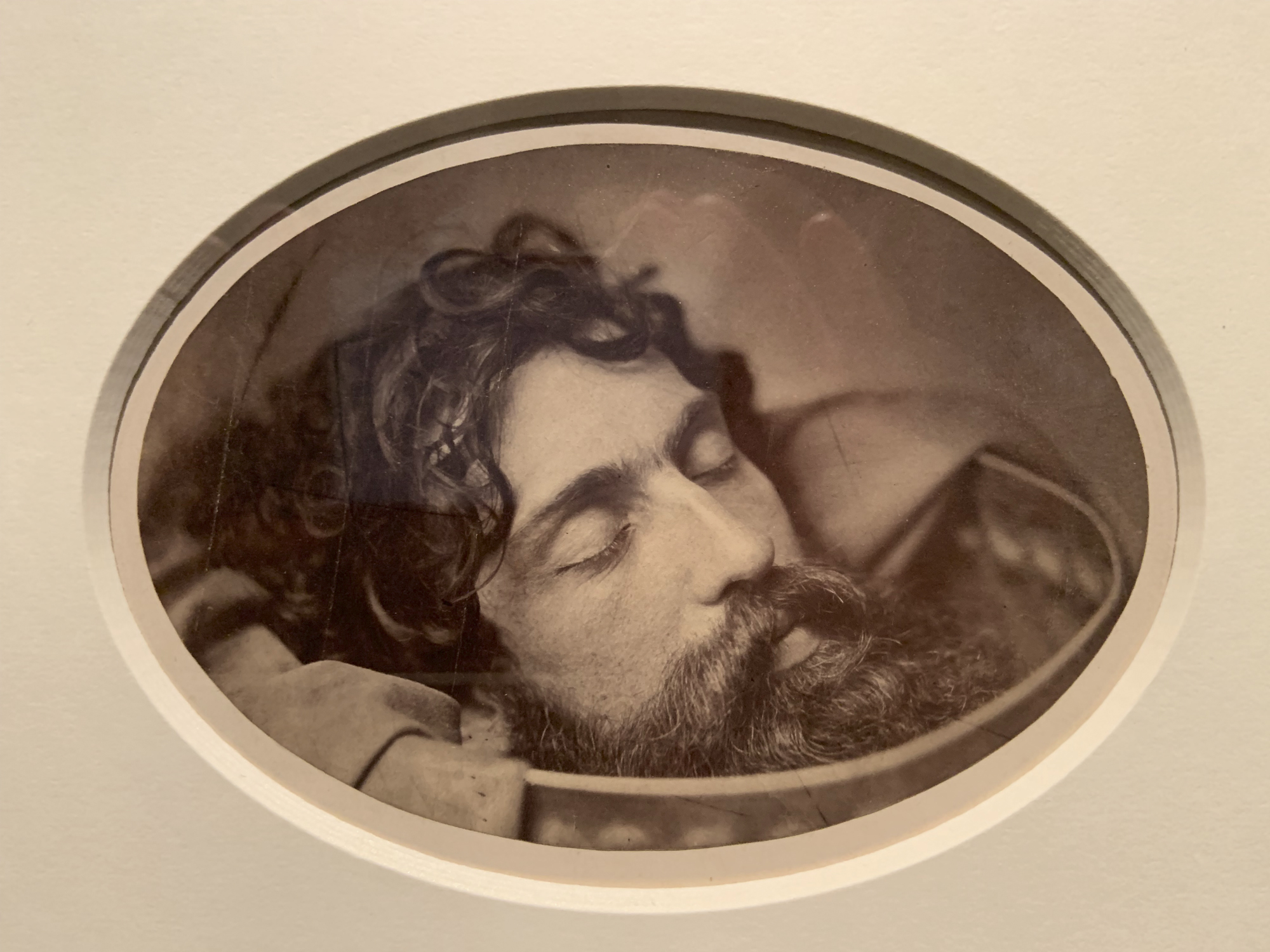
Oscar Gustaf Rejlander (British born Sweden, 1813-1875) 'Head of St John the Baptist on a Charger' c. 1856 (installation view)


Oscar Gustaf Rejlander (British born Sweden, 1813-1875)
Head of St John the Baptist on a Charger (installation view)
c. 1856
Albumen print
The Royal Photographic Society Collection at the V&A Museum
Photo: Marcus Bunyan


Rejlander probably intended this photograph to be part of a larger composition telling the biblical story of Salome, in which the severed head of John the Baptist was presented to her on a plate. Rejlander never made the full picture, however, and instead produced multiple prints of the head alone.


Oscar Gustaf Rejlander (British born Sweden, 1813-75) 'Head of St John the Baptist on a Charger' c. 1856 (installation view)


Oscar Gustaf Rejlander (British born Sweden, 1813-1875)
Head of St John the Baptist on a Charger (installation view)
c. 1856
Albumen print
The Royal Photographic Society Collection at the V&A Museum


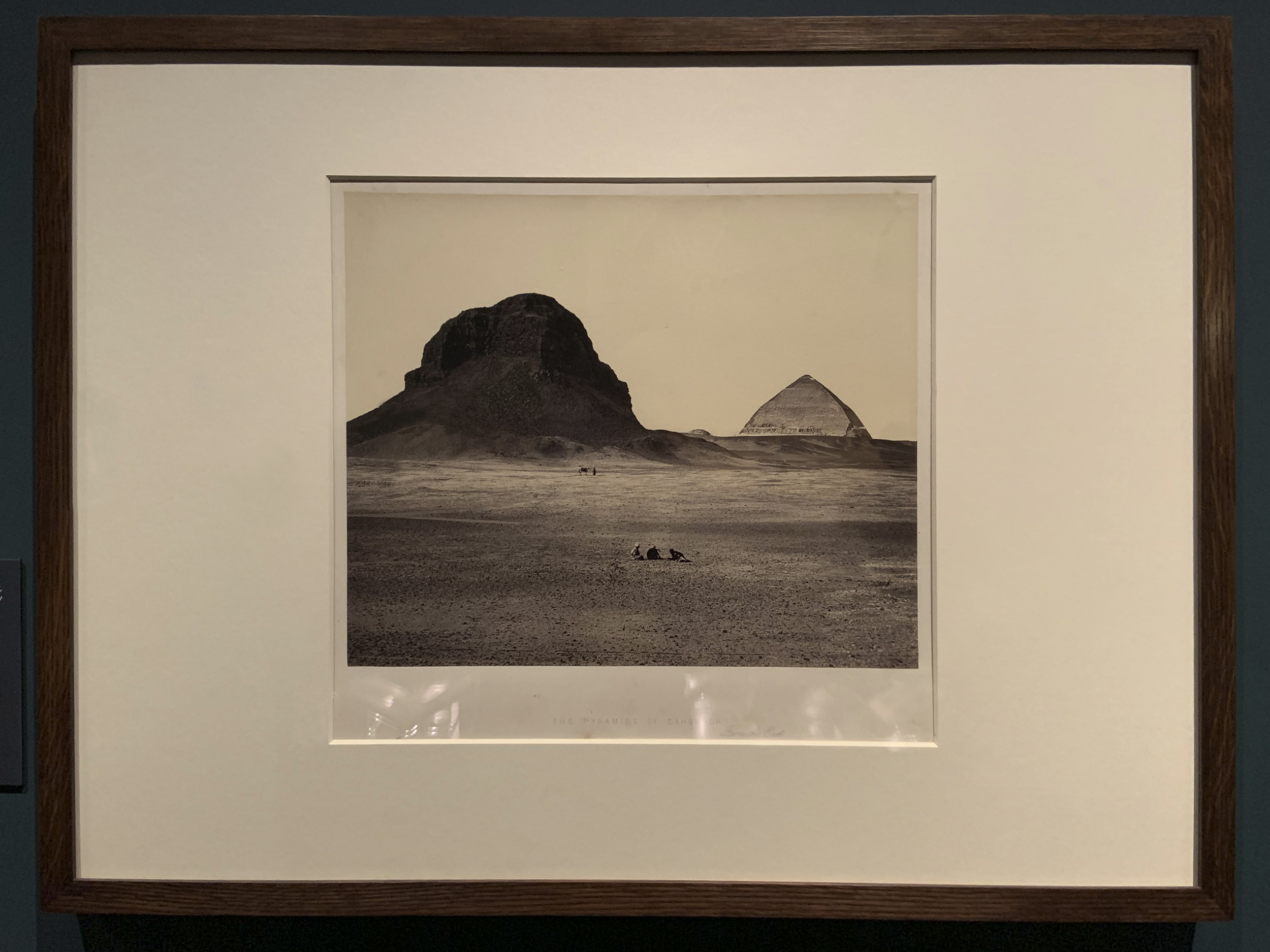
Francis Frith (British, 1822-1898) 'Th', from Egypt, Sinai, and Jerusalem: A Series of Twenty Photographic Views by Francis Frith 1858 (published 1860 or 1862) (installation view)


Francis Frith (British, 1822-1898)
The Pyramids of Dahshoor [Dahshur], from the East, from Egypt, Sinai, and Jerusalem: A Series of Twenty Photographic Views by Francis Frith (installation view)
1858 (published 1860 or 1862)
Albumen print
The Royal Photographic Society Collection at the V&A Museum
Photo: Marcus Bunyan


Frith’s photographs were popular and circulated widely, both because of their architectural interest and because they often featured sites mentioned in the Bible. Photographs of places described in biblical stories brought a new level of realism to a Christian Victorian audience, previously only available through the interpretations of a painter or illustrator.


Francis Frith (British, 1822-1898) 'Th', from Egypt, Sinai, and Jerusalem: A Series of Twenty Photographic Views by Francis Frith 1858 (published 1860 or 1862) (installation view)


Francis Frith (British, 1822-1898)
The Pyramids of Dahshoor [Dahshur], from the East, from Egypt, Sinai, and Jerusalem: A Series of Twenty Photographic Views by Francis Frith (installation view)
1858 (published 1860 or 1862)
Albumen print
The Royal Photographic Society Collection at the V&A Museum
Photo: Marcus Bunyan


Francis Frith (British, 1822-98) 'The Pyramids of Dahshoor [Dahshur], from the East, from Egypt, Sinai, and Jerusalem: A Series of Twenty Photographic Views by Francis Frith' 1858 (published 1860 or 1862) from the V&A Photography Centre, London 2019


Francis Frith (British, 1822-1898)
The Pyramids of Dahshoor [Dahshur], from the East, from Egypt, Sinai, and Jerusalem: A Series of Twenty Photographic Views by Francis Frith
1858 (published 1860 or 1862)
Albumen print
The Royal Photographic Society Collection at the V&A Museum
Photo: Marcus Bunyan


Installation view of the V&A Photography Centre, London


Installation view of the V&A Photography Centre, London
Photo: Marcus Bunyan


Gustave Le Gray (French, 1820-1884) 'Solar Effect in the Clouds – Ocean' 1856-1859 (installation view)


Gustave Le Gray (French, 1820-1884)
Solar Effect in the Clouds – Ocean (installation view)
1856-1859
Albumen Print
Bequeathed to the V&A by Chauncey Hare Townshend
Photo: Marcus Bunyan


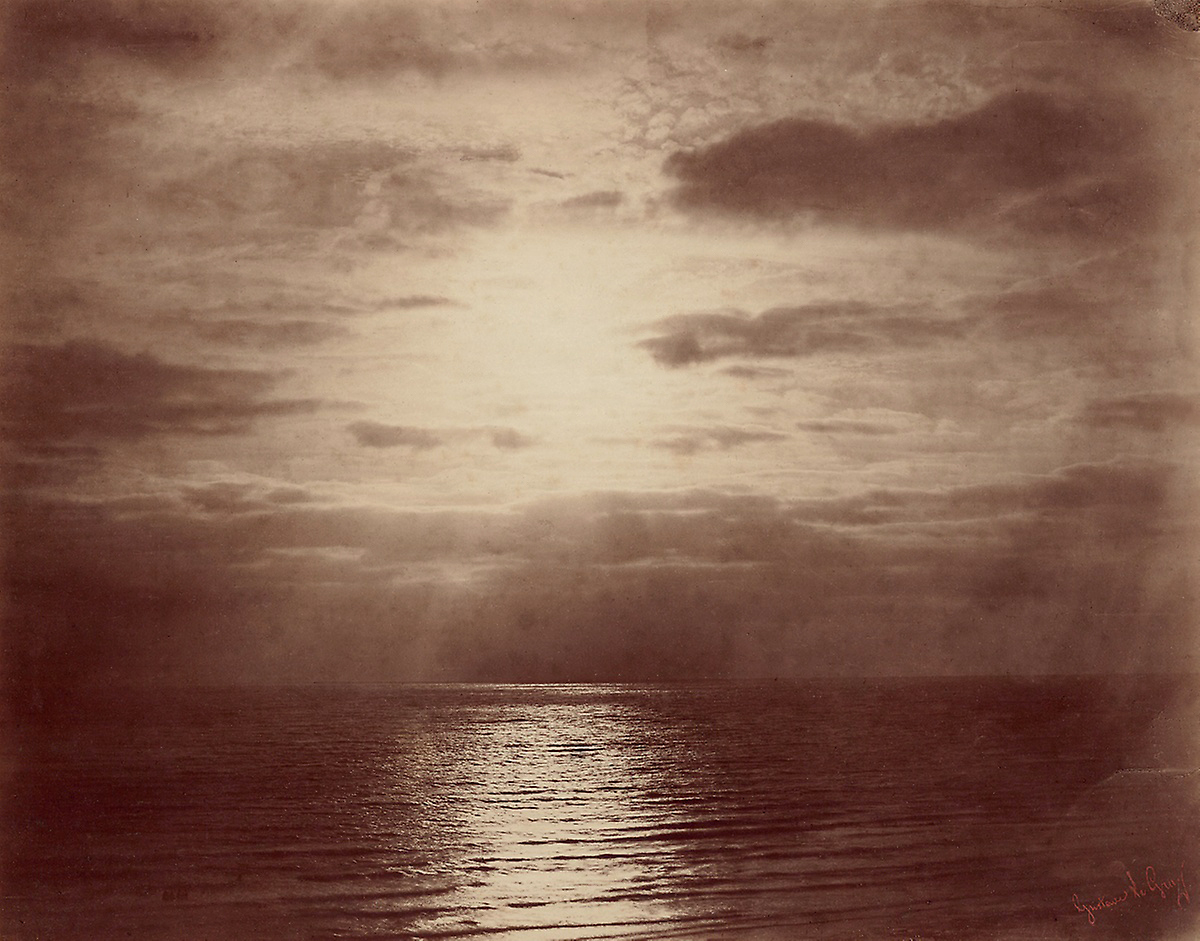
Gustave Le Gray (French, 1820-1884) 'Solar Effect in the Clouds – Ocean' 1856-1859


Gustave Le Gray (French, 1820-1884)
Solar Effect in the Clouds – Ocean
1856-1859
Albumen Print
Art Institute of Chicago
Creative Commons Zero (CC0)


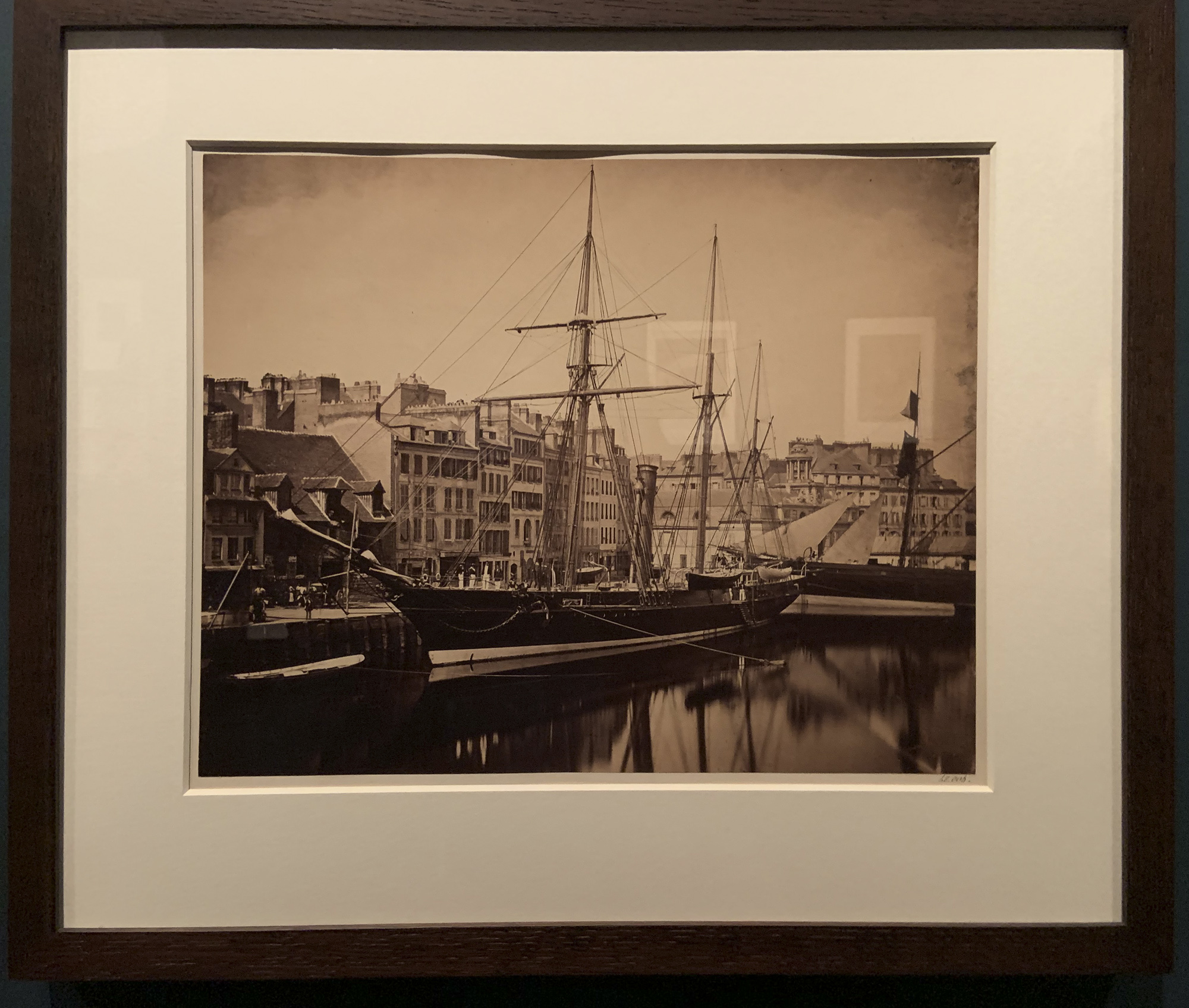
Gustave Le Gray (French, 1820-1884) 'The Imperial Yacht, La Reine Hortense, Le Havre' 1856-1857 (installation view)


Gustave Le Gray (French, 1820-1884)
The Imperial Yacht, La Reine Hortense, Le Havre (installation view)
1856-1857
Albumen print
Bequeathed to the V&A by Chauncey Hare Townshend
Photo: Marcus Bunyan


Gustave Le Gray (French, 1820-1884) 'The Imperial Yacht, La Reine Hortense, Le Havre' 1856-1857 (installation view)


Gustave Le Gray (French, 1820-1884)
The Imperial Yacht, La Reine Hortense, Le Havre (installation view)
1856-1857
Albumen print
Bequeathed to the V&A by Chauncey Hare Townshend
Photo: Marcus Bunyan


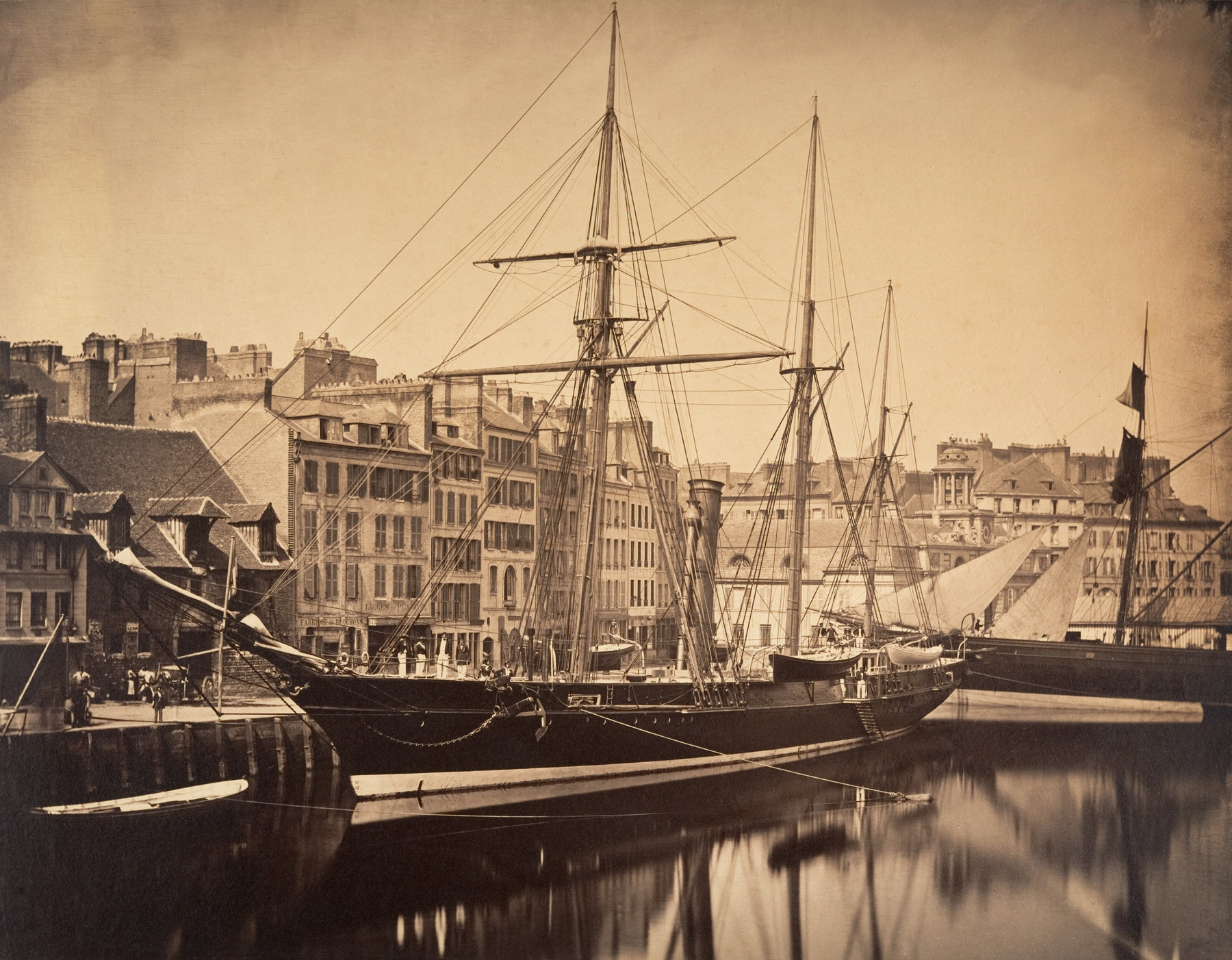
Gustave Le Gray (French, 1820-1884) 'The Imperial Yacht, La Reine Hortense, Le Havre' 1856-1857


Gustave Le Gray (French, 1820-1884)
The Imperial Yacht, La Reine Hortense, Le Havre
1856-1857
Albumen print
The Metropolitan Museum of Art
Public domain


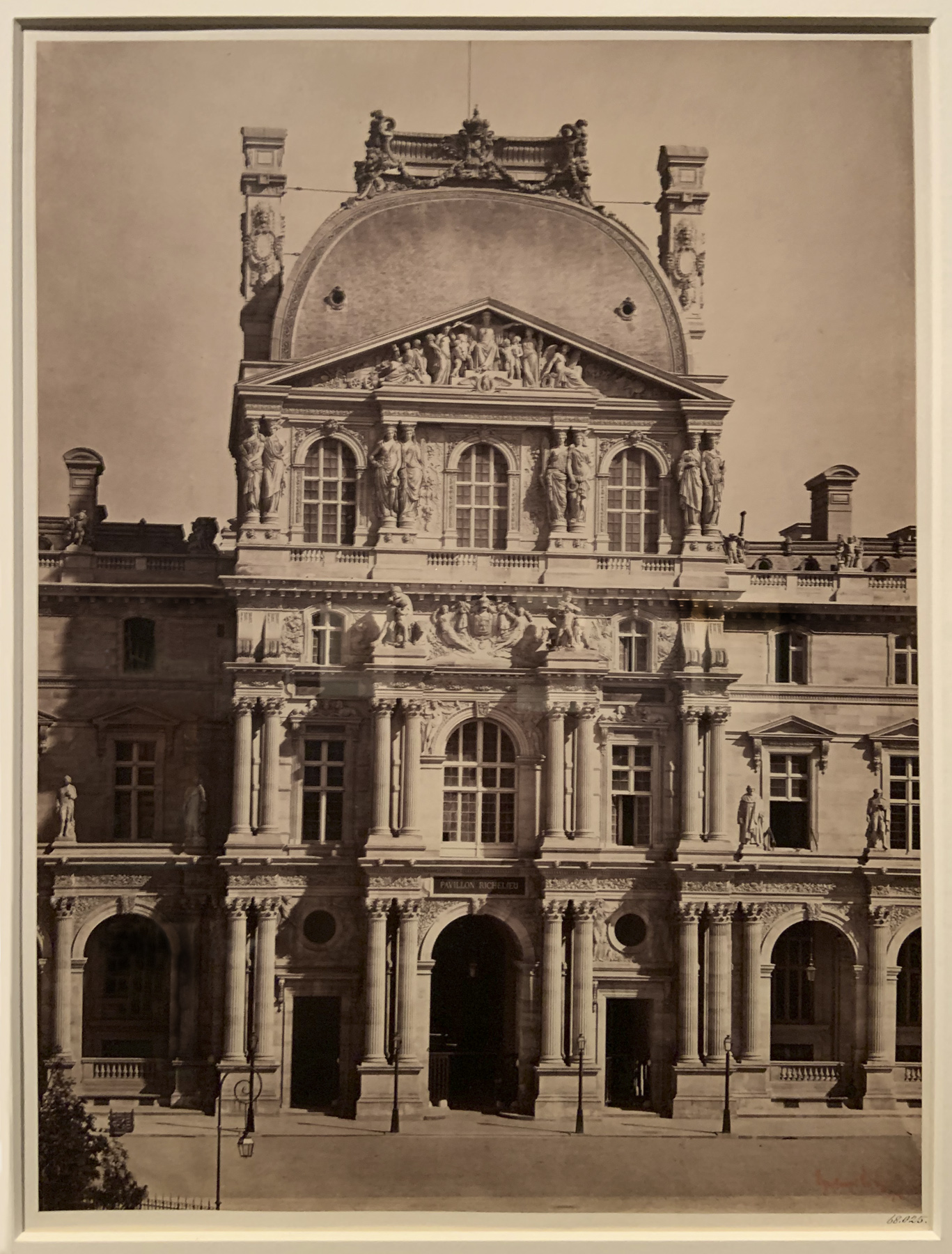
Gustave Le Gray (French, 1820-1884) 'Pavilion Richelieu, Louvre, Paris' 1857-1859 (installation view)


Gustave Le Gray (French, 1820-1884)
Pavilion Richelieu, Louvre, Paris (installation view)
1857-1859
Albumen print
Bequeathed to the V&A by Chauncey Hare Townshend
Photo: Marcus Bunyan


Gustave Le Gray (French, 1820-1884) 'Pavilion Richelieu, Louvre, Paris' 1857-1859 (installation view)


Gustave Le Gray (French, 1820-1884)
Pavilion Richelieu, Louvre, Paris (installation view)
1857-1859
Albumen print
Bequeathed to the V&A by Chauncey Hare Townshend
Photo: Marcus Bunyan


Roger Fenton (British, 1819-1869) 'Balaclava from Guard’s Hill, the Crimea' 1855 (installation view)


Roger Fenton (British, 1819-1869)
Balaclava from Guard’s Hill, the Crimea (installation view)
1855
Albumen print
Bequeathed to the V&A by Chauncey Hare Townshend
Photo: Marcus Bunyan


Roger Fenton (British, 1819-1869) 'Balaclava from Guard’s Hill, the Crimea' 1855 (installation view)


Roger Fenton (British, 1819-69)
Balaclava from Guard’s Hill, the Crimea (installation view)
1855
Albumen print
Bequeathed to the V&A by Chauncey Hare Townshend
Photo: Marcus Bunyan


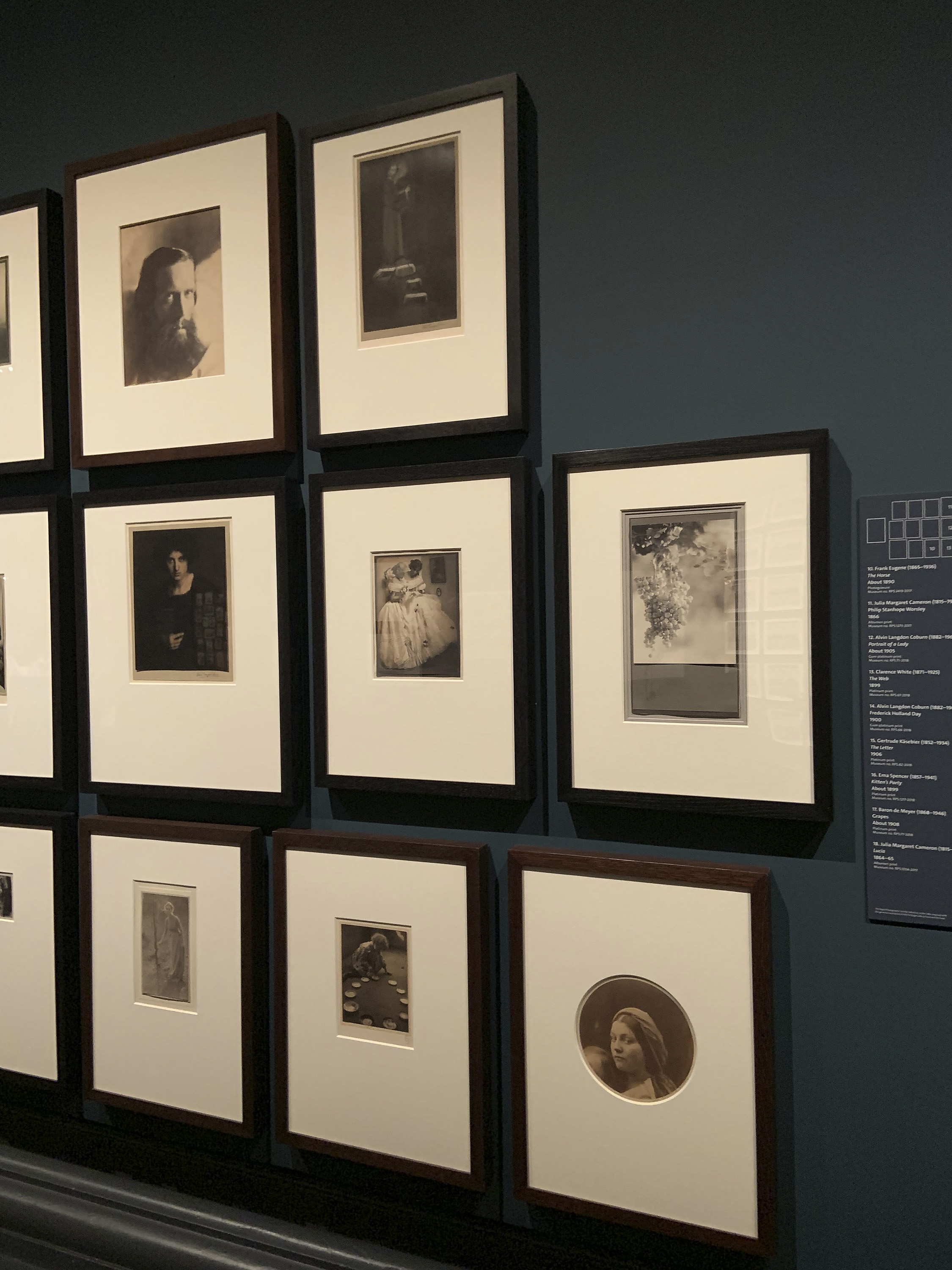
Julia Margaret Cameron (British born India, 1815-1879) 'Lucia' 1864-1865 (installation view)


Julia Margaret Cameron (British, born India, 1815-1879)
Lucia (installation view)
1864-1865
Albumen print
The Royal Photographic Society Collection at the V&A Museum
Photo: Marcus Bunyan


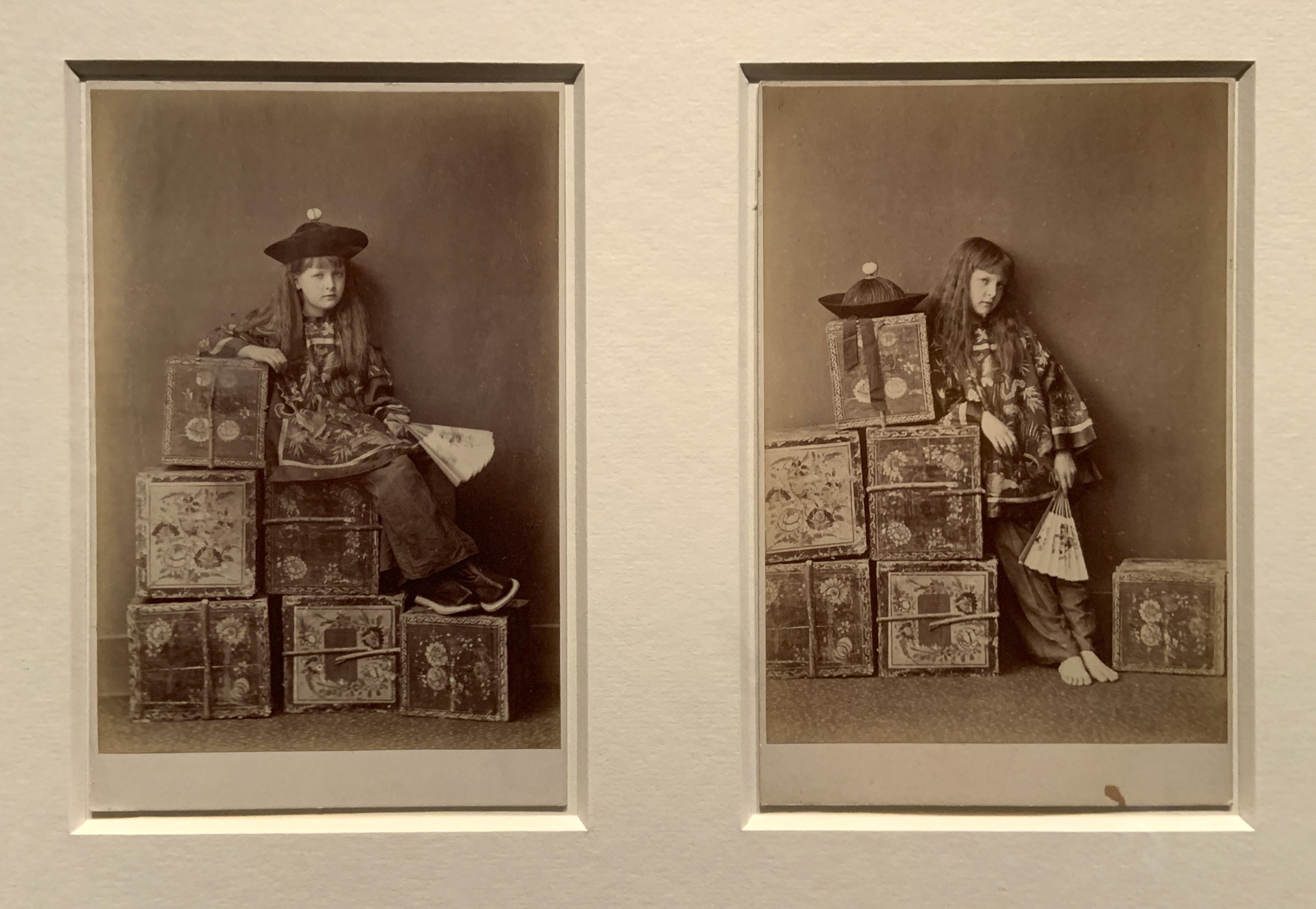
Charles Lutwide Dodgson (also known as Lewis Carroll)(British, 1832-1898) 'Tea Merchant (On Duty)' and 'Tea Merchant (Off Duty)' 1873 (installation view)


Charles Lutwide Dodgson (also known as Lewis Carroll)(British, 1832-1898)
Tea Merchant (On Duty) and Tea Merchant (Off Duty) (installation view)
1873
Albumen prints
The Royal Photographic Society Collection at the V&A Museum
Photo: Marcus Bunyan


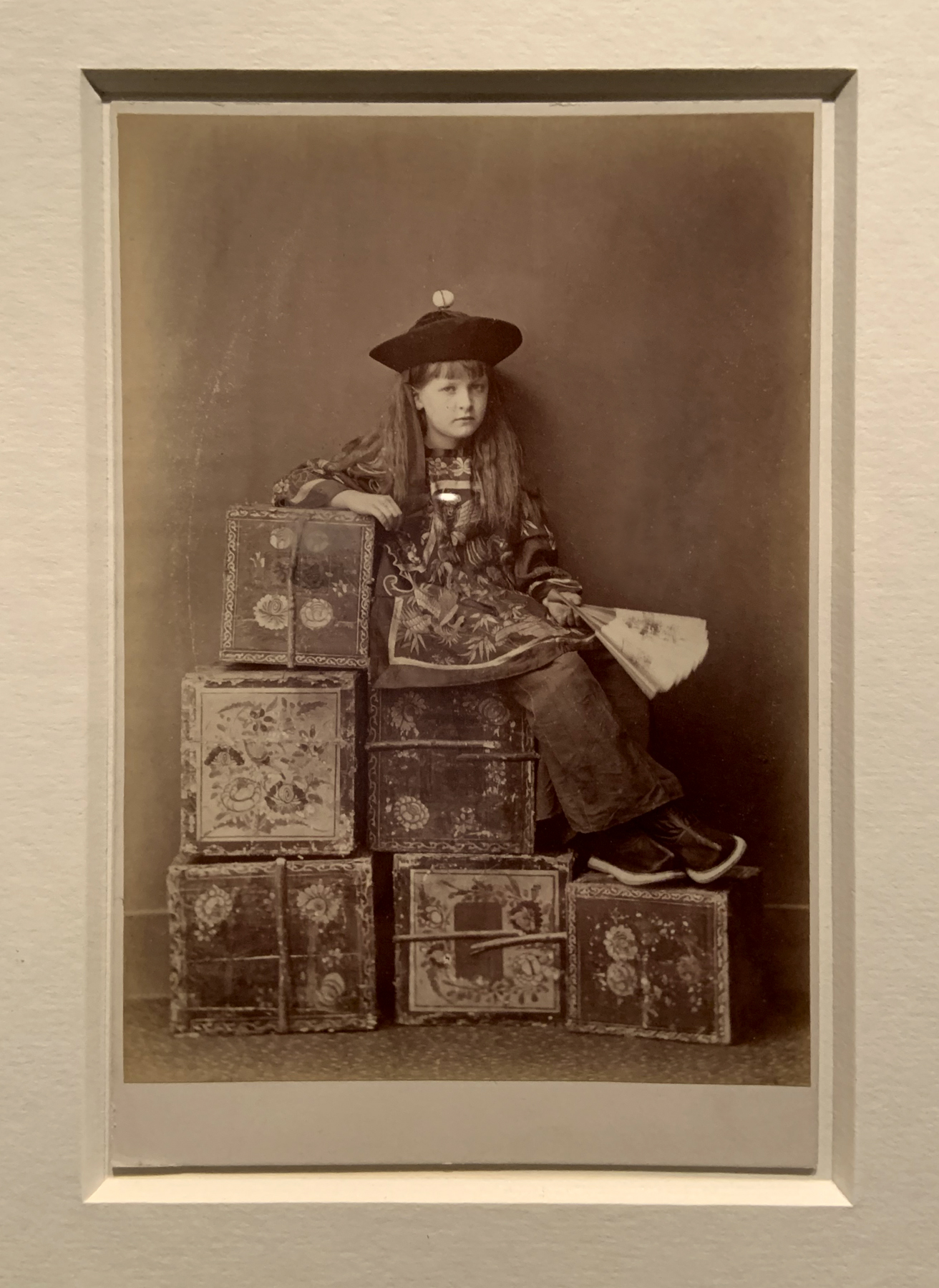
Lewis Carroll is best known as the author of Alice’s Adventures in Wonderland, but he was also an accomplished amateur photographer. Approximately half of his photographs are portraits of children, sometimes wearing foreign costumes or acting out scenes. Here, Alexandra ‘Xie’ Kitchen, his most frequent child sitter, poses in Chinese dress on a stack of tea chests.


Charles Lutwide Dodgson (also known as Lewis Carroll)(British, 1832-1898) 'Tea Merchant (On Duty)' 1873 (installation view)


Charles Lutwide Dodgson (also known as Lewis Carroll)(British, 1832-1898)
Tea Merchant (On Duty) (installation view)
1873
Albumen prints
The Royal Photographic Society Collection at the V&A Museum
Photo: Marcus Bunyan


Charles Lutwide Dodgson (also known as Lewis Carroll)(British, 1832-1898) 'Tea Merchant (Off Duty)' 1873 (installation view)


Charles Lutwide Dodgson (also known as Lewis Carroll)(British, 1832-1898)
Tea Merchant (Off Duty) (installation view)
1873
Albumen prints
The Royal Photographic Society Collection at the V&A Museum
Photo: Marcus Bunyan


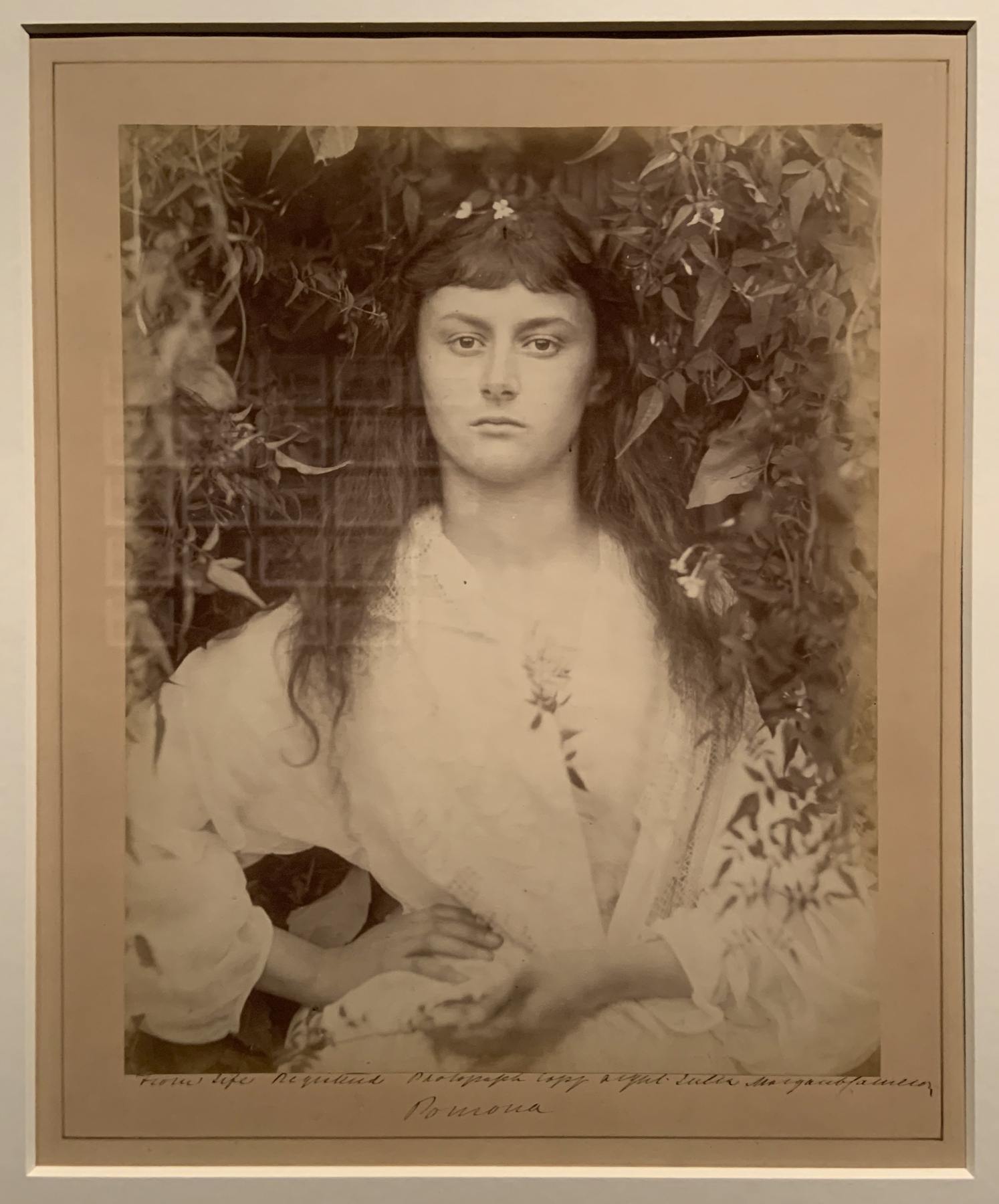
Julia Margaret Cameron (British, born India, 1815-1879) 'Pomona' 1887 (installation view)


Julia Margaret Cameron (British, born India, 1815-1879)
Pomona (installation view)
1887
Albumen print
The Royal Photographic Society Collection at the V&A Museum
Photo: Marcus Bunyan


The South Kensington museum (now the V&A) was the only museum to collect and exhibit Julia Margaret Cameron’s during her lifetime. This is one of several studies she made of Alice Liddell, who as a child had modelled for the author and photographer Lewis Carroll and inspired his novel Alice’s Adventures in Wonderland. Cameron, Carroll and Liddell moved in overlapping artistic and intellectual circles. Here, surrounded by foliage, a grown-up Alice poses as the Roman goddess of orchards and gardens.


Julia Margaret Cameron (British, born India, 1815-1879) 'Pomona' 1887 (installation view)


Julia Margaret Cameron (British, born India, 1815-1879)
Pomona (installation view)
1887
Albumen print
The Royal Photographic Society Collection at the V&A Museum
Photo: Marcus Bunyan


Installation view of the V&A Photography Centre, London


Installation view of the V&A Photography Centre, London
Photo: Marcus Bunyan


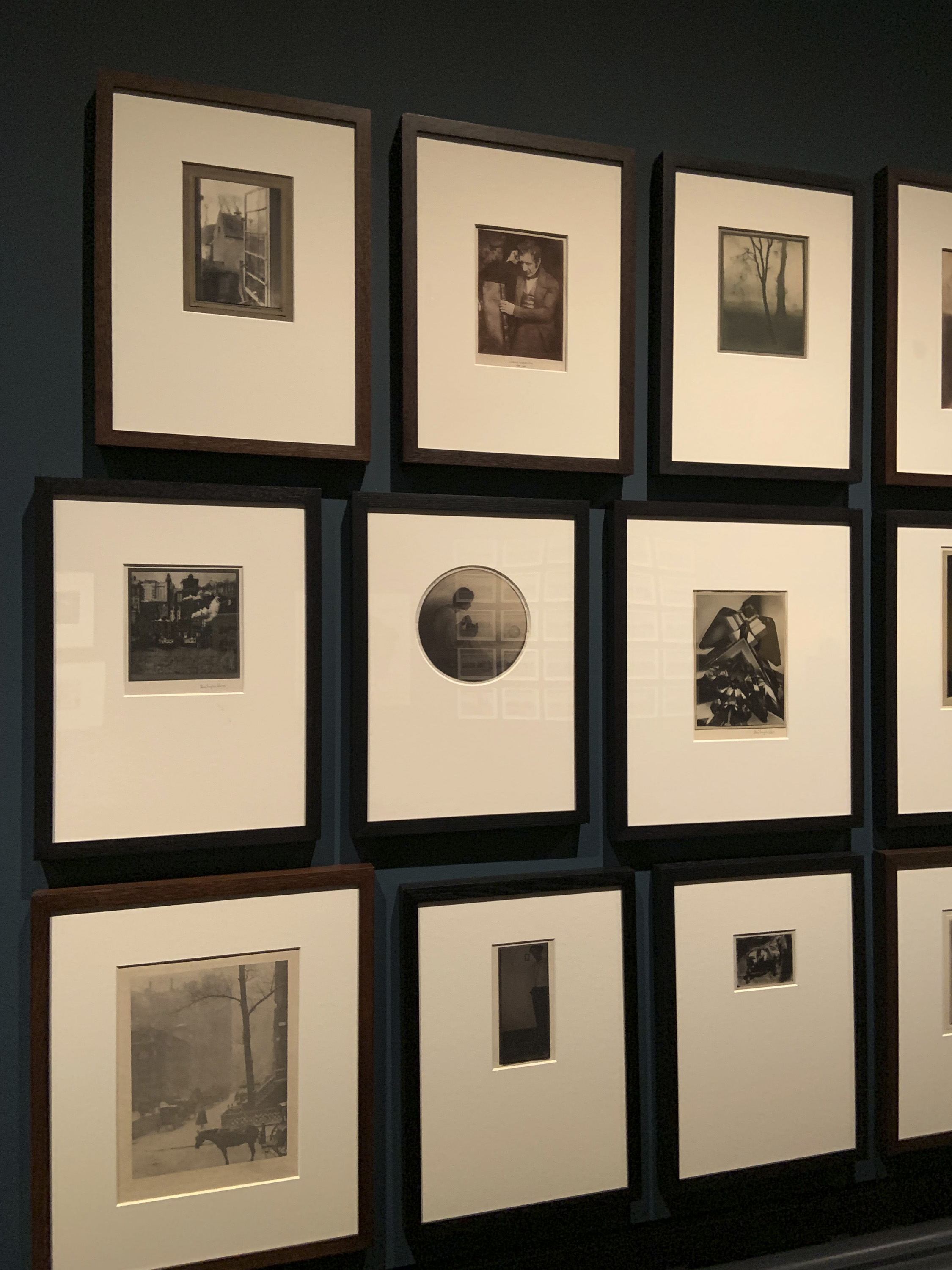
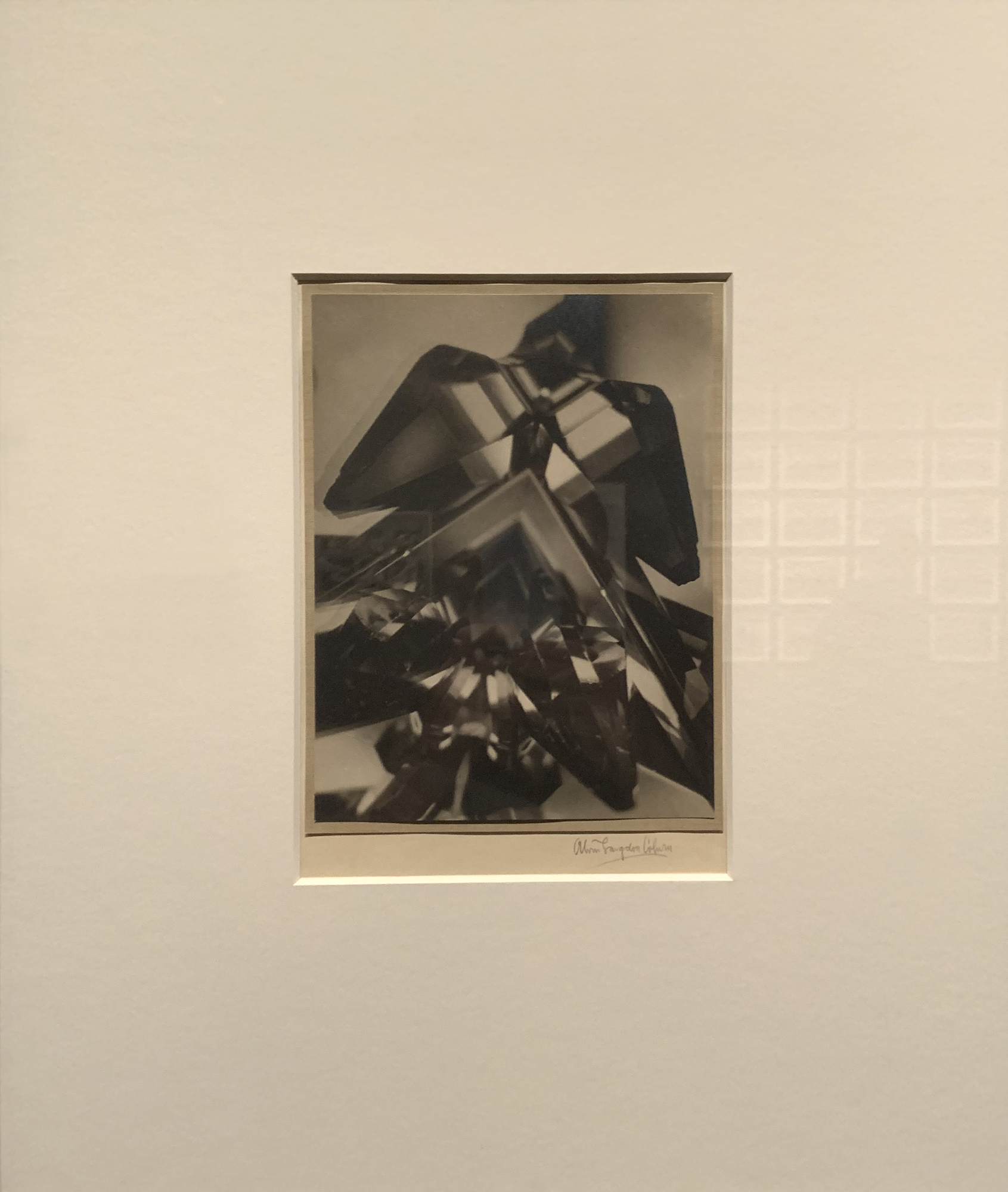
Alvin Langdon Coburn (American 1882-1966) 'Frederick Holland Day' 1900 (installation view)


Alvin Langdon Coburn (American 1882-1966)
Frederick Holland Day (installation view)
1900
Gum platinum print
The Royal Photographic Society Collection at the V&A Museum
Photo: Marcus Bunyan


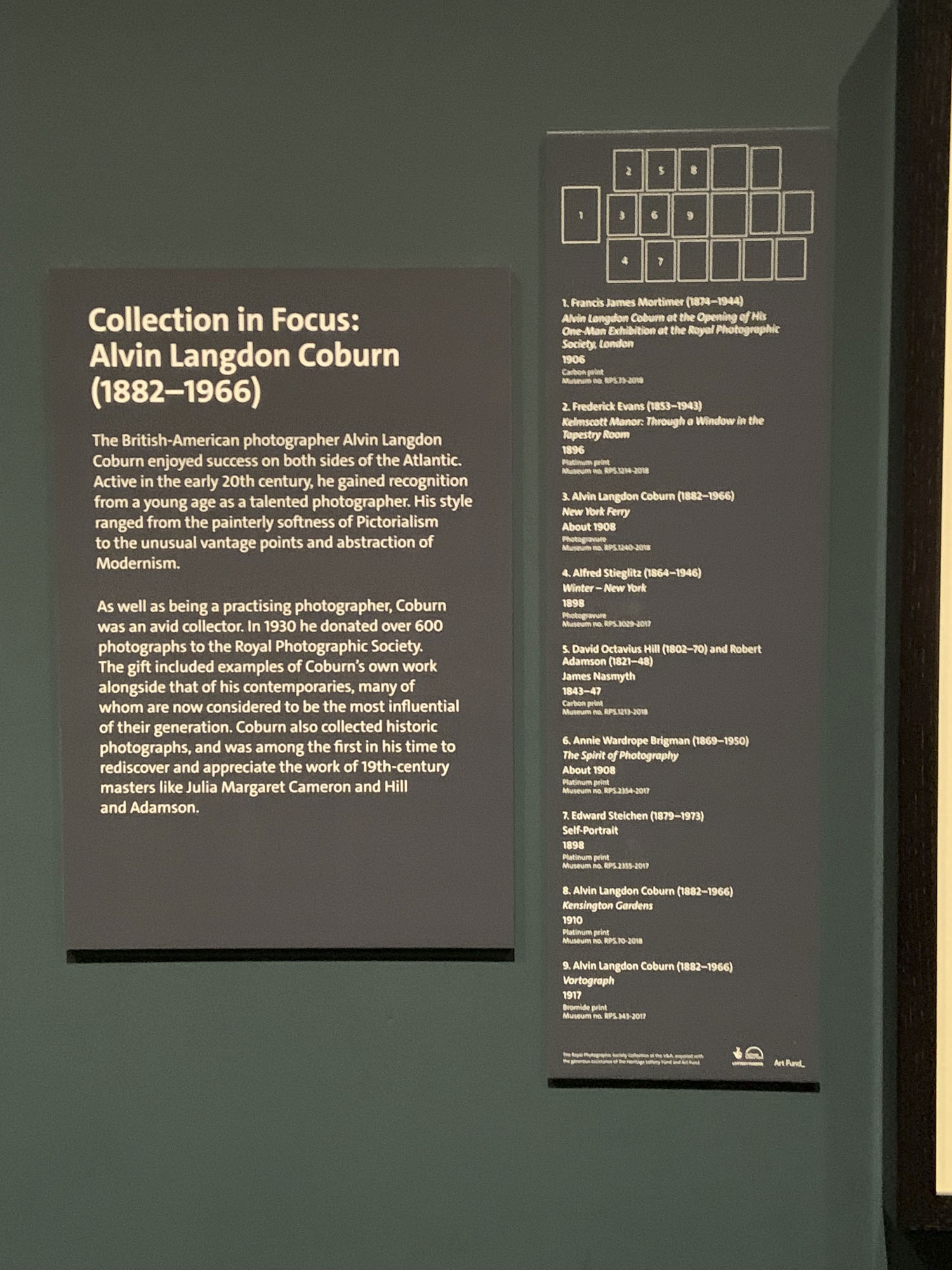
The British-American photographer Alvin Langdon Coburn enjoyed success on both sides of the Atlantic. Active in the early 20th century, he gained recognition from a young age as a talented photographer. His style ranged from the painterly softness of Pictorialism to the unusual vantage points and abstraction of Modernism. As well as being a practising photographer, Coburn was an avid collector. In 1930 he donated over 600 photographs to the Royal Photographic Society. The gift included examples of Coburn’s own work alongside that of his contemporaries, many of whom are now considered to be the most influential of their generation. Coburn also collected historic photographs, and was among the first in his time to rediscover and appreciate the work of 19th-century masters like Julia Margaret Cameron and Hill and Adamson.


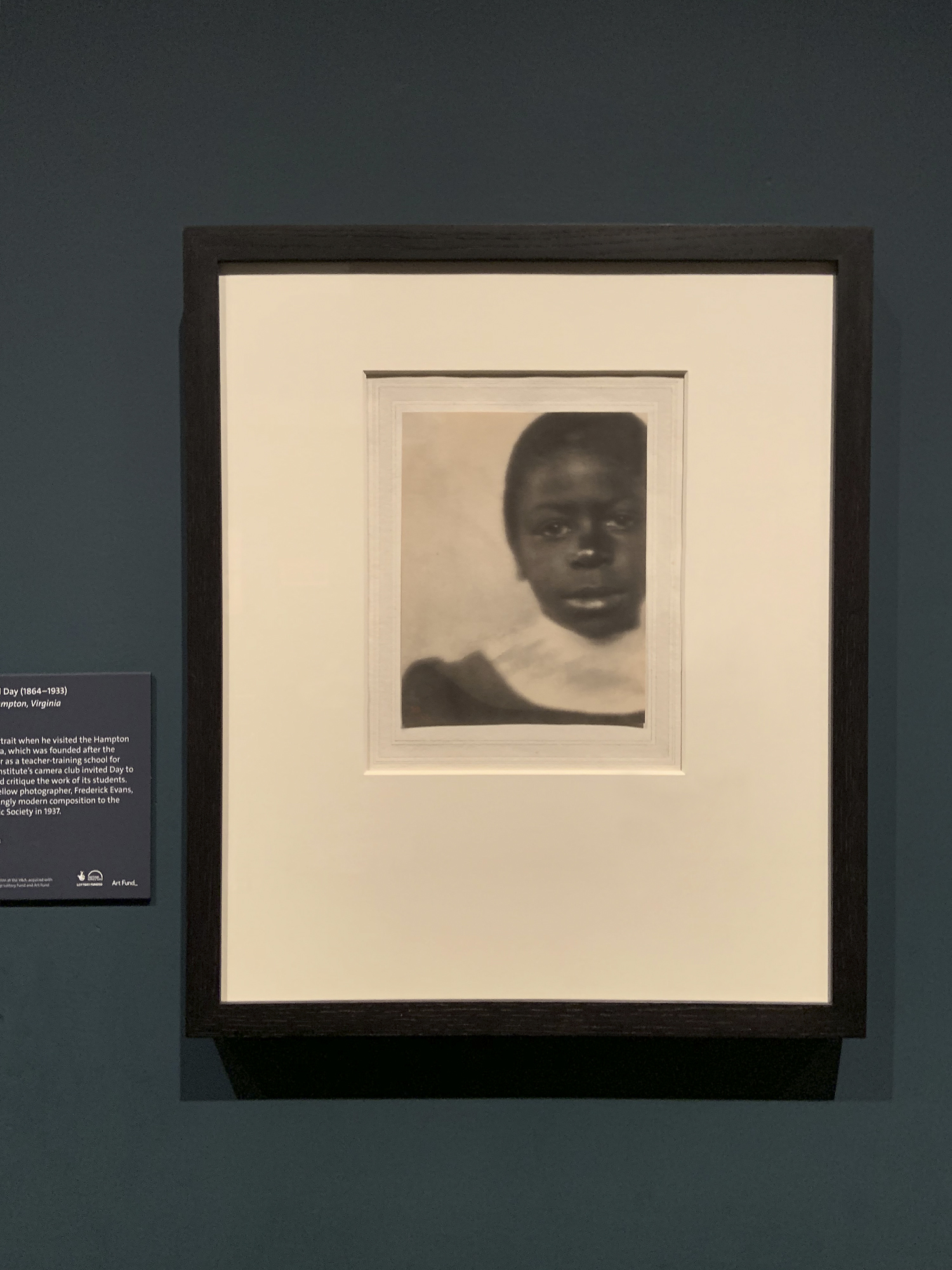
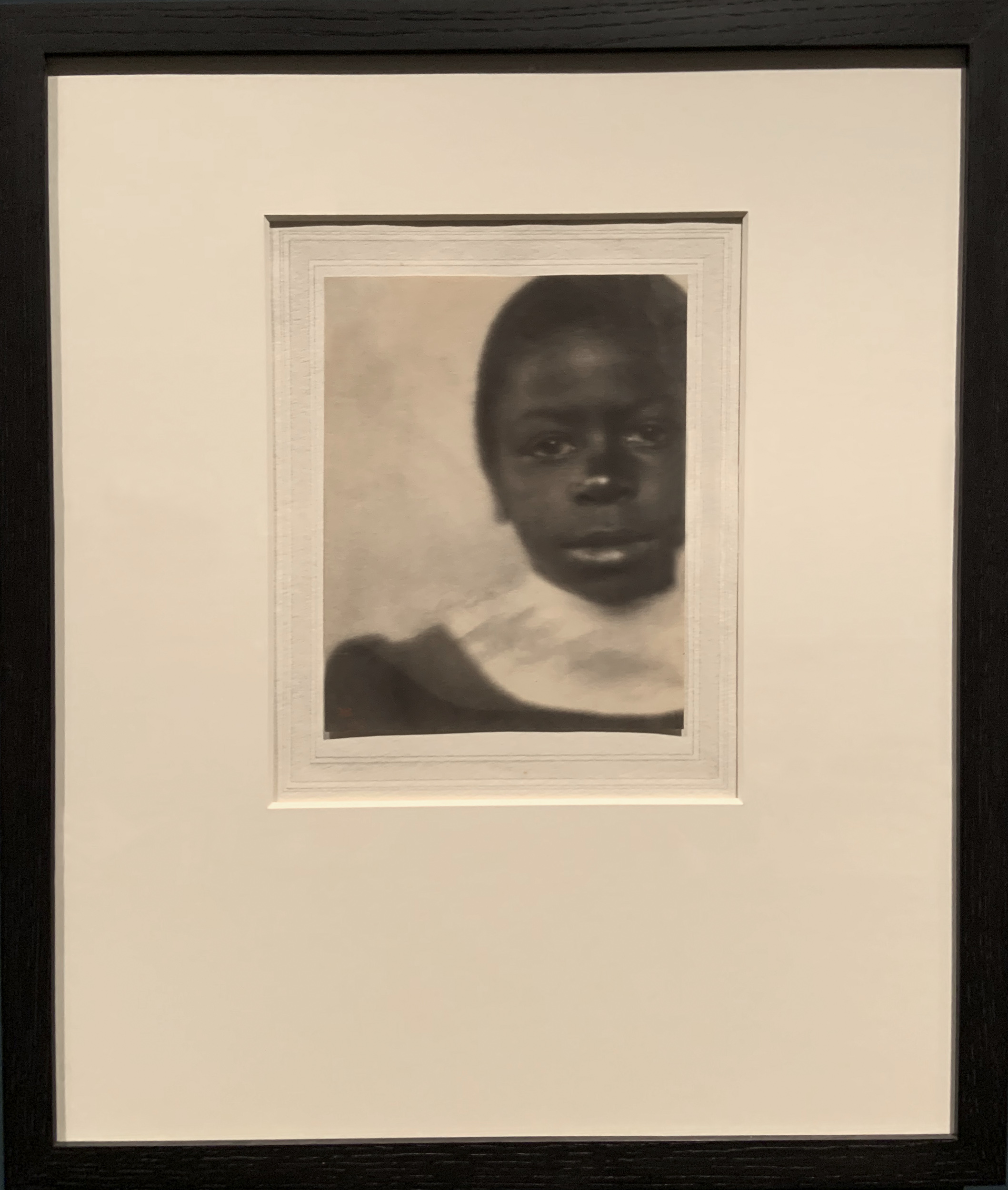
Fredrick Holland Day (American, 1864-1933) 'Head of a Girl, Hampton, Virginia' 1905 (installation view)


Fredrick Holland Day (American, 1864-1933)
Head of a Girl, Hampton, Virginia (installation view)
1905
Gum platinum print
The Royal Photographic Society Collection at the V&A Museum
Photo: Marcus Bunyan


Day made this portrait when he visited the Hampton Institute in Virginia, which was founded after the American Civil War as a teacher-training school for freed slaves. The institute’s camera club invited Day to visit the school and critique the work of its students. Day’s friend and fellow photographer, Frederick Evans, donated this strikingly modern composition to the Royal Photographic Society in 1937.


Fredrick Holland Day (American, 1864-1933) 'Head of a Girl, Hampton, Virginia' 1905 (installation view)


Fredrick Holland Day (American, 1864-1933)
Head of a Girl, Hampton, Virginia (installation view)
1905
Gum platinum print
The Royal Photographic Society Collection at the V&A Museum
Photo: Marcus Bunyan


Fredrick Holland Day (American, 1864-1933) 'Head of a Girl, Hampton, Virginia' 1905 (installation view)


Fredrick Holland Day (American, 1864-1933)
Head of a Girl, Hampton, Virginia (installation view)
1905
Gum platinum print
The Royal Photographic Society Collection at the V&A Museum
Photo: Marcus Bunyan


Fredrick Holland Day (American, 1864-1933) 'Head of a Girl, Hampton, Virginia' 1905


Fredrick Holland Day (American, 1864-1933)
Head of a Girl, Hampton, Virginia
1905
Gum platinum print
The Royal Photographic Society Collection at the V&A Museum


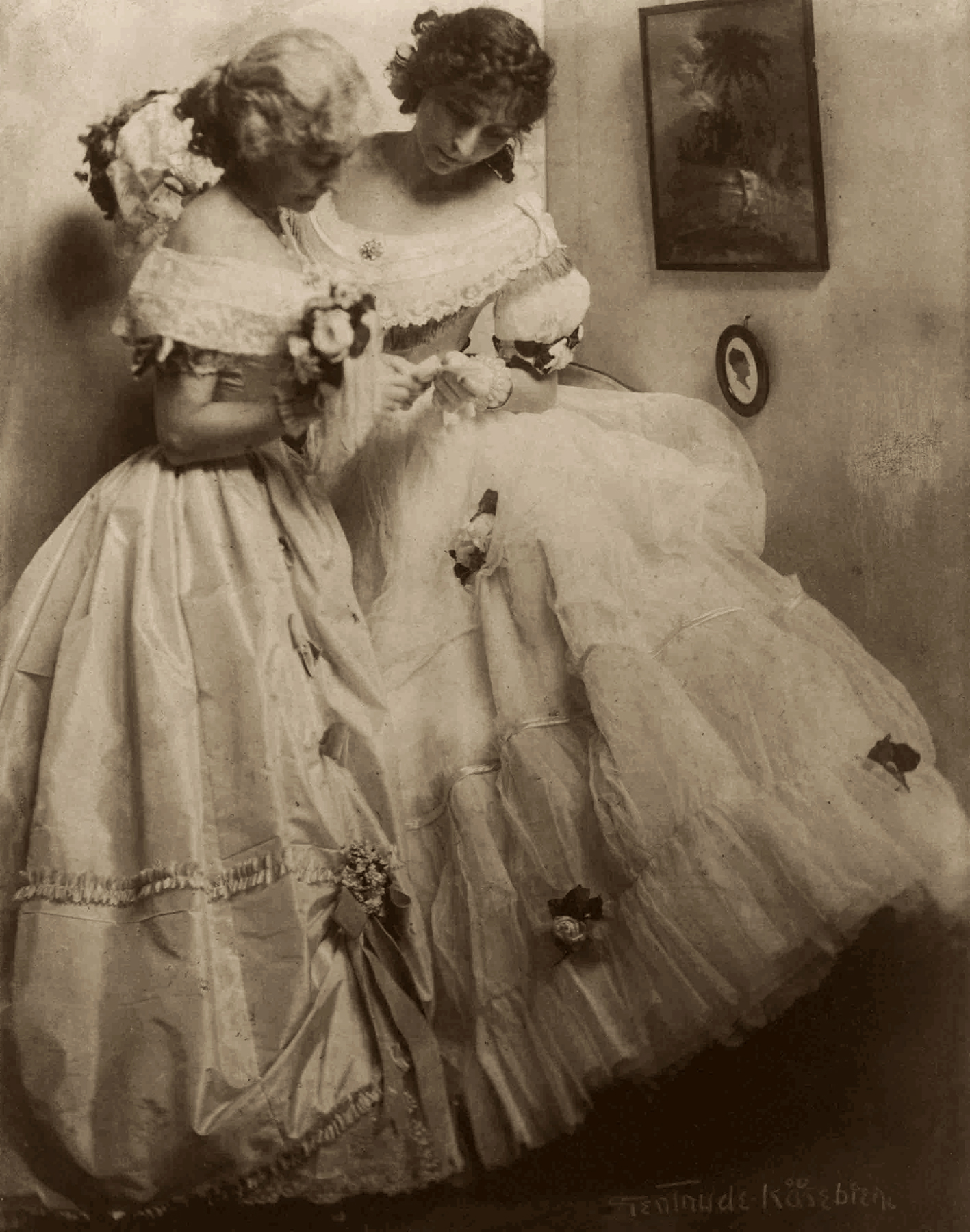
Gertrude Käsebier (American, 1852-1934) 'The Letter' 1906


Gertrude Käsebier (American, 1852-1934)
The Letter
1906
Platinum print
The Royal Photographic Society Collection at the V&A Museum


Käsebier studied painting before opening a photography studio in New York. Her Pictorialist photographs often combine soft focus with experimental printing techniques. These sisters were dressed in historic costume for a ball, but their pose transforms a society portrait into a narrative picture. In a variant image, they turn to look at the framed silhouette on the wall.


Installation view of the V&A Photography Centre, London

Wall text from the V&A Photography Centre, London


Installation views of the V&A Photography Centre, London
Photo: Marcus Bunyan


Francis James Mortimer (British, 1874-1944) 'Alvin Langdon Coburn at the Opening of His One-Man Exhibition the Royal Photographic Society, London' 1906 (installation view)


Francis James Mortimer (British, 1874-1944)
Alvin Langdon Coburn at the Opening of His One-Man Exhibition the Royal Photographic Society, London (installation view)
1906
Carbon print
The Royal Photographic Society Collection at the V&A Museum
Photo: Marcus Bunyan


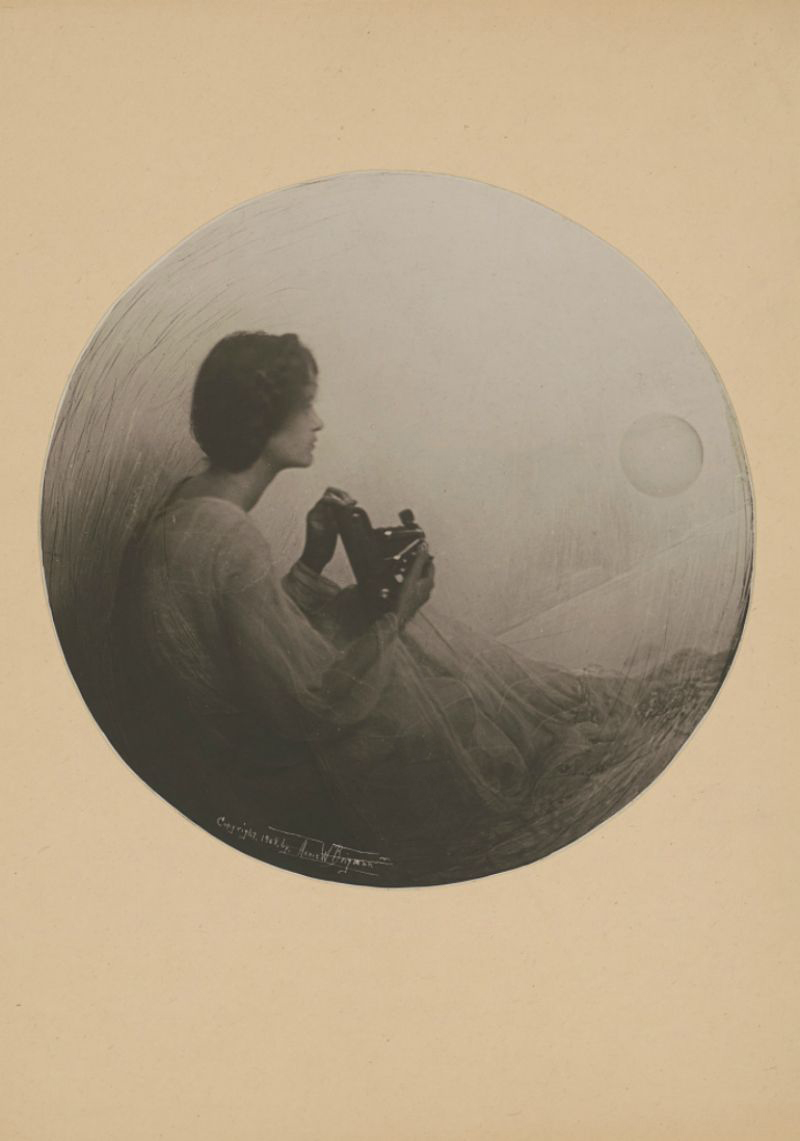
Annie Wardrope Brigman (American, 1869-1950) 'The Spirit of Photography' c. 1908


Annie Wardrope Brigman (American, 1869-1950)
The Spirit of Photography
c. 1908
Platinum print
The Royal Photographic Society Collection at the V&A Museum


Alvin Langdon Coburn (American 1882-1966) 'Kensington Gardens' 1910 (installation view)


Alvin Langdon Coburn (American 1882-1966)
Kensington Gardens (installation view)
1910
Platinum print
The Royal Photographic Society Collection at the V&A Museum
Photo: Marcus Bunyan


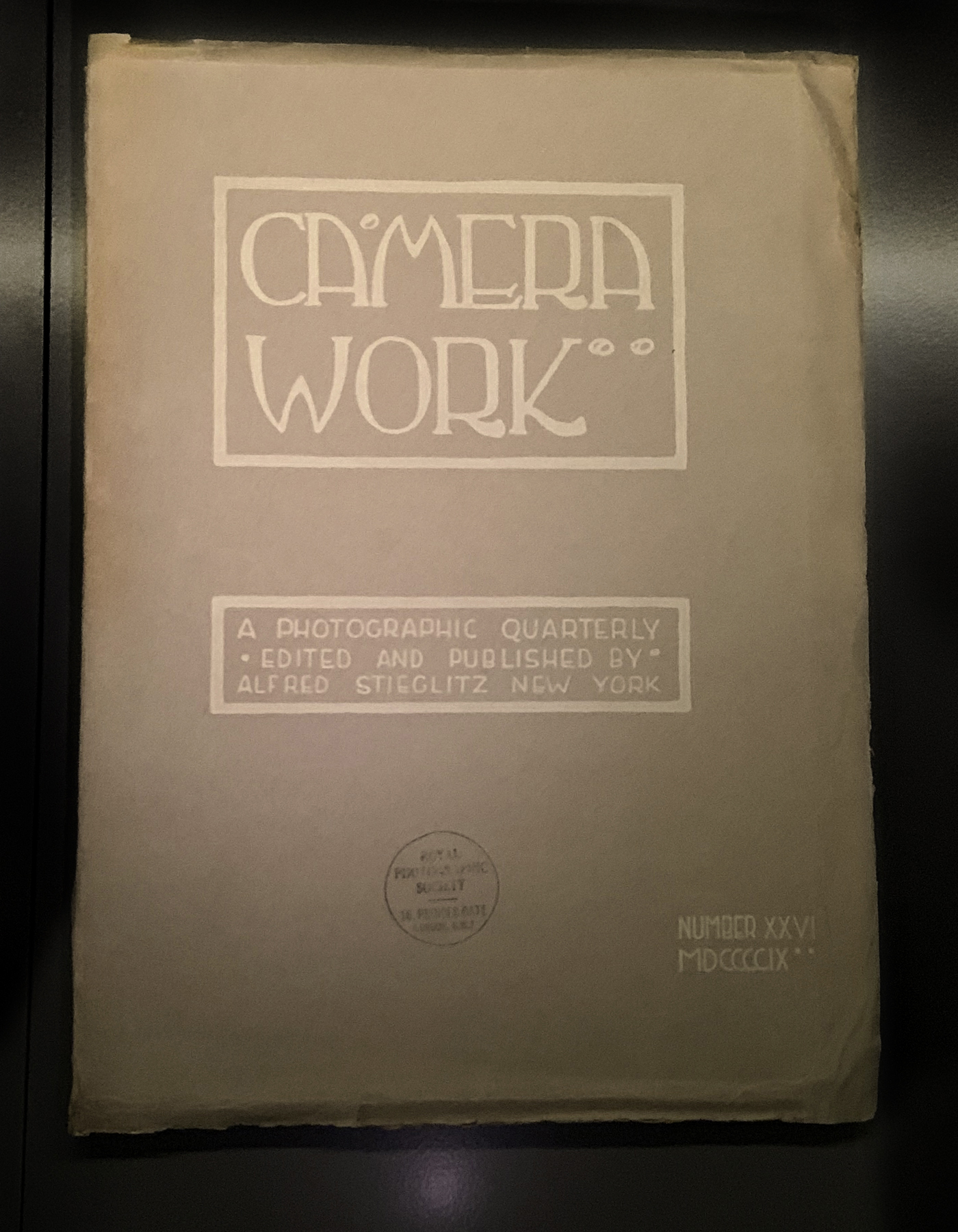
Cover of 'Camera Work'


Cover of Camera Work Number XXVI (installation view)
Photo: Marcus Bunyan


Edward Steichen (American, 1879-1973) 'Portrait – Lady H' 1908 from 'Camerwork 22'


Edward Steichen (American, 1879-1973)
Portrait – Lady H (installation view)
1908
Camera Work 22
1908
Photogravure
The Royal Photographic Society Collection at the V&A Museum
Photo: Marcus Bunyan


Edward Steichen (American, 1879-1973) 'Portrait – Lady H' 1908 from 'Camerwork 22'


Edward Steichen (American, 1879-1973)
Portrait – Lady H
1908
Camera Work 22
1908
Photogravure
The Royal Photographic Society Collection at the V&A Museum


Paul Strand (American, 1890-1976) 'New York' 1916 from 'Camerwork 48' (installation view)


Paul Strand (American, 1890-1976)
New York (installation view)
1916
Camera Work 48
1916
Photogravure
The Royal Photographic Society Collection at the V&A Museum
Photo: Marcus Bunyan


Alfred Stieglitz (American, 1864-1946) was an American photographer, publisher, writer and gallery owner. From 1903-1917, he published the quarterly journal Camera Work, which featured portfolios of exquisitely printed photogravures (a type of photograph printed in ink), alongside essays and reviews. Camera Work promoted photography as an art form, publishing the work of Pictorialist photographers who drew inspiration from painting, and reproducing 19th-century photographs. It also helped to introduce modern art to American audiences, including works by radical European painters such as Matisse and Picasso.


Alvin Langdon Coburn (American 1882-1966) 'Vortograph' 1917 (installation view)


Alvin Langdon Coburn (American 1882-1966)
Vortograph (installation view)
1917
Bromide print
The Royal Photographic Society Collection at the V&A Museum
Photo: Marcus Bunyan


Rudolph Koppitz. 'Movement Study' 1925


Rudolph Koppitz (American, 1884-1936)
Bewegungsstudie (Movement Study)
1926
Carbon print
The Royal Photographic Society Collection at the V&A Museum


Koppitz was a leading art photographer in Vienna between the two World Wars, as well as a master of complex printing processes, including the pigment, gum and broccoli process of transfer printing. Tis dynamic and sensual composition captures dancers from the Vienna State Opera Ballet frozen mid-movement.


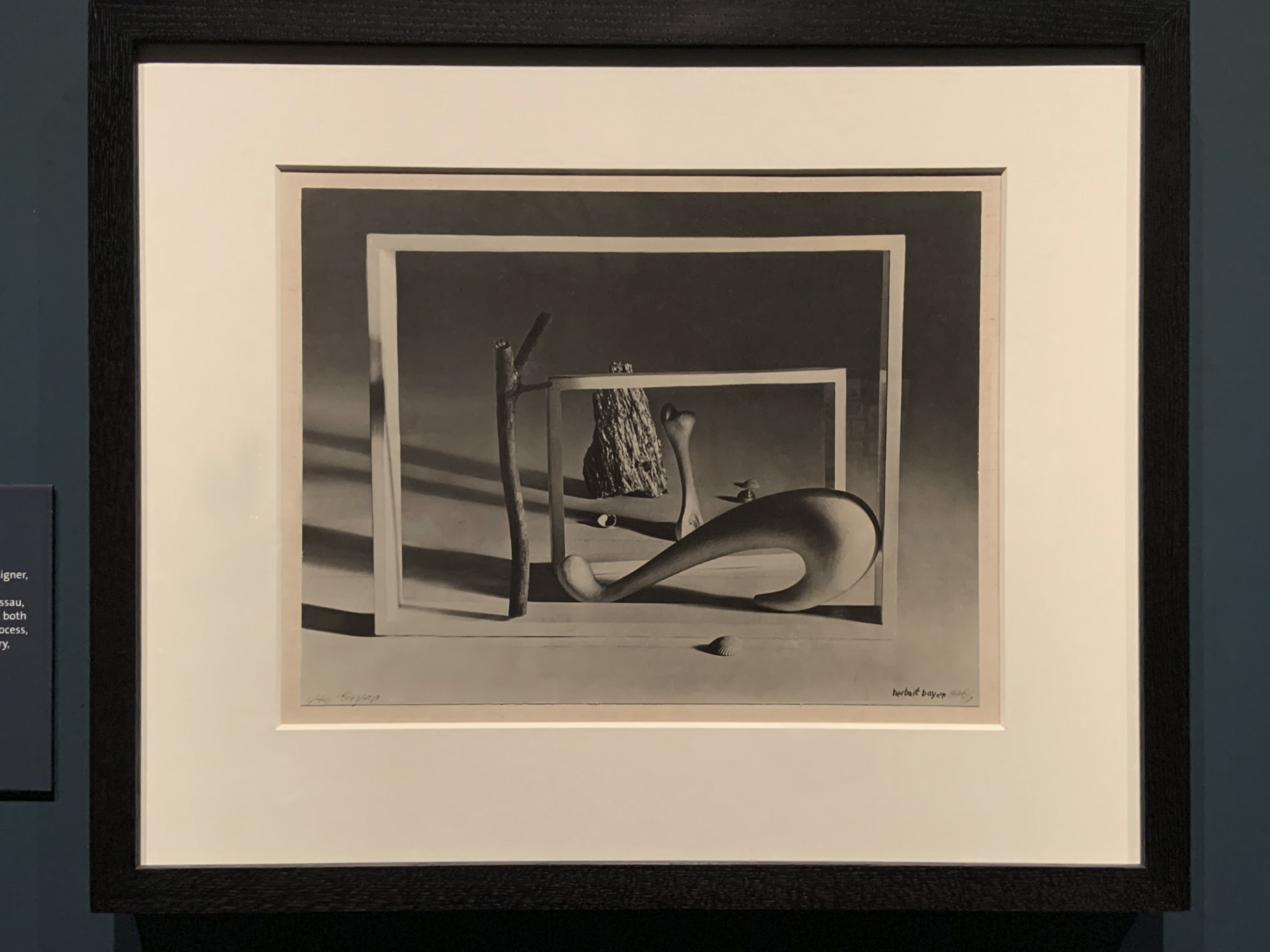
Herbert Bayer (Austrian American, 1900-1985) 'Shortly Before Dawn' 1932-1939 (installation view)


Herbert Bayer (Austrian American, 1900-85)
Shortly Before Dawn (installation view)
1932-39
Gelatin silver print
The Royal Photographic Society Collection at the V&A Museum
Photo: Marcus Bunyan


Bayer had a varied and influential career as a designer, painter, photographer, sculptor, art director and architect. He taught at the Bauhaus school in Dessau, Germany, and later began to use photomontage, both in his artistic and advertising work. Using this process, he combined his photographs with found imagery, producing surreal or dreamlike pictures.


Herbert Bayer (Austrian American, 1900-1985) 'Shortly Before Dawn' 1932-1939 (installation view)


Herbert Bayer (Austrian American, 1900-85)
Shortly Before Dawn (installation view)
1932-39
Gelatin silver print
The Royal Photographic Society Collection at the V&A Museum
Photo: Marcus Bunyan


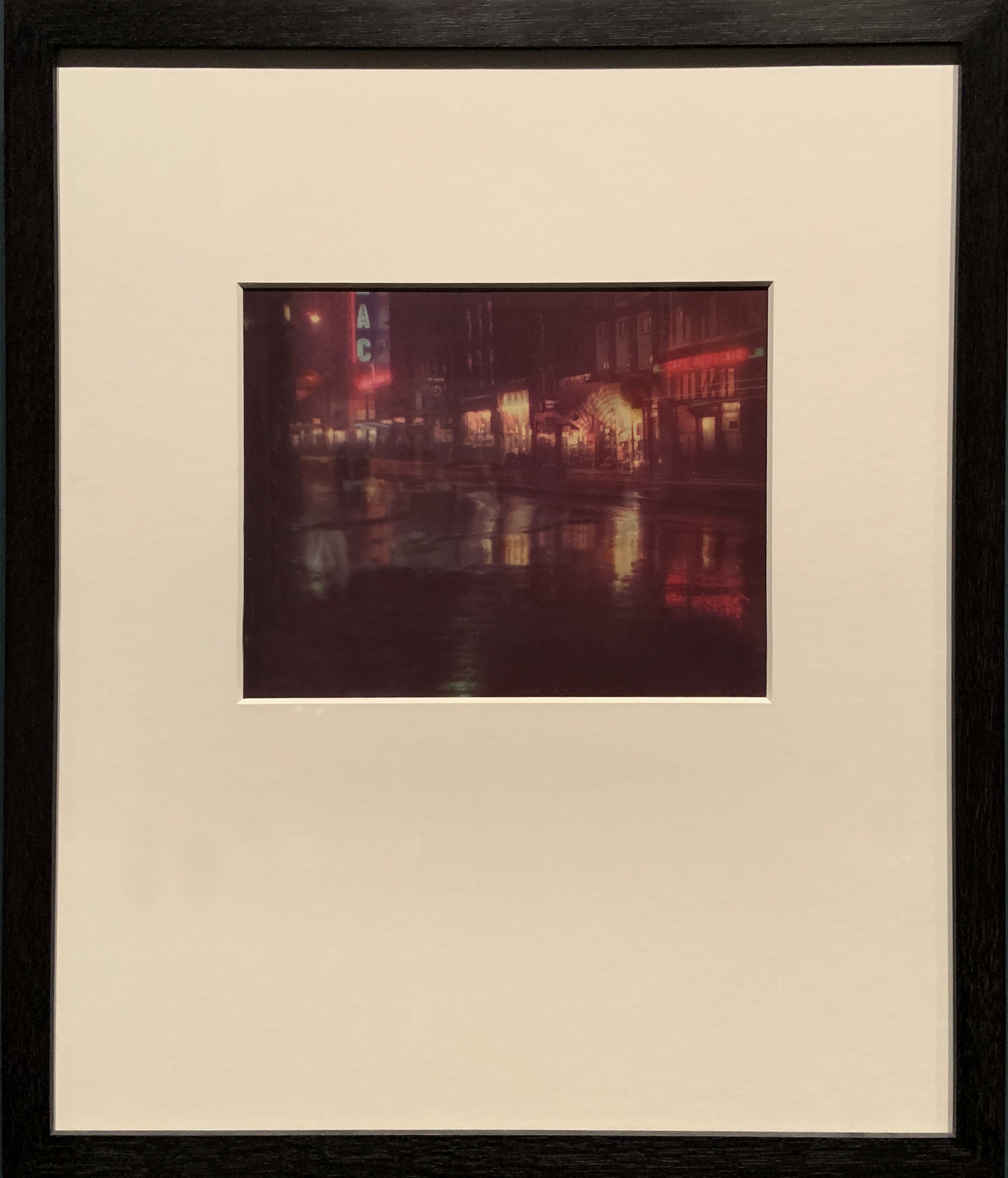
Bernard Eilers (Dutch, 1878-1951) 'Reguliersbreestraat, Amsterdam' 1934 (installation view)


Bernard Eilers (Dutch, 1878-1951)
Reguliersbreestraat, Amsterdam (installation view)
1934
Foto-choma Eilers
Given by Joan Luckhurst Eilers
Photo: Marcus Bunyan


In the 1930s, the Dutch photographer Bernard Eilers developed an experimental new photographic colour separation process known as ‘Foto-chroma Eilers’. Although the process was short-lived, Eilers successfully used this technique to produce prints like this of great intensity and depth of colour. Here, the misty reflections and neon lights create an atmospheric but modern view of a rain-soaked Amsterdam at night.


Bernard Eilers (Dutch, 1878-1951) 'Reguliersbreestraat, Amsterdam' 1934 (installation view)


Bernard Eilers (Dutch, 1878-1951)
Reguliersbreestraat, Amsterdam (installation view)
1934
Foto-choma Eilers
Given by Joan Luckhurst Eilers
Photo: Marcus Bunyan


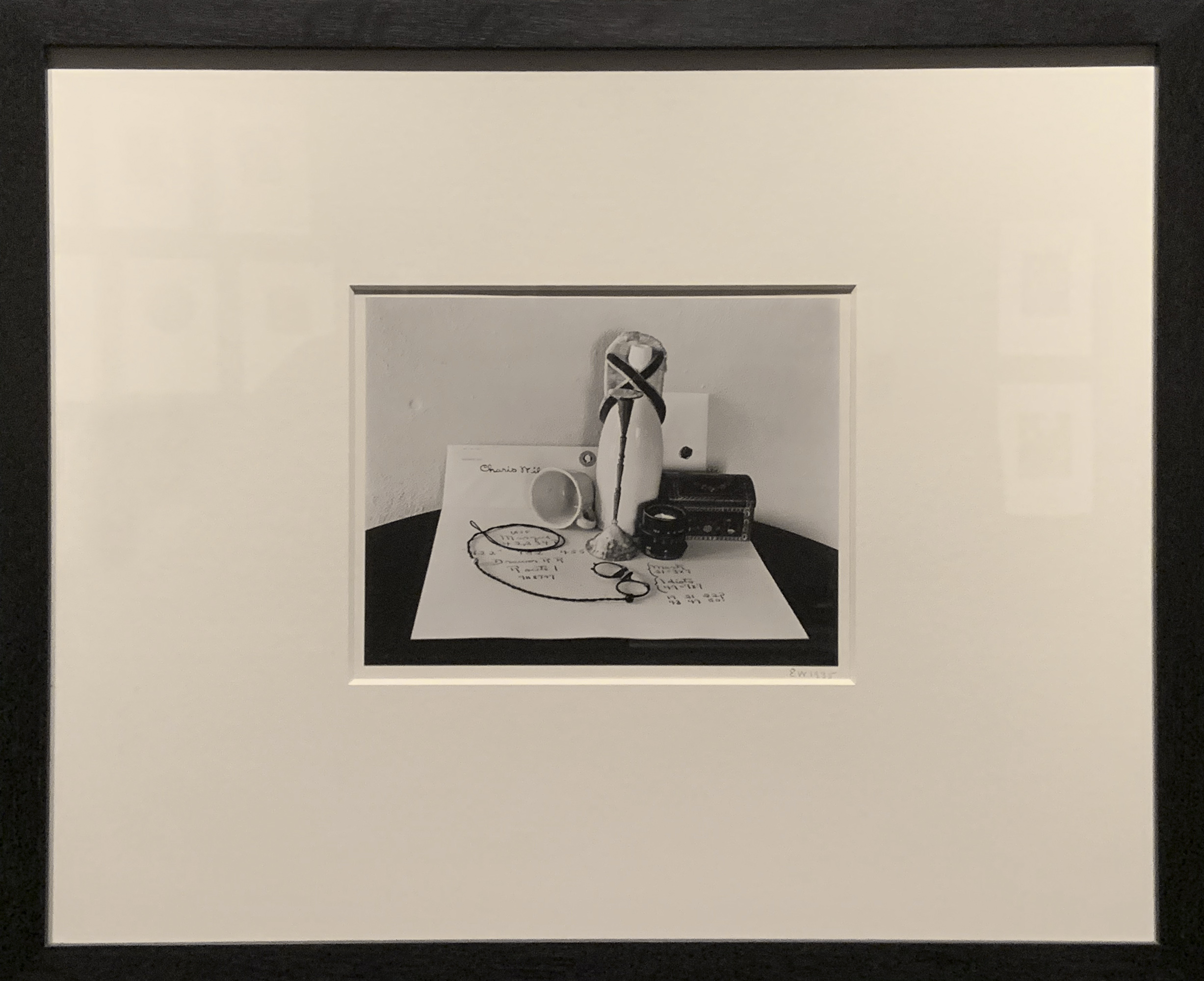
Edward Weston (American, 1886-1958) 'Valentine to Charis' 1935 (installation view)


Edward Weston (American, 1886-1958)
Valentine to Charis (installation view)
1935
Gelatin silver print
The Royal Photographic Society Collection at the V&A Museum
Photo: Marcus Bunyan


When Weston met the model and writer Charis Wilson in 1934, he was immediately besotted. This valentine to her contains a cluster of objects arranged as a still life, including the photographer’s camera lens and spectacles. Some of the objects seem to hold a special significance that only the lovers could understand. The numbers on the right possibly refer to their ages – there were almost thirty years between them.


Horst P. Horst (German-American, 1906-1999) 'Portrait of Gabrielle ('Coco') Chanel' 1937 (installation view)


Horst P. Horst (German-American, 1906-1999)
Portrait of Gabrielle (‘Coco’) Chanel
1937
Gelatin silver print
The Royal Photographic Society Collection at the V&A Museum

Variant, American Vogue, 1 December 1937, p. 86: ‘Fashion: Mid-Season Prophecies’

Caption reads: Chanel in her fitted, three-quarters coat / Mademoiselle Chanel, in one of her new coats that are making the news – a three quarters coat buttoned tightly and trimmed with astrakham like her cap. 01/12/1937


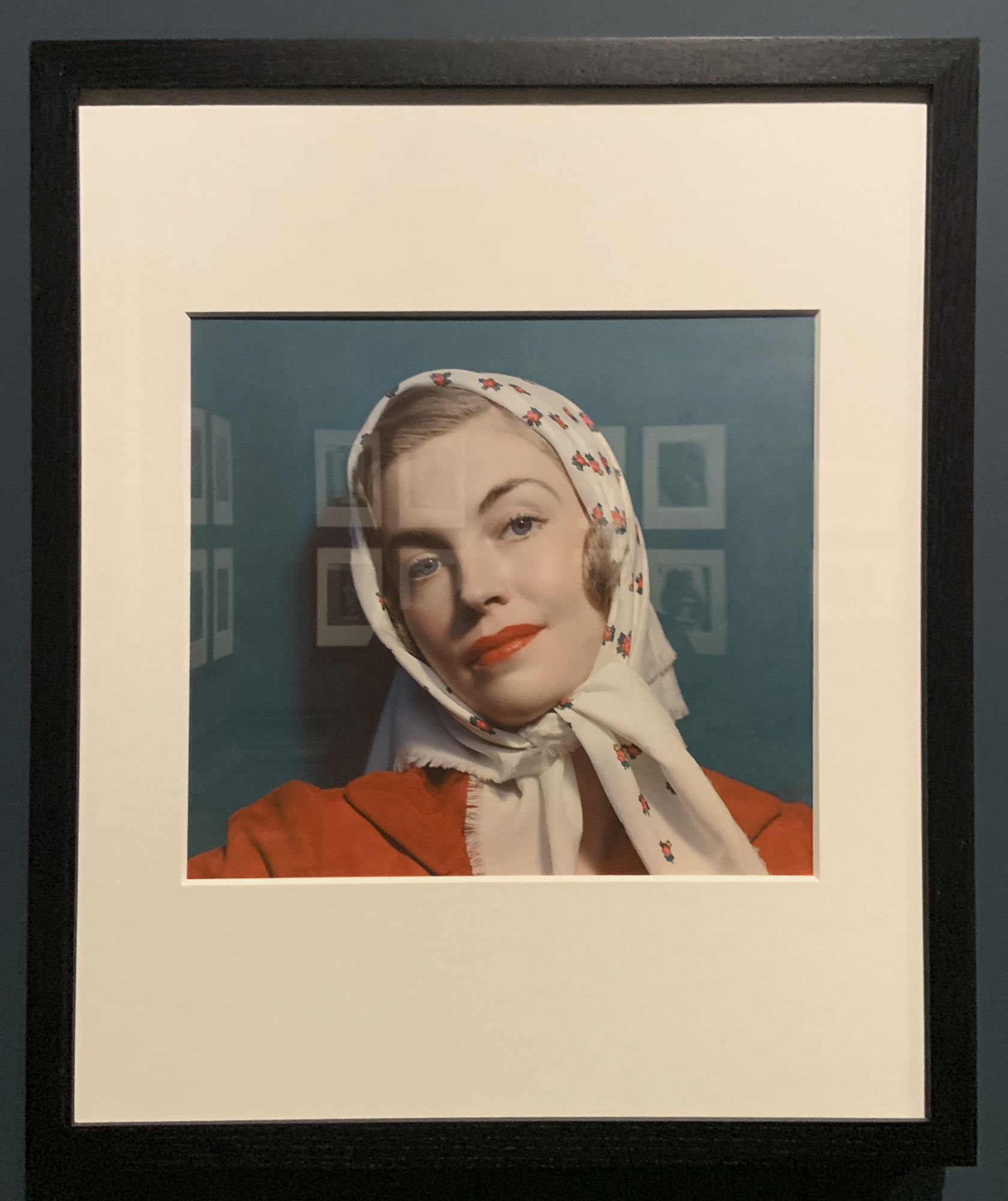
Nickolas Muray (American, 1892-1965) 'Women with headscarf, 'McCall’s' Cover, July 1938' 1938 (installation view)


Nickolas Muray (American, 1892-1965)
Women with headscarf, McCall’s Cover, July 1938 (installation view)
1938
Tricolour carbro print
The Royal Photographic Society Collection at the V&A Museum


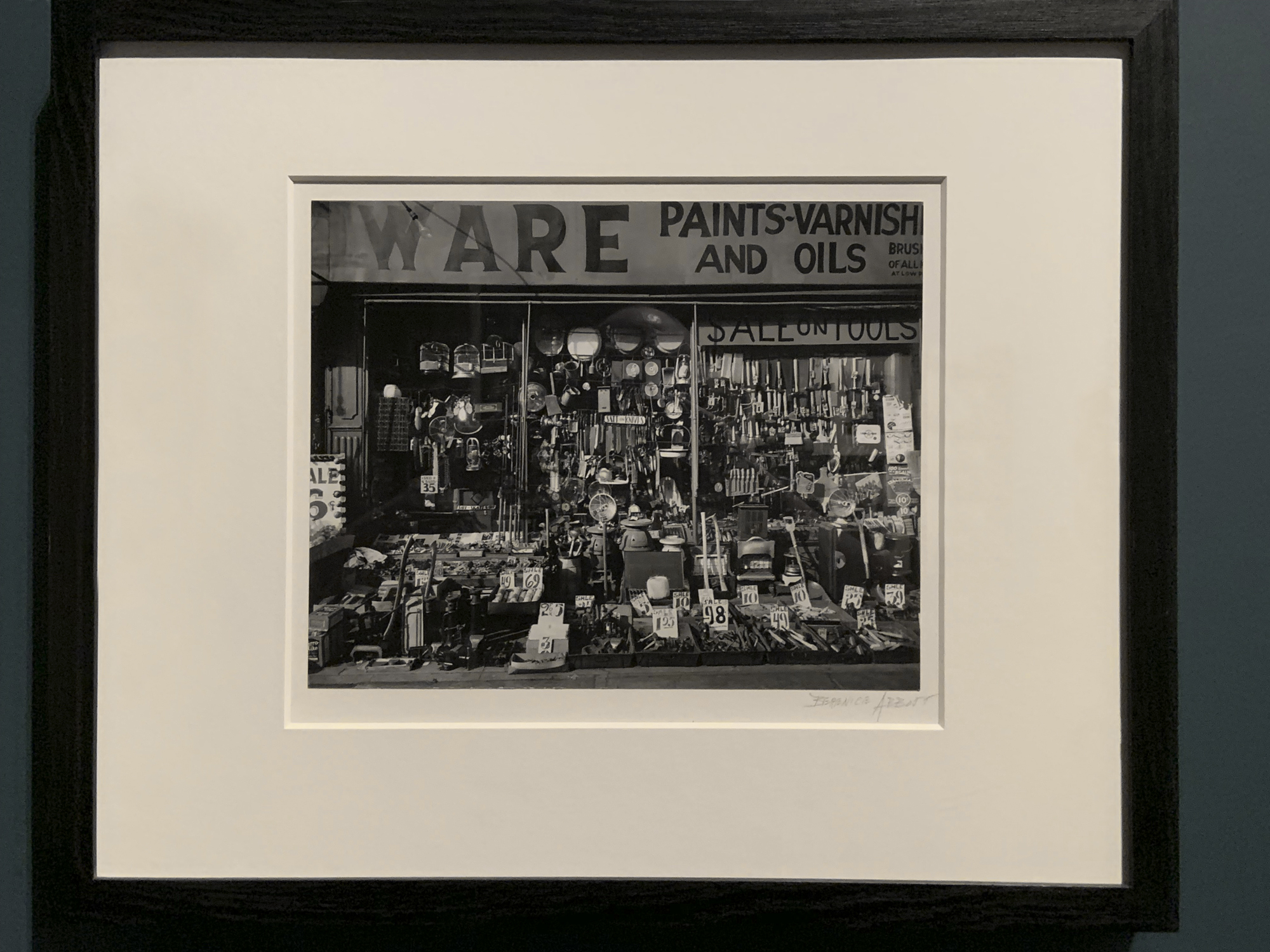
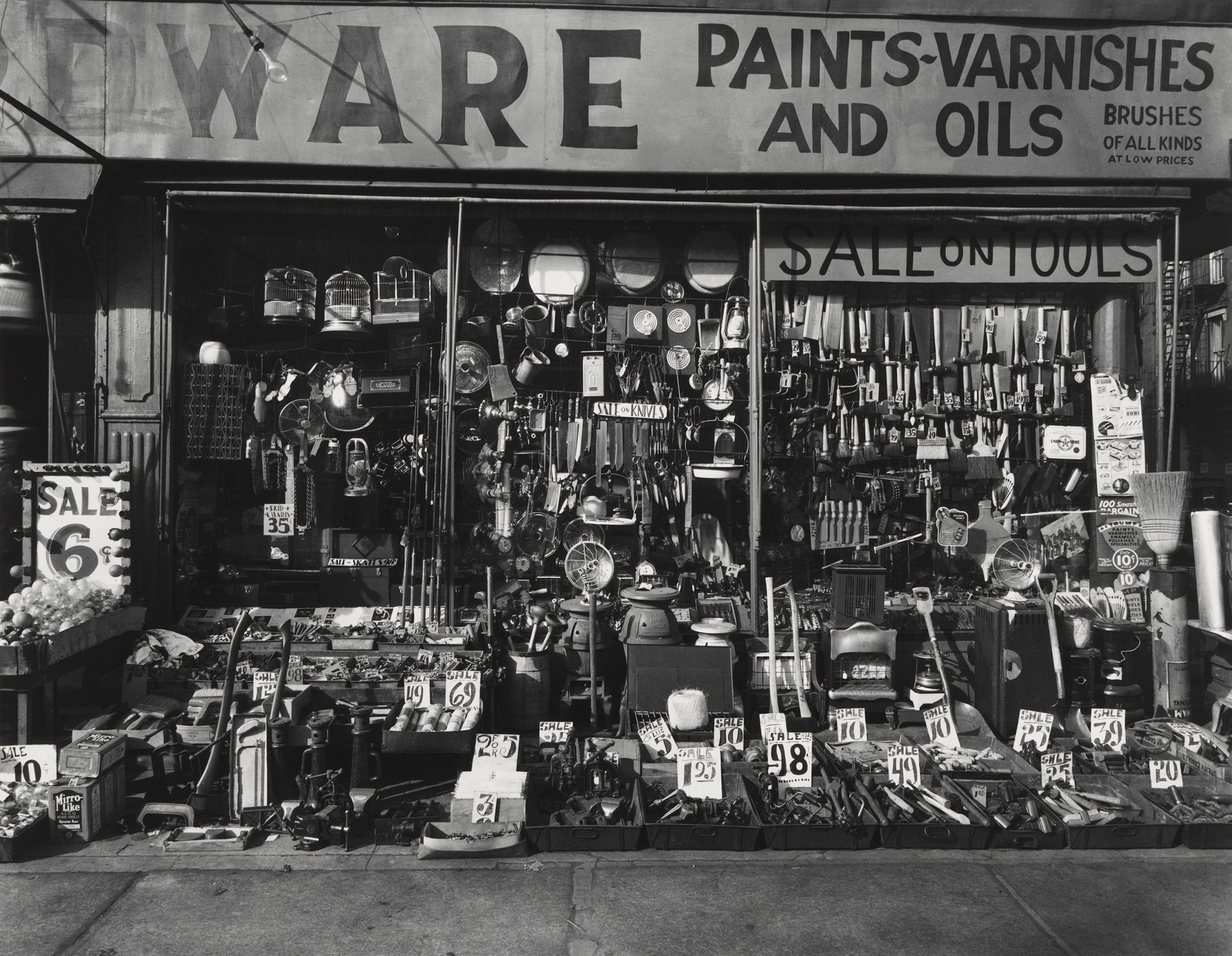
Berenice Abbott (American, 1898-1991) 'Hardware Store' 1938 (installation view)


Berenice Abbott (American, 1898-1991)
Hardware Store (installation view)
1938
Gelatin silver print
The Royal Photographic Society Collection at the V&A Museum
Photo: Marcus Bunyan


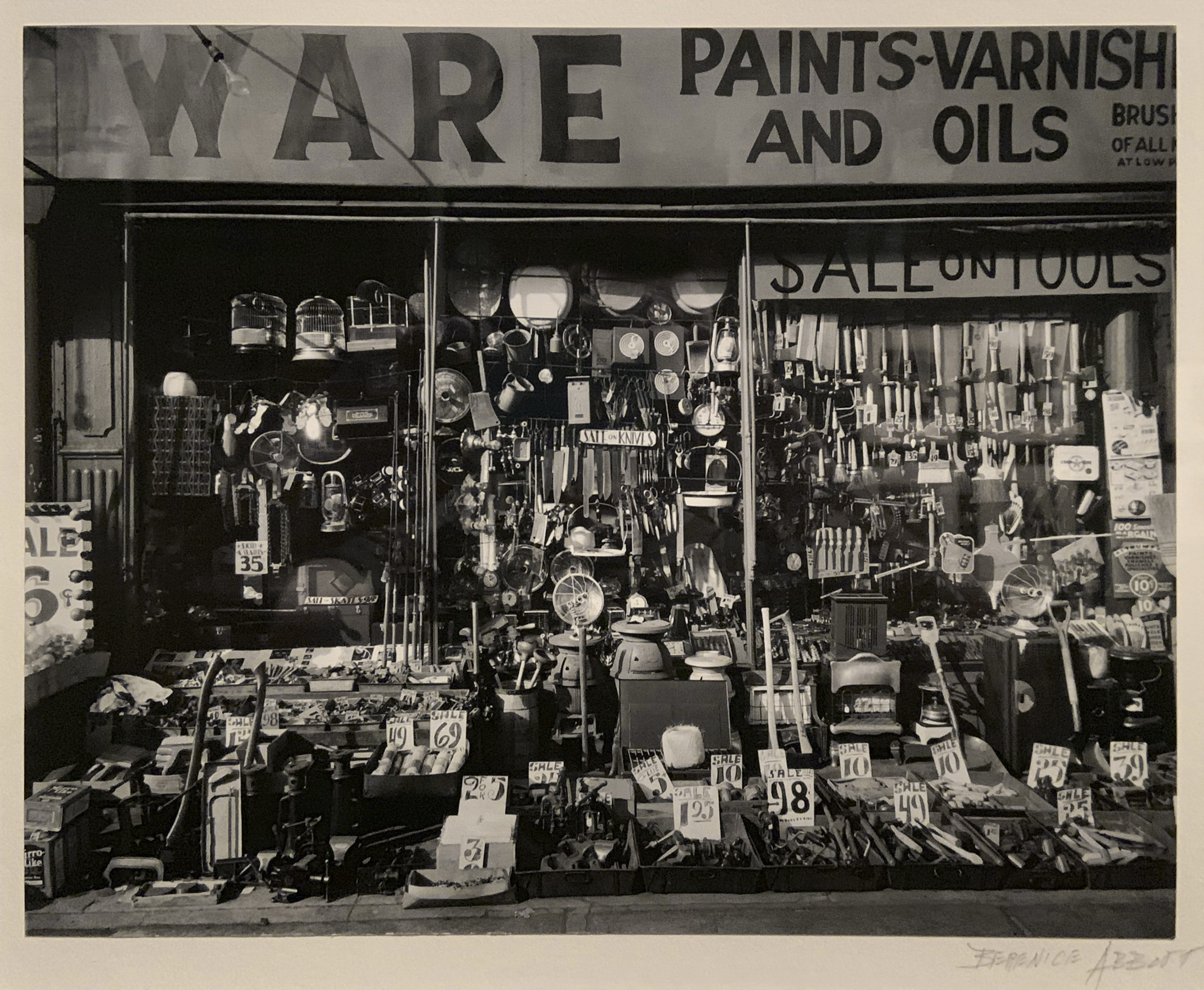
Between 1935 and 1939, the Federal Art Project emptied Abbott to make a series of photographs entitled Changing New York, documenting the rapid development and urban transformation of the city. This picture shows the facade of a downtown hardware store, its wares arranged in a densely-packed window display with extend onto the pavement.


Berenice Abbott (American, 1898-1991) 'Hardware Store' 1938 (installation view)


Berenice Abbott (American, 1898-1991)
Hardware Store (installation view)
1938
Gelatin silver print
The Royal Photographic Society Collection at the V&A Museum
Photo: Marcus Bunyan


Berenice Abbott (American, 1898-1991) 'Hardware Store' 1938


Berenice Abbott (American, 1898-1991)
Hardware Store
1938
Gelatin silver print
The Royal Photographic Society Collection at the V&A Museum


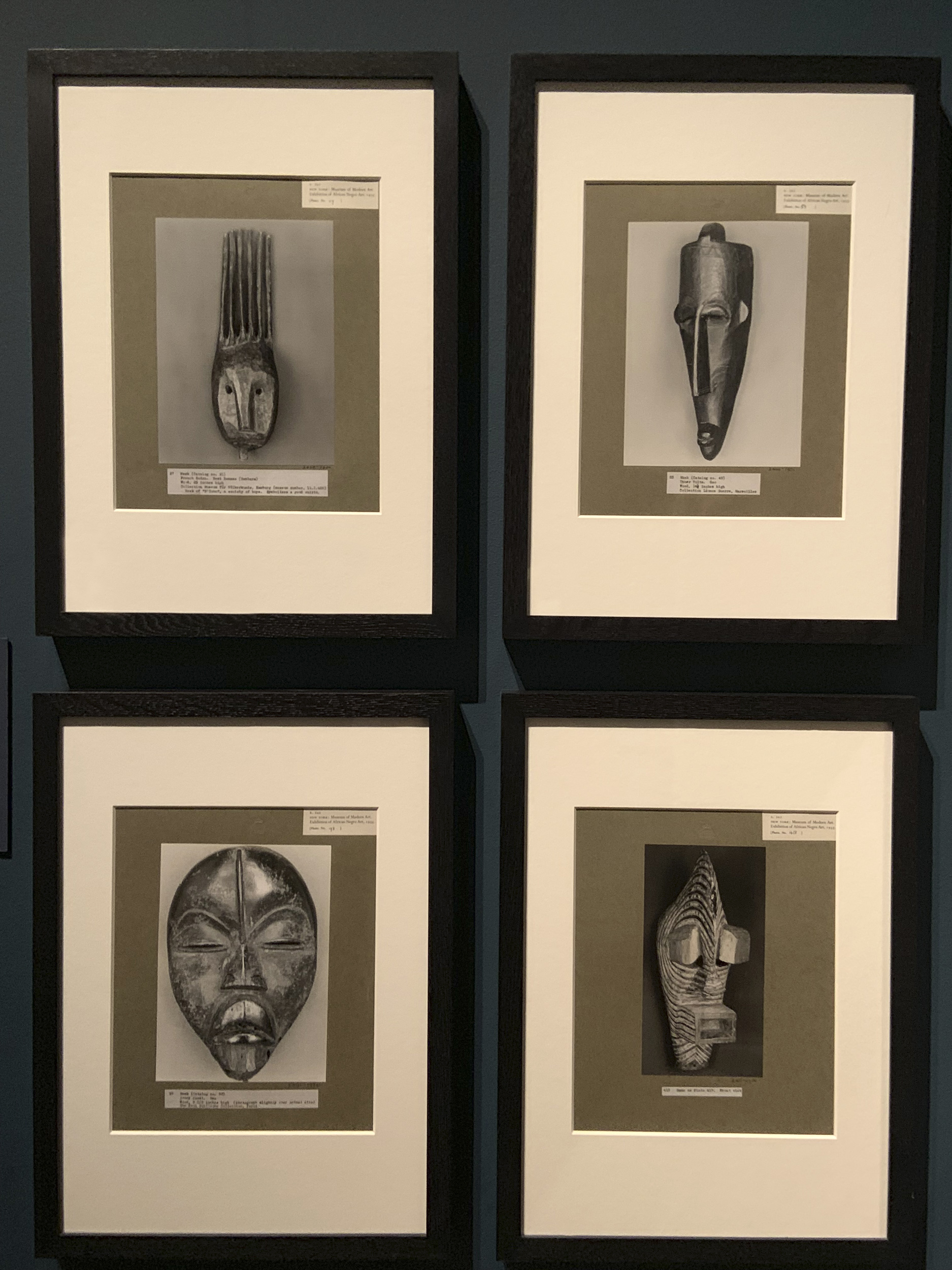
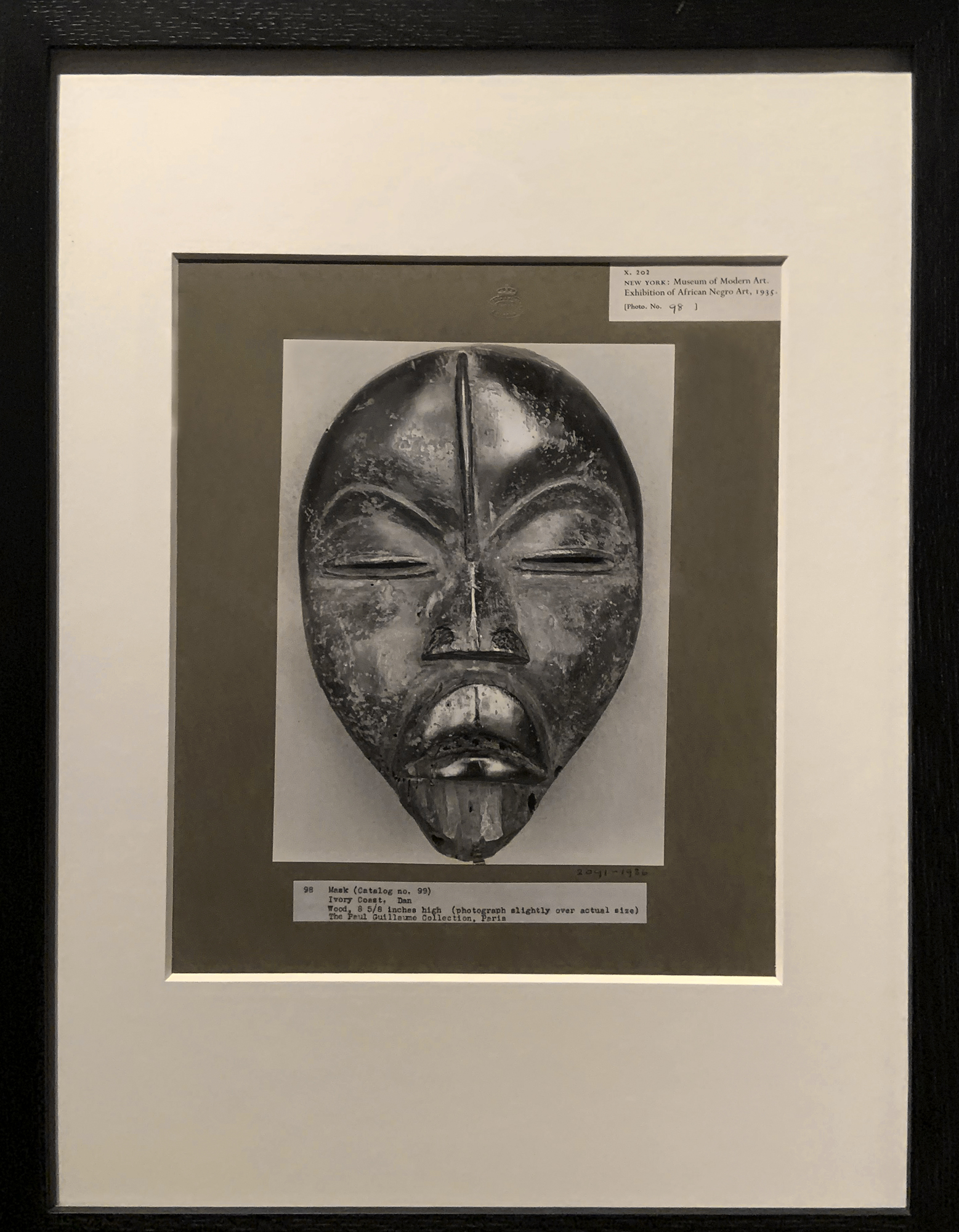
Walker Evans (American, 1903-1975) 'Photographs of African masks, from an exhibition entitled African Negro Art at the Museum of Modern Art, New York' 1935 (installation view)


Walker Evans (American, 1903-75)
Photographs of African masks, from an exhibition entitled African Negro Art at the Museum of Modern Art, New York (installation view)
1935
Gelatin silver prints
The Royal Photographic Society Collection at the V&A Museum
Photo: Marcus Bunyan


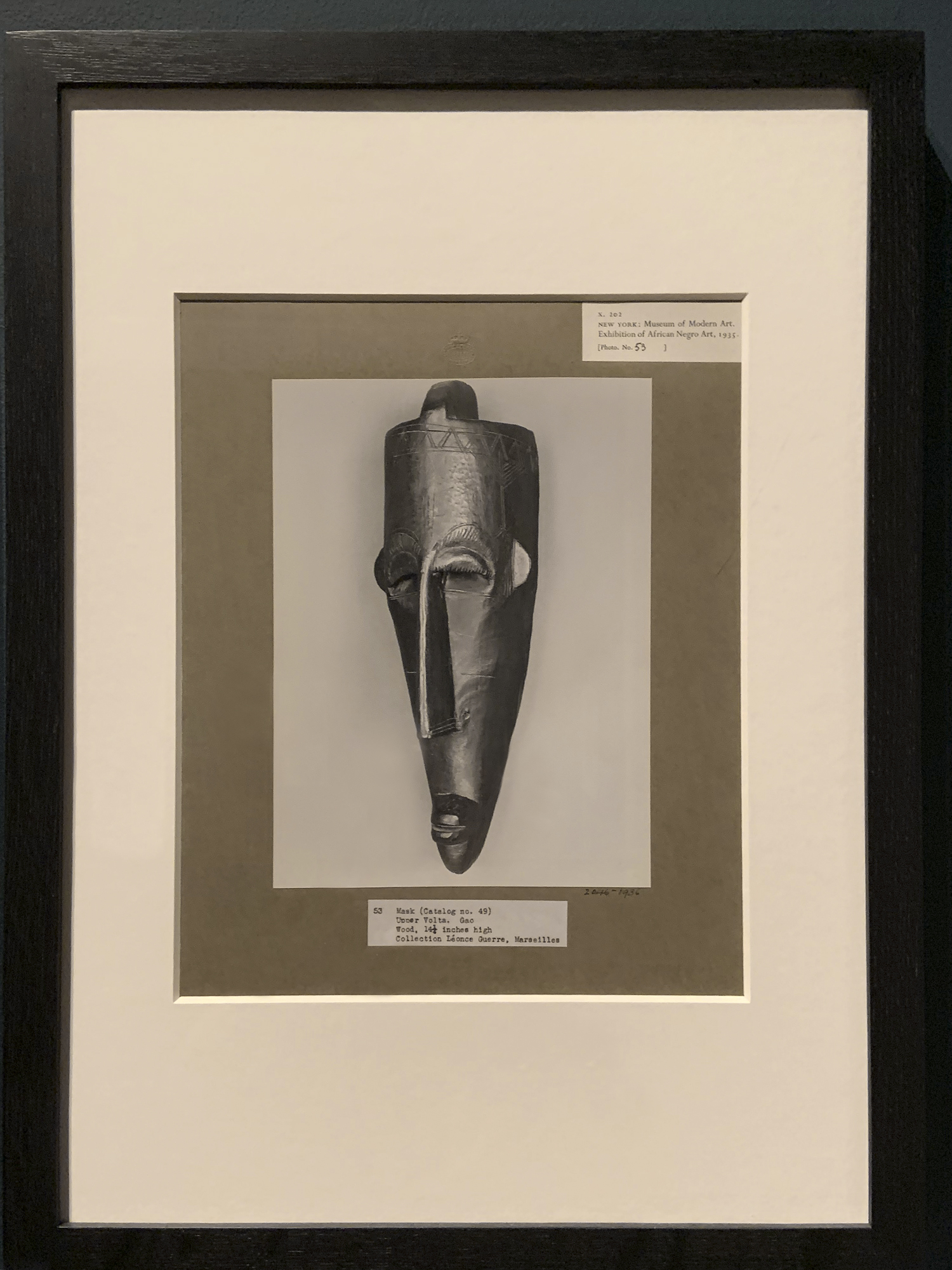
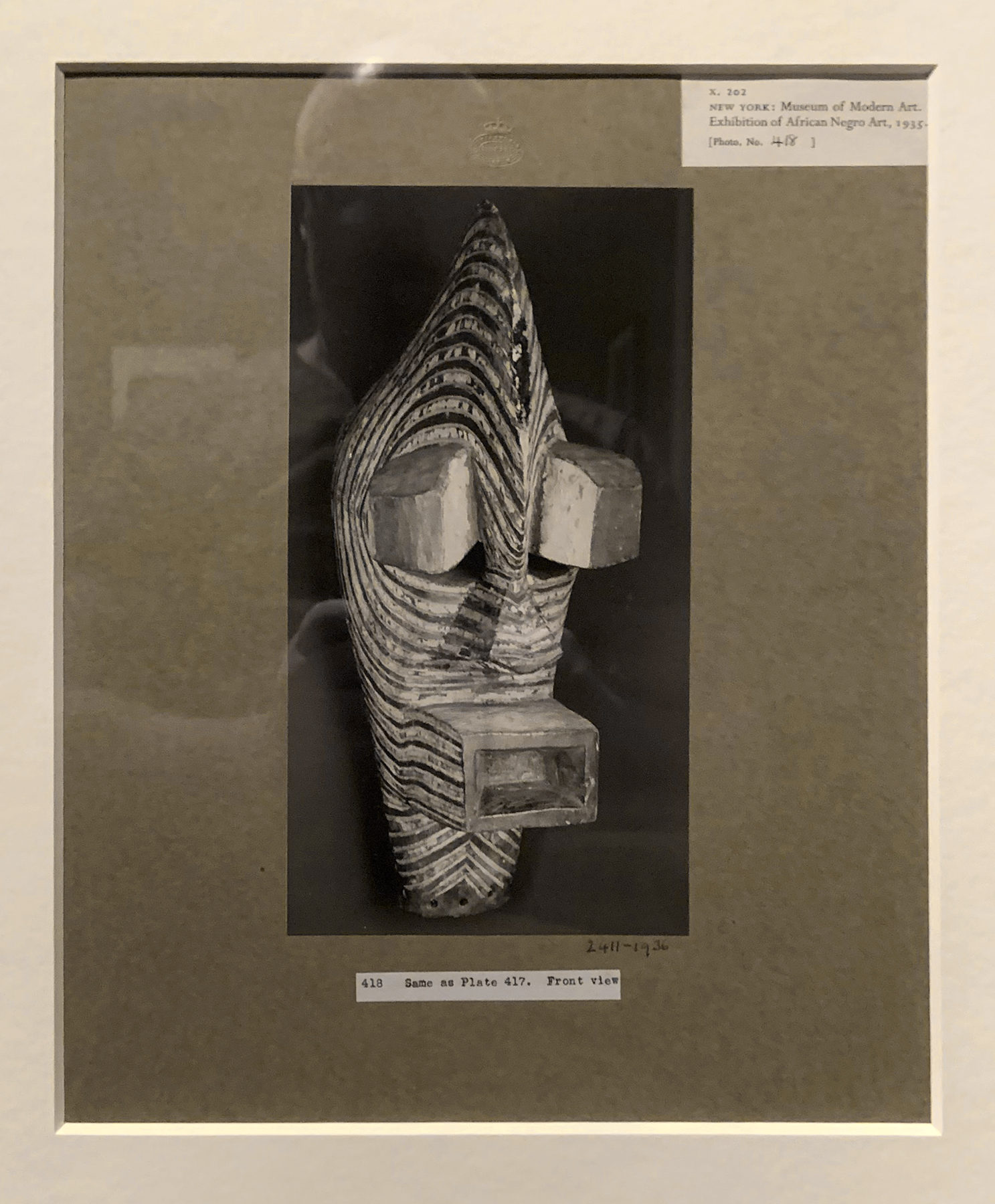
In 1935, the Museum of Modern Art commissioned Evans to photograph objects in its major exhibition of African art. Using his 8 x 10 inch view camera, he highlighted the artistry and detail of the objects, alternating between front, side and rear views. In total, Evans produced 477 images, and 17 complete sets of them were printed. Several of these sets were donated to colleges and libraries in America, and the V&A bought one set in 1936 to better represent African art in its collection.

The term ‘negro’ is given here in its original historical context.


Walker Evans (American, 1903-1975) 'Photograph of African mask, from an exhibition entitled African Negro Art at the Museum of Modern Art, New York' 1935 (installation view)


Walker Evans (American, 1903-75)
Photograph of African mask, from an exhibition entitled African Negro Art at the Museum of Modern Art, New York (installation view)
1935
Gelatin silver prints
The Royal Photographic Society Collection at the V&A Museum
Photo: Marcus Bunyan


Walker Evans (American, 1903-1975) 'Photograph of African mask, from an exhibition entitled African Negro Art at the Museum of Modern Art, New York' 1935 (installation view)


Walker Evans (American, 1903-75)
Photograph of African mask, from an exhibition entitled African Negro Art at the Museum of Modern Art, New York (installation view)
1935
Gelatin silver prints
The Royal Photographic Society Collection at the V&A Museum
Photo: Marcus Bunyan


Walker Evans (American, 1903-1975) 'Photograph of African mask, from an exhibition entitled African Negro Art at the Museum of Modern Art, New York' 1935 (installation view)


Walker Evans (American, 1903-75)
Photograph of African mask, from an exhibition entitled African Negro Art at the Museum of Modern Art, New York (installation view)
1935
Gelatin silver prints
The Royal Photographic Society Collection at the V&A Museum
Photo: Marcus Bunyan


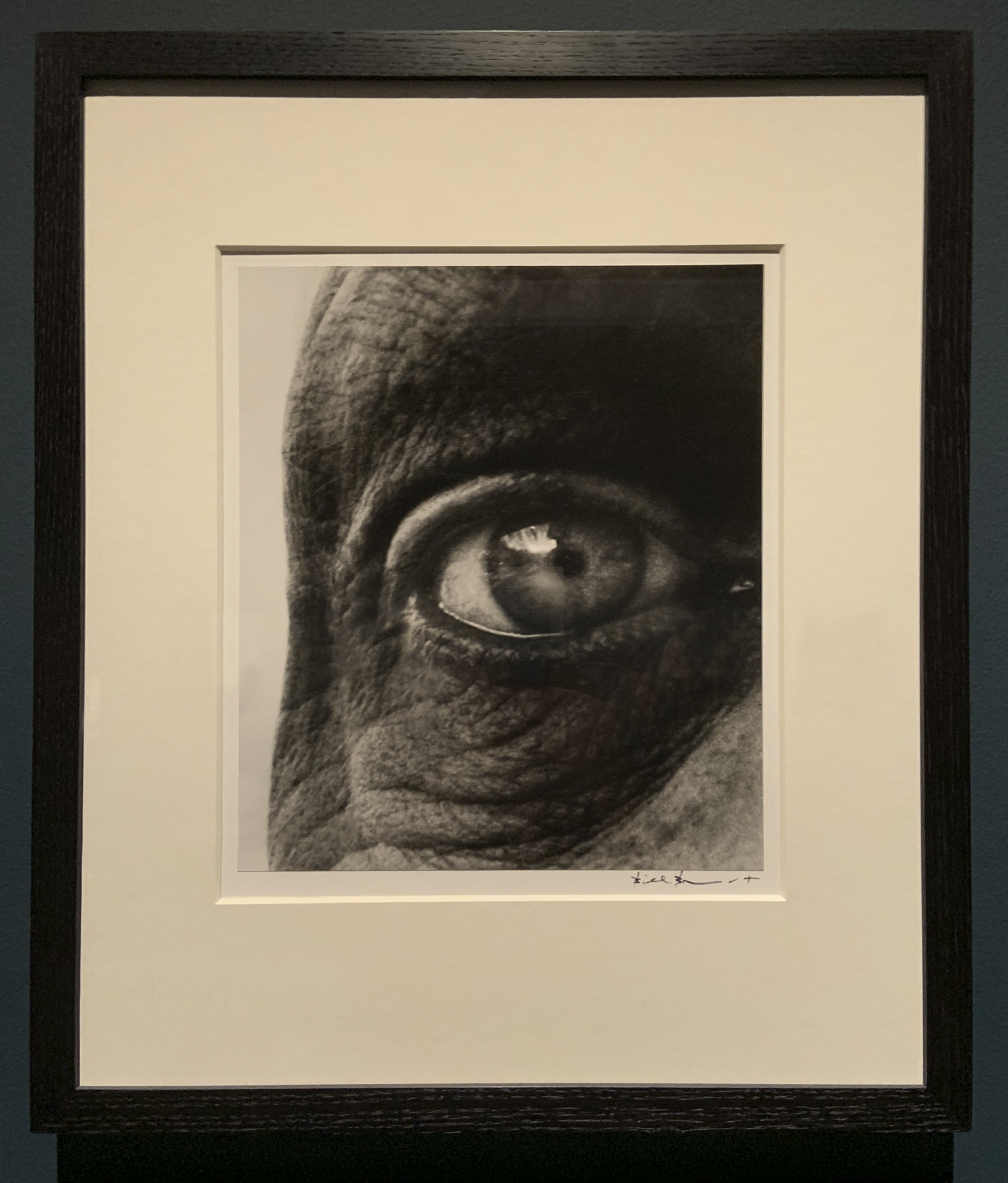
Bill Brandt (British, 1904-1983) 'Dubuffet’s Right Eye, Alberto Giacometti’s Left Eye, Louise Nevelson’s Eye, Max Ernst’s Left Eye' 1960-1963 (installation view)


Bill Brandt (British, 1904-1983)
Dubuffet’s Right Eye
Alberto Giacometti’s Left Eye
Louise Nevelson’s Eye
Max Ernst’s Left Eye (installation view)
1960-1963
Gelatin silver print
The Royal Photographic Society Collection at the V&A Museum
Photo: Marcus Bunyan


Bill Brandt (British, 1904-1983) 'Dubuffet’s Right Eye' 1960-1963 (installation view)


Bill Brandt (British, 1904-83)
Dubuffet’s Right Eye (installation view)
1960-1963
Gelatin silver print
The Royal Photographic Society Collection at the V&A Museum
Photo: Marcus Bunyan


German-born Brandt moved to London in the 1930s. In his long and varied career, he made many compelling portraits of people including Ezra Pound, Dylan Thomas, the Sitwell family, Robert Graves and E.M. Forster. For this series he photographed the eyes of well-known artists over several years, creating a substantial collection of intense and unique portraits. The pictures play upon ideas of artistic vision and the camera lens, which acts as a photographer’s ‘mechanical eye’.


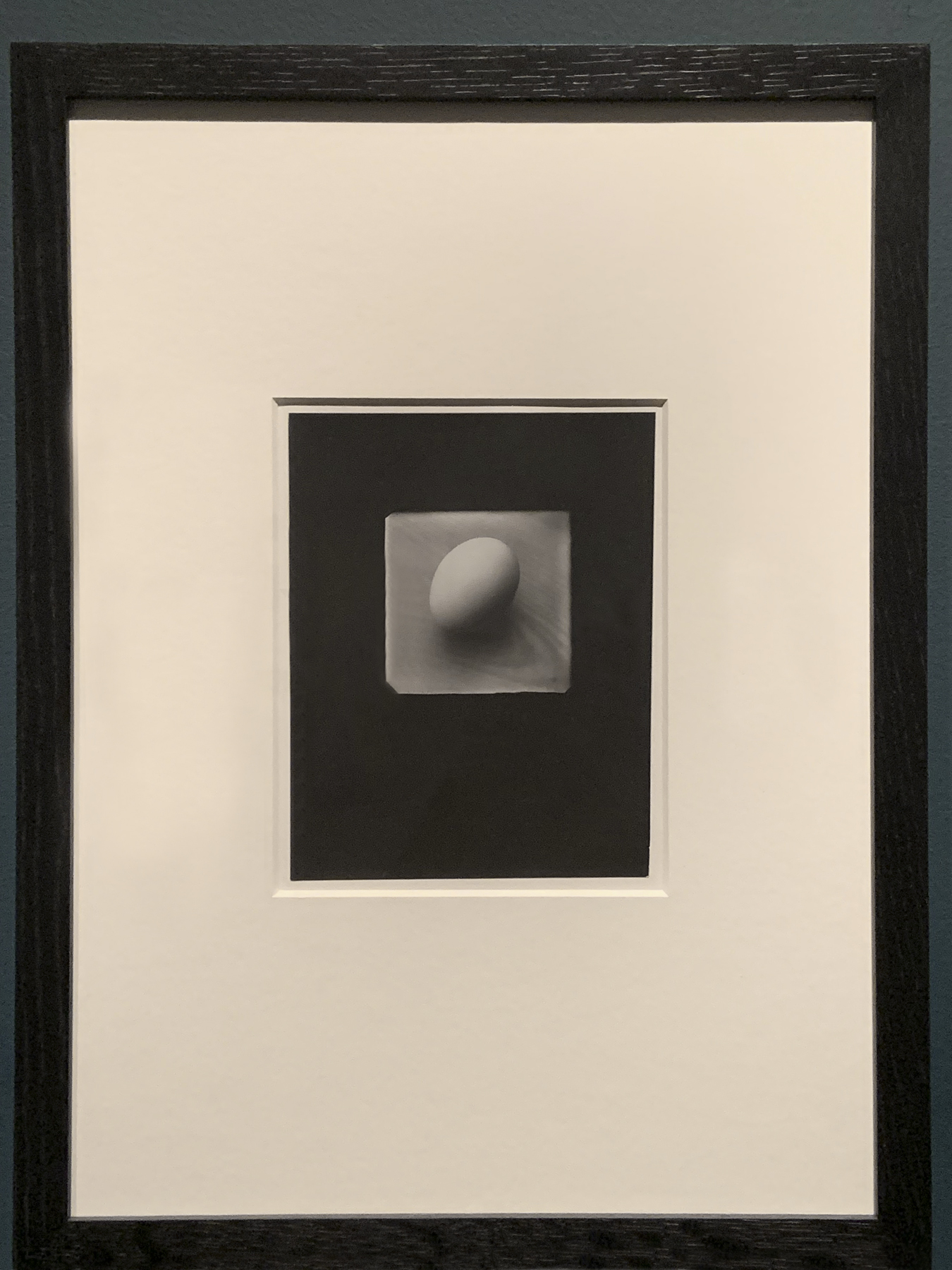
Josef Sudek (Czech, 1896-1976) 'Simple Still Life, Egg' 1950 (installation view)


Josef Sudek (Czech, 1896-1976)
Simple Still Life, Egg (installation view)
1950
Gelatin silver print
The Royal Photographic Society Collection at the V&A Museum
Photo: Marcus Bunyan


Throughout his career, Sudek used various photographic styles but always conveyed an intensely lyrical vision of the world. Here, his formal approach to a simple still life presents a poetic statement, and evokes an atmosphere of contemplation. Sudek’s motto and advice to his students – ‘hurry slowly’ – encapsulates his legendary patience and the sense of meditative stillness in his photographs.


Otto Steiner (German, 1915-1978) 'Luminogram' 1952 (installation view)


Otto Steiner (German, 1915-1978)
Luminogram (installation view)
1952
Gelatin silver print
The Royal Photographic Society Collection at the V&A Museum
Photo: Marcus Bunyan


Otto Steiner (German, 1915-1978) 'Luminogram' 1952 (installation view)


Otto Steiner (German, 1915-1978)
Luminogram (installation view)
1952
Gelatin silver print
The Royal Photographic Society Collection at the V&A Museum
Photo: Marcus Bunyan


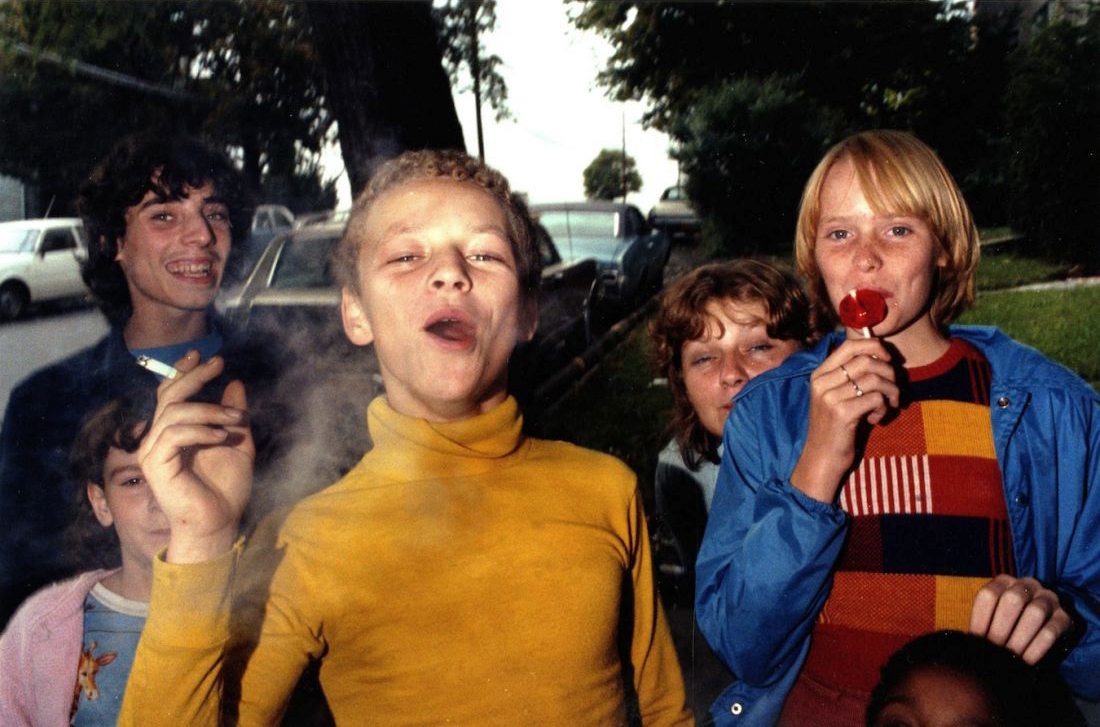
Mark Cohen (American, b. 1943) 'True Color' 1974-1987 (installation view)

Mark Cohen (American, b. 1943) 'True Color' 1974-1987 (installation view)


Mark Cohen (American, b. 1943)
True Color (installation views)
1974-1987
Portfolio of thirty dye transfer prints, printed in 2007
American Friends of the V&A through the generosity of The Michael G. and C. Jane Wilson 2007 Trust
Photos: Marcus Bunyan


Known for his dynamic street photography, Cohen’s work presents a fragmented, sensory image of his hometown of Wiles-Barre, Pennsylvania. This set of pictures was taken at a time when colour photography was just beginning to be recognised as a fine art. Until the 1970s, colour had largely been associated with other advertising or family snapshots, and was not thought of as a legitimate medium for artists. Cohen and other photographers like William Eggleston transferred this perception using the dye-transfer printing process. Although complicated and time-consuming, the technique results in vibrant and high quality colour prints.


Mark Cohen (American, b. 1943) 'True Color' 1974-1987 (installation view detail)


Mark Cohen (American, b. 1943)
True Color (installation view detail)
1974-1987
Portfolio of thirty dye transfer prints, printed in 2007
American Friends of the V&A through the generosity of The Michael G. and C. Jane Wilson 2007 Trust
Photo: Marcus Bunyan


Mark Cohen (American, b. 1943) 'True Color' 1974-1987 (installation view detail)


Mark Cohen (American, b. 1943)
True Color (installation view detail)
1974-1987
Portfolio of thirty dye transfer prints, printed in 2007
American Friends of the V&A through the generosity of The Michael G. and C. Jane Wilson 2007 Trust
Photo: Marcus Bunyan


Graham Smith (British, b. 1947) 'What she wanted & who she got' 1982  (installation view)


Graham Smith (British, b. 1947)
What she wanted & who she got (installation view)
1982
Gelatin silver print
The Royal Photographic Society Collection at the V&A Museum
Photo: Marcus Bunyan


Since the 1980s, Graham Smith has been photographing his hometown of South Bank near Middlesbrough. His images convey his deep sensitivity towards the effects of changing working conditions on the former industrial north-east. In this photograph, despite the suggested humour of the title, we are left wondering who the couple are and what the nature of their relationship might be.


Jan Kempenaers (b. 1968) 'Spomenik #3' 2006


Jan Kempenaers (Belgian, b. 1968)
Spomenik #3
2006
C-type print


The Kosmaj monument in Serbia is dedicated to soldiers of the Kosmaj Partisan detachment from World War II.


Jan Kempenaers (b. 1968) 'Spomenik #4' 2007


Jan Kempenaers (Belgian, b. 1968)
Spomenik #4
2007
C-type print


This monument, authored by sculptor Miodrag Živković, commemorates the Battle of Sutjeska, one of the bloodiest battles of World War II in the former Yugoslavia.


Kempenaers toured the balkans photographing ‘Spomeniks’ – monuments built in former Yugoslavia in the 1960s and ’70s on the sites of Second World War battles and concentration camps. Some have been vandalised in outpourings of anger against the former regime, while others are well maintained. In Kempenaers’ photographs, the monuments appear otherworldly, as if dropped from outer space into a pristine landscape.


Installation view of the V&A Photography Centre, London


Installation view of the V&A Photography Centre, London
Photo: Marcus Bunyan


Victoria and Albert Museum
Cromwell Road
London
SW7 2RL
Phone: +44 (0)20 7942 2000

Opening hours:
Daily 10.00 – 17.45
Friday 10.00 – 22.00

V&A website

V&A Photography Centre website

LIKE ART BLART ON FACEBOOK

Back to top