Some familiar images that were also seen in the posting Wols’ Photography: Images Regained are complimented by 5 new ones. The two portraits of the artist Max Ernst are eerie (is that a suitable word for a portrait that is strong and unsettling?) and perceptive, Wols responsive to the status of his sitter as a pioneer of the Dada movement and Surrealism.
Dr Marcus Bunyan
Many thankx to the Martin-Gropius-Bau for allowing me to publish the photographs in the posting. Please click on the photographs for a larger version of the image.
The term Art Informel was originated by the French critic Michel Tapié and popularized in his 1952 book Un Art autre (Another art). A Parisian counterpart of Abstract Expressionism, Art Informel emphasised intuition and spontaneity over the Cubist tradition that had dominated School of Paris painting. The resulting abstractions took a variety of forms. For instance, Pierre Soulages’s black-on-black paintings composed of slashing strokes of velvety paint suggest the nocturnal mood of Europe immediately after the war.
Germaine Émilie Krebs (1903-1993), known as Alix Barton and later as “Madame Grès”, relaunched her design house under the name Grès in Paris in 1942. Prior to this, she worked as “Alix” or “Alix Grès” during the 1930s. Formally trained as a sculptress, she produced haute couture designs for an array of fashionable women, including the Duchess of Windsor, Marlene Dietrich, Greta Garbo, Jacqueline Kennedy, and Dolores del Río. Her signature was cut-outs on gowns that made exposed skin part of the design, yet still had a classical, sophisticated feel. She was renowned for being the last of the haute couture houses to establish a ready-to-wear line, which she called a “prostitution”.
The name Grès was a partial anagram of her husband’s first name and alias. He was Serge Czerefkov, a Russian painter, who left her soon after the house’s creation. Grès enjoyed years of critical successes but, after Grès herself sold the business in the 1980s to Yagi Tsucho, a Japanese company, it faltered. In 2012, the last Grès store in Paris was closed.
Wolfgang Schulze, known as Wols, was born in Berlin in 1913. As a painter and graphic artist he is considered to have been an important trailblazer of Art Informel. For the first time the Martin-Gropius-Bau in Berlin is presenting the largely unknown photographic oeuvre of Wols. These works foreshadow his development in the direction of non-representational art.
Wols grew up in Dresden, where he had an early encounter with photography as a profession through his attendance at a course in the studio of the Dresden photographer Genja Jonas. In 1932, after a brief sojourn in the milieu of the Berlin Bauhaus – then in the process of breaking up – the young Wols set off for Paris to realise his artistic ambitions.
Soon he was involved with the local Surrealists and made the acquaintance of other personalities in the theatrical, literary and art scenes. In this period Wols was mainly active as a photographer. In 1937 his works were exhibited for the first time in the prestigious Parisian Galérie de la Pléiade, which established his reputation as a photographer. It was at this time that he adopted the pseudonym Wols. One of his commissions was to document the Pavillon de l’Elégance at the 1937 World Exhibition in Paris.
At the same time he produced striking multiple black-and-white portraits of personalities such as Max Ernst, Nicole Boubant or Roger Blin. Over the years Wols’ imagery became increasingly radical. The representational motifs gradually acquired a more abstract dimension and forced the viewer to see the objects represented in a new light. In particular, an extraordinary set of photograms confirms his interest in replacing representational motifs with non-representational ones. Transferred to painting, this trend would later make him a pioneer of Art Informel.
Immediately after the outbreak of the Second World War Wols spent over a year in various internment camps in the south of France. In this period he turned more to watercolours, most of which were lost while he was fleeing from the Nazis.
Living in straitened circumstances Wols fought a losing battle with alcoholism and poor health. In 1951, as a result of his weakened physical condition, he died of food poisoning in Paris at the early age of 38. After his death, Wols’ work was displayed at the first three documenta exhibitions in Kassel (1955, 1959, 1964) and, in 1958, at the Venice Biennale. On 27 May 2014 he would have been 101.
The show covers all of his photographic work, including multiple portraits of famous artists, actors and writers, photographs of the “Pavillon de l’Élégance”, numerous still lifes, and many hitherto unknown motifs. The exhibition has been curated by the Kupferstich-Kabinett, Staatliche Kunstsammlungen Dresden, where this unique collection will be kept and systematically catalogued.
Wols permanently settled in Paris in 1933, producing his first paintings but also working as a photographer. His photographic work of this period showed the clear influence of Surrealism. In 1936, he received official permission to live in Paris with the help of Fernand Léger; as an army deserter, Schulze had to report to the Paris police on a monthly basis. In 1937, the year in which he adopted his pseudonym WOLS, his photographs began to appear in fashion magazines such as Harper’s Bazaar, Vogue, Femina as well as Revue de l’art. Many of these photographs anticipate the displays at the Exposition Internationale du Surréalisme held in Paris in the following year, in which much use was made of mannequins.
At the outbreak of World War II Wols, as a German citizen, was interned for 14 months in the notorious Les Milles camp – together with some 3500 other artists and intellectuals. He was not released until late 1940. After his release Wols moved for two years to Cassis, near Marseille, where he struggled to earn a living. The occupation of Southern France by the Germans in 1942 forced him to flee to Dieulefit, near Montélimar, where he met the writer Henri-Pierre Roché, one of his earliest collectors. He spent most of the war trying to emigrate to the United States, an unsuccessful and costly enterprise that may have driven him to alcoholism.
After the war Wols returned to Paris where he met Jean-Paul Sartre, Tristan Tzara and Jean Paulhan. He started to paint in oils in 1946 at the suggestion of the dealer René Drouin, who showed 40 of his paintings at his gallery in 1947. The same year Wols began to work on a number of illustrations for books by Paulhan, Sartre, Franz Kafka and Antonin Artaud. He fell ill but lacked the money to go to hospital, and throughout 1948 he worked largely in bed on these illustrations. In 1949 he took part in the exhibition Huit oeuvres nouvelles at the Galerie Drouin, along with Jean Dubuffet, Roberto Matta, Henri Michaux and other artists with whom he had a stylistic affinity.
Undergoing treatment for alcoholism, he moved to the country at Champigny-sur-Marne in June 1951. His early death later that year from food poisoning helped foster the legendary reputation that grew up around him soon afterwards. His paintings helped pioneer Art informel and Tachism, which dominated European art during and after the 1950s as a European counterpart to American Abstract Expressionism. Influenced by the writings of the philosopher Lao Tzu throughout his life, Wols also wrote poems and aphorisms that expressed his aesthetic and philosophical ideas.”
Two consecutive postings on the German artist Wols (a pseudonym for Alfred Otto Wolfgang Schulze May 27, 1913, Berlin – September 1, 1951, Paris), who is today considered a pioneer of Lyrical Abstraction – a type of abstract painting related to Abstract Expressionism undertaken in the post-war years by mainly French artists. He is also considered to be one of the most influential artists of the Art Informel and Tachisme movements. Both movements were opposed not only to Cubist and Surrealist movements that preceded it, but also to geometric abstraction (or “cold abstraction”).
Lyrical abstraction represented an opening to personal expression: Wols was not only a painter and photographer but he also wrote poems and aphorisms and studied the philosophy of Lao Tzu. This fascinating exhibition connects Wols’s photography, drawing and painting, and argues that his art forms (in)formed each other. The number of artists that have successfully worked in both mediums is limited, but as Wols shows they are not, and never have been, mutually exclusive.
The great sadness is that Wols was another talented artist who died young, at the age of just 38 – collateral damage of the conflagration that was the Second World War. He was an army deserter when he moved to Paris and was interned for 14 months at the start of the war, only to be released to live near Marseilles in 1940. The occupation of Southern France by the Germans in 1942 forced him to flee and he spent most of the rest of the war trying unsuccessfully to escape to America. During this time his alcoholism developed, an addiction that caused poor health and which, along with food poisoning, was ultimately to cost him his life.
His photographs have a chthonic darkness. They inhabit a tenebrous reality, a shadowy underworld. Just look at Untitled (Cobblestone) (1932-1942, below) and observe how the dampness of the water seems to have the viscosity of congealed blood. During his internment he produced, as the press release states, “some of the strangest, most intricate and beautiful drawings of modern times.” They possess a certain, undefinable magic, filled as they are with amorphous animals and plants, filled with amour, a secret love. And finally his paintings – shattering, disturbing, bloody, hairy, earthbound and cerebral, homologous to wiring looms of the mind and/or the molecular structure of atoms – circling and popping and fizzing and scrapping their way into existence… creating an expanded conception of space and time that is both micro (cellular) and macro (celestial).
Wols has to be one of the most interesting artists of the 20th century and, elementally, one of its greatest. Such a pity that he died so young.
Dr Marcus Bunyan
Many thankx to the Museo Nacional Centro de Arte Reina Sofía for allowing me to publish the photographs and art work in the posting. Please click on the photographs for a larger version of the image
Wols (German, 1913-1951) Untitled
Nd / 1976
Silver gelatin print
18.7 x 24cm
Institute for Foreign Cultural Relations, Stuttgart
Wols (German, 1913-1951) Pepona doll on the cobbles
1938-1939
Silver gelatin print
23 x 17cm
Acquisition 2004
Centre Pompidou, Paris
National Museum of Modern Art/Centre for Industrial Creation
Wols is one of the most intriguing figures in 20th-century art. Born Otto Wolfgang Schulze into an upper middle class family in Berlin, he broke with Germany as the Nazis were coming to power, changed his name to Wols, and lived the rest of his life in France. During the 1930s he was best known as a photographer. The outbreak of the Second World War changed everything. As the citizen of a hostile country, Wols was continuously displaced from one French domicile, prison or internment camp to another. In these precarious conditions he started to draw in earnest, often by candlelight, lying on his bunk. In the harshness of the camps he developed the alcohol-dependency which contributed to his early death in 1951. At the same time he produced some of the strangest, most intricate and beautiful drawings of modern times.
Wols: Cosmos and Street does not attempt a survey of Wols’s work, nor a retrospective with a chronological structure. A significant aspect of Wols’s practice was that he did not title or date his works. Titles, somewhat over-poetic, were added later by his wife Gréty, and by friends such as the writer Henri-Pierre Roché. Instead, the exhibition presents his work in terms of two distinct kinds of ‘graphism’: one of the light (photography) and one of the line (drawing). It is true that in chronological terms photography came earlier in Wols’s life and was adopted partly for contingent reasons of making a living. He was intermittently a professional photographer but remained always a ‘poetic’ photographer with a inimitable eye.
In the exhibition title, “Street” stands for the everyday, earthbound, nitty-gritty human world revealed in Wols’s photographs. “Cosmos” stands for Wols’s exquisite drawings creating a vision of universal energy expressed in fluid constructs of biological and organic forms. The public is invited to come very close to Wols’s pictures, to peer into them and savour the details of their forms, the refined articulation of even the minutest mark.
During and after the Second World War Wols’s graphic work became increasingly abstract. Its difference from the crystalline and geometric end of the spectrum of abstraction, which is often identified with cosmological speculation, and informed much of kinetic art, could hardly be more marked. Wols’s creations are earthbound, biological, hairy and visceral, but they are no less a model of the universe. Tendencies in art which may have been mutually hostile at the time of their inception can now be seen to be two streams which converging in the desire to find a visual language which could encompass the hugely expanded conception of space and time that has come with the discoveries of modern science.
In its immediate context Wols’s work represents the turning of the Parisian surrealism of the 1930s towards the existentialism of the postwar years, towards l’art brut, l’art informel, and to artists like Fautrier, Dubuffet, Giacometti, and eventually Tinguely and Takis. A new conception of space is struggling to be born among those artists, which was in some ways foreseen in Wols’s works of the 1940s, where a gradual transformation takes place of a terrestrial into a cosmic space.
In 1945 the Parisian art dealer, René Drouin, proposed to Wols that he experiment with painting in oils on canvas. Drouin provided the necessary materials, encouraging Wols to work on a larger scale than he could achieve with watercolour on paper. Wols was philosophically and constitutionally against Drouin’s idea. Paintings in oil on canvas, he would say, “involve too much ambition and gymnastics. I am opposed to both.” Nevertheless, he began to produce oil paintings in 1947. It is as if Wols made paintings by attacking painting itself, an intensely individual position that artist Georges Mathieu at the time described as “shattering, disturbing and bloody.”
It is impossible to ignore the impression of ferocity that Wols’s oil paintings produce at their most audacious. Yet it was not through a simplistic ‘attack’ that Wols achieved this intensity since in these oil paintings passages of uncouth daubing alternate with passages of great delicacy.
Taking into account the contingencies that have helped shape it at distinct moments, and its abiding concerns and sensibilities, Wols’s work can be seen as a continuous play between abstraction and figuration. One of its special features is that it encompasses both photography and painting. In one sense, and allowing for the different technical procedures, the degree of abstraction in the ‘figurative’ photographs just about equals the degree of figuration in the ‘abstract’ drawings, watercolours and etchings. They take part in one another while remaining distinct. A fluid area is created, an area of transition conceived as something vast and tiny at the same time. It is in the creation of this uncertain, ‘unnamable’ but energised space that the insight and wit of Wols’s work really lies.
Press release from the Museo Nacional Centro de Arte Reina Sofía website
Installation views of the exhibition Wols: Cosmos and Street at the Museo Nacional Centro de Arte Reina Sofía, Madrid 2014
Wols (German, 1913-1951)
Untitled (Green Composition)
c. 1942
Pen and ink, watercolor, white zinc and scraping on paper
23.3 x 27cm
Karin and Uwe Hollweg Stiftung, Bremen
Wols was the pseudonym of Alfred Otto Wolfgang Schulze (27 May 1913, Berlin – 1 September 1951, Paris), a German painter and photographer predominantly active in France. Though broadly unrecognised in his lifetime, he is considered a pioneer of lyrical abstraction, one of the most influential artists of the Tachisme movement. He is the author of a book on art theory entitled Aphorismes de Wols.
Tachisme (alternative spelling: Tachism, derived from the French word tache, stain) is a French style of abstract painting popular in the 1940s and 1950s. The term is said to have been first used with regards to the movement in 1951. It is often considered to be the European equivalent to abstract expressionism, although there are stylistic differences (American abstract expressionism tended to be more “aggressively raw” than tachisme). It was part of a larger postwar movement known as Art Informel (or Informel), which abandoned geometric abstraction in favour of a more intuitive form of expression, similar to action painting. Another name for Tachism is Abstraction lyrique (related to American Lyrical Abstraction). COBRA is also related to Tachisme, as is Japan’s Gutai group.
Wols (German, 1913-1951) Composition
1941-1942
Pen, coloured ink on paper
20 x 12.8cm
The Menil Collection, Houston
Wols (German, 1913-1951) Slice of liver-cello
c. 1944
Pen and ink, watercolour and zinc white
18.3 x 13.2cm
Private collection
Wols (German, 1913-1951) Untitled; also known as It’s All OverThe City
1946-47
Oil on canvas
81 x 81cm
The Menil Collection, Houston
Wols (German, 1913-1951) The bird
1949
Oil on canvas
92.1 x 65.1cm
The Menil Collection, Houston
Wols (German, 1913-1951)
Untitled
1946-1947
Oil on canvas
Museo Nacional Centro de Arte Reina Sofía Sabatini Building
Santa Isabel, 52
Nouvel Building
Ronda de Atocha (with plaza del Emperador Carlos V)
28012 Madrid Phone: (34) 91 774 10 00
Matthew Brandt b. 1982, Los Angeles; lives and works in Los Angeles. Marco Breuer b. 1966, Landshut, Germany; lives and works in New York State. Liz Deschenes b. 1966, Boston; lives and works in New York City. Adam Fuss b. 1961, London; lives and works in New York City. Owen Kydd b. 1975, Calgary, Canada; lives and works in Los Angeles. Floris Neusüss 1937-2020, German. Marlo Pascual 1972-2020, American. Sigmar Polke 1941-2010; Germany. Eileen Quinlan b. 1972, Boston; lives and works in New York City. Jon Rafman b. 1981, Montreal; lives and works in Montreal. Gerhard Richter b. 1932, Dresden; lives and works in Cologne. Mariah Robertson b. 1975, Indianapolis, Indiana; lives and works in Brooklyn. Alison Rossiter b. 1953, Jackson, Mississippi; lives and works in the metro New York area. Lucas Samaras b. 1936, Macedonia, Greece; lives and works in New York City. David Benjamin Sherry b. 1981, Woodstock, New York; lives and works in Los Angeles. Travess Smalley b. 1986, Huntington, West Virginia; lives and works in New York City. Kate Steciw b. 1978, Bethlehem, Pennsylvania; lives and works in Brooklyn. Artie Vierkant b. 1986, Breinerd, Minnesota; lives and works in New York City. James Welling b. 1951, Hartford, Connecticut; lives and works in Los Angeles. Christopher Williams b. 1956, Los Angeles; lives and works in Cologne, Düsseldorf, and Amsterdam. Letha Wilson b. 1976, Honolulu; lives and works in Brooklyn.
A Vocabulary of Photography: representation and the original, the ‘I can’ of sight
What is a photograph? These days, it can be anything your imagination desires, any imag(in)ing that takes your fancy…
The images in this posting are a case in point. In a postmodern, post-photographic world where there is (allegedly) no centre and periphery, these art works are photography playing at the edges of photography. They examine “the range of creative experimentation that has occurred in photography since the 1970s,” reconsidering and reinventing, “the role of light, color, composition, materiality, and the subject in the art of photography.”
In an earlier posting I talked about A Vocabulary of Printing and the Syntax of the Image. Here we could equally posit a Vocabulary of Photography, a compendium of techniques and imaginings, noting that technology and imagination should never delimit the creativity of the photographer/artist. In other words visions, boundaries and technologies are there to be pushed!
All well and good. To solidify meaning in such a nebulous world, there is penchant for (ambiguous) numbers – titles such as 6236; Untitled (C-1189); 154 – or definitive titles that try to fix ambiguity in a specific time, place or typology (a classification according to general type) eg Image Object Friday 7 June 2013 4:33 PM, 2013 or Supplement ’13 (Mixed Typologies) #3.
However, what is produced by this experimentation, this voluminous vocabulary, seldom leads to satisfying results. When you actually look at this type of work, really look at it with a clear and aware mind (as Krishnamurti would say), a large proportion of it is blather, noise for the sake of making noise, tinkering for a terrestrial world saturated in meaningless images. No wonder I get disillusioned with the “contemporary” in photography. The art work seems to mean very little and takes me nowhere I particularly want to go.
While photographs are no longer necessarily “points of view” analogous to Littré’s rigorous definition: ‘The point of view is a collection of objects to which the eye is directed and on which it rests within a certain distance’,1 and “the image has nothing to do with signification, meaning, as implied by the existence of the world, the effort of truth, the law and the brightness of the day”2 – meaning that there is no single truth, there are only competing narratives and interpretations of a world that cannot be wholly, accurately described3 – for me there still needs to be a re(as)semblance towards some form of inherent truth in the image, ideally some form of human happiness.
The ‘I can’ of site (representation) / sight (vision) …
Dr Marcus Bunyan
1/ Virilio, Paul. The Vision Machine (trans. Julie Rose). Bloomington: Indiana University Press, 1994, p. 19
2/ Blanchot, Maurice. The Gaze of Orpheus. New York: Barrytown, 1981, p. 85
3/ Townsend, Chris. Vile Bodies: Photography and the Crisis of Looking. Munich: Prestel, 1998, p. 10
Many thankx to the International Center of Photography for allowing me to publish the photographs in the posting. Please click on the photographs for a larger version of the image.
“Vision is ordered according to a mode that may be generally called the function of images. This function is defined by a point-by-point correspondence of two unities in space. Whatever optical intermediaries may be used to establish their relation, whether their image is virtual, or real, the point-by-point correspondence is essential. That which is the mode of the image is therefore reducible to the simple schema that enables us to establish anamorphosis, that is to say, to the relation of an image, in so far as it linked to a surface, with a certain point that we shall call the ‘geometrical’ point. Anything that is determined by this method, in which the straight line plays its role of being the path of light, can be called an image.”
Lacan, Jacques. The Four Fundamental Concepts of Psycho-Analysis (trans. Alan Sheridan). London: The Hogarth Press, 1977, p. 86
“With the industrial proliferation of visual and audiovisual protheses and unrestrained use of instantaneous-transmission equipment from earliest childhood onwards, we now routinely see the encoding of increasingly elaborate mental images together with a steady decline in retention rates and recall. In other words we are looking at the rapid collapse of mnemonic [aiding memory] consolidation.
This collapse seems only natural, if one remembers a contrario that seeing, and its spatio-temporal organisation, precede gesture and speech and their co-ordination in knowing, recognising, making known (as images of our thoughts), our thoughts themselves and cognitive functions, which are never passive… (Romains, Jules. La Vision extra-rétinienne et le sens paroptique. Paris: Gallimard, 1964).
Everything I see is in principle within my reach, at least within reach of my sight, marked on the map of the ‘I can’. In this important formulation, Merleau-Ponty pinpoints precisely what will eventually find itself ruined by the banalisation of a certain teletopology. The bulk of what I see is, in fact and in principle, no longer with in my reach. And even if it lies within reach of my sight, it is no longer necessarily inscribed on the map of the ‘I can’. The logistics of perception in fact destroy what earlier modes of representation preserved of the original, ideally human happiness, the ‘I can’ of sight… ”
Virilio, Paul. The Vision Machine (trans. Julie Rose). Bloomington: Indiana University Press, 1994, p. 7 (my bold)
On view at the International Center of Photography from January 31 through May 4, 2014, What Is a Photograph? explores the range of creative experimentation that has occurred in photography since the 1970s.
This major exhibition brings together 21 emerging and established artists who have reconsidered and reinvented the role of light, colour, composition, materiality, and the subject in the art of photography. In the process, they have also confronted an unexpected revolution in the medium with the rise of digital technology, which has resulted in imaginative reexaminations of the art of analog photography, the new world of digital images, and the hybrid creations of both systems as they come together.
“Artists around the globe have been experimenting with and redrawing the boundaries of traditional photography for decades,” said ICP Curator Carol Squiers, who organised the exhibit. “Although digital photography seems to have made analog obsolete, artists continue to make works that are photographic objects, using both old technologies and new, crisscrossing boundaries and blending techniques.”
Among those included in the exhibition is Lucas Samaras, who adopted the newly developed Polaroid camera in the late 1960s and early 1970s and immediately began altering its instant prints, creating fantastical nude self-portraits. Another artist who turned to photography in the 1970s was Sigmar Polke. Although better known as a painter, Polke explored nontraditional ways of photographing and printing, manipulating both his film and prints in the darkroom and often drawing and painting on his images.
More recently, Liz Deschenes has used camera-less photography in a subtle investigation of nonrepresentational forms of expression and the outmoded technologies of photography. And, James Welling has created a heterogeneous body of work that explores optics, human perception, and a range of photographic genres both abstract and representational.
Press release from the International Center of Photography website
Considering the nature of Blumenfeld’s collages such as Grauenfresse / Hitler, Holland, 1933 and Minotaur / Dictator I would say that the artist was very, very lucky to escape to America in 1941. Let us remember all those that were not so fortunate…
Marcus
Many thankx to Jeu de Paume for allowing me to publish the photographs in the posting. Please click on the photographs for a larger version of the image.
“In 1940 Blumenfeld was interned as a German Jew in France, first in Montbard, then in Loriol, Le Vernet, and Catus. He made a daring escape with his family in 1941, returning via Casablanca to New York, where he subsequently lived and worked until his death.” (press release)
“After Blumenfeld returned to France, during World War II, Blumenfeld and his family spent time in Vézelay with Le Corbusier and Romain Rolland. He was incarcerated at Camp Vernet and other concentration camps. His daughter Lisette (who had just turned 18) was incarcerated at the Gurs internment camp. Luckily Blumenfeld was bunked next to the husband of the woman Lisette was bunked next to. Through postcards and letters the Blumenfeld family of five managed to reunite. In 1941 they obtained a visa and escaped to North Africa and then New York.”
Text from the Wikipedia website
Erwin Blumenfeld (American-German, 1897-1969) Minotaur / Dictator [Minotaure / Dictateur] The Minotaur or The Dictator Paris, c. 1937
Vintage gelatin silver print
Collection Yvette Blumenfeld Georges Deeton / Art+Commerce, New York, Gallery Kicken Berlin, Berlin
The Vichy Policy on Jewish Deportation
Paul Webster
Jewish Statute
Despite autonomy from German policies, Pétain brought in legislation setting up a Jewish Statute in October 1940. By then about 150,000 Jews had crossed what was known as the Demarcation Line to seek protection from Vichy in the south – only to find they were subjected to fierce discrimination along lines practised by the Germans in the north.
Jews were eventually banned from the professions, show business, teaching, the civil service and journalism. After an intense propaganda campaign, Jewish businesses were ‘aryanised’ by Vichy’s Commission for Jewish Affairs and their property was confiscated. More than 40,000 refugee Jews were held in concentration camps under French control, and 3,000 died of poor treatment during the winters of 1940 and 1941. The writer Arthur Koestler, who was held at Le Vernet near the Spanish frontier, said conditions were worse than in the notorious German camp, Dachau.
During 1941 anti-Semitic legislation, applicable in both zones, was tightened. French police carried out the first mass arrests in Paris in May 1941when 3,747 men were interned. Two more sweeps took place before the first deportation train provided by French state railways left for Germany under French guard on 12 March 1942. On 16 July 1942, French police arrested 12,884 Jews, including 4,501 children and 5,802 women, in Paris during what became known as La Grande Rafle (‘the big round-up’). Most were temporarily interned in a sports stadium, in conditions witnessed by a Paris lawyer, Georges Wellers.
‘All those wretched people lived five horrifying days in the enormous interior filled with deafening noise … among the screams and cries of people who had gone mad, or the injured who tried to kill themselves’, he recalled. Within days, detainees were being sent to Germany in cattle-wagons, and some became the first Jews to die in the gas chambers at Auschwitz.
Vichy crimes
Many historians consider that an even worse crime was committed in Vichy-controlled southern France, where the Germans had no say. In August 1942, gendarmes were sent to hunt down foreign refugees. Families were seized in their houses or captured after manhunts across the countryside. About 11,000 Jews were transported to Drancy in the Paris suburbs, the main transit centre for Auschwitz. Children as young as three were separated from their mothers – gendarmes used batons and hoses – before being sent to Germany under French guard, after weeks of maltreatment.
During 1942, officials sent 41,951 Jews to Germany, although the deportations came to a temporary halt when some religious leaders warned Vichy against possible public reaction. Afterwards, arrests were carried out more discreetly. In 1943 and 1944, the regime deported 31,899 people – the last train left in August 1944, as Allied troops entered Paris. Out of the total of 75,721 deportees, contained in a register drawn up by a Jewish organisation, fewer than 2,000 survived.
Revolt and aftermath
The number of dead would have been far higher if the Italian fascist leader, Benito Mussolini, had not ordered troops in France to defy German-French plans for mass round ups in Italian-occupied south-eastern France. Thousands were smuggled into Italy after Italian generals said that ‘no country can ask Italy, cradle of Christianity and law, to be associated with these (Nazi) acts’. After the Italian surrender in September 1943, arrests in the area restarted, but by then French public opinion had changed. Escape lines to Switzerland and Spain had been set up, and thousands of families risked death to shelter Jews. Since the war, Israel has given medals to 2,000 French people, including several priests, in recognition of this, and of the fact that about 250,000 Jews survived in France.
Post-war indifference to anti-Semitic persecution pushed the issue into the background until Serge Klarsfield, a Jewish lawyer whose Romanian father died in Germany, reawakened the national conscience. He tracked down the German chief of the Secret Service in Lyon, Klaus Barbie, who was hiding in Bolivia but was subsequently jailed for life in 1987. His case threw light on Vichy’s complicity in the Holocaust. Klarsfeld’s efforts were frustrated by the Socialist president of France at this time, Francois Mitterrand, who had been an official at Vichy and was decorated by Pétain. It was not until 1992 that one of Barbie’s French aides, Paul Touvier, who had been a minor figure in wartime France, was jailed for life for his crimes.
Facing facts
French courts, responding to Mitterrand’s warnings that trials would cause civil unrest, blocked other prosecutions, including that of the Vichy police chief, René Bousquet, who organised the Paris and Vichy zone mass arrests. He was assassinated by a lone gunman in June 1993. It was not until Mitterrand retired in 1995 that France began to face up to its responsibility in the persecution of Jews. When the new right-wing president, Jacques Chirac, came to power, he immediately condemned Vichy as a criminal regime and two years later the Catholic Church publicly asked for forgiveness for its failure to protect the Jews.
But the most significant step forward was the trial in 1997 of Maurice Papon, 89, for crimes concerning the deportation of Jews from Bordeaux. He had served as a cabinet minister after the war, before losing a 16-year legal battle to avoid trial. He was released from jail because of poor health, but his ten-year prison sentence has been interpreted as official recognition of French complicity in the Holocaust, although there are still those who continue to defend his actions.
Since the trial, France has opened up hidden archives and offered compensation to survivors – and ensured that schools, where history manuals used not to mention France’s part in the deportations, now have compulsory lessons on Vichy persecution. While anti-Semitism is still a social problem in France, there is no official discrimination, and today’s 600,000-strong Jewish community is represented at every level of the establishment, including in the Catholic Church, where the Archbishop of Paris is Cardinal Jean-Marie Lustiger.
Extract from Paul Webster. “The Vichy Policy on Jewish Deportation,” on the BBC History website, 17/02/2011 [Online] Cited 23/01/2021
Erwin Blumenfeld’s life and work impressively document the socio-political context of artistic development between the two World Wars, while highlighting the individual consequences of emigration. The exhibition devoted to Erwin Blumenfeld’s multi-layered œuvre brings together over 300 works and documents from the late 1910s to the 1960s, and encompasses the various media explored by the artist throughout his career: drawings, photographs, montages and collages.
This exhibition traces his visual creativity and encompasses the early drawings, the collages and montages, which mostly stem from the early 1920s, the beginnings of his portrait art in Holland, the first black and white fashion photographs of the Paris period, the masterful colour photography created in New York and the urban photos taken toward the end of his life.
The retrospective also showcases his drawings, many of which have never been shown before, as well as his early collages and photomontages, shedding fascinating light on the evolution of his photographic oeuvre and revealing the full extent of his creative genius. The now classic motifs of his experimental black-and-white photographs can be seen alongside his numerous self-portraits and portraits of famous and little-known people, as well as his fashion and advertising work.
In the first years of his career, he worked only in black and white, but as soon as it became technically possible he enthusiastically used colour. He transferred his experiences with black-and-white photography to colour; applying them to the field of fashion, he developed a particularly original repertoire of forms. The female body became Erwin Blumenfeld’s principal subject. In his initial portrait work, then the nudes he produced while living in Paris and, later on, his fashion photography, he sought to bring out the unknown, hidden nature of his subjects; the object of his quest was not realism, but the mystery of reality
Blumenfeld’s work was showcased most recently in France in a 1981 show at the Centre Pompidou, which focused on his fashion photography, in 1998 at the Maison Européenne de la Photographie, as well as more recently in the exhibition Blumenfeld Studio, Colour, New York, 1941-1960 (Chalon-sur-Saône, Essen, London).
Press release from the Jeu de Paume website
“Bringing together over three hundred works and documents dating from the late 1910s to the 1960s, this exhibition, the first in France to showcase the multilayered aspects of Erwin Blumenfeld’s oeuvre, encompasses the various media explored by the artist throughout his career: drawing, photography, montage, and collage.
The life and work of Erwin Blumenfeld (Berlin, 1897 – Rome, 1969) provides an impressive record of the socio-political context of artistic development between the two World Wars, while highlighting the individual consequences of emigration. Erwin Blumenfeld, a German Jew, only spent a few years in his country of birth. It was only in 1919, when he was in self-imposed exile in the Netherlands, that Blumenfeld began to take a deeper interest in photography, particularly the photographic process and above all the artistic possibilities offered by darkroom experiments. For a short while, he ran an Amsterdam-based portrait studio that doubled as an exhibition space, before moving to Paris in 1936, where the art dealer Walter Feilchenfeldt helped him rent a studio in the rue Delambre. That same year, his photographs were exhibited at the Galerie Billiet, while the following year saw his first beauty cover, for Votre Beauté magazine. In 1938 he received a visit from leading fashion photographer Cecil Beaton, who helped him to obtain a contract with the French Vogue. Blumenfeld travelled to New York, returning in 1939, shortly before the outbreak of war, to become Harper’s Bazaar’s fashion correspondent in Paris.
In 1940 he was interned as a German Jew in France, first in Montbard, then in Loriol, Le Vernet, and Catus. He made a daring escape with his family in 1941, returning via Casablanca to New York, where he subsequently lived and worked until his death. It was in New York that Blumenfeld’s astonishing career as a much sought after, highly paid fashion photographer really took off, first of all in the studio he shared with Martin Munkácsi, then from 1943 in his own premises. The contract he signed with the publishers Condé Nast in 1944 marked the beginning of ten years of remarkable photography and cover shots for various magazines in the company’s stable. Following on from his experimental black-and-white shots of the 1930s, he began playing with colour. The present exhibition includes, besides photographs, both magazine work and early experimental films made for the Dayton department store in Minneapolis, his leading advertising customer.
Not until 1960 did Blumenfeld return to Berlin for a visit. He devoted the following years to finishing his autobiography, begun in the 1950s. The work was completed in 1969 with the help of his assistant Marina Schinz, but was only published in 1975, initially in French translation, then in the original German in 1976. His book My One Hundred Best Photos was also released posthumously, in 1979.
Drawings, Montages, and Collages
Between 1916 and 1933 Erwin Blumenfeld produced a fairly limited number of drawings and montages. As a young man he was very interested in literature, writing poems and short stories. And as early as 1915 he mentioned that he was interested in writing an autobiography. Almost all of his montages and collages include drawings and snippets of language. He plays with written and printed words and typography, juxtaposing names, concepts, and places to create ironic commentaries and provocative titles. His collages typically combine drawing, language, and cut-outs of original or printed photographs. He also often used letter stationery to form a background, leaving bare spaces. In 1918 Blumenfeld made the acquaintance of the Dadaist George Grosz; two years later he and Paul Citroen wrote to Francis Picabia in the name of the Hollandse Dadacentrale, but neither was present at the First International Dada Fair in Berlin in 1920. That same year, Blumenfeld began using the pseudonyms Erwin Bloomfeld and Jan Bloomfield, as documented in his Dadaist publications and in some of his collages. The drawings in the present exhibition, most of which have never been shown in public, were produced in Berlin and the Netherlands. Only a handful of them are dated. They are quick sketches from life or from imagination, rough cartoons and acid caricatures, in pencil, ink, watercolour, or coloured pencil – whatever was to hand. Blumenfeld was clearly fascinated by the quality and immediacy of drawing as a medium, and, as these works reveal, it certainly stimulated his playful side.
Self-Portraits
Blumenfeld took his first photographs as a schoolboy, using himself as one of his first subjects. The earliest date from the 1910s, but he continued taking self-portraits to the end of his life. The young man with the dreamy gaze turned into the louche bohemian with a cigarette, then the carefully staged photographer experimenting with his camera. His self-portraits are not the product of excessive vanity, but rather playful experiments, with and without masks, models, and other grotesque objects such as a calf’s head, all used to create witty images.
Portraits
Blumenfeld’s first steps in professional photography were in portraiture. He started “learning by doing” in the early 1920s in Amsterdam, where he had opened the ladies handbag store Fox Leather Company. This is where he took portraits of customers, using a darkroom in the back of the store. Comparison of the contact sheets from the time with the blow-ups taken from them clearly shows, right from the outset, the importance in Blumenfeld’s work of the finishing in the lab. The final images display extremely tight framing, high levels of contrast, and lighting that creates dramatic, even devilish, effects. When he arrived in Paris in 1936 his first photographs were portraits, featuring among others Henri Matisse and Georges Rouault. Although he quickly entered the Paris fashion scene, he retained a strong interest in portraiture throughout the remainder of his life.
Nudes
Blumenfeld’s earliest, highly narrative nudes date from his time in the Netherlands, but the subject only became a passion during his Paris years from 1936 on, when he discovered the work of French avant-garde photographers. His admiration for them is particularly evident in his nude photographs, as is the influence of Man Ray’s work. The bodies of the women in these images were surfaces onto which he projected his artistic imagination. He cut them up, solarised them, and transformed them into abstract imagery through the play of light and shadow. The faces of his nudes from the 1930s are only rarely visible, the women remaining somewhat mysterious entities. The nudes Blumenfeld produced in the 1950s after he had settled in New York tended to be more concrete, illustrative works.
Architecture
The black-and-white architectural photographs that Erwin Blumenfeld took in the 1930s feature buildings and urban spaces from various experimental and abstract perspectives. The Eiffel Tower, for instance, is captured in sharp reliefs of light and shade, while the photographs of Rouen Cathedral are intended to draw the viewer’s visual attention to the building’s specific forms. Blumenfeld expresses his artistic vision and his knowledge of Gothic architecture by focusing on the abstraction of details. During the 1950s and 1960s Blumenfeld used a 35mm camera for cityscapes. The exhibition showcases three of these colour slide projects for the first time. They feature New York, Paris, and Berlin – three places that made a mark on his art and also shaped his career.
The Dictator
In 1933, according to his autobiography, Blumenfeld reacted to Hitler’s rise to power in Germany with a photomontage. This outstanding piece of work, probably his most famous photograph, symbolises and anticipates the dictator’s dehumanisation. Following on from the political themes in some of his early collages, he here combined different negatives – a skull and a portrait of Hitler – to make a single print. In one of these montages he included a swastika, while in a different portrait “bleeding eyes” were added later on the surface. Later on, in Paris, he photographed a calf’s head, using this subject to compose different images. One in which he placed the animal’s head on a woman’s torso was titled The Minotaure or The Dictator. This image, which does not refer to a specific figure, is obviously intended to be allegorical. In 1941 Blumenfeld was able to escape from the Nazis with his family to New York.
Fashion
Blumenfeld’s move to Paris in 1936 marked the beginning of his career as a fashion photographer, although he had already had contacts with magazines in Paris while living in Amsterdam. The work that appeared in French publications in the late 1930s raised Blumenfeld’s profile as a modernist photographer and brought him to the attention of the famous British photographer Cecil Beaton, who visited him in his studio in 1938 and helped him sign his first contract with the French edition of Vogue. When Blumenfeld made his first trip to New York following his sensational set of fashion photographs on the Eiffel Tower, he came home with a new contract as Paris fashion correspondent for Harper’s Bazaar. He was only able to file his reports for a year before he was interned in various prison camps across France. In 1941 he was able to escape from German-occupied France to New York with his family. In the first half of the 1950s, he drew on his experiments in black-and-white photography to develop an exceptionally original artistic repertoire, reflected in his use of colour and his fashion work.
Ute Eskildsen
Curator of the exhibition Translated from German by Susan Pickford
Erwin Blumenfeld (American-German, 1897-1969) Three Graces (1947), New York
1947
Leslie Petersen appears here in a triple variation inspired by Botticelli’s Primavera. The photograph, was intended to show off a gown by Cadwallader. The final image is made of two shots. The two on the right are similar but with different degrees of sharpness. The pose on the left is different.
Audrey Hepburn is wearing a hat designed by Blumenfeld and made by Mister Fred, one of New York’s most talented milliners. Blumenfeld here uses a system of mirrors showing the front and back of the hat and allowing infinite repetition of the motif.
A model, a red cross: fashion and current affairs superimposed. The background to this humanitarian appeal is the liberation of the concentration camps and the aid brought to prisoners of war. Blumenfeld reinterprets these humanitarian signs just as he blurs those of fashion.
Exhibition dates: 1st October 2013 – 5th January 2014
Robert Frank (Swiss, 1924-2019) Trolley – New Orleans
1955
Gelatin silver print Image: 22.9 x 34cm (9 x 13 3/8 in.)
Trish and Jan de Bont
Another fascinating exhibition from the J. Paul Getty Museum that features classic photographs and some that I have never seen before. In my opinion, the two most famous photographs of windows have to be Minor White’s rhapsodic Windowsill Daydreaming, Rochester (1958, below) and Paul Strand’s Wall Street (1915, below, originally known as Pedestrians raked by morning light in a canyon of commerce) which, strangely, is not included in the exhibition. I can’t understand this omission as this is the seminal image of windows in the history of photography.
Dr Marcus Bunyan
Many thankx to the J. Paul Getty Museum for allowing me to publish the photographs in the posting. Please click on the photographs for a larger version of the image.
Paul Strand (American, 1890-1976) Wall Street
1915
Platinum print
In this photo, taken by morning light 1915, the recently built J.P. Morgan Co. building appears sinister and foreboding and dwarfs (perhaps consumes even) the humanity of suited men and women, their long shadows dragging behind them, walked alongside its facade.
Paul Strand studied under Lewis Hine and Alfred Steiglitz. Although he set up in New York as a portrait photographer, Strand often visited Stieglitz’s gallery to see the new European painting which it exhibited. In 1914-1915, under the influence of this new form of art, Strand turned from soft-focus Pictoralism towards abstraction. It was in this spirit that the above photo was taken, originally named, “Pedestrians raked by morning light in a canyon of commerce”. Strand did not intended to show Wall Street in a bad light, he admitted. However, as the Great Depression happened (criticism was squarely towards Wall Street back then as it is today) and Strand turned more communist, he later spoke of “sinister windows” and “blind shapes” inherent in the above picture.
The photo, now simply titled “Wall Street”, was one of six Paul Strand pictures Stieglitz published in Camera Work. In three of the six pictures, humanity strides out from abstract ideas, and each figure was a study in itself – an irregular item complimented by modular formats that surround it. Another set of eleven Strand photos were published in the magazine’s final issue in 1917, and those pictures, overwhelmingly endorsed by Stieglitz as ‘brutally direct’ made Strand’s reputation.
Alex Selwyn-Holmes. “Wall Street by Paul Strand,” on the Iconic Photos blog, December 2010 [Online] Cited 12/01/2021
Arthur Rothstein (American, 1915-1985) Girl at Gee’s Bend 1937
Silver gelatin print Image: 40 x 49.7cm (15 3/4 x 19 9/16 in.)
The J. Paul Getty Museum, Los Angeles
William Henry Fox Talbot (English, 1800-1877) [The Milliner’s Window] before January 1844
Salted paper print from a Calotype negative Image: 14.3 x 19.5cm (5 5/8 x 7 11/16 in.)
The J. Paul Getty Museum, Los Angeles
In many respects, the window was where photography began. As early as 1826, the sill of an upstairs window in the home of the French inventor Joseph Nicéphore Niépce served as a platform for his photographic experiments. His View from the Window at Le Gras is today considered to be the first photograph. Since then, the window motif in photographs has functioned formally as a framing device and conceptually as a tool for artistic expression. It is also tied metaphorically to the camera itself which is, at its most rudimentary, a “room” (the word camera means “chamber”) and its lens a “window” through which images are projected and fixed. The photographs in At the Window: A Photographer’s View, on view October 1, 2013 – January 5, 2014 at the J. Paul Getty Museum, Getty Center, explore varying aspects of the window as frame or mirror – formally or metaphorically – for photographic vision.
“The Getty Museum’s extensive collection allows us to explore themes and subjects within the history of photography that highlight not only the most famous masters and iconic images they produced, but also less obvious subjects, methods and practitioners of the medium whose contributions have not yet been fully acknowledged. At the Window is one such an exhibition, and holds in store many surprises, even for those who know the field well,” explains Timothy Potts, director of the J. Paul Getty Museum. “The exhibition also allows us to celebrate a substantial body of work that was recently added to the collection with funds provided by the Museum’s Photographs Council, whose mission it is to help us support the growth of the collection, and a number of highly important loans from private collections.”
Shop Windows and Architecture
Featured in the exhibition is an exceedingly rare early photograph, William Henry Fox Talbot’s The Milliner’s Window (before January 1844) which depicts not an actual window but a carefully constructed one: shelves were placed outdoors and propped in front of black cloth, while various ladies’ hats were arranged to simulate the look of a shop display. Throughout the history of photography, actual shop fronts have been a popular subject and reflections in their windows a source for unexpected juxtapositions. This motif is well represented in the exhibition with photographs by William Eggleston, Eugène Atget, and Walker Evans.
Photographers have also taken an interest in the distinctive formal arrangements made possible by the architectural facades found in a cityscape. André Kertész’s Rue Vavin, Paris (1925), a view from his apartment window, is one of the first photographs he took upon arriving in Paris from Budapest. Photographers like Alfred Stieglitz carefully framed their views of urban exteriors, using the window as a unifying device within the composition.
The Window as Social Documentary
While windows provide an opportunity to observe life beyond a single room, the camera’s lens opens a window to the world at large. Arthur Rothstein believed in photography’s ability to enact social change – his Girl at Gee’s Bend (1937) features a young girl framed in the window of her log-and-earth home in Alabama, highlighting the schism between magazine images and the actual lives of most Americans at the time. Similarly, Robert Frank’s Trolley – New Orleans (1955) frames racial segregation through windows in a trolley, while Sebastião Salgado’s Ho Chi Minh City, Vietnam (negative 1995; print 2009) uses the barely separated windows of a housing structure to evoke the cramped quarters and dire economic situation of its inhabitants.
The Window as a Conceptual Tool
Artists have used the window in other novel ways, whether to create an enigmatic mood or suggest a suspenseful scene. In Gregory Crewdson’s Untitled (2002) from the series Twilight, the image of a woman standing in a room and turned toward a window creates a suspended, unsettling moment of anticipation that is never resolved. In her Stranger series (2000), Shizuka Yokomizo actively engages subjects by sending letters to randomly selected apartment residents, asking them to stand in front of a window at a particular date and time in order to be photographed. Uta Barth’s diptych …and of time (2000), where the path of a window’s light and shadow is followed across the wall of the artist’s living room, illustrates something the artist phrased as “ambient vision.”
“The window has been a recurrent and powerful theme for photographers from the beginning of the medium,” explains Karen Hellman, assistant curator of photographs at the J. Paul Getty Museum and curator of the exhibition. “In a collection such as the Getty’s that is particularly rich in work by important photographers from the beginnings of the medium to the present day, the motif provides a unique way to travel through the history of photography.”
The Window in Photographs (Getty Publications, $24.95, hardcover) investigates the recurrence of windows both as a figurative and literal theme throughout the history of photography. From the very vocabulary we use to describe cameras and photographic processes to the subjects of world-renowned photographers, windows have long held powerful sway over artists working in the medium. When documented on film, windows call into question issues of representation, the malleability of perception, and the viewer’s experience of the photograph itself, and the window’s evocative power is often rooted in the interplay between positive and negative, darkness and light, and inside and out.
Yet despite the ubiquity of windows in photography, this subject has been rarely addressed head on in a single exhibition or publication. From the birth of the Daguerreotype to the development of digital imagery, this volume presents a full account of the motif of the window as a symbol of photographic vision. Its eighty featured colour plates, all drawn from the Getty Museum’s permanent collection, are arranged thematically rather than chronologically, allowing the window’s many uses in photography to be highlighted and explored stylistically. Including images from all-star contributors such as Uta Barth, Gregory Crewdson, William Eggleston, Walker Evans, Robert Frank, and Minor White, The Window in Photographs is a remarkable examination of a theme that has inspired photographers for over a century. This book is published to coincide with the exhibition At the Window: The Photographer’s View at the J. Paul Getty Museum from October 1, 2013 to January 5, 2014.
Press release from the J. Paul Getty Museum website
Walker Evans (American, 1903-1975) Penny Picture Display, Savannah / Photographer’s Window Display, Birmingham, Alabama / Studio Portraits, Birmingham, Alabama
1936
Gelatin silver print Image: 25.6 x 19.9cm (10 1/16 x 7 7/8 in.)
The J. Paul Getty Museum, Los Angeles
Eugène Atget (French, 1857-1927) Petit Bacchus, 61, rue St. Louis en l’Ile (The Little Bacchus Café, rue St. Louis en l’Ile) 1901-1902
Albumen silver print Image: 22.1 x 17.8cm (8 11/16 x 7 in.)
The J. Paul Getty Museum, Los Angeles
Exhibition dates: 20th September – 8th December 2013
Curator: Jonathan David Katz
PLEASE NOTE: THIS POSTING CONTAINS ART WORK OF MALE NUDITY – IF YOU DO NOT LIKE PLEASE DO NOT LOOK, FAIR WARNING HAS BEEN GIVEN
Sascha Schneider (German, 1870-1927) Mammon and his Slave
c. 1896
Wood engraving, published by J. J. Weber, Leipzig
9.44 x 12.59 in.
Collection of Hans-Gerd Röder
Many thankx to The Leslie-Lohman Museum of Gay and Lesbian Art for allowing me to publish the art work in the posting. Please click on the photographs for a larger version of the image.
“Schneider was born in Saint Petersburg in 1870. During his childhood his family lived in Zürich, but following the death of his father, Schneider, moved to Dresden, where in 1889 he became a student at the Dresden Academy of Fine Arts (Kreuzgymnasium). In 1903 he met best-selling author Karl May, and subsequently became the cover illustrator of a number of May’s books including Winnetou, Old Surehand, Am Rio de la Plata. A year later in 1904, Schneider was appointed professor at the Großherzoglich-Sächsische Kunstschule Weimar.
During this period Schneider lived together with painter Hellmuth Jahn. Jahn began blackmailing Schneider by threatening to expose his homosexuality, which was punishable under §175 of the penal code. Schneider fled to Italy, where homosexuality was not criminalised at that time. In Italy, Schneider met painter Robert Spies, with whom he travelled through the Caucasus Mountains. He then traveled back to Germany, where he lived for six months in Leipzig before returning to Italy, where he resided in Florence. When the First World War started, Schneider returned to Germany again, taking up residence in Hellerau (near Leipzig). After 1918, he co-founded an institute called Kraft-Kunst for body building. Some of the models for his art works trained here.
Schneider, who suffered from diabetes mellitus, suffered a diabetic seizure during a ship voyage in the vicinity of Swinemünde. As a result he collapsed and died in 1927 in Swinemünde. He was buried in Loschwitz Cemetery, Germany.”
Text from Wikipedia, where a good gallery of further work by Schneider can be found.
Sascha Schneider (German, 1870-1927) Patriarch
1895
Oil on canvas
40.15 x 58.26 in.
Collection of Hans-Gerd Röder
Images of rulers, emperors, and patriarchs [are] a reminder that Schneider was born into an imperial political system. But like the Babylonian figure of Growing Stronger, this large patriarch isn’t a figure of contemporary life, but an echo of a resurgent classicism. Schneider’s fascination with authoritarian masculinity bookends his interest in male youth, a parallel itself rooted in classical ideals.
Text from the exhibition web page
Sascha Schneider (German, 1870-1927) Triumph of Darkness [Der Fürst der Verdammten (Prince of the Damned)] 1896
Mixed media
62.99 x 106.29 in.
Collection of Hans-Gerd Röder
Sascha Schneider (German, 1870-1927) Untitled (study of a reclining male nude with tucked up legs)
1894
Pencil and charcoal with white highlights on grey paper
20.07 x 15.74 in.
Collection of Hans-Gerd Röder
Sascha Schneider (German, 1870-1927) War Cry
1915
Charcoal on paper
19.68 x 17.17 in.
Collection of Hans-Gerd Röder
The Leslie-Lohman Museum of Gay and Lesbian Art will kick off its autumn 2013 season by exploring the German painter Sascha Schneider (1870-1927). At the beginning of the 20th Century, Schneider was elevated to a prestigious post at a German university and was one of the most well-known and well-respected public artists of his time. Only a generation later, he was largely relegated to obscurity. This exhibit examines not only Schneider’s art, but the strange cultural phenomenon that caused his dramatic rise and fall. Curated by Jonathan David Katz, this will not only be the single most extensive one-person exhibition of Sascha Schneider’s art ever mounted since his premature death, but the very first exhibition of Sascha Schneider’s art in the U.S.
A Strange Historical Interval
While the history of art is overwhelmingly a history of imaging the female nude, for a brief moment – and in Germany above all – it is instead a history of the male nude. Sascha Schneider was product and beneficiary of this unusual historical moment, one of the most fraught, contradictory and unresolved periods in the modern history of sexual regulation.
This strange historical interval, more developed in Germany in the early 20th century than anywhere else, goes by the English name of the Health and Hygiene Movement. In part a response to rapid industrialisation, urban crowding, and the fear that modern life was weakening the inherent strength and drive of Germany’s youth, this reformist movement proposed a bold solution, at once forward and backward looking: it advocated a return to a classical conception of the gymnasium – of training the body as well as the mind through youthful exercise outdoors, preferably in the nude, all in pursuit of a natural health and vitality. Conjoining an idealised youthful beauty, sport and bold nudity, Freikörperkultur (which literally means free body culture) made paintings, photographs, sculptures, and especially public murals that today look strikingly homoerotic, merely part of the visual landscape of early twentieth-century Germany.
Adherents of the movement claimed that only through the confident and shameless exposure of strong, beautiful, male bodies, would young German men throw off the enervating effects of modern life and return to their natural vitality. The emphasis on male nudity had a simple rationale: not only had modern life ostensibly put the German ideal of “manliness” under pressure – a dynamic that would have tragic repercussions with the rise of the Nazis – but since the erotic dimension of female nudity was widely acknowledged, male nudity was paradoxically framed as inherently purer and untainted by eros, as an image of German manhood and its strength and power without any admixture of desire.
The Cultural Conflict
Yet at the same exact moment that Freikörperkultur made the sight of handsome nude young men ubiquitous in public spaces as diverse as stadiums and opera houses, another movement was brewing – the very first modern gay-rights movement. Led by such pioneering figures as Magnus Hirschfeld, founder of the Institute for Sexual Research (which was destroyed by the Nazis in 1933), this new political movement sought to make same-sex relationships entirely legal, in part through claiming that gay people were born gay, that same-sex desire was as natural to some as heterosexuality was to others. But whereas Freikörperkultur sought to generalise an (unacknowledged) homoerotic sensibility across all of German culture, this new politics essentially set up the first self-described homosexual minority in history. Thus a collision was set in motion between those who worked to make homosexuality more tolerable by generalising a gay aesthetic (though distinctly not a gay politics) across the culture at large and those who named their homosexuality, who specifically sought civil rights under the guise of inborn and natural difference.
Caught in the Conflict
Schneider, who emblematised Freikörperkultur in almost every work he ever did, nonetheless came to understand the limits of a social world that accepted homoeroticism but not homosexuals. He was forced to resign from his prestigious post at Weimar University and flee to Italy.
Schneider’s fortunes as an artist were so intimately bound up with this historical interlude and its inherent contradictions that his career couldn’t survive its passing. When he died at age 57 in 1927, of complications from diabetes, his star was already dimming. By the end of World War II, he was largely forgotten. But through the efforts of one man, the German collector Hans-Gerd Röder, who became fascinated by this unknown figure while still in his twenties and began to seek out every work by Schneider he could find, a tattered reputation in modern art history has been painstakingly restored. Mr. and Mrs. Röder and their family have generously agreed to lend their collection of masterworks to the Leslie-Lohman Museum.
.
The Leslie-Lohman Museum of Gay and Lesbian Art is the first and only dedicated gay and lesbian art museum in the world with a mission to exhibit and preserve gay and lesbian art, and foster the artists who create it. The Museum has a permanent collection of over 22,000 objects, 6-8 major exhibitions annually, artist talks, film screenings, readings, THE ARCHIVE – a quarterly art newsletter, a membership program, and a research library. The Leslie-Lohman Museum is operated by the Leslie-Lohman Gay Art Foundation, a non-profit founded in 1987 by Charles W. Leslie and Fritz Lohman who have supported gay and lesbian artists for over 30 years. The Leslie-Lohman Museum embraces the rich creative history of the gay and lesbian art community by informing, inspiring, entertaining and challenging all who enter its doors.
Press release from The Leslie-Lohman Museum of Gay and Lesbian Art
Sascha Schneider (German, 1870-1927) Hypnotism
1904
Lithograph, published Breitkopf and Hartel, Leipzig
19.68 x 15.74 in.
Collection of Hans-Gerd Röder
Sascha Schneider (German, 1870-1927) The Anarchist
1894
Lithograph on paper
19.68 x 15.74 in.
Collection of Hans-Gerd Röder
Sascha Schneider (German, 1870-1927) Gefühl der Abhängigkeit (Feeling of Dependency) 1894
Chalk, charcoal and paints on cardboard
27.55 x 19.09 in.
Collection of Hans-Gerd Röder
Sascha Schneider (1870-1927) was an artist who achieved mainstream critical and commercial success in turn-of-the-century Germany despite its striking homoeroticism. Appointed painting chair at the Weimar-Saxon Grand Ducal Art School, and a recipient of prestigious aristocratic commissions, Schneider was once a celebrated painter. Today he is practically unknown, even in Germany. If his name is mentioned at all, it usually is only as the illustrator of the hugely successful Karl May novels, a German adventure series set in the American West. This exhibition seeks to do more than resurrect a forgotten career. It asks why his art was less controversial a hundred years ago than it is today.
Turn-of-the-century Germany was a culture modelled on the classical past, reinvigorating classical ideals in art, architecture, and education. The Greek notion of the gymnasium, where young men developed both mind and body together, continues to be the German word for “high school” even today. Schneider, who actually built a body-building studio in his atelier, was an adherent of this classical ideal. And since this attitude toward mental and physical development was by no means an exclusively homosexual one, it was Schneider’s frank depiction of male beauty that made his art, paradoxically, so mainstream. This exhibition is dedicated to Hans-Gerd Röder, who has almost single-handedly safeguarded Schneider’s work. The art shown is from his collection.
Growing Stronger is a distillation of several of Schneider’s key themes. It features a bearded man whose face and pose are likely drawn from ancient Babylonian relief sculptures excavated by the Germans in the late 19th century and relocated to Germany. This quasi-Babylonian figure is depicted as warmly encouraging the strength of a nude youth. In its original early 20th century context, the image would have been seen as an example of the classical ideal of the gymnasium, where naked youth competed for glory. The paternalism evoked in the image, a celebration of masculine achievement, would have made it in no way controversial in Schneider’s time, when countless such images were painted and sculpted in public settings across the country.
In 1919 Schneider convinced the owner of a Dresden department store to let him have the top floor as a combined atelier and bodybuilding studio. Thus was born Schneider’s Kraft-Kunst-Institut (literally, strength-art-institute). The studio contained a complete gymnasium and some of the participants became models for his art. Privately, Schneider complained that the Institute’s recruits who could afford tuition were not the youthful types he desired.
From the spooky Oak Forest on Ruegen Island to the explicit War Cry, Schneider’s work reflects the tumultuous times in which he lived. Born a year before the unification of Germany in 1871, he saw its defeat in World War I and the onerous peace treaty Germany was forced to sign. Images of death, war, and foreboding are constant throughout his long career.
The image of an ephebic youth, poised at the brink of manhood, as the ideal figure of the classical past, became familiar throughout Germany in the early 20th century. This image of youth was also more broadly associated with modernity and change – the German variant of Art Nouveau. Strong and healthy, lifting weights, these youths were available as a virile, nationalistic metaphor for Germany itself carrying a range of associations, not all of them erotic.
Young men had been familiar subjects in Western art, ranging from Renaissance putti to revellers splashing at beaches or swimming holes in the early 20th century, and as such Schneider’s art reflects a much less guarded ethic governing the representation of youth than we see today. But notably, his subjects are not the realist nudes of an earlier era. Simplified, made over into a repetitious pattern, the body here is an exercise in modernity, in formal patterning and aestheticised contours. Whereas French modernism was generally built over the figure of the nude female, German modernity tended to instead invoke the body of a young man.
Text from the exhibition web page
Sascha Schneider (German, 1870-1927) Athlete in Basic Position
1907
Chalk on paper relined on canvas
83.85 x 42.91 in.
Collection of Hans-Gerd Röder
Sascha Schneider (German, 1870-1927) Rear View of Nude with Towel
c. 1920
Oil on canvas
40.15 x 14.56 in
Collection of Hans-Gerd Röder
The Leslie-Lohman Museum of Gay and Lesbian Art
26 Wooster Street, Soho, New York City Phone: 212-431-2609
Opening hours:
Wednesday 12 – 5pm
Thursday – Sunday 12 – 6pm
The Museum is closed Monday, Tuesday and all major holidays.
Admission is free.
This work is innately Freudian just in name, let alone in content. The Oedipus complex is one of the most well recognised components of Freudian theory and it is seen in this work names after it in many ways. The first is through the process of condensation. This can be seen as the bird headed man, which shows up in many of Ernst’s images: the association in this image between the man and the bird is the desire of man to be free from the inhibitions imposed upon him by society, and despite the fact that these two still retain their separate identities, they are consistent with Freud’s ideas. In the case of this work, the head is removed from the body, showing a detachment from true feeling and true understanding of life. Another Freudian idea is the use of the joke, which is seen in the treatment of several of the objects in this work. Such as the contrast and juxtaposition of the wall, the over-sized fingers, upside down eyes on the birds, and the balloon in the aft of the painted collage. Several other associations relating this work to Freud can be drawn as well.
This work has intense sexual undercurrents. The nut represents the female and the crack in the nut is a symbol for the vulva. The cracking of the nut by the hands of a male is a metaphor for sexual intercourse and also gender roles in traditional patriarchal cultures. The idea of the treatment of woman and of her place within society is also visible in another piece by Ernst, The Tottering Woman. In this piece, he addresses the constraints in which woman are held in the world and the patriarchy that she must deal with on a daily basis. It also touches upon the objectification of woman as well. Hoffman also theorises that the squeezing of the nut has implications of sadomasochistic roles as the nut is being dominated and crushed, the spike is punishing the hand equally and finally, once forced open, the “nut” could always snap back shut, injuring the index finger and thereby is a signifier of neurotic sexual attachment. The bird head towards the back of the picture plane is tethered by some sort of rope, which could be seen as societal restrictions on deviant sexuality and possibly is a reaction to the taboo associated with incest. Additionally, the arrow as it pierces the shell of the nut could be seen as a phallic signifier or also as a representation for the idea of love and then a refutation of the existence of love within the constraints of sexual desire and sexuality. The imagery in this piece by Ernst is intensely psychosexual in nature and content and can be seen mostly in those terms.
In defence of picking Oedipus Rex to write about in the context of collage, it is true that it is an oil painting, but its imagery was taken from print sources and then was transposed into the work by the act of painting them. The nut squeezing image was taken from an article entitled “Experience sur l’elasticite, faite avec une noix,” from the popular 19th century French Magazine La Nature.
Anonymous. “Ernst: Chance, Collage and the Study of Freud,” on the Center for Biological Computing, Indiana State University Department of Life Sciences website [Online] Cited 12/12/2020. No longer available online
This is one of the rare pictures by Max Ernst which refer directly to a political incident. He commented on this: “The Fireside Angel is a picture I painted after the defeat of the Republicans in Spain. This is, of course, an ironical title for a kind of clumsy oaf which destroys everything that gets in the way. That was my impression in those days of the things that might happen in the world. And I was right.” The Fireside Angel is depicted as an avenging character from the Bible. Its destructive potential is stressed by its aggressive colouring. In the figure of the angel, blind traumatising force is expressed, against which mankind is defenceless. Since there is no hope for negotiations with an inhuman force, the blind aggressor seems even more frightening.
With the exhibition of over 160 of his works at the Fondation Beyeler in cooperation with the Albertina, Vienna, the “artist of the century” Max Ernst (1891-1976) will be given the first comprehensive retrospective in Switzerland since his death as well as the first held in a German-speaking country since 1999.
Max Ernst is one of Modernism’s most versatile artists. After his beginnings as a rebellious Dadaist in Cologne, he moved to Paris in 1922, where he soon became one of the pioneers of Surrealism. He was interned twice as an enemy alien during the Second World but was released thanks to the intervention of the poet Paul Éluard, who was his friend. In 1941 Max Ernst fled to the USA, where he found new stimuli for his work as well as providing new impulses for the generation of young American artists. A decade later he returned to a Europe that had been devastated by the war and where the once highly esteemed Max Ernst seemed to have been forgotten, only to be rediscovered as one of the 20th century’s most multifaceted artists. In 1958, having renounced his German nationality in 1948 in order to take US citizenship, Max Ernst eventually became a French citizen.
Ernst was indeed one of the “artists of the century” – not only because of the high quality and wide range of his oeuvre but also because of the length of his creative career, which lasted around 60 years from 1915 to 1975. Active at a time of tremendous artistic, social, political and technical upheaval, he knew how to integrate these changes into his oeuvre, which therefore reflects key characteristics of the 20th century. The pleasure Max Ernst took in experimenting with different techniques made him a pioneer of multimedia expression. With no apparent effort, he combined in his work the themes, styles and techniques that were important to successive generations. His ceaseless quest for new forms of expression, questions and subjects is emblematic of modern man. Max Ernst appears to us as the artist who never wanted to find himself, as he once said: “A painter is lost when he finds himself”.
With his early Dadaist experience, his key position among the Surrealists and his prelude to action painting, Max Ernst travelled between worlds and cultures, moving to Paris from Cologne and from New York back to France. At a time of political unrest, he maintained his critical, creative gaze, seeking refuge in a country, the USA, which he scarcely knew but to which he nonetheless responded with curiosity and which provided him with important impulses for his late work. With exhibitions in New York, projects in Arizona and Touraine, participation in the Venice Biennale and Documenta, Max Ernst was an early 20th century example of the kind of “cultural and artistic nomad” who only later became a customary figure.
Collage
As early as 1919, Max Ernst started working with the technique of collage, which he used to design or simulate new pictorial realities. He created his collages from illustrations taken from various novels, textbook catalogues, natural science journals and 19th century sales catalogues. He excised the fragments from wood engravings, using a scalpel in order to achieve cut edges that were perfectly exact and smooth. In around 1929 / 1930 Max Ernst created his most famous collage novels La femme 100 têtes(Hundred-Headed Woman / Headless Woman) and Rêve d’une petite fille qui voulut entrer au Carmel (A little Girl dreams of taking the Veil), which are among Surrealism’s most fascinating, enigmatic works.
Frottage
In around 1925, Max Ernst began his Natural History series, in which he used the technique of frottage for the first time (the French word frotter means “to rub”) as a semi-automatic procedure. He placed objets trouvés he found outdoors, such as leaves and wood, under a sheet of paper and rubbed over them with a pencil. Then he took the structures that emerged and transformed them into fantastic pictures. In his frottages, Ernst breathes new life into lifeless objects, giving them another, to some extent uncustomary, significance. Max Ernst developed frottage while he was staying in Brittany. In his essay Beyond Painting he describes a kind of visionary revelation that caused him to use the wooden floor and other objects in his guest-house room as objects for his frottages.
Grattage
Grattage is an artistic technique used by Max Ernst in painting that he developed in around 1927 as an extension of frottage. In a first phase, he applied several superimposed layers of paint to a canvas. Underneath the painting ground that he prepared in that way, he placed objects such as metal grids, wooden boards and string, the relief of which could be seen through the canvas. In order to transfer those structures to the picture, he scratched away the top layers of paint (gratter is the French word for “to scratch”). In a subsequent phase, he reworked the patterns that had become visible, transforming them into forests, shellflowers, birds and petrified cities.
Decalcomania
Decalcomania is a transfer technique in which the damp pigment on a piece of glass or a sheet of paper is pressed against a canvas, leaving behind fine streaks, bubbles or marbled traces of paint when they are removed. In a subsequent phase, the artist reworks the complex surface structure. This artistic technique had already been developed in the 18th century and was used by other Surrealist artists too. Max Ernst adopted the technique in the late 1930s, using it to represent mysterious landscapes peopled by eery faces, figures and animals hiding in the thickets of nature.
Oscillation
In around 1942, while an exile in the USA, Max Ernst started developing the technique of oscillation. He let paint drip out of a tin perforated with a number of holes, which he attached to a long string and swung to and fro over the canvas. This largely uncontrollable and, once again, semi-automatic procedure created reticulated compositions of circles, lines and points on the surface that were reminiscent of planets’ orbits. Oscillation was an innovative technique that not only extended the range of Surrealism’s artistic repertoire but also heralded Jackson Pollock’s Drip Painting.
At the First Limpid Word is one such puzzle. A monumental work, it formed part of the decoration of the house that Max Ernst shared with Paul Éluard and his wife Gala (who later became Dalí’s muse). It was only in the 1960s that the wall painting, which had been painted over, was rediscovered. This painting, “an allegory of seduction,” is such a simple composition but is filled with symbolism in colour and subject.
Like many of Ernst’s paintings during his Paris period (1922-1941), Ubu Imperator resembles a collage in painted form. The artist’s knowledge of Freudian theories, familiarity with myth and extreme wit are reflected in this early painting, which is now considered proto-Surrealist due to its strange juxtapositions.
In Ubu Imperator (1923), an anthropomorphic top dances in a vast, empty landscape. Such works captured early on the surrealist notion of estrangement and commitment to the subconscious, but also they seem surprisingly contemporary. The red Ubu Imperator marked the entry of Ernst in the articulated stage of surrealism by his use of a literary narrative that was sometimes personal, sometimes political. In this seminal work a spinning top, a red carcass with iron reinforcement, and human hands express an astonishing image of the Ubu Father, a grotesque symbol of authority invented by Alfred Jarry. Other paintings suggest Ernst’s impressions of ancient Buddhist temples (à la Angkor Wat) as inspired from his trip to Asia following the breakup of his famous ménage à trois with Gala and Paul Eluard. This structure and thickly overgrown plants appear in many of his engravings and grattage [Grattage is a surrealist painting technique that involves laying a canvas prepared with a layer of oil paint over a textured object and then scraping the paint off to create an interesting and unexpected surface (Tate)] oil paintings, such as The Entire City (1935-1936) and The Petrified City (1935).
The Pleiades, companions of Artemis, were the seven daughters of the titan Atlas and the sea-nymph Pleione born on Mount Cyllene. They are the sisters of Calypso, Hyas, the Hyades, and the Hesperides. The Pleiades were nymphs in the train of Artemis, and together with the seven Hyades were called the Atlantides, Dodonides, or Nysiades, nursemaids and teachers to the infant Bacchus. There is some debate as to the origin of the name Pleiades. Previously, it was accepted the name is derived from the name of their mother, Pleione. However, the name Pleiades may derive from πλεῖν(to sail) because of their importance in delimiting the sailing season in the Mediterranean Sea. (Wikipedia)
For Ernst eroticism was another way of entering the unconscious, of escaping from convention, and possibly of tweaking bourgeois taste. But he was aware that adult sexuality had its limits, as is apparent in the exquisite Approaching Puberty… (1921). A photograph of a nude, faceless girl floats in a blue space stratified by horizontal lines, suggesting water or the sky. A few strangely disparate forms surround the girl, and the short text at the bottom ends, “The gravitation of the undulations does not yet exist.” The title, this line, and the fact that the girl floats in space rather than standing on the ground – as most of Ernst’s figures do – suggests that he sees in pubescence a kind of weightless freedom. In a related but nonsexual image, an Untitled c. 1921 collage, four schoolboys peer out of their classroom (from which a wall is missing) at a vast blue sky in which a hot-air balloon floats. A schoolmaster stands alone and ignored at his desk; next to him one of the boys balances a giant pencil on a pointer. What’s learned in school, Ernst seems to say, is far less important than visions of the sky.
In Max Ernst’s painting Napoleon in the Wilderness (1941), a strange whimsical trumpet appears in the hand of a female figure that seems to have sprung from the sinister rock and coral formations of a world in ruin. This painting formed part of suite of decalcomania [A transfer technique, developed in the 18th century, in which ink, paint, or another medium is spread onto a surface and, while still wet, covered with material such as paper, glass, or aluminium foil, which, when removed, transfers a pattern that may be further embellished upon. The technique was adopted by the Surrealists to create imagery by chance rather than through conscious control (MoMA)] works, in which Carrington’s semi-naked figure haunts a series of eerie landscapes, richly textured and abundant with mythological hybrid forms. Between periods of internment during the war, Ernst had managed to continue painting, producing haunting images of his abandoned lover in works that evoke his own sense of loss and grief in macabre scenes that promise both decay and renewal.
Text from Natalya Lusty, Surrealism, Feminism, Psychoanalysis. Ashgate Publishing, 2007.
The exhibition is a chronological presentation of all the major creative phases and groups of themes in Max Ernst’s work, opening with Capricorn, his most important sculpture. Max Ernst, who was born on 2 April 1891 in Brühl (Germany), first learnt about painting from his father. He had a conservative, middle-class upbringing, against which he soon rebelled. Starting in 1910, he studied art history as well as psychology, Romance languages and philosophy. Initially influenced by Expressionism and Futurism, he soon came in contact with other artists and art movements.
His early work City with Animals demonstrates this unique combination of different styles, displaying both Cubist and Futurist features. His encounter with Hans Arp (also represented in the Beyeler Collection along with the Surrealists Dalí, Giacometti and Miró) came at a time full of turmoil. Dada is born; the years after the First World War are a time of radical change, protest and experimentation.
Dada brings Max Ernst into contact with Surrealist artists. He ceases to be just a German artist and becomes a leading figure in the Surrealist art movement in Paris. There his works begin to acquire enigmatic qualities, for the unconscious and dreams are important elements of Surrealism, which it took over from psychoanalysis. Max Ernst remains an innovator, experimenting with frottage from the mid-1920s onwards. Hybrid creatures are created from different natural species; his interest in the natural sciences finds expression in his works.
At the First Limpid Word is one such puzzle. A monumental work, it formed part of the decoration of the house that Max Ernst shared with Paul Éluard and his wife Gala (who later became Dalí’s muse). It was only in the 1960s that the wall painting, which had been painted over, was rediscovered. The Blessed Virgin Chastising the Infant Jesus is an equally spectacular work, a scandal-provoking painting with blasphemous elements that deconstructs the traditional sacred image of the Madonna, representing a radical liberation from Ernst’s middle class roots. One whole room in the exhibition is developed to the theme of the forest, with a number of masterpieces from that series. Considerable importance is also attached to the series of Horde paintings from the late 1920s; the metamorphosed figures convey the theme of transformation. With the Flowers and Cities series (which focus on the antitheses of nature and culture), other important groups of themes are also presented.
Room 11 will contain a number of key works with the jungle paintings from the second half of the 1930s including Nature at Dawn with its dark, sinister character. Different traditions are echoed here, ranging from borrowings from Henri Rousseau to the Romanticism of a painter like Caspar David Friedrich. With The Robing of the Bride there is not only an obvious reference to Renaissance art but also a more differentiated context. The transformation of a woman into an animal and vice versa is an erotic motif that the painting conveys through a number of details. The Fireside Angel, on the other hand, thematises the Spanish Civil War of the late 1930s, with which many artists and intellectuals concerned themselves. With the brightly coloured, mask-like, terrifying dimension of its figure, which seems to fly towards the viewer as an unstoppable whirlwind between aggression and mockery, Max Ernst prefigures the political catastrophe that was to befall Europe.
Ernst’s late work displays thematic caesura – on the one hand, a poetical and sensuous contemplation using over-painting in the refined, technically innovative work The Garden of France and, on the other, Birth of a Galaxy, a splendid late work in which air, water, earth and light all rise into a starry firmament. As a free spirit – ironical, elegant and rebellious – and a man of many different facets, Max Ernst today remains an artist whose work is both accessible and complex. His works speak to us, evoking uncharted depths and hidden mysteries, as well as prompting reflection. Like mercury – which continuously changes shape in a fascinating way, hence being impossible to grasp – Max Ernst is still an exceptional artist almost forty years after his death, exemplary in his artistic independence and possessing an urge for freedom and a bold readiness for innovation in his work and life that preserve his oeuvre from stylistic opportunism and conventionality.
Max Ernst’s creativity in handling sources of imagery and inspiration, the breaks between his many phases and types of subject matter, are still capable of astonishing viewers today. Like a revolutionary of vision, he rearranged images and elements, and as a Surrealist established links between pictures and the viewer’s unconscious mind. What remained a constant was the persistence of Ernst’s rebellion. Like his life, he once said, his work was “not harmonious in the sense of classical composers.” A master of metamorphosis, Ernst was a searcher and discoverer, an honorary doctor of philosophy who increasingly expanded his range of investigation to include astronomy, ethnology, ornithology, mathematics and psychoanalysis, following up his love of the natural sciences and creative chance.
The Robing of the Bride (1939-1941; Venice, Guggenheim) employs Renaissance perspective devices and Cranach-like figures to represent a pagan marriage.
Dorothea Margaret Tanning (August 25, 1910 – January 31, 2012) was an American painter, printmaker, sculptor and writer. She created ballet sets and costumes for George Balanchine’s Night Shadow, at the Metropolitan Opera House and others. She also appeared in Hans Richter’s avant-garde films. As an artist she was influenced by Dada and Surrealism and married fellow Surrealist Max Ernst.
As she recounts in her memoirs, Birthday and Between Lives, when Ernst visited her studio in 1942, they played chess, fell in love, and embarked on a life together that soon took them to Sedona, Arizona, and later to France. They met at a party in 1942 and after he would drop by Dorothea’s studio where she painted for a Surrealist movement exhibition of art by women for Peggy Guggenheim’s Art of This Century. In that exhibition, Tanning’s work showed along with the work of Louise Nevelson and Gypsy Rose Lee. Soon after this encounter Ernst moved in with her.
They married in 1946, in a double wedding with Man Ray and Juliet Browner in Hollywood, after Ernst’s divorce from Peggy Guggenheim. They remained married for 30 years until his death. In 1949, Tanning and Ernst moved to France, where they divided their time between Paris, Touraine and later Provence. They would often host guest such as Balanchine, Henri Cartier-Bresson, Marcel Duchamp, Pavel Tchelitchew and Dylan Thomas. In 1957 Tanning and Ernst moved to France again because Max Ernst was denied citizenship as a German during the McCarthy era. When speaking on her relationship with Ernst in an interview, Tanning said: “I was a loner, am a loner, good Lord, it’s the only way I can imagine working. And then when I hooked up with Max Ernst, he was clearly the only person I needed and, I assure you, we never, never talked art. Never.”
After Max Ernst died in 1979 Dorothea Tanning returned to the United States.
Text from the Wikipedia website
Max Ernst with rocking horse, Paris 1938
2013, ProLitteris, Zurich Photo: Max Ernst Museum Brühl des LVR, Stiftung Max Ernst
Fondation Beyeler
Beyeler Museum AG
Baselstrasse 77, CH-4125
Riehen, Switzerland
Opening hours:
10 am – 6 pm daily, Wednesdays until 8 pm
Otto Wols (Alfred Otto Wolfgang Schulze) (German, 1913-1951) Nicole Bouban, Autumn 1932 – October 1933 / january 1935-1937 1937, vintage print 1937
Gelatin silver print
300 x 240mm
Cabinet of Prints, Dresden State Art Collections
Another little known photographer (to me at least) that this archive likes promoting. Unfortunately the gallery did not supply many media images and there are few available online.
Dr Marcus Bunyan
Many thankx to the Staatliche Kunstsammlungen for allowing me to publish the photographs in the posting. Please click on the photographs for a larger version of the image.
Otto Wols (Alfred Otto Wolfgang Schulze) (German, 1913-1951) Untitled (Still life – wicker and birds)
1938 – August 1939, modern print 1970s
Gelatin silver paper (Agfa paper)
200 x 137 / 239 x 178mm
Cabinet of Prints, Dresden State Art Collections
Otto Wols (Alfred Otto Wolfgang Schulze) (German, 1913-1951) Untitled (Still life – Grapefruit)
1938 – August 1939, early modern print without year
Gelatin silver paper (Agfa Brovira paper)
174 x 120 / 180 x 131mm
Cabinet of Prints, Dresden State Art Collections
Otto Wols (Alfred Otto Wolfgang Schulze) (German, 1913-1951) Untitled (The Swiss Pavilion – Drahtfigurine)
1937, vintage print 1936-1937
Gelatin silver paper (Agfa Brovira paper)
242 x 180mm
Cabinet of Prints Dresden State Art Collections
Otto Wols (Alfred Otto Wolfgang Schulze) (German, 1913-1951) Untitled (Paris – Eiffel Tower)
1937, modern printed 1970s
Gelatin silver print
205 x 139 / 240 x 178mm
Cabinet of Prints, Dresden State Art Collections
On the Occasion of the 100th Birthday of the Epochal Photographer, Painter and Graphic Artist. An exhibition by the Kupferstich-Kabinett, Staatliche Kunstsammlungen Dresden 17 May to 26 August 2013
Wols (1913-1951) is a key figure of post-war modernism. However, as this exhibition of his photography demonstrates, there are still aspects of his work which can come as a surprise and which amount to a remarkable discovery. Wols’ Photography: Images Regained, a retrospective marking the centenary of his birth, is the first exhibition to be devoted to a comprehensive exploration of his photographic work. It runs from 17 May to 26 August in the Dresden Kupferstich-Kabinett, and presents around 740 works, including modern prints from original negatives, contact prints and rare vintage prints made by Wols himself. The exhibition and its accompanying catalogue look beyond the myths surrounding Wols to focus on his artistic achievements, providing new insights based on recent art-historical reappraisal of works held in the Dresden collection.
In 1932 the artistically ambitious young nonconformist Wolfgang Schulze, alias Wols, left Dresden for Paris, where in 1951, at the age of 38, he was to die. Paris, at that time the undisputed metropolis of modernity and the avant-garde, held a magical attraction for young artists from all over the world intent on establishing themselves as photographers. In the brief period between 1932 and 1939 Wols created an impressive body of photographic work, a medium that he abandoned after 1945, when his attention turned to drawing and painting; after his death, this important aspect of his oeuvre was largely forgotten.
This presentation of Wols’ photography in the Dresden Kupferstich-Kabinett will later also be shown in Berlin, at the Martin-Gropius-Bau (15 March to 22 June 2014), a venue renowned for important photographic exhibitions, and a further showing in Paris is planned for autumn 2014. This means that this previously little-known, but central, body of work can be explored to an unprecedented extent in places which were of great significance at various stages in the artist’s life. Wols was born in Berlin, and briefly returned there as a young man, drawn to the creative force field of the Bauhaus, by then already in the process of dissolution; it was here that he received what was to be artistically crucial advice to move to Paris. In Dresden, in the intellectual circle of Ida Bienert, he had already become acquainted while still in his teens with facets of international modernism. Paris was where he ultimately achieved artistic fulfilment and recognition.
The exhibition draws on the important resources preserved in the estate of the artist’s sister, Elfriede Schulze-Battmann, now held in the Kupferstich-Kabinett. In addition to correspondence, this archive contains more than 1,000 works, most of which are modern prints made in the 1960s and 1970s, and is the world’s most extensive collection of Wols’ photographic work. The importance of Wols as a major figure of post-war modernism is underlined in two further exhibitions marking the 100th anniversary of his birth: Kunsthalle Bremen: Wols: Die Retrospektive (Wols. The Retrospective) (13 April – 11 August 2013); Museum Wiesbaden: Wols: Das große Mysterium (Wols. The Great Mystery) (17 October 2013 – 26 January 2014).
As a photographer (1913-1951) Wols continues to this day to be a discovery. The young, artistically ambitious, non-conformist left Dresden for Paris in 1932, where he began his artistic career as a portrait photographer. At that time, Paris, undisputedly the metropolis of the avant-garde and modern life, attracted free spirits from all over the world to seek their fortune. From 1932 to 1939 Wols created his impressive photographic oeuvre, which after 1945 he abandoned as a result of adverse circumstances and a shift in his interest to drawing and painting. In the years following his early death, the few preserved photos and negatives were nearly forgotten.
Today the Dresdener Kupferstich-Kabinett (Collection of Prints, Drawings and Photographs) holds the internationally most important collection of his photographic oeuvre, which was preserved in the estate of his sister, Elfriede Schulze-Battmann. It contains rare modern prints, produced from the original negatives in the 1960s and 1970s, and a small number of valuable vintage prints made by Wols himself.
Press release from the Staatliche Kunstsammlungen Dresden website
Otto Wols (Alfred Otto Wolfgang Schulze) (German, 1913-1951) Doll with Robe
1937
From the series of studies Exposition Internationale de Paris. Pavillon de l’Elegance
Gelatin silver print on photo paper
26.3 x 17.8cm
Otto Wols (Alfred Otto Wolfgang Schulze) (German, 1913-1951) Jean Sendy (Abelson) with monocle
c. 1930
Gelatin silver photograph
23.8 x 17.4cm (irreg.)
Jean Sendy (French, 1910-1978) is a French writer and translator, author of works on esoterica and UFO phenomena. He was also an early proponent of the ancient astronaut hypothesis.
He wrote the 1968 book The moon: The key to the Bible in which he claimed the God mentioned in Genesis of the Bible should be translated in plural as “Gods”, and that the “Gods” were actually space travellers (an alien race of humanoids). Sendy believed that Genesis was factual history of ancient astronauts colonising earth who became “angels in human memory”. The book contains similar ideas to that of the UFO religion Raëlism.
In his 1969 book Those Gods who made Heaven and Earth, Sendy claimed that space travellers 23,500 years ago arrived in the solar system in a large hollow sphere and seeded humanity.
Text from the Wikipedia website
Otto Wols (Alfred Otto Wolfgang Schulze) (German, 1913-1951) Po Pol
1935
Gelatin silver print on photo paper
23 x 17.2cm
Otto Wols (Alfred Otto Wolfgang Schulze) (German, 1913-1951) Untitled (Paris – Palisade) Fall 1932 – October 1933 / January 1935 – August 1939
1930, vintage print (Contact), 1930
Gelatin silver print
77 x 46mm
Cabinet of Prints, Dresden State Art Collections
Ah symmetry, that vague sense of harmonious and beautiful proportion and balance, that patterned self-similarity that, through Hofer’s large format photographs, reflects the vainglorious human edifices of Northern Italy, superbly beautiful in their empty pride. Customarily devoid of human presence, Hofer’s photographs are technically and aesthetically superb. One has to examine the photographs with respect to their relationship to the passage of time, utilising spatial awareness to try to understand why things exist in specific locations within human culture.
“Both in ancient and modern times, the ability of a large structure to impress or even intimidate its viewers has often been a major part of its purpose, and the use of symmetry is an inescapable aspect of how to accomplish such goals.” (Wikipedia) Symmetries are informative of the world around us, and peer relationships are based on symmetry sending the message “we are all the same.” So Hofer’s symmetrical photographs possess opposing messages: we are all the same but some of us are more important (read powerful) than others.
Hofer’s highly symmetrical rooms are unavoidably also rooms in which anything out of place or potentially threatening can be identified easily and quickly, which has implications for safety, security, and familiarity. In this case it is the absence of human presence. To me this is the critical reading of Hofer’s photographs: they comment on the foibles of the human race, a race nearing the destruction of its only place of habitation, reaching the tipping point on the path to annihilation, yet indulging itself in a continuing race of construction and consumption. There will come a point when these edifices are crumbling and in ruins, as an Ebola-like virus races airborne around the world, destroying 90 percent of the population of the earth within months. The Earth will self balance and all we will be left with will be the memory of an empty symmetry.
Symmetry can be a source of comfort not only as an indicator of biological health, but also of a safe and well-understood living environment. The paradox of Hofer’s environments is that in these colourful, exuberant, profuse environments nothing is alive, the interiors becoming meaningless “noise” in an empty, vacuous world. The human race will have left the building.
Dr Marcus Bunyan
Many thankx to Ben Brown Fine Arts for allowing me to publish the photographs in the posting. Please click on the photographs for a larger version of the image.
German photographer Candida Höfer makes a significant return to Ben Brown Fine Arts in London on 12 February with a major solo show, unveiling thirteen new and previously unseen photographs which catalogue the architectural treasures of Northern Italy.
Mantova, Vicenza, Sabbioneta, Venice and Carpi provide the glorious setting for this new series shot over the past two years, a continuation of Höfer’s previous work in Central and Southern Italy. The interiors of palaces, opera houses, libraries and theatres, which Höfer captures with incredible skill, are part of her meticulous documentation of public spaces – places of culture, knowledge, communication and exchange with a rich history and clear functionality. Having rarely visited the Northern region, Höfer was particularly touched by the naturalness and ease with which the local people there accepted this extraordinary architecture as a part of their daily lives.
Höfer’s portraits of interiors, customarily devoid of human presence, emphasise the solemn magnificence of the Palazzo Ducale, Teatro La Fenice and Biblioteca Teresiana, amongst others. By featuring spaces that celebrate mankind’s greatness, yet where people are nowhere to be found, Höfer’s images possess an unexpected poignancy which has become the hallmark of her work. Höfer produces these large-format photographs without digital enhancement or alteration, using long exposure and working solely with the existing light source. The effect is a rare combination of intimacy and scale, in which intricate architectural detail is captured without sacrificing the sense of space and civilised order.
Höfer, a member of the Düsseldorf School (Kunstakademie Düsseldorf), was a noted pupil of the Bechers, who were heavily influenced by the 1920s German art tradition of Neue Sachlichkeit and pioneered a type of detached objectivity. The Bechers’ black and white photographs of industrial landscapes and architecture embodied a clinical, documentary style, which Höfer has retained in her work through the same neutral and methodical process. Yet Höfer’s large-scale colour prints differ in their more sympathetic approach to the building’s culture and history.”
Sitting here in my non-air-conditioned flat trying to survive Melbourne’s autumn heatwave is no fun; my mind has turned to mush. So instead of trying to write an in depth review of this exhibition I shall just make some salient comments, for fear my sweat would literally buckle Demand’s meticulously constructed paper models before he could photograph them.
Demand is firstly a sculpture, constructing studio-sized models of photographs that reference “source material in the archive that already has some fateful resonance,” (Robert Nelson, The Age, 12th December 2012) such as the control room of the Fukushima nuclear reactor, the Geneva hotel bath tub where the German politician Uwe Barschel found a brutal death – personally my mind went to David E. Scherman’s photograph of Lee Miller in Hitler’s bathtub (see below); scenes of nature such as Clearing (2003, below) or Grotto (2006, below) that are hyperreal simulacra of natural phenomena; and modular environments and objects, such as Copyshop (1999), Space Simulator (2003) and Bullion (2003, all below) that strip away the relational intimacy between man and environment by the removal of all labelling and tactility of surface. Demand then photographs his denuded “models” before destroying them, the photograph then becoming the soul evidence of their intrinsic existence (much like the documentary evidence of photographs of Land Art). Demand’s visualisation of the environment is triple coded (photograph, model, photograph), a hybrid tri-articulation that produces new identities that release energies of multiplicity, irony and destabilisation.
Robert Nelson observes in The Age that Demand’s world is paper thin and because the eye detects the forgery, “the famous icon of unthinkable fortune [Bullion] – which might have played a part in some famous heist or the security of a national economy – is also a lie, a tinsel falsehood of no substance… All of Demand’s pictures have an empty or hollow character, which defies the earnest weight of their associations.” Dan Rule insightfully notes that, “By removing the image’s reference or index, only to so painstakingly recast it, he [Demand] begs us to look and look again. These resolutely “unreal” images demand that we consider reality with much greater care.” (Dan Rule, The Age, 19th January 2013). Christopher Allen in The Weekend Australian (2nd March, 2013) states that Demand’s huge final prints, hidden under a layer of Perspex, “adds another level of truth and illusion that preoccupies Demand as it must any serious photographer today. In this case, the photographs can claim to be, for what this is worth, absolutely and literally true in their recording of their subject; it is only the subject itself that is entirely illusory and fabricated.”
Interesting comments all. Demand’s recasting of the relationship between image and referent (image and the object being photographed) is critical to his practice, but I am unsure that all photographers have to be preoccupied with the relationship between truth and illusion as Allen states. As my recent review of the exhibition Confounding: Contemporary Photography noted not all photographs have to confound the relationship between truth and illusion in order to be art. “Collectively, it is the ideas contained within the images in this exhibition that unsettle the relationship between the photograph and the world in the mind of the viewer, not their confounding.” As in the Jeff Wall Photographs exhibition, there is not much emotion in any of these images and perhaps this is an outcome of the long pre-photographic production process.
Demand’s recordings, re-orderings of a constructed reality are fabrications of the highest calibre, amazing to witness at first hand (is that really a model, how does he do that with paper and lighting?!), and yet one is left with a feeling that the work needed something more to go beyond this illusion, some layering that takes the viewer beyond the surface of the image, beyond the understanding of image / model / reality. I look at the photographs, I understand the skill, the imbrication of the process – I think that is the word I want, meaning the covering with a design in which one element covers a part of another – the looking again at a fabricated (our!) reality but the photographs still leave me a little cold of heart, of empty and hollow character. Perhaps that is the point, however it doesn’t make me want to look at the photographs over weeks, months and years and let them reveal themselves to me. Like the paper on which they are printed they are a little paper thin.
Dr Marcus Bunyan
Many thankx to the National Gallery of Victoria for allowing me to publish the photographs in the posting. Please click on the photographs for a larger version of the image.
Thomas Demand is regarded as one of the world’s leading contemporary artists whose work in photography and, most recently stop-animation films, is at the forefront of contemporary art. Demand initially worked as a sculptor who used photography to document his ephemeral creations. From 1993 his creative practice changed and, from then on, he made sculptures for the sole purpose of photographing them. Demand begins with an image, often taken from media sources and frequently dealing with traumatic or politically important events, and creates a life-size replica of the image using paper and cardboard. The effect of these uncanny reconstructions is to destabilise our understanding of the sites which we ‘know’ so well through reproduction. This exhibition features a selection of photographs and 35mm films as chosen by the artist.
Organised with The Museum of Contemporary Art, Tokyo
Public housing also shows the influence, in part, of Demand’s early photographic training. A member of the so-called Düsseldorf School (along with Thomas Ruff, Thomas Struth, Candida Hofer and Andreas Gursky), Demand was taught photography by Bernd and Hilla Becher. The Bechers had an austere approach, creating a vast archive of formally composed images of industrial structures. The rigour of this training is apparent in the objective approach Demand brings to his subjects. However, as Public housing demonstrates, from this starting point he creates work with a strange, disarming beauty in a style that is distinctly the artist’s own.
The origin for Public housing is the back of a Singapore $10 banknote which Demand recreates with great fidelity and in the characteristic pink tones of the original. The artist has expressed a fascination for currency that depicts modern architecture and has collected examples from many countries But, the meaning of his resulting image is somewhat ambiguous. It can be read either as a work that critiques modern housing estates with their often soulless and depressingly formulaic architecture or, in contrast, as an expression of national pride. It appears that the latter meaning was intended by the artist, who has written that Public housing ‘shows that the capital of finance in Asia also has a heart for the underprivileged’ (email to author).
Isobel Crombie, Senior Curator, Photography, National Gallery of Victoria (in 2011).
One of the world’s most influential contemporary artists, Thomas Demand, will be the subject of a new exhibition announced by the National Gallery of Victoria. The exhibition will be the first major Australian survey of the artist’s work and will comprise large scale photographs and films never before shown in Australia.
NGV Director, Tony Ellwood said the addition of Thomas Demand to the NGV’s exhibition schedule is part of an exciting and ambitious summer program.
“When the opportunity came up to hold an exhibition of Thomas Demand’s work this summer, it was just too good to miss. Thomas Demand will be part of a great summer program at the NGV and has been timed to coincide with the Jeff Wall Photographs exhibition being held at NGV Australia.” …
Works in the exhibition will span the artist’s career from 1997 to 2012. Recent works presented in the exhibition include Control Room (2011, above), which depicts the Fukushima Daiichi nuclear power plant and Tribute (2011, below), a work based on images taken at the site of tragic mass panic at Europe’s biggest rave party.
Susan van Wyk, NGV Curator of Photography said Thomas Demand is widely regarded as one of the world’s leading contemporary artists.
“Thomas has a unique style in which he creates paper models of objects and scenes, often taken from media sources like flickr or newspaper reports. These intricate life size models are then photographed.
“The results are disquieting images that subvert our understanding of reality and fiction and draws attention to how we engage with the media and modern technologies,” said Ms Van Wyk.
Press release from the National Gallery of Victoria
Thomas Demand (German, b. 1964) Grotte / Grotto (detail)
2006
C-Print / Perspex Photograph: Marcus Bunyan
When you look at the work of Thomas Demand, at some point you realise that what you are looking at cannot be real. As this becomes apparent you understand that you are looking at a paper simulation of the world.
Demand’s early studies, in the 1980s and early 90s, were in sculpture and he built his constructions out of paper and cardboard. At this time, photography was simply the tool the artist used to document his sculptural work. Around 1993, however, an important shift occurred in Demand’s practice. His meticulously constructed objects were no longer the final works. The photographs that had previously served as an efficient means of recording his ephemeral sculptures instead became Demand’s prime interest. From this point on his models existed, not to be seen as three-dimensional sculptures but, to be photographed in two-dimensions.
The act of building his sculptural subjects is a bit like the architectural process and involves drawings, plans, engineering, even quantity surveying. A finished work may contain hundreds of thousands of hand-cut and assembled paper elements. Another of the more extraordinary things about his constructions is their scale. Demand extrapolates and estimates dimensions of the elements in his source images and then reconstructs them at life-size. The environs Demand builds have an amazing fidelity.
In the process of making his photographs, Demand literally inhabits the structures he builds, walking in and around them. He does so not only to find the right position to photograph from, but also to establish a relationship with a place. Demand describes this act as unsettling, saying, ‘When I walk around them I feel a strange sense of destabilisation. You transpose yourself to a time and place in which you could never be’. The scale of his models enables him to physically relate to them as if to the original object or scene – a model bath is big enough to sit in and a forest clearing is large enough to enter and walk through. Demand’s working process therefore enables him to have physical encounters with things, places and times that exist elsewhere or in the past.

![Wols (German, 1913-1951) 'Untitled [Still life - dining table]' 1937](https://artblart.com/wp-content/uploads/2014/05/wols_09_esstisch-web.jpg "Wols (German, 1913-1951) 'Untitled [Still life - dining table]' 1937")

![Wols (German, 1913-1951) 'Untitled [Pavilion de l'Elegance - Creating a home with Alix (Germaine Krebs)]' 1937](https://artblart.com/wp-content/uploads/2014/05/wols_05_pavillon_de_l_elegance_2-web.jpg "Wols (German, 1913-1951) 'Untitled [Pavilion de l'Elegance - Creating a home with Alix (Germaine Krebs)]' 1937")
![Wols (German, 1913-1951) 'Untitled [Swiss Pavilion - Wire Figure]' 1937](https://artblart.com/wp-content/uploads/2014/05/wols_04_pavillon_drahtfigurine-web.jpg "Wols (German, 1913-1951) 'Untitled [Swiss Pavilion - Wire Figure]' 1937")


![Wols (German, 1913-1951) 'Untitled [Paris - Flea Market]' Autumn 1932 - October 1933 / January 1935 to 1936](https://artblart.com/wp-content/uploads/2014/05/wols_08_flohmarkt-web.jpg "Wols (German, 1913-1951) 'Untitled [Paris - Flea Market]' Autumn 1932 - October 1933 / January 1935 to 1936")
![Wols (German, 1913-1951) 'Untitled [Paris - Palisade]' Fall 1932 - October 1933 / January 1935 - August 1939](https://artblart.com/wp-content/uploads/2014/05/wols_07_paris_palisade.jpg "Wols (German, 1913-1951) 'Untitled [Paris - Palisade]' Fall 1932 - October 1933 / January 1935 - August 1939")
![Wols (German, 1913-1951) 'Untitled [Paris - Eiffel Tower]' 1937](https://artblart.com/wp-content/uploads/2014/05/wols_03_eiffelturm-web.jpg "Wols (German, 1913-1951) 'Untitled [Paris - Eiffel Tower]' 1937")
![Wols (German, 1913-1951) 'Untitled [Still Life - Grapefruit]' 1938 - August 1939](https://artblart.com/wp-content/uploads/2014/05/wols_06_pampelmuse-web.jpg "Wols (German, 1913-1951) 'Untitled [Still Life - Grapefruit]' 1938 - August 1939")

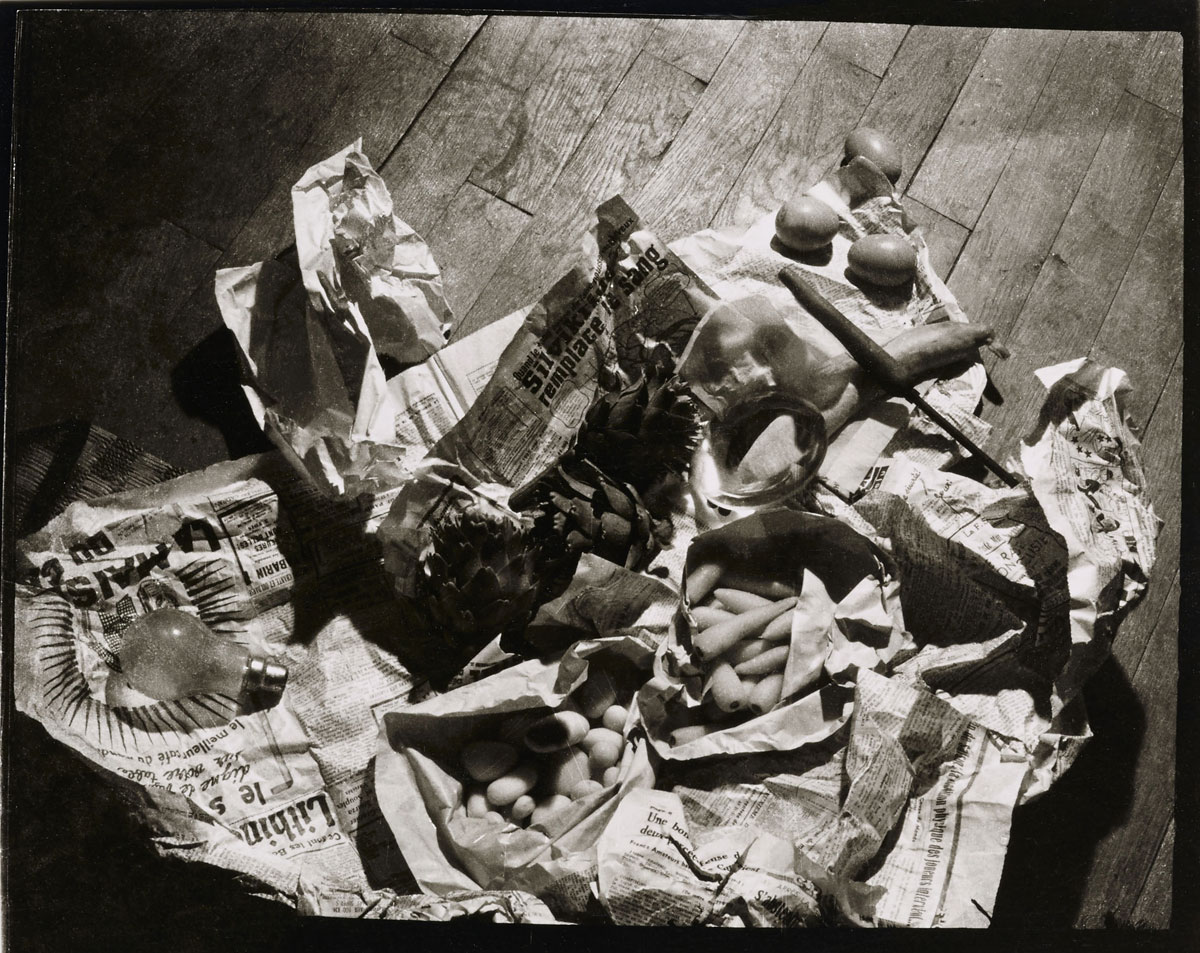
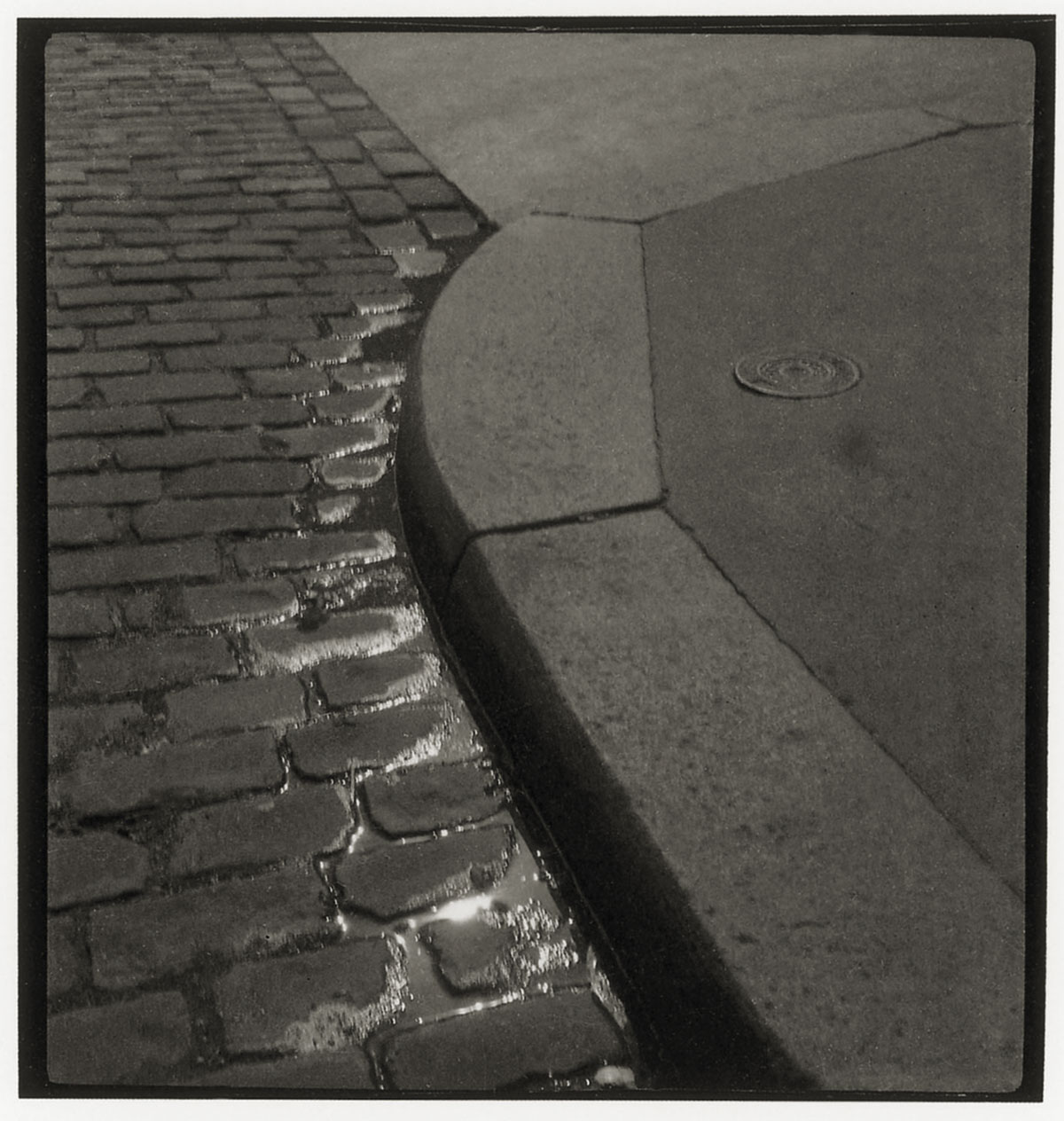
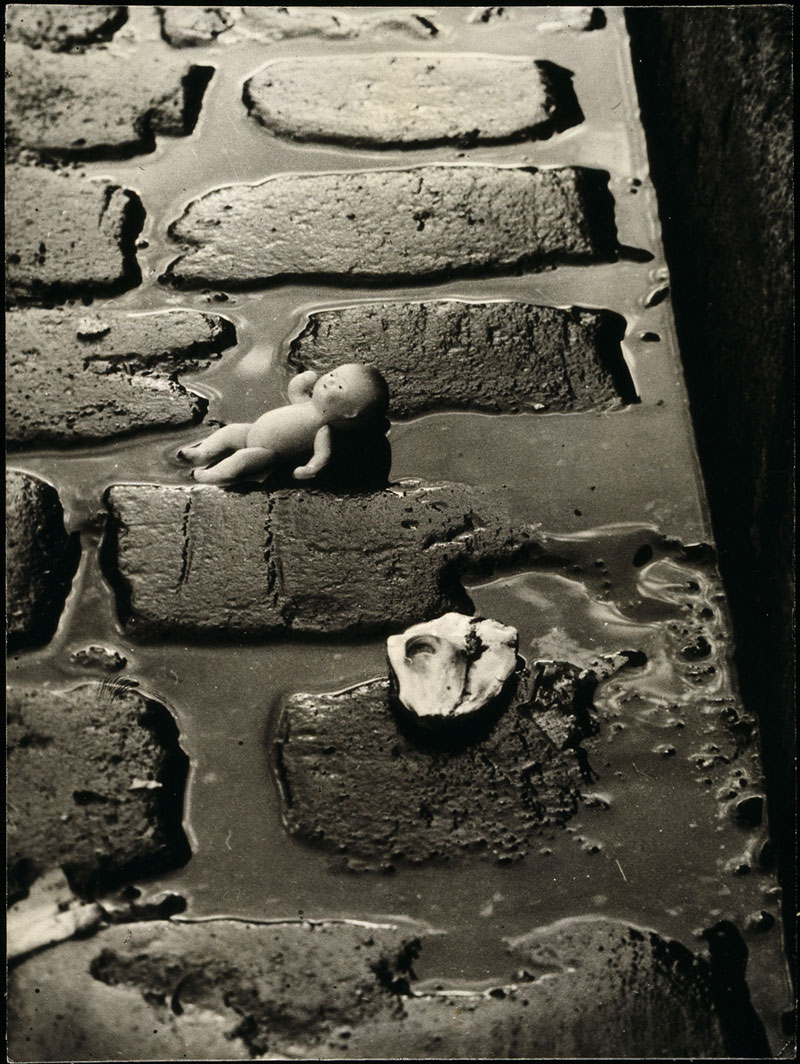
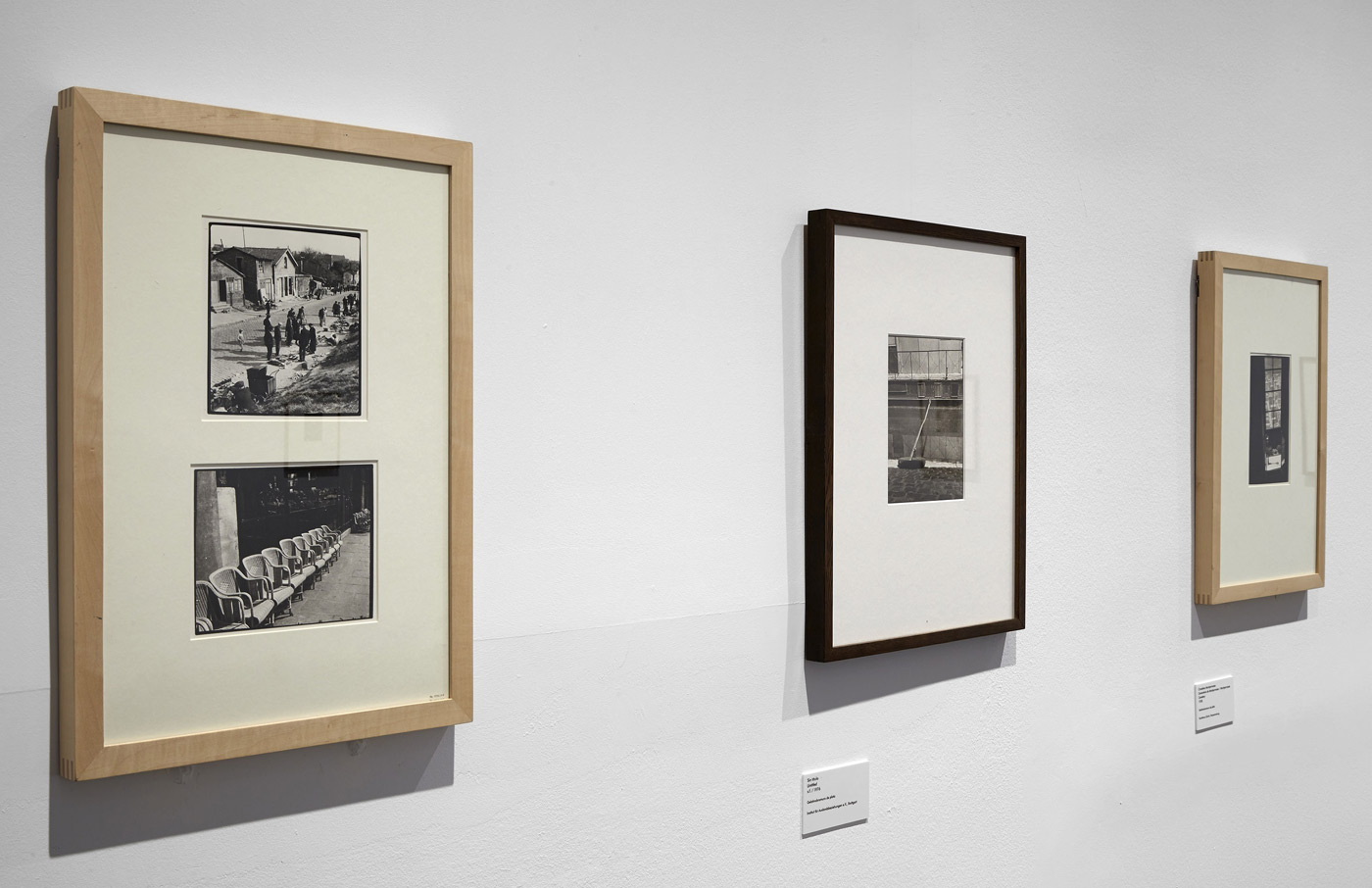
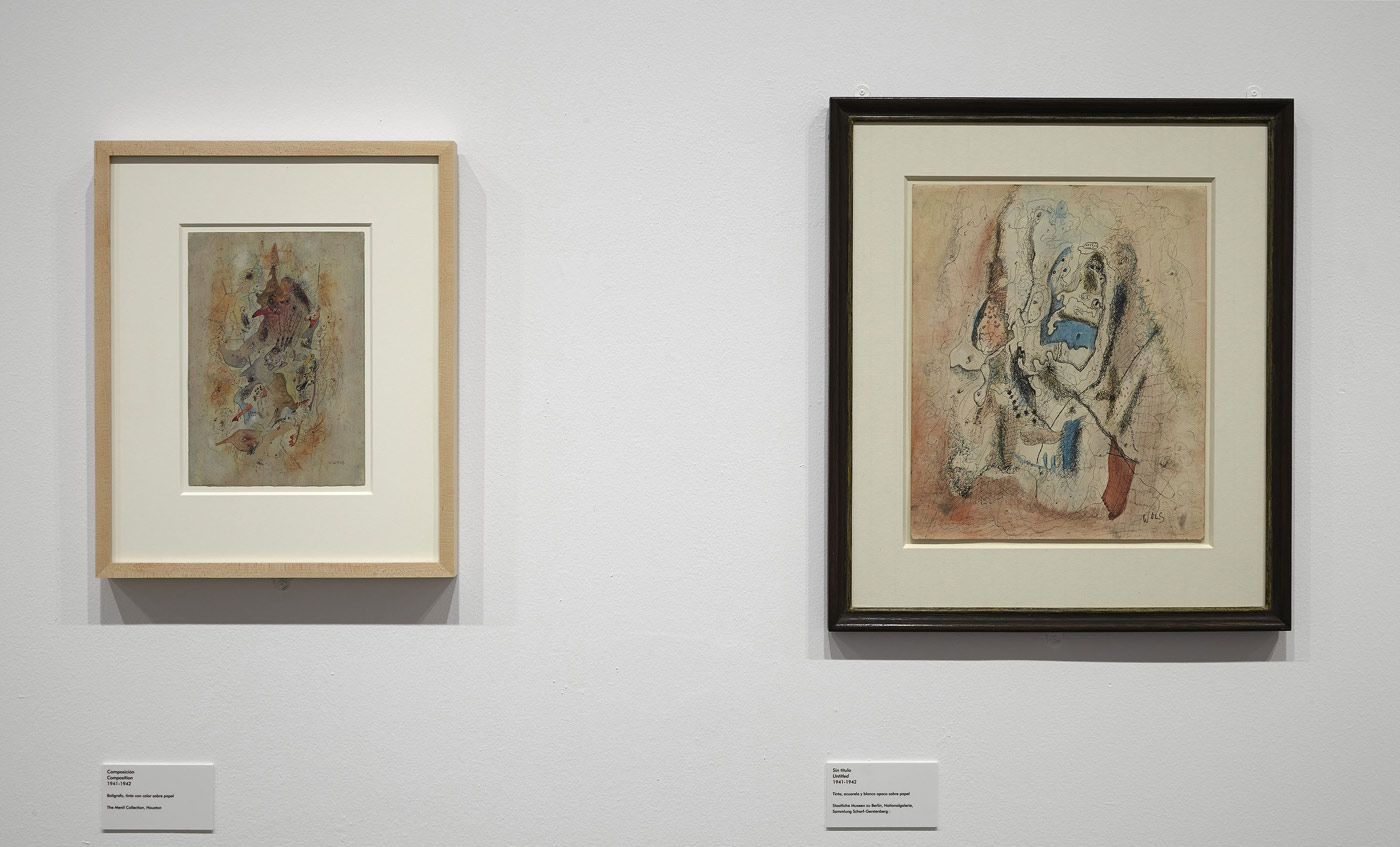
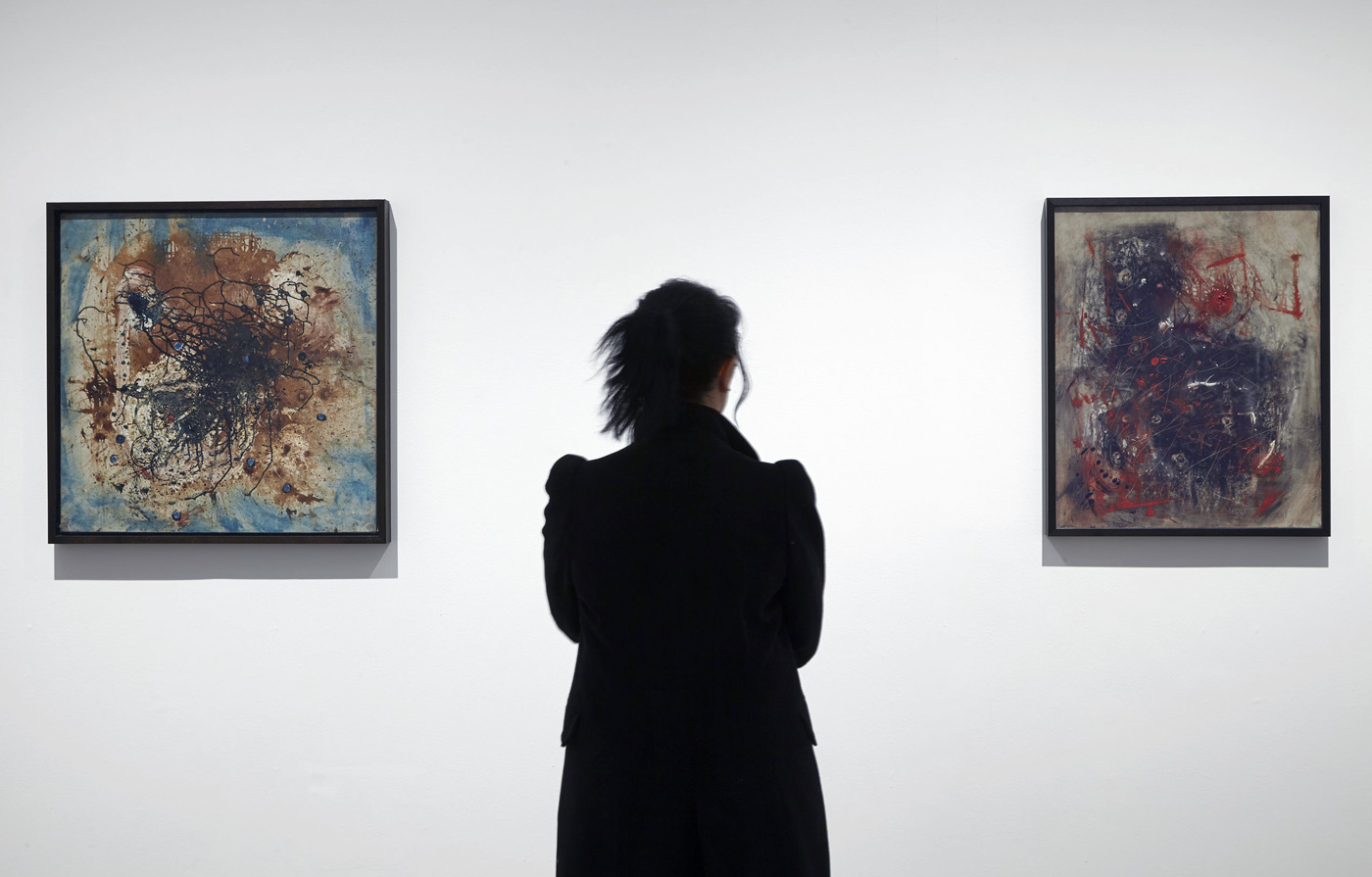
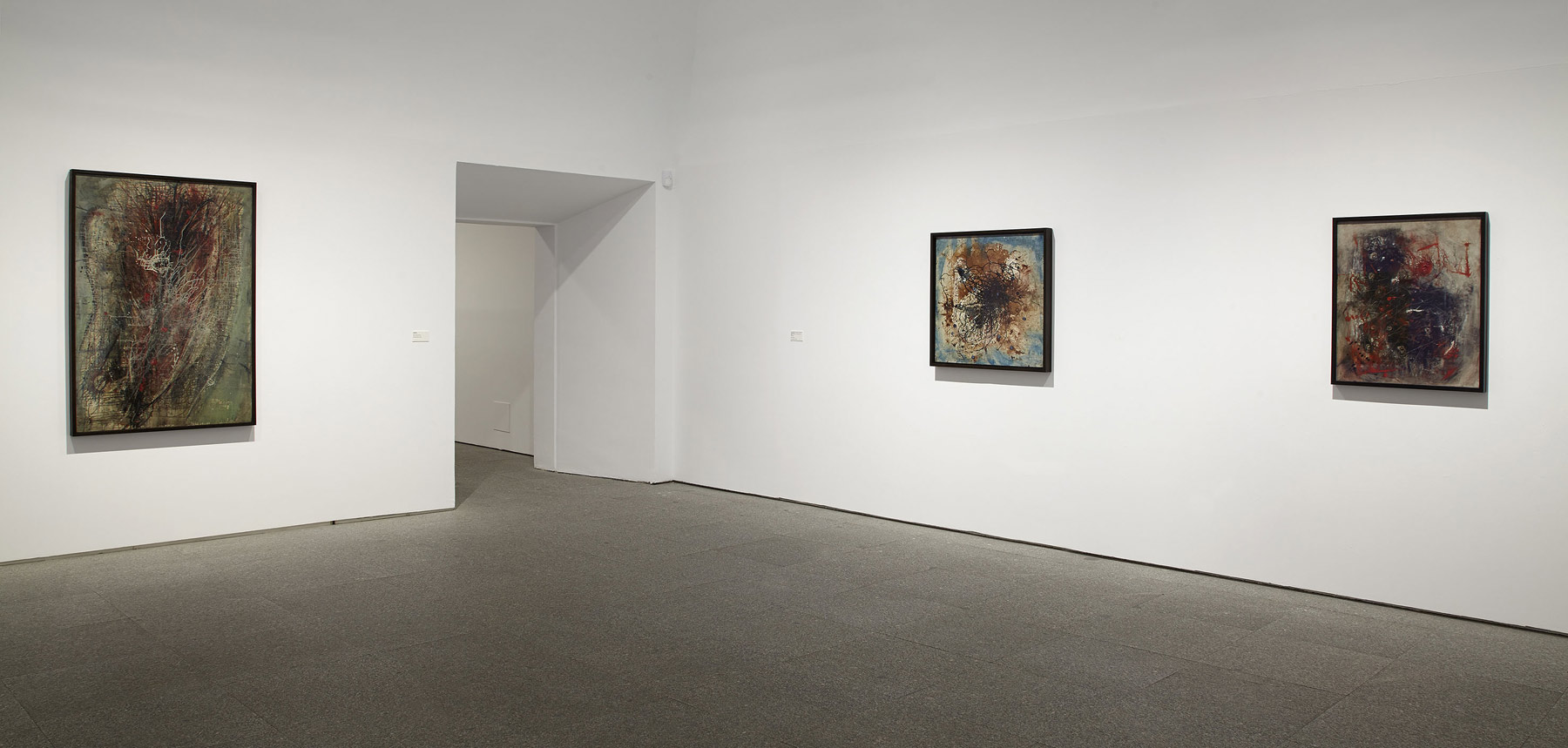
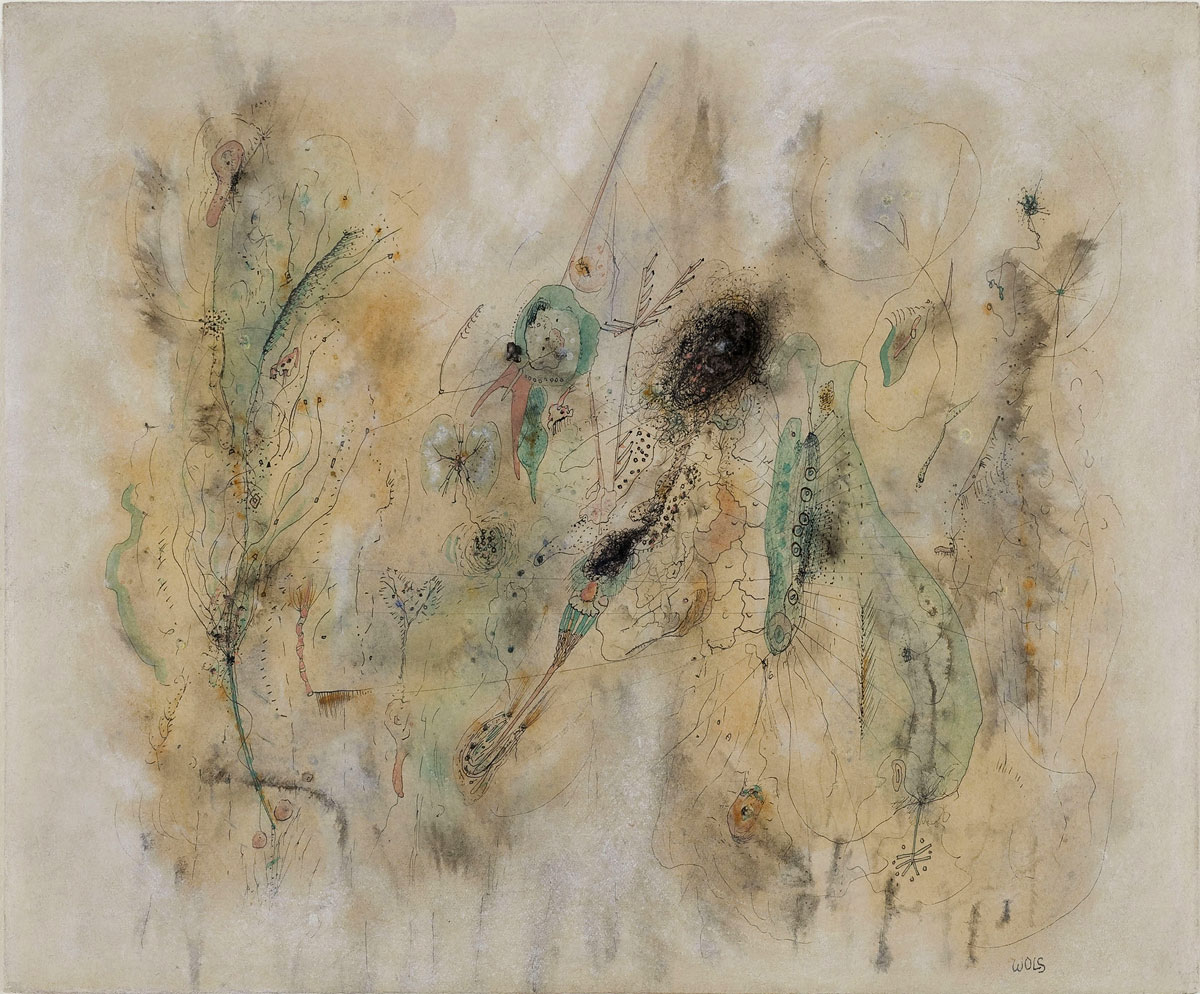
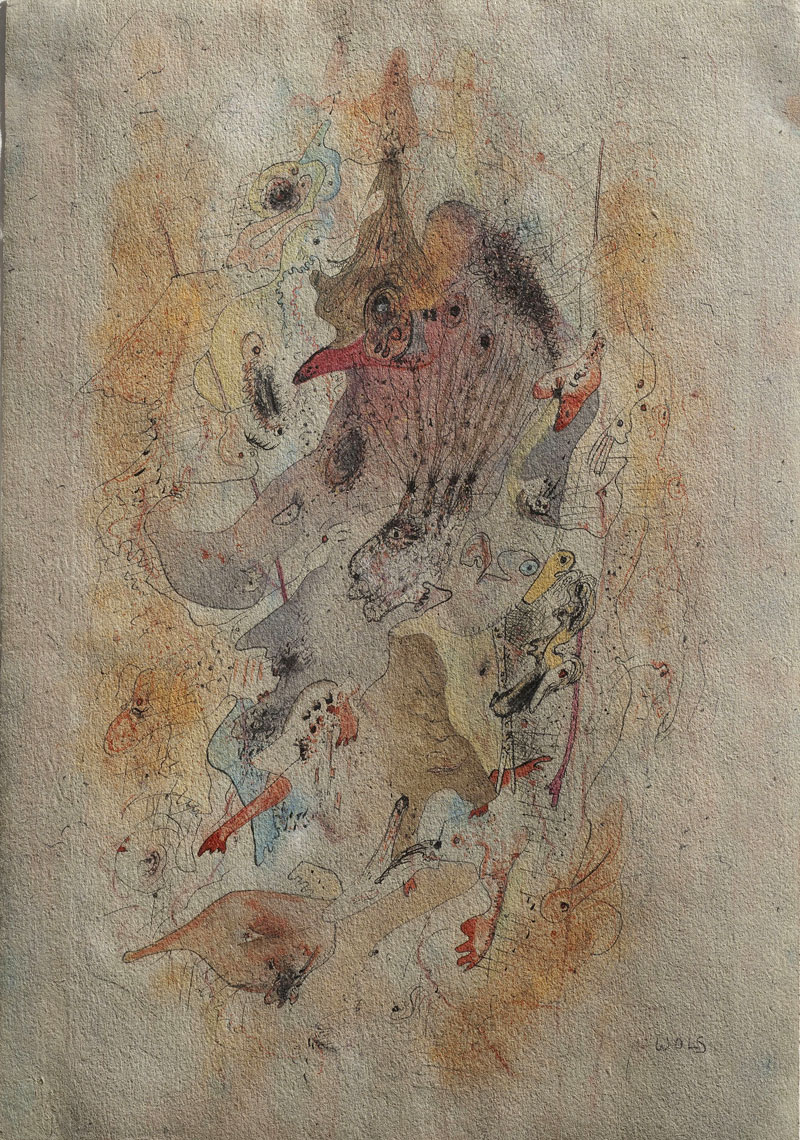
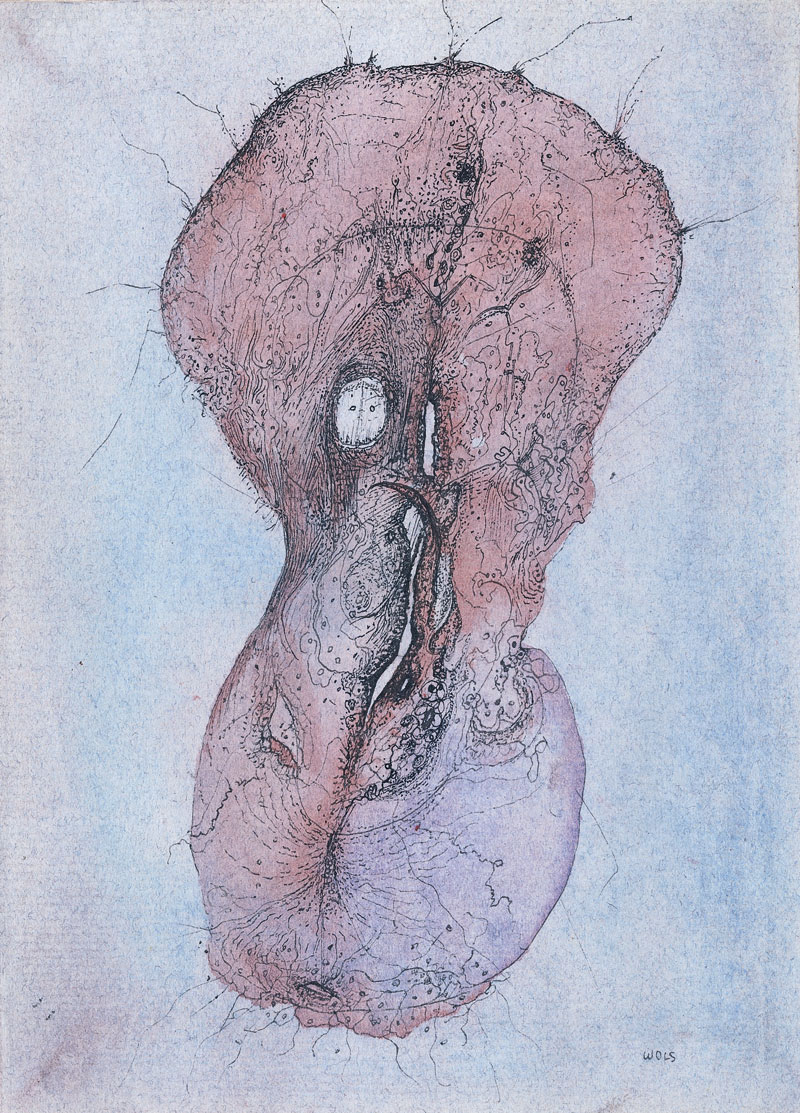
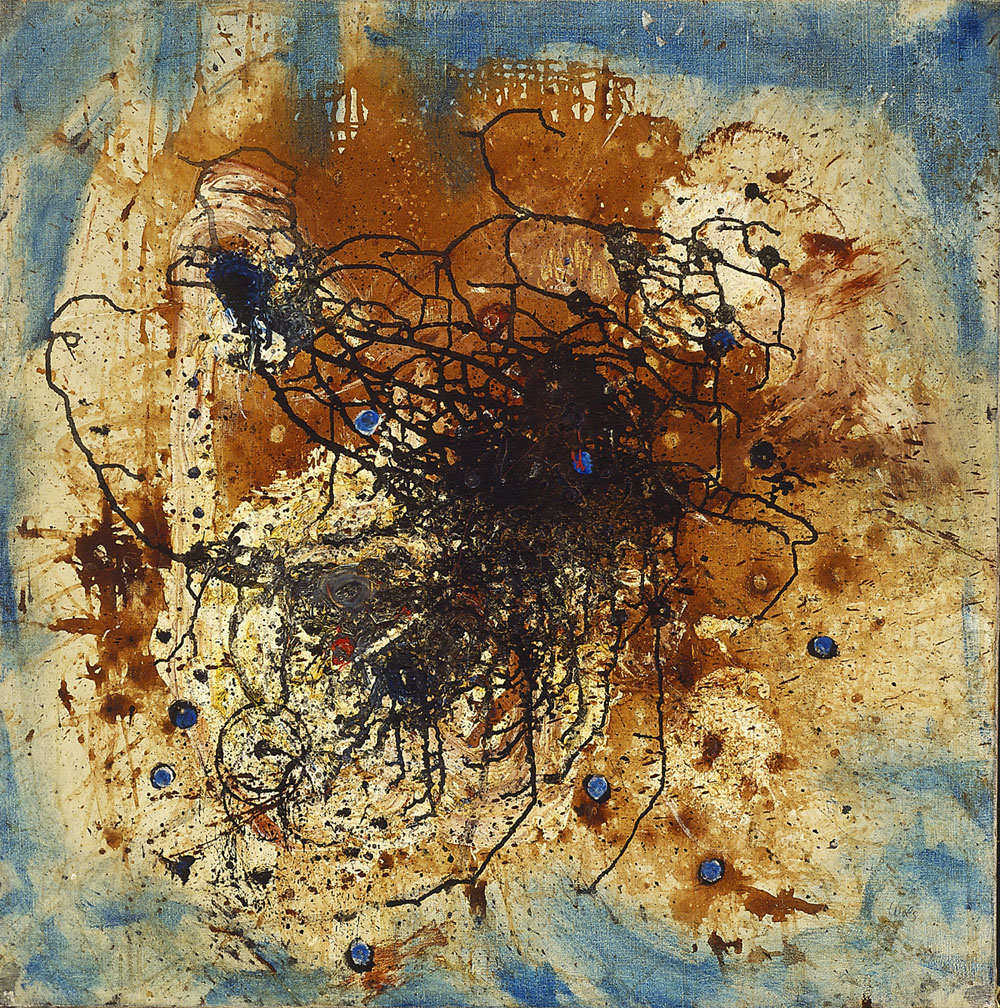
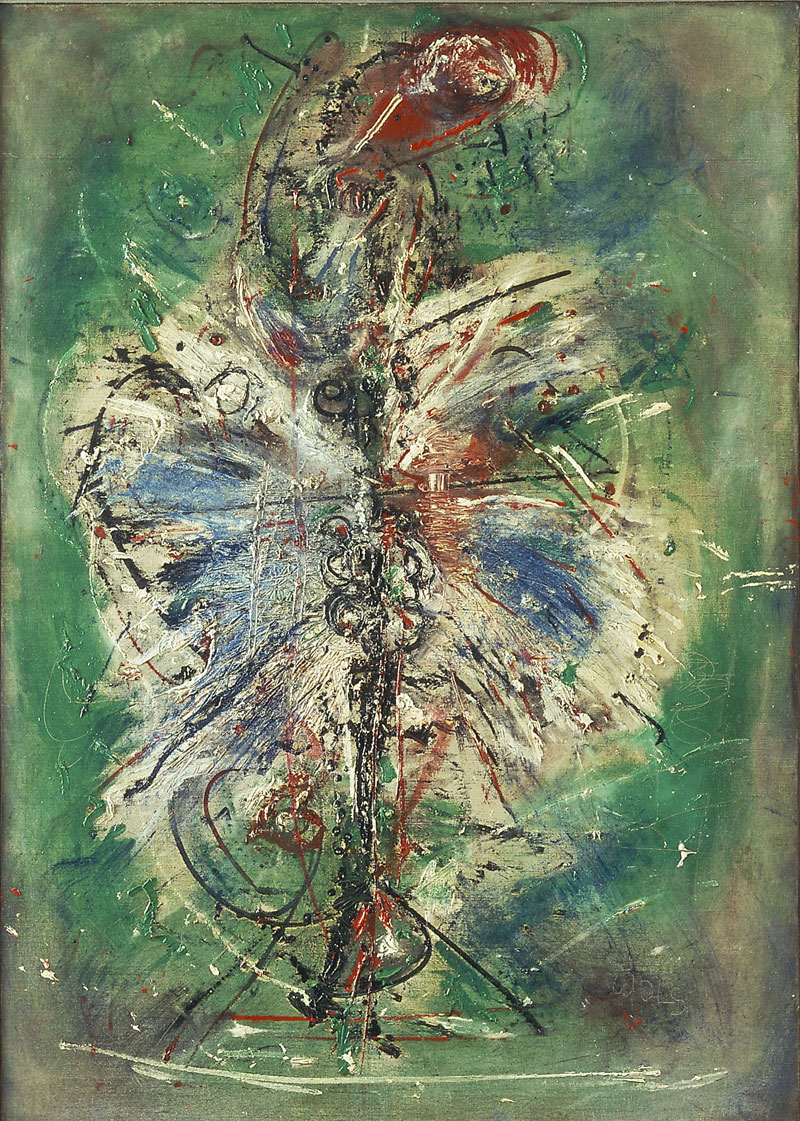
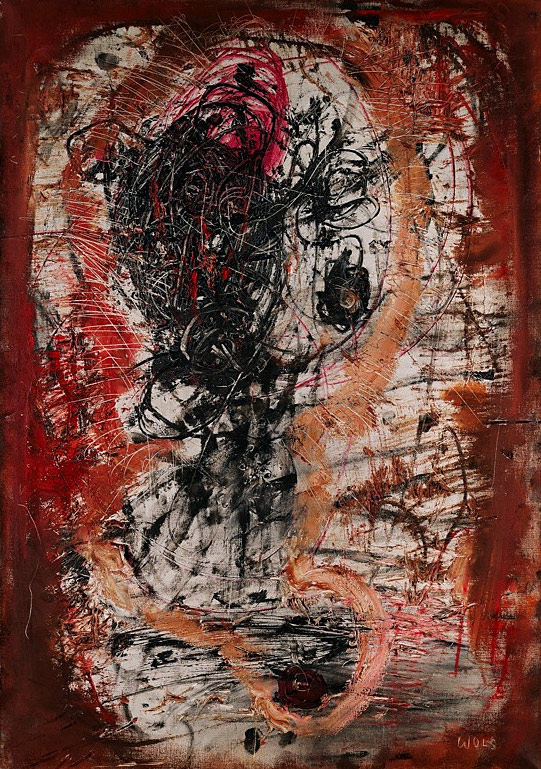


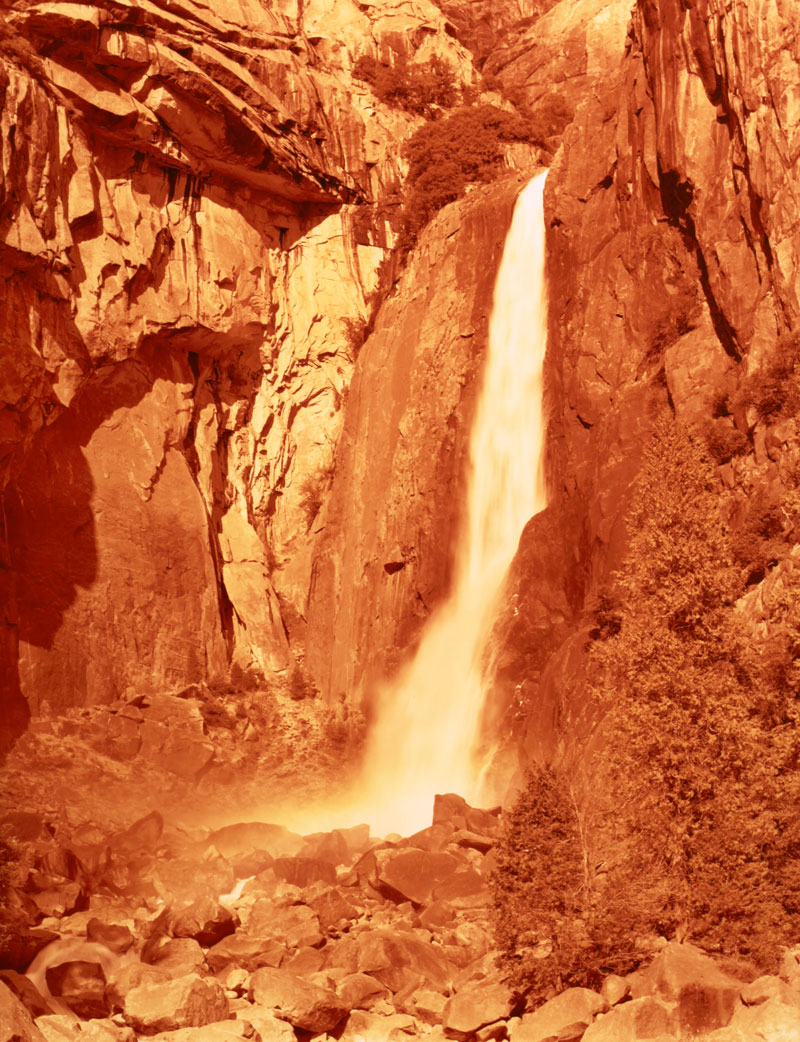
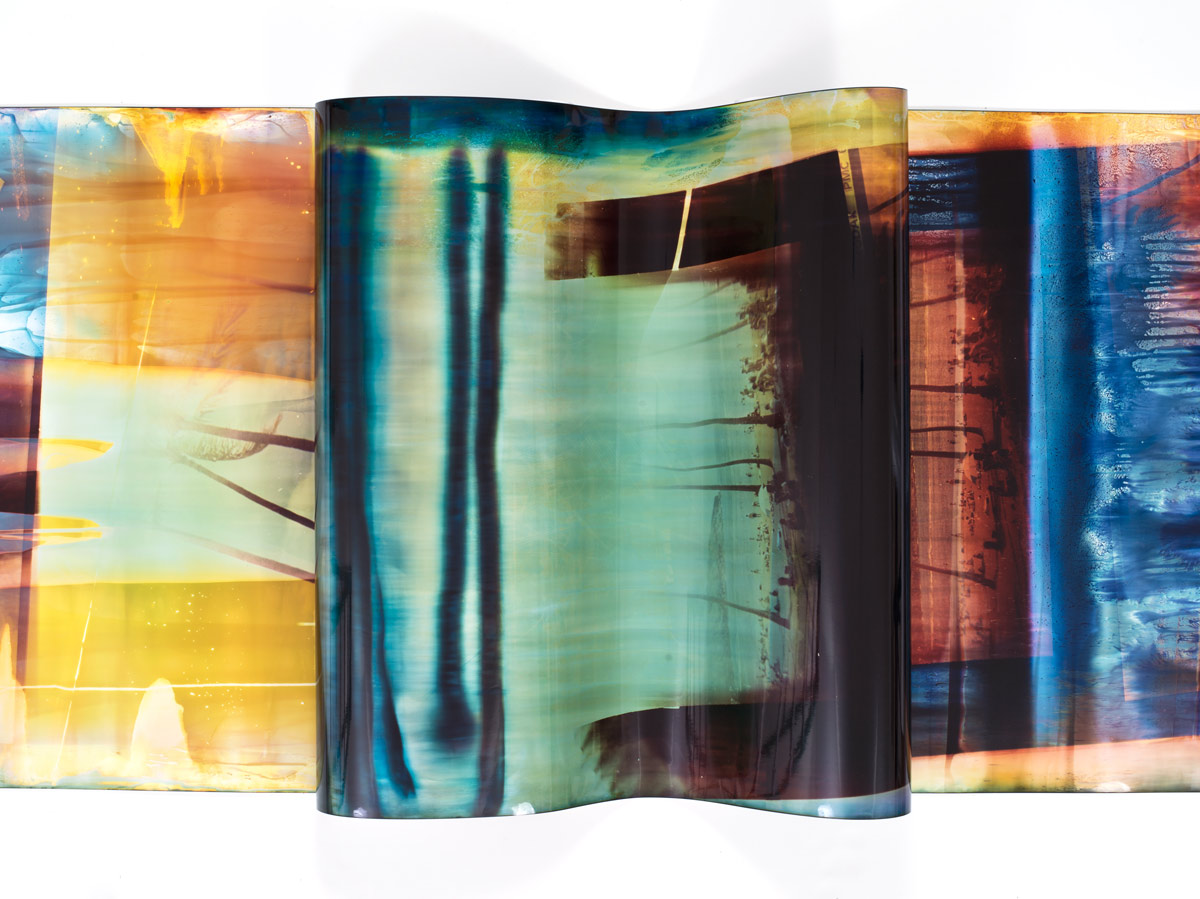


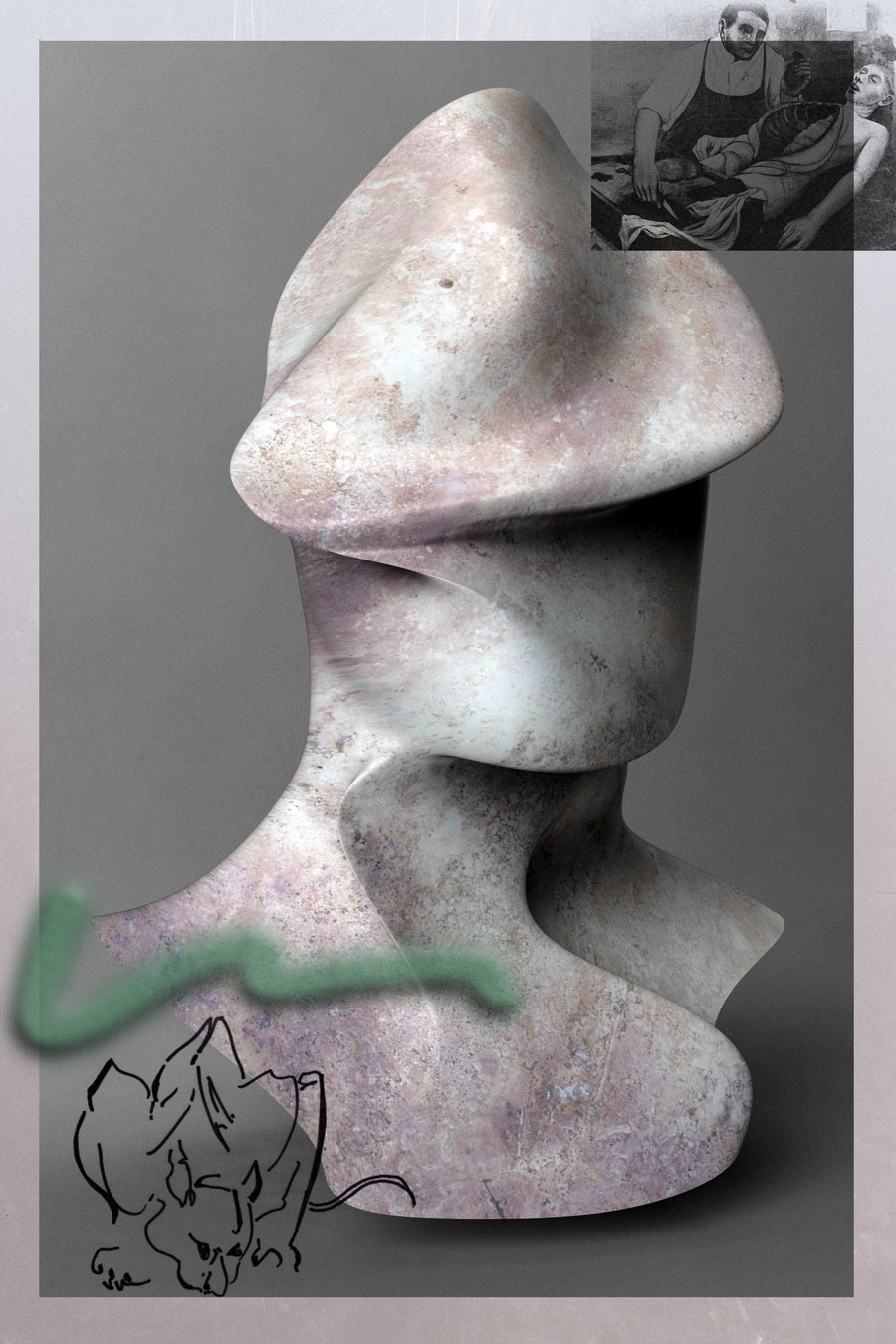



![Erwin Blumenfeld (American-German, 1897-1969) 'Minotaur / Dictator' [Minotaure / Dictateur] The Minotaur or The Dictator Paris, c. 1937](https://artblart.com/wp-content/uploads/2014/01/eblumenfeld14-web.jpg "Erwin Blumenfeld (American-German, 1897-1969) 'Minotaur / Dictator' [Minotaure / Dictateur] The Minotaur or The Dictator Paris, c. 1937")
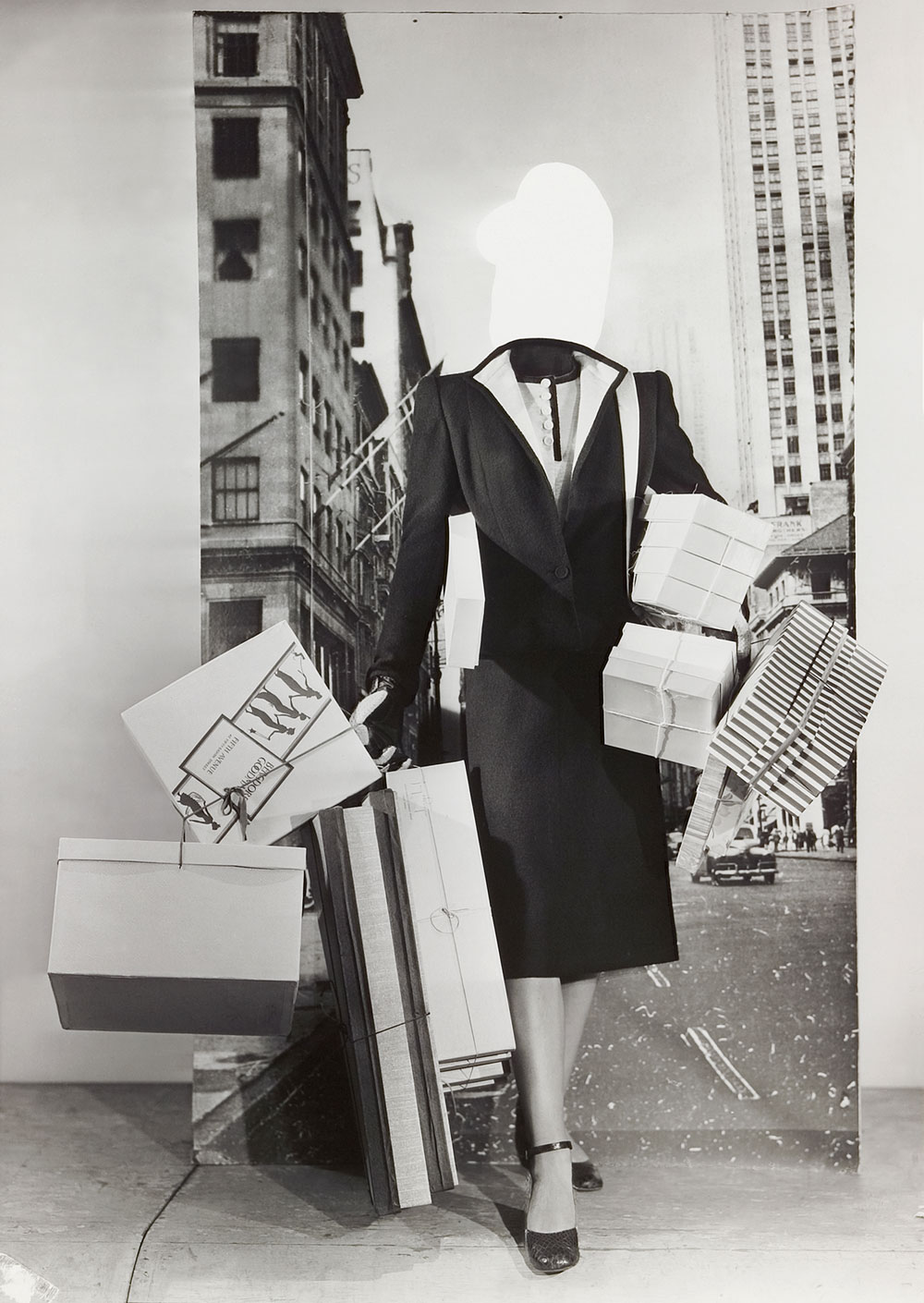
![Erwin Blumenfeld (American-German, 1897-1969) 'Marguerite von Sivers sur le toit du studio 9, rue Delambre' [Marguerite von Sivers on the roof of Blumenfeld’s studio at 9, rue Delambre] Paris, 1937](https://artblart.com/wp-content/uploads/2014/01/eblumenfeld10-web.jpg "Erwin Blumenfeld (American-German, 1897-1969) 'Marguerite von Sivers sur le toit du studio 9, rue Delambre' [Marguerite von Sivers on the roof of Blumenfeld’s studio at 9, rue Delambre] Paris, 1937")
![Erwin Blumenfeld (American-German, 1897-1969) 'Untitled [Natalia Pasco]' 1942](https://artblart.com/wp-content/uploads/2014/01/eblumenfeld12-web.jpg "Erwin Blumenfeld (American-German, 1897-1969) 'Untitled [Natalia Pasco]' 1942")
![Erwin Blumenfeld (American-German, 1897-1969) 'Voile mouillé' [Wet veil] Paris, 1937](https://artblart.com/wp-content/uploads/2014/01/eblumenfeld09-web.jpg "Erwin Blumenfeld (American-German, 1897-1969) 'Voile mouillé' [Wet veil] Paris, 1937")

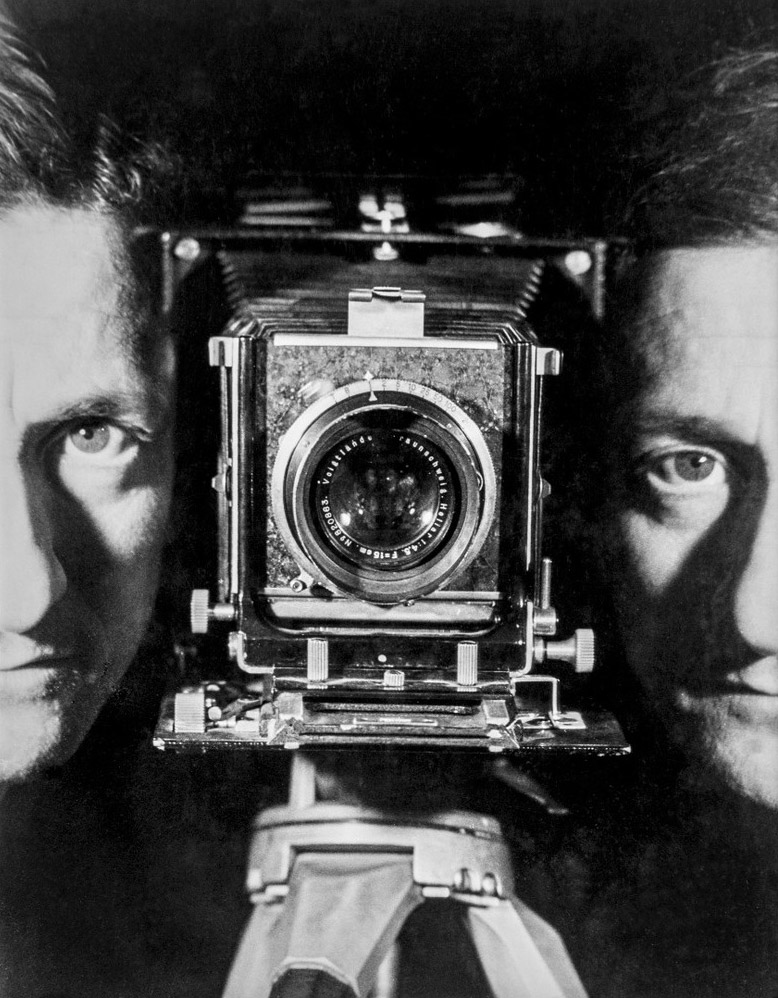


![Erwin Blumenfeld (American-German, 1897-1969) 'In hoc signo vinces [in this sign you will conquer]' 1967](https://artblart.com/wp-content/uploads/2014/01/in-hoc-signo-vinces-in-this-sign-you-will-conquer-1967-web.jpg "Erwin Blumenfeld (American-German, 1897-1969) 'In hoc signo vinces [in this sign you will conquer]' 1967")

![Erwin Blumenfeld (American-German, 1897-1969) 'Untitled [Homme agenouillé avec tour]' [Kneeling man with tower] 1920](https://artblart.com/wp-content/uploads/2014/01/eblumenfeld02-web.jpg "Erwin Blumenfeld (American-German, 1897-1969) 'Untitled [Homme agenouillé avec tour]' [Kneeling man with tower] 1920")
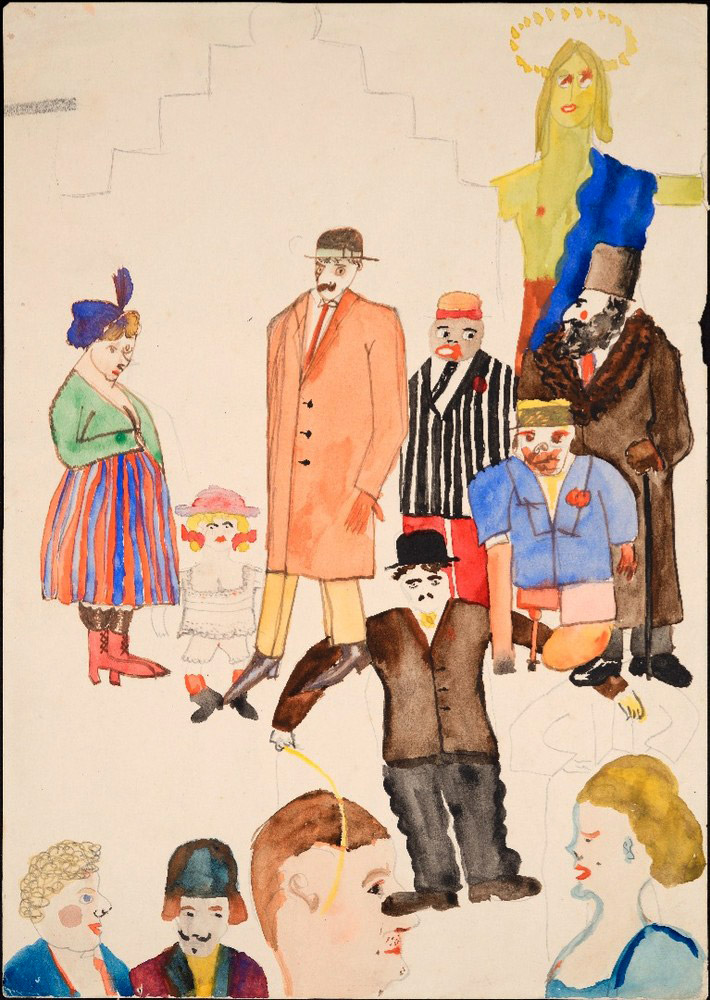
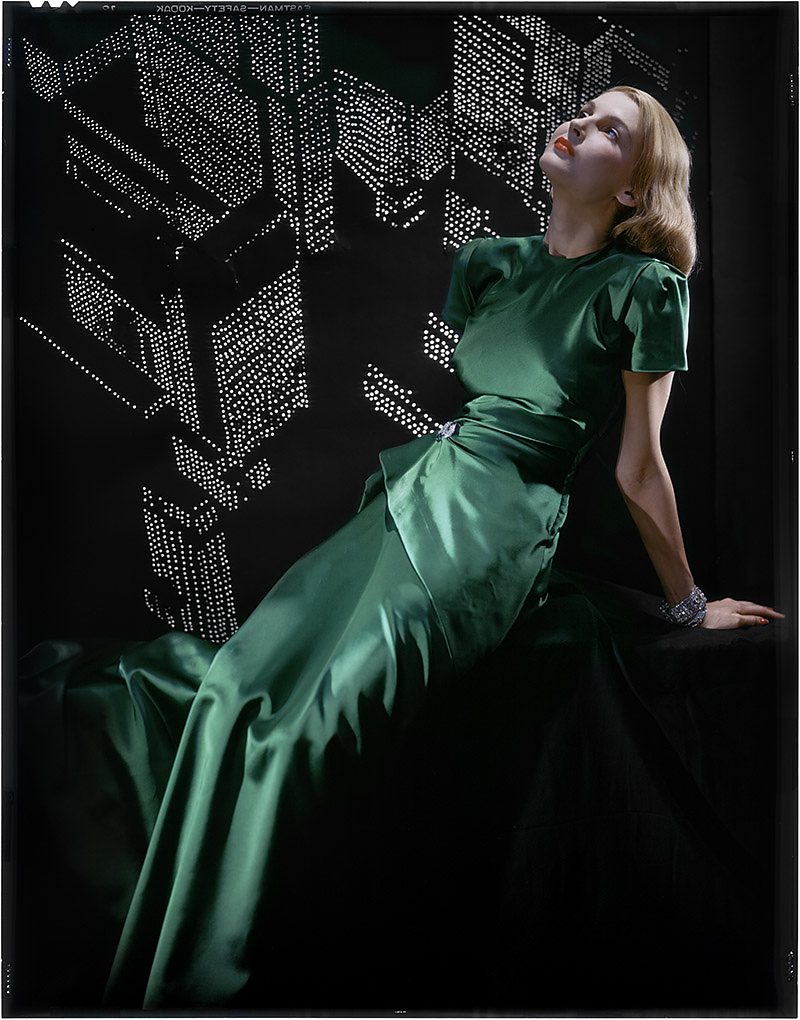
![Erwin Blumenfeld (American-German, 1897-1969) 'Do your part for the Red Cross' [Soutenez la Croix-Rouge] 1945](https://artblart.com/wp-content/uploads/2014/01/blumenfeld_1-web.jpg "Erwin Blumenfeld (American-German, 1897-1969) 'Do your part for the Red Cross' [Soutenez la Croix-Rouge] 1945")
![Erwin Blumenfeld (American-German, 1897-1969) Variant of the photograph published in Life Magazine entitled "The Picasso Girl" [The young woman of Picasso] (model: Lisette) c. 1941-1942](https://artblart.com/wp-content/uploads/2014/01/eblumenfeld15-web1.jpg "Erwin Blumenfeld (American-German, 1897-1969) Variant of the photograph published in Life Magazine entitled \"The Picasso Girl\" [The young woman of Picasso] (model: Lisette) c. 1941-1942")

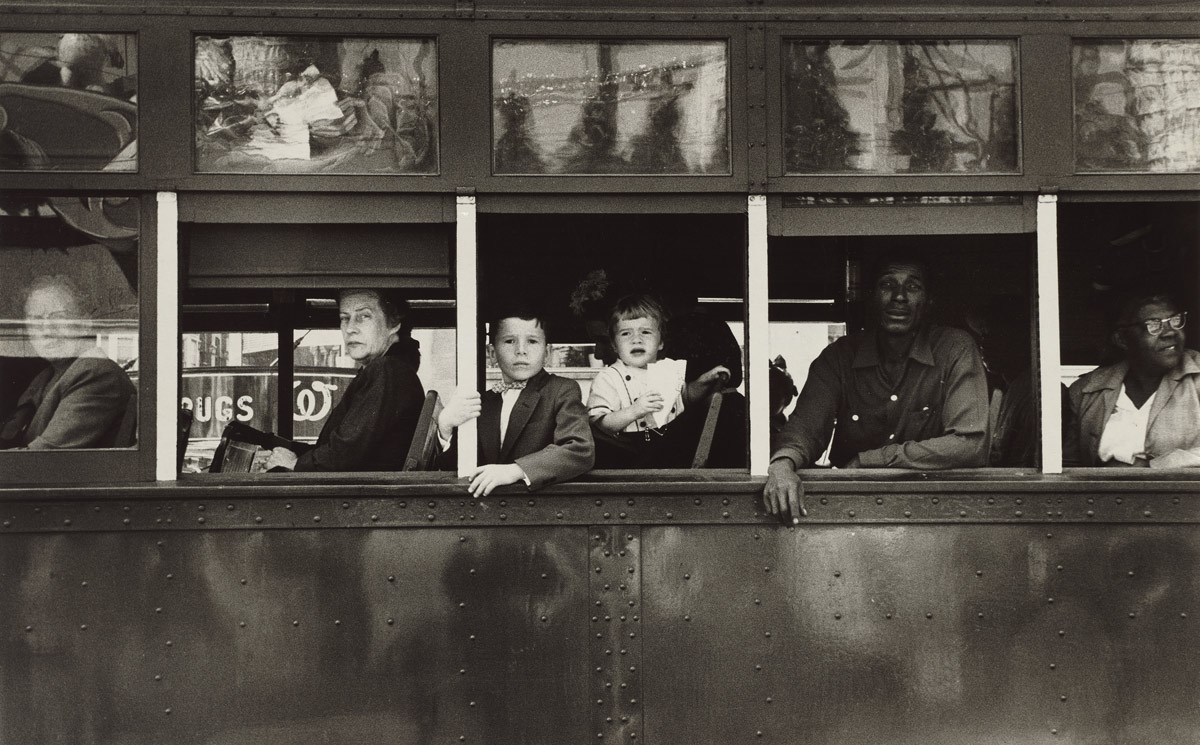

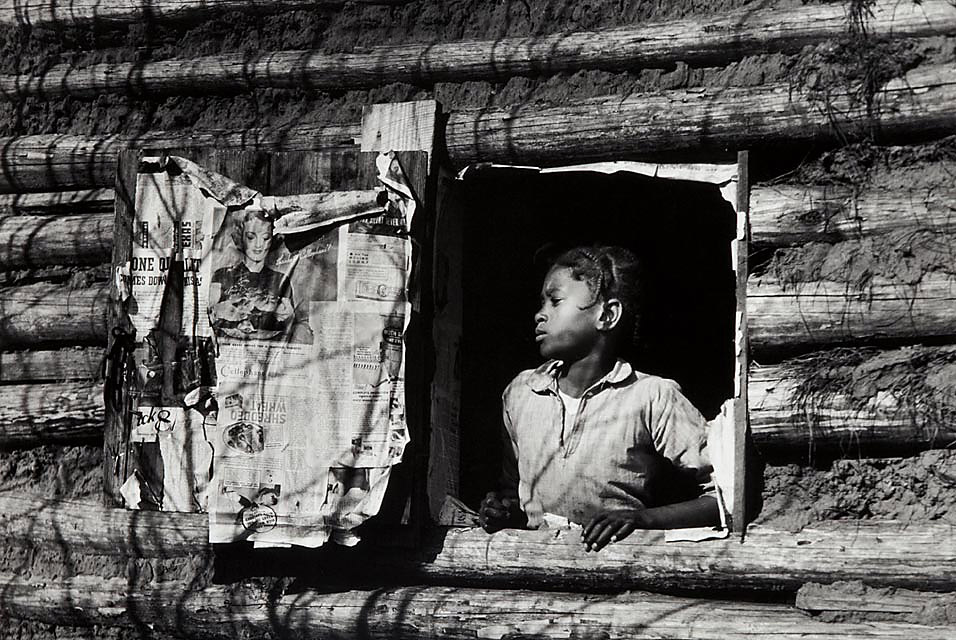
![Edmund Collein (German, 1906-1992) '[Four Women Looking Through Window]' about 1928](https://artblart.com/wp-content/uploads/2013/12/edmund-collein-four-women-looking-through-window-web.jpg "Edmund Collein (German, 1906-1992) '[Four Women Looking Through Window]' about 1928")
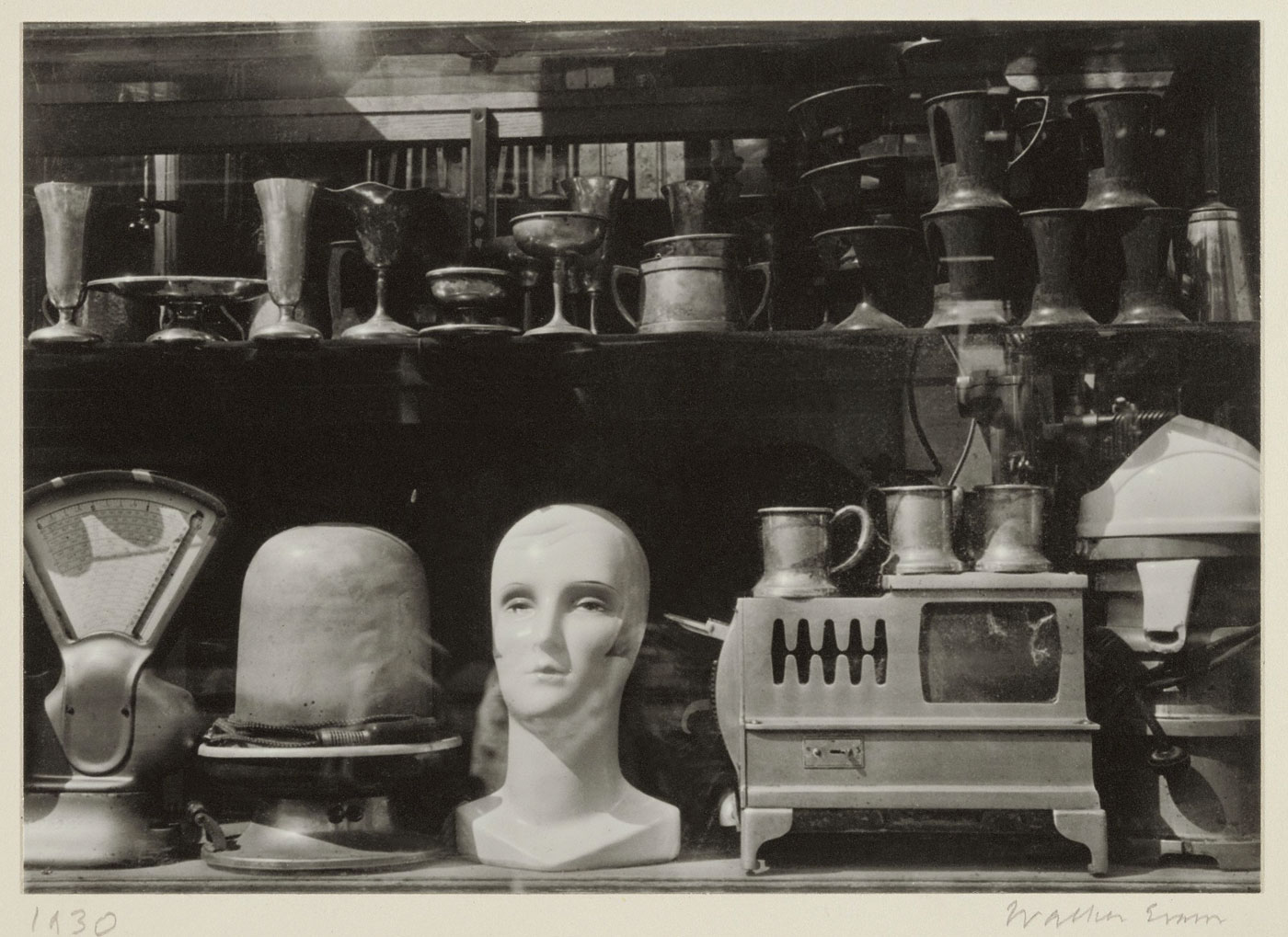
![William Henry Fox Talbot (English, 1800-1877) '[The Milliner's Window]' before January 1844](https://artblart.com/wp-content/uploads/2013/12/william_henry_fox_talbot_the_milliners_window-web.jpg "William Henry Fox Talbot (English, 1800-1877) '[The Milliner's Window]' before January 1844")
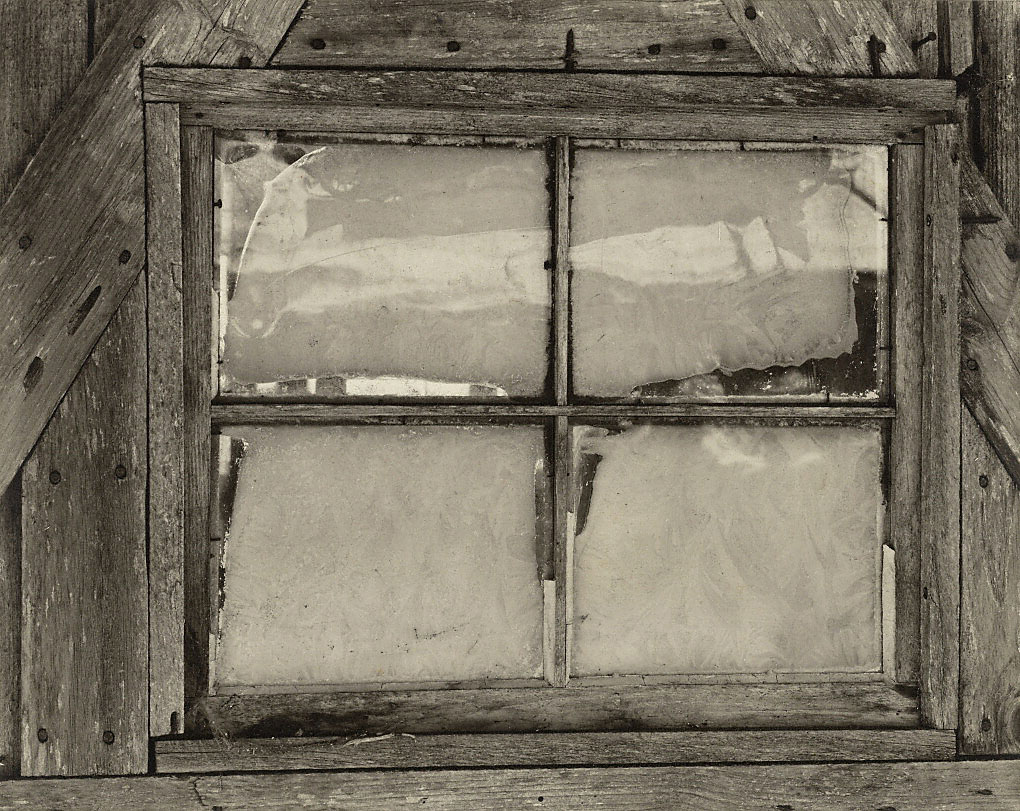


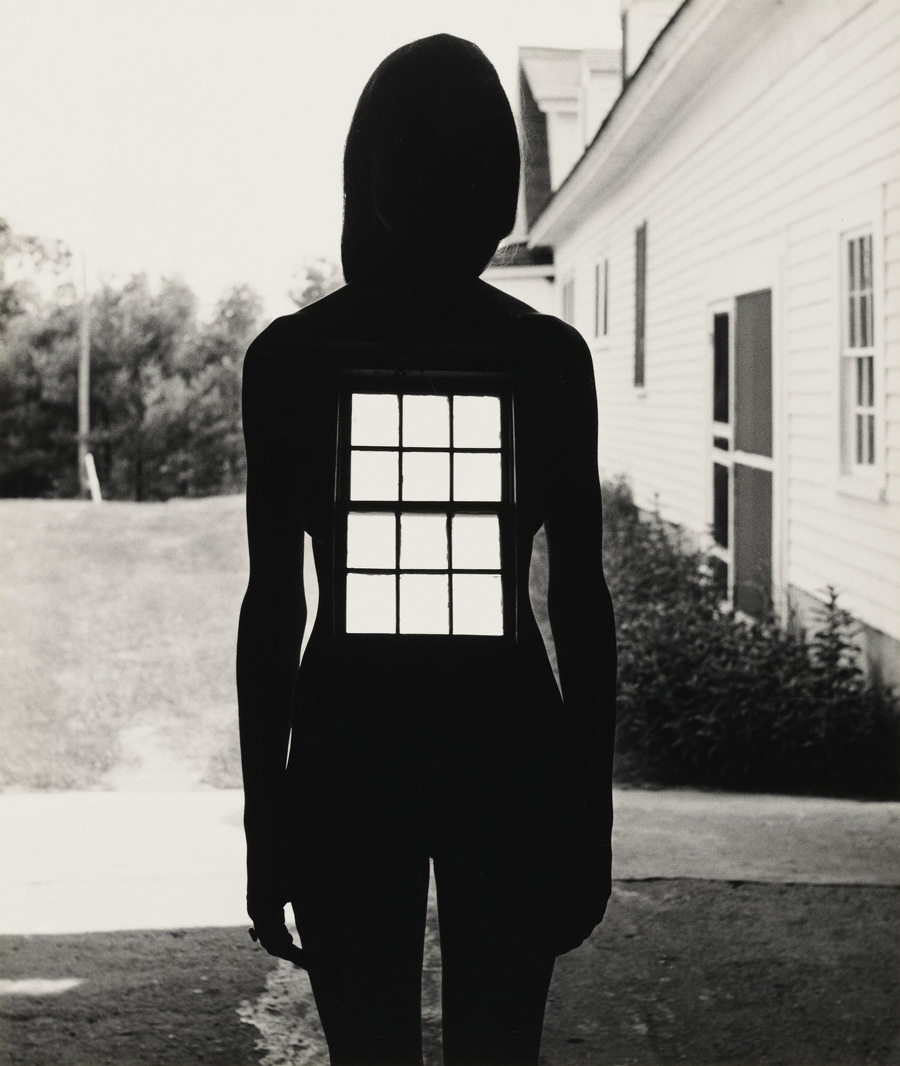
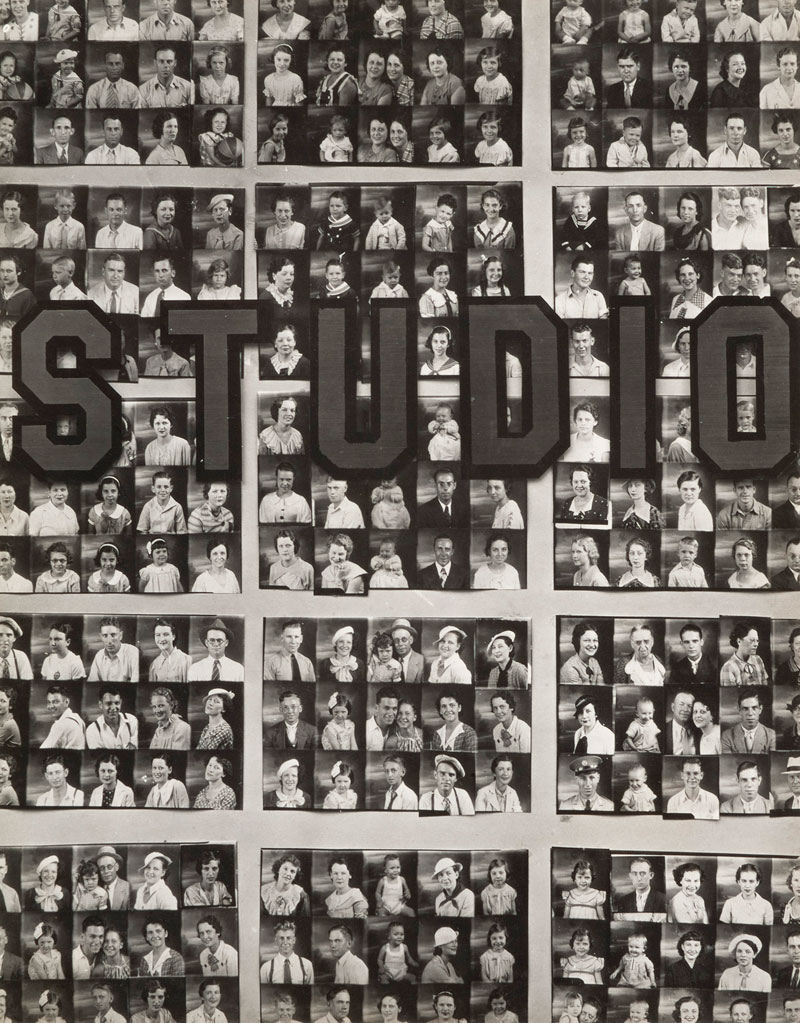
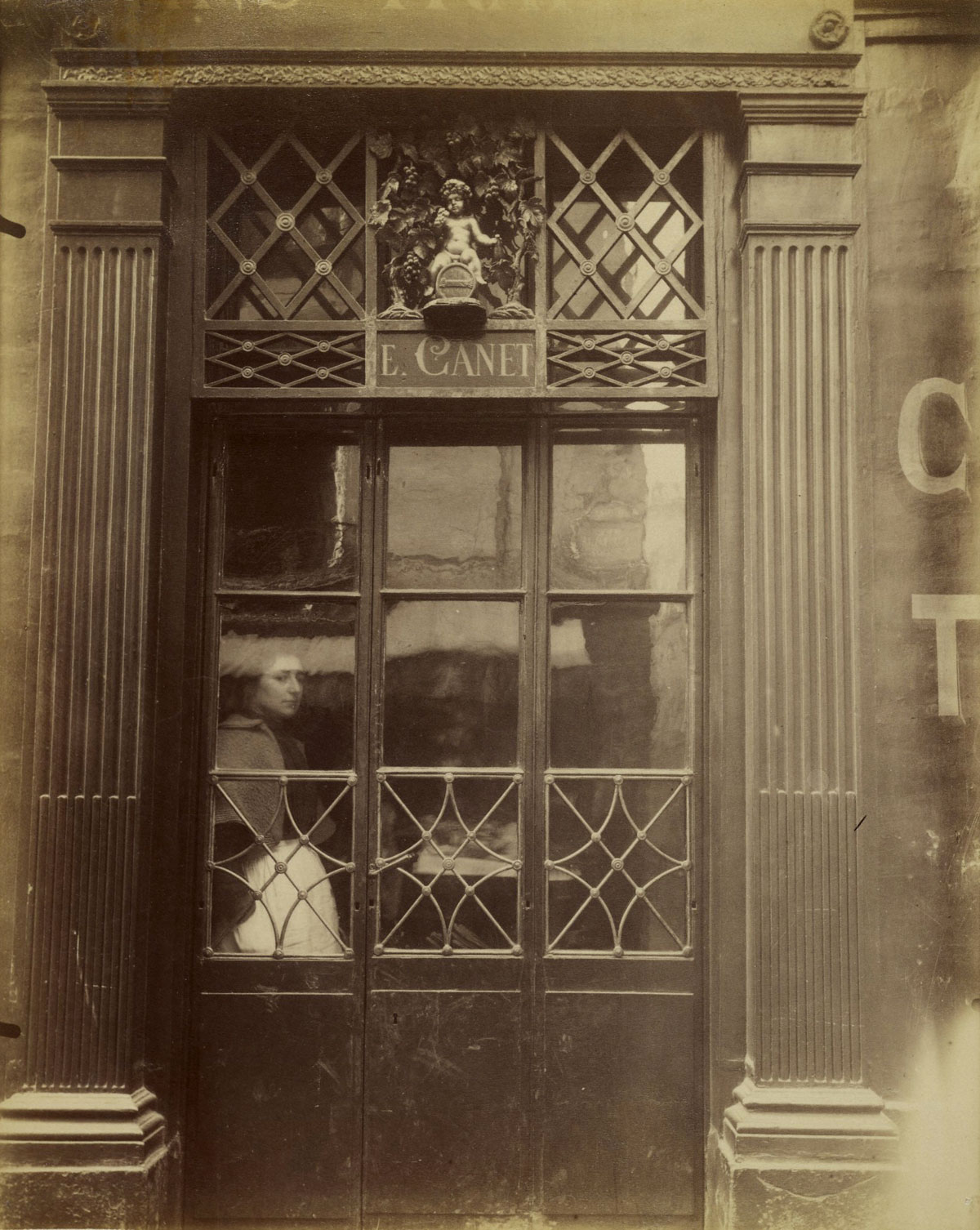
![Alfred Stieglitz (American, 1864-1946) '[From My Window at the Shelton, North]' 1931](https://artblart.com/wp-content/uploads/2013/12/alfred-stieglitz-from-my-window-at-the-shelton-north-web.jpg "Alfred Stieglitz (American, 1864-1946) '[From My Window at the Shelton, North]' 1931")
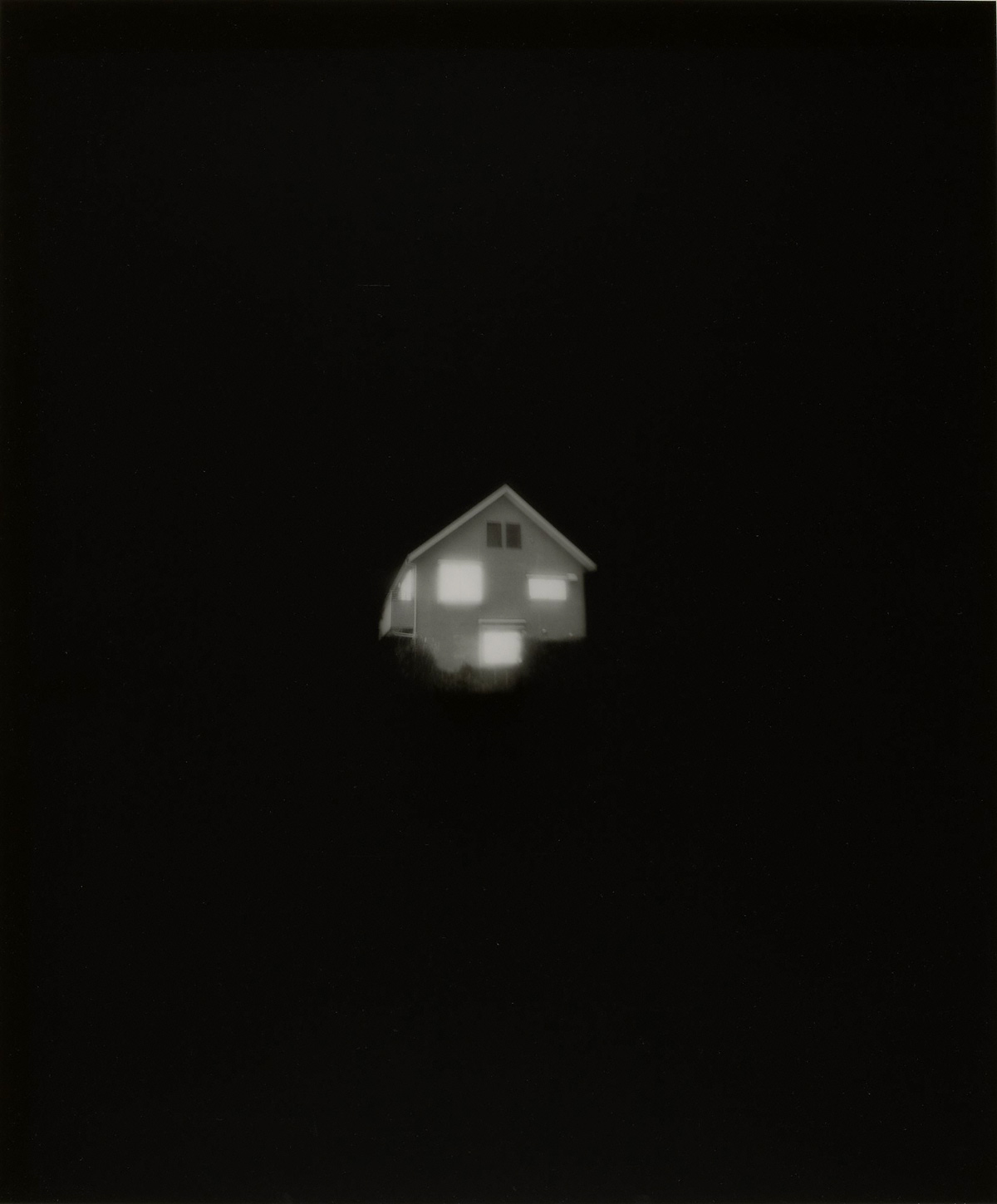


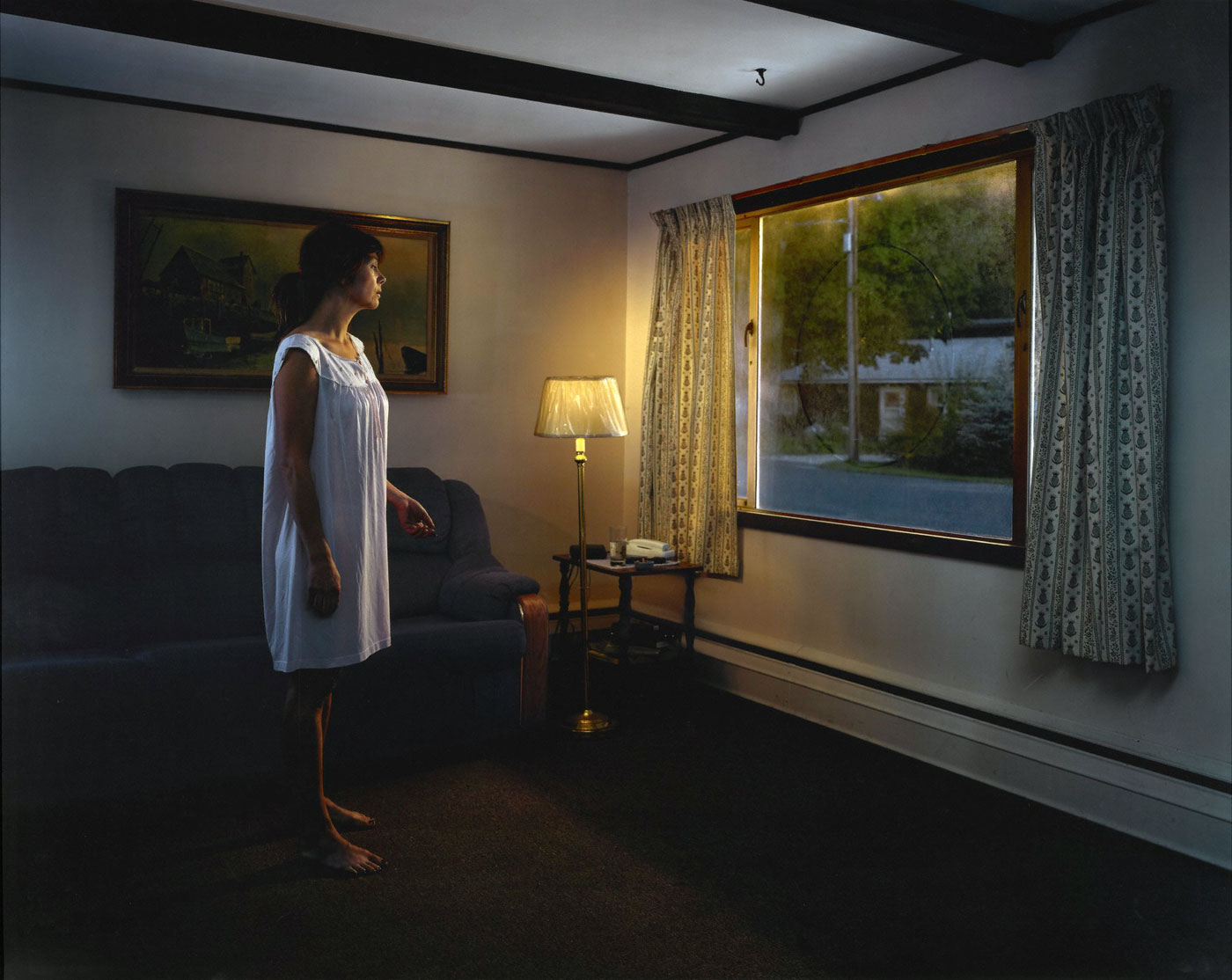

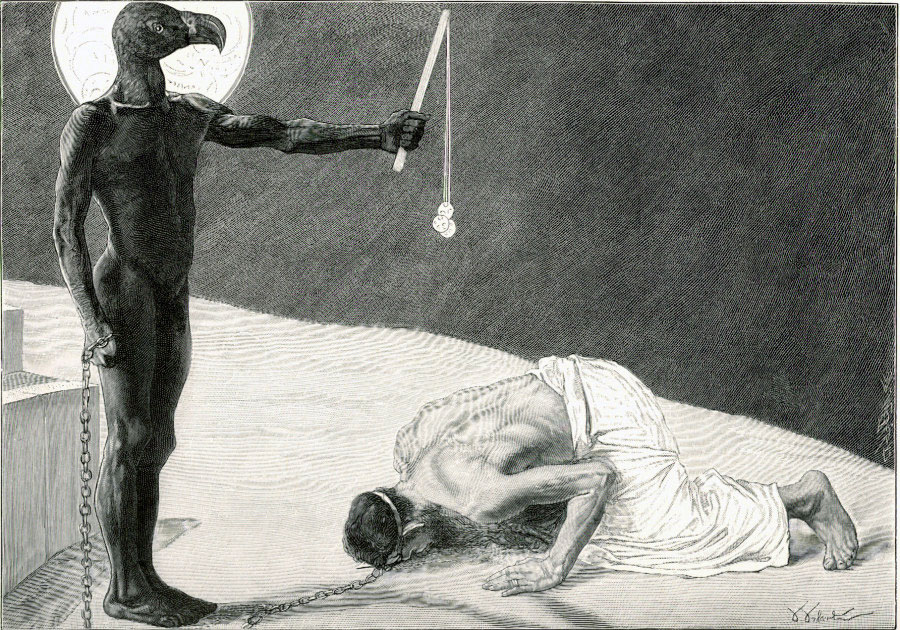

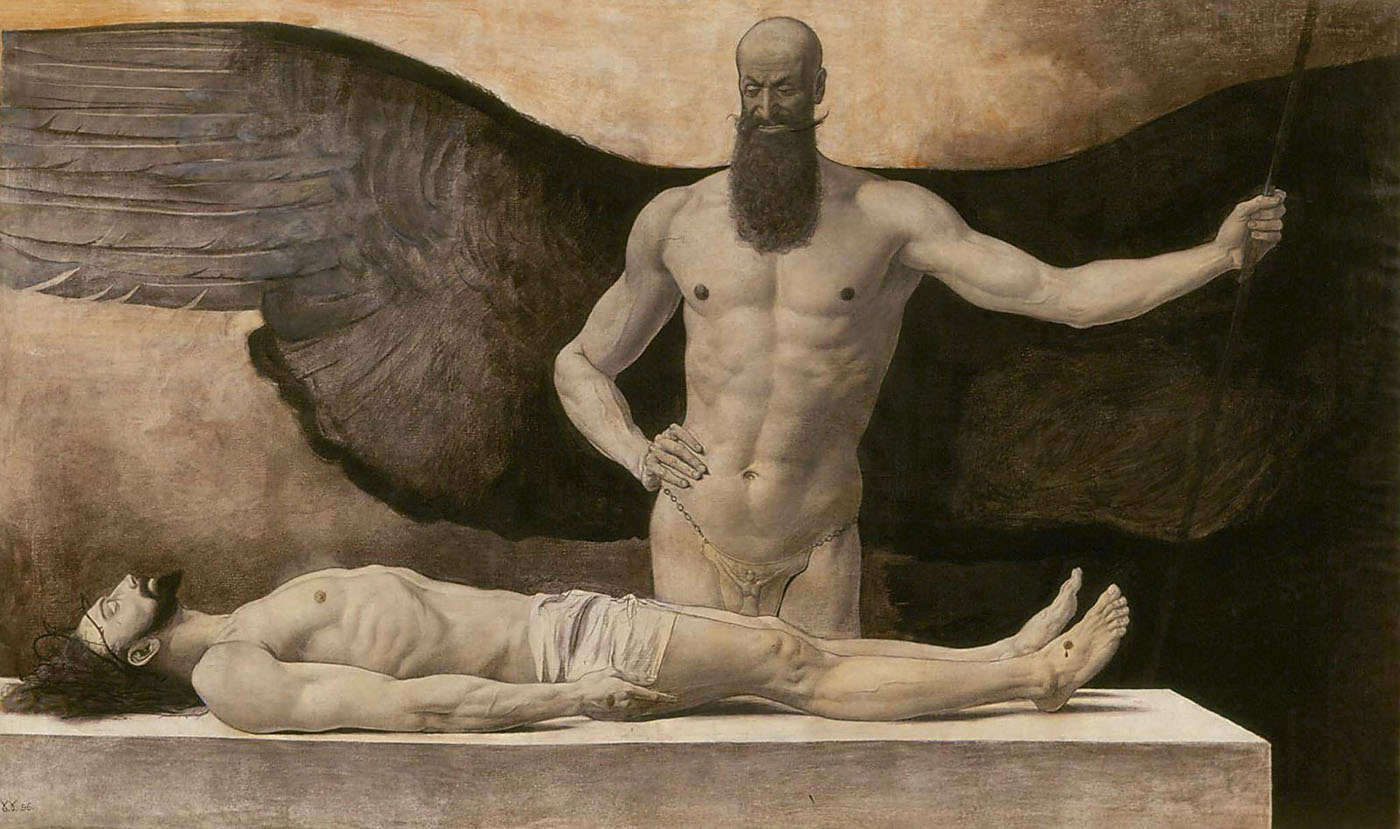

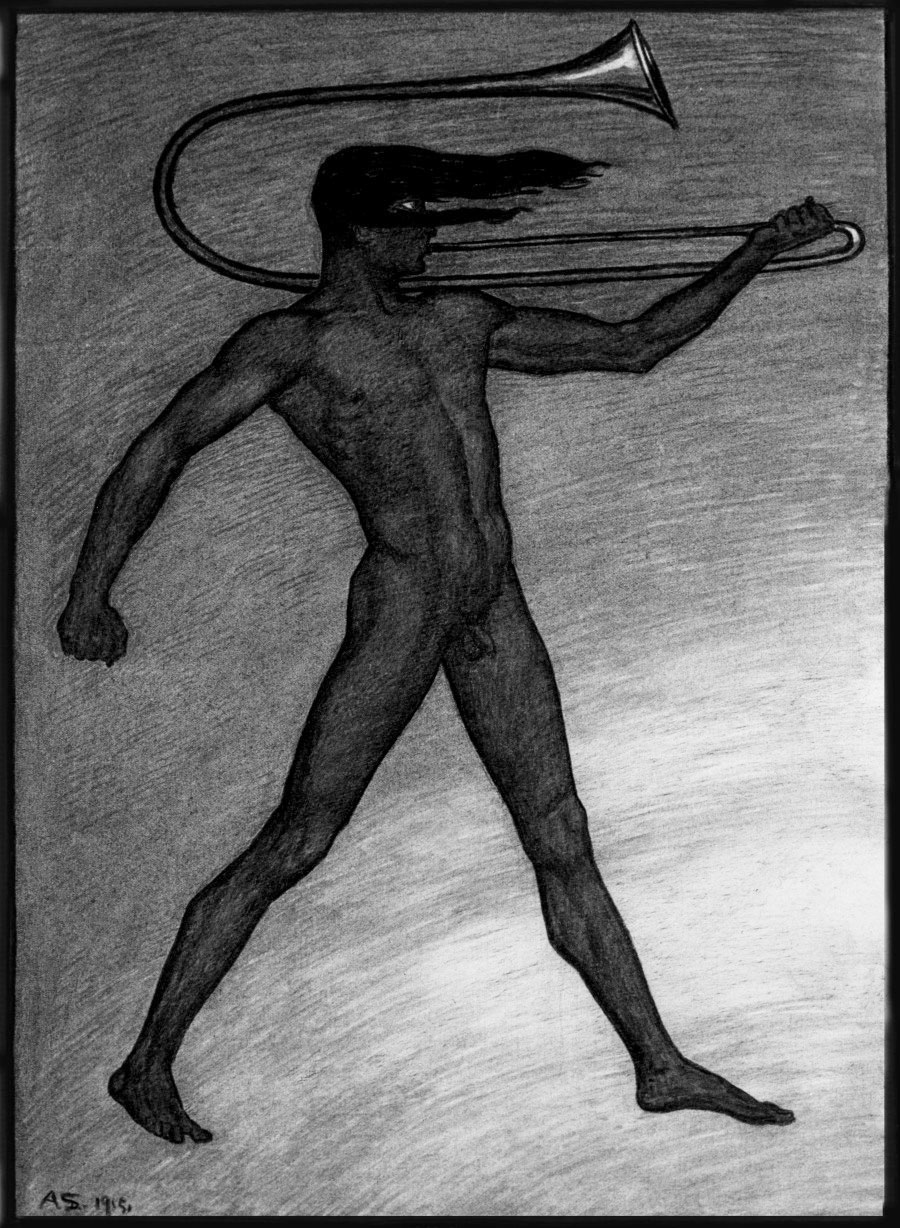
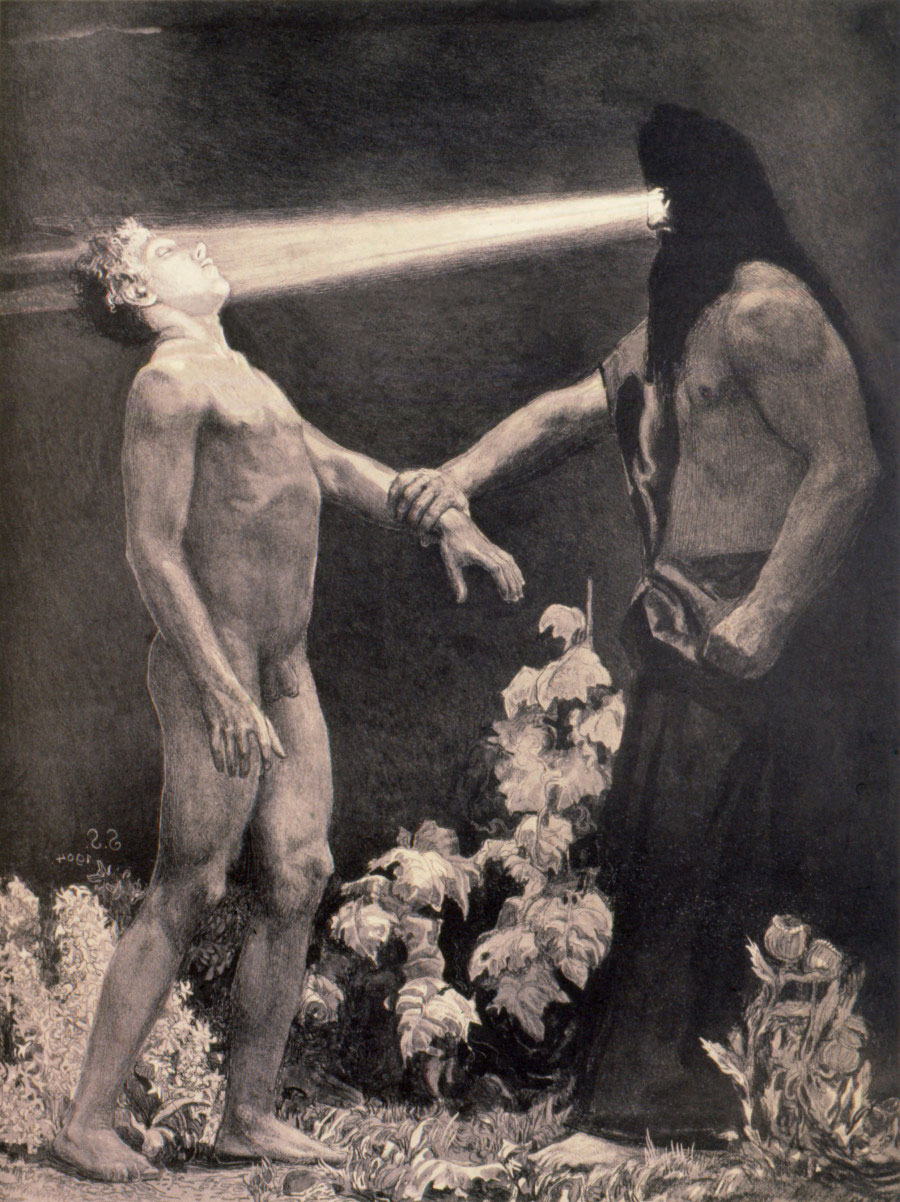
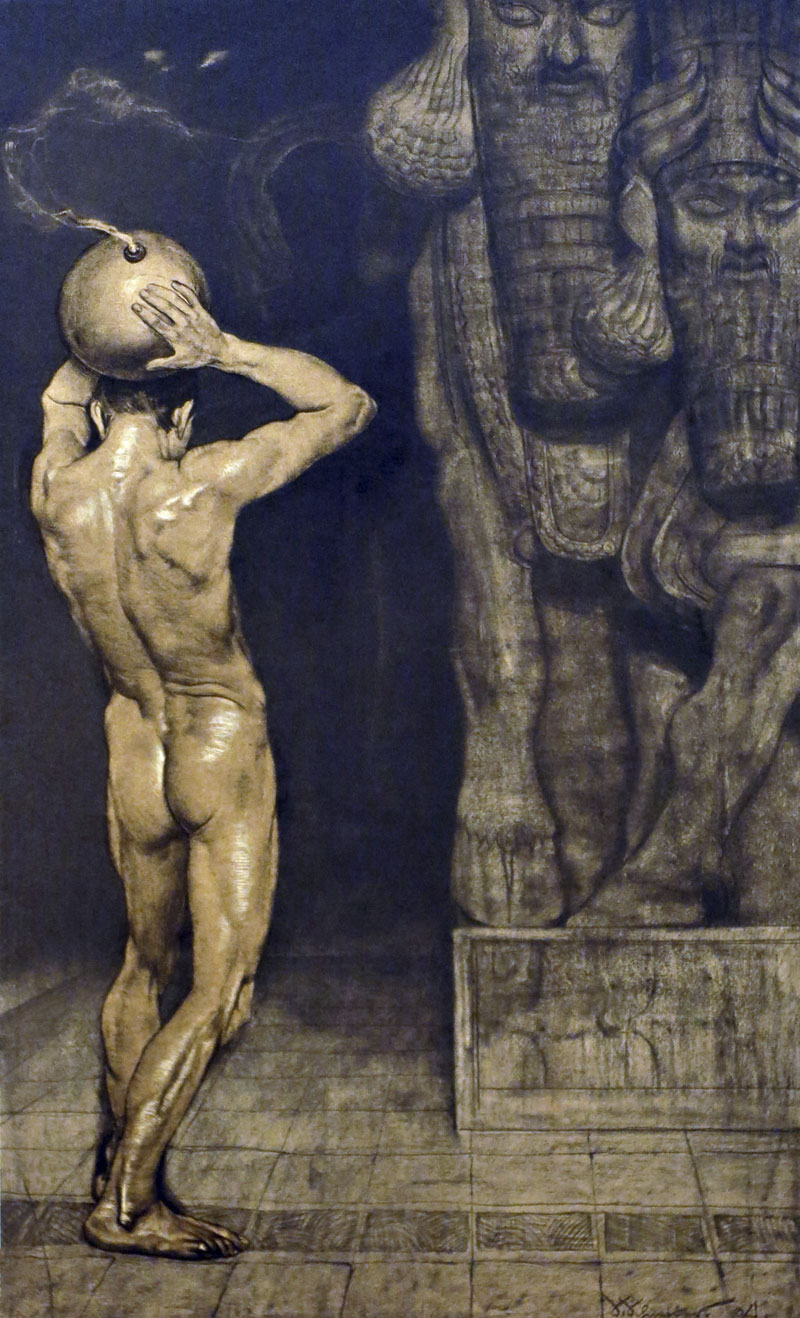

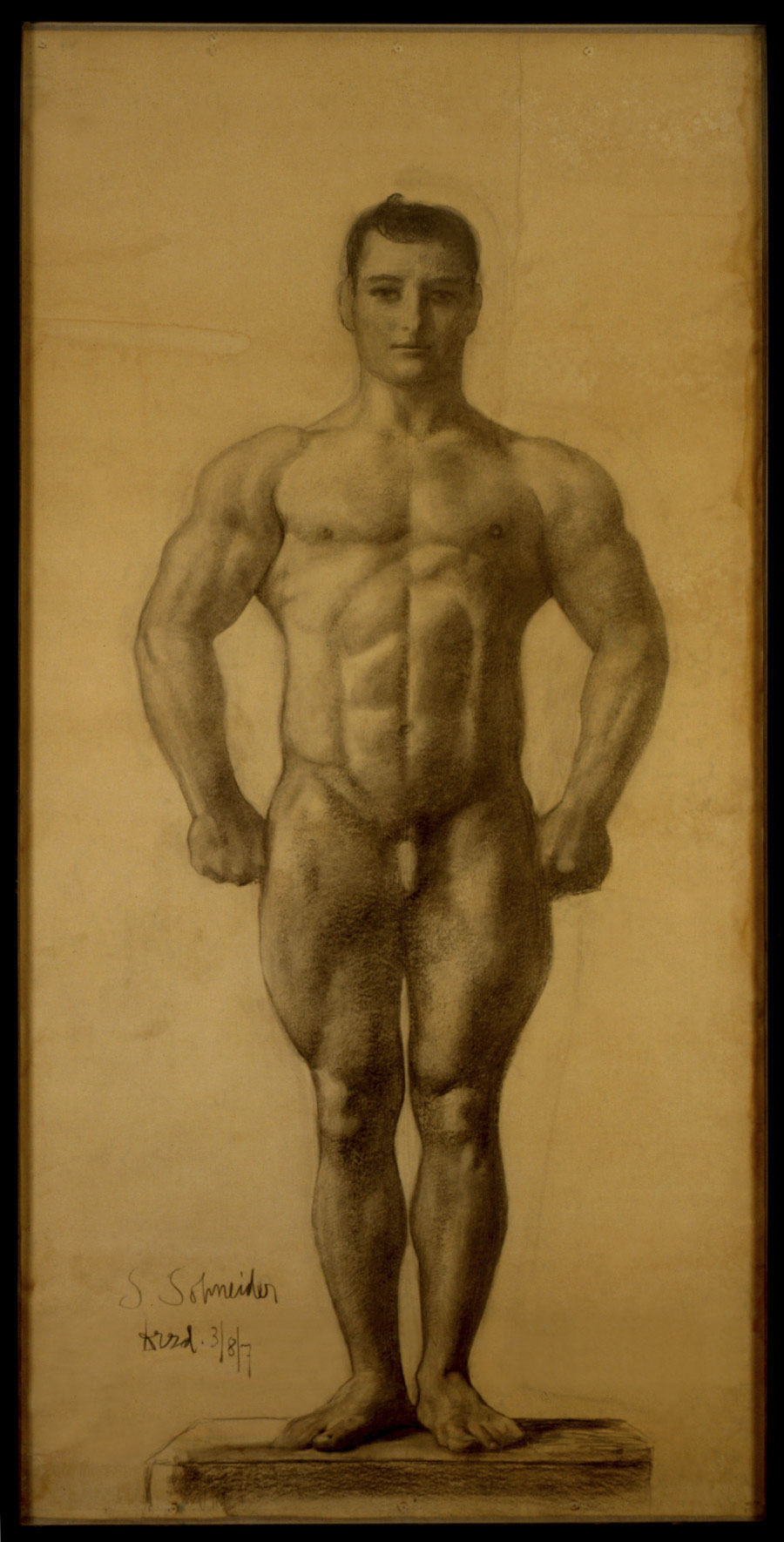


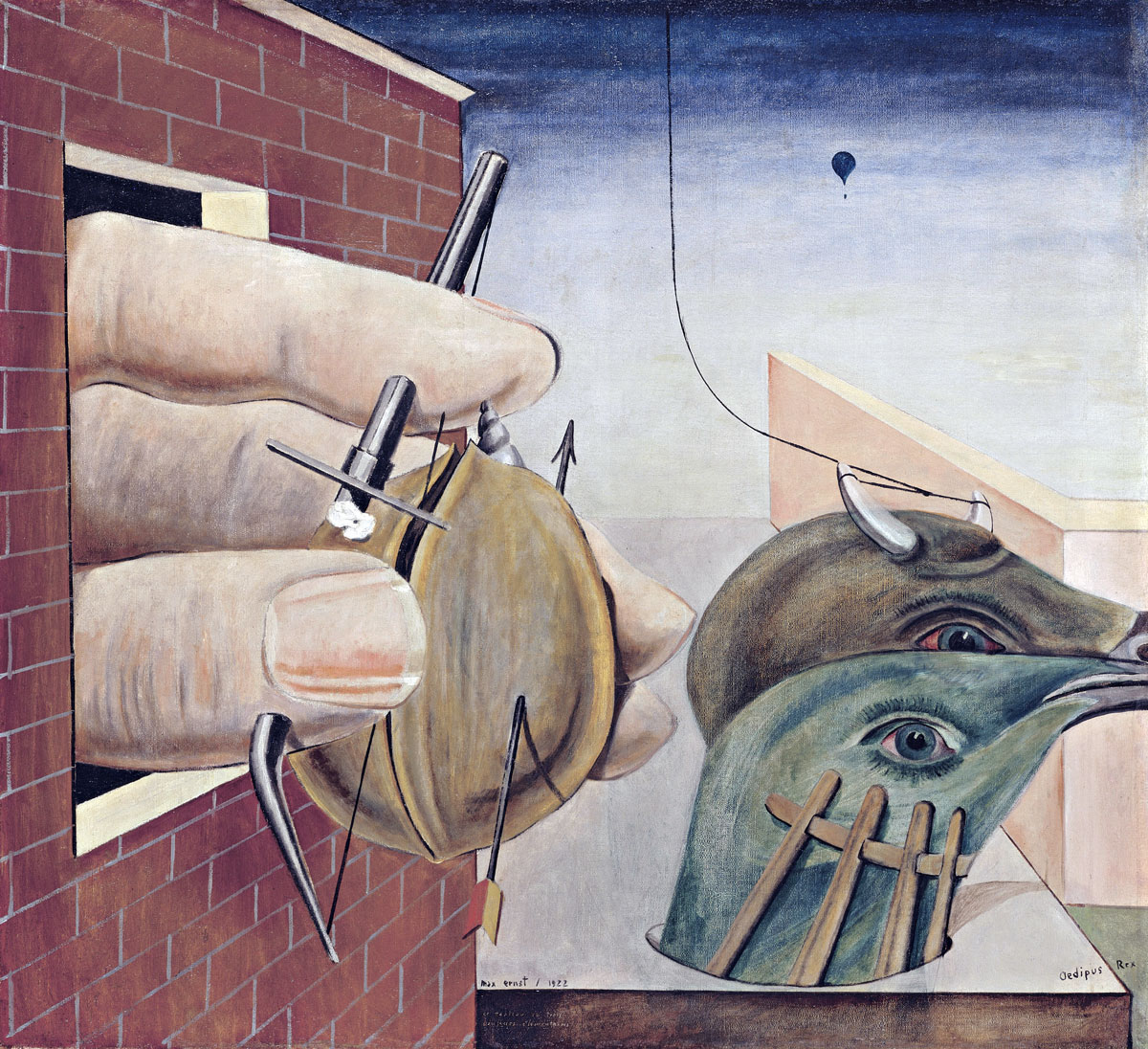


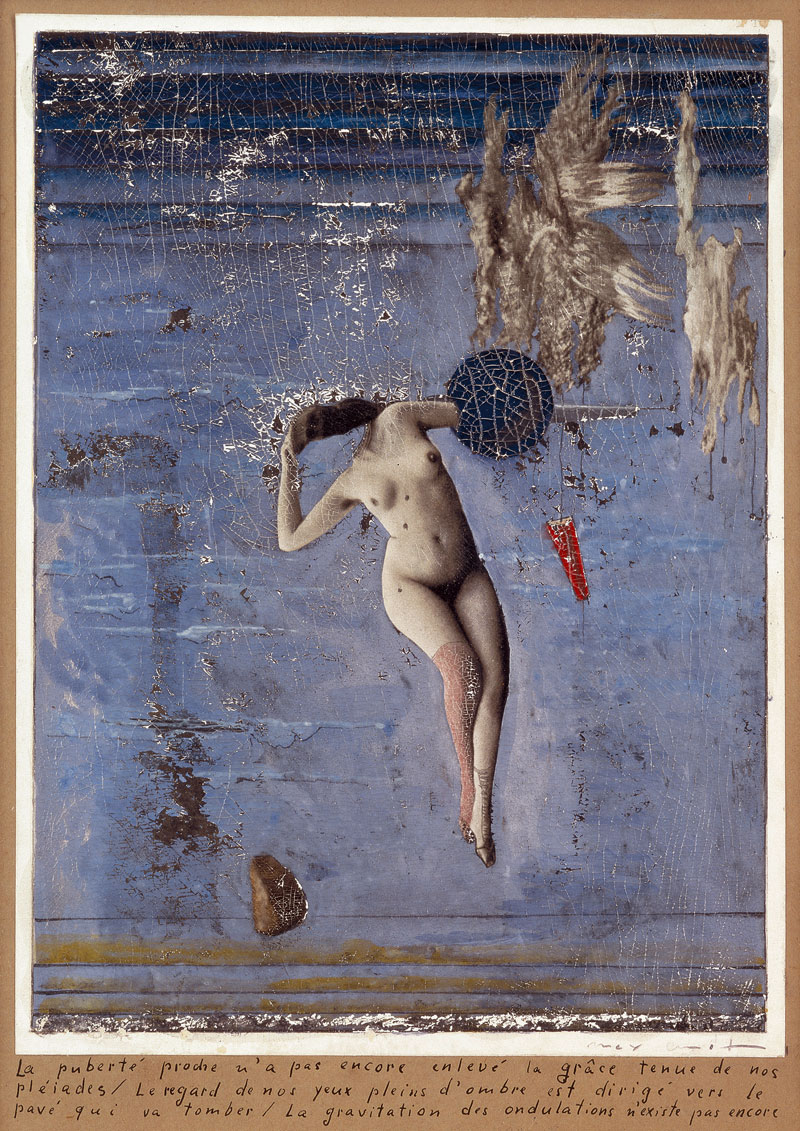


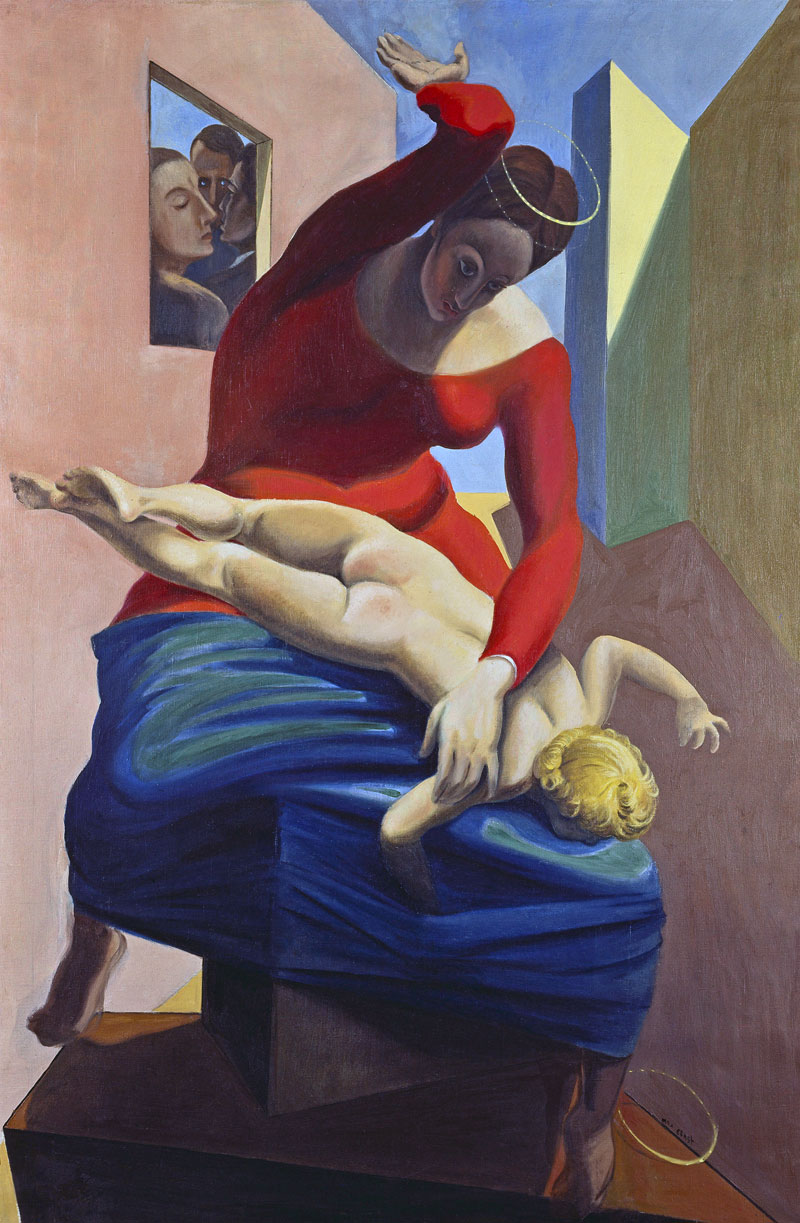


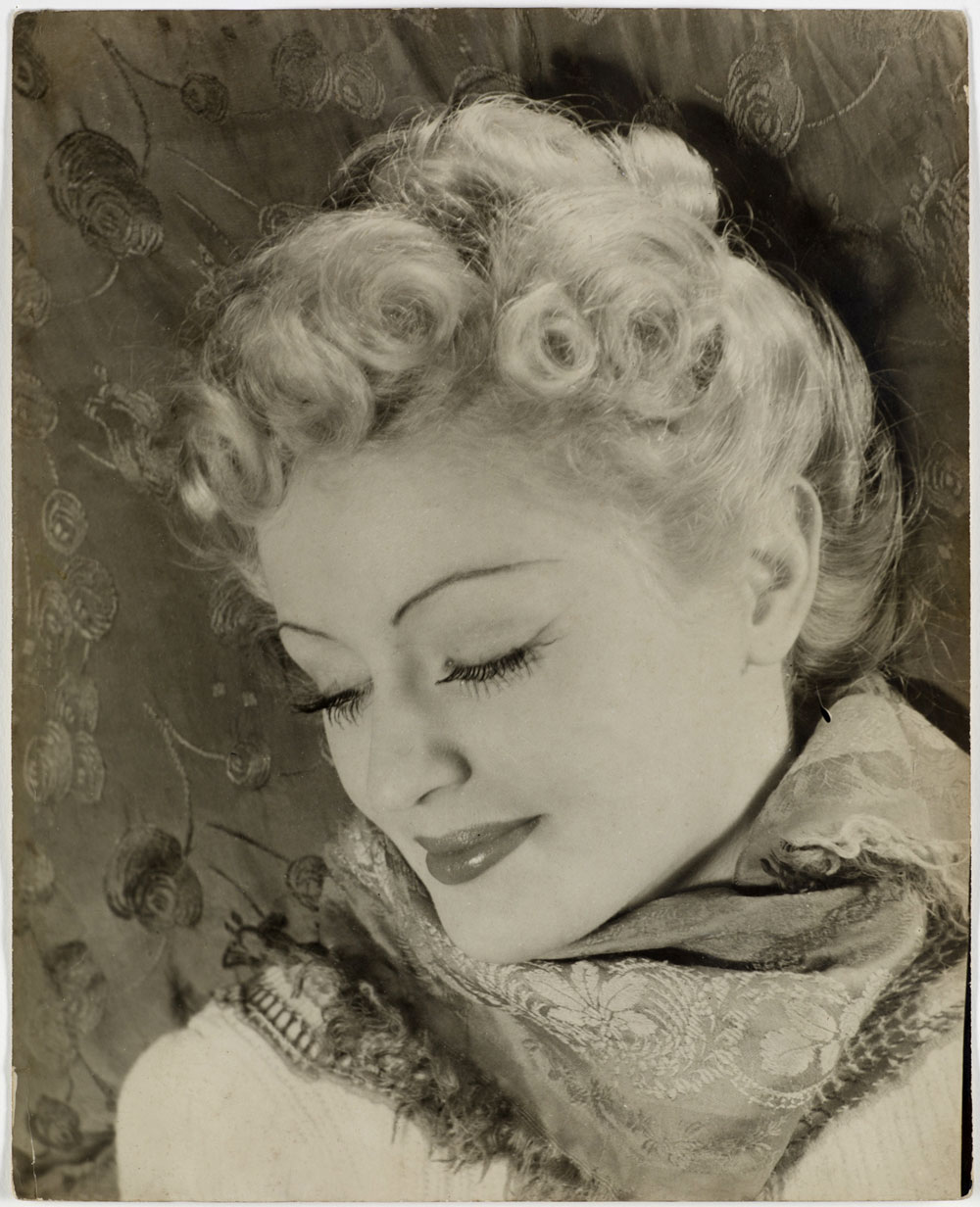


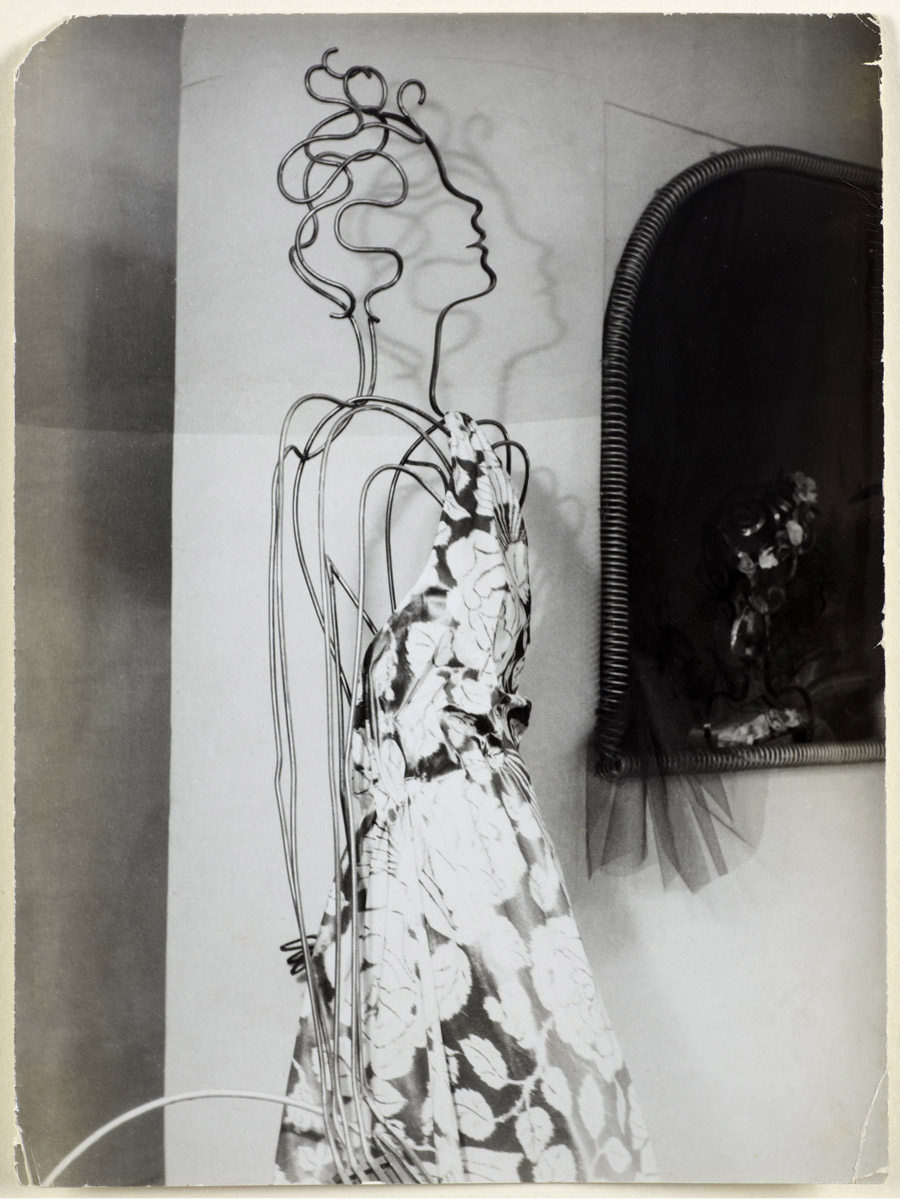

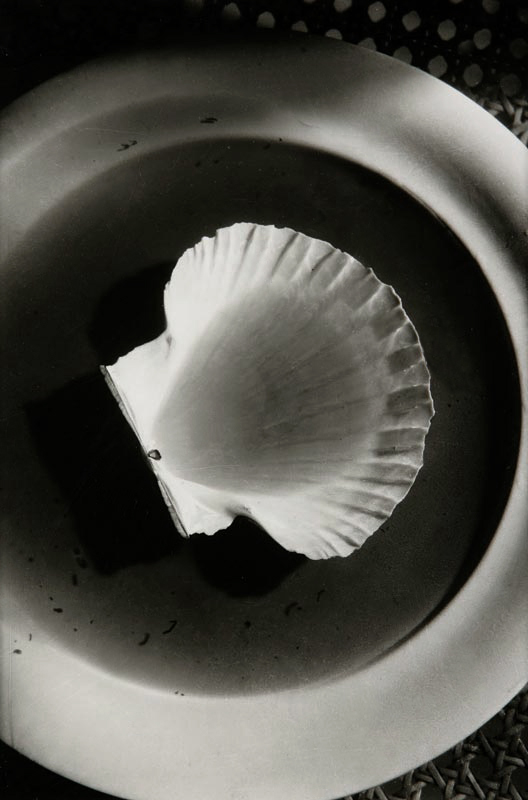
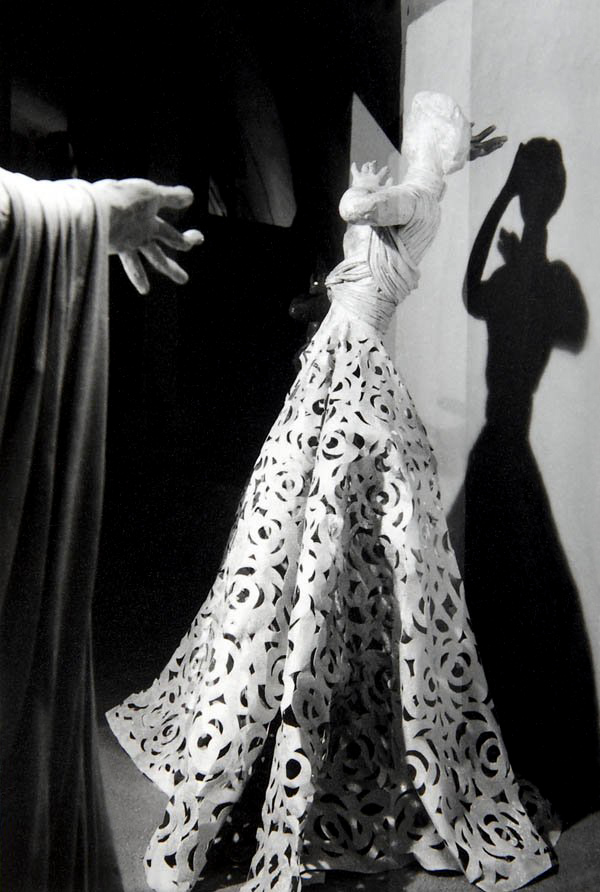
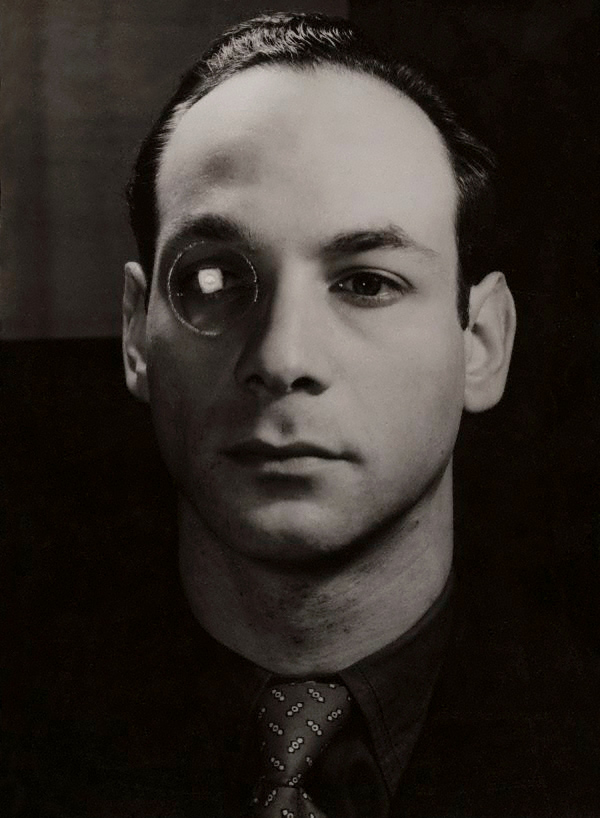



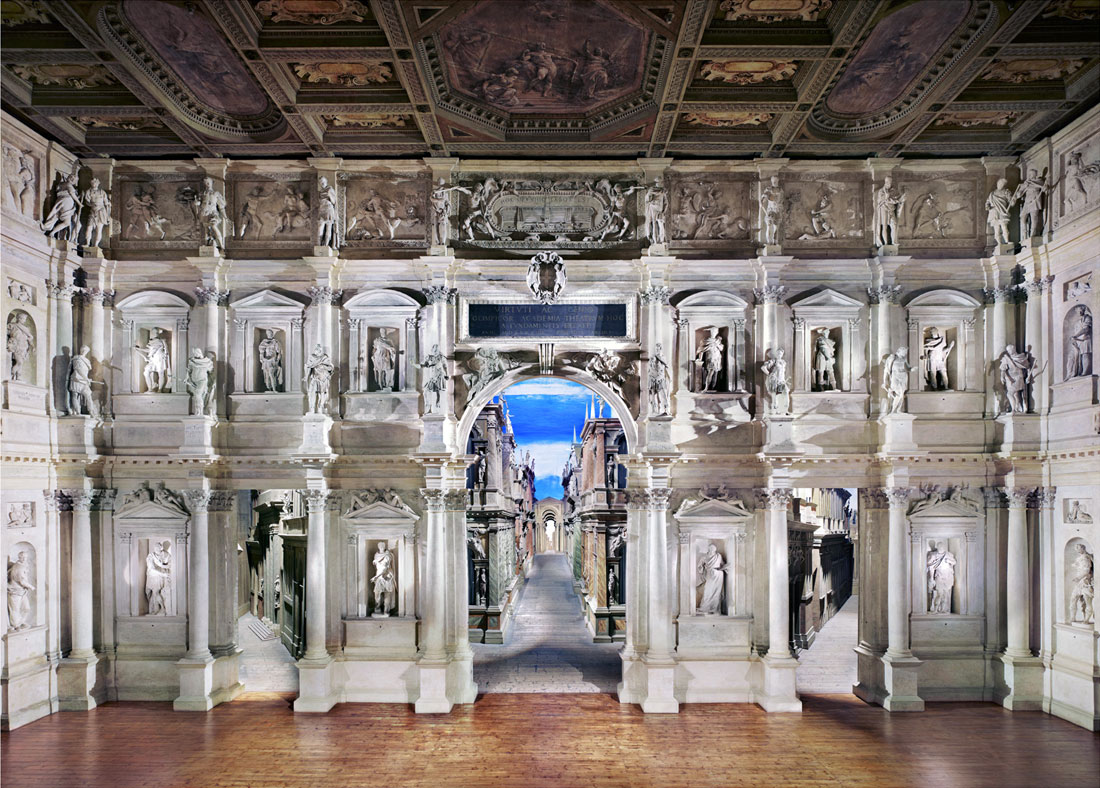


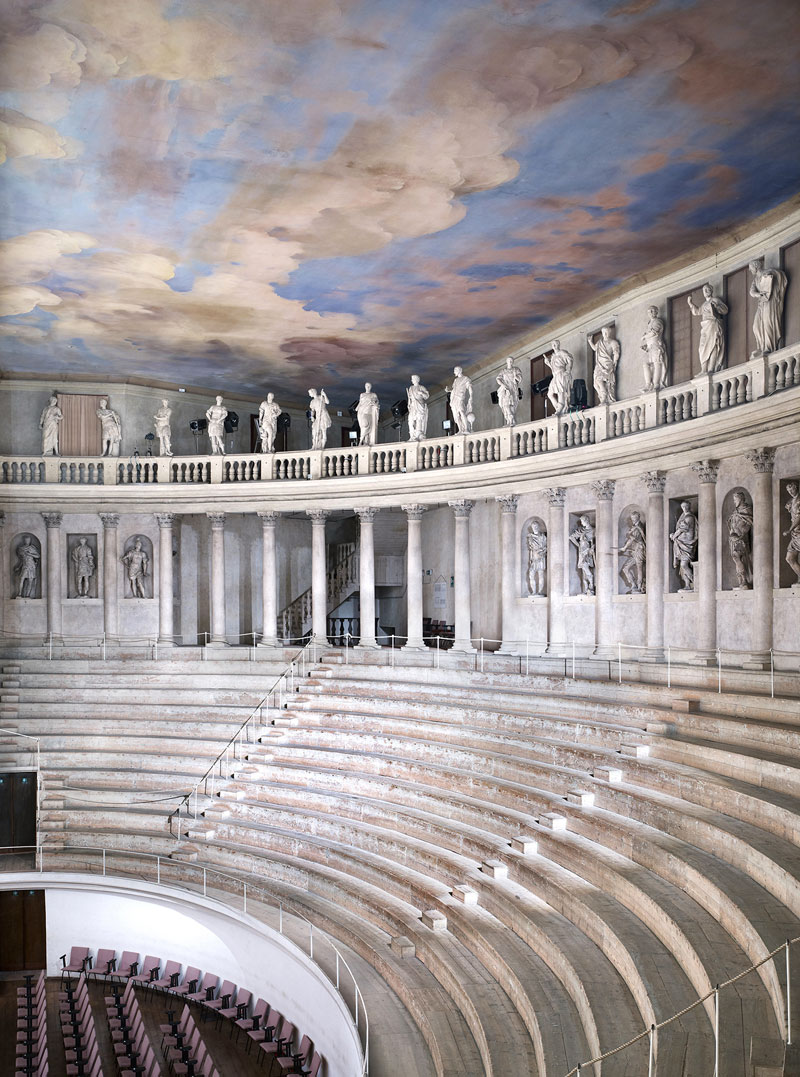


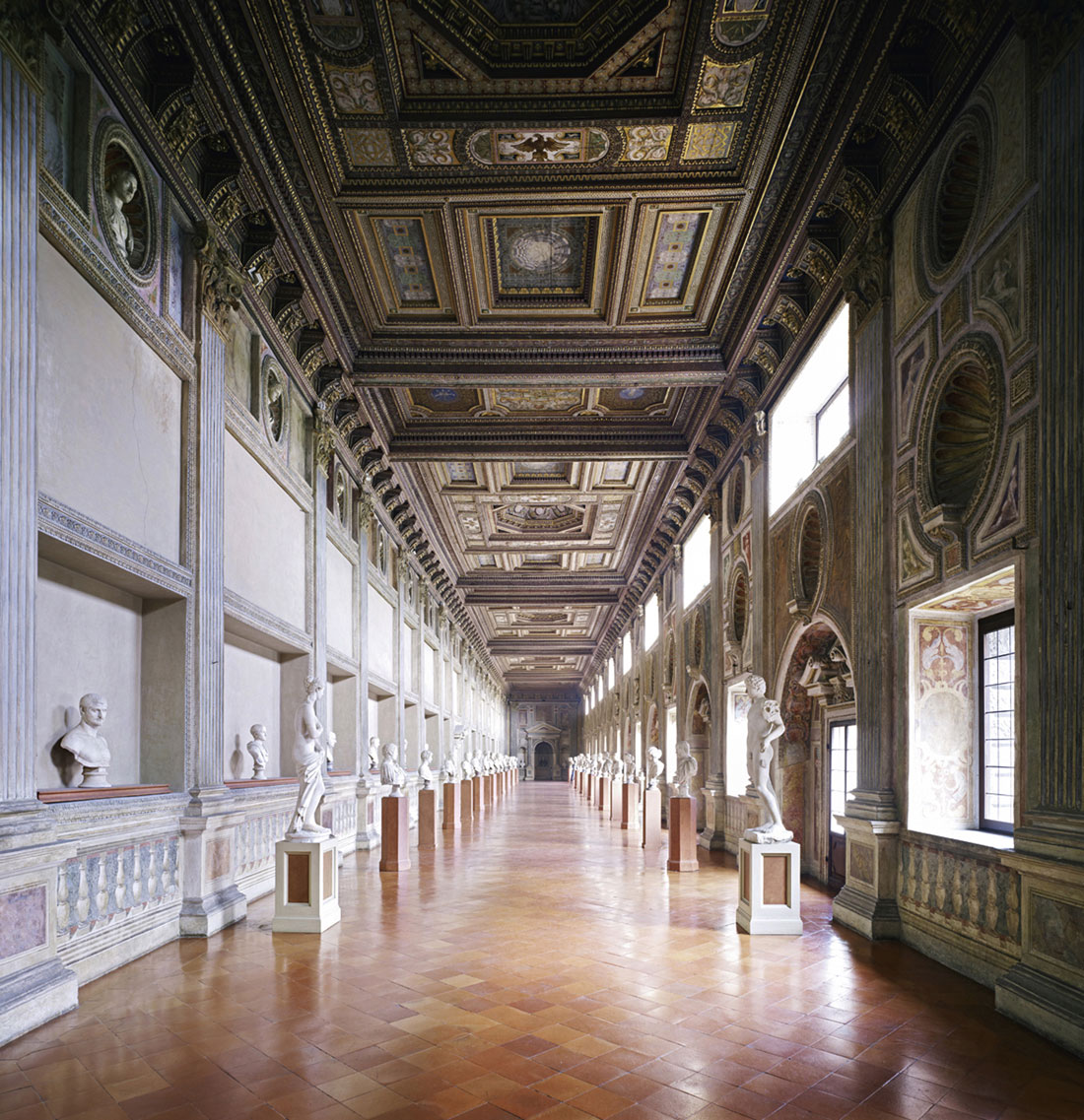


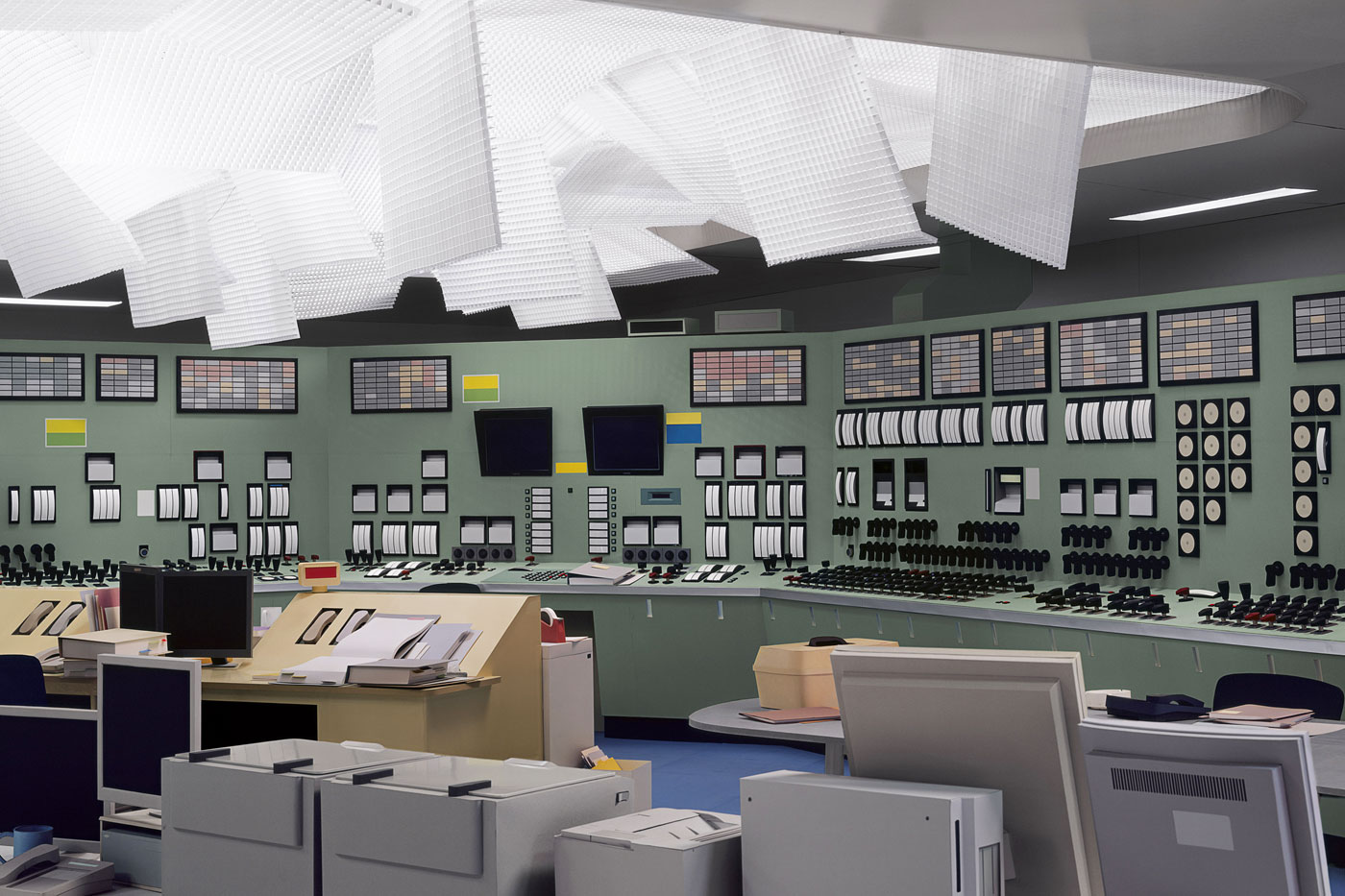





 Art Blart _ art and cultural memory archive
You must be logged in to post a comment.