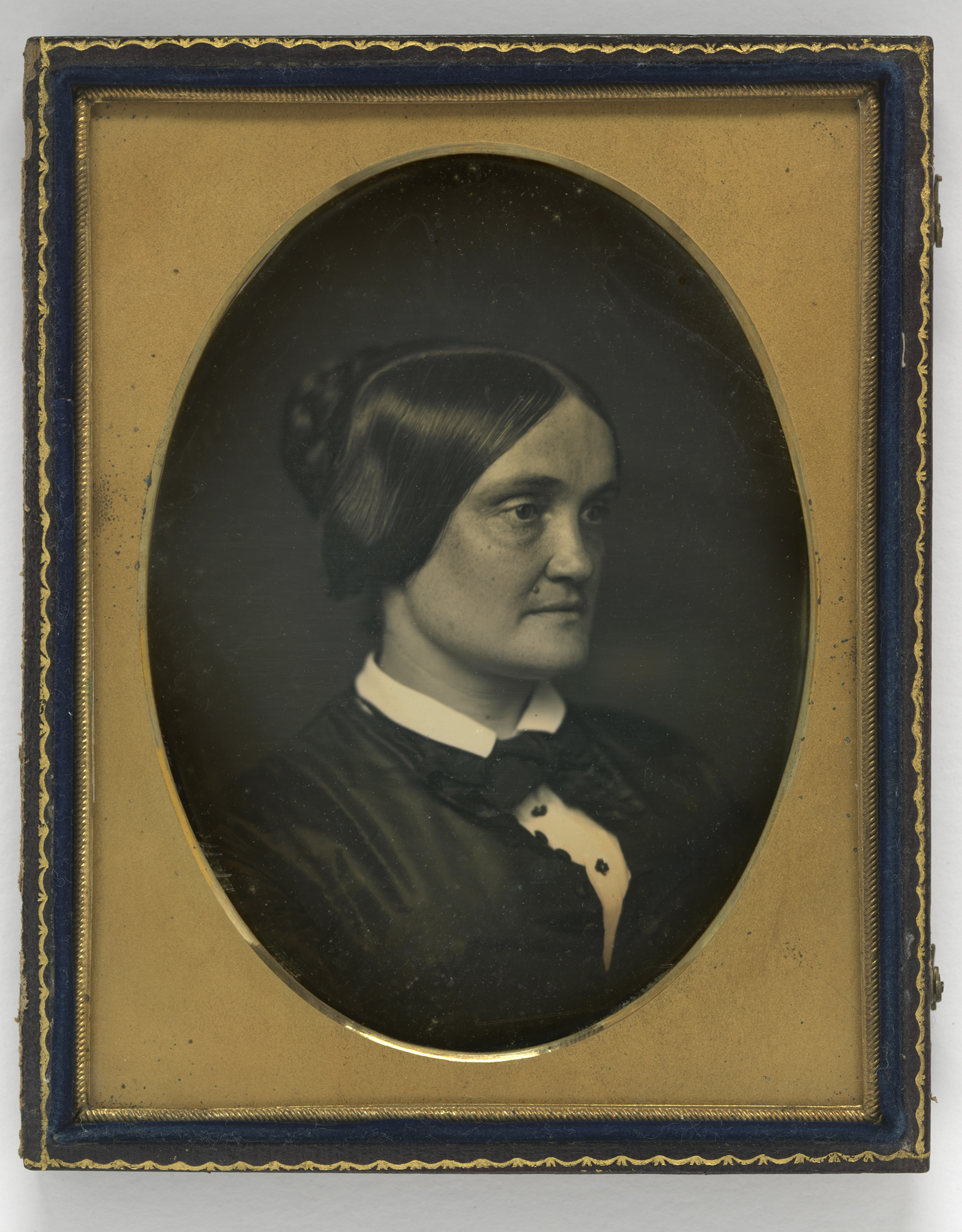
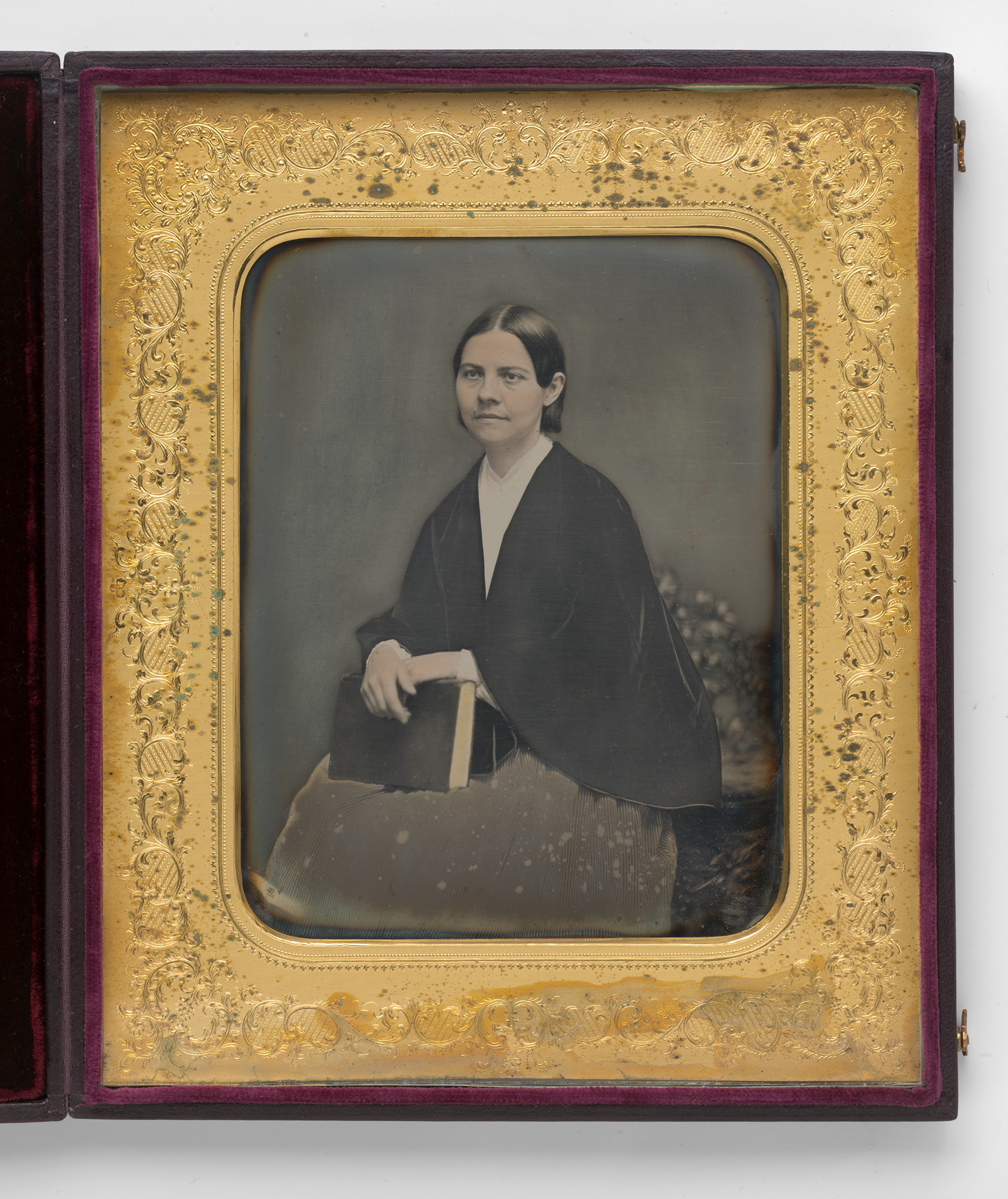
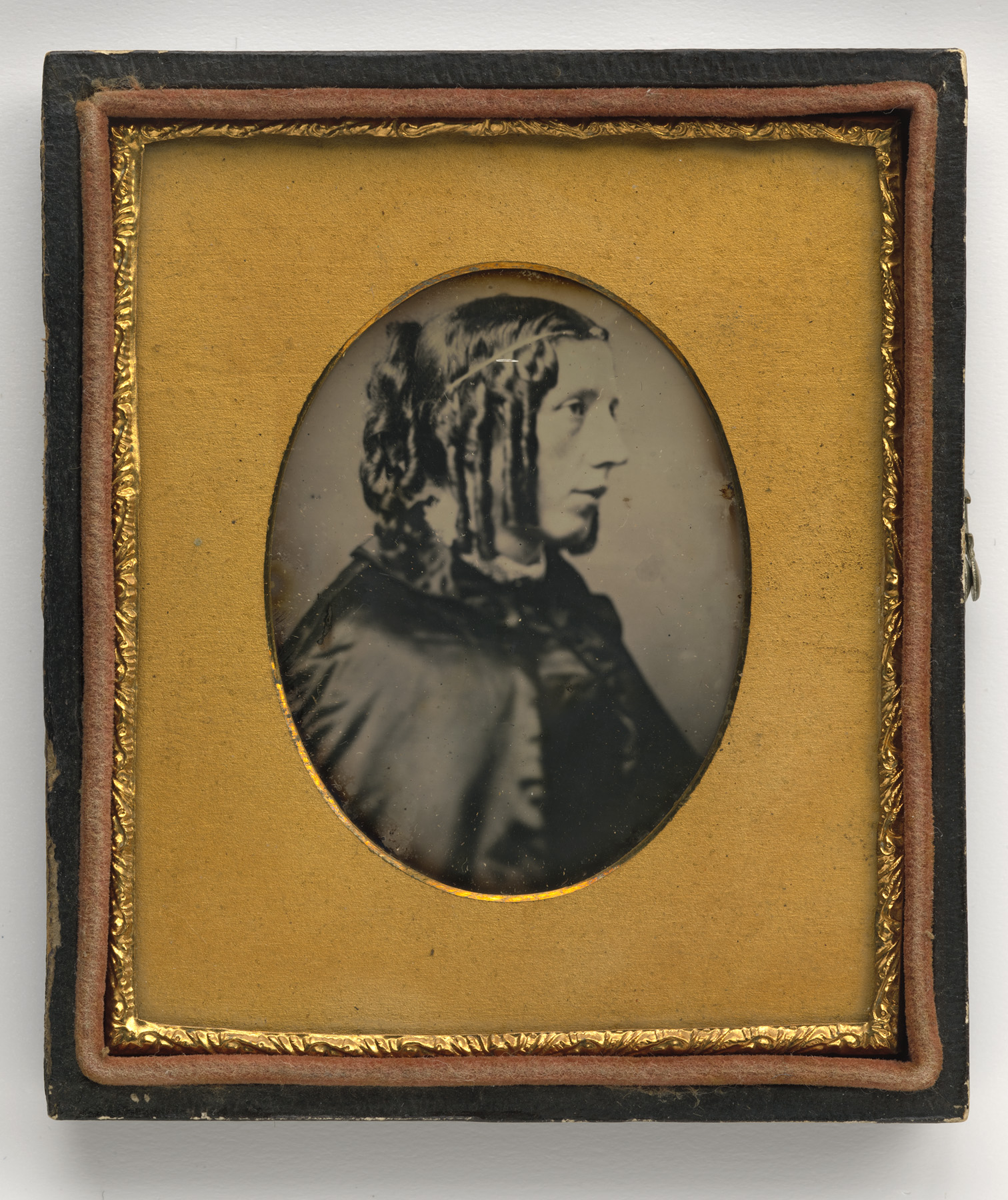
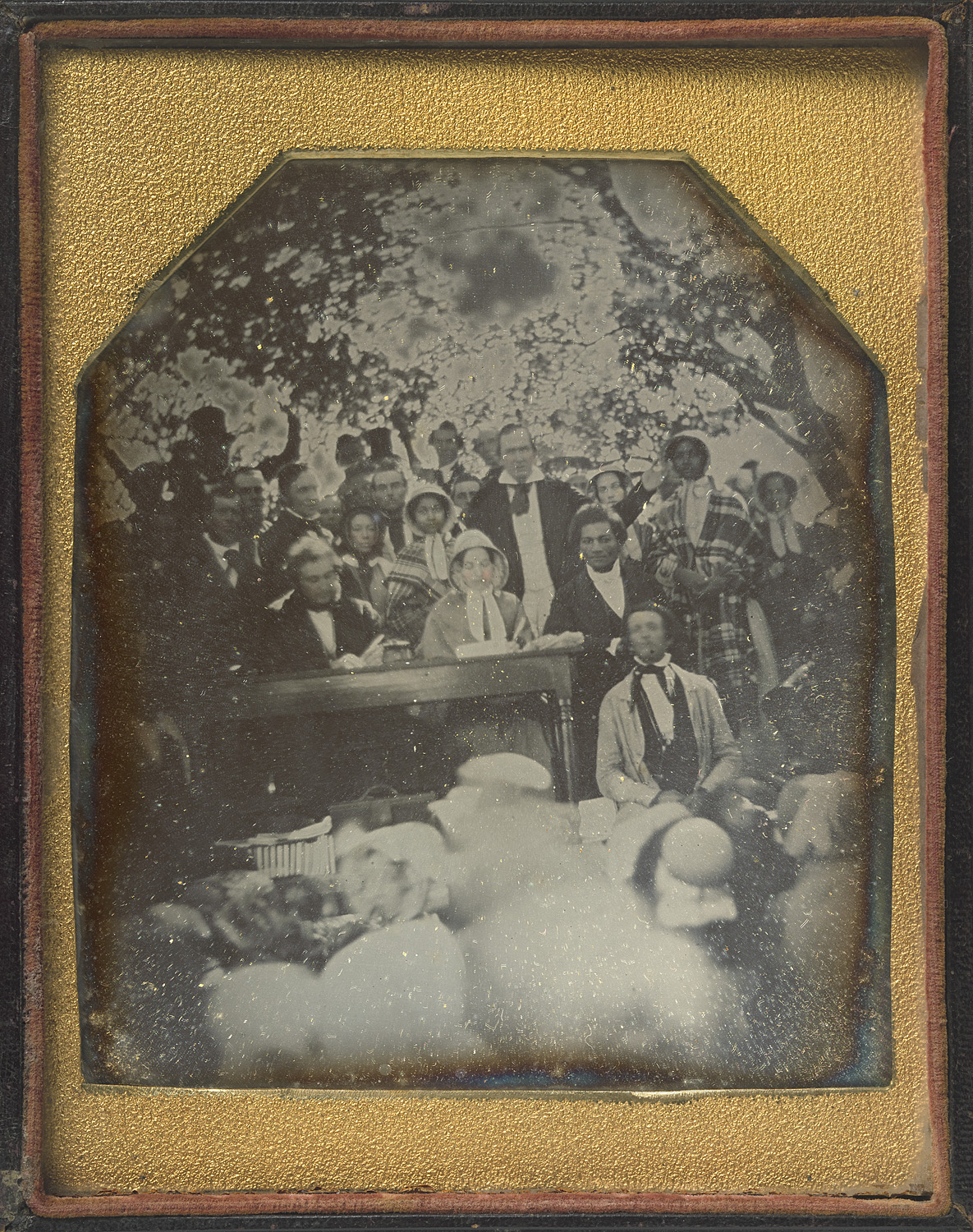
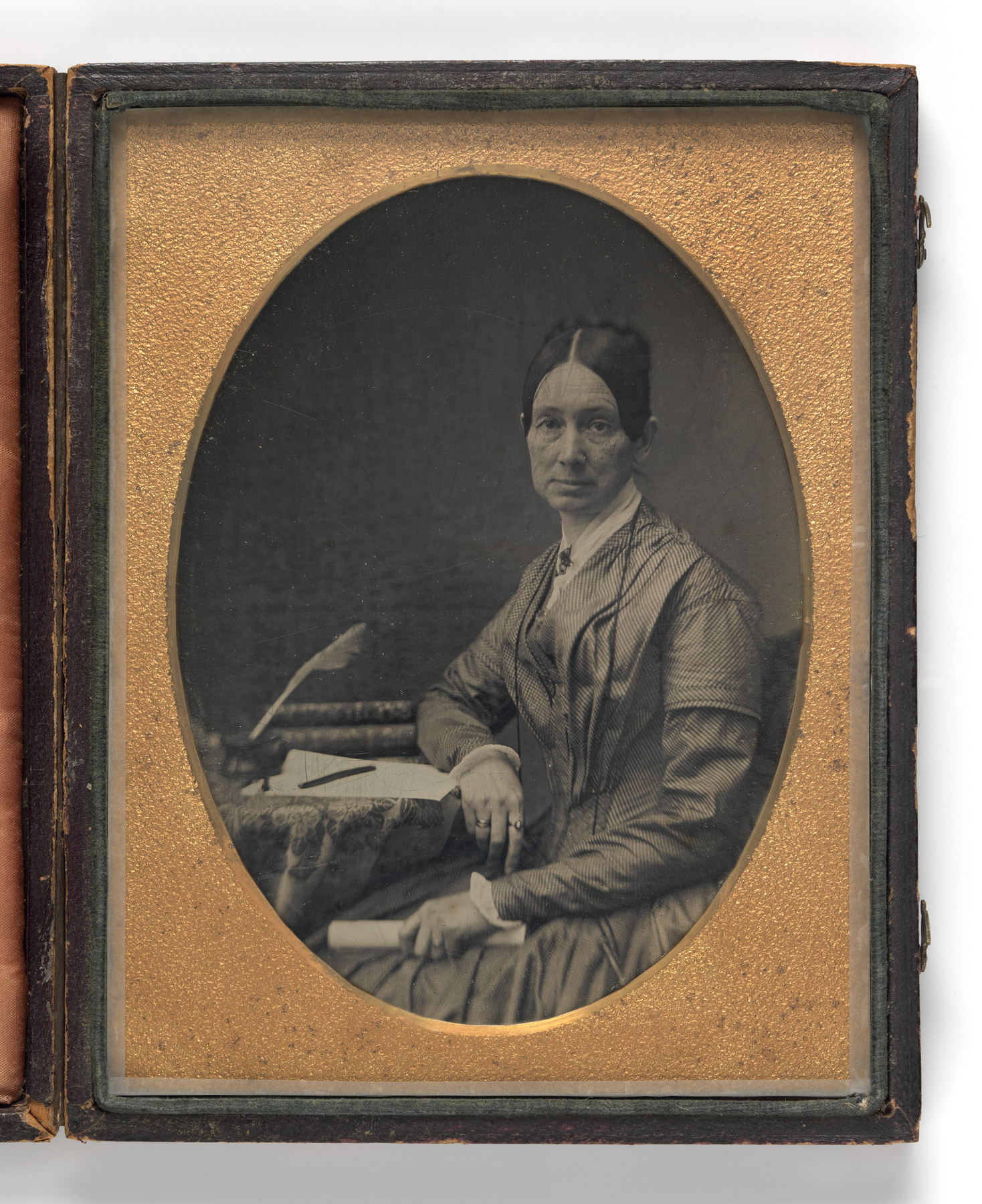
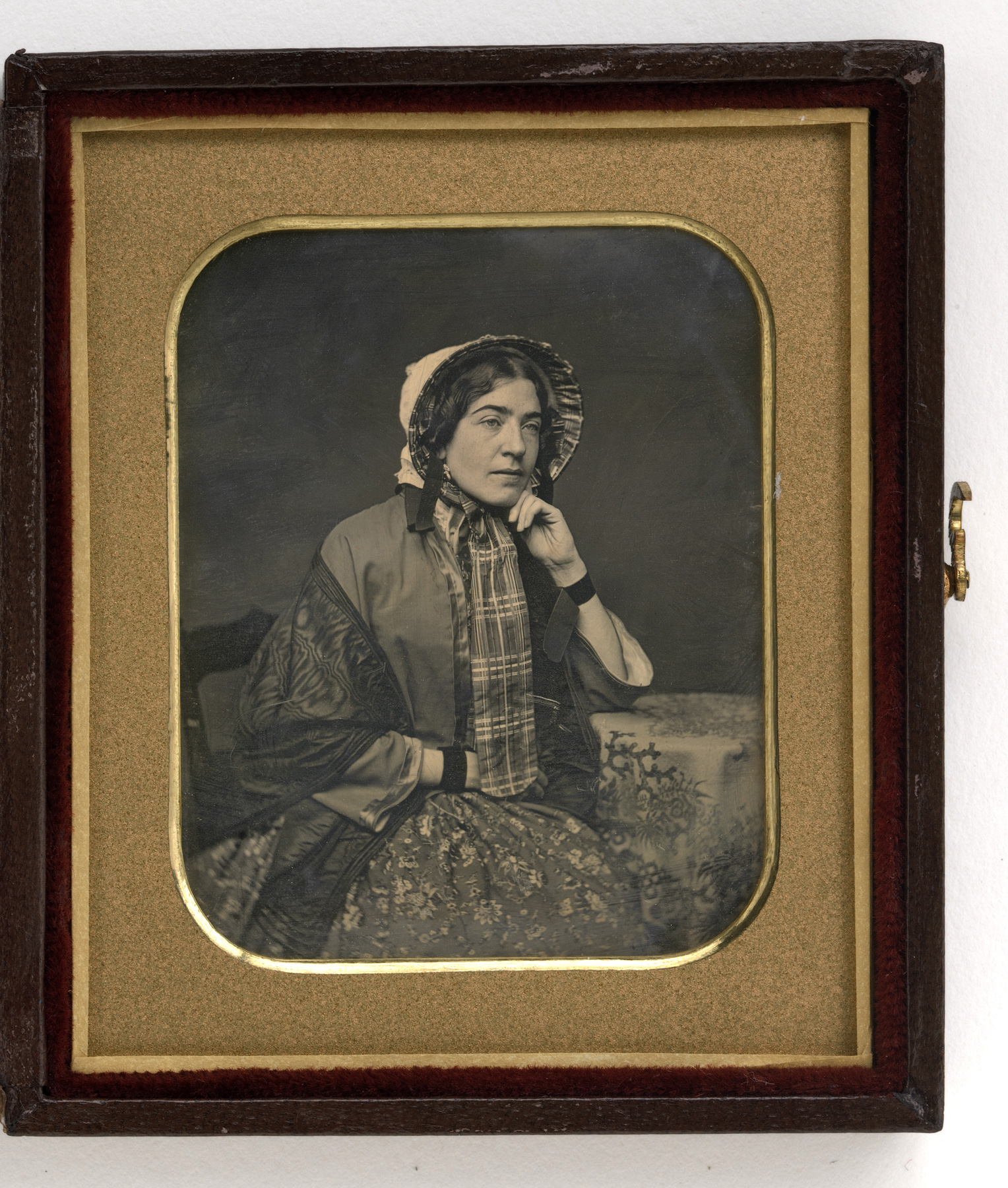
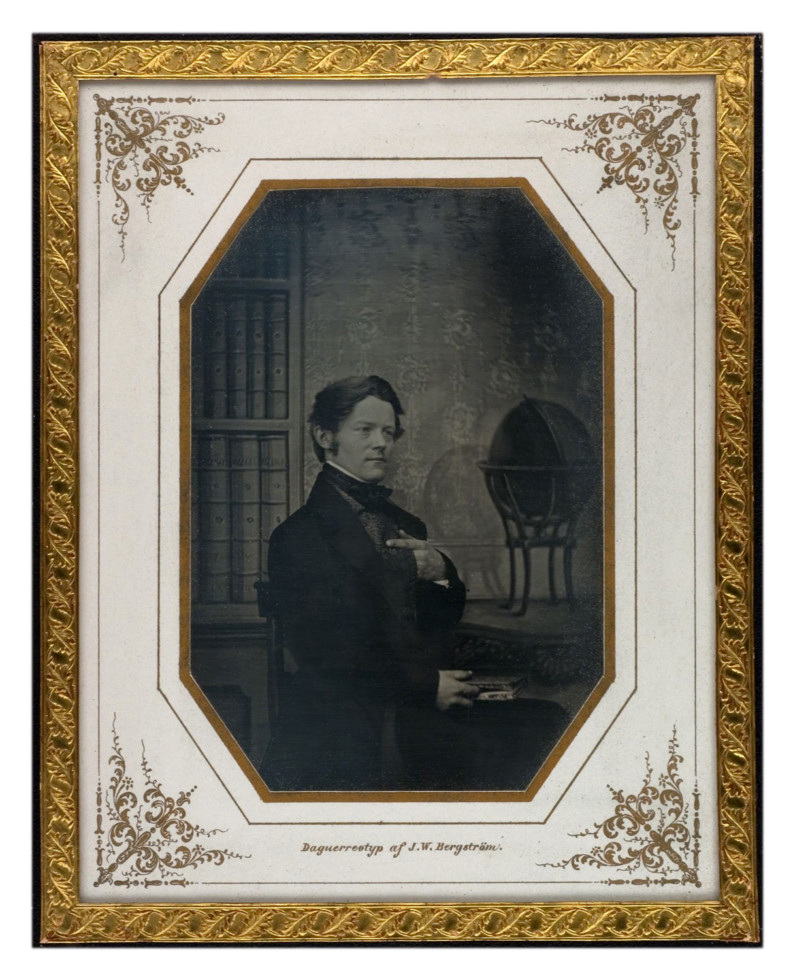
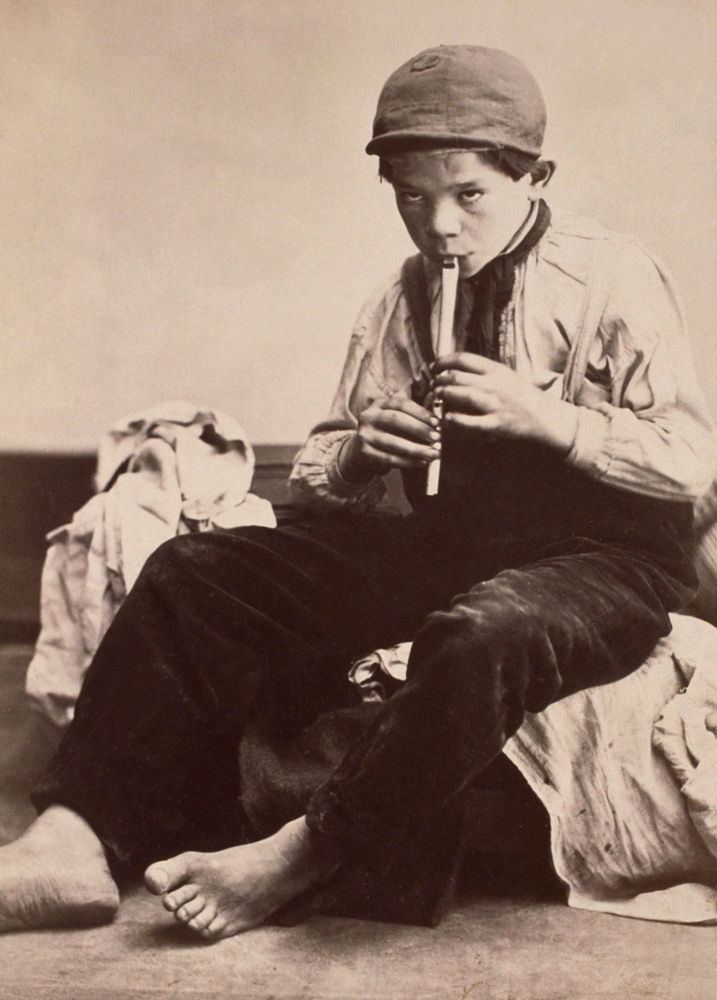
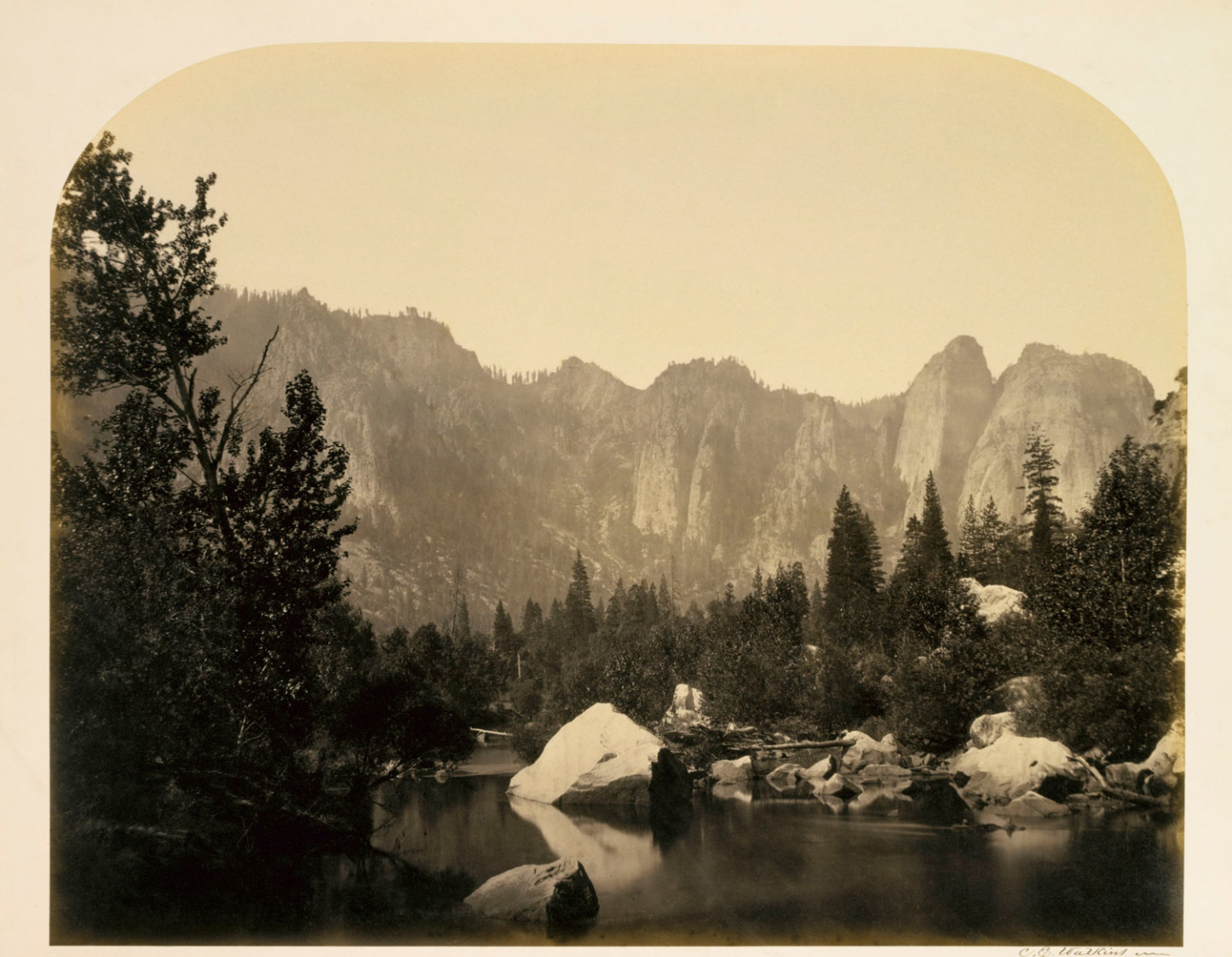
Exhibition: ‘The New Art: American Photography, 1839-1910’ at The Metropolitan Museum of Art, New York

Exhibition dates: 11th April – 20th July, 2025

Curators: Jeff L. Rosenheim, Joyce Frank Menschel Curator in Charge of the Department of Photographs. Virginia McBride, Research Associate in the Department of Photographs, provided assistance.


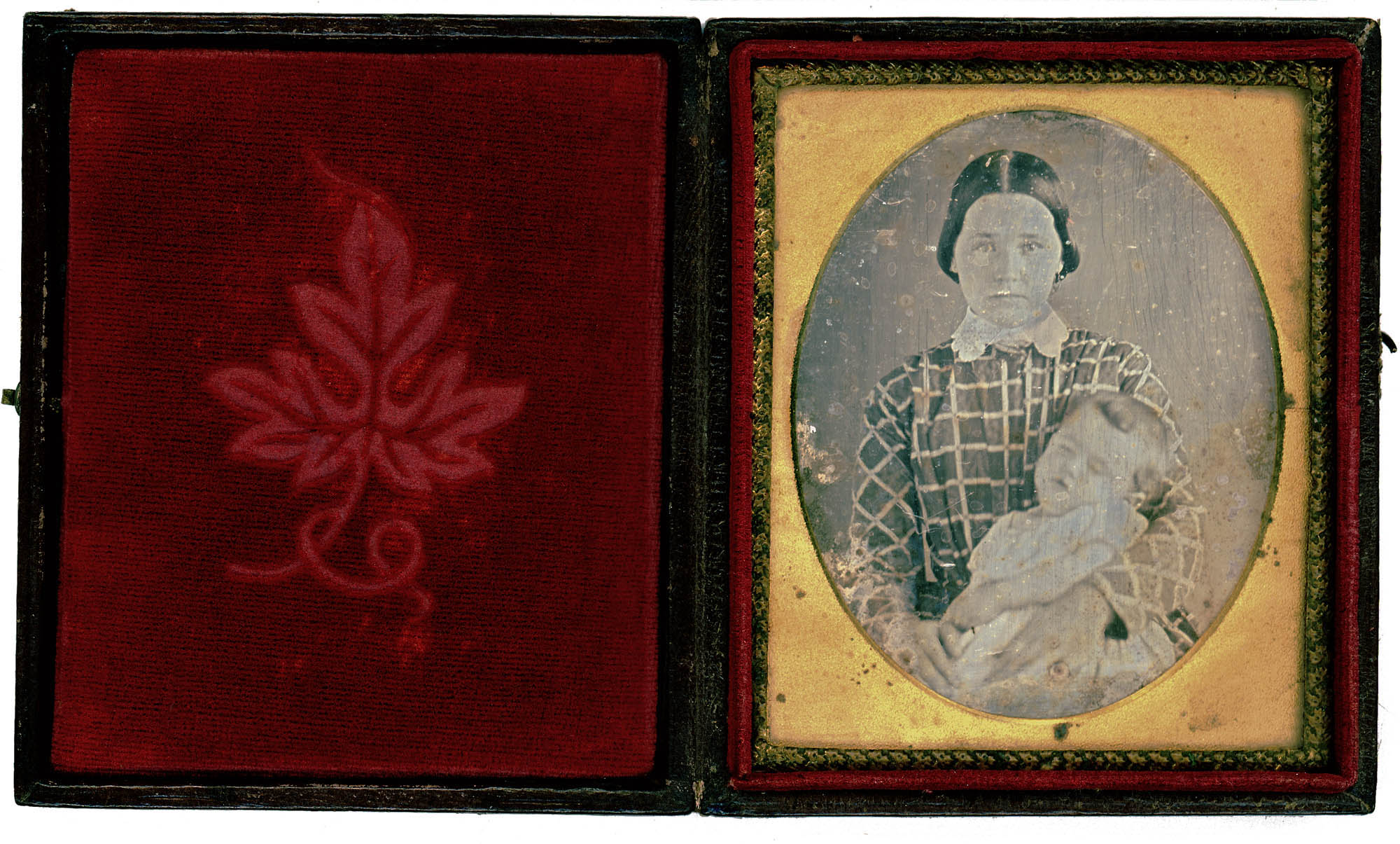
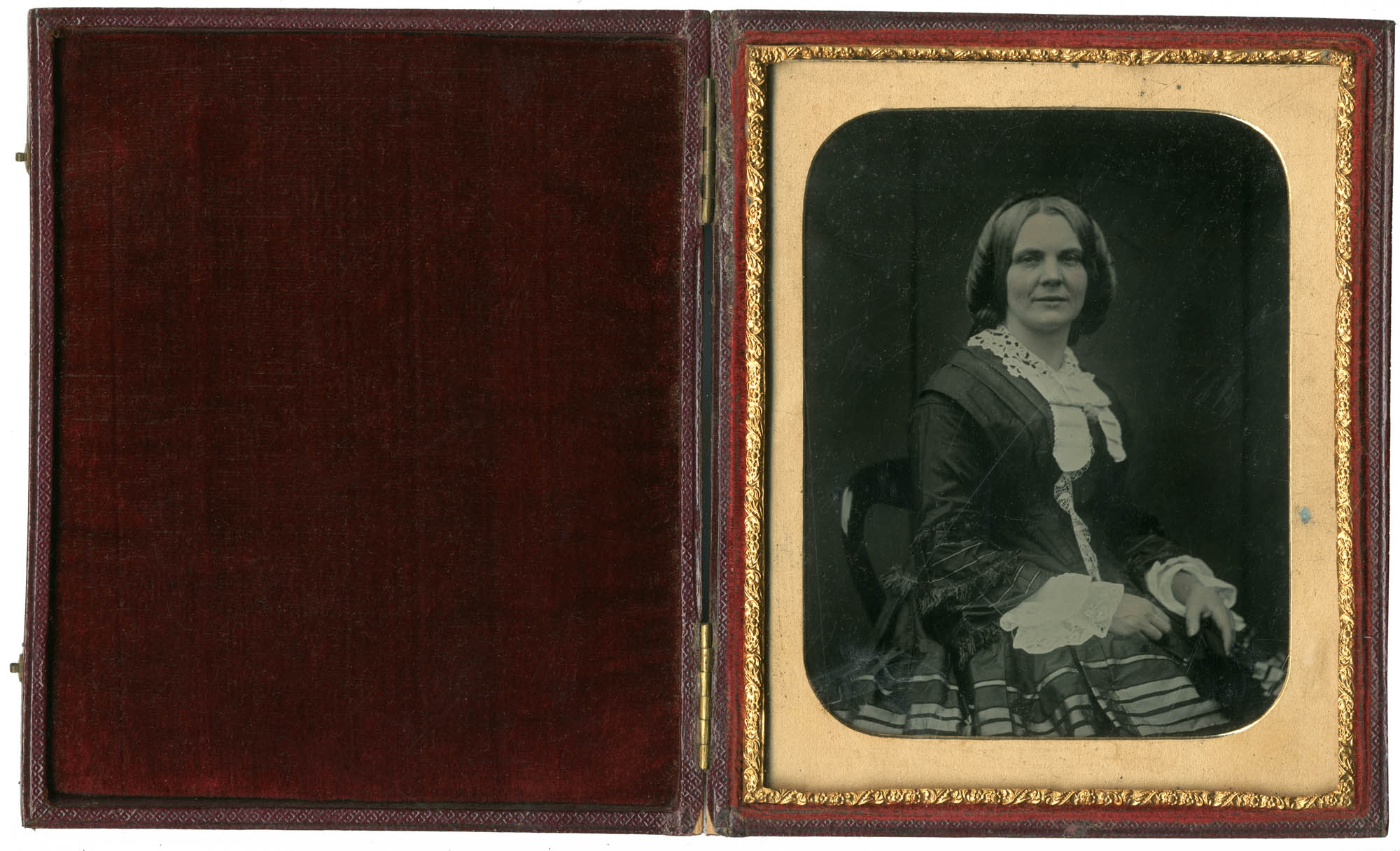
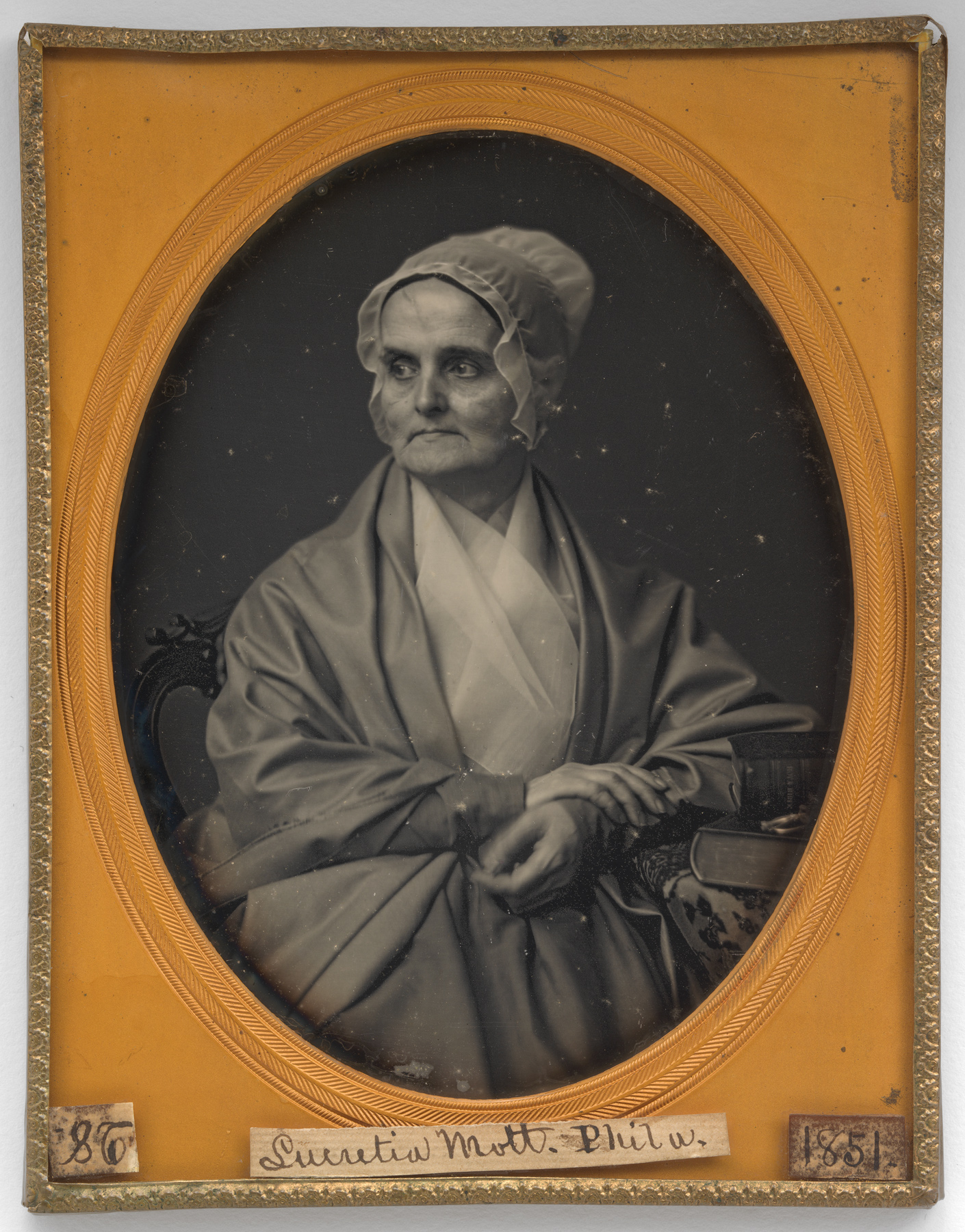
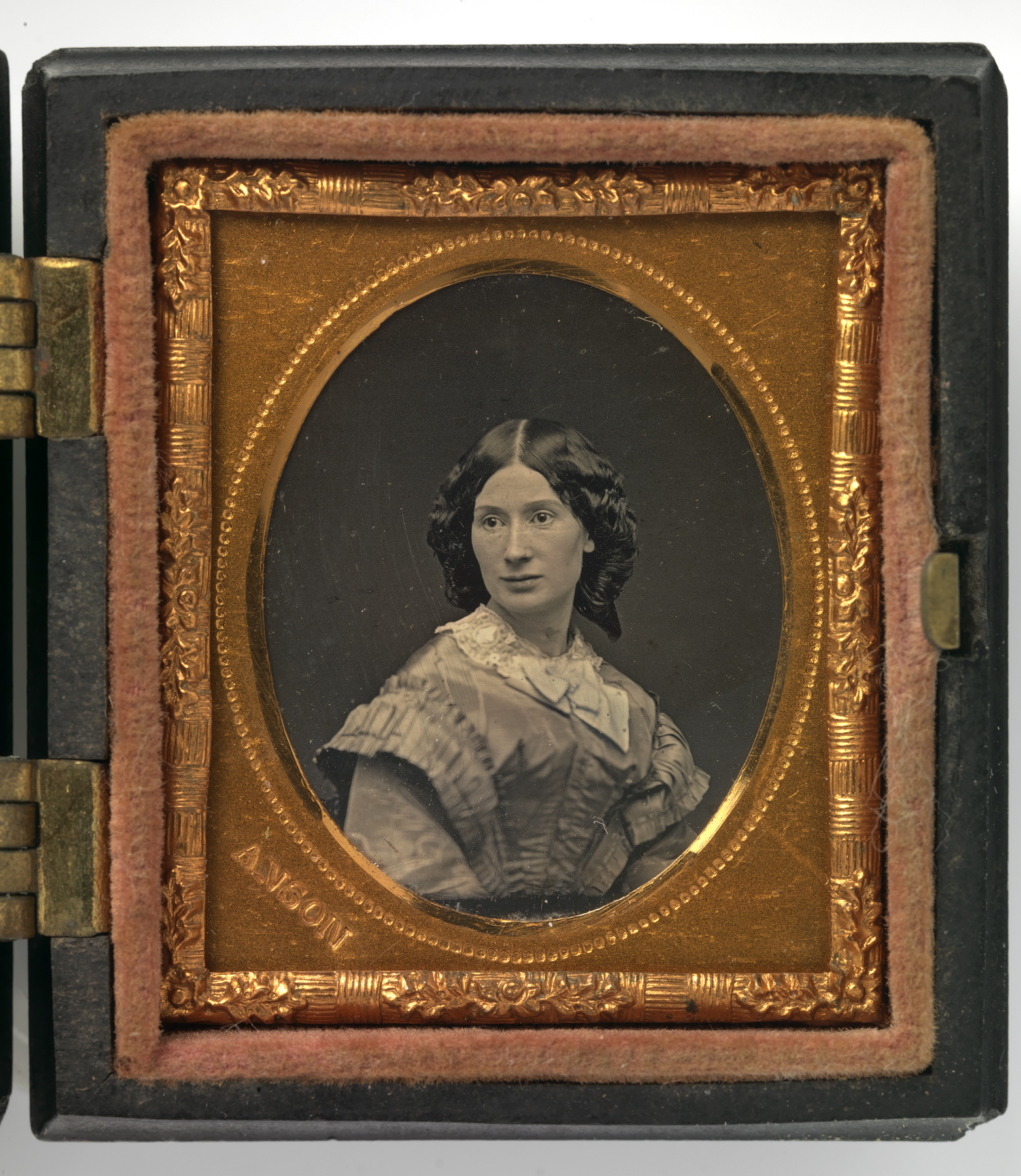
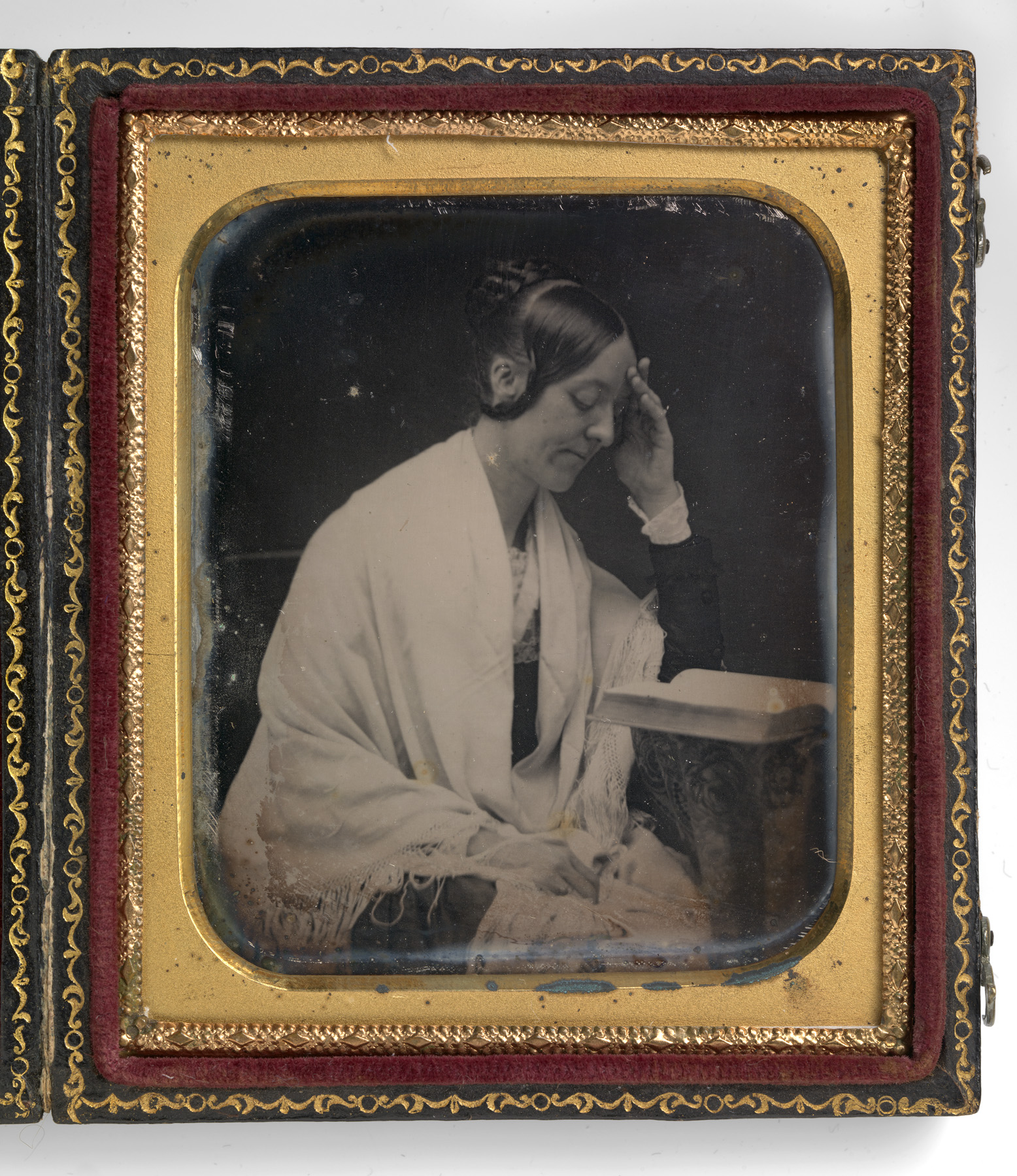
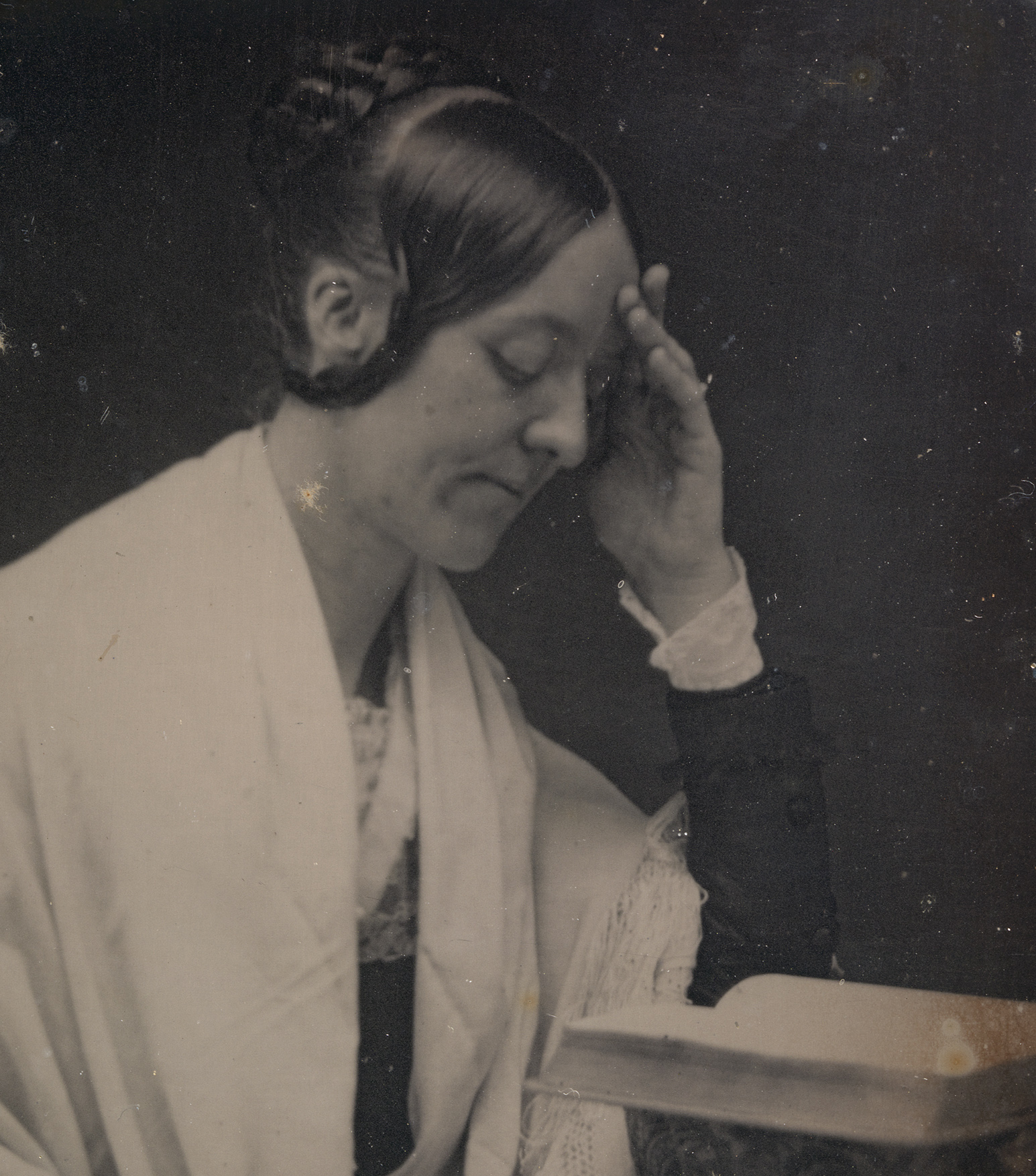
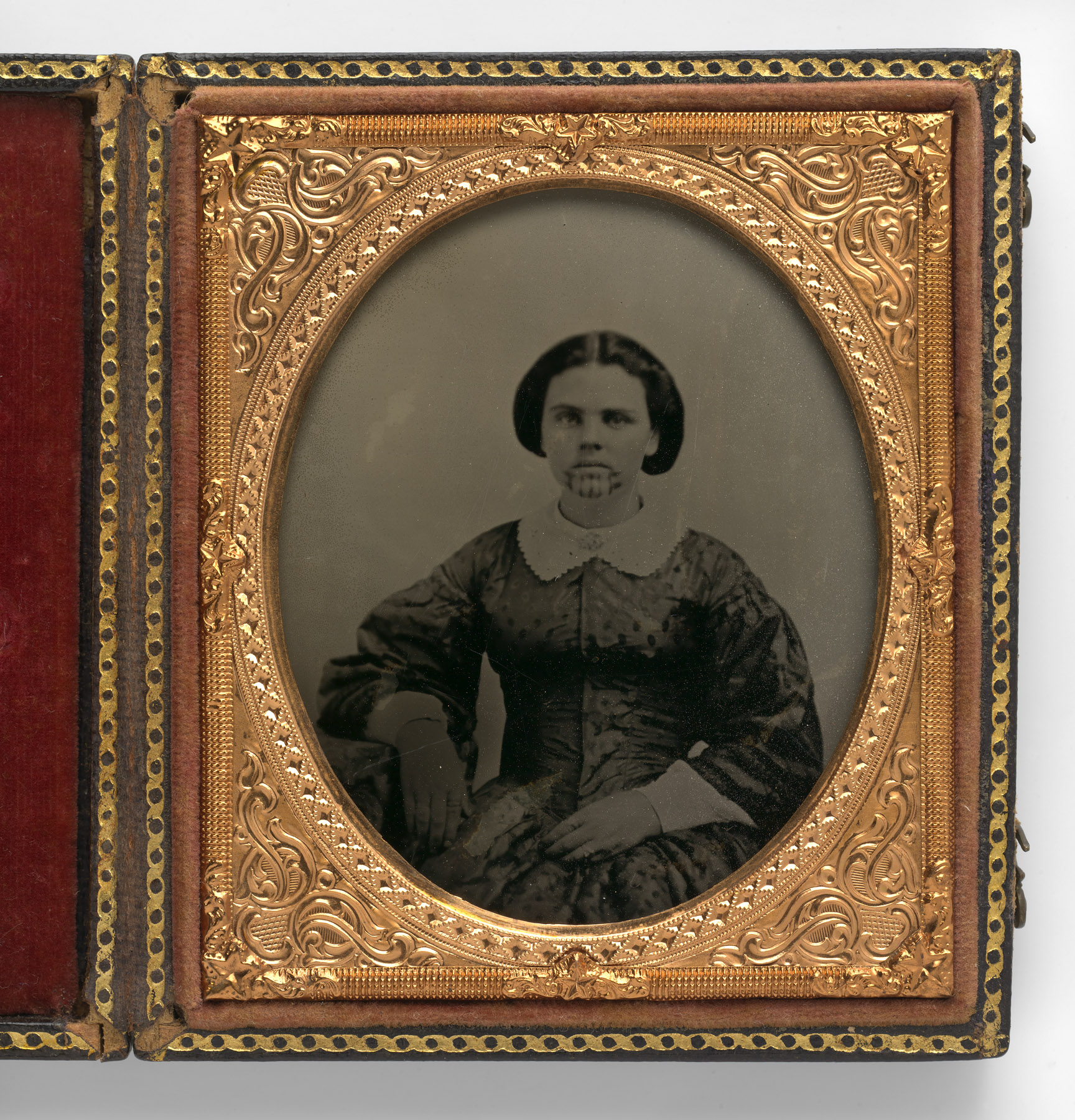
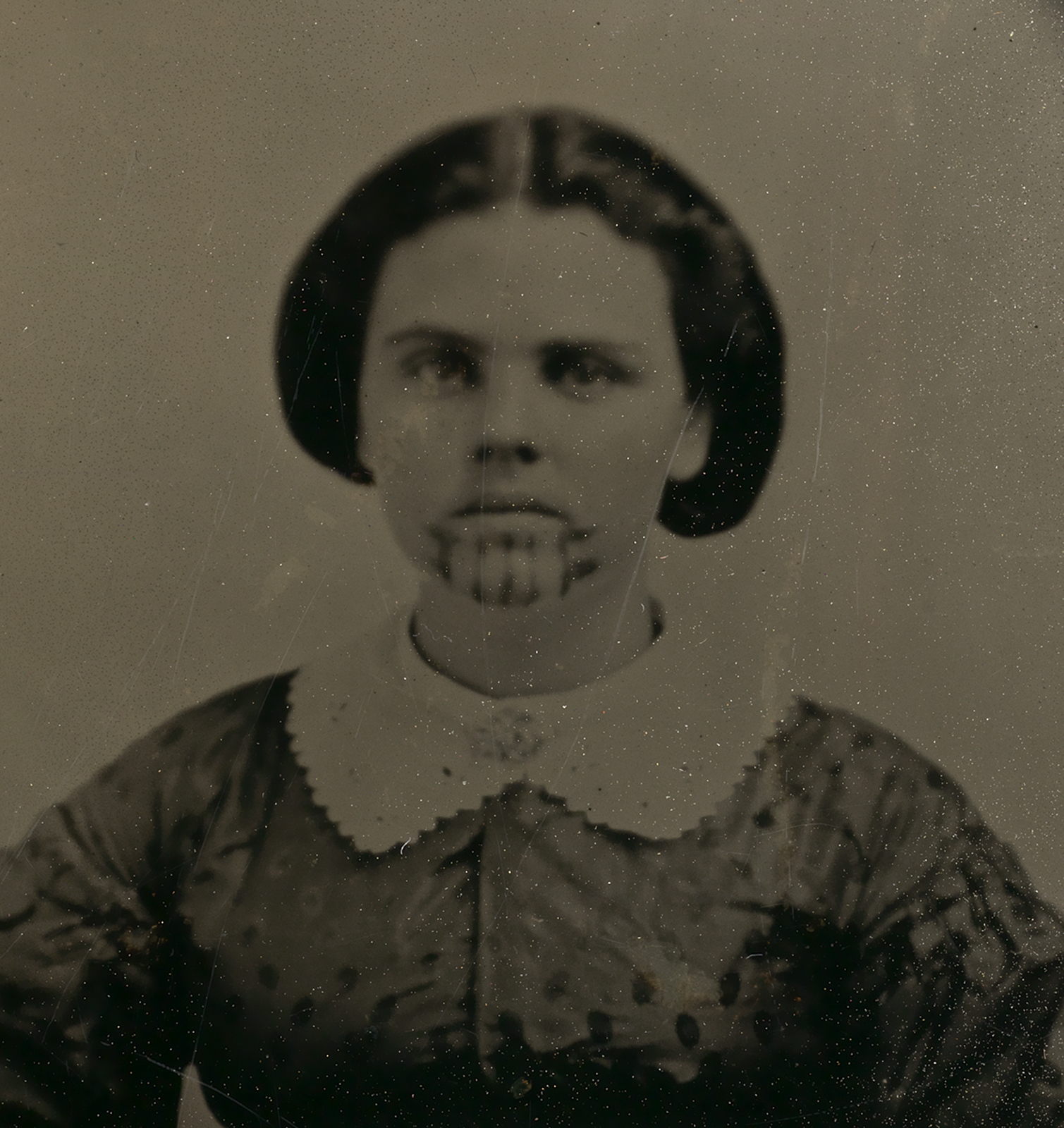
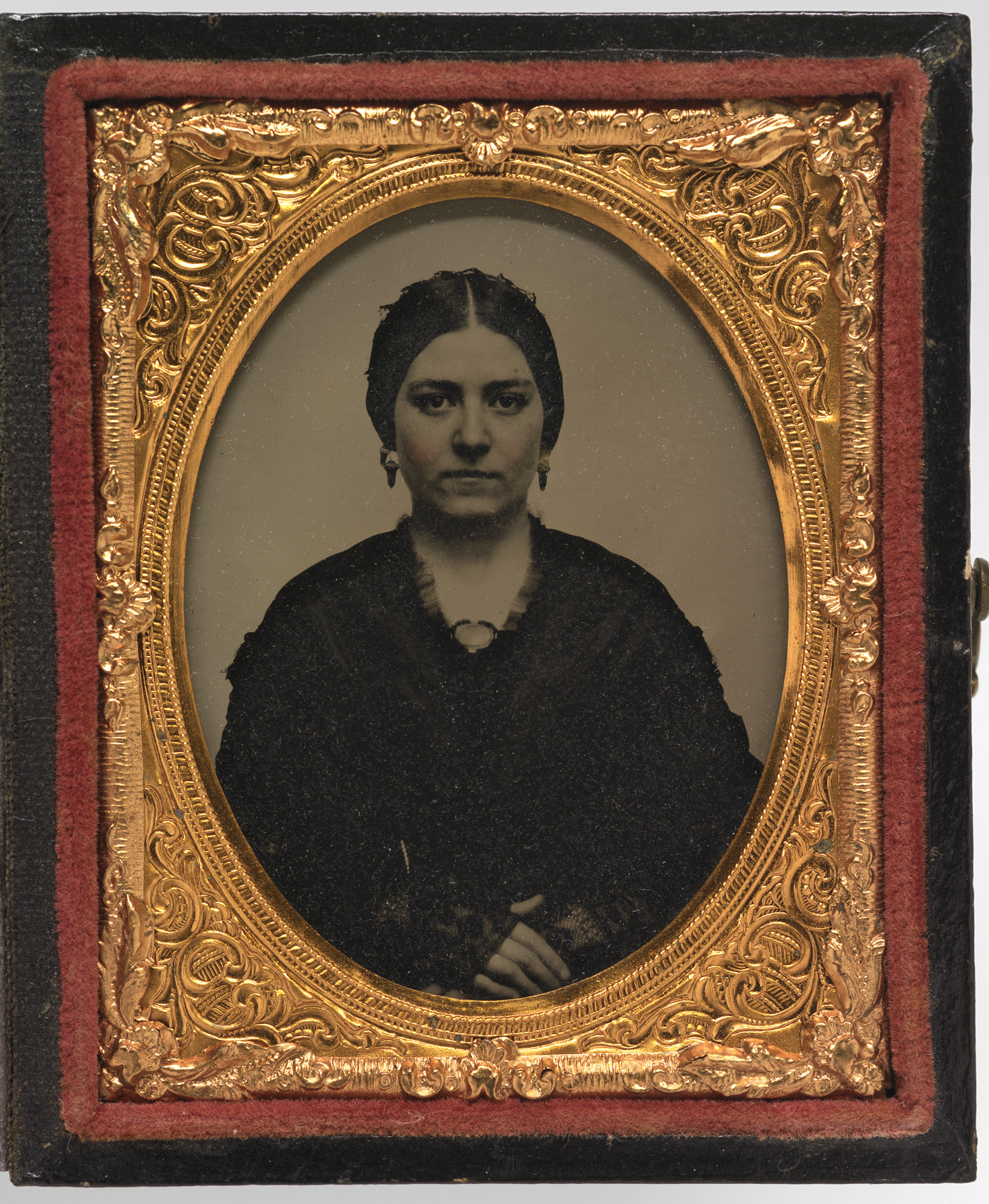
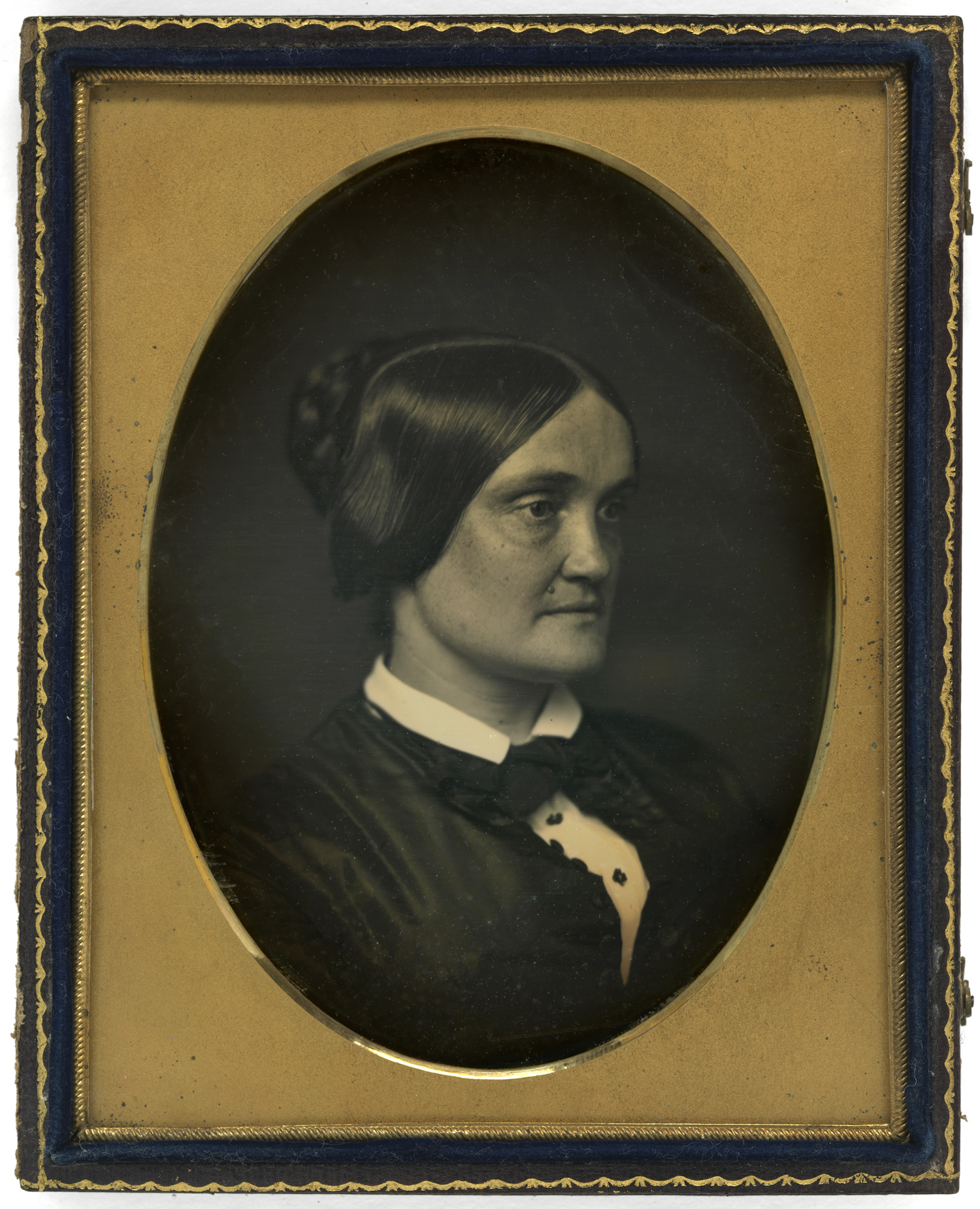
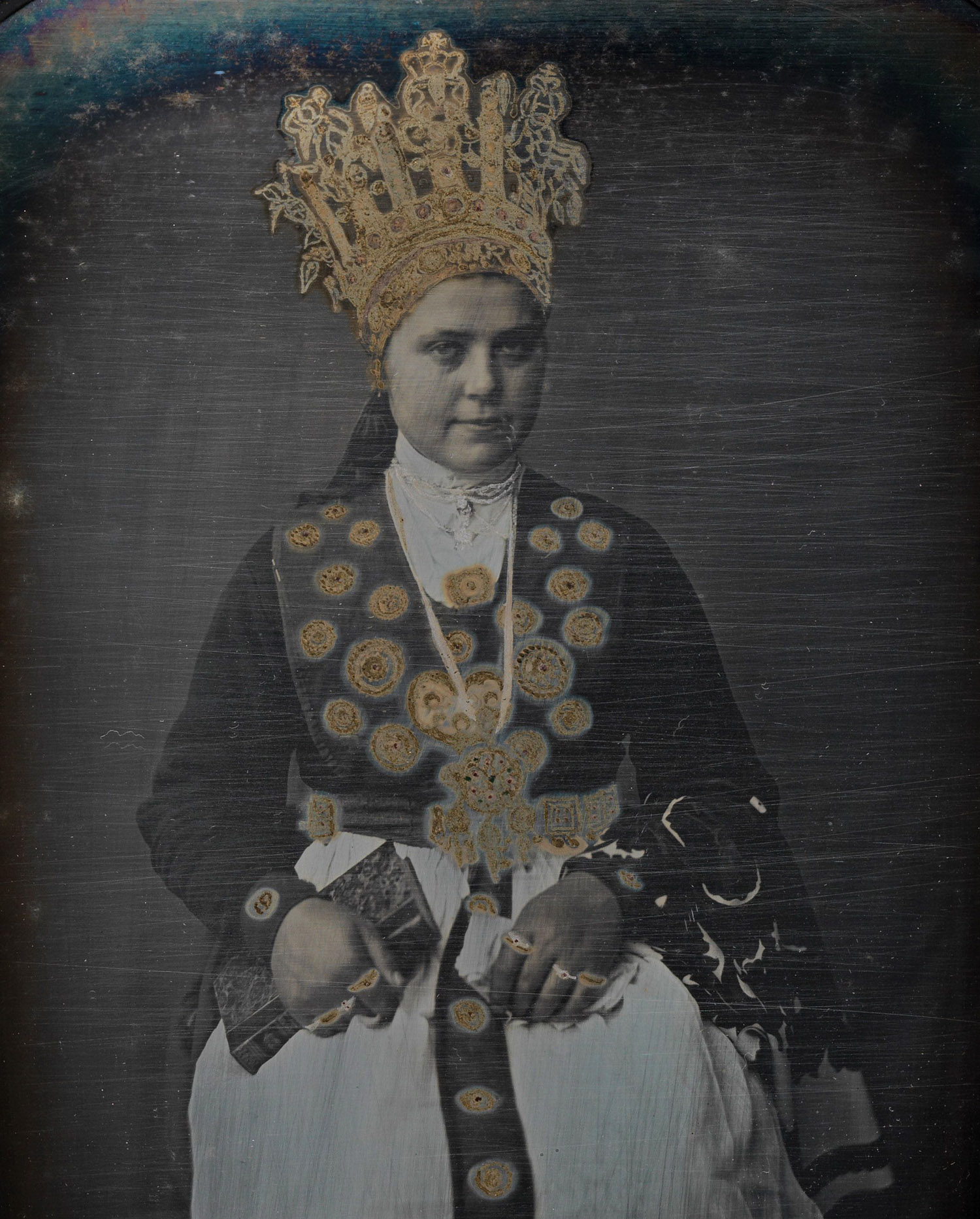
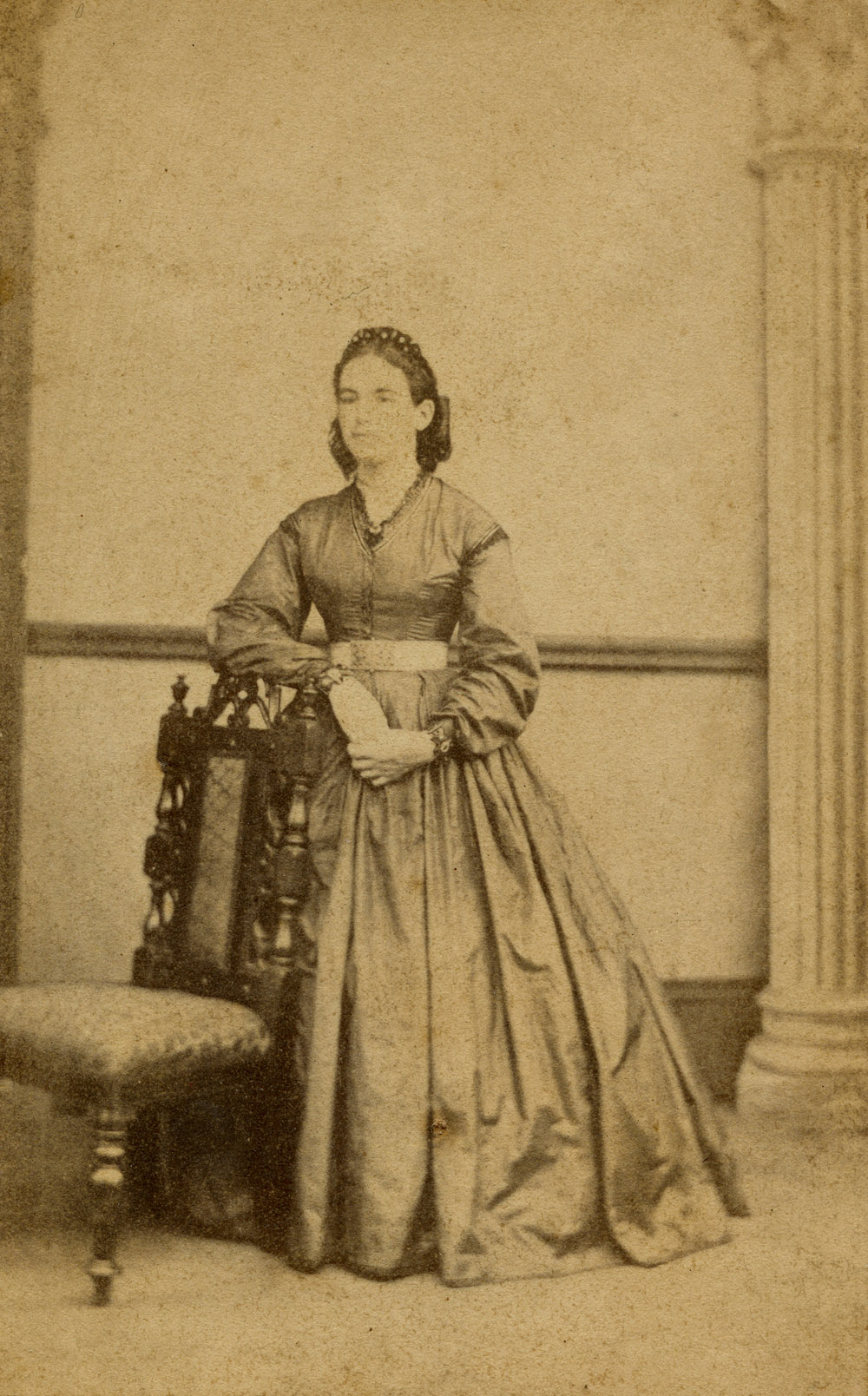
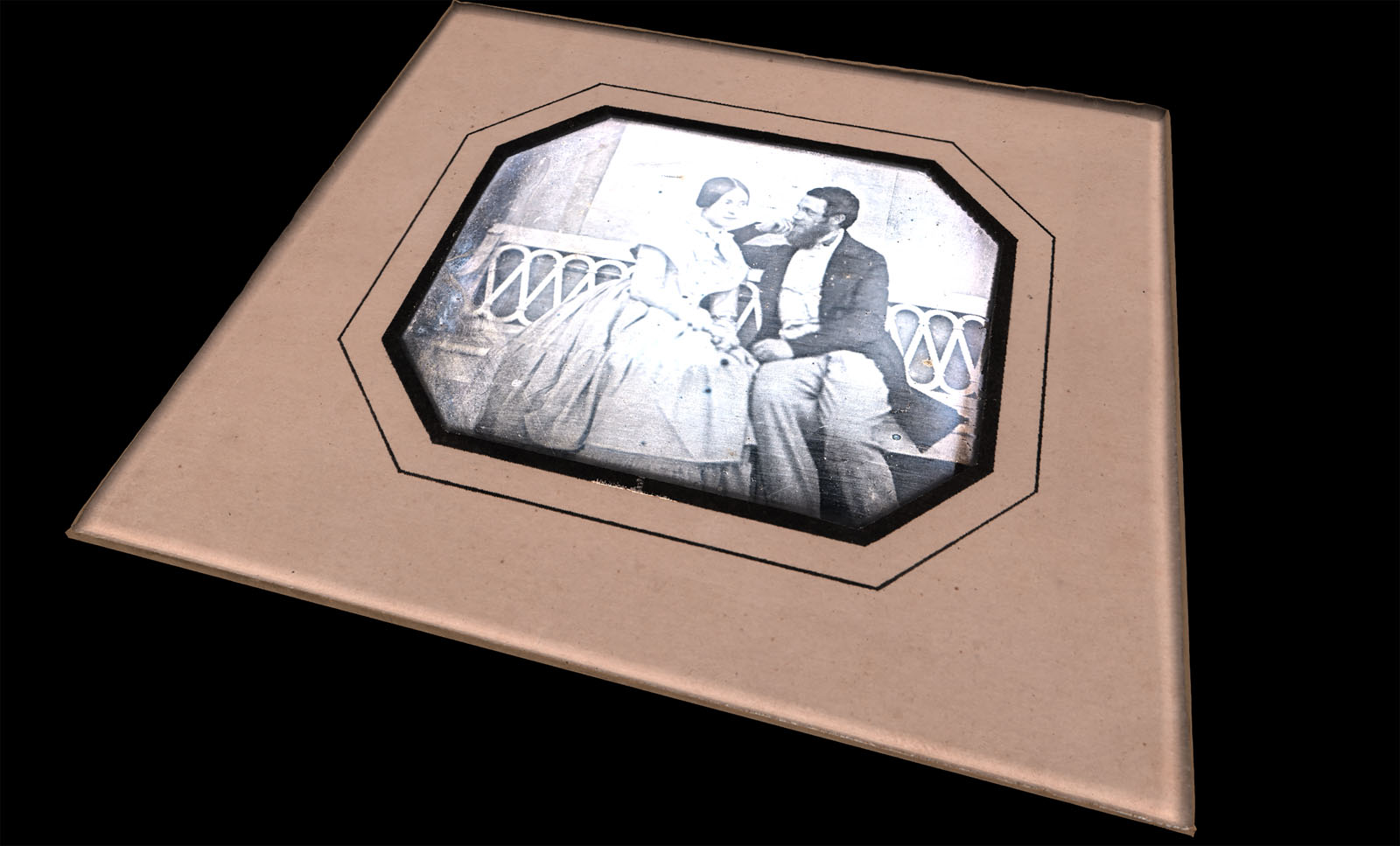
Unknown Maker. 'Woman Wearing a Tignon' c. 1850


Unknown Maker
Woman Wearing a Tignon
c. 1850
Daguerreotype with applied colour
Case (open): 3 1/8 × 7 1/4 in. (8 × 18.4cm)
The Metropolitan Museum of Art, William L. Schaeffer Collection
Promised Gift of Jennifer and Philip Maritz, in celebration of the Museum’s 150th Anniversary


It’s just nice to be able to post on this eclectic exhibition – to see the installation photographs with vitrines full of the wonders of the age, outdoors, indoors, objects, people, landscapes, daguerreotypes, ambrotypes, tintypes, salted paper prints, albumen silver prints, cyanotypes, platinum prints, and gelatin silver prints, cartes de visite, stereographs, and cabinet cards.

Can you imagine having your photograph taken for the first time?

Entering the photographers studio, com(posing) yourself in front of the camera and the process and performance of doing that, even as the photographer composed you on the glass plate in the camera. A double composition, the constituent parts making the whole, a dance between the sitter, the camera and the photographer.

And there you are, exposed in camera, the latent image revealed by vapour, a talismanic object radiating your spirit.

Dr Marcus Bunyan


Many thankx to The Metropolitan Museum of Art for allowing me to publish the photographs in the posting. Please click on the photographs for a larger version of the image.
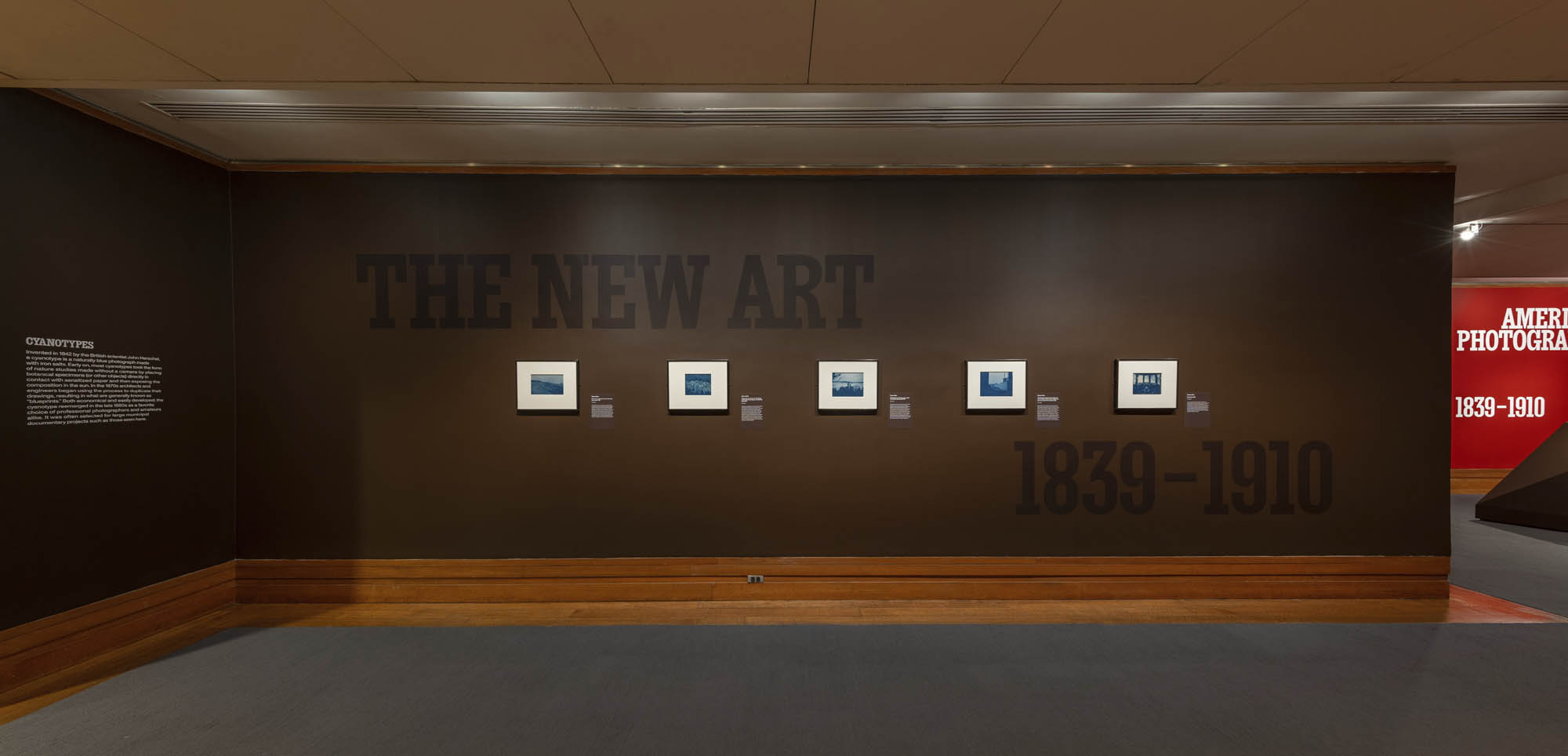
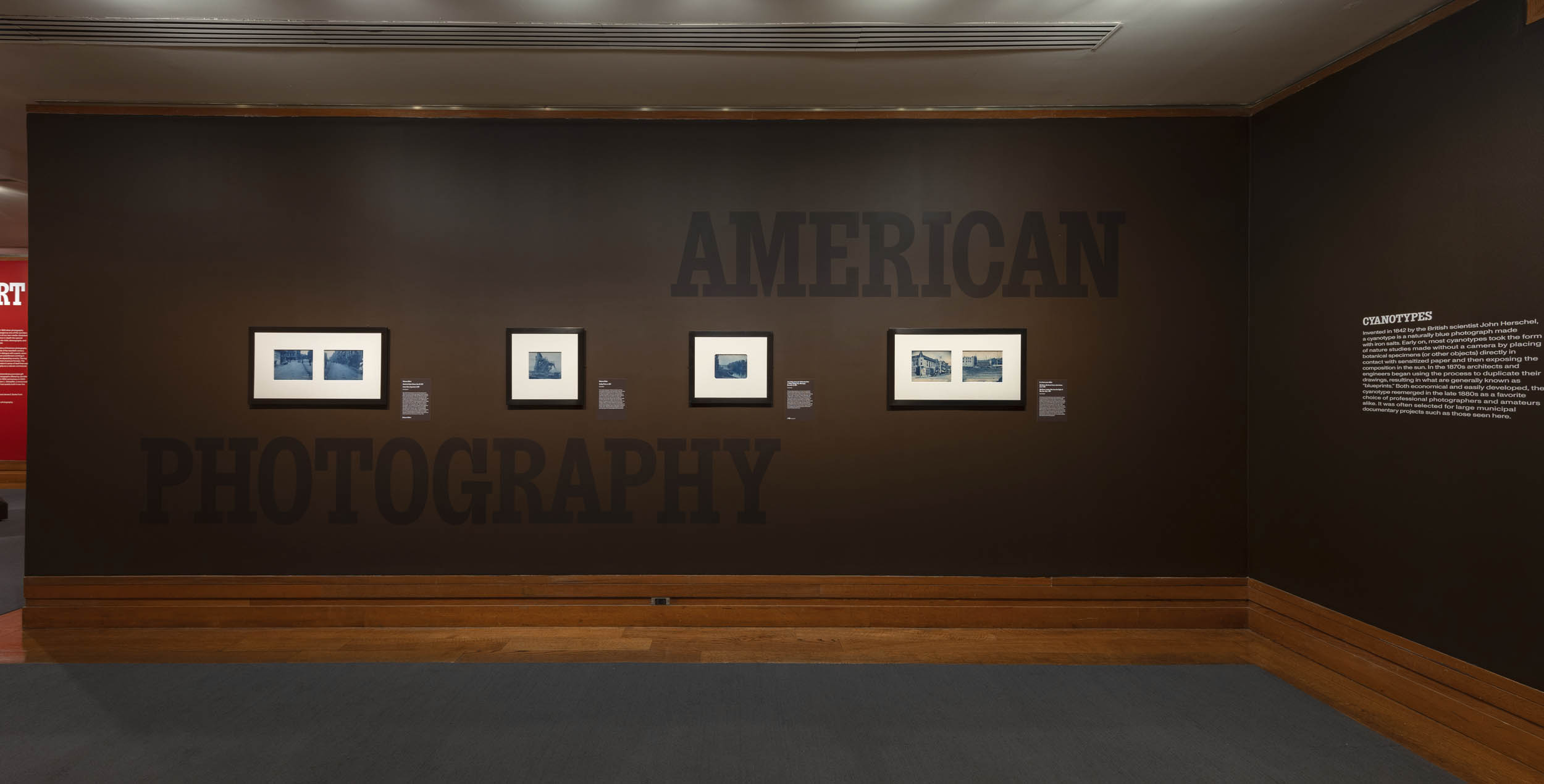


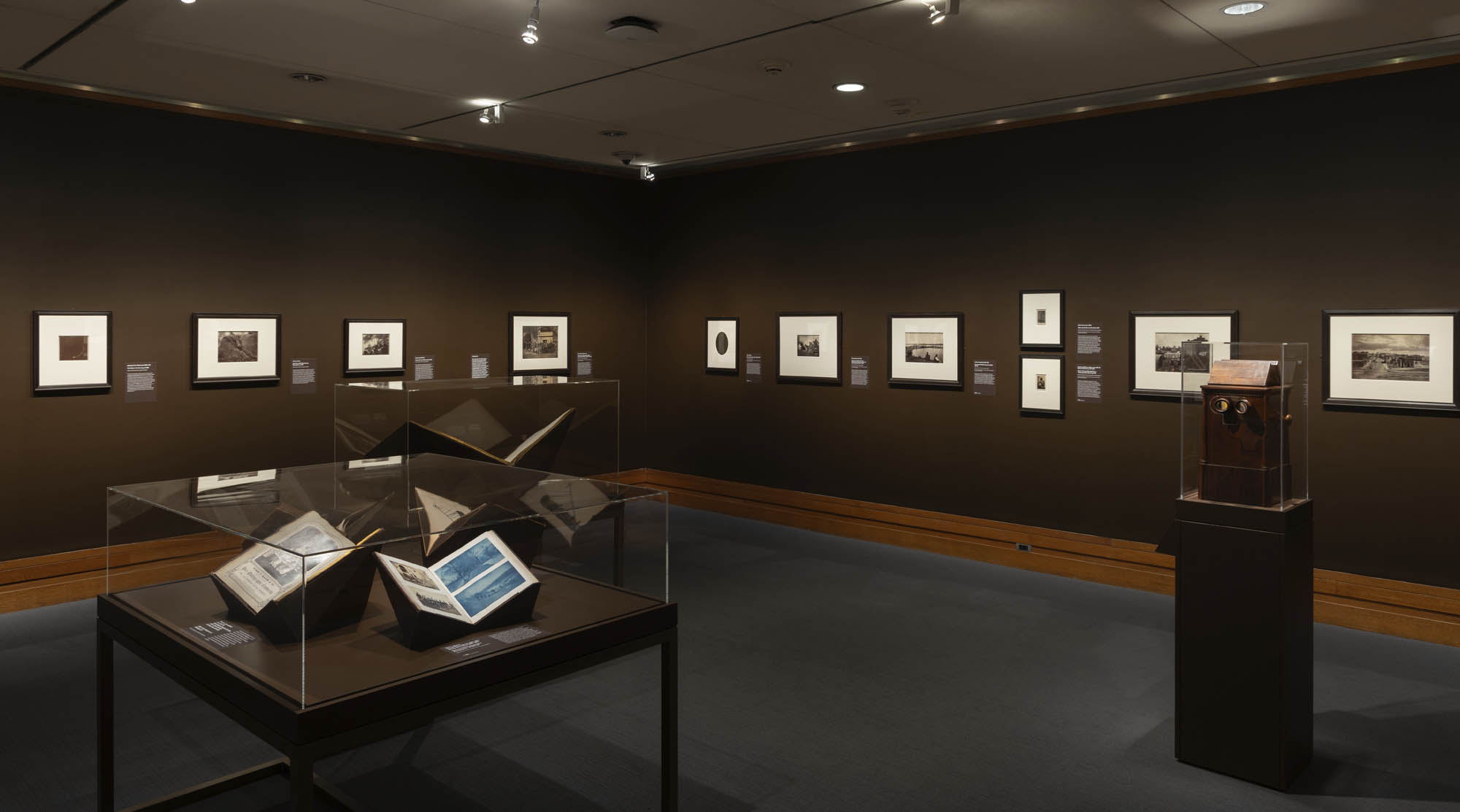
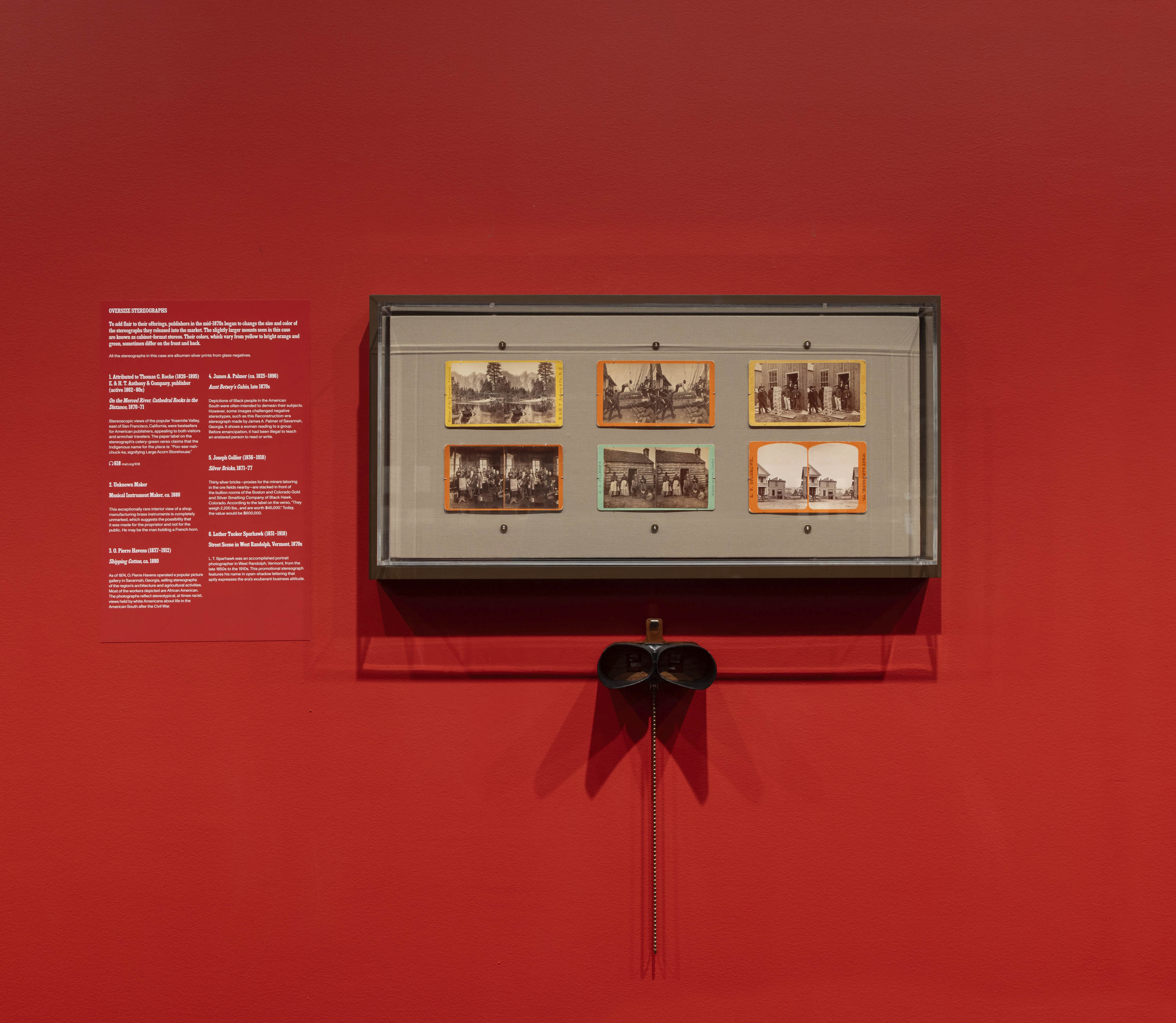
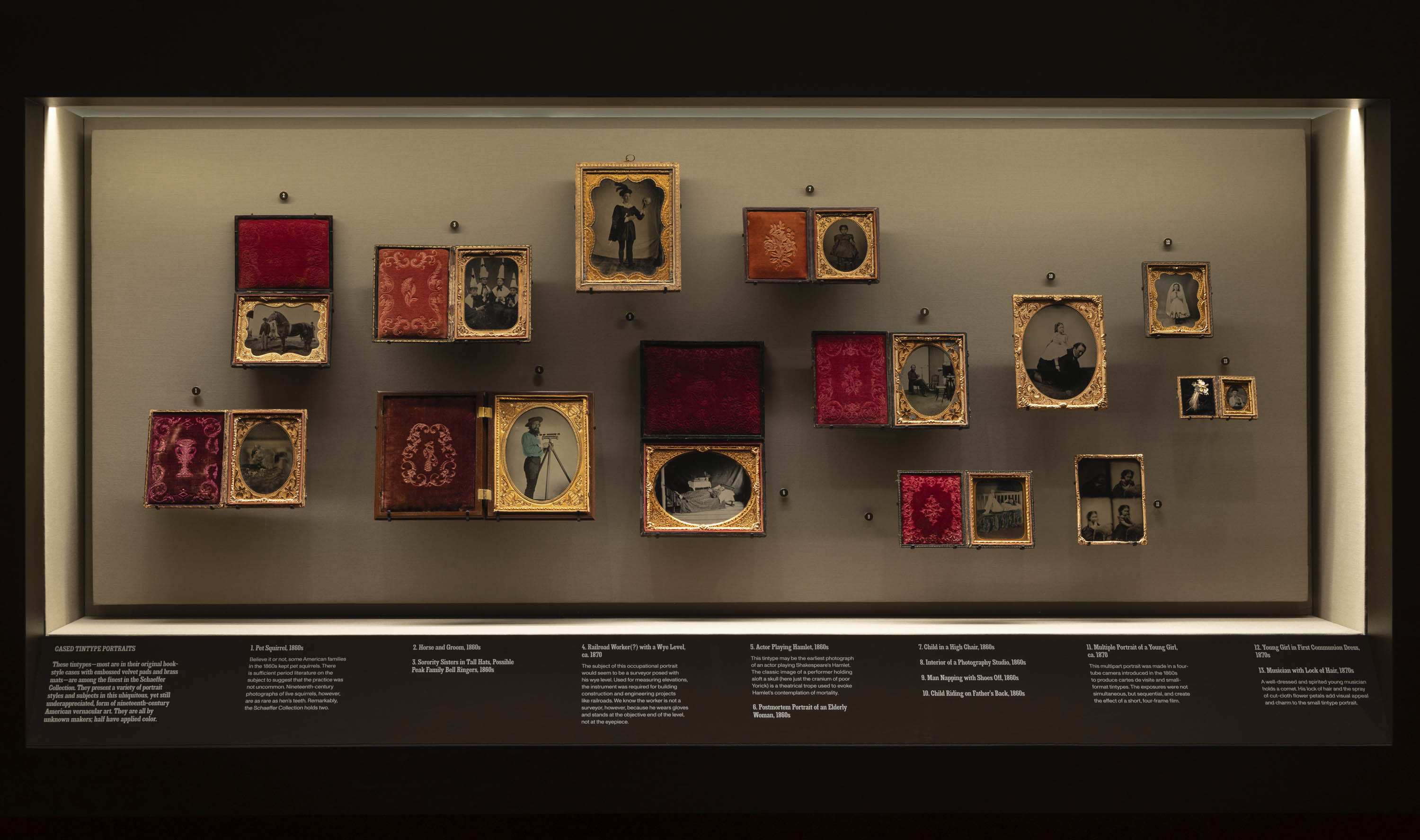
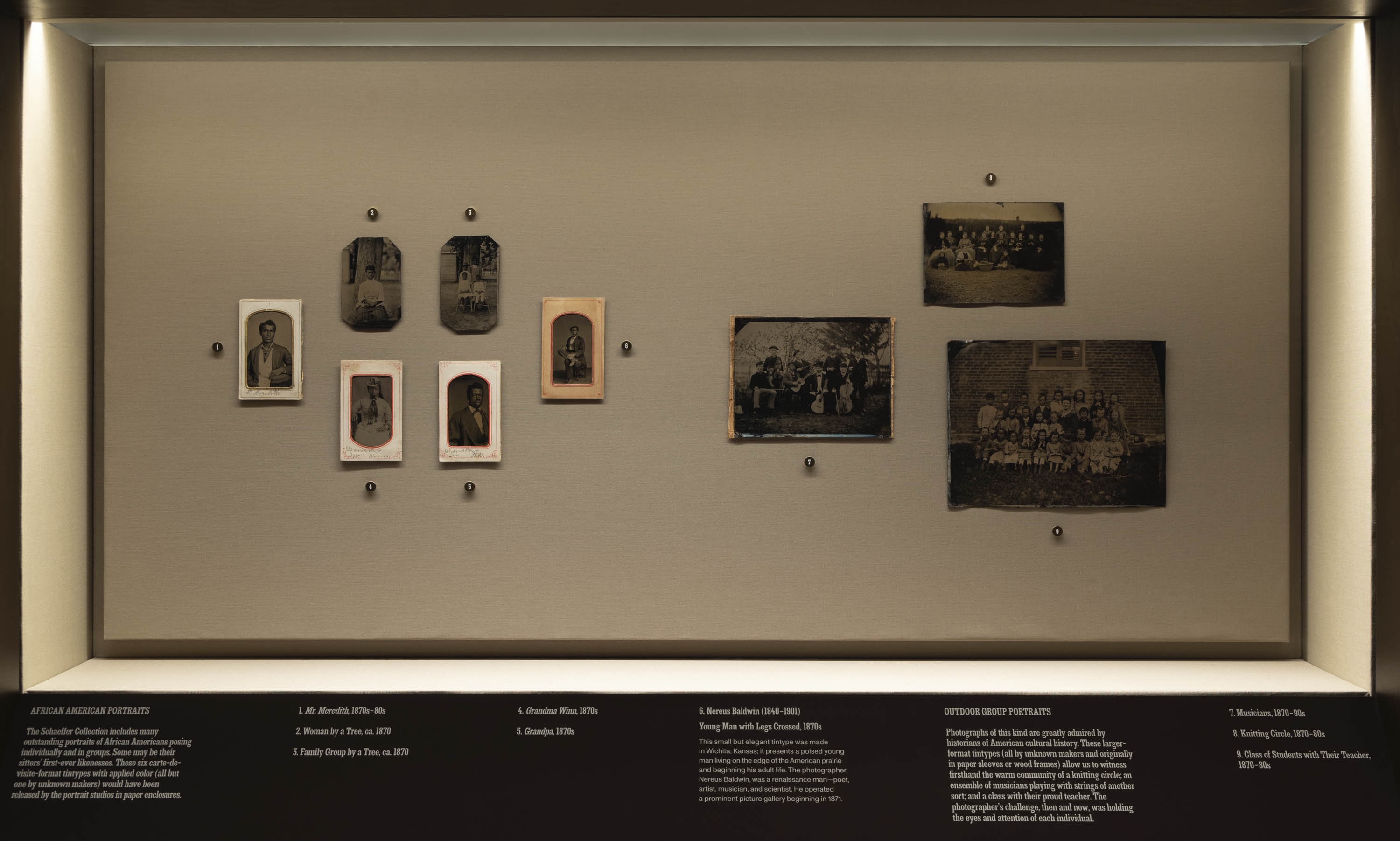
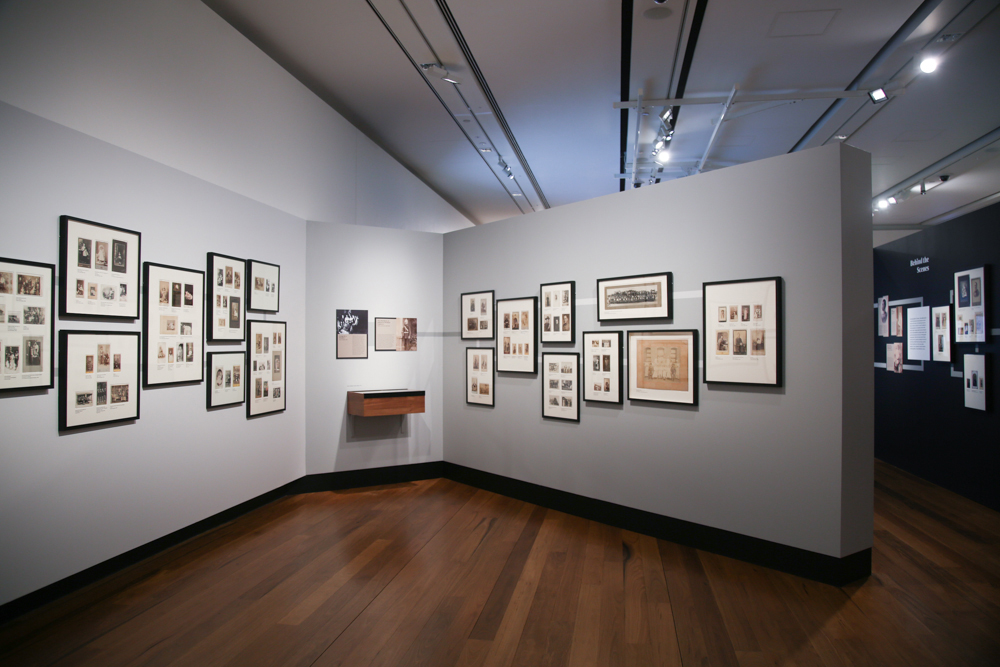
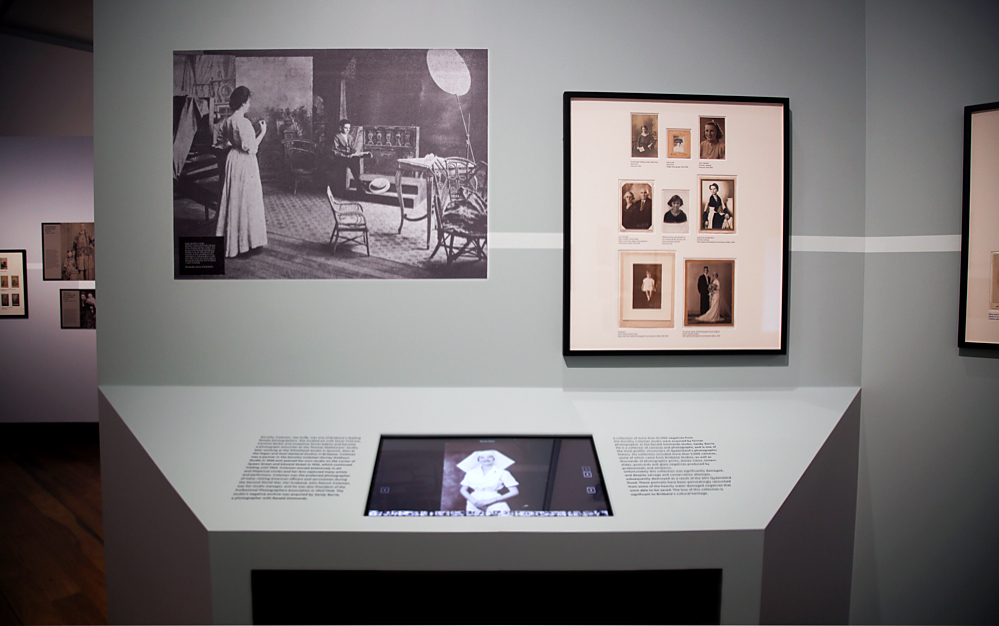
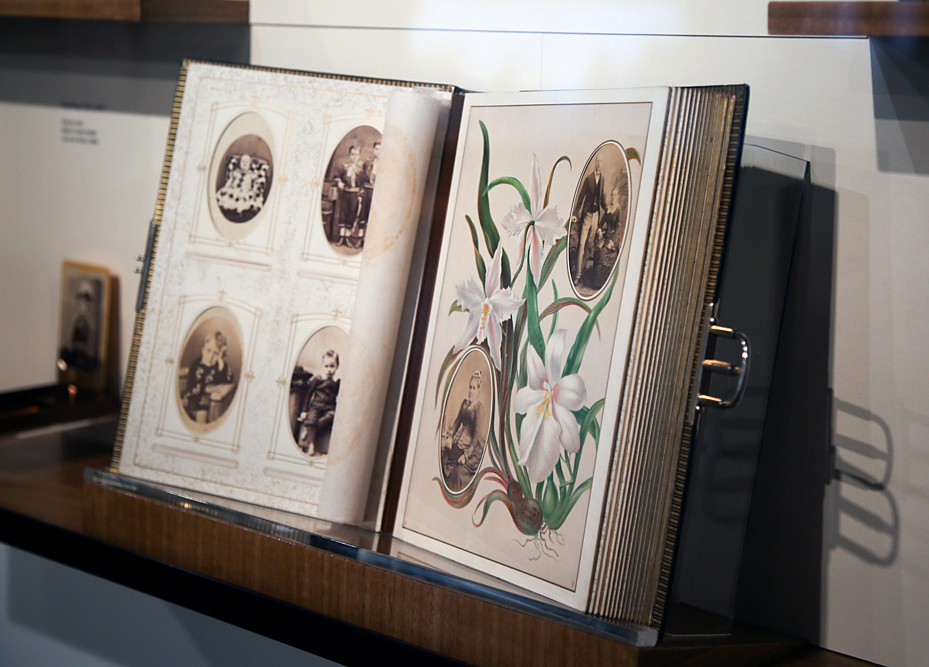
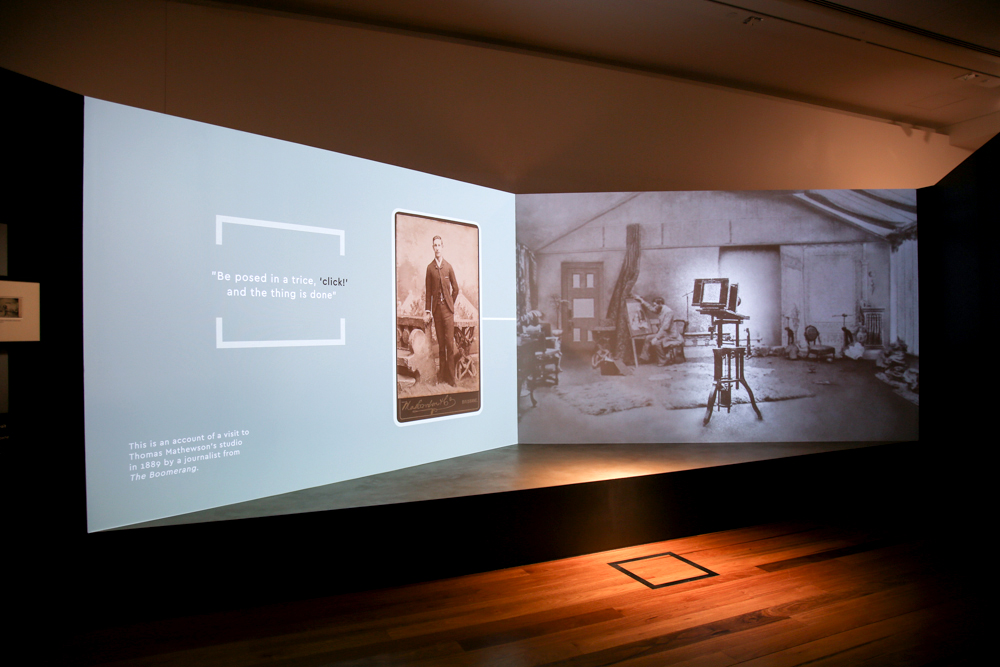
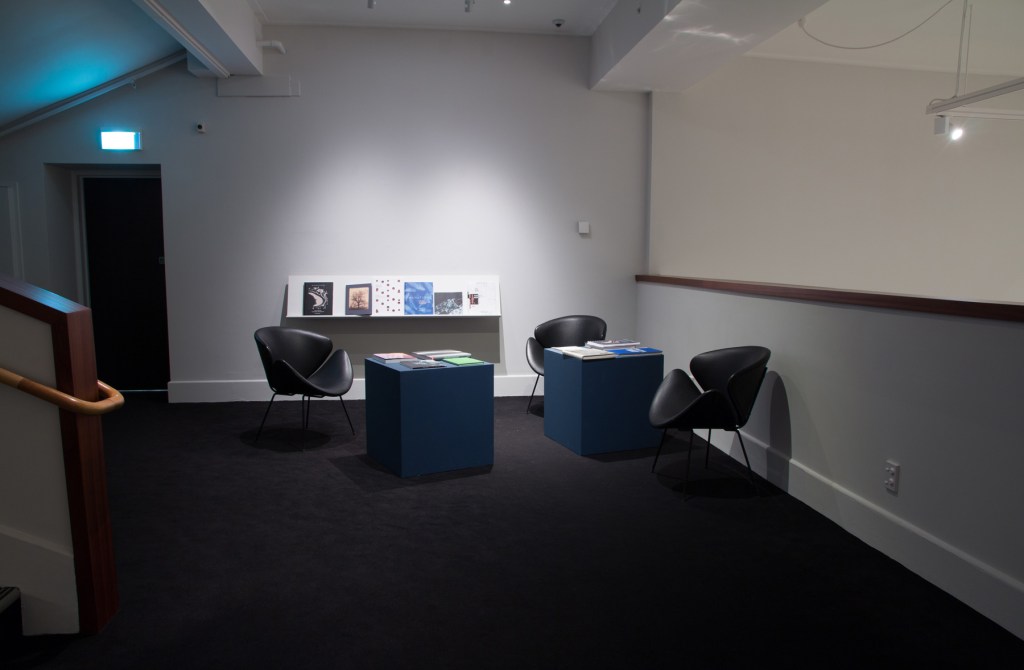
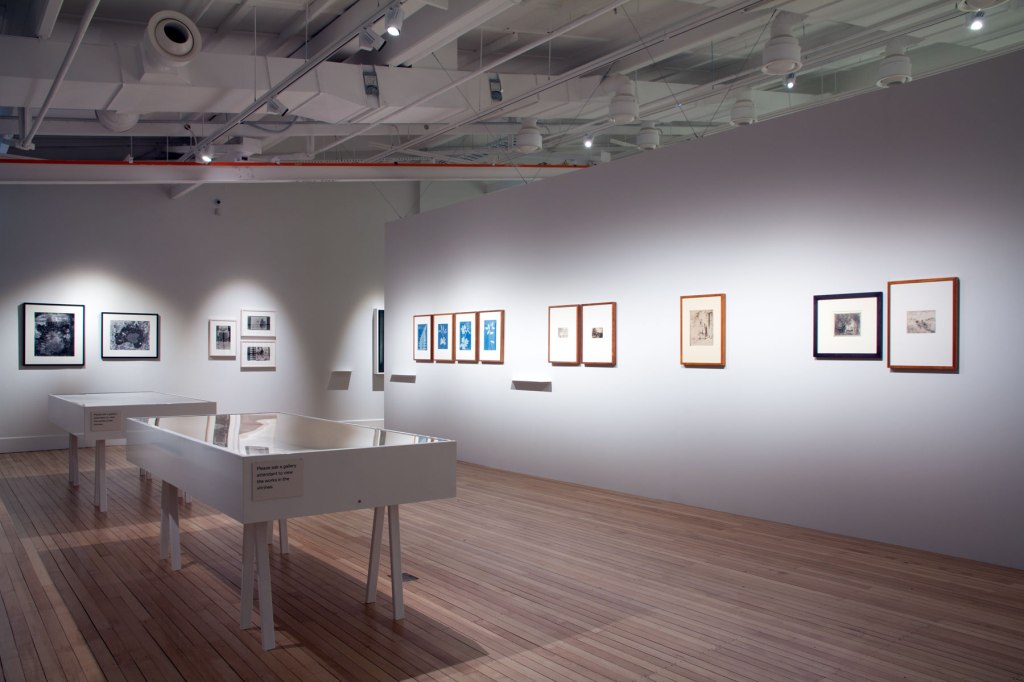
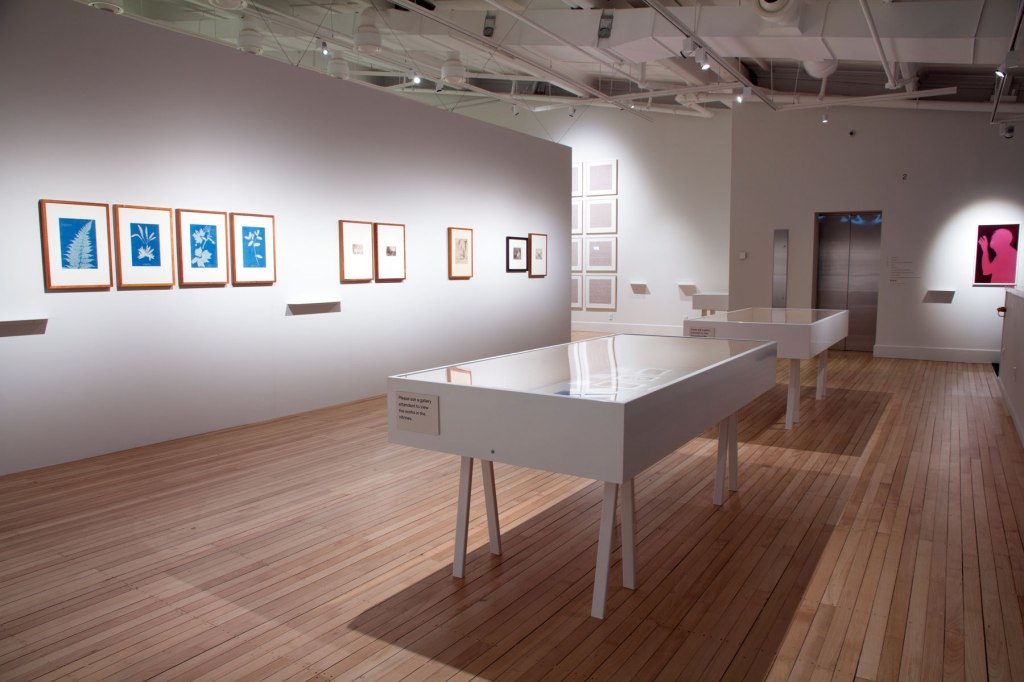
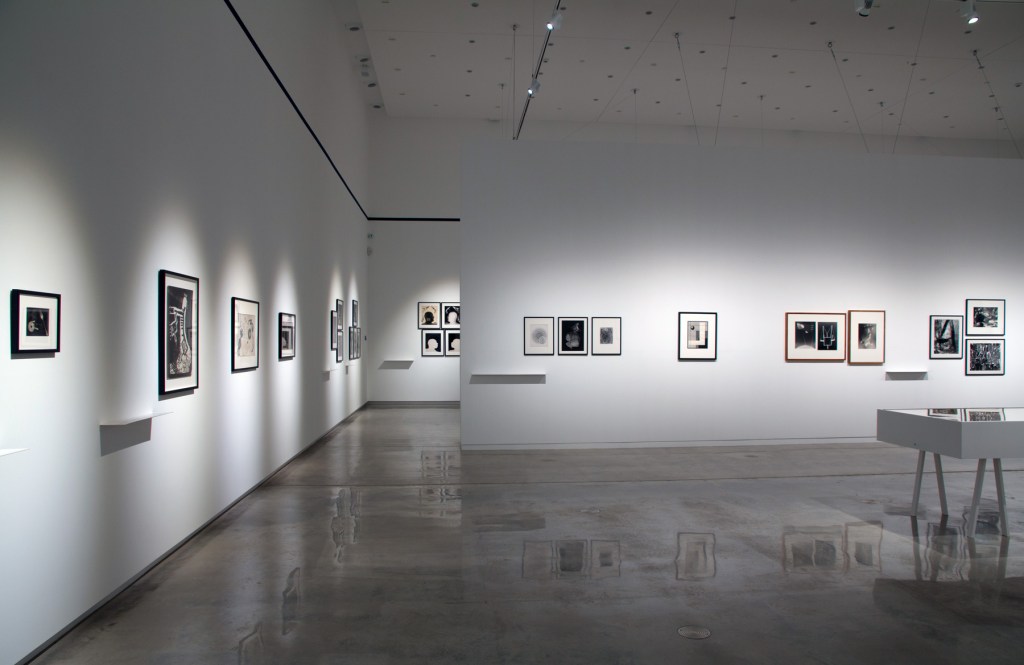
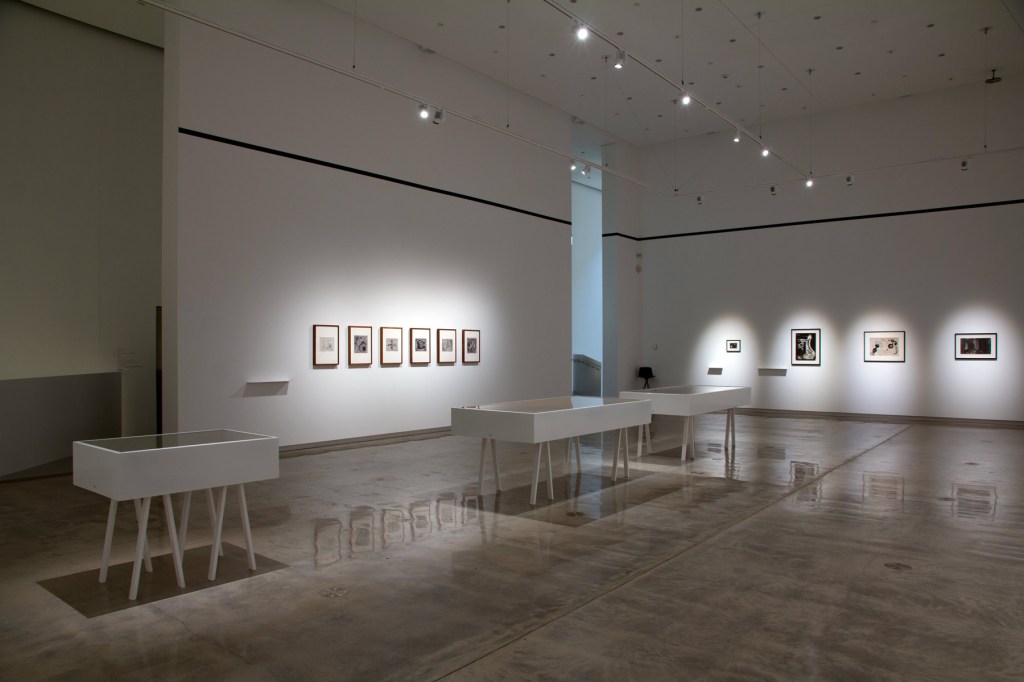
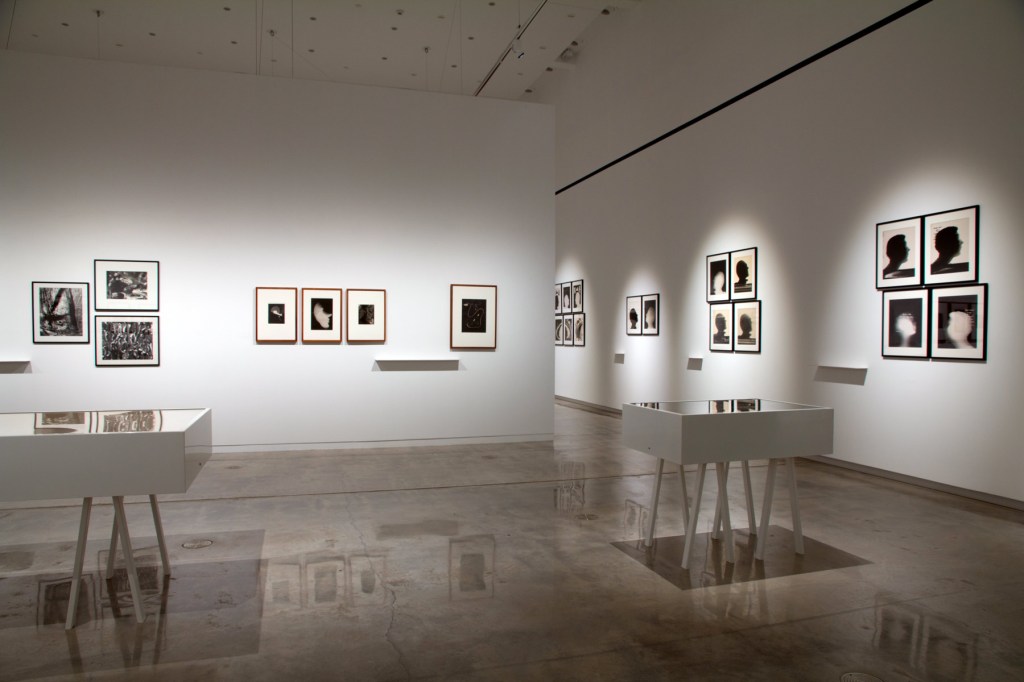
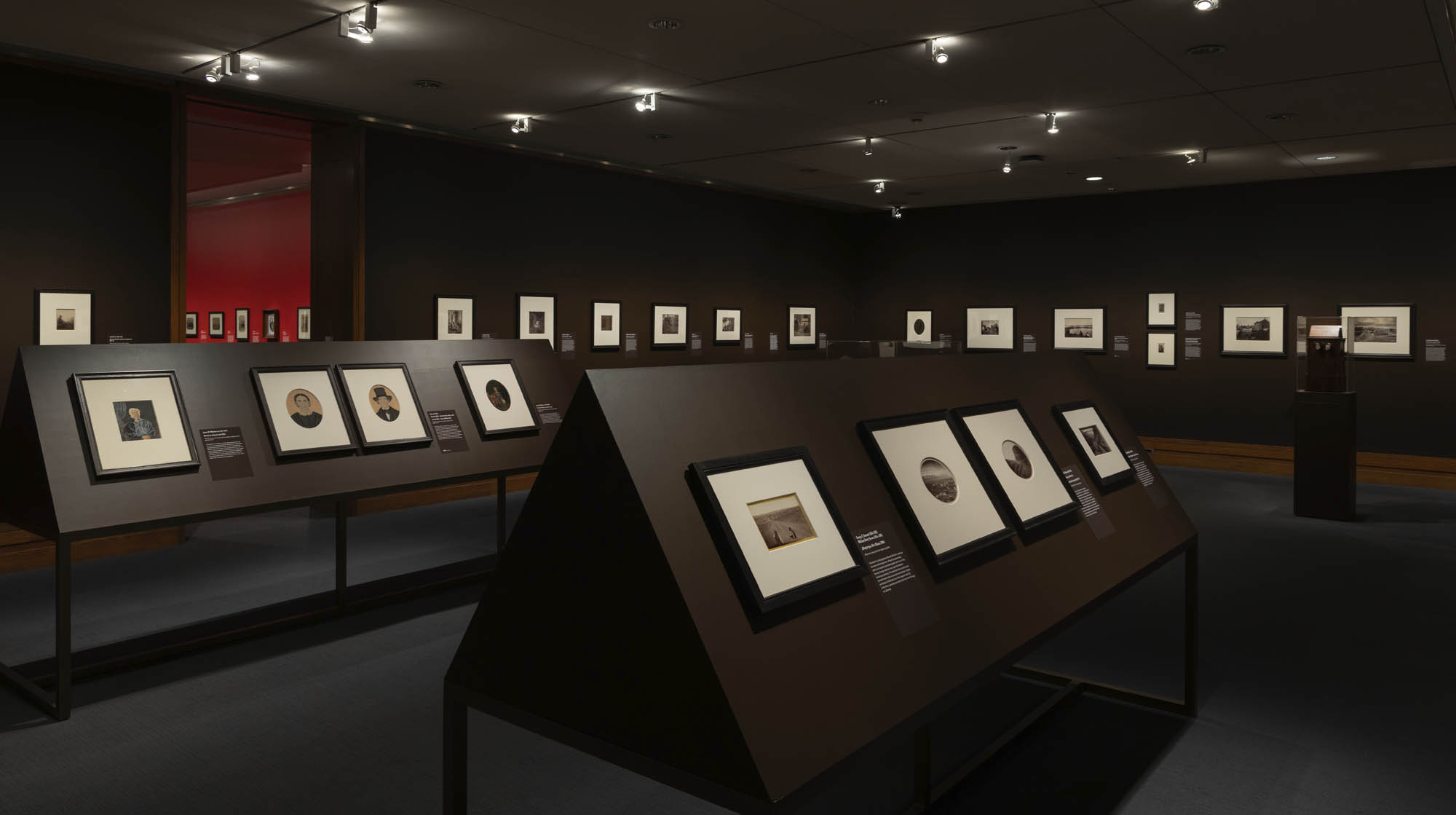
Installation view of the exhibition 'The New Art: American Photography, 1839-1910' at The Metropolitan Museum of Art, New York, April - July, 2025


Installation views of the exhibition The New Art: American Photography, 1839-1910 at The Metropolitan Museum of Art, New York, April – July, 2025


This exhibition presents a bold new history of American photography from the medium’s birth in 1839 to the first decade of the 20th century. Drawn from The Met’s William L. Schaeffer Collection, major works by lauded artists such as Josiah Johnson Hawes, John Moran, Carleton Watkins, and Alice Austen are shown in dialogue with extraordinary photographs by obscure or unknown practitioners made in small towns and cities from coast to coast. Featuring a range of formats, from daguerreotypes and cartes de visite to stereographs and cyanotypes, the show explores the dramatic change in the nation’s sense of itself that was driven by the immediate success of photography as a cultural, commercial, artistic, and psychological preoccupation. In 1835, even before the nearly simultaneous announcement of the invention of the new art in Paris and London, the American philosopher essayist Ralph Waldo Emerson noted with remarkable vision: “Our Age is Ocular.”

Text from The Metropolitan Museum of Art website


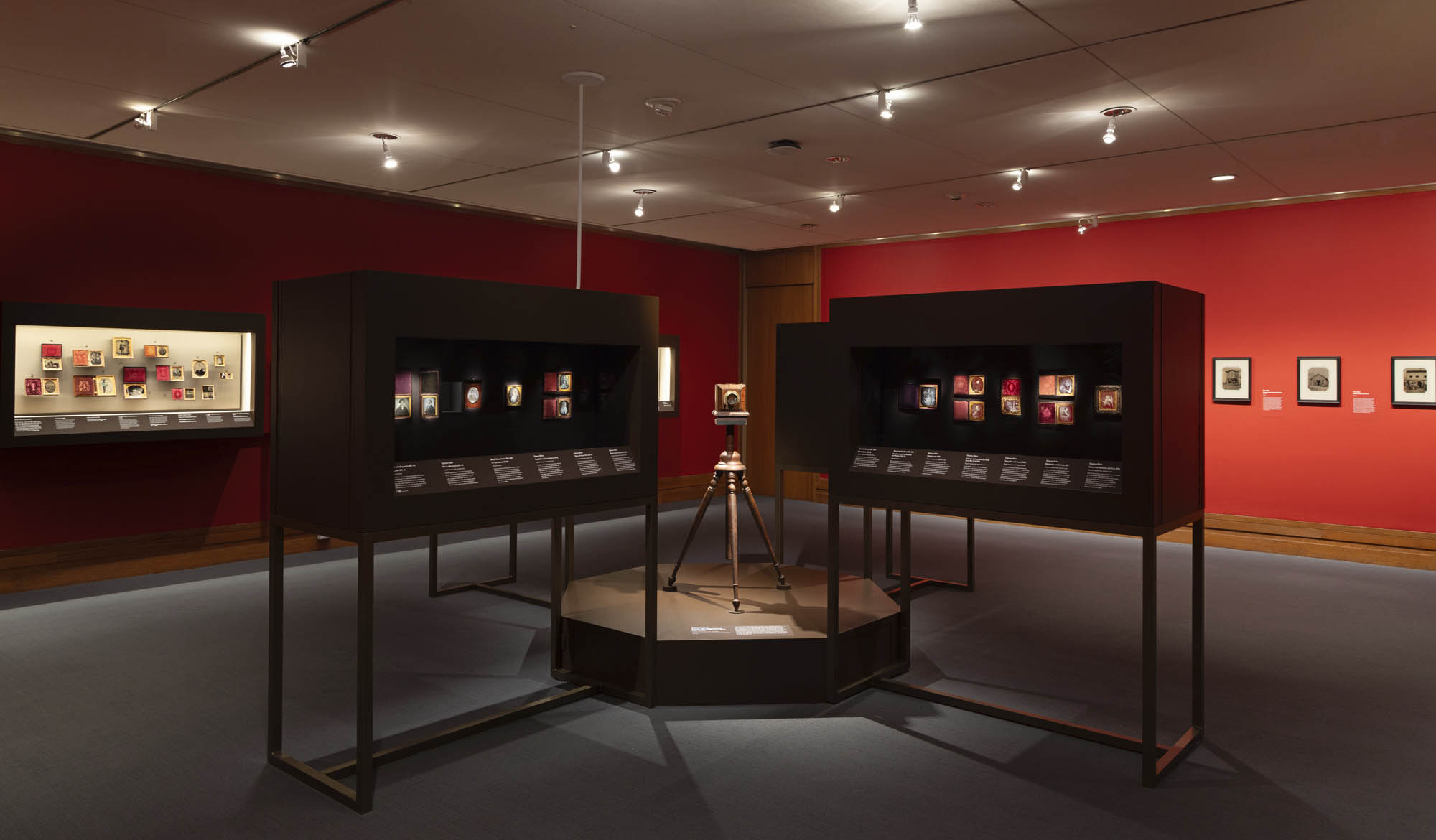
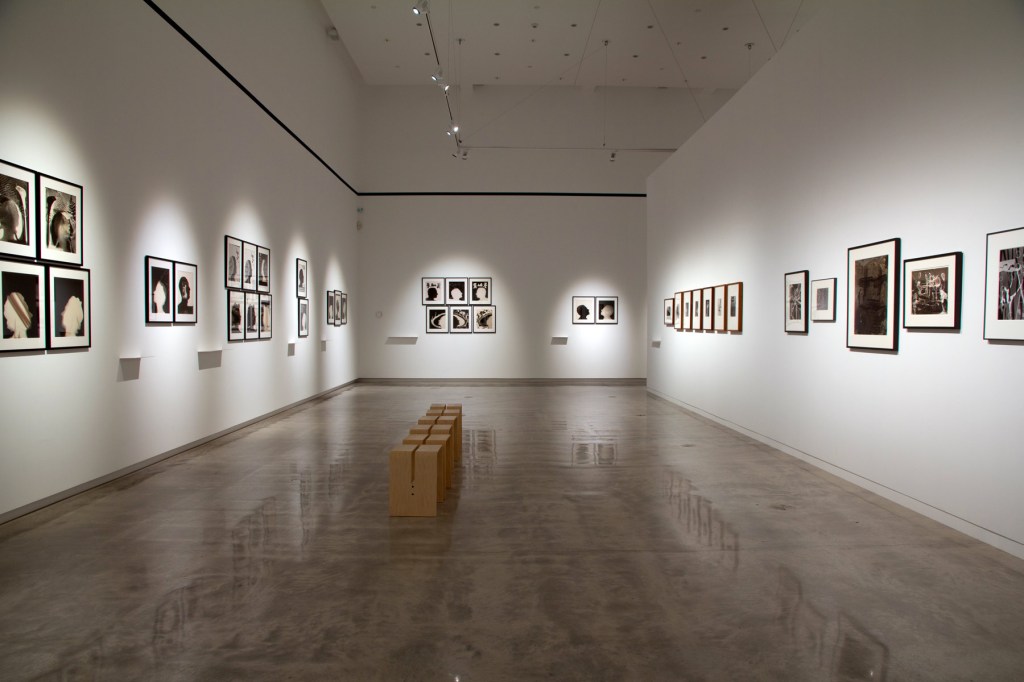
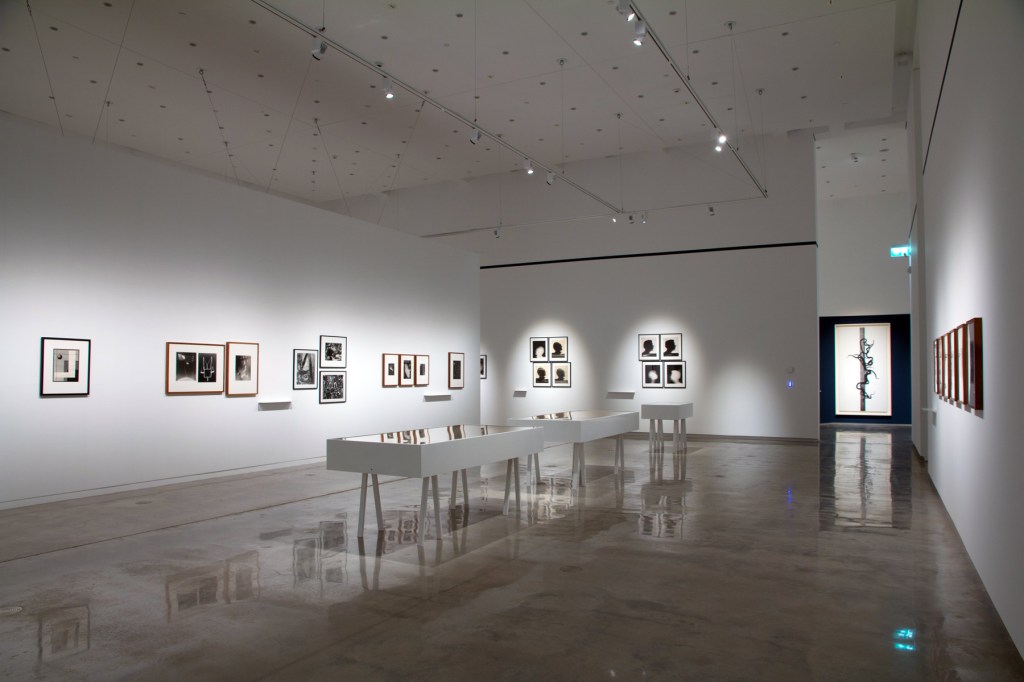
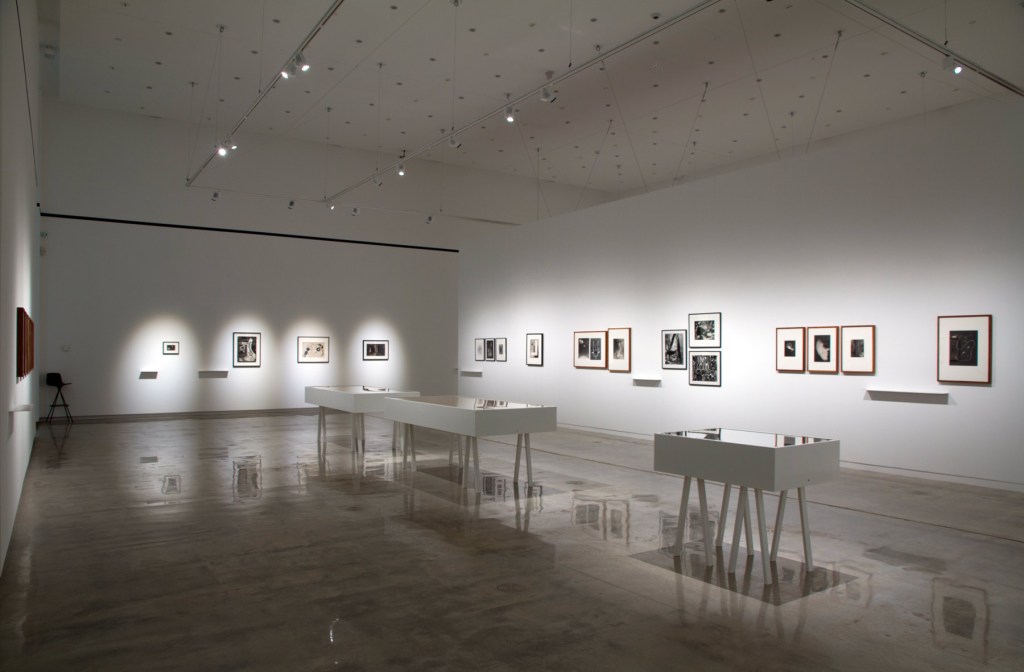
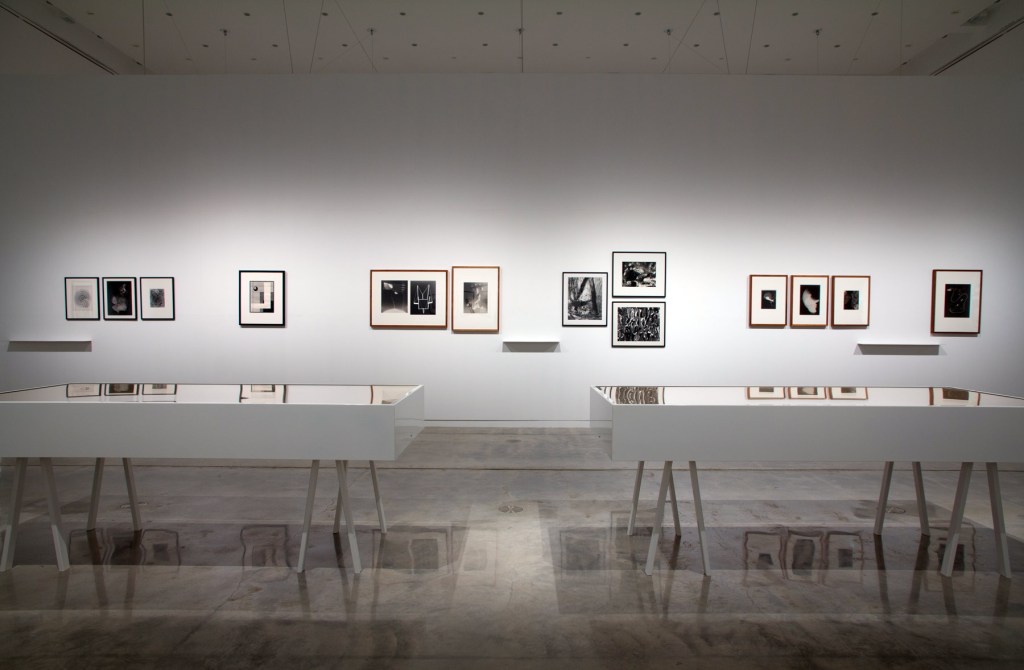
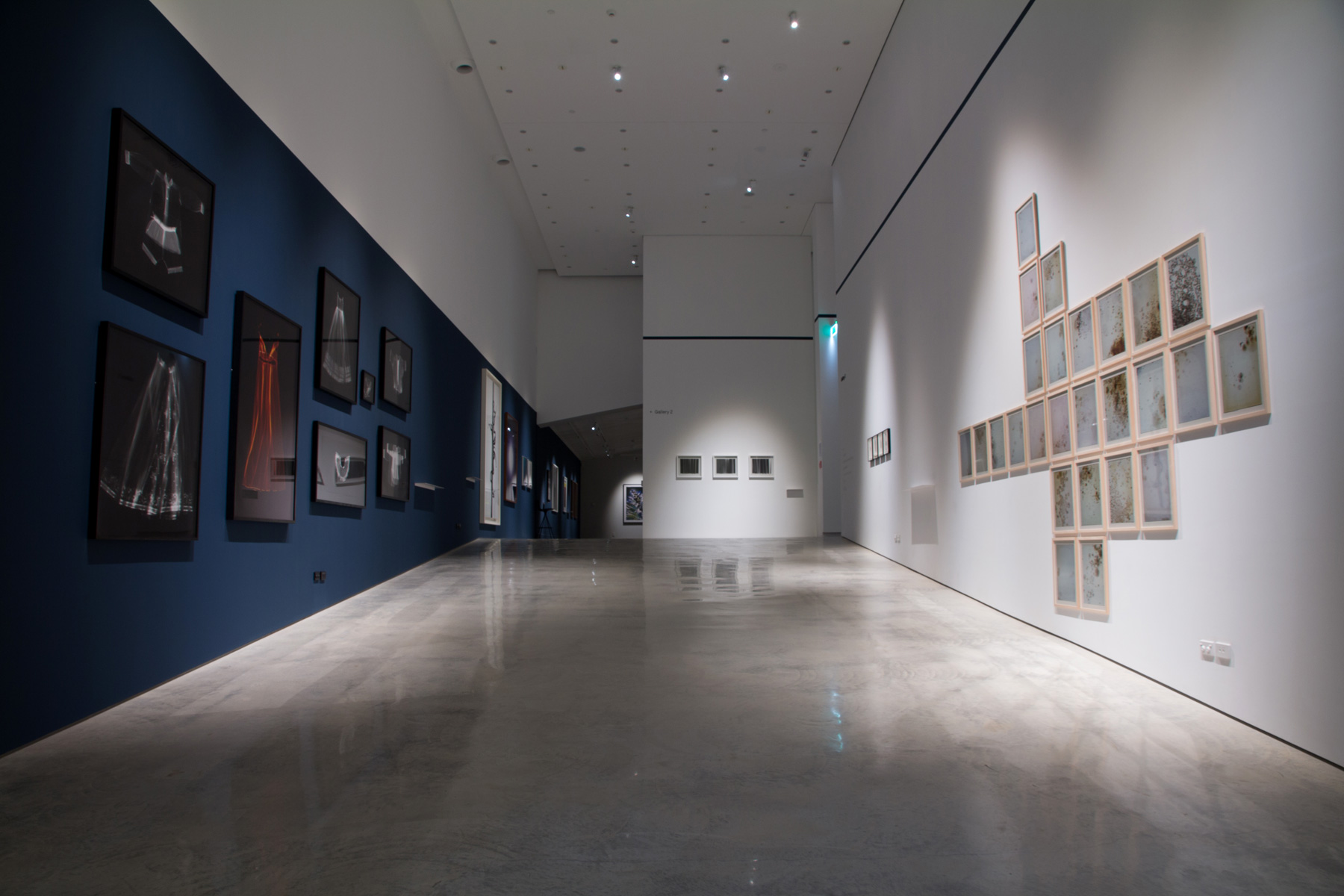
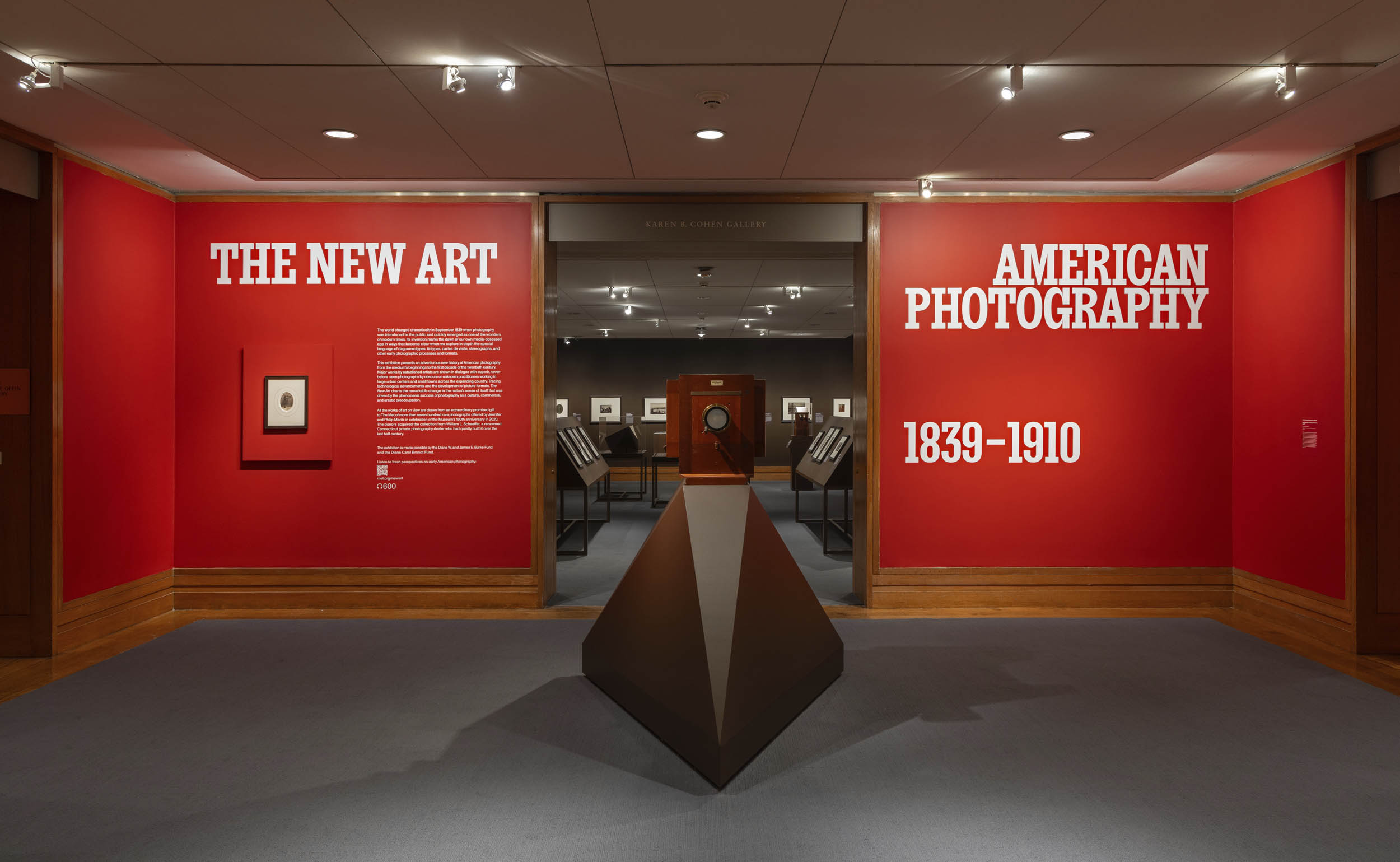
Installation view of the exhibition 'The New Art: American Photography, 1839-1910' at The Metropolitan Museum of Art, New York, April - July, 2025


Installation views of the exhibition The New Art: American Photography, 1839-1910 at The Metropolitan Museum of Art, New York, April – July, 2025


 The New Art: American Photography, 1839-1910 will feature more than 250 photographs drawn from the Museum’s William L. Schaeffer Collection 

This spring, The Metropolitan Museum of Art will present an adventurous new history of American photography from the medium’s birth in 1839 to the first decade of the 20th century. Drawn from the Museum’s William L. Schaeffer Collection – a magnificent recent promised gift to The Met by trustee Philip Maritz and his wife Jennifer – major works by lauded artists such as Josiah Johnson Hawes, John Moran, Carleton E. Watkins, and Alice Austen, will be presented in dialogue with extraordinary photographs by obscure or unknown practitioners made in small towns and cities from coast to coast. The exhibition’s many photographs by little-studied makers, early practitioners, and intrepid amateurs have been selected to reveal the artists’ ingenuity, aesthetic ambition, and lasting achievement. In some 275 photographs – most never before seen – The New Art: American Photography, 1839-1910 explores the nation’s shifting sense of self, driven by the immediate success of photography as a cultural, commercial, artistic, and psychological preoccupation. The presentation will be on view from April 11 through July 20, 2025. 

“Through an impressive array of 19th- and early 20th-century images that capture the complexities of a nation in the midst of profound transformation, this exhibition offers something new even for those well-versed in the history of photography,” said Max Hollein, The Met’s Marina Kellen French Director and Chief Executive Officer. “Thanks to the generosity of Jenny and Flip Maritz, we can study and celebrate these formerly hidden treasures by hundreds of both known and unknown makers finally ready for their close-ups. Our hope is to give these works their rightful place in the ever-expanding history of the medium.”

Jeff L. Rosenheim, Joyce Frank Menschel Curator in Charge of the Department of Photographs, added, “The camera and its myriad democratic products – rivals to the greatest literature of the era – are clearly the origin of modern communication and global image-sharing today. If we want to forge a deeper appreciation of contemporary art and the role of the camera in the lives of today’s picture makers, we must recognise and respect the stunning visual power and authenticity of early American photography.” 

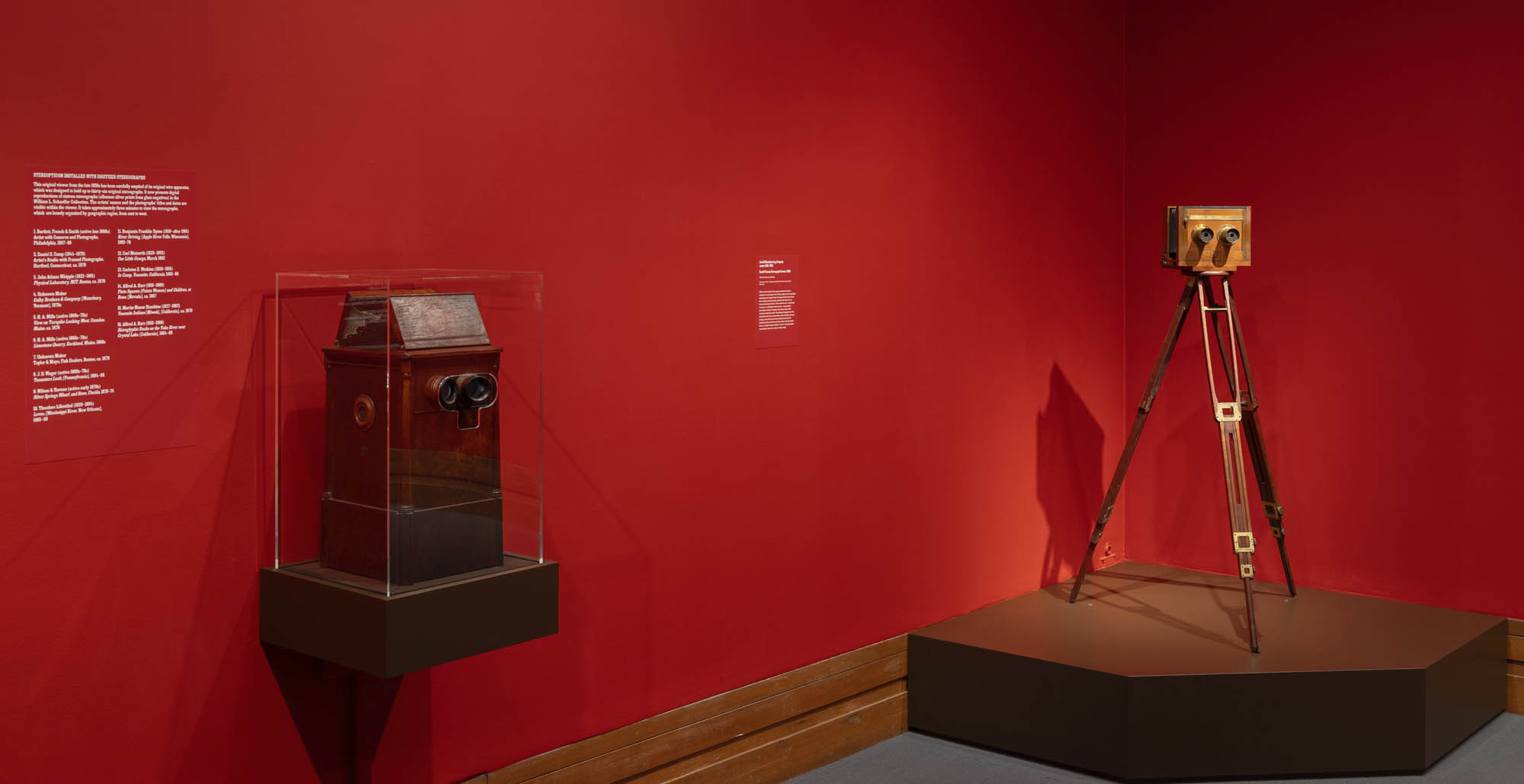
Carefully assembled over the last 50 years by the Connecticut collector and private dealer William L. Schaeffer, the collection includes splendid photographs in superb condition from every stage of the medium’s early technical development: daguerreotypes, ambrotypes, tintypes, salted paper prints, albumen silver prints, cyanotypes, platinum prints, and gelatin silver prints. The exhibition also features an extensive display of three types of card-mounted photographs – cartes de visite, stereographs, and cabinet cards – each wildly popular in the mid- to late 19th century. When seen through binocular viewers, all the stereographs in the show will be visible in three dimensions. 

This is not the first exhibition at The Met to feature photographs drawn from the famous collection of 19th-century photographs amassed by Schaeffer. In 2013, the Museum included more than a dozen Civil War views in Photography and the American Civil War. These are now part of the Museum’s collection through the direct support of another Museum trustee, Joyce Frank Menschel. The gifts by the Maritzes to The Met, as well as those by Joyce Menschel, mark a pinnacle in the institution’s ongoing effort to build the finest holdings of 19th-century American photography in the nation.

Exhibition Overview

In 1839, the invention of photography transformed the world. In December of that year, when the first daguerreotypes were exhibited in New York, former mayor Philip Hone marvelled in his diary at what he described as “one of the wonders of modern times,” adding that “like other miracles, one may almost be excused for disbelieving it without seeing the very process by which it is created.” 

The daguerreotype’s remarkable ability to hold permanently an unimaginably detailed likeness on its surface – an image heretofore only seen fleetingly in a mirror – seemed in equal measure unbelievable and perfectly real, darkly mysterious yet scientifically verifiable, a shadowy fiction and yet a beautiful truth. The supernatural quality of the new art was noted by many around the world. As one reviewer, writing for a Baltimore weekly in January 1840, admitted, “We can find no language to express the charm of these pictures painted by no mortal hand.”

Photography arrived almost simultaneously with the steam locomotive, the steam ship, and the electric telegraph – all inventions that dramatically shortened the distances between people and places and forever changed the way civilisations communicate. The medium developed during the age of the type-crazy broadside, the morning and the evening newspaper, and the illustrated weekly. It was also the time of the birth of mercantile libraries (previously only the wealthy had access to books and libraries), and, not surprisingly, of eye strain. The era saw the medical specialisation in the study of eye maladies and the development of optometry and ophthalmology. In 1835, just before the concurrent announcement of the invention of the new art in Paris and London, the American philosopher and essayist Ralph Waldo Emerson noted in his private journal: “Our age is ocular.” 

Organised primarily by picture format across three galleries, The New Art illustrates what photography looked like for the average working citizen as well as those at the top of the economic scale. Exhibition visitors can see the clothes individuals wore at work and home, their attitudes to the camera singly and in groups, their ways of sitting or standing or touching, and how they honoured their children and respected their ailing and recently deceased family members. They can look at newly constructed storefronts, see how farmers worked their fields, and measure where new towns met the wilderness. They can observe the near total devastation of Native American communities, especially those living in the Plains, and confront the vicious cruelty of slavery and the influential role of the camera in the Civil War, still the crucible of American history. 

In daguerreotypes, tintypes, and paper prints, viewers can also begin to see and comprehend how African Americans during the Civil War, throughout the Reconstruction era, and leading into the 20th century slowly began to replace negative stereotypes with positive self-images. This effort was explicitly nurtured by Frederick Douglass, who had long advocated visits to photography studios. In his nearly constant lecturing circuit across the country, he argued persuasively that no one could be truly free until each individual could sit for and possess their own photographic likeness. In The New Art, men and women of color definitively hold the camera’s attention and the viewer’s as well. 

Seen together in The New Art, the subjects in these photographs are not just sitters molded by a camera operator, but the cocreators of their own portraits. One can see this clearly in their eyes and in their many small, seductive gestures. Confronting a photograph that left an artist’s studio more than 150 years ago can be a humbling experience. The magic of photography brings one face to face with the past, and the present is never more vital than it is in these early pictures. That is the medium’s essence, its beauty, and its pathos. 

Cameras

 The exhibition will also showcase a small selection of 19th-century American cameras to further immerse visitors in the photography process. These have been kindly lent to The Met by Eric Taubman and the Penumbra Foundation. 

Press release from The Metropolitan Museum of Art


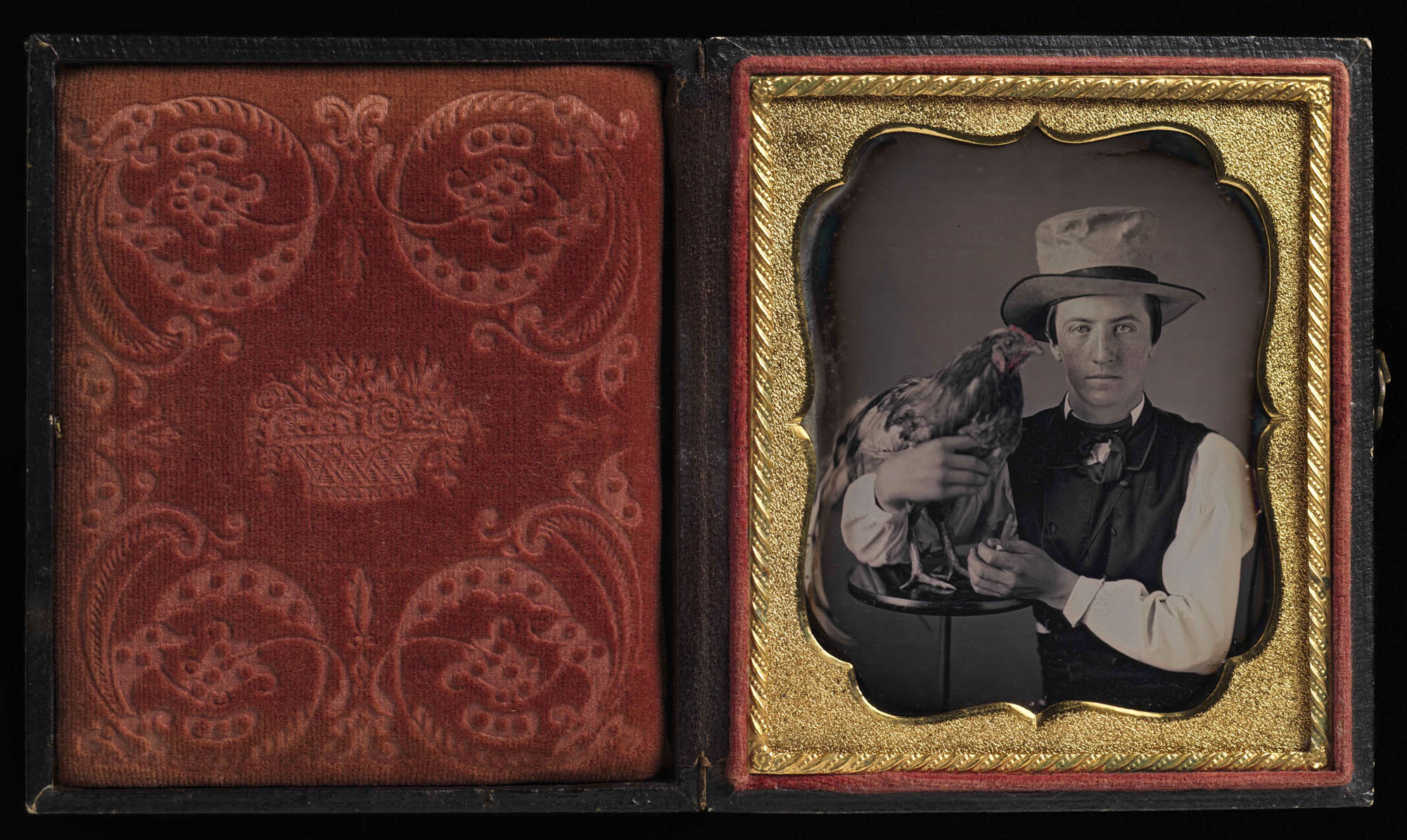
Unknown Maker (American) 'Young Man with Rooster' 1850s


Unknown Maker (American)
Young Man with Rooster
1850s
Daguerreotype with applied color
Case (open): 3 5/8 × 6 1/4 in. (9.2 × 15.9cm)
The Metropolitan Museum of Art, William L. Schaeffer Collection
Promised Gift of Jennifer and Philip Maritz, in celebration of the Museum’s 150th Anniversary


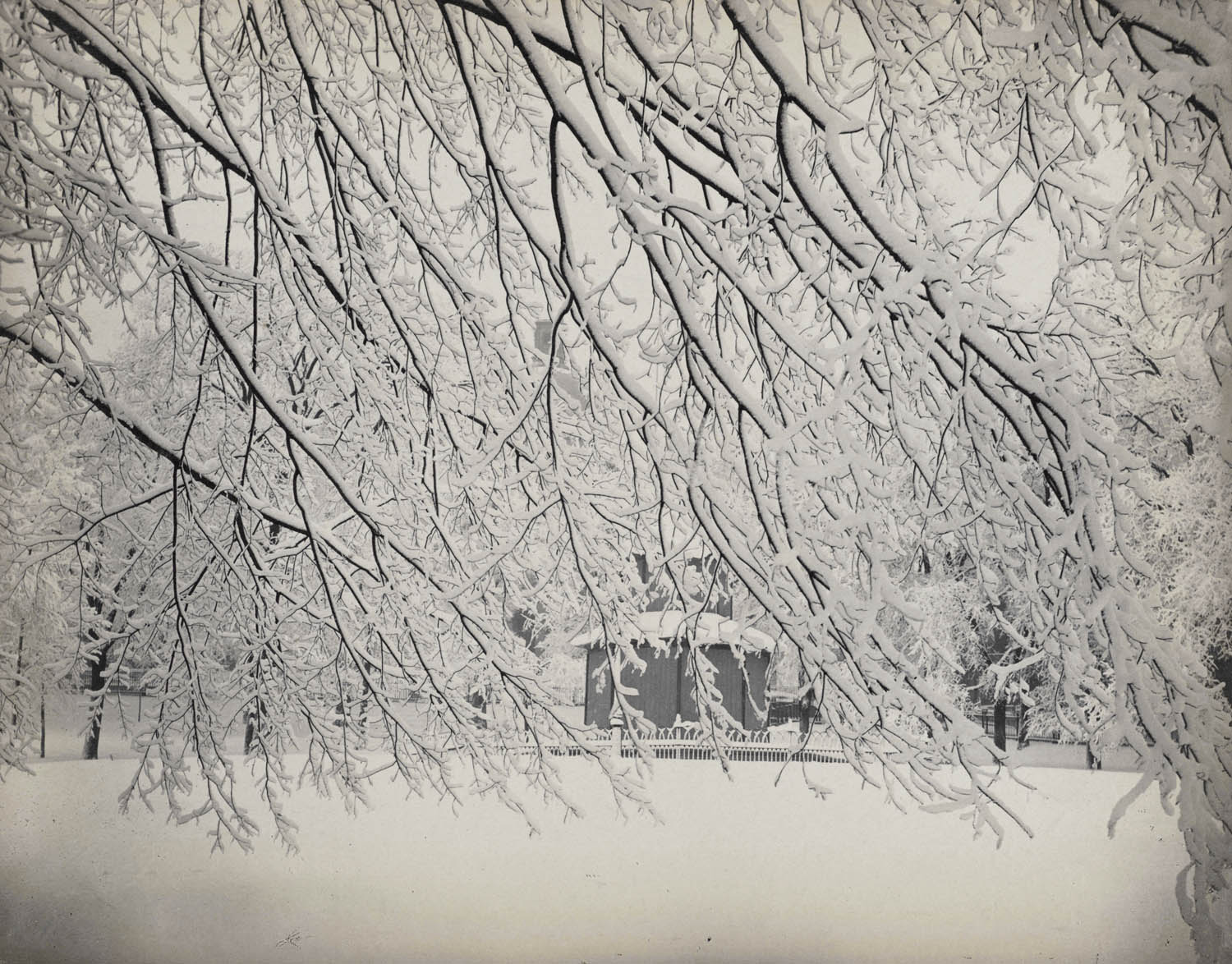
Josiah Johnson Hawes (American, 1808-1901) 'Winter on the Common, Boston' early 1850s


Josiah Johnson Hawes (American, 1808-1901)
Winter on the Common, Boston
early 1850s
Salted paper print from glass negative
7 5/16 × 9 5/16 in. (18.5 × 23.7cm)
The Metropolitan Museum of Art William L. Schaeffer Collection
Promised Gift of Jennifer and Philip Maritz, in celebration of the Museum’s 150th Anniversary


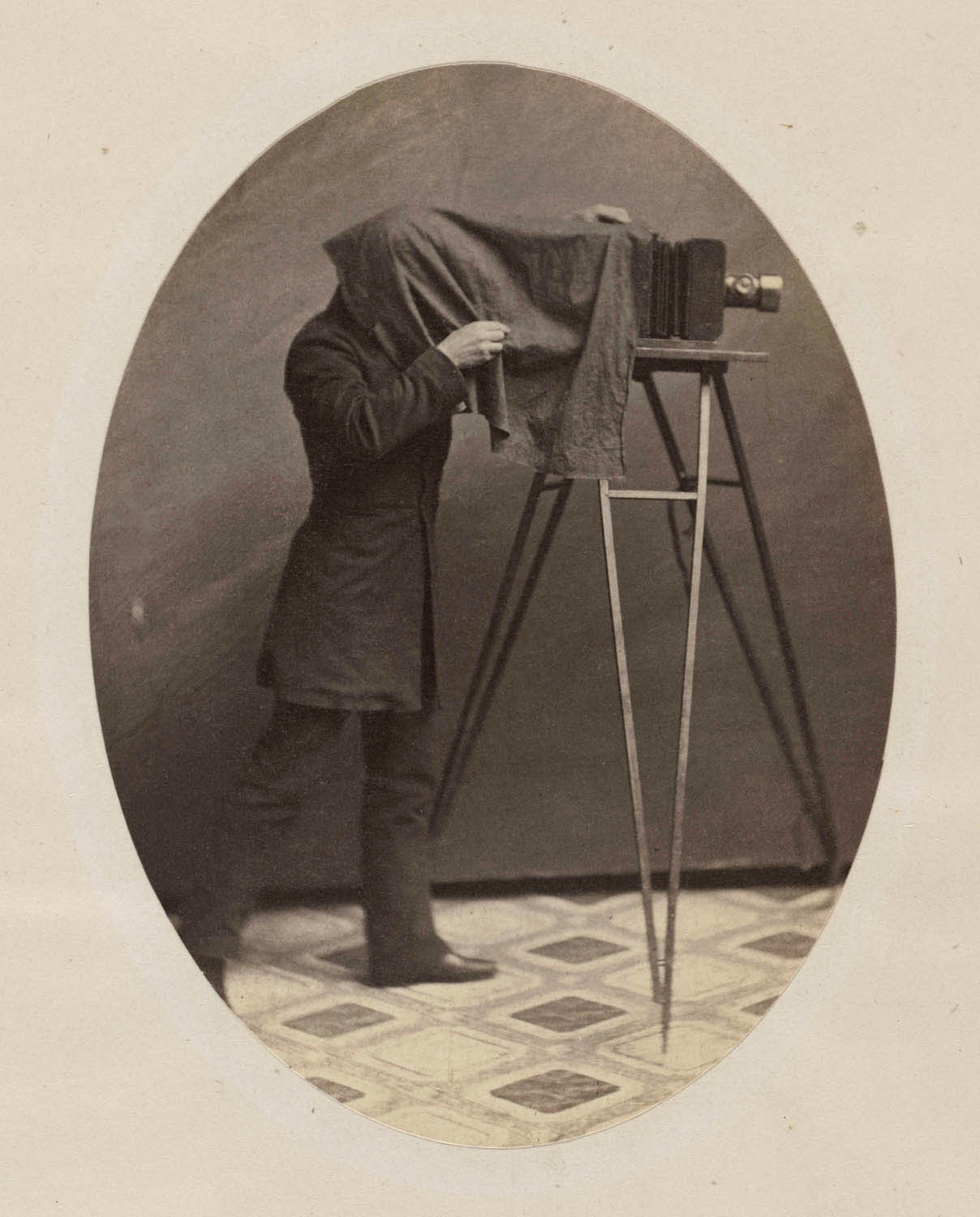
Unknown Maker. 'Studio Photographer at Work' c. 1855


Unknown Maker
Studio Photographer at Work
c. 1855
Salted paper print from glass negative
5 1/8 × 3 13/16 in. (13 × 9.7cm)
The Metropolitan Museum of Art, William L. Schaeffer Collection
Promised Gift of Jennifer and Philip Maritz, in celebration of the Museum’s 150th Anniversary


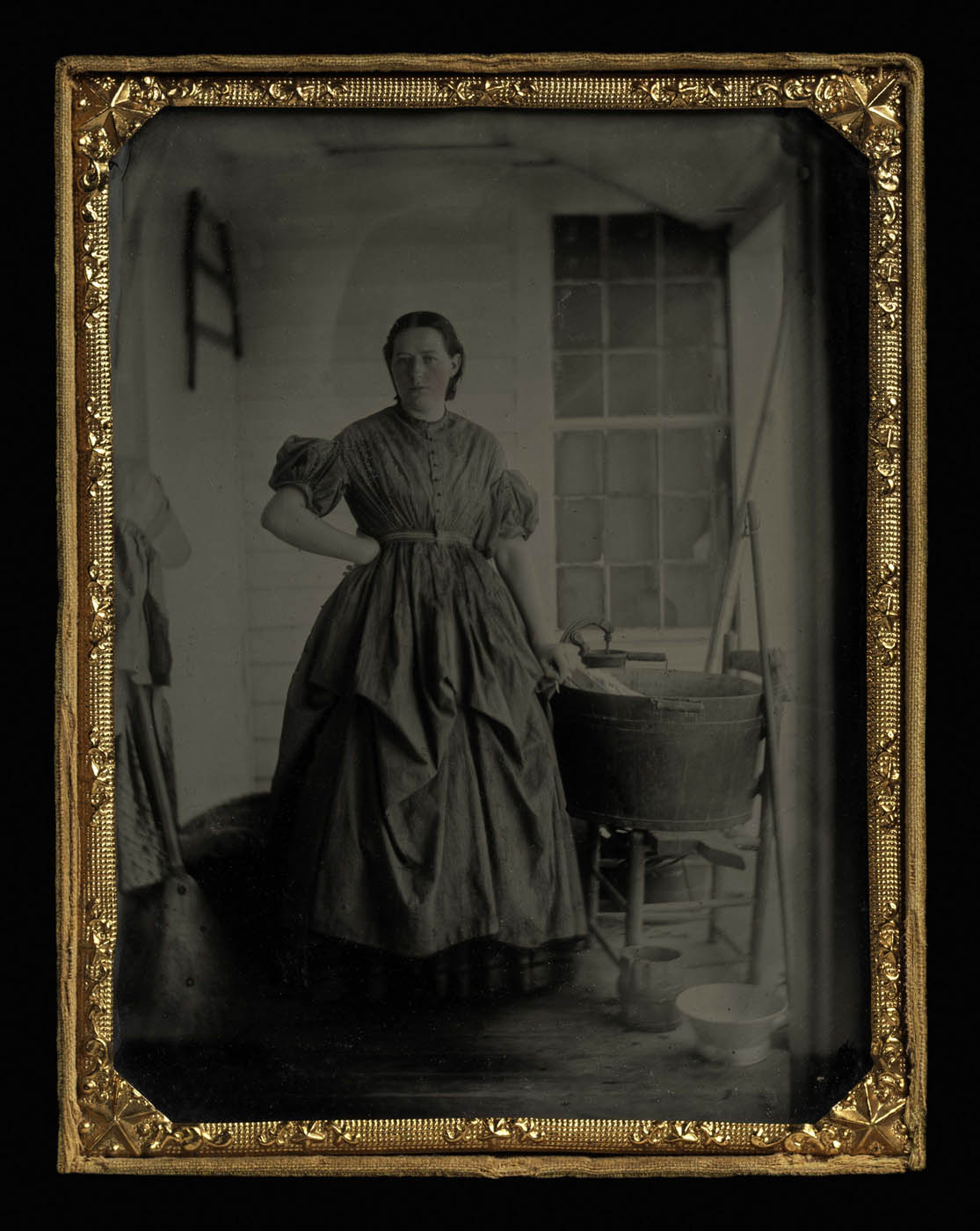
Unknown Maker (American) 'Laundress with Washtub' 1860s


Unknown Maker (American)
Laundress with Washtub
1860s
Ambrotype with applied colour
Case: 4 1/8 x 3 1/4 in. (4.2 x 3.2cm)
The Metropolitan Museum of Art, William L. Schaeffer Collection
Promised Gift of Jennifer and Philip Maritz, in celebration of the Museum’s 150th Anniversary


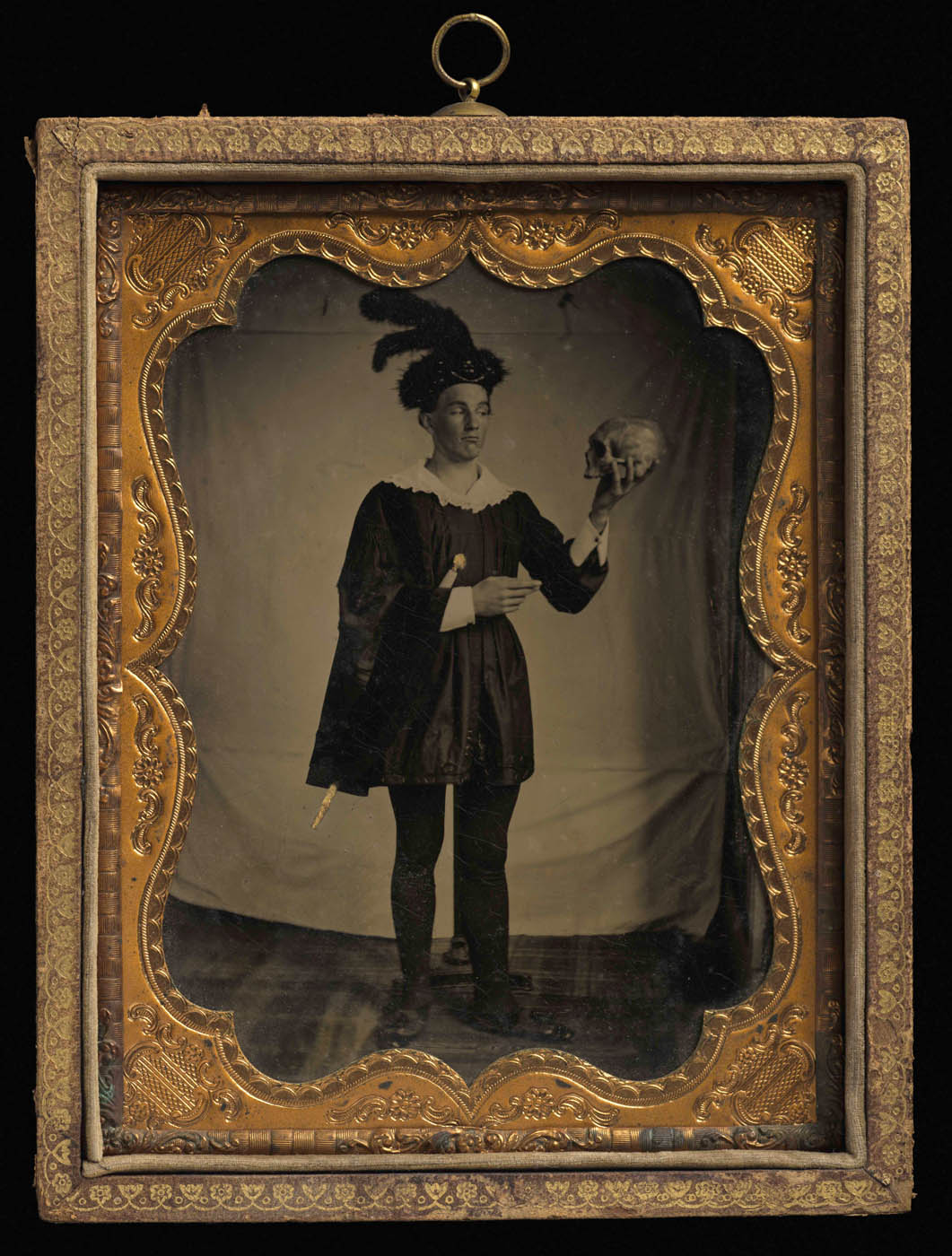
Unknown Maker (American) 'Actor Playing Hamlet, Holding a Skull' 1860s


Unknown Maker (American)
Actor Playing Hamlet, Holding a Skull
1860s
Tintype with applied colour
Case: 6 1/4 × 4 15/16 in. (15.8 × 12.6cm)
The Metropolitan Museum of Art, William L. Schaeffer Collection
Promised Gift of Jennifer and Philip Maritz, in celebration of the Museum’s 150th Anniversary


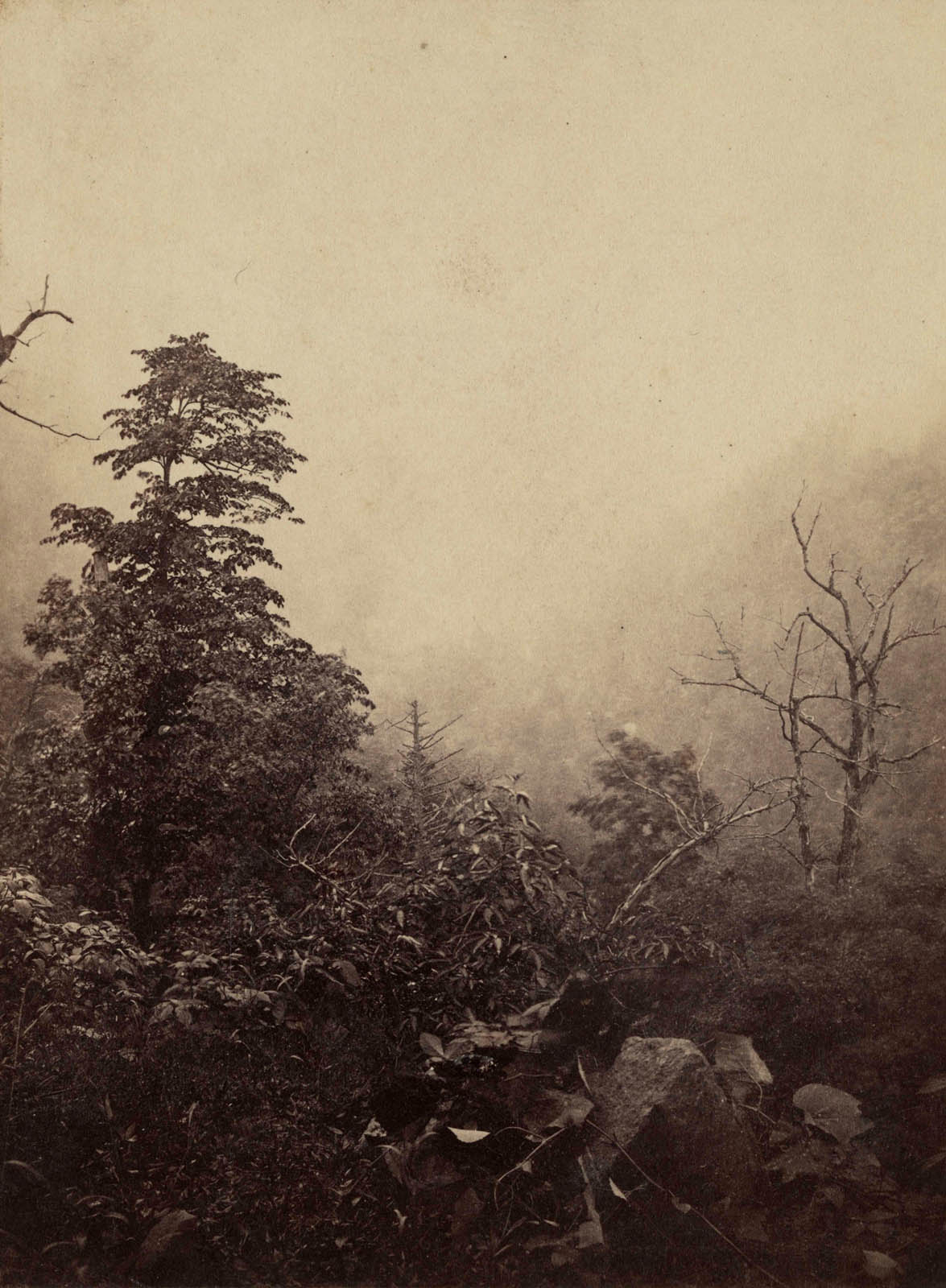
John Moran (American born England, 1821-1903) 'Showing Weather Among the Alleghenies' 1861-1862


John Moran (American born England, 1821-1903)
Showing Weather Among the Alleghenies
1861-1862
Albumen silver print from glass negative
4 3/4 × 3 5/8 in. (12.1 × 9.2cm)
The Metropolitan Museum of Art, William L. Schaeffer Collection
Promised Gift of Jennifer and Philip Maritz, in celebration of the Museum’s 150th Anniversary


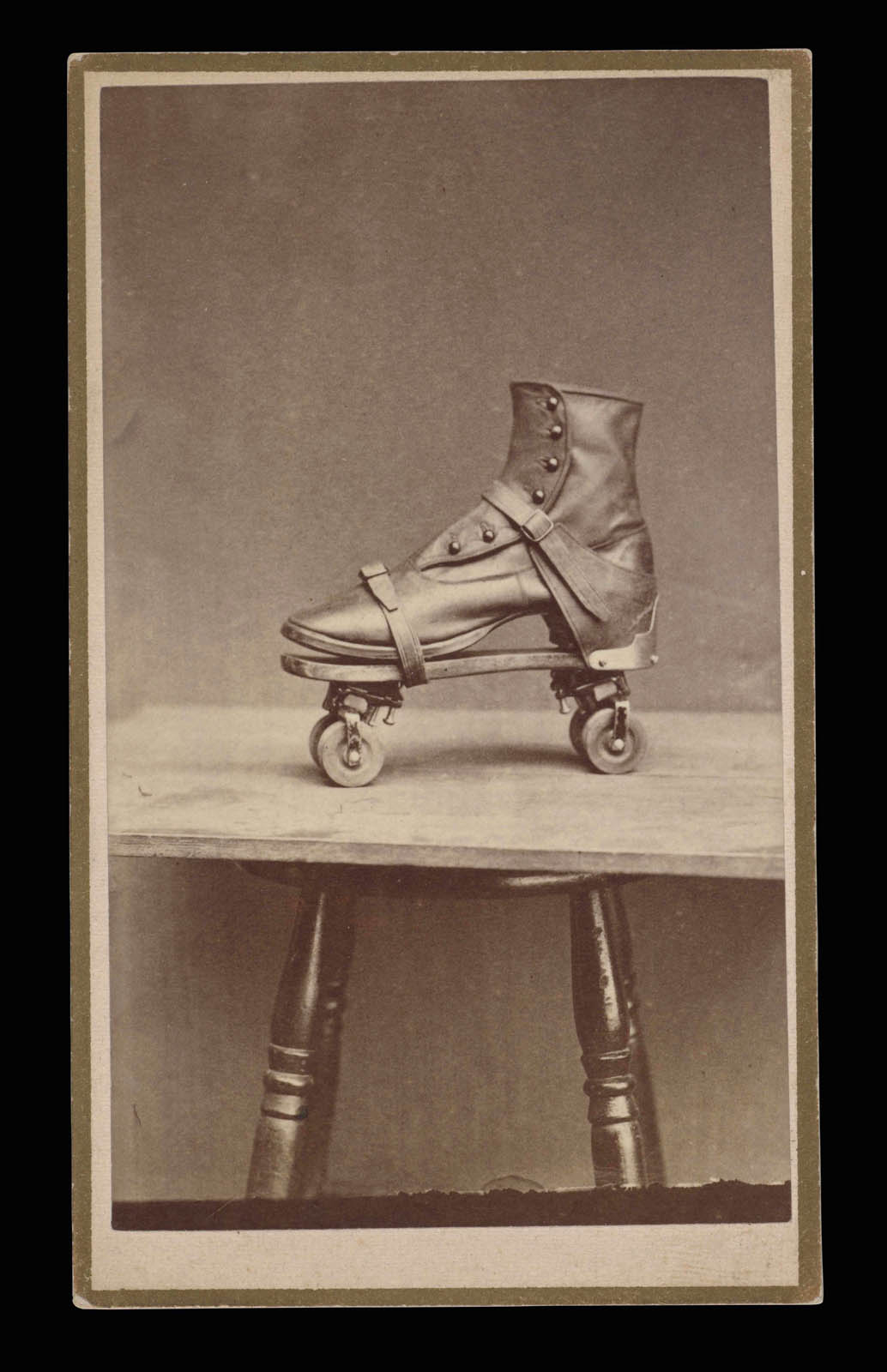
Unknown Maker. 'Roller Skate and Boot' 1860s


Unknown Maker
Roller Skate and Boot
1860s
Albumen silver print from glass negative
Mount: 4 1/8 × 2 7/16 in. (10.5 × 6.2cm)
The Metropolitan Museum of Art, William L. Schaeffer Collection
Promised Gift of Jennifer and Philip Maritz, in celebration of the Museum’s 150th Anniversary


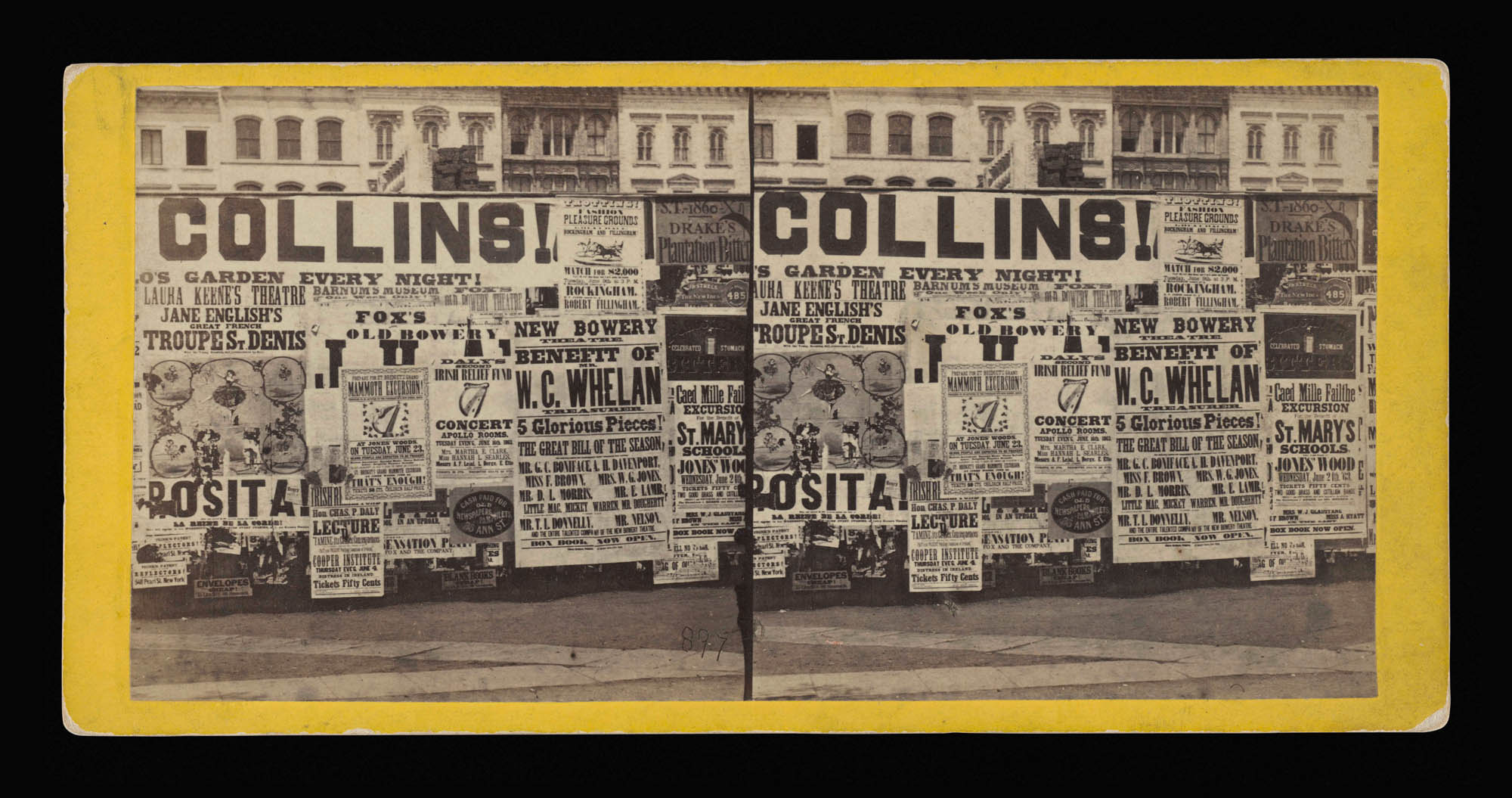
Unknown Maker (American) Published by E. & H. T. Anthony (American, 1862-1880s) 'Specimens of New York Bill Posting, No. 897 from the series "Anthony's Stereoscopic Views"' 1863


Unknown Maker (American)
Published by E. & H. T. Anthony (American, 1862-1880s)
Specimens of New York Bill Posting, No. 897 from the series
“Anthony’s Stereoscopic Views”

1863
Albumen silver print from glass negative
Mount: 3 1/4 × 6 3/4 in. (8.3 × 17.1 cm)
The Metropolitan Museum of Art, William L. Schaeffer Collection
Promised Gift of Jennifer and Philip Maritz, in celebration of the Museum’s 150th Anniversary


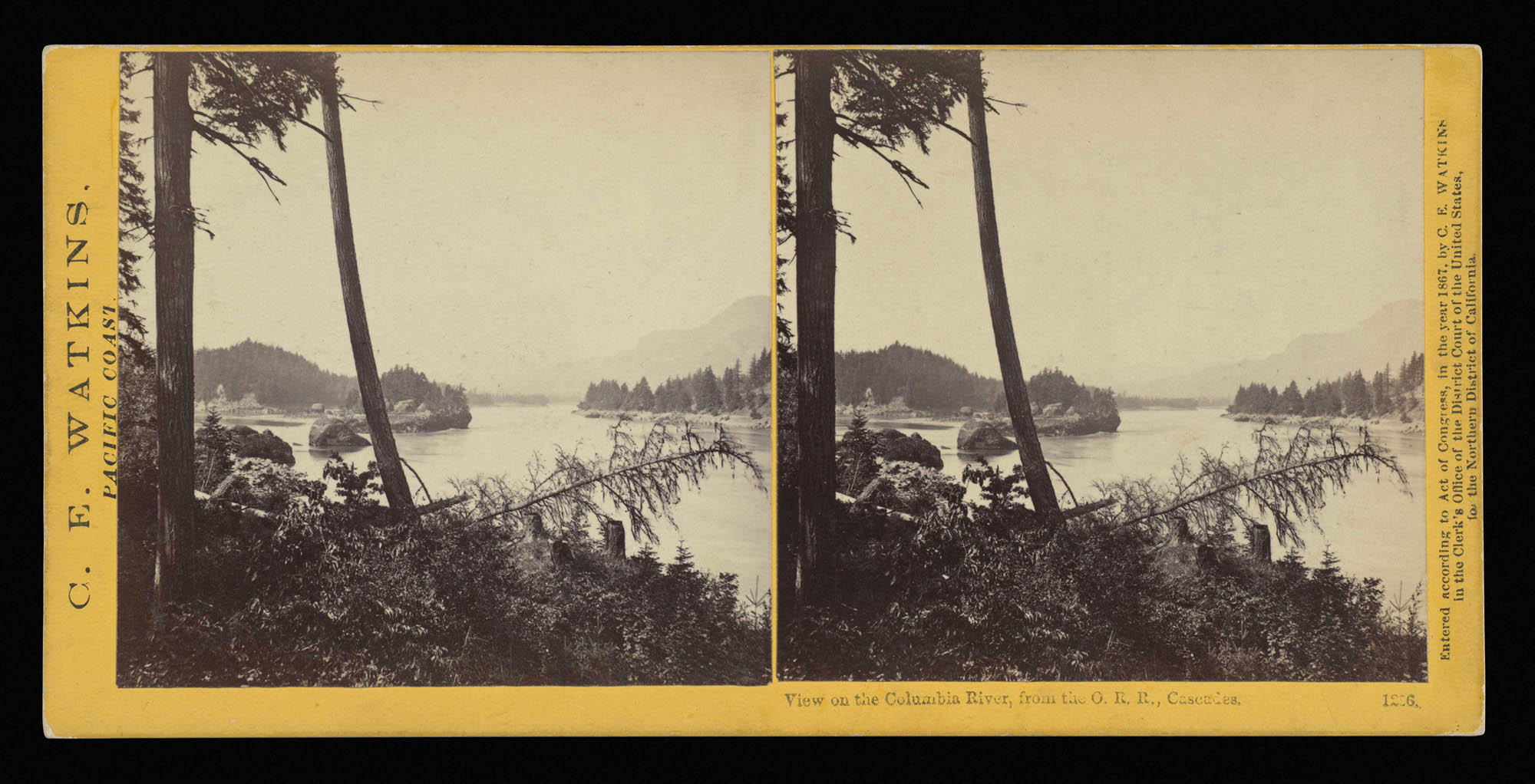
Carleton E. Watkins (American, 1829–1916) 'View on the Columbia River, from the O.R.R., Cascades, No. 1286 from the series "Pacific Coast"' 1867


Carleton E. Watkins (American, 1829-1916)
View on the Columbia River, from the O.R.R., Cascades, No. 1286 from the series “Pacific Coast”
1867
Albumen silver prints from glass negatives
Mount: 3 1/4 × 6 3/4 in. (8.2 × 17.1cm)
The Metropolitan Museum of Art, William L. Schaeffer Collection
Promised Gift of Jennifer and Philip Maritz, in celebration of the Museum’s 150th Anniversary


Albert Cone Townsend (American, 1827-1914) 'A Politician' 1865-1867


Albert Cone Townsend (American, 1827-1914)
A Politician
1865-1867
Albumen silver print from glass negative
Mount: 4 × 2 7/16 in. (10.1 × 6.2cm)
The Metropolitan Museum of Art, William L. Schaeffer Collection
Promised Gift of Jennifer and Philip Maritz, in celebration of the Museum’s 150th Anniversary


The New Art: American Photography, 1839-1910

Introductory panel 

The world changed dramatically in September 1839 when photography was introduced to the public and quickly emerged as one of the wonders of modern times. Its invention marks the dawn of our own media-obsessed age in ways that become clear when we explore in depth the special language of daguerreotypes, tintypes, cartes de visite, stereographs, and other early photographic processes and formats. 

This exhibition presents an adventurous new history of American photography from the medium’s beginnings to the first decade of the twentieth century. Major works by established artists are shown in dialogue with superb, never-before-seen photographs by obscure or unknown practitioners working in large urban centres and small towns across the expanding country. Tracing technological advancements and the development of picture formats, The New Art charts the remarkable change in the nation’s sense of itself that was driven by the phenomenal success of photography as a cultural, commercial, and artistic preoccupation. 

All the works of art on view are drawn from an extraordinary promised gift to The Met of more than seven hundred rare photographs offered by Jennifer and Philip Maritz in celebration of the Museum’s 150th anniversary in 2020. The donors acquired the collection from William L. Schaeffer, a renowned Connecticut private photography dealer who had quietly built it over the last half century. 

Daguerreotypes 

The daguerreotype is a photographic image formed on the surface of a silver-plated sheet of copper fumed with iodine. Exposed in a wood box camera and developed with hot mercury vapours, each daguerreotype is unique. Invented in France by Louis-Jacques-Mandé Daguerre and announced to the world in August 1839, it was the dominant form of photography in the U.S. for twenty years, until around 1860. The daguerreotype’s ability to permanently hold a detailed image – before then seen only fleetingly in a mirror – was astonishing. The shimmering result seemed in equal measure unbelievable and perfectly real, darkly mysterious yet scientifically verifiable, a shadowy fiction and a beautiful truth. In the U.S. the daguerreotype provided an opportunity for self-representation to many strata of society that were previously excluded from the realm of portraiture. 

Ambrotypes

The ambrotype is similar in its process to the daguerreotype, but it uses a sheet of glass rather than copper as the image support. Popular in the U.S. from 1854 to 1870, the technique – invented in England but named by an American – was the predictable next development of photography. Although less visually alluring, it had marked advantages over the daguerreotype: it was cheaper to produce, it was easier to see (without glare) in most lighting conditions, and it eliminated the lateral reversal of the image characteristic of the earlier process. This was especially helpful with certain patrons who were annoyed, for example, by a jacket buttoning backward or a wedding ring appearing on the incorrect hand. 

Tintypes

The tintype is a distinctively American style of photograph. Patented in February 1856 by Hamilton Lamphere Smith, the technique was inexpensive and relatively easy to master. It appealed as much to enterprising itinerant picture makers, who traveled to rural communities and made outdoor portraits and views, as it did to artists operating brick-and-mortar galleries. Rather than a coating of silver emulsion on copper (the daguerreotype) or glass (the ambrotype), the tintype’s support is a common sheet of blackened iron. Despite its misleading name, which was not in use until 1863, there is no tin present in a tintype. The process was wildly popular in the U.S. until the end of the nineteenth century.

Paper-print Photographs

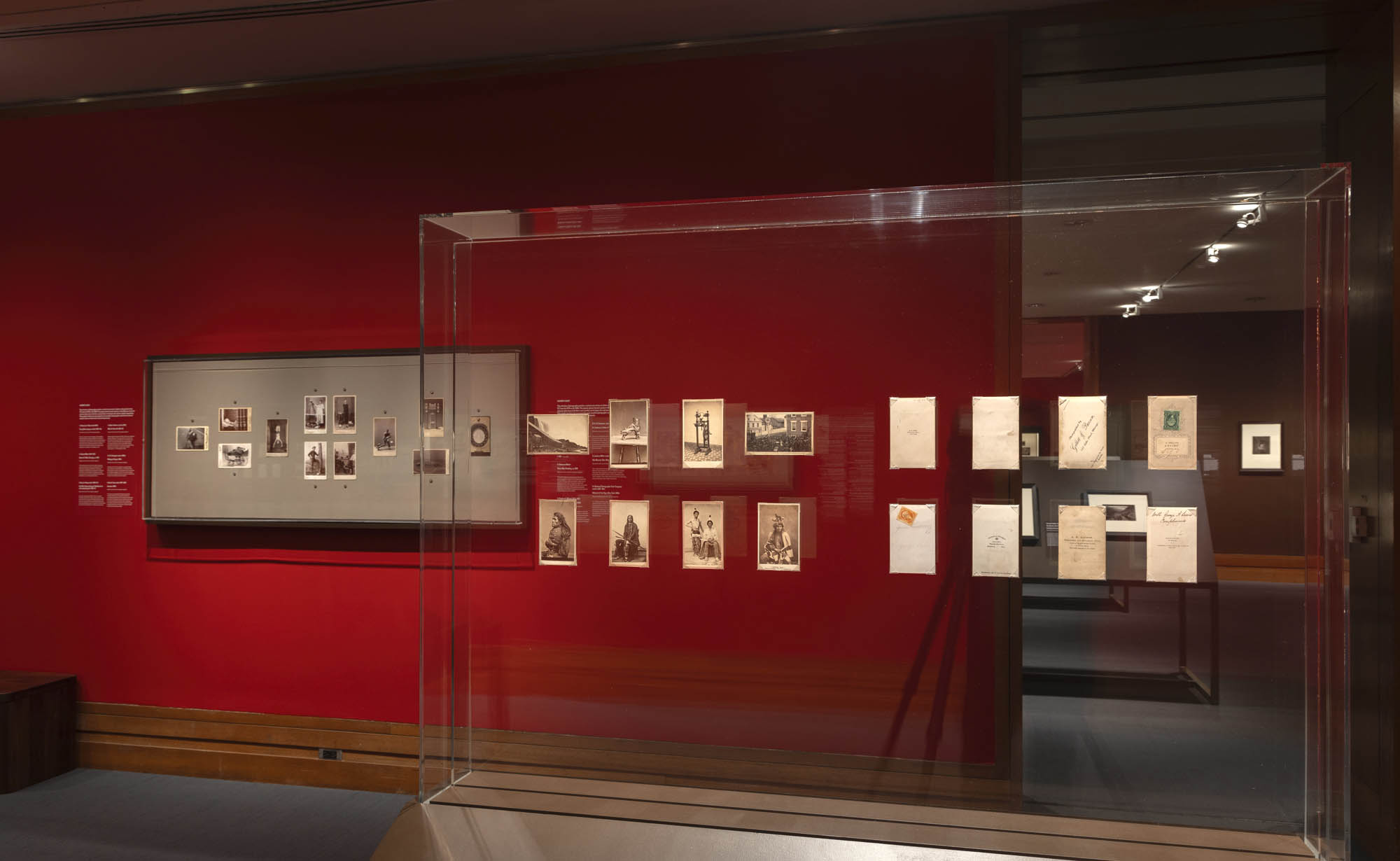
From 1839 until the start of the Civil War in 1861, most photographs were made on metal (daguerreotypes and tintypes) or glass (ambrotypes). Beginning in the late 1850s, however, paper was widely adopted as the physical support for photographs. This gallery primarily features paper-print photographs and albums that date from 1850 to 1910. They are known by a variety of names that reflect changes in materiality and date of production: salted paper prints, generally made from paper negatives; albumen silver prints, made from glass negatives; and gelatin silver and platinum prints, made from glass or flexible film negatives. In this era, two formats of card-mounted paper-print photographs enjoyed remarkable success: the small carte-de-visite portrait and the stereographic view. 

Cartes de Visite

The carte de visite – commonly known as a “cdv” – is a small photograph, usually an albumen silver print made from a glass negative, affixed to a 4-by-2½-inch stiff paper card. Invented in France in the mid-1850s as a portrait medium, it was the world’s first mass-produced and mass-consumed type of photographic collectible. Most photographers marked the mounts with their gallery names as a means of self-promotion and what today we would call brand-building. Ubiquitous in the U.S. from just before 1860 to 1880, the democratic, Victorian-age novelty was wildly popular with the public. “Cartomania,” as the phenomenon was known, is worthy of attention today as a resonant precursor to our own obsession with sharing images of celebrities and ourselves via social media. 

Cabinet Cards

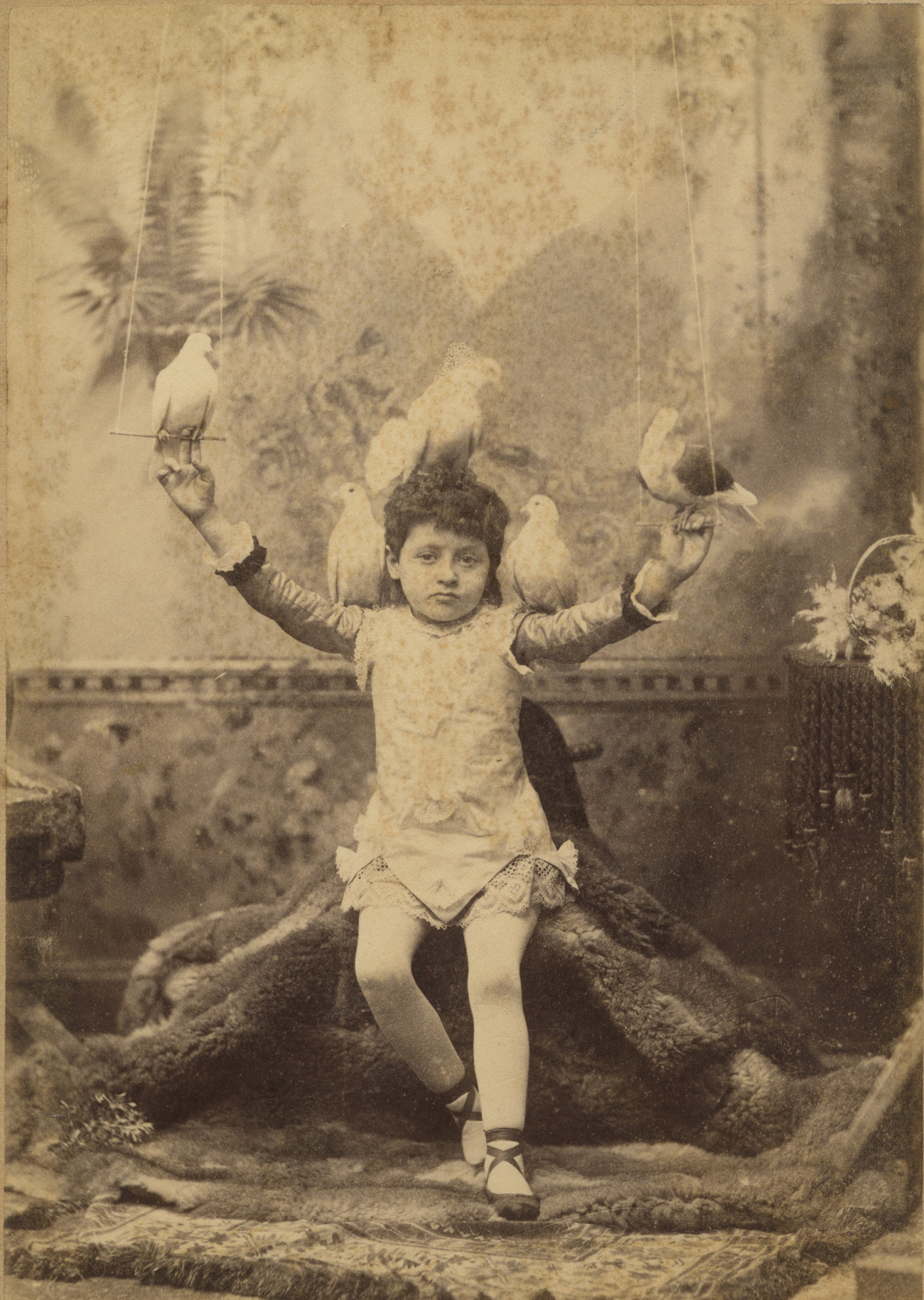
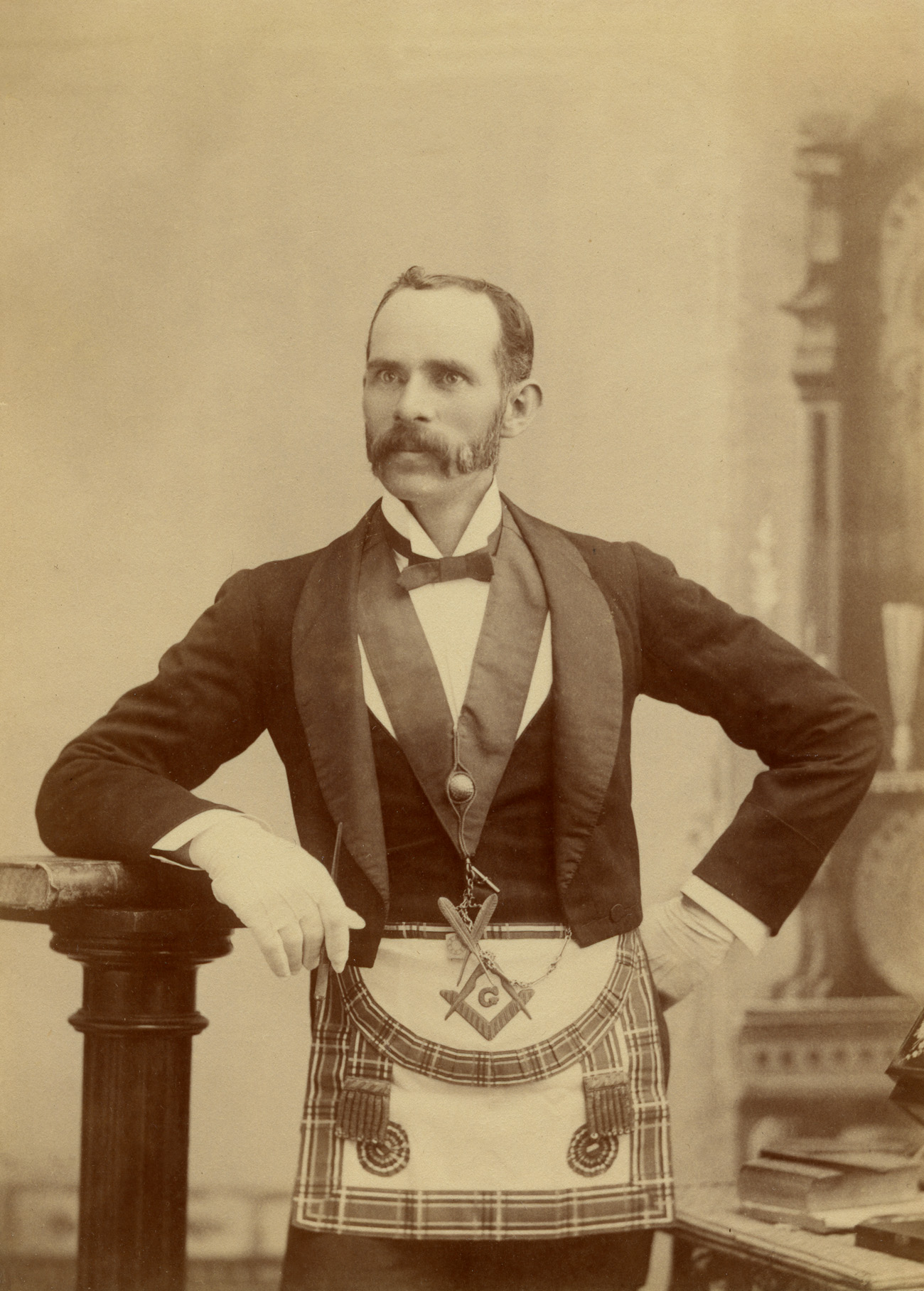
A cabinet card is essentially an oversize carte de visite. In vogue for three decades in the U.S. beginning around 1870, the 6 1/2-by-4 1/2-inch card-mounted photograph offered picture makers significantly more space and freedom to compose their visual narratives. After the deadly seriousness of the Civil War, cabinet cards frequently fulfilled a growing appetite for light-hearted diversion. They often feature elaborate props and accessories, exotic backdrops, and, as the century progressed, increasingly playful indoor and outdoor scenes.

Stereographs

Introduced in the late 1850s and prevalent into the twentieth century, the stereograph was not only a culturally significant invention but also a commercial boon to American photographers. When viewed through a device known as a stereoscope (or stereopticon), a pair of photographs of the same subject – made from two slightly different points of view – are perceived in the brain as a single, seemingly three-dimensional image. The dazzling binocular effect created an immersive experience, offering inexpensive armchair travel and a window on the world to millions of Americans. 

Cyanotypes

Invented in 1842 by the British scientist John Herschel, a cyanotype is a naturally blue photograph made with iron salts. Early on, most cyanotypes took the form of nature studies made without a camera by placing botanical specimens (or other objects) directly in contact with sensitised paper and then exposing the composition in the sun. In the 1870s architects and engineers began using the process to duplicate their drawings, resulting in what are generally known as “blueprints.” Both economical and easily developed, the cyanotype reemerged in the late 1880s as a favourite choice of professional photographers and amateurs alike. It was often selected for large municipal documentary projects such as those seen here. 

Intro and Section Wall Texts from The Metropolitan Museum of Art


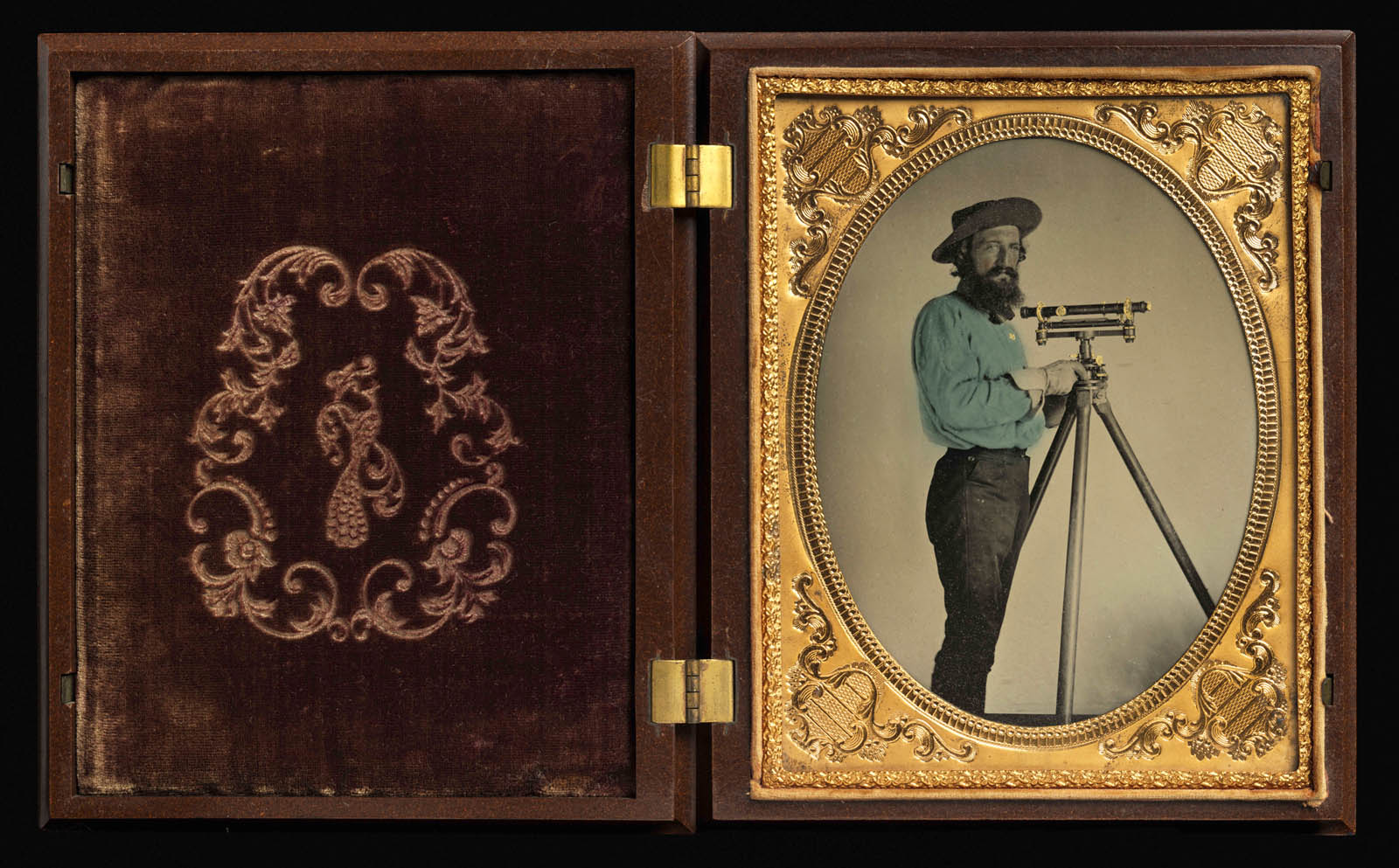
Unknown Maker (American) 'Railroad Worker (?) with Wye Level' c. 1870


Unknown Maker (American)
Railroad Worker (?) with Wye Level
c. 1870
Tintype with applied color
Case (open): 6 5/16 × 10 3/8 in. (16 × 26.4cm)
The Metropolitan Museum of Art, William L. Schaeffer Collection
Promised Gift of Jennifer and Philip Maritz, in celebration of the Museum’s 150th Anniversary


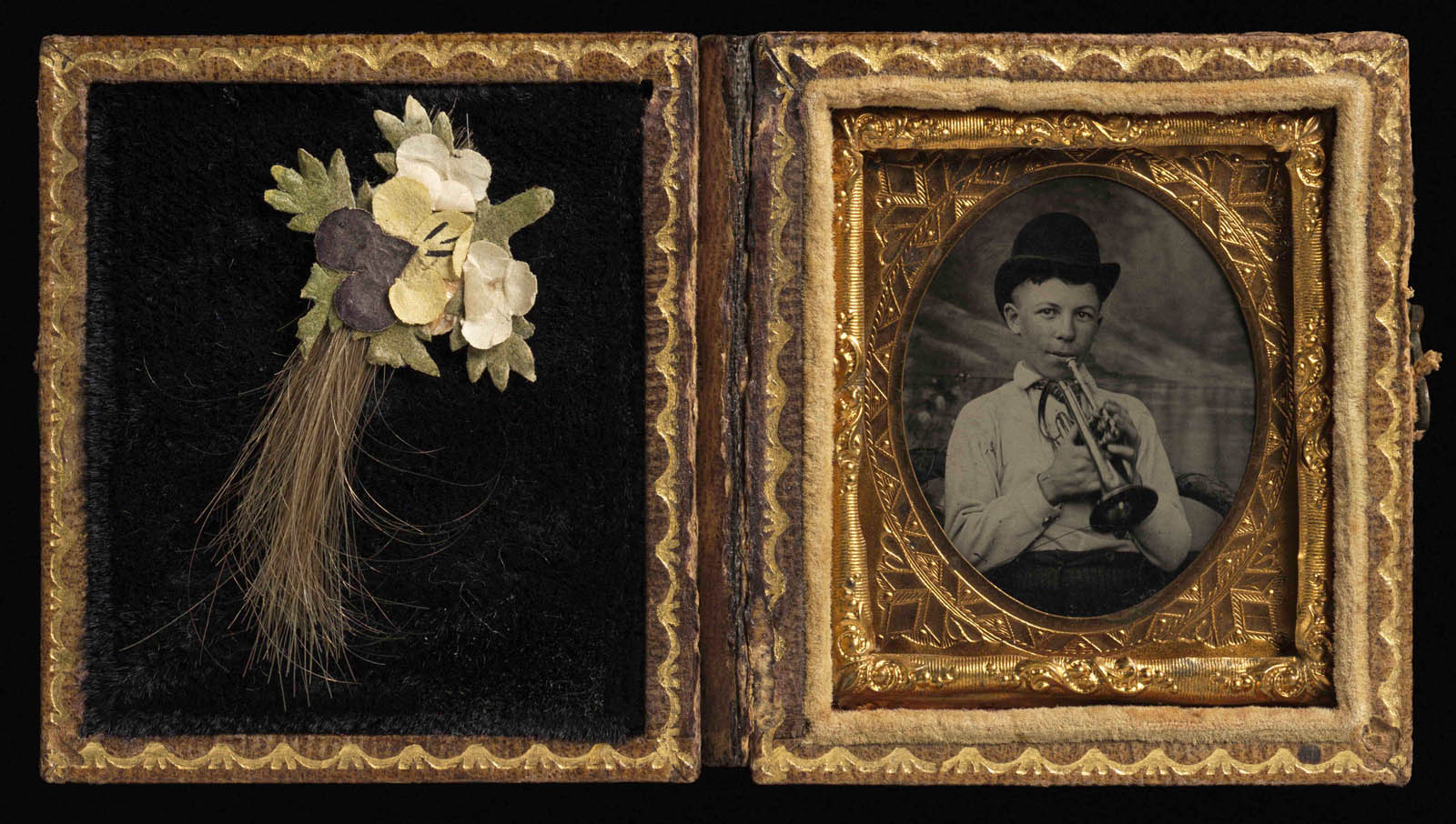
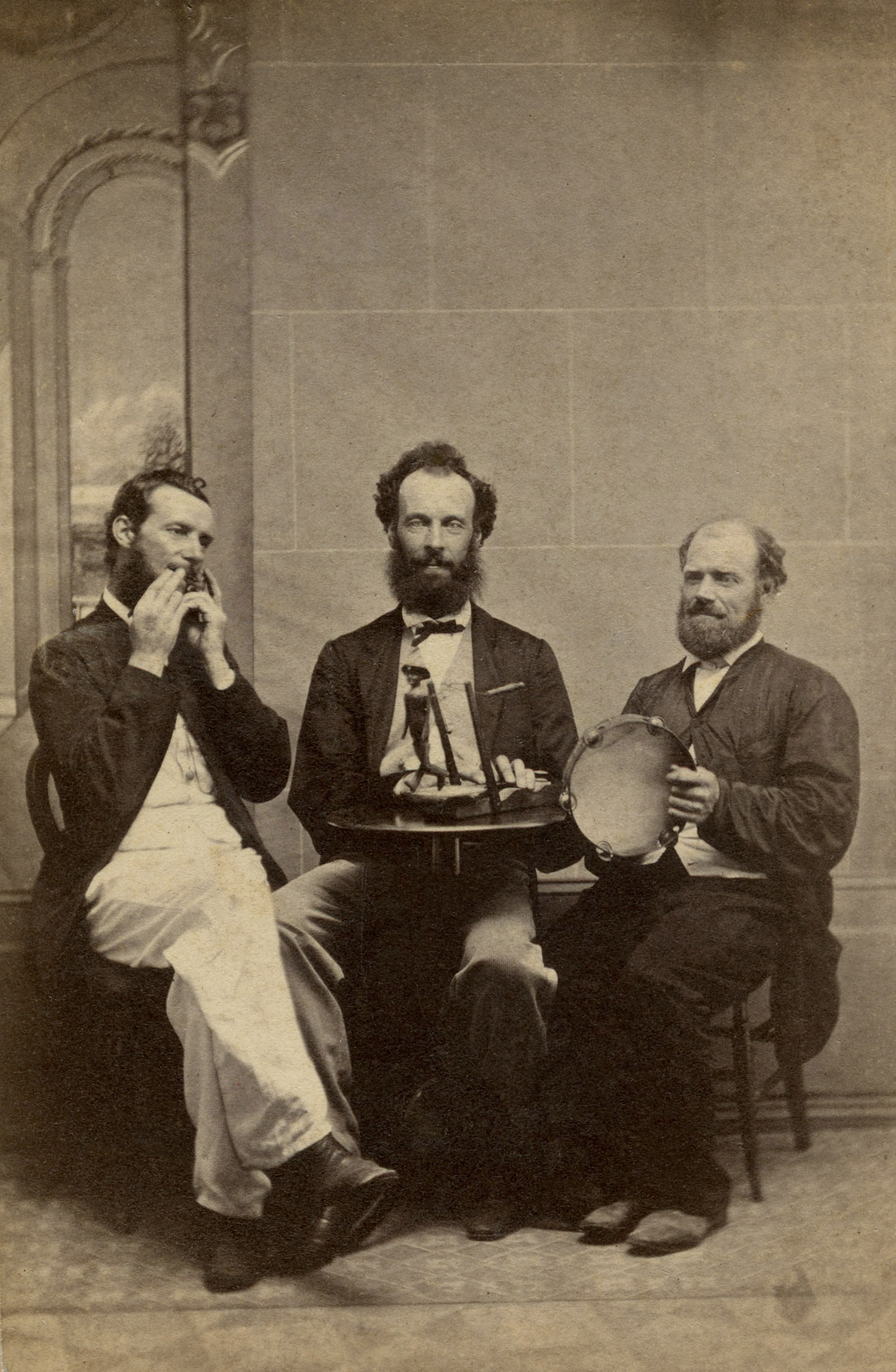
Unknown Maker (American) 'Musician' 1870s


Unknown Maker (American)
Musician
1870s
Tintype, with lock of hair and cut paper
Case (open): 2 × 3 1/2 in. (5.1 × 8.9cm)
The Metropolitan Museum of Art, William L. Schaeffer Collection
Promised Gift of Jennifer and Philip Maritz, in celebration of the Museum’s 150th Anniversary


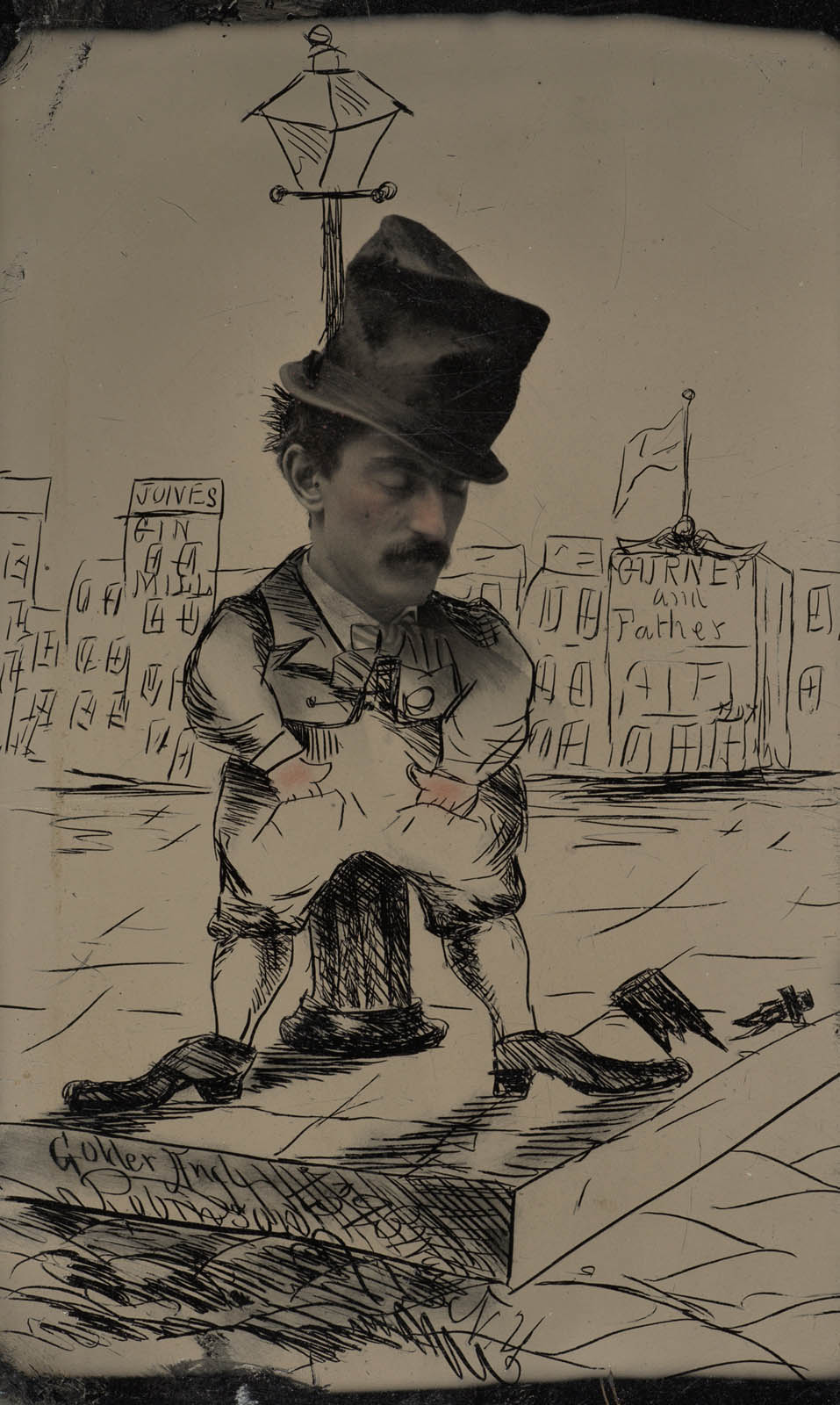
Golder & Robinson (American, active 1870s) 'Comic Novelty Portrait' 1870s


Golder & Robinson (American, active 1870s)
Comic Novelty Portrait
1870s
Tintype with applied colour
4 × 2 7/16 in. (10.1 × 6.2cm)
The Metropolitan Museum of Art, William L. Schaeffer Collection
Promised Gift of Jennifer and Philip Maritz, in celebration of the Museum’s 150th Anniversary


Wenderoth, Taylor & Brown (American, active 1864-1871) 'The Gallery of Arts & Manufacturers of Philadelphia' 1871


Wenderoth, Taylor & Brown (American, active 1864-1871)
The Gallery of Arts & Manufacturers of Philadelphia
1871
Albumen silver prints from glass negative
Open: 13 3/4 x 19 in. (34.9 x 48.3cm)
The Metropolitan Museum of Art, William L. Schaeffer Collection
Promised Gift of Jennifer and Philip Maritz, in celebration of the Museum’s 150th Anniversary


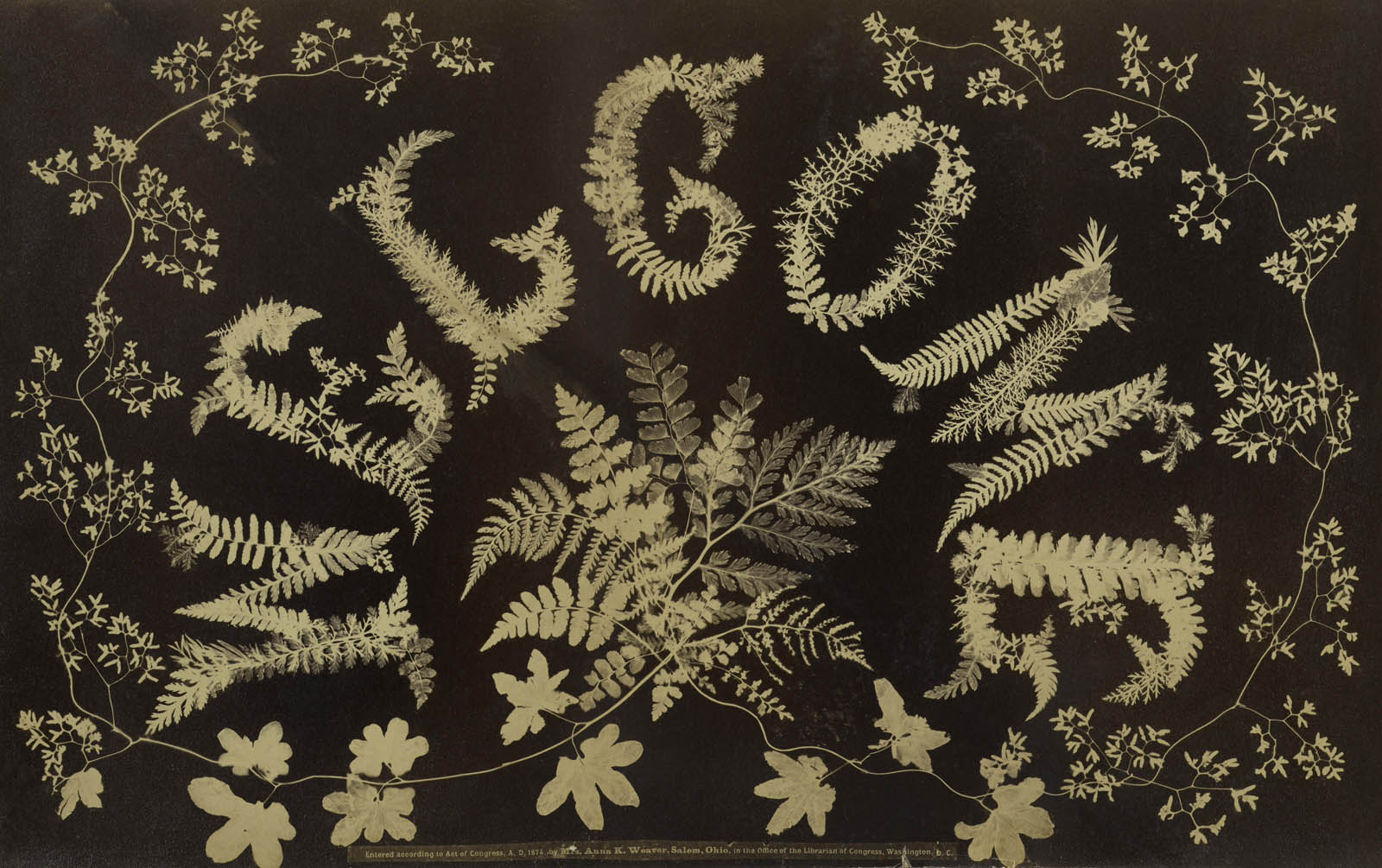
Anna K. Weaver (American, 1847/48-1913) 'Welcome' 1874


Anna K. Weaver (American, 1847/48-1913)
Welcome
1874
Albumen silver print from glass negative
10 7/8 x 17 1/2 in. (27.8 x 44.5cm)
The Metropolitan Museum of Art, William L. Schaeffer Collection
Promised Gift of Jennifer and Philip Maritz, in celebration of the Museum’s 150th Anniversary


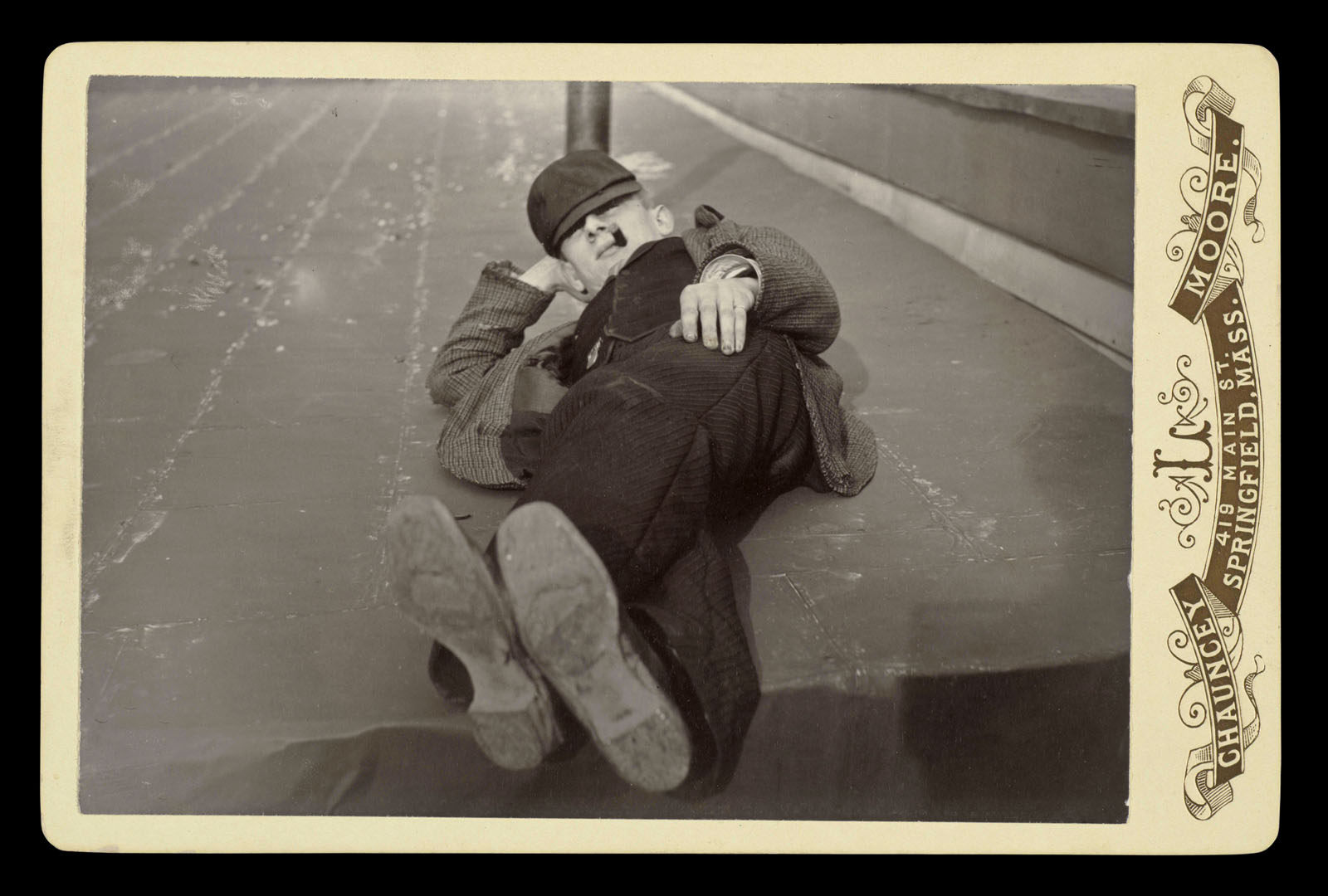
Chauncey L. Moore (American, died 1895) 'Young Man Laying on Roof' 1880s-1890s


Chauncey L. Moore (American, died 1895)
Young Man Laying on Roof
1880s-1890s
Albumen silver print
Mount: 4 1/4 × 6 1/2 in. (10.8 × 16.5cm)
The Metropolitan Museum of Art, William L. Schaeffer Collection
Promised Gift of Jennifer and Philip Maritz, in celebration of the Museum’s 150th Anniversary


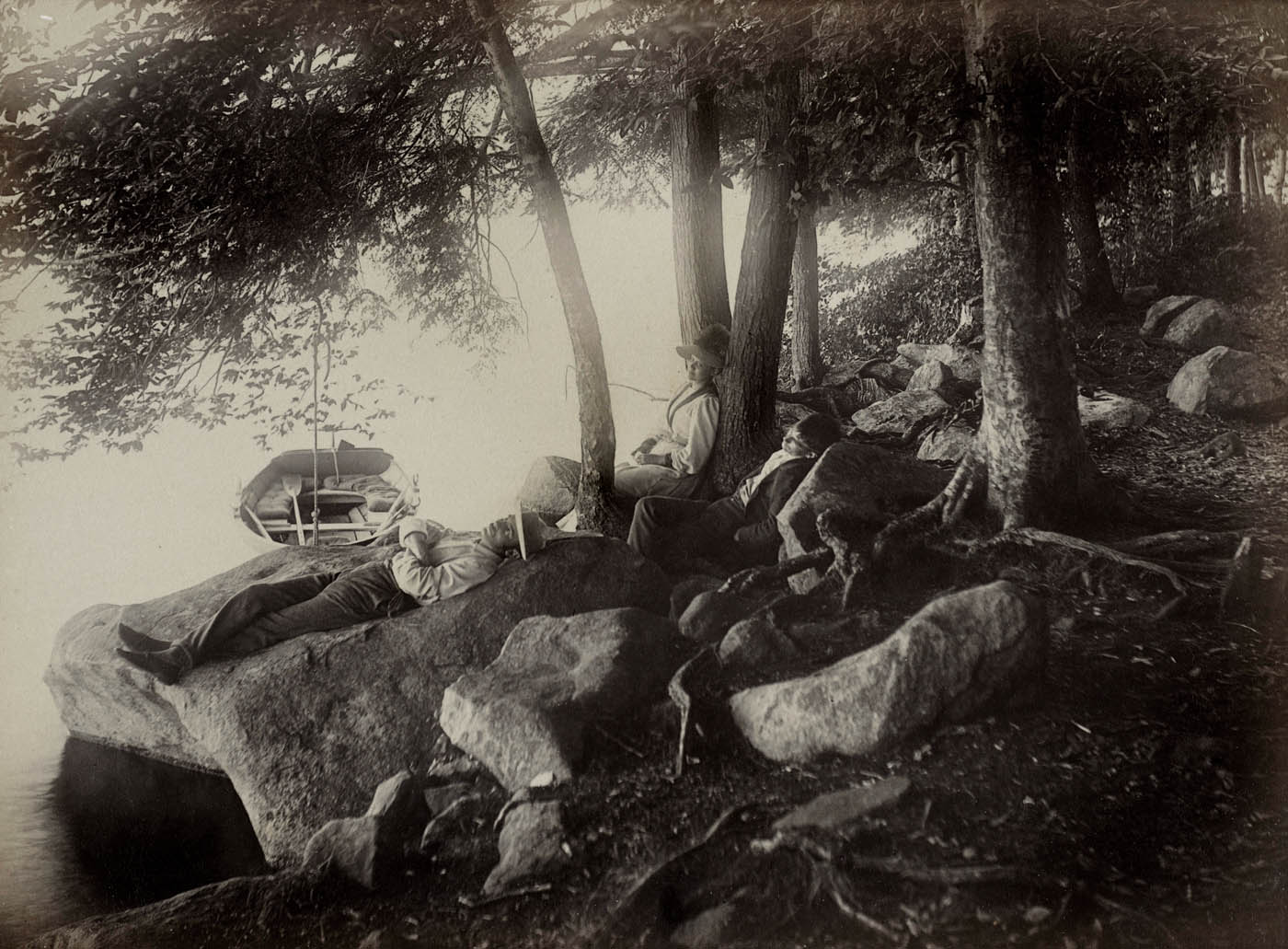
Alice Austen (American, 1866-1952) 'Group on Petria, Lake Mahopac' August 9, 1888


Alice Austen (American, 1866-1952)
Group on Petria, Lake Mahopac
August 9, 1888
Albumen silver print from glass negative
6 × 8 1/8 in. (15.2 × 20.7cm)
The Metropolitan Museum of Art, William L. Schaeffer Collection
Promised Gift of Jennifer and Philip Maritz, in celebration of the Museum’s 150th Anniversary


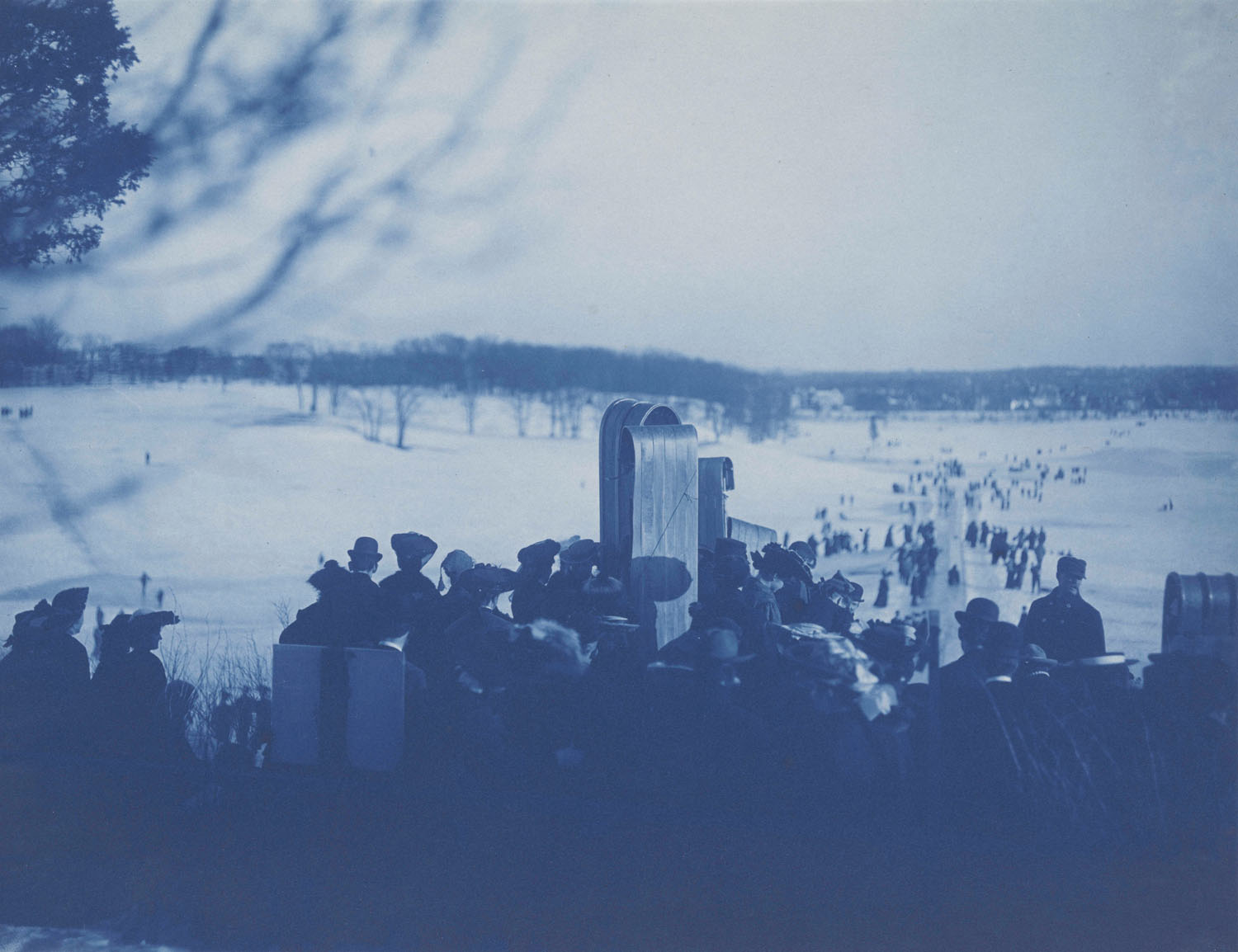
Unknown Maker (American) '748. Schoolmaster Hill Tobogganing, Franklin Park, Roxbury, Massachusetts' 1905


Unknown Maker (American)
Schoolmaster Hill Tobogganing, Franklin Park, Roxbury, Massachusetts
1905
Cyanotype
7 × 9 1/4 in. (17.8 × 23.5cm)
The Metropolitan Museum of Art, William L. Schaeffer Collection
Promised Gift of Jennifer and Philip Maritz, in celebration of the Museum’s 150th Anniversary


The Metropolitan Museum of Art
1000 Fifth Avenue at 82nd Street
New York, New York 10028-0198
Phone: 212-535-7710

Opening hours:
Thursday – Tuesday 10am – 5pm
Closed Wednesday

The Metropolitan Museum of Art website

LIKE ART BLART ON FACEBOOK

Back to top

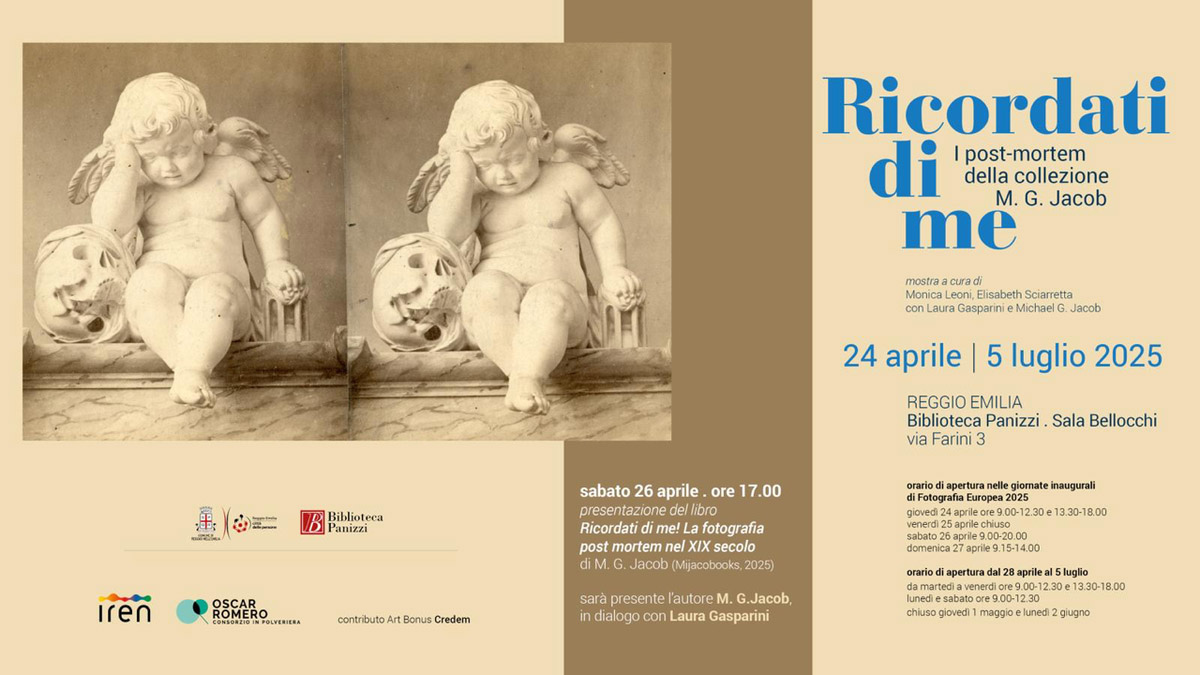
Exhibitions: ‘Ricordati di me. I post mortem della collezione M. G. Jacob’ and ‘Attraverso la luce. I primi 20 anni della fotografia nelle collezioni della Fototeca’ at Biblioteca Panizzi, Reggio Emilia, Italy

Exhibition dates: 24th April – 5th July, 2025

‘Remember Me. Postmortems from the M. G. Jacob Collection’ and ‘Through Light. The First 20 Years of Photography in the Photo Library Collections’

Postmortem curators: Monica Leoni, Elisabeth Sciarretta with Laura Gasparini and Michael G. Jacob

Attraverso la luce curators: Monica Leoni, Elisabeth Sciarretta with Laura Gasparini


'Ricordati di me. I post mortem della collezione M. G. Jacob'


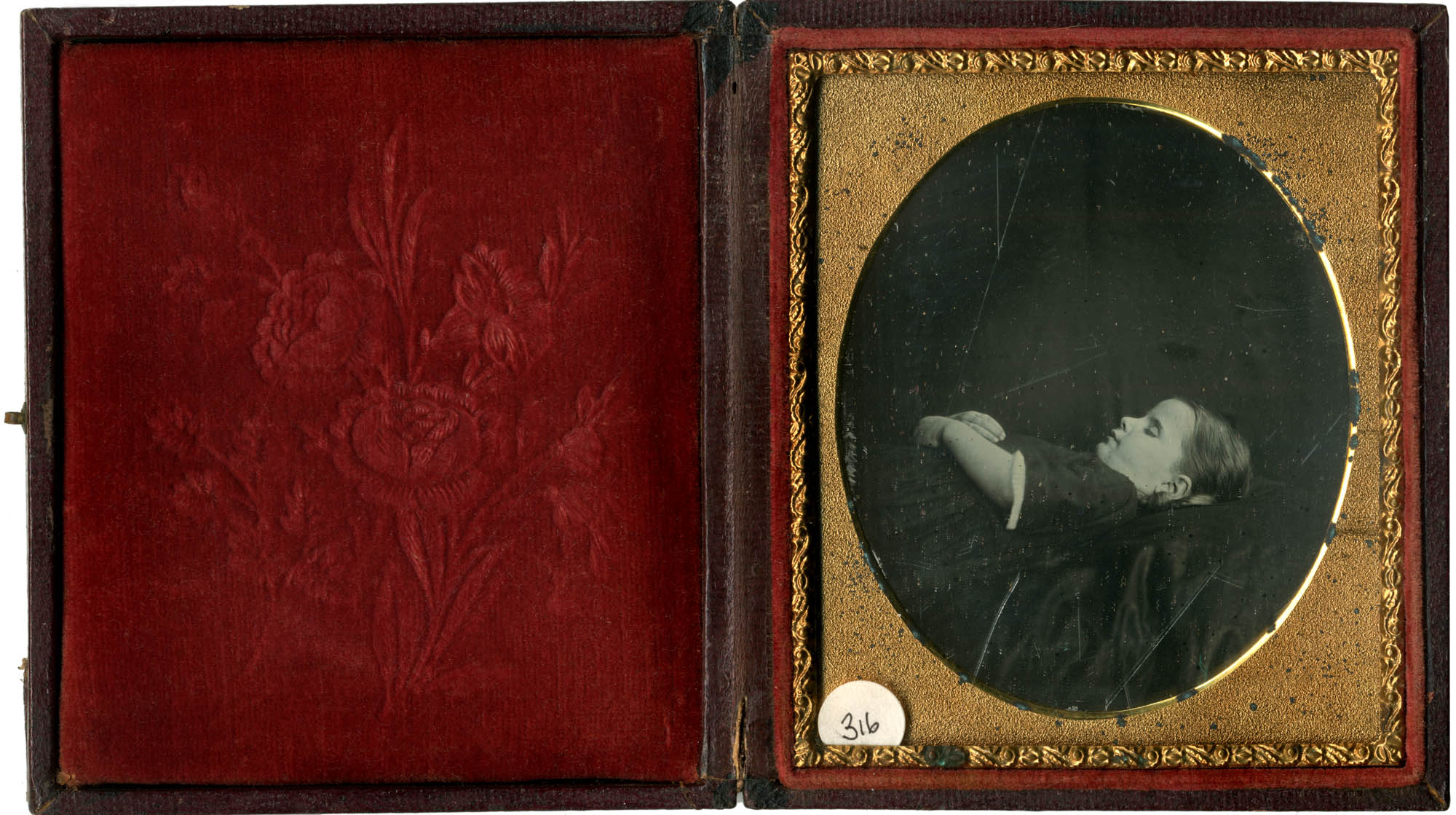
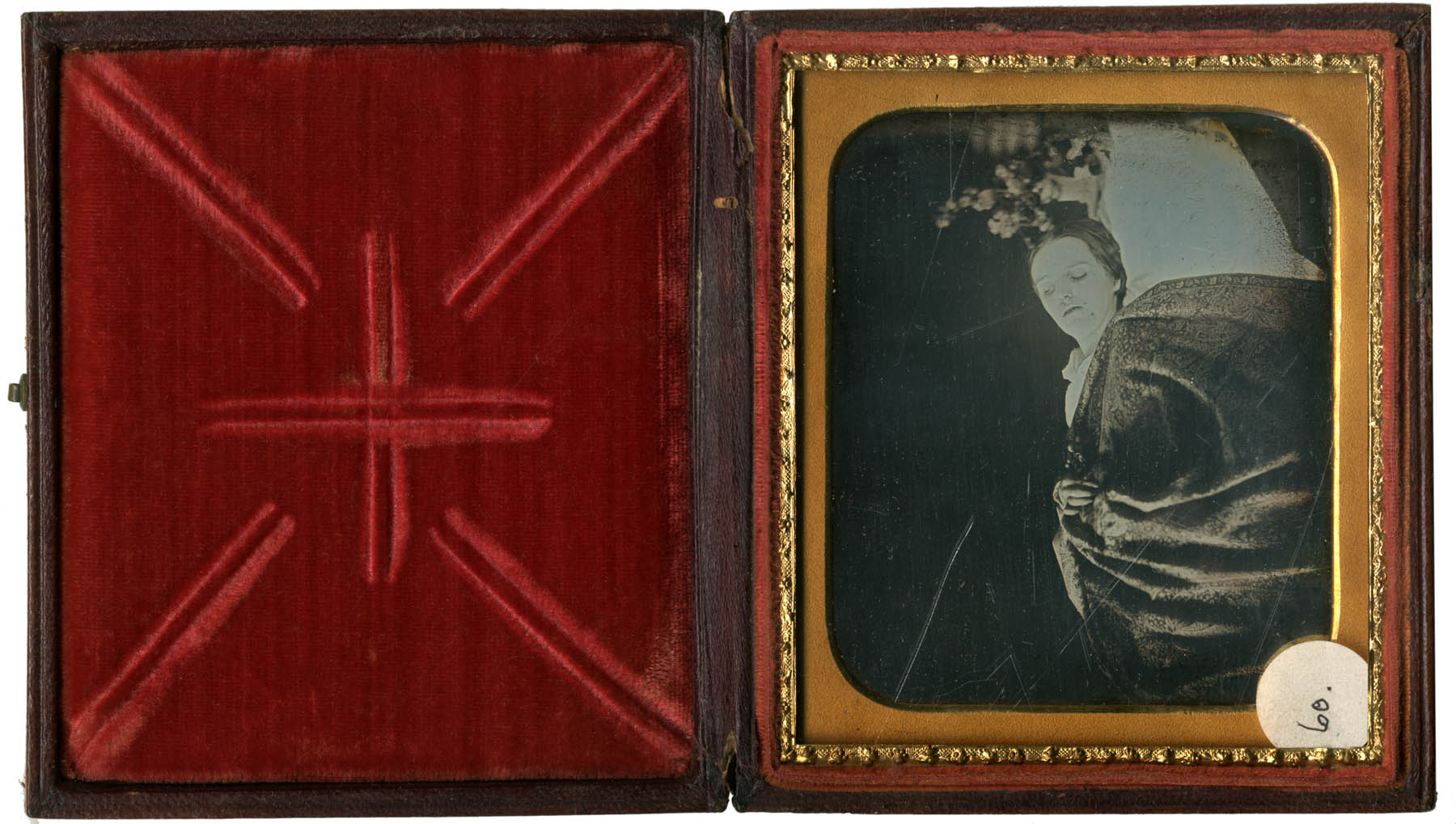
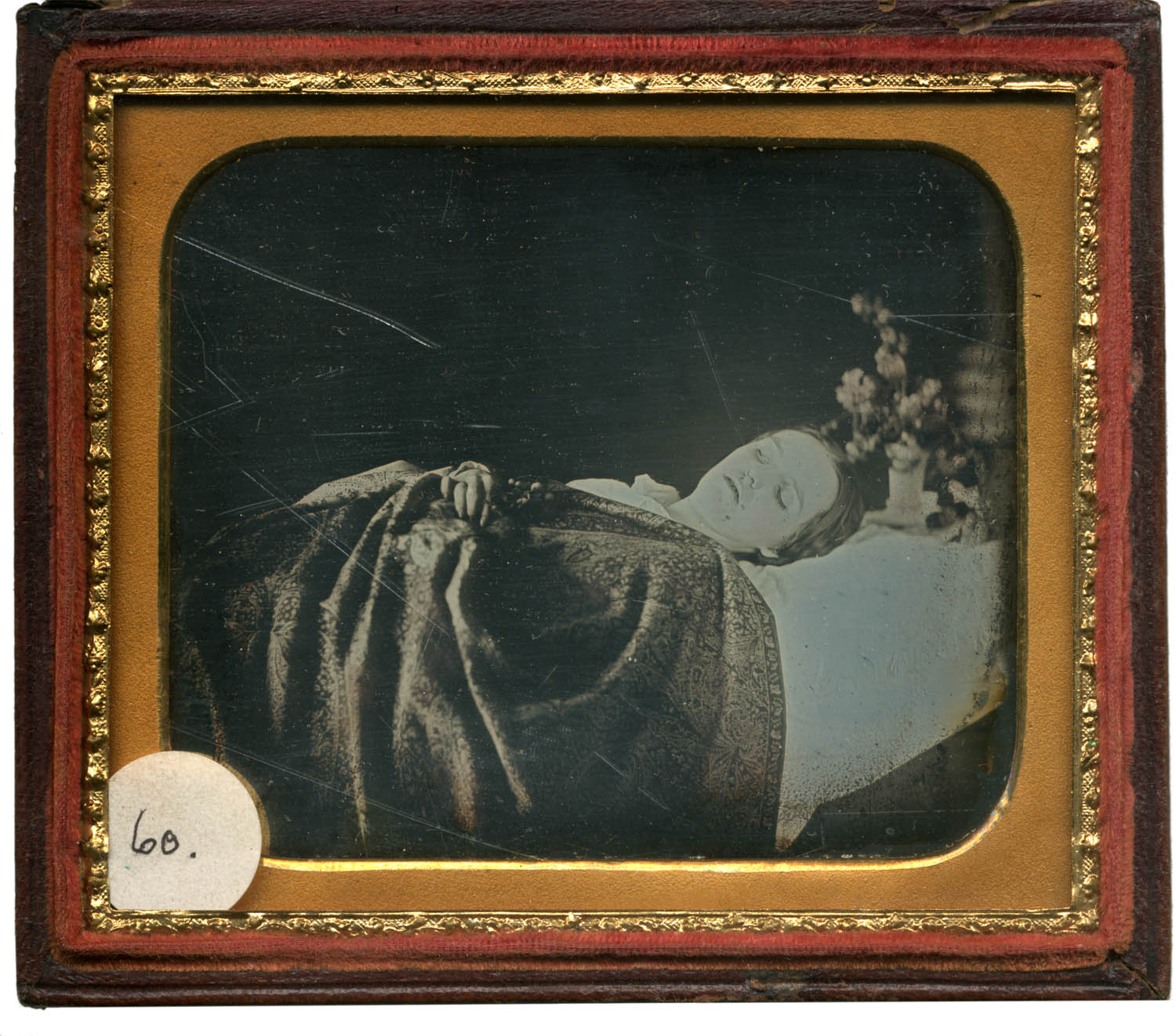
Sleeping beauty


“When I am dead and in my grave

And all my bones are rotten.

When this you see remember me

Lest I should be forgotten.”


This is the first posting on Art Blart on the phenomenon of postmortem photography for exhibitions on this subject are few and far between.

Any photograph is a “little death” which “refers to the concept of “la petite mort” or “the little death,” a French idiom and euphemism for the momentary loss of consciousness or breath, often associated with orgasm, but also used to describe the act of freezing a moment in time through photography. This concept suggests that photography, by capturing a specific moment, essentially stops time and thus, in a way, creates a small, contained death of that moment.” (Google AI Overview)

All photographs (and especially postmortem photography where the deceased are memorialised through images) can be seen as “memento mori”, a Latin phrase meaning “remember you must die,” reminding us that of the impermanence of life – for photographs “capture a moment in time, forever preserving a fleeting instant and highlighting the passage of time and the inevitability of death.” (Google AI Overview)

As Susan Sontag observed, “All photographs are memento mori. To take a photograph is to participate in another person’s (or thing’s) mortality, vulnerability, mutability.” (On Photography)

Victorians were faced with the vicissitudes of fortune, and death at any age was a common occurrence due to illness with no antibiotics available to treat the many lethal diseases. They became stoic in the face of the impermanence of life, stoic in the face of death and through photography, sought to record into permanence the likenesses of the departed (the beloved), so that they could remember and honour them. Photographs thus became symbols of mortality which encouraged reflection on the meaning and fleetingness of life…

But unlike a photographic self-portrait, where a human looks at their image (in which they are dead) which reminds them about their physical death in the future, an anterior future of which death is the stake (and the prick of discovery of this equivalence)1 – in postmortem photography the little death and the actual death are as one for the anterior future can never be viewed by the subject of the photograph (they are dead), a separation only revived in the heart and mind of another.

Through postmortem photography the deceased live in an interstitial space, forever brought back to life in the eyes of the viewer as we reawaken and reactivate their spirit in the world. I was once here and I am again. Remember me.

Thus the euphemism “sleeping” is appropriate (sleeping beauty awakened once more with a kiss), as the viewer transcends time bringing past dead back into living world – where past, present and future coalesce into single point in time – their death and our death connected through the gaze and the knowledge of our discontinuity. Eons contracted into an eternal moment.2

In this expanded-specific moment in time, through an awareness of our own dis/continuity, what we are doing is talking about something that is remarkable. We are moving towards a language that defines the human condition…

Dr Marcus Bunyan


1/ Roland Barthes, Camera Lucida (La Chambre claire), Section 39, 1980

2/ Marcus Bunyan. “This is not my favourite photograph,” part of What makes a great photograph? at the Centre for Contemporary Photography (CCP), Fitzroy, Wednesday 5th December 2012 [Online] Cited 27/06/2025


Many thankx to the Biblioteca Panizzi and Michael G. Jacob for allowing me to publish the photographs in the posting. Please click on the photographs for a larger version of the image.


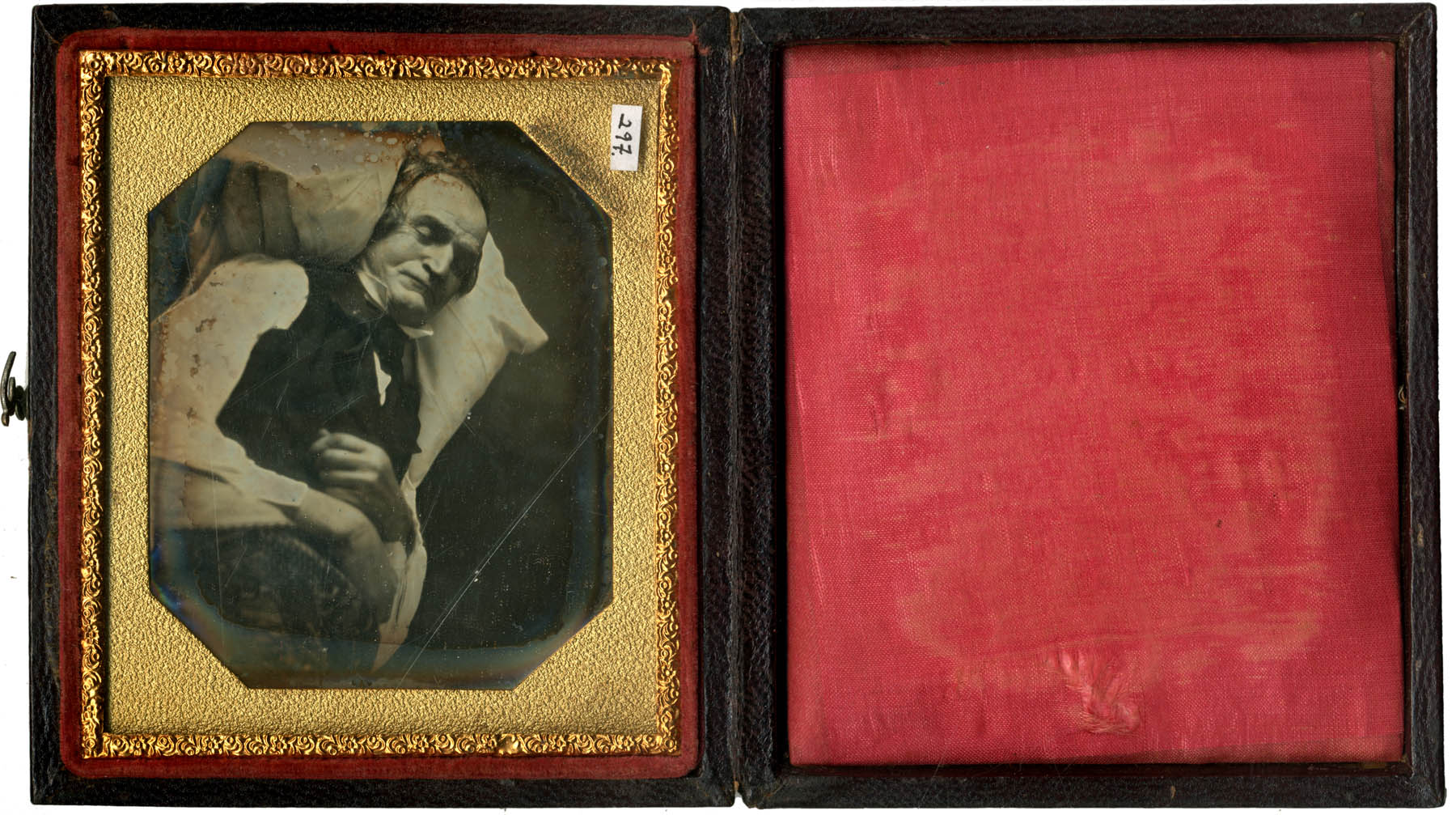
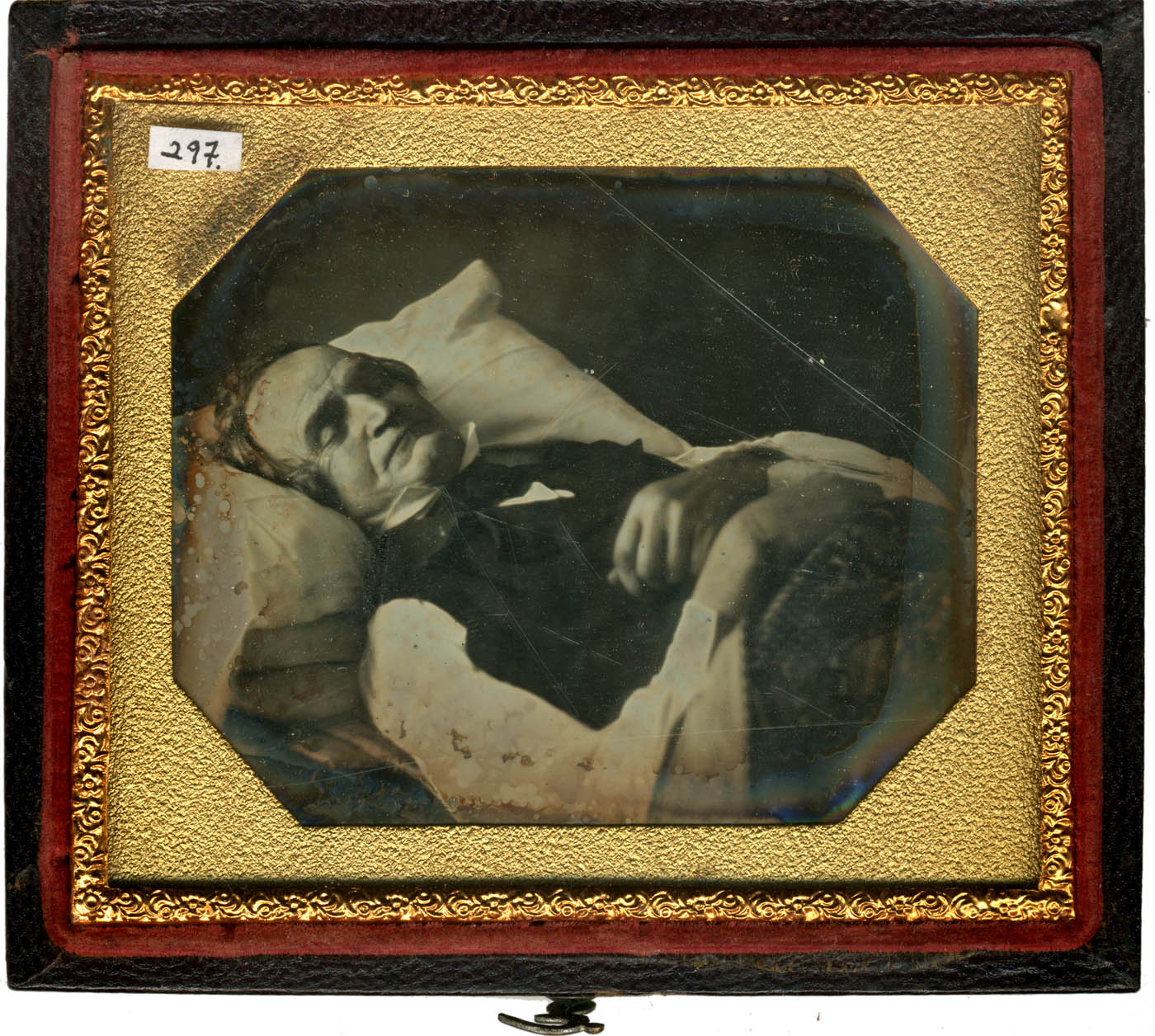
Unknown photographer (American) 'A sleeping man' c. 1846


Unknown photographer (American)
A sleeping man
c. 1846
Daguerreotype
Title given by the collector


Unknown photographer (American) 'A sleeping man' c. 1846 (detail)


Unknown photographer (American)
A sleeping man (detail)
c. 1846
Daguerreotype
Title given by the collector


Ricordati di me

Una esposizione dedicata alla collezione di Michael G. Jacob, alla riscoperta della fotografia “post mortem”: la realizzazione di immagini commemorative di familiari defunti per genitori, amici e parenti era un aspetto significativo del lavoro quotidiano di molti studi fotografici vittoriani.

An exhibition dedicated to the collection of Michael G. Jacob, to the rediscovery of “post mortem” photography: the creation of commemorative images of deceased family members for parents, friends and relatives was a significant aspect of the daily work of many Victorian photographic studios.

Text translated by Google Translate from the Biblioteca Panizzi website


Unknown photographer (American) 'A sleeping girl' c. 1846


Unknown photographer (American)
A sleeping girl
c. 1846
Daguerreotype
Title given by the collector


Unknown photographer (American) 'A woman with long fingernails, bured teeth & cut flowers' c. 1846


Unknown photographer (American)
A woman with long fingernails, bured teeth & cut flowers
c. 1846
Daguerreotype
Title given by the collector


Unknown photographer (American) 'A woman with long fingernails, bured teeth & cut flowers' c. 1846 (detail)


Unknown photographer (American)
A woman with long fingernails, bured teeth & cut flowers (detail)
c. 1846
Daguerreotype
Title given by the collector


Unknown photographer (American) 'Young girl holding a daguerrotype' c. 1846


Unknown photographer (American)
Young girl holding a daguerrotype
c. 1846
Daguerreotype
Title given by the collector


L’esposizione dedicata alla collezione di Michael G. Jacob alla riscoperta della fotografia “post mortem” nell’epoca vittoriana, ha l’intento di illustrare il legame di affezione e rispetto di quella cultura che indusse i vivi a ricordare i propri defunti, analizzando come, dopo gli anni Quaranta del XIX secolo, la fotografia sia diventata centrale anche nel modo di sentire e vivere il lutto.

La pratica di raffigurare il volto del defunto è antichissima e la fotografia si innesta in questa tradizione, modificando il modo di vivere e comunicare il lutto. Come tutte le tradizioni più o meno radicate, anche nella colta ed evoluta Europa le esequie e il lutto seguono consuetudini e usanze che si sono perdute o modificate nel tempo. Il galateo del lutto, in epoca vittoriana, è uno degli aspetti per noi meno comprensibili ma più affascinanti, i cui codici, nel tempo, sono andati perduti o si sono radicalmente trasformati.

I rituali funebri, così come venivano concepiti dai vittoriani, si manifestavano in comportamenti, abbigliamento e usanze che spesso appaiono eccessivi per la sensibilità moderna e hanno oggi bisogno di essere decodificati per comprenderne la vasta iconografia. L’antropologia e la sociologia ci hanno spiegato quali reazioni emotive e formali l’essere umano ha avuto nel corso del tempo di fronte alla morte e al corpo dei defunti, indotte dalla cultura a cui apparteniamo, mentre la fotografia contribuisce sostanzialmente a documentare questa cultura del lutto.


The exhibition dedicated to the Michael G. Jacob collection and the rediscovery of “post mortem” photography in the Victorian era, aims to illustrate the bond of affection and respect of that culture that induced the living to remember their dead, analysing how, after the 1840s, photography also became central to the way of feeling and experiencing mourning.

The practice of depicting the face of the deceased is very ancient and photography is grafted onto this tradition, modifying the way of experiencing and communicating mourning. Like all more or less rooted traditions, even in cultured and evolved Europe, funerals and mourning follow customs and habits that have been lost or modified over time. The etiquette of mourning, in the Victorian era, is one of the aspects that is least comprehensible to us but most fascinating, whose codes, over time, have been lost or have radically transformed.

Funeral rituals, as conceived by the Victorians, manifested themselves in behaviors, clothing and customs that often seem excessive for modern sensibilities and today need to be decoded to understand their vast iconography. Anthropology and sociology have explained to us what emotional and formal reactions human beings have had over time in front of death and the body of the deceased, induced by the culture to which we belong, while photography contributes substantially to documenting this culture of mourning.

Text translated by Google Translate from the Biblioteca Panizzi website


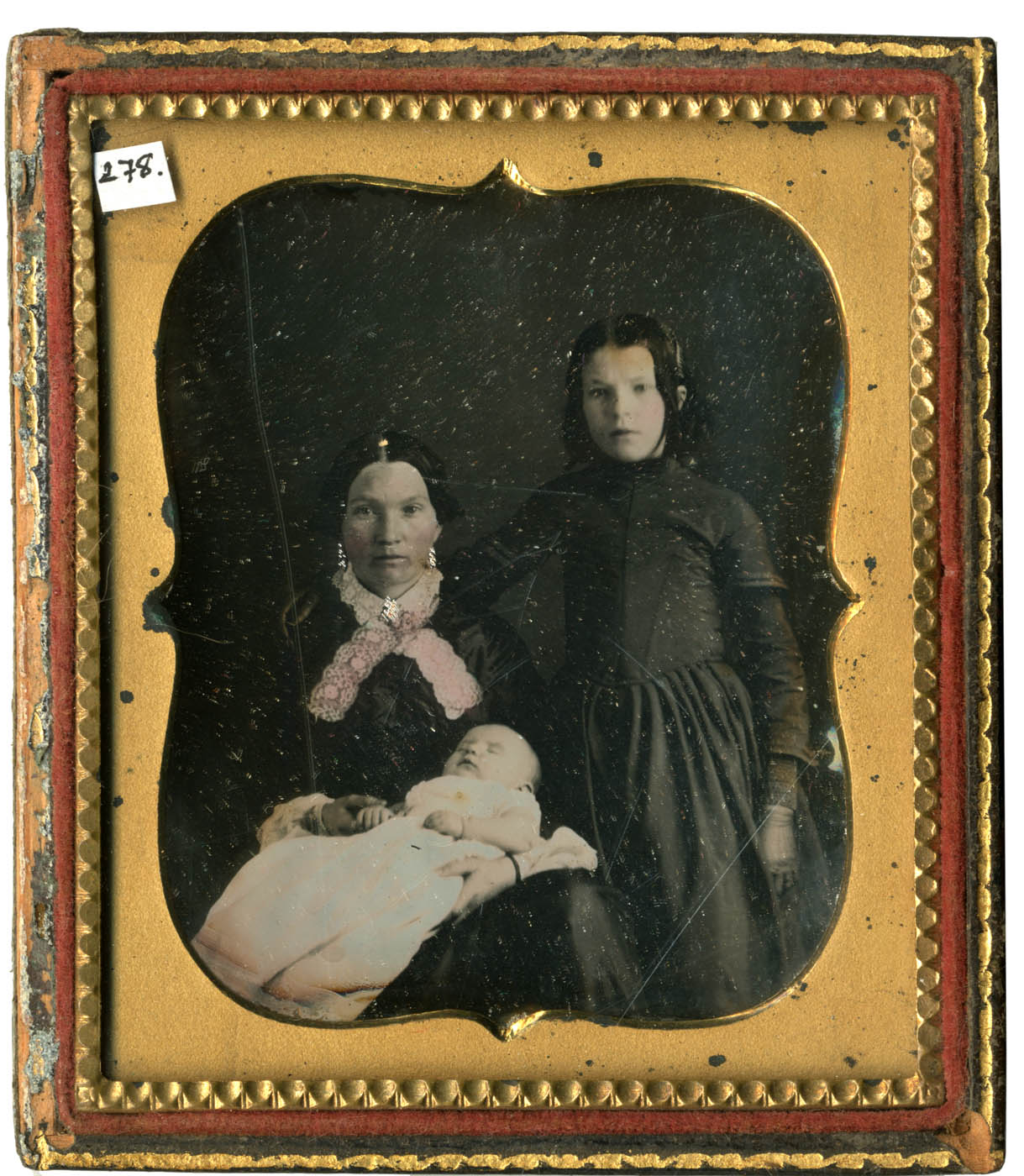
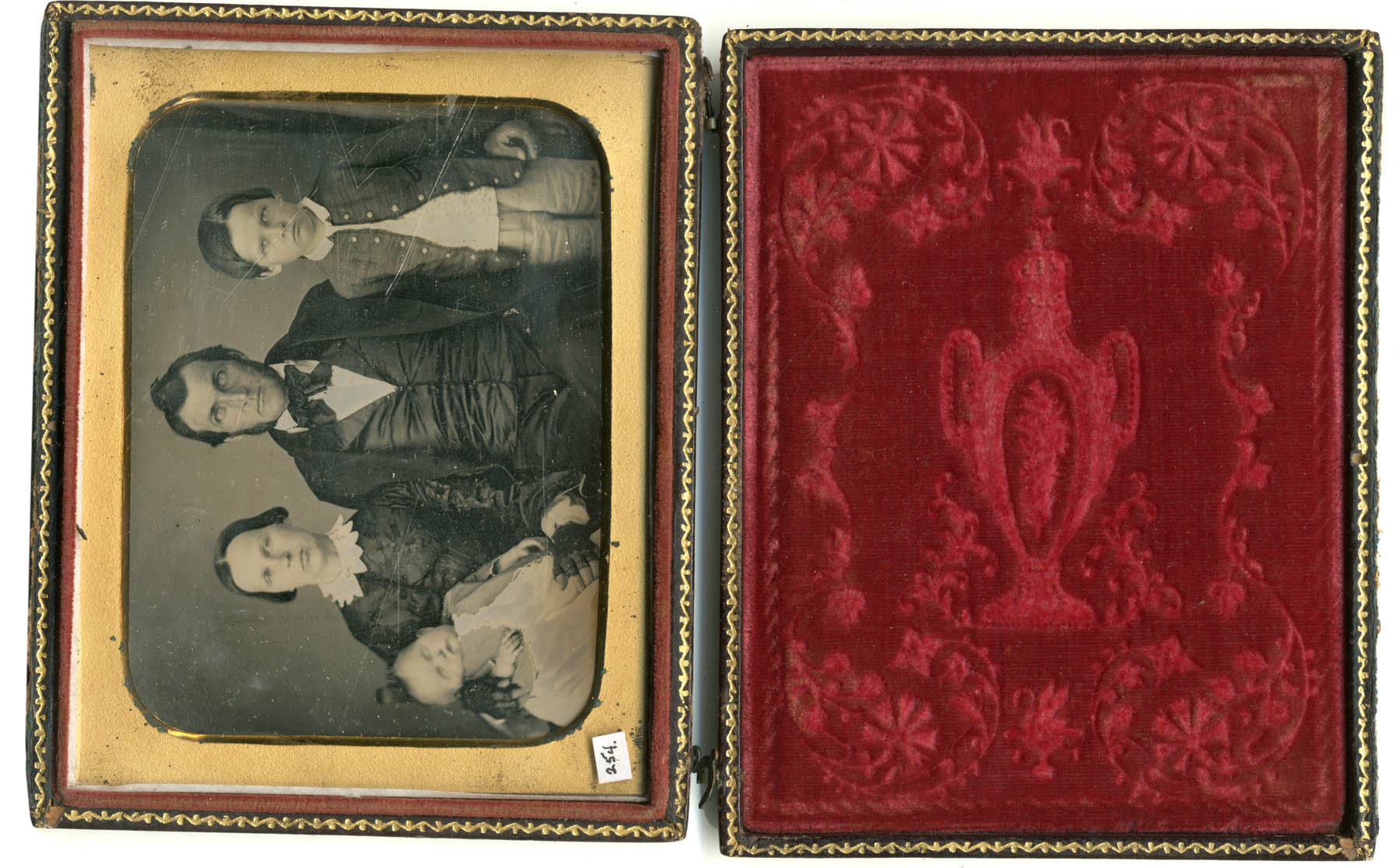
Unknown photographer (American) 'A mother, daughter and dead infant' c. 1848


Unknown photographer (American)
A mother, daughter and dead infant
c. 1848
Daguerreotype retouched in colour
Title given by the collector


Unknown photographer (American) 'A family group' 1853


Unknown photographer (American)
A family group
1853
Daguerreotype
Date in handwritten characters on the lower edge of the daguerreotype: “July 15 1853”
Title given by the collector


Unknown photographer (American) 'A family group' 1853 (detail)


Unknown photographer (American)
A family group (detail)
1853
Daguerreotype
Date in handwritten characters on the lower edge of the daguerreotype: “July 15 1853”
Title given by the collector


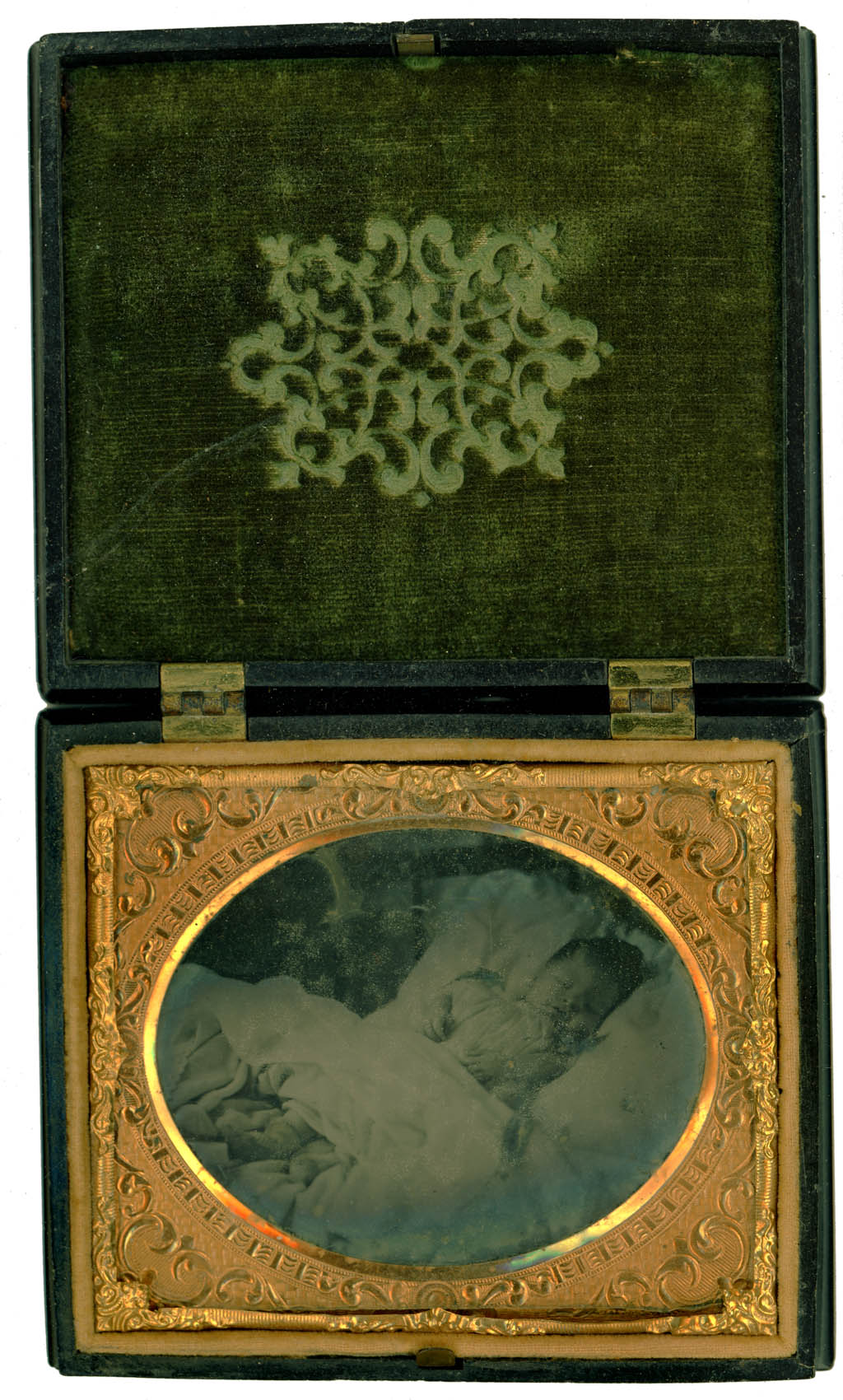
Unknown photographer (American) 'Sleeping baby' c. 1860


Unknown photographer (American)
Sleeping baby
c. 1860
Ambrotype
Title given by the collector


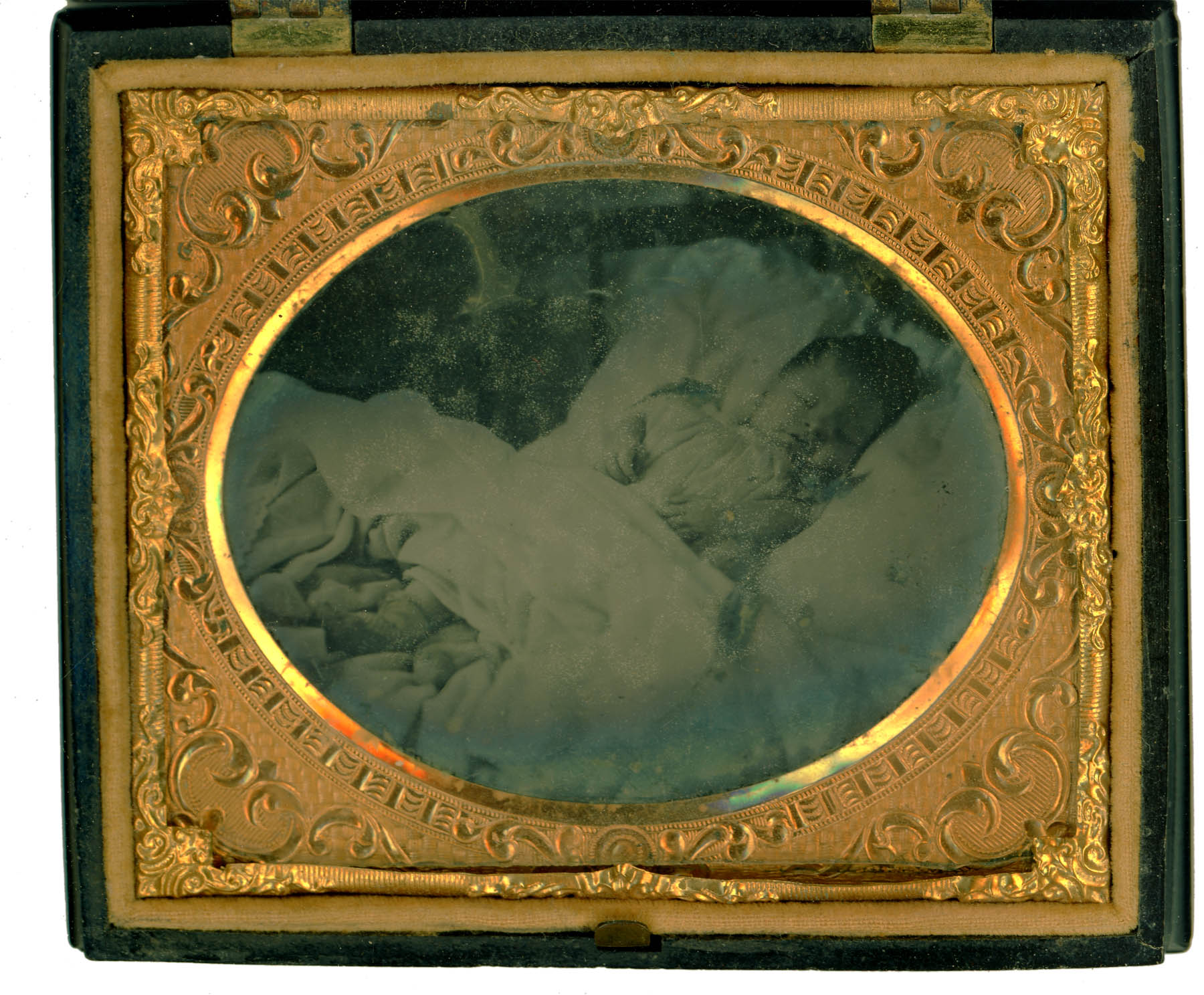
Unknown photographer (American) 'Sleeping baby' c. 1860 (detail)


Unknown photographer (American)
Sleeping baby (detail)
c. 1860
Ambrotype
Title given by the collector


Unknown photographer (American) 'A Sleeping child' c. 1860


Unknown photographer (American)
A Sleeping child
c. 1860
Ferrotype
Title given by the collector


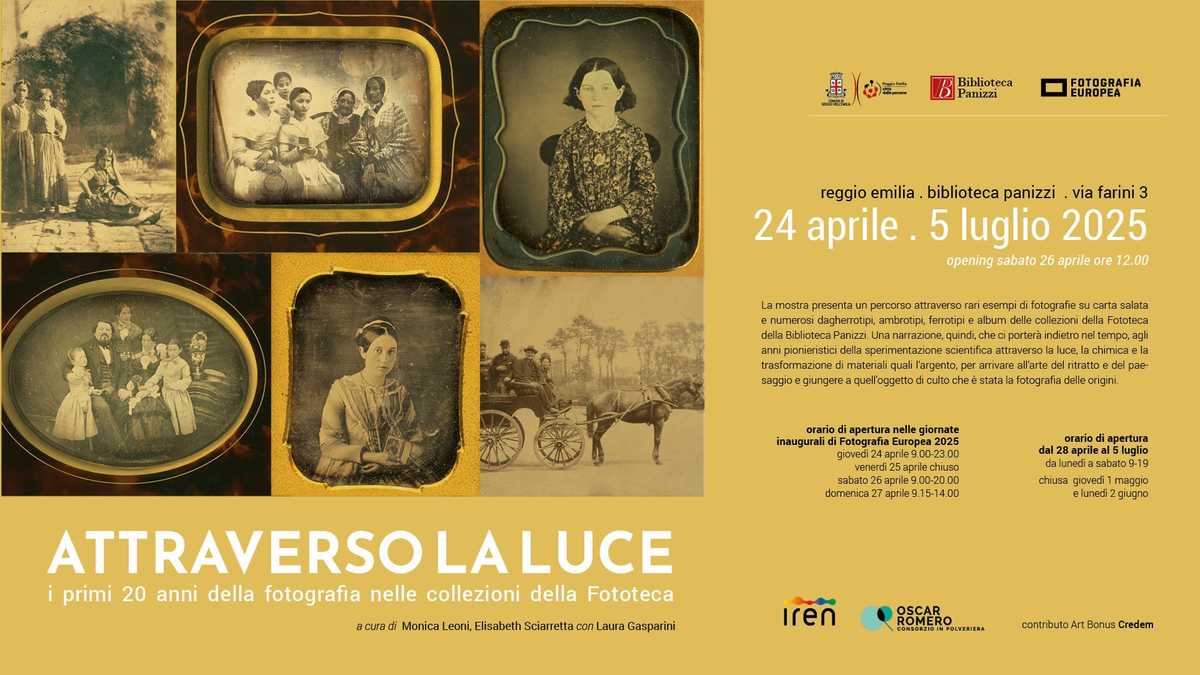
'Attraverso la luce. I primi 20 anni della fotografia nelle collezioni della Fototeca'


Attraverso la luce

In occasione di Fotografia Europea, la Biblioteca Panizzi propone una mostra dedicata ai primi 20 anni della fotografia nelle collezioni della Fototeca attraverso l’esposizione di fotografie su carta salata, albumine, e dagherrotipi, tra cui la prestigiosa collezione di Michael G. Jacob.

On the occasion of Fotografia Europea, the Panizzi Library presents an exhibition dedicated to the first 20 years of photography in the collections of the Photo Library through the display of photographs on salted paper, albumen, and daguerreotypes, including the prestigious collection of Michael G. Jacob.

Text translated by Google Translate from the Biblioteca Panizzi website


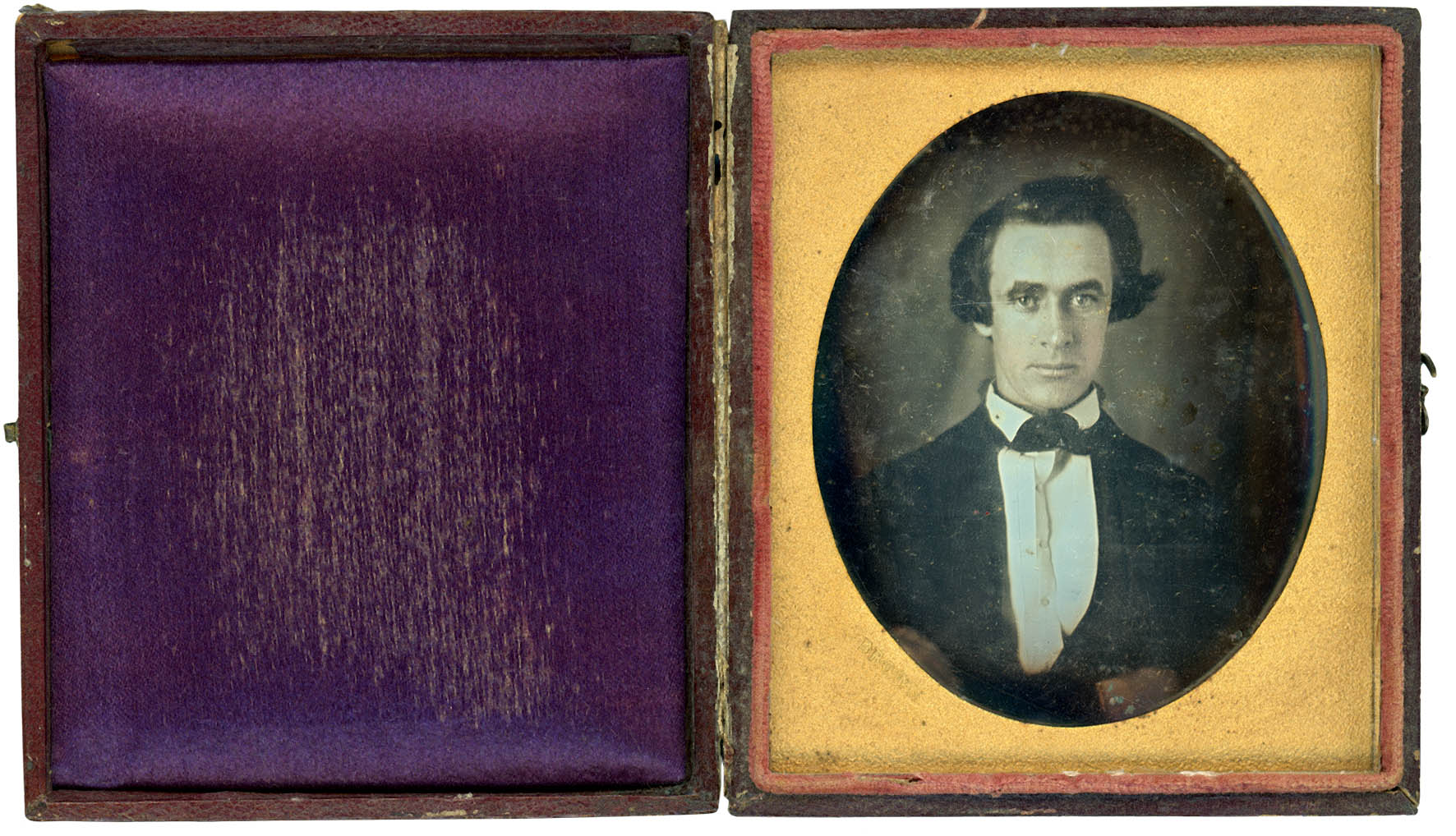
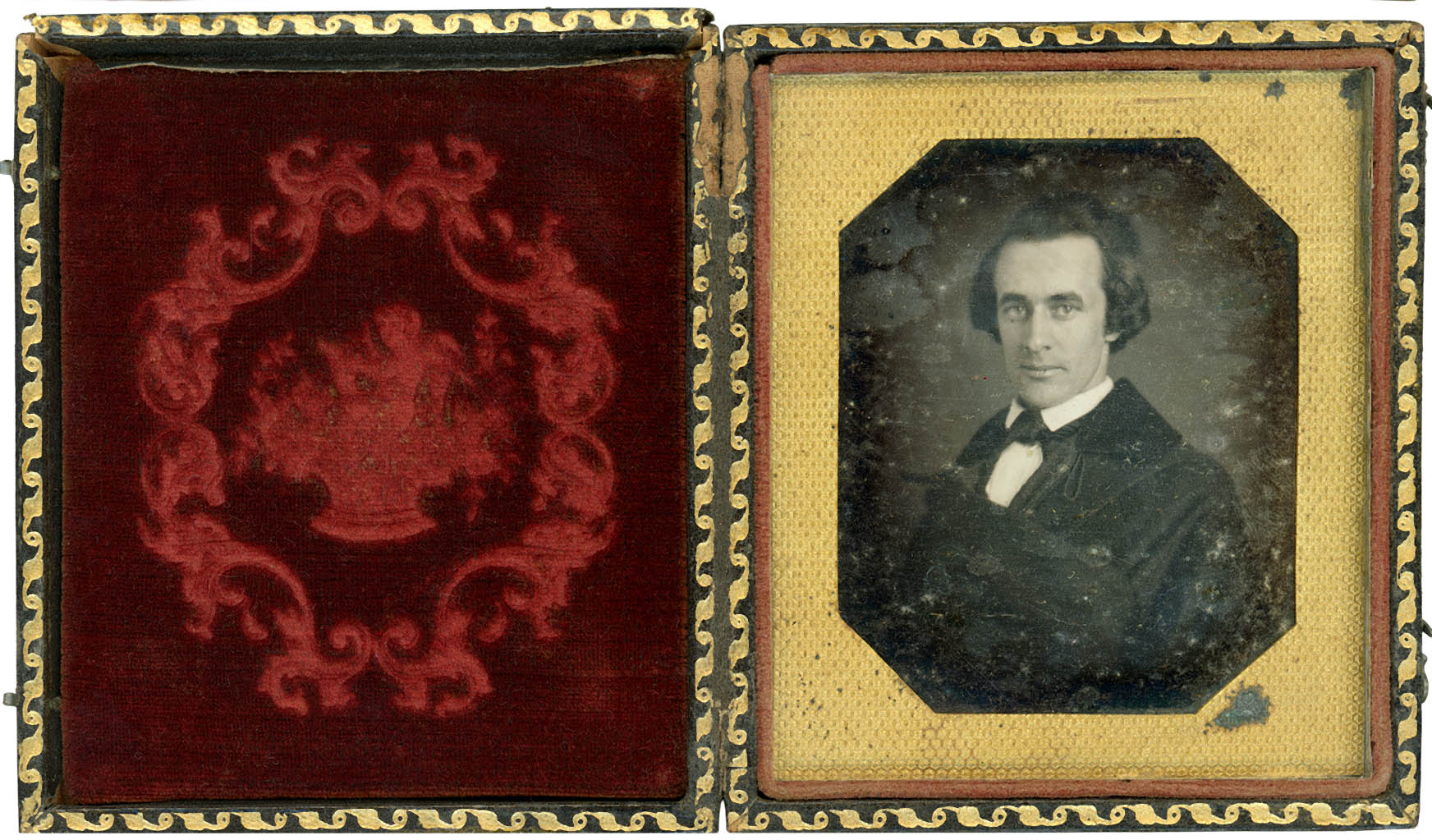
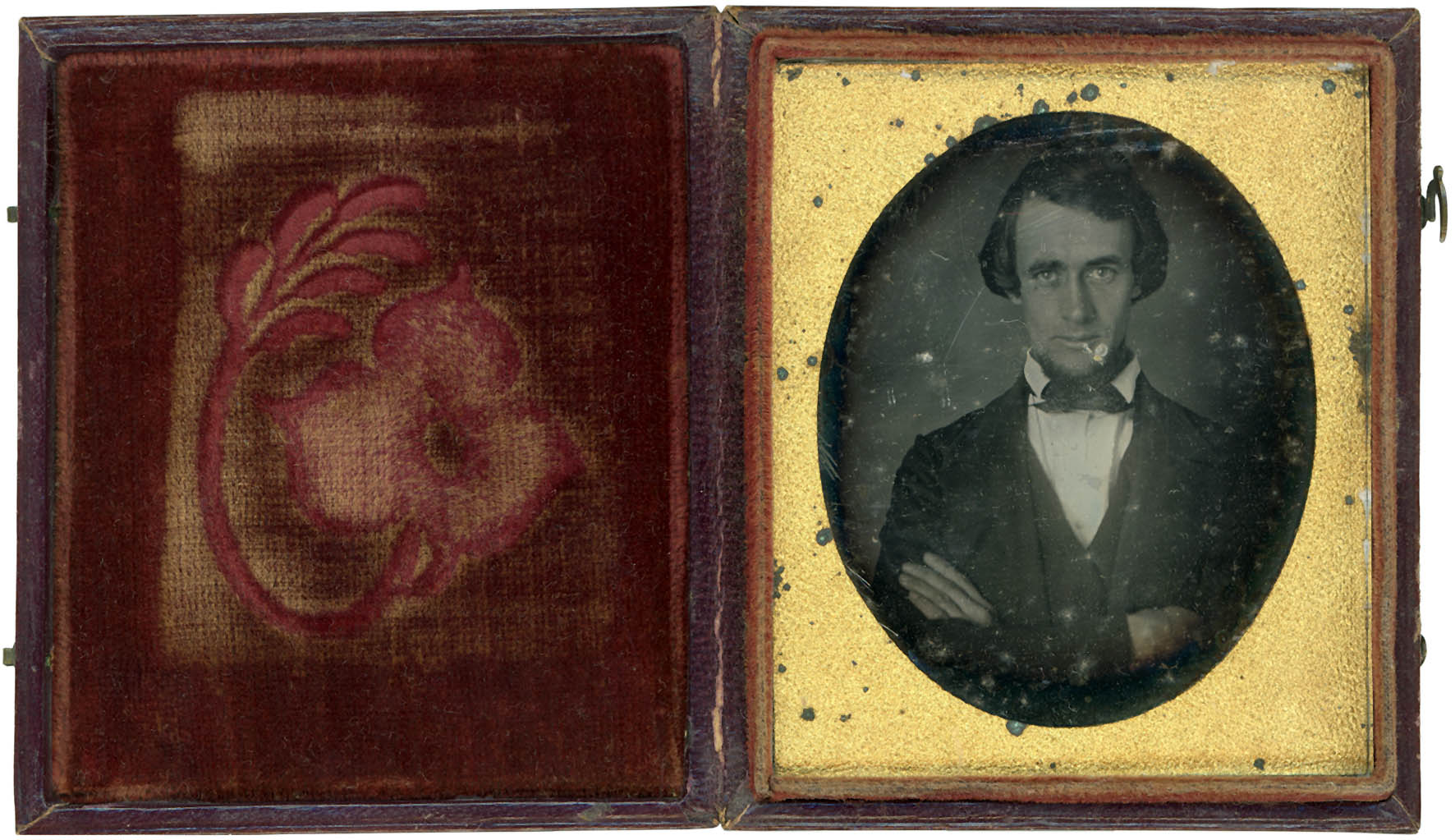
John Brown. 'Portrait of a Young Man' c. 1848 3 Daguerreotypes


John Brown
Portrait of a Young Man
c. 1848
3 Daguerreotypes


John Brown. 'Portrait of a Young Man' c. 1848


John Brown
Portrait of a Young Man
c. 1848
Daguerreotype


John Brown. 'Portrait of a Young Man' c. 1848


John Brown
Portrait of a Young Man
c. 1848
Daguerreotype


John Brown. 'Portrait of a Young Man' c. 1848


John Brown
Portrait of a Young Man
c. 1848
Daguerreotype


La mostra presenta un percorso attraverso rari esempi di fotografie su carta salata e numerosi dagherrotipi, ambrotipi, ferrotipi e album delle collezioni della Fototeca della Bibliotecca Panizzi. Una narrazione, quindi, che ci portera indietro nel tempo, agli anni pionieristici della sperimentazione sceintifica attraverso la luce, la chimica e la trasformazione di materiali quali l’argento, per arrivare ali’arte del ritratto e del paesaggio e giungere a quel’oggetto di culto che e stata la fotografia delle origini.

The exhibition presents a journey through rare examples of photographs on salted paper and numerous daguerreotypes, ambrotypes, ferrotypes and albums from the collections of the Photo Library of the Panizzi Library. A narrative, therefore, that will take us back in time, to the pioneering years of scientific experimentation through light, chemistry and the transformation of materials such as silver, to arrive at the art of portraiture and landscape and reach that cult object that was the photography of the origins.

Text translated by Google Translate from the Biblioteca Panizzi website


Unknown photographer (American) 'Dead child in his mother's arms' c. 1850


Unknown photographer (American)
Dead child in his mother’s arms
c. 1850
Daguerreotype


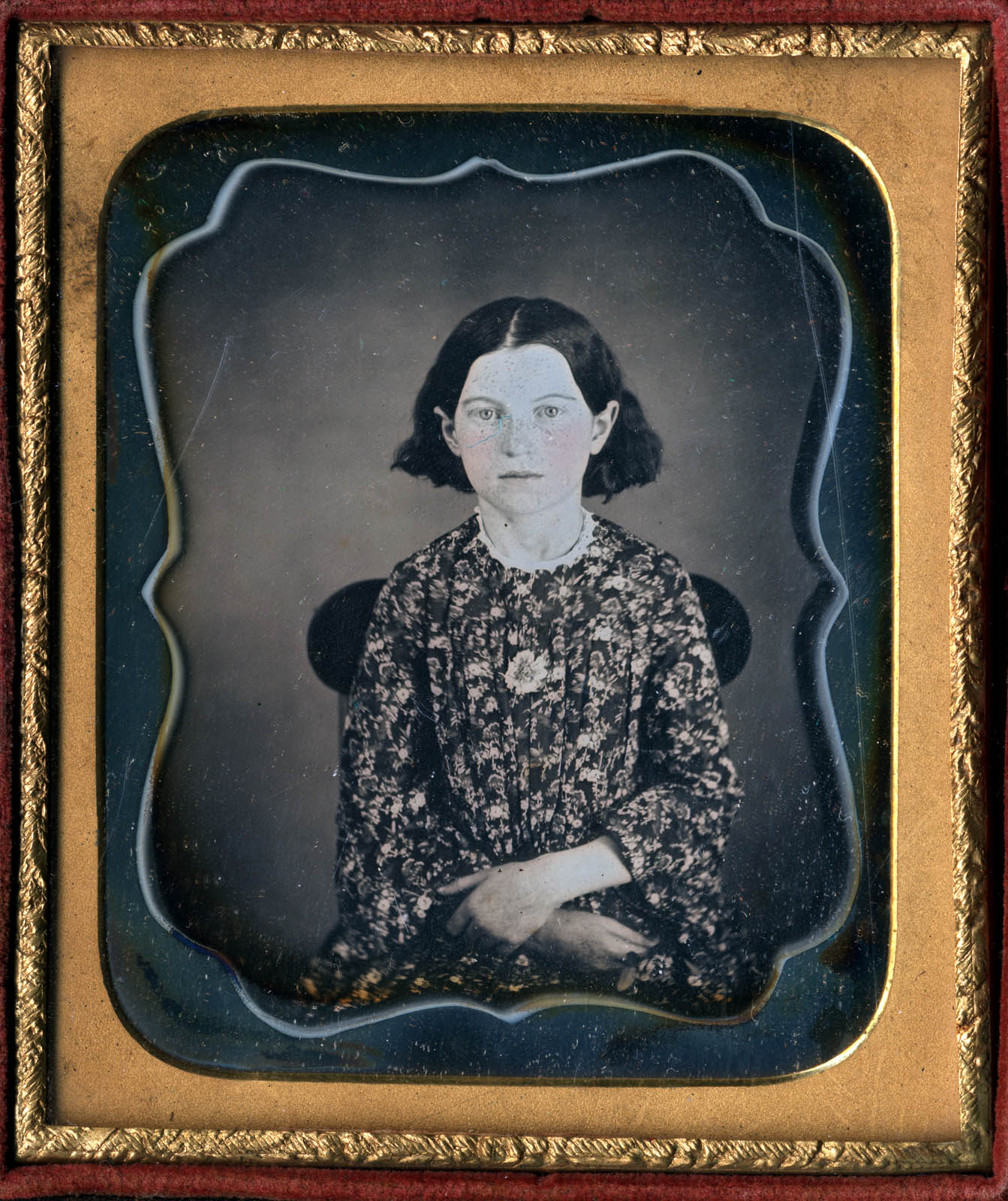
Unknown photographer (American) 'Girl holding a flower' c. 1850


Unknown photographer (American)
Girl holding a flower
c. 1850
Daguerreotype


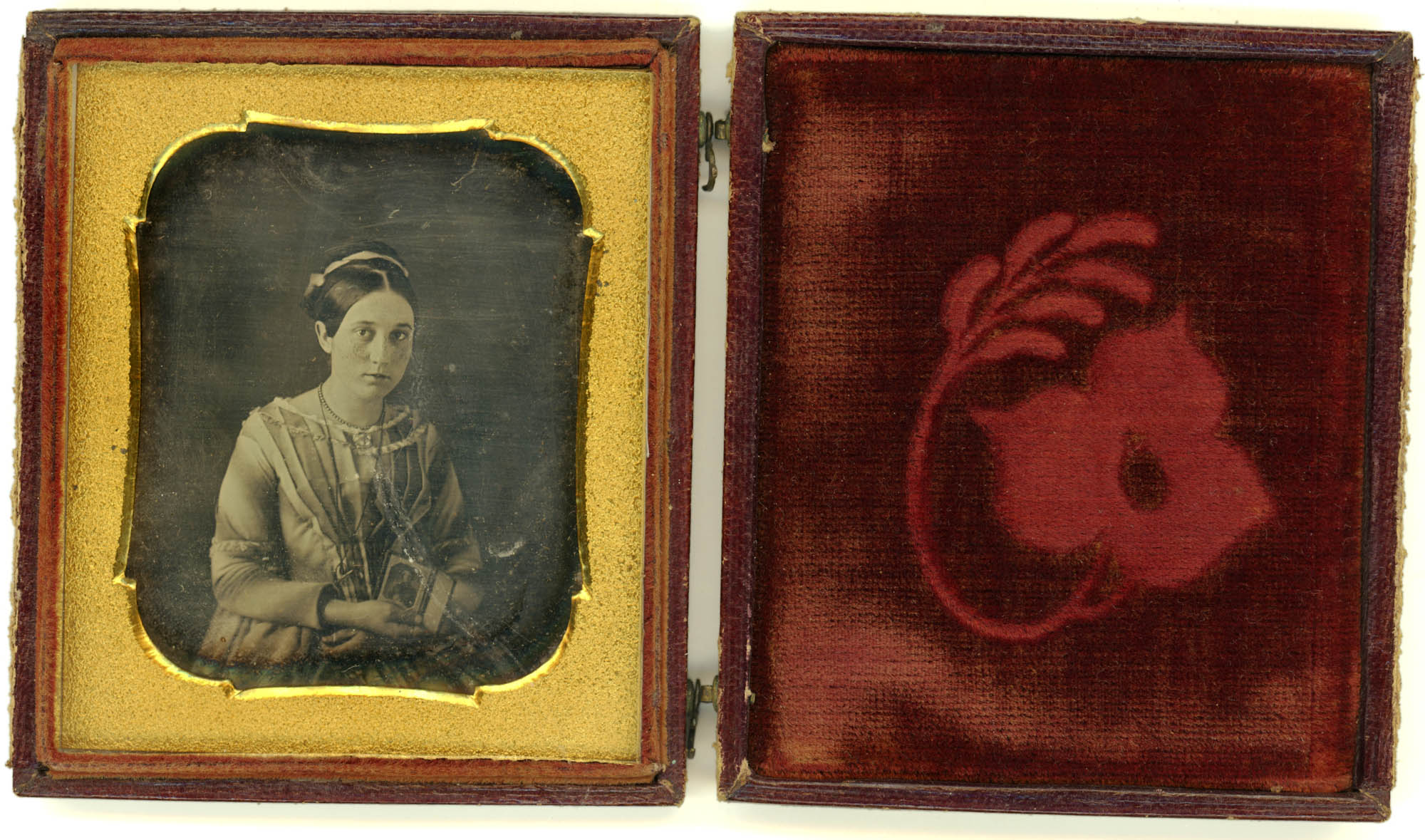
Unknown photographer (American) 'Freckled girl with daguerreotype' c. 1850


Unknown photographer (American)
Freckled girl with daguerreotype
c. 1850
Daguerreotype retouched in colour


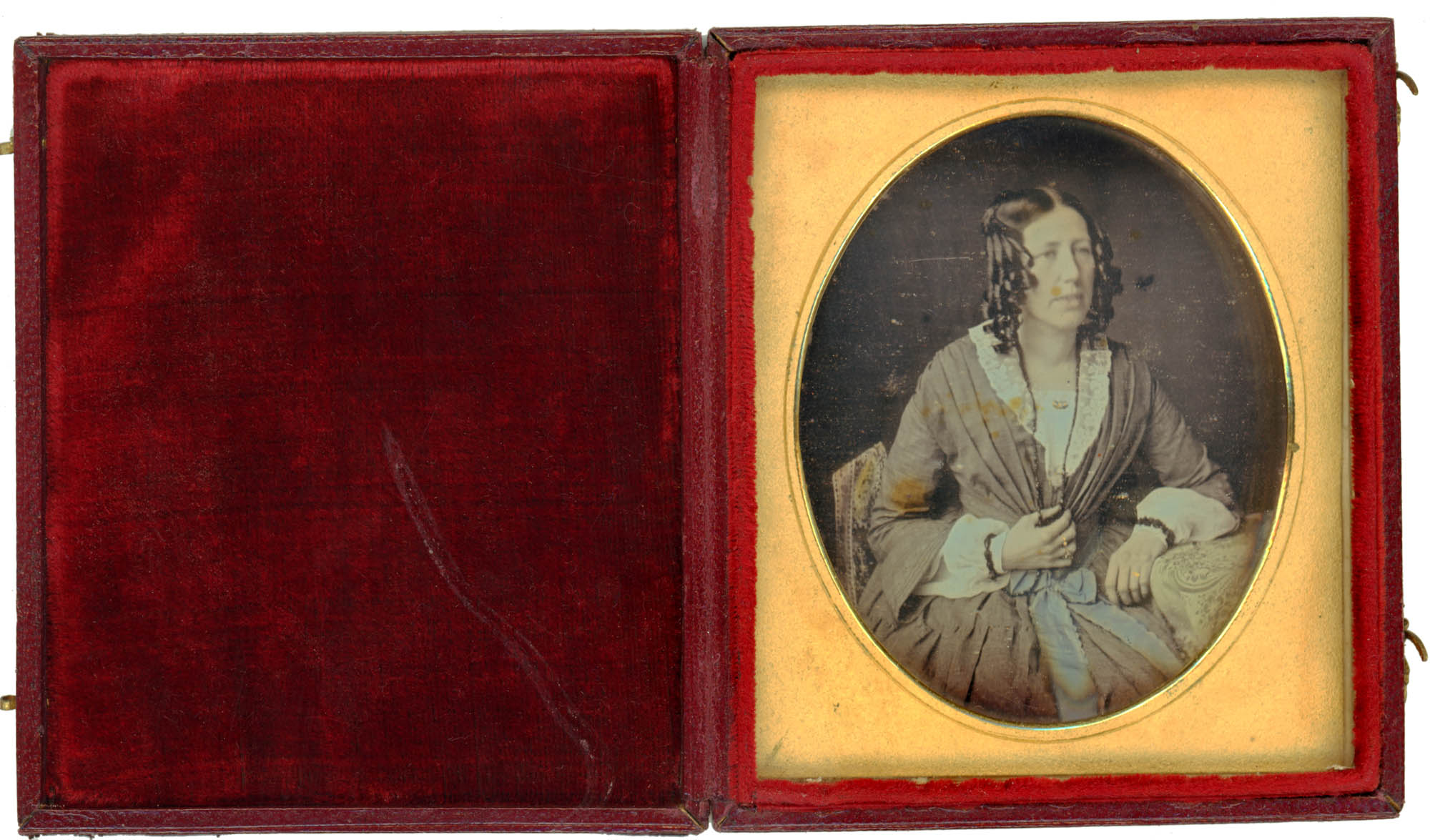
Unknown photographer (American) 'Tinted woman' c. 1850


Unknown photographer (American)
Tinted woman
c. 1850
Daguerreotype retouched in colour


Unknown photographer (American) 'Portrait of mother with child' c. 1850


Unknown photographer (American)
Portrait of mother with child
c. 1850
Daguerreotype


La magia della luce è stata per secoli oggetto di importanti studi scientifici, ma ha affascinato anche e soprattutto il mondo dell’arte, oltre che la cultura popolare. La fotografia, attraverso i vari procedimenti storici, si inserisce in questo capitolo della storia visuale, intrecciandosi con arte, scienza e tecnologia, unite alla passione comune per la nascita di un nuovo e accattivante linguaggio. La mostra presenta un percorso attraverso gli esemplari che appartengono alla collezione di Michael G. Jacob, ultima acquisita grazie alla generosa donazione di questo importante collezionista e studioso, insieme a rari esempi di fotografie su carta salata e numerosi dagherrotipi, ambrotipi, ferrotipi e album delle collezioni della Fototeca della Biblioteca Panizzi. Una narrazione, quindi, che ci porterà indietro nel tempo, agli anni pionieristici della sperimentazione scientifica attraverso la luce, la chimica e la trasformazione di materiali quali l’argento, per arrivare all’arte del ritratto e del paesaggio e giungere a quell’oggetto di culto che è stata la fotografia delle origini.


The magic of light has been the subject of important scientific studies for centuries, but it has also fascinated the world of art, as well as popular culture. Photography, through its various historical processes, fits into this chapter of visual history, intertwining with art, science and technology, combined with a shared passion for the birth of a new and captivating language. The exhibition presents a journey through the specimens that belong to the collection of Michael G. Jacob, the last acquired thanks to the generous donation of this important collector and scholar, together with rare examples of photographs on salted paper and numerous daguerreotypes, ambrotypes, ferrotypes and albums from the collections of the Photo Library of the Panizzi Library. A narrative, therefore, that will take us back in time, to the pioneering years of scientific experimentation through light, chemistry and the transformation of materials such as silver, to arrive at the art of portraiture and landscape and reach that cult object that was early photography.

Text translated by Google Translate from the Biblioteca Panizzi website


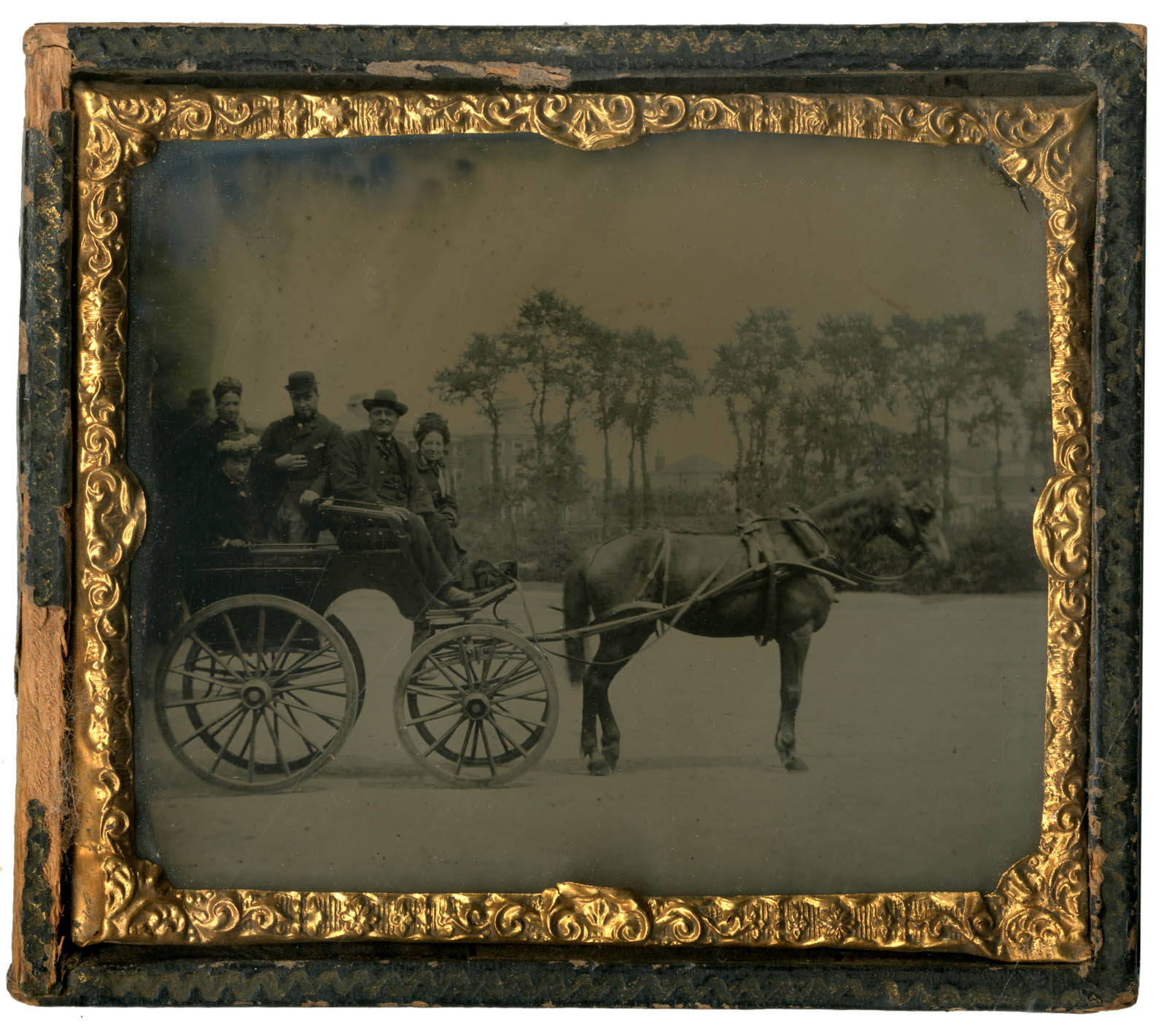
Unknown photographer (American) 'Coach in park' c. 1860


Unknown photographer (American)
Coach in park
c. 1860
Ambrotype


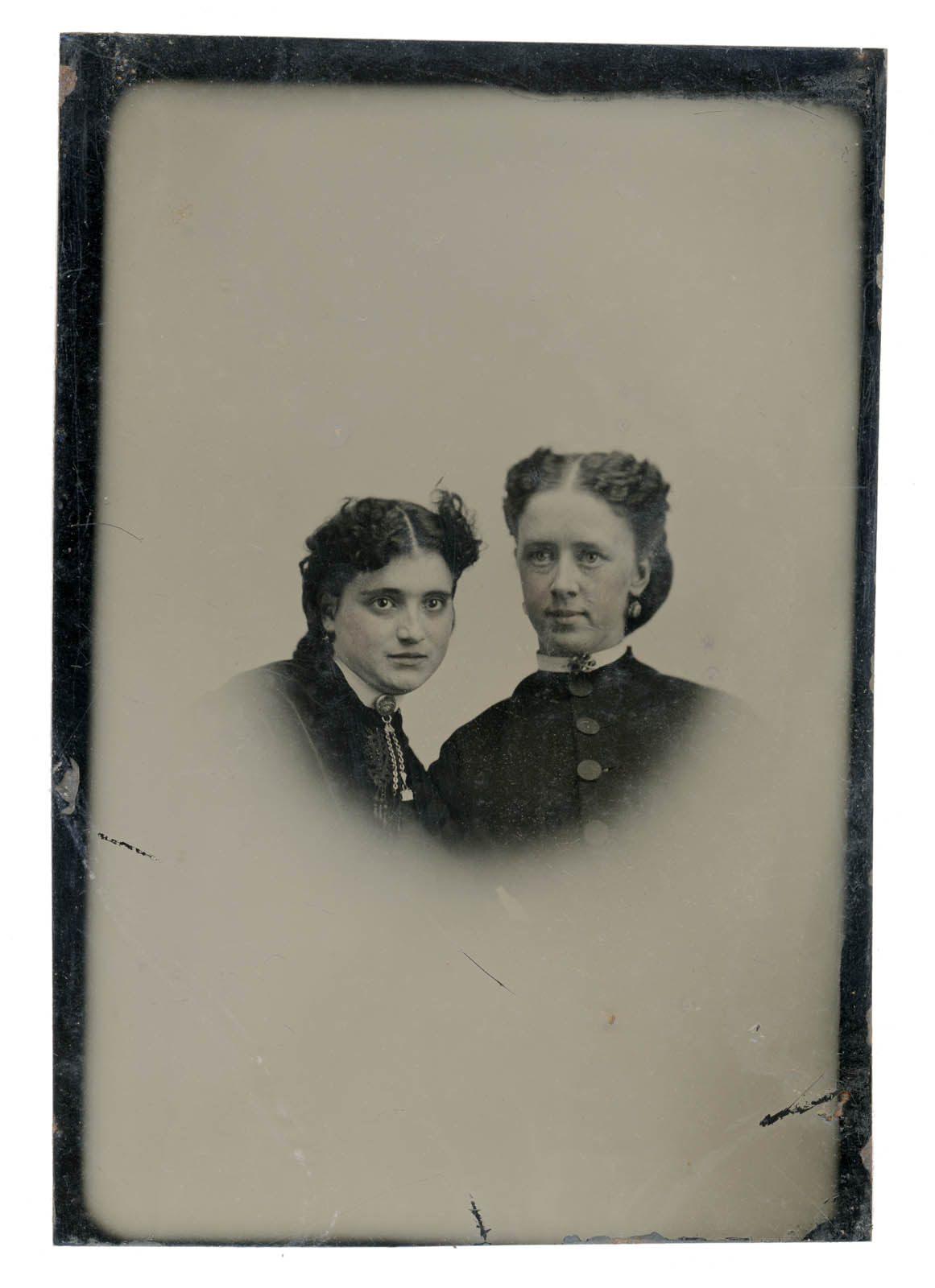
Unknown photographer (American) 'Portrait of women' c. 1860


Unknown photographer (American)
Portrait of women
c. 1860
Ferrotype


Unknown photographer (American) 'Double vignette friends' c. 1860


Unknown photographer (American)
Double vignette friends
c. 1860
Ferrotype


Unknown photographer (American) 'Well dressed lady' c. 1880


Unknown photographer (American)
Well dressed lady
c. 1880
Ambrotype


Biblioteca Panizzi
Via Luigi Carlo Farini, 3,
42121 Reggio Emilia RE, Italy

Opening hours:
Monday – Saturday, 9am – 7pm

Biblioteca Panizzi website

LIKE ART BLART ON FACEBOOK

Back to top

Exhibition: ‘2020 Vision: Photographs, 1840s-1860s’ at the Metropolitan Museum of Art, New York

Exhibition dates: 3rd December, 2019 – 13th December, 2020


Likely by Antoine-François-Jean Claudet (French, Lyon 1797 - 1867 London) Possibly by Nicolaas Henneman (Dutch, Heemskerk 1813 - 1898 London) ‘The Chess Players’ c. 1845 (detail) from the exhibition '2020 Vision: Photographs, 1840s-1860s' at the Metropolitan Museum of Art, New York, Dec 2019 - Dec 2020


Likely by Antoine-François-Jean Claudet (French, Lyon 1797 – 1867 London)
Possibly by Nicolaas Henneman (Dutch, Heemskerk 1813 – 1898 London)
The Chess Players (detail)
c. 1845
Salted paper print from paper negative
Sheet: 9 5/8 × 7 11/16 in. (24.5 × 19.6cm)
Image: 7 13/16 × 5 13/16 in. (19.8 × 14.7cm)
Bequest of Maurice B. Sendak, 2012
The Metropolitan Museum of Art
Public domain


An excellent selection of photographs in this posting. I particularly like the gender-bending, shape-shifting, age-distorting 1850s-60s Carte-de-visite Album of Collaged Portraits by an unknown artist. I’ve never seen anything like it before, especially from such an early date. Someone obviously took a lot of care, had a great sense of humour and definitely had a great deal of fun making the album.

Other fascinating details include the waiting horses and carriages in Fox Talbot’s View of the Boulevards of Paris (1843); the mannequin perched above the awning of the photographic studio in Dowe’s Photograph Rooms, Sycamore, Illinois (1860s); and the chthonic underworld erupting from the tilting ground in Carleton E. Watkins’ California Oak, Santa Clara Valley (c. 1863).

Dr Marcus Bunyan


Many thankx to the Metropolitan Museum of Art for allowing me to publish the photographs in the posting. Please click on the photographs for a larger version of the image.


When The Met first opened its doors in 1870, photography was still relatively new. Yet over the preceding three decades it had already developed into a complex pictorial language of documentation, social and scientific inquiry, self-expression, and artistic endeavour.

These initial years of photography’s history are the focus of this exhibition, which features new and recent gifts to the Museum, many offered in celebration of The Met’s 150th anniversary and presented here for the first time. The works on view, from examples of candid portraiture and picturesque landscape to pioneering travel photography and photojournalism, chart the varied interests and innovations of early practitioners.

The exhibition, which reveals photography as a dynamic medium through which to view the world, is the first of a two-part presentation that plays on the association of “2020” with clarity of vision while at the same time honouring farsighted and generous collectors and patrons. The second part will move forward a century, bringing together works from the 1940s through the 1960s.

Text from the Metropolitan Museum of Art website


Likely by Antoine-François-Jean Claudet (French, Lyon 1797 - 1867 London) Possibly by Nicolaas Henneman (Dutch, Heemskerk 1813 - 1898 London) ‘The Chess Players’ c. 1845 from the exhibition '2020 Vision: Photographs, 1840s-1860s' at the Metropolitan Museum of Art, New York, Dec 2019 - Dec 2020


Likely by Antoine-François-Jean Claudet (French, Lyon 1797 – 1867 London)
Possibly by Nicolaas Henneman (Dutch, Heemskerk 1813 – 1898 London)
The Chess Players
c. 1845
Salted paper print from paper negative
Sheet: 9 5/8 × 7 11/16 in. (24.5 × 19.6cm)
Image: 7 13/16 × 5 13/16 in. (19.8 × 14.7cm)
Bequest of Maurice B. Sendak, 2012
The Metropolitan Museum of Art
Public domain


Lewis Carroll (British, Daresbury, Cheshire 1832 - 1898 Guildford) '[Alice Liddell]' June 25, 1870 from the exhibition '2020 Vision: Photographs, 1840s-1860s' at the Metropolitan Museum of Art, New York, Dec 2019 - Dec 2020


Lewis Carroll (British, Daresbury, Cheshire 1832 – 1898 Guildford)
[Alice Liddell]
June 25, 1870
Albumen silver print from glass negative
Sheet: 6 1/4 × 5 9/16 in. (15.9 × 14.1cm)
Image: 5 7/8 × 4 15/16 in. (15 × 12.6cm)
Bequest of Maurice B. Sendak, 2012
The Metropolitan Museum of Art
Public domain


Eighteen-year-old Alice Liddell’s slumped pose, clasped hands, and sullen expression invite interpretation. A favoured model of Lewis Carroll, and the namesake of his novel Alice in Wonderland, Liddell had not seen the writer and photographer for seven years when this picture was made; her mother had abruptly ended all contact in 1863. The young woman poses with apparent unease in this portrait intended to announce her eligibility for marriage. The session closed a long and now controversial history with Carroll, whose portraits of children continue to provoke speculation. In what was to be her last sitting with the photographer, Liddell embodies the passing of childhood innocence that Carroll romanticised through the fictional Alice.


Unknown photographer (American) '[Surveyor]' c. 1854


Unknown photographer (American)
[Surveyor]
c. 1854
Daguerreotype
Case: 1.6 × 9.2 × 7.9cm (5/8 × 3 5/8 × 3 1/8 in.)
Gift of Charles Isaacs and Carol Nigro, in celebration of the Museum’s 150th Anniversary, 2019
The Metropolitan Museum of Art
Public domain


This portrait of a surveyor from an unknown daguerreotype studio was made during the heyday of the Daguerreian era in the United States, a time that coincided with an increased need for survey data and maps for the construction of railways, bridges, and roads. The unidentified surveyor, seated in a chair, grasps one leg of the tripod supporting his transit, a type of theodolite or surveying instrument that comprised a compass and rotating telescope. The carefully composed scene, in which the angle of the man’s skyward gaze is aligned with the telescope and echoed by one leg of the tripod, conflates its surveyor subject with an astronomer. As a result, the lands of young America are compared to the vast reaches of space, with both territories full of potential discovery.


Unknown photographer (American) '[Surveyor]' c. 1854


Unknown photographer (American)
[Surveyor]
c. 1854
Daguerreotype
Case: 1.6 × 9.2 × 7.9cm (5/8 × 3 5/8 × 3 1/8 in.)
Gift of Charles Isaacs and Carol Nigro, in celebration of the Museum’s 150th Anniversary, 2019
The Metropolitan Museum of Art
Public domain


Alphonse Delaunay (French, 1827-1906) 'Patio de los Arrayanes, Alhambra, Granada, Spain' 1854


Alphonse Delaunay (French, 1827-1906)
Patio de los Arrayanes, Alhambra, Granada, Spain
1854
Albumen silver print from paper negative
10 in. × 13 5/8 in. (25.4 × 34.6cm)
Gift of W. Bruce and Delaney H. Lundberg, 2017
The Metropolitan Museum of Art
Public domain


One of the most talented students of famed French photographer Gustave Le Gray, Delaunay was virtually unknown before a group of his photographs appeared at auction in 2007. Subsequent research led to the identification of several bodies of work, including the documentation of contemporary events through instantaneous views captured on glass negatives. Delaunay also was a particular devotee of the calotype (or paper negative) process, with which he created his best pictures – including this view of the Alhambra. Among a group of pictures he made between 1851 and 1854 in Spain and Algeria, this view of the Patio de los Arrayanes reveals the extent to which Delaunay was able to manipulate the peculiarities of the paper negative. He revels in the graininess of the image, purposefully not masking out the sky before printing the negative, so that the marble tower appears somehow carved out of the very atmosphere that surrounds it. In contrast, the reflecting pool remains almost impossibly limpid, its dark surface offering a cool counterpart to the harsh Spanish sky.


Hippolyte Bayard (French, 1801-1887) '[Classical Head]' probably 1839


Hippolyte Bayard (French, 1801-1887)
[Classical Head]
probably 1839
Salted paper print
6 1/2 × 5 7/8 in. (16.5 × 15cm)
Purchase, Horace W. Goldsmith Foundation Gift, 2019
The Metropolitan Museum of Art
Public domain


This luminous head seems to materialise before our very eyes, as if we are observing the moment in which the latent photographic image becomes visible. Nineteenth-century eyewitnesses to Hippolyte Bayard’s earliest photographs (direct positives on paper) described a similarly enchanting effect, in which hazy outlines coalesced with light and tone to form charmingly faithful, if indistinct, images. These works, which Bayard referred to as essais (tests or trials), often included statues and busts, which he frequently arranged in elaborate tableaux. In this case, he photographed the lone subject (an idealised classical head) from the front and side, as if it were a scientific specimen. The singular object emerges as a relic from photography’s origins and now distant past.


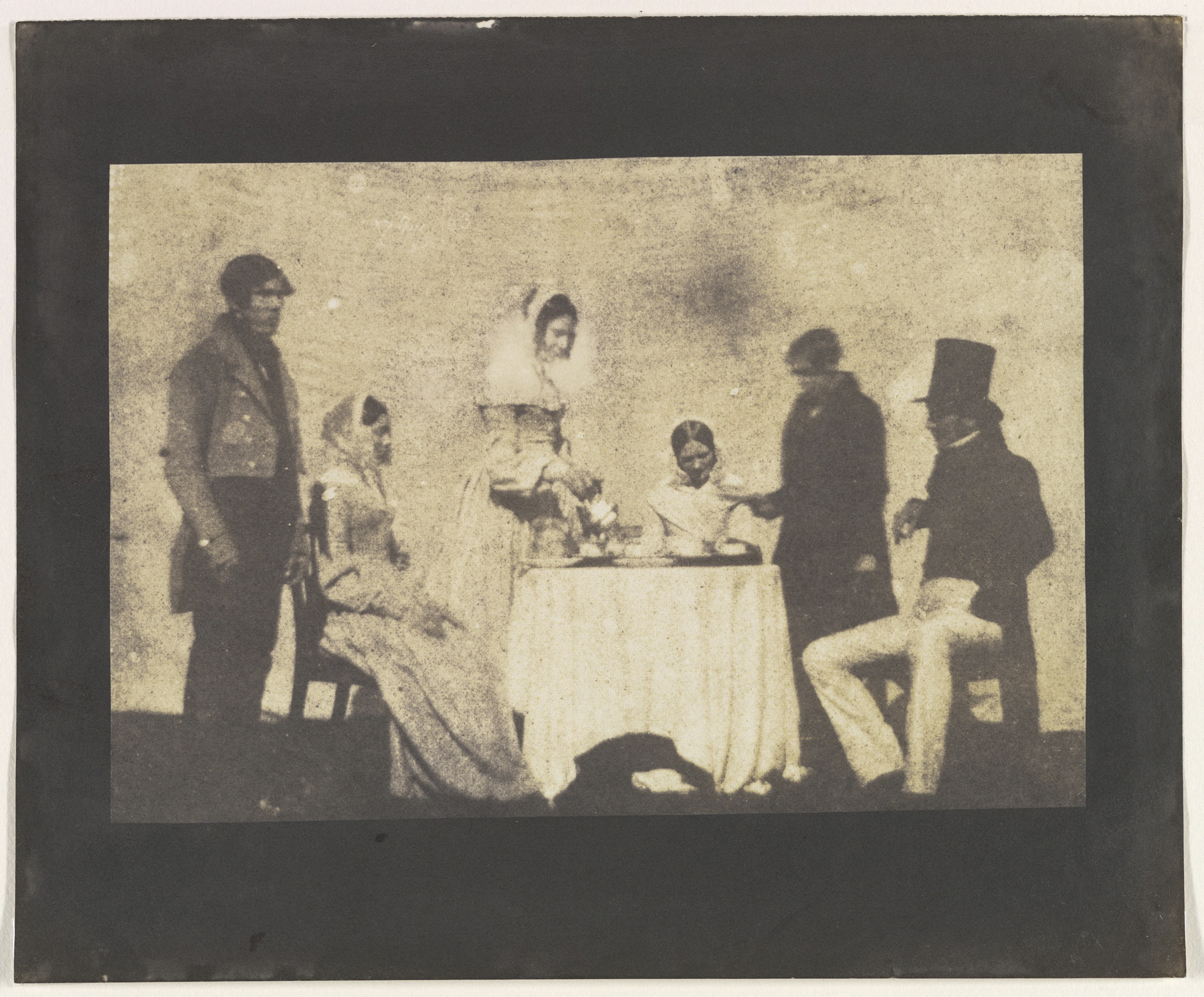
William Henry Fox Talbot (British, Dorset 1800 - 1877 Lacock) 'Group Taking Tea at Lacock Abbey' August 17, 1843


William Henry Fox Talbot (British, Dorset 1800 – 1877 Lacock)
Group Taking Tea at Lacock Abbey
August 17, 1843
Salted paper print from paper negative
Mount: 9 15/16 in. × 13 in. (25.3 × 33cm)
Sheet: 7 3/8 × 8 15/16 in. (18.7 × 22.7cm)
Image: 5 in. × 7 1/2 in. (12.7 × 19cm)
Bequest of Maurice B. Sendak, 2012
The Metropolitan Museum of Art
Public domain


Although Talbot’s groundbreaking calotype (paper negative) process allowed for more instantaneous image making, works such as this one nevertheless reflect the technical limitations of early photography. Here, he adapts painterly conventions to the new medium, staging a genre scene on his family estate. The stilted arrangement of figures – rigidly posed to produce a clear image – belies Talbot’s attempt to show action in progress. To achieve sufficient light exposure, he photographed the domestic tableau outdoors, arranging his subjects before a blank backdrop to create the illusion of interior space.


Unknown artist. '[Carte-de-visite Album of Collaged Portraits]' 1850s-1860s

Unknown artist. '[Carte-de-visite Album of Collaged Portraits]' 1850s-1860s

Unknown artist. '[Carte-de-visite Album of Collaged Portraits]' 1850s-1860s

Unknown artist. '[Carte-de-visite Album of Collaged Portraits]' 1850s-1860s

Unknown artist. '[Carte-de-visite Album of Collaged Portraits]' 1850s-1860s

Unknown artist. '[Carte-de-visite Album of Collaged Portraits]' 1850s-1860s

Unknown artist. '[Carte-de-visite Album of Collaged Portraits]' 1850s-1860s

Unknown artist. '[Carte-de-visite Album of Collaged Portraits]' 1850s-1860s


Unknown artist (American or Canadian)
[Carte-de-visite Album of Collaged Portraits]
1850s-1860s
Albumen silver prints
5 15/16 × 5 1/8 × 2 1/16 in. (15.1 × 13 × 5.3cm)
Bequest of Herbert Mitchell, 2008
The Metropolitan Museum of Art
Public domain


Beginning in the late 1850s, cartes de visite, or small photographic portrait cards, were produced on a scale that put photography in the hands of the masses. This unusual collection of collages is ahead of its time in spoofing the rigidity of the format. The images play with scale and gender by juxtaposing cutout heads and mismatched sitters, thereby highlighting the difference between social identity – which was communicated in part through the exchange of calling cards – and individuality.


Unknown artist (American) '[Studio Photographer at Work]' c. 1855


Unknown artist (American)
[Studio Photographer at Work]
c. 1855
Salted paper print
Image: 5 1/8 × 3 13/16 in. (13 × 9.7cm)
Sheet: 9 1/2 × 5 5/8 in. (24.1 × 14.3cm)
William L. Schaeffer Collection, Promised Gift of Jennifer and Philip Maritz, in celebration of the Museum’s 150th Anniversary
The Metropolitan Museum of Art


In this evocative image, picture making takes centre stage. Underneath a canopy of dark cloth, the photographer poses as if to adjust the bellows of a large format camera. The view reflected on its ground glass would appear reversed and upside down. Viewers’ expectations are similarly overturned, because the photographer’s subject remains unseen.


Unknown artist (American) '[Boy Holding a Daguerreotype]' 1850s


Unknown artist (American)
[Boy Holding a Daguerreotype]
1850s
Daguerreotype with applied colour
Image: 3 1/4 × 2 3/4 in. (8.3 × 7cm)
William L. Schaeffer Collection, Promised Gift of Jennifer and Philip Maritz, in celebration of the Museum’s 150th Anniversary
The Metropolitan Museum of Art


The boy in this picture clutches a cased image to his chest, as if to illustrate his affection for the subject depicted within. Daguerreotypes were a novel form of handheld picture, portable enough to slip into a pocket or palm. Portraits exchanged between friends and family could be kept close – a practice often mimed by sitters, who would pose for one daguerreotype while holding another.


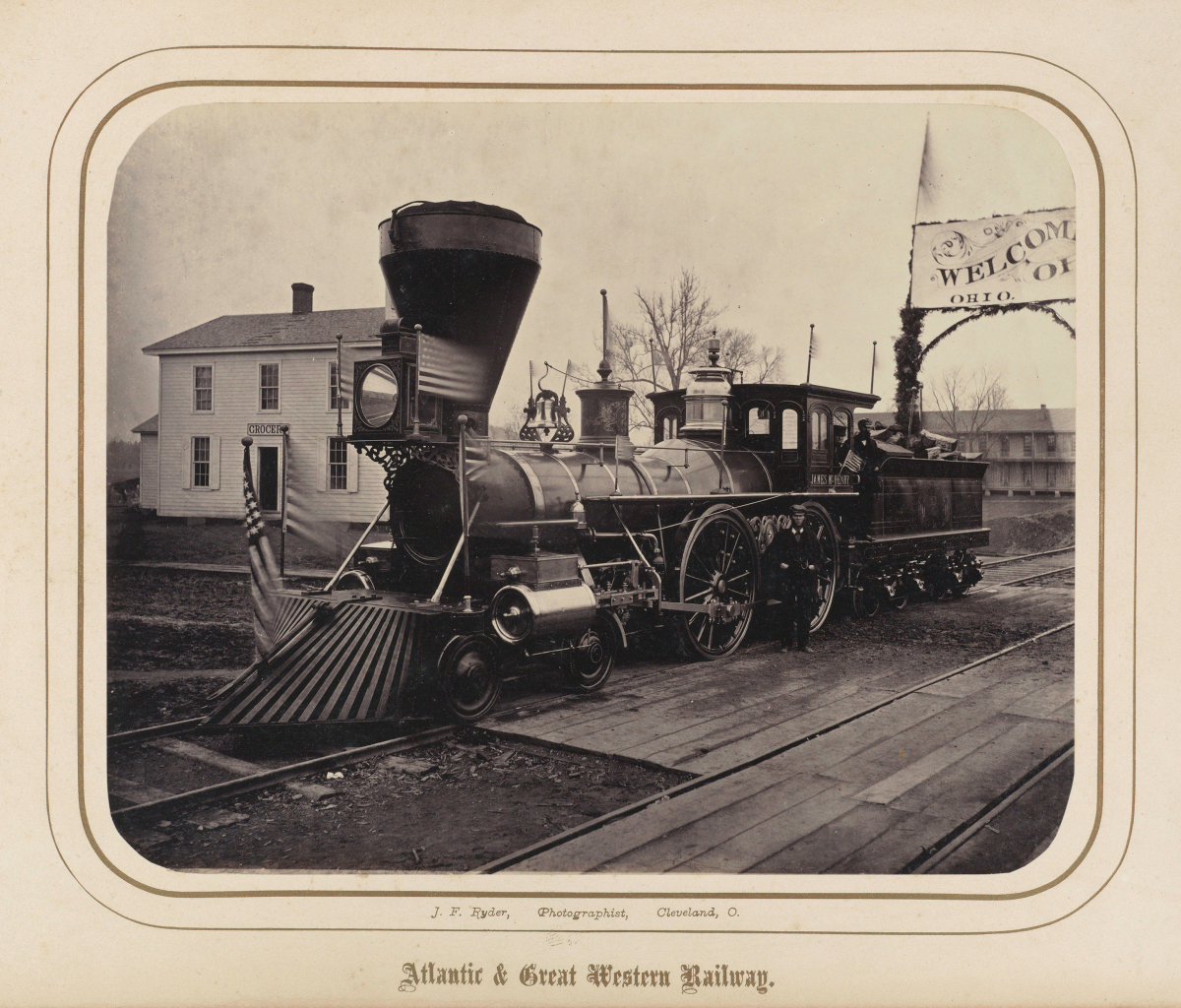
James Fitzallen Ryder (American, 1826-1904) 'Locomotive James McHenry (58), Atlantic and Great Western Railway' 1862


James Fitzallen Ryder (American, 1826-1904)
Locomotive James McHenry (58), Atlantic and Great Western Railway
1862
Albumen silver print
Image: 7 3/8 × 9 1/4 in. (18.7 × 23.5cm)
Mount: 10 × 13 in. (25.4 × 33cm)
William L. Schaeffer Collection, Promised Gift of Jennifer and Philip Maritz, in celebration of the Museum’s 150th Anniversary
The Metropolitan Museum of Art


In spring 1862, the chief engineer in charge of building the Atlantic and Great Western Railway – which ran from Salamanca, New York, to Akron, Ohio, and from Meadville to Oil City, Pennsylvania – engaged James Ryder to make photographs that would convince shareholders of the worthiness of the project. Ryder’s assignment was “to photograph all the important points of the work, such as excavations, cuts, bridges, trestles, stations, buildings and general character of the country through which the road ran, the rugged and the picturesque.” In a converted railroad car kitted out with a darkroom, water tank, and developing sink, he processed photographs that make up one of the earliest rail surveys.


Attributed to Josiah Johnson Hawes (American, Wayland, Massachusetts 1808 - 1901 Crawford Notch, New Hampshire) Winter on the Common, Boston' 1850s


Attributed to Josiah Johnson Hawes (American, Wayland, Massachusetts 1808 – 1901 Crawford Notch, New Hampshire)
Winter on the Common, Boston
1850s
Salted paper print
Window: 6 15/16 × 8 15/16 in. (17.6 × 22.7cm)
Mat: 16 × 20 in. (40.6 × 50.8cm)
William L. Schaeffer Collection, Promised Gift of Jennifer and Philip Maritz, in celebration of the Museum’s 150th Anniversary
The Metropolitan Museum of Art


Having originally set his sights on a career as a painter, Josiah Hawes gave up his brushes for a camera upon first seeing a daguerreotype in 1841. Two years later, he joined Albert Sands Southworth in Boston to form the celebrated photographic studio Southworth & Hawes. Turning to paper-based photography in the early 1850s, Hawes frequently depicted local scenery. This surprising picture, which presents Boston Common through a veil of snow-laden branches, shows that Hawes brought his creative ambitions to the nascent art of photography.


Carleton E. Watkins (American, 1829-1916) '[California Oak, Santa Clara Valley]' c. 1863


Carleton E. Watkins (American, 1829-1916)
[California Oak, Santa Clara Valley]
c. 1863
Albumen silver print
Image: 12 in. × 9 5/8 in. (30.5 × 24.5cm)
Mount: 21 1/4 in. × 17 5/8 in. (54 × 44.8cm)
William L. Schaeffer Collection, Promised Gift of Jennifer and Philip Maritz, in celebration of the Museum’s 150th Anniversary
The Metropolitan Museum of Art


For viewers today, the crown of this majestic oak tree, with its complex network of branches, might evoke the allover paintings of Abstract Expressionism with their layers of dripped paint. As photographed by Carleton Watkins, the dark, flattened silhouette of the tree feathers out across the camera’s field of view. The sloped horizon line, uncommon in Watkins’s output, both echoes the ridge in the distance and grounds the energy of the tree canopy, ably demonstrating his masterful command of pictorial composition.


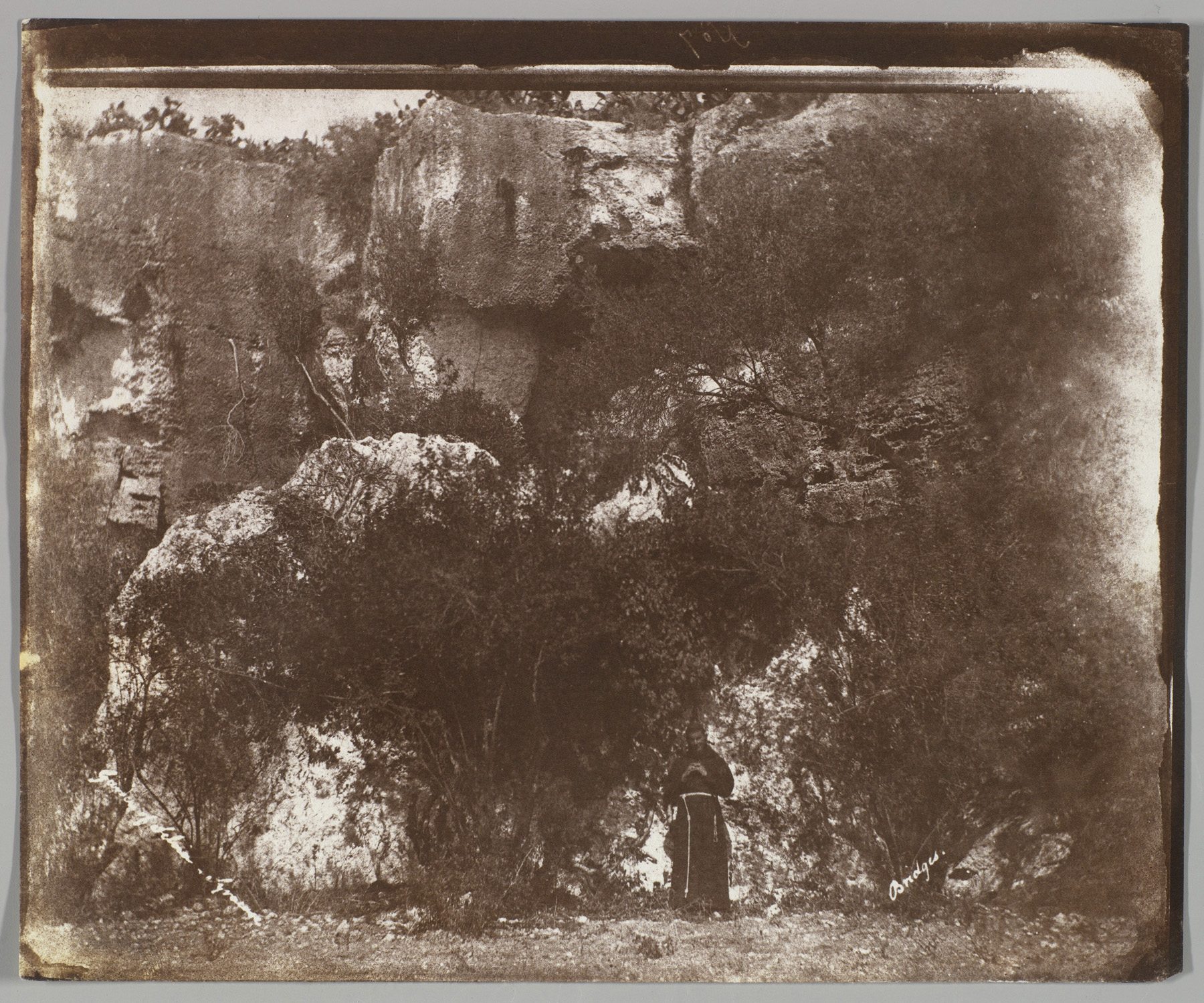
George Wilson Bridges (British, 1788-1864) 'Garden of Selvia, Syracuse, Sicily' 1846


George Wilson Bridges (British, 1788-1864)
Garden of Selvia, Syracuse, Sicily
1846
Salted paper print from paper negative
Image: 6 15/16 × 8 9/16 in. (17.7 × 21.7cm)
Sheet: 7 5/16 × 8 13/16 in. (18.5 × 22.4cm)
Bequest of Maurice B. Sendak, 2012
The Metropolitan Museum of Art
Public domain


The monk’s gesture of prayer in this image by George Wilson Bridges is a touchstone of stillness against the impressive landscape and vegetation that rise up behind him. Bridges was an Anglican reverend and friend of William Henry Fox Talbot, the inventor of the calotype (paper negative), who instructed him on the method before it was patented. Bridges was also one of the earliest photographers to embark upon a tour of the Mediterranean region; he wrote to Talbot that he conceived of the excursion both as a technical mission to advance photography and as a pilgrimage to collect imagery of religious sites.


Pietro Dovizielli (Italian, 1804-1885) '[Spanish Steps, Rome]' c. 1855


Pietro Dovizielli (Italian, 1804-1885)
[Spanish Steps, Rome]
c. 1855
Albumen silver print from glass negative
Image: 14 11/16 × 11 5/16 in. (37.3 × 28.8cm)
Sheet: 24 7/16 × 18 7/8 in. (62 × 48cm)
Gift of W. Bruce and Delaney H. Lundberg, in celebration of the Museum’s 150th Anniversary, 2019
The Metropolitan Museum of Art
Public domain


Made in late afternoon light, Pietro Dovizielli’s picture shows a long shadow cast onto Rome’s Piazza di Spagna that almost obscures one of the market stalls flanking the base of the famed Spanish Steps. Rising above the sea of stairs is the church of Trinità dei Monti, its facade neatly bisected by the Sallustiano obelisk. In the piazza, a lone figure – the only visible inhabitant of this eerily empty public square – rests against the railing of the Barcaccia fountain. Keenly composed pictures like this led reviewers of Dovizielli’s photographs to proclaim them “the very paragons of architectural photography.”


Edouard Baldus (French (born Prussia), 1813-1889) '[Amphitheater, Nîmes]' c. 1853


Edouard Baldus (French (born Prussia), 1813-1889)
[Amphitheater, Nîmes]
c. 1853
Salted paper print from paper negative
Overall: 12 3/8 × 15 3/16 in. (31.5 × 38.5cm)
Gift of Joyce F. Menschel, in celebration of the Museum’s 150th Anniversary, 2019
The Metropolitan Museum of Art


Instead of photographing the entire arena in Nîmes, as he had two years earlier, Baldus focusses here on a section of the façade, playing the superimposed arches against the vertical, shadowed pylons in the foreground. The resulting composition manages to isolate and monumentalise the architecture, while creating a rhythmic play of light and dark that energises the picture. The photograph was part of a massive, four-year project, Villes de France photographiées, in which the views from the south of France were said to surpass all of the photographer’s previous work in the region.


William Henry Fox Talbot (British, Dorset 1800-1877 Lacock) 'View of the Boulevards of Paris' 1843


William Henry Fox Talbot (British, Dorset 1800 – 1877 Lacock)
View of the Boulevards of Paris
1843
Salted paper print from paper negative
Mount: 9 in. × 10 1/16 in. (22.8 × 25.6cm)
Sheet: 7 3/8 × 10 1/8 in. (18.7 × 25.7cm)
Image: 6 5/16 × 8 1/2 in. (16.1 × 21.6cm)
Bequest of Maurice B. Sendak, 2012
The Metropolitan Museum of Art
Public domain


In May 1843 Talbot traveled to Paris to negotiate a licensing agreement for the French rights to his patented calotype process. His invention used a negative-positive system and a paper base – not a copper support as in a daguerreotype. Although his negotiations were not fruitful, Talbot’s views of the elegant new boulevards of the French capital were highly successful.

Filled with the incidental details of urban life, architectural ornamentation, and the play of spring light, this photograph appears as the second plate in Talbot’s groundbreaking publication The Pencil of Nature (1844). The chimney posts on the roofline of the rue de la Paix, the waiting horses and carriages, and the characteristically French shuttered windows evoke as vivid a notion of mid-nineteenth-century Paris now as they must have 170 years ago.


Lewis Dowe (American, active 1860s-1880s) '[Dowe's Photograph Rooms, Sycamore, Illinois]' 1860s


Lewis Dowe (American, active 1860s-1880s)
[Dowe’s Photograph Rooms, Sycamore, Illinois]
1860s
Albumen silver print
Image: 5 7/8 × 7 5/8 in. (14.9 × 19.3cm)
Mount: 8 × 10 in. (20.3 × 25.4cm)
William L. Schaeffer Collection, Promised Gift of Jennifer and Philip Maritz, in celebration of the Museum’s 150th Anniversary
The Metropolitan Museum of Art


Above a bustling thoroughfare in Sycamore, Illinois, boldface lettering advertises the services of photographer Lewis Dowe, a portraitist who also published postcards and stereoviews. Easier to miss in the image is a mannequin perched above the awning to promote the studio. The flurry of activity below Dowe’s storefront and the prime location of the outfit, poised between a tailor and a saloon, speak to the important role of photography in town life.


E. & H. T. Anthony (American) '[Specimens of New York Bill Posting]' 1863


E. & H. T. Anthony (American)
[Specimens of New York Bill Posting]
1863
Albumen silver prints
Mount: 3 1/4 in. × 6 3/4 in. (8.3 × 17.1cm)
Image: 2 15/16 in. × 6 in. (7.5 × 15.3cm)
William L. Schaeffer Collection, Promised Gift of Jennifer and Philip Maritz, in celebration of the Museum’s 150th Anniversary
The Metropolitan Museum of Art


Benefit concerts, minstrel shows, lectures, and horse races all clamour for attention in this graphic field of broadsides posted in the Bowery neighbourhood of Manhattan. The stereograph format lends added depth and dimensionality to the layered fragments of text, transporting viewers to a hectic city sidewalk. Published for a national market, the scene indexes a precise moment in the summer of 1863, offering armchair tourists an inadvertent trend report on downtown cultural life.


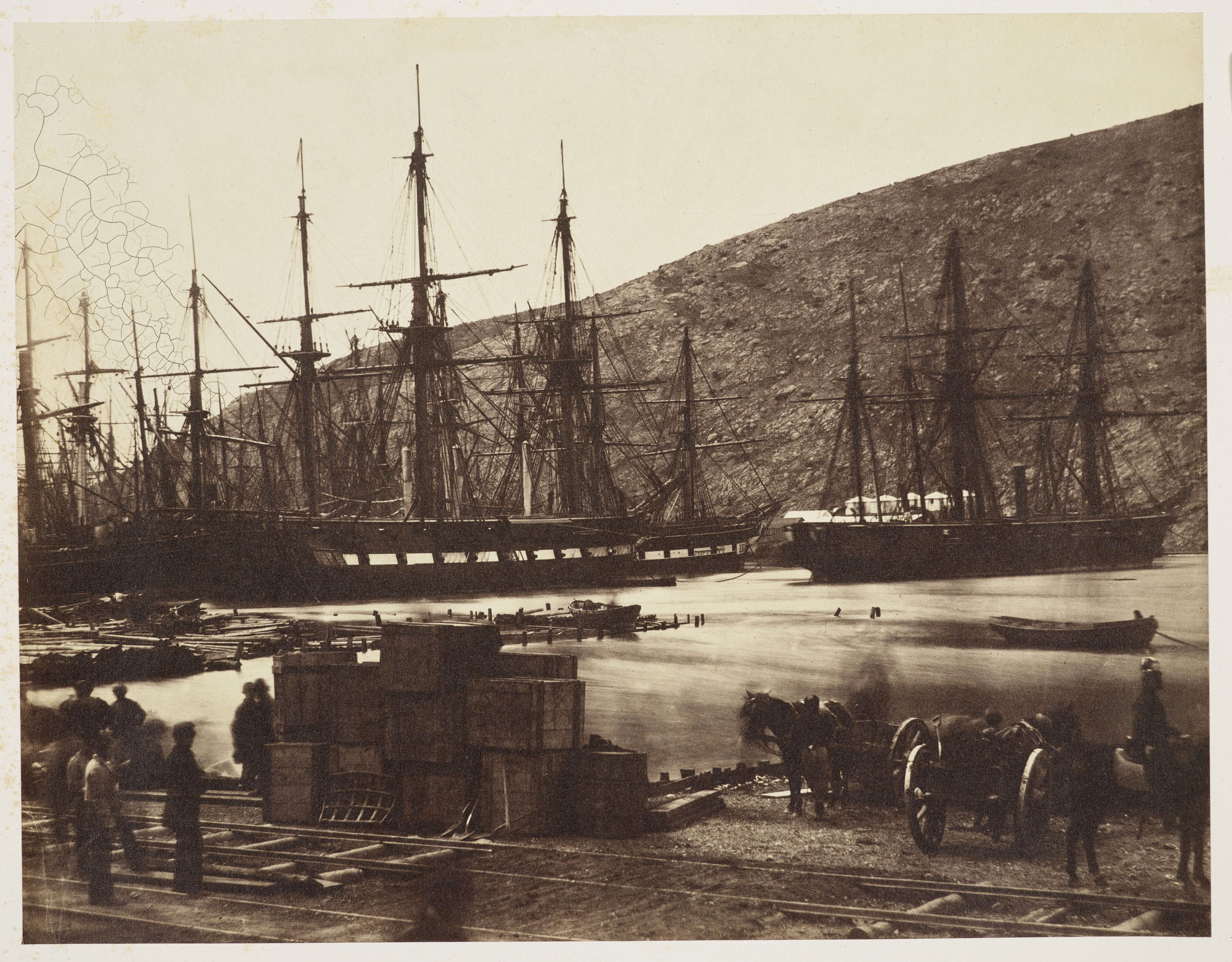
Roger Fenton (British, 1819-1869) 'The Diamond and Wasp, Balaklava Harbour' March, 1855


Roger Fenton (British, 1819-1869)
The Diamond and Wasp, Balaklava Harbour
March, 1855
Albumen silver print from glass negative
Image: 8 in. × 10 1/8 in. (20.3 × 25.7cm)
Mount: 19 5/16 × 24 3/4 in. (49 × 62.9cm)
Gift of Thomas Walther Collection, in celebration of the Museum’s 150th Anniversary, 2019
The Metropolitan Museum of Art


Fenton’s view of the Black Sea port of Balaklava, which the British used as a landing point for their siege of Sevastopol during the Crimean War, shows a busy but orderly operation. The British naval ships, HMS Diamond and HMS Wasp, oversaw the management of transports into and out of the harbour, which explains the presence of ships and rowboats, as well as the large stack of crates near the rail track in the foreground. Against claims of “rough-and-tumble” mismanagement of Balaklava in the British press, Fenton (commissioned by a Manchester publisher to record the theatre of war) offers documentation of a well-functioning port.


Roger Fenton (British, 1819-1869) 'The Mamelon and Malakoff from front of Mortar Battery' April, 1855


Roger Fenton (British, 1819-1869)
The Mamelon and Malakoff from front of Mortar Battery
April, 1855
Salted paper print from glass negative
Image: 9 1/8 × 13 1/2 in. (23.1 × 34.3cm)
Sheet: 14 3/4 × 17 13/16 in. (37.5 × 45.3cm)
Gift of Joyce F. Menschel, in celebration of the Museum’s 150th Anniversary, 2019
The Metropolitan Museum of Art


Fenton’s extensive documentation of the Crimean War – the first use of photography for that purpose – was a commercial endeavour that did not include pictures of battle, the wounded, or the dead. His unprepossessing view of a vast rocky valley instead discloses, in the distance, a site of crucial strategic importance. Fort Malakoff, the general designation of Russian fortifications on two hills (Mamelon and Malakoff) is just perceptible at the horizon line. Malakoff’s capture by the French in September 1855, five months after Fenton made this photograph, ended the eleven-month siege of Sevastopol and was the final episode of the war.


Felice Beato (British (born Italy), Venice 1832-1909 Luxor) and James Robertson (British, 1813-1881) [Dome of the Rock, Jerusalem] 1856-1857


Felice Beato (British (born Italy), Venice 1832-1909 Luxor) and James Robertson (British, 1813-1881)
[Dome of the Rock, Jerusalem]
1856-1857
Albumen silver print
Image: 9 in. × 11 1/4 in. (22.9 × 28.6cm)
Mount: 17 5/8 in. × 22 1/2 in. (44.8 × 57.2cm)
Gift of Joyce F. Menschel, 2013
The Metropolitan Museum of Art


This detailed print showing the Dome of the Rock in Jerusalem provides a sense of the structure’s natural and architectural surroundings. Felice Beato depicted the religious site from a pilgrim’s point of view – walls and roads are given visual priority and stand between the viewer and the shrine. Holy sites such as this were the earliest and most common subjects of travel photography. Beato made multiple journeys to the Mediterranean and North Africa, and he is perhaps best known for photographing East Asia in the 1880s.


R.C. Montgomery (American, active 1850s) '[Self-Portrait (?)]' 1850s


R.C. Montgomery (American, active 1850s)
[Self-Portrait (?)]
1850s
Daguerreotype with applied colour
Image: 3 1/4 × 4 1/4 in. (8.3 × 10.8cm)
William L. Schaeffer Collection, Promised Gift of Jennifer and Philip Maritz, in celebration of the Museum’s 150th Anniversary
The Metropolitan Museum of Art


The insouciant subject here may be the daguerreotypist himself, posing in bed for a promotional picture or a private joke. His rumpled suit and haphazard hairstyle affect intimacy, perhaps in an effort to showcase an informal portrait style. Because they required long exposure times, daguerreotypes often captured sitters at their most stilted. With this surprising picture, the maker might have hoped to attract clients who were in search of a more novel or natural likeness.


The Metropolitan Museum of Art
1000 Fifth Avenue at 82nd Street
New York, New York 10028-0198
Phone: 212-535-7710

Opening hours:
Thursday – Tuesday 10am – 5pm
Closed Wednesday

The Metropolitan Museum of Art website
LIKE ART BLART ON FACEBOOK

Back to top

Exhibition: ‘Women of Progress: Early Camera Portraits’ at the Smithsonian National Portrait Gallery, Washington, DC

Exhibition dates: 14th June, 2019 – 31st May, 2020

Curator: Ann Shumard


Unidentified Artist. 'Charlotte Cushman' c. 1850 (detail) from the exhibition 'Women of Progress: Early Camera Portraits' at the Smithsonian National Portrait Gallery, Washington, DC, June 2019 - May 2020
 

Unidentified Artist
Charlotte Cushman (detail)
c. 1850
Half-plate daguerreotype
Image: 12 × 9cm (4 3/4 × 3 9/16″)
National Portrait Gallery, Smithsonian Institution


Let us celebrate strong, creative, (com)passionate women.

Marcus


Many thankx to the National Portrait Gallery for allowing me to publish the photographs in the posting. Please click on the photographs for a larger version of the image.


Seriousness of their intent and purpose writ large upon their faces. Portraits of the self, as if alone, without decorous engagement for the camera.


Elizabeth Gertsakis


In mid-nineteenth-century America, the growing presence of women in public life coincided with the rise of portrait photography. This exhibition of daguerreotypes and ambrotypes from the 1840s and 1850s features portraits of early feminist icons, women’s rights advocates Margaret Fuller and Lucy Stone, abolitionist Lucretia Mott and best-selling author Harriet Beecher Stowe.


Unidentified Artist. 'Charlotte Cushman' c. 1850 from the exhibition 'Women of Progress: Early Camera Portraits' at the Smithsonian National Portrait Gallery, Washington, DC, June 2019 - May 2020


Unidentified Artist
Charlotte Cushman
c. 1850
Half-plate daguerreotype
Image: 12 × 9cm (4 3/4 × 3 9/16″)
National Portrait Gallery, Smithsonian Institution


Charlotte Saunders Cushman (July 23, 1816 – February 18, 1876) was an American stage actress. Her voice was noted for its full contralto register, and she was able to play both male and female parts. She lived intermittently in Rome, in an expatriate colony of prominent artists and sculptors, some of whom became part of her tempestuous private life.

Text from the Wikipedia website


Charlotte Cushman was the foremost American-born actress of her day and the first to enjoy critical and popular acclaim at home and abroad. Following her 1836 New York City stage debut as Lady Macbeth, she honed her craft there and in Philadelphia, where she managed the Walnut Street Theatre from 1842 to 1844. With a dramatic range and commanding stage presence that more than compensated for her lack of conventional beauty, Cushman boldly developed a repertoire that included male as well as female roles. Taking London by storm in 1845, she returned to universal acclaim in the United States in 1849.

Exhibition label from Smithsonian National Portrait Gallery website [Online] Cited 13/11/2019.


Unidentified Artist. 'Lucy Stone' c. 1855 from the exhibition 'Women of Progress: Early Camera Portraits' at the Smithsonian National Portrait Gallery, Washington, DC, June 2019 - May 2020


Unidentified Artist
Lucy Stone
c. 1855
Half-plate daguerreotype
Case Open: 19.9 × 32.9 × 0.8cm (7 13/16 × 12 15/16 × 5/16″)
National Portrait Gallery, Smithsonian Institution


Lucy Stone (August 13, 1818 – October 18, 1893) was a prominent U.S. orator, abolitionist, and suffragist, and a vocal advocate and organiser promoting rights for women. In 1847, Stone became the first woman from Massachusetts to earn a college degree. She spoke out for women’s rights and against slavery at a time when women were discouraged and prevented from public speaking. Stone was known for using her birth name after marriage, the custom being for women to take their husband’s surname.

Text from the Wikipedia website


Lucy Stone was unequivocal in her opposition to slavery and her support for women’s rights. Yet, when some abolitionists argued that her antislavery efforts should take precedence, she replied, “I was a woman before I was an abolitionist.” Stone helped to organise the first national women’s rights conference in Worcester, Massachusetts, in 1850, and lectured widely on the topic of women’s suffrage. When she married Henry Blackwell in 1855, she defied tradition by retaining her maiden name. In 1866, Stone became a founder of the American Equal Rights Association, which sought to secure voting rights for African Americans and women.

Exhibition label from Smithsonian National Portrait Gallery website [Online] Cited 13/11/2019.


Unidentified Artist. 'Harriet Beecher Stowe' 1852 from the exhibition 'Women of Progress: Early Camera Portraits' at the Smithsonian National Portrait Gallery, Washington, DC, June 2019 - May 2020


Unidentified Artist
Harriet Beecher Stowe
1852
Sixth-plate daguerreotype
Image: 3.9cm x 3.4cm (1 9/16″ x 1 5/16″)
National Portrait Gallery, Smithsonian Institution


Harriet Elisabeth Beecher Stowe (June 14, 1811 – July 1, 1896) was an American abolitionist and author. She came from the Beecher family, a famous religious family, and is best known for her novel Uncle Tom’s Cabin (1852), which depicts the harsh conditions for enslaved African Americans. The book reached millions as a novel and play, and became influential in the United States and Great Britain, energising anti-slavery forces in the American North, while provoking widespread anger in the South. Stowe wrote 30 books, including novels, three travel memoirs, and collections of articles and letters. She was influential for both her writings and her public stances and debates on social issues of the day.

Text from the Wikipedia website


Harriet Beecher Stowe authored numerous articles, essays, and books during her long career, but it was her dramatic, antislavery novel Uncle Tom’s Cabin that brought her fame at home and abroad. First serialised in the National Era newspaper, Uncle Tom’s Cabin appeared in book form in 1852 and sold more than 300,000 copies during its first year in print. Lionised by Northern abolitionists and vilified by Southern slaveholders, Stowe became the subject of intense public interest. When requests for her portrait multiplied, she responded by posing for several daguerreotype likenesses that were soon copied and distributed widely.

Exhibition label from Smithsonian National Portrait Gallery website [Online] Cited 13/11/2019.


Ezra Greenleaf Weld (American, 1801-1874) 'Frederick Douglass with the Edmonson Sisters at Fugitive Slave Law Convention, Cazenovia, New York' 1850


Ezra Greenleaf Weld (American, 1801-1874)
Frederick Douglass with the Edmonson Sisters at Fugitive Slave Law Convention, Cazenovia, New York
1850
Half-plate copy daguerreotype
Case Open: 15.2 x 24.4 x 1.3 cm (6 x 9 5/8 x 1/2″)
National Portrait Gallery, Smithsonian Institution; on loan from Mr. and Mrs. Set Charles Momjian


Weld daguerreotype taken at the 1850 Fugitive Slave Law Convention, Cazenovia, New York. The Edmonson sisters are standing wearing bonnets and shawls in the row behind the seated speakers. Frederick Douglass is seated, with Gerrit Smith standing behind him.

Ezra Greenleaf Weld (October 26, 1801 – October 14, 1874), often known simply as “Greenleaf”, was a photographer and an operator of a daguerreotype studio in Cazenovia, New York. He and his family were involved with the abolitionist movement.

Weld opened his first studio in his home in 1845. In 1850, Cazenovia hosted the abolitionist meeting known as the Fugitive Slave Law Convention. This gave Weld the opportunity to photograph the legendary orator Frederick Douglass with the Edmonson sisters, Gerritt Smith and Abby Kelley Foster. This daguerreotype was given to the imprisoned abolitionist William Chaplin who had helped many of the attendees escape to freedom.

Of the six daguerreotypes of Douglass that have survived, only one besides Greenleaf’s image has had its daguerreotypist identified. Greenleaf’s image is unique because it is a group shot at an outdoor meeting rather than a studio portrait. Daguerreotypes were seldom attempted under these circumstances because the long exposure time required made it difficult to get a satisfactory result. Weld’s is the only daguerreotype of Douglass whose date is known with certainty. This daguerreotype is also unique in the paradoxical sense that it is the only one known to have been copied. Two original half-plates exist: One is held by the Madison County Historical Society in Oneida, New York, the other is in a private collection and currently on display at the Smithsonian Institution in Washington, D.C.

Text from the Wikipedia website


The Fugitive Slave Law Convention was held in Cazenovia, New York, August 21-22, 1850. Organised to oppose passage of the Fugitive Slave Act of 1850 by the United States Congress, participants included Frederick Douglass, the Edmonson sisters, Gerrit Smith, Samuel Joseph May, and Theodore Dwight Weld, among others. The convention opened at the First Congregational Church of Cazenovia (now Cazenovia College’s theater building), then moved to “the orchard of Grace Wilson’s School, located on Sullivan Street,” to accommodate the estimated 2000 to 3000 participants. It was chaired by Douglass.

Text from the Wikipedia website


Frederick Douglass (born Frederick Augustus Washington Bailey; c.  February 1818 – February 20, 1895) was an American social reformer, abolitionist, orator, writer, and statesman. After escaping from slavery in Maryland, he became a national leader of the abolitionist movement in Massachusetts and New York, gaining note for his oratory and incisive antislavery writings. In his time, he was described by abolitionists as a living counter-example to slaveholders’ arguments that slaves lacked the intellectual capacity to function as independent American citizens. Northerners at the time found it hard to believe that such a great orator had once been a slave. …

Douglass was a firm believer in the equality of all peoples, whether white, black, female, Native American, or Chinese immigrants. He was also a believer in dialogue and in making alliances across racial and ideological divides, and in the liberal values of the U.S. Constitution. When radical abolitionists, under the motto “No Union with Slaveholders”, criticised Douglass’ willingness to engage in dialogue with slave owners, he replied: “I would unite with anybody to do right and with nobody to do wrong.”

Text from the Wikipedia website


Mary Edmonson (1832-1853) and Emily Edmonson (1835-1895), “two respectable young women of light complexion”, were African Americans who became celebrities in the United States abolitionist movement after gaining their freedom from slavery. On April 15, 1848, they were among the 77 slaves who tried to escape from Washington, DC on the schooner The Pearl to sail up the Chesapeake Bay to freedom in New Jersey.

Although that effort failed, they were freed from slavery by funds raised by the Congregational Church in Brooklyn, New York, whose pastor was Henry Ward Beecher, an abolitionist. After gaining freedom, the Edmonsons were supported to go to school; they also worked. They campaigned with Beecher throughout the North for the end of slavery in the United States.

Text from the Wikipedia website


Gerrit Smith (March 6, 1797 – December 28, 1874), also spelled Gerritt, was a leading American social reformer, abolitionist, politician, and philanthropist. Spouse to Ann Carroll Fitzhugh, Smith was a candidate for President of the United States in 1848, 1856, and 1860, but only served 18 months in the federal government – in Congress as a Free Soil Party Representative, in 1853-1854.

Text from the Wikipedia website


In 1850, as Congress considered passage of a harsh new Fugitive Slave Law, more than 2,000 people heeded the call of abolitionist Gerrit Smith (standing, center) to meet in Cazenovia, New York, and protest the impending legislation. Among the nearly fifty escaped slaves to participate were Emily and Mary Edmonson (in plaid shawls), whose freedom had been purchased by abolitionists in 1848, and Frederick Douglass (seated, center right), who served as the convention’s presiding officer. On the gathering’s second day, the overflowing crowd moved from its initial meeting place in a church to a nearby orchard. There, a local daguerreotypist made this extraordinary record of the convention.

Exhibition label from Smithsonian National Portrait Gallery website [Online] Cited 13/11/2019.


Marcus Aurelius Root (American, 1808-1888) 'Lucretia Coffin Mott' 1851


Marcus Aurelius Root (American, 1808-1888)
Lucretia Coffin Mott
1851
Half-plate daguerreotype
Case Open: 15 x 23.2 x 1cm (5 7/8 x 9 1/8 x 3/8″)
National Portrait Gallery, Smithsonian Institution


Marcus Aurelius Root (1808-1888) was a writing teacher and photographer. He was born in Granville, Ohio and died in Philadelphia, Pennsylvania.

On 20 June 1846, he bought John Jabez Edwin Mayall’s Chestnut Street photography studio that was in the same building as Root’s residence in Philadelphia, Pennsylvania. Root had success as a daguerreotypist working with his brother, Samuel Root. The Root Brothers had a gallery in New York City from 1849 to 1857. Marcus Aurelius Root authored an important book on photography entitled The Camera and the Pencil.

Text from the Wikipedia website


Lucretia Mott (née Coffin; January 3, 1793 – November 11, 1880) was a U.S. Quaker, abolitionist, women’s rights activist, and social reformer. She had formed the idea of reforming the position of women in society when she was amongst the women excluded from the World Anti-Slavery Convention in 1840. In 1848 she was invited by Jane Hunt to a meeting that led to the first meeting about women’s rights. Mott helped write the Declaration of Sentiments during the 1848 Seneca Falls Convention.

Her speaking abilities made her an important abolitionist, feminist, and reformer. When slavery was outlawed in 1865, she advocated giving former slaves who had been bound to slavery laws within the boundaries of the United States, whether male or female, the right to vote. She remained a central figure in the abolition and suffrage movement until her death in 1880.

Text from the Wikipedia website


A devout Quaker whose activism proved unsettling to some members of her faith, Lucretia Mott assumed a highly visible role in the abolitionist movement. After joining William Lloyd Garrison at the launch of the American Anti-Slavery Society, she helped to found Philadelphia’s Female Anti-Slavery Society. Her concern for women’s rights was a natural outgrowth of her abolitionist efforts. In 1848, Mott and Elizabeth Cady Stanton organised the convention at Seneca Falls, New York, that galvanised the women’s suffrage movement.

Exhibition label from the Smithsonian National Portrait Gallery website [Online] Cited 13/11/2019.


Marcus Aurelius Root (American, 1808-1888) 'Lucretia Coffin Mott' 1851 (detail)


Marcus Aurelius Root (American, 1808-1888)
Lucretia Coffin Mott (detail)
1851
Half-plate daguerreotype
Case Open: 15 x 23.2 x 1cm (5 7/8 x 9 1/8 x 3/8″)
National Portrait Gallery, Smithsonian Institution


The Smithsonian’s National Portrait Gallery will display photographs of 19th-century activists and professionals in “Women of Progress: Early Camera Portraits,” a presentation of 10 daguerreotypes and two ambrotypes from the museum’s extensive collection of antebellum portraits. This focused exhibition will explore the increasing visibility of American women in society before the Civil War and the corresponding advent of portrait photography. Organised by Ann Shumard, senior curator of photographs, “Women of Progress” is part of the Smithsonian American Women’s History Initiative, “Because of Her Story,” and is one of seven exhibitions in the Portrait Gallery’s 2019 – 2020 program to highlight women in history. “Women of Progress: Early Camera Portraits” will be displayed on the museum’s first floor June 14 through May 31, 2020.

The Portrait Gallery’s exhibition will reacquaint visitors with the fascinating lives of 13 memorable Americans. “In the 1840s and 1850s, the growing presence of women in public life coincided with the rise of portrait photography,” Shumard said. “As a result, women who were making their mark in endeavours as varied as journalism, literature, abolitionism and the burgeoning women’s rights movement became sought-after subjects for the camera.”

Those featured in the exhibition will include Dorothea Lynde Dix, activist and educator who sought humane treatment for people with mental illness; Margaret Fuller, editor and women’s rights advocate; Lucretia Mott, abolitionist and co-organiser of the Seneca Falls Convention; Lucy Stone, suffragist and a founder of the American Equal Rights Association; and Harriet Beecher Stowe, author of Uncle Tom’s Cabin. Other pioneers are the actress Laura Keene, the first woman manager of a major theatre in New York City and Mary Ann Brown Patten, the first woman to command a sailing ship around Cape Horn. The exhibition will also highlight the abolitionists Emily and Mary Edmonson, who are pictured in a daguerreotype with Frederick Douglass at the 1850 Fugitive Slave Law Convention in Cazenovia, New York. Funding for the exhibition was made possible by the National Portrait Gallery’s Women’s Initiative Leadership Committee including Capital One and the Smithsonian American Women’s History Initiative.

Press release from the National Portrait Gallery [Online] Cited 03/11/2019


Rufus Anson. 'Laura Keene' c. 1855


Rufus Anson (American, c. 1821-?)
Laura Keene
c. 1855
Sixteenth-plate daguerreotype
Case Open: 5.4 × 9.7cm (2 1/8 × 3 13/16″)
National Portrait Gallery, Smithsonian Institution
Acquired through the generosity of Bill and Sally Wittliff


Rufus Anson (active 1851-1867), American daguerreotypist who operated a studio in New York City.

An accomplished comedic actress, Laura Keene (20 July 1826 – 4 November 1873) rattled New York City’s theatrical establishment in 1855 when she became the first woman manager of a major theatre in that city. After leasing the Metropolitan Theatre, she opened Laura Keene’s Varieties, serving as manager, director, and principal star. Keene faced hostility from New York’s male theatrical managers. Her theatre was vandalised, and she lost her lease. Undeterred, she opened the Laura Keene Theatre in a new building in 1856. Well versed in all aspects of her craft, Keene was a highly successful manager who championed emerging playwrights and attracted the brightest stars to her acting company.

Exhibition label from the Smithsonian National Portrait Gallery website [Online] Cited 13/11/2019.


Rufus Anson. 'Laura Keene' c. 1855 (detail)


Rufus Anson (American, c. 1821-?)
Laura Keene (detail)
c. 1855
Sixteenth-plate daguerreotype
Case Open: 5.4 × 9.7cm (2 1/8 × 3 13/16″)
National Portrait Gallery, Smithsonian Institution
Acquired through the generosity of Bill and Sally Wittliff


John Plumbe, Jr. (American born Wales, 1809-1857) 'Margaret Fuller' 1846


John Plumbe, Jr. (American born Wales, 1809-1857)
Margaret Fuller
1846
Sixth-plate daguerreotype
National Portrait Gallery, Smithsonian Institution


Short on funds and waiting to receive a commission from the United States Congress to survey the route for a transcontinental railroad, an idea which he is credited with originating, civil engineer John Plumbe, Jr., took up photography in 1840 after seeing the work of an itinerant daguerreotypist in Washington, D.C. A Welshman by birth, Plumbe opened a gallery in Boston the following year. He eventually maintained galleries in thirteen cities, making his name recognisable in numerous cities across the country. Plumbe opened his Washington, D.C., gallery in 1844, the first in the nation’s capital. By the time he established the National Plumbeotype Gallery of engraved and lithographic reproductions of his own images in 1846, Plumbe had been dubbed “the American Daguerre” by the press. In 1847 Plumbe found himself in financial trouble and he sold his business to his employees. Two years later he gave up photography and retired to Dubuque, Iowa, where [suffering from the prolonged effects of malaria and from acute depression] he met an untimely end by cutting his own throat [at his brother’s residence in Dubuque on May 28, 1857].

Text from the J. Paul Getty Museum website [Online] Cited 13/11/2019


After working briefly for the Wisconsin territorial legislature in late 1839, Plumbe went east to continue his campaign for a Pacific railroad. He turned to the newly introduced daguerreotype process of photography as a means of support and excelled in that endeavour. Within six years Plumbe had attained a national reputation through photographic competitions and by establishing a chain of 23 galleries. Plumbe’s Dubuque gallery, opened in 1841 and operated by his brother Richard (1810-1896), was the first photographic establishment west of the Mississippi. Plumbe manufactured and imported photographic materials, gave instruction to the first generation of photographers, and published dozens of lithographic prints of noted Americans based on his daguerreotypes. Among his many achievements are the earliest photographs of the U.S. Capitol and White House (exterior and interior), the earliest photograph of a president in office (James K. Polk), and thousands of portraits of the most noted personalities of the era. Plumbe pioneered brand name recognition, obtained patent rights for colour photography, and published a magazine filled with illustrations based on his photographs. By late 1848, however, Plumbe had experienced severe financial reverses due to competition and mismanagement and was forced to sell his galleries to pay his debts.

Text from The Biographical Dictionary of Iowa website [Online] Cited 13/11/2019


John Plumbe, Jr. (American born Wales, 1809-1857) 'Margaret Fuller' 1846 (detail)


John Plumbe, Jr. (American born Wales, 1809-1857)
Margaret Fuller (detail)
1846
Sixth-plate daguerreotype
National Portrait Gallery, Smithsonian Institution


The only known daguerreotype of Margaret Fuller.

Sarah Margaret Fuller Ossoli (May 23, 1810 – July 19, 1850), commonly known as Margaret Fuller, was an American journalist, editor, critic, and women’s rights advocate associated with the American transcendentalism movement. She was the first full-time American female book reviewer in journalism. Her book Woman in the Nineteenth Century is considered the first major feminist work in the United States. …

Fuller was an advocate of women’s rights and, in particular, women’s education and the right to employment. She also encouraged many other reforms in society, including prison reform and the emancipation of slaves in the United States. Many other advocates for women’s rights and feminism, including Susan B. Anthony, cite Fuller as a source of inspiration. Many of her contemporaries, however, were not supportive, including her former friend Harriet Martineau. She said that Fuller was a talker rather than an activist. Shortly after Fuller’s death, her importance faded; the editors who prepared her letters to be published, believing her fame would be short-lived, censored or altered much of her work before publication.

Text from the Wikipedia website


Unidentified Artist. 'Olive Oatman' Nd


Unidentified Artist
Olive Oatman
Nd
Ambrotype
National Portrait Gallery, Smithsonian Institution


In the spring of 1851, a band of Apache men in present-day Arizona captured thirteen-year-old Olive Oatman and her younger sister. They killed or seriously injured the rest of the family during the attack. At the time, the Oatman family-originally from Illinois-was headed west to California to start their lives anew. Shortly thereafter the Apache sold the two sisters to a Mohave family. While living with this family, Oatman was tattooed on the chin, a custom common among members of the tribe. In 1856, after enduring five years in captivity and the death of her sister, Oatman had her freedom negotiated, and she was given over to authorities at Fort Yuma. Accounts of her release were published widely, and her biography became a best-seller. Though Oatman stated that her Mojave family treated her well, stories such as hers reinforced commonly held assumptions that Native Americans were violent savages.

Exhibition label from the Smithsonian National Portrait Gallery website [Online] Cited 13/11/2019.


Olive Ann Oatman (September 7, 1837 – March 21, 1903) was a woman born in Illinois. While traveling from Illinois to California with a company of Mormon Brewsterites, her family was killed in 1851, in present-day Arizona by a Native American tribe. The town of Oatman, Arizona is named after the Oatman family and the massacre which occurred therein. Though she identified her family’s attackers as Apache, they were most likely Tolkepayas (Western Yavapai). This small group of Native Americans clubbed Olive’s family to death. They captured Olive and her younger sister, Mary Ann, and enslaved them for one year. The girls were traded to the Mohave people. Olive spent four years with the Mohave. During her time with the Mohave tribe her sister, Mary Ann, died from starvation. Olive returned to white society five years after the Oatman Massacre, wearing a blue tattoo on her chin as a reminder of her time with the Mohave people.

Following her repatriation into American society, Olive’s story began to be retold with dramatic license in the press, as well as in her own “memoir” and speeches. Novels, plays, movies, and poetry have been inspired by Olive’s story, which resonated in the media of the time and long afterward. She had become an oddity in 1860s America, partly owing to the prominent blue tattooing of Oatman’s face by the Mohave, making her the first known tattooed American woman on record. Much of what actually occurred during her time with the Native Americans remains unknown.

Text from the Wikipedia website


Unidentified Artist. 'Olive Oatman' Nd (detail)


Unidentified Artist
Olive Oatman (detail)
Nd
Ambrotype
National Portrait Gallery, Smithsonian Institution


In the United States, the rise of studio portrait photography during the 1840s and ’50s coincided with a period of heightened visibility for women, who were emerging as prominent players in arenas including activism, literature, journalism and theatre. Harriet Beecher Stowe’s Uncle Tom’s Cabin, for example, sold 300,000 copies across the nation in the first year following its publication, while in 1855, comedic stage actress Laura Keene became the first female manager of a major New York City theatre. These women, as well as others making their mark in antebellum America, increasingly found themselves in front of the camera, posing for portraits to be shared with the public or exchanged among loved ones as tokens of affection.

“Women of Progress” catalogues the stories of 13 such mid-19th century figures through the lens of ten daguerreotypes and two ambrotypes. Some of these individuals remain household names today – Beecher Stowe, Lucretia Mott and Dorothea Dix, for example. Others, including Mary Ann Brown Patten, the first woman to sail a clipper ship around Cape Horn; Charlotte Cushman, a popular actress who played both male and female parts; and Mary Ann Meade, a daguerreotypist in her own right – are lesser known. Regardless, the women are united by both their progressive bent and the fact that their camera likenesses survive as a direct result of the burgeoning popularity of photography.

An 1846 photograph of journalist Margaret Fuller falls into the first of these categories: In a letter to her brother, the writer explains that photographer John Plumbe Jr. asked her to pose for a portrait. The resulting image, a sixth-plate daguerreotype, depicts its sitter reading a hefty tome, seemingly so engrossed in the text that she remains unaware of the camera’s presence. The image was later displayed in Plumbe’s studio to attract future clientele.

The circumstances surrounding the production of an 1851 half-plate daguerreotype of abolitionist and women’s rights advocate Lucretia Mott are far hazier. Taken by photographer Marcus Aurelius Root, the portrait served as the basis for a widely circulated lithographic print by Boston-based artist Leopold Grozelier. Unlike daguerreotypes, lithographic prints could be produced in multiple copies. Lithographs also conveyed a greater variety of tones than earlier printing methods, allowing for more accurate copies of original works such as daguerreotypes and paintings.

Shumard says it’s possible Root’s photograph was taken with the direct intention of serving as the basis for Grozelier’s print. Whereas a daguerreotype sitting typically produced just one plate, lithographs could be easily mass-produced for public purchase. …

To make copies of daguerreotypes, photographers placed original plates on specialised copy stands and then reshot the image – a process known as redaguerreotyping. Although these copies often lacked the level of contrast and subtle gradation seen in the original daguerreotypes, they were more accurate than lithographs and could be circulated on a smaller scale. “Women in Progress” features two copies – an 1852 picture of Beecher Stowe and a half-plate depicting sisters Mary and Emily Catherine Edmonson in a group photograph taken at an 1850 gathering of abolitionists protesting the impending passage of the new federal Fugitive Slave Law. The Edmonsons earned their freedom from slavery with the help of the Uncle Tom’s Cabin author’s brother, Henry Ward Beecher.

Shumard notes that the group portrait had previously been exhibited in relation to two of its better-known sitters, abolitionists Frederick Douglass and Gerrit Smith. Now, however, the scene’s female subjects are the ones commanding visitors’ attention. “In this instance,” she says, “it’s really nice to be able to highlight the Edmonson sisters.” The Beecher Stowe copy, Shumard says, stems from one of several studio sittings that yielded multiple plates ready for reproduction and distribution to an eager public.

The majority of daguerreotypes produced in mid-19th century America were designed for private rather than public consumption. “They are very intimate objects, [made] to be held in your hand and looked at,” says Shumard, or perhaps gifted to a loved one as a personal memento.

The medium’s capacity for conveying familiarity is apparent in an 1855 half-plate of abolitionist and women’s rights advocate Lucy Stone, who took the then-unheard of step of keeping her maiden name upon marrying husband Henry Blackwell. In the portrait, Stone’s features and clothing – including hand-coloured peach-tinted flesh and a pink pigmented skirt – are accentuated in an attempt to make the keepsake image look more lifelike.

Other notable images not to be missed include an 1850 quarter-plate daguerreotype of poet Sarah T. Bolton, who urged readers to “Battle for the right. / And break the chains that bind / the mighty to the few,” and a sixth-plate ambrotype of Olive Oatman, a young woman who was abducted by Native Americans and spent five years in captivity, first as a slave of the tribe that murdered most of her family and later as an adopted member of the Mohave people.

Oatman’s 1856 return attracted national attention. She was the subject of an exaggerated 1857 account, Life Among the Indians: Captivity of the Oatman Girls, and traveled the country on a publicity lecture circuit. Her likeness, meanwhile, was cemented in the public’s imagination by blue markings tattooed across the length of her chin. This facial tattoo, applied with cactus ink, is just discernible in the exhibition ambrotype, which is among the National Portrait Gallery’s most recent acquisitions.

Referencing the Oatman and Brown Patten ambrotypes, Shumard concludes, “I’m so excited that we have these ambrotypes of [women] who are not household names but… who experienced such trying circumstances and managed to survive.”

Extract from Meilan Solly. “How the Camera Introduced American to their Heroines,” on the Smithsonian.com website July 9, 2019 [Online] Cited 12/11/2019


Unidentified Artist. 'Dorothea Lynde Dix' c. 1849


Unidentified Artist
Dorothea Lynde Dix
c. 1849
Half-plate daguerreotype
Case Open: 15.4 x 24.4 x 1.3cm (6 1/16 x 9 5/8 x 1/2″)
National Portrait Gallery, Smithsonian Institution


In 1841, teacher, humanitarian, and reformer Dorothea Dix launched a vigorous campaign to secure humane treatment for those afflicted with mental illness. At a time when such individuals were more often imprisoned and abused than cared for and treated, Dix became a tireless advocate for their welfare. Personally investigating the “cages, cellars, stalls, [and] pens” where sufferers were confined, she reported her findings in speeches and articles, as well as in the petitions she submitted to lawmakers. Thanks to her efforts, facilities for the mentally ill were greatly expanded and improved.

Exhibition label from the Smithsonian National Portrait Gallery website [Online] Cited 13/11/2019. For more information on Dorothea Dix see the large Wikipedia entry.


Unidentified Artist. 'Dorothea Lynde Dix' c. 1849 (detail)


Unidentified Artist
Dorothea Lynde Dix (detail)
c. 1849
Half-plate daguerreotype
Case Open: 15.4 x 24.4 x 1.3cm (6 1/16 x 9 5/8 x 1/2″)
National Portrait Gallery, Smithsonian Institution


Meade Brothers Studio. 'Mary Ann Meade' c. 1850


Meade Brothers Studio
Mary Ann Meade
c. 1850
Sixth-plate daguerreotype
Case Open: 9.6 × 15.9 × 1.6cm (3 3/4 × 6 1/4 × 5/8″)
National Portrait Gallery, Smithsonian Institution
Gift of Mr. and Mrs. Dudley Emerson Lyons


A daguerreotypist in her own right, Mary Ann Meade began her career in the successful photography business founded around 1840 by her brothers, Charles and Henry Meade. After Charles’s death in 1858, Mary Ann gained greater visibility in the gallery’s operations. At a time when few women worked behind the camera, she was listed as a photographer in Trow’s New York City Directory (1861-62). In 1861, an article about the Meade Brothers gallery noted, “Mr. [Henry] Meade and his sister attend personally to visitors.” By June 1863, Mary Ann had become the gallery’s director and was billed as “Successor to MEADE BROTHERS.”

Text from the Smithsonian National Portrait Gallery website [Online] Cited 13/11/2019


Meade Brothers Studio

The brothers opened their daguerreian gallery in Albany, N.Y., in 1842, and their business later expanded to other cities. They each traveled to Europe and in 1848, Charles Meade became the first American to photograph Frenchman Louis-Jacques-Mandé Daguerre – the originator of the daguerreotype process. In 1850, the Meade brothers established their flagship American Daguerreotype Gallery on Broadway in New York City, where they photographed such famous subjects as statesman Daniel Webster and entertainer Lola Montez.

Exhibition label from the Smithsonian website [Online] Cited 13/11/2019


Meade Brothers Studio. 'Mary Ann Meade' c. 1850 (detail)


Meade Brothers Studio
Mary Ann Meade (detail)
c. 1850
Sixth-plate daguerreotype
Case Open: 9.6 × 15.9 × 1.6cm (3 3/4 × 6 1/4 × 5/8″)
National Portrait Gallery, Smithsonian Institution
Gift of Mr. and Mrs. Dudley Emerson Lyons


Unidentified Artist. 'Mary Ann Brown Patten' c. 1857


Unidentified Artist
Mary Ann Brown Patten
c. 1857
Ninth-plate ambrotype
Case Open: 7.4 x 12.4 x 0.9cm (2 15/16 x 4 7/8 x 3/8″)
National Portrait Gallery, Smithsonian Institution
Gift of Dorthy Knouse Koepke


Mary Ann Brown Patten (April 6, 1837 – March 18, 1861) was the first female commander of an American merchant vessel. She was the wife of Joshua Patten, captain of the merchant clipper ship Neptune’s Car. The ship was bound around Cape Horn from New York towards San Francisco when Joshua Patten collapsed from fatigue in 1856. His wife took command for 56 days, faced down a mutiny, and successfully managed to navigate the clipper ship into San Francisco. At the time she was 19 years old and pregnant with her first child.

Text from the Wikipedia website


In 1856, Mary Ann Brown Patten became the first woman to sail a clipper ship around Cape Horn, through the notoriously treacherous waters at the tip of South America. Schooled in navigation by her sea captain husband, she took helm of his ship after he fell seriously ill and the first mate proved untrustworthy. Only nineteen years old and pregnant at the time, Patten captained the San Francisco-bound Neptune’s Car for fifty-one days, during the most hazardous portion of its 15,000-mile voyage. Upon bringing the vessel safely to its destination, she was hailed for her skill as well as her courage.

Exhibition label from the Smithsonian National Portrait Gallery website [Online] Cited 13/11/2019


Smithsonian National Portrait Gallery
8th and F Sts NW
Washington, DC 20001

Opening hours:
11.30am – 7.00pm daily

Smithsonian National Portrait Gallery website

LIKE ART BLART ON FACEBOOK

Back to top

Exhibition: ‘Daguerreotypes: Five Decades of Collecting’ at the Smithsonian National Portrait Gallery, Washington, DC

Exhibition dates: 15th June, 2018 – 2nd June, 2019

 Curator: Ann Shumard, Senior Curator of Photographs at the Smithsonian National Portrait Gallery, Washington, DC


Bishop & Gray Studio (American, active c. 1843) 'Dr. Rufus Priest' c. 1843 from the exhibition 'Daguerreotypes: Five Decades of Collecting' at the Smithsonian National Portrait Gallery, Washington, DC, June 2018 - June 2019


Bishop & Gray Studio (American, active c. 1843)
Dr. Rufus Priest
c. 1843
Sixth-plate daguerreotype
8.3cm x 7cm (3 1/4″ x 2 3/4″)
National Portrait Gallery, Smithsonian Institution; gift of David Becker


What strong faces these people have, especially in the three-quarter or slightly oblique profile view with the subject not staring at the camera.

There is something incredibly powerful about these one off, cased mausoleum portraits that today’s throwaway representations struggle to match. As Montgomery P. Simons opines, “The delicacy, durability and wonderful minutiae of the daguerreotype has never been approached by any of the improved pictures recently introduced.” The contemporary Philadelphia daguerreotypist Marcus Aurelius Root paid them this praise: “Their style, indeed, is peculiar to themselves; presenting beautiful effects of light and shade, and giving depth and roundness together with a wonderful softness or mellowness. These traits have achieved for them a high reputation with all true artists and connoisseurs.” Indeed, their jewel-like aura seems to emanate from within.

I have added bibliographic details about the sitters and the photographers where possible to the posting, as well as artwork – paintings, illustrations, writing, postcards and drawings – and enlarged details of the daguerreotypes. Pictured are the great and good of the land. Surgeon, cardinal, poet, artist, actress, entrepreneur, president, social reformer, general, commodore, nurse and advocate for the mentally ill with minimal acknowledgement of Native American people (Seneca Chief Governor Blacksnake). This “man of rare intellectual and moral power” died on a reservation in December 1859.

Dr Marcus Bunyan


Many thankx to the Smithsonian National Portrait Gallery for allowing me to publish the photographs in the posting. Please click on the photographs for a larger version of the image.


Marcus Aurelius Root (American, 1808-1888) 'Thomas Buchanan Read' (March 12, 1822-May 11, 1872) c. 1850 from the exhibition 'Daguerreotypes: Five Decades of Collecting' at the Smithsonian National Portrait Gallery, Washington, DC, June 2018 - June 2019


Marcus Aurelius Root (American, 1808-1888)
Thomas Buchanan Read (March 12, 1822 – May 11, 1872)
c. 1850
Half-plate daguerreotype
National Portrait Gallery, Smithsonian Institution; gift of Miss Eunice Chambers


Thomas Buchanan Read (American, 1822-1872)

Thomas Buchanan Read (March 12, 1822 – May 11, 1872), was an American poet and portrait painter. Read was born in Corner Ketch, a hamlet close to Downingtown, in Chester County, Pennsylvania on March 12, 1822.

Beside painting, Read wrote a prose romance, The Pilgrims of the Great St. Bernard, and several books of poetry, including The New Pastoral, The House by the Sea, Sylvia, and A Summer Story. Some of the shorter pieces included in these, e.g., Sheridan’s Ride, Drifting, The Angler, The Oath, and The Closing Scene, have great merit. Read was briefly associated with the Pre-Raphaelite Brotherhood. His greatest artistic popularity took place in Florence. Among portraits he painted were Abraham Lincoln, Henry Wadsworth Longfellow, Alfred Tennyson, Elizabeth Barrett Browning, Robert Browning and William Henry Harrison. Read died from injuries sustained in a carriage accident, which weakened him and led him to contract pneumonia while on shipboard returning to America.

Text from the Wikipedia website

Marcus Aurelius Root (American, 1808-1888)

Marcus Aurelius Root (1808-1888) was a writing teacher and photographer. He was born in Granville, Ohio and died in Philadelphia, Pennsylvania.

On 20 June 1846, he bought John Jabez Edwin Mayall’s Chestnut Street photography studio that was in the same building as Root’s residence in Philadelphia, Pennsylvania. Root had success as a daguerreotypist working with his brother, Samuel Root. The Root Brothers had a gallery in New York City from 1849 to 1857. Marcus Aurelius Root authored an important book on photography entitled The Camera and the Pencil.


Beckers and Piard (American) 'Matthew Calbraith Perry' (April 10, 1794-March 4, 1858) c. 1855


Beckers and Piard (American)
Alexander Beckers (American born Germany, 1815-1905, active 1842-1869)
Victor Piard (American born France, 1825-1901)
Matthew Calbraith Perry (April 10, 1794 – March 4, 1858)
c. 1855
Half-plate daguerreotype
National Portrait Gallery, Smithsonian Institution


Alexander Beckers (American born German, 1815-1905)

Alexander Beckers first saw a daguerreotype in Philadelphia, and subsequently went to work there for photographer Frederick David Langenheim in 1843. The following year he moved to New York, where he is credited with the first whole-plate daguerreotypes made in that city. Within months Beckers opened the Langenheim & Beckers studio in New York, which became Beckers & Piard in 1849. In 1857 he patented a revolving stereograph viewer and shortly thereafter sold his daguerreotype business in order to concentrate his attention on the manufacture of stereograph viewers.

Anonymous text. “Alexander Beckers,” on the J. Paul Getty Museum website [Online] Cited 15/03/2022

Matthew Calbraith Perry (American, 1794-1858)

Matthew Calbraith Perry (April 10, 1794 – March 4, 1858) was a Commodore of the United States Navy who commanded ships in several wars, including the War of 1812 and the Mexican-American War (1846-1848). He played a leading role in the opening of Japan to the West with the Convention of Kanagawa in 1854.

Perry was interested in the education of naval officers, and assisted in the development of an apprentice system that helped establish the curriculum at the United States Naval Academy. With the advent of the steam engine, he became a leading advocate of modernising the U.S. Navy and came to be considered “The Father of the Steam Navy” in the United States.

Text from the Wikipedia website


[Several] daguerreotypes of Matthew Calbraith Perry (1794-1858) [were] made in New York City, in the months following Commodore Perry’s triumphant return from Japan in January of 1855. The seminal achievement of his long naval career, Perry’s shrewd and persistent negotiations with Japan opened that isolated nation to the West for the first time in its history.

[These] portraits can be dated to 1855-1856, based on the date of Perry’s return to the United States and the years the Beckers & Piard studio operated at 264 Broadway. A variant, more conventional, portrait from this same sitting, previously unattributed, exists in three identical half-plates, one in the National Portrait Gallery (above), one in the New-York Historical Society, and one sold at Swann Galleries, New York, in 1988 (Sale 1468, Lot 186). In addition, there is a half-plate profile study of Perry in the U. S. Naval Academy Museum in Annapolis, also made by Beckers & Piard, that was the model for a commemorative medal struck in Perry’s honour in 1856; and a half-plate seated portrait of Perry in his full uniform and regalia, also owned by the New-York Historical Society.

The portraits can be dated to 1855 or 1856 based upon Perry’s arrival in New York, from Japan, in 1855, and by the address of the daguerreotypists stamped on the portrait’s mat. Alexander Beckers and Victor Piard were active at 264 Broadway, the address on the mat, from 1853 to 1856. At some point in 1856, the studio moved across the street to 261 Broadway. This portrait would, therefore, have to have been made in 1855 or 1856.

Anonymous text. “Catalogue note,” on the Sotheby’s website 2012 [Online] Cited 28/11/2018.


Unknown artist (Japanese) 'Gasshukoku suishi teitoku kōjōgaki (Oral statement by the American Navy admiral)' c. 1854


Unknown artist (Japanese)
Gasshukoku suishi teitoku kōjōgaki (Oral statement by the American Navy admiral)
c. 1854
Library of Congress
Public domain


A Japanese print showing three men, believed to be Commander Anan, age 54; Perry, age 49; and Captain Henry Adams, age 59, who opened up Japan to the west. The text being read may be President Fillmore’s letter to Emperor of Japan. This is a somewhat extensive restoration, meant to keep focus on the artwork, instead of the damage.


Unidentified artist (American) 'Dorothea Lynde Dix' c. 1849


Unidentified artist (American)
Dorothea Lynde Dix
c. 1849
Half-plate daguerreotype
National Portrait Gallery, Smithsonian Institution


Dorothea Lynde Dix (American, 1802-1887)

Dorothea Lynde Dix (April 4, 1802 – July 17, 1887) was an American advocate on behalf of the indigent mentally ill who, through a vigorous and sustained program of lobbying state legislatures and the United States Congress, created the first generation of American mental asylums. During the Civil War, she served as a Superintendent of Army Nurses. (Wikipedia)

What a human being… read her full Wikipedia entry. A champion of the poor and mentally ill, Dix and her nurses cared for the wounded from both sides of the American Civil War.


Unidentified artist (American) 'Dorothea Lynde Dix' c. 1849 (detail)


Unidentified artist (American)
Dorothea Lynde Dix (detail)
c. 1849
Half-plate daguerreotype
National Portrait Gallery, Smithsonian Institution


Unidentified artist (American) 'Charlotte Cushman' c. 1850


Unidentified artist (American)
Charlotte Cushman
c. 1850
Half-plate daguerreotype
National Portrait Gallery, Smithsonian Institution


Charlotte Saunders Cushman (July 23, 1816 – February 18, 1876) was an American stage actress. Her voice was noted for its full contralto register, and she was able to play both male and female parts. She lived intermittently in Rome, in an expatriate colony of prominent artists and sculptors, some of whom became part of her tempestuous private life.


Unidentified artist (American) 'Charlotte Cushman' c. 1850 (detail)


Unidentified artist (American)
Charlotte Cushman (detail)
c. 1850
Half-plate daguerreotype
National Portrait Gallery, Smithsonian Institution


Mathew Brady (1822-1896) 'Charlotte Saunders Cushman' between 1855 and 1865


Mathew Brady (American, 1822-1896)
Charlotte Saunders Cushman
between 1855 and 1865
Wet collodion glass negative
Library of Congress Prints and Photographs Division. Brady-Handy Photograph Collection
Public domain


Library of Congress description: “Charlotte Cushman as Meg Merriles”


Henry B. Hull (American, active c. 1855) 'Stonewall Jackson' (Thomas Jonathan Jackson, 21 Jan 1824-10 May 1863) 1855


Henry B. Hull (American, active c. 1855)
Stonewall Jackson (Thomas Jonathan Jackson, 21 Jan 1824 – 10 May 1863)
1855
Sixth-plate daguerreotype
Image: 8.4 x 7.2cm (3 5/16 x 2 13/16″)
Case Open: 9.4 x 16.5 x 1.1cm (3 11/16 x 6 1/2 x 7/16″)
National Portrait Gallery, Smithsonian Institution


Born Clarksburg, West Virginia

When future Confederate general Stonewall Jackson sat for this likeness in 1855, his emergence as one of the South’s most brilliant military tacticians lay six years away. A West Point graduate, Jackson had served with distinction in the Mexican American War, earning more citations for valour than any other American officer. He joined Virginia Military Institute as a professor of artillery tactics and natural philosophy in 1851, and later commanded the corps of VMI cadets that guarded the gallows at John Brown’s execution. Jackson had this daguerreotype made as a memento for his aunt and uncle while visiting them in the summer of 1855.

Text from the Smithsonian National Portrait Gallery website


Unidentified artist (American) 'Robert Dale Owen' c. 1847


Unidentified artist (American)
Robert Dale Owen
c. 1847
Sixth-plate daguerreotype
National Portrait Gallery, Smithsonian Institution; gift of Andrew Oliver


Robert Owen Dale (American, 1801-1877)

Robert Dale Owen (November 7, 1801 – June 24, 1877) was a Scottish-born social reformer who immigrated to the United States in 1825, became a U.S. citizen, and was active in Indiana politics as member of the Democratic Party in the Indiana House of Representatives (1835-1839 and 1851-1853) and represented Indiana in the U.S. House of Representatives (1843-1847). As a member of Congress, Owen successfully pushed through the bill that established Smithsonian Institution and served on the Institution’s first Board of Regents. Owen also served as a delegate to the Indiana Constitutional Convention in 1850 and was appointed as U.S. chargé d’affaires (1853-1858) to Naples.

Owen was a knowledgeable exponent of the socialist doctrines of his father, Robert Owen, and managed the day-to-day operation of New Harmony, Indiana, the socialistic utopian community he helped establish with his father in 1825. Throughout his adult life, Robert Dale Owen wrote and published numerous pamphlets, speeches, books, and articles that described his personal and political views, including his belief in spiritualism. Owen co-edited the New-Harmony Gazette with Frances Wright in the late 1820s in Indiana and the Free Enquirer in the 1830s in New York City. Owen was an advocate of married women’s property and divorce rights, secured inclusion of an article in the Indiana Constitution of 1851 that provided tax-supported funding for a uniform system of free public schools, and established the position of Indiana Superintendent of Public Instruction. Owen is also noted for a series of open letters he wrote in 1862 that favoured the abolition of slavery and supported general emancipation, as well as a suggestion that the federal government should provide assistance to freedmen.

Text from the Wikipedia website


Unidentified artist (American) 'Robert Dale Owen' c. 1847 (detail)


Unidentified artist (American)
Robert Dale Owen (detail)
c. 1847
Sixth-plate daguerreotype
National Portrait Gallery, Smithsonian Institution; gift of Andrew Oliver


Southworth & Hawes (American, active 1843-1862) 'Franklin Pierce' (23 Nov 1804-8 Oct 1869) c. 1852


Southworth & Hawes (American, active 1843-1862)
Albert Sands Southworth (12 Mar 1811 – 3 Mar 1894)
Josiah Johnson Hawes (20 Feb 1808 – 7 Aug 1901)
Franklin Pierce (23 Nov 1804 – 8 Oct 1869)
c. 1852
Quarter-plate daguerreotype
Image: 8.8 x 6.8cm (3 7/16 x 2 11/16″)
Case Closed: 11.9 x 9.4cm (4 11/16 x 3 11/16″)
Case Open: 11.9 x 18.7 x 1.2cm (4 11/16 x 7 3/8 x 1/2″)
National Portrait Gallery, Smithsonian Institution


Franklin Pierce (American, 1804-1869)

Franklin Pierce (November 23, 1804 – October 8, 1869) was the 14th President of the United States (1853-1857), a northern Democrat who saw the abolitionist movement as a fundamental threat to the unity of the nation. He alienated anti-slavery groups by championing and signing the Kansas-Nebraska Act and enforcing the Fugitive Slave Act; yet he failed to stem conflict between North and South, setting the stage for Southern secession and the American Civil War.

Pierce was born in New Hampshire, and served in the U.S. House of Representatives and the Senate until he resigned from the Senate in 1842. His private law practice in New Hampshire was a success, and he was appointed U.S. Attorney for his state in 1845. He took part in the Mexican-American War as a brigadier general in the Army. He was seen by Democrats as a compromise candidate uniting northern and southern interests and was nominated as the party’s candidate for president on the 49th ballot at the 1852 Democratic National Convention. He and running mate William R. King easily defeated the Whig Party ticket of Winfield Scott and William A. Graham in the 1852 presidential election.

Text from the Wikipedia website


Southworth & Hawes (American, active 1843-1862)

Southworth & Hawes was an early photographic firm in Boston, 1843-1863. Its partners, Albert Sands Southworth (1811-1894) and Josiah Johnson Hawes (1808-1901), have been hailed as the first great American masters of photography, whose work elevated photographic portraits to the level of fine art. Their images are prominent in every major book and collection of early American photography.

Southworth & Hawes worked almost exclusively in the daguerreotype process. Working in the 8 1/2 x 6 1/2 inch whole plate format, their images are brilliant, mirror-like, and finely detailed. Writing in the Photographic and Fine Art Journal, August 1855, the contemporary Philadelphia daguerreotypist Marcus Aurelius Root paid them this praise: “Their style, indeed, is peculiar to themselves; presenting beautiful effects of light and shade, and giving depth and roundness together with a wonderful softness or mellowness. These traits have achieved for them a high reputation with all true artists and connoisseurs.” He further noted that the firm had devoted their time chiefly to daguerreotypes, with little attention to photography on paper. …

During their 20 years of collaboration, Southworth & Hawes catered to Boston society and the famous. Their advertisements drew a distinction between the appropriate styles for personal versus public portraiture. “A likeness for an intimate acquaintance or one’s own family should be marked by that amiability and cheerfulness, so appropriate to the social circle and the home fireside. Those for the public, of official dignitaries and celebrated characters admit of more firmness, sternness and soberness.” Among their sitters were Louisa May Alcott, Lyman Beecher, Benjamin Butler, William Ellery Channing, Rufus Choate, Cassius Marcellus Clay, Charlotte Cushman, Richard Henry Dana, Jr., Dorothea Dix, Ralph Waldo Emerson, Edward Everett, William Lloyd Garrison, Grace Greenwood, Oliver Wendell Holmes, Sam Houston, Thomas Starr King, Louis Kossuth, Jenny Lind, Henry Wadsworth Longfellow, Horace Mann, Donald McKay, Lola Montez, George Peabody, William H. Prescott, Lemuel Shaw, Harriet Beecher Stowe, Charles Sumner, Daniel Webster, John Greenleaf Whittier, and Robert C. Winthrop.

Text from the Wikipedia website


Unidentified artist (American) 'Brady's New Daguerreotype Saloon, New York Jun 11, 1853'


Unidentified artist (American)
Brady’s New Daguerreotype Saloon, New York
Jun 11, 1853
Wood engraving on paper
36.6 × 24cm (14 7/16 × 9 7/16″)
National Portrait Gallery, Smithsonian Institution


During the 1850s, Manhattan continued to extend north, and Mathew Brady followed suit with the opening of a new gallery, elegantly furnished, at number 359 Broadway. On June 11, 1853, the New York newspaper Illustrated News published a view of the interior of the gallery with the following comment: “The reception room is furnished with richness and artistic taste. Adorning its walls an extensive collection of daguerreotypes of remarkable figures, excellently executed, which is well worth a visit by anyone who wishes to contemplate American and European celebrities. Residents and foreigners alike will enjoy observing the great progress of the art exhibited here, and we convey to Mr. Brady our cordial wishes for success in his new venture.”

Text from the Smithsonian National Portrait Gallery website


Mathew B. Brady (American, 1823? - 15 Jan 1896) 'Thomas Cole' (1 Feb 1801 - 11 Feb 1848) c. 1845


Mathew B. Brady (American, 1823? – 15 Jan 1896)
Thomas Cole (1 Feb 1801 – 11 Feb 1848)
c. 1845
Half-plate daguerreotype on silver-coated copper plate
Plate: 13.7 x 10.2cm (5 3/8 x 4″)
Case Open: 15.8 × 24.4 × 1cm (6 1/4 × 9 5/8 × 3/8″)
Case Closed: 15.8 × 12.3 × 2.7cm (6 1/4 × 4 13/16 × 1 1/16″)
National Portrait Gallery, Smithsonian Institution; gift of Edith Cole Silberstein


Born Bolton-le-Moors, Lancashire, England

Artist Thomas Cole was a founding member of the Hudson River School of American painting, which sought to capture the sublime grandeur of the nation’s natural landscape. Believing that the best art also conveyed a moral lesson, Cole achieved his greatest fame with two series of allegorical paintings entitled The Course of Empire (1836) and The Voyage of Life (1841).

From the outset of his career, Mathew Brady courted major artists and welcomed the opportunity to daguerreotype them. This portrait is one of two known copies Brady made of his original daguerreotype of Cole, which is now in the collection of the Library of Congress.

Text from the Smithsonian National Portrait Gallery website


The Course of Empire is a series of five paintings created by Thomas Cole in the years 1833-1836. It is notable in part for reflecting popular American sentiments of the times, when many saw pastoralism as the ideal phase of human civilisation, fearing that empire would lead to gluttony and inevitable decay. The theme of cycles is one that Cole returned to frequently, such as in his The Voyage of Life series. The Course of Empire comprises the following works: The Course of Empire – The Savage State; The Arcadian or Pastoral State; The Consummation of Empire; Destruction; and Desolation. All the paintings are 39.5 inches by 63.5 inches (100cm by 161cm) except The Consummation of Empire which is 51″ by 76″ (130cm by 193cm).

The series of paintings depicts the growth and fall of an imaginary city, situated on the lower end of a river valley, near its meeting with a bay of the sea. The valley is distinctly identifiable in each of the paintings, in part because of an unusual landmark: a large boulder is situated atop a crag overlooking the valley. Some critics believe this is meant to contrast the immutability of the earth with the transience of man.

Text from the Wikipedia website


Thomas Cole (American, 1801-1848) 'The Savage State' 1834


Thomas Cole (American, 1801-1848)
The Savage State
1834
From The Course of Empire
Oil on canvas
Height: 39.5 in (100.3cm)
Width: 63.5 in (161.2cm)
New-York Historical Society


Thomas Cole (American, 1801-1848) 'The Consummation of Empire' 1836


Thomas Cole (American, 1801-1848)
The Consummation of Empire
1836
From The Course of the Empire
Oil on canvas
Height: 51 in (129.5cm)
Width: 76 in (193cm)
New-York Historical Society


The Voyage of Life is a series of paintings created by Thomas Cole in 1842, representing an allegory of the four stages of human life: childhood, youth, manhood, and old age. The paintings depict a voyager who travels in a boat on a river through the mid-19th-century American wilderness. In each painting the voyager rides the boat on the River of Life accompanied by a guardian angel. The landscape, each reflecting one of the four seasons of the year, plays a major role in conveying the story. With each instalment the boat’s direction of travel is reversed from the previous picture. In childhood, the infant glides from a dark cave into a rich, green landscape. As a youth, the boy takes control of the boat and aims for a shining castle in the sky. In manhood, the adult relies on prayer and religious faith to sustain him through rough waters and a threatening landscape. Finally, the man becomes old and the angel guides him to heaven across the waters of eternity.

Cole’s renowned four-part series traces the journey of an archetypal hero along the “River of Life.” Confidently assuming control of his destiny and oblivious to the dangers that await him, the voyager boldly strives to reach an aerial castle, emblematic of the daydreams of “Youth” and its aspirations for glory and fame. As the traveler approaches his goal, the ever more turbulent stream deviates from its course and relentlessly carries him toward the next picture in the series, where nature’s fury, evil demons, and self-doubt will threaten his very existence. Only prayer, Cole suggests, can save the voyager from a dark and tragic fate.

From the innocence of childhood, to the flush of youthful overconfidence, through the trials and tribulations of middle age, to the hero’s triumphant salvation, The Voyage of Life seems intrinsically linked to the Christian doctrine of death and resurrection. Cole’s intrepid voyager also may be read as a personification of America, itself at an adolescent stage of development. The artist may have been issuing a dire warning to those caught up in the feverish quest for Manifest Destiny: that unbridled westward expansion and industrialisation would have tragic consequences for both man and the land itself.

Text from the Wikipedia website


Thomas Cole (American, 1801-1848) 'The Voyage of Life: Youth' 1842


Thomas Cole (American, 1801-1848)
The Voyage of Life: Youth
1842
Oil on canvas
134 × 194cm (53 in × 76 in)
National Gallery of Art


Thomas Cole (American, 1801-1848) 'The Voyage of Life: Manhood' 1842


Thomas Cole (American, 1801-1848)
The Voyage of Life: Manhood
1842
Oil on canvas
132.8 × 198.1cm (52.3 in × 78.0 in)
National Gallery of Art


Unidentified artist (American) 'Julia Catherine Seymour Conkling' 1848


Unidentified artist (American)
Julia Catherine Seymour Conkling
1848
Sixth-plate daguerreotype
Plate: 8.2 x 6.8cm (3 1/4″ x 2 11/16″)
National Portrait Gallery, Smithsonian Institution


In addition to being the wife of Senator Roscoe Conkling, Julia Seymour was the sister of New York Governor and 1868 Democratic presidential nominee Horatio Seymour. In 1893 Julia Conkling founded the Oneida Chapter of the Daughters of the American Revolution, the fourth chapter formed after the 1890 founding of the national D.A.R.


A linen postcard of Conkling House, #3 Rutger Park, Rutger Street, Utica NY


A linen postcard of Conkling House, #3 Rutger Park, Rutger Street, Utica NY (The Landmarks Society of Greater Utica)


The first commercially viable form of photography, daguerreotypes brought portraiture within reach of average Americans in the mid-1800s. Today, they are an essential part of the museum’s collection. Daguerreotypes: Five Decades of Collecting celebrates the Portrait Gallery’s tradition of collecting with this intimate exhibition of 13 small-scale, one-of-a-kind portraits of early American influencers. The exhibition opens June 15 and will be on display on the museum’s first floor through June 2, 2019.

The presentation, organised by Ann Shumard, senior curator of photographs, celebrates the museum’s golden anniversary and highlights its extraordinary collection. With more than 23,000 objects, the Portrait Gallery holds some of the most important photographic portraits, including prized glass-plate negatives by Mathew Brady and the acclaimed 2017 acquisition of an 1843 daguerreotype likeness of President John Quincy Adams by artist Philip Haas, on permanent view in the museum’s America’s Presidents gallery.

The Portrait Gallery’s first photographic acquisition was a daguerreotype, which arrived as a gift in 1965 – three years before the museum opened its doors to the public. The image was a portrait by Marcus Aurelius Root of poet, painter and sculptor Thomas Buchanan Read, whose equestrian portrait of Union army general Philip Sheridan is on exhibit in the museum’s Civil War galleries.

When an Act of Congress established the National Portrait Gallery in 1962, the new museum was not initially authorised to collect photographs. An exception was made to accommodate gifts to its Support Collection. This enabled the Portrait Gallery to accept several significant daguerreotype portraits before 1976, when its charter was amended to allow for the acquisition of photographs. The museum’s collection now includes more than 150 daguerreotypes representing individuals as diverse in their achievements as showman P.T. Barnum, Seneca Nation leader Blacksnake, actress Charlotte Cushman, humanitarian Dorothea Dix, surgeon Thomas D. Mütter, U.S. Navy Commodore Matthew C. Perry and writer Henry David Thoreau.

“These daguerreotypes are remarkable artefacts from the dawn of American photography,” Shumard said. “Each is truly, as Oliver Wendell Holmes Sr. said, a ‘mirror with a memory.'”

A daguerreotype is a one-of-a-kind, direct-positive image produced on a sensitised plate of silver-clad copper. The process was introduced by French artist Louis-Jacques-Mandé Daguerre, but American practitioners were the ones who recognised the daguerreotype’s potential as a portrait medium. Through technical innovations, they transformed it from an experimental process into a commercially viable one within months of its introduction in August 1839. For nearly 20 years, the daguerreotype flourished in the United States as Americans flocked to studios in communities large and small to pose for their portraits.

Press release from the Smithsonian National Portrait Gallery


Alfred R. Waud (Alfred Rudolph) (American, 1828-1891) 'Kennesaw's Bombardment, 64' June 27, 1864


Alfred R. Waud (Alfred Rudolph) (American, 1828-1891)
Kennesaw’s Bombardment, 64
June 27, 1864
Drawing on light gray paper: pencil, Chinese white, and black ink wash
Digitised from original
Library of Congress
Public domain


Jeremiah Gurney (American, 1812-1895) 'Alfred R. Waud' c. 1852


Jeremiah Gurney (American, 17 October 1812 – 21 April 1895)
Alfred R. Waud
c. 1852
Half-plate daguerreotype
National Portrait Gallery, Smithsonian Institution


Alfred Rudolph Waud (wōd) (October 2, 1828 – April 6, 1891) was an American artist and illustrator, born in London, England. He is most notable for the sketches he made as an artist correspondent during the American Civil War.

 Jeremiah Gurney (American, 1812-1895)

Jeremiah Gurney (October 17, 1812 – April 21, 1895), was an American daguerreotype photographer operating in New York.

Gurney worked in the jewellery trade in Little Falls, New York, but soon moved his business to New York City and shortly after turned to photography, having been instructed and inspired by Samuel Morse. He was one of the pioneering practitioners of the daguerreotype process, opening the first American photo gallery at 189 Broadway in 1840, and charging $5 for a portrait.

He created remarkably detailed portraits, using to the full the remarkable tonal rendition of the process. He selected his clients from New York’s society elite, calling them “Distinguished Persons of the Age” and eschewing the political and entertainment figures favoured by his rival, Mathew Brady. The quality of Gurney’s portraits soon ensconced him as the finest daguerreotypist in Gotham.

Gurney’s photographic skills received numerous accolades, including a write-up in the Scientific American of 5 December 1846. The New York Illustrated News, in an 1853 article, wrote that his establishment at 349 Broadway “consisted of nine spacious rooms, devoted exclusively to this art.” In the 1840s Gurney showed his images at numerous exhibitions such as the American Institute Fair and later at the Crystal Palace in London, achieving international renown. His business flourished and in 1858 he built a three-story white marble studio at 707 Broadway to house his pictures, and it was the first building built for the sole purpose of photography in the United States.

Gurney played a leading role in the training of the first wave of pioneering photographers such as Mathew Brady, who made a name for himself as a civil war photographer. Brady had been employed as a journeyman making jewellery cases for E. Anthony & Co., and also made display cases for Gurney’s daguerreotypes. One of the things Gurney is best known for is having taken the only known photograph of Abraham Lincoln in death.

Text from the Wikipedia website


Jeremiah Gurney (American, 1812-1895) 'Alfred R. Waud' c. 1852 (detail)


Jeremiah Gurney (American, 17 October 1812 – 21 April 1895)
Alfred R. Waud (detail)
c. 1852
Half-plate daguerreotype
National Portrait Gallery, Smithsonian Institution


Leslie & Hooper (engravers) 'Gurney's Daguerreian Saloon at 349 Broadway, NYC' 12 November, 1853


Leslie & Hooper (engravers)
Gurney’s Daguerreian Saloon at 349 Broadway, NYC
12 November, 1853
From Frank Leslie’s Illustrated Newspaper
Public domain


Samuel Root and Marcus Aurelius Root. 'P.T. Barnum and General Tom Thumb' c. 1850


Samuel Root and Marcus Aurelius Root (American)
Samuel Root (American, c. 1820-1889)
Marcus Aurelius Root 
(American, 1808-1888)
P.T. Barnum and General Tom Thumb
c. 1850
Half-plate daguerreotype
National Portrait Gallery, Smithsonian Institution


Samuel Root (American, c. 1820-1889)
Marcus Aurelius Root (American, 1808-1888)

Samuel Root, was born circa 1820. Marcus spent his childhood in Ohio and briefly attended Ohio University before contracting pleurisy forced him to drop out. After working briefly as a portrait artist, Marcus began teaching penmanship at the encouragement of painter Thomas Sully, and opened his own school in Philadelphia in 1835. During this period, he wrote several books on penmanship, including Philosophical Theory and Practice of Penmanship (1842).

Marcus Root‘s interest in daguerreian art began when Louis Daguerre’s process was introduced in Philadelphia in 1839. He studied under famed daguerreian Robert Cornelius. For him, daguerreotype was more than just a new art form; it was an expression of nationalist ideals. After opening a series of galleries in various locations, he returned to Philadelphia, where he was joined by his younger brother Samuel, to whom he taught the daguerreian art. Together, the siblings opened a gallery at 363 Broadway in New York City in 1849, which Samuel managed. Marcus eventually sold his interest in the gallery to Josiah W. Thompson so that he could concentrate on the Philadelphia gallery.

By the 1850s, Marcus Root had become one of America’s most respected daguerreians, and Samuel Root’s artistry was also receiving national attention. He completed the first daguerreotype of Swedish opera singer Jenny Lind and such prominent political officials as Henry Clay and George M. Dallas. When major daguerreotype dealer Edward Anthony held the first national photographic contest, Samuel Root received the second prize, a pair of goblets.

After selling the Philadelphia gallery in 1856, Marcus Root heavily invested in the Mount Vernon Hotel in Cape May, New Jersey. However, shortly thereafter, the uninsured structure was destroyed in a fire. His misfortunes continued when he was seriously injured in a train accident while preparing for a New York City gallery opening. His one leg was crushed, and despite undergoing a lengthy and arduous recovery, Marcus Root remained crippled for the rest of his life. Samuel Root was also enduring his share of hardship. His first wife died, leaving him with a young son. He married Harriet Furman in 1856, and the couple settled in Dubuque, Iowa, where Samuel opened a gallery at 166 Main Street. He became a respected member of the community, and published several photographic texts on Dubuque, including Views of Dubuque and Stereoscopic Views of Dubuque and Surrounding Scenery.

During his long recovery, Marcus Root worked on an exhaustive history of American photography, which was later published as The Camera and the Pencil; Or the Heliographic Art. He was well enough to exhibit his daguerreotype portraits of famous people at the 1876 Centennial Celebration, but a serious fall from a streetcar in 1885 ended his active life, which was spent in relative seclusion until his death on April 12, 1888 at the age of 79. Samuel Root was not one to let adversity get him down, and after a hailstorm destroyed his gallery’s skylight, he photographed and sold the four-inch hailstones. He sold his Dubuque gallery on May 27, 1887, and while on a visit to his sister-in-law in New York, Samuel Root died suddenly of a cerebral haemorrhage on March 11, 1889. The Root brothers were two of America’s earliest and most commercially successful photographic pioneers.

Anonymous text. “Marcus and Samuel Root,” on the Historic Camera website 07/11/2013 [Online] Cited 15/03/2022

 Charles Sherwood Stratton “General Tom Thumb” (American, 1838-1883)

Charles Sherwood Stratton (January 4, 1838 – July 15, 1883), better known by his stage name “General Tom Thumb”, was a dwarf who achieved great fame as a performer under circus pioneer P.T. Barnum. …

Phineas T. Barnum, a distant relative (half fifth cousin, twice removed), heard about Stratton and after contacting his parents, taught the boy how to sing, dance, mime, and impersonate famous people. Barnum also went into business with Stratton’s father, who died in 1855. Stratton made his first tour of America at the age of five, with routines that included impersonating characters such as Cupid and Napoleon Bonaparte as well as singing, dancing and comical banter with another performer who acted as a straight man. It was a huge success and the tour expanded.

A year later, Barnum took young Stratton on a tour of Europe, making him an international celebrity. Stratton appeared twice before Victoria of the United Kingdom of Great Britain and Ireland. He also met the three-year-old Prince of Wales, who would become King Edward VII. In 1845, he triumphed at the Théâtre du Vaudeville (France) in the play Le petit Poucet of Dumanoir and Clairville. The tour was a huge success, with crowds mobbing him wherever he went. After his three-year tour in Europe, Stratton began his rise to stardom in the United States. Stratton’s fame grew at an astonishing rate, and his popularity and celebrity surpassed that of any actor within his lifetime. …

Stratton’s first performances in New York marked a turning point in the history of freak show entertainment. Prior to Stratton’s debut, the presentation of ‘human curiosities’ for the purpose of entertainment was deemed dishonourable and seen as an unpleasing carnival attraction. However, after viewers were introduced to Stratton and performances, he was able to change the perception people held toward freak shows. Stratton’s lively and entertaining performances made these types of carnival shows one of the most favoured forms of theatrical entertainment in the United States.

Text from the Wikipedia website


Southworth & Hawes (American, active 1843-1862) 'Jonas Chickering' 1853


Southworth & Hawes (American, active 1843-1862)
Albert Sands Southworth (12 Mar 1811 – 3 Mar 1894)
Josiah Johnson Hawes (20 Feb 1808 – 7 Aug 1901)
Jonas Chickering (April 5, 1798 – December 8, 1853)
1853
Whole-plate daguerreotype
National Portrait Gallery, Smithsonian Institution


Jonas Chickering (April 5, 1798 – December 8, 1853) was a piano manufacturer in Boston, Massachusetts.


Southworth & Hawes (American, active 1843-1862) 'Gaetano Bedini' 1853


Southworth & Hawes (American, active 1843-1862)
Albert Sands Southworth
(12 Mar 1811 – 3 Mar 1894)
Josiah Johnson Hawes
(20 Feb 1808 – 7 Aug 1901)
Gaetano Bedini
1853
Whole-plate daguerreotype
National Portrait Gallery, Smithsonian Institution


Gaetano Bedini (Italian, 1806-1864)

Gaetano Bedini (15 May 1806 – 6 September 1864) was an Italian ecclesiastic, Cardinal and diplomat of the Catholic Church.

On 15 March 1852 he was named titular Archbishop of Thebes, and, three days after, Apostolic Nuncio in Brazil. Once he received the archiepiscopal order on 4 July 1852 from cardinal Luigi Lambruschini, he decided to leave for Brazil, but he could not enter the country because of a plague epidemic, so he went to the United States. He was the first Papal Nuncio in the United States.

He arrived in New York on 30 June 1853. He became the target of attacks by non-Catholics because of his role in overthrowing the Anti-Papal Roman Republic in 1849, and his visit triggered the Cincinnati Riot of 1853 in which several hundred men marched in protest against his visit.

While travelling, Bedini met the president of the United States, Franklin Pierce, to whom he delivered a letter from the Pope, and the American Secretary of State, William L. Marcy. He ordained some new bishops, amongst whom were James Roosevelt Bayley, archbishop of the Archdiocese of Newark, John Loughlin, bishop of the Diocese of Brooklyn, and Louis De Goesbriand, bishop of the Diocese of Burlington. After visiting New York, Pittsburgh, Louisville, Baltimore and Philadelphia, he returned to Rome from New Orleans in January 1854.

Text from the Wikipedia website


F. C. Flint (American) 'Blacksnake' c. 1850


F. C. Flint (American)
Seneca Chief Governor Blacksnake
c. 1850
Quarter-plate daguerreotype
National Portrait Gallery, Smithsonian Institution


Governor Blacksnake (Tah-won-ne-ahs, born c. 1737-1760 – died 1859)

Tah-won-ne-ahs or Thaonawyuthe “The Nephew” (born between 1737 and 1760, died 1859), known in English as either Governor Blacksnake or Chainbreaker, was a Seneca war chief and leader. Along with other Iroquois war chiefs (most notably Mohawk leader Joseph Brant), he led warriors to fight on the side of the British during the American Revolutionary War from 1777 to 1783. He was prominent for his role at the Battle of Oriskany, in which the Loyalist and allied forces ambushed a force of rebels (now called Patriots). After the war he supported his maternal uncle Handsome Lake, as a prominent religious leader. Governor Blacksnake allied with the United States in the War of 1812 and later encouraged some accommodation to European-American settlers, allowing missionaries and teachers on the Seneca reservation.

Importantly, he also led a successful postwar struggle in New York in the 1850s after white men illegally bought reservation land. He helped gain a New York State Appeals Court ruling in 1861 that restored the Oil Springs Reservation to the Seneca. …

Blacksnake died on the Allegany Reservation in Cattaraugus County, New York in late December 1859. He is remembered by the Seneca Nation as “a man of rare intellectual and moral power.”

Text from the Wikipedia website


Montgomery P. Simons (American, 1817-1877, active Philadelphia, Pennsylvania 1840s-1870s) Dr. 'Thomas Dent Mutter' 1846


Montgomery P. Simons (American, 1817-1877, active Philadelphia, Pennsylvania 1840s-1870s)
Dr. Thomas Dent Mutter (1811-1858)
1846
Half-plate daguerreotype
National Portrait Gallery, Smithsonian Institution; purchased through the Marc Pachter Acquisitions Fund, Jon and Lillian Lovelace; partial gift of Stanley B. Burns, MD and The Burns Archive


Thomas Dent Mutter (American, 1811-1858)

Born in Richmond Virginia in 1811, Thomas Dent Mutter lost his brother, mother, father, and guardian grandmother to illness by the time he was seven. As a sickly orphan, Mutter developed an interest in medicine, enrolling in the University of Pennsylvania medical school at age 17.

Then as now, Philadelphia was the leading city in the nation for medical education. Founded in 1765, Mutter’s alma mater was the first hospital and medical school in North America. Today, Penn is one of five med schools in the city educating nearly 20% of all doctors in America. Visitors to Philadelphia can still see the stately Pennsylvania Hospital building at 8th and Spruce streets.

After graduating from Penn, young Mutter followed the path of many American doctors of the time and continued his education among the surgeons of Paris, France. There he learnt the innovative techniques of les operations plastiques (plastic surgery): cosmetic procedures to repair skin and tissue damaged by burns, tumors, or congenital defects.

In Paris, Mutter obtained an item since seen by thousands of museum-goers: a wax head-cast of a “horned” lady, a young woman with a thick brown protrusion extending from her forehead to below her chin. It was the first of many wax models, skeletons, and preserved body parts he would collect over the next few decades.

On returning to Philadelphia, Mütter (as he now styled himself, adding an umlaut to appear more European) became a prominent plastic surgeon. He was soon named chair of surgery at Jefferson Medical College, the city’s second-oldest medical school (now Thomas Jefferson University). There, he used his growing collection of one-of-a-kind medical specimens as a teaching tool to demonstrate the varied maladies which could affect the human body. “He wanted a well-rounded collection,” says Robert Hicks, director of the Mütter Museum. “One that reflected what a physician might see in practice.”

At Jefferson, Mütter built a reputation as a flamboyant and popular lecturer, a precocious young doctor at the forefront of a wave of new surgical techniques. He was an early adopter of anaesthesia and sterilisation, developments which made operations significantly less painful and risky. Tickets to his public surgeries were a hot commodity, and aspiring students praised his teaching skills and the specimens from his growing collection, which he wove into his lectures “so as to impress yet not confuse,” as he wrote at the time.

The later years of Mütter’s life were plagued by illness, including painful attacks of gout – a swelling of the joints often caused by poor nutrition – which made it impossible for the doctor to perform surgeries. Seeing that his days were numbered, the physician sought a permanent home for his extensive holdings of pathological specimens, waxworks, and diagrams so that they would be useful to future generations of doctors.

Extract from Christopher Munden. “A Weird History: Dr. Thomas Dent Mütter and his peculiar museum,” on the Phindie website May 23, 2016 [Online] Cited 01 November 2018


Montgomery P. Simons (American, 1817-1877) 'Photography in a nut shell' 1858

Montgomery P. Simons (American, 1817-1877) 'Photography in a nut shell' 1858

Montgomery P. Simons (American, 1817-1877) 'Photography in a nut shell' 1858


Montgomery P. Simons (American, 1817-1877)
Photography in a nut shell; or, The experience of an artist in photography, on paper, glass and silver : with illustrations
1858
King & Baird, printer


Benjamin D. Maxham (American, 1821-1899, active 1848-1858) 'Henry David Thoreau' 1856

Benjamin D. Maxham (American, 1821-1899, active 1848-1858) 'Henry David Thoreau' (July 12, 1817-May 6, 1862) 1856


Benjamin D. Maxham (American, 1821-1899, active 1848-1858)
Henry David Thoreau (July 12, 1817 – May 6, 1862)
1856
Ninth-plate daguerreotype
Height: 63mm (2.48 in)
Width: 47mm (1.85 in)
National Portrait Gallery, Smithsonian Institution; gift of anonymous donor


Calvin R. Greene was a Thoreau “disciple” who lived in Rochester, Michigan, and who first began corresponding with Thoreau in January 1856. When Greene asked for a photographic image of the author, Thoreau initially replied: “You may rely on it that you have the best of me in my books, and that I am not worth seeing personally – the stuttering, blundering, clodhopper that I am.” Yet Greene repeated his request and sent money for the sitting. Thoreau must have kept this commitment to his fan in the back of his mind for the next several months. On June 18, 1856, during a trip to Worcester, Massachusetts, Henry Thoreau visited the Daguerrean Palace of Benjamin D. Maxham at 16 Huntington Street and had three daguerreotypes taken for fifty cents each. He gave two of the prints to his Worcester friends and hosts, H.G.O. Blake and Theophilius Brown. The third he sent to Calvin Greene in Michigan. “While in Worcester this week I obtained the accompanying daguerreotype – which my friends think is pretty good – though better looking than I,” Thoreau wrote.

Text from the Wikipedia website


Benjamin D. Maxham (American, 1821-1899, active 1848-1858) 'Henry David Thoreau' 1856 (detail)


Benjamin D. Maxham (American, 1821-1899, active 1848-1858)
Henry David Thoreau (July 12, 1817 – May 6, 1862) (detail, restored)
1856
Ninth-plate daguerreotype
National Portrait Gallery, Smithsonian Institution; gift of anonymous donor


Henry David Thoreau (American, 1817-1862)

Henry David Thoreau (July 12, 1817 – May 6, 1862) was an American essayist, poet, philosopher, abolitionist, naturalist, tax resister, development critic, surveyor, and historian. A leading transcendentalist, Thoreau is best known for his book Walden, a reflection upon simple living in natural surroundings, and his essay “Civil Disobedience” (originally published as “Resistance to Civil Government”), an argument for disobedience to an unjust state.

Thoreau’s books, articles, essays, journals, and poetry amount to more than 20 volumes. Among his lasting contributions are his writings on natural history and philosophy, in which he anticipated the methods and findings of ecology and environmental history, two sources of modern-day environmentalism. His literary style interweaves close observation of nature, personal experience, pointed rhetoric, symbolic meanings, and historical lore, while displaying a poetic sensibility, philosophical austerity, and Yankee attention to practical detail. He was also deeply interested in the idea of survival in the face of hostile elements, historical change, and natural decay; at the same time he advocated abandoning waste and illusion in order to discover life’s true essential needs.

He was a lifelong abolitionist, delivering lectures that attacked the Fugitive Slave Law while praising the writings of Wendell Phillips and defending the abolitionist John Brown. Thoreau’s philosophy of civil disobedience later influenced the political thoughts and actions of such notable figures as Leo Tolstoy, Mahatma Gandhi, and Martin Luther King Jr.

Thoreau is sometimes referred to as an anarchist. Though “Civil Disobedience” seems to call for improving rather than abolishing government – “I ask for, not at once no government, but at once a better government” – the direction of this improvement contrarily points toward anarchism: “‘That government is best which governs not at all;’ and when men are prepared for it, that will be the kind of government which they will have.”

Transcendentalism

A core belief of transcendentalism is in the inherent goodness of people and nature. Adherents believe that society and its institutions have corrupted the purity of the individual, and they have faith that people are at their best when truly “self-reliant” and independent.

Transcendentalism emphasises subjective intuition over objective empiricism. Adherents believe that individuals are capable of generating completely original insights with little attention and deference to past masters.

Text from the Wikipedia website


Unidentified artist (American) 'The Daguerreotypist' 1849


Unidentified artist (American)
The Daguerreotypist
1849
Wood engraving on paper
National Portrait Gallery, Smithsonian Institution


Smithsonian National Portrait Gallery
8th and F Sts NW
Washington, DC 20001

Opening hours:
11.30am – 7.00pm daily

Smithsonian National Portrait Gallery website

LIKE ART BLART ON FACEBOOK

Back to top

Photographs: American daguerreotypes, ambrotypes and tintypes of men

February 2018


J[eremiah] Gurney (American) 'Untitled [Cross-eyed man in three-quarter profile]' Nd

J[eremiah] Gurney (American) 'Untitled [Cross-eyed man in three-quarter profile]' Nd


Jeremiah Gurney (American) at 349 Broadway, New York
Untitled (Cross-eyed man in three-quarter profile)
Nd
Half-plate daguerreotype


All of these photographs came from the Internet, most from an auction site selling them at prices way beyond what I could afford.

As you can see, I have given most of them a digital clean. Even though this might seem too clinical, unethical? or just wrong – you can now see the photographs as they were originally intended, without the grunge and gunk of years of dust and degradation over the top of them.

Just look at the photograph above, and you can immediately get an idea of the unique spatiality of the image, from front to back. A really low depth of field that is focused diagonally across the front of the body and jacket, making the hands, the table and the back of the head out of focus. Because it is occluded with all the scratches and dust on the original, you have little idea of the complexity of the visualisation of this portrait until you observe the image in its pristine state, as it was meant to be seen just after it was taken.

I just love these early portraits and photographic processes for the presence they bring to their subjects. For example the hair, the gaze and the attitude of the right hand in Handsome man with fifth finger ring is just magnificent. I could go on cleaning them for a very long time, and never get bored.

Dr Marcus Bunyan


Unknown photographer (American) 'Untitled [Group of three men]' c. 1850


Unknown photographer (American)
Untitled (Group of three men)
c. 1850
Sixth-plate daguerreotype
Unusual period frame of cast thermoplastic


Unknown photographer (American) 'Untitled [Man on crutches]' c. 1850-1860s


Unknown photographer (American)
Untitled (Man on crutches)
c. 1850-1860s
Sixth-plate ambrotype
Housed in a moulded leather case


Unknown photographer (American) Untitled [Man with pistols] c. 1850-1860s

Unknown photographer (American) Untitled [Man with pistols] c. 1850-1860s


Unknown photographer (American)
Untitled (Man with pistols)
c. 1850-1860s
Sixth-plate daguerreotype, delicately tinted
Housed in a moulded leather case


Unknown photographer (American) 'Untitled [Man, possibly a sailor, wearing hoop earrings]' Nd

Unknown photographer (American) 'Untitled [Man, possibly a sailor, wearing hoop earrings]' Nd


Unknown photographer (American)
Untitled (Man, possibly a sailor, wearing hoop earrings)
Nd
Sixth-plate daguerreotype
Housed in a moulded leather case


Unknown photographer (American) 'Untitled [African American]' c. 1850s


Unknown photographer (American)
Untitled (African American)
c. 1850s
Sixth-plate daguerreotype


Unknown photographer (American) 'Untitled [African American]' c. 1850s


Unknown photographer (American)
Untitled (African American)
c. 1850s
Sixth-plate daguerreotype


Unknown photographer (American) 'Untitled [Two men in caps, elegantly dressed]' c. 1850s


Unknown photographer (American)
Untitled (Two men in caps, elegantly dressed)
c. 1850s
Sixth-plate daguerreotype
Housed in a moulded leather case


Unknown photographer (American) 'Untitled [Handsome man with fifth finger ring]' c. 1850s


Unknown photographer (American)
Untitled (Handsome man with fifth finger ring)
c. 1850s
Sixth-plate daguerreotype


Unknown photographer (American) 'Untitled [Portrait of violinist holding instrument]' c. 1855


Unknown photographer (American)
Untitled (Portrait of violinist holding instrument)
c. 1855
Sixth-plate daguerreotype
Union case


Unknown photographer (American) 'Untitled [Two men, one with trug of tools]' c. 1850-1860s


Unknown photographer (American)
Untitled (Two men, one with trug of tools)
c. 1850-1860s
Sixth-plate ambrotype
Housed in a moulded leather case


Unknown photographer (American) 'Untitled [Two firemen]' c. 1850-1860s


Unknown photographer (American)
Untitled (Two firemen)
c. 1850-1860s
Quarter-plate tinted tintype
Leather case


Unknown photographer (American) 'Untitled [Man in button braces]' c. 1850

Unknown photographer (American) 'Untitled [Man in button braces]' c. 1850


Unknown photographer (American)
Untitled (Man in button braces)
c. 1850
Ninth-plate daguerreotype


William J. Shew (American, 1820-1903) 'Charles Calistus Burleigh (1810-1878)' c. 1845-1850


William J. Shew (American, 1820-1903)
Charles Calistus Burleigh (1810-1878)
c. 1845-1850
Quarter-plate daguerreotype
11.5 x 9.5cm (cased)
Boston Public Library, Print Department


Charles Calistus Burleigh (American, 1810-1878)

An ardent abolitionist and journalist, Burleigh was vocal against Connecticut’s “Black Law” and became editor of the Unionist, originally published in defence of Prudence Crandall’s school.

Eccentric in dress and with a flowing beard he vowed not to remove until the end of slavery, Burleigh turned his back on a professional career to become agent and lecturer for the Middlesex Anti-Slavery. He was a regular contributor to the Liberator and one of the editors of the Pennsylvania Freeman.

He was a supportive friend of Abby Kelley. Active in a number of reform movements, Burleigh plunged into the Anti-Sabbatarian campaign after he was arrested in West Chester, Pennsylvania, in 1847 for selling antislavery literature on Sunday. Abby and Stephen Foster had been arrested in Ohio for the same offence in July 1846.

In 1845 he published a pamphlet, Thoughts on the Death Penalty, condemning capital punishment.

Karen Board Moran. “Charles Calistus Burleigh (1810-1878),” on the Worcester Women’s History Project website 26/3/2005 [Online] Cited 10/02/2022. No longer available online

William J. Shew (American, 1820-1903)

William Shew (1820-1903) made a name for himself as a Daguerrotype portrait artist in the United States. He maintained a mobile studio in a wagon that he called his “Daguerrotype Saloon.”

William Shew was born on a farm in Waterton, New York on March 1820. At the age of 20 he read an article by the inventor Samuel F.B. Morse about the daguerreotype process and, along with his three brothers, moved to New York City to study with Morse. His brothers Jacob, Myron and Trueman were also photographers, but not attained the stature of William Shew. Morse would become more famous as the inventor of the telegraph.

After completing his studies, Shew worked briefly in upstate New York before becoming the supervisor at John Plumbe’s gallery in Boston. Three years later he opened John Shew and Company in Boston, where he manufactured his own dyes and created daguerrotypes with wooden frames, thin veneer backings and embossed paper coverings. In 1846, Shew married Elizabeth Marie Studley and had a daughter they named Theodora Alice, born in Feb. 1848. He also became and active member of the Massachusetts Anti-Slavery Society.

In 1851, he sold his business and sailed on the steamer Tennessee to San Francisco, where he joined his brother Jacob who arrived in 1849. It is believed that Shew set up a gallery shortly after arriving in San Francisco, which may have been destroyed by the 1851 fire that swept the city. After the fire he set up “Shew’s Daguerreian Saloon.”

Sherri Panchaud Onorati. “William Shew (1820-1903) – Photographer & Daguerreotype Innovator,” on the family heirlooms website April 22, 2011 [Online] Cited 10/02/2022


Unknown photographer (American) 'Untitled [Two young men with straw hats, seated beside each other]' Nd


Unknown photographer (American)
Untitled (Two young men with straw hats, seated beside each other)
Nd
Sixth-plate painted tintype
Yale Collection of American Literature, Beinecke Rare Book and Manuscript Library


LIKE ART BLART ON FACEBOOK

Back to top

Exhibition: ‘Written in Light – The First Photographers’ at Moderna Museet, Stockholm

Exhibition dates: 8th April – 3rd September, 2017

Curator: Anna Tellgren


Nils Strindberg (Swedish, 1872-1897) '14/7 1897. The Eagle Balloon after landing' 1897/1930 from the exhibition 'Written in Light – The First Photographers' at Moderna Museet, Stockholm, April - Sept, 2017


Nils Strindberg (Swedish, 1872-1897)
Örnen efter landningen. Ur serien Ingenjör Andrées luftfärd, 14/7 1897
14/7 1897. The Eagle Balloon after landing

From the series The Flight of the Eagle
1897/1930
Gelatin silver print


While there are some outstanding photographs in this posting, the selection seems rather ad hoc. It is always good to see the work of Julia Margaret Cameron and other illuminati of late 19 century photography, but the highlight in this posting are the ethereal and tragic photographs from the Eagle polar expedition.

We can only be grateful that so many negatives have survived, a testament to both the photographer, the developer and the coldness of the ice, leaving us with such transcendent images of human endurance.

Dr Marcus Bunyan


Many thankx to Moderna Museet for allowing me to publish the photographs in the posting. Please click on the photographs for a larger version of the image.


Nils Strindberg (Swedish, 1872-1897) '14/7 1897. After the crash' 1897/1930 from the exhibition 'Written in Light – The First Photographers' at Moderna Museet, Stockholm, April - Sept, 2017


Nils Strindberg (Swedish, 1872-1897)
14/7 1897. After the crash

From the series The Flight of the Eagle
1897/1930
Gelatin silver print
Some rights reserved by Tekniska museet


Nils Strindberg (Swedish, 1872-1897) 'Setting up-camp, raising the Swedish flag' 1897/1930


Nils Strindberg (Swedish, 1872-1897)
Setting up-camp, raising the Swedish flag

From the series The Flight of the Eagle
1897/1930
Gelatin silver print
Some rights reserved by Tekniska museet


Nils Strindberg (Swedish, 1872-1897) 'Moving a boat through the icy waters' 1897/1930


Nils Strindberg (Swedish, 1872-1897)
Moving a boat through the icy waters

From the series The Flight of the Eagle
1897/1930
Gelatin silver print
Some rights reserved by Tekniska museet


Nils Strindberg (Swedish, 1872-1897)

In July 1897, Salomon August Andrée (1854-1897) embarked on his voyage to the North Pole in the balloon Örnen [The Eagle], accompanied by the engineer Knut Frænkel (1870-1897) and the photographer Nils Strindberg. A few days later, the balloon crashed on the ice, and they were forced to continue their journey on foot. The conditions were severe, and the expedition ended in disaster. After a few months, in October, they made up camp on Kvitøya on Svalbard. This is where their bodies were found thirty years later, along with Strindberg’s camera.

The expedition and the events surrounding it, were widely publicised both at the time of the expedition, and later when they were found. Per Olof Sundman’s book The Flight of the Eagle (1967) was turned into a film by Jan Troell in 1982. Although these photographs were taken as scientific observations, and to document the work of the members of the expedition, they now appear as some of the most remarkable and beautiful photographs in polar history.

John Hertzberg (1871-1935) was a photographer and docent at the KTH Royal Institute of Technology. He was commissioned to develop the exposed films, and managed successfully to process ninety-three of Strindberg’s photo­graphs. He made copies of the negatives, which were used to produce the prints on paper that are now at institutions including Moderna Museet, the National Museum of Science and Technology in Stockholm and Grenna Museum – Polarcenter in Gränna.

The original negatives ended up at the Royal Swedish Acad­emy of Sciences in Stockholm. Hertzberg re-touched some of the pictures, and these are primarily the ones that have been published and embody the public perception of the expedition. Moderna Museet has both sets, and the re-touched photographs are shown above the un-retouched versions in this exhibition.

More fascinating insights into the Flight of the Eagle can be found on James McArdle’s excellent website.


Nils Strindberg (Swedish, 1872-1897) 'At camp' 1897/1930


Nils Strindberg (Swedish, 1872-1897)
At camp
From the series The Flight of the Eagle
1897/1930
Gelatin silver print
Some rights reserved by Tekniska museet


Nils Strindberg (Swedish, 1872-1897) 'Camp on White Island' 1897/1930


Nils Strindberg (Swedish, 1872-1897)
Camp on White Island
From the series The Flight of the Eagle
1897/1930
Gelatin silver print
Some rights reserved by Tekniska museet


William Henry Fox Talbot (English, 1800-1877) 'Four Shelves of Books' 1844


William Henry Fox Talbot (English, 1800-1877)
Four Shelves of Books
1844
Salted Paper Print


William Henry Fox Talbot (English, 1800-1877)

The Scientist William Henry Fox Talbot in Britain experimented with various silver salt solutions on paper. In the mid-1830s, he succeeded in producing a negative image on photosensitive paper in a camera and had thus ingeniously invented the negative.

In 1844-1846, he published what could be regarded as the first photographically illustrated magazine, The Pencil of Nature, in which he described the technique and how photography could be used in practice. He himself claimed that its most important use was to produce evidence, but he also had artistic ambitions for his photographic images. It was Talbot who eventually launched the term “photography” (writing with light) for his invention. Many different words and metaphors were used to describe this new medium, but photography was soon established as its proper name.


Oscar Gustave Rejlander (British born Sweden, 1813-1875) 'Lesson' 1860


Oscar Gustave Rejlander (British born Sweden, 1813-1875)
Lesson
1860
Albumen silver print


Carl Jacob Malmberg (Swedish, 1824-1895) 'The copper quay and the polishing works at Fiskars bruk, Finland' 1872


Carl Jacob Malmberg (Swedish, 1824-1895)
The copper quay and the polishing works at Fiskars bruk, Finland
1872
Albumen silver print


Fiskars (Swedish, Finnish: Fiskari) is a village in the town of Raseborg (Raasepori) in western Uusimaa, Finland. The village is the site of the former Fiskars Bruk, which was founded in 1646 and gave rise to the company Fiskars.


The exhibition Written in Light – The First Photographers explores Moderna Museet’s collection of photography from the second half of the 19th century. It includes the Museum’s unique collection of daguerreotypes and works by a few of the world’s most famous photographers: Julia Margaret Cameron, Oscar Gustave Rejlander, and Carleton E. Watkins.

Since its invention, photography has developed, changed, and been used for many different aims and purposes. With the breakthrough of digital images, and their omnipresence in social media, photography is once again in a period of change. This gives all the more reason to look back and consider the impact of its legacy on contemporary photography. This exhibition highlights the Museum’s collection of daguerreotypes, but also gives examples of other early photographic techniques.

Thanks to two significant acquisitions in the mid-1960s, the Helmut Gernsheim Duplicate Collection, and the Helmer Bäckström Photographic Collection, some of the most internationally famous photographers in history are represented at Moderna Museet.

Before and Behind the Lens

Written in Light and Film Inside an Image are part of the photographic project Before and Behind the Lens, which consists of a series of exhibitions, discussions and guided tours. Before and Behind the Lens examines the role of photographic images in art and the transformation of the medium since the early experiments with new technology in the 19th century, to today’s explorations of the potential of the optical lens. Moderna Museet has one of Europe’s finest collections of photography, ranging from pioneers such as Julia Margaret Cameron to many of the most influential contemporary artists who visualise the world for us with the camera lens.

Press release from Moderna Museet


Robert Adamson and David Octavius Hill. 'Misses Grierson' c. 1845


Robert Adamson and David Octavius Hill
Misses Grierson
c. 1845
Salted paper print, calotype


Robert Adamson (Scottish, 1821-1848) and David Octavius Hill (Scottish, 1802-1870)

The first prominent calotype practitioners were active in Scotland, which was exempt from Talbot’s patent restrictions. David Octavius Hill was a portrait painter, and Robert Adamson an engineer. In 1843, they began collaborating as photographers, after Hill had been assigned to portray a group of clergymen and laymen who had left the Church of Scotland and founded the Free Church of Scotland. Hill wanted to use photographs to create individual portraits of the several hundred participants in this assembly.

It took them more than a year to produce a calotype of each member, and the painting took another 20 years for Hill to complete. They continued working together for four years, until Adamson’s premature death, producing nearly 3,000 photo­graphs of architecture, landscapes, but especially portraits, which they always signed together. They also documented working women and men in the fishing village of Newhaven near Edinburgh in a natural and personal style that was unusual for that period.


Salted Paper Print, Calotype

Silver in common salt on/in paper 1839 – c. 1870

A paper is first soaked in a saline solution and then brushed on one side with silver nitrate, forming light-sensitive silver chloride. After allowing the paper to dry in the dark, it is exposed in sunlight for hours, in contact with a negative, until the image appears (printing-out). Excess silver chloride is then subjected to fixation in a strong saline solution or in sodium thiosulphate and is rinsed away in water. Subsequent gold toning (after 1849) lent the picture a richer tonal range and greater permanence. After 1850 they were often waxed and/or sometimes coated with a layer of albumen. Salted paper prints have a matte finish, and the paper fibres of the support are clearly visible in magnification. When fixed in salt, the image tone is reddish brown; in sodium sulphate it is a yellowish orange. Permanence is relatively low, and when faded or discoloured the prints turn to a yellowish brown. This technique was the first used to reproduce an image on paper from a negative. Although the term calotype is sometimes used, a calotype is actually a salted paper negative.


Johan Wilhelm Bergström (Swedish, 1812-1881) 'Self-Portrait' c 1850


Johan Wilhelm Bergström (Swedish, 1812-1881)
Self-Portrait
c 1850
Daguerreotype


In 1844 Bergström became a photographer, an occupation he would hold for about ten years. As a daguerreotypist he became diligently engaged, and took pictures of the great people of the day. He also took a series of topographic images, which today are of great value. During a visit to Uppsala in 1845, he captured what is today the oldest known photographic image of the city, as well as a stereoscope image.


Daguerreotype

Amalgam on silver-coated copper 1839 – c. 1865

A copper plate is coated with a thin layer of silver, buffed and treated with iodine vapour in a closed container, transforming the silver to light-sensitive silver iodide. After being exposed in the camera for 10-30 minutes, the image is developed in heated mercury vapour. Silver and mercury form a white amalgam and the image is a reverse, low contrast positive. The picture was initially fixed in a saline bath, later in a bath of sodium sulphite. A subsequent toning in gold solution strengthened the sharpness and stability of the image. To protect the image against chemical and physical damage, the plate was tightly sealed with mats and glass and often enclosed in a case. Daguerreotypes are detailed, neutral in tone, sometimes hand-tinted, and are easily distinguishable by their alternately negative and positive impressions, depending on the angle of the light in which they are viewed.


Marcus Selmer (Danish worked Norway, 1819-1900) 'Bride from Birkeland' 1855


Marcus Selmer (Danish worked Norway, 1819-1900)
Bride from Birkeland
1855
Daguerreotype, hand coloured


Marcus Selmer (Danish worked Norway, 1819-1900) 'Bride from Birkeland' 1855 (detail)


Marcus Selmer (Danish worked Norway, 1819-1900)
Bride from Birkeland (detail)
1855
Daguerreotype, hand coloured


It is not immediately clear what drew Marcus Selmer (1819-1900), a Danish portrait photographer, to spend most of his life working in Norway. He trained as a pharmacist in his native Denmark, and was working in a chemist owned by his uncle when he discovered daguerreotype photography. He experimented with this new technology in his spare time and began sending his pictures in to local exhibitions. In 1852, Selmer travelled to Norway, to visit some of his uncle’s family in the city of Bergen. He never returned.

He soon found work as a photographer in Bergen and, within a year, was able to establish his own studio. This became the first permanent photographic studio in Bergen, as few photographers who visited would stay all year round. Photographers often visited Bergen in the summer, hoping to capture the fjords and mountains that surround the area, but, as they needed good light for their work, the dark and cold weather had driven most of them away by the time winter rolled around. Selmer ingeniously built his studio almost entirely out of glass, allowing enough light into the space, which enabled him to continue working throughout the year.

Selmer’s work quickly became well-known throughout Norway. He sold many books of his photographs, and sold individual images to the press and the burgeoning tourist industry, before eventually being appointed the royal photographer in 1880. Although his career was varied, Selmer is primarily remembered today for his portraits of local people in national folk costume… These photographs depict the customs, traditions and culture of the Norwegian people, and reflect Selmer’s interest in his adopted home.

Anonymous. “Marcus Selmer’s Photographs of 19th-Century Norwegians,” on the The Public Domain Review website March 2, 2017 [Online] Cited 05/08/2017


Carl Jacob Malmberg (Swedish, 1824-1895) 'Maria Catharina Malmberg with Children' c. 1860


Carl Jacob Malmberg (Swedish, 1824-1895)
Maria Catharina Malmberg with Children
c. 1860
Ambrotype


Ambrotype

Silver in collodion on glass 1854 – c. 1880

A glass plate, coated with silver halogens in collodion, is sensitised with silver nitrate and then exposed wet in the camera. After being developed in iron sulphate – occasionally with the addition of silver nitrate – and fixed in potassium cyanide and washed, the plate is allowed to dry. The picture is then lacquered or protected with a sheet of glass, and the back is coated with black lacquer, textile, or cardboard so that the picture – actually a thin negative – is seen as a positive. It is a direct positive which is often tastefully displayed with mats and under glass in cases. Ambrotypes have a neutral tone, but are sometimes hand-tinted. The surface is characterised by a typical “doubleness”, as high-keys can be seen in the negative on the glass surface and low-keys against the dark background lining.


Oscar Gustave Rejlander. 'No title (Shoeless boy playing whistle)' c. 1860


Oscar Gustave Rejlander (British born Sweden, 1813-1875)
No title (Shoeless boy playing whistle)
c. 1860
Albumen silver print


Oscar Gustave Rejlander (British born Sweden, 1813-1875)

One of few internationally famous Swedish photographers is Oscar Gustave Rejlander, but little is known of his early life in Sweden. He settled in Britain around 1840, where he worked as a photographer until he died. He had probably studied art and was interested in art history. His works show distinct influences from Italian renaissance, Span­ish baroque, Dutch 17th-century painting and the British Pre-Raphaelites.

In his studio, he would build and photograph a kind of “tableaux vivants”, or staged scenes. Perhaps the most famous of Rejlander’s works is The Two Ways of Life from 1857, a negative montage consisting of some 30 exposures combined into a composition. Rejlander’s oeuvre also includes a series of pictures of poor children and families. Towards the end of his life, Rejlander met Charles Darwin and was commissioned to illustrate his acclaimed book The Expressions of the Emotions in Man and Animals (1872).


Oscar Gustave Rejlander (British born Sweden, 1813-1875) 'The Two Ways of Life' 1857


Oscar Gustave Rejlander (British born Sweden, 1813-1875)
The Two Ways of Life
1857
Albumen silver print


In 1857 Rejlander made his best-known allegorical work, The Two Ways of Life. This was a seamlessly montaged combination print made of thirty-two images in about six weeks. First exhibited at the Manchester Art Treasures Exhibition of 1857, the work shows two youths being offered guidance by a patriarch. Each youth looks toward a section of a stage-like tableaux vivant – one youth is shown the virtuous pleasures and the other the sinful pleasures. (Wikipedia)


Carleton E. Watkins (American, 1829-1916) 'Down the Valley, Yosemite' 1861


Carleton E. Watkins (American, 1829-1916)
Down the Valley, Yosemite
1861
Albumen silver print


Carleton E. Watkins (American, 1829-1916) 'Tutueamela, El Capitan, 3000ft, Yosemite' 1861


Carleton E. Watkins (American, 1829-1916)
Tutueamela, El Capitan, 3000ft, Yosemite
1861
Albumen silver print


Carleton E. Watkins (American, 1829-1916)

Voyages of discovery, nature and landscapes were popular motifs for the early photographers. The growing tourism increased demand for pictures from exotic places, making this a source of income for publishers of photographic literature. The Ameri­can West was one such region, and some of the photographers who began working there also documented the American Civil War. One of the most prominent of these was Carleton E. Watkins, who had travelled and photographed the Yosemite Valley on several occasions in the first half of the 1860s.

In his large-format photographs, so-called mammoth prints, he captured the massive mountain formations, dramatic waterfalls and gigantic trees. His heavy equipment was carried by some ten mules, and it is almost a miracle, considering the difficult conditions, that so many of his photographs survived.

A definite advancement in the process of creating negatives was made by the Brit Frederick Scott Archers (1813-1857), who discovered how to use glass sheets for the negative instead of paper. Collodion was used to bind the necessary silver salt to the glass, but it could only be exposed while wet, hence the term wet plate process. The glass negatives gave sharp details, and a large number of paper prints could be made from one negative.


Julia Margaret Cameron (British, 1815-1879) 'The Mother of Salome' 1870


Julia Margaret Cameron (British, 1815-1879)
The Mother of Salome
1870
Albumen silver print


Julia Margaret Cameron (British, 1815-1879) 'The Angel at the Tomb' 1870


Julia Margaret Cameron (British, 1815-1879)
The Angel at the Tomb
1870
Albumen silver print


Julia Margaret Cameron (British born India, 1815-1879)

In Victorian Britain, a small group of photographers were the very first to attempt to create and formulate art photography. Julia Margaret Cameron, who belonged to this group, left behind a fantastic collection of intimate portraits of her family and large circle of friends. She was an amateur photographer who was active mainly in the 1860s and 1870s.

Her staged pictures, inspired by myths, biblical stories and English literature, have a characteristically expressive soft focus. Cameron’s photographs are reminiscent of the Pre-Raphaelites and renaissance painting. The Moderna Museet collection of Julia Margaret Cameron includes portraits of Charles Darwin, Henry Taylor and Alfred Tennyson, along with staged tableaux of The Angel at the Grave and the melodramatic Maud from one of Tennyson’s most famous poems. Cameron’s last major photo­graphic project in the UK, before she and her family moved to Ceylon, present Sri Lanka, was to illustrate Tennyson’s work Idylls of the King (1874-75).


Julia Margaret Cameron (British, 1815-1879) 'Maud "There has Fallen a splendid Tear From the Passion Flower at the Gate"' 1875


Julia Margaret Cameron (British, 1815-1879)
Maud “There has Fallen a splendid Tear From the Passion Flower at the Gate”
1875
Illustration to Tennyson’s Idylls of the King and Other Poems. Sitter is Mary Ann Hillier
Albumen silver print


Albumen Silver Print

Silver in albumen on paper 1850 – c. 1900

A paper is brushed with a solution of albumen (egg white) and table salt and is allowed to dry. It is then bathed in silver nitrate and again allowed to dry, this time in darkness. Albumen, salt and silver form an emulsion containing light-sensitive silver salts which are exposed in daylight in direct contact with a negative until the desired image appears (printing-out). Residual light-sensitive silver salts are then removed through fixation, and the picture is washed in water. After 1855, most albumen silver photographs were gold-toned, followed by additional fixation and rinsing. Commercially produced albumen silver paper became available in 1863. Albumen silver prints have a thin paper support and are therefore normally mounted. The surface is usually glossy, and the tone may vary from yellow / red / brown to a violet blue, depending on exposure time and toning. Prints commonly change in tone to yellow / yellow-green in high-keys due to deterioration of the albumen. In magnification characteristic cracks can be seen.


Rosalie Sjöman (Swedish, 1833-1919) 'Alma Sjöman' c. 1875


Rosalie Sjöman (Swedish, 1833-1919)
Alma Sjöman
c. 1875
Albumen silver print, hand coloured


Rosalie Sjöman (Swedish, 1833-1919)

Rosalie Sjöman was one of many prominent women photographers. She opened a studio in 1864 on Drott-ninggatan 42 in Stockholm, after being widowed with three small children. The photographer Carl Jacob Malmberg had had his studio at this address previously, and there are some indications that Sjöman may have been working for him. Her business prospered, and towards the end of the 1870s Rosalie Sjöman had five female employees, and she seems to have chosen to hire women only. R. Sjöman & Comp. later opened studios on Regeringsgatan 6, and in Kalmar, Halmstad and Vaxholm.

Her oeuvre includes numerous carte-de-visite portraits and larger so-called cabinet cards, with a mixture of classic portraits, various staged scenes, people wear-ing local folk costumes, and mosaics. The expertly hand-tinted photographs are especially eye-catch­ing; several of them portray her daughter Alma Sjöman.

In the 1860s, photography progressed from being an exclusive novelty into a more widespread and popular medium. The popular carte-de-visite were introduced in France in the mid-1850s, but became extremely fashionable when Emperor Napoleon III had his portrait made in the new format (6 x 9 cm). This trend spread rapidly, and portrait studios opened in large cities and smaller towns. This cartomania lasted for a decade, and the market stabilised around the mid-1870s, when the photographic medium entered a calmer phase.


Carl Jacob Malmberg (Swedish, 1824-1895) 'No title' From the series 'Gymnastics' c. 1875


Carl Jacob Malmberg (Swedish, 1824-1895)
No title
From the series Gymnastics
c. 1875
Albumen silver print


Carl Jacob Malmberg (Swedish, 1824-1895)

The collection Carl Jacob Malmberg left behind includes most photographic techniques and image types. He is also an example of a photographer’s career development after the first innovative period in the 1840s and up to the 1890s. Malmberg was born in Finland and first studied to be a goldsmith in St Petersburg, where he also learned photography.

He moved to Stockholm, where he opened a studio in 1859 on Drottninggatan 42, and later on Norrtullsgatan 2, and finally on Regeringsgatan 6. Around this period, when cartes-de-visite portraits came into fashion, Malmberg’s practice really took off. On a visit to Finland in 1872, he took a series of photographs at Fiskars iron mill, documenting all the workshops and buildings. A slightly odd portfolio in Malmberg’s collection consists of more than 100 pictures of gymnasts. He had been commissioned by Hjalmar Ling at the Gymnastiska Centralinsti­tutet in Stockholm to take these pictures to illustrate the book Förkortad Öfversikt af allmän Rörelselära (Short Summary of General Exercise Physiology, 1880).


David Octavius Hill and Robert Adamson. 'William Etty' 1844 / c. 1880


David Octavius Hill and Robert Adamson
William Etty
1844/c. 1880
Carbon Print
Reproduction photo: Prallan Allsten/Moderna Museet


Carbon Print

Charcoal (and colour) pigments and potassium bichromate in gelatin on paper 1864 – c. 1930

An emulsion with pigment and potassium dichromate in gelatin on thin paper is exposed in contact with a negative in daylight. The gelatin is hardened in relation to the amount of light during the exposure. The soaked paper is then turned over and pressed against a new support, coated with insoluble gelatin. The original support comes off in a bath of warm water or may be pulled off, and leaves an image with hardened pigmented gelatin. Any unexposed gelatin can then be washed off. The picture is finally subjected to an alum bath to remove the residual light-sensitive dichromate and to further harden the remaining gelatin. The result is a reversed image. It can be corrected by first reversing the negative or by transferring the image to a new support (Autotype).

Bühler and Höchheimer: A direct process on fabricated papers which were sensitised in alcohol, exposed in contact with a negative and developed in water. Carbon prints have a clear relief character with raised and glossy low-key areas. The tone is usually deep brown or black, but may vary with the choice of pigment. In magnification the emulsion gives a “ragged” impression, especially in high-keys.


Carl Curman (Swedish, 1833-1913) 'Waldemarsudde 1888' 1888


Carl Curman (Swedish, 1833-1913)
Waldemarsudde 1888
1888
Cyanotype


Carl Curman (Swedish, 1833-1913)

The physician Carl Curman had many interests, and studied both medicine and art as a young man. Eventually, he became a famous balneologist, and initiated the plan for public baths in Stockholm and eventually also the Sturebadet swimming baths.

He built a photographic studio at the Karolinska Institute in the early 1860s, and was a pioneer of medical photography, before being appointed a professor of plastic anatomy at the Royal Acad­emy of Fine Arts in 1869. His lectures have been documented, in pictures showing students gathered around Curman for dissections. These photographic studies of the human anatomy were also used in the emerging field of eugenics – a troubling part of Western history.

Curman was never a professional photographer, but is one of the many practitioners who have made their mark on the history of photography. His more private projects include pictures from Lysekil, where he worked as a balneologist, from Stockholm where he lived, and from various travels abroad, together with his wife Calla Curman, co-founder of the women’s society Nya Idun.


Moderna Museet, Stockholm

Moderna Museet is ten minutes away from Kungsträdgården, and twenty minutes from T-Centralen or Gamla Stan. Walk past Grand Hotel and Nationalmuseum on Blasieholmen, opposite the Royal Palace. After crossing the bridge to Skeppsholmen, continue up the hill. The entrance to Moderna Museet and Arkitekturmuseet is on the left-hand side.

Opening hours:
Tuesday 10-20
Wednesday-Sunday 10-18
Monday closed

Moderna Museet website

LIKE ART BLART ON FACEBOOK

Back to top

Exhibition: ‘Sit. Pose. Snap. Brisbane Portrait Photography 1850-1950’ at the Museum of Brisbane

Exhibition dates: 24th March – 30th July, 2017


Poul C Poulsen (Australian born Denmark, 1857-1925) 'Bushman with a swag' c. 1885 from the exhibition Eton 'Sit. Pose. Snap. Brisbane Portrait Photography 1850-1950' at the Museum of Brisbane, March - July, 2017


Poul C Poulsen (Australian born Denmark, 1857-1925)
Bushman with a swag
c. 1885
Cabinet photograph


This exhibition looks fascinating. I wish I could have seen it!

Information about some photographers is included in the posting, as much as I could find through research online. Also included is a beautiful photograph of the Cloudland Ballroom (not in the exhibition) which I digitally restored.

I tried to work out the height of the young man in Bushman with a swag (c. 1885, above). If you take the billy can at his feet (bottom left) at about 24cm, measured by my ankles, then his height is around 180cm or 5’9″. What was his name, what did he do in his life?

Also notice the covers on his shoes that hide the laces, and the idyllic, painted pastoral backdrop with bridge. These are the details that fascinate. The studio prop of a rock outcrop against which he stands also appears in another image by the same photographer, Queensland policeman (c. 1885, below). How many days or months were these photographs taken apart? Did they know each other, being of similar age?

The presence of the people in these photographs is incredible. Even though they are posed, they stare back at us from across time and reach out to us to speak of their lives in that moment, in that studio in Brisbane, Australia.

Dr Marcus Bunyan


Many thankx to the Museum of Brisbane for allowing me to publish the photographs in the posting. Please click on the photographs for a larger version of the image.


Poul C Poulsen (Australian born Denmark, 1857-1925) 'Bushman with a swag' c. 1885 (detail)


Poul C Poulsen (Australian born Denmark, 1857-1925)
Bushman with a swag (detail)
c. 1885
Cabinet photograph


The Poulsen Studio was a very important establishment recording Queensland’s development for a considerable period of time.

Poul C. Poulsen, founder of the Poulsen Studios in Brisbane, was born in Denmark in 1857 and arrived in Sydney in 1876. In 1882, he moved to Queensland and was later joined by his sisters and brothers from Denmark. He opened his own studio at no 7 Queen Street in 1885 and later opened branches, run by his brothers in other Queensland towns. Poulsen vigorously advertised constant improvements and modernisation in his studio and in the service he provided. His sons and grandson followed in his footsteps.

Text from the State Library of Queensland website


Installation view of the exhibition 'Sit. Pose. Snap. Brisbane Portrait Photography 1850 - 1950' at the Museum of Brisbane

Installation view of the exhibition 'Sit. Pose. Snap. Brisbane Portrait Photography 1850 - 1950' at the Museum of Brisbane

Installation view of the exhibition 'Sit. Pose. Snap. Brisbane Portrait Photography 1850 - 1950' at the Museum of Brisbane

Installation view of the exhibition 'Sit. Pose. Snap. Brisbane Portrait Photography 1850 - 1950' at the Museum of Brisbane

Installation view of the exhibition 'Sit. Pose. Snap. Brisbane Portrait Photography 1850 - 1950' at the Museum of Brisbane

Installation view of the exhibition 'Sit. Pose. Snap. Brisbane Portrait Photography 1850 - 1950' at the Museum of Brisbane


Installation views of the exhibition Sit. Pose. Snap. Brisbane Portrait Photography 1850-1950 at the Museum of Brisbane


Sit. Pose. Snap. Brisbane Portrait Photography 1850-1950 explores the phenomenon of studio portrait photography in Brisbane, and shows how the process of capturing and sharing a portrait evolved from the formal studio sittings of the 19th century through to candid and relaxed photographs of the mid-20th century.

With the introduction of commercial photography in the mid 1850s, dozens of photographic studios popped up in and around Brisbane capitalising on this popular new technology. Interest in this novel sensation was high, and profitable – with photographers increasingly savvy when it came to selling their service and products.

Featuring hundreds of Brisbane residents captured in original photographs from local studios between 1850-1950, this exhibition draws from the extensive private collection of Marcel Safier – one of Australia’s most significant collectors of portrait photography. Discover the variety, trends and historical progression of photographic types through this period, from the early forms of daguerreotypes through to carte-de-visites and postcards. Woven into the exhibition is an examination of photographic techniques and technologies; the popularisation of photography; and the ever-increasing control that subjects have over their portrayal.

Significant Brisbane photographic houses of the period and their legacies are also featured. Visitors will have the chance to experience what it felt like to visit Mathewson & Co., one of the leading studios of the time, through an immersive Victorian backdrop and a journalist’s account from 1889. They will also have a chance to take a selfie in this recreated 19th century studio space.

From personal portraits capturing life’s most significant milestones, to the curious and often humorous ways in which people presented themselves, Sit. Pose. Snap. is a charming and nostalgic glimpse into a 19th century photographic studio.

Press release from the Museum of Brisbane


Daniel Marquis (Australian born Scotland, 1829-1879) 'The same woman in a crinoline dress posing with a chair' 1865-1870 from the exhibition Eton 'Sit. Pose. Snap. Brisbane Portrait Photography 1850-1950' at the Museum of Brisbane, March - July, 2017


Daniel Marquis (Australian born Scotland, 1829-1879)
The same woman in a crinoline dress posing with a chair, then a pedestal
1865-1870
Carte de visite


Daniel Marquis (Australian born Scotland, 1829-1879) 'The same woman in a crinoline dress posing with a chair' 1865-1870


Daniel Marquis (Australian born Scotland, 1829-1879)
The same woman in a crinoline dress posing with a chair, then a pedestal
1865-1870
Carte de visite


Daniel Marquis (1829-1879) was an early portrait photographer in Brisbane, Australia. Marquis was born in Glasgow, Scotland, where he had a studio as a professional photographer at 32 King Street, Stirling. Marquis travelled to Australia in 1865 and was given a land grant at Kangaroo Point, Queensland. He set up his photographic studio in 82 George Street, Brisbane, from 1866 to 1880.

Marquis was one of the earliest portrait photographers in Brisbane, working there exclusively until his death in 1879. Marquis had commissions to photograph leading members of society, for example the Governor of Queensland, Samuel Wensley Blackall, and Judge Alfred Lutwyche.

Text from the Wikipedia website


Andrew Weddell (active 1864-1874) 'Reproductions of a recently deceased man requested by the family' c. 1870


Andrew Weddell (active 1864-1874)
Reproductions of a recently deceased man requested by the family
c. 1870
Carte de visite


Andrew Weddell (active 1864-1874) 'Reproductions of a recently deceased man requested by the family' c. 1870


Andrew Weddell (active 1864-1874)
Reproductions of a recently deceased man requested by the family
c. 1870
Carte de visite


Located at Ann Street, Fortitude Valley, Brisbane, Queensland from 1864-1874.


Andrew Weddell (active 1864-1874) 'Three men acting for the camera' c. 1870


Andrew Weddell (active 1864-1874)
Three men acting for the camera
c. 1870
Carte de visite


Andrew Weddell (active 1864-1874) 'Three men acting for the camera' c. 1870


Andrew Weddell (active 1864-1874)
Three men acting for the camera
c. 1870
Carte de visite


Elite Photo Co., (Eddie Hutchison) 'Girl in ballet shoes, with pigeons' 1884-1891


Elite Photo Co., (Eddie Hutchison)
Girl in ballet shoes, with pigeons
1884-1891
Cabinet photograph


1884-1890: 8 Queen Street, Brisbane
Eddie T B Hutchison
1889: McDougal Terrace, Milton Estate
1895-1896: 183 Queen Street, Brisbane
1896-1897: 181A Queen Street, Brisbane
1897-1899: 37 Queen Street, Brisbane
1900: Warwick

Alan Davies and Peter Stanbury. The mechanical eye in Australia: photography 1841-1900.


“Oscar [Friström] was soon involved in the business of photography, a popular artistic and cultural pursuit of the time; and it was also a ready source of income. By 1885 he had gone into partnership with the established photographer D Hutchison, and later Edward TB Hutchison. The business operated under various names, including Hutchison, Fristrom and Company and Elite Photographic Company.”

Julie K Brown, Versions of reality, PhD thesis, University of Queensland, 1984, pp. 37, 274 cited in W Ross Johnston. “Reviving Oscar Friström: his Aboriginal paintings,” in the Queensland History Journal Volume 22, No. 4, February 2014, p. 272.


Elite Photo Co’s dates and locations from Alan Davies’ and Peter Stanbury’s book The mechanical eye in Australia: photography 1841-1900:

1894-1895: Charters Towers
Brisbane
(Eddie T B Hutchison)
Brisbane
(John S Wiley)
Brisbane
(S E Hill)
Brisbane
(J Brame & Co)

cabinet: Crown Street, Wollongong, NSW
1890: Wagga Wagga, NSW, late Fiddes


Eddie Hutchison. 'Freemason Elite' c. 1900


Eddie Hutchison
Freemason Elite
c. 1900
Cabinet photograph


Eddie T B Hutchison’s dates and locations from Alan Davies’ and Peter Stanbury’s book The mechanical eye in Australia: photography 1841-1900:

1884-1890: 8 Queen Street, Brisbane
Eddie T B Hutchison
1889: McDougal Terrace, Milton Estate
1895-1896: 183 Queen Street, Brisbane
1896-1897: 181A Queen Street, Brisbane
1897-1899: 37 Queen Street, Brisbane
1900: Warwick


Poul C Poulsen (Australian born Denmark, 1857-1925) 'Queensland policeman' c. 1885


Poul C Poulsen (Australian born Denmark, 1857-1925)
Queensland policeman
c. 1885
Carte de visite


In 1885, Poul C. Poulsen opened his photographic studio at No.7 Queen Street in Brisbane and over time established himself as an important and longstanding early Queensland photographer. State Library of Queensland is fortunate to hold a large collection of photographs taken by the Poulsen Studios.

Polsen was born in Denmark in 1857 and travelled to Sydney in 1876. In 1882 he travelled to Brisbane and in 1885 opened the studio in Queen Street, previously occupied by Gove and Allen, photographers. Via advertisements in local newspapers that year Poulsen proclaimed himself “the people’s favourite photographer” and offered “high class work at moderate charges.” Poulsen’s success enabled him to expanded his business, opening studios in regional centres including Gympie, Maryborough and Laidley as well as additional studios in Brisbane. Poulsen retired to Cooran in 1915, passing away in 1925. He is interred at Bulimba Cemetery. His sons and grandsons continued the family business after his death.

Hundreds of images taken by Poulsen Studios have been digitised and can be viewed online. These photographs range from individual or group portraits to external street views. The quality of these images are superb, most likely due to Poulsen’s desire to use the latest photographic equipment available at the time.

Myles Sinnamon. “Early Queensland photography – Poulsen Studios,” on the State Library of Queensland website September 15, 2015 {online] Cited 10/03/2023


Poul C Poulsen (Australian born Denmark, 1857-1925) 'Unknown couple' c. 1897


Poul C Poulsen (Australian born Denmark, 1857-1925)
Unknown couple
c. 1897
Cabinet photograph
Marcel Safier collection


Directly opposite Fegan Studios on Queen Street was the studio of Ada Driver. Driver was one of the successful female photographers in Brisbane in the early 20th century, along with Elsie and Trissie Deazeley, Mary Lambert and Dorothy Coleman.

Before starting her own studio, Coleman had gained experience as a camera operator with Thomas Mathewson. Mathewson, along with Poul C Poulsen, set the standard of quality for portrait photography in Brisbane; between them they trained and inspired future generations of photographers.

Poulsen moved to Brisbane in 1882 and opened a branch of Gove and Allen opposite the Treasury Building on Queen Street.

This studio was later known as the American Photo Co, and then Poulsen Studios (below), and remained at this location until 1918. The studio was considered the major ‘society’ studio in Brisbane; Poulsen established a reputation for taking fine portraits of stars of the stage, including Dame Nellie Melba in 1903, and he secured the patronage of several Queensland governors.

Phil Manning. “Northern Exposure,” in Portrait 57 Winter 2017 on the National Portrait Gallery website 25 July 2017 [Online] Cited 13/12/2021


Poulsen Studio. 'Child with bucket and spade' 1920s


Poulsen Studio
Child with bucket and spade
1920s
Postcard


Albert Lomer & Co., (Albert Lomer Australian, 1862-1899, active c. 1865 - c. 1895) 'Three children' c. 1885


Albert Lomer & Co., (Albert Lomer Australian, 1862-1899, active c. 1865 – c. 1895)
Three children
c. 1885
Cabinet photograph


Professional photographer and colourist of Brisbane, Sydney and Queensland who worked throughout the mid to late 19th century. A one-time partner of Andrew Chandler, Lomer’s later clients included the painter Samuel Elyard.

Lomer worked in Melbourne before 1865 when he opened a studio at Sydney in partnership with Andrew Chandler. They advertised as being from W. Davies & Co. of Melbourne, where both had presumably trained. Their studio, The London Photographic Company, was at 419 George Street, next door to Lassetter’s ironmongery store. By February 1867 Lomer was continuing alone but promising that ‘the business will be conducted in the same efficient manner and under the same liberal principles as hitherto’. He had reduced the old price for cartes-de-visite to two for 5s or 15s a dozen and sold cabinet and other portrait photographs ‘beautifully coloured (on the premises) in oil or water’. Lomer appears to have been his own colourist, regularly advertising as both ‘artist and photographer’ (which this normally signified). In 1872-73 Lomer was working at 57 Bourke Street, Melbourne. He then established a very successful Brisbane studio at 158 Queen Street which lasted from 1874 until 1905, although he apparently no longer ran it after 1880. Branch studios were opened in various parts of the colony: the Lomer studio at Mackay in 1887 (managed by J.P. Kemp), a studio at Toowoomba (1893-96) and one at Ipswich (1898-99). Lomer was again in Sydney in 1880-95. In April 1881 Albert Lomer’s Parlour Studios at 805 George Street opposite the railway terminus,’The Really Popular (and Cheap) Photographer’, was selling cartes-de-visite for 7s 6d a dozen.

Anonymous text. “Lomer, Albert (1862-1899),” on the Trove website [Online] Cited 13/12/2021


1862: Brisbane
1865-1870: 417-419 George Street, Sydney
18??: 775 George Street, Sydney
1872-1873: 57 Bourke Street East, Melbourne
1874-1900: 158 Queen Street, Brisbane
1887: Mackay, Queensland ( J P Kemp)
1893-1896: Toowoomba, Queensland
1894-1895: 158 Queen Street, Brisbane (G A Collins & F T E Keogh)
1896-1897: 158 Queen Street, Brisbane (G A Collins)
1898-1899: Brisbane Street, Ipswich, Queensland

Alan Davies and Peter Stanbury. The mechanical eye in Australia: photography 1841-1900.


Tuttle & Co., 'Lady in a heavily beaded bodice and skirt' 1885-1894


Tuttle & Co.,
Lady in a heavily beaded bodice and skirt
1885-1894
Cabinet photograph


William Nutting Tuttle
died 7 April 1895 at Sydney Hospital, Macquarie Street, Sydney
buried Waverley Cemetery, Sydney

William Nutting Tuttle and Co. was a commercial photographic firm active in Australia in the 1880s and 1890s. The firm had various studios and were active in a variety of areas: Sydney 1883-91; Goulburn 1895; Brisbane 1885-95; Charters Towers 1888; Adelaide 1882-89; Melbourne 1881-94; Hawthorn 1888-89; Perth 1892, Fremantle 1892; Coolgardie 1895-96 (Davies and Stanbury 1985, p. 244).

“The enterprising gentlemen comprising the firm of Tuttle & Co. took the people of Melbourne by surprise some five years ago [1880]. Since then they have established studios and galleries in the principal cities of Australia. By careful attention to, and despatch of business, the elegance and attractiveness of their rooms, and the splendid finish of their work, they have earned a wide-spread reputation on the island continent, and lead the van there in the photographic art.”

1885-1895: 67 Queen Street, Brisbane
1888: Charters Towers, Queensland
1883-1891: 84 Elizabeth St., Melbourne

Alan Davies and Peter Stanbury. The mechanical eye in Australia: photography 1841-1900, p. 244.


Tosca Studio. 'Couple with child' 1896-1900


Tosca Studio
Couple with child
1896-1900
Cabinet photograph


The management of the “Tosca” studios in Brisbane make it their proud boast that they are thoroughly up to date in every detail, and in this they challenge comparison with any photographic establishment in the Australian colonies. Their head studios, at 67 Queen-street, Brisbane, are known to all local residents, and since the commencement of their business a reputation has been established for high class work not only in the city of Brisbane, but throughout Queensland. Mr. W. T. Farrell, in whose hands is the sole control of the business, is a man of the widest range of experience in his particular line. He has gained his knowledge in the leading studios of Australasia. The high character of the work produced is vouched for by the fact that the chief operator, Mr. Stuart MacQee, was for many years under engagement to Messrs. W. and D. Downoy, Imperial Court photographers, of Ebury street, London, and was also five years with Messrs. Falle and Co., of Sydney. Branches of the “Tosca” studios have already been established at Gympie, Rockhampton, Charters Towers, and Townsville. It is also contemplated to establish branches in other country towns in the near future. As indicating the amount of business transacted, it may be mentioned that during the present year no fewer than 200,000 cabinet mounts have been imported by the firm. This is exclusive of mounts required for Paris panels, for which there is a very large demand. In the head studio alone, as much as £88 has been taken in one day from sitters.

Anonymous text. “The Tosca Portrait Studios,” in The Brisbane Courier Sat 11 Dec 1897, p. 6 on the Trove website [Online] Cited 13/12/2021


Dana Studio. 'Lady wearing gloves with parasol' 1897-1898


Dana Studio
Lady wearing gloves with parasol
1897-1898
Cabinet photograph


James Patching & Co., 'Young lady in feathered hat leaning on bamboo furniture' 1897-1901


James Patching & Co.,
Young lady in feathered hat leaning on bamboo furniture
1897-1901
Cabinet photograph


John Wiley (active 1880s - 1890s) 'Seated lady holding flowers' 1899-1901


John Wiley (active 1880s – 1890s)
Seated lady holding flowers
1899-1901
Cabinet photograph


John S Wiley’s dates and locations from Alan Davies’ and Peter Stanbury’s book The mechanical eye in Australia: photography 1841-1900:

Lomer & Co, Brisbane
Tuttle & Co, Brisbane
Toowoomba
1890-1894 8 Queen Street, Brisbane
Elite Photo Co
1894-1900 10 Queen Street, Brisbane


Thomas Mathewson & Co., (active c. 1854 - c. 1934) 'Two Salvation Army girls' 1910-1915


Thomas Mathewson & Co., (active c. 1854 – c. 1934)
Two Salvation Army girls
1910-1915
Postcard


Thomas Mathewson (born Helensburgh, Dumbartonshire, Scotland, UK, 1842 – died Brisbane 12 May 1934; arrived Australia 1853) was a professional photographer, was born in Helensburgh, Dumbartonshire, Scotland. He was orphaned in early adolescence, shortly after his family migrated to Moreton Bay, Queensland, in 1853. For a few months in 1854 he attended the Anglican Church School in Nicholas Street, Ipswich run by Alfred Hazelton, then learnt photography from Rev. Theophilus Beazeley in evening self-improvement classes at Ipswich. After practising as an amateur Mathewson set up as a professional photographer at Toowoomba in 1861. In 1865 he worked his way through the Darling Downs, via Roma, St George and the Gwydir River, reaching Sydney by late 1867. Travelling northwards, he took photographs at Gympie (1868-72), Rockhampton, Bowen, Charters Towers and Townsville.

Thomas’s brother Peter joined him in 1876 and the firm became Mathewson & Co. until the 1890s, operating mainly from Queen Street, Brisbane, but making regular tours to country towns and rural districts. Thomas, the senior partner, was said in 1894 to have made a speciality ‘of children and other pets’. Peter set up on his own in the late 1890s and his son Thomas eventually took over the firm, so the name Thomas Mathewson was associated with two separate Brisbane photographic studios. Thomas senior eventually renamed his business the Regent Studios, where he was assisted by his son Jack. Thomas junior called his father’s business the Austral Studio when he inherited it.

Thomas Mathewson senior died in Brisbane on 12 May 1934, aged ninety-three. Recognised as the ‘Grand Old Man’ of Queensland photography, he was said in 1894 to have left the ‘tracks of his tripod’ in every inhabited place from the Great Barrier Reef to the South Australian border. Before his death he wrote his recollections, depicting the excitement, initiative and hardships of an early cameraman as he trekked through the countryside ‘fully equipped with tents, one in which to photograph sitters, and another in which to live, together with all the needful paraphernalia of wet-plate photography, all packed in a two-wheeled vehicle drawn by two horses’.

Rod Fisher and Joan Kerr. “Thomas Mathewson,” on the Design & Art Australia Online website 1992 last updated 2011 [Online] Cited 13/12/2021


c. 1854: Ipswich, Qld
c. 1853 – c. 1854: Moreton Bay, Qld
c. 1867: Sydney, NSW
c. 1865 – c. 1867: Gwydir River, NSW
c. 1865 – c. 1867: St George, Qld
c. 1865 – c. 1867: Roma, NSW
c. 1868 – c. 1872: Townsville, Qld
c. 1868 – c. 1872: Charters Towers, Qld
c. 1868 – c. 1872: Bowen, Qld
c. 1868 – c. 1872: Rockhampton, Qld
c. 1868 – c. 1872: Gympie, Qld
c. 1865 – c. 1867: Darling Downs, NSW
c. 1861 – c. 1865: Toowoomba, Qld
c. 1876 – c. 1900: Queen Street, Brisbane, Qld


Thomas Mathewson & Co., (active c. 1854 - c. 1934) 'Thomas Mathewson (inset) and his studio on Queen Street' c. 1908


Thomas Mathewson & Co., (active c. 1854 – c. 1934)
Thomas Mathewson (inset) and his studio on Queen Street
c. 1908
Sandy Barrie collection


Thomas Mathewson is regarded as the father of photography in Queensland, having begun his business in 1864 (the Mathewson family would go on to have a presence in Brisbane’s photographic community until 1940). It is said that Mathewson left the tracks of his tripod in every inhabited place from the Great Barrier Reef to the South Australian border. He returned to Brisbane in 1876, going into partnership with his brother, Peter, in a studio on Queen Street. In 1895 they ended the partnership and Thomas continued on his own, establishing Regent Studios, while Peter established Austral Studios. Both brothers established branches of their respective operations throughout Queensland.

Phil Manning. “Northern Exposure,” in Portrait 57 Winter 2017 on the National Portrait Gallery website 25 July 2017 [Online] Cited 13/12/2021


Thomas Mathewson & Co., (active c. 1854 - c. 1934) 'Lady in 'snow'' c. 1880-1885


Thomas Mathewson & Co., (active c. 1854 – c. 1934)
Lady in ‘snow’
c. 1880-1885
Cabinet photograph
Marcel Safier collection


Regent Studios (Thomas Mathewson) 'Jane and Thomas Mathewson' 1920s


Regent Studios (Thomas Mathewson)
Jane and Thomas Mathewson
1920s
Card-mounted sepia-toned silver gelatin photograph


Talma Studios (Ferdinand Sturgess) (Brisbane, 1866-1939) 'Arthur Kean playing a flute' 1915


Talma Studios (Ferdinand Sturgess) (Brisbane, 1866-1939)
Arthur Kean playing a flute
1915
Postcard


John 'Jack' Fegan (Australian, 1839-1919) 'Lady holding flowers' c. 1915


John ‘Jack’ Fegan (Australian, 1839-1919)
Lady holding flowers
c. 1915
Postcard


Jack Fegan was born John James William Rolling Fegan in 1839 and died in 1919. He operated photographic studios in Gympie and Brisbane. He was the first president of the Professional Photographers of Queensland.

Fegan & Ruddle
1902-1904: Brunswick St. Fortitude Valley
1918-1920: 126 Queen St. Brisbane
Fegan Ltd.
126 Queen St. Bris. 1918 -1920.
Fegan Studios
Mrs Fegan (wife of “Jack”, manager after Jack’s death in 1922)
126 Queen st,. Bris.


John 'Jack' Fegan (Australian, 1839-1919) 'Family portrait before the father left for the First World War' 1914-1918


John ‘Jack’ Fegan (Australian, 1839-1919)
Family portrait before the father left for the First World War
1914-1918
Postcard


Fegan & Ruddle (1866-1939, Brisbane) 'Harry Smith Jr dressed as Duke of York for Children's Hospital Ball' 1902


Fegan & Ruddle (1866-1939, Brisbane)
Harry Smith Jr dressed as Duke of York for Children’s Hospital Ball
1902
Cabinet photograph


George Brown. 'Girl with fancy buckled shoes' 1912-1928


George Brown
Girl with fancy buckled shoes
1912-1928
Postcard


Murray Studios (Brisbane & Gympie) 'The Noonans' 1916-1919


Murray Studios (Brisbane & Gympie)
The Noonans
1916-1919
Postcard


George Hendry. 'Norma Horniblow in a bathing costume' c. 1920


George Hendry
Norma Horniblow in a bathing costume
c. 1920
Parisian Studio Postcard


Norma Gwendoline Horniblow (1904-1977)


Trissie Deazeley Studio (active c. 1924 - c. 1928) 'Wedding party' c. 1925


Trissie Deazeley Studio (active c. 1924 – c. 1928)
Wedding party
c. 1925
Silver gelatin photograph


Trissie Deazeley (active c. 1924 – c. 1928) was an early 20th century Queensland photographer.

One of the first female photographers in Brisbane was Ada Driver, whose Brisbane studio was right in Queen Street Mall along with other female photographers Trissie Deazeley, Dorothy Coleman and Mary Lambert.

c. 1927 – c. 1928: Brisbane, Qld
c. 1924 – c. 1927: Toowoomba, Qld


Trissie Deazeley Studio (active c. 1924 - c. 1928) 'Wedding party' c. 1925 (detail)

Trissie Deazeley Studio (active c. 1924 - c. 1928) 'Wedding party' c. 1925 (detail)


Trissie Deazeley Studio (active c. 1924 – c. 1928)
Wedding party (details)
c. 1925
Silver gelatin photograph


Regent Studios (Fred Cherry) 'Girl holding a toy koala and boy holding a toy car' 1940s


Regent Studios (Fred Cherry)
Girl holding a toy koala and boy holding a toy car
1940s
Sepia-toned silver gelatin photograph in presentation folder


Anna Lee. 'Group of friends at Cloudland Ballroom, including Mrs Hobson (front left)' 1947-1950


Anna Lee
Group of friends at Cloudland Ballroom, including Mrs Hobson (front left)
1947-1950
Salon Postcard


Read the fascinating history of Brisbane’s most iconic building, the big arch on the hill that was the Cloudland Ballroom.

“Cloudland Dance Hall” at the time, builders declared, “With its private alcoves, upholstered seating, dressing rooms, and perfect ventilation… the ballroom will be the finest of its kind in Australia.” It was no exaggeration, and Cloudland was without doubt one of the best dance and concert venues in the country. The venue was a classic World War II structure. Inside it had hard timber floors, decorative columns, sweeping curtains, domed skylights and chandeliers. Cloudland also had an upper circle of tiered seating which overlooked the floor and stage.

On a commanding hilltop site in the Bowen Hills above Brisbane, Cloudland’s distinctive parabolic laminated roof arch, nearly 18 meters high, was visible for miles, and was illuminated at night. Inside, as the photo clearly shows, it was famed for elegant decoration and its sprung dance floor, reputed to be the best in Australia. Cloudland was significant as a landmark, and as a place where generations of Brisbane residents went for entertainment. It was illegally demolished in 1982.


Unknown photographer. 'Cloudland Ballroom' Nd


Unknown photographer
Cloudland Ballroom (digitally restored by MB)
Nd


Paragon Portraits. 'Tim, nearly 4 years-old, and Darryl, 2 years-old, at the Caldwell Christmas party' 1949


Paragon Portraits
Tim, nearly 4 years-old, and Darryl, 2 years-old, at the Caldwell Christmas party
1949
Hand-coloured postcard


Museum of Brisbane
Level 3, Brisbane City Hall
King George Square, Brisbane

Opening hours:
Open 7 days a week, 10am – 5pm daily, and until 7pm Fridays

Museum of Brisbane website

LIKE ART BLART ON FACEBOOK

Back to top

Exhibition: ‘The Memory of the Future. Photographic Dialogues between Past, Present and Future’ at the Musée de l’Elysée, Lausanne

Exhibition dates: 25th May – 28th August, 2016

Curator: Tatyana Franck, Director, Musée de l’Elysée, assisted by Lydia Dorner and Emilie Delcambre

Artists: Takashi Arai / Israel Ariño / Anna Atkins / Patrick Bailly-Maître-Grand Pierre Cordier / Bernd and Hilla Becher / Martin Becka / Binh Danh /Jayne Hinds Bidaut John Dugdale / Jean-Gabriel Eynard / Joan Fontcuberta / Dennis Gabor / Loris Gréaud / JR Idris Khan / Laure Ledoux / Gustave Le Gray / Gabriel Lippmann / Vera Lutter / Christian Marclay / Mathew Brady / Vik Muniz / Oscar Muñoz / Eadweard Muybridge / France Scully Osterman and Mark Osterman Andreas / Andreas Müller-Pohle / Florio Puenter Benjamin Recordon / Dino Simonett / Jerry Spagnoli / Joni Sternbach / James Turrell Martial Verdier / Paul Vionnet / Pierre Wetzel / Victoria Will / Nancy Wilson-Pajic


3D Digitisation of Jean-Gabriel Eynard (Swiss, 1775-1863) 'Charles et Mathilde Horngascher-Odier' 1845 from the exhibition 'The Memory of the Future. Photographic Dialogues between Past, Present and Future' at the Musée de l'Elysée, Lausanne, May - August, 2016


3D Digitisation of Jean-Gabriel Eynard (Swiss, 1775-1863)
Charles and Mathilde Horngascher-Odier
1845
© Musée de l’Elysée, Lausanne


Gabriel Lippmann (colour photography) and Dennis Gabor (holograms). Eadweard Muybridge (movement) and Pierre Cordier (chemigrams). Daguerreotypes, calotypes, negatives on dry waxed paper, tintypes, ambrotypes, cyanotypes. Heliogravure, ferrotype, collage and carbon printing. 3D digitisations that “light up” the image from every angle.

What’s old is new again. Then and now, here and there. The memory of future past.

Dr Marcus Bunyan


Many thankx to the Musée de l’Elysée for allowing me to publish the photographs in the posting. Please click on the photographs for a larger version of the image.


Oscar Muñoz (Colombian, b. 1951) 'Ante la Imagen' 2009 from the exhibition 'The Memory of the Future. Photographic Dialogues between Past, Present and Future' at the Musée de l'Elysée, Lausanne, May - August, 2016


Oscar Muñoz (Colombian, b. 1951)
Ante la Imagen
2009
© Oscar Muñoz, courtesy of the artist and Mor charpentier gallery


Oscar Muñoz’s work combines photography, engraving, drawing, installation, video and sculpture, defying all attempts at categorisation. Using non-conventional techniques, his work is a reflection on social concerns and addresses the themes of memory and forgetting, appearance and disappearance, loss and the insecurity of human life. In his work El Coleccionista, the artist uses a triple video projection to show a figure that is sorting, organising and grouping what appears to be personal archives. Oscar Muñoz evokes here the ability of images to be part of multiple narratives, from one image to another, from one context to another. These images propose multiple narrations that overlap and intermingle between the past and present, memory and time.

For Ante la Imagen, Muñoz uses the portrait of the chemist Robert Cornelius (1809-1893), known for having reduced the exposure time of the photographic process of the daguerreotype and for producing one of the first self-portraits, to demonstrate the effectiveness of his method. Muñoz reproduces this portrait by engraving it on a reflecting metallic surface, like a daguerreotype. With each manipulation, the viewer sees the portrait of Cornelius superimposed on his own. The work is composed and decomposed and questions the interior multiplicity of one and the same image. Muñoz replaces this frozen image by a constantly-changing one, vulnerable to deterioration under the effect of air, like life itself.


Gabriel Lippmann (Franco-Luxembourgish, 1845-1921) 'Selfportrait' c. 1892


Gabriel Lippmann (Franco-Luxembourgish, 1845-1921)
Selfportrait
c. 1892
© Musée de l’Elysée, Lausanne


Professor of physics at the Sorbonne, a member of the French Academy of Sciences and author of many scientific works, the international renown of Gabriel Lippmann Is mainly due to his invention of colour photography using the interferential method. He was awarded the Nobel Prize in physics in 1908.

In 1891, he presented his invention, which would revolutionise photography, to the public. Lippmann developed the “wave theory of light”, which held that light bodies vibrate (like sound) and that light is propagated by waves of different speeds. The variations in wavelengths lead to changes in colour. To prove the validity of his theory, Lippmann worked for five years to find a method that would fix these interferences. To do so, he developed a device that made it possible to place a special photographic plate (made of layers proportional to the wavelengths) in contact with a mercury mirror, a very complicated process. The sensitive layer of an average wavelength, green, for example, has 4,000 bright points per millimetre in its thickness, separated by dark intervals. The Musée de l’Elysée has the largest collection of Lippmann prisms in the world.


McDonnell Douglas Corp. / Spindler & Hoyer. 'Portrait of Dennis Gabor' 1975


McDonnell Douglas Corp. / Spindler & Hoyer
Portrait of Dennis Gabor
1975
© Jonathan Ross Hologram Collection


Engineer and physicist, Dennis Gabor is known for having invented the hologram in 1947, for which he was awarded the Holweck prize in 1970, and then the Nobel Prize in physics in 1971. Fascinated by Abbé’s theory of the microscope and Gabriel Lippmann’s method of colour photography, he studied electron optics, which led him to propose the concept of holography that he referred to as “wavefront reconstruction” at the time. The initial project consisted of an electron microscope capable of visualising atom networks and the atoms themselves, but that was not put into practice until 20 years later, whereas the hologram as a photographic process would have to wait for the invention of the laser in the 1960s, the light source necessary for the hologram. Subsequently, Emmett Leith and Juris Upatnieks in the United States and Yuri Denisyuk in Russia contributed to the improvement of Gabor’s invention and presented three-dimensional holograms. Since then, holograms are widely know to the general public through advertising, the production of packaging materials and jewellery items.

The life-size version of the portrait of Gabor can be seen at the offices of the McDonnell Douglas Corporation in the United States, one of the first companies to have attempted to market the holograph. The reduced-size copy presented here was made several years later by Spindler & Hoyer, a German optical company.


Eadweard Muybridge (English, 1830-1904) 'Animal Locomotion, Plate 597' 1887


Eadweard Muybridge (English, 1830-1904)
Animal Locomotion, Plate 597
1887
© Musée de l’Elysée, Lausanne


Christian Marclay (American-Swiss, b. 1955) 'Memento (Survival of the Fittest)' 2008


Christian Marclay (American-Swiss, b. 1955)
Memento (Survival of the Fittest)
2008
© Christian Marclay, courtesy Paula Cooper Gallery, New York


A well-known filmmaker and multimedia artist, Christian Marclay made his mark on the contemporary art scene by combining the visual arts, film and musical culture. In 2007, he began a project that explores the interactions between sound and vision, as well as the manipulation and the conservation of different forms of recordings. He initiated a series together with the Graphicstudio, University of South Florida involving the use of two archaic recording systems – the cyanotype photography process and the audiotape.

He adopted and adapted the subject of the audiotape, which has become just about obsolete as a result of technological developments, and placed it at the center of his visual abstraction to capture the old soundtracks of hundreds of cassette tapes unfurled like so many streamers, using the cyanotype process. “We assume, because we’re able to capture sounds or images, that they will exist forever – when, in fact, obsolescence makes you feel the limit of those assumptions.” By combining these two mediums, the artist brilliantly explores the resonances between the past and present.


JR. 'UNFRAMED, Man Ray revu par JR, Femme aux cheveux longs, 1929, Vevey, Suisse' 2010


JR
UNFRAMED, Man Ray revu par JR, Femme aux cheveux longs, 1929, Vevey, Suisse
2010
© JR / Musée de l’Elysée, Lausanne


JR has “the largest art gallery in the world”. Thanks to the technique of photo collage, he freely exhibits his work on walls worldwide, thus attracting the attention of those who rarely or never go to museums. His work is a mixture of art and action and deals with commitment, freedom, identity and limits. After finding a camera in the Paris Metro in 2001, he travelled throughout Europe to meet other people whose mode of artistic expression involved the use of the walls and façades that give form to our cities. After observing the people he met and listening to their message, JR pasted their portraits up in streets and basements and on the roof tops of Paris.

JR thus creates “pervasive art” that he puts up on buildings in the Paris suburbs, on walls in the Middle East, on broken bridges in Africa and in the favelas of Brazil. These artistic actions make no distinction between the actors and the spectators. JR’s approach presented here is a mixture of the reinterpretation and recontextualisation of the icons of the history of photography taken from the collections of the Musée de l’Elysée of Lausanne, which he applies to the façades of buildings in the city of Vevey. He thus crops and enlarges the photos of Robert Capa, Man Ray, Gilles Caron and Helen Levitt so that the city becomes a gigantic open-air museum.


Binh Danh (American born Vietnam, b. 1979) 'Sphinxes' (by Arthur Putnam, 1912) 2014


Binh Danh (American born Vietnam, b. 1979)
Sphinxes (by Arthur Putnam, 1912)
2014
Artist and Haines Gallery courtesy, San Francisco
© Binh Danh


“Landscape is what defines me. When I am somewhere new or unfamiliar, I am constantly in dialogue with the past, present and my future self. When I am thinking about landscape, I am thinking about those who have stood on this land before me. Whoever they are, hopefully history recorded their makings on the land for me to study and contemplate.”

Born in Viet Nam, Binh Danh addresses themes of collective and personal memories, history, heritage and mortality. Known for printing his works on unconventional supports such as leaves or grass, he experiments with the photographic process of the daguerreotype in his most recent creations in order to document the history of the city of San Francisco.

Reminiscent of the work of photographic pioneers such as Eadweard Muybridge (1830-1904), Charles Marville (1813-1879) and Eugène Atget (1857-1927), Binh Danh explores the complexities of a constantly evolving city, from the first major expansion in recent years of Silicon Valley. He places San Francisco, cliché of the culture of technology and success, in another time space in order to incite the viewer to reflect on the rapid pace of changes in a city. By choosing the daguerreotype, the artist works on the reflecting surface of the process to incorporate the spectator into his work and to thus transform it into a shared experience.


Paul Vionnet (Swiss, 1830-1914) 'La cure d'Etoy' 1870


Paul Vionnet (Swiss, 1830-1914)
La cure d’Etoy
1870
Tirage sur papier aristotype
13.4 × 17.8cm
Collection iconographique vaudoise
© Musée de l’Elysée, Lausanne


With the exhibition The Memory of the Future. Photographic Dialogues between Past, Present and Future, the Musée de l’Elysée encourages contemporary artists to take a close look at photography as a medium, innovates as it reveals a 3D digitisation technology developed by a spin-off from Lausanne’s Swiss Federal Institute of Technology (EPFL), and displays its unique visual heritage. 

The Memory of the Future. Photographic Dialogues between Past, Present and Future is the first exhibition that Director Tatyana Franck has curated at the Musée de l’Elysée. It opens up a dialogue between the work of the pioneers of photographic techniques (the past), those of contemporary artists that breathe new life into these skills (the present), and avant-garde technologies that update these early processes (the future). Works from the museum’s collections, contemporary artists and new technologies come face to face and join forces to give a brand new vision of the history of photography. The Memory of the Future aims to configure the present by reconfiguring the past in order to prefigure the future.

Techniques over time

First of all, early photographic processes such as ambrotypes, daguerreotypes, ferrotypes, cyanotypes, etc. are displayed next to works by contemporary artists who breathe life into them. The technical innovations of the past are fertile ground for contemporary art and design. The exhibition includes a waxed paper negative by Gustave Le Gray in dialogue with those by Martin Becka, while cyanotypes by Anna Atkins and Paul Vionnet converse with those by Christian Marclay, Nancy Wilson-Pajic and John Dugdale. Jean-Gabriel Eynard’s daguerreotypes from the museum’s collections are exhibited next to portraits by Takashi Arai and Patrick Bailly-Maître-Grand and landscapes by Binh Danh and Jerry Spagnoli. And as for contemporary ferrotypes, The Memory of the Future shows the work of Joni Sternbach and Jayne Hinds Bidaut as well as portraits taken by Victoria Will at the Sundance Independent Film Festival in 2014.

Works of two scientists who won a Nobel Prize and invented a photographic technique also have pride of place – a self portrait by Gabriel Lippmann (Nobel Prize in Physics in 1908) who invented color photography using the interferential method and a portrait of Dennis Gabor (Nobel Prize in Physics in 1971), the inventor of the holographic process, a photographic technique in relief – echoing a holographic picture by James Turrell, a contemporary artist primarily concerned with light. Lastly, and as a point of convergence for all these photographic processes to fix an image on to a support, the camera obscura is presented through the works of Florio Puenter, Dino Simonett and Vera Lutter. Loris Gréaud – an artist invited to present an original installation capturing the spirit of the Musée de l’Elysée by recording its shadows and light – also explores this technique.

Homage and metamorphosis

The exhibition also presents the “mise en abyme” of iconic pictures from the history of photography reinterpreted by contemporary artists whose works examine the very notion of time or memory.

The earliest photograph in history – by Nicéphore Niépce and dating back to 1826 – is thus transformed by Joan Fontcuberta (Googlegramme Niépce, 2005) using PhotoMosaïque freeware connected online to the Google search engine, and by Andreas Müller-Pohle (Digital Scores VI). The first photographic self portrait in history – by Robert Cornelius in 1839 – is reproduced on a series of mirrors by Oscar Muñoz in 2009 to examine the paradox of the aging of the photographic support, which is, however, supposed to record an image for eternity. While Pierre Cordier pays homage to Eadweard Muybridge’s photographic breaking down of movement, Idris Khan (who took part in the reGeneration exhibition in 2005) pays homage to the iconic photographs of Bernd and Hilla Becher.

Innovating to preserve and showcase

Having launched a campaign in 2014 to digitise its photography books – 1500 books have been scanned so far – the Musée de l’Elysée is continuing to explore techniques to dematerialise its visual heritage for conservation and promotion purposes. Launched in 2015 thanks to the Engagement Migros development fund, an ambitious three dimensional digitisation project puts the Musée de l’Elysée at the forefront of museum innovation.

A venue for exhibitions, conservation and now an experimentation, as part of the exhibition La Mémoire du futur the Musée de l’Elysée is proposing for the first time a space dedicated to the presentation of digitised virtual objects from its collections. This innovative project aims to introduce new collaborative and interactive experiences using the Museum’s collections to a wide range of audiences – whether they be photography enthusiasts, curators or researchers.

Thanks to the Engagement Migros development fund, Innovation partner of the Musée de l’Elysée, the public is invited to experimentally test the first 3D digitisations carried out in partnership with the start-up Artmyn, created at EPFL’s Audiovisual Communications Laboratory (LCAV) led by Martin Vetterli. It will thus be possible to look at the works in 3D with unprecedented precision, but above all, to make the different textures of which they are composed appear on screen by lighting up the digital replicas from any angle.

This new technology comes in the form of a scanner made up of a dome on which are fixed several small lamps of precisely-adjusted intensity that switch on and off in turn depending on each picture scanned. “We are returning to an ancient theory of vision that imagined the eye’s projection towards the world, allowing the spectator once again to become an actor in the photographic experience,” explains Martin Vetterli in the exhibition catalogue.

Preliminary work was carried out with the Collections Department to select the processes that would most benefit from this scanning technology – heliogravure, ambrotype, ferrotype, collage and carbon printing. The first results will be presented in the exhibition. A tactile device supplemented by a video tour of the work presents a collage by René Burri from the René Burri Foundation housed at the Musée de l’Elysée. Rendered in real time and very high resolution, the images that have been cut out and superimposed by the artist can be freely explored so that the visitor can appreciate the visual richness of the work. Visitor experience appraisal is an integral part of the project to optimise presentation techniques and create a digital experimentation area in the museum.

The active participation of visitors to the Museum is an essential step for this first test phase: the interactions and different perceptions of the benefits of the prototype presented will be taken into account for the purpose of developing teaching and learning tools that will subsequently be used to refine and expand the user’s experience and to develop a digital, educational discovery space within the exhibition areas.

Press release from the Musée de l’Elysée


Paul Vionnet (Swiss, 1830-1914) 'Lausanne, le pont Chauderon en construction' 1904


Paul Vionnet (Swiss, 1830-1914)
Lausanne, le pont Chauderon en construction
1904
Tirage au gélatino-bromure d’argent
39.5 × 23.0cm
Collection iconographique vaudoise
© Musée de l’Elysée, Lausanne


Paul Vionnet, a local photographic pioneer, is at the origin of the Iconographic Collection of the Canton of Vaud. This collection, devoted to the history of the Vaud, is at the very foundation of the creation of the Musée de l’Elysée in 1985 as a museum dedicated to the image. During his childhood, Paul Vionnet spent his vacations at his grandparents’ home in Aubonne and was a frequent visitor of Adrien Constant Delessert (1806-1876), a neighbour and renowned Vaud photographer. During his stays there in 1845, Delessert taught him photographic techniques and the calotype.

Fascinated by the sciences, nature and his canton, Paul Vionnet took it upon himself to collect the greatest number of iconographic documents possible concerning the history, landscapes and monuments of the region for the purpose of enriching the collection of the Historical Monuments Service in Lausanne. The documents that he was not able to acquire himself were reproduced using photography. Following in his father’s footsteps, he was ordained pastor in 1856, and assigned to Granges de Sainte-Croix, near Aubonne, and then to Pampigny in 1858. He nevertheless continued to take photographs, having since adopted the wet collodion technique, documenting landscapes and monuments during his free time.

He retired in 1896 and founded the Collection historiographique vaudoise that would house his documents. In 1903, Paul Vionnet bequeathed his private collection to the canton of Vaud, forming the fifth section of the Musée Cantonal des Antiquités. He was named assistant curator, and several years later, the municipality commissioned him to take the photographs for Lausanne à travers les âges.


Anna Atkins (English, 1799-1871) 'Adiantum tenerum (Jamaica)' c. 1852


Anna Atkins (English, 1799-1871)
Adiantum tenerum (Jamaica)
c. 1852
© Wilson Centre for Photography


A British photographer considered to be the first woman to create a photograph, Anna Atkins is also known to have published the first books on botany illustrated with cyanotypes. Passionately interested in science and art, she became a member of the Botanical Society of London in 1839 and realised that the photographic process could be used to obtain precise and detailed botanical images and to provide information at all levels of a society increasingly eager for knowledge.

Anna Atkins drew her inspiration from the inventor of photography, William Henry Fox Talbot (1800-1877), and from a close family friend, John Herschel (1792-1871), a scientist known for the invention and the improvement of the cyanotype. She subsequently developed the process on her own that would allow her to obtain authentic and inexpensive photographic reproductions and that would make her part of the great tradition of her teachers. In 1843, she published her work, British Algae: Cyanotype Impressions, the first volume of which preceded the famous work of Talbot, The Pencil of Nature, by several months. In 1853, she applied the same process to ferns and published Cyanotypes of British and Foreign Ferns,a page of which is presented here.


Anonymous. 'Portrait of a young girl' 1860-1870


Anonymous
Portrait of a young girl
1860-1870
© Musée de l’Elysée, Lausanne


This exhibition is an odyssey into the history of photography where different eras are juxtaposed and where artists and their methods dialogue with each other. Through a selection of historic photographic processes and the works of contemporary artists, the spectator is encouraged to observe the influence of the past on today’s artistic creations. The exhibition The Memory of the Future proposes a three-pronged vision: that of the past with the works of the pioneers of photographic techniques, that of the present with contemporary works that revive this know-how, and that of the future with technologies that give a new perspective on the works of the past.

Through century-old processes such as daguerreotypes, calotypes, negatives on dry waxed paper, tintypes, ambrotypes, cyanotypes and including holograms, The Memory of the Future celebrates the founding fathers of photographic techniques by establishing a dialogue between them and contemporary artists. From Gabriel Lippmann to James Turrell, including Robert Cornelius and Oscar Muñoz, this exhibition brings together for the first time some one hundred works whose common thread is their ability to withstand time. The Memory of the Future also proposes a selection of works from the Musée de l’Elysée’s collections that have never before been presented to the public.

After having launched a campaign to digitise its photography books in 2014 – 1,500 books have been digitised as of this time – the Musée de l’Elysée continues to explore techniques to dematerialise its visual heritage in order to preserve and enhance it. Consistent with its ambition to not only preserve works of value but to prospect for new ones, the Musée de l’Elysée has undertaken a 3D digitisation project of its works using a prototype developed by the EPFL (Ecole Polytechnique Fédérale de Lausanne). This technology of the future is presented in this exhibition in the form of a touch screen monitor.

Press release from the Musée de l’Elysée, Lausanne


John Dugdale. 'The Clandestine Mind' 1999


John Dugdale (American, b. 1960)
The Clandestine Mind
1999
© The John Dugdale Studio


John Dugdale (American, b. 1960) 'Mourning Tulips' 1999


John Dugdale (American, b. 1960)
Mourning Tulips
1999
© The John Dugdale Studio


John Dugdale’s interest in photography goes back to his childhood when he received his first camera at the age of 12 and dreamed of becoming one of the major photographers of the 20th century. After a brilliant career as a fashion photographer, the year 1993 marked the turning point in the life of the artist who lost his sight following a stroke and CMV retinitis. Dugdale nevertheless refused to give up photography and began to take an interest in 19th century photographic techniques, using his family and friends as assistants. He discovered the large format and decided to use the cyanotype process, considering it to be the most direct and the easiest to use.

In his blue works, he portrays his everyday life by reversing the roles. Dugdale poses with a simplistic spirituality that could appear to be in contradiction with the 21st century. Generally posing in the nude, he considers that “life is transient. Once you leave this world, you fly into the universe without clothes. I want people to learn you cannot protect yourself by hiding behind clothes.”

Thanks to its low toxicity, the use of this process allows him to be involved in the printing of his photographs. His sensitivity to historic techniques emphasises the poetry of his work and the transitory nature of time and place. In the hopes of sharing his experience and his healing, Dugdale creates a new body of art by “showing the beauty of life and how one should act around illness.


Jerry Spagnoli (American, b. 1956) 'Glass 10/9/12' 2012


Jerry Spagnoli (American, b. 1956)
Glass 10/9/12
2012
© Jerry Spagnoli


When the photographer Jerry Spagnoli discovered a daguerreotype at a flea market, he described it as the most perfect photograph he had ever seen, a discovery that would influence the rest of his work. After familiarising himself with the process in his studio in San Francisco, the artist experimented with it using equipment from the 19th century and studying the effects obtained in order to understand the technical aspects as well as the visual and expressive potential.

By studying the body and the roots of photographic imagination in his series Anatomical Studies, the portrait, objects and contemporary street scenes, events and non-events in his series The Last Great Daguerreian Survey of the Twentieth Century, Spagnoli attempts to highlight the qualities of the daguerreotype – uniqueness, richness of detail – through the four series presented here, in order to allow a contemporary public to rediscover its virtues. It is also a way for him to approach the optical essence of photography. “With other processes the material substrate of the image can be intrusive, but when you look at a daguerreotype, there is a transparency to the depiction as if you were looking through the lens itself.”


Vik Muniz (Brazilian, b. 1961) 'The Steerage (After Alfred Stieglitz)' 2000


Vik Muniz (Brazilian, b. 1961)
The Steerage (After Alfred Stieglitz)
2000
from the Pictures of Chocolate series


When the photographer Jerry Spagnoli discovered a daguerreotype at a flea market, he described it as the most perfect photograph he had ever seen, a discovery that would influence the rest of his work. After familiarising himself with the process in his studio in San Francisco, the artist experimented with it using equipment from the 19th century and studying the effects obtained in order to understand the technical aspects as well as the visual and expressive potential.

By studying the body and the roots of photographic imagination in his series Anatomical Studies, the portrait, objects and contemporary street scenes, events and non-events in his series The Last Great Daguerreian Survey of the Twentieth Century, Spagnoli attempts to highlight the qualities of the daguerreotype – uniqueness, richness of detail – through the four series presented here, in order to allow a contemporary public to rediscover its virtues. It is also a way for him to approach the optical essence of photography. “With other processes the material substrate of the image can be intrusive, but when you look at a daguerreotype, there is a transparency to the depiction as if you were looking through the lens itself.”


Pierre Cordier (Belgian, b. 1933) 'Photo-Chimigramme 17/6/76 I "Hommage à Muybridge 1972"' 1976


Pierre Cordier (Belgian, b. 1933)
Photo-Chimigramme 17/6/76 I “Hommage à Muybridge 1972”
1976
© Pierre Cordier


Pierre Cordier is a Belgian artist known as the father of the chemigram and for its development as a means of artistic expression. In 1956, writing a dedication with nail polish on photographic paper to a young German woman, Pierre Cordier discovered what he later called the chemigram. This technique “combines the physics of painting (varnish, oil, wax) and the chemistry of photography (photosensitive emulsion, developer and fixer), without the use of a camera or enlarger, and in full light.”

He worked for 30 years as a lecturer on the history of photography at the École Nationale des Arts Visuels in Brussels. When he gave up photography in 1968 to devote himself exclusively to the chemigram, he wanted to pay tribute to the great photography pioneers – Muybridge in 1972 and Marey in 1975. The Homage to Muybridge presented here was inspired by Allan Porter, chief editor of the Swiss revue Camera, one of the most prominent revues in the history of photography. In the issue of Camera of October 1972, we can read: “Cordier used Muybridge’s famous sequence, The Horse in Motion, which he transformed in three different ways: 1. Still subject and mobile camera. 2. Mobile subject and still camera. 3. Subject and camera, both mobile. He then combined the three sequences into one and treated it according to the photochemigram process.”


Andreas Muller-Pohle (German, b. 1951) 'Digital scores V (after Nicephore Niepce)' 2001


Andreas Muller-Pohle (German, b. 1951)
Digital scores V (after Nicephore Niepce)
2001
Inkjet print
Image: 10 7/8 in x 11 in
Mat: 16 1/8 in x 20 1/8 in
Paper: 12 1/8 in x 12 1/8 in


Andreas Müller-Pohle is one of the key figures involved in the ontological as well as the representational nature of photography. Since the 1990s, he has reflected on the radical changes in the essence of technical images. His first artistic project focused on questions of photographic perception and on the recycled photograph.

In the mid-1990s, Müller-Pohle began to explore the use of digital, genetic and political codes. He is one of the first artists to have broken down and translated the analog and the digital codes of images. In his series Digital Scores (after Nicéphore Niépce), he takes us back to the origin of analog photography by translating the photograph of Niépce, View from the Window at Le Gras (taken from a window of his house in 1826), into alphanumeric code. The complete binary transcription of this photograph is then distributed over eight panels.


Martin Becka (Czech, b. 1956) 'Le Parc' 2002


Martin Becka (Czech, b. 1956)
Le Parc
2002
© Martin Becka


After studying photography, Martin Becka worked as a print developer for the Sepia Agency before becoming an independent news photographer. As of the beginning of the 1980s, he began doing research on the history of photography and the pre-industrial photographic processes that he incorporated into his personal creative work. By using traditional processes to photograph ultramodern cities like Dubai and business districts such as La Défense in Paris, the artist proposes a sort of “archeology of the present”, making the spectator reflect on the period in which he lives, the future, and the multiplication of images at a time when their reproducibility is unlimited. He sees photography as a means to “bend time in every possible direction.”

In his installation Le Parc (the André Citroën Public Park in Paris), Becka establishes a dialogue between the past and the present by paying homage to the photographic work of Alfred-Nicolas Normand (1822-1909) and the dry waxed paper negative process developed in 1851 by Gustave Le Gray (1820-1884). By choosing this century-old technique that requires an approach to work that is radically different from those currently in vogue, he is able to obtain negatives with a density adapted to a presentation by transparency and to create and control movement and unique atmospheres. Becka thus encourages the spectator to reflect on the notion of the photographic object.


Bernd and Hilla Becher (German, 1931-2007/1934-2015) 'Gas Tank: Essen-Karnap D' 1973


Bernd and Hilla Becher (German, 1931-2007/1934-2015)
Gas Tank: Essen-Karnap D
1973
Gelatin silver print


Bernd and Hilla Becher (German, 1931-2007/1934-2015) 'Gasbehälter bei Wuppertal (Gas tank near Wuppertal)' 1966


Bernd and Hilla Becher (German, 1931-2007/1934-2015)
Gasbehälter bei Wuppertal (Gas tank near Wuppertal)
1966
Gelatin silver print


Born during the period of industrial archeology, the Bechers’ work consists, in the words of Pierre Restany, “of an optical pilgrimage at the roots of the industrial world”. The couple proposes a way do see industrial architecture by taking an approach based on inventory methodology. Their work is a reflection on the creation of heritage and raises the question of the heritage value of industrial objects, which is inseparable from their artistic value.

With a focus on archiving and industrial memory, Bernd and Hilla Becher’s approach consists of establishing a detailed inventory and keeping track of industrial structures by photographing sites threatened by obsolescence and often abandoned. The series Gas Tanks includes nine photographs from the period between 1965 and 1973, taken according to the extremely stringent protocol that is characteristic of their work (frontal view, centring of the subject, mid-height, absence of light, etc.). The composition of each portrait is standardised and identical, with emphasis on the frontal aspect and the monumentality of industrial constructions classified according to their functionality and form.

Taking advantage of the extremely reproducible nature of the photograph, the Bechers reveal the massive diffusion and production of images that contribute to erasing our memories of their origins and their authors. In doing so, they observe a civilisation on the decline and highlight the production of an era, vestiges of the human imagination and life.


Idris Khan (British, b. 1978) 'Every ... Bernd and Hilla Becher Spherical Type Gasholder' One panel triptych, 2003


Idris Khan (British, b. 1978)
Every … Bernd and Hilla Becher Spherical Type Gasholder
One panel triptych, 2003
Lambda Digital C print mounted on aluminium
20 1/2 x 26 1/2 inches


Idris Khan (British, b. 1978) 'Every ... Bernd and Hilla Becher Prison Type Gasholder' 2004


Idris Khan (British, b. 1978)
Every … Bernd and Hilla Becher Prison Type Gasholder
2004
Lambda Digital C print mounted on aluminium
80 × 65 inches


“I try to capture the essence of the building – something that’s been permanently imprinted in someone’s mind, like a memory.”

Idris Khan is fascinated by the photographic medium. Fuelled by images and influential theoretical essays on the history of photography, he re-appropriates the works that had an impact on him and subjects them to a series of transformations in order to see them from a different perspective. His work is a reflection on the passage of time, the accumulation of experiences and, as such, the decrease of unique moments. In his series Homage…, he presents rephotographed works, enlarged and superimposed in multiple layers. He uses digital tools to play with the opacity of the layers so as to strengthen the mystery of the original objects whose layering reveals new details. The work Homage to Bernd Becher shown here reproduces and compiles the photographs that correspond to the Bechers’ typology in order to celebrate the vestiges of these vanished industrial infrastructures.

Fascinated by the ability of the photographic medium to capture the soul as well as the body image, Idris Khan, in his series Rising Series… After Eadweard Muybridge “Human and Animal Locomotion”, pays homage to Muybridge’s early scientific experiments using the camera to sequentially record human and animal movement. Beyond the tribute paid to photography that is defined here as a compilation of knowledge, Idris Khan positions himself with respect to a medium laden with history and with a bright future ahead of it.


Victoria Will (American, b. 1980) 'Kristen Stewart' 2014


Victoria Will (American, b. 1980)
Kristen Stewart
2014
© Victoria Will


Kristen Stewart poses for a tintype (wet collodion) portrait at The Collective and Gibson Lounge, during the 2014 Sundance Film Festival in Park City, Utah. (Photo by Victoria Will/Invision/AP)

Victoria Will began her career as a staff photographer for the New York Post.Specialized at the time in portraits and fashion, her photographs were disseminated worldwide by the magazines W, the New York Times and Vogue. When she was invited for the fourth time to the Sundance Film Festival, an American independent film festival, she decided to try something new and to replace her digital reflex camera with the century-old tintype process to make portraits of movie stars. Following her success, she renewed the experience in the following years and gradually improved this complex technique.

Overcoming the difficulties of the process, its sensitivity to time and the danger of the chemical products involved, the photographer successively made portraits in 7 to 8 minutes of actors such as Vincent Cassel, Robert Redford, Jennifer Connelly, Spike Lee and Ethan Hawke. “What I love about the process is how raw it is,” says Victoria. “We live in an age of glossy magazines and overly retouched skin. But there is no lying with tintypes. You can’t get rid of a few wrinkles like in Photoshop.”

Both the photographer and her public “appreciate the honesty of these photographs. Development leaves a lot of room for the unexpected: we discover a face that we thought was familiar while being the contrary of digital portraits. The stages in the darkroom contribute to the idea of creating something unique and refreshing.”


The Musée de l’Elysée
18, avenue de l’Elysée
CH - 1014 Lausanne
Phone: + 41 21 316 99 11

Opening hours:
Tuesday – Sunday, 11am – 6pm
Closed Monday, except for bank holidays

The Musée de l’Elysée website

LIKE ART BLART ON FACEBOOK

Back to top

Exhibition: ‘Emanations: The Art of the Cameraless Photograph’ at the Govett-Brewster Art Gallery/Len Lye Centre, New Plymouth, New Zealand Part 1

Exhibition dates: 29th April – 14 August, 2016

Curator: Geoffrey Batchen


Installation view of the exhibition 'Emanations: The Art of the Cameraless Photograph' at the Govett-Brewster Art Gallery


Installation view of the exhibition Emanations: The Art of the Cameraless Photograph at the Govett-Brewster Art Gallery


This is how best a contemporary art exhibition can show the work to advantage. Just gorgeous!

The well curated, comprehensive content is complemented by a beautifully paced hang nestled within stunning contemporary art spaces. Labels are not just plonked on the wall, but are discretely displayed on horizontal shelves next to the work – accessible but so as not to interrupt the flow of the work. Coloured walls add to the ambience of the installation and act as an adjunct to the colours of the art. Beautiful modernist contemporary display cabinets keep the spaces fresh and vibrant.

A discussion of the content of the exhibition to follow in part 2 of the posting.

Dr Marcus Bunyan


Many thankx to the Govett-Brewster Art Gallery for allowing me to publish the photographs in the posting. Please click on the photographs for a larger version of the image. All images are photographed by Bryan James.


“Exploring the art of cameraless photography, encompassing historical, modern and contemporary works. Emanations: The Art of the Cameraless Photograph is the first comprehensive survey of cameraless photography held anywhere in the world, presenting more than 200 examples, from 1839 – when photography’s invention was announced – through to contemporary artists. We present the most complete study of cameraless photography to date, focusing on the cameraless mode from the 1830s through to today and offering a global perspective on this way of working.

The theme of the exhibition is inspired by artist Len Lye’s cameraless photographs from 1930 and 1947, and it’s the first time all 52 of Lye’s photograms have been seen together. Emanations is an opportunity to put Lye’s photographic work in a suitably global context, surrounded by his predecessors, contemporaries and successors. Emanations includes many masterpieces of photographic art and showcases the talents of some of the world’s leading contemporary photographic artists.

The exhibition has work by photographic pioneers William Henry Fox Talbot and Anna Atkins, important modernist photographers Man Ray and László Moholy-Nagy, and many of today’s most significant photographic artists including Walead Beshty, Marco Breuer, Liz Deschenes, Joan Fontcuberta, Christian Marclay, Thomas Ruff, and Hiroshi Sugimoto. Emanations also includes work by both senior and emerging Australian and New Zealand artists, from Anne Noble and Anne Ferran to Andrew Beck and Justine Varga.

The exhibition presents artwork by more than 50 artists hailing from New Zealand, Australia, Japan, Poland, Czechoslovakia, Hungary, France, Germany, Italy, England, Canada and the United States. Almost every photographic process is included in the exhibition – photogenic drawings, calotypes, daguerreotypes, and tintypes, as well as gelatin silver, chromogenic and ink-jet photographic prints, photocopies, verifax and thermal prints.

The exhibition is accompanied by a major book by the same name and on the same theme, co-published by the Govett-Brewster Art Gallery and DelMonico Books/Prestel, based in New York and Munich. The book contains 184 full-page colour plates and a 25,000 word essay by Geoffrey Batchen. The Govett-Brewster is also publishing another book reproducing all the cameraless photographs by Len Lye, along with an essay by Wystan Curnow.

Emanations is curated by Geoffrey Batchen, Professor of Art History at Victoria University of Wellington, and a world-renowned historian and curator of photography.”

Text from the Govett-Brewster Art Gallery website


Installation view of Andrew Beck ‘Double Screen’ 2016 part of the exhibition 'Emanations: The Art of the Cameraless Photograph' at the Govett-Brewster Art Gallery

Installation view of Andrew Beck ‘Double Screen’ 2016 part of the exhibition 'Emanations: The Art of the Cameraless Photograph' at the Govett-Brewster Art Gallery

Installation view of Andrew Beck ‘Double Screen’ 2016 part of the exhibition 'Emanations: The Art of the Cameraless Photograph' at the Govett-Brewster Art Gallery


Installation views of
Andrew Beck (New Zealand, b. 1987)
Double Screen
2016
Glass, acrylic paint, gelatin silver photographs


In the 1930s, László Moholy-Nagy made art that combined a cameraless photograph, plexiglass and paint. New Zealand artist Andrew Beck works in a similar way to produce sculptural installations that complicate our expectations of the relationship between light and shadow, the natural and the artificial, images and objects, art and reality. He forces us to look very closely at what we are seeing, and even to critically reflect on the act of seeing itself.


Installation view of the exhibition 'Emanations: The Art of the Cameraless Photograph' at the Govett-Brewster Art Gallery with at left, works by Anne Ferran and at right, Joyce Campbell


Installation view of the exhibition Emanations: The Art of the Cameraless Photograph at the Govett-Brewster Art Gallery with at left, Anne Ferran and at right, Joyce Campbell


Installation view of Joyce Campbell ‘LA Bloom’ 2002 part of the exhibition 'Emanations: The Art of the Cameraless Photograph' at the Govett-Brewster Art Gallery


Installation view of
Joyce Campbell (New Zealand, b. 1971)
LA Bloom
2002
Cibachrome photographs
Courtesy of the artist, Auckland


In 2002 the New Zealand photographer Joyce Campbell decided to conduct a microbial survey of Los Angeles, a city in which she lives for part of each year. She swabbed the surfaces of plants and soil from twenty-seven locations chosen out of her Thomas Guide to the city. She then transferred each sample onto a sterilised plexiglass plate of agar and allowed it to grow as a living culture. The Cibachrome positive colour contact prints she subsequently made from these plates resemble abstract paintings and yet also offer a critical mapping of the relative fertility of this particular urban landscape, revealing its dependence on the politics of water distribution.


Installation view of Aldo Tambellini (Italy/US) 'Videograms' 1969


Installation view of
Aldo Tambellini
(Italian-American, 1930-2020)
Videogram, 1969
Videogram, 1969
Videogram, 1969
Videogram, 1969
Gelatin silver photographs


Although raised in Italy, Aldo Tambellini was working in New York in 1969 when he manipulated the cathode ray tube of a TV set into the shape of a spiral (for this artist, a universal sign of energy) and exposed sheets of light-sensitive paper by laying them over its screen. The calligraphic inscriptions that resulted made his paper look as if it had been scorched from the inside out. These ‘videograms,’ as Tambellini called them, highlight the chaos and chance operations that lurk just beneath the surface of technology’s apparent rationality.


Installation view of Shaun Waugh (New Zealand) 'ΔE2000 1.1' 2014 part of the exhibition of the exhibition 'Emanations: The Art of the Cameraless Photograph' at the Govett-Brewster Art Gallery

Installation view of Shaun Waugh (New Zealand) 'ΔE2000 1.1' 2014 part of the exhibition of the exhibition 'Emanations: The Art of the Cameraless Photograph' at the Govett-Brewster Art Gallery

Installation view of Shaun Waugh (New Zealand) 'ΔE2000 1.1' 2014 part of the exhibition of the exhibition 'Emanations: The Art of the Cameraless Photograph' at the Govett-Brewster Art Gallery


Installation views of
Shaun Waugh (New Zealand, b. 1982)
ΔE2000 1.1
2014
24 Agfa boxes with mounted solid colour inkjet photographs


This work by New Zealand artist Shaun Waugh began with the purchase of empty boxes that once held Agfa photographic paper. Waugh then took readings of all four sides of the inside lip of each box lid using a spectrophotometer, employing this data and Photoshop to generate a solid orange-red inkjet print. The box lid is used to frame a two-dimensional version of itself, bringing analogue and digital printing into an uncomfortably close proximity to create a memorial to a kind of photography that is now defunct. Hung salon style, like so many small paintings, Waugh’s work manages to turn the photograph inside out, and thus into something other than itself.


Wall text from the exhibition 'Emanations: The Art of the Cameraless Photograph' at the Govett-Brewster Art Gallery


Wall text from the exhibition Emanations: The Art of the Cameraless Photograph at the Govett-Brewster Art Gallery


Installation view of the exhibition 'Emanations: The Art of the Cameraless Photograph' at the Govett-Brewster Art Gallery with, at left, work by Anne Ferran and, at right, Adam Fuss


Installation view of the exhibition Emanations: The Art of the Cameraless Photograph at the Govett-Brewster Art Gallery with at left, Anne Ferran and at right, Adam Fuss


Installation view of the work of Anne Ferran (Australian, b. 1949) Untitled, 1998; Untitled, 1998; Untitled, 1998; Untitled (baby's petticoat), 1998; Untitled (collar), 1998; Untitled (baby's bonnet), 1998; Untitled (sailor suit), 1998; Untitled (shirts), 1998


Installation view of
Anne Ferran (Australian, b. 1949)
Untitled, 1998
Untitled, 1998
Untitled, 1998
Untitled (baby’s petticoat), 1998
Untitled (collar), 1998
Untitled (baby’s bonnet), 1998
Untitled (sailor suit), 1998
Untitled (shirts), 1998

Unique gelatin silver photographs


In 1998 Australian artist Anne Ferran was offered an artist-in-resident’s position at an historic homestead not far from Sydney that had been occupied by successive generations of the same family since 1813. Ferran spent six months systematically making contact prints using the dresses, bodices, skirts, petticoats, and collars still contained in the house. Hovering in a surrounding darkness, softly radiating an inner light, the ghostly traces of these translucent garments now act as residual filaments for a century of absorbed sunshine. Many of them have been patched over the years and their signs of wear and repair are made clear. This allows us to witness a history of the use of each piece of clothing, seeing inside them to those small and skilful acts of home economy – the labour of women – usually kept hidden from a public gaze.


Anne Ferran (Australian, b. 1949) 'Untitled (baby's bonnet)' 1998


Anne Ferran (Australian, b. 1949)
Untitled (baby’s bonnet)
1998
Unique gelatin silver photograph


Installation view of the exhibition Emanations: The Art of the Cameraless Photograph at the Govett-Brewster Art Gallery with, at left, work by Adam Fuss and, at right, Lisa Clunie


Installation view of the exhibition Emanations: The Art of the Cameraless Photograph at the Govett-Brewster Art Gallery with at left, Adam Fuss and at right, Lisa Clunie


installation view of Adam Fuss (UK/Australia/US) ‘Caduceus’ 2010 (left) and ‘Untitled’ 1991 (right)


Installation view of Adam Fuss (UK/Australia/US) Caduceus 2010 (left) and Untitled 1991 (right)


Born in England, raised in Australia, and resident in New York, Adam Fuss has produced a diverse range of large cameraless photographs since the 1980s, asking his light-sensitive paper to respond to the physical presence of such phenomena as light, water, a slithering snake, flocks of birds, and sunflowers.


Adam Fuss (British, b. 1961) 'Untitled' 1991 from the exhibition 'Emanations: The Art of the Cameraless Photograph' at the Govett-Brewster Art Gallery/Len Lye Centre, New Plymouth, New Zealand, April - August, 2016


Adam Fuss (British, b. 1961)
Untitled
1991
Type C photograph


Lisa Clunie (New Zealand) ‘Fold I’ 2014 from the exhibition 'Emanations: The Art of the Cameraless Photograph' at the Govett-Brewster Art Gallery/Len Lye Centre, New Plymouth, New Zealand, April - August, 2016


Lisa Clunie (New Zealand)
Fold I
2014
Silver gelatin photograph


The work of New Zealand artist Lisa Clunie looks back to the work of pioneer modernist László Moholy-Nagy in order to manifest the idea that our lives are shaped by a continual play of forces. Like Moholy, she wets her photographic paper and then tightly folds it, before moving the paper back and forth under her enlarger, selectively exposing these folds to the ‘force’ of light. The resulting work reminds us that a photograph has weight, surface, texture, tension and edges.


Installation view of the exhibition 'Emanations: The Art of the Cameraless Photograph' at the Govett-Brewster Art Gallery with at right, the work of Robert L. Buelteman


Installation view of the exhibition Emanations: The Art of the Cameraless Photograph at the Govett-Brewster Art Gallery with at right, the work of Robert L. Buelteman


Installation view of Robert L. Buelteman (American, b. 1954) ‘Cannabis sativa’ 2002 (left) and ‘Eucalyptus polyanthemos’ 2000 (right)


Installation view of
Robert L. Buelteman (American, b. 1954)
Cannabis sativa (left)
2002
Digital chromogenic development photograph

Robert L. Buelteman (American, b. 1954)
Eucalyptus polyanthemos (right)
2002
Digital chromogenic development photograph


The San-Franciscan artist Robert Buelteman takes his leaves and other botanical specimens and slices them into paper-thin sections, before charging them, in a complicated and dangerous process, with a pulse of 40,000 volts of electricity. This leaves behind a colorised trace on his photographic paper, a photogram in which these plants appear to be aflame, as if emitting an energy all their own. Hovering between life and death, this is a nature that seems to be on the cusp of its transmutation into something else entirely.


Installation view of the exhibition Emanations: The Art of the Cameraless Photograph at the Govett-Brewster Art Gallery with at centre, the work of Robert Owen and at right, Joan Fontcuberta


Installation view of the exhibition Emanations: The Art of the Cameraless Photograph at the Govett-Brewster Art Gallery with at centre, Robert Owen and at right, Joan Fontcuberta


Robert Owen (Australian, b. 1937) ‘Endings (Rothko died today) – Kodachrome 64, No. 21, 26/02/1970’ 2009


Robert Owen (Australian, b. 1937)
Endings (Rothko died today) – Kodachrome 64, No. 21, 26/02/1970
2009
Pigment ink-jet print


The photographic work of Australian artist Robert Owen is part of a broader tendency on the part of contemporary artists to reflect in morbid terms on aspects of photography’s past. Owen has been collecting film stubs since 1968. Although better known as a painter and sculptor, he recently decided to print these end strips of film as a series of large colour photographs, paying homage to this residue of the Kodak era in a chronological sequence of readymade chromatic fields. This one was collected on the day that the American abstract painter Mark Rothko killed himself.


Adam Fuss (British, b. 1961) 'Untitled' (from the series 'My Ghost') 2001


Adam Fuss (British, b. 1961)
Untitled (from the series My Ghost)
2001
Unique gelatin silver photograph


In his series, titled My Ghost, Adam Fuss put together a body of contact photographs of such things as plumes of smoke, patterns of light, a butterfly, a swan and a baptism dress. As his title suggests, Fuss’s work aims to evoke rather than describe; for all their evident tactility, these photographs are meant as metaphors, as prayers, perhaps even as poems.


Adam Fuss (British, b. 1961) both 'Untitled' 1989


Installation view of
Adam Fuss (British, b. 1961)
Untitled
1989
Cibachrome photograph

Adam Fuss (British, b. 1961)
Untitled
1989
Cibachrome photograph


Installation view of Joan Fontcuberta (Spain). ‘MN 62: OPHIUCUS (NGC 6266), AR 17 h. 01,2 min. / D -30º 07’’ (left) and ‘LAMBDA CORONAE AUSTRALIS (Mags 5,1/9,7 Sepn 29,2" AP 214º), AR 18 h 43,8 min. / D -38º 19’’ (right) both 1993

Installation view of Joan Fontcuberta (Spanish, b. 1955) ‘MN 62: OPHIUCUS (NGC 6266), AR 17 h. 01,2 min. / D -30º 07’’ (left) and ‘LAMBDA CORONAE AUSTRALIS (Mags 5,1/9,7 Sepn 29,2" AP 214º), AR 18 h 43,8 min. / D -38º 19’’ (right) both 1993


Installation views of
Joan Fontcuberta (Spanish, b. 1955)
MN 62: OPHIUCUS (NGC 6266), AR 17 h. 01,2 min. / D -30º 07′ (left)
LAMBDA CORONAE AUSTRALIS (Mags 5,1/9,7 Sepn 29,2″ AP 214º), AR 18 h 43,8 min. / D -38º 19′ (right)
both 1993
From the Constellations series
Cibachrome photographs


Photographs from the Constellations series by Spanish artist Joan Fontcuberta come filled with fields of sparkling blackness, their speckled surfaces redolent of infinite space and twinkling stars. Their titles imply we are looking upwards towards the heavens. But this artist’s prints actually record dust, crushed insects and other debris deposited on the windscreen of his car, a trace of the evidence of his own rapid passage through terrestrial space and time. The artist applied sheets of 8-by-10-inch film directly onto the glass windscreen and shone a light through, creating photograms which were then made into glossy Cibachrome prints.


Installation view of Paul Hartigan (New Zealand) 'Colourwords' 1980-1981 as part of the exhibition 'Emanations: The Art of the Cameraless Photograph' at the Govett-Brewster Art Gallery

Installation view of Paul Hartigan (New Zealand) 'Colourwords' 1980-1981 as part of the exhibition 'Emanations: The Art of the Cameraless Photograph' at the Govett-Brewster Art Gallery

Detail of Paul Hartigan (New Zealand, b. 1939) 'Colourwords' 1980-1981 as part of the exhibition 'Emanations: The Art of the Cameraless Photograph' at the Govett-Brewster Art Gallery

Detail of Paul Hartigan (New Zealand, b. 1939) 'Colourwords' 1980-1981 as part of the exhibition 'Emanations: The Art of the Cameraless Photograph' at the Govett-Brewster Art Gallery

Detail of Paul Hartigan (New Zealand, b. 1939) 'Colourwords' 1980-1981 as part of the exhibition 'Emanations: The Art of the Cameraless Photograph' at the Govett-Brewster Art Gallery

Detail of Paul Hartigan (New Zealand, b. 1939) 'Colourwords' 1980-1981 as part of the exhibition 'Emanations: The Art of the Cameraless Photograph' at the Govett-Brewster Art Gallery

Detail of Paul Hartigan (New Zealand, b. 1939) 'Colourwords' 1980-1981 as part of the exhibition 'Emanations: The Art of the Cameraless Photograph' at the Govett-Brewster Art Gallery


Installation views and detail of
Paul Hartigan (New Zealand, b. 1939)
Colourwords
1980-1981
Colour photocopy


Consistently defined by a subversive edge and a darkly witty humour, the work of New Zealand artist Paul Hartigan is often subtly permeated by astute social and political perceptions. Shortly after they were introduced into New Zealand in 1980, Hartigan explored the creative possibilities of a colour photocopying machine, making a series of images in which words and found objects ironically refer to each other in an endless loop. With the objects arranged to spell out their own colour, each picture offers an oscillation of word and meaning, flatness and dimension, art and detritus.


Installation view of Gavin Hipkins (New Zealand) ‘The Coil’ 1998 (left) and Lucinda Eva-May as part of the exhibition 'Emanations: The Art of the Cameraless Photograph' at the Govett-Brewster Art Gallery


Installation view of Gavin Hipkins (left) and Lucinda Eva-May (right) as part of the exhibition Emanations: The Art of the Cameraless Photograph at the Govett-Brewster Art Gallery


Installation view of Gavin Hipkins (New Zealand, b. 1968) ‘The Coil’ 1998


Installation view of
Gavin Hipkins (New Zealand, b. 1968)
The Coil
1998
Silver gelatin photographs


Inspired by the kinetic films of Len Lye, in the 1990s Gavin Hipkins made a series of cameraless photographs that play with sequence and implied movement. The 32 images that make up The Coil were made by resting polystyrene rings on sheets of photographic paper and then exposing them to light.


Installation view of Lucinda Eva-May (Australia) 'Unity in light #6' 2012 (left) 'Unity in light #9' 2012 (right)


Installation view of
Lucinda Eva-May (Australia)
Unity in light #6, 2012 (left)
Unity in light #9, 2012 (right)
C-type prints


Australian artist Lucinda Kennedy has sought to capture a phenomenological representation of the feelings and sensations of sexual intercourse through the direct imprint on sheets of photographic paper of this most primal of human interactions. Turned into a single blurred organism by the extended duration of the exposure, the artist and her partner become an abstraction, thereby aptly conjuring an experience that has always been beyond the capacity of mere description.


Installation view of the exhibition 'Emanations: The Art of the Cameraless Photograph' at the Govett-Brewster Art Gallery with at left, the work of Thomas Ruff, and at right, Justine Varga


Installation view of the exhibition Emanations: The Art of the Cameraless Photograph at the Govett-Brewster Art Gallery with at left, Thomas Ruff, and at right, Justine Varga


Installation view of Thomas Ruff (Germany, b. 1958) 'r.phg.07_II' 2013

Installation view of Thomas Ruff (Germany, b. 1958) 'r.phg.07_II' 2013


Installation views of
Thomas Ruff (Germany, b. 1958)
r.phg.07_II
2013
Chromogenic print


Thomas Ruff (Germany, b. 1958) 'r.phg.07_II' 2013


Thomas Ruff (Germany, b. 1958)
r.phg.07_II
2013
Chromogenic print


German artist Thomas Ruff uses his computers to construct virtual objects with simulated surfaces and to calculate the lights and shadows they might cast in different compositions. He then prints the results, in colour and at very large scale. Combining variations of spheres, curves, zig-zags and sharp edges, all set within richly coloured surrounds, Ruff’s images are both untethered abstractions and historical ciphers. Although referred to by the artist as photograms, the final prints are perhaps better conceived as being about the photogram, studiously replaying an analogue process in digital terms so as to make a spectacle of its logic.


Installation view of the exhibition 'Emanations: The Art of the Cameraless Photograph' at the Govett-Brewster Art Gallery with at left, Shimpei Takeda and at right, Justine Varga

Installation view of the exhibition 'Emanations: The Art of the Cameraless Photograph' at the Govett-Brewster Art Gallery


Installation view of the exhibition Emanations: The Art of the Cameraless Photograph at the Govett-Brewster Art Gallery with at left, Shimpei Takeda and at right, Justine Varga


Justine Varga (Australian, b. 1984) 'Exit (Red State)' 2014-2015


Justine Varga (Australian, b. 1984)
Exit (Red State)
2014-2015
Chromogenic photograph


Justine Varga (Australian, b. 1984) 'Desklamp' 2011-2012


Justine Varga (Australian, b. 1984)
Desklamp
2011-2012
Chromogenic photograph


Australian artist Justine Varga creates photographic works from an intimate and often prolonged exchange between a strip of film and the world that comes to be inscribed on it. Desklamp involved the year-long exposure of a large format negative placed on top of the artist’s desk lamp. Exit was derived from a similar piece of film that was scarred and weathered during a three-month exposure on her windowsill during a residency in London. Both were then turned into luscious colour photographs in the darkroom via various printing procedures.


Govett-Brewster Art Gallery/Len Lye Centre
Queen St, New Plymouth, New Zealand
Phone: +64 6 759 6060
Email: info@govettbrewster.com

Opening hours:
Daily 10am – 5pm

Govett-Brewster Art Gallery/Len Lye Centre website

LIKE ART BLART ON FACEBOOK

Back to top