Exhibition: ‘Sentinels’ by David Wood at Gasworks Arts Park, Albert Park

Exhibition dates: 29th May – 16th June 2013


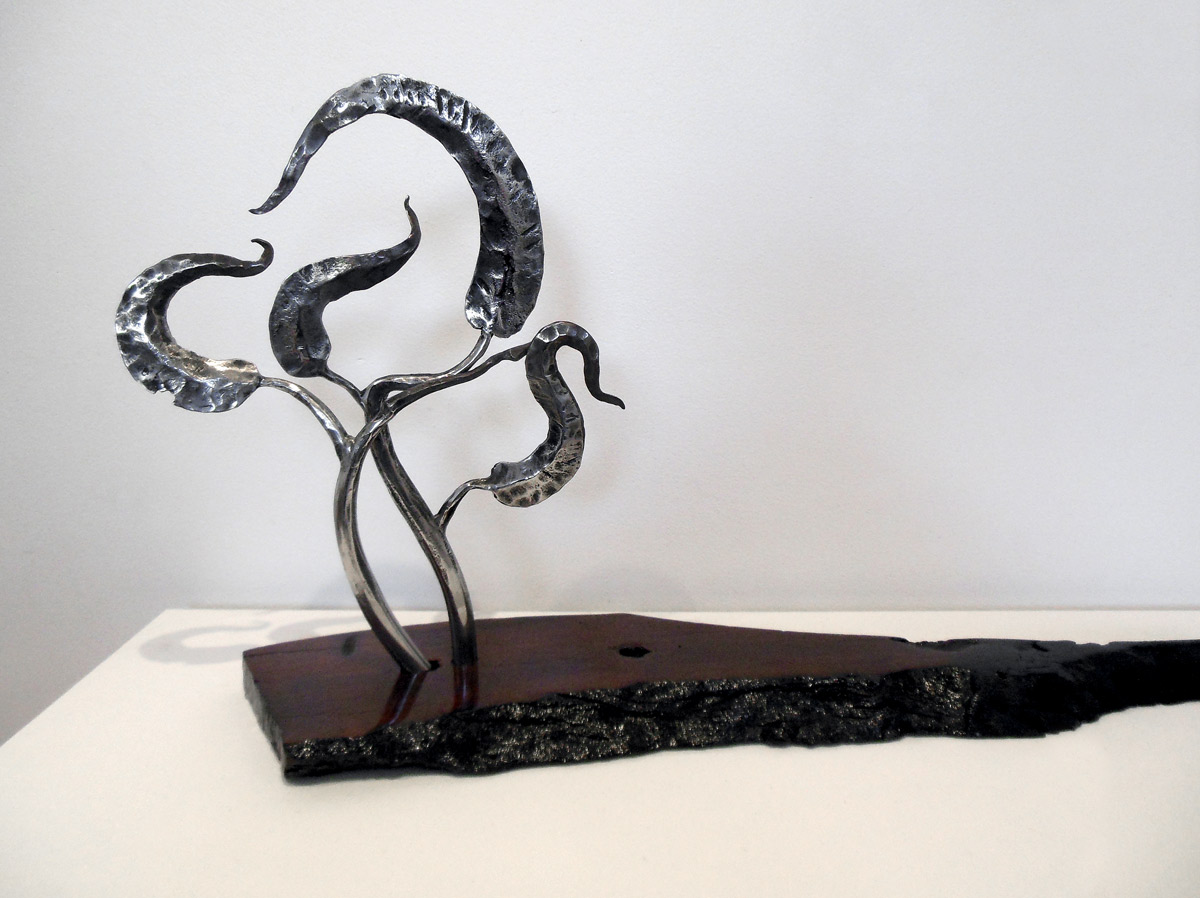
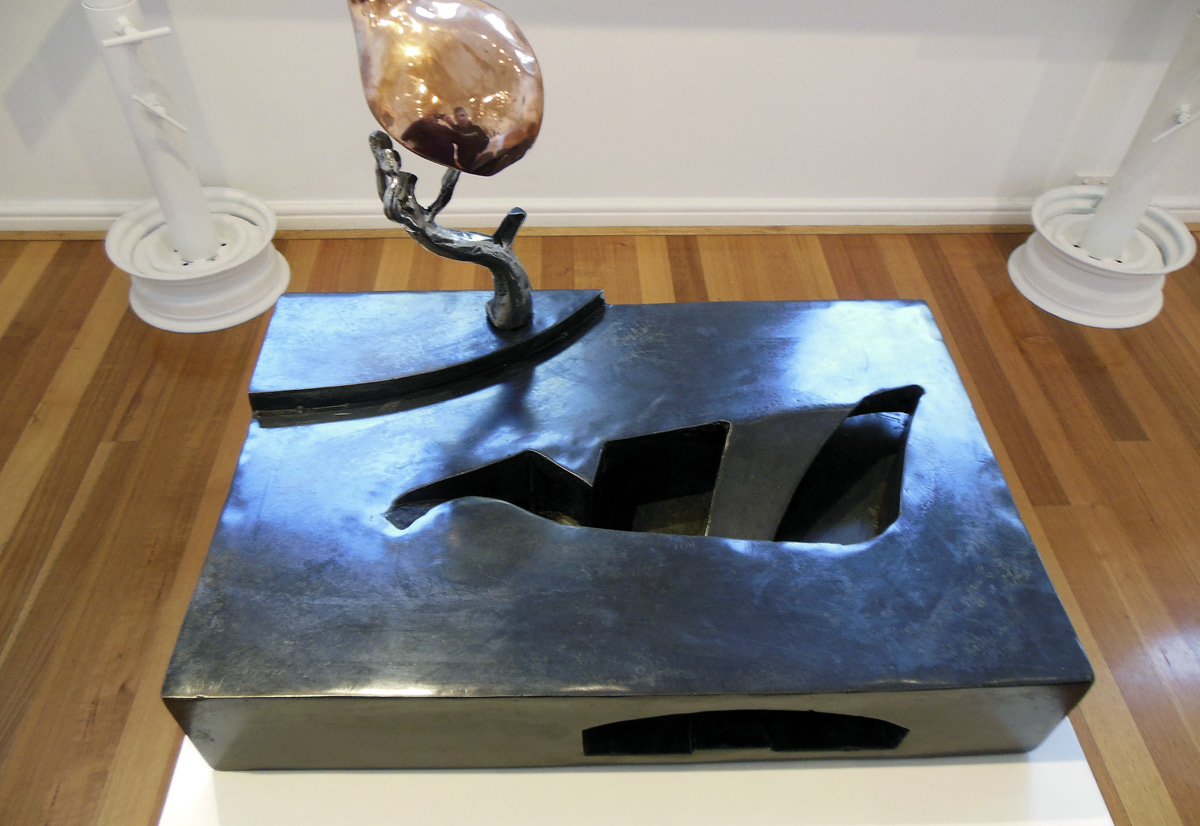
David Wood (Australian) 'Ghost Gum Three' 2013


David Wood (Australian)
Ghost Gum Three
2013
Stainless steel and red gum
76 x 310 x 44cm
Photo: Marcus Bunyan


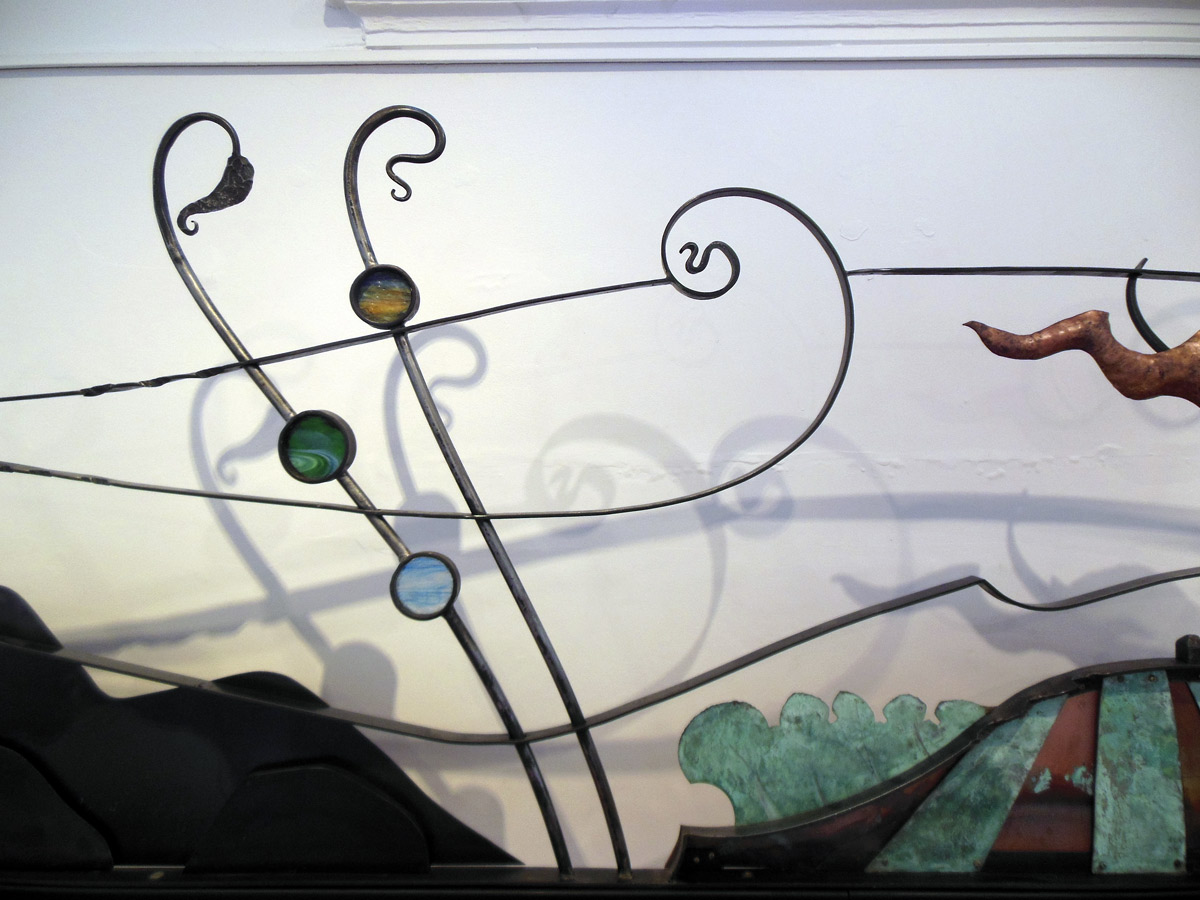
A solid first solo exhibition from my friend David Wood at Gasworks Arts Park. Conceptually the show needed a little tightening but technically the work is outstanding (as you would expect from the owner of Bent Metal and one of Melbourne’s best blacksmiths) and aesthetically pleasing. I particularly liked the topographic remapping of both Port Phillip Bay and St Kilda Junction.

Anyone who knows Melbourne intimately would recognise the ramps and walkways that bisect the interior of the junction even in their abstract form, especially the tram ramp ascending from Dandenong Road to St Kilda Road. I also admired the Nardoo sentinels, which are to be made at full size for a public park in Berwick later in the year.

Dr Marcus Bunyan


Many thankx to Woody for allowing me to publish the photographs in the posting. Please click on the photographs for a larger version of the image.


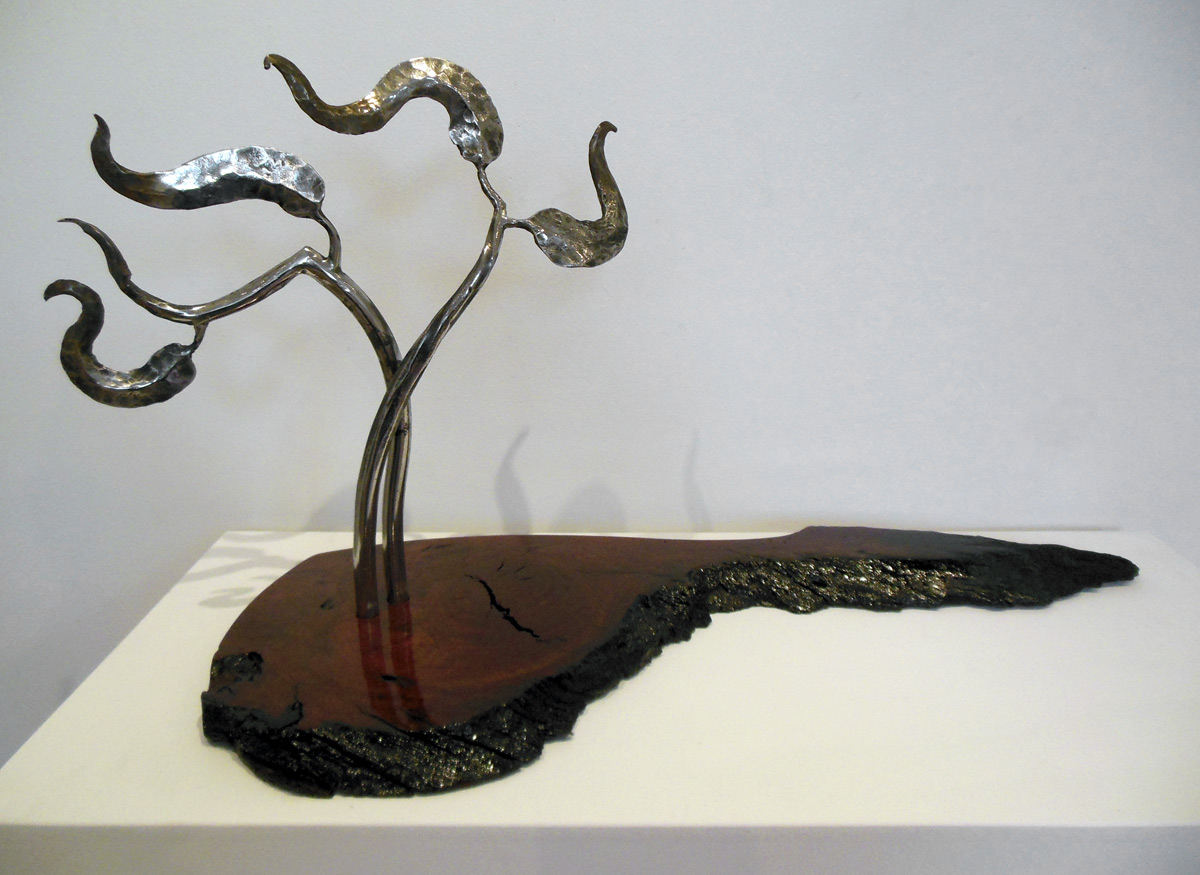
David Wood (Australian) 'Ghost Gum One' 2013


David Wood (Australian)
Ghost Gum One
2013
Stainless steel and red gum
72 x 170 x 39cm
Photo: Marcus Bunyan


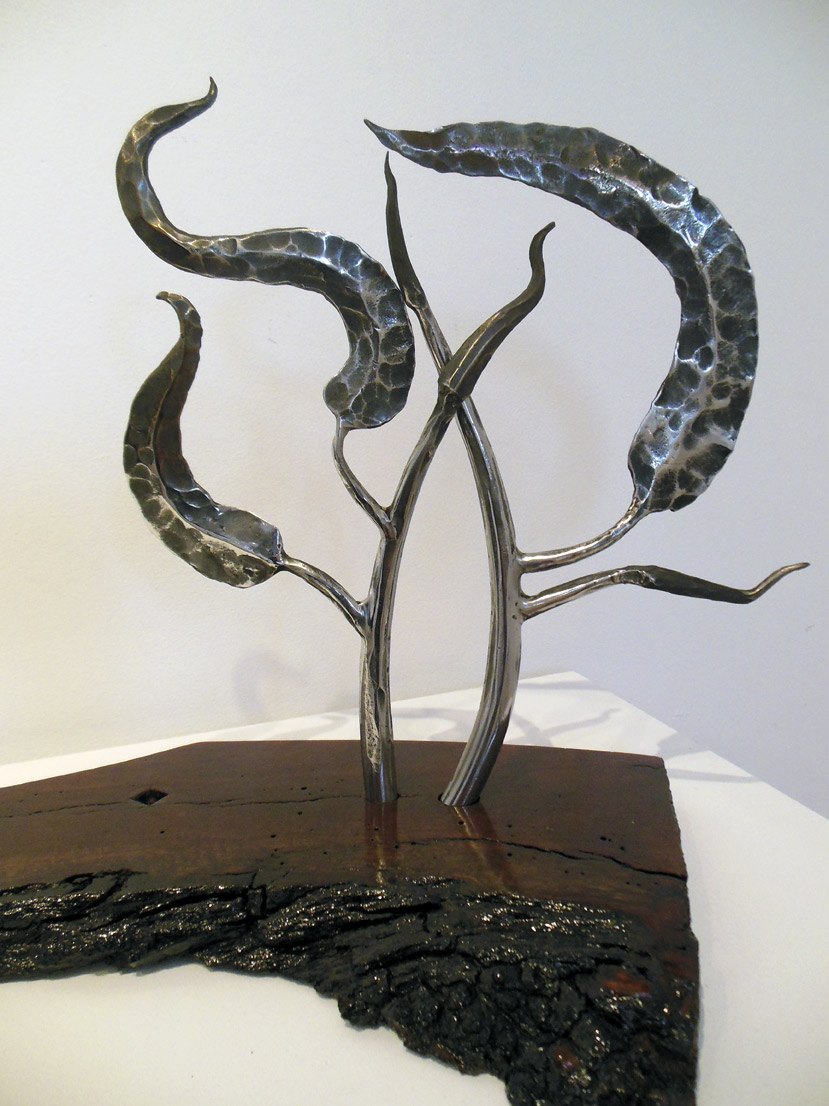
David Wood (Australian) 'Ghost Gum Two' 2013


David Wood (Australian)
Ghost Gum Two
2013
Stainless steel and red gum
78 x 24 x 36cm
Photo: Marcus Bunyan


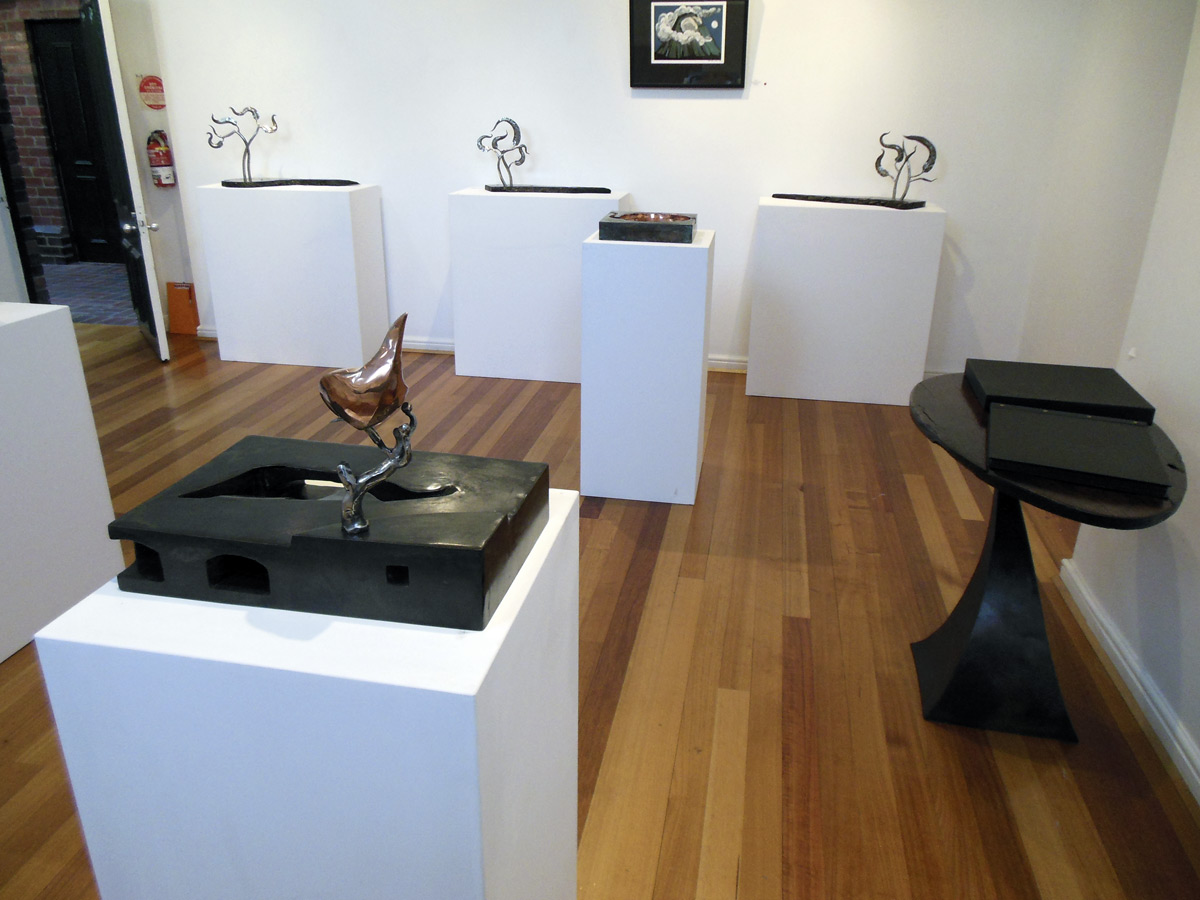
Installation view of the exhibition 'Sentinels' by David Wood at Gasworks Art Park


Installation view of the exhibition Sentinels by David Wood at Gasworks Art Park
Photo: Marcus Bunyan


My work has two main driving forces – a desire to explore and continue a blacksmithing inheritance and investigating place and how we interact with the physical world. I am interested in how landmarks within landscape can shape, reflect and define our Nation’s ethos and their place as sentinels within our history.

I use traditional forging techniques and prefer to leave hammer marks and traces of process exposed, as testament, on the finished sculpture. The medium itself represents an industry crucial to our economy but detrimental to our landscape.

This current group of work, inspired by the burning of two ghost gums in the Northern Territory is a personal muse on Australian culture. The burning of the ghost gums made famous by Albert Namatjira was a terrible act of vandalism. Small silvery ghostly gum trees stand upon burnt timber bases intended to evoke images of landscape and cultural practice, both ancient and current. Forged vessels take inspiration from the ghost gums’ colour and form.

The pieces are abstract representations in metals and timber of trees, mountain ranges and land formations. Mountain ranges are used to survey our cities and towns. They collect our water and are harvested for their riches. Once they were homes to spiritual beings.

I was born at the base of mount Baw Baw and have created homage. This mountain for me is a keeper of secrets. As an adult I live upon the shores of Port Phillip Bay, a quiet sleeping giant. St Kilda junction is a lyrical gesture to paths crossing and the corroboree tree that still watches over this site.

Bought together, the sculptures encapsulate a personal sense of belonging to a place. They also endeavour to explore greater cultural notions of ownership.

Artist statement by David Wood


David Wood (Australian) 'Port Phillip Bay' 2013


David Wood (Australian)
Port Phillip Bay
2013
Copper
33 x 33 x 70cm
Photo: Marcus Bunyan


David Wood (Australian) 'St Kilda Junction' 2013


David Wood (Australian)
St Kilda Junction
2013
Stainless steel, mild steel and copper
27 x 40 x 32cm
Photo: Marcus Bunyan


David Wood (Australian) 'St Kilda Junction' 2013 (detail)


David Wood (Australian)
St Kilda Junction (detail)
2013
Stainless steel, mild steel and copper
27 x 40 x 32cm
Photo: Marcus Bunyan


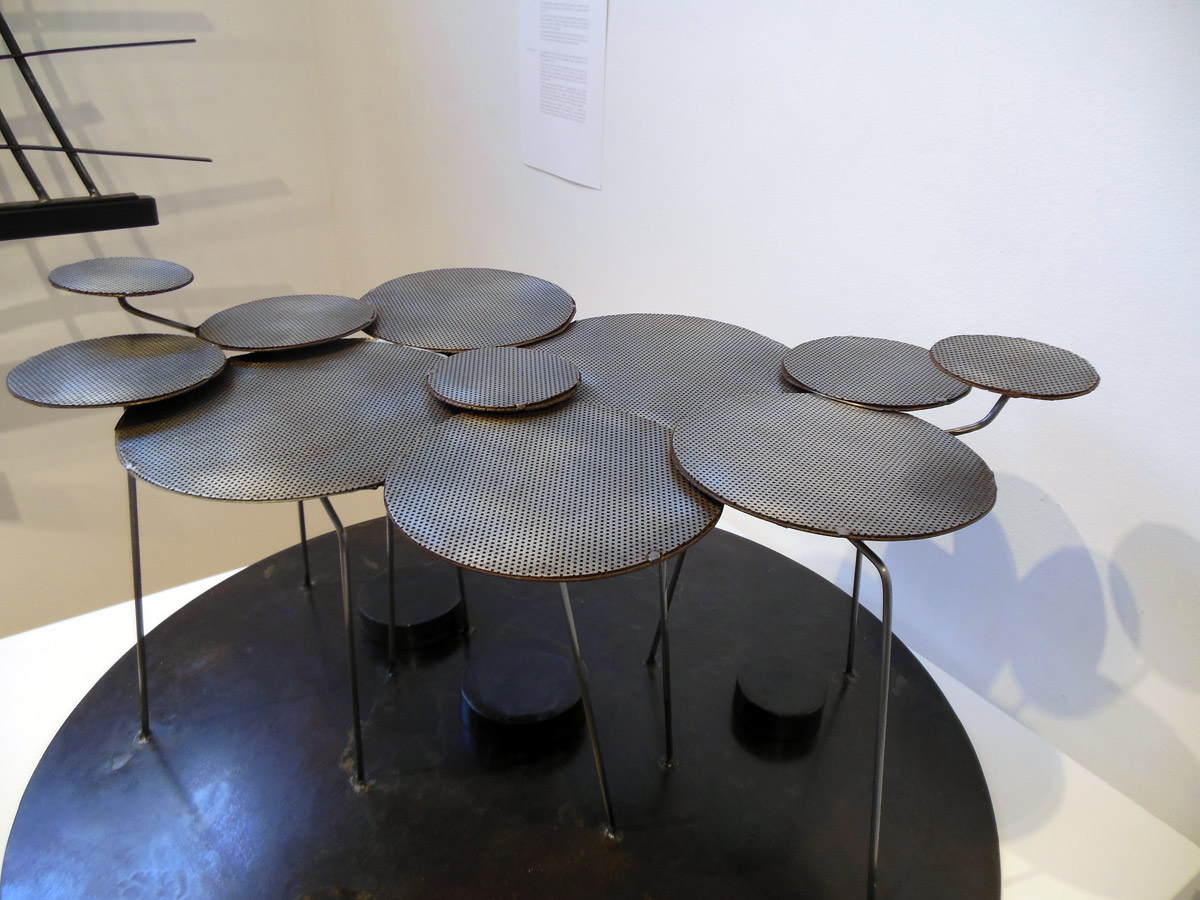
David Wood (Australian) 'Nardoo sentinels' 2013 (detail)

David Wood (Australian) 'Nardoo sentinels' 2013 (detail)


David Wood (Australian)
Nardoo sentinels (detail)
2013
Mild steel
Photos: Marcus Bunyan


Nardoo sentinels

Inspired by classical structures within great gardens, in particular the Temple of the Winds in the Royal Melbourne Botanic Gardens, this functional sculpture reflects the transparency of our native landscape, significant in shaping our cultural ethos. Mirroring a cluster of trees with their canopy hovering above, it defines its space and surrounds. This group of sentinels stand together to offer protection from the elements.

The singular motif takes the form of nardoo, a native water and food plant. Its finishes mimicking its natural colours and hues. Intended to be a water collector, the shelter is engineered to allow rainwater to drain through its canopy and channel down its stems. Visibility of water flow adds a kinetic dimension to the sculpture. Commissioned exclusively by Pask Development Group, via Tract Landscape Architects, this rotunda is a central feature for a public park. It will stand proud later this year.


David Wood (Australian) 'Nardoo sentinels' (left) and 'Reed Rotunda' (right) 2013


David Wood (Australian)
Nardoo sentinels (left) and Reed Rotunda (right)
2013
Mild steel
Photo: Marcus Bunyan


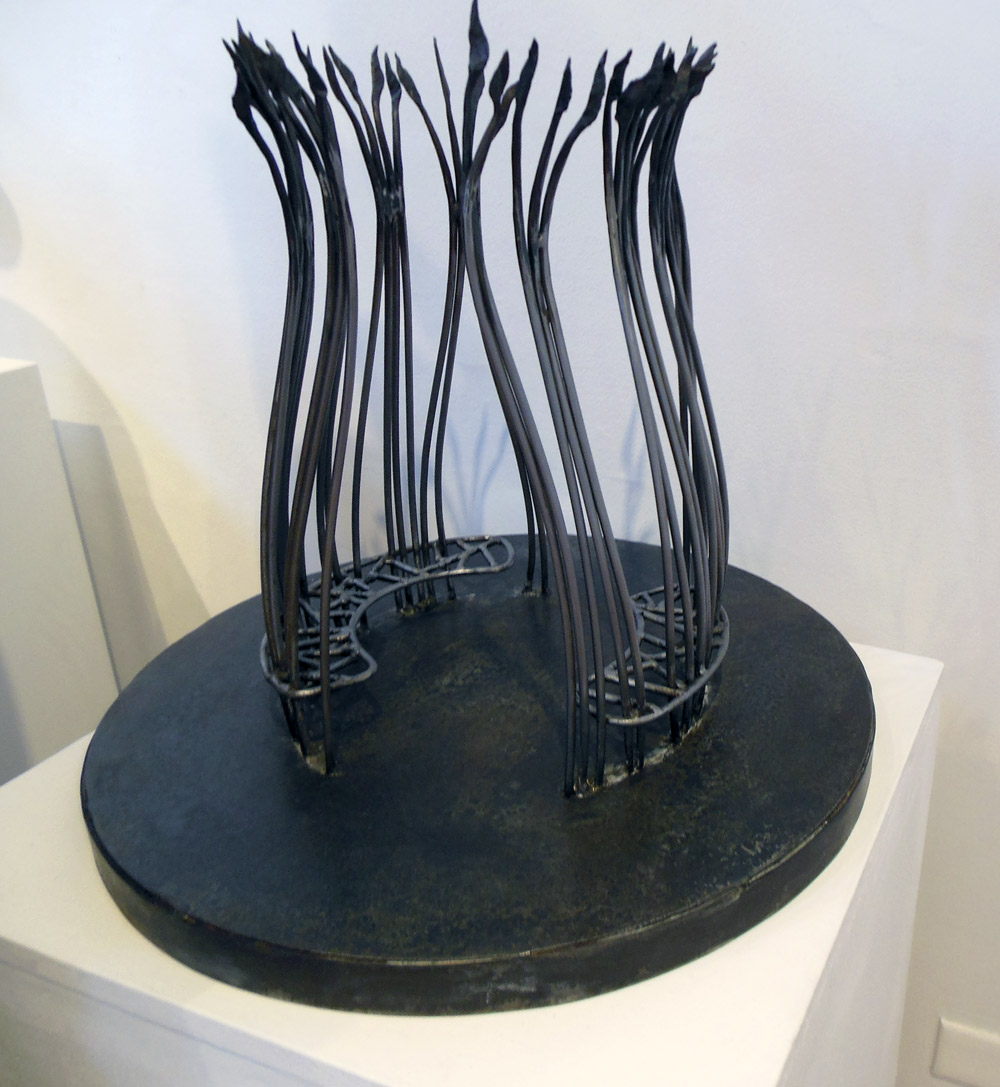
David Wood (Australian) 'Reed rotunda' 2013


David Wood (Australian)
Reed rotunda
2013
Mild steel
70 x 70 x 46cm
Photo: Marcus Bunyan


Reed rotunda

The design derives a motif from the natural growth of the Phragmite Australis reeds, a wetland plant indigenous to our continent home.

The common reed is known to everyone and surrounds us. It plays an integral role in conservation as habitat and a guardian for wildlife. A natural purifier, removing toxins from our creeks and wetlands. A reed standing alone may be insignificant, but when congregating on mass, it becomes a formidable force in both structure and function. An organic organism that frames and protects the landscape, moves and changes colour with the seasons, rides the wind and plays with light and shade.

Often overlooked as a feature of landscape or viewed as slightly raggedy, this piece invites visitors to celebrate these reeds as something beautiful and to use them as a metaphor for community, refuge and purification of the spirit and soul.


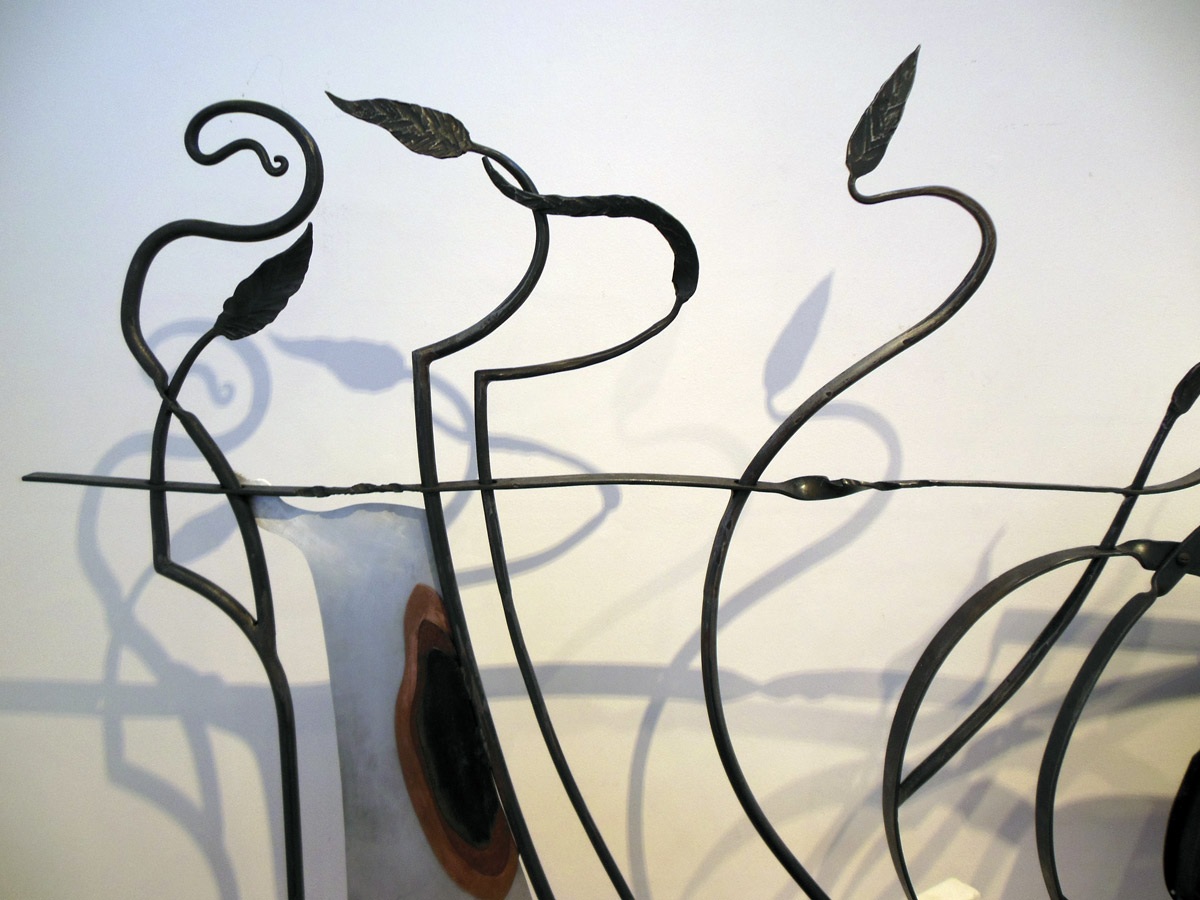
David Wood (Australian) 'Baw Baw wall feature' 2013 (detail)

David Wood (Australian) 'Baw Baw wall feature' 2013 (detail)


David Wood (Australian)
Baw Baw wall feature (detail)
2013
Mild steel, stainless steel, copper, brass, aluminium and glass
6200 x 500 x 70cm
Photos: Marcus Bunyan


Gasworks Arts Park
21 Graham Street
Albert Park VIC 3206
Phone: (03) 8606 4200

Gallery hours: 10am – 4pm each day

Gasworks Arts Park website

LIKE ART BLART ON FACEBOOK

Back to top

Exhibition: ‘Sophia Szilagyi: water studies’ at Beaver Galleries, Canberra

Exhibition dates: 23rd May – 11th June 2013


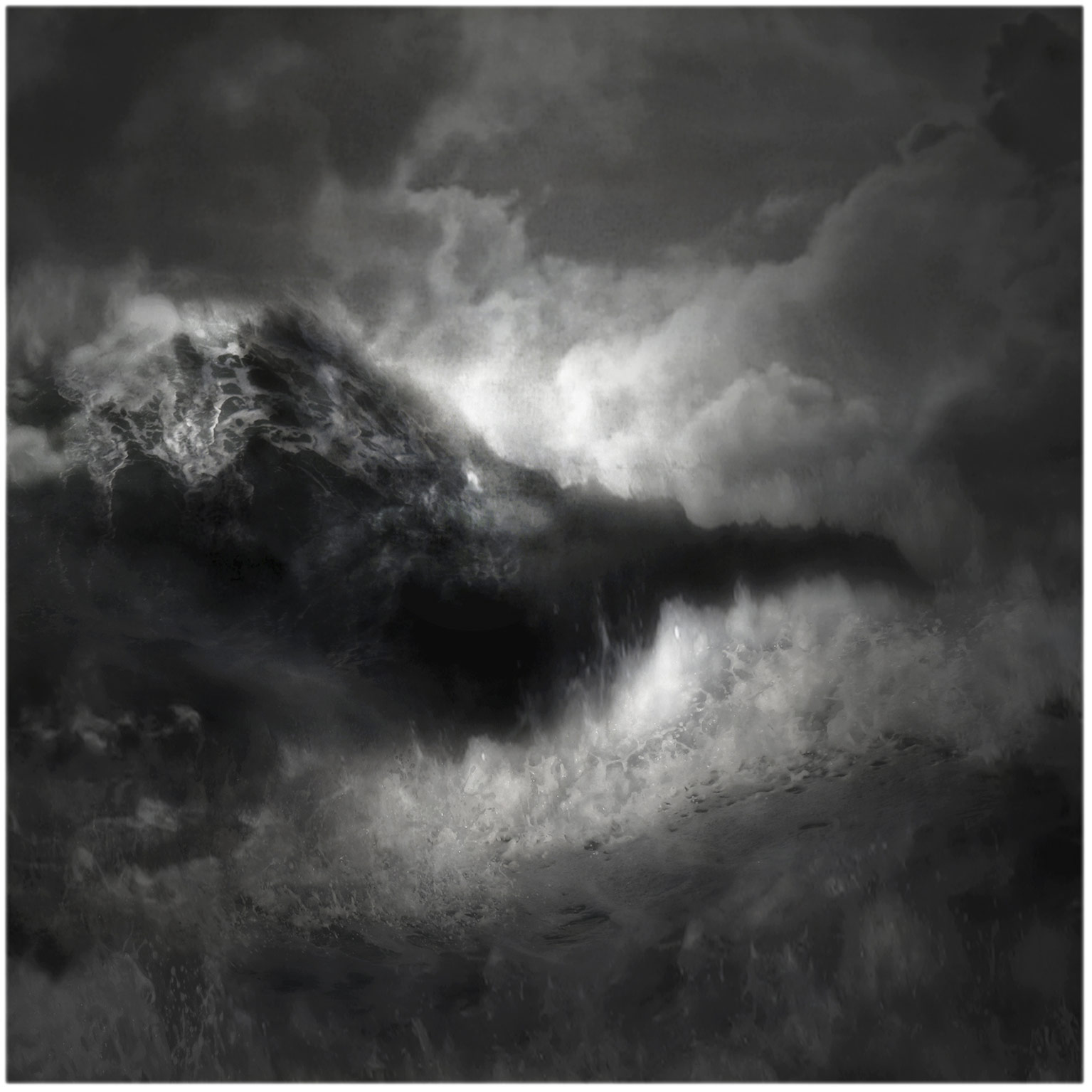
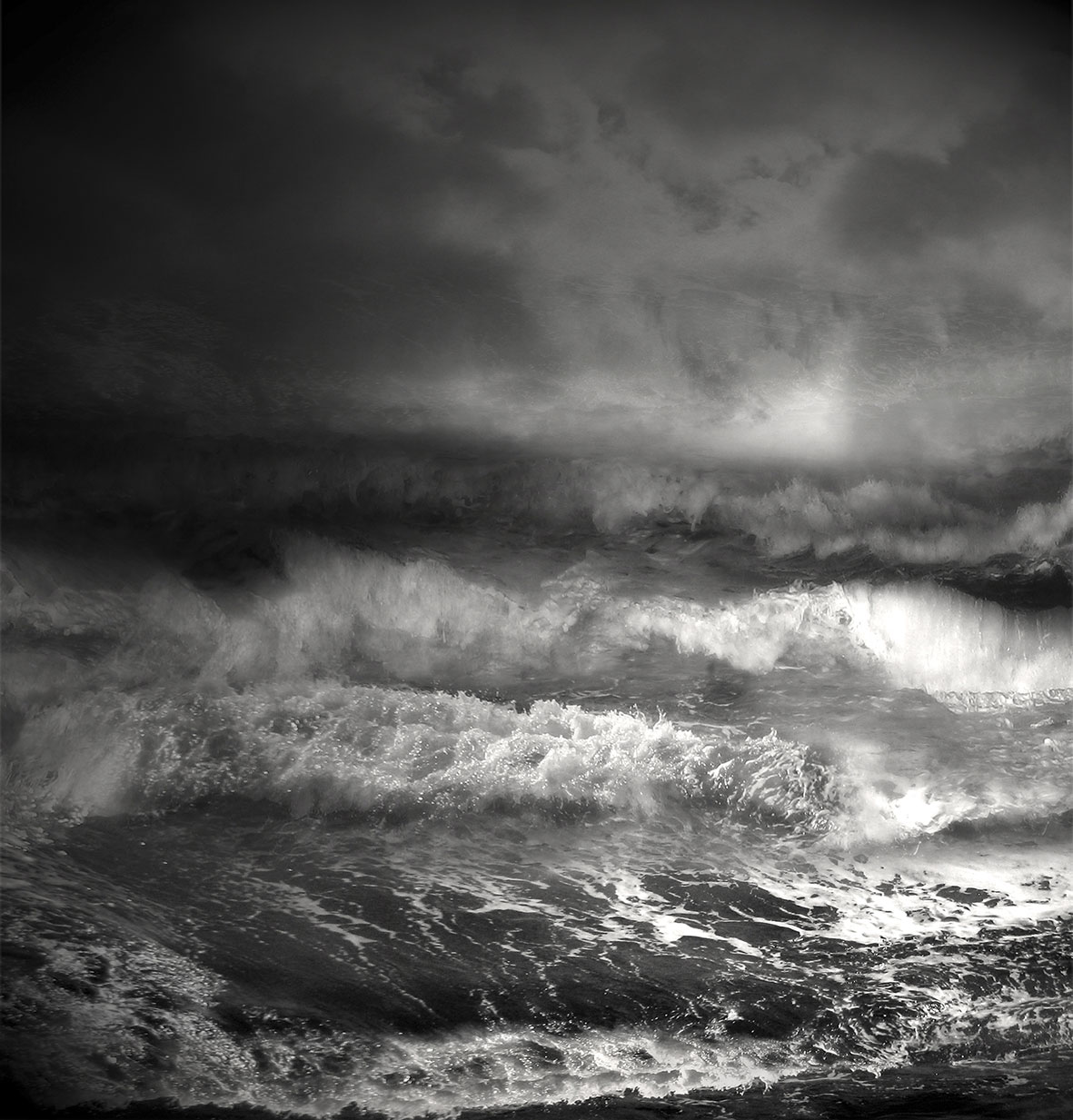
Sophia Szilagyi (Australian, b. 1973) 'night waves I' 2013


Sophia Szilagyi (Australian, b. 1973)
night waves I
2013
Pigment print on archival rag paper
Edition 2 of 15
29 x 29cm


“It is intangible, incalculable, a thing to be felt, not comprehended – a music of the eyes, a melody of the heart…”


John Ruskin, art critic


“Once, Turner had himself lashed to the mast of a ship for several hours, during a furious storm, so that he could later paint the storm. Obviously, it was not the storm itself that Turner intended to paint. What he intended to paint was a representation of the storm. One’s language is frequently imprecise in that manner, I have discovered.”

David Markson, Wittgenstein’s Mistress


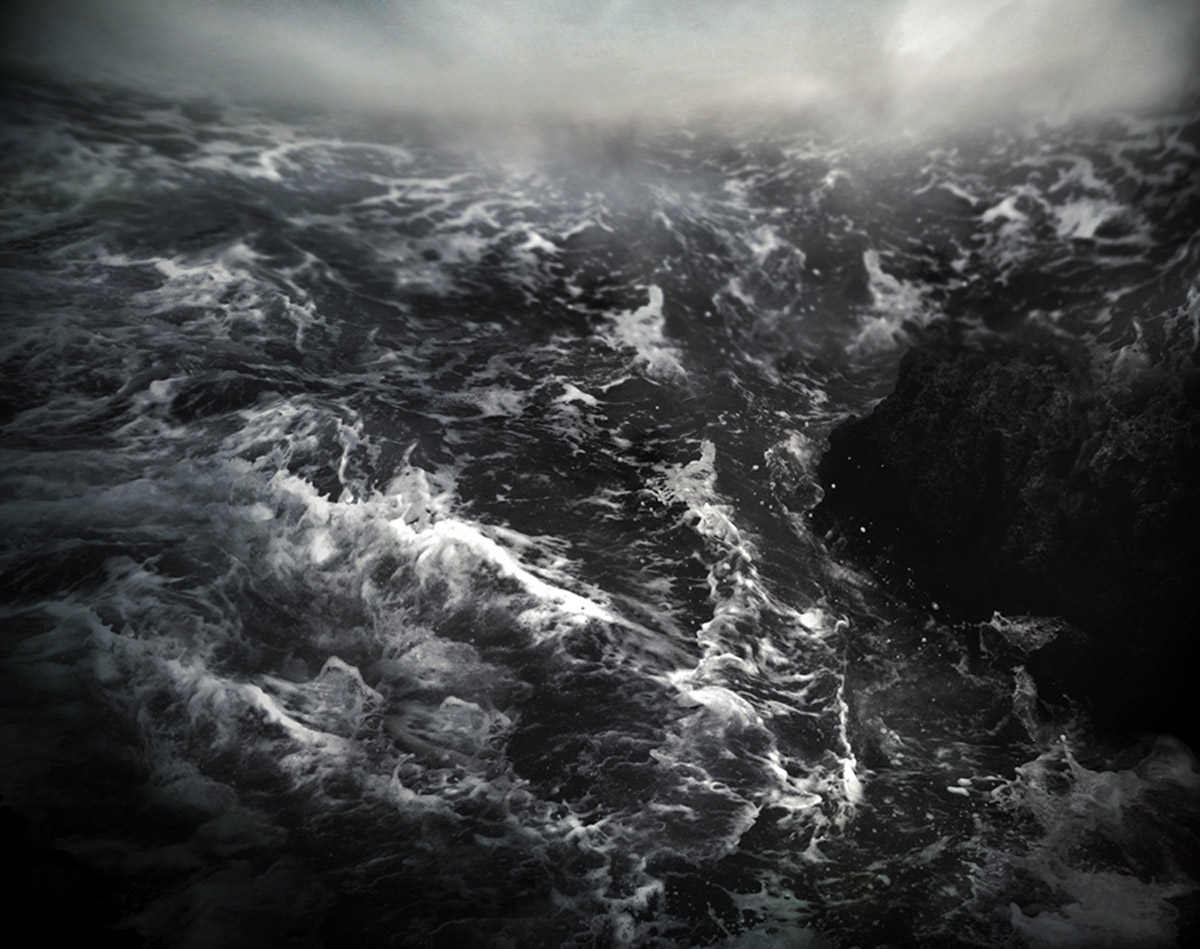
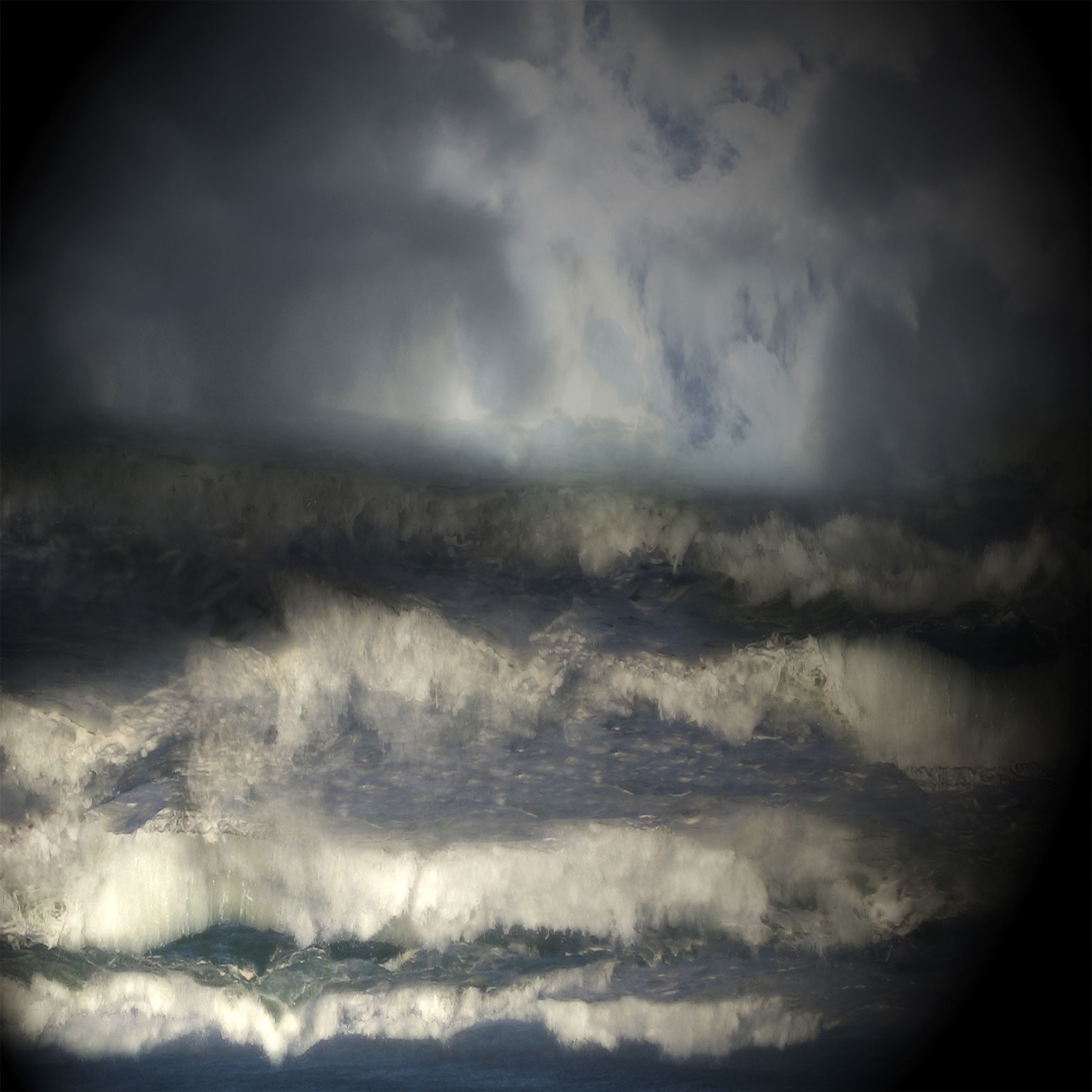
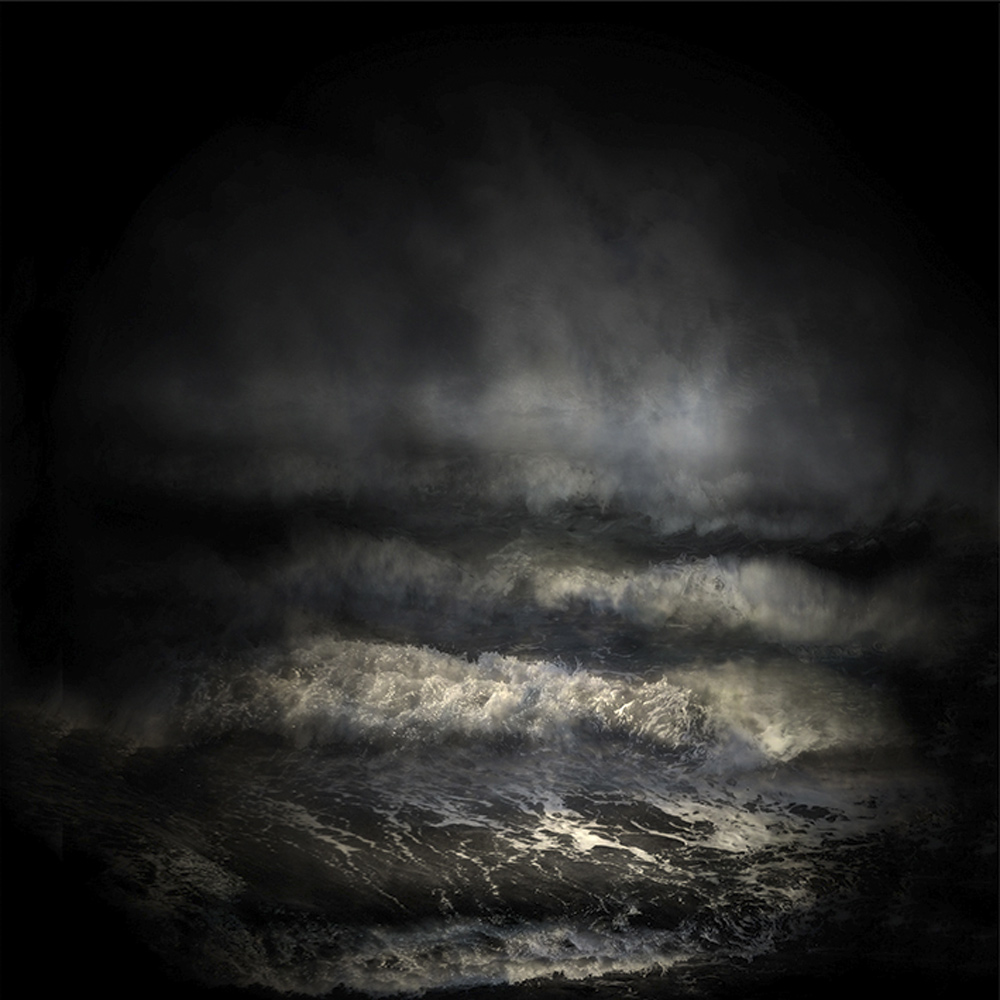
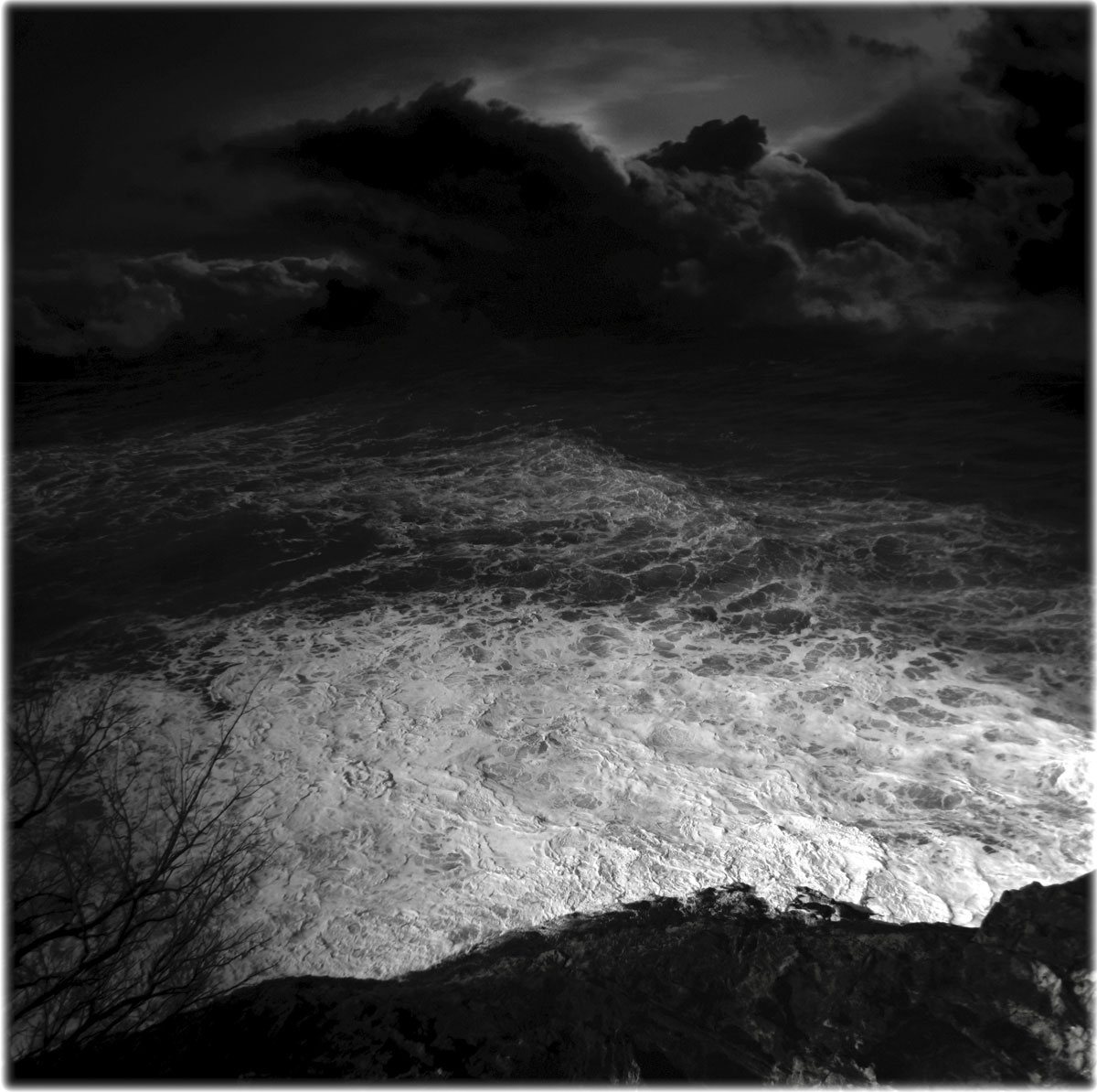
How appropriate that these stunning water studies by artist Sophia Szilagyi should be exhibited in Canberra as the blockbuster J. M. W. Turner exhibition Turner from the Tate: The Making of a Master opens at the National Gallery of Australia.

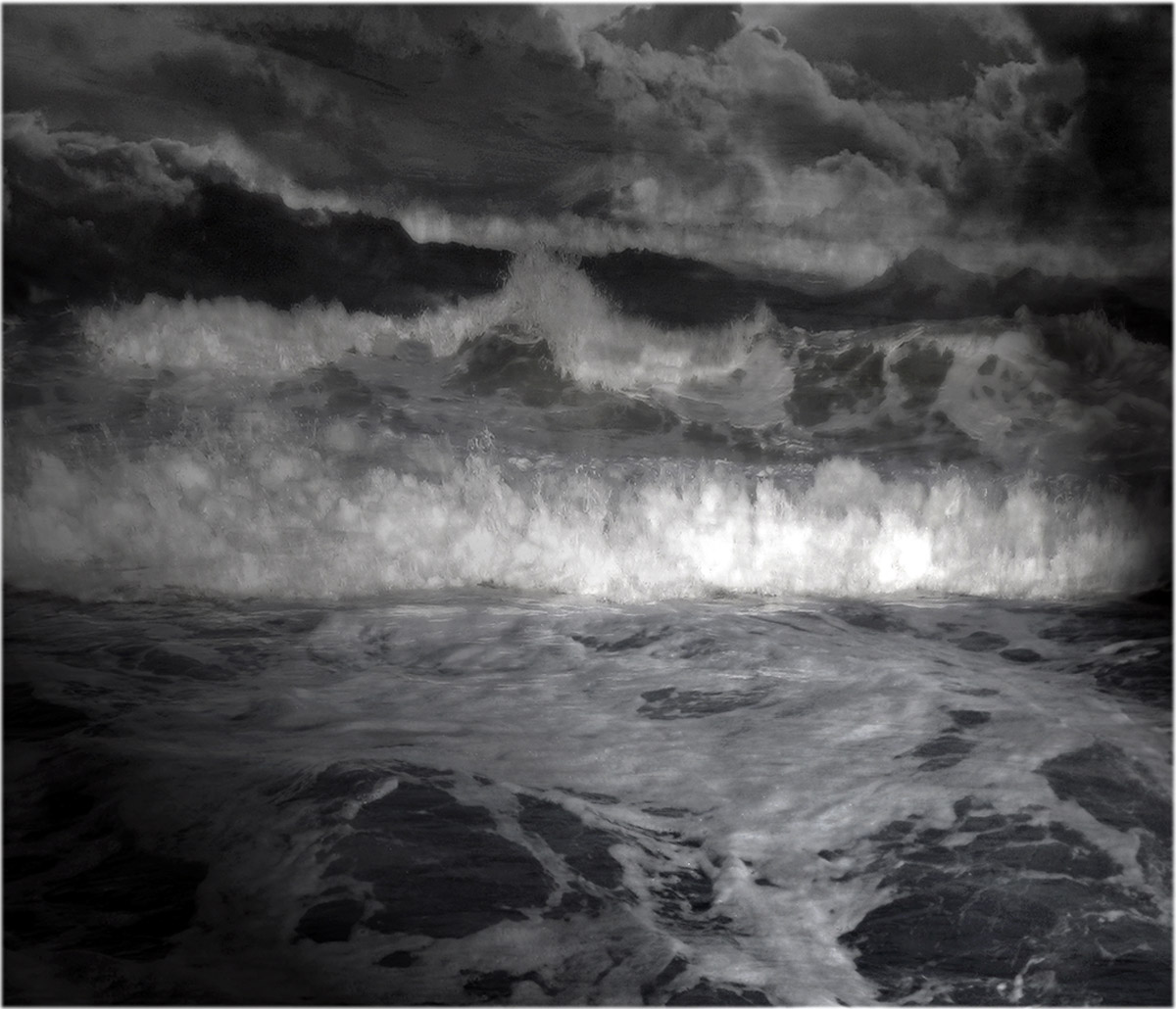
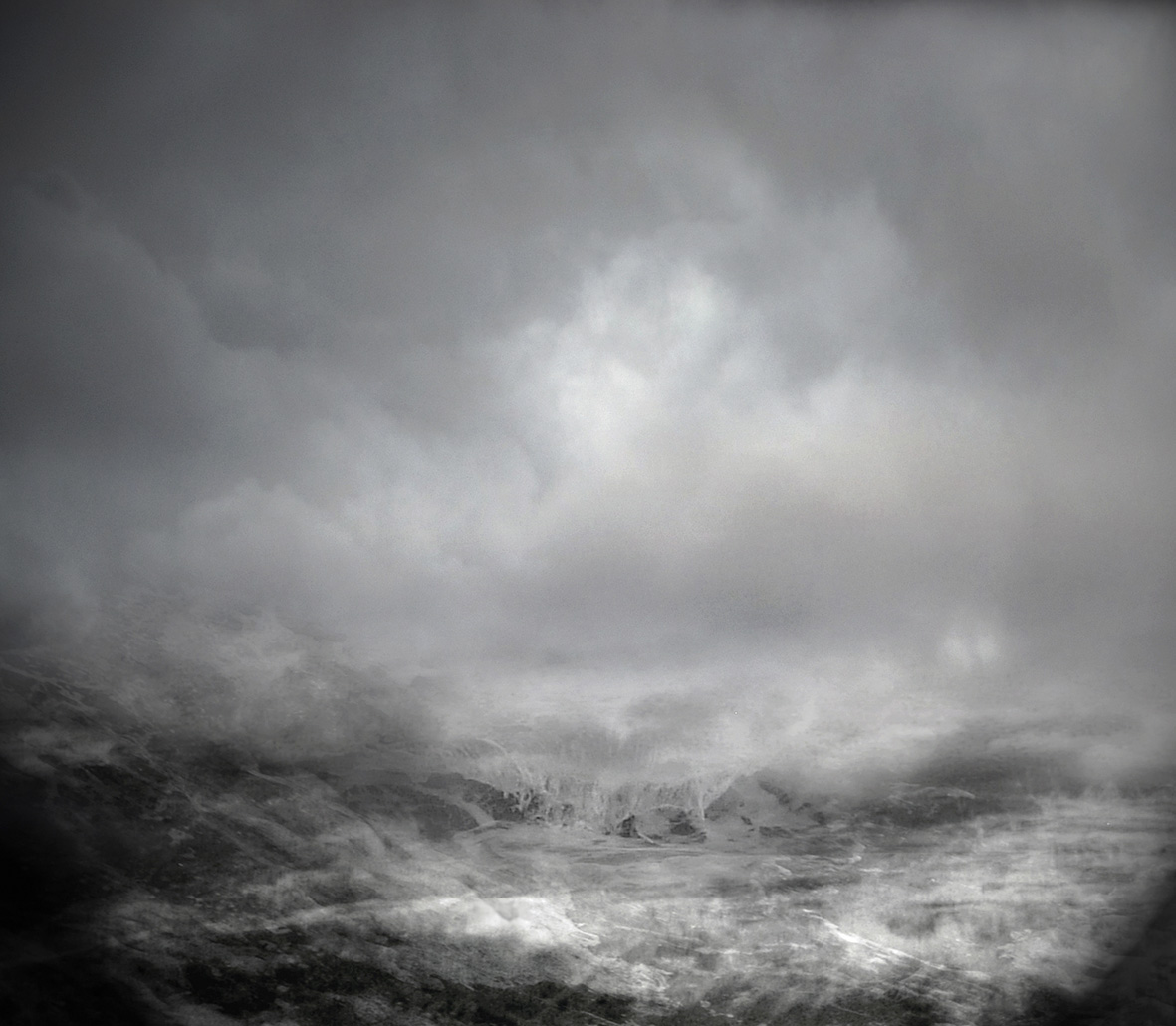
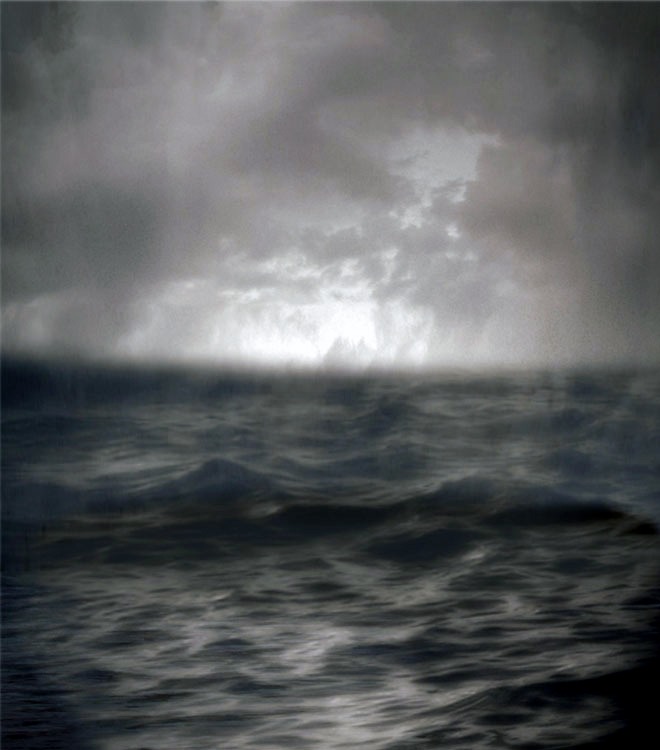
I love everything thing about these works: the compacted and layered sense of space (the eye of the printmaker brought to bare in the construction of the images rather than the eye of the photographer), the lack of a traditional vanishing point that allows the viewer to be immersed in the prints, the tonality, the texture and immediacy of the images. Szilagyi pushes the work to the limits and, amid the swirling masses of light and colour, a powerful mood is evoked.1 These towering, raging canvases portray the gathering force of the sea, its immediacy and energy; its danger, wonder and sublime beauty. They are as much landscapes of the mind and the imagination as of the sea. Turner, lashed to  a mast during a furious storm so that he could later paint a representation of the storm, would surely have been proud of these meditations upon nature/life. Bravura. Bravo.

Dr Marcus Bunyan


1/ See Grishin, Sasha. “Genius shows his true colours,” in The Age newspaper, Saturday, June 1, 2013, p. 2.


Many thankx to Beaver Galleries for allowing me to publish the photographs in the posting. Please click on the photographs for a larger version of the image.


“Light shimmers, darkness settles, the sea opens its arms to swallow up the sky. Sophia Szilagyi’s imagery evokes the natural world and imbues it with an emotional resonance through the artist’s skilful manipulation of diametrically opposed elements. Light abuts dark, the dense almost claustrophobic space in some works contrast with open seas and vast skies that imply the infinite in others. Imagery is constructed through digital printmaking techniques, layered to create textural complexities, while capturing the oscillations in mood and atmosphere that mirror the ebb and flow of human emotions. Fear, wonder, and danger exist in these images that capture the beauty and grandeur found in the physical world, while also charting an internal topography.”


Marguerite Brown


Sophia Szilagyi (Australian, b. 1973) 'stormy seas (after Courbet)' 2013


Sophia Szilagyi (Australian, b. 1973)
stormy seas (after Courbet)
2013
Pigment print on archival rag paper
Edition 2 of 15
30 x 35cm


Sophia Szilagyi (Australian, b. 1973) 'wave' 2013


Sophia Szilagyi (Australian, b. 1973)
wave
2013
Pigment print on archival rag paper
Edition 9 of 20
49.5 x 57cm


Sophia Szilagyi (Australian, b. 1973) 'breaking' 2013


Sophia Szilagyi (Australian, b. 1973)
breaking
2013
Pigment print on archival rag paper
Edition 4 of 10
96 x 122cm


Sophia Szilagyi is a printmaker who uses digital printmaking to create scenes of re-interpreted memory and experience. In her multi-layered compositions, Sophia explores the relationship between fiction and non-fiction, challenging our perceptions of reality and the effects of physical sensation and emotional response on memory. Sophia’s artistic process begins with an impression of a certain painting, personal photograph or experience. Images from a variety of sources are combined and overlapped so that the general interpretation of her work is a patchwork of real and imagined experiences. Sophia achieves this seamless layering by using digital technology, giving her the freedom to manipulate the imagery to create the desired mood and expression. The completed works are printed on archival rag paper as this highly absorbent surface enhances the softness and dreamlike quality of her imagery. In this current exhibition, Sophia draws her inspiration from the sea and coast, exploring the dualities of intersections between light and dark, earth and ocean. Through her prints, Sophia seeks to capture a sense of wonder, fear, beauty and, sometimes, danger that exists in both nature and the imagination.

Sophia Szilagyi graduated with First Class Honours from the School of Art and Culture at RMIT in 2000. Since graduating, Sophia has held a number of solo shows as well as participating in many group exhibitions across Australia. Her work has been selected in numerous print awards including the Fremantle Print Prize (2007) and the Banyule Award for Works on Paper (2011, 2009 and 2007). In 2005, Sophia was commissioned to complete a work for the Print Council of Australia and her work is represented in collections including the Burnie Regional Art Museum, La Trobe Regional Art Gallery, Wagga Wagga Art Gallery, Queensland University of Technology and State Library of Victoria.

Press release from Beaver Galleries


Sophia Szilagyi (Australian, b. 1973) 'light sea' 2013


Sophia Szilagyi (Australian, b. 1973)
light sea
2013
Pigment print on archival rag paper
Edition 1 of 15


Sophia Szilagyi (Australian, b. 1973) 'dark sea' 2013


Sophia Szilagyi (Australian, b. 1973)
dark sea
2013
Pigment print on archival rag paper
Edition 1 of 15
22 x 22 cm


Sophia Szilagyi (Australian, b. 1973) 'ocean view I' 2013


Sophia Szilagyi (Australian, b. 1973)
ocean view I
2013
Pigment print on archival rag paper
Edition 1 of 5
76 x 77cm


Sophia Szilagyi (Australian, b. 1973) 'ocean view II' 2013


Sophia Szilagyi (Australian, b. 1973)
ocean view II
2013
Pigment print on archival rag paper
Edition 4 of 5
78 x 74cm


Sophia Szilagyi (Australian, b. 1973) 'settling' 2013


Sophia Szilagyi (Australian, b. 1973)
settling
2013
Pigment print on archival rag paper
Edition 2 of 10
80 x 70cm


Beaver Galleries
81 Denison Street
Deakin, Canberra
ACT 2600, Australia
Phone: 02 6282 5294

Opening hours
Tuesday – Saturday 10am – 5pm

Beaver Galleries website

LIKE ART BLART ON FACEBOOK

Back to top

Exhibition: ‘Alan Constable: Ten Cameras’ at South Willard, Los Angeles

Exhibition dates: 4th May – 2nd June 2013

Curator: Ricky Swallow


Wow it really happened! Congratulations to Alan Constable, Sim Lutin and Melissa Petty from Arts Project Australia and to Ricky Swallow for curating.


Alan Constable (Australian, b. 1956) 'Red NEK SLR' 2011


Alan Constable (Australian, b. 1956)
Red NEK SLR
2011
Ceramic
5.5 x 12.25 x 4.75 inches
© Alan Constable


“How would a comb that cannot untangle hair look? You can make the object dangerous, humorous, useless, sinister.”


Christina Ramberg


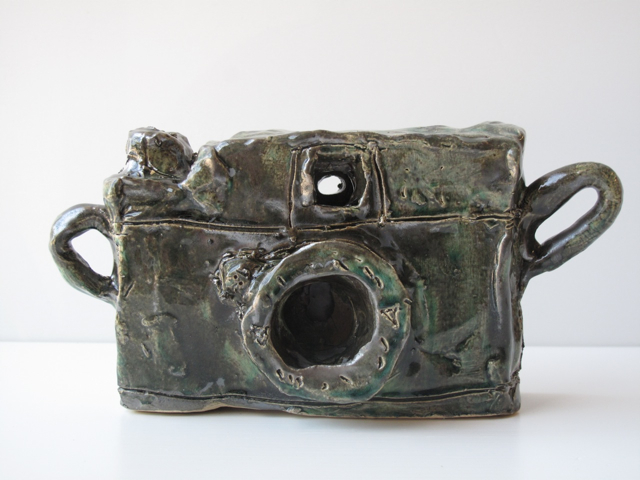
Alan Constable’s cameras are real ‘things’; they command constant attention from their audience and from their lucky owners. The resemblance of these sculptures to cameras is a starting point more than an end point, in the same way a swelling foot as painted by Phillip Guston behaves unlike any sensible foot, or a collage of a doorway by James Castle exceeds the expectation its structural simplicity presents.

Constable’s sculpture makes malleable mischief of both the form and function of the camera. In his hands it becomes an anthropomorphic character with endless variations and possibility. Specific types are modelled in clay from magazine advertisements with apt abbreviation and gesture, then glazed and fired in solid, sometimes soupy colours that further activate their surfaces and transform their sober dispositions.

The glazed surfaces are embellished with details so specific and beautiful they necessitate a tactile engagement with the object. As ‘things’ they still buzz with the handling and energy Constable employs in their making. Dials formed separately and thumbed into position, viewfinder windows cut directly through surfaces together with an oversized scale give Constable’s cameras the feeling of buildings or vessels. Scribed lines articulate both panels and seams, skewed inscriptions indicate model and make: all this information registers with efficiency to produce compelling objects.

The basic slab built walls forming the camera’s body also conceal one of the most interesting elements about these sculptures – internal chambers and walls have been built during the early stages of the works. Such entombed detail points towards Constable’s dedication to conceive and map a complete object, a total exploration of his subject based on unique invention and interpretation.”

Ricky Swallow, April 2013


South Willard is pleased to present Alan Constable: Ten Cameras as its next Shop Exhibit. Curated by Ricky Swallow in collaboration with Arts Project Australia, this is the first solo presentation of Constable’s ceramic sculptures in the United States. Now in his late 50’s, Constable has been producing his art at Arts Project studio’s in Melbourne since 1987, and has exhibited his camera sculptures in both gallery and institutional exhibitions to critical praise over the past 7 years.

Constable is also participating in Outsiderism curated by Alex Baker at Fleisher Ollman gallery in Philadelphia this month.

Ricky wishes to thank Alex Baker for his introduction to Alan’s work, and Sim Luttin and Melissa Petty at Arts Project Australia for their generous assistance.


Alan Constable (Australian, b. 1956) 'Orange AKI SLR' 2011


Alan Constable (Australian, b. 1956)
Orange AKI SLR
2011
Ceramic
6 x 10 x 4 inches
© Alan Constable


Alan Constable (Australian, b. 1956) 'Green SLR' 2011


Alan Constable (Australian, b. 1956)
Green SLR
2011
Ceramic
7.75 x 9 x 3 inches
© Alan Constable


South Willard

Arts Project Australia website

LIKE ART BLART ON FACEBOOK

Back to top

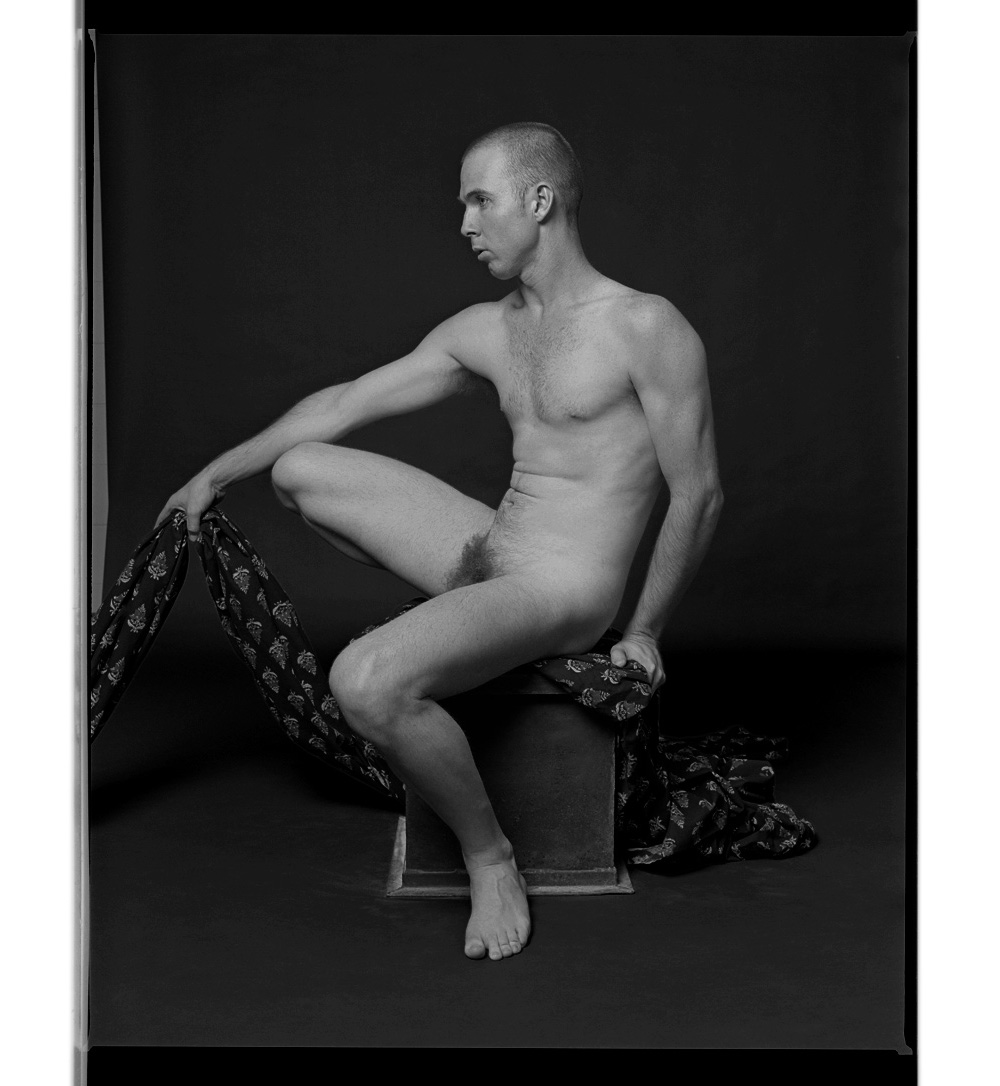
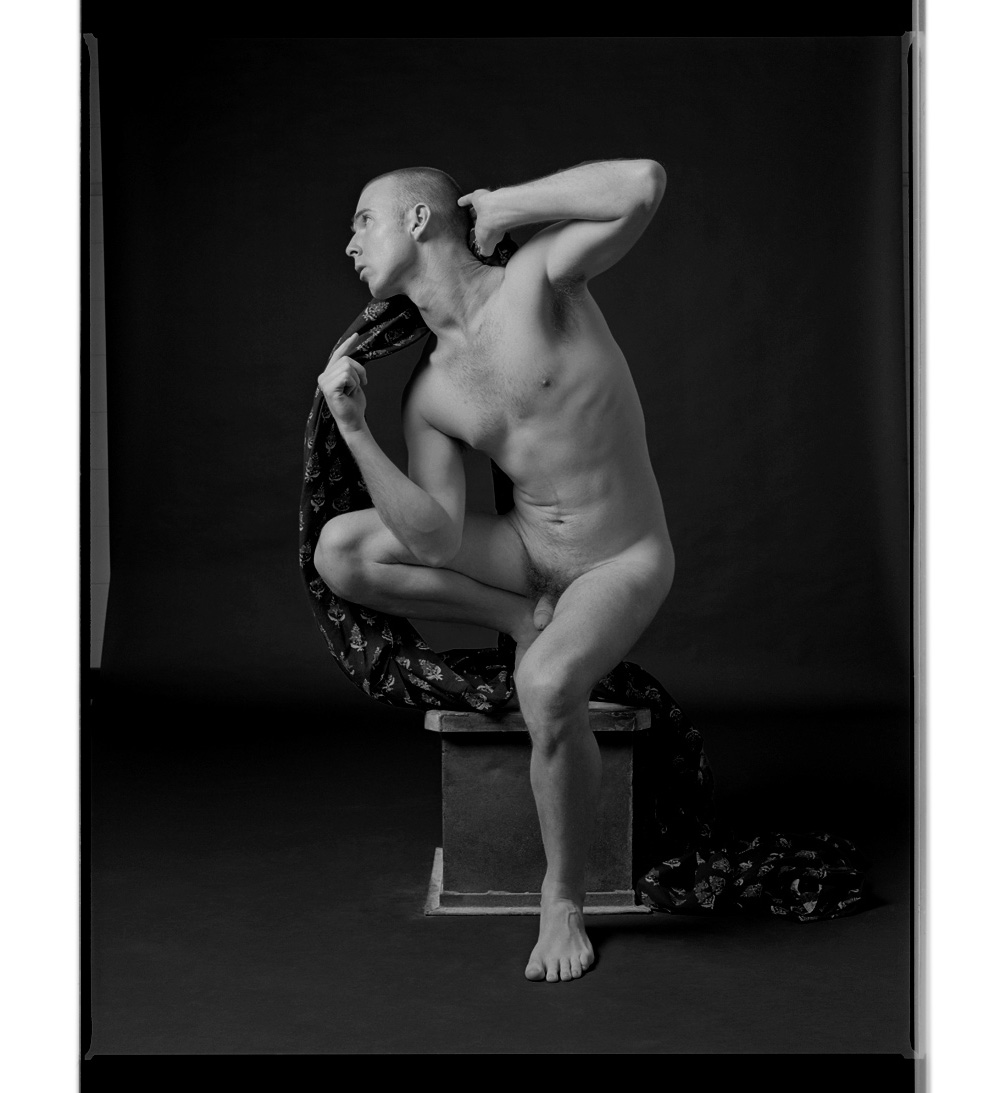
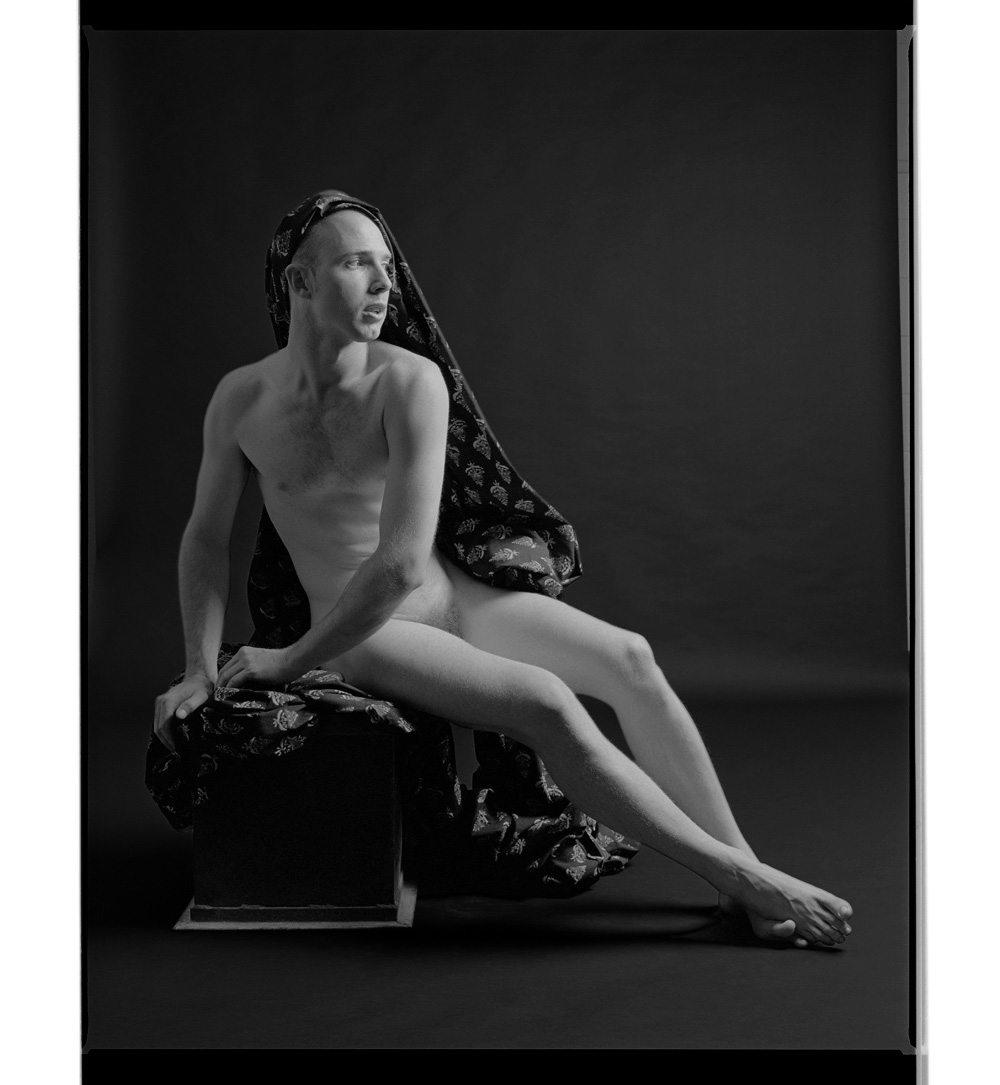
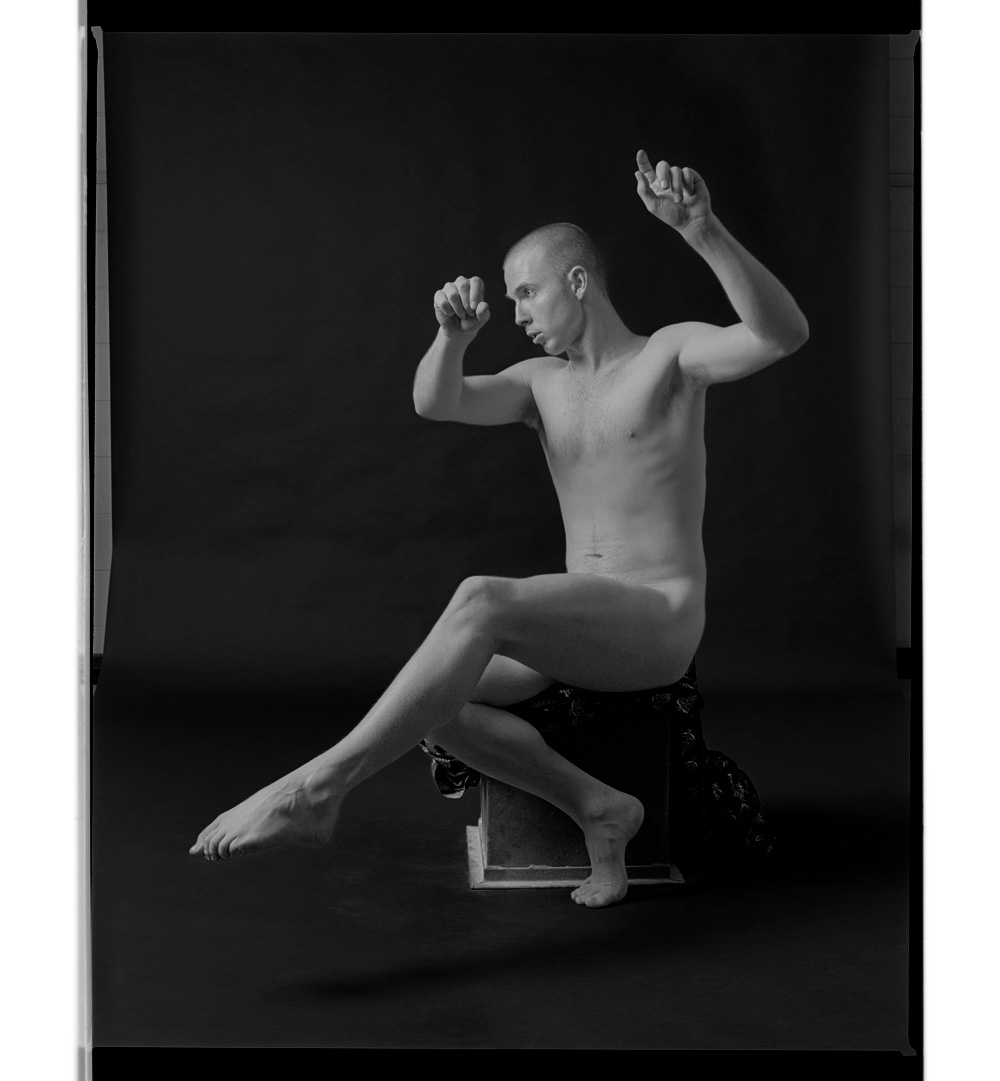
Marcus Bunyan black and white archive: ‘Ignudi’, 1994

April 2013

PLEASE NOTE: THIS POSTING CONTAINS ART PHOTOGRAPHS OF MALE NUDITY – IF YOU DO NOT LIKE PLEASE DO NOT LOOK, FAIR WARNING HAS BEEN GIVEN


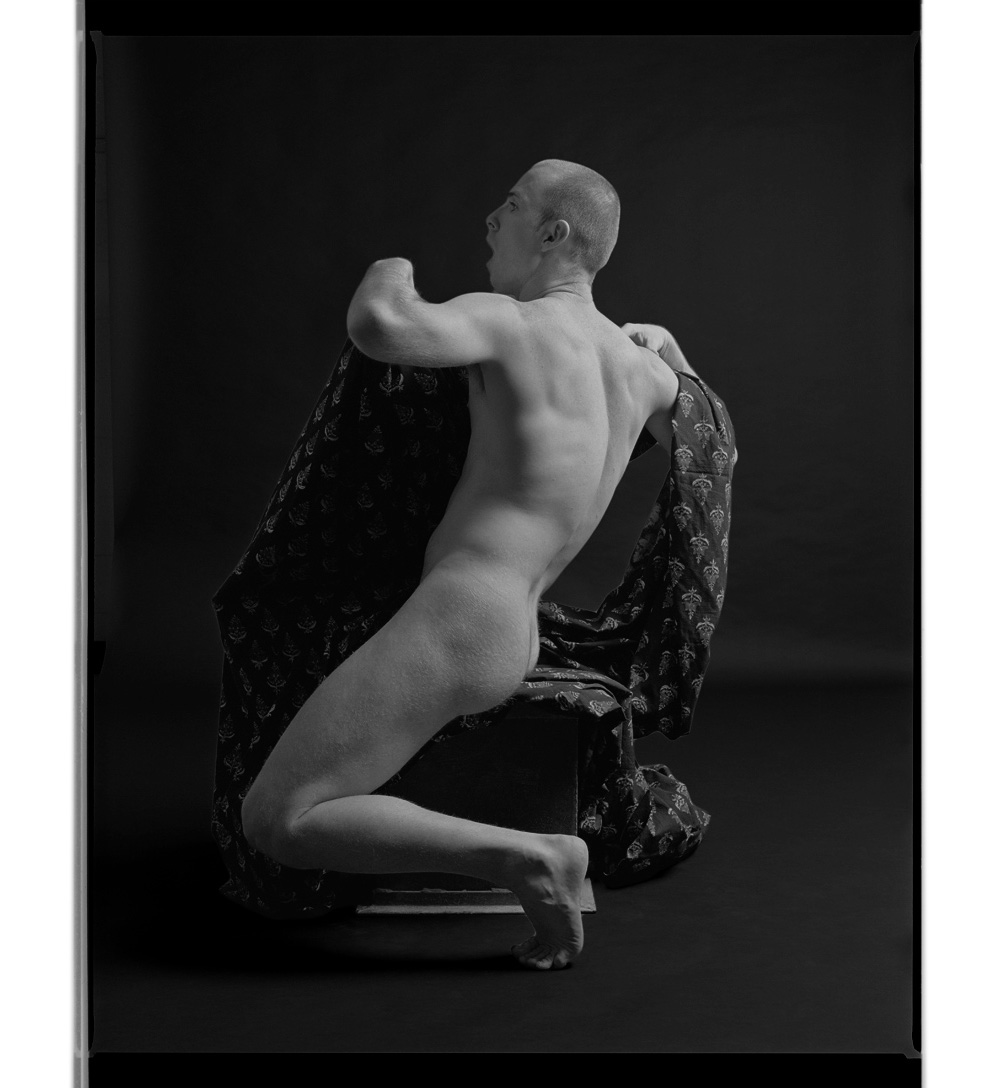
Marcus Bunyan (Australian, b. 1958) 'Untitled' 1994 from the series 'Ignudi'


Marcus Bunyan (Australian, b. 1958)
Untitled
1994
From the series Ignudi
Silver gelatin photograph


This series of photographs is a reconceptualisation of Michelangelo’s Ignudi from the Sistine Chapel. The Ignudi (singular: ignudo, from the Italian adjective nudo, meaning “naked”) are the 20 athletic, nude male figures that Michelangelo painted at the four corners of the five smaller scenes of Creation. Recontextualising the figures implicitly fetches elements from other texts, the meaning of the male body based on its meaning in other contexts and ages (beauty, desire, homoeroticism, nudity, power of the body/phallus), realising a continual unfolding of texts, discourses and conversations in a field of production.

These prints are incredibly rare. There are probably 3 vintage photographs on fibre-base paper of each image at 12″ x 16″ size.


I am scanning my negatives made during the years 1991-1997 to preserve them in the form of an online archive as a process of active memory, so that the images are not lost forever. These photographs were images of my life and imagination at the time of their making, the ideas I was thinking about and the people and things that surrounded me.

All images © Marcus Bunyan. Please click the photographs for a larger version of the image; remember these are just straight scans of the negatives !

Photographs are available from this series for purchase. As a guide, a vintage 8″ x 10″ silver gelatin print costs $700 plus tracked and insured shipping. For more information please see my Store web page.


Marcus Bunyan (Australian, b. 1958) 'Untitled' 1994 from the series 'Ignudi'


Marcus Bunyan (Australian, b. 1958)
Untitled
1994
From the series Ignudi
Silver gelatin photograph


Marcus Bunyan (Australian, b. 1958) 'Untitled' 1994 from the series 'Ignudi'


Marcus Bunyan (Australian, b. 1958)
Untitled
1994
From the series Ignudi
Silver gelatin photograph


Marcus Bunyan (Australian, b. 1958) 'Untitled' 1994 from the series 'Ignudi'


Marcus Bunyan (Australian, b. 1958)
Untitled
1994
From the series Ignudi
Silver gelatin photograph


Marcus Bunyan (Australian, b. 1958) 'Untitled' 1994 from the series 'Ignudi'


Marcus Bunyan (Australian, b. 1958)
Untitled
1994
From the series Ignudi
Silver gelatin photograph


Marcus Bunyan (Australian, b. 1958) 'Untitled' 1994 from the series 'Ignudi'


Marcus Bunyan (Australian, b. 1958)
Untitled
1994
From the series Ignudi
Silver gelatin photograph


Marcus Bunyan (Australian, b. 1958) 'Untitled' 1994 from the series 'Ignudi'


Marcus Bunyan (Australian, b. 1958)
Untitled
1994
From the series Ignudi
Silver gelatin photograph


Marcus Bunyan (Australian, b. 1958) 'Untitled' 1994 from the series 'Ignudi'


Marcus Bunyan (Australian, b. 1958)
Untitled
1994
From the series Ignudi
Silver gelatin photograph


Marcus Bunyan (Australian, b. 1958) 'Untitled' 1994 from the series 'Ignudi'


Marcus Bunyan (Australian, b. 1958)
Untitled
1994
From the series Ignudi
Silver gelatin photograph


Marcus Bunyan (Australian, b. 1958) 'Untitled' 1994 from the series 'Ignudi'


Marcus Bunyan (Australian, b. 1958)
Untitled
1994
From the series Ignudi
Silver gelatin photograph


Marcus Bunyan (Australian, b. 1958) 'Untitled' 1994 from the series 'Ignudi'


Marcus Bunyan (Australian, b. 1958)
Untitled
1994
From the series Ignudi
Silver gelatin photograph


Marcus Bunyan (Australian, b. 1958) 'The Lovers (Major Arcana)' 1994 from the series 'Ignudi'


Marcus Bunyan (Australian, b. 1958)
The Lovers (Major Arcana)
1994
From the series Ignudi
Silver gelatin photograph


Marcus Bunyan black and white archive page

LIKE ART BLART ON FACEBOOK

Back to top

Review: ‘Shrouds’ by Mike Reid at the Colour Factory Gallery, Fitzroy, Melbourne

Exhibition dates: 8th March – 30th March 2013


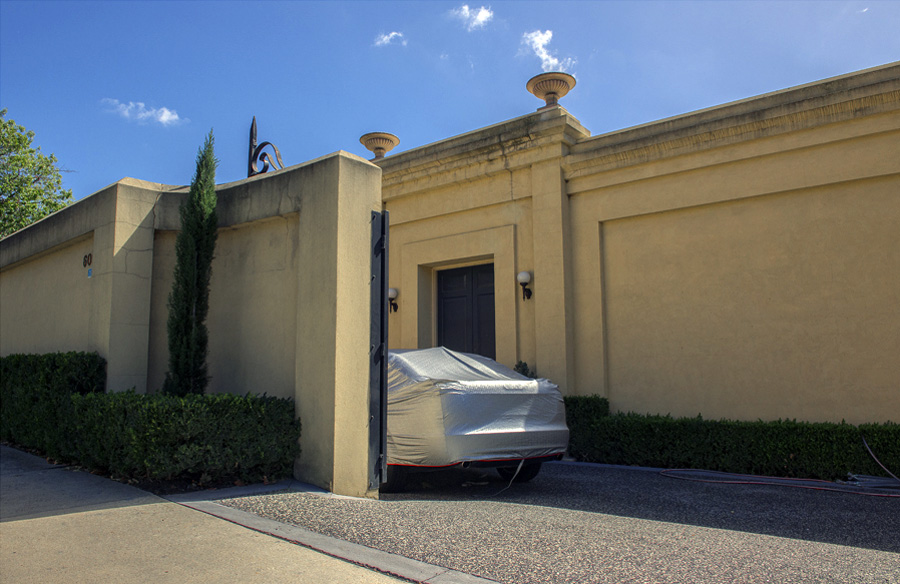
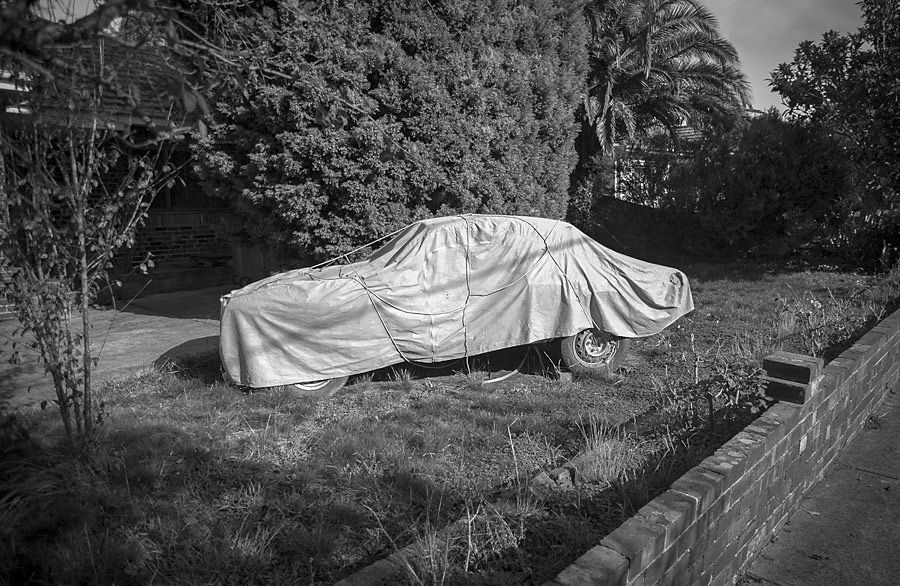
Mike Reid (Australian) 'Santa Monica, Los Angeles, USA' Nd


Mike Reid (Australian)
Santa Monica, Los Angeles, USA
Nd


“Any discovery changing the nature, or the destination of an object or phenomenon constitutes a Surrealist achievement. Already the automats are multiplying and dreaming… realism prunes trees, Surrealism prunes life.”


J-A. Boiffard, Paul Ellard and Roger Vitrac, in La Revolution Surréaliste, December 1924, p. 2, quoted in Arturo Schwarz, Man Ray: the rigour of imagination, Thames & Hudson, London, 1977, p. 161.


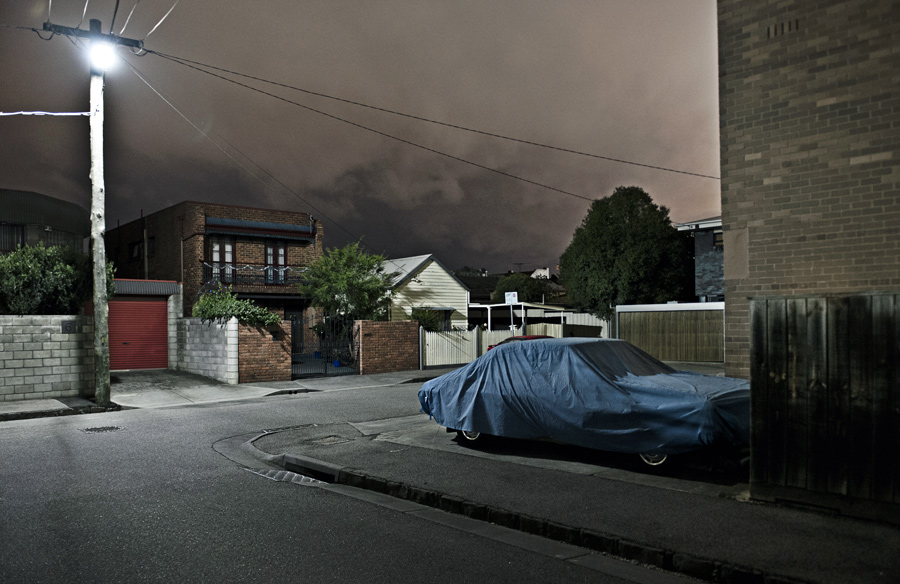
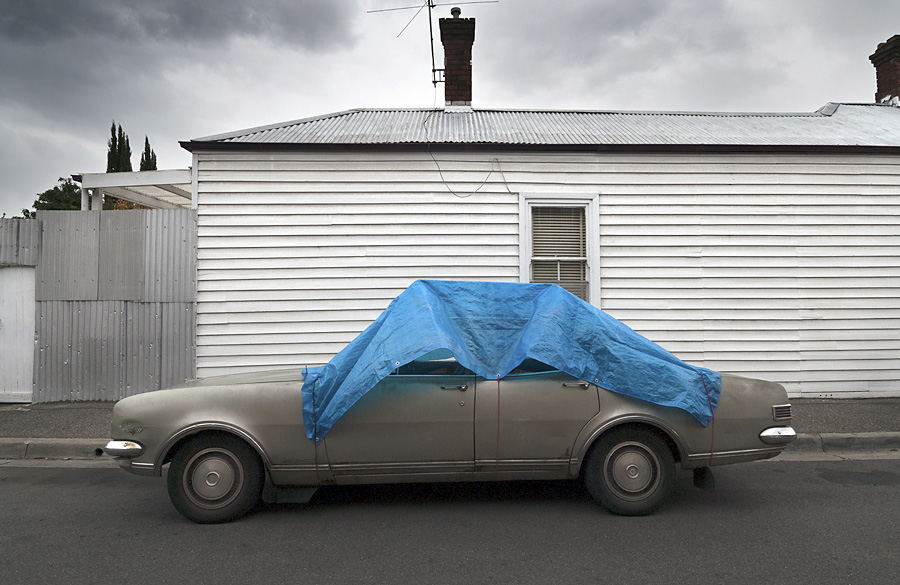
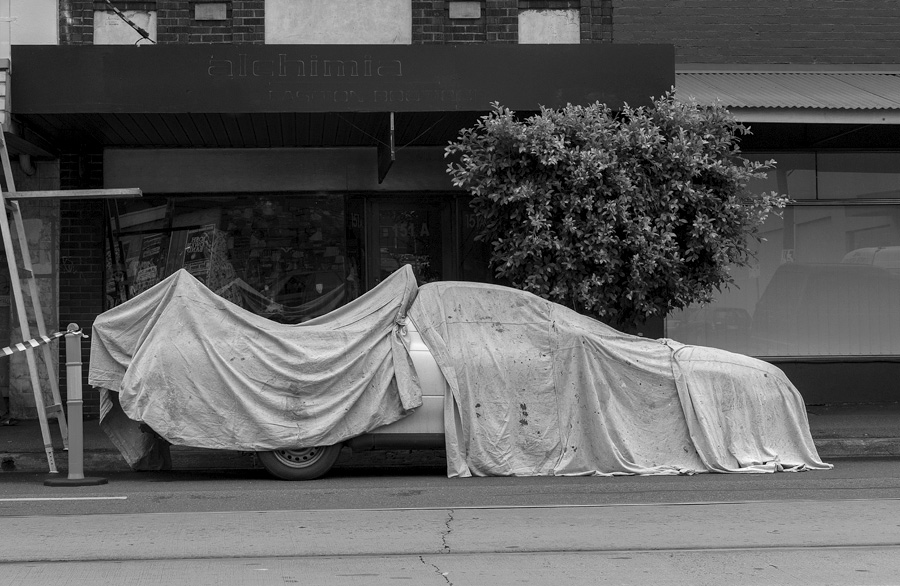
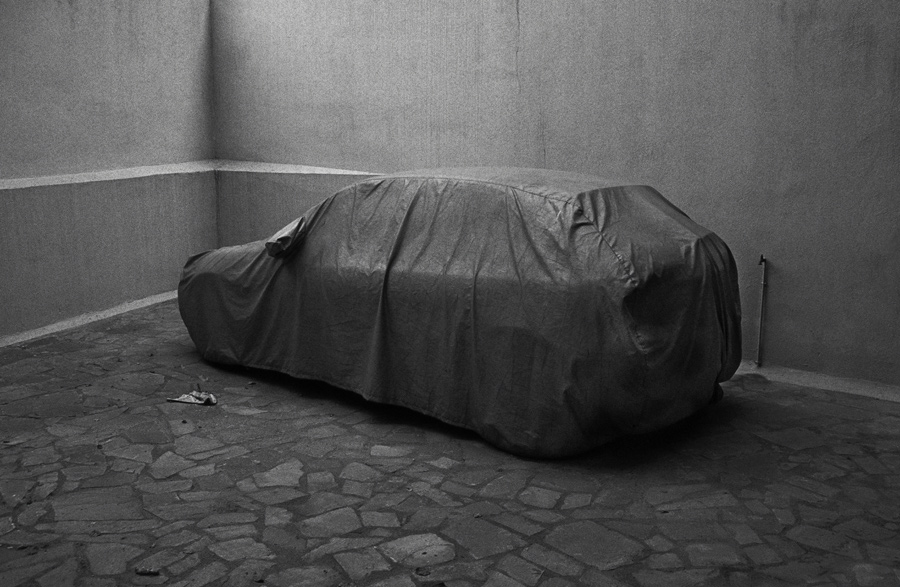
This is a strong exhibition of documentary photography by Mike Reid at the Colour Factory Gallery. Interesting idea; well seen formal photographs; good use of colour (brown, blue, silver, red and green shrouds); nice sized prints appropriate to the subject matter; and an excellent self published book to accompany the exhibition. This is just what it is – a solid exhibition of documentary photography.

Unfortunately the artist cannot leave it there. In his almost unintelligible artist statement (below), he tries to lever the concept of resurrection onto the work, meandering from Horus and Osiris through The Shroud of Turin, to Jewish Tachrichim (burial shrouds) and onto the commerce of Billabong and the politics of the burqa linking, very tenuously, the covering of Islamic women with the idea of these cars being “old bombs.”

Here I take issue with Reid’s conceptualisation of the word “shroud” vis a vis his photographs of covered cars. One of the definitions of shroud is “A cloth used to wrap a body for burial” but the more pertinent use of the word in relation to this work is “To shut off from sight; something that conceals, protects, or screens” from the Middle English schrud, garment. These are not abandoned, lifeless vehicles awaiting resurrection but loved vehicles that have been protected from the elements by their owners, wrapped and cocooned jewels that are in a state of hibernation. If they were unwanted they would have been abandoned by their owners to the elements, not protected beneath a concealing garment in a state of metamorphosis. The shrouding of the car acts like a Surrealist canvas, hinting at the structure underneath (the Cadillac, the Volkswagen, the Morris Minor) but allowing the viewer to discover the changing nature of the object.

All that was needed to accompany the exhibition and the book was something like the quotation at the top of the posting. Leave the rest up to the strength of the work and the viewer. They have the intelligence and imagination to work out what is going on without all the proselytising that only reveals the artist’s ultimate disconnection from the source. In other words, less is more. Nothing more, nothing less.

Dr Marcus Bunyan


Many thankx to the Colour Factory Gallery for allowing me to publish the photographs in the posting. Please click on the photographs for a larger version of the image.


Mike Reid (Australian) 'Toorak, Victoria' Nd


Mike Reid (Australian)
Toorak, Victoria
Nd


Mike Reid (Australian) 'South Fremantle, Western Australia' Nd


Mike Reid (Australian)
South Fremantle, Western Australia
Nd


Mike Reid (Australian) 'Richmond, Victoria' Nd


Mike Reid (Australian)
Richmond, Victoria
Nd


Shrouds, by Mike Reed is a collection of photographs of covered cars. His love of gleaning was inherited from his ‘rag and bone’ father who amassed a metal detritus found on the bicycle route home from the factory where he worked. This assortment was stockpiled in his father’s rusted sheds, which appeared like an ‘Aladdin’s cave’ to a youthful Mike.

“The car was draped with a plastic sheet in the back blocks of Surfers Paradise whilst seeking to photograph decay in the landscape… You start with one and then see another then… over time, the medley plays into a collection… patterns precipitate or idiosyncrasies evolve from within…This is the joy of “seeing”.”

“Within my category of covered cars I began to view these still loved but lifeless vehicles, as if a resurrection was about to take place… for the heavenly roads of restoration or hell.”

Mike equates the car covers to the burial garments adorning the dead in preparation for resurrection. Mike cites the ‘wrapping’ of objects found in the work of artists’ Christo, Jean Claude, Man Ray and Magritte as inspiration. This incredible accumulation of images spans over two decades and 6 countries. A small selection has been chosen for this exhibition and a larger range appears in his book to be launched at the opening of Shrouds.

Press release from the Colour Factory Gallery website


Mike Reid (Australian) 'Richmond, Victoria' Nd


Mike Reid (Australian)
Richmond, Victoria
Nd


Mike Reid (Australian) 'Macleod, Victoria' Nd


Mike Reid (Australian)
Macleod, Victoria
Nd


Shrouds

The resurrection of the dead is a fundamental and central doctrine of Judaism, Christianity, and Islam. Many religious critics have alleged that even Christ’s resurrection was borrowed from the accounts of Osiris, God of the underworld, and the best-known deity in all of ancient Egyptian history. As a life-death-rebirth deity, Horus, the Sun God, and Osiris became a reflection of the annual cycle of crop harvesting as well as reflecting people’s desires for a successful afterlife. The Masons, Illuminati, Priory De Sion, clandestine government groups, and others believed that on December 22, 2012, Osiris would be resurrected. Nothing happened on that world shattering day but Spam and candle sales most certainly went through the roof. Thus in preparation to meet thy maker, a shroud, burial sheet or winding-cloth, usually cotton or linen but with no pockets, is wrapped around a body after it has been ceremonially washed and readied for burial.

Certainly the most controversial and famous burial garment is the Shroud of Turin. It is now stored in the Cathedral of St. John the Baptist in Turin, Northern Italy after the crusaders stole it and bought it first to France around 1204.

Many believe this 4.3 by 1.1m linen cloth of a rare herringbone weave covered the beaten and crucified body of Jesus of Nazareth when He was laid in a tomb prior to His resurrection. Is it really the cloth that wrapped His bloodstained body, or is it simply a medieval hoax? This has lead to intense scrutiny by forensic experts, scientists, chemists, immunologists, pathologists, believers, historians, and writers regarding the where, when, and how the bloodstain image on the shroud was created. C-14 Carbon dating carried out in 1988, dated the cloth between 1260 and 1390.

In Jewish religious traditions the Tachrichim (burial shrouds) are traditional simple white burial garments, containing no pockets, usually made from 100% pure linen.A shroud or sometimes a prayer shawl for a man, in which Jews are dressed by the Chevra Kadisha for burial after undergoing a taharah (purification ceremony). Burying the departed in a garment is considered a testimony of faith in the resurrection of the body (commentary of Shach). This is a fundamental principle of faith, one of the thirteen principles, which the Rambam enumerates as being essential to Jewish belief. More to the point today we have an insurrection, while not yet violent against the wearing of another kind of covering… the niqab or the burqa. European governments are escalating the introduction of laws on the basis that the face covering, along with ski masks and bikies helmets, encourages female subjugation, lack of communication, non-safety, isolation, female abuse, oppression of freedom and non-conformity to the western culture. In fact the Koran only dictates to modesty in dress. May I say it that Billabong could improve sales with the launch of a ‘Tri-Kini’ on the beaches next summer.

Meanwhile… “The 2012 ban in France is officially the second country in Europe, after Belgium, to introduce a full ban on a garment which immigration minister Eric Besson has called a “walking coffin.””1 Indeed Australian Liberal Cory Bernadi said, “The burqa is no longer simply the symbol of female repression and Islamic culture, it is now emerging as a disguise of bandits and n’er do wells.”2 More so now the government and police authorities in the Netherlands, a usually very tolerant nation, have become anxious regarding security worries that a terrorist could use one for concealment. Well my shrouded cars could be the same, as most do conceal “old bombs.”

The inspiration for my rag tag assortment evolved from the artistes Christo and Jeanne-Claude who have wrapped, covered whole buildings, bridges and landscapes. Other favourites of mine, Man Ray and Rene Magritte have objects and humans covered as well, specifically Magrittes’ Las Amants 1 & II (The Lovers)3 1928. A plastic explanation is that “love is blind” and that the mantles are symbolic to the idea that a devoted lover would identify his soul mate in any form, immortal love. Another interpretation of Magrittes’ shrouds is that the paintings symbolise his mothers’ death. Magritte, when only 14, discovered her lifeless body which was naked apart from her nightdress that had swathed up around her face.

I started recording these morphological images over 20 years ago. The first was draped with a plastic sheet in a paddock in the back blocks of Surfers Paradise while meandering aimlessly, seeking decay in the landscape.

With my wandering and collecting shots I realised I have inherited the trait from my father. In his latter years my father became a rag and bone man in order to supplement the low family income. A bicycle route from his employment at Laminex factory to home lay through the local hard rubbish dump. Copper wire, lead, iron, even an aerial practice bomb, military helmets, a stockless revolver and rifle, rusted tools… festooned from his bike and festooned from his gladstone bag. Two rusting sheds contained somewhat the ever-growing metal waste for selling or keeping… an Aladdins’ cave to a young boy, everyday re-discovering lifes’ discards care of the Dendy Street tip.

Within my category of covered cars I began to view these still loved but lifeless vehicles, as if a resurrection was about to take place… for the heavenly roads of restoration or hell… (a scrap yard)

Mike Reed, 2013


1/ The Telegraph, April 11 , 2011, “Peter Allen In Paris”
2/ Cory Bernadi, SMH, May 6, 2011
3/ “Las Amants” 1 is in the NGA collection, Canberra, NGA


Mike Reid (Australian) 'Brunswick East, Victoria' Nd


Mike Reid (Australian)
Brunswick East, Victoria
Nd


Mike Reid (Australian) 'Fairfield, Victoria' Nd


Mike Reid (Australian)
Fairfield, Victoria
Nd


Man Ray (American, 1890-1976) 'L'Enigme d'Isidore Ducasse' 1920, remade 1972


Man Ray (American, 1890-1976)
L’Enigme d’Isidore Ducasse
1920, remade 1972
Sewing machine, wool and string
355 x 605 x 335 mm


Mike Reid (Australian) 'Athens, Greece' Nd


Mike Reid (Australian)
Athens, Greece
Nd


Colour Factory Gallery
409-429 Gore Street
Fitzroy, Victoria 3056
Phone: +61 3 9419 8756

Opening hours:
Closed for refurbishment

Mike Reed Photography website

Colour Factory Gallery website

LIKE ART BLART ON FACEBOOK

Back to top

Review: ‘Vestige II’ Melissa Powell and ‘Darkness by Day’ Shannon McGrath at Anita Traverso Gallery, Richmond, Melbourne

Exhibition dates: 5th February – 23rd February 2013


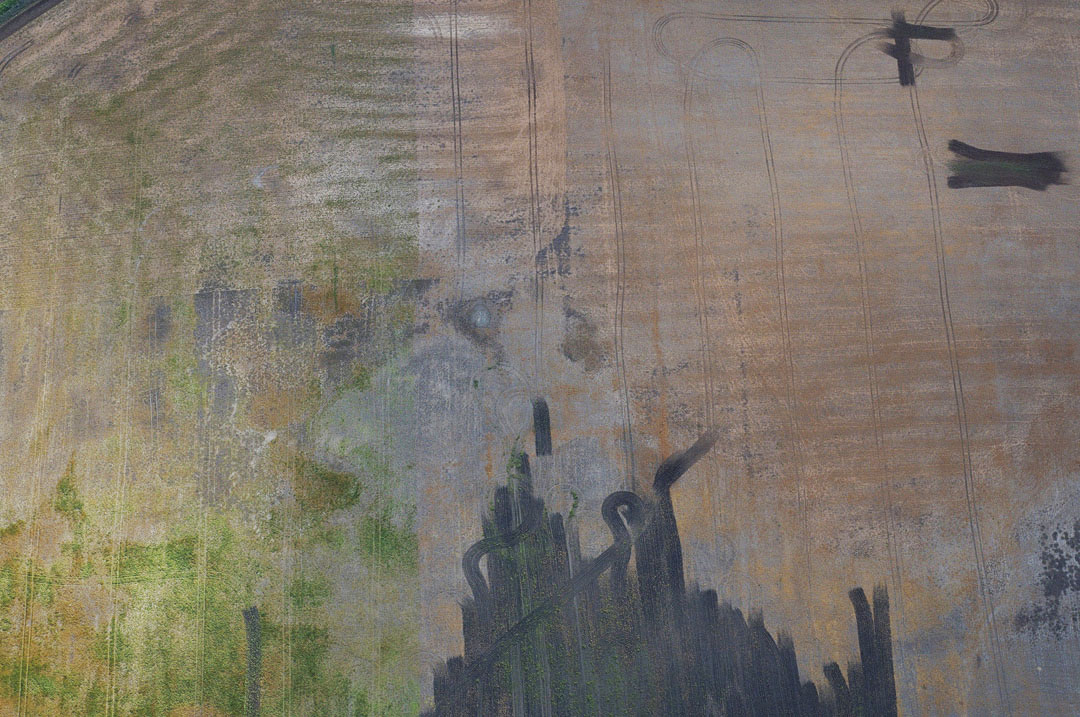
Melissa Powell (Australian) 'Painterly Divide No.1' 2012


Melissa Powell (Australian)
Painterly Divide No.1
2012
Pigment ink on cotton rag
50.5 x 70.6cm
edn. 1/9


ves·tige  
/ˈvestij/

Noun
1/ A trace of something that is disappearing or no longer exists
2/ The smallest amount (used to emphasise the absence of something): “without a vestige of sympathy”
3/ Biology an organ or part of an organism that is a small nonfunctioning remnant of a functional organ in an ancestor
a trace suggesting that something was once present or felt or otherwise important; “the footprints of an earlier civilisation”

via French from Latin ves·tigium footprint, track


Two solid exhibitions of photography are on display at Anita Traverso in Richmond, a gallery that is showing more photography these days, to excellent affect.

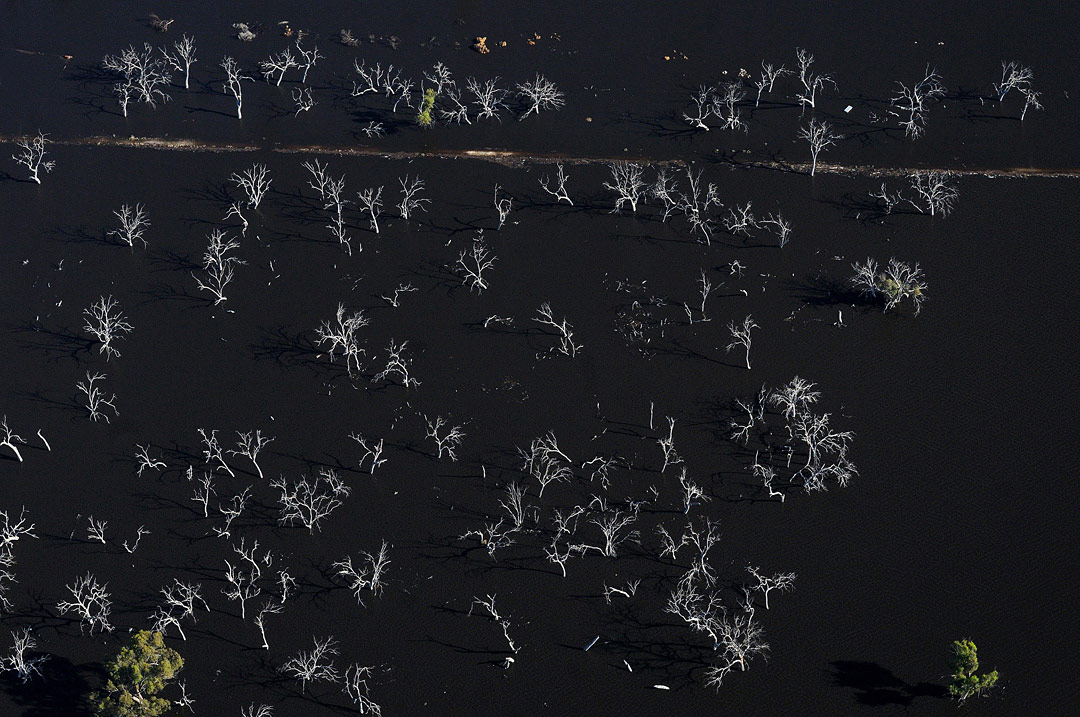
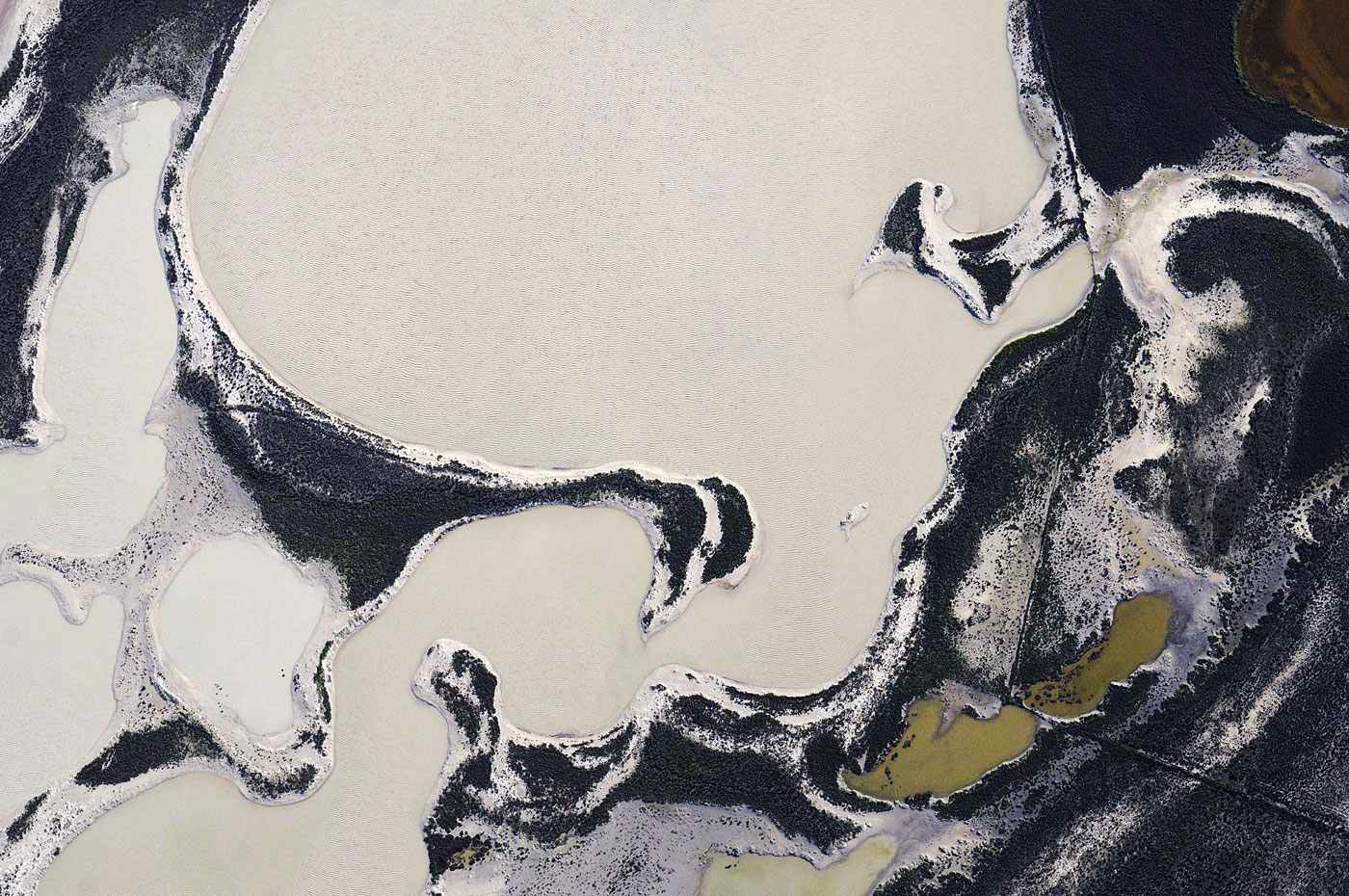
Natimuk based photographer Melissa Powell documents the seasonal changes of the Wimmera environment through the use of aerial photography. She brings her skills as a forensic photographer to bear when capturing our mark on the landscape. Her photographs (full frame and never cropped), are as sharp as a tack, like the crystallisation of a thought – the surgical gaze of the artist balanced by a lyrical, abstract poetry. Powell renders (and that is the appropriate word) natural phenomena in their direct relation to humanity, pointing her camera at patterns of cropping, the patchiness of the earth and its sandy, infertile soil. She sees the world clearly and tells the story in a plain, almost scientific way… but this utopian vision of the world is balanced by a feeling in the viewer, a feeling of drifting and floating above the earth, inhabiting a liminal space, as in a daydream.

Powell’s is an expression of the land, presented in a particular way as she remembers experiencing it. For example, look at Painterly Divide No.1, (2012, below) and notice the perfect confluence of yin and yang broken by the single mutation of the furrow midway up in the centre of the image (enlarge the image to see it better!). Disorder plays off order in the mind of the viewer in an absolutely sublime way. Sure, a few things need work in the exhibition, like the framing and naming of the works, but this all comes with time and experience. What Powell evidences in her photographs is a wonderfully strong aesthetic producing some of the best aerial photography I have ever seen. Her traces, footprints and tracks are vestigial structures that links us back to our ancestors, photographs as passionate representation of the land, done with strength and depth of soul.


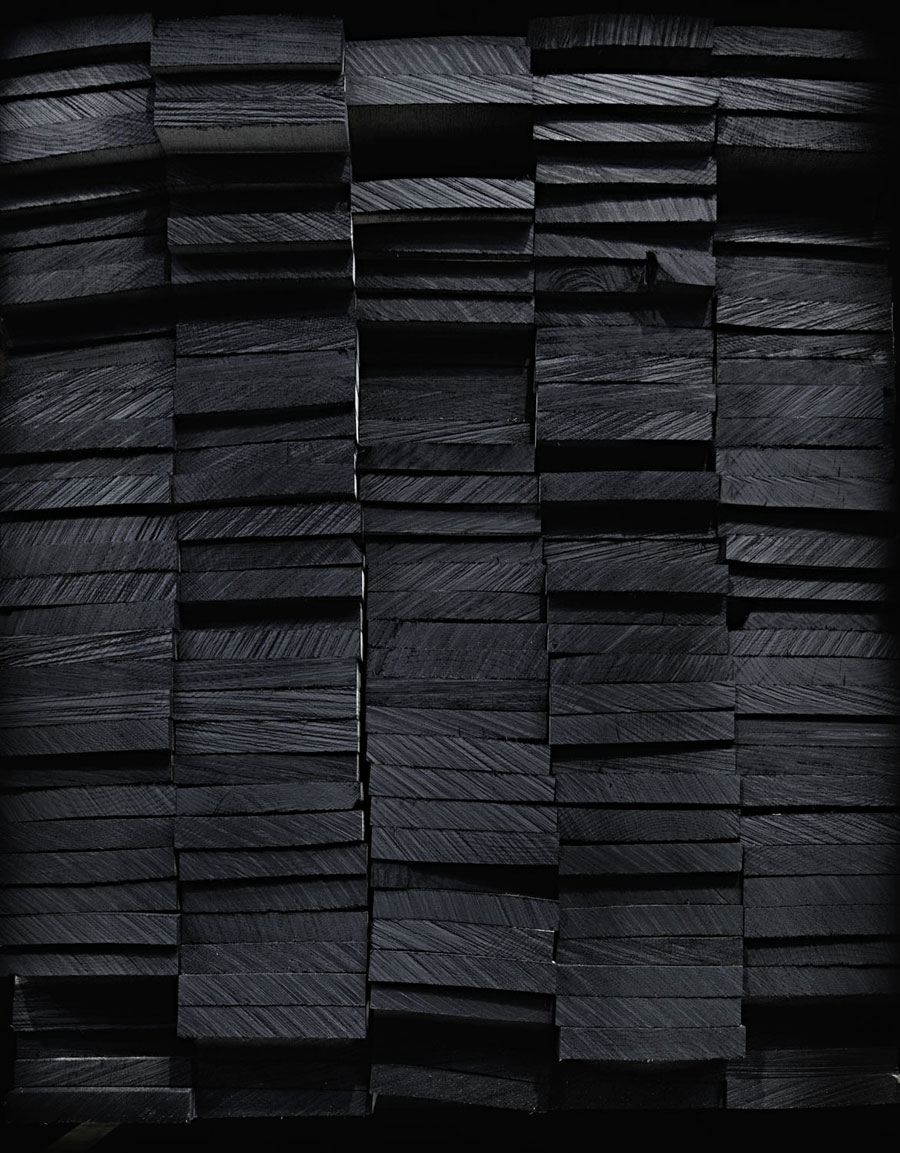
In the back gallery Shannon McGrath, an established architecture photographer, images stacks of wood that “are considered for both their aesthetic values and formal compositional qualities such as patterning and seriality.” The suite of five very large, unmounted black photographs printed on matt Silver Rag paper are stunning, much darker and of more luminance than seen in reproduction here (there are also two other photographs using an electric blue colour that simply did not work for me). Using a minimal composition of the thing itself (and what it can become), the photographer imbues a romantic, visual sensibility into her subject matter. The matt blacks are like velvet and the spaces that open up within the image magical. These things “breathe” like a black Rothko painting, or the plastic black of a Rembrandt.

McGrath’s photographs are “impressionistic inventories of landscapes and entropic architectural structures that connote psychologically, emotionally, and viscerally.” (Anon. “Cyprien Gaillard: The Crystal World,” on the MOMA website [Online] 12/02/2013). The object of her attention – the planks of wood – have a temporality that is characterised by repetition and predictability. The viewer tries to articulate difference through looking but that looking reduces differences to similarities unless we look very closely, are very attentive to the condition of looking. Enlarge any of the dark images below and really look at the cut ends of the wood, their inflection. What is hidden within (or beneath, for the photograph is also a physical object) the flat surface of the image are the nuances of language – the physicality of the print, the punctum of white, the band saw cuts that inhabit the end of days. There is a slippage between language and referent which makes McGrath’s photographs a beautiful deviation and productive possibility of language, one that encourages the vital movement of the subversive sign.

My only concern is “where to next?” What other surfaces which are hidden, which slowly reveal aspects and possibilities, subtleties and complexities will the photographer engage with? Excitingly, I want to see more from both photographers as they combine the ordinary and the poetic in a field of revolutionary possibilities.

Dr Marcus Bunyan


Many thankx to Anita Traverso Gallery for allowing me to publish the photographs in the posting. Please click on the photographs for a larger version of the image.


Melissa Powell (Australian) 'Traces of Time' 2012


Melissa Powell (Australian)
Traces of Time
2012
Pigment ink on cotton rag
50.5 x 76cm
edn. 1/9


“Centered on documentation of the Wimmera region, Melissa Powell’s images are depicted from an aerial perspective that allows her to capture the theatre and sublimity of a landscape that is consistently eroded and replenished by both the cycles of nature, the progression of time and the agricultural impact of man.”


Anna Briers, independent art curator and writer


Melissa Powell (Australian) 'Camouflage No.2' 2012


Melissa Powell (Australian)
Camouflage No.2
2012
Pigment ink on cotton rag
50.5 x 70.6cm
edn. 1/9


Melissa Powell (Australian) 'Droughtbreaker' 2011


Melissa Powell (Australian)
Droughtbreaker
2011
Pigment ink on cotton rag
50.5 x 70.6cm
edn. 8/12


Melissa Powell (Australian) 'Salt Lake No.1' 2011


Melissa Powell (Australian)
Salt Lake No.1
2011
Pigment ink on cotton rag
50.5 x 70.6cm
edn. 8/9


A forensic photographer in her former life, Melissa Powell’s new direction as an aerial photographer was endorsed by her winning first prize for aerial photography at the 2012 International Photography Awards, New York, USA. Vestige II, Powell’s debut exhibition at Anita Traverso Gallery, surveys an amalgam of three photographic series drawn from the artist’s oeuvre – Grounded, Flooded and Dry.

Centred on documentation of the Wimmera region, Powell’s images are depicted from an aerial perspective that allows her to capture the theatre and sublimity of a landscape that is consistently eroded and replenished by the cycles of nature, the progression of time and the agricultural impact of man. Shaped by droughts and bushfires, vast desertous landscapes extend into the horizon. Serpentine rivers and floodplains alternately nourish and fertilise, lacerate and scar. Fecund pastures are contained and demarcated by the rigid geometries of manmade fences and irrigation systems. These vestiges award us a sense of the indelible link between the microcosm and the macrocosm, while enabling us to perceive the constantly shifting narratives of this great southern land.

By contrast Shannon McGrath, an established architecture photographer, aspires to capture the unique spatial dynamics of a building whilst transposing a distillation of the architect’s intention into a two dimensional image. In this photographic series McGrath examines the raw building material of wood in the same way she would approach the documentation of architecture. Photographed on site at the Britton Timber sawmill, the stacks of wood are considered for both their aesthetic values and formal compositional qualities such as patterning and seriality. Simultaneously though, they are envisaged as a core resource imbued with potentiality; their future incarnation, that of the architect’s vision, lying dormant and yet to manifest.

Press release from the Anita Traverso Gallery website


Shannon McGrath (Australian) 'Mark 01' 2012


Shannon McGrath (Australian)
Mark 01
2012
From the series Darkness by Day
Pigment print to cotton rag paper
100 x 128cm


Shannon McGrath (Australian) 'Mark 02' 2012


Shannon McGrath (Australian)
Mark 02
2012
From the series Darkness by Day
Pigment print to cotton rag paper
100 x 128cm


“These stacks of saw-mill timber were shot in broad daylight without any artificial lighting, in situ and without any intervention in their arrangement. I was drawn to the dark element in them that survives this ‘glare’ yet reveals it in other ways – how the light naturally hits the objects and remains in an interplay with the darkness and shadows of the grain, the individual and beautiful markings the blade has left on the natural material, and the extrusions and hollows of the layering of the wood. This gave the show its title. Even in the jewel-like, cobalt image, there is this dynamic. This is a theme that runs through my creative photography: surfaces which are hidden, which slowly reveal aspects and possibilities, subtleties and complexities. I considered wood as an essential building material so I approached the stacks of timber and photographed it with the same sensitivity as architecture.”


Artist statement


Shannon McGrath (Australian) 'Mark 07' 2012


Shannon McGrath (Australian)
Mark 07
2012
From the series Darkness by Day
Pigment print to cotton rag paper
100 x 128cm


Shannon McGrath (Australian) 'Mark 08' 2012


Shannon McGrath (Australian)
Mark 08
2012
From the series Darkness by Day
Pigment print to cotton rag paper
100 x 128cm


Anita Traverso Gallery
PO Box 7001, Hawthorn North,
Melbourne, Victoria, Australia 3122

Anita Traverso Gallery website

LIKE ART BLART ON FACEBOOK

Back to top

Review: ‘Terraria’ by Darron Davies at Edmund Pearce Gallery, Melbourne

Exhibition dates: 16th January – 9th February 2013


Darron Davies (Australian) 'Atmosphere' 2012


Darron Davies (Australian)
Atmosphere
2012
Archival Pigment Print on Photo Rag
80 x 80cm
Edition of 6


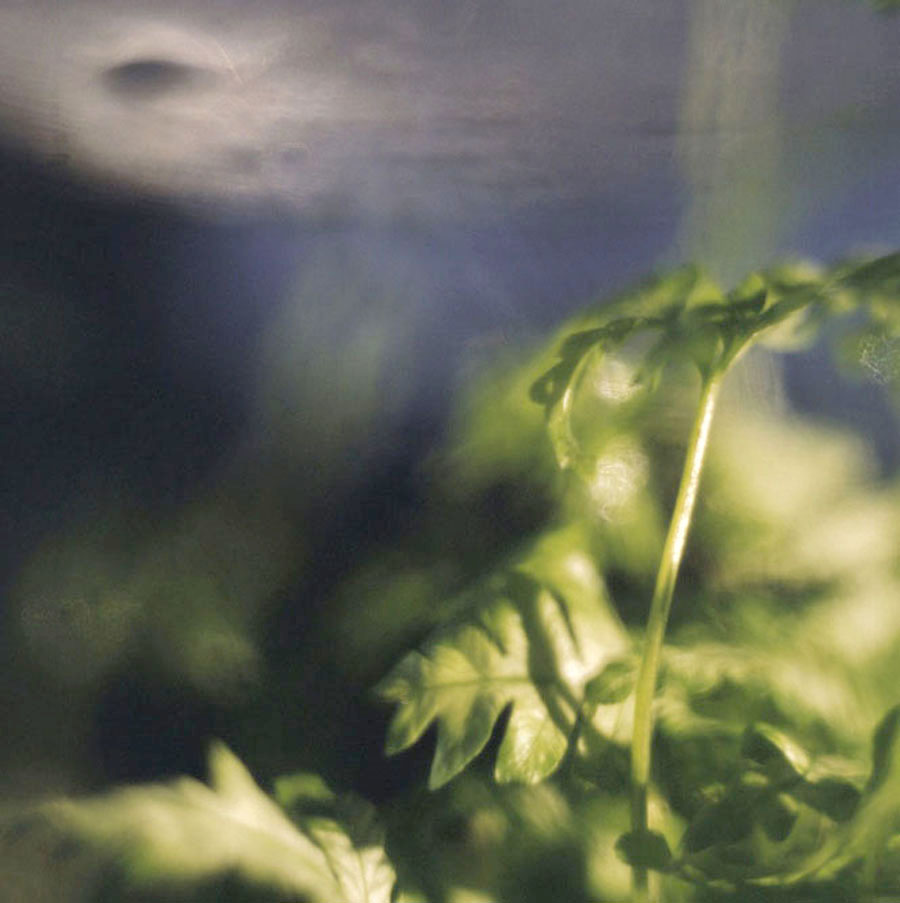
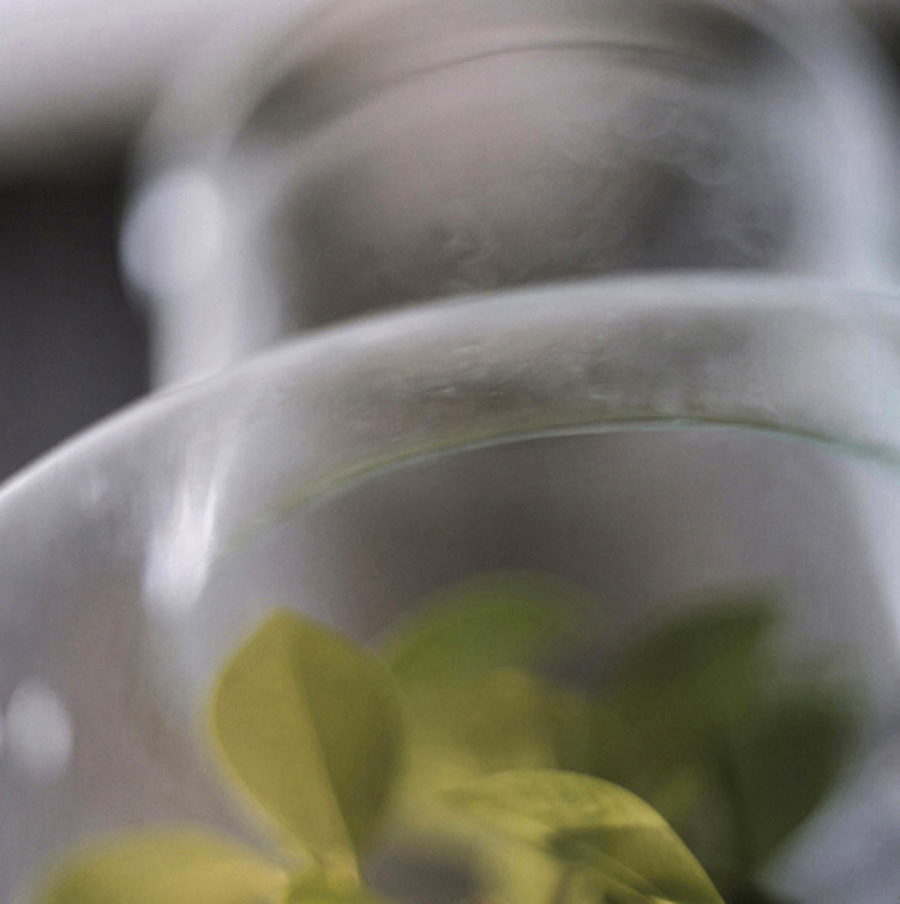
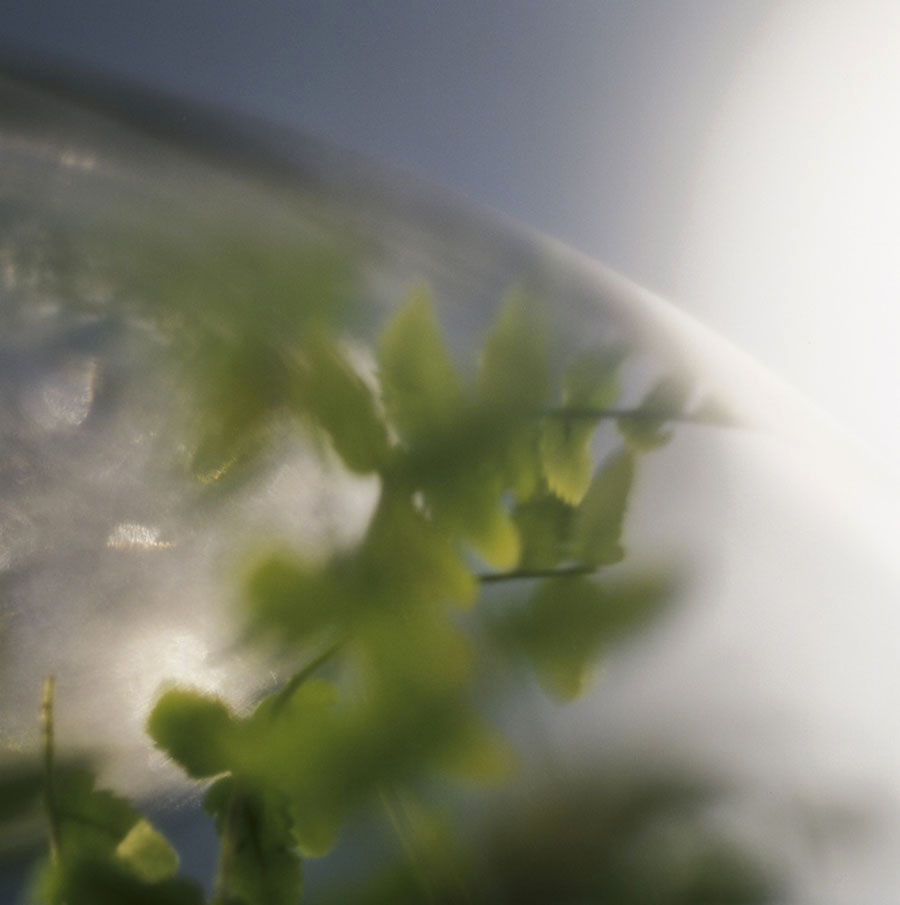
This is the first “magical” exhibition of photography that I have seen in Melbourne this year. Comprising just seven moderately large Archival Pigment Print on Photo Rag images mounted in white frames, this exhibition swept me off my feet. The photographs are beautiful, subtle, nuanced evocations to the fragility and enduring nature of life. The photographs move (shimmer almost) one to another, with slight changes in the colour green balanced with abstract splashes of light and pigment reminiscent of an abstract expressionist painting (I particularly like the splash of red in The Red Shard, 2102, below). These are beautifully seen works, that require 1) a good idea, 2) an aware and enquiring mind, 3) an understanding and receptive eye, and 4) a relationship to the ineffable that allows visions such as these to be breathed into existence. As Minor White would say,


Three Canons

Be still with yourself
Until the object of your attention
Affirms your presence


Let the Subject generate its own Composition


When the image mirrors the man
And the man mirrors the subject
Something might take over


A sense of day/dreaming is possible when looking at these images. Interior/exterior, size/scale, ego/self are not fixed but fluid, like the condensation that runs down the inside of these environments (much like blood circulates our body). This allows the viewer’s mind to roam at will, to ponder the mysteries of our short, improbable, joyous life. The poetic titles add to this introspective reflection. I came away from viewing these magical, self sustaining vessels with an incredibly happy glow, more aware of my own body and its relationship to the world than before I had entered Darron Davies enveloping, terrarium world.

Dr Marcus Bunyan


Many thankx to Edmund Pearce Gallery for allowing me to publish the photographs in the posting. Please click on the photographs for a larger version of the image.


Darron Davies (Australian) 'Day’s Reach' 2012


Darron Davies (Australian)
Day’s Reach
2012
Archival Pigment Print on Photo Rag
80 x 80cm
Edition of 6


Darron Davies (Australian) 'Encased' 2012


Darron Davies (Australian)
Encased
2012
Archival Pigment Print on Photo Rag
80 x 80cm
Edition of 6


Terraria


I step into your small world
Your secret world
Each a planet of green

Fragile edges holding
the lived
and living

Peering into your glass
your mirror
I see the shards of light
Drawing in
and
Stretching out

You are another
In atmosphere
In moss
In fear


Terraria is a photographic project exploring the magical, abstract and metaphoric world of terrariums – an increasingly popular form of enclosed and small scale eco-system designed for showcasing plants.

Ultimately, Terraria is also about the fragility of life – terrariums as self contained vessels, enduring, magical – like the human body or our planet – yet somewhat mysterious. These vessels are self sustaining with no watering needed. They are independent and endure quietly. This project would not have been possible without support from Lisa Rothwell from Lu Lu Blooms.

Artist statement


Darron Davies (Australian) 'Heaven’s Door' 2012


Darron Davies (Australian)
Heaven’s Door
2012
Archival Pigment Print on Photo Rag
80 x 80cm
Edition of 6


Darron Davies (Australian) 'The Second Dream' 2012


Darron Davies (Australian)
The Second Dream
2012
Archival Pigment Print on Photo Rag
80 x 80cm
Edition of 6


Darron Davies (Australian) 'The Light Play' 2012


Darron Davies (Australian)
The Light Play
2012
Archival Pigment Print on Photo Rag
80 x 80cm
Edition of 6


Darron Davies (Australian) 'The Red Shard' 2012


Darron Davies (Australian)
The Red Shard
2012
Archival Pigment Print on Photo Rag
80 x 80cm
Edition of 6


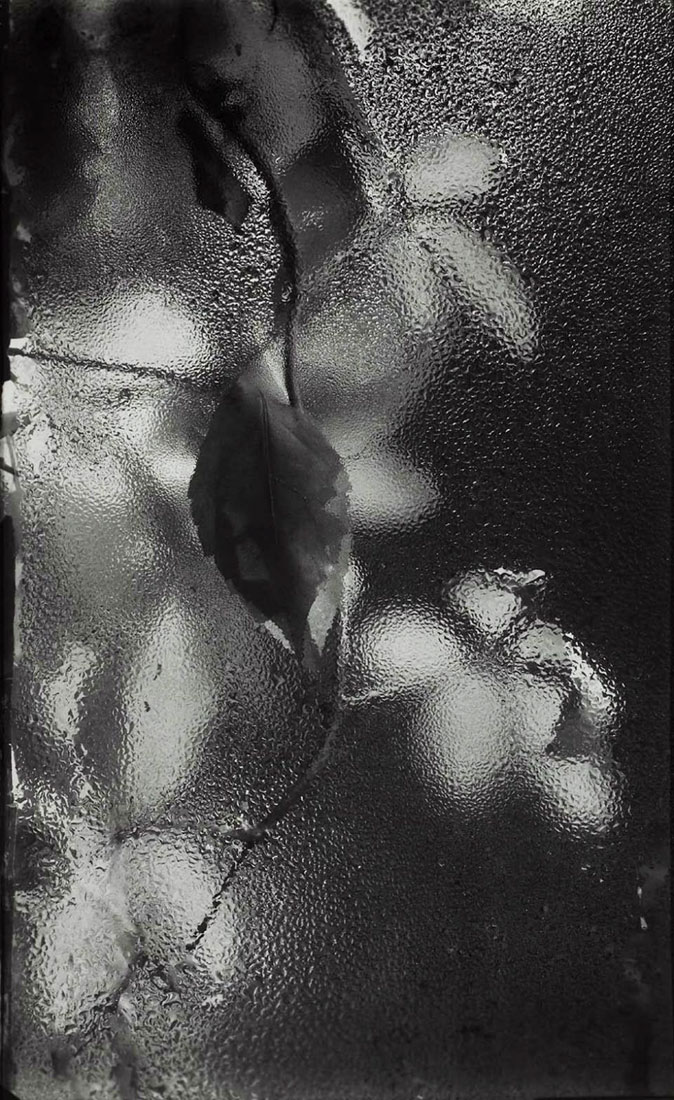
Darron Davies (Australian) 'From the Window of My Atelier' 1940


Josef Sudek (Czechoslovakian, 1896-1976)
From the Window of My Atelier
1940
Gelatin silver print


Edmund Pearce Gallery

This gallery is no longer open.

Darron Davies website

LIKE ART BLART ON FACEBOOK

Back to top

Exhibition: ‘XTRAVAGANZA. Staging Leigh Bowery’ at Kunsthalle Wien, Vienna

Exhibition dates: 19th October 2012 – 3rd February 2013


Installation view of 'XTRAVAGANZA. Staging Leigh Bowery', Kunsthalle Wien


Installation view of XTRAVAGANZA. Staging Leigh Bowery, Kunsthalle Wien
Foto: Stephan Wyckoff
Kostüme: Leigh Bowery
Kostümpräsentation: Klaus Mayr
Courtesy Estate of Leigh Bowery


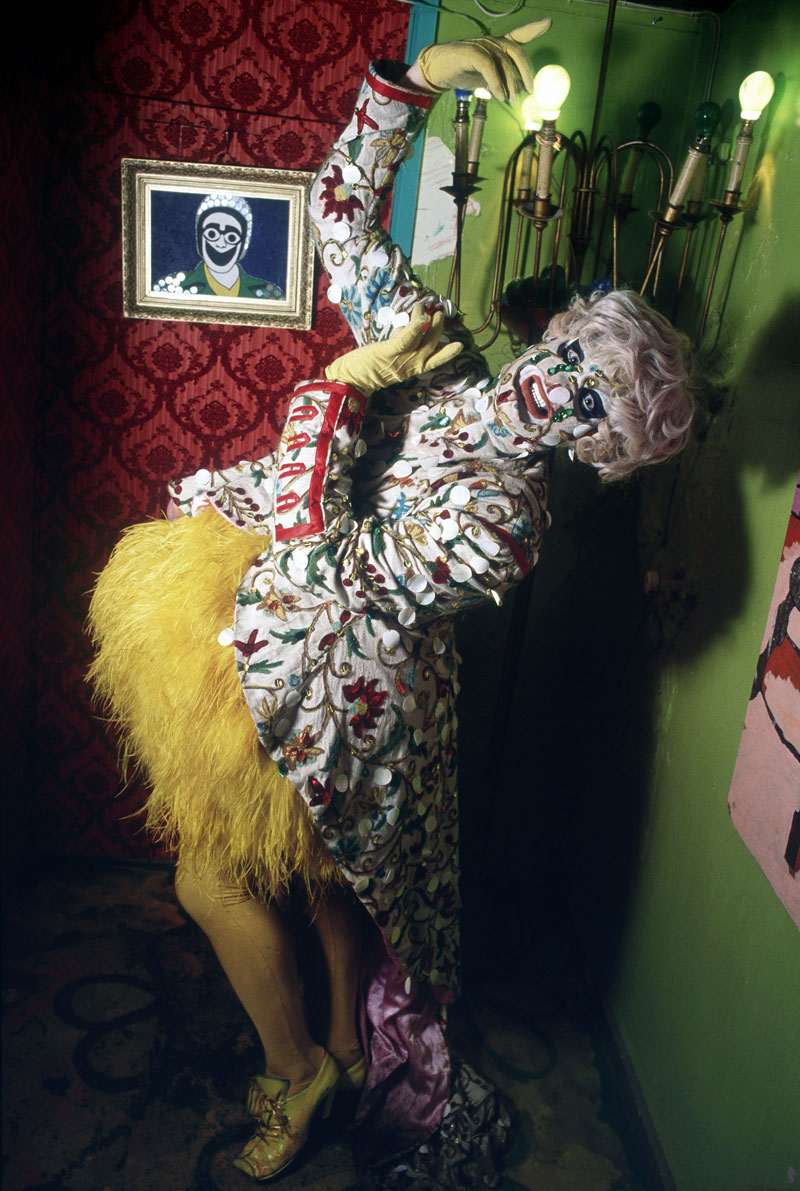
I can die happy now that I have had the opportunity to do a posting on this amazing man. He challenged social stereotypes turning his body into an every changing, ever challenging work of art. He used his body as a canvas and inscribed narratives upon it. He used these narratives to challenge the dominant discourse, offering himself as material evidence to facilitate new perspectives. His body became a performance, the self as performance, one that was not fully pre-determined, for you never knew what he would do next, what social outrage he would offer up.

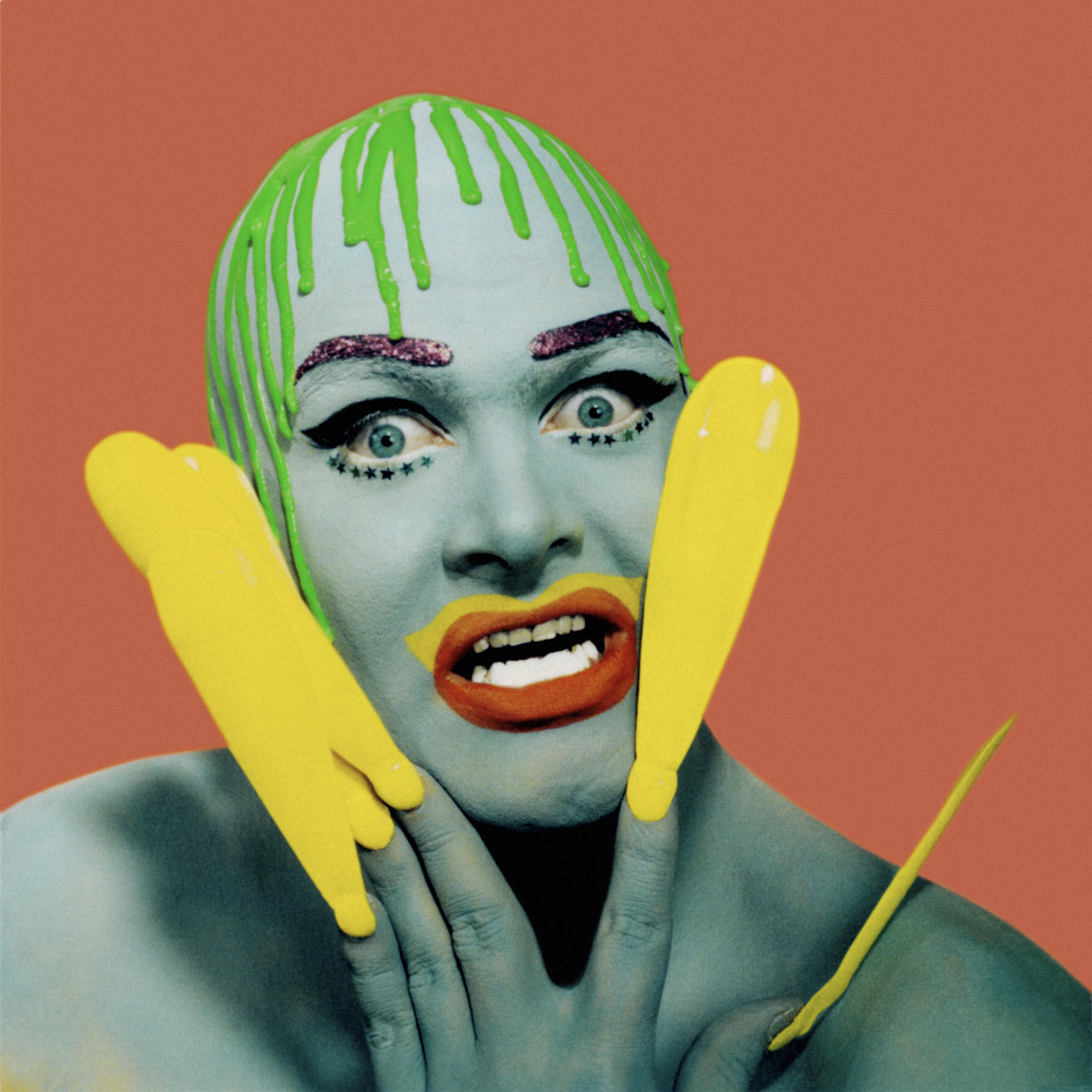
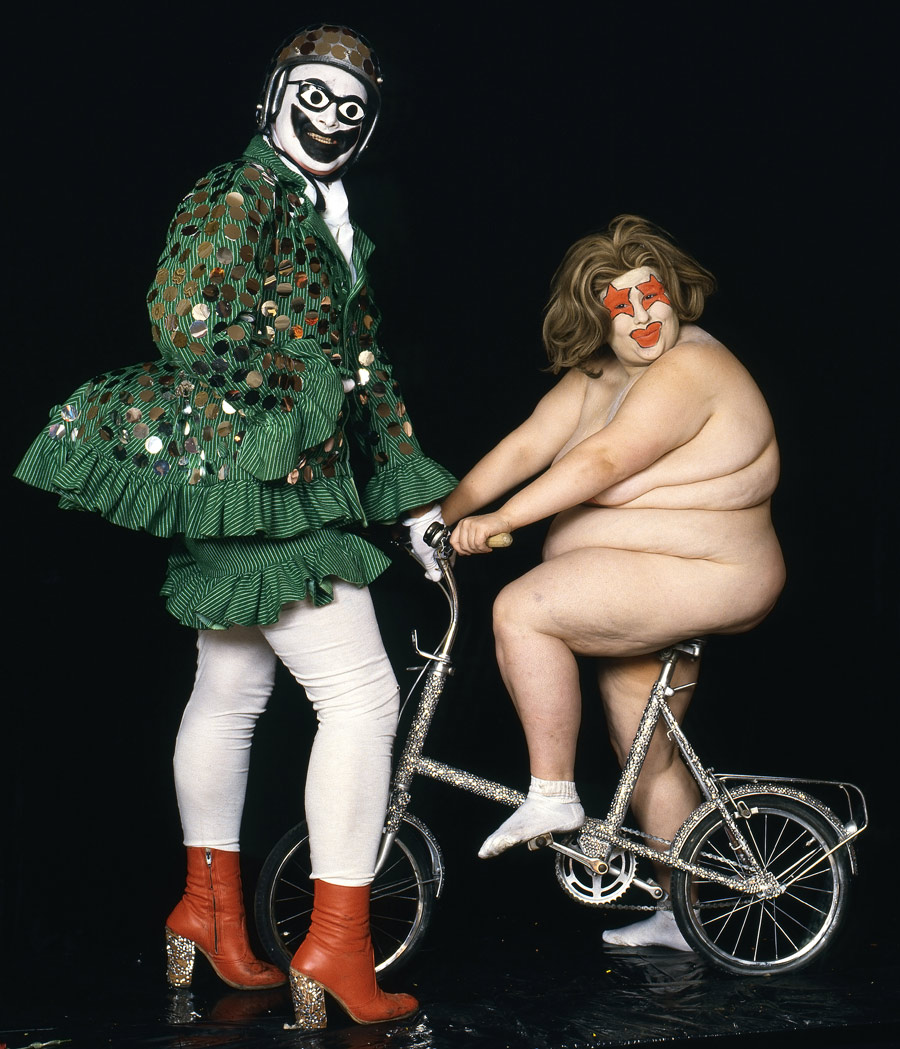
Through masks, makeup, wigs and body modification, Bowery confronted the viewer with an/other field of existence, one that promoted an encounter with the face of the other, causing an emotional response in the audience, the viewer. As Wendy Garden observes, “Being faced with another provokes a reaction: it makes an appeal, demands an engagement.”1 We cannot look away for we do not know what Bowery will do next. He used his large body, its bulk and presence to bring the viewer face-to-face with an/other. The magnification of his size and the emphasis and manipulation of his face, especially the mouth and eyes, rescales his presence in front of the viewer – at his performances, in the photographs of Bowery. For example, look at his creation Evening Wear – Andrew Logan’s 1986 Alternative Miss World (1986, below). Impossibly high and luridly coloured boots, leggings, a bustled and bedazzled jacket / skirt combo, crash helmet and the most maniacal black and white face you will ever see. Bowery unbalances the fixity of the single perspective and through his transgression destabilises the mastering gaze.

I was living in London at the time Leigh Bowery, Boy George, Marilyn and Divine were strutting their stuff in the nightclubs of London town. What a time. Maggie Thatcher (and I can hardly bring myself to type her name) was Prime Minister of a right wing Conservative government from 1979-1990, a period of social oppression of minorities, the breaking of the trade unions, the beginning of HIV/AIDS. Think Boy George’s famous song No Clause 28 that protested against a local government act that “shall not intentionally promote homosexuality or publish material with the intention of promoting homosexuality” or “promote the teaching in any maintained school of the acceptability of homosexuality as a pretended family relationship.” Bowery was a child of his time, a prescient, sentient being who was out there doing his thing, challenging the dominant paradigms of a patriarchal society. He burned like a comet, bright in the sky, and then was gone all too early. But he will never be forgotten. What a man.

Dr Marcus Bunyan


1/ Garden, Wendy. “Ethical witnessing and the portrait photograph: Brook Andrew,” in Journal of Australian Studies Vol. 35, No. 2, June 2011, p. 261.


Many thankx to Kunsthalle Wien for allowing me to publish the photographs in the posting. Please click on the photographs for a larger version of the image.


“I believe that fashion (where all girls have clear skin, blue eyes, blonde blow-waved hair + a size 10 figure, and where all men have clear skin, a moustache, short blow-waved hair, a masculine physique + appearance) STINKS”


Leigh Bowery


The Legend of Leigh Bowery 2002


Installation view of 'XTRAVAGANZA. Staging Leigh Bowery', Kunsthalle Wien


Installation view of XTRAVAGANZA. Staging Leigh Bowery, Kunsthalle Wien
Foto: Stephan Wyckoff
Kostüme: Leigh Bowery
Kostümpräs: Klaus Mayr
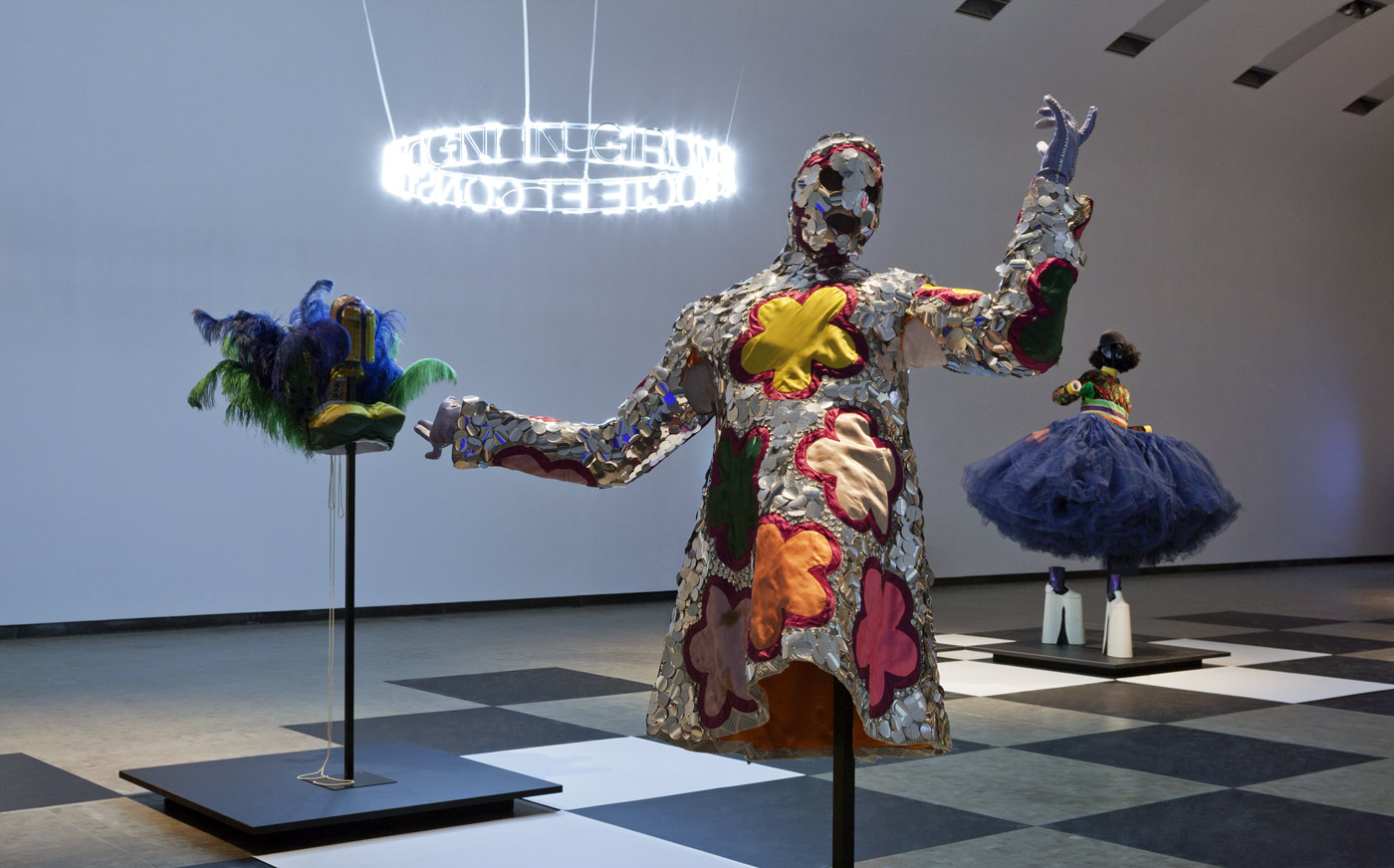
Courtesy Estate of Leigh Bowery; Cerith Wyn Evans, In Girum Imus Nocte Et Consumimur Igni, 2008
Courtesy Cerith Wyn Evans und White Cube


Installation view of 'XTRAVAGANZA. Staging Leigh Bowery', Kunsthalle Wien


Installation view of XTRAVAGANZA. Staging Leigh Bowery, Kunsthalle Wien
Foto: Stephan Wyckoff
Kostüme: Leigh Bowery
Kostümpräsentation: Klaus Mayr
Courtesy Estate of Leigh Bowery


Charles Atlas. 'Teach' 1992-1998


Charles Atlas
Teach
1992-1998
Video still
© Charles Atlas, Courtesy Vilma Gold, London


Werner Pawlok (German, b. 1953) 'Portrait Leigh Bowery 3' 1988


Werner Pawlok (German, b. 1953)
Portrait Leigh Bowery 3
1988
Courtesy Werner Pawlok


“I think of myself as a canvas,” fashion pioneer Leigh Bowery once said about himself. If there were a formula to describe this enfant terrible who refused all categorisation throughout his life, this would be it: turning oneself into a work of art. Presenting himself in the most garish ways that defied all conventions and stylising himself as a walking work of art, Leigh Bowery, who was born in Australia in 1961, stirred up London’s sub-culture of the 1980s in the wake of post punk and New Romanticism. Being friends with stars of the scene like Michael Clark and Cerith Wyn Evans, he continuously reinvented himself on the manifold stages of the metropolis.

The show highlights Leigh Bowery’s life and work between fashion, performance, music, dance, and sculpture by presenting rarely exhibited costumes, numerous films, photographs, music videos, talk shows, and magazines. It approaches Bowery by way of artistic descriptions, reflections, and documentations in the work of friends, supporters, and colleagues, whose source of inspiration, entertainer, and muse he was: Bowery’s performative enactments oscillating between masquerade and radical self-expression were captured by filmmakers such as Charles Atlas, Dick Jewell, Baillie Walsh, and John Maybury. It took Fergus Greer a number of sessions that stretched over six years to shoot the legendary photo series Looks. As Charles Atlas’s Teach shows, Leigh Bowery developed his unmistakable outfits, gestures, and poses in multiple forms of self-reflection under his companions’ critical eye. Bowery’s one-week performance in the Anthony d’Offay Gallery in London (1988) involved a two-way mirror: while the public could watch Leigh Bowery changing his outfits for hours on end, he saw only his own mirror image and remained inescapably confronted with himself and his movements. Though Bowery claimed that he had had to fight his shame initially and hid his room-filling physique behind conspicuous materials such as tulle, glitter, paint, and satin, his performances were anything but embarrassing: “The rest of us used drag and make-up to disguise our blemishes and physical defects. Leigh made them the focal point of his art,” Boy George once remarked. The nightclubs of London provided Bowery with catwalks on which to flaunt his visions of himself and let him always come out on top in terms of maximum attention. Lucian Freud, the British prince of painters, took great pleasure in Leigh Bowery’s fascinating personality and the fullness of his naked body. Bowery became one of his most important models, and the artist depicted him as he could never be seen in public: natural, intimate, and vulnerable.

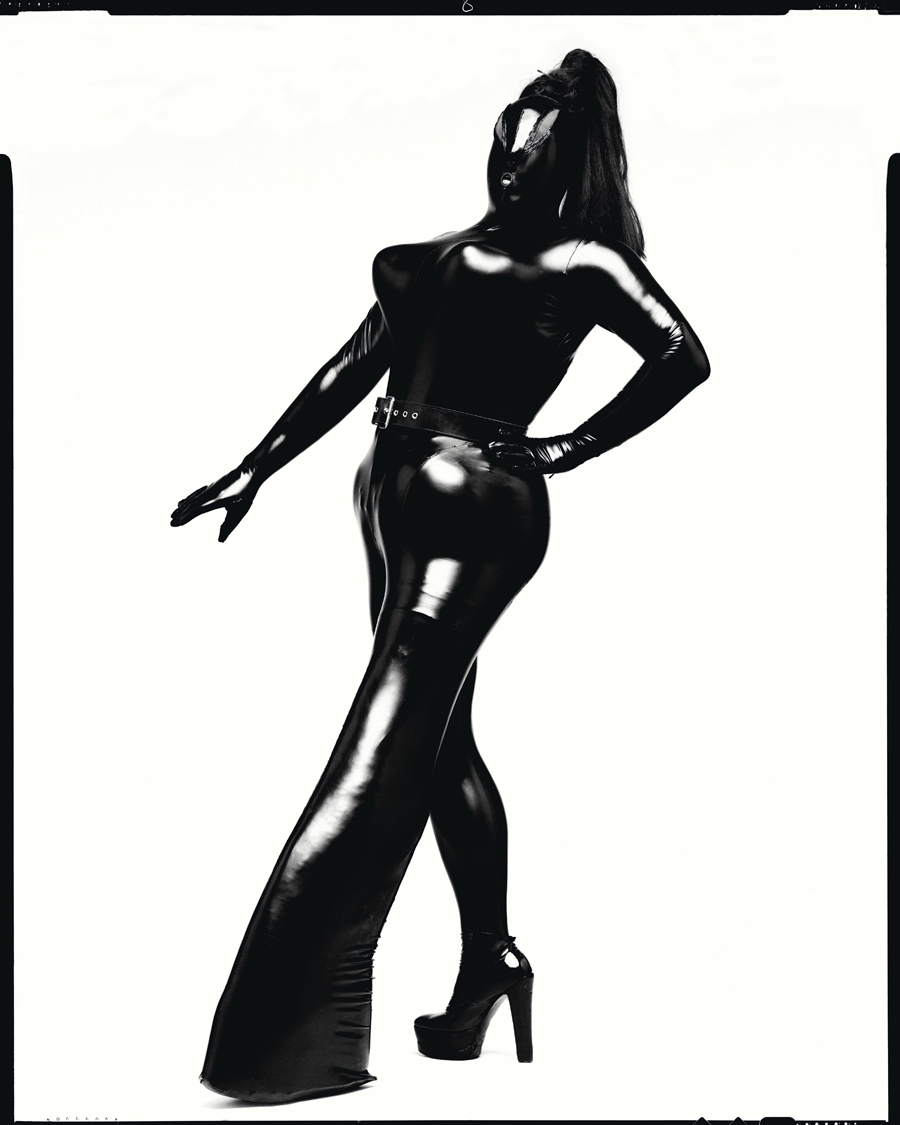
Leigh Bowery’s art clearly differs from the designs, presentation patterns, and distribution channels of fashion designers. With Trash and Bad Taste irony, Bowery, like his idol John Waters and his main actor Divine, abandoned all conventions and stylistic doctrines in a both cynical and humorous way. His craftsmanship in tailoring and his creative potential constitute the core of an expressive self-stylisation which did not depend on encouraging the public through marketing strategies or offers of consumer goods. His vestimentary creations were based on the work with his own body, which he regarded as a malleable material and workable mass and which was to play an increasingly central part in his late oeuvre. Regarded as inexorably deficient, his body became the origin of those manifold appearances and kaleidoscopic diversifications that we find most astounding when confronted with Bowery’s work. He experimented with second skins of black latex, exaggerated the size and volume of his body with sweeping tulle attires, and made himself look taller with platform shoes. Bowery sabotaged glamorous, ornamental and transparent materials with steel helmets, toilet seats, and skulls. He fastened artificial lips in his cheeks with safety pins and wore flesh-coloured velvet suits that transformed his body into a vagina. Using adhesive tape and a bodice, he shaped his flesh into an artificial bosom, and he concealed his member behind pubic hair toupees or overemphasised it as he did in one of the Michael Clark Company’s dance performances. He disparaged unequivocal gender definitions and transcended their socially informed attributions – Gender Trouble: everything was a look. By and by, Bowery turned into what has been called “the self as performance.”

Leigh Bowery’s existence was the epitome of extremes. He looked for exceptional emotional and physical states like pain and ecstasy that would release him from the mediocrity of everyday life, like in the performance The Laugh of No.12 in Fort Asperen on June 4, 1994. Suspended on one foot, stark naked, wearing a black face mask, and displaying some clothespins on his genitals, he swung through the air uttering a sprechgesang, before he smashed a pane of glass with his bulky body. Exposing himself to his vulnerability in his performances, Bowery overcame physical injuries by showcasing them. His sometimes sadomasochist appearances and provocative lifestyle culminated in an attitude that crystallised into a sociopolitical approach in his statement “I like doing the opposite of what people expect.” Far from nocturnal footlights and kindred spirits’ protection, he – who was “larger than life” in every respect – strained the social limits of propriety with his big and exalted appearance. He enjoyed causing offence and holding up a mirror to the dictatorship of conformism, unmasking its heteronomy.

After an excessive life, Leigh Bowery died from AIDS at the age of 33. He was more than an extraordinary peripheral figure making his mark in the urban arena of exhibitionism and voyeurism. His virtuoso works have influenced haute couture collections by such fashion stars as Rei Kawakubo, John Galliano, Walter van Beirendonck, and Alexander McQueen. In spite of its simplicity, the latest fall/winter collection of Comme des Garçons shows obvious parallels to Leigh Bowery’s designs.

Press release from the Kunsthalle Wien website


Robin Beeche (Australian, 1945-2015) 'Evening Wear - Andrew Logan's 1986 Alternative Miss World' 1986


Robin Beeche (Australian, 1945-2015)
Evening Wear – Andrew Logan’s 1986 Alternative Miss World
1986
Courtesy Robin Beeche


Nick Knight (British, b. 1958) 'Untitled (Leigh Bowery with Scull)' 1992


Nick Knight (British, b. 1958)
Untitled (Leigh Bowery with Scull)
1992
© Nick Knight


Ole Christiansen (Danish) 'Farrel House' 1989


Ole Christiansen (Danish)
Farrel House
1989
Courtesy Ole Christiansen


Fergus Greer (British) 'Leigh Bowery, Session VII, Look 38, June 1994' 1994


Fergus Greer (British)
Leigh Bowery, Session VII, Look 38, June 1994
1994
Courtesy Fergus Greer
© Fergus Greer


Kunsthalle Wien
Museumsplatz 1
A-1070 Vienna

Opening hours:
Daily 10am – 7pm
Thursday 10am – 10pm

Kunsthalle Wien website

LIKE ART BLART ON FACEBOOK

Back to top

Review: ‘Ingeborg Tyssen: photographs’ at Monash Gallery of Art, Melbourne

Exhibition dates: 23rd November 2012 – 3rd February 2013


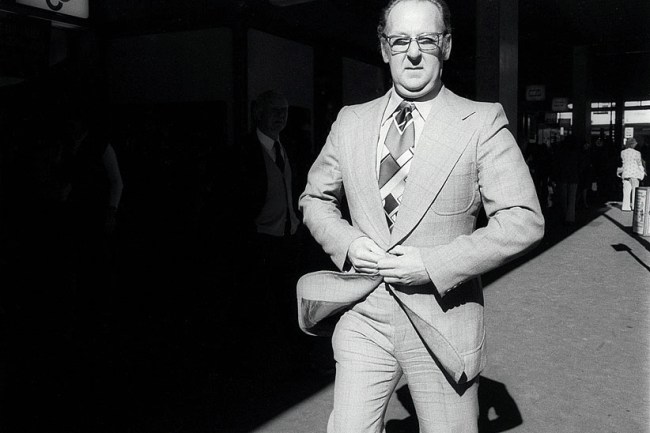
Ingeborg Tyssen (Netherlands, Australia 1945-2002) 'Untitled' from the series 'People' 1977


Ingeborg Tyssen (Netherlands, Australia 1945-2002)
Untitled
1977
From the People series
Gelatin silver print
Image: 20.1 x 25.2cm
Monash Gallery of Art, City of Monash Collection
Donated by Janice Hinderaker through the Australian Government’s Cultural Gifts Program 2003


“Tysenn clearly felt a deep sense of dislocation from her country of birth, its national identity and cultural conventions. It was apparent in her ongoing explorations of the Australian landscape that on her arrival she had met with more than just an initial linguistic barrier, and there were also barriers to understanding the Australian landscape which was so far and different to European forests and Dutch tales and legends about them that she grew up with.”


Essay “Remembering Ingeborg” by Sandra Byron


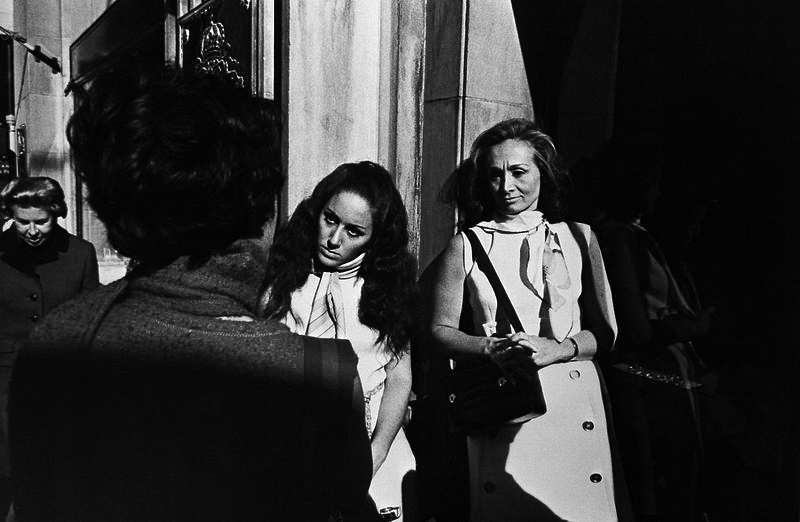
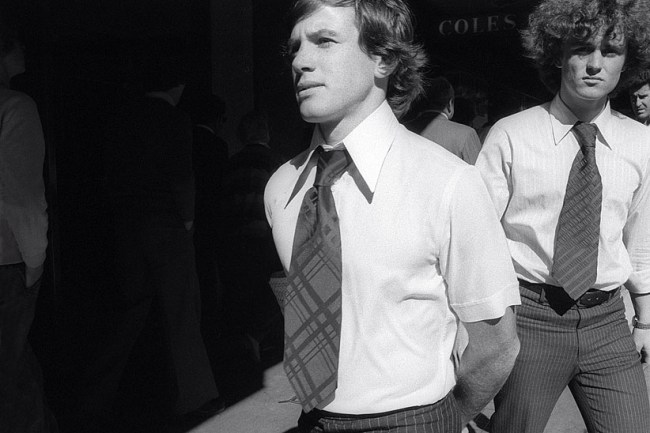
“Tyssen’s people are not known to her, rather are studies of anonymous people: in action, in the city, at a fairground. The People series – City Light 1977 images reveal a sense of isolation in a crowd. People emerging from the dark shadows of the same station / mall and march into the sunlight. They are expressionless, uncommunicative, isolated, yet display a keen sense of self and appearance. Mostly minding their own business, doing their own thing, they seem undisturbed by the female photographer standing nearby. She must not have been intrusive or demanding, just there with her camera at the ready.”


Fiona McIntosh. “Two women photographers,” on the art out there blog Friday, 18 May 2012 [Online] Cited 08/09/2022
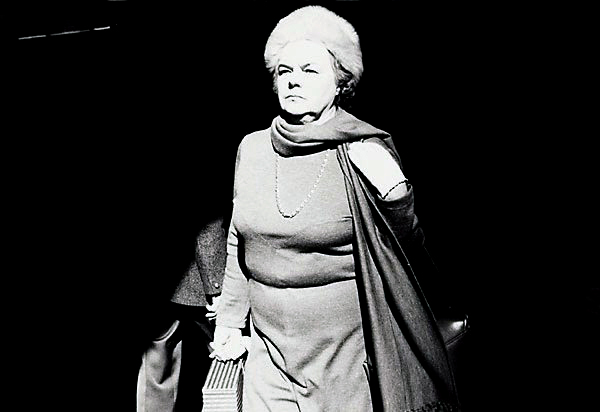


Ingeborg Tyssen (Netherlands, Australia 1945-2002) 'Untitled' from the series 'People' 1977


Ingeborg Tyssen (Netherlands, Australia 1945-2002)
Untitled
1977
From the People series
Gelatin silver print
Image: 20.1 x 25.2cm
Monash Gallery of Art, City of Monash Collection
Donated by Janice Hinderaker through the Australian Government’s Cultural Gifts Program 2003
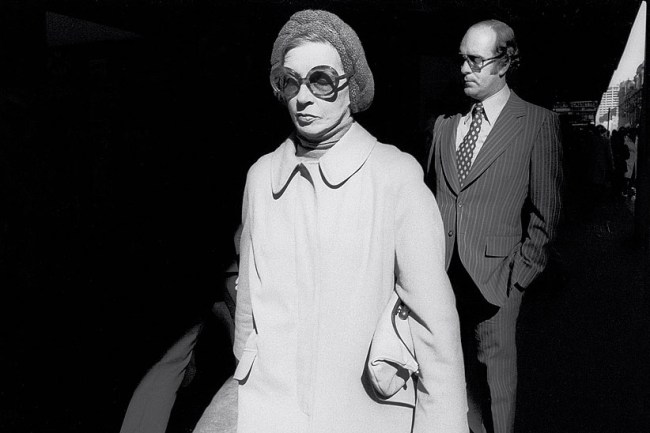
 

Ingeborg Tyssen (Netherlands, Australia 1945-2002) 'Untitled' from the series 'People' 1977


Ingeborg Tyssen (Netherlands, Australia 1945-2002)
Untitled
1977
From the People series
Gelatin silver print
Image: 20.1 x 25.2cm
Monash Gallery of Art, City of Monash Collection
Donated by Janice Hinderaker through the Australian Government’s Cultural Gifts Program 2003
 

Ingeborg Tyssen (Netherlands, Australia 1945-2002) 'Untitled' from the series 'People' 1977


Ingeborg Tyssen (Netherlands, Australia 1945-2002)
Untitled
1977
From the People series
Gelatin silver print
Image: 20.1 x 25.2cm
Monash Gallery of Art, City of Monash Collection
Donated by Janice Hinderaker through the Australian Government’s Cultural Gifts Program 2003
 

Ingeborg Tyssen (Netherlands, Australia 1945-2002) 'Untitled' from the series 'People' 1977


Ingeborg Tyssen (Netherlands, Australia 1945-2002)
Untitled
1977
From the People series
Gelatin silver print
Image: 20.1 x 25.2cm
Monash Gallery of Art, City of Monash Collection
Donated by Janice Hinderaker through the Australian Government’s Cultural Gifts Program 2003


Ingeborg Tyssen (Netherlands, Australia 1945-2002) 'Untitled' from the series 'People' 1977


Ingeborg Tyssen
Untitled
1977
From the People series
Gelatin silver print
Image: 20.1 x 25.2cm
Monash Gallery of Art, City of Monash Collection
Donated by Janice Hinderaker through the Australian Government’s Cultural Gifts Program 2003
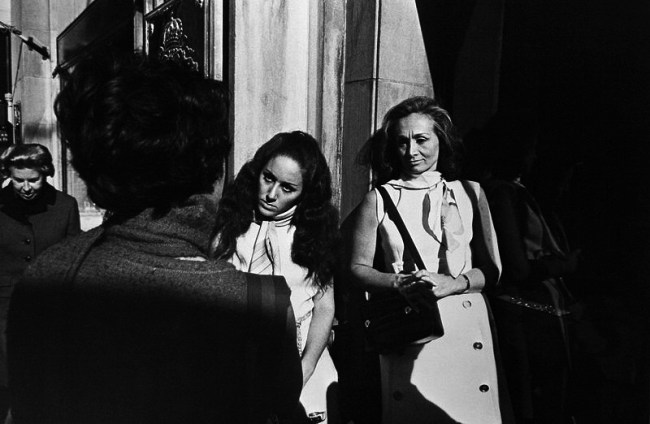
 

Garry Winogrand (American, 1928-1984) 'Untitled' from Women are Beautiful' Nd/1981


Garry Winogrand (American, 1928-1984)
Untitled
Nd (1960s) / published 1981
From the portfolio Women are Beautiful
Silver gelatin print
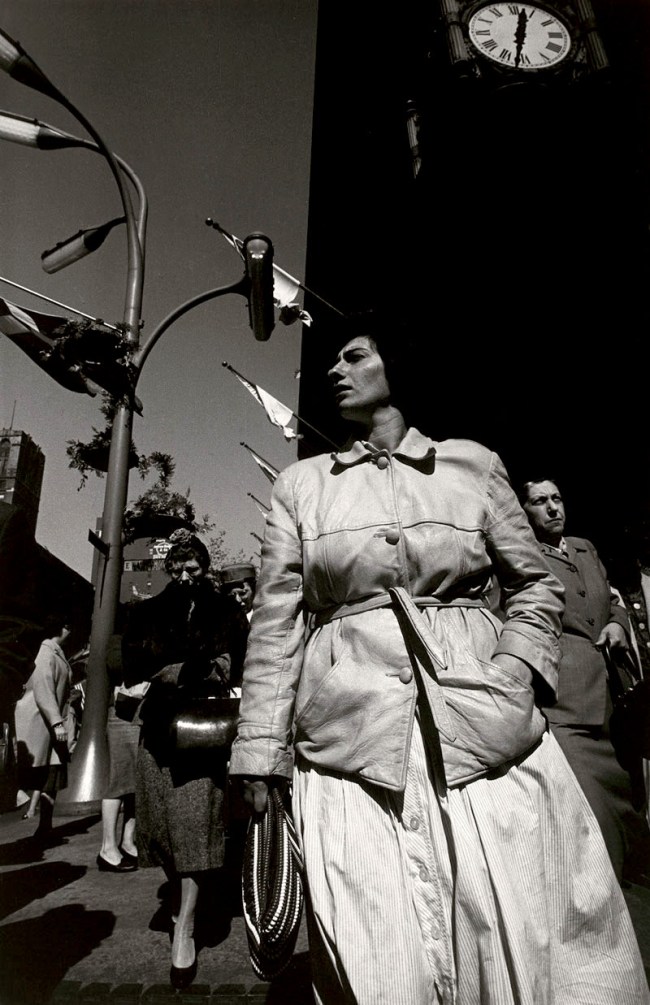
 

Harry Callahan (American, 1912-1999) 'Chicago' 1961


Harry Callahan (American, 1912-1999)
Chicago
1961
Gelatin silver print
Overall (image): 40.6 x 27.1cm (16 x 10 11/16 in.)
National Gallery of Art, Washington, Gift of the Callahan Family
© Estate of Harry Callahan, courtesy Pace/MacGill Gallery, New York


“Ingeborg Tyssen was one of the great Australian photographers of her generation.” (Press release)

“Ingeborg Tysenn was one of Australia’s most important post war artists.”
(Essay “Remembering Ingeborg” by Sandra Byron)


This is a disappointing exhibition of the work of Australian photographer Ingeborg Tyssen at Monash Gallery of Art, Melbourne encumbered as it is by the above two statements. On the evidence of the work presented neither statement is true. Whoever is pushing this barrow (and it is a large barrow to push) should really stop and have a damn good look at the work to see whether it is worthy of such claims and what they hope to achieve by promoting such statements. If they really looked objectively they would see that the art just is, and nothing more.

Being a cultural commentator means that you have to form an opinion on the work presented. For me this involves the eye (what the work looks like), the head (undertaking research into the artist) and the heart (how I feel about the work). Then and only then can you make an informed decision on the merits of the work. With Tyssen’s work there were four standout photographs in the exhibition (people in a swimming pool taken in the Modernist style, part of the 1981 Ryde Pool, Sydney series, none of which I can show you in this posting) and the rest of the photographs exist in the world.

Tyssen was born in The Netherlands and arrived here when she was 12 years old. Her photographs show a European and Australian sensibility, a dislocation from but also an attraction toward both her native country and her adopted country Australia. Her photographs can be divided into various styles: early documentary street photography (the People series, 1977), Modernist photography (Ryde Pool, Sydney series, 1981 and From the heart of the forest to the edge of the road series, 1982-1984), New Topographics photography (Billboards and Trees series, 1981-1982) and Romantic photography (The voice of silence series 1991-1992). In this regard, Tyssen never seems to have developed a voice of her own, a signature style that you could say was unique to her own art practice. So many of these photographs are derivative of other photographers who have already invented and mastered that style that nothing seems to belong to Tyssen herself. She seems to have been enamoured of style after style.

In the high contrast, small scale People series (1977, above) the animals are particularly unapproachable. While exhibiting a sense of Australian light and an intimation of Australia’s white only policy – there is a specific Australian-ness in the people she has chosen and the atmosphere of Whitlam / post Whitlam remaking of the Australian identity; even the lady with the European aura knows she is in Australia, perhaps she even knows she is in the Australian light – these are hard images to engage with emotionally, unlike the psychological works of Harry Callahan and Garry Winogrand. Problematically, the Billboards and Trees series (both 1981-1982, below) are so redolent of American photography (both in physical dis/location and surface remarks) that I felt I had seen it all before. In both these series Australia morphs into America and not in a good way.

In the panoramic series From the heart of the forest to the edge of the road (1982-1984, below) Tyssen comes closest to capturing the intensity of the Australian landscape only to be let down by a) the quality of the prints and b) the fact that the title is a coat hanger, allowing the artist to hang disparate images together that really have no relationship to each other. The prints themselves do little to support the work, being sometimes too pale and insignificant to hold the image, too flat. Playing with the print and its tonal range and surface qualities does little to help an overall vision of the work or help the viewer engage with the content.

In my notes I wrote in capital letters: THEY DON’T ENGAGE ME! In other words, there was little in these photographs that held my attention for any length of time.

Tyssen seems to have known her limitations as well. She just wanted to be a photographer and kept persevering at her art … keep at it, keep going, keep creating. That’s all you can do as an artist. At their best Tyssen’s photographs lie somewhere between Kertesz and Cartier-Bresson without the decisive moment (look at the photograph Taronga Zoo, Sydney, 1974 below and you will understand what I mean). But the deference of some of her images was really brought home to me when, in a small gallery off to the side of the main space, there in all its glory was one of the iconic images of a generation – Vale Street (1975) by Carol Jerrems.

People really do need to stop making grandiose statements about the work of artists and let the viewer just look clearly at the art. That way there is little expectation, the work will be taken on its merits, and everyone may be quietly surprised at the outcome.

Dr Marcus Bunyan


Many thankx to the Monash Gallery of Art for allowing me to publish the photographs in the posting. Please click on the photographs for a larger version of the image. Download the essay by Sandra Byron, “Remembering Ingeborg: A personal appreciation of the life and work of Ingeborg Tyssen” (2.24Mb pdf)
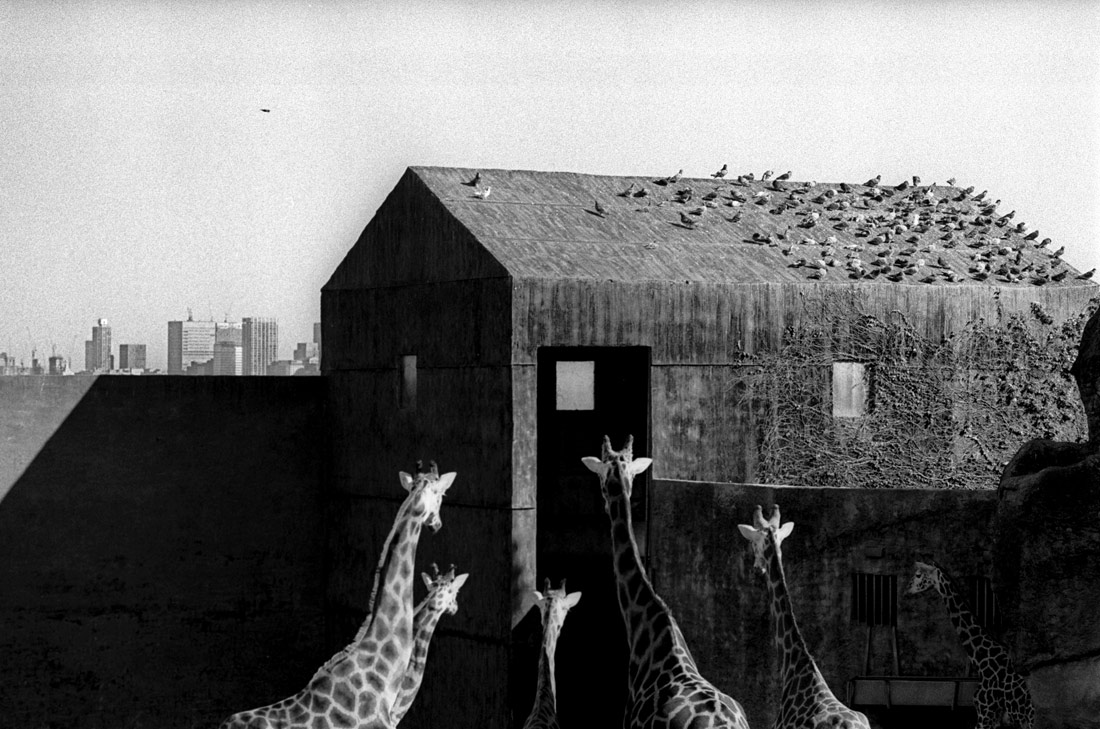


Ingeborg Tyssen (Netherlands, Australia 1945-2002) 'Taronga Zoo, Sydney' 1974


Ingeborg Tyssen (Netherlands, Australia 1945-2002)
Taronga Zoo, Sydney
1974
Gelatin silver print
Collection of the Estate of Ingeborg Tyssen


Ingeborg Tyssen (Netherlands, Australia 1945-2002) 'Royal Easter Show, Sydney' 1979


Ingeborg Tyssen (Netherlands, Australia 1945-2002)
Royal Easter Show, Sydney
1979
Silver gelatin print
Collection of the Estate of Ingeborg Tyssen


Ingeborg Tyssen (Netherlands, Australia 1945-2002) 'Ryde Pool, Sydney' 1981


Ingeborg Tyssen (Netherlands, Australia 1945-2002)

Untitled
1981
From the series Ryde Pool, Sydney
Ink-jet print
Collection of the Estate of Ingeborg Tyssen


Ingeborg Tyssen (Netherlands, Australia 1945-2002) 'Annandale, Sydney' 1981


Ingeborg Tyssen (Netherlands, Australia 1945-2002)
Annandale, Sydney
1981
From the series Trees 1981-82
Silver gelatin print
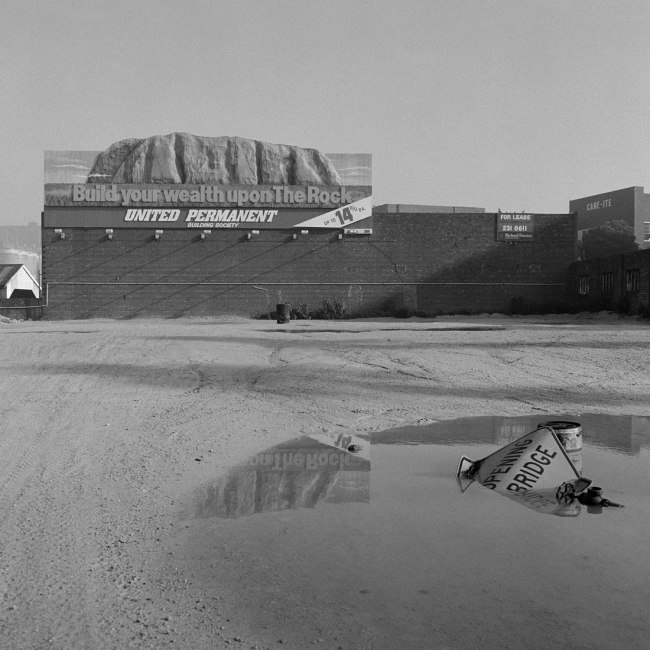
 

Ingeborg Tyssen (Netherlands, Australia 1945-2002) 'Pyrmont, Sydney' 1982


Ingeborg Tyssen (Netherlands, Australia 1945-2002)
Pyrmont, Sydney
1982
From the series Billboards 1981-82
Silver gelatin print


Ingeborg Tyssen (1945-2002) was one of the great Australian photographers of her generation. Although generally overlooked by critics during her lifetime in favour of many of her male counterparts, Tyssen left us a remarkable body of work. Ingeborg Tyssen: photographs is the first museum retrospective of her work in Victoria, and the first major exhibition since her memorial show was held at the Art Gallery of NSW in 2002.

This exhibition provides a great opportunity for audiences to view the work of this major figure. Spanning 20 years of creative output from 1974-94, Ingeborg Tyssen: photographs shows Tyssen as a highly original observer of modern life. Her candid photographs of pedestrians in city streets, young kids playing in suburban swimming pools, and images of the Australian and American landscape reveal an artist whose concerns were at the forefront of Australian photographic practice.

MGA Gallery Director Shaune Lakin states, “Tyssen’s story is one of the great stories of Australian photography. Her arrival in Australia at the age of 12 as an immigrant from her native Holland and her struggle with displacement and new language and landscape is one that many Australians are familiar with. Being one of Australia’s first street photographers, she made a significant contribution to the history of Australian photography. Her experience of migration gave Tyssen a rare ability to observe people in their environment. Her earliest photographs, taken in the city streets, fun parks, and suburbs of 1970s were acute depictions of the urban isolation she felt in her new homeland. Her experience and pictures certainly remain relevant to contemporary Australia.”

In 1995 the Art Gallery of New South Wales presented a mid-career survey of her work and she continued to exhibit in commercial galleries and museums in Australia and abroad until she died as a result of a motor accident in 2002. In her obituary, critic Robert McFarlane wrote: “With Tyssen’s death, Australia has lost one of the most talented photographers from the postwar generation… The originality and lack of ego in these images will ensure their enduring place in the history of the medium.”

Tyssen studied photography under John Williams, who became her husband. She was a co-founder of the Photographers Gallery in South Yarra in 1975.

Press release from the Monash Gallery of Art website
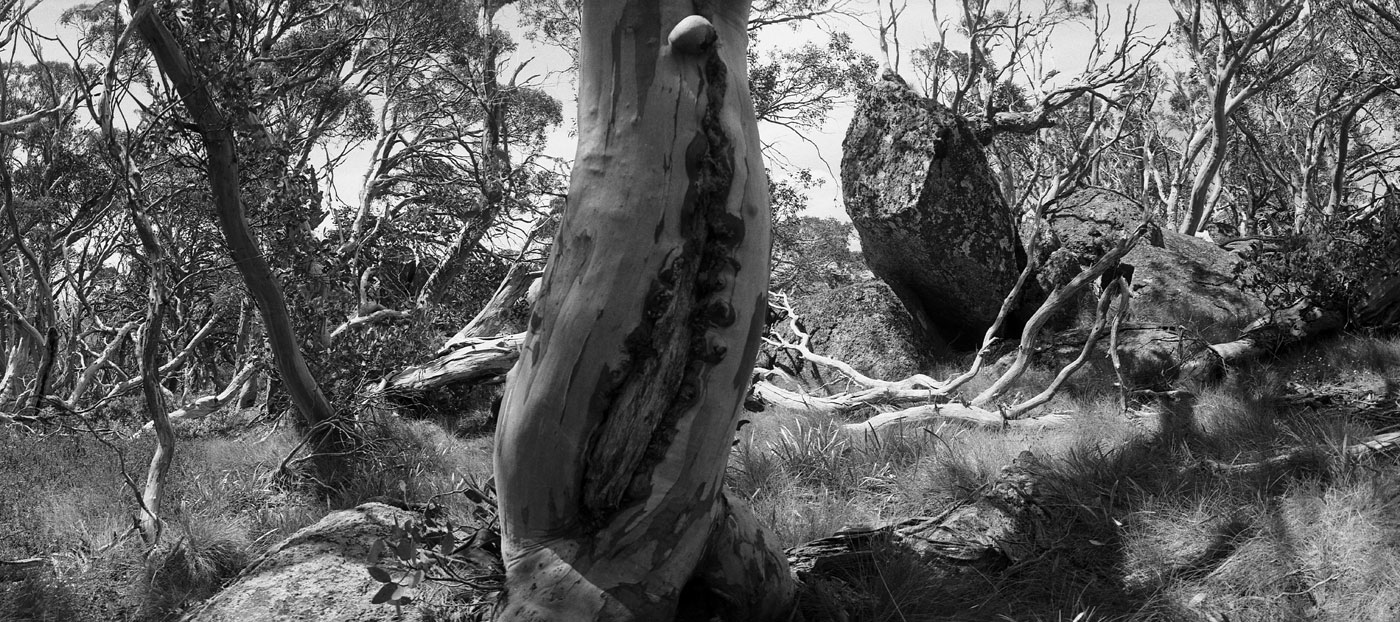
 

Ingeborg Tyssen (Netherlands, Australia 1945-2002) 'Perisher Valley, NSW' from the series 'From the heart of the forest to the edge of the road' series 1984


Ingeborg Tyssen (Netherlands, Australia 1945-2002)
Perisher Valley, NSW
1984
From the series From the heart of the forest to the edge of the road 1982-1984
Silver gelatin print
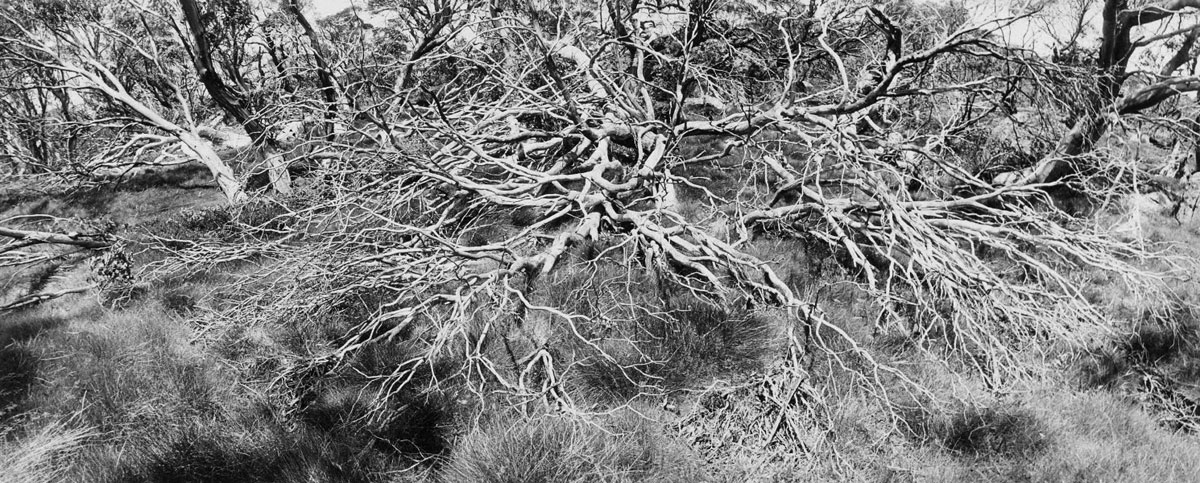
 

Ingeborg Tyssen (Netherlands, Australia 1945-2002) 'Perisher Valley No 6, NSW' 1984


Ingeborg Tyssen (Netherlands, Australia 1945-2002)
Perisher Valley No 6, NSW
1984
From the series From the heart of the forest to the edge of the road 1982-1984
Gelatin silver print
14.5 x 35.7cm
Hallmark Cards Australian Photography Collection Fund 1989
© Ingeborg Tyssen, 1984. Licensed by Viscopy, Sydney
Collection of the Estate of Ingeborg Tyssen
Courtesy John Williams & Sandra Byron Gallery
 

Ingeborg Tyssen (Netherlands, Australia 1945-2002) '
Royal Easter Show, Sydney' 1982


Ingeborg Tyssen (Netherlands, Australia 1945-2002)

Royal Easter Show, Sydney
1982
Gelatin silver print
Collection of the Estate of Ingeborg Tyssen
 

Ingeborg Tyssen (Netherlands, Australia 1945-2002) 'Untitled' from 'The voice of silence' series 1991-1992


Ingeborg Tyssen (Netherlands, Australia 1945-2002)
Untitled
1991-1992
From The voice of silence series 1991-92
Gelatin silver print


Monash Gallery of Art
860 Ferntree Gully Road, Wheelers Hill
Victoria 3150 Australia
Phone: + 61 3 8544 0500

Opening hours:
Tue – Fri: 10am – 5pm
Sat – Sun: 10pm – 4pm
Mon/public holidays: closed

Monash Gallery of Art website

LIKE ART BLART ON FACEBOOK

Back to top

Text: ‘Orality, (n)framing and enactment in the art of Jacqui Stockdale’ in IANN magazine Vol.8, ‘Unfound in Australia’, October 2012

January 2013


Jacqui Stockdale (Australian, b. 1968) 'Negro Returno, Long Gully' 2012


Jacqui Stockdale (Australian, b. 1968)
Negro Returno, Long Gully
2012
Type C Print
100 x 78cm


“What does it mean, to rediscover an unknown continent through the medium of photography in the 21st century? The seven artists that appear in this “Unfound in Australia” issue are well versed in the photographic technique and language familiar to modern art, yet show cultural distinctness that is nothing short of extraordinary. Our readers might experience a sense of shock or alienation from their work, which combines the new with the old. This kind of unsettling feeling may very well be an unconscious reaction to what we consider to be the ‘other.’ It is my hope that our readers will rediscover the power of photography as a chronological and visual language through these works of long under appreciated modern Australian photography.


IANN magazine
Vol.8, “Unfound in Australia,” October 2012 ‘IANN Magazine’ website [Online] Cited 06/01/2013


My text that appears in IANN magazine Vol.8, “Unfound in Australia” (October 2012) on the art of Jacqui Stockdale is a reworking of the review of her exhibition Jacqui Stockdale: The Quiet Wild at Helen Gorie Galerie in April – May 2012. It is a good piece of writing but it is the “lite” version of the text that I wrote. Instead of the “heavy” version fragmenting away on some long forgotten backup hard drive, and for those of you that like a little more conceptual meat on the bone, it is published below.

Other artists featured in the Volume 8 edition of IANN magazine include Marian Drew, Henri Van Noordenburg, Justine Khamara, Magdalena Bors and Christian Thompson.

Dr Marcus Bunyan


Orality, (n)framing and enactment in the art of Jacqui Stockdale

The concept of Orality is important in the art of Australian Jacqui Stockdale for her works are visual tone poems. Portraying identities in flux, her mythological creatures rise above the threshold of visibility to engage our relationship with time and space, to challenge the trace of experience.

Stockdale uses the body not as passive object but as descriptive and rhapsodic theme, the body as pliable flesh acting as a kind of threshold or hinge of experience – between interior and exterior, viewer and photograph, longing and desire. Drawing on personal places and stories, assemblage and performance (the process of painting the models and the outcome of this interaction), Stockdale creates a wonderful melange of archetypal characters that subvert traditional identities and narratives. Her creatures “shape-shift” and frustrate attempts at categorisation and assimilation.

The artist inverts cultural stereotypes (which embody elements of fixity, repetition, and ambivalence) located within the realms of the fetish, the scopic, and the Imaginary in order to dis/place the collective memory of viewers that have been inscribed with a stereotypical collective vernacular. In this process the work elides “fantasy” which Bhabha suggests plays a formative role in colonial exercises of power.1 In Stockdale’s upside-down world (quite appropriate for the “land down under”), “Each new identity is one of inversion; man becomes woman, child becomes adult, animals transform into humans and vice-versa.”2

An example of this inversion can be seen in her latest series of photographs, The Quiet Wild (2012). Here Stockdale unsettles traditional textual readings, the titles of her photographic portraits indecipherable to the uninitiated, a coded language of identity and place. Lagunta, Leeawuleena and Jaara for example, are three Aboriginal names meaning, respectively, Tasmanian Tiger, the name for the land around Cradle Mountain on that island and the name for the Long Gully region around Bendigo, Victoria (Stockdale’s native area); El Gato is the cat and Gondwanan the name for the southernmost of two supercontinents (the other being Laurasia) before the world split apart into the structure that we known today.

Stockdale’s performative tactics and multiple modes of address, her polyvocal subject if you like, may be said to be an effect of intertextuality3: “a conscious recognition and pursuit of an altogether different set of values and historical and cultural trajectories.”4 Undeniably her re-iterations and re-writings of cultural trajectories as ritual performative acts have links to Bakhtin’s idea of the carnivalesque and the carnival paradigm, which accords to certain patterns of play where “the social hierarchies of everyday life… are profaned and overturned by normally suppressed voices and energies.”5

It is through this “play” that the context of the photographs and their relationship to each other and the viewer are “framed.” This device emphasises the aesthetic rather than information and encourages the viewer to think about the relationship between the body, the world of which it is part and the dream-reason of time.6

This intertextual (n)framing (n meaning unspecified number in mathematics) encourages the viewer to explore the inbetween spaces in the meta-narrative, “and by leaps (intuitive leaps, poetic leaps, leaps of faith)”7 encourage escapism. Through the (n)framing of the body and the enactment of multiple selves Stockdale narrativises her mythological creatures, her charged bodies initiating new conditions of Otherness in the mise-en-scène of being. This is why her images are so powerful for her art approaches Otherness using a visual Orality and a theatrical openness that encourages disparate meanings to emerge into consciousness. It is up to us as viewers to seek the multiple, disparate significances of what is concealed in each photograph – in the myth of origin; in something that can’t be explained by man; in the expression of meaning of the things that are beyond us.

Dr Marcus Bunyan
August 2012


Footnotes

1/ “According to Bhabha, stereotypes are located within the realms of the fetish, the scopic, and the Imaginary. He suggests that fantasy plays a formative role in colonial exercises of power. Bhabha describes the mechanism of cultural stereotypes as embodying elements of fixity, repetition, fantasy, and ambivalence, and suggests that if certain types of images are constantly presented in a range of different contexts, they will become imprinted onto the collective memory of viewers and inscribed within a collective vernacular.”
Vercoe, Caroline. Agency and Ambivalence: A Reading of Works by Coco Fusco,” in Fusco, Coco. The Bodies That Were Not Ours. London: Routledge, 2001, p. 240.

2/ Stockdale, Jacqui. Artist statement 2012

3/ Intertextuality “is always an iteration which is also a re-iteration, a re-writing which foregrounds the trace of the various texts it both knowingly and unknowingly places and dis-places.” Intertexuality is how a text is constituted. It fragments singular readings. “The reader’s own previous readings, experiences and position within the cultural formation” also influences these re-inscriptions.”
Keep, Christopher, McLaughlin, Tim and Parmar, Robin. “Intertextuality,” on The Electronic Labyrinth website [Online] Cited 13/11/2011

4/ Fisher, Jean. “Witness for the Prosecution: The Writings of Coco Fusco,” in Fusco, Coco. The Bodies That Were Not Ours. London: Routledge, 2001, pp. 227-228.

5/ Anon. “Carnivalesque,” on the Wikipedia website. [Online] Cited 13/05/2012

6/ Bacon, Julie Louise. “Liquid Archive: On Ambivalence,” in Liquid Archive. Melbourne: Monash University Museum of Art (MUMA), 2012, p. 119

7/ Kirshenblatt-Gimblett, Barbara. “The Museum – A Refuge for Utopian Thought,” in Rüsen, Jörn; Fehr Michael, and Ramsbrock, Annelie (eds.). Die Unruhe der Kultur: Potentiale des Utopischen. Velbrück Wissenschaft, 2004. In German.


Marcus Bunyan writings

LIKE ART BLART ON FACEBOOK

Back to top