Exhibition: ‘Gordon Parks: Back to Fort Scott’ at the Museum of Fine Arts, Boston

Exhibition dates: 17th January – 13th September, 2015

Curator: Karen Haas, the MFA’s Lane Curator of Photographs, in collaboration with The Gordon Parks Foundation


Gordon Parks (American, 1912-2006) 'Husband and Wife, Sunday Morning, Detroit, Michigan' 1950 from the exhibition 'Gordon Parks: Back to Fort Scott' at the Museum of Fine Arts, Boston, Jan - Sept, 2015


Gordon Parks (American, 1912-2006)
Husband and Wife, Sunday Morning, Detroit, Michigan
1950
Gelatin silver print
Courtesy and © The Gordon Parks Foundation
Courtesy Museum of Fine Arts, Boston


It’s been a really tough time writing the Art Blart recently, as my beloved Apple Pro tower that has served me so well over the years has died and gone to god. I have been making do with a small laptop, but tomorrow I pick up my new 27 inch iMac with Retina screen, to pair with my Eizo Flexscan monitor. I can’t wait!

I have so much admiration for the work of this man. The light, the sensitivity to the social documentary narrative just emanates from these images. You don’t need to say much, it’s all there in front of you. Just look at the proud profile of that old woman, Mrs. Jefferson, Fort Scott, Kansas (1950, below), and you are instantly transported back to the slave fields and southern plantations of the 19th century. No words are necessary. The bony hands, gaunt cheeks and determined stare speak of a life hard lived.

Dr Marcus Bunyan


Many thankx to the Museum of Fine Arts, Boston for allowing me to publish the photographs in the posting. Please click on the photographs for a larger version of the image.


Gordon Parks (American, 1912-2006) 'Untitled, St. Louis, Missouri' 1950 from the exhibition 'Gordon Parks: Back to Fort Scott' at the Museum of Fine Arts, Boston, Jan - Sept, 2015


Gordon Parks (American, 1912-2006)
Untitled, St. Louis, Missouri
1950
Gelatin silver print
Courtesy and © The Gordon Parks Foundation
Courtesy Museum of Fine Arts, Boston


Gordon Parks (American, 1912-2006) 'Tenement Dwellers, Chicago, Illinois' 1950


Gordon Parks (American, 1912-2006)
Tenement Dwellers, Chicago, Illinois
1950
Gelatin silver print
Courtesy and © The Gordon Parks Foundation
Courtesy Museum of Fine Arts, Boston


Gordon Parks (1912-2006), one of the most celebrated African-American photographers of all time, is the subject of a new exhibition of groundbreaking photographs at the Museum of Fine Arts, Boston (MFA). Gordon Parks: Back to Fort Scott (January 17 – September 13, 2015) traces Parks’ return to his hometown of Fort Scott, Kansas and then to other Midwestern cities, to track down and photograph each of his childhood classmates. On view in the MFA’s Art of the Americas Wing, the exhibition’s 42 photographs were from a series originally meant to accompany a Life magazine photo essay – but for reasons unknown, the story was never published. The images depict the realities of life under segregation in 1950 – presenting a rarely seen view of everyday lives of African-American citizens in the years before the Civil Rights movement began in earnest. One of the most personal and captivating of all Parks’ projects, the images, now owned by The Gordon Parks Foundation, represent a rare and little-known group within Parks’ oeuvre. This exhibition, on view in the Robert and Jane Burke Gallery, is accompanied by a publication by Karen Haas, the MFA’s Lane Curator of Photographs, in collaboration with The Gordon Parks Foundation, which includes an introduction by Isabel Wilkerson, Pulitzer-prize winning author of The Warmth of Other Suns: The Epic Story of America’s Great Migration. The book includes previously unpublished photographs as well as archival materials such as contact sheets and a portion of the 1927 yearbook from the segregated school Parks attended as a child.

“These personal and often touching photos offer a glimpse into the life of Gordon Parks and the prejudice that confronted African Americans in the 1940s and 1950s,” said Malcolm Rogers, Ann and Graham Gund Director at the MFA. “We’re grateful to The Gordon Parks Foundation for giving us the opportunity to display these moving works.”

Fort Scott, Kansas was an emotional touchstone for Gordon Parks and a place that he was drawn to over and over again as an adult, even though it held haunting memories of racism and discrimination. Parks was born in Fort Scott in 1912 to a poor tenant farmer family and left home as a teenager after his mother died and he found himself – the youngest of 15 children – suddenly having to make his own way in the world. By 1948, Parks was the first African-American photographer hired full time by Life magazine. One of the rare African-American photojournalists in the field, Parks was frequently given magazine assignments involving social issues that his fellow white photographers were not asked to cover. For an assignment on the impact of school segregation, Parks returned to Fort Scott to revisit early memories of his birthplace – many involving racial discrimination – and to reconnect with childhood friends, all of whom went to the same all-black elementary school that Parks had attended.  He was able to track down all but two members of the Plaza School Class of 1927, although only one was still living in Fort Scott at the time. As he met with fellow classmates, his story quickly shifted its focus to the Great Migration north by African Americans. Over the course of several days Parks visited with his childhood friends – by this time residing in Kansas City; Saint Louis; Columbus, Ohio; Detroit; and Chicago – joining them in their parlours and on their front porches while they recounted their life stories to him. Organised around each of these cities and families, the exhibition features previously unpublished photographs as well as a seven-page draft of Parks’ text for the article.

“With the Back to Fort Scott story, Parks showed – really for the first time – a willingness to mine his own childhood for memories both happy and painful, something he would continue to do in a series of memoirs over the course of his long career” said Haas. “The experience also seems to have inspired him to write The Learning Tree in 1963, his best-selling novel about growing up poor and black in Kansas, that he transformed a few years later into a groundbreaking Hollywood movie – the first by an African American writer-director.”

Parks began his research in Fort Scott, where he found classmate Luella Russell. In addition to photographing Luella with her husband and 16-year-old daughter, Parks took photos of his own family and life around town – finding friends and acquaintances at the local theatre, railway station and pool hall. Parks also visited the local baseball field at Othick Park, where he recorded a group of white spectators seated at one end of the bleachers watching a game, while two African-American girls in summer dresses stand at the other end, in an area loosely designated for the town’s black residents. Parks’ image of the girls at the ballpark, where black and white baseball teams sometimes competed against each other, subtly refers to the separation of the races that marked much of everyday life in Fort Scott.

Fort Scott had not changed dramatically since Parks’ youth. Parks attended the all-black Plaza School through the ninth grade  in 1927, and as he wrote in his draft for Life magazine: “Twenty-four years before I had walked proudly to the centre of the stage and received a diploma. There were twelve of us (six girls and six boys) that night. Our emotions were intermingled with sadness and gaiety. None of us understood why the first years of our education were separated from those of the whites, nor did we bother to ask. The situation existed when we were born. We waded in normal at the tender age of six and swam out maladjusted… nine years later.”

After Fort Scott, Parks discovered three of his classmates in Kansas City and St. Louis – cities that were easily reached by rail and were often the first stops made by African Americans leaving smaller towns. Many left towns like Fort Scott in the hope of finding jobs and better futures for their children in these larger, more industrial cities. When Parks tracked down his classmates, he recorded their jobs and wages – the sort of detail that Life typically included in such pieces, allowing its readers to measure their own lives against a story’s subjects. In Kansas City, classmate Peter Thomason was working as a postal transportation clerk (a position, Parks noted, with a minimum salary of $3,700 a year), while in St. Louis, Parks recorded that classmate Norman Earl Collins was doing quite well, making $1.22 an hour at Union Electric of Missouri. Parks’ sympathetic images of Earl and his daughter, Doris Jean, may have been a conscious effort on Parks’ part to offset contemporary stereotypes of black families as less stable and strong than their white counterparts.

By 1950, Chicago was the de facto capital of African-American life in the US, with more black inhabitants than any other city in America – including three of Parks’ classmates. Parks discovered them residing only a mile or two apart from one another on the city’s South Side. Untitled, Chicago, Illinois (1950), depicts Parks’ classmate Fred Wells and his wife Mary in front of their apartment building in the Washington Park neighbourhood. A number of the photographs in the exhibition repeat the simple compositional device seen here – featuring a classmate and his or her family, framed by the front door of their home. These images highlighted the families’ similarities to, rather than differences from Life‘s readers, who would have found such strong representations of black families at once surprising and reassuring.

In Detroit, Parks traced classmate Pauline Terry to the McDougall-Hunt neighbourhood. In Fort Scott, Pauline had married Bert Collins, who had run a restaurant during much of the 1930s. By 1950, they were settled in Detroit and had five children. Unlike Parks’ other classmates who had migrated north in search of opportunity, Pauline (yearbook ambition: “To be young forever; to be a Mrs.”) now had a large family and no longer worked outside the home. In the course of her conversation with Parks, she emphasised the importance of religion in their lives. Parks’ powerful portrait of the couple walking to Sunday services at the Macedonia Baptist Church, Husband and Wife, Sunday Morning, Detroit, Michigan (1950) reinforces the seriousness of their faith. The cigar-smoking Bert wears a sharp suit and straw boater and carries a well-worn Bible.

Once completed, Parks’ Fort Scott photo essay never appeared in Life. The reason for that remains a mystery, although the US entry into the Korean War that summer had a major impact on the content of its pages for some time. The magazine’s editors did try to resuscitate the story early in April of 1951 only to have it passed over by the news of President Truman’s firing of General Douglas MacArthur. In the end, all that survives, as far as written documentation of the Fort Scott assignment, are Parks’ project notes from his individual visits with his classmates in May and June of 1950; several telegrams sent by Life staffers regarding his friends’ whereabouts before his arrival; fact-checking when the piece was again slated to run in April 1951; and an annotated seven-page draft. Because the photos were never published, and most have never before been on view, the exhibition presents a unique opportunity to explore a body of work that is almost completely unknown to the public.

“The Gordon Parks Foundation is pleased to collaborate with the Museum of Fine Arts, Boston, on this exhibition and publication highlighting a series of very personal, early works by the artist” said Peter W. Kunhardt, Jr., the Foundation’s executive director. “Gordon Parks: Back to Fort Scott allows us a focused look at a single Life magazine story and reveals a fascinating tale of Gordon Parks’ segregated beginnings in rural Kansas and the migration stories of his classmates, many of whom, like him, left in search of better lives for themselves and their families.”

Press release from the Museum of Fine Arts, Boston website


Gordon Parks (American, 1912-2006) 'Untitled, Fort Scott, Kansas' 1950


Gordon Parks (American, 1912-2006)
Untitled, Fort Scott, Kansas
1950
Courtesy and © The Gordon Parks Foundation
Courtesy Museum of Fine Arts, Boston


Gordon Parks (American, 1912-2006) 'Untitled, Fort Scott, Kansas' 1950


Gordon Parks (American, 1912-2006)
Untitled, Fort Scott, Kansas
1950
Courtesy and © The Gordon Parks Foundation
Courtesy Museum of Fine Arts, Boston


Gordon Parks (American, 1912-2006) 'Untitled, Chicago, Illinois' 1950


Gordon Parks (American, 1912-2006)
Untitled, Chicago, Illinois
1950
Courtesy and © The Gordon Parks Foundation
Courtesy Museum of Fine Arts, Boston


Gordon Parks (American, 1912-2006) 'Untitled, Columbus, Ohio' 1950


Gordon Parks (American, 1912-2006)
Untitled, Columbus, Ohio
1950
Courtesy and © The Gordon Parks Foundation
Courtesy Museum of Fine Arts, Boston


The lives of the classmates – six girls and five boys who graduated from the segregated Plaza School in 1927, in what was then a town of 10,000 people – present a miniature snapshot of African-American aspiration and struggle in the years before Brown v. Board of Education or the civil rights movement.

Parks found Emma Jane Wells in Kansas City, Mo., where she sold clothes door-to-door to supplement her husband’s salary at a paper-bag factory. Peter Thomason lived a few blocks away, working for the post office, one of the best jobs available to black men at the time. But others from the class led much more precarious lives. Parks tracked down Mazel Morgan on the South Side of Chicago, in a transient hotel with her husband, who Parks said robbed him at gunpoint after a photo session. Morgan’s middle-school yearbook description had been ebullient (“Tee hee, tee ho, tee hi, ha hum/Jolly, good-natured, full of fun”), but in 1950 she told Parks, “I’ve felt dead so long that I don’t figure suicide is worthwhile anymore.”

The most promising of the classmates, Donald Beatty, lived in an integrated neighbourhood in Columbus, Ohio, where he had a highly desirable job as a supervisor at a state agency and where Parks’s pictures show him – very much in the vernacular of Life magazine’s Eisenhower-era domestic scenes – happy and secure with his wife and toddler son and a brand-new Buick. But notes made by a Life fact-checker just a year later, when the magazine planned once again to run Parks’s article, recorded a tragedy, blithely and with no explanation: “Aside from the death of their son, nothing much has happened to them.”

Lorraine Madway, curator of Wichita State University’s special collections, said of the Fort Scott story: “There are those moments in an archive when you know you’ve found the gold, and this is one of them. It’s a wonderful example of micro-history. It’s not only that there is so much material written at a specific time in people’s lives, but then there are Parks’s reflections on it later.” …

Besides fact-checking notes, Parks’s own notes and a typewritten draft for what might have been his introduction to the photo spread, there is almost no other documentation surrounding the project, for which Parks shot about 30 rolls of 35-millimetre and medium-format film. And so the question of why it was not published might never be answered. In an essay for the show’s catalog, Ms. Haas speculates that it might have been doomed by its very newsworthiness, as national challenges to school segregation began gathering speed and Life waited – in the end too long – for just the right moment…

Parks carried his own psychic wounds from those years, which profoundly shaped his writing and approach to photography. But his feelings were always bittersweet. Though he lived for many years in New York City, he chose to be buried in his hometown, whose African-American population has declined even more markedly than its overall population. In a 1968 poem about his childhood, he wrote that he would miss “this Kansas land that I was leaving,” one of “wide prairies filled with green and cornstalk,” of the “winding sound of crickets rubbing dampness from wings” and “silver September rain.”

Then he added: “Yes, all this I would miss – /along with the fear, hatred and violence/We blacks had suffered upon this beautiful land.”

Extract from Randy Kennedy. “‘A Long Hungry Look’: Forgotten Gordon Parks Photos Document Segregation,” on The New York Times website, December 24, 2014 [Online] Cited 29/08/2015.


Gordon Parks (American, 1912-2006) 'Railway Station Entrance, Fort Scott, Kansas' 1950


Gordon Parks (American, 1912-2006)
Railway Station Entrance, Fort Scott, Kansas
1950
Courtesy and © The Gordon Parks Foundation
Courtesy Museum of Fine Arts, Boston


Gordon Parks (American, 1912-2006) 'Shoes, Fort Scott, Kansas' 1950


Gordon Parks (American, 1912-2006)
Shoes, Fort Scott, Kansas
1950
Courtesy and © The Gordon Parks Foundation
Courtesy Museum of Fine Arts, Boston
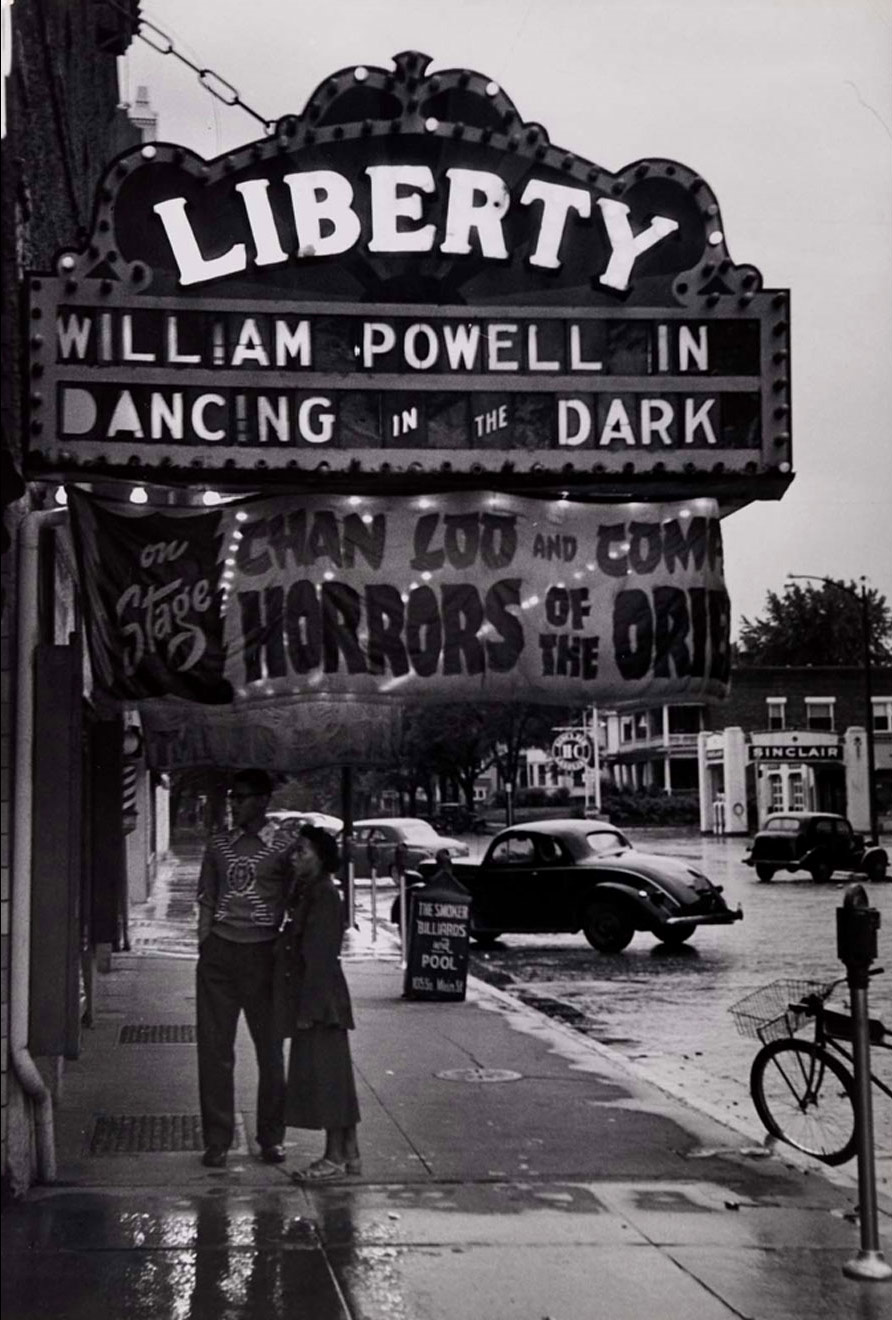
 

Gordon Parks (American, 1912-2006) 'Untitled (Outside the Liberty Theater)' 1950


Gordon Parks (American, 1912-2006)
Untitled (Outside the Liberty Theater)
1950
Courtesy and © The Gordon Parks Foundation
Courtesy Museum of Fine Arts, Boston


Gordon Parks (American, 1912-2006) 'Untitled, Fort Scott, Kansas' 1950


Gordon Parks (American, 1912-2006)
Untitled, Fort Scott, Kansas
1950
Courtesy and © The Gordon Parks Foundation
Courtesy Museum of Fine Arts, Boston


Gordon Parks (American, 1912-2006) 'Uncle James Parks, Fort Scott, Kansas' 1950


Gordon Parks (American, 1912-2006)
Uncle James Parks, Fort Scott, Kansas
1950
Courtesy and © The Gordon Parks Foundation
Courtesy Museum of Fine Arts, Boston


Gordon Parks (American, 1912-2006) 'Mrs. Jefferson, Fort Scott, Kansas' 1950


Gordon Parks (American, 1912-2006)
Mrs. Jefferson, Fort Scott, Kansas
1950
Courtesy and © The Gordon Parks Foundation
Courtesy Museum of Fine Arts, Boston


Museum of Fine Arts, Boston
Avenue of the Arts
465 Huntington Avenue
Boston, Massachusetts

Opening hours:
Wednesday – Monday 10am – 5pm
Closed Tuesdays

Museum of Fine Arts, Boston website

LIKE ART BLART ON FACEBOOK

Back to top

Exhibition: ‘Light, Paper, Process: Revolutionizing Photography’ at the J. Paul Getty Museum, Getty Center, Los Angeles

Exhibition dates: 14th April – 6th September, 2015

Curator: Virginia Heckert, Curator of Photographs at the J. Paul Getty Museum


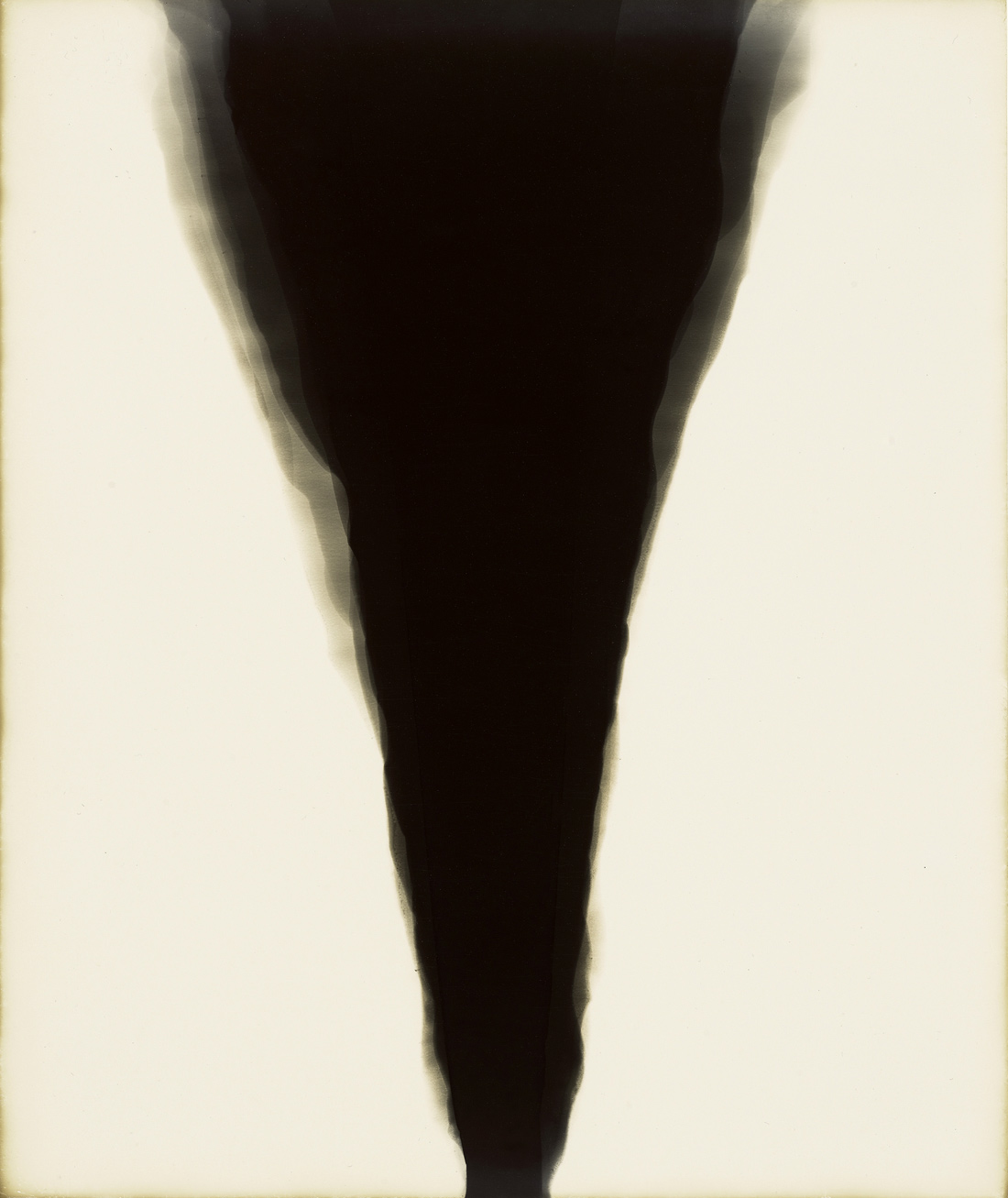
Man Ray (Emmanuel Radnitsky) (American, 1890-1976) 'Untitled (Smoke)' 1928 from the exhibition 'Light, Paper, Process: Revolutionizing Photography' at the J. Paul Getty Museum, Getty Center, Los Angeles, April - Sept, 2015


Man Ray (Emmanuel Radnitsky) (American, 1890-1976)
Untitled (Smoke)
1928
Gelatin silver print
24.6 x 19.8cm (9 11/16 x 7 13/16 in.)
The J. Paul Getty Museum, Los Angeles
© Man Ray Trust ARS-ADAG


These days, photography can be anything your imagination, concept and process desires…

Whether that makes for interesting / lasting (ie. memorable) / good, (post)photographic outcomes is up to you to decide.

Marcus


Many thankx to the J. Paul Getty Museum for allowing me to publish the photographs in the posting. Please click on the photographs for a larger version of the image.


Chargesheimer (Karl Heinz Hargesheimer) (German, 1924-1971) 'Picturesque' 1949 from the exhibition 'Light, Paper, Process: Revolutionizing Photography' at the J. Paul Getty Museum, Getty Center, Los Angeles, April - Sept, 2015


Chargesheimer (Karl Heinz Hargesheimer) (German, 1924-1971)
Picturesque
1949
Gelatin silver print
49.5 x 39.6cm (19 1/2 x 15 9/16 in.)
The J. Paul Getty Museum, Los Angeles
© Museum Ludwig, Cologne


Henry Holmes Smith (American, 1909-1986) 'Man and Woman' 1976


Henry Holmes Smith (American, 1909-1986)
Man and Woman
1976
Dye imbibition print
33.2 x 26.2cm (13 1/16 x 10 5/16 in.)
The J. Paul Getty Museum, Los Angeles, Gift of the Smith Family Trust
© J. Paul Getty Trust


Edmund Teske (American, 1911-1996) 'Leaves on Glass, Topanga Canyon, California' 1952; print 1960s


Edmund Teske (American, 1911-1996)
Leaves on Glass, Topanga Canyon, California
1952; print 1960s
Gelatin silver duotone solarized print
35.4 x 27.9cm (13 15/16 x 11 in.)
The J. Paul Getty Museum, Los Angeles
© Edmund Teske Archives/Laurence Bump and Nils Vidstrand, 2001


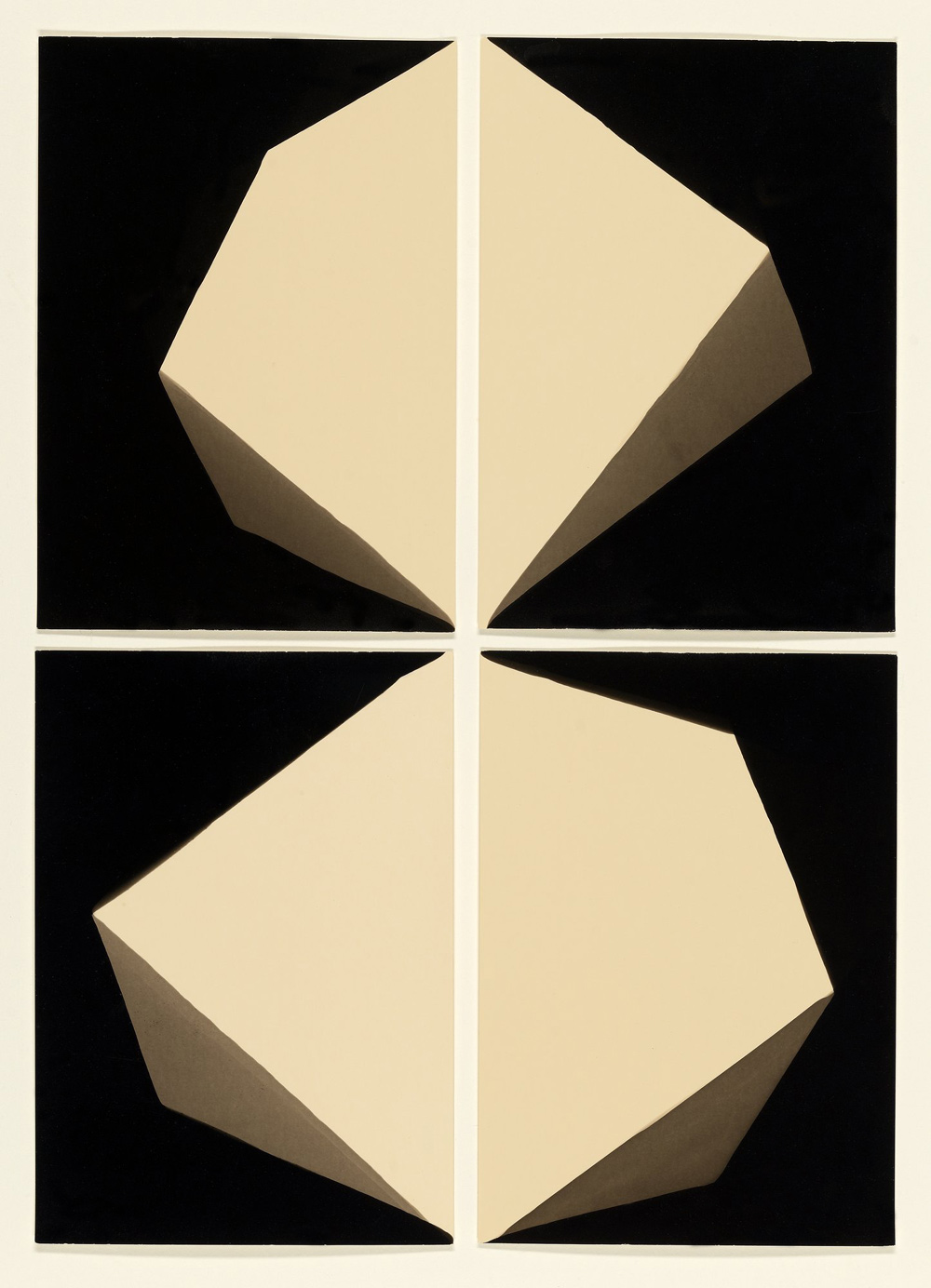
Alison Rossiter (American, b. 1953) 'Gevaert Gevarto 47, exact expiration date unknown, about 1960s, processed 2013 (#37)' 2013


Alison Rossiter (American, b. 1953)
Gevaert Gevarto 47, exact expiration date unknown, about 1960s, processed 2013 (#37)
2013
Four gelatin silver print
Each image: 10.8 x 8.3cm (4 1/4 x 3 1/4 in.)
Courtesy of the artist and Yossi Milo Gallery, New York
© Alison Rossiter


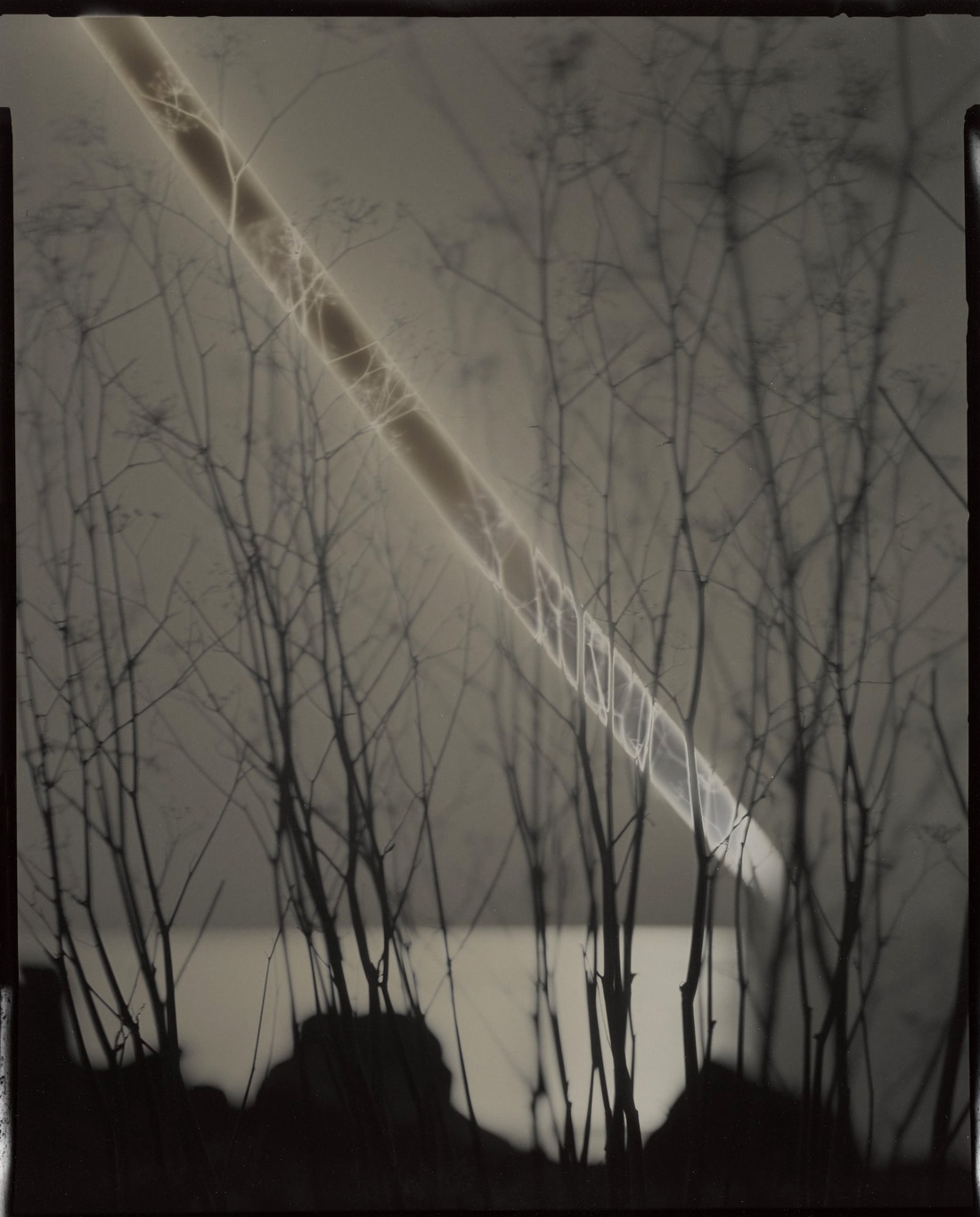
Chris McCaw (American, b. 1971) 'Sunburned GSP #202 (San Francisco Bay)' 2008


Chris McCaw (American, b. 1971)
Sunburned GSP #202 (San Francisco Bay)
2008
Gelatin silver print
37.5 x 47.6cm (14 3/4 x 18 3/4 in.)
Santa Barbara Museum of Art, Museum Purchase
© Chris McCaw


Pierre Cordier (Belgian, b. 1933) 'Chemigram II' 1976


Pierre Cordier (Belgian, b. 1933)
Chemigram II
1976
Gelatin silver print
23.8 x 17.9cm (9 3/8 x 7 1/16 in.)
The J. Paul Getty Museum, Los Angeles
© 2015 Artists Rights Society (ARS), New York / SABAM, Brussels


From its very beginnings in the 19th century, photography has been shaped by the desire of the artist to continually explore and expand its possibilities through experimentation. Taking that spirit of invention and discovery as a point of departure, some artists today have chosen to distill photography to its most essential components of light-sensitivity and the chemical processing of photographic papers, challenging viewers to see the medium anew. Light, Paper, Process: Reinventing Photography, on view at the Getty Center April 14-September 6, 2015, features the work of seven contemporary artists – Alison Rossiter, Marco Breuer, James Welling, Lisa Oppenheim, Chris McCaw, John Chiara, and Matthew Brandt – all of whom have created inventive photographs that reveal aspects of their making (or unmaking).

The artists in the exhibition utilise an extensive array of practices – often achieved through trial and error, accident, or chance – that shift the understanding of photography from a medium that accurately records the world to one that revels in its materiality. Whether they use handmade cameras or none at all, work with expired papers or toxic chemicals, the images remain latent until processed, fixed, or otherwise coaxed from the paper.

“Each of the artists in this exhibition engages in some way with the process by which the photographic medium captures and transmutes light into a two-dimensional image on paper,” says Timothy Potts, director of the J. Paul Getty Museum. “But rather than seeing this process as something to be ‘perfected,’ or even neutralised, they exploit its ability to be manipulated and deconstructed, thus collapsing process and product into a single creative activity. I am particularly pleased that the Getty Museum Photographs Council has provided funds to acquire works by Matthew Brandt, Marco Breuer, John Chiara, and Allison Rossiter for our permanent collection that are included in the exhibition.”

The exhibition begins with an overview of 20th-century practices that were experimental in nature, featuring works by Man Ray, László Moholy-Nagy, Nathan Lerner, Edmund Teske, and others. The renewed interest of artists of this period in techniques such as camera-less photograms, chemigrams, and solarisation serves as inspiration for today’s artists. Each of the subsequent galleries in the Getty Museum’s Center for Photographs will be dedicated to the work of one of the seven featured contemporary artists, and follows a progression from abstract, camera-less works to representative images made with custom-built cameras.

“This exhibition is an excellent opportunity to feature the work of living artists alongside earlier photographs from our permanent collection,” says Virginia Heckert, department head of the Getty Museum’s Department of Photographs and curator of the exhibition. “By focusing on work of a more experimental nature, visitors will be reminded that the exploration of materiality and process has been an important aspect of photography since its inception and continues to motivate and inspire artists working with the medium today.”

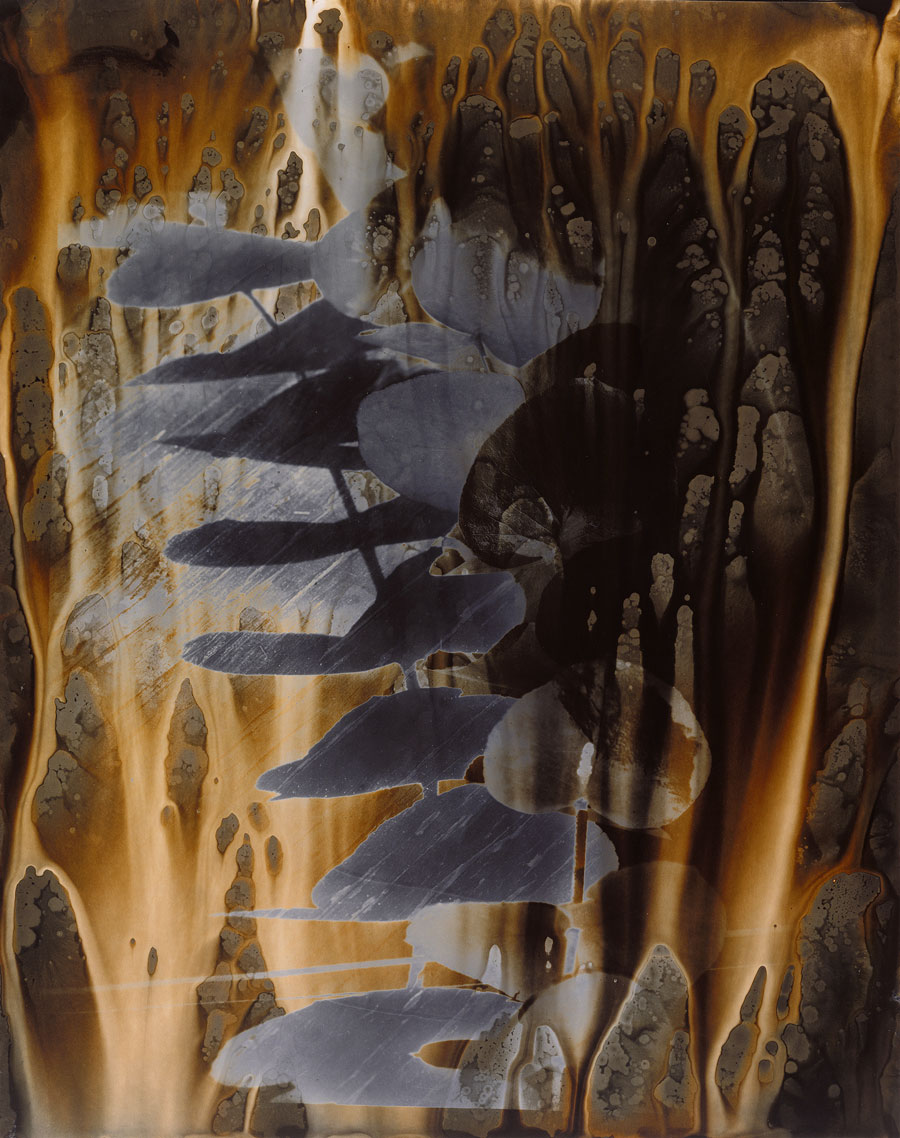
Alison Rossiter (American, born 1953) takes a minimalist approach to the materials she uses to create her photographic works. She does not use a camera, film, or light, but instead only uses unprocessed sheets of expired gelatin silver paper and photographic chemicals in the darkroom. Through the simple acts of immersing or dipping a sheet of paper in developer or pouring and pooling developer onto the paper’s surface, she achieves a rich array or results. Some suggest faint impressions of primitive mark-making, others resemble landscapes, and still others call to mind abstract painting of the mid-20th-century.

Working since the early 1990s without a camera or film, Marco Breuer (German, born 1966) subjects light-sensitive paper to various acts that abrade, burn, or scrape away the emulsion layer. Completely nonrepresentational, his “photographs” look like no others; they elicit the hues and textures of rare metals, mineral deposits, or oil spills, and display marks ranging from fine incisions and abrasions to scar-like burns and gashes. His deliberate misuse of black-and-white and photographic papers is the starting point for a negotiation between the paper as recording material, the hand, and the tools employed.

James Welling (American, born 1951) spent the first ten years of his career exploring painting, sculpture, performance art, video art, conceptual art, and installation before he committed to thinking of himself as a photographer. For the past four decades, he has explored photography, from documentary to experimental, with and without a camera, using black-and-white, colour, and Polaroid films and papers, as well as digital files and printing. Since 1995 he has worked increasingly with colour, filters, and camera-less photography. Three bodies of recent work presented in the exhibition include variations on the photogram, chemigram, and printing-out process.

Influenced by her background in structural/materialist filmmaking, Lisa Oppenheim (American, born 1975) is interested in exploring the ways in which a photograph can record both its subject and the process by which it was made. In three bodies of work dating from 2010 to present, she enlists the very entities depicted in the negatives – the sun, the moon, and smoke / fire – in the act of exposing them. Although they sound scientific, the titles of two of these bodies of work, Heliograms and Lunagrams, are made up, combining the name of the camera-less photogram technique and the source of light by which the enlarged negatives have been contact-printed.

Chris McCaw (American, born 1971) establishes an immediate, visceral relationship between his subject, the sun, and his process, which involves loading photographic paper directly into the camera. The photographs in his Sunburn series record the sun’s movement, which literally sears its path into the paper in the form of dots, lines, or arcs, depending on its position, the weather conditions, and the length of the exposure(s). McCaw uses customised cameras outfitted with vintage military lenses pointed directly at the sun to function like a magnifying glass that burns through the emulsion layer and paper base, leaving behind singe marks and solarised passages.

John Chiara’s (American, born 1971) large-scale colour prints convey a hands-on – rather than pristine, mechanised – aesthetic. For the past decade his subjects have been both uninhabited landscapes and the built environment. He works with large custom-built cameras that he loads with colour photographic paper that he then processes himself by pouring chemicals into a six-foot-long section of PVC sewer pipe, sealing the tube, and then rolling it back and forth on the floor. Irregular streaks and drips characterise his prints, as do areas of overexposure and underexposure, flare from light leaks, and unevenly saturated colours.

Matthew Brandt (American, born 1982) has created diverse bodies of work, some of which are realised with photographic means and others that are more tangentially related to photographic images, techniques, or ideas. He may begin with a photograph that he has made with a 4 x 5-inch view camera, a digital camera, or his iPhone, one that he has sourced from archives in public libraries, or one that he has clicked and dragged from Ebay. His fascination with early photographic processes has led him to experiment with salted paper prints, gum bichromate prints, and heliographs, examples of which will be on view. Brandt’s interest in both photographic/visual and the physical/material forms of representation has led him to bring the two together, incorporating physical elements from his subjects into his photographic representations of them.

Light, Paper, Process: Reinventing Photography, is on view April 14-September 6, 2015 at the J. Paul Getty Museum, Getty Center. The exhibition is curated by Virginia Heckert, department head of the Museum’s Department of Photographs. A related publication of the same title will be produced by Getty Publications.

Press release from the J. Paul Getty Museum website


Alison Rossiter (American, b. 1953) 'Haloid Platina, exact expiration date unknown, about 1915, processed 2010' 2010


Alison Rossiter (American, b. 1953)
Haloid Platina, exact expiration date unknown, about 1915, processed 2010
2010
Gelatin silver print
Image (each): 21.6 x 16.5cm (8 1/2 x 6 1/2 in.)
The J. Paul Getty Museum, Los Angeles, Purchased with funds provided by the Photographs Council
© Alison Rossiter


Alison Rossiter (American, b. 1953) 'Fuji gaslight, exact expiration date unknown, about 1920s, processed 2010' 2010


Alison Rossiter (American, b. 1953)
Fuji gaslight, exact expiration date unknown, about 1920s, processed 2010
2010
Gelatin silver print
30.5 x 25.4cm (12 x 10 in.)
The J. Paul Getty Museum, Los Angeles, Purchased with funds provided by the Photographs Council
© Alison Rossiter


Alison Rossiter (American, b. 1953) 'Kilbourn Acme Kruxo, exact expiration date unknown, about 1940s, processed 2013' 2013


Alison Rossiter (American, b. 1953)
Kilbourn Acme Kruxo, exact expiration date unknown, about 1940s, processed 2013
2013
Gelatin silver print
12.7 x 17.8cm (5 x 7 in.)
The J. Paul Getty Museum, Los Angeles, Purchased with funds provided by the Photographs Council
© Alison Rossiter


Marco Breuer (German, b. 1966) 'Untitled (Heat/Gun)' 2001


Marco Breuer (German, b. 1966)
Untitled (Heat/Gun)
2001
Gelatin silver paper, burned
27.9 x 21.6cm (11 x 8 1/2 in.)
The J. Paul Getty Museum, Los Angeles, Purchased with funds provided by the Photographs Council
© Marco Breuer


Marco Breuer (German, b. 1966) 'Untitled (C-62)' 2002


Marco Breuer (German, b. 1966)
Untitled (C-62)
2002
Chromogenic paper, exposed and abraded
35.6 x 27.9cm (14 x 11 in.)
Courtesy of the artist and Yossi Milo Gallery, New York
© Marco Breuer


Marco Breuer (German, b. 1966) 'Spin (C-824)' 2008


Marco Breuer (German, b. 1966)
Spin (C-824)
2008
Chromogenic paper, embossed and scratched
34.6 x 27cm (13 5/8 x 10 5/8 in.)
The J. Paul Getty Museum, Los Angeles, Purchased with funds provided by the Photographs Council
© Marco Breuer


James Welling (American, b. 1951) 'Water' 2009


James Welling (American, b. 1951)
Water
2009
Chromogenic print
60.3 x 50.2cm (23 3/4 x 19 3/4 in.)
Courtesy of the artist and Regen Projects, Los Angeles
© James Welling


James Welling (American, b. 1951) 'Water' 2009


James Welling (American, b. 1951)
Water
2009
Chromogenic print
58.7 x 49.5cm (23 1/8 x 19 1/2 in.)
Courtesy of the artist and Regen Projects, Los Angeles
© James Welling


James Welling (American, b. 1951) 'Chemical' 2013


James Welling (American, b. 1951)
Chemical
2013
Chemigram on chromogenic paper
35.6 x 27.9cm (14 x 11 in.)
Courtesy of the artist and David Zwirner, New York/London
© James Welling


Lisa Oppenheim (American, b. 1975) 'Heliograms July 8, 1876 / October 16, 2011' 2011


Lisa Oppenheim (American, b. 1975)
Heliograms July 8, 1876 / October 16, 2011
2011
Gelatin silver print exposed with sunlight, toned
30 x 27.9cm (11 13/16 x 11 in.)
The J. Paul Getty Museum, Los Angeles
© Lisa Oppenheim


Lisa Oppenheim (American, b. 1975) 'A Handley Page Halifax of No. 4 Group flies over the suburbs of Caen, France, during a major daylight raid to assist the Normandy land battle. 467 aircraft took part in the attack, which was originally intended to have bombed German strongpoints north of Caen, but the bombing area was eventually shifted nearer the city because of the proximity of Allied troops to the original targets. The resulting bombing devastated the northern suburbs, 1944/2012' 2012


Lisa Oppenheim (American, b. 1975)
A Handley Page Halifax of No. 4 Group flies over the suburbs of Caen, France, during a major daylight raid to assist the Normandy land battle. 467 aircraft took part in the attack, which was originally intended to have bombed German strongpoints north of Caen, but the bombing area was eventually shifted nearer the city because of the proximity of Allied troops to the original targets. The resulting bombing devastated the northern suburbs, 1944/2012
2012
Gelatin silver print
Framed (approx.): 71.1 x 86.4 cm (28 x 34 in.)
Overall: Five gelatin silver prints (photograms)
Overall (approx.): 24 × 110″ (61 × 279.4 cm)
The Museum of Modern Art, New York. Fund for the Twenty-First Century
Digital Image © The Museum of Modern Art / Licensed by SCALA / Art Resource, NY
© Lisa Oppenheim


Lisa Oppenheim (American, b. 1975) 'A Handley Page Halifax of No. 4 Group flies over the suburbs of Caen, France, during a major daylight raid to assist the Normandy land battle. 467 aircraft took part in the attack, which was originally intended to have bombed German strongpoints north of' 2012 (detail)


Lisa Oppenheim (American, b. 1975)
A Handley Page Halifax of No. 4 Group flies over the suburbs of Caen, France, during a major daylight raid to assist the Normandy land battle. 467 aircraft took part in the attack, which was originally intended to have bombed German strongpoints north of Caen, but the bombing area was eventually shifted nearer the city because of the proximity of Allied troops to the original targets. The resulting bombing devastated the northern suburbs, 1944/2012 (detail)
2012
Gelatin silver print
Framed (approx.): 71.1 x 86.4 cm (28 x 34 in.)
Overall: Five gelatin silver prints (photograms)
Overall (approx.): 24 × 110″ (61 × 279.4 cm)
The Museum of Modern Art, New York. Fund for the Twenty-First Century
Digital Image © The Museum of Modern Art / Licensed by SCALA / Art Resource, NY
© Lisa Oppenheim


Oppenheim produces experimental films and photograms (photographs made without a camera). In Smoke and related works she uses the techniques of documentary photography to call the premises of the genre into question. She begins with the photo-sharing site Flickr, as a source for images of fire caused by natural or industrial disasters or bombing attacks (such as those over occupied France during World War II), and outputs segments of these pictures to create digital negatives. She then exposes photographic paper through the negatives, using firelight instead of the typical darkroom enlarger as a light source, then develops the photographic paper in solarol, a specially designed developer that creates a solarised effect, reversing lights and darks. The schism between the optical expressiveness of the pictures and the scientism of the captions (which are long, descriptive, and include the date and location of the event), shows that one’s understanding of the world is partial, that photography can only represent the world, and that the documentary genre is ultimately fraught with uncertainty.

Gallery label from New Photography 2013, September 14, 2013 – January 6, 2014, Museum of Modern Art website.


Chris McCaw (American, b.1971) 'Sunburned GSP #609 (San Francisco Bay)' 2012


Chris McCaw (American, b. 1971)
Sunburned GSP #609 (San Francisco Bay)
2012
Gelatin silver paper negatives
76.1 x 101.6cm (30 x 40 in.)
The J. Paul Getty Museum, Los Angeles


Chris McCaw (American, b. 1971) 'Sunburned GSP #555 (San Francisco Bay)' 2012


Chris McCaw (American, b. 1971)
Sunburned GSP #555 (San Francisco Bay)
2012
Gelatin silver paper negative
20.3 x 25.4cm (8 x 10 in.)
Courtesy of Stephen Wirtz Gallery San Francisco
© Chris McCaw


Chris McCaw (American, b. 1971) 'Poly-optic #10' 2012


Chris McCaw (American, b. 1971)
Poly-optic #10
2012
Gelatin silver paper negative
20.3 x 25.4cm (8 x 10 in.)
Collection of Leslie, Judith and Gabrielle Schreyer, Courtesy of Stephen Wirtz Gallery
© Chris McCaw


John Chiara (American, b. 1971) 'Longview at Panorama' 2007


John Chiara (American, b. 1971)
Longview at Panorama
2007
Dye destruction photograph on Ilfochrome paper
50.8 x 40.6cm (20 x 16 in.)
Rose Gallery and Von Lintel Gallery
© John Chiara


John Chiara (American, b. 1971) 'Grandview at Elysian' 2012


John Chiara (American, b. 1971)
Grandview at Elysian
2012
Dye destruction photographs on Ilfochrome paper
Each image: 85.1 x 71.1cm (33 1/2 x 28 in.)
The J. Paul Getty Museum, Los Angeles, Gift of Trish and Jan de Bont
© John Chiara


John Chiara (American, b. 1971) 'Starr King: 30th: Coral' 2013


John Chiara (American, b. 1971)
Starr King: 30th: Coral
2013
Dye destruction photograph on Ilfochrome paper
83.8 x 71.1cm (33 x 28 in.)
Kerstin Morehead
© John Chiara


John Chiara (American, b. 1971) 'Sierra at Edison' 2012


John Chiara (American, b. 1971)
Sierra at Edison
2012
Chromogenic photograph on Kodak Professional Endura Metallic paper
127 x 182.9cm (50 x 72 in.)
The J. Paul Getty Museum, Los Angeles, Purchased with funds provided by the Photographs Council
© John Chiara


Matthew Brandt (American, b. 1982) '00036082-3 "Mathers Department Store, Pasadena, 1971"' 2013


Matthew Brandt (American, b. 1982)
00036082-3 “Mathers Department Store, Pasadena, 1971”
2013
Gum bichromate print with dust from AT&T parking structure level 2
110.5 x 143.5cm (43 1/2 x 56 1/2 in.)
The J. Paul Getty Museum, Los Angeles, Gift of the artist and M+B
© Matthew Brandt, Source image courtesy of the Los Angeles Public Library Photo Collection


Matthew Brandt (American, b. 1982) 'Rainbow Lake, WY A4' Negative 2012; print 2013


Matthew Brandt (American, b. 1982)
Rainbow Lake, WY A4
Negative 2012; print 2013
Chromogenic print, soaked in Rainbow Lake water
76.2 x 101.6cm (30 x 40 in.)
The J. Paul Getty Museum, Los Angeles, Purchased with funds provided by the Photographs Council
© Matthew Brandt


Matthew Brandt (American, b.1982) 'Rainbow Lake, WY A20' Negative 2012; print 2013


Matthew Brandt (American, b. 1982)
Rainbow Lake, WY A20
Negative 2012; print 2013
Chromogenic print, soaked in Rainbow Lake water
76.2 x 101.6cm (30 x 40 in.)
The J. Paul Getty Museum, Los Angeles, Purchased with funds provided by the Photographs Council
© Matthew Brandt


The J. Paul Getty Museum
1200 Getty Center Drive
Los Angeles, California 90049

Opening hours:
Tuesday – Sunday 10am – 5.30pm
Closed Mondays

The J. Paul Getty Museum website

LIKE ART BLART ON FACEBOOK

Back to top

Exhibition: ‘Robert Mapplethorpe’ at the Museum of Contemporary Art Kiasma, Helsinki

Exhibition dates: 13th March – 13th September, 2015

Curators: Jérôme Neutres from Paris with Director Pirkko Siitari and Chief Curator Marja Sakari from Kiasma


Robert Mapplethorpe (American, 1946-1989) 'Ken Moody and Robert Sherman' 1984 from the exhibition 'Robert Mapplethorpe' at the Museum of Contemporary Art Kiasma, Helsinki, March - Sept, 2015


Robert Mapplethorpe (American, 1946-1989)
Ken Moody and Robert Sherman
1984
Gelatin silver print
© Robert Mapplethorpe Foundation


These images are good to see… but not really what I want to see.

I want to see some of the early work, and some of the S/M photographs. You never get to see these online. It’s almost as though the Robert Mapplethorpe Foundation is too scared to authorise the online publication of these works, for fear of – heaven forbid – letting people understand all the facets of Mapplethorpe’s work.

Its the origin story and the picturing of his sexual proclivities that are some of his most powerful work… and we never get to see them. Eros (denied).

Dr Marcus Bunyan


Many thankx to the Museum of Contemporary Art Kiasma for allowing me to publish the photographs in the posting. Please click on the photographs for a larger version of the image.


Robert Mapplethorpe @ Kiasma 13.3. – 13.9.2015


Robert Mapplethorpe (American, 1946-1989) 'Self-Portrait' 1980 from the exhibition 'Robert Mapplethorpe' at the Museum of Contemporary Art Kiasma, Helsinki, March - Sept, 2015


Robert Mapplethorpe (American, 1946-1989)
Self-Portrait
1980
Gelatin silver print
© Robert Mapplethorpe Foundation


Robert Mapplethorpe (American, 1946-1989) 'Leather Crotch' 1980


Robert Mapplethorpe (American, 1946-1989)
Leather Crotch
1980
Gelatin silver print
© Robert Mapplethorpe Foundation


The American photographer Robert Mapplethorpe (1946-1989) lived a life of passion in the New York underground and rock scenes in the 1970s and ’80s. That passion also made its way into his art.

Consisting of more than 250 works, the retrospective exhibition in the Museum of Contemporary Art Kiasma offers a broad overview of the key periods of Mapplethorpe’s career. In their aspiration for perfection, Mapplethorpe’s pictures blend beauty and eroticism with pain, pleasure and death. Mapplethorpe also photographed his celebrity friends such as Patti Smith, Andy Warhol and Richard Gere. Although solidly anchored in their time, his photographs are also universal and topical even today.

Arriving from Paris to Helsinki, the high-profile exhibition is a unique opportunity to learn about the art and life of one of the most important photographic artists of our time. The exhibition is curated by Jérôme Neutres from Paris with Director Pirkko Siitari and Chief Curator Marja Sakari from Kiasma.

This exhibition is organised by The Finnish National Gallery – Museum of Contemporary Art Kiasma and the Réunion des Musées Nationaux – Grand Palais, with the collaboration of the Robert Mapplethorpe Foundation New York.

Exhibition themes

Body sculpture

“If I had been born one hundred or two hundred years ago, I might have been a sculptor, but photography is a very quick way to see, to make sculpture.”

~ Robert Mapplethorpe


Mapplethorpe became interested in photographing sculpture during his first trip to Paris in the early 1970s. He also began taking pictures of people in poses that imitated classical sculptures. Lisa Lyon, the first World Women’s Bodybuilding Champion, was the subject in many of the pictures.

Body and geometry

Mapplethorpe prized order and purity of form in his art. He was also particular about the frames of his pictures, which he often designed himself. He had great respect for the long history of art. Some of his nude studies echo Leonardo da Vinci’s Vitruvian Man which shows an idealised human body inside a circle and a square

Still lifes and body details

“I am looking for perfection in form. I do that with portraits. I do it with cocks. I do it with flowers.”

~ Robert Mapplethorpe


Mapplethorpe’s still lifes and pictures of body parts play with stormy associations. They are distinctly corporeal and vitalistic, whether the subject is an exposed penis or an aubergine on a table. Mapplethorpe said he looked at all objects in precisely the same way. According to Patti Smith, “Robert infused objects, whether for art or life, with his creative impulse, his sacred sexual power. He transformed a ring of keys, a kitchen knife, or a simple wooden frame into art.”

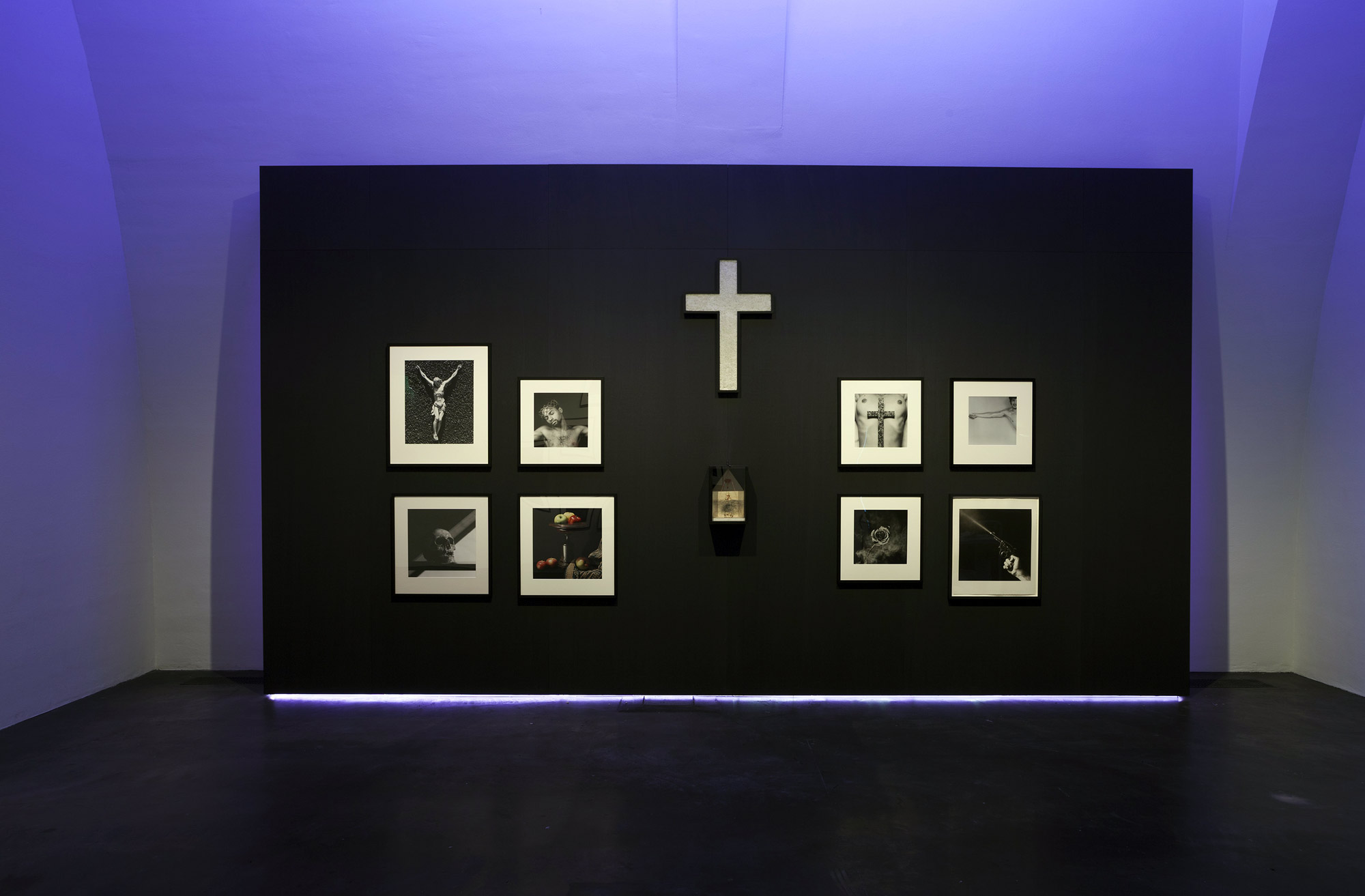
Chapel and Colour bracket

“I was a Catholic boy, I went to church every Sunday. A church has a certain magic and mystery for a child.”

~ Robert Mapplethorpe


Mapplethorpe came from a Roman Catholic family, but his interest in the church was primarily aesthetic. He said he wanted his pictures to be viewed like altars. The figure of a crucified Christ appears in some of his works, as does the human skull, a traditional reminder of death. Instead of suffering, however, the images convey a sense of sinful pleasure. Mapplethorpe worked with colour film starting in the late 1970s, but did not routinely exhibit his colour photos until the end of the 1980s.

Mapplethorpe and women

“Lisa Lyon reminded me of Michelangelo’s subjects, because he did muscular women.”

~ Robert Mapplethorpe


Poet and musician Patti Smith was Mapplethorpe’s first and last model and muse. Mapplethorpe photographed covers for Smith’s albums and books of poems. Another important model was the body builder Lisa Lyon, who is the subject of Mapplethorpe’s book Lady: Lisa Lyon. Both women could be described as androgynous. Locating himself in the same intermediate space between femininity and masculinity, Mapplethorpe photographed himself in drag.

Portraits

New York and the Chelsea Hotel in particular were places where the American cultural intelligentsia used to gather in the 1970s. There Mapplethorpe met writers, musicians and artists such as William Burroughs, Iggy Pop and David Hockney, and enjoyed the attention lavished on him. He became the court photographer of certain cultural circles, his camera capturing friends, celebrities and famous figures in the art world.

Eros

“I don’t think anyone understands sexuality. It’s about an unknown, which is why it’s so exciting.”

~ Robert Mapplethorpe


Sadomasochism, S&M, was both sex and magic for Mapplethorpe. Like the French writer Jean Genet, he too wanted to elevate things into art that were not yet considered art. Mapplethorpe’s depiction of fetishes in his photographs was deliberately formal. He documented spontaneous acts only very infrequently. The sex he captured in his pictures was neither malicious nor repugnant. S&M is about desire and pleasure, and above all about trust.

Polaroids

“I’m trying to record the moment I’m living in and where I’m living, which happens to be in New York. These pictures could not have been done at any other time.”

~ Robert Mapplethorpe


Mapplethorpe got his first Polaroid camera in 1970 and fell in love with its simplicity: there were few adjustments to make and you could see the results instantly. Because the film was expensive, Mapplethorpe felt that every picture had to be perfect. Precision and economy became a habit that endured throughout his career. In 1975, he switched over to the more versatile Hasselblad 500.

Still moving

“We were like two children playing together, like the brother and sister in Cocteau’s ‘Enfants Terribles’.”

~ Patti Smith


Robert Mapplethorpe and Patti Smith began their creative careers together. Frequently they would not plan their projects in advance. The experimental short Still Moving had no script, and Smith improvised her movements and lines. The camera operator was Lisa Rinzler. “He wordlessly guided me. I was an oar in the water and his the steady hand,” Smith has said.

Robert Mapplethorpe – Portraits

New York was home to America’s cultural intelligentsia in the 1970s. Mapplethorpe was the court photographer of the cultural elite. His portraits feature his friends, celebrities and influential figures on the art scene.


Robert Mapplethorpe (American, 1946-1989) 'Self-Portrait' 1975


Robert Mapplethorpe (American, 1946-1989)
Self-Portrait
1975
Gelatin silver print
© Robert Mapplethorpe Foundation


Robert Mapplethorpe (American, 1946-1989) 'Patti Smith' 1979


Robert Mapplethorpe (American, 1946-1989)
Patti Smith
1979
Gelatin silver print
© Robert Mapplethorpe Foundation


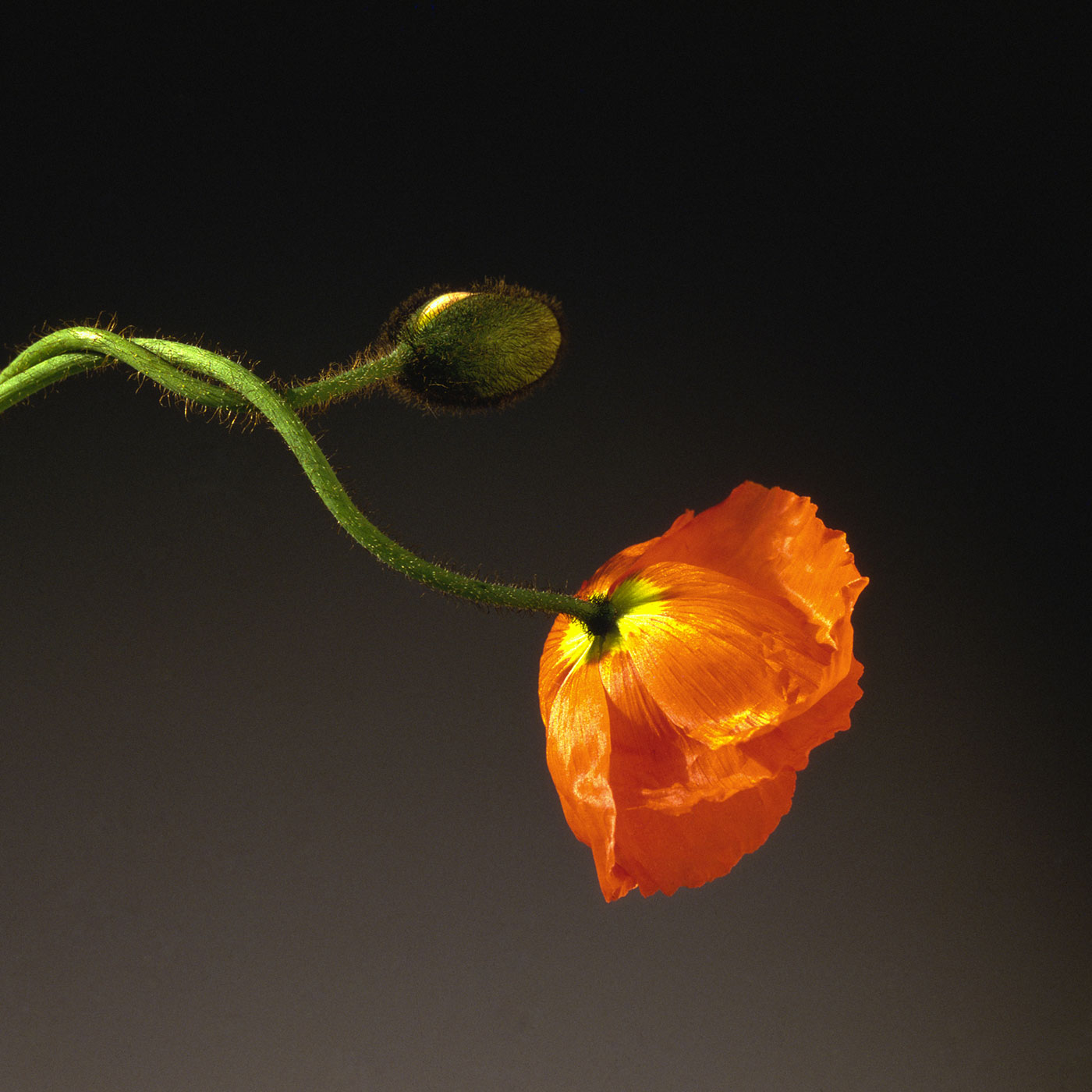
Robert Mapplethorpe (American, 1946-1989) 'Poppy' 1988


Robert Mapplethorpe (American, 1946-1989)
Poppy
1988
Unique dye transfer
© Robert Mapplethorpe Foundation


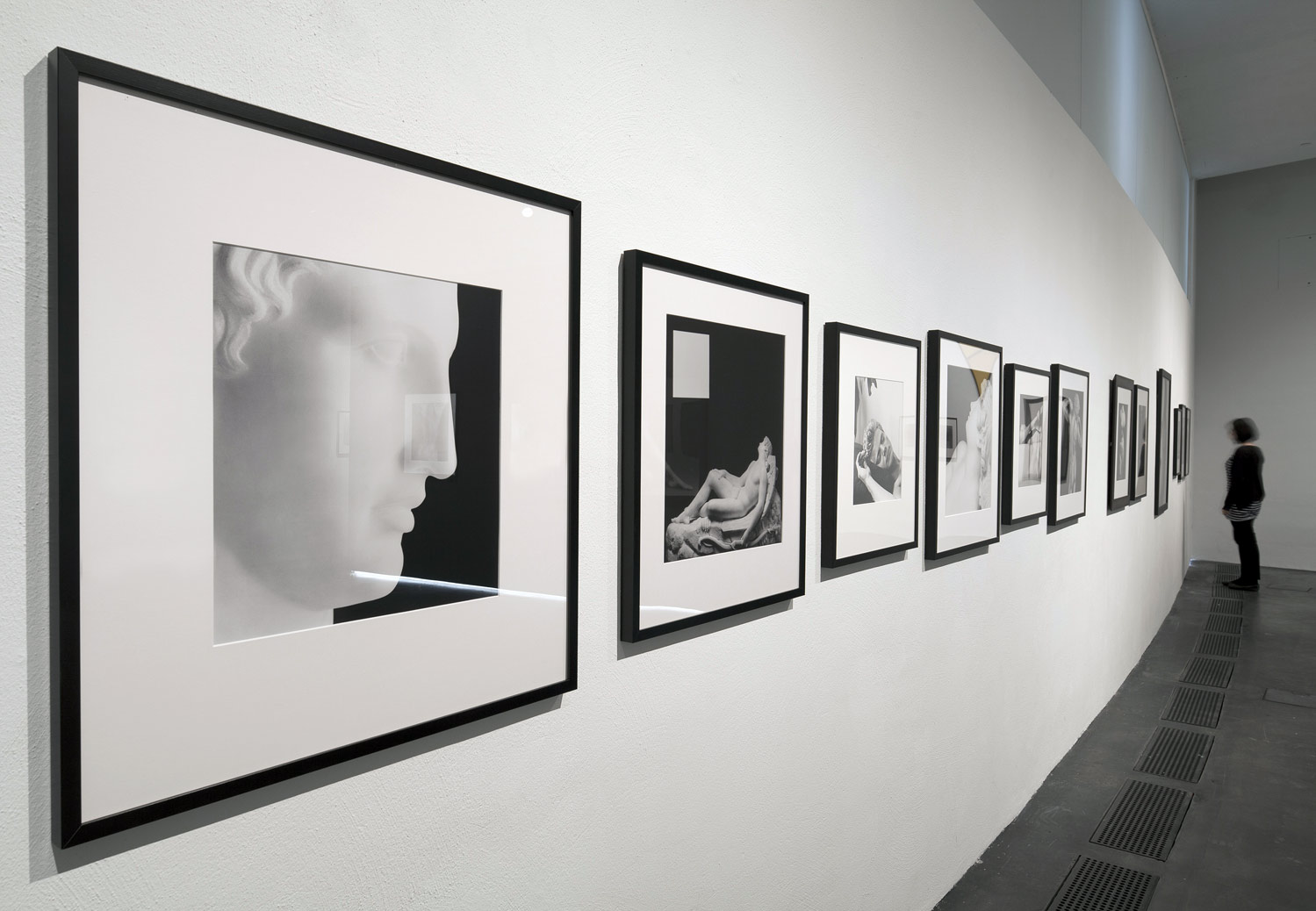
Installation view of the exhibition 'Robert Mapplethorpe' at the Museum of Contemporary Art Kiasma, Helsinki

Installation view of the exhibition 'Robert Mapplethorpe' at the Museum of Contemporary Art Kiasma, Helsinki

Installation view of the exhibition 'Robert Mapplethorpe' at the Museum of Contemporary Art Kiasma, Helsinki

Installation view of the exhibition 'Robert Mapplethorpe' at the Museum of Contemporary Art Kiasma, Helsinki

Installation view of the exhibition 'Robert Mapplethorpe' at the Museum of Contemporary Art Kiasma, Helsinki


Installation view of the exhibition 'Robert Mapplethorpe' at the Museum of Contemporary Art Kiasma, Helsinki

Installation view of the exhibition 'Robert Mapplethorpe' at the Museum of Contemporary Art Kiasma, Helsinki

Installation view of the exhibition 'Robert Mapplethorpe' at the Museum of Contemporary Art Kiasma, Helsinki


Installation views of the exhibition Robert Mapplethorpe at the Museum of Contemporary Art Kiasma, Helsinki
Finnish National Gallery / Pirje Mykkänen


Who’s who?

~ Princesse Diane de Beauvau
French aristocrat, model and fashion muse

~ Bruno Bischofberger
Swiss gallerist and art dealer known for bringing American Pop Art to Europe, long-term associate of Andy Warhol

~ Louise Bourgeois
French-born sculptor known for her gigantic spider sculptures

~ Miep Brons
Dutch porn dealer

~ William Burroughs
Writer and primary figure of the Beat Generation

~ Alistair Butler
New York dancer

~ Patrice Calmettes
French photographer

~ Truman Capote
American author and journalist whose best known titles include Breakfast at Tiffany’s and In Cold Blood

~ Leo Castelli
American-Italian gallerist, influential promoter of contemporary art in New York

~ Katherine Cebrian
San Francisco socialite

~ Francesco Clemente
Italian-born contemporary artist

~ Ed and Melody
Mapplethorpe’s brother Edward and his girlfriend at the time, Melody, a friend of Mapplethorpe’s

~ Richard Gere
American actor, idolised at the time of this portrait following his performance in American Gigolo

~ Philip Glass and Robert Wilson
Glass is a contemporary composer, Wilson a director and playwright. At the time of this portrait, they had worked together on their opera Einstein on the Beach

~ Keith Haring
American Pop and graffiti artist

~ Deborah Harry
Singer and actress, best known as lead singer of Blondie

~ David Hockney and Henry Geldzahler
Hockney is a British artist and Pop Art pioneer. Belgian-born Geldzahler was a curator, critic and art historian

~ Grace Jones
Jamaican-born singer, producer, actress and model

~ Amanda Lear
French singer, performer, painter and author, friend of celebrities such as David Bowie, Salvador Dalí and Brian Jones

~ Annie Leibovitz
American photographer whose work featured on the cover Rolling Stone and Vanity Fair

~ Roy Lichtenstein
American painter, sculptor and leading Pop artist

~ Lisa and Robert
Mapplethorpe and his long-term muse, bodybuilder Lisa Lyon

~ John McKendry
Curator of prints and photographs at the Metropolitan Museum of Art and personal friend who first introduced Mapplethorpe to the MET’s fine art photography collection

~ Louise Nevelson
American sculptor

~ Yoko Ono
Japanese-born artist and musician

~ Philippe
French socialite

~ Iggy Pop
Singer, songwriter and actor known for his energetic stage presence as lead singer of The Stooges

~ Robert Rauschenberg
American artist who inspired later generations of artists including Andy Warhol and Roy Lichtenstein, regarded as a major figure in the transition from Abstract Expressionism to Pop Art

~ Isabella Rossellini
Italian-born actress, model, filmmaker, author, and philanthropist

~ Giorgio di Sant’Angelo
Italian-born fashion designer

~ Arnold Schwarzenegger
Budding actor and award-winning bodybuilder at the time of this portrait, he later achieved world renown as a Hollywood star and Governor of California

~ Cindy Sherman
American contemporary artist, known for photographs analysing women’s roles and place in society

~ Holly Solomon
A self-anointed ‘Pop princess’, Solomon was a prominent collector and subsequent dealer of contemporary art. She was famously immortalised by other artists such as Andy Warhol and Roy Lichtenstein

~ Susan Sontag
American writer and essayist

~ Tom of Finland
Finnish artist and illustrator. His drawings had a major influence on gay culture from the 1970s onwards. Mapplethorpe and Andy Warhol were among his admirers

~ Sam Wagstaff
Curator, collector, Mapplethorpe’s lifetime companion and artistic mentor

~ Andy Warhol
Pop Art pioneer and filmmaker, greatly admired by Mapplethorpe

~ Edmund White
American author, known for his work on gay themes


Robert Mapplethorpe (American, 1946-1989) 'Ajitto' 1981


Robert Mapplethorpe (American, 1946-1989)
Ajitto
1981
Gelatin silver print
© Robert Mapplethorpe Foundation


Robert Mapplethorpe (American, 1946-1989) 'Lisa Lyon' 1982


Robert Mapplethorpe (American, 1946-1989)
Lisa Lyon
1982
Gelatin silver print
© Robert Mapplethorpe Foundation


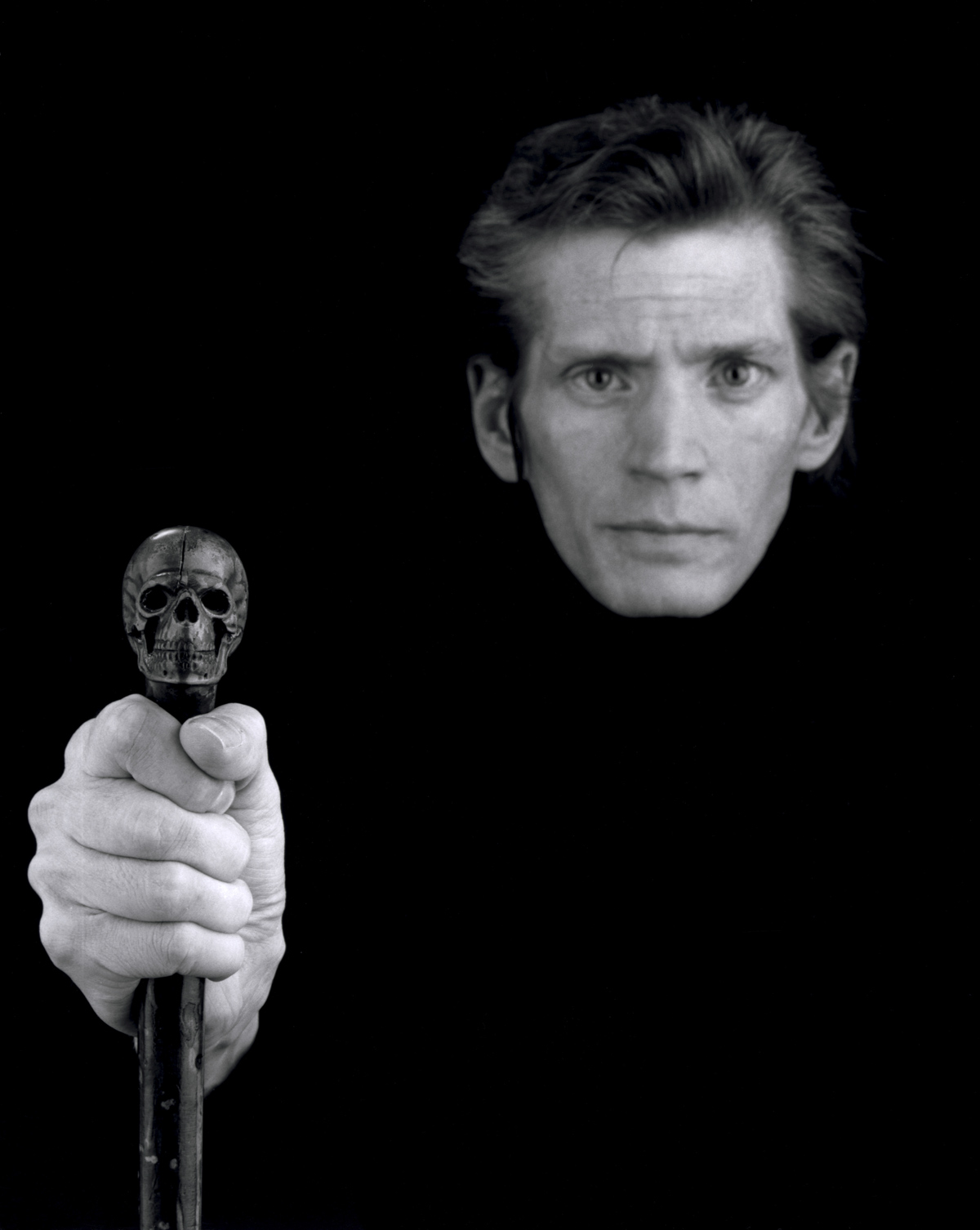
Robert Mapplethorpe (American, 1946-1989) 'Self-Portrait' 1988


Robert Mapplethorpe (American, 1946-1989)
Self-Portrait
1988
Gelatin silver print
© Robert Mapplethorpe Foundation


Museum of Contemporary Art Kiasma
Mannerheiminaukio 2, FIN-00100
Helsinki, Finland
Phone:+358 (0)294 500 501

Opening hours:
Tuesday – Friday 10 – 20.30
Saturday 10 – 18
Sunday 10 – 17
Monday closed

Museum of Contemporary Art Kiasma website

LIKE ART BLART ON FACEBOOK

Back to top

Exhibition: ‘Carnival: Photographs by Roger Vail’ at Joseph Bellows Gallery, La Jolla, California

Exhibition dates: 11th July – 22nd August, 2015


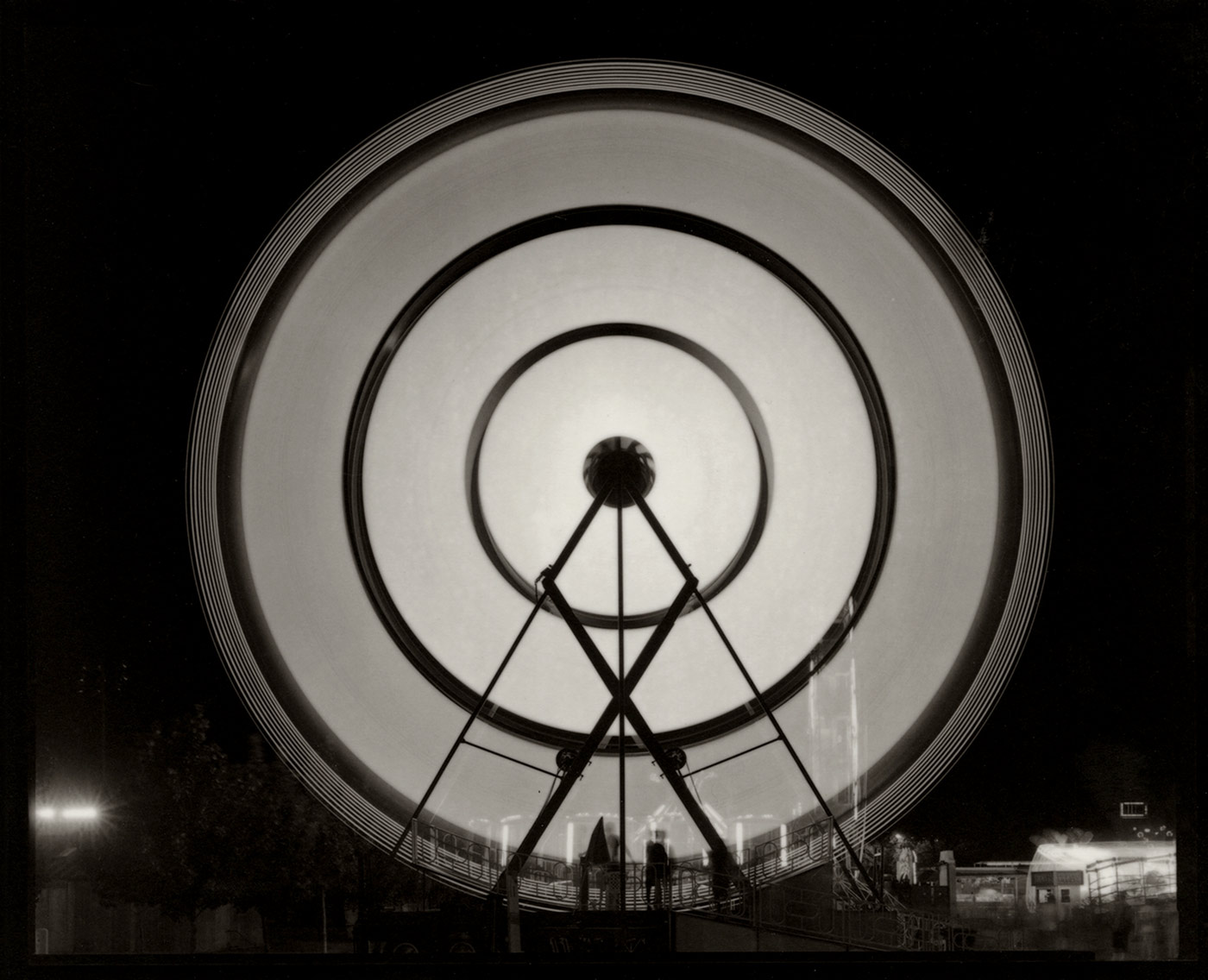
Roger Vail (American, b. 1945) 'SkyDiver 2' 1996 from the exhibition 'Carnival: Photographs by Roger Vail' at Joseph Bellows Gallery, La Jolla, California, July - August, 2015


Roger Vail (American, b. 1945)
SkyDiver 2
1996
Platinum/palladium print


For the length of each ride

I just love these photographs. They are thrilling, like the rides themselves.

The photographer Roger Vail comments,

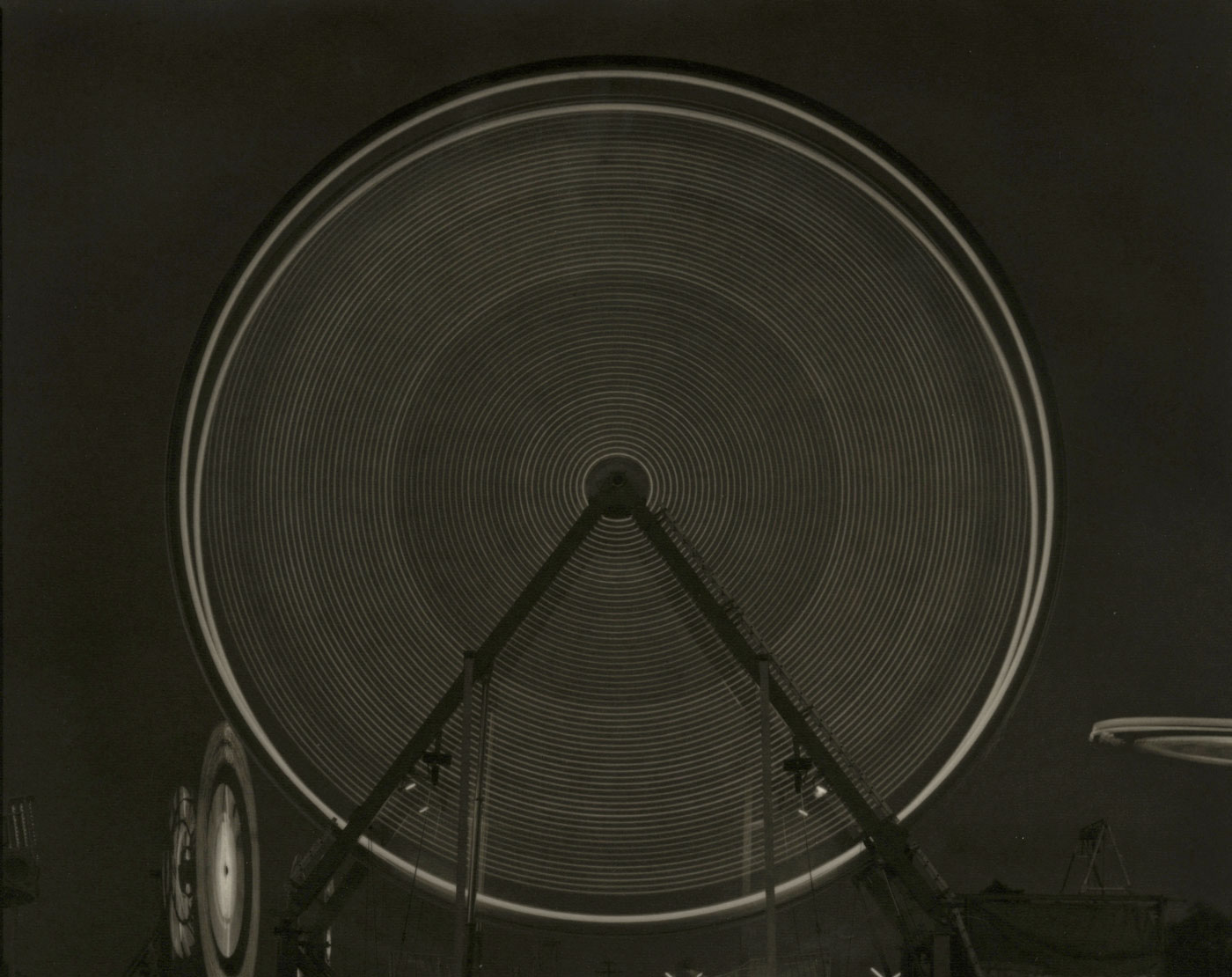
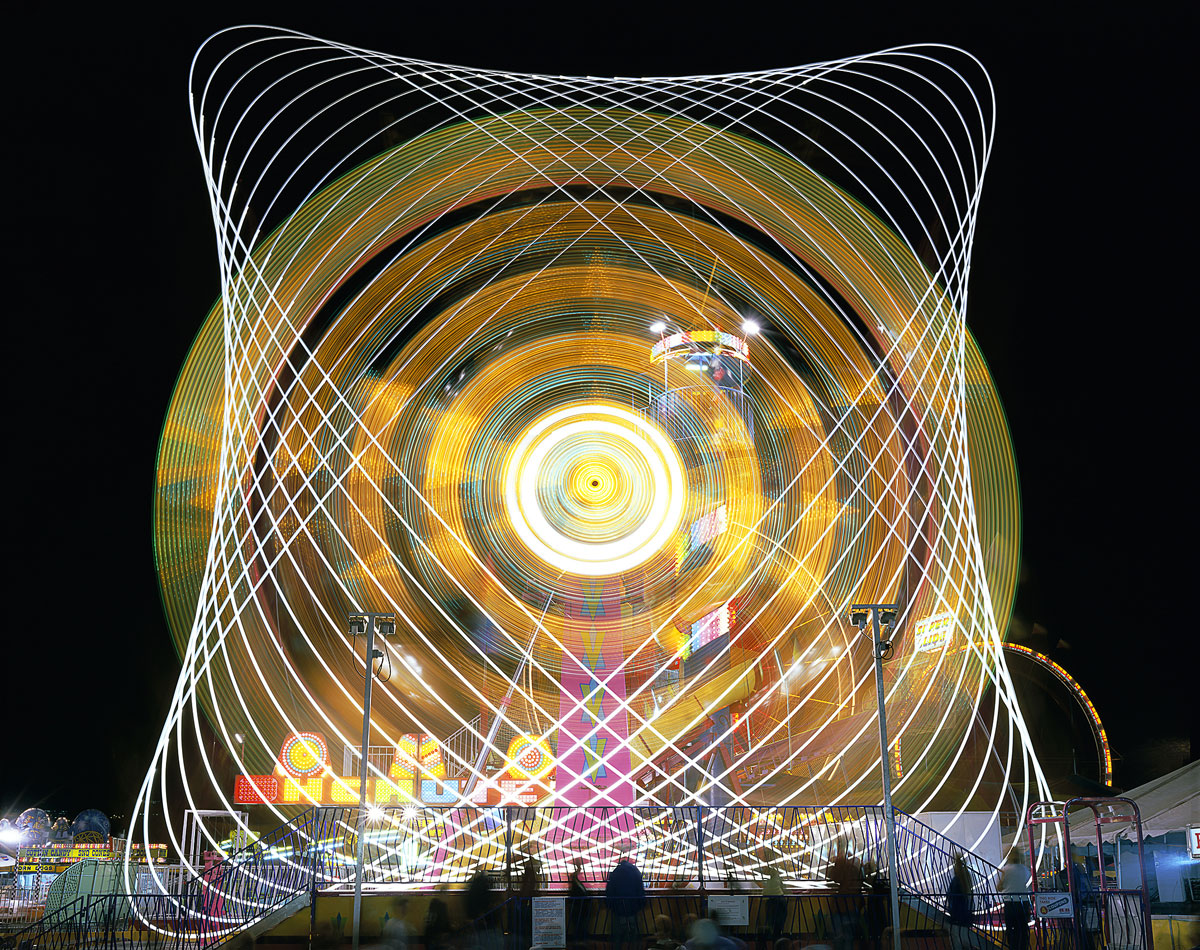
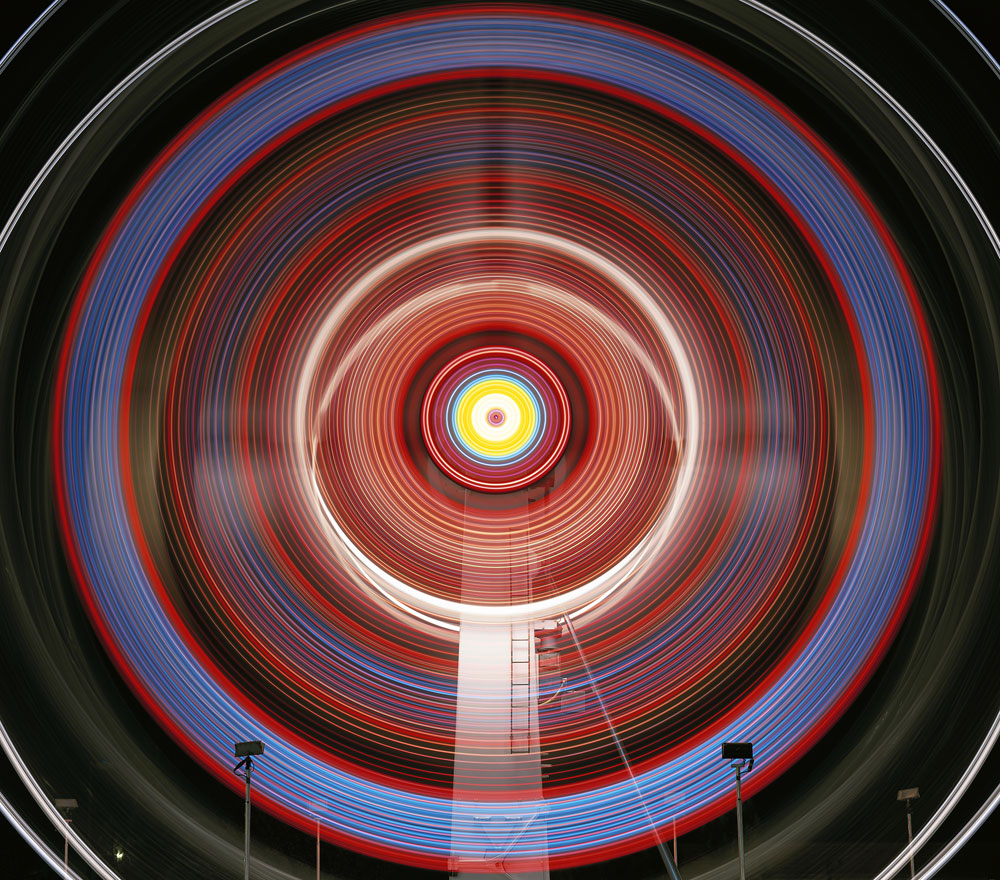
“There was no initial inspiration, just an experiment. I had already been making photographs at night with a 4 x 5 (later 8 x 10) camera which involved time exposures. I went to a carnival to shoot the facades. While there I decided to see what would happen it I made a time exposure of the ferris wheel in question. First sight of the negative was thrilling so I decided to make more. Most of the fun was in not knowing what the end result would look like. I made these into large silver prints throughout the seventies. In the nineties I learned to make platinum-palladium prints and after printing one of the older negatives decided to do them again specifically for that medium. Finally in 2001, at the suggestion of my wife Carol, I did them for a third time shooting 8×10 transparencies.”

All the light is ambient light, with the exposures usually around 3 minutes (hence the ghostly shadows of people moving in the foregrounds of some of the photographs). Vail observes, “Carnival grounds are often flooded with fairly bright light, so balancing the exposures is not that difficult. I found out early on that virtually all carnival rides last around 3 minutes. So I would adjust the F stop accordingly to get the maximum rotation and therefore pattern.”


I am in awe of this extended investigation. What a passion for what is coming on 45 years working on one idea.

Just as Hiroshi Sugimoto’s time lapse movie screens (where the exact length of a movie was captured by the open lens of the camera, the substance of time and space evidenced by a seemingly empty screen) were wonderfully poetic and transformational – the gesture of compressing the narrative, reality and action of a movie into a single frame of light – so Vail’s photographs focus on the process of transition, the process of transition in the flow of time and space. Whereas Sugimoto captures the exact length of a movie, Vail’s photographs, ‘for the length of each ride’, could be a metaphor for the length of a life, for these rides contain the body of human beings, their embodiment, even though we can’t see them.

All the signs are there. The concentric circles with no beginning and no end. The YoYo circus of circuits or Wave Swinger with atomic cloud remind me of Fritz Lang’s seminal film Metropolis (1927). And then the colour work – Inverter with its Möbius strip non-orientable boundary, giving life a half-twist, SpinOut‘s nuclear intensity, and Evolutions DNA-like strands. And all of this done through serendipity, a fortunate happenstance, with the artist not knowing exactly what each negative will bring, but ultimately thrilling when (exposure) time – overseer of all things – is right. No wonder Vail was excited when he saw his first negative.

A total surprise, these photographs proffer a liminal space, one beyond our usual realm of understanding. Our cycle of life. The process of transition in the flow of space and time.

Dr Marcus Bunyan


Many thankx to Joseph Bellows Gallery for allowing me to publish the photographs in the posting. Please click on the photographs for a larger version of the image.


Roger Vail (American, b. 1945) 'Spinning Carnival Ride' 1971 from the exhibition 'Carnival: Photographs by Roger Vail' at Joseph Bellows Gallery, La Jolla, California, July - August, 2015


Roger Vail (American, b. 1945)
Spinning Carnival Ride
1971
Gelatin silver print


“I started making urban night photographs at the end of graduate school in 1969. I used a 4×5 and later an 8×10 view camera which required time exposures of 30 seconds or more. At a carnival in 1971 I decided to set up in front of a ferris wheel, clueless about what the result would look like. I was greatly excited by what I saw when I looked at the first negative and print – a total surprise. The later color images are exposed for the length of each ride cycle.”


Roger Vail


In 1970, Vail began photographing carnivals and their thrill rides with his 8 x 10 inch view camera. His pictures were made in the evening hours with long exposure times, resulting in images that track the momentum of the ride with a sense wonderment that is both tangible and otherworldly. Carnival will feature Vail’s extraordinary, large-scale photographs of carnival rides in full motion; tracing the kaleidoscopic light play seen only through an extended moment that photography permits.  In addition to the large-scale colour and black and white images, his smaller, more intimate platinum/palladium prints will be featured in the atrium gallery.

Vail’s carnival rides are described and transformed through the act of photography. He allows the viewer to experience the flux of the ride in a single scene, rendering both the atmosphere of the night and the energy of his subject, against the recognisable background of the state fair.

Roger Vail earned his BFA and MFA degrees from the Art Institute of Chicago. His photographs are in the collection of numerous institutions, including: Art Institute of Chicago, Museum of Contemporary Photography, Nelson-Atkins Museum of Art, Museum of Modern Art, NY, San Francisco Museum of Modern Art, and the Princeton University Art Museum.


Roger Vail (American, b. 1945) 'Untitled' 1996


Roger Vail (American, b. 1945)
Untitled
1996
Platinum/palladium print


Roger Vail (American, b. 1945) 'Untitled' 1996 'YoYo' 1996


Roger Vail (American, b. 1945)
YoYo
1996
Gelatin silver print
18 x 23.5 inches


Roger Vail (American, b. 1945) 'YoYo #2' 1996


Roger Vail (American, b. 1945)
YoYo #2
1996
Platinum/palladium print


Roger Vail (American, b. 1945) 'Wave Swinger' 1996


Roger Vail (American, b. 1945)
Wave Swinger
1996
Gelatin silver print


Roger Vail (American, b. 1945) 'Kamikaze #3' 1996


Roger Vail (American, b. 1945)
Kamikaze #3
1996
Platinum/palladium print
10 x 8 inches


Joseph Bellows Gallery is pleased to announce its upcoming exhibition, Carnival: Photographs by Roger Vail. This solo shows will open on July 11th, with a reception for the artist from 6-8 p.m., and will continue through the 22nd of August. The exhibition will feature Vail’s extraordinary large-scale photographs of carnival rides in full motion; tracing the kaleidoscopic light play seen only through the extended moment that photography permits. In addition to the large-scale colour and black and white images, his smaller, more intimate platinum/palladium prints will be featured in the atrium gallery.

In 1970, Vail began photographing carnivals and their thrill rides with his 8 x 10 inch view camera. His pictures were made in the evening hours with long exposure times, resulting in extended moments which track the momentum of the ride with a sense wonderment that is both tangible and otherworldly.

One such image graced the cover of Life magazine, introducing a picture essay with an accompanying text by Garrison Keilor titled, A Magical Spin on a Summer Night (2006). Vail’s carnival rides are described and transformed through the act of photography. He allows the viewer to experience the flux of the ride in a single scene, rendering both the atmosphere of the night and the energy of his subject, against the recognisable background of the state fair.

Press release from the Joseph Bellows Gallery


Roger Vail (American, b. 1945) 'Evolution 3' 2001


Roger Vail (American, b. 1945)
Evolution 3
2001
Chromogenic print mounted to aluminium


Roger Vail (American, b. 1945) 'Giant Wheel' 2001


Roger Vail (American, b. 1945)
Giant Wheel
2001
Chromogenic print mounted to aluminium


Roger Vail (American, b. 1945) 'Inverter' 2001


Roger Vail (American, b. 1945)
Inverter
2001
Chromogenic print mounted to aluminium
30 x 37.5 inches


Roger Vail (American, b. 1945) 'Kamakazi' 2002


Roger Vail (American, b. 1945)
Kamakazi
2002
Chromogenic print mounted to aluminium


Roger Vail (American, b. 1945) 'SpinOut' 2001


Roger Vail (American, b. 1945)
SpinOut
2001
Chromogenic print mounted to aluminium


Roger Vail (American, b. 1945) 'Wave Swinger' 2001


Roger Vail (American, b. 1945)
Wave Swinger
2001
Chromogenic print mounted to aluminium


Roger Vail (American, b. 1945) 'Evolution' 2001


Roger Vail (American, b. 1945)
Evolution
2001
Chromogenic print mounted to aluminium


Joseph Bellows Gallery
7661 Girrard Avenue
La Jolla, California
Phone: 858 456 5620

Opening hours:
Tuesday – Saturday 11am – 5pm and by appointment

Joseph Bellows Gallery website

LIKE ART BLART ON FACEBOOK

Back to top

Photographs: Thomas Eakins photography

July 2015


Please click on the photography for a larger version of the image.

Marcus


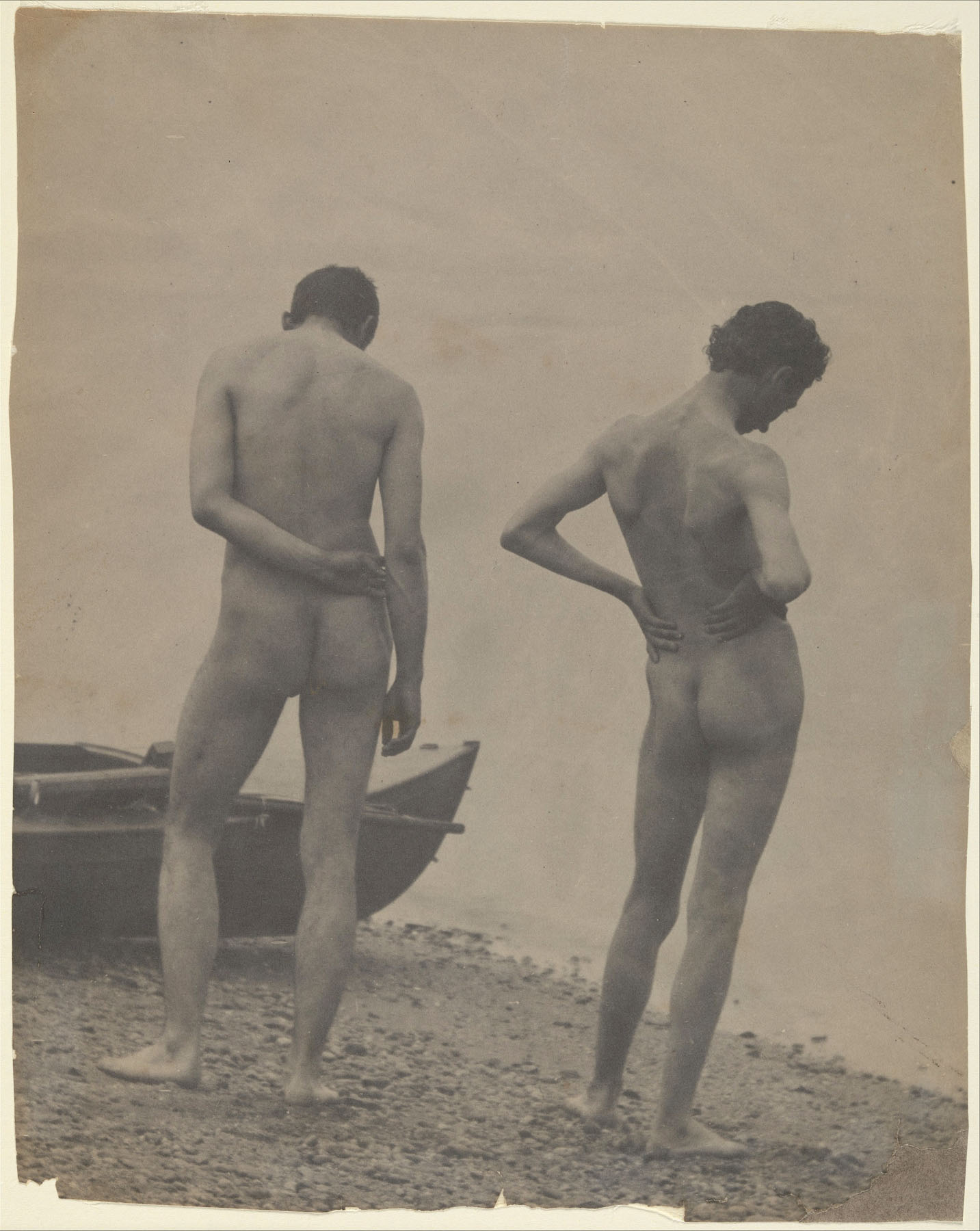
Thomas Eakins (American, 1844-1916) '(Thomas Eakins and John Laurie Wallace on a Beach)' c. 1883


Thomas Eakins (American, 1844-1916)
(Thomas Eakins and John Laurie Wallace on a Beach)
c. 1883
Public domain


The great American painter and photographer Thomas Eakins was devoted to the scientific study of the human form and committed to its truthful representation. While he and his students at the Pennsylvania Academy of the Fine Arts were surrounded by casts of classical sculpture, Eakins declared that he did not like “a long study of casts. … At best they are only imitations, and an imitation of imitations cannot have so much life as an imitation of life itself.” Photography provided an obvious solution.

This photograph, in which Eakins and a student affected the elegant contrapposto stances of classical sculpture, was probably taken during an excursion with students to Manasquan Inlet at Point Pleasant, New Jersey, during the summer of 1883. Valuing his photographs not only as studies for paintings but also for their own sake, Eakins carefully printed the best images on platinum paper. In this case, he went to the additional trouble of enlarging the original, horizontally formatted image and cropping it vertically to better contain the perfectly balanced figures.

Text from The Metropolitan Museum of Art website


Thomas Eakins (American, 1844-1916) 'Nude, Playing Pipes' c. 1883


Thomas Eakins (American, 1844-1916)
Nude, Playing Pipes
c. 1883
Platinum print
22.7 x 16.6cm (8 15/16 x 6 9/16 in.) irregular
Metropolitan Museum of Art
David Hunter McAlpin Fund, 1943
Public domain


Thomas Eakins (American, 1844-1916) 'Standing Male Nude with Pipes' 1880s


Thomas Eakins (American, 1844-1916)
Standing Male Nude with Pipes
1880s
Platinum print
22.9 x 17.3cm (9 x 6 13/16 in.)
Metropolitan Museum of Art
David Hunter McAlpin Fund, 1943
Public domain


Thomas Eakins (American, 1844-1916) 'Bill Duckett nude, reclining on side, hand on knee' c. 1889


Thomas Eakins (American, 1844-1916)
Bill Duckett nude, reclining on side, hand on knee
c. 1889
Platinum print
2 15/16 x 4 5/16 in. (7.46252 x 10.95502cm)
Pennsylvania Academy of the Fine Arts
Charles Bregler’s Thomas Eakins Collection, purchased with the partial support of the Pew Memorial Trust
Public domain


In January 1886, Thomas Eakins removed the loincloth from a male model while lecturing about the pelvis to an anatomy class that included female students at the Pennsylvania Academy of the Fine Arts. Angry protests by parents and students soon forced him to resign from the Academy at the request of the board. Following Eakins’ departure, however, thirty-eight of his male students resigned from the Academy and formed the Art Students’ League of Philadelphia, providing him with a new forum for his life classes and for the creation of many of the paintings and photographs of the 1880s, including this nude study of Bill Duckett, an amateur athlete. The relaxed atmosphere of the Art Students’ League, where Eakins and his students governed themselves, permitted greater freedom in the photography of models than had prevailed at the Pennsylvania Academy. This photograph is an excellent example of Eakins’ unabashed exploration of frontal male nudity.

Text from the Metropolitan Museum of Art website


For Eakins, the camera was a teaching device comparable to anatomical drawing, a tool the modern artist should use to train the eye to see what was truly before it.


In the 1880s, through a series of technical advances that greatly simplified its practice, photography had expanded from being the province solely of the specialist into an activity accessible to the millions. To define photography as a discipline distinct from its casual, commercial, and scientific applications became the overriding goal of many American artists in the last two decades of the century, who claimed for it a place commensurate with those artistic endeavours that celebrated the complex, irreducible subjectivity of their makers. The photographs of Thomas Eakins are a perfect example of this development.

In addition to being an accomplished painter, watercolorist, and teacher, Thomas Eakins was a dedicated and talented photographer. Working with a wooden view camera, glass plate negatives, and the platinum print process, he distinguished himself from most other painters of his generation by mastering the technical aspects of the new medium and requiring his students to do the same. For Eakins, the camera was a teaching device comparable to anatomical drawing (43.87.23; 43.87.19), a tool the modern artist should use to train the eye to see what was truly before it.

Although it is not known from whom or when Eakins learned photography, it is clear that by 1880 he had already incorporated the camera into his professional and personal life. The vast majority of photographs attributed to Eakins are figure studies (nude and clothed) and portraits of his pupils (43.87.17), extended family (including himself) (43.87.23), and immediate friends (41.142.2). More than 225 negatives survive in the Bregler collection at the Pennsylvania Academy of the Fine Arts and approximately 800 images are currently attributed to Eakins and his circle – ample proof of the intensity with which Eakins worked with the camera.

Eakins did not generally use photographs as a preparatory aid to painting, although there are a small number of oils which have direct counterparts in existing photographs: the Amon Carter Museum’s The Swimming Hole [below] and the Metropolitan’s Arcadia [below] being the foremost examples. To the contrary, Eakins saw a different role for photography – one related to his extraordinary interest in knowing the figure and improving his sensitivity to complex figure-ground relationships. Committed to teaching close observation through the practice of dissection and preparatory wax and plaster sculpture, Eakins introduced the camera to the American art studio. At first his photographs were likely quick studies of pose and gesture; later, perhaps during the process of editing and cropping the negatives, and then making enlarged platinum prints, he saw the photographs as discrete works of art on paper, at their best on equal status with his watercolours.

The artistic freedom of the classical world that Eakins strove to bring to life in his academic programs at the Pennsylvania Academy of the Fine Arts (and in his Arcadian paintings) also appears as an important element in many of his nude studies (43.87.19) with the camera. These photographs, far more than the paintings, celebrate the male physique; even today, more than a century after their creation, their unabashed frontal nudity still has the power to shock contemporary eyes.

Text from The Metropolitan Museum of Art website October 2004 [Online] Cited 16/08/2021

Citation: Department of Photographs. “Thomas Eakins (1844-1916): Photography, 1880s-90s,” in Heilbrunn Timeline of Art History. New York: The Metropolitan Museum of Art, 2000


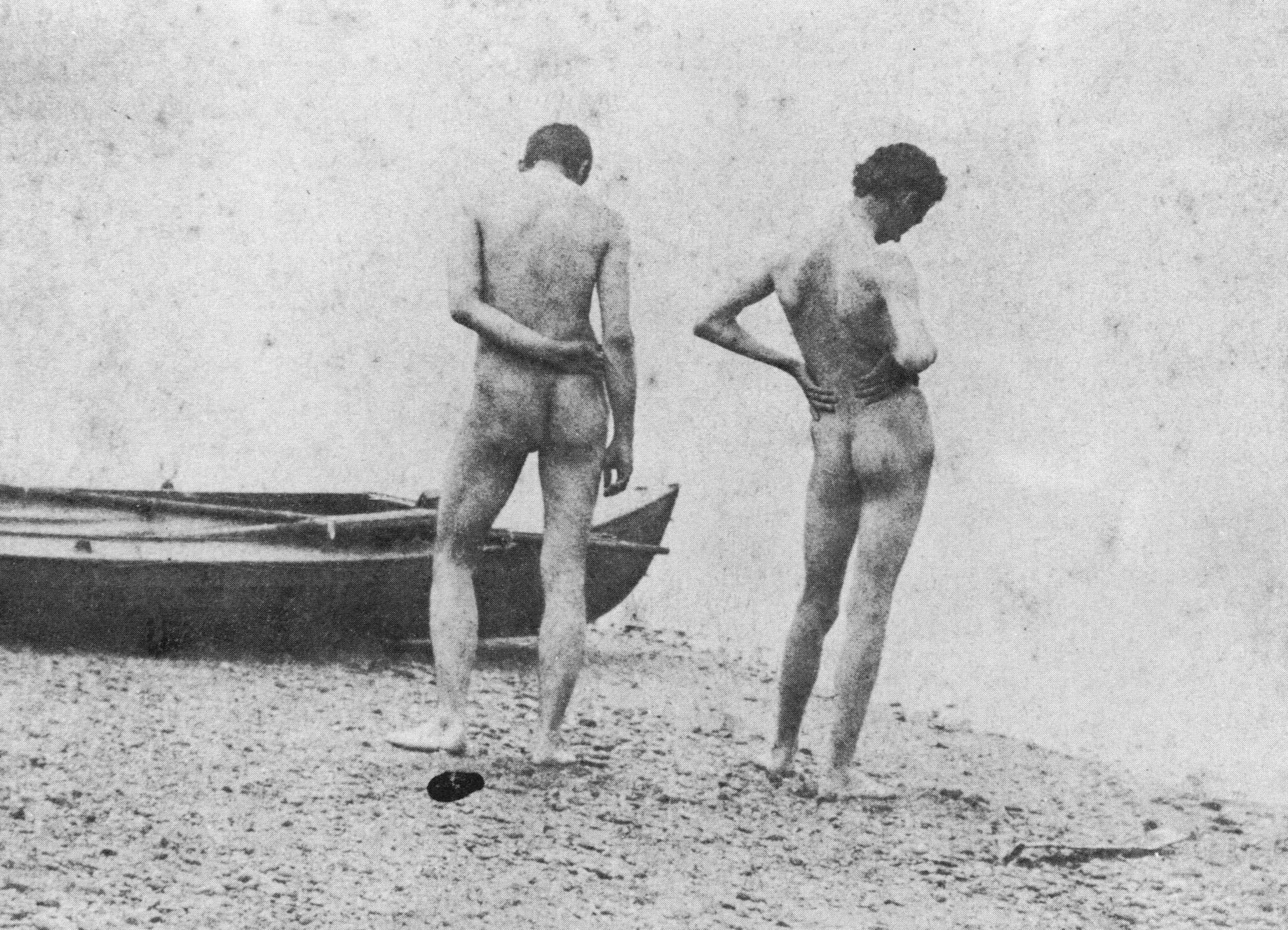
Thomas Eakins (American, 1844-1916) 'Thomas Eakins and J. Laurie Wallace at the Shore' 1883


Thomas Eakins (American, 1844-1916)
Thomas Eakins and J. Laurie Wallace at the Shore
1883
Public domain


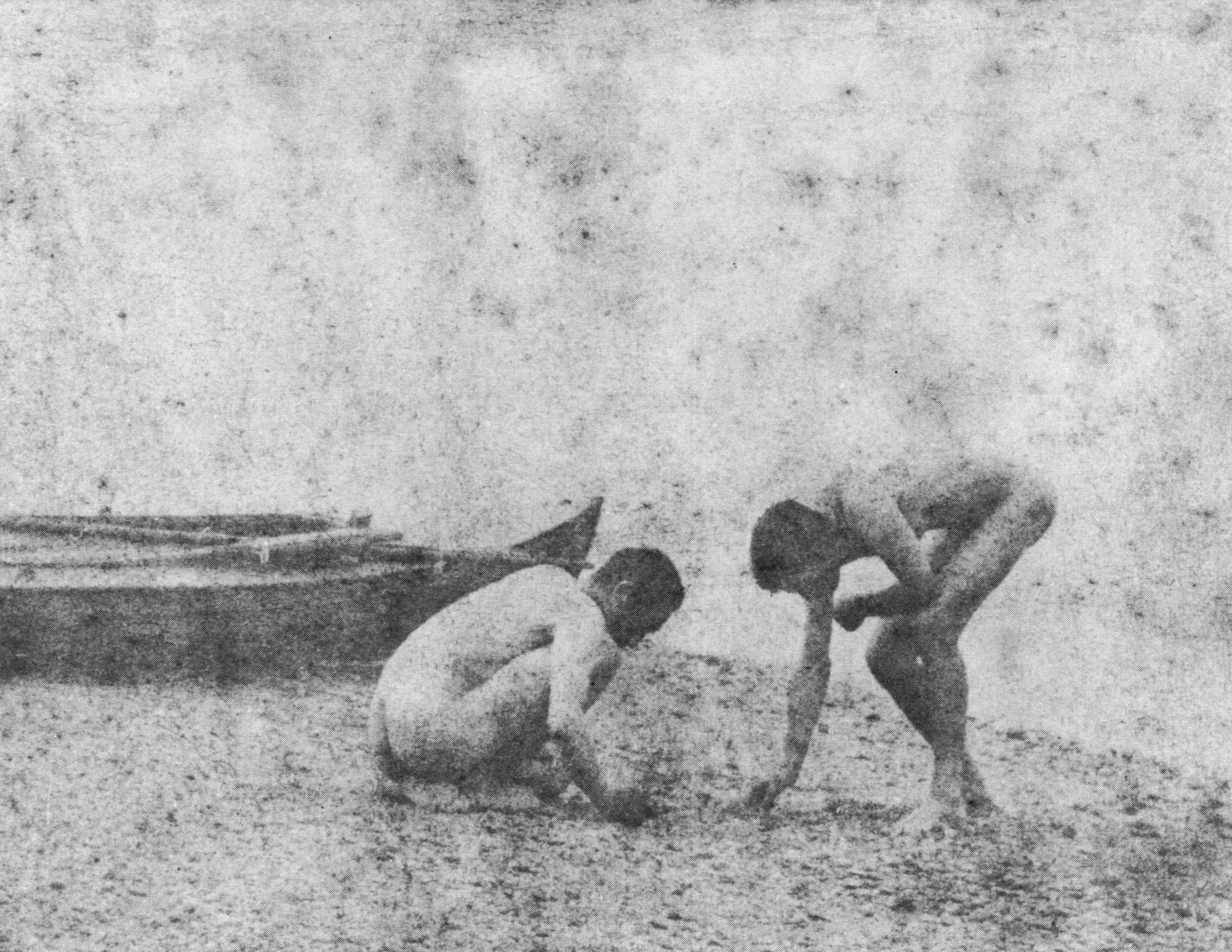
Thomas Eakins (American, 1844-1916) 'Thomas Eakins and J. Laurie Wallace at the Shore' 1883


Thomas Eakins (American, 1844-1916)
Thomas Eakins and J. Laurie Wallace at the Shore
1883
Public domain


Thomas Eakins (American, 1844-1916) 'Thomas Eakins and J. Laurie Wallace at the Shore' 1883


Thomas Eakins (American, 1844-1916)
Thomas Eakins and J. Laurie Wallace at the Shore
1883
Public domain


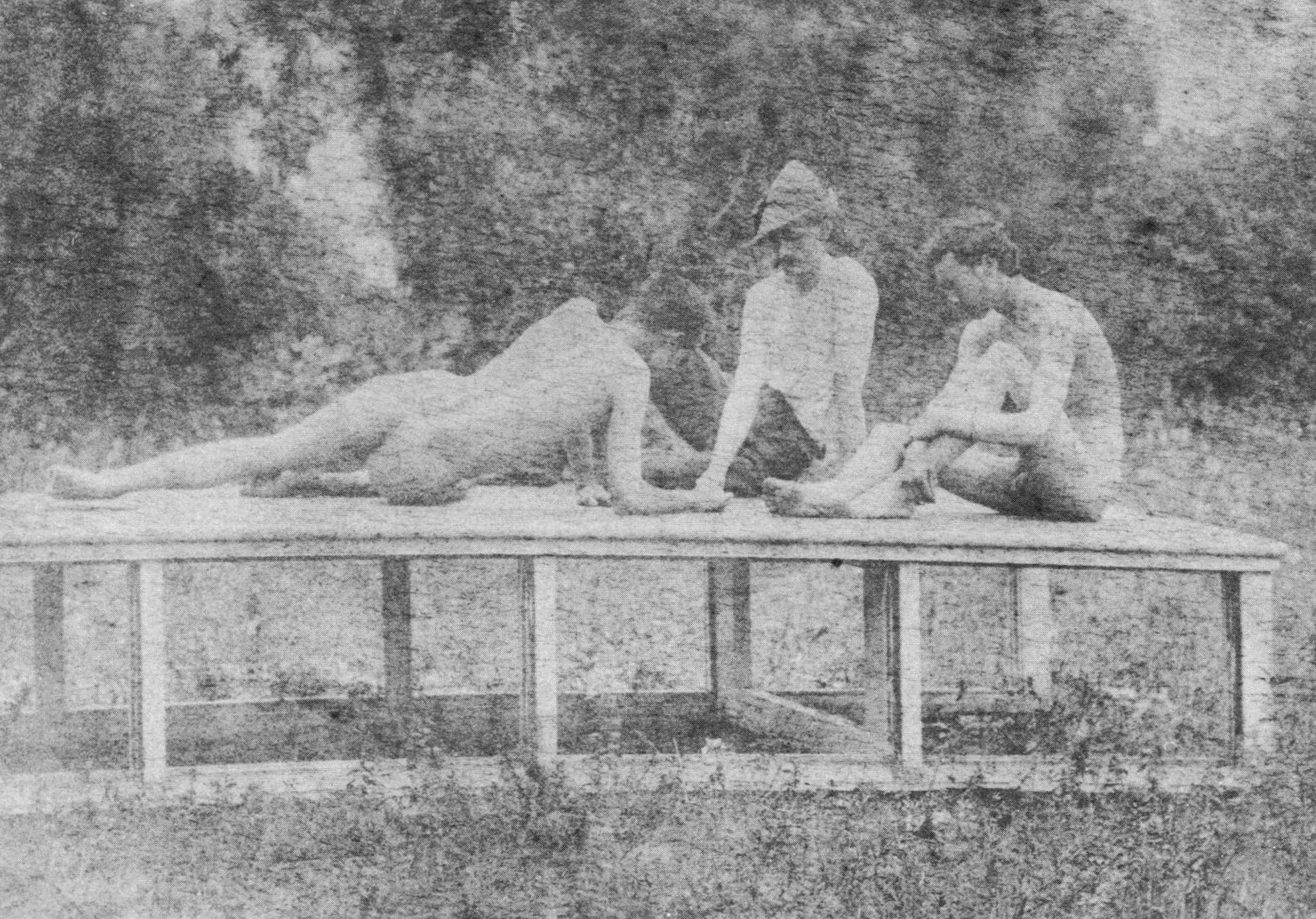
Thomas Eakins (American, 1844-1916) 'Unidentified model, Thomas Anschutz and J. Laurie Wallace' 1883


Thomas Eakins (American, 1844-1916)
Unidentified model, Thomas Anschutz and J. Laurie Wallace
1883
Public domain


Thomas Eakins (American, 1844-1916) 'Unidentified model, Thomas Anschutz and J. Laurie Wallace' 1883


Thomas Eakins (American, 1844-1916)
Unidentified model, Thomas Anschutz and J. Laurie Wallace
1883
Public domain


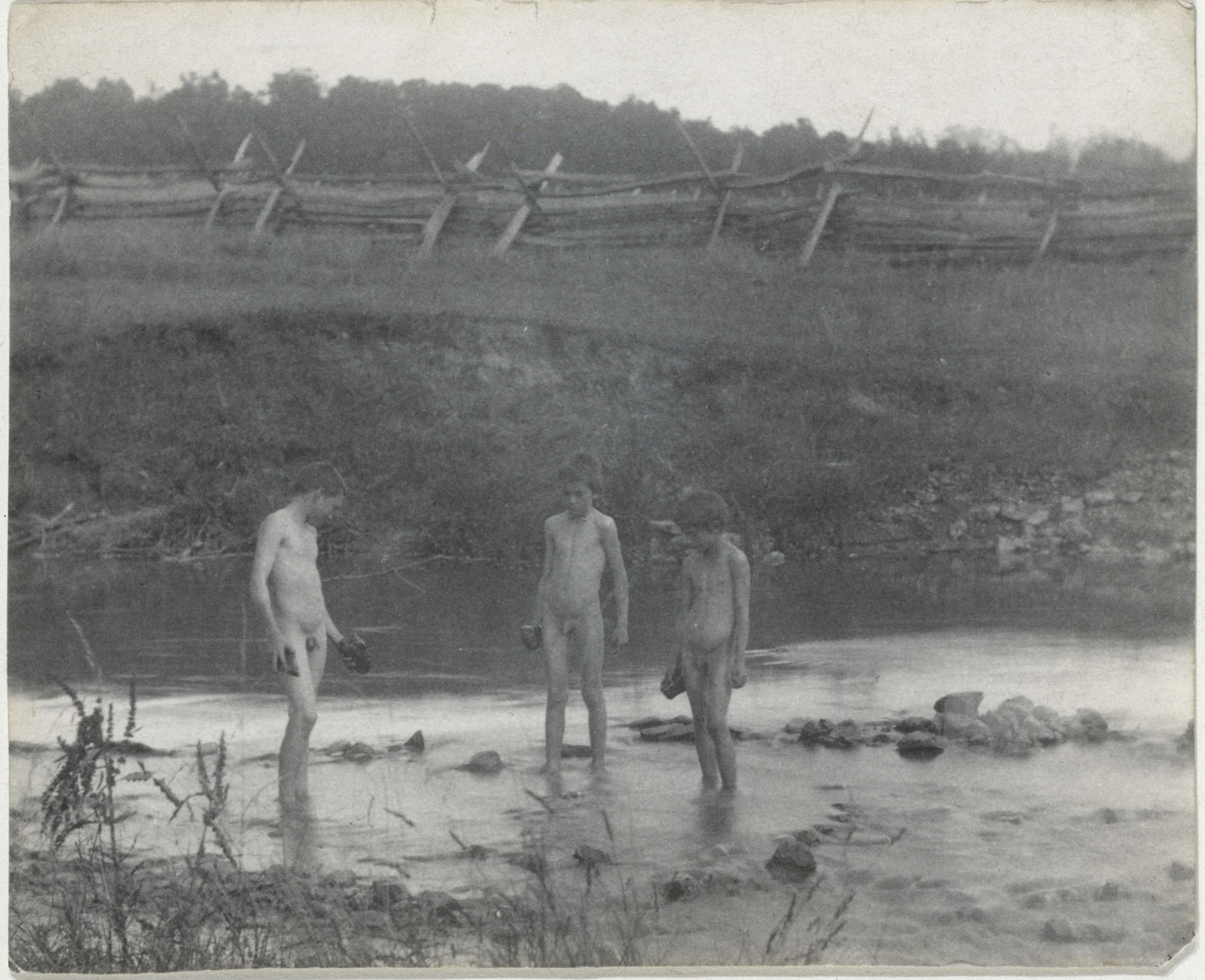
Thomas Eakins (American, 1844-1916) '(Three Boys Wading in a Creek)' 1883


Thomas Eakins (American, 1844-1916)
(Three Boys Wading in a Creek)


In 1882, Thomas Eakins was promoted to the post of director of schools at the Pennsylvania Academy of the Fine Arts, where he became known as a charismatic and innovative teacher who advocated intensive study of the nude figure. Committed to teaching close observation through every means possible, Eakins turned his school into a laboratory of photographic experimentation. He and his students (male and female) made negatives of each other – in lithe repose or in action, nude or in costume. At times, Eakins must have realised that he was pushing the limits of Philadelphia decorum. This small 4 x 5 albumen silver print shows several of Eakins’ nephews playing in a creek on the property of the artist’s sister Frances and her husband, William J. Crowell. In the 1880s, Eakins spent much of his free time at the Crowell family home in Avondale, Pennsylvania, thirty miles southwest of Philadelphia. Distant from urban distractions, the idyllic farm soon became a refuge for him. The Crowell children delighted Eakins and he made many photographs of their spirited games.

Text from The Metropolitan Museum of Art website


Thomas Eakins (American, 1844-1916) 'Arcadia' c. 1883


Thomas Eakins (American, 1844-1916)
Arcadia
c. 1883
Oil on canvas
98.1 × 114.3cm (38.6 × 45 in)
Metropolitan Museum of Art


Circle of Thomas Eakins (American, 1844-1916) 'Thomas Eakins and students, swimming nude' c. 1883


Circle of Thomas Eakins (American, 1844-1916)
Thomas Eakins and students, swimming nude
c. 1883
Public domain


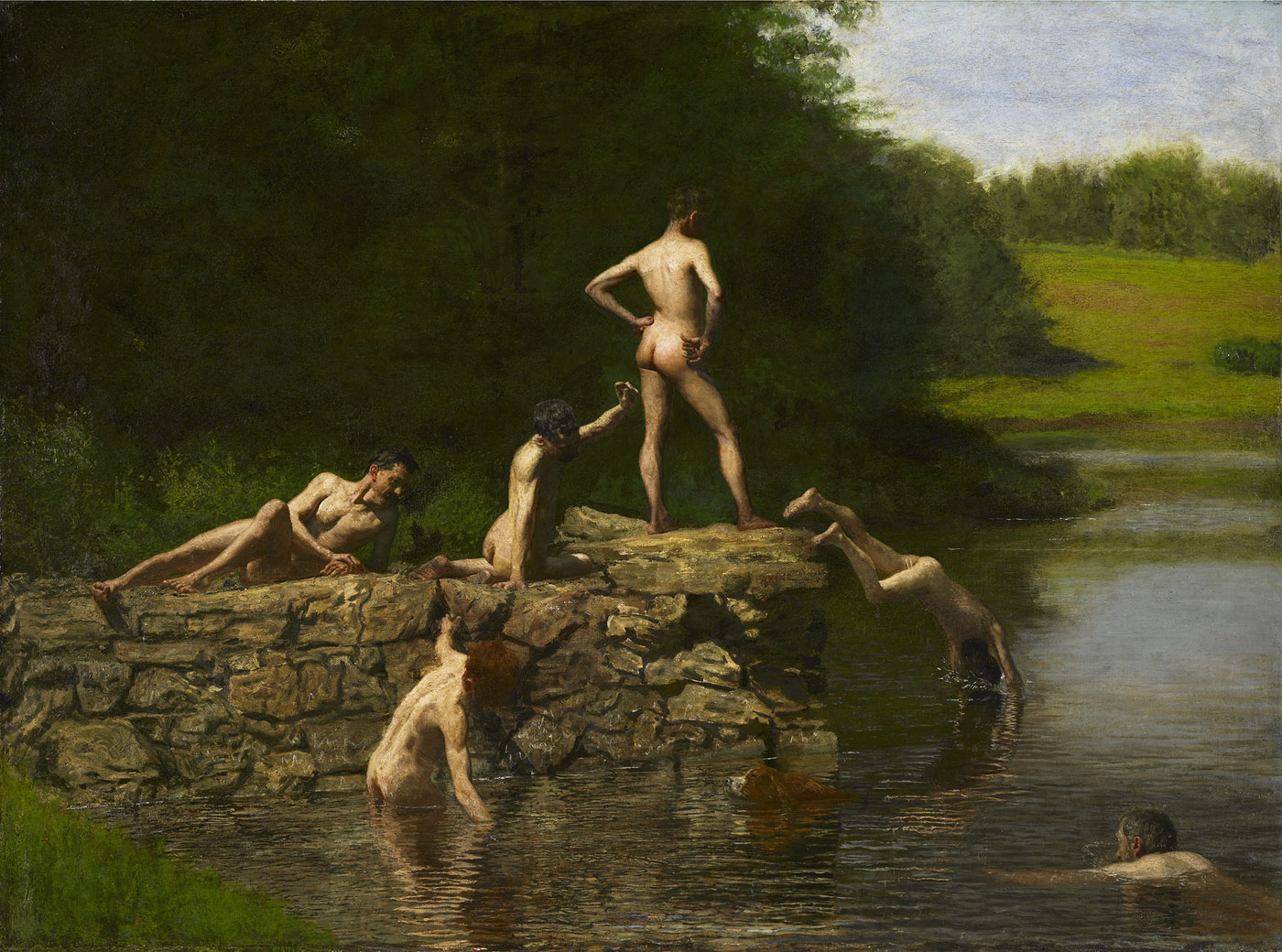
The Swimming Hole (1884-1885) features Eakins’ finest studies of the nude, in his most successfully constructed outdoor picture. The figures are those of his friends and students, and include a self-portrait. Although there are photographs by Eakins which relate to the painting, the picture’s powerful pyramidal composition and sculptural conception of the individual bodies are completely distinctive pictorial resolutions. The work was painted on commission, but was refused.


Thomas Eakins (American, 1844-1916) 'Swimming / The swimming hole' 1885


Thomas Eakins (American, 1844-1916)
Swimming / The swimming hole
1885
Oil on canvas
27.625 × 36.625 in (70.2 × 93cm)
Amon Carter Museum of American Art


Thomas Eakins (American, 1844-1916) 'Wrestlers in Eakins's studio' 1899


Thomas Eakins (American, 1844-1916)
Wrestlers in Eakins’s studio
1899
Platinum print on paper
3 5/8 x 6 in. (9.0 x 15.2cm)
Hirshhorn Museum and Sculpture Garden, Smithsonian Institution, Washington, DC
Gift of Joseph H. Hirshhorn, 1966
Public domain


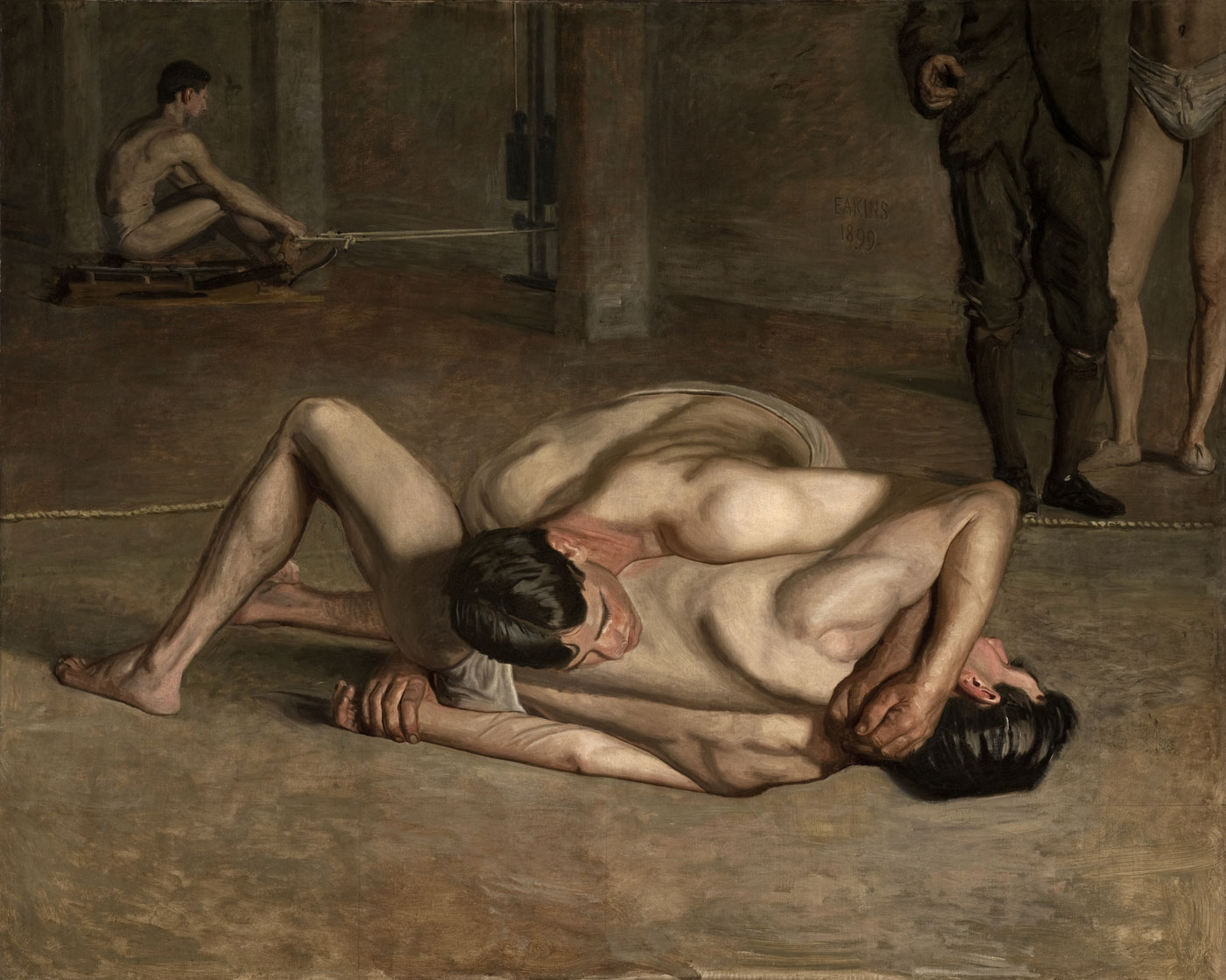
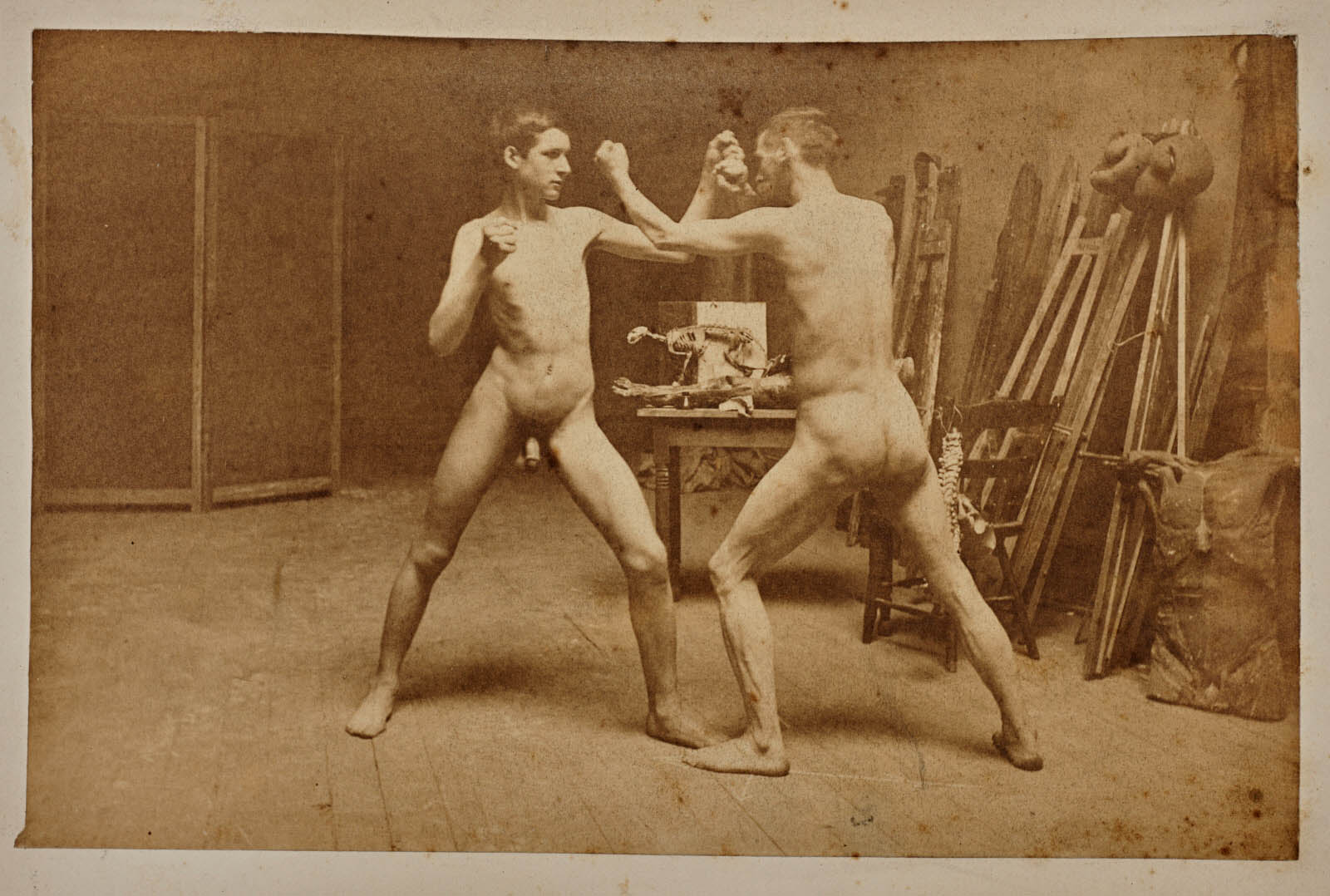
On May 22, 1899, Eakins had two wrestlers pose in his 4th-floor studio at 1729 Mount Vernon Street, Philadelphia. Three days earlier, he had written to his friend, sportswriter Clarence Cranmer: “I am going to start the wrestling picture on Monday at half past two. I wish you could find it convenient to be at the studio and help us with advice as to positions and so forth.” The artist’s protégé Samuel Murray may have been present; he modelled a small sculpture of the wrestlers that is also dated 1899. Eakins painted the works from the live models and from a nearly identical photograph, that may have been taken that day. The photograph shows the wrestler on top holding the other in a half nelson and crotch hold.

Text from the Wikipedia website


Thomas Eakins (American, 1844-1916) 'Wrestlers' 1899


Thomas Eakins (American, 1844-1916)
Wrestlers
1899
Oil on canvas
48 3/8 x 60 in. (122.87 x 152.4cm)
Image: Museum Associates/LACMA
Los Angeles County Museum of Art (LACMA) Image Library


Circle of Thomas Eakins (American, 1844-1916) 'Reclining Male Nude from The Grafly Album' 1886


Circle of Thomas Eakins (American, 1844-1916)
Reclining Male Nude from The Grafly Album
1886
Albumen print
Mounting Sheet: 6 7/8 x 10 in. (17.5 x 25.4cm)
Photo: 4 1/2 x 7 in. (11.5 x 17.8cm)
Acquired by the Clark, 2001
The Clark Art Institute
Public domain


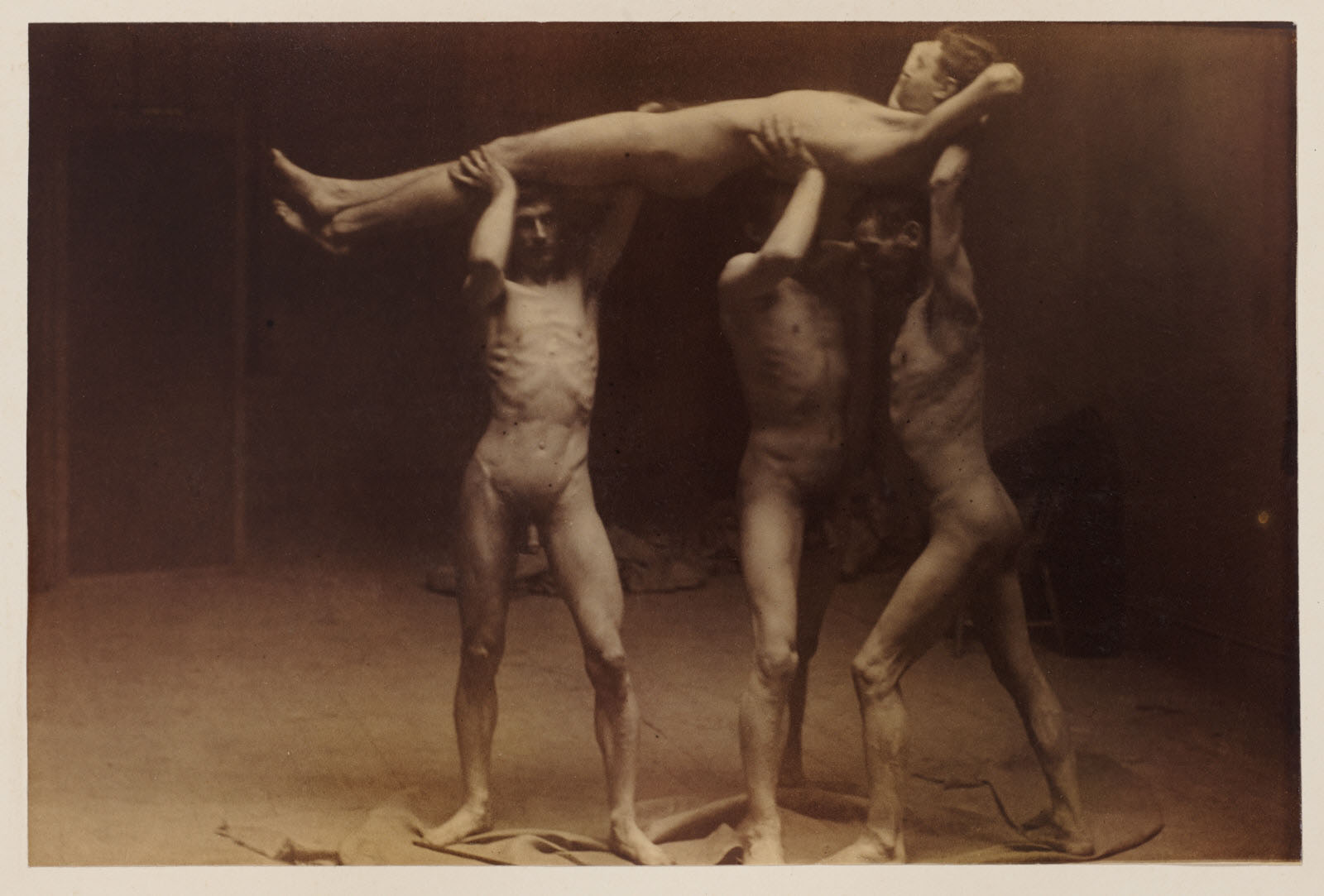
Circle of Thomas Eakins (American, 1844-1916) 'Three Male Nude Models Supporting a Reclining Fourth Model, from The Grafly Album' 1886


Circle of Thomas Eakins (American, 1844-1916)
Three Male Nude Models Supporting a Reclining Fourth Model, from The Grafly Album
1886
Albumen print
Mounting Sheet: 6 7/8 x 10 in. (17.5 x 25.4cm)
Photo: 4 1/2 x 7 in. (11.5 x 17.8cm)
Acquired by the Clark, 2001
The Clark Art Institute
Public domain


Circle of Thomas Eakins (American, 1844-1916) 'Four Standing Male Nudes, Frontal View, from The Grafly Album' 1886


Circle of Thomas Eakins (American, 1844-1916)
Four Standing Male Nudes, Frontal View, from The Grafly Album
1886
Albumen print
Mounting Sheet: 6 7/8 x 10 in. (17.5 x 25.4cm)
Photo: 4 1/2 x 7 in. (11.5 x 17.8cm)
Acquired by the Clark, 2001
The Clark Art Institute
Public domain


Circle of Thomas Eakins (American, 1844-1916) 'Two Male Nude Models Posing as Boxers, from The Grafly Album' 1886


Circle of Thomas Eakins (American, 1844-1916)
Two Male Nude Models Posing as Boxers, from The Grafly Album
1886
Albumen print
Mounting Sheet: 6 7/8 x 10 in. (17.5 x 25.4cm)
Photo: 4 1/2 x 7 in. (11.5 x 17.8cm)
Acquired by the Clark, 2001
The Clark Art Institute
Public domain


LIKE ART BLART ON FACEBOOK

Back to top

Exhibition: ‘Storyteller: The Photographs of Duane Michals’ at the Peabody Essex Museum (PEM), Salem MA

Exhibition dates: 7th March – 21st June, 2015

Original curator of the touring exhibition: Linda Benedict-Jones, Curator of Photography at the Carnegie Museum of Art (CMOA)


Duane Michals (American, b. 1932) From the series 'I Remember Pittsburgh' 1982 from the exhibition 'Storyteller: The Photographs of Duane Michals' at the Peabody Essex Museum (PEM), Salem MA, March - June, 2015


Duane Michals (American, b. 1932)
From the series I Remember Pittsburgh
1982
Nine gelatin silver prints
Greenwald Photograph Fund and Fine Arts Discretionary Fund
Courtesy of Carnegie Museum of Art, Pittsburgh


I couldn’t resist. Another posting on the work of this extraordinary artist. I particularly like The Bewitched Bee (1986) and Who is Sidney Sherman?, replete with blond wig and fag hanging out of the mouth accompanied by very funny and perceptive text.

There is also a very interesting piece of writing on life and photography included in the posting, Real Dreams, from 1976.

Dr Marcus Bunyan


Please click on the photographs for a larger version of the image.


“I’m not interested in what something looks like, I want to know what it feels like.”


Duane Michals


Duane Michals (American, b. 1932) 'The Bewitched Bee' 1986 from the exhibition 'Storyteller: The Photographs of Duane Michals' at the Peabody Essex Museum (PEM), Salem MA, March - June, 2015

Duane Michals (American, b. 1932) 'The Bewitched Bee' 1986

Duane Michals (American, b. 1932) 'The Bewitched Bee' 1986

Duane Michals (American, b. 1932) 'The Bewitched Bee' 1986

Duane Michals (American, b. 1932) 'The Bewitched Bee' 1986

Duane Michals (American, b. 1932) 'The Bewitched Bee' 1986

Duane Michals (American, b. 1932) 'The Bewitched Bee' 1986

Duane Michals (American, b. 1932) 'The Bewitched Bee' 1986

Duane Michals (American, b. 1932) 'The Bewitched Bee' 1986

Duane Michals (American, b. 1932) 'The Bewitched Bee' 1986

Duane Michals (American, b. 1932) 'The Bewitched Bee' 1986

Duane Michals (American, b. 1932) 'The Bewitched Bee' 1986

Duane Michals (American, b. 1932) 'The Bewitched Bee' 1986


Duane Michals (American, b. 1932)
The Bewitched Bee
1986
Thirteen gelatin silver prints with hand-applied text
5 x 7 in. (12.7 x 17.8 cm)


Michals uses photography to spin what amount to Ovidian legends, as in The Bewitched Bee, a sequence of thirteen images in which a young man stung by a bee grows antlers, wanders through the woods, and finally drowns in a sea of leaves.


The Peabody Essex Museum (PEM) presents Storyteller: The Photographs of Duane Michals, the first major U.S. retrospective of the artist’s work in 20 years. Through image sequences, multiple exposures and the overlay of handwritten messages and pigment, Duane Michals (b. 1932) pioneered distinctly new ways of creating and considering photographs. The last half-century of this artist’s prolific, trailblazing career is explored in a carefully selected presentation of more than 65 works. Organised by the Carnegie Museum of Art, Storyteller: The Photographs of Duane Michals is on view at PEM from March 7 through June 21, 2015.

Michals’ career has been fuelled by his enduring curiosity about the human experience and has been defined by its continual creative exploration and reinvention. A self-taught practitioner, he emerged on the photographic scene in the 1960s, at a time when Ansel Adams’ austere mountain ranges and Henri Cartier-Bresson’s iconic street scenes ruled the day. Rather than journey outward to depict nature or patiently wait to capture a decisive moment, Michals sought a new method of expression for his psychological and imaginative vision. He worked with friends and acquaintances to stage sequences of photographs that sought to express things that cannot be seen directly, such as metaphysical  reflections on the passage from life to death. Later, he added handwritten text to the images’ margins, further challenging the prevailing sanctity of the single pure photograph.

“For Michals, the need to authentically express himself trumped any interest in being accepted into the mainstream art world. His work charts fresh territory, creatively mixing philosophical rigour, surreal witticism and childlike playfulness with an unabashed sentimentality and nostalgic longing,” says Trevor Smith, PEM’s Curator of the Present Tense. “In Michals’ photographs we encounter an uncommon vulnerability as well as a resolute search for meaning and human connection.”

Raised in a steelworking family outside of Pittsburgh, Michals has explored familial and personal identity as a recurring theme. In a rarely exhibited 30-photograph sequence titled The House I Once Called Home (2003), the artist explores the abandoned three-story brick house where he spent his childhood. Each image is paired with poetic verse of remembrance and reflection to create an intimate photographic memoir and metaphysical scrapbook. Recent photographs are superimposed on historic images as the series toggles through time, space and memory. The home’s current dilapidated state contrasts with reveries of a formerly bustling family home and a rumination on the passage of time and the inevitable succession of generations.

Michals’ lifelong adventure with photography began on a trip to Russia in 1958. Borrowing a camera from a friend, he discovered a way to interact with people and tell stories. Shortly thereafter, Michals moved to New York City where he supported himself through work as a commercial photographer for Vogue, Esquire and Life magazines and took portraits of notable artists including Meryl Streep, Sting and Willem de Kooning. In the 1960s, Michals began his earliest experimental narrative sequences that were exhibited in 1970 at the Museum of Modern Art (MoMA). The curator of the show, William Burback, noted that “the mysterious situations Michals invents are posed and theatrical. Yet, they are so common to the urban condition that we have the illusion of remembering scenes and events experienced for the first time.” Later he began adding text to his photographs such as This Photograph Is My Proof (from 1974), which allowed him to tell stories and address feelings that could not be fully explored by photography alone.

Rather than take cues from his photographic contemporaries, Michals considers surrealist painters such as René Magritte, Balthus and Giorgio de Chirico to be his artistic heroes. Scratching out universal truths from the mystery of human experience, Michals has explained that his works are, “about questions, they are not about answers.” Over the decades, he has been at the forefront of exploring sexual identity and the struggles for gay rights. In his 1976 work, The Unfortunate Man, a model arches his back in anguish while the accompanying text reads: The unfortunate man could not touch the one he loved. It was declared illegal by the law. Slowly his fingers became his toes and his hands gradually became feet. He wore shoes on his hands to disguise his pain. It never occurs to him to break the law.

One of the constants of Michals’ career – from his classic narrative sequences to his more recent series of hand-painted tintypes – has been his preference for intimately scaled images with tactile surface treatments. These works, with their universal themes of memory, dreams, desire and mortality, draw the viewer closer and insist on their full engagement at an emotional level. Commenting on why Michals includes handwritten text on his images, he has said: “I love the intimacy of the hand. It’s like listening to someone speaking.”

Press release from the PEM website


Duane Michals (American, b. 1932) 'Andy Warhol' 1972


Duane Michals (American, b. 1932)
Andy Warhol
1972
© Duane Michals; The Henry L. Hillman Fund
Courtesy of Carnegie Museum of Art, Pittsburgh


Duane Michals (American, b. 1932) 'Sting' 1982


Duane Michals (American, b. 1932)
Sting
1982
Gelatin silver print
Courtesy of DC Moore Gallery and the artist


Duane Michals (American, b. 1932) 'The Great Photographers of My Time #2' 1991 from the exhibition 'Storyteller: The Photographs of Duane Michals' at the Peabody Essex Museum (PEM), Salem MA, March - June, 2015


Duane Michals (American, b. 1932)
The Great Photographers of My Time #2
1991
Gelatin silver print
The Henry L. Hillman Fund
Courtesy of Carnegie Museum of Art, Pittsburgh


Duane Michals (American, b. 1932) 'The Unfortunate Man' 1976


Duane Michals (American, b. 1932)
The Unfortunate Man
1976
Gelatin silver print with hand-applied text
The Henry L. Hillman Fund
Courtesy of Carnegie Museum of Art, Pittsburgh


Duane Michals (American, b. 1932) 'Magritte at His Easel' 1965


Duane Michals (American, b. 1932)
Magritte at His Easel
1965
Gelatin silver print with hand-applied text


Duane Michals (American, b. 1932) 'Georgette and Rene Magritte' 1965


Duane Michals (American, b. 1932)
Georgette and Rene Magritte
1965
Gelatin silver print with hand-applied text


Duane Michals (American, b. 1932) 'Self Portrait as a Devil on the Occasion of My Fortieth Birthday' 1972


Duane Michals (American, b. 1932)
Self Portrait as a Devil on the Occasion of My Fortieth Birthday
1972
The Henry L. Hillman Fund
Courtesy of Carnegie Museum of Art, Pittsburgh
© Duane Michals


Duane Michals (American, b. 1932) 'Primavera' 1984


Duane Michals (American, b. 1932)
Primavera
1984
The Henry L. Hillman Fund
Courtesy of Carnegie Museum of Art, Pittsburgh
© Duane Michals


Duane Michals (American, b. 1932) From the series 'The House I Once Called Home' 2002


Duane Michals (American, b. 1932)
From the series The House I Once Called Home
2002
Thirty gelatin silver prints with hand-applied text
The Henry L. Hillman Fund
Courtesy of Carnegie Museum of Art, Pittsburgh


Randy Duchaine. 'Duane Michals, portrait with red nose' 2015


Randy Duchaine
Duane Michals, portrait with red nose
2015
Photo courtesy of Randy Duchaine


Real Dreams

by Duane Michals

Nothing is what I once thought it was. You are not what you think you are. You are nothing you can imagine.
I am a short story writer. Most often photographers are reporters. I am an orange.
They are apples.
One of the biggest cliches in photography is to say that he is a personal photographer.
We must touch each other to stay human. Touch is the only thing that can save us.
I use photography to help me explain my experiences to myself.
Some photographers literally shoot everything that moves, hoping somehow, in all that confusion to discover a photograph. The difference between the artist and the amateur is a sense of control. There is a great power in knowing exactly what you are doing, even when you don’t know.
We are all stars. We just don’t know it.
I practice being Duane Michals everyday – that’s all I know.
Most portraits are lies. People are rarely what they appear to be, especially in front of a camera. You might know me your entire lifetime and never reveal yourself to me. To interpret wrinkles as character is insult not insight.
Was there ever a 1956? What did I do in June 1971? What happened in 1956? I think that there was 1932.
The history of photography has not been written. You will write it. No one has photographed a nude until you have. No one has photographed a sequence or green pepper till you have. Nothing has been done until you do it.
There are no answers anymore.
Get (Edward) Weston off your back, forget (Diane) Arbus, (Robert) Frank, (Ansel) Adams, (Clarence) White, don’t look at photographs. Kill the Buddha.
I am my own hero.
Photography books have titles like “The Photographer’s Eye” or “The Vision of So and So” or “Seeing Photographers” – as if photographers didn’t have minds, only eyes.
Everything is going; yes, even you must go. Right now you are going. Right now!
I find myself talking to photographs. I see a photograph of a women and I ask, “Is that all you’re going to tell me?” I can see the long hair and costume. Is she a witch, a mother, kind, consuming? Does she believe anything? I want more.
As I write this, at this moment, thousands of people are dying, thousands are being born, the earth is totally alive with Spring lust, stars are exploding – my God!
It is the great unknowing that we all live in, that we call life, that I find overwhelming. And I think that I will never know, never.
I am the limits of my work. You are the limits of yours. This is a journey. We do not live here. When I say “I,” I mean We.
As soon as I say “now,” it becomes “then.”
It is very easy for photographers to fake. Just go out and photograph twenty Pizza Huts.
That’s all there is, change.
Some influences open doors and liberate, other influences close doors and suffocate.
Photography, particularly, is suffocating.
I believe in the imagination. What I cannot see is infinitely more important than what I can see.

Photographers tell me what I already know. The recognition of the beautiful, bizarre, or boring (the three photographic B’s) is not the problem. You would have to be a refrigerator not to be moved by the beauty of Yosemite. The problem is to deal with one’s total experience, emotionally as well as visually. Photographers should tell me what I don’t know.
I find the limitations of still photography enormous. One must redefine photography, as it is necessary to redefine one’s life in terms of one’s own needs. Each generation should redefine the language and all its experiences in terms of itself.
The key word is expression – not photography, not painting, not writing. You are the event, not your parents, friends, gurus. Only you can teach yourself.
Everything we experience is in our mind. It is all mind. What you are reading now, hearing now, feeling now…
We’re all afraid of dying. We’ve already died. Look at your high school graduation picture, she’s dead! Just now, you died.
It is essential for me to be silly. If one is serious, one must also be foolish, to survive.
Trying to communicate one true feeling on my own terms is a constant problem.
I am compulsive in my preoccupation with death. In some way I am preparing myself for my own death. Yet if someone would put a gun to my stomach, I would pee my pants. All my metaphysical speculations would get wet.
When you look at my photographs, you are looking at my thoughts.
I am very attracted to the person of Stefan Mihal. He is the man I never became. We are complete opposites, although we were born at the same moment. If we should meet, we would explode. We are like matter and anti-matter. He is my shadow. I saved myself from him.
I only photograph what I know about, my life, I do not presume to know who blacks are or what they feel or bored suburban families or transvestites. And I never believe photographs of them staring into a camera.
I take nothing for granted. I can count on nothing. I am not sure where I once was certain. I don’t know what will be left by the time I’m fifty. That’s ok.
The sight of these words on a page pleases me. It’s like some sort of trail I’ve left behind, clues, strange marks made, that prove I was once here.
When I was about 9 ( the year my brother Tim was born), I would sit on the edge of my bed and be very still, long after the family had gone to sleep. I would try to find the “I” of “me.” I thought that if I would be very quiet, I might find that place inside that was “I.” I am still looking.
We are all a mental construction. Change our chemistry, our point of reference and reality changes.
I am a professional photographer and a spiritual dilettante: I would prefer to be a professional mystic and a dilettante photographer.
I remember the first time I sensed being lonely. I was about five at the time, living with my grandmother, and my best friend Art went away with his family. The afternoon loomed long and empty. I missed someone, I was empty. There was a lacking.
Only I am my enemy. My fear can stop me.
Never try to be an artist. Just do your work and if the work is true, it will become art.
“We must pay attention so as not to be deceived by the familiar.”
Things are what we will them to become.
It is important to stay vulnerable. To permit pain, to make mistakes, not to be intimidated by touching. Mistakes are very important, if we’re alert.
None of my photographs would have existed without my inventing them. These are not accidental encounters, witnessed on the street. I am responsible whether (Henri Cartier-) Bresson was there or not, those people would have had their picnic along the Seine. They were historical events.

There is not one photography. There is no photography. The only value judgment is the work itself. Does it move, touch, fill me?
Any one who defines photography frightens me. They are photo-fascists, the limiters.
They know! We must struggle to free ourselves constantly, not only from ourselves but especially from those who know.
It seems I am waiting for something to happen: and when it does, it will be difficult for me to imagine that I had ever been the person who is writing this. I will be someone else.
I am not interested in the perfect print. I am interested in a perfect idea. Perfect ideas survive bad prints and cheap reproductions. They can change our lives.
(If Duane wants to take pictures, he should do a study of laborers and farm workers and unwed mothers and make some social changes. Do something else – something noble. That’s what I’d do. – Stefan Mihal)
We have a way of making the most extraordinary experiences ordinary. We actually work at destroying miracles.
The best artists give themselves in their work. (Rene) Magritte was a gift, (Eugene) Atget, (Thomas) Eakins, (Odilon) Redon, (Bill) Brandt, (August) Sander(s), Balthus, (Giorgio) De Chirico, (Walt) Whitman, Cavafy. That’s all that there is to give. I am my gift to you, and you are your gift to me.
Most photographers photograph other people’s lives, seldom their own.
We must free ourselves to become what we are.
Photography describes to well.
Our parents protect us from death. But when they die, there is no one to stand between us and death.
I once thought that time was horizontal, and if I looked straight ahead, I could see next Thursday. Now I think it is vertical and diagonal and perpendicular. It’s all very confusing.
People believe in the reality of photographs, but not in the reality of paintings. That gives photographers an enormous advantage. Unfortunately, photographers also believe in the reality of photographs.
The most important sentences usually contain two words: I want, I love, I’m sorry, please forgive, please touch, I need, I care, thank you.
Everything is subject for photography, especially the difficult things of our lives: anxiety, childhood hurts, lust, nightmares. The things that cannot be seen are the most significant. They cannot be photographed, only suggested.
I would like to talk to William Blake and Thomas Eakins.

Duane Michals June 20, 1976 September 1, 1976


Duane Michals (American, b. 1932) 'Madame Schrödinger's Cat' 1998

Duane Michals (American, b. 1932) 'Madame Schrödinger's Cat' 1998

Duane Michals (American, b. 1932) 'Madame Schrödinger's Cat' 1998


Duane Michals (American, b. 1932)
Madame Schrödinger’s Cat
1998
From the series Quantum
© Duane Michals
The Henry L. Hillman Fund
Courtesy of Carnegie Museum of Art, Pittsburgh


Duane Michals (American, b. 1932) 'Paradise Regained' 1968

Duane Michals (American, b. 1932) 'Paradise Regained' 1968 'Paradise Regained' 1968

Duane Michals (American, b. 1932) 'Paradise Regained' 1968

Duane Michals (American, b. 1932) 'Paradise Regained' 1968

Duane Michals (American, b. 1932) 'Paradise Regained' 1968

Duane Michals (American, b. 1932) 'Paradise Regained' 1968


Duane Michals (American, b. 1932)
Paradise Regained
1968
Courtesy of the artis
The Henry L. Hillman Fund
Carnegie Museum of Art


“Everything I did grew out of my frustration with the medium, the silence of the still picture,” he says, so he found the “wiggle room.” With sequences, he could add drama before and after the decisive moment. Having his subjects move created ethereal images and an awareness of time’s passage. Layering negatives challenged preconceptions.

Language, Michals says, has always been associated with photographs. A newspaper caption might tell you that 20 inches of snow fell on Boston or Vladimir Putin arrived by plane at the Olympics. “I write about what cannot be seen,” he says. “My text picks up where the photograph fails. This Photograph is my Proof, a “nice picture” of his cousin and new bride at Michals’ grandmother’s house, is metaphorically “out of focus” until Michals adds the text.

Michals uses a pen nib and ink to enhance his visual stories, writing in cursive or all capitals depending on his mood. “I like the handwriting, the texture.” He also collects original manuscripts. He describes himself as an intimist, a lover of diaries, books (he has three libraries at home in New York City), small pictures and intimacy. “My photographs whisper into the viewers’ eyes rather than shout. They say, ‘Come closer. I’ll tell you a secret.'”

Michals says he’s taken many professional risks, especially when presenting issues born of the gay community like isolation and illegal behaviour. “Remember, 20 or 30 years ago, marriage wasn’t even on the table,” he says. (Michals and Fred Gorrée, his partner of nearly 56 years, married in 2011, just days after same-sex marriage was legalised in New York.)

Unlike Robert Mapplethorpe, whom he says is more hardcore, Michals tends toward sentimentality and the legitimacy of the love between people of the same gender. “I’m not a typical gay person any more than I’m a typical person or photographer.”

That disdain for following established paths might explain why Ansel Adams and Henri Cartier-Bresson are not among his heroes. “My sources for inspiration were anybody who contradicted my mind and opened my imagination,” Michals says, like Lewis Carroll, Magritte, Joseph Cornell and surrealists in general. “Ansel Adams did not open my imagination. He dealt with Yosemite and sunsets. I was interested in metaphysical ideas, what happens when you die.”

Extract from Lisa Kosan. “Meet Duane Michals,”on the PEM website 2nd March 2015 [Online] Cited 08/06/2015. No longer available online.


Duane Michals (American, b. 1932) 'Who is Sidney Sherman?' 2000

Duane Michals (American, b. 1932) 'Who is Sidney Sherman?' 2000

Duane Michals (American, b. 1932) 'Who is Sidney Sherman?' 2000

Duane Michals (American, b. 1932) 'Who is Sidney Sherman?' 2000

Duane Michals (American, b. 1932) 'Who is Sidney Sherman?' 2000

Duane Michals (American, b. 1932) 'Who is Sidney Sherman?' 2000


Duane Michals (American, b. 1932)
Who is Sidney Sherman?
2000
© Duane Michals
The Henry L. Hillman Fund
Courtesy of Carnegie Museum of Art, Pittsburgh


Peabody Essex Museum
East India Square
161 Essex Street
Salem, MA 01970-3783 USA
Phone: 978-745-9500, 866-745-1876

Opening hours:
Open Thursday – Monday, 10am – 5pm
Closed Tuesdays and Wednesdays

Peabody Essex Museum website

LIKE ART BLART ON FACEBOOK

Back to top

Exhibition: ‘Hal Fischer, Gay Semiotics, 1977/2014’ at the Fotomuseum Winterthur, Zürich

Exhibition dates: 8th May – 7th June, 2015

Curator: Professor Tim Dean


Hal Fischer (American, b. 1950) 'Blue Handkerchief, Red Handkerchief' 1977/2014 from 'Gay Semiotics' from the exhibition 'Hal Fischer, Gay Semiotics, 1977/2014' at the Fotomuseum Winterthur, Zürich, May - June, 2015


Hal Fischer (American, b. 1950)
Blue Handkerchief, Red Handkerchief
1977/2014
From Gay Semiotics 1977
Inkjet print


I remember coming out in 1975, six years after Stonewall, that seismic event that was the out and proud culmination of the resistance to oppression that had been building since the Second World War. Pre-disco, pre-Heaven night club (opened in December 1979) young gay men like me went to pubs in the Soho and Earl’s Court district of London and to places like Bang! nightclub on Tottenham Court Road (opened 1976). I used to wear an earring in my left ear, keys on the left, handkerchiefs to all the fetish nights at Heaven, and speak a queer language that secretive gay men had to speak in straight places… Polari (or alternatively Parlare, Parlary, Palare, Palarie, Palari; from Italian parlare, “to talk”).

“Polari is a form of cant slang used in Britain by actors, circus and fairground showmen, merchant navy sailors, criminals, prostitutes, and the gay subculture. There is some debate about its origins, but it can be traced back to at least the nineteenth century and possibly the sixteenth century… Polari is a mixture of Romance (Italian or Mediterranean Lingua Franca), London slang, backslang, rhyming slang, sailor slang, and thieves’ cant… It was a constantly developing form of language, with a small core lexicon of about 20 words (including bona, ajax, eek, cod, naff, lattie, nanti, omi, palone, riah, zhoosh (tjuz), TBH, trade, vada), and over 500 other lesser-known words.

Polari was used in London fishmarkets, the theatre, fairgrounds and circuses, hence the many borrowings from Romany. As many homosexual men worked in theatrical entertainment it was also used among the gay subculture, at a time when homosexual activity was illegal, to disguise homosexuals from hostile outsiders and undercover policemen. It was also used extensively in the British Merchant Navy, where many gay men joined ocean liners and cruise ships as waiters, stewards and entertainers. On one hand, it would be used as a means of cover to allow gay subjects to be discussed aloud without being understood; on the other hand, it was also used by some, particularly the most visibly camp and effeminate, as a further way of asserting their identity.” (Text from Wikipedia)

For example “vada the bona omi” was a “look at the good man”, “spark out on his palliass” was “flat out on his back”, and “he had huge lallies” which was “he had huge legs” (more terms can be found on the Polari – British gay slang web page). Another favourite was “trolling the Dilly” which means “to cruise or walk about Pica/dilly” where the rent boys (known as Dilly boys) used to line up against the railings looking for customers or “trade”. In this context “trolling” could be seen as a form of gay flâneur. Wikipedia states that Polari had begun to fall into disuse amongst the gay subculture by the late 1960s, but in my experience this is not true. Within my circle of friends it was still in constant use into the early 1980s. The language was very useful in pubs in London where sailors, ruff trade, and the theatre crowd mixed in Soho, were you could comment to a gay friend on a man that you thought attractive and anyone overhearing your conversation would not know what you were talking about.

All this must seem rather quaint now, but the archetypal images of gay men have not changed much over the intervening years. There is still the natural young gay man, the bear, the leatherman (or those that just wear leather for dance parties, just for show and not for attitude), the S/M scene, still the handkerchief code (still seen though rarely these days), the armband on the left or right for active or passive, still the gay jocks but now much more the gym preened bunnies. Everything old is new again… it’s just less heterogeneous.

Dr Marcus Bunyan


Many thankx to the Fotomuseum Winterthur for allowing me to publish the photographs in the posting. Please click on the photographs for a larger version of the image.

All photographs by Hal Fischer from Gay Semiotics, 1977/2014, Courtesy Hal Fischer, and Cherry and Martin, Los Angeles © Hal Fischer


In 1977, Hal Fischer produced his photo-text project Gay Semiotics, first as a series of silver gelatin prints and then as a book published by NFS Press. The project explored the growing visibility of the male gay community in the Castro district of San Francisco, particularly its street style and so-called ‘hanky codes’ indicating different sexual preferences. Fisher’s series was one of the earliest attempts to explore a queer semiotics, offering a playful engagement with male self-fashioning and archetypes. Gay Semiotics is both a marker of the self-confidence and creativity of the San Francisco gay community before the emergence of HIV/AIDS and an important contribution to West Coast conceptual photography.


Hal Fischer (American, b. 1950) 'Keys' 1977/2014 from 'Gay Semiotics' 1977 from the exhibition 'Hal Fischer, Gay Semiotics, 1977/2014' at the Fotomuseum Winterthur, Zürich, May - June, 2015


Hal Fischer (American, b. 1950)
Keys
1977/2014
From Gay Semiotics 1977
Inkjet print


Hal Fischer (American, b. 1950) 'Leather Apparel' 1977/2014 From 'Gay Semiotics' 1977


Hal Fischer (American, b. 1950)
Leather Apparel
1977/2014
From Gay Semiotics 1977
Inkjet print


Hal Fischer (American, b. 1950) 'Gag Mask' 1977/2014 From 'Gay Semiotics' 1977


Hal Fischer (American, b. 1950)
Gag Mask
1977/2014
From Gay Semiotics 1977
Inkjet print


Hal Fischer (American, b. 1950) 'Amyl Nitrite' 1977/2014 From 'Gay Semiotics' 1977


Hal Fischer (American, b. 1950)
Amyl Nitrite
1977/2014
From Gay Semiotics 1977
Inkjet print


Hal Fischer (American, b. 1950) 'Earring' 1977/2014 From 'Gay Semiotics' 1977


Hal Fischer (American, b. 1950)
Earring
1977/2014
From Gay Semiotics 1977
Inkjet print


JBW: Gay Semiotics is an attempt to map some of the discourse of structuralism onto the visual codes of male queer life in the Castro. How did you come to structuralism?

HF: Thanks to Lew Thomas, in graduate school I began reading things like Jack Burnham’s The Structure of Art and Ursula Meyer’s Conceptual Art. Those were two key texts. Of course, structuralism came late to photography, when you consider that Susan Sontag’s Against Interpretation came out in 1966. Reading Burnham, going on to read Claude Lévi-Strauss, all that was crucial. I learned about signifiers, and thought, this is going on all around me.

JBW: You’re doing several things in Gay Semiotics. On the one hand, you’re parsing a signification system that arose out of a nonverbal, erotic exchange, and you’re also deconstructing gay male self-fashioning and photographing “archetypes.” It is thus a photo-project about the history of photography and its long legacy of ethnographic typing.

HF: I can’t say I was conscious of it at the time, but one of the first photographers who influenced me was August Sander. I mean, I LOVED Sander. I still do. I probably was a fascist in an earlier life, because I’m definitely into types, and I’m definitely into archetyping. I don’t really think it’s that awful a thing to do; it can be very informative. I was also interested in the Bechers and the notion of repetition.

JBW: So the work is also about genre.

HF: Yes. It’s also about personal desire; it’s a lexicon of attraction.”

Extract from Julia Bryan-Wilson speaking with Hal Fischer. Aperture magazine #218, Spring 2015


Hal Fischer (American, b. 1950) 'Signifiers for a Male Response' 1977/2014 From 'Gay Semiotics' 1977


Hal Fischer (American, b. 1950)
Signifiers for a Male Response
1977/2014
From Gay Semiotics 1977
Inkjet print


Hal Fischer (American, b. 1950) 'Street Fashion Basic Gay' 1977/2014 From 'Gay Semiotics' 1977


Hal Fischer (American, b. 1950)
Street Fashion Basic Gay
1977/2014
From Gay Semiotics 1977
Inkjet print


Hal Fischer (American, b. 1950) 'Street Fashion Jock' 1977/2014 From 'Gay Semiotics' 1977


Hal Fischer (American, b. 1950)
Street Fashion Jock
1977/2014
From Gay Semiotics 1977
Inkjet print


Hal Fischer (American, b. 1950) 'Street Fashion Forties Trash' 1977/2014 From 'Gay Semiotics' 1977


Hal Fischer (American, b. 1950)
Street Fashion Forties Trash
1977/2014
From Gay Semiotics 1977
Inkjet print


Hal Fischer (American, b. 1950) 'Street Fashion Hippie' 1977/2014 From 'Gay Semiotics' 1977


Hal Fischer (American, b. 1950)
Street Fashion Hippie
1977/2014
From Gay Semiotics 1977
Inkjet print


Hal Fischer (American, b. 1950) 'Street Fashion Uniform' 1977/2014 From 'Gay Semiotics' 1977


Hal Fischer (American, b. 1950)
Street Fashion Uniform
1977/2014
From Gay Semiotics 1977
Inkjet print


Hal Fischer (American, b. 1950) 'Street Fashion Leather' 1977/2014 From 'Gay Semiotics' 1977


Hal Fischer (American, b. 1950)
Street Fashion Leather
1977/2014
From Gay Semiotics 1977
Inkjet print


Hal Fischer (American, b. 1950) 'Archetypal Media Image Leather' 1977/2014 From 'Gay Semiotics' 1977


Hal Fischer (American, b. 1950)
Archetypal Media Image Leather
1977/2014
From Gay Semiotics 1977
Inkjet print


Hal Fischer (American, b. 1950) 'Archetypal Media Image Urbane' 1977/2014 From 'Gay Semiotics' 1977


Hal Fischer (American, b. 1950)
Archetypal Media Image Urbane
1977/2014
From Gay Semiotics 1977
Inkjet print


Hal Fischer (American, b. 1950) 'Archetypal Media Image Western' 1977/2014 From 'Gay Semiotics' 1977


Hal Fischer (American, b. 1950)
Archetypal Media Image Western
1977/2014
From Gay Semiotics 1977
Inkjet print


Hal Fischer (American, b. 1950) 'Archetypal Media Image Classical' 1977/2014 From 'Gay Semiotics' 1977


Hal Fischer (American, b. 1950)
Archetypal Media Image Classical
1977/2014
From Gay Semiotics 1977
Inkjet print


Hal Fischer (American, b. 1950) 'Archetypal Media Image Natural' 1977/2014 From 'Gay Semiotics' 1977


Hal Fischer (American, b. 1950)
Archetypal Media Image Natural
1977/2014
From Gay Semiotics 1977
Inkjet print


Hal Fischer (American, b. 1950) 'Dominance' 1977/2014 From 'Gay Semiotics' 1977


Hal Fischer (American, b. 1950)
Dominance
1977/2014
From Gay Semiotics 1977
Inkjet print


Hal Fischer (American, b. 1950) 'Sadism & Masochism' 1977/2014 From 'Gay Semiotics' 1977


Hal Fischer (American, b. 1950)
Sadism & Masochism
1977/2014
From Gay Semiotics 1977
Inkjet print


Hal Fischer (American, b. 1950) Submission' 1977/2014 From 'Gay Semiotics' 1977


Hal Fischer (American, b. 1950)
Submission
1977/2014
From Gay Semiotics 1977
Inkjet print


Hal Fischer (American, b. 1950) 'Bondage Device Cross' 1977/2014 From 'Gay Semiotics' 1977


Hal Fischer (American, b. 1950)
Bondage Device Cross
1977/2014
From Gay Semiotics 1977
Inkjet print


Hal Fischer (American, b. 1950) 'Bondage Device Open End Table Rack' 1977/2014 From 'Gay Semiotics' 1977


Hal Fischer (American, b. 1950)
Bondage Device Open End Table Rack
1977/2014
From Gay Semiotics 1977
Inkjet print


Hal Fischer (American, b. 1950) 'Bondage Device Meat Hoist' 1977/2014 From 'Gay Semiotics' 1977


Hal Fischer (American, b. 1950)
Bondage Device Meat Hoist
1977/2014
From Gay Semiotics 1977
Inkjet print


Fotomuseum Winterthur
Grüzenstrasse 44 + 45
CH-8400
Winterthur (Zürich)

Opening hours:
Tuesday to Sunday 11am – 6pm
Wednesday 11am – 8pm
Closed on Mondays

Fotomuseum Winterthur website

LIKE ART BLART ON FACEBOOK

Back to top

Photographs: Andy Warhol unplugged 2

May 2015


Andy Warhol (American, 1928-1987)
 'Air France' 
dated Jun 21 1982


Andy Warhol (American, 1928-1987)
Air France
Jun 21 1982
Unique gelatin silver print
8 x 10 in. (20.3 x 25.4cm)


Andy Warhol being, well … Andy Warhol.

Artist, tourist, celebrity, poofter, man about town and spontaneous, thoughtful snapper. The photograph of the Prado at night is superb as are the multiple, stitched together photographs. Warhol certainly loved his high key, 35mm images.

Marcus


Please click on the photographs for a larger version of the image.


Andy Warhol (American, 1928-1987)
 'Cessna Plane'
 c. 1977


Andy Warhol (American, 1928-1987)
Cessna Plane
c. 1977
Four stitched gelatin silver prints
Each: 11 x 14 in. (27.9 x 35.6cm)
Overall: 2 1 1/4 x 27 3/8 in. (54 x 69.5cm)


Andy Warhol (American, 1928-1987) 
'
City View
' May 07 1984


Andy Warhol (American, 1928-1987)
City View

May 07 1984
Unique gelatin silver print
8 x 10 in. (20.3 x 25.4cm)


Andy Warhol (American, 1928-1987) 'Houston Skyline' c. 1979


Andy Warhol (American, 1928-1987)
Houston Skyline
c. 1979
Unique gelatin silver print
8 x 10 in. (20.3 x 25.4cm)


Andy Warhol (American, 1928-1987) 'German Trolley
' Jun 23 1980


Andy Warhol (American, 1928-1987)
German Trolley

Jun 23 1980
Unique gelatin silver print
8 x 10 in. (20.3 x 25.4cm)


Andy Warhol (American, 1928-1987)
 'Limousine Interior' c. 1980


Andy Warhol (American, 1928-1987)
Limousine Interior
c. 1980
Unique gelatin silver print
8 x 10 in. (20.3 x 25.4cm)


Andy Warhol (American, 1928-1987)
 'Luxor Temple' c. 1977


Andy Warhol (American, 1928-1987)
Luxor Temple
c. 1977
Two unique gelatin silver prints
Each: 8 x 5 in. (20.3 x 12.7cm)


Andy Warhol (American, 1928-1987)
 Luxor Temple c. 1977 (detail)


Andy Warhol (American, 1928-1987)
Luxor Temple (detail)
c. 1977
Two unique gelatin silver prints
Each: 8 x 5 in. (20.3 x 12.7cm)


Andy Warhol (American, 1928-1987)
 'Ocean Landscape' 1986


Andy Warhol (American, 1928-1987)
Ocean Landscape
1986
Four stitched gelatin silver prints
Each: 11 x 14 in. (27.9 x 35.6cm)
Overall: 2 1/4 x 27 1/2 in. (54 x 69.9cm)


Andy Warhol (American, 1928-1987)
 'Statues Outside Musée D'Orsay' c. 1980


Andy Warhol (American, 1928-1987)
Statues Outside Musée D’Orsay
c. 1980
Unique gelatin silver print
8 x 10 in. (20.3 x 25.4cm)


Andy Warhol (American, 1928-1987)
 'Monastery of Saint John of the Kings, Toledo' Jan 24 1983


Andy Warhol (American, 1928-1987)
Monastery of Saint John of the Kings, Toledo
Jan 24 1983
Unique gelatin silver print
8 x 10 in. (20.3 x 25.4 cm)


Andy Warhol (American, 1928-1987)
 'Museo del Prado Exterior, Madrid, Spain' Jan 24 1983


Andy Warhol (American, 1928-1987)
Museo del Prado Exterior, Madrid, Spain
Jan 24 1983
Unique gelatin silver print
8 x 10 in. (20.3 x 25.4cm)


Andy Warhol (American, 1928-1987)
 'Spanish Portico' 
Jan 24 1983


Andy Warhol (American, 1928-1987)
Spanish Portico
Jan 24 1983
Unique gelatin silver print
8 x 10 in. (20.3 x 25.4cm)


Andy Warhol (American, 1928-1987)
 'Richard Coeur de Lion at Westminster' c. 1980


Andy Warhol (American, 1928-1987)
Richard Coeur de Lion at Westminster
c. 1980
Unique gelatin silver print
8 x 10 in. (20.3 x 25.4cm)


Andy Warhol (American, 1928-1987)
 'Pyramid' c. 1977


Andy Warhol (American, 1928-1987)
Pyramid
c. 1977
Unique gelatin silver print
5 x 8 in. (12.7 x 20.3cm)


Andy Warhol (American, 1928-1987)
 'Street Scene' c. 1982


Andy Warhol (American, 1928-1987)
Street Scene
c. 1982
Unique gelatin silver print
8 x 10 in. (20.3 x 25.4cm)


Andy Warhol (American, 1928-1987)
 'Riders from the Car' c. 1979


Andy Warhol (American, 1928-1987)
Riders from the Car
c. 1979
Two unique polaroid prints mounted on board
Each: 4 1/4 x 3 3/8 in. (10.8 x 8.6cm)


Andy Warhol (American, 1928-1987)
 'Unidentified Men' c. 1980


Andy Warhol (American, 1928-1987)
Unidentified Men
c. 1980
Unique gelatin silver print
8 x 10 in. (20.3 x 25.4cm)


Andy Warhol (American, 1928-1987)
 'Venetian Canal' 1977


Andy Warhol (American, 1928-1987)
Venetian Canal
1977
Unique gelatin silver print
8 x 10 in. (20.3 x 25.4cm)


Andy Warhol (American, 1928-1987)
 'Table Setting' c. 1980


Andy Warhol (American, 1928-1987)
Table Setting
c. 1980
Unique gelatin silver print
8 x 10 in. (20.3 x 25.4cm)


Andy Warhol (American, 1928-1987)
 'Beach Scene' c. 1975


Andy Warhol (American, 1928-1987)
Beach Scene
c. 1975
Unique polaroid print
4¼ x 3½ in. (10.8 x 8.8cm)


Andy Warhol (American, 1928-1987)
 'Place de la Concorde' c. 1980


Andy Warhol (American, 1928-1987)
Place de la Concorde
c. 1980
Unique gelatin silver print
10 x 8 in. (25.4 x 20.3cm)


Andy Warhol (American, 1928-1987)
 'Rockefeller Center' c. 1984


Andy Warhol (American, 1928-1987)
Rockefeller Center
c. 1984
Unique gelatin silver print
10 x 8 in. (25.4 x 20.3cm)


Andy Warhol (American, 1928-1987)
 'Sears Tower' c. 1980


Andy Warhol (American, 1928-1987)
Sears Tower
c. 1980
Unique gelatin silver print
10 x 8 in. (25.4 x 20.3cm)


Andy Warhol (American, 1928-1987)
 'Max Delys at the Saloon' c. 1980


Andy Warhol (American, 1928-1987)
Max Delys at the Saloon
c. 1980
Unique polaroid print mounted on board
4 1/4 x 3/ 3/8 in. (10.8 x 8.5cm)


Andy Warhol (American, 1928-1987)
 'Union Square' c. 1975


Andy Warhol (American, 1928-1987)
Union Square
c. 1975
Unique polaroid print
4 1/4 x 3 3/8 in. (10.8 x 8.5cm)


Andy Warhol (American, 1928-1987)
 'Tunnel' c. 1980


Andy Warhol (American, 1928-1987)
Tunnel
c. 1980
Unique gelatin silver print
8 x 10 in. (20.3 x 25.4cm)


LIKE ART BLART ON FACEBOOK

Back to top

Artist in focus: Larry Fink

April 2015


Larry Fink (American, 1941-2023) 'Peter Beard's, East Hampton', from the portfolio '82 Photographs 1974 to 1982' 1982; printed 1983


Larry Fink (American, 1941-2023)
Peter Beard’s, East Hampton, from the portfolio 82 Photographs 1974 to 1982

1982; printed 1983
Silver gelatin print


Hands / Class – Tree, Surface, Root

These are magnificent photographs. Fink’s mastery of the picture plane, ensemble, mise-en-scène, chiaroscuro is outstanding. But for me it is the attitude of the hands that make these photographs. Reaching, holding (usually the bodies of women), clasping, upturned, crotch grabbing, oversized, limp, clenched and gesticulating – in more of less every photograph it is the positioning of the hands that are the focus of my attention, and their relation to the social class of the proponent. The hedonism of Studio 54, the snobbishness of the benefits at MoMA and Corcoran Museum, and the Russian and Hungarian balls with their icy coolness and sidelong glances, all played off against the working class birthday parties of Pat Sabatine.

I spoke to my friend and mentor Ian Lobb about these photographs and we had a lively discussion:

MB: What do you think of the work of Larry Fink?

IL: The image of the child holding up his hand was on the cover of the second (?) Larry fink monograph. They are OK, but not great.

I have a rule: “The closer we get to the origin the more options we have.” But Larry is building on heaps of people – Winogrand, Mark Cohen etc, and earlier. And when that happens it really needs to be BUILT to be a success for the viewer. But he is just adding a bit. Its good, OK work. It’s mainly referencing stuff though. I can’t see anyone building on what he has done, a worker would have to go down the tree to a point before him to progress again.

Photography is pretty much fantastic before the fact, so things can look pretty good if it just happens. The process is so different from the reproduction of music that keeps trying to return to an original – photography has done that, but then runs tangential ideas where there can be flash and frozen time and no colour etc…

MB: I can understand what you are saying Ian … even though I don’t necessarily agree!

There is an essay I have just read as part of a Joan Fontcuberta book (“The Right Distance,” in Joan Fontcuberta. Pandora’s Camera: Photogr@phy after Photography. Mack, 2014, pp. 143-150). It’s interesting what he has to say about the “distance” of the photographer from the object… long distance landscape (in Victorian times… Muybridge, Carelton Watkins), long distance city (Marville) – the infinite sublime I call it – coming closer with Atget (parts of doors, stairs, closer engagement) and Blossfeldt – and then the avant-garde in the 1920s with the dissolution of far near into near far… followed by New Topographics and the griding of space, the regimentation and delineation of an even narrower point of view, both aesthetically and objectively.

I am paraphrasing but that is what he says anyway. It makes sense in one way. But in another we do not have to be either / or – near / far. Nor do we have to be “new” every time we take a photograph.

What I am arguing is that you do not always have to reinvent the wheel, in answer to your observation that you have to go back down the tree. Nothing is ever new and sometimes, as with the photography of Fink, it is the gesture that is enough for me – that human gesture that will never happen again exactly in that form. I am still in wonder of that moment, of the child’s raised hand (Pat Sabatine’s 8th Birthday Party). I don’t really care that people have done it before, they have never captured that moment, that precise gesture before… and it is still beautiful to me. The apple never falls far from the tree.
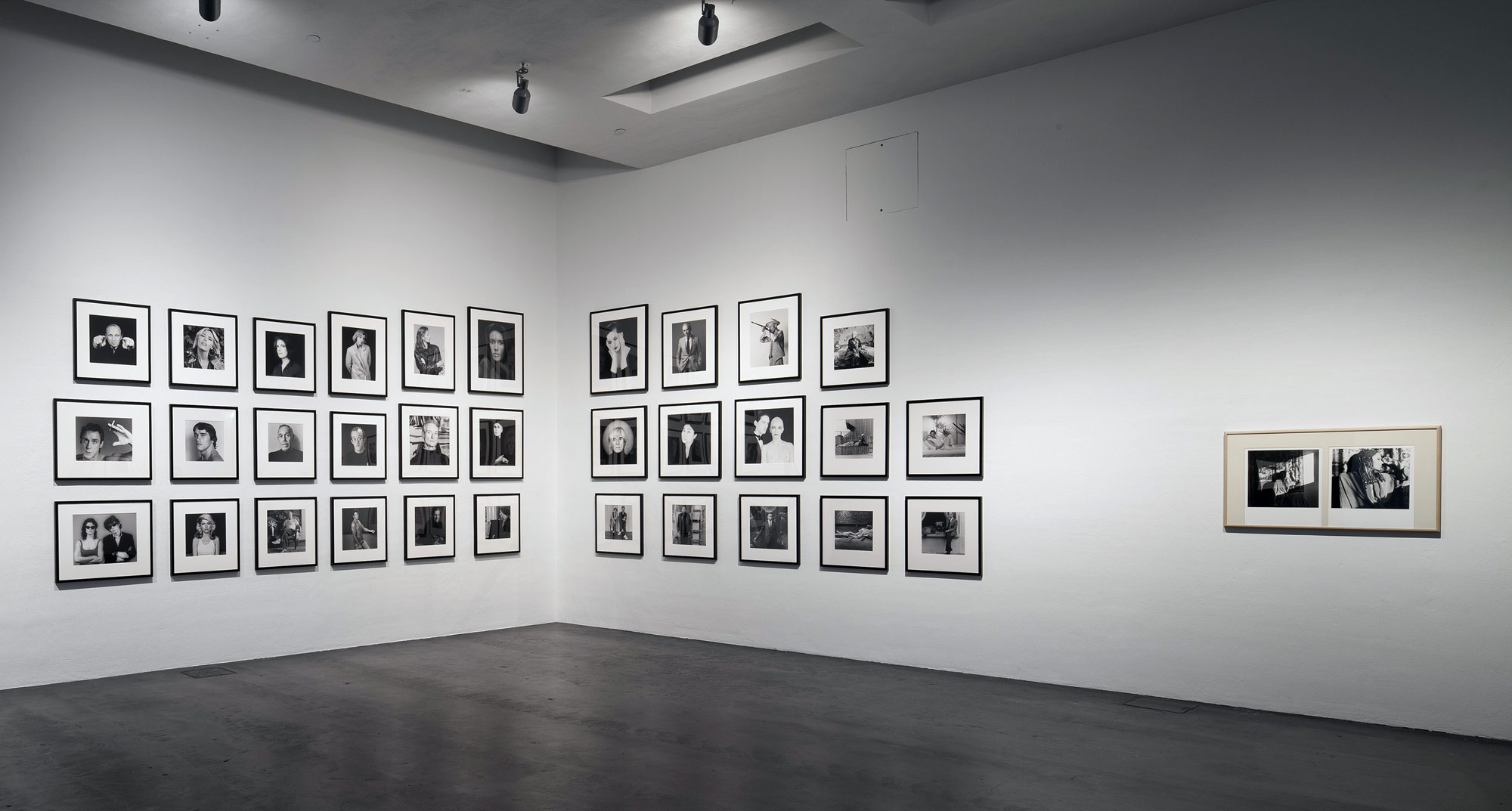
IL: A good term Marcus: the infinite sublime.

Fontcuberta understands it very well – mainly because it could be applied to the best of his pictures in terms of the continual involvement that some of them generate. As I said, the Larry Finks are OK. Have you seen the YouTube about Joel Sternfeld photographing in NY? He is literally right in peoples faces, and yet they don’t even seem to notice him. I’d like to see one of Larry Fink with his flash in these small rooms and intimate spaces.

What I can say is that some smart person will invent the term that distinguishes between the surface aesthetic of the digital and analogue print. There is such “value” in the display here [of Fink’s work], that would not mean the same in a digital print. Why? The analogue look could even be faked to fool everyone I suppose. Even with these, the surface would fall apart @ about 19″ sq and it would all be lost.

MB: It is the surface aesthetic Ian, but it goes deeper than that. I saw the Richard Avedon exhibition up at The Ian Potter Museum of Art were his negatives were blown up to enormous size and digitally printed… and they just didn’t work. There is a containment of energy within a classical analogue black and white photograph that the surface of a digital print cannot capture, yes, but in a good analogue photograph there is also an emotional depth that seems to transcend surface…. and as yet, digital photographs rarely approach this state of being. What would be a word that evinces surface and psychological depth at one and the same time?

Dr Marcus Bunyan


Please click on the photographs for a larger version of the image.


Larry Fink is a prominent American photographer who is best known for capturing images of high-profile social events. Fink’s images from the 1970s and 1980s capture individual vignettes within social gatherings, and nod to the development of documentary photography within the image-driven culture of the second half of the twentieth century. Some of the photographs below are from Fink’s series 82 Photographs 1974 to 1982 and Making Out 1957 – 1980 and depict scenes from clubs and parties in and around New York City. Fink’s subjects are caught off-guard by his camera, and their expressions provide windows into their weariness or giddy party euphoria. Capturing groups and individuals at surprisingly intimate and vulnerable moments, his photographs subtly reveal the disconnect often found between a subject’s public image and his or her inner self. For example, in Peter Beard’s, East Hampton, Fink captures a dynamic group of people in various levels of engagement with one another. While some are intertwined, others glance outward to the party beyond, having seemingly lost interest in the gathering at hand.


Larry Fink (American, 1941-2023) 'John Sabatine and Molly' 1980


Larry Fink (American, 1941-2023)
John Sabatine and Molly
1980
Silver gelatin print


Larry Fink (American, 1941-2023) 'Jean Sabatine and Molly' 1983


Larry Fink (American, 1941-2023)
Jean Sabatine and Molly
1983
Silver gelatin print


Larry Fink (American, 1941-2023) 'N.Y.C. Club Cornich', from the portfolio '82 Photographs 1974 to 1982' 1977; printed 1983


Larry Fink (American, 1941-2023)
N.Y.C. Club Cornich, from the portfolio 82 Photographs 1974 to 1982
1977; printed 1983
Silver gelatin print


Larry Fink (American, 1941-2023) 'N.Y.C. Club Cornich', from the portfolio '82 Photographs 1974 to 1982' 1977; printed 1983


Larry Fink (American, 1941-2023)
N.Y.C. Club Cornich, from the portfolio 82 Photographs 1974 to 1982
1977; printed 1983
Silver gelatin print


Larry Fink (American, 1941-2023) 'Benefit, Corcoran Museum, Washington DC' 1975


Larry Fink (American, 1941-2023)
Benefit, Corcoran Museum, Washington DC
1975
Silver gelatin print


Larry Fink (American, 1941-2023) 'Benefit, Corcoran Museum, Washington DC' 1975


Larry Fink (American, 1941-2023)
Benefit, Corcoran Museum, Washington DC
1975
Silver gelatin print


Larry Fink (American, 1941-2023) 'Benefit, MoMA, New York' 1977


Larry Fink (American, 1941-2023)
Benefit, MoMA, New York
1977
Silver gelatin print


Larry Fink (American, 1941-2023) 'ICP Peter Beard Opening' 1977


Larry Fink (American, 1941-2023)
ICP Peter Beard Opening
1977
Silver gelatin print


Larry Fink (American, 1941-2023) 'Oslin's Graduation Party' 1977


Larry Fink (American, 1941-2023)
Oslin’s Graduation Party
1977
Silver gelatin print


Larry Fink (American, 1941-2023) 'Oslin's Graduation Party' June 1977


Larry Fink (American, 1941-2023)
Oslin’s Graduation Party
June 1977
Silver gelatin print


Larry Fink (American, 1941-2023) 'Studio 54' 1977


Larry Fink (American, 1941-2023)
Studio 54
1977
Silver gelatin print


Larry Fink (American, 1941-2023) 'Studio 54, New York City' May 1977


Larry Fink (American, 1941-2023)
Studio 54, New York City
May 1977
Silver gelatin print


Shore writes that the four ways, “in which the world in front of the camera is transformed into the photograph” are flatness, frame, time, and focus. Fink was aware of these attributes of photography and used them to define the picture’s content and structure. (The depictive level)

Shore, Stephen. The Nature of Photographs. John Hopkins University Press, 1998 quoted by Tyler Brennan Reiss, October 16, 2013.


Larry Fink (American, 1941-2023) 'Studio 54, New York City' May 1977


Larry Fink (American, 1941-2023)
Studio 54, New York City
May 1977
Silver gelatin print


Larry Fink (American, 1941-2023) 'Studio 54, New York City' May 1977


Larry Fink (American, 1941-2023)
Studio 54, New York City
May 1977
Silver gelatin print


Larry Fink (American, 1941-2023) 'Washington DC' 1975


Larry Fink (American, 1941-2023)
Washington DC
1975
Silver gelatin print


Larry Fink (American, 1941-2023) '2nd Hungarian Ball' 1978


Larry Fink (American, 1941-2023)
2nd Hungarian Ball
1978
Silver gelatin print


Larry Fink (American, 1941-2023) 'Russian Ball, New York' 1976


Larry Fink (American, 1941-2023)
Russian Ball, New York
1976
Silver gelatin print


“Sometimes you’re invited to a big ball and for months you think about how glamorous and exciting it’s going to be. Then you fly to Europe and you go to the ball and when you think back on it a couple of months later what you remember is maybe the car ride to the ball, you can’t remember the ball at all. Sometimes the little times you don’t think are anything while they’re happening turn out to be what marks a whole period of your life. I should have been dreaming for months about the car ride to the ball and getting dressed for the car ride, and buying my ticket to Europe so I could take the car ride. Then, who knows, maybe I could have remembered the ball.”

~ Andy Warhol


Larry Fink (American, 1941-2023) 'Russian Ball, New York City' 1976


Larry Fink (American, 1941-2023)
Russian Ball, New York City
1976
Silver gelatin print


Larry Fink (American, 1941-2023) 'Pat Sabatine's 8th Birthday Party' 1977


Larry Fink (American, 1941-2023)
Pat Sabatine’s 8th Birthday Party
1977
Silver gelatin print


Larry Fink (American, 1941-2023) 'Pat Sabatine's 11th Birthday Party' 1980


Larry Fink (American, 1941-2023)
Pat Sabatine’s 11th Birthday Party
1980
Silver gelatin print


Larry Fink (American, 1941-2023) 'Skating Rink' 1980


Larry Fink (American, 1941-2023)
Skating Rink
1980
Silver gelatin print


LIKE ART BLART ON FACEBOOK

Back to top

Selection of images part 2

April 2015


Edward Weston (American, 1886-1958) 'Shipyard detail, Wilmington' 1935


Edward Weston (American, 1886-1958)
Shipyard detail, Wilmington
1935
Silver gelatin print


Another selection of interesting images.

My favourites: the weight of Weston’s Shipyard detail, Wilmington (1935, above); and the romanticism (Jean-François Millet-esque), sublime beauty of Boubat’s Lella, Bretagne, France (1947, below).

Dr Marcus Bunyan

Please click on the photographs for a larger version of the image.


Cecil Stoughton (American, 1920-2008) 'Pres. John F. Kennedy's Lincoln Continental' 1963


Cecil Stoughton (American, 1920-2008)
Pres. John F. Kennedy’s Lincoln Continental
1963
Silver gelatin print


Cecil Stoughton (American, 1920-2008) 'Pres. John F. Kennedy's Lincoln Continental' 1963


Cecil Stoughton (American, 1920-2008)
Pres. John F. Kennedy’s Lincoln Continental
1963
Silver gelatin print


Cecil Stoughton (American, 1920-2008) 'Pres. John F. Kennedy's Lincoln Continental' 1963


Cecil Stoughton (American, 1920-2008)
Pres. John F. Kennedy’s Lincoln Continental
1963
Silver gelatin print


Cecil Stoughton (American, 1920-2008)

Cecil William Stoughton (January 18, 1920 – November 3, 2008) was an American photographer. Born in Oskaloosa, Iowa, Stoughton is best known for being President John F. Kennedy’s photographer during his White House years.

Stoughton took the only photograph ever published showing John F. Kennedy, Bobby Kennedy and Marilyn Monroe together. Stoughton was present at the motorcade at which Kennedy was assassinated, and was subsequently the only photographer on board Air Force One when Lyndon B. Johnson was sworn in as the next President. Stoughton’s famous photograph of this event depicts Johnson raising his hand in oath as he stood between his wife Lady Bird Johnson and a still blood-spattered Jacqueline Kennedy.

Text from the Wikipedia website


Max Yavno (American, 1911-1985) 'Garage Doors, San Francisco' 1947


Max Yavno (American, 1911-1985)
Garage Doors, San Francisco
1947
Silver gelatin print


Max Yavno (American, 1911-1985)

Max Yavno (1911-1985) was a photographer who specialised in street scenes, especially in Los Angeles and San Francisco, California.

He did photography for the Works Progress Administration from 1936 to 1942. He was president of the Photo League in 1938 and 1939. Yavno was in the U.S. Army Air Corps from 1942 to 1945, after which he moved to San Francisco and began specialising in urban-landscape photography. Photographer Edward Steichen selected twenty of Yavno’s prints for the permanent collection at New York’s Museum of Modern Art in 1950, and the next year Yavno won a Guggenheim fellowship.

History professor Constance B. Schulz said of him:

For financial reasons he worked as a commercial advertising photographer for the next twenty years (1954-75), creating finely crafted still lifes that appeared in Vogue and Harper’s Bazaar. He returned to artistic landscape photography in the 1970s, when his introspective approach found a more appreciative audience.

Text from the Wikipedia website


Paul Strand (American, 1890-1976) 'Bombed Area, Gaeta, Italy' 1952


Paul Strand (American, 1890-1976)
Bombed Area, Gaeta, Italy
1952
Silver gelatin print


Ralph Steiner (American, 1899-1986) 'American Rural Baroque' 1929


Ralph Steiner (American, 1899-1986)
American Rural Baroque
1929
Silver gelatin print


Ralph Steiner (American, 1899-1986)

Ralph Steiner (February 8, 1899 – July 13, 1986) was an American photographer, pioneer documentarian and a key figure among avant-garde filmmakers in the 1930s.

Born in Cleveland, Steiner studied chemistry at Dartmouth, but in 1921 entered the Clarence H. White School of Modern Photography. White helped Steiner in finding a job at the Manhattan Photogravure Company, and Steiner worked on making photogravure plates of scenes from Robert Flaherty’s Nanook of the North. Not long after, Steiner’s work as a freelance photographer in New York began, working mostly in advertising and for publications like Ladies’ Home Journal. Through the encouragement of fellow photographer Paul Strand, Steiner joined the left-of-centre Film and Photo League around 1927. He was also to influence the photography of Walker Evans, giving him guidance, technical assistance, and one of his view cameras.

In 1929, Steiner made his first film, H2O, a poetic evocation of water that captured the abstract patterns generated by waves. Although it was not the only film of its kind at the time – Joris Ivens made Regen (Rain) that same year, and Henwar Rodekiewicz worked on his similar film Portrait of a Young Man (1931) through this whole period – it made a significant impression in its day and since has become recognised as a classic: H2O was added to theNational Film Registry in December 2005. Among Steiner’s other early films, Surf and Seaweed (1931) expands on the concept of H2O as Steiner turns his camera to the shoreline; Mechanical Principles (1933) was an abstraction based on gears and machinery.

Text from the Wikipedia website


Wilson A. Bentley (American, 1865-1931) 'Snowflake' c. 1920


Wilson A. Bentley (American, 1865-1931)
Snowflake
c. 1920
Gold-chloride toned microphotographs from glass plate negatives


Andre de Dienes (Hungarian, 1913-1985) 'Erotic Nude' 1950s


Andre de Dienes (Hungarian, 1913-1985)
Erotic Nude
1950s
Silver gelatin print


Andre de Dienes (Hungarian, 1913-1985)

Andre de Dienes (born Andor György Ikafalvi-Dienes) (December 18, 1913 – April 11, 1985) was a Hungarian-American photographer, noted for his work with Marilyn Monroe and his nude photography.

Dienes was born in Transylvania, Austria-Hungary, on December 18, 1913, and left home at 15 after the suicide of his mother. Dienes travelled across Europe mostly on foot, until his arrival in Tunisia. In Tunisia he purchased his first camera, a 35mm Retina. Returning to Europe he arrived in Paris in 1933 to study art, and bought a Rolleiflex shortly after.

Dienes began work as a professional photographer for the Communist newspaper L’Humanité, and was employed by the Associated Press until 1936, when the Parisian couturier Captain Molyneux noted his work and urged him to become a fashion photographer. In 1938 the editor of Esquire, Arnold Gingrich offered him work in New York City, and helped fund Dienes’ passage to the United States. Once in the United States Dienes worked for Vogue and Life magazines as well as Esquire.

When not working as a fashion photographer Dienes travelled the USA photographing Native American culture, including the Apache, Hopi, and Navajo reservations and their inhabitants. Dissatisfied with his life as a fashion photographer in New York, Dienes moved to California in 1944, where he began to specialise in nudes and landscapes.

Text from the Wikipedia website


George A. Tice (American, 1938-2025) 'Porch, Monhegan Island, Maine' 1971


George A. Tice (American, 1938-2025)
Porch, Monhegan Island, Maine
1971
Selenium-toned silver print


George A. Tice (American, 1938-2025)

George Tice (b. 1938) is an American photographer best known for his large-format black-and-white photographs of New Jersey, New York, and the Amish. Tice was born in Newark, New Jersey, and self-trained as a photographer. His work is included in major museum collections around the world and he has published many books of photographs, including Fields of Peace: A Pennsylvania German Album (1970), Paterson, New Jersey (1972), Seacoast Maine: People and Places (1973), Urban Landscapes: A New Jersey Portrait (1975), “Lincoln” (1984), Hometowns: An American Pilgrimage (1988), Urban Landscapes (2002), Paterson II (2006), Urban Romantic (1982), and George Tice: Selected Photographs 1953-1999 (2001).

Text from the Wikipedia website


Auguste Salzmann (French, 1824-1872) 'Jerusalem, Sainte Sepulchre, Colonne du Parvis' 1854


Auguste Salzmann (French, 1824-1872)
Jerusalem, Sainte Sepulchre, Colonne du Parvis
1854
Blanquart-Evrard salted paper print from a paper negative


Weegee (Arthur Fellig) (American, 1899-1968) 'Billie Dauscha and Mabel Sidney, Bowery Entertainers' December 4, 1944


Weegee (Arthur Fellig) (American, 1899-1968)
Billie Dauscha and Mabel Sidney, Bowery Entertainers
December 4, 1944
Silver gelatin print


Winston O. Link (American, 1914-2001) 'Luray Crossing, Luray, Virginia' 1956


Winston O. Link (American, 1914-2001)
Luray Crossing, Luray, Virginia
1956
Silver gelatin print


Paul J. Woolf (American, 1899-1985) 'Looking down on Grand Central Station' 1935


Paul J. Woolf (American, 1899-1985)
Looking down on Grand Central Station
1935
Silver gelatin print


Paul J. Woolf began his photographic career in London, taking pictures as a child. He attended the University of California, Berkeley and the Clarence White School of Photography. By 1942 he was established as a professional photographer who specialised in design and night-time photography. Woolf also maintained a practice as a clinical social worker while continuing his work as a photographer.


Henri Cartier-Bresson (French, 1908-2004) 'Alicante' 1933


Henri Cartier-Bresson (French, 1908-2004)
Alicante
1933
Silver gelatin print


Joel-Peter Witkin (American, b. 1939) 'Leda' 1986


Joel-Peter Witkin (American, b. 1939)
Leda
1986
Silver gelatin print


Roman Vishniac (Russian-American, 1897-1990) 'Father taking his son to the first day of cheder' 1937-1938


Roman Vishniac (Russian-American, 1897-1990)
Father taking his son to the first day of cheder
1937-1938
Silver gelatin print


Julia Margaret Cameron (British, 1815-1879) 'James Rogers' 1867


Julia Margaret Cameron (British, 1815-1879)
James Rogers
1867
Albumen print


Julia Margaret Cameron (British, 1815-1879) 'The Dream' 1869


Julia Margaret Cameron (British, 1815-1879)
The Dream
1869
Albumen print


Lewis W. Hine (American, 1874-1940) 'An Albanian Woman from Italy at Ellis Island' 1905


Lewis W. Hine (American, 1874-1940)
An Albanian Woman from Italy at Ellis Island
1905
Silver gelatin print


Lewis W. Hine (American, 1874-1940) 'Italian laborer, Ellis Island' 1905-1912


Lewis W. Hine (American, 1874-1940)
Italian laborer, Ellis Island
1905-1912
Silver gelatin print


Laure Albin-Guillot (French, 1879-1962) 'Opale' c. 1930


Laure Albin-Guillot (French, 1879-1962)
Opale
c. 1930
Silver gelatin print


Cecil Beaton (British, 1904-1980) 'Virginia Cherrill' 1930s


Cecil Beaton (British, 1904-1980)
Virginia Cherrill
1930s
Silver gelatin print


Édouard Boubat (French, 1923-1999) 'Lella, Bretagne, France' 1947


Édouard Boubat (French, 1923-1999)
Lella, Bretagne, France
1947
Silver gelatin print


Édouard Boubat (French, 1923-1999)

Édouard Boubat (1923-1999) was a French photojournalist and art photographer.

Boubat was born in Montmartre, Paris. He studied typography and graphic arts at the École Estienne and worked for a printing company before becoming a photographer. In 1943 he was subjected to service du travail obligatoire, forced labour of French people in Nazi Germany, and witnessed the horrors of World War II. He took his first photograph after the war in 1946 and was awarded the Kodak Prize the following year. He travelled the world for the French magazine Réalités and later worked as a freelance photographer. French poet Jacques Prévert called him a “peace correspondent” as he was apolitical and photographed uplifting subjects.

Text from the Wikipedia website


LIKE ART BLART ON FACEBOOK

Back to top