Exhibition: ‘In the Darkroom: Photographic Processes before the Digital Age’ at the National Gallery of Art, Washington, D.C.

Exhibition dates: 25th October, 2009 – 14th March, 2010


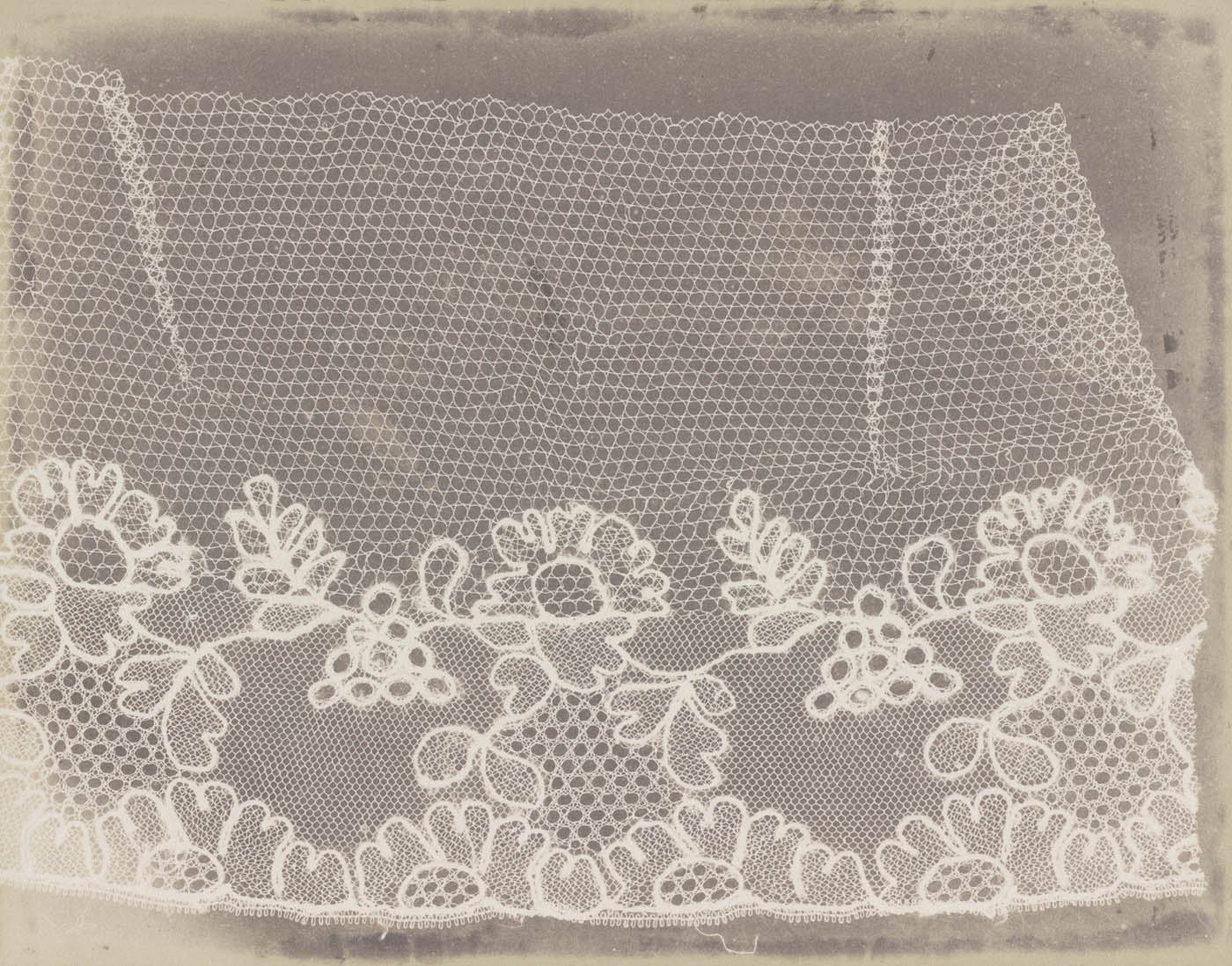
William Henry Fox Talbot (British, 1800-1877) 'Lace' 1839-1844 from the exhibition 'In the Darkroom: Photographic Processes before the Digital Age' at the National Gallery of Art, Washington, D.C., October 2009 - March, 2010


William Henry Fox Talbot (British, 1800-1877)
Lace
1839-1844
Photogenic drawing (salted paper print)
Sheet (trimmed to image): 17.1 x 22cm (6 3/4 x 8 11/16 in.)
Support: 24.8 x 31.1cm (9 3/4 x 12 1/4 in.)
National Gallery of Art, Washington
Patrons’ Permanent Fund
Public domain


Many thankx to Kate Afanasyeva and the National Gallery of Art for allowing me to reproduce the photographs from the exhibition below. Please click on the photographs for a larger version of the image.

Dr Marcus Bunyan


Anna Atkins (British, 1799-1871) 'Ferns, Specimen of Cyanotype' 1840s from the exhibition 'In the Darkroom: Photographic Processes before the Digital Age' at the National Gallery of Art, Washington, D.C., October 2009 - March, 2010


Anna Atkins (British, 1799-1871)
Ferns, Specimen of Cyanotype
1840s
cyanotype
National Gallery of Art, Washington
R.K. Mellon Family Foundation Fund


Albert Sands Southworth and Josiah Johnson Hawes. 'The Letter' c. 1850  from the exhibition 'In the Darkroom: Photographic Processes before the Digital Age' at the National Gallery of Art, Washington, D.C., October 2009 - March, 2010


Albert Sands Southworth and Josiah Johnson Hawes
The Letter
c. 1850
daguerreotype
National Gallery of Art, Washington
Patrons’ Permanent Fund


Southworth and Hawes’ aspirations for their portraits went far beyond those of the average photographer of their day. Whereas most daguerreotypists, simply concerned with rendering a likeness, used stock poses, painted backdrops, and even head restraints to firmly fix their subjects, Southworth and Hawes were celebrated not just for their technical expertise, but also for their penetrating studies, innovative style, and creative use of natural light. They sought to elevate their subjects “far beyond common nature” and embody their “genius and spirit of poetry,” as Southworth wrote in 1871. “What is to be done is obliged to be done quickly. The whole character of the sitter is to be read at first sight; the whole likeness, as it shall appear when finished, is to be seen at first, in each and all its details, and in their unity and combination.”2

Among Southworth and Hawes’ most accomplished studies, The Letter is exceptional in its composition and mood. Most American daguerreotype portraits made in the 1840s and 1850s were frontal, bust-length studies of single figures who rarely show any kind of facial expression because of the often long exposure times. The Letter, however, is a highly evocative study. With its carefully constructed composition and tight pyramidal structure, it presents two thoughtful young women contemplating a letter. Through their posture and expression, these women seem to gain not only physical support from each other, but also emotional strength. Although the identity of the women is unknown, as is the content of the letter, this large and distinguished daguerreotype reflects Southworth and Hawes’ aspiration to capture “the life, the feeling, the mind, and the soul” of their subjects.3

(Text by Sarah Greenough, published in the National Gallery of Art exhibition catalogue, Art for the Nation, 2000)

Text from the National Gallery of Art website


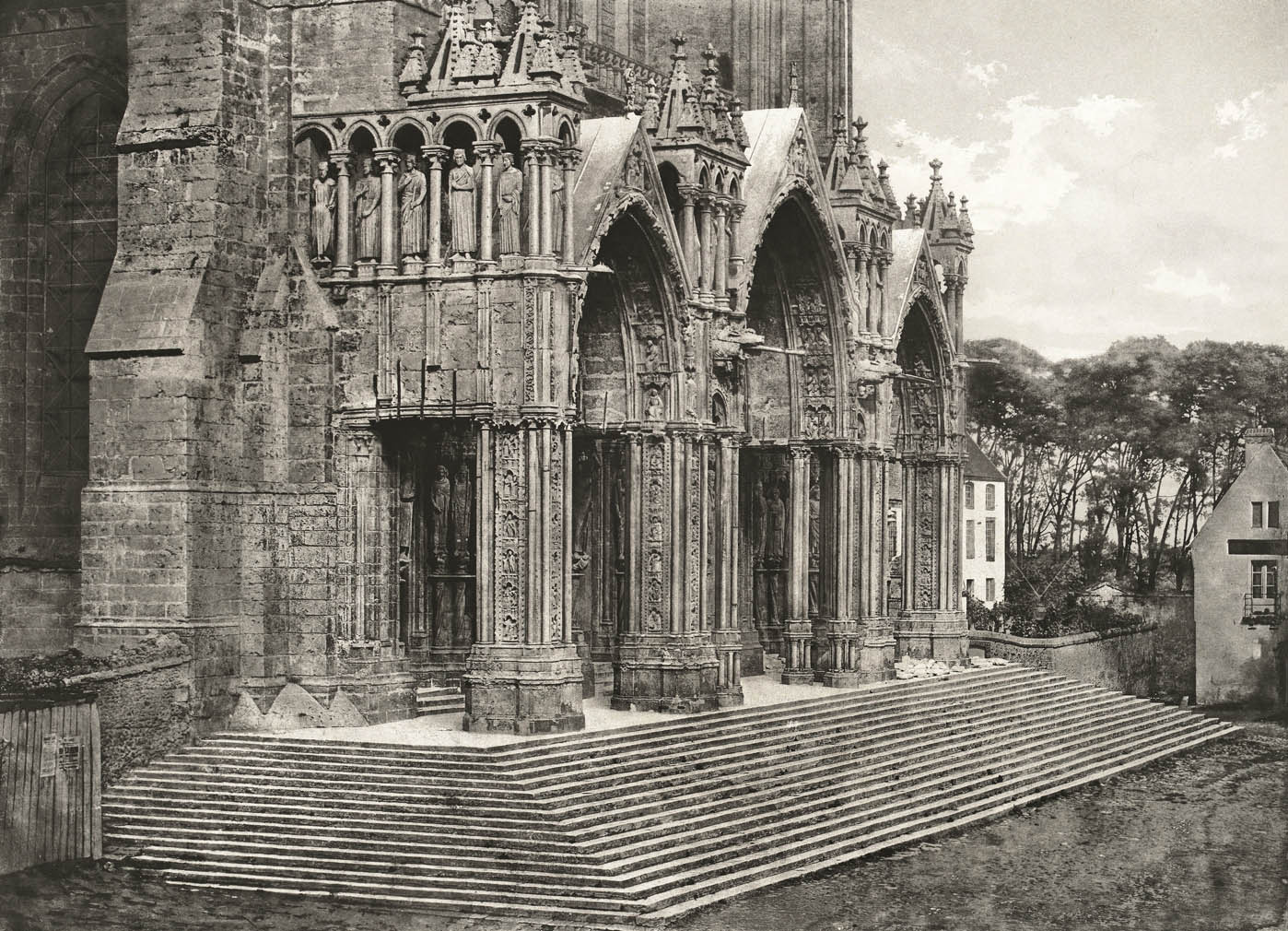
Charles Nègre (French, 1820-1880)
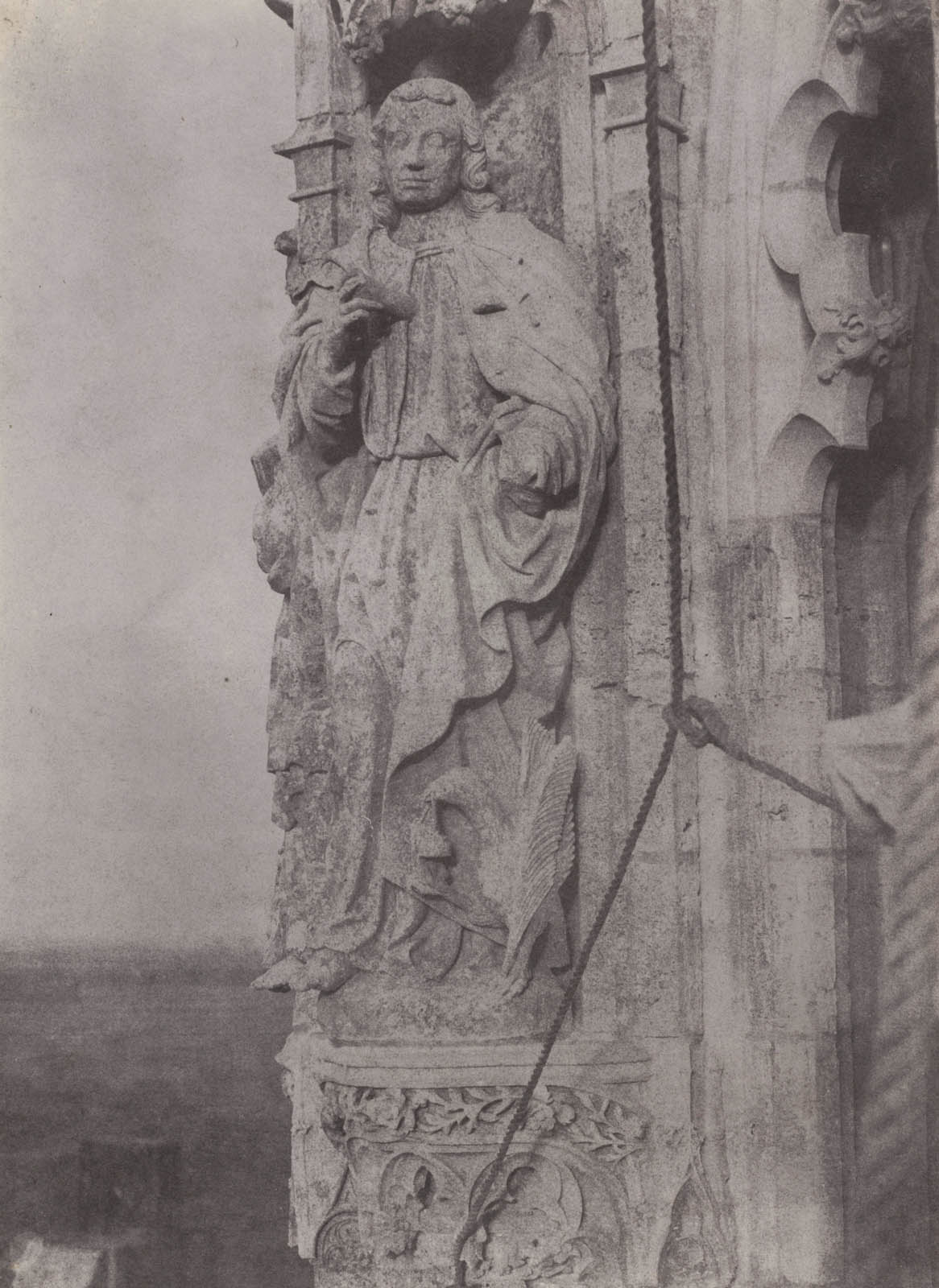
'Saint John the Evangelist, Chartres Cathedral' c. 1854


Charles Nègre (French, 1820-1880)
Saint John the Evangelist, Chartres Cathedral
c. 1854
Salted paper print from a paper negative
National Gallery of Art, Washington
Eugene L. and Marie-Louise Garbaty Fund, Pepita Milmore Memorial Fund and New Century Fund
Public domain


In 1851 the French government’s Commission des Monuments Historiques selected five photographers to document architectural treasures throughout the country. Nègre was not included, perhaps because he was a member of the opposition party, but he took it upon himself to photograph extensively in Marseilles, Arles, Avignon, and Aix-en-Provence in the early 1850s, and in 1854 he made many photographs of Chartres Cathedral.

Nègre applied his growing understanding of light, shadow, line, and form in Saint John the Evangelist, Chartres Cathedral, and the photograph beautifully illustrates his willingness to sacrifice “a few details,” as he wrote, to capture “an imposing effect.” In addition, unlike photographers associated with the Commission des Monuments Historiques, who were asked to provide general studies of a building’s façade, Nègre was free to explore more unusual views. The statue of Saint John the Evangelist is situated high in the north spire of Chartres, several feet above a nearby balcony. Although difficult to see and even harder for Nègre to record (he most likely perched his camera on a platform), the view in his photograph succinctly captured what he called the cathedral’s “real character” and “preserved the poetic charm that surrounded it.”

Text from the National Gallery of Art website


Unknown photographer (American 19th Century) 'George E. Lane, Jr.' c. 1855


Unknown photographer (American 19th Century)
George E. Lane, Jr.
c. 1855
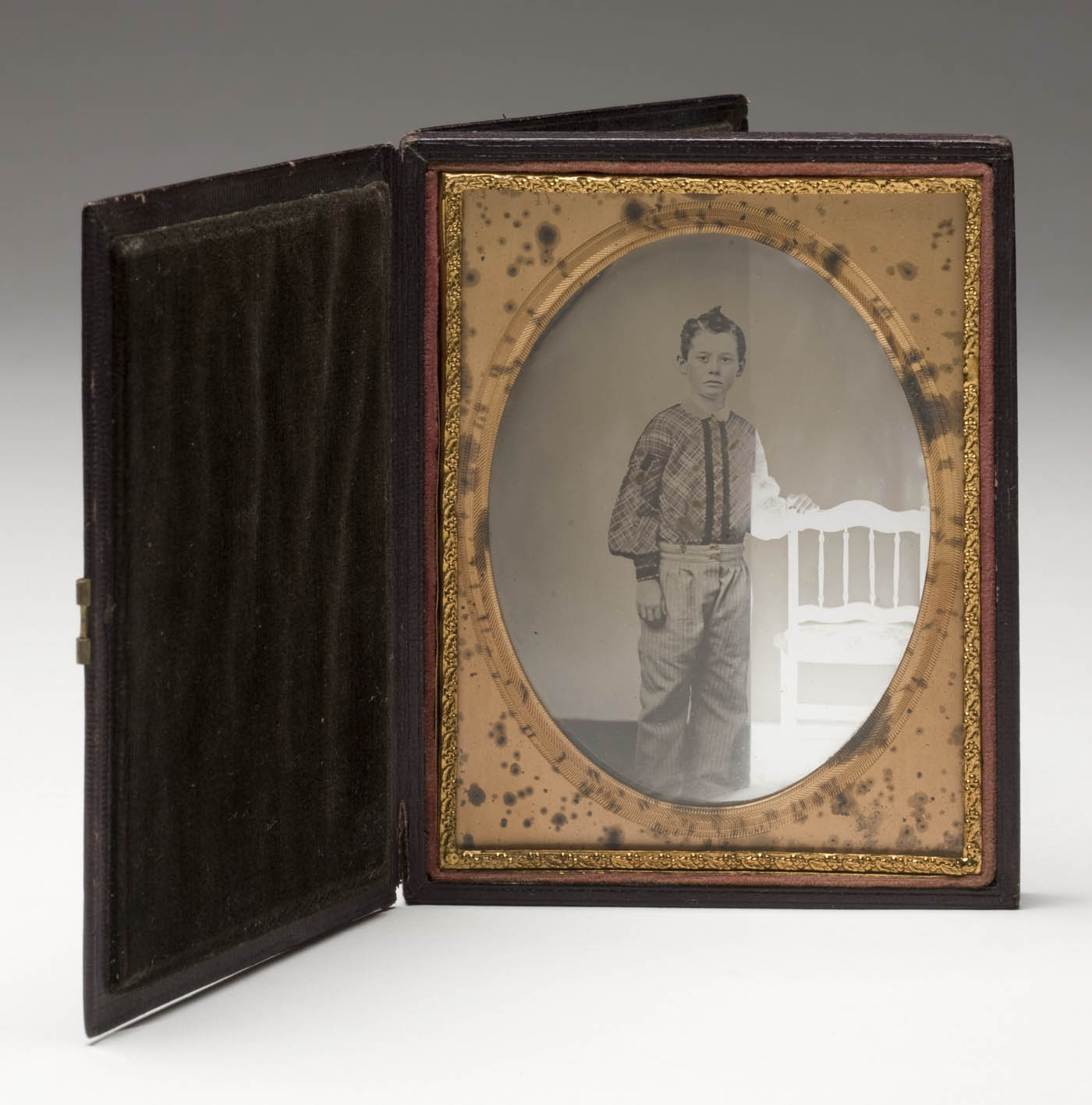
Ambrotype
National Gallery of Art, Washington
Gift of Kathleen, Melissa, and Pamela Stegeman
Public domain


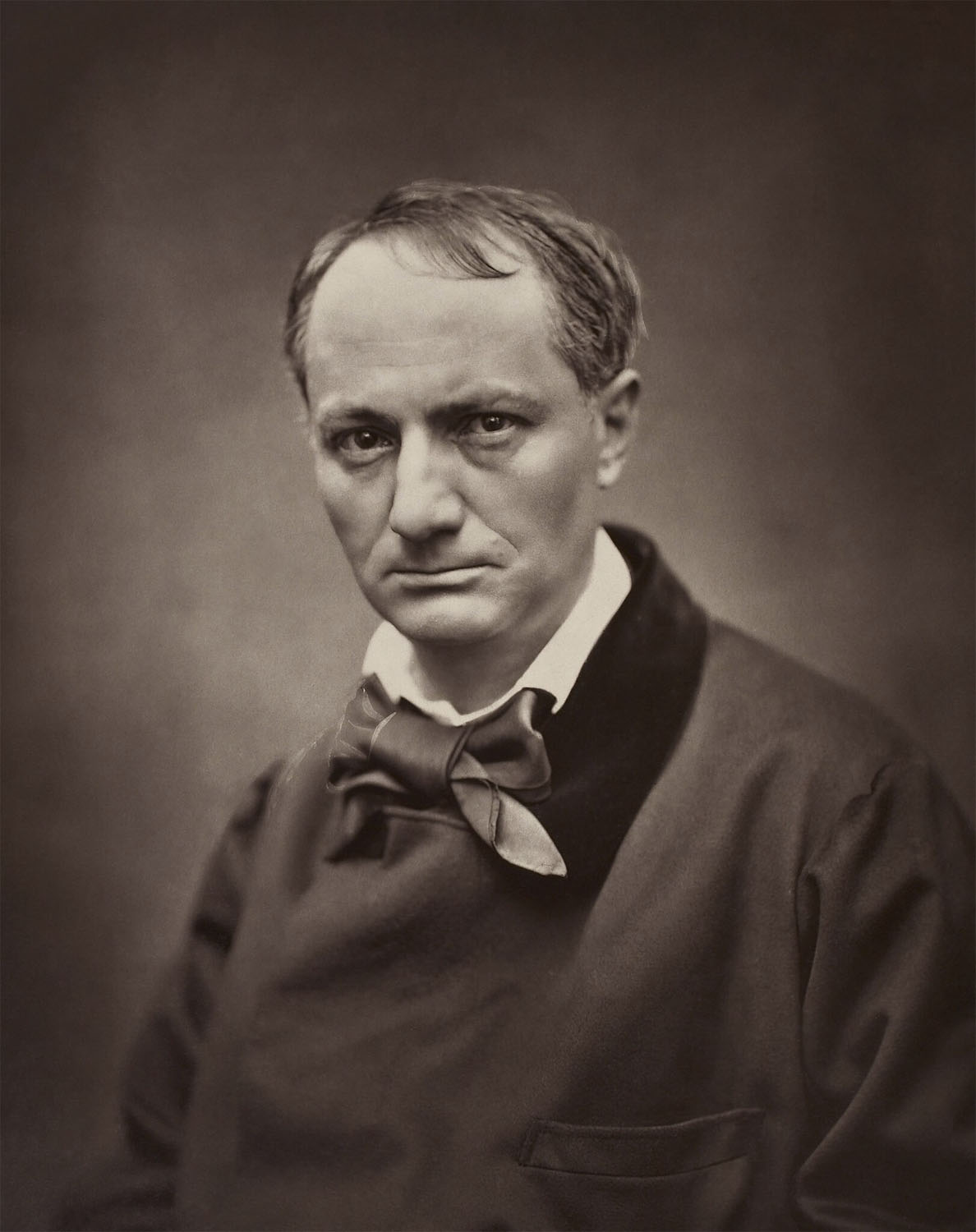
Étienne Carjat (French, 1828-1906)
'Charles Baudelaire' 1861, printed 1877


Étienne Carjat (French, 1828-1906)
Charles Baudelaire
1861, printed 1877
Woodburytype
National Gallery of Art, Washington
Gift of Jacob Kainen
Public domain


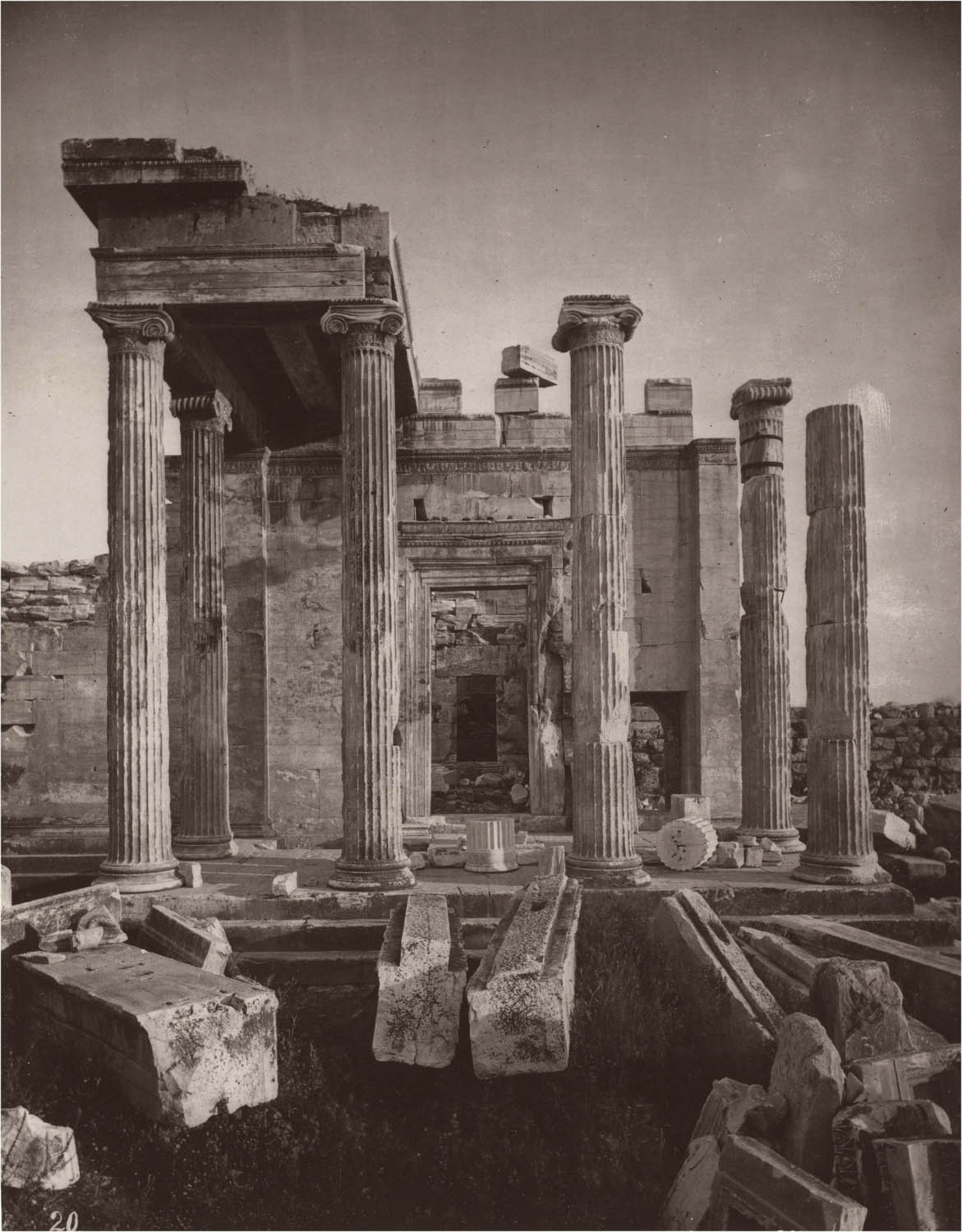
William James Stillman (American, 1828-1901) 'The Acropolis of Athens'
1869/1870


William James Stillman (American, 1828-1901)
The Acropolis of Athens
1869/1870
Carbon print
National Gallery of Art, Washington
Horace W. Goldsmith Foundation through Robert and Joyce Menschel


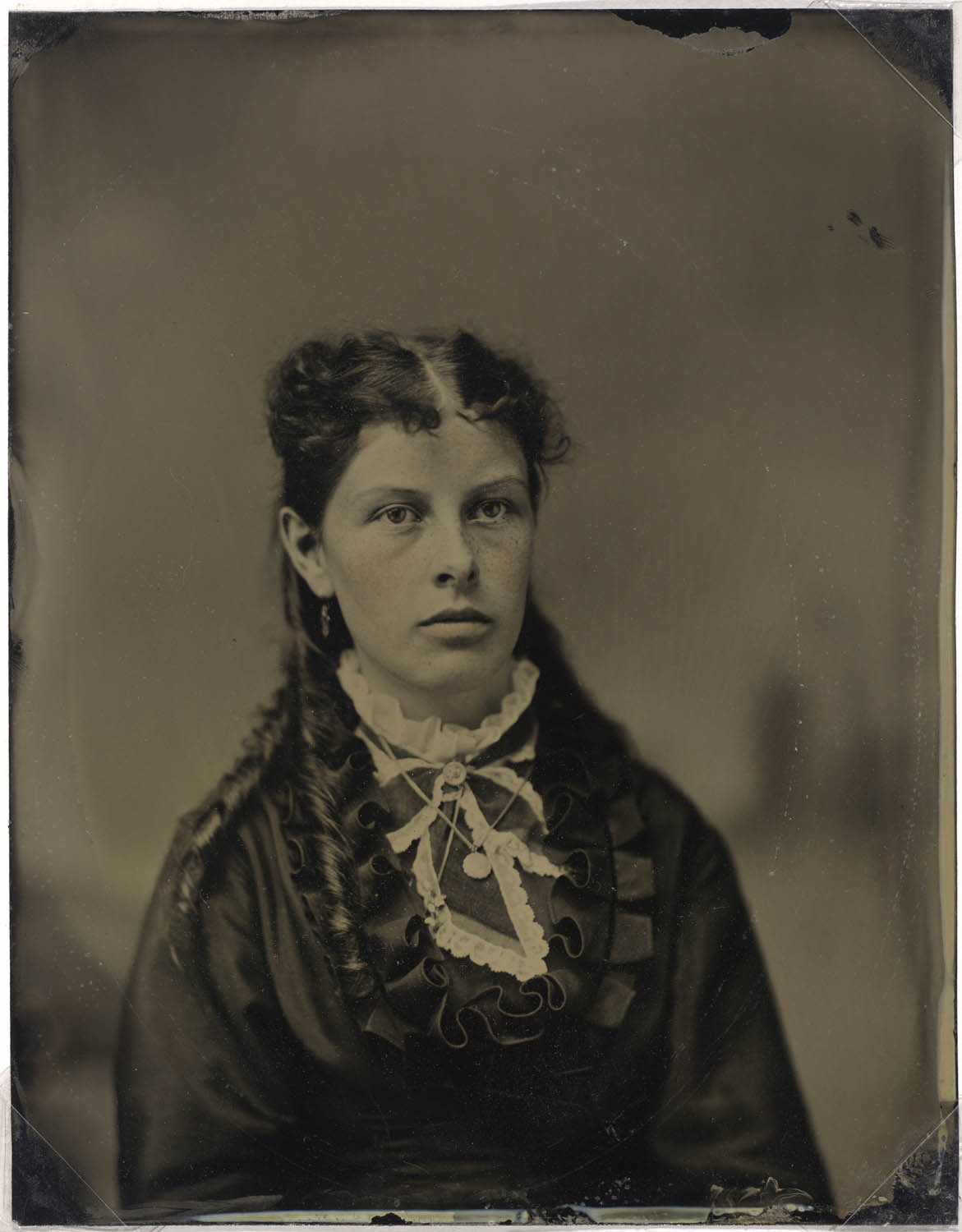
J.G. Ellinwood (American, 1844-1924) 'Portrait of a Woman' c. 1870


J.G. Ellinwood (American, 1844-1924)
Portrait of a Woman
c. 1870
Tintype, hand-coloured
National Gallery of Art, Washington
Mary and Dan Solomon Fund


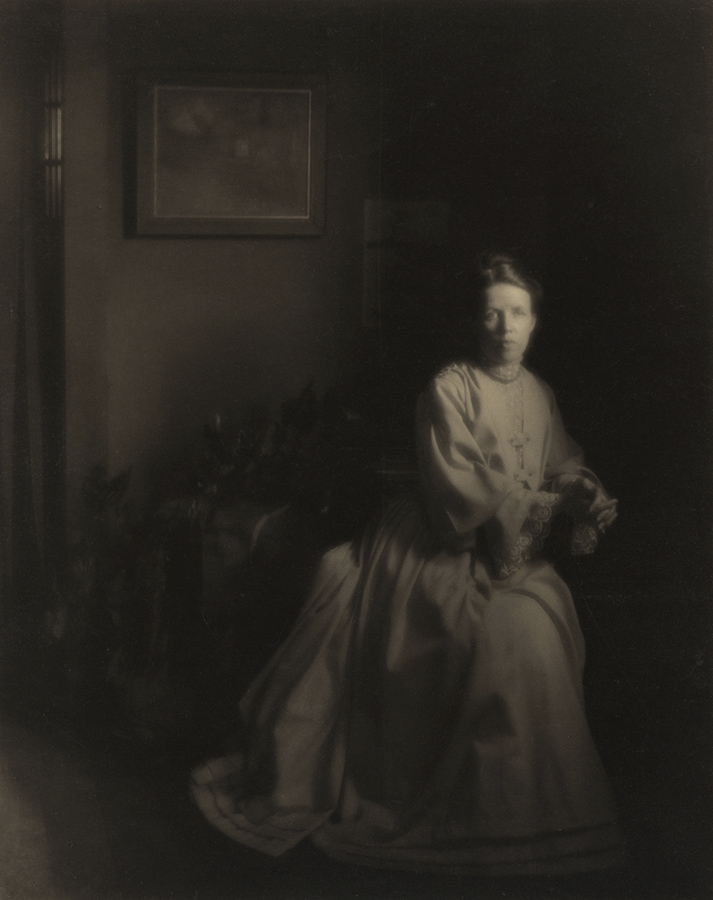
Clarence White (American, 1871-1925) 'Mrs. White - In the Studio' 1907


Clarence White (American, 1871-1925)
Mrs. White – In the Studio
1907
platinum print
National Gallery of Art, Washington
Horace W. Goldsmith Foundation through Robert and Joyce Menschel and R.K. Mellon Family Foundation Fund


Karl Struss (American, 1886-1981) 'Columbia University, Night' 1910


Karl Struss (American, 1886-1981)
Columbia University, Night
1910
Gum dichromate over platinum print
Image: 24.1 × 19.9cm (9 1/2 × 7 13/16 in.)
National Gallery of Art, Washington
Horace W. Goldsmith Foundation through Robert and Joyce Menschel


Laura Gilpin (American, 1891-1979) 'Ghost Rock, Colorado Springs' 1919


Laura Gilpin (American, 1891-1979)
Ghost Rock, Colorado Springs
1919
Platinum print
24.2 x 19.1cm (9 1/2 x 7 1/2 in.)
National Gallery of Art, Washington
Marvin Breckinridge Patterson Fund
© 1979 Amon Carter Museum, Fort Worth, Texas


László Moholy-Nagy (Hungarian, 1895-1946) 'Untitled (Positive)' c. 1922-1924


László Moholy-Nagy (Hungarian, 1895-1946)
Untitled (Positive)
c. 1922-1924
gelatin silver print
National Gallery of Art, Washington
Gift of The Circle of the National Gallery of Art


László Moholy-Nagy (Hungarian, 1895-1946) 'Untitled' c. 1922-1924


László Moholy-Nagy (Hungarian, 1895-1946)
Untitled
c. 1922-1924
gelatin silver print
National Gallery of Art, Washington
New Century Fund


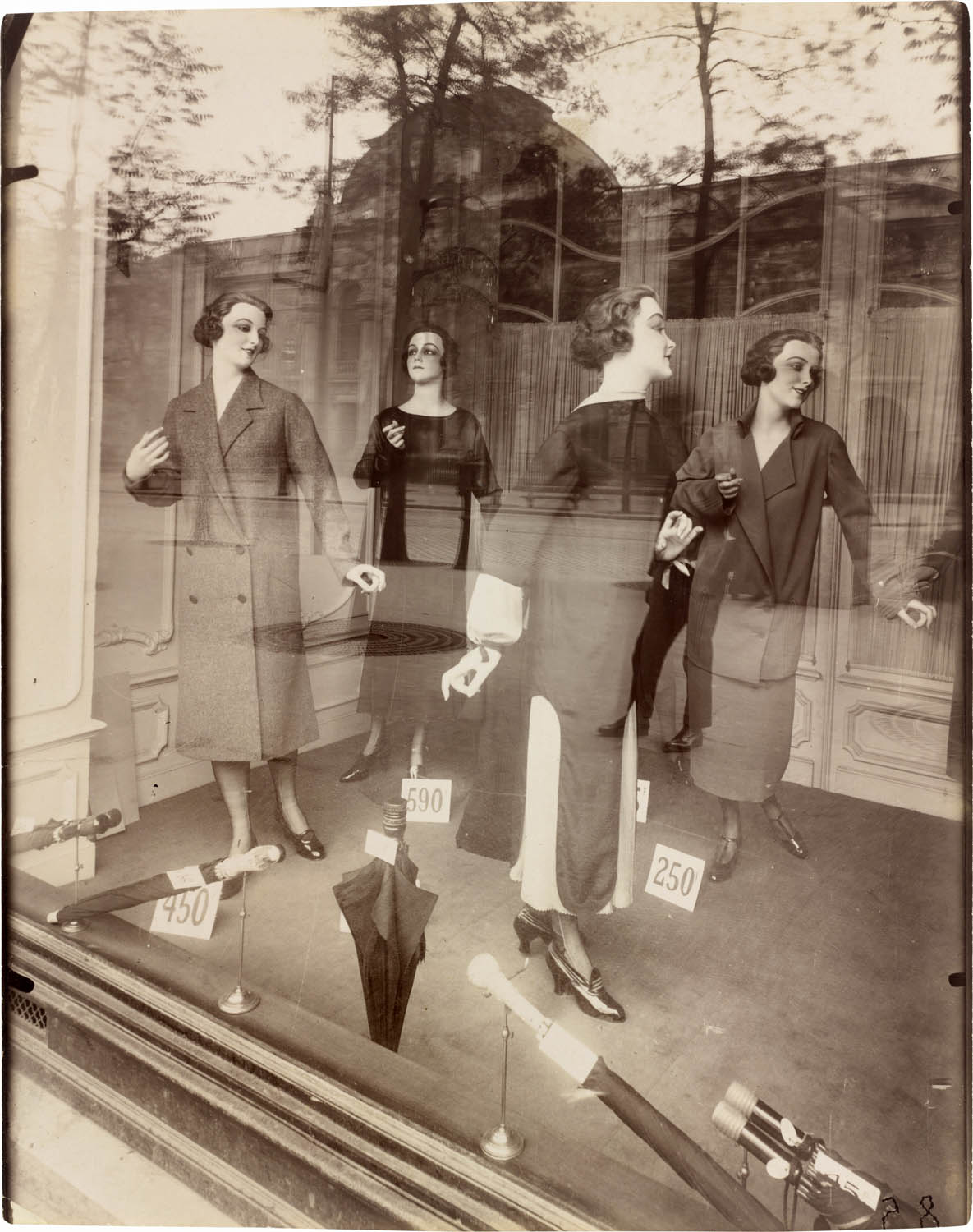
Eugène Atget (French, 1857-1927)
'Magasin, Avenue des Gobelins' 1925


Eugène Atget (French, 1857-1927)
Magasin, Avenue des Gobelins
1925
gelatin silver print, printed-out
National Gallery of Art, Washington
Patrons’ Permanent Fund
Public domain


Aleksandr Rodchenko (Russian, 1891-1956) 'Pioneer with a Bugle' 1930


Aleksandr Rodchenko (Russian, 1891-1956)
Pioneer with a Bugle
1930
Gelatin silver print
National Gallery of Art, Washington
Patrons’ Permanent Fund


Sid Grossman (American, 1913-1955) 'San Gennaro Festival, New York City' 1948


Sid Grossman (American, 1913-1955)
San Gennaro Festival, New York City
1948
gelatin silver print
National Gallery of Art, Washington
Anonymous Gift


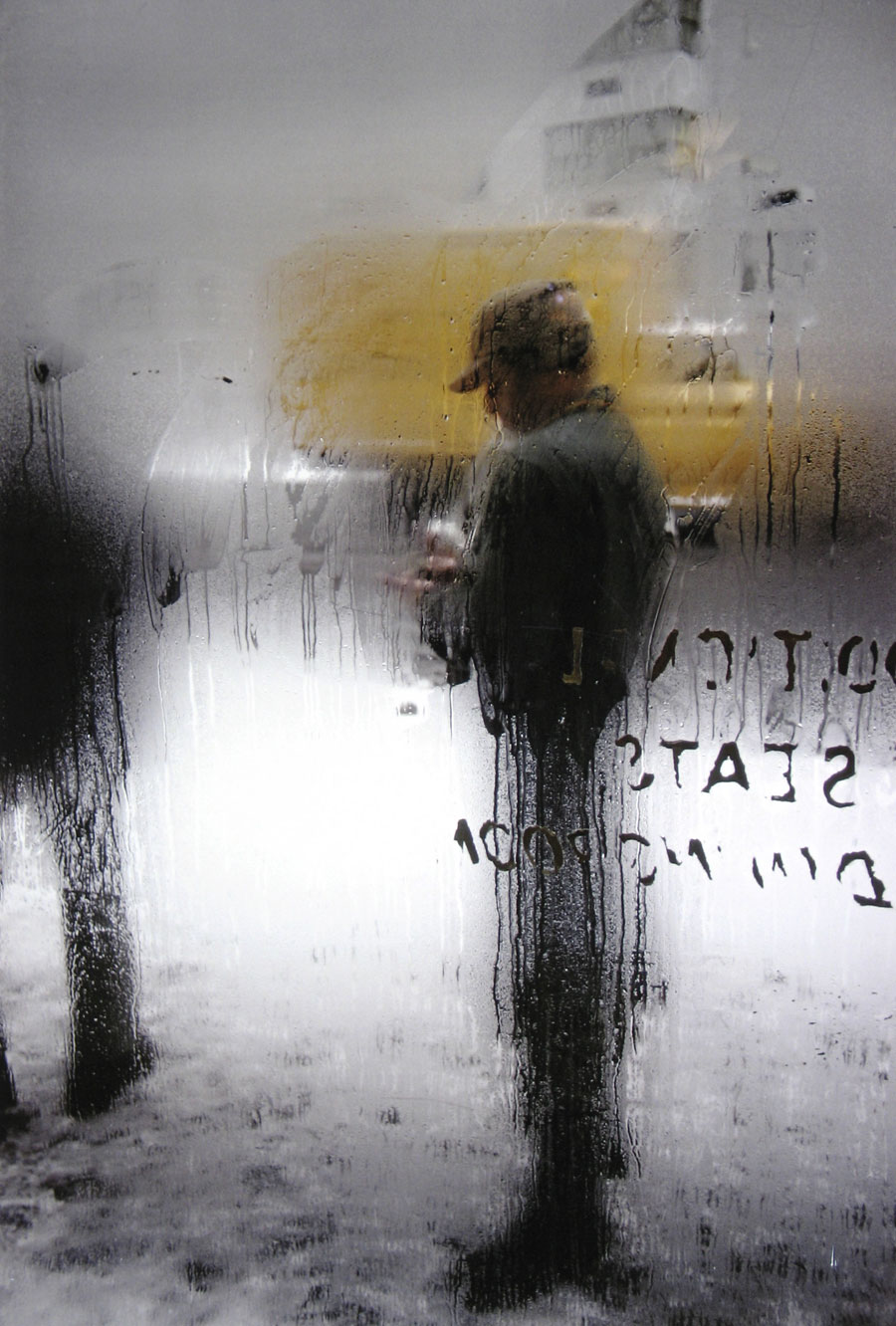
Saul Leiter (American, 1923-2013) 'Snow' 1960


Saul Leiter (American, 1923-2013)
Snow
1960, printed 2005
Chromogenic colour print
National Gallery of Art, Washington
Gift of Saul Leiter


Diane Arbus (American, 1923-1971) 'A young man in curlers at home on West 20th Street, N.Y.C. 1966' 1966


Diane Arbus (American, 1923-1971)
A Young Man in Curlers at Home on West 20th Street, N.Y.C., 1966
1966
Gelatin silver print
National Gallery of Art, Washington
Gift of the Collectors Committee


The extraordinary range and complexity of the photographic process is explored, from the origins of the medium in the 1840s up to the advent of digital photography at the end of the 20th century, in a comprehensive exhibition and its accompanying guidebook at the National Gallery of Art, Washington. On view in the West Building, from October 25, 2009 through March 14, 2010, In the Darkroom: Photographic Processes Before the Digital Age chronicles the major technological developments in the 170-year history of photography and presents the virtuosity of the medium’s practitioners. Drawn from the Gallery’s permanent collection are some 90 photographs – ranging from William Henry Fox Talbot’s images of the 1840s to Andy Warhol’s Polaroid prints of the 1980s.

“In the Darkroom and the accompanying guidebook provide a valuable overview of the medium as well as an introduction to the most commonly used photographic processes from its earliest days,” said Earl A. Powell III, director, National Gallery of Art.

In the Darkroom

Organised chronologically, the exhibition opens with Lace (1839-1844), a photogenic drawing by William Henry Fox Talbot. Made without the aid of a camera, the image was produced by placing a swath of lace onto a sheet of sensitised paper and then exposing it to light to yield a tonally reversed image.

Talbot’s greatest achievement – the invention of the first negative-positive photographic process – is also celebrated in this section with paper negatives by Charles Nègre and Baron Louis-Adolphe Humbert de Molard as well as salted paper prints made from paper negatives by Nègre, partners David Octavius Hill and Robert Adamson, and others.

The daguerreotype, the first publicly introduced photographic process and the most popular form of photography during the medium’s first decade, is represented by a selection of British and American works, including an exquisite large-plate work by the American photographers Albert Sands Southworth and Josiah Johnson Hawes (see photograph above). By the mid-1850s, the daguerreotype’s popularity was eclipsed by two new processes, the ambrotype and the tintype. These portable photographs on glass or metal were relatively inexpensive to produce and were especially popular for portraiture.

The year 1851 marked a turning point in photographic history with the introduction of the collodion negative on glass and the albumen print process. Most often paired together, this negative-print combination yielded lustrous prints with a subtle gradation of tones from dark to light and became the most common form of photography in the 19th century, seen here in works by Julia Margaret Cameron, Roger Fenton, and Gustave Le Gray.

Near the turn of the 20th century, a number of new, complex print processes emerged, such as platinum and palladium, gum dichromate, and bromoil. Often requiring significant manipulation by the hand of the artist, these processes were favoured by photographers such as Gertrude Käsebier, Alfred Stieglitz, and Edward Weston.

One of the most significant developments of the late 19th century was the introduction of gelatin into photographic processes, which led to the invention of the film negative and the gelatin silver print. These became the standard for 20th-century black-and-white photography. A chronological selection of gelatin silver prints, including a contact print made by André Kertész in 1912; a grainy, blurred image of Little Italy’s San Gennaro festival at night by Sid Grossman from 1948 (see photograph above); and a coolly precise industrial landscape by Frank Gohlke from 1975, reveals how the introduction of the film negative and changes in the gelatin silver print process profoundly shaped the direction of modern photography. This section also explores the development of ink-based, photomechanical processes such as photogravure, Woodburytype, and halftone that enabled the large-scale, high-quality reproduction of photographs in books and magazines.

The final section of the exhibition explores the rise of colour photography in the 20th century. Although the introduction of chromogenic colour processes made colour photography commercially viable by the 1930s, it was not widely employed by artists until the 1970s. The exhibition celebrates the pioneers of colour photography, including Harry Callahan and William Eggleston, who made exceptional work using the complicated dye transfer process. The exhibition also explores the range of processes developed by the Polaroid Corporation that provided instant gratification to the user, from Andy Warhol’s small SX-70 prints to the large-scale Polaroid prints represented by the work of contemporary photographer David Levinthal.

Press release from the National Gallery of Art website [Online] Cited 15/02/2010 no longer available online


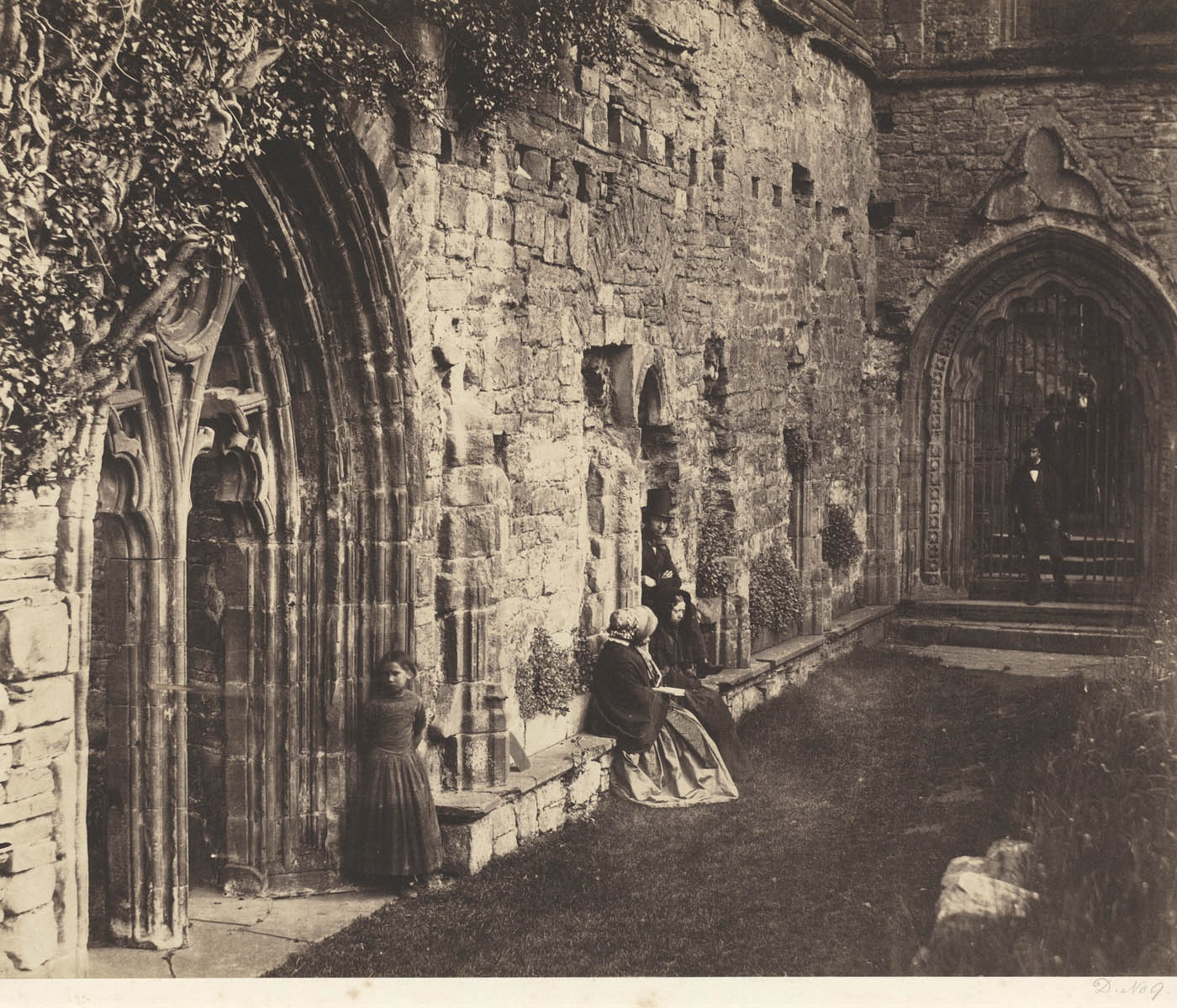
Roger Fenton (British, 1819-1869) 'The Cloisters, Tintern Abbey' 1854  from the exhibition 'In the Darkroom: Photographic Processes before the Digital Age' at the National Gallery of Art, Washington, D.C., October 2009 - March, 2010


Roger Fenton (British, 1819-1869)
The Cloisters, Tintern Abbey
1854
Salted paper print from a collodion negative
18.3 x 22.1cm (7 3/16 x 8 11/16 in.)
National Gallery of Art, Washington
Horace W. Goldsmith Foundation through Robert and Joyce Menschel
Public domain


Although Roger Fenton’s photographic career lasted for only 11 years, he exerted a profound influence on the medium. Trained as a lawyer, he began to paint in the early 1840s, studying in Paris with Michel-Martin Drölling and later in London with Charles Lucy. But in 1851 he took up photography and produced a distinguished and varied body of work. He was a pivotal figure in the formation of the Photographic Society (later known as the Royal Photographic Society), garnering support from Queen Victoria and Prince Albert. He is best known for his 1855 photographs made during the Crimean War, among the first to document war. But he also made ambitious studies of English cathedrals, country houses, and landscapes as well as portraits of the royal family, a series of still lifes, and studies of figures in Asian costume.

When Fenton first began to make photographs, he generally posed figures in a fairly stiff, even anecdotal manner. But in 1854 he began to use figures to create a sense of tension at once intriguing and compelling. The Cloisters, Tintern Abbey shows this more dynamic approach. Fenton placed people in three groups, not interacting with one another but engaging in silent and solitary dialogue with their decaying surroundings. Tintern Abbey had, of course, inspired many artists and poets to reflect on both “the life of things” – as William Wordsworth wrote in his 1798 poem, “Lines Composed a Few Miles above Tintern Abbey” – and on the transitory nature of life itself.

Text from the National Gallery of Art website


Charles Nègre (French, 1820-1880)
'Cathédrale de Chartres - Portique du Midi XIIe Siècle (Chartres Cathedral, South Portal, 12th Century)' c. 1854, printed c. 1857


Charles Nègre (French, 1820-1880)
Cathédrale de Chartres – Portique du Midi XIIe Siècle (Chartres Cathedral, South Portal, 12th Century)
c. 1854, printed c. 1857
photogravure
National Gallery of Art, Washington
William and Sarah Walton Fund


Roger Fenton (British, 1819-1869)
'Fruit and Flowers' 1860


Roger Fenton (British, 1819-1869)
Fruit and Flowers
1860
Albumen print from a collodion negative
National Gallery of Art, Washington
Paul Mellon Fund
public domain


In the summer of 1860 Fenton made his most deliberate and exacting photographs to date: a series of still lifes. Although the subject obviously had its roots in painting, his densely packed compositions are far removed from the renditions of everyday life by the Dutch masters. Instead, Fenton extravagantly piled luscious fruits and intricately patterned flowers on top of one another and pushed them to the front of his composition so that they seem almost ready to tumble out of the photograph into the viewer’s space. It is that very immediacy – the precarious composition, the lush sensuousness of the objects, and our knowledge of their imminent decay – that makes these photographs so striking.

Text from the National Gallery of Art website


Gustave Le Gray (French, 1820-1884) 'Cavalry Maneuvers behind barrier, Camp de Châlons' 1857


Gustave Le Gray (French, 1820-1884)
Cavalry Maneuvers behind barrier, Camp de Châlons
1857
Albumen silver print from glass negative
National Gallery of Art, Washington


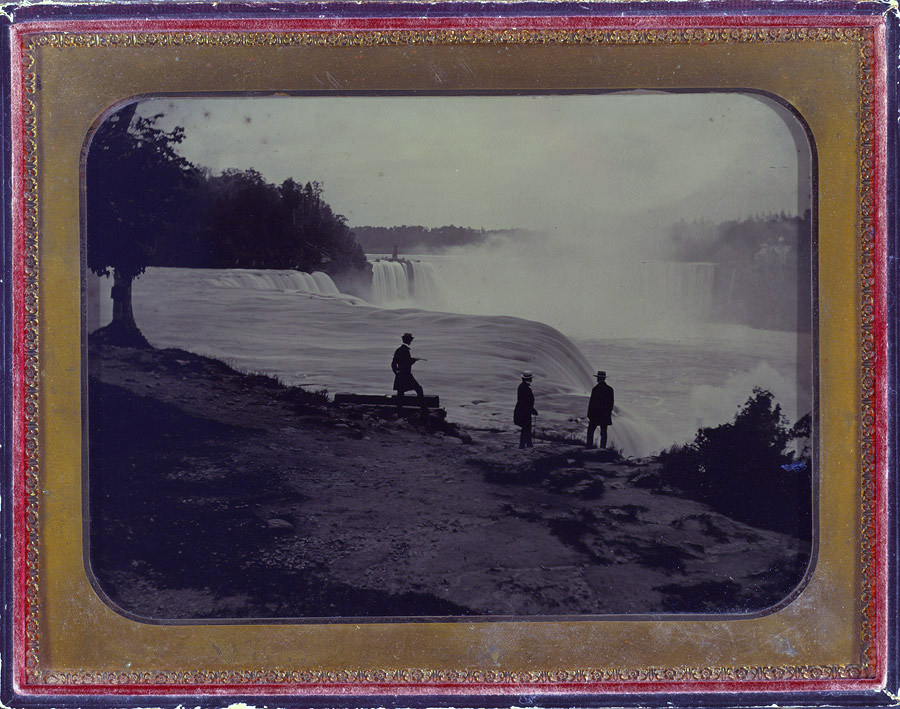
Platt D. Babbitt (American, 1822-1879) 'Niagara Falls' c. 1860


Platt D. Babbitt (American, 1822-1879)
Niagara Falls
c. 1860
Ambrotype
National Gallery of Art, Washington
Vital Projects Fund


Alfred Stieglitz (American, 1864-1946) 'The Terminal' 1893


Alfred Stieglitz (American, 1864-1946)
The Terminal
1893, printed 1920s/1930s
Gelatin silver print
National Gallery of Art, Washington
Alfred Stieglitz Collection


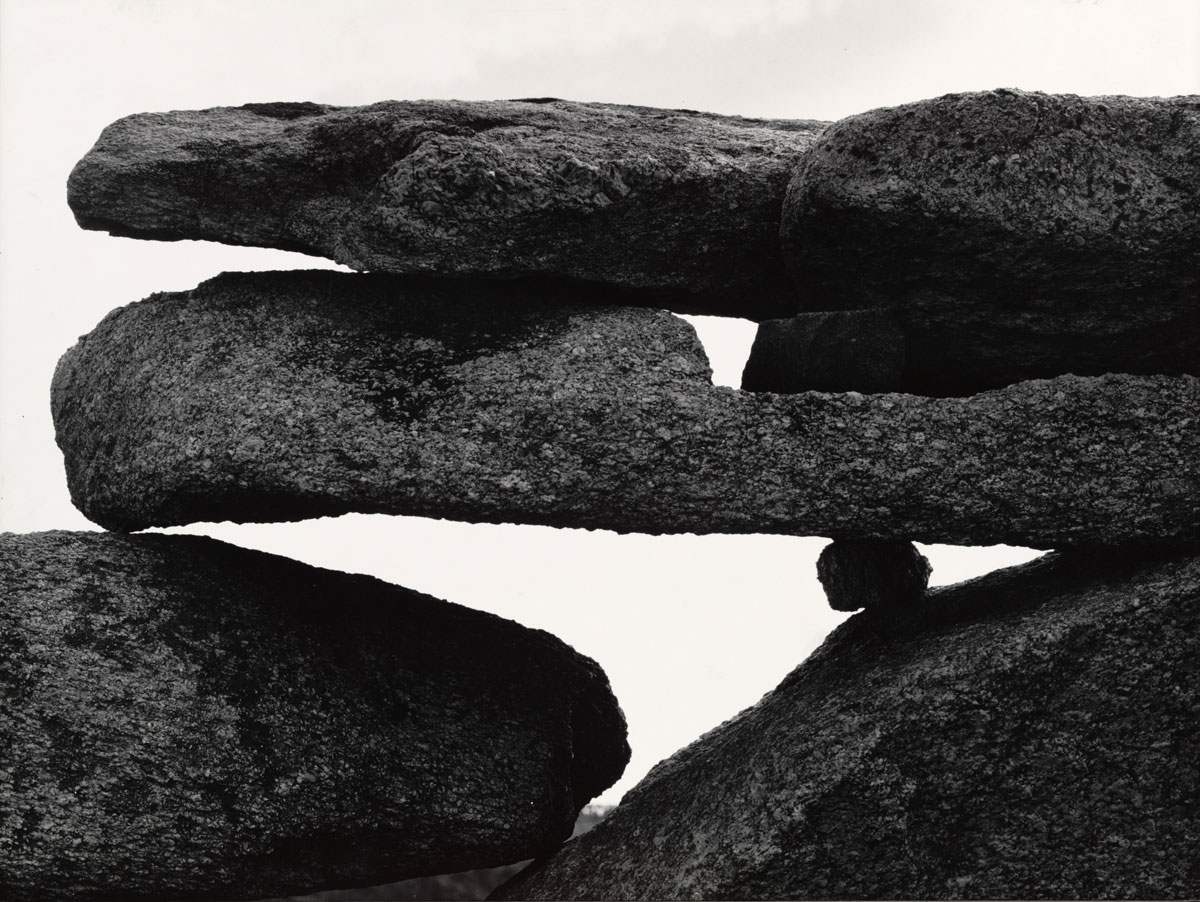
Aaron Siskind (American, 1903-1991) 'Martha's Vineyard 108' 1954


Aaron Siskind (American, 1903-1991)
Martha’s Vineyard 108
1954
Gelatin silver print
National Gallery of Art, Washington
Diana and Mallory Walker Fund


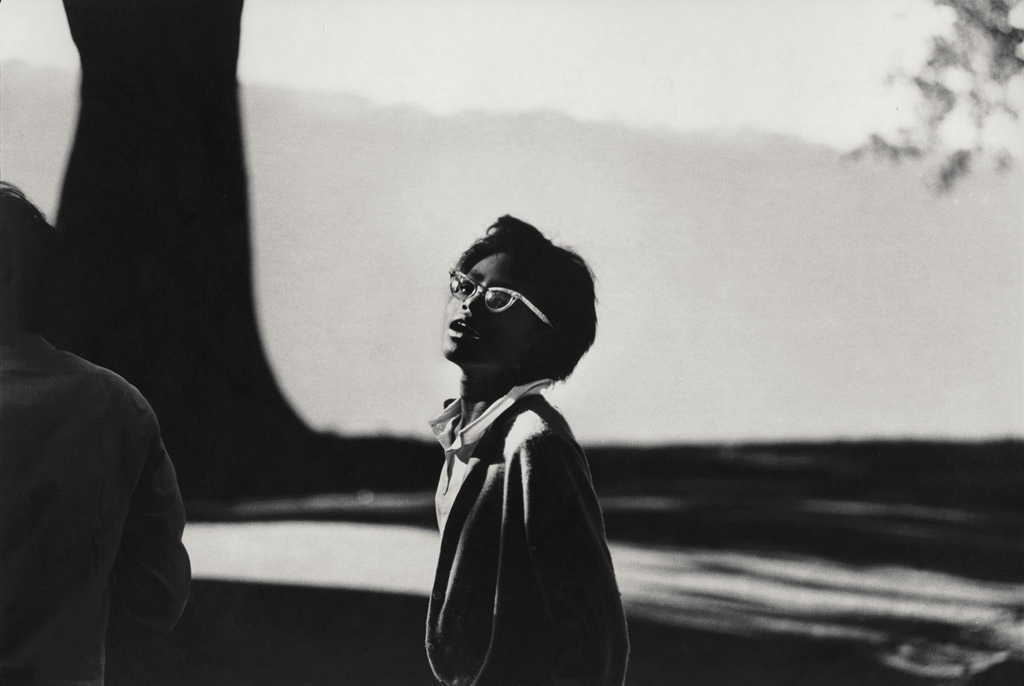
Dave Heath (Canadian, born United States, 1931-2016) 'Hastings-on-Hudson, New York' 1963


Dave Heath (Canadian, born United States, 1931-2016)
Hastings-on-Hudson, New York
1963
Gelatin silver print
National Gallery of Art, Washington
Gift of Howard Greenberg


William Eggleston (American, b. 1939) 'Untitled (Car in Parking Lot)' 1973


William Eggleston (American, b. 1939)
Untitled (Car in Parking Lot)
1973
Dye imbibition print
National Gallery of Art, Washington
Anonymous Gift


Harry Callahan (American, 1912-1999) 'Providence' 1977


Harry Callahan (American, 1912-1999)
Providence
1977
Dye transfer print


Robert Adams (American, b. 1937) 'Summer Nights #2 (Longmont, Colorado)' 1979


Robert Adams (American, b. 1937)
Summer Nights #2 (Longmont, Colorado)
1979
Gelatin silver print
National Gallery of Art, Washington
Gift of Mary and David Robinson


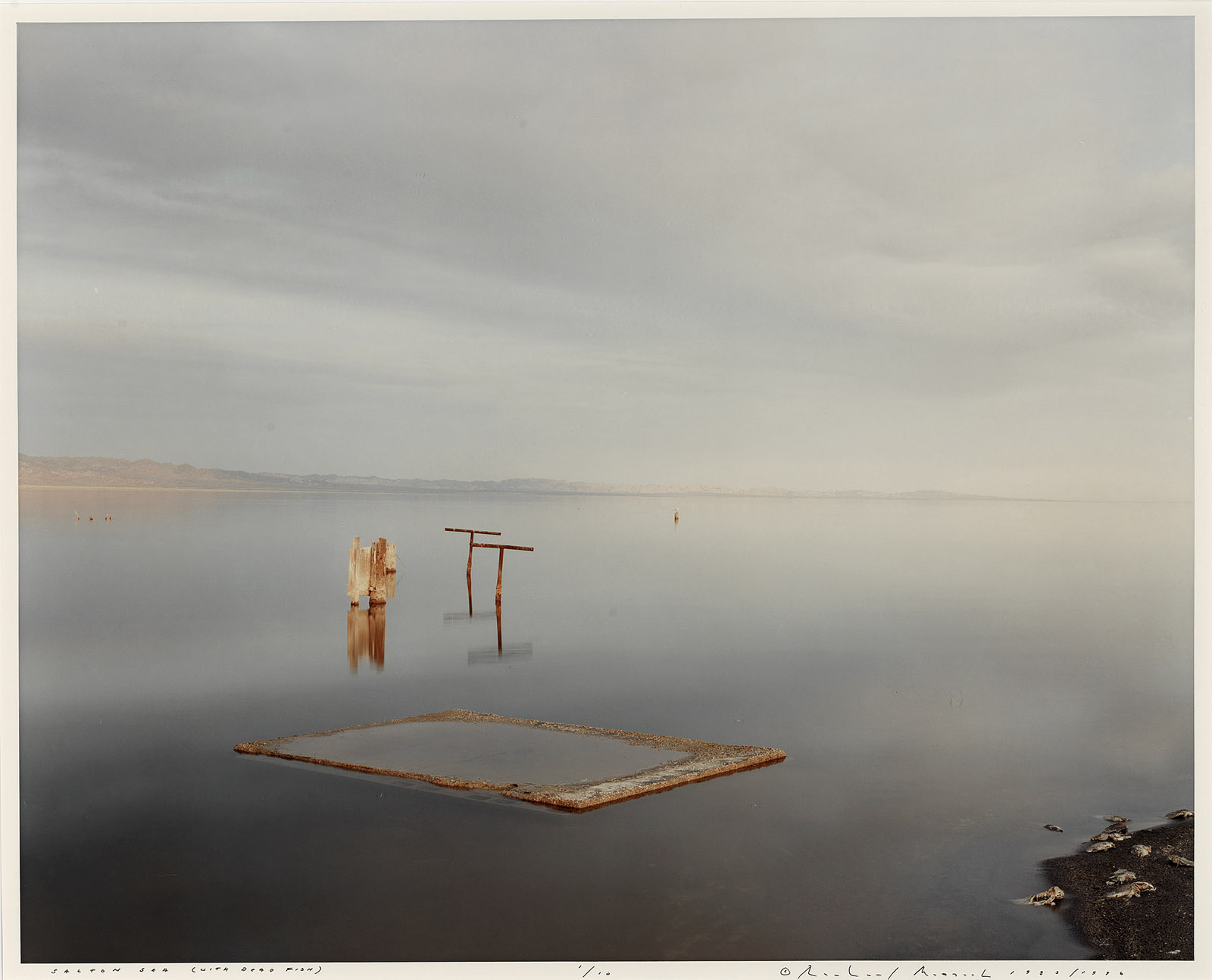
Richard Misrach (American, b. 1949)
'Dead Fish, Salton Sea, California' 1983, printed 1997


Richard Misrach (American, b. 1949)
Dead Fish, Salton Sea, California
1983, printed 1997
Chromogenic colour print
National Gallery of Art, Washington
Anonymous Gift


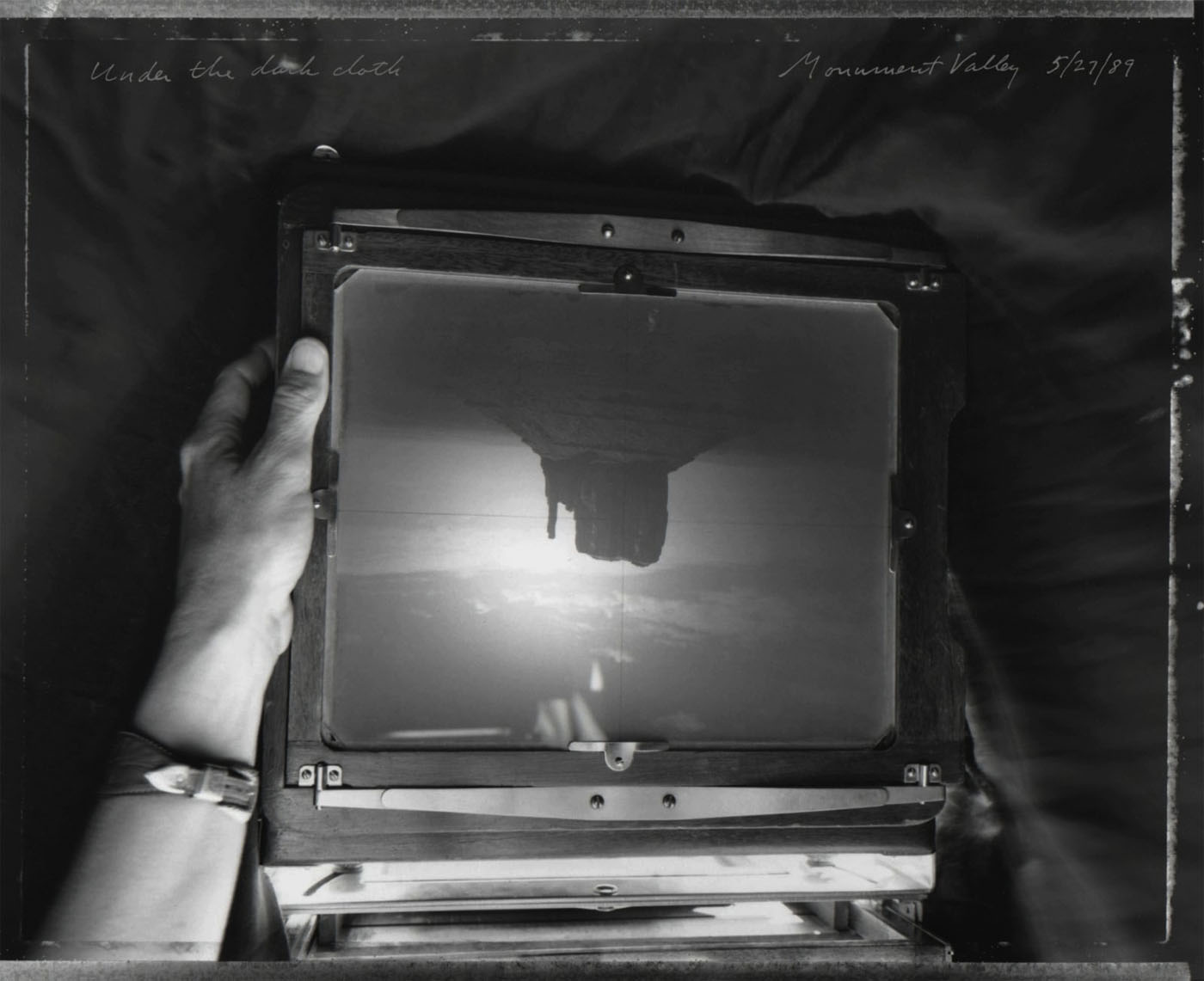
Mark Klett (American, b. 1952) 'Under the Dark Cloth, Monument Valley, May 27' 1989


Mark Klett (American, b. 1952)
Under the Dark Cloth, Monument Valley, May 27
1989
Gelatin silver print from Polaroid instant film negative
National Gallery of Art, Washington
Gift of the Collectors Committee


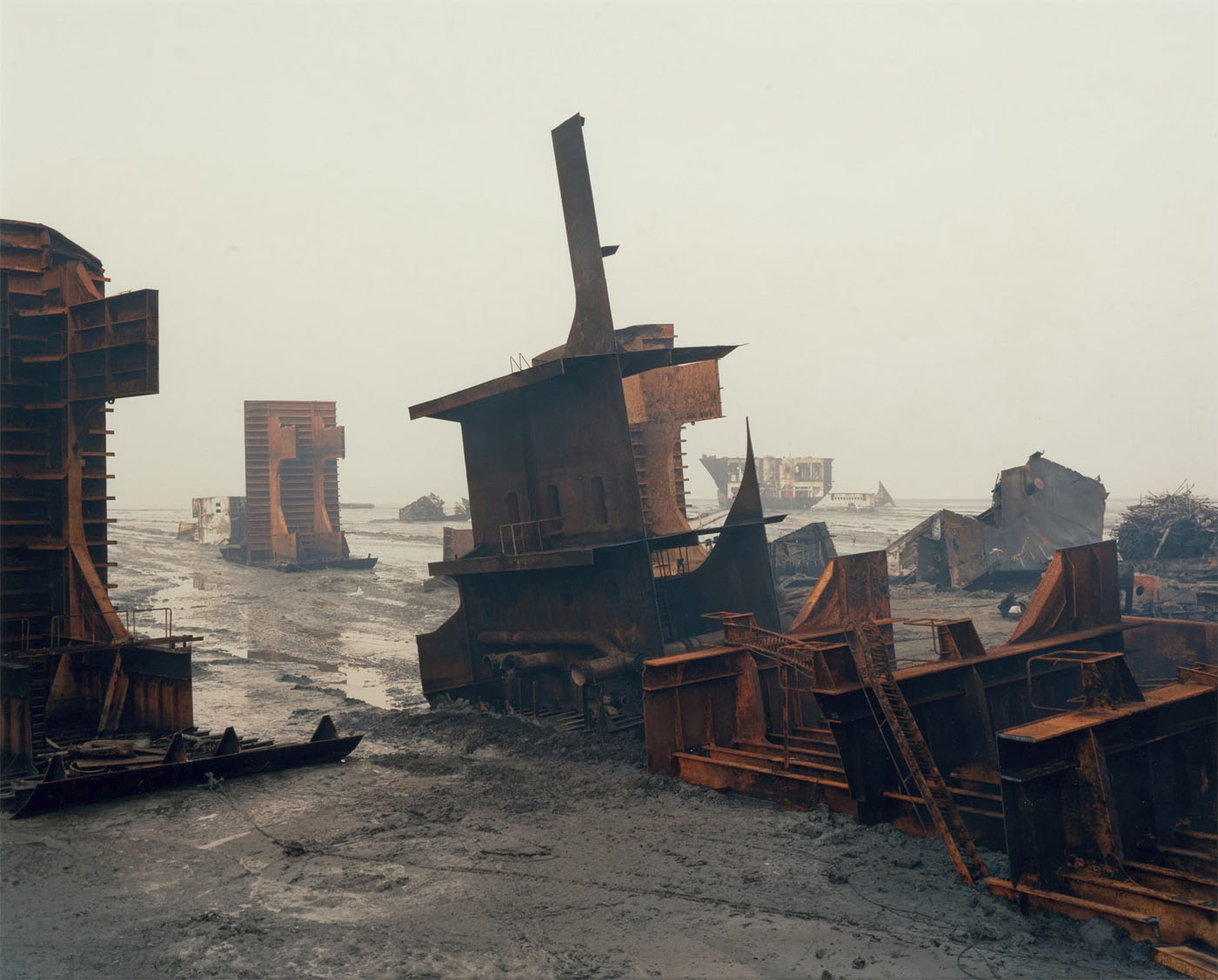
Edward Burtynsky (Canadian, b. 1955) 'Shipbreaking #10, Chittagong, Bangladesh' 2000, printed 2001


Edward Burtynsky (Canadian, b. 1955)
Shipbreaking #10, Chittagong, Bangladesh
2000, printed 2001
Chromogenic colour print
National Gallery of Art, Washington
Fund for Living Photographers


The National Gallery of Art, Washington, DC

The National Gallery of Art, located on the National Mall between 3rd and 7th Streets at Constitution Avenue NW.

Opening hours:
Daily 10.00am – 5.00pm

National Gallery of Art website

LIKE ART BLART ON FACEBOOK

Back to top

Exhibition: ‘Alexander Calder: A Balancing Act’ at the Seattle Art Museum (SAM)

Exhibition dates: October 15th, 2009 – April 11th, 2010


Many thankx to the Seattle Art Museum for allowing me to publish the art work in the posting. Please click on the photographs for a larger version of the image.

Marcus


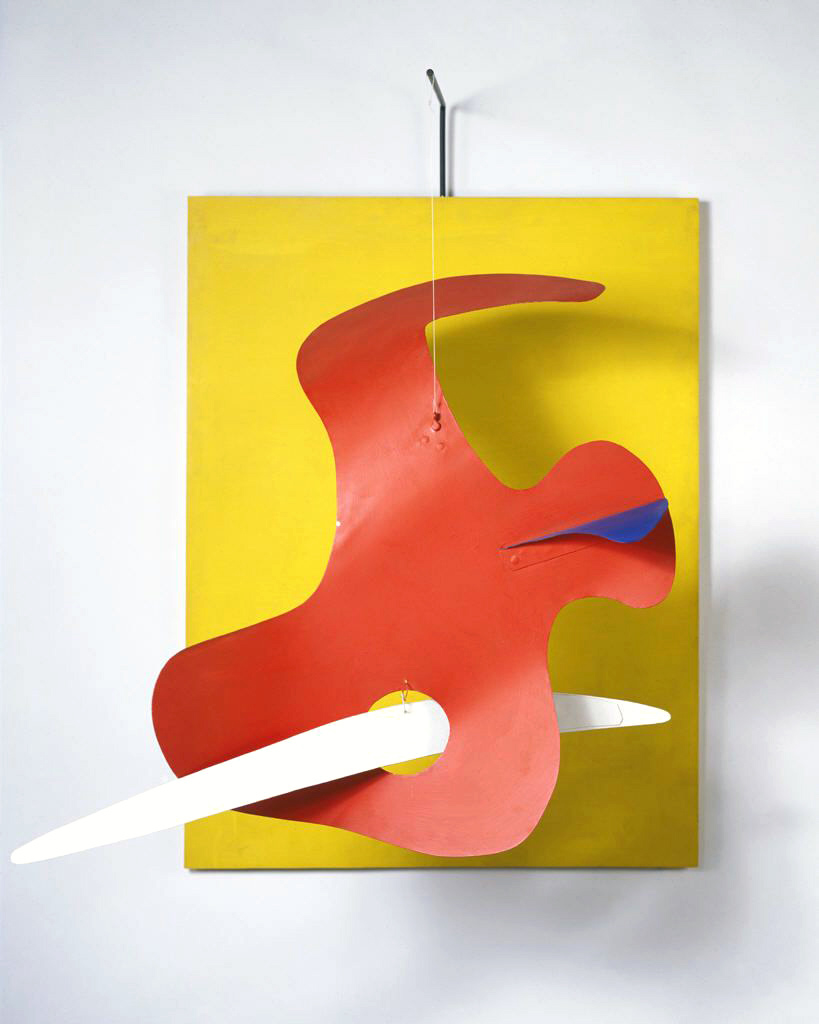
Alexander Calder. 'Form against Yellow (Yellow Panel)' 1936 from the exhibition 'Alexander Calder: A Balancing Act' at the Seattle Art Museum (SAM), October 2009 - April 2010


Alexander Calder (American, 1898-1976)
Form against Yellow (Yellow Panel)
1936


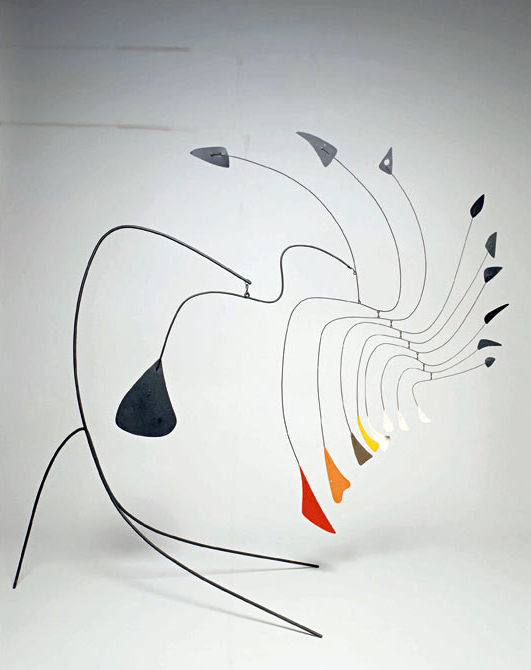
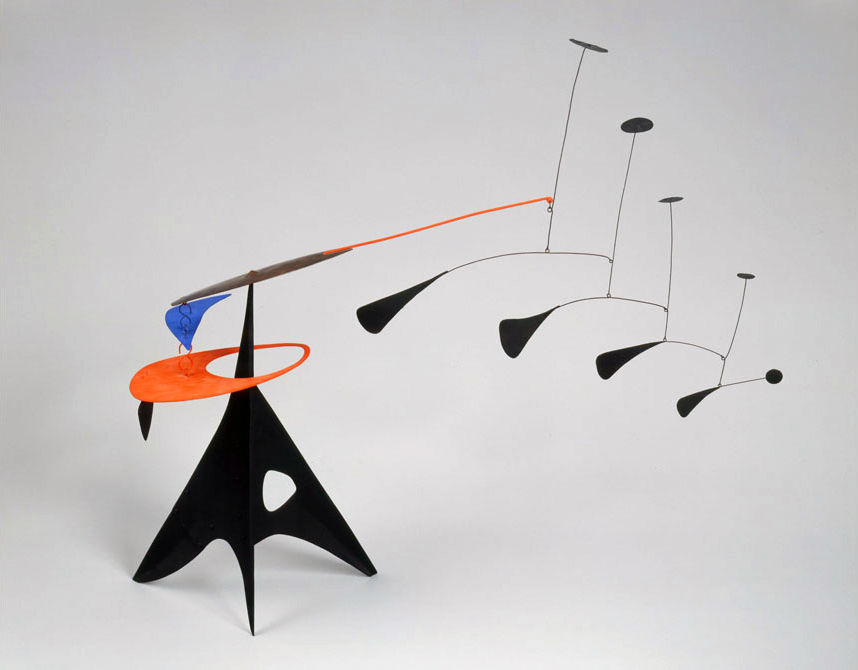
Alexander Calder (American, 1898-1976) 'Little Spider' c. 1940 from the exhibition 'Alexander Calder: A Balancing Act' at the Seattle Art Museum (SAM), October 2009 - April 2010


Alexander Calder (American, 1898-1976)
Little Spider
c. 1940


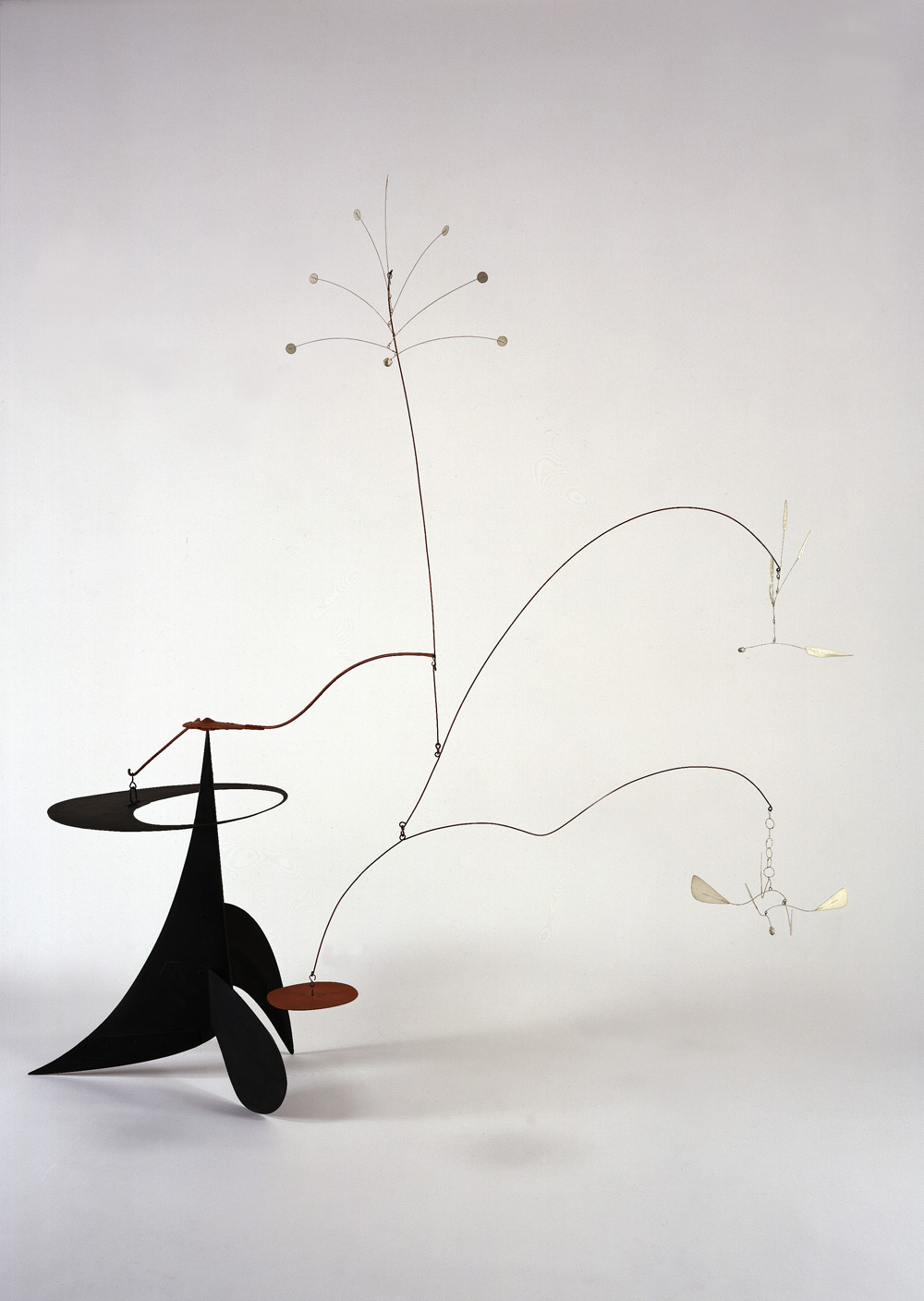
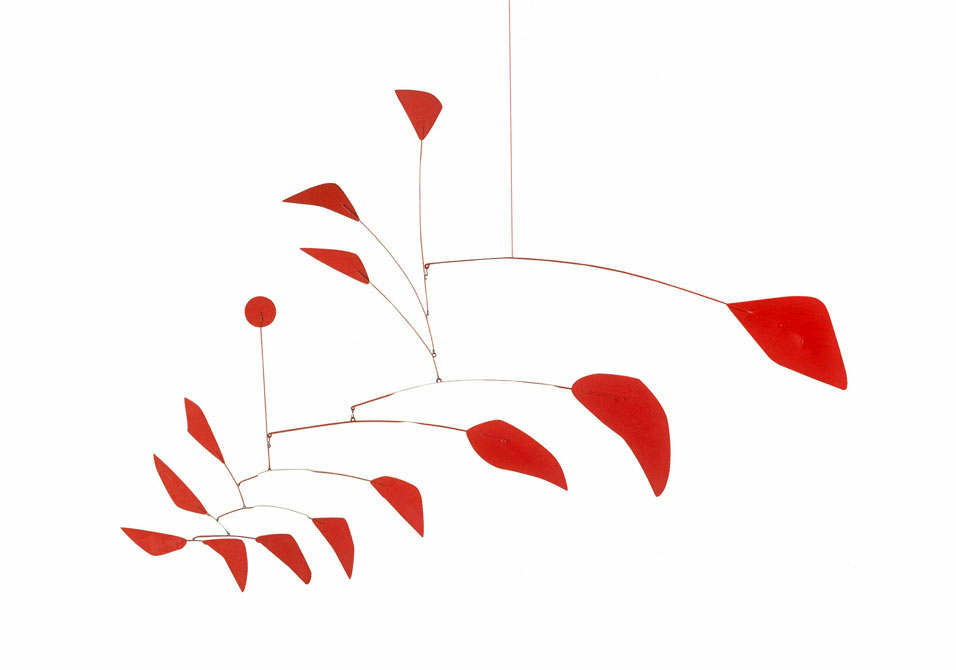
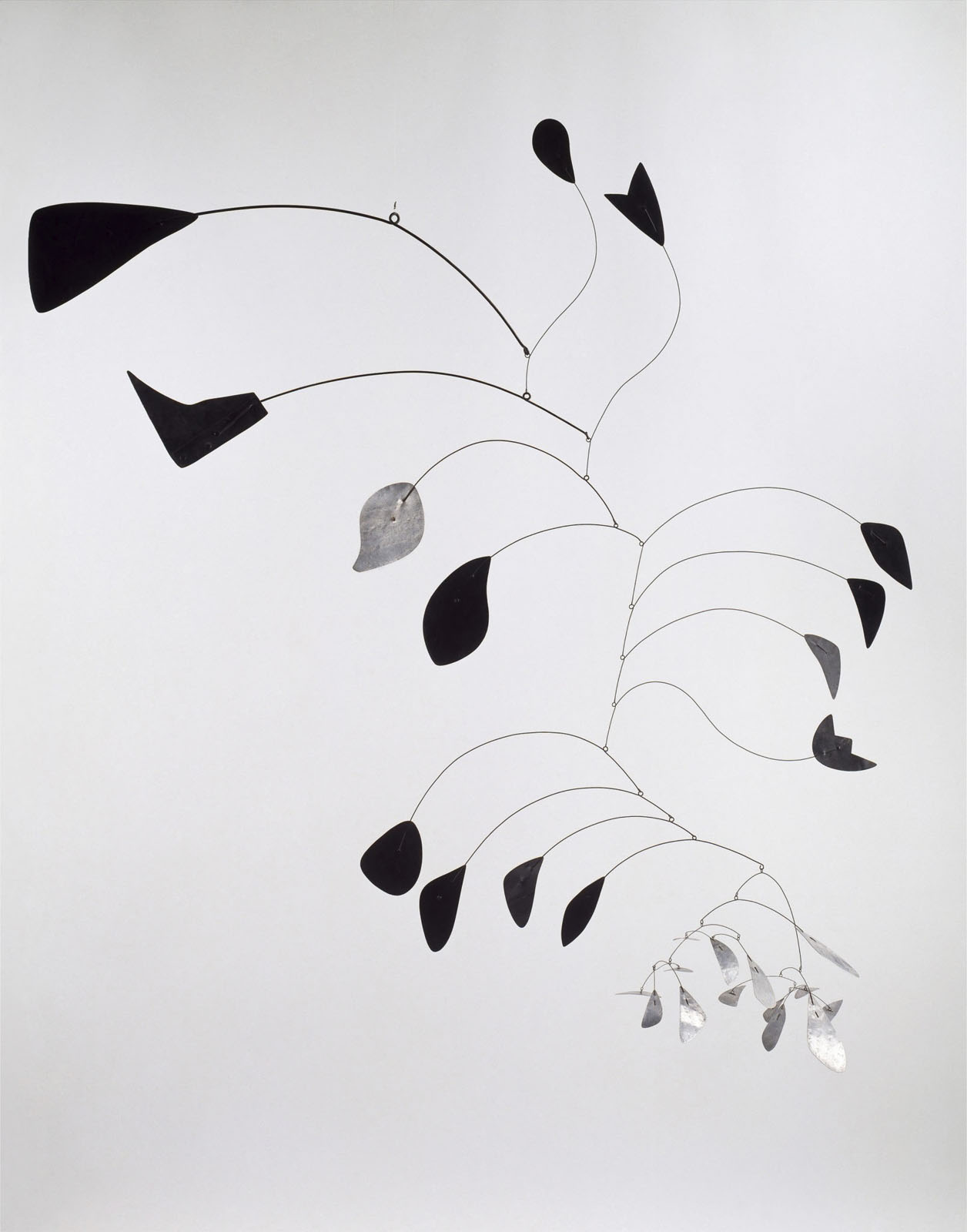
Alexander Calder (American, 1898-1976) 'Bougainvillier' 1947 from the exhibition 'Alexander Calder: A Balancing Act' at the Seattle Art Museum (SAM), October 2009 - April 2010


Alexander Calder (American, 1898-1976)
Bougainvillier
1947
Sheet metal, wire, lead and paint
78 x 86 inches
Collection of John and Mary Shirley
© Calder Foundation, New York/Artists Rights Society (ARS)
Photo: Calder Foundation, New York/Art Resource NY


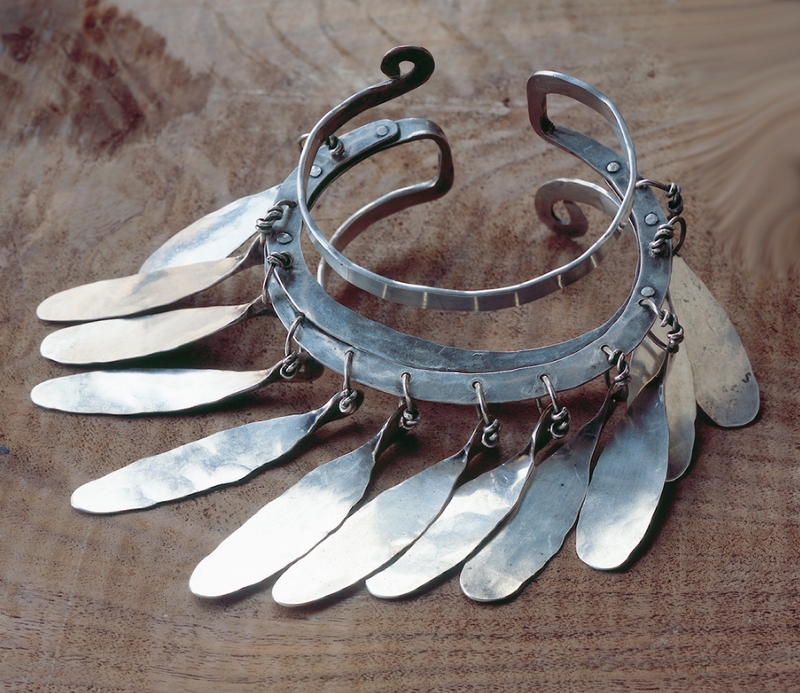
Alexander Calder (American, 1898-1976) 'Bracelet' c. 1948


Alexander Calder (American, 1898-1976)
Bracelet
c. 1948
Silver, silver wire


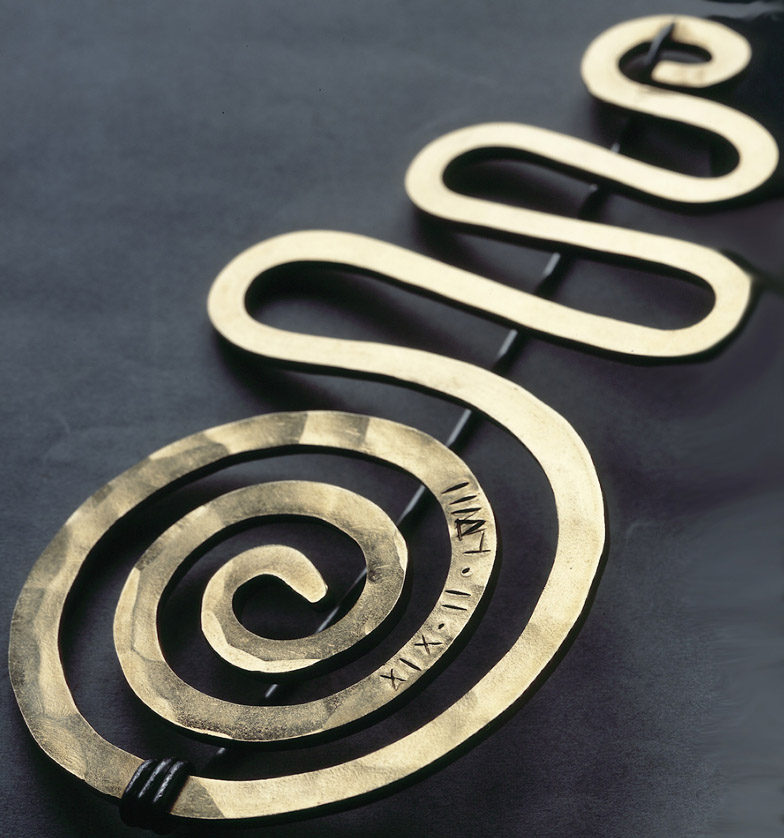
Alexander Calder (American, 1898-1976) 'Louisa Calder's 53rd Birthday Gift' 1958


Alexander Calder (American, 1898-1976)
Louisa Calder’s 53rd Birthday Gift
1958
Pin
Gold and steel wire


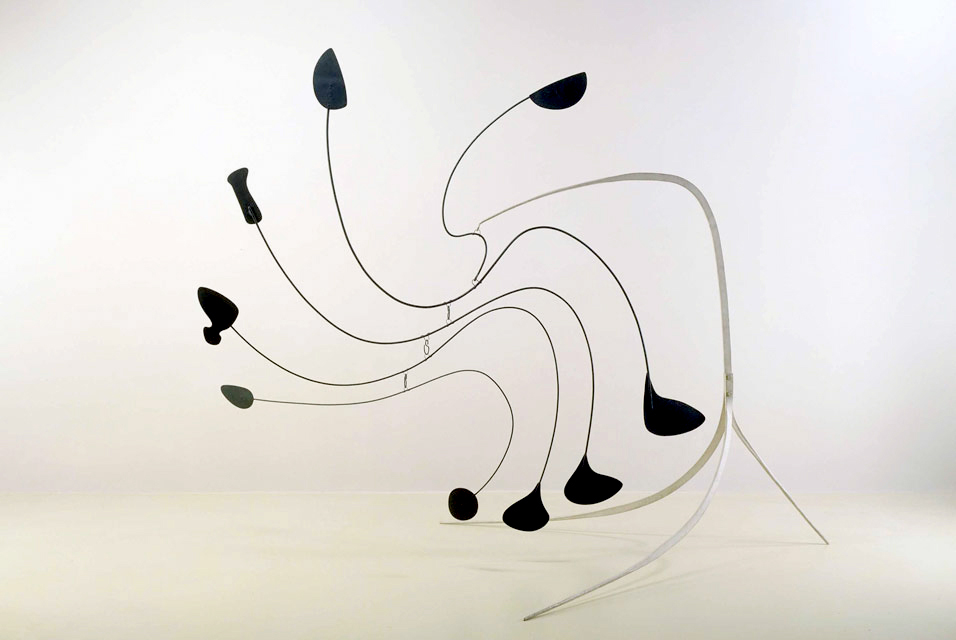
Alexander Calder (American, 1898-1976) 'The Y' 1960


Alexander Calder (American, 1898-1976)
The Y
1960


Alexander Calder (American, 1898-1976) 'Teodelapio [maquette II]' 1962


Alexander Calder (American, 1898-1976)
Teodelapio [maquette II]
1962


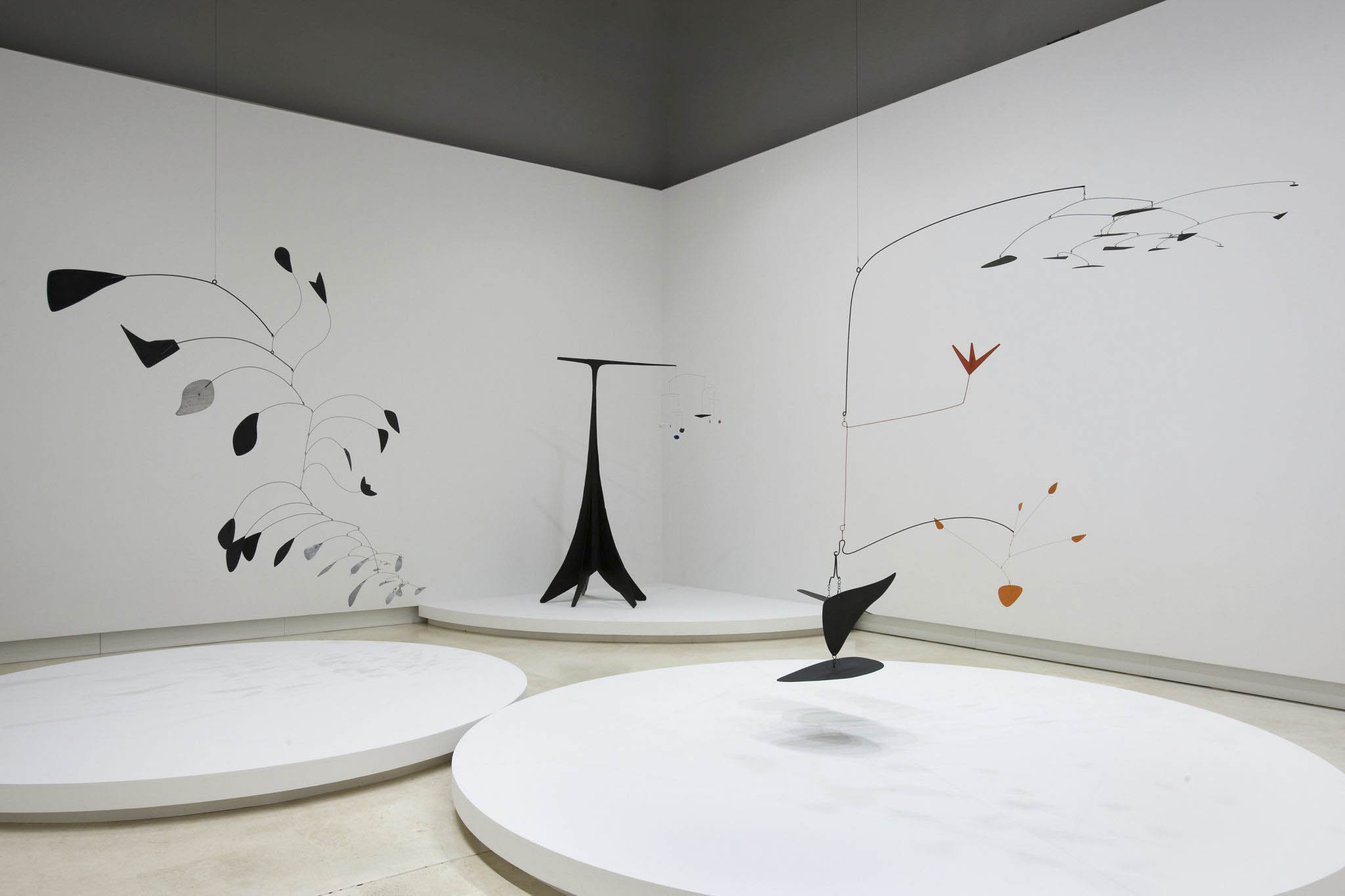
Alexander Calder: A Balancing Act on view at the Seattle Art Museum (SAM) downtown October 15, 2009, to April 11, 2010, traces the master American sculptor’s work from the late 1920s to the 1970s. Organised by the Seattle Art Museum and curated by Michael Darling, SAM’s Jon and Mary Shirley Curator of Modern and Contemporary Art, the survey features his signature mobiles, stabiles, works on paper and jewellery. Drawn primarily from the Seattle area collection of Jon and Mary Shirley, the exhibition will showcase the wide range of Calder’s interests, abilities, materials and phases during his long and productive career. Accompanying the exhibition will be 44 photographs and a film by Calder’s contemporary Herbert Matter that show his working process in many different studios over the years.

“This will be a singular occasion to appreciate the work of one of the 20th century’s titans of modern art,” said Darling. “The Shirleys’ collection allows us to examine Calder’s variations on themes and scale in a depth that few museums have the opportunity to present.”

The title of the exhibition refers to the artist’s feats of artistry and engineering, as well as his ability to work in many different arenas, from pure abstraction to playful naturalism. Calder was one of the leaders in defining what mattered in 20th-century art, balancing delicacy and the handmade with industrial materials and processes.

Calder’s work is a crucial bridge between abstract painting and sculpture that was taking root in Europe in the first half of the twentieth century and the abstract language being embraced in the US after World War II. The mobiles, in particular, were a giant leap forward in the expansion of artistic possibilities, both for artists and audiences, as their moveable parts ensured that a work was never “finished.” They defy stasis and are constantly, emphatically alive. He also pushed the boundaries of pure colour and bold form to the forefront of aesthetic consideration.

Small-Scale Works in Wire and Metal

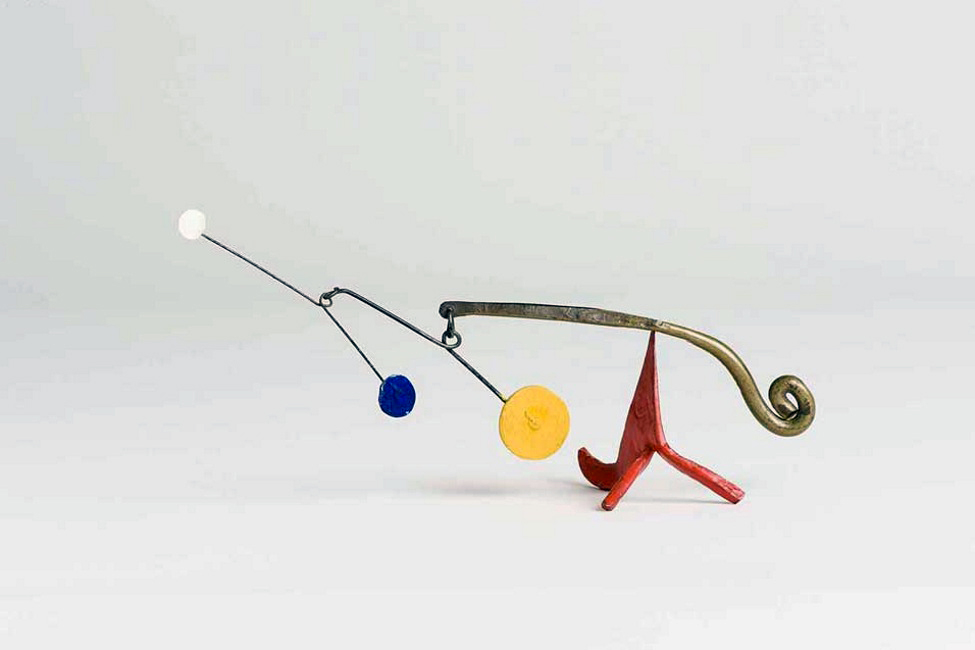
Alexander Calder: A Balancing Act features groupings of small standing mobiles that demonstrate how Calder played with variations on certain themes, such as red tripod bases with arcing cantilevers on top. When looking at works such as Black, White, Yellow and Brass on Red (1959) and Polychrome Dots and Brass on Red (1964, see image below), one can imagine them at a gigantic scale, but they are also satisfying at a diminutive size, where the hand-pounding and forming of metal is direct and evident. Some of these spirals and branching forms find direct complements in Calder’s jewellery creations, as well, revealing how fluid his approach was between the two genres. The exhibition includes examples of earrings, bracelets, necklaces, brooches, even a key ring designed and created by the artist. In addition, Alexander Calder: A Balancing Act features several of the artist’s delicate wire sculptures. Often compared to drawings that exist in three-dimensional space, these small-scale works demonstrate Calder’s acuity at balancing his keen artistic sense with playfulness and elegant craftsmanship.

Mobiles and Stabiles

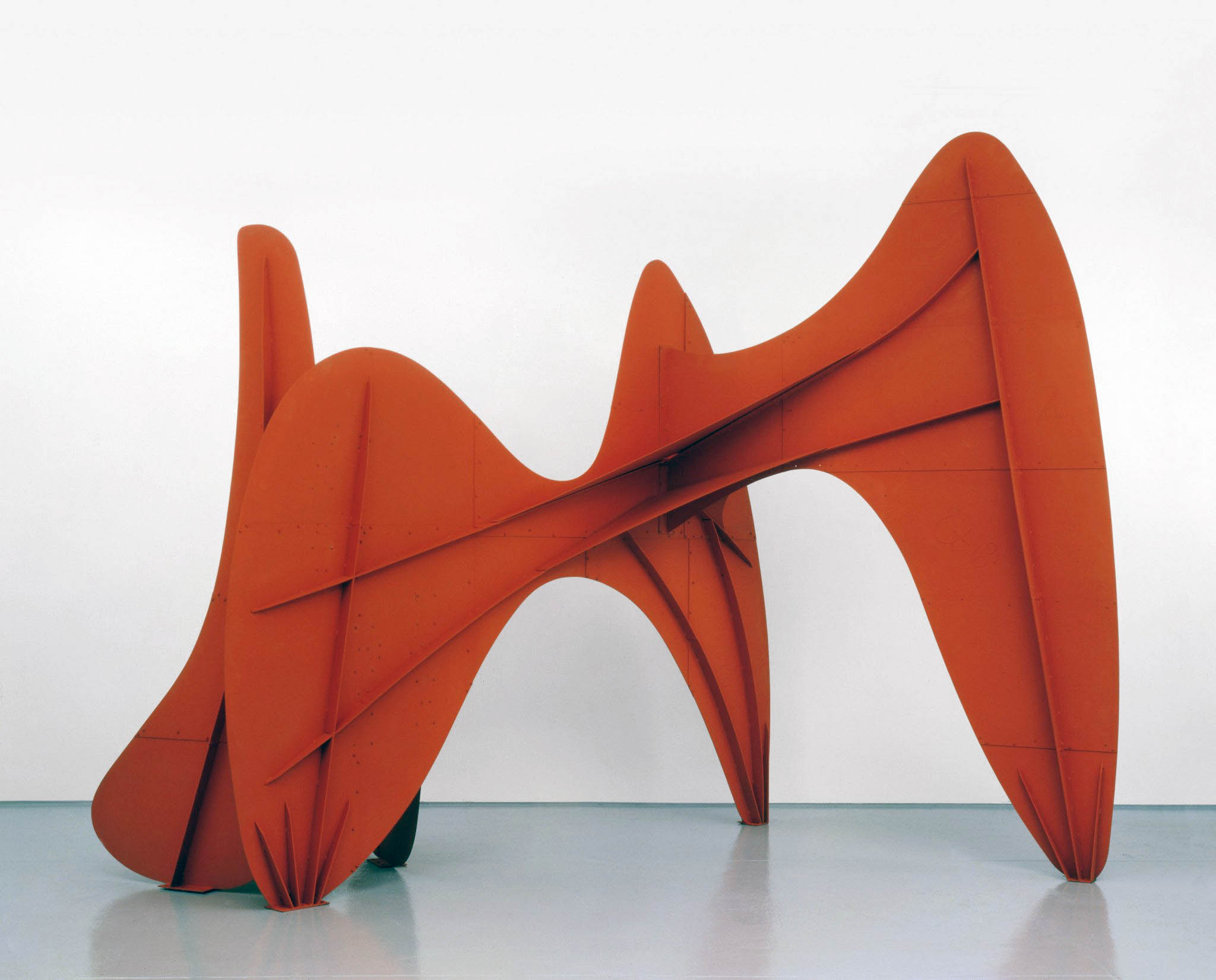
Alexander Calder is perhaps most famous for having invented the fine art mobile. His mobiles and stabiles (or non-moving sculptures) are among his most recognised works, and a number of important pieces in these genres – from smaller maquettes to some of Calder’s largest, monumental works – will be on view in the exhibition. At about eight-feet across, Untitled, a mobile from about 1948, includes organic, leaf-like “paddles” or “leaves” that move gracefully on the breeze, alongside a dangling, abstract carved wood element and a bright yellow circle. The balance of organic and geometric forms makes one think of plants, astronomy or even microbiology, all at once.

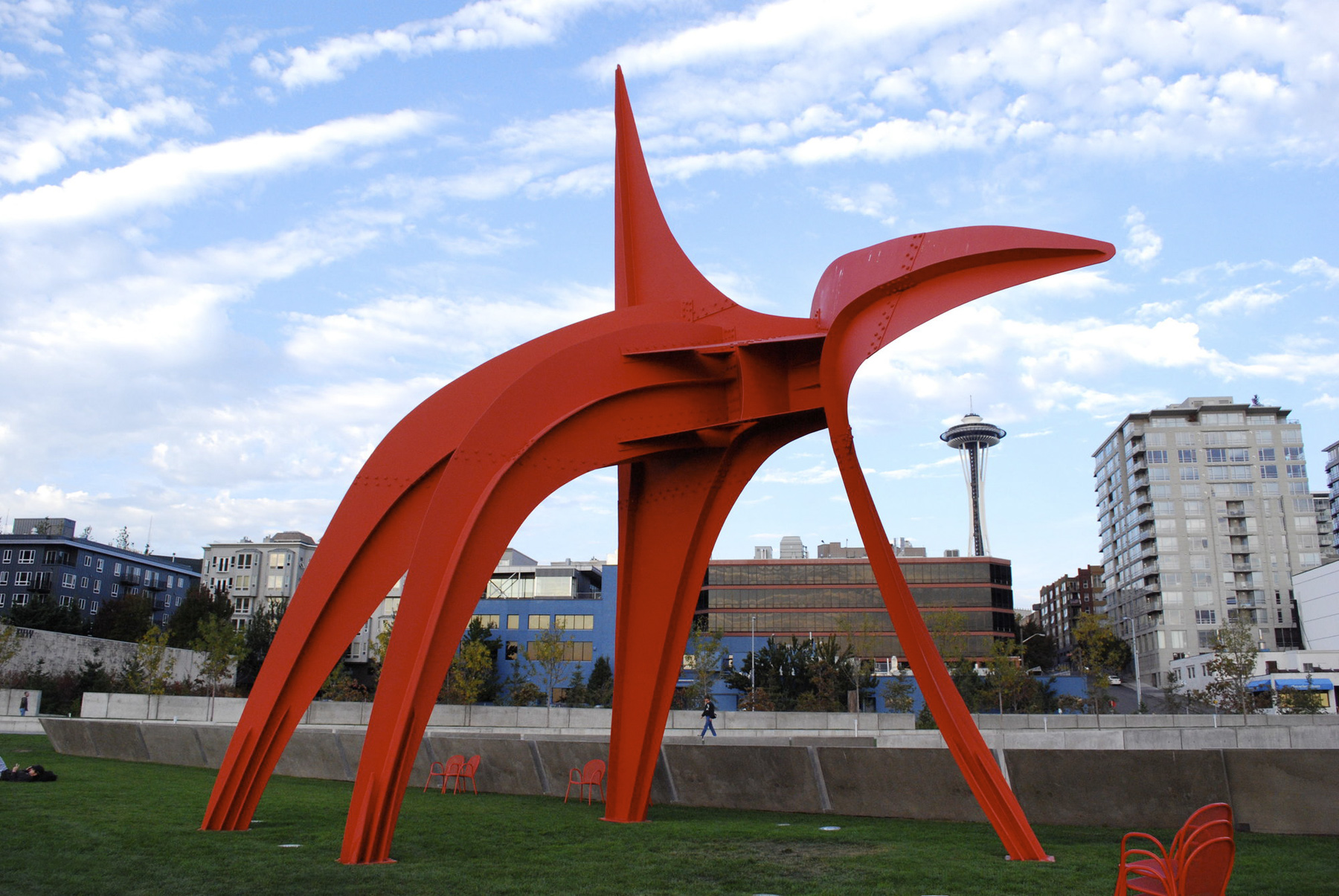
Some of the recognised masterpieces in the show include the “standing mobile” (a piece that has moving parts but rests on the ground) Bougainvillier (1947, see image above), and the large-scale, 23-foot mobile Red Curly Tail (1970) from much later in the artist’s career. Eagle (1971) currently in SAM’s collection and on view at the Olympic Sculpture Park is a good example of the later, monumental variants of Calder’s stabiles. Eagle will be part of the exhibition Alexander Calder: A Balancing Act through a live-feed video from the sculpture park and on view in the downtown Seattle galleries.

Photographs and Film by Herbert Matter

Alexander Calder’s working process comes to life in the exhibition through photographs by Herbert Matter that document the artist in his studio. On loan from the Calder Foundation, the photographs span more than ten years in the 1930s and 40s and many different studios and working spaces, revealing the creative chaos of Calder’s working environment, the almost surreal abstraction of having all of that metal and curving wire around and the workmanlike, quasi-industrial feel to the artist’s processes and surroundings. The photographs also document some of his past exhibitions and give museum visitors a sense of how Calder himself liked to display his works. A full-colour film produced by Matter in 1951, with music by John Cage and narration by Burgess Meredith, also gives great insight into Calder’s Roxbury, Connecticut, studio.

Text from the Seattle Art Museum website [Online] Cited 06/02/2010. No longer available online


Alexander Calder (American, 1898-1976) 'The Spider' 1940


Alexander Calder (American, 1898-1976)
The Spider
1940


Alexander Calder (American, 1898-1976) 'Blue Feather' c. 1948


Alexander Calder (American, 1898-1976)
Blue Feather
c. 1948


Alexander Calder (American, 1898-1976) 'Big Red' 1959


Alexander Calder (American, 1898-1976)
Big Red
1959


Alexander Calder (American, 1898-1976) 'Polychrome Dots and Brass on Red' 1964


Alexander Calder (American, 1898-1976)
Polychrome Dots and Brass on Red
1964


Alexander Calder (American, 1898-1976) 'Eagle' 1971


Alexander Calder (American, 1898-1976)
Eagle
1971
Photo: Ronincmc


Seattle Art Museum Downtown
1300 First Avenue
, Seattle, WA 98101-2003
206.654.3100
TTY 206.654.3137

Opening hours:
Wednesday – Sunday 10 am – 5 pm
Closed Monday and Tuesday

Seattle Art Museum website

LIKE ART BLART ON FACEBOOK

Back to top

Exhibition: ‘Calder: Sculptor of Air’ at the Palazzo delle Esposizioni, Rome

Exhibition dates: 22nd October, 2009 – 14th February, 2010


Many thankx to the Palazzo delle Esposizioni for allowing me to publish the photographs in the posting. Please click on the photographs for a larger version of the image.

Marcus


Installation view of the exhibition 'Calder: Sculptor of Air' at the Palazzo delle Esposizioni, Rome, October 2009 - February 2010 showing at centre, Calder's 'The Spider' 1940


Installation view of the exhibition Calder: Sculptor of Air at the Palazzo delle Esposizioni, Rome, October 2009 – February 2010 showing at centre, Calder’s The Spider 1940 (below)
Photograph by Claudio Abate


Alexander Calder (American, 1898-1976) 'The Spider' 1940


Alexander Calder (American, 1898-1976)
The Spider
1940
Sheet metal, wire, and paint
95″ × 99″ × 73″
Nasher Sculpture Center, Dallas


Alexander Calder (American, 1898-1976) 'Little Spider' c. 1940


Alexander Calder (American, 1898-1976)
Little Spider
c. 1940
Media
Sheet metal, rod, wire, and paint
55″ × 50″
National Gallery of Art, Washington, D.C.
Gift of Mr. & Mrs. Klaus G. Perls, 1996


Alexander Calder (American, 1898-1976) 'Gibraltar' 1936 from the exhibition 'Calder: Sculptor of Air' at the Palazzo delle Esposizioni, Rome, October 2009 - February 2010


Alexander Calder (American, 1898-1976)
Gibraltar
1936
Wood, wire, and paint
Dimensions
51 7⁄8″ × 24 1⁄4″ × 11 3⁄8″
The Museum of Modern Art, New York; Gift of the Artist


Alexander Calder (American, 1898-1976) 'Cascading Flowers' 1949 from the exhibition 'Calder: Sculptor of Air' at the Palazzo delle Esposizioni, Rome, October 2009 - February 2010


Alexander Calder (American, 1898-1976)
Cascading Flowers
1949


The City of Rome is to devote its first ever major exhibition to Alexander Calder. The exhibition is being organised by the Azienda Speciale Palaexpo to celebrate the famous US artist born in Lawnton, Pennsylvania, in 1898 and who died in New York in 1976. His Mobiles are some of the modern era’s most celebrated icons. Exuberance, happiness, vigour and a strong and lively sense of humour are features James J. Sweeney already attributed to Calder in the catalogue of a retrospective held at the Museum of Modern Art in New York in 1943. This was the exhibition that raised Calder to the level of one of the leading artists of the day. After majoring in engineering, being awarded a diploma at the Art Students’ League in New York and immersing himself fully in the Parisian Avant-Garde movement in the twenties, Calder went on in the following decade to produce his first Mobiles, as Marcel Duchamp was to christen them. In these sculptures, which were to become enormously popular, the artist harmonically fused shape, colour and movement into an essential whole, which he himself saw as a “universe” where “each element can move, shift and oscillate back and forth in a changing relationship with each of the other elements.”

The exhibition at the Palazzo delle Esposizioni – over 100 works from major public and private collections and the Calder Foundation itself – is set out in the form of a chronological journey designed to explore the artist’s entire creative cycle starting in the twenties. A large selection of his most important works will be on display, including some of the sculptures that were shown at the 1943 exhibition at the MoMa. The exhibition will also be taking a look at some of the lesser known aspects of his work, with groups of works that are rarely on display to the general public. The exhibition opens with his wire sculptures of acrobats, animals and portraits, most of which were created in Paris in the twenties. They include his first attempts to portray movement in a playful and wryly ironic mood.

A lesser known series of small bronze figures produced in 1930 showing contortionists and acrobats will allow the visitor to see how the artist resorted to different techniques to experiment in expressing the notion of movement. An important selection of works also illustrates the way in which Calder wholeheartedly embraced the Abstract movement after paying a visit to Mondrian’s studio in Paris. The visitor will also be able to track Calder’s surrealist vein and his interest in biomorphic shapes through a series of masterpieces produced in the mid-thirties including: Gibraltar, Tightrope, Yellow Panel and Orange Panel, all completed in 1936 (see images above).

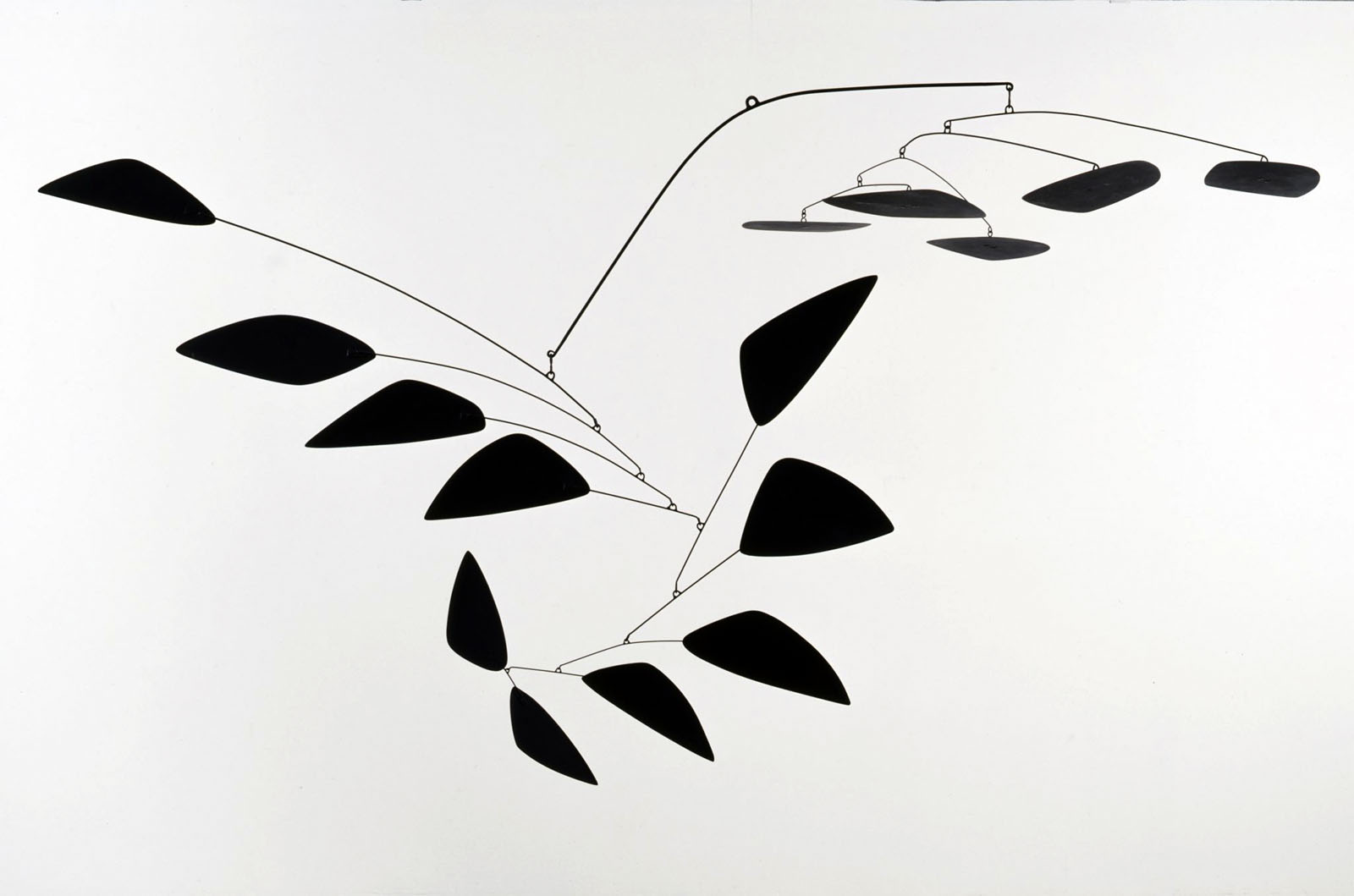
The exhibition will be built around the Mobiles that the artist produced throughout his career, working industrial metal plates using a craftsman’s technique. Throughout the exhibition, visitors will be able to admire a selection of the most representative pieces from different periods: Arc of Petals, 1941 (see image below); Cascading Flowers, 1949 (see image above); Le 31 Janvier, 1950; and The Y, 1960 (see image below). The exhibition will also be hosting a significant selection of Stabiles, free-standing sculptures that were given their name by Hans Arp. The Stabiles on display will range from those produced in the mid-thirties, such as Black Beast and Hollow Egg (dated 1939), right up to the more recent Cactus, dated 1959, and La Grande Vitesse created in 1969 (see image below). The exhibition will also be exploring the chronological development of Calder’s painting, a branch of his art in which the artist resorted principally to the agile and dynamic method of gouache on paper. The exhibition will be accompanied by a catalogue published by Motta, with contributions from Alexander S. C. Rower and Giovanni Carandente as well as a broad anthology of texts by the artist himself and other authors, many of whose works will be appearing in Italian translation for the first time.

Press release from the Palazzo delle Esposizioni website [Online] Cited 01/09/2010. No longer available online


Alexander Calder (American, 1898-1976) 'Helen Wills' 1927


Alexander Calder (American, 1898-1976)
Helen Wills
1927


Helen Newington Wills (October 6, 1905 – January 1, 1998), also known as Helen Wills Moody and Helen Wills Roark, was an American tennis player. She became famous around the world for holding the top position in women’s tennis for a total of nine years: 1927-33, 1935 and 1938. She won 31 Grand Slam tournament titles (singles, women’s doubles, and mixed doubles) during her career, including 19 singles titles.

Wills was the first American woman athlete to become a global celebrity, making friends with royalty and film stars despite her preference for staying out of the limelight. She was admired for her graceful physique and for her fluid motion. She was part of a new tennis fashion, playing in knee-length pleated skirts rather than the longer ones of her predecessors. Unusually, she practiced against men to hone her craft, and she played a relentless game, wearing down her female opponents with power and accuracy. In 1933 she beat the 8th-ranked US male player in an exhibition match.

Her record of eight wins at Wimbledon was not surpassed until 1990 when Martina Navratilova won nine. She was said to be “arguably the most dominant tennis player of the 20th century”, and has been called by some (including Jack Kramer, Harry Hopman, Mercer Beasley, Don Budge, and AP News) the greatest female player in history.

Text from the Wikipedia website


Alexander Calder (American, 1898-1976) 'Parasite' 1947


Alexander Calder (American, 1898-1976)
Parasite
1947
Sheet metal, wire, and paint
41″ × 68″ × 28″
Calder Foundation, New York


Installation view of the exhibition 'Calder: Sculptor of Air' at the Palazzo delle Esposizioni, Rome, October 2009 - February 2010 showing at left, Calder's 'Mobile (Arc of Petals)' 1941


Installation view of the exhibition Calder: Sculptor of Air at the Palazzo delle Esposizioni, Rome, October 2009 – February 2010 showing at left, Calder’s Mobile (Arc of Petals) 1941 (below)
Photograph by Claudio Abate


Alexander Calder (American, 1898-1976) 'Mobile (Arc of Petals)' 1941


Alexander Calder (American, 1898-1976)
Mobile (Arc of Petals)
1941
Sheet metal, wire, rivets, and paint
94 1⁄2″ × 86 5⁄8″ × 35 7⁄16″
Solomon R. Guggenheim Foundation
Peggy Guggenheim Collection, Venice, 1976


Alexander Calder (American, 1898-1976) 'The Y' 1960


Alexander Calder (American, 1898-1976)
The Y
1960
Sheet metal, rod, and paint
Dimensions
98 13⁄16″ × 14’6 1⁄2″ × 66 3⁄8″
Collection
The Menil Collection, Houston


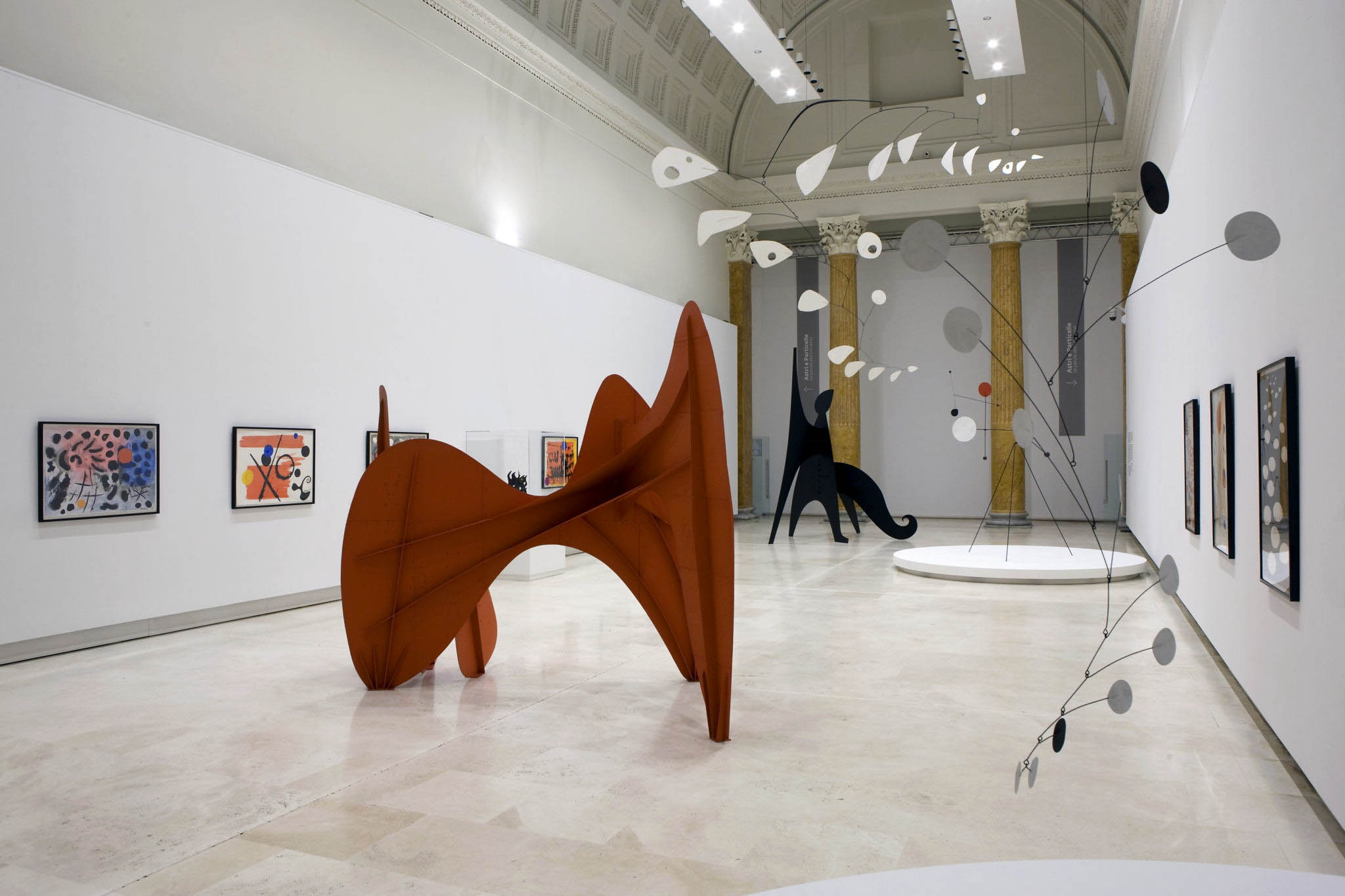
Installation view of the exhibition 'Calder: Sculptor of Air' at the Palazzo delle Esposizioni, Rome, October 2009 - February 2010


Installation view of the exhibition Calder: Sculptor of Air at the Palazzo delle Esposizioni, Rome, October 2009 – February 2010 showing at centre, Calder’s La Grande vitesse (1:5 intermediate maquette) 1969 (below)
Photograph by Claudio Abate


Alexander Calder (American, 1898-1976) 'La Grande vitesse (1:5 intermediate maquette)' 1969


Alexander Calder (American, 1898-1976)
La Grande vitesse (1:5 intermediate maquette)
1969
Sheet metal, bolts, and paint
8’6″ × 11’3″ × 93″
Calder Foundation, New York


Alexander Calder (American, 1898-1976) 'La Grande Vitesse' 1969


Alexander Calder (American, 1898-1976)
La Grande Vitesse
1969


Palazzo delle Esposizioni, Rome
Via Nazionale, 194, and Via Milano, 9

Opening hours:
Tuesday – Sunday 10am – 8pm
Monday closed

Palazzo delle Esposizioni website

LIKE ART BLACK ON FACEBOOK

Back to top

Review: ‘Jenny Holzer’ at the Australian Centre for Contemporary Art (ACCA), Melbourne

Exhibition dates: 17th December, 2009 – 28th February, 2010


Jenny Holzer (American, b. 1950) 'Projections' various dates from the exhibition 'Jenny Holzer' at the Australian Centre for Contemporary Art (ACCA), Melbourne, December 2009 - February 2010

Jenny Holzer (American, b. 1950) 'Projections' various dates

Jenny Holzer (American, b. 1950) 'Projections' various dates


Jenny Holzer (American, b. 1950)
Projections
Various dates
With poetry by Wislawa Szymborska


“I draw from everything – from the National Security Archives collection to old material from the FBI’s website to postings by the ACLU. I concentrate on the content. It tends to be very rough material about what’s happened to soldiers in the field, about the good and bad choices they’ve been forced to make, and what has happened to detainees and civilians. I also go to material that’s almost completely gone, either whited out or blacked out, because that represents the issue. You don’t have to spill words when the page is completely black.”


Jenny Holzer


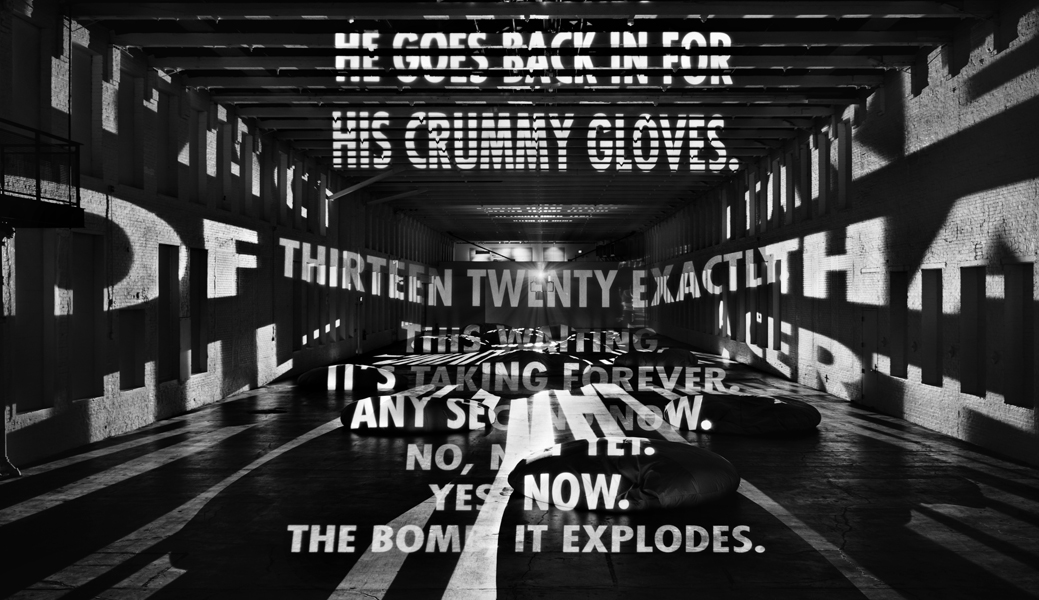
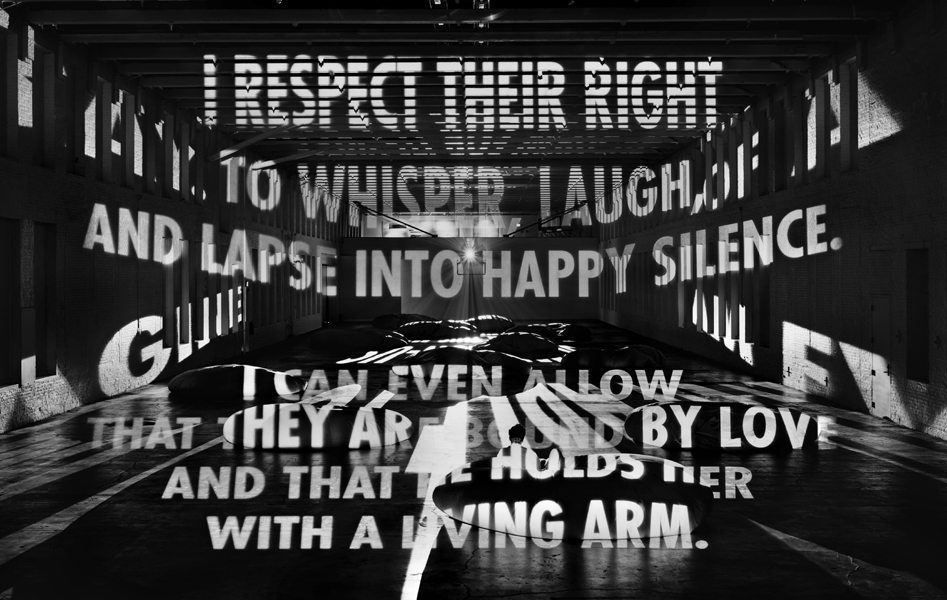
This is a patchy but ultimately redemptive exhibition by Jenny Holzer at the Australia Centre for Contemporary Art (ACCA), Melbourne. The main exhibition space at ACCA is filled with one installation created specifically for the space titled For ACCA (2009) that in essence is the same as the installation for The Massachusetts Museum of Contemporary Art (MASS MOCA)(see photographs above).

The work is projected by a Cameleon Teleprojecteur into the large space and features poems by Wislawa Szymborska with titles such as “The End and the Beginning”, “The Joy of Writing”, “Children of Our Age” and “The Terrorist, He’s Watching” scrolling a la Star Wars opening credits from the bottom upwards into the darkened space. The words that flow into the mis en scene are distorted at the edges like a fish eye lens distorts reality. EVERYTHING IS IN CAPITAL LETTERS TO EMPHASISE THE IMPORTANCE OF THE WORDS, JUST IN CASE WE MISSED THE POINT. It feels like you have been metaphorically hit over the head with the artist’s concern and frankly, I soon lost interest in the mobilisation of meaning:

“I don’t require changes
from the surf,
now diligent, now sluggish,
obeying not me.”

“The Bomb in the bar
will explode at thirteen twenty
Now it’s just thirteen sixteen
There’s still time
for some to go in,
and some to come out.”

“There’s one thing
I won’t agree to:
My own return.
The privilege of presence –
I give it up.”

“I survived you by enough,
and only by enough,
to contemplate from afar – “

“After Every War
Someone has to tidy up.
Things won’t pick
themselves up, after all.”

 
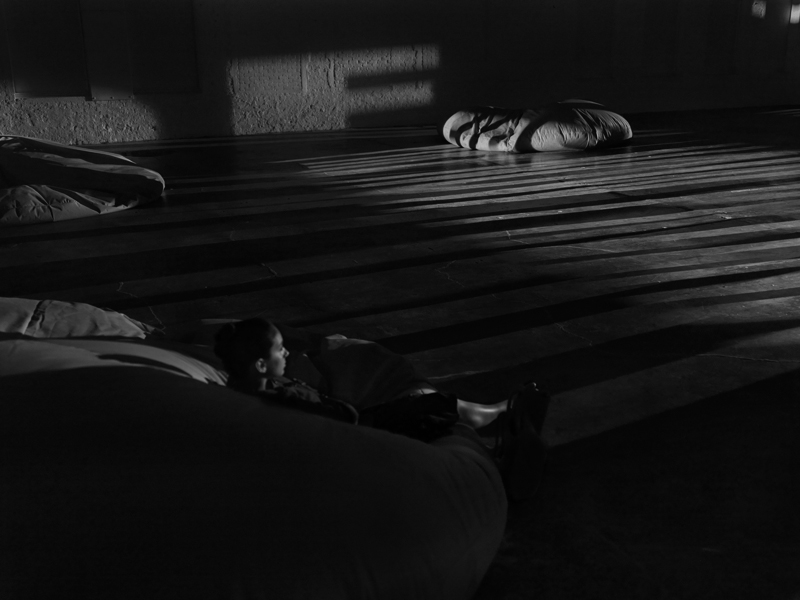
More interesting are the 4 bean bags placed on the floor that are covered in matt grey heat sensitive fabric. As you sit in the bags your indentation heats up the fabric. Upon standing the mark of your body, your body temperature, forms silver Yves Klein-like paintings of glowing phosphorescence. Looking back into the projector from your recumbent position you get an eerie view of the words coming towards you on the floor and going away on the ceiling, your body illuminated in words. What spoils the installation for me is the didactic nature of the protestations, their proselytising soon wearing thin on a body more attuned to the pithy, insightful phrases of Barbara Kruger.

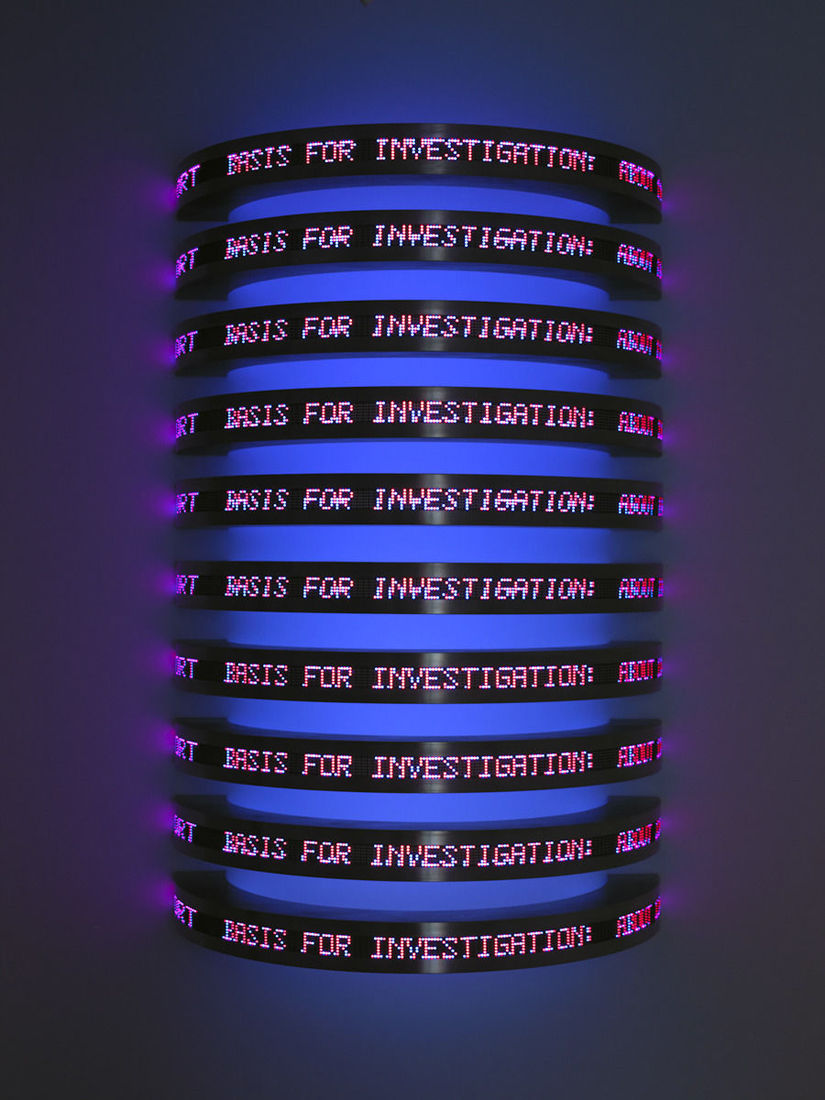
The electronic sculpture Torso (see image below) “emphatically addresses the private body enmeshed and lost in information and government operations.” (catalogue text). Featuring 10 doubled LED projectors programmed with case files of American soldiers accused of war crimes in the Middle East, abuse questions of detainees, ‘For Official Use Only’ texts and personal messages of love the sculpture is at first seen from a distance, framed by two rectangular doorways of the previous galleries. The mainly blue background and pink lettered light emanating from the sculpture is beautiful and quite magical and as one enters the empty space of the gallery the light focuses the eyes on the moving words, their repetition, their flashing, their running at different speeds and colours, all with the same message – words that seem to appear out of the wall and disappear back into it. The effect soon wears thin however; when you delve into the guts of the torso fascination begins to wane and you are left with repetition for repetition’s sake and with ‘pretty’ words that are just that: patterns of perniciousness displayed for our pleasure.

The reason that you must visit this exhibition is the last body of work. Working with declassified documents that relate to the wars in Iraq and Afghanistan Holzer’s Redaction paintings address the elemental force that is man’s (in)humanity to man (in the study of literature, redaction is a form of editing in which multiple source texts are combined (redacted) and subjected to minor alteration to make them into a single work).1 Silkscreen printed as oil on canvas these paintings are some of the most poignant, moving, terrifying, enraging pieces of art that I have seen in a long time. I was moved to tears. They are tough works and they deserve to be.

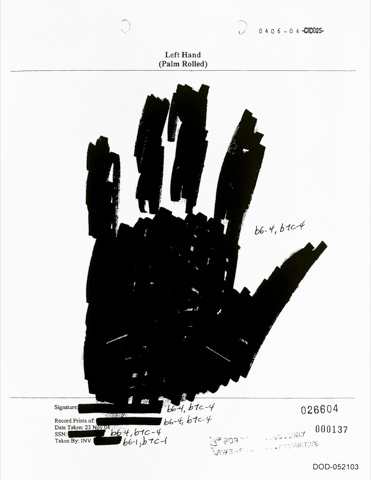
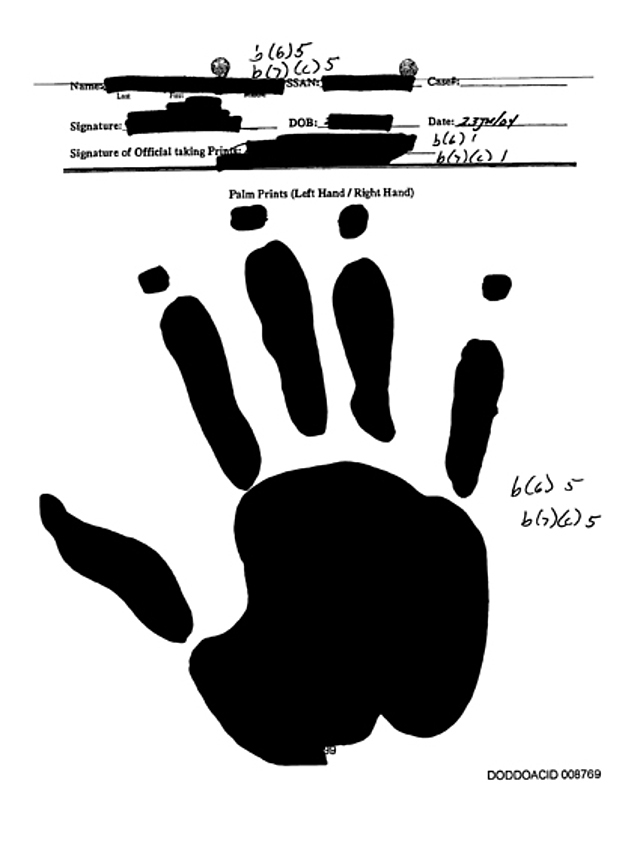
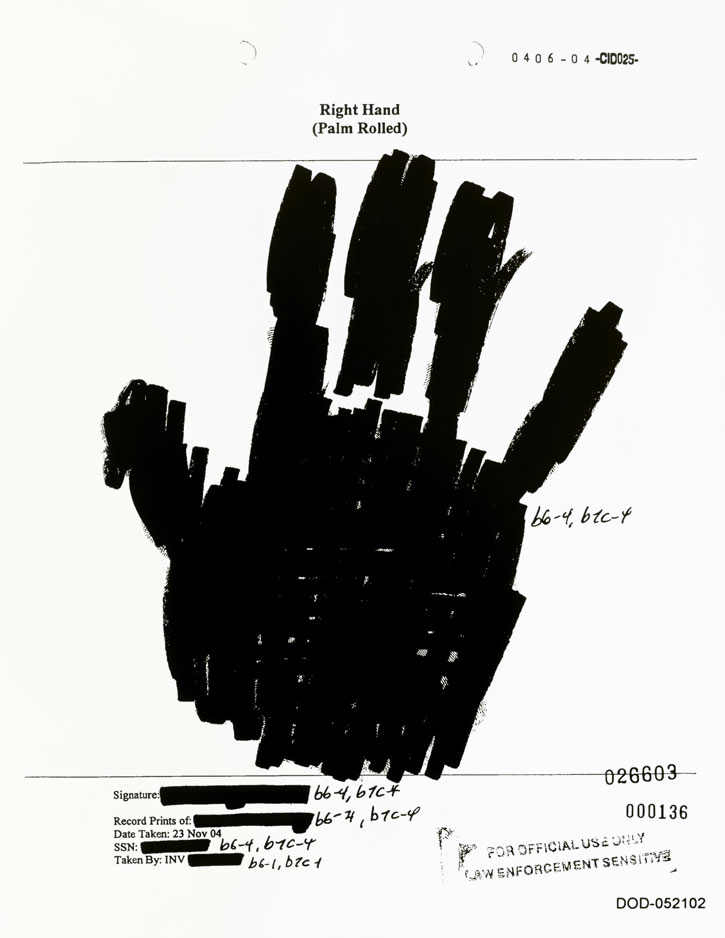
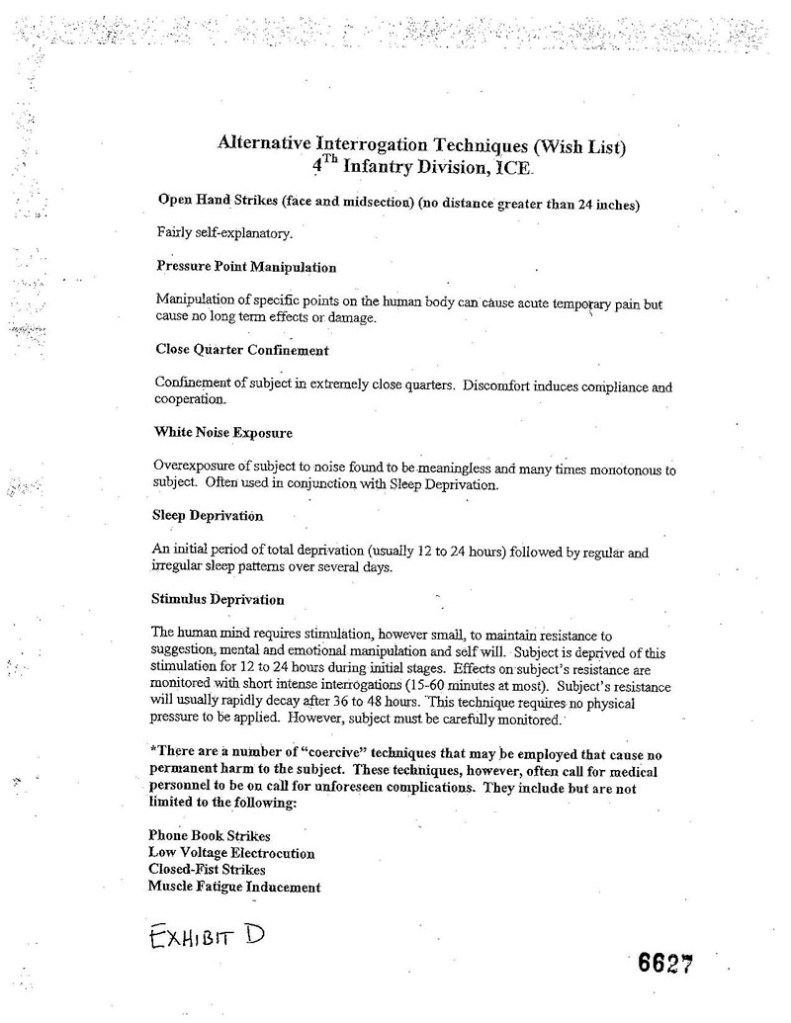
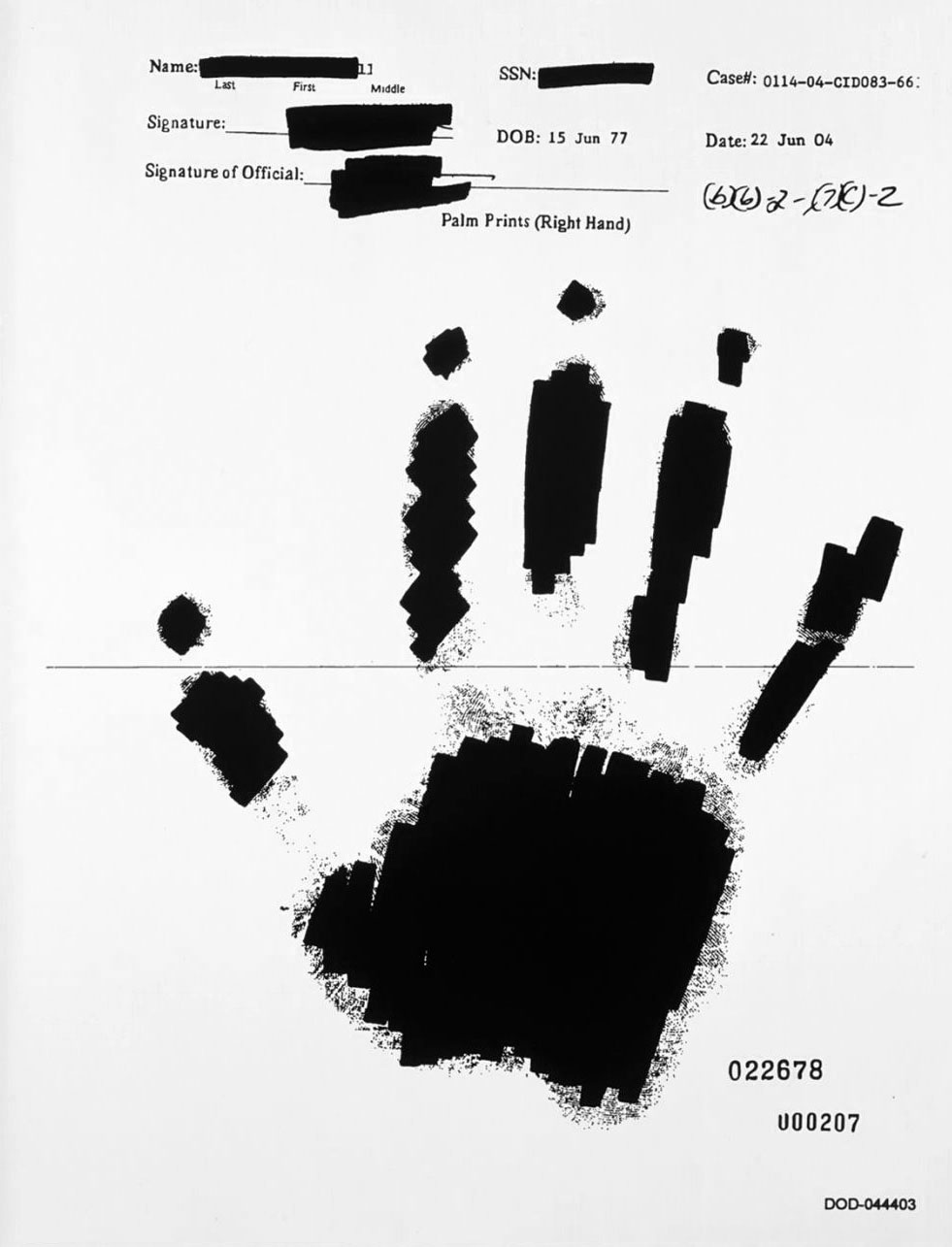
Autopsy reports, a “Wish List” for alternative interrogation techniques (Wish List/Gloves Off 2007), a handwritten letter from an Iraq student detailing his experience of torture (By the Name of God 2006) and palm prints – (some totally illegible as the censor eradicates human identity, erases with a double violence – to the person themselves, to the validation that they existed) – document a government’s malfeasance.

What a word malfeasance!
Etymology: mal- + obsolete feasance doing, execution …

In these paintings the artist pulls back and lets the work speak for itself – and it is all the more powerful because of this. Using the physical process of the hand in the making of these images implicates every one of us in the complicities of the faceless bureaucrats and military personnel that hide behind blacked out names. The most moving of the hand prints are the partial prints taken after death where some ‘body’ has pressed down the deceased detainees hand to make an impression, mapping an identity already deleted (Faint Hand 2007 – unfortunately I don’t have any images of these paintings to show you). One is even presented as it was taken, upside down (Right Hand Down 2007). These are indescribable images, they tear you up inside.

I left the exhibition feeling shell-shocked after experiencing intimacy with an evil that leaves few traces. In the consciences of the perpetrators? In the hearts of the living! Oh, how I wish to see the day when the human race will truly evolve beyond. We live in hope and the work of Jenny Holzer reminds us to be vigilant, to speak out, to have courage in the face of the unconscionable.

Dr Marcus Bunyan


Many thankx to the Australia Centre for Contemporary Art for allowing me to publish the photographs in the posting. Please click on the photographs for a larger version of the image.


“Date of birth; 1947
Date/time of Death: 26 Nov 2003
Circumstances of Death: This Iraq  _____  died in U.S. custody”

“We are American soldiers, heirs to a long tradition of staying on the high ground. We need to stay there.”


Jenny Holzer (American, b. 1950) 'Torso' 2007 from the exhibition 'Jenny Holzer' at the Australian Centre for Contemporary Art (ACCA), Melbourne, December 2009 - February 2010


Jenny Holzer (American, b. 1950)
Torso
2007
LED projectors


Holzer became well-known in the 1980s for her text-based works and public art. Her first series, Truisms (1977-1979), contains concise, aphoristic statements that reveal and question truths, beliefs, and ideologies. While Truisms first appeared on posters placed in the urban environment, Holzer’s texts later took a number of forms including light projections on high-profile public buildings, LED (light emitting diode) signs, stickers placed on surfaces such as parking metres and telephone booths, and public furniture such as marble and granite benches. While Holzer still at times relies on the thirteen texts she wrote from 1977-2001, her recent practice has turned to incorporating the writings of others, including works by internationally celebrated poets and declassified government documents. Like her own texts, the borrowed writings and documents address personal and public calamities in a range of voices and tones that approximates the complexity of daily life.

Though Holzer has used words and ideas in public spaces for the past thirty years, she has also created large-scale projects for prominent institutions such as the Guggenheim Museum (New York), the Guggenheim Museum (Bilbao), the Whitney Museum of American Art (New York), and the Centre Pompidou (Paris).

For ACCA’s main exhibition hall, Holzer will project poetry in the form of light onto the floors, ceilings, and walls, making the language something felt as well as read. In addition, she will display works from a series that began in 2005 where she translates declassified government documents into paintings. The documents are left exactly as they were found when rendered through silkscreen onto oil-painted grounds. The marks of a censor are seen in the text blocked out by a black scribble or box. These works come, as Holzer has said, from her “frantic worrying about the war and attendant changes in American society.” The projections and paintings will be supplemented by an LED installation titled Torso. In this work, Holzer stacks ten semi-circular signs that display in red, blue, white, and purple light the statements, investigation reports, and emails from case files of soldiers accused of various crimes in the Middle East. Providing these voices, part damning, contradictory, sympathetic, anecdotal, and evidentiary, Holzer layers accounts of abuse and blame.

“Jenny Holzer’s words ask us to consider our thoughts and actions in the world. This essentially humanist and philosophical project encourages us to seek self enlightenment through examining our prejudices, false beliefs, fall back positions, and habits, to reach a new level of tolerance, understanding and self awareness”

Juliana Engberg, ACCA’s Artistic Director

Text from the ACCA website [Online] Cited 01/06/2010. No longer available online


Jenny Holzer (American, b. 1950)
'Left Hand (Palm Rolled)' 2007


Jenny Holzer (American, b. 1950)
Left Hand (Palm Rolled)
2007
Oil on linen
80 x 62 in. (203.2 x 157.5cm)
Text: U.S. government document


What truly adds substance to the style are the Redaction Paintings. These blown-up pieces of censored materials, silk-screened on to stretched canvas, afford an unnerving glimpse at how we fight wars. Authored by countless bureaucratic functionaries, they feel both predictable and eye-opening.

All of the embedded journalists in the world couldn’t produce as clear a picture as the government did in documenting its own malfeasance. Many of these documents feature the blurred type of countless reproductions, a sign that time is burying these paperwork tragedies until they become illegible and unactionable.

Holzer didn’t have to doctor these documents for heightened effect; the black bars that enshroud the names of victims and their tormentors speak for themselves. One autopsy report describes the fatal suffocation of a prisoner of war forced to maintain a stress position. In some cases nearly whole documents are ominously blacked out, like a national Rorschach test.2


Jenny Holzer (American, b. 1950) 'DODDOACID 008769' 2007 from the exhibition 'Jenny Holzer' at the Australian Centre for Contemporary Art (ACCA), Melbourne, December 2009 - February 2010


Jenny Holzer (American, b. 1950)
DODDOACID 008769
2007
Oil on linen


Jenny Holzer (American, b. 1950)
'Right Hand (Palm Rolled)' 2007


Jenny Holzer (American, b. 1950)
Right Hand (Palm Rolled)
2007
Oil on linen
80 x 62 in. (203.2 x 157.5cm)
Text: U.S. government document


Jenny Holzer (American, b. 1950)
'Wish List/Gloves Off' 2006


Jenny Holzer (American, b. 1950)
Wish List/Gloves Off
2006
Oil on linen


“WISH LIST” document:

A captain in the US Army human intelligence division requested a “wish list” from subordinate interrogation teams for, “innovative interrogation techniques that will prove more successful than current methods.” One person interpreted this request to mean, “the captain wanted suggestions legal, illegal and somewhere in between.” The WISH LIST document is a summary of alternative interrogation techniques that the 4th Infantry Division, ICE, devised, including phone book strikes, low voltage electrocution and muscle fatigue inducement.

The document can no longer be found on the American Civil Liberties Union website. The “WISH LIST” is on p. 59.”3


Jenny Holzer (American, b. 1950) 'Right Hand DOD-044403' 2007


Jenny Holzer (American, b. 1950)
Right Hand DOD-044403
2007
Oil on linen


Footnotes

1/ Definition of redaction on Wikipedia website [Online] Cited 6 February 2010

2/ Arizona, Daniel. “Jenny Holzer and the Influence of Anxiety,” on More Intelligent Life.com website [Online] Cited January 2010. No longer available online

3/ Anon. “Jenny Holzer Projections.” on the MASS MOCA website [Online] Cited 17 January 2010. No longer available online


Australian Centre for Contemporary Art (ACCA)
111 Sturt Street
Southbank
Victoria 3006
Australia

Opening hours:
Tuesday to Friday 10am – 5pm
Weekends and Public Holidays 11am – 5pm
Closed Monday
Open all public holidays except Christmas Day and Good Friday

Australian Centre for Contemporary Art website

LIKE ART BLACK ON FACEBOOK

Back to top

Exhibition: ‘Picturing New York: Photographs from The Museum of Modern Art’ at the Irish Museum of Modern Art, Dublin

Exhibition dates: 25th November, 2009 – 7th February, 2010


Many thankx to Monica Cullinane and the Irish Museum of Modern Art for allowing me the reproduce photographs from the exhibition. Please click on the photographs for a larger version of the image.

Marcus


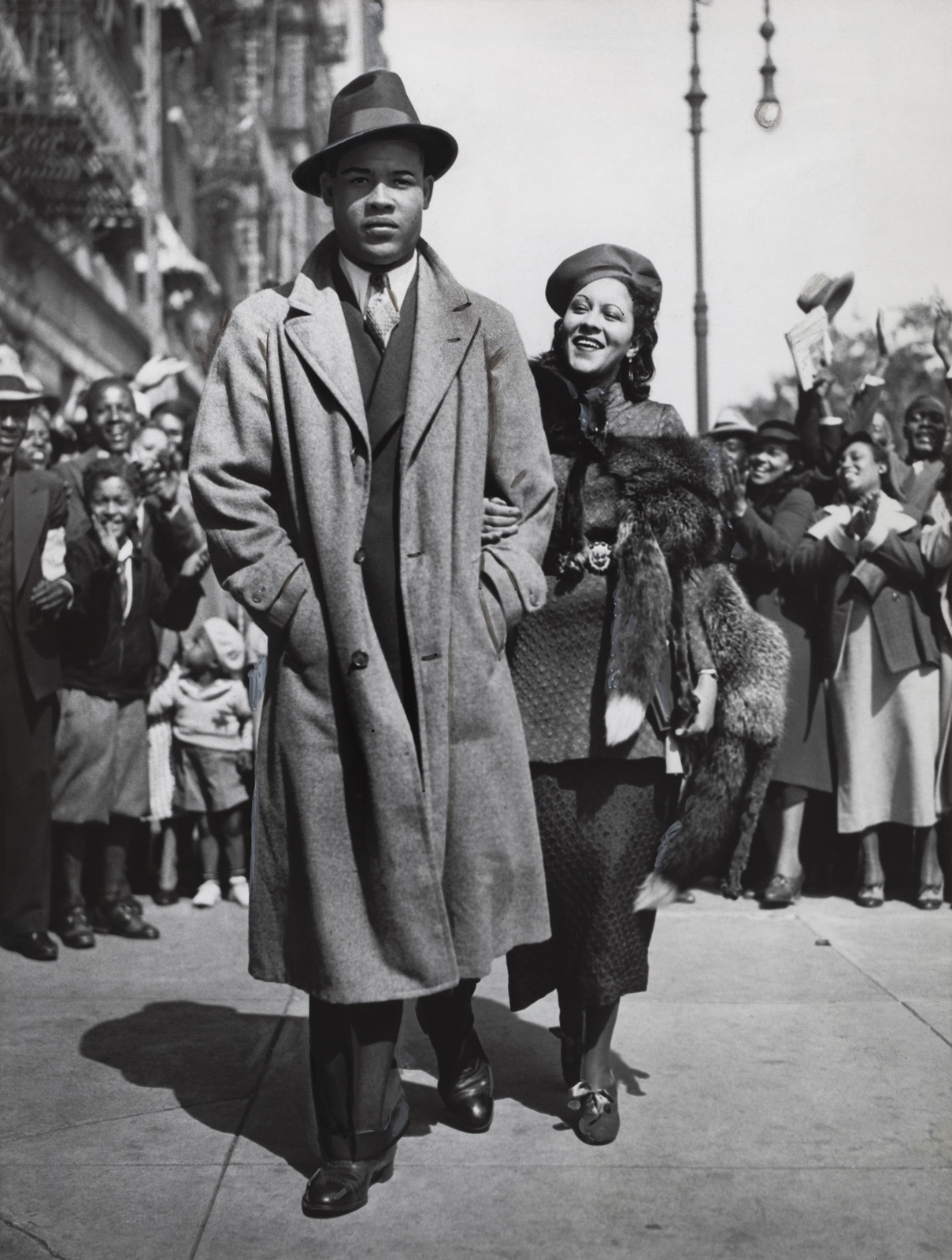
Times Wide World Photos (American, active 1919-1941) 'Mr. and Mrs. Joe Louis Out for a Stroll' September 25, 1935 from the exhibition 'Picturing New York: Photographs from The Museum of Modern Art' at the Irish Museum of Modern Art, Dublin, November 2009 - February 2010


Times Wide World Photos (American, active 1919-1941)
Mr. and Mrs. Joe Louis Out for a Stroll
September 25, 1935
Gelatin silver print
8 3/4 x 6 5/8″ (22.2 x 16.8cm)
The Museum of Modern Art, New York. The New York Times Collection


Cindy Sherman (American, b. 1954) 'Untitled Film Still #21' 1978 from the exhibition 'Picturing New York: Photographs from The Museum of Modern Art' at the Irish Museum of Modern Art, Dublin, November 2009 - February 2010


Cindy Sherman (American, b. 1954)
Untitled Film Still #21
1978
Gelatin silver print
7 1/2 x 9 1/2″ (19.1 x 24.1cm)
The Museum of Modern Art, New York
Horace W. Goldsmith Fund through Robert B. Menschel


Each of Sherman’s sixty-nine Untitled Film Stills (1977-1980), presents a female heroine from a movie we feel we must have seen. Here, she is the pert young career girl in a trim new suit on her first day in the big city. Among the others are the luscious librarian (#13), the chic starlet at her seaside hideaway (#7), the ingenue setting out on life’s journey (#48), and the tough but vulnerable film noir idol (#54). To make the pictures, Sherman herself played all of the roles or, more precisely, played all of the actresses playing all of the roles. In other words, the series is a fiction about a fiction, a deft encapsulation of the image of femininity that, through the movies, took hold of the collective imagination in postwar America – the period of Sherman’s youth, and the crucible of our contemporary culture.

In fact, only a handful of the Untitled Film Stills are modelled directly on particular roles in actual movies, let alone on individual stills of the sort that the studios distribute to publicise their films. All the others are inventive allusions to generic types, and so our sure sense of recognition is all the more telling. It tells us that, knowingly or not, we have absorbed the movie culture that Sherman invites us to examine as a powerful force in our lives.

Publication excerpt from The Museum of Modern Art, MoMA Highlights, New York: The Museum of Modern Art, revised 2004, originally published 1999, p. 295.


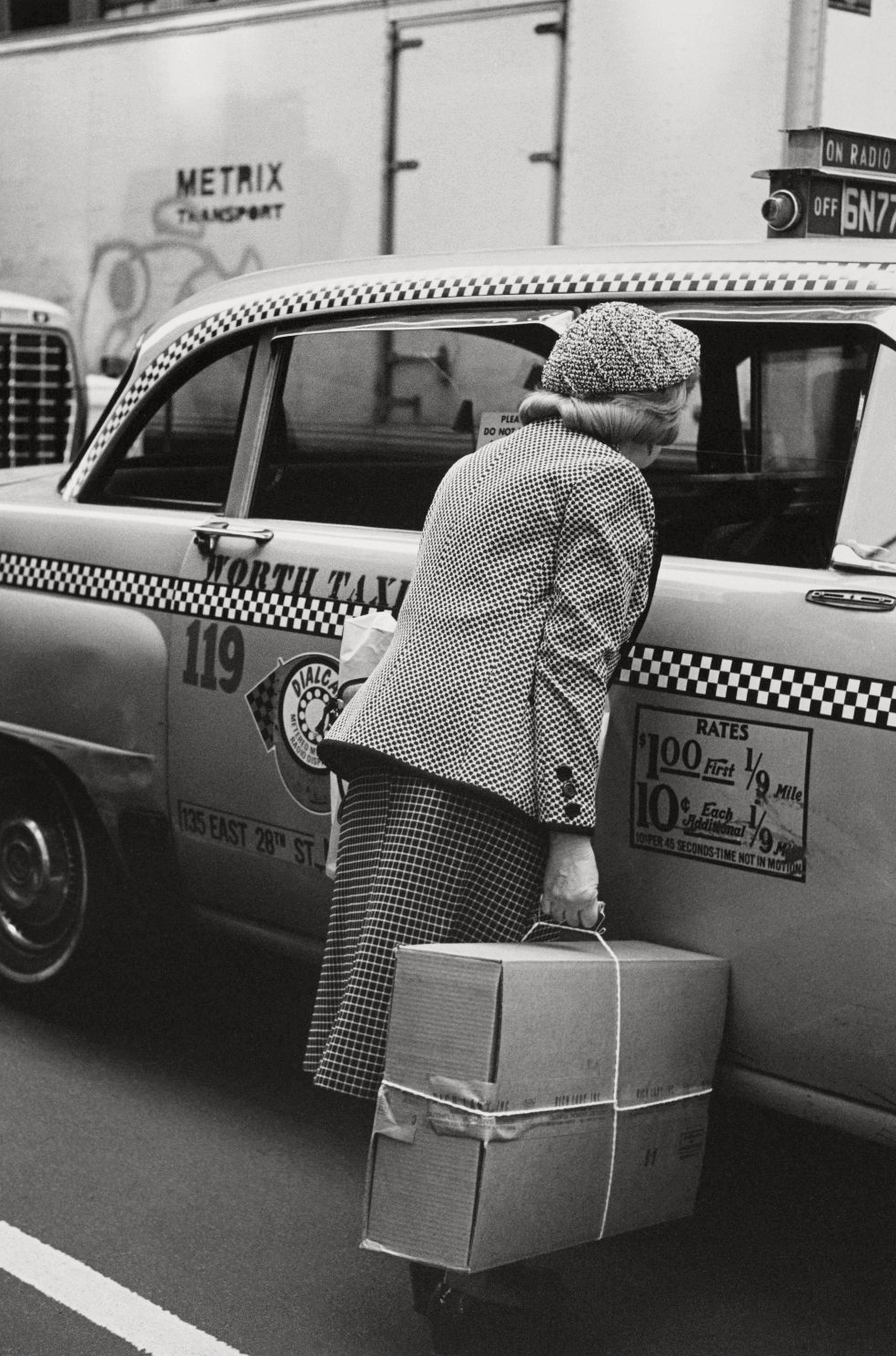
Helen Levitt (American, 1913-2009) 'New York' 1982 from the exhibition 'Picturing New York: Photographs from The Museum of Modern Art' at the Irish Museum of Modern Art, Dublin, November 2009 - February 2010


Helen Levitt (American, 1913-2009)
New York
1982
Gelatin silver print
9 9/16 x 6 7/16″ (24.3 x 16.4cm)
The Museum of Modern Art, New York
Gift of Marvin Hoshino in memory of Ben Maddow
© 2009 The Estate of Helen Levitt, courtesy Fraenkel Gallery, San Francisco


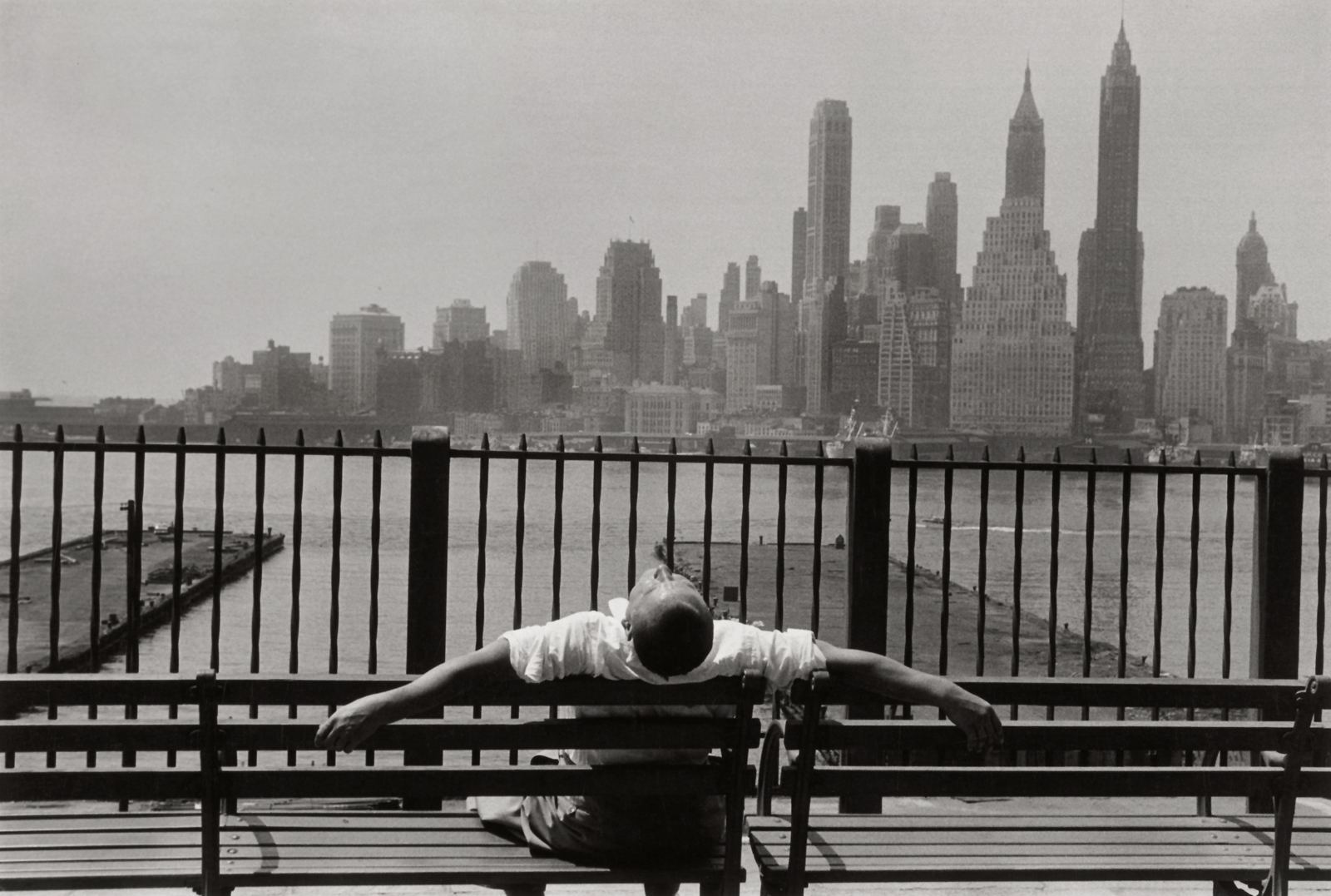
Louis Stettner (American, born 1922) 'Manhattan from the Promenade, Brooklyn, New York' 1954


Louis Stettner (American, 1922-2016)
Manhattan from the Promenade, Brooklyn, New York
1954
Gelatin silver print
12 1/4 x 18 1/4″ (31.1 x 46.4cm)
The Museum of Modern Art, New York. Gift of the photographer in memory of his brother, David Stettner
© 2009 Louis Stettner, courtesy Bonni Benrubi Gallery, New York


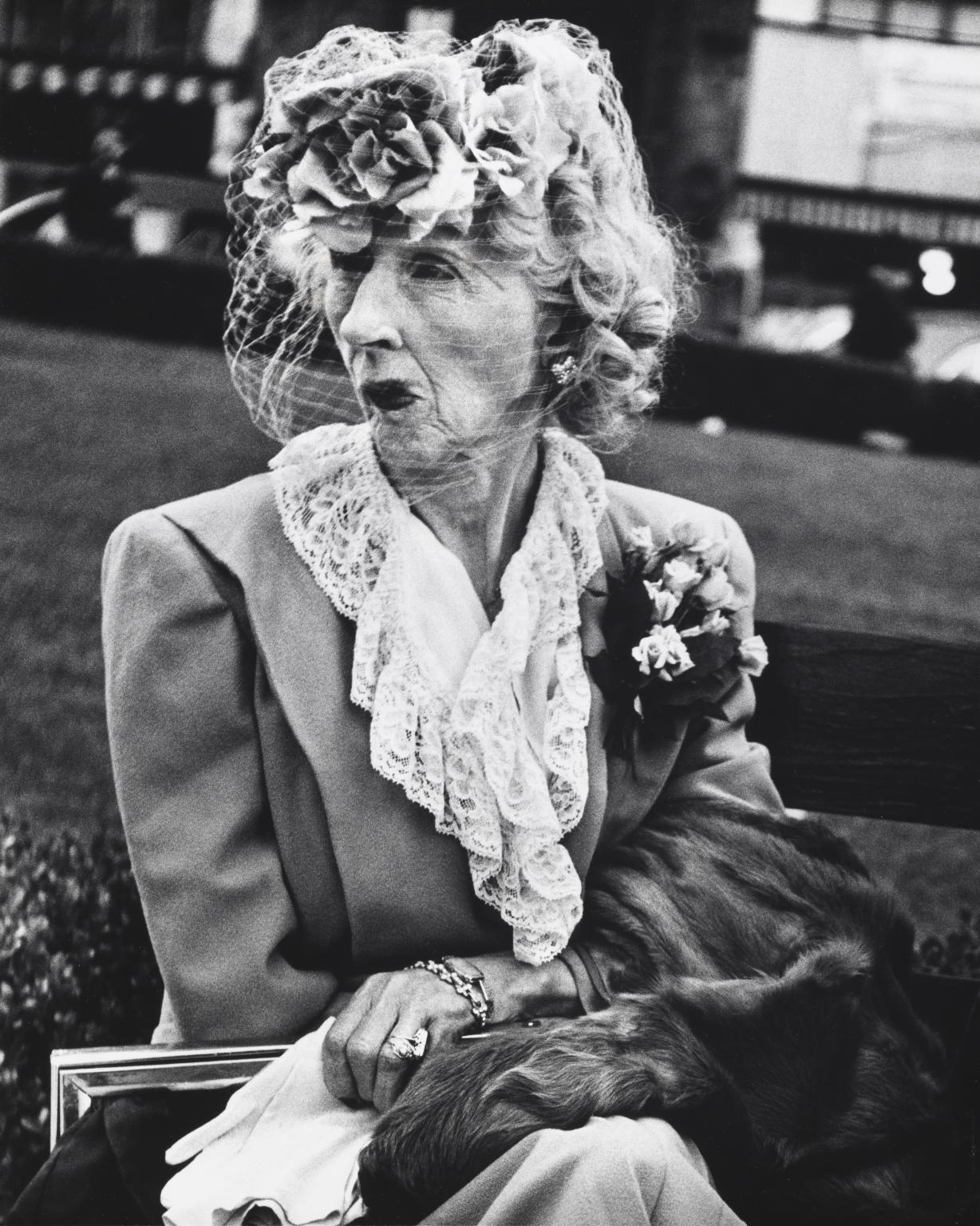
Diane Arbus (American, 1923-1971) 'Woman with Veil on Fifth Avenue, N.Y.C' 1968


Diane Arbus (American, 1923-1971)
Woman with Veil on Fifth Avenue, N.Y.C.
1968
Gelatin silver print
The Museum of Modern Art, New York


An exhibition of 145 masterworks from the photographic collection of The Museum of Modern Art (MoMA) in New York , celebrating the architecture and life of that unique city from the 1880s to the present day, opens to the public at the Irish Museum of Modern Art on Wednesday, November 25, 2009. “Picturing New York” draws on one of the most important collections of modern and contemporary photography in the world to celebrate the long tradition of photographing New York, a tradition that continues to frame and influence our perception of the city to this day. Presenting the work of some 40 photographers including such influential figures as Berenice Abbott, Diane Arbus, Garry Winogrand, Lisette Model, Alfred Stieglitz and Cindy Sherman, the exhibition features both the city and its inhabitants, from its vast, overwhelming architecture to the extraordinary diversity of its people.

The exhibition reflects photographers’ ongoing fascination with New York, a city whose vitality, energy, dynamism and sheer beauty have also inspired innumerable artists, writers, filmmakers and composers. New York’s unique architecture is explored, from elegant skyscrapers to small shop fronts; likewise the life of its citizens, from anonymous pedestrians to celebrities and politicians. The city’s characteristic optimism is caught time and again in these images, even in those taken in difficult times. Together, they present a fascinating history of the city over more than a century, from Jacob Riis’s 1888 view of bandits on the Lower East Side to Michael Wesely’s images taken during the recent expansion at MoMA.

The photographs reveal New York as a city of contrasts and extremes through images of towering buildings and tenements, party-goers and street-dwellers, hurried groups and solitary individuals. “Picturing New York” suggests the symbiosis between the city’s progression from past to present and the evolution of photography as a medium and as an art form. Additionally, these photographs of New York contribute significantly to the notion that the photograph, as a work of art, is capable of constructing a sense of place and a sense of self.

“I am thrilled that ‘Picturing New York’ will be presented in Dublin – a city whose vitality, grit, and vibrant artistic community resonates with that of New York ,” said Sarah Meister, Curator in MoMA’s Department of Photography, who organised the exhibition. “In addition, the layout and scale of the galleries at IMMA will allow this story – of New York and photography becoming modern together throughout the twentieth century – to unfold as if chapter by chapter.”

Press release from the Irish Museum of Modern Art website [Online] Cited 26/01/2010. No longer available online


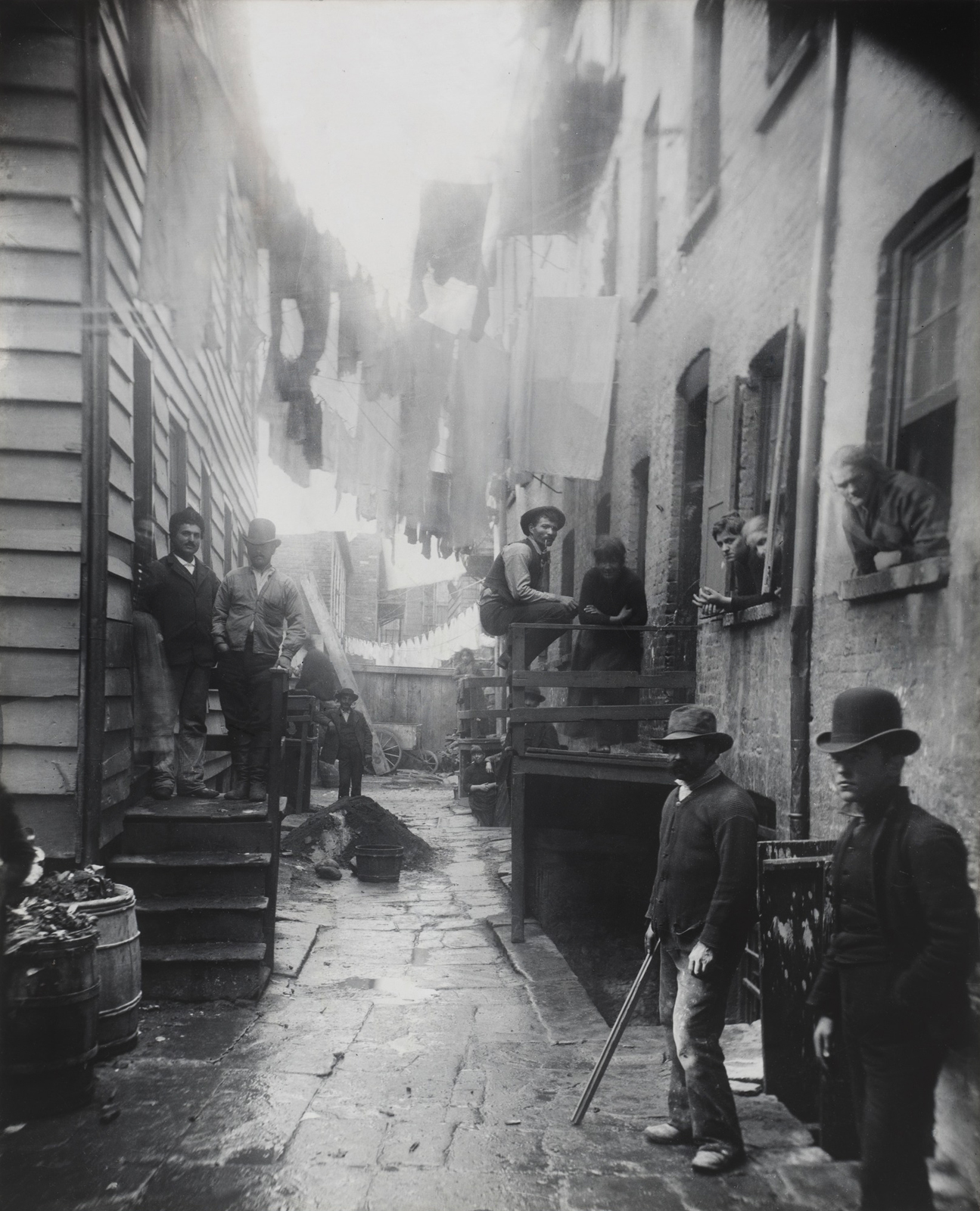
Jacob Riis (Danish-American, 1849-1914) 'Bandit's Roost at 59½ Mulberry Street' 1888


Jacob Riis (Danish-American, 1849-1914)
Bandit’s Roost at 59½ Mulberry Street
1888
Gelatin silver print, printed 1958
19 3/16 x 15 1/2″ (48.7 x 39.4cm)
The Museum of Modern Art, New York
Gift of the Museum of the City of New York


Late 19th-century New York City was a magnet for the world’s immigrants, and the vast majority of them found not streets paved with gold but nearly subhuman squalor. While polite society turned a blind eye, brave reporters like the Danish-born Jacob Riis documented this shame of the Gilded Age. Riis did this by venturing into the city’s most ominous neighbourhoods with his blinding magnesium flash powder lights, capturing the casual crime, grinding poverty and frightful overcrowding. Most famous of these was Riis’ image of a Lower East Side street gang, which conveys the danger that lurked around every bend. Such work became the basis of his revelatory book How the Other Half Lives, which forced Americans to confront what they had long ignored and galvanised reformers like the young New York politician Theodore Roosevelt, who wrote to the photographer, “I have read your book, and I have come to help.” Riis’ work was instrumental in bringing about New York State’s landmark Tenement House Act of 1901, which improved conditions for the poor.

Anonymous. “Bandit’s Roost, 59½ Mulberry Street,” on the Time 100 Photos website [Online] Cited 09/06/2019 no longer available online


Paul Strand (American, 1890-1976) 'Wall Street, New York' 1915


Paul Strand (American, 1890-1976)
Wall Street
1915
Gelatin silver print
The Museum of Modern Art, New York


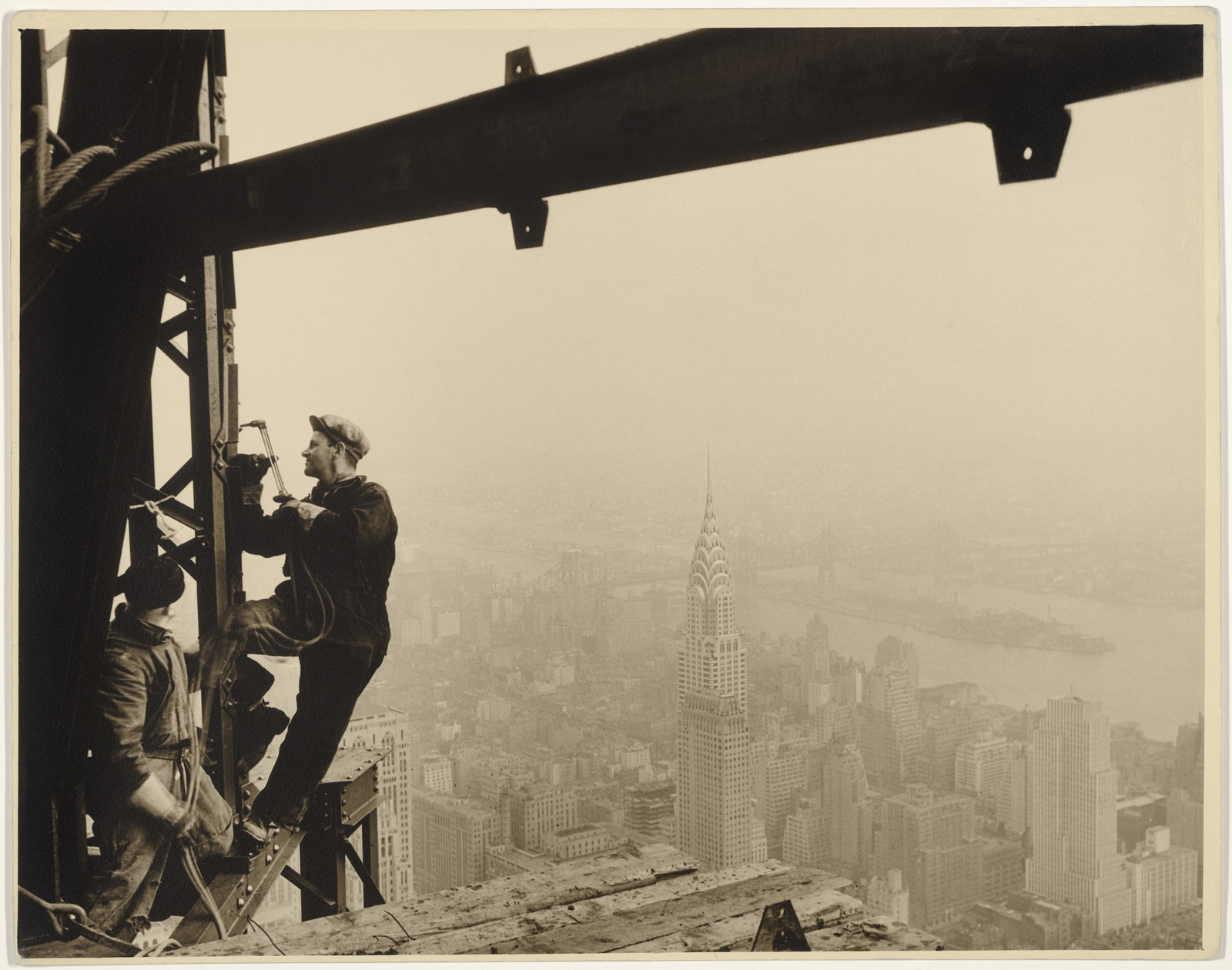
Lewis W. Hine (American, 1874-1940) 'Welders on the Empire State Building' c. 1930


Lewis W. Hine (American, 1874-1940)
Welders on the Empire State Building
c. 1930
Gelatin silver print
10 5/8 x 13 5/8″ (27 x 34.6cm)
The Museum of Modern Art, New York. Committee on Photography Fund


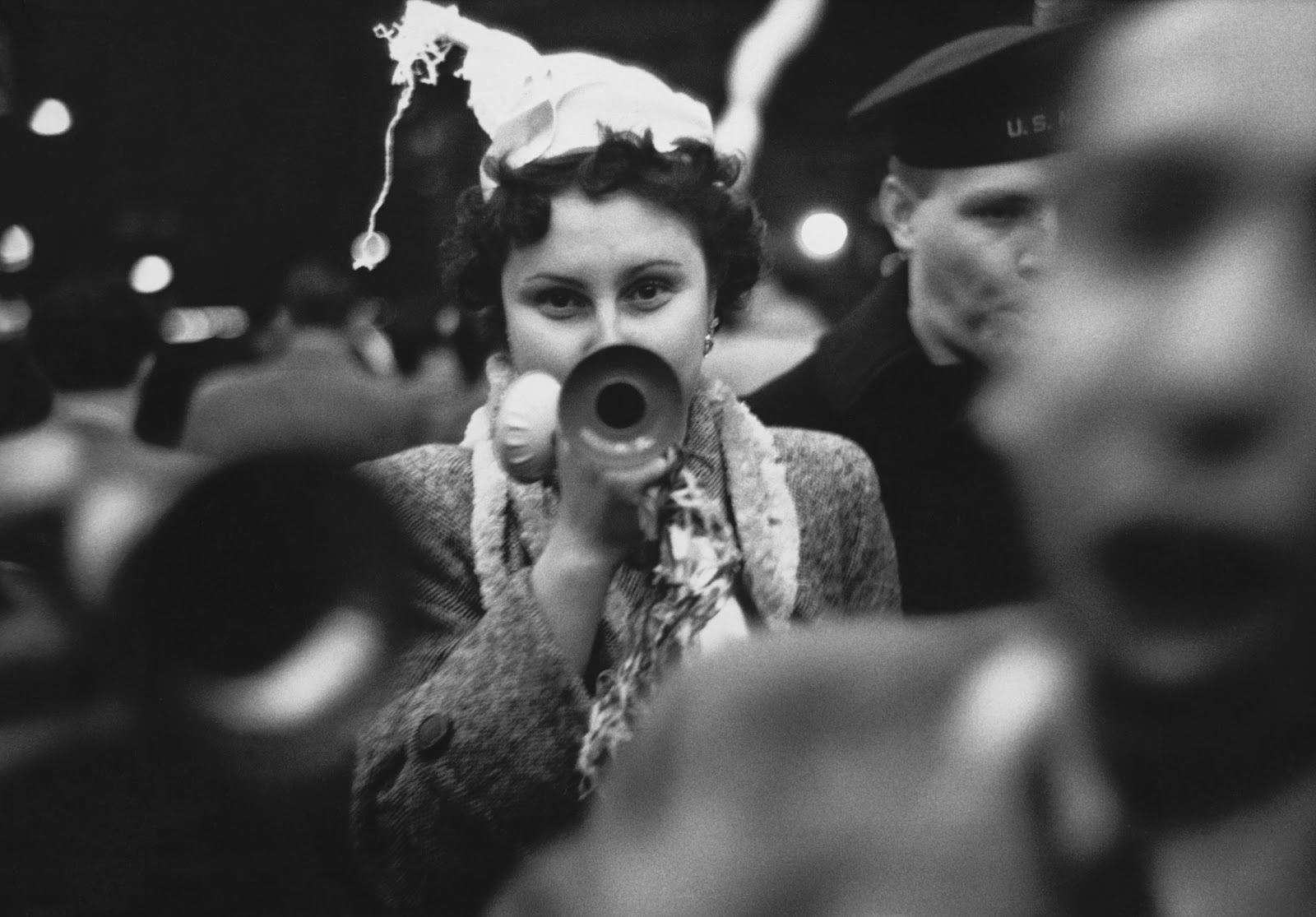
Dan Weiner (American, 1919-1959)
'New Year's Eve, Times Square' 1951


Dan Weiner (American, 1919-1959)
New Year’s Eve, Times Square
1951
Gelatin silver print
9 1/4 x 13 3/16″ (23.5 x 33.5cm)
The Museum of Modern Art, New York. Gift of Sandra Weiner
© 2009 Estate of Dan Weiner


Bruce Davidson (American, b. 1933) 'Untitled' from the 'Brooklyn Gang' series 1959


Bruce Davidson (American, b. 1933)
Untitled from the Brooklyn Band series
1959
Gelatin silver print
6 3/4 x 10″ (17.1 x 25.4cm)
The Museum of Modern Art, New York. Purchase
© 2019 Magnum Photos, Inc. and Bruce Davidson


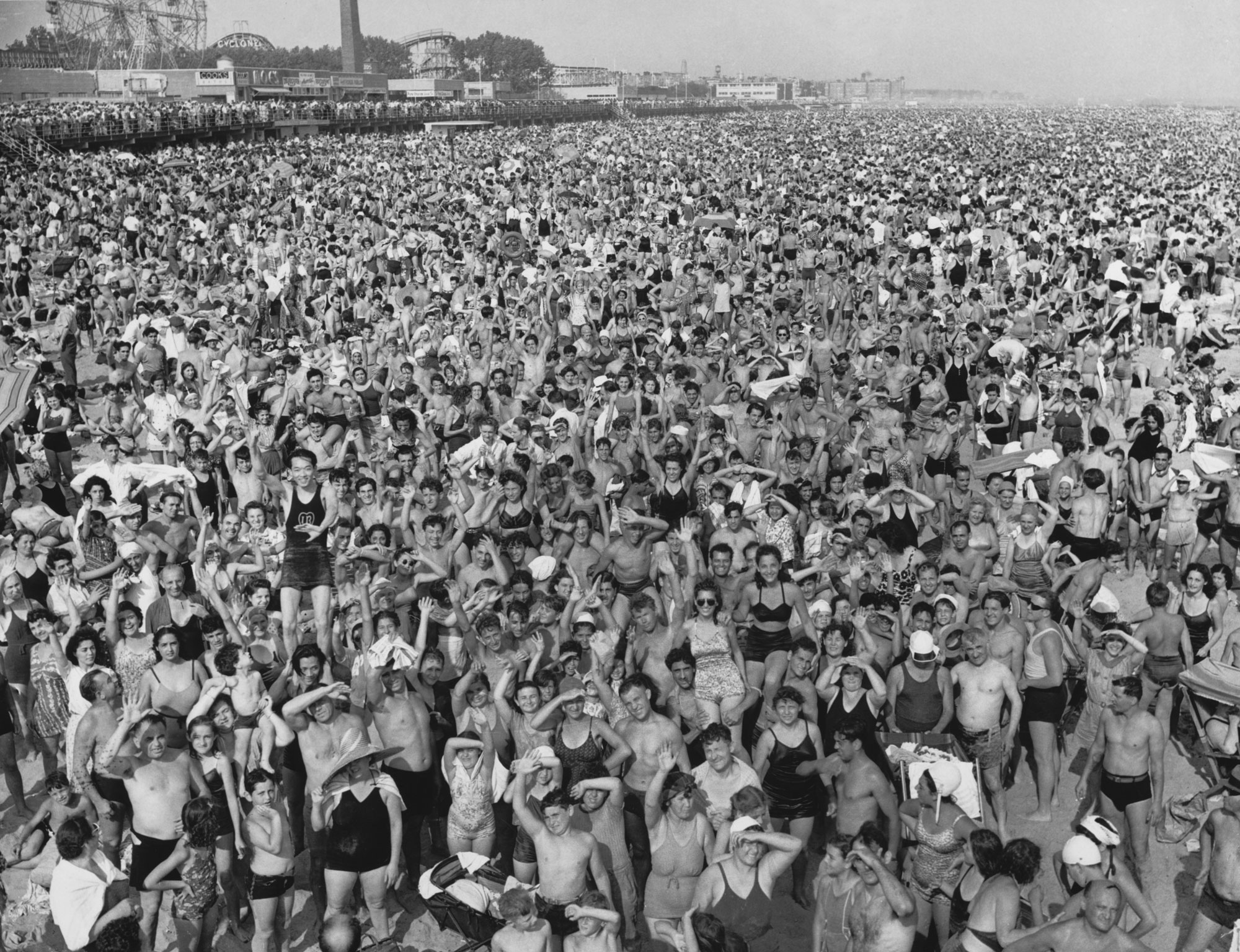
Weegee (Arthur Fellig) (American born Austria, 1899-1968) 'Coney Island' 1940


Weegee (Arthur Fellig) (American born Austria, 1899-1968)
Coney Island
c. 1939
Gelatin silver print
10 5/16 x 13 11/16″ (26.2 x 34.8cm)
The Museum of Modern Art, New York. Anonymous gift


Unknown photographer. 'Brooklyn Bridge' c. 1914


Unknown photographer (American)
Brooklyn Bridge
c. 1914
Gelatin silver print
7 5/8 x 9 9/16″ (19.4 x 24.3cm)
The Museum of Modern Art, New York, The New York Times Collection


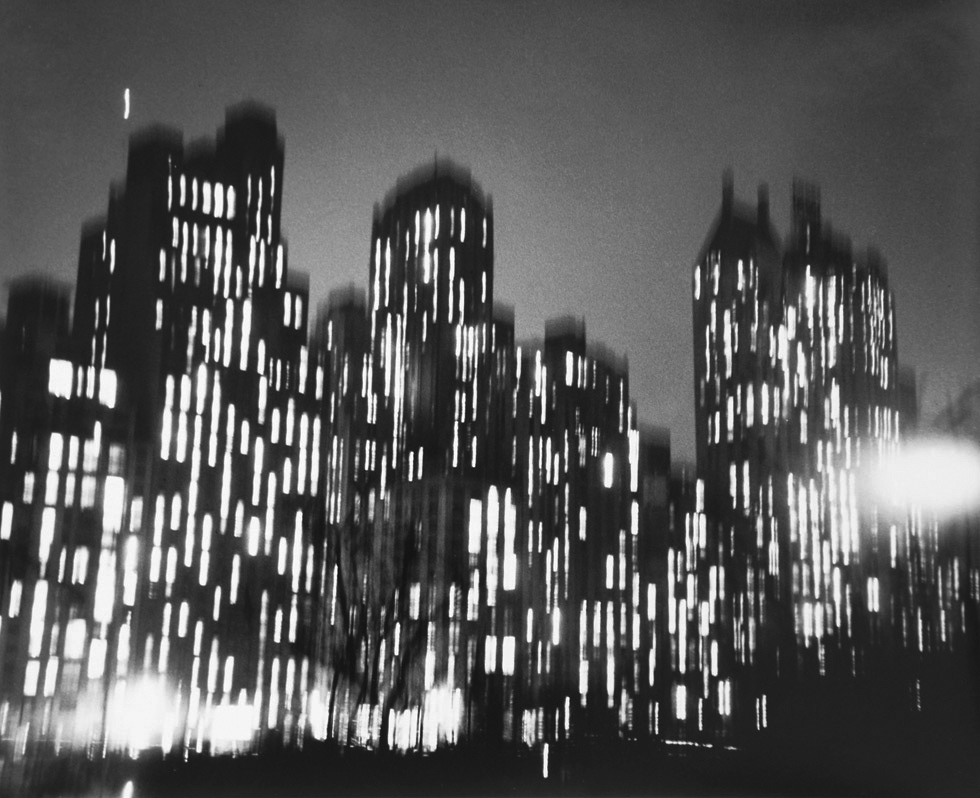
Ted Croner (American, 1922-2005) 'Central Park South' 1947-1948


Ted Croner (American, 1922-2005)
Central Park South
1947-1948
Gelatin silver print
The Museum of Modern Art, New York


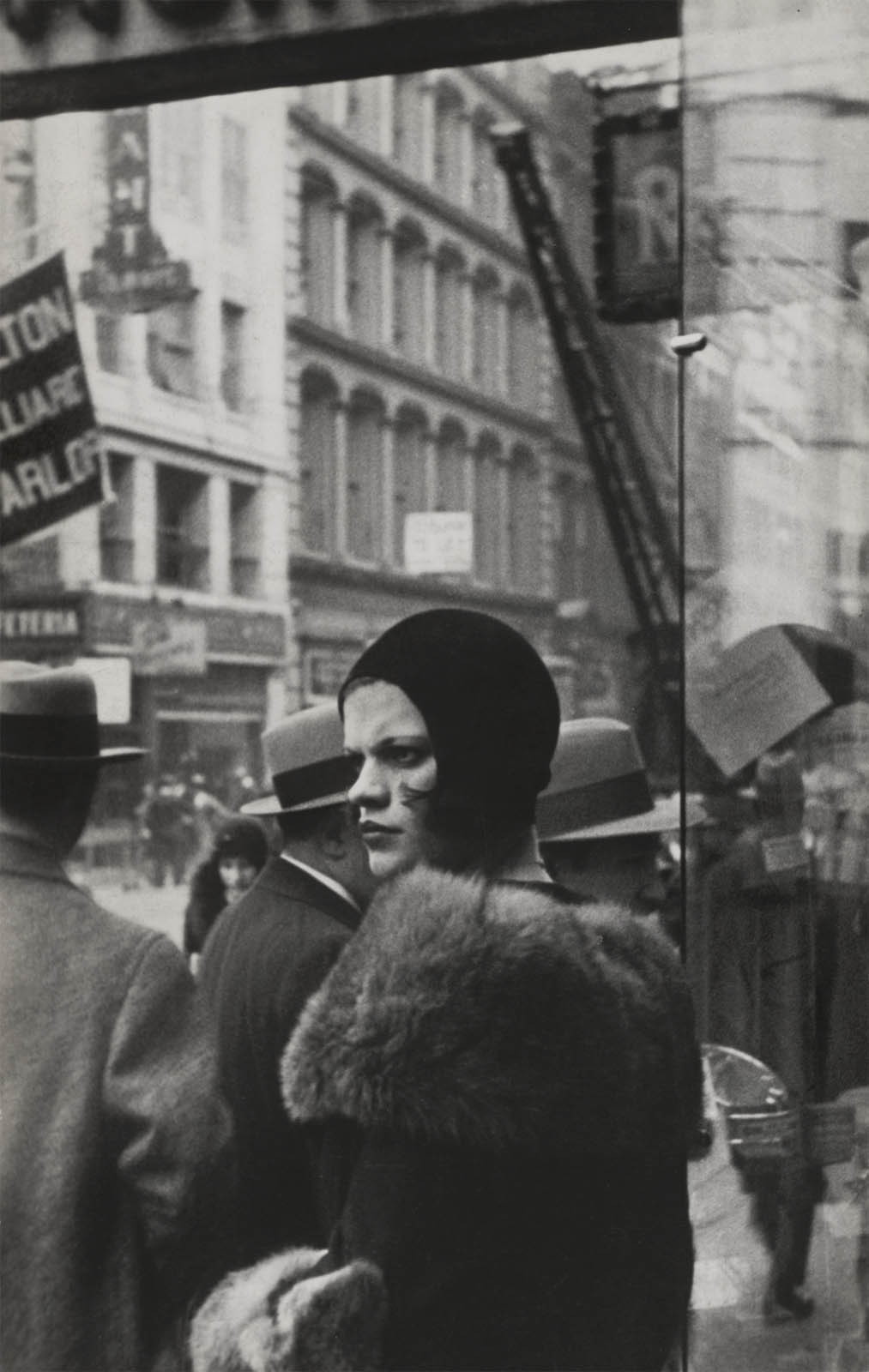
Walker Evans (American, 1903-1975)
'Girl in Fulton Street, New York' 1929
Screenshot


Walker Evans (American, 1903-1975)
Girl in Fulton Street, New York
1929
Gelatin silver print
7 5/16 × 4 5/8″ (18.6 × 11.7cm)
Museum of Modern Art
Gift of the artist


Bernice Abbott (American, 1898-1991) 'Night View, New York City' 1932


Bernice Abbott (American, 1898-1991)
Night View, New York City
1932
Gelatin silver print
The Museum of Modern Art, New York


Lee Friedlander (American, b. 1934)
'New York City' 1980


Lee Friedlander (American, b. 1934)
New York City
1980
Gelatin silver print
The Museum of Modern Art, New York


Irish Museum of Modern Art/Áras Nua-Ealaíne na hÉireann
Royal Hospital
 Military Road
Kilmainham
Dublin 8
Ireland
Phone: +353-1-612 9900

Opening hours:
Tuesday, Thursday – Saturday: 10.00am – 5.30pm
Wednesday: 11.30am – 5.30pm
Sundays and Bank Holidays: 12pm – 5.30pm

Irish Museum of Modern Art website

LIKE ART BLACK ON FACEBOOK

Back to top

Exhibition: ‘I.E.D.: War in Afghanistan and Iraq’ by David Levinthal at Stellan Holm Gallery, New York

Exhibition dates: 19th December, 2009 – 13th February, 2010


Many thankx to the Stellan Holm Gallery for allowing me to publish the photographs in the posting. Please click on the photographs for a larger version of the image.

Marcus


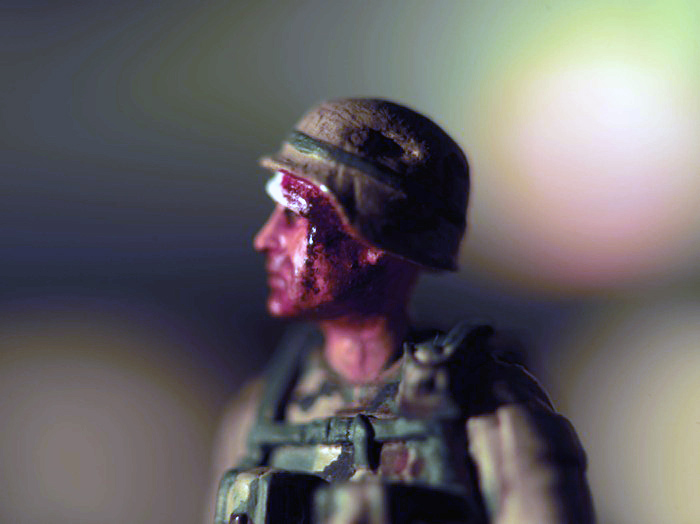
David Levinthal (American, b. 1949) 'Untitled' from the series 'IED' 2008 from the exhibition 'I.E.D.: War in Afghanistan and Iraq' by David Levinthal at Stellan Holm Gallery, New York, December 2009 - February 2010


David Levinthal (American, b. 1949)
Untitled from the series IED
2008
Archival Pigment Print on Polyester Film


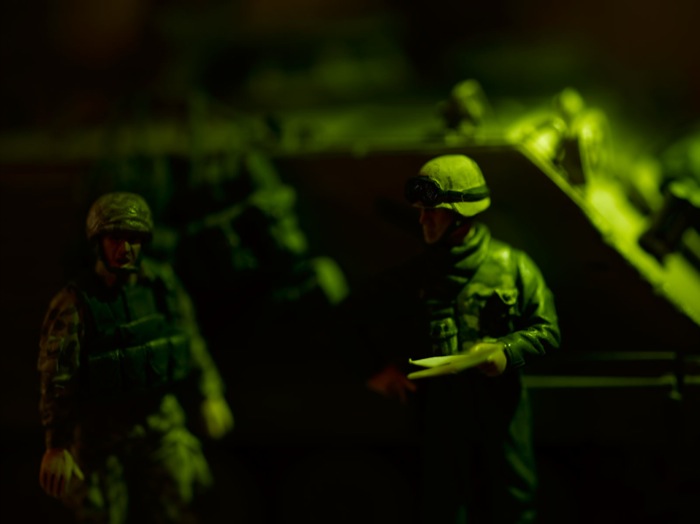
David Levinthal (American, b. 1949) 'Untitled' from the series 'IED' 2008 from the exhibition 'I.E.D.: War in Afghanistan and Iraq' by David Levinthal at Stellan Holm Gallery, New York, December 2009 - February 2010


David Levinthal (American, b. 1949)
Untitled from the series IED
2008
Archival Pigment Print on Polyester Film


Stellan Holm Gallery is presenting I.E.D.: War in Afghanistan and Iraq, an exhibition of photographs by David Levinthal. The exhibition runs through February 13, 2010. This is the first solo exhibition of works by David Levinthal on view at Stellan Holm Gallery.

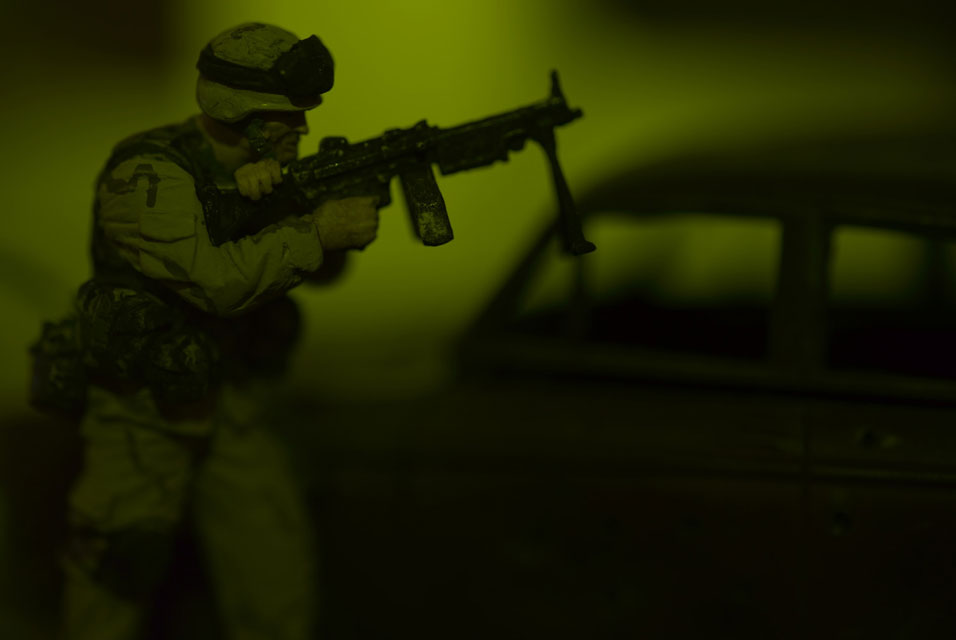
I.E.D.: War in Afghanistan and Iraq features eighteen colour photographs by renowned photographer, David Levinthal, which seek to examine the way in which our society looks at war. The idea for this series was conceived when Levinthal recognised a flood of figurines and models available to the American consumer, depicting the ongoing conflicts in Iraq and Afghanistan. Through the use of these miniature soldiers, civilians and armoured vehicles, Levinthal constructs extremely realistic dioramas that recreate the horrors of contemporary warfare. However, these photographs do not simply recreate scenes from a foreign war. Instead they bring a new perspective to the discourse about war, how it is broadcast in real time and how it relates to American society as a whole. Without interjecting his own prejudgments, David Levinthal asks the viewer to reconsider their own perceptions of reality.

Released by powerHouse Books, the publication, I.E.D.: War in Afghanistan and Iraq, compiles the entirety of Mr. Levinthal’s series of photographs. The book features seventy colour photographs along with an introduction by the artist. It is accompanied by a series of writings culled by David Stanford, editor of The Sandbox, an online military blog that posts writings from troops deployed in Iraq and Afghanistan. This ‘boots-on-the-ground’ testimony adds a powerful voice to the compelling and harrowing photographs constructed by Levinthal.

Born in 1949 in San Francisco, CA, David Levinthal has been exploring and confronting various social issues through the playful use of toy figurines since 1972. He has released numerous publications including, Hitler Moves East: A Graphic Chronicle, 1941-43, Bad Barbie, and Blackface. He was the recipient of the John Simon Guggenheim Foundation Fellowship in 1995 and the National Endowment for the Arts, Visual Artists Fellowship in 1990-1991. His works are featured in numerous, notable public collections including the Whitney Museum of American Art, the Metropolitan Museum of Art, and the Museum of Modern Art.

Text from the Stellan Holm Gallery website [Online] Cited 16/01/2010 no longer available online


David Levinthal (American, b. 1949) 'Untitled' from the series 'IED' 2008 from the exhibition 'I.E.D.: War in Afghanistan and Iraq' by David Levinthal at Stellan Holm Gallery, New York, December 2009 - February 2010


David Levinthal (American, b. 1949)
Untitled from the series IED
2008
Archival Pigment Print on Polyester Film


David Levinthal (American, b. 1949) 'Untitled' from the series 'IED' 2008


David Levinthal (American, b. 1949)
Untitled from the series IED
2008
Archival Pigment Print on Polyester Film


David Levinthal (American, b. 1949) 'Untitled' from the series 'IED' 2008


David Levinthal (American, b. 1949)
Untitled from the series IED
2008
Archival Pigment Print on Polyester Film


Stellan Holm Gallery

This gallery has now closed.

LIKE ART BLART ON FACEBOOK

Back to top

Exhibition: ‘Paste Up’ by Barbara Kruger at Sprüth Magers London

Exhibition dates: 21st November, 2009 – 23rd January, 2010


Many thankx to Sprüth Magers London for allowing me to publish the photographs in the posting. Please click on the photographs for a larger version of the image.


Barbara Kruger (American, b. 1945) 'Untitled (Money can buy you love)' 1983 from the exhibition Exhibition: 'Paste Up' by Barbara Kruger at Sprüth Magers London, Nov 2009 - Jan 2010


Barbara Kruger (American, b. 1945)
Untitled (Money can buy you love)
1983
Collage
19.5 x 17.5cm
Courtesy of the artist and Sprüth Magers London Berlin


Barbara Kruger (American, b. 1945) 'Untitled (Your misery loves company)' 1985 from the exhibition Exhibition: 'Paste Up' by Barbara Kruger at Sprüth Magers London, Nov 2009 - Jan 2010


Barbara Kruger (American, b. 1945)
Untitled (Your misery loves company)
1985
Collage
18 x 17.3cm
Courtesy of the artist and Sprüth Magers London Berlin


Barbara Kruger (American, b. 1945) 'Untitled (Our prices are insane!)' 1987 from the exhibition Exhibition: 'Paste Up' by Barbara Kruger at Sprüth Magers London, Nov 2009 - Jan 2010


Barbara Kruger (American, b. 1945)
Untitled (Our prices are insane!)
1987
Collage
Courtesy of the artist and Sprüth Magers London Berlin


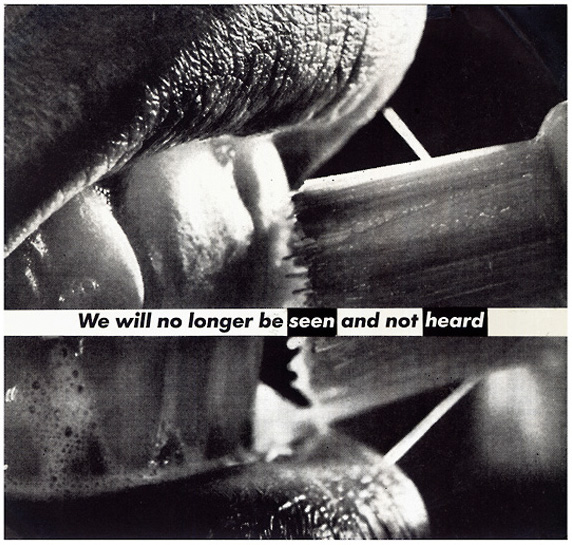
Barbara Kruger (American, b. 1945) 'Untitled (We will no longer be seen and not heard)' 1985


Barbara Kruger (American, b. 1945)
Untitled (We will no longer be seen and not heard)
1985
17.8 x 18.5cm
Courtesy of the artist and Sprüth Magers London Berlin


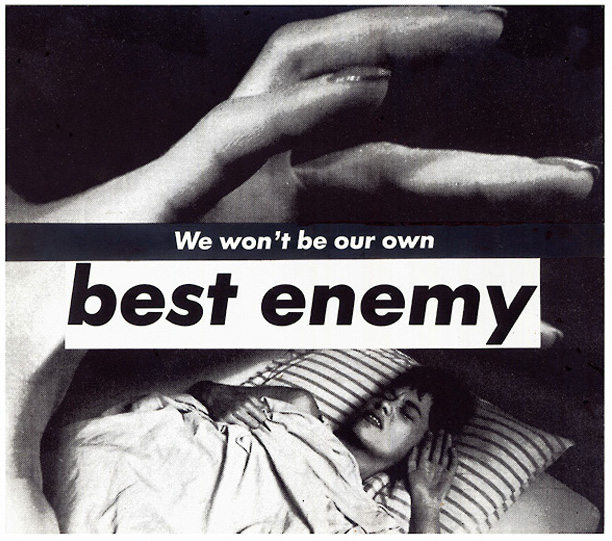
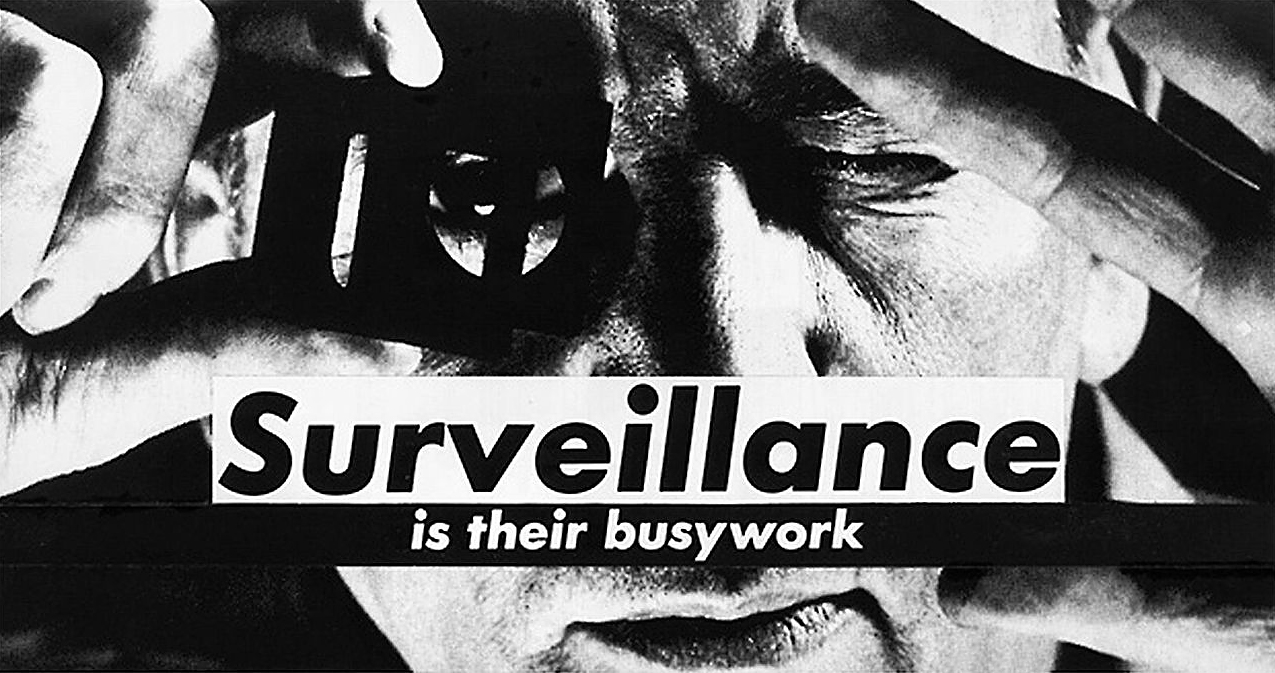
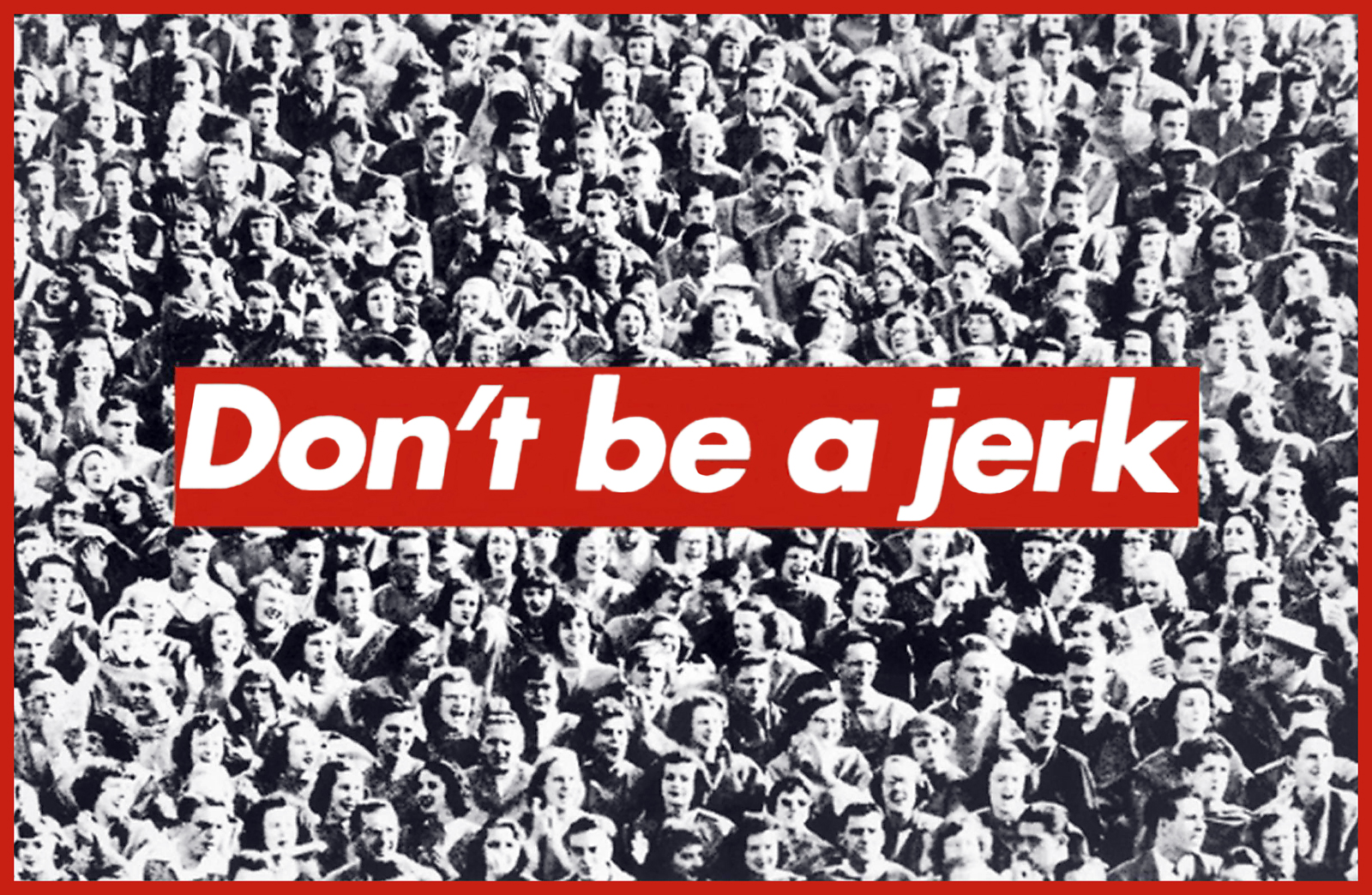
Sprüth Magers London is delighted to present a survey of early work by acclaimed American artist Barbara Kruger. Using contrasting layers of text and image, Kruger’s work has for almost three decades probed the nature of a media-saturated society in late capitalism, and the significance of highly evolved cultures of consumerism and mass politics to the experience and making of social identities. In addition to offering acute, indeed often piquant cultural insights, Kruger’s work also presents a serious conceptual exploration into the relationship between language and image, and their dynamics as collaborators and antagonists in the bearing of meaning. The artist’s unique blend of conceptual sophistication and wry social commentary has made Kruger one of the most respected and admired artists of her generation, and this timely reappraisal of her early practice reveals the ingenuity and precision of her craft.

The early monochrome pre-digital works assembled in the exhibition, known professionally as ‘paste ups’, reveal the influence of the artist’s experience as a magazine editorial designer during her early career. These small scale works, the largest of which is 11 x 13 inches, are composed of altered found images, and texts either culled from the media or invented by the artist. A negative of each work was then produced and used to make enlarged versions of these initial ‘paste ups’. The influence of Kruger’s magazine publishing training extends far beyond technique however. The linguistic and typographic conventions of consumer culture, and an understanding of the inherent potential of a single image, are appropriated and subverted by Kruger, as the artist explores the power of the soundbite and the slogan, and the method and impact of ‘direct address’ on the consumer/viewer.

Although Kruger’s practice is embedded in the visual and political culture of mass media and advertising, the work moves beyond simple appropriation and the ironic meditation on consumerism which animated earlier movements such as Pop art. The emblazoned slogans are often slightly yet meaningfully adjusted clichés of common parlance and the commercial world, and are overlaid on contrasting images which range from the grotesque to the banal. The juxtaposition of pictorial and linguistic modes of communication on the same plane thereby begs conceptual questions of human understanding, and the means by which messages are transmitted and distorted, recognised and received.

Barbara Kruger was born in Newark, New Jersey in 1945. She currently lives in both Los Angeles, California and New York and teaches at the University of California, Los Angeles. She has been the subject of many one-person exhibitions, including a comprehensive retrospective at the Museum of Contemporary Art in Los Angeles in 1999, which travelled to The Whitney Museum of American Art, New York in 2000. More recently, she has exhibited large-scale installations at the Moderna Museet in Stockholm, Tramway in Glasgow, Scotland, the Australian Centre for Contemporary Art in Melbourne, Australia, and at BCAM at the Los Angeles County Museum of Art, among others. She was honoured with the “Golden Lion” award for Lifetime Achievement at the Venice Biennale in 2005.

Press release from the Sprüth Magers London website [Online] Cited 25/05/2019 no longer available online


Barbara Kruger (American, b. 1945)
'Untitled (We won't be our own best enemy)' 1986


Barbara Kruger (American, b. 1945)
Untitled (We won’t be our own best enemy)
1986
Collage
18 x 22cm
Courtesy of the artist and Sprüth Magers London Berlin


Barbara Kruger (American, b. 1945) 'Untitled (Surveillance is their busywork)' 1988


Barbara Kruger (American, b. 1945)
Untitled (Surveillance is their busywork)
1988
Collage
11.1 x 22cm
Courtesy of the artist and Sprüth Magers London Berlin


Barbara Kruger (American, b. 1945) 'Untitled (You are a very special person)' 1995


Barbara Kruger (American, b. 1945)
Untitled (You are a very special person)
1995
Collage (colour)
13.6 x 19.1cm
Courtesy of the artist and Sprüth Magers London Berlin


Barbara Kruger (American, b. 1945) 'Don't be a jerk' 1984


Barbara Kruger (American, b. 1945)
Don’t be a jerk
1984
Screenprint on vinyl
250 x 388.5cm
Courtesy of the artist and Sprüth Magers London Berlin


Sprüth Magers London
7A Grafton Street,
London, W1S 4EJ
Phone: +44 (0)20 7408 1613

Opening hours:
Tuesday – Saturday 10am – 6pm
Sprüth Magers website

LIKE ART BLART ON FACEBOOK

Back to top

Exhibition: ‘Lisette Model’ at the Instituto de Cultura, Fundación MAPFRE, Madrid

Exhibition dates: 23rd September, 2009 – 10th January, 2010


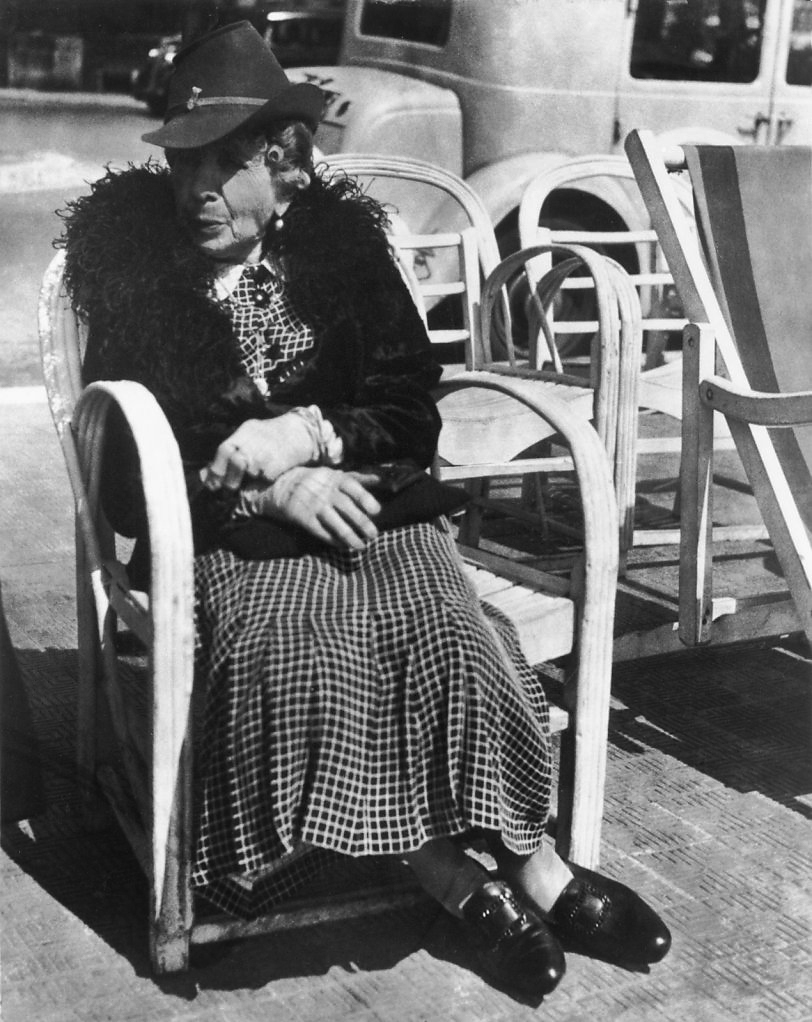
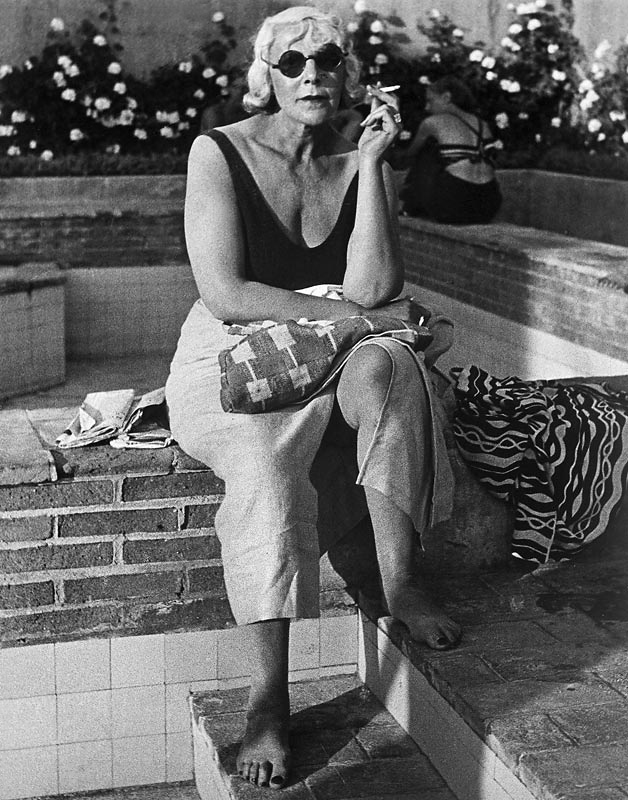
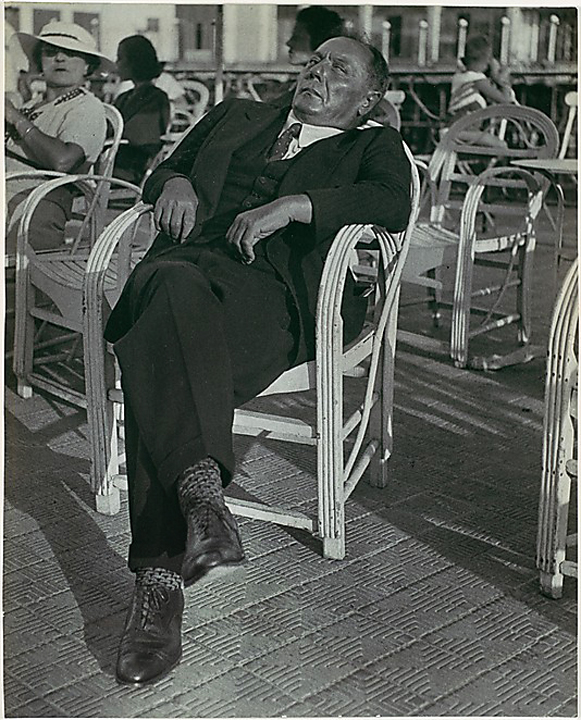
Lisette Model (American born Austria, 1901-1983) 'Riviera - elderly woman' c. 1934 from the exhibition 'Lisette Model' at the Instituto de Cultura, Fundación MAPFRE, Madrid, Sept 2009 - Jan 2010


Lisette Model (American born Austria, 1901-1983)
Riviera – elderly woman from the series Promenade des Anglais
Nice c. 1934
Gelatin silver print
© The Lisette Model Foundation


An interesting discussion of the life and work of Lisette Model (and her influence on Diane Arbus and vice versa) can be found on the AMERICANSUBURB X: THEORY website in an article by Elsa Dorfman titled “Ann Thomas on Lisette Model”. More photographs by Lisette Model can be found on the Masters of Photography website including some fabulous “Running Legs” images.

Dr Marcus Bunyan


Many thankx to Fundacion MAPFRE for allowing me to publish the photographs in the posting. Please click on the photographs for a larger version of the image.


“New images surround us everywhere. They are invisible only because of sterile routine convention and fear.”

“Photography starts with the projection of the photographer, his understanding of life and himself into the picture.”

“New images surround us everywhere. They are invisible only because of sterile routine convention and fear. To find these images is to dare to see, to be aware of what there is and how it is. The photographer not only gets information, he gives information about life.”


Lisette Model


Lisette Model (American born Austria, 1901-1983) 'Running Legs, NYC, 42nd Street' c. 1940-1941 from the exhibition 'Lisette Model' at the Instituto de Cultura, Fundación MAPFRE, Madrid, Sept 2009 - Jan 2010


Lisette Model (American born Austria, 1901-1983)
Running Legs, NYC, 42nd Street
c. 1940-41
Gelatin silver print
© The Lisette Model Foundation


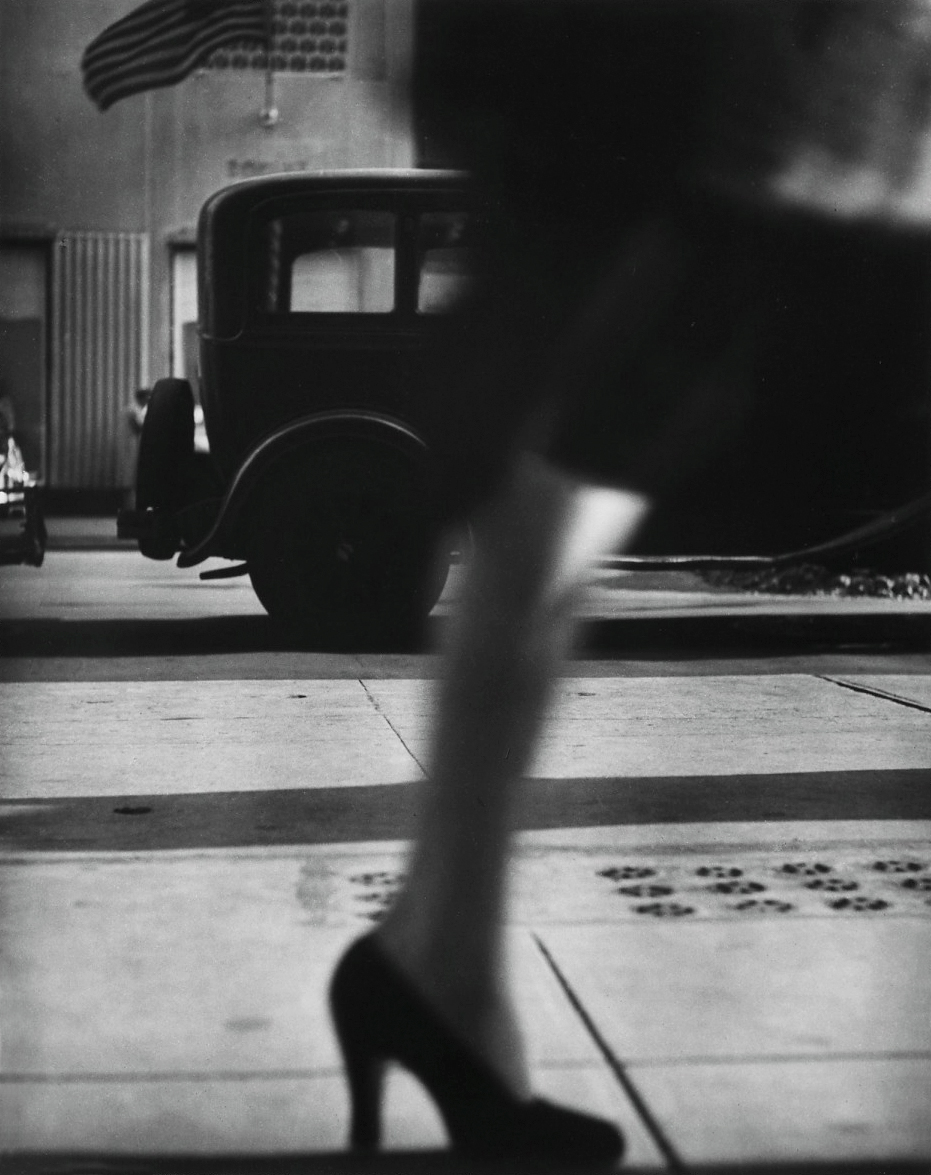
Lisette Model (American born Austria, 1901-1983) 'Running Legs, 5th Avenue' c. 1940-1941 from the exhibition 'Lisette Model' at the Instituto de Cultura, Fundación MAPFRE, Madrid, Sept 2009 - Jan 2010


Lisette Model (American born Austria, 1901-1983)
Running Legs, 5th Avenue [Jambes de passants, 5e avenue]
New York
c. 1940-1941
Gelatin silver print
National Gallery of Canada, Ottawa
© The Lisette Model Foundation


Lisette Model (American born Austria, 1901-1983) 'Sammy's' 1940-1944


Lisette Model (American born Austria, 1901-1983)
Sammy’s
New York
1940-1944
Gelatin silver print
© The Lisette Model Foundation


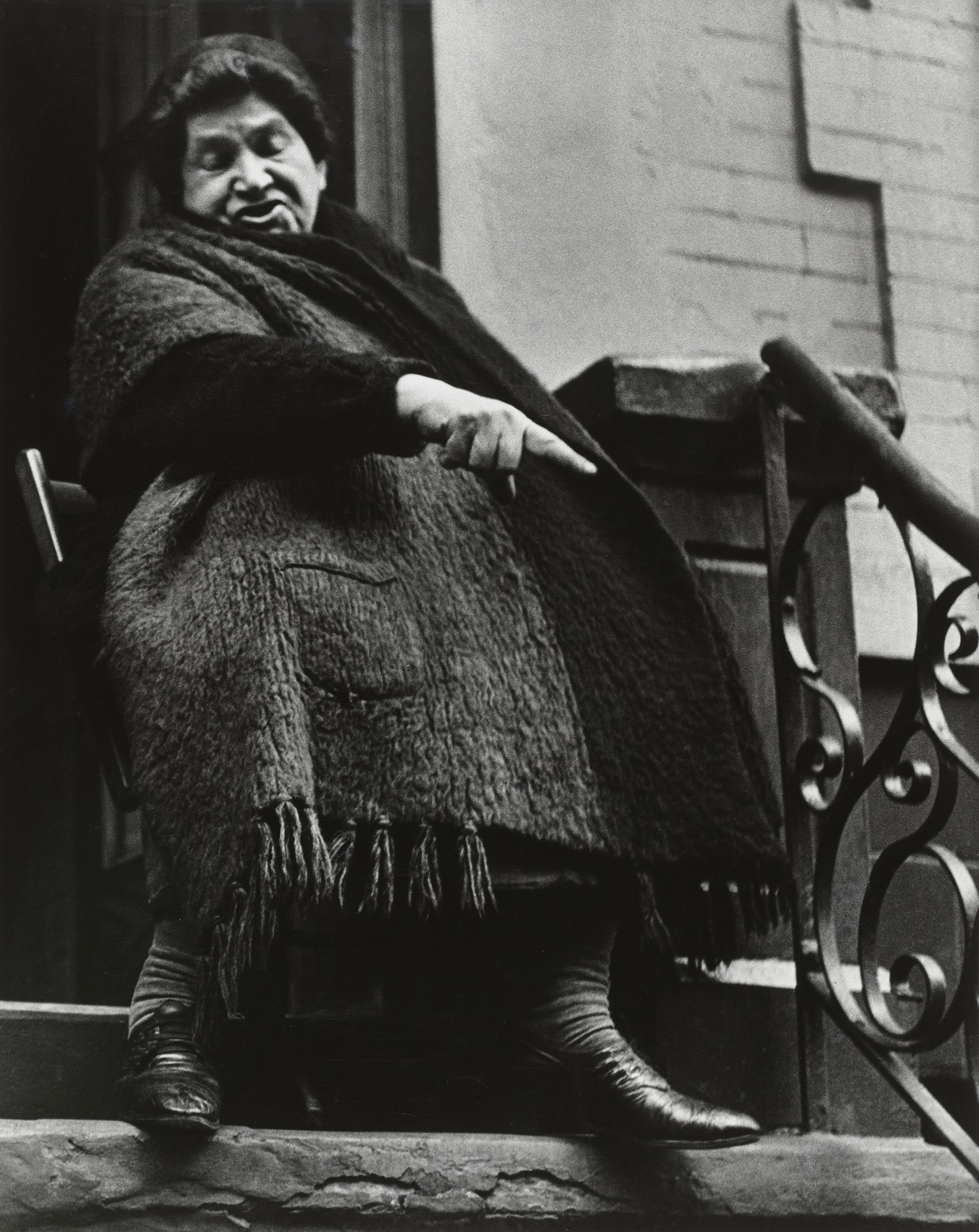
Lisette Model (American born Austria, 1901-1983) 'Lower East Side' c. 1942


Lisette Model (American born Austria, 1901-1983)
Lower East Side
c. 1942
Gelatin silver print
Collection Fundación MAPFRE
© The Lisette Model Foundation


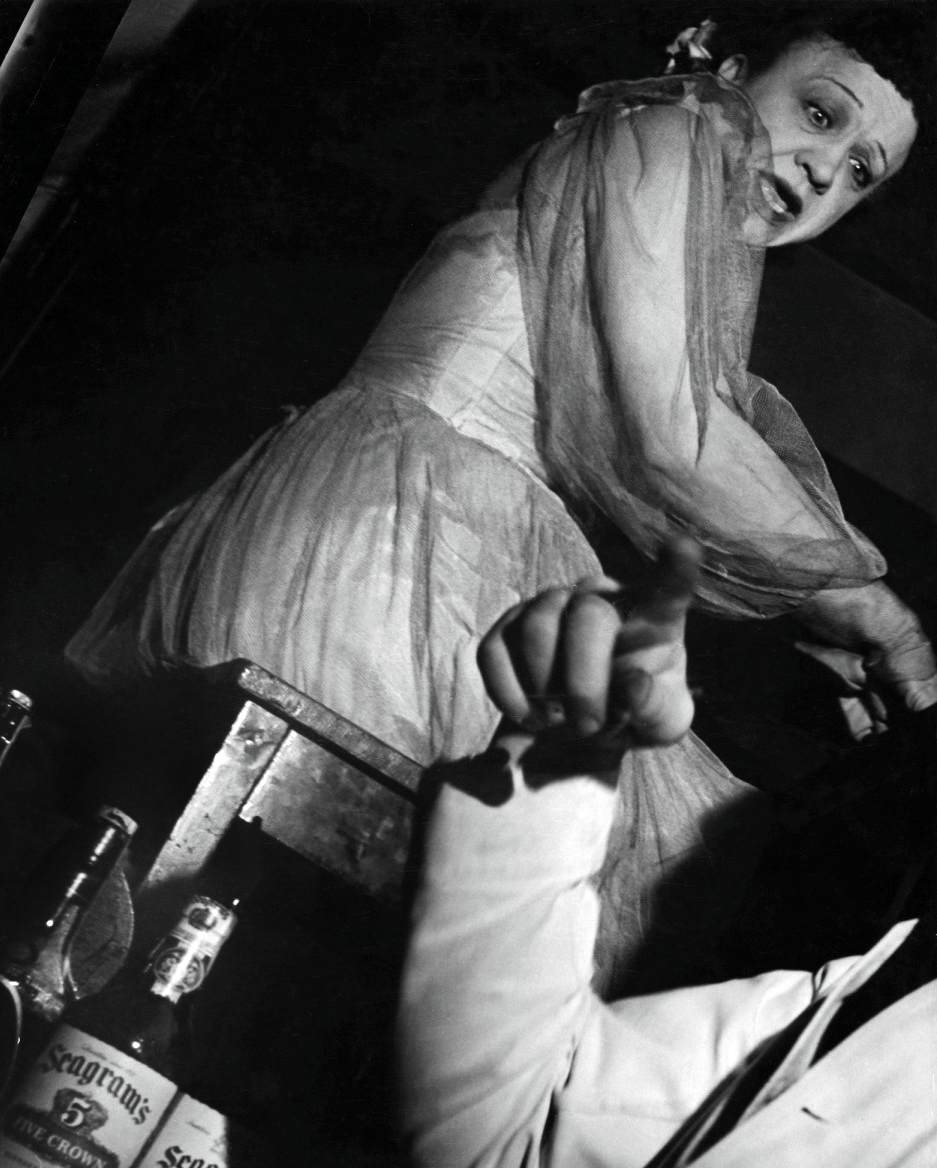
Lisette Model (American born Austria, 1901-1983) 'Albert-Alberta, Hubert's 42nd St Flea Circus, New York' c. 1945


Lisette Model (American born Austria, 1901-1983)
Albert-Alberta, Hubert’s Forty-second Street Flea Circus
New York
1945
Gelatin silver print
© The Lisette Model Foundation


Lisette Model (American born Austria, 1901-1983) 'Belmont Park' 1956


Lisette Model (American born Austria, 1901-1983)
Belmont Park
New York
1956
Gelatin silver print
© The Lisette Model Foundation


If Lisette Model took up photography as a way of earning a living, it is also true that she always fought for her own subjects, rather than simply carry out the assignments given by editors. She believed that for a photograph to be successful its subject had to be something that “hits you in the stomach.” This could be something familiar or something unfamiliar. For Model, the camera was an instrument for probing the world, a way of capturing aspects of a permanently changing reality that otherwise we would fail to see.

Model always said that she looked but did not judge. Yes, her photographs of the Promenade des Anglais in Nice were published by the left-wing journal Regards, in 1935, but she was not interested exclusively either in the rich or in the poor, and her images are much more about human relations. Her work evinces empathy, curiosity, compassion and admiration, and reflects the photographer’s attraction to voluminous forms, energy and liveliness, to emphatic gesture and expression: the world as stage. The critic Elizabeth McCausland has described Model’s camerawork as expressing “a subconscious revolt against the rules.”

This exhibition of some 120 of Lisette Model’s most representative photographs illustrates the very bold and direct approach to reality that made her one of the most singular proponents of street photography, the particular form of documentary photography that developed in New York during the 1940s, through the camerawork of such as Helen Levitt, Roy de Carava and Weegee.

Alongside the photographs, archive film and sound recordings of Lisette Model will evoke the photographer’s life, and there will be copies of magazines to which she contributed (Regards, Harper’s Bazaar, etc.).

Exhibition organised by Jeu de Paume and Fundación MAPFRE, Madrid.

Text from the Jeu de Paume website [Online] Cited 01/01/2010 no longer available online


Lisette Model (American born Austria, 1901-1983) 'Promenade des Anglais' Nice c. 1934


Lisette Model (American born Austria, 1901-1983)
Promenade des Anglais
Nice c. 1934
Gelatin silver print
National Gallery of Canada, Ottawa
© The Lisette Model Foundation


Lisette Model (American born Austria, 1901-1983) 'Gambler, French Riviera' 1937


Lisette Model (American born Austria, 1901-1983)
Gambler, French Riviera
1937
Gelatin silver print
Collection Fundación MAPFRE
© The Lisette Model Foundation


Lisette Model (American born Austria, 1901-1983) 'Coney Island Bather, New York' [Baigneuse, Coney Island] c. 1939-1941


Lisette Model (American born Austria, 1901-1983)
Coney Island Bather [Baigneuse, Coney Island]
New York
c. 1939-1941
Gelatin silver print
© The Lisette Model Foundation


Lisette Model (American born Austria, 1901-1983) 'Diana Vreeland, New York' c. 1945


Lisette Model (American born Austria, 1901-1983)
Diana Vreeland, New York
c. 1945
Gelatin silver print
National Gallery of Canada, Ottawa
© The Lisette Model Foundation


Lisette Model (American born Austria, 1901-1983) 'Restaurant, New York' c. 1945


Lisette Model (American born Austria, 1901-1983)
Restaurant, New York
c. 1945
National Gallery of Canada, Ottawa
© The Lisette Model Foundation


Lisette Model (American born Austria, 1901-1983) 'Reflections' [Reflets] c. 1939-1945


Lisette Model (American born Austria, 1901-1983)
Reflections [Reflets]
New York
c. 1939-1945
Gelatin silver print
Collection Fundación MAPFRE
© The Lisette Model Foundation


Lisette Model (American born Austria, 1901-1983) 'Reflection' [Reflet] c. 1939-1945


Lisette Model (American born Austria, 1901-1983)
Reflection [Reflet]
New York
c. 1939-1945
Gelatin silver print
© The Lisette Model Foundation


Lisette Model (American born Austria, 1901-1983) 'Sammy's, New York' 1940-1944


Lisette Model (American born Austria, 1901-1983)
Sammy’s, New York
1940-1944
Gelatin silver print
National Gallery of Canada
© The Lisette Model Foundation


Lisette Model (American born Austria, 1901-1983) 'Las Vegas, on the bar' c. 1945


Lisette Model (American born Austria, 1901-1983)
Las Vegas, on the bar
c. 1945
Gelatin silver print
Collection Fundación MAPFRE
© The Lisette Model Foundation


Lisette Model (American born Austria, 1901-1983) 'Cafe Metropole, New York City' c. 1946


Lisette Model (American born Austria, 1901-1983)
Metropole Cafe
New York
c. 1946
Gelatin silver print
© The Lisette Model Foundation


Lisette Model (American born Austria, 1901-1983) 'Fashion show, Hotel Pierre, New York City' 1940-1946


Lisette Model (American born Austria, 1901-1983)
Fashion show, Hotel Pierre, New York City
1940-1946
Gelatin silver print
Collection Fundación MAPFRE
© The Lisette Model Foundation


Lisette Model (American born Austria, 1901-1983) 'San Francisco' 1949


Lisette Model (American born Austria, 1901-1983)
San Francisco
1949
Gelatin silver print
National Gallery of Canada, Ottawa
© The Lisette Model Foundation


Lisette Model (American born Austria, 1901-1983) 'Woman with Veil, San Francisco' 1949


Lisette Model (American born Austria, 1901-1983)
Woman with Veil, San Francisco
1949
Gelatin silver print
© The Lisette Model Foundation


Lisette Model (American born Austria, 1901-1983) 'Opera, San Francisco' 1949


Lisette Model (American born Austria, 1901-1983)
Opera, San Francisco
1949
Gelatin silver print
National Gallery of Canada, Ottawa
© The Lisette Model Foundation


Lisette Model (American born Austria, 1901-1983) 'Opera, San Francisco' 1949


Lisette Model (American born Austria, 1901-1983)
Opera, San Francisco
1949
Gelatin silver print
National Gallery of Canada, Ottawa
© The Lisette Model Foundation


Fundacion MAPFRE
Avenida General Perón, 40
Madrid 28020
Phone:
91 581 16 28

Opening hours:
Mondays (except holidays): 2pm – 8pm
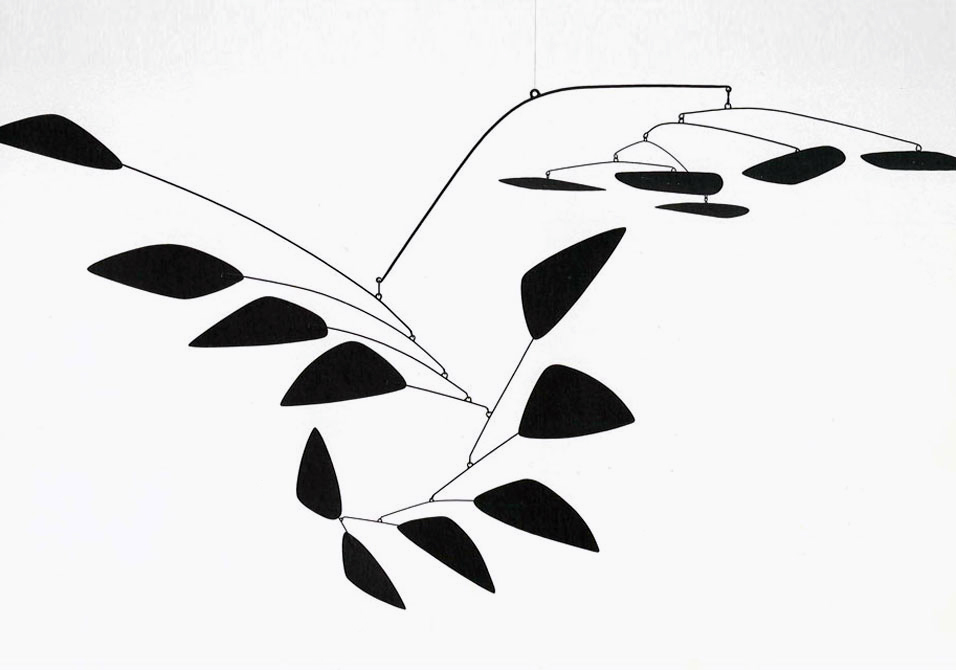
Tuesday to Saturday: 11am – 5pm
Sunday and holidays: 11am – 7 pm

Fundacion MAPFRE website

LIKE ART BLART ON FACEBOOK

Back to top

Exhibition: ‘Ray K. Metzker: Automagic’ at the Laurence Miller Gallery, New York

24th November, 2009 – 9th January, 2010


Ray K. Metzker (American 1931-2014) 'Philadelphia, 1963' 1963 from the exhibition 'Ray K. Metzker: Automagic' at the Laurence Miller Gallery, New York,  Nov 2009 - Jan 2010
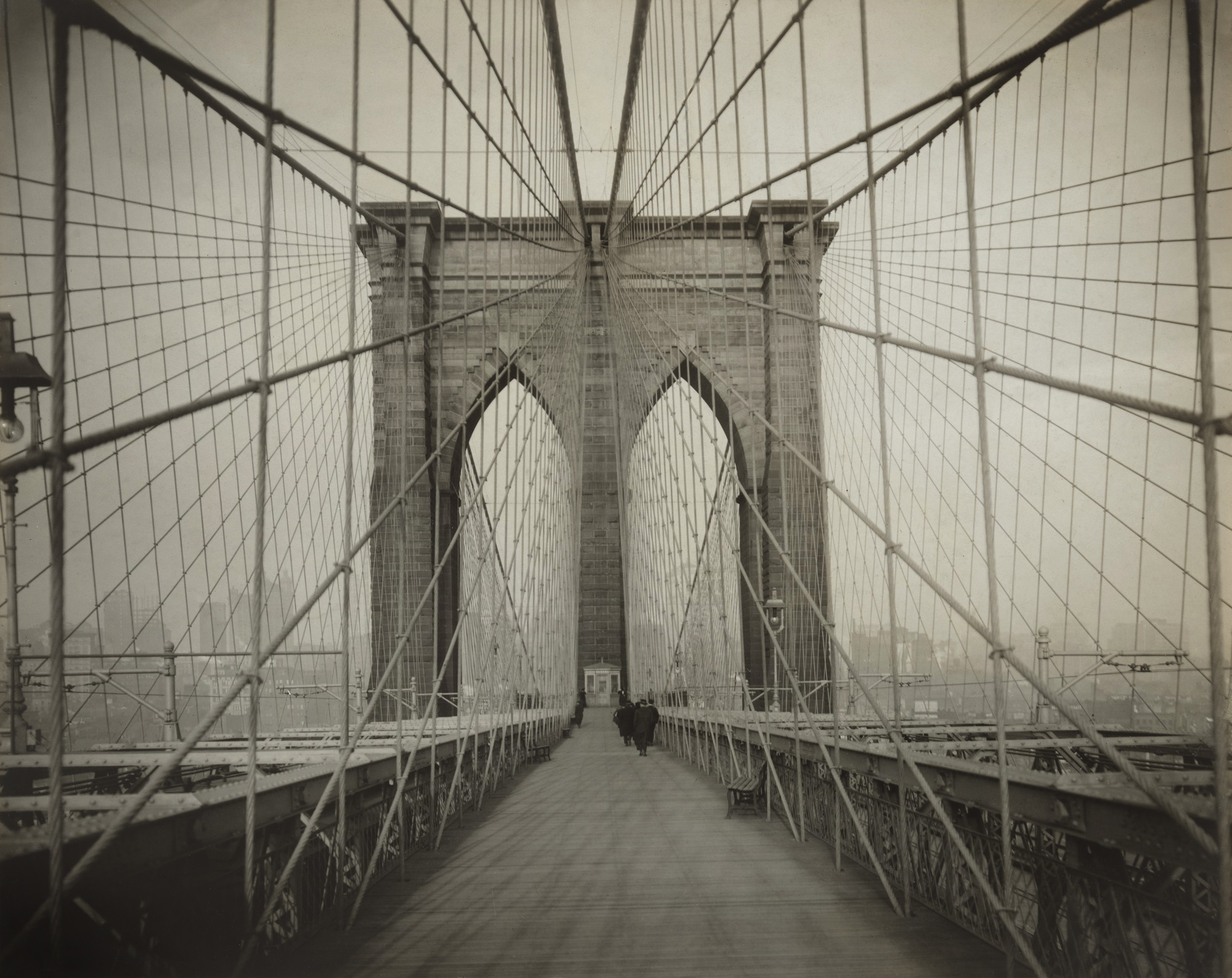
 

Ray K. Metzker (American, 1931-2014)
Philadelphia, 1963
1963
Gelatin silver print


The early photographs from the 1960’s are stupendous!

The pre-visualisation of the final photograph shows rare talent. The use of deep chiaroscuro is handled so adeptly, so confidently. The photographer is in full control of the modelling of the spaces and contours of the objects within the photographic frame. Metzker’s drawing with light surely comes from an enlightened mind. Magical. Wonderful.

Dr Marcus Bunyan


Many thankx to Laurence Miller Gallery for allowing me to publish the photographs in the posting. Please click on the photographs for a larger version of the image.


Ray K. Metzker (American, 1931-2014) 'Philadelphia, 1963' from the exhibition 'Ray K. Metzker: Automagic' at the Laurence Miller Gallery, New York,  Nov 2009 - Jan 2010


Ray K. Metzker (American, 1931-2014)
Philadelphia, 1963
1963
Gelatin silver print


Ray K. Metzker (American 1931-2014) 'Philadelphia' 1963 from the exhibition 'Ray K. Metzker: Automagic' at the Laurence Miller Gallery, New York,  Nov 2009 - Jan 2010


Ray K. Metzker (American, 1931-2014)
Philadelphia
1963
Gelatin silver print


Ray K. Metzker (American, 1931-2014) 'Philadelphia, 1964'


Ray K. Metzker (American, 1931-2014)
Philadelphia, 1964
1964
Gelatin silver print


Ray K. Metzker (American, 1931-2014) 'Chicago, 1958'


Ray K. Metzker (American, 1931-2014)
Chicago, 1958
1958
Gelatin silver print


From November 24 through January 9 Laurence Miller Gallery celebrates Ray K. Metzker: AutoMagic. This exhibition features over fifty black-and-white photographs taken by this 78-year old master photographer over the past fifty years in which the automobile plays a pivotal role in the contest between light and shadow. Forty of the photographs have never been exhibited before.

From his earliest street pictures taken under the El in Chicago’s Loop in the mid-Fifties, to his most recent highly abstract views of reflections on Philadelphia car windows, Ray K. Metzker brings an exuberance of vision rarely found among today’s photographers. In total control of his camera and craft, Metzker transforms the mundane in daily urban life into intense images that sizzle, and delight the eye.

In the darkest recesses of a parking garage, we discover a single shimmering tail fin of a late 50’s Cadillac. In a scene more Orson Wells than Woody Allen, we witness a menacing shadow figure approaching a parked car, intent unknown. In a blizzard, we join the photographer and a single figure as they look at one another wondering why each other is standing there in the cascading snow.

The show also reveals a more tender side of Metzker, as we peer into car windows to see folks uninhibited within their mobile shelters, including a sleeping man with a medallion, head resting on the door; a man reading at the wheel of his damaged white coupe; and a man at the end of long day, hand upon his head.

Metzker’s work of the last few years, fondly nicknamed Autowackies, are a brilliant extension of his earlier forays into abstraction, and are only made possible by the contours of  our newest cars and SUV’s, which wildly warp the architecture and cloud formations reflected on their glossy surfaces.

Text from the Lawrence Miller Gallery website [Online] Cited 12/12/2009. No longer available online


Ray K. Metzker (American, 1931-2014) 'Philadelphia, 1963'


Ray K. Metzker (American, 1931-2014)
Philadelphia, 1963
1963
Gelatin silver print


Ray K. Metzker (American, 1931-2014) 'Philadelphia, 1964'


Ray K. Metzker (American, 1931-2014)
Philadelphia, 1964
1964
Gelatin silver print


Ray K. Metzker (American, 1931-2014) 'Albuquerque, 1971' solarized vintage silver print


Ray K. Metzker (American, 1931-2014)
Albuquerque, 1971
1971
Solarized vintage silver print


Ray K. Metzker (American 1931-2014) 'Philadelphia' 1963


Ray K. Metzker (American, 1931-2014)
Philadelphia
1963
Gelatin silver print


Ray K. Metzker (American 1931-2014) 'Philadelphia' 1963


Ray K. Metzker (American, 1931-2014)
Philadelphia
1963
Gelatin silver print


Ray K. Metzker (American 1931-2014) 'Philadelphia' 1963


Ray K. Metzker (American, 1931-2014)
Philadelphia
1963
Gelatin silver print


Ray K. Metzker (American 1931-2014) 'Philadelphia' 1963


Ray K. Metzker (American, 1931-2014)
Philadelphia
1963
Gelatin silver print


Ray K. Metzker (American 1931-2014) 'Philadelphia' 1963


Ray K. Metzker (American, 1931-2014)
Philadelphia
1963
Gelatin silver print


Ray K. Metzker (American, 1931-2014) 'Philadelphia, 2009'


Ray K. Metzker (American, 1931-2014)
Philadelphia, 2009
2009
Gelatin silver print


Ray K. Metzker (American, 1931-2014) 'Philadelphia, 2009'


Ray K. Metzker (American, 1931-2014)
Philadelphia, 2009
2009
Gelatin silver print


Lawrence Miller Gallery

Lawrence Miller Gallery is now operating as a private dealer and consultant. The gallery is no longer hosting a physical exhibition space.

Lawrence Miller Gallery website

LIKE ART BLART ON FACEBOOK

Back to top

Exhibition: ‘Icons of American Photography: A Century of Photographs from the Cleveland Museum of Art’ at the Frick Art and Historical Center, Pittsburgh

Exhibition dates: 3rd October, 2009 – 3rd January, 2010

Curator: Tom Hinson, Curator of Photography


Many thankx to the Frick Art and Historical Center for allowing me to publish the photographs in the posting. Please click on the photographs for a larger version of the image.

Dr Marcus Bunyan


Matthew Brady (American 1823-1896) 'Prosper Whetmore' 1857


Matthew Brady (American, 1823-1896)
Prosper M. Wetmore
1857
Salted paper print from wet collodion negative
47 x 39.4cm (18 1/2 x 15 1/2 in.)
CC0 1.0 Universal


A popular author, legislator, and general in the New York State militia, Wetmore, here at age 59, still resembles Edgar Allen Poe’s description of him from a decade earlier: “about five feet eight in height, slender, neat; with an air of military compactness.” Brady’s portrait studio, with branches in New York and Washington, DC, was the most important of its era in America, thanks in part to its success in photographing political, social, and cultural figures. These early celebrity portraits, such as those of the wedding of performer Tom Thumb (seen in the centre of the gallery), could sell thousands of copies. Brady is now best known for images of the Civil War, most taken by photographers he hired.

Text from The Cleveland Museum of Art website


Anne W. Brigman (American, 1869-1950) 'The Hamadryads' c. 1910 from the exhibition Exhibition: 'Icons of American Photography: A Century of Photographs from the Cleveland Museum of Art' at the Frick Art and Historical Center, Pittsburgh, Oct 2009 - Jan 2010


Anne W. Brigman (American, 1869-1950)
The Hamadryads
c. 1910
Platinum print


Charles Sheeler (American, 1883-1965) 'Bucks County Barn' 1915 from the exhibition Exhibition: 'Icons of American Photography: A Century of Photographs from the Cleveland Museum of Art' at the Frick Art and Historical Center, Pittsburgh, Oct 2009 - Jan 2010


Charles Sheeler (American, 1883-1965)
Bucks County Barn
1915
Gelatin silver print
9 1/4 x 7 5/16″ (23.5 x 18.6cm)


Margaret Bourke-White (American 1904-1971) 'Terminal Tower' 1928


Margaret Bourke-White (American 1904-1971)
Terminal Tower
1928
13 1/4 x 10″ (33.7 x 25.4cm)
Gelatin silver print


Imogen Cunningham (American, 1883-1976) 'Black and White Lilies III' 1928


Imogen Cunningham (American, 1883-1976)
Black and White Lilies III
1928
Gelatin silver print


Alfred Steiglitz (American, 1864-1946) 'Georgia O'Keefe' 1933


Alfred Steiglitz (American, 1864-1946)
Georgia O’Keefe
1933
Gelatin silver photograph


Dorothea Lange (American 1895-1965) 'Resident, Conway, Arkansas' 1938


Dorothea Lange (American, 1895-1965)
Resident, Conway, Arkansas
1938
Gelatin silver print
11 15/16 x 9 1/2 in. (30.32 x 24.13cm)


Laszlo Moholy-Nagy (Hungarian, 1895-1946) 'Untitled' 1939


Laszlo Moholy-Nagy (Hungarian, 1895-1946)
Untitled
1939
Photogram
Gelatin silver print


On October 3, 2009, Icons of American Photography: A Century of Photographs from the Cleveland Museum of Art opens at The Frick Art Museum. This exhibition is composed of fifty-nine photographs from Cleveland’s extraordinary collection that chronicle the evolution of photography in America from a scientific curiosity in the 1850s to one of the most potent forms of artistic expression of the twentieth century.

Icons of American Photography presents some of the best work by masters of the medium, like Mathew Brady, William Henry Jackson, Eadweard Muybridge, Alfred Stieglitz, Edward Steichen, Paul Strand, Edward Weston, Imogen Cunningham, Margaret Bourke-White, Dorothea Lange, Walker Evans, and Robert Frank, encompassing themes of portraiture, the Western landscape, Pictorialism, documentary photography, and abstraction.

The exhibition explores the technical developments of photography, starting with outstanding examples of daguerreotypes – a sheet of copper coated with light sensitive silver. The daguerreotype gave way to salt, albumen, and then gelatin silver prints. Technologies improved to accommodate larger sizes, easy reproduction of multiple prints from a single negative, and commercially available negative film and print papers. As we move into an increasingly digitised twenty-first century, the lure of the photographer’s magic and the mysteries of making photographic images appear on paper is still strong.

Icons of American Photography presents a remarkable chronicle of American life seen through the camera’s lens. The earliest days of photography saw a proliferation of portraiture – intimately personal and honest in composition. A rare multiple-exposure daguerreotype by Albert Southworth (1811-1894) and Josiah Hawes (1808-1901) presents the sitter in variety of poses and expressions, while the formal portrait of Prosper M. Wetmore, 1857, by Civil War-era photographer Mathew Brady (1823-1896) is more typical of early portraiture. The carefully staged daguerreotype, Dead Child on a Sofa, c. 1855, is an outstanding example of the postmortem portrait. The high rate of infant mortality throughout the 1800s made this variety of portraiture common, satisfying the emotional need of the parents to have a lasting memory of their loved one.

Advances in photographic processes allowed for a range of expressive qualities that were exploited by photographers with an artistic flair. In a style known as Pictorialism, works such as Hamadryads, 1910, by Anne Brigman (1869-1950) imitated the subject matter of painting. In Greek mythology a hamadryad is a nymph whose life begins and ends with that of a specific tree. In this work, two nudes representing wood nymphs were carefully placed among the flowing forms of an isolated tree in the High Sierra. The platinum print method used by Brigman allowed for a detailed, yet warm and evocative result. Edward Steichen’s Rodin the Thinker, 1902 (see below), was created from two different negatives printed together using the carbon print process. This non-silver process provided a continuous and delicate tonal range. For even greater richness, these prints were often toned, producing dense, glossy areas in either black or warm brown.

During the late nineteenth century, the U.S. Congress commissioned photographers to document the American West. Photographs by Timothy O’Sullivan (1840-1882) and William Henry Jackson (1843-1942) are the most celebrated from among this era. The exhibition includes O’Sullivan’s East Humbolt Mountains, Utah, 1868 (see below), and Jackson’s Mystic Lake, M.T., 1872 (see below), as well as Bridal Veil, Yosemite, c. 1866 (see below), by Carleton Watkins (1829-1916). Photographers carried large-format cameras with heavy glass negatives to precarious vantage points to create their sharply focused and detailed views. Decades later, Ansel Adams (1902-1984) carried on the intrepid tradition when he swerved to the side of the road and hauled his view camera to the roof of his car to make the famous image Moonrise, Hernandez, New Mexico, 1941.

Responding to the rapid growth of the twentieth century, many photographers shifted their attention from depictions of the natural world to the urban landscape. The power, energy, and romance of the city inspired varied approaches, from sweeping vistas to tight, close-up details and unusual camera angles. Margaret Bourke-White (1904-1971) established her reputation during the late 1920s by photographing industrial subjects in Cleveland. Her Terminal Tower, 1928, documents what was then the second tallest building in America. Berenice Abbot’s (1898-1991) New York, 1936 (see below), is one of many depictions of this vibrant metropolis. The human life of the city intrigued many photographers, including Helen Levitt (1913-2009) whose photographs of children are direct, unsentimental and artful; Weegee [Arthur Fellig] (1899-1968) who unflinchingly documented crime and accident scenes; and Gordon Parks (1912-2006) who chronicled the life of African Americans.

Exploiting the new medium, numerous photography projects were instituted as part of FDR’s New Deal. The most legendary was that of the Farm Security Administration (FSA) run by Roy Stryker, who hired such important photographers such as Walker Evans, Dorothea Lange, and Arthur Rothstein. One of the most iconic images of the New Deal was Dust Storm, Cimarron County, 1936 (see below), by Arthur Rothstein (1915-1985). In the spring of 1936, Rothstein made hundreds of photographs in Cimarron County in the Oklahoma panhandle, one of the worst wind-eroded areas in the United States. Out of that body of work came this gripping, unforgettable image. Dorothea Lange’s (1895-1965) work chronicled the human toll wrought by hardship in Resident, Conway, Arkansas, 1938.

As an art form, photography kept in step with formalist modern styles and an increasing trend toward abstraction. Known for his precisionist paintings, Charles Sheeler’s (1883-1965) Bucks County Barn, 1915, features a geometric composition, sharp focus, and subtle tonal range. In Black and White Lilies III, c. 1928 (see above), Imogen Cunningham (1883-1976) combined the clarity and directness of Modernism with her long-held interest in botanical imagery. For two decades she created a remarkable group of close-up studies of plants and flowers that identified her as one of the most sophisticated and experimental photographers working in America.

Photographers such as Edward Weston (1886-1958) and Paul Strand (1890-1976) employed a straight-on clarity that highlighted the abstract design of everyday objects and the world around us. A completely abstract work by artist László Moholy-Nagy (1894-1946), Untitled, 1939 (see above), is a photogram made by laying objects onto light-sensitive photographic paper and exposing it to light. The objects partially block the light to create an abstract design on the paper.

By 1960, photography had attained a prominent place not only among the fine arts, but in popular culture as well, ushering in a new era of image-based communication that has profoundly affected the arts as well as everyday life.

Icons of American Photography: A Century of Photographs from the Cleveland Museum of Art is organised by the Cleveland Museum of Art. The exhibition is curated by Tom Hinson, Curator of Photography.

Press release from the The Frick Art and Historical Center website [Online] Cited 06/12/2009 no longer available online


Unknown photographer (American) 'Dead child on a sofa' c. 1855


Unknown photographer (American)
Dead child on a sofa
c. 1855
Quarter plate daguerreotype with applied colour


Carelton Watkins (American, 1829-1916) 'Yosemite Valley from the Best General View No. 2.' 1866


Carelton Watkins (American, 1829-1916)
Yosemite Valley from the Best General View No. 2
1866
Albumen silver print


Carleton Watkins had the ability to photograph a subject from the viewpoint that allowed the most information to be revealed about its contents. In this image, he captured what he considered the best features of Yosemite Valley: Bridal veil Falls, Cathedral Rock, Half Dome, and El Capitan. By positioning the camera so that the base of the slender tree appears to grow from the bottom edge of the picture, Watkins composed the photograph so that the canyon rim and the open space beyond it seem to intersect. Although he sacrificed the top of the tree, he was able to place the miniaturised Yosemite Falls at the visual centre of the picture. To alleviate the monotony of an empty sky, he added the clouds from a second negative. This image was taken while Watkins was working for the California Geological Survey. His two thousand pounds of equipment for the expedition, which included enough glass for over a hundred negatives, required a train of six mules.

Text from the J. Paul Getty Museum website [Online] Cited 14/05/2019


Carelton Watkins (American, 1829-1916) 'Bridal Veil, Yosemite' 1866


Carelton Watkins (American, 1829-1916)
Bridal Veil, Yosemite
1866
Albumen silver print


Eadweard J. Muybridge (American born England, 1830-1904) 'Valley of Yosemite, from Rocky Ford' 1872


Eadweard J. Muybridge (American born England, 1830-1904)
Valley of Yosemite, from Rocky Ford
1872
Albumen silver print


Timothy H. O'Sullivan (American, 1840-1882) 'East Humboldt Mountains, Utah' 1868


Timothy H. O’Sullivan (American, 1840-1882)
East Humboldt Mountains, Utah
1868
Albumen print from wet collodion negative
Image: 19.7 x 27cm (7 3/4 x 10 5/8 in.)
The Cleveland Museum of Art
James Parmelee Fund


By nature and by experience gained during the Civil War, O’Sullivan was ideally suited for the physical and creative demands required of the official photographer for the geological exploration of the fortieth parallel, led by the enterprising Yale geologist Clarence King. The goal of the expedition was to survey the geological structure and natural resources of a swath of territory 100 miles wide, from the eastern slopes of the Sierra Nevada Mountains across the Great Basin to the Rocky Mountains. While on the expedition in 1867-1869 and 1872, O’Sullivan simultaneously pursued his own interest in perfecting a balanced, aesthetic style of landscape photography while providing a faithful record of the natural terrain. As typified in this print, he positioned the camera at a distance parallel to the majestic scenery, presenting a shallow, flattened depiction of space. The image describes in sharp detail the sheer beauty and rugged scale of this Western landscape.

Text from The Cleveland Museum of Art website


William Henry Jackson (American, 1843-1942) 'Mystic Lake, M.T.' 1872


William Henry Jackson (American, 1843-1942)
Mystic Lake, M.T.
1872
Albumen print from wet collodion negative
Image: 23.3 x 50.7cm (9 3/16 x 19 15/16 in.)
The Cleveland Museum of Art
John L. Severance Fund


One of the best-known 19th-century landscape photographers of the American West, Jackson took thousands of negatives between 1870 and 1888 while working for the federal government and the railroads. Beginning in 1870, he began an eight-year assignment as official photographer to the U.S. Geological and Geographical Survey of the Territories led by Ferdinand V. Hayden. This beautiful view of Mystic Lake, located at the head of the East Gallatin River, is one of the most picturesque photographs of the mountainous American West. Jackson used for the first time 11-by-14-inch negatives that captured the scene’s rich textures, the brilliant play of light and shade, and the power and romance of this enthralling vista. Jackson described the scenic lake as “well stocked with most excellent trout, it is quite a pleasure-resort, despite the difficulties to encounter in reaching it.”

Text from The Cleveland Museum of Art website


Edward Steichen (American 1879-1973) 'Rodin The Thinker' 1902


Edward Steichen (American, 1879-1973)
Rodin The Thinker
1902
Gum bichromate print


When Edward Steichen arrived in Paris in 1900, Auguste Rodin (1840-1917) was regarded not only as the finest living sculptor but also perhaps as the greatest artist of his time. Steichen visited him in his studio in Meudon in 1901 and Rodin, upon seeing the young photographer’s work, agreed to sit for his portrait. Steichen spent a year studying the sculptor among his works, finally choosing to show Rodin in front of the newly carved white marble of the “Monument to Victor Hugo,” facing the bronze of “The Thinker.” In his autobiography, Steichen describes the studio as being so crowded with marble blocks and works in clay, plaster, and bronze that he could not fit them together with the sculptor into a single negative. He therefore made two exposures, one of Rodin and the “Monument to Victor Hugo,” and another of “The Thinker.” Steichen first printed each image separately and, having mastered the difficulties of combining the two negatives, joined them later into a single picture, printing the negative showing Rodin in reverse.

“Rodin – The Thinker” is a remarkable demonstration of Steichen’s control of the gum bichromate process and the painterly effects it encouraged. It is also the most ambitious effort of any Pictorialist to emulate art in the grand tradition. The photograph portrays the sculptor in symbiotic relation to his work.

Suppressing the texture of the marble and bronze and thus emphasiSing the presence of the sculptures as living entities, Steichen was able to assimilate the artist into the heroic world of his creations. Posed in relief against his work, Rodin seems to contemplate in “The Thinker” his own alter ego, while the luminous figure of Victor Hugo suggests poetic inspiration as the source of his creativity. Recalling his response to a reproduction of Rodin’s “Balzac” in a Milwaukee newspaper, Steichen noted: “It was not just a statue of a man; it was the very embodiment of a tribute to genius.” Filled with enthusiasm and youthful self-confidence, Steichen wanted in this photograph to pay similar tribute to Rodin’s genius.

Text from the Metropolitan Museum of Art website [Online] Cited 14/05/2019


Arthur Rothstein (American 1915-1985) 'Dust Storm, Cimarron County' 1936


Arthur Rothstein (American, 1915-1985)
Dust Storm, Cimarron County
1936
Gelatin silver photograph
40.4 × 39.6cm


Berenice Abbott (American, 1898-1991) 'Columbus Circle' 1936


Berenice Abbott (American, 1898-1991)
Columbus Circle
1936
Gelatin silver print
Image: 24.6 x 19.6cm (9 11/16 x 7 11/16 in.)
The Cleveland Museum of Art
Sundry Purchase Fund


A native of Springfield, Ohio, Abbott studied art and photography in Paris. Arriving in New York in 1929, she was shocked by the past decade’s vertical building boom, and dedicated herself to documenting the city’s new structures and fast-disappearing historic ones. She made this image from the ninth floor of the General Motors building in New York while working for the Federal Art Project, a governmental agency that employed artists during the Depression. The statue of Columbus, at centre, is dwarfed by two advertising signs: one for Schenley rye whiskey and a landmark 80-x-50-foot display for Coca-Cola that required 3,000 incandescent bulbs.

Text from The Cleveland Museum of Art website


The Frick Art and Historical Center
7227 Reynolds Street
Pittsburgh PA 15208

Opening hours:
Tuesday – Sunday 10am – 5pm
Friday 10am – 9pm
Closed Monday

The Frick Art and Historical Center website

LIKE ART BLART ON FACEBOOK

Back to top