Review: ‘How To Comfort Your Father’ by Martin Smith at Sophie Gannon Gallery, Richmond

Exhibition dates: 24th August – 18th September 2010


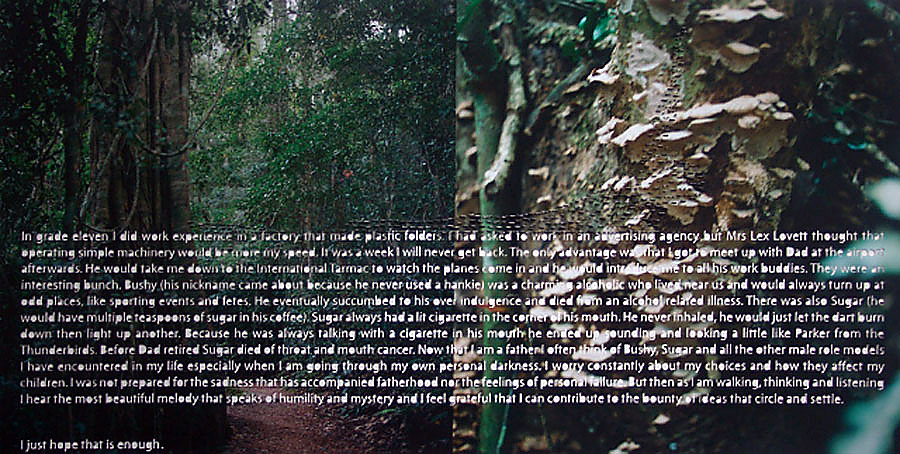
Martin Smith (Australian, b. 1971) 'Enough' 2010 from the exhibition 'How To Comfort Your Father' by Martin Smith at Sophie Gannon Gallery, Richmond, Aug - Sept, 2010


Martin Smith (Australian, b. 1971)
Enough
2010


Following on from last year’s exhibition My Jesus Lets Me Rub His Belly that examined issues of place and faith when the artist was growing up, Martin Smith now presents a slice of poignant son father love at Sophie Gannon Gallery, Richmond. The combination of images and text create narratives on growing up, life, male bonding and mortality.

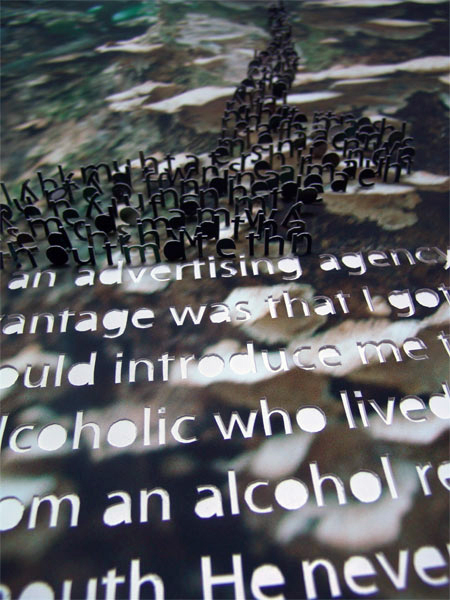
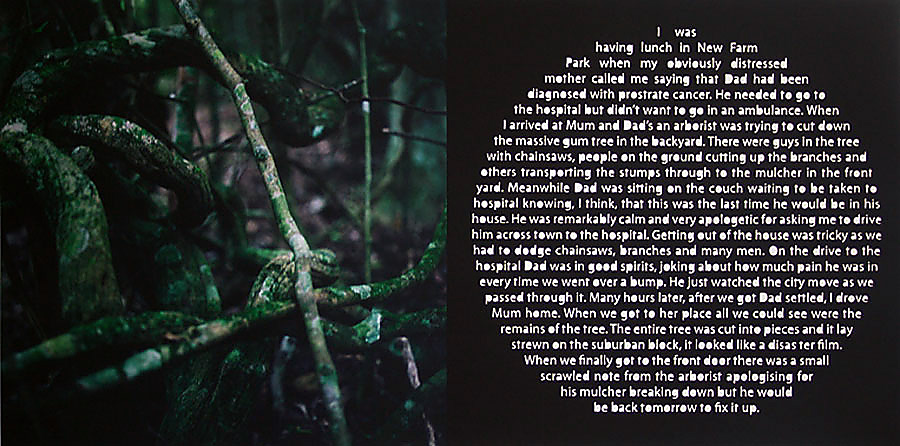
In Fix It Up (2010, below) the use of a circle of text on black (the circle of life) in this image paired with a dark photograph of moss covered twigs and branches is exemplary, the metaphor of the arborist chopping down a gum tree in the backyard as his father is waiting to be taken to hospital by ambulance with prostrate cancer, the last time he will be present in his house, incredibly moving. The use of blurred images, such as the central panel in the triptych Sydney (2010, below) adds emotional weight to the narratives, as though the stories told can only be fragmentary memories, as all memories are, of the events that have passed. The feeling of an excavation of the meaning of life and death is further enhanced by the incision of the letters into the photographs surface and the extrusion of the letters to form three-dimensional sculptural forms, as in the work Enough (2010, see photograph and detail below). The letters shape references the fungi on the tree behind, new life growing out of old, as though the words were being extruded out of the forest, archives of communal memory.

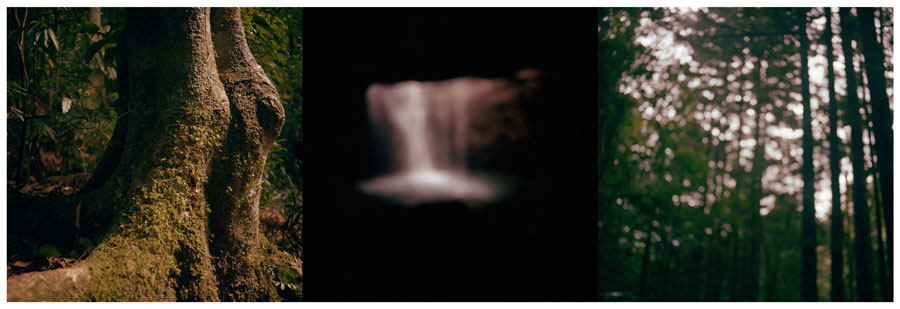
My favourite image in the exhibition didn’t have any words at all, not even piled as detritus at the bottom of the frame as many of Smith’s works do. It didn’t need them. The triptyph Untitled 1 (2010, below) is simple and eloquently beautiful and almost brought me to tears. When read in combination with the other works and their texts, the moss covered trees on the left become two wrinkled elbows, the image on the right the wandering mind and the image in the centre – for me, the feeling of life force as it flows in the darkness. As my yoga teacher says to me, “You must learn to navigate the dazzling darkness.”

This illumination of the mind, body, memory and spirit is what Smith’s work is all about. I adore it.

Dr Marcus Bunyan


Many thankx to Edwin and Sophie at Sophie Gannon Gallery for allowing me to publish the photographs in the posting. All photographs © and courtesy of the artist and Sophie Gannon Gallery. Please click on the photographs for a larger version of the image as it is important to read the text with the larger horizontal works (in some you can’t read the text, it is too small – apologies).


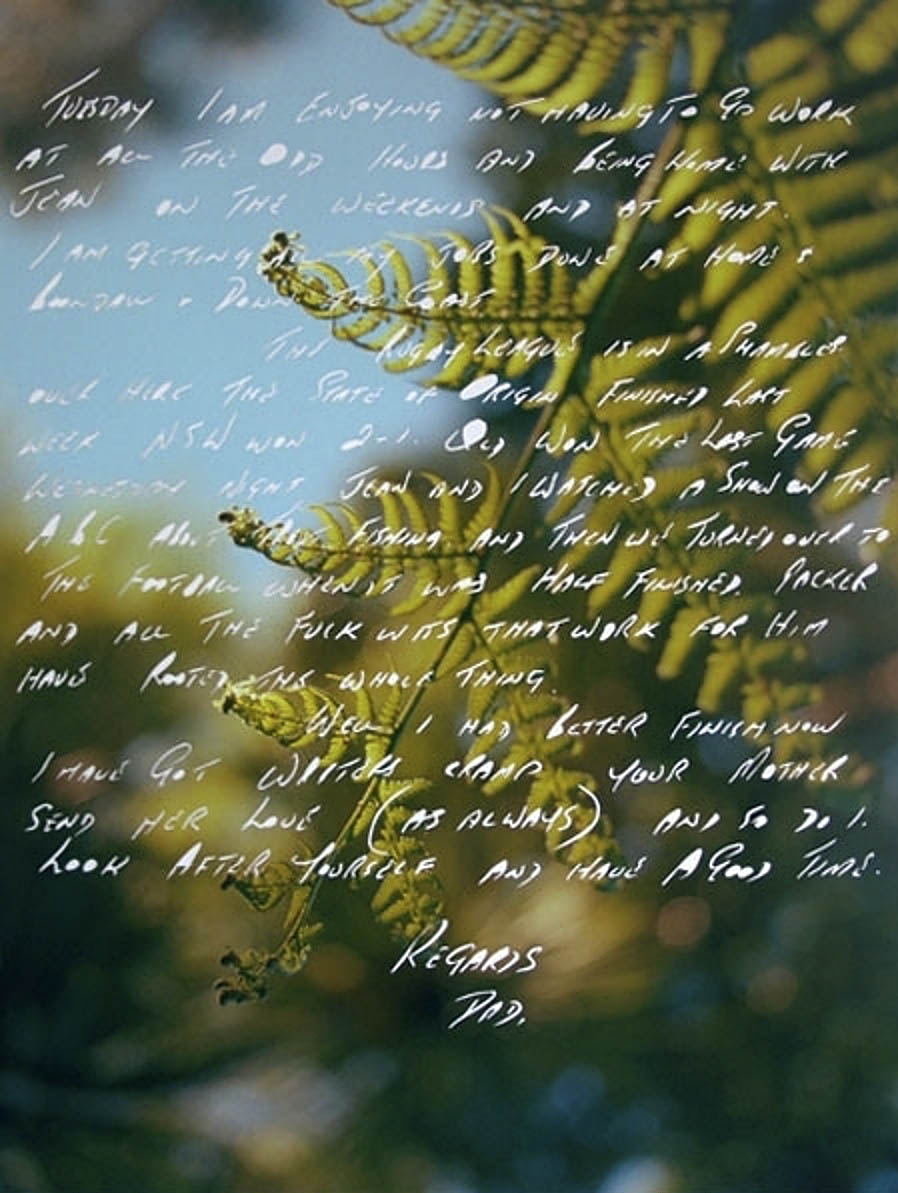
Martin Smith (Australian, b. 1971) 'Regards Dad' 2010 from the exhibition 'How To Comfort Your Father' by Martin Smith at Sophie Gannon Gallery, Richmond, Aug - Sept, 2010

Martin Smith (Australian, b. 1971)
Regards Dad
2010


Martin Smith (Australian, b. 1971) 'Enough' 2010 (detail) from the exhibition 'How To Comfort Your Father' by Martin Smith at Sophie Gannon Gallery, Richmond, Aug - Sept, 2010


Martin Smith (Australian, b. 1971)
Enough (detail)
2010


Martin Smith (Australian, b. 1971) 'Fix it up' 2010


Martin Smith (Australian, b. 1971)
Fix it up
2010


Martin Smith (Australian, b. 1971) 'Sydney' 2010


Martin Smith (Australian, b. 1971)
Sydney
2010


Martin Smith (Australian, b. 1971) 'Untitled 1' 2010


Martin Smith (Australian, b. 1971)
Untitled 1
2010


Sophie Gannon Gallery
2, Albert Street, Richmond, Melbourne

Opening hours:
Tuesday – Saturday 11 – 5pm

Sophie Gannon Gallery website

LIKE ART BLART ON FACEBOOK

Back to top

Exhibition: ‘The Family and the Land: Sally Mann’ at The Photographers’ Gallery, London

Exhibition dates: 18th June – 19th September 2010


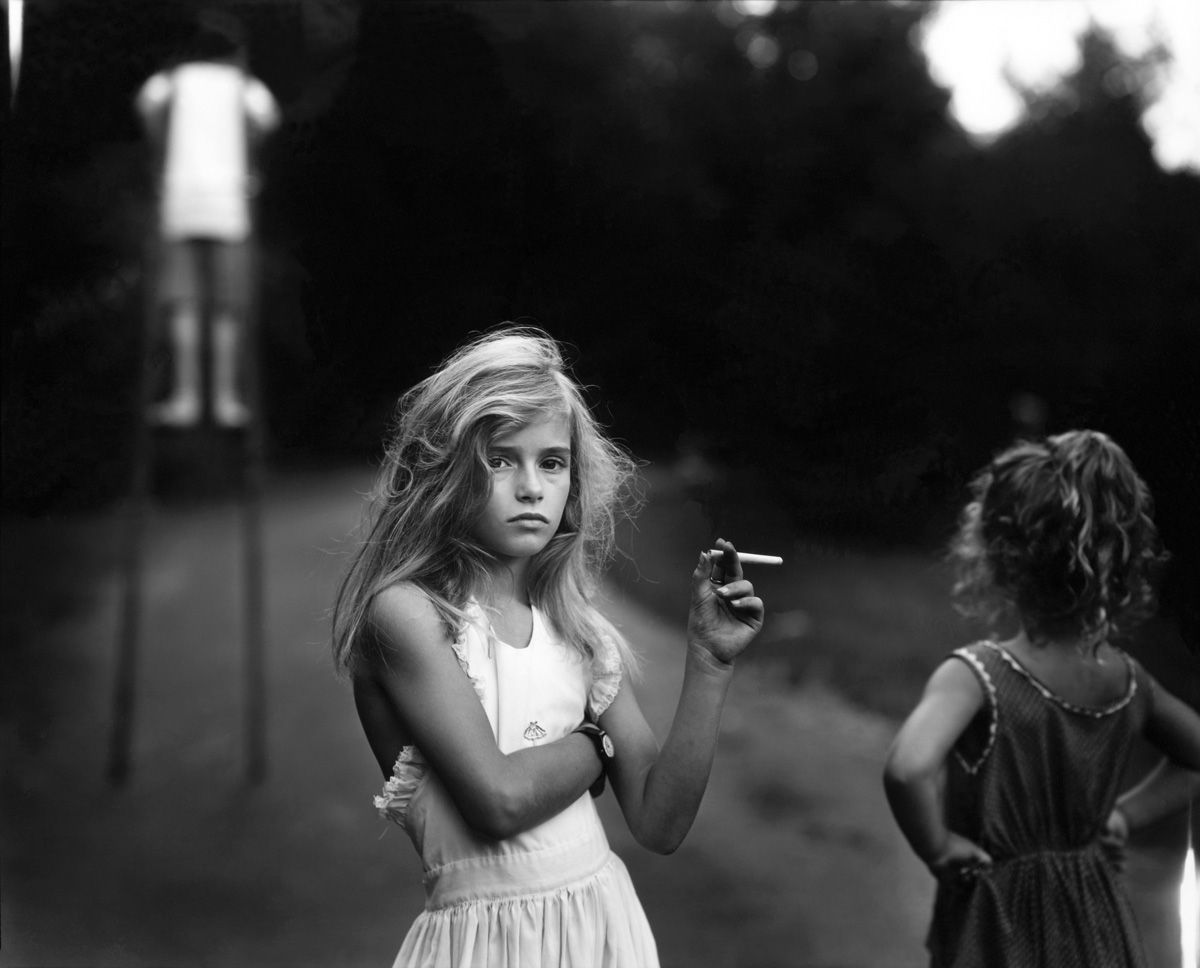
Sally Mann (American, b. 1951) 'Candy Cigarette' 1989


Sally Mann (American, b. 1951)
Candy Cigarette
1989
From the series Immediate Family
© Sally Mann. Courtesy Gagosian Gallery


One of the most haunting photography books I have ever opened and inhaled is What Remains (2003) by Sally Mann.

People say the photographs are shocking – featuring as they do documentation of a deceased pet greyhound, photos of decaying bodies out in the open field of a forensics lab (see photograph below), “the almost invisible traces left by the death of a fugitive on Mann’s property”, the dark landscape of a civil war battlefield and close up photographs of her now grown up children – but there is a stillness and depth to these photographs that elevates them above such sentiments.

What Mann does so well is that she listens to the passing of time and then inscribes an ode to what remains. Her gift is the photography of mortality (and vice versa) with all the psychic weight that this entails. This is a revelatory book not for the faint hearted.

Dr Marcus Bunyan


Many thankx to Sam Trenerry and the Photographers’ Gallery for allowing me to publish the photographs in the posting. Please click on the photographs for a larger version of the image.


Sally Mann (American, b. 1951) 'Vinland' 1992


Sally Mann (American, b. 1951)
Vinland
1992
Gelatin silver print
© Sally Mann. Courtesy Gagosian Gallery


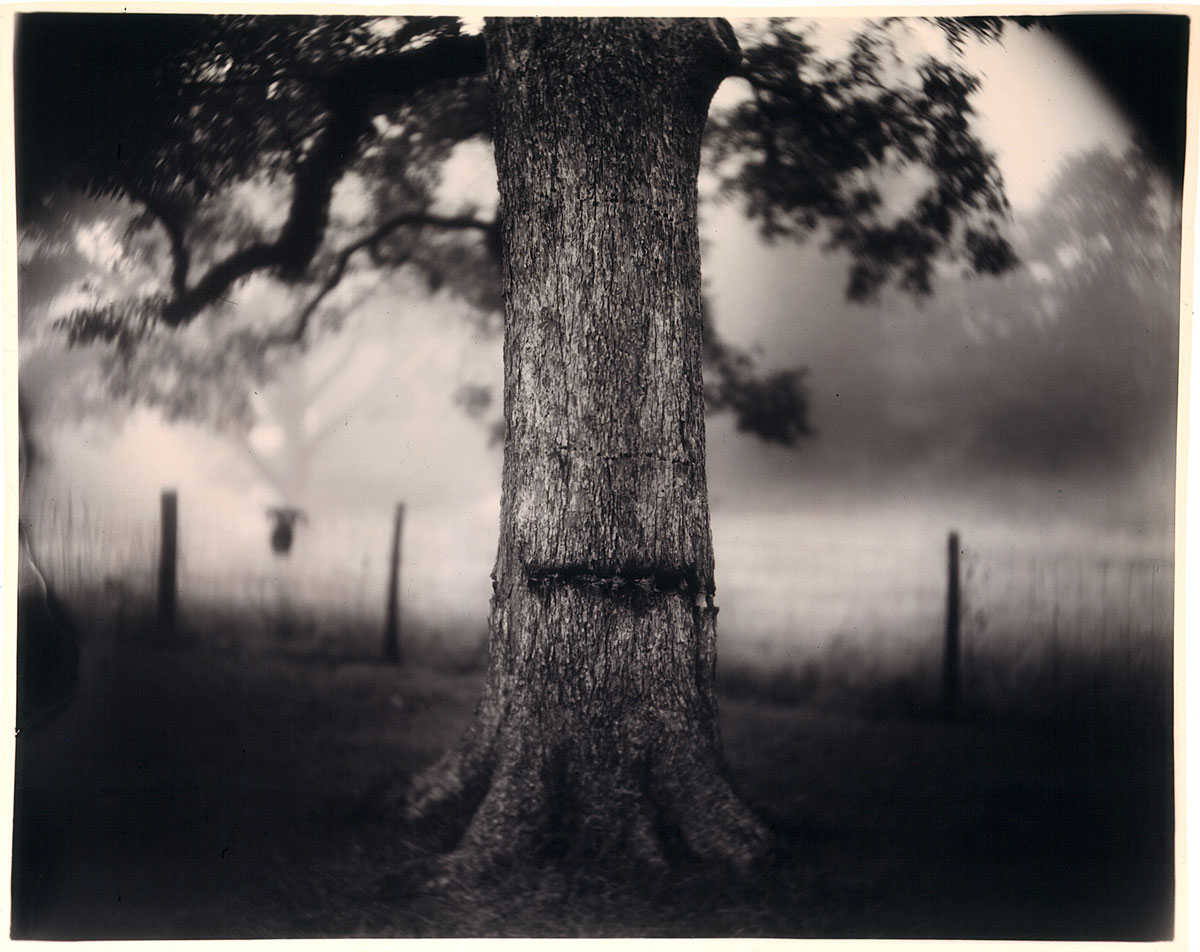
Sally Mann (American, b. 1951) 'Scarred Tree' 1996


Sally Mann (American, b. 1951)
Scarred Tree
1996
From the series Deep South
© Sally Mann. Courtesy Gagosian Gallery


Sally Mann (American, b. 1951) 'Untitled WR Pa 59' 2001


Sally Mann (American, b. 1951)
Untitled WR Pa 59
2001
From the series What Remains
© Sally Mann. Courtesy Gagosian Gallery


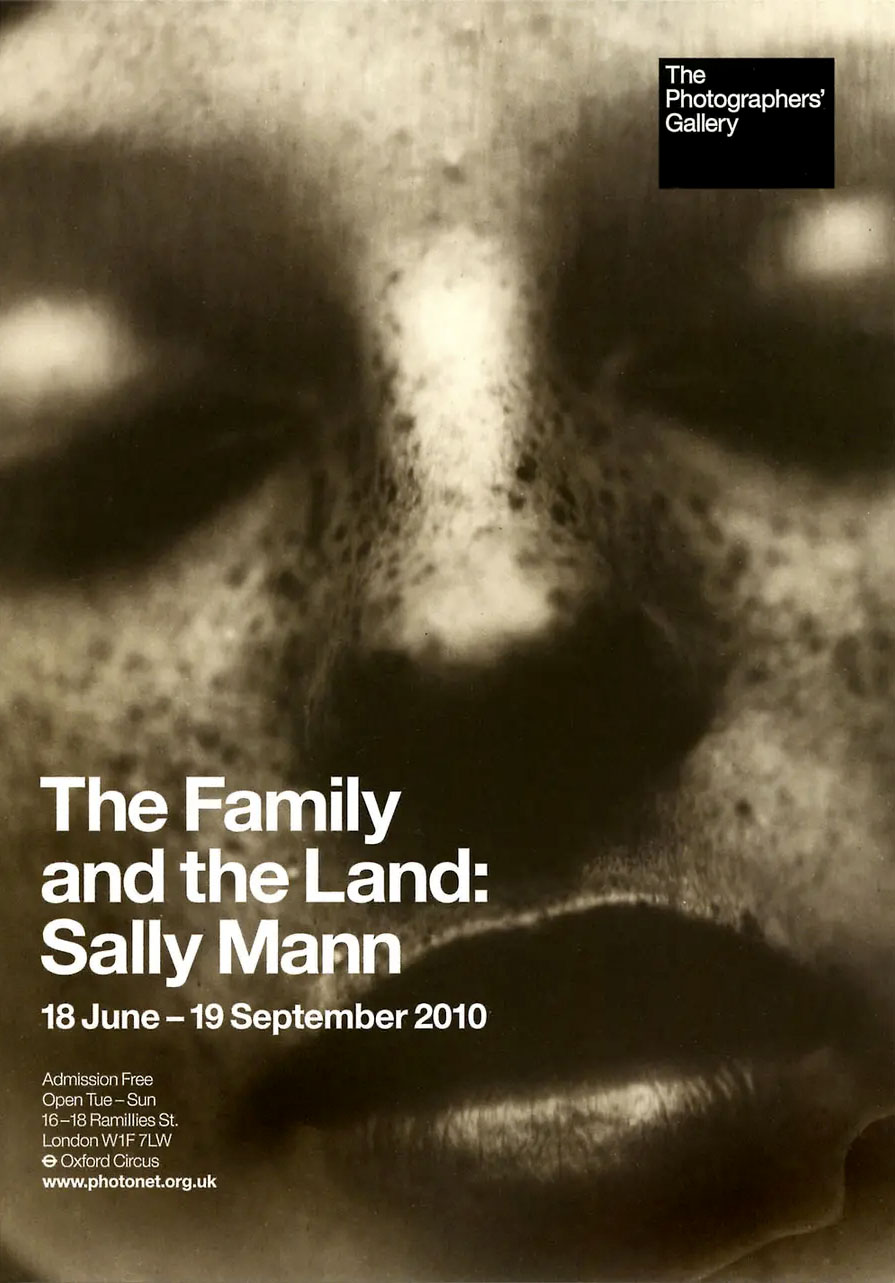
This exhibition at The Photographers’ Gallery is the American photographer Sally Mann’s first solo exhibition in the UK. Combining several series from her long photographic career, The Family and the Land: Sally Mann reflects Mann’s artistic impulse to draw on the world around her as subject matter.

The ‘family’ element of the title comprises Mann’s early series Immediate Family and the newer series Faces, both of which depict her children at various ages. The series Deep South represents the landscape, portraying images made across the south of the United States. The more recent body of work, What Remains brings together both strands of the exhibition, through its examination of how bodies, as they decompose, merge into the land itself.

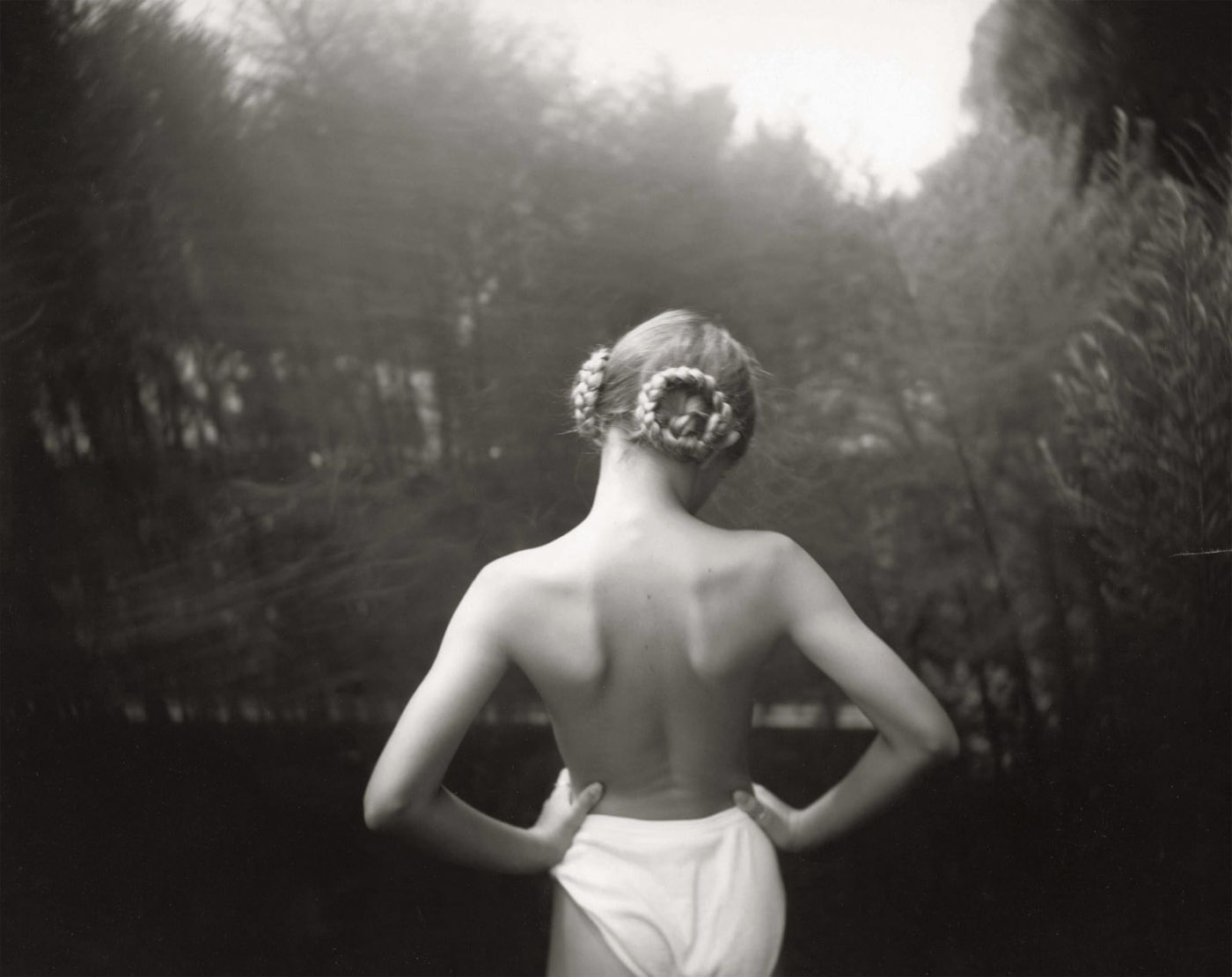
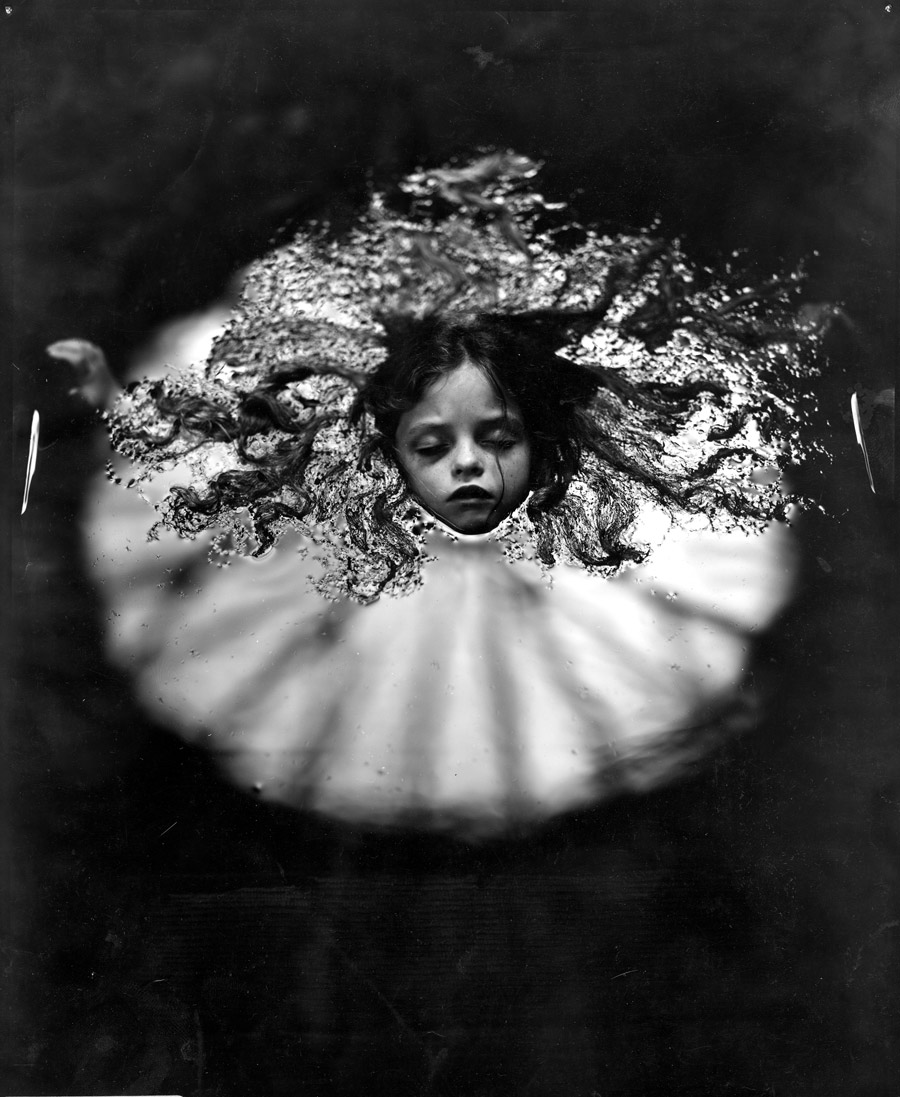
Sally Mann (b. 1951, USA) first gained prominence for Immediate Family (1984-1994) a series of intimate and revealing portraits of her three young children, Emmett, Jessie and Virginia. Taken over a ten-year period, Mann depicts them playing, swimming and acting to the camera in and around their homestead in Lexington, Virginia. Born out of a collaborative process between mother and child, the work encapsulates their childhood in all its rawness and innocence.

Mann followed Immediate Family by focusing on the land itself in her series Deep South (1996-1998). Here she is drawn to locations steeped in historical significance from the American Civil War, which left both literal and metaphoric scars on the trees and the land itself. Using antique cameras and processes throughout, Mann accentuates the sense of age in the subject while embracing the imperfect effects created by her printing process.

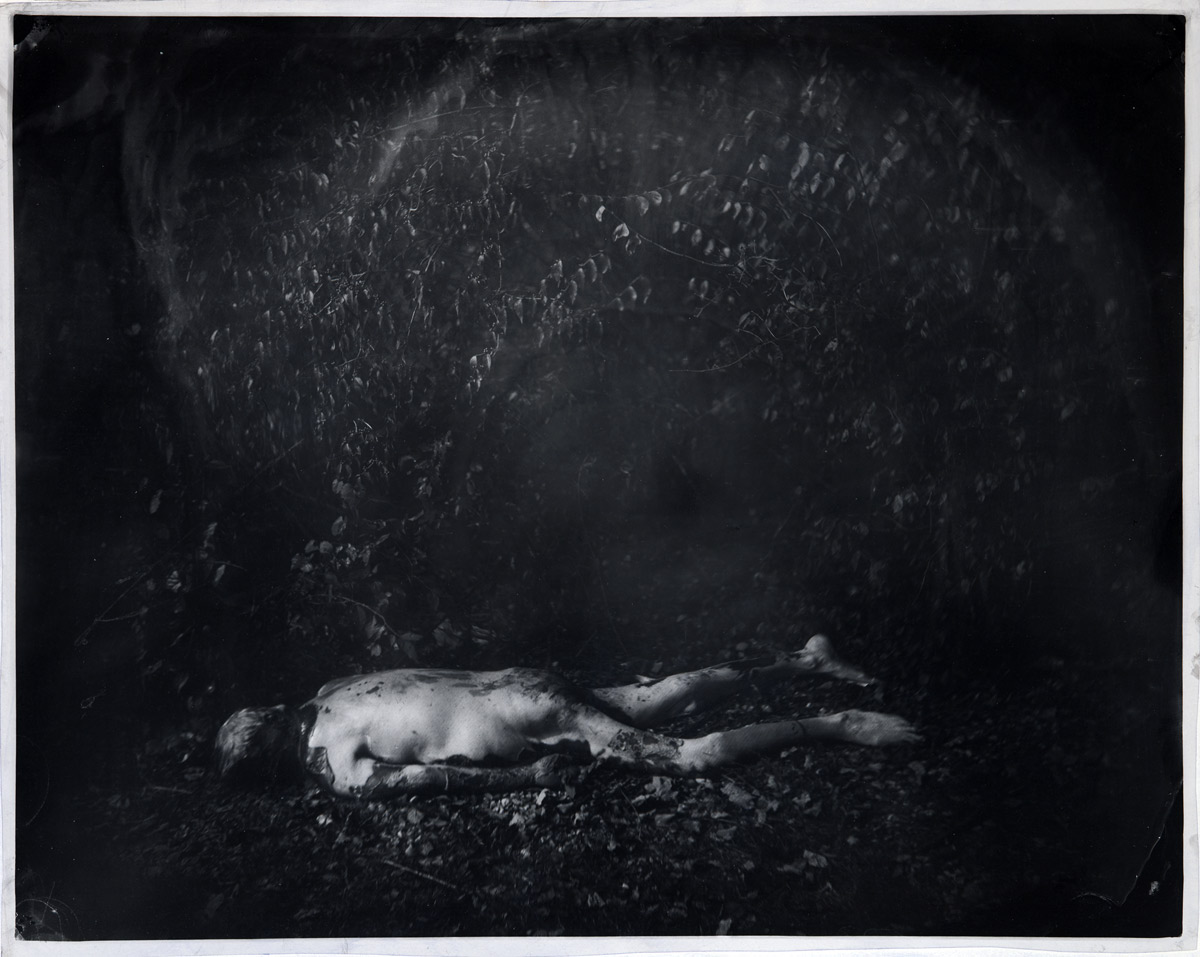
What Remains (2000-2004) seeks to further connect human contact to the land and how the body eventually returns to and becomes a part of the land itself. This concept led Mann to photograph decomposing cadavers at the University of Tennessee Anthropological Research Facility, Knoxville, where human decomposition is studied in a variety of, mainly outdoor, settings. What Remains deals directly with the subject of death, still a social taboo. As with her other work, Mann’s subjects are sensitively handled and beautifully realised, encouraging us to reflect upon our own mortality and place within nature’s order.

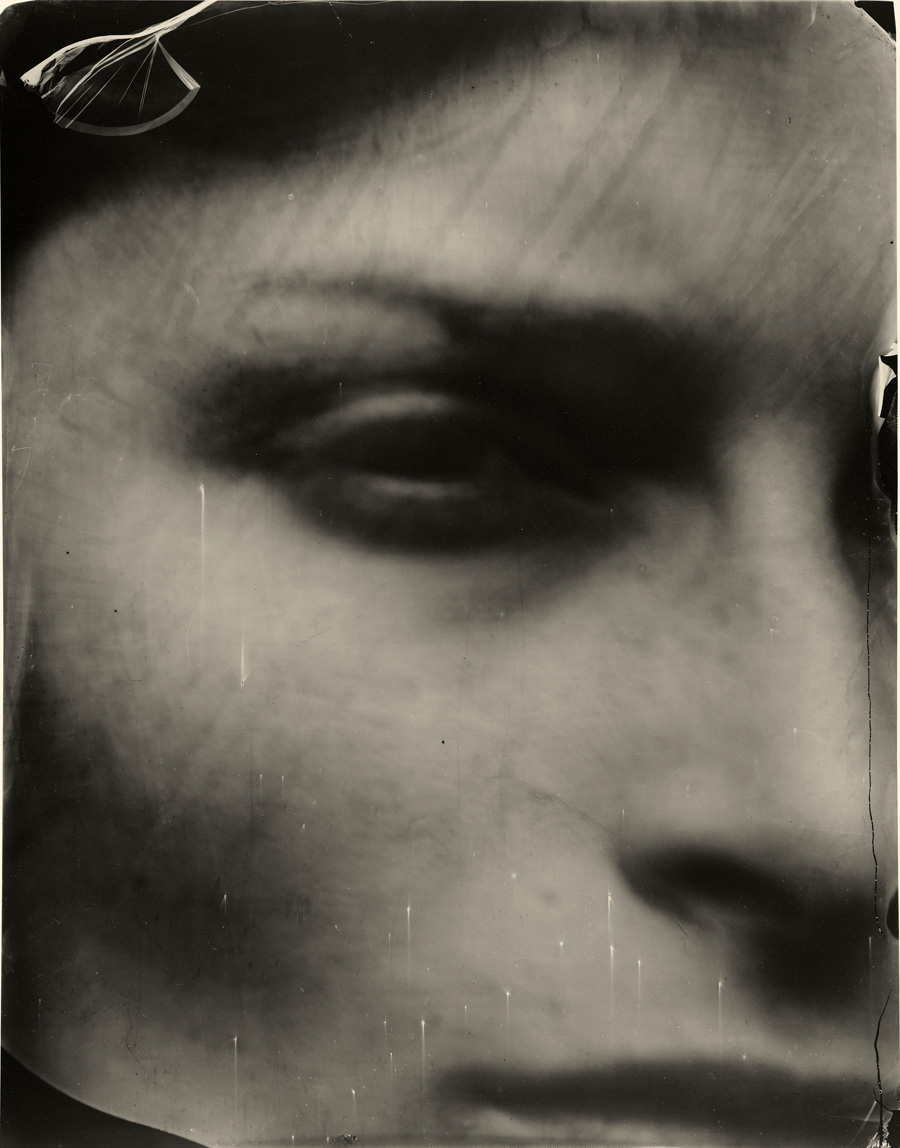
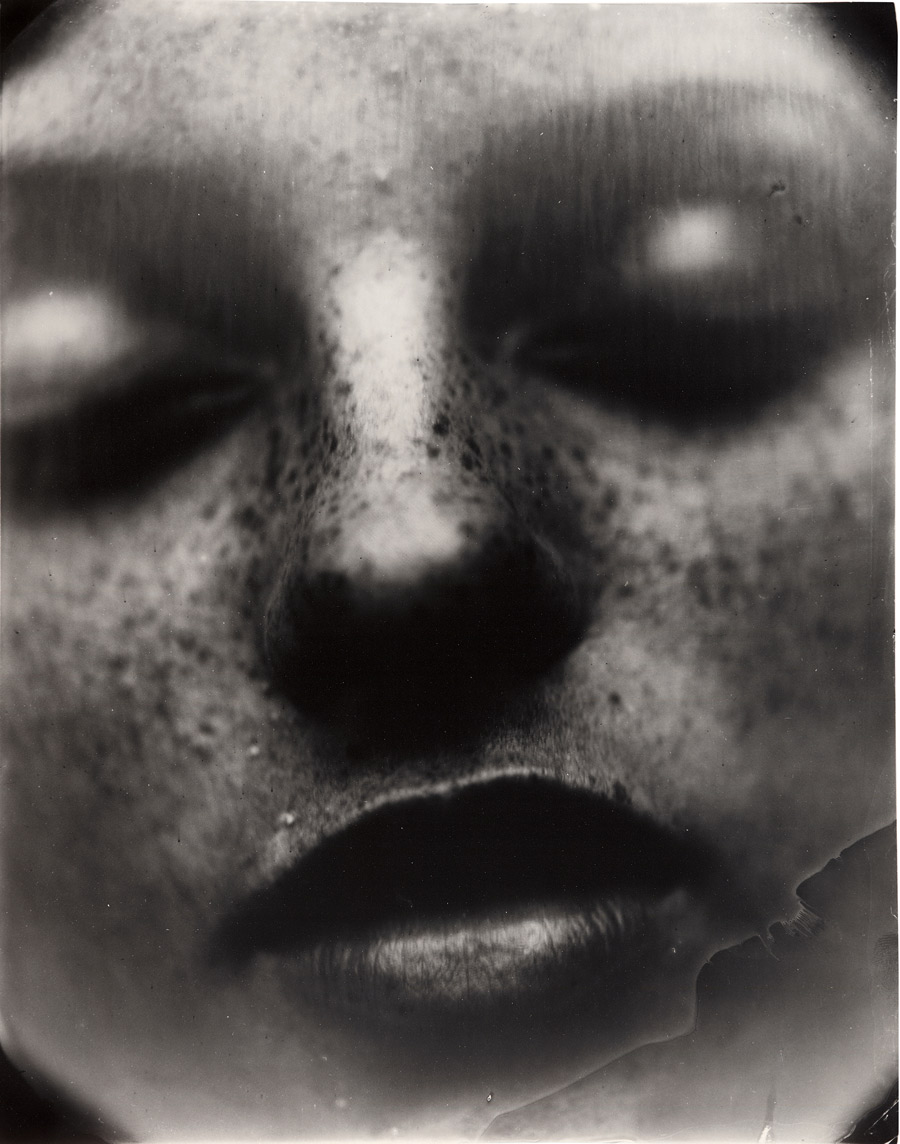
In the most recent series Faces (2004), Mann turns the camera once more on her children. Closing in on their faces and using several minutes of exposure time, these works act as a commemoration of the living. Again Mann takes the accidental drips and marks created by the wet collodion process and makes them a key feature of her work.

The Family and the Land: Sally Mann at The Photographers’ Gallery is an edited version of a touring exhibition, conceived by Sally Mann in collaboration with Hasse Persson, Director, BorÃ¥s Museum of Modern Art, Sweden. It has been presented at Fotomuseum Den Hague and the Musée de l’Elysée, Lausanne as well as in Stockholm, Oslo, Helsinki, Helsingborg, and Copenhagen.

Press release from The Photographers’ Gallery website [Online] Cited 07/09/2010 no longer available online


Sally Mann (American, b. 1951) 'At Warm Springs' 1991


Sally Mann (American, b. 1951)
At Warm Springs
1991
From the series Immediate Family
© Sally Mann. Courtesy Gagosian Gallery


Sally Mann (American, b. 1951) 'Jessie #10' 2004


Sally Mann (American, b. 1951)
Jessie #10
2004
From the series Faces
© Sally Mann. Courtesy Gagosian Gallery


Sally Mann (American, b. 1951) 'Virginia #42' 2004


Sally Mann (American, b. 1951)
Virginia #42
2004
From the series Faces
© Sally Mann. Courtesy Gagosian Gallery


'The Family and the Land: Sally Mann' poster


The Family and the Land: Sally Mann poster


The Photographers’ Gallery
16-18 Ramillies Street,
London W1F7Lw

Opening hours:
Mon – Wed 10.00 – 18.00
Thu & Fri Lates 10.00 – 20.00
Sat 10.00 – 18.00
Sun 11.00 – 18.00

The Photographers’ Gallery website

LIKE ART BLART ON FACEBOOK

Back to top

Exhibition: ‘Haunted: Contemporary Photography / Video / Performance’ at Solomon R. Guggenheim Museum, New York

Exhibition dates: 26th March – 6th September, 2010


Looks like a great exhibition – wish I was there to see it!


Many thankx to Claire Laporte and the Solomon R. Guggenheim Museum for allowing me to publish the photographs in the posting. Please click on the photographs for a larger version of the image.


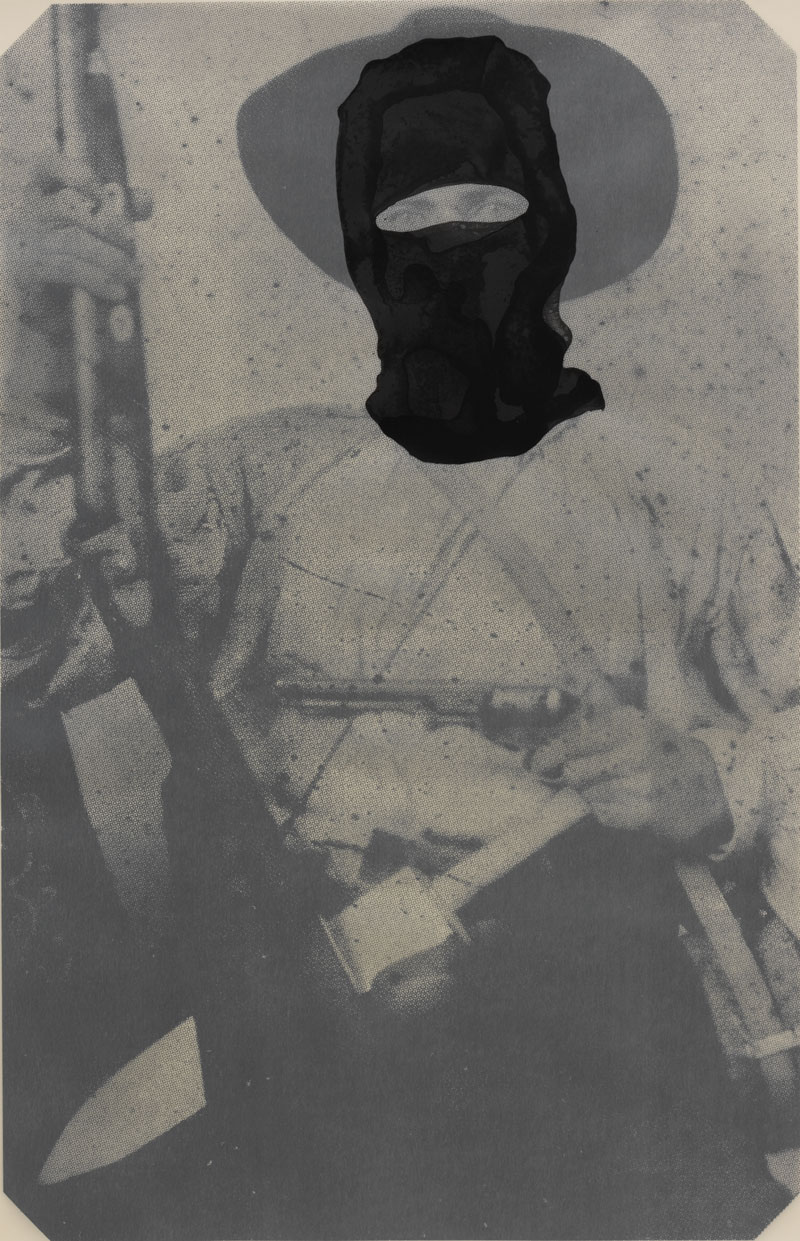
Adam Helms (American, b. 1974) 'Untitled Portrait (Santa Fe Trail)' 2007 from the exhibition 'Haunted: Contemporary Photography / Video / Performance' Guggenheim Museum, March - Sept, 2010


Adam Helms (American, b. 1974)
Untitled Portrait (Santa Fe Trail)
2007
Double-sided screenprint on paper vellum edition 2/2
101.3 x 65.7cm
Solomon R. Guggenheim Museum, New York, Purchased with funds contributed by the Photography Committee 2007.131


Idris Khan (British, b. 1978) 'Homage to Bernd Becher' 2007 from the exhibition 'Haunted: Contemporary Photography / Video / Performance' Guggenheim Museum, March - Sept, 2010


Idris Khan (British, b. 1978)
Homage to Bernd Becher
2007
Bromide print edition 1/6
49.8 x 39.7cm
Solomon R. Guggenheim Museum, New York, Purchased with funds contributed by the Photography Committee


Bernd Becher (German, 1931-2007) and Hilla Becher (German, 1934-2015) 'Water Towers' 1980 from the exhibition 'Haunted: Contemporary Photography / Video / Performance' Guggenheim Museum, March - Sept, 2010


Bernd Becher (German, 1931-2007) and Hilla Becher (German, 1934-2015)
Water Towers
1980
Nine gelatin silver prints
155.6 x 125.1cm
Solomon R. Guggenheim Museum, New York, Purchased with funds contributed by Mr. and Mrs. Donald Jonas


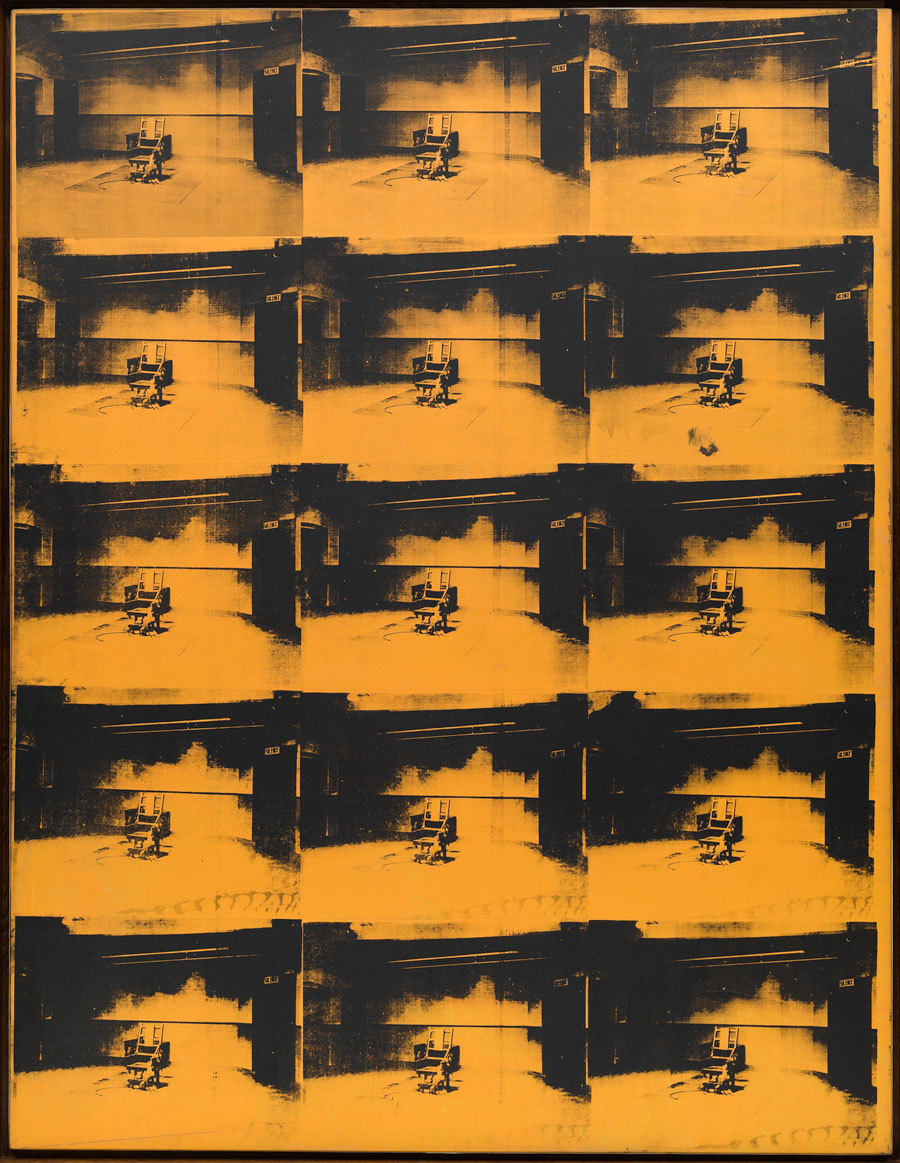
Andy Warhol (American, 1928-1987) 'Orange Disaster #5' 1963


Andy Warhol (American, 1928-1987)
Orange Disaster #5
1963
Acrylic and silkscreen enamel on canvas
269.2 x 207cm
Solomon R. Guggenheim Museum, New York, Gift, Harry N. Abrams Family Collection 74.2118


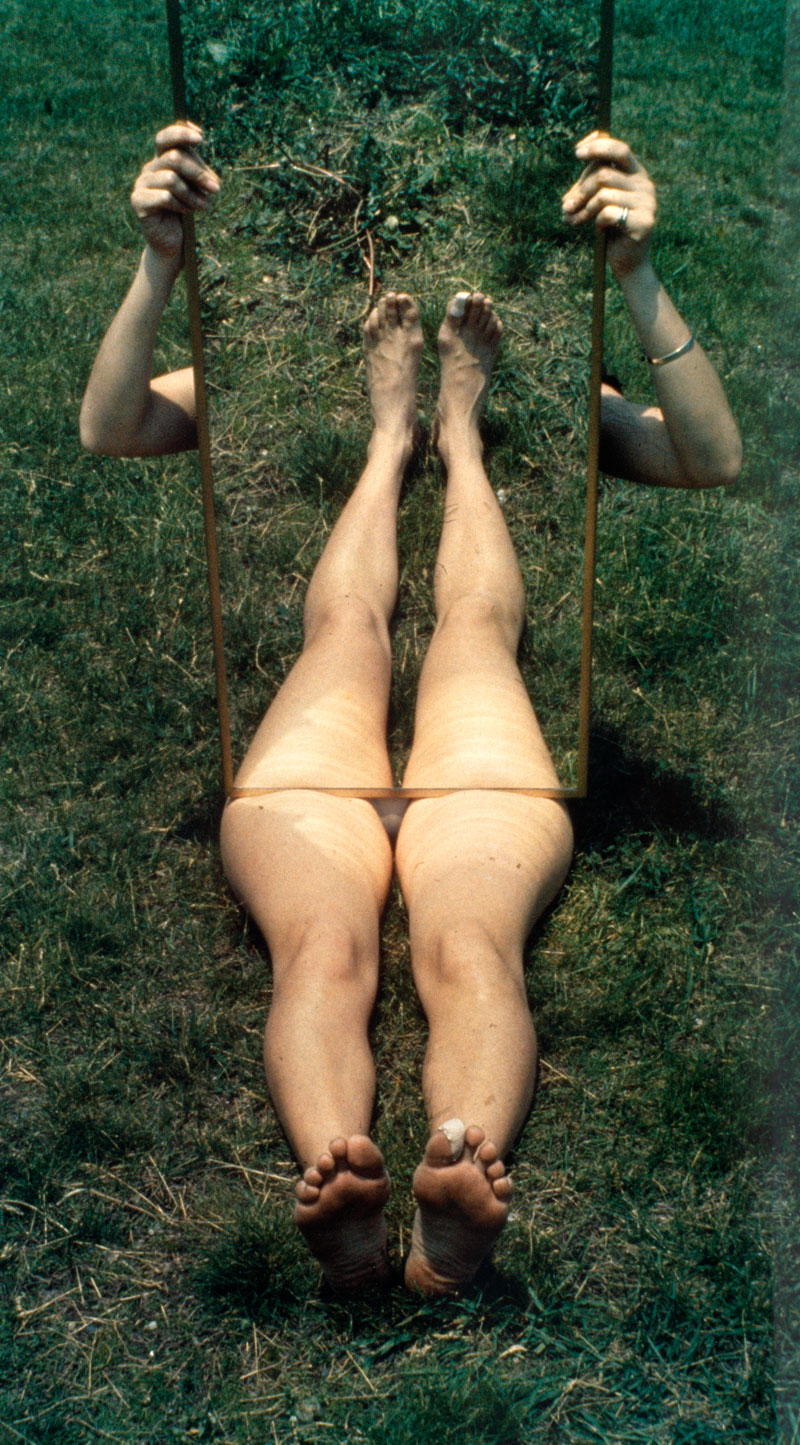
Joan Jonas (American, b. 1936) 'Mirror Piece I' 1969


Joan Jonas (American, b. 1936)
Mirror Piece I
1969
Chromogenic print
101 x 55.6cm
Solomon R. Guggenheim Museum, New York, Purchased with funds contributed by the Photography Committee


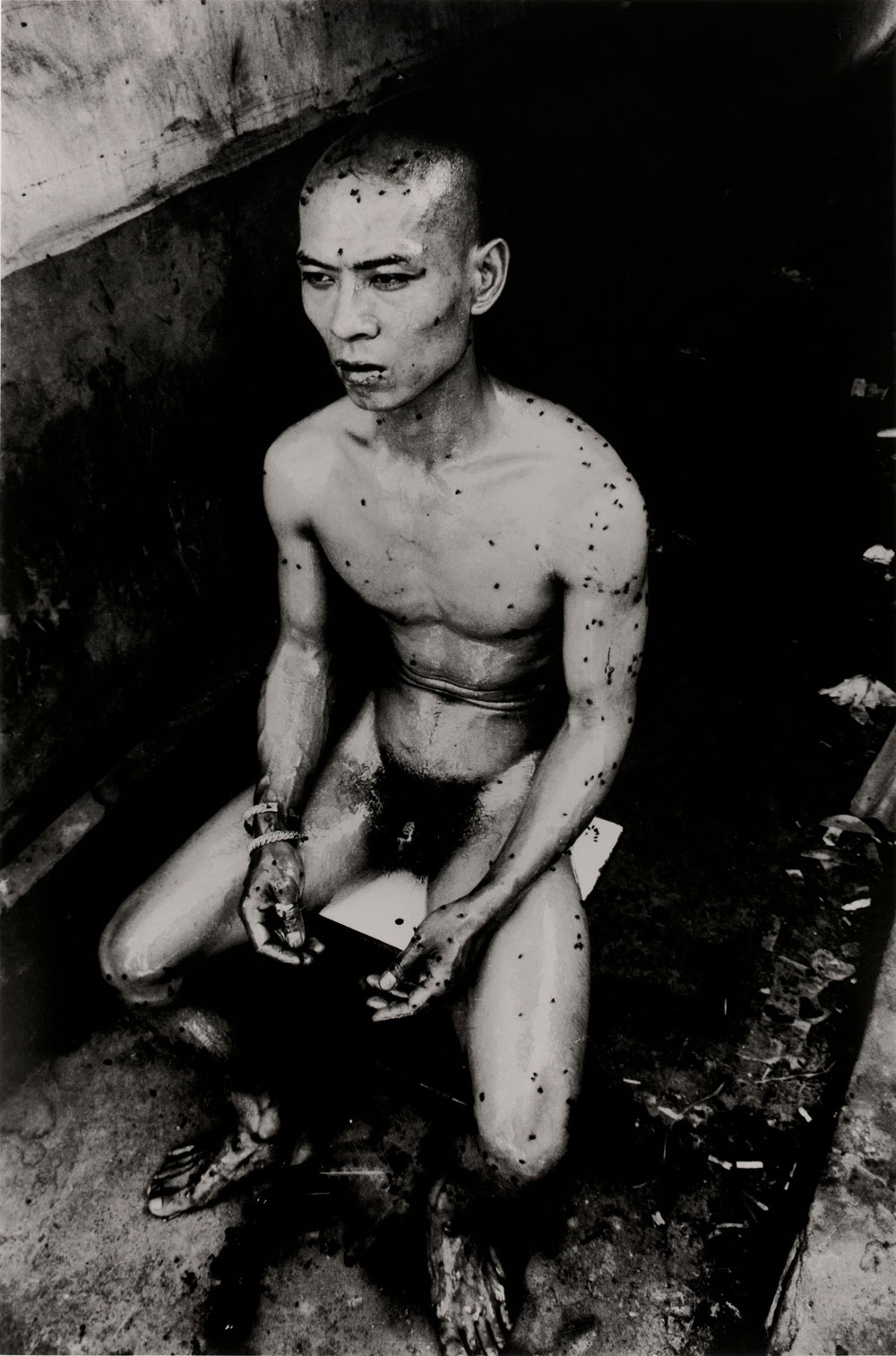
Zhang Huan (Chinese, b. 1965) '12 Square Meters' 1994


Zhang Huan (Chinese, b. 1965)
12 Square Meters
1994
Chromogenic print A.P. 3/5, edition of 15
149.9 x 99.7cm
Solomon R. Guggenheim Museum, New York, Purchased with funds contributed by Manuel de Santaren and Jennifer and David Stockman


Much of contemporary photography and video seems haunted by the past, by the history of art, by apparitions that are reanimated in reproductive mediums, live performance, and the virtual world. By using dated, passé, or quasi-extinct stylistic devices, subject matter, and technologies, such art embodies a longing for an otherwise unrecuperable past.

From March 26 to September 6, 2010, the Solomon R. Guggenheim Museum presents Haunted: Contemporary Photography / Video / Performance, an exhibition that documents this obsession, examining myriad ways photographic imagery is incorporated into recent practice. Drawn largely from the Guggenheim’s extensive photography and video collections, Haunted features some 100 works by nearly 60 artists, including many recent acquisitions that will be on view at the museum for the first time. The exhibition is installed throughout the rotunda and its spiralling ramps, with two additional galleries on view from June 4 to September 1, featuring works by two pairs of artists to complete Haunted’s presentation.

The works in Haunted: Contemporary Photography / Video / Performance range from individual photographs and photographic series to sculptures and paintings that incorporate photographic elements; projected videos; films; performances; and site-specific installations, including a new sound work created by Susan Philips for the museum’s rotunda. While the show traces the extensive incorporation of photography into contemporary art since the 1960s, a significant part of the exhibition will be dedicated to work created since 2001 by younger artists.

Haunted is organised around a series of formal and conceptual threads that weave themselves through the artworks on view:

Appropriation and the Archive

In the early 1960s, Robert Rauschenberg and Andy Warhol began to incorporate photographic images into their paintings, establishing a new mode of visual production that relied not on the then-dominant tradition of gestural abstraction but rather on mechanical processes such as screenprinting. In so doing, they challenged the notion of art as the expression of a singular, heroic author, recasting their works as repositories for autobiographical, cultural, and historical information. This archival impulse revolutionised art production over the ensuing decades, paving the way for a conceptually driven use of photography as a means of absorbing the world at large into a new aesthetic realm. Since then, a number of artists, including Bernd and Hilla Becher, Sarah Charlesworth, Douglas Gordon, Luis Jacob, Sherrie Levine, Richard Prince, Cindy Sherman, and Sara VanDerBeek, have pursued this archival impulse, amassing fragments of reality either by creating new photographs or by appropriating existing ones.


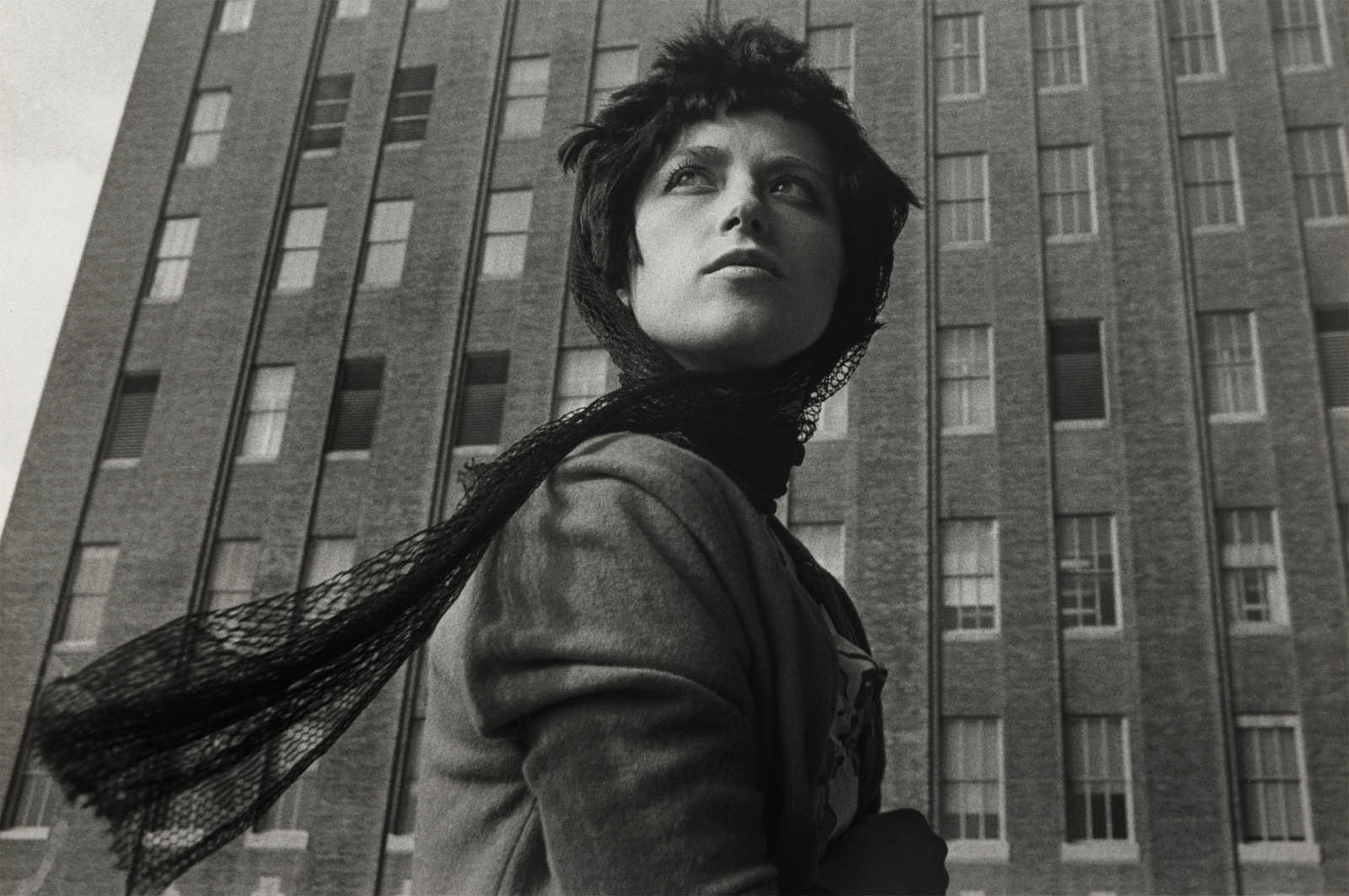
Cindy Sherman (American, b. 1954)
'Untitled Film Still #58' 1980


Cindy Sherman (American, b. 1954)
Untitled Film Still #58
1980
Gelatin silver print
20.3 x 25.4cm
Solomon R. Guggenheim Museum, Gift, Ginny Williams


“I’ve always played with make-up to transform myself, but everything, including the lighting, was self taught. I just learned things as I needed to use them. I absorbed my ideas for the women in these photos from every cultural source that I’ve ever had access to, including film, TV, advertisements, magazines, as well as any adult role models from my youth.”1

Cindy Sherman (b. 1954, Glen Ridge, N.J.) emerged onto the New York art scene in the early 1980s as part of a new generation of artists concerned with the codes of representation in a media-saturated era. Along with many artists working in the 1980s, Sherman explored photography as a way to reveal and examine the cultural constructions we designate as truth. Confronting the belief that photographs are truthful documents, Sherman’s fictional narratives suggested that photographs, like all forms of representation, are ideologically motivated. She is aware that the camera is not a neutral device but rather a tool that frames a particular viewpoint.

Sherman’s reputation was established early on with her Untitled Film Stills, a series of 69 black-and-white photographs that she began making in 1977, when she was twenty-three. In this series, the artist depicted herself dressed in the various melodramatic guises of clichéd B-movie heroines presented in 8 x 10 publicity stills from the 1950s and 1960s. In photograph after photograph, Sherman both acts in and documents her own productions. Although Sherman is both model and photographer, these images are not autobiographical. Rather, they memorialise absence and leave us searching for a narrative and clues to what may exist beyond the frame of the camera.

By the time Sherman made the Untitled Film Stills, black-and-white photography was already recognised as belonging to the past, and the styles she replicated were taken not from her own generation but from that of her mother’s. Sherman used wigs and makeup as well as vintage clothing to create a range of female characters. She sets her photos in a variety of locations, including rural landscapes, cities, and her own apartment. Although many of the pictures are taken by Sherman herself using an extended shutter release, for others she required help, sometimes enlisting friends and family. The characters she created include an ingénue finding her way in the big city, a party girl, a housewife, a woman in distress, a dancer, and an actress. In 1980 she completed the series and has said that she stopped when she ran out of clichés to depict. Unlike the media images they refer to, Sherman’s stills have a deliberate artifice that is heightened by the often-visible camera cord, slightly eccentric props, unusual camera angles, and by the fact that each image includes the artist rather than a recognisable actress or model. Sherman remains an important figure, with works in major collections around the globe, and continues to create striking, imaginative art.

Text from the Teacher’s Guide to the exhibition

1/ Cindy Sherman, quoted in Monique Beudert and Sean Rainbird, eds., Contemporary Art: The Janet Wolfson de Botton Gift, p. 99.


Landscape, Architecture, and the Passage of Time

Historically, one of photography’s primary functions has been to document sites where significant, often traumatic events have taken place. During the Civil War, which erupted not long after the medium was invented, a new generation of reporters sought to photograph battles, but due to the long exposure times required by early cameras, they could only capture the aftermath of the conflicts. These landscapes, strewn with the dead, now seem doubly arresting, for they capture past spaces where something has already occurred. Their state of anteriority, witnessed at such an early stage in the medium’s development, speaks to the very nature of a photograph, which possesses physical and chemical bonds to a past that disappears as soon as it is taken. As viewers, we are left with only traces from which we hope to reconstruct the absent occurrences in the fields, forests, homes, and offices depicted in the works in the exhibition. With this condition in mind, many artists, among them James Casebere, Spencer Finch, Ori Gersht, Roni Horn, Luisa Lambri, An-My Lê, Sally Mann, and Hiroshi Sugimoto, have turned to empty spaces in landscape and architecture, creating poetic reflections on time’s inexorable passing and insisting on the importance of remembrance and memorialisation.


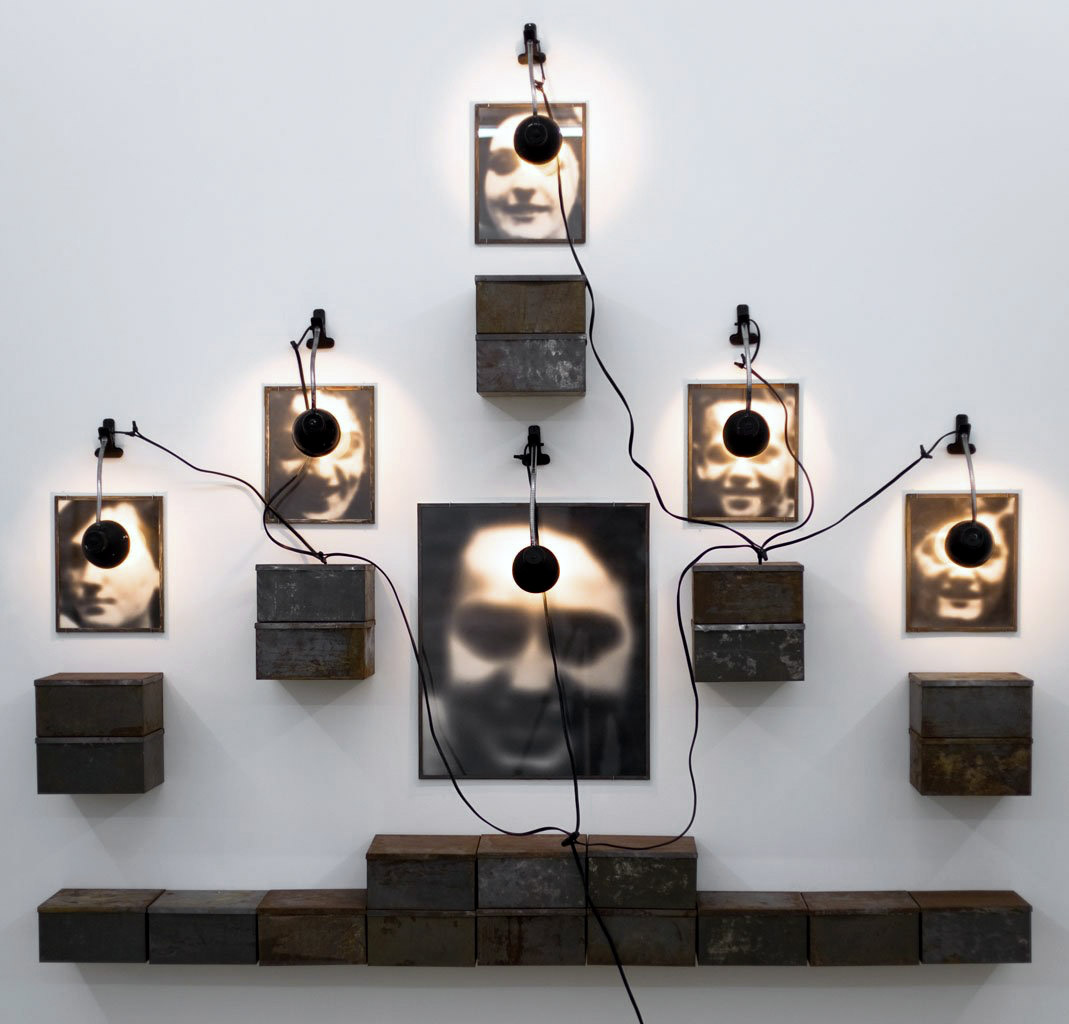
Christian Boltanski (French, 1944-2021) 'Autel de Lycée Chases' 1986-1987


Christian Boltanski (French, 1944-2021)
Autel de Lycée Chases
1986-1987
Six photographs, six desk lamps, and twenty-two tin boxes
170.2 x 214.6 x 24.1cm
Rubell Family Collection, Miami
© 2010 Artists Rights Society (ARS), New York/ADAGP, Paris


“A good work of art can never be read in one way. My work is full of contradictions. An artwork is open – it is the spectators looking at the work who make the piece, using their own background. A lamp in my work might make you think of a police interrogation, but it’s also religious, like a candle. At the same time it alludes to a precious painting, with a single light shining on it. There are many way of looking at the work. It has to be ‘unfocused’ somehow so that everyone can recognize something of their own self when viewing it.”1

The power of photography to recall the past has inspired many contemporary artists to use photographs to revisit the experience of historical events. In so doing, artists reconsider the photograph itself as an object imbued with history. They became aware that using the medium of photography would lend the elements of specificity and truth to their work.

Since the late 1960s, Christian Boltanski (b. 1944, Paris) has worked with photographs collected from ordinary and often ephemeral sources, endowing the commonplace with significance. Rather than taking original photographs to use in his installations, he often finds and rephotographs everyday documents – passport photographs, school portraits, newspaper pictures, and family albums – to memorialise everyday people. Boltanski seeks to create an art that is indistinguishable from life and has said, “The fascinating moment for me is when the spectator hasn’t registered the art connection, and the longer I can delay this association the better.”2 By appropriating mementos of other people’s lives and placing them in an art context, Boltanski explores the power of photography to transcend individual identity and to function instead as a witness to collective rituals and shared cultural memories.

In Boltanski’s 1986-1987 work Autel de Lycée Chases (which means “Altar to the Chases High School”) enlarged photographs of children are hung over a platform constructed from stacked tin biscuit boxes, which are rusted as if they have been ravaged by time. The black-and-white photographs look like artefacts from another era. An electric light illuminates each face while at the same time obscuring it. The arrangement gives no way to identify or connect the unnamed individuals.

The photos used in Autel de Lycée Chases were taken from a real-world source, the school photograph of the graduating class of 1931 from a Viennese high school for Jewish students. These students were coming of age in a world dominated by war and persecution, and it is likely that many perished over the next decade.

At once personal and universal in reference, Boltanski’s work serves as a monument to the dead, hinting at the Holocaust without naming it. Within this haunting environment, Boltanski intermingles emotion and history, sentimentality and profundity.

Text from the Teacher’s Guide to the exhibition

1/ Christian Boltanski, “Tamar Garb in conversation with Christian Boltanski,” in Christian Boltanski (London: Phaidon Press, 1997), p. 24.
2/ “Christian Boltanski: Lessons of Darkness”


Documentation and Reiteration

Since at least the early 1970s, photographic documentation, including film and video, has served as an important complement to the art of live performance, often setting the conditions by which performances are staged and sometimes obviating the need for a live audience altogether. Through an ironic reversal, artworks that revolved around singular moments in time have often come to rely on the permanence of images to transmit their meaning and sometimes even the very fact of their existence. For many artists, these documents take on the function of relics-objects whose meaning is deeply bound to an experience that is always already lost in the past. Works by artists such as Marina Abramović, Christian Boltanski, Sophie Calle, Tacita Dean, Joan Jonas, Christian Marclay, Robert Mapplethorpe, Ana Mendieta, and Gina Pane examine various aesthetic approaches inspired by the reiterative power of the photograph. Using photography not only to restage their own (and others’) performances but to revisit the bodily experience of past events, these artists have reconsidered the document itself as an object embedded in time, closely attending to its material specificity in their works.


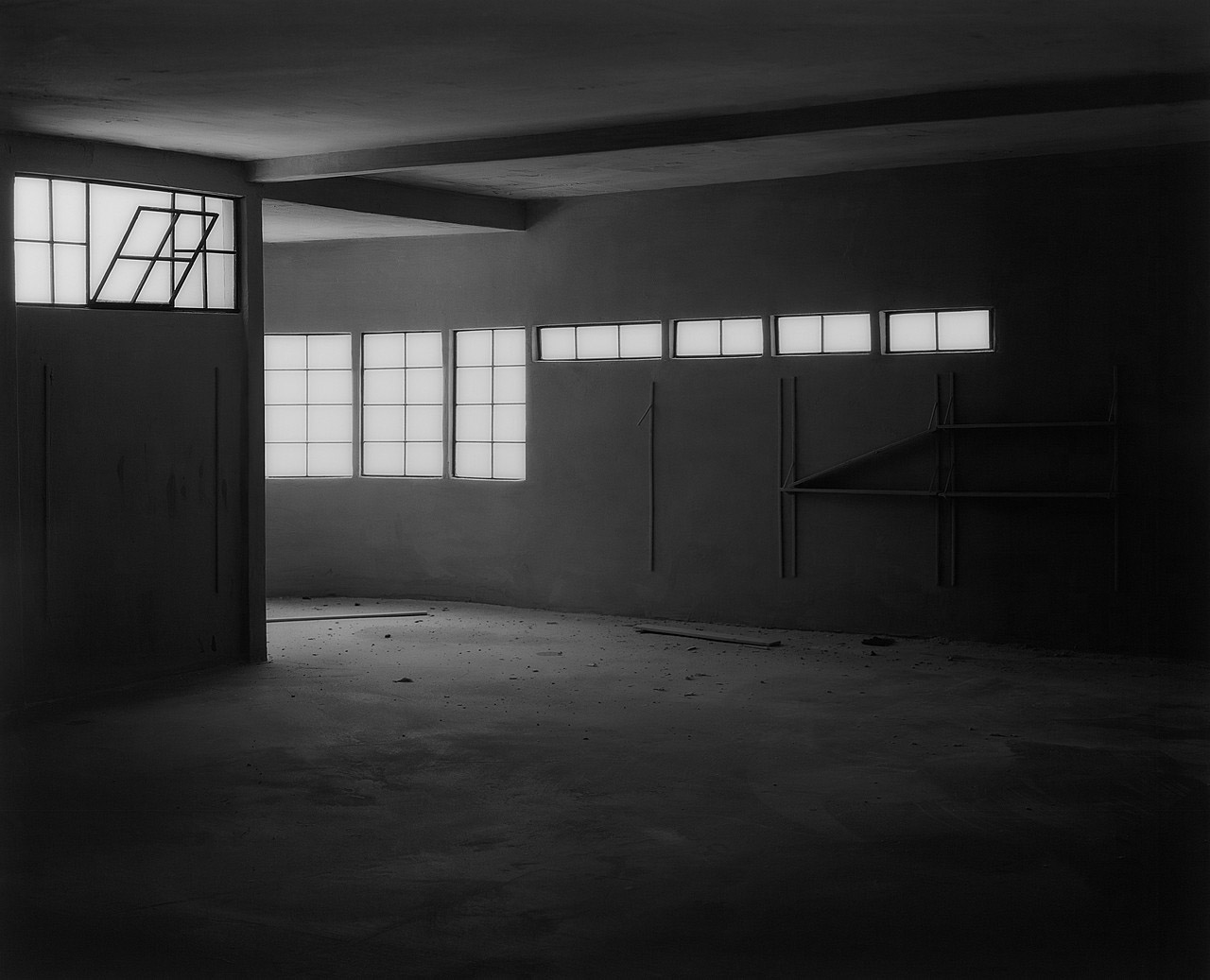
James Casebere (American, b. 1953) 'Garage' 2003


James Casebere (American, b. 1953)
Garage
2003
Chromogenic print, face-mounted to acrylic
181.6 x 223.5cm
Solomon R. Guggenheim Museum, New York
Anonymous gift


“Black and white had more to do with memory and the past. Color was too much about the present, I associated it with color TV, which was not a part of my past. I wanted the images to be related to a sense of history, let’s say, whether personal or social. And I think black and white adds a certain level of abstraction.”1

Since the mid-1970s James Casebere (b. 1953, Lansing, Michigan) has been carefully constructing architectural models and photographing them, yielding images somewhere between realism and obvious fabrication. His photographs are stripped of color and detail to evoke a sense of emotional place rather than the physicality of a place’s forms. Casebere is interested in the memories and feelings that are brought to mind by the architectural spaces he represents. The resulting works are dramatic, surreal, and remarkably true to life, embracing qualities of photography, architecture, and sculpture.

His tabletop models imitate the appearance of architectural institutions (home, school, library, prison) or common sites (tunnel, corridor, archway), representing the structures that occupy our everyday world. These models, made from such featureless materials as Foamcore, museum board, plaster, and Styrofoam, remain empty of detail and human figures. It is only when Casebere casts light on their bland surfaces and spartan interiors that the models are transformed. By eliminating the details, and taking advantage of dramatic lighting effects and the camera’s ability to flatten space, Casebere is able to transform familiar domestic spaces to find the extraordinary in the everyday. He asks viewers to rely on their memory to fill in the gaps and to create a context in which to understand his images.

Casebere stages his photographs to construct realities inspired by contemporary American visual culture that blur the line between fiction and fact. In this way, his images suggest psychologically charged spaces and have an otherworldly quality. The notion that these may be actual places seems plausible, but the lack of human presence leads us to wonder what has happened here. The viewer may imagine a human story within the abandoned spaces. Without people or colour, the photographs are about our own associations with these spaces and what they may represent.

Text from the Teacher’s Guide to the exhibition

1/ Roberto Juarez, “James Casebere,” Bomb 77 (Fall 2001)


Trauma and the Uncanny

When Andy Warhol created his silkscreen paintings of Marilyn Monroe in the wake of her death, he touched on the darker side of a burgeoning media culture that, during the Vietnam War, became an integral part of everyday life. Today, with vastly expanded channels for the propagation of images, events as varied as the terrorist attack on the World Trade Center and the deaths of celebrities such as Princess Diana and Michael Jackson have the ability to become traumatic on a global scale. Many artists, including Adam Helms, Nate Lowman, Adam McEwen, Cady Noland, and Anri Sala, have reexamined the strategy of image appropriation Warhol pioneered, attending closely to the ways political conflict can take on global significance. At the same time, photography has altered, or as some theorists argue, completely reconfigured our sense of personal memory. From birth to death, all aspects of our lives are reconstituted as images alongside our own experience of them. This repetition, which is mirrored in the very technology of the photographic medium, effectively produces an alternate reality in representation that, especially when coping with traumatic events, can take on the force of the uncanny. Artists such as Stan Douglas, Anthony Goicolea, Sarah Anne Johnson, Jeff Wall, and Gillian Wearing exploit this effect, constructing fictional scenarios in which the pains and pleasures of personal experience return with eerie and foreboding qualities.

Press release from the Solomon R. Guggenheim Museum website [Online] Cited 22/08/2010 no longer available online


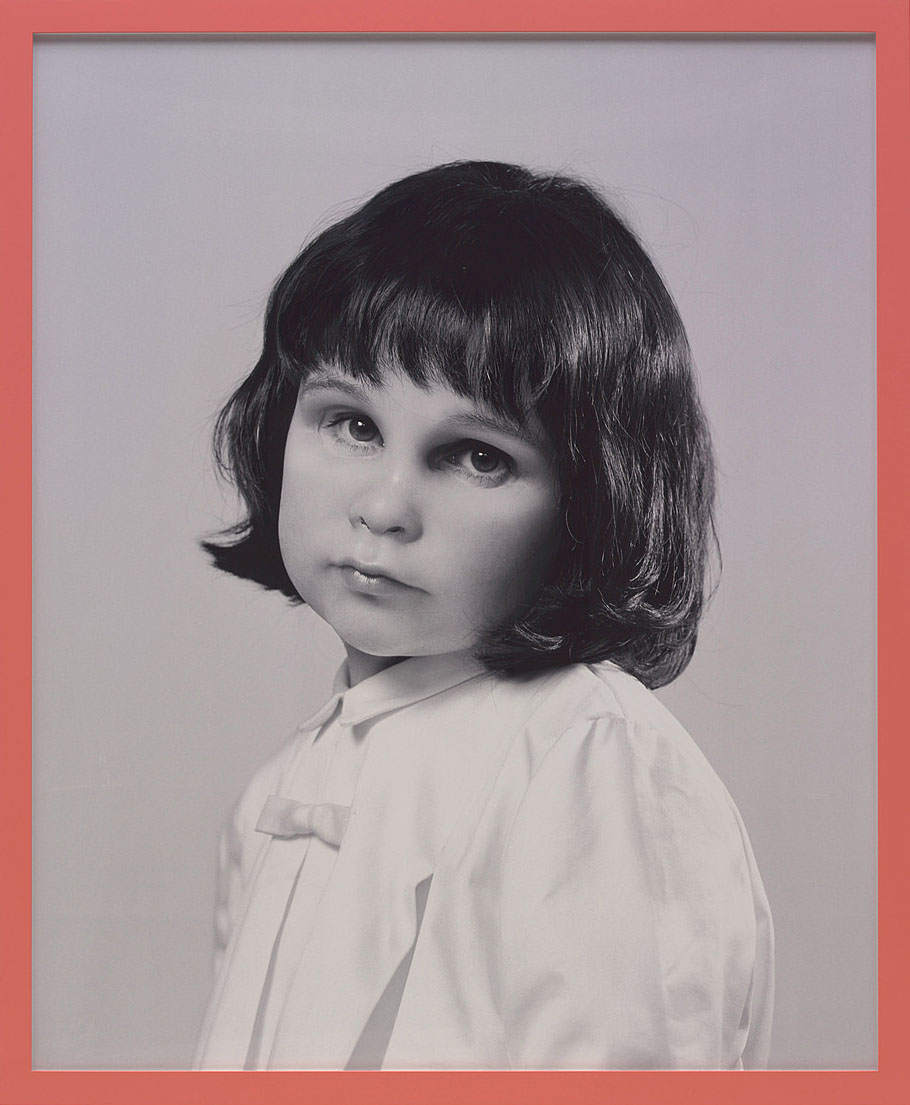
Gillian Wearing (British, b. 1963) 'Self-Portrait at Three Years Old' 2004


Gillian Wearing (British, b. 1963)
Self-Portrait at Three Years Old
2004
Chromogenic print
182 x 122cm
Solomon R. Guggenheim Museum, New York
Purchased with funds contributed by the International Directors Council and Executive Committee Members: Ruth Baum, Edythe Broad, Elaine Terner Cooper, Dimitris Daskalopoulos, Harry David, Gail May Engelberg, Shirley Fiterman, Nicki Harris, Dakis Joannou, Rachel Lehmann, Linda Macklowe, Peter Norton, Tonino Perna, Elizabeth Richebourg Rea, Mortim


“I taught myself to use a camera – it’s not very difficult to use a camera, but I never bothered looking at any textbooks on how to make a picture. I had a much more casual relation to it. For me at the time it was much more about the process rather than the results.”1

Photography has not only profoundly impacted our understanding of historical events, it has also changed the way we remember our personal histories. Beginning at birth, all aspects of our lives are recorded as images alongside our own experiences of them. These parallel recording devices, the camera and personal memory, produce alternate realities that may sometimes be synchronised but at other times are askew.

Gillian Wearing (b. 1963, Birmingham, England) uses masks as a central theme in her videos and photographs. The masks, which range from literal disguises to voice dubbing, conceal the identities of her subjects and free them to reveal intimate secrets. For her 2003 series of photographs Album, Wearing used this strategy to create an autobiographical work. Donning silicon prosthetics, she carefully reconstructed old family snapshots, transforming herself into her mother, father, uncle, and brother as young adults or adolescents. In one of the works, Wearing recreated her own self-portrait as a teenager – and in fact the artist considers all the photographs in this series as self-portraits. She explains: “I was interested in the idea of being genetically connected to someone but being very different. There is something of me, literally, in all those people – we are connected, but we are each very different.”2

To make the Album series, Wearing collaborated with a talented team (some of whom have worked for Madame Tussaud’s wax works) who sculpted, cast, painted, and applied hair to create the masks, wigs, and body suits used in these photographs. The elaborate disguises the artist wears, when combined with the snapshot “realism” of the original images on which they are based, create an eerie fascination that serves to reveal aspects of her identity rather than conceal it.

Self-Portrait at Three Years Old (2004) carries this role-playing further back in time. Confronting the viewer with her adult gaze through the eyeholes of the toddler’s mask, Wearing plays on the rift between interior and exterior and raises a multitude of provocative questions about identity, memory, and the truthfulness of the photographic medium. Wearing says, “What I love about photographs is that they give you a lot and also they withhold a lot.”3

Text from the Teacher’s Guide to the exhibition

1/ “Gillian Wearing,” interview by Leo Edelstein, Journal of Contemporary Art
2/ Quoted in Jennifer Bayles, “Acquisitions: Gillian Wearing,” Albright-Knox Art Gallery, Buffalo, NY (accessed January 25, 2010)
3/ Sebastian Smee, “Gillian Wearing: The art of the matter,” The Independent (London), October 18, 2003


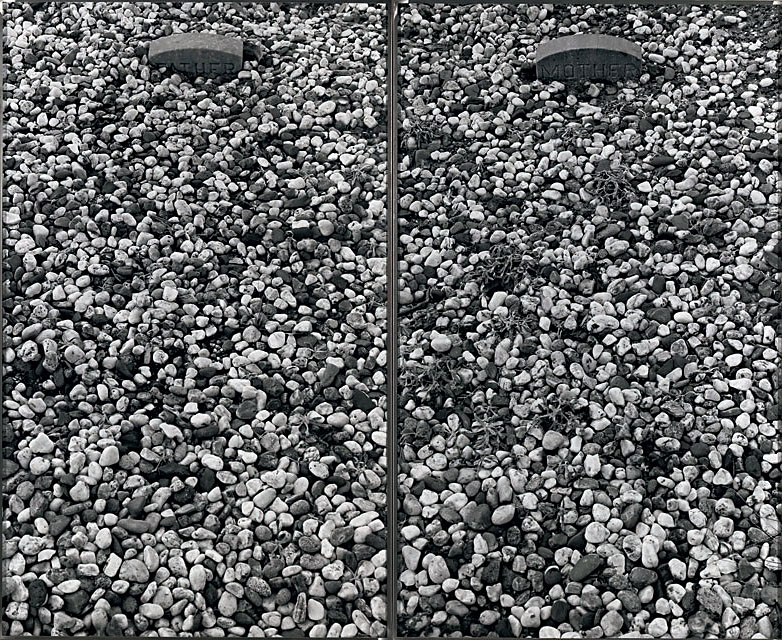
Sophie Calle (French, b. 1953) 'Father Mother (The Graves, #17)' 1990


Sophie Calle (French, b. 1953)
Father Mother (The Graves, #17)
1990
Two gelatin silver prints in artist’s frames edition 2/2
181.0 x 111.1cm each
Solomon R. Guggenheim Museum, New York, Gift, The Bohen Foundation


Ana Mendieta (Cuban American, 1948-1985) 'Untitled (Silueta Series)' 1978


Ana Mendieta (Cuban American, 1948-1985)
Untitled (Silueta series)
1978
Gelatin silver print
20.3 x 25.4cm
Solomon R. Guggenheim Museum, New York, Purchased with funds contributed by the Photography Committee


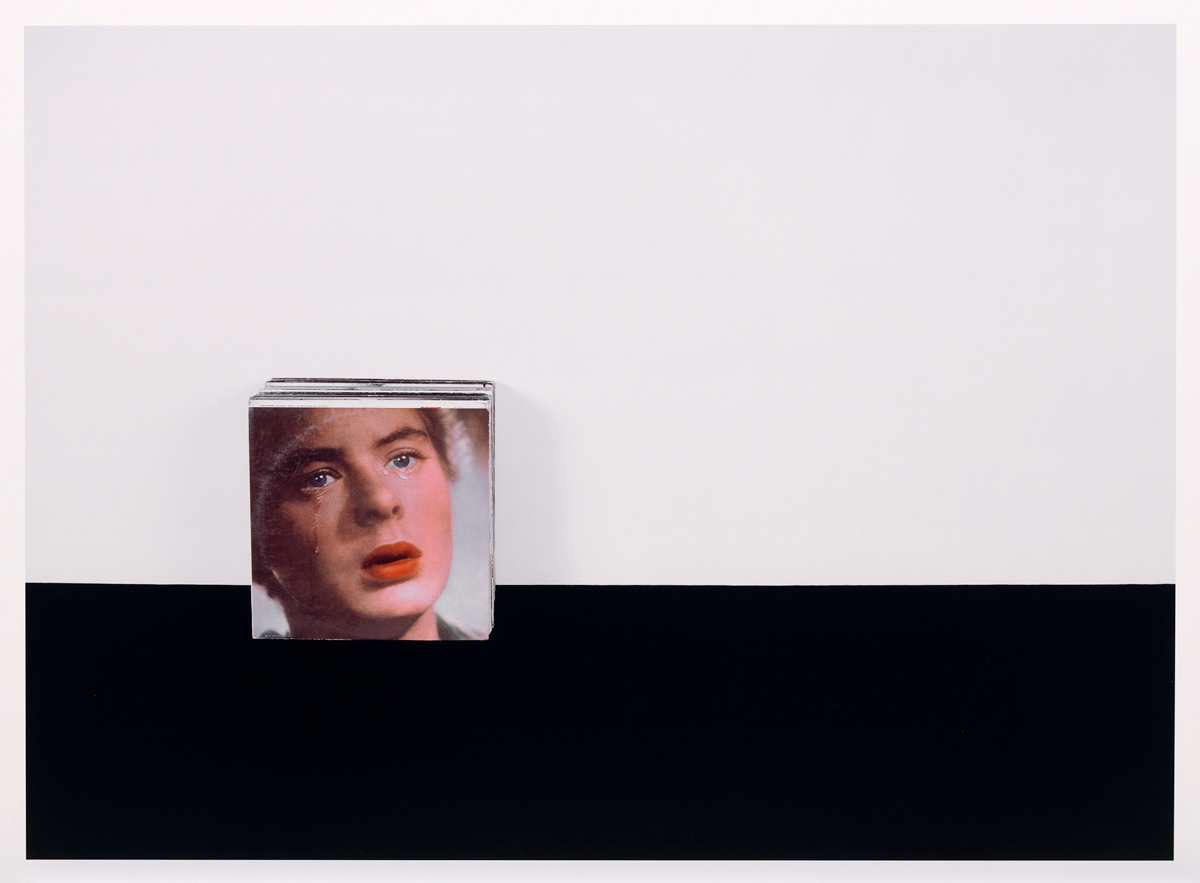
Anne Collier (American, b. 1970) 'Crying' 2005


Anne Collier (American, b. 1970)
Crying
2005
Chromogenic print edition 1/5
99.1 x 134 x 0.6cm
Solomon R. Guggenheim Museum, New York, Purchased with funds contributed by Mr. and Mrs. Aaron M. Tighe


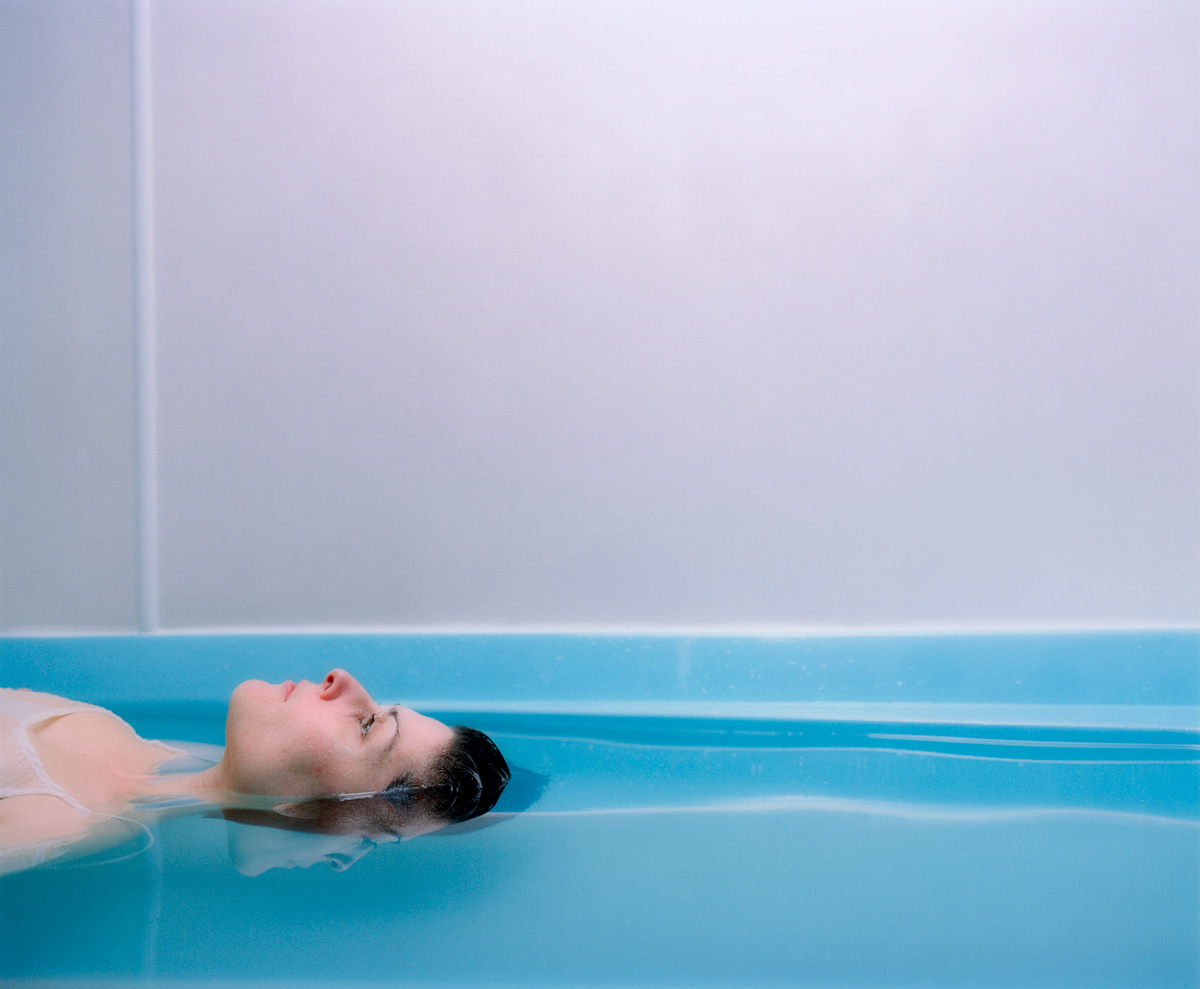
Miranda Lichtenstein (American, b. 1969) 'Floater' 2004


Miranda Lichtenstein (American, b. 1969)
Floater
2004
Chromogenic print edition 5/5
104.1 x 127cm
Solomon R. Guggenheim Museum, New York, Purchased with funds contributed by the Photography Committee


Sarah Anne Johnson (Canadian, b. 1976) 'Morning Meeting (from Tree Planting)' 2003


Sarah Anne Johnson (Canadian, b. 1976)
Morning Meeting (from Tree Planting)
2003
Chromogenic print edition
73.7 x 79.7cm
Solomon R. Guggenheim Museum, New York, Purchased with funds contributed by Pamela and Arthur Sanders; the Harriett Ames
Charitable Trust; Henry Buhl; the Heather and Tony Podesta Collection; Ann and Mel Schaffer; Shelley Harrison; and the Photography Committee


Sally Mann (American, b. 1951) 'Virginia' from the 'Mother Land' series 1992


Sally Mann (American, b. 1951)
Virginia from the Mother Land series
1992
Gelatin silver print
76.2 x 96.5cm
Solomon R. Guggenheim Museum, New York, Gift, The Bohen Foundation


Solomon R. Guggenheim Museum
1071 5th Avenue (at 89th Street)
New York

Opening hours:
Sunday – Monday, 11am – 6pm
Closed Tuesday
Wednesday – Friday 11am – 6pm
Saturday 11am – 8pm

Solomon R. Guggenheim Museum website

LIKE ART BLART ON FACEBOOK

Back to top

Text: ‘Across’ by Peter Handke

July 2019


As a follow up to my posting ‘How to Understand the Light on a Landscape’ by Pablo Helguera, my friend and photographer Ian Lobb sent me this text from the first few pages of the novel Across by Peter Handke (1986). In the novel the narrator, Andreas Loser, knocks down a stranger in the street, takes a leave of absence from his post as teacher of ancient languages and leaves his family to move to a drab flat in a housing development.

“Handke’s novel tells the story of a quiet, organised classics teacher named Andreas Loser. One night, on the way to his regularly scheduled card game, he passes a tree that has been defaced by a swastika. Impulsively yet deliberately, he tracks down the defacer and kills him. With this act, Loser has crossed an invisible threshold, and will be stuck in this secular purgatory until he can confess his crime.”

Text from Amazon website


In this wonderful piece of text the first paragraph sets the scene before one of the most inspired pieces of writing, a meditation on story, on nothing, on light, joy and emptiness – a story of “Emptiness” that is fullness.

Marcus


Text from the novel Across by Peter Handke


LIKE ART BLART ON FACEBOOK

Back to top

Exhibition: ‘Open Landscape’ at Galerie Wagner + Partner, Berlin

Exhibition dates: 21st May – 31st July 2010

Artists: Peter Dreher, Friederike Jokisch, Josef Schulz, Thomas Wrede


Many thankx to Cai Wagner and Galerie Wagner + Partner for allowing me to publish the photographs in the posting.

All works: © the artist, courtesy Galerie Wagner + Partner. Please click on the photograph for a larger version of the image.


Peter Dreher (German, b. 1932) 'Schöne Tage im Hochschwarzwald' 1999 from the exhibition 'Open Landscape' at Galerie Wagner + Partner, Berlin, May - July, 2010


Peter Dreher (German, b. 1932)
Schöne Tage im Hochschwarzwald
1999
Oil on canvas


Friederike Jokisch (German, b. 1981) 'Domizil' 2009 from the exhibition 'Open Landscape' at Galerie Wagner + Partner, Berlin, May - July, 2010


Friederike Jokisch (German, b. 1981)
Domizil
2009
Pastel


Josef Schulz (Polish, b. 1966) 'Felswand #3' 2008 from the exhibition 'Open Landscape' at Galerie Wagner + Partner, Berlin, May - July, 2010


Josef Schulz (Polish, b. 1966)
Felswand #3
2008
Type C print Diasec


Nature became landscape long ago. Since the Romantic period landscape has furthermore been an aesthetic position. But what is landscape for the modern human being? The thematic exhibition “Open Landscape” at the Galerie Wagner + Partner provides a juxtaposition of multigenerational photographic and pictorial approaches to this question. The reference point for all participating artists is the real landscape.

The works of Thomas Wrede and Joseph Schulz increase their charm through friction between photorealistic representation extended through staging and intervention. Wrede, in his series entitled “Real Landscapes” combines the natural beauty of landscape with constructed miniature models. The landscapes photographed in this way appear seductively plausible and exaggerate the romantic projection.

Schulz similarly aims for an aesthetic exaggeration and idealisation through digital intervention in his nature photographs of the series “Terraform”. Through the elimination of human traces he reconstructs the lost primordial state of nature and creates people’s “internal” images of the landscape.

Similarly originating from actual landscape, Peter Dreher’s “Schwarzwaldlandschaft” (Black Forest Landscape) appears idealistic. It almost appears to be based on the tradition of “Heimatmalerei” (patriotic landscape painting). Viewed in close proximity however, the picture’s elements are ordered according to days and time. Each single picture documents what the artist saw and captured at precisely this point in time. Only when viewed as a whole an abstract picture of landscape as space-time-construct appears.

The central theme of Neo Rauch-student Friederike Jokisch is the landscape beyond the established idyll. Her large format pastel paintings make the process of transformation from nature to landscape tangible. In striking pictures “landscape” is demystified and instead ruptures and alienations between culture and nature become central themes.

The exhibition consciously poses more questions, attempts to find fewer answers. At the same time it continues the theme of the previous exhibition “The Nightingale’s Secret Garden”.

Text from the Galerie Wagner + Partner website [Online] Cited 14/07/2010 no longer available online


Thomas Wrede (German, b. 1963) 'Drive In Theatre' 2009


Thomas Wrede (German, b. 1963)
Drive In Theatre
2009
Lambda Print Diasec


Thomas Wrede (German, b. 1963) 'In the Tertiary Valley' 2008


Thomas Wrede (German, b. 1963)
In the Tertiary Valley
2008
Lambda Print Diasec


'Open Landscape' exhibition view at Galerie Wagner + Partner, 2010


Open Landscape exhibition view at Galerie Wagner + Partner, 2010


Galerie Wagner + Partner

This gallery has now closed.

LIKE ART BLACK ON FACEBOOK

Back to top

Review: ‘Jill Orr: Vision’ at Jenny Port Gallery, Richmond, Melbourne

Exhibition dates: 2nd June – 3rd July, 2010


Jill Orr (Australian, b. 1952) 'Megan' 2009 from the exhibition Review: 'Jill Orr: Vision' at Jenny Port Gallery, Richmond, Melbourne, June - July, 2010


Jill Orr (Australian, b. 1952)
Megan
2009


A huge gallery crawl on Wednesday last saw me take in exhibitions at Nellie Castan Gallery (Malleus Melficarum: strong sculptural work by James and Eleanor Avery; Broken Canon: vibrant mixed media collages by Marc Freeman); Anita Traverso Gallery (Peristereonas: sculptures, photographs and mixed media by Barry Thompson); John Buckley Gallery (Perpetua by Emma can Leest, beautiful cut paper works; rather mundane paintings by Christian Lock); Karen Woodbury Gallery (Every breath you take: wonderful galaxy-like paintings, perhaps as seen by the Hubble telescope, with a geometric / cellular base by Lara Merrett); The Centre for Contemporary Photography (Event horizon: a group exhibition that “engages the horizon as a means to establish a physical locality with relation to the Earth’s surface and more broadly to the universe of which it is a miniscule component.” An exhibition that left me rather cold); and ACCA (Towards an elegant solution by Peter Cripps, again a singularly unemotional engagement with the precise, contained work: interesting for how the work explores spatial environments but in an abstract, intellectual way).

The stand out work from this mammoth day was Jill Orr: Vision at Jenny Port Gallery. Simply put, it was the strongest, most direct, most emotionally powerful work that I saw all day.

Dr Marcus Bunyan


Many thankx to Amelia Douglas and Jenny Port Gallery for allowing me to publish the photographs in this posting.


Jill Orr (Australian, b. 1952) 'Megan' 2009 from the exhibition Review: 'Jill Orr: Vision' at Jenny Port Gallery, Richmond, Melbourne, June - July, 2010


Jill Orr (Australian, b. 1952)
Megan
2009


Jill Orr’s new participatory performances are photographs of children from Avoca Primary School painted with white clay from the area, displayed in pairs. The children are photographed once with eyes open, once with eyes closed. Orr asked the children to imagine their future life when they had their eyes closed. The key to the work is a group photograph of the ghostly children outside the primary school where everyone is isolated from each other (see photograph below).

“White faces loom up out of a dark ground, described by Orr as a void. On the surface these portraits are finely crafted, the skin of masked face becomes one with the digital file to create a facial landscape. The materiality of the face and the photographic file are exposed for the viewer. Titling the series ‘vision’ Orr ventures into a ‘haptic visuality’ where “vision itself can be tactile, as though one were touching a film with one’s eyes.”


From the catalogue essay by Professor Anne Marsh, Monash University


In the performance, the ritual of being photographed, Orr instructs the children who are placed under the surveillance of the camera. “We are confronted with the pose, the conscious composition of the image to be photographed, the inherent constructedness of the posed photograph.”1 The child assumes the pose by which they wish to be memorialised. The gaze (of the camera, of the viewer) is returned / or not in this spectacle.

Something happens when we look at these photographs. The text of the photographs becomes intertextual, producing as Barthes understands a “plurality of meanings and signifying / interpretive gestures that escape the reduction of knowledge to fixed, monological re-presentations, or presences.”2 This is because, as Foucault observes, texts “are caught up in a system of references to … other texts, other sentences: it is a node within a network …  Its unity is variable and relative.”3

The photographs invite us to share not only the mapping of the surface of the skin and the mapping of place (the history of white people living on the land in country Australia) and identity but the sharing of inner light, the light of the imaginary as well – and in this observation the images become unstable, open to reinterpretation. The distance between viewer and subject is transcended through an innate understanding of inner and outer light. The photographs seduce, meaning, literally, to be led astray.

As American photographer Minor White, who photographed in meditation hoping for a revelation in spirit though connection between person > subject > camera > negative > print, observes in one of his Three Canons

When the image mirrors the man
And the man mirrors the subject
Something might take over
4


Here the power of the photographer acting in isolation, the modernist tenet of authorship, is overthrown. In it’s place, “White supposes a relationship with subject that is a two way street: by granting the world some role in its own representation we create a photograph that is not so much a product solely of individual actions as it is the result of a negotiation in which the world and all its subjects might participate.”5 The autobiography of a soul born in the age of mechanical reproduction. This is the power of these photographs for something intangible within the viewer does take over. I found myself looking at the photographs again and again for small nuances, the detail of hairs on the head, the imagining of what the person was thinking about with their eyes closed: their future, their fears, their hopes, the ‘active imagination as a means to visualise sustainable futures’ (Orr, 2010).

These photographs seem to lengthen or protract time through this haptic touching of inner light. As Pablo Helguera observes in his excellent essay How To Understand the Light on a Landscape that examines different types of light (including experiental light, somber light, home light, ghost light, the light of the deathbed, protective light, artificial light, working light, Sunday light, used light, narrated light, the last light of day, hotel light, transparent light, after light, the light of the truly blind and the light of adolescence but not, strangely, inner light)

“Experience is triggered by light, but not exclusively by the visible light of the electro-magnetic spectrum. What the human eye is incapable to perceive is absorbed by other sensory parts of the body, which contribute to the perception that light causes an effect that goes beyond the merely visual …

There is the LIGHT OF ADOLESCENCE, a blinding light that is similar to the one we feel when we are asleep facing the sun and we feel its warmth but don’t see it directly. Sometimes it marks the unplace, perhaps the commonality of all places or perhaps, for those who are pessimists, the unplaceness of every location …

We may choose to openly embrace the darkness of light, and thus let ourselves through the great gates of placehood, where we can finally accept the unexplainable concreteness of our moments for what they are.”6


In the imagination of the darkness that lies behind these children’s closed eyes is the commonality of all places, a shared humanity of memory, of dreams. These photographs testify to our presence and ask us to decide how we feel about our life, our place and the relation to that (un)placeness where we must all, eventually, return.

Dr Marcus Bunyan


1/ Feiereisen, Florence and Pope, Daniel. “True Fiction and Fictional Truths: The Enigmatic in Sebald’s Use of Images in The Emigrants” in Patt, Lise (ed.,). Searching for Sebald: Photography after W.G. Sebald. Los Angeles: The Institute of Cultural Inquiry, 2007, p. 175.

2/ Barthes, Roland. “From Work to Text” in Image, Music, Text. trans. S. Heath. New York: Hill and Wang, 1977 quoted in Thumlert, Kurt. Intervisuality, Visual Culture, and Education. [Online] Cited 10/08/2006. www.forkbeds.com/visual-pedagogy.htm (link no longer active)

3/ Foucault, Michel. The Order of Things: An Archeology of the Human Sciences. New York: Vintage, 1973 quoted in Thumlert, Kurt. Intervisuality, Visual Culture, and Education. [Online] Cited 10/08/2006. www.forkbeds.com/visual-pedagogy.htm (link no longer active)

4/ White, Minor. Mirrors, Messages and Manifestations. Aperture, 1969

5/ Leo, Vince. Review of Mirrors, Messages and Manifestations on the Amazon website [Online] Cited 26/06/2010

6/ Helguera, Pablo. “How to Understand the Light on a Landscape,” in Patt, Lise (ed.,). Searching for Sebald: Photography after W.G. Sebald. Los Angeles: The Institute of Cultural Inquiry, 2007, pp. 110-119


    Jill Orr (Australian, b. 1952) 'Jacinta' 2009 from the exhibition Review: 'Jill Orr: Vision' at Jenny Port Gallery, Richmond, Melbourne, June - July, 2010

    Jill Orr (Australian, b. 1952) 'Jacinta' 2009 from the exhibition Review: 'Jill Orr: Vision' at Jenny Port Gallery, Richmond, Melbourne, June - July, 2010


    Jill Orr (Australian, b. 1952)
    Jacinta
    2009


    Jill Orr (Australian, b. 1952) 'Avoca Primary School' 2009


    Jill Orr (Australian, b. 1952)
    Avoca Primary School
    2009


    Jill Orr’s work centres on issues of the psycho-social and environmental where she draws on land and identities. Grappling with the balance and discord that exists between the human spirit, art and nature, Orr has, since the 1970s, delighted, shocked and moved audiences through her performance installations.

    This current body of work involved children from the Avoca Primary School as active participants in Orr’s performance for the camera. The result is a series of high contrast black and white photographic portraits, which are shown as diptychs portraying the different states of seeing both outwardly and inwardly. One of each pair frames the child looking directly at the camera. The gaze meets the viewer. Who is looking at whom? The second captures the child whose eyes are closed. An inner world is intimated, but not accessible to the viewer.

    In terms of the ‘gaze’, these works turn to the child as conveyer of the imaginary engaging both within and without. “I have found that creative acts require the visionary sensibilities of both the inner and outer world to operate simultaneously, consciously and unconsciously as dual aspects of the one action. In this instance the action is that of active imagination as a means to visualise sustainable futures.” (Jill Orr, 2010). The portraits also reflect the present relationship to place that is etched into the faces of youth as already kissed by the harsh Australian sun.

    Avoca is one of many townships that has been socially, economically and environmentally affected by drought and climate change. The portraits are created against this background.

    Text from the Jenny Port Gallery website [Online] Cited 26/06/2010 no longer available online


    Jill Orr (Australian, b. 1952) 'Vision' installation photograph at Jenny Port Gallery

    Jill Orr (Australian, b. 1952) 'Vision' installation photograph at Jenny Port Gallery


    Jill Orr (Australian, b. 1952)
    Vision installation photographs at Jenny Port Gallery
    June 2010
    Photos: Marcus Bunyan


    Jenny Port Gallery

    This gallery has now closed.

    Jill Orr website

    LIKE ART BLACK ON FACEBOOK

    Back to top

    Exhibition: ‘Detroit Experiences: Robert Frank Photographs, 1955’ at Detroit Institute of Arts, Detroit

    Exhibition dates: 3rd March – 4th July, 2010


    Robert Frank (Swiss-American, 1924-2019) 'Assembly Plant, Detroit' 1955 from the exhibition 'Detroit Experiences: Robert Frank Photographs, 1955' at Detroit Institute of Arts, Detroit, March - July, 2010


    Robert Frank (Swiss-American, 1924-2019)
    Assembly Plant, Detroit
    1955
    Gelatin silver print
    8 7/8 × 13 1/8 inches (22.5 × 33.3cm)
    Founders Society Purchase, Coville Photographic Fund
    © Robert Frank, from The Americans. Detroit Institute of Arts


    Many thankx to Pamela Marcil and the Detroit Institute of Arts for allowing me to reproduce the photographs in the posting. Please click on the photographs for a larger version of the image.

    Marcus


    “I am always looking outside, trying to look inside, trying to say something that is true. But maybe nothing is really true. Except what’s out there. And what’s out there is constantly changing.”


    Robert Frank, 1985


    Robert Frank (Swiss-American, 1924-2019) 'Belle Isle' 1955 from the exhibition 'Detroit Experiences: Robert Frank Photographs, 1955' at Detroit Institute of Arts, Detroit, March - July, 2010


    Robert Frank (Swiss-American, 1924-2019)
    Belle Isle – Detroit
    1955, printed between 1966-1968
    Gelatin silver print
    12 5/8 × 18 7/8 inches (32.1 × 47.9cm)
    Museum Purchase, Ernest and Rosemarie Kanzler Foundation Fund, Forum for Prints, Drawings, and Photographs Purchase Fund, and General Art Purchase Fund
    © Robert Frank, from The Americans. Detroit Institute of Arts


    Robert Frank (Swiss-American, 1924-2019) 'Detroit River Rouge Plant' 1955 from the exhibition 'Detroit Experiences: Robert Frank Photographs, 1955' at Detroit Institute of Arts, Detroit, March - July, 2010


    Robert Frank (Swiss-American, 1924-2019)
    Detroit River Rouge Plant
    1955, printed 1970s
    Gelatin silver print
    9 1/8 × 13 7/8 inches (23.2 × 35.2cm)
    Founders Society Purchase, Coville Photographic Fund
    © Robert Frank. Detroit Institute of Arts


    Robert Frank (Swiss-American, 1924-2019) 'Drive-In Movie, Detroit' 1955


    Robert Frank (Swiss-American, 1924-2019)
    Drive-In Movie, Detroit
    1955, printed 1977
    Gelatin silver print
    8 1/4 × 12 1/2 inches (21 × 31.8cm)
    Founders Society Purchase, Tina and Lee Hills Graphic Arts Fund
    © Robert Frank, from The Americans. Detroit Institute of Arts.


    Detroit Experiences: Robert Frank Photographs, 1955 showcases more than 50 rare and many never-before-seen black-and-white photographs taken in Detroit by legendary artist Robert Frank. The exhibition will be on view at the Detroit Institute of Arts (DIA) March 3 – July 4, 2010. The exhibition is free with museum admission.

    In 1955 and 1956 Robert Frank traveled the U.S. taking photographs for his groundbreaking book The Americans, published in 1958. With funding from a prestigious Guggenheim grant, he set out to create a large visual record of America, and Detroit was one of his early stops. Inspired by autoworkers, the cars they made, along with local lunch counters, drive-in movies and public parks such as Belle Isle, Frank transformed everyday experiences of Detroiters into an extraordinary visual statement about American life.

    According to Frank, The Americans included “things that are there, anywhere, and everywhere … a town at night, a parking lot, the man who owns three cars and the man who owns none … the dream of grandeur, advertising, neon lights … gas tanks, post offices and backyards …” The exhibition includes nine Detroit images that were published in The Americans, as well as, for the first time, an in-depth body of work representative of Frank’s Detroit, its working-class culture and automotive industry.

    Frank was drawn to Detroit partly by a personal fascination with the automobile, but also saw its presence and effect on American culture as essential to his series. Frank was one of the few photographers allowed to take photographs at the famous Ford Motor Company River Rouge factory, where he was amazed to witness the transformation of raw materials into fully assembled cars. In a letter to his wife he wrote, “Ford is an absolutely fantastic place … this one is God’s factory and if there is such a thing – I am sure that the devil gave him a helping hand to build what is called Ford’s River Rouge Plant.” Frank spent two days taking pictures at the Ford factory, photographing workers on the assembly lines and manning machines by day, and following them as they ventured into the city at night.

    Whether in the disorienting surroundings of a massive factory or during the solitary and alienating moments of individuals in parks and on city streets, the Swiss-born photographer looked beneath the surface of life in the U.S. and found a culture that challenged his perceptions and popular notions of the American Dream. Further accentuating his view of America, Frank developed an unconventional photographic style innovative and controversial in its time. Photographing quickly, Frank sometimes tilted and blurred compositions, presenting people and their surroundings in fleeting and fragmentary moments with an unsentimental eye.

    Beat poet Jack Kerouac expressed the complex nature of the artist and his work in a passage from his introduction to The Americans stating, “Robert Frank, Swiss, unobtrusive, nice, with that little camera that he raises and snaps with one hand he sucked a sad poem right out of America onto film, taking rank among the tragic poets of the world.”

    Born in 1924 in Zurich, Switzerland, Frank emigrated to the U.S. in 1947. He worked on assignments for magazines from 1948–53, but his photographic books garnered the highest acclaim. After publishing The Americans, he began filmmaking and directed the early experimental masterpiece Pull My Daisy, in collaboration with Jack Kerouac in 1959. Frank continues to work in both film and photography and has been the subject of many traveling exhibitions in recent years. The National Gallery of Art, Washington, D.C. established Frank’s photographic archive in 1990 and organised his first traveling retrospective, “Moving Out, in 1995” as well as a 2009 exhibition “Looking In: Robert Frank’s “The Americans”.” Frank lived in Mabou, Nova Scotia, and New York City with his wife, artist June Leaf.

    Press release from the Detroit Institute of Arts website [Online] Cited 24/06/2019 no longer available online


    Robert Frank (Swiss-American, 1924-2019) 'Untitled' 1955


    Robert Frank (Swiss-American, 1924-2019)
    Untitled
    1955, printed c. 1970s
    Gelatin silver print
    10 3/4 × 15 7/8 inches (27.3 × 40.3cm)
    Founders Society Purchase with funds from Founders Junior Council
    © Robert Frank, from The Americans. Detroit Institute of Arts


    Robert Frank (Swiss-American, 1924-2019) 'Ford River Rouge Plant' 1955, printed c. 1970s


    Robert Frank (Swiss-American, 1924-2019)
    Ford River Rouge Plant
    1955, printed c. 1970s
    Gelatin silver print
    13 13/16 × 9 1/8 inches (35.1 × 23.2cm)
    Founders Society Purchase, Coville Photographic Fund
    © Robert Frank. Detroit Institute of Arts


    Robert Frank (Swiss-American, b. 1924) 'Assembly Plant, Ford, Detroit' 1955


    Robert Frank  (Swiss-American, 1924-2019)
    Assembly Plant, Ford, Detroit
    1955, printed c. 1960s
    Gelatin silver print
    12 7/8 × 8 1/2 inches (32.7 × 21.6cm)
    Founders Society Purchase, Coville Photographic Fund
    © Robert Frank. Detroit Institute of Arts


    Robert Frank (Swiss-American, 1924-2019) 'Drugstore, Detroit' 1955


    Robert Frank (Swiss-American, 1924-2019)
    Drugstore, Detroit
    1955, printed c. 1960s
    Gelatin silver print
    23 1/4 × 15 3/4 inches (59.1 × 40cm)
    Founders Society Purchase, with funds from the Founders Junior Council
    © Robert Frank, from The Americans. Detroit Institute of Arts


    Robert Frank (Swiss-American, 1924-2019) 'Detroit' 1955


    Robert Frank (Swiss-American, 1924-2019)
    Detroit
    1955, printed c. 1960s
    Gelatin silver print
    9 1/16 × 13 1/2 inches (23 × 34.3cm)
    Founders Society Purchase, Coville Photographic Fund
    © Robert Frank, from The Americans. Detroit Institute of Arts


    Robert Frank (Swiss-American, 1924-2019) 'Detroit - Belle Isle' 1955


    Robert Frank (Swiss-American, 1924-2019)
    Belle Isle – Detroit
    1955, printed between 1960 and 1979
    Gelatin silver print
    12 1/2 × 18 3/4 inches (31.8 × 47.6cm)
    Museum Purchase, Ernest and Rosemarie Kanzler Foundation Fund, Forum for Prints, Drawings, and Photographs Purchase Fund, and General Art Purchase Fund
    © Robert Frank, from The Americans. Detroit Institute of Arts


    Robert Frank (Swiss-American, 1924-2019) 'Rodeo - Detroit' 1955


    Robert Frank (Swiss-American, 1924-2019)
    Rodeo – Detroit
    1955, printed 1960s
    Gelatin silver print
    6 1/2 × 9 7/8 inches (16.5 × 25.1cm)
    Museum Purchase, Ernest and Rosemarie Kanzler Foundation Fund, Forum for Prints, Drawings, and Photographs Purchase Fund, and General Art Purchase Fund
    © Robert Frank, from The Americans. Detroit Institute of Arts


    In 1955, Swiss-born photographer Robert Frank traveled across the United States photographing how Americans live, work, and spend their leisure time. Detroit was a critical stop on his itinerary, as the Motor City was world renowned for its automobiles along with its factories and labor force. Frank spent several days in Detroit at its legendary Ford Motor Company Rouge Plant and visited dime-store lunch counters, drive-ins, and public parks as well. He may have found Stetson-wearing spectators at a local rodeo an unlikely and uncharacteristic subject for Detroit – a large, industrial, midwestern city. Nonetheless he included Rodeo – Detroit, in addition to eight other photographs taken in the city, as part of the 83 images found in his ground-breaking photo book The Americans from 1958. The book brought Frank great acclaim for his critical commentary on America during the boom years following World War II.

    From Bulletin of the Detroit Institute of Arts 89 (2015)


    Robert Frank (Swiss-American, 1924-2019) 'Detroit' 1956


    Robert Frank (Swiss-American, 1924-2019)
    Detroit
    1956
    Gelatin silver print
    © Robert Frank, from The Americans. Detroit Institute of Arts


    Detroit Institute of Arts
    5200 Woodward Avenue
    Detroit, Michigan 48202
    Main Line: 313.833.7900

    Opening hours:
    Monday Closed
    Tuesday – Thursday 9am – 4pm
    Friday 9am – 9pm
    Saturday – Sunday 10am – 5pm

    Detroit Institute of Arts website

    LIKE ART BLART ON FACEBOOK

    Back to top

    Exhibition: ‘Harry Callahan: American Photographer’ at the Museum of Fine Arts, Boston

    Exhibition dates: 21st November 2009 – 3rd July, 2010


    Harry Callahan (American, 1912-1999) 'Eleanor, Chicago' 1949 from the exhibition 'Harry Callahan: American Photographer' at the Museum of Fine Arts, Boston, Nov 2009 - July 2010


    Harry Callahan (American, 1912-1999)
    Eleanor, Chicago
    1949
    Gelatin silver print
    Courtesy Museum of Fine Arts, Boston


    I admire the use of strong horizontals and verticals in the work of Harry Callahan and the exquisite sense of space, stillness and sensuality he creates within the image plane. A true American master. Please click on the photographs for a larger version of the image.

    Dr Marcus Bunyan


    Many thankx to the Museum of Fine Arts, Boston for allowing me to publish the photographs in the posting. Please click on the photographs for a larger version of the image.


    Harry Callahan (American, 1912-1999) 'Eleanor and Barbara' 1953 from the exhibition 'Harry Callahan: American Photographer' at the Museum of Fine Arts, Boston, Nov 2009 - July 2010


    Harry Callahan (American, 1912-1999)
    Eleanor and Barbara
    1953
    Gelatin silver print
    Courtesy Museum of Fine Arts, Boston


    Harry Callahan (American, 1912-1999) 'Eleanor and Barbara, Lake Michigan' 1953 from the exhibition 'Harry Callahan: American Photographer' at the Museum of Fine Arts, Boston, Nov 2009 - July 2010


    Harry Callahan (American, 1912-1999)
    Eleanor and Barbara, Lake Michigan
    1953
    Gelatin silver print
    Courtesy Museum of Fine Arts, Boston


    Harry Callahan (American, 1912-1999) 'Eleanor and Barbara' c. 1954


    Harry Callahan (American, 1912-1999)
    Eleanor and Barbara
    c. 1954
    Gelatin silver print
    Courtesy Museum of Fine Arts, Boston


    Harry Callahan (American, 1912-1999) 'Eleanor, Chicago' 1953


    Harry Callahan (American, 1912-1999)
    Eleanor, Chicago
    1953
    Gelatin silver print
    Courtesy Museum of Fine Arts, Boston


    Harry Callahan (American, 1912-1999) 'Detroit' 1943


    Harry Callahan (American, 1912-1999)
    Detroit
    1943
    Gelatin silver print
    Courtesy Museum of Fine Arts, Boston


    The brilliant graphic sensibility of Harry Callahan (1912-1999), a major figure in American photography, is the focus of Harry Callahan: American Photographer at the Museum of Fine Arts, Boston (MFA). Debuting November 21, the exhibition features approximately 40 photographs that survey the major visual themes of the artist’s career. It celebrates the Museum’s important recent acquisitions – by both purchase and gift – of Callahan’s photographs and showcases significant examples of his artistry from the collections of friends of the MFA. The many sensitive pictures that Callahan made of his wife Eleanor, his depictions of passers-by on the street, his carefully composed landscapes and close-ups from nature, and experimental darkroom abstractions reveal a wide-ranging talent that was enormously influential.

    “Harry Callahan was one of the most innovative photographers working in America in the mid 20th-century,” said Malcolm Rogers, Ann and Graham Gund Director of the MFA. “His elegantly spare, introspective photographs demonstrate his lyricism and the originality of his sense of design.”

    The Detroit-born photographer, whose career spanned six decades, became interested in the camera in the late 1930s while working as a Chrysler Corporation shipping clerk. He was largely self-taught, and attracted admiration early on for his originality. By 1946, Callahan was hired as a photography instructor by the Hungarian-born artist László Moholy-Nagy for the Institute of Design, a Bauhaus-inspired school of art and design in Chicago. In 1961, Callahan was invited to head the photography program at the Rhode Island School of Design (RISD), where he was based until retiring to Atlanta two decades later.

    “Harry Callahan’s approach helped shape American photography in the second half of the 20th-century,” said Anne Havinga, Estrellita and Yousuf Karsh Senior Curator of Photographs, who organised the exhibition. “His way of seeing inspired countless followers and continues to feel fresh today.”

    Callahan concentrated on a handful of personal subjects in his work, exploring each theme repeatedly throughout his career. These include portraits of his wife Eleanor, depictions of anonymous pedestrians, expressive details of the urban and natural landscape, and experimental darkroom abstractions. The MFA exhibition is organised into five themes: Eleanor, Pedestrians, Architecture, Landscapes, and Darkroom Abstractions …

    Press release from the MFA website [Online] Cited 20/06/2010. No long available online


    Harry Callahan (American, 1912-1999) 'Eleanor' 1948


    Harry Callahan (American, 1912-1999)
    Eleanor
    1948
    Gelatin silver print
    Courtesy Museum of Fine Arts, Boston


    Harry Callahan (American, 1912-1999) 'Chicago' 1950


    Harry Callahan (American, 1912-1999)
    Chicago
    1950
    Gelatin silver print
    Courtesy Museum of Fine Arts, Boston


    Harry Callahan (American, 1912-1999) 'Eleanor, Chicago' 1949


    Harry Callahan (American, 1912-1999)
    Eleanor, Chicago
    1949
    Gelatin silver print
    Courtesy Museum of Fine Arts, Boston


    Harry Callahan (American, 1912-1999) 'Eleanor and Barbara (baby carriage)' 1952


    Harry Callahan (American, 1912-1999)
    Eleanor and Barbara (baby carriage)
    1952
    Gelatin silver print
    Courtesy Museum of Fine Arts, Boston


    In 1936, around the time that Callahan began to explore photography, he married Eleanor Knapp, who served as one of his first and most frequent subjects. Callahan’s portraits of his wife, characterised by their intimate yet detached poetry, have become a landmark in the history of photography. In the photograph Eleanor (about 1948, see second photograph above), Callahan portrays his wife in a private interior setting, facing away from the camera. After the birth of their daughter Barbara in 1950, she too entered these family pictures, which capture the intimate moments of daily life as seen in the photograph, Eleanor and Barbara (1953, see photograph second from top).

    Callahan photographed the natural landscape throughout his career, focusing on its evocative forms and textures. In images such as Aix-en-Provence, France (1957), he explored the visual effects that he could create either through high contrast or closely related tonalities. Callahan also utilised a range of different experimental darkroom techniques – from photographing the beam of a flashlight in a darkened room, to developing one print from multiple negatives. Many of his multi-exposure pictures were made by superimposing images from popular culture onto studies of urban life. Callahan’s openness to experimentation was stimulating for the many students who worked with him.

    Callahan made many of his best known images during his 15 years in Chicago, where he also began his role as an influential teacher. During the 1950s, the photographer embarked on a series of close-ups of anonymous pedestrians in the streets of Chicago, most of them women. Using a 35mm camera with a pre-focused telephoto lens, he captured passersby unaware of his presence, resulting in snapshot-like images that record unsuspecting subjects absorbed in private thought or action, such as Chicago (1950, see photograph above), a close-up of a preoccupied woman’s face. Callahan returned to this theme frequently, working in both black and white and colour.

    Callahan was repeatedly drawn to architectural and urban subjects. Prior to moving to Chicago, he explored the spaces of Detroit, photographing the formal patterns he discovered there. In Detroit (1943, see photograph above), Callahan depicts a street scene, with the people in transit appearing as a pattern. He experimented with colour in these pictures as early as the 1940s, but he worked more extensively in colour later in his career, from the 1970s onward.

    Text from the Art Tatler website [Online] Cited 20/06/2010. No long available online


    Harry Callahan (American, 1912-1999) 'Chicago' 1961


    Harry Callahan (American, 1912-1999)
    Chicago
    1961
    Gelatin silver print
    Museum of Fine Arts, Boston. Gift of Barbara and Gene Polk
    © The Estate of Harry Callahan, courtesy Pace/MacGill, NY
    Courtesy Museum of Fine Arts, Boston


    Harry Callahan (American, 1912-1999) 'Eleanor' about 1947


    Harry Callahan (American, 1912-1999)
    Eleanor
    about 1947
    Gelatin silver print
    Museum of Fine Arts, Boston. Gift of Barbara and Gene Polk
    © The Estate of Harry Callahan, courtesy Pace/MacGill, NY
    Courtesy Museum of Fine Arts, Boston


    Harry Callahan (American, 1912-1999) 'Cape Cod' 1972


    Harry Callahan (American, 1912-1999)
    Cape Cod
    1972
    Gelatin silver print
    Museum of Fine Arts, Boston. Gift of Barbara and Gene Polk
    © The Estate of Harry Callahan, courtesy Pace/MacGill, NY
    Courtesy Museum of Fine Arts, Boston


    Harry Callahan (American, 1912-1999) 'Cape Cod' 1972


    Harry Callahan (American, 1912-1999)
    Cape Cod
    1972
    Gelatin silver print
    Museum of Fine Arts, Boston, Polaroid Foundation Purchase Fund
    © The Estate of Harry Callahan, courtesy Pace/MacGill, NY
    Courtesy Museum of Fine Arts, Boston


    Museum of Fine Arts, Boston
    Avenue of the Arts
    465 Huntington Avenue
    Avenue of the Arts
    Boston, Massachusetts 02115-5523
    617-267-9300

    Opening hours:
    Thursday – Monday 10am – 5pm
    Closed Tuesday and Wednesday

    Museum of Fine Arts, Boston website

    LIKE ART BLART ON FACEBOOK

    Back to top

    Exhibition: ‘Paul Graham – a shimmer of possibility’ at Foam Fotografiemuseum, Amsterdam

    Exhibition dates: 2nd April – 16th June 2010


    Many thankx to Fenna Lampe and the Foam Fotografiemuseum Amsterdam for allowing me to publish the photographs in the post. Please click on the photographs for a larger version of the image.


    Paul Graham (English, b. 1956) 'Las Vegas, 2005' from the series 'a shimmer of possibility' from the exhibition Exhibition: 'Paul Graham - a shimmer of possibility' at Foam Fotografiemuseum, Amsterdam, April - June 2010


    Paul Graham (English, b. 1956)
    Las Vegas, 2005
    2005
    From the series a shimmer of possibility
    © Paul Graham


    Paul Graham (English, b. 1956) 'New Orleans 2004 (Woman Eating)' from the series 'a shimmer of possibility' from the exhibition Exhibition: 'Paul Graham - a shimmer of possibility' at Foam Fotografiemuseum, Amsterdam, April - June 2010


    Paul Graham (English, b. 1956)
    New Orleans 2004 (Woman Eating)
    2004
    From the series a shimmer of possibility
    © Paul Graham


    Paul Graham (English, b. 1956) 'New Orleans 2004 (Woman Eating)' from the series 'a shimmer of possibility'


    Paul Graham (English, b. 1956)
    New Orleans 2004 (Woman Eating)
    2004
    From the series a shimmer of possibility
    © Paul Graham


    a shimmer of possibility is the latest project by influential British photographer Paul Graham. This work was created during Graham’s many travels through the United States since 2002. a shimmer of possibility consists of twelve sequences varying in number: from just a few images to more than ten. Each sequence offers an informal look at the life of ordinary, individual Americans – from a woman eating to a man waiting for the bus. The sequences focus attention on very ordinary things, which Graham has photographed with affection and curiosity.

    Each sequence is a short, casual encounter, where we consider for a moment something that attracts our attention. Then life goes on, full of new possibilities. The way Graham presents the diverse sequences in the exhibition is crucial. Instead of being shown in a linear fashion, a sequence fans out over the wall like a cloud. Due to the carefully considered and inventive structure, no viewing direction or predominant hierarchy is imposed on the individual images. The eye of the viewer wanders over the photos, offering the opportunity to make personal connections in an associative manner.

    a shimmer of possibility can be seen as the ultimate antithesis of what Henri Cartier-Bresson called ‘the decisive moment’. This French master endeavoured to record exactly those moments where subject matter and formal aspects combined perfectly in a single image. Paul Graham, by contrast, defends how we normally look around us. We move through the world and look from left to right, see something that grabs our attention, move towards it, glance to the side while en route, pass that by and continue on our way. Observation is a never-ending series of ‘non-decisive moments’, full of potential for anyone who is open to see it.”

    Text from the Foam website [Online] Cited 06/06/2010 no longer available online


    Paul Graham (English, b. 1956) 'California 2006 (Sunny Cup)' from the series 'a shimmer of possibility'


    Paul Graham (English, b. 1956)
    California 2006 (Sunny Cup)
    2006
    From the series a shimmer of possibility
    © Paul Graham


    Paul Graham (English, b. 1956) 'New Orleans 2005 (Cajun Corner)' from the series 'a shimmer of possibility' from the exhibition Exhibition: 'Paul Graham - a shimmer of possibility' at Foam Fotografiemuseum, Amsterdam, April - June 2010


    Paul Graham (English, b. 1956)
    New Orleans 2005 (Cajun Corner)
    2005
    From the series a shimmer of possibility
    © Paul Graham


    Graham walked the streets of residential neighbourhoods in Massachusetts, Pennsylvania, and Louisiana, and the sidewalks of New Orleans, Las Vegas, and New York, and when he encountered someone who caught his eye, he photographed them: an older woman retrieving her mail; a young man and woman playing basketball at dusk; a couple returning from the supermarket. Graham followed people navigating their way through crowded city sidewalks, and tracked and photographed lone figures crossing a busy roadway, unaware of the camera.

    Reviewing several trips’ worth of photographs on the large, flat screen of his computer, Graham realised that the more or less randomly gathered pictures could be united into multipart works. As in a poem, where language and rhythm organise words, lines, and stanzas into an imaginative interpretation of a subject, Graham’s imposed yet open-ended structures imply – through close-ups, crosscutting, and juxtapositions of people and nature-specific narratives and overarching ideas. Images of people placed in tandem with other people and with nature suggest the flow of life, pointing to the unknown and the possibility of change, with nature acting as a balm, whether as raindrops, trees silhouetted against a burning sunset, or the bright green grass on a highway meridian.

    In his reconstruction of the world in pictures, Graham describes an America at odds with itself, filled with contradictions and inconsistencies. Yet, through the gloom, the small felicities of life peek through. Fluid, filled with desire, and marked by extremes, his view is what the late curator, critic, and photographer John Szarkowski called, in another context, a “just metaphor” for our times.

    Text from the Museum of Modern Art (MoMA) website [Online] Cited 14/08/2019


    Paul Graham (English, b. 1956) 'Pittsburgh 2004 (Lawnmower Man)' from the series 'a shimmer of possibility'


    Paul Graham (English, b. 1956)
    Pittsburgh 2004 (Lawnmower Man)
    2004
    From the series a shimmer of possibility
    © Paul Graham


    Inspired by Chekhov’s short stories – and by his own contagious joy in the book form – photographer Paul Graham has created A Shimmer of Possibility, comprised of 12 individual books, each a photographic short story of everyday life. Some are simple and linear – a man smokes a cigarette while he waits for a bus in Las Vegas, or the camera tracks an autumn walk in Boston. Some entwine two, three or four scenes – while a couple carry their shopping home in Texas, a small child dances with a plastic bag in a garden. Some watch a quiet narrative break unexpectedly into a sublime moment – as a man cuts the grass in Pittsburgh it begins to rain, until the low sun breaks through and illuminates each drop. Graham’s filmic haikus shun any forceful summation or tidy packaging. Instead, they create the impression of life flowing around and past us while we stand and stare, and make it hard not to share the artist’s quiet astonishment with its beauty and grace. The 12 books gathered here are identical in trim size, but vary in length from just a single photograph to 60 pages of images made at one street corner.

    Text from the Mack website [Online] Cited 14/08/2019


    Paul Graham (English, b. 1956) 'Las Vegas (Smoking Man)' 2005 from the series 'a shimmer of possibility', 2003-2006


    Paul Graham (English, b. 1956)
    Las Vegas (Smoking Man)
    2005
    From the series a shimmer of possibility, 2003-2006
    Colour coupler print
    © Paul Graham


    a shimmer of possibility by Paul Graham
    12 volumes
    376 pages, 167 colour plates
    24.2 cm x 31.8 cm
    12 cloth covered hardbacks
    Limited edition of 1,000 sets
    MACK
    ISBN: 9783865214836
    Publication date: October 2007


    Foam Fotografiemuseum Amsterdam
    Keizersgracht 609
    1017 DS Amsterdam
    Phone: + 31 (0)20 551 6500

    Opening hours:
    Monday – Wednesday 10.00 – 18.00
    Thursday – Friday 10.00 – 21.00
    Saturday – Sunday 10.00 – 18.00

    Foam website

    LIKE ART BLART ON FACEBOOK

    Back to top

    Photographs: Marcus Bunyan. ‘Missing in action (dark kenosis)’ 2010

    May 2010


    Marcus Bunyan (Australian, b. 1958) 'Missing in Action (dark kenosis) No.11' 2010


    Marcus Bunyan (Australian, b. 1958)
    Missing in Action (dark kenosis) No.11
    2010
    Digital photograph


    Missing in action (dark kenosis)

    A new body of work Missing in Action (dark kenosis) 2010 is now online on my website.

    There are eighty-two images in the series which are like a series of variations in music with small shifts in tone and colour. Below are a selection of images from the series. Please click on the photographs for a larger version of the image.

    Many thankx to the people who have emailed me saying how much they like the new series of work.

    Dr Marcus Bunyan


    Photographs are available from this series for purchase. As a guide, a digital colour 16″ x 20″ costs $1000 plus tracked and insured shipping. For more information please see my Store web page.


    Kenosis

    “In Christian theology, Kenosis is the concept of the ‘self-emptying’ of one’s own will and becoming entirely receptive to God and his perfect will.”


    Marcus Bunyan (Australian, b. 1958) 'Missing in Action (dark kenosis) No.19' 2010


    Marcus Bunyan (Australian, b. 1958)
    Missing in Action (dark kenosis) No.19
    2010
    Digital photograph


    Marcus Bunyan (Australian, b. 1958) 'Missing in Action (dark kenosis) No.35' 2010


    Marcus Bunyan (Australian, b. 1958)
    Missing in Action (dark kenosis) No.35
    2010
    Digital photograph


    Marcus Bunyan (Australian, b. 1958) 'Missing in Action (dark kenosis) No.46' 2010


    Marcus Bunyan (Australian, b. 1958)
    Missing in Action (dark kenosis) No.46
    2010
    Digital photograph


    Marcus Bunyan (Australian, b. 1958) 'Missing in Action (dark kenosis) No.49' 2010


    Marcus Bunyan (Australian, b. 1958)
    Missing in Action (dark kenosis) No.49
    2010
    Digital photograph


    Marcus Bunyan (Australian, b. 1958) 'Missing in Action (dark kenosis) No.67' 2010


    Marcus Bunyan (Australian, b. 1958)
    Missing in Action (dark kenosis) No.67
    2010
    Digital photograph


    Marcus Bunyan (Australian, b. 1958) 'Missing in Action (dark kenosis) No.71' 2010


    Marcus Bunyan (Australian, b. 1958)
    Missing in Action (dark kenosis) No.71
    2010
    Digital photograph


    Marcus Bunyan (Australian, b. 1958) 'Missing in Action (dark kenosis) No.76' 2010


    Marcus Bunyan (Australian, b. 1958)
    Missing in Action (dark kenosis) No.76
    2010
    Digital photograph


    Detail of images


    Marcus Bunyan (Australian, b. 1958) 'Missing in Action (dark kenosis) No.76' 2010 (detail)

    Marcus Bunyan (Australian, b. 1958) 'Missing in Action (dark kenosis) No.78' 2010 (detail)

    Marcus Bunyan (Australian, b. 1958) 'Missing in Action (dark kenosis) No.6' 2010 (detail)

    Marcus Bunyan (Australian, b. 1958) 'Missing in Action (dark kenosis) No.9' 2010 (detail)


    Detail of images 76, 78, 6 and 9


    Marcus Bunyan website

    LIKE ART BLART ON FACEBOOK

    Back to top