Review: ‘Simryn Gill: Gathering’ at Heide Museum of Modern Art, Melbourne

Exhibition dates: 22 April – 18 July 2010


Simryn Gill (Singapore, b. 1959) 'Pearls' 1999 from the exhibition 'Simryn Gill: Gathering' at Heide Museum of Modern Art, Melbourne, April - July, 2010


Simryn Gill (Singapore, b. 1959)
Pearls
1999
Private collection


This is a strong survey exhibition of the work of Simryn Gill at Heide Museum of Modern Art. Like most survey exhibitions it suffers from a slightly piecemeal approach, dipping in and out of various bodies of work to try to make up a holistic whole. Conceptually this is not a problem as the thematic development of Gill’s work, her narrative arc if you like, is evident throughout. Visually this causes some work to seem isolated and left me wanting more connection between pieces and rooms as you walk around.

Highlights included May 2006 (2006), Pearls (1999 – ongoing), Untitled (interiors) 2008 and Throwback (2007).

In May 2006 (2006) 817 silver gelatin photographs are mounted in columns of images, each column making up one of 30 rolls of film, one shot every day of a month photographing the artist’s immediate neighbourhood in Marrickville, Sydney, in the month in which the film expiration date occurred. Each column has a different number of images and are mounted along the one of the largest walls in the Heide galleries, producing an effect almost like a DNA sequence. Abstract scenes of pathways, fences, cars in streets, broken gutters, planes flying houses, trees, people walking, abandoned telephone directories, Hills hoists, coffee shops, windows, rooftops and factories inhabit the frame of reference – the environment seeming to be abandoned both literally and metaphorically. Empty chairs move from picture to picture. No Parking here!

There are some great angles in these photographs a la Robert Frank The Americans with excellent use of short depth of field shooting across tabletops for example. Above all there is a sense of abandonment, desolation and isolation in the intersection of spaces. Even in strong sunlight there is a strange, haunting melancholy present – an innate understanding of the subconsciously known archetype of space and place, that sense of belonging – and an absolute recognition in the viewer of that.

In Pearls (1999 – ongoing, see photograph above) friends provide Gill with a book of personal value, which she then transforms into beads of paper and then strings them together as necklaces which she then returns to the owner as a gift. The colours, length and heaviness of the necklace depends on the book chosen – the reconstructed text lying like pearls of wisdom against the skin of the giver / receiver, the meaning of the book transformed through the process. What a beautiful gift to receive.

Untitled (interiors) (2008), my second favourite work of the day, features bronze sculptures cast from the empty spaces created by dry cracks in the ground found near Nyngan and Lake George, New South Wales. The sculptures present the cracks inverted so they become like miniature mountain ranges, the cracks in the earth filled and metamorphosing until they thrust into the air, the empty spaces of the earth uplifted, negative / positive spaces interchangeable. This is a simple but beautifully resolved work. Unfortunately I do not have any photographs to show you of these sculptures.

Other work includes My own private Angkor (2007, see photograph above), photographs taken at a housing estate in Port Dickson that is becoming overgrown and returning to the surrounding landscape that Gill has made into her own Angkor Wat in reverse, featuring the detritus of a vanquished, constructed environment; four black and white photographs from Forest (1996) featuring text on leaves; a glass case of curiosities like the Victorian cabinet of curiosities that includes a jar of plastic cowboys and indians, a bowl of Mindanao pearls, found and made spherical objects, cast tin and mango seeds (Some of my best friends suck mangoes, 1998) and different noses of cast tin (Bouquet 1994); Untitled (1998 – ongoing), a glass case full of found and blunt objects arranged like a seismograph recording, small at the ends and big in the centre featuring scissors, clubs, spoons, knives, bottle top openers, tweezers, letter openers and salad servers!; and Paper boats (2008, see photographs below), table and floor covered by paper boats made from the torn out pages of Encyclopedia Britannica 1968 with the invitation to “Please make boats” with no explanation as to how, exactly, to make them – human knowledge as text, detritus, object, place, manufacture and commission.

The absolute star of the exhibition is the installation Throwback (2007, see photographs below). The installation features the interior parts of a Tata truck (the engine and axles) recast in termite mound soils, river clay, laterite, sea shells, fruit skins, coconut bark, resin, and fibre laid on a huge dissecting table (much like the body in Rembrandt’s painting The Anatomy Lesson of Dr Tulp (1632)) – the layout of the engine and axles evoking the spine and interior skeleton of the body. Unfortunately I do not have an overview photograph of the whole work but parts of the work can be seen in the photographs below. The Tata truck spent its working life plying the roads of the forests of Malaysia:

“With the rise of China and India, a voracious market for scrap metal has developed, hastening the disappearance of particular objects, Gill recovers the modern forms of the truck parts by casting them in natural materials found near her studio in Port Dickson.” (Wall text from the exhibition)

.
This is an outstanding work that left me stunned with it’s beauty and insightfulness. It literally took my breath away and for that reason alone a visit to this exhibition at Heide is well worth the journey.

Dr Marcus Bunyan


Many thankx to Jade Enge and the Heide Museum of Modern Art for allowing me to publish the photographs in the posting. Please click on the photographs for a larger version of the image.


“The work of Simryn Gill considers questions of place and history, and how they might intersect with personal and collection experience … Using objects, language and photographs, her work conveys a deep interest in material culture, and in the ways that meaning can transform and translate in different contexts. Through the reinterpretation or alteration of existing objects, the photographing of specific locations, and the forming of collections, Gill contemplates how ideas and meanings are communicated between people, objects and sites.”


Wall text from the exhibition


Simryn Gill (Singapore, b. 1959) 'Untitled' 1999 from the exhibition 'Simryn Gill: Gathering' at Heide Museum of Modern Art, Melbourne, April - July, 2010


Simryn Gill (Singapore, b. 1959)
Untitled
1999
Gouache on National Geographic magazine pages (1970s)
Courtesy of the artist, BREENSPACE, Sydney and Tracy Williams Ltd, New York


Simryn Gill (Singapore, b. 1959) 'Untitled' 1999 from the exhibition 'Simryn Gill: Gathering' at Heide Museum of Modern Art, Melbourne, April - July, 2010


Simryn Gill (Singapore, b. 1959)
Untitled
1999
Gouache on National Geographic magazine pages (1970s)
Courtesy of the artist, BREENSPACE, Sydney and Tracy Williams Ltd, New York


Simryn Gill (Singapore, b. 1959) 'My own private Angkor' 2007


Simryn Gill (Singapore, b. 1959)
My own private Angkor
2007
Courtesy of the artist, BREENSPACE, Sydney and Tracy Williams Ltd, New York
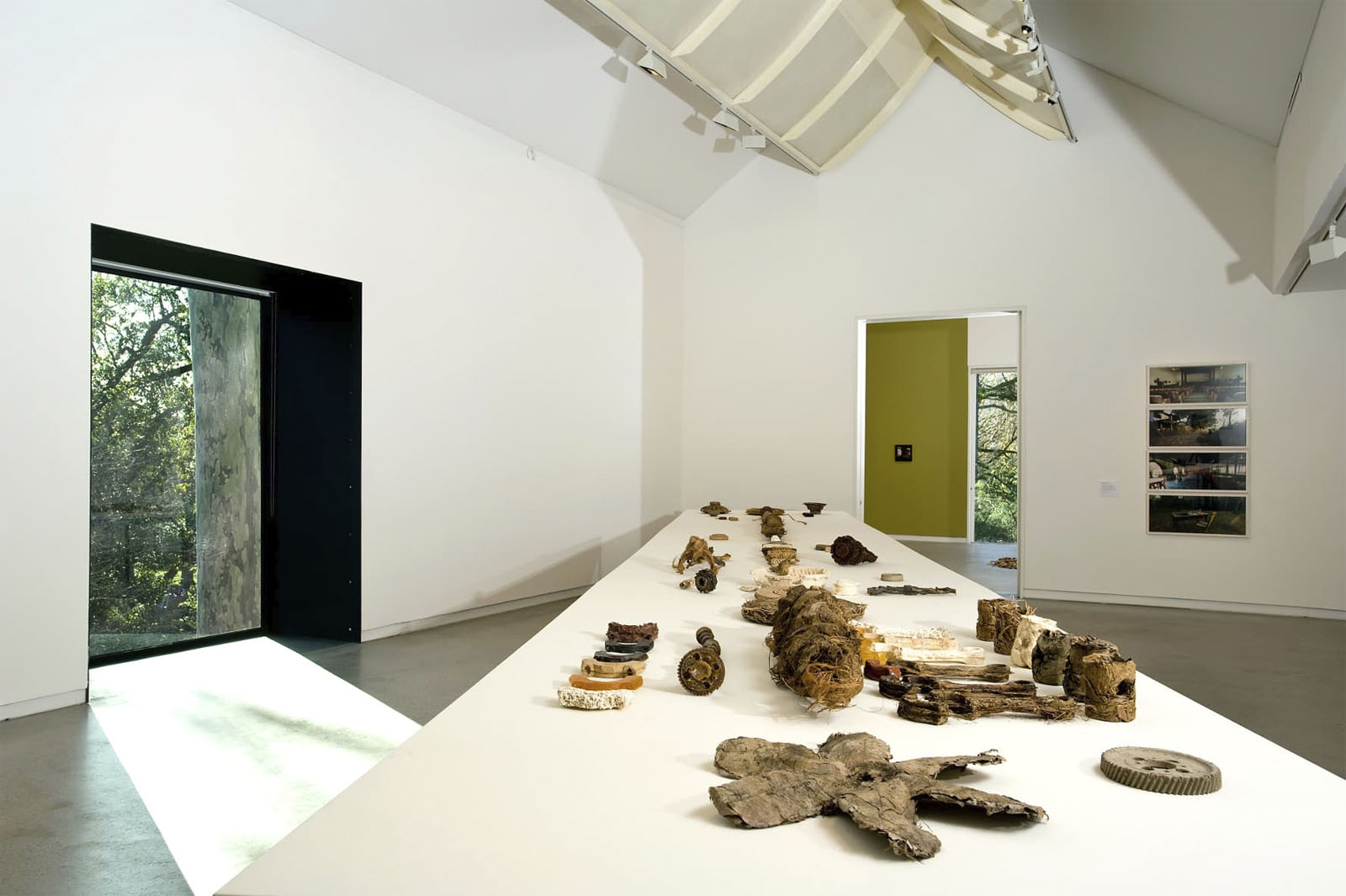
 

Installation view of the exhibition 'Simryn Gill: Gathering' at Heide Museum of Modern Art, Melbourne showing the work 'Throwback' 2007


Installation view of the exhibition Simryn Gill: Gathering at Heide Museum of Modern Art, Melbourne showing the work Throwback 2007


Simryn Gill (Singapore, b. 1959) 'Throwback' 2007 (detail)


Simryn Gill (Singapore, b. 1959)
Throwback (detail)
2007
Interior parts of Tata truck, termite mound soil, river clay, laterite, seashells, fruit skins, leaves, bark and fibre, flowers, glue, resin, milk
Buxton Collection Melbourne
Courtesy of the artist


Simryn Gill (Singapore, b. 1959) 'Throwback' 2007 (detail)


Simryn Gill (Singapore, b. 1959)
Throwback (detail)
2007
Interior parts of Tata truck, termite mound soil, river clay, laterite, seashells, fruit skins, leaves, bark and fibre, flowers, glue, resin, milk
Buxton Collection Melbourne
Courtesy of the artist


This exhibition (22 April – 18 July) presents the work of leading Sydney-based Malaysian artist, Simryn Gill. Featuring objects, books, collections, photographs and text pieces from the last six years of Gill’s practice, it explores the artist’s pursuit of meaning through materials, forms and ways of working, such as collecting, reading, archiving, arranging, casting and photographing.

Described in 2009 in the New Yorker as ‘quietly dazzling’, Gill’s work is internationally recognised. She has been honoured with solo exhibitions at the Tate Modern, London and the Smithsonian Institution, Washington DC, both in 2006. Born in Singapore in 1959, Gill lives and works in Sydney and Port Dickson, Malaysia, and has participated in significant exhibitions internationally, including documenta 12 in Kassel, Germany (2007), the Singapore Biennale (2006), the Biennale of Sydney (2002 and 2008), the São Paulo Biennial (2004) and the Venice Biennale (1999).

An MCA touring exhibition curated by Russell Storer, it has been expanded by Heide to include the Australian premiere of Gill’s major work Throwback, originally produced for the documenta 12 exhibition in Kassel, Germany, in 2007. Throwback reworks the inner machinery of a 1985 Tata truck that plied the roads of Malaysia. With the economic rise of China and India, a voracious market for scrap metal has developed, hastening the disappearance of particular objects. Gill recovers the modern forms of truck parts by casting them in natural materials – found near her studio in Malaysia – including river mud, coconut husks, reconstituted termite mounds and fruit skins.

Gill has also produced a new work, an artist’s book reflecting on the gardens at Heide.

Gill’s practice considers how we might experience place as an intersection of personal and collective histories and geographies. Through the reinterpretation or alteration of existing objects, the photographing of specific locations, and the forming of collections, Gill contemplates how ideas and meanings are communicated between people, objects, and sites.

Several works in the exhibition invite audience participation. Paper Boats invites visitors to add their own unique paper boat to the installation by tearing pages from a 1968 Encyclopaedia Britannica and using the sheet to make an origami boat. Another work, Garland (2006) encourages us to hold, touch and rearrange objects collected by Gill on the beaches of Port Dickson, Malaysia, and the islands off Singapore – fragments reshaped by sea and sand that take on almost organic form.

A selection of books, sketches, collections and experimental pieces from the early 1990s to the present, some produced for exhibitions and others never intended as artworks will also be presented as part of the exhibition. Together they offer an insight into Gill’s artistic processes and her interest in art-making as an active engagement with the world.”

Press release from the Heide Museum of Modern Art website [Online] Cited 01/10/2010 no longer available online


Simryn Gill (Singapore, b. 1959) 'Paper boats' 2008


Simryn Gill (Singapore, b. 1959)
Paper boats
2008
Encyclopaedia Britannica (1968 edition)
Courtesy of the artist and BREENSPACE, Sydney


Simryn Gill (Singapore, b. 1959) 'Paper boats' 2008 (detail)


Simryn Gill (Singapore, b. 1959)
Paper boats (detail)
2008
Encyclopaedia Britannica (1968 edition)
Courtesy of the artist and BREENSPACE, Sydney


Addendum: A Pencil for Your Thoughts


Heide pencil


Heide pencil, the confounding pencil

I love to visit Heide, the elegant buildings, the art, the cafe, a stroll in the gardens looking at the sculpture. What I don’t like is being accosted by gallery attendants on my last three visits, twice on the last visit alone to review the Simryn Gill exhibition – accost being not too harsh a word for some of the approaches. The request: to not write in the gallery with a pen but to use a pencil (rushed to the scene of the crime post haste!)

I don’t like writing with a pencil, they go blunt and I can’t read my notes. I like writing with a pen.
This is a ridiculous state of affairs, the only gallery in Melbourne that I know of that has such a ‘nanny state’ rule.

Do they think that I am going to:

a) spear the pen into the gallery wall
b) attack the attendant with the pen (after this last visit the thought did cross my mind!) or
c) scribble all over the art work like a child …

 
The more we are treated like children the more child-like we become.

“Put the pen on the ground … Step away from the pen.”


Heide Museum of Modern Art
7, Templestowe Road
Bulleen, Victoria 3105

Opening hours:
(Heide II and Heide III)
Tuesday – Sunday 10.00am – 5.00pm
Heide Museum of Modern Art website

LIKE ART BLART ON FACEBOOK

Back to top

Sculpture: ‘Drawing Water’ (2010) by Fredrick White

June 2010


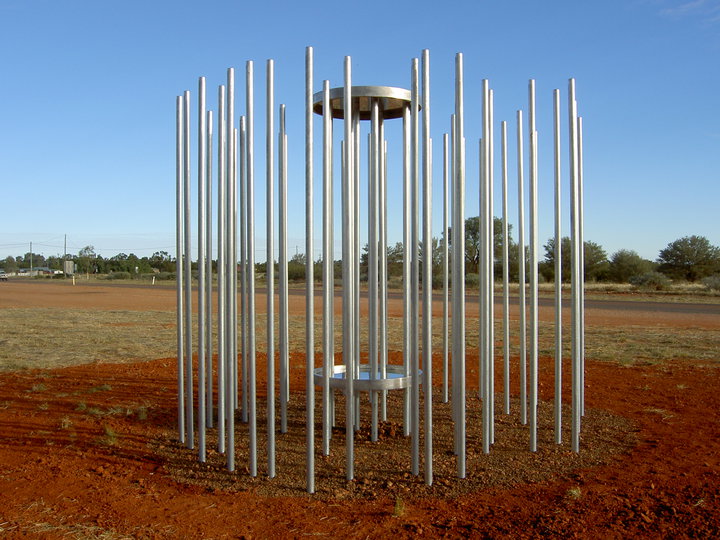
Unknown photographer. ''Drawing Water' by Frederick White' 2010


Unknown photographer
Drawing Water by Frederick White
2010


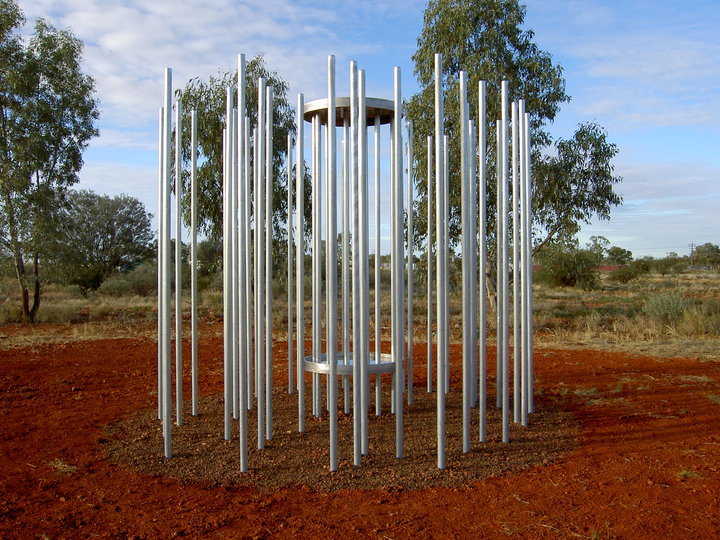
Australian sculptor Fredrick White, has been commissioned to create two public sculptures in Western Queensland. The first has been completed at Thargomindah (see Google map), a town located 1014 km west of Brisbane and was commissioned by artplusplace and Thargomindah Regional Council. In a small town of 250 people this is the town’s first public sculpture.

“The town’s one claim to fame is its artesian bore. The bore, which lies 2 km out of town on the Noccundra road, was drilled in 1891 and by 1893, having drilled to a depth of 795 metres, the water came to the surface. It was then that the town successfully attempted a unique experiment. The pressure of the bore water was used drive a generator which supplied the town’s electricity. Enthusiasts have described this as Australia’s first hydro-electricity scheme. The system operated until 1951. Today the bore still provides the town’s water supply. The water reaches the surface at 84°C.”1


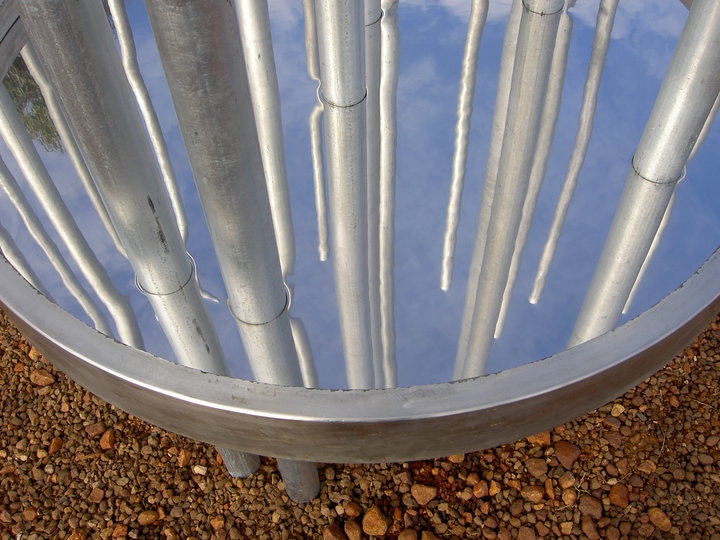
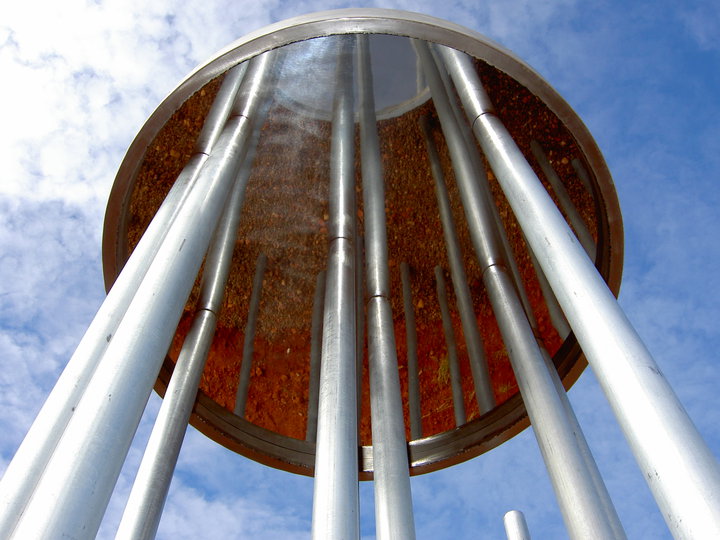
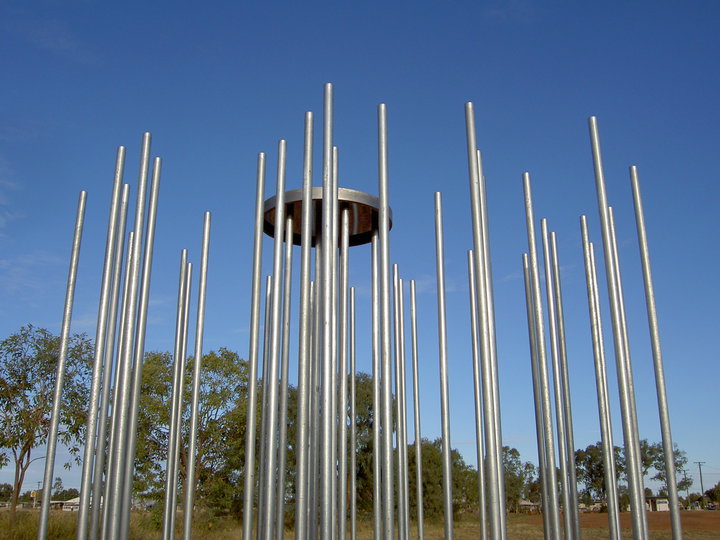
The work Drawing Water (2010) addresses the need for water in such an arid location and the numerous bores that are sunk around the town to draw water to the surface. The earth is reflected in the sky and the sky in the earth in the central polished stainless steel disks (as friend Perry observes, like a tunnel connecting earth and heaven). A forest of bore pipes surround the central platform. Of the work Fred says:

Drawing Water speaks of our connection to the Earth, specifically the Great Artesian Basin and the bores that provide the only continuous source of water throughout much of inland Australia. The 52 galvanised poles symbolise not only our year round need for water but are also as a reminder of how extensively taped the artesian water is.”

The next commission is at Blackall in Western Queensland (see Google map). A drawing of the work Lifespan (2010), which is 8 metres long, is at the bottom of the posting. Blackall already contains public sculptures by William Eicholtz (Towners Call – Edgar Towner V.C. Memorial (2009)) and Robert Bridgewater (Wool, Water and Wood (2008)).

Dr Marcus Bunyan


1/ Text from the Sydney Morning Herald travel website February 8, 2004 [Online] Cited 17/08/2019


Unknown photographer. ''Drawing Water' by Frederick White' 2010


Unknown photographer
Drawing Water by Frederick White
2010


Unknown photographer. ''Drawing Water' by Frederick White' 2010 (detail)

Unknown photographer. ''Drawing Water' by Frederick White' 2010 (detail)

Unknown photographer. ''Drawing Water' by Frederick White' 2010 (detail)


Unknown photographer
Drawing Water by Frederick White (details)
2010


Fredrick White (Australian) 'Lifespan' (2010), drawing for commission at Blackall, Queensland


Fredrick White (Australian)
Lifespan
2010
Drawing for commission at Blackall, Queensland


LIKE ART BLART ON FACEBOOK

Back to top

Exhibition: ‘European Masters: Städel Museum 19th – 20th Century’, Winter Masterpieces at the National Gallery of Victoria, Melbourne

Exhibition dates: 19th June – 10th October 2010


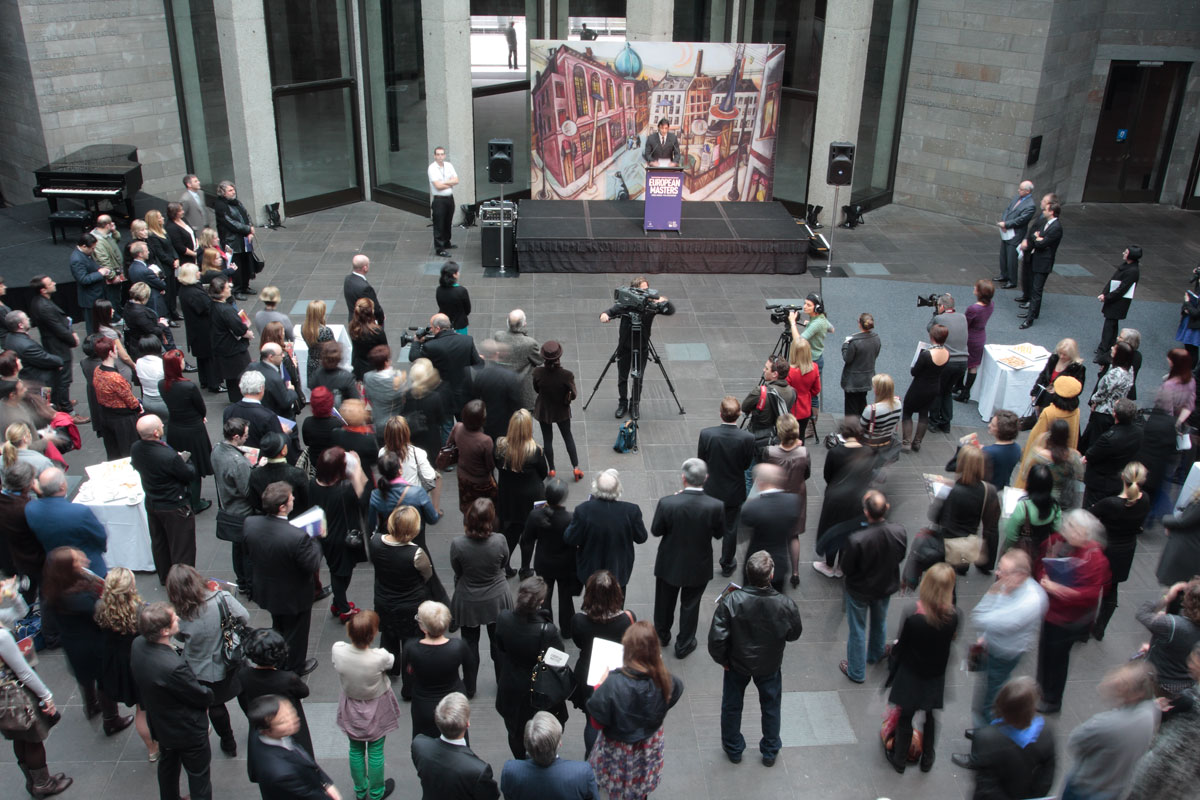
Media opening of 'European Masters: Städel Museum 19th - 20th Century', Winter Masterpieces at the National Gallery of Victoria


Media opening of European Masters: Städel Museum 19th – 20th Century, Winter Masterpieces at the National Gallery of Victoria
Photo: Marcus Bunyan


A huge posting – and another ‘you saw it here first’ on Art Blart!

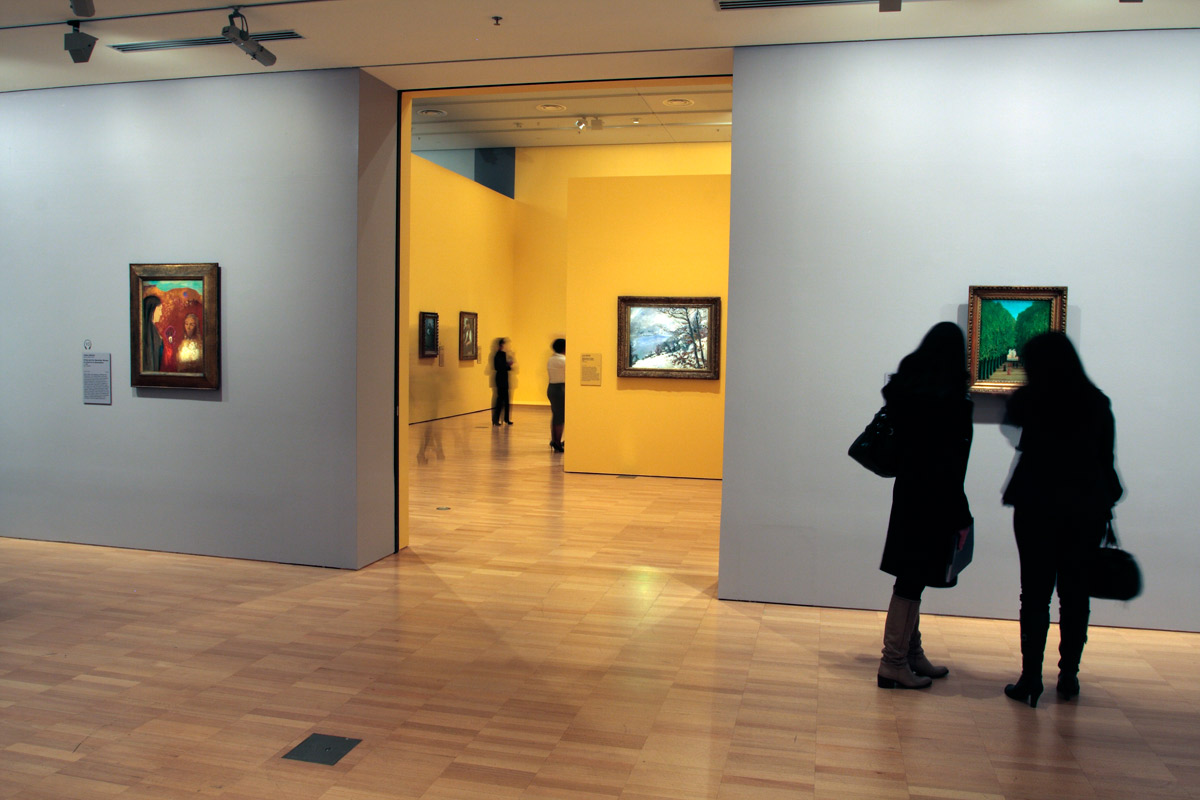
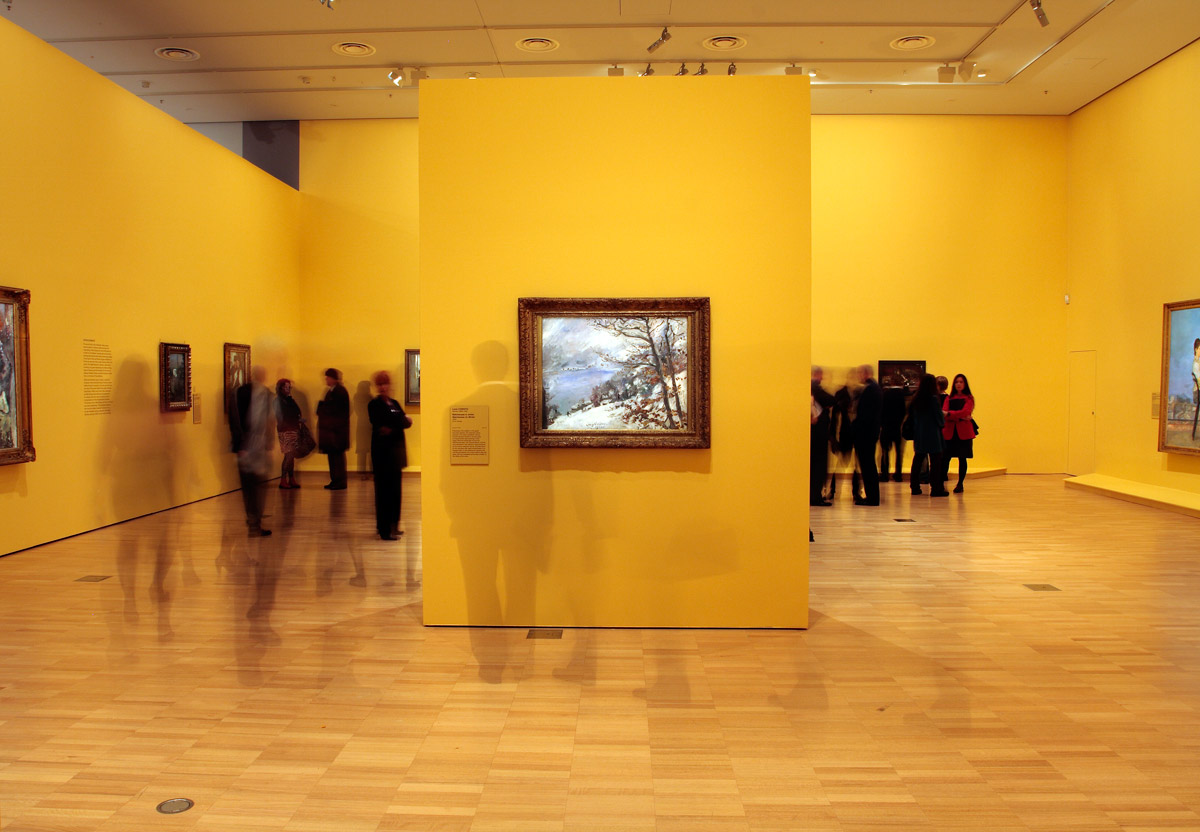
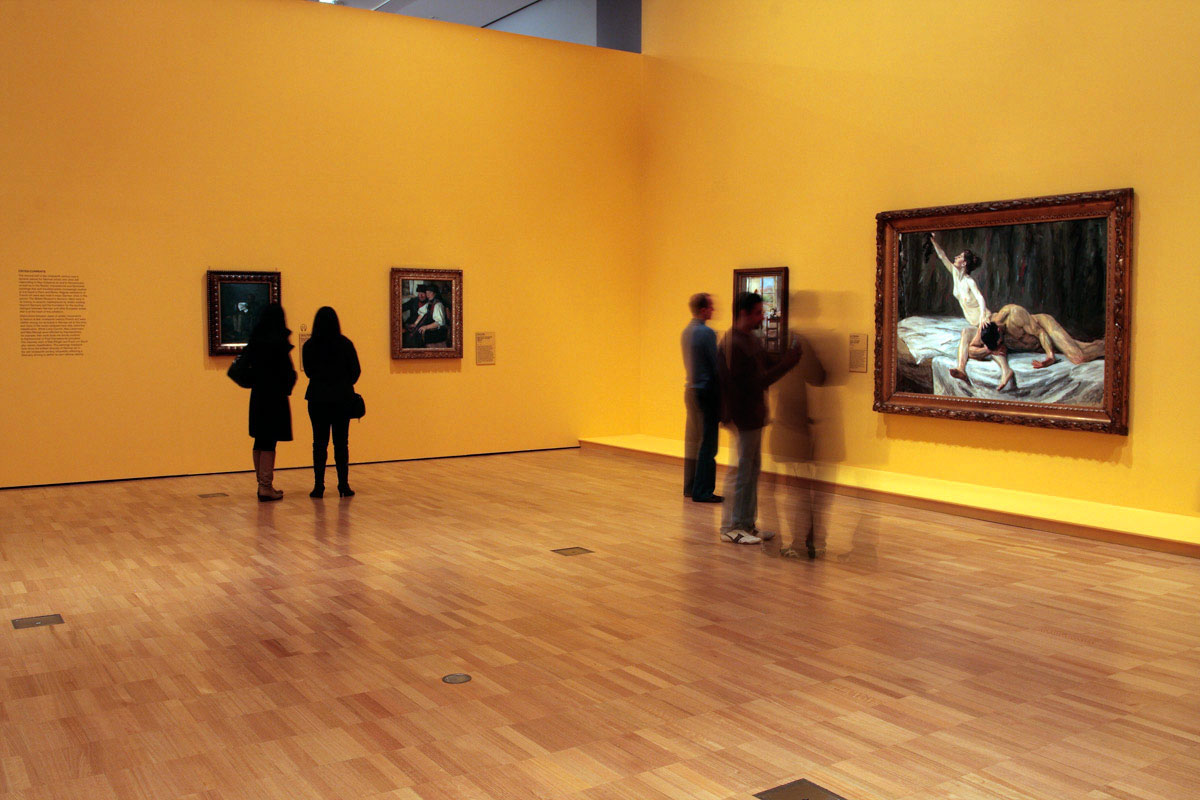
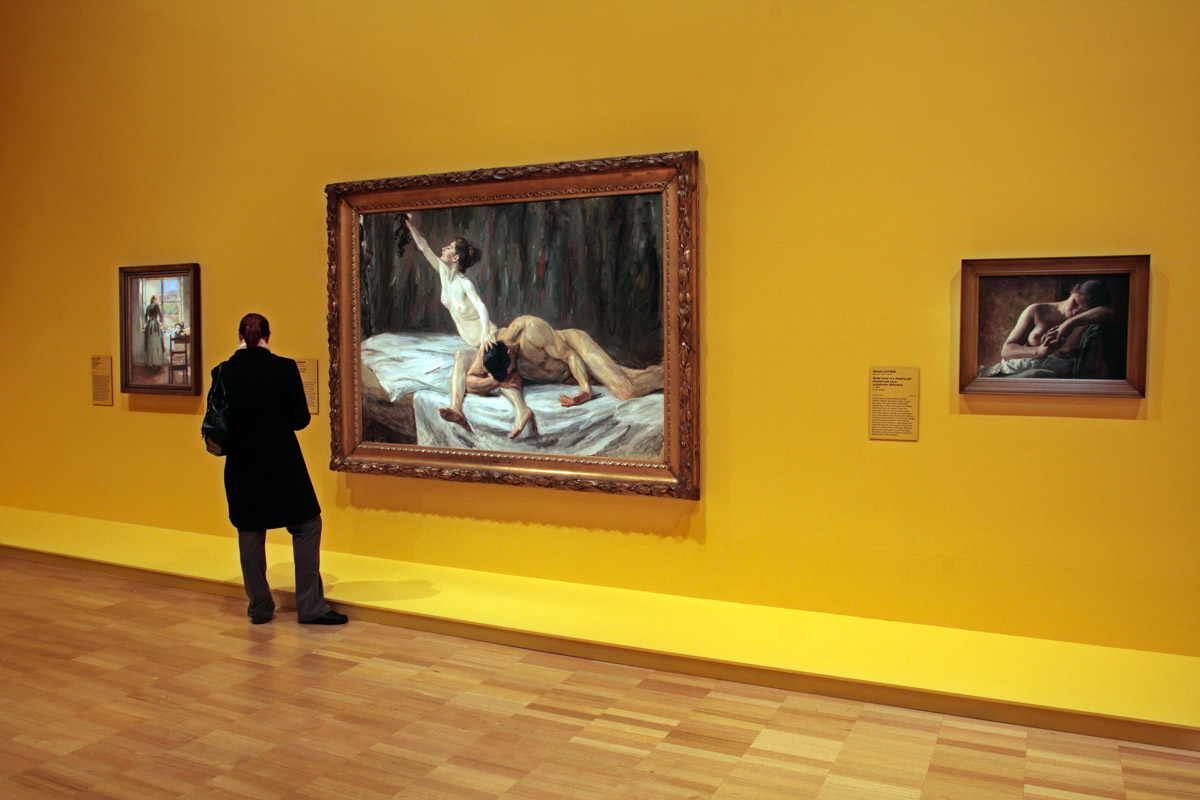
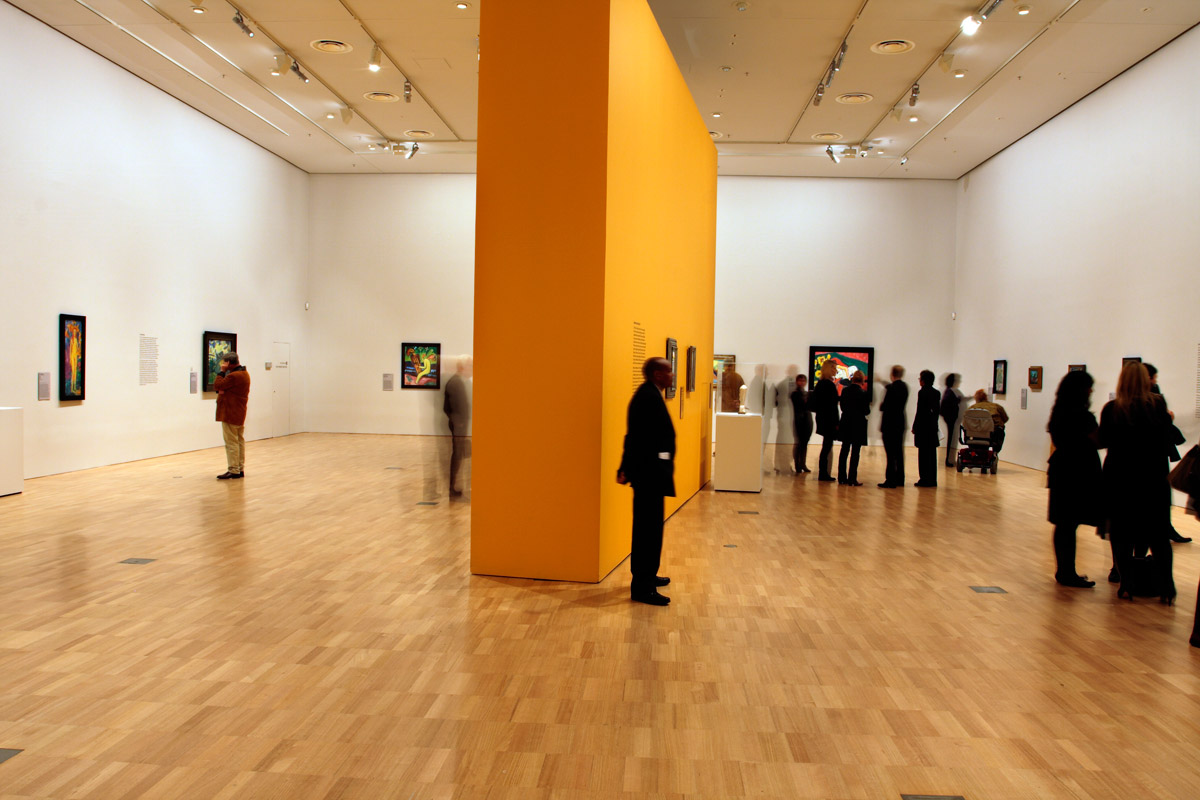
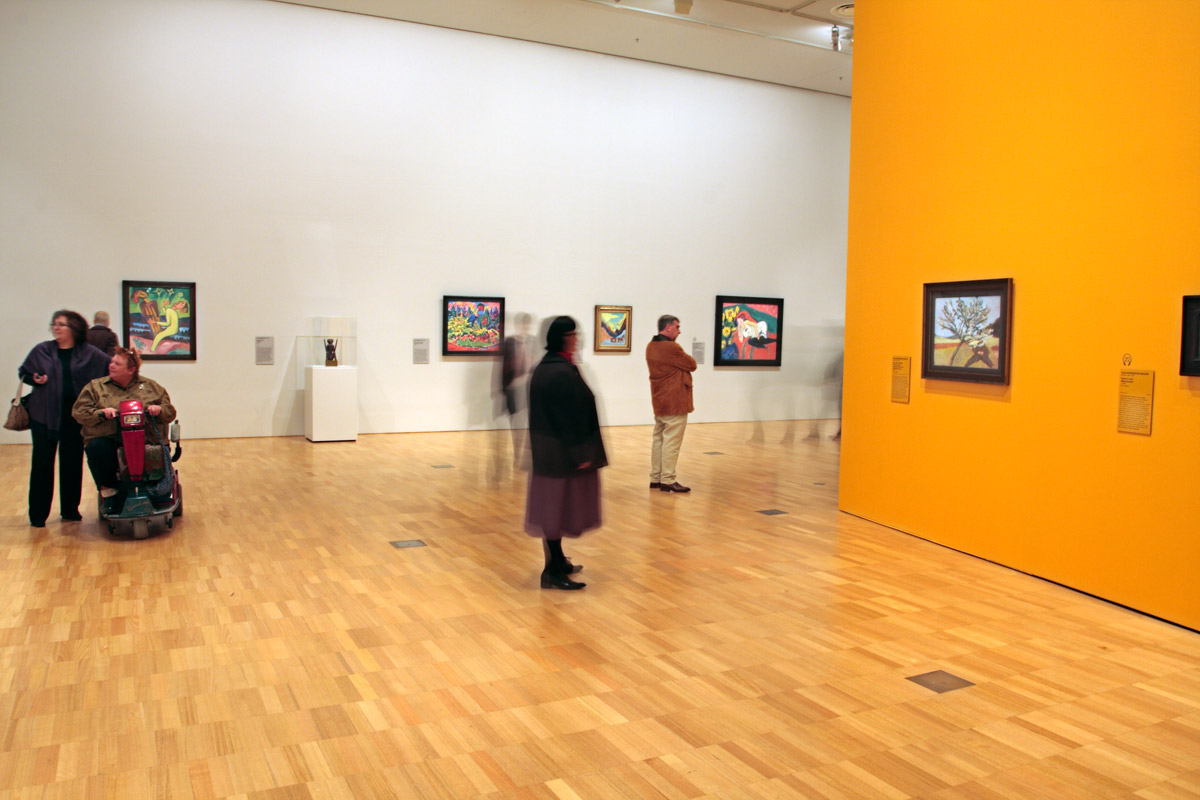
A simple, spacious hang shows off some wonderfully vibrant paintings in the new Winter Masterpieces blockbuster at the NGV. The use of strong yellow and pale grey wall colour compliments the paintings. Conversely, other rooms have a dark brown and very dark grey wall colour. Some people will like the effect but I found the dark grey a little too sombre and heavy in the room dedicated to the work of Max Beckmann. Overall a fantastic range of paintings, especially those by the German Expressionists and a luminous painting by Odilon Redon. To see them in Australia is a joy to behold.

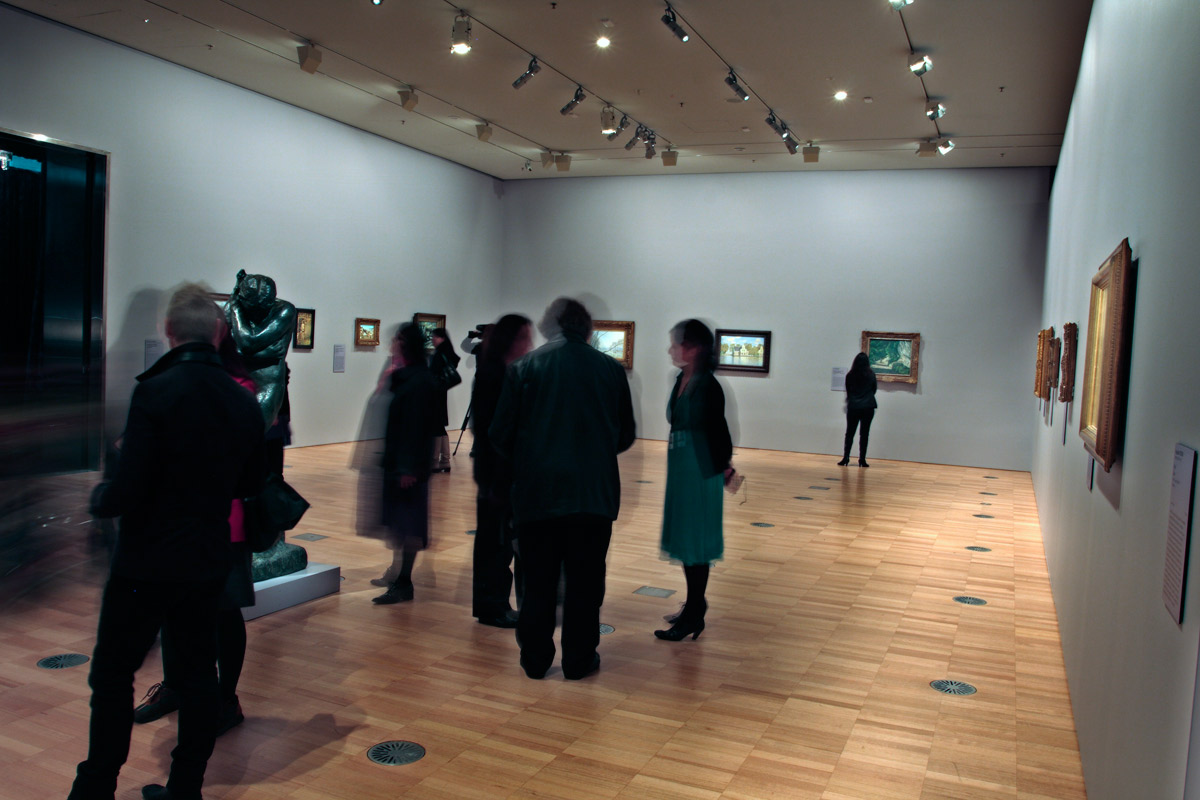
Note on the photographs: All the photographs were taken with a timed exposure with the camera on a tripod. While this leads to ghosting as people walk through the shot it also adds a sense of the exhibition as a living entity. I find it preferable to the use of flash photography as flash destroys any ambience that the rooms possess. The photographs are in chronological order, proceeding from the beginning of the exhibition to the end.

Dr Marcus Bunyan


Many thankx to Dr Ted Gott, Senior Curator of International Art, Sue Coffey and all the media team and the National Gallery of Victoria for allowing me to photograph the exhibition and publish the photographs online. Please click on the photographs for a larger version of the image. All installation photographs © Marcus Bunyan and the National Gallery of Victoria.

PS. Thankx to the many people who have emailed me saying that they love the photographs, especially to Sue Coffey who said the posting looked superb = it makes it all worthwhile!


Media opening of 'European Masters: Städel Museum 19th - 20th Century', Winter Masterpieces at the National Gallery of Victoria


Media opening of European Masters: Städel Museum 19th – 20th Century, Winter Masterpieces at the National Gallery of Victoria
Photo: Marcus Bunyan


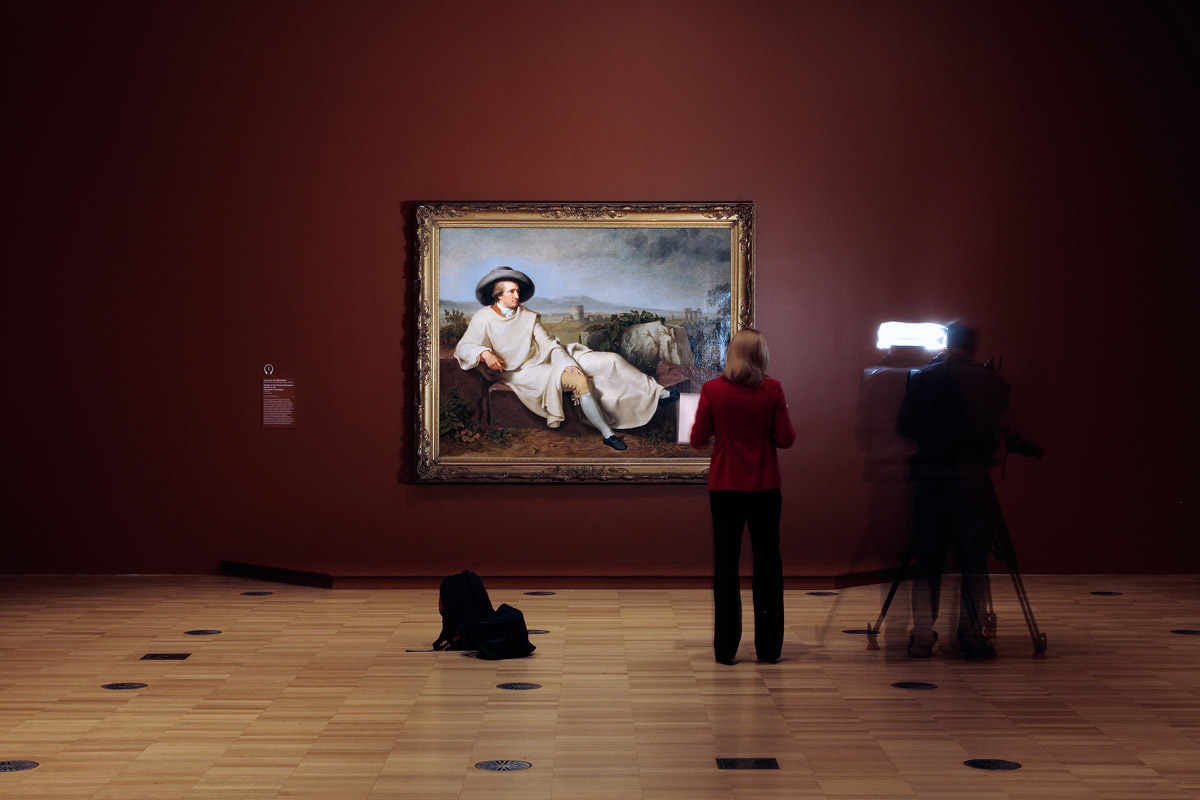
Installation view of Johann Heinrich Wilhelm Tischbei's panting 'Goethe in the Roman countryside' 1787 at the exhibition 'European Masters: Städel Museum 19th – 20th Century', Winter Masterpieces at the National Gallery of Victoria

Installation view of Johann Heinrich Wilhelm Tischbei's panting 'Goethe in the Roman countryside' 1787 at the exhibition 'European Masters: Städel Museum 19th – 20th Century', Winter Masterpieces at the National Gallery of Victoria


Installation views of Johann Heinrich Wilhelm Tischbei’s panting Goethe in the Roman countryside 1787 at the exhibition European Masters: Städel Museum 19th – 20th Century, Winter Masterpieces at the National Gallery of Victoria
Photos: Marcus Bunyan


Johann Heinrich Wilhelm Tischbein (German, 1751-1829) 'Goethe in the Roman countryside' (Goethe in der römischen Campagna) 1787 from the exhibition 'European Masters: Städel Museum 19th – 20th Century', Winter Masterpieces at the National Gallery of Victoria, June - October, 2010


Johann Heinrich Wilhelm Tischbein (German, 1751-1829)
Goethe in the Roman countryside (Goethe in der römischen Campagna)
1787
Oil on canvas
161.0 x 197.5cm
Städel Museum, Frankfurt am Main
Acquired in 1878 as a gift by Baroness Salomon von Rothschild


Installation view of 'European Masters: Städel Museum 19th - 20th Century', Winter Masterpieces at the National Gallery of Victoria


Installation view of the exhibition European Masters: Städel Museum 19th – 20th Century, Winter Masterpieces at the National Gallery of Victoria
Photo: Marcus Bunyan


Installation view of Johann Heinrich Wilhelm Tischbei's panting 'Goethe in the Roman countryside' 1787 at the exhibition 'European Masters: Städel Museum 19th – 20th Century', Winter Masterpieces at the National Gallery of Victoria

Installation view of Johann Heinrich Wilhelm Tischbei's panting 'Goethe in the Roman countryside' 1787 at the exhibition 'European Masters: Städel Museum 19th – 20th Century', Winter Masterpieces at the National Gallery of Victoria


Installation views of Johann Heinrich Wilhelm Tischbei’s panting Goethe in the Roman countryside 1787 at the exhibition European Masters: Städel Museum 19th – 20th Century, Winter Masterpieces at the National Gallery of Victoria
Photos: Marcus Bunyan


Installation view of 'European Masters: Städel Museum 19th - 20th Century', Winter Masterpieces at the National Gallery of Victoria

Installation view of 'European Masters: Städel Museum 19th - 20th Century', Winter Masterpieces at the National Gallery of Victoria


Installation views of the exhibition European Masters: Städel Museum 19th – 20th Century, Winter Masterpieces at the National Gallery of Victoria
Photos: Marcus Bunyan


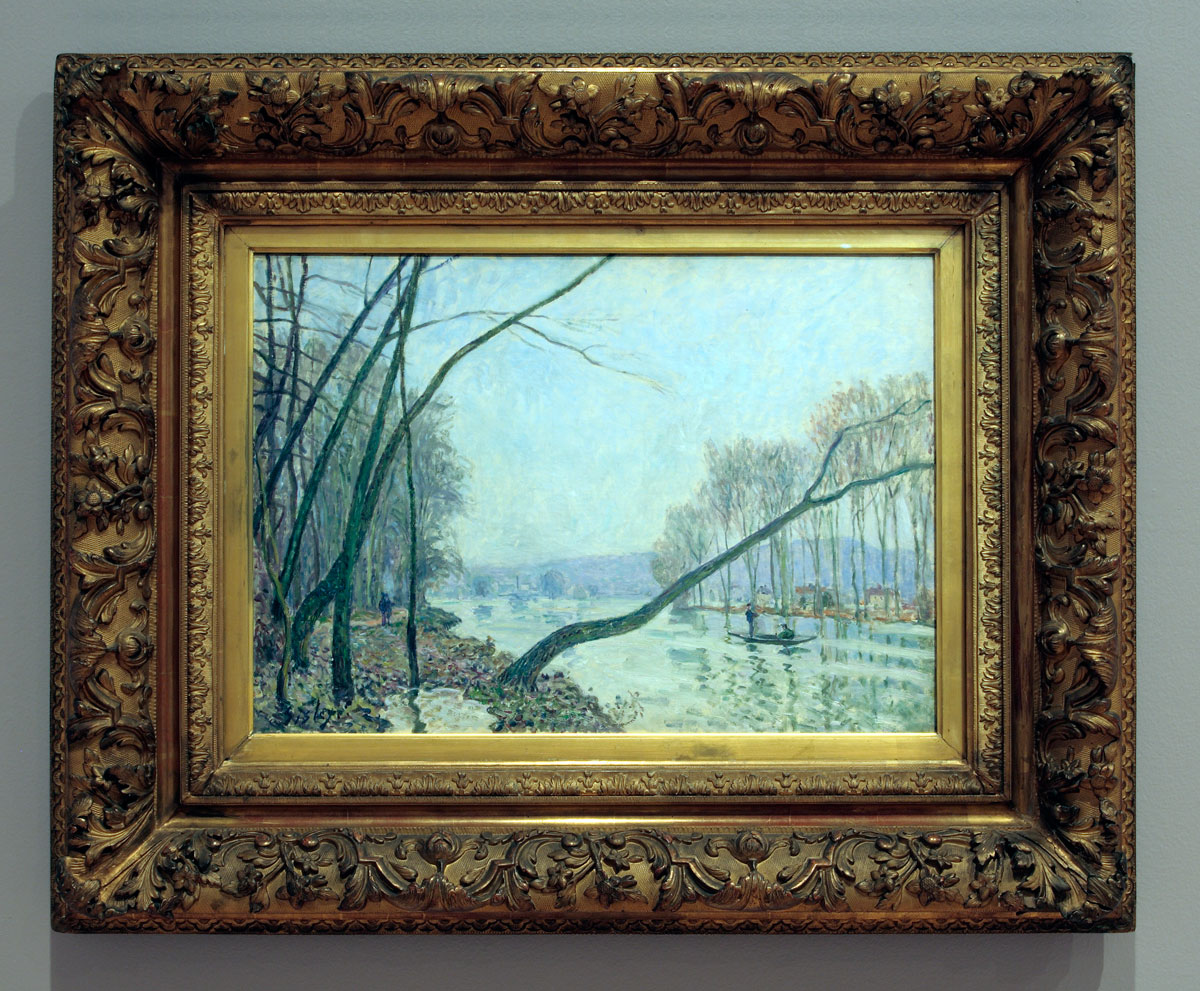
Alfred Sisley (English, 1839-1899) 'Banks of the Seine in Autumn' 1879 (installation view) from the exhibition 'European Masters: Städel Museum 19th – 20th Century', Winter Masterpieces at the National Gallery of Victoria, June - October, 2010


Alfred Sisley (English, 1839-1899)
Banks of the Seine in Autumn (installation view)
1879
Oil on canvas
Photo: Marcus Bunyan


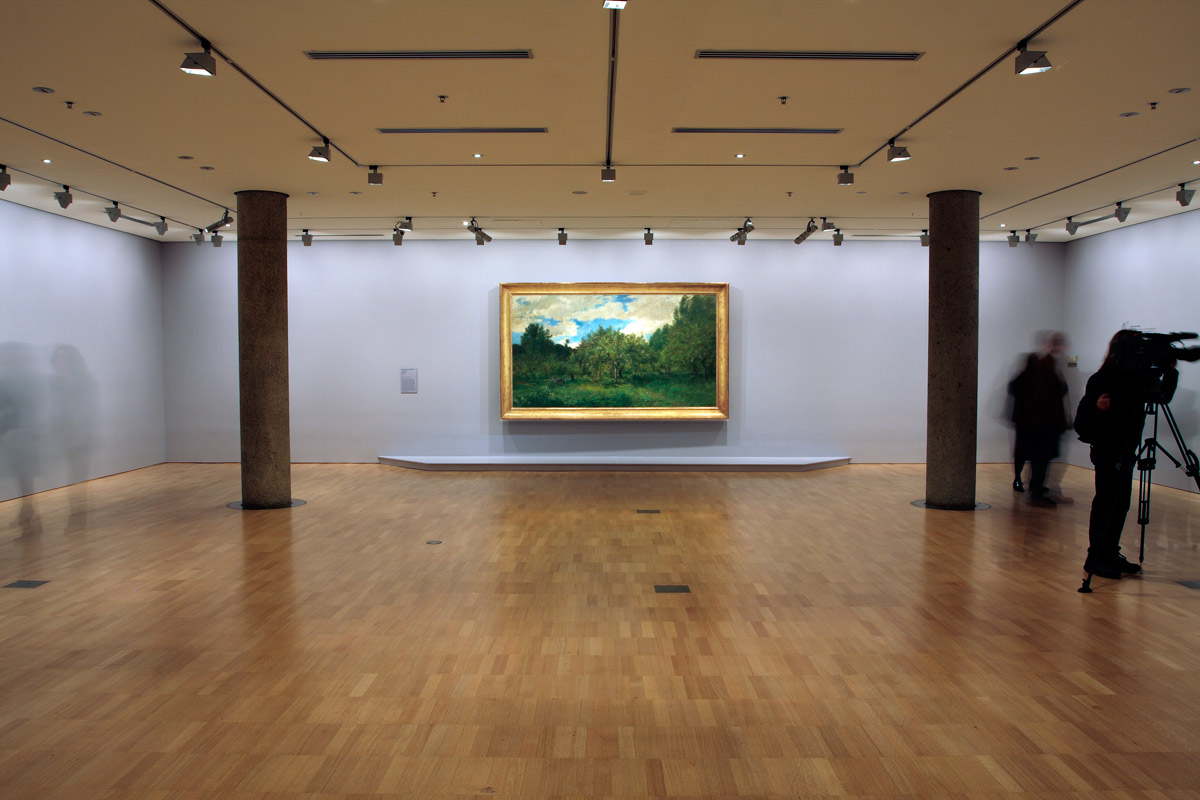
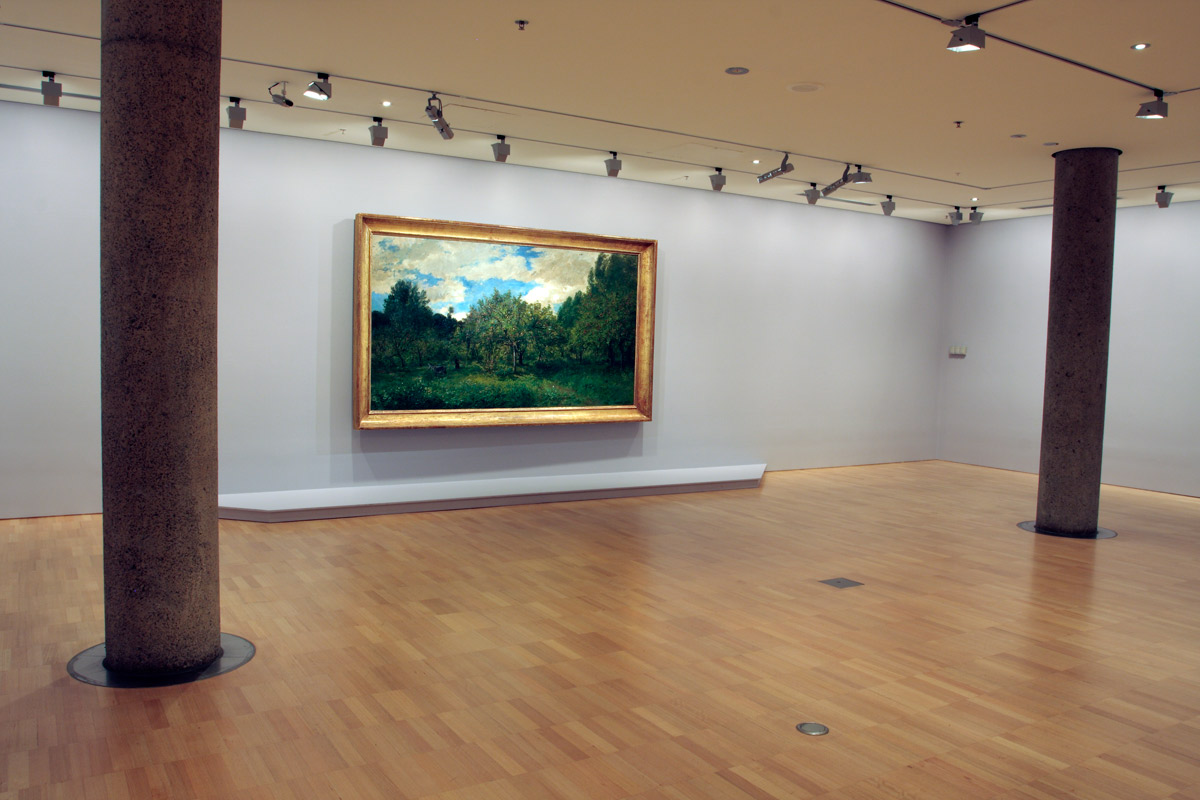
Installation view of Charles-Francois Daubigny (French 1817-1878) 'French Orchard at Harvest Time' (Le verger) 1876 at the exhibition 'European Masters: Städel Museum 19th – 20th Century', Winter Masterpieces at the National Gallery of Victoria, June - October, 2010

Installation view of Charles-Francois Daubigny (French 1817-1878) 'French Orchard at Harvest Time' (Le verger) 1876


Installation views of Charles-Francois Daubigny (French 1817-1878) French Orchard at Harvest Time (Le verger) 1876 at the exhibition European Masters: Städel Museum 19th – 20th Century, Winter Masterpieces at the National Gallery of Victoria
Photos: Marcus Bunyan


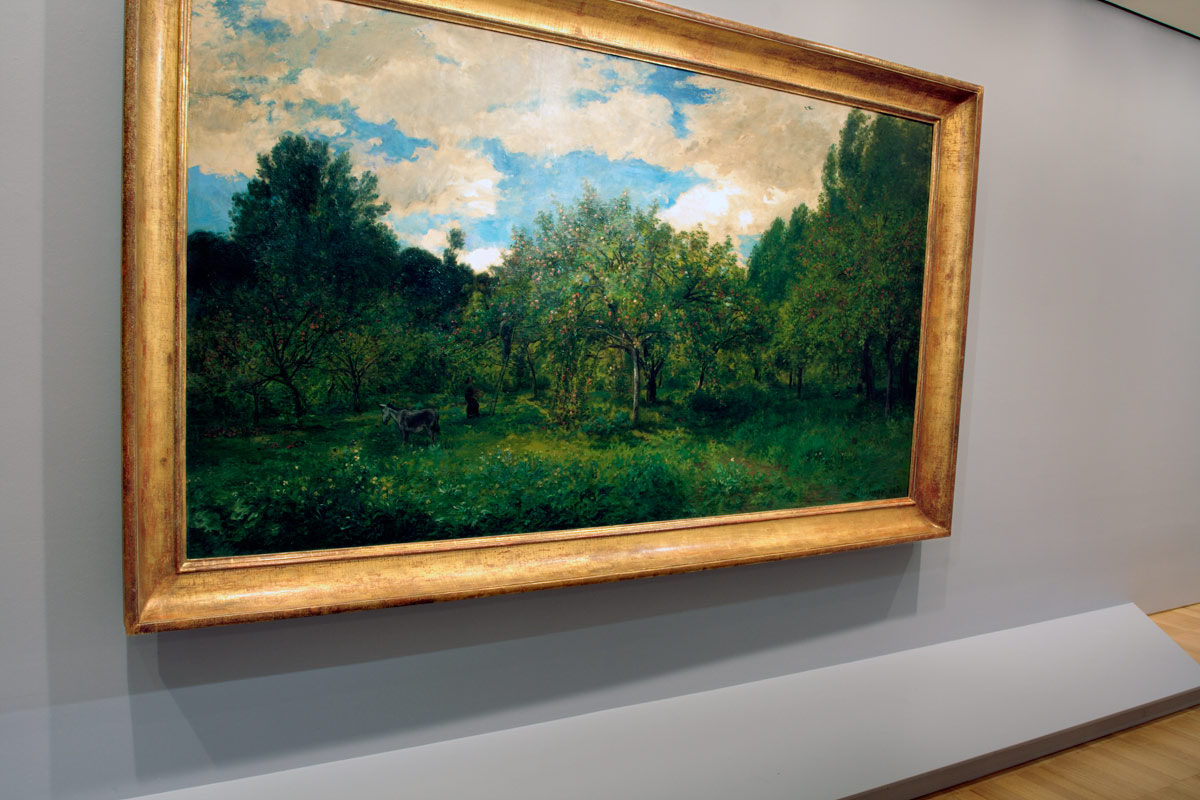
Charles-Francois Daubigny (French 1817-1878) 'French Orchard at Harvest Time' (Le verger) 1876 (installation view) from the exhibition 'European Masters: Städel Museum 19th – 20th Century', Winter Masterpieces at the National Gallery of Victoria, June - October, 2010


Charles-Francois Daubigny (French, 1817-1878)
French Orchard at Harvest Time (Le verger) (installation view)
1876
Oil on canvas
Photo: Marcus Bunyan


Pierre Auguste Renoir (French 1841-1919) 'After the luncheon' (La fin du déjeuner) 1879 (installation view) at the exhibition 'European Masters: Städel Museum 19th – 20th Century', Winter Masterpieces at the National Gallery of Victoria, June - October, 2010

Pierre Auguste Renoir (French 1841-1919) 'After the luncheon' (La fin du déjeuner) 1879 (installation view) at the exhibition 'European Masters: Städel Museum 19th – 20th Century', Winter Masterpieces at the National Gallery of Victoria, June - October, 2010


Installation views of Pierre Auguste Renoir (French 1841-1919) After the luncheon (La fin du déjeuner) 1879 at the exhibition European Masters: Städel Museum 19th – 20th Century, Winter Masterpieces at the National Gallery of Victoria
Photos: Marcus Bunyan


Pierre Auguste Renoir (French 1841-1919) 'After the luncheon' (La fin du déjeuner) 1879


Pierre Auguste Renoir (French 1841-1919)
After the luncheon (La fin du déjeuner)
1879
Oil on canvas
100.5 x 81.3cm
Städel Museum, Frankfurt am Main
Acquired in 1910


Odilon Redon (French 1840-1916) 'Christ and the Samaritan Woman' (Le Christ et la Samaritaine) c. 1895 (installation view) at the exhibition 'European Masters: Städel Museum 19th – 20th Century', Winter Masterpieces at the National Gallery of Victoria


Installation view of Odilon Redon (French 1840-1916) Christ and the Samaritan Woman (Le Christ et la Samaritaine) c. 1895 at the exhibition European Masters: Städel Museum 19th – 20th Century, Winter Masterpieces at the National Gallery of Victoria
Photo: Marcus Bunyan


Odilon Redon (French 1840-1916) 'Christ and the Samaritan Woman' (Le Christ et la Samaritaine) c. 1895


Odilon Redon (French, 1840-1916)
Christ and the Samaritan Woman (Le Christ et la Samaritaine)
c. 1895
Oil on canvas
64.8 x 50.0cm
Städel Museum, Frankfurt am Main
Acquired in 1960


Installation view of the exhibition 'European Masters: Städel Museum 19th - 20th Century', Winter Masterpieces at the National Gallery of Victoria


Installation view of the exhibition European Masters: Städel Museum 19th – 20th Century, Winter Masterpieces at the National Gallery of Victoria
Photo: Marcus Bunyan


“The appeal of the Städel Institute lies in the tremendous energy filling that confined space. Virtually all of the great emotions that have lived in the souls of the peoples of Europe are there, and all in superb works.”

Alfred Lichtwark, Director the Hamburg Museum, 1905


One of the world’s finest collections of 19th and 20th century art is showing exclusively in Melbourne as the seventh exhibition in the hugely popular Melbourne Winter Masterpieces series at the National Gallery of Victoria.

European Masters: Städel Museum, 19th-20th Century brings together almost 100 works by 70 artists from one of Germany’s oldest and most respected museums, the Städel Museum in Frankfurt.

Dr Gerard Vaughan, NGV Director, said: “European Masters presents a comprehensive overview of the Städel Museum’s holdings of painting and sculpture from the last two centuries of European art. This blockbuster exhibition provides a superb survey of the key artistic movements of the time, including Realism, Impressionism and Post Impressionism, German Romanticism, Expressionism and Modernism, and French Symbolism.”

The exhibition opens with a series of large-scale romantic German paintings, including Johann H.W. Tischbein’s iconic Goethe in the Roman Campagna from 1787. Visitors will also be treated to magnificent examples of 19th century French art from Corot and Courbet’s Realist landscapes to well-known beautiful Impressionist works by Monet, Renoir, Degas and Cézanne.

European Masters then traces the development of German art, introducing audiences to rarely seen Realist and Symbolist masterpieces from artists such as Max Liebermann and Franz von Stuck.

A major highlight of the exhibition is a powerful selection of German Expressionist paintings, with ten poignant works by Max Beckmann, including The synagogue in Frankfurt am Main and his powerful Double Portrait, all of which have left the Städel for the first time to be shown outside of Europe.

The exhibition also includes a breathtaking selection of Swiss, Belgian and Dutch works by artists such as Arnold Böcklin, Fernand Khnopff and Vincent Van Gogh.

“Exclusive to Melbourne, European Masters provides an unprecedented opportunity to see a spectacular group of masterpieces spanning the dynamic and transformative years of the 19th and 20th centuries. There is something in this exhibition for everyone, from the beauty and immediacy of French Impressionism to the raw power of German Expressionism. This is a once-in-a-lifetime chance to see superb pictures that rarely travel outside of Europe,” said Dr. Vaughan.

Founded in 1816 by the Frankfurt financier Johann Friedrich Städel, the Städel Museum has one of the world’s finest art collections. The collection boasts 2700 paintings, 600 sculptures and over 100,000 prints and drawings documenting the development of European art and culture.

The Melbourne Winter Masterpieces series began in 2004 with The Impressionists: Masterpieces from the Musée d’Orsay, continued in 2005 with Dutch Masters from the Rijksmuseum, Amsterdam, followed by Picasso in 2006, Guggenheim Collection: 1940s to Now in 2007, Art Deco 1910-1939 in 2008 and Salvador Dalí: Liquid Desire in 2009.

This year Melbourne Winter Masterpieces includes European Masters: Städel Museum, 19th-20th Century at the NGV, and Tim Burton at the Australian Centre for the Moving Image.

Press release from the National Gallery of Victoria website


Installation view of the exhibition 'European Masters: Städel Museum 19th - 20th Century', Winter Masterpieces at the National Gallery of Victoria

Installation view of Max Liebermann (German 1847-1935, lived in France 1874-78) 'Samson and Delilah' (Simson und Delila) 1901 at the exhibition 'European Masters: Städel Museum 19th – 20th Century', Winter Masterpieces at the National Gallery of Victoria

Installation view of Max Liebermann (German 1847-1935, lived in France 1874-78) 'Samson and Delilah' (Simson und Delila) 1901 at the exhibition 'European Masters: Städel Museum 19th – 20th Century', Winter Masterpieces at the National Gallery of Victoria


Installation views of Max Liebermann (German 1847-1935, lived in France 1874-78) Samson and Delilah (Simson und Delila) 1901 at the exhibition European Masters: Städel Museum 19th – 20th Century, Winter Masterpieces at the National Gallery of Victoria
Photos: Marcus Bunyan


Max Liebermann (German 1847-1935, lived in France 1874-78) 'Samson and Delilah' (Simson und Delila) 1901


Max Liebermann (German, 1847-1935, lived in France 1874-1878)
Samson and Delilah (Simson und Delila)
1901
Oil on canvas
151.2 x 212.0cm
Städel Museum, Frankfurt am Main
Acquired in 1910


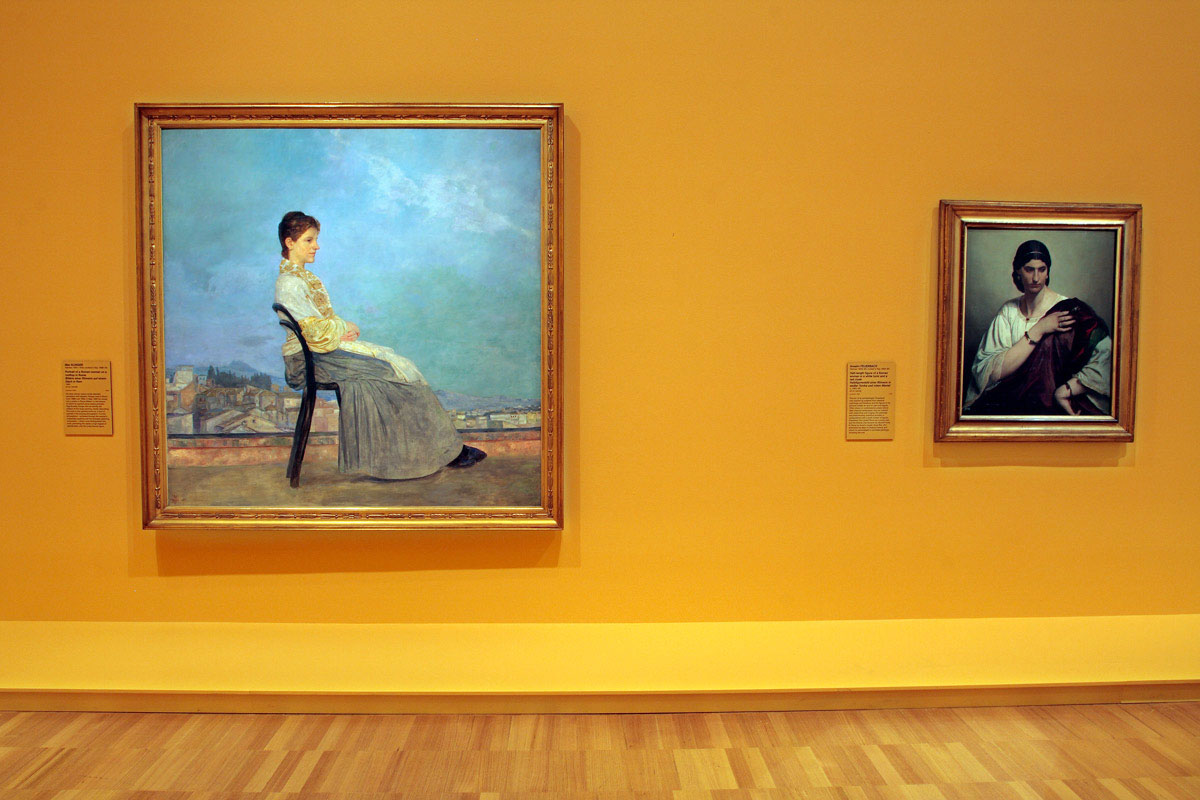
Max Klinger (German 1857-1920) 'Portrait of a Roman woman on a flat roof' (Bildnis einer Römerin auf einem Dach in Rom) 1891


Max Klinger (German, 1857-1920)
Portrait of a Roman woman on a flat roof (Bildnis einer Römerin auf einem Dach in Rom)
1891
Oil on canvas
182 x 182cm
Städel Museum, Frankfurt am Main
Acquired in 1926 as a gift in commemoration of Walther Rathenau


Installation view at left of Max Klinger (German 1857-1920) 'Portrait of a Roman woman on a flat roof' (Bildnis einer Römerin auf einem Dach in Rom) 1891 at the exhibition 'European Masters: Städel Museum 19th – 20th Century', Winter Masterpieces at the National Gallery of Victoria


Installation view at left of Max Klinger (German 1857-1920) Portrait of a Roman woman on a flat roof (Bildnis einer Römerin auf einem Dach in Rom) 1891 at the exhibition European Masters: Städel Museum 19th – 20th Century, Winter Masterpieces at the National Gallery of Victoria
Photo: Marcus Bunyan


Max Beckmann room, installation view of 'European Masters: Städel Museum 19th - 20th Century', Winter Masterpieces at the National Gallery of Victoria

Max Beckmann room, installation view of 'European Masters: Städel Museum 19th - 20th Century', Winter Masterpieces at the National Gallery of Victoria

Max Beckmann room, installation view of 'European Masters: Städel Museum 19th - 20th Century', Winter Masterpieces at the National Gallery of Victoria


Max Beckmann room, installation view of European Masters: Städel Museum 19th – 20th Century, Winter Masterpieces at the National Gallery of Victoria
Photos: Marcus Bunyan


Max Beckmann. 'Female dancer' (Tanzerin) c. 1935 (installation view)


Max Beckmann (German 1884-1950, worked in the Netherlands 1937-1947, United States 1947-1950)
Female dancer (Tanzerin) (installation view)
c. 1935
Bronze
Photo: Marcus Bunyan


Installation view of 'European Masters: Städel Museum 19th - 20th Century', Winter Masterpieces at the National Gallery of Victoria

Installation view of 'European Masters: Städel Museum 19th - 20th Century', Winter Masterpieces at the National Gallery of Victoria

Installation view of 'European Masters: Städel Museum 19th - 20th Century', Winter Masterpieces at the National Gallery of Victoria


Installation views of European Masters: Städel Museum 19th – 20th Century, Winter Masterpieces at the National Gallery of Victoria
Photos: Marcus Bunyan


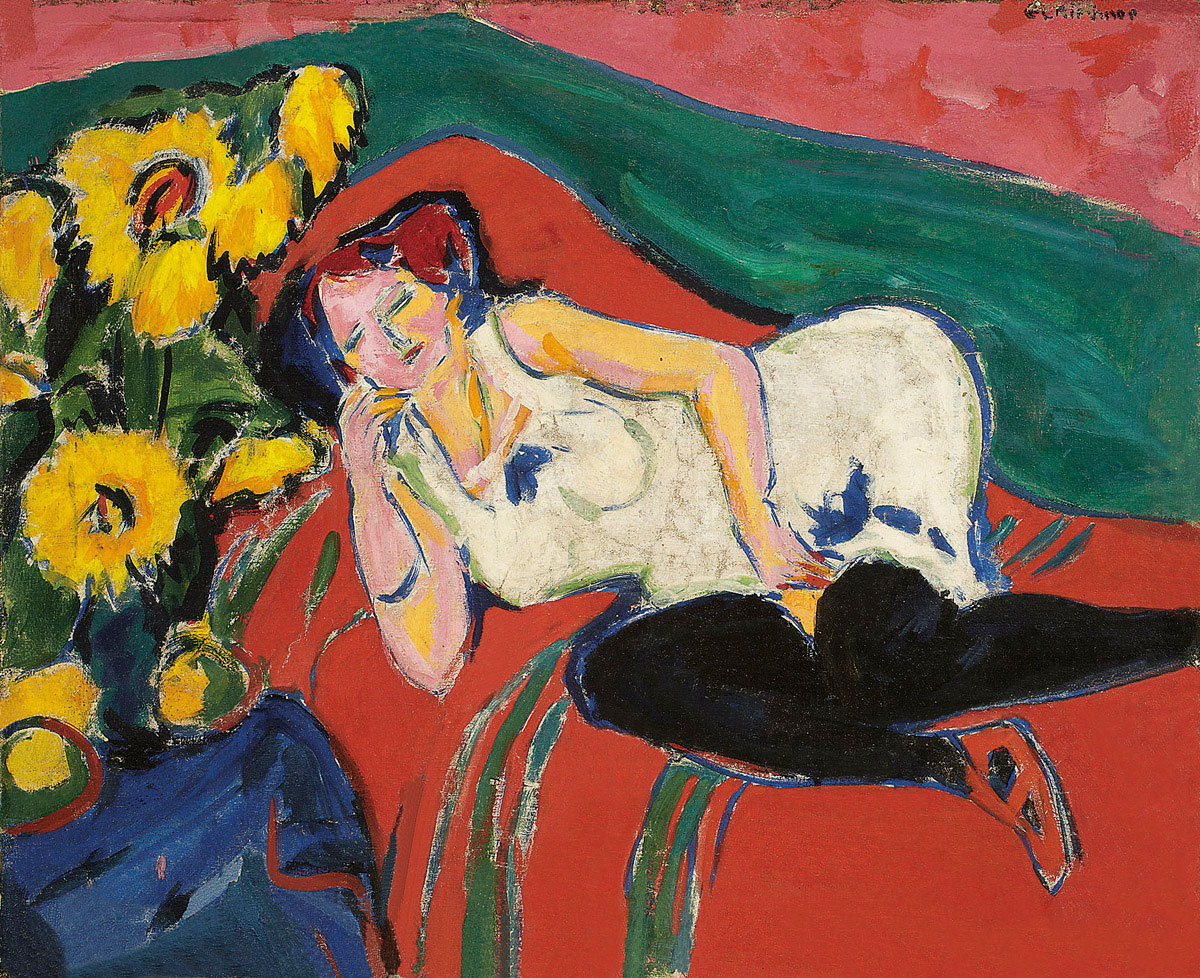
Ernst Ludwig Kirchner (German 1880-1938) 'Reclining woman in a white chemise' (Liegende Frau im weiβen Hemd) 1909


Ernst Ludwig Kirchner (German, 1880-1938)
Reclining woman in a white chemise (Liegende Frau im weiβen Hemd)
1909
Oil on canvas
95.0 x 121.0cm
Städel Museum, Frankfurt am Main
Acquired in 1950


NGV International
180 St Kilda Road

Opening hours:
Daily 10am – 5pm

National Gallery of Victoria website

LIKE ART BLART ON FACEBOOK

Back to top

Review: ‘Cloud’ by Guan Wei at Arc One Gallery, Melbourne

Exhibition dates: 1st June – 29th June, 2010


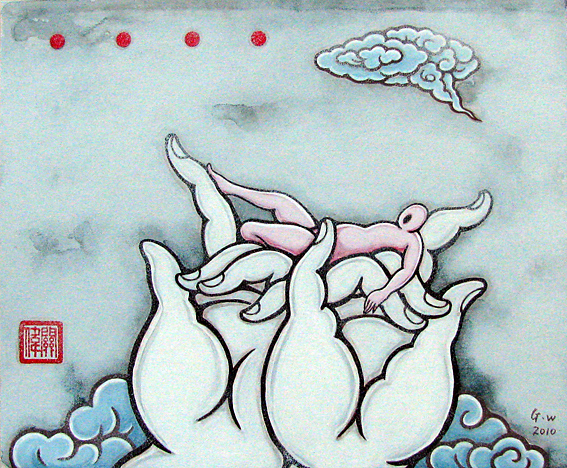
Guan Wei (China, b. 1957) 'Buddha's hand' 2010 from the exhibition 'Cloud' by Guan Wei at Arc One Gallery, Melbourne, June 2010


Guan Wei (China, b. 1957)
Buddha’s hand
2010


The exhibition Cloud by Australian artist Guan Wei at Arc One Gallery in Melbourne contains two bodies of work that are outstanding: the series of paintings on paper titled Buddha’s Hand and the series of five figurative sculptures titled Cloud. Each body of work compliments and informs the other.

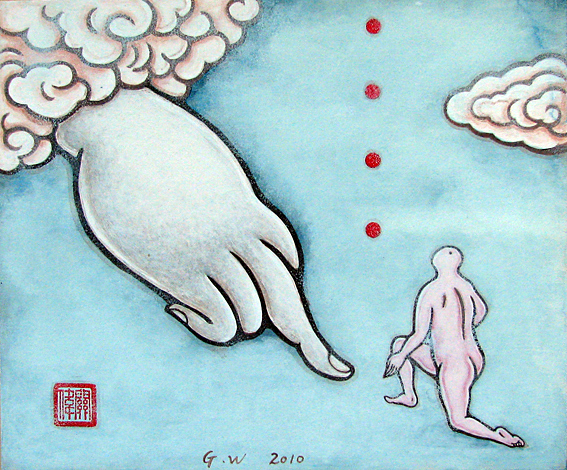
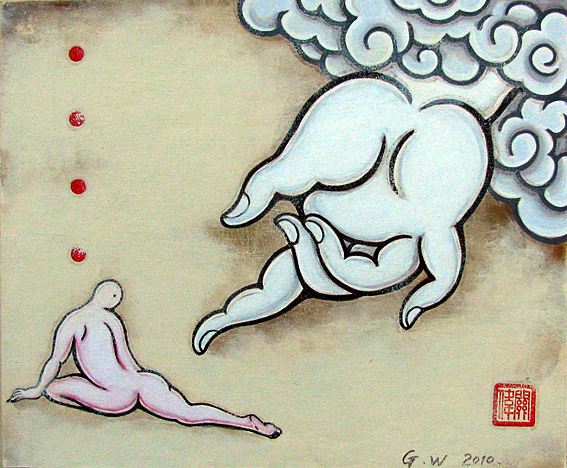
The small Buddha’s Hand paintings (see below) are the most delicate of creatures – sensual, poetic almost fetishistic in their composition and utterly beguiling in their beauty. Referencing the history of cave paintings of the Buddha, Wei updates the ancient allegories expressing his message of harmony and leisure, identity and place through visual symbolic representation. These works are profoundly moving, the figurative compositions balanced masterfully through colour, shape and form, studded with the punctum of red bindi-like energy centres arising from the faceless yogic figures.

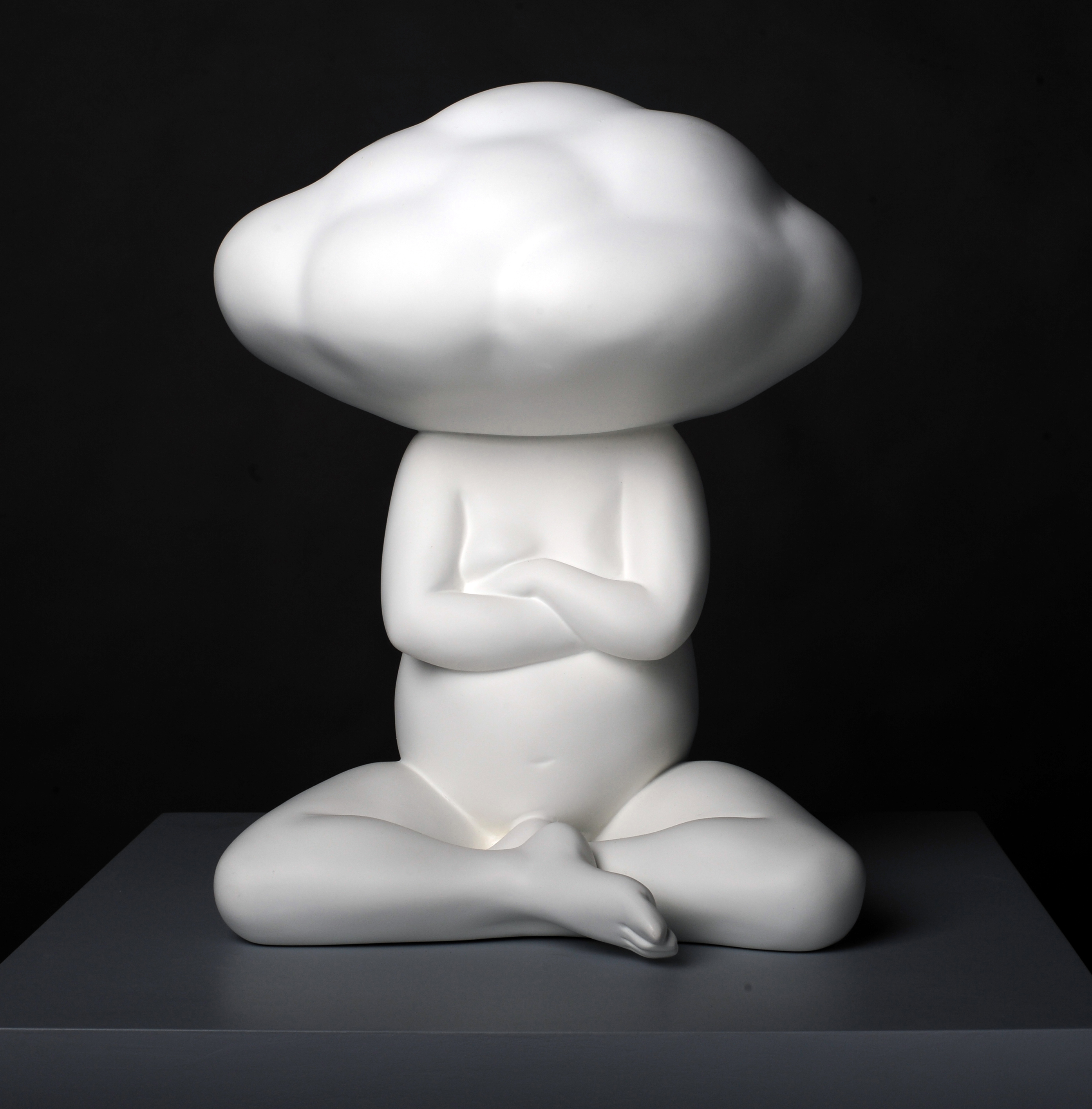
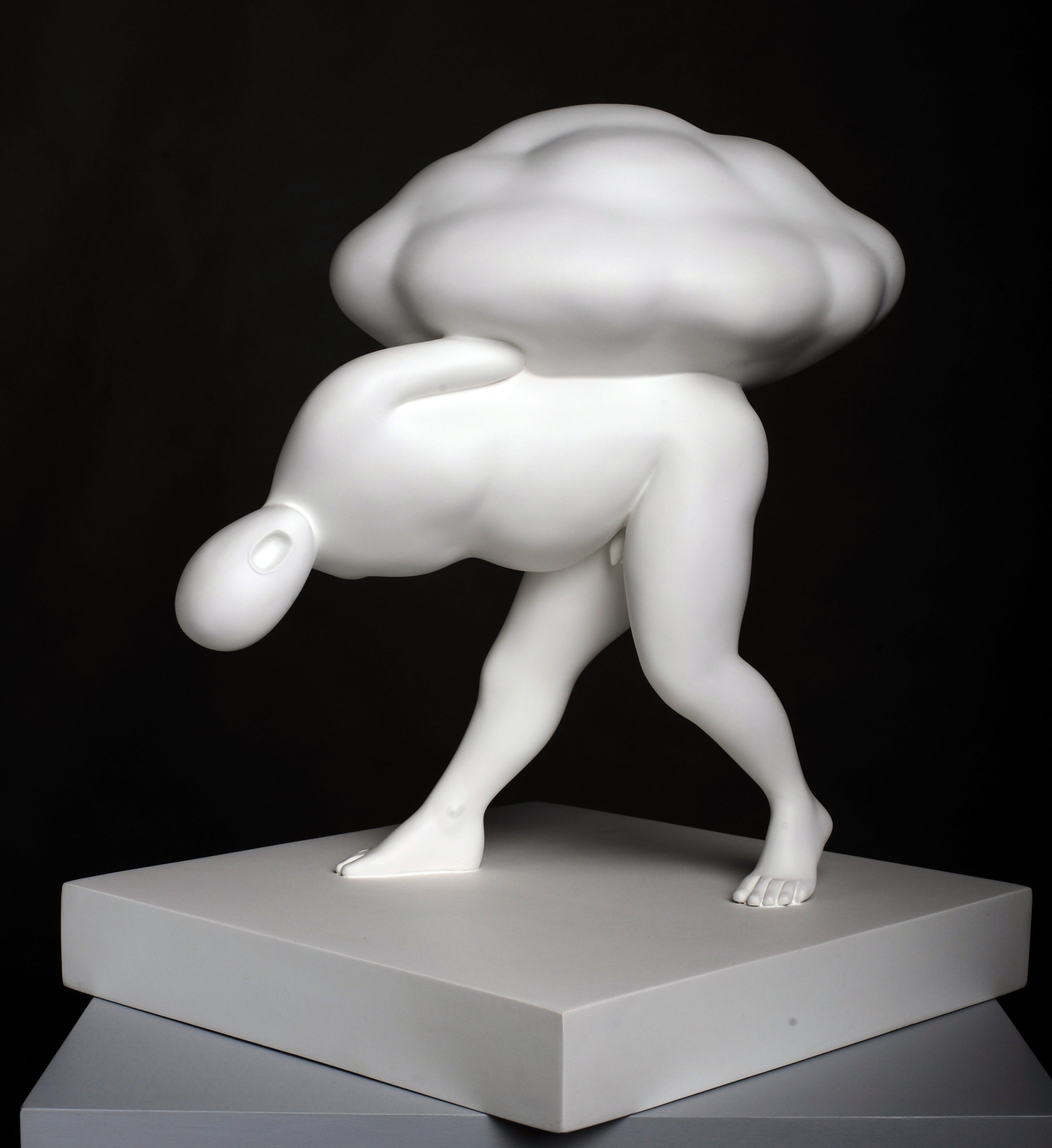
Sitting on white pedestals and positioned close to the Buddha’s Hand paintings in the gallery are the series of five Cloud figures (see below). Made of bronze that has been spray painted white these are wonderful sculptures, full of delicious humour and vibrancy. There is a sensuality and delicacy about the figures that is emphasised by their snowy whiteness, a whiteness that subverts the tactility, colour and weight that one usually associates with the metal bronze. Here the figure has, variously, it’s head in the clouds while pensively crossing arms; bearing the weight of the world on the back while the vacant mouth is open; preparing to throw the cloud as Zeus would a thunderbolt; reclining while balancing the cloud on one foot and with one foot stuck in the earth that is cloud. The cloud becomes a metaphor for thought and action in the world, acting on the world. In these sculptures there is no creed nor race, no ideology or nation and I believe that Wei attains his stated aim to redefine our relationship with one another and nature by transcending both. I am not alone in liking these sculptures – they have proved very popular and all five sculptures in editions of five have already sold out!

Other work in the exhibition is more prosaic – a multi-panelled screen, the On Cloud and Zodiac series never seem to breathe the same rarefied air as the above two bodies of work. They are disappointments that only serve to illuminate how brilliant holding the Buddha’s hand and living your life with your head in the clouds can be.

Dr Marcus Bunyan


Many thankx to Angela Connor and Arc One Gallery for allowing me to reproduce the photographs in the posting. Please click on the photographs for a larger version of the image.


Guan Wei (China, b. 1957) 'Buddha's hand' 2010 from the exhibition 'Cloud' by Guan Wei at Arc One Gallery, Melbourne, June 2010


Guan Wei (China, b. 1957)
Buddha’s hand
2010


Guan Wei (China, b. 1957) 'Buddha's hand' 2010


Guan Wei (China, b. 1957)
Buddha’s hand
2010


“I hope that we will be able to transcend the restrictions imposed on us by such notions as nation, ethnicity, ideology, cultural and history, and redefine our relationship with one another and nature.”


Guan Wei


Guan Wei is an adept storyteller who masterfully engages his audiences. Retaining the humour, wisdom and cross-cultural knowledge that have become characteristics of his ongoing oeuvre, his work breathes an awareness of our current social and environmental dilemmas exploring ideas of immigration, colonisation, identity politics and cultural tolerance.

Flirtatious and aesthetically whimsical, Guan Wei’s works are instantly recognisable. In this latest exhibition, Cloud, Guan Wei fuses sculpture, drawings and paintings to form what is part of his most beguiling trademark – ‘the art of idleness’. For the first time since returning to China, he will present new sculptures that employ his ongoing preoccupation with the figure and the figure in relation to the natural form. These sculptures are Guan Wei’s personal visual symbols of harmony and leisure. They form the thread for the four series of works in this exhibition.

During the past fifteen years, Guan Wei has help change the identity of Australian Art. He draws on his own experience as a Chinese national who migrated to Australia from China in the period following the Tiananmen Square massacre (1989). Guan Wei has spent twenty years living and working as an artist raising the awareness of Australia being a multicultural country. He has had over 40 solo exhibitions, been the recipient of numerous awards and included in every major collection. In 2009, Guan Wei was selected for the prestigious Clemenger Contemporary Art Award at the National Gallery of Victoria.

Press release from the Arc One Gallery website [Online] Cited 10/06/2010 no longer available online


Guan Wei (China, b. 1957) 'Cloud No.4' 2009 from the exhibition 'Cloud' by Guan Wei at Arc One Gallery, Melbourne, June 2010


Guan Wei (China, b. 1957)
Cloud No.4
2009
Bronze statue
edition of 5
39 x 30 x 25cm


Guan Wei (China, b. 1957) 'Cloud No.5' 2009


Guan Wei (China, b. 1957)
Cloud No.5
2009
Bronze statue
edition of 5
47 x 35 x 35cm


Arc One Gallery
45 Flinders Lane
Melbourne, 3000
Phone: +61 3 9650 0589

Opening hours:
Tuesday – Saturday 11am – 5pm

Arc One Gallery website

LIKE ART BLART ON FACEBOOK

Back to top

Exhibition: ‘The Navigators’ at Karen Woodbury Gallery, Melbourne

Exhibition dates: 5th May – 29th May 2010

Artists: Lionel Bawden, Penny Byrne, Nicholas Folland, Locust Jones, Rhys Lee, Rob McHaffie, Derek O’Connor, Alex Spremberg, Madonna Staunton


Lionel Bawden (Sydney, b. 1974) 'formless worlds move through me' 2010 from the exhibition 'The Navigators' at Karen Woodbury Gallery, Melbourne, May 2010


Lionel Bawden (Australian, b. 1974)
formless worlds move through me
2010
Coloured Staedtler pencils, epoxy, incralac
51.0 x 51.0 x 9.5cm


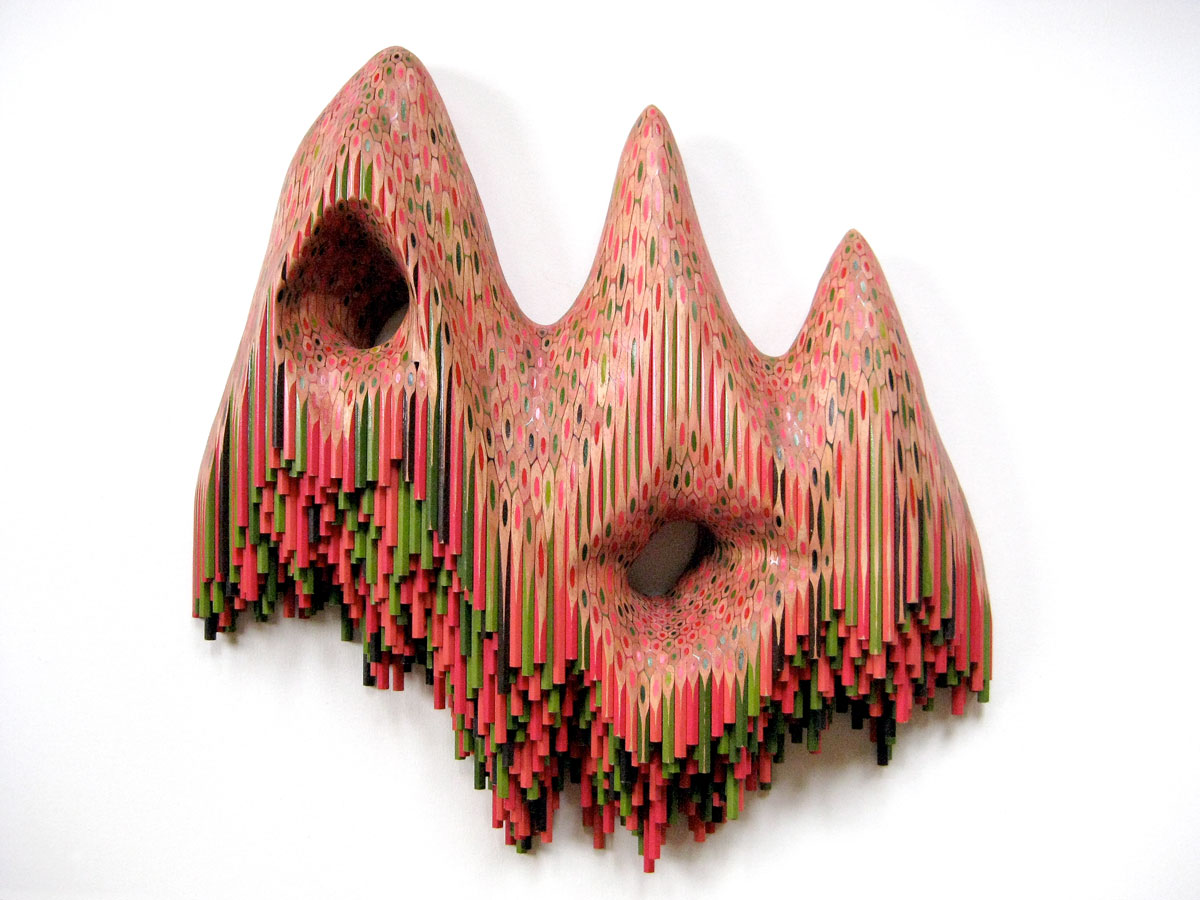
Some good work in this exhibition – especially the Staedtler hexagonal coloured pencil constructions by Lionel Bawden. Beautifully crafted by hand they remind me of ghosts, the ‘millefiori’ (thousand flowers) of Italian glass and the inside of caverns with their stalactites.

Dr Marcus Bunyan


Many thankx to the Karen Woodbury Gallery for allowing me to publish the photographs in the posting. Please click on the photographs for a larger version of the image.


Alex Spremberg (Australian, born Germany 1950) 'Inside skins' 2002 from the exhibition 'The Navigators' at Karen Woodbury Gallery, Melbourne, May 2010


Alex Spremberg (Australian born Germany, b. 1950)
Inside skins
2002


These artists have been selected for their interest in ideas of assemblage and re-use of pre-existing materials. Working across a range of media, each artist in the exhibition employs a process of manipulation to create completely different concepts and forms with their finished works. These works comprise of found objects and assembled from disparate elements, scavenged or foraged by the artists and juxtaposed in inventive ways. All works included in The Navigators take on their own form and imbue a new meaning to the original source materials.

Not originally intended as art materials, yet these artists have seen potential for a new idea in the materials; creating a new thought for the object. The original useful element of the preformed material thus comes under more aesthetic and creative significance. The impetus for such artistic practice is located in a desire by these artists to re-use, re-model, reshape and recycle within their practices. Despite an obvious interest and emphasis in the materiality of the works, the conceptual underpinning are the key motivation within these varying works and pose questions regarding the value of the objects within society. The artists included in The Navigators are continuously surveying and navigating their practice, allowing for deeper exploration in their work.

The exhibition will include various two and three-dimensional objects that interact with each other in unique ways. In the example of Lionel Bawden’s sculptures, his work exploits hexagonal coloured pencils as a sculptural material, reconfiguring and carving into amorphous shapes. Here the rich qualities of colour are explored as pencils are carved, shaped and fused together. Bawden explores themes of flux, transformation, rhythm and repetition as preconditions to our experience of the physical world. Bawden’s wall mounted works ‘the caverns of temporal suspension’ explore shapes within and outside the work as they hover ominously, melting, conjoined, growing, in transformation. These works are at the forefront of his current practice.

Penny Byrne’s work makes use of vintage porcelain sculptures that are adorned with a range of materials. Through this process, Byrne makes the base sculptures appear starkly different to that of the original, taking on new connotations that are often humorous and quirky but also convey political and social issues. In her work Mercury Rising. Hunted, Slaughtered, Eaten vintage porcelain dolphins and new plastic Manga figurines are employed to relate to the annual Japanese slaughter of tens of thousands dolphins as highlighted in the documentary ‘The Cove’. The Japanese eat the dolphins and then suffer mercury poisoning due to the high mercury levels in the dolphins flesh, leading to symptoms of madness.

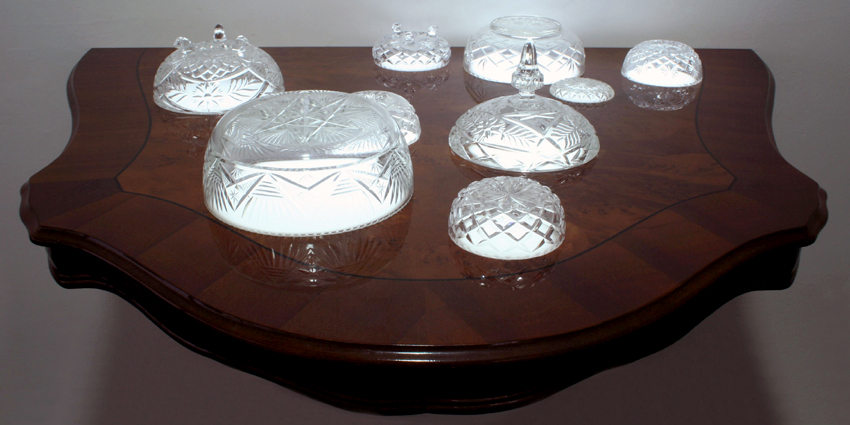
Nicholas Folland’s Navigator sculptures are indicative Folland’s continued interest in utilising, modifying and experimenting with various sourced materials. These sculptures comprise of various upturned intricately detailed crystal objects that sit above a wood panelled shelf. These glass object are lit and act as beacons or floating satellite cities. Folland personifies the intrepid creative explorer via his navigation of various found materials.

Locust Jones’ three-dimensional globes are made from papier mache and pictorially and graphically convey global issues. These works sit on the floor and allow the viewer to orient themselves around the works allowing for a detached, objective perspective on contemporary societal issues. The quickly worked surfaces reflect a stream of consciousness in process. Imagery and themes are taken from various media such as the Internet, photojournalism, film culture and nightly news broadcasts.

The two sculptures in the exhibition by Rhys Lee imbue associations of debris and deal with found objects such as a money box, a dead bird and a clowns face. These trophy-like pieces are decorated by old, worn and found vintage materials that engage with the everyday. The intimate scale of these works do not account for the potency of symbolism and accumulation of collected ideas. The blistered silver patina and bronze sculptures allude to a dark gothic sentiment that extends beyond the morphing forms. The shapes have been smashed, manipulated and stuck back together again resulting in frozen miniature icons that represent a contemporary zest for defiance.

Rob McHaffie’s works comprise a pastiche of painted anonymous unrelated objects and shapes that somehow come together to create unlikely compositions and formations. The highly skilled execution of McHaffie’s paintings attracts the viewer, who is then faced with a banality in subject matter, often of depictions of clothing, crumpled paper, plants and disfigured creatures and figures. These perfectly rendered images of everyday objects are unsettling in their clarity and realism, which are then skewed, moulded and displaced in unlikely relationships. There is a sense of a deliberate haphazard nature to McHaffie’s work that draws upon a range of elements brought together to mimic something else. Humour surfaces through this stylistic creative process.

Derek O’Connor’s re-worked painting collages resemble distorted and fragmented realities and stories via the manipulation and playful technique of alteration and re-use of book covers and record album and EP covers. O’Connor’s characteristic gestural sweeping luscious brushstrokes are employed with precision yet allow for organic spontaneity. The old material takes on new meaning and are given new life via O’Connor’s creations.

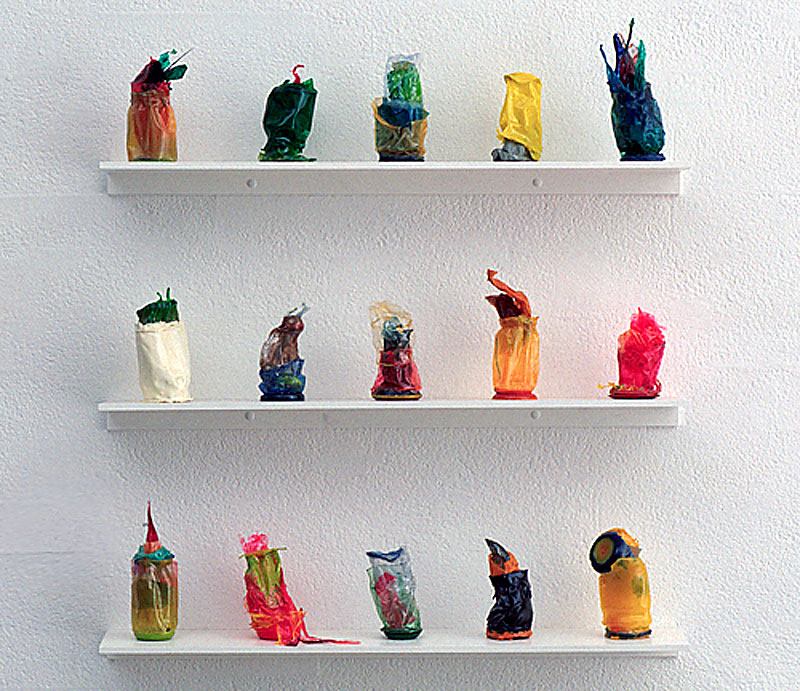
Alex Spremberg’s work Inside Skins highlights the artist’s accidental processes at work. This sculptural piece was made as an ancillary to his broader practice – working with acrylic, enamel and varnish on board and canvas. These objects where literally created via chance – an after thought that was noticed to be a finished piece in its own right. Left to dry within their containers these ‘skins’ were extracted and proved to provide aesthetic attraction and conceptual ideas of the ready-made.

The mainstay of Madonna Staunton’s practice surrounds the physicality of assemblage. Essentially she is a collage artist. The components of her two- and three-dimensional assemblages are usually drawn from old, faded and battered discards such as frames and chairs that are carefully put together in new ways and given another life. A play between precision and randomness animates her work. Her sensitivity to tonal and formal arrangement always remains acute during this process and the results are austerely and chaotically beautiful.

Press release from the Karen Woodbury Gallery website [Online] Cited 20/05/2010 no longer available online


Nicholas Folland (Australian, b. 1967) 'Navigators 1' 2008 from the exhibition 'The Navigators' at Karen Woodbury Gallery, Melbourne, May 2010


Nicholas Folland (Australian, b. 1967)
Navigators 1
2008
Glassware, table and lightbox
25.0 x 110.0 x 87.0cm


Nicholas Folland (Australian, b. 1967) 'Navigators 2' 2008


Nicholas Folland (Australian, b. 1967)
Navigators 2
2008
Glassware, table and lightbox
25.0 x 110.0 x 87.0cm


Karen Woodbury Gallery

This gallery has now closed.

LIKE ART BLART ON FACEBOOK

Back to top

Vale Mari Funaki

May 2010


It is with great sadness that I hear of the passing of Mari Funaki on the 13th May 2010.

I met Mari many times and she was always wonderfully generous with her energy, knowledge and enthusiasm. She was an amazing artist, I loved her work especially the stunning anamorphic black bracelets and the fact that she used photography of Bernd and Hiller Becher as part of her inspiration. My conversation with Mari in 2006 and photographs of her work can be found on the Notes from a Conversation with Mari Funaki posting.

Vale Mari Funaki


“A memorial will be held on Tuesday June 1st, 2010 at 11.00am in THE GREAT HALL of the National Gallery of Victoria, International.


Mari Funaki outside Gallery Funaki


Mari Funaki outside Gallery Funaki
Photo: Marcus Bunyan


Gallery Funaki website

LIKE ART BLART ON FACEBOOK

Back to top

Review: ‘A Shrine for Orpheus’ by Pip Stokes at fortyfivedownstairs, Melbourne

Exhibition dates: 11th May – 5th June, 2010


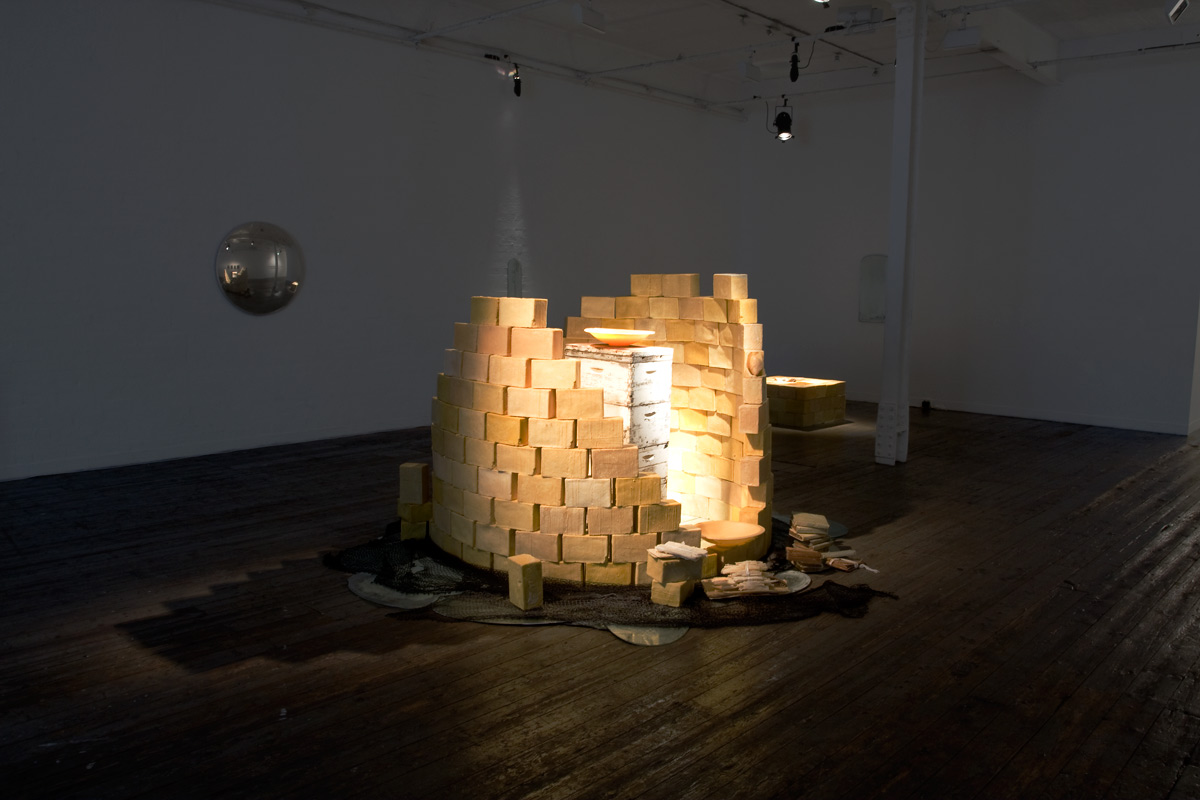
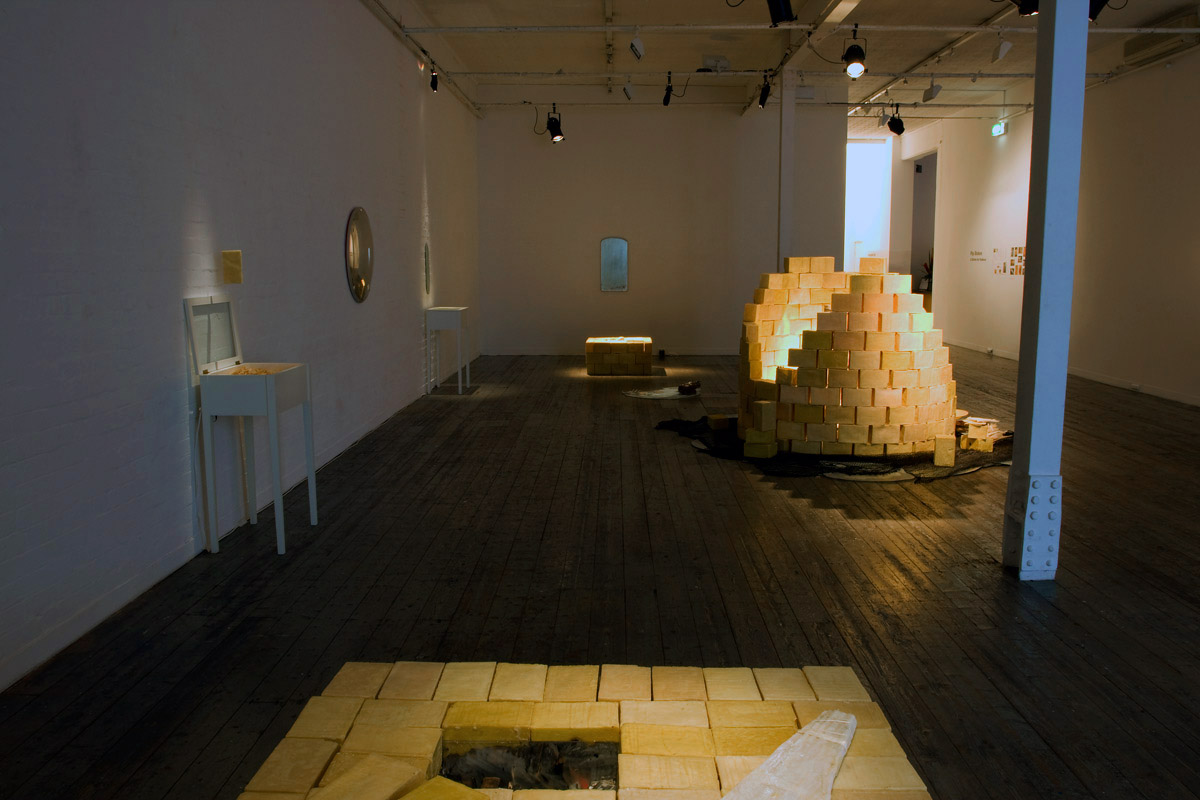
Installation view of the exhibition 'A Shrine for Orpheus' by Pip Stokes at fortyfivedownstairs, Melbourne

Installation view of the exhibition 'A Shrine for Orpheus' by Pip Stokes at fortyfivedownstairs, Melbourne


Installation views of the exhibition A Shrine for Orpheus by Pip Stokes at fortyfivedownstairs, Melbourne
Photos: Marcus Bunyan


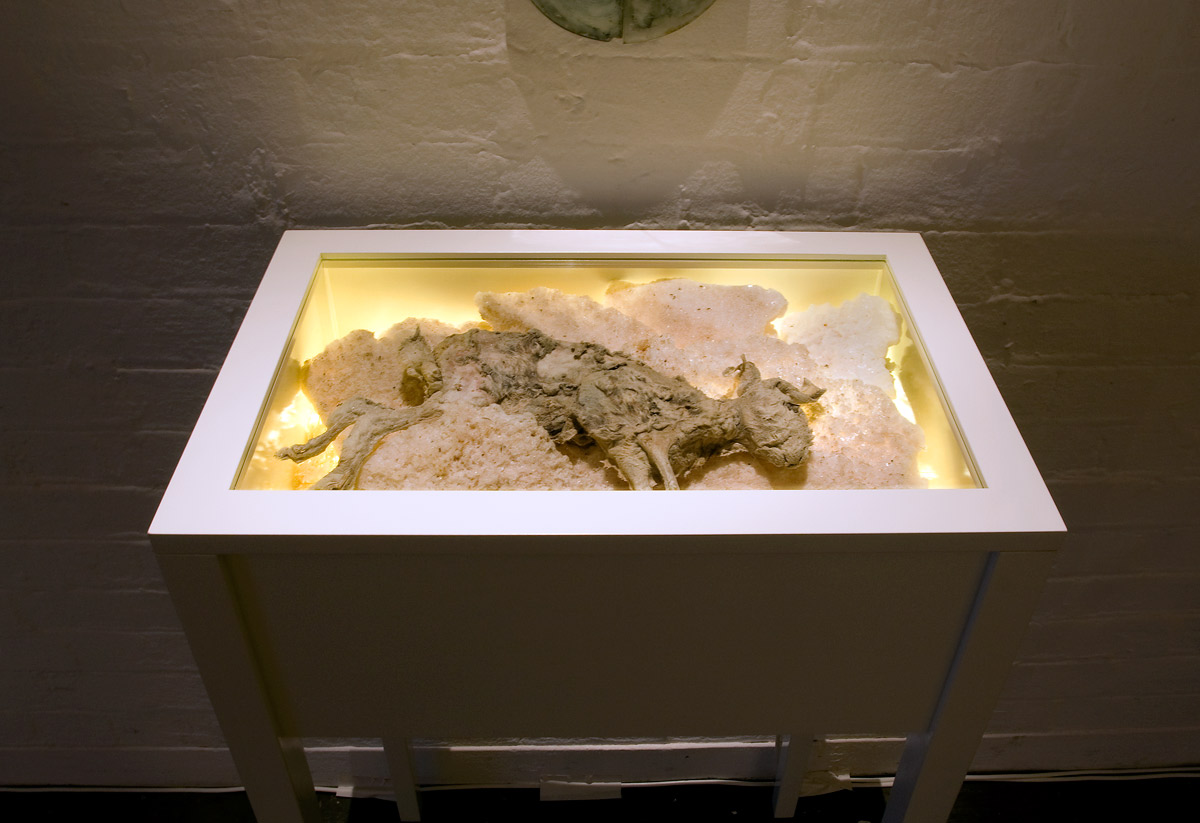
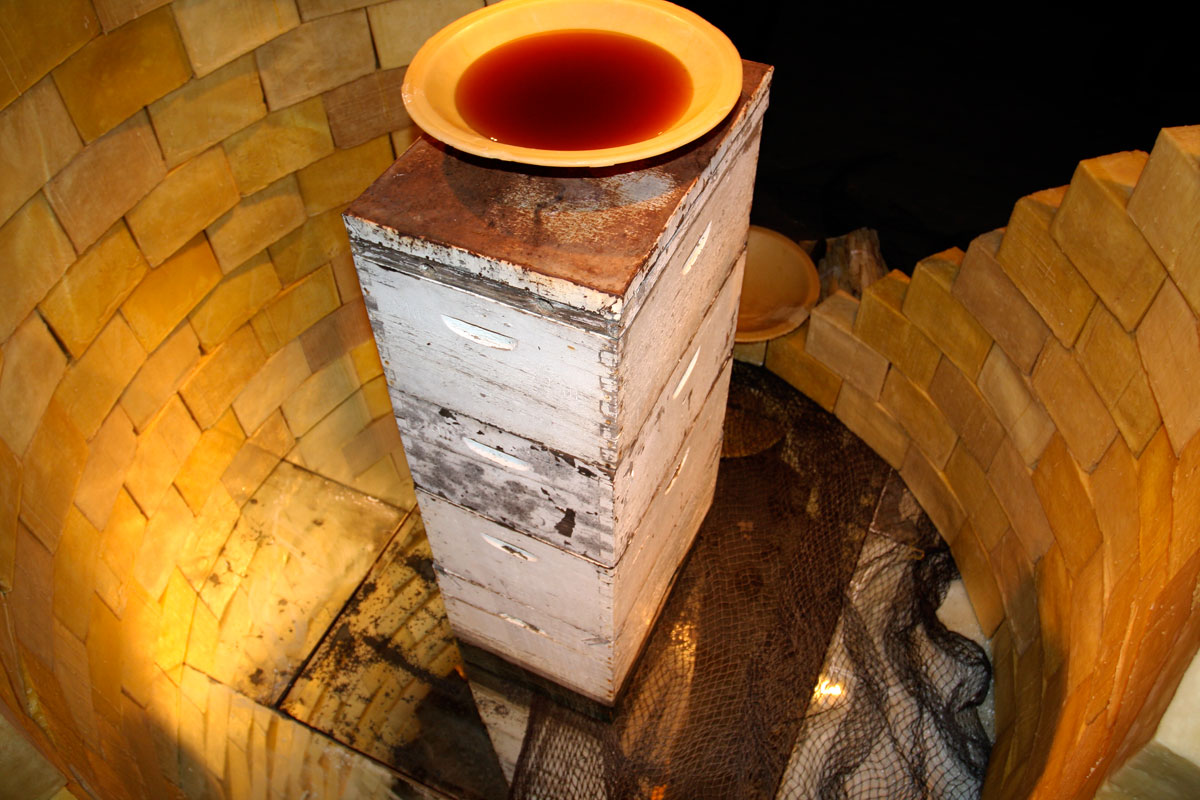
Bees, books, bones… and biding (one’s) time, attaining the receptive state of being needed to contemplate this work.

This is a strong, beautiful installation by Pip Stokes at fortyfivedownstairs that rewards such a process.

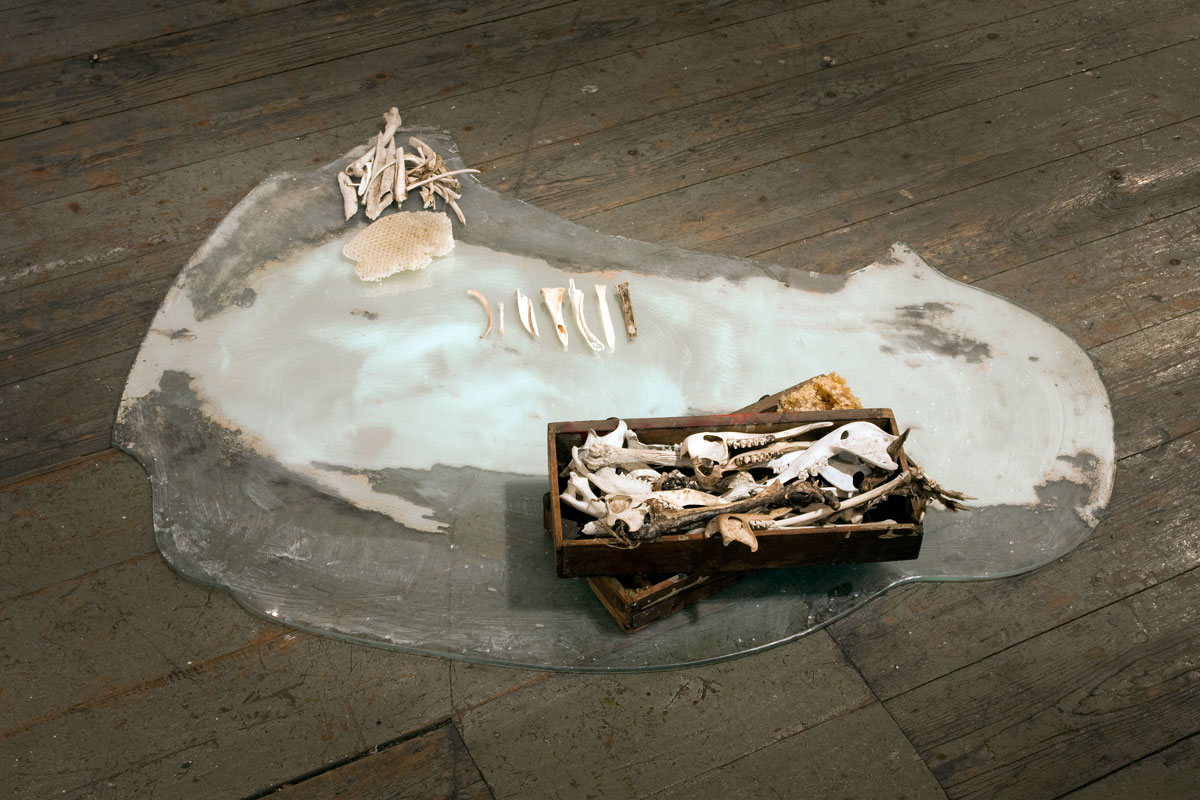
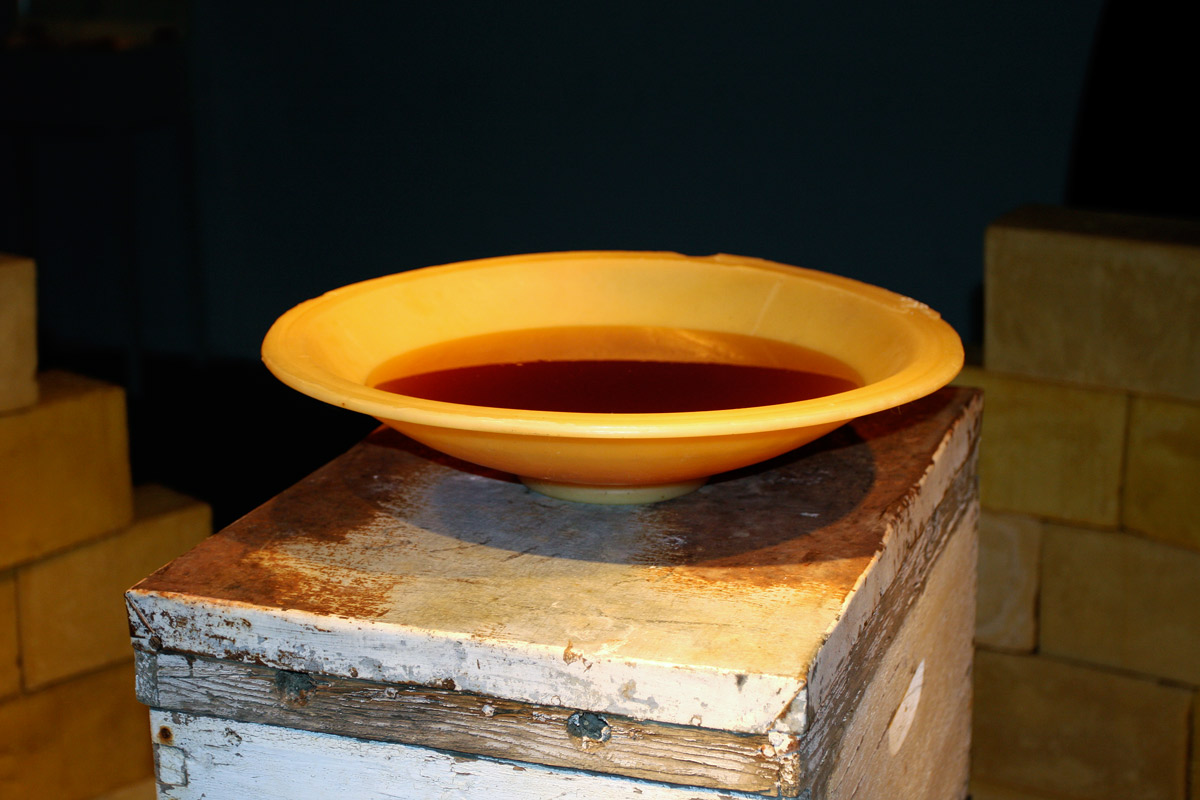
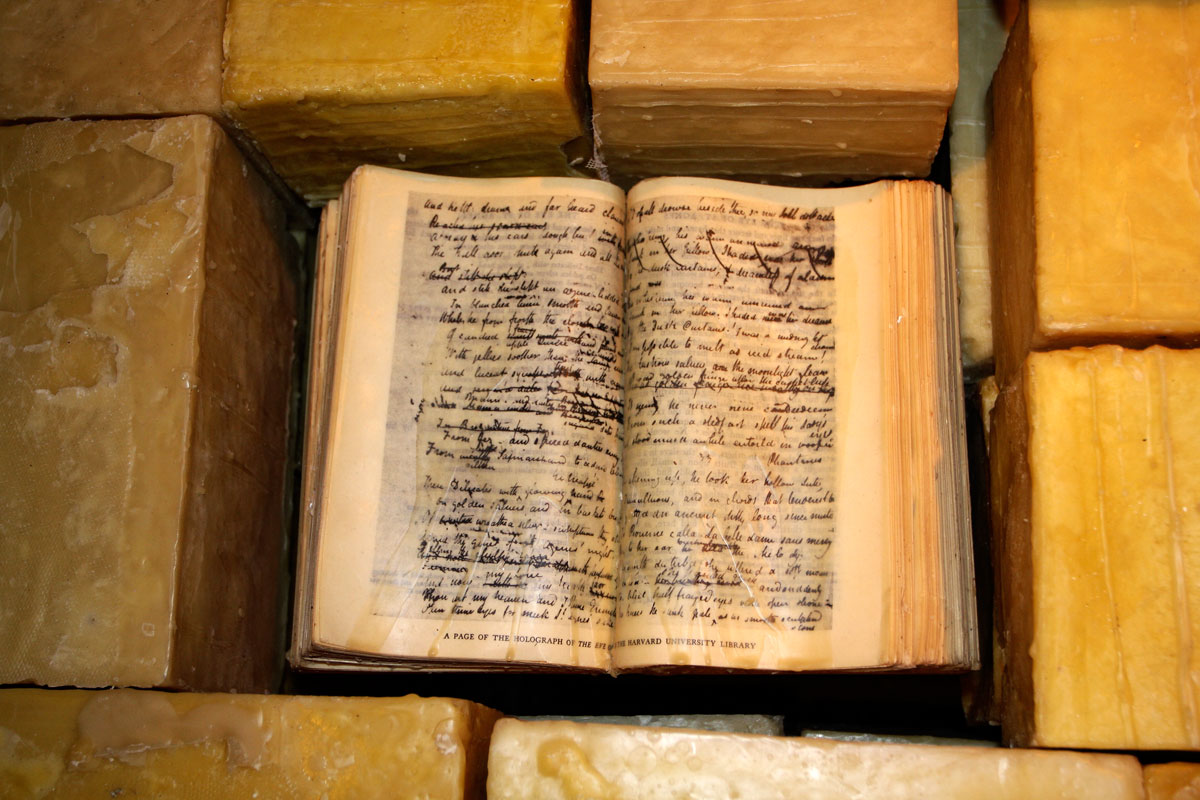
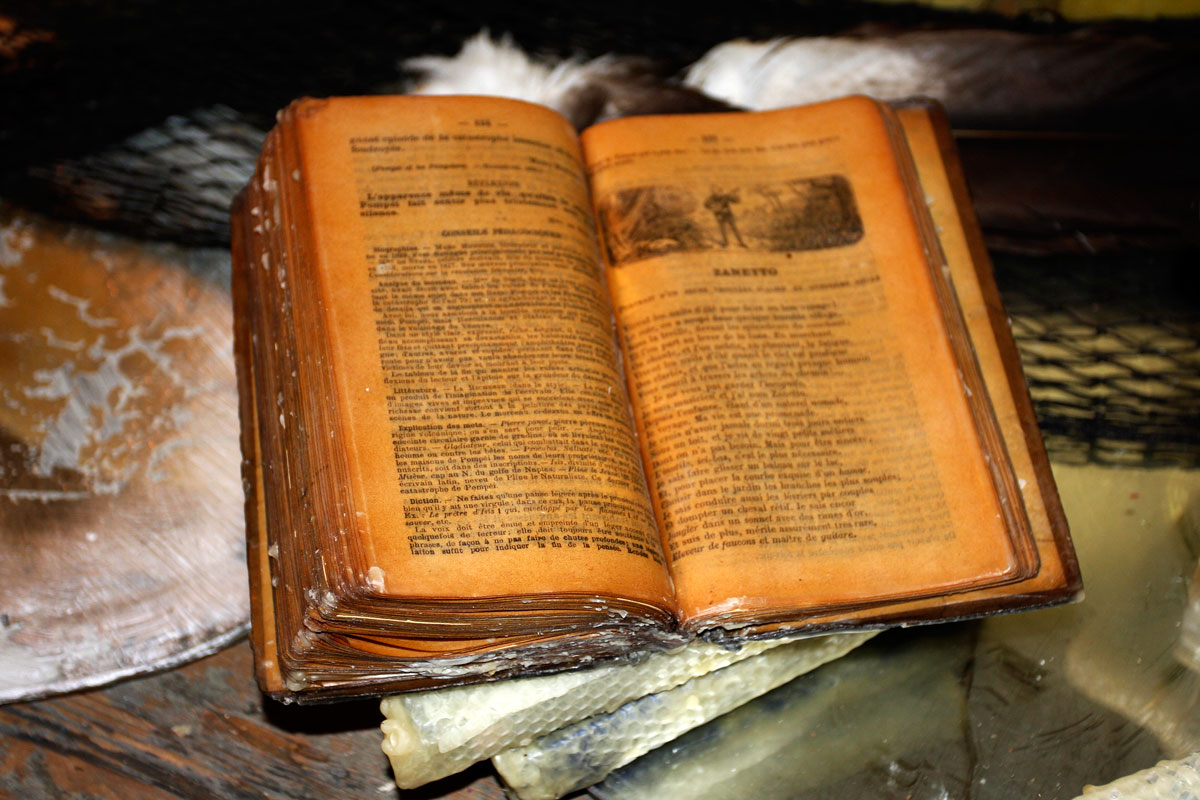
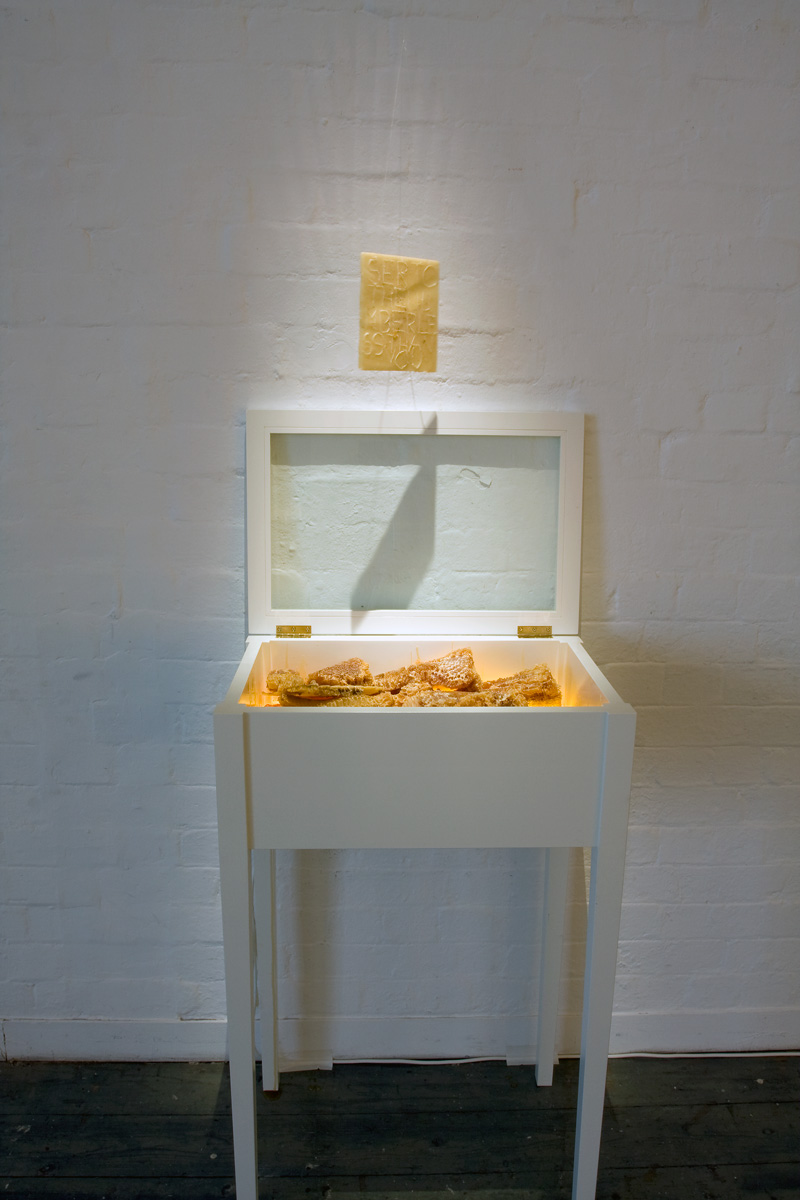
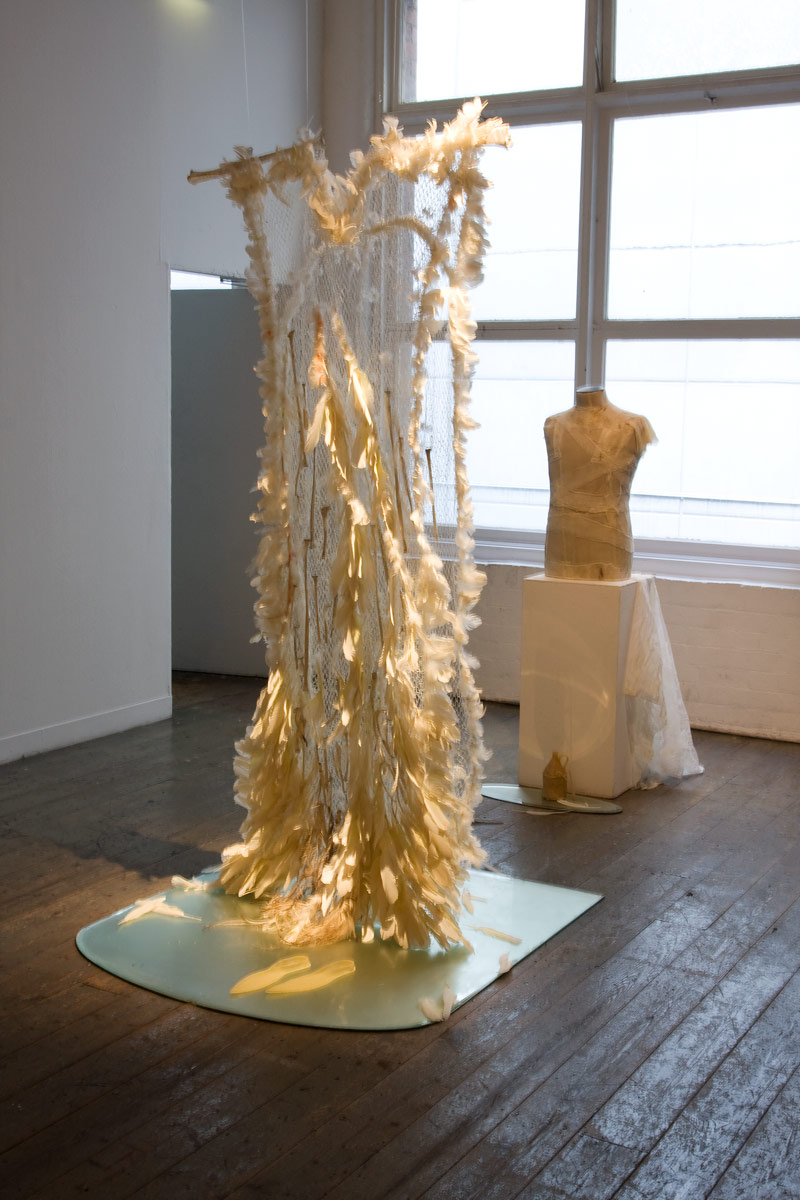
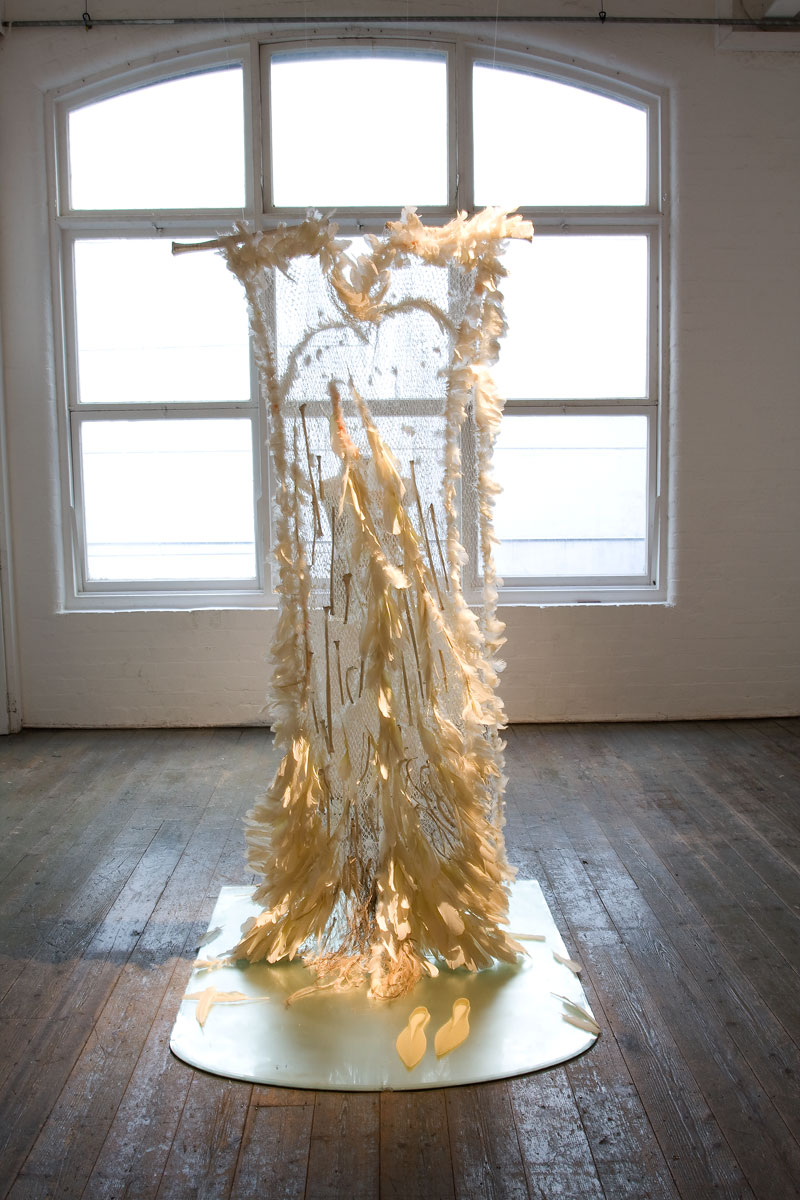
What is memorable about the work is the physicality, the textures: the sound of the bees; the Beuy-esque yellowness and presence of the beeswax blocks; the liquidness of the honey in the bowl atop the beehives; the incinerated bones, books and personal photographs; the tain-less mirrors, the books dipped in beeswax; the votive offering of poems placed into the beehive re-inscribed by the bees themselves – and above all the luscious, warm smell of beeswax that fills the gallery (echoing Beuys concept of warmth, to extend beyond the material to encompass what he described as ‘spiritual warmth or the beginning of an evolution’).

This alchemical installation asks the viewer to free themselves from themselves – “the moment in which he frees himself of himself and… gives the sacred to itself, to the freedom of its essence…” as Maurice Blanchot put its – a process Carl Jung called individuation, a synthesis of the Self which consists of the union of the unconscious with the conscious. Jung saw alchemy as an early form of psychoanalysis in which the alchemist tried to turn lead into gold, a metaphor for the dissolving of the Self into the prima materia and the emergence of a new Self at the end of the process, changing the mind and spirit of the Alchemist. Here the process is the same. We are invited to let go the eidetic memory of shape and form in order to approach the sacred not through ritual but through the reformation of Self.

As Pip Stokes last few paragraphs of her artist statement succinctly observes,

“Maurice Blanchot, has interpreted this myth as the descent of the artist to the realm of death to gain the work of art. Out of the failure of the artist, a necessary failure, emerges the artwork, wounded and bearing the ash of its origins.

The work of mourning, the work of healing.

Reflection, apparition, illusion: what appears as image, disappears evaporatively. As we change our place the space is already gone: the mirror holds a trace. What is veiled, enigmatic, uncertain remains as shadow that casts a light.”

The space in which we stand falls away: the mirror may hold a trace but it is only ever a trace. Our visions elude the senses, slipping between dreaming and waking, between conscious and subconscious realms. As Orpheus turns back to look so Eurydice dissolves, “falling out of the skin into the soul.” We, the viewer, are changed.

So far so good.

Unfortunately what does not facilitate this engagement with change is the combined verbiage of both the artist’s statement and the catalogue essay by Lisa Jacobson. These texts, especially the latter one, with quotations by Blanchot, Rilke, Calasso, Beuys, Cocteau, Neruda, Cobb, Virgil, Rilke again, Cocteau again, Poe and Derrida and meditations on mythos, the sacred, resurrection, mourning et al are mostly unnecessary to support what is strong work – in fact they seem to put a physical, textual wall between the viewer and the work, between the installation and the proposed dissolution of Self into the sacred. The catalogue essay is confusing and needed a judicious edit with the understanding that sometimes less is more! The work needs to speak for itself, not to be didactically spoken for and knowing when to merely suggest an idea is one of the skills of good writing. Perhaps all that was needed was the quotation by Blanchot and the two paragraphs above by Pip Stokes – nothing more.

Approaching the sacred is, I believe, and act of letting go, of aware-less-ness. As we immerse ourselves in that enigma we find that it is our fluid shadow aspect that has cast the light, with all attendant expectations, beliefs, dreams, visions, weaknesses, shortcomings, and instincts. This exhibition asks us to reconcile the journey into darkness with the hope of redemption.

Dr Marcus Bunyan


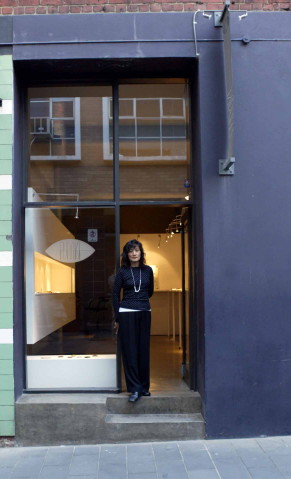
All photographs are installation shots of the exhibition. Please click on the photographs for a larger version of the image. All photographs courtesy of the artist and fortyfivedownstairs taken by © Marcus Bunyan who is completing an internship at the gallery.


The Gaze of Orpheus

Maurice Blanchot

“The Greek myth says: one cannot create a work unless the enormous experience of the depths – an experience which the Greeks recognised as necessary to the work, an experience in which the work is put to the test by that enormousness – is not pursued for its own sake. The depth does not surrender itself face to face; it only reveals itself by concealing itself in the work. But the myth also shows that Orpheus’ destiny is not to submit to that law – and it is certainly true that by turning around to look at Eurydice, Orpheus ruins the work… and Eurydice returns to the shadows; under his gaze, the essence of the night reveals itself to be inessential. He thus betrays the work and Eurydice and the night. But if he did not turn around to look at Eurydice, he still would be betraying,… the boundless and imprudent force of his impulse, which does not demand Eurydice in her diurnal truth and her everyday charm, but in her nocturnal darkness, in her distance, her body closed, her face sealed, which wants to see her not when she is visible, but when she is invisible, and not as the intimacy of a familiar life, but as the strangeness of that which excludes all intimacy; it does not want to make her live, but to have the fullness of her death living in her.”

“The sacred night encloses Eurydice, encloses within the song something which went beyond the song. But it is also enclosed itself: it is bound, it is the attendant, it is the sacred mastered by the power of ritual – that word which means order, rectitude, law, the way of Tao and the axis of Dharma. Orpheus gaze unties it, destroys its limits, breaks the law which contains, which retains the essence. Thus Orpheus’ gaze is … the moment in which he frees himself of himself and…, gives the sacred to itself, to the freedom of its essence…”


Installation view of the exhibition 'A Shrine for Orpheus' by Pip Stokes at fortyfivedownstairs, Melbourne

Installation view of the exhibition 'A Shrine for Orpheus' by Pip Stokes at fortyfivedownstairs, Melbourne


Installation views of the exhibition A Shrine for Orpheus by Pip Stokes at fortyfivedownstairs, Melbourne
Photos: Marcus Bunyan


A Shrine for Orpheus

Pip Stokes


The first temple was made by the bees with feathers, wax and honey.

~ Calasso


… it is Orpheus. His metamorphosis
In this one and this. We should not trouble
about other names. Once and for all
It’s Orpheus when there’s singing.

~ Rilke. Sonnets to Orpheus


We are the bees of the invisible
We frantically plunder the visible of its honey
To accumulate it in the great golden hive
Of the invisible

~ Rilke


In mythology, honey was regarded as a spiritual substance and the bees were godly… This belief was… influenced by the whole process of honey production as constituting a link between earthly and heavenly levels. The influx of a substance from the whole environment – plants, minerals, and sun – was the essence of the bee-cult… The whole builds a unity, … in a humane, warm way, through principles of cooperation and brotherhood.

~ Beuys


This installation, A Shrine for Orpheus, comprises four hundred hand cast beeswax blocks and a traditional beebox, in use by the bees until recently, accompanied by found objects such as old mirrors as well as ephemera collected from nature including feathers, bones and the salt mummified skeleton of a rabbit. Over the past year I have worked with the living beehive, placing votive offerings associated with poetry, death and renewal into the hive: objects such as books, cast wax pages, vessels, textiles and bones. Melbourne writer, Paul Carter has engraved wax tablets with aphoristic poems to the bees. These objects have been transformed through the bees’ processes of honeycomb- building.

The metaphors of the beehive in this connection to poetry, death and renewal are explored in the materials and structures of the installation. The warm sweet- smelling wax of the bees, cast into six sided blocks, provides the building material for the Shrine and two mausoleums, each with a void space, a space of underworld. The void of the larger mausoleum contains, ashy, burnt books, personal photos from family albums scorched by fire, evoking ‘shades’, the shadowy dead – and porcelain-like bones which have been materially transformed by cremation in a kiln. The second beeswax ‘grave’ has two voids, one of which contains a beeswax- bound and dipped facsimile of handwritten poems by Keats and, in the other opening, a book of insect morphology, also dipped and bound in beeswax.

The traditional beebox in the centre of the ruin of the Shrine is placed on a lake of mirrors. The mirrors have lost their tain and been translucently washed with plaster of Paris to further dim our view into the obscurely reflective world that lies beneath. The Shrine is accompanied by offerings of honey, honeycomb, beeswax bound books and pages cast from beeswax awaiting new poems, laid at its entrance.

Myths of death, dismemberment, transformation and resurrection have haunted the Western imagination from Isis to Dionysus, Orpheus and Christ. In his essay, The Gaze of Orpheus, the French literary theorist, Maurice Blanchot, has interpreted this myth as the descent of the artist to the realm of death to gain the work of art. Out of the failure of the artist, a necessary failure, emerges the artwork, wounded and bearing the ash of its origins.

The work of mourning, the work of healing.


Reflection, apparition, illusion: what appears as image, disappears evaporatively. As we change our place the space is already gone: the mirror holds a trace. What is veiled, enigmatic, uncertain remains as shadow that casts a light.

The temple re admits this invisible.


Pip Stokes. May. 2010
A Shrine for Orpheus

Beeswax, beehive box, mirror. Mixed media, dimensions variable.
Original texts by Paul Carter, writer.
Sound by Kasimir Burgess, filmmaker.


Installation view of the exhibition 'A Shrine for Orpheus' by Pip Stokes at fortyfivedownstairs, Melbourne

Installation view of the exhibition 'A Shrine for Orpheus' by Pip Stokes at fortyfivedownstairs, Melbourne

Installation view of the exhibition 'A Shrine for Orpheus' by Pip Stokes at fortyfivedownstairs, Melbourne

Installation view of the exhibition 'A Shrine for Orpheus' by Pip Stokes at fortyfivedownstairs, Melbourne


Installation views of the exhibition A Shrine for Orpheus by Pip Stokes at fortyfivedownstairs, Melbourne
Photos: Marcus Bunyan


A Shrine for Orpheus

Lisa Jacobson

If Orpheus is guardian of the sacred arts, then it is possible that never before has there been a century so much in need of his song. This is because the world insists, on a daily basis, that we lose ourselves rather than commune with loss, to be drawn to darkness as logos rather than seek out its mythos. The myth of Orpheus has an integral role today in that it returns us and brings us back into communion with the sacred through poetry, dance, music and art.

Pip Stokes’ most recent exhibition, A Shrine for Orpheus, provides a mythic language for the story of Orpheus. It is a contemplation of myth that reflects back on itself in an endless refraction of associations and images; a visual representation of the myth itself which is never simple or linear but, rather, layered with metaphor and re-imaginings. Stokes’ installation reveals the ways in which myth enters us, but does not belong to us. Rather, we are the conduit through which myth runs and Orpheus, indeed, does run and has run through the dreams of humankind for as long as we have been able to dream.

This is in keeping with the Neo-Platonic notion, in which Orpheus plays no small part, that the figures of myth occupy not only the rooms of the psyche, but the rooms of other houses outside of us. It is not the artist who invents these figures of the psyche, of Orpheus and Eurydice, of Persephone and Hades, but they who reinvent themselves. The zeitgeist or midrash (as the Jewish mystics call the spirit of the times) summons up those gods it needs most. In Stokes’ work, it is Orpheus who answers this call.

Orpheus, playing quietly on his lyre in the middle of the forest, coaxes the animals out to listen, as Rainer Maria Rilke writes in his first sonnet to Orpheus:

“… And where there had been
just a makeshift hut to receive the music,
a shelter nailed up out of their darkest longing,
with an entryway that shuddered in the wind-
you built a temple deep inside their hearing.”


Summoning the animals translates, perhaps, into an ecological sensibility; to hear the call of Orpheus is to answer the ecological call, to re-sacralise nature. At a time when the world seems intent on hurtling towards its own demise, A Shrine for Orpheus inclines towards meditation and the transformation of nature, the stillness of catacombs, the quietness of wax, the purposeful industry of bees and silkworms, the potential for flight, the distillation of air, the reflective gaze, the emptying out of all colour until there are only shades of white: bleached bones, wax, ash, silk and paper, feathers in contemplation of flight as if, as the poet Pablo Neruda writes, “we lived falling out of the skin into the soul.” Like the bees which flew in through the open window of Stokes’ studio to busy themselves on the beeswax, even the very act of art-making has summoned and sung up, in its own way, the problematic aspects of creation. As Jean Cocteau observes in his film, Orphée, “Look for a lifetime in mirrors and you will see Death at work, like bees in a hive of glass.”

The music of Orpheus, as Noel Cobb has said, is “the activity of the theologos, the one who spoke with and about the Gods.” His sanctuary also encompasses poetry and art. Orpheus’ lyre has to do with both dismemberment and re-membering, god-like attributes, as Stokes alludes to in her depiction of Orpheus’ wax heart awaiting resurrection. Orpheus’ lyre was said to be strung with human sinews, and the music he plays as he sings nature and animals into being dips, inevitably, into the underworld, into death and decay, dismemberment, a scattering of the psyche into fields not yet dreamt of, in the act of its resounding. The wax which forms the foundation of Stokes’ Shrine for Orpheus, the books on which bees have fed in order to make their own inscriptions (texts by writers from Keats to the contemporary Paul Carter) also hint at resurrection and immortality. At the centre of this ‘temple’ is the beehive, symbol of transformation.

As Virgil notes in The Georgics in a section entitled “The Peculiarly Wonderful Features of Bees”, bee stock is immortal in that the hive itself is passed on from generation to generation, the structure keeps on singing, and never really dies despite the passing of the bees who composed it. In a similar fashion, Orpheus’ own lyre is carried forth, made from the shell of a tortoise whose death made possible the music itself. The heart of Orpheus, like his own severed head in the myth, does not cease its previous musicality, the song of its rhythmic beating. So too might the artist reach down into the darkness of herself, even if she risks being torn apart, knowing that the heart remains intact and can be resurrected.

Rilke again:

Only the man who has also raised
his lyre among the darkling shades
may be allowed a sense
of infinite praise.


Inside the Orphic vision which Pip Stokes’ art immerses itself in, everything is panoramic and ornamented by mythic figures whom we cannot ever really know, but only glimpse via the language of metaphor: the hand that plunges through the earth while one is gathering flowers, the hem of a beekeeper’s shroud-like coat, the thin silken thread of a worm, the trace of words upon wax, or feathers, burnt books or ash. These are the images that translate the emotion of the myth but which remain, nevertheless, untranslatable because should they be hardened into the prosaic everyday language of the world, they would cease to be mythos.

Perhaps it is for this very reason that Eurydice cannot be brought back up to the shining world of which Rilke writes, in a different poem on Orpheus, and that Orpheus himself rises into at the very moment Hermes ushers Eurydice once again below. Eurydice is too far into death to be brought back to life. She has sunk into the “dream within the dream” in which, as Edgar Allan Poe writes, we are all participants. All Orpheus can take with him is the imprint of her, the illicit gaze, the melancholic pathology of the backward glance, that perhaps was not so much hastily stolen as executed too quickly. How long must the artist gaze into the underworld? Is it ever enough? Must she not continually turn back and gaze at what cannot be brought to the surface but that she must, even so, attempt to translate? Is it this that Rilke refers to when he writes in his sonnets, “it is in overstepping that [Orpheus] obeys?” Cocteau, speaking about his film, commented that “Poets, in order to live must often die, and shed not only the red blood of their hearts, but the white blood of their souls, that flows and leaves traces which can be followed.”

There is loss in this of course, great loss, that Stokes’ art both acknowledges and makes a place for. As Orpheus travels along “the path ascending steeply into life” towards “the shining exit-gates,” he cannot help but glance back. In the sonnets Rilke cautions, “Be ahead of all parting as though it already were / behind you.” This has echoes of Jacques Derrida’s The Work of Mourning, in which he argues that mourning begins the moment friendship begins; that we cannot enter into relationship without becoming conscious of the loss that will inevitably come with the other’s death. Indeed, the very idea of this loss precipitates the event itself, leaves us prematurely bereft and continually turning back towards the absent loved one in our grief. And if we are always turning back, is not the artist most required to do so, is not the artist most compelled to incline her head towards the darkness in order to write of what stirs beneath the shining surface of the world, of what calls to be heard? Is this not the invisible that Orpheus calls into being through poetry, music and art? Orpheus rises in Rilke’s poem, and in Pip Stokes’ work. In fact, if we dare to journey with him, he will rise in us all.


Installation view of the exhibition 'A Shrine for Orpheus' by Pip Stokes at fortyfivedownstairs, Melbourne

Installation view of the exhibition 'A Shrine for Orpheus' by Pip Stokes at fortyfivedownstairs, Melbourne

Installation view of the exhibition 'A Shrine for Orpheus' by Pip Stokes at fortyfivedownstairs, Melbourne

Installation view of the exhibition 'A Shrine for Orpheus' by Pip Stokes at fortyfivedownstairs, Melbourne


Installation views of the exhibition A Shrine for Orpheus by Pip Stokes at fortyfivedownstairs, Melbourne
Photos: Marcus Bunyan


fortyfivedownstairs
45, Flinders Lane
Melbourne 3000

Opening hours:
Tuesday – Friday 12am – 6pm
Saturday 12pm – 4pm

fortyfive downstairs website

LIKE ART BLART ON FACEBOOK

Back to top

Exhibition: ‘William Eggleston: Democratic Camera, Photographs and Video, 1961-2008’ at The Art Institute of Chicago

Exhibition dates: 27th February – 23rd May, 2010


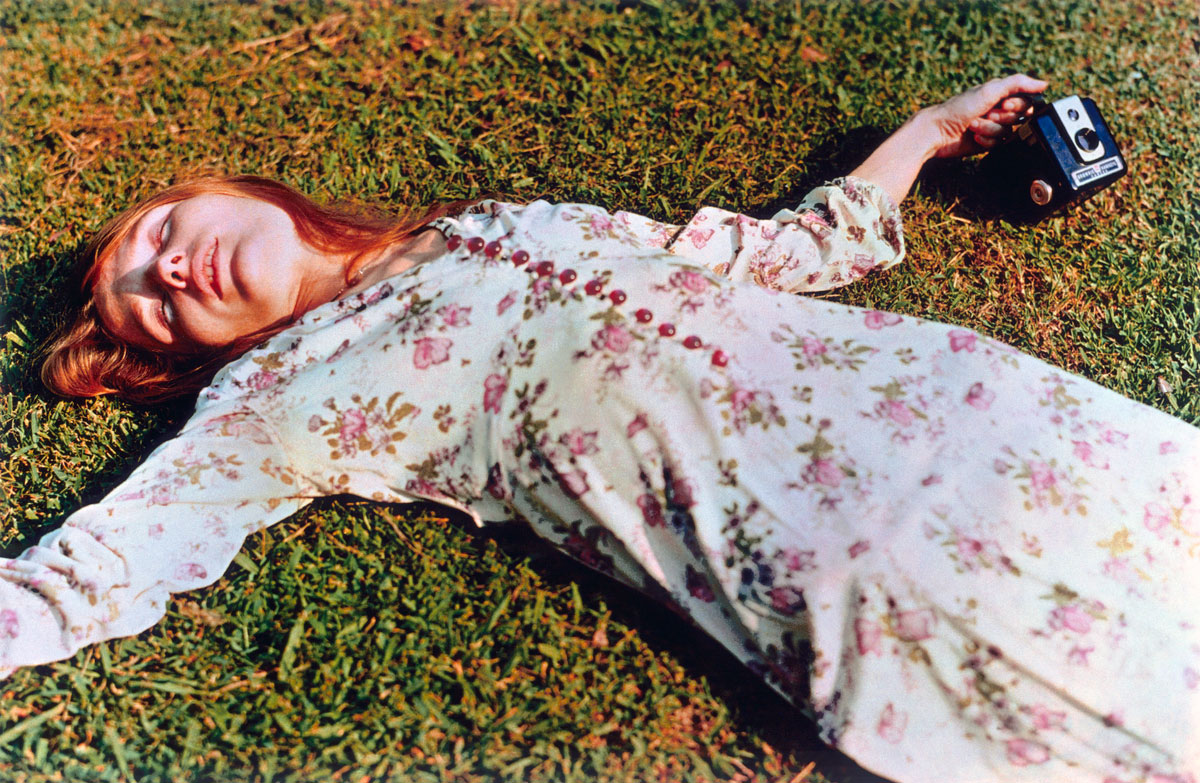
William Eggleston (American, b. 1939) 'Untitled (Memphis, Tennessee)' 1971 from the exhibition 'William Eggleston: Democratic Camera, Photographs and Video, 1961-2008' at The Art Institute of Chicago, February - May, 2010


William Eggleston (American, b. 1939)
Untitled (Memphis, Tennessee)
1971
from 14 Pictures, 1974
Dye transfer print
15 7/8 x 19 15/16 in (40.3 x 50.6cm)
Collection of Adam Bartos
© Eggleston Artistic Trust, courtesy Cheim & Read, New York


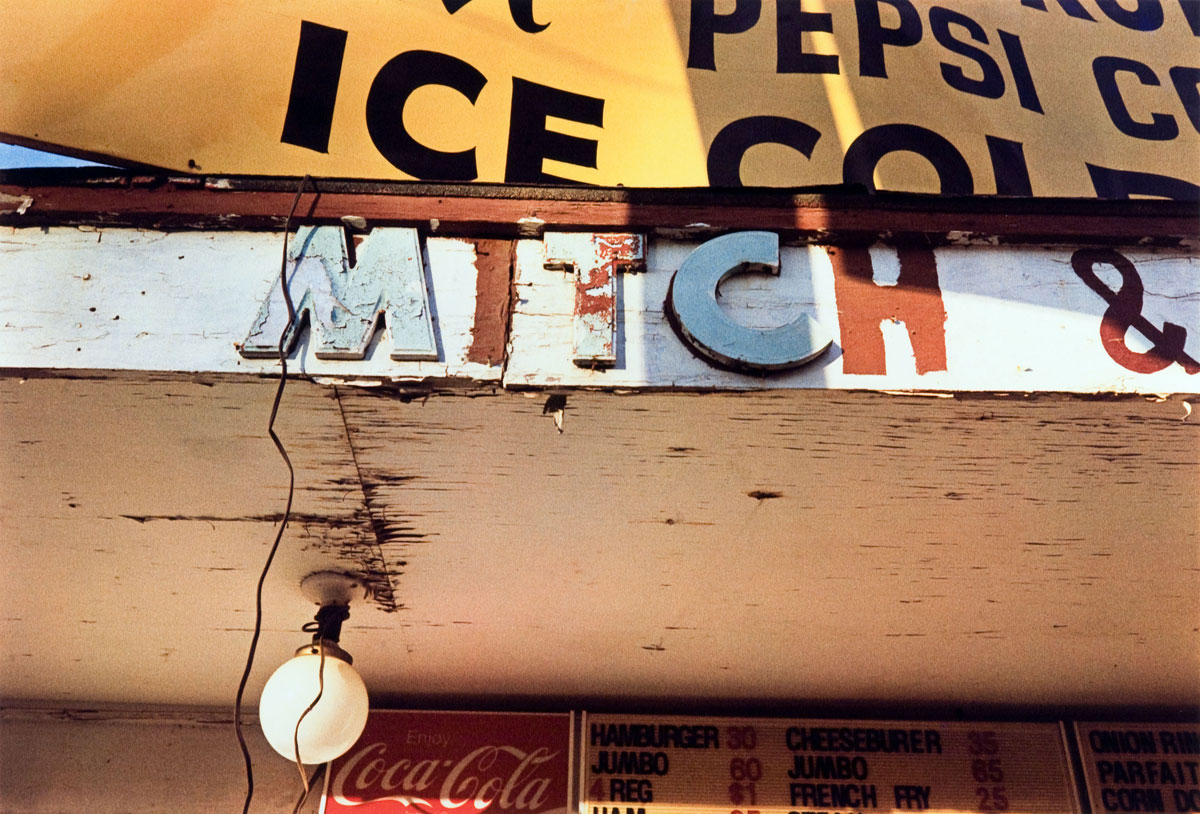
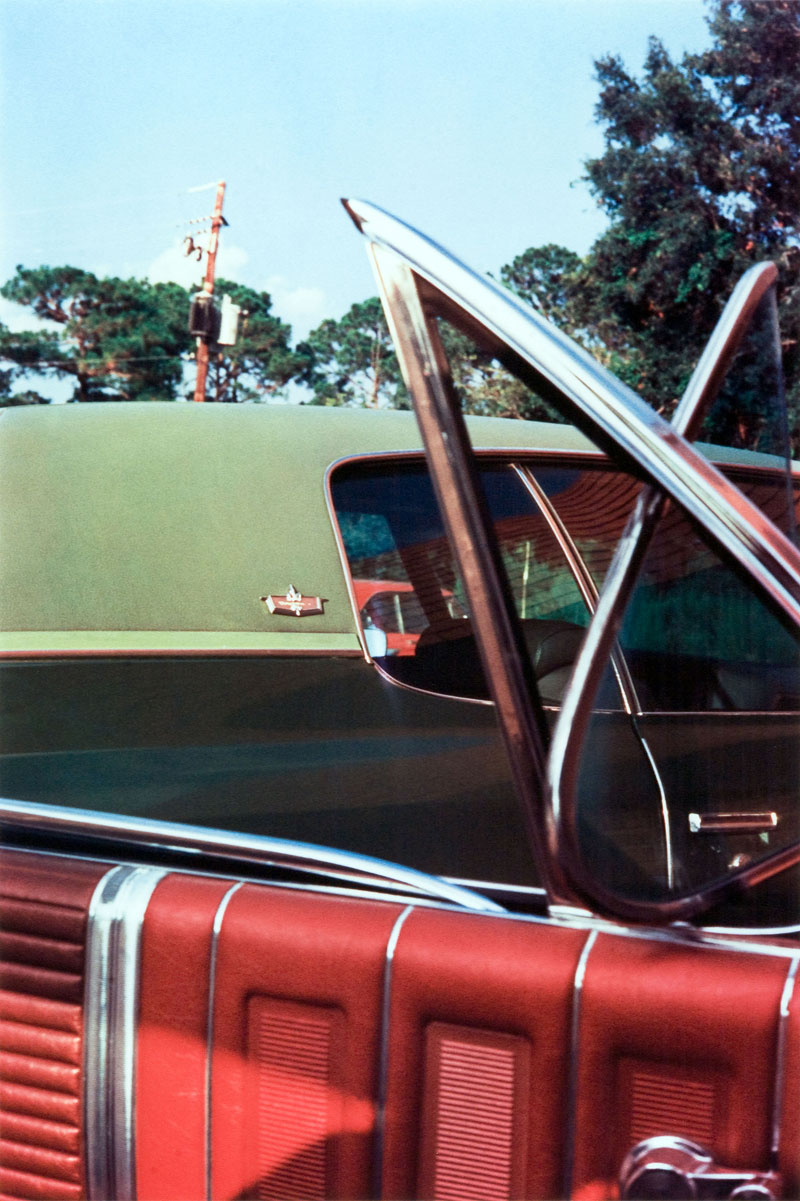
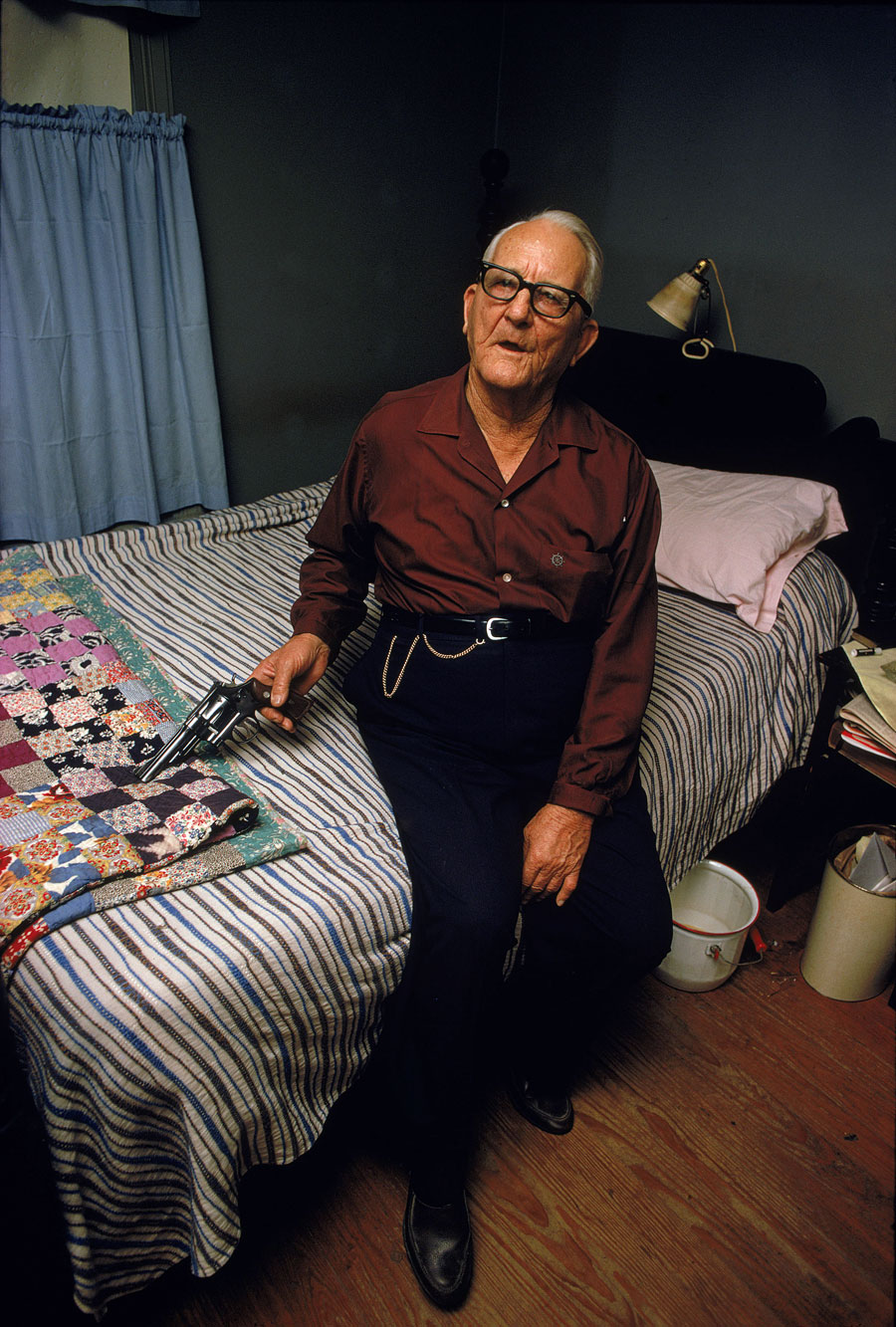
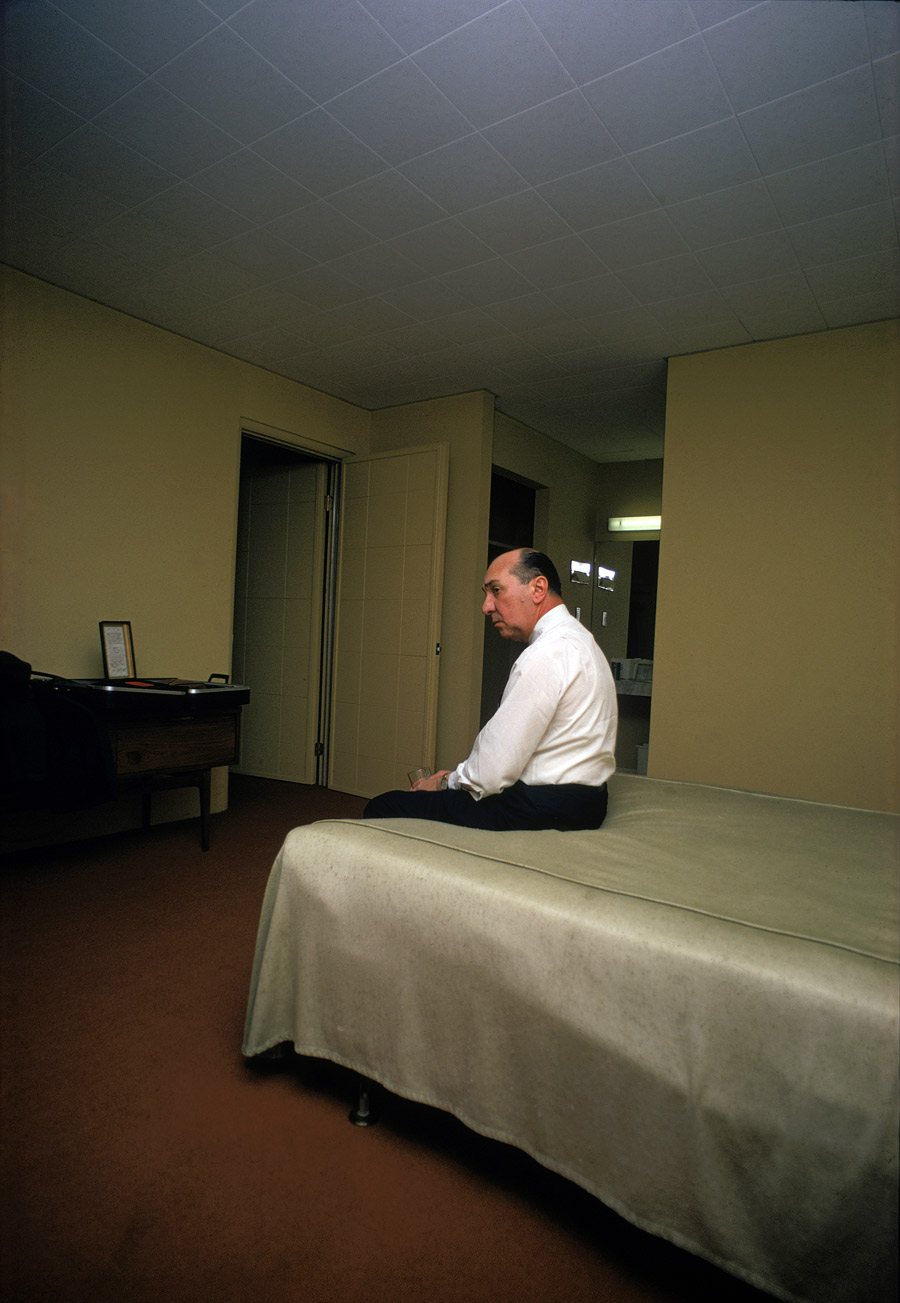
THE classic William Eggleston, the one and only. Feel the heat of sun on body. Look at the construction of the image plane, all angles and fractures. The slight movement of the woman’s hand as she sits on a cracked yellow wall. The distance between her body and the metal pole with wrapped chain and padlock, that ice/fire tension as Minor White would say. Man with gun vs melancholy monochromatic self portrait, the reverie of the lone thinker. Colour and light as emotional sounding board, “colour as a means of discovery and expression, and as a way to highlight aspects of life hidden in plain sight.” This is what Eggleston points his democratic camera at – life hidden in plain sight, revealed in all its intricacies, in all its mundanity and glory.

Dr Marcus Bunyan


Many thankx to Chai Lee and the Art Institute of Chicago for allowing to me reproduce the photographs in this posting. Please click on the photographs for a larger version of the image.


William Eggleston (American, b. 1939) 'Untitled' 1970 from the exhibition 'William Eggleston: Democratic Camera, Photographs and Video, 1961-2008' at The Art Institute of Chicago, February - May, 2010


William Eggleston (American, b. 1939)
Untitled
1970
from Los Alamos, 1965-1974 (published 2003)
Dye transfer print
16 x 20 in (40.6 x 50.8cm)
Whitney Museum of American Art, New York
Purchased with funds from the Photography Committee
© Eggleston Artistic Trust, courtesy Cheim & Read, New York


William Eggleston (American, b. 1939) 'Untitled' 1975 from the exhibition 'William Eggleston: Democratic Camera, Photographs and Video, 1961-2008' at The Art Institute of Chicago, February - May, 2010


William Eggleston (American, b. 1939)
Untitled
1975
Dye transfer print
16 x 20 in (40.6 x 50.8cm)
Cheim & Read, New York
© Eggleston Artistic Trust, courtesy Cheim & Read, New York


William Eggleston (American, b. 1939) 'Untitled' c. 1971-1973 from the exhibition 'William Eggleston: Democratic Camera, Photographs and Video, 1961-2008' at The Art Institute of Chicago, February - May, 2010


William Eggleston (American, b. 1939)
Untitled
c. 1971-1973
from Troubled Waters, 1980
Dye transfer print
15 7/8 x 19 15/16 in (40.3 x 50.6cm)
Collection Marcia Dunn and Jonathan Sobel
© Eggleston Artistic Trust, courtesy Cheim & Read, New York


William Eggleston (American, b. 1939) 'Untitled' Nd from the exhibition 'William Eggleston: Democratic Camera, Photographs and Video, 1961-2008' at The Art Institute of Chicago, February - May, 2010


William Eggleston (American, b. 1939)
Untitled
Nd
from Los Alamos, 1965-1974 (published 2003)
Dye transfer print
12 x 17 3/4 inches (30.5 x 45.1cm)
Private collection
© Eggleston Artistic Trust, courtesy of Cheim & Read, New York


William Eggleston (American, b. 1939) 'Untitled' Nd from the exhibition 'William Eggleston: Democratic Camera, Photographs and Video, 1961-2008' at The Art Institute of Chicago, February - May, 2010


William Eggleston (American, b. 1939)
Untitled
Nd
from Los Alamos, 1965-1974 (published 2003)
Dye transfer print
12 x 17 3/4 in (30.5 x 45.1cm)
Private collection
© Eggleston Artistic Trust, courtesy Cheim & Read, New York


The unconventional beauty and artistry of works by photographer William Eggleston will be showcased in a major exhibition opening at the Art Institute of Chicago this winter. William Eggleston: Democratic Camera, Photographs and Video, 1961-2008 – on view from February 27 through May 23, 2010, in the Modern Wing’s Abbott Galleries (G182, G184) and Carolyn S. and Matthew Bucksbaum Gallery (G188) – is the most comprehensive retrospective to date of the Memphis-based contemporary photographer. The exhibition brings together more than 150 extraordinary images of familiar, everyday subjects with lesser-known, early black-and-white prints and provocative video recordings, all produced over a five-decade period.

Born in 1939 in Memphis, Tennessee, and raised on his family’s cotton plantation in Mississippi, William Eggleston held a casual interest in photography until 1959, when he came across photo books by Henri Cartier-Bresson and Walker Evans. Among his earliest pictures, made during stints at universities in Tennessee and Mississippi, were black-and-white scenes found in his native South, as well as portraits of friends and family members.

By the 1960s and early 1970s he had begun experimenting with colour film, and he eventually produced rich, vivid prints through the dye transfer process – prints that are created through the alignment of three separate matrices (cyan, magenta, and yellow) generated from three separate negatives (red, green, and blue filters). The resulting prints are known for the vividness and permanence of their colours. Hence, Eggleston is often credited for single-handedly ushering in the era of colour art photography.

Eager to show his work to a broader audience, Eggleston traveled to New York with a suitcase of slides and prints to meet with Museum of Modern Art (MoMA) curator John Szarkowski. This visit eventually yielded a controversial but revolutionary exhibition in 1976 – MoMA’s first solo show to feature colour photographs – and a classic accompanying book, William Eggleston’s Guide. At this point in his career, Eggleston had already distinguished himself by treating colour as a means of discovery and expression, and as a way to highlight aspects of life hidden in plain sight.

William Eggleston: Democratic Camera, Photographs and Video, 1961-2008 demonstrates Eggleston’s “democratic” approach to his photographic subjects in both colour and black-and-white. Everything that happens in front of the camera is worthy of becoming a picture for the artist – no matter how seemingly circumstantial or trivial. Eggleston finds his motifs in everyday life, resulting in telling portrayals of American culture. His iconic images such as Elvis’s Graceland, a supermarket clerk corralling grocery carts in the afternoon sunlight, and a freezer stuffed with food proves that the photographer points his “democratic camera” at everything. Eggleston’s quiet, thoughtful pictures have profoundly impacted subsequent generations of photographers, filmmakers, and scholars.

The exhibition also includes Eggleston’s cult video work, Stranded in Canton. In the 1960s, Eggleston used film to document Fred McDowell, a well-known Delta blues musician, but ultimately abandoned the film project. Eggleston later acquired a video camera and began using video to shoot in bars and in people’s homes; sometimes he shot monologues friends delivered for his video camera, most often at night. The result, Stranded in Canton, recently restored and re-edited, is a portrait of a woozy subculture that adds dimension and texture to the world of Eggleston’s colour photographs.

Internationally acclaimed, Eggleston has spent the past four decades photographing around the world, responding intuitively to fleeting configurations of cultural signs and specific expressions of local colour. By not censoring, rarely editing, and always photographing even the seemingly banal, Eggleston convinces us completely of the idea of the democratic camera.

Press release from the Art Institute of Chicago website [Online] Cited 15/05/2010 no longer available online


William Eggleston (American, b. 1939) 'Untitled' Nd


William Eggleston (American, b. 1939)
Untitled
Nd
from Los Alamos, 1965-1974 (published 2003)
Dye transfer print
17 3/4 x 12 in. (45.1 x 30.5cm)
Private collection.
© Eggleston Artistic Trust, courtesy Cheim & Read, New York


William Eggleston (American, b. 1939) 'Untitled (Memphis Tennessee)' 1965


William Eggleston (American, b. 1939)
Untitled (Memphis Tennessee)
1965
from Los Alamos, 1965-1974 (published 2003)
Dye transfer print
17 ¾ x 12 inches (45.1 x 30.5cm)
Private collection.
© Eggleston Artistic Trust, courtesy of Cheim & Read, New York


William Eggleston (American, b. 1939) 'Memphis' c. 1969-1971


William Eggleston (American, b. 1939)
Memphis
c. 1969-1971
from William Eggleston’s Guide, 1976
Dye transfer print
24 x 20 in (61 x 50.8cm)
Collection of John Cheim
© Eggleston Artistic Trust, courtesy Cheim & Read, New York


William Eggleston (American, b. 1939) 'Morton, Mississippi' c. 1969-1970


William Eggleston (American, b. 1939)
Morton, Mississippi
c. 1969-1970
from William Eggleston’s Guide 1976
Dye transfer print
13 3/8 x 8 11/16 in (34 x 22cm)
Cheim & Read, New York
© Eggleston Artistic Trust, courtesy Cheim & Read, New York


William Eggleston (American, b. 1939) 'Huntsville, Alabama' 1971


William Eggleston (American, b. 1939)
Huntsville, Alabama
1971
from William Eggleston’s Guide 1976
Dye transfer print
20 x 15 7/8 in (50.8 x 40.3cm)
University of Mississippi Museum and Historic Houses, Oxford
© Eggleston Artistic Trust, courtesy Cheim & Read, New York


William Eggleston (American, b. 1939) 'Untitled' Nd from 'Los Alamos, 1965-1974'


William Eggleston (American, b. 1939)
Untitled
Nd
from Los Alamos, 1965-1974 (published 2003)
Dye transfer print
17 3/4 x 12 in (45.1 x 30.5cm)
Private collection
© Eggleston Artistic Trust, courtesy Cheim & Read, New York


William Eggleston (American, b. 1939) 'En Route to New Orleans' 1971-1974


William Eggleston (American, b. 1939)
En Route to New Orleans
1971-1974
from Los Alamos, 1965-1974 (published 2003)
Dye transfer print
17 3/4 x 12 in. (45.1 x 30.5cm)
Private collection
© Eggleston Artistic Trust, courtesy Cheim & Read, New York


Art Institute of Chicago
111 South Michigan Avenue
Chicago, Illinois 60603-6404
Phone: (312) 443-3600

Opening hours:
Friday – Monday 11am – 5pm
Thursday 11am – 8pm
Closed Tuesday and Wednesday

The Art Institute of Chicago website

LIKE ART BLART ON FACEBOOK

Back to top

Exhibition: ‘The Platinum Process: Photographs from the Nineteenth to the Twenty-First Century’ at Philadelphia Museum of Art

Exhibition dates: 27th February – 23rd May, 2010


Frederick H. Evans (British, 1853-1943) 'Kelmscott Manor: Attics' 1896 from the exhibition 'The Platinum Process: Photographs from the Nineteenth to the Twenty-First Century' at Philadelphia Museum of Art, February - May, 2010


Frederick H. Evans (British, 1853-1943)
Kelmscott Manor: Attics
1896
Platinum print
Image and sheet: 6 1/16 × 7 7/8 inches (15.4 × 20cm)
Philadelphia Museum of Art
Gift of the artist, 1932


Attics often serve as metaphors for the space where memories reside. Here Frederick Evans captures the warm glow, the simple, rough-hewn timbers, and the striking geometry of the attic at Kelmscott Manor, the beloved summer retreat of designer William Morris (British, 1834-1896).

Morris, the leader of the Arts and Crafts movement – which valued Britain’s craft tradition and rejected its industrial revolution – drew inspiration from the architecture and workmanship of Kelmscott, designed and constructed in the 1500s. In 1896 Morris invited Evans to photograph the home, which he felt embodied the memory of Britain’s aesthetic past.

Text from the Philadelphia Museum of Art website


Platinum prints always have such luminosity. A Sea of Steps by Fredrick H. Evans (1903, below) is a knockout. I remember some beautiful platinum prints many years ago (1989) up in Sydney at the Museum of Contemporary Art in the touring exhibition Robert Mapplethorpe: The Perfect Moment that were an absolute knockout as well. Pity he didn’t print them himself but they were still superlative!

Dr Marcus Bunyan


Many thankx to Shen Shellenberger and the Philadelphia Museum of Art for allowing me to publish the last five images in the posting. Please click on the photographs for a larger version of the image.


Frederick H. Evans (British, 1853-1943) 'Kelmscott Manor' 1896 from the exhibition 'The Platinum Process: Photographs from the Nineteenth to the Twenty-First Century' at Philadelphia Museum of Art, February - May, 2010


Frederick H. Evans (British, 1853-1943)
Kelmscott Manor
1896
Platinum print
Image and sheet: 7 3/8 × 4 1/4 inches (18.7 × 10.8cm)
Philadelphia Museum of Art
Purchased with funds contributed by Dorothy Norman and with the Director’s Discretionary Fund, 1968


Frederick H. Evans (British, 1853-1943) 'Angers: Prefecture, Sculptured Arches of 11th-12th Century' c. 1906-1907 from the exhibition 'The Platinum Process: Photographs from the Nineteenth to the Twenty-First Century' at Philadelphia Museum of Art, February - May, 2010


Frederick H. Evans (British, 1853-1943)
Angers: Prefecture, Sculptured Arches of 11th-12th Century
c. 1906-1907
Platinum print
Image and sheet: 9 11/16 × 7 7/8 inches (24.6 × 20 cm)
Philadelphia Museum of Art
Purchased with funds contributed by Dorothy Norman and with the Director’s Discretionary Fund, 1968


Frederick H. Evans (British, 1853-1943) 'Southwell Cathedral, Chapter House Capital' 1898


Frederick H. Evans (British, 1853-1943)
Southwell Cathedral, Chapter House Capital
1898
Platinum print
Philadelphia Museum of Art


Frederick H. Evans (British, 1853-1943) 'View across the nave to the transept at York Minster' 1901


Frederick H. Evans (British, 1853-1943)
View across the nave to the transept at York Minster
1901
Platinum print
Philadelphia Museum of Art


Frederick H. Evans (British, 1853-1943) 'Durham Cathedral: West End Nave' 1912


Frederick H. Evans (British, 1853-1943)
Durham Cathedral: West End Nave
1912
Platinum print
Image and sheet: 9 1/2 × 4 13/16 inches (24.1 × 12.3cm)
Philadelphia Museum of Art
Purchased with funds contributed by Dorothy Norman, 1973


Frederick H. Evans (British, 1853-1943) 'Ancient crypt cellars in Provins' 1910


Frederick H. Evans (British, 1853-1943)
Ancient crypt cellars in Provins
1910
Platinum print
Philadelphia Museum of Art


Frederick H. Evans (British, 1853-1943) 'Westminster Abbey: North Transept: East Side' 1911


Frederick H. Evans (British, 1853-1943)
Westminster Abbey: North Transept: East Side
1911
Platinum print
Image and sheet: 9 7/16 × 6 inches (23.9 × 15.3cm)
Philadelphia Museum of Art
Purchased with the Lola Downin Peck Fund, 1969


Frederick H. Evans (British, 1853-1943) 'Westminster Abbey: Staircase in Confessor's Chapel' 1911


Frederick H. Evans (British, 1853-1943)
Westminster Abbey: Staircase in Confessor’s Chapel
1911
Platinum print
Image and sheet: 9 1/2 × 6 1/8 inches (24.2 × 15.6cm)
Philadelphia Museum of Art
Purchased with the Lola Downin Peck Fund, 1969


Frederick H. Evans (British, 1853-1943) 'Westminster Abbey: From the South Transept' 1911


Frederick H. Evans (British, 1853-1943)
Westminster Abbey: From the South Transept
1911
Platinum print
Image and sheet: 9 1/2 × 7 7/16 inches (24.2 × 18.9cm)
Philadelphia Museum of Art
Purchased with the Lola Downin Peck Fund, 1969


Frederick H. Evans (British, 1853-1943) 'Westminster Abbey: East Ambulatory' 1911


Frederick H. Evans (British, 1853-1943)
Westminster Abbey: East Ambulatory
1911
Platinum print
Image and sheet: 9 5/16 × 6 11/16 inches (23.7 × 17cm)
Purchased with the Lola Downin Peck Fund, 1969


Frederick H. Evans (British, 1853-1943) 'Westminster Abbey: 12th-Century Mosaic Floor at the Sanctuary' 1911


Frederick H. Evans (British, 1853-1943)
Westminster Abbey: 12th-Century Mosaic Floor at the Sanctuary
1911
Platinum print
Image and sheet: 7 5/16 × 8 7/8 inches (18.6 × 22.6 cm)
Philadelphia Museum of Art
Purchased with the Lola Downin Peck Fund, 1969


Although Evans indicated that this mosaic floor was created in the twelfth century, the surface surrounding the High Altar of Westminster Abbey was in fact laid in 1268. King Henry III (1207-1272) commissioned the mosaic from Roman craftsmen who specialised in the opus sectile, or “cut work” technique, commonly called “Cosmati” after a well-known Italian family of mosaic artists. Materials used here include blue, red, and turquoise glass as well as yellow limestone, purple porphyry, green serpentine, and onyx. Evans’s unusual composition privileges the floor, drawing attention to the intricate and abstract design of squares, rectangles, and roundels.

Text from the Philadelphia Museum of Art website


Frederick H. Evans (British, 1853-1943) 'Westminster Abbey: East End, North Ambulatory' 1911


Frederick H. Evans (British, 1853-1943)
Westminster Abbey: East End, North Ambulatory
1911
Platinum print
Image and sheet: 9 3/8 × 7 1/2 inches (23.8 × 19.1cm)
Philadelphia Museum of Art
Purchased with the Lola Downin Peck Fund, 1969


Frederick H. Evans (British, 1853-1943) 'Westminster Abbey: Apse from Choir' 1911


Frederick H. Evans (British, 1853-1943)
Westminster Abbey: Apse from Choir
1911
Platinum print
Image and sheet: 9 7/16 × 7 1/2 inches (23.9 × 19.1cm)
Philadelphia Museum of Art
Purchased with the Lola Downin Peck Fund, 1969


Country Life magazine commissioned Evans to photograph the interior of London’s Westminster Abbey in 1911, while the church was closed to worshipers in preparation for the coronation of King George V (1865-1936) and Queen Mary (1867-1953). Although the construction and removal of temporary facilities relating to the coronation regularly disrupted Evans’s work, the more than fifty photographs in the resulting portfolio reveal only the timeless beauty and grandeur of the Gothic structure that has hosted thirty-eight royal coronations since the year 1066.

Text from the Philadelphia Museum of Art website


Frederick H. Evans (British, 1853-1943) 'Westminster Abbey: Henry VII Chapel, Detail of Henry VII Tomb' 1911


Frederick H. Evans (British, 1853-1943)
Westminster Abbey: Henry VII Chapel, Detail of Henry VII Tomb
1911
Platinum print
Image and sheet: 8 1/16 × 7 3/16 inches (20.4 × 18.2cm)
Philadelphia Museum of Art
Purchased with the Lola Downin Peck Fund, 1969


Frederick H. Evans (British, 1853-1943) 'Westminster Abbey: Tomb of Edward III, Mary and William' 1911


Frederick H. Evans (British, 1853-1943)
Westminster Abbey: Tomb of Edward III, Mary and William
1911
Platinum print
Image and sheet: 8 11/16 × 6 5/8 inches (22.1 × 16.9cm)
Philadelphia Museum of Art
Purchased with the Lola Downin Peck Fund, 1969


Frederick H. Evans (British, 1853-1943) 'York Minster - In Sure and Certain Hope' 1903


Frederick H. Evans (British, 1853-1943)
York Minster – In Sure and Certain Hope
1903
Platinum print
Philadelphia Museum of Art


Frederick H. Evans (British, 1853-1943) 'A Sea of Steps - Stairs to Chapter House - Wells Cathedral' 1903


Frederick H. Evans (British, 1853-1943)
A Sea of Steps – Stairs to Chapter House – Wells Cathedral
1903
Platinum print
Philadelphia Museum of Art


Frederick H. Evans (British, 1853-1943) 'Wells Cathedral: North Transept' c. 1903


Frederick H. Evans (British, 1853-1943)
Wells Cathedral: North Transept
c. 1903
Platinum print
Image and sheet: 7 1/4 × 5 7/16 inches (18.4 × 13.8cm)
Purchased with funds contributed by Dorothy Norman, 1973


Frederick H. Evans (British, 1853-1943) 'Ely Cathedral: Octagon into Nave Aisle' c. 1899


Frederick H. Evans (British, 1853-1943)
Ely Cathedral: Octagon into Nave Aisle
c. 1899
Platinum print
Image and sheet: 7 15/16 × 6 1/8 inches (20.2 × 15.6cm)
Philadelphia Museum of Art
Purchased with funds contributed by Dorothy Norman, 1973


Frederick H. Evans (British, 1853-1943) 'Fr: Sec: Spine of Echinus x. 40' c. 1887


Frederick H. Evans (British, 1853-1943)
Fr: Sec: Spine of Echinus x. 40
c. 1887
Platinum print
Image and sheet: 4 3/4 × 4 5/8 inches (12 × 11.8cm)
Philadelphia Museum of Art
Purchased with funds contributed by Dorothy Norman, 1973


Unlike many beginning photographers of the nineteenth century who experimented with straightforward portrait or landscape compositions, Evans’s earliest trials with photography involved minute organic matter and required the use of a microscope. His complicated “photo-microgram” process allowed him to capture the intricate structures of objects including a water beetle’s eye, tiny sea shells, and this section of a sea urchin’s spine. Although classified as scientific rather than artistic imagery by the Photographic Society of Great Britain, this photo-microgram demonstrates Evans’s ability to delineate the magnificence of organic patterns and presage his photographs that depict the structural beauty of cathedrals.

Text from the Philadelphia Museum of Art website


Frederick H. Evans (British, 1853-1943) 'Berberis: Plant Study' c. 1908


Frederick H. Evans (British, 1853-1943)
Berberis: Plant Study
c. 1908
Platinum print
Image and sheet: 9 3/8 × 7 1/16 inches (23.8 × 17.9cm)
Philadelphia Museum of Art
Purchased with funds contributed by Dorothy Norman and with the Director’s Discretionary Fund, 1968


Frederick H. Evans (British, 1853-1943) 'Redlands Woods' c. 1908


Frederick H. Evans (British, 1853-1943)
Redlands Woods
c. 1908
Platinum print
Image and sheet: 6 × 4 3/16 inches (15.3 × 10.6cm)
Philadelphia Museum of Art
Purchased with funds contributed by Dorothy Norman and with the Director’s Discretionary Fund, 1968


Frederick H. Evans (British, 1853-1943) 'An English Glacier: Near Summit of Scafell' c. 1905


Frederick H. Evans (British, 1853-1943)
An English Glacier: Near Summit of Scafell
c. 1905
Platinum print
Image and sheet: 9 3/4 × 6 1/2 inches (24.8 × 16.5 cm)
Philadelphia Museum of Art
Purchased with funds contributed by Dorothy Norman and with the Director’s Discretionary Fund, 1968


Exhibition Highlights the Exceptional Beauty of the Platinum Process in Photography

A cornerstone of photographic practice during the late nineteenth and early twentieth centuries, the platinum print is revered by photographers and viewers alike as one of the most beautiful forms of photography, with subtle and lustrous shades that range from the deepest blacks to the most delicate whites. The Philadelphia Museum of Art will present an exhibition of more than 50 works from the late 19th century to the present, showcasing outstanding prints largely drawn from the Museum’s collection of photographs. The Platinum Process: Photographs from the Nineteenth to the Twenty-First Century, on view February 27 – May 23 in the Julien Levy Gallery at the Museum’s Perelman Building, will include images by early masters of the process including Frederick H. Evans (British, 1853-1943) and Alfred Stieglitz (American, 1864-1946), as well as works by skilled contemporary practitioners such as Lois Conner (American, born 1951) and Andrea Modica (American, born 1960), who continue to engage in this historic and painstaking process in an era noted for electronic imaging.

“The exhibition offers an opportunity to share this exceptionally beautiful form of photography with our visitors, some of whom may be seeing it for the first time,” Curator of Photographs Peter Barberie said, adding “the Museum is fortunate to have a particularly strong and varied collection of work by some of the truly great practitioners of this process.”

Unlike standard silver printing, in which particles are suspended in gelatin, platinum is brushed directly onto the paper, allowing artists to create a matte image with an exceptionally wide tonal range. Introduced in 1873, the process was enthusiastically embraced by the group of photographers known as the Pictorialists, who believed that fine art photography should emulate the aesthetic values of painting. The group included Evans, whose beautifully rendered images of Britain’s Westminster Abbey, York Minster Abbey and Ely Cathedral are included in the exhibition, and Stieglitz (American, 1876-1946), who is represented in the show by a portrait of his wife, the artist Georgia O’Keeffe (American, 1887-1986), as well as a landscape that foreshadows his Equivalents series.

While encompassing works spanning many dates and styles, The Platinum Process highlights one of the Museum’s treasures, the 1915 masterpiece “Wall Street” by Paul Strand (1890-1976, see above), whose work was at the forefront of the modernist aesthetic developing in New York during the early 20th century. Strand used the subtlety of the platinum print in this work to emphasise abstract patterns in the long shadows cast by figures that walk before a succession of monumental windows.

Reserves of platinum were appropriated for military use during World War I, and its high cost led manufacturers to cease production of commercial platinum paper by the 1930s. As photographers became more engaged in social concerns, documentation and realism, the process fell into disuse. It was not until the early 1960s when Irving Penn, then a successful photographer for Vogue magazine, began to experiment with the long-forgotten technique and took the first steps toward its revival. A meticulous craftsman, Penn was delighted by the luminous prints and lavish tonal range he could achieve using platinum and began to make new photographs with this process in the 1970s. Penn and many of the other contemporary artists on view including Thomas Shillea and Jennette Williams followed Strand’s example, using platinum not for idealised pictures, but to capture nuances of modern experience.

Press release from The Philadelphia Museum of Art website [Online] Cited 25/07/2019. No longer available online


Robert S. Redfield (American, 1849-1923) 'Heloise Redfield at Mount Washington' 1889


Robert S. Redfield (American, 1849-1923)
Heloise Redfield at Mount Washington
1889
Platinum print
Image and sheet: 6 5/16 × 8 1/4 inches (16 × 21cm)
Philadelphia Museum of Art
Gift of Alfred G. Redfield, 1985


F. Holland Day (American, 1864-1933) 'Untitled' 1905


F. Holland Day (American, 1864-1933)
Untitled
1905
Platinum prints mounted to paper
Image and sheet (overall): 10 1/16 × 7 1/2 inches (25.6 × 19.1cm)
Philadelphia Museum of Art
From the Collection of Dorothy Norman, 1970


Katharine Steward Stanbery (American, 1870-1928) 'Untitled (Two Girls Playing Jacks)' 1907


Katharine Steward Stanbery (American, 1870-1928)
Untitled (Two Girls Playing Jacks)
1907
Platinum print
Image and sheet: 8 15/16 x 4 11/16 inches (22.7 x 11.9cm)
Philadelphia Museum of Art
125th Anniversary Acquisition. Purchased with the Lola Downin Peck Fund, the Alice Newton Osborn Fund, and with funds contributed by The Judith Rothschild Foundation, 2002


Paul Strand (American, 1890-1976) 'City Hall Park, New York' 1915


Paul Strand (American, 1890-1976)
City Hall Park, New York

1915
Platinum print
Sheet: 13 7/8 x 7 3/4 inches (35.2 x 19.7cm)
Philadelphia Museum of Art
Gift of the artist, 1972


Paul Strand (American, 1890-1976) 'Washington Heights, New York' 1915


Paul Strand (American, 1890-1976)
Washington Heights, New York
1915 (negative); 1915 (print)
Platinum print
Image and sheet: 9 3/8 x 11 7/8 inches (23.8 x 30.2cm)
Philadelphia Museum of Art
The Paul Strand Retrospective Collection, 1915-1975, gift of the estate of Paul Strand, 1980


Paul Strand (American, 1890-1976) 'Wall Street, New York' 1915


Paul Strand (American, 1890-1976)
Wall Street
1915 (negative); 1915 (print)
Platinum print
Image: 9 3/4 × 12 11/16 inches (24.8 × 32.2cm)
Philadelphia Museum of Art
The Paul Strand Retrospective Collection, 1915-1975, gift of the estate of Paul Strand, 1980


Paul Strand (American, 1890-1976) 'Man in a Derby, New York' 1916


Paul Strand (American, 1890-1976)
Man in a Derby, New York
1916
Platinum print
Image: 12 13/16 x 9 15/16 inches (32.5 x 25.2cm)
Mat: 22 11/16 x 19 7/16 inches (57.6 x 49.4cm)
Philadelphia Museum of Art
The Paul Strand Retrospective Collection, 1915-1975, gift of the estate of Paul Strand, 1980


Paul Strand (American, 1890-1976) 'The Italian, New York' 1916


Paul Strand (American, 1890-1976)
The Italian, New York
1916 (negative); 1916 (print)
Platinum print
Image and sheet: 13 × 9 5/16 inches (33 × 23.7cm)
Philadelphia Museum of Art
The Paul Strand Retrospective Collection, 1915-1975, gift of the estate of Paul Strand, 1980


Paul Strand (American, 1890-1976) 'Rebecca, New York' 1922 (negative); 1922 (print)


Paul Strand (American, 1890-1976)
Rebecca, New York
1922 (negative); 1922 (print)
Palladium print
Image: 9 3/4 x 7 13/16 inches (24.8 x 19.8cm)
Philadelphia Museum of Art
The Paul Strand Collection, purchased with funds contributed by Mr. and Mrs. Robert A. Hauslohner (by exchange), 1985


Alvin Langdon Coburn (British, born United States, 1882-1966) 'George Seeley' c. 1902-1903


Alvin Langdon Coburn (British, born United States, 1882-1966)
George Seeley
c. 1902-1903
Platinum print
Image and sheet: 11 x 8 9/16 inches (27.9 x 21.7cm)
Philadelphia Museum of Art
Purchased with the Lola Downin Peck Fund, the Alice Newton Osborn Fund, and with funds contributed by The Judith Rothschild Foundation in honour of the 125th Anniversary of the Museum, 2002


Gertrude Käsebier (American, 1852-1934) 'The Two Families' c. 1910


Gertrude Käsebier (American, 1852-1934)
The Two Families
c. 1910
Platinum print
Image and sheet: 5 3/8 × 11 5/16 inches (13.6 × 28.8cm)
Philadelphia Museum of Art
Gift of William Innes Homer, 1986


Käsebier’s family members and close friends served as her earliest photographic subjects, and familial themes remained paramount in the images she produced throughout her career. This photograph of Käsebier’s two daughters and their families, taken in Woburn, Massachusetts, is a dynamic portrait of a multigenerational gathering. Curiously, Käsebier manipulated this print to emphasise the act of photography. In the original scene, the young boy and seated woman at right look downward at a wire-mesh food cover resting on a plate. These objects have been removed from this print, replaced by the considerably more fascinating camera.

Text from the Philadelphia Museum of Art website


Gertrude Käsebier (American, 1852-1934) 'Mrs. F. H. Evans' c. 1900


Gertrude Käsebier (American, 1852-1934)
Mrs. F. H. Evans
c. 1900
Platinum print
Image and sheet: 7 1/2 × 5 1/4 inches (19.1 × 13.4 cm)
Philadelphia Museum of Art
Purchased with funds contributed by Dorothy Norman, 1973


In 1889, at the age of thirty-seven, Käsebier enrolled at Brooklyn’s Pratt Institute to study portrait painting. Although the art school did not teach photography, Käsebier began using a camera at home to document her growing children, eventually favoring photography over other mediums. She established a commercial portrait studio in New York City in 1897, working to “bring out in each photograph the essential personality that is variously called temperament, soul, humanity.” This portrait features Ada Emily Longhurst, wife of photographer Frederick H. Evans, whom Käsebier befriended while on a trip to England in 1901.

Text from the Philadelphia Museum of Art website


Philadelphia Museum of Art
26th Street and the Benjamin Franklin Parkway
Philadelphia, PA 19130

Opening hours:
Thursday – Monday 10am – 5pm
Closed Tuesdays and Wednesdays

The Philadelphia Museum of Art website

LIKE ART BLART ON FACEBOOK

Back to top

Exhibition: ‘Framing the West: The Survey Photographs of Timothy H. O’Sullivan’ at the Smithsonian American Art Museum, Washington, D.C.

Exhibition dates: 12th February – 9th May, 2010


Timothy H. O'Sullivan (American, 1840-1882) 'Sand Dunes, Carson Desert, Nevada' 1867 from the exhibition 'Framing the West: The Survey Photographs of Timothy H. O'Sullivan' at the Smithsonian American Art Museum, Washington, D.C., February - May, 2010


Timothy H. O’Sullivan (American, 1840-1882)
Sand Dunes, Carson Desert, Nevada
1867
Albumen print
Library of Congress, Prints and Photographs Division

The photograph shows O’Sullivan’s photographic wagon in which he developed his glass plates.


O’Sullivan died at the age of forty two but what photographs he left us!
The human scales the sublime, literally; figures in the descriptive landscape.
The last photograph is, if you will forgive the colloquialism, a doozy.

Marcus


“If the world is unfair or beyond our understanding, sublime places suggest it is not surprising things should be thus. We are the playthings of the forces that laid out the oceans and chiselled the mountains. Sublime places acknowledge limitations that we might otherwise encounter with anxiety or anger in the ordinary flow of events. It is not just nature that defies us. Human life is as overwhelming, but it is the vast spaces of nature that perhaps provide us with the finest, the most respectful reminder of all that exceeds us. If we spend time with them, they may help us to accept more graciously the great unfathomable events that molest our lives and will inevitably return us to dust.”

Alain de Botton. The Art of Travel. London: Penguin, 2002, pp. 178-179.


Many thankx to Laura Baptiste and the Smithsonian American Art Museum for allowing me to publish the photographs in the posting. Please click on the photographs for a larger version of the image.


Timothy H. O'Sullivan (American, 1840-1882) 'Lake in Conejos Cañon, Colorado' 1874 from the exhibition 'Framing the West: The Survey Photographs of Timothy H. O'Sullivan' at the Smithsonian American Art Museum, Washington, D.C., February - May, 2010


Timothy H. O’Sullivan (American, 1840-1882)
Lake in Conejos Cañon, Colorado
1874
Albumen print
Library of Congress, Prints and Photographs Division


Timothy H. O'Sullivan (American, 1840-1882) 'Black Cañon, Colorado River, From Camp 8, Looking Above' 1871 from the exhibition 'Framing the West: The Survey Photographs of Timothy H. O'Sullivan' at the Smithsonian American Art Museum, Washington, D.C., February - May, 2010


Timothy H. O’Sullivan (American, 1840-1882)
Black Cañon, Colorado River, From Camp 8, Looking Above
1871
Albumen print
Library of Congress, Prints and Photographs Division


Timothy H. O'Sullivan (American, 1840-1882) 'Buttes near Green River City, Wyoming' 1872


Timothy H. O’Sullivan (American, 1840-1882)
Buttes near Green River City, Wyoming
1872
Albumen print
Library of Congress, Prints and Photographs Division


Timothy H. O'Sullivan (American, 1840-1882) 'Cañon de Chelle, Walls of the Grand Canon about 1200 feet in height' 1873


Timothy H. O’Sullivan (American, 1840-1882)
Cañon de Chelle, Walls of the Grand Canon about 1200 feet in height
1873
Albumen print
Smithsonian American Art Museum, Museum purchase from the Charles Isaacs Collection made possible in part by the Luisita L. and Franz H. Denghausen Endowment


Framing the West: The Survey Photographs of Timothy H. O’Sullivan is the first major exhibition devoted to this remarkable photographer in three decades. The exhibition is on view at the Smithsonian American Art Museum in Washington, D.C., from Feb. 12 through May 9. The museum is the only venue for the exhibition.

Marcus


“Framing the West” – a collaboration between the Smithsonian American Art Museum and the Library of Congress – offers a critical reevaluation of O’Sullivan’s images and the conditions under which they were made, as well as an examination of their continued importance in the photographic canon. It features more than 120 photographs and stereo cards by O’Sullivan, including a notable group of King Survey photographs from the Library of Congress that have rarely been on public display since 1876. The installation also includes images and observations by six contemporary landscape photographers that comment on the continuing influence of O’Sullivan’s photographs. Toby Jurovics, curator of photography, is the exhibition curator.

“Timothy H. O’Sullivan is widely recognised as an influential figure in the development of photography in America, so I am delighted that we have partnered with our colleagues at the Library of Congress to present this new assessment of his work and to expose a new generation to his forceful images,” said Elizabeth Broun, The Margaret and Terry Stent Director of the Smithsonian American Art Museum.

“In the years following the Civil War, the West was fertile ground for American photographers, but Timothy H. O’Sullivan has always stood apart in his powerful and direct engagement with the landscape,” said Jurovics. “Almost a century and a half after their making, his photographs still speak with an unparalleled presence and immediacy.”

O’Sullivan was part of a group of critically acclaimed 19th-century photographers – including A.J. Russell, J.K. Hillers and William Bell – who went west in the 1860s and 1870s. O’Sullivan was a photographer for two of the most ambitious geographical surveys of the 19th century. He accompanied geologist Clarence King on the Geologic and Geographic Survey of the Fortieth Parallel and Lt. George M. Wheeler on the Geographical and Geological Surveys West of the 100th Meridian. During his seven seasons (1867-1874) traversing the mountain and desert regions of the Western United States, he created one of the most influential visual accounts of the American interior.

His assignments with the King and Wheeler surveys gave O’Sullivan the freedom to record the Western landscape with a visual and emotional complexity that was without precedent. His photographs illustrated geologic theories and provided information useful to those settling in the West, but they also were a personal record of his encounter with a landscape that was challenging and inspiring.

Of all his colleagues, O’Sullivan has maintained the strongest influence on contemporary practice. The formal directness and lack of picturesque elements in his work appealed to a later generation of photographers who, beginning in the 1970s, turned away from a romanticised view of nature to once again embrace a clear, unsentimental approach to the landscape. Observations about his images by Thomas Joshua Cooper, Eric Paddock, Edward Ranney, Mark Ruwedel, Martin Stupich and Terry Toedtemeier appear in the exhibition and the catalog.

O’Sullivan (1840-1882) was born in Ireland. He emigrated to the United States with his family at the age of two, eventually settling in Staten Island, N.Y. Biographical details about O’Sullivan are spare, yet he is thought to have had his earliest photographic training in the New York studio of portrait photographer Mathew Brady. He is believed to have accompanied Alexander Gardner to Washington, D.C., to assist in opening a branch of the Brady studio in 1858, and when Gardner opened his own studio in Washington in 1863, O’Sullivan followed. O’Sullivan first gained recognition for images made during the Civil War, particularly those from the Battle of Gettysburg, and 41 of his images were published in Gardner’s Photographic Sketch Book of the War. O’Sullivan’s experience photographing in the field helped earn him the position as photographer for King’s survey. After his survey work, he held brief assignments in Washington with the U.S. Geological Survey and the U.S. Treasury. O’Sullivan died of tuberculosis on Staten Island at the age of 42.

Press release from the Smithsonian American Art Museum website [Online] Cited 25/04/2010 no longer available online


Timothy H. O'Sullivan (American, 1840-1882) 'Green River Cañon, Colorado' 1872


Timothy H. O’Sullivan (American, 1840-1882)
Green River Cañon, Colorado
1872
Albumen print
Library of Congress, Prints and Photographs Division


Timothy H. O'Sullivan (American, 1840-1882) 'Horse Shoe Cañon, Green River, Wyoming' 1872


Timothy H. O’Sullivan (American, 1840-1882)
Horse Shoe Cañon, Green River, Wyoming
1872
Albumen print
Library of Congress, Prints and Photographs Division


Timothy H. O'Sullivan (American, 1840-1882) 'Summit of Wahsatch Range, Utah (Lone Peak)' 1869


Timothy H. O’Sullivan (American, 1840-1882)
Summit of Wahsatch Range, Utah (Lone Peak)
1869
Albumen print
Library of Congress, Prints and Photographs Division


Timothy H. O'Sullivan (American, 1840-1882) 'Shoshone Falls, Snake River, Idaho, View Across Top of Falls' 1874


Timothy H. O’Sullivan (American, 1840-1882)
Shoshone Falls, Snake River, Idaho, View Across Top of Falls
1874
Albumen print
Library of Congress, Prints and Photographs Division


Timothy H. O'Sullivan (American, 1840-1882) 'The Pyramid & Domes, Pyramid Lake, Nevada' 1867


Timothy H. O’Sullivan (American, 1840-1882)
The Pyramid & Domes, Pyramid Lake, Nevada
1867
Albumen print
Library of Congress, Prints and Photographs Division


Smithsonian American Art Museum
8th and F Streets, N.W.
Washington, D.C. 20004

Opening hours:
11.30am – 7.00pm daily
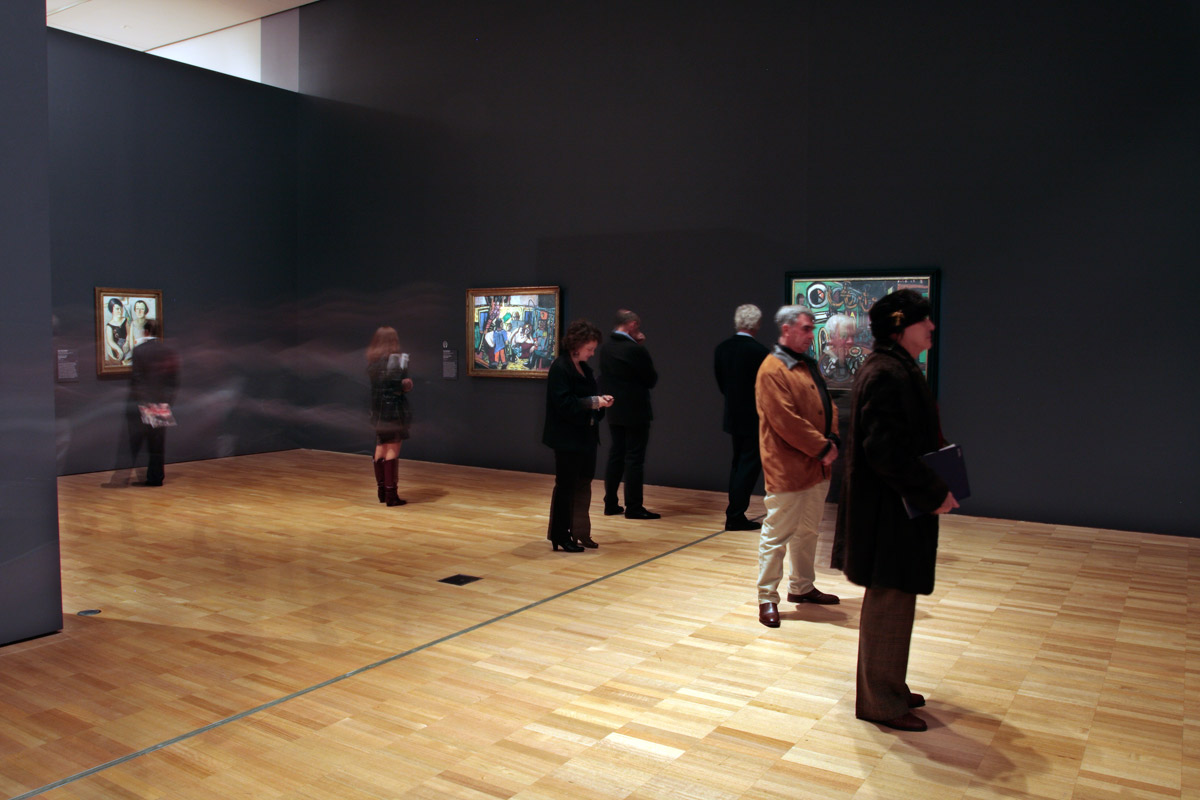
Smithsonian American Art Museum website

LIKE ART BLART ON FACEBOOK

Back to top