Video: ‘Tom Butler: Concealment, barriers and masks’

Published 30th April 2014


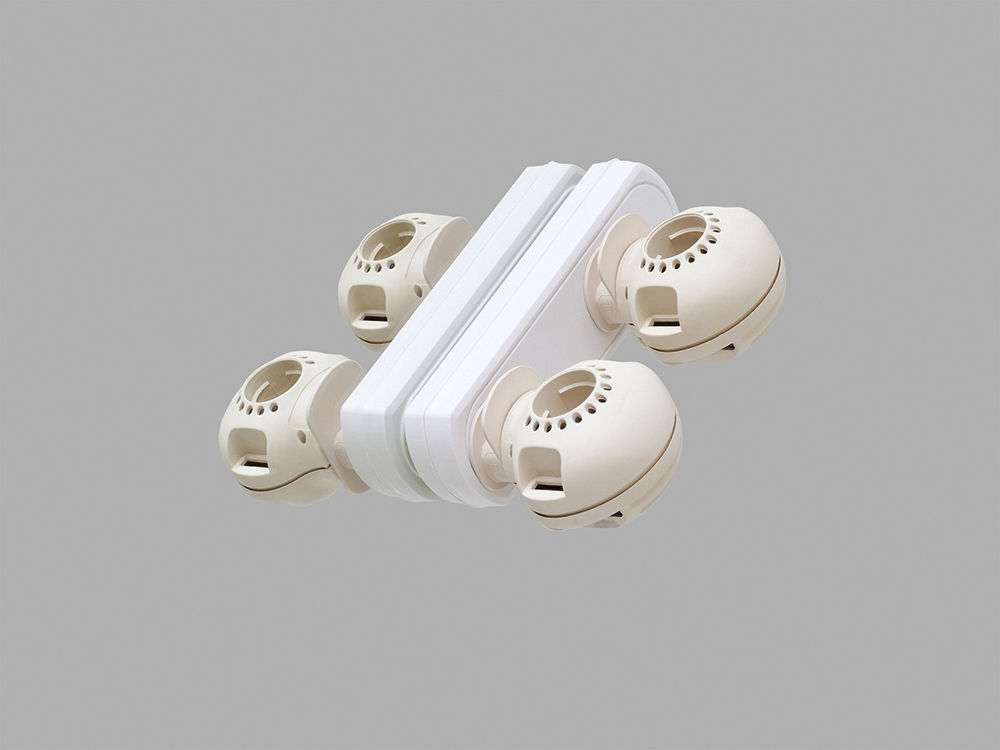
Tom Butler. 'Tucker' 2014


Tom Butler
Tucker
2014
Gouache on albumen print / Cabinet card
16.5 x 10.5cm


Phenomenal, wondrous!

The original video from The Photographers’ Gallery that was in this posting is unfortunately no longer available. I have replaced it with a few images of hand-painted cabinet cards by Tom Butler from 2014, examples of which were in the missing video.

Dr Marcus Bunyan


Tom Butler. 'Locke' 2014


Tom Butler
Locke
2014
Gouache on albumen print / Cabinet card
16.5 x 10.5cm


Tom Butler. 'Jackson' 2014


Tom Butler
Jackson
2014
Gouache on albumen print / Cabinet card
16.5 x 10.5cm


The Photographers’ Gallery
16-18 Ramillies Street,
London W1F7Lw

Opening hours:
Monday – Saturday 10.00 – 18.00
Thursday 10.00 – 20.00
Sunday 11.30 – 18.00

The Photographers’ Gallery website

LIKE ART BLART ON FACEBOOK

Back to top

Exhibition: ‘Bill Cunningham: Facades’ at the New York Historical Society, New York

Exhibition dates: 14th March – 15th June, 2014

Curator: Dr. Valerie Paley, who was then the New-York Historical Society Historian and Vice President for Scholarly Programs


Unknown artist. 'Bill Cunningham Photographing Three Models at New York County Court House' c. 1968-1976 from the exhibition 'Bill Cunningham: Facades' at the New York Historical Society, New York, March - June, 2014


Unknown artist
Bill Cunningham Photographing Three Models at New York County Court House
c. 1968-1976
Gelatin silver photograph
New-York Historical Society, Gift of Bill Cunningham


Now this is more like it!

If you want fabulousness with flair, and a dash of savoir-faire; if you want architecture with fashion, history with panache, you need look no further. Camp, kitsch, OTT but with poise, aplomb, grace and sophistication – here is the artist for the job. Oh, what fun he and his muse Editta Sherman must have had with this project.

But behind it all is a damn good photographer, with a great eye for composition. Look at the hat, the building and the “attitude” of the hands in Guggenheim Museum (c. 1968-1976, below). This is how you make people smile and think (about the city, conservation and creativity), not with some overblown frippery like the photographs of Lagerfeld in the last posting.

It’s a pity the press images were initially so poor. I had to spend hours cleaning up the images they were so badly scratched to present them to you in a viewable state. Be that as it may, these are a joy, I love them…

Dr Marcus Bunyan


Many thankx to the New York Historical Society for allowing me to publish the photographs in the posting. Please click on the photographs for a larger version of the image.


Bill Cunningham (American, 1929-2016) 'Gothic bridge in Central Park (designed 1860)' c. 1968-1976 from the exhibition 'Bill Cunningham: Facades' at the New York Historical Society, New York, March - June, 2014


Bill Cunningham (American, 1929-2016)
Gothic bridge in Central Park (designed 1860)
c. 1968-1976
Gelatin silver photograph
New-York Historical Society, Gift of Bill Cunningham


Bill Cunningham (American, 1929-2016) 'Editta Sherman on the Train to the Brooklyn Botanic Garden' c. 1972


Bill Cunningham (American, 1929-2016)
Editta Sherman on the Train to the Brooklyn Botanic Garden
c. 1972
Gelatin silver photograph
New-York Historical Society, Gift of Bill Cunningham


Bill Cunningham (American, 1929-2016) 'Guggenheim Museum (built 1959)' c. 1968-1976


Bill Cunningham (American, 1929-2016)
Guggenheim Museum (built 1959)
c. 1968-1976
Gelatin silver photograph
New-York Historical Society, Gift of Bill Cunningham


This spring, the New-York Historical Society presents a special exhibition celebrating the creative intersection of fashion and architecture through the lens of a visionary photographer. Bill Cunningham: Facades, on view from March 14 through June 15, 2014, explores the legendary photographer’s project documenting the architectural riches and fashion history of New York City.

Beginning in 1968, Bill Cunningham scoured the city’s thrift stores, auctions and street fairs for vintage clothing and scouted architectural sites on his bicycle. The result was a photographic essay entitled Facades (completed in 1976), which paired models – most particularly his muse, fellow photographer Editta Sherman – posed in period costumes at historic New York settings.

Nearly four decades after Cunningham donated 88 gelatin silver prints from the series to the New-York Historical Society in 1976, approximately 80 original and enlarged images from this whimsical and bold work are being reconsidered in a special exhibition curated by Dr. Valerie Paley, New-York Historical Society Historian and Vice President for Scholarly Programs. The exhibition offers a unique perspective on both the city’s distant past and the particular time in which the images were created, examining Cunningham’s project as part of the larger cultural zeitgeist in late 1960s-70s New York City, an era when historic preservation and urban issues loomed large.

“We are thrilled to feature these important photographs by New York Times photographer Bill Cunningham, who captured an uncertain moment in our city’s history, when New York seemed on the brink of losing its place of privilege as a capital of the world. Cunningham’s vivid sense of New York’s illustrious past and his unfettered optimism about its future make the photographs among the most dramatic and important documentation of the city’s social history,” said Louise Mirrer, President and CEO of the New-York Historical Society. “The exhibition is especially timely, as Mrs. Editta Sherman, Bill Cunningham’s muse for his project and the famed ‘duchess of Carnegie Hall,’ passed away last November 2013 at the age of 101. Mrs. Sherman’s indomitable spirit, humour and creativity are powerfully felt through the photographic images. We are gratified that many of her family members will be with us for our opening exhibition event.”

Over eight years, Bill Cunningham collected more than 500 outfits and photographed more than 1,800 locations for the Facades project, jotting down historical commentary on the versos of each print. The selection of 80 images on view evoke the exuberance of Cunningham and Sherman’s treasure hunt and their pride for the city they called home. Cunningham’s images are contextualised with reproductions of original architectural drawings from New-York Historical’s collection.

During the years that Cunningham worked on Facades, New York City was in a municipal financial crisis that wreaked havoc on daily existence, with crime, drugs, and garbage seemingly taking over the city. However, the 1970s also was an era of immense creativity, when artists and musicians experimented with new forms of expression. While Cunningham’s photographs offer an unsullied version of the tough cityscape during this chaotic time, his vision was part of a larger movement towards preserving the historic heritage of the built environment to improve the quality of urban life.

Most images in Facades feel timeless, such as Gothic Bridge (designed 1860), featuring Editta Sherman strolling through a windswept Central Park, framed by the wrought-iron curves of a classic bridge. However, at least one will offer a peek behind the scenes of the project. Cunningham and Sherman often traveled to locations by public transportation to avoid wrinkling the costumes, and Editta Sherman on the Train to the Brooklyn Botanical Garden (c. 1972) captures the jarring juxtaposition of Sherman sitting primly in a graffiti-covered subway car.

Other exhibition highlights include Sherman dressed in a man’s Revolutionary War-era hat, powdered wig, overcoat and breeches at St. Paul’s Chapel and Churchyard (built c. 1766-1796), the oldest surviving church in Manhattan, where George Washington worshipped. In Federal Hall (built c. 1842), Cunningham paired the Parthenon-like architectural details of the building with a Grecian-style, 1910s pleated Fortuny gown. For Grand Central Terminal (built c. 1903-1913), Cunningham drew on his millinery background to create a voluminous feathered hat that echoes the spirit of the “crown of the Terminal,” the ornate rooftop sculpture with monumental figures of Mercury, Minerva, and Hercules.

Bill Cunningham (1929-2016) was a fashion photographer for the New York Times, known for his candid street photography. Cunningham moved to New York in 1948, initially working in advertising and soon striking out on his own to make hats under the name “William J.” After serving a tour in the U.S. Army, he returned to New York and began writing for the Chicago Tribune. While working at the Tribune and Women’s Wear Daily, he began taking photographs of fashion on the streets of New York. The Times first published a group of his impromptu pictures in December 1978, which soon became a regular series. In 2008 Cunningham was awarded the title chevalier dans l’ordre des Arts et des Lettres by the French Ministry of Culture. He is the subject of the award-winning documentary film Bill Cunningham New York (2010). Bill Cunningham and Editta Sherman were neighbours in the Carnegie Hall Studios, a legendary artists’ residence atop the concert hall, for 60 years.

Press release from the New York Historical Society website


Bill Cunningham (American, 1929-2016) 'St. Paul’s Chapel and Churchyard (built c. 1766-1796)' c. 1968-1976


Bill Cunningham (American, 1929-2016)
St. Paul’s Chapel and Churchyard (built c. 1766-96)
c. 1968-1976
Gelatin silver photograph
New-York Historical Society, Gift of Bill Cunningham


Bill Cunningham (American, 1929-2016) 'Grand Central Terminal (built c. 1903-1913)' c. 1968-1976


Bill Cunningham (American, 1929-2016)
Grand Central Terminal (built c. 1903-1913)
c. 1968-1976
Gelatin silver photograph
New-York Historical Society, Gift of Bill Cunningham


Bill Cunningham (American, 1929-2016) 'Federal Hall (built c. 1842, costume c. 1910)' c. 1968-1976


Bill Cunningham (American, 1929-2016)
Federal Hall (built c. 1842, costume c. 1910)
c. 1968-1976
Gelatin silver photograph
New-York Historical Society, Gift of Bill Cunningham


Bill Cunningham (American, 1929-2016) 'Bowery Savings Bank (built c. 1920)' c. 1968-1976


Bill Cunningham (American, 1929-2016)
Bowery Savings Bank (built c. 1920)
c. 1968-1976
Gelatin silver photograph
New-York Historical Society, Gift of Bill Cunningham


Bill Cunningham (American, 1929-2016) 'Club 21' (founded c. 1920s; costume c. 1940) c. 1968-1976


Bill Cunningham (American, 1929-2016)
Club 21 (founded c. 1920s; costume c. 1940)
c. 1968-1976
Gelatin silver photograph
New-York Historical Society, Gift of Bill Cunningham


Bill Cunningham (American, 1929-2016) 'Associated Press Building at Rockefeller Center (built c. 1939)' c. 1968-1976


Bill Cunningham (American, 1929-2016)
Associated Press Building at Rockefeller Center (built c. 1939)
c. 1968-1976
Gelatin silver photograph
New-York Historical Society, Gift of Bill Cunningham


Bill Cunningham (American, 1929-2016) 'Paris Theater (built 1947)' c. 1968-1976


Bill Cunningham (American, 1929-2016)
Paris Theater (built 1947)
c. 1968-1976
Gelatin silver photograph
New-York Historical Society, Gift of Bill Cunningham


Bill Cunningham (American, 1929-2016) 'General Motors Building' c. 1968-1976


Bill Cunningham (American, 1929-2016)
General Motors Building
c. 1968-1976
Gelatin silver photograph
New-York Historical Society, Gift of Bill Cunningham


The New York Historical Society

170 Central Park West
at Richard Gilder Way (77th Street)
Phone: (212) 873-3400

Opening hours:
Monday CLOSED
Tuesday – Sunday 11am – 5pm

The New York Historical Society
 website

LIKE ART BLART ON FACEBOOK

Back to top

Exhibition: ‘Feuerbach’s Muses – Lagerfeld’s Models’ at Hamburger Kunsthalle, Hamburg

Exhibition dates: 21st February – 15th June, 2014

Curators: Professor Hubertus Gaßner and Luisa Pauline Fink


Installation view of 'Feuerbach's Muses - Lagerfeld's Models' at Hamburger Kunsthalle


Installation view of Feuerbach’s Muses – Lagerfeld’s Models at Hamburger Kunsthalle


Don’t give up your day job

From the sublime (Feuerbach) to the downright awful (Lagerfeld).

From gorgeous, sensitive portrait paintings of women, full of detail and texture, colour and stillness to what I would term soft-cock porn. Fashion influenced, hyper airbrushed faces; Saint Sebastian poses referencing classical ideals of male beauty (done so much more authentically and grittily by Baron Wilhelm von Gloeden), all staged in sylvan settings. Then printed onto silver- and gold-coloured fabric. Can’t wait to see that…

Not absolutely fabulous, just absolutely hideous.

Dr Marcus Bunyan


Many thankx to Hamburger Kunsthalle for allowing me to publish the art work and photographs in the posting. Please click on the photographs for a larger version of the image.


Installation view of 'Feuerbach's Muses - Lagerfeld's Models' at Hamburger Kunsthalle

Installation view of 'Feuerbach's Muses - Lagerfeld's Models' at Hamburger Kunsthalle

Installation view of 'Feuerbach's Muses - Lagerfeld's Models' at Hamburger Kunsthalle

Installation view of 'Feuerbach's Muses - Lagerfeld's Models' at Hamburger Kunsthalle

Installation view of 'Feuerbach's Muses - Lagerfeld's Models' at Hamburger Kunsthalle


Installation views of Feuerbach’s Muses – Lagerfeld’s Models at Hamburger Kunsthalle


Anselm Feuerbach (German, 1829-1880) 'Nanna' 1864


Anselm Feuerbach (German, 1829-1880)
Nanna
1864
Oil on canvas
61 x 47.2cm
© Niedersächsisches Landesmuseum Hannover
Photo: Ursula Bohnhorst


Anselm Feuerbach (German, 1829-1880) 'Studienkopf zur Stuttgarter Iphigenie [Study of a Head for Stuttgart Iphigenia]' 1870


Anselm Feuerbach (German, 1829-1880)
Studienkopf zur Stuttgarter Iphigenie [Study of a Head for Stuttgart Iphigenia]
1870
Oil on canvas
62.5 x 49.5cm
© Museum Oskar Reinhart, Winterthur
Photo: SIK-ISEA (Philipp Hitz)


Iphigenia (Greek mythology) the daughter of Clytemnestra and Agamemnon; Agamemnon was obliged to offer her as a sacrifice to Artemis when the Greek fleet was becalmed on its way to Troy; Artemis rescued her and she later became a priestess.


Anselm Feuerbach (German, 1829-1880) 'Poesie, Zweite Fassung [Poetry, Second Version]' 1863


Anselm Feuerbach (German, 1829-1880)
Poesie, Zweite Fassung [Poetry, Second Version]
1863
Oil on canvas
62 x 50cm
© Kunstbesitz der Stadt Speyer
Photo: G. Kayser


Anselm Feuerbach (German, 1829-1880) 'Lucrezia Borgia, Bildnis einer Römerin in weißer Tunika und rotem Mantel [Lucrezia Borgia, Portrait of a roman in white tunic and red cloak]' 1864/1865


Anselm Feuerbach (German, 1829-1880)
Lucrezia Borgia, Bildnis einer Römerin in weißer Tunika und rotem Mantel [Lucrezia Borgia, Portrait of a roman in white tunic and red cloak]
1864-1865
Oil on canvas
98 x 81cm
© Städel Museum, Frankfurt a. M.
Photo: Städel Museum – ARTOTHEK


Anselm Feuerbach (German, 1829-1880) 'Nanna' 1861


Anselm Feuerbach (German, 1829-1880)
Nanna
1861
Oil on canvas
137.8 x 99.3cm
© München, Bayerische
Staatsgemäldesammlungen – Neue Pinakothek
Photo: bpk I Bayerische Staatsgemäldesammlung


From February 2014 the Hamburger Kunsthalle is presenting an unusual double exhibition on beauty, eroticism and the adoration of muses and models that brings together paintings by Anselm Feuerbach and hit her to unseen photographs by Karl Lagerfeld. In a similar way both Feuerbach and Lagerfeld seek an actualisation of an ideal of timeless beauty founded in the ancient world. The exhibition examines the cult of beauty, which stylises the model to an icon. Over forty works by Feuerbach, most of them from the years 1860-70, will be on show. They are loans from the Feuerbachhaus Speyer and from numerous German, Swiss and Austrian museums ad private collections. Karl Lagerfeld has created a series of around sixty black-and-white photographs specially for the exhibition. Mostly in large formats, they have been printed in a complex procedure onto silver- and gold-coloured fabric.

Anselm Feuerbach (1829-80) one of the most important German painters of the late nineteenth century, lived in Rome from 1856 onwards. The city, with its magnificent architecture and heroic surrounding landscape, was a place of yearning that seemed eligible like no other to revive the classical ideal of ancient times. Feuerbach devoted himself to antique subject matter, which he filled with imagination and personal feeling. This is most excitingly shown in the series of unique portraits, begun in 1860, which portray Feuerbach’s model and muse, Anna Risi, known as Nanna. Feuerbach painted Nana in a wide variety of roles and sensitively staged settings that reveal an almost cultic veneration for his model. When Nanna left Feuerbach in 1865, she was followed by Lucia Brunacci. Similarly to Nanna she matched the classical ideal of beauty of the time, with her Greek profile and thick dark hair. Lucia inspired Feuerbach to impressive portrayals of mythological themes that form the highpoint of his ouevre.

‘Happy is he whom the muses love’, wrote the Greek poet Hesiod, and so the muses are a symbol of the higher power that is needed, according to the ancients, to be creative. The photographic series Modern Mythology (2013) by Karl Lagerfeld, explores the love story of Daphnis and Chloe, and shows models such as Baptiste Giabiconi and Bianca Balti, who have accompanied Lagerfeld in his work for several years. The story, by the poet Longus, tells of a boy and a girl who grow up without parents among shepherds and over the years develop a strong affection for one another. The narration has been taken up many times since the Renaissance. Lagerfeld’s photographs belong to a series of works by Pierre Bonnard, François Boucher or Aristide Maillol which present the ancient text as a symbol of the idyllic life. Karl Lagerfeld’s stagings were shot against the picturesque natural background of the South of France, and are the actualisation of an ancient theme.

The exhibition is accompanied by two publications: the catalogue on Anselm Feuerbach is published jointly with the Museum Wiesbaden and introduces Feuerbach’s paintings and drawings from an art-historical perspective; the second book combines Karl Lagerfeld’s photographs and Longus’s mythological narrative of Daphnis and Chloe in a bibliophile volume that will be elaborately produced by the publisher Gerhard Steidl.

Curators: Professor Hubertus Gaßner and Luisa Pauline Fink

Press release from the Hamburger Kunsthalle website


Anselm Feuerbach (German, 1829-1880) 'Das Urteil des Paris [The Judgement of Paris]' 1870


Anselm Feuerbach (German, 1829-1880)
Das Urteil des Paris [The Judgement of Paris]
1870
Oil on canvas
228 x 443cm
© Hamburger Kunsthalle / bpk
Photo: Elke Walford


Anselm Feuerbach (German, 1829-1880) 'Ruhende Nymphe [Resting Nymph]' 1870


Anselm Feuerbach (German, 1829-1880)
Ruhende Nymphe [Resting Nymph]
1870
Oil on canvas
112 x 190cm
© Germanisches Nationalmuseum Nürnberg, Leihgabe Privatbesitz
Photo: Monika Runge


Karl Lagerfeld (German, 1933-2019) 'Modern Mythology' 2013


Karl Lagerfeld (German, 1933-2019)
Modern Mythology
2013
© 2013 Karl Lagerfeld


Karl Lagerfeld (German, 1933-2019) 'Modern Mythology' 2013 from the exhibition 'Feuerbach's Muses – Lagerfeld's Models' at Hamburger Kunsthalle, Hamburg, February - June, 2014


Karl Lagerfeld (German, 1933-2019)
Modern Mythology
2013
© 2013 Karl Lagerfeld


Karl Lagerfeld (German, 1933-2019) 'Modern Mythology' 2013 from the exhibition 'Feuerbach's Muses – Lagerfeld's Models' at Hamburger Kunsthalle, Hamburg, February - June, 2014


Karl Lagerfeld (German, 1933-2019)
Modern Mythology
2013
© 2013 Karl Lagerfeld


Karl Lagerfeld (German, 1933-2019) 'Modern Mythology' 2013


Karl Lagerfeld (German, 1933-2019)
Modern Mythology
2013
© 2013 Karl Lagerfeld


Karl Lagerfeld (German, 1933-2019) 'Modern Mythology' 2013


Karl Lagerfeld (German, 1933-2019)
Modern Mythology
2013
© 2013 Karl Lagerfeld


Karl Lagerfeld (German, 1933-2019) 'Modern Mythology' 2013


Karl Lagerfeld (German, 1933-2019)
Modern Mythology
2013
© 2013 Karl Lagerfeld


Karl Lagerfeld (German, 1933-2019) 'Modern Mythology' 2013


Karl Lagerfeld (German, 1933-2019)
Modern Mythology
2013
© 2013 Karl Lagerfeld


Hamburger Kunsthalle
Glockengießerwall 20095
Hamburg
Phone: +49 (0) 40 – 428 131 200

Opening hours:
Tuesdays to Sundays 10am – 6pm
Thursdays 10am – 9pm
Closed Mondays

Hamburger Kunsthalle website

LIKE ART BLART ON FACEBOOK

Back to top

Exhibition: ‘Garry Winogrand’ at the National Gallery of Art, Washington

Exhibition dates: 2nd March – 8th June, 2014

Guest curator: photographer and author Leo Rubinfien, collaborating with Erin O’Toole, associate curator of photography at SFMOMA, and Sarah Greenough, senior curator of photographs at the National Gallery of Art


More photographs by Gary Winogrand.

Marcus


Many thankx to the National Gallery of Art for allowing me to publish the photographs in the posting. Please click on the photographs for a larger version of the image.


Garry Winogrand (American, 1928-1984) 'New York' 1950 from the exhibition 'Garry Winogrand' at the National Gallery of Art, Washington, March - June, 2014


Garry Winogrand (American, 1928-1984)
New York
1950
Gelatin silver print
Framed: 40.64 x 50.8cm (16 x 20 in.)
San Francisco Museum of Modern Art, Fractional and promised gift of Carla Emil and Rich Silverstein
© The Estate of Garry Winogrand, courtesy Fraenkel Gallery, San Francisco


Garry Winogrand (American, 1928-1984) 'Coney Island, New York' c. 1952 from the exhibition 'Garry Winogrand' at the National Gallery of Art, Washington, March - June, 2014


Garry Winogrand (American, 1928-1984)
Coney Island, New York
c. 1952
Gelatin silver print
Framed: 40.64 x 50.8cm (16 x 20 in.)
The Museum of Modern Art, New York. Purchase and gift of Barbara Schwartz in memory of Eugene M. Schwartz
© The Estate of Garry Winogrand, courtesy Fraenkel Gallery, San Francisco


Garry Winogrand (American, 1928-1984) 'Richard Nixon Campaign Rally, New York' 1960


Garry Winogrand (American, 1928-1984)
Richard Nixon Campaign Rally, New York
1960
Gelatin silver print
Framed: 45.72 x 55.88cm (18 x 22 in.)
Posthumous print made from original negative on the occasion of the Garry Winogrand exhibition organised by the National Gallery of Art and the San Francisco Museum of Modern Art, courtesy Center for Creative Photography, The University of Arizona
© The Estate of Garry Winogrand, courtesy Fraenkel Gallery, San Francisco


Garry Winogrand (American, 1928-1984) 'John F. Kennedy, Democratic National Convention, Los Angeles' 1960


Garry Winogrand (American, 1928-1984)
John F. Kennedy, Democratic National Convention, Los Angeles
1960
Gelatin silver print
Framed: 45.72 x 55.88cm (18 x 22 in.)
Posthumous print made from original negative on the occasion of the Garry Winogrand exhibition organised by the National Gallery of Art and the San Francisco Museum of Modern Art, courtesy Center for Creative Photography, The University of Arizona
© The Estate of Garry Winogrand, courtesy Fraenkel Gallery, San Francisco


Garry Winogrand (American, 1928-1984) 'Metropolitan Opera, New York City' c. 1951


Garry Winogrand (American, 1928-1984)
Metropolitan Opera, New York City
c. 1951
Gelatin silver print
Framed: 45.72 x 55.88cm (18 x 22 in.)
Posthumous print made from original negative on the occasion of the Garry Winogrand exhibition organised by the National Gallery of Art and the San Francisco Museum of Modern Art, courtesy Center for Creative Photography, The University of Arizona
© The Estate of Garry Winogrand, courtesy Fraenkel Gallery, San Francisco


The first retrospective in 25 years of work by artist Garry Winogrand – renowned photographer of New York City and postwar American life – will be on view at the National Gallery of Art, Washington, March 2 through June 8, 2014. Revealing the full breadth of his art for the first time, Garry Winogrand brings together some 190 of the artist’s most iconic images – many never before exhibited or reproduced.

“Winogrand is widely recognised as one of the preeminent photographers of postwar America, though his work remains largely unexplored and incompletely published,” said Earl A. Powell III. “Building on several recent exhibitions of 20th-century American photographers, such as Robert Frank and Harry Callahan, the Gallery is proud to present another major American photographer to our visitors.”

The exhibition was on view at the San Francisco Museum of Modern Art (SFMOMA) from March 9 through June 2, 2013. After Washington, the exhibition will travel to the Metropolitan Museum of Art, New York (June 27 through September 21, 2014); the Jeu de Paume, Paris (October 14, 2014, through January 25, 2015); and the Fundación MAPFRE, Madrid (March 3 through May 10, 2015).

Exhibition highlights

Garry Winogrand (1928-1984), a New Yorker who roamed the United States during the postwar decades, left behind a sweeping portrait of American life. His photographs powerfully combine the hope and exhilaration as well as the anxiety and turbulence that characterised America during these vital years, revealing a country that glitters with possibility but threatens to spin out of control. From Fifth Avenue to Sunset Boulevard, from Cape Kennedy to the Texas State Fair, he made the American middle class the primary subject of his pictures. Endlessly curious, Winogrand scrutinised both cities and suburbs, always on the lookout for those instants when happenstance and optics might join to make a good picture that exposes some deep current in American culture.

Working in the tumultuous postwar decades, Winogrand captured moments of everyday American life, producing an expansive picture of a nation rich with possibility yet threatening to spin out of control. He did much of his best-known work in New York City in the 1960s, but he also traveled widely around the United States, from California and Texas to Miami and Chicago. Combining hope and buoyancy with anxiety and instability, his photographs trace the mood of the country itself, from the ebullience of the postwar optimism to the chaos of the 1960s and the gloom and depression of the post-Vietnam era.

When he died suddenly at age 56, Winogrand left behind thousands of rolls of exposed but undeveloped film and unedited contact sheets – some 250,000 frames in total. Many of these pictures have been printed for the first time for this long-awaited retrospective of his work. By presenting such archival discoveries alongside celebrated pictures, Garry Winogrand reframes a career that was, like the artist’s America, both epic and unresolved.

The exhibition is divided into three sections over seven galleries, each presenting a broad variety of subjects found in Winogrand’s art. “Down from the Bronx” presents photographs taken in New York City from his start in 1950 to 1971; “A Student of America” looks at work made in the same period during journeys outside New York; and “Boom and Bust” addresses Winogrand’s late period – from 1971, when he moved away from New York, to his death in 1984 – including photographs from Texas and Southern California, as well as Chicago, Washington, and Miami. The third section also presents a small number of Manhattan photographs made during Winogrand’s return visits; like much of his later work, they express a sense of desolation unprecedented in his earlier photographs.

Plunging headlong into his work, Winogrand preferred shooting film to editing his pictures or producing books and exhibitions. As a result, many of his strongest early photographs fell into obscurity as he matured, while numerous later ones remained unprocessed at his death. Winogrand never published or exhibited approximately one-third of the photographs presented here, and more than sixty have been printed for this exhibition and are being shown in public for the first time. By presenting such discoveries alongside his celebrated pictures, Garry Winogrand reinterprets a career that was, like the artist’s America, both epic and unresolved. A video of Winogrand at Rice University in the 1970s, edited for the exhibition, allows visitors to experience rare footage of the artist talking to students in a casual, extemporaneous manner.

Garry Winogrand (1928-1984)

Born in the Bronx, Winogrand is known primarily as a New York City street photographer, often associated with famed contemporaries Diane Arbus and Lee Friedlander. Exposing some 20,000 rolls of film in his short lifetime, Winogrand photographed business moguls, everyday women on the street, famous actors and athletes, hippies, politicians, antiwar demonstrators, soldiers, animals in zoos, rodeos, car culture, and airports. He was also an avid traveler who roamed around the United States to locations that included Los Angeles, San Francisco, Dallas, Houston, Chicago, Ohio, Colorado, and the open country of the Southwest.

After serving in the military as a weather forecaster, Winogrand began working as a photographer while studying painting on the G.I. Bill at Columbia University (1948-1951). He supplied commercial photographs to such general-interest magazines as Life, Look, Sports Illustrated, Collier’s, and Pageant. His career was further shaped by the decline of these popular magazines and the rise of a new culture of photography centred in the art world.

Although Winogrand was a prolific photographer throughout his career, he largely postponed printing and editing his work, especially at the end of his life. He published five books, but they contain only a fraction of his oeuvre. In his later years he spoke of reviewing and reediting all of his photographs, but he died abruptly, leaving behind more than 6,500 rolls of film (almost 250,000 images) that he had never seen, as well as proof sheets from his earlier years that he had marked but never printed. Winogrand’s archive, including his film and proof sheets, is now housed at the Center for Creative Photography of the University of Arizona, Tucson.

Press release from the National Gallery of Art website


Garry Winogrand (American, 1928-1984) 'New York' c. 1960


Garry Winogrand (American, 1928-1984)
New York
c. 1960
Gelatin silver print
Framed: 40.64 x 50.8cm (16 x 20 in.)
The Garry Winogrand Archive, Center for Creative Photography, The University of Arizona
© The Estate of Garry Winogrand, courtesy Fraenkel Gallery, San Francisco


Garry Winogrand (American, 1928-1984) 'New York World's Fair' 1964


Garry Winogrand (American, 1928-1984)
New York World’s Fair
1964
Gelatin silver print
Framed: 40.64 50.8 cm (16 20 in.)
The San Francisco Museum of Modern Art, Gift of Dr. L.F. Peede, Jr.
© The Estate of Garry Winogrand, courtesy Fraenkel Gallery, San Francisco


Garry Winogrand (American, 1928-1984) 'New York' 1968


Garry Winogrand (American, 1928-1984)
New York
1968
Gelatin silver print
Framed: 40.64 × 50.8cm (16 × 20 in.)
San Francisco Museum of Modern Art
Gift of Dr. L.F. Peede, Jr.
© The Estate of Garry Winogrand, courtesy Fraenkel Gallery, San Francisco


Garry Winogrand (American, 1928-1984) 'New York' c. 1969


Garry Winogrand (American, 1928-1984)
New York
c. 1969
Gelatin silver print
Framed: 45.72 55.88 cm (18 22 in.)
Garry Winogrand Archive, Center for Creative Photography, University of Arizona
© The Estate of Garry Winogrand, courtesy Fraenkel Gallery, San Francisco


Garry Winogrand (American, 1928-1984) 'Los Angeles' 1980-1983


Garry Winogrand (American, 1928-1984)
Los Angeles
1980-1983
Gelatin silver print
Framed: 40.64 x 50.8cm (16 x 20 in.)
The Garry Winogrand Archive, Center for Creative Photography, The University of Arizona
© The Estate of Garry Winogrand, courtesy Fraenkel Gallery, San Francisco


Garry Winogrand (American, 1928-1984) 'Los Angeles' 1980-1983


Garry Winogrand (American, 1928-1984)
Los Angeles
1980-1983
Gelatin silver print
Framed: 45.72 x 55.88cm (18 x 22 in.)
Posthumous print made from original negative on the occasion of the Garry Winogrand exhibition organised by the National Gallery of Art and the San Francisco Museum of Modern Art, courtesy Center for Creative Photography, The University of Arizona
© The Estate of Garry Winogrand, courtesy Fraenkel Gallery, San Francisco


Garry Winogrand (American, 1928-1984) 'Los Angeles' 1983


Garry Winogrand (American, 1928-1984)
Los Angeles
1983
Gelatin silver print
Framed: 45.72 x 55.88cm (18 x 22 in.)
Posthumous print made from original negative on the occasion of the Garry Winogrand exhibition organised by the National Gallery of Art and the San Francisco Museum of Modern Art, courtesy Center for Creative Photography, The University of Arizona
© The Estate of Garry Winogrand, courtesy Fraenkel Gallery, San Francisco


Garry Winogrand (American, 1928-1984) 'New York' 1961


Garry Winogrand (American, 1928-1984)
New York
1961
Gelatin silver print
Framed: 50.8 x 40.64cm (20 x 16 in.)
The Museum of Modern Art, New York. Purchase and gift of Barbara Schwartz in memory of Eugene M. Schwartz
© The Estate of Garry Winogrand, courtesy Fraenkel Gallery, San Francisco


Garry Winogrand (American, 1928-1984) 'Park Avenue, New York' 1959


Garry Winogrand (American, 1928-1984)
Park Avenue, New York
1959
Gelatin silver print
Framed: 40.64x 50.8cm (16 x 20 in.)
National Gallery of Art, Patrons’ Permanent Fund
© The Estate of Garry Winogrand, courtesy Fraenkel Gallery, San Francisco


National Gallery of Art
National Mall between 3rd and 7th Streets
Constitution Avenue NW, Washington

Opening hours:
Daily 10.00am – 5.00pm

National Gallery of Art website

LIKE ART BLART ON FACEBOOK

Back to top

Exhibition: ‘Hiroshi Sugimoto: Past Tense’ at the J. Paul Getty Museum, Getty Center, Los Angeles

Exhibition dates: 4th February – 8th June, 2014

Curator: Arpad Kovacs, assistant curator in the Department of Photographs at the J. Paul Getty Museum


Hiroshi Sugimoto (Japanese, b. 1948) 'Sam Eric, Pennsylvania' 1978


Hiroshi Sugimoto (Japanese, b. 1948)
Sam Eric, Pennsylvania
1978
Gelatin silver print
42.5 x 54.5cm
Private collection, Frankfurt
© Hiroshi Sugimoto / Courtesy The Pace Gallery


I loved Sugimoto’s time lapse movie screens, where the exact length of a movie was captured by the open lens of the camera, the substance of time and space evidenced by a seemingly empty screen. There was something wonderfully poetic and transformational about that gesture, about the notion of compressing the narrative, reality and action of a movie into a single frame of light: “the ‘annihilation of time and space’ as a particular moment in a dynamic cycle of rupture and recuperation enables a deliberate focus on the process of transition.”1 The process of transition in the flow of space and time.

Sugimoto’s art since that ground breaking body of work has been a bit of a let down. Where the movie theatres photographs were transubstantiationalist, the three series presented here – Dioramas (1975-1994), Portraits (1999) and his newest series, Photogenic Drawings (2008-present) play, if that is the right word, with the re/animation of death. The stuffed animals, the wax figures, the redrawing of William Henry Fox Talbot photogenic drawings, the redrawing of a light already past, just seem DEAD to me – a kind of double death or even triple death – the death of the animal / the death of the photograph, the unreality (the undead) of the wax figures and their death in the photograph, the death of the plant, their capture not once but twice by the death of the photograph. We know exactly what Sugimoto is doing, but the images are stilted and lifeless and I am not convinced by them.

The diorama images are just OK – almost good undergraduate work but nothing more. My problem with the waxworks images and the pencil of nature is “other images”. We all know Cindy Sherman and her images of historical figures, and we know the work of William Henry Fox Talbot. Somehow these earlier images crowd Sugimoto’s work in a way that doesn’t often happen. Winogrand never crowded Friedlander or vice versa – and you can think of many other examples where comparing is actually beneficial… but not here.

I’m not saying Sugimoto is derivative but because of these other works, they don’t have much room to move. Indeed, they hardly move at all. They are so frozen in attitude that all the daring transcendence of light, the light! of space time travel, the transition from one state to another, has been lost. The Flame of Recognition (Edward Weston) – has gone.

Dr Marcus Bunyan


1/ McQuire, Scott. The Media City. London: Sage Publications, 2008, p. 14.


Many thankx to the J. Paul Getty Museum for allowing me to publish the photographs in the posting. Please click on the photographs for a larger version of the image.


Hiroshi Sugimoto (Japanese, b. 1948) 'Polar Bear' 1976 from the exhibition 'Hiroshi Sugimoto: Past Tense' at the J. Paul Getty Museum, Getty Center, Los Angeles, February - June, 2014


Hiroshi Sugimoto (Japanese, b. 1948)
Polar Bear
1976
Gelatin silver print
42.1 x 54.6cm (16 9/16 x 21 1/2 in.)
The J. Paul Getty Museum, Los Angeles, Purchased with funds provided by the Photographs Council
© Hiroshi Sugimoto


Hiroshi Sugimoto (Japanese, b. 1948) 'Wapiti' 1980


Hiroshi Sugimoto (Japanese, b. 1948)
Wapiti
1980
Gelatin silver print
34.9 x 58.7cm (13 3/4 x 23 1/8 in.)
The J. Paul Getty Museum, Los Angeles, Purchased with funds provided by the Photographs Council
© Hiroshi Sugimoto


Hiroshi Sugimoto (Japanese, b. 1948) 'Sable Antelope' 1994


Hiroshi Sugimoto (Japanese, b. 1948)
Sable Antelope
1994
Gelatin silver print
42.4 x 54.1cm (16 11/16 x 21 5/16 in.)
The J. Paul Getty Museum, Los Angeles, Purchased with funds provided by the Photographs Council
© Hiroshi Sugimoto


Hiroshi Sugimoto (Japanese, b. 1948) 'Manatee' 1994


Hiroshi Sugimoto (Japanese, b. 1948)
Manatee
1994
Gelatin silver print
42.2 x 54.1cm (16 5/8 x 21 5/16 in.)
The J. Paul Getty Museum, Los Angeles, Purchased with funds provided by the Photographs Council
© Hiroshi Sugimoto


Hiroshi Sugimoto (Japanese, b. 1948) 'Birds of Japan' 1994


Hiroshi Sugimoto (Japanese, b. 1948)
Birds of Japan
1994
Gelatin silver print
38.7 x 58.4cm (15 1/4 x 23 in.)
The J. Paul Getty Museum, Los Angeles, Purchased with funds provided by the Photographs Council
© Hiroshi Sugimoto


Hiroshi Sugimoto (Japanese, b. 1948) 'Cheetah' 1980


Hiroshi Sugimoto (Japanese, b. 1948)
Cheetah
1980
Gelatin silver print
36.5 x 58.7cm (14 3/8 x 23 1/8 in.)
Courtesy Fraenkel Gallery, San Francisco
© Hiroshi Sugimoto


Hiroshi Sugimoto (Japanese, b. 1948) 'White Rhinoceros' 1980


Hiroshi Sugimoto (Japanese, b. 1948)
White Rhinoceros
1980
Gelatin Silver Print
34.1 x 58.6cm (13 7/16 x 23 1/16 in.)
Courtesy Fraenkel Gallery, San Francisco
© Hiroshi Sugimoto


Since the mid-1970s, Hiroshi Sugimoto (Japanese, born 1948) has used photography to investigate how history pervades the present. Featuring photographs of habitat dioramas, wax portraits, and early photographic negatives, Hiroshi Sugimoto: Past Tense, on view February 4 – June 8, 2014 at the J. Paul Getty Museum, Getty Center, brings together three separate bodies of work that present objects of historical and cultural significance in the collections of various museums. By photographing subjects that reimagine or replicate moments from the distant past and diverse geographical locations, Sugimoto critiques the medium’s presumed capacity to portray history with accuracy.

“This exhibition presents work that inventively reframes objects from the collections of a variety of museums, including from our extensive holdings of prints from the early days of photography,” explains Timothy Potts, director of the J. Paul Getty Museum. “Mr. Sugimoto has generously donated eighteen prints from his recent Photogenic Drawings series, which reprise a selection of important experiments by William Henry Fox Talbot that are in the Getty Museum’s collection.”

Sugimoto’s meticulously crafted prints are the result of a rigorous working method that includes extensive preparatory research, the use of a large-format view camera, and long exposures. Each of his projects is rooted in a sustained exploration of a singular motif and often carried out over many years. The exhibition will present a selection of prints from three bodies of work, Dioramas (1975-1994), Portraits (1999) and, his newest series, Photogenic Drawings (2008-present).

Dioramas

The diorama was first introduced in Paris in 1822 by the stage designer Jacques Louis Mandé Daguerre (French, 1787-1851), who later developed the daguerreotype photographic process. Situated in a darkened room, the first diorama consisted of a large painted scene on a semi-transparent curtain that was illuminated by the opening and closing of skylights and the constant shifting or dimming of lamps to create the impression of movement. In the early 20th century, habitat dioramas in natural history museums became popular, staging creatures in their faithfully replicated “natural” environments.

Sugimoto first encountered elaborate animal dioramas at the American Museum of Natural History after moving to New York in 1974, and began to focus his camera on individual scenes shortly thereafter. Omitting the educational text surrounding each display, the works heighten the illusion that animals such as manatees, wapiti, and sea lions were photographed in their natural habitats. While each photograph appears to be a candid moment captured by an experienced nature photographer, the subjects are – in actuality – depicted in poses they hold indefinitely.

Wax Portraits

While waxworks have a long history, contemporary wax museums can be traced to the French sculptor Marie Grosholz (French, 1761-1850), who achieved success in the Parisian entertainment market by creating waxworks of popular politicians and cultural figures. After moving to London in 1802, she established a commercial enterprise under the name Madame Tussaud, specialising in the production and display of full-length wax figures modelled after commissioned portraits.

Posed against pitch-black backdrops and framed by the camera in a manner suggesting old master portrait-painting traditions, each of Sugimoto’s subjects was captured with a nine-minute exposure that illuminates the finely modelled expressions and the sumptuous costumes. These life-size photographs record likenesses that have been distilled through multiple reproductions of the original sitter. The source material for the wax figures of Henry VIII and his wives is based on 16th-century panel paintings, while the portrait of Queen Victoria’s likeness is taken from a photograph of her from the 1890s, around the time of her Diamond Jubilee celebration.

“Hiroshi Sugimoto’s photographic practice is deeply rooted in a tradition of image making that was developed and perfected during the 19th century,” explains Arpad Kovacs, assistant curator in the Department of Photographs at the J. Paul Getty Museum and curator of the exhibition. “By employing century-old techniques and turning his lens to subjects and compositions that recreate or simulate moments from the past, Sugimoto intimately connects himself to the historical moments depicted.”

Photogenic Drawings

In the early 1830s, William Henry Fox Talbot (English, 1800-1877) began trying to create pictures without the aid of a pencil. After coating small pieces of writing paper with a salt solution and silver nitrate, he successfully captured the outlines of leaves and lace placed on the paper and exposed to sunlight. He continued his experiments with a camera obscura, placing a sheet of paper in this precursor to the camera to produce the first negatives, with highlights and shadows reversed. Talbot called the results of these experiments photogenic drawings.

In 2007, Hiroshi Sugimoto visited the J. Paul Getty Museum to study the earliest photographs in the collection. After photographing some of Talbot’s photogenic drawing negatives, he produced large-scale prints and coloured them with toning agents during the processing to replicate the often-bright hues of the original sheets. The scale of the enlarged prints reveals the fibres of the original writing paper, which create subtle and delicate patterns embedded in the images.

The artist’s gift of eighteen gelatin silver prints from his Photogenic Drawings series significantly enhances the Museum’s holdings of work by Sugimoto. His photographic practice, rooted in a serial approach and primarily concerned with the medium’s relationship to the passage of time, has long been an important source of influence for a younger generation of artists. The prints greatly enhance the Getty Museum’s growing collection of contemporary photographs.

Hiroshi Sugimoto: Past Tense is on view February 4 – June 8, 2014 at the J. Paul Getty Museum, Getty Center. The exhibition will run concurrently in the Center for Photographs with A Royal Passion: Queen Victoria and Photography, an exhibition featuring rare private and public photographs from the Victoria era.

Press release from the J. Paul Getty Museum website


Hiroshi Sugimoto (Japanese, b. 1948) 'Henry VIII' 1999 from the exhibition 'Hiroshi Sugimoto: Past Tense' at the J. Paul Getty Museum, Getty Center, Los Angeles, February - June, 2014


Hiroshi Sugimoto (Japanese, b. 1948)
Henry VIII
1999
Gelatin silver print
148.9 x 119.1cm (58 5/8 x 46 7/8 in.)
Solomon R. Guggenheim Museum, New York, Commissioned by Deutsche Bank AG in consultation with the Solomon R. Guggenheim Foundation for the Deutsche Guggenheim, Berlin
© Hiroshi Sugimoto


Hiroshi Sugimoto (Japanese, b. 1948) 'Queen Victoria' 1999


Hiroshi Sugimoto (Japanese, b. 1948)
Queen Victoria
1999
Gelatin silver print
148.9 x 119.1cm (58 5/8 x 46 7/8 in.)
Fraenkel Gallery, San Francisco
© Hiroshi Sugimoto


Hiroshi Sugimoto (Japanese, b. 1948) 'Anne Boleyn' 1999


Hiroshi Sugimoto (Japanese, b. 1948)
Anne Boleyn
1999
Gelatin silver print
148.9 x 119.1cm (58 5/8 x 46 7/8 in.)
Solomon R. Guggenheim Museum, New York, Commissioned by Deutsche Bank AG in consultation with the Solomon R. Guggenheim Foundation for the Deutsche Guggenheim, Berlin
© Hiroshi Sugimoto


Hiroshi Sugimoto (Japanese, b. 1948) 'Asplenium Halleri, Grande Chartreuse 1821 - Cardamine Pratensis, April 1839' 2008


Hiroshi Sugimoto (Japanese, b. 1948)
Asplenium Halleri, Grande Chartreuse 1821 – Cardamine Pratensis, April 1839
2008
Toned gelatin silver print
93.7 x 74.9cm (36 7/8 x 29 1/2 in.)
The J. Paul Getty Museum, Los Angeles,
Gift of the Artist
© Hiroshi Sugimoto


Hiroshi Sugimoto (Japanese, b. 1948) 'Roofline of Lacock Abbey, circa 1835-1839' 2008


Hiroshi Sugimoto (Japanese, b. 1948)
Roofline of Lacock Abbey, circa 1835-1839
2008
Gelatin silver print
93.7 x 74.9cm (36 7/8 x 29 1/2 in.)
The J. Paul Getty Museum, Los Angeles, Gift of the Artist
© Hiroshi Sugimoto


Hiroshi Sugimoto (Japanese, b. 1948) 'Bust of Venus, November 26, 1840' 2009


Hiroshi Sugimoto (Japanese, b. 1948)
Bust of Venus, November 26, 1840
2009
Gelatin silver print
93.7 x 74.9cm (36 7/8 x 29 1/2 in.)
The J. Paul Getty Museum, Los Angeles, Gift of the Artist
© Hiroshi Sugimoto


Hiroshi Sugimoto (Japanese, b. 1948) 'A Stem of Delicate Leaves of an Umbrellifer, circa 1843-1846' 2009


Hiroshi Sugimoto (Japanese, b. 1948)
A Stem of Delicate Leaves of an Umbrellifer, circa 1843-1846
2009
Gelatin silver print
93.7 x 74.9cm (36 7/8 x 29 1/2 in.)
The J. Paul Getty Museum, Los Angeles, Gift of the Artist
© Hiroshi Sugimoto


Hiroshi Sugimoto (Japanese, b. 1948) 'Arrangement of Botanical Specimens, 1839' 2008


Hiroshi Sugimoto (Japanese, b. 1948)
Arrangement of Botanical Specimens, 1839
2008
Toned gelatin silver print
93.7 x 74.9cm (36 7/8 x 29 1/2 in.)
The J. Paul Getty Museum, Los Angeles, Gift of the Artist
© Hiroshi Sugimoto


Hiroshi Sugimoto (Japanese, b. 1948) 'Nicolaas Henneman, circa 1841' 2008


Hiroshi Sugimoto (Japanese, b. 1948)
Nicolaas Henneman, circa 1841
2008
Toned gelatin silver print
93.7 x 74.9cm (36 7/8 x 29 1/2 in.)
The J. Paul Getty Museum, Los Angeles, Gift of the Artist
© Hiroshi Sugimoto


Hiroshi Sugimoto (Japanese, b. 1948) 'Bust of Patroclus, September 8, 1841' 2009


Hiroshi Sugimoto (Japanese, b. 1948)
Bust of Patroclus, September 8, 1841
2009
Toned gelatin silver print
93.7 x 74.9cm (36 7/8 x 29 1/2 in.)
The J. Paul Getty Museum, Los Angeles, Gift of the Artist
© Hiroshi Sugimoto


The J. Paul Getty Museum
1200 Getty Center Drive
Los Angeles, California 90049

Opening hours:
Tuesday – Friday, Sunday 10am – 5.30pm
Saturday 10am – 8pm
Monday Closed

The J. Paul Getty Museum website

LIKE ART BLART ON FACEBOOK

Back to top

Exhibition: ‘Apartheid and After’ at Huis Marseille – Museum for Photography, Amsterdam

Exhibition dates: 15th March – 8th June 2014

Curators: Els Barents, David Goldblatt

Artists: David Goldblatt met Paul Alberts, Pieter Hugo, Santu Mofokeng, Sabelo Mlangeni, Zanele Muholi, Jo Ractliffe, Michael Subotzky, Guy Tillim, Graeme Williams and others, and the Market Photo Workshop in Johannesburg


Santu Mofokeng (South African, 1956-2020) 'Sunflowers harvest, Vaalrand farm, Bloemhof' 1988 from the exhibition 'Apartheid and After' at Huis Marseille – Museum for Photography, Amsterdam, March - June, 2014


Santu Mofokeng (South African, 1956-2020)
Sunflowers harvest, Vaalrand farm, Bloemhof
1988
From the Bloemhof Series, 1988-1989, 1994


A raft of exhibitions finishing on the 8th June 2014 means a lot of postings over the next few days. This posting continues my fascination with African photography. The two excellent photographs by David Goldblatt are the stand out here, along with the portrait by Mikhael Subotzky.

Dr Marcus Bunyan


Many thankx to Huis Marseille for allowing me to publish the photographs in the posting. Please click on the photographs for a larger version of the image.


Santu Mofokeng (South African, 1956-2020) 'Windmill, Vaalrand' 1988


Santu Mofokeng (South African, 1956-2020)
Windmill, Vaalrand
1988
From the Bloemhof Series, 1988-1989, 1994


Jo Ractliffe (South African, b. 1961) 'Military watchtower in a domestic garden, Riemvasmaak' 2013 from the exhibition 'Apartheid and After' at Huis Marseille – Museum for Photography, Amsterdam, March - June, 2014


Jo Ractliffe (South African, b. 1961)
Military watchtower in a domestic garden, Riemvasmaak
2013
From The Borderlands (2011-2013)


Jo Ractliffe (South African, b. 1961) 'Playing soccer with marbles, Platfontein' 2012


Jo Ractliffe (South African, b. 1961)
Playing soccer with marbles, Platfontein
2012
From The Borderlands (2011-2013)


Graeme Williams (South African, b. 1958) 'Kempton Park' Nd


Graeme Williams (South African, b. 1958)
Kempton Park
Nd
From Previously Important Places series 1990s -2013


The Emperors Palace Casino and Chariots Entertainment World was build on the site [ in… add please date and place… ]? were the negotiations leading up to the Convention for a Democratic South Africa (CODESA) took place. Now, at the very same place  a statue of the Roman Emperor Caesar Augustus greets visitors at the entrance of the afore mentioned  entertainment centre.


Pieter Hugo (South African, b. 1976) 'In Sipho Ntsibande's Home, Soweto' 2013


Pieter Hugo (South African, b. 1976)
In Sipho Ntsibande’s Home, Soweto
2013
From the series Kin, 2013


Guy Tillim (South African, b. 1962) 'Neri James, Petros Village, Malawi' 2006


Guy Tillim (South African, b. 1962)
Neri James, Petros Village, Malawi
2006
From the series Petros Village, 2006


“The scars left in South Africa’s collective memory by its apartheid regime were also inscribed visually on its collective retina. There is less consensus, however, on the period of ‘truth and reconciliation’ after political apartheid came to an end in South Africa in 1990. The exhibition Apartheid and After addresses the question: where did photographers whose earlier work had opposed the apartheid regime point their cameras after 1980?

They include David Goldblatt, for instance, now an éminence grise of South African photography whose exhibition Cross Sections hung in Huis Marseille and others. Has South African democracy been given a face? Where is the real development happening? And where are the scars? Has South African national identity got stuck on a runaway merry-go-round, as the South African visual artist William Kentridge has suggested? One thing is clear: after apartheid, most South African photographers continued to make their own country their work domain, and in doing so they have gained a considerable international reputation.”


“It is astonishing to think that until the beginning of the 1990s, merely two decades ago, modern and contemporary African photography was largely in the shadows.”

Okwui Enwezor in Events of the Self: Portraiture and Social Identity: Contemporary African Photography from the Walther Collection, Steidl, 2013, p. 23.


David Goldblatt (South African, 1930-2018) 'Child minder, Joubert Park, Johannesburg, 1975 (no.11)' 1975


David Goldblatt (South African, 1930-2018)
Child minder, Joubert Park, Johannesburg, 1975 (no.11)
1975
From the series Particulars, 2003 (publishing date)


David Goldblatt (South African, 1930-2018) 'Man on a beach, Joubert Park, Johannesburg, 1975 (no. 2)' 1975


David Goldblatt (South African, 1930-2018)
Man on a beach, Joubert Park, Johannesburg, 1975 (no. 2)
1975
From the series Particulars, 2003 (publishing date)


Sabelo Mlangeni (South African, b. 1980) 'Coming to Johannesburg I, January, 2011' 2011


Sabelo Mlangeni (South African, b. 1980)
Coming to Johannesburg I, January, 2011
2011


Sabelo Mlangeni (South African, b. 1980) 'Coming to Johannesburg I, January, 2011' 2011


Sabelo Mlangeni (South African, b. 1980)
Coming to Johannesburg I, January, 2011
2011


Daniel Naudé (South African, b. 1984) 'Africanis 23. Richmond, Northern Cape, 298 January 2009' 2009


Daniel Naudé (South African, b. 1984)
Africanis 23. Richmond, Northern Cape, 298 January 2009
2009


Mikhael Subotzky (South African, b. 1981) 'Joseph Dlamini (Eye test), Matsho Tsmombeni squatter camp' 2012


Mikhael Subotzky (South African, b. 1981)
Joseph Dlamini (Eye test), Matsho Tsmombeni squatter camp
2012
From the series Retinal Shift


Graeme Williams (South African, b. 1958) 'Nelson Mandela speaks at CODESA, 199..?' Nd


Graeme Williams (South African, b. 1958)
Nelson Mandela speaks at CODESA, 199..?
Nd
From Previously Important Places series 1990s-2013


Zanele Muholi (South African, b. 1972) 'Being (T)here (Amsterdam)' 2009

Zanele Muholi (South African, b. 1972) 'Being (T)here (Amsterdam)' 2009

Zanele Muholi (South African, b. 1972) 'Being (T)here (Amsterdam)' 2009


Zanele Muholi (South African, b. 1972)
Being (T)here (Amsterdam)
2009


Paul Alberts (South African, 1946-2010) 'The portraits of the applicants' 1994

Paul Alberts (South African, 1946-2010) 'The portraits of the applicants' 1994

Paul Alberts (South African, 1946-2010) 'The portraits of the applicants' 1994

Paul Alberts (South African, 1946-2010) 'The portraits of the applicants' 1994


Paul Alberts (South African, 1946-2010)
The portraits of the applicants
1994
Gelatin silver prints


As the 1994 election approached in South-Africa many blacks living in small towns and rural areas had never been officially identified. In order to speed up these otherwise slow procedures, Charmaine and Paul Alberts set up an official, but temporary office and studio to process applications. The portraits of the applicants were taken before a paper back drop in the community hall of Majwemasweu. Each person held a slate with a number that corresponded to the number of the film and exposure, plus their name and place where they lived.


Huis Marseille – Museum for Photography
Keizersgracht 401
1016 EK Amsterdam

Opening hours:
Daily 10am – 6pm
Thursday 10am – 9pm

Huis Marseille – Museum for Photography website

LIKE ART BLART ON FACEBOOK

Back to top

Exhibition / text: ‘Vivian Maier (1926-2009). A Photographic Revelation’ at Château de Tours

Exhibition dates: 9th November 2013 – 1st June, 2014

Curator: Anne Morin, Director of diChroma photography


Vivian Maier (American, 1926-2009) 'Untitled' 1954


Vivian Maier (American, 1926-2009)
Untitled
1954
© Vivian Maier / Maloof Collection, Courtesy Howard Greenberg Gallery, New York


“Maier doesn’t have a partner to dance with. She sees something well enough, whereas Lee Friedlander expects something. If there is an idea out there in the ether she grabs onto it in a slightly derivative way. Maier states that these things happened with this subject matter but with Arbus, for example, she meets something extra/ordinary and alien – and goes beyond, beyond, beyond.”


Dr Marcus Bunyan May 2014


The next best thing

The photographs of Vivian Maier. Unknown in her lifetime (nanny as secretive photographer), her negatives discovered at an auction after her death – some developed, all scanned, in some cases cropped, the medium format images then printed. The latest “must have” for any self respecting photography collection, be it private or public. But are they really that good?

To be unequivocal about it, they are good – but, in most cases, they are not “great”. Maier is a very good photographer but she will never be a great photographer. This might come as a surprise to the legions of fans on Facebook (and the thousands of ‘Likes’ for each image), those who think that she is the best thing since sliced bread. But let’s look at the evidence – the work itself.

The photographs can seen on the Vivian Maier Official website and I have spent quite a lot of time looking at them. As with any artist, there are some strong images and some not so strong ones but few reach ‘master’ status. The lighting is good, the use of low depth of field, the location and the presence of the people she photographed are all there, as are the influences that you recite in your mind as to the people her photographs remind you of: Lewis Hine, Berenice Abbott, Lisette Model, Diane Arbus, Helen Levitt, Lee Friedlander et al.

Somehow through all this she makes the photographs she takes her own for she has a “rare sense of photographic vision” as Edward Petrosky expressed it on my LinkedIn page, but ultimately they don’t really take you anywhere. It’s like she has an addiction to taking photographs (a la Gary Winogrand), but no way of advancing her art to the next level.

Vivien Maier’s photographs stand out because she hasn’t withheld enough within them. What do I mean by that? Let’s look at some examples to explain what I mean…

Included in the postings are two comparisons: Vivian Maier, June 19, 1961, Chicago IL, 1961 / Lee Friedlander, Stony Point, New York, 1966; and Vivian Maier, New York, Nd 1966 / Berenice Abbott, New York at Night, 1932. As with most of Maier’s photography, she relies on intuition when taking a photograph and a bloody good intuition it is too. This intuition usually stands her in good stead and she almost always gets the shot, but there is an underlying lack of structure to her images. Here I am talking as much about psychological structure as physical structure, for both go hand in hand.

If we compare the Maier with the Friedlander we can say that, if we look at the windows in the Friedlander, every one is a masterpiece! From the mother and son at left with the white-coated marchers, to the central window with the miniature house, dog and tree, to the dark-suited marchers at right. Everything feels compelling, intricate weavings of a narrative that the viewer has to try and make sense of. Each part of the Friedlander image is absolutely necessary for that picture… whereas there are so many things in the Vivien Maier that belong in other pictures ie. a good picture but a lot that doesn’t belong in that picture. Things that should have been held back, by making another image somewhere else. Her narrative is confusing and thus the eye is also confused.

A similar scenario can be observed when comparing the photographs of New York at night by Abbott and Maier. Abbott’s photograph is a tight, orchestrated and muscular rendition of the city which seethes with energy and form. Maier’s interpretation fades off into nothingness, the main arterials of the city leading the eye up to the horizon line and then [nothing]. It is a pleasant but wishy-washy photograph, with all the energy of the city draining away in the mind and in the eye.

One of Maier’s photographs that most resonates with me is September 1953, New York, NY (1953, below). This IS a masterpiece. There is a conciseness of vision here, reminiscent of Weston’s Nude of 1938 with its link to the anamorphic structure of his photographs of peppers. There is nothing auxiliary to the purpose of the photograph, yet there is that indefinable something that takes it out of itself. The dirt of the clothes, under the fingers, the ring on the hand, the shape that no human should be in and its descent onto the pavement, the despair of that descent captured in the angle of the camera looking down on the victim. The photograph has empathy, promotes understanding and empathy in the viewer. Most of us have been there. Other photographs that approach a higher perspective are Maier’s self-portraits, in which there is a conscious exploration of her reflection in/of the world: a slightly dour, serious figure reflected back from the world into the lens of the camera – a refracted identity, the phenomenon of self as light passing obliquely through the interface between one medium and another, between living, the camera and memory.

But too often Maier’s photographs are just so… obvious. Did she wait long enough for the composition to reveal itself to her more, god what’s the word, more ambiguously. Maier doesn’t have a partner to dance with. She sees something well enough, whereas Lee Friedlander expects something. If there is an idea out there in the ether she grabs onto it in a slightly derivative way. Maier states that these things happened with this subject matter but with Arbus, for example, she meets something extra/ordinary and alien – and goes beyond, beyond, beyond.

What we can say is that Maier’s vision is very good, her intuition excellent, but there is, critically, not that indefinable something that takes her images from good to great. This is the key thing – everything is usually thrown at the image, she withholds nothing, and this invariably stops them taking that step to the next level. This is a mighty difficult step for any artist to take, let alone one taking photographs in the shadows.

Personally I don’t believe that these images are a “photographic revelation” in the spirit of Minor White. What is a revelation is how eagerly they have been embraced around the world as great images without people really looking deeply at the work; how masterfully they have been promoted through films, books, websites and exhibitions; how Maier’s privacy has been expunged in the quest for dollars; and how we know very little about her vision for the negatives as there are no extant prints of the work.

Dr Marcus Bunyan


Many thankx to the Château de Tours for allowing me to publish the photographs in the posting. Please click on the photographs for a larger version of the image.


Edward Weston (American, 1886-1958) 'Nude' 1936


Edward Weston (American, 1886-1958)
Nude
1936
Gelatin silver print


Vivian Maier (American, 1926-2009) 'September 1953, New York, NY' 1953


Vivian Maier (American, 1926-2009)
September 1953, New York, NY
1953
© Vivian Maier / Maloof Collection, Courtesy Howard Greenberg Gallery, New York


Vivian Maier (American, 1926-2009) 'June 19, 1961, Chicago IL' 1961


Vivian Maier (American, 1926-2009)
June 19, 1961, Chicago IL
1961
© Vivian Maier / Maloof Collection, Courtesy Howard Greenberg Gallery, New York


Lee Friedlander (American, b. 1934) 'Stony Point, New York, 1966' 1966


Lee Friedlander (American, b. 1934)
Stony Point, New York, 1966
1966
Silver gelatin photograph


Vivian Maier (American, 1926-2009) 'New York' Nd


Vivian Maier (American, 1926-2009)
New York
Nd
© Vivian Maier / Maloof Collection, Courtesy Howard Greenberg Gallery, New York


Berenice Abbott (American, 1898-1991) 'New York at Night' 1932


Berenice Abbott (American, 1898-1991)
New York at Night
1932
Gelatin silver print
12 7/8 x 10 9/16″ (32.7 x 26.9cm)


Vivian Maier (American, 1926-2009) 'New York, NY, 18 Octobre 1953' 1953


Vivian Maier (American, 1926-2009)
New York, NY, 18 Octobre 1953
1953
© Vivian Maier / Maloof Collection, Courtesy Howard Greenberg Gallery, New York


Vivian Maier (American, 1926-2009) 'New York, NY' c. 1953


Vivian Maier (American, 1926-2009)
New York, NY
c. 1953
© Vivian Maier / Maloof Collection, Courtesy Howard Greenberg Gallery, New York


Vivian Maier (American, 1926-2009) 'St East nº108, New York , NY, September 28, 1959' 1959


Vivian Maier (American, 1926-2009)
St East nº108, New York , NY, September 28, 1959
1959
© Vivian Maier / Maloof Collection, Courtesy Howard Greenberg Gallery, New York


Vivian Maier (American, 1926-2009) 'New York, NY' 1954


Vivian Maier (American, 1926-2009)
New York, NY
1954
© Vivian Maier / Maloof Collection, Courtesy Howard Greenberg Gallery, New York


Vivian Maier was the archetypal self-taught photographer with a keen sense of observation and an eye for composition. She was born in New York in 1926, but spent part of her childhood in France before returning to New York in 1951 when she started taking photos. In 1956, she moved to Chicago, where she lived until her death in 2009.

Her talent is comparable with that of the major figures of American street photography such as Lisette Model, Helen Levitt, Diane Arbus and Garry Winogrand. The exhibition presented at the Château de Tours by the Jeu de Paume, in partnership with the Municipality of Tours and diChroma photography, is the largest ever exhibition in France devoted to Vivian Maier. It includes 120 black and white and colour gelatin silver prints from the original slides and negatives, as well as extracts from Super 8 films she made in the 60s and 70s. This project, which is sourced from John Maloof’s collection, with the valuable assistance of Howard Greenberg Gallery in New York, reveals a poetic vision that is imbued with humanity.

John Maloof discovered Vivian Maier’s astonishing photos completely by chance in 2007 at an auction in Chicago. At the time, this young collector was looking for historical documentation about a specific neighbourhood of the city and he bought a sizeable lot of prints, negatives and slides (of which a major part had not even been developed) as well as some Super 8 films by an unknown and enigmatic photographer, Vivian Maier. By all accounts, Vivian Maier was a discreet person and somewhat of a loner. She took more than 120,000 photos over a period of thirty years and only showed this consequential body of work to a mere handful of people during her lifetime.

Vivian Maier earned her living as a governess, but all her free time and every day off was spent walking through the streets of New York, then later Chicago, with a camera slung around her neck (first of all box or folding cameras, later a Leica) taking photos. The children she looked after describe her as a cultivated and open-minded woman, generous but not very warm. Her images on the other hand bear witness to her curiosity for everyday life and the attention she paid to those passers – by who caught her eye: facial features, bearing, outfits and fashion accessories for the well-to-do and the telltale signs of poverty for those who were less fortunate.

While some photos are obviously furtively taken snapshots, others bear witness to a real encounter between the photographer and her models, who are photographed face-on and from close up. Her photos of homeless people and people living on the fringe of society demonstrate the depth of her empathy as she painted a somewhat disturbing portrait of an America whose economic boom was leaving many by the wayside.

Vivian Maier remained totally unknown until her death in April 2009. She had been taken in by the Gensburgs, for whom she had worked for almost seventeen years, and many of her possessions as well as her entire photographic output had been placed in storage. It was seized and sold in 2007 to settle unpaid bills.

Her biography has now been reconstructed, at least in part, thanks to a wealth of research and interviews carried out by John Maloof and Jeffrey Goldstein after the death of Vivian Maier. Jeffrey Goldstein is another collector who purchased a large part of her work. According to official documents, Vivian Maier was of Austro-Hungarian and French origin and her various trips to Europe, in particular to France (in the Alpine valley of Champsaur where she spent part of her childhood) have been clearly identified and documented. However, the circumstances that led her to take an interest in photography and her life as an artist remain veiled in mystery.

Photography seemed to be much more than a passion: her photographic activity was the result of a deeply felt need, almost an obsession. Each time she changed employers and had to move house, all her boxes and boxes of films (that she hadn’t had developed for want of money), as well as her archives comprising books and press cuttings about various stories in the news, came along too.

Vivian Maier’s body of work highlights those seemingly insignificant details that she came across during her long walks through the city streets: odd gestures, strange figures and graphic arrangements of figures in space. She also produced a series of captivating self-portraits from her reflection in mirrors and shop windows.

Press release from the Château de Tours


Vivian Maier (American, 1926-2009) 'Self-portrait' Nd


Vivian Maier (American, 1926-2009)
Self-portrait
Nd
© Vivian Maier / Maloof Collection, Courtesy Howard Greenberg Gallery, New York


Vivian Maier (American, 1926-2009) 'Chicago' Nd

Vivian Maier (American, 1926-2009)
Chicago
Nd
© Vivian Maier / Maloof Collection, Courtesy Howard Greenberg Gallery, New York


Vivian Maier (American, 1926-2009) 'Florida, 9 January 1957' 1957


Vivian Maier (American, 1926-2009)
Florida, 9 January 1957
1957
© Vivian Maier / Maloof Collection, Courtesy Howard Greenberg Gallery, New York


Vivian Maier (American, 1926-2009) 'Untitled' 1954


Vivian Maier (American, 1926-2009)
Untitled
1954
© Vivian Maier / Maloof Collection, Courtesy Howard Greenberg Gallery, New York


Vivian Maier (American, 1926-2009) 'Chicago, IL, January, 1956' 1956


Vivian Maier (American, 1926-2009)
Chicago, IL, January, 1956
1956
© Vivian Maier/Maloof Collection, Courtesy Howard Greenberg Gallery, New York


Vivian Maier (American, 1926-2009) 'Chicago, August 22, 1956' 1956


Vivian Maier (American, 1926-2009)
Chicago, August 22, 1956
1956
© Vivian Maier/Maloof Collection, Courtesy Howard Greenberg Gallery, New York


Château de Tours
25 Avenue André Malraux
37000 Tours

Opening hours:
Tuesday to Friday: 2pm – 6pm
Saturday and Sunday: 3pm – 6pm

Vivian Maier Official website

LIKE ART BLART ON FACEBOOK

Back to top

Review: ‘The Rennie Ellis Show’ at Monash Gallery of Art, Wheelers Hill, Melbourne

Exhibition dates: 3rd April – 8th June, 2014

Curator: Gareth Syvret


Ponch Hawkes (Australian, b. 1946) 'Rennie Ellis photographing at the Gay Liberation march, Elizabeth Street, Melbourne, 1973' 1973


Ponch Hawkes (Australian, b. 1946)
Rennie Ellis photographing at the Gay Liberation march, Elizabeth Street, Melbourne, 1973
1973
Silver gelatin photograph
© Ponch Hawkes


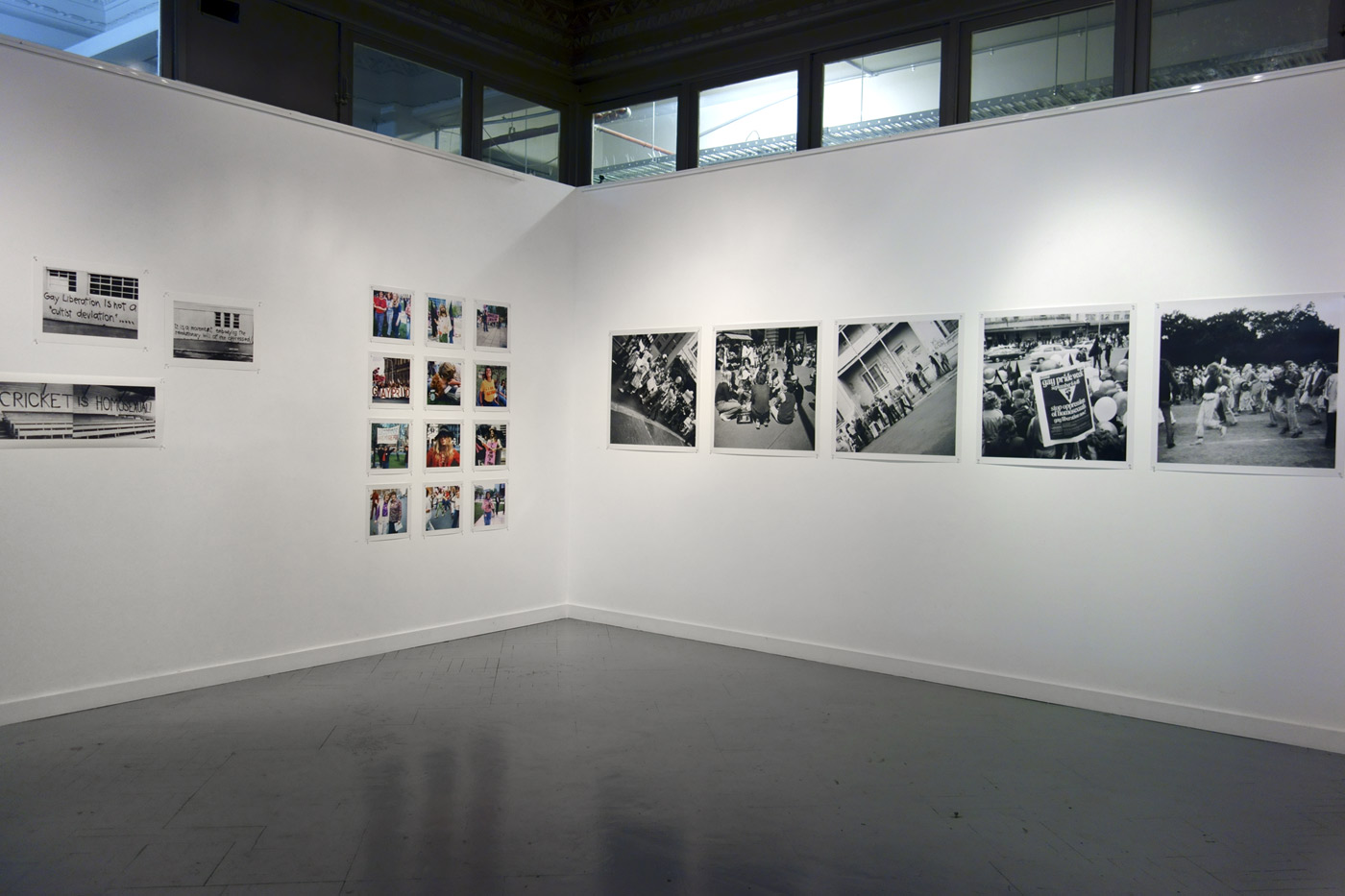
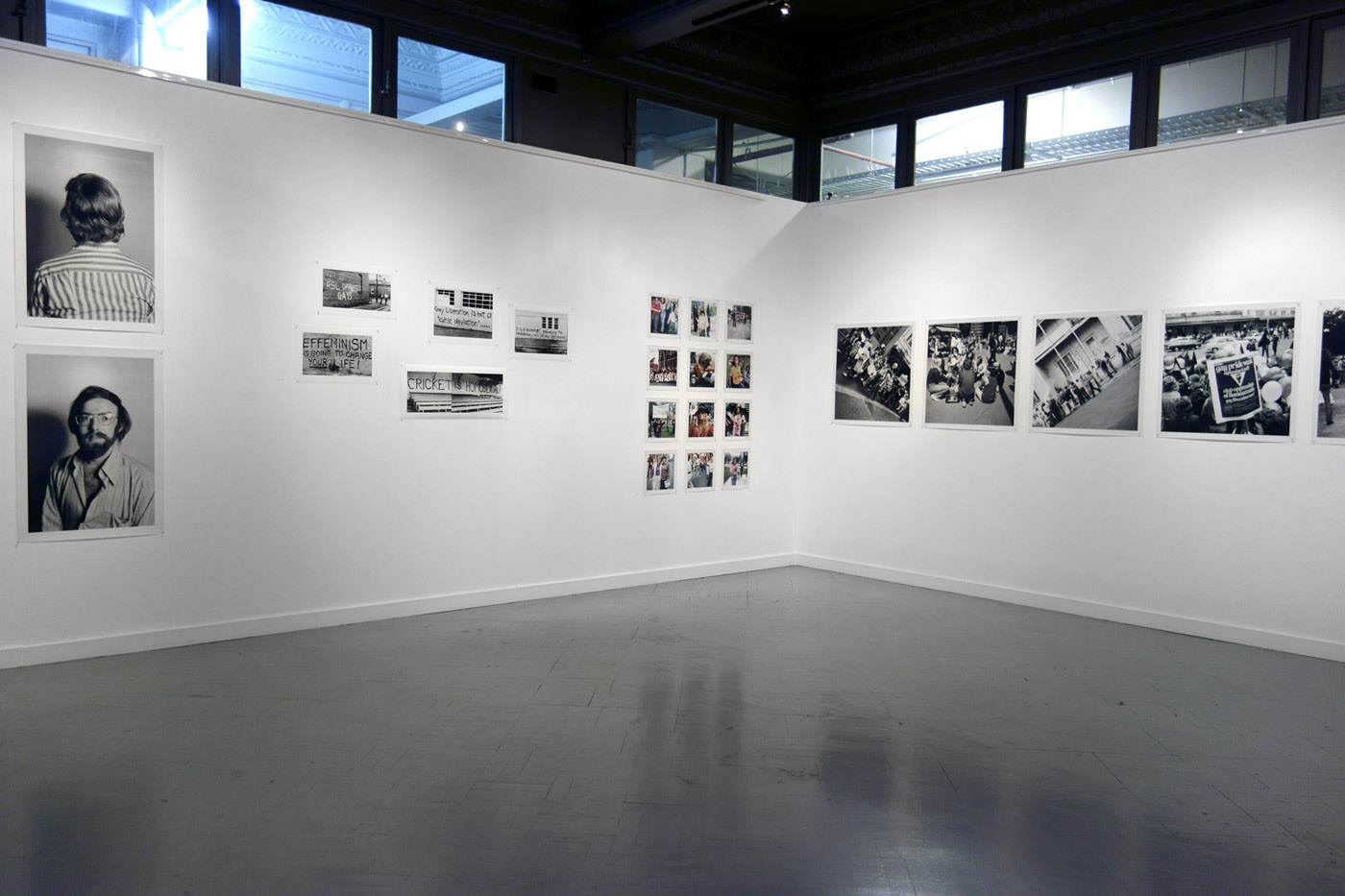
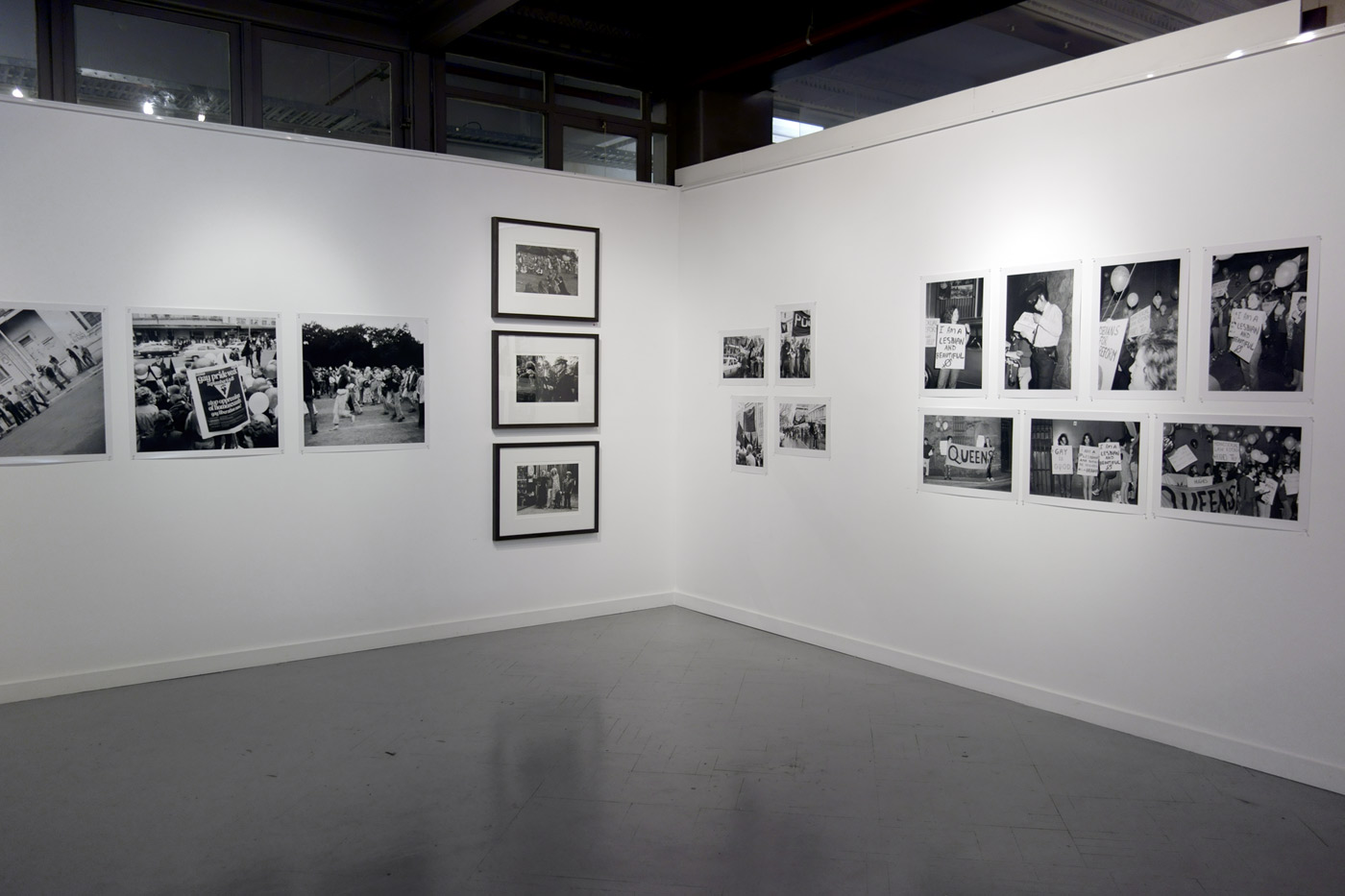
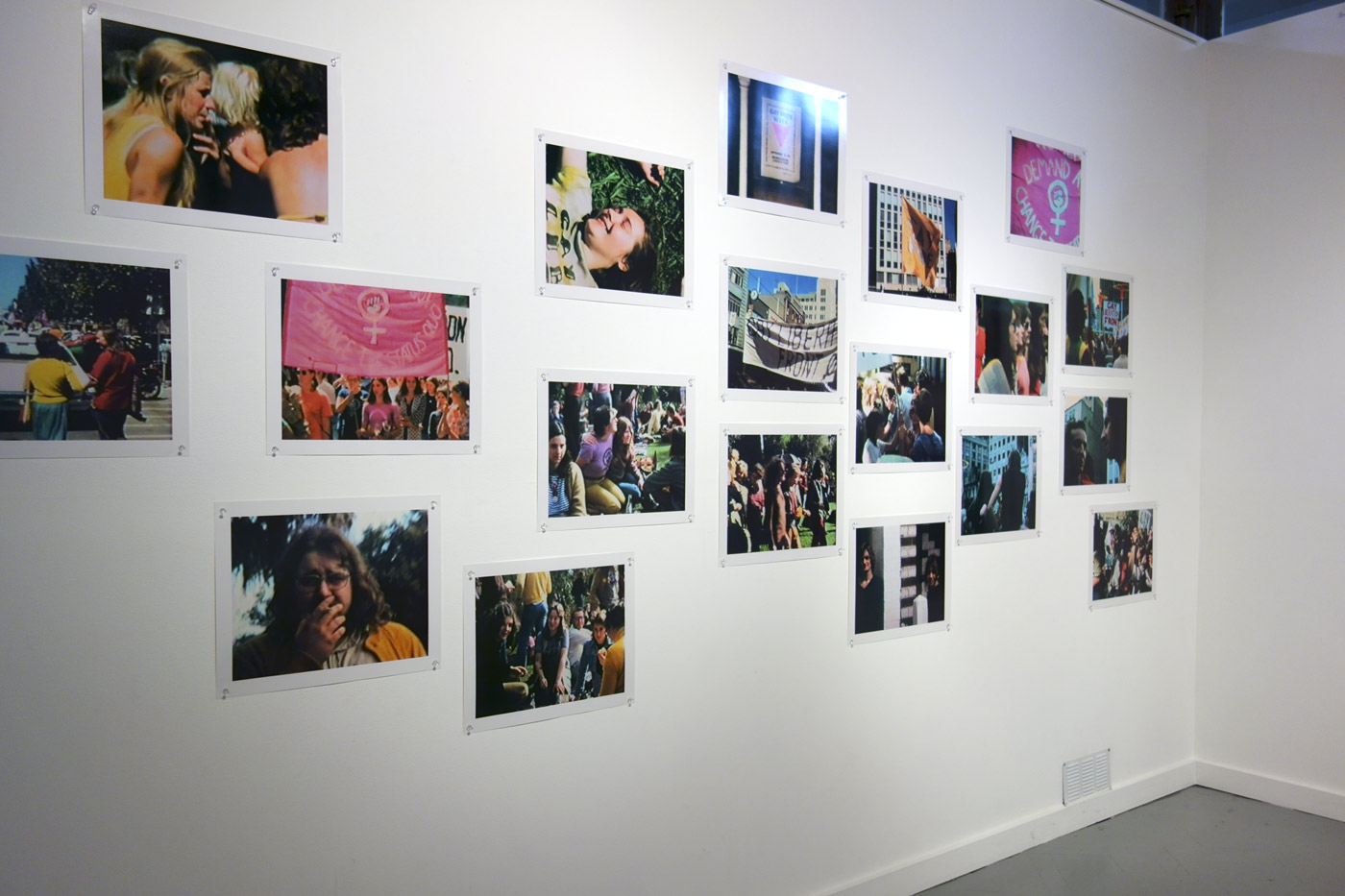
In researching photographs for the upcoming exhibition Out of the closets, onto the streets: Gay Liberation photography 1971-73 I came across this photograph taken by Ponch Hawkes of the Gay Liberation march that was part of Gay Pride week in 1973. Ponch had never seen this image before until I scanned the negative. And there, front and centre as always, is Rennie Ellis capturing the action… What a special find and a wonderful photograph by Ponch!


We Are Family

This is FAB, one of the best experiences I have had this year at an exhibition in Melbourne. You know you are having a good time when you laugh out loud at so many photographs, sharing the experience of the artist as though you had been there. As indeed I had, for in many cases the clubs pictured in Rennie Ellis’ photographs are the ones I went to.

I remember: Wednesday nights at Inflation in the late 80s, where to satisfy licensing restrictions you had to be served a “meal” so that you could drink alcohol (Dining Out, Inflation, 1980 below). The famous Razor Club (1986-1992), based at the Light Car Club of Australia’s clubrooms on the corner of Queens Road and Roy Street, opposite the Albert Park Lake and golf course. “It was Melbourne’s version of Studio 54, the hedonistic, off-the-wall New York disco of the late ’70s – both places notoriously hard to get into but once inside a wonderland of celebrities, freaks, transvestites and fantastic music free from the tyranny of genre.” Once on a big party night the gang of us tried to get in but the queue was so long it was impossible – so I went down the side, climbed up the drain pipes past the ladies loo, and up to the first floor balcony where someone pulled me over – completely off my face, just to get my friends in. Zu Zu’s, Cadillac Bar, 397, Commerce Club, Tasty, Freakazoid, Dome, Baseline, Hardware Club, The Peel and so many parties you could poke a stick at – what a time we had!

There to capture it all – affectionately, non-judgementally – was Rennie Ellis. He wasn’t like Diane Arbus, who thrust her camera as an outsider at people, waiting for a reaction. He was always part of the action because he was part of the family. He was a humanist photographer in the true sense of the word, for he loved photographing human beings, their social relations and their habitats, whatever that might be – sunning, partying, boozing, smoking, picking up. He referred to himself as a “people perv.”

Ellis had an eloquently “clumsy” eye, and for the type of baroque photographs he took this is a great thing. No perfect framing, no perfect tension points within the image, no regular alignment of horizontals, verticals or diagonals – just instinctual images taken in a split second, with his own particular brand of humour embedded in them. And always with this slight eccentricity in his vision. Look at the image of Dancing People, Razor Club (1991, below) and notice the odd hand poking in at the left hand side and the attitude of the dancers, or Fully equipped, Albert Park Beach (c. 1981, below), with the angle of the three cigarettes, the drink and the bottle of sun tan lotion strapped to the hip – FIERCE!

But he was not averse to understanding the structure of his images either, as can be seen by my comparison between the tight, formal structure of Paul Strand’s The Family, Luzzara, Italy (1953, below) and the looser, more natural gathering in Ellis’ The Gang, Windsor (1976, below); or the influence of other artists on his work, for example Norman Lindsay in his My Bare Lady, The Ritz, St Kilda (1977, below). Ellis also liked to push and pull at the pictorial plane; he liked to use pairs of people; he was not afraid of out of focus elements in the foreground of his images; he used chiaroscuro; and his use of light is always excellent. Above all, there is a consistency to his vision that never falters – a concatenation of images that is his style?

This is not just nostalgia. These are bloody good images, and Ellis takes these insightful type of images over and over again – the excesses of hedonism, the influences of wealth, the see-and-be-seen syndrome, things erotic and bizarre and, most importantly, enduring friendships. He photographs what he sees with a love and affection for his subject matter. None of this “staged” vernacular photography that I recently featured in an exhibition at the Art Gallery of New South Wales. This is the real deal. A friend said to me recently, “Ah, but you know, he never did in depth photo-essays like Mary Ellen Mark did of the circus, for example.” To which I have a one word reply: BULLSHIT.

His whole oeuvre is a huge photo-essay on the human race, specifically the construction of Australian identity as evidenced in sections like portraits, gangs, sharpies, Aboriginals, Kings Cross, Social Documentary, Decadence, Graffiti, Life’s a Parade, Life’s a Beach etc…

When you look at his photography it would seem to me that his images dissolve the barriers between image / subject / viewer. It’s a strange phenomena to feel so connected to a person’s work. It’s the journey that he takes us on, that we went on too – not so much the destination but the rejoicing in this journey… of company, of environment, friends, places – the joy of being human. He was allowed entry into these public/private spaces because he earned our trust. He lived with the people, and they allowed him to take a bit of their life with him – as a photographic memory, to be retold and relived in the present, allowing us all to relive those times and places. It’s the love, trust, humour and anticipation of the journey that make Ellis’ images truly unique in the history of Australian photography.

Dr Marcus Bunyan


Many thankx to Manuela Furci, Rennie Ellis Photographic Archive and the Monash Gallery of Art for allowing me to publish the photographs in the posting. Please click on the photographs for a larger version of the image.


Rennie Ellis (Australian, 1940-2003) 'Dancing People, Razor Club' 1991


Rennie Ellis (Australian, 1940-2003)
Dancing People, Razor Club
1991
Selenium-toned gelatin silver print
26.7 x 40.7cm
Courtesy of the Rennie Ellis Photographic Archive


Robyn Dean (Australian) 'Marcus dancing at an unknown club, Melbourne' c. 1991-1992


Robyn Dean (Australian)
Marcus dancing at an unknown club, Melbourne
c. 1991-1992


Rennie Ellis (Australian, 1940-2003) 'Dining Out, Inflation' 1980


Rennie Ellis (Australian, 1940-2003)
Dining Out, Inflation
1980
Selenium-toned gelatin silver print
26.7 x 40.7cm
Courtesy of the Rennie Ellis Photographic Archive


Sister Sledge – We Are Family (1979) Official Video


Rennie Ellis (Australian, 1940-2003) 'Fitzroy extrovert' 1974


Rennie Ellis (Australian, 1940-2003)
Fitzroy extrovert
1974
Selenium-toned gelatin silver print
40.5 x 50.8cm
Courtesy of the Rennie Ellis Photographic Archive


Rennie Ellis (Australian, 1940-2003) 'Dino Ferrari, Toorak Road' 1976


Rennie Ellis (Australian, 1940-2003)
Dino Ferrari, Toorak Road
1976
Selenium-toned gelatin silver print
26.7 x 40.7cm
Courtesy of the Rennie Ellis Photographic Archive


Rennie Ellis (Australian, 1940-2003) 'Bon Scott and Angus Young, Atlanta, Georgia' 1978


Rennie Ellis (Australian, 1940-2003)
Bon Scott and Angus Young, Atlanta, Georgia
1978
Selenium-toned gelatin silver print
26.7 x 40.7cm
Courtesy of the Rennie Ellis Photographic Archive


Ronald Belford “Bon” Scott (9 July 1946 – 19 February 1980) was a Scottish-born Australian rock musician, best known for being the lead singer and lyricist of Australian hard rock band AC/DC from 1974 until his death in 1980.

Angus McKinnon Young (born 31 March 1955) is a Scottish-born Australian guitarist best known as a co-founder, lead guitarist, and songwriter of the Australian hard rock band, AC/DC. Known for his energetic performances, schoolboy-uniform stage outfits, and popularisation of Chuck Berry’s duckwalk, Rolling Stone magazine ranked Young as the 24th greatest guitarist of all time.

AC/DC’s popularity grew throughout the 1970s, initially in Australia, and then internationally. Their 1979 album Highway to Hell reached the top twenty in the United States, and the band seemed on the verge of a commercial breakthrough. However, on 19 February 1980, Scott died after a night out in London. AC/DC briefly considered disbanding, but the group quickly recruited vocalist Brian Johnsonof the British glam rock band Geordie. AC/DC’s subsequent album, Back in Black, was released only five months later, and was a tribute to Scott.

Text from the Wikipedia website


AC/DC – Highways to Hell (Official Video)


Rennie Ellis (Australian, 1940-2003) 'At the Pub, Brisbane' 1982


Rennie Ellis (Australian, 1940-2003)
At the Pub, Brisbane
1982
Selenium-toned gelatin silver print
26.7 x 40.7cm
Courtesy of the Rennie Ellis Photographic Archive


Rennie Ellis (Australian, 1940-2003) 'The Gang, Windsor' 1976


Rennie Ellis (Australian, 1940-2003)
The Gang, Windsor
1976
Selenium-toned gelatin silver print
26.7 x 40.7cm
Courtesy of the Rennie Ellis Photographic Archive


Paul Strand (American, 1890-1976) 'The Family, Luzzara, Italy' 1953


Paul Strand (American, 1890-1976)
The Family, Luzzara, Italy
1953
Silver gelatin photograph


The photographer Rennie Ellis (1940-2003) is a key figure in Australian visual culture. Ellis is best remembered for his effervescent observations of Australian life during the 1970s-90s, including his now iconic book Life is a beach. Although invariably inflected with his own personality and wit, the thousands of social documentary photographs taken by Ellis during this period now form an important historical record.

The Rennie Ellis Show highlights some of the defining images of Australian life from the 1970s and ’80s. This is the period of Gough Whitlam and Malcolm Fraser, Paul Keating and Bob Hawke; AC/DC and punk rock; cheap petrol and coconut oil; Hare Krishnas and Hookers and Deviant balls.

This exhibition of over 100 photographs provides a personal account of what Ellis termed ‘a great period of change’. Photographs explore the cultures and subcultures of the period, and provide a strong sense of a place that now seems worlds away, a world free of risk, of affordable inner city housing, of social protest, of disco and pub rock, of youth and exuberance.

Text from the MGA website


Rennie Ellis (Australian, 1940-2003) 'My son Josh learns to swim' 1972


Rennie Ellis (Australian, 1940-2003)
My son Josh learns to swim
1972
Selenium-toned gelatin silver print
26.7 x 40.7cm
Courtesy of the Rennie Ellis Photographic Archive


Rennie Ellis (Australian, 1940-2003) 'My Bare Lady, The Ritz, St Kilda' 1977


Rennie Ellis (Australian, 1940-2003)
My Bare Lady, The Ritz, St Kilda
1977
Digital C Type photograph
Fuji Crystal Archive print
Courtesy of the Rennie Ellis Photographic Archive


Norman Lindsay (Australian, 1879-1969) 'The Olympians' Nd


Norman Lindsay (Australian, 1879-1969)
The Olympians
Nd
Oil on canvas
Collection of Hamilton Art Gallery


Rennie Ellis (Australian, 1940-2003) 'Mr Muscleman, Albert Park Beach' c. 1986


Rennie Ellis (Australian, 1940-2003)
Mr Muscleman, Albert Park Beach
c. 1986
Chromogenic print
26.7 x 40.7cm
Courtesy of the Rennie Ellis Photographic Archive


Rennie Ellis (Australian, 1940-2003) 'Fully equipped, Albert Park Beach' c. 1981


Rennie Ellis (Australian, 1940-2003)
Fully equipped, Albert Park Beach
c. 1981
Digital C Type photograph
Fuji Crystal Archive print
Courtesy of the Rennie Ellis Photographic Archive


Rennie Ellis (Australian, 1940-2003) 'Don and Patrizia, St Kilda Beach' 1985


Rennie Ellis (Australian, 1940-2003)
Don and Patrizia, St Kilda Beach
1985
Chromogenic print
40.5 x 50.8cm
Courtesy of the Rennie Ellis Photographic Archive


Rennie Ellis (Australian, 1940-2003) 'Berlin Party, Inflation, Melbourne' 1980


Rennie Ellis (Australian, 1940-2003)
Berlin Party, Inflation, Melbourne
1980
Digital C Type photograph
Fuji Crystal Archive print
Courtesy of the Rennie Ellis Photographic Archive


Rennie Ellis book covers: 'Decade, 1970-1980' (left) and 'Decadent, 1980-2000' (right)


Rennie Ellis book covers: Decade: 1970-1980 (left) and Decadent: 1980-2000 (right)


Decade: 1970-1980 is a photography book showcasing Rennie Ellis’ (1940-2003) contribution to photography and social history. With an introduction by film maker and Rennie contemporary Paul Cox and an essay by academic Susan Van Wyk, Decade highlights Ellis as one of Australia’s most important chroniclers of the 1970s. The photographs, predominantly black and white, are drawn from a core selection originally made by Rennie from his own unpublished book, supplemented by other significant and iconic images from 1970 to 1980 drawn from the Rennie Ellis Photographic Archive and the State Library of Victoria Rennie Ellis collection. Many of the photographs are accompanied by extended captions written by Rennie himself, published here for the first time. Decade explores the cultures and sub-cultures of the seventies: the political upheavals, alternative lifestyles and counter culture, the women’s movement, gay liberation, the new religions and cults, pop festivals, Vietnam and other protests, massage parlours, the disco scene, the blossoming of Australia’s film industry, the new sexual freedom, Aboriginal rights, street festivals, the new theatre, fashion, drugs and the emergence of a decadent and hedonistic society that would later characterise the 1980s.

Decadent: 1980-2000 is a photography book showcasing Rennie Ellis’ (1940-2003) contribution to photography and social history. It is a fascinating snapshot of the wild, opulent, sometimes tacky and always decadent 1980s in Australia by a true original. With an introduction by photographer and Rennie contemporary William Yang and an essay by photographer and art critic Robert McFarlane, Decadent highlights Ellis as one of Australia’s most important chroniclers of the 1980s. The photographs, both colour and black and white, are drawn from the Rennie Ellis Photographic Archive and the State Library of Victoria Rennie Ellis collection. Decadent explores the rise of the hedonism that we now associate with the 1980s. Ellis’ boundary-pushing, racy and sometimes voyeuristic works capture a society that seems to be revelling in its abandonment of the politically charged 1970s documented in Decade.

About the Author

No other photographer has documented – in such depth – the life and times in Australia, throughout the 1970s until his death in 2003, with such insight into the human condition as Rennie Ellis. His non-judgmental approach was his ‘access-to-all-areas’ pass. Ellis used his camera as a key to open the doors to the social arenas of the rich and famous and to enter the underbelly of the nightclubs, bearing witness to the indulgences and excesses. In today’s post-[Bill] Henson era, these captured moments offer an intimate access to an Australia tantalisingly, but sadly, now almost out of reach.


Rennie Ellis (Australian, 1940-2003) 'Richmond fans, Grand Final, MCG' 1974


Rennie Ellis (Australian, 1940-2003)
Richmond fans, Grand Final, MCG
1974
Chromogenic print
40.5 x 50.8 cm
Courtesy of the Rennie Ellis Photographic Archive


Interesting to note that Ellis must have been shooting both black and white and colour film during the VFL Grand Final of 1974. He must have had two cameras with him (this is more likely than swapping between films in the same 35mm camera) to shoot the photograph above in colour and the black and white image of Robbie McGhie (1974, below).


Rennie Ellis (Australian, 1940-2003) 'Robert McGhie, Grand Final, MCG' 1974


Rennie Ellis (Australian, 1940-2003)
Robert McGhie, Grand Final, MCG
1974
Selenium-toned gelatin silver print
50.8 x 40.5cm
Courtesy of the Rennie Ellis Photographic Archive


Robert ‘Robbie’ McGhie is a former Australian rules football player who played in the VFL between 1969 and 1972 and again in 1979 for the Footscray Football Club, from 1973 to 1978 for the Richmond Football Club and in 1980 and 1981 for the South Melbourne Football Club. His height was 192 cm and he weighed 85.5 kg. He played 46 games for Footscray, 80 games for Richmond and 16 games for South Melbourne. He was a Richmond Premiership Player 1973, 1974 (the year this photograph by Rennie Ellis was taken at the Grand Final).


Rennie Ellis (Australian, 1940-2003) 'Property of Hells Angels, Kings Cross' 1970-1971


Rennie Ellis (Australian, 1940-2003)
Property of Hells Angels, Kings Cross
1970-1971
Selenium-toned gelatin silver print
50.8 x 40.5cm
Courtesy of the Rennie Ellis Photographic Archive


Invitation to The Rennie Ellis Show at the Monash Gallery of Art


Invitation to The Rennie Ellis Show at the Monash Gallery of Art


Monash Gallery of Art
860 Ferntree Gully Road, Wheelers Hill
Victoria 3150 Australia
Phone: + 61 3 8544 0500

Opening hours:
Tue – Fri: 10am – 5pm
Sat – Sun: 10pm – 4pm
Mon/public holidays: closed

Monash Gallery of Art website

Rennie Ellis Photographic Archive

LIKE ART BLART ON FACEBOOK

Back to top

Film: ‘Traveller Homes, a film about Dave Fawcett’

May 2014


Traveller Homes, a film about David Fawcett from PARC_UAL on Vimeo.


Traveller Homes, a film about Dave Fawcett made by Tom Hunter and Robin Christian in France in 2013.

“Sadly a large part of this activity has become transformed into a nostalgic archive for a lifestyle that has largely disappeared from the highways & byways of England.” (Dave Fawcett, 2013)

Dave Fawcett’s archive of converted buses and trucks is a unique photographic record which formed the basis for his Traveller Homes website. His topographic studies record a segment of English social history, which still struggles to survive.

Since graduating from Leicester University in 1984 ‘Traveller’ Dave Fawcett has embraced the bender lifestyle. His first ‘mobile home’ was an ex-British Telecom Bedford TK. In 1992 he bought a 1966 Albion Chieftain furniture lorry and drove it on a one-way trip to Europe. He survives as a fruit picker during the summer months and still lives on his bus.

A selection from Dave Fawcett’s ‘Traveller Homes’ series is showing in Life on the Road, a Photography and the Archive Research Centre (PARC) project, made in partnership with London College of Communication as part of Green Week, 2014.

The exhibition features photography by Tom Hunter and Dave Fawcett and films by Andrew Gaston, at London College of Communication from 6 – 26 February 2014.


Travellers Homes website

LIKE ART BLART ON FACEBOOK

Back to top

Exhibition: ‘Wols Photographer. The Guarded Look’ at Martin-Gropius-Bau, Berlin

Exhibition dates: 15th March – 22nd June, 2014

Curator: Kupferstich-Kabinett, Staatliche Kunstsammlungen Dresden


Wols (German, 1913-1951) 'Untitled [Still life - dining table]' 1937 from the exhibition 'Wols Photographer. The Guarded Look' at Martin-Gropius-Bau, Berlin, March - June, 2014


Wols (German, 1913-1951)
Untitled [Still life – dining table]
1937
© VG Bild-Kunst, Bonn 2014


Some familiar images that were also seen in the posting Wols’ Photography: Images Regained are complimented by 5 new ones. The two portraits of the artist Max Ernst are eerie (is that a suitable word for a portrait that is strong and unsettling?) and perceptive, Wols responsive to the status of his sitter as a pioneer of the Dada movement and Surrealism.

Dr Marcus Bunyan


Many thankx to the Martin-Gropius-Bau for allowing me to publish the photographs in the posting. Please click on the photographs for a larger version of the image.


Wols (German, 1913-1951) 'Nicole Bouban' Autumn 1932 - October 1933 / January 1935 to 1937 from the exhibition 'Wols Photographer. The Guarded Look' at Martin-Gropius-Bau, Berlin, March - June, 2014


Wols (German, 1913-1951)
Nicole Bouban
Autumn 1932 – October 1933 / January 1935 to 1937
© Kunst, Bonn 2014


Art Informel

The term Art Informel was originated by the French critic Michel Tapié and popularised in his 1952 book Un Art autre (Another art). A Parisian counterpart of Abstract Expressionism, Art Informel emphasised intuition and spontaneity over the Cubist tradition that had dominated School of Paris painting. The resulting abstractions took a variety of forms. For instance, Pierre Soulages’s black-on-black paintings composed of slashing strokes of velvety paint suggest the nocturnal mood of Europe immediately after the war.


Wols (German, 1913-1951) 'Untitled [Pavilion de l'Elegance - Creating a home with Alix (Germaine Krebs)]' 1937


Wols (German, 1913-1951)
Untitled [Pavilion de l’Elegance – Creating a home with Alix (Germaine Krebs)]
1937
© VG Bild-Kunst, Bonn 2014


Germaine Émilie Krebs (French, 1903-1993)

Germaine Émilie Krebs (1903-1993), known as Alix Barton and later as “Madame Grès”, relaunched her design house under the name Grès in Paris in 1942. Prior to this, she worked as “Alix” or “Alix Grès” during the 1930s. Formally trained as a sculptress, she produced haute couture designs for an array of fashionable women, including the Duchess of Windsor, Marlene Dietrich, Greta Garbo, Jacqueline Kennedy, and Dolores del Río. Her signature was cut-outs on gowns that made exposed skin part of the design, yet still had a classical, sophisticated feel. She was renowned for being the last of the haute couture houses to establish a ready-to-wear line, which she called a “prostitution”.

The name Grès was a partial anagram of her husband’s first name and alias. He was Serge Czerefkov, a Russian painter, who left her soon after the house’s creation. Grès enjoyed years of critical successes but, after Grès herself sold the business in the 1980s to Yagi Tsucho, a Japanese company, it faltered. In 2012, the last Grès store in Paris was closed.

Text from Wikipedia website


Wols (German, 1913-1951) 'Untitled [Swiss Pavilion - Wire Figure]' 1937


Wols (German, 1913-1951)
Untitled [Swiss Pavilion – Wire Figure]
1937
© VG Bild-Kunst, Bonn 2014


Wolfgang Schulze, known as Wols, was born in Berlin in 1913. As a painter and graphic artist he is considered to have been an important trailblazer of Art Informel. For the first time the Martin-Gropius-Bau in Berlin is presenting the largely unknown photographic oeuvre of Wols. These works foreshadow his development in the direction of non-representational art.

Wols grew up in Dresden, where he had an early encounter with photography as a profession through his attendance at a course in the studio of the Dresden photographer Genja Jonas. In 1932, after a brief sojourn in the milieu of the Berlin Bauhaus – then in the process of breaking up – the young Wols set off for Paris to realise his artistic ambitions.

Soon he was involved with the local Surrealists and made the acquaintance of other personalities in the theatrical, literary and art scenes. In this period Wols was mainly active as a photographer. In 1937 his works were exhibited for the first time in the prestigious Parisian Galérie de la Pléiade, which established his reputation as a photographer. It was at this time that he adopted the pseudonym Wols. One of his commissions was to document the Pavillon de l’Elégance at the 1937 World Exhibition in Paris.

At the same time he produced striking multiple black-and-white portraits of personalities such as Max Ernst, Nicole Boubant or Roger Blin. Over the years Wols’ imagery became increasingly radical. The representational motifs gradually acquired a more abstract dimension and forced the viewer to see the objects represented in a new light. In particular, an extraordinary set of photograms confirms his interest in replacing representational motifs with non-representational ones. Transferred to painting, this trend would later make him a pioneer of Art Informel.

Immediately after the outbreak of the Second World War Wols spent over a year in various internment camps in the south of France. In this period he turned more to watercolours, most of which were lost while he was fleeing from the Nazis.

Living in straitened circumstances Wols fought a losing battle with alcoholism and poor health. In 1951, as a result of his weakened physical condition, he died of food poisoning in Paris at the early age of 38. After his death, Wols’ work was displayed at the first three documenta exhibitions in Kassel (1955, 1959, 1964) and, in 1958, at the Venice Biennale. On 27 May 2014 he would have been 101.

The show covers all of his photographic work, including multiple portraits of famous artists, actors and writers, photographs of the “Pavillon de l’Élégance”, numerous still lifes, and many hitherto unknown motifs. The exhibition has been curated by the Kupferstich-Kabinett, Staatliche Kunstsammlungen Dresden, where this unique collection will be kept and systematically catalogued.

Press release from Martin-Gropius-Bau website


Wols (German, 1913-1951) 'Max Ernst' Fall 1932 - October / January 1935 to 1936


Wols (German, 1913-1951)
Max Ernst
Fall 1932 – October / January 1935 to 1936
© VG Bild-Kunst, Bonn 2014


Wols (German, 1913-1951) 'Max Ernst' Fall 1932 - October / January 1935 to 1936


Wols (German, 1913-1951)
Max Ernst
Fall 1932 – October / January 1935 to 1936
© VG Bild-Kunst, Bonn 2014


Wols permanently settled in Paris in 1933, producing his first paintings but also working as a photographer. His photographic work of this period showed the clear influence of Surrealism. In 1936, he received official permission to live in Paris with the help of Fernand Léger; as an army deserter, Schulze had to report to the Paris police on a monthly basis. In 1937, the year in which he adopted his pseudonym WOLS, his photographs began to appear in fashion magazines such as Harper’s Bazaar, Vogue, Femina as well as Revue de l’art. Many of these photographs anticipate the displays at the Exposition Internationale du Surréalisme held in Paris in the following year, in which much use was made of mannequins.

At the outbreak of World War II Wols, as a German citizen, was interned for 14 months in the notorious Les Milles camp – together with some 3500 other artists and intellectuals. He was not released until late 1940. After his release Wols moved for two years to Cassis, near Marseille, where he struggled to earn a living. The occupation of Southern France by the Germans in 1942 forced him to flee to Dieulefit, near Montélimar, where he met the writer Henri-Pierre Roché, one of his earliest collectors. He spent most of the war trying to emigrate to the United States, an unsuccessful and costly enterprise that may have driven him to alcoholism.

After the war Wols returned to Paris where he met Jean-Paul Sartre, Tristan Tzara and Jean Paulhan. He started to paint in oils in 1946 at the suggestion of the dealer René Drouin, who showed 40 of his paintings at his gallery in 1947. The same year Wols began to work on a number of illustrations for books by Paulhan, Sartre, Franz Kafka and Antonin Artaud. He fell ill but lacked the money to go to hospital, and throughout 1948 he worked largely in bed on these illustrations. In 1949 he took part in the exhibition Huit oeuvres nouvelles at the Galerie Drouin, along with Jean Dubuffet, Roberto Matta, Henri Michaux and other artists with whom he had a stylistic affinity.

Undergoing treatment for alcoholism, he moved to the country at Champigny-sur-Marne in June 1951. His early death later that year from food poisoning helped foster the legendary reputation that grew up around him soon afterwards. His paintings helped pioneer Art informel and Tachism, which dominated European art during and after the 1950s as a European counterpart to American Abstract Expressionism. Influenced by the writings of the philosopher Lao Tzu throughout his life, Wols also wrote poems and aphorisms that expressed his aesthetic and philosophical ideas.”

Text from the Weimar blog 2010


Wols (German, 1913-1951) 'Untitled [Paris - Flea Market]' Autumn 1932 - October 1933 / January 1935 to 1936


Wols (German, 1913-1951)
Untitled [Paris – Flea Market]
Autumn 1932 – October 1933 / January 1935 to 1936
© VG Bild-Kunst, Bonn 2014


Wols (German, 1913-1951) 'Untitled [Paris - Palisade]' Fall 1932 - October 1933 / January 1935 - August 1939


Wols (German, 1913-1951)
Untitled [Paris – Palisade]
Fall 1932 – October 1933 / January 1935 – August 1939
© VG Bild-Kunst, Bonn 2014


Wols (German, 1913-1951) 'Untitled [Paris - Eiffel Tower]' 1937


Wols (German, 1913-1951)
Untitled [Paris – Eiffel Tower]
1937
© VG Bild-Kunst, Bonn 2014


Wols (German, 1913-1951) 'Untitled [Still Life - Grapefruit]' 1938 - August 1939


Wols (German, 1913-1951)
Untitled [Still Life – Grapefruit]
1938 – August 1939
© VG Bild-Kunst, Bonn 2014


Wols (German, 1913-1951) 'Self Portrait with Hat' 1937-1938


Wols (German, 1913-1951)
Self Portrait with Hat
1937-1938
© VG Bild-Kunst, Bonn 2014


Martin-Gropius-Bau Berlin
Niederkirchnerstraße 7
Corner Stresemannstr. 110
10963 Berlin
Phone: +49 (0)30 254 86-0

Opening hours:
Wednesday to Monday 10 – 20 hrs
Tuesday closed

Martin-Gropius-Bau website

LIKE ART BLART ON FACEBOOK

Back to top