Exhibition: ‘The Abstracted Landscape’ at the Laurence Miller Gallery, New York

Exhibition dates: 24th September – 14th November, 2009

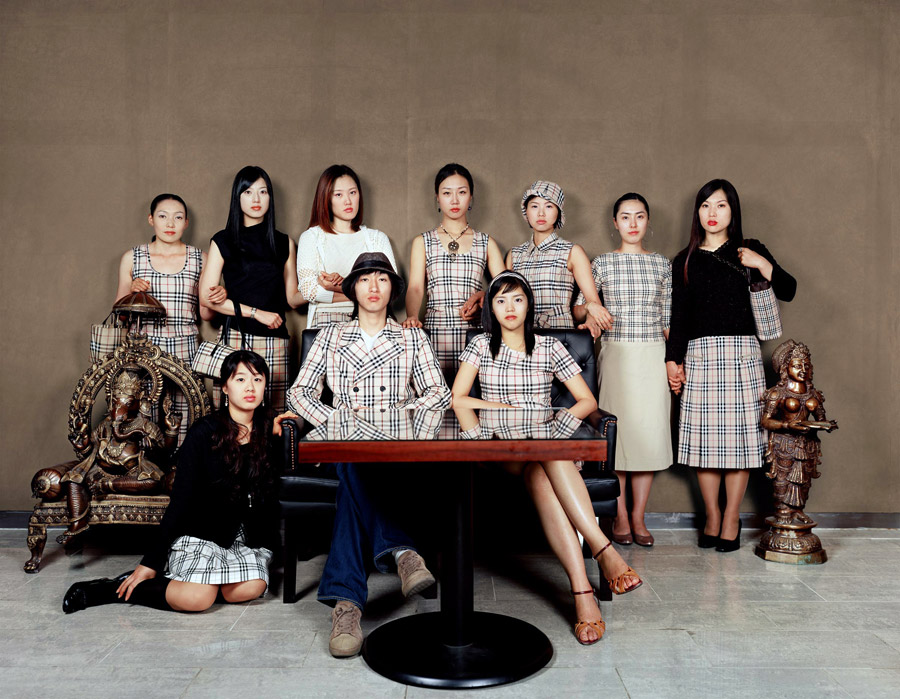
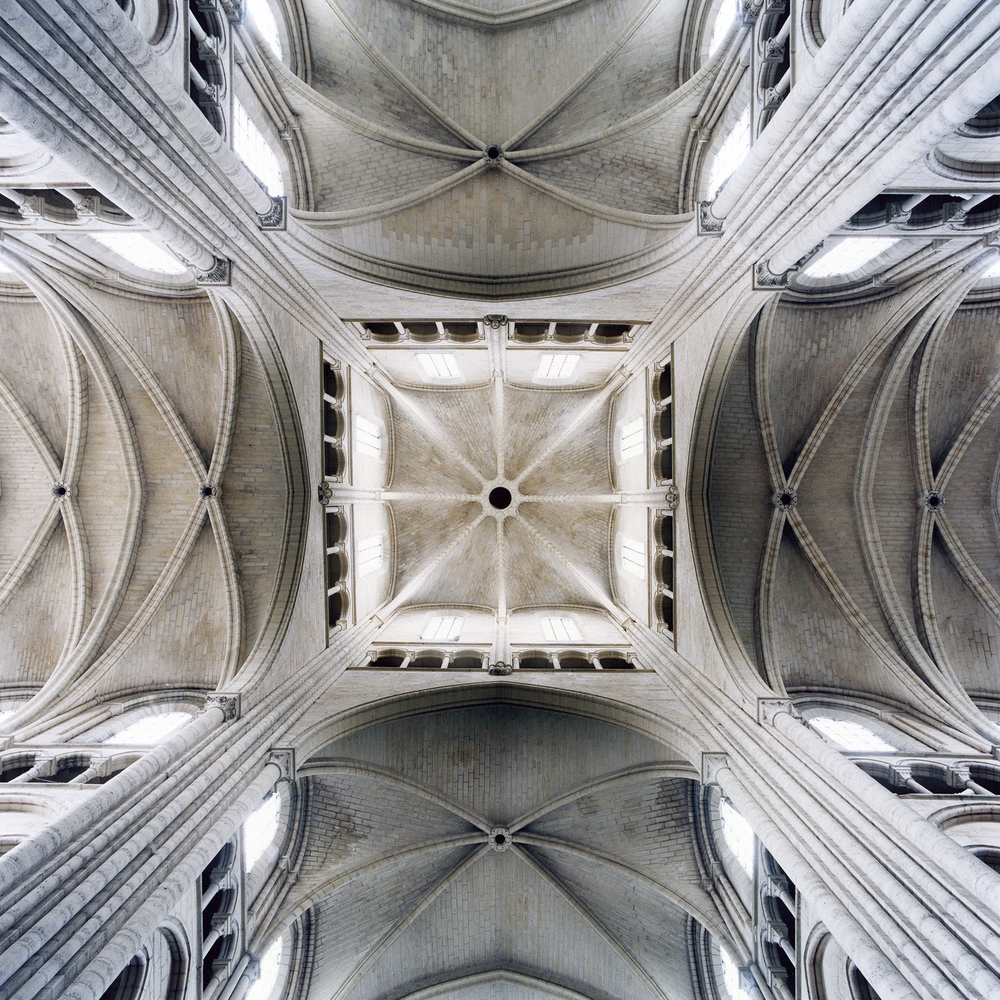
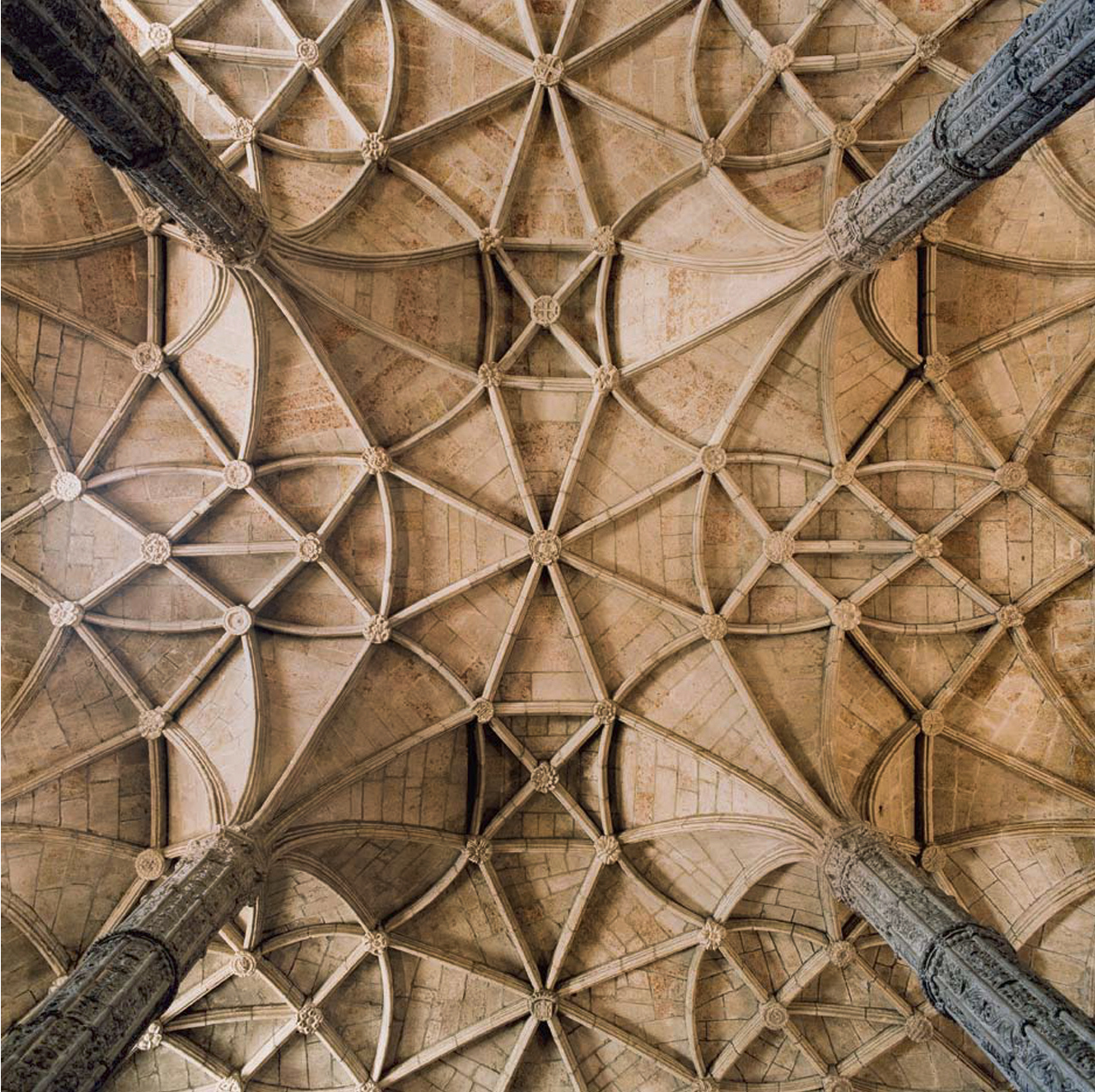
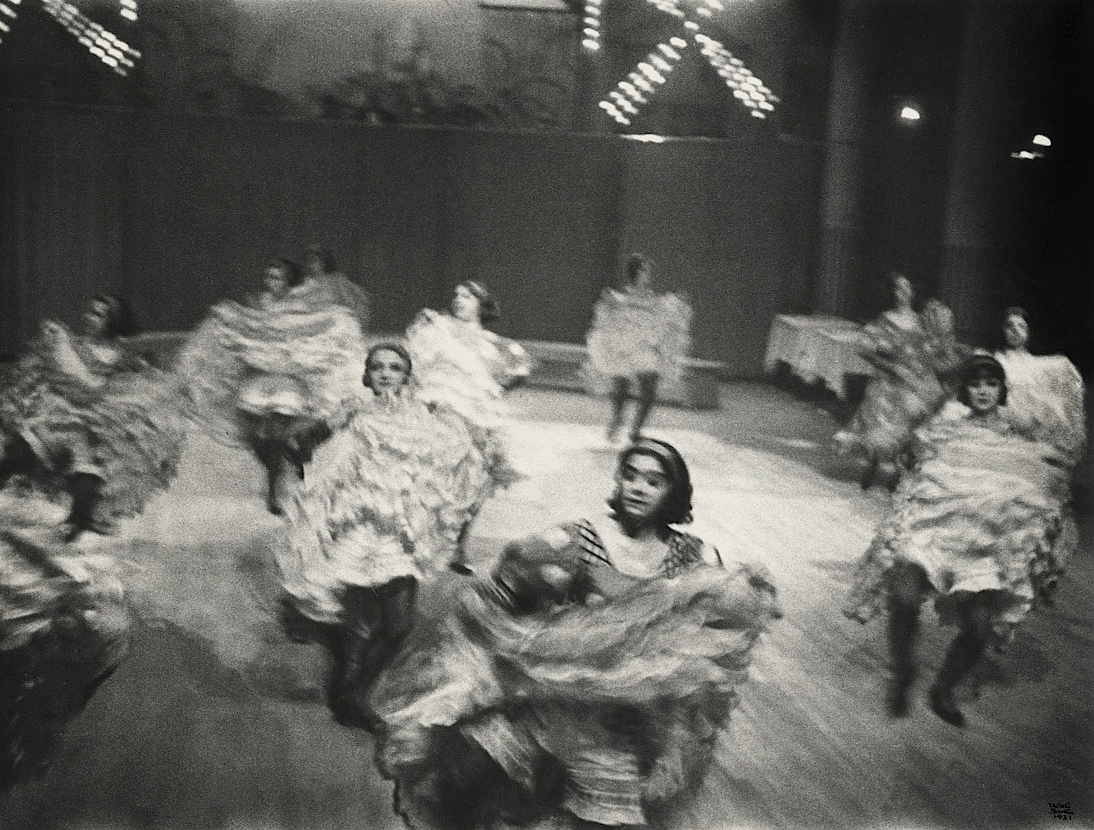
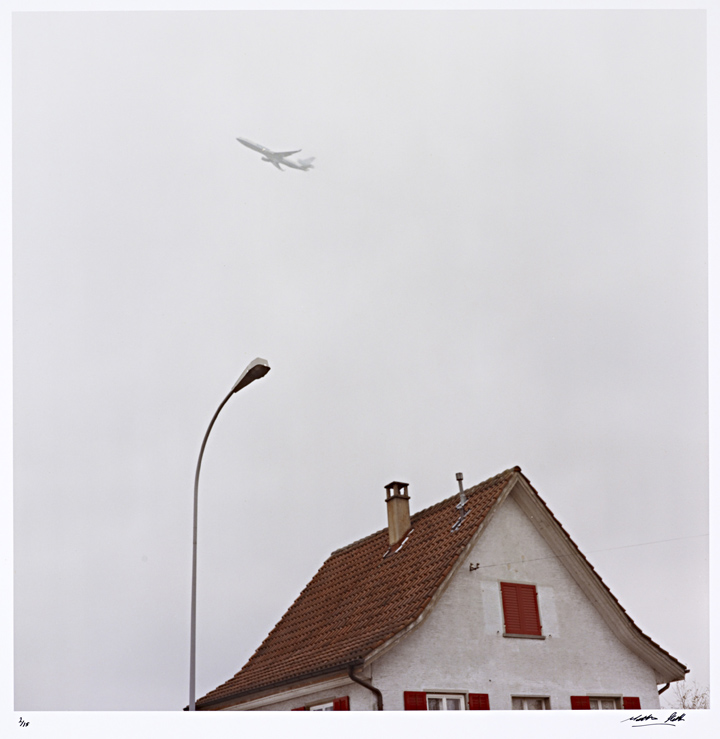
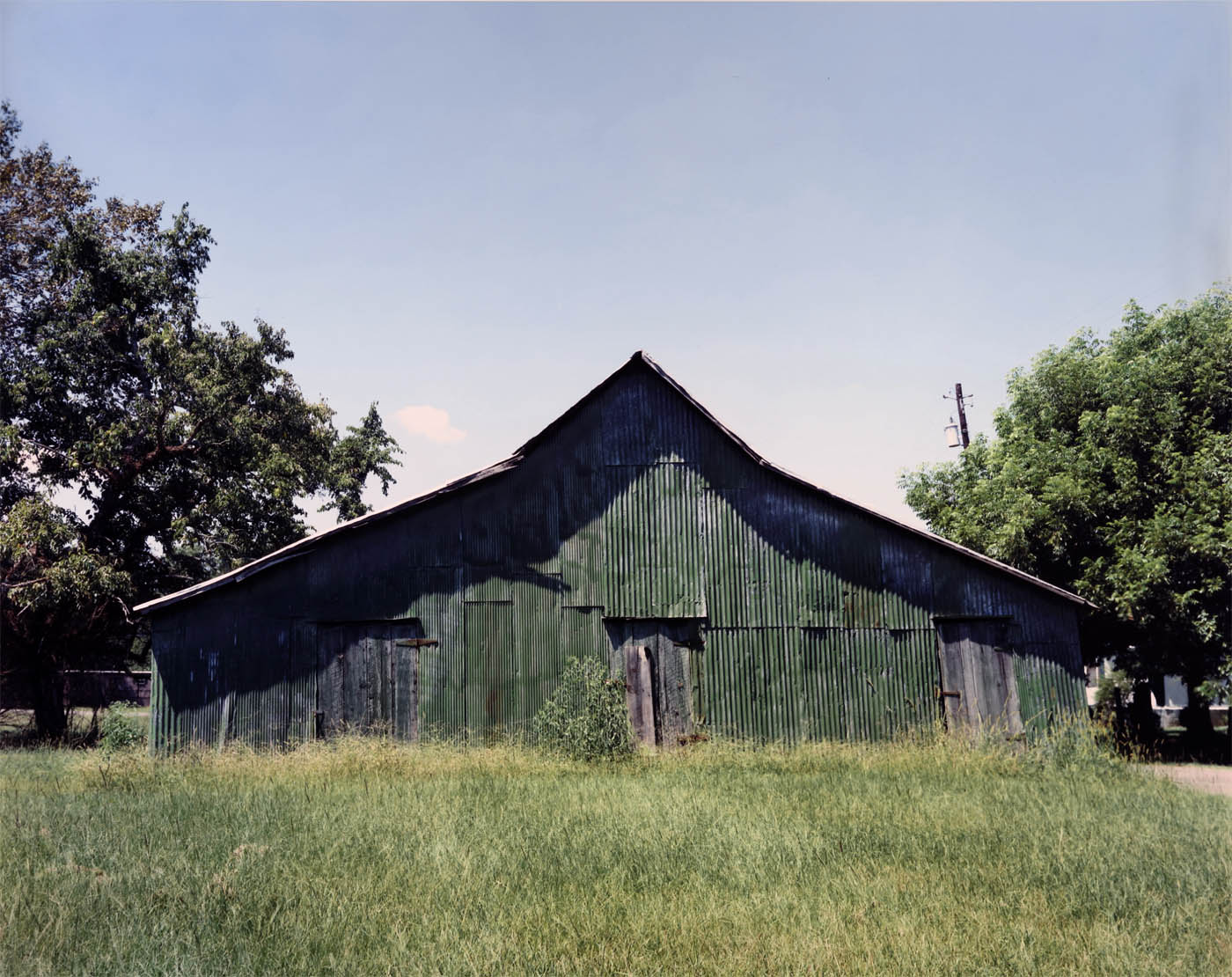
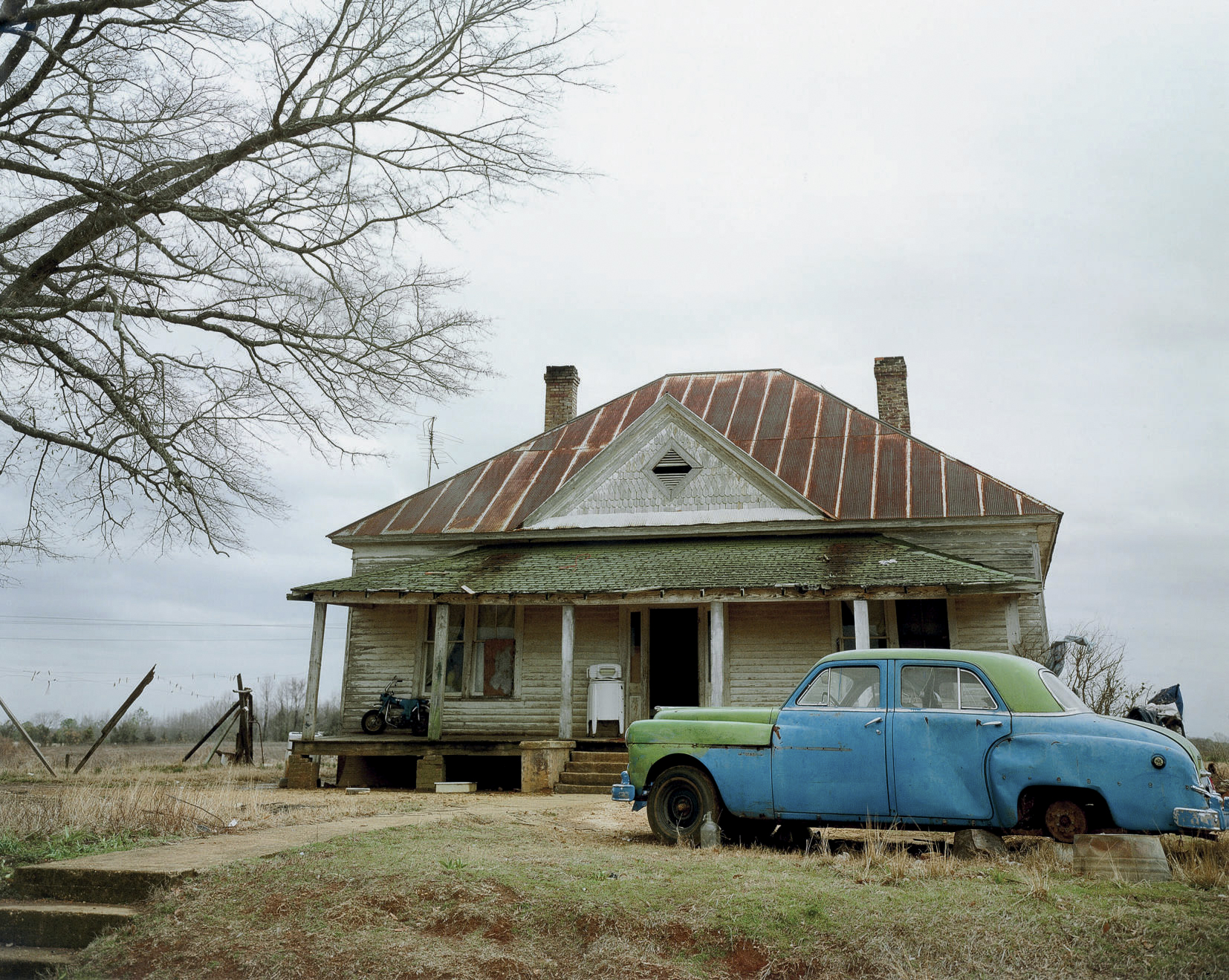
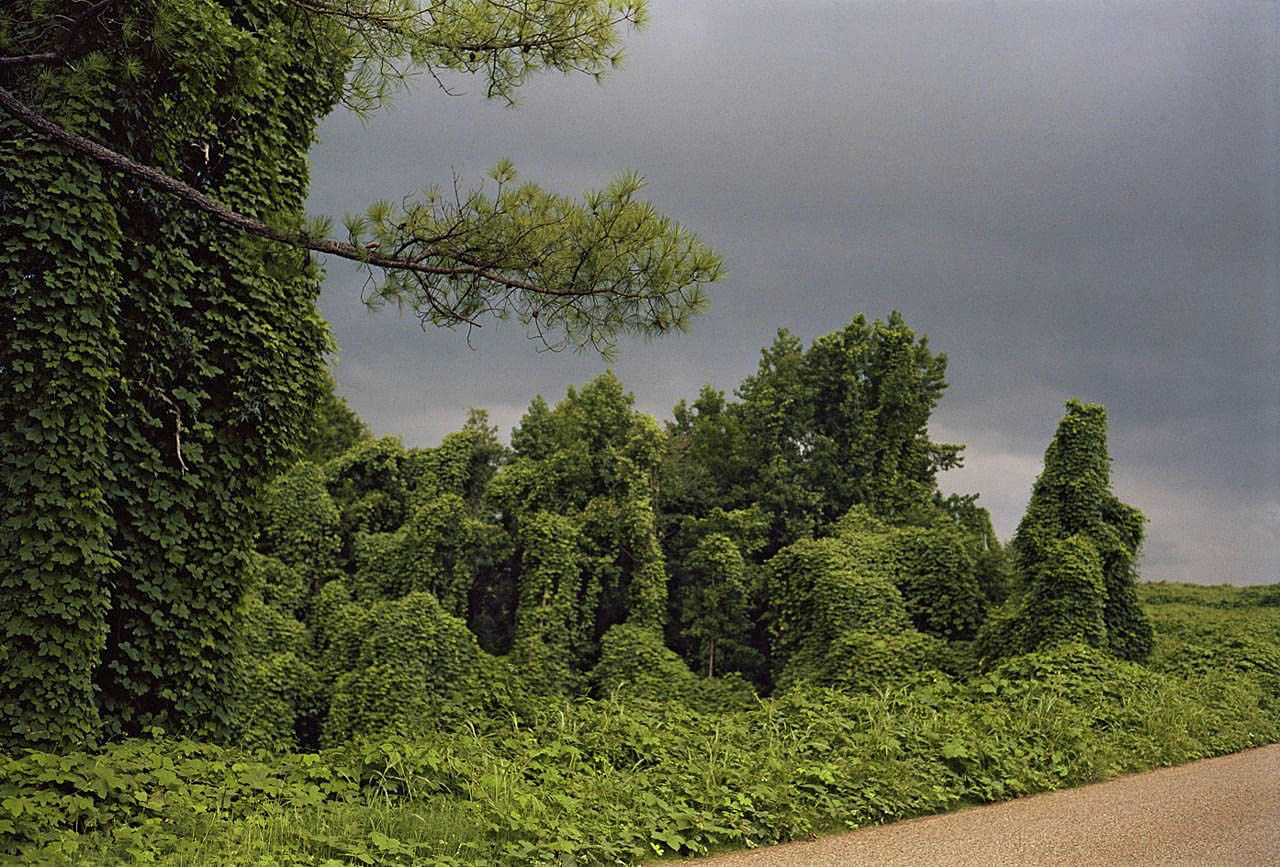
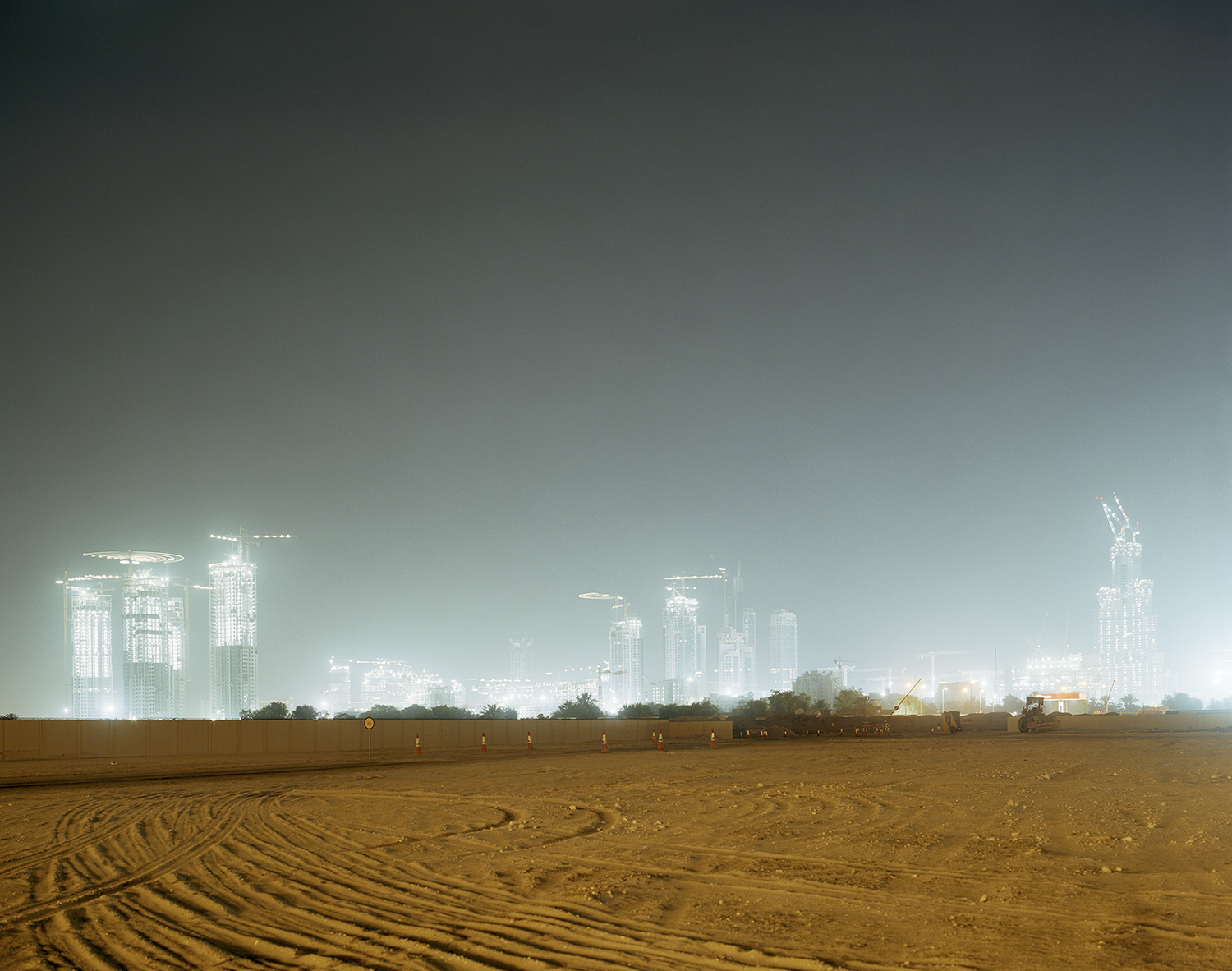
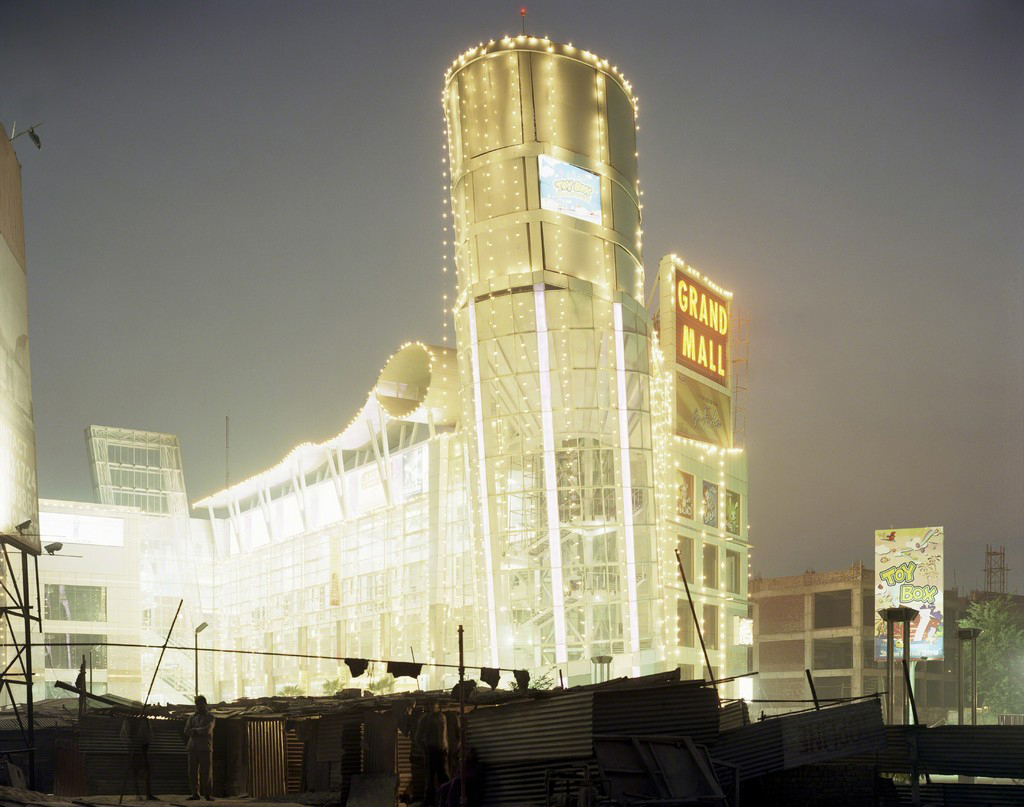
Exhibition artists: Peter Bialobrzeski, Stephane Couturier, DoDo Jin Ming, Toshio Shibata


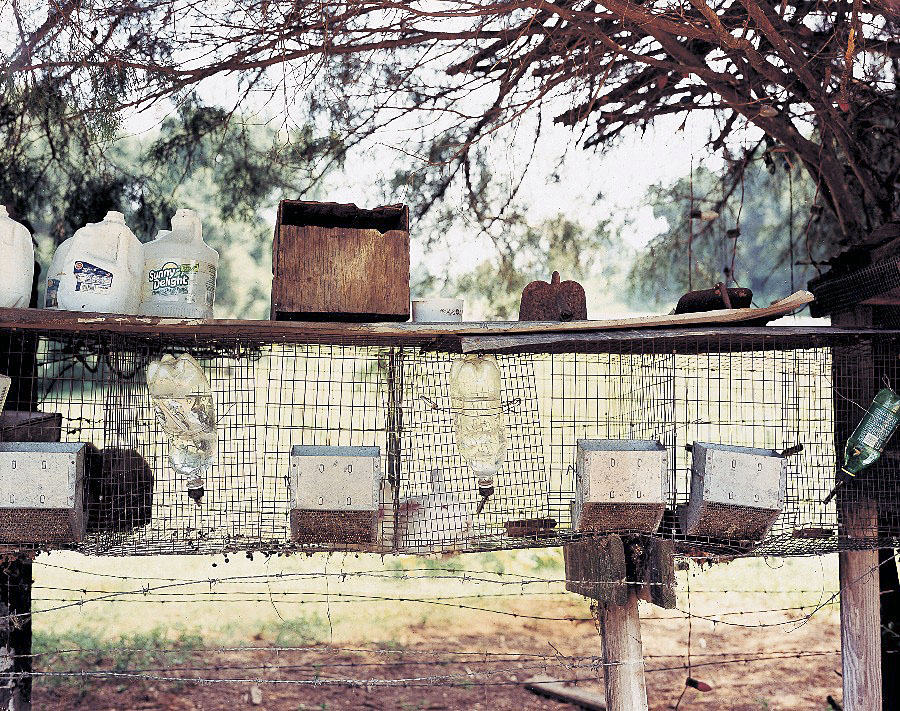
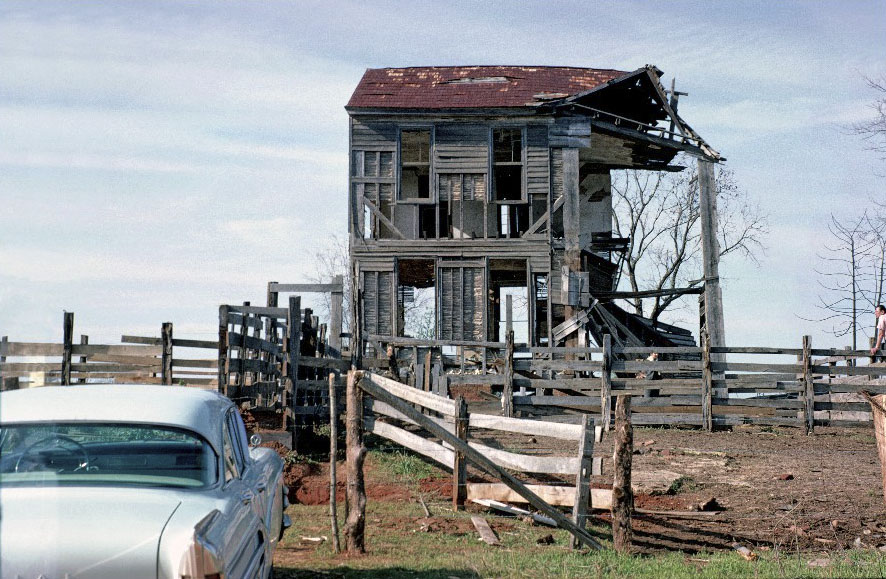
Many thankx to Laurence Miller Gallery for allowing me to publish the photographs in the posting. Please click on the photographs for a larger version of the image.


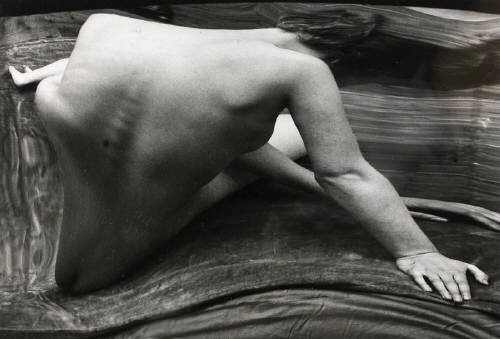
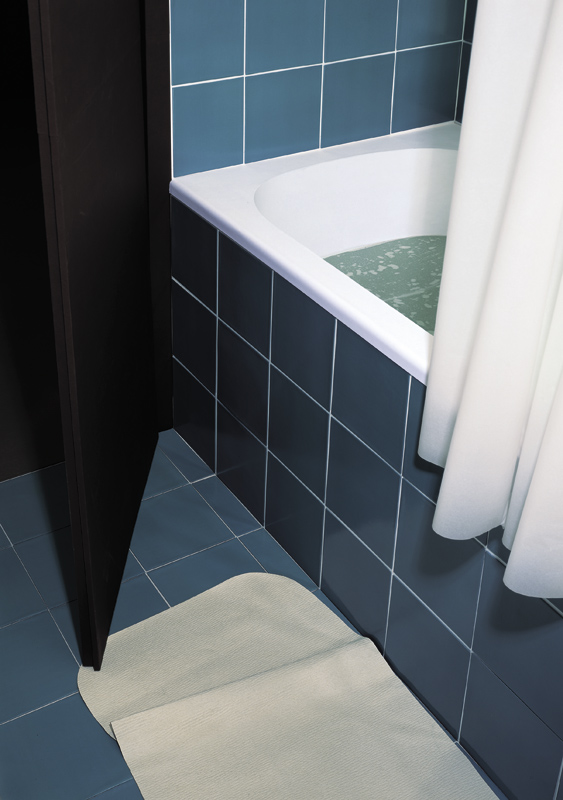
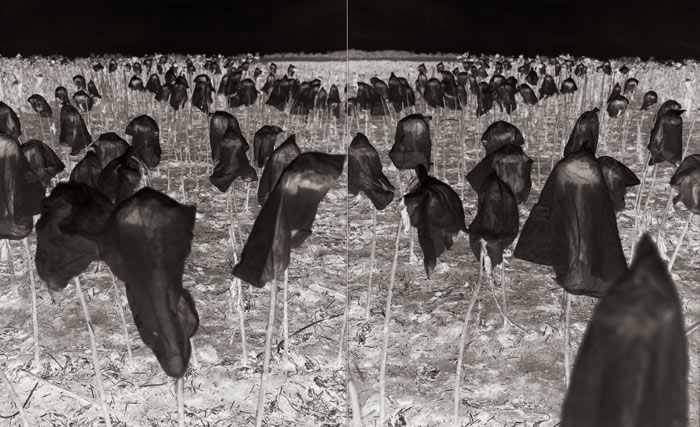
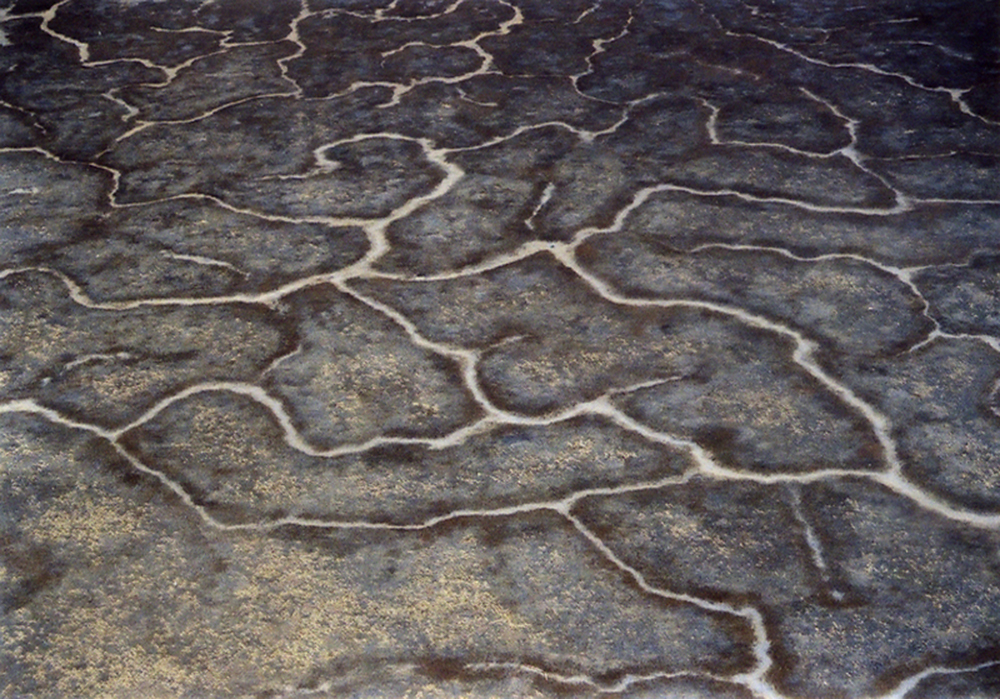
DoDo Jin Ming (Chinese, b. 1955) 'Behind My Eyes 2nd Movement, Plate I' 2002 from the exhibition 'The Abstracted Landscape' at the Laurence Miller Gallery, New York, Sept - Nov, 2009


DoDo Jin Ming (Chinese, b. 1955)
Behind My Eyes 2nd Movement, Plate I
2002


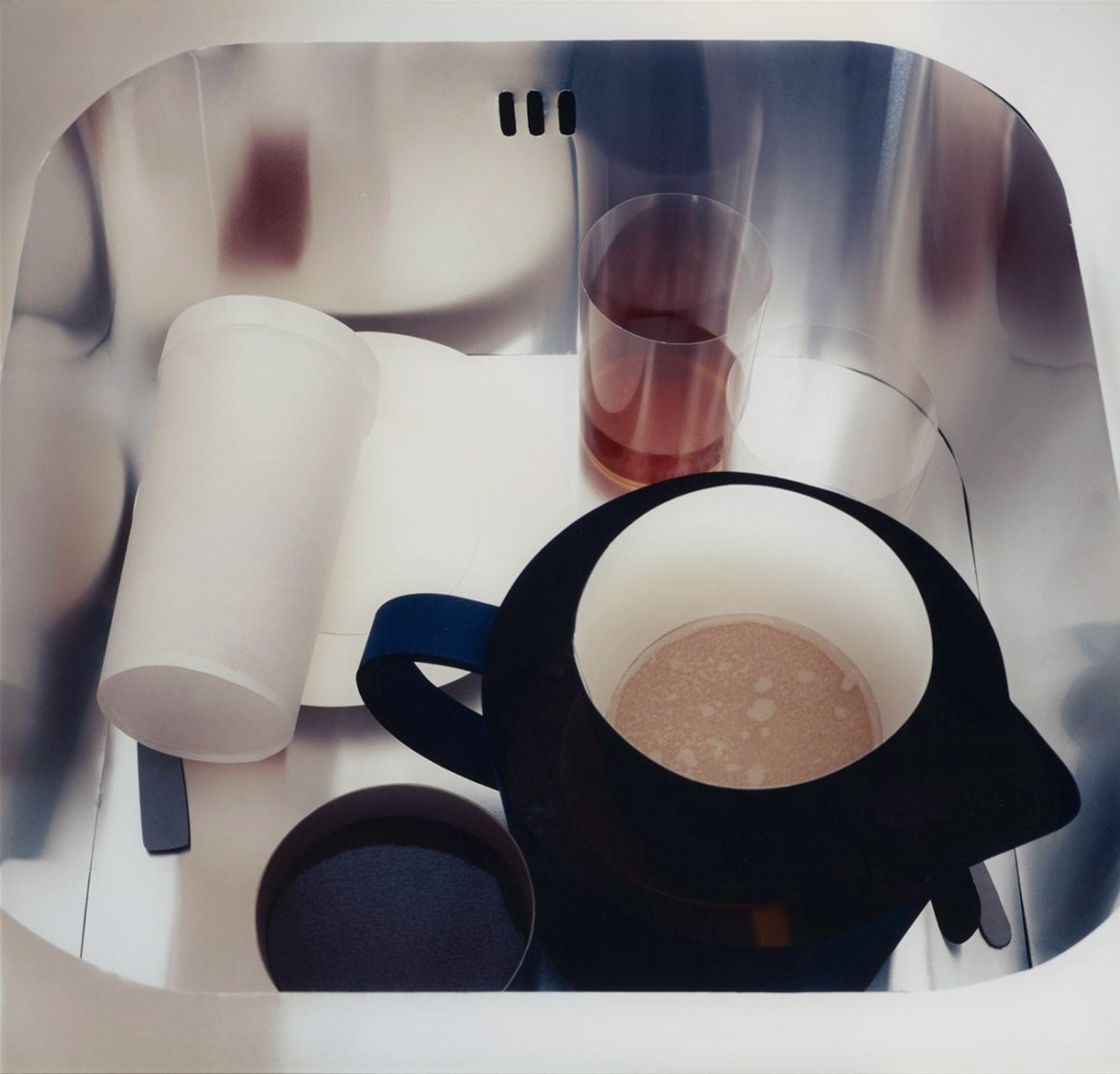
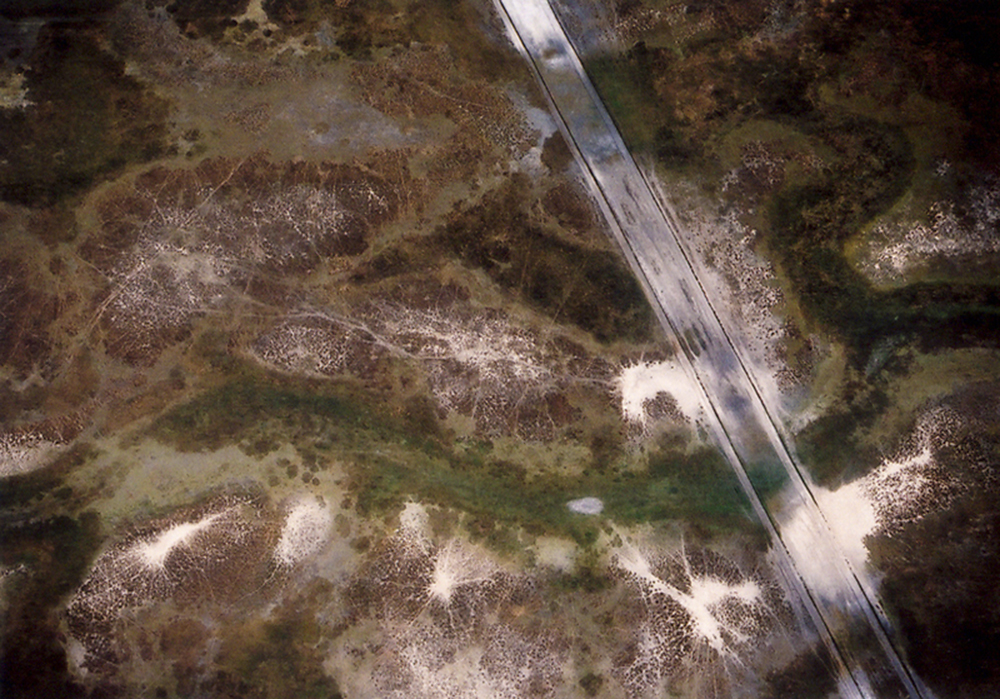
DoDo Jin Ming (Chinese, b. 1955) 'Behind My Eyes 2nd Movement, Plate VIII' 2003 from the exhibition 'The Abstracted Landscape' at the Laurence Miller Gallery, New York, Sept - Nov, 2009


DoDo Jin Ming (Chinese, b. 1955)
Behind My Eyes 2nd Movement, Plate VIII
2003


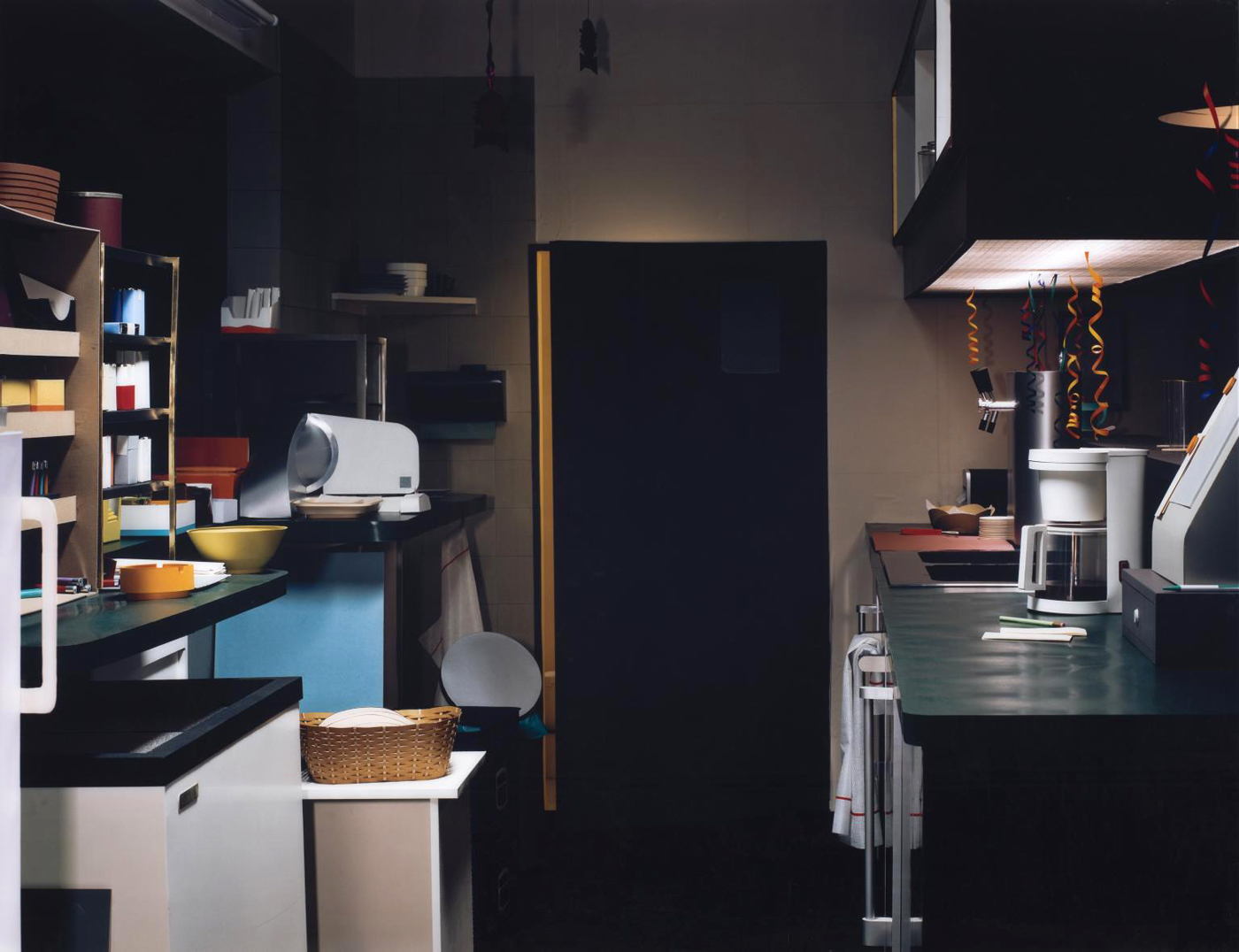
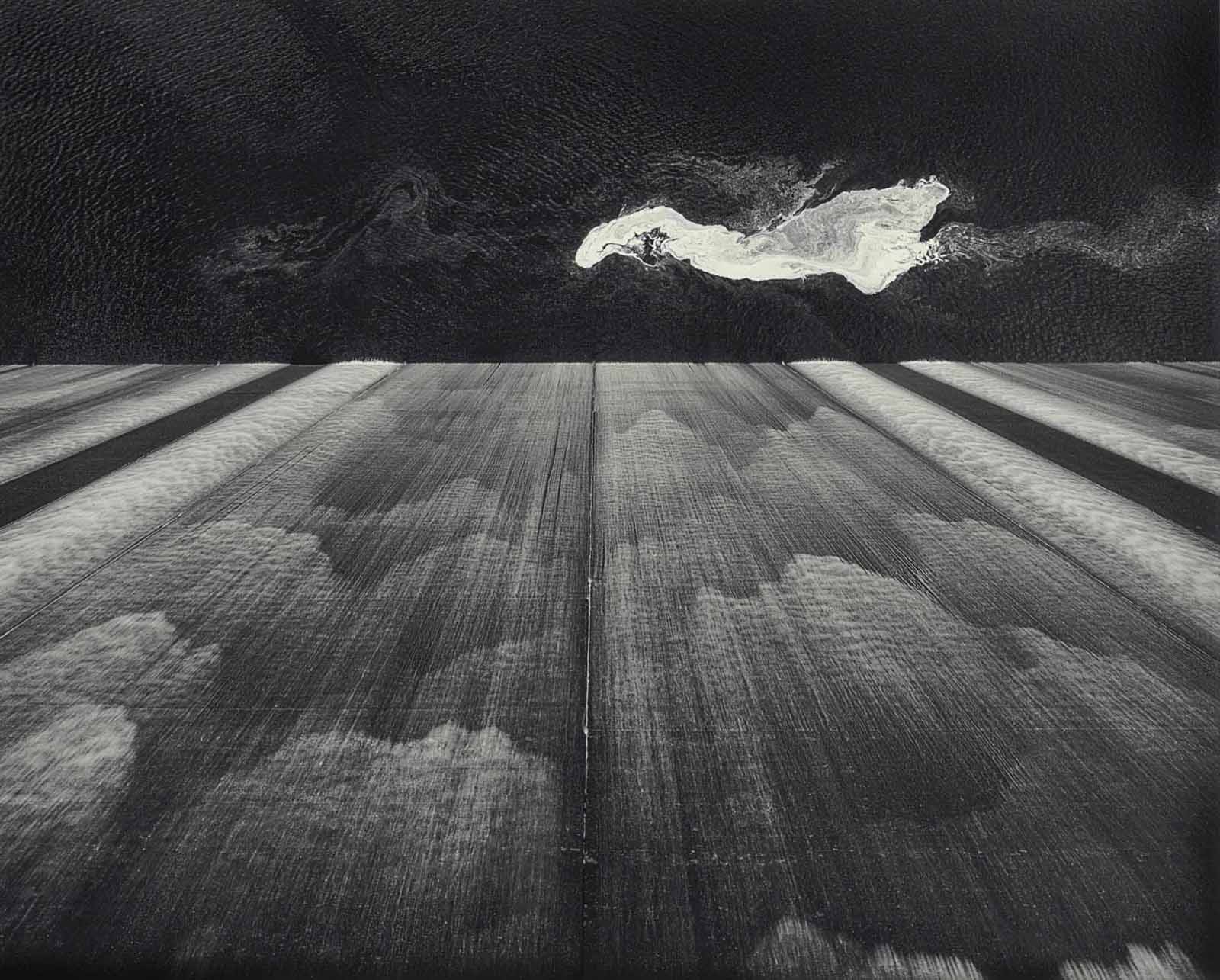
DoDo Jin Ming (Chinese, b. 1955) 'Free Element, Plate XXX' 2002


DoDo Jin Ming (Chinese, b. 1955)
Free Element, Plate XXX
2002


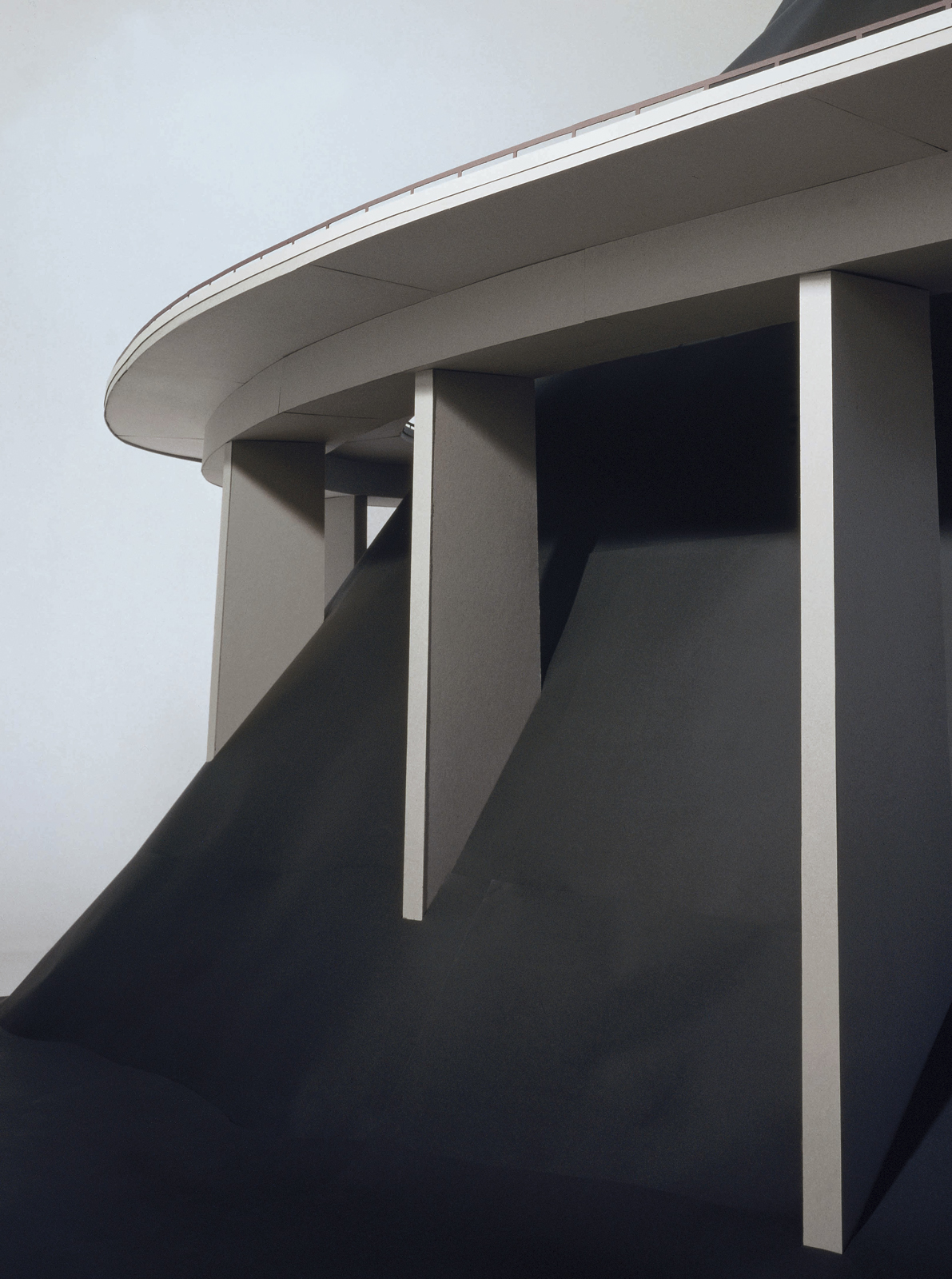
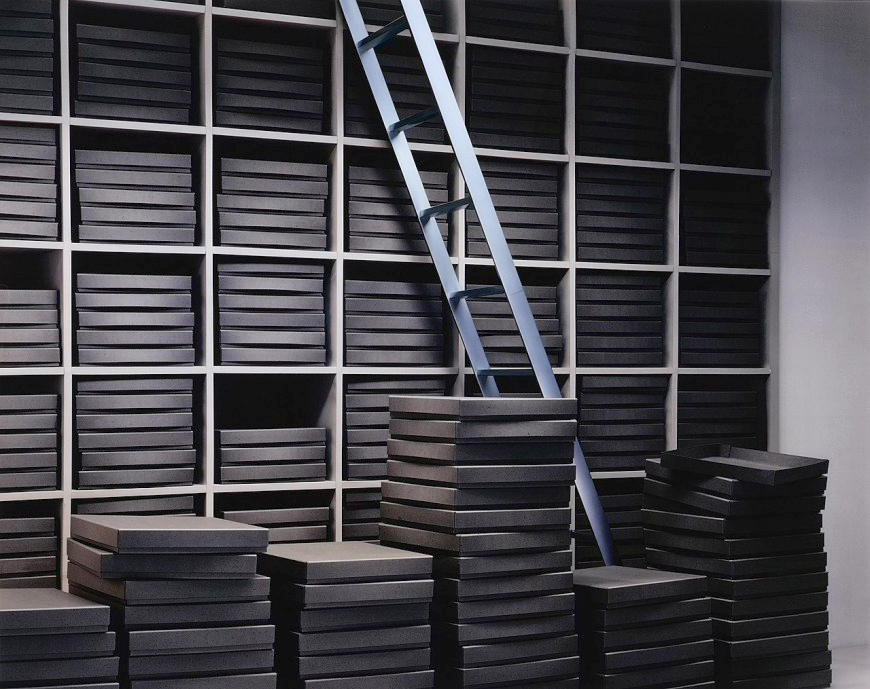
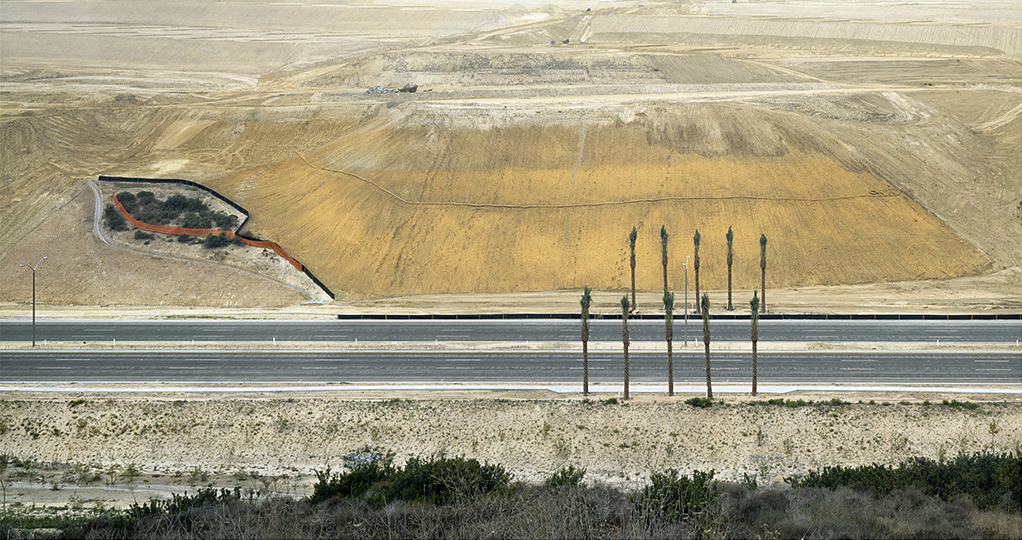
Stéphane Couturier (French, b. 1957) 'Olympic Parkway No. 1' 2001 from the exhibition 'The Abstracted Landscape' at the Laurence Miller Gallery, New York, Sept - Nov, 2009


Stéphane Couturier (French, b. 1957)
Olympic Parkway No. 1
2001


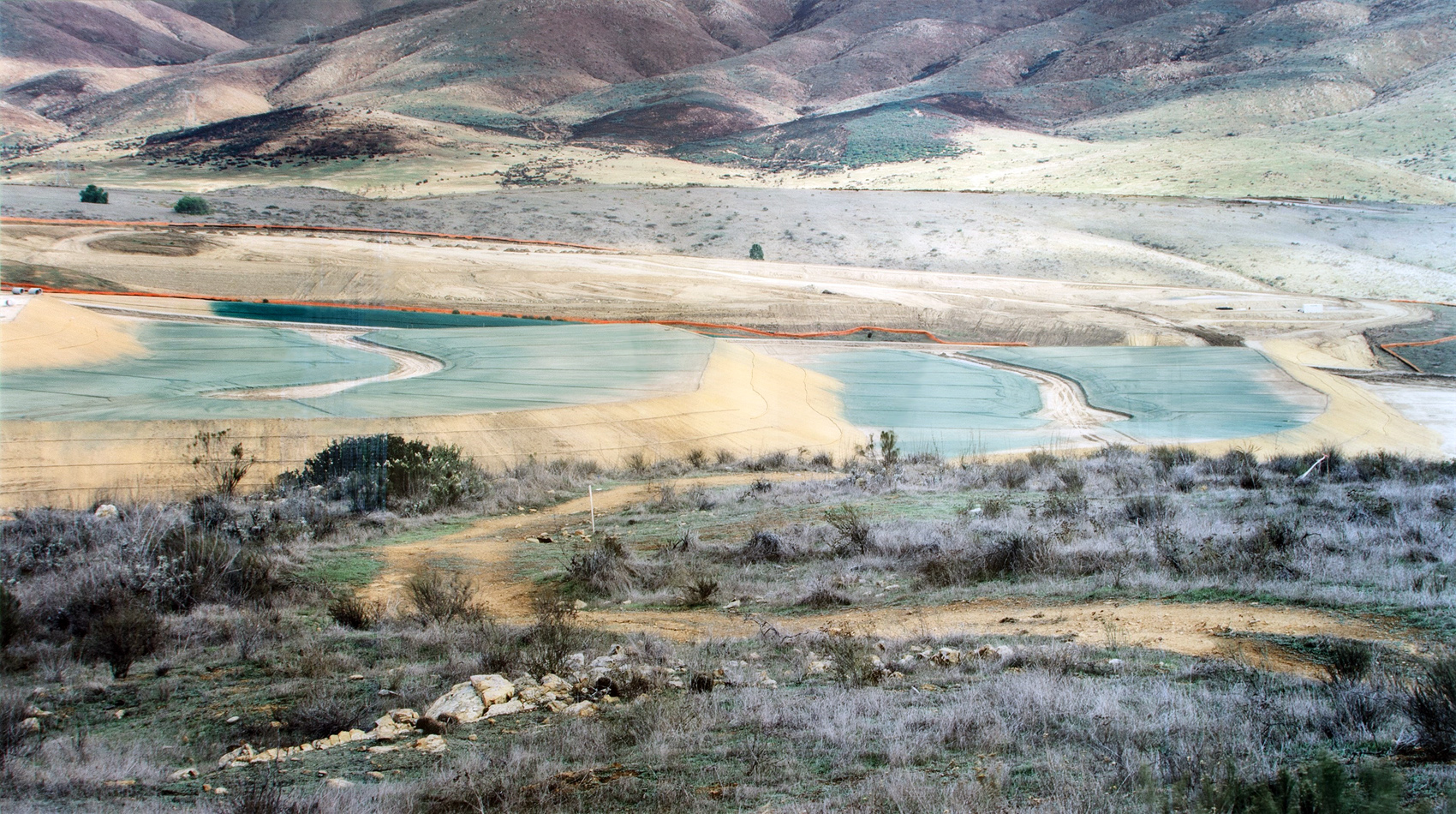
Stéphane Couturier (French, b. 1957) 'Proctor Valley No. 1' 2004


Stéphane Couturier (French, b. 1957)
Proctor Valley No. 1
2004


Laurence Miller is pleased to present, as its opening show for the fall, The Abstracted Landscape, featuring the work of four midcareer international artists: Peter Bialobrzeski, from Hamburg; Stephane Couturier, from Paris; DoDo Jin Ming from Beijing and New York; and Toshio Shibata, from Tokyo.

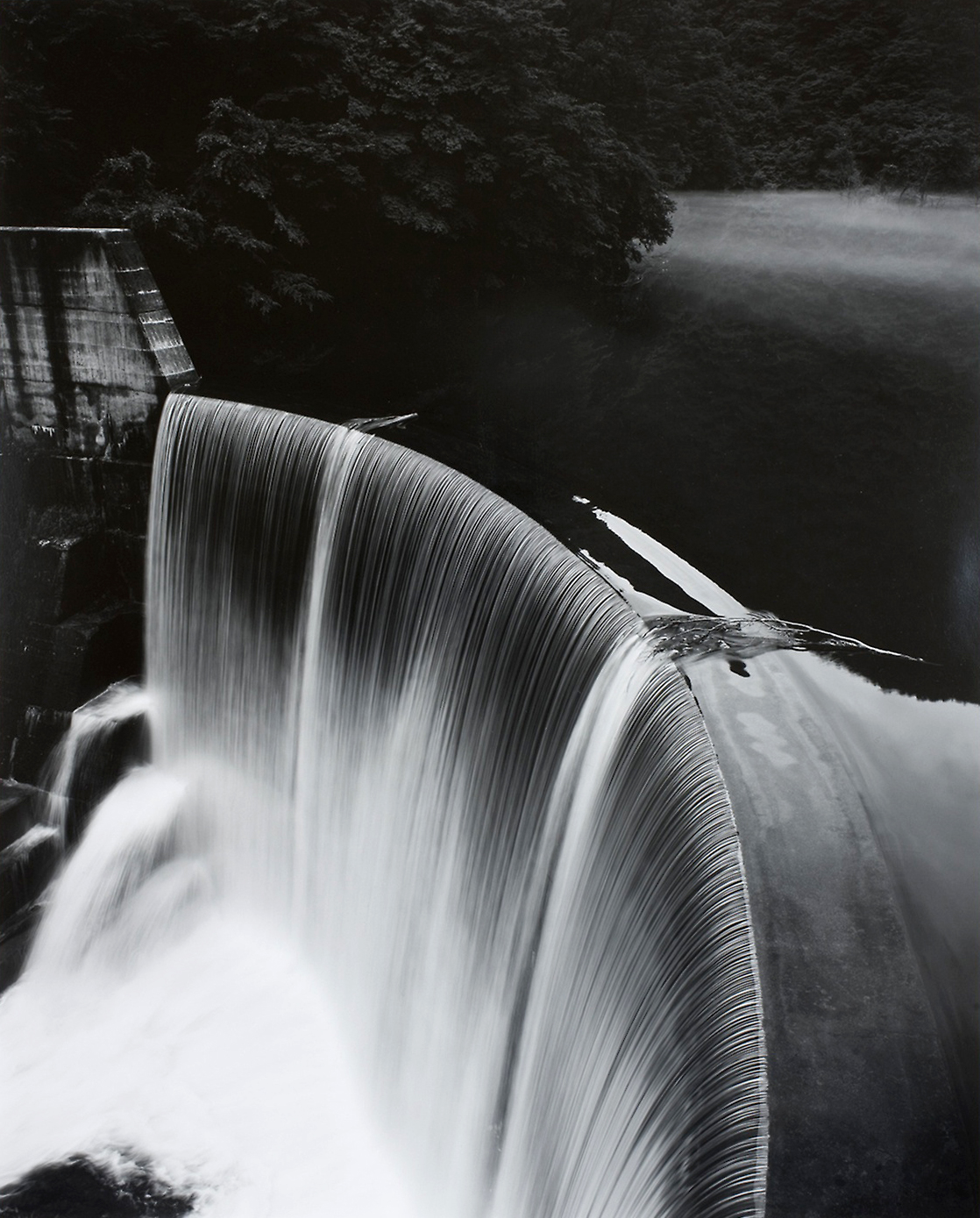
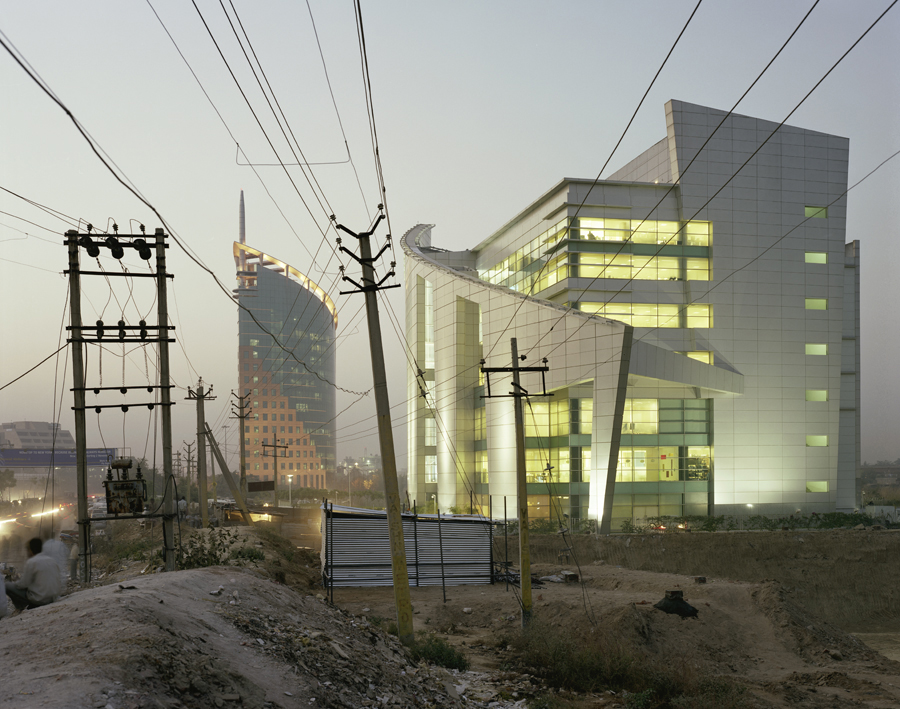
These four photographers each translate the landscape into a poetic and abstract vision, utilising techniques and processes unique to photography to create scenes that remain sufficiently recognisable yet unobtainable through the naked eye. Peter Bialobrzeski, in his series Lost in Transition, photographs rapid urbanisation and industrialisation by taking very long exposures, which create other-worldly colours and lighting not visible to the naked eye. Stéphane Couturier embraces the camera’s monocularity in his series from Havana to flatten our normal reading of space and render totally ambiguous the walls of a decaying interior. DoDo Jin Ming, in her series Behind My Eyes, applies the technique of negative printing to render mysterious and foreboding fields of sunflowers. And Toshio Shibata wields his large view camera, with multiple tilts and swings, to look straight down the side of a dam, creating a vertigo-inducing viewpoint we would be unable (and perhaps unwilling) to see directly with our own eyes.

Abstraction in the landscape has a rich tradition within the history of photography. Felix Teynard’s Egyptian views from the mid-1850’s are wonderfully abstract, as are those of J.B. Greene and August Salzmann. Timothy O’Sullivan, Carlton Watkins and William Henry Jackson each made views of the American west from the 1806’s through the 1880’s, that were equally rich in detail and minimal in composition. In the 20th century there are many examples, from George Seeley to Paul Strand, through Moholy Nagy and the Bauhaus to Edward Weston’s glorious sand dunes.

Text from the Laurence Miller Gallery website [Online] Cited 12/10/2009. No longer available online


Toshio Shibata (Japanese, b. 1949) 'Kashima Town, Fukushima Prefecture' 1990


Toshio Shibata (Japanese, b. 1949)
Kashima Town, Fukushima Prefecture
1990


Toshio Shibata (Japanese, b. 1949) 'Grand Coulee Dam, Douglas County, WA' 1996


Toshio Shibata (Japanese, b. 1949)
Grand Coulee Dam, Douglas County, WA
1996


Peter Bialobrzeski (German, b. 1961) 'Transition # 33' 2005


Peter Bialobrzeski (German, b. 1961)
Transition #33 from the series Lost in Transition
2005


Peter Bialobrzeski (German, b. 1961) 'Transition # 20' 2005


Peter Bialobrzeski (German, b. 1961)
Transition #20 from the series Lost in Transition
2005


Peter Bialobrzeski (German, b. 1961) 'Transition #23' 2005


Peter Bialobrzeski (German, b. 1961)
Transition #23 from the series Lost in Transition
2005


Laurence Miller Gallery

Laurence Miller Gallery is now operating as a private dealer and consultant.

Laurence Millery Gallery website

LIKE ART BLART ON FACEBOOK

Back to top

Exhibition: ‘Proud Flesh’ by Sally Mann at Gagosian Gallery, New York

Exhibition dates: 15th September – 31st October, 2009


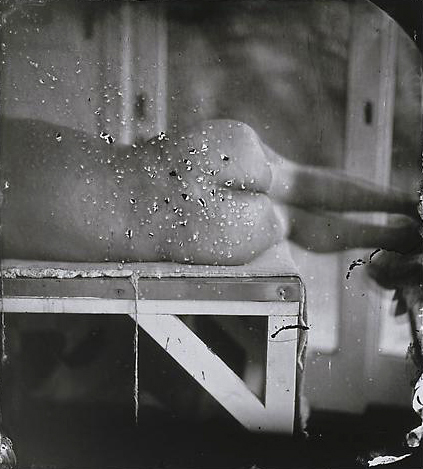
Sally Mann (American, b. 1951) 'Memory's Truth' 2008 from the exhibition 'Proud Flesh' by Sally Mann at Gagosian Gallery, New York, Sept - Oct, 2009


Sally Mann (American, b. 1951)
Memory’s Truth
2008
Gelatin silver print
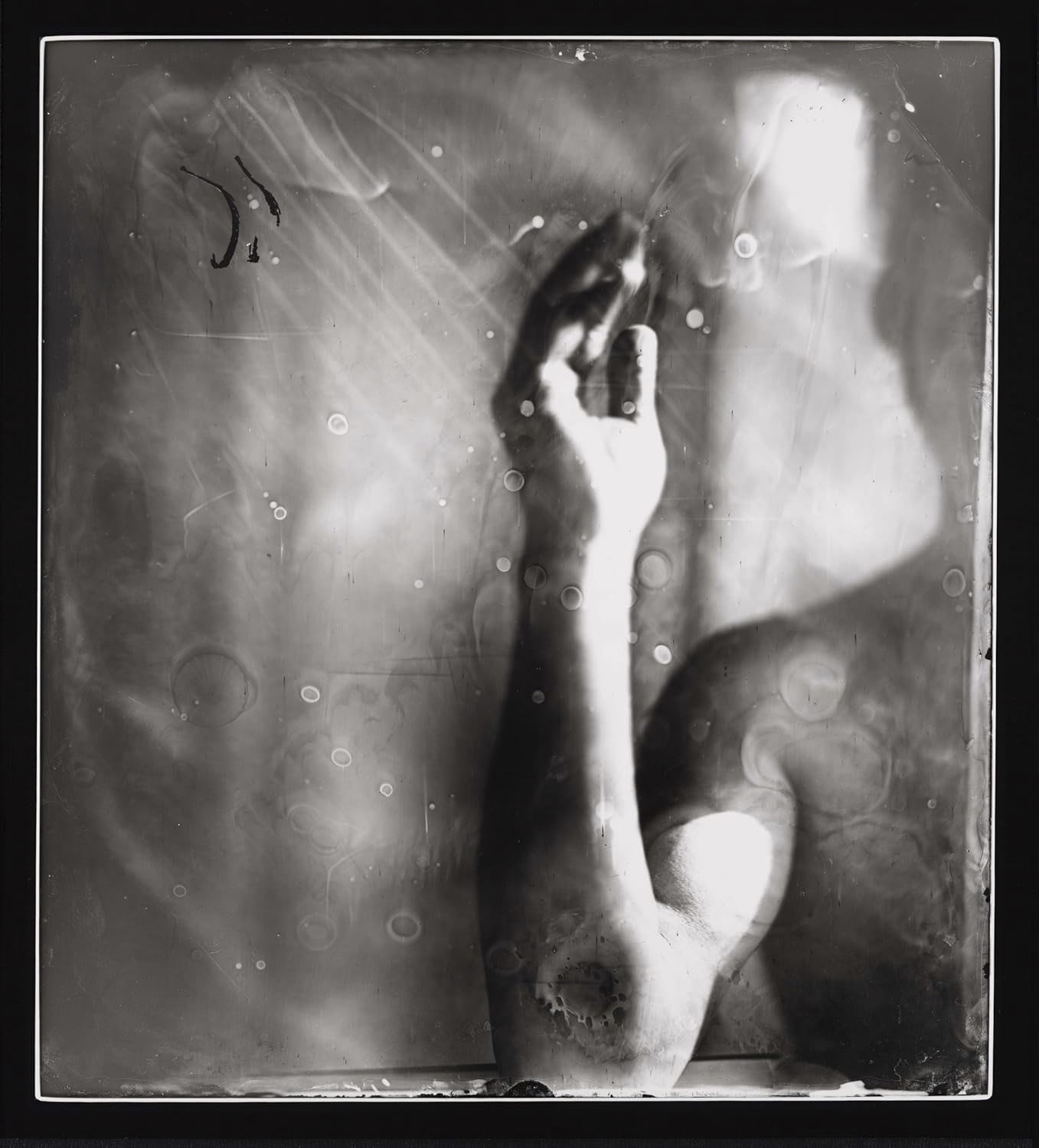
Contact print from a wet-plate collodion negative


“I can think of numberless males, from Bonnard to Callahan, who have photographed their lovers and spouses, but I am having trouble finding parallel examples among my sister photographers. The act of looking appraisingly at a man, making eye contact on the street, asking to photograph him, studying his body, has always been a brazen venture for a woman, though, for a man, these acts are commonplace, even expected.”


Sally Mann


Many thankx to Gagosian Gallery for allowing me to publish the photographs in the posting. Please click on some of the photographs for a larger version of the image.


Proud Flesh is for me an emotionally exhausting work about withering. It has elements of 19th century clinical photography done with absolute loving care for the subject. Its factual surface is quickly replaced by metaphor and the haze of imperfection from the wet-plate collodion negatives she employs. In a few of the images, due to the choice of striped bedding on which the figure lays, we might be looking at a historical photograph take from Auschwitz or Bergen Belsen. With Larry’s thin and seemingly weak legs dangling over the edge of a wooden cot, the soiled bedding following the contour of his legs, it is difficult for me to see this image without this harsh historical reference. The following image in the book, he is turned into a martyr – arms out stretched – the sheet underneath him now sharply crinkled like a bed of straw (or an imagined crown of thorns).

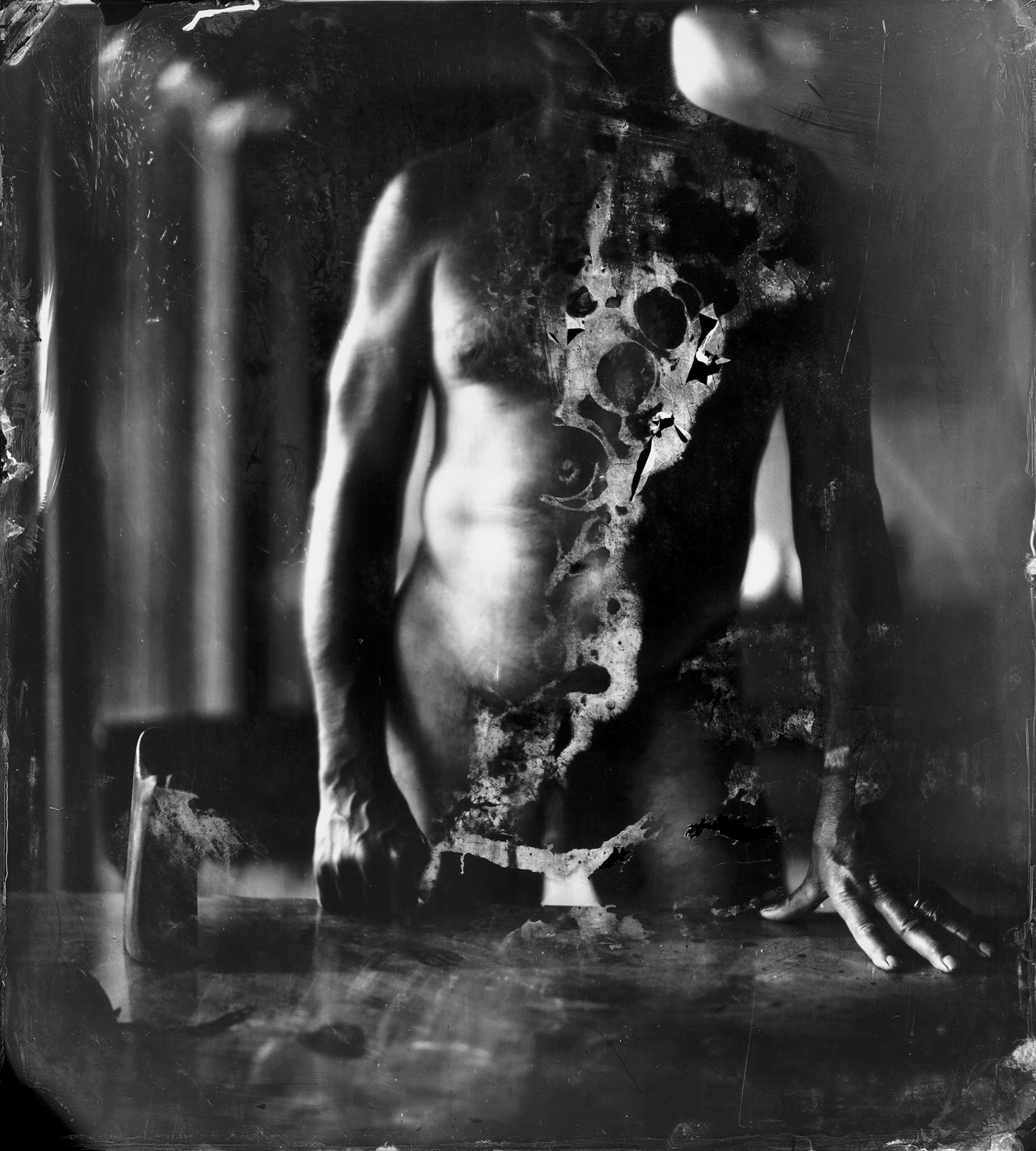
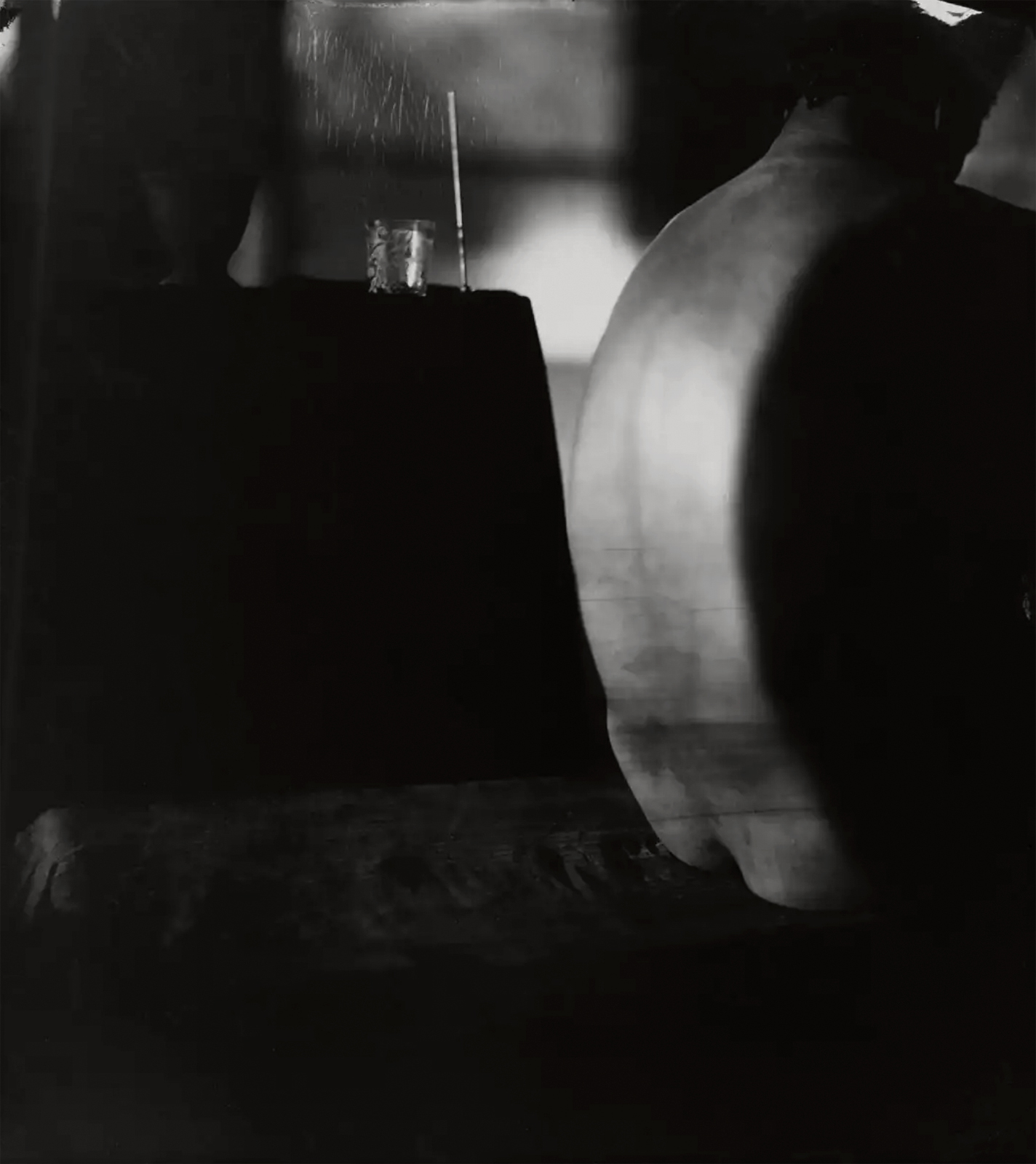
The surface texture plays such a strong role in these photos much of the seduction of these photos comes from the beauty of those imperfections. At times they can be nauseating, for their liquid streaks ooze over the images of aged flesh keeping viscera and bodily fluids as a second metaphoric subject. On the cover image, the disturbed collodion emulsion leaves a pattern which seems to be both looking at, and looking inside, the torso standing before the camera. Like Lee Friedlander’s shadow self-portrait (see the cover of Like a One-eyed Cat) where his organs are replaced with a jumble of rocks and his head is filled with straw, Mann’s image turns Larry’s insides into a mix of man and machine – collodion cogs and gears. This is the most wishful, as it portrays the strongest sense of life and the perhaps even the possibility of escaping its mortality. He stands at table’s edge with a steadying hand and a closed fist.

The most remarkable image for me appears as plate 20 and is captioned Time and the Bell (2008). Like the aforementioned cover image, this is an ideal as Mann has turned her husband’s head and shoulders into a profile bust of marble – the washed out light tones give way to a few angular shapes of rich shadow. It could be a still life of artefacts from an artists work space, a table and a sculptural work in progress. The surprise of the photographic description, which is present in most of the photos in Proud Flesh, is so complex and engaging for me it is difficult to not have it outshine all of the rest.

Text from 5B4: Photography and Books blog October 1, 2009 [Online] Cited 28/04/2019. No longer available online


Sally Mann (American, b. 1951) 'Semaphore' 2003


Sally Mann (American, b. 1951)
Semaphore
2003
Gelatin silver print
Contact print from a wet-plate collodion negative


Sally Mann (American, b. 1951) 'Hephaestus' 2008 from the exhibition 'Proud Flesh' by Sally Mann at Gagosian Gallery, New York, Sept - Oct, 2009


Sally Mann (American, b. 1951)
Hephaestus
2008
Gelatin silver print
Contact print from a wet-plate collodion negative


Sally Mann’s poignant image of her husband, Larry, symbolises both his illness and his skill as a blacksmith.


Sally Mann (American, b. 1951) 'The Nature of Loneliness' 2008


Sally Mann (American, b. 1951)
The Nature of Loneliness
2008
Gelatin silver print
Contact print from a wet-plate collodion negative
15 x 13 1/2 inches


Sally Mann (American, b. 1951) 'Somnambulist' 2009


Sally Mann (American, b. 1951)
Somnambulist
2009
Gelatin silver print
Contact print from a wet-plate collodion negative


Gagosian Gallery is pleased to present “Proud Flesh”, a series of new photographs by Sally Mann.

Children, landscape, lovers – these iconic subjects are as common to the photographic lexicon as light itself. But Mann’s take on them, rendered through processes both traditional and esoteric, is anything but common. From the outset of her career she has consistently challenged the viewer, rendering everyday experiences at once sublime and deeply disquieting.

In previous projects, Mann has explored the relationships between parent and child, brother and sister, human and nature, site and history. Her latest photographic study of her husband Larry Mann, taken over six years, has resulted in a series of candid nude studies of a mature male body that neither objectifies nor celebrates the focus of its gaze. Rather it suggests a profoundly trusting relationship between woman and man, artist and model that has produced a full range of impressions – erotic, brutally frank, disarmingly tender, and more. While the relation of artist and model is, traditionally, a male-dominated field that has yielded countless appraisals of the female body and psyche, Mann reverses the role by turning the camera on her husband during some of his most vulnerable moments.

Mann’s technical methods and process further emphasise the emotional and temporal aspects of these fragile life studies. The images are contact prints made from wet-plate collodion negatives, produced by coating a sheet of glass with ether-based collodion and submerging it in silver nitrate. Mann exploits the surface aberrations that can result from the unpredictability of the process to produce painterly photographs marked by stark contrasts of light and dark, with areas that resemble scar tissue. In works such as Hephaestus and Ponder Heart, the scratches and marks incurred in the production process become inseparable from the physical reality of Larry’s body.”

Text from the Gagosian Gallery website [Online] Cited 10/10/2009. No longer available online


Sally Mann (American, b. 1951) 'Kingfisher's Wing' 2007


Sally Mann (American, b. 1951)
Kingfisher’s Wing
2007
Gelatin silver print
Contact print from a wet-plate collodion negative


Sally Mann (American, b. 1951) 'The Quality of the Affection' 2006


Sally Mann (American, b. 1951)
The Quality of the Affection
2006
Gelatin silver print
Contact print from a wet-plate collodion negative


Sally Mann (American, b. 1951) 'Ponder Heart' 2009


Sally Mann (American, b. 1951)
Ponder Heart
2009
Gelatin silver print
Contact print from a wet-plate collodion negative


Sally Mann (American, b. 1951) 'Was Ever Love' 2009


Sally Mann (American, b. 1951)
Was Ever Love
2009
Gelatin silver print
Contact print from a wet-plate collodion negative


Gagosian Gallery – Madison Avenue Gallery
980 Madison Avenue
New York, NY 10075
Phone: 212.744.2313

Opening hours:
Tuesday – Saturday 10am – 6pm

Gagosian Gallery website

LIKE ART BLART ON FACEBOOK

Back to top

Review: ‘Between Lines’ by Kim Lawler at fortyfive downstairs, Flinders Lane, Melbourne

Exhibition dates: 29th September – 10th October, 2009

Curator: Amy Barclay


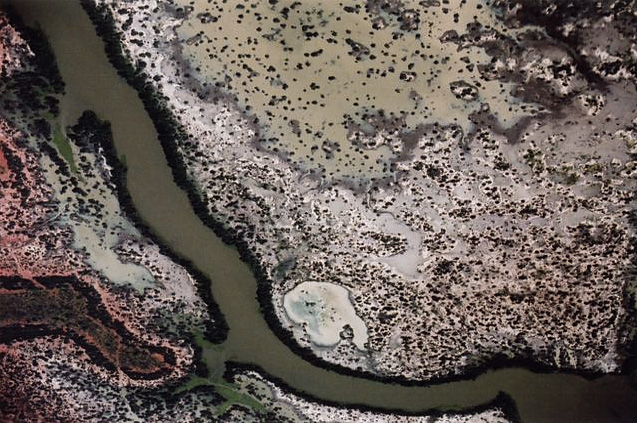
Kim Lawler (Australian) 'Between Lines' #4 2009 from the exhibition 'Between Lines' by Kim Lawler at fortyfive downstairs, Flinders Lane, Melbourne, Sept - Oct, 2022


Kim Lawler (Australian)
Between Lines #4
Aerial Photograph, Great Sandy Desert, Western Australia
2009


I finally made it to Kim Lawler’s exhibition Between Lines at fortyfive downstairs, Flinders Lane, Melbourne and, in many ways, the trip was well worth it. Lawler presents 12 prints from her eponymous series, aerial photographs taken over Western Australia.

Eschewing the essentially topographic state promoted in the “New Topographics: Photographs of a Man-Altered Landscape” of 1975 that have influenced so many photographers in recent decades (including the hyper-real photographs of the West Australian landscape by Edward Burtynsky where there is an emotional distance between the photograph and the viewer), Lawler instead mines the depths of abstraction in landscape photography.

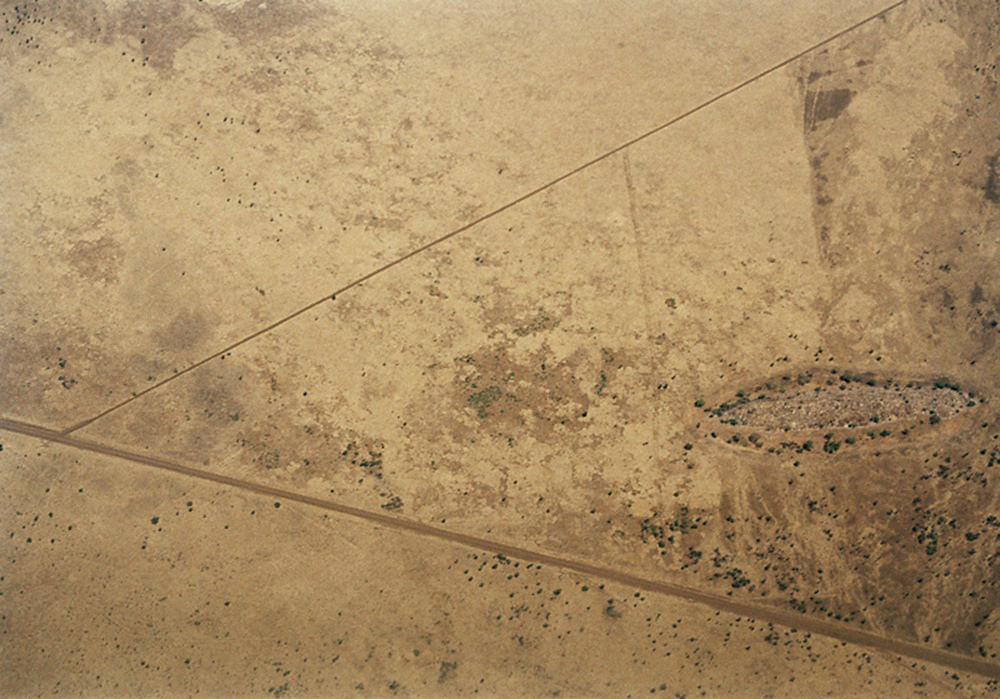
These are visceral photographs – in #4 the river and surrounds almost become vascular and cellular; in #13 the synapses and electrons infiltrate the highway reminding me of bomb craters from a Second World War landscape. In #7 the shrubs, unlike the precision of the New Topographics, become feckless dots, the landing strip a scar on the body; in #12 the toxic unsutured wound bleeds across the surface of the skin, white scar tissue surrounding it.

In these atypical mappings Lawler employs a taxonomy of disorder. The photographs are very soft in focus, soft in printing, big in the grain of the film and there is very little depth of field employed – in other words there is really nothing in focus at all, nothing that the eye and the mind can fix on. These are interstitial spaces (i.e. gaps between spaces full of structure or matter) and the title Between Lines is entirely appropriate for the work. The photographs contain beautiful textures, colours, surfaces.

This is their strength but also their weakness. The eye and the mind longs for something to hold onto, perhaps just a small fraction of the image to be in focus, so that the disorder plays off the order (for one cannot exist without the other!). Mutation only exists if their is something to mutate against. The other two small problems I had with the work were a matter of semantics and others may disagree – personally I found the size of the prints neither here nor there and they could have done with being about 2-3 inches larger and the white frames were too heavy. That is a funny thing to say about contemporary white frames, that they are too heavy for the work, but this is entirely possible: the moulding was too thick and the depth of the box frames to deep for my liking, detracting from the print itself and making the works darker than they needed to be.

Overall then an excellent exhibition that offers a positive variation on the cliched narrative of aerial photography of the Australian outback, one that questions the munificence of human habitation of the body and of the earth.

Dr Marcus Bunyan


Many thankx to fortyfive downstairs for allowing me to publish the photographs in the posting. Please click on the photographs for a larger version of the image.


Kim Lawler (Australian) 'Between Lines #7 (Landing Strip)' 2009 from the exhibition 'Between Lines' by Kim Lawler at fortyfive downstairs, Flinders Lane, Melbourne, Sept - Oct, 2022


Kim Lawler (Australian)
Between Lines #7 (Landing Strip)
Aerial Photograph, Great Sandy Desert, Western Australia
2009


Kim Lawler (Australian) 'Between Lines #8' 2009


Kim Lawler (Australian)
Between Lines #8 (Jones Soak, position approximate)
Aerial Photograph, Great Sandy Desert, Western Australia
2009


“Beyond romance or nostalgia, Lawler’s lucid visual studies reveal the aesthetic beauty of the stories being written and rewritten onto this responsive and at times fragile environment.”

~ Amy Barclay, curator


Between Lines comprises a series of aerial photographs taken in the Kimberley, far north Western Australia. This remote area is embedded with stories of Indigenous and non-Indigenous inhabitants, transitory visitors and scarred by multinational companies resource development. The artist, Kim Lawler, is concerned with markings, both natural and constructed, that tell stories of places, transitions and interruptions that occur within the landscape.

Between Lines is informed by Lawler’s experience of living in these regions and local perspectives on the displacement of people and their consequential relationship to the land that has taken place. It is also informed by the opposing qualities of abandon and connection that occur as the stories within these landscapes continue to unfold.

Competing demands for natural resources, and the resulting impact upon transitional landscapes, resonate with the stories of many generations of people that continue to flow through or inhabit each region. Attuned to the markings on these landscapes, it is these residual narratives ‘Between Lines’ seeks to record.

The imagery seen in Between Lines extends from Lawler’s previous artwork that interrogated additional Kimberley locations including: the remote Buccaneer Archipelago; the isolated far northern reaches of the Kimberley Coastline; Cockatoo Island iron ore mine and resort and; inland regions such as Warmun Aboriginal Community on the periphery of the Great Sandy Desert.

“Lawler’s eye is arrested by markings, natural and constructed, that trace and recount places, transitions and interruptions; the signifiers of change in a landscape millions of years old.”

Amy Barclay, curator

Text from the fortyfive downstairs website


Kim Lawler (Australian) 'Between Lines #12' 2009


Kim Lawler (Australian)
Between Lines #12
Joseph Bonaparte Gulf, Northern Kimberley, Western Australia
2009


Kim Lawler (Australian) 'Between Lines #13' 2009


Kim Lawler (Australian)
Between Lines #13
Great Northern Highway, Kimberley, Western Australia
2009


Kim Lawler (Australian) 'Between Lines #16' 2009


Kim Lawler (Australian)
Between Lines #16
Cockatoo Island Cyanide Settling Pool, Yampi Sound, Western Australia
2009


fortyfive downstairs
45, Flinders Lane
Melbourne 3000

Opening hours:
Tuesday – Friday 12 – 6pm
Saturday 12 – 4pm

fortyfive downstairs website

Kim Lawler website

LIKE ART BLART ON FACEBOOK

Back to top

Exhibition: ‘Doug Aitken’ at Regen Projects, Los Angeles

Exhibition dates: 12th September – 17th October, 2009


Many thankx to Regen Projects for allowing me to publish the art work in the posting. Please click on the photographs for a larger version of the image.


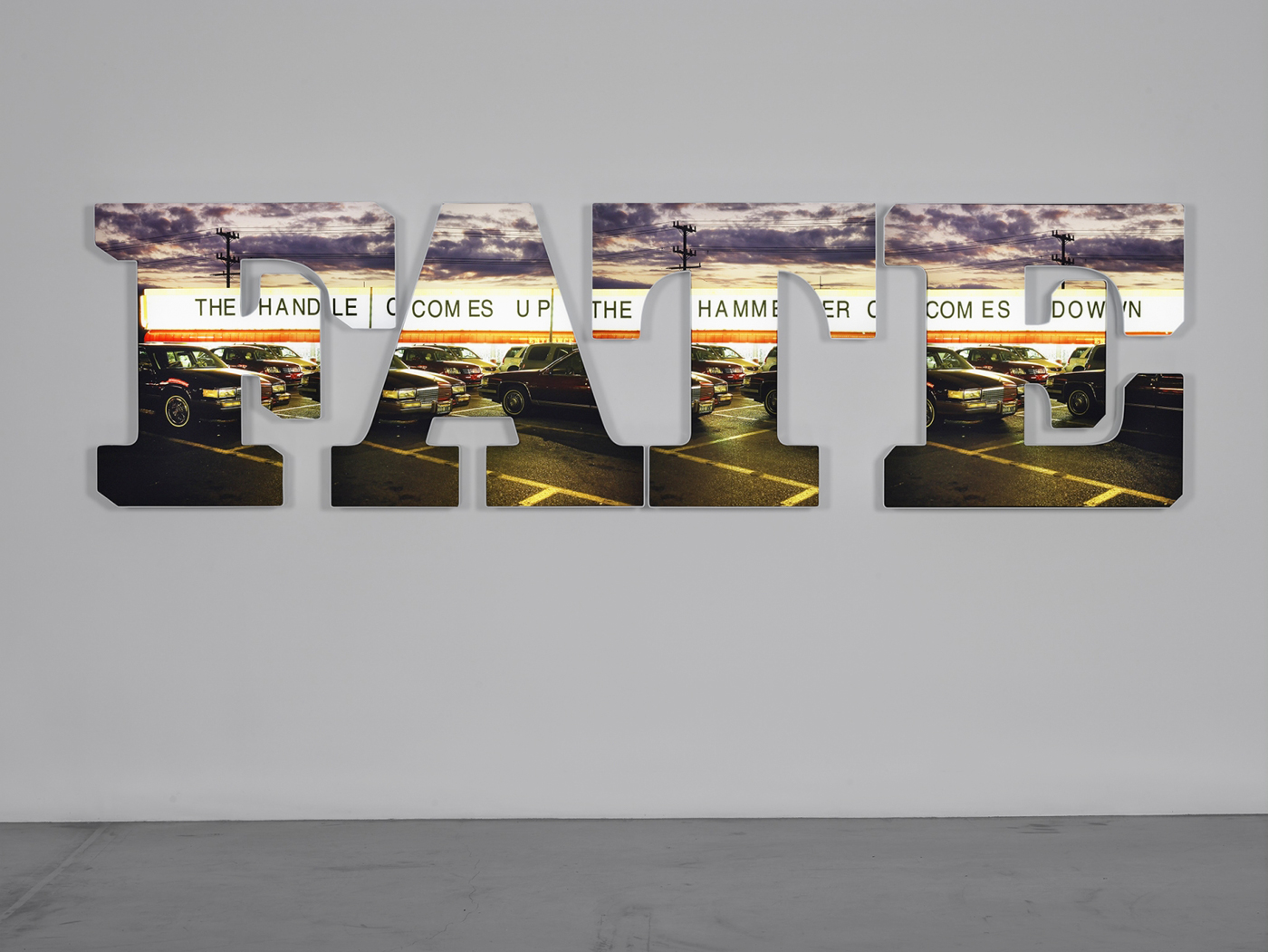
Doug Aitken (American, b. 1968) 'The handle comes up, the hammer comes down' 2009 from the exhibition 'Doug Aitken' at Regen Projects, Los Angeles, Sept - Oct, 2009


Doug Aitken (American, b. 1968)
The handle comes up, the hammer comes down
2009
LED lit lightbox


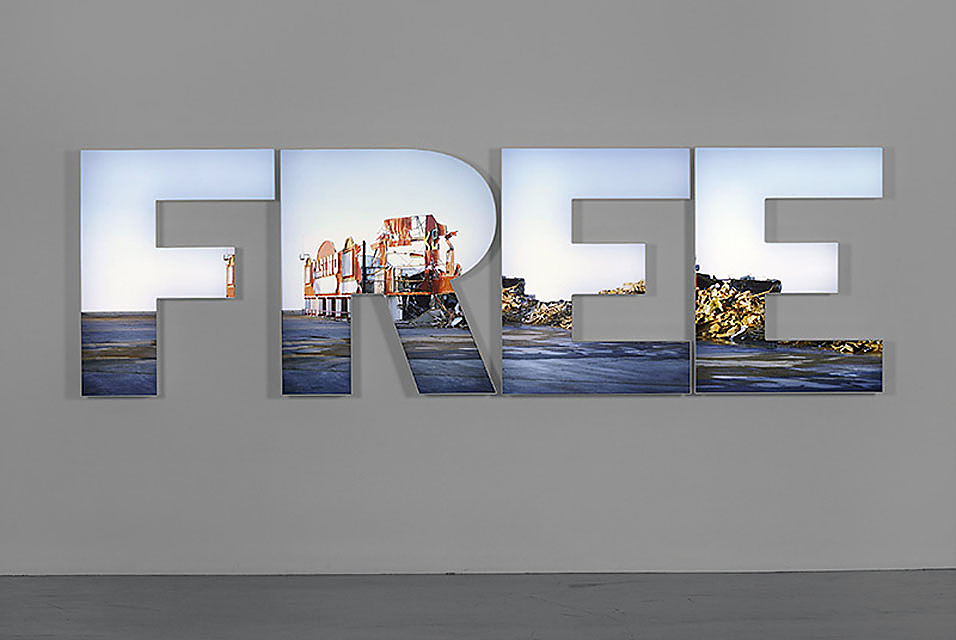
Doug Aitken (American, b. 1968) 'Free' 2009 from the exhibition 'Doug Aitken' at Regen Projects, Los Angeles, Sept - Oct, 2009


Doug Aitken (American, b. 1968)
Free
2009
LED lit lightbox


Doug Aitken (American, b. 1968) 'Start Swimming' 2006 from the exhibition 'Doug Aitken' at Regen Projects, Los Angeles, Sept - Oct, 2009


Doug Aitken (American, b. 1968)
Start Swimming
LED lit lightbox
2006


Doug Aitken (American, b. 1968) 'Start Swimming' 2006


Doug Aitken (American, b. 1968)
Start Swimming
LED lit lightbox
2006


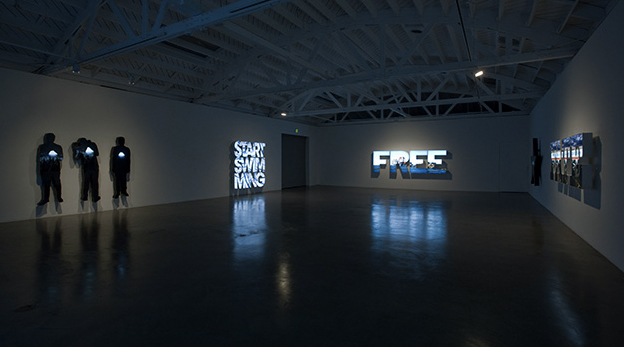
Installation view of ;Doug Aitken; at Regen Projects, Los Angeles


Installation view of Doug Aitken at Regen Projects, Los Angeles


Regen Projects is pleased to announce an exhibition of new works by Los Angeles artist Doug Aitken. This exhibition will present a series of new text-based light boxes and will feature the west coast debut of the film migration. Aitken explores the themes of temporality, space, memory, movement, and landscape in his work. History and themes of both the past and present are interwoven and reconfigured. His work deconstructs the connection between idea and iconography allowing each to reinvent itself.

Doug Aitken’s new light boxes combine image and text in a collision that creates a rupture in which alternate connections are presented. The work frontier depicts a destroyed property on the water’s edge, redefining expectations of what a frontier may hold. The images within some of the light boxes are a photographic collage that references Aitken’s photographic oeuvre and aesthetic. Experimenting with font, borrowed images, and his own photographs, the light boxes will be presented in the darkened gallery, glowing and playing off of one another. The disjunction of word, image, and light in these works also moves toward a cinematic whole, creating panoramic landscapes through text.

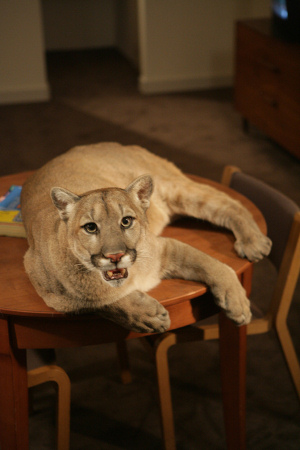
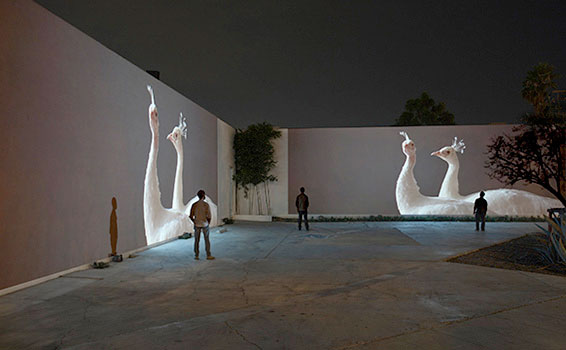
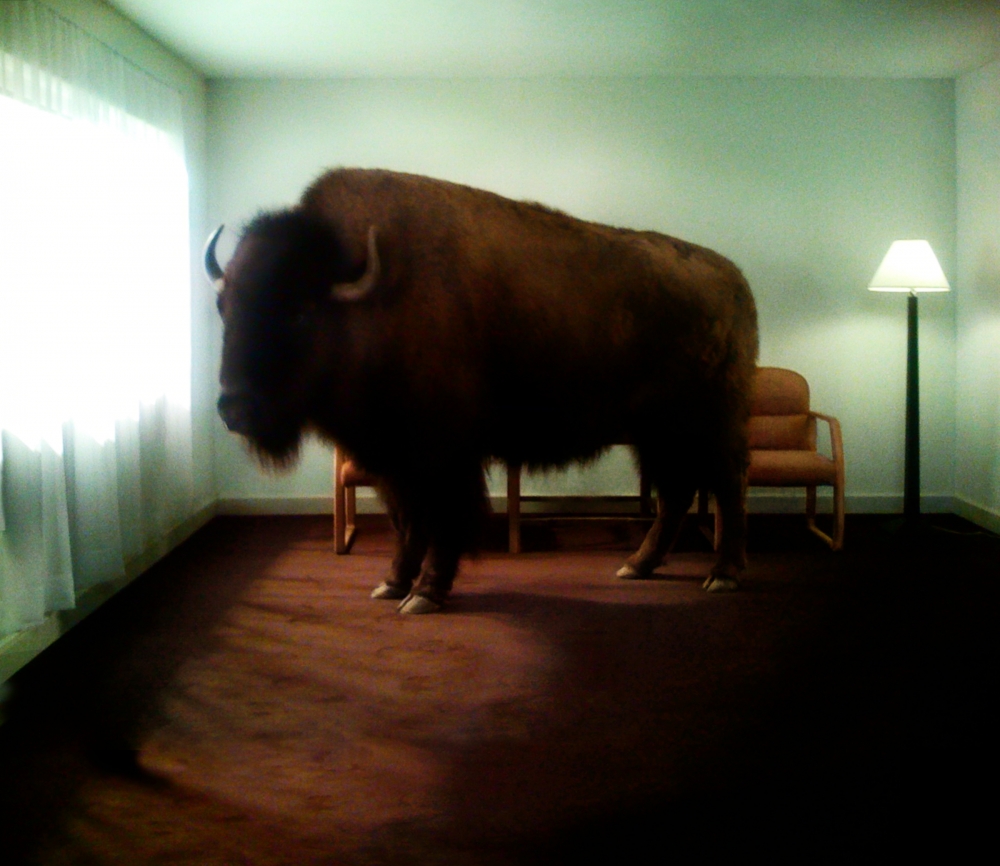
Presented alongside the light boxes will be Aitken’s first large scale public installation in Los Angeles, migration. The film, the first instalment in a three-part trilogy entitled empire, debuted at the 2008 Carnegie International. This hallucinatory epic depicts the movements of migratory animals as they pass through vacant and deserted hotel and motel rooms, delineating a nomadic passage across America from east to west. Fittingly making its first appearance on the west coast, this large-scale cinematic installation will be presented to the public on Santa Monica Boulevard projected onto the courtyard of Regen Projects II; visible only at night from sunset to sunrise. In addition to the nighttime public presentation, migration will also be exhibited at the 633 North Almont Drive space on an indoor billboard accompanied by its original score.

Settlers who met the untamed wilderness to forge new ways of life defined westward expansion. Aitken’s migratory landscape in migration is the opposite; it is a landscape completely devoid of human presence. His non-linear narrative presents a series of different sequences in which the animals and their actions are unique while the rooms and their components are indistinguishable. Hotels such as these offer a sense of both security and isolation and while some animals adapt to these surroundings, others seem conspicuously strange. Rarely do we get to examine these creatures so closely. Their movements and presence make the viewer acutely aware of scale, calling into question various relationships; the most apparent of which is the relationship of the natural and the man-made. In this encounter between the urban and the indigenous the viewer gets a sense of both displacement and habituation. As one critic describes:

“One by one, at different hotels, the animals behave as they behave, sniffing the air, twitching their noses to orient themselves in the desolate human habitat. Imbued with Aitken’s usual intimations of planetary solitude, his sense of spatial dislocation, and gorgeous formalised perception, these images … have the quality not so much of a nonlinear narrative as of a mirage.” (Kim Levin, Artnews, January 2009, p. 110.)


Aitken’s work has been exhibited extensively at museums and galleries worldwide, including his 2007 exhibition “sleepwalkers,” a large-scale outdoor installation at the Museum of Modern Art, New York. He has had numerous solo exhibitions including shows at the Serpentine Gallery, the Kunstmuseum Wolfsberg, the Kunsthaus Bregenz and the Kunsthalle Zurich. Aitken was awarded the international prize at the Venice Biennale in 1999 and was included in the 2000 Whitney Biennial.

Text from the Regen Projects website [Online] Cited 01/11/2009. No longer available online


Doug Aitken (American, b. 1968) Still from 'Migration' 2008

Doug Aitken (American, b. 1968) Still from 'Migration' 2008

Doug Aitken (American, b. 1968) Still from 'Migration' 2008

Doug Aitken (American, b. 1968) Still from 'Migration' 2008

Doug Aitken (American, b. 1968) Still from 'Migration' 2008

Doug Aitken (American, b. 1968) Still from 'Migration' 2008


Doug Aitken (American, b. 1968)
Stills from Migration
2008
Single video projection with billboard (steel and PVC projection screen)


In Migration, peacocks, deer, and beaver are filmed occupying motel rooms in vignettes that strike a poignant, provocative chord: talk about unexpected guests. Nevertheless, the work isn’t funny; it’s too frank in its beauty, too finely and respectfully wrought to be a joke.

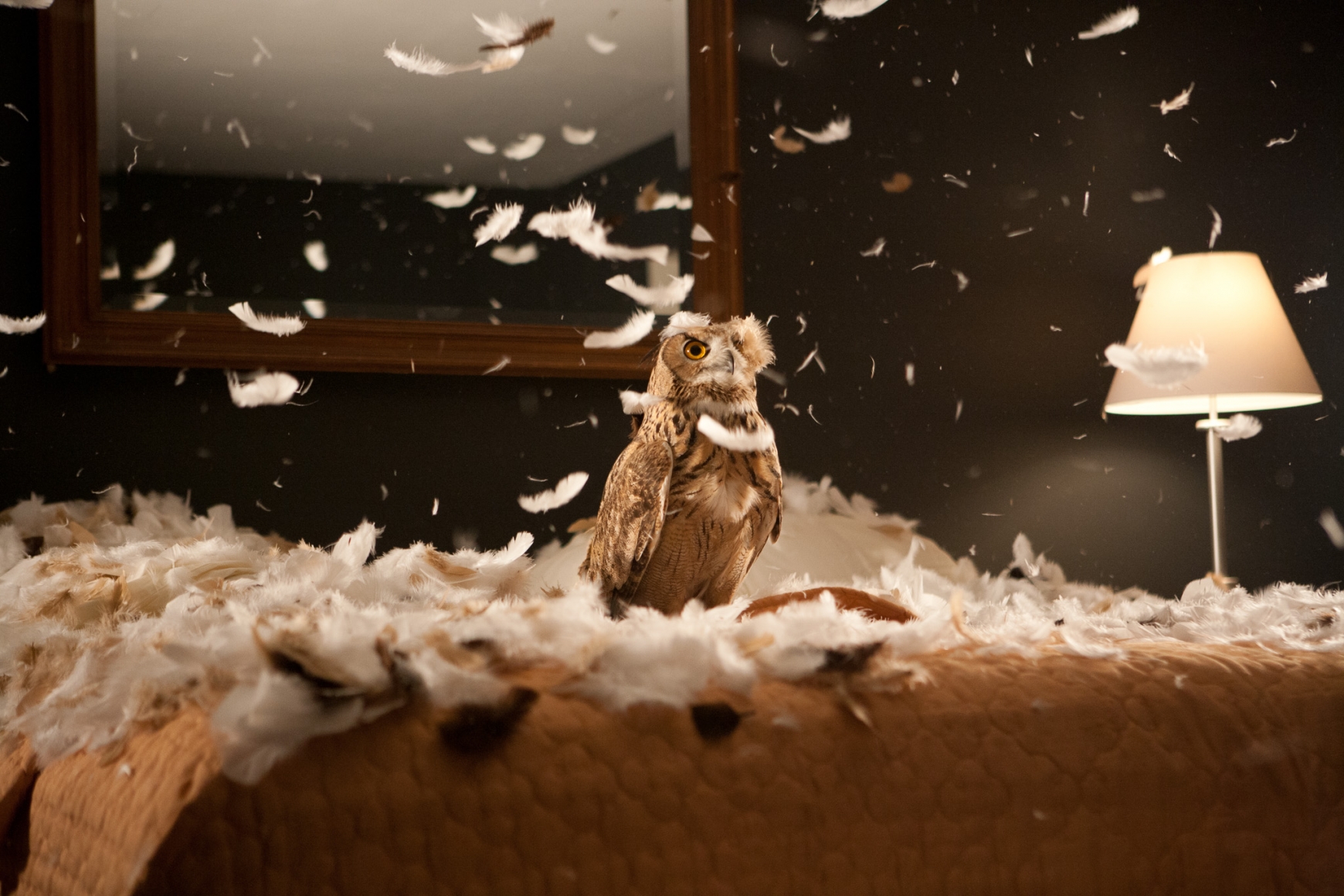
Aitken’s animals are frequently shot in close perspective, which enhances their beauty in a way that is mesmerising. We’re not looking through them as much as we’re looking alongside them, ingesting the utter foreignness of their environs. As evening falls, we see an owl, an already otherworldly creature whose glowing eyes appear extraterrestrial, blinking at us from its perch on a king-size bed. Against the singsong of chirping birds, the camera pans away from the stationary owl as the room fills with thousands of downy feathers. Light is a powerful character in the film, whether gently filtered through sheer curtains or spilling onto carpeted hallways. Rather than highlighting imperfections or ugliness, the light is salvic, evincing a limbo that’s illuminating and warming. In one way or another, all of Aitken’s animals are drawn to light, whether toward a blinking lamp, the refracted surface of a swimming pool, or even the glow of an opened refrigerator door.

Extract from


Regen Projects
6750 Santa Monica Boulevard
Los Angeles, CA 90038
Phone: (310) 276 5424

Gallery hours:
Tuesday – Saturday 10am – 5pm

Regen Projects website

LIKE ART BLART ON FACEBOOK

Back to thttps://artblart.com/2009/10/04/exhibition-doug-aitken-at-regen-projects-los-angeles/op

Exhibition: ‘Snow Machine’ by Florian Maier-Aichen at Gagosian Gallery, Britannia Street, London

Exhibition dates: 3rd September – 3rd October, 2009


Many thankx to the Gagosian Gallery for allowing me to publish the photographs in the posting.


Florian Maier-Aichen (German, b. 1973) 'Der Watzmann' 2009 from the exhibition 'Snow Machine' by Florian Maier-Aichen at Gagosian Gallery, Britannia Street, London, Sept - Oct, 2009


Florian Maier-Aichen (German, b. 1973)
Der Watzmann
2009


Florian Maier-Aichen brings a contemporary sensibility to bear on a range of historical references, from German Romantic painting to 19th-century photographs of the American West. The German-born photographer shoots images with a large-format camera then alters them digitally by combining negatives, adding computer-drawn elements or otherwise changing the originals. The effects are painterly and the works large-scale (the biggest one in this show, all but one of them C-prints, was around 8 by 71⁄3 feet). In one untitled print (2009), a digitally created brushstroke cuts diagonally across a snowy mountainside. Alluding to the trails ploughed across mountains to prevent avalanches, the photograph also suggests the black-and-white paintings of Abstract Expressionist Franz Kline. The sky above a dark mountainous outcropping in Der Watzmann (2009) references the Caspar David Friedrich painting of the same name (Maier-Aichen appropriated the image of the peak from the painting itself), while the sky suggests an airbrush version of the aurora borealis in red-orange and blue-green.

Der Watzmann may be the most direct reference to 19th-century German Romanticism and the sublime, but these are themes that Maier-Aichen frequently evokes, only to upend them.

Jean Dykstra. “Florian Maier-Aichen,” on the Art in America website May 4, 2009 [Online] Cited 24/09/2019


Florian Maier-Aichen (German, b. 1973) 'Untitled' 2008 from the exhibition 'Snow Machine' by Florian Maier-Aichen at Gagosian Gallery, Britannia Street, London, Sept - Oct, 2009


Florian Maier-Aichen (German, b. 1973)
Untitled
2008


'Snow Machine' by Florian Maier-Aichen installation view at Britannia Street, Gagosian Gallery

'Snow Machine' by Florian Maier-Aichen installation view at Britannia Street, Gagosian Gallery 2


Snow Machine by Florian Maier-Aichen installation views at Gagosian Gallery, Britannia Street, London


“Florian Maier-Aichen’s images reinterpret landscape photography for the 21st century. Often shot at obscure angles or from aerial views, his estranged vantage points are both alien and familiar; a sensation enhanced by his subtle manipulation of the images. Conceiving the representation of sites with a sense of dislocation, Maier-Aichen’s work addresses issues of globalisation and virtual perception. In Untitled, Maier-Aichen’s coastline is far from postcard perfect: a virgin beach lined with superhighway and luxury homes expanding into the misty distance. Tinting the surrounding forest in an unnatural shade of red, he casts an apocalyptic glow over the seascape, framing wilderness and human intervention as a scene of science fiction portent.”

Text from the Saatchi Gallery website [Online] Cited 24/04/2019


Florian Maier-Aichen (German, b. 1973) 'Untitled' 2009 from the exhibition 'Snow Machine' by Florian Maier-Aichen at Gagosian Gallery, Britannia Street, London, Sept - Oct, 2009


Florian Maier-Aichen (German, b. 1973)
Untitled
2009


“I have always been interested in the making of things. Most products and materials conceal their process of manufacture. It’s the same with photography, which turned from a discipline that was subject to the mastery of the few (alchemists) into a readily available industrial mass product, too transparent and too technical.”


Florian Maier-Aichen


Gagosian Gallery is pleased to present an exhibition of recent photographs by Florian Maier-Aichen. This is the artist’s first solo exhibition in London.

A photographer schooled on both sides of the Atlantic, Maier-Aichen’s work reflects on the dual influences of the history of photography and the history of painting, whether drawing on such dichotomies as German Romantic painting and the pioneers of German “objective” photography, or applying his post-factum experience of American frontier art – from the Hudson River School and Abstract Expressionism to Land Art and West Coast conceptualism – to his own topographical depictions of landscape subjects. He focuses on the camera’s consummate power to establish typologies of thought, perception, and feeling, producing images that, in mining the past, come to embody a matrix of issues salient to recent photographic practice.

Approaching the photographic field like a painter approaches a canvas, Maier-Aichen does for the contemporary image-world what pictorial photographers attempted in the nineteenth and early twentieth centuries, using the strategies and motifs of Romantic and Luminist painting. Unnaturally high-keyed or delicately tinted images of soaring mountain ranges, moody seas, and the industrial architecture of bridges, waterways, and dams carving through the natural landscape are all emanations of a rich and diverse imagination where a keen and critical grasp of art history coexists with more pronounced literary and cinematic conceits.

In a creative process that is as intensive as it is subtle and opaque, Maier-Aichen combines an exhaustive range of staged effects and traditional photographic techniques – albumen, silver-gelatin, and c-printing – with drawing and current computer-imaging processes. Weaving together often disparate elements from distinct sources, he applies myriad creative adjustments to each in order to produce seamless photographs that do not betray their intricate and layered compositions. Multiple negatives, digital manipulation, and elaborate studio techniques are employed to produce seemingly straightforward photographic landscape subjects while other images that engage the most conventional photographic techniques may themselves be subjects of pure fabrication.”

Text from the Gagosian Gallery website [Online] Cited 20/09/2009. No longer available online


Florian Maier-Aichen (German, b. 1973) 'Untitled' 2009


Florian Maier-Aichen (German, b. 1973)
Untitled
2009


Florian Maier-Aichen (German, b. 1973) 'Untitled' 2009


Florian Maier-Aichen (German, b. 1973)
Untitled
2009


Florian Maier-Aichen (German, b. 1973) 'Untitled (St. Francis Dam)' 2009


Florian Maier-Aichen (German, b. 1973)
Untitled (St. Francis Dam)
2009


Gagosian Gallery
6-24 Britannia Street
London WC1X 9JD
Phone: 44.207.841.9960

Opening Hours:
Tuesday – Saturday 10am – 6pm

Gagosian Gallery website

LIKE ART BLART ON FACEBOOK

Back to top

Review: ‘Scenes’ by David Noonan at the Australian Centre for Contemporary Art (ACCA), Melbourne

Exhibition dates: 15th August – 27th September, 2009

Commissioning Curator: Juliana Engberg
Coordinating Curator: Charlotte Day


Installation view of 'Scenes' by David Noonan at ACCA


Installation view of Scenes by David Noonan at ACCA
Photo: Marcus Bunyan


Thoughts

Limited colour palette of ochres, whites, browns and blacks.

Rough texture of floor covered in Jute under the feet.

Layered, collaged print media figures roughly printed on canvas – elements of abstraction, elements of figuration.

The ‘paintings’ are magnificent; stripped and striped collages. Faces missing, dark eyes. There is something almost Rembrandt-esque about the constructed images, their layering, like Rembrandt’s Night Watch (1642) – but then the performance element kicks in – the makeup, the lipstick, the tragic / comedic faces.

Mannequin, doll-like cut-out figures, flat but with some volume inhabiting the tableaux vivant.

Twelve standing figures in different attitudes – a feeling of dancing figures frozen on stage, very Japanese Noh theater. Spatially the grouping and use of space within the gallery is excellent – like frozen mime.

The figures move in waves, rising and falling both in the standing figures and within the images on the wall.

Looking into the gallery is like looking through a picture window onto a stage set (see above image).

“The fracturing of identity, the distortion of the binaries of light and dark, absence/presence in spatio-temporal environments.

The performance as ritual challenging a regularized and constrained repetition of norms.” (Judith Butler).

Excellent, thought provoking exhibition.

Dr Marcus Bunyan


Many thankx to ACCA for allowing me to publish the photographs in the posting. Please click on the photographs for a larger version of the image.


Photograph from 'Scenes' by David Noonan (installation view)


Installation view of 'Scenes' by David Noonan at ACCA


Installation views of Scenes by David Noonan at ACCA
Photos: Marcus Bunyan


Noonan often works with found photographic imagery taken from performance manuals, textile patterns and archive photographs to make densely layered montages. These works at once suggest specific moments in time and invoke disorientating a-temporal spaces in which myriad possible narratives emerge. The large-scale canvases framing this exhibition depict scenes of role-playing, gesturing characters, and masked figures set within stage-like spaces. Printed on coarsely woven jute, collaged fabric elements applied to the surface of the canvases further signal the cutting and splicing of images.

Noonan’s new suite of figurative sculptures, comprise life size wooden silhouettes faced with printed images of characters performing choreographed movements. While the figurative image suggests a body in space, the works’ two dimensional cut-out supports insist on an overriding flatness which lends them an architectural quality – as stand-ins for actual performers and as a means by which to physically navigate the exhibition space.

Press release from the Chisenhale Gallery website [Online] Cited 20/09/2009. No longer available online


For the Helen Macpherson Smith Commission, he will bring the characters depicted in his signature collage works off the wall and onto an imagined ‘stage’. Several life-size, wooden cut-out figures will inhabit the ACCA exhibition gallery, frozen in choreographed movements.

Noonan’s dancing figures will be framed by several large-scale canvas works, printed photographic and film imagery gleaned from performance manuals, textile patterns and interior books. Printed on coarse woven jute, he cuts, slices and montages images together constructing compositions that hover between two and three dimensionality, positive and negative space, past and present, stasis and action.

“‘Scenes’ recalls the experimental workshops and youth-focused exuberance of a more optimistic era, coinciding with the artists own childhood in the 1970s” says curator Charlotte Day. “With these new works, Noonan re-introduces the idea of ritual, of creating a temporal space beyond reason that is filled with both danger and hope.”

David Noonan (Australian, b. 1969) is the fifth recipient of the Helen Macpherson Smith Commission, one of the most significant and generous commissions in Australia. The partnership between ACCA and the Helen Macpherson Smith Trust offers Victorian artists the opportunity to create an ambitious new work of art, accompanied by an exhibition in ACCA’s exhibition hall.

Press release from the ACCA website [Online] Cited 20/09/2009. No longer available online


David Noonan returned to Melbourne with this significant project which extended his abiding interest in time and space. Using ACCA’s large room as a field of encounter, he created an ensemble of works in 2 and 3 dimensions that make purposeful use of the audience’s own navigation through the gallery. Visitors walking between David’s free-standing figures performed like time travellers in a landscape that had been paused. His enigmatic wall based works appeared to trap momentary scenes in a layered time warp.

This major commission allowed for an ambitious project by a Victorian artist who had reached a significant platform in their own practice. Elements of the commission were gifted to a Victorian regional gallery. In this case the recipient was Bendigo Art Gallery.

Text from the ACCA website [Online] Cited 24/04/2019


Photograph from 'Scenes' by David Noonan at ACCA (installation view)


Installation view of 'Scenes' by David Noonan at ACCA


Installation views of Scenes by David Noonan at ACCA
Photos: Marcus Bunyan


Australia Centre for Contemporary Art (ACCA)
111 Sturt Street, Southbank, Victoria 3006, Australia
Phone: 03 9697 9999

Opening Hours:
Tuesday to Friday 10am – 5pm
Weekends & Public Holidays 11am – 5pm
Open all public holidays except Christmas Day and Good Friday

ACCA website

LIKE ART BLART ON FACEBOOK

Back to top

Review: ‘Ivy’ photographs by Jane Burton at Karen Woodbury Gallery, Richmond, Melbourne

Exhibition dates: 2nd September – 26th September, 2009


Jane Burton (Australian, b. 1966) 'Ivy #1' 2009 from the exhibition 'Ivy' photographs by Jane Burton at Karen Woodbury Gallery, Richmond, Melbourne, Sept, 2009


Jane Burton (Australian, b. 1966)
Ivy #1
2009
Pigment print
89 x 75cm


This is another outstanding body of photographic work on display in Melbourne. Featuring 10 large and 2 small sepia toned, vignetted pigment prints Burton’s work creates dark enchanted worlds of faceless female figures placed in the built environment that balance (meta)physical light and shade creating ambiguous narratives of innocence tinged with a darker edge.

The eponymous photograph Ivy #1 (above) is the seminal image of the series: a dark brooding house, hunched down positioned low in the photographic space, covered in ivy with black windows and dark eves has an ominous almost impenetrable presence and sets the tone for the rest of the work.

There are wonderful references to the history of photography if one cares to look (not simply generic references to Victorian daguerreotypes, postcards and family photographs). Ivy #2 (below) is a powerful photograph where the female figure is blindfolded, unable to see the encroaching tumescence of vegetation that surrounds and is about to engulf her. The placement of the hands is exquisite – unsure, reaching out, doubting her surroundings – with the 3-bladed fan hovering behind ready to devour the unwary. This photograph has resonances of the magical photographs of the garden by the Czech photographer Josef Sudek.

Ivy #3 (below) has echoes of the work of the American photographer Ralph Eugene Meatyard and his placement of masked people within built environments. In Burton’s photograph the broken umbrella becomes like insect wings, the faceless whiteness of the three-legged and three-armed creature cocooned among the overhanging predatory ivy, the luminescent sky offering the possibility of redemption. Other photographs such as Ivy #6 (below) and Ivy #7 with their wonderful colours, depth of field, heavy shadows and elegiac romantic feel have references to Eugene Atget and his photographs of the parks of Versailles (see photograph below).

Still further references to the history of photography can be found in the photographs Ivy #9 and Ivy #10 (below). In Ivy #9 the intersection of the two female bodies through double exposure forms a slippage in (photographic) reality and the disappearance of original identity in the layering of the photographs and into the empty non-reflection of the mirror. This non-reflection is confirmed in Ivy #10 where the faceless nude woman holds a mirror with no reflection. These photographs remind me of the photographs of New Orleans prostitutes in the early years of the 20th century by the photographer Bellocq with their masked faces and the ornamentation of the wallpaper behind the figures (see below).

I feel that in these photographs with their facelessness and the non-reflection of the mirror investigate notions of ‘Theoria’ – a Greek emphasis on the vision or contemplation of God where theoria is the lifting up of the individual out of time and space and created being and through contemplative prayer into the presence of God.1 In fact the whole series of photographs can be understood through this conceptualisation – not just remembrances of past time, not a blind contemplation on existence but a lifting up out of time and space into the an’other’ dark but enlightening presence.

The greatest wonder of this series is that the photographs magically reveal themselves again and again over time. Despite (or because of) the references to other artists, the beauty of Burton’s work is that she has made it her own. The photographs have her signature, her voice as an artist and it is an informed voice; this just makes the resonances, the vibrations of energy within the work all the more potent and absorbing. I loved them.

Dr Marcus Bunyan


Many thankx to Karen Woodbury Gallery for allowing me to publish the photographs in the posting. Please click on the photographs for a larger version of the image.


Installation view of 'Ivy' by Jane Burton at Karen Woodbury Gallery, Melbourne

Installation view of 'Ivy' by Jane Burton at Karen Woodbury Gallery, Melbourne


Installation views of Ivy by Jane Burton at Karen Woodbury Gallery, Melbourne
Photos: Marcus Bunyan


Jane Burton (Australian, b. 1966) 'Ivy #2' 2009 from the exhibition 'Ivy' photographs by Jane Burton at Karen Woodbury Gallery, Richmond, Melbourne, Sept, 2009


Jane Burton (Australian, b. 1966)
Ivy #2
2009
Pigment print
75 x 75cm


Jane Burton (Australian, b. 1966) 'Ivy #3' 2009 from the exhibition 'Ivy' photographs by Jane Burton at Karen Woodbury Gallery, Richmond, Melbourne, Sept, 2009


Jane Burton (Australian, b. 1966)
Ivy #3
2009
Pigment print
75 x 75cm


Jane Burton (Australian, b. 1966) 'Ivy #5' 2009


Jane Burton (Australian, b. 1966)
Ivy #5
2009
Pigment print
75 x 75cm


Jane Burton (Australian, b. 1966) 'Ivy #7' 2009


Jane Burton (Australian, b. 1966)
Ivy #7
2009
Pigment print
75 x 75cm


Jane Burton’s exhibition, Ivy comprises a series of photographs captured in black and white. The final prints are rendered with a sepia, peach-champagne tone, with many displaying a mottled hand-coloured effect in faded pastels of pink and green. These works hope to suggest an era past, perhaps Victorian. The imagery is evocative of old picture postcards from Europe and old photographs from the pages of family albums.

Central to the series is an image of a house covered with ivy. Depicted as dark and malevolent, the house is ‘haunted’ by the traces and stains of family history, habitation, and the buried secrets of all that occurred within.

Anonymous female figures are seen in garden settings where the foliage is rampant and encroaching and the shadows deep. There is an air of enchantment perceived with unspecified darker edge. The figures are innocent and playful. The viewer is asked to question if the and girls aware of the camera capturing their activity? Are the poses staged or caught spontaneously. In another photograph, a dilapidated male statue stands broken and armless, the texture of stone worn, and bruised with dark lichen and moss.

In the interior photographs, several nudes are depicted in the style of 19th century French daguerreotype photographs. These vignetted images display women against wall-papered backdrops with theatrical props reminiscent of earlier works by Burton such as the series ‘The other side’ (2003). Posed suggestively for the camera and the viewer’s gaze, the subjects themselves are faceless, their own gaze and features hidden behind dark hair. The surface and texture of these particular works suggests the patina of decay and the damage and wear of time.

Text from the Karen Woodbury Gallery website [Online] Cited 20/09/2009. No longer available online


E. J. Bellocq (American, 1873-1949) 'Untitled [prostitute of Storyville, New Orleans]' 1912


E. J. Bellocq (American, 1873-1949)
Untitled [prostitute of Storyville, New Orleans]
1912


Jane Burton (Australian, b. 1966) 'Ivy #10' 2009


Jane Burton (Australian, b. 1966)
Ivy #10
2009
Pigment print


Eugene Atget (French, 1857-1927) 'Versailles, France' 1923


Eugene Atget (French, 1857-1927)
Versailles, France
1923
Albumen print


Jane Burton (Australian, b. 1966) 'Ivy #6' 2009


Jane Burton (Australian, b. 1966)
Ivy #6
2009
Pigment print
75 x 75cm


Karen Woodbury Gallery

This gallery has now closed.

Jane Burton website

LIKE ART BLART ON FACEBOOK

Back to top

Exhibition: ‘Ansel Adams: A Life’s Work’ at Museum of Photographic Arts, San Diego

Exhibition dates: 23rd May – 4th October, 2009


Ansel Adams (American, 1902-1984) 'Monolith - The Face of Half Dome, Yosemite National Park' 1927 from the exhibition 'Ansel Adams: A Life's Work' at Museum of Photographic Arts, San Diego, May - Oct, 2009


Ansel Adams (American, 1902-1984)
Monolith, The Face of Half Dome, Yosemite National Park
from the portfolio Parmelian Prints of the High Sierras
1927
Gelatin silver print


Some well known Ansel Adams images below with some less well known photographs from the Manzanar Relocation Center photographic series of 1943.

Marcus


Many thankx to the Museum of Photographic Arts for allowing me to publish the three photographs, Winter Sunrise, Sierra Nevada from Lone Pine, California (1944), Mount McKinley, Alaska (1948) and Aspens, Northern New Mexico (1958). Please click on the photographs for a larger version of the image.


Ansel Adams (American, 1902-1984) 'Marion Lake, Kings River Canyon, California' c. 1925 from the exhibition 'Ansel Adams: A Life's Work' at Museum of Photographic Arts, San Diego, May - Oct, 2009


Ansel Adams (American, 1902-1984)
Marion Lake, Southern Sierra
from the portfolio Parmelian Prints of the High Sierras
1927
Gelatin silver print


Ansel Adams (American, 1902-1984) 'Moonrise, Hernandez, New Mexico' 1941 from the exhibition 'Ansel Adams: A Life's Work' at Museum of Photographic Arts, San Diego, May - Oct, 2009


Ansel Adams (American, 1902-1984)
Moonrise, Hernandez, New Mexico
1941
Gelatin silver print


Ansel Adams (American, 1902-1984) 'Birds on wire, evening, Manzanar Relocation Center' 1943


Ansel Adams (American, 1902-1984)
Birds on wire, evening, Manzanar Relocation Center
1943
Gelatin silver print


The Museum of Photographic Arts (MoPA) in Balboa Park is pleased to present Ansel Adams: A Life’s Work. The exhibition includes over 80 photographs by the 20th Century master, and celebrates Adams as an artist and conservationist. A Life’s Work will be on view May 23, 2009 through October 4, 2009, and features an overview of Adam’s work from his early years in the Sierra Nevadas and Yosemite Valley to his work in the Japanese Internment Camp at Manzanar, as well as his well-known masterpieces.

Ansel Adams: A Life’s Work will be running concurrently with Jo Whaley: Theater of Insects on view from May 16 through September 27, 2009, as well as Picturing the Process: Exploring the Art and Science of Photography on view through July 25, 2009.

The exhibition begins with survey of Adams’ early years with the Sierra Club (1920s-1930s), where his photographs and essays were first published in the Club’s Bulletin. 1927 marked a pivotal point for Adams, where he participated in the Sierra Club’s annual High Trip, which took him to the high country of the Sierra. It was during this trip that he exposed the negative of the iconic image Monolith, the Face of Half Dome. Adams describes this photograph as “my first conscious visualisation; in my mind’s eye, I saw the final image.”

It was during this first High Trip that Adams met San Francisco-based arts patron, Albert Bender. Bender took immediate interest in Adam’s photographs, and published Adams’ first portfolio, The Parmelian Prints of the High Sierras (1927). The publication included an edition of 100 portfolios of 18 prints each, 75 were printed.

The exhibition features 15 of the rare Parmelian vintage prints, as well as eight photographs from the 1929 Sierra Club Portfolio.

The exhibition continues with a wide range of representative works from the 1930’s and 1940’s, including commercial work that the artist did for the YPCCO (Yosemite Park and Curry Company). From 1931 to 1937, Adams was hired by YPCCO, a group of businesses in Yosemite Valley, to photograph various winter sports for an advertising campaign. This opportunity provided a much needed source of income for the artist during the Great Depression. The exhibition also includes other various commercial assignments throughout his career, which Adams clearly separated from his fine art photography, but notes as a vital aspect of his career. In his Autobiography he wrote: “I have little use for students or artists who scorn commercial photography as a form of prostitution … Let them pay the bills! … I struggled with a great variety of assignments through the years. Some I enjoyed, some I detested, but learned from them all.”

A Life’s Work also includes the powerful and poignant images from the Manzanar Internment Camp. In late 1943 through 1944, Adams visited the camps in central California, where over 10,000 Japanese-Americans were interned during World War II. Adams’ intention for this self-assigned project was “to interpret the camp and its people, their daily life and their relationship to their community and their environment,” wrote Adams in his Autobiography. “As my work progressed, however, I began to grasp the problems of the remarkable readjustment these people had to make… With admirable strength of spirit, the Nisei rose above despondency and make a life for themselves… This was the mood and character I determined to apply to the project.”

A Life’s Work will feature many of his iconic masterworks, including Moonrise, Hernandez, New Mexico, as well as his works in colour, which he experimented with beginning in the late 1940s.

Press release from the Museum of Photographic Arts website [Online] Cited 15/09/2009


Ansel Adams (American, 1902-1984) 'View south from Manzanar to Alabama Hills, Manzanar Relocation Center' 1943


Ansel Adams (American, 1902-1984)
View south from Manzanar to Alabama Hills, Manzanar Relocation Center
1943
Gelatin silver print


Ansel Adams (American, 1902-1984) 'View SW over Manzanar, dust storm, Manzanar Relocation Center' 1943


Ansel Adams (American, 1902-1984)
View SW over Manzanar, dust storm, Manzanar Relocation Center
1943
Gelatin silver print


Ansel Adams (American, 1902-1984) 'Winter Sunrise, Sierra Nevada from Lone Pine, CA.,' 1944


Ansel Adams (American, 1902-1984)
Winter Sunrise, Sierra Nevada from Lone Pine, California
1944
Gelatin silver print
Courtesy of the Museum of Photographic Arts.
Copyright © 2009 The Ansel Adams Publishing Rights Trust


Ansel Adams (American, 1902-1984) Mount McKinley, Alaska, 1948


Ansel Adams (American, 1902-1984)
Mount McKinley, Alaska
1948
Gelatin silver print
Courtesy of the Museum of Photographic Arts
Copyright © 2009 The Ansel Adams Publishing Rights Trust


Ansel Adams (American, 1902-1984) 'Aspens, Northern New Mexico' 1958


Ansel Adams (American, 1902-1984)
Aspens, Northern New Mexico
1958
Gelatin silver print
Courtesy of the Museum of Photographic Arts
Copyright © 2009 The Ansel Adams Publishing Rights Trust


Museum of Photographic Arts
Located within Balboa Park at 1649 El Prado, 
San Diego, CA 92101
Phone: 619-238-7559

Opening hours:
Thursday – Sunday: 11.00am – 4.00pm
Monday – Wednesday closed

MoPA website

LIKE ART BLART ON FACEBOOK

Back to top

Review: ‘Climbing the Walls and Other Actions’ by Clare Rae at the Centre for Contemporary Photography, Fitzroy, Melbourne

Exhibition dates: 7th August – 27th September, 2009


Clare Rae (Australian, b. 1981) 'Untitled' from the series 'Climbing the Walls and Other Actions' 2009 from the exhibition 'Climbing the Walls and Other Actions' by Clare Rae at the Centre for Contemporary Photography, Fitzroy, Melbourne, August - Sept, 2009


Clare Rae (Australian, b. 1981)
Untitled
2009
From the series Climbing the Walls and Other Actions
Pigment print on Museo Crane Silver Rag
50 x 50cm


“To withdraw into one’s corner is undoubtedly a meager expression. But despite its meagerness, it has numerous images, some, perhaps, of great antiquity, images that are psychologically primitive. At times, the simpler the image, the vaster the dreams.”


Gaston Bachelard.1


Usually I am not a great fan of ‘faceless’ photography as I call it but this series of work, Climbing the Walls and Other Actions (2009) by the artist Clare Rae is even better than the series by Tracey Moffatt in the previous review.

Exploring activities of the female body in closed domestic spaces these psychologically intense photographs push the physical boundaries of play through the navigation of space. As a child has little awareness about the inherent dangers of a seemingly benign environment so Rae’s self-portraits turn the lens on her conceptualisation of the inner child at play and the activating of the body in and through space. As the artist herself says, “the way children negotiate their surroundings and respond with an unharnessed spatial awareness, which I find really interesting when applied to the adult body.”2

Continuing the themes from the last review, that of spaces of intimacy and reverberation, these photographs offer us fragmentary dialectics that subvert the unity of the archetype, the unity of the body in space. Here the (in)action of the photographic freeze balances the tenuous positions of the body: a re-balancing of both interior and exterior space.

As Noel Arnaud writes, “Je suis l’espace ou je suis” (I am the space where I am). Further, Bachelard notes “… by changing space, by leaving the space of one’s usual sensibilities, one enters into communication with a space that is psychically innovating.”3

In these photographs action is opposed with stillness, danger opposed with suspension; the boundaries of space, both of the body and the environment, the interior and the exterior, memory and dream, are changed.

Space seems to open up and grow with these actions to become poetic space – and the simplicity of the images aids and abets the vastness of our dreams. This change of concrete space does not change our place, but our nature. Here the mapping of self in space, our existence, our exist-stance (to have being in a specified place whether material or spiritual), is challenged in the most beautiful way by these walls and actions, by these creatures, ambiguities, photographs.

Henri Lefebvre insightfully observes, “… each living body is space and has space: it produces itself in space and it also produces that space.”4

I am the (sublime) space where I am, that surrounds me with countless presences.

Dr Marcus Bunyan


1/ Bachelard, Gaston. The Poetics of Space. Boston: Beacon Press, 1969, p. 137

2/ Email from the artist 7th September, 2009

3/ Bachelard, Gaston. The Poetics of Space. Boston: Beacon Press, 1969, p. 206

4/ Lefebvre, Henri. The Production of Space. Oxford: Basil Blackwell, 1974, p. 170


    All images by Clare Rae from the series Climbing the Walls and Other Actions 2009. Many thankx to Clare for allowing me to publish them.


    Clare Rae (Australian, b. 1981) 'Untitled' from the series 'Climbing the Walls and Other Actions' 2009 from the exhibition 'Climbing the Walls and Other Actions' by Clare Rae at the Centre for Contemporary Photography, Fitzroy, Melbourne, August - Sept, 2009


    Clare Rae (Australian, b. 1981)
    Untitled
    2009
    From the series Climbing the Walls and Other Actions
    Pigment print on Museo Crane Silver Rag
    50 x 50cm


    Clare Rae (Australian, b. 1981) 'Untitled' from the series 'Climbing the Walls and Other Actions' 2009 from the exhibition 'Climbing the Walls and Other Actions' by Clare Rae at the Centre for Contemporary Photography, Fitzroy, Melbourne, August - Sept, 2009


    Clare Rae (Australian, b. 1981)
    Untitled
    2009
    From the series Climbing the Walls and Other Actions
    Pigment print on Museo Crane Silver Rag
    50 x 50cm


    Clare Rae (Australian, b. 1981) 'Untitled' from the series 'Climbing the Walls and Other Actions' 2009


    Clare Rae (Australian, b. 1981)
    Untitled
    2009
    From the series Climbing the Walls and Other Actions
    Pigment print on Museo Crane Silver Rag
    50 x 50cm


    Climbing the Walls and Other Actions is primarily concerned with visually representing my experience of femininity, whilst also exploring aspects of representation that relate to feminism. The project considers the relationship between the body and space by including formal elements within each frame such as windows and corners. Through a sequence of precarious poses I explore my relationship with femininity, an approach born of frustration. I use the body to promote ideas of discomfort and awkwardness, resisting the passivity inherent in traditional representations of femininity. The images attempt to de-stabilise the figure, drawing tension from the potential dangers the body faces in these positions. Whilst the actions taking place are not in themselves particularly dangerous, the work demonstrates a gentle testing of physical boundaries and limitations via a child-like exploration of the physical environment.

    Text from the Centre for Contemporary Photography website [Online] Cited 15/09/2009. No longer available online


    Clare Rae (Australian, b. 1981) 'Untitled' from the series 'Climbing the Walls and Other Actions' 2009


    Clare Rae (Australian, b. 1981)
    Untitled
    2009
    From the series Climbing the Walls and Other Actions
    Pigment print on Museo Crane Silver Rag
    50 x 50cm


    Clare Rae (Australian, b. 1981) 'Untitled' from the series 'Climbing the Walls and Other Actions' 2009


    Clare Rae (Australian, b. 1981)
    Untitled
    2009
    From the series Climbing the Walls and Other Actions
    Pigment print on Museo Crane Silver Rag
    50 x 50cm


    Centre for Contemporary Photography
    Level 2, Perry St Building
    Collingwood Yards, Collingwood
    Victoria 3066

    Opening hours:
    Wednesday – Saturday 11am – 5pm

    Clare Rae website

    Centre for Contemporary Photography website

    LIKE ART BLART ON FACEBOOK

    Back to top

    Review: ‘First Jobs’ by Tracey Moffatt at Centre for Contemporary Photography, Fitzroy, Melbourne

    Exhibition dates: 7th August – 27th September, 2009


    Tracey Moffat (Australian, b. 1960) 'First Jobs, Fruit Market' 1975 from the exhibition 'First Jobs' by Tracey Moffatt at Centre for Contemporary Photography, Fitzroy, Melbourne, August - Sept, 2009


    Tracey Moffat (Australian, b. 1960)
    First Jobs, Fruit Market
    1975
    Archival pigments on rice paper with gel medium
    71 × 91.5cm


    There are some wonderful bodies of photographic work on show around Melbourne at the moment and this is one of them.

    Featuring twelve archival pigment on rice paper with gel medium prints, Tracey Moffatt’s series First Jobs (2008) is a knockout. Images of the artist are inserted into found photographs which are then “hand coloured” (like old postcards) in Photoshop. Moffatt’s series conceptualises the early jobs that she had to do to survive – investigating the banality of the jobs, the value of friendships that were formed coupled with an implicit understanding of the dictum ‘work is life’.

    Moffatt’s images hark back to the White Australia policy of the 1950s and the home and living books of that period. With their hyper-real colours, strange coloured skies, green washing machines and purple tarmac Moffatt amps up the voltage of these images and subverts their idealisation. Here is the re-presentation of the physical and spatial isolation of the figure (store clerk / housekeeper) or the sublimation of the usually female figure into the amorphous mass of the whole (meat packing / pineapple cannery) in quintessentially Australian environments. Here also is comment on the nature of a patriarchal society – the smiling receptionist sitting under the portrait of her male boss, awaiting his command.

    The spaces of these photographs seem to (literally) consume the artist and her remembrance of these jobs. Despite her smiling face in each of the images we implicitly understand the banality of the jobs for we have done them ourselves. We know these spaces intimately: the spaces inhabit us as much as we inhabit them. As the viewer we experience the being of these images, their reverberation, where the two kinds of space – the space of intimacy and the world space – blend.1

    The only sour note of the series comes not in the work itself but in the accompanying artist statement (see below). In this churlish expose of the ‘woe is me, I’m a full time artist and isn’t it so difficult to be a full time artist’ variety, Moffatt complains about the miserable voices in her head and about having to get up off the couch because she is the only person able to make the work and the money. Oh to be so lucky to actually make a living as a full time artist and have the time and space to be creative 7 days a week! Would I have her situation anytime soon? Ha, um, yes.

    Dr Marcus Bunyan


    1/ Bachelard, Gaston. The Poetics of Space. Boston: Beacon Press, 1969, p. 203.


      Many thankx to the Centre for Contemporary Photography for allowing me to publish the photographs in the posting.


      Tracey Moffat (Australian, b. 1960) 'First Jobs, Housekeeper' 1975 from the exhibition 'First Jobs' by Tracey Moffatt at Centre for Contemporary Photography, Fitzroy, Melbourne, August - Sept, 2009


      Tracey Moffat (Australian, b. 1960)
      First Jobs, Housekeeper
      1975
      Archival pigments on rice paper with gel medium
      71 × 91.5cm


      Tracey Moffat (Australian, b. 1960) 'First Jobs, Store Clerk' 1975 from the exhibition 'First Jobs' by Tracey Moffatt at Centre for Contemporary Photography, Fitzroy, Melbourne, August - Sept, 2009


      Tracey Moffat (Australian, b. 1960)
      First Jobs, Store Clerk
      1975
      Archival pigments on rice paper with gel medium
      71 × 91.5cm


      Tracey Moffat (Australian, b. 1960) 'First Jobs, Corner Store' 1977


      Tracey Moffat (Australian, b. 1960)
      First Jobs, Corner Store
      1977
      Archival pigments on rice paper with gel medium
      71 × 91.5cm


      Tracey Moffat (Australian, b. 1960) 'First Jobs, Receptionist' 1977


      Tracey Moffat (Australian, b. 1960)
      First Jobs, Receptionist
      1977
      Archival pigments on rice paper with gel medium
      71 × 91.5cm


      Tracey Moffat (Australian, b. 1960) 'First Jobs, Meat Packing' 1978


      Tracey Moffat (Australian, b. 1960)
      First Jobs, Meat Packing
      1978
      Archival pigments on rice paper with gel medium
      71 × 91.5cm


      Over the years my friends and I joke about our dreadful past jobs. Jobs we worked as teenagers and young students. Awful jobs that we would rather forget about such as cleaning out the local cinema after a screening of The Exorcist in 1974.

      When I was a kid I always had jobs and I always made my own money whether it was receiving a dollar for pulling up the weeds in the yard or baby sitting for neighbours or working at the local green grocers. The thing about making a bit of your own cash was that you could buy your own clothes and not have to wear the clothes that your mother picked out.

      In 1978 at seventeen I worked in factories peeling pineapples. I also packed meat and shelled prawns. Such back breaking labour was exhausting but the money was good.  After one year I saved enough money to travel to Europe and backpacked around for nine months. Then in 1980 I went to art school in Brisbane but continued part-time work as a waitress to pay for art materials.

      After art school I was desperate for money to pay the rent and I worked many jobs. Some were: scrubbing floors in a women’s refuge, washing dishes in a canteen and parking cars in a car park beneath a restaurant called Dirty Dicks (I had no driver’s licence, but the patrons were always drunk and didn’t care.)

      I am resentful and appalled at the work I had to do to survive. I hold a grudge towards rich kids who never had to slave like I did. Secretly though I’m proud of myself. When I think of those early years I realise that I was learning to be tough and work whether I liked it or not. I put my head down and was forced to be productive. I was learning how to get on with other people and learning to handle a boss. These days I do nothing but make art and have exhibitions. Being an artist feels like being on a permanent but jittery holiday in comparison to those early working days. Now I sleep in until 9.30am and press the ‘ignore’ button on my phone if I don’t feel like talking to anyone. But, as Bette Davis put it, it is ‘The Lonely Life’. You have come up with the ideas and make them happen. No-one else is going to do it for you.

      But I remember the good things about the factory floor. Walking into work everyday and saying hi to people you knew, there was a camaraderie. The work was mindless but it didn’t mean that your mind couldn’t go places. Then there was knock-off time. The bell would ring and you would be out the door with a wad of cash in your hand and not a care in the world.

      In being a full-time artist there never is any knock-off time. There’s always a nagging, miserable voice of ideas in your head and you MUST get up off the sofa and produce work. The bell never rings and you never know where your next buck is coming from. Your mind is constantly wound up. You’re never really physically tired not like when you had a real honest job. But would I go back to working in a factory just to get good a night’s sleep? Ha, um, no.”

      Tracey Moffatt, 
New York 2008

      Press release from Roslyn Oxley9 Gallery [Online] Cited 23/04/2019


      Tracey Moffat (Australian, b. 1960) 'First Jobs, Pineapple Cannery' 1978


      Tracey Moffat (Australian, b. 1960)
      First Jobs, Pineapple Cannery
      1978
      Archival pigments on rice paper with gel medium
      71 × 91.5 cm


      Tracey Moffat (Australian, b. 1960) 'First Jobs, Parking Cars' 1981


      Tracey Moffat (Australian, b. 1960)
      First Jobs, Parking Cars
      1981
      Archival pigments on rice paper with gel medium
      71 × 91.5cm


      Tracey Moffat (Australian, b. 1960) 'First Jobs, Canteen' 1984


      Tracey Moffat (Australian, b. 1960)
      First Jobs, Canteen
      1984
      Archival pigments on rice paper with gel medium
      71 × 91.5cm


      Centre for Contemporary Photography
      Level 2, Perry St Building
      Collingwood Yards, Collingwood
      Victoria 3066

      Opening hours:
      Wednesday – Saturday 11am – 5pm

      Centre for Contemporary Photography website
      LIKE ART BLART ON FACEBOOK

      Back to top