Exhibition: ‘Renaissance Faces. Masterpieces of Italian Portraiture’
 at the 
Bode Museum, Berlin

Exhibition dates: 25th August – 20th November 2011


Filippo Lippi (Italian, 1406-1469) 'Portrait of a Man and a Woman at a Casement' c. 1440


Filippo Lippi (Italian, 1406-1469)
Portrait of a Man and a Woman at a Casement
c. 1440
New York, Metropolitan Museum of Art
© Metropolitan Museum of Art, New York


The Legend of the Surface, the Facies


Facies simultaneously signifies the singular air of a face, the particularity of its aspect, as well as the genre or species under which this aspect should be subsumed. The facies would thus be a face fixed to a synthetic combination of the universal and the singular: the visage fixed to the regime of representation, in a Helgian sense.

Why the face? – Because in the face the corporeal surface makes visible something of the movements of the soul, ideally.”


Didi-Huberman, Georges. Invention of Hysteria: Charcot and the Photographic Iconography of the Salpetriere (trans. Alisa Hartz). Cambridge, Mass.: MIT Press, 2003, p. 49


Dr Marcus Bunyan


Many thankx to the Bode Museum for allowing me to publish the artwork in the posting. Please click on the images for a larger version.
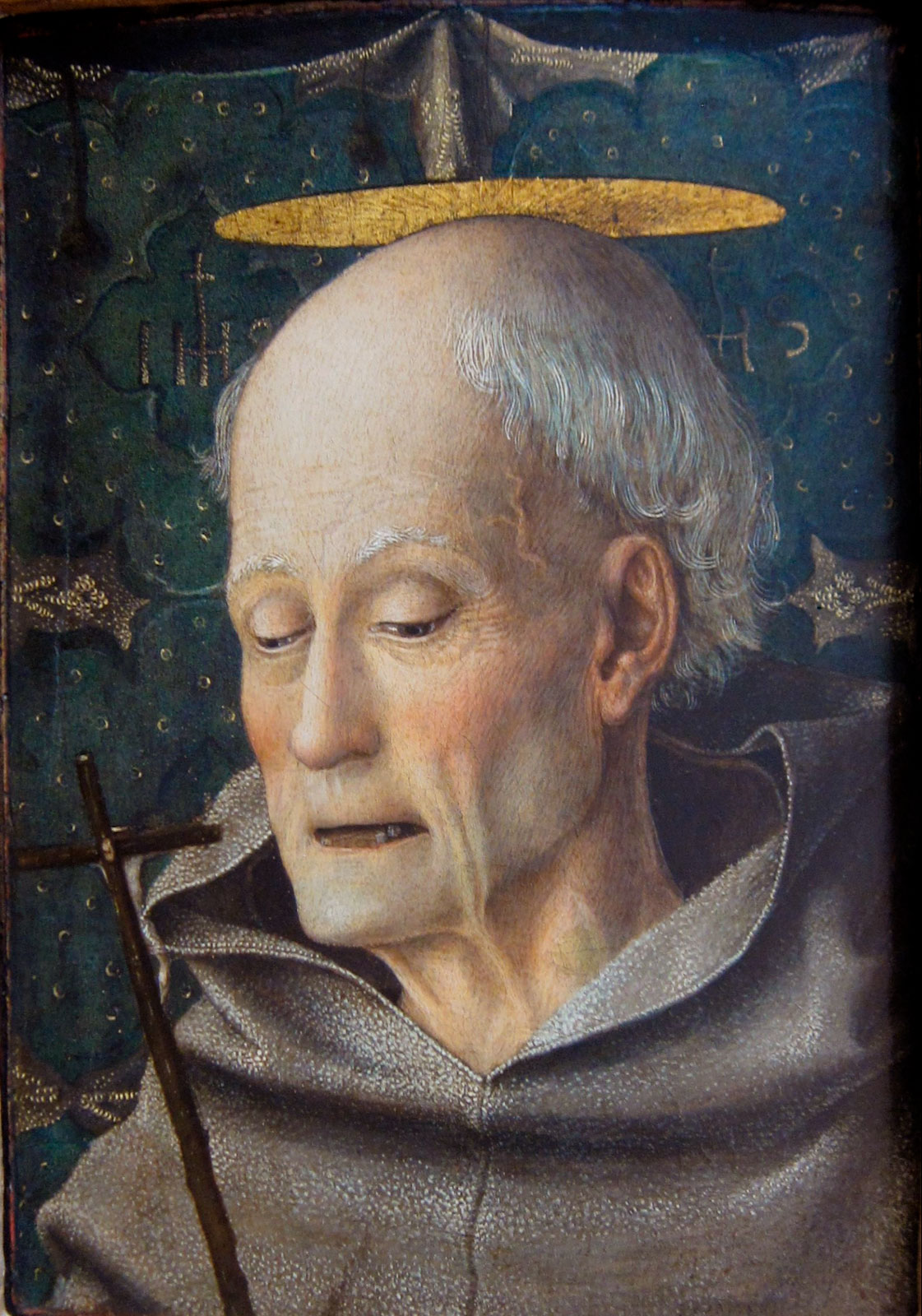


Jacopo Bellini (Italian, 1400-1470) 'Saint Bernardino of Siena' Between c. 1450 and c. 1455


Jacopo Bellini (Italian, 1400-1470)
Saint Bernardino of Siena
Between c. 1450 and c. 1455
Tempera and gold leaf on panel
Weber Collection, New York
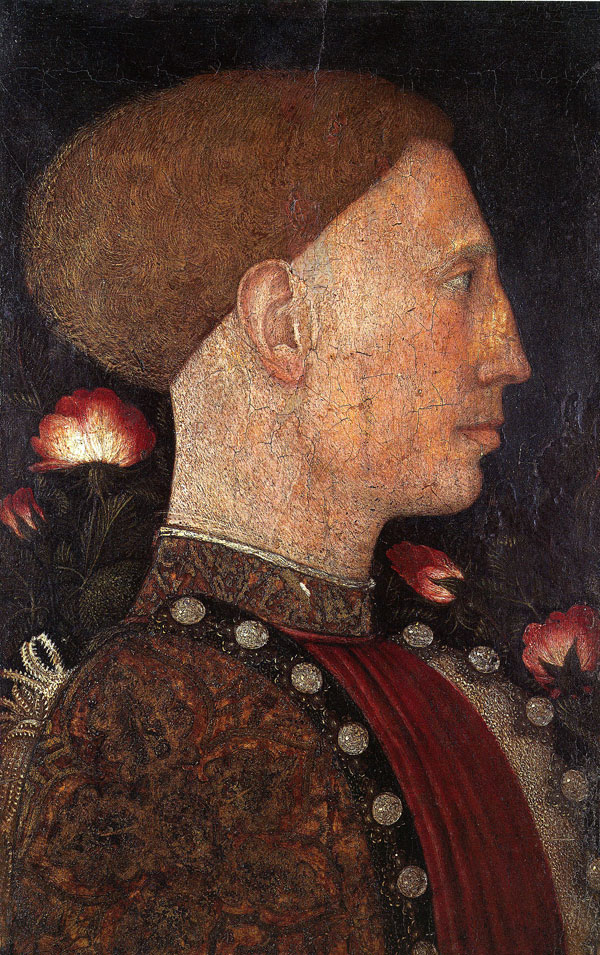
 

Pisanello (Antonio Pisano) (Italian, 1395-1455) 'Portrait of Leonello d'Este' c. 1444


Pisanello (Antonio Pisano) (Italian, 1395-1455)
Portrait of Leonello d’Este
c. 1444
Bergamo, Accademia Carrara
© Accademia Carrara, Bergamo


Pisanello (c. 1395 – c. 1455), known professionally as Antonio di Puccio Pisano or Antonio di Puccio da Cereto, also erroneously called Vittore Pisano by Giorgio Vasari, was one of the most distinguished painters of the early Italian Renaissance and Quattrocento. He was acclaimed by poets such as Guarino da Verona and praised by humanists of his time, who compared him to such illustrious names as Cimabue, Phidias and Praxiteles.
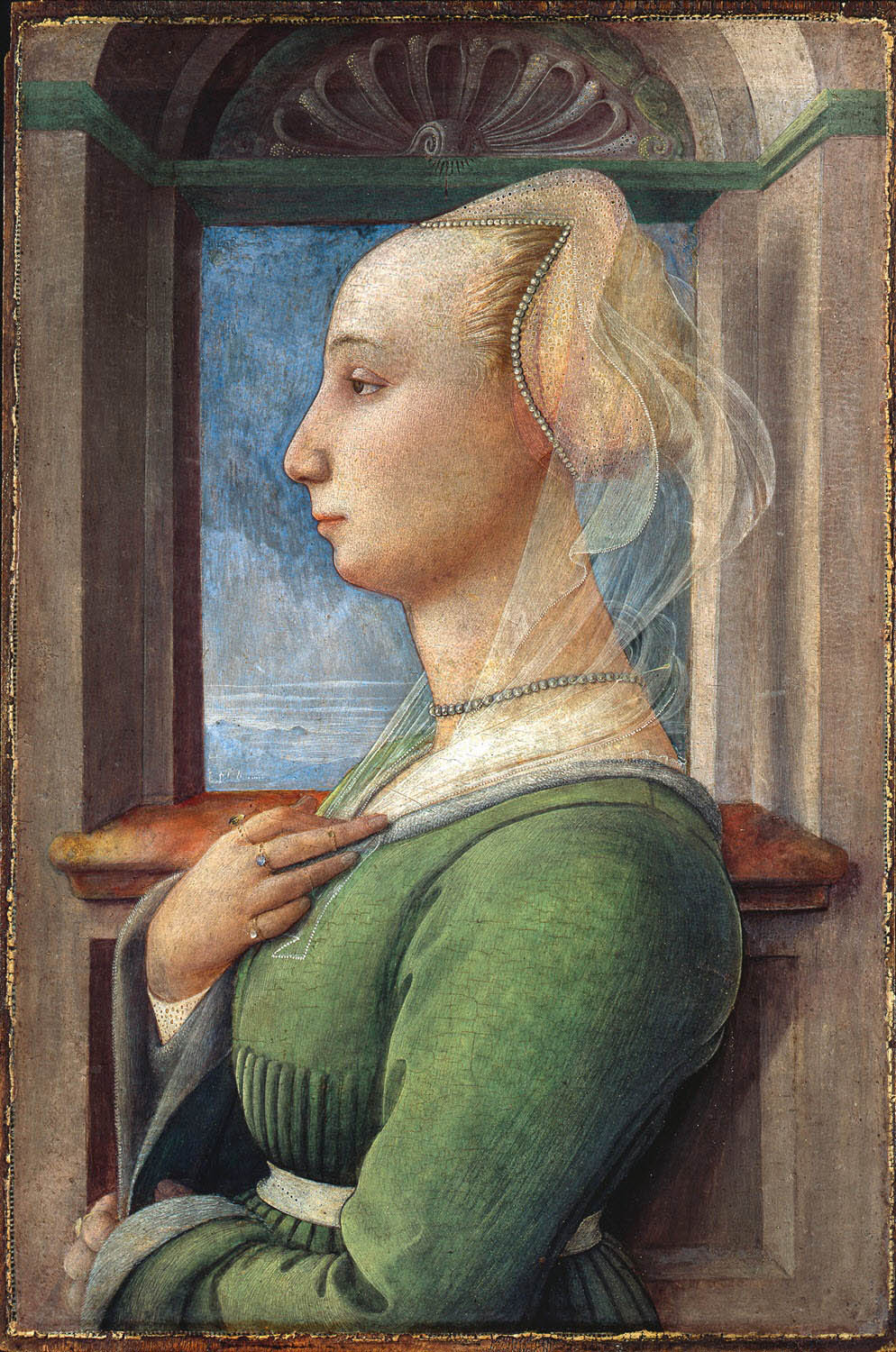
 

Filippo Lippi (Italian, 1406-1469) 'Portrait of a Lady' c. 1445


Filippo Lippi (Italian, 1406-1469)
Portrait of a Lady
c. 1445
Paint on poplar panel
Height: 49.5 cm (19.4 in)
Width: 32.9 cm (12.9 in)
Gemäldegalerie
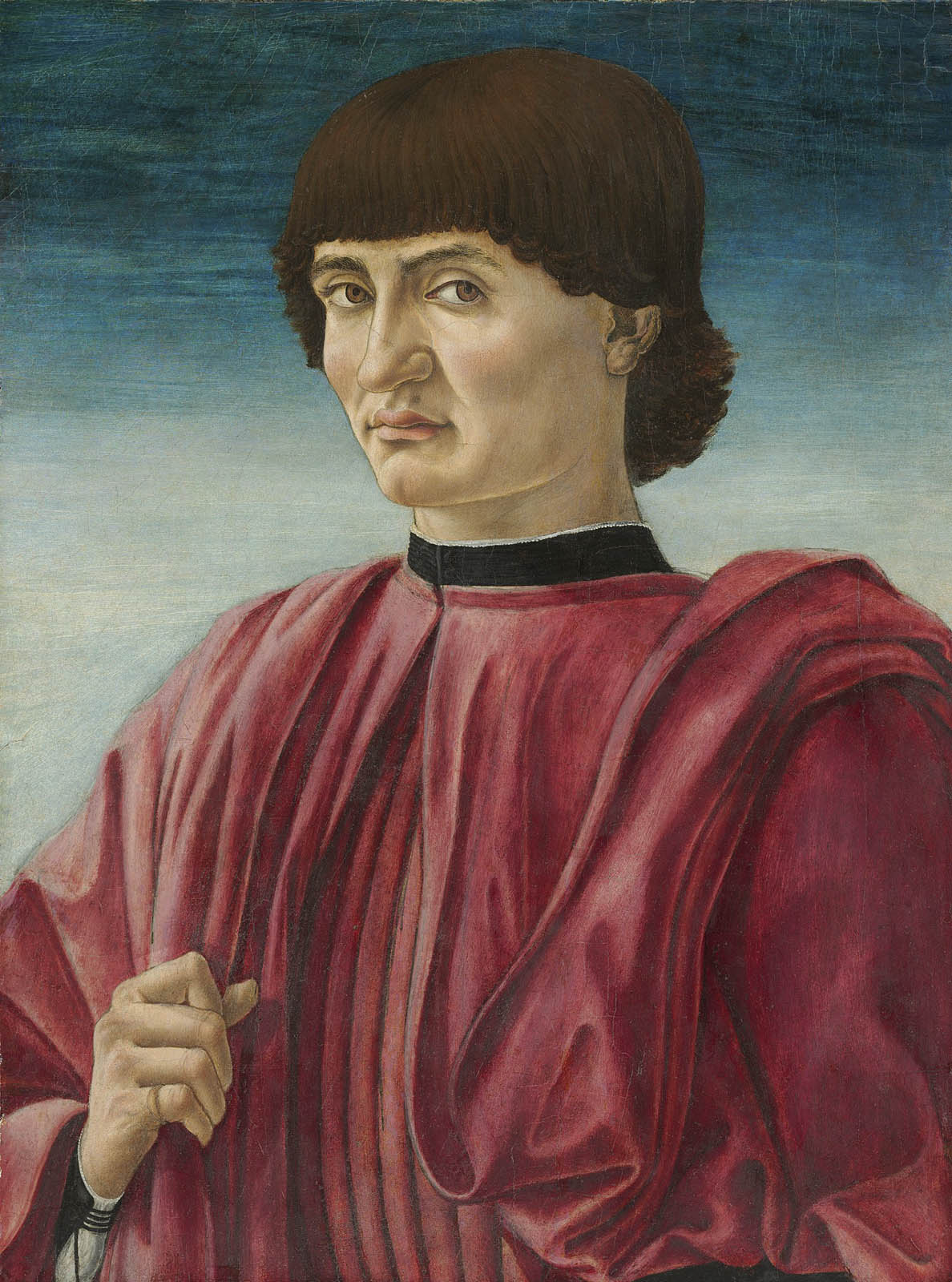
 

Andrea del Castagno (Italian, 1420-1457) 'Portrait of a Man' c. 1450


Andrea del Castagno (Italian, 1420-1457)
Portrait of a Man
c. 1450
Tempera on panel
Height: 54cm (21.2 in)
Width: 40.5cm (15.9 in)
Andrew W. Mellon collection
National Gallery of Art
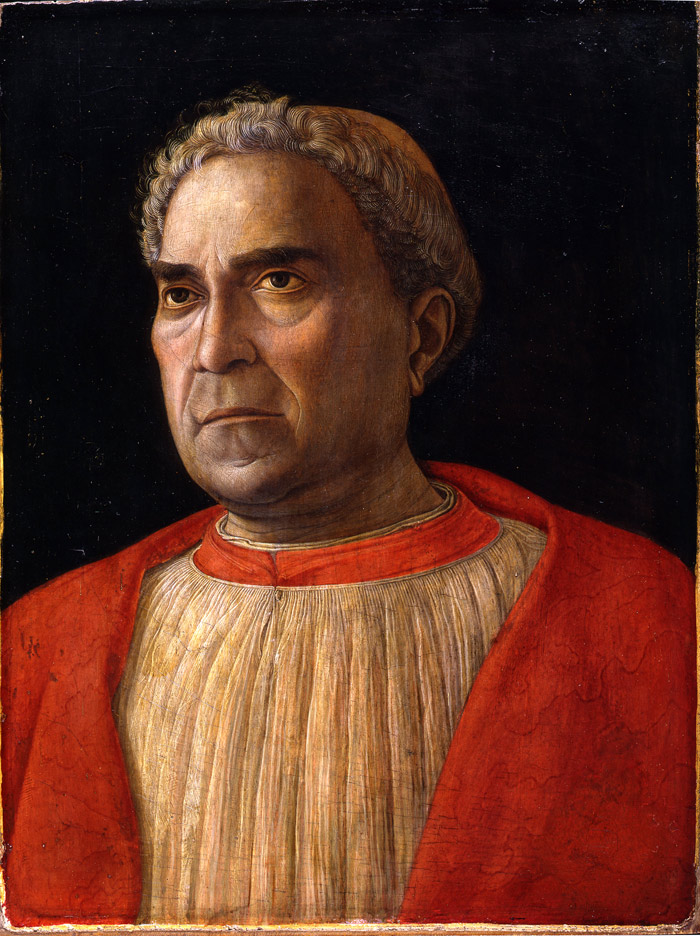
 

Andrea Mantegna (Italian, 1431-1506) 'Portrait of Cardinal Ludovico Trevisano' c. 1459


Andrea Mantegna (Italian, 1431-1506)
Portrait of Cardinal Ludovico Trevisano
c. 1459
Berlin, National Museums in Berlin, Gemäldegalerie
© National Museums in Berlin, Jörg P. Anders


Andrea Mantegna (c.  1431 – September 13, 1506) was an Italian painter, a student of Roman archeology, and son-in-law of Jacopo Bellini. Like other artists of the time, Mantegna experimented with perspective, e.g. by lowering the horizon in order to create a sense of greater monumentality. His flinty, metallic landscapes and somewhat stony figures give evidence of a fundamentally sculptural approach to painting. He also led a workshop that was the leading producer of prints in Venice before 1500.
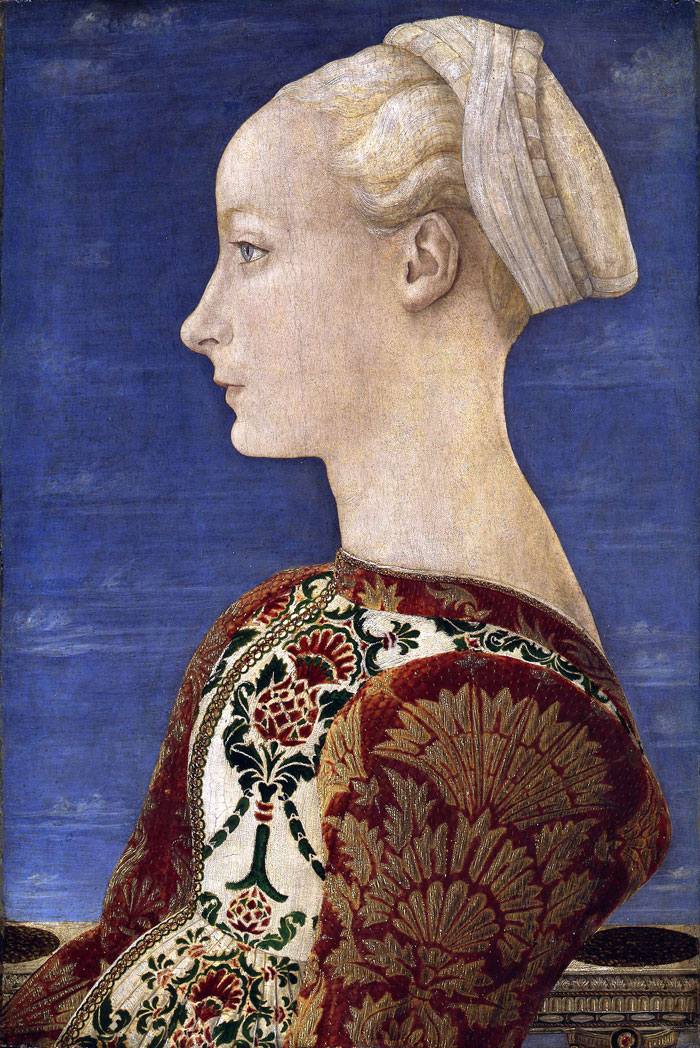
 

Antonio del Pollaiuolo (Italian, 1429-1498) 'Portrait of a Young Lady' c. 1465


Antonio del Pollaiuolo (Italian, 1429-1498)
Portrait of a Young Lady
c. 1465
Berlin, National Museums in Berlin, Gemäldegalerie
© National Museums in Berlin, Jörg P. Anders


Antonio del Pollaiuolo (Italian, 1429-1498) 'Portrait of a Young Woman' c. 1465-1470


Antonio del Pollaiuolo (Italian, 1429-1498)
Portrait of a Young Woman
c. 1465-1470
© Museo Poldi Pezzoli, Milan
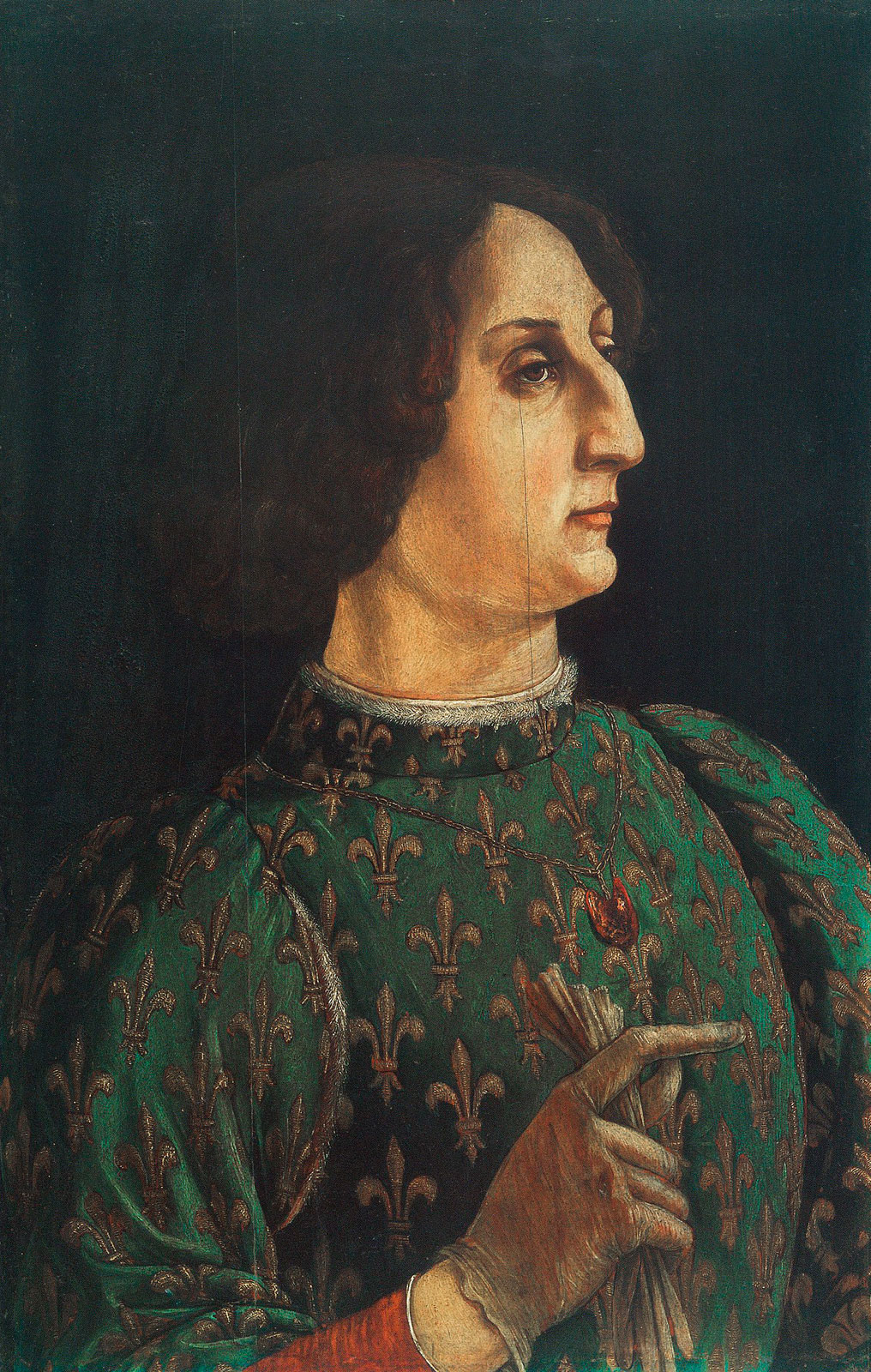
 

Piero del Pollaiuolo (Italian, 1443–1496) 'Portrait of Galeazzo Maria Sforza' c. 1471


Piero del Pollaiuolo (Italian, 1443–1496)
Portrait of Galeazzo Maria Sforza
c. 1471
Tempera on panel
Height: 65cm (25.5 in)
Width: 42cm (16.5 in)
Uffizi Gallery


Piero Pollaiuolo painted this portrait during one of Galeazzo Maria Sforza’s visits to Florence. The work is based on a similar portrait by his brother, Antonio. That the portrait is of Sforza is beyond doubt, as copies exist bearing Sforza’s name. Restored in 1994.


Sandro Botticelli (Italian, 1445-1520) 'Profile Portrait of a Young Lady (Simonetta Vespucci?)' c. 1476


Sandro Botticelli (Italian, 1445-1520)
Profile Portrait of a Young Lady (Simonetta Vespucci?)
c. 1476
Berlin, National Museums in Berlin, Gemäldegalerie
© National Museums in Berlin, Jörg P. Anders


Alessandro di Mariano di Vanni Filipepi (c.  1445 – May 17, 1510), known as Sandro Botticelli, was an Italian painter of the Early Renaissance. He belonged to the Florentine School under the patronage of Lorenzo de’ Medici, a movement that Giorgio Vasari would characterise less than a hundred years later in his Vita of Botticelli as a “golden age”. Botticelli’s posthumous reputation suffered until the late 19th century; since then, his work has been seen to represent the linear grace of Early Renaissance painting.


The Gemäldegalerie – National Museums in Berlin and the Metropolitan Museum of Art, New York, have joined forces in organising a major exhibition on the genesis of the Italian portrait. For Berlin, the Bode Museum presents itself as the ideal location to hold such an exhibition: on its opening in 1904, it was conceived by its founder, Wilhelm von Bode, as a ‘Renaissance Museum’ on the Museum Island. The Bode Museum will host the first stage of the exhibition, running from 25 August to 20 November 2011, before it subsequently goes on show at the Metropolitan Museum of Art in New York, from 19 December 2011 to 18 March 2012.

More than 150 key works, including paintings, drawings, medals and busts, are about to go on display for the first time together. The more than 50 lenders include the Uffizi in Florence, the Louvre in Paris and the National Gallery in London. Among the exhibition’s many highlights is Leonardo da Vinci’s Lady with an Ermine from the Czartoryski Collection, Cracow.

The exhibition highlights depictions of the appearance and personality of real people. Portraits of feminine beauty vie with portraits of generals, princes and humanists, offering us a fascinating insight into the age of the early Renaissance.

At the heart of the exhibition stands the Italian Renaissance portrait. The Italian art of portraiture evolved under the influence of antique models. However, it was equally shaped by the innovations of the great Netherlandish painters. The history of the art of portraiture, from Pisanello up to Verrocchio, Botticelli, Bellini and Leonardo, is retold in a selection of magnificent and sensational key works, including paintings, sculptures, medals and drawings. The exhibition focuses both on the art produced at the Italian courts, as well as the development of the portrait in Florence and Venice.

A unique architectural and lighting concept, especially designed for the exhibition, takes into account the individual qualities of each exhibit in its presentation. Of crucial importance here is the aesthetic experience, both of the quality of the artworks and of the materials used in creating them.

The artistic diversity evident in these early portraits, the various roles the images served and their historical contexts all resonate with suspense. The Gemäldegalerie – National Museums in Berlin and the Metropolitan Museum of Art in New York embarked on an intense collaboration to present this to the general public. Masterpieces from New York and the rich collections of the National Museums in Berlin, not just from the Gemäldegalerie itself but also from the Sculpture Collection, Kupferstichkabinett and Numismatic Collection, offer visitors an unprecedented insight into this epoch. Furthermore, for the first time the show in the Bode Museum also encompasses all media of Italian Renaissance portraiture – medals, drawings, sculptures and panel paintings.

Portraits – either in the form of a painting, photograph and less often a medal – have become commonplace today, but between the 5th and 15th century independent portraits of individual people were rare and the exclusive reserve of rulers and historic figures. Only in the 15th century did it again become customary for artists on both sides of the Alps to produce independent portraits of men and women. Today’s exhibition Renaissance Faces pays homage to Italy’s contribution to this first great age of European portraiture and conveys a sense of the innovative ways in which artists responded to the challenge of creating individual portraits and how they explored questions of identity that arose as a result.

When selecting the exhibits, the organisers’ chief aim was to highlight the prevailing conventions and decisive innovations in a period spanning more than eight decades. Set against the backdrop of Italy’s geographical, political and cultural complexities in the 15th century, the exhibition is divided into three clearly outlined thematic sections. The first of these is Florence, as it was here that the independent portrait first appeared on a significant scale. The visitor’s gaze is then directed to the courts of Ferrara, Mantua, Bologna, Milan, Urbino, Naples and finally papal Rome. The circle is then completed in Venice, where a portrait tradition only established itself remarkably late in the century. In each section, works in all media are juxtaposed with each other to give visitors the chance to see for themselves how the various art forms mutually influenced each other with their own unique qualities.

In a society dominated by family descent and social hierarchies, conventions were binding. And it is precisely these conventions that are depicted in profile portraits from 15th-century Italy. Profile portraits were equally popular as reliefs or paintings. Compared with the far more naturalistic art produced north of the Alps, which people in 15th-century Italy were definitely familiar with, this form of portrait seems at first a little surprising, as the Italian artists present the sitters in a soft light and at a slight angle to the picture plane. The sitters are seen standing either at a window or behind a parapet and gaze at the viewer. Sometimes a hand is seen resting on the edge of the painted frame. When looking at these images, it is clear that Italian portraits are not primarily concerned with achieving an accurate likeness, at least not in the conventional sense. Italian portraits do not so much reveal personality, rather convey social conventions and cultural identity.

The profile portrait was frequently given such exceptional importance in Italy, because it largely drew from Roman coins and reliefs for inspiration. But the profile portrait has always been the most elementary form of capturing someone’s likeness. Informal, direct and frontal views have become so familiar to us in portraits today thanks to photography that we first have to be resensitised to the unique possibilities inherent in the profile portrait. For one, it makes it possible to objectify a person’s outer appearance and allows physiognomies to convey cultural meaning. The pleasing aspect of a high forehead, the refinement or contemptuousness expressed in a raised brow, the aristocratic curve of a nose and the severity or gentleness of a chin and jawline – all these are physiognomical characteristics that come to stand as emblems for beauty, rank and power.

Press release from the Bode Museum website quoting the exhibition catalogue


Sandro Botticelli (Italian, 1445-1520) 'Portrait of Giuliano de' Medici' c. 1478


Sandro Botticelli (Italian, 1445-1520)
Portrait of Giuliano de’ Medici
c. 1478
Washington, National Gallery of Art
© Art Resource, New York


Antonello da Messina (Italian, 1430-1479) 'Portrait of a Young Man' 1478


Antonello da Messina (Italian, 1430-1479)
Portrait of a Young Man
1478
Berlin, National Museums in Berlin, Gemäldegalerie
© National Museums in Berlin, Jörg P. Anders


Antonello da Messina, properly Antonello di Giovanni di Antonio, but also called Antonello degli Antoni and Anglicised as Anthony of Messina (c. 1430 – February 1479), was an Italian painter from Messina, Sicily, active during the Early Italian Renaissance. His work shows strong influences from Early Netherlandish painting although there is no documentary evidence that he ever travelled beyond Italy. Giorgio Vasari credited him with the introduction of oil painting into Italy. Unusually for a south Italian artist of the Renaissance, his work proved influential on painters in northern Italy, especially in Venice.
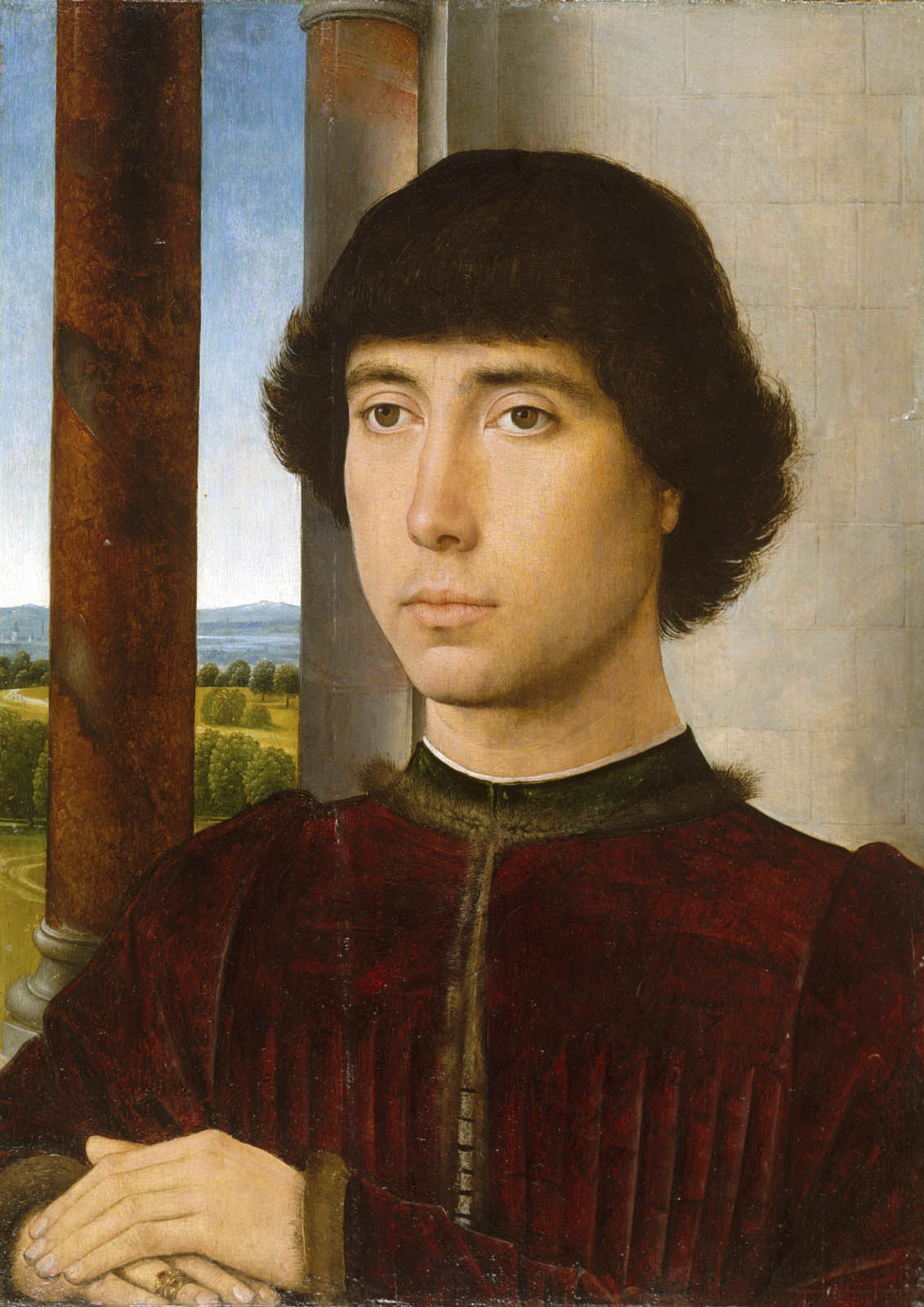
 

Hans Memling (Italian, c. 1433-1494) 'Portrait of a Man at a Loggia' c. 1480


Hans Memling (Italian, c. 1433-1494)
Portrait of a Man at a Loggia
c. 1480
Oil on panel
Height: 40cm (15.7 in)
Width: 28cm (11 in)
Metropolitan Museum of Art
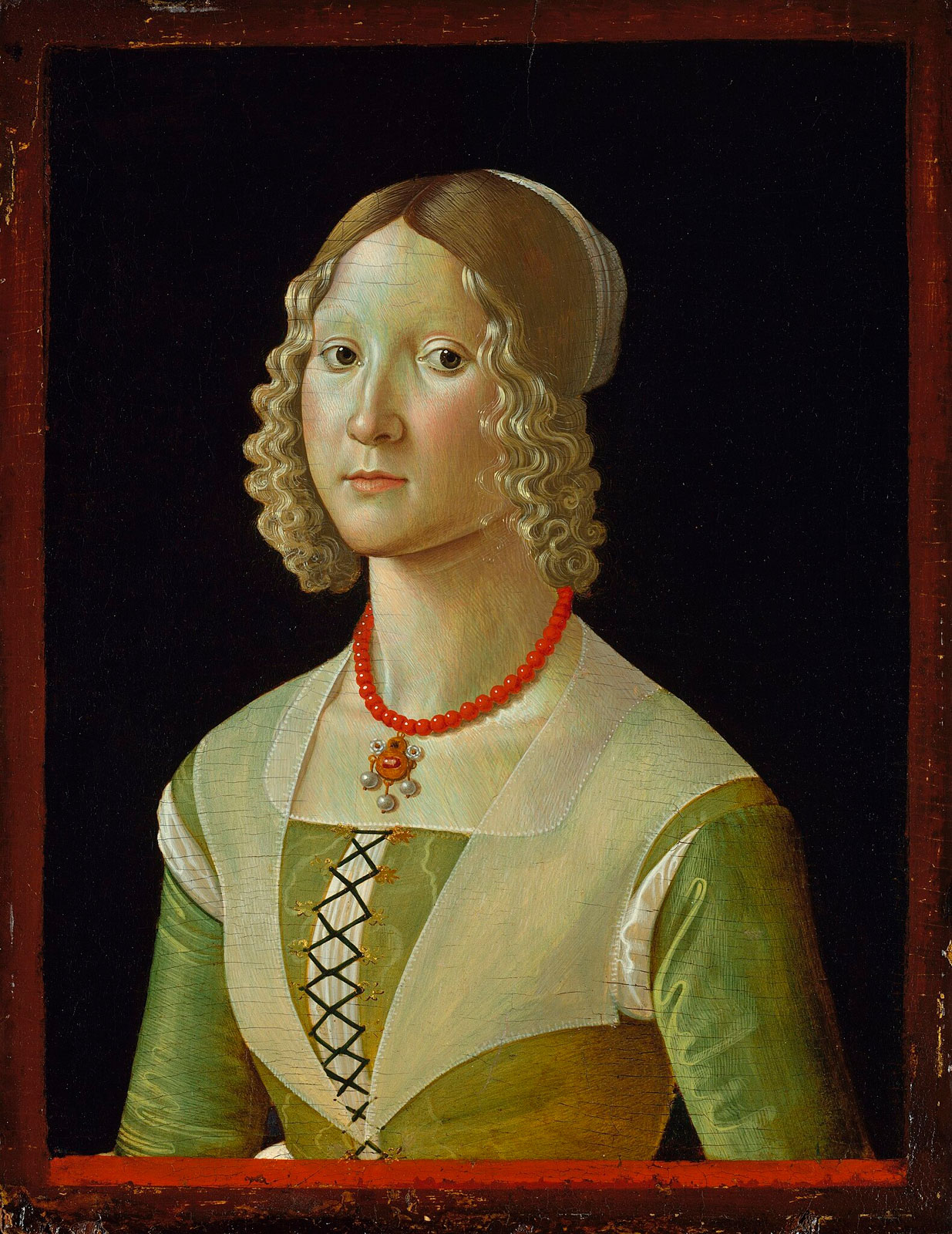
 

Davide Ghirlandaio (Italian, 1452-1525) 'Selvaggia Sassetti (born 1470)' Between 1487 and 1488


Davide Ghirlandaio (Italian, 1452-1525)
Selvaggia Sassetti (born 1470)
Between 1487 and 1488
Tempera on panel
Height: 57.2cm (22.5 in)
Width: 44.1cm (17.3 in)
Metropolitan Museum of Art
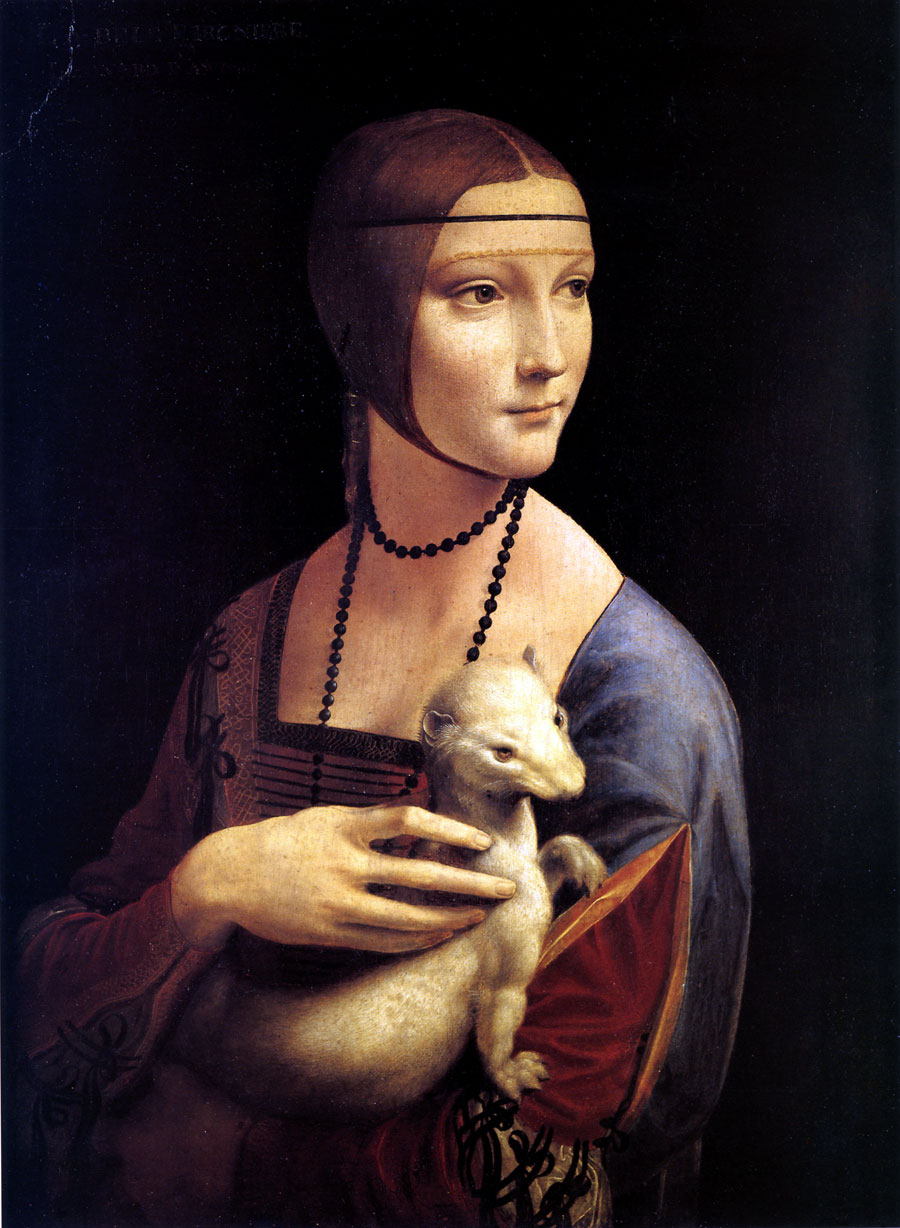
 

Leonardo da Vinci (Italian, 1452-1519) 'Lady with an Ermine (portrait of Cecilia Gallerani)' 1489-1490


Leonardo da Vinci (Italian, 1452-1519)
Lady with an Ermine (portrait of Cecilia Gallerani)
1489-1490
Kraków, owned by Princes Czartoryski Foundation, at the National Museum
© bpk / Scala


Leonardo di ser Piero da Vinci,known as Leonardo da Vinci , was an Italian polymath of the Renaissance whose areas of interest included invention, drawing, painting, sculpture, architecture, science, music, mathematics, engineering, literature, anatomy, geology, astronomy, botany, paleontology, and cartography. He has been variously called the father of palaeontology, ichnology, and architecture, and is widely considered one of the greatest painters of all time (despite perhaps only 15 of his paintings having survived).
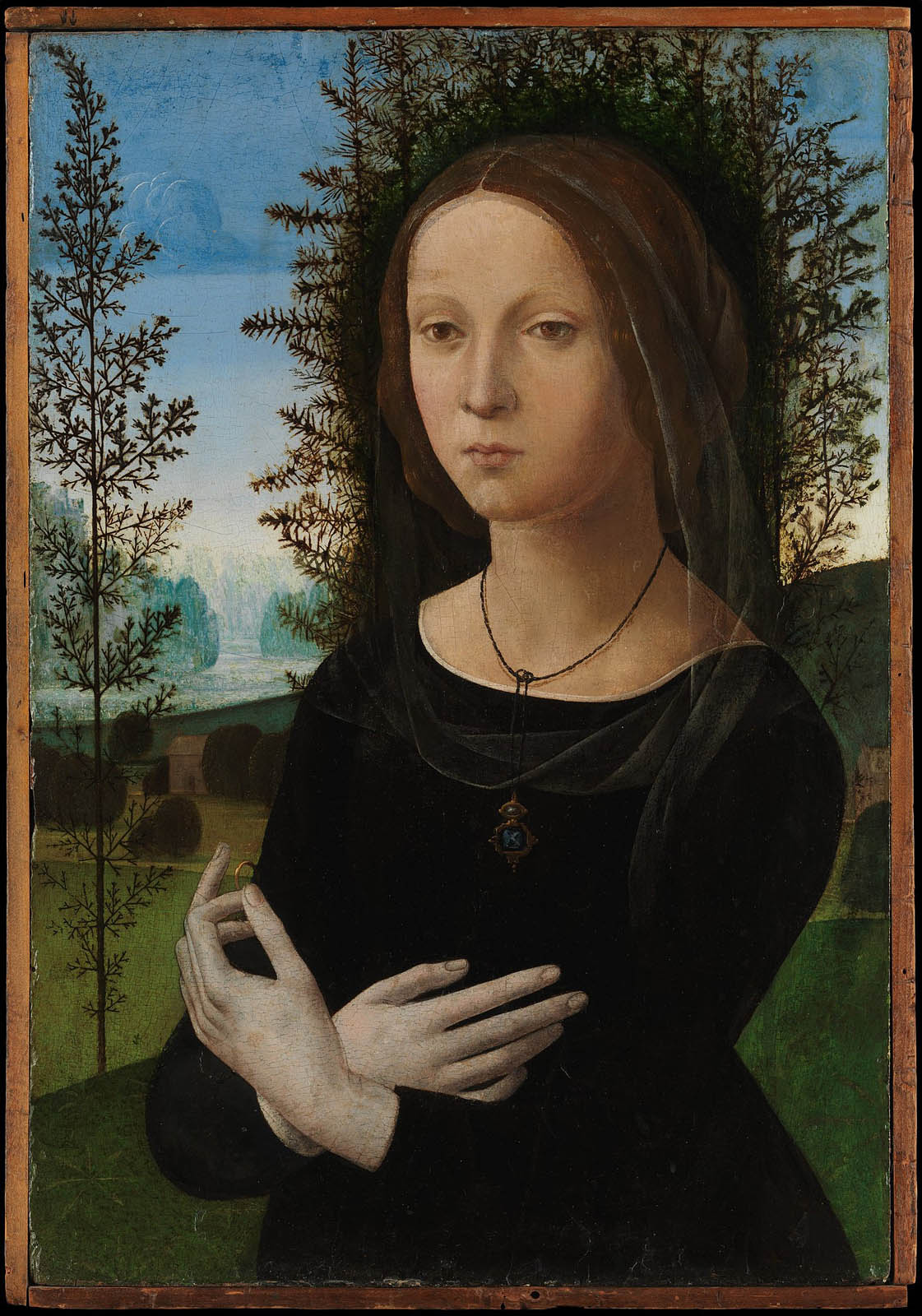
 

Lorenzo di Credi (Italian, 1459-1537) 'Portrait of a Young Woman' c. 1490s


Lorenzo di Credi (Italian, 1459-1537)
Portrait of a Young Woman
c. 1490s
Oil on panel
Height: 58.7cm (23.1 in)
Width: 40cm (15.7 in)
Metropolitan Museum of Art


Gentile Bellini (Italian, 1429-1507) 'Self-portrait' c. 1496


Gentile Bellini (Italian, 1429-1507)
Self-portrait
c. 1496
Black chalk and charcoal on paper
Height: 23 cm (9 in)
Width: 19.4 cm (7.6 in)
Kupferstichkabinett Berlin
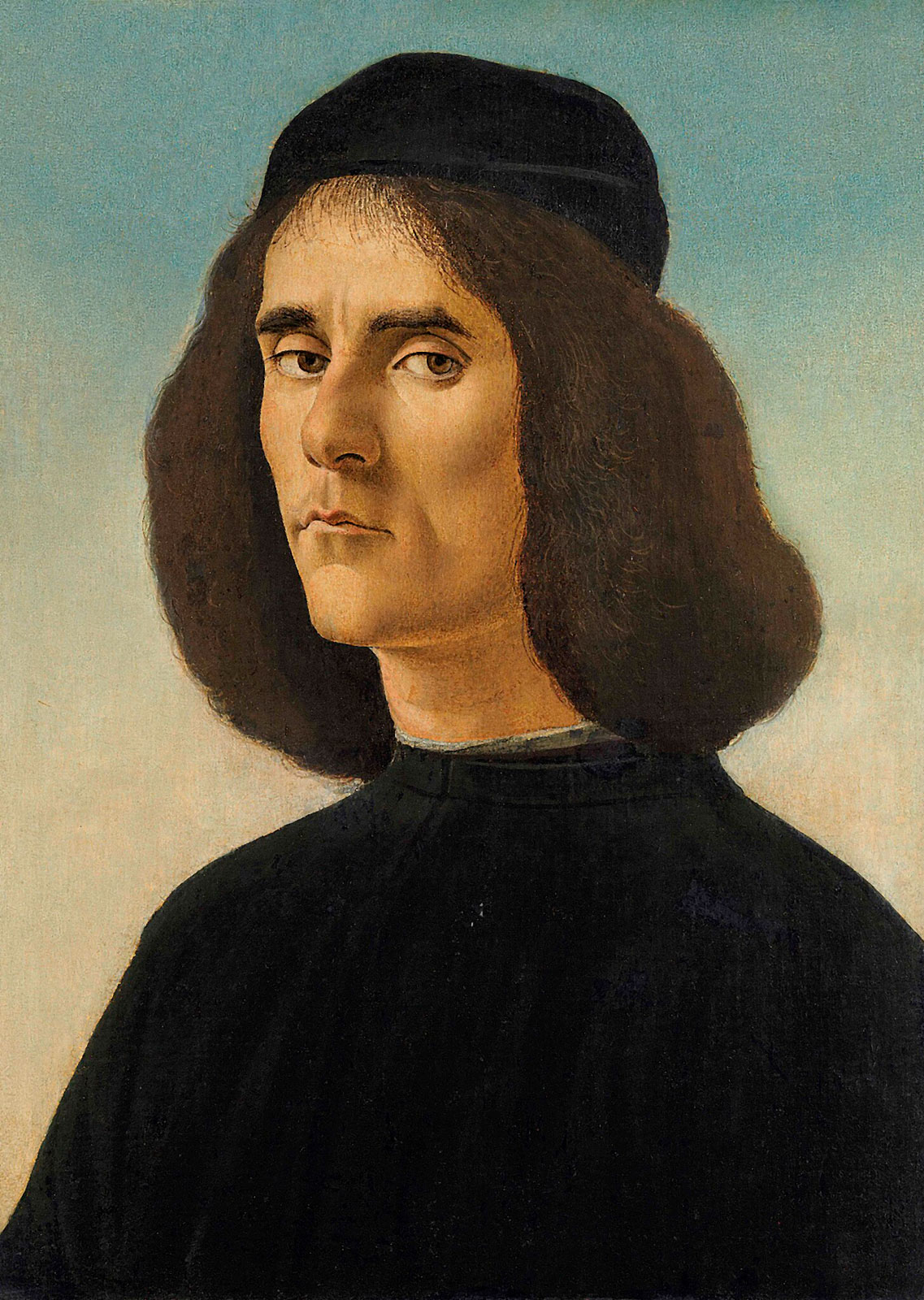
 

Sandro Botticelli (Italian, 1445-1510) 'Portrait of Michael Tarchaniota Marullus' 1497


Sandro Botticelli (Italian, 1445-1510)
Portrait of Michael Tarchaniota Marullus
1497
Tempera from wood transferred to canvas
Height: 49cm (19.2 in)
Width: 35cm (13.7 in)
Institut Cambó


Bode Museum
Museum Island Berlin,
Am Kupfergraben 1, 10117 Berlin

Opening hours:
Monday closed
Tuesday – Sunday 10.00am – 6.00pm
Bode Museum website

LIKE ART BLART ON FACEBOOK

Back to top

Exhibition: ‘Joel Meyerowitz – Aftermath’ at the Miami Art Museum

Exhibition dates: 19th August – 6th November 2011


Joel Meyerowitz (American, b. 1938) 'Searchers in Rubble' 2001


Joel Meyerowitz (American, b. 1938)
Searchers in Rubble
2001
Vintage contact print
Collection Miami Art Museum, gift of Steven E. and Phyllis Gross


And do you know what “the world” is to me? Shall I show it to you in my mirror? This world: a monster of energy, without beginning, without end; a firm, iron magnitude of force that does not grow bigger or smaller, that does not expend itself but only transforms itself; as a whole, of unalterable size, a household without expenses or losses, but likewise without increase or income; enclosed by “nothingness” as by a boundary; not something blurry or wasted, not something endlessly extended, but set in a definite space as a definite force, and not a space that might be “empty” here or there, but rather a force throughout, as a play of forces and waves of forces, at the same time one and many, increasing here and at the same time decreasing there …


Frederick Nietzsche, The Will to Power


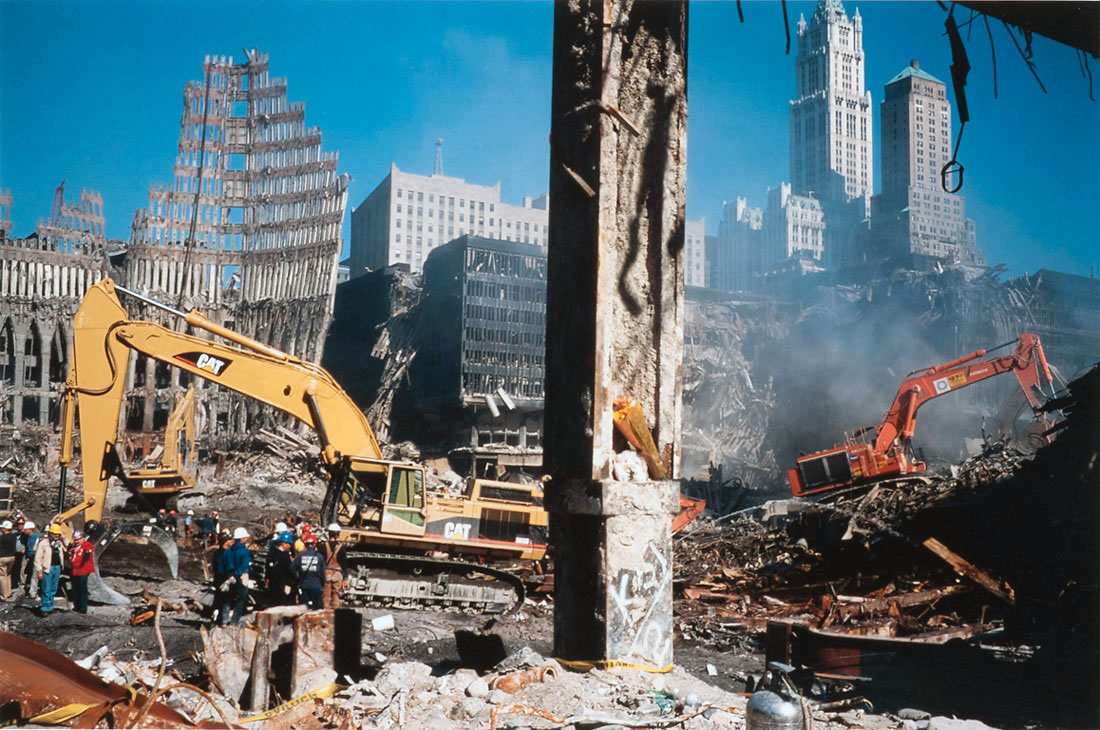
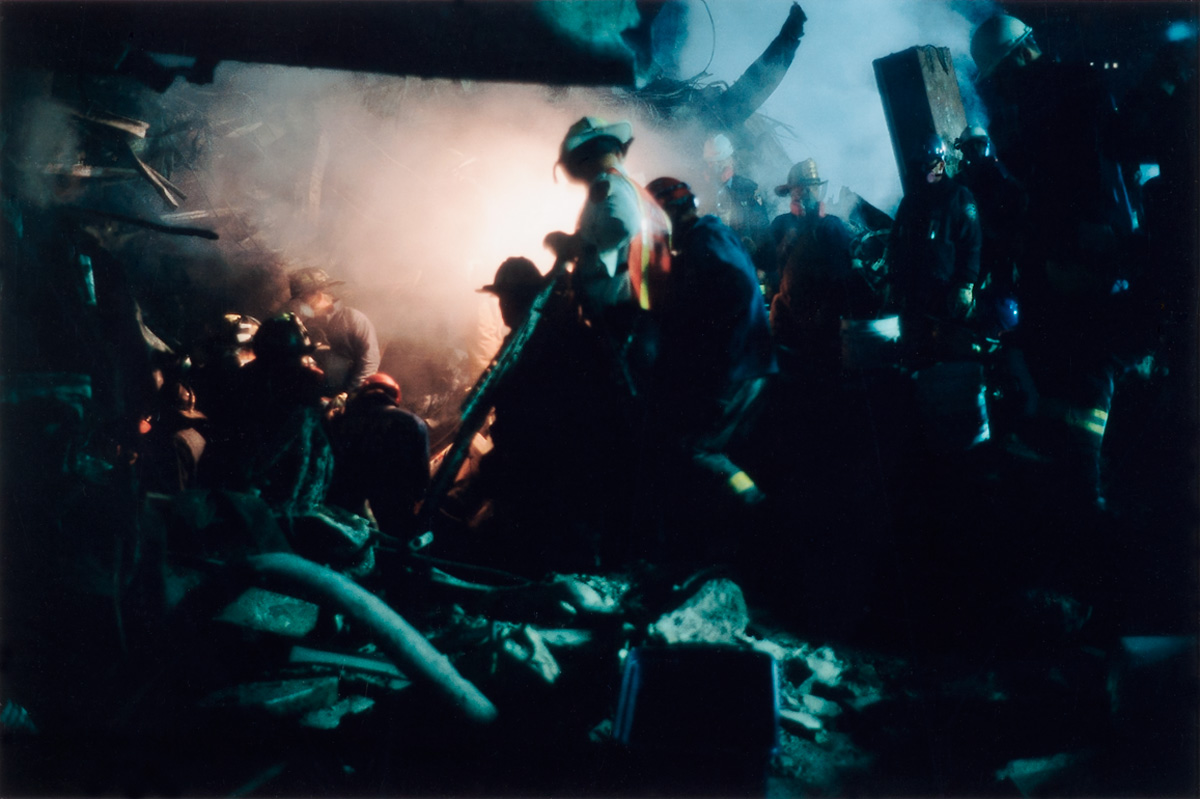
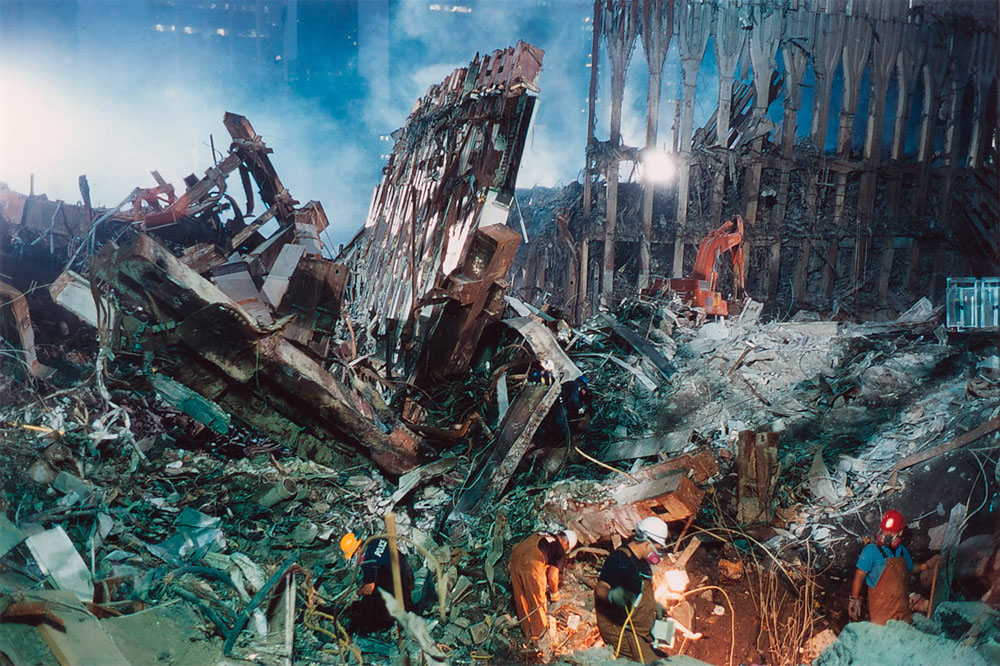
Sadness. And light. Hope. Amidst the inferno. Study the masterpiece Finding More Fireman (below) in the enlarged version and you cannot fail to be moved. It is all there: monumental, intimate, hellish, redemptive – a modern, “disastrous” form of the Rembrandt’s The Night Watch.

Dr Marcus Bunyan


Many thanxk to the Miami Art Museum for allowing me to publish the photographs in the posting. Please click on the photographs for a larger version of the image.


Joel Meyerowitz (American, b. 1938) 'Flower Offering' 2001


Joel Meyerowitz (American, b. 1938)
Flower Offering
2001
Vintage contact print
Collection Miami Art Museum, gift of Steven E. and Phyllis Gross


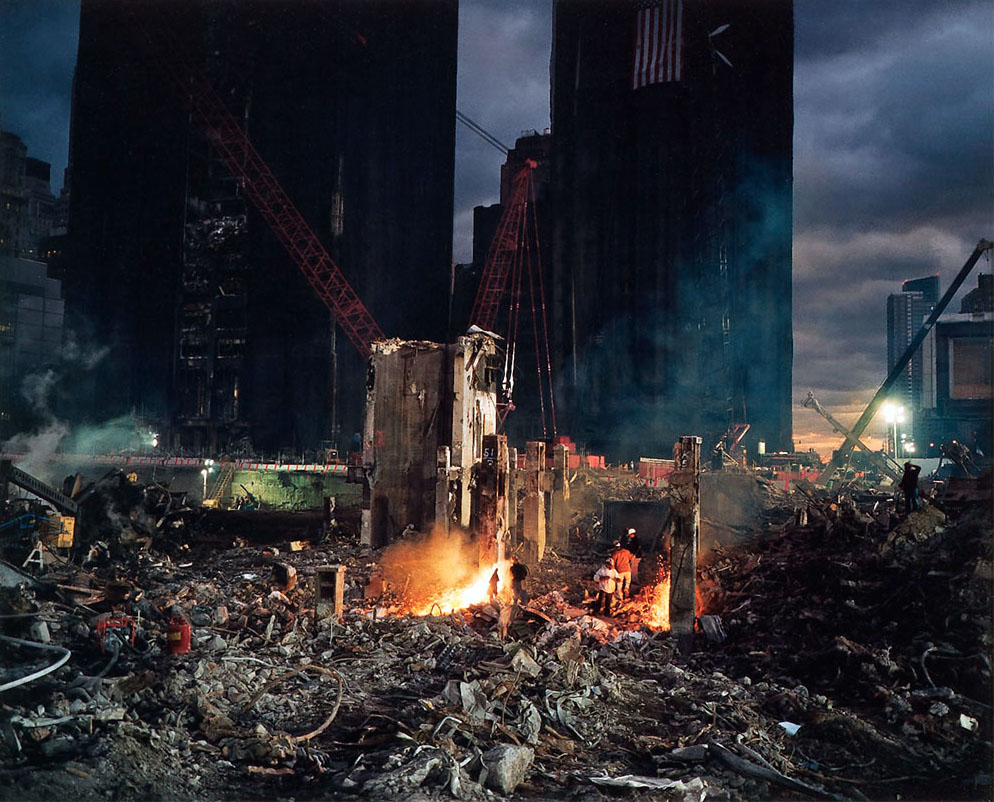
Joel Meyerowitz (American, b. 1938) 'Pit Looking North' 2002


Joel Meyerowitz (American, b. 1938)
Pit Looking North
2002
Vintage contact print
Collection Miami Art Museum, gift of Steven E. and Phyllis Gross


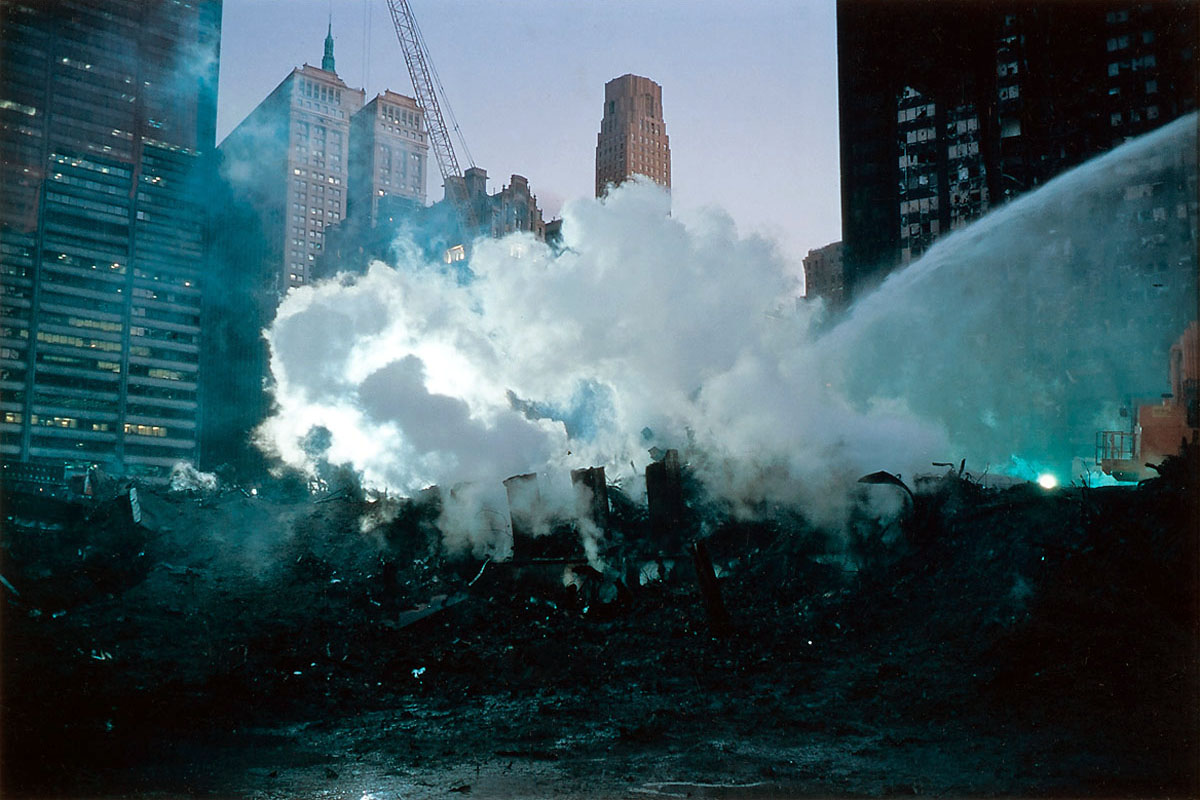
Joel Meyerowitz (American, b. 1938) 'Smoke and Spray' 2001


Joel Meyerowitz (American, b. 1938)
Smoke and Spray
2001
Vintage contact print
Collection Miami Art Museum, gift of Jeffrey Hugh Newman


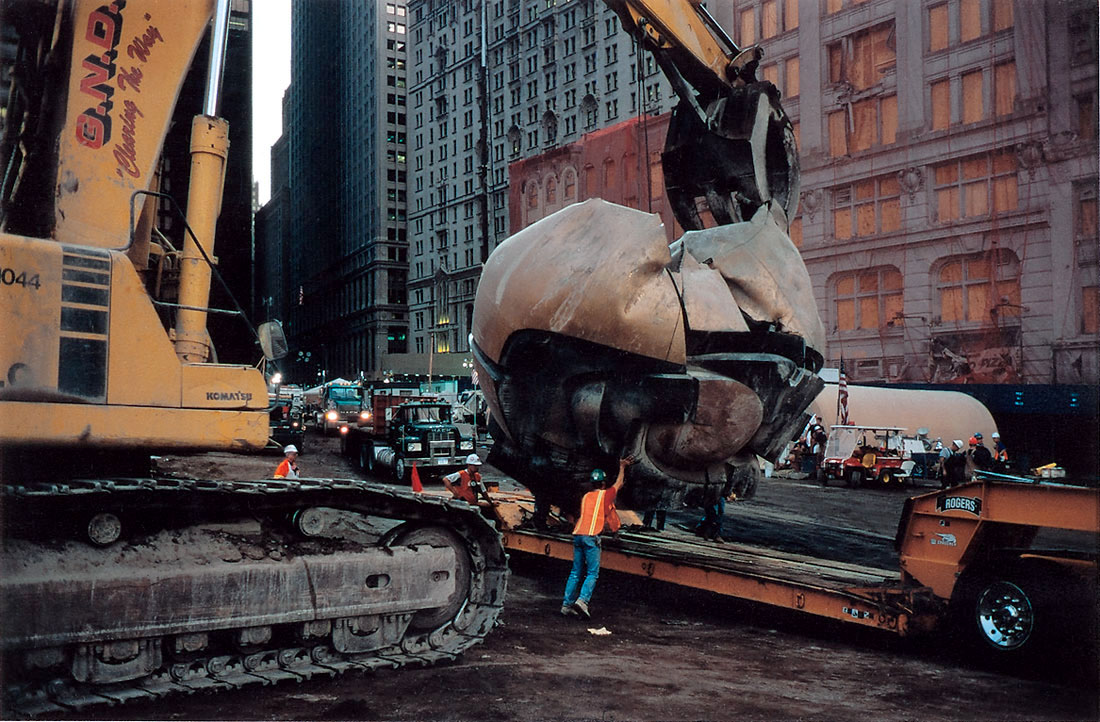
Joel Meyerowitz (American, b. 1938) 'Moving the Monument' 2001


Joel Meyerowitz (American, b. 1938)
Moving the Monument
2001
Vintage contact print
Collection Miami Art Museum, gift of Jeffrey Hugh Newman


Joel Meyerowitz (American, b. 1938) 'Finding More Fireman' 2001


Joel Meyerowitz (American, b. 1938)
Finding More Fireman
2001
Vintage contact print
Collection Miami Art Museum, gift of Charles S. and Elynne B. Zucker


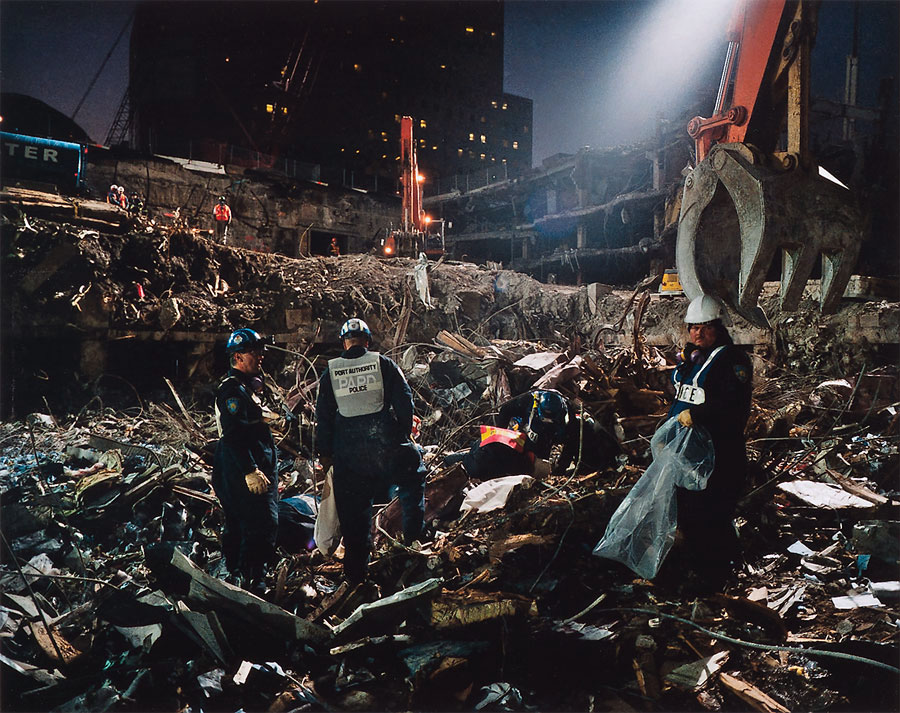
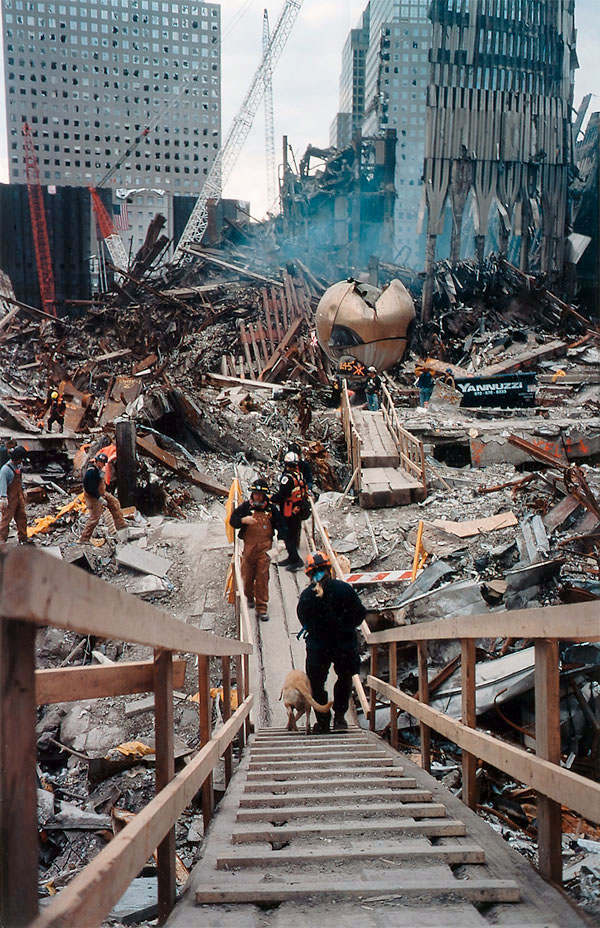
Joel Meyerowitz (American, b. 1938) 'Searchers' 2002


Joel Meyerowitz (American, b. 1938)
Searchers
2002
Vintage contact print
Collection Miami Art Museum, gift of Charles S. and Elynne B. Zucker


Joel Meyerowitz (American, b. 1938) 'Welders in South Tower' 2001


Joel Meyerowitz (American, b. 1938)
Welders in South Tower
2001
Vintage contact print
Collection Miami Art Museum, gift of Charles S. and Elynne B. Zucker


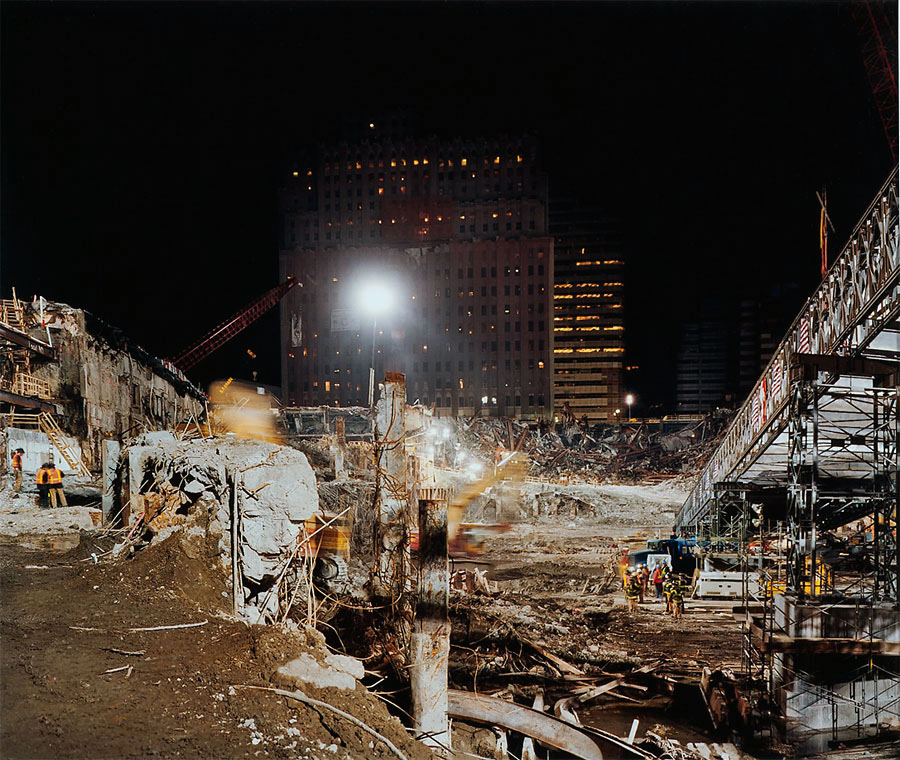
In commemoration of the 10th anniversary of 9/11, Miami Art Museum presents Focus Gallery: Joel Meyerowitz – Aftermath, an exhibition of photographs taken by the only photographer granted right of entry into Ground Zero after the September 11, 2001 attacks on the World Trade Center in New York City. For nine months during the day and night, Meyerowitz photographed “the pile,” as the World Trade Center came to be known, and the over 800 people a day that were working in it. The exhibition consists of 24, recently-donated photographs, presented in the Focus Gallery section of the Museum’s Permanent Collection installation. Admission to Miami Art Museum will be free to all emergency personnel, including police and firefighters, and their guests throughout the exhibition’s run, August 19 – November 6, 2011. A special preview for emergency personnel will be held on Thursday, August 18, 2011, 4-7pm. Author and photography critic Vicki Goldberg will give a lecture entitled “What Remains” on Thursday, September 8, 2011, beginning at 6:30pm.

After September 11, 2001, the Ground Zero site in New York City was classified as a crime scene and only those directly involved in the recovery efforts were allowed inside. The press was prohibited from the site. Influenced by Walker Evans’s and Dorothea Lange’s work for the Farm Security Administration during the Great Depression, Meyerowitz, long recognised as one of the pioneers of colour photography, was convinced that if a photographic record of the unprecedented recovery efforts was not made, “there would be no history.” With the help of sympathetic officials, he managed to become the only photographer granted right of entry into Ground Zero.

“I was making photographs for everyone who didn’t have access to the site,” says Meyerowitz, “I wanted to communicate what it felt like to be in there as well as what it looked like: to show the pile’s incredible intricacy and visceral power. I could provide a window for everyone else who wanted to be there, too, to help, or to grieve, or simply to try to understand what had happened to our city.”

Armed with a large-format wooden camera, Meyerowitz spent nine months photographing the site. In the first few weeks, he was chased off the site repeatedly, but over time, with the help of officials on and off site, the use of forged workers’ passes, and by assuming the “uniform” of hard hat, goggles, respirator, gloves, boots and duct taped pants, Meyerowitz became “woven into the fabric of the site.”

About the experience, Meyerowitz has written, “The nine months I worked at Ground Zero were among the most rewarding of my life. I came in as an outsider, a witness bent on keeping the record, but over time I began to feel a part of the very project I’d been intent on recording… the intense camaraderie I experienced at Ground Zero inspired me, changing both my sense of myself and my sense of responsibility to the world around me. September 11th was a tragedy of almost unfathomable proportions. But living for nine months in the midst of those individuals who faced that tragedy head-on, day after day, and did what they could to set things right, was an immense privilege.”

The photographs in MAM’s collection are from a unique set of contact prints (photographs printed on a 1:1 scale from the negatives) issued by the artist in 2006. As a group, they span the entire nine month period that Meyerowitz was on site, presenting a poignant, condensed view of the clean up effort, including portraits of the workers involved. The set is introduced by a single image of the World Trade Center towers taken by the artist in the 1980s from his apartment window.

The entire set of more than 8,000 photographs taken by Meyerowitz form an archive at the Museum of the City of New York. The Aftermath series was the focus of a 2006 book, Aftermath: World Trade Center Archives published by Phaidon (reissued this year in a special 10th anniversary edition) and an exhibition organised by the US Department of State that traveled worldwide from 2002 to 2005.

Press release from the Miami Art Museum website


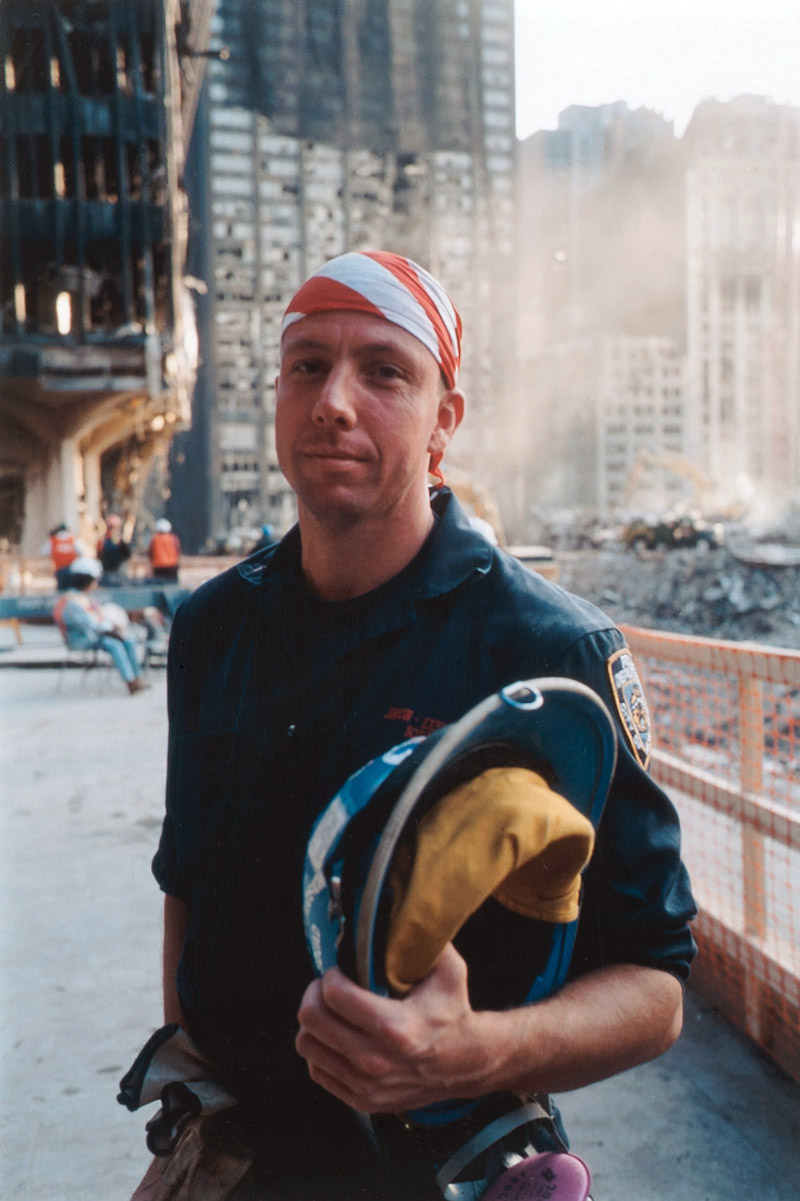
Joel Meyerowitz (American, b. 1938) 'Explosion Squad Detective' 2001


Joel Meyerowitz (American, b. 1938)
Explosion Squad Detective
2001
Vintage contact print
Collection Miami Art Museum, gift of Steven E. and Phyllis Gross


Joel Meyerowitz (American, b. 1938) 'Steps Down to Plaza' 2001


Joel Meyerowitz (American, b. 1938)
Steps Down to Plaza
2001
Vintage contact print
Collection Miami Art Museum, gift of Jeffrey Hugh Newman


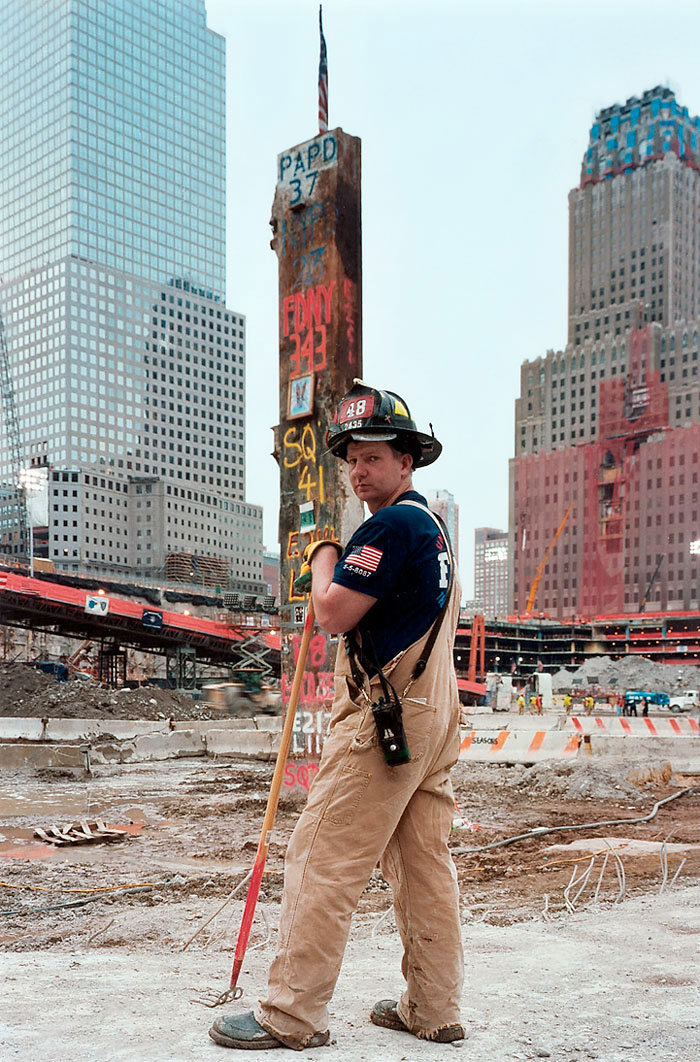
Joel Meyerowitz (American, b. 1938) 'Fireman at Last Column' 2002


Joel Meyerowitz (American, b. 1938)
Fireman at Last Column
2002
Vintage contact print
Collection Miami Art Museum, gift of Charles S. and Elynne B. Zucker


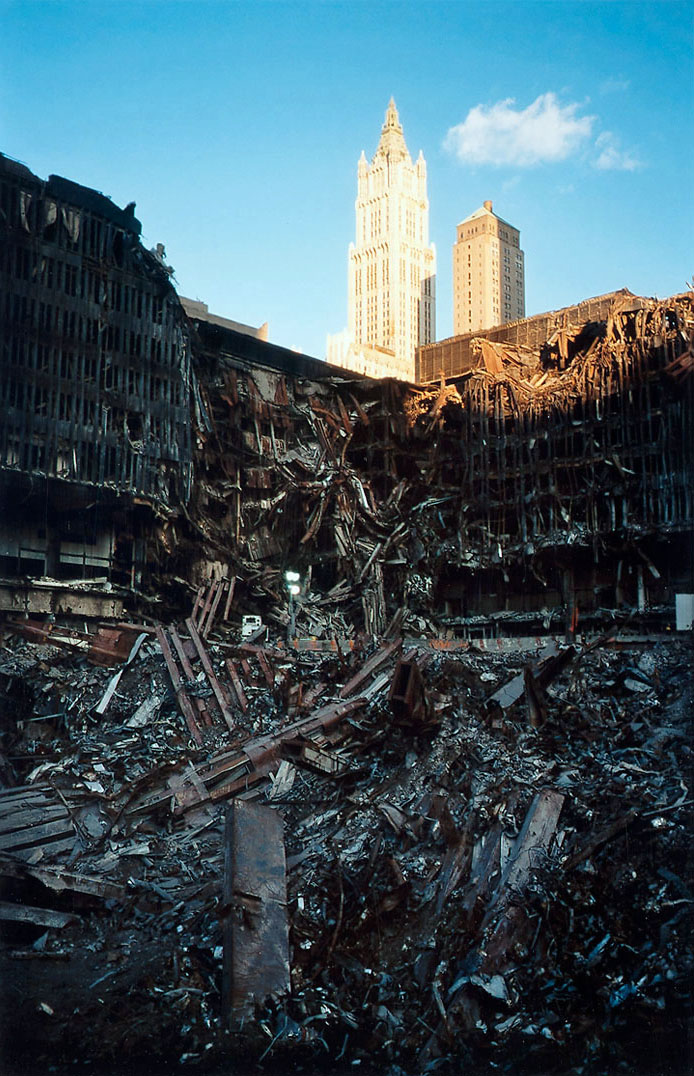
Joel Meyerowitz (American, b. 1938) 'Building #5 and Woolworth' 2001


Joel Meyerowitz (American, b. 1938)
Building #5 and Woolworth
2001
Vintage contact print
Collection Miami Art Museum, gift of Simon and Bonnie Levin


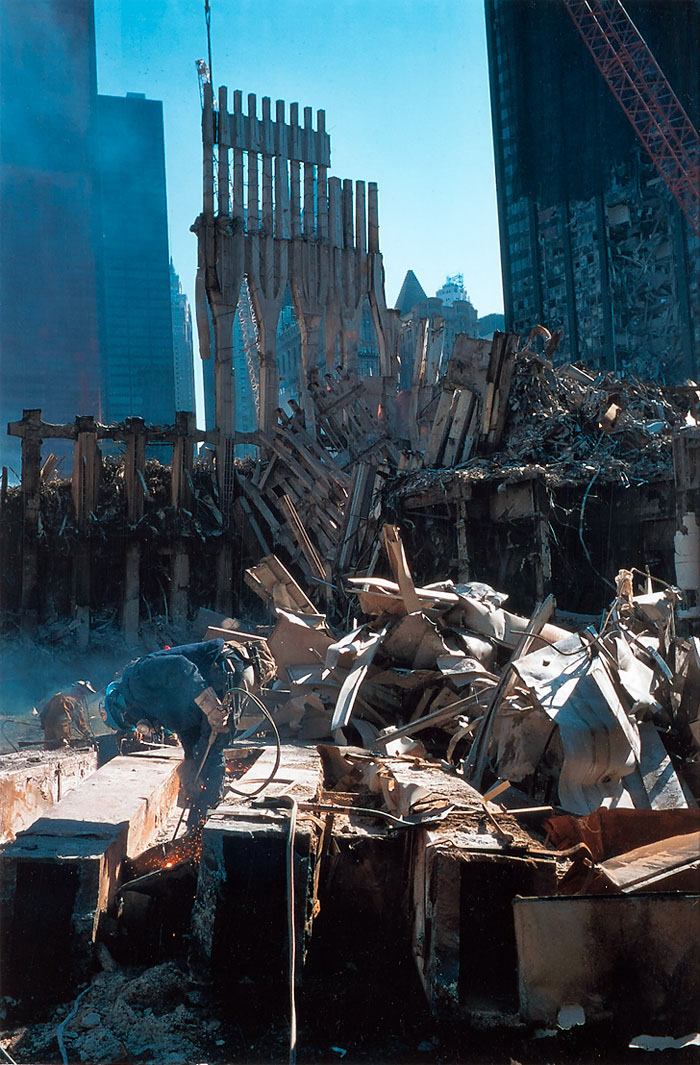
Joel Meyerowitz (American, b. 1938) 'Welder and Rubble' 2001


Joel Meyerowitz (American, b. 1938)
Welder and Rubble
2001
Vintage contact print
Collection Miami Art Museum, gift of Steven E. and Phyllis Gross


Miami Art Museum
101 W Flagler St., Miami, FL 33130

Opening hours:
Monday 11am – 6pm
Tuesday – Wednesday Closed
Thursday 11am – 9pm
Friday – Sunday 11am – 6pm
Miami Art Museum website

LIKE ART BLART ON FACEBOOK

Back to top

Opening: ‘Movement and Emotion’ and ‘Jodie Noble Solo’ exhibitions at Arts Project Australia, Melbourne

Exhibition dates: 20th October – 26th November 2011

Curator of Movement and Emotion: Paul Hodges

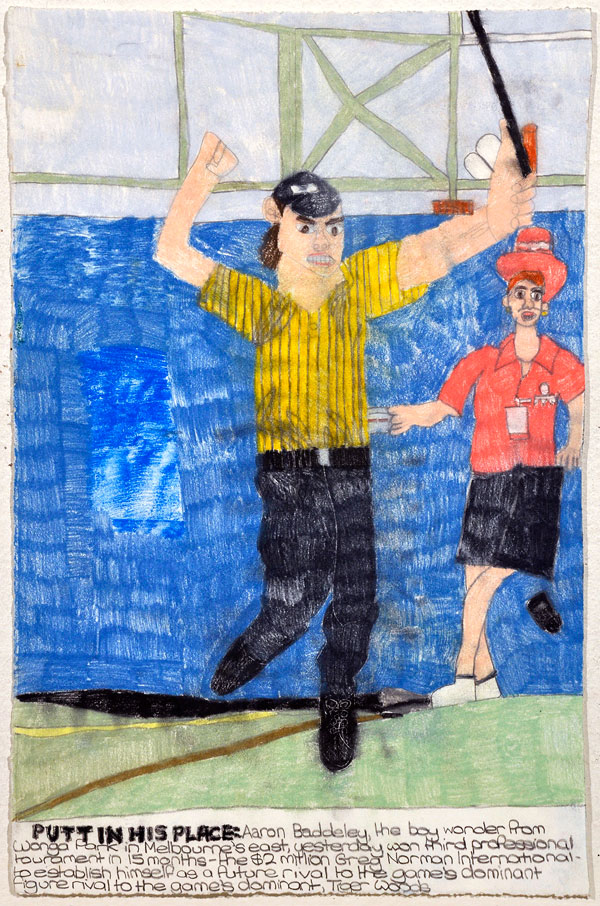
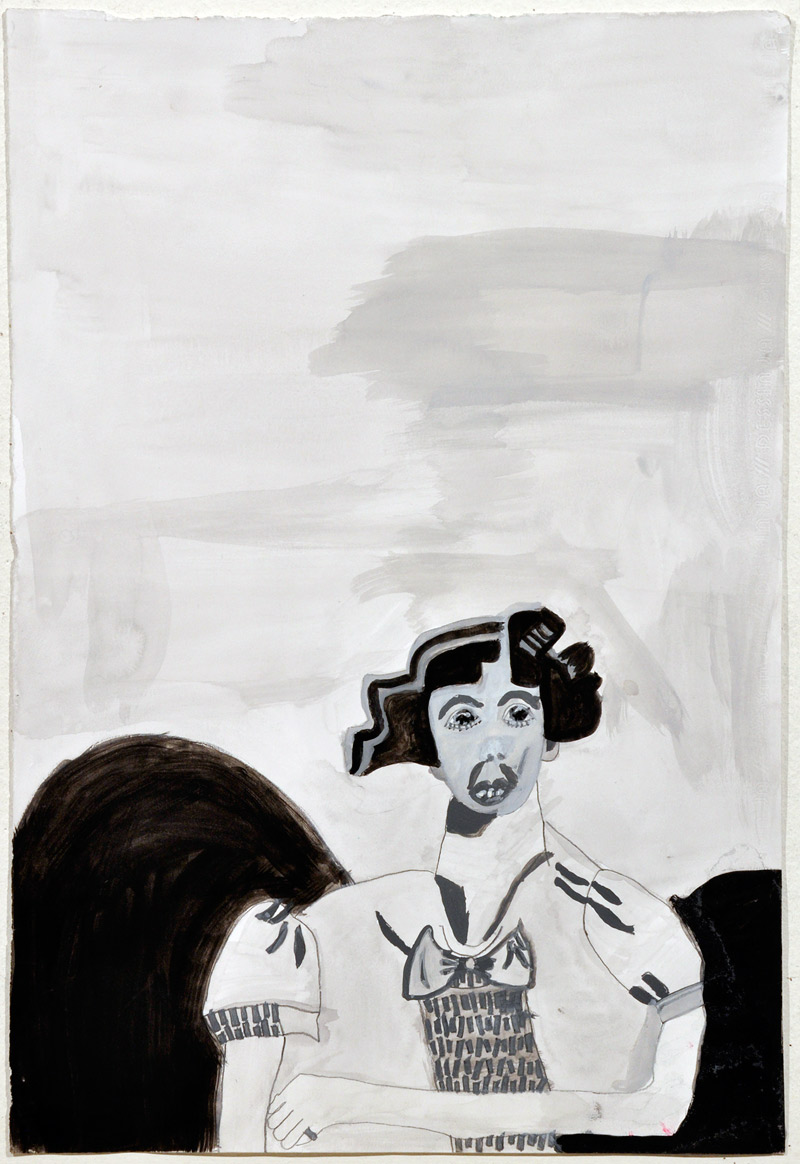
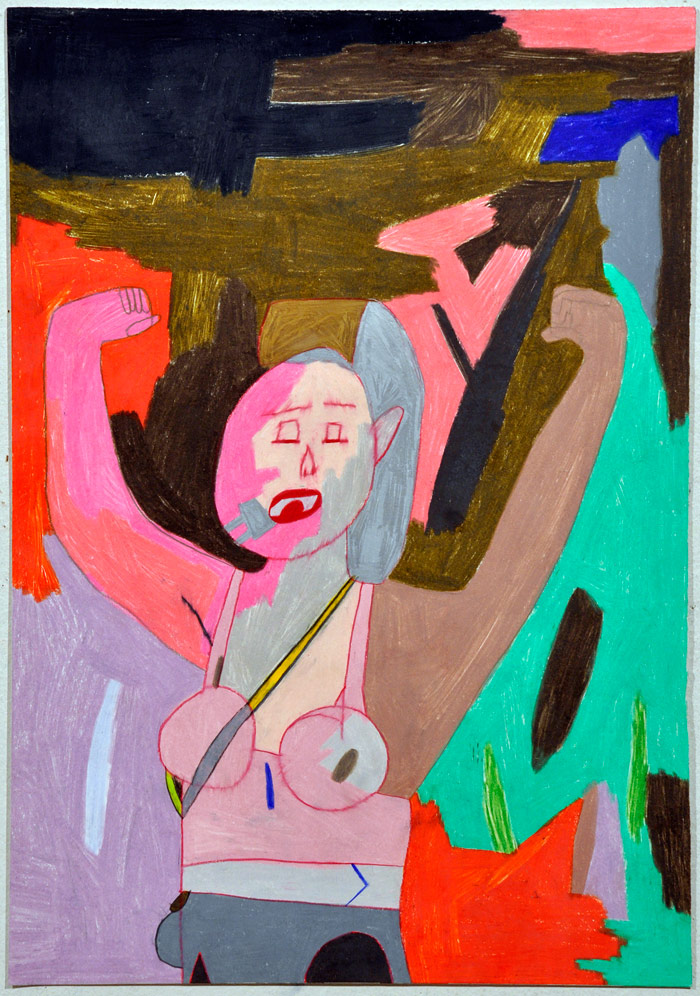
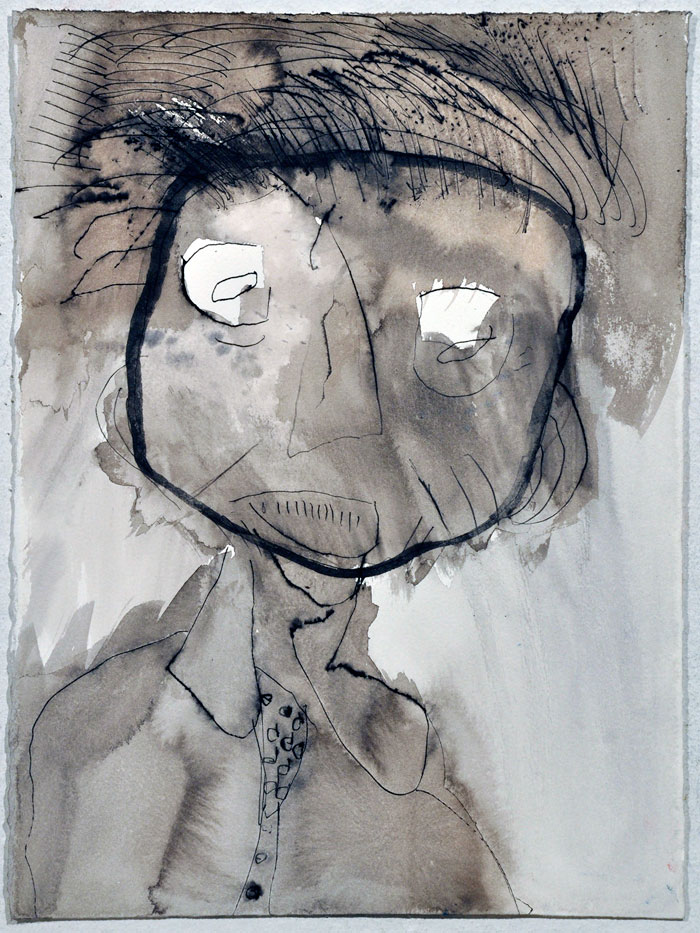
Artists: Steven Ajzenberg, Patrick Francis, Brigid Hanrahan, Paul Hodges, Chris Mason, Cameron Noble, Jodie Noble, Lisa Reid, Anthony Romagnano and Cathy Staughton


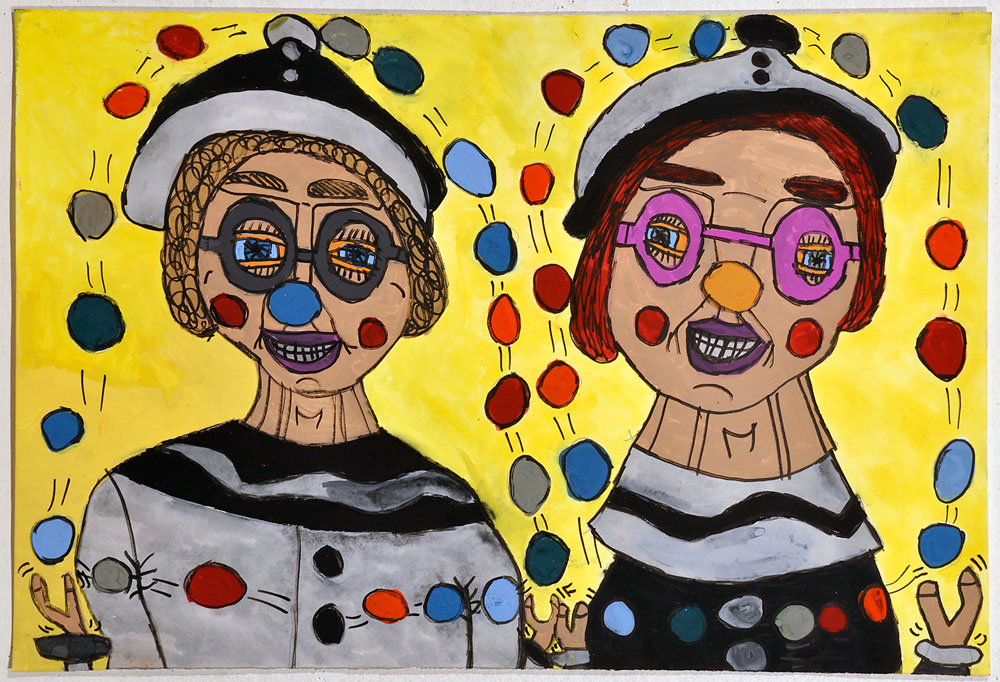
Catherine Staughton (Australian, b. 1968) 'Juggle Ball Hand Jump Roller' 2011


Catherine Staughton (Australian, b. 1968)
Juggle Ball Hand Jump Roller
2011
Gouache and felt pen on paper
38 x 56cm


Opening night speech by Dr Marcus Bunyan

Thank you for your welcome to Arts Project Australia on this auspicious occasion, the first ever exhibition to be curated by an Arts Project artist, Paul Hodges. Together with the Jodie Noble solo exhibition in the front gallery I am sure you will agree that the gallery is full of vibrant work. There are some things that may be said about both bodies of work.

I asked Paul what had been the inspiration behind Movement and Emotion. He said that he often goes to the National Gallery of Victoria and looks at the pictures and imagines the artist painting. He wonders how they were feeling and he visualises the pictures coming to life, especially pictures of dancers in which he has a personal interest. He came back to Arts Project and started thinking about the work in the collection and after much thought made the selection you see here tonight. He used his imagination, his feelings and his understanding of the world to curate the exhibition.

Let’s consider the title Movement and Emotion.

Emotion can be defined as an agitation, a strong feeling, a departure from the normal calm state of an organism. The logos of emotion begins in the experience of ‘being moved’ in some manner. Any emotion holds within its structure some potential for movement, whether it be physical or mental. You can be physically still yet be mentally moved, causing you to have emotion. Some emotions occur over a period of seconds (for example, surprise), whereas others can last years (for example, love). In the word ’emotion’ is the very act of movement, namely motion. Hence e/motion is the root of this wonderful feeling that I get from these artworks. Emotion is movement. Emotion is feeling. Emotion is passion.1

And it is this very act that sustains the work in both exhibitions. The work is personal. It speaks from the heart. It is intimate, transcendent and enigmatic. It moves me like little contemporary art ever does. When I first saw the artwork in the space at the back of the gallery, when they were revealed to me I gasped at their simple, eloquent beauty. Whimsical and playful these works possess an element of the carnivalesque,2 a riot of colour and form that exist on the border of art and life. Mingling depictions of high culture and personal narrative the works have no pretence but a visceral immediacy: a direct connection from the artists imagination of the world, through the eyes to the hand and the paper to depict what is in the world. As Susan Sontag observes, “A work of art is a thing in the world, not just a text or commentary on the world…”3

Some of you may be familiar with the American photographer Walker Evans – his famous US Depression era pictures are a thing in the world, as well as text/commentary on the world. He refers to this working method as ‘transcendent documentary’4: a watchful intelligence that recognises a moment of seeing, a movement of emotion – and then describes it. Yes, a quest for ‘the thing itself’ but more than that, the imagination to describe the substance of our existence, the nature of reality. Objects, people and places are transformed from things seen to things that we known. Intimately. Inherently.

In their unique vision it is the artists relation to self, the nature of what they see and feel around them that creates e/motion. They transcend form while ordering it at the same time. It is both the immediate world, simply described, perceived as it stands with the whole of consciousness coupled with the imagination as always there, between our eyes and the world, for it is the imagination that defines our humanity, declares our consciousness. They imagine, they perceive the simple radiance of what is.

That is what these artists do.

Perceive.

What is.


In Movement and Emotion, and in the portraits of Jodie Noble we see what is and imagine what should be. The photographer Elliott Erwitt in his book Personal Exposures (1988) said, “The work I care about is terribly simple … I observe, I try to entertain, but above all I want pictures that are emotion.”5

Those pictures are here, e/motioning, all around us. I enjoy these pictures tremendously. Congratulations to all the artists for the experience that you have given us.

Dr Marcus Bunyan


Footnotes

1/ See Robbins, Brent Dean. Emotion, Movement & Psychological Space: A Sketching Out of the Emotions in terms of Temporality, Spatiality, Embodiment, Being-with, and Language. Duquesne University, 1999 [Online] Cited 08/10/2011

2/ Bakhtin, Mikhail. Rabelais and His World (trans. Helene Iswolsky). Cambridge: MIT Press, 1968, p. 7

3/ Sontag, Susan. “On Style,” in Against Interpretation and Other Essays. New York: Delta Book, 1966, pp. 21-22

4/ Anon. “”A Revolutionary Project” Brings Cuba to the Getty Museum,” on Cuban Art News [Online] 05/10/2011 Cited 08/10/2011. No longer available online

5/ Erwitt, Elliott. Personal Exposures. W. W. Norton & Company, 1988 quoted on Anon. “Photographer Elliott Erwitt’s Archive to be Housed at Harry Ransom Center,” on Harry Ransom Center: The University of Texas website [Online] 22/09/2011. Cited 08/10/2011. No longer available online


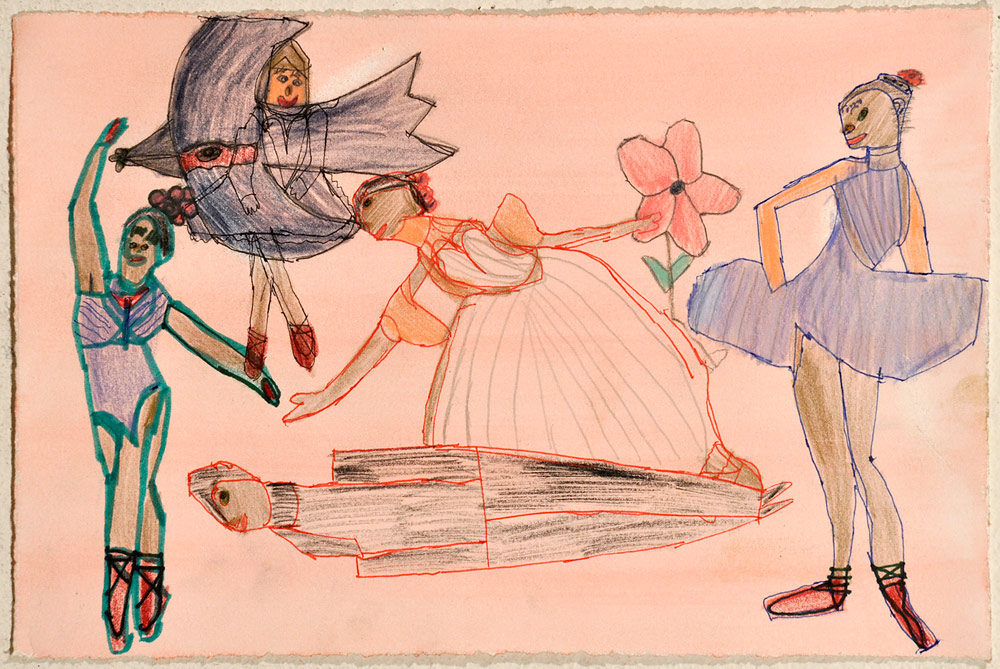
Brigid Hanrahan. 'Not titled (Ballet Dancers)' 2009


Brigid Hanrahan (Australian)
Not titled (Ballet Dancers)
2009
Colour pencil and fineliner on paper
20 x 30cm


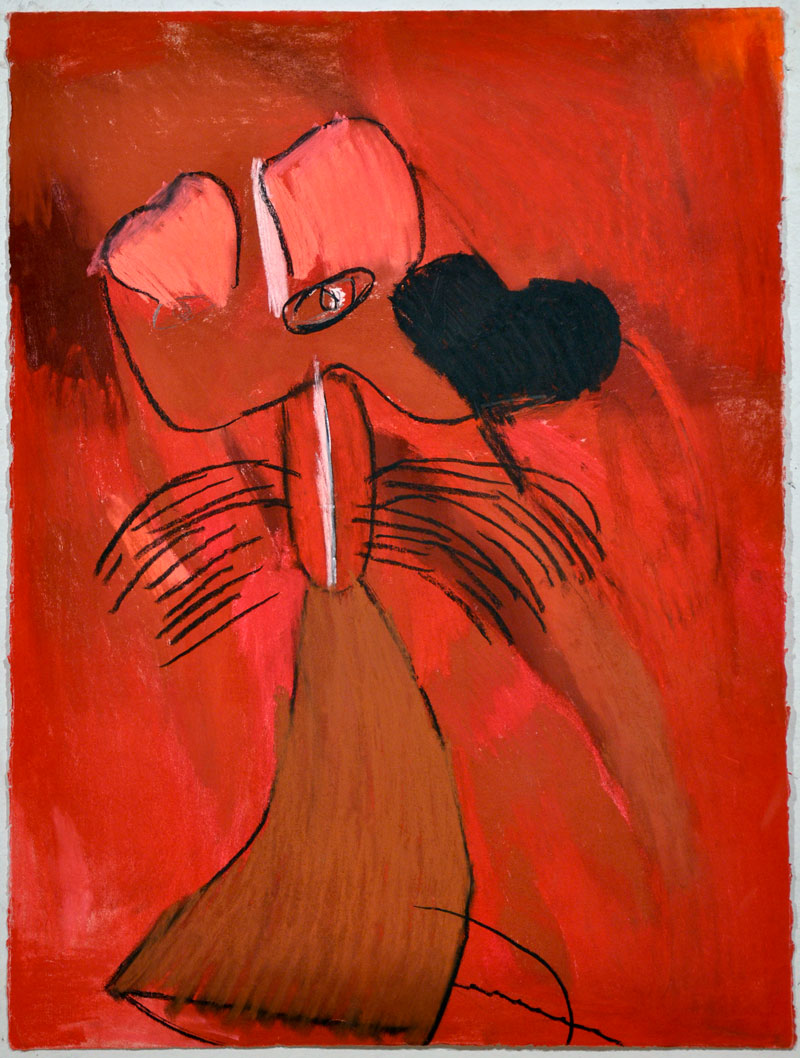
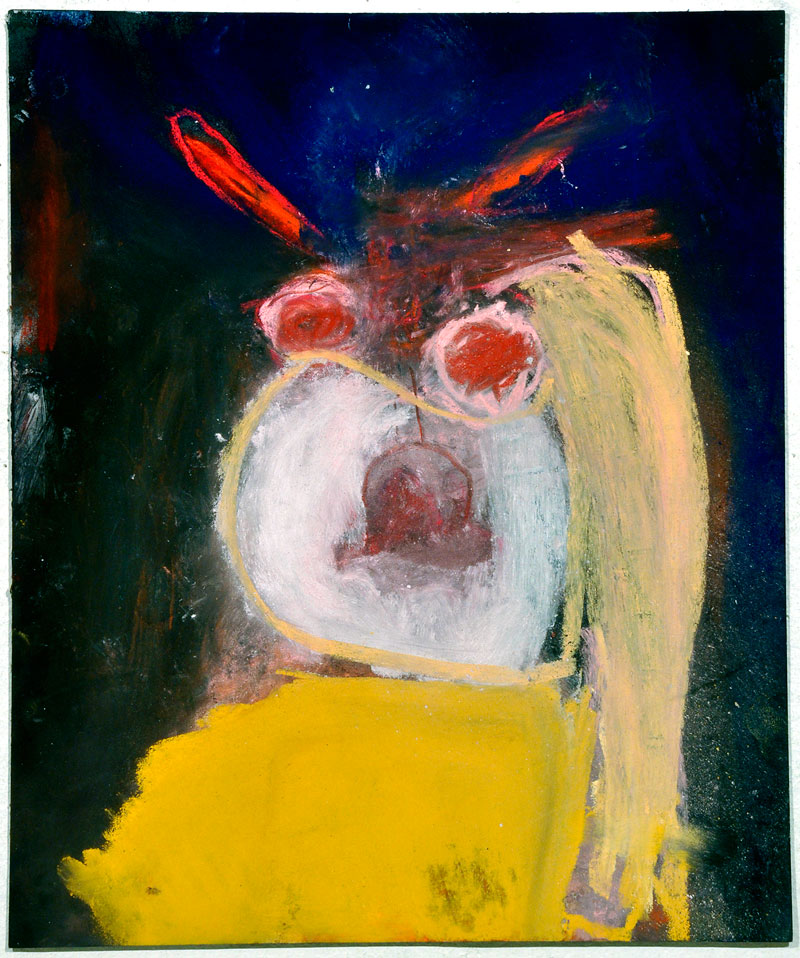
Jodie Noble. 'Not titled (red dog)' 2006


Jodie Noble (Australian)
Not titled (red dog)
2006
Pastel on paper
76 x 57cm


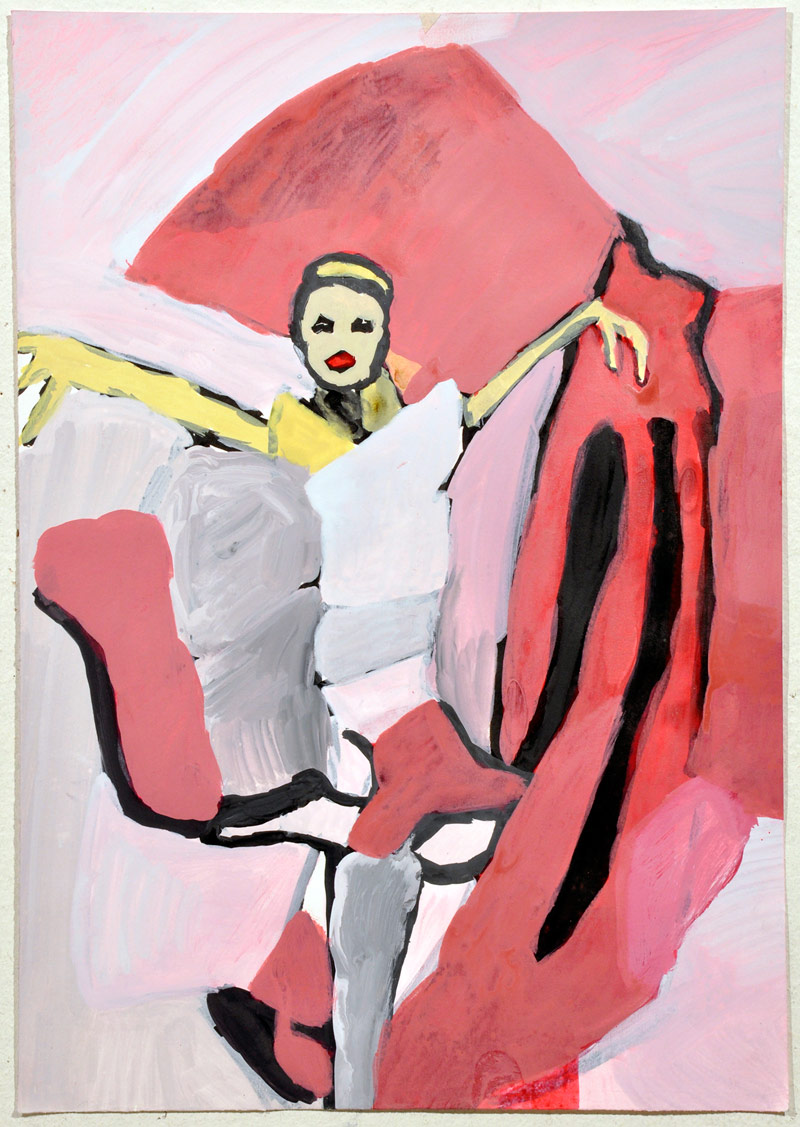
Paul Hodges (Australian, b. 1974) 'Not titled (Pink Dancer)' 2010


Paul Hodges (Australian, b. 1974)
Not titled (Pink Dancer)
2010
Ink on paper
50 x 35cm


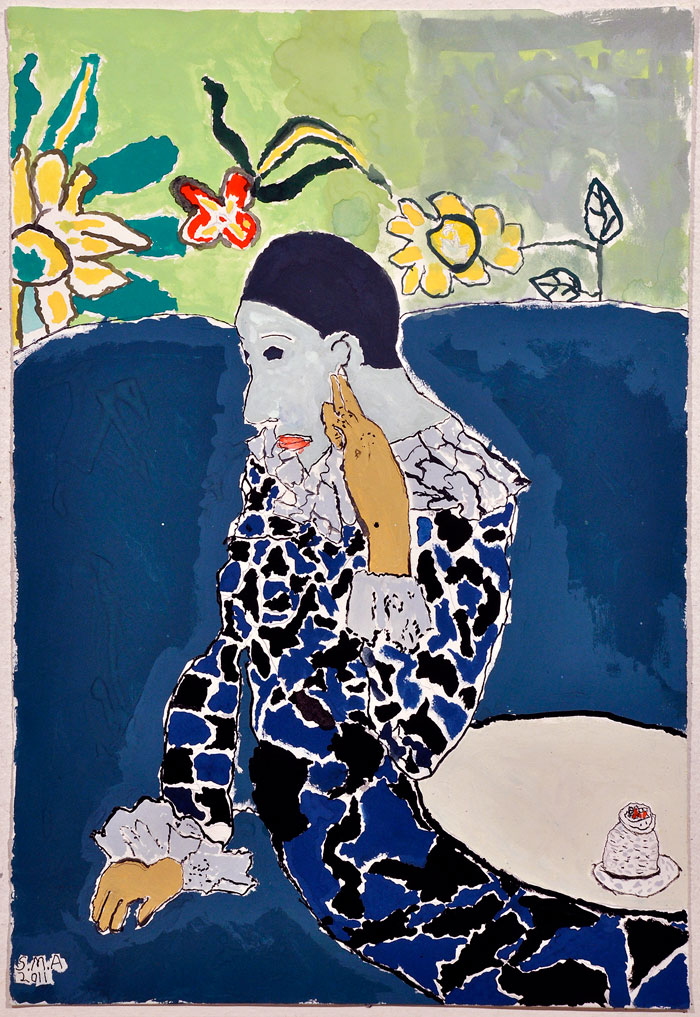
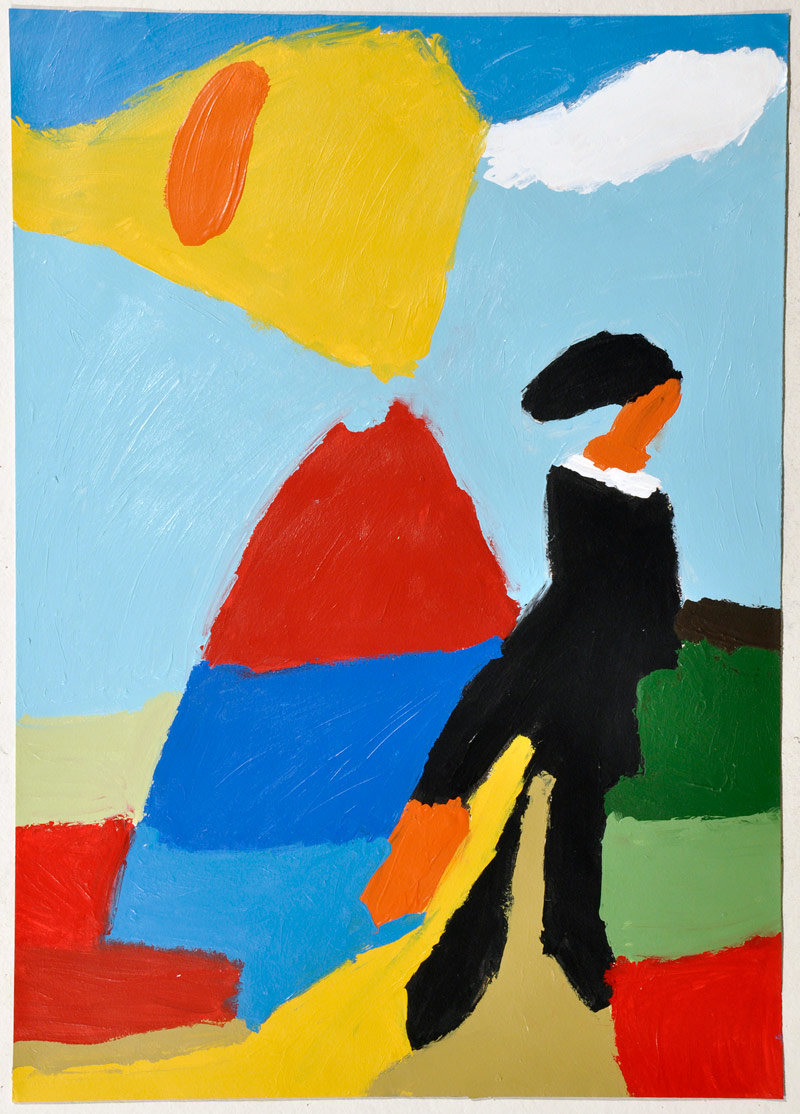
Steven Ajzenberg (Australian, b. 1964) 'Harlequin' 2010


Steven Ajzenberg (Australian, b. 1964)
Harlequin
2010
Gouache on paper
55.5 x 38cm


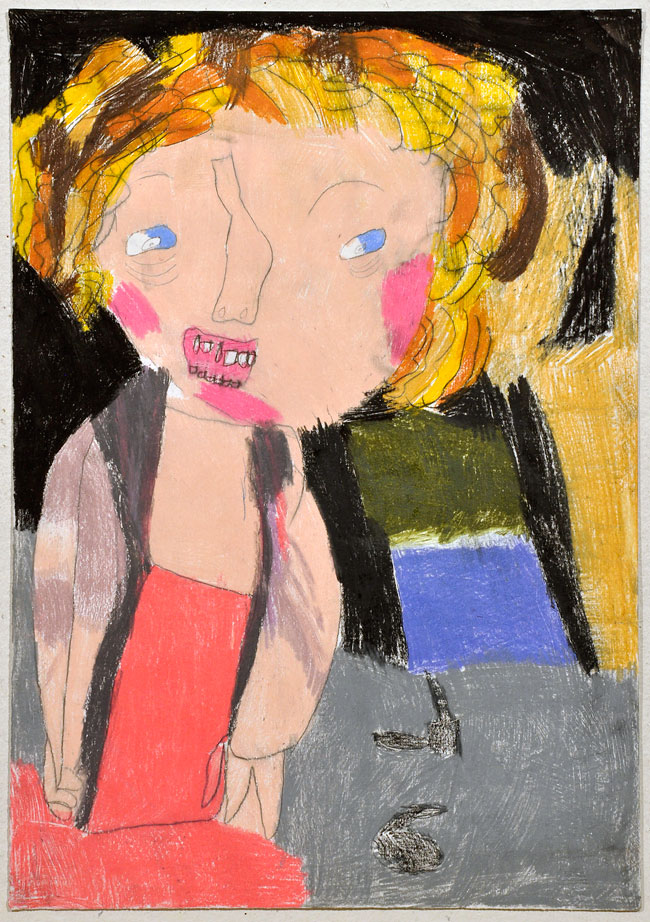
Jodie Noble. 'Not titled (girl wearing pink dress)' 2010


Jodie Noble (Australian)
Not titled (girl wearing pink dress)
2010
Prisma colour pencil on paper
50 x 35cm


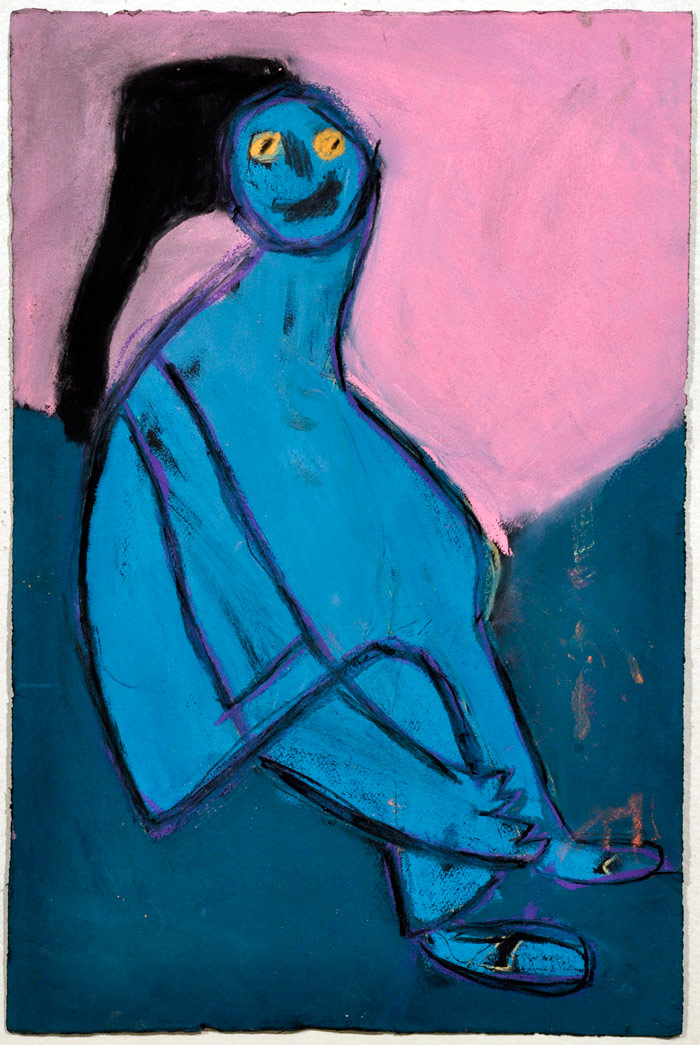
Cameron Noble. 'Not titled (Blue Lady)' 2011


Cameron Noble (Australian)
Not titled (Blue Lady)
2011
Dry pastel on paper
57 x 37.5cm


Jodie Noble. 'Geisha Girl' 2011


Jodie Noble (Australian)
Geisha Girl
2011
Dry pastel on paper
35 x 25cm


Movement and Emotion

This exhibition will explore movement in paintings and the emotions of people in everyday life. These works are vibrant, expressive and each work is unique; they jump out at you. Key themes investigated include carnival, dance and portraits. This is the first exhibition Paul Hodges has curated.

“This is a wonderful show presenting movement and emotion in art by ten artists that I have collected from Arts Project Australia’s studio.”

Paul Hodges, 2011

“When I walk past Jodie Noble’s paintings I can almost feel what she is feeling … Jodie is telling us what she is feeling through her paintings.”

Paul Hodges 2010


Jodie Noble Solo

Jodie Noble’s current work is figurative and often incorporates an autobiographical narrative. While occasionally painting from life, her work also references popular culture. In particular, Noble is inspired by contemporary famous figures, from Frida Kahlo and Francisco Goya to Queen Elizabeth II. Noble’s work is descriptive, expressive and infused with a sense of physicality.

In this exhibition, Noble has selected a series of portraits on paper that are autobiographical and of people she knows in her life. This is Jodie’s second solo exhibition.


Lisa Reid (Australian, b. 1975) 'Not titled (Adam Baddeley)' 2001


Lisa Reid (Australian, b. 1975)
Not titled (Adam Baddeley)
2001
Pastel and pencil on paper
50 x 33cm


Lisa Reid (Australian, b. 1975) 'Great Aunt Edna' 2003


Lisa Reid (Australian, b. 1975)
Great Aunt Edna
2003
Gouache on paper
55 x 37.5cm


Anthony Romagnano (Australian, b. 1985) 'Madonna' 2010


Anthony Romagnano (Australian, b. 1985)
Madonna
2010
Prisma colour pencil on paper
50 x 35cm


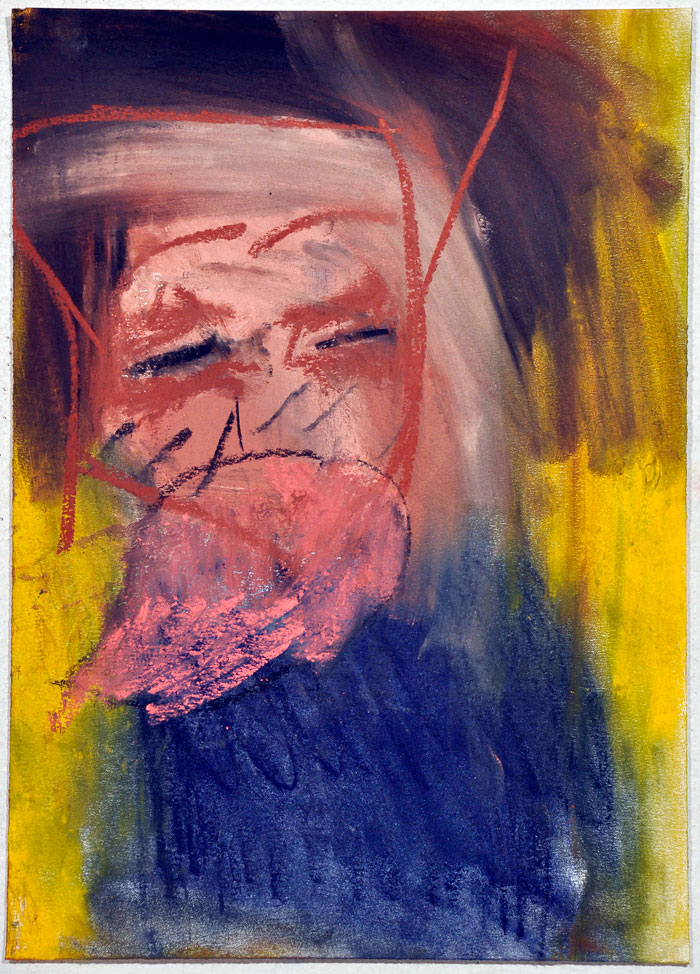
Jodie Noble. 'Not titled' 2010


Jodie Noble (Australian)
Not titled
2010
Ink and fine-liner on paper
38 x 28.5cm


Cameron Noble. 'Not titled' 2011


Cameron Noble (Australian)
Not titled
2011
Dry pastel on paper
38.5 x 32.5cm


Patrick Francis (Australian, b. 1991) 'Not titled' 2011


Patrick Francis (Australian, b. 1991)
Not titled
2011
Acrylic on paper
70 x 50cm


Arts Project Australia
24 High Street
Northcote Victoria 3070
Phone: + 61 3 9482 4484

Gallery location:
Level 1 Perry Street Building,
Collingwood Yards
Enter via 35 Johnson Street
or 30 Perry Street, Collingwood

Opening hours:
Wed – Fri 11am – 5pm
Sat & Sun 12 – 4pm

Arts Project Australia website

LIKE ART BLACK ON FACEBOOK

Back to top

opening: ‘movement and emotion’ and ‘jodie noble solo’ at arts project australia, melbourne

October 2011


I am opening the exhibitions Movement and Emotion and Jodie Noble Solo at Arts Project Australia, Northcote on Wednesday 19th October 2011 from 6 – 8pm. All welcome, would be great to see you there. Details on the flyer!

Dr Marcus Bunyan


Exhibitions: 'Movement and Emotion' and 'Jodie Noble Solo' at Arts Project Australia, Northcote


Arts Project Australia website

LIKE ART BLART ON FACEBOOK

Back to top

Exhibition: ‘Juan Davila: The Moral Meaning of Wilderness’ at the Monash University Museum of Art (MUMA), Caulfield

Exhibition dates: 4th August – 1st October 2011


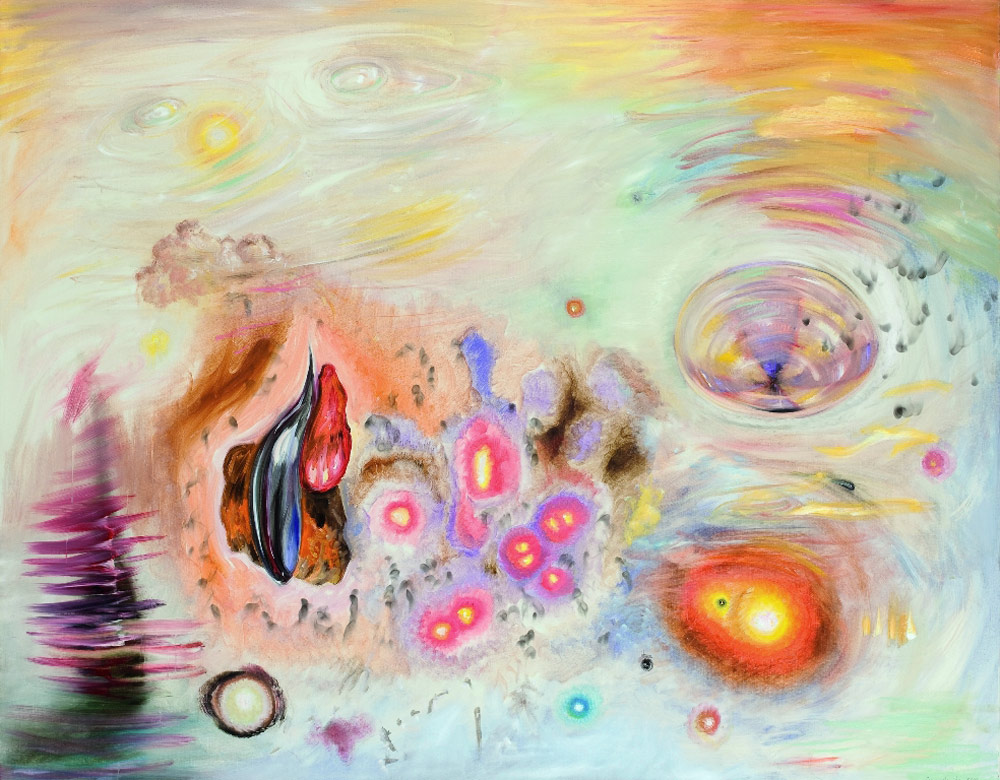
Juan Davila (Chilean b. 1946, emigrated Australia 1974) 'Wilderness' 2010


Juan Davila (Chilean b. 1946, emigrated Australia 1974)
Wilderness
2010
© Juan Davila, Courtesy Kalli Rolfe Contemporary Art


“The ‘Moral Meaning of Wilderness’ exhibition is a tour of the various approaches to the landscape: ‘plein air’ painting, studio landscape work, sublime landscape, historical evocation of landscape, modernity and the landscape, natural disaster, childhood memory of a landscape, woman in the wilderness. The ‘After Image’ works seem to refer to fantasies, inner space, unnameable objects, microcosm and immense space. Within the representation of “the land” one easily forgets that we are dealing with complexity and a field of projections. The political, the sublime, the moral stance, corporate destruction and the future of our environment come to mind.”


Juan Davila 1


“In a state of grace, one sometimes perceives the deep beauty, hitherto unattainable, of another person. And everything acquires a kind of halo which is not imaginary: it comes from the splendour of the almost mathematical light emanating from people and things. One starts to feel that everything in existence – whether people or things – breathes and exhales the subtle light of energy. The world’s truth is impalpable.”


Clarice Lispector 2


Simply put, this is the best exhibition I have seen in Melbourne this year.

Feminine jouissance is critical to an understanding of the work of Juan Davila (see quotation below). It is the jouissance of the Other: ineffable, incapable of being expressed, indescribable, unutterable. Also critical is an understanding of the meaning of ‘wilderness’ and ‘after image’:

Wilderness “is a relative term suggesting the perspective of a visitor or interloper for whom the landscape is wild and Other – for the landscape was neither wild nor foreign to its original inhabitants, at least not until its transformation through colonising, farming and displacement.”3

“An after image … is an optical illusion that refers to an image continuing to appear in one’s vision after the exposure to the original image has ceased.”4


The most powerful works are the Wilderness and After Image paintings. Grouped together in a room at the far end of the gallery, the effect of these paintings is to be physically surrounded by the nebula of the unconscious mind. The feeling is not dissimilar to being consumed by the abstract, elemental quality of Monet’s Nymphéas (Water Lilies) at the Orangerie in Paris. Pair to more earthly landscapes (see images 2 and 3 below) the paintings are the closest experience in approaching the divine that I have felt in a long time. Their visual and noumenal ‘energy’ is superlative.

Robert Nelson observes that, “The after-image is a momentary body-memory – not intellectual but bizarrely willed – perhaps a bit like the recollection of a dream or the instant slip that uncannily reveals the unconscious. In monumentalising this trace, Davila delivers us to another ethereal zone: the breath of libido, buffeted by clouds of repression and misty internalised myths. As portraits of evanescent memory, they are wantonly memorable.”5

Indeed, they are memorable. I had a spiritual experience with this work for the paintings promote in the human a state of grace. The non-material, the unconceptualisable, things which are outside all possibility of time and space are made visible. This happens very rarely but when it does you remember, eternally, the time and space of occurrence. I hope you have the same experience.

Dr Marcus Bunyan


Many thankx to MUMA for allowing me to publish the images in the posting. Please click on the images for a larger version.


“The term jouissance, in French, denotes “pleasure” or “enjoyment.” The term has a sexual connotation (i.e., orgasm) lacking in the English word “enjoyment”, and is therefore left untranslated in English editions of the works of Jacques Lacan. In his Seminar “The Ethics of Psychoanalysis” (1959-1960) Lacan develops his concept of the opposition of jouissance and pleasure. The pleasure principle, according to Lacan, functions as a limit to enjoyment: it is the law that commands the subject to ‘enjoy as little as possible’. At the same time the subject constantly attempts to transgress the prohibitions imposed on his enjoyment, to go beyond the pleasure principle. Yet the result of transgressing the pleasure principle, according to Lacan, is not more pleasure but pain, since there is only a certain amount of pleasure that the subject can bear. Beyond this limit, pleasure becomes pain, and this ‘painful principle’ is what Lacan calls jouissance.

In his Seminar “Encore” (1972-1973) Lacan states that jouissance is essentially phallic. That is, insofar as jouissance is sexual it is phallic, meaning that it does not relate to the Other as such. Lacan admits, however, that there is a specifically feminine jouissance, a supplementary jouissance, which is beyond the phallus, a jouissance of the Other. This feminine jouissance is ineffable, for both women and men may experience it but know nothing about it.”6


Footnotes

1/ Davila, Juan quoted in “After Image: A conversation between Juan Davila and Kate Briggs,” in Juan Davila: The Moral Meaning of Wilderness catalogue. Canberra: ANU Drill Hall Gallery, 2011, p. 53.

2/ Lispector, Clarice. Discovering the World. Manchester: Carcanet Press, 1992, p. 122 quoted in Briggs, Kate. “Painting, an act of faith: Moments in the work of Juan Davila,” in Juan Davila: The Moral Meaning of Wilderness catalogue. Canberra: ANU Drill Hall Gallery, 2011, p. 8.

3/ Delany, Max. Introductory speech for “Contemporary Visions & Critiques of the Landscape.” Video of session. The Festival of Ideas, The Pursuit of Identity: Landscape, History and Genetics. The University of Melbourne [Online] Cited 21/09/2011. No longer available online

4/ Anon. “Afterimage,” on the Wikipedia website [Online] Cited 21/09/2011.

5/ Nelson, Robert. “Exhibition does not take air lightly,” in The Age newspaper. Wednesday, September 21st, 2011, p. 17.

6/ Anon. “Jouissance,” on the Wikipedia website [Online] Cited 21/09/2011.


Juan Davila (Chilean b. 1946, emigrated Australia 1974) 'A Man is Born Without Fear' 2010


Juan Davila (Chilean b. 1946, emigrated Australia 1974)
A Man is Born Without Fear
2010
© Juan Davila, Courtesy Kalli Rolfe Contemporary Art


Juan Davila (Chilean b. 1946, emigrated Australia 1974) 'After Image. A Man is Born Without Fear' 2010


Juan Davila (Chilean b. 1946, emigrated Australia 1974)
After Image. A Man is Born Without Fear
2010
© Juan Davila, Courtesy Kalli Rolfe Contemporary Art


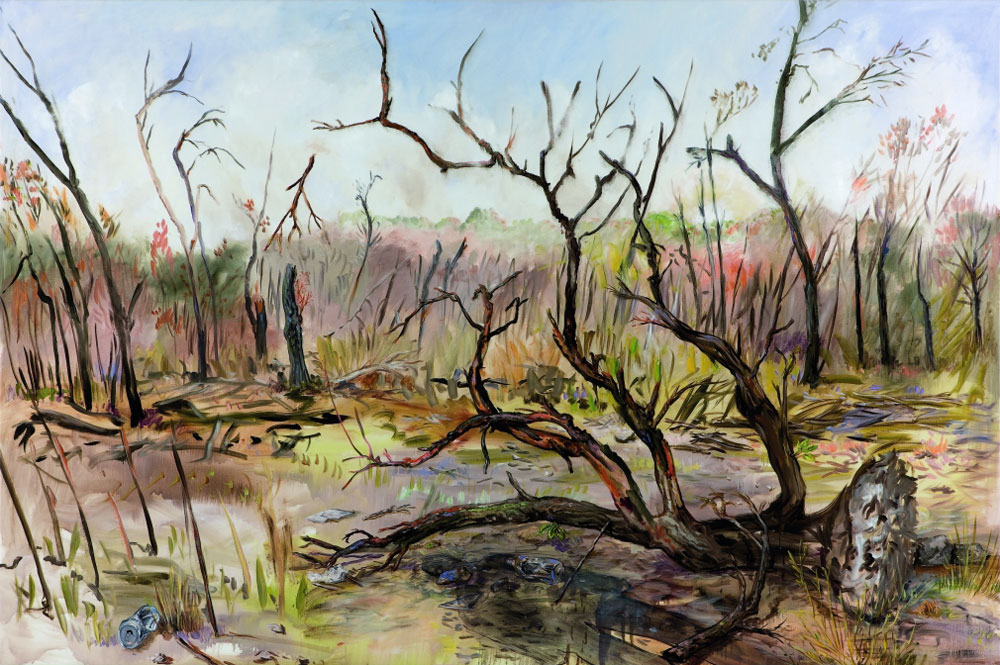
Juan Davila (Chilean b. 1946, emigrated Australia 1974) 'Churchill National Park' 2009


Juan Davila (Chilean b. 1946, emigrated Australia 1974)
Churchill National Park
2009
© Juan Davila, Courtesy Kalli Rolfe Contemporary Art


The Moral Meaning of Wilderness features recent work by Juan Davila, one of Australia’s most distinguished artists. The exhibition sees Davila turn to the genres of landscape and history painting, at a time when the environment is as much a political as a cultural consideration. With technical virtuosity, Davila’s striking representations of nature achieve monumental significance, depicting beauty and emotion while addressing modern society’s ambivalence to nature and increasing consumerism.

The Moral Meaning of Wilderness represents a radical shift in Davila’s practice, whilst continuing to explore art’s relationship to nature, politics, identity and subjectivity in our post-industrial age. Davila pursues his exploration of the role of art as a means of social, cultural and political analysis.

While many contemporary artists turned away from representation of the landscape, due to its perceived allegiance to outmoded forms of national identity and representation, Davila has recently sought to revisit and reconsider our surroundings au natural.

His paintings are, at first view, striking representations of nature. The paintings, created since 2003, are undertaken en plain air, a pre-modern technique based on speed of execution in situ, and the use of large scale canvases characteristic of history painting. He has also employed other techniques such as studio painting and representations of the landscape with reference to the sublime, the historical, memory and modernity.

Text from the MUMA website


Juan Davila (Chilean b. 1946, emigrated Australia 1974) 'The Painter's Studio' 2006


Juan Davila (Chilean b. 1946, emigrated Australia 1974)
The Painter’s Studio
2006
© Juan Davila, Courtesy Kalli Rolfe Contemporary Art


Juan Davila (Chilean b. 1946, emigrated Australia 1974) '761 Wattletree Road' 2008


Juan Davila (Chilean b. 1946, emigrated Australia 1974)
761 Wattletree Road
2008
© Juan Davila, Courtesy Kalli Rolfe Contemporary Art


Juan Davila (Chilean b. 1946, emigrated Australia 1974) 'What About my Desire?' 2009


Juan Davila (Chilean b. 1946, emigrated Australia 1974)
What About my Desire?
2009
© Juan Davila, Courtesy Kalli Rolfe Contemporary Art


Juan Davila (Chilean b. 1946, emigrated Australia 1974) 'Australia: Nuclear Waste Dumping Ground' 2007


Juan Davila (Chilean b. 1946, emigrated Australia 1974)
Australia: Nuclear Waste Dumping Ground
2007
© Juan Davila, Courtesy Kalli Rolfe Contemporary Art


Monash University Museum of Art (MUMA)
Ground Floor, Building F.
Monash University Caulfield campus
900 Dandenong Road
Caulfield East, VIC 3145
Phone: 61 3 9905 4217

Opening hours:
Tuesday – Friday 10am – 5pm
Saturday 12 – 5pm

Monash University Museum of Art (MUMA) website

LIKE ART BLART ON FACEBOOK

Back to top

Exhibition: ‘Twombly and Poussin: Arcadian Painters’ at the Dulwich Picture Gallery, London

Exhibition dates: 29th June – 25th September 2011

Curator: Dr Nicholas Cullinan, Curator of International Modern Art at Tate Modern.


Many thankx to the Dulwich Picture Gallery for allowing me to publish the images in the posting. Please click on them for a larger version of the image.


Robert Rauschenberg (American, 1925-2008) 'Cy and Relics' 1952


Robert Rauschenberg (American, 1925-2008)
Cy and Relics
1952
Photograph
© The Rauschenberg Foundation


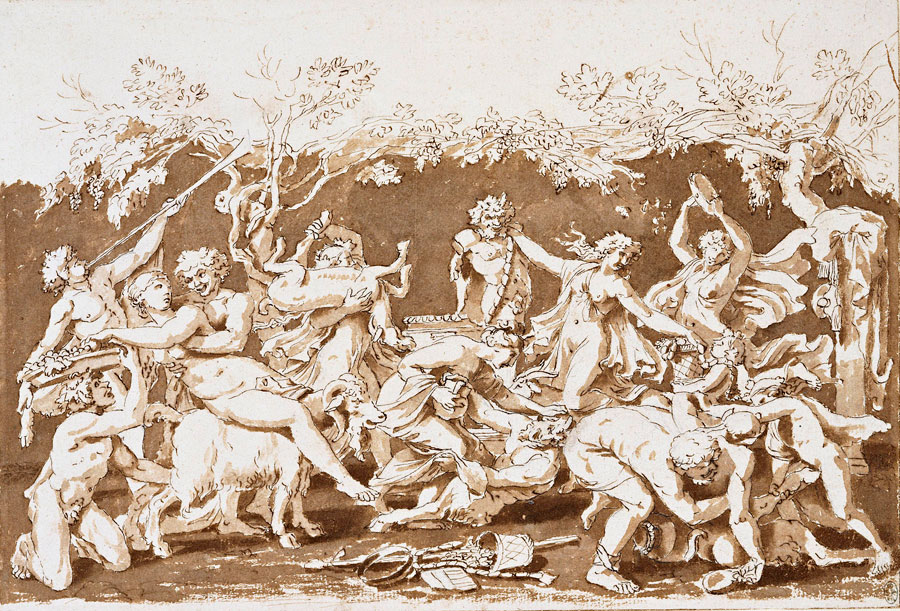
Nicolas Poussin (French, 1594-1665) 'The Triumph of Pan' c. 1636


Nicolas Poussin (French, 1594-1665)
The Triumph of Pan
c. 1636
Pen and ink with wash over stylus and black chalk
581 x 410 x 29 mm
Lent by Her Majesty the Queen. The Royal Collection
© 2011 Her Majesty Queen Elizabeth II


Cy Twombly (American, 1928-2011) 'Bacchanalia-Fall (5 Days in November) Blatt 4, InvNr. UAB 457' 1977


Cy Twombly (American, 1928-2011)
Bacchanalia-Fall (5 Days in November) Blatt 4, InvNr. UAB 457
1977
Collage, oil, chalk, gouache, on fabriano paper, graph paper
101.2 x 150.5cm
Bayerische Staatsgemäldesammlungen – Museum Brandhorst, München
Leihgeber: Udo Brandhorst
© Cy Twombly


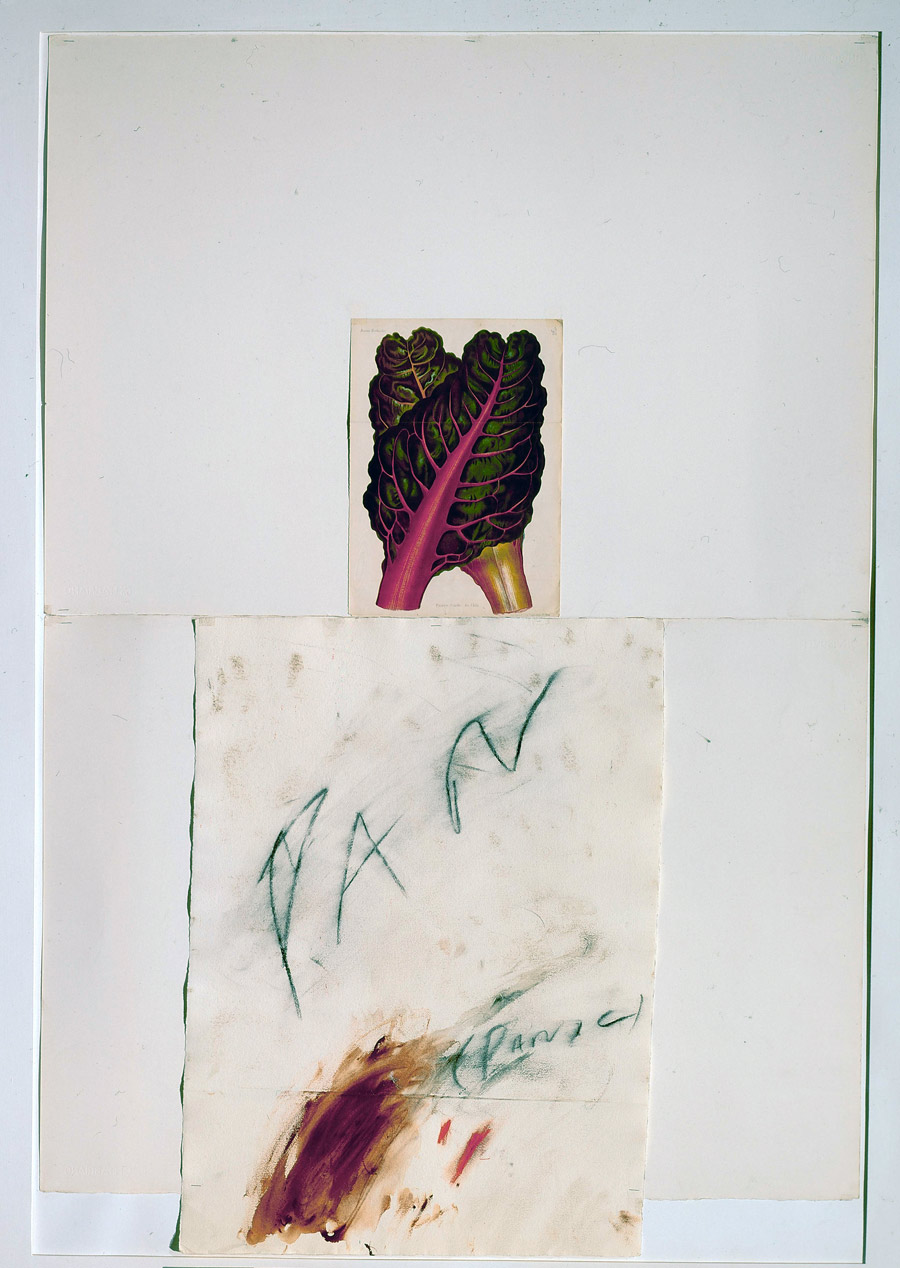
Cy Twombly (American, 1928-2011) 'Pan' 1975


Cy Twombly (American, 1928-2011)
Pan
1975
148 x 100cm
Private Collection
© Cy Twombly, Courtesy: Cy Twombly Archive


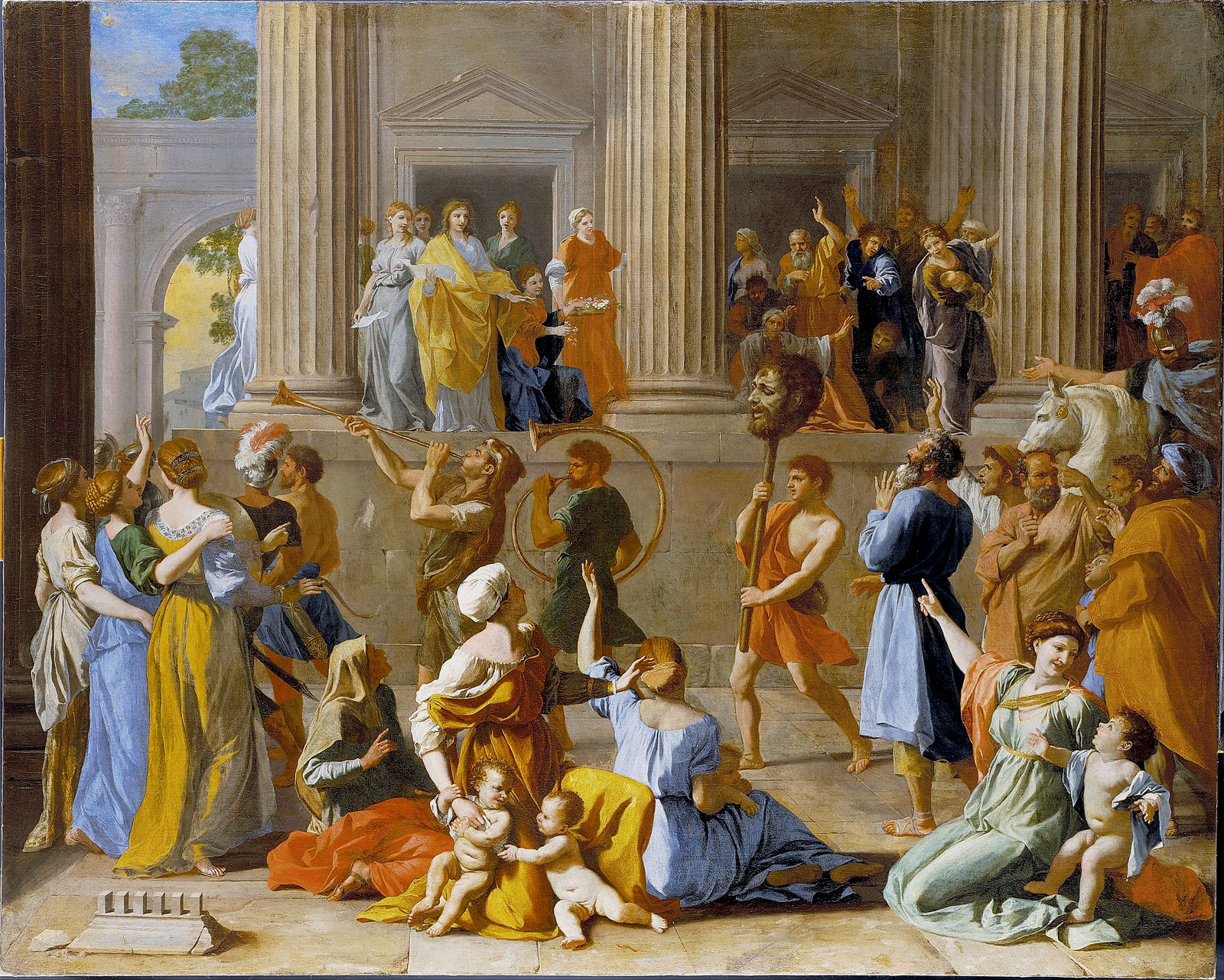
Nicolas Poussin (French, 1594-1665) 'The Triumph of David' 1628-1631


Nicolas Poussin (French, 1594-1665)
The Triumph of David
1628-1631
Oil on canvas
Height: 1,184 mm (46.61 in)
Width: 1,483 mm (58.38 in)
Dulwich Picture Gallery
© By permission of the Trustees of Dulwich Picture Gallery


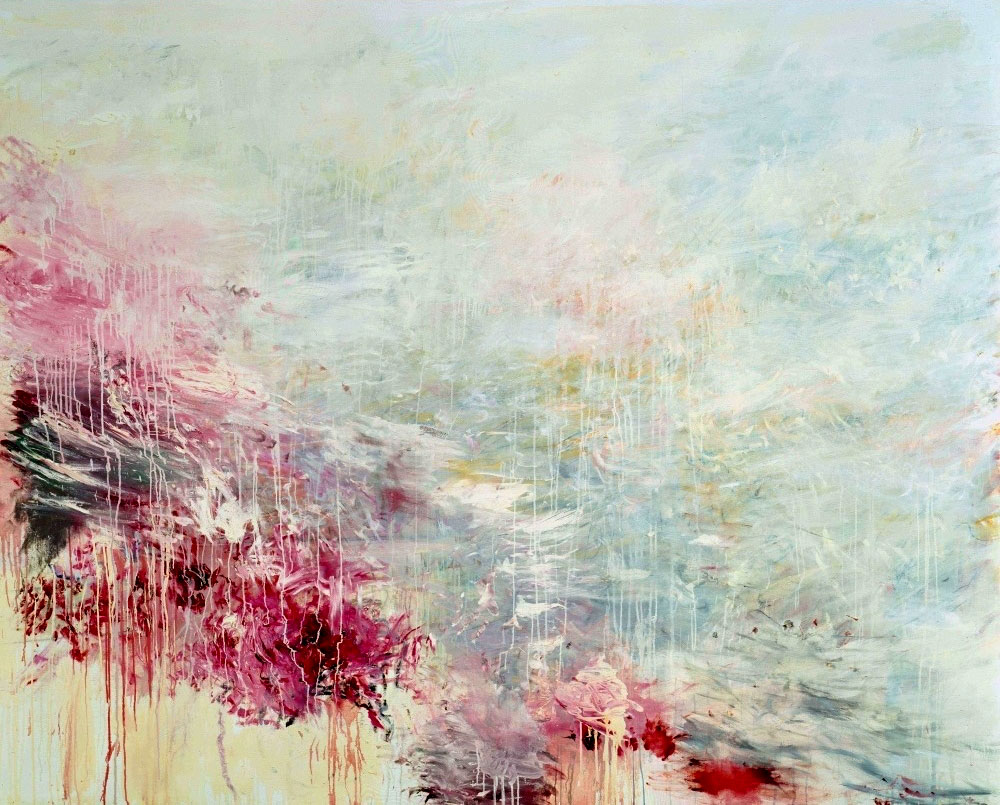
Cy Twombly (American, 1928-2011) 'Hero and Leandro' 1985


Cy Twombly (American, 1928-2011)
Hero and Leandro
1985
202 x 254cm
Private Collection, Courtesy Thomas Ammann Fine Art AG, Zurich
© Cy Twombly


“I would’ve liked to have been Poussin, if I’d had a choice, in another time.”


Cy Twombly


Dulwich Picture Gallery is proud to announce a revelatory exhibition of the work of Cy Twombly and Nicolas Poussin. Organised to celebrate the Bicentenary of the Gallery, this major show will explore, for the first time, the unexpected yet numerous parallels and affinities between the two artists. The exhibition will draw upon the world-class permanent collection of works at Dulwich Picture Gallery by Nicolas Poussin, alongside other works from major collections around the world by both Poussin and Twombly.

In 1624 and 1957, the two artists, aged around thirty, moved to Rome. Nicolas Poussin and Cy Twombly subsequently spent the majority of their lives in the Eternal City, and went on to become the pre-eminent painters of their day. Rather than recent exhibitions that have sought to compare and contrast old masters with contemporary artists through superficial visual appearances, this groundbreaking show will instead juxtapose works which may seem radically disparate in terms of style, yet ones that share deep and timeless interests. Both Poussin and Twombly were artists of prodigious talent who found in the classical heritage of Rome a life-long subject. Both spent their lives studying, revivifying and making newly relevant for their own eras antiquity, ancient history, classical mythology, Renaissance painting, poetry and the imaginary, idealised realm of Arcadia.

Curated by Dr. Nicholas Cullinan, Curator of International Modern Art at Tate Modern, the exhibition examines how Twombly and Poussin, although separated by three centuries, nonetheless engaged with the same sources and will explore the overlapping subjects that the two artists have shared. It will consist of around thirty carefully-chosen paintings, drawings and sculptures, structured thematically around six sections devoted to key shared themes, from both artists’ early fascinations with Arcadia and the pastoral when they first moved to Rome, Venus and Eros, Anxiety and Theatricality, Apollo, Parnassus and Poetry, Pan and the Bacchanalia, through to the theme of The Four Seasons.

The exhibition will be accompanied by the British premiere of Tacita Dean’s new 16mm film portrait of Cy Twombly, Edwin Parker (2011). The film documents Twombly in his studio in Lexington, Virginia, and follows on from Dean’s series of filmed depictions of subjects such as the choreographer Merce Cunningham, the poet Michael Hamburger and the artist Mario Merz, where the inner life of the sitter is implied through their physical demeanour and surroundings. A series of talks will also accompany the exhibition, including Sir Nicholas Serota, Director of Tate, in conversation with Dr. Nicholas Cullinan on the topic of curating Twombly, and Malcolm Bull (Ruskin School of Drawing, University of Oxford) and T. J. Clark (Professor Emeritus of Modern Art at the University of California, Berkeley; and Visiting Professor, University of York) who will discuss the work of Poussin and Twombly and the themes raised by the exhibition.

Ian Dejardin, Director of Dulwich Picture Gallery explains that the exhibition “fits in with a philosophy I have pursued here – that exhibitions can conduct a dialogue with the permanent collection. In the past Howard Hodgkin, Lucian Freud and Paula Rego have all hung their paintings within the collection, so Poussin and Twombly seemed like a natural extension of those experiments.”

The exhibition has received enthusiastic support and loans from major private and public collections around the world, including The National Gallery and Tate in London; The Royal Collection; The Duke of Devonshire; The Fitzwilliam Museum, Cambridge; Museo del Prado, Madrid; The Brandhorst Museum, Munich and The Art Institute of Chicago. The exhibition has been developed in close collaboration with Cy Twombly himself, and will include works that have never been exhibited before.

Press release from the Dulwich Picture Gallery


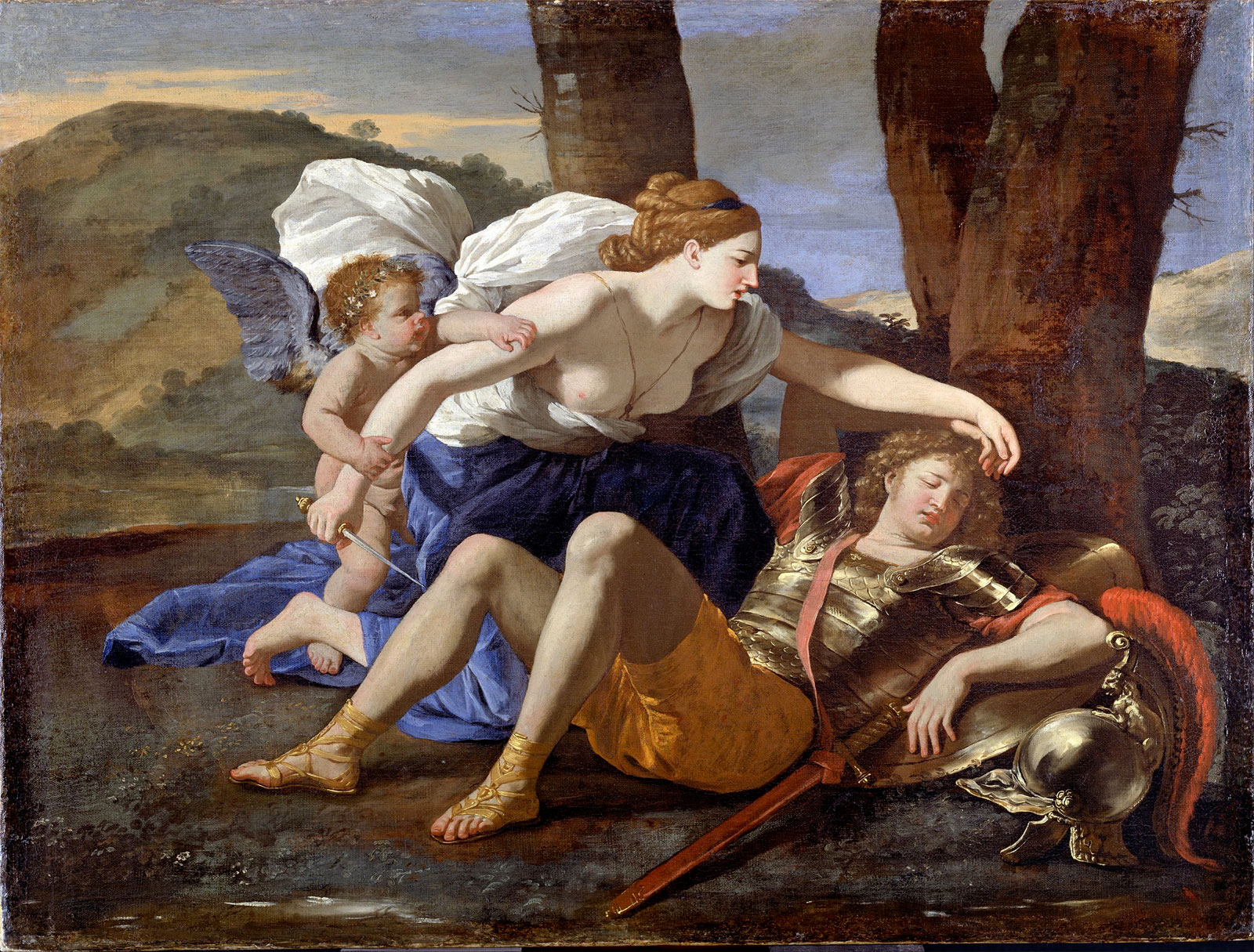
Nicolas Poussin (French, 1594-1665) 'Rinaldo and Armida' c. 1630


Nicolas Poussin (French, 1594-1665)
Rinaldo and Armida
c. 1630
Oil on canvas
Height: 822 mm (32.36 in)
Width: 1,092 mm (42.99 in)
Dulwich Picture Gallery
© By permission of the Trustees of Dulwich Picture Gallery


Nicolas Poussin (French, 1594-1665) 'The Nurture of Jupiter' mid 1630s


Nicolas Poussin (French, 1594-1665)
The Nurture of Jupiter
mid 1630s
Oil on canvas
Height: 965 mm (37.99 in)
Width: 1,210 mm (47.63 in)
Dulwich Picture Gallery
© By permission of the Trustees of Dulwich Picture Gallery


Cy Twombly (American, 1928-2011) 'Quattro Stagioni: Primavera' 1993-5


Cy Twombly (American, 1928-2011)
Quattro Stagioni: Primavera
1993-1995
Acrylic, oil, crayon and pencil on canvas
3230 x 1996 x 67 mm
Tate: Purchased with assistance from the American Fund for the Tate Gallery and Tate Members 2002
© Tate, London, 2010, © Cy Twombly


Cy Twombly (American, 1928-2011) 'Quattro Stagioni: Estate' 1993-5


Cy Twombly (American, 1928-2011)
Quattro Stagioni: Estate
1993-1995
Acrylic and pencil on canvas
3241 x 2250 x 67 mm
Tate: Purchased with assistance from the American Fund for the Tate Gallery and Tate Members 2002
© Tate, London, 2010, © Cy Twombly


Nicolas Poussin (French, 1594-1665) 'Venus and Mercury' c. 1627/1629


Nicolas Poussin (French, 1594-1665)
Venus and Mercury
c. 1627/1629
© By permission of the Trustees of Dulwich Picture Gallery


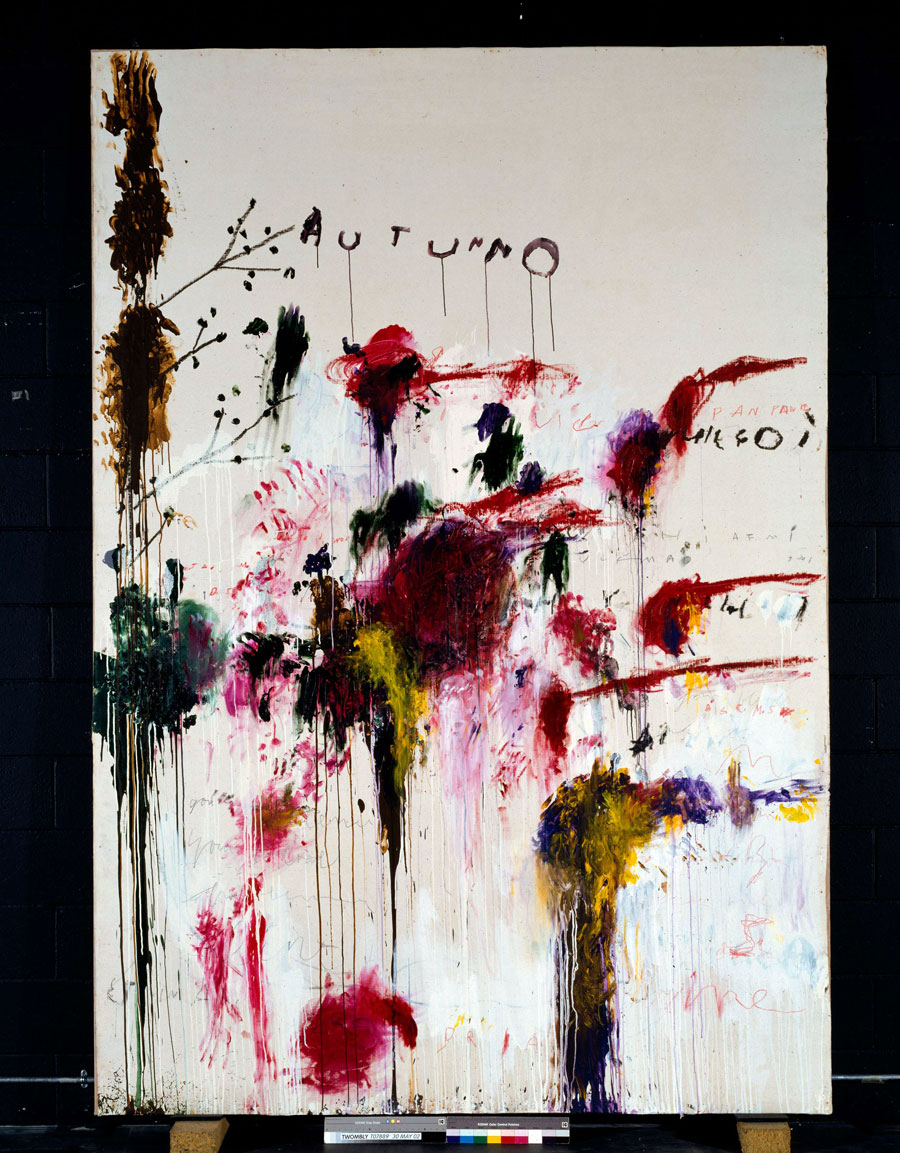
Cy Twombly (American, 1928-2011) 'Quattro Stagioni: Autunno' 1993-5


Cy Twombly (American, 1928-2011)
Quattro Stagioni: Autunno
1993-1995
Acrylic, oil, crayon and pencil on canvas
3230 x 2254 x 67 mm
Tate: Purchased with assistance from the American Fund for the Tate Gallery and Tate Members 2002
© Tate, London, 2010, © Cy Twombly


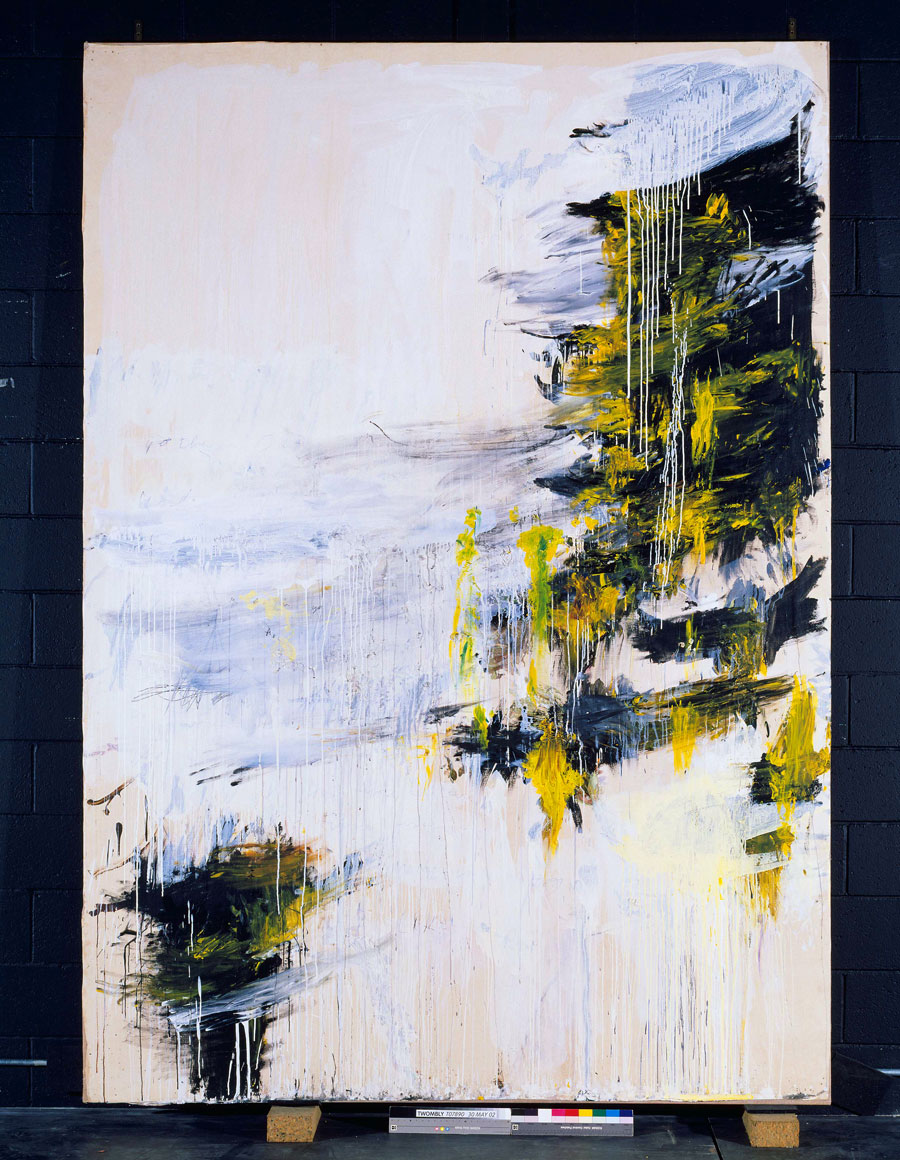
Cy Twombly (American, 1928-2011) 'Quattro Stagioni: Inverno' 1993-5


Cy Twombly (American, 1928-2011)
Quattro Stagioni: Inverno
1993-1995
Acrylic, oil and pencil on canvas
3229 x 2300 x 67mm
Tate: Purchased with assistance from the American Fund for the Tate Gallery and Tate Members 2002
© Tate, London, 2010, © Cy Twombly


Dulwich Picture Gallery
Gallery Road, London, SE21 7AD

Opening hours:
Tuesday – Sunday, 10am – 5pm
Closed Mondays except Bank Holidays

Dulwich Picture Gallery website

LIKE ART BLART ON FACEBOOK

Back to top

Exhibition: ‘László Moholy-Nagy. The Art of Light’ at the Ludwig Museum, Budapest

Exhibition dates: 9th June – 25th September 2011


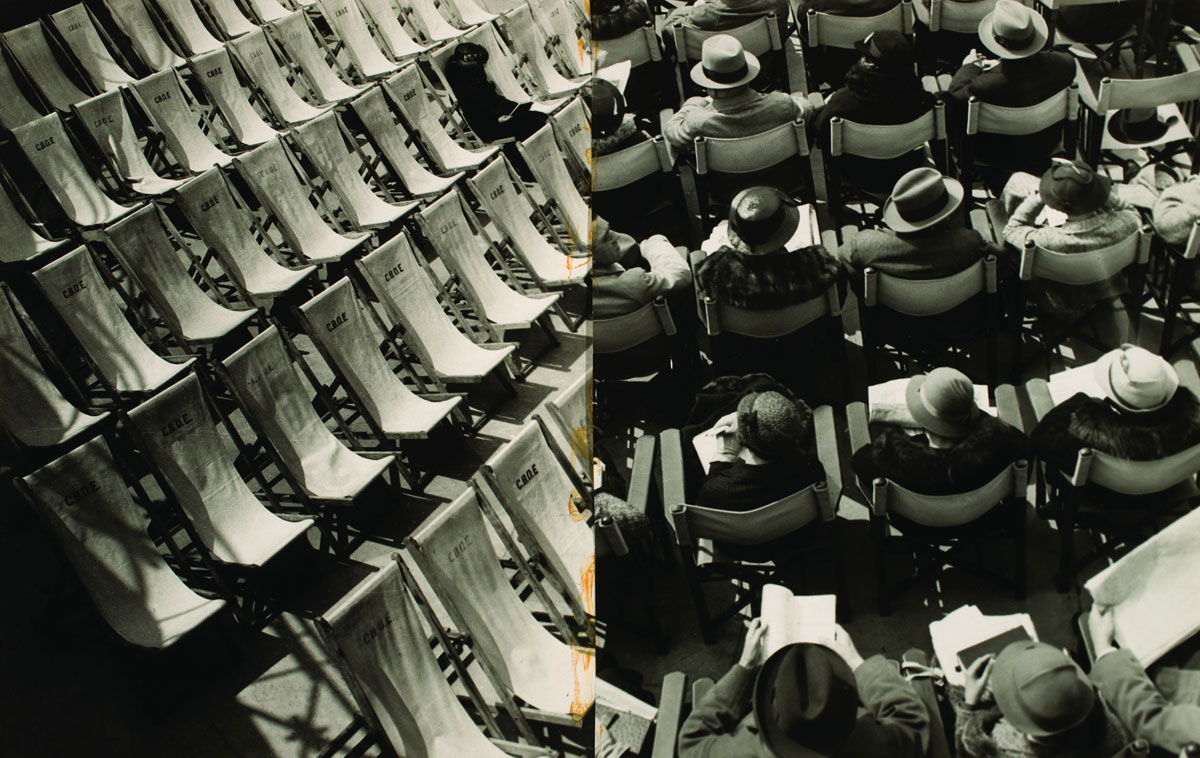
László Moholy-Nagy (Hungarian, 1895-1946) 'Chairs at Margate' 1935


László Moholy-Nagy (Hungarian, 1895-1946)
Chairs at Margate
1935
Gelatin silver print diptych
36.9 x 29.5cm (each)
© Hattula Moholy-Nagy/VEGAP 2011


Different press photographs from this exhibition, one that I last posted when it was at Martin Gropius-Bau, Berlin.

Marcus


Many thankx to the Ludwig Museum for allowing me to publish the photographs in the posting. Please click on the photographs for a larger version of the image.


László Moholy-Nagy (Hungarian, 1895-1946) 'K VII' 1922


László Moholy-Nagy (Hungarian, 1895-1946)
K VII
1922
Oil on canvas
115.3 x 135.9cm
Tate, London
© Hattula Moholy-Nagy/VEGAP 2011


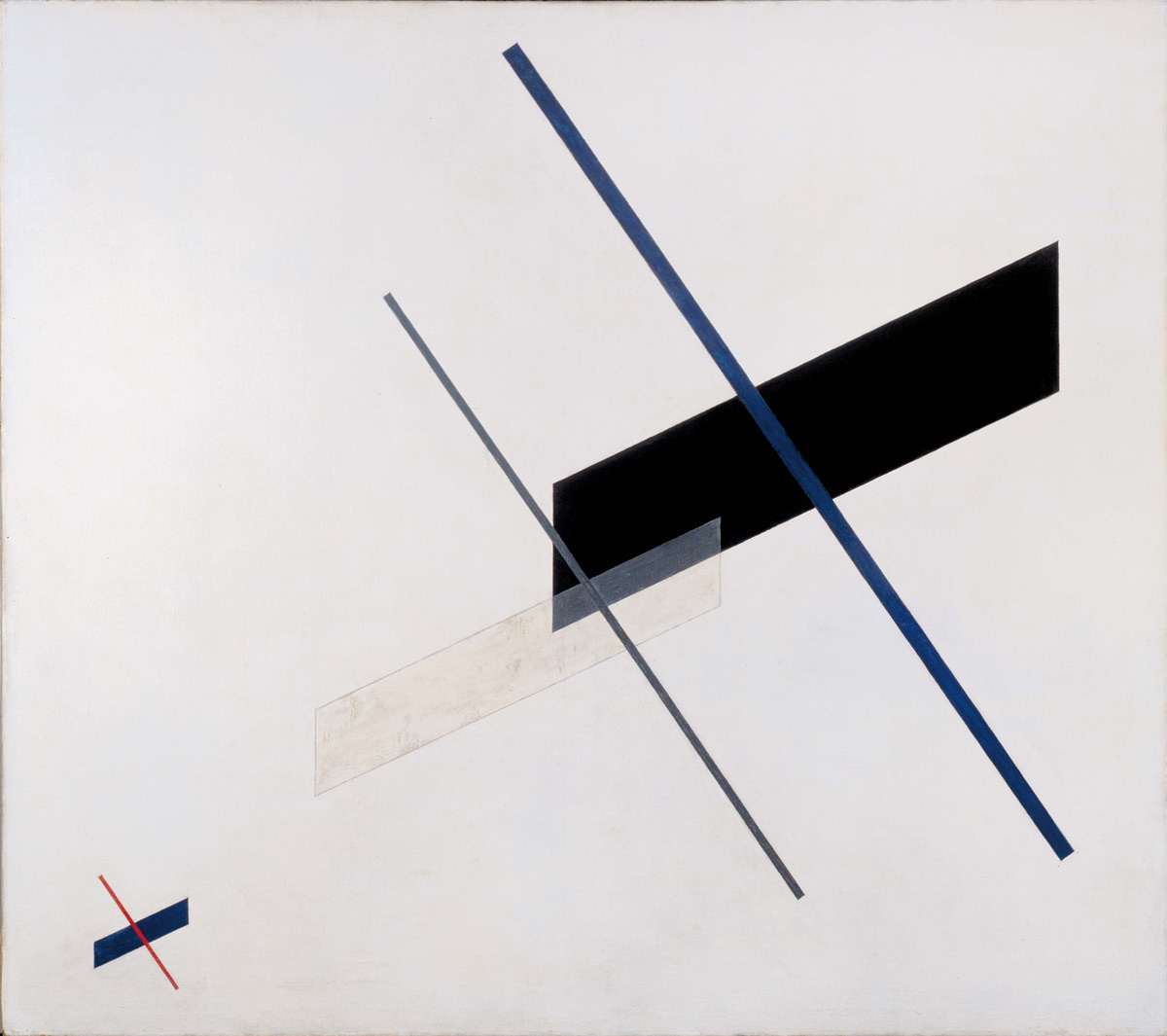
László Moholy-Nagy (Hungarian, 1895-1946) 'Composition A XI' 1923


László Moholy-Nagy (Hungarian, 1895-1946)
Composition A XI
1923
Oil on canvas
Image: 115.6 x 131.1cm
© Hattula Moholy-Nagy/VEGAP 2011


László Moholy-Nagy (Hungarian, 1895-1946) 'Eton. Eleves watching cricket from the pavilion on Agar's Plough' c. 1930


László Moholy-Nagy (Hungarian, 1895-1946)
Eton. Eleves watching cricket from the pavilion on Agar’s Plough
c. 1930
Gelatin silver print


László Moholy-Nagy (Hungarian, 1895-1946) 'Untitled' 1939


László Moholy-Nagy (Hungarian, 1895-1946)
Untitled
1939
Fujicolor Crystal Archive print
Image: 22.8 x 34.2cm
Courtesy of László Moholy-Nagy Estate and Andrea Rosen Gallery Inc., New York
© Hattula Moholy-Nagy/VEGAP 2011


László Moholy-Nagy (Hungarian, 1895-1946) 'Untitled' 1940-44


László Moholy-Nagy (Hungarian, 1895-1946)
Untitled
1940-1944
Fujicolor Crystal Archive print
Image: 22.8 x 34.2cm
Courtesy of László Moholy-Nagy Estate and Andrea Rosen Gallery Inc., New York
© Hattula Moholy-Nagy/VEGAP 2011


László Moholy-Nagy is a world-famous figure of twentieth-century avant-garde art. His visual art and theoretical works, photographs, films, educational activities and photograms – taken without a camera and now synonymous with his name – were of such significance that it is no exaggeration to say that since Moholy-Nagy, we see things differently; since Moholy-Nagy, our thinking about art has been transformed. His innovations over the decades have become so natural, his influence so pervasive, that we now almost have to rediscover him once again. In the series of Hungarian photographers who accomplished world fame – Robert Capa, Martin Munkácsi, György Kepes – the Ludwig Museum – Museum of Contemporary Art now presents the work of László Moholy-Nagy (1895-1946), focussing primarily his photography. This is a long-overdue show: Hungary has not held such an exhibition of Moholy-Nagy’s work since 1975, not even on the centenary of his birth in 1995.

Moholy-Nagy began his creative career in the first half of the twentieth century in Lajos Kassák’s activist circle where, at twenty years old, he was one of Hungary’s youngest avant-garde artists. In 1919 he left for Vienna then Berlin, where he came under the influence of Dadaism and Constructivism, which he later developed further independently. On the invitation of director Walter Gropius in 1923, he became a teacher at the Weimar Bauhaus, then the most progressive art school. There, alongside the Metal Workshop, he also led the definitive course in new arts education, the Foundation. The Bauhaus was more than a school: it was a way of life that unified life, art and science. As well as exploring painting, leading the Metal Workshop, writing and editing books and applying new typographies at the experimental, innovative Bauhaus school, Moholy-Nagy also turned towards photography and film as forms offering new possibilities in art. Photography, and in particular film represented new technologies that questioned the traditional principles of art, among them the uniqueness of the artefacts and the personal signature of the artist.

The central organising principle in Moholy-Nagy’s diverse activities was light: light defined his paintings, sculptures, photoplastics, photograms, photographs, typography and theatre sets. He did not regard photography as a tool for the perfect imaging of reality, rather, it was his conviction that the camera offered new discoveries and possibilities for modern people to finally liberate themselves from the obligation to depict, to copy reality. The years at the Bauhaus proved to be an experience that defined his entire life. After Berlin, Weimar and Dessau, he settled in Chicago in 1937, where he founded the ‘New Bauhaus’ and remained until the end of his life, working as an experimental, innovative artist and theorist. He regarded art as an activity that embraced the whole of life which was non-hierarchical, accessible and cultivatable by everyone, and he was a firm believer in the educational role of art.

The Ludwig Museum’s exhibition presents his diverse life achievement from 1922, with Moholy-Nagy’s photography, films, and works ‘made with light’ in central focus. His first writings on light as a medium were published in 1923, in the Broom magazine, New York. One of the most exciting parts of the exhibition is the compilation of all Moholy-Nagy’s films, shown together here for the first time and according to the artist’s original conception. Such an ambitious and large-scale exhibition of Moholy-Nagy’s oeuvre could only have been realised with international collaboration. This exhibition brings together over 200 pieces and documents from over twenty museums around the world (Tate, Whitney, Tokyo Metropolitan, etc.) as well as private collections. It is based on the curatorial concept of the director of Madrid’s la Fábrica, Oliva Maria Rubio, and is the result of joint work between the Martin-Gropius-Bau in Berlin and the Gemeentemuseum in The Hague. The exhibition has previously shown in Madrid, Berlin and The Hague, and will open to audiences in Budapest until the end of September.

Moholy-Nagy’s rich oeuvre also allows us to make slightly different emphases according to location. In Berlin, the legendary 1929 Film und Foto (FiFo) exhibition and his pedagogical works were emphasised, while in The Hague, the focus was on the time he spent in the Netherlands between 1933 and 1935. With the participation of two internationally-renowned Hungarian art historians, experts of Moholy-Nagy, Krisztina Passuth and Éva Bajkay, the Budapest exhibition is complemented by photographs and publications from Hungarian collections. Thanks to László Moholy-Nagy’s family, valuable documents that have not been seen in any of the earlier locations have been added to the exhibition.

Press release from the Ludwig Museum


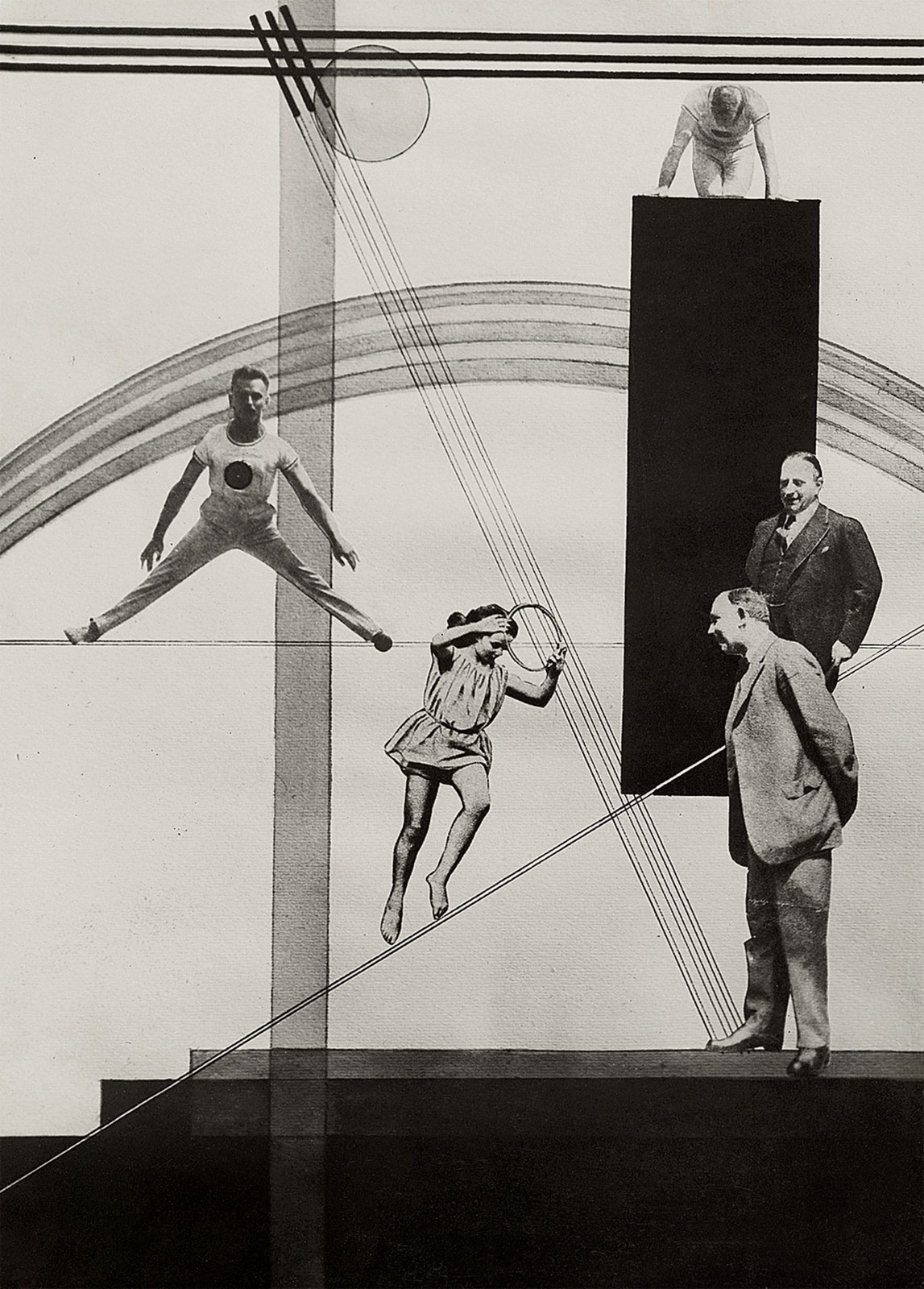
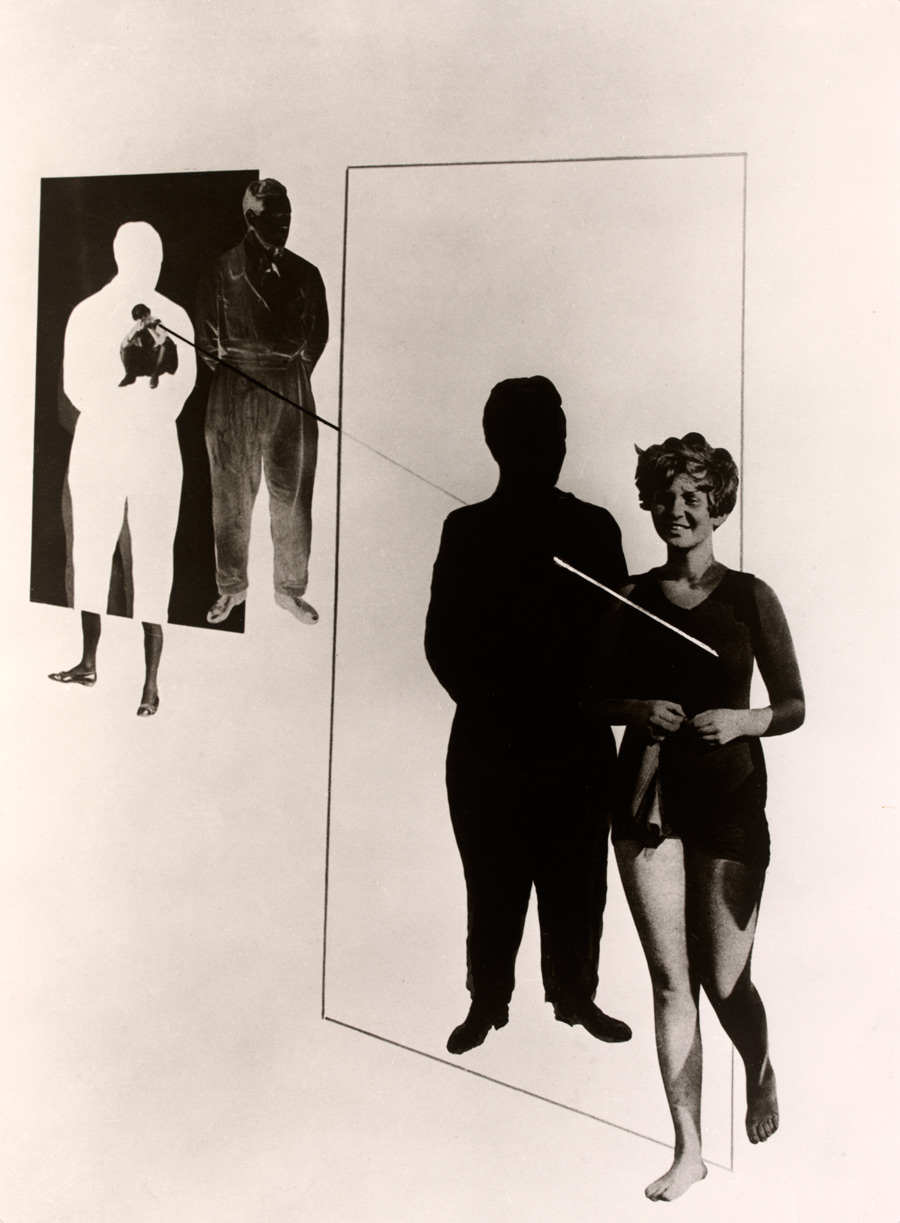
László Moholy-Nagy (Hungarian, 1895-1946) 'The Benevolent Gentleman' 1924


László Moholy-Nagy (Hungarian, 1895-1946)
The Benevolent Gentleman
1924
Photoplastic, gelatin silver print


László Moholy-Nagy (Hungarian, 1895-1946) 'Jealousy' 1924-1927


László Moholy-Nagy (Hungarian, 1895-1946)
Jealousy
1924-1927
Photoplastic, gelatin silver print
30 x 24.6cm
Victoria & Albert Museum Collection, London
© Hattula Moholy-Nagy/VEGAP 2011


László Moholy-Nagy (Hungarian, 1895-1946) 'La Canebière Street, Marseilles - View Through the Balcony Grille' 1928


László Moholy-Nagy (Hungarian, 1895-1946)
La Canebière Street, Marseilles – View Through the Balcony Grille
1928
Gelatin silver print
24.4 x 17.5cm
George Eastman House Collection. Donated by Katharine Kuh
© Hattula Moholy-Nagy/VEGAP 2011


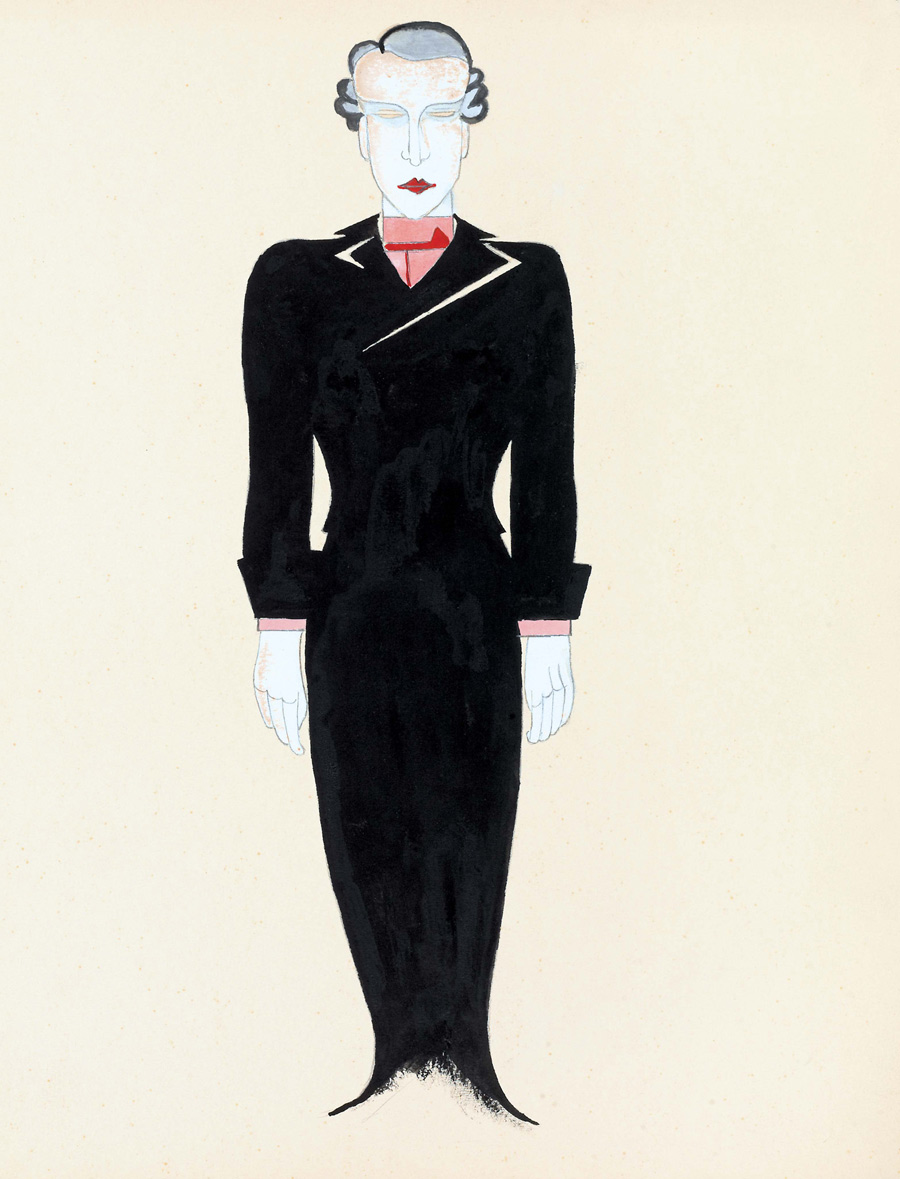
László Moholy-Nagy (Hungarian, 1895-1946) 'Costume Design for Tales of Hoffmann' 1929


László Moholy-Nagy (Hungarian, 1895-1946)
Costume Design for Tales of Hoffmann
1929
Watercolour on paper
34.3 x 27cm
Hattula Moholy-Nagy, Ann Arbor, Michigan
© Hattula Moholy-Nagy/VEGAP 2011


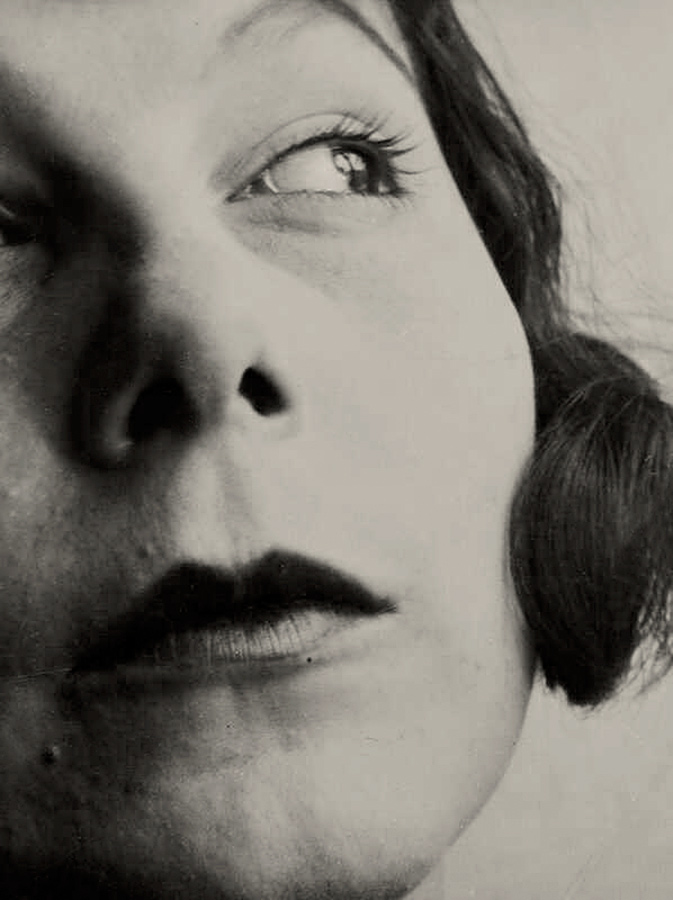
László Moholy-Nagy (Hungarian, 1895-1946) 'Portrait of Ellen Frank' c. 1929


László Moholy-Nagy (Hungarian, 1895-1946)
Portrait of Ellen Frank
c. 1929
Gelatin silver print


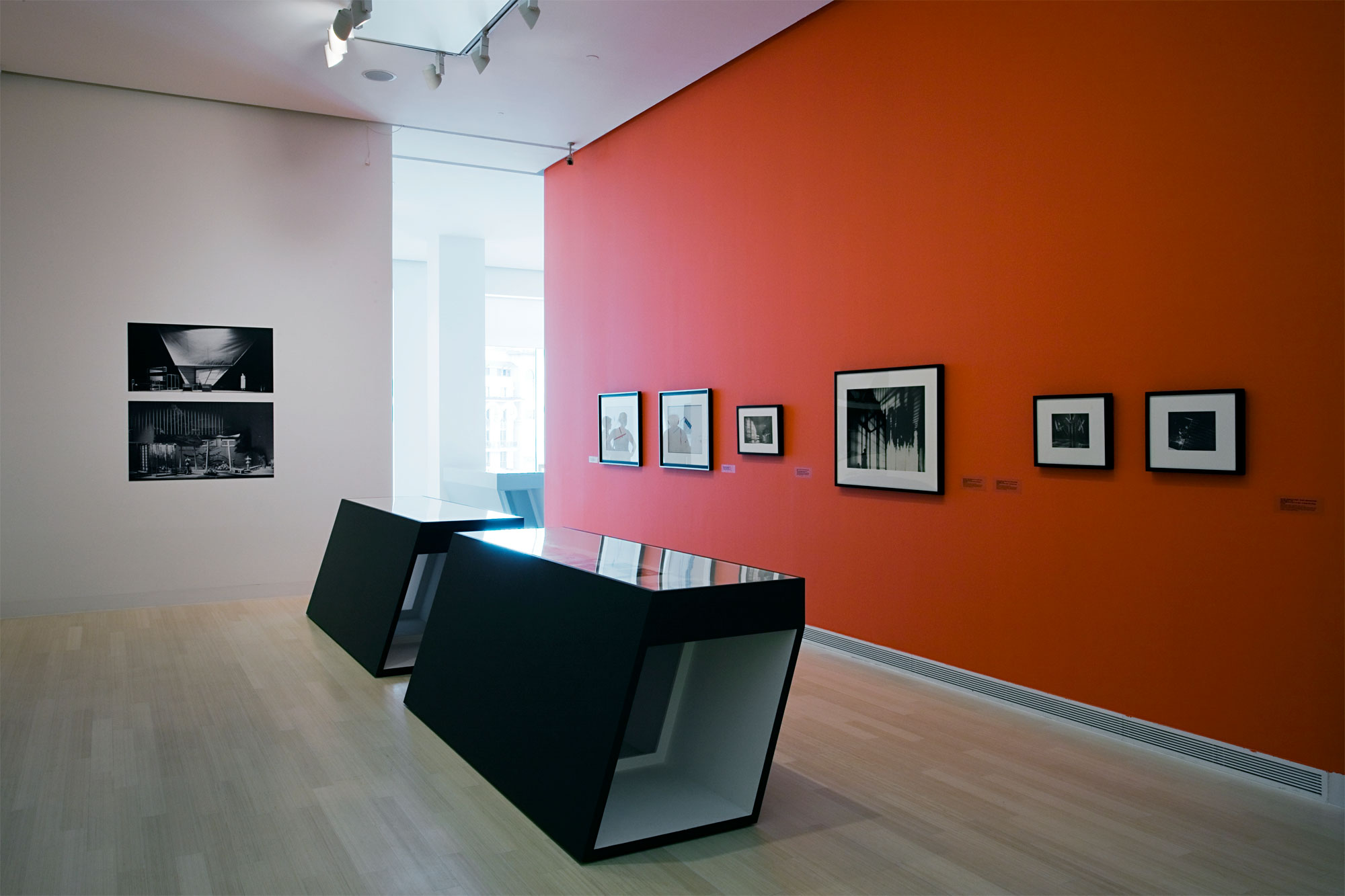
Interior view of the exhibition 'László Moholy-Nagy. The Art of Light' at Ludwig Museum - Museum of Contemporary Art


Interior view of the exhibition László Moholy-Nagy. The Art of Light at Ludwig Museum – Museum of Contemporary Art
© BUJNOVSZKY Tamás / Ludwig Museum – Museum of Contemporary Art, Archives


Interior view of the exhibition 'László Moholy-Nagy. The Art of Light' at Ludwig Museum - Museum of Contemporary Art

Interior view of the exhibition 'László Moholy-Nagy. The Art of Light' at Ludwig Museum - Museum of Contemporary Art

Interior view of the exhibition 'László Moholy-Nagy. The Art of Light' at Ludwig Museum - Museum of Contemporary Art


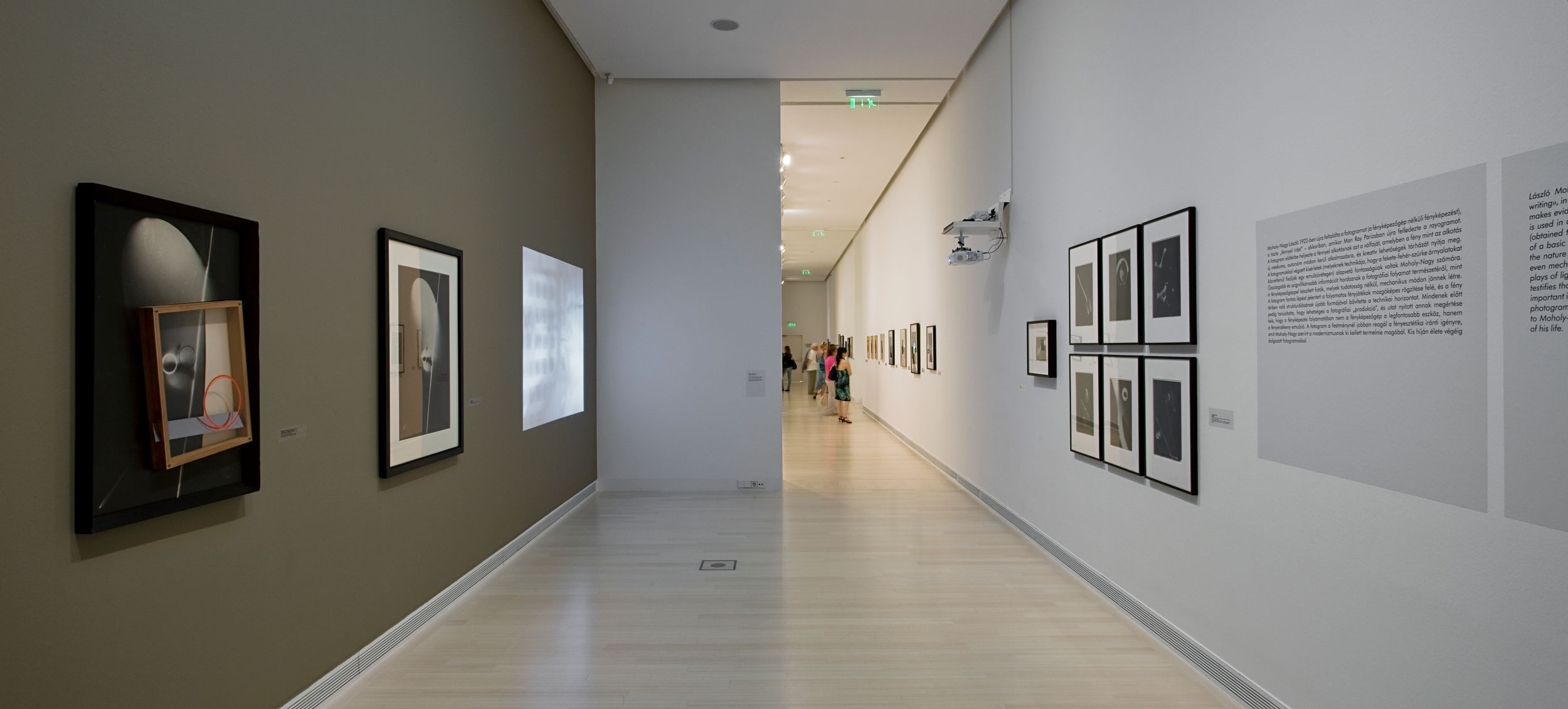
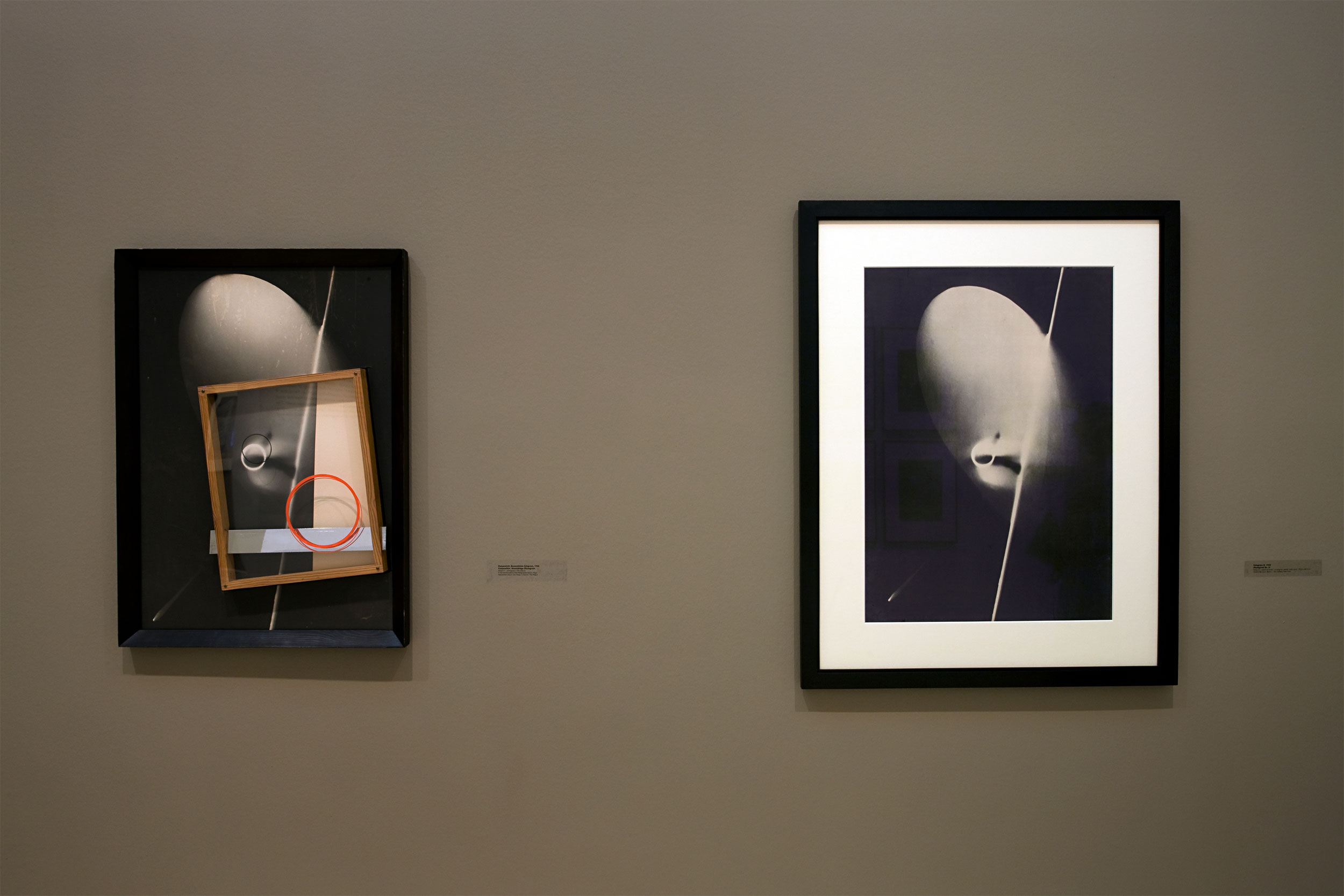
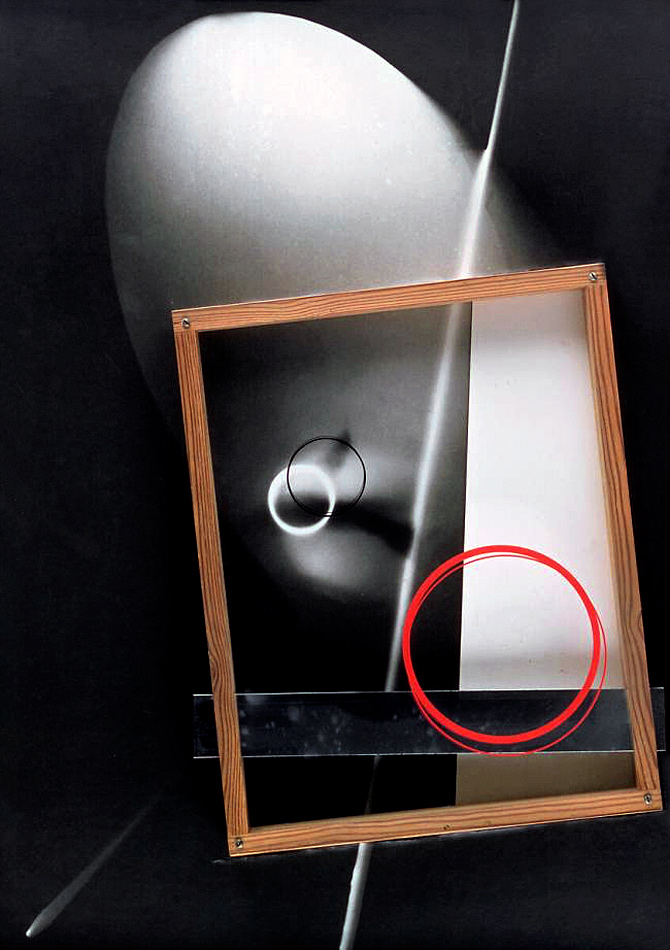
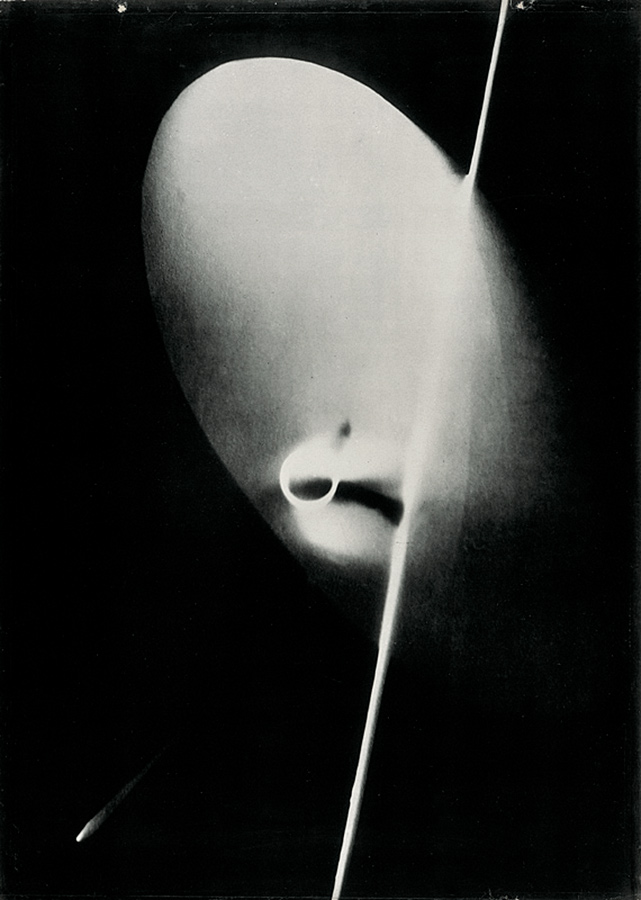
Interior views of the exhibition László Moholy-Nagy. The Art of Light at Ludwig Museum – Museum of Contemporary Art showing at left in the bottom image, Composition – Assemblage – Photogram (1926, below); and at right, Photogramm No. II (1929, below)
© BUJNOVSZKY Tamás / Ludwig Museum – Museum of Contemporary Art, Archives


László Moholy-Nagy (Hungarian, 1895-1946) 'Composition - Assemblage - Photogram' 1926


László Moholy-Nagy (Hungarian, 1895-1946)
Composition – Assemblage – Photogram
1926
Photogram and mixed media


László Moholy-Nagy (Hungarian, 1895-1946) 'Photogramm No. II' 1929


László Moholy-Nagy (Hungarian, 1895-1946)
Photogramm No. II
1929
Silver gelatin photograph
95.5 x 68.5cm


László Moholy-Nagy (Hungarian, 1895-1946) 'Lago Maggiore, Ascona, Switzerland' c. 1930


László Moholy-Nagy (Hungarian, 1895-1946)
Lago Maggiore, Ascona, Switzerland
c. 1930
Silver gelatin photograph


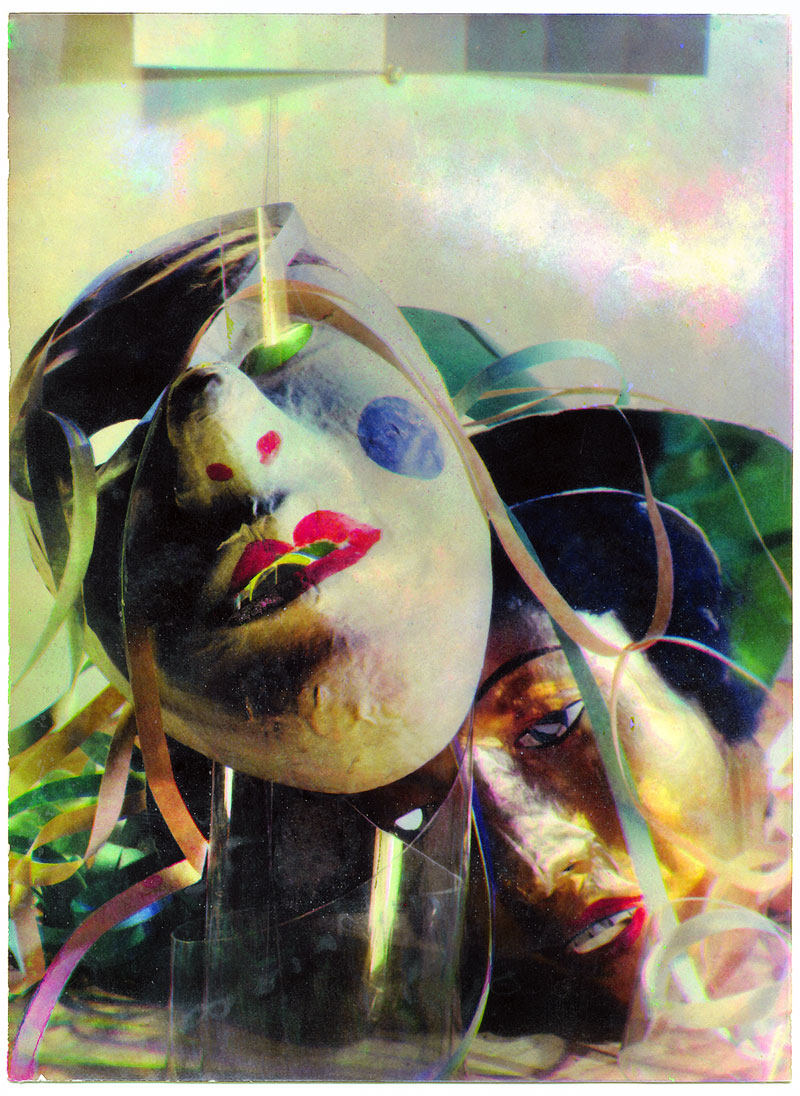
László Moholy-Nagy (Hungarian, 1895-1946) and Paul Hartland. 'Carnival: Composition with two masks' c. 1934


László Moholy-Nagy (Hungarian, 1895-1946) and Paul Hartland 
Carnival: Composition with two masks
c. 1934
Gemeentemuseum Den Haag


Ludwig Museum – Museum of Contemporary Art
Palace of Arts
Komor Marcell u. 1, Budapest, H-1095
Phone: +36 1 555 3444

Opening hours:
Tuesday – Sunday: 10am – 6pm
Closed on Mondays

Ludwig Museum website

LIKE ART BLACK ON FACEBOOK

Back to top

The Museum of Old and New Art (MONA), Hobart

August 2011


MONA exterior, Hobart


MONA exterior, Hobart
Image Courtesy of MONA Museum of Old and New Art


“Lyotard writes,”We must not begin with transgression, we must immediately go to the very end of cruelty, construct the anatomy of polymorphous perversion, unfold the immense membrane of the libidinal ‘body,’ which is quite the inverse of a system of parts.” Lyotard sees this “membrane” as composed of the most heterogeneous items: human bone and writing paper, steel and glass, syntax and the skin on the inside of the thigh. In the libidinal economy, writes Lyotard: “All of these zones are butted end to end … on a Moebius strip … a moebian skin [an] interminable band of variable geometry (a concavity is necessarily a convexity at the next turn) [with but] a single face, and therefore neither exterior nor interior.”


Jean-François Lyotard quoted in Victor Burgin. In/Different Spaces 1


“Taking a walk is also an extremely immediate form of experience. Serge Daney describes the act of perception while taking a walk: ‘Because I am not particularly fond of bravura pieces, I always need a transition from one thing to the next. And I am glad that I can find it through by body and experience of walking…’
The visual memory of the walker / viewer determines the sequence of the pictures. Since the 1960s Marcel Broodthaers has defined the exhibition as a cinematic sequence of pictures and objects, thereby subverting the fixity of the single object through recontextualisation.”


Serge Daney quoted in Hans Obrist. “In the Midst of Things, At the Centre of Nothing.”2


Libidinal, Moebic MONA

My analogy: you are standing in the half-dark, your chest open, squeezing the beating heart with blood coursing between your fingers while the other hand is up your backside playing with your prostrate gland. I think ringmeister David Walsh would approve.

My best friends analogy: a cross between a car park, night club, sex sauna and art gallery.

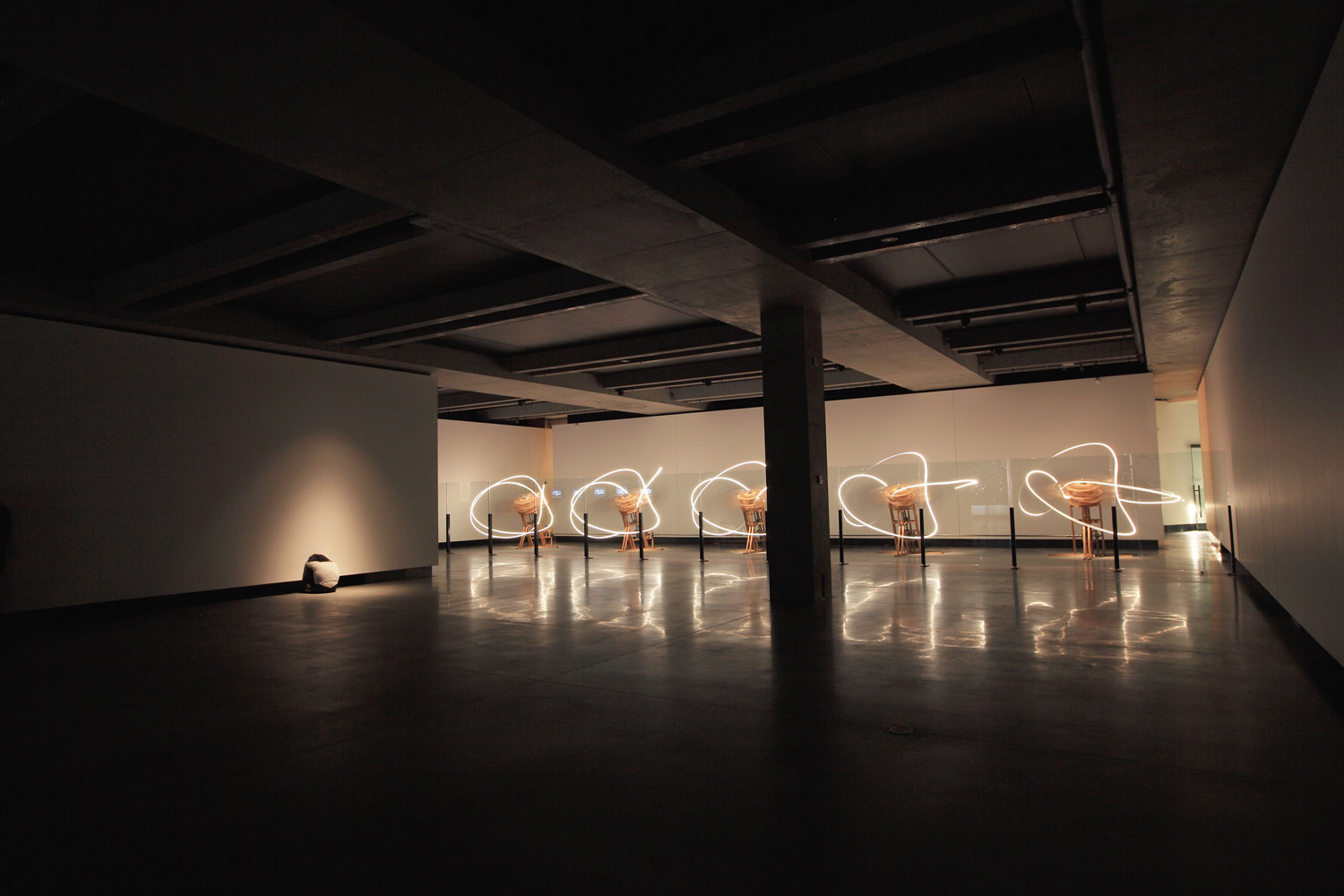
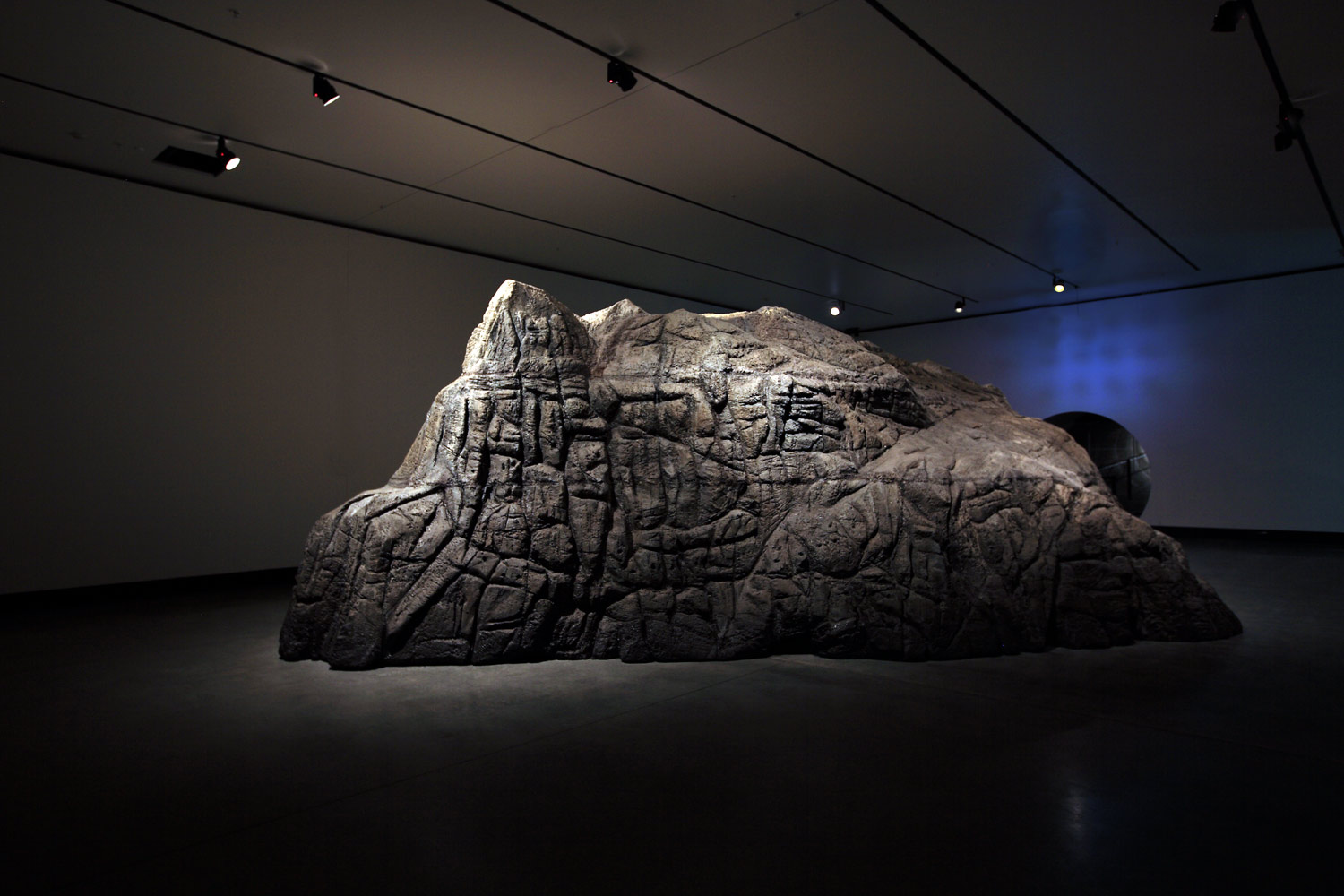
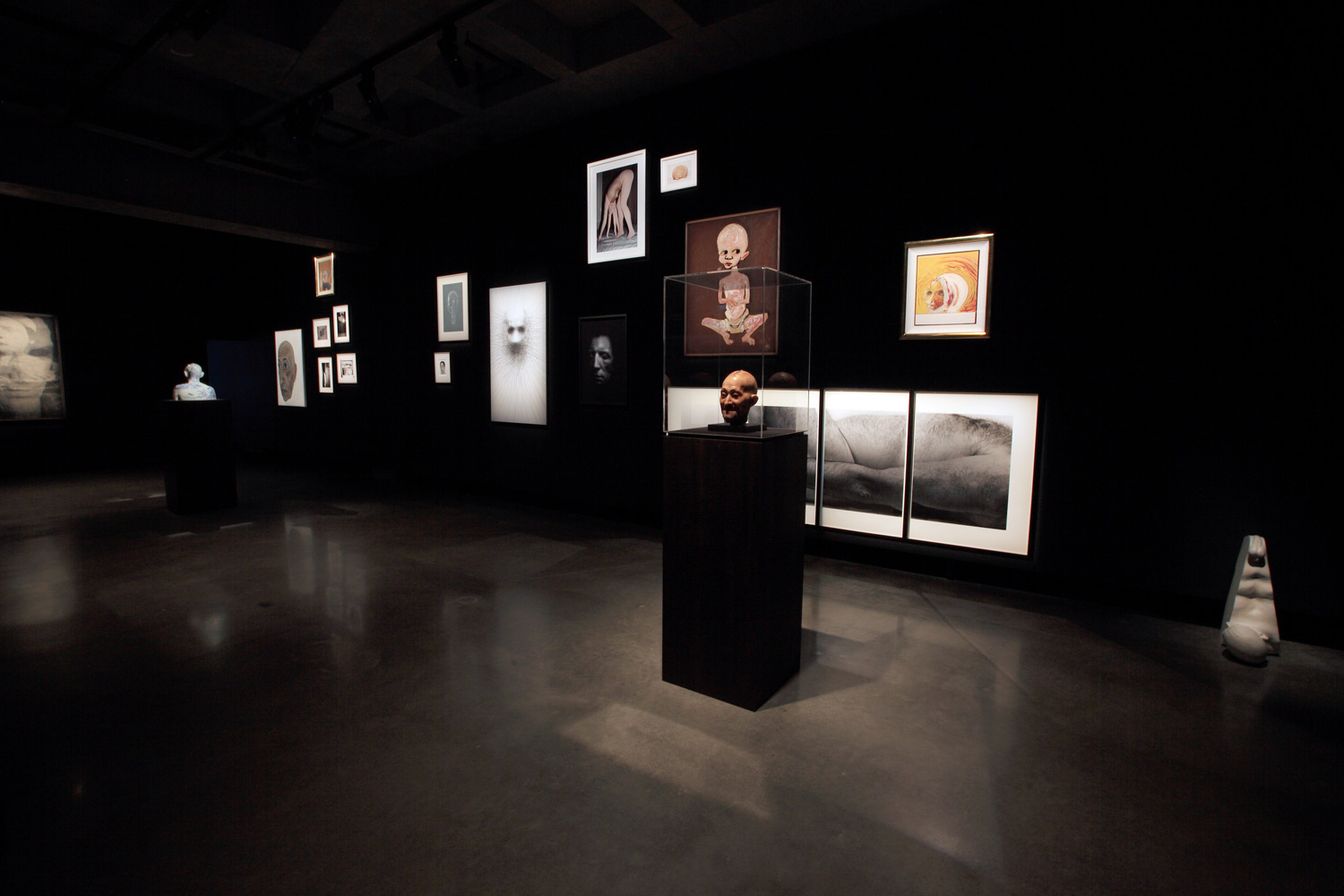
Weeks later I am still thinking about the wonderful immersive, sensory experience that is MONA. Peter Timms in an insightful article in Meanjin calls it a post-Google Wunderkammer, or wonder chest.3 It can be seen as a mirabilia – a non-historic installation designed primarily to delight, surprise and in this case shock. The body, sex, death and mortality are hot topics in the cultural arena4 and Walsh’s collection covers all bases. The collection and its display are variously hedonistic, voyeuristic, narcissistic, fetishistic pieces of theatre subsumed within the body of the spectacular museum architecture.

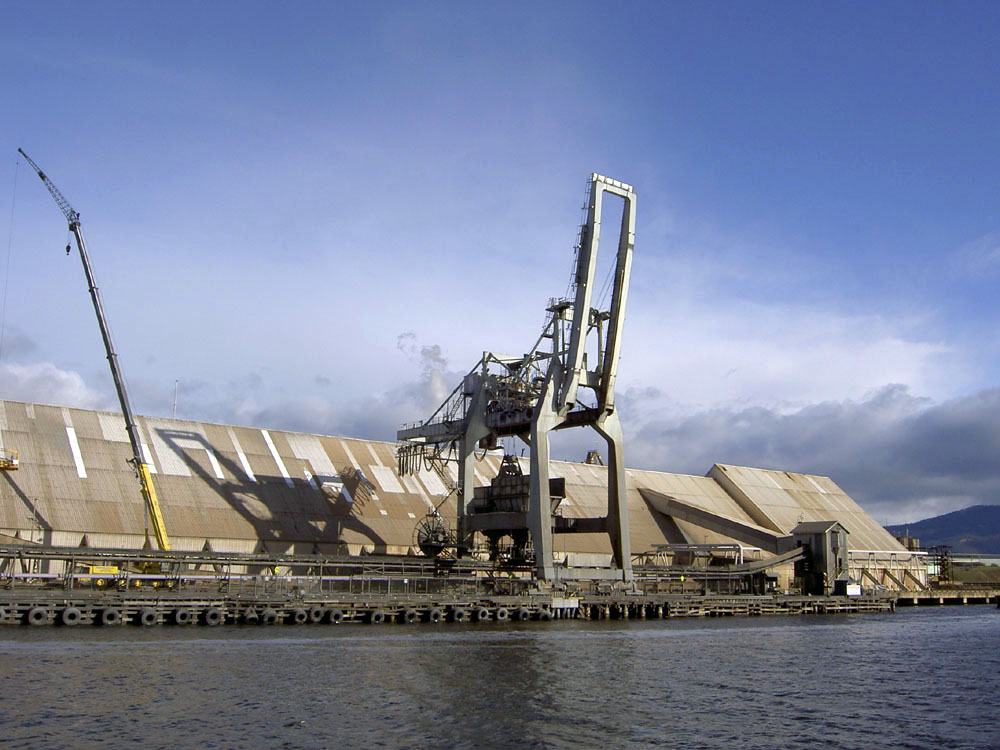
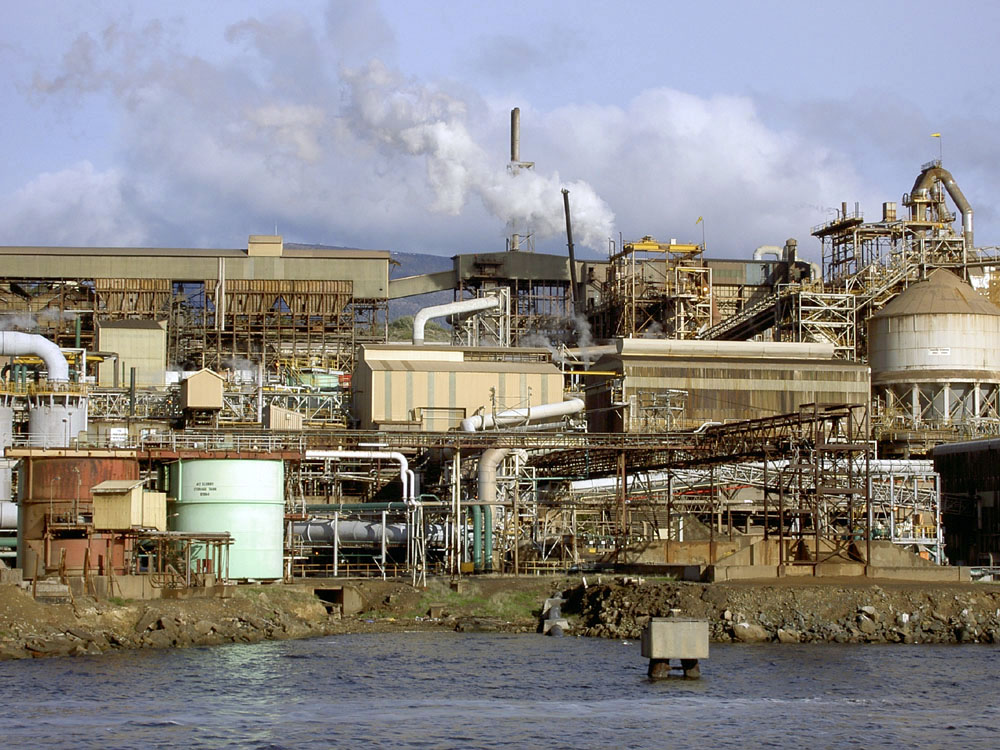
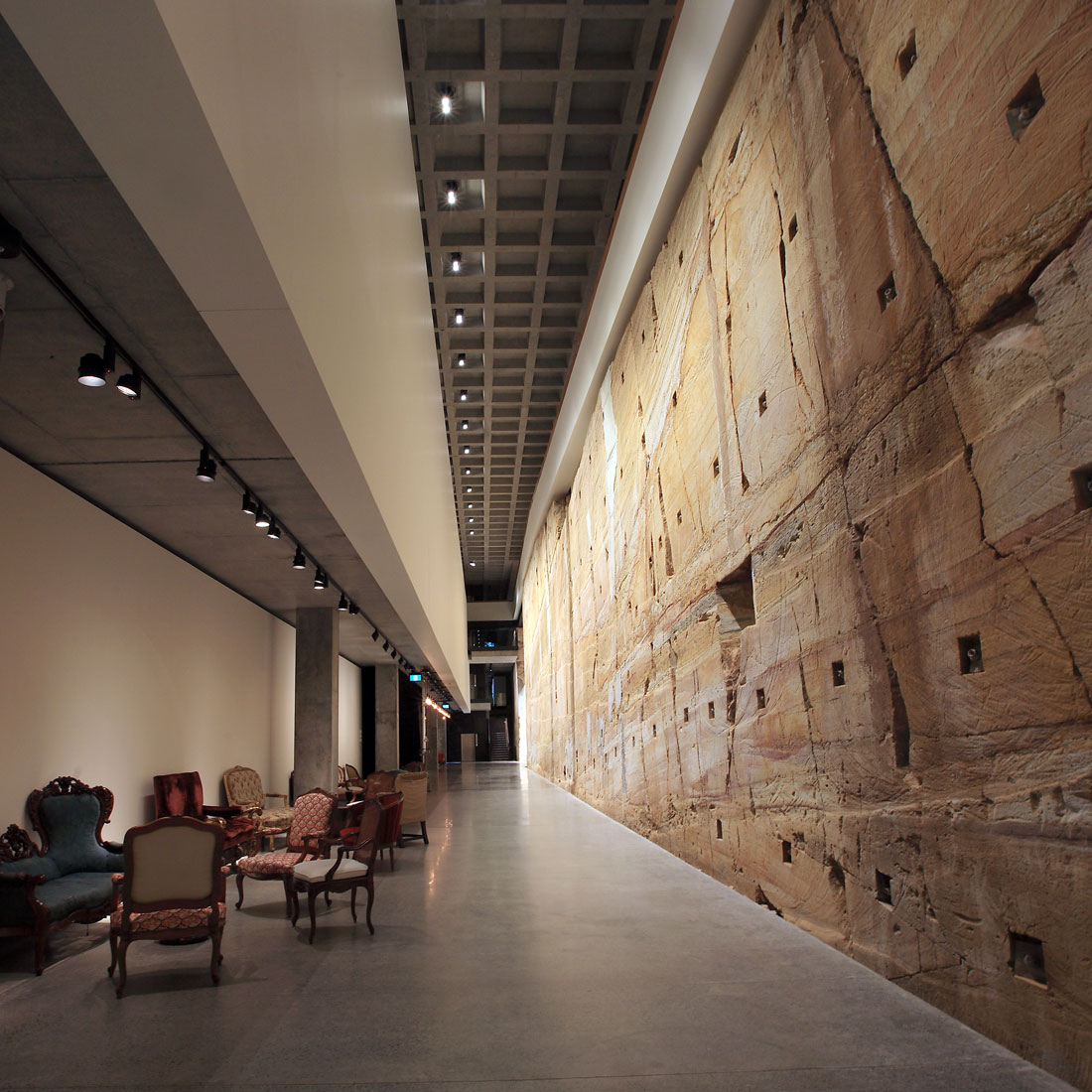
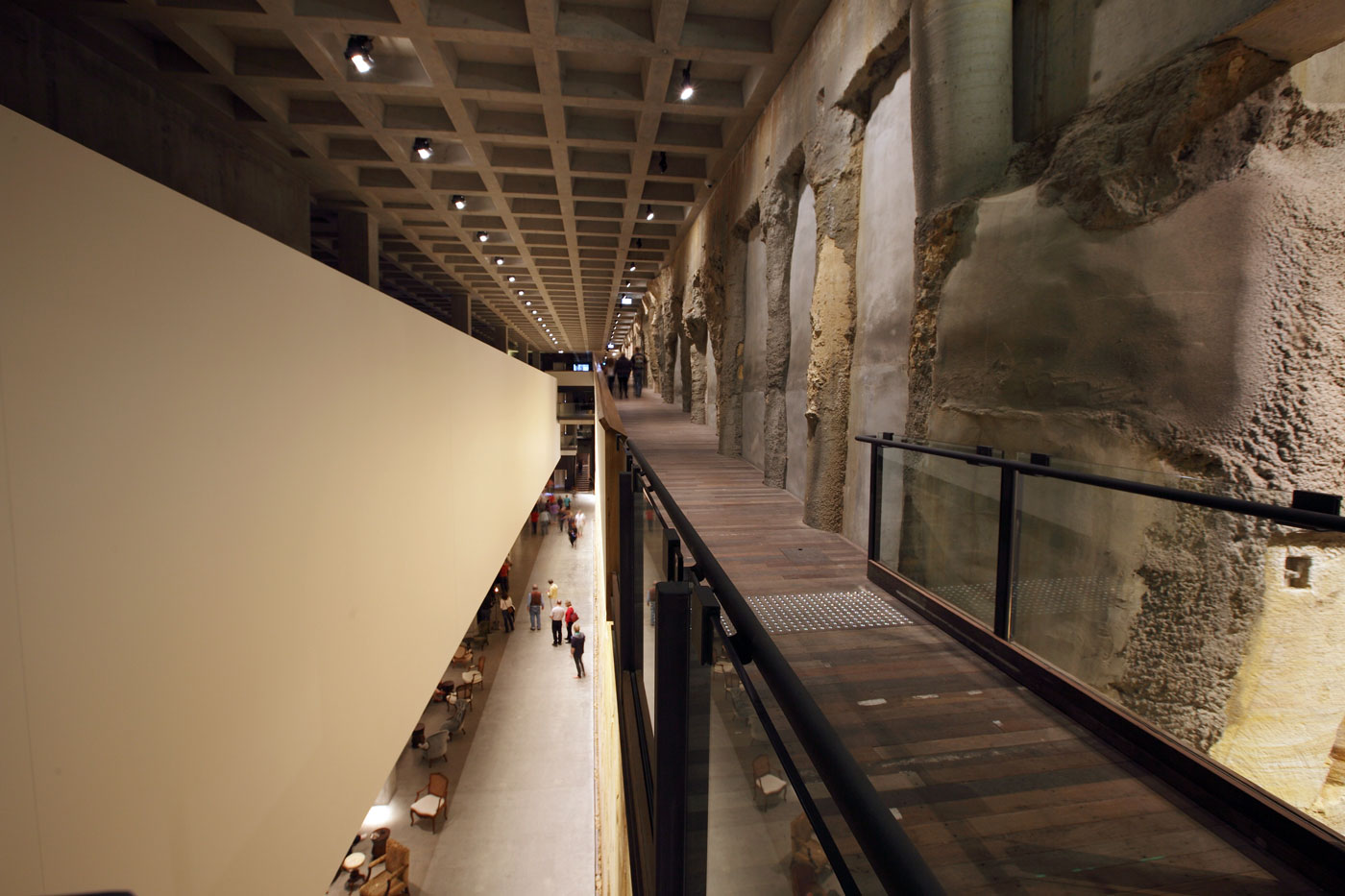
The experience starts with the ferry ride from the wharf in Hobart to the museum – the only way to arrive. During the 20 minutes of the journey mental baggage seems to drop away as you look over the water to the industrial zinc works, pass under bridges and then the museum comes into view. Perched on a promontory of land the museum rises like a rusted ancient temple. After disembarking you climb a colossal staircase to the entrance of the museum, all angles and mirrored surfaces. You enter one of two Roy Grounds listed modernist buildings built in the 1950s – beautiful, crisp white spaces that house the shop and a cafe, cloakroom and inquiry desk where you collect your ‘O’, an iPhone-like device that tracks all the artworks that you look at. The are no didactic text panels in the museum freeing the viewer to just experience, all data such as artists names and educational information and the tit-bit Gonzo text being accessed through the ‘O’. Into the large enclosed forecourt space a spiral staircase with a circular lift in the centre descends into the abyss (an inspired piece of design) and your journey proper has begun. Three levels deep into the ground you travel, the space carved out of solid rock. Impressive.

The museum is the body and the artworks are the organs, fragments of the whole exhibition (that of the actual museum). The experience is very kinaesthetic as the body gets lost within the space of the gallery. We wandered like flâneur among the darkened, cinema-like spaces, almost floating from one area to the next, discovering, feeling disorientated, following underground passages, tunnels and stairs, emerging into light and then descending into the abyss again. Hours passed. Like a Moebius strip there seemed to be no interior/exterior to the body. As Lyotard notes the membrane of the libidinal ‘body’ is composed of the most heterogeneous items: here was rock, steel, shit, bestiality, intestines, brain, touch, burial etc… the curating of the collection within the space “creating a safe space for the appreciation and consideration of seemingly extreme and subversive practices.”5

Into this space of controlled transgression, the carnivalesque mise-en-scène allow the artists to delve into the deeper and darker areas of the human condition: “as Anthony Everitt once said of Damien Hirst [to] ‘open up paths for the viewer into areas of experience which are not anti-moral or amoral but extra-moral… a world where bad taste is driven to the point of elegance and disgust is filtered into delight’.”6

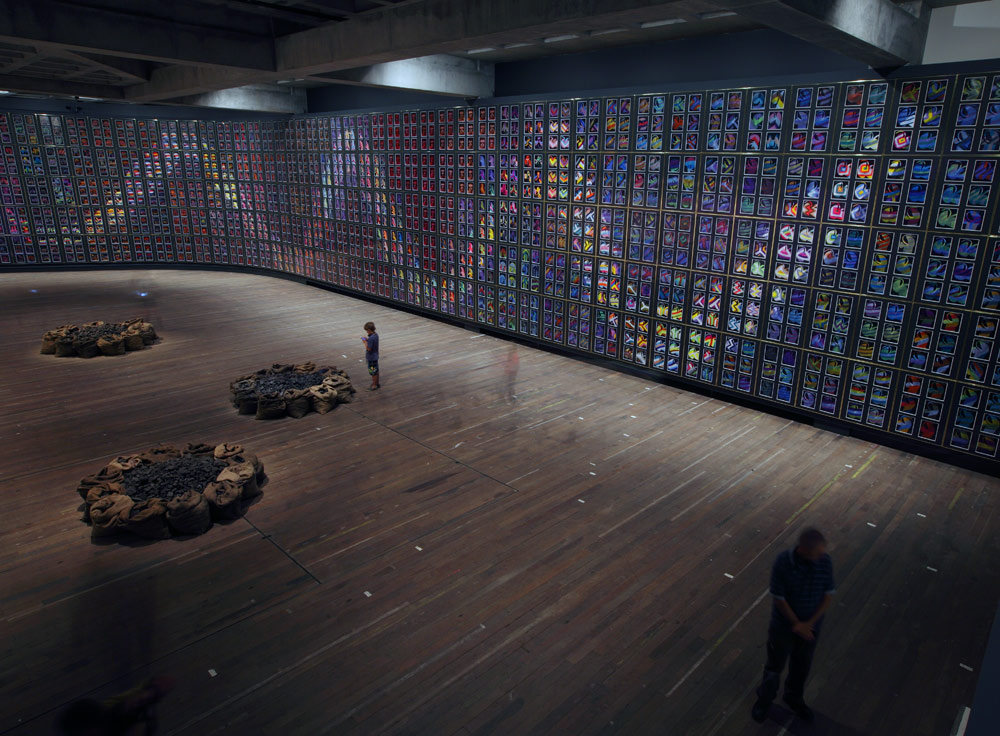
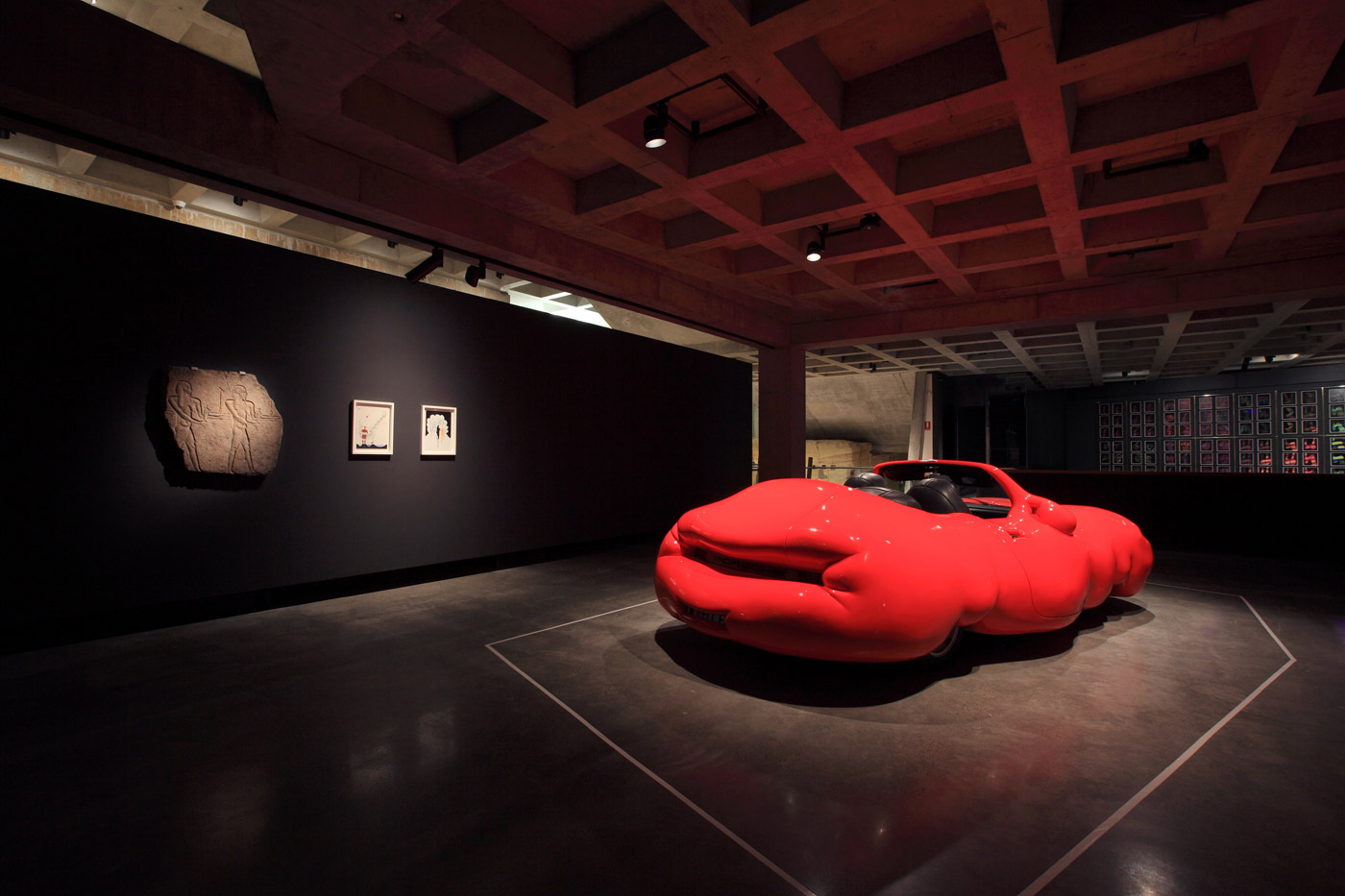
While some of the works were spotlit in the darkened galleries, “this dramatic lighting working to decontextualise the art objects, evoking a crepuscular and “timeless” sense of space, out of which the individual pieces emerged,”7 there also seemed to be an affinity between the building itself and the artworks (relating to the concept of affinity in museum curation). The diversity of installation techniques made an acknowledgement of the institutionalising processes part of the viewer’s experience of the show, disrupting a unified, totalising presentation of these objects and their cultures as “exhibition.”8 The intertextual tableaux mixed a Damien Hirst spin painting with Egyptian sculpture, ancient artefacts with Fat Cars. The context of the objects and their relationship to each other and the architecture is how the works are “framed.” This device emphasises the aesthetic rather than information and encourages the viewer to think about the relationship between the artefacts, objects and contemporary works. These inventive arrangements create a meta-narrative that offers the possibility of multiple interpretations to the viewer, multiple truths. All of this undertaken as the body moves through the spaces of the gallery and gets “lost”. As Norman Bryson has observed, “Architecture is sensed primarily through the eye and through bodily movement, and these sensations also play a key role in the way in which the contents of museums make their impact.”9

While the items are not explicitly related in terms of subject, medium or style through unexpected confrontation the works spring to dissonant life. Most of the time. When this process doesn’t work the viewer is left a little flat feeling, and…. so? wandering from piece to piece becoming slightly disenchanted. Little of the work at MONA took me to new spaces; in fact some of it was pretty mediocre, including the very dated Sir Sidney Nolan Snake (1970 to 1972, see below) that is permanent ‘wallpaper’ and takes up a whole, beautiful gallery wall. The tri-screen video by Russian collective AES+F, the works by Anselm Kiefer and the ancient artefacts (most of all) were notable exceptions. The museum is not a place for prolonged concentration and contemplation. This is not really the point of the place. The whole museum is a sensory, immersive surprising experience that cannot be broken down to its parts. David Walsh’s collection does tick all the fashionable boxes: here a Juan Davila, there a Del Kathyrn Barton, now a Howard Arkeley as though his buyers have advised him on just what to buy, but it is his personal vision, his collection. You can’t argue with that.

On of the problems of lumping all of these works together is obvious: “Ancient objects whose meaning is lost to us, medieval utensils, Christian religious images, and art objects made by modern masters were reduced to one meaning – stylistic resemblances providing evidence of the essential nature of humanity.”10 In other words a return to the globalising view of humanity evidenced by Edward Steichen’s MoMA world touring photographic exhibition of the 1950s The Family of Man. Conversely, when this strategy works well it promotes for the viewer different modes and levels of ‘interpretation’ through subtle juxtaposition of ‘experience’. As Emma Barker has observed, “we still need a curator to stimulate readings of the collection and to establish those ‘climatic zones’ which can enrich our appreciation and understanding of art… Our aim must be to generate a condition in which visitors can experience a sense of discovery in looking at particular paintings, sculptures or installations in a particular room at a particular moment, rather than find themselves standing on the conveyer belt of history.”11 Within this plastic space experience is paramount, allowing the viewer to develop their own reading without relying on the curatorial interpretation of history, setting new parameters for the relationship between viewer and object. As Barker notes such juxtapositions are a more natural strategy for a private collector than for a museum curator, with exhibitions and displays according to this dialectical principle happening with more frequency.12 The museum looses its fundamental didactic, educational purpose.

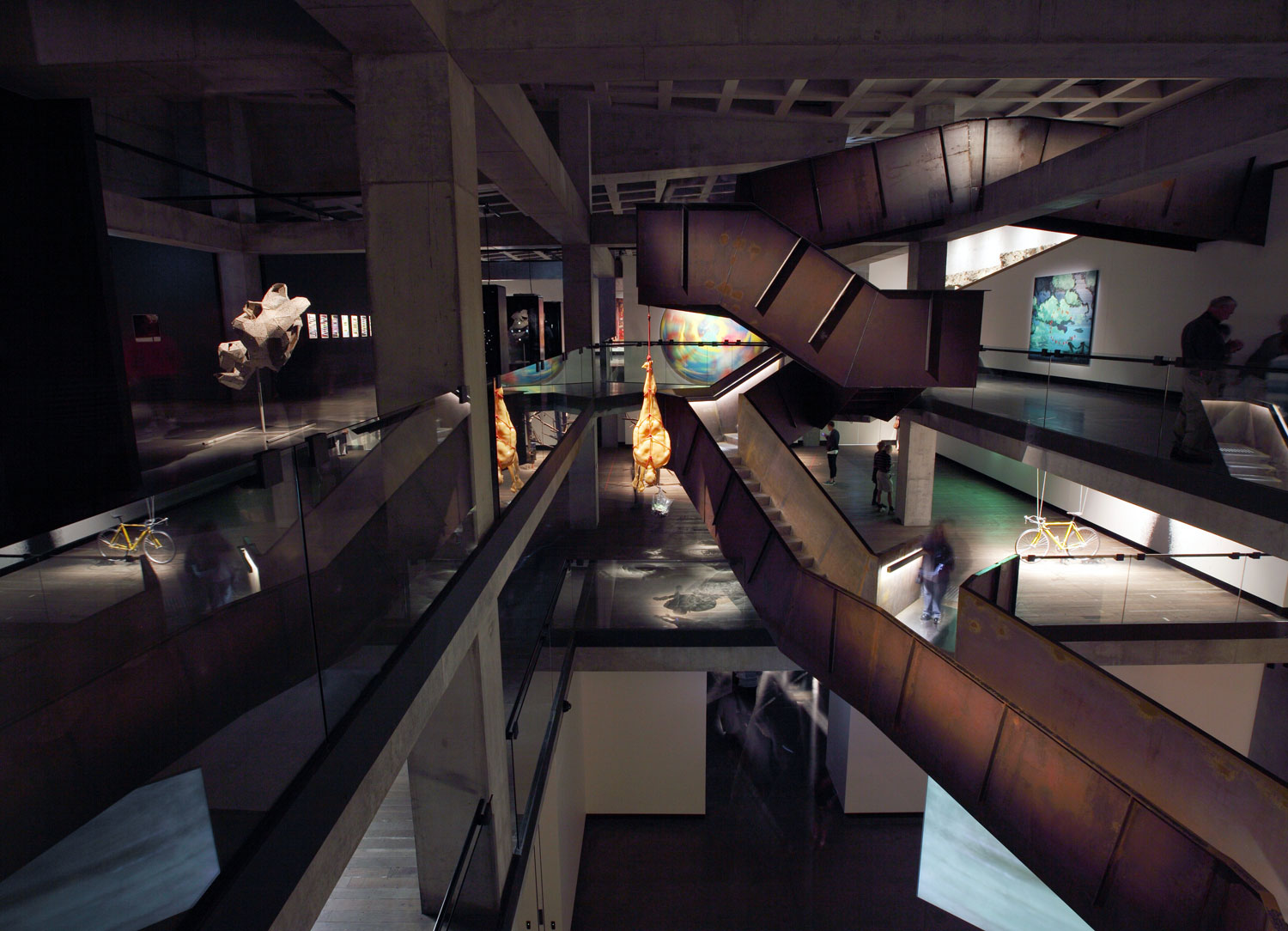
Other problems may also become evident. In a museum whose spectacular architecture was specifically designed for David Walsh’s collection it will be interesting to see how outside, touring exhibitions (such as the recently installed Experimenta Utopia Now exhibition) display in the space, especially given the psychosexual nature of his collection and its relationship to the building. If the quality of the temporary exhibitions is overwhelmed by the architecture, if the labyrinthine, enigmatic and layered nature of the space (all those floating bridges and the huge Void that can be seen in the photographs below) engulfs lesser works then it may well fall very flat.

At the end of the day we emerged into the afternoon light, expelled from the museum in a tidal wave of humanity, exhausted, satiated. Where else in Australia could you spend all day at a museum and not have seen enough? On flying home you can log into the MONA website to retrieve your ‘O’ tour, to see what art you liked and what you didn’t; what pieces you saw and all those that somehow you missed! The physical and its remembrance transported into the virtual.


Since Laura Mulvey’s essay of 1974 “Visual Pleasure and Narrative Cinema,” we have been aware of the voyeuristic and fetishistic character of our psychosexual relation to cinema. Engulfed in the dark cube, that psychosexual panorama, the cinematic labyrinth that is MONA has the viewer absenting themselves in front of the art in favour of the Eye and the Spectator.13 Spectatorship and their attendant erotics has MONA as a form of fetishistic cinema. It is as if what Barthes calls “the eroticism of place” were a modern equivalent of the eighteenth century genius loci, the “genius of the place.”

The place is spectacular, the private collection writ large as public institution, the symbolic power of the institution masked through its edifice. The art become autonomous, cut free from its cultural associations, transnational, globalised, experienced through kinaesthetic means; the viewer meandering through the galleries, the anti-museum, as an international flaneur. Go. Experience!

Dr Marcus Bunyan


Footnotes

1/ Lyotard, Jean-François. Économie Libidinale. Paris: Éditions de Minuit, 1974, pp. 10-11 quoted in Burgin, Victor. In/Different Spaces: Place and Memory in Visual Culture. Berkeley: University of California Press, 1995, p. 150

2/ Obrist, Hans Ulrich. “In the Midst of Things at the Center of Nothing,” in Harding, Anna (ed.,). Curating: The Contemporary Museum and Beyond, (Art & Design Magazine Profile No. 52), London: A.D., 1997, p. 88

3/ Timms, Peter. “A Post-google Wunderkammer: Hobart’s Museum of Old and New Art Redefines the Genre,” in Meanjin, Vol. 70, No. 2, Winter 2011. pp. 31-39

4/ Keidan, Lois. “Showtime: Curating Live Art  in the 90s,” in Harding, Anna (ed.,). Curating: The Contemporary Museum and Beyond, (Art & Design Magazine Profile No. 52), London: A.D., 1997, p. 41

5/ Ibid., p. 41

6/ Ibid., p. 41

7/ Staniszewski, Mary Anne. The power of display: a history of exhibition installations at the Museum of Modern Art. Cambridge, Mass.: MIT Press, 1998, p. 84

8/ Ibid., p. 97

9/ Bryson, Norman. “A Walk for a Walk’s Sake,” in De Zegher, Catherine (ed.,). The Stage of Drawing: Gesture and Act. London: Tate, 2003, pp. 149-58.

10/ Staniszewski, op. cit. p. 129

11/ Barker, Emma. “Exhibiting the Canon: The Blockbuster Show,” in Barker, Emma (ed.,). Contemporary Cultures of Display. New Haven and London: Yale University Press, 1999, p. 55

12/ Ibid., p. 45

13/ O’Neill, Paul. “The Curatorial Turn: From Practice to Discourse,” in Rugg, Judith and Sedgwick, Michèle (eds.,). Issues in Curating Contemporary Art and Performance. Bristol: Intellect, 2007, pp. 13-28


Many thankx to Delia Nicholls for all her help and to MONA for allowing me to publish most of the photographs in the posting (all except the top two and the one of us inside Babylonia that were taken by Fredrick White). Please click on the photographs for a larger version of the image.


Zinc works from the ferry on the way to MONA

Zinc works from the ferry on the way to MONA


Zinc works from the ferry on the way to MONA
Photos: Marcus Bunyan


3d schematic from the O, showing the levels and nodes indicating art works visited, MONA


3d schematic from the O, showing the levels and nodes indicating art works visited, MONA


MONA The Void February 2011


The Void
February 2011
Museum of Old and New Art – interior
Photo credit: MONA/Leigh Carmichael
Image Courtesy of MONA Museum of Old and New Art


MONA B1 walkway overlooking The Void February 2011


B1 walkway overlooking The Void
February 2011
Museum of Old and New Art – interior
Photo credit: MONA/Leigh Carmichael
Image Courtesy of MONA Museum of Old and New Art


MONA Loop System Quintet/Untitled (stool for guard)


Loop System Quintet/Untitled (stool for guard)

Left:
Taiyo Kimura (Japanese, b. 1970)
Untitled (stool for guard)
2007
Mixed media, clothes, cd player, speaker

Right:
Conrad Shawcross (English, b. 1977)
Loop System Quintet

2005
Waxed machined oak, five light bulbs, electric motor and gearbox, drive shafts, cogs, universal joints, flange units, screws, bolts, nuts, washers

Photo credit: MONA/Leigh Carmichael
Image Courtesy of MONA Museum of Old and New Art


Callum Morton (Australian born Canada, b. 1965) 'Babylonia' 2005


Callum Morton (Australian born Canada, b. 1965)
Babylonia
2005
Wood, polystyrene, epoxy resin, acrylic paint, light, carpet, mirror and sound
Photo credit: MONA/Leigh Carmichael
Image Courtesy of MONA Museum of Old and New Art


Sculptor Fredrick White and Marcus Bunyan inside Callum Morton's 'Babylonia' wearing the 'O'


Sculptor Fredrick White and Marcus Bunyan inside Callum Morton’s Babylonia wearing the ‘O’


Portrait gallery. Various artworks by various artists. Museum of Old and New Art - interior


Portrait gallery
Various artworks by various artists
Museum of Old and New Art – interior
Photo credit: MONA/Leigh Carmichael
Image Courtesy of MONA Museum of Old and New Art


Masturbation. It is a source of endless irony to me that when I was young, and desperately in need of endless fucking, no one was interested in helping me out, whereas now, older and slower, I could fill even my desired adolescent quota. What saved me then was my right hand, even though I call myself left-handed. Surely the hand that you wank with (I guess John Holmes was ambidextrous) defines you just as much as the hand you write with? Anyway, who writes anymore? It’s so much easier to type. Mental masturbation allows me to pretend I’m a mental John Holmes, takes both hands. But no brains.

Art. I’m not at all sure that conceptual art and traditional art are the same thing. One can come from muscle memory, from pragma; at its best it’s not at all conscious. The former, though, is so self-aware it’s often targeting its own self-awareness. Check out the Hirst and the Pylypchuk at the other end of the gallery.


David Walsh 2011


MONA Corten Stairwell February 2011


Corten Stairwell
February 2011
Museum of Old and New Art – interior
Photo credit: MONA/Leigh Carmichael
Image Courtesy of MONA Museum of Old and New Art


MONA Corten Stairwell & Surrounding Artworks February 2011


Corten Stairwell & Surrounding Artworks
February 2011
Museum of Old and New Art – interior
Photo credit: MONA/Leigh Carmichael
Image Courtesy of MONA Museum of Old and New Art


MONA The Nolan Gallery February 2011


The Nolan Gallery

Sir Sidney Nolan (Australian, 1917-1992)
Snake
1970 to 1972
Mixed media on paper, 1620 sheets

Jannis Kounellis (Greece, 1936-2017)
Untitled

2002
Jute coffee bags, coal; three parts

Photo credit: MONA/Leigh Carmichael
Image Courtesy of MONA Museum of Old and New Art


Erwin Wurm (Austrian, b. 1954) 'Fat Car' 2006
 at MONA


Erwin Wurm (Austrian, b. 1954)
Fat Car
2006
Steel chassis and body; leather interior, with polystyrene and fibreglass
Photo credit: MONA/Leigh Carmichael
Image Courtesy of MONA Museum of Old and New Art


Museum of Old and New Art
655 Main Road Berriedale
Hobart Tasmania 7011, Australia

Opening hours:
Fridays – Mondays, 10am – 5pm

MONA website

LIKE ART BLART ON FACEBOOK

Back to top

Exhibition: ‘NGV 150th Felton Bequest Gift – Living Water: Contemporary Art of the Far Western Desert’ at NGV Australia, Melbourne

Exhibition dates: 24th May 2011 – 28th May 2012


Tommy Mitchell (Australian / Ngaanyatjarra, c. 1943-2013) 'Kurlilypurru' 2009


Tommy Mitchell (Australian / Ngaanyatjarra, c. 1943-2013)
Kurlilypurru
2009
Synthetic polymer paint on canvas
152 x 212cm
Felton Bequest, 2011
© Tommy Mitchell, courtesy Warakurna Artists Aboriginal Corporation


“This is me: this is mine. The whole lot is me. I been walking all around, I know him proper way, he is always with me…”


Weaver Jack


Someone keyed my car the other day and it sent me into a bit of a downward spiral. Who knows why people do these things – stupidity, boredom, sheer bloody mindedness. This exhibition brought me back from that space to a rejoicing in human creativity and connection. It helped me leave my troubles behind. The stories in these paintings ground you, bring you back to earth through the experience and feeling of colour, movement and stillness.

I, we, cannot understand this ancient culture for it is foreign to us. We are not of it. But we can feel the stories in our own way. While we can’t understand every nuance of symbology and traditional narrative that the paintings contain they can speak to us all as human; we all come from this earth and must return to it. I felt the place from which they emanate, an intimacy with earth, self and soul.

I might not know much about anything, about understanding the vagaries of human beings, but I do know what is honest and truthful, has feeling for the piquancy of life. These paintings let my troubles and vicissitudes drop away and uplifted my spirit. Surrounded by love, by colour, by belonging to earth, sky, water, spirit. A wonderful gift to any human being and a wonderful gift from the Felton Bequest to the National Gallery of Victoria and to all the people of Australia. Go and experience their embrace.

Dr Marcus Bunyan


Many thankx to the National Gallery of Victoria for allowing me to publish the photographs in the posting. Please click on the photographs for a larger version of the image.


Various artists. 'Ngayarta Kujarra' 2009


Yikartu Bumba (Australian / Manyjilyjarra, b. 1940s)
Jakayu Biljabu (Australian / Manyjilyjarra, 1937-2022)
Nyanjilpayi Nancy Chapman (Australian / Manyjilyjarra, born c. 1941)
May Chapman (Australian / Manyjilyjarra, b. 1940s)
Doreen Chapman (Australian / Manyjilyjarra, b. 1970s)
Linda James (Australian / Manyjilyjarra, b. 1984)
Mulyatingki Marney (Australian / Manyjilyjarra, b. 1941)
Reena Roger (Australian / Manyjilyjarra, b. 1950s)
Beatrice Simpson (Australian / Manyjilyjarra, born c. 1966)
Ronelle Simpson (Australian / Manyjilyjarra, b. 1988)
Muntararr Rosie Williams (Australian / Manyjilyjarra, born c. 1943)
Ngayarta Kujarra
2009
Synthetic polymer paint on canvas
300 x 500cm
Felton Bequest, 2011


Ngayartu Kujarra

The artists who collaborated on this work (above) live at Punmu community, on the shore of a vast salt lake, (Lake Dora), which is surrounded by a scattered array of water sources.

The artists from this region are profoundly affectionate and respectful towards the salt lake and the fresh waters hat have sustained htem and their families for as long as memory can stretch.

The women have reproduced the feeling of the salt lake viscerally: their work conveys its immense scale, fine texture, extreme whiteness and shimmering light.


Ronnie Tjampitjinpa (Australian / Pintupi, b. 1943) 'Water Dreaming at Malparingya' 2006


Ronnie Tjampitjinpa (Australian / Pintupi, b. 1943)
Water Dreaming at Malparingya
2006
Synthetic polymer paint on canvas
152.2 x 182.5cm
National Gallery of Victoria
Felton bequest


Nyumitja Laidlaw (Ngaanyatjarra born c. 1938) 'Kuriella' 2009


Nyumitja Laidlaw (Australian / Ngaanyatjarra, born c. 1938)
Kuriella
2009
Synthetic polymer paint on canvas
142.3 x 175cm
Felton Bequest, 2011
© Nyumitja Laidlaw/Licensed by VISCOPY, Australia


Johnny Yungut Tjupurrula (Australian / Tjangimanta, 1930-2016) 'Tingarri Dreaming at Wanaritjarra' 2009


Johnny Yungut Tjupurrula (Australian / Tjangimanta, 1930-2016)
Tingarri Dreaming at Wanaritjarra
2009
Synthetic polymer paint on canvas
152.3 × 182.5cm
National Gallery of Victoria, Melbourne
Felton Bequest, 2011
© Johnny Yungut Tjupurrula, courtesy Aboriginal Artists Agency, Sydney


Kalaju Alma Webou (Yulparija c. 1920-2009) 'Pinkalarta' 2006


Kalaju Alma Webou (Australian / Yulparija, c. 1920-2009)
Pinkalarta
2006
Synthetic polymer paint on canvas
152 x 152cm
Felton Bequest, 2011
© Kalaju Alma Webou, courtesy Short Street Gallery/Yulparija Artists from Bidyadanga


Today, 24 May 2011, the National Gallery of Victoria celebrates its 150th birthday.

To honour this tremendous milestone, the NGV today unveiled an exceptional gift of 173 important Indigenous works of art including three by contemporary artists Vernon Ah Kee, Brook Andrew and Jonathan Jones who were commissioned to create works that pay homage to the highly celebrated Wurundjeri artist, William Barak. These pieces have been gifted by the Felton Bequest, established in 1904 by the NGV’s greatest benefactor, Alfred Felton.

The Honourable Alex Chernov, AO, QC, Governor of Victoria and Mrs Elizabeth Chernov were present at the NGV’s unveiling ceremony.

Dr Gerard Vaughan, Director, NGV said: “This is the most significant gift of Indigenous art to the NGV since the Gallery opened its doors for the first time on this date 150 years ago in country of the Kulin nation. It is appropriate on this date both to honour the memory of Alfred Felton and also celebrate the Indigenous art of our country, the world’s oldest continuous visual tradition.”

The gift of 173 works encompasses two exceptional collections: the first comprises 63 nineteenth and early twentieth century shields on display as part of the Australian Art collection, and the second 107 twenty-first century paintings from the Far Western Desert, forming the new exhibition Living Water.

Dr Vaughan said: “This outstanding gift adds tremendous strength to the NGV’s collection of Indigenous Art. Since the NGV first collected Indigenous art, the collection has grown to hold over 3,000 works representing cultures across Australia.

These exciting and dynamic acquisitions will enable the NGV to continue to educate visitors of all ages about the visual art of Indigenous Australians. This gift is a highlight of the NGV’s 150th anniversary year, reminding us of the crucial and continuing role the NGV has played in collecting and displaying the finest art works that can be acquired.

The Barak Commissions pay tribute to one of the most important figures of nineteenth century Australian Indigenous art, acknowledging Barak’s central place in the history of Victoria and the NGV,” said Dr Vaughan.

William Barak was born in country of the Wurundjeri people and became a leading Indigenous artist and figure in Melbourne during the 19th century. He is said to have witnessed John Batman ‘purchase’ Melbourne in 1835.

The multi-media installation by Vernon Ah Kee presents conversations between prominent Indigenous people as they reflect on how Barak has inspired them. Brook Andrew, renowned for his multi-disciplinary works, has created a powerful installation which adorns the entrance atrium at The Ian Potter Centre: NGV Australia. Jonathan Jones, who works with fluid and dancing light as a metaphor of living culture, has created five light boxes that map important cultural designs belonging to Barak as a way of honouring Barak’s life.

The collection of 63 rare and stunningly beautiful 19th and early 20th century shields is largely contemporary with Barak’s life. The shields serve to remind us of the time when the plains of Southeast Australia contained carved trees bearing elegant inscriptions, with people dressed in possum-skin cloaks and carrying elaborate shields living extraordinary living in harmony with country and ancient beliefs.

The Living Water exhibition unveils the Felton Bequest gift paintings: 107 adventurous works by male and female artists from newly established art centres in the Far Western Desert, an area stretching across far flung parts of Western Australia and South Australia.

This exhibition of 21st century art highlights today’s momentous art movement which originated at Papunya in 1971 when senior men decoded their archival narratives and laws, forging a new form shared by many Indigenous peoples across the Western Desert.

Press release from the National Gallery of Victoria website


Roy Underwood (Pitjantjatjara born c. 1937) 'Mulaya' 2008


Roy Underwood (Australian / Pitjantjatjara born c. 1937-2018)
Mulaya
2008
Synthetic polymer paint on canvas
197 x 135cm
Felton Bequest, 2011
© Roy Underwood, courtesy Spinifex Arts Project


Simon Hogan (Pitjantjatjara born c. 1930) 'Ilkurlka' 2004


Simon Hogan (Australian / Pitjantjatjara, born c. 1930)
Ilkurlka
2004
Synthetic polymer paint on canvas
134.5 x 176.6cm
Felton Bequest, 2011
© Simon Hogan, courtesy Spinifex Arts Project


Spinifex People

The country of the Spinifex people, who speak a southern dialect of Pitjantjatjara language, consists of vast plains of deep red sand, salt lakes and Spinifex.

In 1998 the community produced a series of ten large paintings that were bequeathed to the people of Western Australia in a symbolic reciprocal exchange of paintings for land. Most Spinifex works, subsequently produced on infrequent painting trips back to country operate as complex maps as well as religious landscapes that detail sources of spiritual power in country belonging to individual artists.


Milatjari Pumani (Yankunytjatjara, 1928-2014) 'Ngura Walytja, Antara' 2010


Milatjari Pumani (Australian / Yankunytjatjara, 1928-2014)
Ngura Walytja, Antara
2010
Synthetic polymer paint on canvas
168.6 x 137.4cm
Felton Bequest, 2011
© Milatjari Pumani, courtesy Mimili Maku Arts & Crafts


Living Water: Exhibition Background Information

Living Water, an exhibition showcasing 107 contemporary Indigenous paintings by 94 artists from the Felton Bequest Gift, displays works by male and female artists from the Far Western Desert, an area stretching across parts of Western Australia, South Australia and the Northern Territory.

A modern art movement originated at Papunya in 1971, which has since transformed the way we see the land and the history of art in Australia. Almost forty years after the genesis of the Western Desert art movement, its epicentre has dramatically shifted from Papunya in the Northern Territory to the Pintupi homelands of Kintore and Kiwirrkura in the Gibson Desert, and to communities that lie hundreds of kilometres to the south and west in far-flung reaches of South Australia and Western Australia (the Far Western Desert).

During the first decade of the 21st century, Pintupi, Spinifex, Anangu, Yulparija and Martu artists have developed a dynamic and fresh expression of Western Desert Art. The male and female artists not only share close kinship, social, linguistic and ritual interconnections and lived experience of desert country built up during pujiman (nomadic, bush) days but also have parallel experiences of making art with introduced materials for the commercial market. Their paintings – bearers of sanctity – resonate with the shock of the ancient made new and tell tjukurrpa (stories) associated with special places in their ngurra (country).This dramatic new wave of acrylic painting is the focus of Living Water, comprising the NGV’s 150th anniversary gift from the Felton Bequest of 107 paintings.

Aboriginal people from across the Western Desert use the term ‘living water’ to describe water sources, including rock holes and soakage waters that are fed by underground springs. The path of these springs was created by the ancestral beings of the Tjukurrpa (Dreaming) as they themselves journeyed underground, their entry into the earth often marking the site of current day water sources. ‘Living water’ is revered also because it does not seem to be affected by the harsh conditions above the ground that the people themselves have to endure.

This exhibition has been curated by Judith Ryan, Indigenous Art Curator, NGV. The following groups of people are represented in this spectacular exhibition.

Pintupi people

Pintupi is the name of a Western Desert language spoken by Aboriginal people who belong to a large stretch of country in the Gibson Desert of Western Australia and the western edge of the Northern Territory. When the Pintupi arrived in the government settlements east of their traditional lands between the 1930s and the 1950s, they adopted the term ‘Pintupi’ to distinguish themselves amongst the surrounding Aboriginal inhabitants as the ‘people from the west’.

The Pintupi’s complex relationship to the land of their ancestors is expressed through stories, songs and ritual practice that are also depicted in the acrylic paintings of the artists from the Pintupi communities of Walungurru and Kiwirrkura.

Ngaanyatjarra, Pitjantjatjara and Yankunytjara People

The Ngaanyatjarra, Pitjantjatjara and Yankunytjara people of the tri-state region of the Western Desert constantly interact and are related by kinship, language and genealogy.

Here they specialised in making walka (drawings), batik, punu (wood carvings) and tjanpi weavings, avoiding painting on canvas for the art market until the 21st century because of their suspicion of earlier forms of Western Desert art and their reluctance to disclose sacred elements of men’s and women’s law.

Yulparija People

The Yulparija people originally come from the Great Sandy Desert of Western Australia, which runs from Telfer in the south to Walungurru in the east and close to Fitzroy Crossing in the north.

Their work contains deep threads of cultural memory and is daring in its vigour of application and iridescent palette. The Yulparija have forged a painting style that combines their cultural memory of desert birth country with the rich blues and greens of saltwater terrain.

Martu People

Martu means ‘one of us’, or ‘person’ and is the word chosen to represent a number of different language groups from country across the Great Sandy, Little Sandy and Gibson Deserts of the Pilbara region of Western Australia.

Martu are interconnected to other surrounding peoples from the Great Sandy Desert through their shared country of birth and associated Dreaming stories.

Text from the National Gallery of Victoria website


Dadda Samson (Kartujarra, 1933-2020) 'Puntuwarri' 2009


Dadda Samson (Australian / Kartujarra, 1933-2020)
Puntuwarri
2009
Synthetic polymer paint on canvas
124.5 x 293.4cm
Felton Bequest, 2011
© Dadda Samson, courtesy Martumili Artists


Lawrence Pennington (Pitjantjatjara born c. 1940) 'Kurparu (Magpie)' 2005


Lawrence Pennington (Australian / Pitjantjatjara, born c. 1940)
Kurparu (Magpie)
2005
Synthetic polymer paint on canvas
138.6 x 92.7cm
Felton Bequest, 2011
© Lawrence Pennington, courtesy Spinifex Arts Project


Wingu Tingima (Pitjantjatjara c. 1917–2010) 'Kungkarakalpa (Seven Sisters)' 2007-2009


Wingu Tingima (Australian / Pitjantjatjara, c. 1917-2010)
Kungkarakalpa (Seven Sisters)
2007-2009
Synthetic polymer paint on canvas
140 x 210cm
Felton Bequest, 2011
© Wingu Tingima, courtesy Tjungu Palya


The Ian Potter Centre: NGV Australia
Federation Square
Corner of Russell and 
Flinders Streets, Melbourne

Opening hours:
Daily 10am – 5pm

National Gallery of Victoria website

LIKE ART BLART ON FACEBOOK

Back to top

Exhibition: ‘Vienna – Art & Design’ at the National Gallery of Victoria, Melbourne

Exhibition dates: 18th June – 9th October 2011


Media preview for 'Vienna - Art & Design' at the National Gallery of Victoria


Media preview for Vienna – Art & Design at the National Gallery of Victoria
Photo: Marcus Bunyan


A subtle pleasure

The delicate paintings are smaller with a flatness of texture and a sombreness than I had not imagined; magnificent in their subtlety. However, the real stars of this wonderful exhibition are the design pieces.

Whether silver, wood, ceramic, glass or jewellery the designs are balanced by a glorious aesthetic. Never has a tea service looked so ravishing or decadent.

This is not a wham bang show like Dali or that other King of some fame showing elsewhere. This is for a discerning audience – one that can take time (between pots of tea) to study and go ooh and aah!

Dr Marcus Bunyan


Many thankx to the National Gallery of Victoria for inviting me and for allowing me to publish the photographs in the posting. Please click on the photographs for a larger version of the image. All photographs © Marcus Bunyan 2011 except the photographs of the full paintings which come from the NGV press CD ROM.


Installation view of the exhibition 'Vienna - Art & Design' at the National Gallery of Victoria


I just couldn’t help myself!
Photo: Marcus Bunyan


Installation view of first room of the exhibition 'Vienna - Art & Design' at the National Gallery of Victoria


Installation view of first room of the exhibition Vienna – Art & Design at the National Gallery of Victoria
Photo: Marcus Bunyan


Wilhelm Gause (Germany 1853-1916) 'Vienna Municipal Ball' 1904


Installation view of first room of the exhibition Vienna – Art & Design at the National Gallery of Victoria showing at left:

Otto Wagner (architect) (Austrian, 1841-1918)
Alexander Albert (manufacturer) Austria active c. 1904
Chair for Dr Karl Lueger
1904
Rosewood (Dalbergia sp.), mother-of-pearl, leather
98.5 x 63 x 59.5cm
Wien Museum, Vienna
Estate of Karl Lueger, 1910

at right:

Wilhelm Gause (Germany 1853-1916)
Vienna Municipal Ball
1904
Watercolour and oil on cardboard
62 x 88cm
Wien Museum, Vienna
Commissioned by the City of Vienna, 1904
Photo: Marcus Bunyan


Wilhelm Gause (Germany 1853-1916) 'Vienna Municipal Ball' 1904


Wilhelm Gause (Germany 1853-1916)
Vienna Municipal Ball
1904
Watercolour and oil on cardboard
62 x 88cm
Wien Museum, Vienna
Commissioned by the City of Vienna, 1904


Stylish, provocative, rebellious, and unforgettable – the world has seen nothing like Vienna in 1900. A century ago, a group of radical young artists, architects, writers, musicians, designers and thinkers overturned all the rules and created a brave new world. Gustav Klimt, Egon Schiele, Josef Hoffmann and Adolf Loos were central to this artistic revolution which transformed Vienna into a dynamic metropolis at the forefront of ground-breaking modernism.

Vienna at the dawn of the twentieth century was opulent, elegant and daring. Casting aside outmoded social mores and moralities, private life became public spectacle. Cabarets, coffee houses, and nightclubs teemed with radical debate and artistic abandon. Gustav Klimt’s society portraits immortalise the chic women who presided over this creative ferment. Josef Hoffmann and the Vienna Workshops created the bold new interior design and the household objects with which these women furnished their elegant homes, establishing the modern ‘look’. As Sigmund Freud defined sexual fragmentation and erotic obsession for a new millennium, Egon Schiele explored human sexuality in images of unparalleled and startling frankness.

Vienna: Art & Design will explore this extraordinary period of artistic and intellectual genius, bringing together more than 250 works of art, including painting, drawing, graphic and decorative art, furniture, fashion, jewellery and photography, most never before seen in Australia. Visitors will experience the inventiveness and brilliance of a unique generation who laid the foundations for life in the twentieth century – a legacy still vividly alive today.

Text from the National Gallery of Victoria website Nd [Online] Cited 22/07/2022


Otto Wagner (Austrian, 1841-1918)(architect) Alexander Albert (Austria active c. 1904) (manufacturer) 'Chair for Dr Karl Lueger' 1904


Otto Wagner (Austrian, 1841-1918) (architect)
Alexander Albert (Austria active c. 1904) (manufacturer)
Chair for Dr Karl Lueger
1904
Rosewood (Dalbergia sp.), mother-of-pearl, leather
98.5 x 63 x 59.5cm
Wien Museum, Vienna
Estate of Karl Lueger, 1910
Photo: Marcus Bunyan


Josef Hoffmann (Austrian, 1870-1956) (designer) J. & J. Kohn, Vienna (manufacturer) 'Adjustable-back chair' (Sitzmaschine) 1908


Josef Hoffmann (Austrian, 1870-1956) (designer)
J. & J. Kohn, Vienna (manufacturer)
Adjustable-back chair (Sitzmaschine)
1908
Ebonised Beech (Fagus sp.), plywood, steel
(a-b) 110.8 x 68.1 x 83.7cm (overall)
National Gallery of Victoria, Melbourne
Purchased through The Art Foundation of Victoria with the assistance of Jardine Matheson Australia, Fellow, 1983
© Estate of Josef Hoffmann


Josef Hoffmann (Austrian, 1870-1956) (designer) Wiener Werkstätte, Vienna (commissioning workshop) J. Soulek, Vienna (manufacturer) 'Bureau, from the Gallia apartment boudoir' 1913


Josef Hoffmann (Austrian, 1870-1956) (designer)
Wiener Werkstätte, Vienna (commissioning workshop)
J. Soulek, Vienna (manufacturer)
Bureau, from the Gallia apartment boudoir
1913
Painted wood, gilt, glass, silk, brass
(a-m) 179.4 x 110.9 x 64.6cm (overall)
National Gallery of Victoria, Melbourne
Samuel E. Wills Bequest, 1976
© Estate of Josef Hoffmann


Otto Wagner (Austria 1841-1918) (architect) Reconstruction of facade for 'Die Zeit' 1902 designed, 1985 made


Otto Wagner (Austria 1841-1918) (architect)
Reconstruction of facade for Die Zeit (installation view)
1902 designed, 1985 made
Iron, aluminium, nickel-plated iron, glass
450 x 332cm
Wien Museum, Vienna
Commissioned by the Historisches Museum der Stadt Wien, 1985
Photo: Marcus Bunyan


Otto Wagner (Austria 1841-1918) (architect) Reconstruction of facade for 'Die Zeit' 1902 designed, 1985 made (installation detail)


Otto Wagner (Austria 1841-1918) (architect)
Reconstruction of facade for Die Zeit (installation detail)
1902 designed, 1985 made
Iron, aluminium, nickel-plated iron, glass
450 x 332cm
Wien Museum, Vienna
Commissioned by the Historisches Museum der Stadt Wien, 1985
Photo: Marcus Bunyan


Otto Wagner objects including shelving, stool, chair and hot air blower (rear) in the exhibition 'Vienna - Art & Design' at the National Gallery of Victoria


Otto Wagner objects including shelving, stool, chair and hot air blower (rear) in the exhibition Vienna – Art & Design at the National Gallery of Victoria
Photo: Marcus Bunyan


Gustav Klimt (Austria 1862-1918) 'The Park' 1909 (installation detail)


Gustav Klimt (Austria 1862-1918)
The Park (installation detail)
1909
Oil on canvas
Photo: Marcus Bunyan


Gustav Klimt (Austria 1862-1918) The Park' 1909 (installation detail)


Gustav Klimt (Austria 1862-1918)
The Park (installation detail)
1909
Oil on canvas
Photo: Marcus Bunyan


Installation view part of the second room of the exhibition 'Vienna - Art & Design' at the National Gallery of Victoria


Installation view part of the second room of the exhibition Vienna – Art & Design at the National Gallery of Victoria
Photo: Marcus Bunyan


Wilhelm Otto List. 'Young lady in black and white' 1904 (installation detail)


Wilhelm Otto List
Young lady in black and white (installation detail)
1904
Oil on canvas
Photo: Marcus Bunyan


Charles Robert Ashbee (designer) 'Standing cup and cover' 1901 and Josef Hoffmann. 'Sports Trophy' 1902 (installation view)


Charles Robert Ashbee (designer) (British, 1863-1942)
Standing cup and cover (installation view)
1901
Silver, turqoise

Josef Hoffmann (designer) (Austria-Hungary 1870-1956)
Sports Trophy (installation view)
1902
Silver, gilt, malachite
Photo: Marcus Bunyan


Josef Hoffmann (Austria-Hungary 1870-1956) (designer) Wiener Werkstätte, Vienna (manufacturer) (Austria-Hungary 1903-1932) 'Tea service' (c. 1909-1911) (installation view)


Josef Hoffmann (Austria-Hungary 1870-1956) (designer)
Wiener Werkstätte, Vienna (manufacturer) (Austria-Hungary 1903-1932)
Tea service (installation view)
c. 1909-1911
Silver-gilt, wood
(1.A-E) 21.5 x 29.0 x 26.8cm (overall) (kettle, stand and burner)
(2) 10.8 x 15.4 x 20.2cm (teapot)
(3.A-B) 8.7 x 8.8 x 6.8cm (overall) (sugar basin and lid)
(4) 4.8 x 8.5 x 15.6cm (milk jug)
(5) 3.4 x 36.3 x 29.9cm (tray)
National Gallery of Australia, Canberra
Purchased, 1985
Photo: Marcus Bunyan


Installation view of room three of the exhibition 'Vienna - Art & Design' at the National Gallery of Victoria showing part of Gustave Klimt's 'Beethoven Frieze: Central wall' 1901-02 (detail at top)


Installation view of room three of the exhibition Vienna – Art & Design at the National Gallery of Victoria showing part of Gustave Klimt’s Beethoven Frieze: Central wall 1901-1902 (detail at top)
Photo: Marcus Bunyan


Max Klinger (German, 1857-1920) 'Beethoven' c. 1902 (installation view)


Max Klinger (German, 1857-1920)
Beethoven (installation view)
c. 1902
Plaster
Photo: Marcus Bunyan


Installation view of room four of the exhibition 'Vienna - Art & Design' at the National Gallery of Victoria


Installation view of room four of the exhibition Vienna – Art & Design at the National Gallery of Victoria with at right, Gustav Klimt’s painting Emilie Flöge (1902)
Photo: Marcus Bunyan


Gustav Klimt (Austria 1862-1918) 'Emilie Flöge' 1902


Gustav Klimt (Austrian, 1862-1918)
Emilie Flöge
1902
Oil on canvas
178.0 x 80.0cm
Wien Museum, Vienna


Gustav Klimt (Austria 1862-1918) 'Emilie Flöge' 1902 (installation detail)


Gustav Klimt (Austrian, 1862-1918)
Emilie Flöge (installation detail)
1902
Oil on canvas
178.0 x 80.0cm
Wien Museum, Vienna
Photo: Marcus Bunyan


Installation view of room five of the exhibition 'Vienna - Art & Design' at the National Gallery of Victoria


Installation view of room five of the exhibition Vienna – Art & Design at the National Gallery of Victoria
Photo: Marcus Bunyan


Koloman Moser (designer) 'Armchair' 1903 and Josef Hoffmann (designer) 'Collapsible library steps' 1905 (installation view)


Installation view of first room of the exhibition Vienna – Art & Design at the National Gallery of Victoria showing at right:

Koloman Moser (Austrian, 1868-1918) (designer)
Armchair (installation view)
1903
Painted beech

at second right

Josef Hoffmann (Austrian, 1870-1956) (designer)
Collapsible library steps (installation view)
1905
Photo: Marcus Bunyan


Gustav Klimt (Austria 1862-1918) 'Fritza Riedler' 1906 (installation detail)


Gustav Klimt (Austrian, 1862-1918)
Fritza Riedler (installation detail)
1906
Oil on canvas
Photo: Marcus Bunyan


Gustav Klimt (Austria 1862-1918) 'Fritza Riedler' 1906


Gustav Klimt (Austrian, 1862-1918)
Fritza Riedler
1906
Oil on canvas
152.0 x 134.0cm
Belvedere, Vienna


Installation view of room six of the exhibition 'Vienna - Art & Design' at the National Gallery of Victoria

Installation view of room six of the exhibition 'Vienna - Art & Design' at the National Gallery of Victoria


Installation views of room six of the exhibition Vienna – Art & Design at the National Gallery of Victoria
Photos: Marcus Bunyan


Josef Hoffmann (Austrian, 1870-1956) 'Tea and coffee service' 1909 (installation view)


Josef Hoffmann (Austrian, 1870-1956)
Tea and coffee service (installation view)
1909
Silver, ivory
Photo: Marcus Bunyan


Installation view of room seven of the exhibition 'Vienna - Art & Design' at the National Gallery of Victoria showing Adolf Loos (Austrian, 1870-1933) (designer) 'Sideboard, from the Langer apartment' 1903


Installation view of room seven of the exhibition Vienna – Art & Design at the National Gallery of Victoria with, against the wall,

Adolf Loos (Austrian, 1870-1933) (designer)
Sideboard, from the Langer apartment
1903
Mahogany (Swietenia sp.), mirror, brass
Photo: Marcus Bunyan


Adolf Loos (Austrian, 1870-1933) (designer) Johann Heeg (manufacturer) 'Clock' 1906-1907


Adolf Loos (Austrian, 1870-1933) (designer)
Johann Heeg (manufacturer)
Clock
1906-1907
Brass, glass, clock mechanism, enamel paint, steel
(a-b) 42.7 x 43.0 x 32.7cm (overall) (c) 7.4 x 5.5 x 0.8cm (key)
National Gallery of Victoria, Melbourne
Purchased through The Art Foundation of Victoria with the assistance of Waltons Limited, Fellow, 1987


Installation view of room seven of the exhibition 'Vienna - Art & Design' at the National Gallery of Victoria


Installation view of room seven of the exhibition Vienna – Art & Design at the National Gallery of Victoria
Photo: Marcus Bunyan


Ferdinand Andri (Austrian, 1871-1956) 'The Gallia children' 1901 (installation view)


Ferdinand Andri (Austrian, 1871-1956)
The Gallia children (installation view)
1901
Oil on canvas

with Josef Hoffmann furniture in the foreground
Photo: Marcus Bunyan


Ferdinand Andri (Austrian, 1871-1956) 'The Gallia children' 1901


Ferdinand Andri (Austrian, 1871-1956)
The Gallia children
1901
Oil on canvas
100.4 × 130.8cm
National Gallery of Victoria, Melbourne
Presented by the family of Moriz and Hermine Gallia, 1976
© the artist’s estate


Gustave Klimt (Austrian, 1862-1918) 'Portrait of Hermine Gallia' 1904 (installation view detail)


Gustave Klimt (Austrian, 1862-1918)
Portrait of Hermine Gallia (installation view detail)
1904
Oil on canvas
Photo: Marcus Bunyan


Pieces of Josef Hoffmann and Koloman Mosser silver in the exhibition 'Vienna - Art & Design' at the National Gallery of Victoria


Pieces of Josef Hoffmann and Koloman Mosser silver in the exhibition Vienna – Art & Design at the National Gallery of Victoria
Photo: Marcus Bunyan

Love the reflected light!


Installation view of room eight of the exhibition 'Vienna - Art & Design' at the National Gallery of Victoria

Installation view of room eight of the exhibition 'Vienna - Art & Design' at the National Gallery of Victoria


Installation views of room eight of the exhibition Vienna – Art & Design at the National Gallery of Victoria
Photos: Marcus Bunyan


Objects by Dagobert Peche (left, right and second right) and Josef Hoffmann in the exhibition 'Vienna - Art & Design' at the National Gallery of Victoria


Objects by Dagobert Peche (left, right and second right) and Josef Hoffmann in the exhibition Vienna – Art & Design at the National Gallery of Victoria
Photo: Marcus Bunyan


Egon Schiele (Austria 1890-1918) 'Portrait of a boy (Portrait of Herbert Rainer aged approximately six)' 1910 (installation detail)


Egon Schiele (Austrian, 1890-1918)
Portrait of a boy (Portrait of Herbert Rainer aged approximately six (installation detail)
1910
Oil on canvas
Photo: Marcus Bunyan


Egon Schiele (Austria 1890-1918) 'Portrait of a boy (Portrait of Herbert Rainer aged approximately six)' 1910


Egon Schiele (Austrian, 1890-1918)
Portrait of a boy (Portrait of Herbert Rainer aged approximately six)
1910
Oil on canvas
101.0 x 101.5cm
Belvedere, Vienna


NGV International
180 St Kilda Road

Opening hours:
Daily 10am – 5pm

National Gallery of Victoria website

LIKE ART BLART ON FACEBOOK

Back to top