Vale Saul Leiter: the world will be less colour-full, less abstract, less sensual without him

November 2013


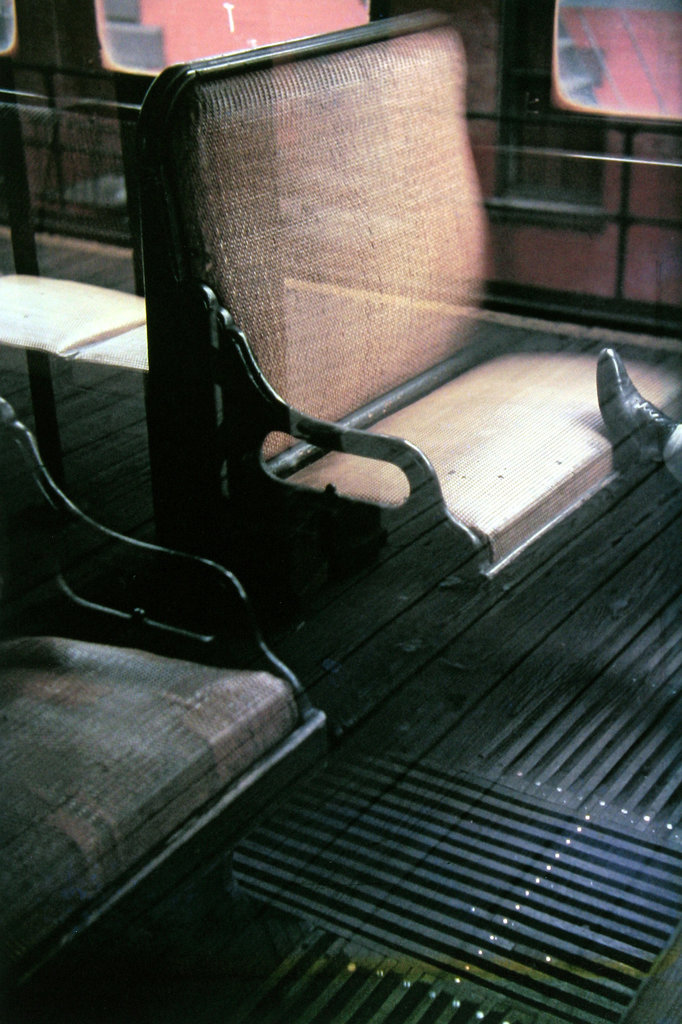
Saul Leiter (American, 1923-2013) 'Foot on El' 1954


Saul Leiter (American, 1923-2013)
Foot on El
1954


“Seeing is a neglected enterprise,” Mr. Leiter often said.

“I am not immersed in self-admiration,” he said. “When I am listening to Vivaldi or Japanese music or making spaghetti at 3 in the morning and realise that I don’t have the proper sauce for it, fame is of no use.”

“He broke all the rules when it came to composing a photograph,” said Mr. Leiter’s assistant, Margit Erb, who confirmed his death, at his home. “He put things into the abstract, he paid attention to colour, he threw foregrounds out of focus, which made the photographs feel very voyeuristic. He applied a painterly mentality that the photography world had not seen.”

His art was enough.

Dr Marcus Bunyan


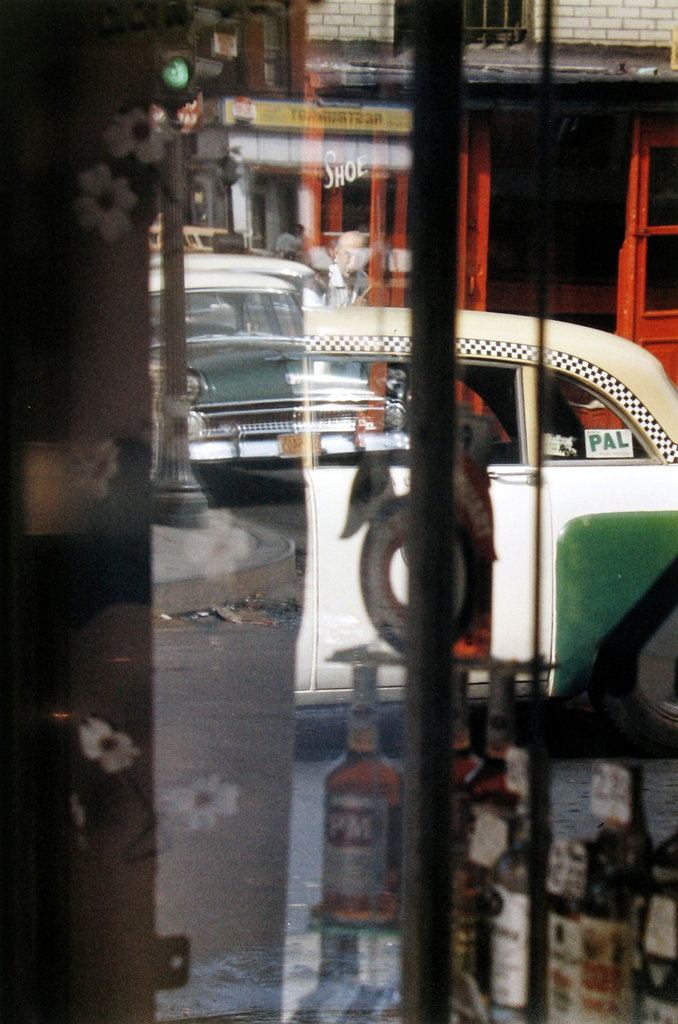
Saul Leiter (American, 1923-2013) 'Taxi' 1956


Saul Leiter (American, 1923-2013)
Taxi
1956


“”In order to build a career and to be successful, one has to be determined,” Mr. Leiter said in an interview for a monograph published in Germany in 2008. “One has to be ambitious. I much prefer to drink coffee, listen to music and to paint when I feel like it.” …

Unplanned and unstaged, Mr. Leiter’s photographs are slices fleetingly glimpsed by a walker in the city. People are often in soft focus, shown only in part or absent altogether, though their presence is keenly implied. Sensitive to the city’s found geometry, he shot by design around the edges of things: vistas are often seen through rain, snow or misted windows.

“A window covered with raindrops interests me more than a photograph of a famous person,” Mr. Leiter says in [the film] “In No Great Hurry.””

Read the obituary of this wonderful artist at “Saul Leiter, Photographer Who Captured New York’s Palette, Dies at 89” on the New York Times website, November 27, 2013

More images

Exhibition: ‘Saul Leiter’ at Kunst Haus Wien, Vienna, January – May 2013
Exhibition: ‘Saul Leiter Retrospective’ at The House of Photography at Deichtorhallen Hamburg, February – April 2012
Exhibition: ‘Saul Leiter: New York Reflections’ at the Jewish Historical Museum, Amsterdam, October 2011 – March 2012


LIKE ART BLART ON FACEBOOK

Back to top

Exhibition: ‘Melbourne Now’ at the National Gallery of Victoria, Melbourne, Part 1

Exhibition dates: 22nd November 2013 – 23rd March 2014


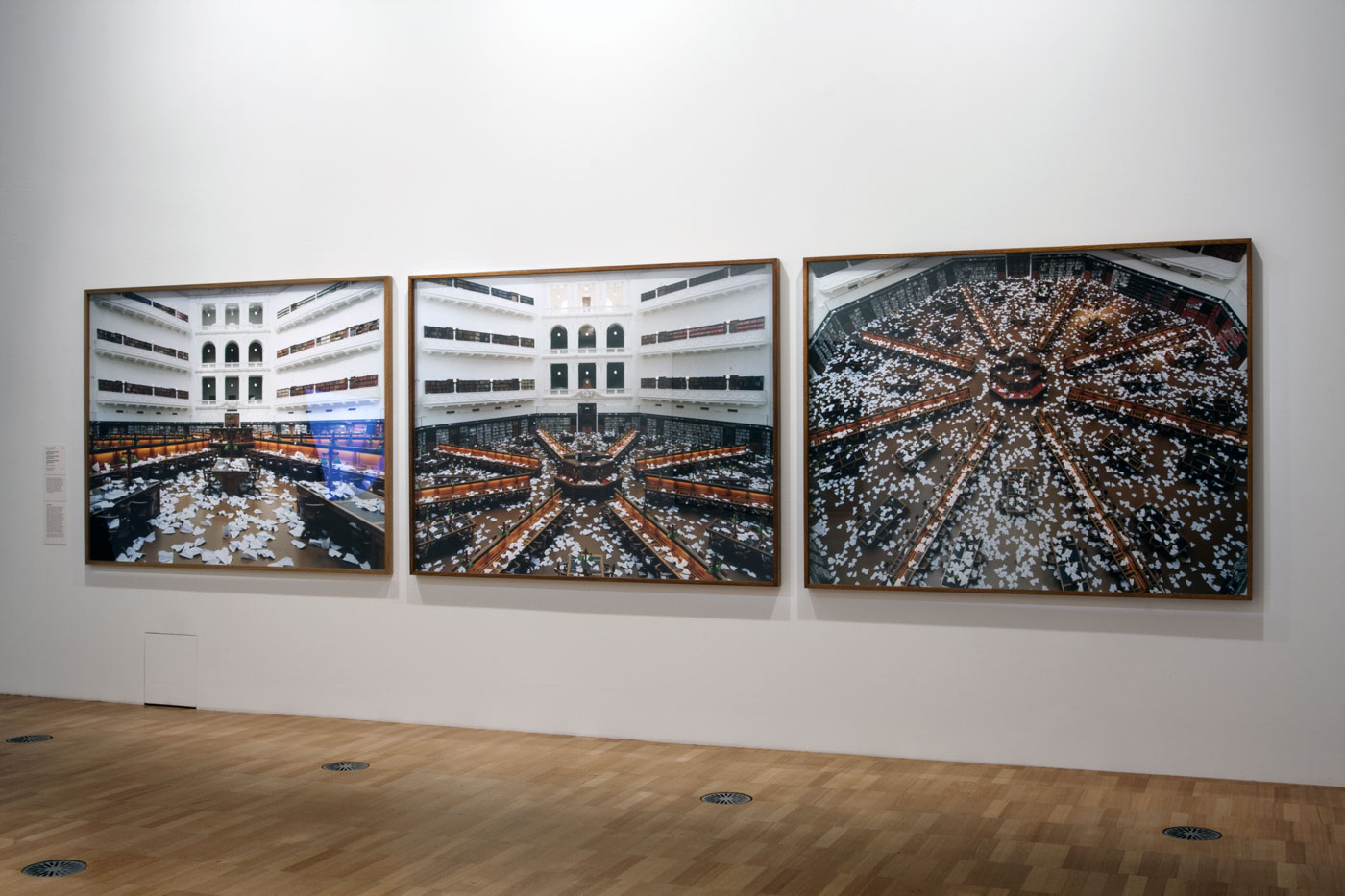
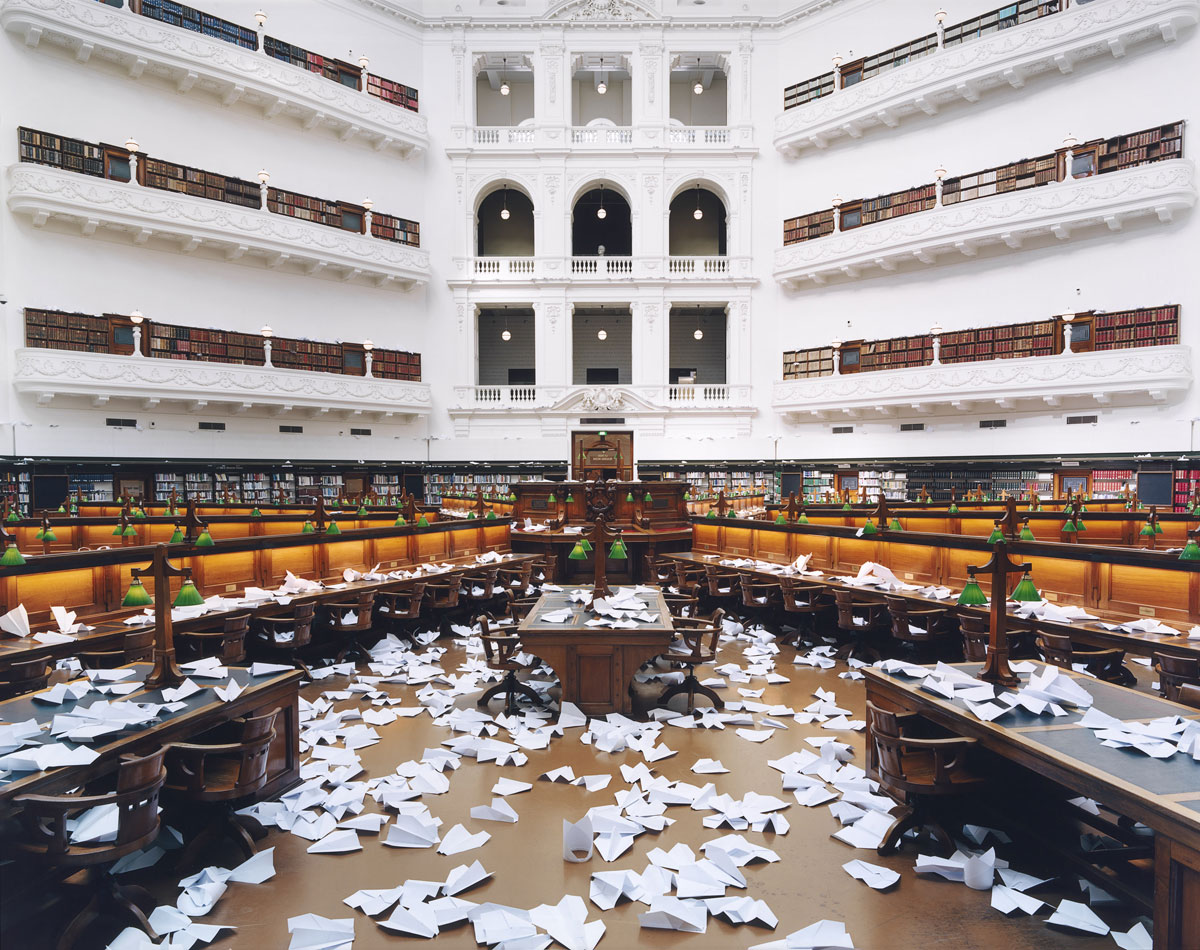
Ross Coulter (Australian, b. 1972) '10,000 paper planes – aftermath (1)' 2011 (installation view)


Ross Coulter (Australian, b. 1972)
10,000 paper planes – aftermath (1) (installation view)
2011
National Gallery of Victoria, Melbourne
Photo: © Marcus Bunyan


This is the first of a two-part posting on the huge Melbourne Now exhibition at the National Gallery of Victoria, Melbourne. The photographs in this posting are from the NGV International venue in St Kilda Road. The second part of the posting features photographs of work at NGV Australia: The Ian Potter Centre at Federation Square. Melbourne Now celebrates the latest art, architecture, design, performance and cultural practice to reflect the complex cultural landscape of creative Melbourne.

Keywords

Place, memory, anxiety, democracy, death, cultural identity, spatial relationships.

The best

Daniel Crooks An embroidery of voids 2013 video.

Highlights

Patricia Piccinini The Carrier 2012 sculpture; Mark Hilton dontworry 2013 sculpture.

Honourable mentions

Stephen Benwell Statues various dates sculpture; Rick Amor mobile call 2012 painting; Destiny Deacon and Virginia Fraser Melbourne Noir 2013 installation.

Disappointing

The weakness of the photography. With a couple of notable exceptions, I can hardly recall a memorable photographic image. Some of it was Year 12 standard.

Low points

~ The lack of visually interesting and beautiful art work – it was mostly all so ho hum in terms of pleasure for the eye
~ The preponderance of installation / design / architectural projects that took up huge areas of space with innumerable objects
~ The balance between craft, form and concept
~ Too much low-fi art
~ Too much collective art
~ Little glass art
~ Weak third floor at NGV International
~ Two terrible installations on the ground floor of NGVA

Verdict

As with any group exhibition there are highs and lows, successes and failures. Totally over this fad for participatory art spread throughout the galleries. Too much deconstructed / performance / collective design art that takes the viewer nowhere. Good effort by the NGV but the curators were, in some cases, far too clever for their own (and the exhibitions), good. 7/10

Dr Marcus Bunyan


Many thankx to the NGV for allowing me to publish the photographs in the posting. All photographs © Dr Marcus Bunyan unless otherwise stated. Please click on the photographs for a larger version of the image.

Please note: All text below the images is from the guide book.


“Although the word “new” recurs like an incantation in the catalogue essays many exhibits are variations on well-worn themes. The trump cards of Melbourne Now are bulk and variety… It’s astonishing that curators still seem to assume that art which proclaims its own radicality must be intrinsically superior to more personal expressions. Yet mediocrity recognises no such distinctions. Most of this show’s avant-garde gestures are no better than clichés.”


John Macdonald. “Review of Melbourne Now,” in the Sydney Morning Herald, Saturday 11 January, 2014 [Online] Cited 03/10/2022


“A rich, inspiring critical context prevails within Melbourne’s contemporary art community, reflecting the complexity of multiple situations and the engaging reality of a culture that is always in the process of becoming. Local knowledge is of course specific and resists generalisation – communities are protean things, which elide neat definition and representation. Notwithstanding the inevitable sampling and partial account which large-scale survey exhibitions unavoidably present, we hope that Melbourne Now retains a sense of semantic density, sensory intensity and conceptual complexity, harnessing the vision and energy that lie within our midst. Perhaps most importantly, the contributors to Melbourne Now highlight the countless ways in which art is able to change, alter and invigorate the senses, adding new perspectives and modes of perceiving the world in which we live.”


Max Delany. “Metro-cosmo-polis: Melbourne now” 2013


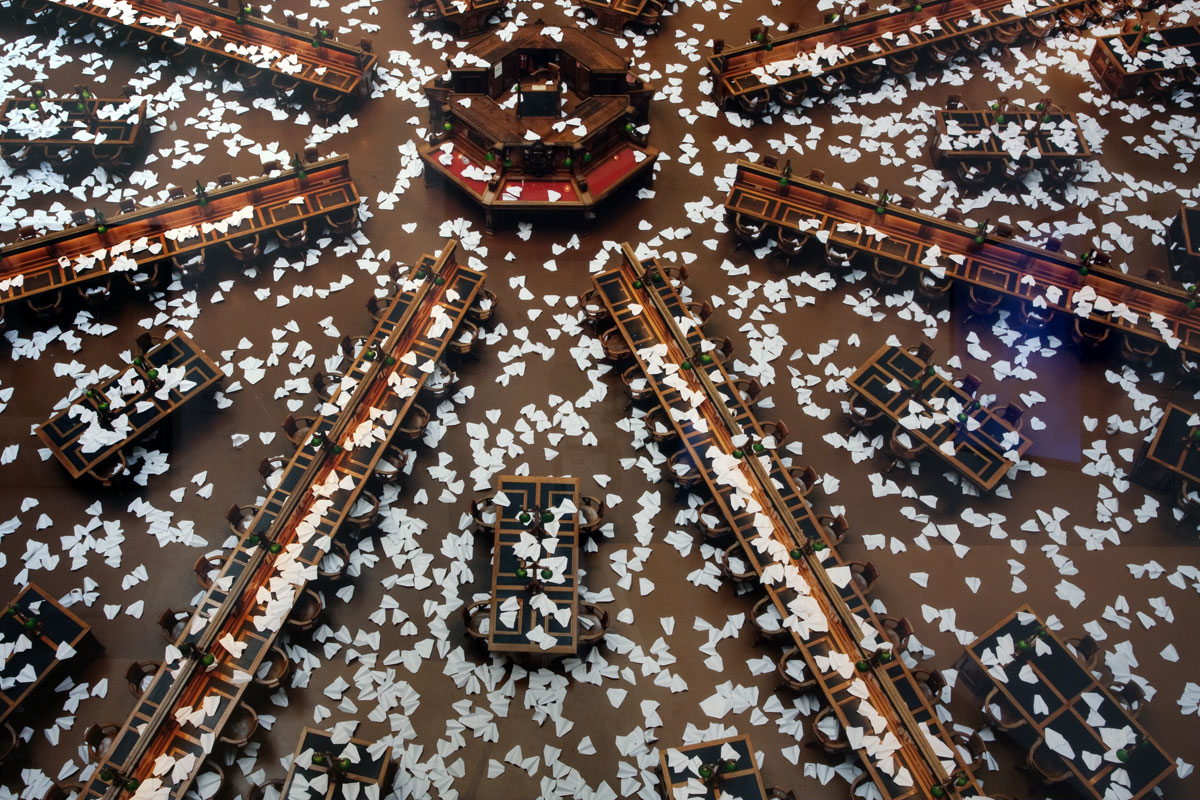
Ross Coulter (Australian, b. 1972) '10,000 paper planes – aftermath (1)' 2011 (detail)

Ross Coulter (Australian, b. 1972) '10,000 paper planes – aftermath (1)' 2011 (installation view)


Ross Coulter (Australian, b. 1972)
10,000 paper planes – aftermath (1)
2011
Type C photograph
156 x 200cm
National Gallery of Victoria, Melbourne
Purchased NGV Foundation, 2012
© Ross Coulter
Photo: © Marcus Bunyan
Last photo: © National Gallery of Victoria


With 10,000 paper planes – aftermath (1), 2011, Coulter encountered Melbourne’s intellectual heart, the State Library of Victoria (SLV). Being awarded the Georges Mora Foundation Fellowship in 2010 allowed Coulter to realise a concept he had been developing since he worked at the SLV in the late 1990s. The result is a playful intervention into what is usually a serious place of contemplation. Coulter’s paper planes, launched by 165 volunteers into the volume of the Latrobe Reading Room, give physical form to the notion of ideas flying through the building and the mind. This astute work investigates the striking contrast between the strict discipline of the library space and its categorisation system and the free flow of creativity that its holdings inspire in the visitor.


Laith McGregor (Australian, b. 1977) 'Pong ping paradise' 2011 (installation view)


Laith McGregor (Australian, b. 1977)
Pong ping paradise (installation view)
2011
Private collection, United States of America
Photo: © Marcus Bunyan


The drawings OK and KO, both 2013, which decorate the horizontal surfaces of two table-tennis tables and contain four large self-portraits portraying unease and concern, are more restrained. The hirsute beards of McGregor’s earlier works have evolved into all enveloping geometric grids, their hand-drawn asymmetry creating a subtle sense of distortion that contradicts the inherently flat surface of the tables.


Rick Amor (Australian, b. 1948) 'Mobile call' 2012 (installation view)


Rick Amor (Australian, b. 1948)
Mobile call (installation view)
2012
Private collection, Melbourne
Photo: © Marcus Bunyan


Best known for his brooding urban landscapes, Amor’s work in Melbourne NowMobile call, 2012, stays true to this theme. The painting speaks to the heart of urban living in its depiction of a darkened city alleyway, with dim, foreboding lighting. A security camera on the wall surveys the scene, a lone, austere figure just within its watch. The camera represents the omnipresent surveillance of our modern lives, and an uneasy air of suspicion permeates the painting’s subdued, grey landscape. Amor’s reflections on the urban landscape are solemn, restrained and often melancholic. Quietly powerful, his work alludes to a mystery in the banality of daily existence. Mobile call is a realistic portrayal of a metropolitan landscape that opens our eyes to a strange and complex world.


Steaphan Paton (Australian, Gunai and Monero Nations, b. 1985) 'Cloaked combat' 2013 (installation view detail)


Steaphan Paton (Australian, Gunai and Monero Nations, b. 1985)
Cloaked combat (installation view detail)
2013
National Gallery of Victoria, Melbourne
Photo: © Marcus Bunyan


Cloaked combat, 2013, is a visual exploration of the material and technological conflicts between cultures, and how these differences enable one culture to assert dominance over another. Five Aboriginal bark shields, customarily used in combat to deflect spears, repel psychedelic arrows shot from a foreign weapon. Fired by an unseen intruder cloaked in contemporary European camouflage, the psychedelic arrows rupture the bark shields and their diamond designs of identity and place, violating Aboriginal nationhood and traditional culture. The jarring clash of weapons not only illustrates a material conflict between these two cultures, but also suggests a deeper struggle between old and new. In its juxtaposition of prehistoric and modern technologies, Cloaked combat highlights an uneven match between Indigenous and European cultures and discloses the brutality of Australia’s colonisation.


Zoom project team. 'Zoom' 2013 (installation view detail)

Zoom project team. 'Zoom' 2013 (installation view detail)


Zoom project team
Curator: Ewan McEoin / Studio Propeller; Data visualisation: Greg More / OOM Creative; Graphic design: Matthew Angel; Exhibition design: Design Office; Sound installation: Marco Cher-Gibard; Data research: Serryn Eagleson / EDG Research; Digital survey design: Policy Booth
Zoom (installation view details)
2013
Photos: © Marcus Bunyan


Anchored around a dynamic tapestry of data by Melbourne data artist Greg More, this exhibit offers a window into the ‘system of systems’ that makes up the modern city, peeling back the layers to reveal a sea of information beneath us. Data ebbs and flows, creating patterns normally inaccessible to the naked eye. Set against this morphing data field, an analogue human survey asks the audience to guide the future design of Melbourne through choice and opinion. ZOOM proposes that every citizen influences the future of the city, and that the city in turn influences everyone within it. Accepting this co-dependent relationship empowers us all to imagine the city we want to create together.


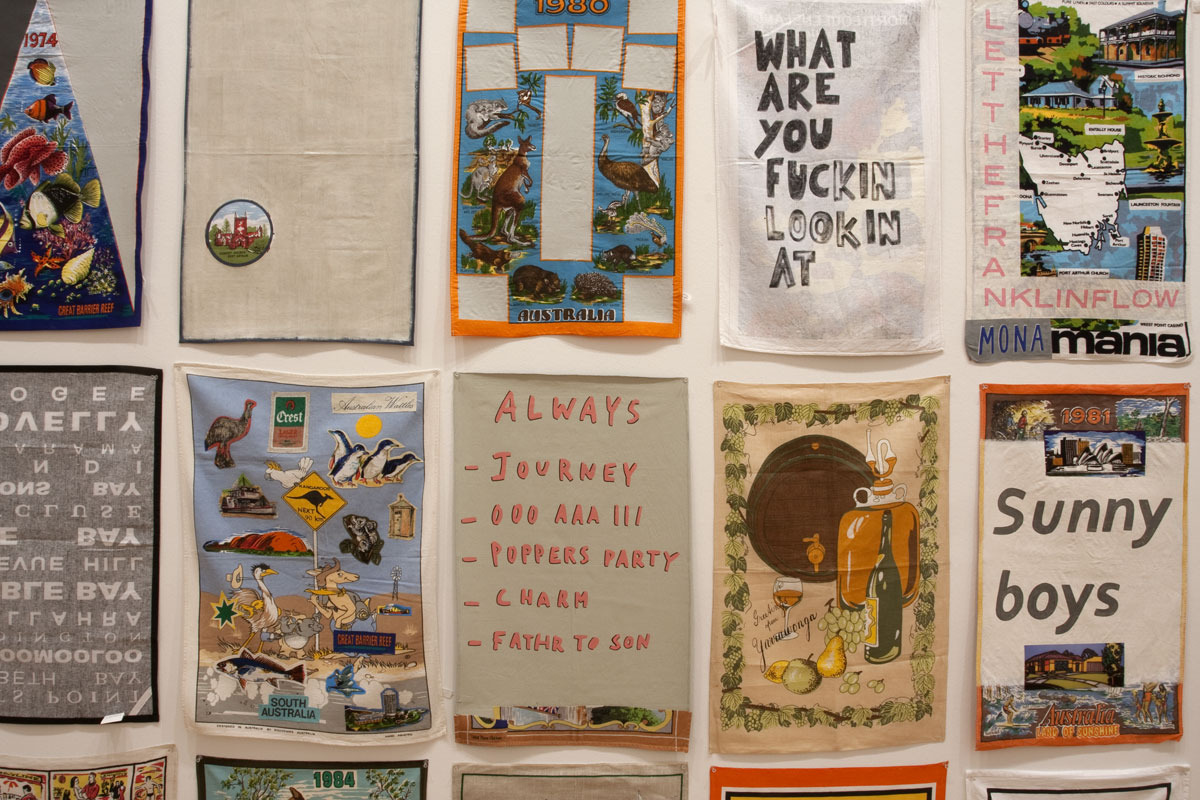
Installation view of Jon Campbell. 'DUNNO (T. Towels)' 2012 (left) and Reko Rennie 'Initiation', 2013 (right) (installation view)


Installation view of Jon Campbell DUNNO (T. Towels) 2012 (left) and Reko Rennie Initiation, 2013 (right)
Photo: © Marcus Bunyan


Jon Campbell (Australian born Northern Ireland, b. 1961) 'DUNNO (T. Towels)' 2012 (installation view detail)

Jon Campbell (Australian born Northern Ireland, b. 1961) 'DUNNO (T. Towels)' 2012 (installation view detail)


Jon Campbell (Australian born Northern Ireland, b. 1961)
DUNNO (T. Towels) (installation view details)
2012
Photos: © Marcus Bunyan


For Melbourne Now Campbell presents DUNNO (T. Towels), 2012, a work that continues his fascination with the vernacular culture of suburban Australia. Comprising eighty-five tea towels, some in their original condition and others that Campbell has modified through the addition of ‘choice’ snippets of Australian slang and cultural signifiers, this seemingly quotidian assortment of kitsch ‘kitchenalia’ is transformed into a mock heroic frieze in which we can discover the values and dramas of our present age.


Reko Rennie (Australian, Gamilaraay (Kamilaroi) b. 1974) 'Initiation' 2013 (installation view)


Reko Rennie (Australian, Gamilaraay (Kamilaroi) b. 1974)
Initiation (installation view)
2013
Synthetic polymer paint on plywood (1-40)
300.0 x 520.0cm (overall)
Collection of the artist
© Reko Rennie, courtesy Karen Woodbury Gallery, Melbourne
Supported by Esther and David Frenkiel
Photo: © Marcus Bunyan


Initiation, 2013, a mural-scale, multi-panelled hoarding that subverts the negative stereotyping of Indigenous people living in contemporary Australian cities. This declarative, renegade installation work is a psychedelic farrago of street art, native flora and fauna, Kamilaroi patterns, X-ray images and text that addresses what it means to be an urban Aboriginal person. By yoking together contrary elements of graffiti, advertising, bling, street slogans and Kamilaroi diamond geometry, Rennie creates a monumental spectacle of resistance.


Installation view of Reko Rennie 'Initiation', 2013 (installation view)


Installation view of Reko Rennie Initiation, 2013
Photo: Marcus Bunyan


Janet Burchill (Australian, b. 1955) and Jennifer McCamley (Australian, b. 1957) 'The Belief' 2004-2013 (installation view)


Janet Burchill (Australian, b. 1955)
Jennifer McCamley (Australian, b. 1957)
The Belief (installation view)
2004-2013
Photo: © Marcus Bunyan


Shields from Papua New Guinea held in the National Gallery of Victoria’s collection provided an aesthetic catalyst for the artists to develop an open-ended series of their own ‘shields’. The Belief includes shields made by Burchill and McCamley between 2004 and 2013. In part, this installation meditates on the form and function of shields from the perspective of a type of reverse ethnography. As the artists explain:

“The shield is an emblematic form ghosted by the functions of attack and defence and characterised by the aggressive display of insignia … We treat the shield as a perverse type of modular unit. While working with repetition, each shield acts as a carrier or container for different types and registers of content, motifs, emblems and aesthetic strategies. The series as a whole, then, becomes a large sculptural collage which allows us to incorporate a wide range of responses to making art and being alive now.”


Janet Burchill (Australian, b. 1955) and Jennifer McCamley (Australian, b. 1957) 'The Belief' 2004-2013 (installation view)


Janet Burchill (Australian, b. 1955)
Jennifer McCamley (Australian, b. 1957)
The Belief (detail)
2004-2013
Photo: © Marcus Bunyan


Melbourne Now is an exhibition unlike any other we have mounted at the National Gallery of Victoria. It takes as its premise the idea that a city is significantly shaped by the artists, designers, architects, choreographers, intellectuals and community groups that live and work in its midst. With this in mind, we have set out to explore how Melbourne’s visual artists and creative practitioners contribute to the dynamic cultural identity of this city. The result is an exhibition that celebrates what is unique about Melbourne’s art, design and architecture communities.

When we began the process of creating Melbourne Now we envisaged using several gallery spaces within The Ian Potter Centre: NGV Australia; soon, however, we recognised that the number of outstanding Melbourne practitioners required us to greatly expand our commitment. Now spreading over both The Ian Potter Centre: NGV Australia and NGV International, Melbourne Now encompasses more than 8000 square metres of exhibition space, making it the largest single show ever presented by the Gallery.

Melbourne Now represents a new way of working for the NGV. We have adopted a collaborative curatorial approach which has seen twenty of our curators work closely with both external design curators and many other members of the NGV team. Committing to this degree of research and development has provided a great opportunity to meet with artists in their studios and to engage with colleagues across the city as a platform not only for this exhibition, but also for long-term engagement.

A primary aim throughout the planning process has been to create an exhibition that offers dynamic engagement with our audiences. From the minute visitors enter NGV International they are invited to participate through the exhibition’s Community Hall project, which offers a diverse program of performances and displays that showcase a broad concept of creativity across all art forms, from egg decorating to choral performances. Entering the galleries, visitors discover that Melbourne Now includes ambitious and exciting contemporary art and design commissions in a wide range of media by emerging and established artists. We are especially proud of the design and architectural components of this exhibition which, for the first time, place these important areas of practice in the context of a wider survey of contemporary art. We have designed the exhibition in terms of a series of curated, interconnected installations and ‘exhibitions within the exhibition’ to offer an immersive, inclusive and sometimes participatory experience.

Viewers will find many new art commissions featured as keynote projects of Melbourne Now. One special element is a series of commissions developed specifically for children and young audiences – these works encourage participatory learning for kids and families. Artistic commissions extend from the visual arts to architecture, dance and choreography to reflect Melbourne’s diverse artistic expression. Many of the new visual arts and design commissions will be acquired for the Gallery’s permanent collections, leaving the people of Victoria a lasting legacy of Melbourne Now.

The intention of this exhibition is to encourage and inspire everyone to discover some of the best of Melbourne’s culture. To help achieve this, family-friendly activities, dance and music performances, inspiring talks from creative practitioners, city walks and ephemeral installations and events make up our public programs. Whatever your creative interests, there will be a lot to learn and enjoy in Melbourne NowMelbourne Now is a major project for the NGV which we hope will have a profound and lasting impact on our audiences, our engagement with the art communities in our city and on the NGV collection. We invite you to join us in enjoying some of the best of Melbourne’s creative art, design and architecture in this landmark exhibition.

Tony Ellwood
Director, National Gallery of Victoria

Foreword from the Melbourne Now exhibition guide book


Destiny Deacon (Australian, K'ua K'ua and Erub/Mer peoples 1957-2024) Virginia Fraser (Australian) 'Melbourne Noir' 2013 (installation view)

Destiny Deacon (Australian, K'ua K'ua and Erub/Mer peoples 1957-2024) Virginia Fraser (Australian) 'Melbourne Noir' 2013 (installation view)

Destiny Deacon (Australian, K'ua K'ua and Erub/Mer peoples 1957-2024) Virginia Fraser (Australian) 'Melbourne Noir' 2013 (installation view)

Destiny Deacon (Australian, K'ua K'ua and Erub/Mer peoples 1957-2024) Virginia Fraser (Australian) 'Melbourne Noir' 2013 (installation view)


Destiny Deacon (Australian, K’ua K’ua and Erub/Mer peoples 1957-2024)
Virginia Fraser (Australian)
Melbourne Noir (installation view details)
2013
Installation comprising photography, video, sculptural diorama dimensions (variable) (installation)
Collection of the artists
© Destiny Deacon and Virginia Fraser, courtesy Roslyn Oxley9 Gallery, Sydney
Photos: © Marcus Bunyan


Adapting the quotidian formats of snapshot photography, home videos, community TV and performance modes drawn from vaudeville and minstrel shows, Deacon’s artistic practice is marked by a wicked yet melancholy comedic and satirical disposition. In decidedly lo-fi vignettes, friends, family and members of Melbourne’s Indigenous community appear in mischievous narratives that amplify and deconstruct stereotypes of Indigenous identity and national history. For Melbourne Now, Deacon and Fraser present a trailer for a film noir that does not exist, a suite of photographs and a carnivalesque diorama. The pair’s playful political critiques underscore a prevailing sense of postcolonial unease, while connecting their work to wider global discourses concerned with racial struggle and cultural identity.


Darren Sylvester (Australian, b. 1974) 'For you' 2013 (installation view detail)

Darren Sylvester (Australian, b. 1974) 'For you' 2013 (installation view detail)

Darren Sylvester (Australian, b. 1974) 'For you' 2013 (installation view detail)

Darren Sylvester (Australian, b. 1974) 'For you' 2013 (installation view detail)


Darren Sylvester (Australian, b. 1974)
For you (installation view details)
2013
Based on Yves Saint Laurent Les Essentials rouge pur couture, La laque couture and Rouge pur couture range revolution lipsticks, Marrakesh sunset palette, Palette city drive, Ombres 5 lumiéres, Pure chromatic eyeshadows and Blush radiance
Illuminated dance floor, sound system
605 x 1500 x 198cm
Supported by VicHealth; assisted by the Australian Government through the Australia Council for the Arts, its arts funding and advisory body
Photos: © Marcus Bunyan


For Melbourne Now Sylvester presents For you, 2013, an illuminated dance floor utilising the current palette of colours of an international make-up brand. By tapping into commonly felt fears of embarrassment and the desire to show off in front of others, For you provides a gentle push onto a dance floor flush in colours already proven by market research to appear flattering on the widest cross-section of people. It is a work that plays on viewers’ vanity while acting as their support. In Sylvester’s own words, this work ‘will make you look good whilst enjoying it. It is for you’.


Assembling over 250 outstanding commissions, acquired and loaned works and installations, Melbourne Now explores the idea that a city is significantly shaped by the artists, designers and architects who live and work in its midst. It reflects the complexity of Melbourne and its unique and dynamic cultural identity, considering a diverse range of creative practice as well as the cross-disciplinary work occurring in Melbourne today.

Melbourne Now is an ambitious project that represents a new direction for the National Gallery of Victoria in terms of its scope and its relationship with audiences. Drawing on the talents of more than 400 artists and designers from across a wide variety of art forms, Melbourne Now will offer an experience unprecedented in this city; from video, sound and light installations, to interactive community exhibitions and artworks, to gallery spaces housing working design and architectural practices. The exhibition will be an immersive, inclusive and participatory exhibition experience, providing a rich and compelling insight into Melbourne’s art, design and cultural practice at this moment. Melbourne Now aims to engage and reflect the inspiring range of activities that drive contemporary art and creative practice in Melbourne, and is the first of many steps to activate new models of art and interdisciplinary exhibition practice and participatory modes of audience engagement at the NGV.

The collaborative curatorial structure of Melbourne Now has seen more than twenty NGV curators working across disciplinary and departmental areas in collaboration with exhibition designers, public programs and education departments, among others. The project also involves a number of guest curators contributing to specific contexts, including architecture and design, performance and sound, as well as artist-curators invited to create ‘exhibitions within the exhibition’, develop off-site projects and to work with the NGV’s collection. Examples of these include Sampling the City: Architecture in Melbourne Now, curated by Fleur Watson; Drawing Now, curated by artist John Nixon, bringing together the work of forty-two artists; ZOOM, an immersive data visualisation of cultural demographics related to the future of the city, convened by Ewan McEoin; Melbourne Design Now, which explores creative intelligence in the fields of industrial, product, furniture and object design, curated by Simone LeAmon; and un Retrospective, curated by un Magazine. Other special projects present recent developments in jewellery design, choreography and sound.

Numerous special projects have been developed by NGV curators, including Designer Thinking, focusing on the culture of bespoke fashion design studios in Melbourne, and a suite of new commissions and works by Indigenous artists from across Victoria which reflect upon the history and legacies of colonial and postcolonial Melbourne. The NGV collection is also the subject of artistic reflection, reinterpretation and repositioning, with artists Arlo Mountford, Patrick Pound and The Telepathy Project and design practice MaterialByProduct bringing new insights to it through a suite of exhibitions, videos and performative installations.

In our Community Hall we will be hosting 600 events over the four months of Melbourne Now offering a daily rotating program of free workshops, talks, catwalks and show’n’tells run by leaders in their fields. And over summer, the NGV will present a range of programs and events, including a Children’s Festival, dance program, late-night music events and unique food and beverage offerings.

The exhibition covers 8000 square metres of space, covering much of the two campuses of the National Gallery of Victoria, and moves into the streets of Melbourne with initiatives such as the Flags for Melbourne project, ALLOURWALLS at Hosier Lane, walking and bike tours, open studios and other programs that will help to connect the wider community with the creative riches that Melbourne has to offer.

Melbourne Now Introduction


Alan Constable (Australian, b. 1956) 'No title (teal SLR with flash)' 2013


Alan Constable (Australian, b. 1956)
No title (teal SLR with flash)
2013
Earthenware
15.5 x 24 x 11cm
Collection of the artist
© Alan Constable, courtesy Arts Project Australia, Melbourne
Photo: © National Gallery of Victoria


A camera’s ability to act as an extension of our eyes and to capture and preserve images renders it a potent instrument. In the case of Constable, this power has particular resonance and added poignancy. The artist lives with profound vision impairment and his compelling, hand-modelled ceramic reinterpretations of the camera – itself sometimes referred to as the ‘invented eye’ – possess an altogether more moving presence. For Melbourne Now, Constable has created a special group of his very personal cameras.


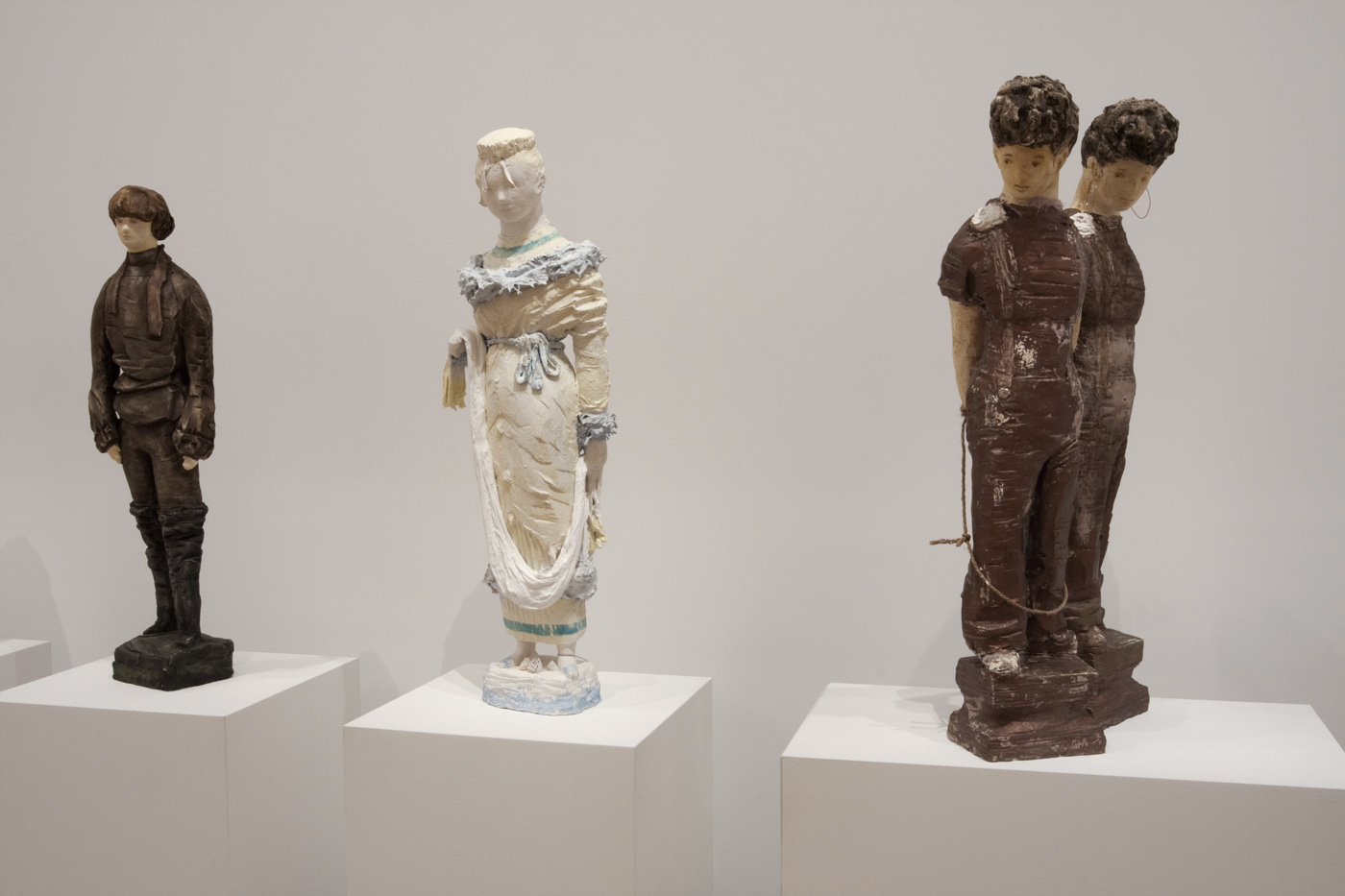
Linda Marrinon (Australian, b. 1959) Installation view of works including 'Debutante' (centre) 2009


Linda Marrinon (Australian, b. 1959)
Installation view of works including Debutante (centre)
2009
Tinted plaster, muslin
Collection of the artist
© Linda Marrinon, courtesy Roslyn Oxley9 Gallery, Sydney
Supported by Fiona and Sidney Myer AM, Yulgilbar Foundation and the Myer Foundation
Photo: © Marcus Bunyan


Marrinon’s art lingers romantically somewhere between the past and present. Her figures engage with notions of formal classical sculpture, with references to Hellenistic and Roman periods, yet remain quietly contemporary in their poise, scale, adornments and subject matter. Each work has a sophisticated and nonchalant air of awareness, as if posing for the audience. Informed by feminism and a keen sense of humour, Marrinon’s work is anti-heroic and anti-monumental. The figures featured in Melbourne Now range from two young siblings, Twins with skipping rope, New York, 1973, 2013, and a young woman, Debutante, 2009, to a soldier, Patriot in uniform, 2013, presented as a pantheon of unlikely types.


Brook Andrew (Australian, b. 1970) 'Vox: Beyond Tasmania' 2013 (installation view)


Brook Andrew (Australian, b. 1970)
Vox: Beyond Tasmania (installation view)
2013
Wood, cardboard, paper, books, colour slides, glass slides, 8mm film, glass, stone, plastic, bone, gelatin silver photographs, metal, feather
267 x 370 x 271cm
Collection of the artist
© Brook Andrew, courtesy Tolarno Galleries, Melbourne
Photo: © National Gallery of Victoria


Andrew’s Vox: Beyond Tasmania, 2013, renders palpable as contemporary art a central preoccupation of his humanist practice – the legacy of historical trauma on the present. Inspired by a rare volume of drawings of fifty-two Tasmanian Aboriginal crania, Andrew has created a vast wunderkammer containing a severed human skeleton, anthropological literature and artefacts. The focal point of this assemblage of decontextualised exotica is a skull, which lays bare the practice of desecrating sacred burial sites in order to snatch Aboriginal skeletal remains as scientific trophies, amassed as specimens to be studied in support of taxonomic theories of evolution and eugenics. Andrew’s profound and humbling memorial to genocide was supported in its first presentation by fifty-two portraits and a commissioned requiem by composer Stéphanie Kabanyana Kanyandekwe.


Brook Andrew (Australian, b. 1970) 'Vox: Beyond Tasmania' 2013 (installation view detail)

Brook Andrew (Australian, b. 1970) 'Vox: Beyond Tasmania' 2013 (installation view detail)


Brook Andrew (Australian, b. 1970)
Vox: Beyond Tasmania (details)
2013
Photos: © Marcus Bunyan


Daniel Crooks (New Zealand, b. 1973) 'An embroidery of voids' 2013 (still)

Daniel Crooks (New Zealand, b. 1973) 'An embroidery of voids' 2013 (still)


Daniel Crooks (New Zealand, b. 1973)
An embroidery of voids (stills)
2013
Colour single-channel digital video, sound, looped
Collection of the artist
© Daniel Crooks, courtesy Anna Schwartz Gallery, Melbourne and Sydney
Supported by Julie, Michael and Silvia Kantor
Photos: © National Gallery of Victoria


Commissioned for Melbourne Now, Crooks’s most recent video work focuses his ‘time-slice’ treatment on the city’s famous laneways. As the camera traces a direct, Hamiltonian pathway through these lanes, familiar surroundings are captured in seamless temporal shifts. Cobblestones, signs, concrete, street art, shadows and people gracefully pan, stretch and distort across our vision, swept up in what the artist describes as a ‘dance of energy’. Exposing the underlying kinetic rhythm of all we see, Crooks’s work highlights each moment once, gloriously, before moving on, always forward, transforming Melbourne’s gritty and often inhospitable laneways into hypnotic and alluring sites.


Jan Senbergs (Australian, 1939-2024) 'Extended Melbourne labyrinth' 2013 (installation view)


Jan Senbergs (Australian, 1939-2024)
Extended Melbourne labyrinth
2013
Oil stick, synthetic polymer paint wash (1-4)
158 x 120cm (each)
Collection of the artist
© Jan Senbergs, courtesy Niagara Galleries
Photo: © Marcus Bunyan


Senbergs’s significance as a contemporary artist and his understanding of the places he depicts and their meanings make his contribution to Melbourne Now essential. Drawing inspiration from Scottish poet Edwin Muir’s collection The labyrinth (1949), Senbergs’s Extended Melbourne labyrinth, 2013, takes us on a journey through the myriad streets and topography that make up our sprawling city. His characteristic graphic style and closely cropped rendering of the city’s urban thoroughfares is at once enthralling and unsettling. While the artist neither overtly celebrates nor condemns his subject, there is a strong sense of Muir’s ‘roads that run and run and never reach an end’.


Patrick Pound (Australian, b. 1962) 'The gallery of air' 2013 (installation view detail)

Patrick Pound (Australian, b. 1962) 'The gallery of air' 2013 (installation view detail)


Patrick Pound (Australian, b. 1962)
The gallery of air (installation view details)
2013
Photos: © Marcus Bunyan


For Melbourne Now Pound has created The gallery of air, 2013, a contemporary wunderkammer of works of art and objects from across the range of the NGV collection. There are Old Master paintings depicting the effect of the wind, and everything from an exquisite painted fan to an ancient flute and photographs of a woman sighing. When taken as a group these disparate objects hold the idea of air. Added to works from the Gallery’s collection is an intriguing array of objects and pictures from Pound’s personal collection. On entering his installation, visitors will be drawn into a game of thinking and rethinking about the significance of the objects and how they might be activated by air. Some are obvious, some are obscure, but all are interesting.


Marco Fusinato (Australian, b. 1964) 'Aetheric plexus (Broken X)' 2013 (installation view)


Marco Fusinato (Australian, b. 1964)
Aetheric plexus (Broken X) (installation view)
2013
Alloy tubing, lights, double couplers, Lanbox LCM DMX controller, dimmer rack, DMX MP3 player, powered speaker, sensor, extension leads, shot bags
880 x 410 x 230cm
Collection of the artist
© Marco Fusinato, courtesy Anna Schwartz Gallery, Melbourne and Sydney
Supported by Joan Clemenger and Peter Clemenger AM
Photo: © National Gallery of Victoria


For Melbourne Now, Fusinato presents Aetheric plexus (Broken X), 2013, a dispersed sculpture comprising deconstructed stage equipment that is activated by the presence of the viewer, triggering a sensory onslaught with a resonating orphic haze. The work responds to the wider context of galleries, in the artist’s words, ‘changing from places of reflection to palaces of entertainment’ by turning the engulfed audience member into a spectacle.


Installation view of Susan Jacobs 'Wood flour for pig iron (vessel for mixing metaphors)' 2013 with Mark Hilton 'dontworry' 2013 in the background (installation view)


Installation view of Susan Jacobs Wood flour for pig iron (vessel for mixing metaphors) 2013 with Mark Hilton dontworry 2013 in the background
Photo: © Marcus Bunyan


In her most recent project, Jacobs fabricates a rudimentary version of the material Hemacite (also known as Bois Durci) – made from the blood of slaughtered animals and wood flour – which originated in the late nineteenth century and was moulded with hydraulic pressure and heat to form everyday objects, such as handles, buttons and small domestic and decorative items. The attempt to re-create this outmoded material highlights philosophical, economic and ethical implications of manufacturing and considers how elemental materials are reconstituted. Wood flour for pig iron (vessel for mixing metaphors), 2013, included in Melbourne Now, explores properties, physical forces and processes disparately linked across various periods of history.


Mark Hilton (Australian, b. 1976) 'dontworry' 2013 (installation view)


Mark Hilton (Australian, b. 1976)
dontworry (installation view)
2013
Cast resin, powder
The Michael Buxton Collection, Melbourne
© Mark Hilton, courtesy Darren Knight Gallery, Sydney
Photo: © National Gallery of Victoria


dontworry, 2013, included in Melbourne Now, is the most ambitious and personal work Hilton has made to date. A dark representation of events the artist witnessed growing up in suburban Melbourne, this wall-based installation presents an unnerving picture of adolescent mayhem and bad behaviour. Extending across nine intricately detailed panels, each corresponding to a formative event in the artist’s life, dontworry can be understood as a deeply personal memoir that explores the transition from childhood to adulthood, and all the complications of this experience. Detailing moments of violence committed by groups or mobs of people, the installation revolves around Hilton’s continuing fascination with the often indistinguishable divide between truth and myth.


Mark Hilton (Australian, b. 1976) 'dontworry' 2013 (installation view detail)

Mark Hilton (Australian, b. 1976) 'dontworry' 2013 (installation view detail)


Mark Hilton (Australian, b. 1976)
dontworry (installation view details)
2013
Cast resin, powder
The Michael Buxton Collection, Melbourne
© Mark Hilton, courtesy Darren Knight Gallery, Sydney
Photos: © Marcus Bunyan


NGV International
180 St Kilda Road

Opening hours
Daily 10am – 5pm

National Gallery of Victoria website

LIKE ART BLART ON FACEBOOK

Back to top

Exhibition: ‘Nude in Public: Sascha Schneider, Homoeroticism and the Male Form circa 1900’ at The Leslie-Lohman Museum of Gay and Lesbian Art, New York City

Exhibition dates: 20th September – 8th December 2013

Curator: Jonathan David Katz

PLEASE NOTE: THIS POSTING CONTAINS ART WORK OF MALE NUDITY – IF YOU DO NOT LIKE PLEASE DO NOT LOOK, FAIR WARNING HAS BEEN GIVEN


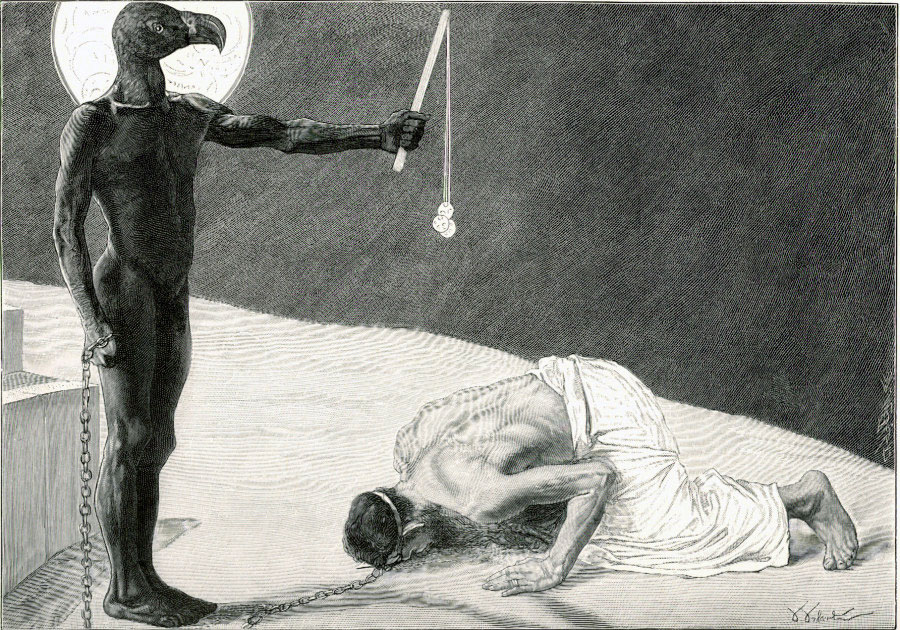
Sascha Schneider (German, 1870-1927) 'Mammon and his Slave' c. 1896


Sascha Schneider (German, 1870-1927)
Mammon and his Slave
c. 1896
Wood engraving, published by J. J. Weber, Leipzig
9.44 x 12.59 in.
Collection of Hans-Gerd Röder


Many thankx to The Leslie-Lohman Museum of Gay and Lesbian Art for allowing me to publish the art work in the posting. Please click on the photographs for a larger version of the image.


“Schneider was born in Saint Petersburg in 1870. During his childhood his family lived in Zürich, but following the death of his father, Schneider, moved to Dresden, where in 1889 he became a student at the Dresden Academy of Fine Arts (Kreuzgymnasium). In 1903 he met best-selling author Karl May, and subsequently became the cover illustrator of a number of May’s books including WinnetouOld SurehandAm Rio de la Plata. A year later in 1904, Schneider was appointed professor at the Großherzoglich-Sächsische Kunstschule Weimar.

During this period Schneider lived together with painter Hellmuth Jahn. Jahn began blackmailing Schneider by threatening to expose his homosexuality, which was punishable under §175 of the penal code. Schneider fled to Italy, where homosexuality was not criminalised at that time. In Italy, Schneider met painter Robert Spies, with whom he travelled through the Caucasus Mountains. He then traveled back to Germany, where he lived for six months in Leipzig before returning to Italy, where he resided in Florence. When the First World War started, Schneider returned to Germany again, taking up residence in Hellerau (near Leipzig). After 1918, he co-founded an institute called Kraft-Kunst for body building. Some of the models for his art works trained here.

Schneider, who suffered from diabetes mellitus, suffered a diabetic seizure during a ship voyage in the vicinity of Swinemünde. As a result he collapsed and died in 1927 in Swinemünde. He was buried in Loschwitz Cemetery, Germany.”

Text from Wikipedia, where a good gallery of further work by Schneider can be found.


Sascha Schneider (German, 1870-1927) 'Patriarch' 1895


Sascha Schneider (German, 1870-1927)
Patriarch
1895
Oil on canvas
40.15 x 58.26 in.
Collection of Hans-Gerd Röder


Images of rulers, emperors, and patriarchs [are] a reminder that Schneider was born into an imperial political system. But like the Babylonian figure of Growing Stronger, this large patriarch isn’t a figure of contemporary life, but an echo of a resurgent classicism. Schneider’s fascination with authoritarian masculinity bookends his interest in male youth, a parallel itself rooted in classical ideals.

Text from the exhibition web page


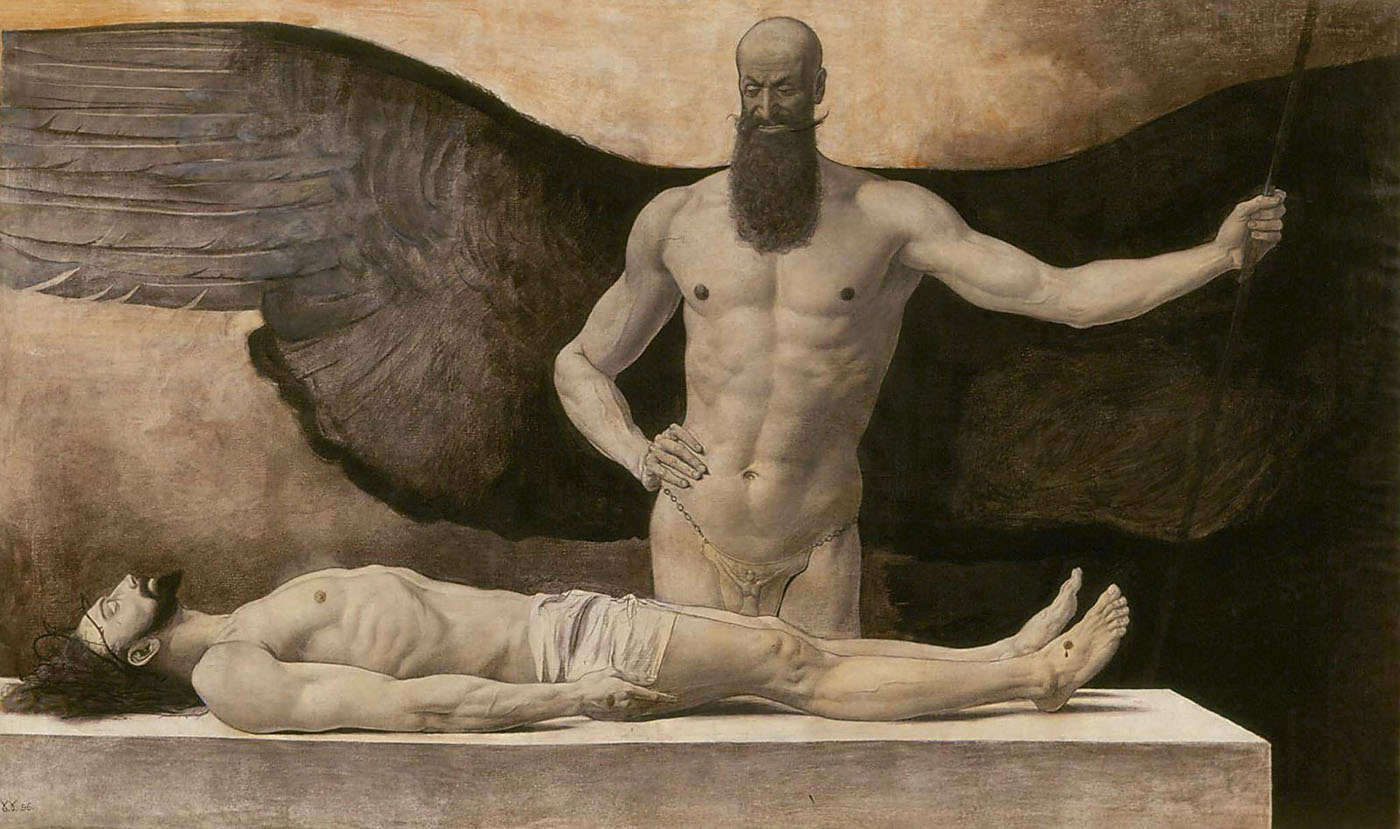
Sascha Schneider (German, 1870-1927) 'Triumph of Darkness' 1896


Sascha Schneider (German, 1870-1927)
Triumph of Darkness [Der Fürst der Verdammten (Prince of the Damned)]
1896
Mixed media
62.99 x 106.29 in.
Collection of Hans-Gerd Röder


Sascha Schneider (German, 1870-1927) 'Untitled (study of a reclining male nude with tucked up legs)' 1894


Sascha Schneider (German, 1870-1927)
Untitled (study of a reclining male nude with tucked up legs)
1894
Pencil and charcoal with white highlights on grey paper
20.07 x 15.74 in.
Collection of Hans-Gerd Röder


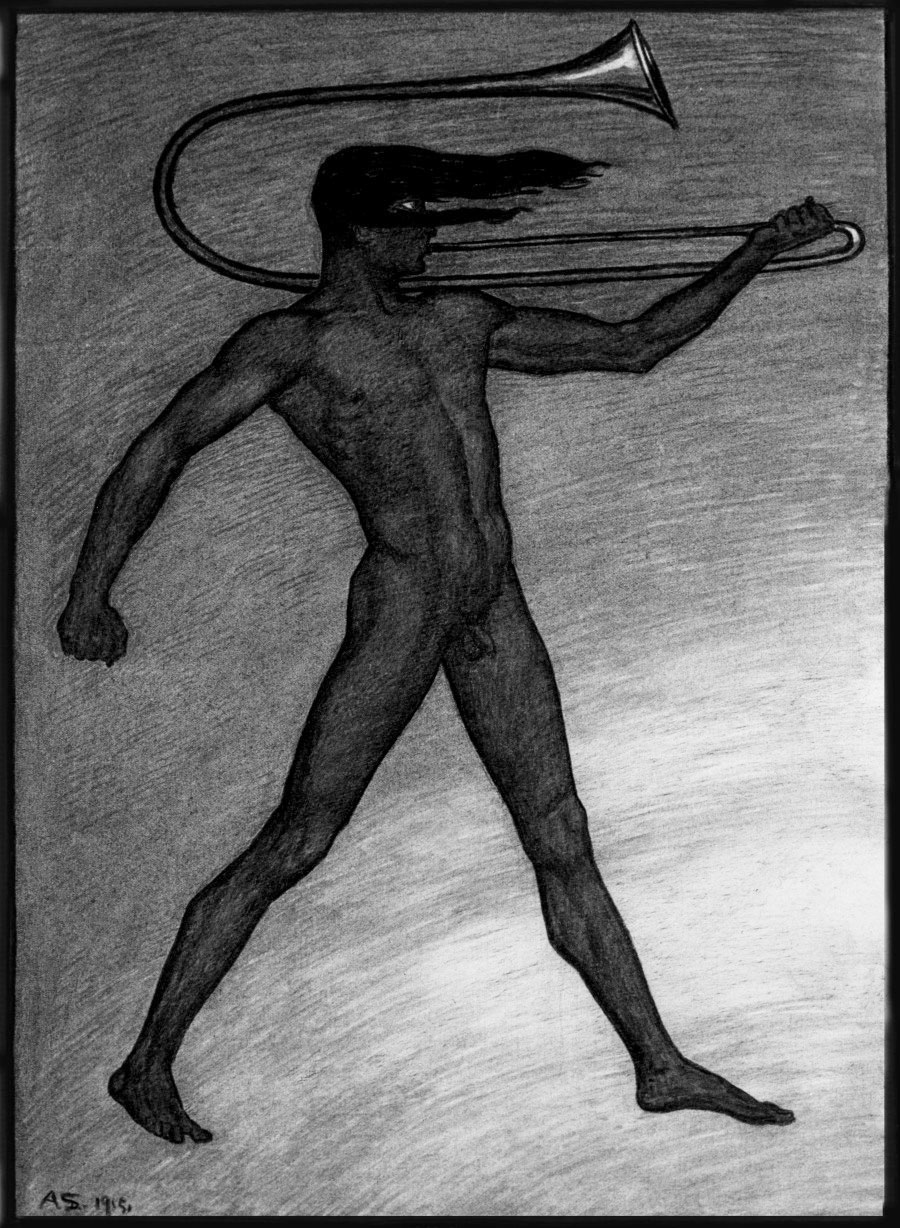
Sascha Schneider (German, 1870-1927) 'War Cry' 1915


Sascha Schneider (German, 1870-1927)
War Cry
1915
Charcoal on paper
19.68 x 17.17 in.
Collection of Hans-Gerd Röder


The Leslie-Lohman Museum of Gay and Lesbian Art will kick off its autumn 2013 season by exploring the German painter Sascha Schneider (1870-1927). At the beginning of the 20th Century, Schneider was elevated to a prestigious post at a German university and was one of the most well-known and well-respected public artists of his time. Only a generation later, he was largely relegated to obscurity. This exhibit examines not only Schneider’s art, but the strange cultural phenomenon that caused his dramatic rise and fall. Curated by Jonathan David Katz, this will not only be the single most extensive one-person exhibition of Sascha Schneider’s art ever mounted since his premature death, but the very first exhibition of Sascha Schneider’s art in the U.S.

A Strange Historical Interval

While the history of art is overwhelmingly a history of imaging the female nude, for a brief moment – and in Germany above all – it is instead a history of the male nude. Sascha Schneider was product and beneficiary of this unusual historical moment, one of the most fraught, contradictory and unresolved periods in the modern history of sexual regulation.

This strange historical interval, more developed in Germany in the early 20th century than anywhere else, goes by the English name of the Health and Hygiene Movement. In part a response to rapid industrialisation, urban crowding, and the fear that modern life was weakening the inherent strength and drive of Germany’s youth, this reformist movement proposed a bold solution, at once forward and backward looking: it advocated a return to a classical conception of the gymnasium – of training the body as well as the mind through youthful exercise outdoors, preferably in the nude, all in pursuit of a natural health and vitality. Conjoining an idealised youthful beauty, sport and bold nudity, Freikörperkultur (which literally means free body culture) made paintings, photographs, sculptures, and especially public murals that today look strikingly homoerotic, merely part of the visual landscape of early twentieth-century Germany.

Adherents of the movement claimed that only through the confident and shameless exposure of strong, beautiful, male bodies, would young German men throw off the enervating effects of modern life and return to their natural vitality. The emphasis on male nudity had a simple rationale: not only had modern life ostensibly put the German ideal of “manliness” under pressure – a dynamic that would have tragic repercussions with the rise of the Nazis – but since the erotic dimension of female nudity was widely acknowledged, male nudity was paradoxically framed as inherently purer and untainted by eros, as an image of German manhood and its strength and power without any admixture of desire.

The Cultural Conflict

Yet at the same exact moment that Freikörperkultur made the sight of handsome nude young men ubiquitous in public spaces as diverse as stadiums and opera houses, another movement was brewing – the very first modern gay-rights movement. Led by such pioneering figures as Magnus Hirschfeld, founder of the Institute for Sexual Research (which was destroyed by the Nazis in 1933), this new political movement sought to make same-sex relationships entirely legal, in part through claiming that gay people were born gay, that same-sex desire was as natural to some as heterosexuality was to others. But whereas Freikörperkultur sought to generalise an (unacknowledged) homoerotic sensibility across all of German culture, this new politics essentially set up the first self-described homosexual minority in history. Thus a collision was set in motion between those who worked to make homosexuality more tolerable by generalising a gay aesthetic (though distinctly not a gay politics) across the culture at large and those who named their homosexuality, who specifically sought civil rights under the guise of inborn and natural difference.

Caught in the Conflict

Schneider, who emblematised Freikörperkultur in almost every work he ever did, nonetheless came to understand the limits of a social world that accepted homoeroticism but not homosexuals. He was forced to resign from his prestigious post at Weimar University and flee to Italy.

Schneider’s fortunes as an artist were so intimately bound up with this historical interlude and its inherent contradictions that his career couldn’t survive its passing. When he died at age 57 in 1927, of complications from diabetes, his star was already dimming. By the end of World War II, he was largely forgotten. But through the efforts of one man, the German collector Hans-Gerd Röder, who became fascinated by this unknown figure while still in his twenties and began to seek out every work by Schneider he could find, a tattered reputation in modern art history has been painstakingly restored. Mr. and Mrs. Röder and their family have generously agreed to lend their collection of masterworks to the Leslie-Lohman Museum.

.
The Leslie-Lohman Museum of Gay and Lesbian Art is the first and only dedicated gay and lesbian art museum in the world with a mission to exhibit and preserve gay and lesbian art, and foster the artists who create it. The Museum has a permanent collection of over 22,000 objects, 6-8 major exhibitions annually, artist talks, film screenings, readings, THE ARCHIVE – a quarterly art newsletter, a membership program, and a research library. The Leslie-Lohman Museum is operated by the Leslie-Lohman Gay Art Foundation, a non-profit founded in 1987 by Charles W. Leslie and Fritz Lohman who have supported gay and lesbian artists for over 30 years. The Leslie-Lohman Museum embraces the rich creative history of the gay and lesbian art community by informing, inspiring, entertaining and challenging all who enter its doors.

Press release from The Leslie-Lohman Museum of Gay and Lesbian Art


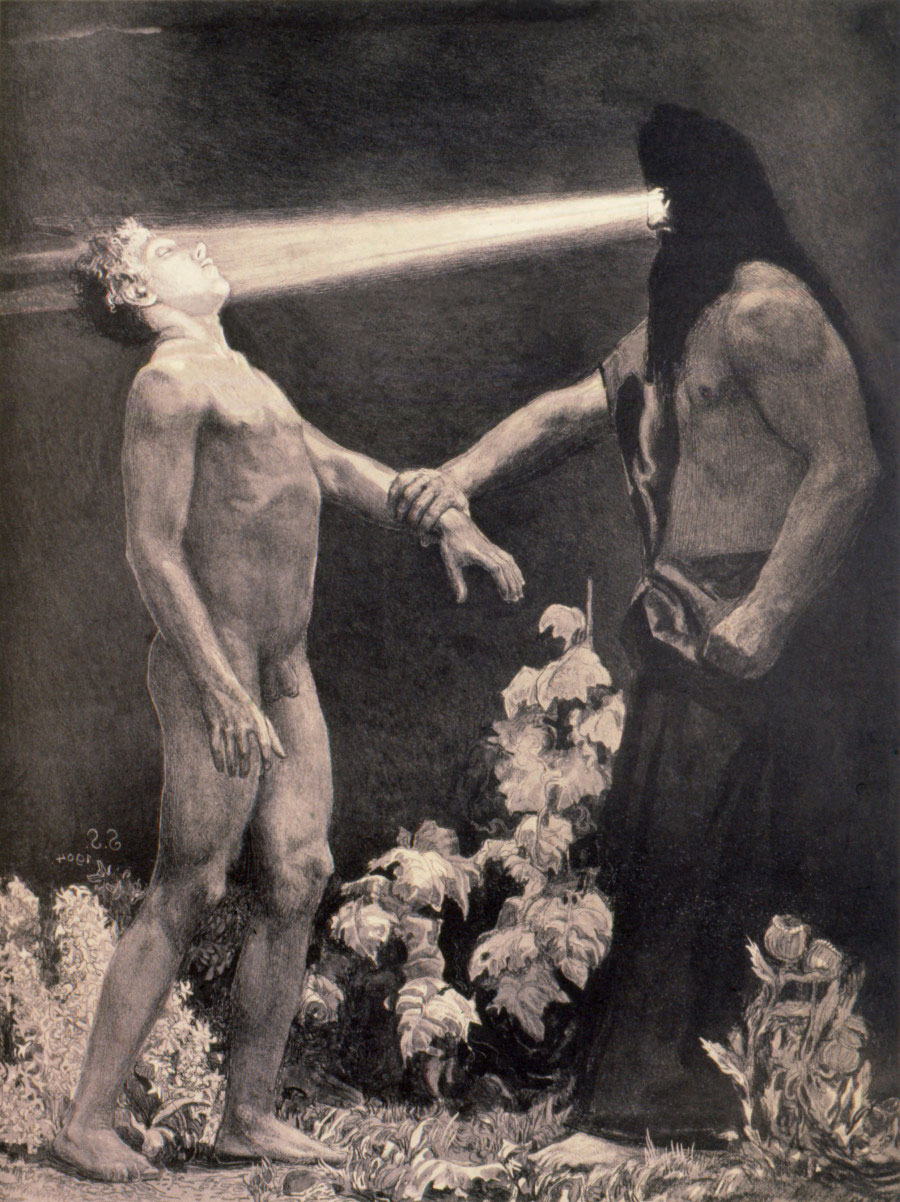
Sascha Schneider (German, 1870-1927) 'Hypnotism' 1904


Sascha Schneider (German, 1870-1927)
Hypnotism
1904
Lithograph, published Breitkopf and Hartel, Leipzig
19.68 x 15.74 in.
Collection of Hans-Gerd Röder


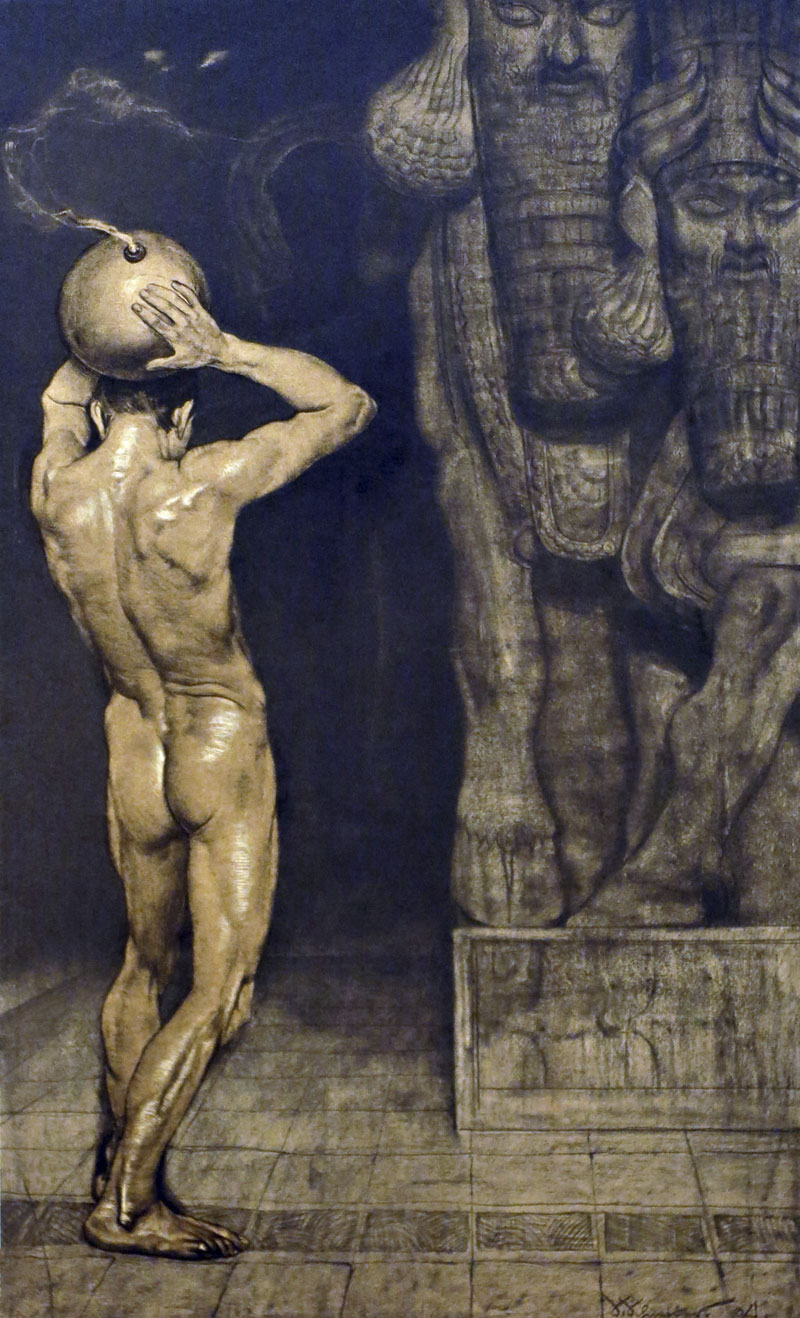
Sascha Schneider (German, 1870-1927) 'The Anarchist' 1894


Sascha Schneider (German, 1870-1927)
The Anarchist
1894
Lithograph on paper
19.68 x 15.74 in.
Collection of Hans-Gerd Röder


Sascha Schneider (German, 1870-1927) 'Feeling of Dependency' 1894


Sascha Schneider (German, 1870-1927)
Gefühl der Abhängigkeit (Feeling of Dependency)
1894
Chalk, charcoal and paints on cardboard
27.55 x 19.09 in.
Collection of Hans-Gerd Röder


Sascha Schneider (1870-1927) was an artist who achieved mainstream critical and commercial success in turn-of-the-century Germany despite its striking homoeroticism. Appointed painting chair at the Weimar-Saxon Grand Ducal Art School, and a recipient of prestigious aristocratic commissions, Schneider was once a celebrated painter. Today he is practically unknown, even in Germany. If his name is mentioned at all, it usually is only as the illustrator of the hugely successful Karl May novels, a German adventure series set in the American West. This exhibition seeks to do more than resurrect a forgotten career. It asks why his art was less controversial a hundred years ago than it is today.

Turn-of-the-century Germany was a culture modelled on the classical past, reinvigorating classical ideals in art, architecture, and education. The Greek notion of the gymnasium, where young men developed both mind and body together, continues to be the German word for “high school” even today. Schneider, who actually built a body-building studio in his atelier, was an adherent of this classical ideal. And since this attitude toward mental and physical development was by no means an exclusively homosexual one, it was Schneider’s frank depiction of male beauty that made his art, paradoxically, so mainstream. This exhibition is dedicated to Hans-Gerd Röder, who has almost single-handedly safeguarded Schneider’s work. The art shown is from his collection.

Growing Stronger is a distillation of several of Schneider’s key themes. It features a bearded man whose face and pose are likely drawn from ancient Babylonian relief sculptures excavated by the Germans in the late 19th century and relocated to Germany. This quasi-Babylonian figure is depicted as warmly encouraging the strength of a nude youth. In its original early 20th century context, the image would have been seen as an example of the classical ideal of the gymnasium, where naked youth competed for glory. The paternalism evoked in the image, a celebration of masculine achievement, would have made it in no way controversial in Schneider’s time, when countless such images were painted and sculpted in public settings across the country.

In 1919 Schneider convinced the owner of a Dresden department store to let him have the top floor as a combined atelier and bodybuilding studio. Thus was born Schneider’s Kraft-Kunst-Institut (literally, strength-art-institute). The studio contained a complete gymnasium and some of the participants became models for his art. Privately, Schneider complained that the Institute’s recruits who could afford tuition were not the youthful types he desired.

From the spooky Oak Forest on Ruegen Island to the explicit War Cry, Schneider’s work reflects the tumultuous times in which he lived. Born a year before the unification of Germany in 1871, he saw its defeat in World War I and the onerous peace treaty Germany was forced to sign. Images of death, war, and foreboding are constant throughout his long career.

The image of an ephebic youth, poised at the brink of manhood, as the ideal figure of the classical past, became familiar throughout Germany in the early 20th century. This image of youth was also more broadly associated with modernity and change – the German variant of Art Nouveau. Strong and healthy, lifting weights, these youths were available as a virile, nationalistic metaphor for Germany itself carrying a range of associations, not all of them erotic.

Young men had been familiar subjects in Western art, ranging from Renaissance putti to revellers splashing at beaches or swimming holes in the early 20th century, and as such Schneider’s art reflects a much less guarded ethic governing the representation of youth than we see today. But notably, his subjects are not the realist nudes of an earlier era. Simplified, made over into a repetitious pattern, the body here is an exercise in modernity, in formal patterning and aestheticised contours. Whereas French modernism was generally built over the figure of the nude female, German modernity tended to instead invoke the body of a young man.

Text from the exhibition web page


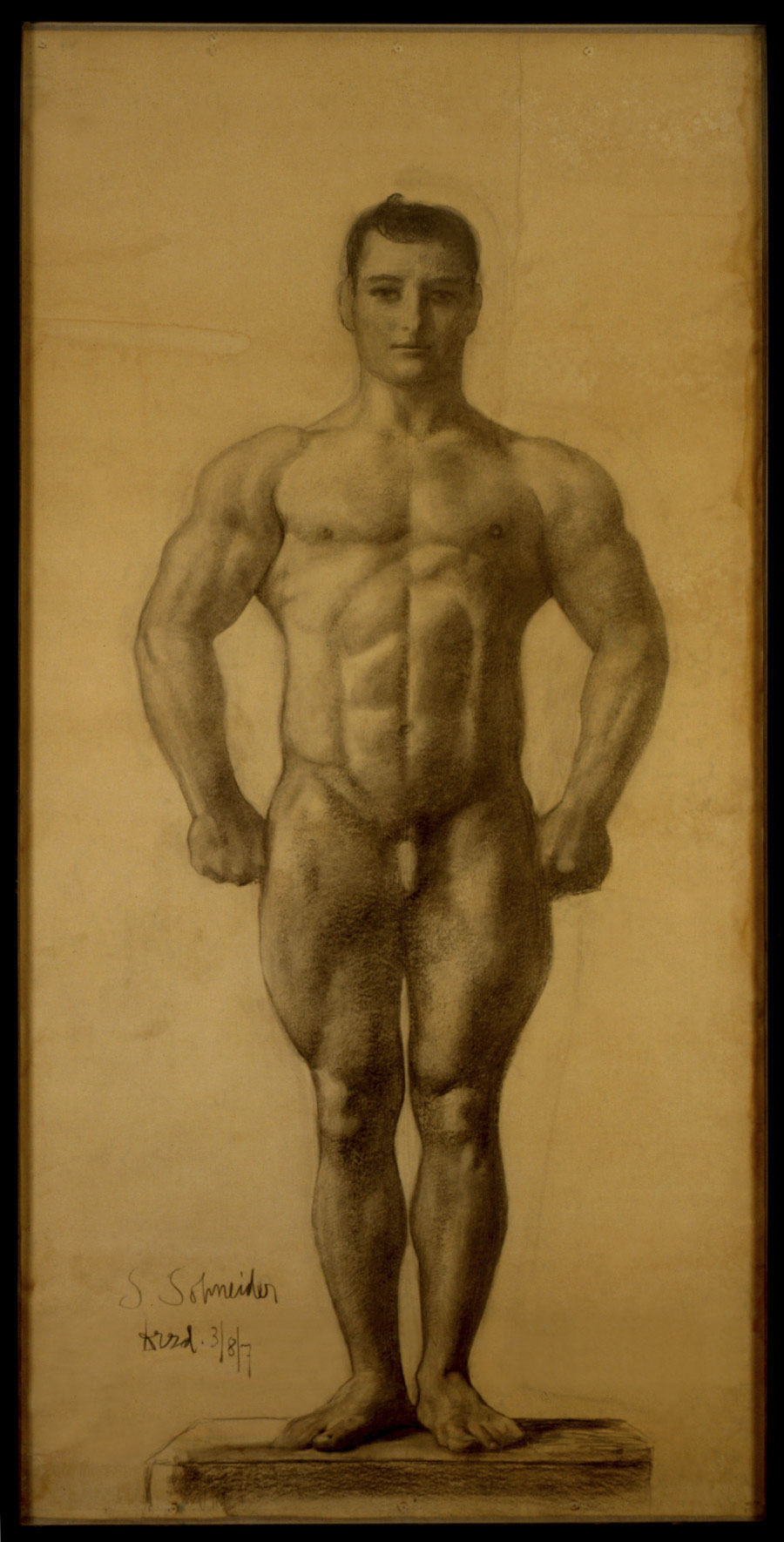
Sascha Schneider (German, 1870-1927) 'Athlete in Basic Position' 1907


Sascha Schneider (German, 1870-1927)
Athlete in Basic Position
1907
Chalk on paper relined on canvas
83.85 x 42.91 in.
Collection of Hans-Gerd Röder


Sascha Schneider (German, 1870-1927) 'Rear View of Nude with Towel' c. 1920


Sascha Schneider (German, 1870-1927)
Rear View of Nude with Towel
c. 1920
Oil on canvas
40.15 x 14.56 in
Collection of Hans-Gerd Röder


The Leslie-Lohman Museum of Gay and Lesbian Art
26 Wooster Street, Soho, New York City
Phone: 212-431-2609

Opening hours:
Wednesday 12 – 5pm
Thursday – Sunday 12 – 6pm
The Museum is closed Monday, Tuesday and all major holidays.
Admission is free.

Leslie-Lohman Museum of Gay and Lesbian Art website

LIKE ART BLART ON FACEBOOK

Back to top

Text: “The Book of Memory” extract from Paul Auster’s ‘The Invention of Solitude’ 1982

November 2013


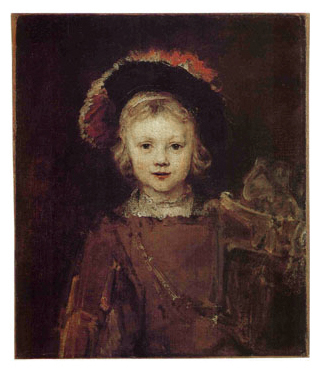
Rembrandt van Rijn (Dutch, 1641-1668) 'Portrait of a Boy in Fancy Dress (Titus)' c. 1655


Rembrandt van Rijn (Dutch, 1641-1668)
Portrait of a Boy in Fancy Dress (Titus)
c. 1655
Oil on canvas


The Book of Memory. Book Four.

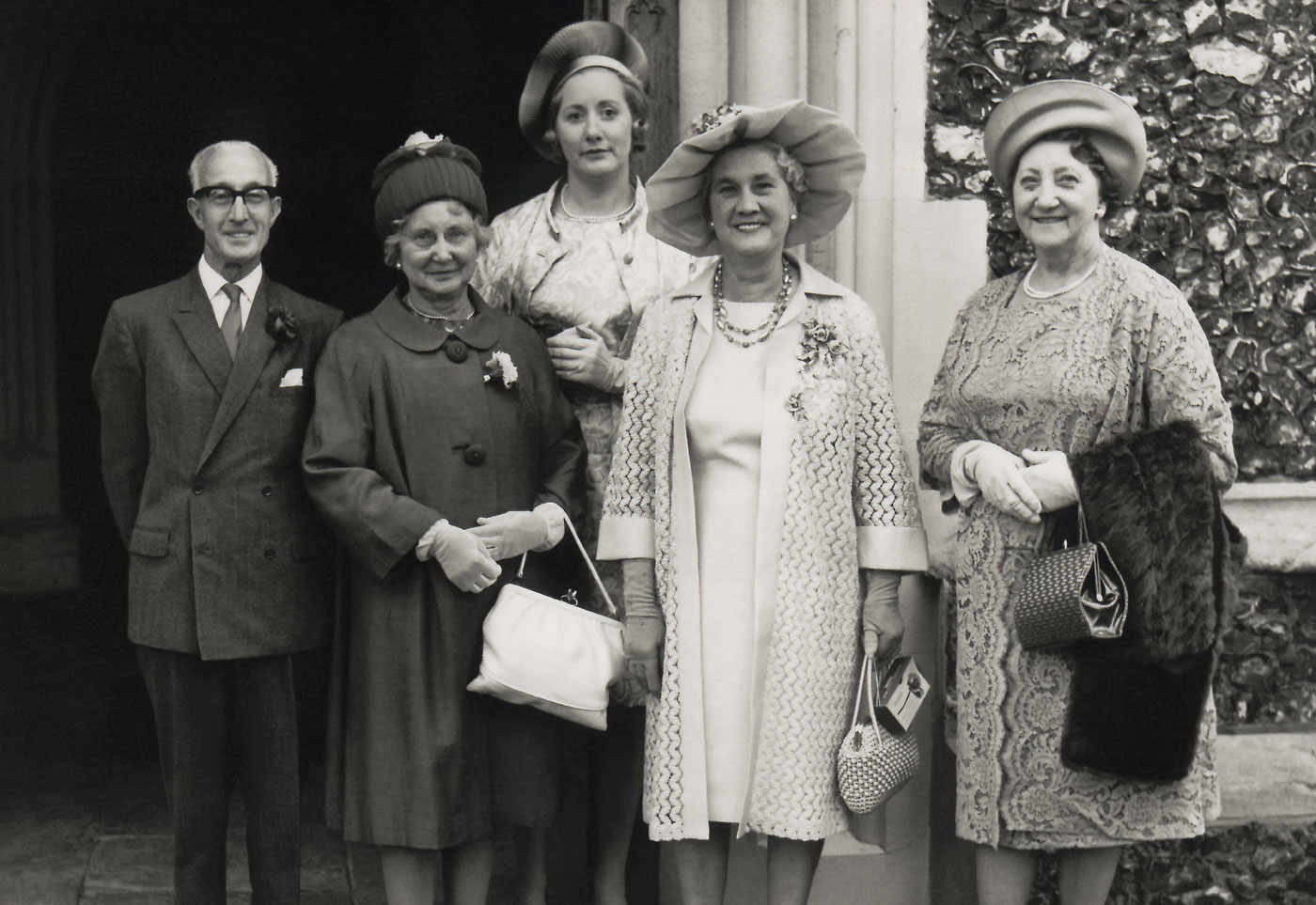
Several blank pages. To be followed by profuse illustrations. Old family photographs, for each person his own family, going back as many generations as possible. To look at these with utmost care.

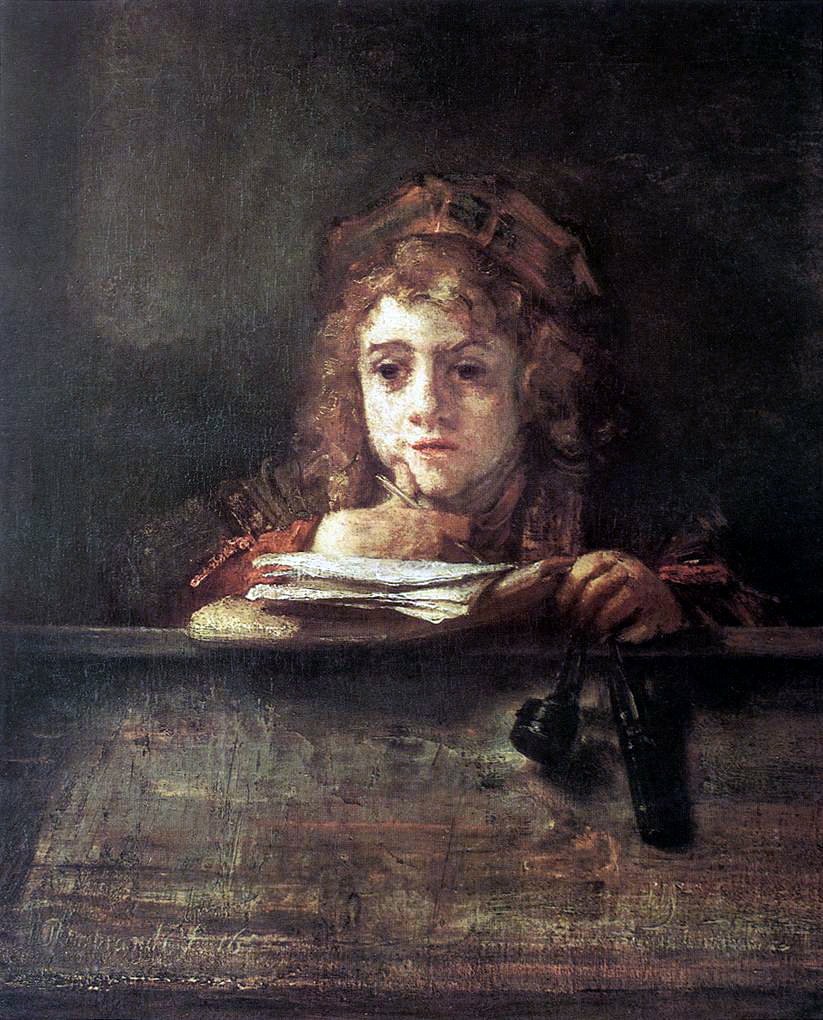
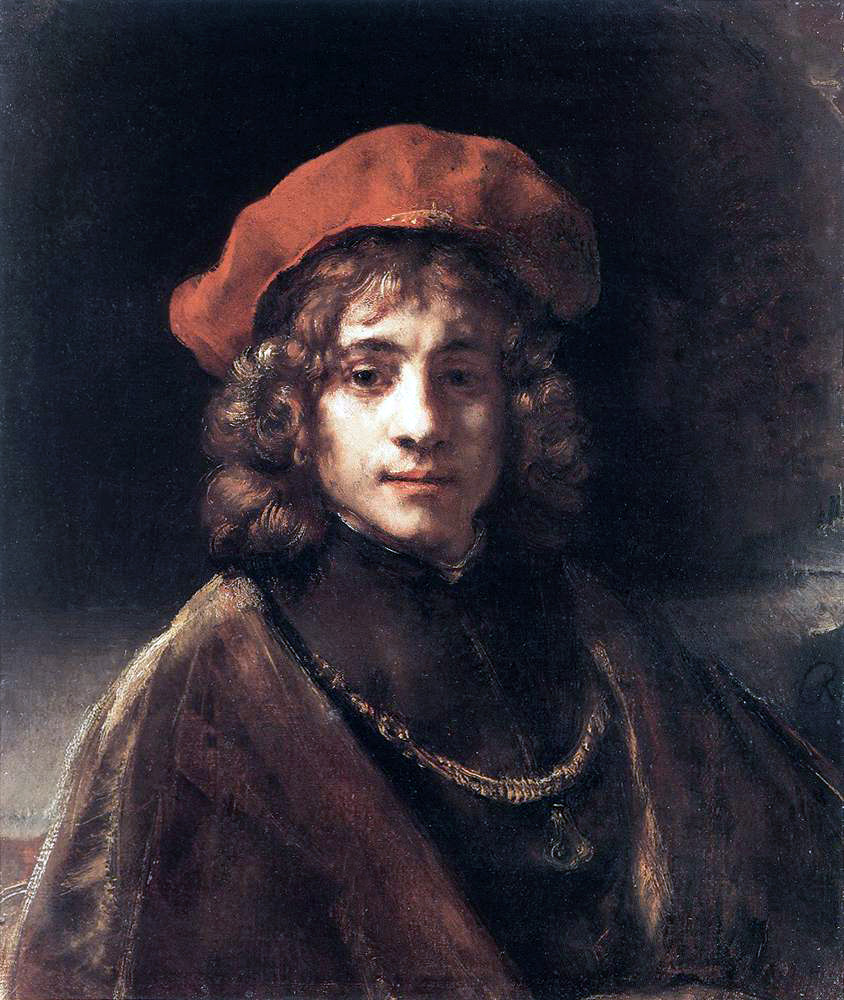
Afterwards, several sequences of reproductions, beginning with the portraits Rembrandt painted of his son, Titus. To include all of them: from the view of the little boy in 1650 (golden hair, red feathered cap) to the 1655 portrait of Titus ‘puzzling over his lessons’ (pensive, at his desk, compass dangling from his left hand, right thumb pressed against his chin) to Titus in 1658 (seventeen years old, the extraordinary red hat, and, as one commentator has written, ‘The artist has painted his son with the same sense of penetration usually reserved for his own features’) to the last surviving canvas of Titus, from the early 1660s: ‘the face seems that of a weak old man ravaged with disease. Of course, we look at it with hindsight – we know that Titus will predecease his father…’

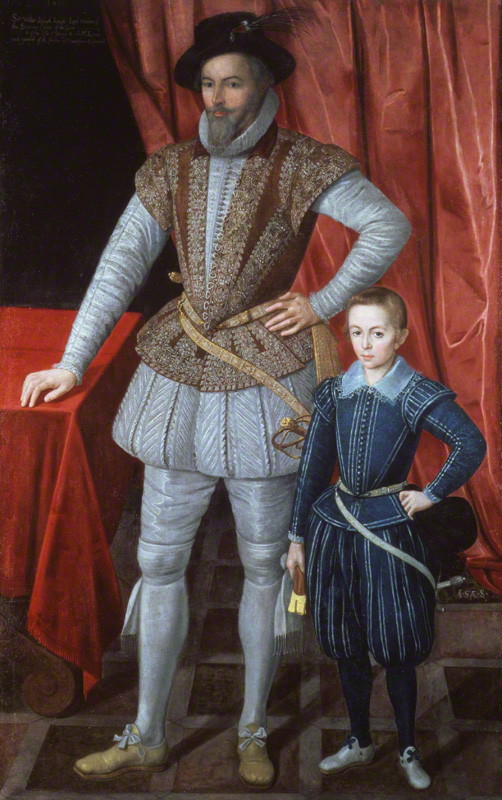
To be followed by the 1602 portrait of Sir Walter Raleigh and his eight-year-old-son Wat (artist unknown) that hangs in the National Portrait Gallery in London. To note: the uncanny similarity of their poses. Both father and son facing forward, left hands on hips, right feet pointing forward, and the somber determination on the boy’s face to imitate the self-confident, imperious stare of the father. To remember: that when Raleigh was released after a thirteen-year incarceration in the Tower of London (1618) and launched out on a doomed voyage to Guiana to clear his name, Wat was with him. To remember that Wat, leading a reckless military charge against the Spanish, lost his life in the jungle. Raleigh to his wife: ‘I have never known what sorrow meant until now.’ And so went he went back to England, and allowed the King to chop of his head.

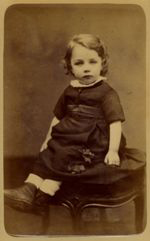
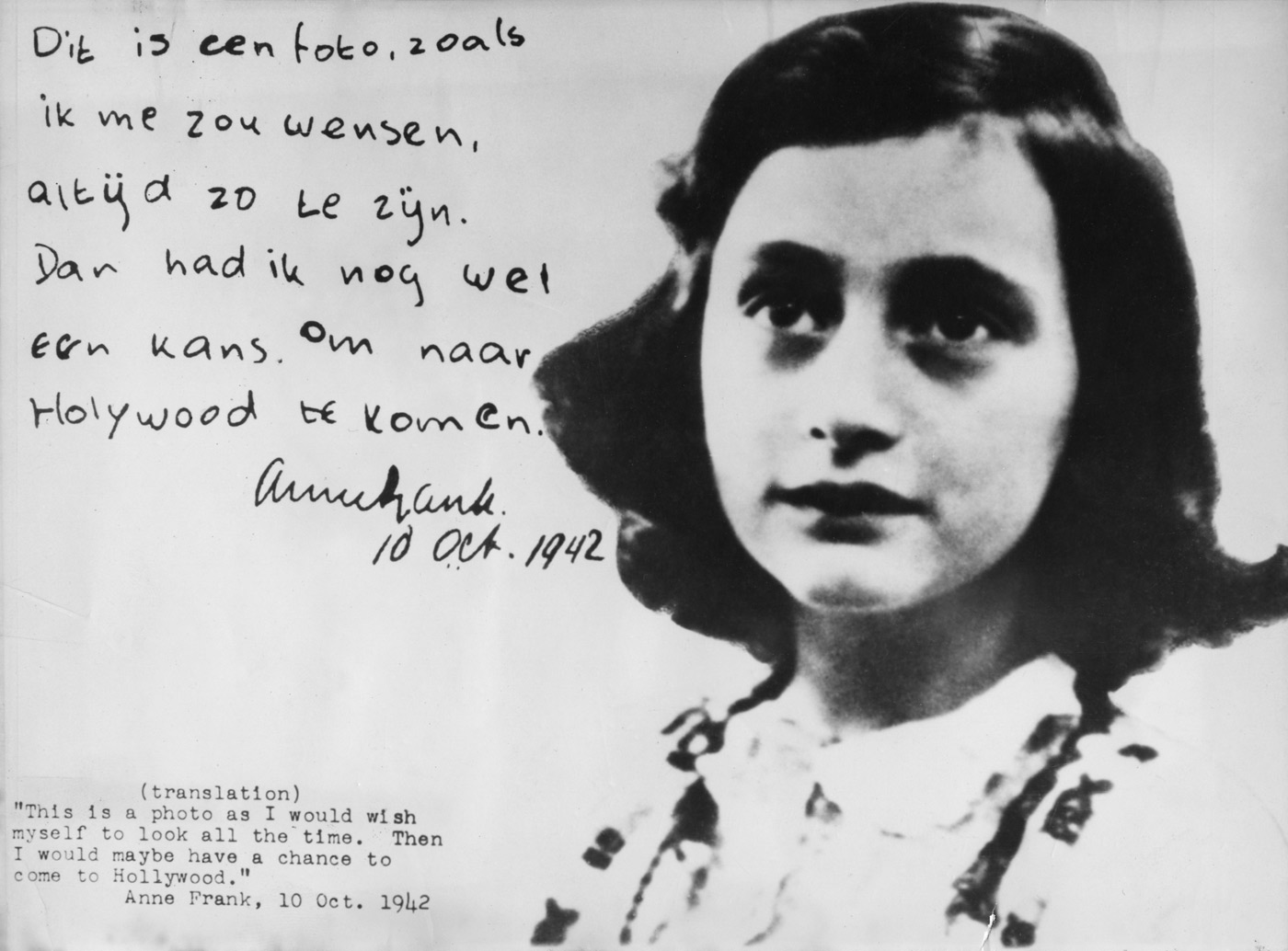
To be followed by more photographs, perhaps several dozen: Mallarmé’s son, Anatole; Anne Frank (‘This is a photo that shows me as I should always like to look. Then I would surely have a chance to go to Hollywood. but now, unfortunately, I usually look different’); Mur; the children of Cambodia; the children of Atlanta. The dead children. The children who will vanish, the children who are dead. Himmler: ‘I have made the decision to annihilate every Jewish child from the face of the earth.’ Nothing but pictures. Because, at a certain point, the words lead one to conclude that it is no longer possible to speak. Because these pictures are the unspeakable.

Paul Auster. “The Book of Memory,” from The Invention of Solitude. Faber and Faber, 1982, pp. 102-103.

Please click on the images for a larger version.


Marcus Bunyan (Australian, b. 1958) 'Untitled (family)' 2005


Marcus Bunyan (Australian, b. 1958)
Untitled (family)
2005
From the series Photos my mother sent me, 2005


Rembrandt van Rijn (Dutch, 1641-1668) 'Portrait of Titus' 1655


Rembrandt van Rijn (Dutch, 1641-1668)
Portrait of Titus
1655
Oil on canvas


Rembrandt van Rijn (Dutch, 1641-1668) 'The Artists Son Titus' 1657


Rembrandt van Rijn (Dutch, 1641-1668)
The Artists Son Titus
1657
Oil on canvas


Rembrandt van Rijn (Dutch, 1641-1668) 'Portrait of Titus' 1663


Rembrandt van Rijn (Dutch, 1641-1668)
Portrait of Titus
1663
Oil on canvas


Unknown artist. 'Sir Walter Ralegh and son' 1602


Unknown artist
Sir Walter Ralegh and son
1602
Oil on canvas
78 1/2 in. x 50 1/8 in. (1994 mm x 1273mm)
Given by Lennard family, 1954
National Portrait Gallery, London


Anonymous photographer. 'Portrait of Anatole Mallarmé' c. 1874


Anonymous photographer
Portrait of Anatole Mallarmé
c. 1874
Photograph


Unknown photographer. 'Anne Frank' 10th October 1942


Unknown photographer
Anne Frank
10th October 1942
Hand written note from The Diary of a Young Girl


Photos of child victims on display at the Toul Sleng Genocide museum in Cambodia


Photos of child victims on display at the Toul Sleng Genocide museum in Cambodia


Unknown photographer. 'Executions of Kiev Jews by German army mobile killing units (Einsatzgruppen) near Ivangorod Ukraine' 1942


Unknown photographer
Executions of Kiev Jews by German army mobile killing units (Einsatzgruppen) near Ivangorod Ukraine. A woman protects a child with her body as Einsatzgruppen soldiers aim their rifles
1942


Executions of Kiev Jews by German army mobile killing units (Einsatzgruppen) near Ivangorod Ukraine. The photo was mailed from the Eastern Front to Germany and intercepted at a Warsaw post office by a member of the Polish resistance collecting documentation on Nazi war crimes. The original print was owned by Tadeusz Mazur and Jerzy Tomaszewski and now resides in Historical Archives in Warsaw. The original German inscription on the back of the photograph reads, “Ukraine 1942, Jewish Action [operation], Ivangorod.”


LIKE ART BLART ON FACEBOOK

Back to top

Exhibition: ‘Flowers & Mushrooms’ at the Museum der Moderne Salzburg, Austria

Exhibition dates: 27th July – 27th October 2013


Many thankx to the Museum der Moderne Salzburg for allowing me to publish the photographs in the posting. Please click on the photographs for a larger version of the image.


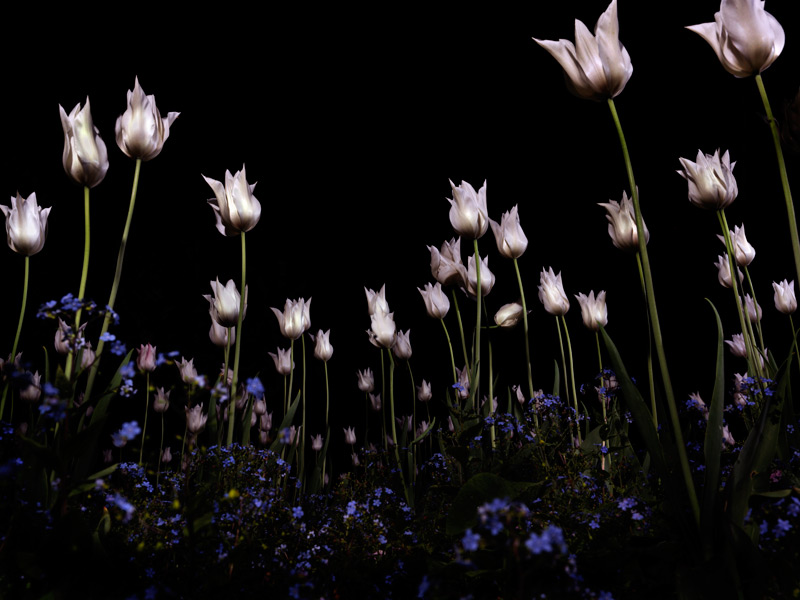
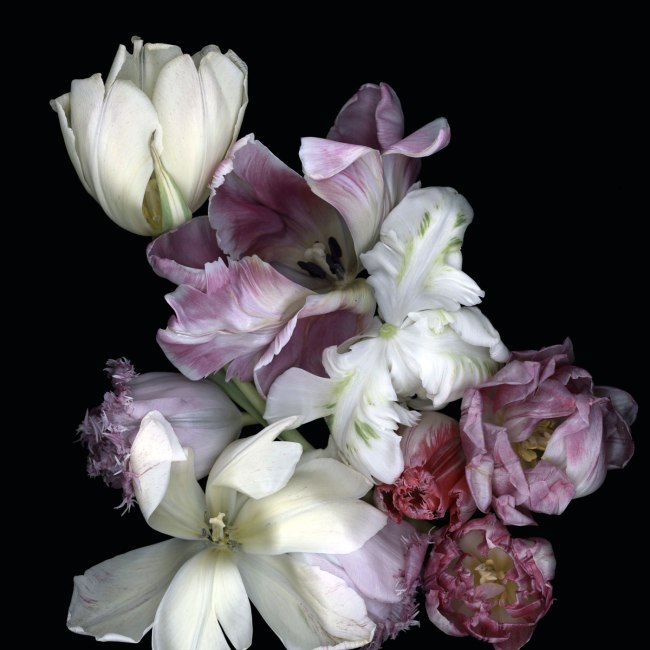
Giovanni Castell (German, b. 1964) 'Tulpomania 3 / Vergissmeinnicht' 2009


Giovanni Castell (German, b. 1964)
Tulpomania 3 / Vergissmeinnicht
2009
C-Print/Plexiglas (Diasec)
130 x 160cm
Courtesy the artist
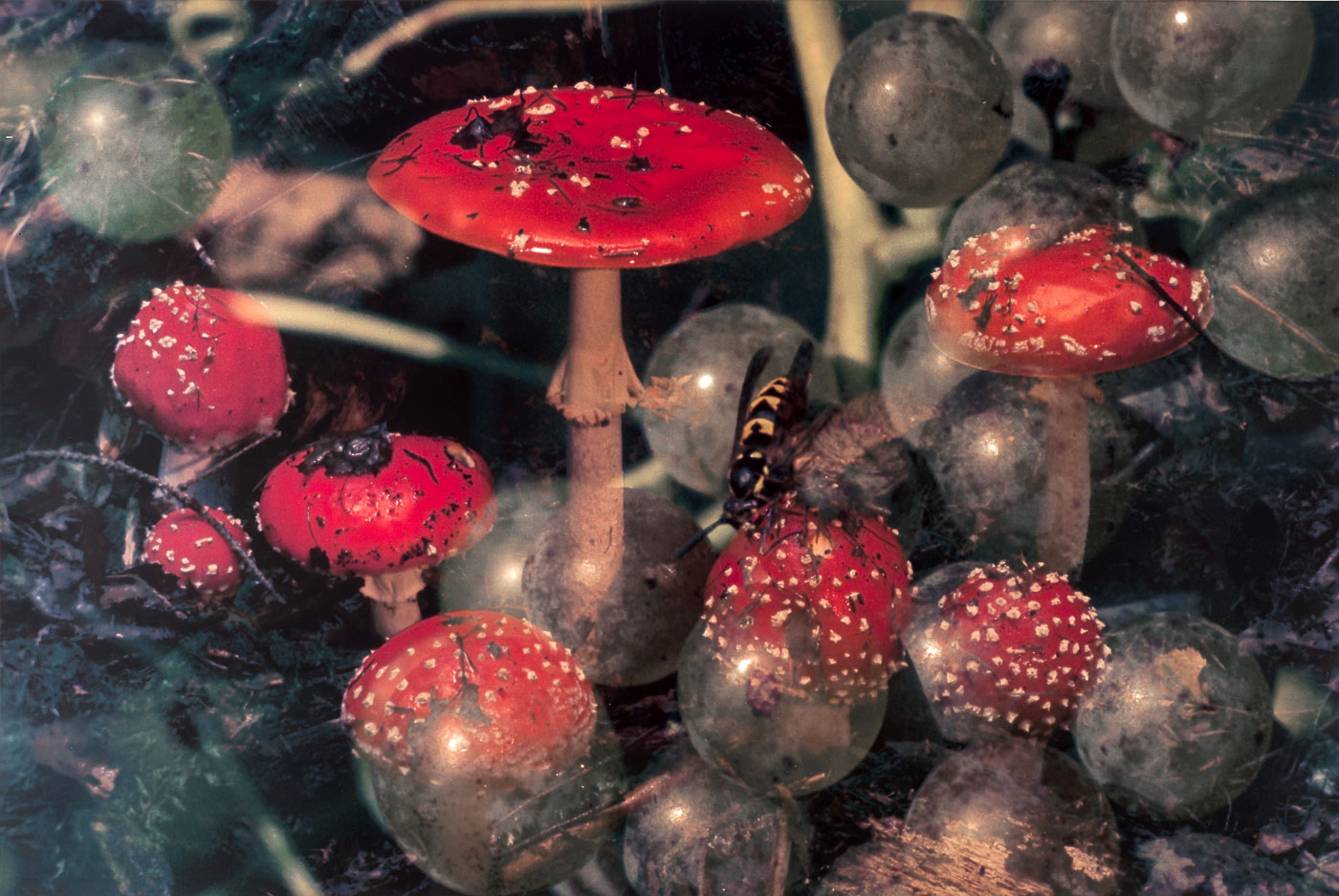
 

Fischli/David Weiss. Peter Fischli (Swiss, b. 1952) and David Weiss (Swiss, 1946-2012) 'Mushrooms / Funghi 18' 1997-1998


Fischli/David Weiss
Peter Fischli
(Swiss, b. 1952) and David Weiss (Swiss, 1946-2012)
Mushrooms / Funghi 18
1997-1998
Inkjet print with Polyester Foil
73.8 x 106.7cm
Bavarian State Painting Collections Munich – Pinakothek der Moderne
Acquired by PIN, Friends of the Art Gallery of modernity for the Modern Collection Art
© The artists; Gallery Sprueth Magers Berlin, London; Galerie Eva Presenhuber Zurich; and Matthew Marks Gallery New York


Michael Wesely (German, b. 1963) 'Still life (29.12. - 4.1.2012)' 2012


Michael Wesely (German, b. 1963)
Still life (29.12. – 4.1.2012)
2012
C-Print, UltraSecG, Metallrahmen
100 x 130cm
Courtesy Galerie Fahnemann, Berlin
© VBK, Wien, 2013


Marc Quinn (British, b. 1964) 'Landslide in the South Tyrol' 2009


Marc Quinn (British, b. 1964)
Landslide in the South Tyrol
2009
Oil in canvas
168.5 x 254 x 3cm
Galerie Thaddaeus Ropac, Paris. Salzburg
Foto: Ulrich Ghezzi
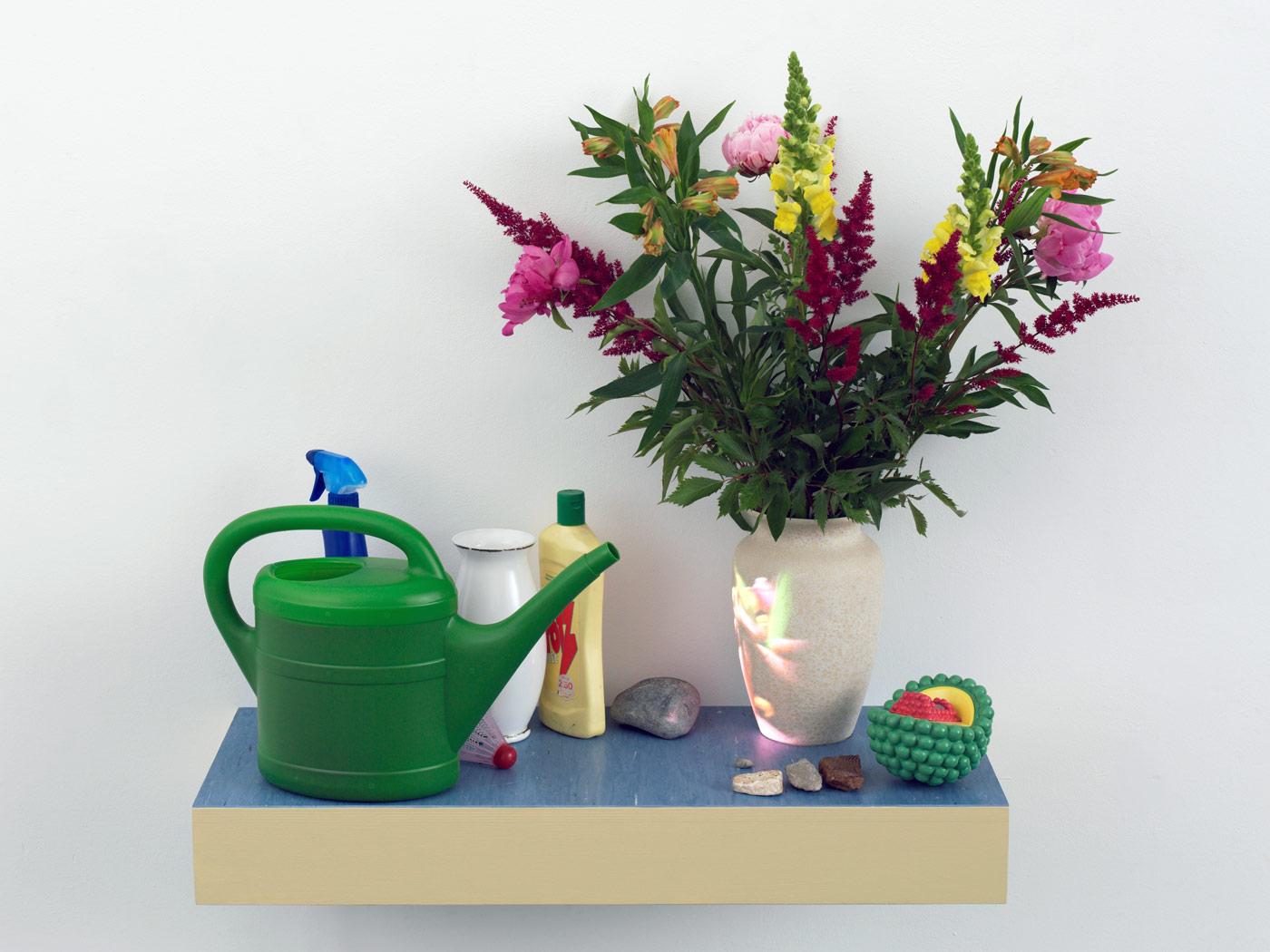
 

Pipilotti Rist (Swiss, b. 1962) 'Sparking of the Domesticated Synapses' 2010


Pipilotti Rist (Swiss, b. 1962)
Sparking of the Domesticated Synapses
2010
Video installation; Projector and Media Player, miscellaneous
Objects, Regal, Quiet
Video: 5:34 min
Courtesy of the artist and Hauser & Wirth, Zürich
© The artist, Hauser & Wirth and Luhring Augustine, New York
Foto: Stefan Altenburger Photography Zürich


For some time now, there has been a renaissance of flowers and mushroom themes in fine art. The comprehensive exhibition Flowers & Mushrooms explores the clichées and the various levels of meaning and symbolism of flowers and mushrooms in art. Current social and aesthetic issues are discussed on the basis of a selection of works from the fields of photography, photo-based paintings, video and sculptures/installations.

Today flowers are primarily associated with their decorative function. They also have a symbolic meaning both at weddings, where they represent freshness and fertility, and at funerals, where they represent transitoriness and death. An in-depth exploration of the varied symbolic meanings of flowers in cultural history reveals further levels of meaning, many of which refer to the ambivalence and abysms of human existence. Contemporary art adopts and continues the historical and complex pictorial tradition of flowers and mushrooms by adding new, contemporary perspectives. The exhibition was inspired by the multi-part work series Ohne Titel (Flowers, Mushrooms) by the artist duo Peter Fischli / David Weiss. The Swiss artists have been preoccupied with the role of clichées and common subjects for many years. Different slide projections with a comprehensive series of inkjet prints and Cibachromes included cross-fadings of flower and mushroom motifs.

At the beginning of the exhibition, a historical section shows photographs from the 19th and early 20th century. In particular the new medium of photography developed a special relationship with flower motifs. Photographs of the great variety of different plant and flower species serve as a kind of substitute for the traditional herbarium or as natural models, as “prototypes of art” for ornamental design lessons. From the early beginnings of photography, scientific interest motivated pioneers such as William Henry Fox Talbot or Anna Atkins to capture amazing pictures of plants.

Later on, the affirmative exaggeration of the decorative character of the flower inspired none other than Andy Warhol to take up a simple, photographically reproduced flower motif in his work Flowers (from 1964); through serial repetitions he ironically exaggerated the motif and conferred iconic status on banal everyday objects. Artists such as David LaChapelle and Marc Quinn continue the baroque symbol for opulence with the aggressive colourfulness of their impressively grand flower arrangements, but also emphasise the simultaneously existing threatening moment, when the boundlessness can take on a devouring character.

For some time now, there has been a renaissance of flowers and mushroom themes in fine art. The works of leading “portraitists” of flowers and mushrooms, such as Peter Fischli / David Weiss, David LaChapelle, Marc Quinn, Sylvie Fleury, Nobuyoshi Araki or Carsten Höller, continue the multi-faceted and long pictorial tradition of flowers, which is unparalleled in the history of art. At the same time no other motif is so easily suspected of trivialism. The question arises of how a subject that is frequently accused of being trivial and shallow has been able to gain ground in a field of art that is generally regarded as serious and sophisticated. The picture of a flower is too easily associated with the idea of harmless beauty and the mushroom with cliché-like hallucinogenic states of consciousness. Nevertheless many artists increasingly adopt these motifs, adapt them and find individual ways to put them into the context of socio-critical, feminist, political and media-reflexive art.

It is only at first glance that David LaChapelle and Marc Quinn continue the baroque symbol for opulence with their impressively grand flower arrangements that reveal a threateningly devouring character upon closer inspection. Female artists such as Vera Lutter, Paloma Navares and Chen Lingyang reflect upon flowers in a specifically female way, using them as a symbol for their own identity-defining sexuality, but also for their vulnerability and exposure and thus elevate the flower to a socio-critical and political level. With almost scientific interest, Andrew Zuckerman and Carsten Höller take an analytical view of the morphological characteristics of flowers and mushrooms in their photographs and installations which create an impressive immediacy. The erotic photographs by Nobuyoshi Araki and Robert Mapplethorpe draw parallels between a blossom and the male and female body and create a field of tension between still life and nude. The wilting flower as a classic symbol of vanity is depicted by Michael Wesely in his long-exposure photographs, which accompany the life of a flower from full bloom to its wilting while emphasising their beauty to the very end. Contrastingly, the monstrous, towering plants of the “desolate” video installations created by Nathalie Djurberg and Hans Berg are devoid of any loveliness and have a menacing effect. They depict violence and abuse give flowers a particularly irritating and disconcerting touch by breaking with their generally positive connotation.

Flowers and buds symbolise eroticism in general, their appearance creating associations with the female and masculine gender (sexual organs) specifically and thus have a sensual appeal. Imogen Cunningham and Robert Mapplethorpe have a reputation as early forerunners of this sexualised and yet apocalyptic perception of flowers. They both implemented this special perception – erotically charged and aloof at the same time – in their photographs by drawing analogies to the human body in their sculptural treatment of the flower. Female artists such as Vera Lutter, Paloma Navares and Chen Lingyang reflect upon flowers in a specifically female way, using them as a symbol for their own identity-defining sexuality, but also for their vulnerability and exposure and thus elevate the flower to a socio-critical and political level.

Thanatos, or death, is closely related to Eros. The wilting flower as a symbol of vanity is depicted by Michael Wesely in his long-exposure photographs, which accompany the life of a flower from full bloom to its wilting while emphasising their beauty to the very end. The flower monstrosities of the “desolate” video installations by Nathalie Djurberg, which deal with violence and abuse, are devoid of any loveliness and even have a threatening effect.

Both in their natural environment and in cultural history, mushrooms are on the shadow side. Mushrooms are mainly associated with dubious alchemism and witchcraft, are desired and feared as hallucinogenic and have become an integral part of art and literature. Similar to flowers, mushrooms have a long tradition in art history and appear frequently within the context of artistic productions. Sylvie Fleury, for example, controls space with a “forest” of over-dimensional mushrooms, whose surface is covered with car paint, thus increasing their intrinsic character of a foreign body. Their over-dimensional size, and glittering appearance evokes scenes from “Alice in Wonderland”, where the protagonist eats from a mushroom to makes her grow or sink. Carsten Höller, by contrast, explores mushrooms with almost scientific interest and documents their individuality and uniqueness in detailed colour photographs or converts them into larger-than-life-size, large-scale sculptures and display cabinets.

The particular appeal of this exhibition organised by the curators of the MdM SALZBURG lies in the comparison and confrontation of the different levels of meaning of images of flowers and mushrooms and their controversial positions in contemporary arts. The title of the exhibition has been inspired by the series of C-prints by the Swiss artist duo Peter Fischli / David Weiss with the title “Flowers, Mushrooms”. Flowers & Mushrooms presents a selection of important works from the fields of photography, photo-based paintings, video and sculpture/installation art with floral motifs, spanning the time from the early beginnings of photography to the immediate presence. Selected works on loan accentuate the focal points and main themes of the exhibition by raising current social and aesthetic issues and thus allow a closer inspection of the multi-faceted symbolic use of flowers and mushrooms. At the same time, new levels of meaning are opened, referring to the ambivalent and mystical dark side of human existence. The exhibition shows how contemporary art adopts and continues the historical and complex pictorial tradition of flowers and mushrooms by adding new, contemporary perspectives. A historical section with photographs from the 19th century and of Classical modernism complements the exhibition and shows, how photography as a new medium has developed a special relationship with floral motifs.

The exhibition features works by Nobuyoshi Araki, Anna Atkins, Eliška Bartek, Christopher Beane, Karl Blossfeldt, Lou Bonin-Tchimoukoff, Balthasar Burkhard, Giovanni Castell, Georgia Creimer, Imogen Cunningham, Nathalie Djurberg, Hans-Peter Feldmann, Peter Fischli / David Weiss, Sylvie Fleury, Seiichi Furuya, Ernst Haas, Carsten Höller, Judith Huemer, Dieter Huber, Rolf Koppel, August Kotzsch, David LaChapelle, Edwin Hale Lincoln, Chen Lingyang, Vera Lutter, Katharina Malli, Robert Mapplethorpe, Elfriede Mejchar, Moritz Meurer, Paloma Navares, Nam June Paik, Marc Quinn, Albert Renger-Patzsch, Zeger Reyers, Pipilotti Rist, August Sander, Gitte Schäfer, Shirana Shahbazi, Luzia Simons, Thomas Stimm, Robert von Stockert, William Henry Fox Talbot, Diana Thater, Stefan Waibel, Xiao Hui Wang, Andy Warhol, Alois Auer von Welsbach, Michael Wesely, Manfred Willmann, Andrew Zuckerman.

Press release from the Museum der Moderne Salzburg website


Paloma Navares (Spanish, b. 1947) 'Vestidas de Sede' 2009


Paloma Navares (Spanish, b. 1947)
Vestidas de Sede
2009
C-Print on Diasec
125 x 125cm
Courtesy MAM MARIO MAURONER Contemporary Art, Salzburg-Vienna
© VBK, Wien, 2013


Robert Mapplethorpe (American, 1946-1989) 'Flower' 1988


Robert Mapplethorpe (American, 1946-1989)
Flower
1988
Silver gelatin print
71.1 x 68.6cm
© The Robert Mapplethorpe Foundation, New York
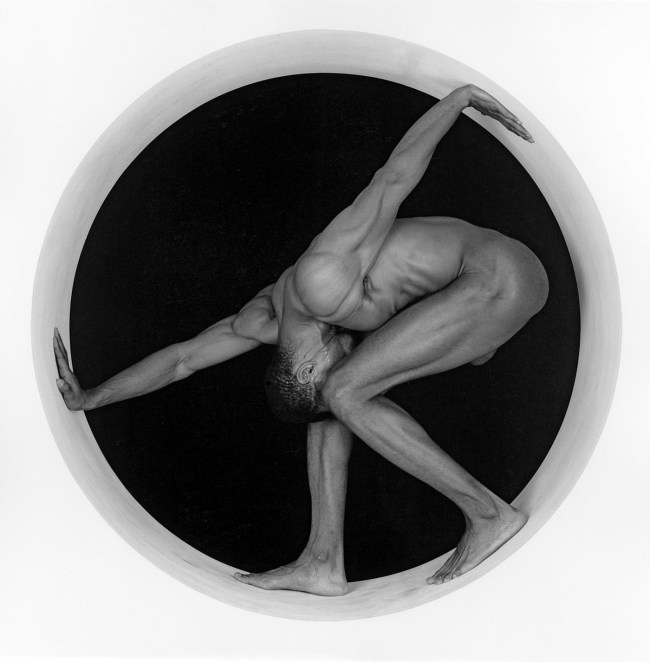
 

Robert Mapplethorpe (American, 1946-1989) 'Thomas' 1987


Robert Mapplethorpe (American, 1946-1989)
Thomas
1987
Silver gelatin print
71.1 x 68.6cm
© The Robert Mapplethorpe Foundation, New York
 

Luzia Simons (Brazilian, b. 1953) 'Stockage 104' 2010


Luzia Simons (Brazilian, b. 1953)
Stockage 104
2010
Scannogramm
Lightjet Print / Diasec
100 x 100cm
Courtesy ALEXANDER OCHS GALLERIES BERLIN ǀ BEIJING
© VBK, Wien 2013


Katharina Malli. From the series 'Dead nature' 2012


Katharina Malli
From the series Dead nature
2012
Digtal C-Print
40 x 60cm
KUNSTIMFLUSS; eine Initiative von VERBUND


Flowers & Mushrooms exhibition texts

The title of the exhibition refers to the name of different slide projections and comprehensive photo series created by the Swiss artist duo Peter Fischli / David Weiss, which show cross-fadings of flowers and mushrooms. Fischli / Weiss began with photo series of everyday motifs back in 1987, and ten years later they used 2400 pictures from their extensive archive to make a cross-fading video with a duration of eight hours. Their general aim was to present the entire visual world they had encountered and documented on their excursions or long travels. Ten years later, the seemingly endless impressions of sights and attractions of the old and new world became limited to flowers and mushrooms, whose pictures overlap in double exposures and appear as a kind of hybrid: as newly created “living beings” between the world of flowers, associated in art history with all kinds of christological and erotic symbolism, and the world of mushrooms, which are not plants and are mainly known for their toxicity. Peter Fischli and David Weiss made the representation of flowers and mushrooms, which had mainly been restricted to calendars and trivial photo books respectable and presentable in contemporary visual arts. The time was ripe for this, even though pictures of flowers and mushrooms had experienced a kind of renaissance in contemporary art before: The ongoing interest in artistic productions dealing with different plants and mushrooms seems to confirm this.

Nevertheless the question arises, how the “flower image” which was frequently accused of triviality in the past, has been able to gain ground in sophisticated and serious art. Pictures of flowers could too easily be associated with the idea of harmless beauty and those of mushrooms with cliche-like, hallucinogenic states. For some years, many artists have nevertheless adopted these motifs, adapted them and found individual ways to put them into the context of socio-critical, feminist, political and media-reflexive art.

Many of the artists represented here in this exhibition deliberately continue this multi-faceted tradition which testifies to a respectable history the “flower picture”: Integrated into the context of Christian iconography in late antiquity and the Middle Ages until the Renaissance period, it timidly began to develop an autonomy during the Baroque period as a result of the newly arising scientific interest in the morphology of flowers and the related wish to classify them encyclopaedically. The rise of the “flower image” to a significant motif that appeals to the audience came to a temporary standstill in the 19th century, when it became an empty academic shell. It re-gained importance only during the Art Deco and New Objectivity period and even became a model for some contemporary forms of expression. While flowers have always been used as photographic motif all over the world due to their beauty and their specific shapes, which are frequently associated with human genitals, mushrooms seem to have inspired most artists who used them in their works due to their sculptural potential and possibly their hallucinogenic effect.

Our exhibition wants to present the use of flowers and mushroom in contemporary art photography, slide and video projections, installations, sculptures and photo-based paintings in all its different faces and assign the works to different themes for better understanding, however without clear boundaries between the individual categories. In a kind of art-historical prologue with the Latin title Species Plantarum we want to show, how scientists and artists have dealt with the representation of plants and blossoms and more rarely of mushrooms since the mid-19th century – parallel to the invention of photography – in photographic studies and “still lifes”. Rose is a rose is a rose is a rose shows that even seemingly trivial photographs of a flower or a mushroom viewed with disinterested pleasure can and should no longer be regarded as neutral and is linked with connotations of everyday experience and cultural education. Les Fleurs du Mal focuses on cryptic and unfathomable, abysmal aspects hidden in flower motifs. The works presented in the section Garden of Earthly Delights establish connections between gender, eroticism and sexuality – but also transitoriness and death – and the symbolism of flowers and associations used by many artists in their works. Nature versus artificiality finally heralds human interventions in nature and the wish to control and experiment with nature and the reflection of this development in visual art.

Species Plantarum

The 19th century was marked by social upheavals, which allowed civil society to intervene in many areas, such as politics, humanism and cultural history, but also natural sciences. The publication of Charles Darwin’s (1809-1882) Origin of Species (1859) intensified the public interest in forms of nature and increased the significance of natural phenomena. This not only encouraged the scientific curiosity of scientists, but also inspired artists to find new approaches to representing nature.

The newly discovered medium of photography, (further) developed out of the desire for an accurate reproduction for scientific purposes and used for various optical and chemical experiments, expanded the range of artistic forms of expression. Artists with an interest in botany eagerly and enthusiastically applied new techniques -such as nature prints, airbrush techniques or photogenetic drawings – and also embraced the new medium and instantly recognised its potential, inspired by pioneers such as Anna Atkins (1799-1871) and William Henry Fox Talbot (1800-1877). Early photographic experiments found their expression in the floral Art Nouveau style and in teaching concepts and teaching aids. The most famous collection of designs was Urformen der Kunst / Art Forms in Nature (1928) by Karl Blossfeldt (1865-1932). His photographs became incunabula for the representation of plant-derived forms using the precise stylistic means of New Objectivity.

The artistic impulses of the following decades contributed to an exploration of nature through alternative cognitive forms. Photography detached itself from the primacy of representation, dominated by form and surface stimuli, and turned towards visual stimuli for the human power of imagination.

Anna Atkins

The botanist and illustrator Anna Atkins (1799-1871) is regarded as pioneer of photography. Her father, the British chemist, mineralogist and zoologist John George Children (1777-1852) aroused her passion for natural sciences. At a time when there was no scientific education for women, ladies from noble families had to content themselves with being “amateur helpers” for their fathers and husbands and worked in the background, compiling herbariums and making drawings. Through her friendship with the physicist John Herschel (1792-1871), who closely collaborated with William Henry Fox Talbot (1800-1877), Atkins became familiar with cyanotype, a printing process invented by Herschel, and began to use this new photographic printing process for mapping scientific samples. The first photographic herbarium was published under the title Photographs of British Algae: Cyanotype Impressions between 1843 and 1854, comprising 12 issues with 389 illustrations. The photograms, which get their characteristic blue colour on the parts of the paper exposed to light from the use of an iron complex, produce particularly accurate representations of the plants. Their special allure is their diaphanous appearance. Anna Atkins’s works, which were forgotten for a long time, are today regarded as a milestone in the history of scientific and photographic illustration and have contributed to the rediscovery of cyanotype as printing technique.

Alois Auer von Welsbach

Alois Auer von Welsbach (1813-1869) was an Austrian printer, inventor and illustrator specialising in books on botany. He was head of the “k.u.k. Hof-und Staatsdruckerei” printing company founded in 1804 in Vienna and developed it into a large-scale enterprise that offered all state-of-­the-art printing techniques and methods of representation known at that time. The printing company became renowned for its nature prints developed and perfected by Auer in cooperation with Andreas Worring. Nature printing is a printing process that uses natural objects to produce an image. Dried or pressed objects are placed between a plate of steel and another of lead and drawn through a pair of zinc rollers under considerable pressure to produce in impression in the leaden plate. The printing plate is produced by electrotyping, also called galvanoplasty. Gravure printing is used for plants. The use of several colours in one printing cycle produced polychrome and particularly “authentic” prints. Until today no printing process has been able to surpass the high level of detail of this technique. For Auer nature printing was as important as photography, and he published books to promote this printing process. “Auers Naturselbstdruck” was patented in 1852 and released for general use in 1853. Over the centuries nature printing has been used for decorating everyday objects and for illustrations on substrates such as papyrus, parchment and paper.

Robert von Stockert

In the 1890s a small community of aristocrats and upper class people with an interest in arts established the “Club der Amateur-Photographen” (Club of Amateur Photographers) – later re­named “Wiener Kamera-Club”. Their photographs were largely influenced by painting. Members of the club include many famous names such as Heinrich Kühn (1866-1944), but also less famous contemporaries such as Carl Brandis (active around 1885-1900), Franz Holluber (1858-1942) or Robert von Stockert (1848-1918), who specialised in flower still lifes. For von Stockert, nature was an interesting theme for various reasons: He had the ambition to contribute to the “development of photographic art”, benefited from his own gardens and the decorative talent of his daughters and used his photographs for book illustrations. He regularly published his experience in illustrated supplements to the association’s publication “Wiener Photographische Blätter”. His pictorial vocabulary ranges from purely decorative flower arrangements to sophisticated still lifes. To convey the colourfulness of his motifs, von Stockert experimented with various techniques, both with photographic techniques, like the use of various colour filters and sensitive plates, and with reproduction techniques. His favourite printing techniques include platinum print, which provides a particularly rich and intensive range of grey nuances. For colour reproductions he used the new multicolour collotype process.

Karl Blossfeldt

The plant photographs of German photographer Karl Blossfeldt (1865-1932) are milestones in the transitions from the playfully stylising Art Nouveau style to the unemotional, cool spirit of “New Objectivity” and have become incunabula of the history of photography. His motivation behind his imagery and motifs is rooted in his education as sculptor and modeller in an art foundry. At the Kunstgewerbeschule in Berlin – today the Universität der Künste (University of the Arts) – he collaborated in a project of his art teacher Moritz Meurer and compiled teaching aids for ornamental design. As lecturer for “modelling from plants” he received an official assignment in 1889 which provided further impetus for the production of illustrative material. Blossfeldt became famous for his book Urformen der Kunst (Art Forms in Nature) (1928); another volume – Wundergarten der Natur (Magic Garden of Nature). A sequel to Art Forms in Nature ­was published in 1932. The photographs here on display are a small selection from a collection of 6,000 pictures, whose clarity, rich contrast and acutance testify to his technical precision, craftsmanship and passion for photography and teaching. Graphic details, structures, forms and surfaces are emphasised by the targeted selection of details, magnified 2 to 45 times. Blossfeldt achieves a sculptural effect by using a monochrome, light background and thus liberates the plants from their natural context.

Rose is a rose is a rose is a rose

What Getrude Stein wrote in the mid-1920s and later became so influential and was often misunderstood, can be used as a motto for the works here on display, but also to point out ironically that the use of flower motifs is trivial only at first sight.

Like portraits or interieurs, flower pictures are part of the repertoire of art history. Even more so: No living being is used more frequently in symbolism than the flower, and few subjects are as complex as the history of the flower motif. In the past, flower still lifes were used to convey encrypted and symbolic messages, most of which are lost to us today. We no longer know the symbolic meaning of the individual flowers or their arrangements. Many artists have used floral themes in their work, as a reaction to the apparent triviality of the century-old flower motif, and have so continued this traditional theme. Today the flower motif has become the basis for new reflections and observations.

The oldest photographers whose works are here on display – Ernst Haas and Balthasar Burkhard – already liberated the flower from its temporal and spatial context and focused on depicting the flower not as a decorative still-life at the height of its beauty, but as a fragile plant subjected to instability and transformation. The American photographer Andrew Zuckerman portrays crystal-clear, razor-sharp images of different blossoms with an accurate eye, capturing the fine details of their surface structure and colour transitions. His strict staging abandons the common understanding of flowers and releases them from their context. As a result, Zuckerman’s pictures assume an almost cool, abstract quality.

Christopher Beane shares a similar love for details. His close-up pictures of petals convey sensuousness and opulence. As a staging photographer he completely restrains himself and entirely leaves the stage to his protagonists, allowing them to unfold their full beauty in exciting, suspenseful intersections, contours and curves. The scannograms by Luzia Simons show an opulence and splendour that reminds us of traditional Dutch still lifes of flowers. The large-format photographs are thoughtful reflections on the proud, but also tragic role of the tulip in the early 17th century Netherlands in connection with the “tulip mania”, which is generally considered the first recorded speculation bubble. In Giovanni Castelli’s photographs, flowers appear as mysterious plants, monumental and unreal at the same time. The artist finds his motifs in nocturnal parks, capturing close-ups of colourful flowers against a jet-black sky. The result are eerily beautiful flower portraits which seem to be from another world and elegantly refute our conventional visual concepts.

Carsten Höller

b. 1961 in Brussels/Belgium, lives and works in Stockholm / Sweden.

Carsten Höller, who has a doctorate in agricultural science, works at the frontier between art and natural science. Dissatisfied with the restrictive structures of the academic world, he turned his back on it and chose the path of greatest-possible openness: he became an artist. “As an artist I do not have to submit to any formalistic constraints and can develop things as far as I think makes sense in a particular framework, without always having to undergo specialist training in the relevant fields.” Höller has not abandoned his first life, but combines the two disciplines, which appear to be so different from one another, in a highly idiosyncratic and humorous manner. He creates bizarre hybrid forms from a variety of types of mushrooms. He either grows them to a threatening height or exhibits them, like jewels in a glass cabinet, in orderly rows as though in a natural-history museum. Fly agaric is always present. Höller explores this mushroom and its hallucinogenic effects in great detail. In this context he is on the trail of a mysterious potion called soma, which is thought to have been made of fly agaric and was used for ritual purposes as early as the second century BC. Drinking it is said to impart good fortune and riches, the power to be victorious, and awareness and access to the divine sphere.

Hans­ Peter Feldmann

b. 1941 in Düsseldorf/Germany, lives and works in Düsseldorf.

The large-format photographs of flowers by Hans-Peter Feldmann are at first glance reminiscent of the floral postcards of the 1950s: we see flowers popular at the time, such as roses and lilies, in close-up in front of a neutral, colourful background. The colour aesthetic of flower and background, too, corresponds to the time. Clear and uncompromising, the blossoms present themselves to the viewer in their full glory, while simultaneously appearing distant and artificial. In this respect they do not match today’s ideas of the bourgeois idyll. The magnification makes the kitschy look sublime. The blossom appears like a fetish behind glass, frozen for the next millennium. Feldmann has always been interested in the everyday and the banal. He lives his passion for collecting at flea markets and in his own shop of knick-knacks. He often works with found materials such as postcards and newspaper cuttings. The photographs shown here are not enlargements of these collected objects, however. They were created by Feldmann, based on the aesthetic of the small-format postcards of which they are ironic imitations. Feldmann’s artistic concept includes the practice of not dating and not signing his works: “Bakers don’t sign their rolls either, do they? Art has to taste and smell, one has to be able to experience it.” For Feldmann, one of the first concept artists, the works of art are already there. He considers it to be his job to find them. They should not lose their vitality despite the transformation.

Luzia Simons

b. 1953 in Quixadá/Brazil, lives and works in Stuttgart and Berlin / Germany.

The tulip is, in the eyes of Luzia Simons, an element that connects cultures, and a symbol of transcultural identity. As a nomad among flowers, the tulip was brought to Europe from Asia, and connects the Orient and the Occident. It is at home both here and there, and has established itself as a virtu despite having been transferred via several different cultures. The tulip conquered the Netherlands in the late sixteenth century, and tulips featuring special colours and patterns commanded exorbitant prices on the market in a rapidly expanding “tulip mania”. Speculation with tulip bulbs led to a speculative bubble. The bubble burst in 1637, with far-reaching social and economic consequences. Simons sets the scene for the majestic and simultaneously tragic character of the tulip, as well as for its long-standing traditions, in her series entitled Stockage. The artist stages the flowers in large-format arrangements in which they surge towards the viewer in bright colours out of a neutral darkness, revealing their beauty and fugacity in sharp focus. Both through the inescapable vanitas concept and in its painterly effect Simons’s oeuvre is reminiscent of Baroque still lifes. Paradoxically, Simons makes use of a very modern method to generate the images, however: the flowers are “read” by a scanner before they are printed using a carbon-printing process, and finally they unfold their vibrant depth effect behind acrylic glass.

Peter Fischli / David Weiss

b. 1952 in Zurich/Switzerland, lives in Zurich / b. 1946 in Zurich, d. 2012 in Zurich.

The Swiss artist duo Fischli / Weiss began work in 1979 and was highly successful in the spheres of film, photography, sculpture, art books and video installations. Cryptic and playful, often seen as though through the eyes of children, they re-arranged art and the everyday in their work. Their subtly ironic works, which often appear to be imbued with subversive nonsense messages, received numerous international awards. From kinetic experimental arrangements using everyday objects to interpersonal re-enactments using sausage leftovers: Fischli / Weiss transformed the apparently banal and the absurd into art. For this reason the flower motif also entered the work of Fischli / Weiss from 1997 onwards. The Flowers series (1997-1998) exists in two presentation forms: colour prints, and a double-slide projection. It shows a chaotic view of nature, as though from an ant’s perspective, using a hallucinatory and intensely colourful technique of superimposition. The arrangement of double and quadruple exposures and the resulting translucent layering of close-ups of flowers, mushrooms, snails and many other things creates the impression of a nature that is unordered and exuberant, unreal and simultaneously beautiful. This playful approach to reality and appearance, the conceptual claim of the visualisation of the world – in this case nature, which is just “there” and is in no need of legitimisation in order to be shown in the context of art – and the interest in the banal, in combination with a more serious artistic interest, constitutes the framework that encompasses the entire oeuvre of die Fischli / Weiss.

Les Fleurs du Mal. Reality and Appearance

In his poetry collection Les Fleurs du Mal (1857-1868) the French writer Charles Baudelaire (1821-1867) painted a picture of a pessimistic modern city dweller that is characterised by despondency, anger and rebellion against all conformities. Man is torn between Christian morality, the good ideal and virtuousness on the one hand and the reprehensible and yet appealing fascination with the evil and ugly on the other hand, and forced to establish a new position for himself continuously.

What the artists represented in this part of the exhibition and Baudelaire’s Fleurs du Mal have in common is their questioning of conventional views on beauty and morality, symbolised by flowers which are generally regarded as beautiful, and the deliberate discussion of the transience of beauty as well as socio-­political principles and ethics. In particular the vanity theme is directly related to the “Flowers of Evil”, as it belies the human desire for eternal beauty and eternal life. Bourgeois decadence in the form of Baudelaire’s positive re-interpretation is no longer a common term today, but has a stronger presence than ever in the classic meaning of the decline of a social system, in particular with reference to the frequently heralded fall of capitalism. In the 21st century artists approach this subject in a differentiated way. Works closely related to traditional genres of art history, such as the still life, exist side by side with current series of works dealing with the concept of time as such, for example by intensely visualising the blossoming and withering of flowers or linking this with socio-political issues. The delightful moment of the pictures and materials is sometimes opposed to the subject matter or explicitly border-crossing contents.

Marc Quinn

b. 1964 in London/Great Britain, lives and works in London.

Marc Quinn’s 2009 paintings Landslide in the South Tyrol and Aleppo Shore from 2010 are based on photographs that he took of model landscapes he himself had composed. To this end he arranged lush and colourful plant ensembles in his studio. Drawing on Baroque bouquets, which are artificial creations and consciously unnatural in their composition, Quinn negates the passing of the seasons and combines plants that do not blossom at the same time as each other. His enormous square compositions confront viewers with paradisiacal gardens bursting with life, allowing viewers to immerse themselves in an apparently idyllic, magical world. Closer inspection reveals that the white surface to which the luminosity is owed is in fact a snowfield, and this causes consternation. The first impression of cheerful colourfulness and light-heartedness dissipates and the scenery that is now perceived as artificial suddenly feels threatening in a very subtle way. In the midst of life we are surrounded by death! The viewer is surrounded not by a lively garden landscape, but by an arrangement of frozen, dead plants. The unnatural brightness of the colours, which knows no soft nuances, points to the artificially generated world, and reveals the difference between beautiful appearances and reality. One senses that critique of civilisation is a driving force: the artist exposes humankind’s reckless approach to nature because we are willing to sacrifice nature for the sake of its perfect beauty.

Eliška Bartek

b. 1950 in Nov Jičín/former Czechoslovakia, lives and works in Berlin/Germany and Lucerne / Switzerland.

For the series Und Abends blüht die Moldau Eliška Bartek uses highly sensitive film that blurs the contours while simultaneously making details as visible as though they are being viewed through a microscope. As a result the surfaces of the flower petals appear exquisitely delicate and fragile. This feeling corresponds to the traditional symbolism of flowers. They are viewed as the ultimate symbols of the beauty of the moment, which already contains the seeds of transience. The flowers come from a Berlin wholesaler or are cut fresh by the owner of a botanical garden in Pila, a small village in Ticino. Bartek exposes them to particular light influences and in this way alters their colours. In addition to the extreme magnification and closely framed composition of the pictorial subjects it is this intense colourfulness in particular, further enhanced by the dark background and dramatically heightened by unusual light and shadow effects, that creates an extraordinary vitality and releases the pictorial subject from its static nature. For a short time the photo artist breathes an intoxicating beauty into the blossoms, for which the flowers pay the ultimate price: the extreme light burns the delicate petals and destroys the natural splendour. Bartek’s subtle play with reality and appearance, or with artificiality and naturalness, also points to the fallibility of our perception.

Vera Lutter

b. 1960 in Kaiserslautern/Germany, lives and works in New York / USA.

With the project Samar Hussein Vera Lutter reveals herself to be a socio-critical artist who rescues the civilian victims of the Iraq war from oblivion and creates a memorial to them. More than 120,000 civilians have been killed since the invasion by the American army in March 2003. They are referred to in military jargon as “collateral damage” – an appalling word that downplays the suffering for which it stands. The artist has gathered the names and dates for her work of art from the Iraq Body Count Project. The biggest publicly accessible database of this kind worldwide, it records the civilians who have lost their lives in military and paramilitary campaigns, and documents the collapse of public safety following the invasion. Lutter uses the image of a budding, blossoming and finally wilted and withered hibiscus blossom as a metaphor for the human life cycle. The artist sees analogies between human life with its beauty and fullness, as well as its vulnerability and destructibility, on the one hand, and the tones of this flower, reminiscent of the colour of flesh, and the sensuous shape of its blossom, on the other hand. The names of the dead are superimposed on the printed and projected photographs in chronological order according to the date of death. The first picture is named after Samar Hussein. It is for this 13-year-old girl, the first civilian victim to have been recorded in the database, that the art project as a whole, Vera Lutter’s remarkably poetic and touching elegy for the senseless casualties of war, is named.

Paloma Navares

b. 1947 in Burgos/Spain, lives and works in Madrid and Alicante / Spain.

Paloma Navares’s oeuvre spans the fields of photography, sculpture, installation and performance, and explores historical female positions in our society. Navares, who suffers from a rare eye condition that will eventually lead to the loss of her eyesight, employs her memory, which she refers to as her “inner eye”, as an artistic device. The multimedia artist uses a poetical pictorial language that aims to draw the viewer’s attention in a delicate and subtle way to existential human questions: might putative mistakes or what society judges to be incapacity lead to recognition after all? The photographs of delicate orchid blossoms tell of the fates of women, and are in some respects symbolic. They stand, for example, for Meerabai, a late-fourteenth-century princess from northern India who wrote love songs and laments, and who, as a devotee of Krishna, vehemently opposed marriage. The pressure exerted on her by society at court forced her to commit suicide by drinking from a poisoned cup. Female Korean entertainers, known as kisaeng, were similarly despised and judged by society for their nonconformity. Navares’s depictions of flowers are homages to great female poets of past eras whose lyrical works were ignored and who, in the face of the contempt with which society treated them, chose to die by their own hands. The images represent a plea for justice and self-determination, and simultaneously stand for grace, strength and beauty.

Garden of Earthly Delights

Flowers and blossoms have always held a great fascination for man and are symbolically and culturally linked with love, beauty, youth and sensuality. Opulent flowers are thus instinctively associated with eroticism and seduction, but also inevitably with the aspect of transitoriness. From a biological point of view, the attraction of flowers is due to their signal effect for the purpose of pollination and thus reproduction and survival of a plant species. Not only poems use flowers as metaphor for human desire; the flower as analogy for man and corporeality is also found in fine arts. Artists such as Robert Mapplethorpe, Nobuyoshi Araki and Rolf Koppel combine nudes with floral still lifes and both in form and context refer to the sensual analogies to the erotic desires of man. Robert Mapplethorpe has made the most explicit comments on the relationship between flowers – in particular blossoms with strongly emphasised seeds such as the calla or anthuria – and the phallus. Mapplethorpe once said that his way of photographing a flower does not differ significantly from his way of photographing male genitals. The natural scientist Carl von Linné (1707-1778), who established the basis for modern botanical and zoological classifications, commented two centuries ago on the relationship between the corporeality of plants, animals and man. “We look at the genitals of plants with pleasure, those of animals with revulsion and our own with wondrous thoughts.” In his writings he poses the question, who is aware that the flowers a man gives to the woman he adores are “cut-off genitals of higher plants” and that the floral splendour must be regarded as “sexual intercourse of plants”? Within the context of cultural history, plants have been used until today as a symbol for the sexuality of man which is still a taboo.

Chen Lingyang

b. 1975 in Zhejiang province/China, lives and works in Beijing / China.

The subject of Chen Lingyang’s twelve-part series of photographs Twelve Flower Months is the artist’s monthly cycle, which is associated with twelve different flowers. The viewer sees twelve geometric formats that correspond to traditional Chinese window and door shapes. They feature reflections of Chen Lingyang’s vagina, and the menstrual blood that drips from it. The shape of the mirror, too, varies from month to month. The viewer is supposed to feel disturbed by the juxtaposition of flowers – which are the ideal expression of the beauty of nature – and the bleeding genitals. Looking at the mirror, a Western symbol of flirtatiousness and beauty, viewers simultaneously become secret viewers of an intimate depiction. The apparent contrast also reveals unusual similarities, however: Chen Lingyang shows two natural cycles of growth and decay. The artist herself has commented on this work that “in traditional Chinese culture there is the idea of the person who lives in harmony with nature. … To me, ‘nature’ refers most importantly to the laws and rhythms of the universe. And these laws and rhythms are connected to cycles. It is easy for a woman to observe this from monthly physiological and psychological changes.”

Nature vs. artificiality

“Planting means to dig holes to force nature to become unnatural (cultural). […] Owing to the gesture of planting man has lived in an artificial world since the Neolithic period”, the media philosopher and communication scientist Vilém Flusser (1920-1991) once said. In this way he descriptively refers to the general circumstance that we can no longer view nature as something “given”, but as something that is “man-made” and constructed and controlled by man. Accordingly, culture has monopolised nature and its original autonomy to a large extent.

The main purpose of fine arts as a cultural manifestation is not only aesthetic edification. Artists, in particular modern and contemporary artists, also serve as introspective seismographs for development processes of civilisation. Their thinking, designs and creations bring about a change of perspective that goes beyond conventional acceptance and reception and thus refers to phenomena that inspire the viewer to reflect and take a closer look. The preoccupation with flower and mushroom motifs also has to be understood in this context. Primarily decorative and trivial at first glance, their meta levels contain far-reaching statements.

The installation of the Swiss artist Pipilotti Rist explores socially standardised patterns of behaviour of civilised man. Rist makes these patterns tangible in her works by depicting the way people deal with artfully arranged flower decorations. In a comparable, yet differing way Gitte Schäfer explores nature and its “domestic use” in her flower wall. About three hundred small flower vases with an artistically kitschy design are affixed to a wall of diagonally placed mirrored tiles and filled by the artist with cut flowers in the form of a symmetrical picture.

The transient splendour of the flower arrangements symbolises earthly transitoriness and were a characteristic feature of 17th century Baroque still lifes. The Italian term for this category of painting ­natura morta – also alludes to the notion of vanity. In her four-part work series with the same title, the Austrian artist Katharina Malli shows close-up coloured pictures of crops and ornamental plants against a neutral white background, whose aesthetics deliberately quote the documentary style of Karl Blossfeldt (1865-1932). Upon closer inspection, they are industrially produced artificial flowers. As perverted products of civilisation they represent this dead nature and at the same time symbolise the notion of immortality. Dieter Huber’s works also focus on artificially generated nature and play with the wishful thought of potential immortality. In his work series he presents apparently “documentary” pictures of plant hybrids that herald a “brave new world”. The works by Nam June Paik and Zeger Reyers create a concrete connection between nature and technology. The instruments used, such as TV sets and record players, symbolically refer to social progress and are an expression of human inventiveness. They emphasize “manmade” things, juxtapose them with naturally occurring objects and thus describe them in relation to one another.

Andy Warhol

b. 1928 in Pittsburgh/USA, d. 1987 in New York / USA.

By the second half of the twentieth century the flower as an artistic motif had become insignificant. It had become overburdened with the general suspicion of triviality and kitsch. However, Pop Art, which took a deliberate interest in the world of trivial imagery, immersed itself in this subject. Andy Warhol’s Flowers are exemplary of the approach of Pop Art artists. Warhol based his flowers on a folded insert in the June 1964 issue of Modern Photography magazine, a reproduction of a colour photograph of seven hibiscus blossoms. The photograph had been taken by the editor in chief, Patricia Caulfield, and was included as an illustration accompanying an article about a Kodak colour processor. Warhol cropped the photograph to alter the pictorial format, number and arrangement of the blossoms. Numerous variations of what was now a square image were then produced using the screen-printing process, differing from one another in colour and size. In total, more than 500 pictures of flowers must have been produced in this way. The Flowers appear to float in a diffuse space, detached from the background and unconnected to their stalks and leaves. In some versions the blossoms and the pictorial ground are painted by hand in DayGlo colours, further emphasising this impression. Warhol presented the prints in such a way that they covered entire gallery walls as though they were wallpaper. In this way he succinctly demonstrated the plant’s natural potential for rank growth as well as its technical reproducibility as a decorative mass subject.

Dieter Huber

b. 1962 in Schladming/Austria, lives and works in Vienna and Salzburg / Austria.

Since as early as 1986 Dieter Huber has worked with photography that is optimised and altered using computer technology. The three works from the KLONES series, which were executed from 1994 onwards and thus explored genetic engineering and manipulation at a very early date, are doubtless among the pioneering works in computer-generated images. Huber commented on them that “the construction of a world that could be freely disposed of in all respects according to one’s will and imagination was still considered highly vexing at the time.” The three plant studies in the exhibition are – at first glance – razor-sharp photographs of flowers, each before a black background. Well-known types of flowers such as tulips, carnations, narcissuses, daffodils, roses and lilies are reminiscent of a grandmother’s garden. Closer inspection causes consternation, however: various types of flowers grow out of the same greenery, rose stalks are crowned by lily blossoms, and daffodils, lilies and tulips all grow out of the stem of a trumpet flower. Artificially created, impossible-looking crossings have long since found entrance into our real world. Almost all livestock breeds and crop plants used in agriculture were developed through decade-long crossing. Perhaps the surreal floral worlds of Dieter Huber will really exist one day?
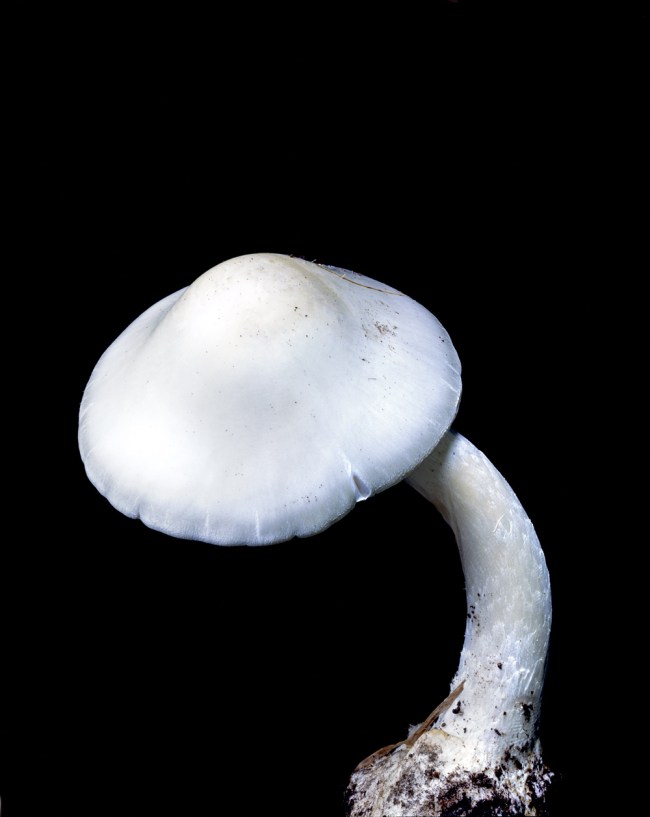
 

Christopher Beane (American, b. 1967) 'Study of fungus' 2004


Christopher Beane (American, b. 1967)
Study of fungus
2004
From the Farm House series
C-Print
60 x 50cm
Courtesy of the artist
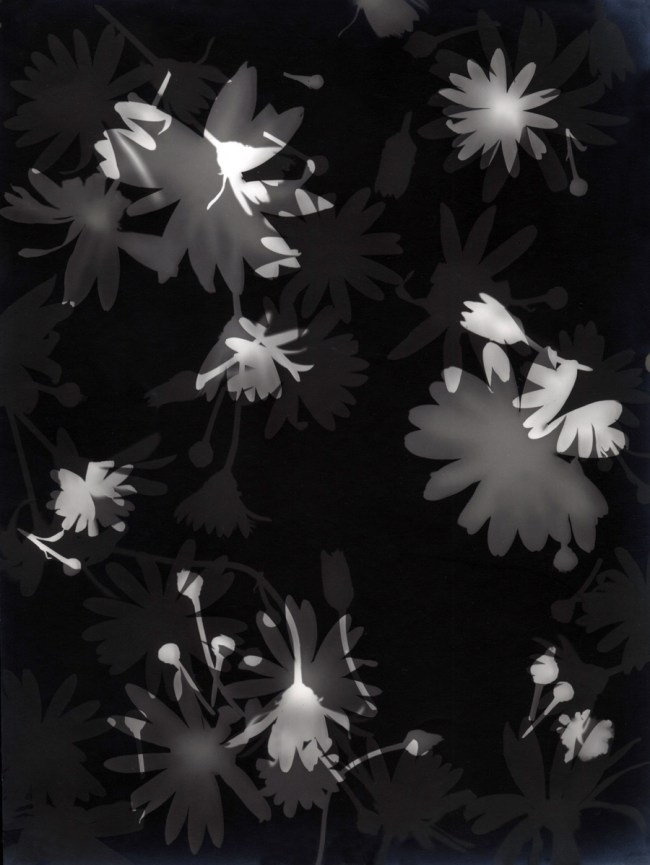
 

Lou Bonin-Tchimoukoff (French, 1906-1979) 'Rayograph #35 - #75' Paris, 1928


Lou Bonin-Tchimoukoff (French, 1906-1979)
Rayograph #35 – #75
Paris, 1928
Gelatin silver print
23.8 x 17.8cm
Courtesy Galerie Johannes Faber, Wien
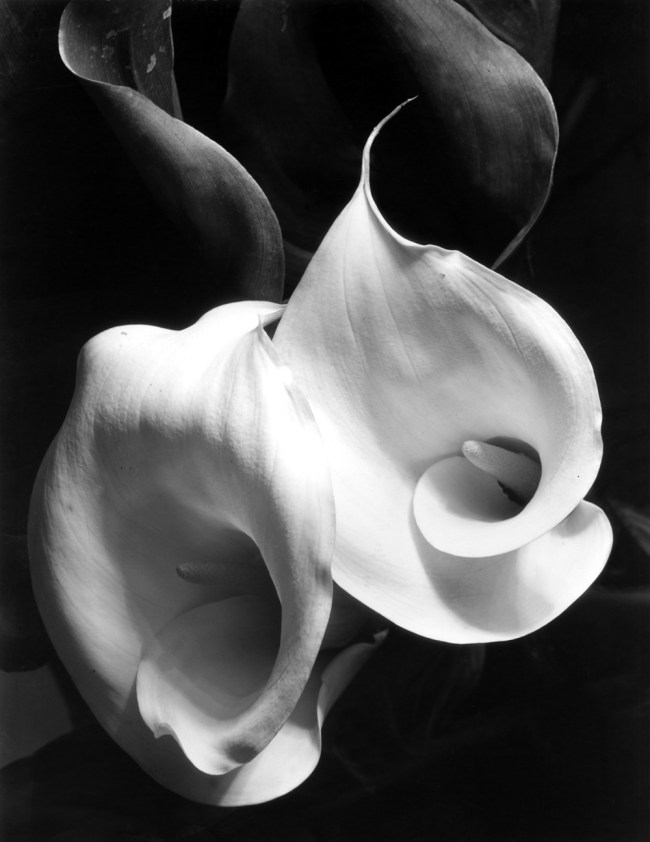
 

Imogen Cunningham (American, 1883-1976) 'Two Callas' c. 1925


Imogen Cunningham (American, 1883-1976)
Two Callas
c. 1925
Gelatin silver print
Estate Prints, 2013
21.5 x 17cm
Austrian Gallery, Museum of Moderne Salzburg
The Imogen Cunningham Trust, 2013
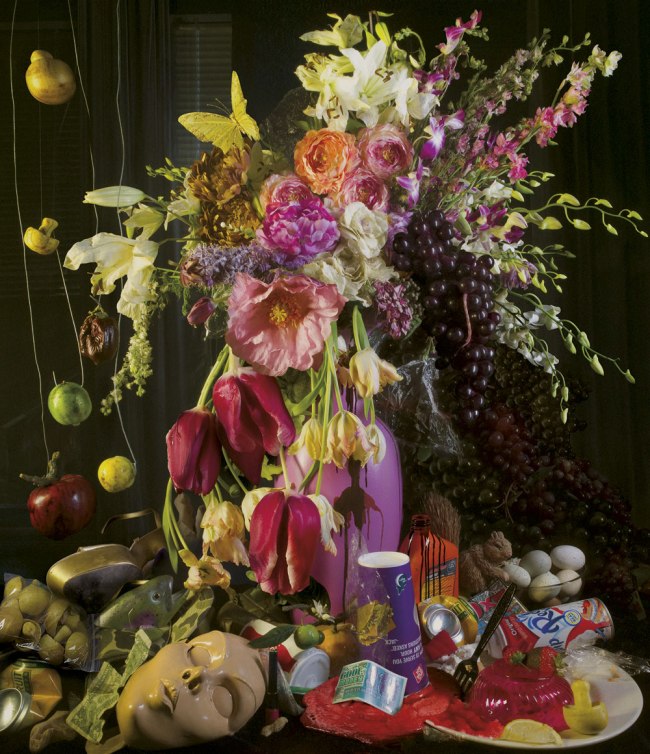
 

David LaChapelle (American, b. 1963) 'Late Summer' 2008-2011


David LaChapelle (American, b. 1963)
Late Summer
2008-2011
C-Print
152 x 110cm
Courtesy of the Artist ROBILANT + VOENA, London – Milan


Museum der Moderne Salzburg
Mönchsberg 32
5020 Salzburg, Austria

Opening hours:
Tuesday – Sunday:10.00am – 6.00pm
Wednesday: 10.00am – 8.00pm
Monday: closed

Museum der Moderne Salzburg website

LIKE ART BLART ON FACEBOOK

Back to top

Exhibition: ‘The Gender Show’ at George Eastman House, Rochester, New York

Exhibition dates: 15th June – 13th October 2013


Vincent Cianni (American, b. 1952) 'Anthony hitting on Giselle, Vivien waiting, Lorimer Street, Williamsburg, Brooklyn' From the series 'We Skate Hardcore' 1996


Vincent Cianni (American, b. 1952)
Anthony hitting on Giselle, Vivien waiting, Lorimer Street, Williamsburg, Brooklyn
1996
From the series We Skate Hardcore
Gelatin silver print
Purchased with funds from Mary Cianni
© Vincent Cianni


I am so sick of museums and art galleries not allowing me to publish photographs that I collect freely available elsewhere on the web to illustrate their exhibitions.

1/ I am promoting the exhibition free for them to over 9,000 people over 3 days
2/ The images are freely available elsewhere on the web
3/ I am promoting artists so that the work is more widely known, and that can only be a positive for the artist (and the price of their art through greater recognition)
4/ The images are 72dpi jpg – what do they think, that people are going to rip them off. They are such low quality anyway who cares!


If artist’s are so precious about their work, even when someone is trying to promote it, then perhaps they should stop making art. Or perhaps it’s the archives and institutions, the patriarchies, that are just too protective of their precious mother-load.

Photography and photographs are ubiquitous. They are taken in the world and live in that world, not stuffed in some curators drawer or surrounded by a circle under the letter ©


This exhibition seems to have a finger in every gender pie without going hard core or in depth at anything. There seems to be no rhyme or reason, no catalogue to the exhibition (as far as I can ascertain), and no indication on how the exhibition is structured, even in the press release. How you would hope to cover such a broad topic in one exhibition is beyond me. That given, there are some fascinating photographs from the exhibition in this posting. My personal favourites in the posting are:

~ Donald York, Jr. standing beside his father’s wrecker, Millerton, New York by Mark Goodman (1974, below). Ah, the jouissance of youth (jouissance means enjoyment, in terms both of rights and property, and of sexual orgasm). Here “junior” is possessing the masculinity of his father’s truck while at the same time emphasising his youthful sexuality with short shorts, naked body, tilt of the hips, pose of the arm and slight cock of the head replete with hair falling over the eyes. There is a certain prepossession about this Donald York, a sexual knowing as he flirts with the camera. Beautiful image

~ Greta Garbo by Edward Steichen (1928, below). My god, how would you be as a photographer looking in the ground glass to see this visage staring back at you. Strength of character, vulnerability and eyes that seem to bore right through you. Face framed with black surmounted by pensive hands. A masterpiece

~ Ophelia Study No. 2 by Julia Margaret Cameron (1867, below). What an impression. Wistful, delicate, a ghostly slightly mad presence with hardly an existence but oh so memorable (Ophelia is a fictional character in the play Hamlet by William Shakespeare that suffers from “erotomania, a malady conceived in biological and emotional terms which is a type of delusion in which the affected person believes that another person, usually a stranger, high-status or famous person, is in love with him or her.”(Wikipedia)) Madness and sexuality. The divine Miss Julia does it again…

Dr Marcus Bunyan


Please click on the photographs for a larger version of the image.


Mark Goodman (American b. 1946) 'Donald York, Jr. standing beside his father's wrecker, Millerton, New York' 1974


Mark Goodman (American, b. 1946)
Donald York, Jr. standing beside his father’s wrecker, Millerton, New York
1974
Gelatin silver print
Gift of Dr and Mrs Maurice Miller
© Mark Goodman


Elias Goldensky (American born Russia, 1867-1943) 'Head and shoulders study' c. 1920


Elias Goldensky (American born Russia, 1867-1943)
Head and shoulders study
c. 1920
Gelatin silver print
Gift of 3M Company
Ex-collection of Louis Walton Sipley


Lewis W. Hine (American, 1874-1940) 'Greek Wrestling Club' c. 1910


Lewis W. Hine (American, 1874-1940)
Greek Wrestling Club
c. 1910
From the series Hull House, Chicago
Gelatin silver print
Transfer from Photo League Lewis Hine Memorial Committee; ex-collection of Corydon Hine


Nickolas Muray (American born Hungary, 1892-1965) 'Douglas Fairbanks, Jr. & Joan Crawford' c. 1930


Nickolas Muray (American born Hungary, 1892-1965)
Douglas Fairbanks, Jr. & Joan Crawford
c. 1930
Gelatin silver print
Gift of Mrs. Nickolas Muray
© Nickolas Muray Archives


Victor Keppler (American, 1904-1987) 'First Hair Cut' 1943


Victor Keppler (American, 1904-1987)
First Hair Cut
1943
Gelatin silver print
Gift of the photographer


Unidentified Photographer. 'Two women fencing' June 16, 1891


Unidentified Photographer
Two women fencing
June 16, 1891
Tintype
Museum Collection


Lewis W. Hine (American, 1874-1940) 'The boys learn to cook' c. 1935


Lewis W. Hine (American, 1874-1940)
The boys learn to cook
c. 1935
From the series The Ethical Culture Schools NYC
Gelatin silver print
Transfer from Photo League Lewis Hine Memorial Committee
Ex-collection of Corydon Hine


Mary Ellen Mark (American, 1940-2015) 'Hispanic Girl with Her Brother, Dallas, Texas' 1987


Mary Ellen Mark (American, 1940-2015)
Hispanic Girl with Her Brother, Dallas, Texas
1987, print c. 1991 by Sarah Jenkins
From the series Urban Poverty
Gelatin silver print
Gift of the photographer
© Mary Ellen Mark


In common use, the word gender may refer to biological sex, self-identity, perceived identity, or imposed identity. Gender can be both fluid and ambiguous. Many of the ways we express and identify gender are based on visual clues. George Eastman House is proud to present The Gender Show, an exhibition that explores ways gender has been presented in photographs, ranging from archetypal to non-traditional to subversive representations, with a special emphasis on the performances that photography can encourage or capture.

With a collection that spans over 170 years of photography, Eastman House is uniquely able to thoughtfully examine our changing cultural and social landscape, in which evolving ideas of gender are framed as photographic images. The Gender Show offers the opportunity to see important photographs from our collection in a new context. The Gender Show sets the stage for a lively discussion of both photographic and cultural conventions and can be enjoyed by a variety of audiences for both its subject matter and content. Those interested in material, visual, and popular culture; gender, identity, and equality; and photographic history will find this exhibition captivating.

George Eastman House’s exhibition The Gender Show will explore how photographs, from the mid-19th century to today, have portrayed gender – from archetypal to non-traditional to subversive representations – with a special emphasis on the performances that the act of photographing or being photographed can encourage or capture. The Gender Show, presenting over 200 works, draws primarily from the Eastman House collection, which spans more than 170 years, and also features contemporary art photographs and videos on loan from artists and private collectors. The exhibition will be on view from June 15 through October 13, 2013.

The Gender Show is the first major Eastman House exhibition organised under the direction of Dr. Bruce Barnes, who assumed the role of Ron and Donna Fielding Director last October. “This exhibition is an extraordinary survey of how photographers and their subjects have presented gender over the course of more than 150 years,” said Barnes. “George Eastman House is uniquely able to review the ever-changing cultural and social landscape through depictions of gender ranging from innocent assertion to elaborate masquerade.”

From the Eastman House collection are photographs by many of the biggest names in the history of the medium – including Julia Margaret Cameron, August Sander, Edward Steichen, Nickolas Muray, Brassaï, Robert Frank, Andy Warhol, Barbara Norfleet, Mary Ellen Mark, Cindy Sherman, and Chuck Samuels – as well as rarely seen vernacular photographs, in the form of cabinet cards depicting early vaudeville and music-hall stars. The exhibition will also present works by contemporary artists, including photographs by Janine Antoni, Rineke Dijkstra, Debbie Grossman, Catherine Opie, and Gillian Wearing, and videos by artists Jen DeNike, Kalup Linzy, and Martha Rosler.

“Since before Duchamp photographed Rrose Sélavy, his female alter-ego, artists have used photography to explore issues of identity, sex and gender,” said Barnes. “In recent decades, the artist’s identity and gender have been an increasingly prominent theme within photography. This exhibition offers a unique opportunity to see works by leading contemporary artists in the context of photographs from our world-class collection.”

Included in The Gender Show are tintypes and daguerreotypes by unknown artists; advertising images; self-portraits by artists, sometimes in disguise; and portraits of celebrities who in their time were a paragon of their own gender or of androgyny. Subjects include Sarah Bernhardt, Joan Crawford and Douglas Fairbanks Jr., Marlene Dietrich, Greta Garbo, Marilyn Monroe, Paul Newman, and Arnold Schwarzenegger. Additional famous subjects presented in the show include Frida Kahlo, Auguste Rodin, Franklin Roosevelt with Winston Churchill and Joseph Stalin, and Andy Warhol.

Press release from the George Eastman House website


B. J. Falk (American, 1853-1925) 'Verona Jarbeau' c. 1885


B. J. Falk (American, 1853-1925)
Verona Jarbeau
c. 1885
Albumen print
Museum Collection


Cabinet card of 19th century burlesque artist Verona Jarbeau. Comedienne Verona Jarbeau dressed in masculine costume, and carrying a big stick.


Nickolas Muray (American born Hungary, 1892-1965) 'Gloria De Haven' 1947


Nickolas Muray (American born Hungary, 1892-1965)
Gloria De Haven
1947
Carbro print
Gift of Mrs. Nickolas Muray
© Nickolas Muray Archives


Nickolas Muray (American born Hungary, 1892-1965) 'Torso' c. 1927


Nickolas Muray (American born Hungary, 1892-1965)
Torso
c. 1927
Descriptive Title: Torso, Hubert Julian Stowitts
Gelatin silver print
Gift of Mrs. Nickolas Muray
© Nickolas Muray Archives


Lewis W. Hine (American, 1874-1940) 'Guiding a beam' From the series 'Empire State building' c. 1931


Lewis W. Hine (American, 1874-1940)
Guiding a beam
From the series Empire State building
c. 1931
Gelatin silver print
Transfer from Photo League Lewis Hine Memorial Committee
Ex-collection of Corydon Hine


Debbie Grossman (American, b. 1977) 'Jessie Evans-Whinery, homesteader, with her wife Edith Evans-Whinery and their baby' From the series 'My Pie Town'


Debbie Grossman (American, b. 1977)
Jessie Evans-Whinery, homesteader, with her wife Edith Evans-Whinery and their baby
Nd
From the series My Pie Town
Collection of the Artist, courtesy of Julie Saul Gallery
© Debbie Grossman


Debbie Grossman’s series My Pie Town reworks and re-imagines a body of images of Pie Town, New Mexico, originally photographed by Russell Lee for the United States Farm Security Administration in 1940. Using Photoshop to modify Lee’s pictures, Debbie Grossman has created an imaginary, parallel world – a Pie Town populated exclusively by women.


Jessica Todd Harper (American, b. 1976) 'Self-Portrait With Christopher and My Future In-Laws' 2001, print 2013


Jessica Todd Harper (American, b. 1976)
Self-Portrait With Christopher and My Future In-Laws
2001, print 2013
Inkjet print
Gift of the photographer
© Jessica Todd Harper


Lejaren à Hiller (American, 1880-1969) 'Men posed in front of backdrop with ship' c. 1950


Lejaren à Hiller (American, 1880-1969)
Men posed in front of backdrop with ship
c. 1950
Carbro print
Gift of 3M Company, ex-collection Louis Walton Sipley
© Visual Studies Workshop


Melissa Ann Pinney (American, b. 1953) 'Bat Mitzvah Dance, Knickerbocker Hotel, Chicago' 1991, print 2003


Melissa Ann Pinney (American, b. 1953)
Bat Mitzvah Dance, Knickerbocker Hotel, Chicago
1991, print 2003
Chromogenic print
Gift of Richard S. Press
© Melissa Ann Pinney


Cig Harvey (British, b. 1973) 'Gingham Dress with Apple' c. 2003


Cig Harvey (British, b. 1973)
Gingham Dress with Apple
c. 2003
Chromogenic print
Gift of the photographer
© Cig Harvey


Victor Keppler (American, 1904-1987) 'Housewife in Kitchen' 1939


Victor Keppler (American, 1904-1987)
Housewife in Kitchen
1939
Digital Inkjet reproduction, 2012


Julia Margaret Cameron (British, 1815-1879) 'Ophelia Study No. 2' 1867


Julia Margaret Cameron (British, 1815-1879)
Ophelia Study No. 2
1867
Albumen print
Gift of Eastman Kodak Company
Ex-collection Gabriel Cromer


James Jowers (American, 1938-2009) 'New Orleans' 1970


James Jowers (American, 1938-2009)
New Orleans
1970
Gelatin silver print
Gift of the photographer
© George Eastman House


William Mortensen (American, 1897-1965) 'Preparing for the Sabbot' c. 1926


William Mortensen (American, 1897-1965)
Preparing for the Sabbot
c. 1926
Gelatin silver print
Gift of Dr. C.E.K. Mees


B. J. Falk (American, 1853-1925) 'Sandow' c. 1895


B. J. Falk (American, 1853-1925)
Sandow
c. 1895
Albumen print
Gift of Charles Carruth


Baron Wilhelm von Gloeden (German, 1856-1931) 'Youth with wreath on head' c. 1900


Baron Wilhelm von Gloeden (German, 1856-1931)
Youth with wreath on head
c. 1900
Albumen print
Anonymous gift


William Mortensen (American, 1897-1965) 'The Kiss' From the portfolio 'Pictorial Photography' c. 1930


William Mortensen (American, 1897-1965)
The Kiss
c. 1930
From the portfolio Pictorial Photography
Gelatin silver print
Gift of Dr. C.E.K. Mees


Anne Noggle (American, 1922-2005) 'Lois Hollingsworth Zilner, Woman Air force Service Pilot, WWII' 1984, print 1986


Anne Noggle (American, 1922-2005)
Lois Hollingsworth Zilner, Woman Air force Service Pilot, WWII
1984, print 1986
Gelatin silver print
Purchased with funds from Charina Foundation
© Anne Noggle


Edward Steichen (American born Luxembourg, 1879-1973) 'Marlene Dietrich, The Teuton Siren' 1931


Edward Steichen (American born Luxembourg, 1879-1973)
Marlene Dietrich, The Teuton Siren
1931
Gelatin silver contact print
Bequest of Edward Steichen by direction of Joanna T. Steichen
© Estate of Edward Steichen


Nickolas Muray (American born Hungary, 1892-1965) 'Marilyn Monroe .... Actress' 1952


Nickolas Muray (American born Hungary, 1892-1965)
Marilyn Monroe … Actress
1952
Carbro print
Gift of Michael Brooke Muray, Nickolas Christopher Muray, and Gustav Schwab
© Nickolas Muray Archives


George Eastman House
900 East Avenue
Rochester, NY 14607

Opening hours:
Tues – Sat 10am – 5pm
Sunday 11am – 5pm
Closed Mondays

George Eastman House website

LIKE ART BLART ON FACEBOOK

Back to top

Exhibition: ‘Distance and Desire: Encounters with the African Archive Part II’ at The Walther Collection, Neu-Ulm, Germany

Exhibition dates: 9th June 9 2013 – 17th May 2015


Sammy Baloji (Congolese, b. 1978) 'Untitled 7' 2006


Sammy Baloji (Congolese, b. 1978)
Untitled 7
2006
From Mémoires


This is the last in my trilogy of postings on exhibitions titled Distance and Desire which have featured African art from The Walther Collection, this time focusing on contemporary art.

It is quite instructive to compare this posting with the last, the exhibition My Country, I Still Call Australia Home: Contemporary Art from Black Australia at The Gallery of Modern Art (GOMA), Brisbane. I feel (a critical word) that there is a completely different atmosphere to most of this contemporary art when compared to the Australian iteration. Despite both groups surviving horrendous experiences and the ongoing memories of those acts, there seems to be a lightness of spirit to most of the contemporary African art, a delightful irony, a self deprecating humour, a less backward looking sadness than evidenced in the Australian work.

Of course there are intense moments when contemporary artists mine (and that is an appropriate word, for many Africans worked in servitude in the mines during the Apartheid period) the colonial archive, such as Carrie Mae Weems blood red tondos, You Became a Scientific Profile / An Anthropological Debate / A Negroid Type / A Photographic Subject (1995-1996, below) but what is more in evidence here is a dramatic sense of fashion and the performative and playful manner in which contemporary African identities are explored coupled with a strength in the representation of these identities. These are strong, forthright individuals not hidden off camera or dressed up in European dreamings imagin(in)g utopian “what ifs”; not the obvious crosses on black chests or deleted, delineated faces made of gum blossoms – but vital, alive, present human beings. While both groups of artists use traditional symbology to explore issues of identity and representation, the Australian version often seems dragged down by the portrayed dichotomy between past and present, traditional and contemporary / subversive, as though there must always be a reckoning, a longing, a sadness constantly reiterated in / with the past.

Dr Marcus Bunyan


Many thankx to The Walther Collection for allowing me to publish the photographs in the posting. Please click on the photographs for a larger version of the image. All images Courtesy of The Walther Collection.


Part II: Contemporary Reconfigurations


Pieter Hugo (South African, b. 1976) 'Nandipha Mntambo, Cape Town' 2012


Pieter Hugo (South African, b. 1976)
Nandipha Mntambo, Cape Town
2012
From There’s a Place in Hell for Me and My Friends


Pieter Hugo’s There’s a Place in Hell for Me and My Friends is a series of close-up portraits of the artist and his friends, all of whom call South Africa home. Through a digital process of converting colour images to black and white while manipulating the colour channels, Hugo emphasises the pigment (melanin) in his sitters’ skins so they appear heavily marked by blemishes and sun damage. The resulting portraits are the antithesis of the airbrushed images that determine the canons of beauty in popular culture, and expose the contradictions of racial distinctions based on skin colour. As the critic Aaron Schuman writes, “although at first glance we may look ‘black’ or ‘white’, the components that remain ‘active’ beneath the surface consist of a much broader spectrum. What superficially appears to divide us is in fact something that we all share, and like these photographs, we are not merely black and white – we are red, yellow, brown, and so on; we are all, in fact, coloured.

Text from the Stevenson Gallery website [Online] Cited 01/10/2013 no longer available online


Sabelo Mlangeni (South African, b. 1980) 'Outside King Mswati's palace' 2011


Sabelo Mlangeni (South African, b. 1980)
Outside King Mswati’s palace
2011
From Iimbali


Sabelo Mlangeni (South African, b. 1980) 'Imbali' 2011


Sabelo Mlangeni (South African, b. 1980)
Imbali
2011
From Iimbali


David Goldblatt (South African, 1930-2018) 'Mineworkers in their hostel, Western Deep Levels, Carletonville' 1970


David Goldblatt (South African, 1930-2018)
Mineworkers in their hostel, Western Deep Levels, Carletonville
1970


Pieter Hugo (South African, b. 1976) 'Yasser Booley, Cape Town' 2011


Pieter Hugo (South African, b. 1976)
Yasser Booley, Cape Town
2011
From There’s a Place in Hell for Me and My Friends


Pieter Hugo (South African, b. 1976) 'Pieter Hugo, Cape Town' 2011


Pieter Hugo (South African, b. 1976)
Pieter Hugo, Cape Town
2011
From There’s a Place in Hell for Me and My Friends


Pieter Hugo (South African, b. 1976) 'Themba Tshabalala, Cape Town' 2011


Pieter Hugo (South African, b. 1976)
Themba Tshabalala, Cape Town
2011
From There’s a Place in Hell for Me and My Friends


Guy Tillim (South African, b. 1962) 'Mai Mai militia in training near Beni, eastern DRC, for immediate deployment with the APC (Armée Populaire du Congo), the army of the RCD-KIS-ML - Portraits I and II' December 2002

Guy Tillim (South African, b. 1962) 'Mai Mai militia in training near Beni, eastern DRC, for immediate deployment with the APC (Armée Populaire du Congo), the army of the RCD-KIS-ML - Portraits I and II' December 2002


Guy Tillim (South African, b. 1962)
Mai Mai militia in training near Beni, eastern DRC, for immediate deployment with the APC (Armée Populaire du Congo), the army of the RCD-KIS-ML – Portraits I and II
December 2002


Sabelo Mlangeni (South African, b. 1980) 'Lwazi Mtshali, "Bigboy"' 2009


Sabelo Mlangeni (South African, b. 1980)
Lwazi Mtshali, “Bigboy”
2009
From Country Girls


Sabelo Mlangeni (South African, b. 1980) 'Xolani Ngayi, eStanela' 2009


Sabelo Mlangeni (South African, b. 1980)
Xolani Ngayi, eStanela
2009
From Country Girls


Zanele Muholi (South African, b. 1972) 'Amogelang Senokwane, District Six, Cape Town' 2009


Zanele Muholi (South African, b. 1972)
Amogelang Senokwane, District Six, Cape Town
2009
From Faces and Phases


Zanele Muholi (South African, b. 1972) 'Sishipo Ndzuzo, Embekweni, Paarl' 2009


Zanele Muholi (South African, b. 1972)
Sishipo Ndzuzo, Embekweni, Paarl
2009
From Faces and Phases


The Walther Collection is pleased to announce Part II of Distance and Desire: Encounters with the African Archive, a three-part exhibition series curated by Tamar Garb. “Contemporary Reconfigurations” offers new perspectives on the African photographic archive, reimagining its diverse histories and changing meanings. The exhibition centres on photography and video by African and African American artists who engage critically with the archive through parody, appropriation, and reenactment.

Carrie Mae Weems introduces the themes of “Contemporary Reconfigurations” with her powerful series From Here I Saw What Happened And I Cried, a revision of nineteenth and twentieth-century anthropometric photographs of African Americans, overlaid with texts by the artist. Sammy Baloji, Candice Breitz, Zwelethu Mthethwa, and Zanele Muholi rethink the ethnographic archive in large-scale colour prints, while Samuel Fosso and Philip Kwame Apagya create exuberant studio portraiture.

Sabelo Mlangeni’s black and white photo-essay, Imbali, documents the reed dances of KwaZulu-Natal, showing the display of virgins vying to be chosen as brides. Pieter Hugo’s series There’s a Place in Hell for Me and My Friends examines ethnicity and skin tonalities through anthropological mug shots. Working in video, Berni Searle performs as a statuesque deity engaged in domestic labor in “Snow White,” and Andrew Putter gives an indigenous voice to the effigy of Marie van Riebeeck, wife of the first Dutch settler in the area known today as Cape Town, in “Secretly I Will Love You More.”

For this group of artists, a stereotype or ethnographic vision in one era may provide material for quotation, irreverent reworking, or satirical performance in another. Illustrating how the African archive – broadly understood as an accumulation of representations, images, and objects – figures in selected contemporary lens-based practices, the exhibition stages a dialogue between the distance of the past and the desiring gaze of the present.

Press release from The Walther Collection website


Zwelethu Mthethwa (South African, b. 1960) 'Untitled' 2010


Zwelethu Mthethwa (South African, b. 1960)
Untitled
2010
From The Brave Ones
Courtesy of Jack Shainman Gallery, New York


Samuel Fosso (Cameroonian, b. 1962) 'La femme américaine libérée des années 70' 1997


Samuel Fosso (Cameroonian, b. 1962)
La femme américaine libérée des années 70
1997


Samuel Fosso (Cameroonian, b. 1962) 'Le Chef qui a vendu l'Afrique aux colons' 1997


Samuel Fosso (Cameroonian, b. 1962)
Le Chef qui a vendu l’Afrique aux colons
1997


Zanele Muholi (South African, b. 1972) 'Miss D'vine I' 2007


Zanele Muholi (South African, b. 1972)
Miss D’vine I
2007


Zanele Muholi (South African, b. 1972) 'Miss D'vine II' 2007


Zanele Muholi (South African, b. 1972)
Miss D’vine II
2007


Candice Breitz (South African, b. 1972) 'Ghost Series #9' 1994-1996


Candice Breitz (South African, b. 1972)
Ghost Series #9
1994-1996


Candice Breitz (South African, b. 1972) 'Ghost Series #4' 1994-1996


Candice Breitz (South African, b. 1972)
Ghost Series #4
1994-1996


Carrie Mae Weems (American, b. 1953) 'You Became a Scientific Profile / An Anthropological Debate / A Negroid Type / A Photographic Subject' 1995-1996


Carrie Mae Weems (American, b. 1953)
You Became a Scientific Profile / An Anthropological Debate / A Negroid Type / A Photographic Subject
1995-1996
From From Here I Saw What Happened and I Cried
Courtesy of Jack Shainman Gallery, New York


Andrew Putter (South African, b. 1965) 'Secretly I Will Love You More' 2007 (video still)


Andrew Putter (South African, b. 1965)
Secretly I Will Love You More (video still)
2007
Courtesy of the artist and Stevenson, Cape Town and Johannesburg


Sue Williamson (South African, b. 1941) 'Helen Joseph' 1983


Sue Williamson (South African, b. 1941)
Helen Joseph
1983
from A Few South Africans


Helen Beatrice Joseph (née Fennell) (8 April 1905 – 25 December 1992) was a South African anti-apartheid activist.

Helen Joseph was born in Eastbourne near Midhurst West Sussex, England and graduated from King’s College London, in 1927. After working as a teacher in India for three years, Helen came to South Africa in 1931, where she met and married a dentist, Billie Joseph. In 1951 Helen took a job with the Garment Workers Union, led by Solly Sachs. She was a founder member of the Congress of Democrats, and one of the leaders who read out clauses of the Freedom Charter at the Congress of the People in Kliptown in 1955. Appalled by the plight of black women, she was pivotal in the formation of the Federation of South African Women and with the organisation’s leadership, spearheaded a march of 20,000 women to the Union Buildings in Pretoria to protest against pass laws on August 9, 1956. This day is still celebrated as South Africa’s Women’s Day.

She was a defendant at the 1956 Treason Trial. She was arrested on a charge of high treason in December 1956, then banned in 1957. The treason trial dragged on for four years but she was acquitted in 1961. In spite of her acquittal, in 13 October 1962, Helen became the first person to be placed under house arrest under the Sabotage Act that had just been introduced by the apartheid government. She narrowly escaped death more than once, surviving bullets shot through her bedroom and a bomb wired to her front gate. Her last banning order was lifted when she was 80 years old. Helen had no children of her own, but frequently stood in loco parentis for the children of comrades in prison or in exile. Among the children who spent time in her care were Winnie and Nelson Mandela’s daughters Zinzi and Zenani and Bram Fischer’s daughter Ilsa. Helen Joseph died on the 25 December 1992 at the age of 87.

Text from Wikipedia website


Sue Williamson (South African, b. 1941) 'Miriam Makeba' 1987


Sue Williamson (South African, b. 1941)
Miriam Makeba
1987
From A Few South Africans


Miriam Makeba (4 March 1932 – 9 November 2008), nicknamed Mama Africa, was a Grammy Award-winning South African singer and civil rights activist.

In the 1960s, she was the first artist from Africa to popularise African music around the world. She is best known for the song “Pata Pata”, first recorded in 1957 and released in the U.S. in 1967. She recorded and toured with many popular artists, such as Harry Belafonte, Paul Simon, and her former husband Hugh Masekela. Makeba campaigned against the South African system of apartheid. The South African government responded by revoking her passport in 1960 and her citizenship and right of return in 1963. As the apartheid system crumbled she returned home for the first time in 1990. Makeba died of a heart attack on 9 November 2008 after performing in a concert in Italy organised to support writer Roberto Saviano in his stand against the Camorra, a mafia-like organisation local to the region of Campania.

Text from Wikipedia website


Kudzanai Chiurai (Zimbabwean, b. 1981) 'The Black President' 2009


Kudzanai Chiurai (Zimbabwean, b. 1981)
The Black President
2009


Zanele Muholi (South African, b. 1972) 'Ms Le Sishi I, Glebelands, Durban' January 2010


Zanele Muholi (South African, b. 1972)
Ms Le Sishi I, Glebelands, Durban
January 2010
From Beulahs (Beauties)


Zanele Muholi (South African, b. 1972) 'Martin Machapa' 2006


Zanele Muholi (South African, b. 1972)
Martin Machapa
2006
From Beulahs (Beauties)


Philip Kwame Apagya (Ghanaian, b. 1958) 'Come on Board' 2000


Philip Kwame Apagya (Ghanaian, b. 1958)
Come on Board
2000


Philip Kwame Apagya (Ghanaian, b. 1958) 'After the Funeral' 1998


Philip Kwame Apagya (Ghanaian, b. 1958)
After the Funeral
1998


The Walther Collection
Reichenauer Strasse 21
89233 Neu-Ulm, Germany

Opening hours:
Thurs – Sunday by appointment and with guided tour only
Public tours Saturday and Sunday at 3pm by appointment only

The Walther Collection website

LIKE ART BLART ON FACEBOOK

Back to top

Exhibition: ‘My Country, I Still Call Australia Home: Contemporary Art from Black Australia’ at The Gallery of Modern Art (GOMA), Brisbane

Exhibition dates: 1st June – 7th October 2013


Tony Albert (Australia, Queensland Girramay people b. 1981) Girramay people 'Sorry' 2008


Tony Albert (Australia, Queensland b. 1981)
Girramay people
Sorry
2008
Found kitsch objects applied to vinyl letters
The James C Sourris, AM, Collection. Purchased 2008 with funds from James C Sourris through the Queensland Art Gallery Foundation
Collection: Queensland Art Gallery


R U SORRY?

Do you feel FORGIVEN?

What do I have to feel sorry for
I only arrived here yesterday

I FORGIVE you for all the SADNESS and SORROW that COLONISATION has CAUSED

You gutless wonder

GUILT, GUILTY, GUILTLESS, GUILELESS, GUTLESS


The persistence of memory – how the past lingers and subverts

MEMORY – inflicting more DAMAGE on the already DAMAGED

(TIME) to MOVE ON… Nothing to  see here


Dr Marcus Bunyan


Many thankx to the The Gallery of Modern Art (GOMA) for allowing me to publish the photographs in the posting. Please click on the photographs for a larger version of the image.


Bindi Cole (Australian, Victoria Wathaurung people b. 1975) 'I forgive you' 2012


Bindi Cole (Australian, Victoria b. 1975)
Wathaurung people
I forgive you
2012
Emu feathers on MDF board
Purchased 2012. Queensland Art Gallery Foundation
Collection: Queensland Art Gallery
© Bindi Cole 2012. Licensed by Viscopy, Sydney, 2013


Bindi Cole (Australian, Victoria Wathaurung people b. 1975) 'Crystal' 2009


Bindi Cole (Australian, Victoria b. 1975)
Wathaurung people
Crystal
2009
From the series Sistagirls
Pigment print on Hahnemühle Photo Rag paper
Purchased 2011 with funds from the Bequest of Grace Davies and Nell Davies through the Queensland Art Gallery Foundation
Collection: Queensland Art Gallery
© Bindi Cole 2009. Licensed by Viscopy, Sydney, 2013


~ Review: ‘Sistagirls’ by Bindi Cole at Nellie Castan Gallery, Melbourne, July 2010


Bindi Cole (Australian, Victoria Wathaurung people b. 1975) 'Frederina' 2009


Bindi Cole (Australian, Victoria b. 1975)
Wathaurung people
Frederina
2009
From the series Sistagirls
Pigment print on Hahnemühle Photo Rag paper
Purchased 2011 with funds from the Bequest of Grace Davies and Nell Davies through the Queensland Art Gallery Foundation
Collection: Queensland Art Gallery
© Bindi Cole 2009. Licensed by Viscopy, Sydney, 2013


Arthur Koo-ekka Pambegan Jr (Australian, Queensland Wik-Mungkan people 1936-2010) 'Flying Fox Story Place' 2002-2003


Arthur Koo-ekka Pambegan Jr (Australian, Queensland 1936-2010)
Wik-Mungkan people
Flying Fox Story Place
2002-2003
Carved milkwood (Alstonia muellerana) with synthetic polymer paint and natural pigments
Commissioned 2002 with funds from the Queensland Art Gallery Foundation Grant
Collection: Queensland Art Gallery


Ron Yunkaporta (Australian, Queensland Wik-Ngathan people b. 1956) 'Thuuth thaa' munth (Law poles)' 2002-2003


Ron Yunkaporta (Australian, Queensland b. 1956)
Wik-Ngathan people
Thuuth thaa’ munth (Law poles)
2002-2003
Cottontree wood (Hibiscus tiliaceus), ibis feathers, bush string with natural pigments
Commissioned 2002 with funds from the Queensland Art Gallery Foundation Grant
Collection: Queensland Art Gallery


Jennifer Mye Jr. (Australian, Queensland Meriam Mir people b. 1984) 'Basket with short handles' 2011


Jennifer Mye Jr. (Australian, Queensland b. 1984)
Meriam Mir people
Basket with short handles
2011
Woven polypropylene tape (blue with Australian flag motif)
Purchased 2011 with funds from Thomas Bradley through the Queensland Art Gallery Foundation


Ken Thaiday Sr (Australian, Queensland Meriam Mir people b. 1950) 'Symbol of the Torres Strait' 2003


Ken Thaiday Sr (Australian, Queensland b. 1950)
Meriam Mir people
Symbol of the Torres Strait
2003
Plywood, synthetic polymer paint, feathers, black bamboo, plastic tubing, fishing line
Purchased 2004 with funds from Corrs Chambers Westgarth through the Queensland Art Gallery Foundation
Collection: Queensland Art Gallery


Dinny McDinny (Australian, Northern Territory Marnbaliya people, Balyarrinji skin group c. 1927-2003) 'Kalajangu – Rainbow Dreaming came through Marnbaliya Country' 2003


Dinny McDinny (Australian, Northern Territory c. 1927-2003)
Marnbaliya people, Balyarrinji skin group
Kalajangu – Rainbow Dreaming came through Marnbaliya Country
2003
Synthetic polymer paint on canvas
Purchased 2004
Queensland Art Gallery Foundation
Collection: Queensland Art Gallery


Sally Gabori (Australian, Queensland Kaiadilt people 1924-2015) 'Dibirdibi Country' 2008


Sally Gabori (Australian, Queensland 1924-2015)
Kaiadilt people
Dibirdibi Country
2008
Synthetic polymer paint on linen
Purchased 2008 with funds from Margaret Mittelheuser, AM, and Cathryn Mittelheuser, AM, through the Queensland Art Gallery Foundation
Collection: Queensland Art Gallery
© Sally Gabori 2008. Licensed by Viscopy, Sydney, 2013


Gabori created a body of work, which expressed sensations of life and cultural memory in diaspora, and differed from other known forms of Aboriginal painting, which focused on story-telling. Most of Gabori’s works represent places on Bentinck Island of deep personal significance to the artist: her husband’s place, Dibirdibi Country, her father’s place, Thundi, her own Country, Mirdidingki, and the first outstation, Nyinyilki.

Gabori lived on Bentinck Island in accordance with custom, developing knowledge of Kaiadilt cartography and cosmology, until the entire population was removed to Mornington Island mission by European settlers in 1948.

Text from the NGV website


Wakartu Cory Surprise (Australian, Western Australia Walmajarri people 1929-2011) 'Mimpi' 2011


Wakartu Cory Surprise (Australian, Western Australia 1929-2011)
Walmajarri people
Mimpi
2011
Synthetic polymer paint on canvas
Purchased 2012
Queensland Art Gallery
Collection: Queensland Art Gallery
© Wakartu Cory Surprise 2011. Licensed by Viscopy, Sydney, 2013


“When I paint, I think about my country and where I have been travelling across that couontry. I paint from here (points to head-thinking about country) and here (points to breasts, collarbone and shoulder blades which is reference to body painting). I think abut my people the old people and what they told me, I think about jumangkarni (Dreamtime). Nobody taught me how to paint, I put down my own ideas, I saw these palces for my self, I went there with the old people. I paint jiji (sand hills), jumu (soak water), jila (spring), jiwari (rock hole), pamarr (hills and rock country), I think about mangarri (vegetable food) and kuyu (game) from my country and when I was there. Whe I paint I am thinking about law from a long time ago, I am thinking about the country, my country. When I first painted we didn’t get money, nothing. I like painting, its good, I get pamarr (word for rock, stone money) for it, I can buy my food, tyres, fix my car, I give some money to family and I keep some for me.”

~ Wakartu Cory Surprise


Ruby Tjangawa Williamson (Australian, South Australia b. 1940); Nita Williamson (Australian, South Australia b. 1963); Suzanne Armstrong (Australian, South Australia b. 1980); Pitjantjatjara people (Collaborating artists). 'Ngayuku ngura (My country) Puli murpu (Mountain range)' 2012


Ruby Tjangawa Williamson (Australian, South Australia b. 1940)
Pitjantjatjara people
Nita Williamson (Australian, South Australia b. 1963)
Suzanne Armstrong (Australian, South Australia b. 1980)
Pitjantjatjara people (Collaborating artists)
Ngayuku ngura (My country) Puli murpu (Mountain range)
2012
Synthetic polymer paint on linen
Purchased 2012 with funds from Margaret Mittelheuser, AM, and Cathryn Mittelheuser, AM, through the Queensland Art Gallery Foundation
Collection: Queensland Art Gallery


Ruby Tjangawa Williamson is a senior law woman committed to fostering traditional culture. She began painting in 2000. Her distinctive works are acclaimed and she is regarded as one of Amata’s most significant artists. Williamson also weaves tjanpi (desert grass) baskets and makes punu (wood carvings) with pokerwork designs.


My Country, I Still Call Australia Home: Contemporary Art from Black Australia is the Gallery’s largest exhibition of contemporary art by Aboriginal and Torres Strait Islander artists to date. The exhibition examines the strengths of the Gallery’s holdings and explores three central themes – presenting Indigenous views of history (My history), responding to contemporary politics and experiences (My life), and illustrating connections to place (My country).

From paintings and sculptures about ancestral epicentres to photographs and moving-image works that interrogate and challenge the established history of Australia, to installations responding to political and social situations affecting all Australians, the thread that binds these artists is their collective desire to share their experiences and tell their stories.

“Drawing on three decades of research, collaboration and Collection development, My Country, I Still Call Australia Home highlights the connection Aboriginal and Torres Strait Islander artists have with country as both ‘land’ and ‘nation’, and features over 300 works by 116 artists from every state and territory,” Mr Saines said.

“Curated by Bruce McLean, a Wirri / Birri-Gubba man with heritage from the central coast of Qoeensland and the Gallery’s Curator of Indigenous Australian Art, the exhibition gives voice to artists who investigate historical and contemporary political and social issues. Many of these issues and works are confronting and controversial, and we are proud of the role our Gallery plays as a forum for discussion, debate and education.”

Mr Saines said the exhibition was divided in to three broad thematic strands that explore how Aboriginal and Torres Strait Islander artists depict the stories of their communities and highlight contemporary Indigenous experiences in Australia.

Press release from the Gallery of Modern Art (GOMA) website


Michael Cook (Australian, Queensland Bidjara people b. 1968) 'Civilised #13' 2012


Michael Cook (Australian, Queensland b. 1968)
Bidjara people
Civilised #13
2012
Inkjet print on paper
Purchased 2012
Queensland Art Gallery
Collection: Queensland Art Gallery
© The artist


Michael Cook’s works depict an ethereal dreamworld, a timeless place that traverses both the colonial and contemporary worlds and is sustained on ‘what ifs’ and hypotheticals. It is a place of Cook’s own modern Dreaming. His central question is quite simple: what if the British, instead of dismissing Aboriginal society, had taken a more open approach to their culture and knowledge systems? This all-Aboriginal world is a sort of utopia where questions can be posed and answered without the complication of race – there is no black and white, no right or wrong. The figures within them are both conquerors and conquered. Through the use of images of Aboriginal people, often in roles opposite to the stereotypical, Cook ensures that an Aboriginal voice is ever-present.


Fiona Foley (Australian, Queensland/New South Wales Badtjala people, Wondunna clan, Fraser Island b. 1964) 'The Oyster Fishermen #1' 2011


Fiona Foley (Australian, Queensland/New South Wales b. 1964)
Badtjala people, Wondunna clan, Fraser Island
The Oyster Fishermen #1
2011
Inkjet print on Hahnemühle paper
Purchased 2012
Queensland Art Gallery Foundation
Collection: Queensland Art Gallery


Vernon Ah Kee (Australian, Queensland Kuku Yalanji/Waanyi/Yidinyji/GuuguYimithirr people b. 1967) 'Tall Man' 2010 (still)


Vernon Ah Kee (Australian, Queensland b. 1967)
Kuku Yalanji/Waanyi/Yidinyji/GuuguYimithirr people
Tall Man (still)
2010
Four-channel digital video installation from DVD
Purchased 2012
Queensland Art Gallery
Collection: Queensland Art Gallery


Gordon Hookey (Australian, Queensland/New South Wales Waanyi people b. 1961) 'Blood on the wattle, blood on the palm' 2009


Gordon Hookey (Australian, Queensland/New South Wales b. 1961)
Waanyi people
Blood on the wattle, blood on the palm
2009
Oil on linen
The James C Sourris, AM, Collection
Gift of James C Sourris, AM, through the Queensland Art Gallery Foundation 2012
Donated through the Australian Government’s Cultural Gifts Program
Collection: Queensland Art Gallery


Michael Riley (Australian, New South Wales Kamilaroi/Wiradjuri people 1960-2004) 'Sacrifice (portfolio)' 1993 (detail)


Michael Riley (Australian, New South Wales 1960-2004)
Kamilaroi/Wiradjuri people
Sacrifice (portfolio) (detail)
1993
Colour cibachrome photograph
Purchased 2002
Collection: Queensland Art Gallery


Christian Thompson (Australian, Queensland/New South Wales/Victoria Bidjarra/Kunja people b. 1978) 'Black Gum 2' (from 'Australian Graffiti' series) 2008


Christian Thompson (Australian, Queensland/New South Wales/Victoria b. 1978)
Bidjarra/Kunja people
Black Gum 2 (from Australian Graffiti series)
2008
Type C photograph
Purchased 2008
The Queensland Art Gallery Foundation Grant
Collection: Queensland Art Gallery


Warwick Thornton (Australian, Northern Territory Kaytej people b. 1970) 'Stranded' 2011 (still)


Warwick Thornton (Australian, Northern Territory b. 1970)
Kaytej people
Stranded (still)
2011
3D digital video: 11.06 minutes, colour, sound
Commissioned by the 2011 Adelaide Film Festival Investment Fund
Purchased 2011
Queensland Art Gallery Foundation
Collection: Queensland Art Gallery
© Warwick Thornton. Image courtesy the artist and Stills Gallery


Gallery of Modern Art (GOMA)

The Queensland Art Gallery (QAG) and Gallery of Modern Art (GOMA) are located 150 metres from each other, on the south bank of the Brisbane River. Entrance to both buildings is possible from Stanley Place, and the river front entrance to the Queensland Art Gallery is on Melbourne Street. The Galleries are within easy walking distance to the city centre and South Bank Parklands.

Opening hours:
Daily 10.00am – 5.00pm

Gallery of Modern Art (GOMA) website

LIKE ART BLART ON FACEBOOK

Back to top

Exhibition: ‘Lifelike’ at The Blanton Museum of Art, Austin, Texas

Exhibition dates: 23rd June – 22nd September 2013


Daniel Douke (American, b. 1943) 'Ace' 1979


Daniel Douke (American, b. 1943)
Ace
1979
Acrylic on masonite
8 x 8 x 12 1/4 in.
Courtesy Minnesota Museum of American Art, Saint Paul


Life (like).


“For the French theorist Jean Baudrillard, this consciousness of construction finds its most powerful expression in the concept of hyperreality. To appreciate Baudrillard’s view, recall the treatment of literary deconstruction… Deconstruction theorists propose that words gain their meaning through their reference to other words; literary works gain their significance by the way they are related to other writings. Thus language does not derive its character from reality, but from other language. Now consider the media – newspapers, television, the movies, radio. For Baudrillard, media portrayals of the world are not driven by the way the world “is,” but by the steadily emerging histories of portrayal itself. As these histories unfold, each new lamination is influenced by the preceding, accounts are layered upon accounts, and reality is transformed into hyperreality. For example, Baudrillard asks, what is the reality of the “Holocaust”? One cannot deny that certain events took place, but as time goes on these events become subject to myriad re-presentations. Diaries become subject to redefinition by television and movies; biographies influence the writing of historical novels; narrated history is transformed into plays, and each “telling” lays the experiential groundwork for subsequent retellings. Realities accumulate, accentuate, interpenetrate, and ultimately create the world of hyperreality – itself in continuous evolution into the future. We feel we possess an intimate acquaintance of the events in themselves; they are sharply etched in our consciousness. For Baudrillard, however, this consciousness moves increasingly toward hyperreality.

And thus the culture opens to the possibility of selves as artifacts of hyperreality. As political events, health and illness, and world history slip from the realm of the concrete into the domain of representation, so a commitment to obdurate selves becomes increasingly difficult to maintain. What, after all, is the reality of our motives, intentions, thoughts, attitudes, and the like? …

As we find, the current texts of the self are built upon those of preceding eras, and they in turn upon more distant forms of discourse. In the end we have no way of “getting down to the self as it is.” And thus we edge toward the more unsettling question: On what grounds can we assume that beneath the layers of accumulated understandings there is, in fact, an obdurate “self” to be located? The object of understanding has been absorbed into the world of representations.”

Gergen, Kenneth. The Saturated Self: Dilemmas of Identity in Contemporary Life. New York: Harper Collins, 1991, pp. 121-122.


Many thankx to The Blanton Museum of Art for allowing me to publish the artwork in this posting. Please click on the photographs for a larger version of the art.


Evan Penny (South African, b. 1953) '(Old) No One – in Particular #6, Series 2' 2005


Evan Penny (South African, b. 1953)
(Old) No One – in Particular #6, Series 2
2005
Silicone, pigment, hair, aluminium
40 x 32 x 7 1/2 in.
© Evan Penny
Courtesy Sperone Westwater, New York


Vija Celmins (Latvian American, b. 1938) 'Eraser' 1967


Vija Celmins (Latvian American, b. 1938)
Eraser
1967
Acrylic on balsa wood
6 5/8 x 20 x 3 1/8 in.
Collection Orange County Museum of Art, Newport Beach, CA
Gift of Avco Financial Services, Newport Beach


Maurizio Cattelan (Italian, b. 1960) 'Untitled' 2001


Maurizio Cattelan (Italian, b. 1960)
Untitled
2001
Stainless steel, composition wood, electric motor, electric light, electric bell, computer
23 1/2 x 33 5/8 x 18 5/8 in.
Courtesy the artist and Marian Goodman Gallery, New York


Keith Edmier (American, b. 1967) 'Bremen Towne' 2008


Keith Edmier (American, b. 1967)
Bremen Towne
2008
Installation dimensions variable
Courtesy of the artist and Friedrich Petzel Gallery


Bremen Towne was an idea I’d been thinking about prior to [my 2008] show at Bard College. It had been floating in my head for a number of years based on the sales brochure of my parents’ home I had obtained around 1999 off of eBay. It was just one of these things I had around… I didn’t really have the idea of constructing this house back then… As it turned out, the interior dimensions of my parents’ home from the original blueprints fit directly into one of the galleries at the museum. At that point I started considering it more as an art object, or as a sculpture more than an installation… The main visual references were family photographs, mostly taken during critical events or holidays or birthday parties. My process involved going through the photo album – everything. They were all pictures of people posing, so I started looking at the spaces [in the background]… I ended up buying the whole decade of both Sears and JCPenney catalogues up until that time, the early ’70s. Through that I was able to identify some products based on visual descriptions or in the family photographs… I initially went to a place that has all kinds of wallpapers and floorings from other periods, used a lot for movies and things like that. I heard they had thousands of wallpapers. It turned out I couldn’t find the exact wallpaper that was in the house. I guess at that point I started thinking it was more interesting for me to remake it, and to remake it more or less new. I wanted to represent the time element, the moment before the day of the family moving into the new house. It wasn’t supposed to look lived in.

I think I was initially interested in doing that to have some kind of separation from taking a real object that was loaded with personal history or some sentimental thing. It was a way of moving from a subjective to an objective position… [I was interested] in just thinking about the whole interior of the house itself as a cast, or this negative space. I thought about how the house is essentially the space that shapes us, that shapes oneself… I think that my reason to make it, or to make almost anything, went beyond just the visual aspects of it, or the idea of re-creating an illusion of the thing. I’ve always been more interested in a certain level of representation or pictorial literalness… I like words or descriptions like “actual” or “actual scale.” I like the idea of “what is real?”

Keith Edmier

Siri Engberg. “Unconventionally Real: Nine Artists Discuss Their Work in Lifelike,” on the Walker Art Center website Mar 1, 2012 [Online] Cited 20/12/2020


The exhibition Lifelike, on view at the Blanton Museum of Art at The University of Texas at Austin June 23 to September 22, 2013, invites a close examination of artworks based on commonplace objects and situations, which are startlingly realistic, but often made of unusual materials in unexpected sizes.

Organized by the Walker Art Center in Minneapolis, this international, multigenerational group exhibition features 75 works from the 1960s to the present by leading figures in contemporary art, such as Andy Warhol, Gerhard Richter, James Casebere, Vija Celmins, Keith Edmier, Robert Gober, Ron Mueck, Mungo Thomson, and Ai Weiwei, and illuminates artists’ enduring fascination with realism.

Avoiding the flashiness embraced by 1960s Pop Artists and the slick urban scenes introduced at that time by the Photorealists, the contemporary artists in Lifelike investigate often overlooked items and moments as subject matter: a paper bag, an eraser, an apple core, a waiting roo, an afternoon nap. Favouring a handmade, labour intensive practice rather than technological enhancements, the works in the exhibition – including painting, sculpture, photography, drawing and video – transform the seemingly ordinary into something beguiling, loaded with narrative and metaphor.

The exhibition explores the many ways artists have pursued realism through a range of media. Some artists featured, such as Vija Celmins, Chuck Close, and Peter Rostovsky, paint from photographs, creating works that exhibit an astonishing degree of likeness and detail. Others work in sculpture often fashioning objects from materials that belie the pedestrian nature of the subject – Ai Weiwei’s jar of hundreds of sunflower seeds, hand painted on to cast porcelain, or Tom Friedman’s bee, made out of clay, plastic, and paint. In photography, artists including James Casebere and Isaac Layman play with the hyperreal, through fabricated scenes or clever layering of images. In video, artists including Thomas Demand and Jeon Joonho create moving images that at first seem familiar, but deceive us through sly use of animation.

Conspicuously absent in most of the works in Lifelike is a reliance on technological intervention. Instead, in seemingly inverse proportion to the ease of producing goods for the marketplace, many artists are slowing and complicating their own working methods, remaking banal things into objects of fixation and desire: Catherine Murphy’s details of textured fabric on the seat of a chair, or Ron Mueck’s strikingly “real” sculpture – down to the last hair and pore – of human subjects. Frequently these artists work from photographs, but just as often, their inspiration is the observed world, and the notion that a tangible, perhaps ephemeral object or moment can somehow be brought back to life æ reinterpreted through the artist’s hand as re-made readymades.

To address the nuances of this subject, the exhibition presents several key conceptual sections:

Common Objects gathers a group of late 1960s and early 1970s works that borrowed strategies from Pop, but rejected that movement’s brand-name emphasis in favour of conceptual, more process-oriented approaches to subject matter.

Another section presents the notion of  The Uncanny, which features work by a generation of artists in the 1980s and 1990s who inflected realism with a psychologically-laden, surreal sensibility, such as Robert Gober’s child-sized chair and flower-covered box of tissues, resting mysteriously atop a floor drain; or Charles Ray’s disarming photograph of himself as a mannequin.

A third section entitled Realism into Abstraction presents a range of works by artists such as Peter Rostovsky, Catherine Murphy and Tauba Auerbach, in which lushly painted surfaces such as velvet curtains, the seat of a chair, and other ordinary items are cropped in such a way that they resemble abstract paintings, their original sources difficult to discern.

Handmade Sleight of Hand, the fourth section, presents work by artists who make objects that are indistinguishable from their real-life counterparts, but made with the traditional techniques of painting, sculpture, or drawing. Highlights include Jud Nelson’s trash bag carved from Carrara marble and Susan Collis’s checkered plastic shopping bag painstakingly rendered in ballpoint pen on paper.

A fifth section, Special Effects: The Real as Spectacle, presents artists making work that engages an instant response – be it astonishment, fear, confusion, or delight – through their surprising size or unusual installation.

Press release from The Blanton Museum of Art website


Peter Rostovsky (Russian, b. 1970) 'Curtain' 2010


Peter Rostovsky (Russian, b. 1970)
Curtain
2010
Oil on linen
72 x 48 in.
Courtesy of the artist


What does it mean in Warholian fashion to “want to be a machine,” to long for a kind of inhumanity that has to be constantly performed and repeated? Is this not a radical disavowal of an all too human vulnerability? Can we not read in the mechanical appeals of photorealism a kind of excessive sentimentality, a naïve expressionism that uses the camera and the photograph as a shield against trauma?

And likewise in expressionism’s hyperbolic restatement of its humanity, is there not a silent concession to its opposite, a founding anxiety about inauthenticity, a mortal dread regarding the total triumph of simulation and technology?

However, it is important to stress that these are unfulfilled desires. No photorealist painting completely fools the viewer into the fact that it is machine-made; it entertains the fantasy, much like electronic music. And each autonomous artwork is only a temporary escape, a utopian space, “an orchid in the land of technology,” to borrow a phrase that Walter Benjamin applied to the illusion of reality in film.

What these two positions in fact represent are two negative theologies that stand as sentinels, forever pointing to and away from a traumatically unresolved subject position – a position of the never sufficiently technological, and the never completely human. They are both Romantic positions and should be read as such: as positions of longing and disavowal, not of identity.

Why would this be important to emphasise? Because it answers the familiar question asked to every painter painting photographs. It’s not about the ends, it’s about the means. It’s about the performance of painting that re-states the position, not the photo-like product that it yields. In other words, it’s about trying and failing to be a machine. Therein resides the futility and poetic nature of the practice. The failure marks the fragility and evanescence of the subject negatively, knowing that the alternative is to misname, to misrepresent, to conjure the opposite. This poetic is more latent, and seldom acknowledged in art that aspires toward indifference and inhumanity, but I hope that I have shown that every tin man has a heart, just like every photorealist hides an abstract painter.

Peter Rostovsky

Siri Engberg. “Unconventionally Real: Nine Artists Discuss Their Work in Lifelike,” on the Walker Art Center website Mar 1, 2012 [Online] Cited 20/12/2020


Matt Johnson (American, b. 1978) 'American Spirit' 2010


Matt Johnson (American, b. 1978)
American Spirit
2010
Paper, plastic, foam, paint, and magnets
1 x 3 1/2 x 2 1/4 in.
Edition of 3
Courtesy of the artist and Blum & Poe, Los Angeles
Photo credit: Joshua White
© Matt Johnson


Ron Mueck (Australian, b. 1958) 'Untitled (Seated Woman)' 1999


Ron Mueck (Australian, b. 1958)
Untitled (Seated Woman)
1999
Silicone, acrylic, polyurethane foam and fabric
25 1/4 x 17 x 16 1/2 in.
Collection of the Modern Art Museum of Fort Worth


Alex Hay (American, b. 1930) 'Paper Bag' 1968


Alex Hay (American, b. 1930)
Paper Bag
1968
Fiberglass, epoxy, paint, and paper
59 1/4 x 29 x 18 in.
Whitney Museum of American Art, New York
© Alex Hay
Courtesy of the artist and Peter Freeman, Inc., New York Photograph by Jerry L. Thompson


Jonathan Seliger (American, b. 1955) 'Heartland' 2010


Jonathan Seliger (American, b. 1955)
Heartland
2010
Enamel on bronze
103 x 29 x 29 in.
Courtesy of the artist and Jack Shainman Gallery, NY


Yoshihiro Suda (Japanese, b. 1969) 'Weeds' 2008


Yoshihiro Suda (Japanese, b. 1969)
Weeds
2008
Painted on wood
Size varied according to site
© Yoshihiro Suda
Courtesy of Gallery Koyanagi, Tokyo


The Blanton Museum of Art
200 E. Martin Luther King Jr. Blvd.
Austin, TX 78712

Opening hours:
Wednesday – Saturday 10am – 5pm
Sunday 1pm – 5pm
Closed Mondays and Tuesdays

The Blanton Museum of Art website

LIKE ART BLART ON FACEBOOK

Back to top

Exhibition: ‘Piero Manzoni. When Bodies Became Art’ at Städel Museum, Frankfurt

Exhibition dates: 26th June – 22nd September 2013


Piero Manzoni (Italian, 1933-1963) 'Achrome' 1958


Piero Manzoni (Italian, 1933-1963)
Achrome
1958
Kaolin on canvas
50 x 69.5cm
Fondazione Piero Manzoni, Milan, in collaboration with Gagosian Gallery
© Fondazione Piero Manzoni, Milano, by VG Bild-Kunst, Bonn 2013


A slight switch in gears for the next two postings. Conceptual, sculptural, minimal, monochromatic, corporeal, haptically varied surfaces that are absolutely fascinating…

Marcus


Many thankx to the Städel Museum for allowing me to publish the artwork in the posting. Please click on the photographs for a larger version of the art.


Piero Manzoni (Italian, 1933-1963) 'Achrome' 1957-1963


Piero Manzoni (Italian, 1933-1963)
Achrome
1957-1963
Kaolin on canvas
80 x 100cm
Städel Museum, Frankfurt am Main
© Fondazione Piero Manzoni, Milano, by VG Bild-Kunst, Bonn 2013


Piero Manzoni (Italian, 1933-1963) 'Achrome' 1958


Piero Manzoni (Italian, 1933-1963)
Achrome
1958
Kaolin on canvas
160 x 130cm
© Fondazione Piero Manzoni, Milano, by VG Bild-Kunst, Bonn 2013
Courtesy FaMa Gallery, Verona


Piero Manzoni (Italian, 1933-1963) 'Achrome' 1962


Piero Manzoni (Italian, 1933-1963)
Achrome
1962
Pebbles and kaolin on canvas
70 x 50cm
Fondazione Piero Manzoni, Milan, in collaboration with Gagosian Gallery
© Fondazione Piero Manzoni, Milano, by VG Bild-Kunst, Bonn 2013


Piero Manzoni (Italian, 1933-1963) 'Alfabeto' (Alphabet) 1959


Piero Manzoni (Italian, 1933-1963)
Alfabeto (Alphabet)
1959
Printed paper and pencil on cardboard
70 x 50cm
Neues Museum Weimar
© VG Bild-Kunst, Bonn 2013


Ennio Vicario (Italian, b. 1935) 'Manzoni in his studio in Via Fiori Oscuri' 1958


Ennio Vicario (Italian, b. 1935)
Manzoni in his studio in Via Fiori Oscuri
1958


Ennio Vicario (Italian, b. 1935) 'Manzoni in his studio in Via Fiori Oscuri' 1958


Ennio Vicario (Italian, b. 1935)
Manzoni in his studio in Via Fiori Oscuri
1958


Despite his short career, Piero Manzoni (Italian, 1933‒1963), who died an early death at the age of twenty-nine, is regarded as one of the most momentous representatives of Italian art after 1945. Manzoni would have celebrated his eightieth birthday on July 13, 2013. The Städel will pay tribute to this key figure of the European post-war avant-garde with a comprehensive survey to mark the occasion exactly fifty years after the artist’s death. Piero Manzoni. When Bodies Became Art will be the first Manzoni retrospective ever to be staged in the German-speaking world. The exhibition, on display from June 26 to September 22, 2013, will highlight the radical character of the artist’s multifaceted position: Manzoni not only submitted Duchamp’s concept of the ready-made to a far-reaching revision, but also thought central discourses of Modernism like monochromy through to the end and opened painting into the fields of the everyday world and commodity aesthetics. With works like Merda d’artista – (allegedly) 30 grams of artist’s shit in a strictly limited edition – or Socle du monde (Base of the World, 1961) – a pedestal elevating the world to an artwork – Manzoni created two icons within the more recent history of art. More than one hundred works from all phases of Manzoni’s productive career will offer complex insights into a still persuasive and influential oeuvre between Art Informel and the emergence of a new concept of art, Modernism and neo-avant-garde, art and the everyday world. Manzoni’s still unbroken influence on contemporary art production will be illustrated in the exhibition by works of the artists Erwin Wurm (b. 1954), Leni Hoffmann (b. 1962), and Bernard Bazile (b. 1952), which – offering an essayistic introduction to the show ‒explore central dimensions of Manzoni’s oeuvre regarding their relevance to the present.

“Though Piero Manzoni had a pivotal position in the cross-European ZERO network and, as a breathtaking innovator of the concept of art, strikes us hardly less avant­garde today, he is far less known than many of his ZERO colleagues in these parts. Fifty years after his sudden death, we want to change this situation with the first presentation of Manzoni’s work in a museum outside Italy for more than two decades,” says Max Hollein, Director of the Städel Museum.

“The exhibition is not only aimed at shedding light on the wide variety of Manzoni’s work produced within only a few years, but also at examining his enormous impact on the paradigm change in the art of the 1960s. Manzoni actually paved the way for today’s art, exercising an influence on Body Art and Performance Art, as well as on Conceptual Art and Land Art,” explains Dr. Martin Engler, Head of the Städel’s Contemporary Art Collection and curator of the show.

Piero Manzoni was born the son of Valeria Meroni and Egisto Manzoni, Count of Chiosca and Poggiolo, in Soncino, Lombardy, on July 13, 1933. He began to study law in 1951 and philosophy in 1955, when he also presented his first solo exhibition in Soncino. This was about the time he got to know artists of the CoBrA group, of the “Spatialist” movement around Lucio Fontana, and finally the “Arte Nucleare” group he joined in 1957. It was in Rotterdam where he presented his first solo show abroad in 1958. One year after, Manzoni founded the Azimut Gallery in Milan together with Enrico Castellani. The dato Gallery was the first to exhibit his work in Frankfurt in 1961. At the age of twenty-nine, Piero Manzoni died from a heart attack in his studio in Milan.

Piero Manzoni. When Bodies Became Art opens on the ground floor of the Städel’s Exhibition Building with early works by the artist, which oscillate between informal grounds and strongly abstracted figurativeness. Mirroring the agent provocateur and avant-gardist’s mediating role within the international ZERO network, his early oeuvre is displayed next to selected works by such contemporaries as Lucio Fontana, Alberto Burri, or Yves Klein, as well as by ZERO artists like Günther Uecker or Heinz Mack. Thus, the presentation conveys an idea of both Manzoni’s intricate network of relationships and the interaction and exchange with his closely affiliated colleagues in Düsseldorf, Amsterdam, Frankfurt am Main, Paris, or Copenhagen right from the beginning.

In the adjoining, completely open exhibition space, forty-three works of Manzoni’s central Achromes series provide the basis of the presentation ‒or rather interlock the artist’s different strands of production: a band running along all four outside walls unfolds a seamless chronology of this epochal group of works, which spans the entire exhibition. Between 1957 and his death in 1963, Manzoni produced about six-hundred of these paintings without colour, whose different forms of appearance made them a background of reference for his whole oeuvre. Thanks to the open exhibition architecture the Achromes enclose the artist’s performative, body-related workgroups presented in the centre of the hall with the help of a freestanding architectural display.

Manzoni did without any direct artistic gesture when creating his “colourless” works. His “white” painting, defined by the absence of colour – white or “achrome” meaning in the colour of the material for him – takes a special position in the context of the international ZERO movement and its turn toward monochromy: Manzoni saw his Achromes as paintings in spite of their ultimate reduction on the one hand, yet extended them by everyday elements like rolls or Styrofoam by body and space on the other. Employing materials such as plaster of Paris, kaolin, or synthetic fibres, he relied on means with sculptural qualities which initiated a transition process from the picture into a third, corporeal dimension. The velvety, satiny, shining and haptically varied surfaces show the conceptual severity that characterises the description of this aesthetic concept to be a lie.


Exhibition view of 'Piero Manzoni. When Bodies became Art' at the Städel Museum, Frankfurt

Exhibition view of 'Piero Manzoni. When Bodies became Art' at the Städel Museum, Frankfurt

Exhibition view of 'Piero Manzoni. When Bodies became Art' at the Städel Museum, Frankfurt

Exhibition view of 'Piero Manzoni. When Bodies became Art' at the Städel Museum, Frankfurt

Exhibition view of 'Piero Manzoni. When Bodies became Art' at the Städel Museum, Frankfurt

Exhibition view of 'Piero Manzoni. When Bodies became Art' at the Städel Museum, Frankfurt

Exhibition view of 'Piero Manzoni. When Bodies became Art' at the Städel Museum, Frankfurt


Exhibition views of Piero Manzoni. When Bodies became Art
Städel Museum, Frankfurt am Main, 2013
Photo: Alex Kraus
© Fondazione Piero Manzoni, Milano, by VG Bild-Kunst, Bonn 2013


After his reduction of colour, Manzoni also radically reduced its counterpart, the line, to the core of its essence. Starting in 1959, Manzoni produced more than one hundred and thirty conceptual works he categorised as Linee (Lines). This group confronts us with the idea of the isolated line as a reduced artistic gesture: the uniform horizontal lines drawn on long strips of paper were rolled up in cardboard tubes and thus hidden from the eye. The works are presented in their tubes positioned upright like figurines. The highlight of this series is definitely the line Manzoni drew at a newspaper’s printers in Herning, Denmark, in 1960: it was more than seven kilometres long and stored in a zinc cylinder.

Manzoni’s endeavours as an artist centred on the issue of the body, an issue consistently derived from the corporeality of his Achromes and Linee. From the late 1950s on, he also dedicated himself to two further series: Corpi d’aria (Bodies of Air) and Fiato d’artista (Artist’s Breath) ‒ works vacillating between object and biology, between body and concept. The exhibited balloons, formerly filled with their owners’ or Manzoni’s breath, related to a body discourse that anticipated the 1970s and was also reflected in other works by the artist like in the performance Consumazione dell’arte (Consumption of Art, 1960), in which he marked hard-boiled eggs with his thumbprint and offered them to the audience to eat. The thumbprint is to be read as Manzoni’s most reduced physical trace which becomes a sign of his identity as individual, body, and artist.

The provocative impact of Manzoni’s probably best known group of works, Merda d’artista (Artist’s Shit, 1961), is still unbroken even five decades after the artist’s death: thirty grams of artist’s shit in strictly limited compact cans, which were allegedly sold on the art market for the price of gold. This series may be understood as a logical continuation of Manzoni’s earlier art consumption performances: the artist’s body becomes the biological medium for the production of art, and Duchamp’s ready-made finds itself grounded in human biology. The exhibition comprises eleven cans of this series combining high and low, the spiritual and the abstract with the concrete and the physical and thus radically extends the traditional concept of art.

The resulting discourse of the body finds its culmination in the artist’s Sculture viventi (Living Sculptures, 1961) displayed in the show. Declaring bodies to be art by means of a pedestal, these works by Manzoni appropriate man as a living work of art: whoever steps onto the pedestal is elevated to a living sculpture and object of art for the time being. Going beyond the concept of the ready-made, Manzoni made the body the material of his art. His approach involved the viewer and opened the door for the Actionist Art of the 1960s and 1970s. The work Socle du monde (Base of the World, 1961), which is also among the Städel’s exhibits, focuses on the whole world at once: a plinth presumably placed upside down elevates the world, including man, to a work of art in an all-embracing manner.

The presentation of three contemporary positions – Erwin Wurm (b. 1954), Leni Hoffmann (b. 1962), and Bernard Bazile (b. 1952) – provides an essayistic introduction to the show in the foyer of the Exhibition Building, a foreword exploring central dimensions of Manzoni’s oeuvre regarding their relevance to the present. The Austrian artist Erwin Wurm will present the visitor as a living sculpture in one of his One Minute Sculptures he conceived especially for the show at the Städel. Leni Hoffmann’s re-edition of the longest line from Manzoni’s series Linee follows up the present reception of the artist’s work by realising a well-nigh endless line on the rotary press of a daily newspaper. The French artist Bernhard Bazile will show two of his works. In his film project Die Besitzer (The Owners) he interviews forty-nine collectors whose holdings comprise a sample of Manzoni’s Merda d’artista and, talking about the motives for their acquisition, reflect on the artist’s oeuvre far beyond the actual subject of the conversation. The show also comprises the Merda d’artista sample Bazile opened in 1989 and since then presents as his own work under the title Boîte ouverte de Piero Manzoni.

The exhibition Piero Manzoni. When Bodies Became Art highlights the achievements of an artist who, in a radically innovative way, succeeded in condensing issues of late Modernism into a differentiated oeuvre that would prove to be a landmark for contemporary art. Today, Manzoni’s works mark a key position that has given birth to a conceptual discourse of the body and become the yardstick for a new, extended understanding of art which still clearly informs today’s debates.

Press release from the Städel Museum website


Piero Manzoni (Italian, 1933-1963) 'Paradoxus Smith' 1957


Piero Manzoni (Italian, 1933-1963)
Paradoxus Smith
1957
Oil on board
100 x 130cm
The Sander Collection
© VG Bild-Kunst, Bonn 2013


Piero Manzoni (Italian, 1933-1963) 'Milano et-mitologiaa' (Milan and mythology) 1956


Piero Manzoni (Italian, 1933-1963)
Milano et-mitologiaa (Milan and mythology)
1956
Oil on board
95 x 130cm
Private Collection Milan
© Fondazione Piero Manzoni, Milano, by VG Bild-Kunst, Bonn 2013


Piero Manzoni (Italian, 1933-1963) 'Socle du monde' (Base of the world) 1961


Piero Manzoni (Italian, 1933-1963)
Socle du monde (Base of the world)
1961
Iron, bronze
82 x 100 x 100cm
HEART – Herning Museum of Contemporary Art
© Fondazione Piero Manzoni, Milano, by VG Bild-Kunst, Bonn 2013


Piero Manzoni (Italian, 1933-1963) 'Base magica – Scultura vivente' (Magic Base – Living sculpture) 1961


Piero Manzoni (Italian, 1933-1963)
Base magica – Scultura vivente (Magic Base – Living sculpture)
1961
Wood, metal, felt
79.5 x 79.5 x 60cm
Fondazione Piero Manzoni, Milan, in collaboration with Gagosian Gallery
© Fondazione Piero Manzoni, Milano, by VG Bild-Kunst, Bonn 2013


Piero Manzoni (Italian, 1933-1963) 'Fiato d'artista' (Artist's breath) 1960


Piero Manzoni (Italian, 1933-1963)
Fiato d’artista (Artist’s breath)
1960
Rubber balloon, string, lead seal, brass, wood
18 x 18cm
Fondazione Piero Manzoni, Milan, in collaboration with Gagosian Gallery
© Fondazione Piero Manzoni, Milano, by VG Bild-Kunst, Bonn 2013


Piero Manzoni (Italian, 1933-1963) 'Merda d'artista N.° 038' (Artist's shit N.° 038) 1961


Piero Manzoni (Italian, 1933-1963)
Merda d’artista N.° 038 (Artist’s shit N.° 038)
1961
Artist’s shit, printed paper, tin can
Private collection
© Fondazione Piero Manzoni, Milano, by VG Bild-Kunst, Bonn 2013


Piero Manzoni (Italian, 1933-1963) 'Linea m 3,54' (Line 3.54 m) 1959


Piero Manzoni (Italian, 1933-1963)
Linea m 3,54 (Line 3.54 m)
1959
23 x 6 cm
Ink on paper, cardboard container
Consolandi Collection
© Fondazione Piero Manzoni, Milano, by VG Bild-Kunst, Bonn 2013


Städel Museum
Schaumainkai 63
60596 Frankfurt

Opening hours:
Tuesday – Wednesday, Friday – Sunday 10.00am – 6.00pm
Thursday 10.00am – 9.00pm
Closed Mondays

Städel Museum website

LIKE ART BLART ON FACEBOOK

Back to top